Review: ‘Paradise’ by Brook Andrew at Tolarno Galleries, Melbourne

Exhibition dates: 18th June – 30th July 2011


Brook Andrew 'Paradise' installation at Tolarno Galleries, Melbourne


Brook Andrew Paradise installation at Tolarno Galleries, Melbourne


This is a strong, refined photo-ethnographic exhibition by Brook Andrew at Tolarno Galleries in Melbourne, one that holds the viewers attention, an exhibition that is witty and inventive if sometimes veering too closely to the simplistic and didactic in some works.

Rare postcards of Indigenous peoples and their colonising masters and surrounded by thick polished wood frames (the naturalness of the wood made smooth and perfect) and coloured neon lights that map out the captured identities, almost like a highlighting texta and forms of urban graffiti. This device is especially effective in works such as Men and Women (both 2011, below) with their male and female neon forms, and Flow Chart (2011, below) that references an anthropological map.

Other works such as Monument 1 (2011, below) lay the postcards into the rungs of a small step ladder covered in white paint that has echoes of the colonisers renovation of suburban homes and becomes a metaphor for the Indigenous peoples being stepped on, oppressed and downtrodden. In a particularly effective piece, Monument 2 (2011, below) the viewer stares down into a black box with multiple layers of neon that spell out the words ‘I see you’ in the Wiradjuri language: we can relate this work to Lacan’s story of the sardine can, where the point of view of the text makes us, the viewer, seem rather out of place in the picture, an alien in the landscape. The text has us in its sights making us uncomfortable in our position.

The work Paradise (2011, six parts, above) can certainly be seen as paradise lost but the pairing of black / white / colour postcards is the most reductive of the whole exhibition vis a vis Indigenous peoples and the complex discourse involved in terms of oppression, exploitation, empowerment, identity, mining rights and land ownership. The two quotations below can be seen to be at opposite ends of the same axis in this discourse. My apologies for the long second quotation but it is important to understand the context of what Akiko Ono is talking about with regard to the production of Indigenous postcards.


White… has the strange property of directing our attention to color while in the very same movement it exnominates itself as a color. For evidence of this we need look no further than to the expression “people of color,” for we know very well that this means “not White.” We know equally well that the color white is the higher power to which all colors of the spectrum are subsumed when equally combined: white is the sum totality of light, while black is the total absence of light. In this way elementary optical physics is recruited to the psychotic metaphysics of racism, in which White is “all” to Black’s “nothing”…”


Victor Burgin 1


“In his study of Aboriginal photography, Peterson also looks at the dynamics of colonial power relations in which both European and Aboriginal subjects are constituted in and by their relations to each other. Peterson in the main writes about two different contexts of the usage of photography of Aboriginal people

1. popular usage of photographs, especially in the form of postcards in the early twentieth century (Peterson 1985, 2005)

2. anthropologists’ ethnographic involvement with photography (Peterson 2003, 2006).

Regarding the first, Peterson depicts how the discourses of atypical (that is, disorganised) family structures and destitution among Aboriginal people were produced and interacted with the prevalent moral discourses of the time. He makes an important remark about the interactive dimensions that existed between the photographer and the Aboriginal subject. Hand-printed postcards in the same period showed much more positive images of Aboriginal people (Peterson 2005: 18-22). These were ‘real’ photographs taken by the photographers who had daily interactions with Aboriginal people…

Peterson gives greater attention to photographs taken by anthropologists for scientific purposes, and in this second context provides a more detailed treatment of his insight regarding the discrepancies between the colonisers’ discourse and the actual visual knowledge that photography offers…

These two contexts are not, of course, mutually exclusive. By dealing with image ethics and the changing photographic contract, Peterson (2003) shows the interlocking formations of popular image, anthropological knowledge and Aboriginal self-representation. In particular, it is important to remember that Aboriginal people have not always rejected collaboration with and appropriation of the idioms of the coloniser. Aboriginal people were not bothered by posing for photographers to produce images such as ‘naked’ Aboriginal men and women in formal pose, accompanied by an ‘unlikely combination’ of weapons (Peterson 2005); and at times complex negotiations occurred between the photographer and the photographed – resulting in both consent and refusal (Peterson 2003: 123-31).

These anecdotes suggest the necessity of unravelling the ‘lived’ dimensions of colonial and / or racial subjugation and resistance to that subjugation from the site of their occurrence …

Rather than scrutinising the authenticity of Aboriginality or taking it for granted that ethnographic photography is doomed to reproduce a colonial or anthropological power structure, it is more important to attend to the ‘instances in which colonized subjects undertake to represent themselves in ways that engage with the colonizer’s own terms’, as Pratt (1992: 7, emphasis in the original) suggests. She proposes the term ‘autoethnography’ to refer to these instances: ‘If ethnographic texts are a means by which Europeans represent to themselves their (usually subjugated) others, autoethnographic texts are those the others construct in response to or in dialogue with those metropolitan representations’ (Pratt 1992).


Akiko Ono 2


The work Paradise buys into the first quotation in a big way, playing as it does with the idioms of black / white / colour. It can also be seen as a form of autoethnographic text that uses rare postcards to critique historical relations between peoples and cultures. What it does not do, I feel, is delve deeper to try to understand the “interlocking formations of popular image, anthropological knowledge and Aboriginal self-representation” and resistance to that subjugation from the site of their occurrence. As the quotation observes “Aboriginal people have not always rejected collaboration with and appropriation of the idioms of the coloniser” and it is important to understand how the disciplinary systems of the coloniser (the ethnographic documenting through photography) were turned on their head to empower Indigenous people who undertake to represent themselves in ways that engage with the coloniser’s own terms. Nothing is ever just black and white. It is the interstitial spaces between that are always the most interesting.

In conclusion this an elegant exhibition of old and new, an autoethnographic text that seeks to address critical issues that look back at us and say – ‘I see you’.

Dr Marcus Bunyan


1/ Burgin, Victor. In/Different Spaces: Place and Memory in Visual Culture. Berkeley: University of California Press, 1995, p. 131

2/ Ono, Akiko. “Who Owns the ‘De-Aboriginalised’ Past? Ethnography meets photography: a case study of Bundjalung Pentecostalism,” in Musharbash, Yasmine and Barber, Marcus (eds.,). Ethnography & the Production of Anthropological Knowledge: Essays in honour of Nicolas Peterson. The Australian National University E Press [Online] Cited 16/07/2011 (no longer available online)

~ Peterson, N. 1998. “Welfare colonialism and citizenship: politics, economics and agency,” in N. Peterson and W. Sanders (eds.,). Citizenship and Indigenous Australians: Changing Conceptions and Possibilities. Cambridge: Cambridge University Press, pp. 101-17.
~ Peterson, N. 1999. “Hunter-gatherers in first world nation states: bringing anthropology home,” in Bulletin of the National Museum of Ethnology 23 (4), pp. 847-61.
~ Peterson, N. 2003. “The changing photographic contract: Aborigines and image ethics,” in C. Pinney and N. Peterson (eds.,). Photography’s Other Histories. Durham, NC: Duke University Press, pp. 119-45.
~ Peterson, N. 2005. “Early 20th century photography of Australian Aboriginal families: illustration or evidence?” in Visual Anthropology Review 21 (1-2), pp. 11-26.
~ Peterson, N. 2006. “Visual knowledge: Spencer and Gillen’s use of photography in The Native Tribes of Central Australia,” in Australian Aboriginal Studies (1), pp. 12-22
~ Pratt, M. L. 1992. Imperial Eyes: Travel Writings and Transculturation. London: Routledge


Footnote 1. Peterson has built up a collection of process-printed (that is, mass-produced) postcard images and hand-printed images dating from 1900 to 1920 (that is, real photographic postcards), over 20 years, during which time he obtained a copy every time he saw a new image. He feels confident that he has seen two-thirds of the process-printed picture postcards from the period although it is harder to estimate how many hand-printed images were circulating (Peterson 2005: 25n.3). He had a collection of 528 process-printed postcards (Peterson 2005: 25) and 272 hand-printed photographs (p. 18) by 2005.


Many thankx to Olivia Radonich for her help and to Tolarno Galleries for allowing me to publish the text and photographs in the posting. Please click on the photographs for a larger version of the image. Images courtesy the artist and Tolarno Galleries, Melbourne. Photos by Christian Capurro.


Brook Andrew 'Paradise' installation at Tolarno Galleries, Melbourne
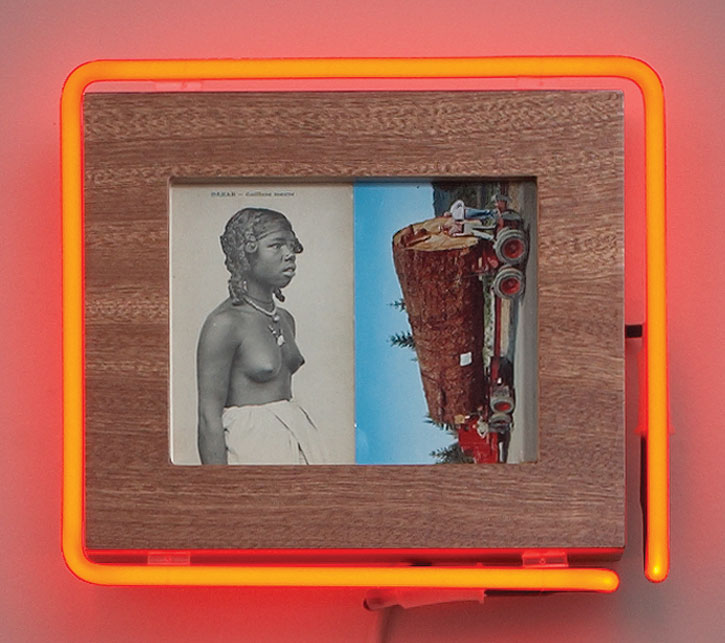
 

Brook Andrew Paradise installation at Tolarno Galleries, Melbourne


Brook Andrew (Australian, b. 1970) 'Paradise 1 (red)' 2011


Brook Andrew (Australian, b. 1970)
Paradise 1 (red)
2011
Rare postcards, sapele, and neon
24.5 x 28.5 x 8cm
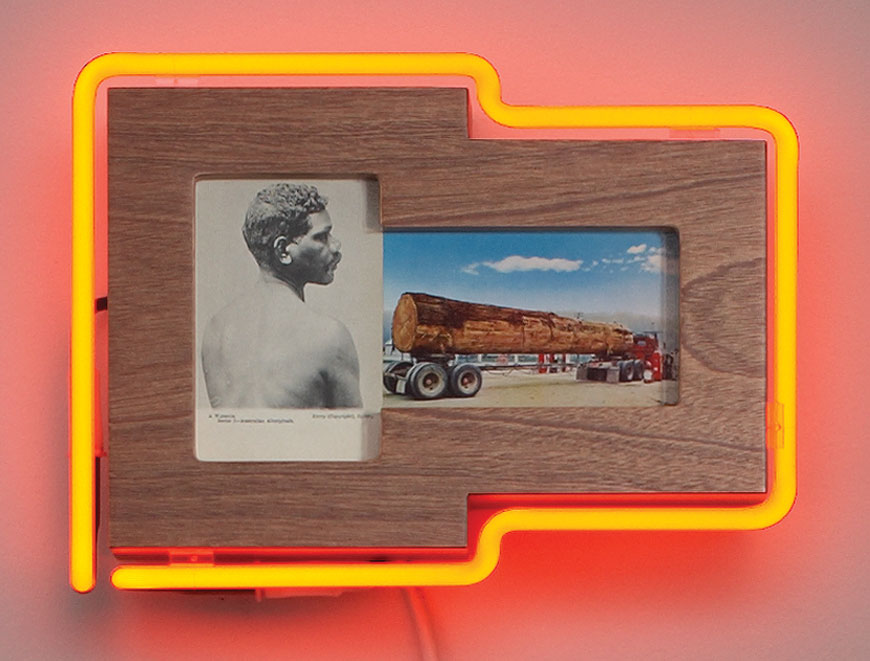
 

Brook Andrew (Australian, b. 1970) 'Paradise 2 (orange)' 2011


Brook Andrew (Australian, b. 1970)
Paradise 2 (orange)
2011
Rare postcards, sapele, and neon
24.5 x 34 x 8cm
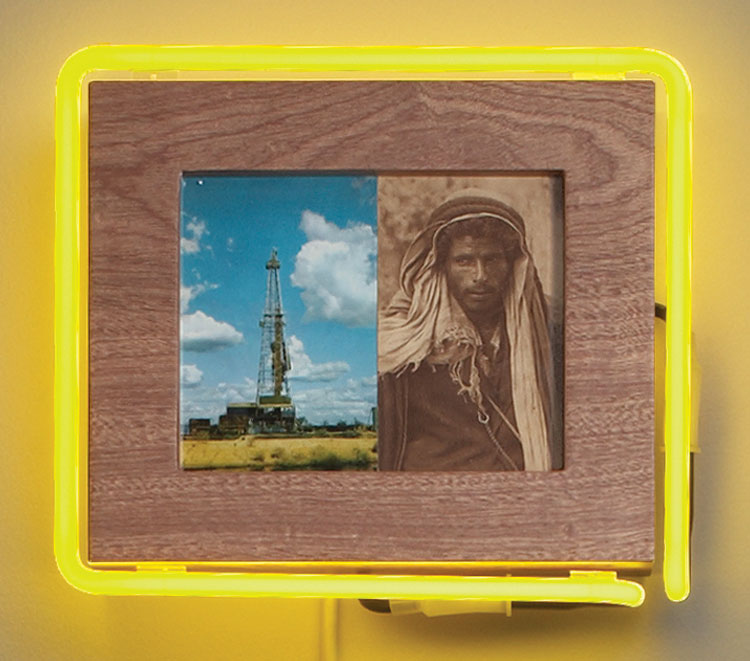
 

Brook Andrew (Australian, b. 1970) 'Paradise 3 (yellow)' 2011


Brook Andrew (Australian, b. 1970)
Paradise 3 (yellow)
2011
Rare postcards, sapele, and neon
24.5 x 28.5 x 8cm
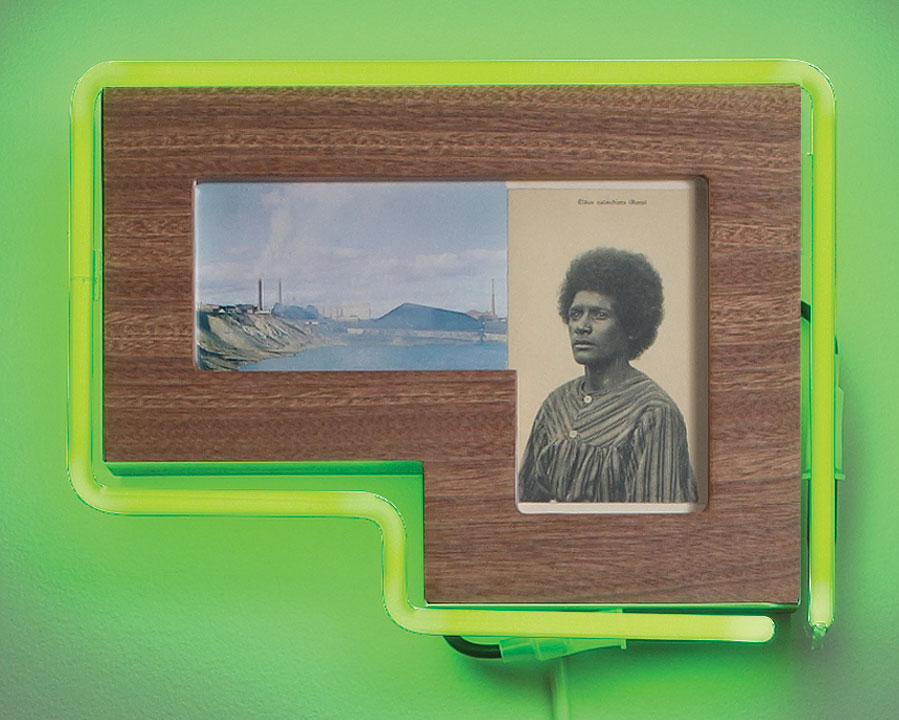
 

Brook Andrew (Australian, b. 1970) 'Paradise 4 (green)' 2011


Brook Andrew (Australian, b. 1970)
Paradise 4 (green)
2011
Rare postcards, sapele, and neon
25 x 33.5 x 8cm


Brook Andrew (Australian, b. 1970) 'Paradise 5 (magenta)' 2011


Brook Andrew (Australian, b. 1970)
Paradise 5 (magenta)
2011
Rare postcards, sapele, and neon
24.5 x 28 x 8cm
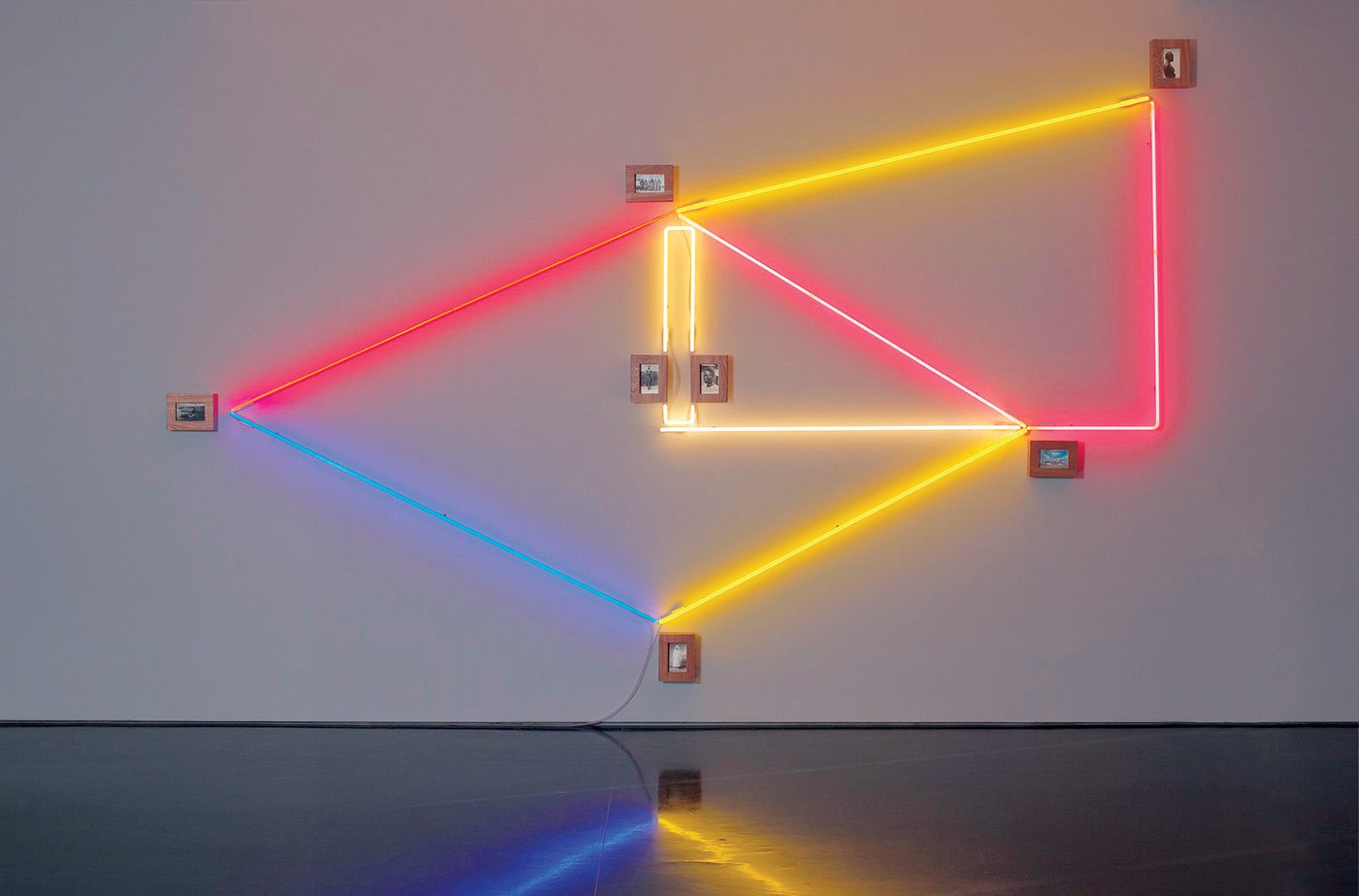
 

Brook Andrew (Australian, b. 1970) 'Flow Chart' 2011


Brook Andrew (Australian, b. 1970)
Flow Chart
2011
Rare postcards, sapele and neon
283 x 449.5 x 8.5cm
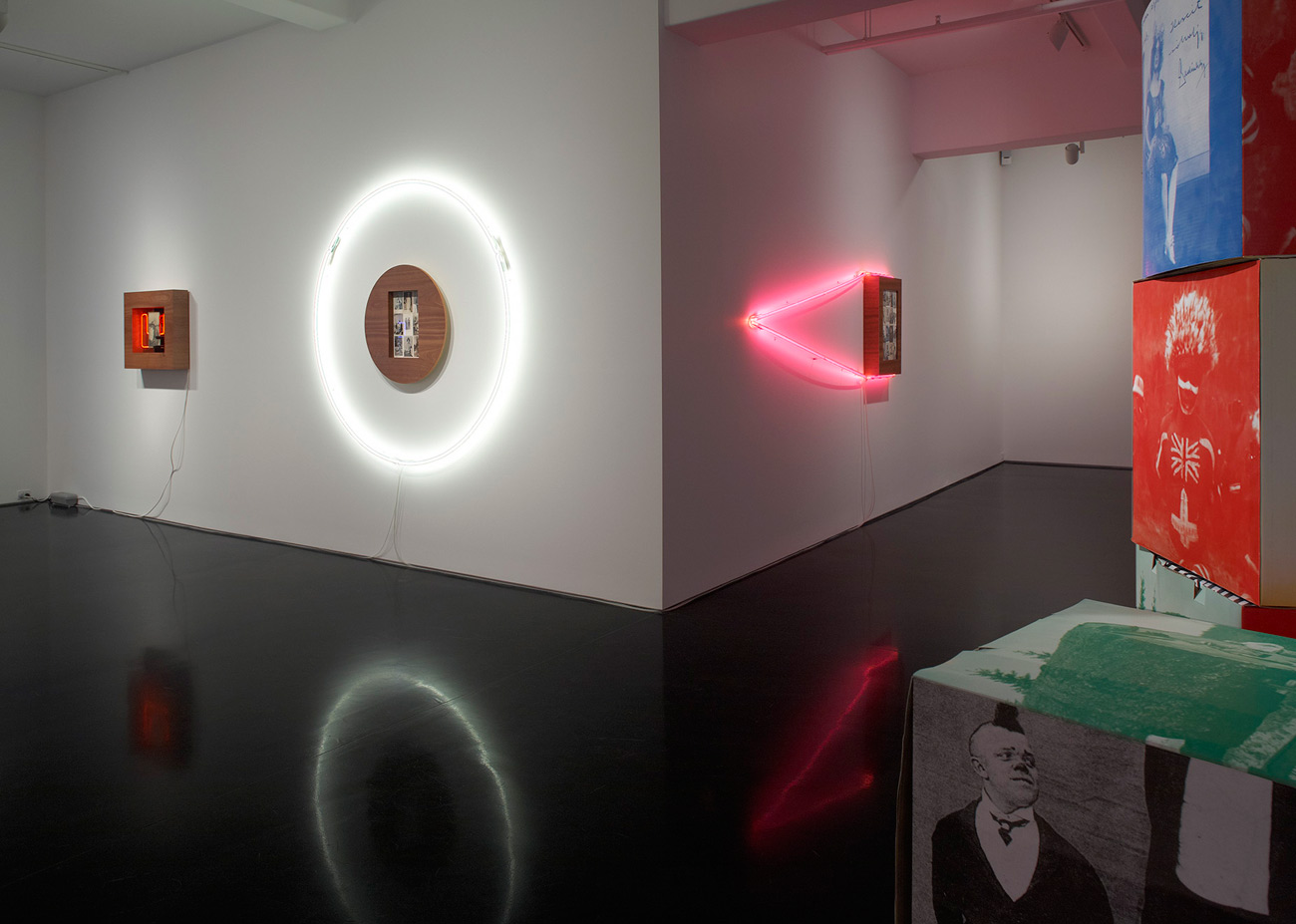
 

Brook Andrew 'Paradise' installation at Tolarno Galleries, Melbourne
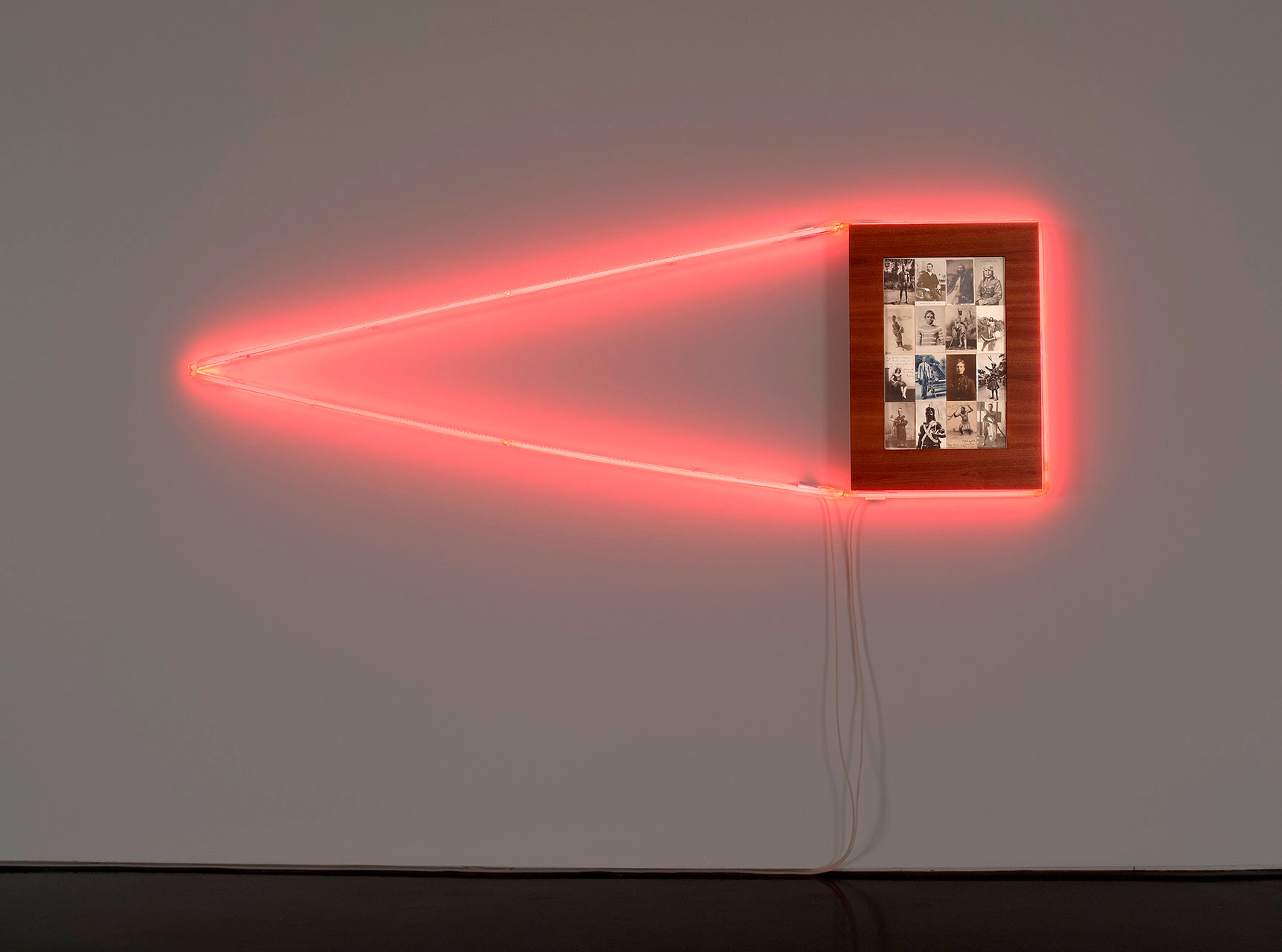
 

Brook Andrew Paradise installation at Tolarno Galleries, Melbourne


Brook Andrew (Australian, b. 1970) 'Men' 2011


Brook Andrew (Australian, b. 1970)
Men
2011
Rare postcards, sapele, and neon
82 x 264 x 12.5cm


Brook Andrew (Australian, b. 1970) 'Women' 2011


Brook Andrew (Australian, b. 1970)
Women
2011
Rare postcards, sapele, and neon
179 x 179 x 6cm
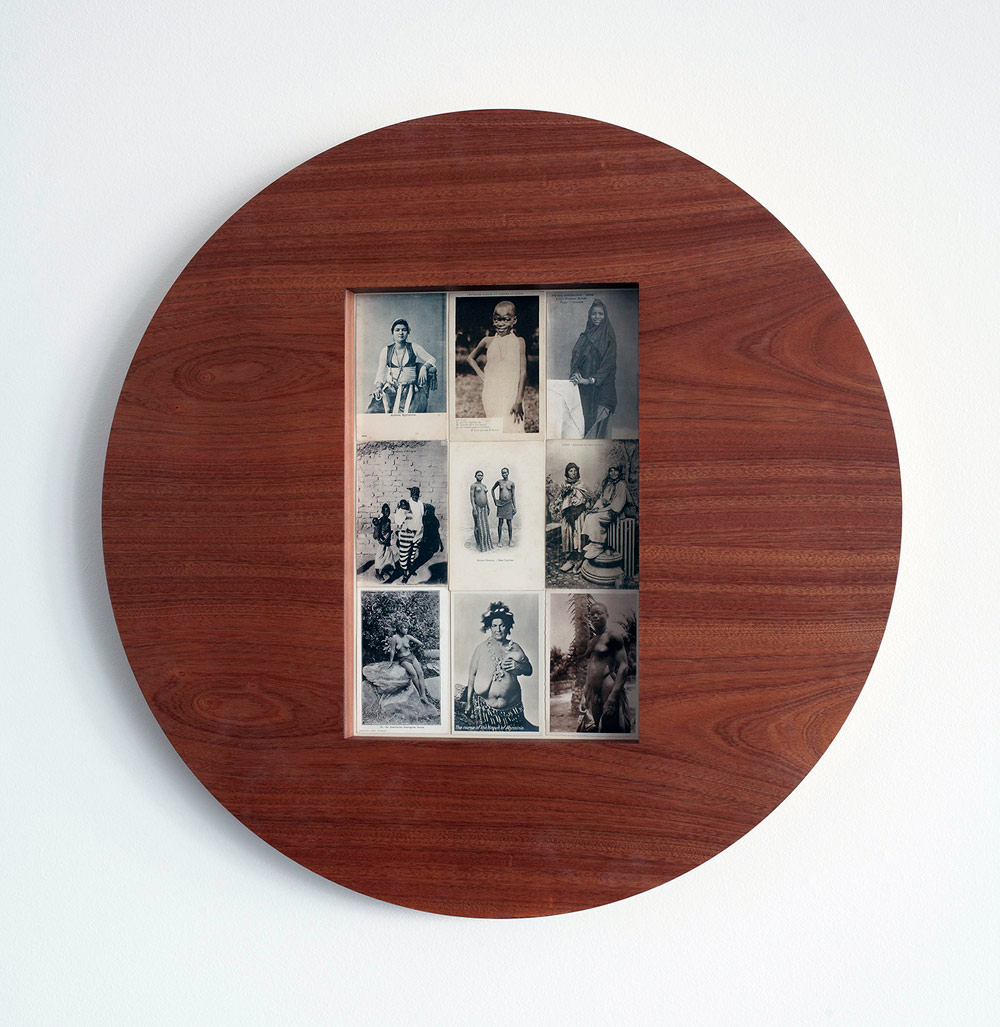
 

Brook Andrew (Australian, b. 1970) 'Women' 2011 (detail)


Brook Andrew (Australian, b. 1970)
Women (detail)
2011
Rare postcards, sapele, and neon
179 x 179 x 6cm


Tolarno Galleries is pleased to present Paradise, a major solo exhibition by Brook Andrew. Widely regarded as a multi-disciplinary artist, Brook Andrew’s Jumping Castle War Memorial was a highlight of the 17th Biennale of Sydney. Recently his major installation, Ancestral Worship 2010, was included in 21st Century: Art in the First Decade at Gallery of Modern Art, Brisbane. His powerful new installation – Marks and Witness: A Lined crossing in Tribute to William Barak 2011 – was commissioned by the National Gallery of Victoria and is currently on display at Federation Square, Melbourne.

Paradise expands Brook Andrew’s interest in forgotten histories. His new works ask us to think about what has disappeared from our worlds, literally, and also from our consciousness. The exhibition features a number of assemblages made in neon and wood and incorporating rare postcards and photographs collected over many years. Men 2011 includes the original postcard that became the source for Sexy and Dangerous, Andrew’s iconic work of 1995.

Brook Andrew’s continuing search for curious portrait images from the 19th and early 20th century represents his fascination with the way the camera has documented a particular ‘colonial’ gaze and an interest in the exotic. Outlining or highlighting these images in glorious coloured neon emphasises this point.

However bright the neon, Brook Andrew’s works are characterised by a formal beauty and simplicity that explores conceptually complex ideas and themes. Nowhere is this more apparent than in Monument 4, a ‘boomerang bar’ or Monument 2, a black lacquer box of neon containing the words ‘I see you’ in Wiradjuri. Gazing into this ‘well of words’ is like looking into infinity.

Brook Andrew’s work is held in every major collection in Australia. An important survey of his work: Brook Andrew Eye to Eye was presented by Monash University Museum of Art in 2007. In 2008 his work was showcased in Theme Park at AAMU Museum of Contemporary Aboriginal Art in The Netherlands. Major publications accompanied both of these solo exhibitions.”

Press release from Tolarno Galleries
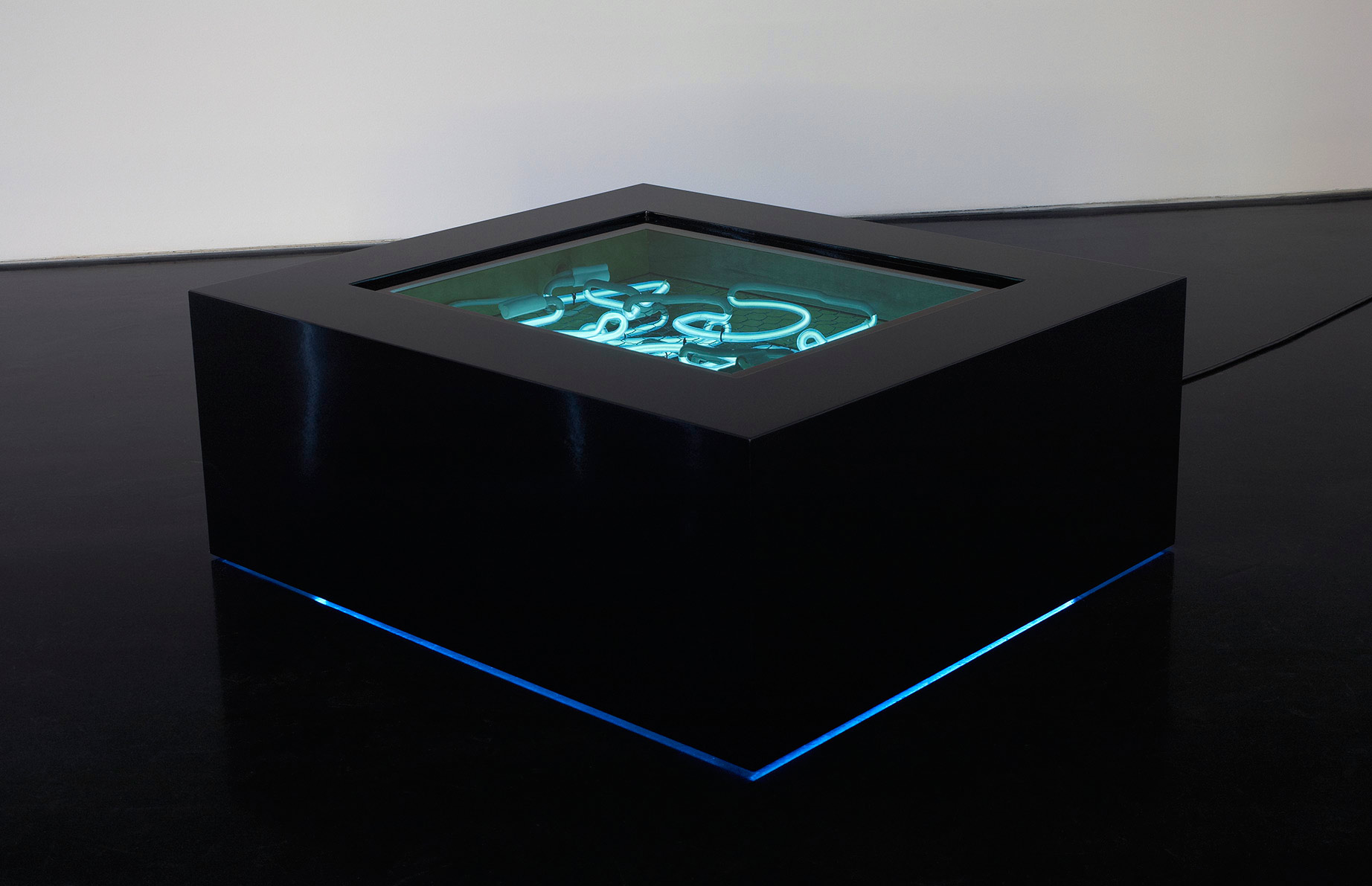
 

Brook Andrew (Australian, b. 1970) 'Monument 2' 2011


Brook Andrew (Australian, b. 1970)
Monument 2
2011
Black lacquer, wood, perspex, neon, mirror and wire
38 x 99 x 87cm


Brook Andrew (Australian, b. 1970) 'Monument 2' 2011 (detail)


Brook Andrew (Australian, b. 1970)
Monument 2 (detail)
2011
Black lacquer, wood, perspex, neon, mirror and wire
38 x 99 x 87cm
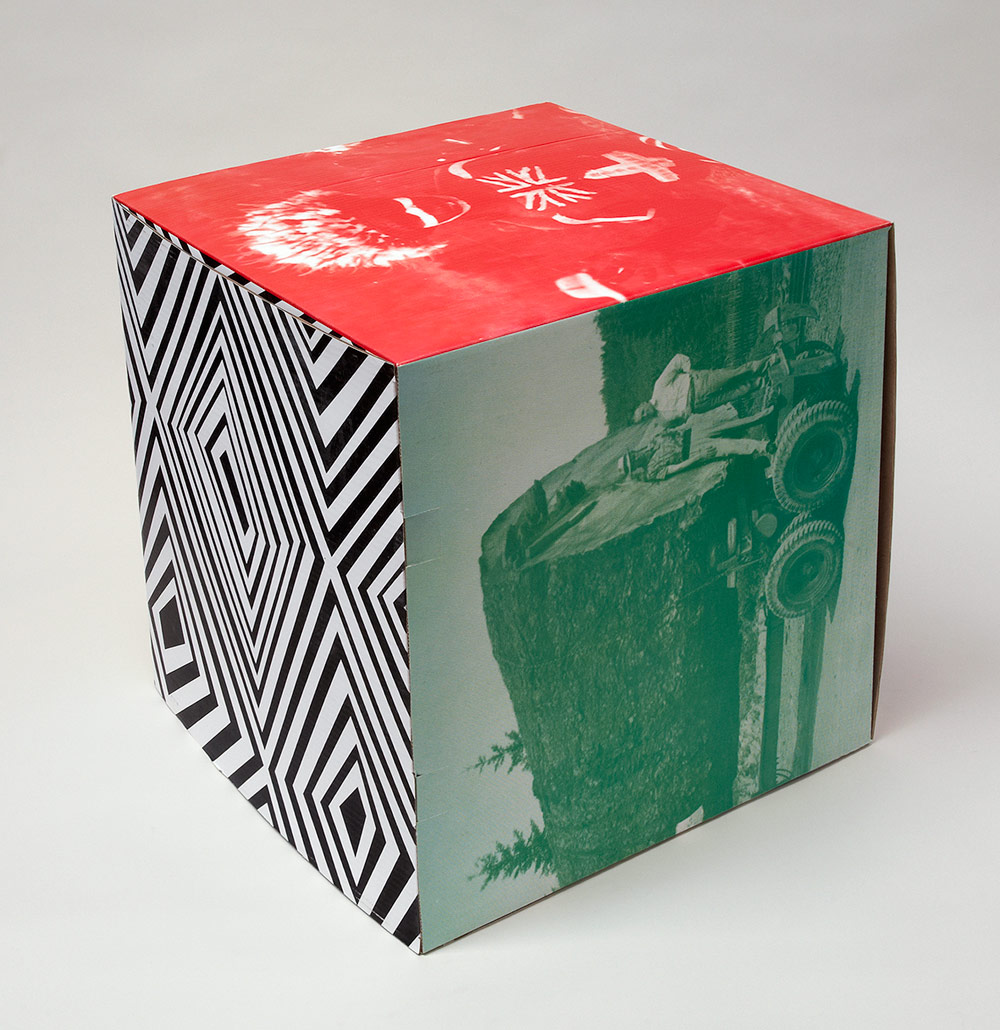
 

Brook Andrew (Australian, b. 1970) '18 lives in Paradise' Single box detail


Brook Andrew (Australian, b. 1970)
18 lives in Paradise
Single box detail
2011


The basic unit used in 18 Lives in Paradise is a cardboard printed box 50 x 50 x 50 cm. The boxes are the building blocks for a sculpture, wall or any other structure. The box is also a parody of the courier box – those containers daily transported around the globe in the vast movement of lives and identities today. What was thought of as fixed may not be so.

The images are sourced from postcards. The postcards range from the early to mid-twentieth century and form part of a worldwide curiosity in indigenous people, circus acts and personalities, environment and resources … The images come together as an assemblage of ‘freaks’ and represent the collision paths of indigenous and non-indigenous cultures; those being documented out of curiosity and those belonging to dominant cultures who have used the land and its people for entertainment and wealth.

18 Lives in Paradise can form a column or wall. It can be a barrier, a beacon or epitaph. En masse, the boxes are a symbol of many lives whose identities are sometimes twisted for the gaze of the curious world.

Brook Andrew 2011
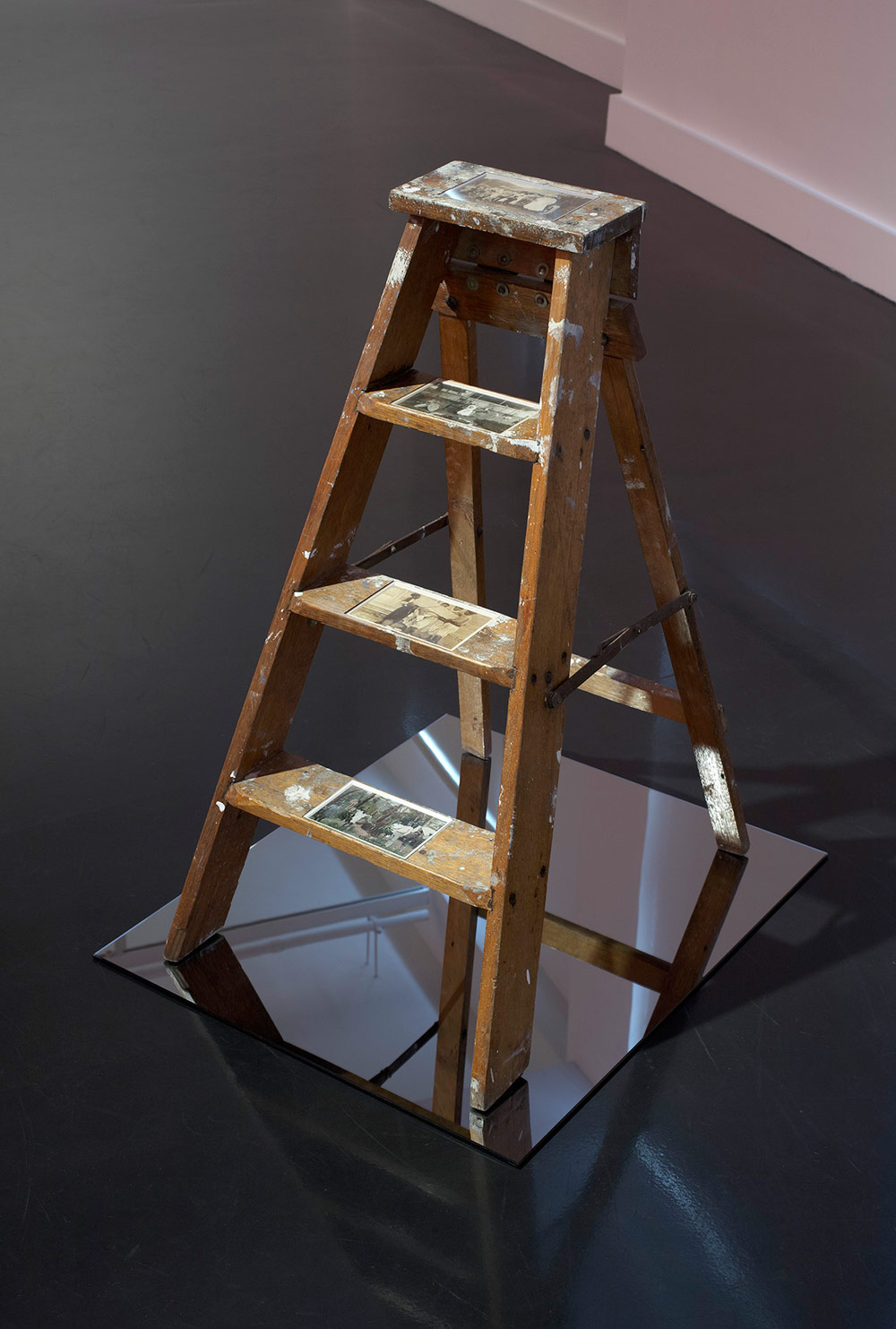
 

Brook Andrew (Australian, b. 1970) 'Monument 1' 2011


Brook Andrew (Australian, b. 1970)
Monument 1
2011
Black lacquer, are postcards, wood, mirror and metal
104.5 x 69.5 x 58cm


Tolarno Galleries
Level 4, 104 Exhibition Street
Melbourne VIC 3000 Australia
Phone: +61 3 9654 6000

Opening hours:
Tues – Fri 10am – 5pm
Sat 1pm – 4pm

Tolarno Galleries website

LIKE ART BLART ON FACEBOOK

Back to top

Marcus Bunyan black and white archive: ‘At Newport’ series 1991

July 2011


I am scanning my negatives made during the years 1991-1997 to preserve them in the form of an online archive as a process of active memory, so that the images are not lost forever. These photographs were images of my life and imagination at the time of their making, the ideas I was thinking about and the people and things that surrounded me.

All images © Marcus Bunyan. Please click the photographs for a larger version of the image; remember these are just straight scans of the negatives !

Photographs are available from this series for purchase. As a guide, a vintage 8″ x 10″ silver gelatin print costs $700 plus tracked and insured shipping. For more information please see my store web page.


1991

At Newport series

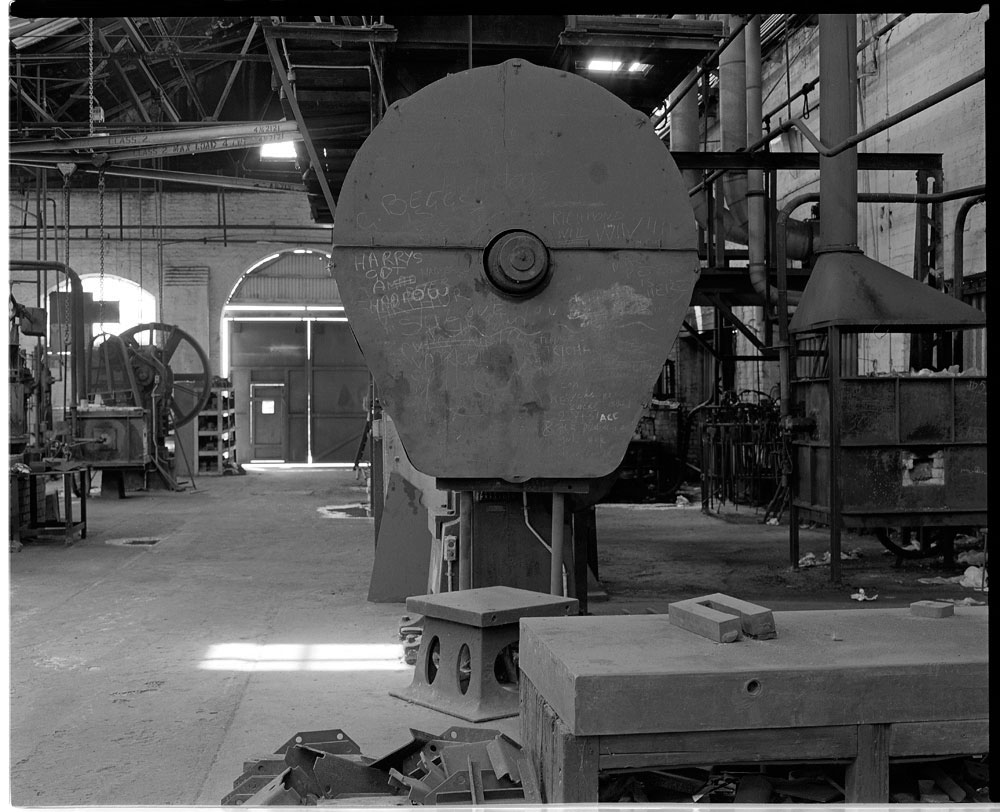
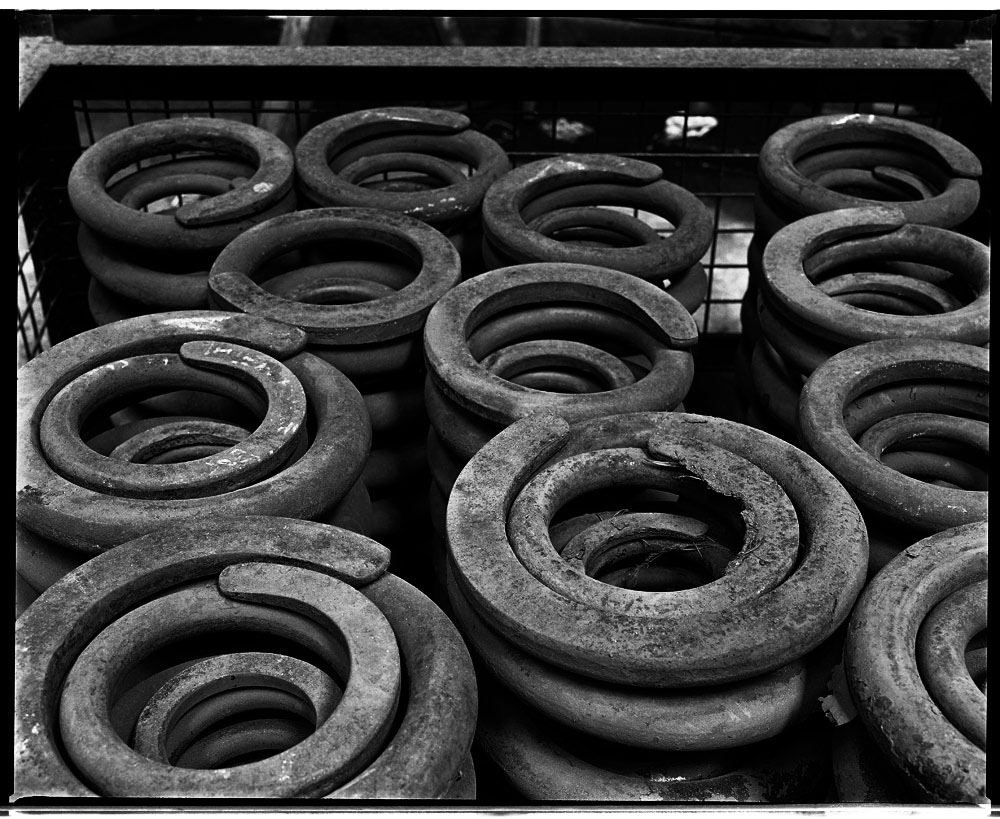
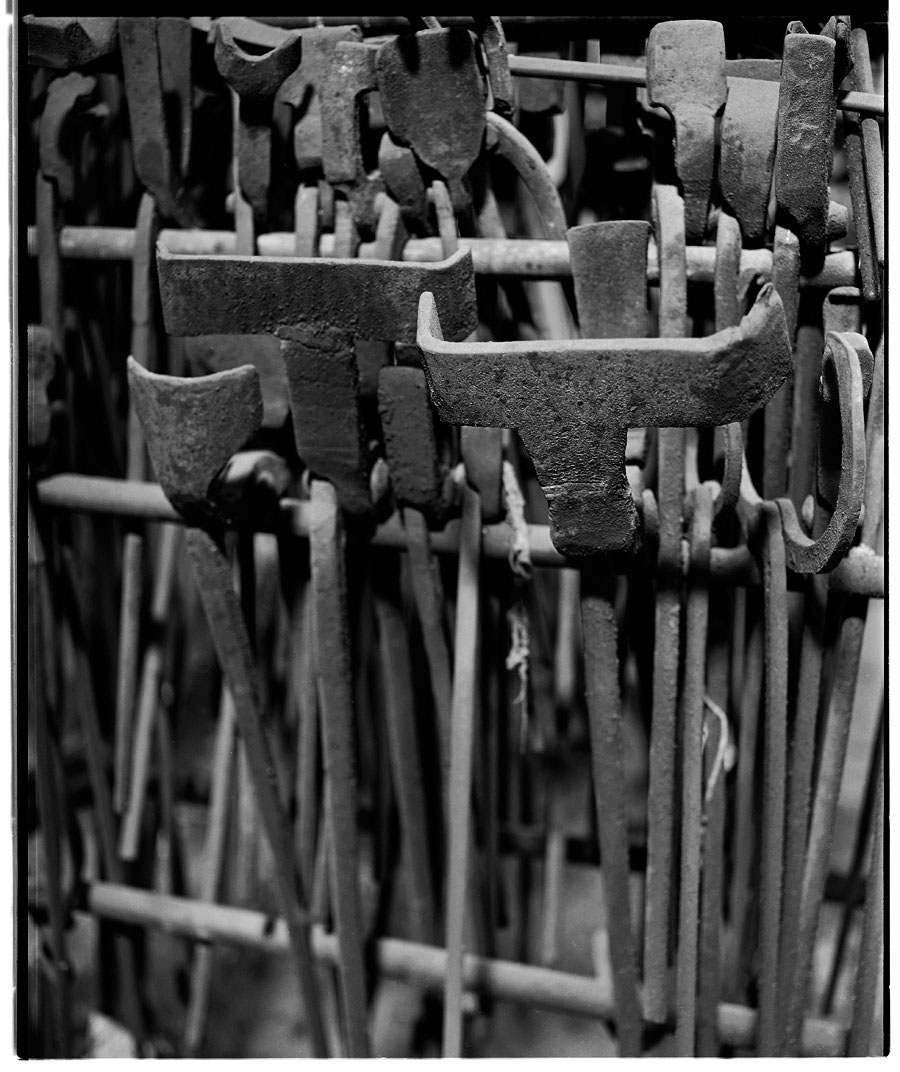
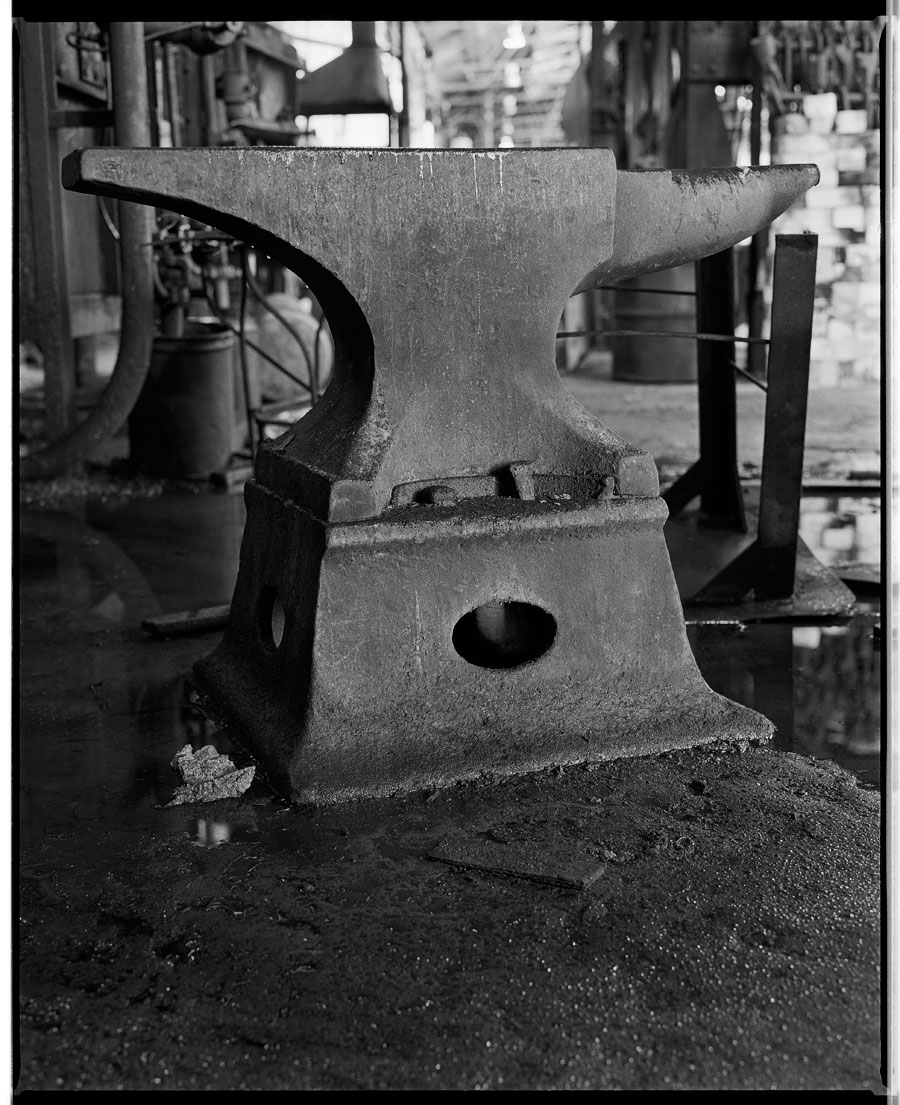
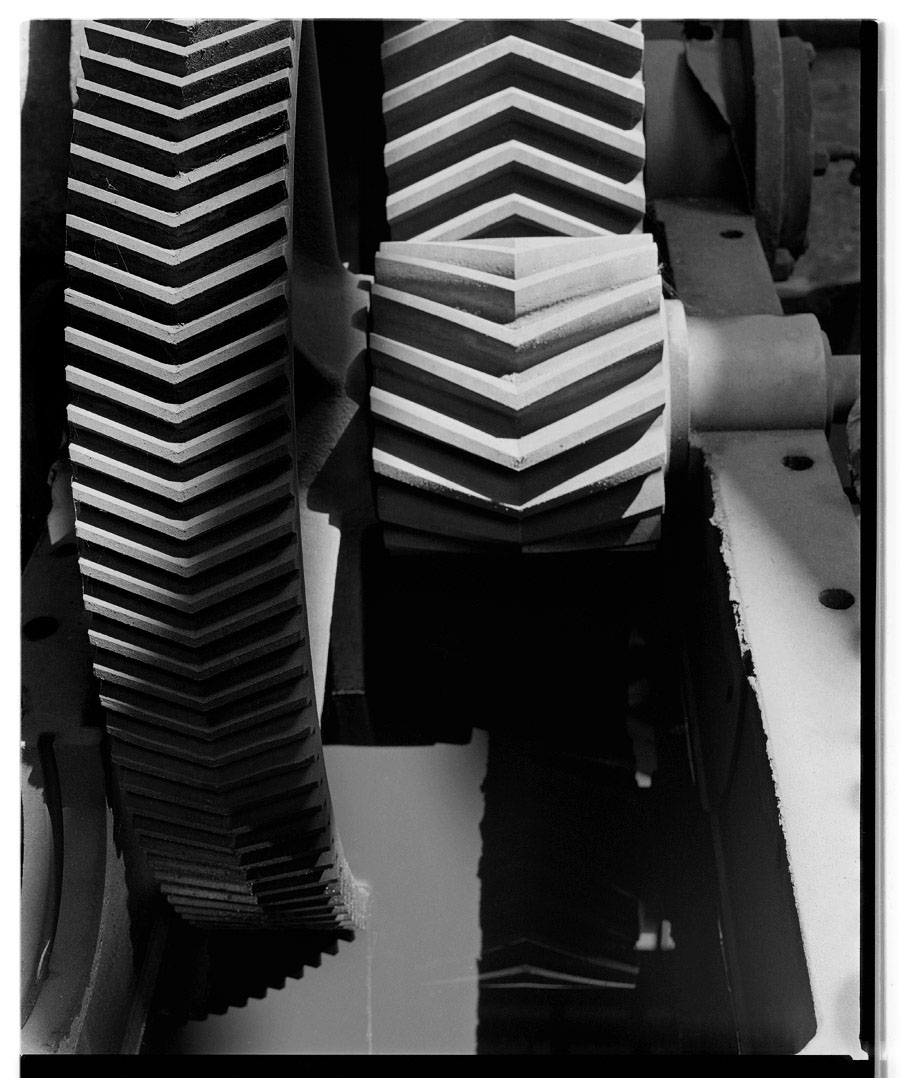
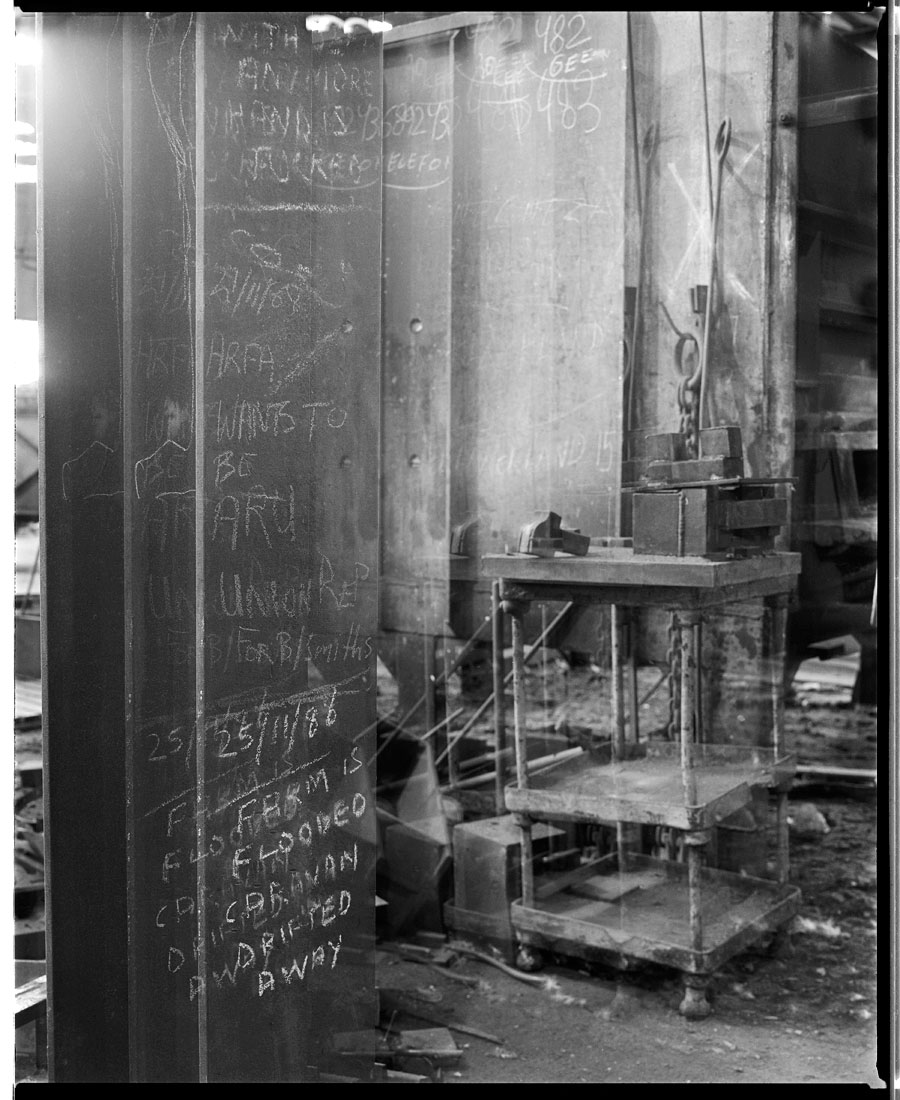
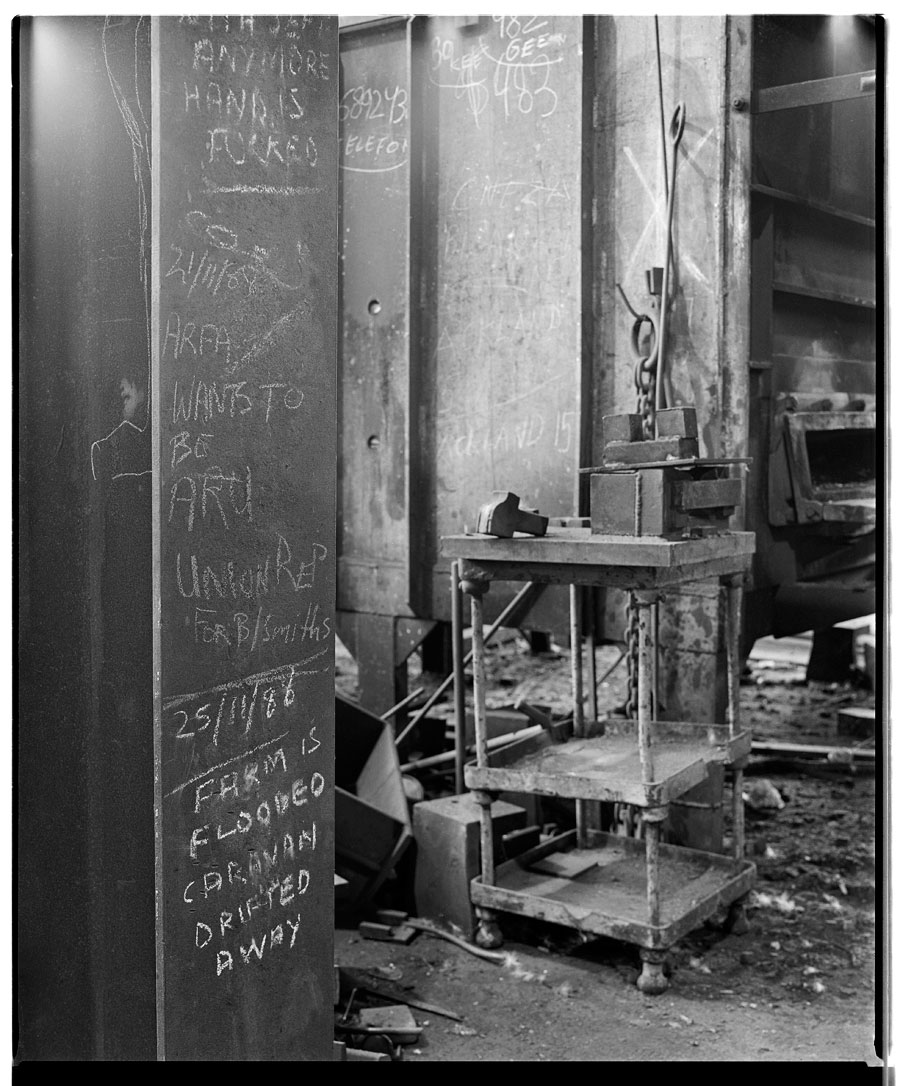
This series of photographs was taken in Melbourne at the old Victorian Railway’s Newport Workshops and formed the second part of my first solo exhibition, Of Magic, Music and Myth held in 1991 at a hairdressing salon in High Street, Prahran, Melbourne. Some of the titles e.g. Fords are a Joke, GMH are shit (1991, below) are taken from the graffiti scrawled on various surfaces. All are silver gelatin photographs on fibre-based paper.


Marcus Bunyan (Australian, b. 1958) 'Fords are a Joke, GMH are shit' from the 'At Newport' series, 1991


Marcus Bunyan (Australian, b. 1958)
Fords are a Joke, GMH are shit
1991
From the At Newport series
Gelatin silver print


Marcus Bunyan (Australian, b. 1958) 'Harrys got a...' from the 'At Newport' series, 1991


Marcus Bunyan (Australian, b. 1958)
Harrys got a…
1991
From the At Newport series
Gelatin silver print


Marcus Bunyan (Australian, b. 1958) 'Screened figure' from the 'At Newport' series, 1991


Marcus Bunyan (Australian, b. 1958)
Screened figure
1991
From the At Newport series
Gelatin silver print


Marcus Bunyan (Australian, b. 1958) 'Heavy springs' from the 'At Newport' series 1991


Marcus Bunyan (Australian, b. 1958)
Heavy springs
1991
From the At Newport series
Gelatin silver print


Marcus Bunyan (Australian, b. 1958) 'Untitled (Torro)' from the 'At Newport' series, 1991


Marcus Bunyan (Australian, b. 1958)
Untitled (Torro)
1991
From the At Newport series
Gelatin silver print


Marcus Bunyan (Australian, b. 1958) 'I, Robot' from the 'At Newport' series, 1991


Marcus Bunyan (Australian, b. 1958)
I, Robot
1991
From the At Newport series
Gelatin silver print


Marcus Bunyan (Australian, b. 1958) 'Large Anvil' from the 'At Newport' series, 1991


Marcus Bunyan (Australian, b. 1958)
Large Anvil
1991
From the At Newport series
Gelatin silver print


Marcus Bunyan (Australian, b. 1958) 'Spring, Turrets, Keep and Ladder' from the 'At Newport' series, 1991


Marcus Bunyan (Australian, b. 1958)
Spring, Turrets, Keep and Ladder
1991
From the At Newport series
Gelatin silver print


Marcus Bunyan (Australian, b. 1958) 'Big Cogs' from the 'At Newport' series, 1991


Marcus Bunyan (Australian, b. 1958)
Big Cogs
1991
From the At Newport series
Gelatin silver print


Marcus Bunyan (Australian, b. 1958) 'Coronation' from the 'At Newport' series, 1991


Marcus Bunyan (Australian, b. 1958)
Coronation
1991
From the At Newport series
Gelatin silver print


Marcus Bunyan (Australian, b. 1958) 'Frank's Apron' from the 'At Newport' series, 1991


Marcus Bunyan (Australian, b. 1958)
Frank’s Apron
1991
From the At Newport series
Gelatin silver print


Marcus Bunyan (Australian, b. 1958) 'Hand is fucked, Farm is flooded, Caravan drifted away I' from the 'At Newport' series, 1991


Marcus Bunyan (Australian, b. 1958)
Hand is fucked, Farm is flooded, Caravan drifted away I
1991
From the At Newport series
Gelatin silver print


Marcus Bunyan (Australian, b. 1958) 'Hand is fucked, Farm is flooded, Caravan drifted away II' from the 'At Newport' series, 1991


Marcus Bunyan (Australian, b. 1958)
Hand is fucked, Farm is flooded, Caravan drifted away II
1991
From the At Newport series
Gelatin silver print


Marcus Bunyan (Australian, b. 1958) 'Untitled' from the 'At Newport' series, 1991


Marcus Bunyan (Australian, b. 1958)
Untitled
1991
From the At Newport series
Gelatin silver print


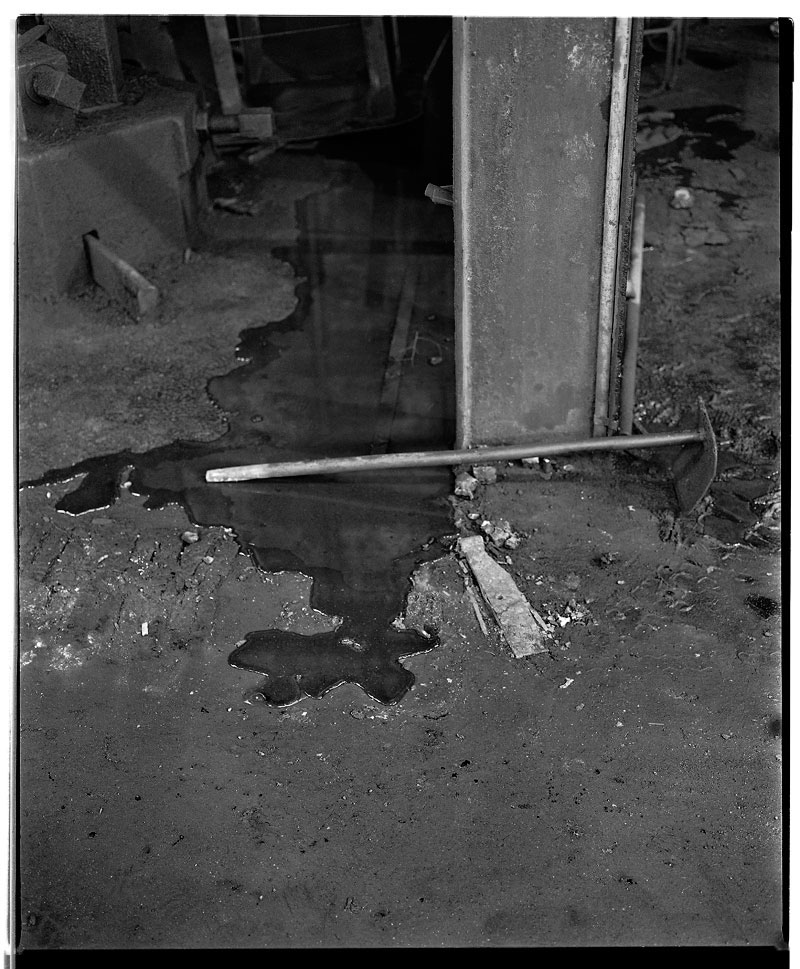
Marcus Bunyan (Australian, b. 1958) 'Hoe with Surging Rainwater' from the 'At Newport' series, 1991


Marcus Bunyan (Australian, b. 1958)
Hoe with Surging Rainwater
1991
From the At Newport series
Gelatin silver print


Marcus Bunyan (Australian, b. 1958) 'Forms I' from the 'At Newport' series, 1991


Marcus Bunyan (Australian, b. 1958)
Forms I
1991
From the At Newport series
Gelatin silver print


Marcus Bunyan (Australian, b. 1958) 'Forms II' from the 'At Newport' series, 1991


Marcus Bunyan (Australian, b. 1958)
Forms II
1991
From the At Newport series
Gelatin silver print


Marcus Bunyan (Australian, b. 1958) 'Forms III' from the 'At Newport' series, 1991


Marcus Bunyan (Australian, b. 1958)
Forms III
1991
From the At Newport series
Gelatin silver print


Marcus Bunyan (Australian, b. 1958) 'Forms IV' from the 'At Newport' series, 1991


Marcus Bunyan (Australian, b. 1958)
Forms IV
1991
From the At Newport series
Gelatin silver print


Marcus Bunyan black and white archive page

LIKE ART BLART ON FACEBOOK

Back to top

Exhibition: ‘NGV 150th Felton Bequest Gift – Living Water: Contemporary Art of the Far Western Desert’ at NGV Australia, Melbourne

Exhibition dates: 24th May 2011 – 28th May 2012


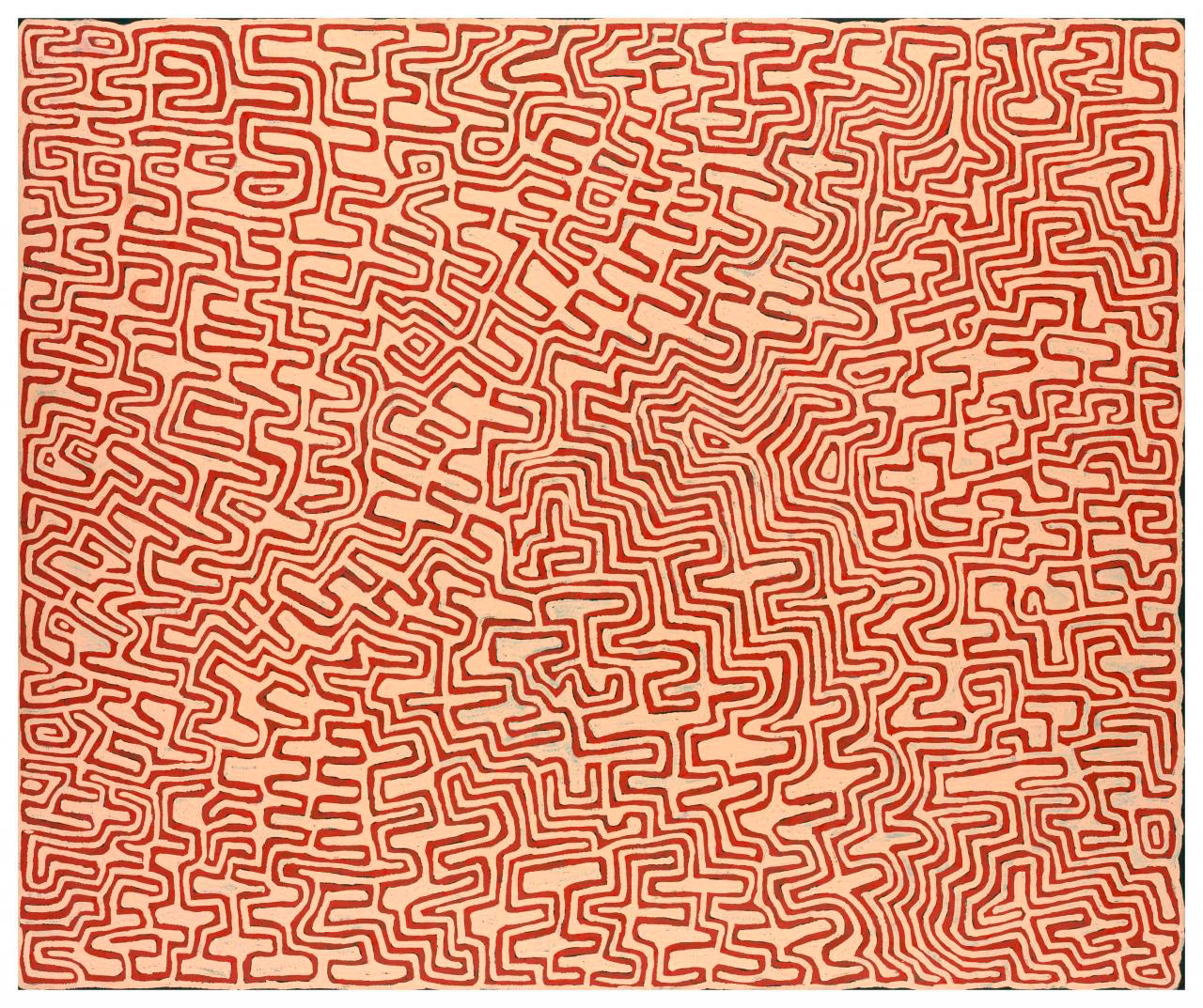
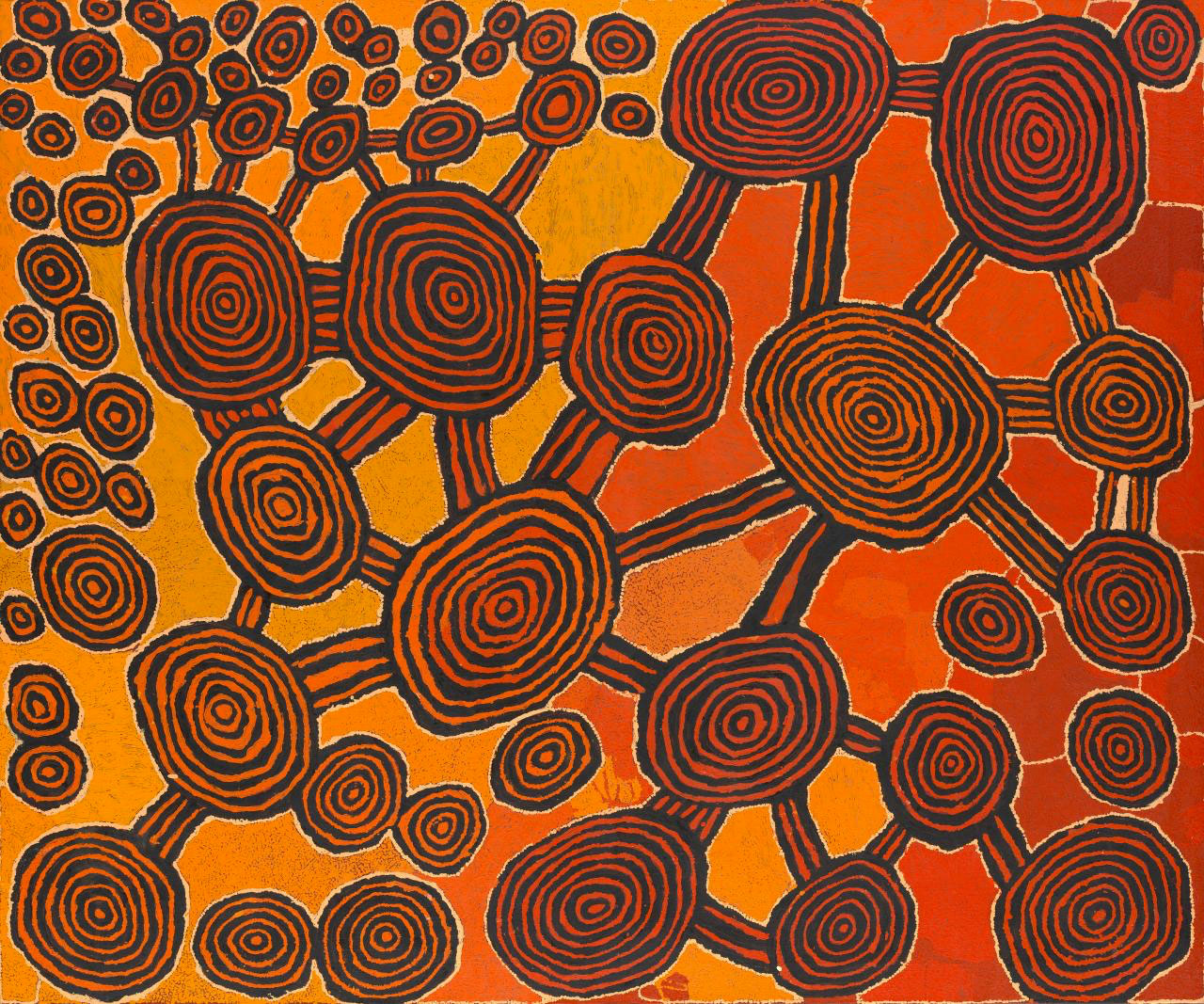
Tommy Mitchell (Australian / Ngaanyatjarra, c. 1943-2013) 'Kurlilypurru' 2009


Tommy Mitchell (Australian / Ngaanyatjarra, c. 1943-2013)
Kurlilypurru
2009
Synthetic polymer paint on canvas
152 x 212cm
Felton Bequest, 2011
© Tommy Mitchell, courtesy Warakurna Artists Aboriginal Corporation


“This is me: this is mine. The whole lot is me. I been walking all around, I know him proper way, he is always with me…”


Weaver Jack


Someone keyed my car the other day and it sent me into a bit of a downward spiral. Who knows why people do these things – stupidity, boredom, sheer bloody mindedness. This exhibition brought me back from that space to a rejoicing in human creativity and connection. It helped me leave my troubles behind. The stories in these paintings ground you, bring you back to earth through the experience and feeling of colour, movement and stillness.

I, we, cannot understand this ancient culture for it is foreign to us. We are not of it. But we can feel the stories in our own way. While we can’t understand every nuance of symbology and traditional narrative that the paintings contain they can speak to us all as human; we all come from this earth and must return to it. I felt the place from which they emanate, an intimacy with earth, self and soul.

I might not know much about anything, about understanding the vagaries of human beings, but I do know what is honest and truthful, has feeling for the piquancy of life. These paintings let my troubles and vicissitudes drop away and uplifted my spirit. Surrounded by love, by colour, by belonging to earth, sky, water, spirit. A wonderful gift to any human being and a wonderful gift from the Felton Bequest to the National Gallery of Victoria and to all the people of Australia. Go and experience their embrace.

Dr Marcus Bunyan


Many thankx to the National Gallery of Victoria for allowing me to publish the photographs in the posting. Please click on the photographs for a larger version of the image.


Various artists. 'Ngayarta Kujarra' 2009


Yikartu Bumba (Australian / Manyjilyjarra, b. 1940s)
Jakayu Biljabu (Australian / Manyjilyjarra, 1937-2022)
Nyanjilpayi Nancy Chapman (Australian / Manyjilyjarra, born c. 1941)
May Chapman (Australian / Manyjilyjarra, b. 1940s)
Doreen Chapman (Australian / Manyjilyjarra, b. 1970s)
Linda James (Australian / Manyjilyjarra, b. 1984)
Mulyatingki Marney (Australian / Manyjilyjarra, b. 1941)
Reena Roger (Australian / Manyjilyjarra, b. 1950s)
Beatrice Simpson (Australian / Manyjilyjarra, born c. 1966)
Ronelle Simpson (Australian / Manyjilyjarra, b. 1988)
Muntararr Rosie Williams (Australian / Manyjilyjarra, born c. 1943)
Ngayarta Kujarra
2009
Synthetic polymer paint on canvas
300 x 500cm
Felton Bequest, 2011


Ngayartu Kujarra

The artists who collaborated on this work (above) live at Punmu community, on the shore of a vast salt lake, (Lake Dora), which is surrounded by a scattered array of water sources.

The artists from this region are profoundly affectionate and respectful towards the salt lake and the fresh waters hat have sustained htem and their families for as long as memory can stretch.

The women have reproduced the feeling of the salt lake viscerally: their work conveys its immense scale, fine texture, extreme whiteness and shimmering light.


Ronnie Tjampitjinpa (Australian / Pintupi, b. 1943) 'Water Dreaming at Malparingya' 2006


Ronnie Tjampitjinpa (Australian / Pintupi, b. 1943)
Water Dreaming at Malparingya
2006
Synthetic polymer paint on canvas
152.2 x 182.5cm
National Gallery of Victoria
Felton bequest


Nyumitja Laidlaw (Ngaanyatjarra born c. 1938) 'Kuriella' 2009


Nyumitja Laidlaw (Australian / Ngaanyatjarra, born c. 1938)
Kuriella
2009
Synthetic polymer paint on canvas
142.3 x 175cm
Felton Bequest, 2011
© Nyumitja Laidlaw/Licensed by VISCOPY, Australia


Johnny Yungut Tjupurrula (Australian / Tjangimanta, 1930-2016) 'Tingarri Dreaming at Wanaritjarra' 2009


Johnny Yungut Tjupurrula (Australian / Tjangimanta, 1930-2016)
Tingarri Dreaming at Wanaritjarra
2009
Synthetic polymer paint on canvas
152.3 × 182.5cm
National Gallery of Victoria, Melbourne
Felton Bequest, 2011
© Johnny Yungut Tjupurrula, courtesy Aboriginal Artists Agency, Sydney


Kalaju Alma Webou (Yulparija c. 1920-2009) 'Pinkalarta' 2006


Kalaju Alma Webou (Australian / Yulparija, c. 1920-2009)
Pinkalarta
2006
Synthetic polymer paint on canvas
152 x 152cm
Felton Bequest, 2011
© Kalaju Alma Webou, courtesy Short Street Gallery/Yulparija Artists from Bidyadanga


Today, 24 May 2011, the National Gallery of Victoria celebrates its 150th birthday.

To honour this tremendous milestone, the NGV today unveiled an exceptional gift of 173 important Indigenous works of art including three by contemporary artists Vernon Ah Kee, Brook Andrew and Jonathan Jones who were commissioned to create works that pay homage to the highly celebrated Wurundjeri artist, William Barak. These pieces have been gifted by the Felton Bequest, established in 1904 by the NGV’s greatest benefactor, Alfred Felton.

The Honourable Alex Chernov, AO, QC, Governor of Victoria and Mrs Elizabeth Chernov were present at the NGV’s unveiling ceremony.

Dr Gerard Vaughan, Director, NGV said: “This is the most significant gift of Indigenous art to the NGV since the Gallery opened its doors for the first time on this date 150 years ago in country of the Kulin nation. It is appropriate on this date both to honour the memory of Alfred Felton and also celebrate the Indigenous art of our country, the world’s oldest continuous visual tradition.”

The gift of 173 works encompasses two exceptional collections: the first comprises 63 nineteenth and early twentieth century shields on display as part of the Australian Art collection, and the second 107 twenty-first century paintings from the Far Western Desert, forming the new exhibition Living Water.

Dr Vaughan said: “This outstanding gift adds tremendous strength to the NGV’s collection of Indigenous Art. Since the NGV first collected Indigenous art, the collection has grown to hold over 3,000 works representing cultures across Australia.

These exciting and dynamic acquisitions will enable the NGV to continue to educate visitors of all ages about the visual art of Indigenous Australians. This gift is a highlight of the NGV’s 150th anniversary year, reminding us of the crucial and continuing role the NGV has played in collecting and displaying the finest art works that can be acquired.

The Barak Commissions pay tribute to one of the most important figures of nineteenth century Australian Indigenous art, acknowledging Barak’s central place in the history of Victoria and the NGV,” said Dr Vaughan.

William Barak was born in country of the Wurundjeri people and became a leading Indigenous artist and figure in Melbourne during the 19th century. He is said to have witnessed John Batman ‘purchase’ Melbourne in 1835.

The multi-media installation by Vernon Ah Kee presents conversations between prominent Indigenous people as they reflect on how Barak has inspired them. Brook Andrew, renowned for his multi-disciplinary works, has created a powerful installation which adorns the entrance atrium at The Ian Potter Centre: NGV Australia. Jonathan Jones, who works with fluid and dancing light as a metaphor of living culture, has created five light boxes that map important cultural designs belonging to Barak as a way of honouring Barak’s life.

The collection of 63 rare and stunningly beautiful 19th and early 20th century shields is largely contemporary with Barak’s life. The shields serve to remind us of the time when the plains of Southeast Australia contained carved trees bearing elegant inscriptions, with people dressed in possum-skin cloaks and carrying elaborate shields living extraordinary living in harmony with country and ancient beliefs.

The Living Water exhibition unveils the Felton Bequest gift paintings: 107 adventurous works by male and female artists from newly established art centres in the Far Western Desert, an area stretching across far flung parts of Western Australia and South Australia.

This exhibition of 21st century art highlights today’s momentous art movement which originated at Papunya in 1971 when senior men decoded their archival narratives and laws, forging a new form shared by many Indigenous peoples across the Western Desert.

Press release from the National Gallery of Victoria website


Roy Underwood (Pitjantjatjara born c. 1937) 'Mulaya' 2008


Roy Underwood (Australian / Pitjantjatjara born c. 1937-2018)
Mulaya
2008
Synthetic polymer paint on canvas
197 x 135cm
Felton Bequest, 2011
© Roy Underwood, courtesy Spinifex Arts Project


Simon Hogan (Pitjantjatjara born c. 1930) 'Ilkurlka' 2004


Simon Hogan (Australian / Pitjantjatjara, born c. 1930)
Ilkurlka
2004
Synthetic polymer paint on canvas
134.5 x 176.6cm
Felton Bequest, 2011
© Simon Hogan, courtesy Spinifex Arts Project


Spinifex People

The country of the Spinifex people, who speak a southern dialect of Pitjantjatjara language, consists of vast plains of deep red sand, salt lakes and Spinifex.

In 1998 the community produced a series of ten large paintings that were bequeathed to the people of Western Australia in a symbolic reciprocal exchange of paintings for land. Most Spinifex works, subsequently produced on infrequent painting trips back to country operate as complex maps as well as religious landscapes that detail sources of spiritual power in country belonging to individual artists.


Milatjari Pumani (Yankunytjatjara, 1928-2014) 'Ngura Walytja, Antara' 2010


Milatjari Pumani (Australian / Yankunytjatjara, 1928-2014)
Ngura Walytja, Antara
2010
Synthetic polymer paint on canvas
168.6 x 137.4cm
Felton Bequest, 2011
© Milatjari Pumani, courtesy Mimili Maku Arts & Crafts


Living Water: Exhibition Background Information

Living Water, an exhibition showcasing 107 contemporary Indigenous paintings by 94 artists from the Felton Bequest Gift, displays works by male and female artists from the Far Western Desert, an area stretching across parts of Western Australia, South Australia and the Northern Territory.

A modern art movement originated at Papunya in 1971, which has since transformed the way we see the land and the history of art in Australia. Almost forty years after the genesis of the Western Desert art movement, its epicentre has dramatically shifted from Papunya in the Northern Territory to the Pintupi homelands of Kintore and Kiwirrkura in the Gibson Desert, and to communities that lie hundreds of kilometres to the south and west in far-flung reaches of South Australia and Western Australia (the Far Western Desert).

During the first decade of the 21st century, Pintupi, Spinifex, Anangu, Yulparija and Martu artists have developed a dynamic and fresh expression of Western Desert Art. The male and female artists not only share close kinship, social, linguistic and ritual interconnections and lived experience of desert country built up during pujiman (nomadic, bush) days but also have parallel experiences of making art with introduced materials for the commercial market. Their paintings – bearers of sanctity – resonate with the shock of the ancient made new and tell tjukurrpa (stories) associated with special places in their ngurra (country).This dramatic new wave of acrylic painting is the focus of Living Water, comprising the NGV’s 150th anniversary gift from the Felton Bequest of 107 paintings.

Aboriginal people from across the Western Desert use the term ‘living water’ to describe water sources, including rock holes and soakage waters that are fed by underground springs. The path of these springs was created by the ancestral beings of the Tjukurrpa (Dreaming) as they themselves journeyed underground, their entry into the earth often marking the site of current day water sources. ‘Living water’ is revered also because it does not seem to be affected by the harsh conditions above the ground that the people themselves have to endure.

This exhibition has been curated by Judith Ryan, Indigenous Art Curator, NGV. The following groups of people are represented in this spectacular exhibition.

Pintupi people

Pintupi is the name of a Western Desert language spoken by Aboriginal people who belong to a large stretch of country in the Gibson Desert of Western Australia and the western edge of the Northern Territory. When the Pintupi arrived in the government settlements east of their traditional lands between the 1930s and the 1950s, they adopted the term ‘Pintupi’ to distinguish themselves amongst the surrounding Aboriginal inhabitants as the ‘people from the west’.

The Pintupi’s complex relationship to the land of their ancestors is expressed through stories, songs and ritual practice that are also depicted in the acrylic paintings of the artists from the Pintupi communities of Walungurru and Kiwirrkura.

Ngaanyatjarra, Pitjantjatjara and Yankunytjara People

The Ngaanyatjarra, Pitjantjatjara and Yankunytjara people of the tri-state region of the Western Desert constantly interact and are related by kinship, language and genealogy.

Here they specialised in making walka (drawings), batik, punu (wood carvings) and tjanpi weavings, avoiding painting on canvas for the art market until the 21st century because of their suspicion of earlier forms of Western Desert art and their reluctance to disclose sacred elements of men’s and women’s law.

Yulparija People

The Yulparija people originally come from the Great Sandy Desert of Western Australia, which runs from Telfer in the south to Walungurru in the east and close to Fitzroy Crossing in the north.

Their work contains deep threads of cultural memory and is daring in its vigour of application and iridescent palette. The Yulparija have forged a painting style that combines their cultural memory of desert birth country with the rich blues and greens of saltwater terrain.

Martu People

Martu means ‘one of us’, or ‘person’ and is the word chosen to represent a number of different language groups from country across the Great Sandy, Little Sandy and Gibson Deserts of the Pilbara region of Western Australia.

Martu are interconnected to other surrounding peoples from the Great Sandy Desert through their shared country of birth and associated Dreaming stories.

Text from the National Gallery of Victoria website


Dadda Samson (Kartujarra, 1933-2020) 'Puntuwarri' 2009


Dadda Samson (Australian / Kartujarra, 1933-2020)
Puntuwarri
2009
Synthetic polymer paint on canvas
124.5 x 293.4cm
Felton Bequest, 2011
© Dadda Samson, courtesy Martumili Artists


Lawrence Pennington (Pitjantjatjara born c. 1940) 'Kurparu (Magpie)' 2005


Lawrence Pennington (Australian / Pitjantjatjara, born c. 1940)
Kurparu (Magpie)
2005
Synthetic polymer paint on canvas
138.6 x 92.7cm
Felton Bequest, 2011
© Lawrence Pennington, courtesy Spinifex Arts Project


Wingu Tingima (Pitjantjatjara c. 1917–2010) 'Kungkarakalpa (Seven Sisters)' 2007-2009


Wingu Tingima (Australian / Pitjantjatjara, c. 1917-2010)
Kungkarakalpa (Seven Sisters)
2007-2009
Synthetic polymer paint on canvas
140 x 210cm
Felton Bequest, 2011
© Wingu Tingima, courtesy Tjungu Palya


The Ian Potter Centre: NGV Australia
Federation Square
Corner of Russell and 
Flinders Streets, Melbourne

Opening hours:
Daily 10am – 5pm

National Gallery of Victoria website

LIKE ART BLART ON FACEBOOK

Back to top

Exhibition: ‘Vienna – Art & Design’ at the National Gallery of Victoria, Melbourne

Exhibition dates: 18th June – 9th October 2011


Media preview for 'Vienna - Art & Design' at the National Gallery of Victoria


Media preview for Vienna – Art & Design at the National Gallery of Victoria
Photo: Marcus Bunyan


A subtle pleasure

The delicate paintings are smaller with a flatness of texture and a sombreness than I had not imagined; magnificent in their subtlety. However, the real stars of this wonderful exhibition are the design pieces.

Whether silver, wood, ceramic, glass or jewellery the designs are balanced by a glorious aesthetic. Never has a tea service looked so ravishing or decadent.

This is not a wham bang show like Dali or that other King of some fame showing elsewhere. This is for a discerning audience – one that can take time (between pots of tea) to study and go ooh and aah!

Dr Marcus Bunyan


Many thankx to the National Gallery of Victoria for inviting me and for allowing me to publish the photographs in the posting. Please click on the photographs for a larger version of the image. All photographs © Marcus Bunyan 2011 except the photographs of the full paintings which come from the NGV press CD ROM.


Installation view of the exhibition 'Vienna - Art & Design' at the National Gallery of Victoria


I just couldn’t help myself!
Photo: Marcus Bunyan


Installation view of first room of the exhibition 'Vienna - Art & Design' at the National Gallery of Victoria


Installation view of first room of the exhibition Vienna – Art & Design at the National Gallery of Victoria
Photo: Marcus Bunyan


Wilhelm Gause (Germany 1853-1916) 'Vienna Municipal Ball' 1904


Installation view of first room of the exhibition Vienna – Art & Design at the National Gallery of Victoria showing at left:

Otto Wagner (architect) (Austrian, 1841-1918)
Alexander Albert (manufacturer) Austria active c. 1904
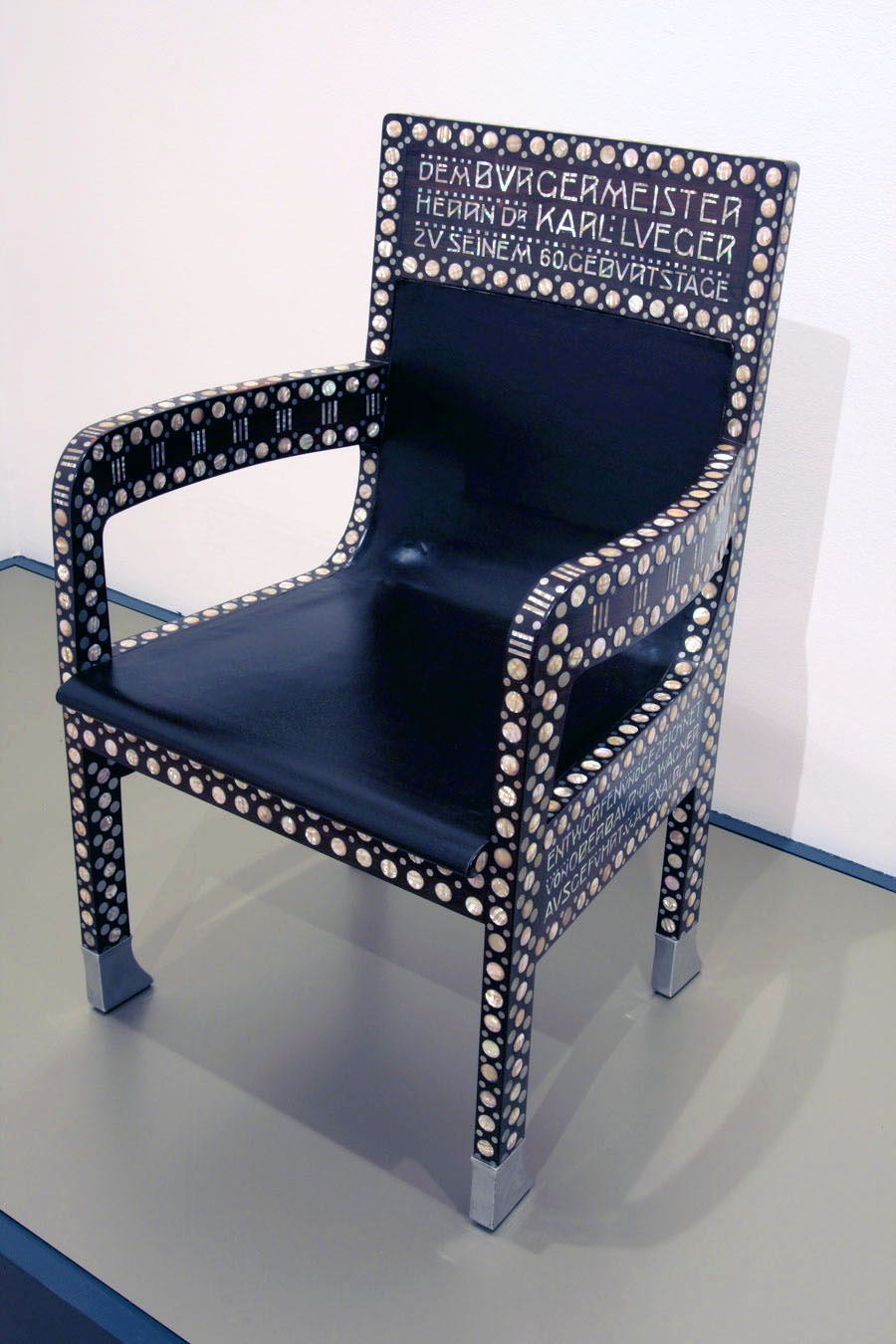
Chair for Dr Karl Lueger
1904
Rosewood (Dalbergia sp.), mother-of-pearl, leather
98.5 x 63 x 59.5cm
Wien Museum, Vienna
Estate of Karl Lueger, 1910

at right:

Wilhelm Gause (Germany 1853-1916)
Vienna Municipal Ball
1904
Watercolour and oil on cardboard
62 x 88cm
Wien Museum, Vienna
Commissioned by the City of Vienna, 1904
Photo: Marcus Bunyan


Wilhelm Gause (Germany 1853-1916) 'Vienna Municipal Ball' 1904


Wilhelm Gause (Germany 1853-1916)
Vienna Municipal Ball
1904
Watercolour and oil on cardboard
62 x 88cm
Wien Museum, Vienna
Commissioned by the City of Vienna, 1904


Stylish, provocative, rebellious, and unforgettable – the world has seen nothing like Vienna in 1900. A century ago, a group of radical young artists, architects, writers, musicians, designers and thinkers overturned all the rules and created a brave new world. Gustav Klimt, Egon Schiele, Josef Hoffmann and Adolf Loos were central to this artistic revolution which transformed Vienna into a dynamic metropolis at the forefront of ground-breaking modernism.

Vienna at the dawn of the twentieth century was opulent, elegant and daring. Casting aside outmoded social mores and moralities, private life became public spectacle. Cabarets, coffee houses, and nightclubs teemed with radical debate and artistic abandon. Gustav Klimt’s society portraits immortalise the chic women who presided over this creative ferment. Josef Hoffmann and the Vienna Workshops created the bold new interior design and the household objects with which these women furnished their elegant homes, establishing the modern ‘look’. As Sigmund Freud defined sexual fragmentation and erotic obsession for a new millennium, Egon Schiele explored human sexuality in images of unparalleled and startling frankness.

Vienna: Art & Design will explore this extraordinary period of artistic and intellectual genius, bringing together more than 250 works of art, including painting, drawing, graphic and decorative art, furniture, fashion, jewellery and photography, most never before seen in Australia. Visitors will experience the inventiveness and brilliance of a unique generation who laid the foundations for life in the twentieth century – a legacy still vividly alive today.

Text from the National Gallery of Victoria website Nd [Online] Cited 22/07/2022


Otto Wagner (Austrian, 1841-1918)(architect) Alexander Albert (Austria active c. 1904) (manufacturer) 'Chair for Dr Karl Lueger' 1904


Otto Wagner (Austrian, 1841-1918) (architect)
Alexander Albert (Austria active c. 1904) (manufacturer)
Chair for Dr Karl Lueger
1904
Rosewood (Dalbergia sp.), mother-of-pearl, leather
98.5 x 63 x 59.5cm
Wien Museum, Vienna
Estate of Karl Lueger, 1910
Photo: Marcus Bunyan


Josef Hoffmann (Austrian, 1870-1956) (designer) J. & J. Kohn, Vienna (manufacturer) 'Adjustable-back chair' (Sitzmaschine) 1908


Josef Hoffmann (Austrian, 1870-1956) (designer)
J. & J. Kohn, Vienna (manufacturer)
Adjustable-back chair (Sitzmaschine)
1908
Ebonised Beech (Fagus sp.), plywood, steel
(a-b) 110.8 x 68.1 x 83.7cm (overall)
National Gallery of Victoria, Melbourne
Purchased through The Art Foundation of Victoria with the assistance of Jardine Matheson Australia, Fellow, 1983
© Estate of Josef Hoffmann


Josef Hoffmann (Austrian, 1870-1956) (designer) Wiener Werkstätte, Vienna (commissioning workshop) J. Soulek, Vienna (manufacturer) 'Bureau, from the Gallia apartment boudoir' 1913


Josef Hoffmann (Austrian, 1870-1956) (designer)
Wiener Werkstätte, Vienna (commissioning workshop)
J. Soulek, Vienna (manufacturer)
Bureau, from the Gallia apartment boudoir
1913
Painted wood, gilt, glass, silk, brass
(a-m) 179.4 x 110.9 x 64.6cm (overall)
National Gallery of Victoria, Melbourne
Samuel E. Wills Bequest, 1976
© Estate of Josef Hoffmann


Otto Wagner (Austria 1841-1918) (architect) Reconstruction of facade for 'Die Zeit' 1902 designed, 1985 made


Otto Wagner (Austria 1841-1918) (architect)
Reconstruction of facade for Die Zeit (installation view)
1902 designed, 1985 made
Iron, aluminium, nickel-plated iron, glass
450 x 332cm
Wien Museum, Vienna
Commissioned by the Historisches Museum der Stadt Wien, 1985
Photo: Marcus Bunyan


Otto Wagner (Austria 1841-1918) (architect) Reconstruction of facade for 'Die Zeit' 1902 designed, 1985 made (installation detail)


Otto Wagner (Austria 1841-1918) (architect)
Reconstruction of facade for Die Zeit (installation detail)
1902 designed, 1985 made
Iron, aluminium, nickel-plated iron, glass
450 x 332cm
Wien Museum, Vienna
Commissioned by the Historisches Museum der Stadt Wien, 1985
Photo: Marcus Bunyan


Otto Wagner objects including shelving, stool, chair and hot air blower (rear) in the exhibition 'Vienna - Art & Design' at the National Gallery of Victoria


Otto Wagner objects including shelving, stool, chair and hot air blower (rear) in the exhibition Vienna – Art & Design at the National Gallery of Victoria
Photo: Marcus Bunyan


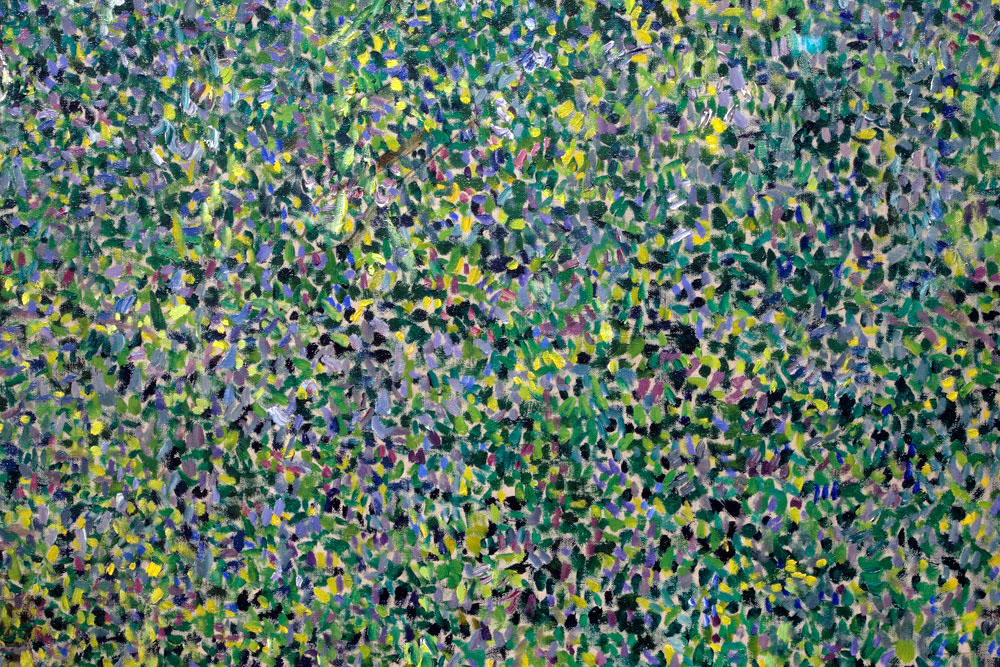
Gustav Klimt (Austria 1862-1918) 'The Park' 1909 (installation detail)


Gustav Klimt (Austria 1862-1918)
The Park (installation detail)
1909
Oil on canvas
Photo: Marcus Bunyan


Gustav Klimt (Austria 1862-1918) The Park' 1909 (installation detail)


Gustav Klimt (Austria 1862-1918)
The Park (installation detail)
1909
Oil on canvas
Photo: Marcus Bunyan


Installation view part of the second room of the exhibition 'Vienna - Art & Design' at the National Gallery of Victoria


Installation view part of the second room of the exhibition Vienna – Art & Design at the National Gallery of Victoria
Photo: Marcus Bunyan


Wilhelm Otto List. 'Young lady in black and white' 1904 (installation detail)


Wilhelm Otto List
Young lady in black and white (installation detail)
1904
Oil on canvas
Photo: Marcus Bunyan


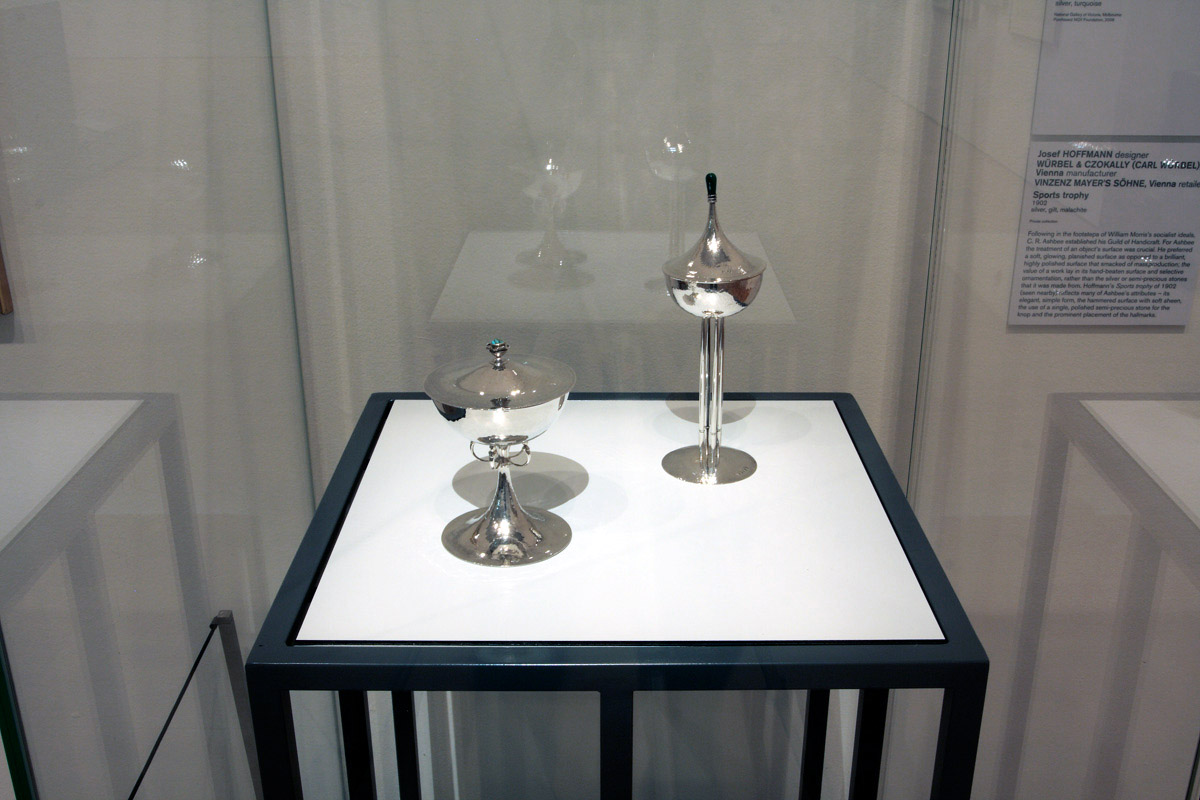
Charles Robert Ashbee (designer) 'Standing cup and cover' 1901 and Josef Hoffmann. 'Sports Trophy' 1902 (installation view)


Charles Robert Ashbee (designer) (British, 1863-1942)
Standing cup and cover (installation view)
1901
Silver, turqoise

Josef Hoffmann (designer) (Austria-Hungary 1870-1956)
Sports Trophy (installation view)
1902
Silver, gilt, malachite
Photo: Marcus Bunyan


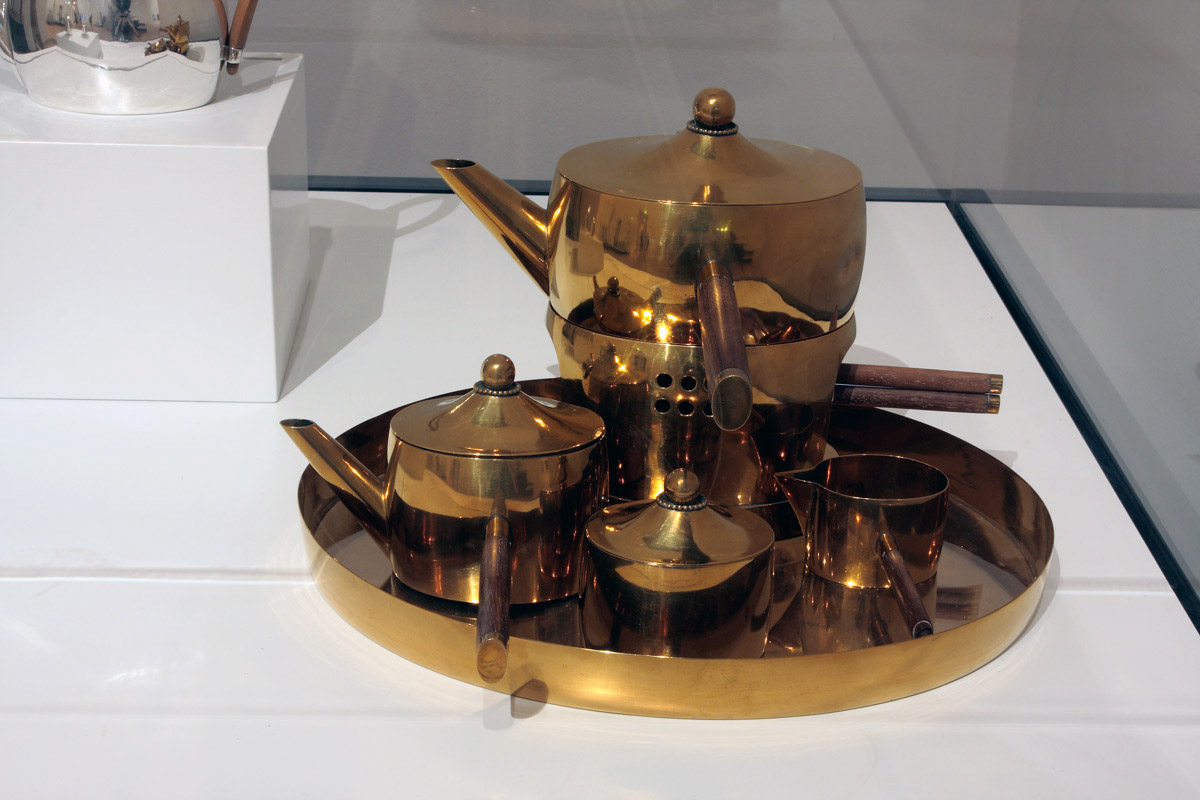
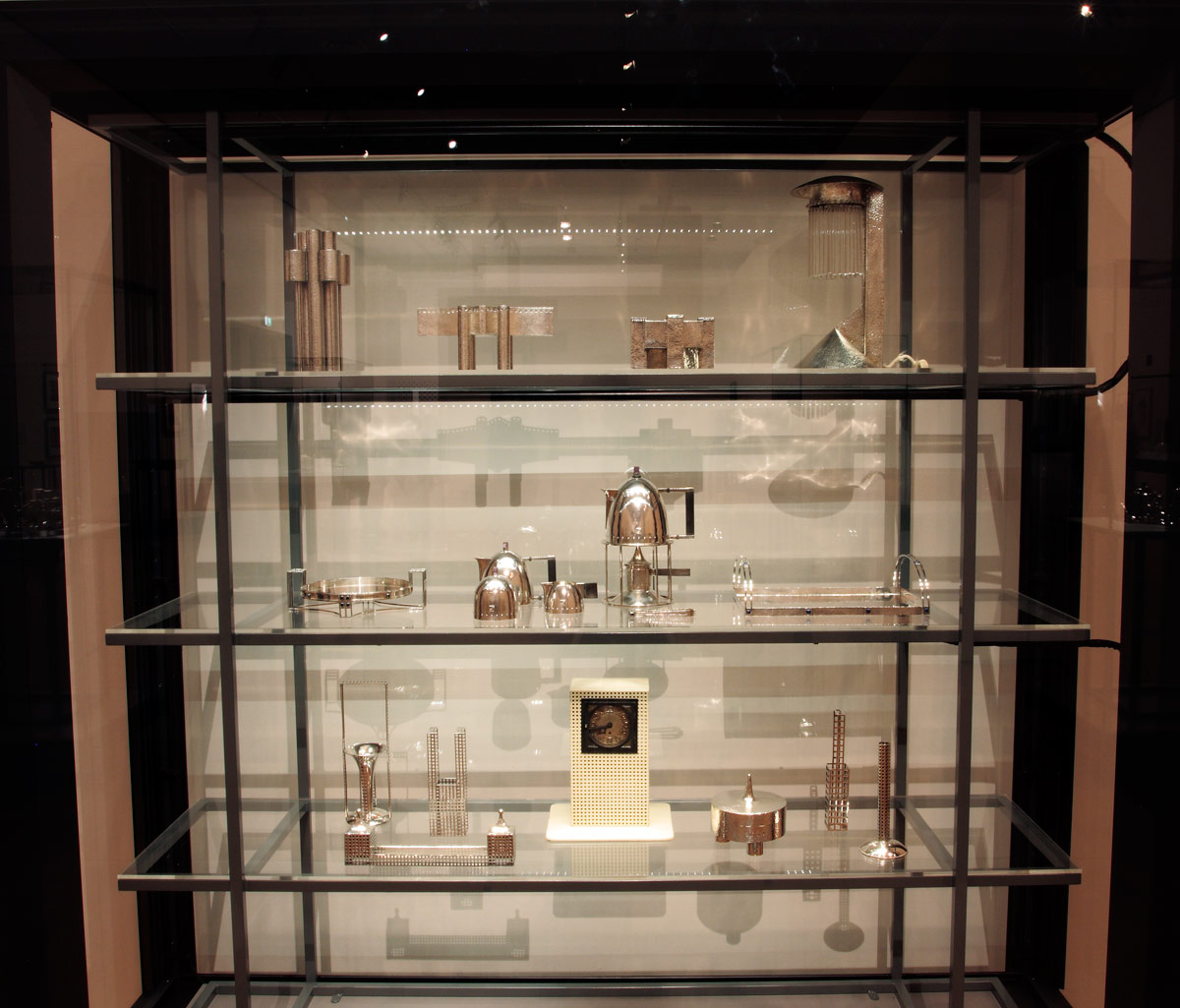
Josef Hoffmann (Austria-Hungary 1870-1956) (designer) Wiener Werkstätte, Vienna (manufacturer) (Austria-Hungary 1903-1932) 'Tea service' (c. 1909-1911) (installation view)


Josef Hoffmann (Austria-Hungary 1870-1956) (designer)
Wiener Werkstätte, Vienna (manufacturer) (Austria-Hungary 1903-1932)
Tea service (installation view)
c. 1909-1911
Silver-gilt, wood
(1.A-E) 21.5 x 29.0 x 26.8cm (overall) (kettle, stand and burner)
(2) 10.8 x 15.4 x 20.2cm (teapot)
(3.A-B) 8.7 x 8.8 x 6.8cm (overall) (sugar basin and lid)
(4) 4.8 x 8.5 x 15.6cm (milk jug)
(5) 3.4 x 36.3 x 29.9cm (tray)
National Gallery of Australia, Canberra
Purchased, 1985
Photo: Marcus Bunyan


Installation view of room three of the exhibition 'Vienna - Art & Design' at the National Gallery of Victoria showing part of Gustave Klimt's 'Beethoven Frieze: Central wall' 1901-02 (detail at top)


Installation view of room three of the exhibition Vienna – Art & Design at the National Gallery of Victoria showing part of Gustave Klimt’s Beethoven Frieze: Central wall 1901-1902 (detail at top)
Photo: Marcus Bunyan


Max Klinger (German, 1857-1920) 'Beethoven' c. 1902 (installation view)


Max Klinger (German, 1857-1920)
Beethoven (installation view)
c. 1902
Plaster
Photo: Marcus Bunyan


Installation view of room four of the exhibition 'Vienna - Art & Design' at the National Gallery of Victoria


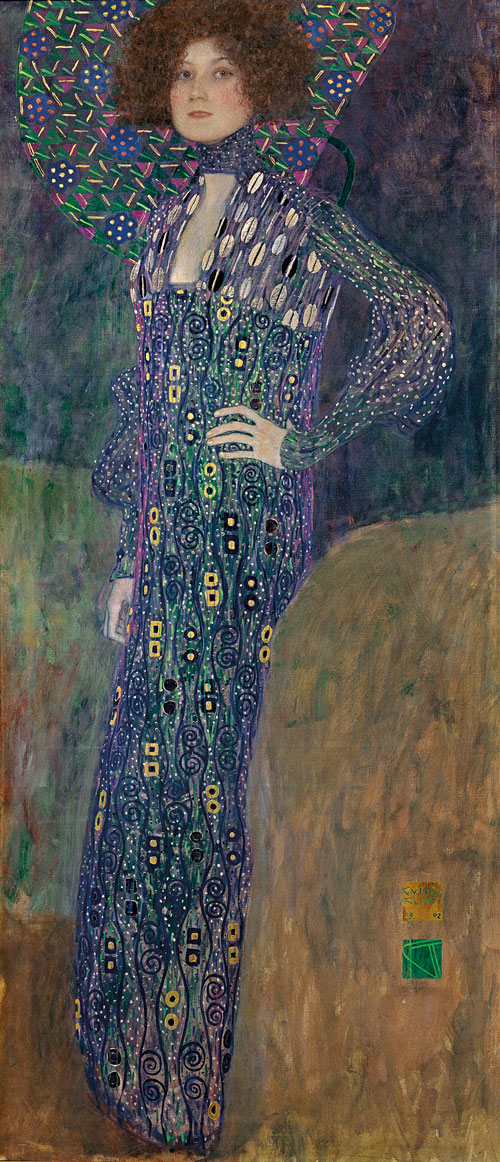
Installation view of room four of the exhibition Vienna – Art & Design at the National Gallery of Victoria with at right, Gustav Klimt’s painting Emilie Flöge (1902)
Photo: Marcus Bunyan


Gustav Klimt (Austria 1862-1918) 'Emilie Flöge' 1902


Gustav Klimt (Austrian, 1862-1918)
Emilie Flöge
1902
Oil on canvas
178.0 x 80.0cm
Wien Museum, Vienna


Gustav Klimt (Austria 1862-1918) 'Emilie Flöge' 1902 (installation detail)


Gustav Klimt (Austrian, 1862-1918)
Emilie Flöge (installation detail)
1902
Oil on canvas
178.0 x 80.0cm
Wien Museum, Vienna
Photo: Marcus Bunyan


Installation view of room five of the exhibition 'Vienna - Art & Design' at the National Gallery of Victoria


Installation view of room five of the exhibition Vienna – Art & Design at the National Gallery of Victoria
Photo: Marcus Bunyan


Koloman Moser (designer) 'Armchair' 1903 and Josef Hoffmann (designer) 'Collapsible library steps' 1905 (installation view)


Installation view of first room of the exhibition Vienna – Art & Design at the National Gallery of Victoria showing at right:

Koloman Moser (Austrian, 1868-1918) (designer)
Armchair (installation view)
1903
Painted beech

at second right

Josef Hoffmann (Austrian, 1870-1956) (designer)
Collapsible library steps (installation view)
1905
Photo: Marcus Bunyan


Gustav Klimt (Austria 1862-1918) 'Fritza Riedler' 1906 (installation detail)


Gustav Klimt (Austrian, 1862-1918)
Fritza Riedler (installation detail)
1906
Oil on canvas
Photo: Marcus Bunyan


Gustav Klimt (Austria 1862-1918) 'Fritza Riedler' 1906


Gustav Klimt (Austrian, 1862-1918)
Fritza Riedler
1906
Oil on canvas
152.0 x 134.0cm
Belvedere, Vienna


Installation view of room six of the exhibition 'Vienna - Art & Design' at the National Gallery of Victoria

Installation view of room six of the exhibition 'Vienna - Art & Design' at the National Gallery of Victoria


Installation views of room six of the exhibition Vienna – Art & Design at the National Gallery of Victoria
Photos: Marcus Bunyan


Josef Hoffmann (Austrian, 1870-1956) 'Tea and coffee service' 1909 (installation view)


Josef Hoffmann (Austrian, 1870-1956)
Tea and coffee service (installation view)
1909
Silver, ivory
Photo: Marcus Bunyan


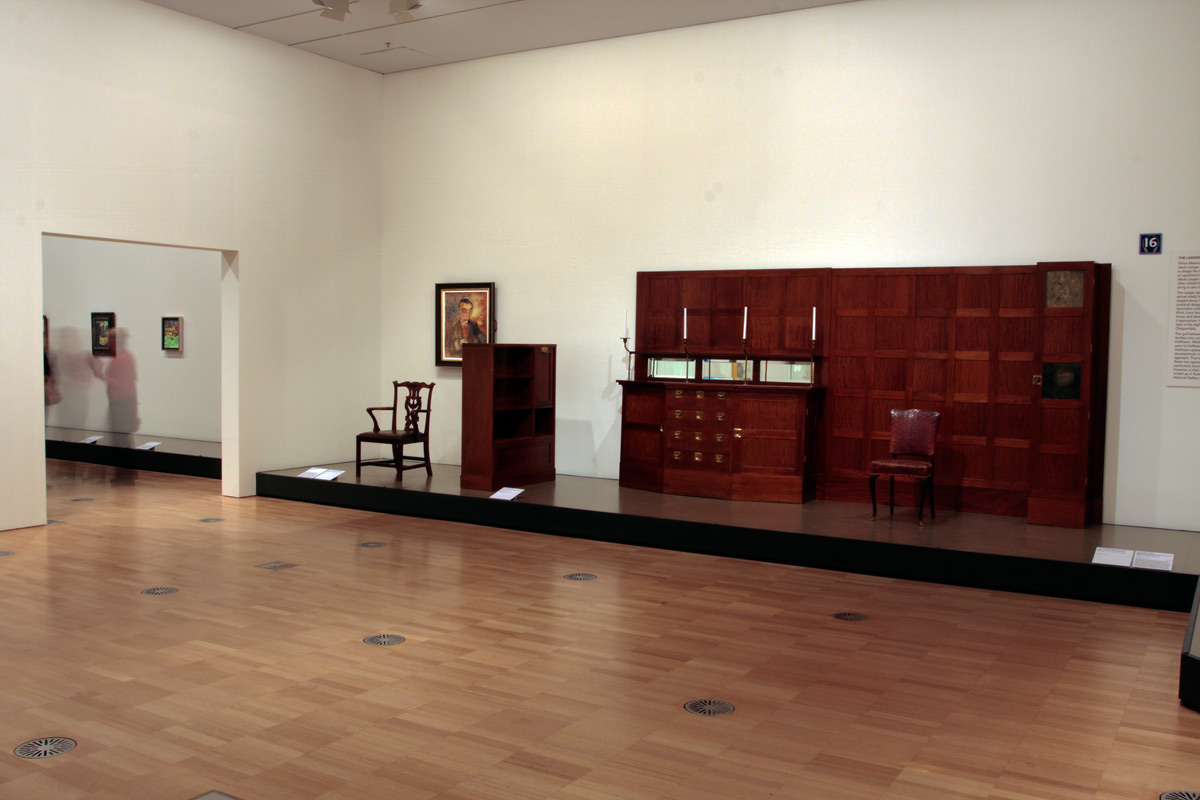
Installation view of room seven of the exhibition 'Vienna - Art & Design' at the National Gallery of Victoria showing Adolf Loos (Austrian, 1870-1933) (designer) 'Sideboard, from the Langer apartment' 1903


Installation view of room seven of the exhibition Vienna – Art & Design at the National Gallery of Victoria with, against the wall,

Adolf Loos (Austrian, 1870-1933) (designer)
Sideboard, from the Langer apartment
1903
Mahogany (Swietenia sp.), mirror, brass
Photo: Marcus Bunyan


Adolf Loos (Austrian, 1870-1933) (designer) Johann Heeg (manufacturer) 'Clock' 1906-1907


Adolf Loos (Austrian, 1870-1933) (designer)
Johann Heeg (manufacturer)
Clock
1906-1907
Brass, glass, clock mechanism, enamel paint, steel
(a-b) 42.7 x 43.0 x 32.7cm (overall) (c) 7.4 x 5.5 x 0.8cm (key)
National Gallery of Victoria, Melbourne
Purchased through The Art Foundation of Victoria with the assistance of Waltons Limited, Fellow, 1987


Installation view of room seven of the exhibition 'Vienna - Art & Design' at the National Gallery of Victoria


Installation view of room seven of the exhibition Vienna – Art & Design at the National Gallery of Victoria
Photo: Marcus Bunyan


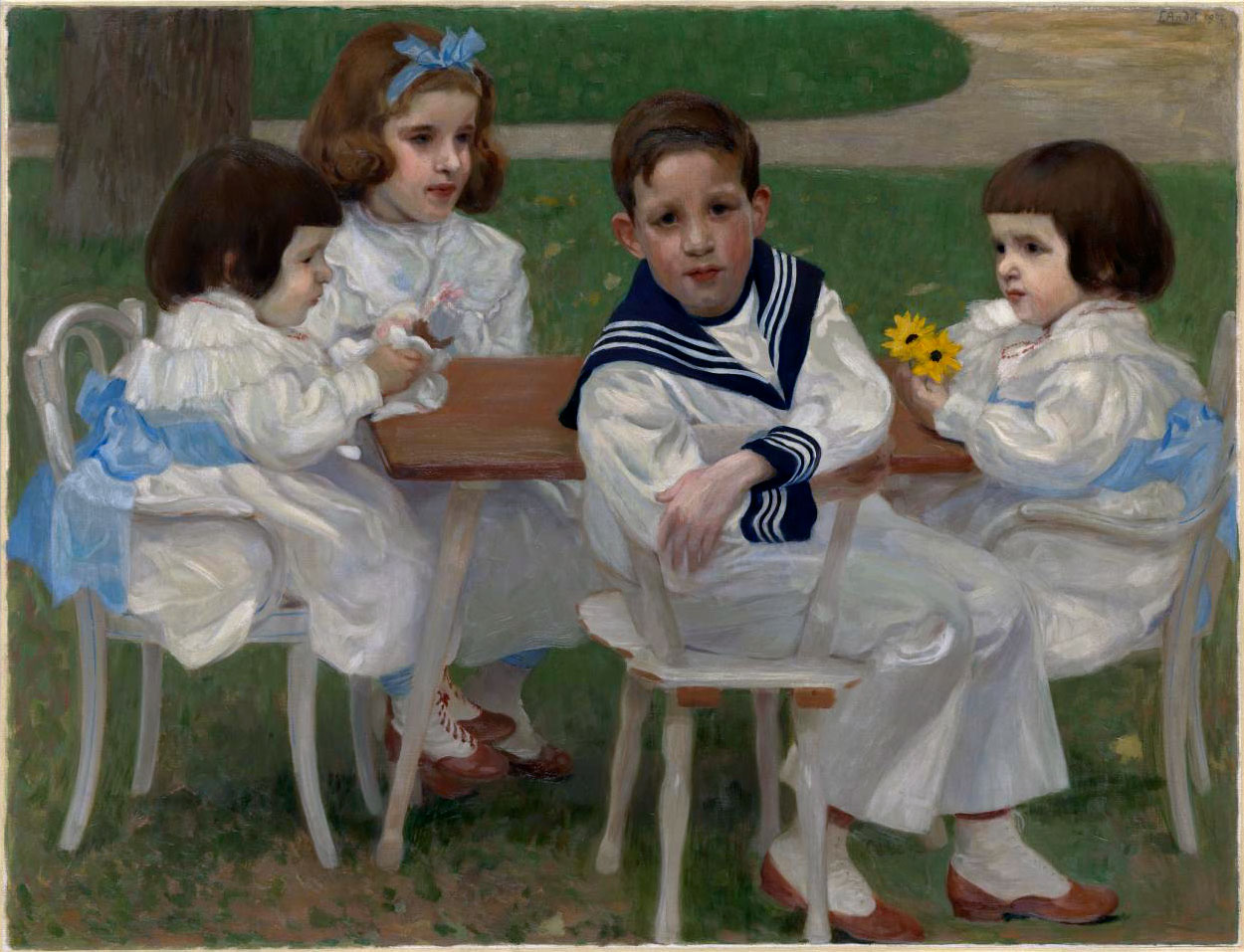
Ferdinand Andri (Austrian, 1871-1956) 'The Gallia children' 1901 (installation view)


Ferdinand Andri (Austrian, 1871-1956)
The Gallia children (installation view)
1901
Oil on canvas

with Josef Hoffmann furniture in the foreground
Photo: Marcus Bunyan


Ferdinand Andri (Austrian, 1871-1956) 'The Gallia children' 1901


Ferdinand Andri (Austrian, 1871-1956)
The Gallia children
1901
Oil on canvas
100.4 × 130.8cm
National Gallery of Victoria, Melbourne
Presented by the family of Moriz and Hermine Gallia, 1976
© the artist’s estate


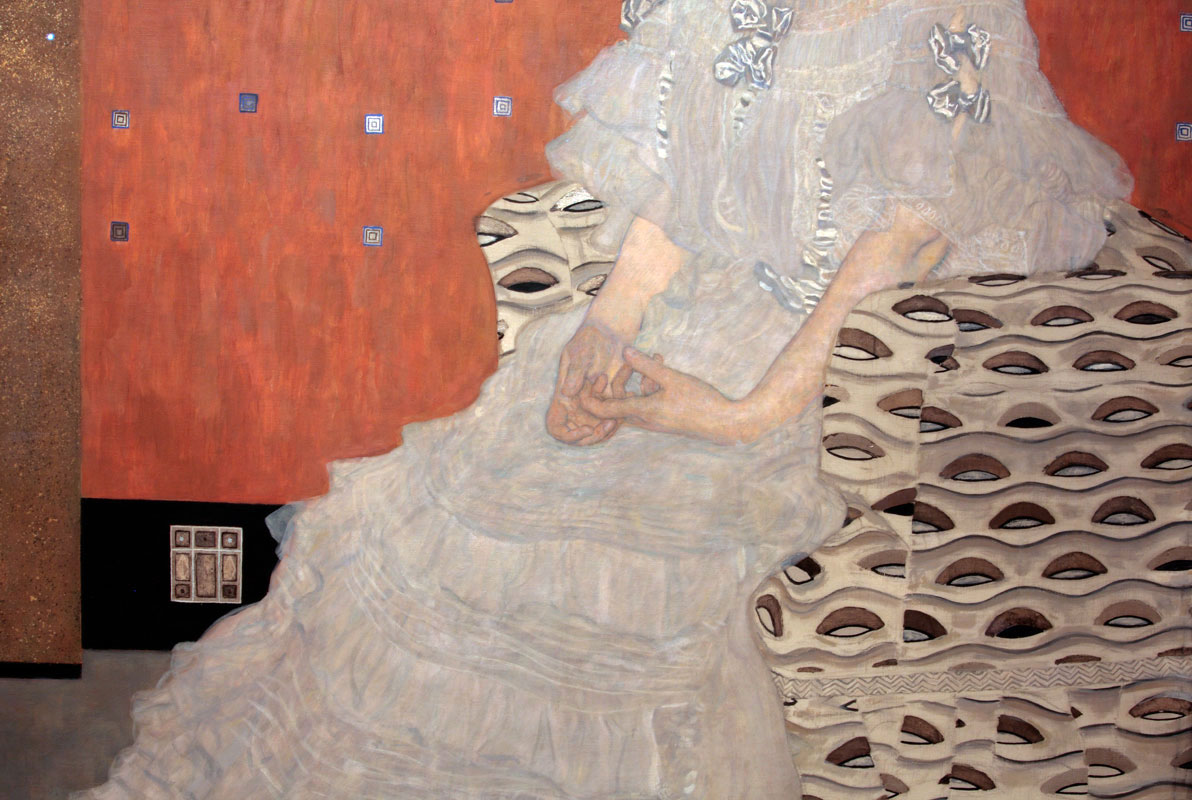
Gustave Klimt (Austrian, 1862-1918) 'Portrait of Hermine Gallia' 1904 (installation view detail)


Gustave Klimt (Austrian, 1862-1918)
Portrait of Hermine Gallia (installation view detail)
1904
Oil on canvas
Photo: Marcus Bunyan


Pieces of Josef Hoffmann and Koloman Mosser silver in the exhibition 'Vienna - Art & Design' at the National Gallery of Victoria


Pieces of Josef Hoffmann and Koloman Mosser silver in the exhibition Vienna – Art & Design at the National Gallery of Victoria
Photo: Marcus Bunyan

Love the reflected light!


Installation view of room eight of the exhibition 'Vienna - Art & Design' at the National Gallery of Victoria

Installation view of room eight of the exhibition 'Vienna - Art & Design' at the National Gallery of Victoria


Installation views of room eight of the exhibition Vienna – Art & Design at the National Gallery of Victoria
Photos: Marcus Bunyan


Objects by Dagobert Peche (left, right and second right) and Josef Hoffmann in the exhibition 'Vienna - Art & Design' at the National Gallery of Victoria


Objects by Dagobert Peche (left, right and second right) and Josef Hoffmann in the exhibition Vienna – Art & Design at the National Gallery of Victoria
Photo: Marcus Bunyan


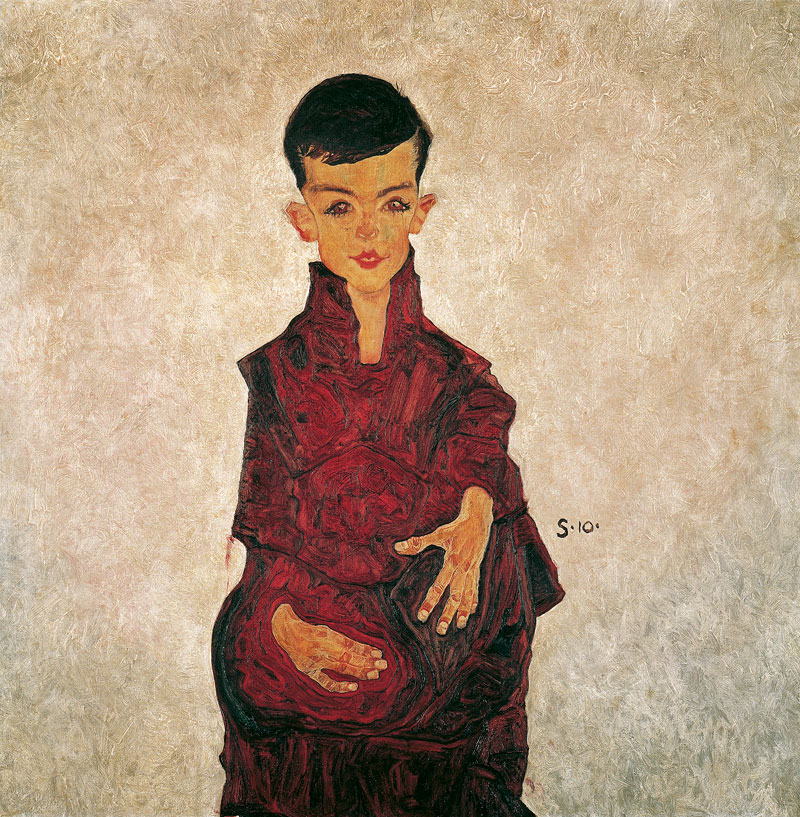
Egon Schiele (Austria 1890-1918) 'Portrait of a boy (Portrait of Herbert Rainer aged approximately six)' 1910 (installation detail)


Egon Schiele (Austrian, 1890-1918)
Portrait of a boy (Portrait of Herbert Rainer aged approximately six (installation detail)
1910
Oil on canvas
Photo: Marcus Bunyan


Egon Schiele (Austria 1890-1918) 'Portrait of a boy (Portrait of Herbert Rainer aged approximately six)' 1910


Egon Schiele (Austrian, 1890-1918)
Portrait of a boy (Portrait of Herbert Rainer aged approximately six)
1910
Oil on canvas
101.0 x 101.5cm
Belvedere, Vienna


NGV International
180 St Kilda Road

Opening hours:
Daily 10am – 5pm

National Gallery of Victoria website

LIKE ART BLART ON FACEBOOK

Back to top

Review: ‘Trace’ by Murray Fredericks at Arc One Gallery, Melbourne

Exhibition dates: 24th May – 18th June 2011


Murray Fredericks (Australian, b. 1970) 'Salt 271' 2011


Murray Fredericks (Australian, b. 1970)
Salt 271
2011
150 x 120cm
Pigment print on cotton rag


“Photographers tell me what I already know. The recognition of the beautiful, bizarre, or boring (the three photographic B’s) is not the problem. You would have to be a refrigerator not to be moved by the beauty of Yosemite. The problem is to deal with one’s total experience, emotionally as well as visually. Photographers should tell me what I don’t know.”


Duane Michals Real Dreams1


“While we cannot describe its appearance (the equivalent), we can define its function. When a photograph functions as an Equivalent we can say that at that moment, and for that person the photograph acts as a symbol or plays the role of a metaphor for something that is beyond the subject photographed.”


Minor White


Fredericks new infrared panoramic works show the strength of nature at it’s finest (9 out of 10 to nature especially when see through this type of filtration), excellent technical skills and good printing but somehow any revelation of spirit in the sublime has been lost in these photographs.

The photographer does not take me anywhere, there is no new space to step into, another view of the world that I want to spend time with. The relationship between the two series is also nebulous, the critical ice / fire space between the works adding little frisson to the exhibition.

I ask: Is it sufficient to use a digital scientific infrared back, if for no other reason that it is there? Is it sufficient to know that these climatic conditions take place in the same area each day, at the same time, place the camera down and just capture the scene? Is there really a non-decisive moment in these photographs, a poetic insight, or is this just what was, literally, hanging around so to speak?

The answer to all three questions I leave up to the reader.

Personally, I need photography to push the boundaries of elusiveness through an understanding in revelation, not just through an understanding of space and form, light and colour. I believe that conventional patterns of perception are there to be broken in ways that disrupt the technologies of the self – the self-regulating of our senses, the conventions of cultural capital – but too what do we open ourselves up to?

As Minor White says: ‘The sound of one hand clapping’.

While the photographs have the weight of serious equipment and professional acumen behind them after the initial awe on viewing they fall to earth, like the rainstorms they portray. As with my earlier review of Salt they seem to be more about the photographer than any revelation of the thing being photographed.

Duane Michals observes that, “The best artists give themselves in their work” but this giving is ego-less, the dropping away of the bells and whistles to let an’other’ emerge: in this sense I do not feel the total experience, emotionally as well as visually.

Paul Strand said that it took him 10 years to start to become an artist, to let go of ego in his work; paradoxically after this the work became more his own.

For me, these photographs never become a metaphor for something that is beyond the subject being photographed.

Dr Marcus Bunyan


1/ Michals, Duane. Real Dreams 1976 [Online] Cited 08/06/2011, on longer available online.


Many thankx to Angela Connor for her help and to Arc One Gallery for allowing me to publish the photographs in the posting. Please click on the photographs for a larger version of the image.


Murray Fredericks (Australian, b. 1970) 'Salt 272' 2010


Murray Fredericks (Australian, b. 1970)
Salt 272
2010
Pigment print on cotton rag
150 x 120cm


Murray Fredericks (Australian, b. 1970) 'Salt 273' 2011


Murray Fredericks (Australian, b. 1970)
Salt 273
2011
Pigment print on cotton rag
150 x 120cm


Salt began in 2003 and is a series of photographs of vast empty landscapes. Each image in the series is connected by the placement of the horizon running across the lower third of the frame. The horizon is the only referential form, breaking the void and providing the viewer with an element that paradoxically ‘defines’ the space. These new works add another dimension to Salt, with the water from last year’s rains now creating scenes diametrically opposed to the work occupying the adjacent walls as Hector.

Hector draws its title from an affectionately name atmospheric phenomenon that produces some of the world’s biggest thunderstorms. These new black and white works employ Murray’s methodical consistency of composition with distinctly different outcomes to the Zen-like vistas of Salt. In these works the expanse of the storm is consciously contained and forced into a barometric battle with the invisible air at its limits for the place of subject within the photograph…

By juxtaposing these series, each viewer is at once placed outside the containers which harbour these landscapes of remote territories – one calm and one facing the eye of the storm – and at the same time place in the centre of Murray’s minimal, ethereal representations of these places. In this way we can trace his exploration into these subjects – capturing the moment is our witness to a reverence to land and country.

Text from Arc One Gallery


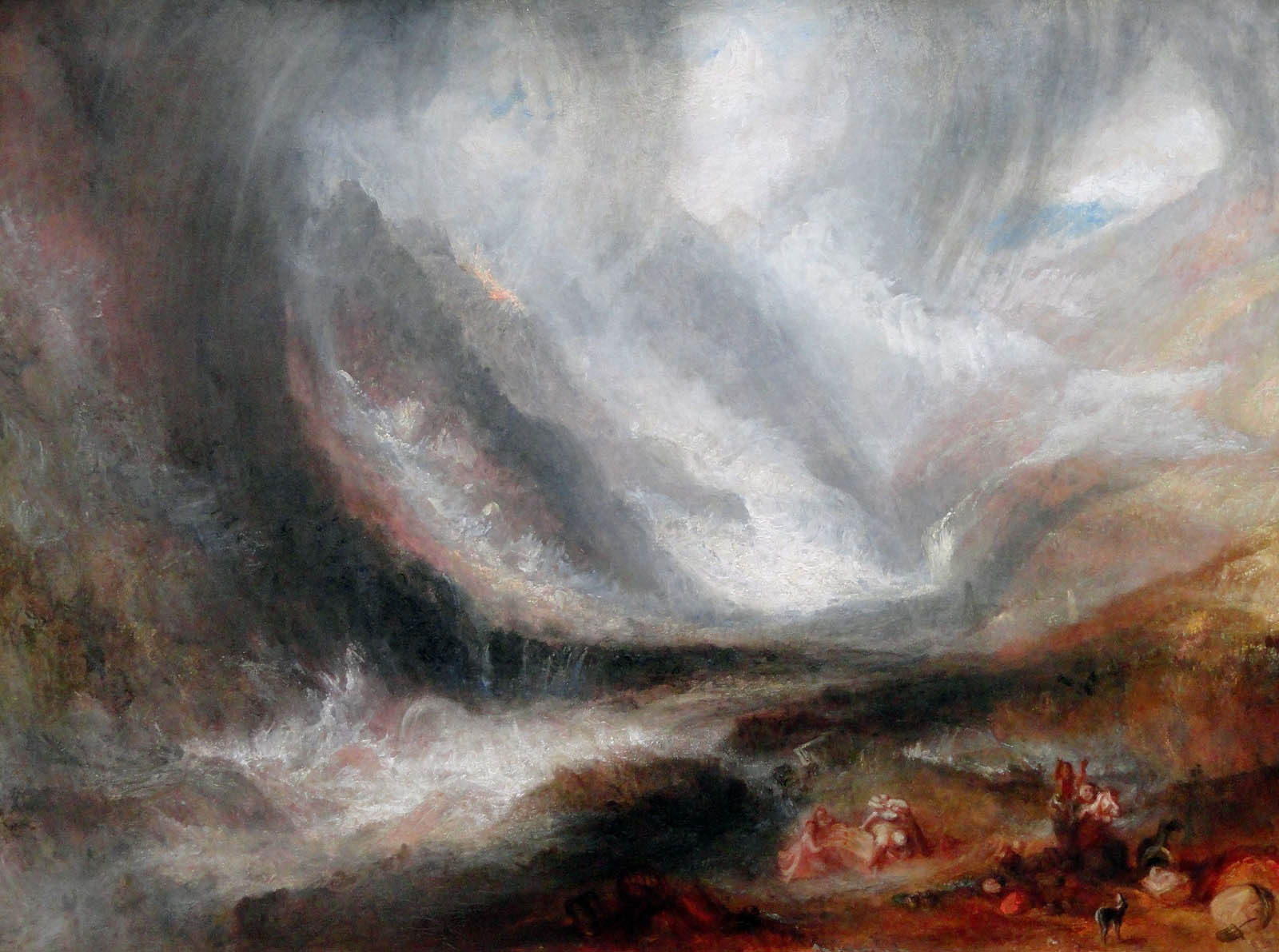
Joseph Mallord William Turner (English, 1775-1851) 'Valley of Aosta: Snowstorm, Avalanche, and Thunderstorm' 1836/37


Joseph Mallord William Turner (English, 1775-1851)
Valley of Aosta: Snowstorm, Avalanche, and Thunderstorm
1836/37
Oil on canvas
36 1/4 x 48 in. (92.2 x 123cm)
The Art Institute of Chicago: Frederick T. Haskell Collection


Murray Fredericks (Australian, b. 1970) 'Hector 10' 2011


Murray Fredericks (Australian, b. 1970)
Hector 10
2011
220 x 120cm
Pigment print on cotton rag


Murray Fredericks (Australian, b. 1970) 'Hector 11' 2011


Murray Fredericks (Australian, b. 1970)
Hector 11
2011
204 x 120cm
Pigment print on cotton rag


Arc One Gallery
45 Flinders Lane
Melbourne, 3000
Phone: (03) 9650 0589

Opening hours:
Wed – Sat 11am – 5pm

Arc One Gallery website

LIKE ART BLART ON FACEBOOK

Back to top

Review: ‘Ice Structure’ by Kirsten Haydon at Gallery Funaki, Melbourne

Exhibition dates: 24th May – 18th June, 2011

Kirsten Haydon (New Zealand, b. 1973) 'ice objects', 2011 Kirsten Haydon (New Zealand, b. 1973) ice objects 2011 Enamel, copper, reflector beads Various dimensions
“Confronted by the immensity and power of desert and ice, one cannot simply stand to the side and evaluate as though one were standing before a landscape garden and other works of art. Conflicting emotions, including fear, are aroused and simultaneously absorbed or taken over by the overmastering presence of nature.”

Yi Fu Tuan. Desert and Ice: Ambivalent Aesthetics, 1993

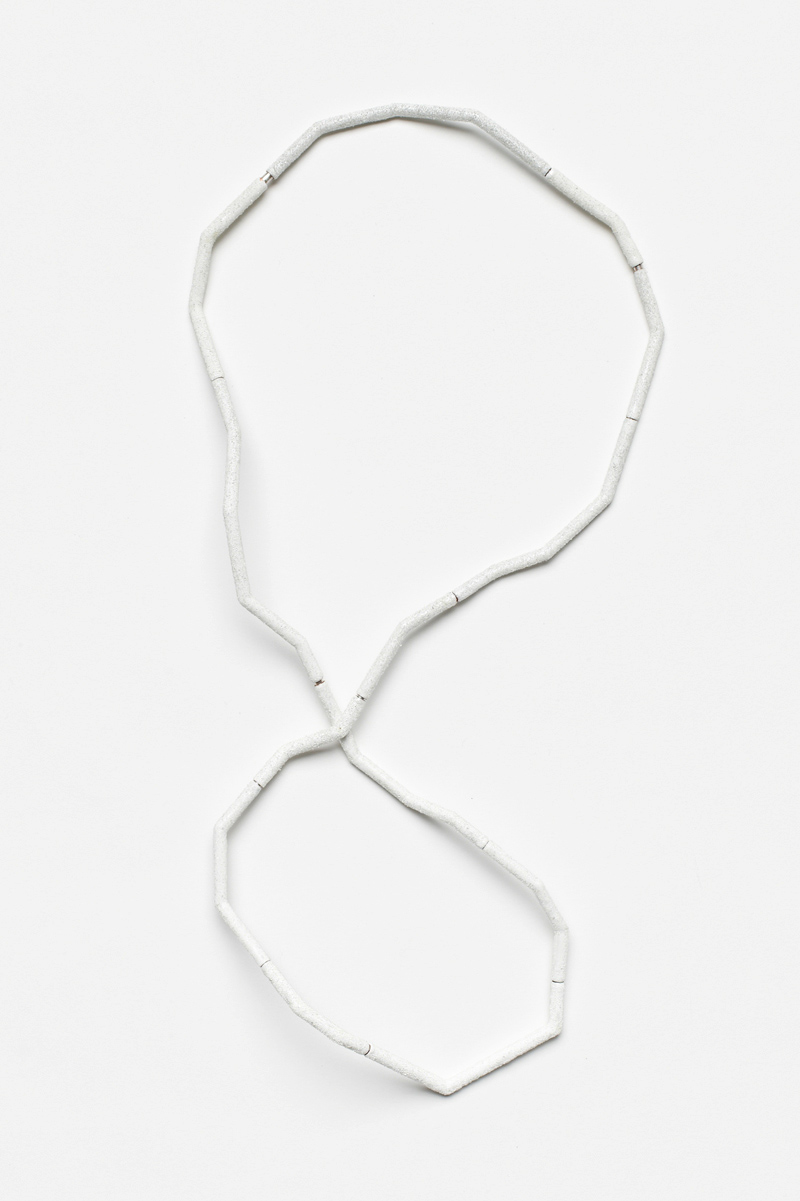
There are many things to like about this exhibition: the fine craftsmanship, the forms, the observation and the beauty of some of the pieces. The symbolism is simple and effective – re-imaged relics of white, vitreous enamel objects from the huts of Robert Scott and Ernest Shackleton, the use of reflector beads to imitate snow and Meccano-like steel girders to symbolise human construction and encroachment on a pristine land. Some of the ‘objects’ remind me of the beauty and simplicity of Etruscan vessels, seemingly delicate apports, being the transference of an article from one place and time to another; the use of reflector beads at the bottom of ice sample (2011, below) is also inspired. So too is the occlusion of the image in the brooch ice plane (2011, below) which adds further mystery to an already surreal landscape. One piece is absolutely stunning. The wonderful neckpiece ice movement (2011, see two photographs below) is ravishing in it’s articulation and form, its snow-covered twig-like coolness. Unfortunately where the exhibition fails is in the use of banal images in several works such as ice depot, ice runway, ice industry (brooch, all 2011, not pictured) and ice industry (2011, neckpiece, below). The obvious point being made is that of man made construction in a pristine landscape but the simple symbology used so effectively in other pieces becomes a little awkward in these pieces. The images used are quite ugly and while this fits the symbolic use of them it doesn’t make for very interesting or illuminating art. There needed to be more layering for the message to be effective – which is why the occluded brooch works so well, human construction blinded, dissolved. This is a pity because the rest of the exhibition is excellent. Enter this ice world and you will be delightfully surprised! Dr Marcus Bunyan Many thankx to Katie Scott for her help and Gallery Funaki for allowing me to publish the photographs and text in the posting. Please click on the photographs for a larger version of the image. Kirsten Haydon (New Zealand, b. 1973) 'ice edge' and 'ice sheet flow' both 2011 Kirsten Haydon (New Zealand, b. 1973) ice edge (left) Object 2011, enamel, reflector beads, copper, silver 60 x 350 x 210 mm ice sheet flow (right) Object 2011 Enamel, reflector beads, copper, silver 70 x 130 x 195 mm Kirsten Haydon (New Zealand, b. 1973) 'ice plane', brooch, 2011 Kirsten Haydon (New Zealand, b. 1973) ice plane Brooch 2011 Enamel, photo transfer, reflector beads, silver, copper, steel 80 x 80 x 10 mm Kirsten Haydon (New Zealand, b. 1973) 'ice movement', neckpiece, 2011 Kirsten Haydon (New Zealand, b. 1973) ice industry neckpiece 2011 enamel, copper, photo transfer, paint, silver 280 x 160 x 10 mm I make jewellery and objects that both connect to and explore human experience and place. Since Antarctica’s discovery explorers, expeditioners, artists and writers have attempted to record and visualise this isolated continent. In 2004 I was awarded a New Zealand Antarctic Arts Fellowship en joined those who communicate their experiences of Antarctica. Antarctica is often regarded as a pristine yet harsh environment, home to extraordinary wildlife and the domain of scientists. Due to its remoteness projects that are supported by international Antarctic programmes are predominantly science-based and as a result artistic research in Antarctica is limited. The cultural theorist, Yi Fu Tuan describes the experience of the explorer as: “the longing to be taken out of oneself and ones habitual world into something vast, overpowering and indifferent.” His statement resonates with my experience of Antarctica where I found myself drawn to the minutiae of the ice crystal and the structures and forms that I could associate with in the extraordinary landscape. While in that place, so removed from the conventions of civilisation, I came to understand the immensity of nature and to see that it exists without the necessity for human presence … Inside the historic huts of Robert Scott and Ernest Shackleton I was captivated by the history, contained both in the interior spaces themselves and in the material artefacts left by the expeditioners … These seemingly mundane objects are transformed into a still life of significant artefacts of a previous time, preserving the memory and story of their parties of explorers. My interpretations engage through the iconography of personal jewellery, domestic objects and the environment of Antarctica. In the course of making I continue to investigate and portray Antarctica through my own and others’ personal experiences. The objects I produce reference valued souvenir jewellery and objects now displayed in museums as historical artefacts, which were once personal mementos … Excerpts from the catalogue text by Kirsten Haydon May 2011 Kirsten Haydon (New Zealand, b. 1973) 'ice movement' neckpiece 2011 Kirsten Haydon (New Zealand, b. 1973) 'ice movement' neckpiece 2011 Kirsten Haydon (New Zealand, b. 1973) ice movement Neckpiece 2011 Enamel, copper, reflector beads, silver Kirsten Haydon (New Zealand, b. 1973) 'ice sample', object, 2011 Kirsten Haydon (New Zealand, b. 1973) ice sample Object 2011 Enamel, copper, reflector beads Gallery Funaki Sackville House Apartment 33 27 Flinders Lane Melbourne 3000 Australia Opening hours: Wednesday – Friday 12 – 5pm Saturday on occasion (check our socials) or by appointment Gallery Funaki website LIKE ART BLART ON FACEBOOK Back to top

Review: ‘Time Machine: Sue Ford’ at Monash Gallery of Art, Wheelers Hill, Victoria

Exhibition dates: 7th April – 19th June 2011


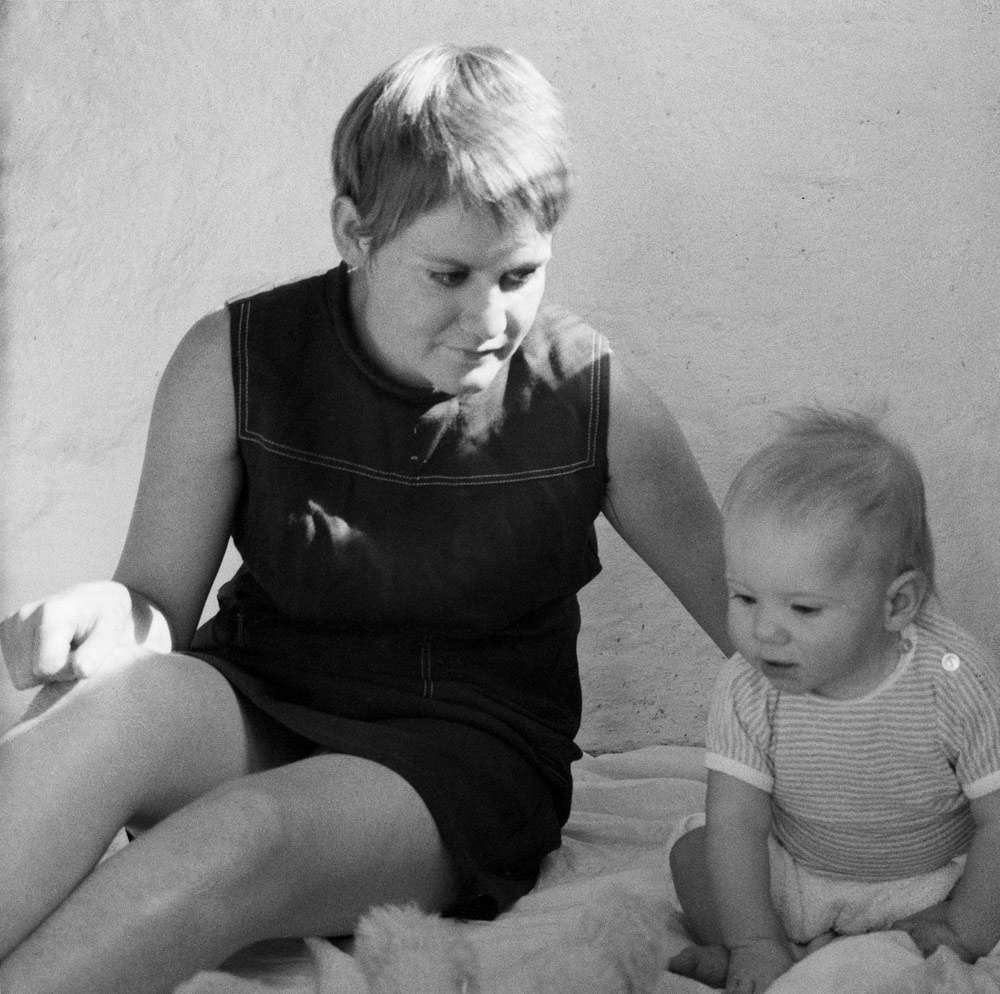
Sue Ford (1943-2009) 'Self-portrait' 1968


Sue Ford (Australian, 1943-2009)
Self-portrait 1968
1968, printed 2011
From the series Self-portrait with camera (1960-2006)
Selenium toned gelatin silver
22.8 x 24 cm
Courtesy Sue Ford Archive


“Choosing to photograph oneself, one’s life and one’s time exemplified the now well-worn slogan ‘the person is political’. Ford’s self-examination across the decades is unflinching and exacting. As Janine Burke wrote in 1980, her ‘psychological history [is] etched in her face for everyone to see’. Burke concluded that Ford’s self-portraits are ‘as honest as one can ever be about oneself’.”


Helen Ennis. Faces are Maps: Sue Ford and Portraiture.1


“The search for the self is a journey into a mental labyrinth that takes random courses and ultimately ends at impasses. The memory fragments recovered along the way cannot provide us with a basis for interpreting the overall meaning of the journey. The meanings that we derive from our memories are only partial truths, and their value is ephemeral. For Foucault, the psyche is not an archive but only a mirror. To search the psyche for the truth about ourselves is a futile task because the psyche can only reflect the images we have conjured up to describe ourselves. Looking into the psyche, therefore, is like looking into the mirror image of a mirror. One sees oneself reflected in an image of infinite regress. Our gaze is led not toward the substance of our beginnings but rather into the meaninglessness of previously discarded images of the self.”


Patrick Hutton. Foucault, Freud,
and the Technologies of the Self.2


This is a solid exhibition of the work of beloved Australian photographer Sue Ford, essential looking for anyone wanting to have an overview of Australian photography.

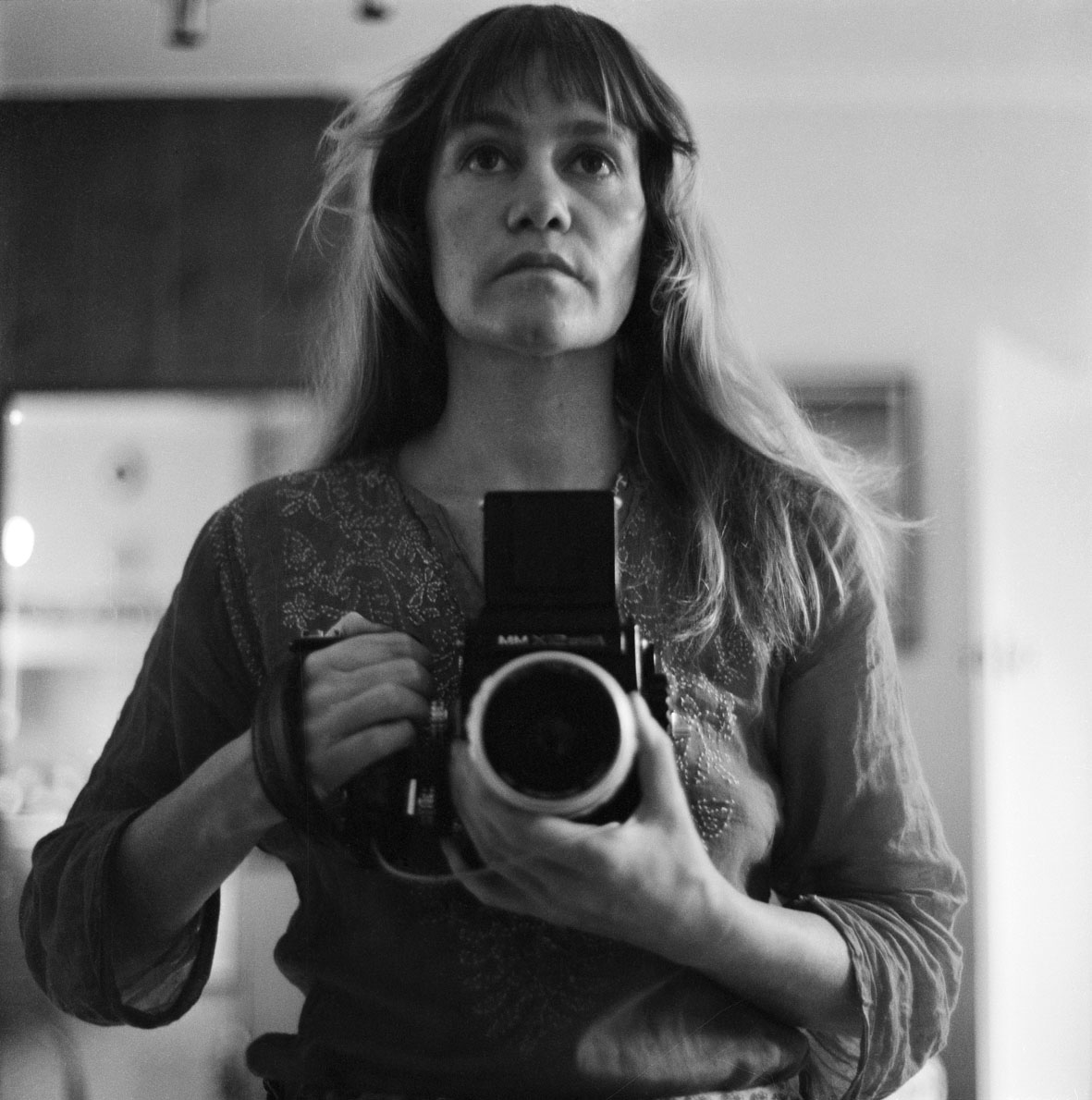
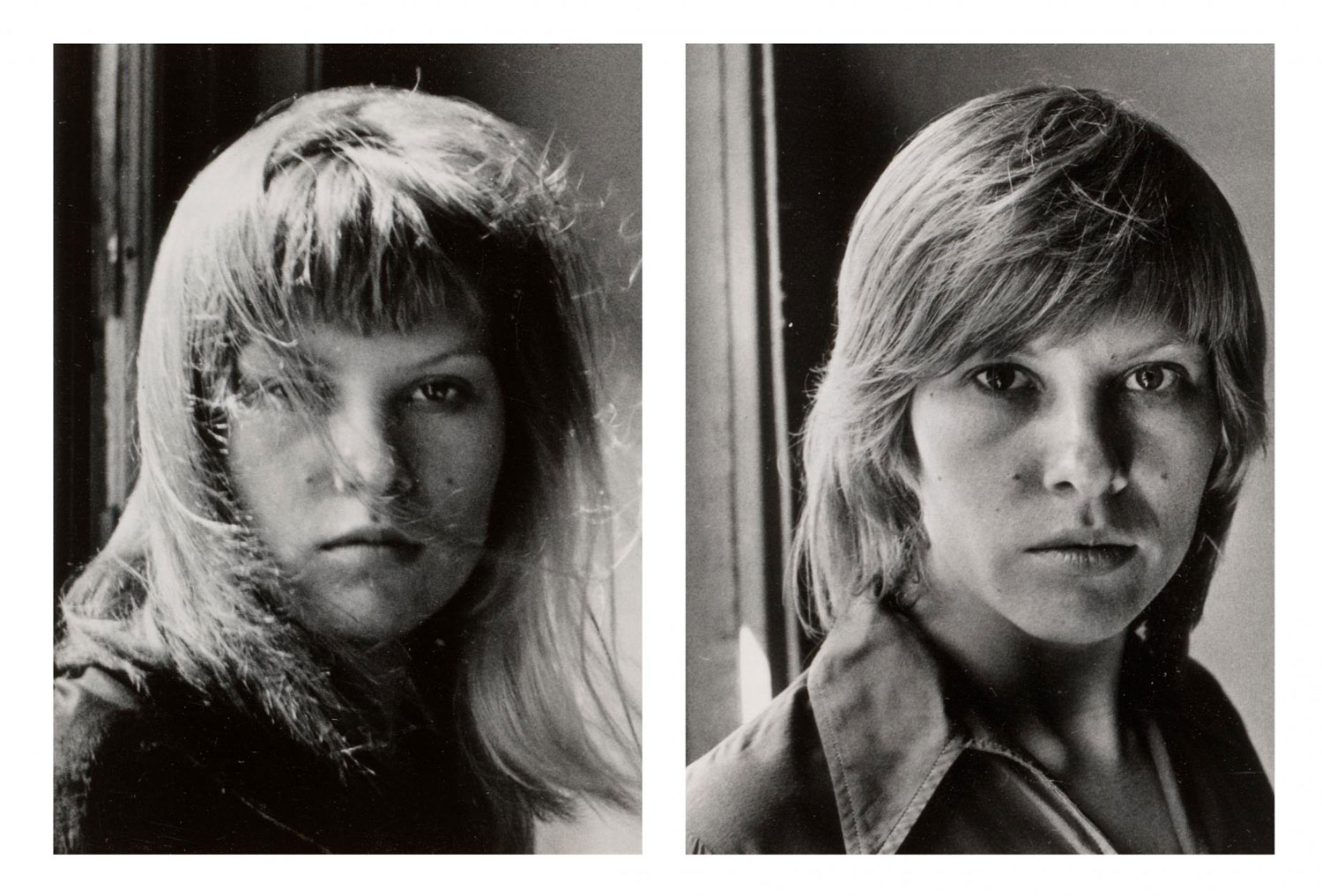
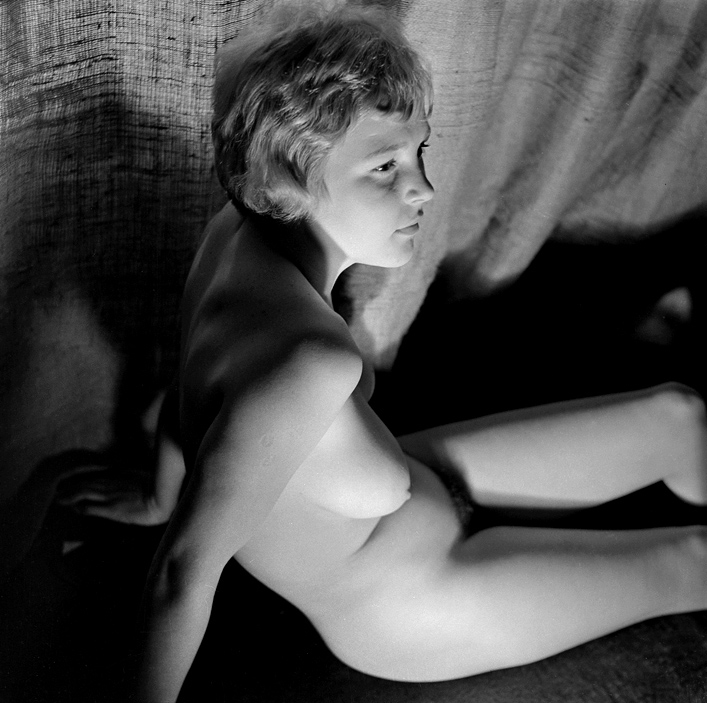
The beautifully hung exhibition flows like music, interweaving up and down, the photographs framed in thin, black wood frames. It features examples of Ford’s black and white fashion and street photography; a selection of work from the famous black and white Time series (being bought for their collection by the Art Gallery of New South Wales) – small, snapshot size double portraits, the first portraits taken during the 1960’s, the second around 1974, formalist portraits in which the sitter is closely cropped around head and shoulders with the photographer using the camera as objectively as possible, the double portrait used to display changes in identity over time; a selection of Photographs of Women – modern prints from the Sue Ford archive that are wonderfully composed photographs with deep blacks that portray strong, independent, vulnerable, joyous women (see last four photographs below); and the most interesting work in the exhibition, the posthumous new series Self-portrait with camera (1960-2006) that evidence, through a 47 part investigation using colour prints from Polaroids, silver gelatin prints printed by the artist, prints made from original negatives and prints from scanned images where there was no negative available, a self-portrait of the artist in the process of ageing (see the two photographs above and below this review).

One of my favourite photographs in the exhibition was Margaret with Emma, Redcliffs, Queensland, 1971. The black and white photograph features a grandmother with her granddaughter, close to each other, both wearing floral dresses of different pattern, both staring intently out of the image at what is possibly a television with a weatherboard backdrop. A dark form hovers at the upper left of the photograph adding a disturbing note to the image but it is the look on the grandmother’s face – a look of shock, enthralment, blankness with eyes wide, that is matched by the intensity on the granddaughter’s face as she stares intently – that transcends the distance between photograph and viewer, between grandmother and granddaughter across time and space. The process of looking and ageing captured by the ‘time machine’, the camera, in one single image. The viewer understands this photograph for we all experience the evidence of our bodies, our mortality. We relate intimately to how the photograph reanimates in the present this moment from the past, the momenti mori of the photograph, the little death becoming our future death.

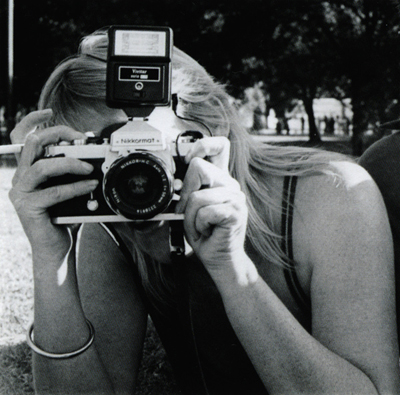
This notion is particularly poignant in the series Self-portrait with camera (1960-2006), a work that Sue Ford was actively engaged with before her death. Smaller colour prints from negatives and Polaroids are here interspersed with black and white photographs up to about 8″ x 10″ in size: the series contains 12 chromogenic photographs, 7 silver gelatin photographs, 6 dye fusion photographs and 22 selenium-toned photographs (printed 2011). In dark, contrasty prints the artist has photographed herself looking down into the camera shooting into a mirror, looking directly into the mirror with camera, with the camera on a timer, with the camera in/visible, being shot by other people with the camera pointed directly at her, with the camera perpendicular to the artist shot by someone else, with Ford behind a movie camera, with multiple refractions in mirrors. Sometimes Ford even becomes the camera (as in the 1986 self-portrait below: I am the camera, the camera is me).

Ford becomes the “one who looks” knowingly at herself, sometimes the author of that observation, sometimes oblivious to it (until later when she has collected these images). As Burke and Ennis note, these photographs of self-examination across the decades are as honest as one can ever be about oneself. This a deeply political but also deeply psychoanalytical investigation: not to “take care of yourself” as a form of knowing as in Greco-Roman antiquity but “knowing yourself” as the fundamental principle of understanding yourself: a procedure of objectification and subjection in which the photograph ‘marks’ our status and the passage of time, that makes us who we are – photographs as vital techniques in the constitution of the self as subject.3

The mirror is frequently used in these photographs to portray the self. While it is true that these are strong, intimate, unflinching and exacting images, in the use of the mirror the im(pose)tures of life are singled / doubled / tripled – a reflection of the psyche that lead to discarded images of the self that are of little use in understanding the substance of our beginnings … or the overall interpretation of the journey. What they do offer is cumulative evidence of a deep, personal conviction into the inquiry: who am I?

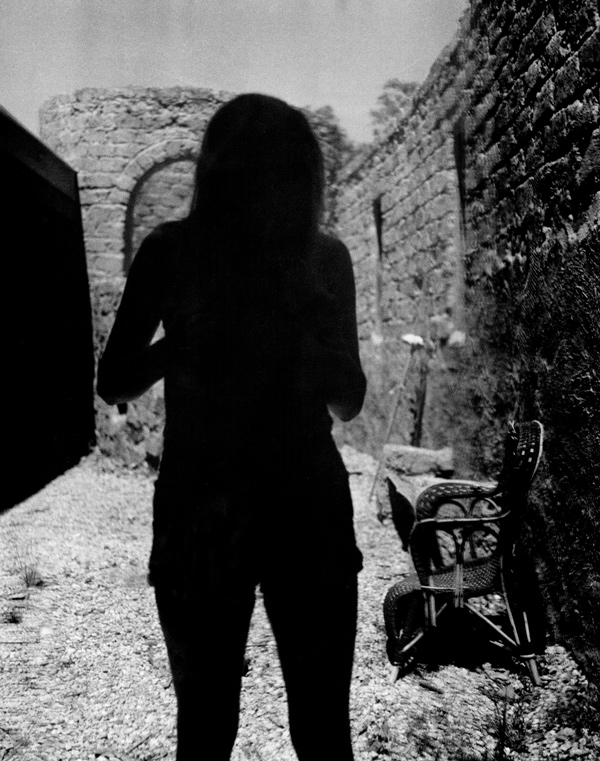
Rembrandt famously painted, drew and etched himself hundreds of times in the process of ageing; Ford has likewise done the same. If, as Victor Burgin observes, “An identity implies not only a location but a duration, a history,”4 then the nature of photography (including Ford’s self-reflexive project), concerned as it is with space and time, becomes the mirror in a search for identity. Photography as a mirror on the world constantly repeats moments of illumination in a re/vision of eternal recurrence, a performance that is a hybrid site: both a homogenous (the same “I”) and heterogenous (a different “I”) site of self-representation, different every time we look. To that end I would like you to look at the self-portrait from 1976 (below). The artist is completely absent, her silhouette, her dark shadow swallowed whole by the blank photographic plate on the left hand side of the image as though Ford, the camera and an image of infinite regress have become one, eternally engulfed by space-time but open to re/view at any time.

Whether looking down, looking toward or looking inward these fantastic photographs show a strong, independent women with a vital mind, an élan vital, a critical self-organisation and an understanding of the morphogenesis of things that will engage us for years to come. Essential looking.

Dr Marcus Bunyan


1/ Burke, Janine. Self-portrait/self-image 1980-1981. Melbourne: Australian Directors’ Council, 1981. p. 4 quoted in Ennis, Helen. “Faces are Maps: Sue Ford and Portraiture,” in Lakin, Shaune (ed.,). Sue Ford: Self-portrait with camera (1960-2006). Melbourne: Monash Gallery of Art, 2011, np.

2/ Hutton, Patrick. “Foucault, Freud, and the Technologies of the Self,” in Martin, Luther and Gutman, Huck and Hutton, Patrick (eds.,). Technologies of the Self: A Seminar with Michel Foucault. London: Tavistock Publications, 1988, p. 139

3/ Foucault, Michel. Discipline and Punish, quoted in Gutman, Huck. “Rousseau’s Confessions: A Technology of the Self,” in Martin, Luther and Gutman, Huck and Hutton, Patrick (eds.,). Technologies of the Self: A Seminar with Michel Foucault. London: Tavistock Publications, 1988, p. 99

4/ Burgin, Victor. In/Different Spaces: Place and Memory in Visual Culture. Berkeley: University of California Press, 1995, p. 36


Many thankx to Mark Hislop for his help and the Monash Gallery of Art for allowing me to publish the photographs in the posting. Please click on the photographs for a larger version of the image.


Sue Ford (Australian, 1943-2009) 'Self-portrait 1986' 1986


Sue Ford (Australian, 1943-2009)
Self-portrait 1986
1986
From the series Self-portrait with camera (1960-2006)
Gelatin silver print, printed 2011
8.4 x 6.5cm
Courtesy Sue Ford Archive


Sue Ford (Australian, 1943-2009) 'Self-portrait 1976' 1976


Sue Ford (Australian, 1943-2009)
Self-portrait 1976
1976, printed 2011
From the series Self-portrait with camera (1960-2006)
Selenium toned gelatin silver print
24 x 18cm
Courtesy Sue Ford Archive


Sue Ford (1943–2009) 'Self-portrait 1974' 1974


Sue Ford (Australian, 1943-2009)
Self-portrait 1974
1974, printed 2011
From the series Self-portrait with camera (1960-2006)
Selenium toned gelatin silver print
19.9 x 18cm
Courtesy Sue Ford Archive


On 16 April 2011, the first major exhibition of the work of the late Sue Ford for two decades will open at Monash Gallery of Art.

Sue Ford (1943-2010) was one of Australia’s most important photographers and filmmakers. Ford studied photography at RMIT and in 1974 was the first Australian photographer to be given a solo exhibition at the National Gallery of Victoria.

Ford passed away in 2009. Before her death, she was working with Monash Gallery of Art on an exhibition of her work which would feature her final major project Self-portrait with camera (1960-2006). This series of 47 photographs has never been shown before, and presents a compelling self-portrait of an artist. It underscores the central role the camera played in Ford’s life. Self-portrait with camera will be shown alongside a survey of Ford’s black-and-white photographs from the 1960s and 70s and examples of her most iconic work, Time series (1960s-1970s).

The exhibition describes a period when photography was charged with political and personal meaning. As photographic historian and contributor to the publication accompanying the exhibition Helen Ennis states: “Ford’s approach to art making has always been straightforward … She does not cultivate a mysterious artistic persona [since] … her art practice is purposeful; it is the outcome of her view of art as a political activity that is democratic, liberating and relevant to contemporary society.”

As MGA Director and curator of the exhibition Shaune Lakin states: “This exhibition provides a great opportunity for Australian audiences to reassess the work of this important photographer, whose work was always at once political, beautiful and elegiac. In an era when the photograph has become a highly disposable thing, it is important to acknowledge its role as an agent of change and memory.”

Press release from the Monash Gallery of Art


Sue Ford (Australian, 1943-2009)
Helen, 1962; Helen, 1974
1974
From the series Time series
Gelatin silver prints
11.0 x 8.0cm; 11.5 x 8.3cm
Museum of Australian Photography, City of Monash Collection
Acquired with assistance from the Robert Salzer Foundation and the Friends of MGA Inc 2020


Sue Ford (1943-2009) was one of Australia’s most important twentieth-century photographers, and Time series is her most iconic body of work, widely recognised as a key moment in the history of Australian photography. First exhibited at the NGV and Brummels Gallery of Photography in 1974, the series highlights Ford’s interest in the camera’s ability to record the effects of time and history. To create this series, Ford made portraits of her friends and acquaintances during the early to mid-1960s then rephotographed the sitters around a decade later, showing the second portraits beside the first. In some cases Ford later added third and fourth portraits to create Time series II, which she made for exhibition at the 1982 Sydney Biennale. Ford described the camera as a ‘time machine’ and the works in these series bracket periods in the lives of her subjects. With a tender pathos, they evoke the inevitability of time’s passing along with the processes of human ageing and constant change.

Text from the Museum of Australian Photography website 2021


Sue Ford (Australian, 1943-2009) 'Annette 1962; Annette 1974' 1974


Sue Ford (Australian, 1943-2009)
Annette 1962; Annette 1974
1974
From the Time series
Gelatin silver prints
11.1 x 20.1cm
National Gallery of Victoria, Melbourne
Purchased with the assistance of the Visual Arts Board and the KODAK (Australasia) Pty Ltd Fund, 1974


Sue Ford (Australian, 1943-2009) 'Jim, 1964; Jim, 1969; Jim, 1974; Jim, 1979' 1982


Sue Ford (Australian, 1943-2009)
Jim, 1964; Jim, 1969; Jim, 1974; Jim, 1979
1982
From the series Time series
Gelatin silver prints
11.0 x 7.6cm (each)
Museum of Australian Photography, City of Monash Collection
donated by the Sue Ford Archive 2020


Sue Ford (1943-2009) 'Lynne and Carol' 1962


Sue Ford (Australian, 1943-2009)
Lynne and Carol
1962, printed 2011
Selenium toned gelatin silver print
38.0 x 38.0cm
Courtesy Sue Ford Archive


Sue Ford (1943-2009) 'Carol, Little Collins St studio' 1962


Sue Ford (Australian, 1943-2009)
Carol, Little Collins St studio
1962, printed 2011
Selenium toned gelatin silver print
37.9 x 38.1cm
Courtesy Sue Ford Archive


Sue Ford (1943-2009) 'St Kilda' 1963


Sue Ford (Australian, 1943-2009)
St Kilda
1963, printed 2011
Selenium toned gelatin silver print
38.0 x 38.0cm
Courtesy Sue Ford Archive


Sue Ford (1943-2009) 'Untitled [Bliss at Yellow House, King's Cross, Sydney]' c. 1972–1973


Sue Ford (Australian, 1943-2009)
Untitled [Bliss at Yellow House, King’s Cross, Sydney]
c. 1972-3, printed 2011
Selenium toned gelatin silver print
47.9 x 34.2cm
Courtesy Sue Ford Archive


Monash Gallery of Art
860 Ferntree Gully Road, Wheelers Hill
Victoria 3150 Australia
phone: + 61 3 8544 0500

Opening hours:
Tue – Fri 10am – 5pm
Sat – Sun 10pm – 4pm
Mon/public holidays closed

Monash Gallery of Art website

LIKE ART BLART ON FACEBOOK

Back to top

Review: ‘Penelope Davis: Smack’ at Nellie Castan Gallery, Melbourne

Exhibition dates: 12th May – 11th June 2011


Penelope Davis (Australian, b. 1963) 'Smack' installation 2011


Penelope Davis (Australian, b. 1963)
Smack installation
2011
Silicone, nylon thread
Dimensions variable


A beautiful, hypnotic installation; one outstanding photograph (out of four); and a distance between elements, installation and photographs that, in the gallery space, seemed almost insurmountable.

The installation is intoxicating, taking the viewer into a world outside of reality – inverted, convoluted creatures “after the things of nature” (me ta physika) – in this case mobile phones, camera lenses and electrical plugs and leads, the skin of these objects flayed, extruded and made in silicone. These filamentary ‘jellies’ are wondrous. As Susan Fereday observes they are like detached skin, which “can become a kind of negative, a reversed memory, a perverse relic of its previously animated form … Detached, distraught, dangling. But there is also something slippery in these forms, something visceral, uterine, umbilical …”. The installation reminded me of the chthonian nature of the womb, our birth and that first gasp of breath – do you remember? was it all that you ever needed?

Water, blood, the detritus of birth and the emergence of life into light. Floating, gliding to the surface.

Only one photograph, Fluther (2011, below), approaches this detachment. A beauty it is too. The other three photographs felt more like addendum than adding anything further to the work and failed to achieve a ‘presence’ when compared to the installation. I suspect one of the problems was the scale of the three photographs and the fact that they are so tightly framed. Evidence of this can be seen in the installation shot below, the photograph of the blue ‘jellie’ so tightly prescribed and enclosed so as to not allow any interaction between installation and photograph. Perhaps making the photographs slightly larger and face mounting them behind PlexiGlass would have softened the edges of the photographs allowing a malleable (meta)physical air to breathe across the gallery space.

The highlight is the installation. Go and see, it is well worth the visit.

Dr Marcus Bunyan


Many thankx to Nellie Castan Gallery for allowing me to publish the text and the photographs in the posting. Please click on the photographs for a larger version of the image. All photographs courtesy and © the artist and Nellie Castan Gallery.


Penelope Davis (Australian, b. 1963) 'Smack' installation 2011


Penelope Davis (Australian, b. 1963)
Smack installation
2011
Silicone, nylon thread
Dimensions variable


Stretched Skin

“Where my inside meets the outside, where my body’s surfaces curve or stretch, dimple or fold, they create sensory cavities that are designed to respond to the outside world, at least to some degree. More difficult to resolve is the place that’s made when my inside turns out and there and no pickets to hide the private things – things I don’t want to look at myself, things too fleshy for the world to see, too soft, raw and pink to be exposed. Bringing the inside out, I am turned outside in and where does that leave me? In the edgeless space of the everyday saturated by grief.

Penelope Davis’ ‘jellies’ make me think about how a person’s skin can record their body’s history through marks – scars, distentions, swellings, bruises and wrinkles – just as a photograph can record a body’s outward appearance through light. We could say that skin is an index to its experiences, but it is not iconic. Skin does not reproduce the body’s image the way a photograph does, unless the skin is lifted to make a new shape. Then, just as hot wind can suck the life out of a fallen leaf and turn its veins into a street map, or sun and sea can batter a plastic bottle into a miraculous Marian figurine, detached skin can become a kind of negative, a reversed memory, a perverse relic of its previously animated form.

That’s what the ‘jellies’ look like: skin, turned inside out, photographic skin turned outside in. Detached, distraught, dangling. But there is also something slippery in these forms, something visceral, uterine, umbilical …”

Except from pamphlet text by artist and writer Susan Fereday, March 2011


Penelope Davis (Australian, b. 1963) 'Fluther' 2011


Penelope Davis (Australian, b. 1963)
Fluther
2011
Type C photograph
120 x 100cm


In Smack, Penelope Davis’ latest body of work, jellyfish-like forms have been assembled from a collage of components. These elements include the detritus of contemporary technologies. Among these are cameras, computer parts, mobile phones, wiring and electrical parts. Organic source materials such as leaves and seaweed (many sourced from the community garden plots surrounding Davis’ studio) are cast and intermixed with these forms. After being cast in silicone, the works are sewn together to create forms that resemble jellyfish. The resulting swarm – or smack, as the collective noun is properly known – is displayed as an installation of semi transparent, suspended forms.

A selection of these ‘jellies’ have also been placed in the digital scanner and ‘photographed’. Some digital post-production work is also employed to create large scale photographic images.

The materials and techniques used allow Penelope Davis to play with some of the procedures and assumptions central to photographic practice. The central motif of the jellyfish is a vehicle to examine critical contemporary issues of consumption and environmental degradation.

Text from the Nellie Castan website [Online] Cited 28/05/2011 no longer available online


Installation view of the exhibition 'Penelope Davis: Smack' at Nellie Castan Gallery, Melbourne showing at right the photograph 'Bloom' (2011)


Installation view of the exhibition Penelope Davis: Smack at Nellie Castan Gallery, Melbourne showing at right the photograph Bloom (2011, below)


Penelope Davis (Australian, b. 1963) 'Bloom' 2011


Penelope Davis (Australian, b. 1963)
Bloom
2011
Type C photograph
120 x 100cm


Penelope Davis (Australian, b. 1963)
'Smack' installation 2011 (detail)


Penelope Davis (Australian, b. 1963)
Smack installation (detail)
2011
Silicone, nylon thread
Dimensions variable


Nellie Castan Gallery

This gallery has now closed

LIKE ART BLART ON FACEBOOK

Back to top

Exhibition: ‘Garry Winogrand. Women are beautiful’ at Fundació Foto Colectania, Barcelona

Exhibition dates: 23rd February – 4th June 2011


Many thankx to Fundació Foto Colectania for allowing me to publish the photographs in the posting. Please click on the photograph for a larger version of the image.


Garry Winogrand (American, 1928-1984) 'Centennial Ball, Metropolitan Museum' New York, 1969


Garry Winogrand (American, 1928-1984)
Centennial Ball, Metropolitan Museum
New York, 1969, printed 1981
Silver gelatin print
22 x 33cm
© The Estate of Garry Winogrand, courtesy Fraenkel Gallery, San Francisco


Garry Winogrand (American, 1928-1984) 'Untitled', New York, 1965


Garry Winogrand (American, 1928-1984)
Untitled
New York, 1965, printed 1981
Silver gelatin print
22 x 33cm
© The Estate of Garry Winogrand, courtesy Fraenkel Gallery, San Francisco


Garry Winogrand (American, 1928-1984) 'Untitled', New York, 1968


Garry Winogrand (American, 1928-1984)
Untitled
New York, 1968, printed 1981
Silver gelatin print
22 x 33cm
© The Estate of Garry Winogrand, courtesy Fraenkel Gallery, San Francisco


Foundation Foto Colectania presents for the first time in Barcelona the famous series Women Are Beautiful by Garry Winogrand.

Garry Winogrand is considered one of the greatest innovators of photography of the twentieth-century in America. He knew like no other how to capture the social transformation of females in the 60’s and 70’s through his portraits of women who stand as an allegory of women’s emancipation and their new role in society. The Foundation Foto Colectania presents his series Women Are Beautiful, including 85 photographs taken between 1960 and 1975 and collected in the book with the same title by the legendary director of photography at the MoMA, John Szarkowski. The exhibition from the collection of Lola Garrido, is part of the programming line of the foundation which is dedicated to authors who changed the course of the history of photography. The exhibition can be seen in Barcelona until June 4, 2011. In the 60’s ended the era of big images as symbols of timeless truths, by the devastating influence first from Walker Evans, and later from Robert Frank and William Klein. The pictures are focused on the reflection of reality, no retouching or other ideas added. Garry Winogrand and Lee Friedlander represent “the new American style” which broke new ground in the so-called Street Photography.

Winogrand combines spontaneity with an apparent confusion, which is more than aware of the complexity of the photography world: “I photograph to see what the world looks like in photographs.” The presence of human beings, contrasting with the crowds and the streets in his photographs reveals a new way of looking, in which the anarchy results in a wealth of shapes and structures. The biased and cold style of Winogrand is associated with Abstract Expressionism and its sharp diagonals are similar to paint brush strokes of those years. If the photographer Robert Frank was critical of the 50’s, Garry Winogrand is one of the largest photographers of the 60’s.

Press release from the Fundació Foto Colectania website


Garry Winogrand (American, 1928-1984) 'World's Fair', New York, 1964


Garry Winogrand (American, 1928-1984)
World’s Fair
New York, 1964, printed 1981
Silver gelatin print
22 x 33cm
© The Estate of Garry Winogrand, courtesy Fraenkel Gallery, San Francisco


Garry Winogrand (American, 1928-1984) 'New York City' 1967, printed 1981


Garry Winogrand (American, 1928-1984)
New York City
1967, printed 1981
Silver gelatin print
22 x 33cm
© The Estate of Garry Winogrand, courtesy Fraenkel Gallery, San Francisco


Garry Winogrand (American, 1928-1984) 'Central Park, New York' 1968, printed 1981


Garry Winogrand (American, 1928-1984)
Central Park, New York
1968, printed 1981
Silver gelatin print
22 x 33cm
© The Estate of Garry Winogrand, courtesy Fraenkel Gallery, San Francisco


Garry Winogrand (American, 1928-1984) 'Untitled' New York, c. 1970, printed 1981


Garry Winogrand (American, 1928-1984)
Untitled
New York, c. 1970, printed 1981
Silver gelatin print
22 x 33cm
© The Estate of Garry Winogrand, courtesy Fraenkel Gallery, San Francisco


Garry Winogrand (American, 1928-1984) 'New York' 1961, printed 1981


Garry Winogrand (American, 1928-1984)
New York
1961, printed 1981
Silver gelatin print
33 x 22cm
© The Estate of Garry Winogrand, courtesy Fraenkel Gallery, San Francisco


Garry Winogrand (American, 1928-1984) 'Untitled', New York, 1969


Garry Winogrand (American, 1928-1984)
Untitled
New York, 1969, printed 1981
Silver gelatin print
33 x 22cm
© The Estate of Garry Winogrand, courtesy Fraenkel Gallery, San Francisco


Garry Winogrand (American, 1928-1984) 'Untitled', New York, 1968


Garry Winogrand (American, 1928-1984)
Untitled
New York, 1968, printed 1981
Silver gelatin print
33 x 22 cm
© The Estate of Garry Winogrand, courtesy Fraenkel Gallery, San Francisco


Fundació Foto Colectania
Julián Romea 6, D2
08006
Barcelona

Opening hours:
Wednesday to Saturday: 11am – 2.30pm and 4pm – 8 pm
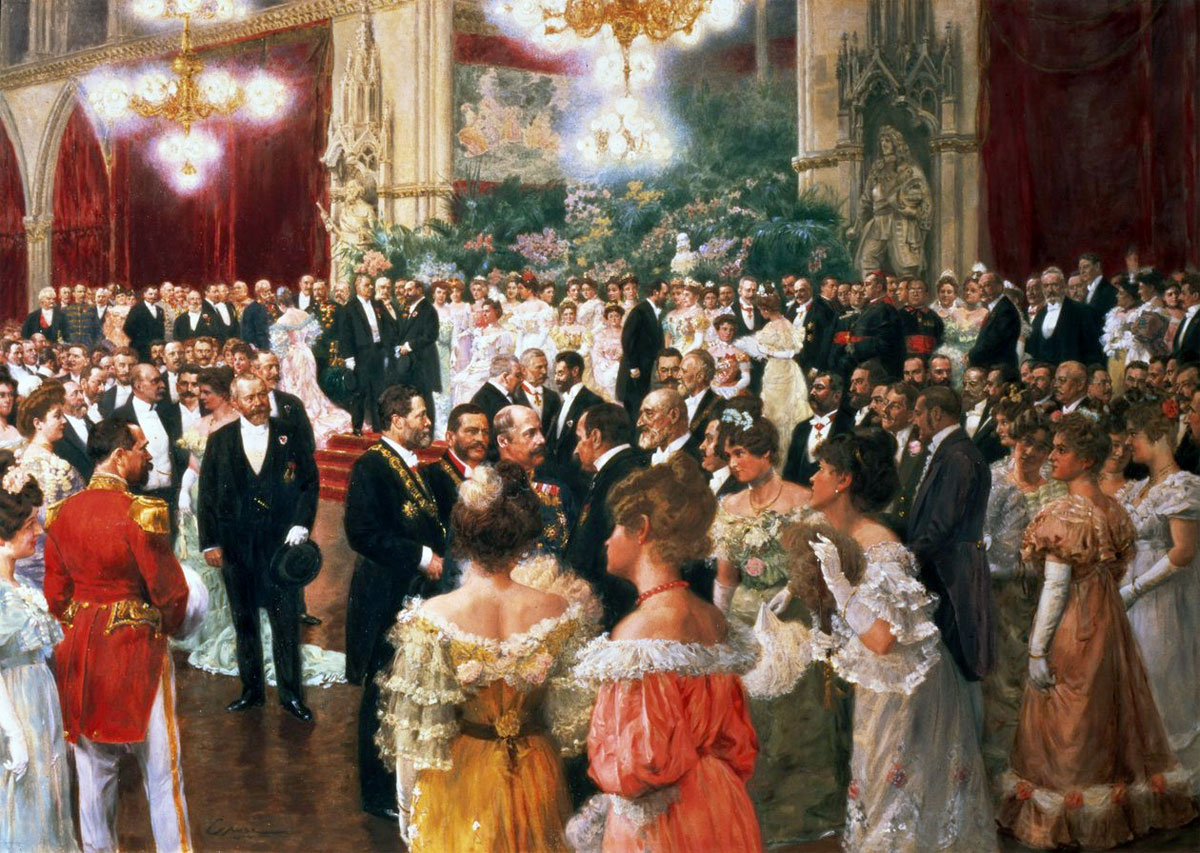
Sunday: 11am – 3pm

Fundació Foto Colectania website

LIKE ART BLART ON FACEBOOK

Back to top

Exhibition: ‘A Ballad of Love and Death: Pre-Raphaelite Photography in Great Britain, 1848-1875’ at the Musée d’Orsay, Paris

Exhibition dates: 8th March – 29th May 2011


Julia Margaret Cameron – you are one of my heroes!


Many thankx to the Musée d’Orsay for allowing me to publish the photographs in the posting. Please click on the photographs for a larger version of the image.


Henry White (British, 1819-1903) 'Ferns and brambles' 1856


Henry White (British, 1819-1903)
Fougères et ronces (Ferns and brambles)
1856
Albumen print
19.1 x 24.1cm
Collection particulière
© Droits réservés


John Ruskin (English, 1819-1900) 'Fribourg' 1859


John Ruskin (English, 1819-1900)
Fribourg
1859
Pencil, ink, watercolour and gouache on paper
22.5 x 28.7cm
London, The British Museum
© The Trustees of The British Museum. All rights reserved


Frederick Crawley, under the direction of John Ruskin (English, 1819-1900) 'Fribourg, Switzerland, Palm Street and Berne Bridge' about 1854 or 1856


Frederick Crawley, under the direction of John Ruskin (English, 1819-1900)
Fribourg, Suisse, Rue de la Palme et Pont de Berne (Fribourg, Switzerland, Palm Street and Berne Bridge)
about 1854 or 1856
Daguerréotype
11.5 x 15.1cm
Angleterre, Courtesy K. and J. Jacobson
© Droits réservés


Roger Fenton (British, 1819-1869) 'Bolton Abbey' 1854


Roger Fenton (British, 1819-1869)
Bolton Abbey, West window
1854
Albumen print
25.1 x 34.5cm
Bradford, National Media Museum
© National Media Museum, Bradford/Science & Society Picture Library


John William Inchbold (English, 1830-1888) 'La Chapelle de Bolton Abbey' 1853


John William Inchbold (English, 1830-1888)
La Chapelle de Bolton Abbey (The Vault of Bolton Abbey)
1853
Oil on canvas
50 x 68.4cm
Northampton, Museum and Art Gallery
© Northampton, Museum and Art Gallery


Henry Peach Robinson (English, 1830-1901) 'Fading Away' 1858


Henry Peach Robinson (English, 1830-1901)
Fading Away
1858
Albumen print
28.8 x 52.1cm
Bradford, The Royal Photographic Society Collection au National Media Museum.
© National Media Museum, Bradford/Science & Society Picture Library


Henry Peach Robinson (English, 1830-1901) 'She Never Told her Love' 1857


Henry Peach Robinson (English, 1830-1901)
She Never Told her Love
1857
Albumen print
18.6 x 23.3cm
Paris, musée d’Orsay
© Musée d’Orsay (dist. RMN)/Patrice Schmidt


Consumed by the passion of unrequited love, a young woman lies suspended in the dark space of her unrealised dreams in Henry Peach Robinson’s illustration of the Shakespearean verse “She never told her love,/ But let concealment, like a worm i’ the bud,/ Feed on her damask cheek” (Twelfth Night II,iv,111-13). Although this picture was exhibited by Robinson as a discrete work, it also served as a study for the central figure in his most famous photograph, Fading Away, of 1858.

Purportedly showing a young consumptive surrounded by family in her final moments, Fading Away was hotly debated for years. On the one hand, Robinson was criticised for the presumed indelicacy of having invaded the death chamber at the most private of moments. On the other, those who recognised the scene as having been staged and who understood that Robinson had created the picture through combination printing (a technique that utilised several negatives to create a single printed image) accused him of dishonestly using a medium whose chief virtue was its truthfulness.

While addressing the moral and literary themes that Robinson believed crucial if photography were to aspire to high art, this picture makes only restrained use of the cloying sentimentality and showy technical artifice that often characterise this artist’s major exhibition pictures. Perhaps intended to facilitate the process of combination printing, the unnaturally black background serves also to envelop the figure in palpable melancholia.

Text from the Metropolitan Museum of Art website [Online] Cited 27/01/2020


Frederick Pickersgill (English, 1820-1900) 'Sunshine and Shade' 1859


Frederick Pickersgill (English, 1820-1900)
Sunshine and Shade
1859
Albumen print
16.4 x 19.4cm
The Royal Photographic Society Collection at the National Media Museum.
© National Media Museum, Bradford/Science & Society Picture Library


The historian and art critic, John Ruskin, had a great influence in Great Britain not only on the Pre-Raphaelite movement created in 1848, but on the development of early photography in the 1850s. The leading Pre-Raphaelite painters, John Everett Millais, Dante Gabriel Rossetti, Holman Hunt and Ford Madox Brown and their followers, wished to change the pictorial conventions laid down by the Royal Academy, and in order to demonstrate the transformations in modern life, invented a radically new idiom marked by bright colours and clarity of detail.

Pre-Raphaelite painters and photographers frequently made similar choices of subjects, and the photographers, particularly Julia Margaret Cameron, David Wilkie Wynfield and Lewis Carroll, were often had close links with the painters.

When painting landscapes, the Pre-Raphaelite artists answered Ruskin’s call, meticulously observing nature in order to capture every nuance of detail. For their part, photographers, such as Roger Fenton, Henry White, William J. Stillman and Colonel Henry Stuart Wortley, experimented with the new process of wet plate collodion negatives that allowed much greater image detail, and achieved similar effects. Although highly impressed at first by the daguerreotype, which enabled the eye to see tiny, overlooked details, Ruskin was nonetheless still very critical of landscape photography, which could not reproduce the colours of nature and in particular of the sky. This failing also gave rise to a major debate amongst photography critics.

In portraiture, there were clear links between the painted portraits of Watts and Cameron’s photographic portraits. By using special lenses and photographing her models in close-up, Cameron, achieved, with a glass negative, exactly the opposite effect to the clear image advocated by Ruskin, and her work was distinctive for the breadth of relief and contour, as well as the compositions evoking Raphael’s paintings, also a source of inspiration for Watts.

The painter Dante Gabriel Rossetti repeatedly drew and painted Jane Morris, a model with whom he was infatuated, and he asked Robert Parsons to produce a series of photographs, under his personal direction, which captured the fascinating presence of the young woman as effectively as his own paintings.

Just like the Pre-Raphaelite painters, Victorian photographers would turn to religious or historical subjects, finding a shared inspiration in the poems of Dante, Shakespeare and possibly Byron, and above all in the Arthurian legend made popular once more by Lord Tennyson, the poet laureate. From a formal point of view, Millais’ Ophelia, one of his most successful paintings, was a source for Henry Peach Robinson’s photograph, The Lady of Shalott, even though it had a different theme.

Finally, Pre-Raphaelite painters and Victorian photographers both liked to present scenes from modern life with a moralising undertone: hence She Never Told Her Love, a photograph by Robinson that was very successful when exhibited at the Crystal Palace in 1858, William Holman Hunt’s painting, Awakening of Conscience, and Rossetti’s Found, a painting depicting a countryman who comes across his former sweetheart, now a prostitute in the city.

In the 1880s, Pre-Raphaelite painting would be transformed, with artists and writers like William Morris, Burne-Jones, Whistler and Oscar Wilde, into a very different movement concerned only with the cult of beauty and rejecting Ruskin’s concept of art as something moral or useful. British photographers, however, inspired by the Pre-Raphaelites would inspire the Pictorialist movement that flourished in the 1890s, encouraged by the writings of Henry Peach Robinson and Peter Henry Emerson, extolling artistic photography.

Press release from the Musée d’Orsay website


James Sinclair 14th Earl of Caithness (Scottish, 1821-1881) 'Weston Avenue, Warwickshire' c. 1860


James Sinclair 14th Earl of Caithness (Scottish, 1821-1881)
Avenue à Weston, Warwickshire (Weston Avenue, Warwickshire)
c. 1860
Albumen print
23 x 18.3cm
New York, Courtesy George Eastman House Rochester
© Courtesy of George Eastman House, International Museum of Photography and Film


Julia Margaret Cameron (British, 1815-1879) 'The sunflower' 1866-1870


Julia Margaret Cameron (British, 1815-1879)
Le tournesol (The sunflower)
1866-1870
Albumen print
35.2 x 24.3cm
Washington, National Gallery of Art, Fond Paul Mellon
© National Gallery of Art, Washington


John Robert Parsons (Irish, 1826-1909), under the direction of Dante Gabriel Rossetti (English, 1828-1882) 'Jane Morris posing in the house of Rossetti' summer 1865


John Robert Parsons (Irish, 1826-1909), under the direction of Dante Gabriel Rossetti (English, 1828-1882)
Jane Morris posant dans la maison de Rossetti (Jane Morris posing in the house of Rossetti)
Summer 1865
Modern print
22.6 x 17.5cm
London, Victoria and Albert Museum
© V&A Images / Victoria and Albert Museum, London


John Robert Parsons (Irish, 1826-1909) 'Jane Morris posing in the garden of the house of Rossetti' summer 1865


John Robert Parsons (Irish, 1826-1909)
Jane Morris posant dans le jardin de la maison de Rossetti (Jane Morris posing in the garden of the house of Rossetti)
Summer 1865
Albumen print
Private collection
© Tim Hurst Photography


Dante Gabriel Rossetti (English, 1828-1882) 'Jane Morris, the blue silk dress' 1868


Dante Gabriel Rossetti (English, 1828-1882)
Jane Morris, the blue silk dress
1868
Oil on canvas
110.5 x 90.2cm
Londres, The Society of Antiquaries
© Kelmscott Manor Collection, by Permission of the Society of Antiquaries of London


Charles Lutwidge Dodgson (Lewis Caroll) (English, 1832-1898) 'Amy Hughes' 1863


Charles Lutwidge Dodgson (Lewis Caroll) (English, 1832-1898)
Amy Hughes
1863
Austin, The University of Texas, Harry Ransom Center, Gernsheim Collection
© Droits réservés


Julia Margaret Cameron (British, 1815-1879) 'Maud' 1875


Julia Margaret Cameron (British, 1815-1879)
Maud
1875
Charcoal print
30 x 25cm
Paris, musée d’Orsay
© Musée d’Orsay (dist. RMN)/Patrice Schmidt


Sir John Everett Millais (British, 1829-1896) 'A Huguenot, on St. Bartholomew's Day Refusing to Shield Himself from Danger by Wearing the Roman Catholic Badge' 1851-1852


Sir John Everett Millais (British, 1829-1896)
A Huguenot, on St. Bartholomew’s Day Refusing to Shield Himself from Danger by Wearing the Roman Catholic Badge
1851-1852
Oil on canvas
91.4 x 62.2cm
Collection Makins
© The Makins Collection/The Bridgeman Art Library


Sir Edward Burne-Jones (British, 1833-1898) 'Princess Sabra (The King's Daughter)' 1865-1866


Sir Edward Burne-Jones (British, 1833-1898)
Princess Sabra (The King’s Daughter)
1865-1866
Oil on canvas
105 x 61cm
Paris, Musée d’Orsay
© Musée d’Orsay (dist. RMN)/Patrice Schmidt


Julia Margaret Cameron  (British, 1815-1879) 'And Enid Sang' 1874


Julia Margaret Cameron  (British, 1815-1879)
And Enid Sang
1874
Print on albumen paper, collodion glass negative, laminated on cardboard
35 x 28cm
Paris, Musée d’Orsay
© Musée d’Orsay (dist. RMN)


Musée d’Orsay
62, rue de Lille
75343 Paris Cedex 07
France

Opening hours:
Tuesday – Sunday 9.30am – 6pm
Thursdays 9.30am – 9.45pm
Closed on Mondays

Musée d’Orsay website

LIKE ART BLART ON FACEBOOK

Back to top