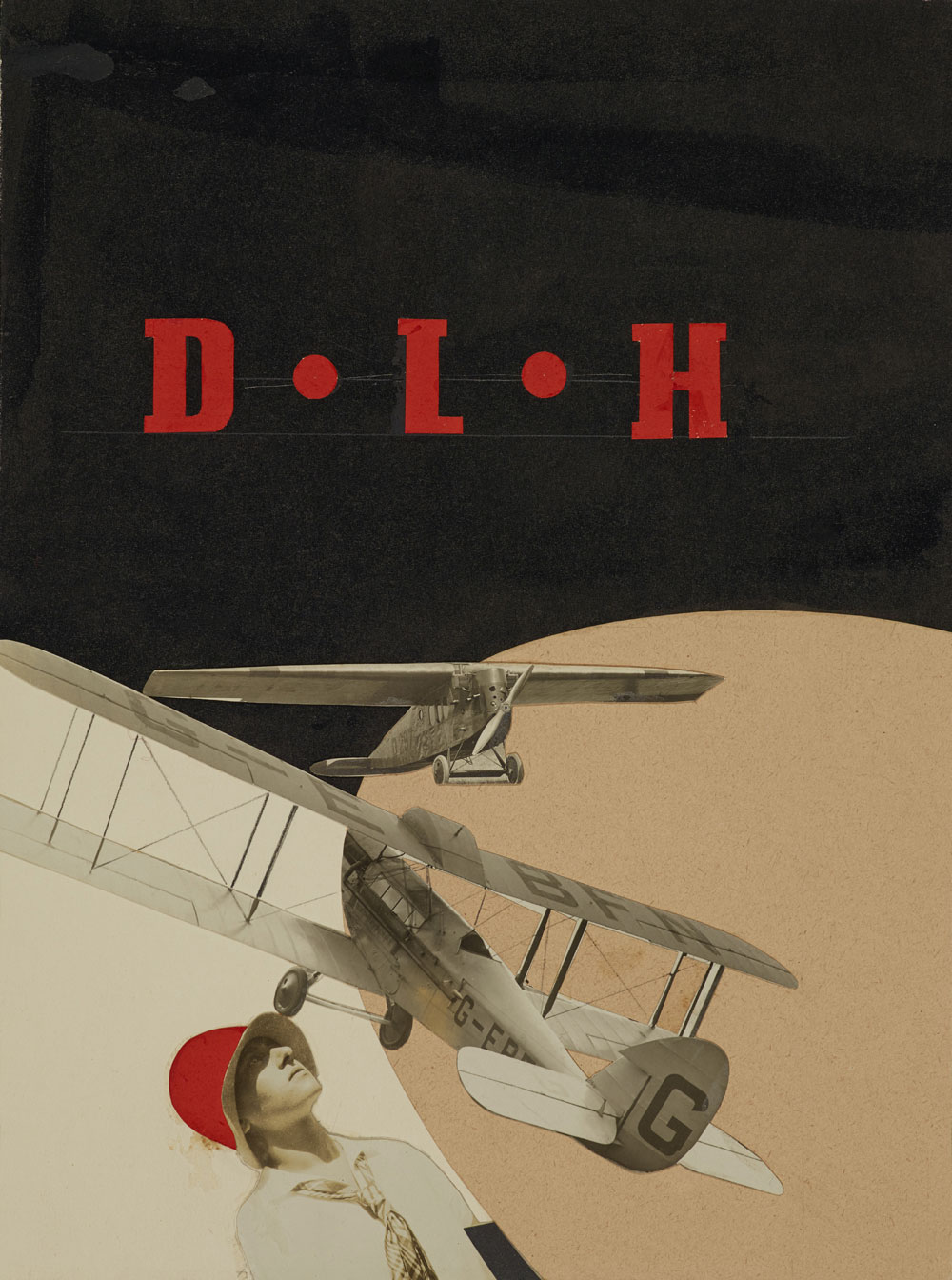
Exhibition: ‘The Aftermath of Conflict: Jo Ractliffe’s Photographs of Angola and South Africa’ at The Metropolitan Museum of Art, New York

Exhibition dates: 24th August, 2015 – 3rd January, 2016

Curators: Yaëlle Biro, Associate Curator in the Department of Africa, Oceania, and the Americas at the Metropolitan Museum, together with Dr Evelyn Owen, the 2013-2015 Mellon Curatorial Fellow at The Africa Center, New York, in collaboration with the Museum’s Department of Modern and Contemporary Art and Department of Photographs
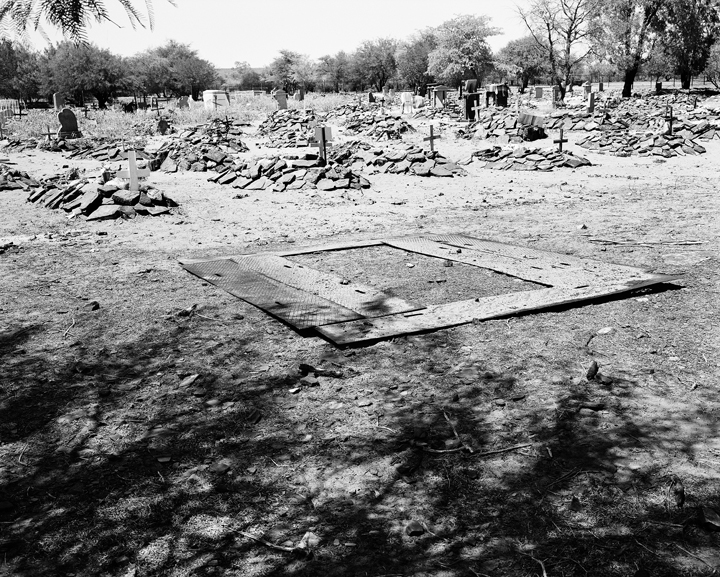
 

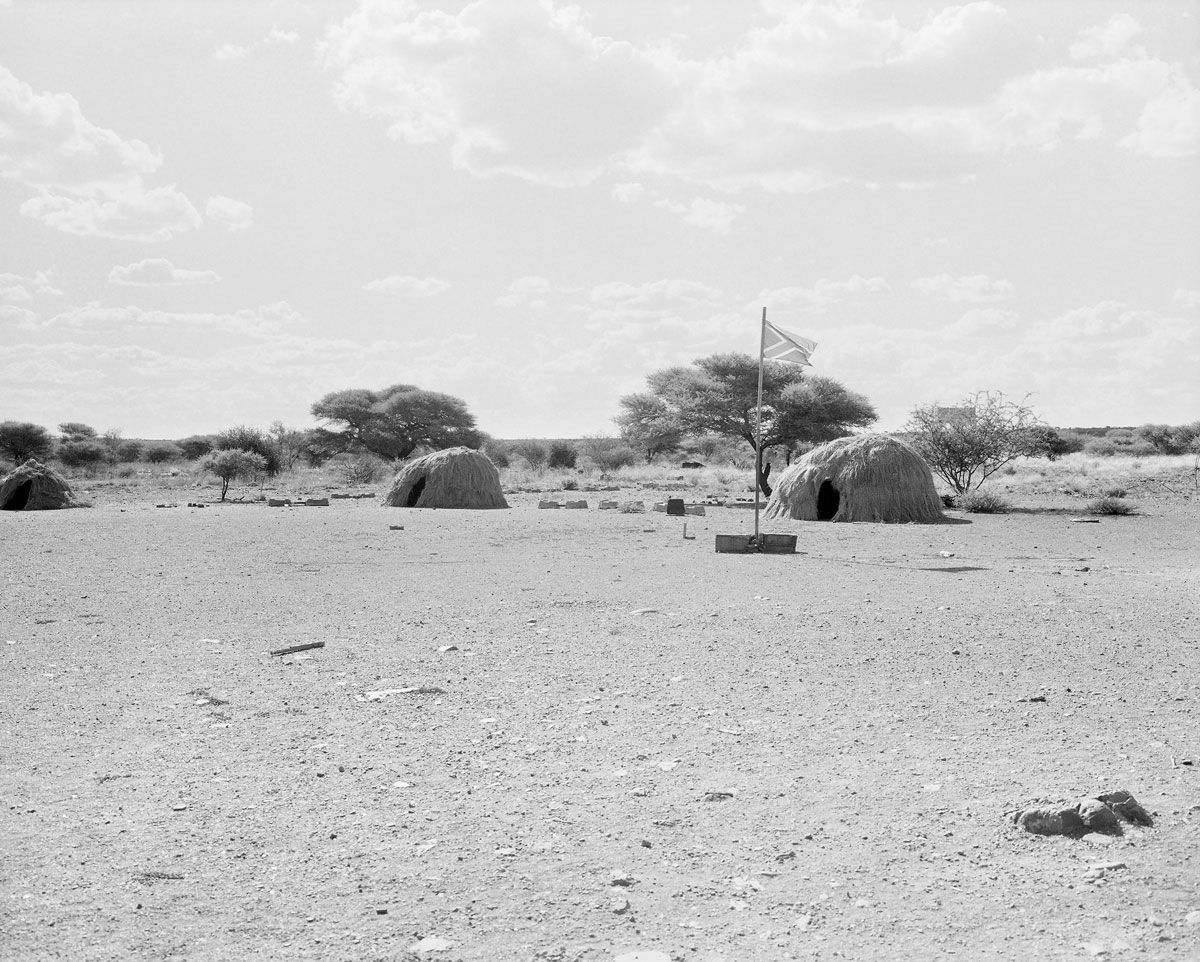
Jo Ractliffe (South African, b. 1961) 'Template for digging graves, Pomfret' 2013 from the exhibition 'The Aftermath of Conflict: Jo Ractliffe's Photographs of Angola and South Africa' at The Metropolitan Museum of Art, New York, Aug 2015 - Jan 2016


Jo Ractliffe (South African, b. 1961)
Template for digging graves, Pomfret
2013
Inkjet print, 2015
Height: 14 3/16 in. (36 cm)
Width: 17 11/16 in. (45 cm)
On loan from the artist, courtesy Stevenson, Cape Town and Johannesburg
© Jo Ractliffe. Courtesy of Stevenson, Cape Town and Johannesburg


The photograph as unoccupied land

To be frank, I am not enamoured of these photographs. They seem to be conceptual ideas masquerading as documentary photographs that evidence a lazy way of seeing the world, one in which the untold narrative has become an empty spectacle. The story, such as it is, is only narrativised by the accompanying text. If an image cannot stand on its own two feet in and of itself without lines of text to support its supposition, then it is not doing its job properly.

The framing is sloppy and the focus of the images is poor. For example, the focus of Template for digging graves, Pomfret (above) is the shadow at the front of the photograph, where the real focus should have been the template and the graves beyond with their horizontals and verticals. This would have made for a much stronger photograph, for the creeping shadow in the foreground would have become a metaphor for death itself.

Ractliffe really needs to look at the documentary photographers of the 19th century to see how it is done. The aftermath of conflict photographs of the American Civil War by photographers such as Matthew Brady, Alexander Gardner and Timothy O’Sullivan (and here I am not talking about the battlefield photographs) have a robust narrative quality that this artist could only ever hope to achieve. Their photographs possess a clear and consistent vision, a deep aesthetic that is emergent, based on transparence, a ruddy darkness and textural ambience – rather than an aesthetic that is superficially descriptive of surfaces.

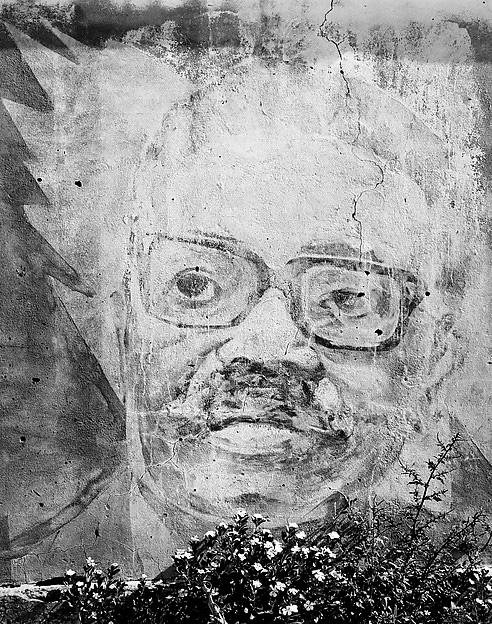
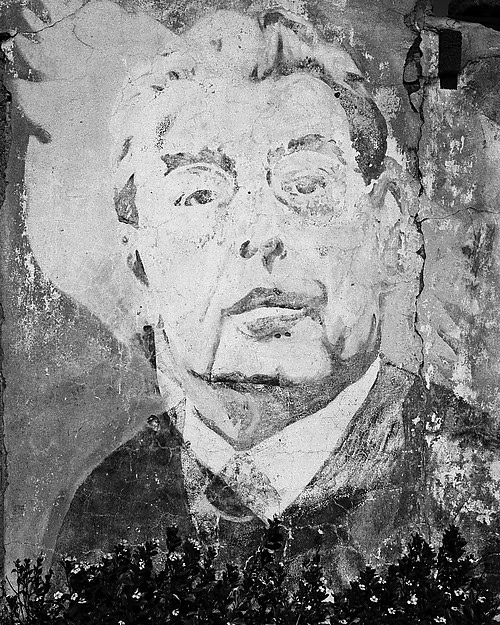
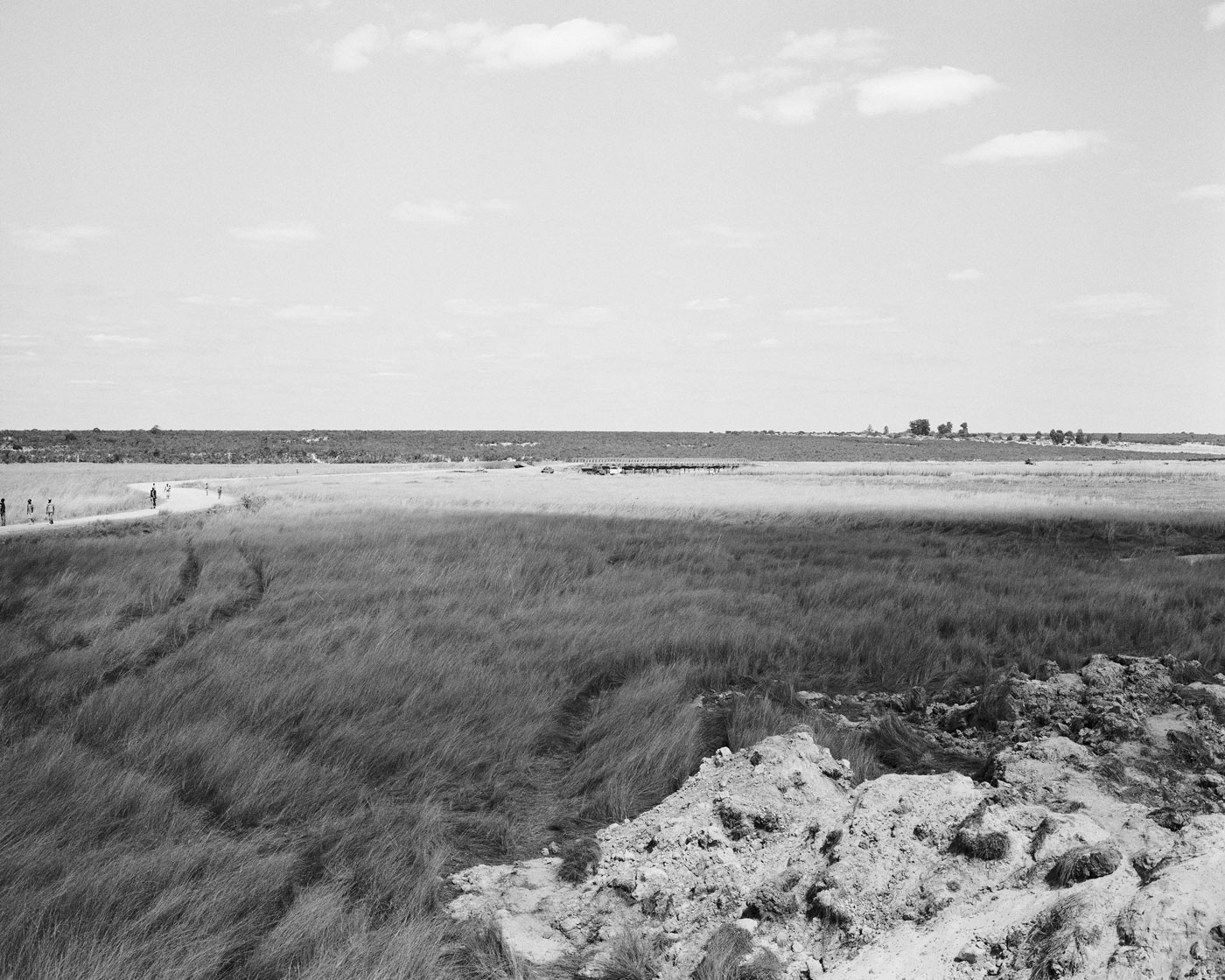
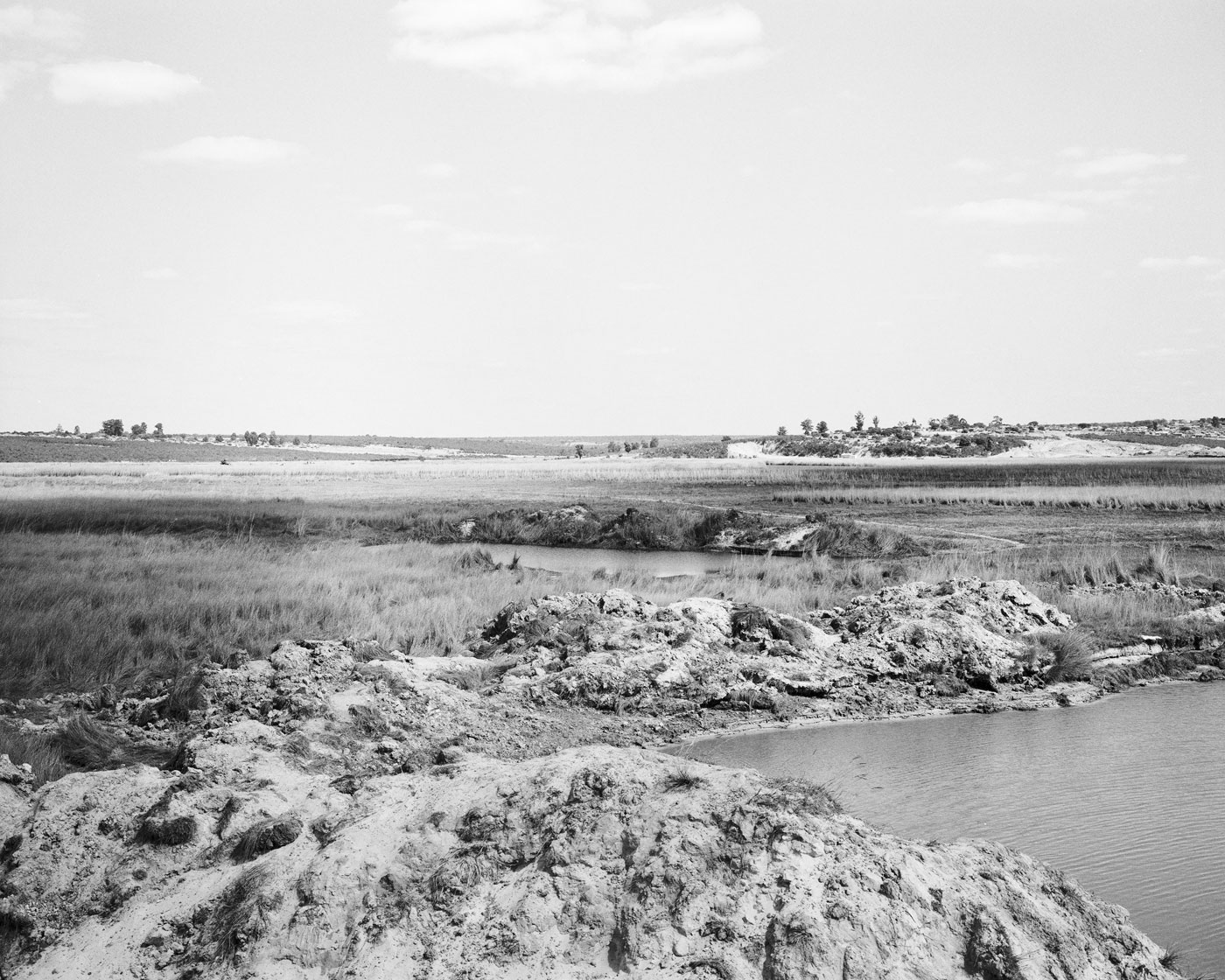
This lack of understanding of the depth of contested place / disputed histories can be no better illustrated than in the diptych The battlefield at Cuito Cuanavale (2009, below) whose photographs really say nothing about what went on here. The photographs are prescriptive (relating to the imposition or enforcement of a rule or method) statements constructed by the artist, with no emotion and little ambience or feeling for subject matter. They are not even very good descriptive photographs of the landscape. Photographs such as Mural depicting Fidel Castro, Agostinho Neto and Leonid Brezhnev, circa 1975, Viriambundo (2009, below) and Details of tiled murals at the Fortaleza De São Miguel, depicting Portuguese explorations in Africa (2007, below) are worse, recording inarticulate artefacts at a level best reserved for student work.

By far the most interesting and powerful photograph is Roadside stall on the way to Viana (2007, below). This photograph is memorable as so many of the others are not, because it possesses a sense of disposition, of alienation, ambience and the weight of history all bound up in those hanging bodies.

Dr Marcus Bunyan


Many thankx to The Metropolitan Museum of Art for allowing me to publish the photographs in the posting. Please click on the photographs for a larger version of the image.
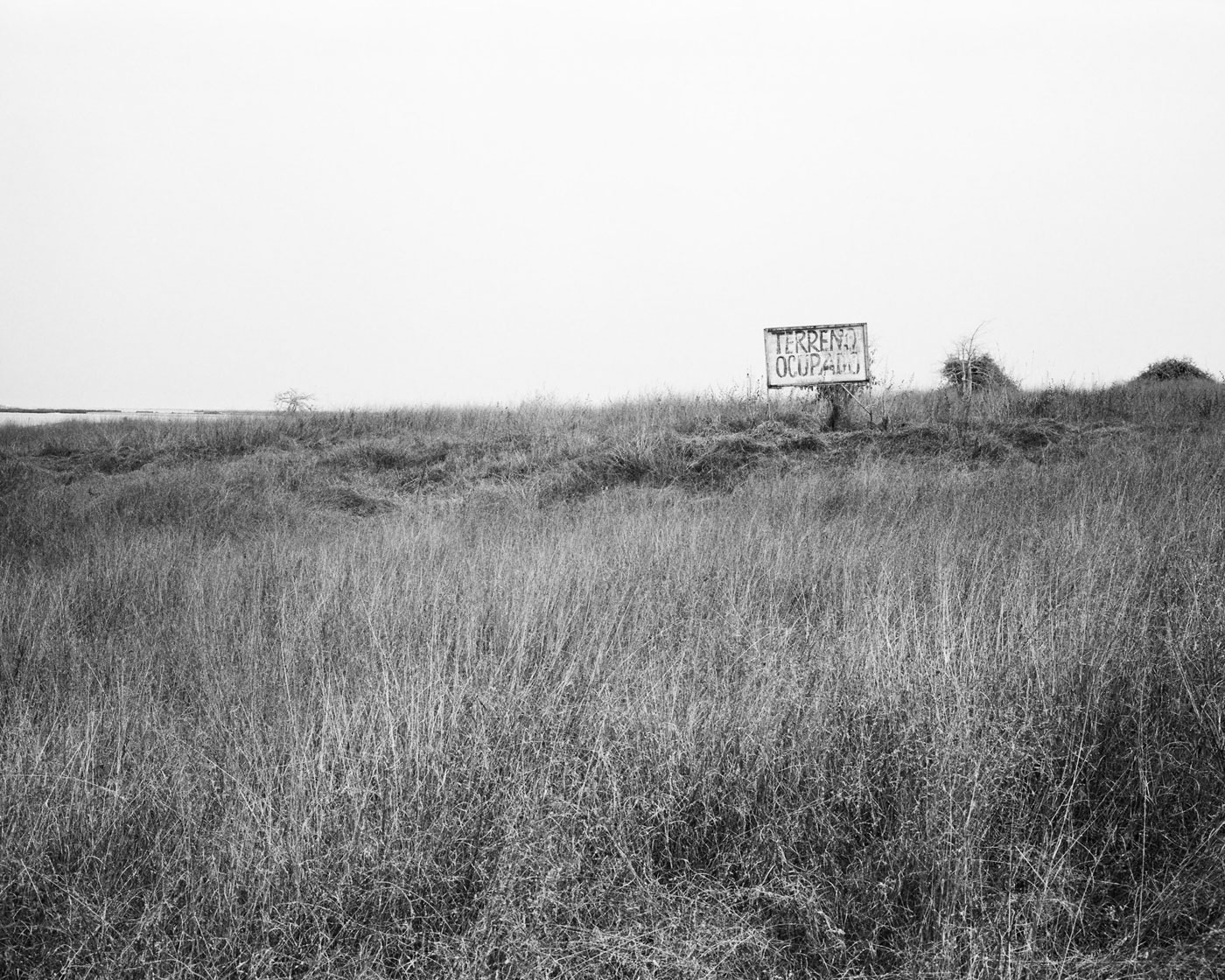


Jo Ractliffe (South African, b. 1961) 'Vacant plot near Atlantico Sul' 2007 from the exhibition 'The Aftermath of Conflict: Jo Ractliffe's Photographs of Angola and South Africa' at The Metropolitan Museum of Art, New York, Aug 2015 - Jan 2016


Jo Ractliffe (South African, b. 1961)
Vacant plot near Atlantico Sul
2007
From the series Terreno Ocupado
Inkjet print, 2015
On loan from the artist, courtesy Stevenson, Cape Town and Johannesburg
© Jo Ractliffe. Courtesy of Stevenson, Cape Town and Johannesburg


This coarse, grassy landscape appears at first glance to be empty, yet the billboard declaring “Terreno Ocupado” – Portuguese for “occupied land” – reveals this site in Luanda as both active and politically charged. It points to Angola’s long history of occupation and territorial turmoil, from the arrival of Portuguese explorers in 1483 through to the tangled twentieth-century conflicts that spilled over into neighbouring countries. It also points to the contested terrain that is today’s Luanda. With this image, the opening photograph of the first series, Ractliffe sets the scene for her exploration of land, borders, and displacement, themes which thread through all the works featured here.
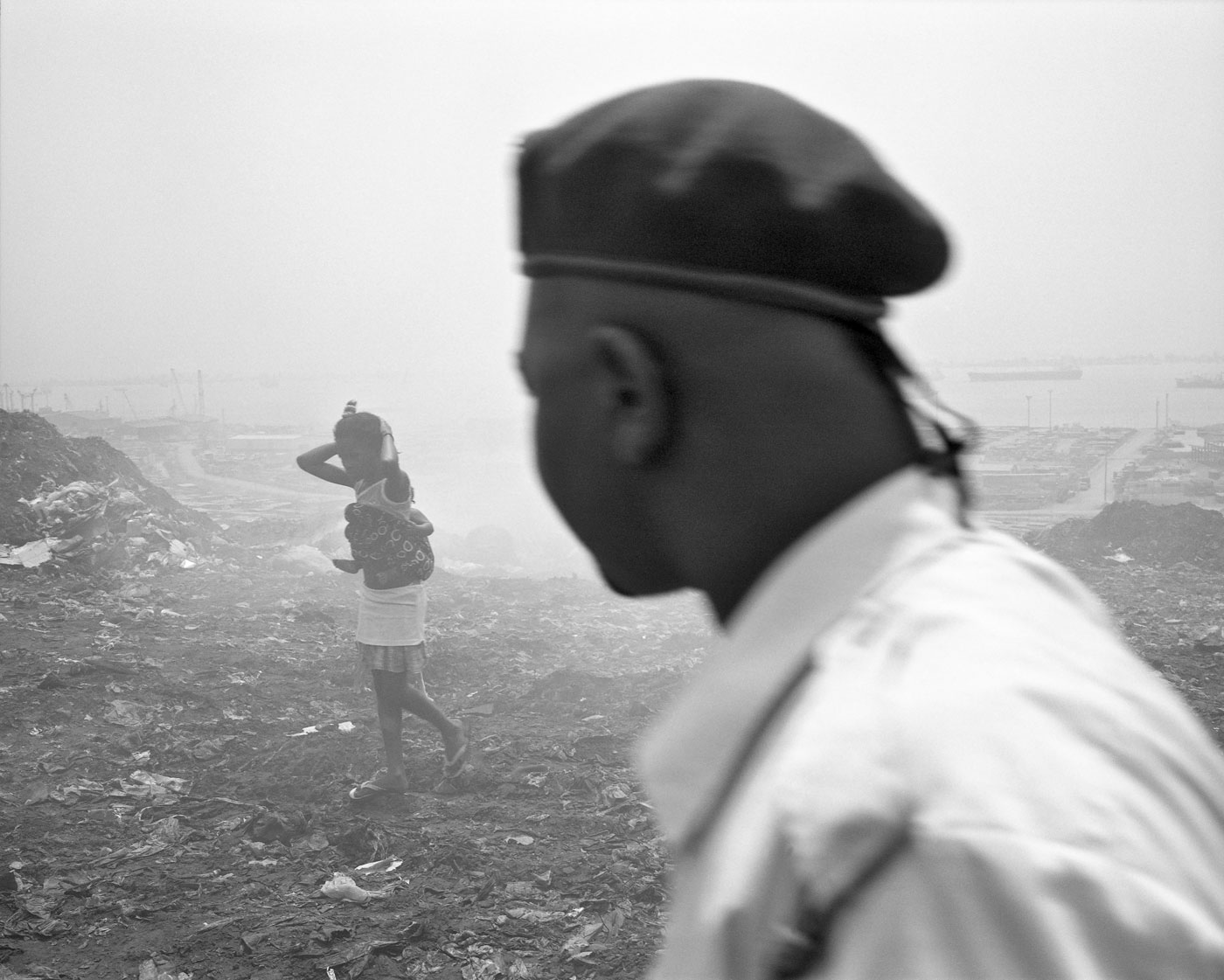
 

Jo Ractliffe (South African, b. 1961) 'Woman and her baby, Roque Santeiro market' 2007


Jo Ractliffe (South African, b. 1961)
Woman and her baby, Roque Santeiro market
2007
From the series Terreno Ocupado
Inkjet print, 2015
On loan from the artist, courtesy Stevenson, Cape Town and Johannesburg
© Jo Ractliffe. Courtesy of Stevenson, Cape Town and Johannesburg


Conflict between Luanda’s population and its governing elites forms an undercurrent to this photograph of a young woman carrying a baby across litter-strewn ground, observed by a man wearing a military beret. In September 2010, three years after Ractliffe took these photographs and following a protracted dispute between the government and the local community, the Luandan authorities closed down Roque Santeiro and relocated it to a new Chinese-built facility at Panguila, some twelve miles to the north. Although the government cited concerns over insanitary conditions and organised crime, critics argued that the relocation had more to do with repossessing prime real estate for new luxury apartments.
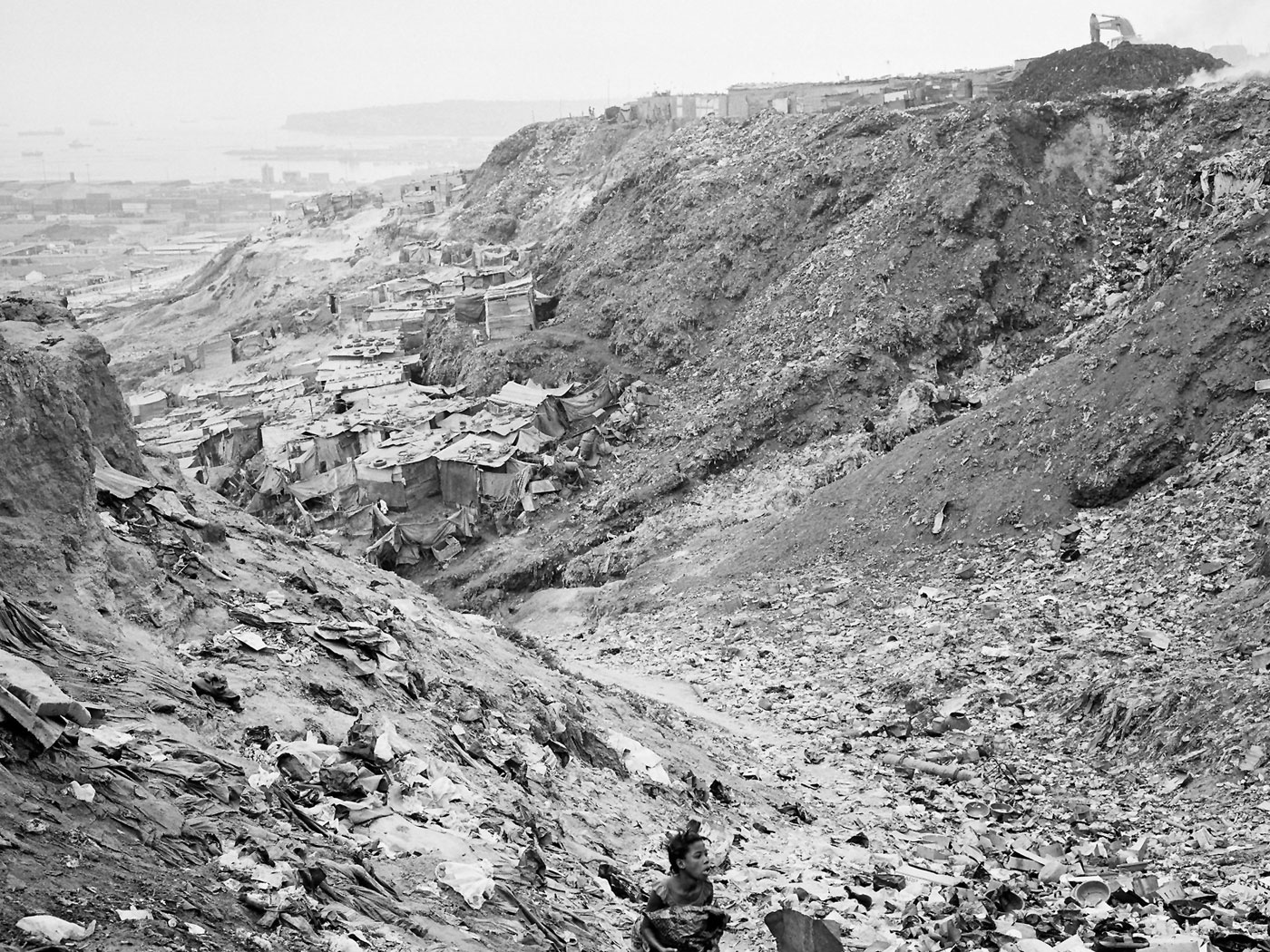
 

Jo Ractliffe (South African, b. 1961) 'Woman on the footpath from Boa Vista to Roque Santeiro market' 2007


Jo Ractliffe (South African, b. 1961)
Woman on the footpath from Boa Vista to Roque Santeiro market
2007
From the series Terreno Ocupado
Inkjet print, 2015
On loan from the artist, courtesy Stevenson, Cape Town and Johannesburg
© Jo Ractliffe. Courtesy of Stevenson, Cape Town and Johannesburg


Apparently out of breath and clutching a plastic bag, the woman in the foreground of this photograph is making her way up a faintly visible footpath and out of Ractliffe’s field of vision. A digger perches on the cliff top above her, and in the middle distance, a cluster of dwellings clings precariously to the litter-strewn side of the ravine. Boa Vista – “good view” – is one of Luanda’s largest shanty towns, and at the time of this photograph was home to over 50,000 people. Following landslides in 2001 which killed several residents, parts of the neighbourhood were bulldozed and over 4,000 families were evicted from their homes and relocated to tents in other parts of the city while awaiting the construction of their new accommodation.
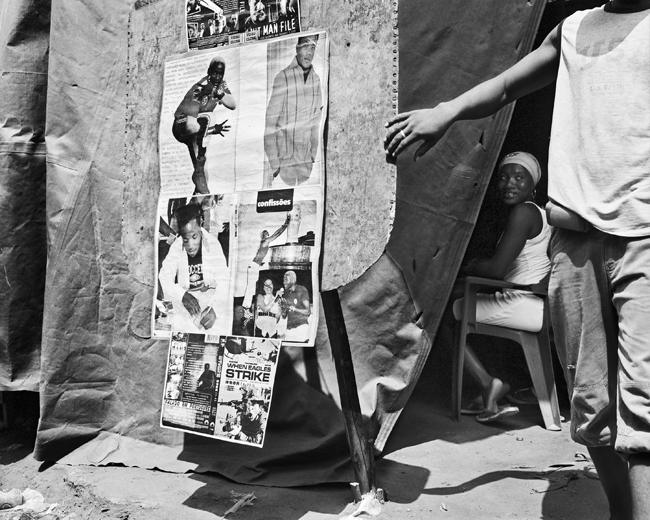
 

Jo Ractliffe (South African, b. 1961) 'Video club, Roque Santeiro market' 2007


Jo Ractliffe (South African, b. 1961)
Video club, Roque Santeiro market
2007
Inkjet print, 2015
Height: 14 3/16 in. (36cm) Width: 17 11/16 in. (45cm)
On loan from the artist, courtesy Stevenson, Cape Town and Johannesburg
© Jo Ractliffe. Courtesy of Stevenson, Cape Town and Johannesburg


Before its closure in 2010, Roque Santeiro was renowned as the biggest open-air market in sub-Saharan Africa, and the centre of Angola’s informal economy. Established in the 1980s and named after a popular Brazilian soap opera, it flourished during the Angolan Civil War as streams of refugees fled the countryside and came to Luanda, searching for new livelihoods. Everything was for sale in its makeshift stalls, from household items, food, and clothes, to contraband alcohol, cars, and livestock. In this photograph Ractliffe focuses on one of the market’s many video clubs, which were housed in military-style tents and screened action movies on televisions powered by generators.
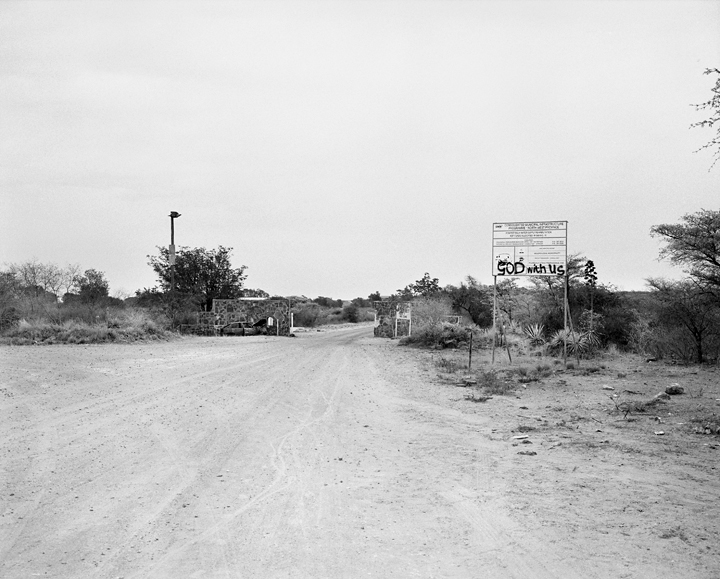
 

Jo Ractliffe (South African, b. 1961) ''God with us', Pomfret' 2011


Jo Ractliffe (South African, b. 1961)
‘God with us’, Pomfret
2011
Inkjet print, 2015
Height: 17 11/16 in. (45cm) Width: 22 1/16 in. (56cm)
On loan from the artist, courtesy Stevenson, Cape Town and Johannesburg
© Jo Ractliffe. Courtesy of Stevenson, Cape Town and Johannesburg


The abandoned mining town of Pomfret is located in the far north of South Africa, near the border with Botswana. After the closure of its asbestos mine, the town was converted into a military base and used to accommodate 32 Battalion, an elite Special Forces unit made up of Angolan soldiers. When the unit was disbanded in 1993, most of the veterans and their families stayed in Pomfret, living in abject conditions without basic services and under constant threat of eviction. Ractliffe has spoken of finding graves there marked only with “Born Angola”; for the veterans whose paths ended here, death in Pomfret was “the final displacement”.
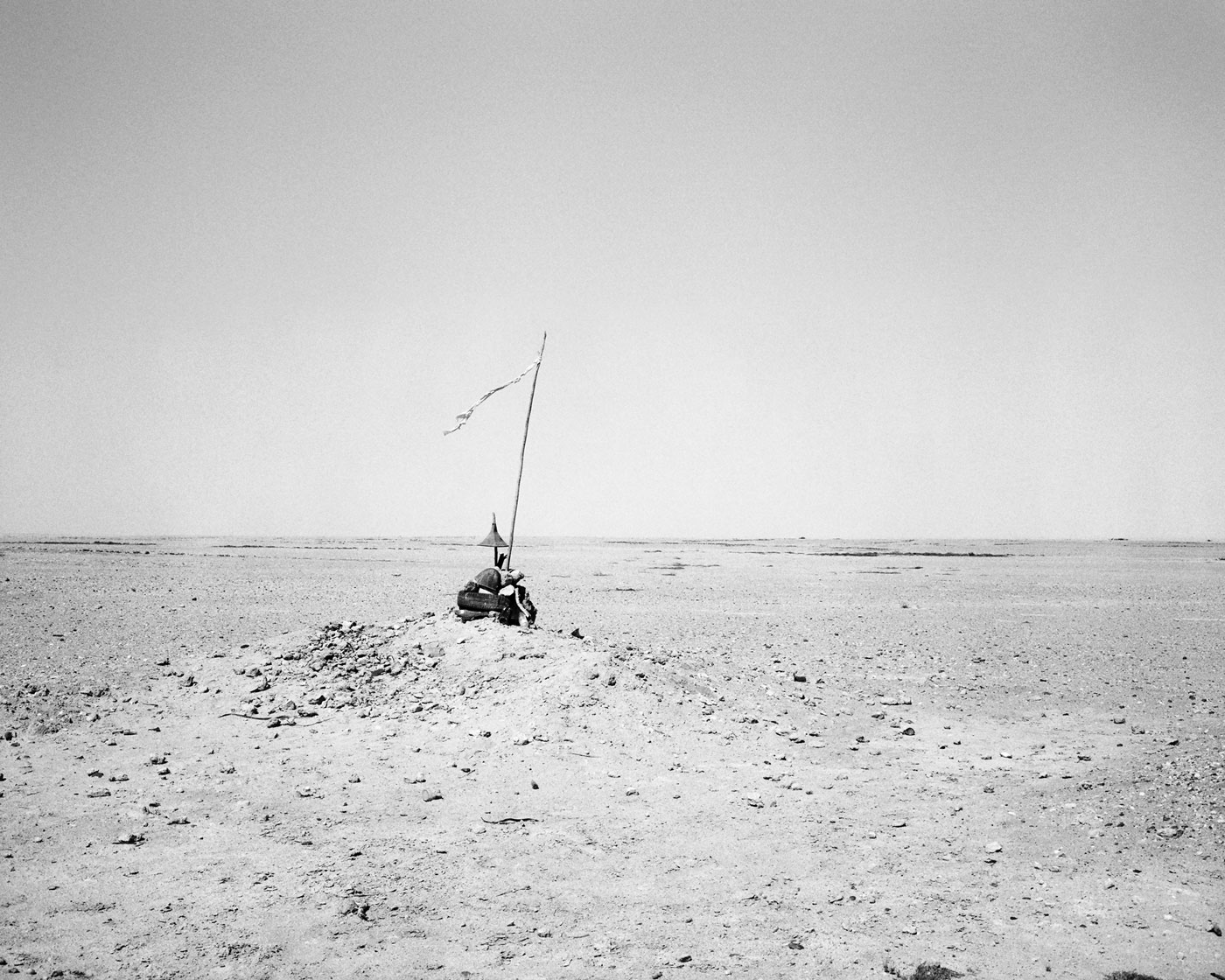
 

Jo Ractliffe (South African, b. 1961) 'Unidentified memorial in the desert, south of Namibe I' 2009


Jo Ractliffe (South African, b. 1961)
Unidentified memorial in the desert, south of Namibe I
2009
From the series As Terras do Fim do Mundo
Inkjet print, 2015
On loan from the artist, courtesy Stevenson, Cape Town and Johannesburg
© Jo Ractliffe. Courtesy of Stevenson, Cape Town and Johannesburg


In this photograph, an assemblage of objects perches on a stony outcrop, surrounded by a barren expanse of desert. The long pole protruding from the pile is topped with a ragged banner, announcing the presence of this unusual memorial, but giving little away about its exact significance. Ractliffe took this photograph close to the Cuban base at Namibe on Angola’s southwestern coast, where an extensive network of trenches, bunkers, and anti-aircraft defences is located. As Ractliffe has remarked: “there are some very poignant things in the landscape, like these markers, that seem to say ‘I have been here, people have been here.'”
 

Jo Ractliffe (South African, b. 1961) 'The battlefield at Cuito Cuanavale' 2009 (diptych left)

Jo Ractliffe (South African, b. 1961) 'The battlefield at Cuito Cuanavale' 2009 (diptych right)


Jo Ractliffe (South African, b. 1961)
The battlefield at Cuito Cuanavale (diptych left and right)
2009
From the series As Terras do Fim do Mundo
Inkjet prints, 2015
On loan from the artist, courtesy Stevenson, Cape Town and Johannesburg
© Jo Ractliffe. Courtesy of Stevenson, Cape Town and Johannesburg


Reflecting on this diptych, Ractliffe has observed that “Quite often, sites of significance don’t evidence their historical weight.” It is true that the calm landscape – muddy riverbanks weaving through a marsh – together with the small size of these prints belies the huge historical importance of their subject. In 1987-1988, during the Angolan Civil War, Cuito Cuanavale was the site of the biggest battle in Africa since World War II. On one side was the armed wing of Agostinho Neto’s government, supported by their Cuban allies; on the other side was the rebel group UNITA, supported by the South African Defence Force. The outcome of the battle is still widely disputed, with both sides claiming victory.
 

Jo Ractliffe (South African, b. 1961) 'Thorn tree, Platfontein' 2012


Jo Ractliffe (South African, b. 1961)
Thorn tree, Platfontein
2012
Inkjet print, 2015
Height: 14 3/16 in. (36cm) Width: 17 11/16 in. (45cm)
On loan from the artist, courtesy Stevenson, Cape Town and Johannesburg
© Jo Ractliffe. Courtesy of Stevenson, Cape Town and Johannesburg


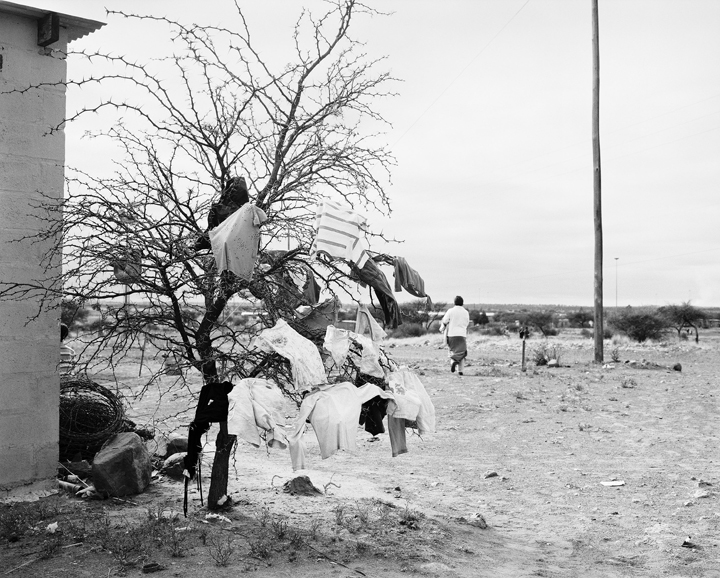
In this photograph and the next one, “Playing soccer with marbles, Platfontein”, the placement of personal objects in a seemingly unforgiving setting hints at the tension between resilience and vulnerability negotiated by the resident community. The settlement of Platfontein is now home to veterans of 31/201 Battalion, a South African Special Forces unit made up of Angolan and Namibian San trackers who became tied up in the independence conflicts in Angola and Namibia. After the conflicts ended, many of the San veterans were relocated to Schmidtsdrift, but had to live in tents for 14 years because of a competing claim on the land from local communities. The veterans ultimately accepted financial compensation, which enabled them to buy land at Platfontein, pictured here.
 

Jo Ractliffe (South African, b. 1961) 'Playing soccer with marbles, Platfontein' 2012


Jo Ractliffe (South African, b. 1961)
Playing soccer with marbles, Platfontein
2012
Inkjet print, 2015
Height: 10 1/4 in. (26cm) Width: 12 13/16 in. (32.5cm)
On loan from the artist, courtesy Stevenson, Cape Town and Johannesburg
© Jo Ractliffe. Courtesy of Stevenson, Cape Town and Johannesburg


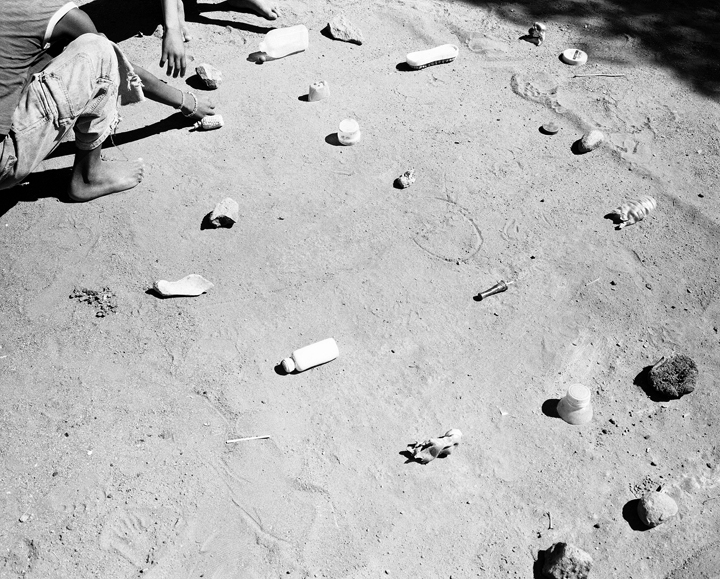
In this photograph and the previous one, “Thorn tree, Platfontein”, the placement of personal objects in a seemingly unforgiving setting hints at the tension between resilience and vulnerability negotiated by the resident community. The settlement of Platfontein is now home to veterans of 31/201 Battalion, a South African Special Forces unit made up of Angolan and Namibian San trackers who became tied up in the independence conflicts in Angola and Namibia. After the conflicts ended, many of the San veterans were relocated to Schmidtsdrift, but had to live in tents for 14 years because of a competing claim on the land from local communities. The veterans ultimately accepted financial compensation, which enabled them to buy land at Platfontein, pictured here.
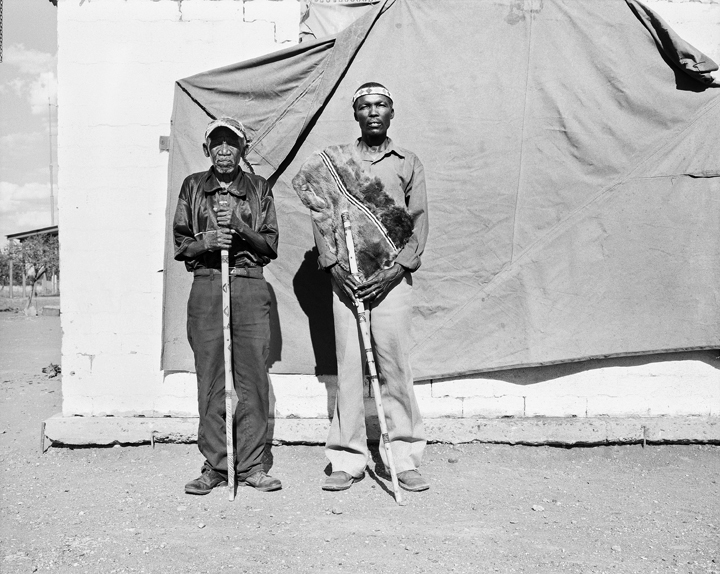
 

Jo Ractliffe (South African, b. 1961) 'Veteran soldiers of 'Omega' 31/201 Battalion, Paulo Cassanga and Automover Kakenge, Schmidtsdrift (portrait under instruction)' 2012


Jo Ractliffe (South African, b. 1961)
Veteran soldiers of ‘Omega’ 31/201 Battalion, Paulo Cassanga and Automover Kakenge, Schmidtsdrift (portrait under instruction)
2012
Inkjet print, 2015
Height: 14 3/16 in. (36cm)
Width: 17 11/16 in. (45cm)
On loan from the artist, courtesy Stevenson, Cape Town and Johannesburg
© Jo Ractliffe. Courtesy of Stevenson, Cape Town and Johannesburg


The veterans’ experiences are given added poignancy in this portrait, in which they stand in front of a tarpaulin hanging untidily from a derelict building. Automover Kakenge, standing on the right, is the leader of a group of San veterans who refused to move to Platfontein after their land claim at Schmidtsdrift was unsuccessful. Kakenge has stated that “Schmidtsdrift was the ending for us […]. When we were relocated from Namibia, we had to swear, “South Africa is our land, and our house is here in Schmidtsdrift.” This attachment to the land and buildings at Schmidtsdrift is the endpoint of what Ractliffe refers to as an “epic narrative of displacement”.
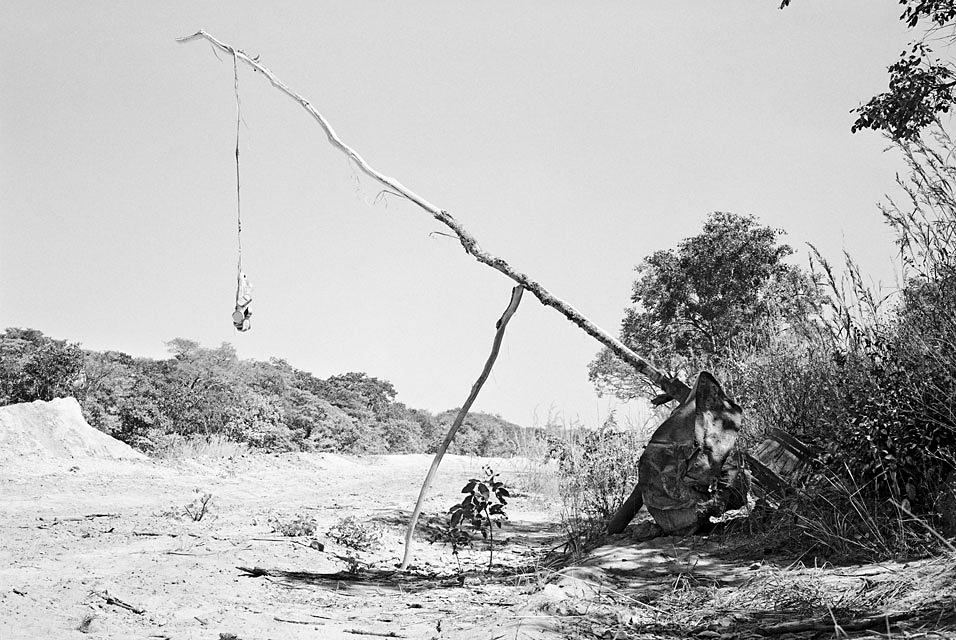
 

Jo Ractliffe (South African, b. 1961) 'On the Road to Cuito Cuanavale I' 2009


Jo Ractliffe (South African, b. 1961)
On the Road to Cuito Cuanavale I
2009
On loan from the artist, courtesy Stevenson, Cape Town and Johannesburg
© Jo Ractliffe. Courtesy of Stevenson, Cape Town and Johannesburg
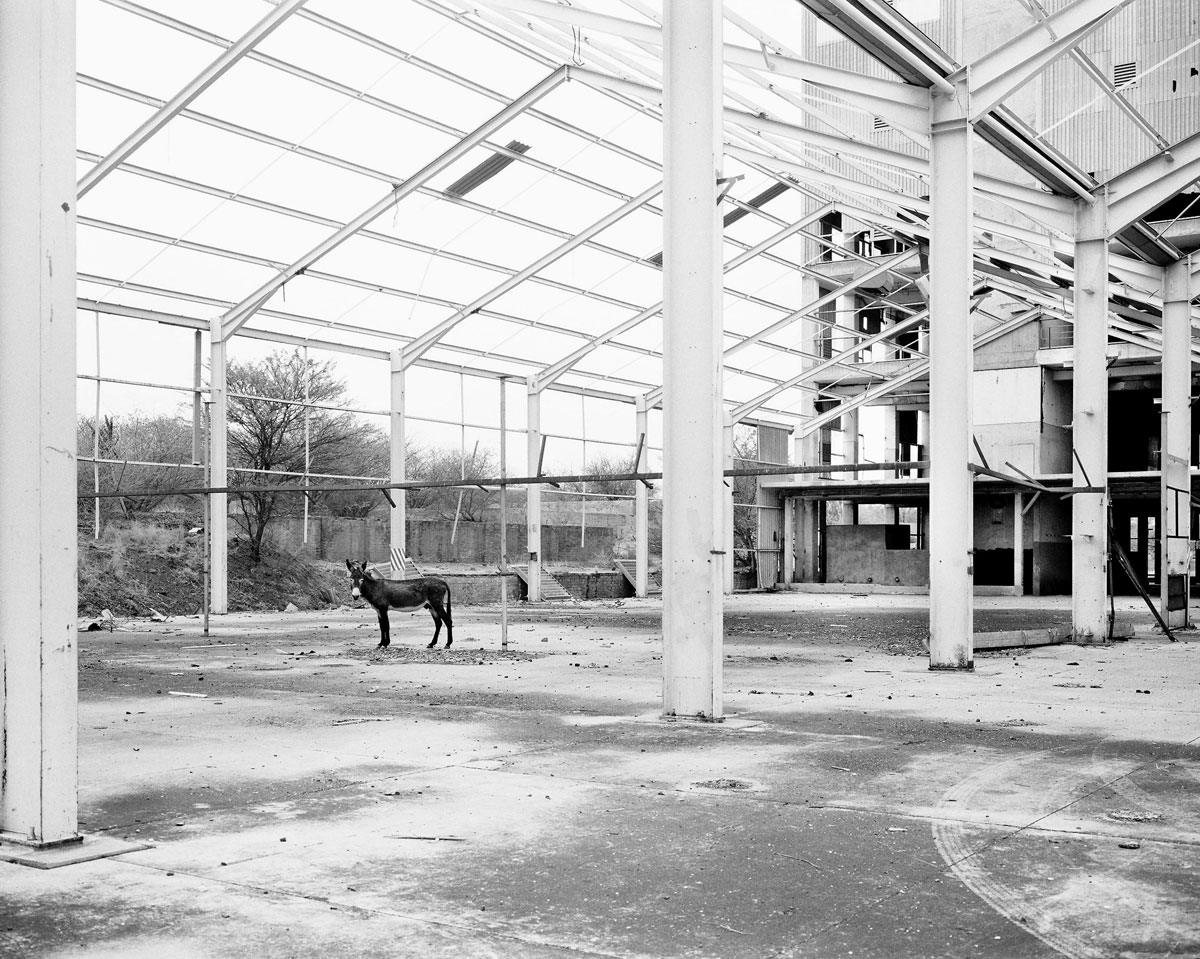
 

Jo Ractliffe (South African, b. 1961) 'Donkey, Pomfret Asbestos Mine' 2011


Jo Ractliffe (South African, b. 1961)
Donkey, Pomfret Asbestos Mine
2011
From the series The Borderlands
Inkjet print, 2015
On loan from the artist, courtesy Stevenson, Cape Town and Johannesburg
© Jo Ractliffe. Courtesy of Stevenson, Cape Town and Johannesburg


The Aftermath of Conflict: Jo Ractliffe’s Photographs of Angola and South Africa at The Metropolitan Museum of Art beginning August 24 features 23 works produced over the past 10 years by South African artist Jo Ractliffe (born 1961). The photographs examine the landscapes of Angola and South Africa as sites of conflict and contention. Focusing on the aftermath of the Angolan Civil War and the intertwined conflict known in South Africa as the “Border War,” her photographs address themes of dispossession, history, memory, and erasure. The exhibition highlights Ractliffe’s engagement with the land and structures of Angola’s capital, Luanda, as well as with places in the Angolan and South African countryside where unmarked mass graves, minefields, and former military testing sites reveal the complex traces of the past in the present.

The 23 works on loan from the artist include single images, diptychs, and triptychs selected from three photographic series: Terreno Ocupado (2007), As Terras do Fim do Mundo (2010), and The Borderlands (2013). In Terreno Ocupado, Ractliffe establishes the city of Luanda as a multilayered place of both historical dispute and present-day struggle. Photographs highlighting the Portuguese colonial occupation of Angola and its imprint on the built environment appear alongside works depicting the often harsh economic conditions of Luanda today. By focusing on the structural instability of the city’s shanty towns, as well as the longer history of political instability threading through their foundations, these photographs question what it means for land to be occupied, abandoned, and struggled over.

The works selected from 2010’s As Terras do Fim do Mundo highlight traces of the Border War, a conflict fought in rural Angola and present-day Namibia between South Africa and its allies on one side and, on the other, the exiled Namibian liberation movement, the Angolan government, and their allies. For this series, Ractliffe traveled alongside ex-soldiers returning to the desolate places where they had fought. The images produced on these trips include photographs of unmarked mass graves, minefields, and other often-inconspicuous signs of past conflict, showing how landscape can function as a repository of histories and memories and yet not be apparent at first glance. Most of the photographs in this series appear devoid of human presence, but in a triptych featuring mural representations of the conflict’s three key political leaders – Fidel Castro, Agostinho Neto, and Leonid Brezhnev – Ractliffe points more directly to notions of individual agency, culpability, and experience.

For her most recent series, The Borderlands, Ractliffe sought out sites in South Africa that were intricately connected to the history of the Border War and photographed their inhabitants amid their surroundings. The people she photographed, often the subjects of forced relocation and living in precarious conditions, exist at the intersection of the region’s troubled history and challenging present. Works from this series show how histories of violence and dispossession under apartheid intersect with these militarised landscapes.

The Aftermath of Conflict has been organised to coincide with the special exhibition Kongo: Power and Majesty, which focuses on works created by artists in present-day Angola between the 16th and 19th centuries (on view at the Metropolitan Museum September 17, 2015 – January 3, 2016). The landscapes captured by Ractliffe consider a more recent chapter of Angola’s history. The Aftermath of Conflict: Jo Ractliffe’s Photographs of Angola and South Africa is curated by Yaëlle Biro, Associate Curator in the Department of Africa, Oceania, and the Americas at the Metropolitan Museum, together with Dr Evelyn Owen, the 2013-2015 Mellon Curatorial Fellow at The Africa Center, New York, in collaboration with the Museum’s Department of Modern and Contemporary Art and Department of Photographs.

Text from The Metropolitan Museum of Art
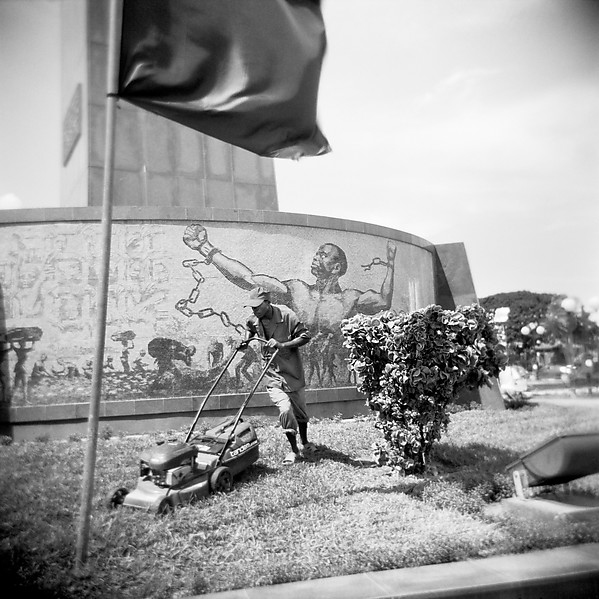
 

Jo Ractliffe (South African, b. 1961) 'Man maintaining the lawn of the Monumento de Agostinho Neto' 2007


Jo Ractliffe (South African, b. 1961)
Man maintaining the lawn of the Monumento de Agostinho Neto
2007
Inkjet print, 2015
Height: 13 3/4 in. (35cm) Width: 13 3/4 in. (35cm)
On loan from the artist, courtesy Stevenson, Cape Town and Johannesburg
© Jo Ractliffe. Courtesy of Stevenson, Cape Town and Johannesburg


This monument to Angola’s first president Agostinho Neto (1922-1979) was erected in 2001-2002 as a gift from North Korea. Neto, a doctor and poet, was a founder of the MPLA (People’s Movement for the Liberation of Angola) and led the party during Angola’s struggle for independence from Portugal. When the Portuguese withdrew from Angola on November 11, 1975, with help from Cuba and in the face of competing anti-colonial factions, the MPLA seized control of Luanda and Neto became president. He went on to cultivate closer ties with the Soviet Union and other communist states. In this photograph, Ractliffe contrasts the heroic figure symbolising freedom from colonialism shown on the monument’s pedestal with the everyday heroism of a man pushing a heavy lawnmower.
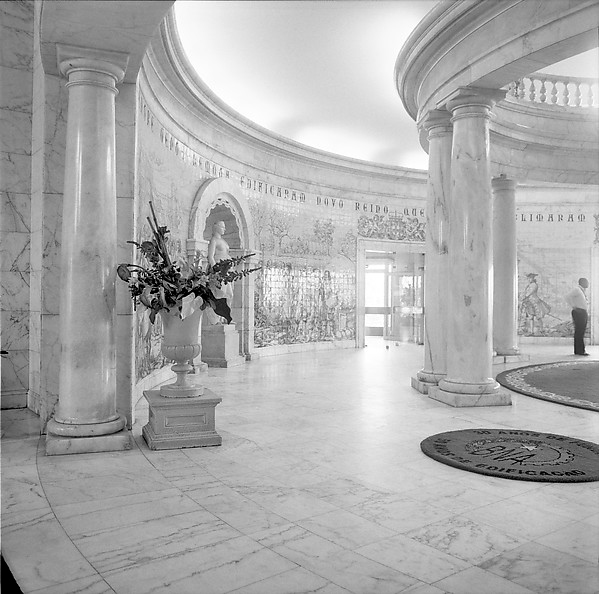
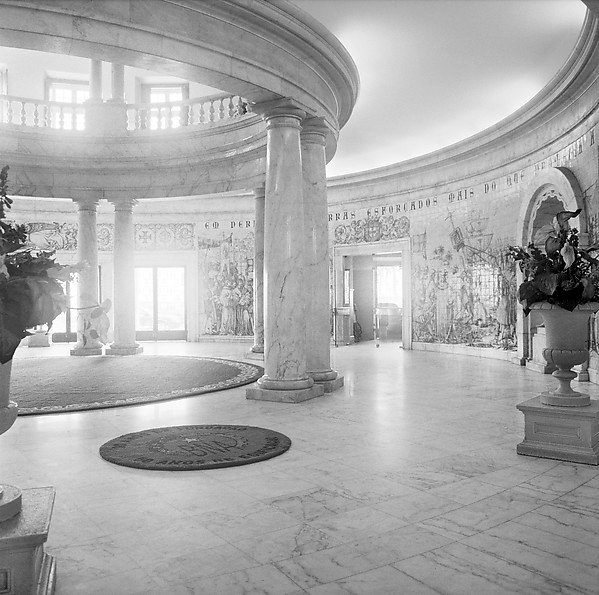
 

Jo Ractliffe (South African, b. 1961) Banco Nacional de Angola 2007 (diptych left)

Jo Ractliffe (South African, b. 1961) Banco Nacional de Angola 2007 (diptych right)


Jo Ractliffe (South African, b. 1961)
Banco Nacional de Angola (diptych left and right)
2007
Inkjet prints, 2015
Height: 17 11/16 in. (45cm) Width: 17 11/16 in. (45cm)
On loan from the artist, courtesy Stevenson, Cape Town and Johannesburg
© Jo Ractliffe. Courtesy of Stevenson, Cape Town and Johannesburg


The National Bank of Angola building was designed by Portuguese architect Vasco Regaleira and inaugurated in 1956 by Portuguese president Francisco Lopes. The building’s pink exterior, with its imposing dome and colonnade, was intended to fit in with other colonial-style buildings in Luanda. The bank’s lavish décor provides a dramatic contrast to many of Ractliffe’s other photographs of the city, especially the marble atrium, which features tiled murals portraying the arrival of the Portuguese in Angola. In the image to the right (bottom above), Portuguese explorers are depicted disembarking from their ship and erecting a padrão; these large limestone markers were inscribed with the Portuguese coat of arms and positioned at key locations along the coast by Portuguese navigator Diogo Cão in 1483. An original padrão is currently on view in the exhibition Kongo: Power and Majesty.
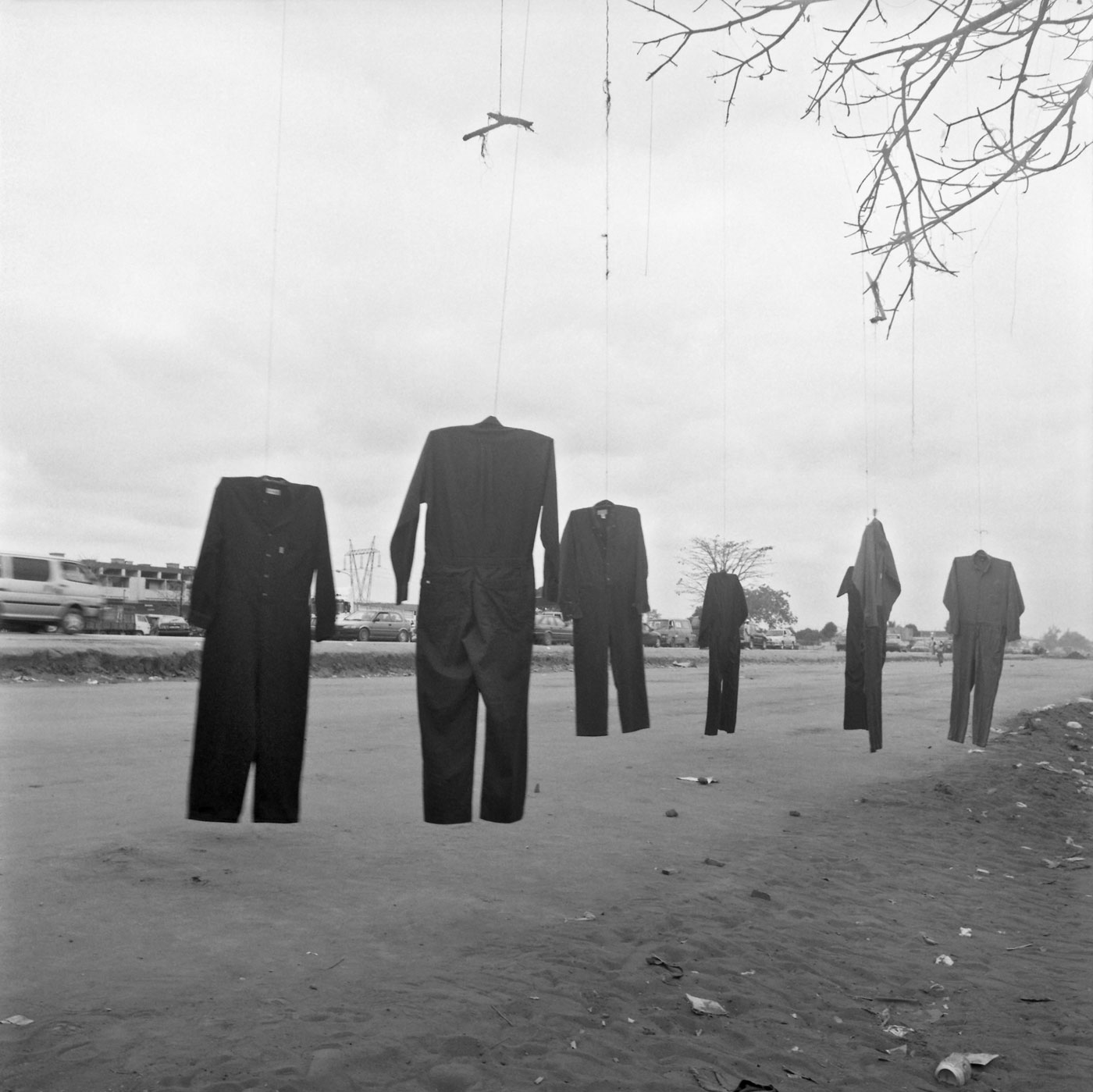
 

Jo Ractliffe (South African, b. 1961) 'Roadside stall on the way to Viana' 2007


Jo Ractliffe (South African, b. 1961)
Roadside stall on the way to Viana
2007
From the series Terreno Ocupado
Inkjet print, 2015
On loan from the artist, courtesy Stevenson, Cape Town and Johannesburg
© Jo Ractliffe. Courtesy of Stevenson, Cape Town and Johannesburg


In this photograph and the next one, “Wreck of a Chinese ship at Ilha”, stretches of bare ground in and around Luanda form the backdrop to ghostly signs of economic activity. Workmen’s overalls dangle from a tree at a roadside stall next to a taxi rank, and a grounded ship basks on a deserted beach while other vessels float offshore. Before it capsized in the mid-2000s, this ship transported and housed Chinese workers drawn to Angola by the many Chinese-run infrastructure projects in the country. These images reflect Angola’s diverse economy where a globalised workforce and the informal sector both play important roles, yet the absence of the workers themselves is striking.
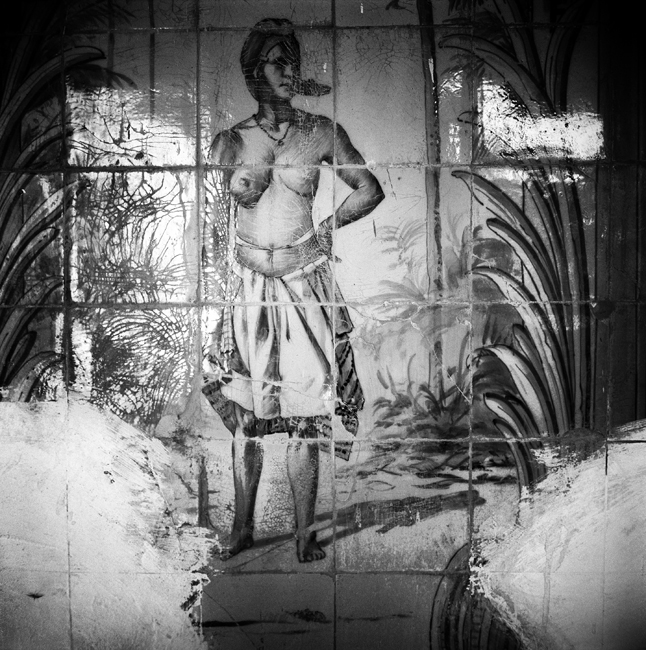
 

Jo Ractliffe (South African, b. 1961) 'Details of tiled murals at the Fortaleza De São Miguel, depicting Portuguese explorations in Africa 2' 2007


Jo Ractliffe (South African, b. 1961)
Details of tiled murals at the Fortaleza De São Miguel, depicting Portuguese explorations in Africa 2
2007
Inkjet print, 2015
Height: 13 3/4 in. (35cm)
Width: 13 3/4 in. (35cm)
On loan from the artist, courtesy Stevenson, Cape Town and Johannesburg
© Jo Ractliffe. Courtesy of Stevenson, Cape Town and Johannesburg
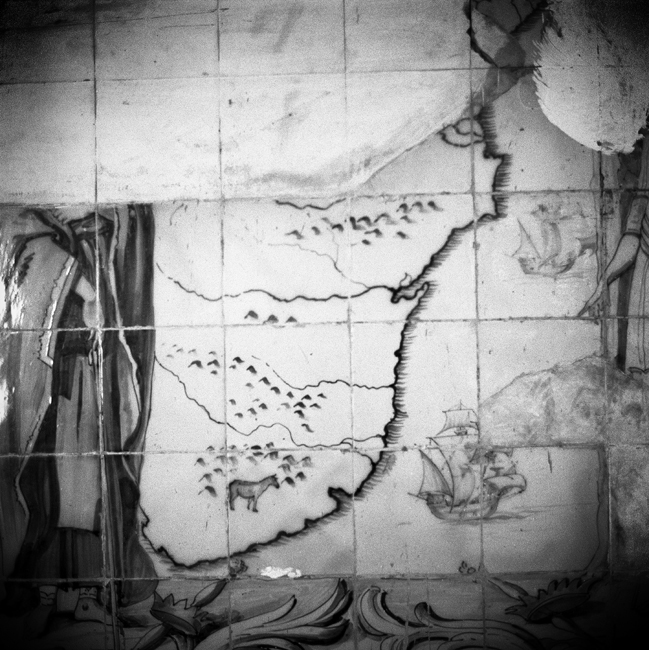
 

Jo Ractliffe (South African, b. 1961) 'Details of tiled murals at the Fortaleza De São Miguel, depicting Portuguese explorations in Africa 4' 2007


Jo Ractliffe (South African, b. 1961)
Details of tiled murals at the Fortaleza De São Miguel, depicting Portuguese explorations in Africa 4
2007
Inkjet print, 2015
Height: 13 3/4 in. (35cm) Width: 13 3/4 in. (35cm)
On loan from the artist, courtesy Stevenson, Cape Town and Johannesburg
© Jo Ractliffe. Courtesy of Stevenson, Cape Town and Johannesburg


This photograph and the previous one were taken inside the Fortaleza de São Miguel, a fort originally built in 1576 by Paulo Dias de Novais, the explorer who “founded” Luanda. It later became the administrative heart of the Portuguese colony of Angola in its important role as a trading centre and slaving hub. In 1938 the fort was transformed into the home of the Museum of Angola, and the tiled murals shown here were commissioned at this time. Depicting the flora, fauna and history of Angola, these cobalt-blue 18th-century style tiles were inspired by early modern European prints depicting the Kongo and Angola kingdoms, and represented an attempt to legitimise the ongoing Portuguese presence in the country. Sources included Olfert Dapper’s 1668 “Description of Africa” from which the map fragment shown here is drawn.
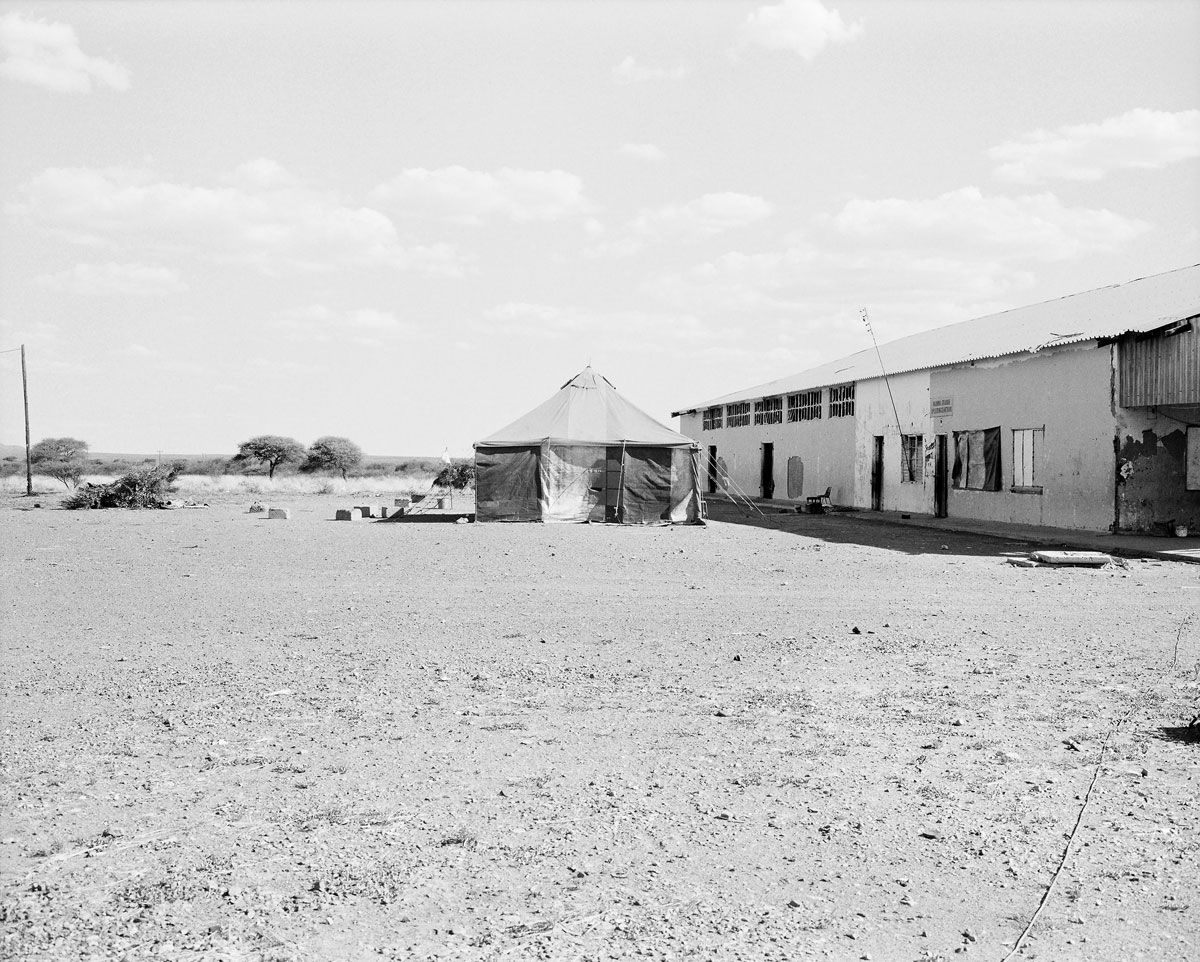
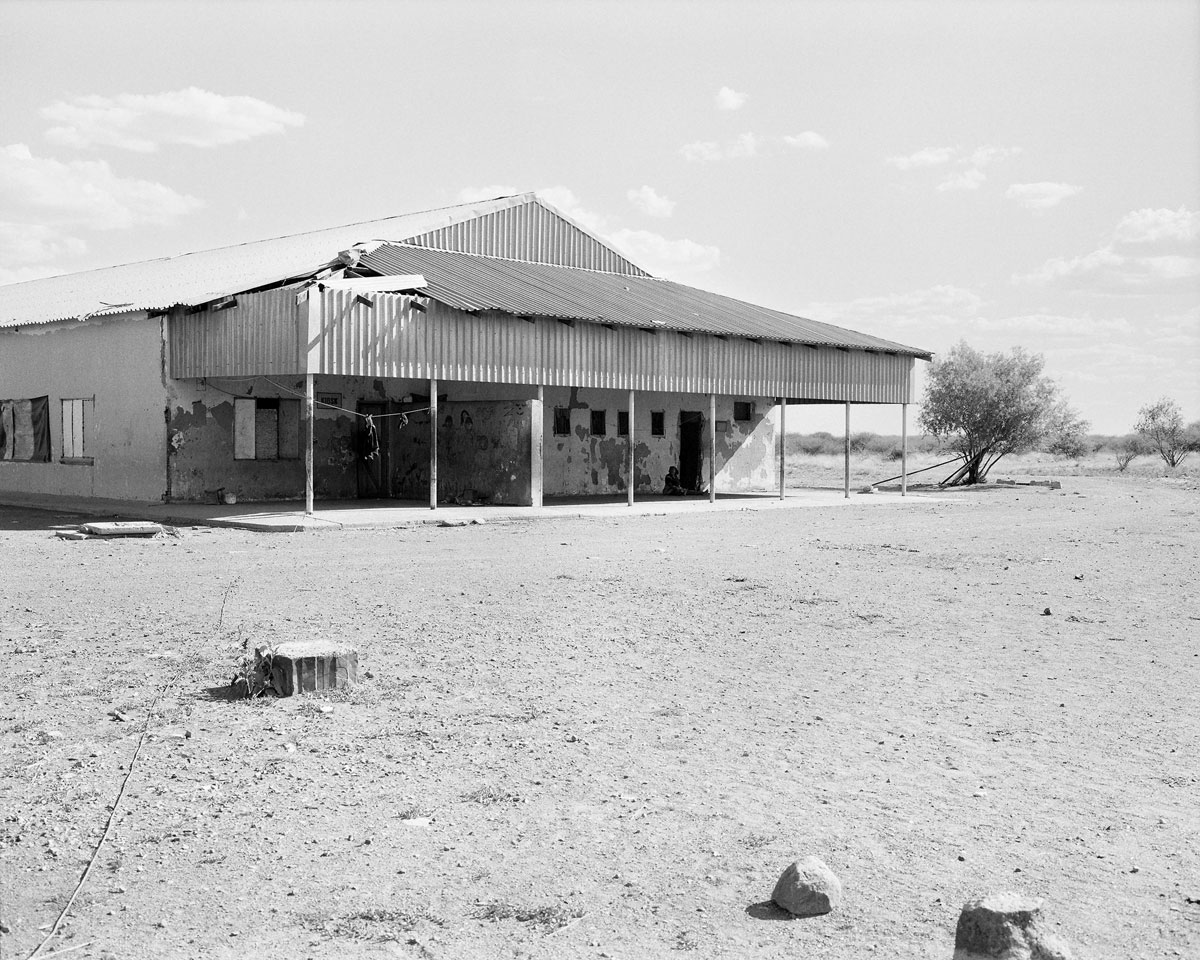
 

Jo Ractliffe (South African, b. 1961) Decommissioned military outpost, Schmidtsdrift 2012 (triptych left)

Jo Ractliffe (South African, b. 1961) Decommissioned military outpost, Schmidtsdrift 2012 (triptych middle)

Jo Ractliffe (South African, b. 1961) Decommissioned military outpost, Schmidtsdrift 2012 (triptych right)


Jo Ractliffe (South African, b. 1961)
Decommissioned military outpost, Schmidtsdrift (triptych left, middle and right)
2012
From the series The Borderlands
Inkjet prints, 2015
On loan from the artist, courtesy Stevenson, Cape Town and Johannesburg
© Jo Ractliffe. Courtesy of Stevenson, Cape Town and Johannesburg


In this triptych, Ractliffe’s focal point is a ghostly ensemble of deserted military buildings. Schmidtsdrift’s original inhabitants were forcibly relocated in the 1950s-1970s under the apartheid regime’s policy of racial segregation. From 1974 the emptied settlement was used as a military training base by the South African Defence Force, which was fighting against the exiled Namibian liberation movement and the Angolan army in a conflict later referred to in South Africa as the “Border War”. Now that the war is over, the decommissioned buildings remain, testifying to the region’s past conflicts and histories of forced relocation.
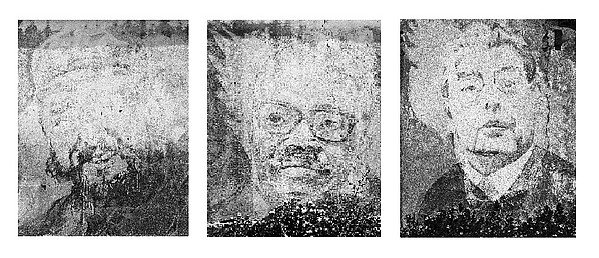
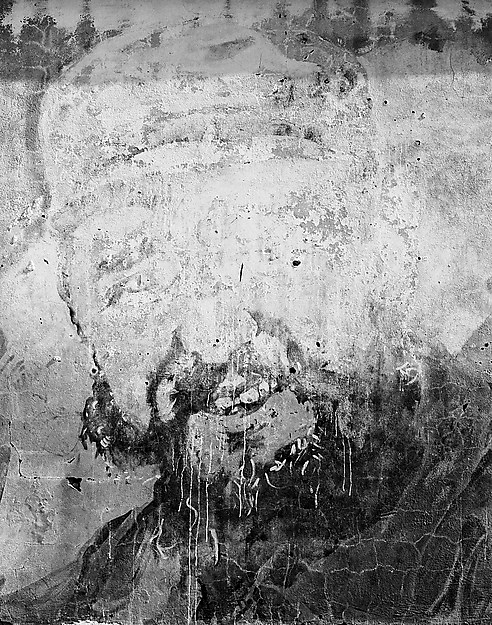
 

Jo Ractliffe (South African, b. 1961) 'Mural depicting Fidel Castro, Agostinho Neto and Leonid Brezhnev, circa 1975, Viriambundo' 2009

Jo Ractliffe (South African, b. 1961) Mural depicting Fidel Castro, Agostinho Neto and Leonid Brezhnev, circa 1975, Viriambundo 2009 (detail)

Jo Ractliffe (South African, b. 1961) Mural depicting Fidel Castro, Agostinho Neto and Leonid Brezhnev, circa 1975, Viriambundo 2009 (detail)

Jo Ractliffe (South African, b. 1961) Mural depicting Fidel Castro, Agostinho Neto and Leonid Brezhnev, circa 1975, Viriambundo 2009 (detail)


Jo Ractliffe (South African, b. 1961)
Mural depicting Fidel Castro, Agostinho Neto and Leonid Brezhnev, circa 1975, Viriambundo (details)
2009
Inkjet prints, 2015
Height: 15 3/4 in. (40cm) Width: 19 11/16 in. (50cm)
On loan from the artist, courtesy Stevenson, Cape Town and Johannesburg
© Jo Ractliffe. Courtesy of Stevenson, Cape Town and Johannesburg


The central figure of Agostinho Neto, Angola’s anti-colonial leader and president from 1975-79, is flanked by Cuban revolutionary Fidel Castro on the left, and Soviet leader Leonid Brezhnev on the right. This mural personifies the threats of African Nationalism and Communism that propelled South Africa to become involved in the Border War. It highlights the fact that the Angolan Civil War was also a Cold War battleground, with Cuba and the Soviet Union on the side of Neto’s party, the MPLA (People’s Movement for the Liberation of Angola), and South Africa and the United States supporting UNITA (National Union for the Total Independence of Angola). Here, all three men still command a presence despite their faded, cartoon-like rendering.


The Metropolitan Museum of Art
1000 Fifth Avenue at 82nd Street
New York, New York 10028-0198
Phone: 212-535-7710

Opening hours:
Sunday – Tuesday, and Thursday: 10am – 5pm
Friday and Saturday: 10am – 9pm
Closed Wednesday
The Metropolitan Museum of Art website

LIKE ART BLART ON FACEBOOK

Back to top

Exhibition: ‘Wayne Gudmundson: Trees of Burgundy’ at Joseph Bellows Gallery, La Jolla, California

Exhibition dates: 7th November – 23rd December, 2015


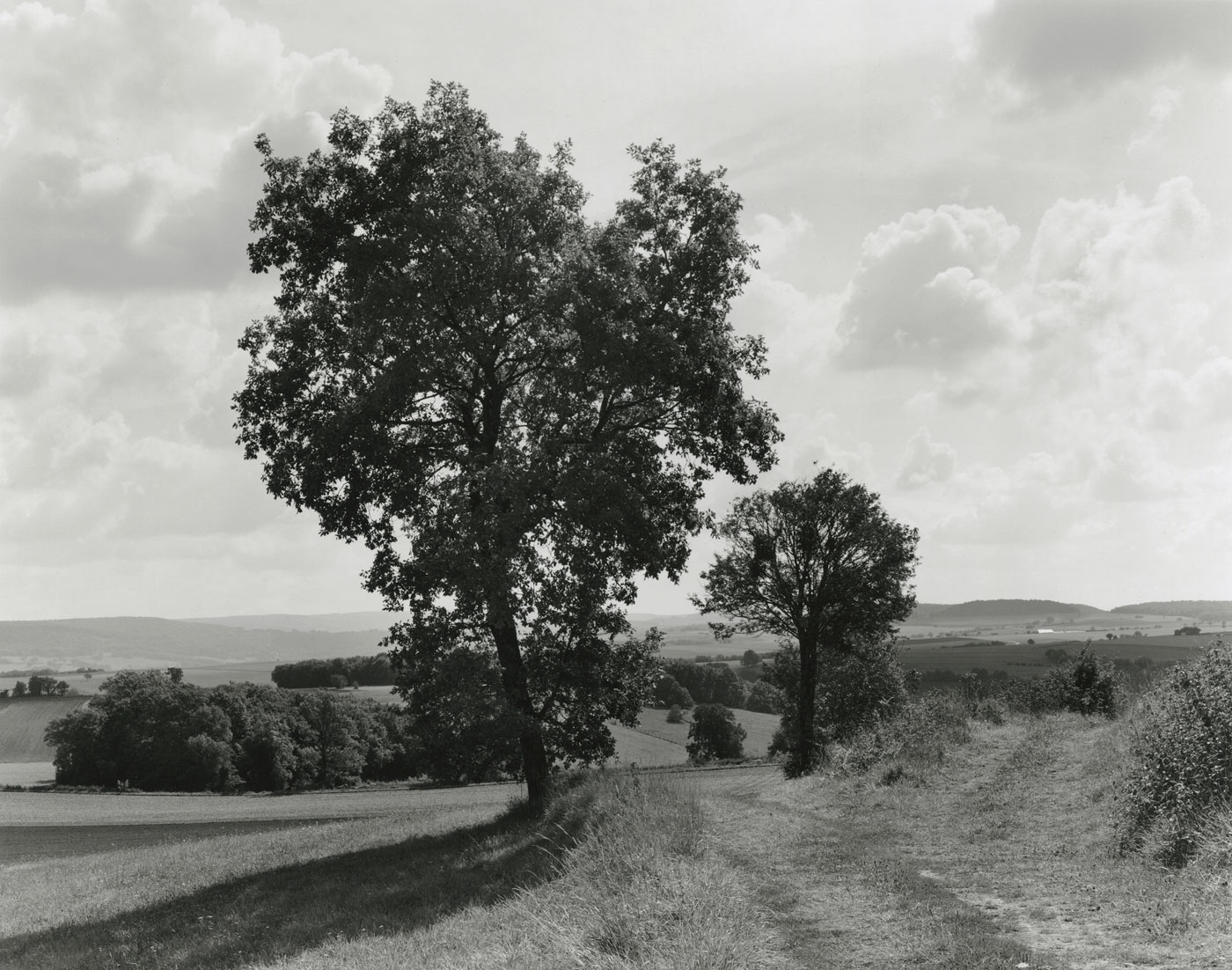
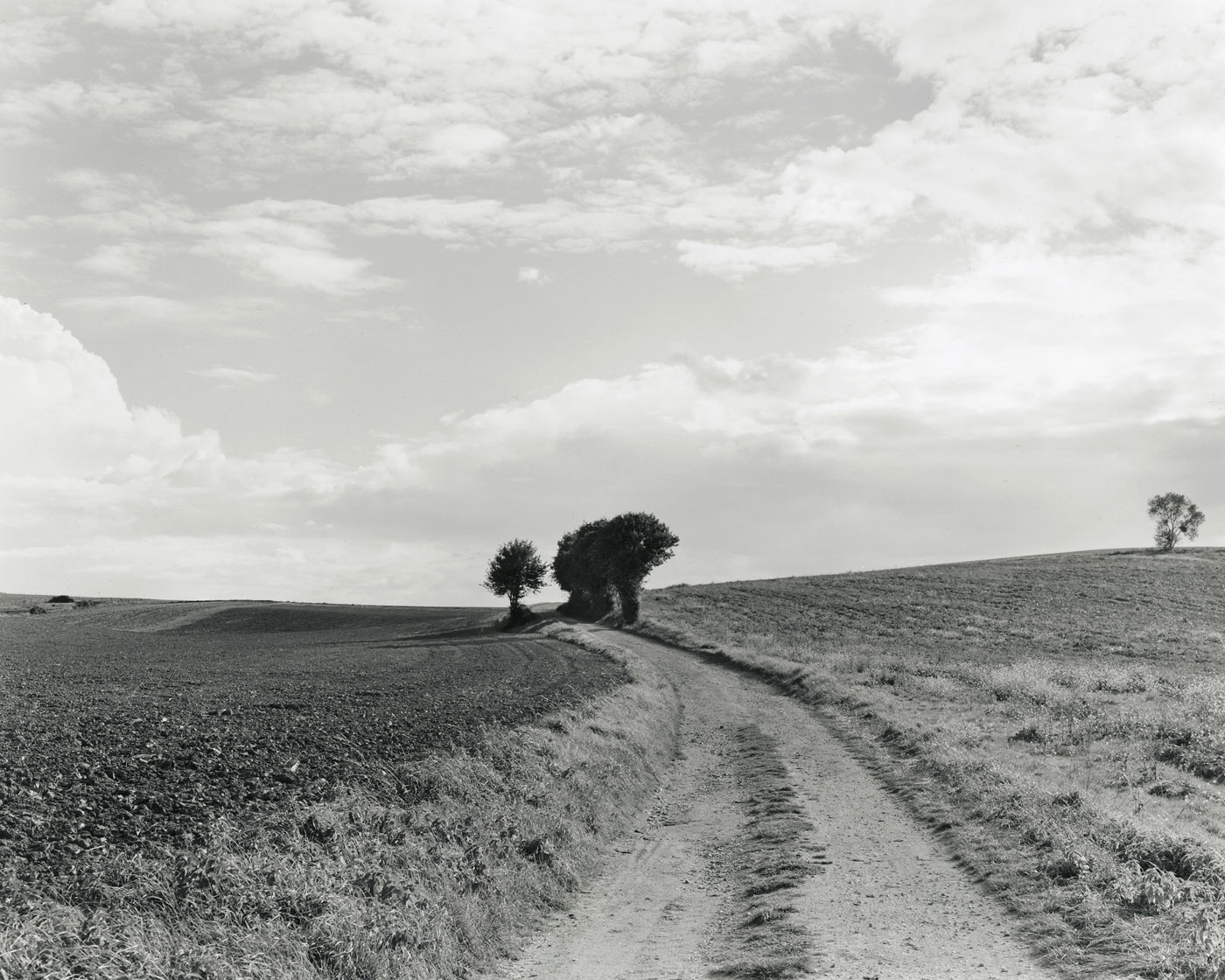
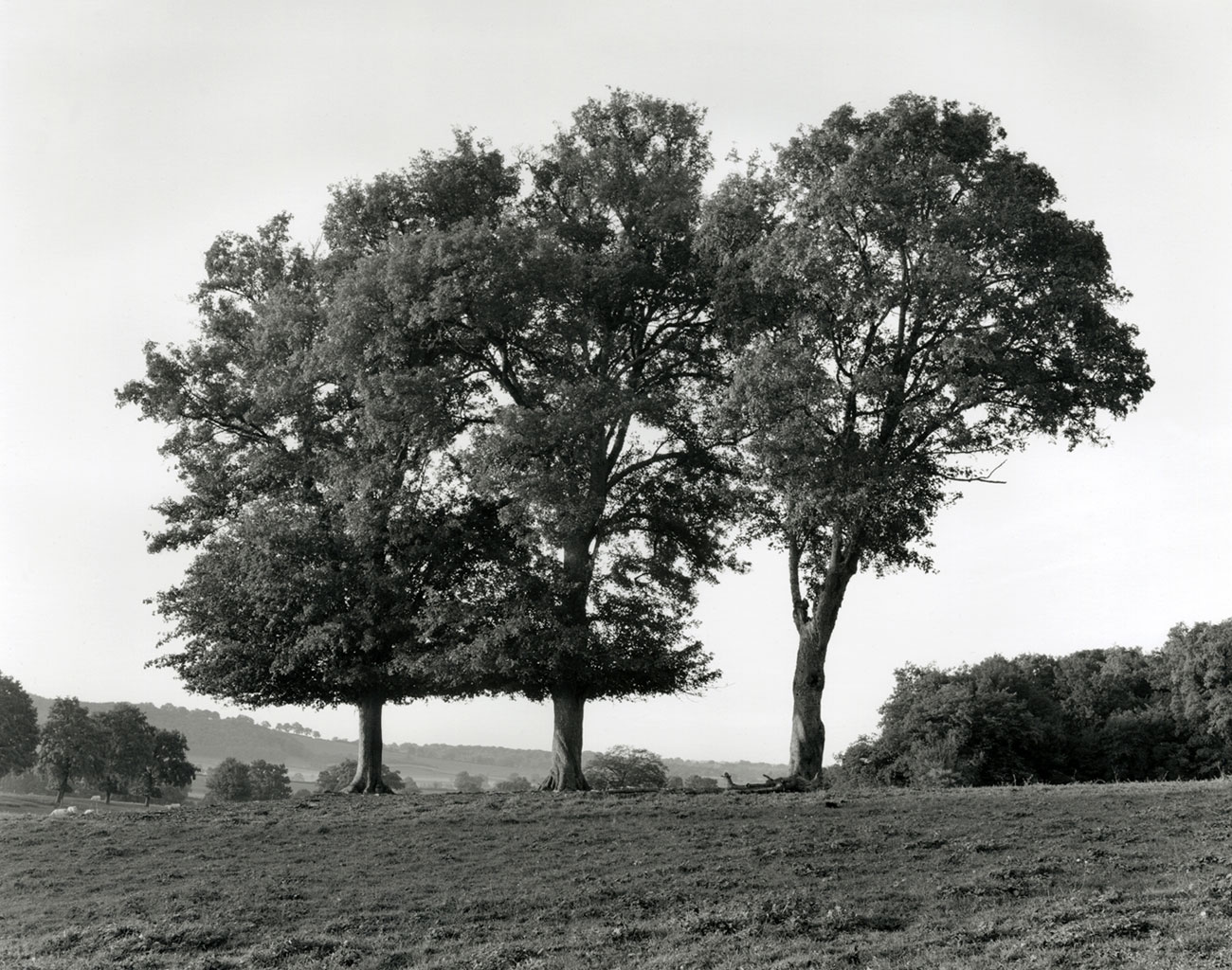
Wayne Gudmundson (American, b. 1949) 'Saizy, France #13' 2014 from the exhibition 'Wayne Gudmundson: Trees of Burgundy' at Joseph Bellows Gallery, La Jolla, California, Nov - Dec, 2015


Wayne Gudmundson (American, b. 1949)
Saizy, France #13
2014
Gelatin silver print
16 x 20 inches


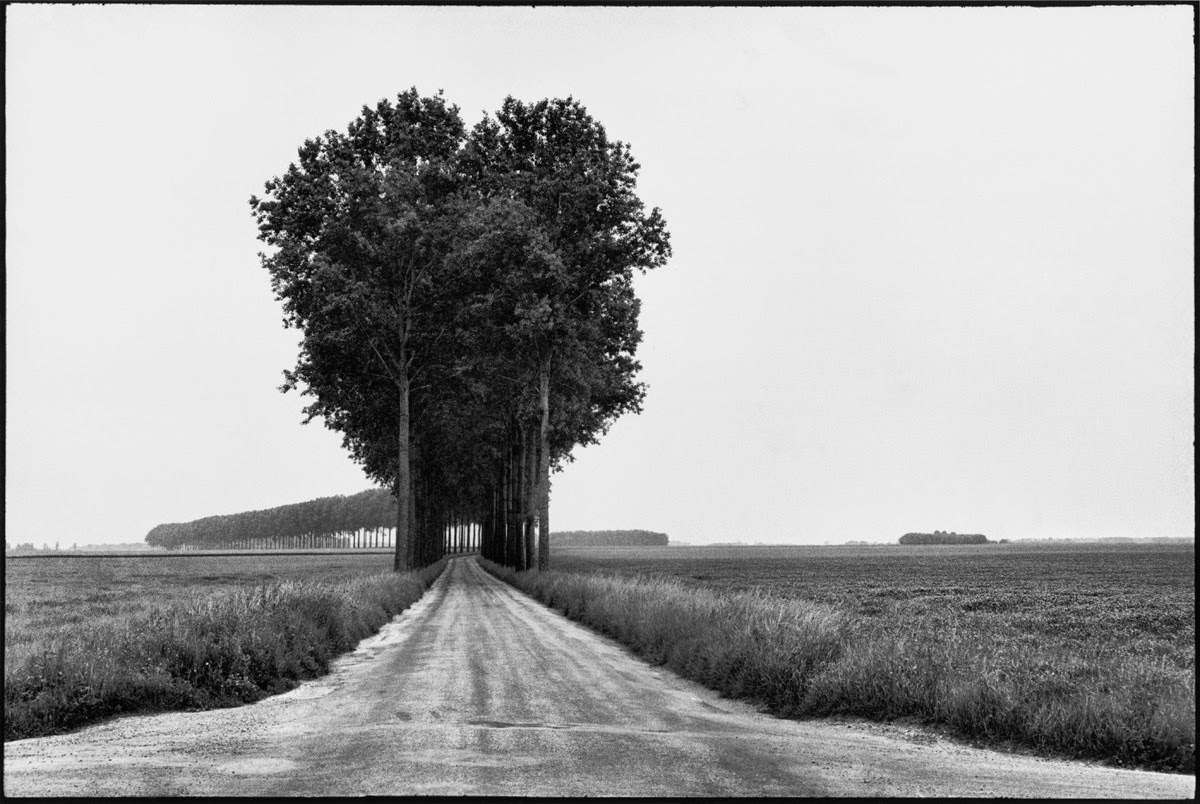
There is a Cartier Bresson of a group of roadside trees that makes a heart.
There is the photography of Wim Wenders in “Kings of the Road.”
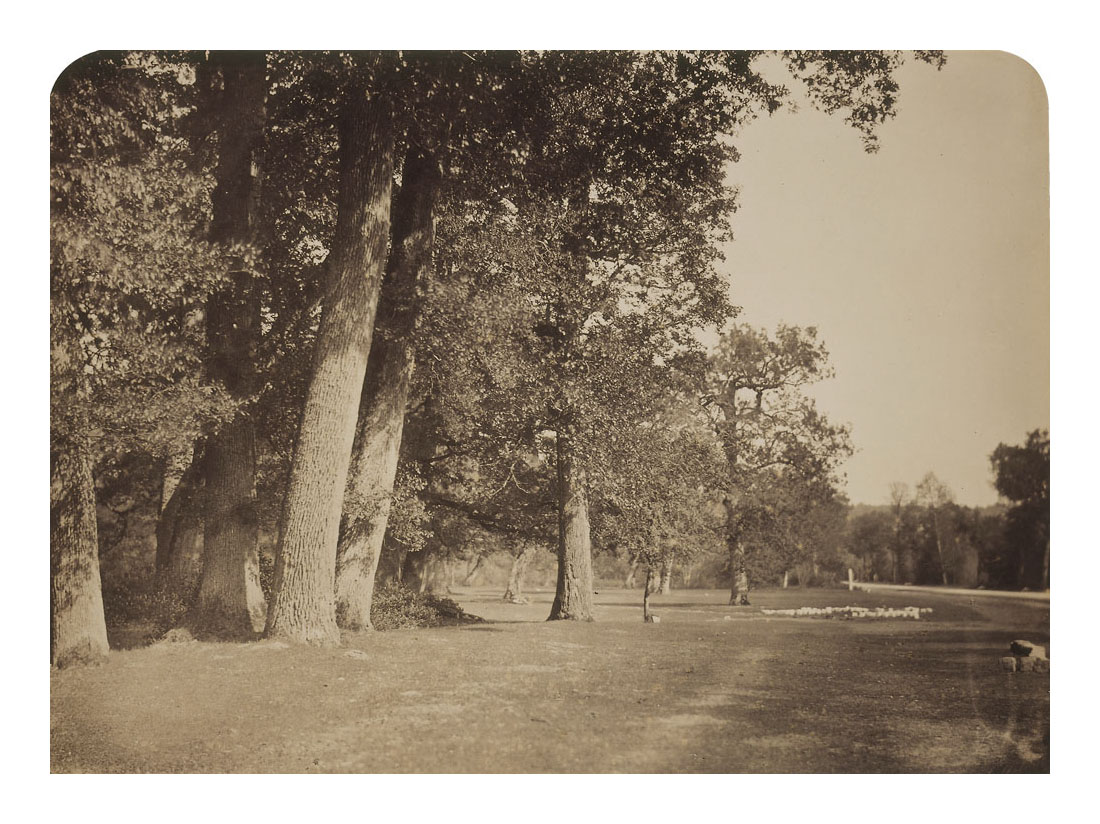
There is Robert Adams and a 19th century European sensibility (eg. Gustave Le Gray) all rolled into one.

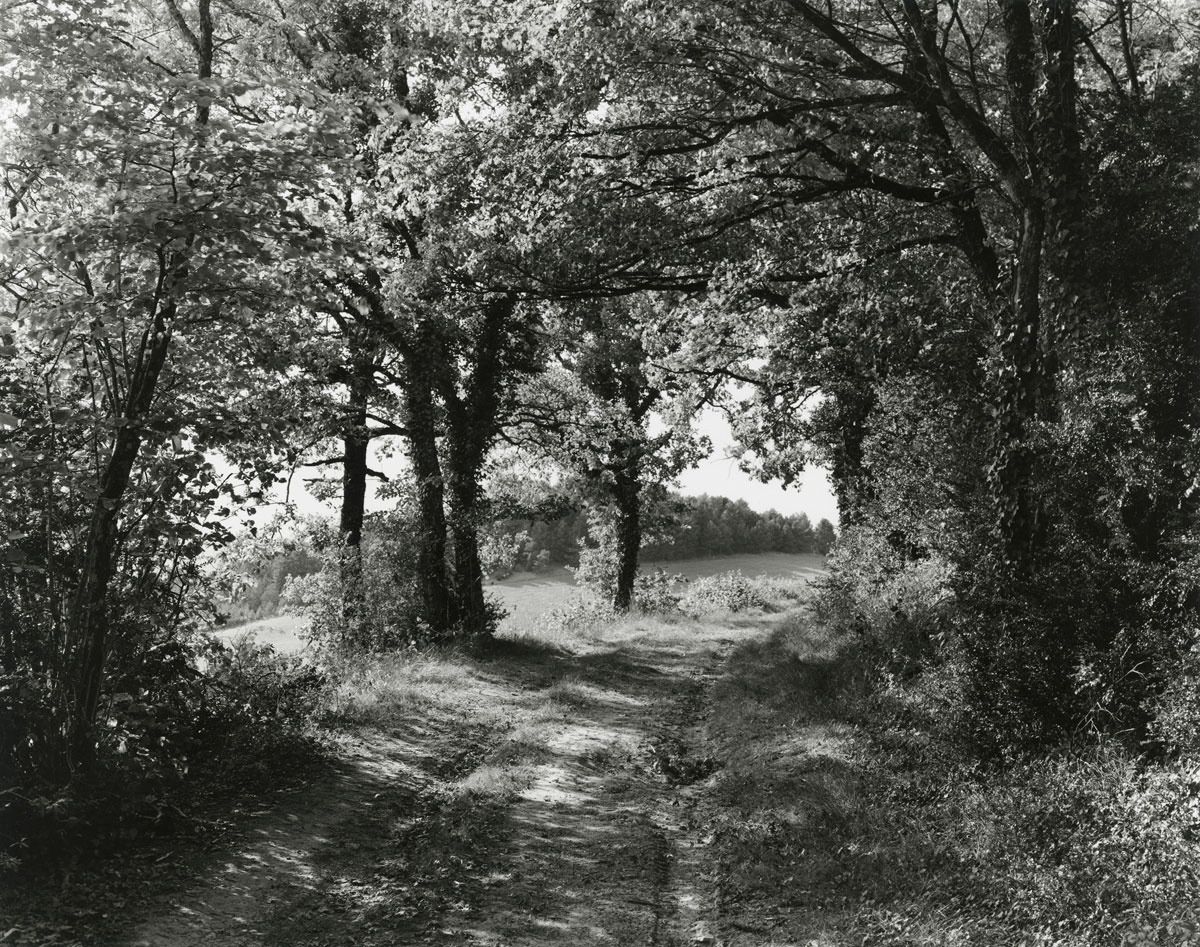
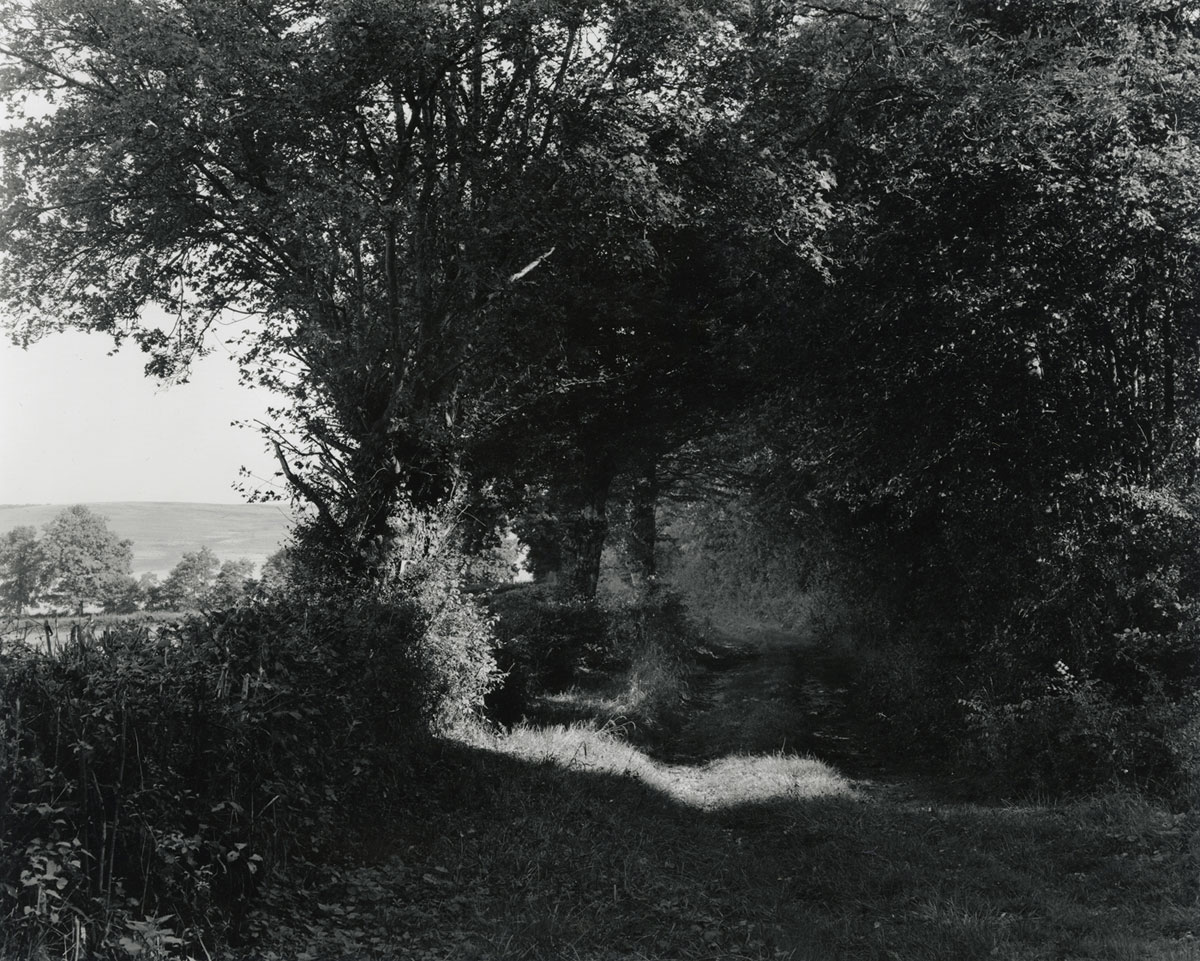
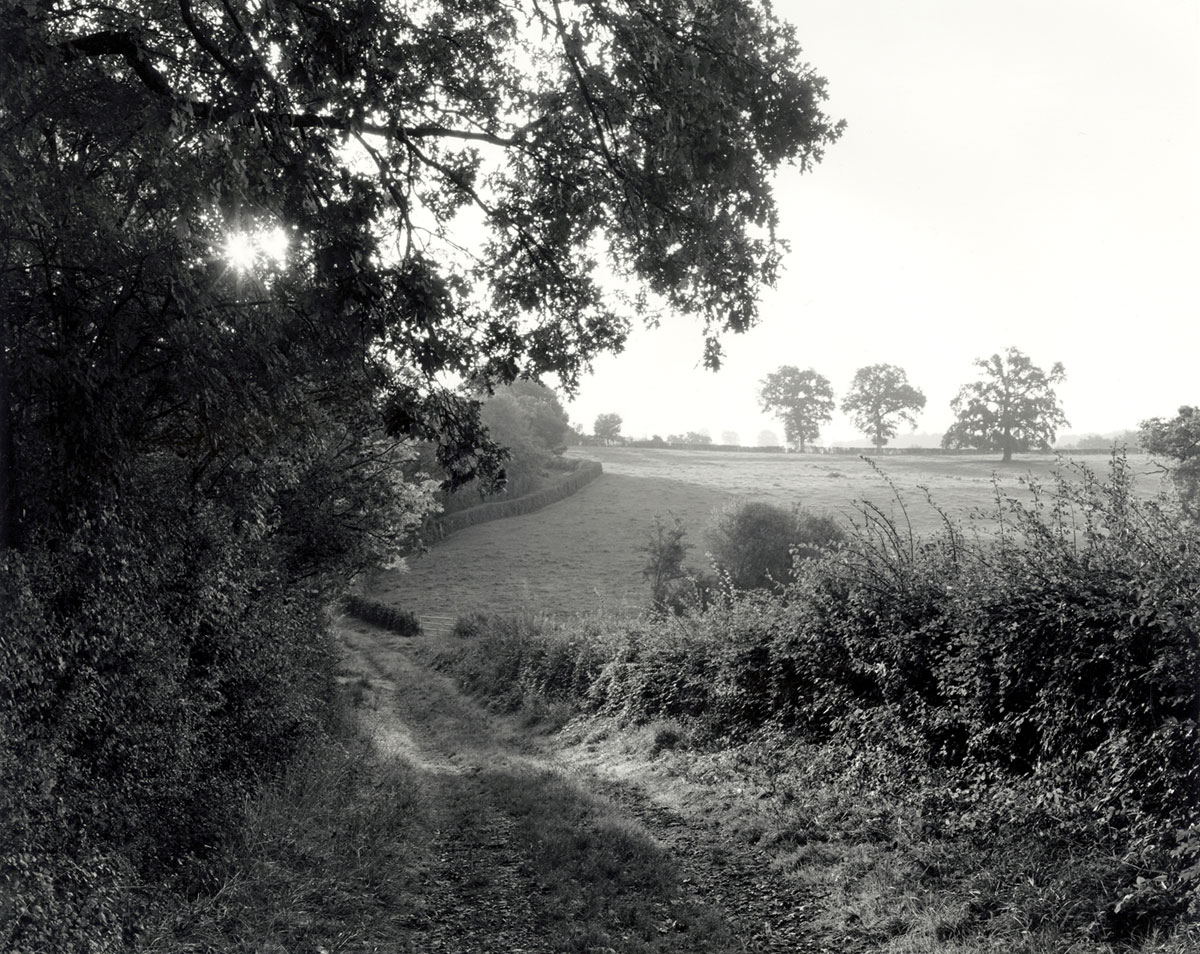
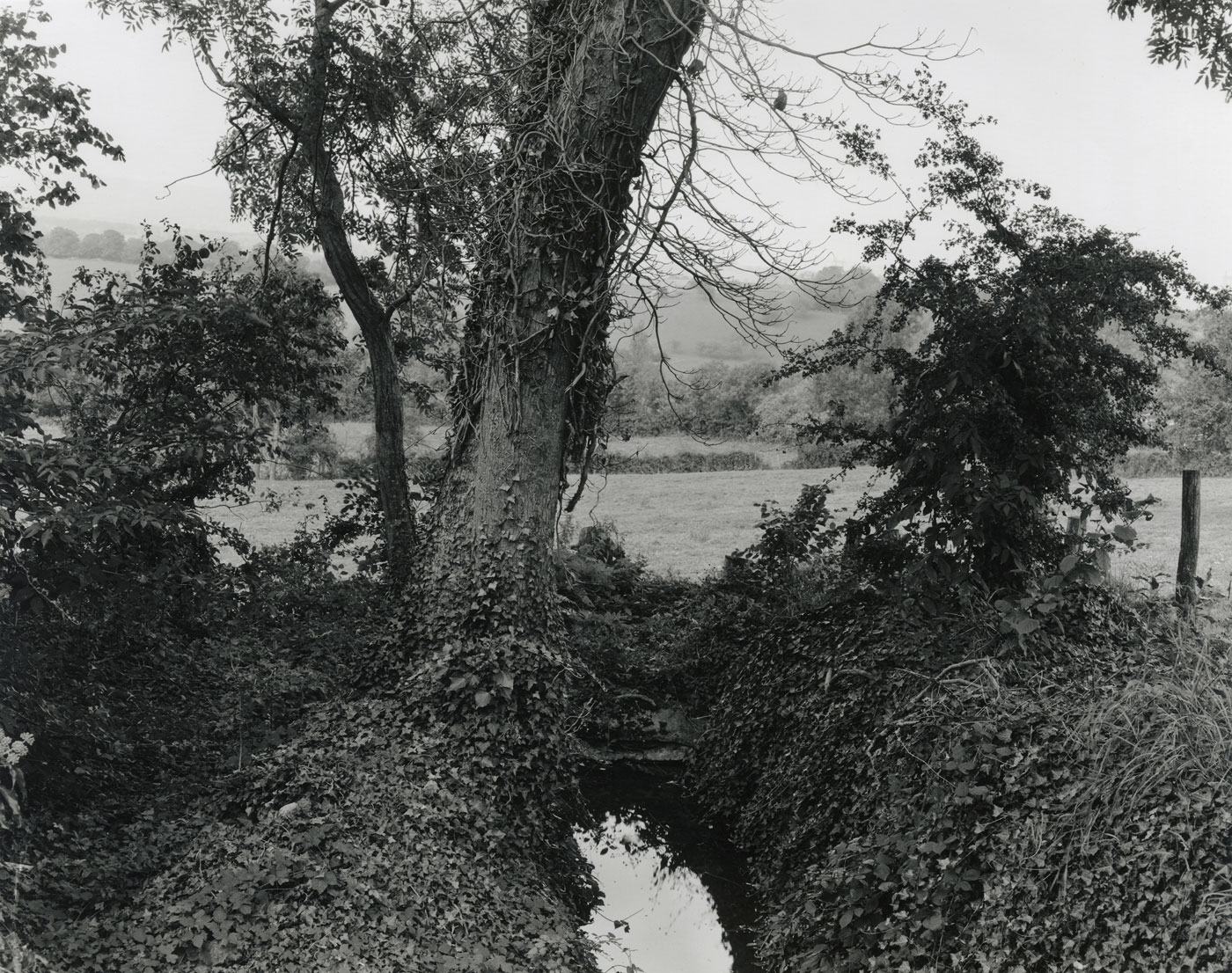
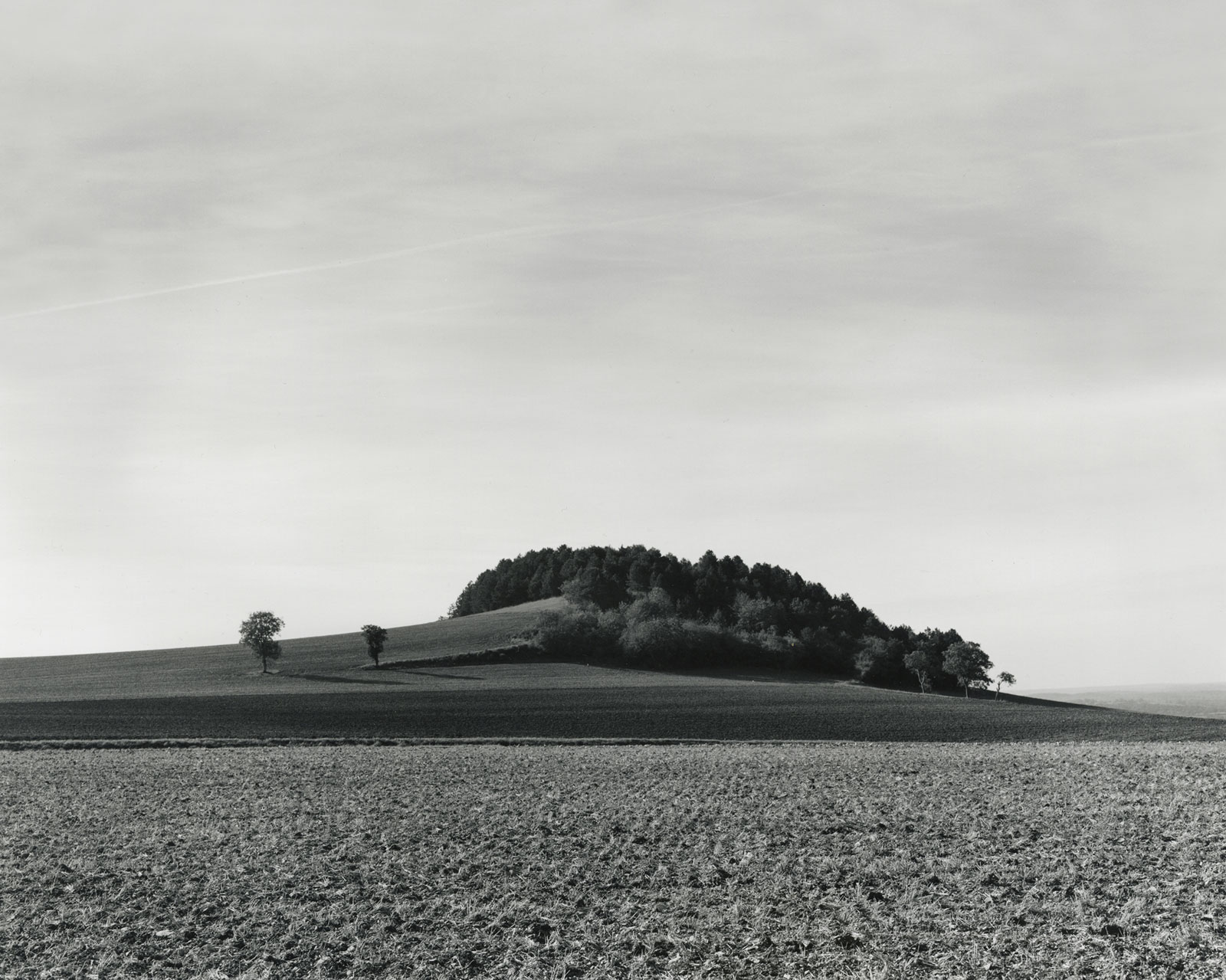
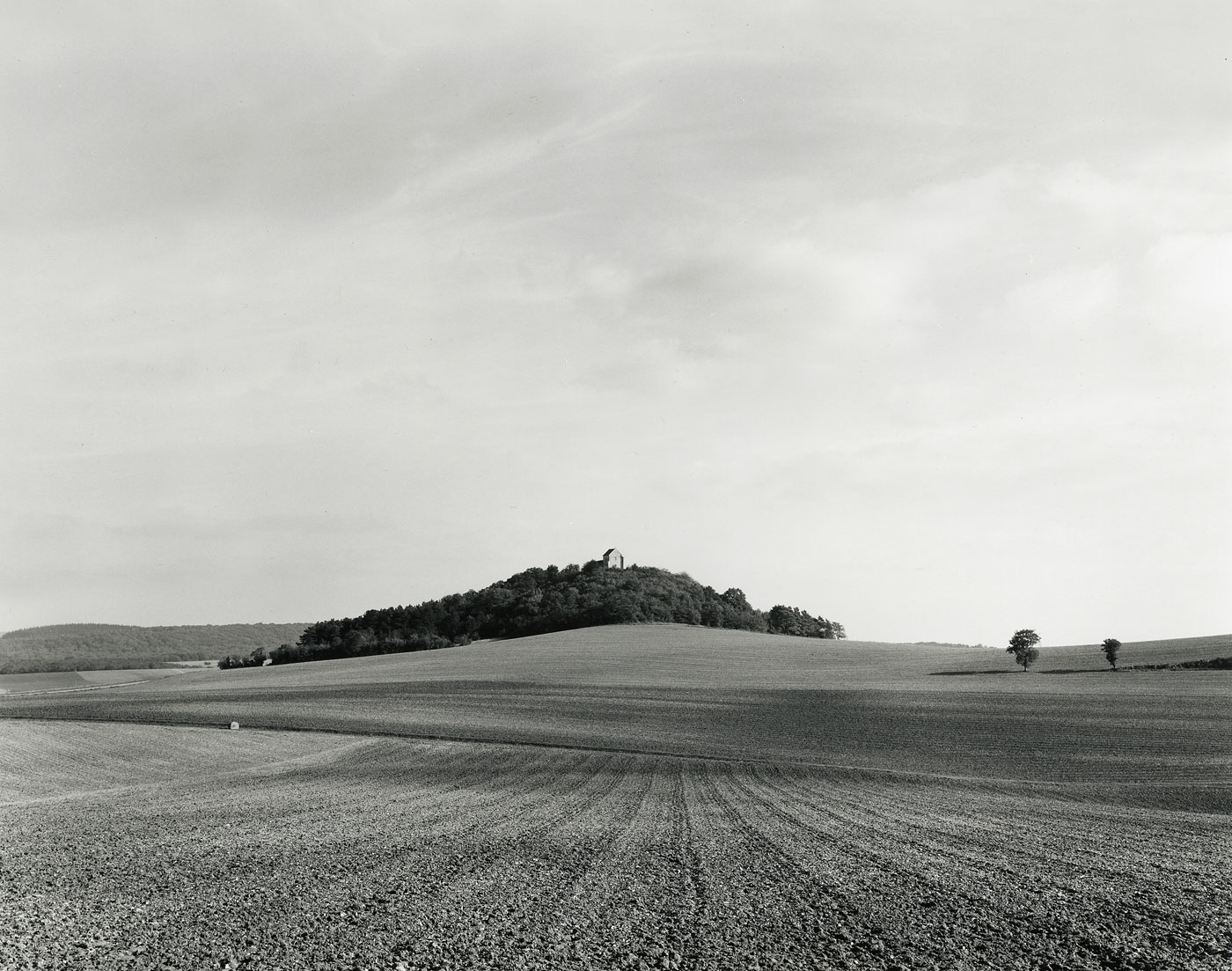
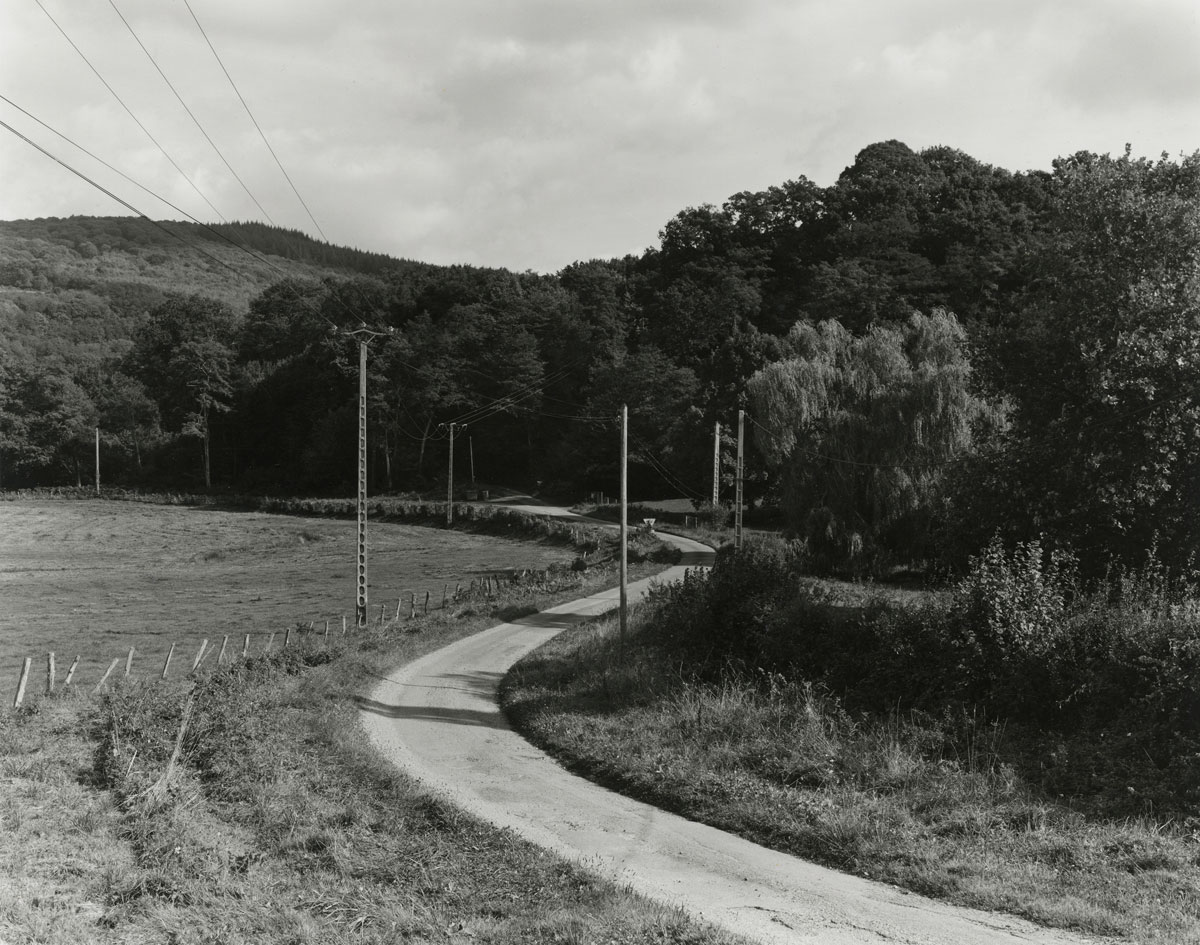
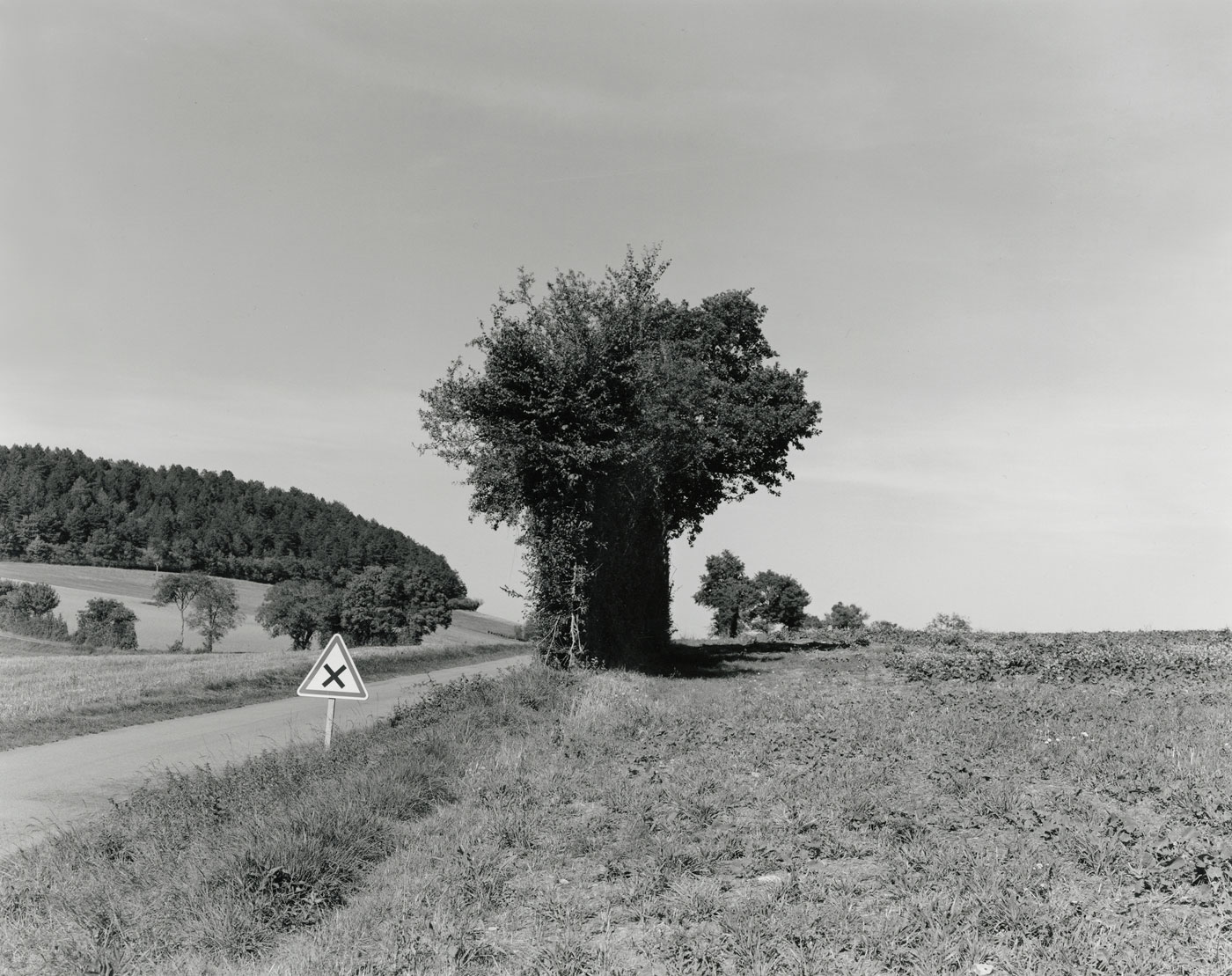
The more expansive vistas such as #4 and #14 don’t really work for me, but the darker, more chthonic narratives such as #6-9 are excellent. They need some more “tiny work” – but they are very good.

The prints are 16 x 20 inch gelatin silver prints from a 4 x 5 view camera negative.

Dr Marcus Bunyan


Many thankx to Joseph Bellows Gallery for allowing me to publish the photographs in the posting. Please click on the photographs for a larger version of the image.


Henri Cartier-Bresson (French, 1908-2004) 'Brie, France, June 1968'


Henri Cartier-Bresson (French, 1908-2004)
Brie, France, June 1968
1968
Silver gelatin print


Kings of the Road (German: Im Lauf der Zeit) is a 1976 German road movie directed by Wim Wenders.


Gustave Le Gray (French, 1820-1884) 'Trees along the Pavé de Chailly' 1852


Gustave Le Gray (French, 1820-1884)
Trees along the Pavé de Chailly
1852
Salted paper print from paper negative
9-7/16 x 13 inches


Wayne Gudmundson (American, b. 1949) 'Saizy, France #3' 2014 from the exhibition 'Wayne Gudmundson: Trees of Burgundy' at Joseph Bellows Gallery, La Jolla, California, Nov - Dec, 2015


Wayne Gudmundson (American, b. 1949)
Saizy, France #3
2014
Gelatin silver print
16 x 20 inches


Wayne Gudmundson (American, b. 1949) 'Saizy, France #12' 2014


Wayne Gudmundson (American, b. 1949)
Saizy, France #12
2014
Gelatin silver print
16 x 20 inches


Wayne Gudmundson (American, b. 1949) 'Saizy, France #6' 2014


Wayne Gudmundson (American, b. 1949)
Saizy, France #6
2014
Gelatin silver print
16 x 20 inches


Wayne Gudmundson (American, b. 1949) 'Saizy, France #7' 2014


Wayne Gudmundson (American, b. 1949)
Saizy, France #7
2014
Gelatin silver print
16 x 20 inches


Wayne Gudmundson (American, b. 1949) 'Saizy, France #8' 2014


Wayne Gudmundson (American, b. 1949)
Saizy, France #8
2014
Gelatin silver print
16 x 20 inches


Wayne Gudmundson (American, b. 1949) 'Saizy, France #9' 2014


Wayne Gudmundson (American, b. 1949)
Saizy, France #9
2014
Gelatin silver print
16 x 20 inches


Joseph Bellows Gallery is pleased to announce its upcoming exhibition, Wayne Gudmundson: Trees of Burgundy. This exhibition will open on November 7th and continue through December 23rd, 2015. Accompanying and complementing this solo exhibition will be a group themed show, entitled Regarding Trees. It will feature a remarkable collection of both vintage and contemporary tree images by a selection of the medium’s most celebrated photographers.

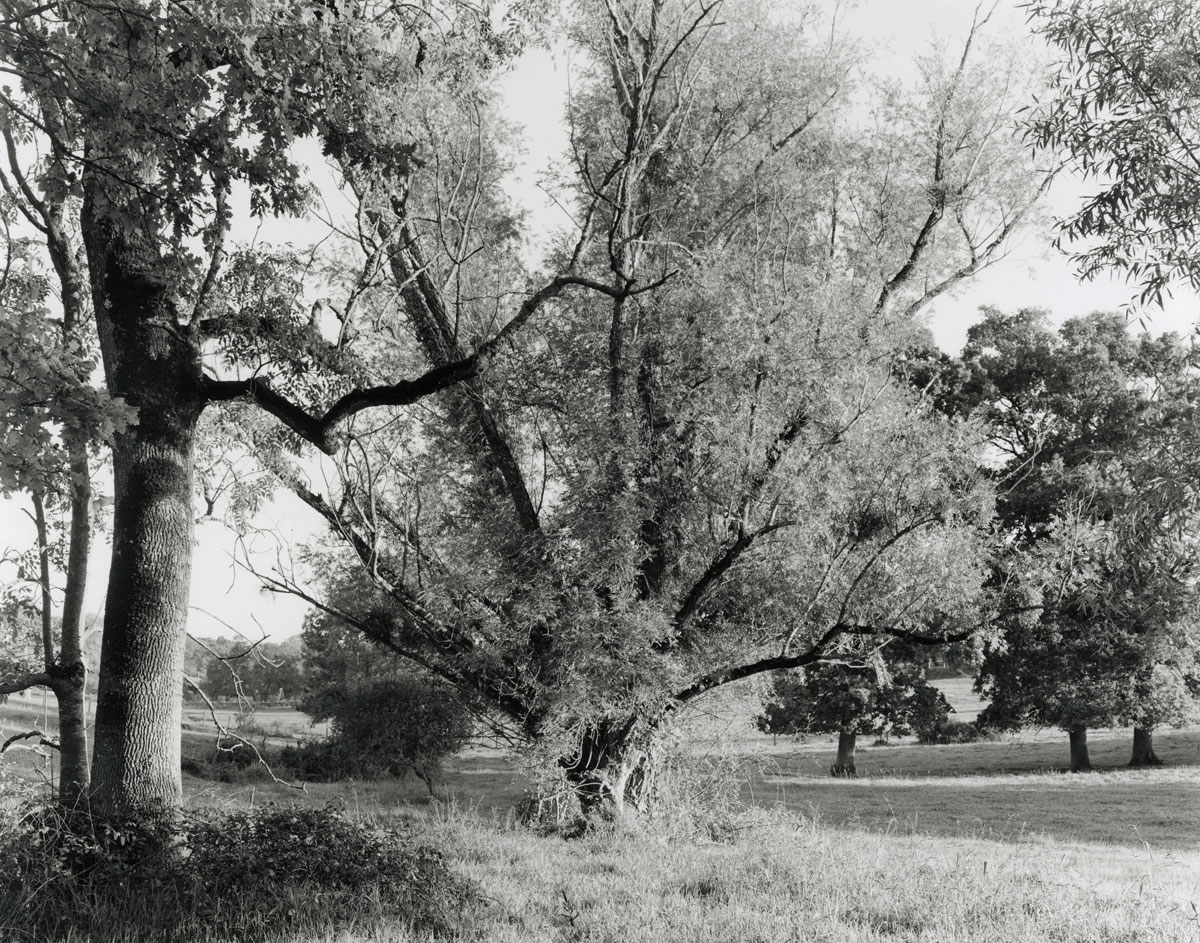
In the exhibition Trees of Burgundy, Gudmundson depicts the beauty of the French countryside through observing the tree-lined roads within Saizy, a small farming community in the Burgundy region of France. In his eloquently organised photographs, he shows the viewer how these trees interact with, and in some measure create the landscape to which they belong; a richly layered landscape that suggests the possibility of narrative, real or imagined.

Wayne Gudmundson is a highly regarded photographer whose work has been written about by such luminaries in the field as Robert Adams, Ben Lifson, and Frank Gohlke. His photographs have been featured in numerous books including his 2007 monograph, A Considered View: The Photographs of Wayne Gudmundson.

Serving as a counterpart to Gudmundson’s exhibition, Regarding Trees will comprise a diverse survey of exceptional tree photographs. The exhibition presents vintage and contemporary works that encompass many styles and processes of picture making. It will feature photographs by: Ansel Adams, Edward Weston, Paul Caponigro, John Szarkowski, Barbara Bosworth, Gregory Conniff, Linda Connor, Koichiro Kurita, Ben Nixon, Debbie Fleming Caffery, Rhondal Mckinney, Tom Zetterstrom and others.

Press release from the Joseph Bellows Gallery


Wayne Gudmundson (American, b. 1949) 'Saizy, France #14' 2014


Wayne Gudmundson (American, b. 1949)
Saizy, France #14
2014
Gelatin silver print
16 x 20 inches


Wayne Gudmundson (American, b. 1949) 'Saizy, France #4' 2014


Wayne Gudmundson (American, b. 1949)
Saizy, France #4
2014
Gelatin silver print
16 x 20 inches


Wayne Gudmundson (American, b. 1949) 'Saizy, France #1' 2014


Wayne Gudmundson (American, b. 1949)
Saizy, France #1
2014
Gelatin silver print
16 x 20 inches


Wayne Gudmundson (American, b. 1949) 'Saizy, France #5' 2014


Wayne Gudmundson (American, b. 1949)
Saizy, France #5
2014
Gelatin silver print
16 x 20 inches


Wayne Gudmundson (American, b. 1949) 'Saizy, France #2' 2014


Wayne Gudmundson (American, b. 1949)
Saizy, France #2
2014
Gelatin silver print
16 x 20 inches


Joseph Bellows Gallery
7661 Girrard Avenue
La Jolla, California
Phone: 858 456 5620

Opening hours:
Tuesday – Saturday 11am – 5pm and by appointment

Joseph Bellows Gallery website

LIKE ART BLART ON FACEBOOK

Back to top

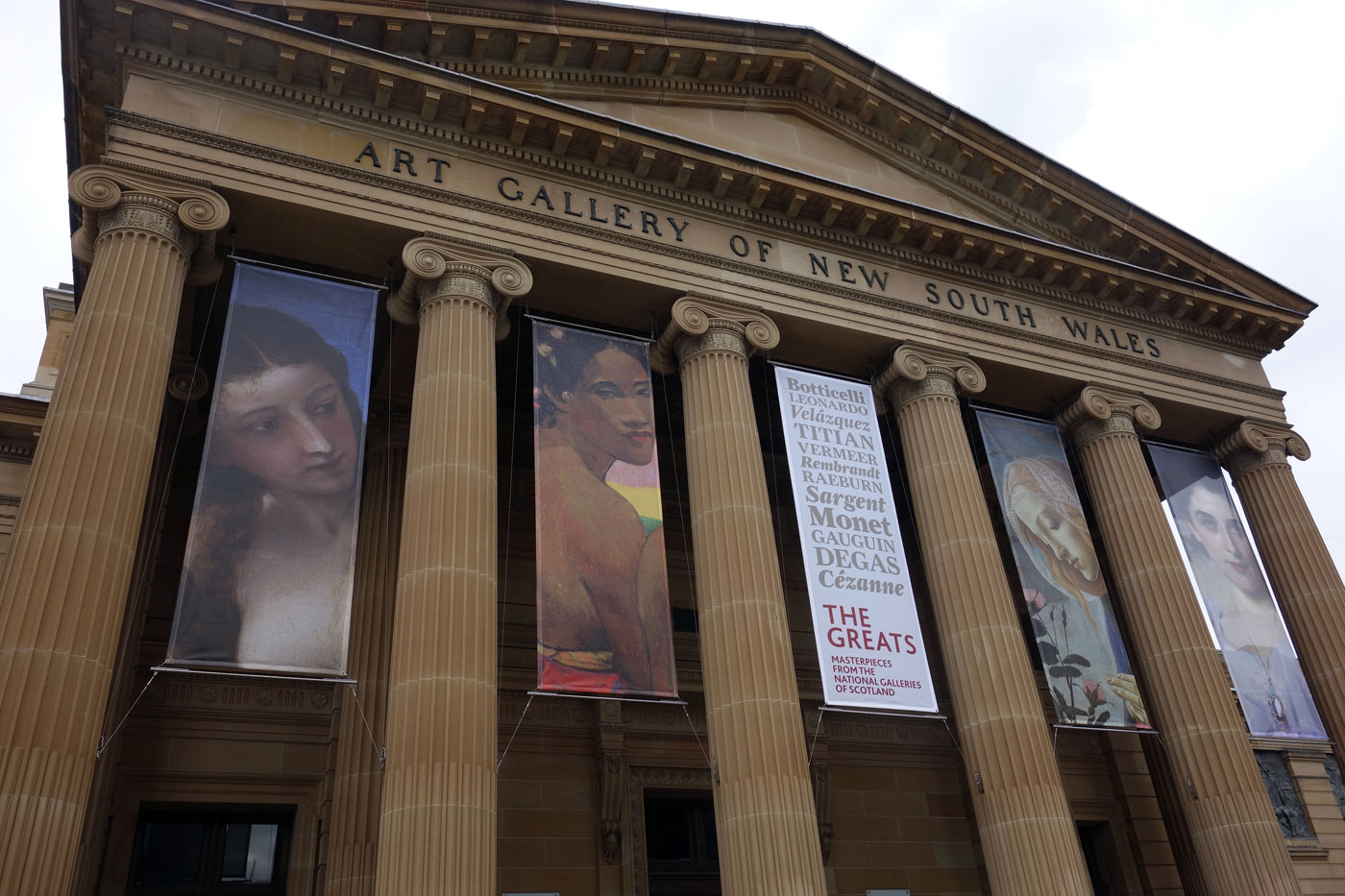
Exhibition: ‘The Greats: masterpieces from the National Galleries of Scotland’ at the Art Gallery of New South Wales (AGNSW), Sydney Part 2

Exhibition dates: 24th October, 2015 – 14th February, 2016

Curator: Richard Beresford, Senior Curator of European art at AGNSW; Richard Johnson designed the installation


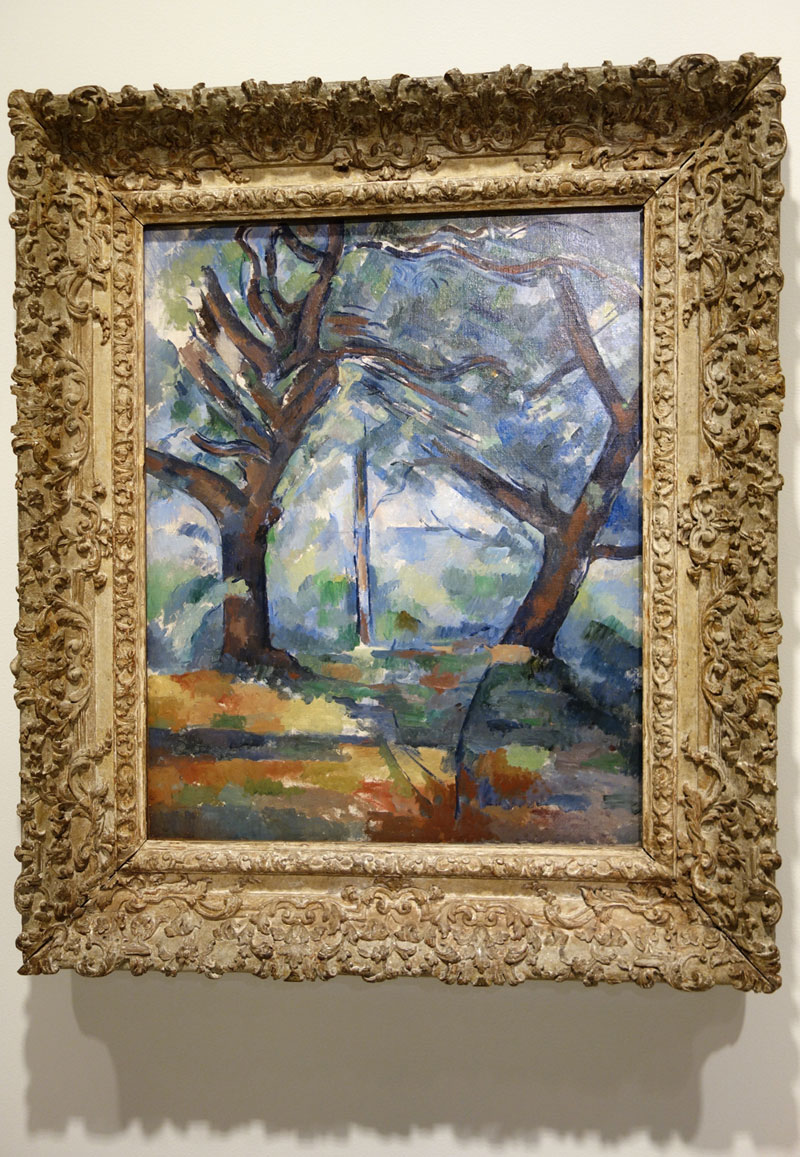
Michael Clarke, Director of the National Galleries of Scotland, with Paul Cézanne's 'The big trees' c. 1904


Michael Clarke, Director of the National Galleries of Scotland, with Paul Cézanne’s The big trees (c. 1904)
Photo: © Marcus Bunyan and the Art Gallery of New South Wales


The second part of this monster two-part posting.

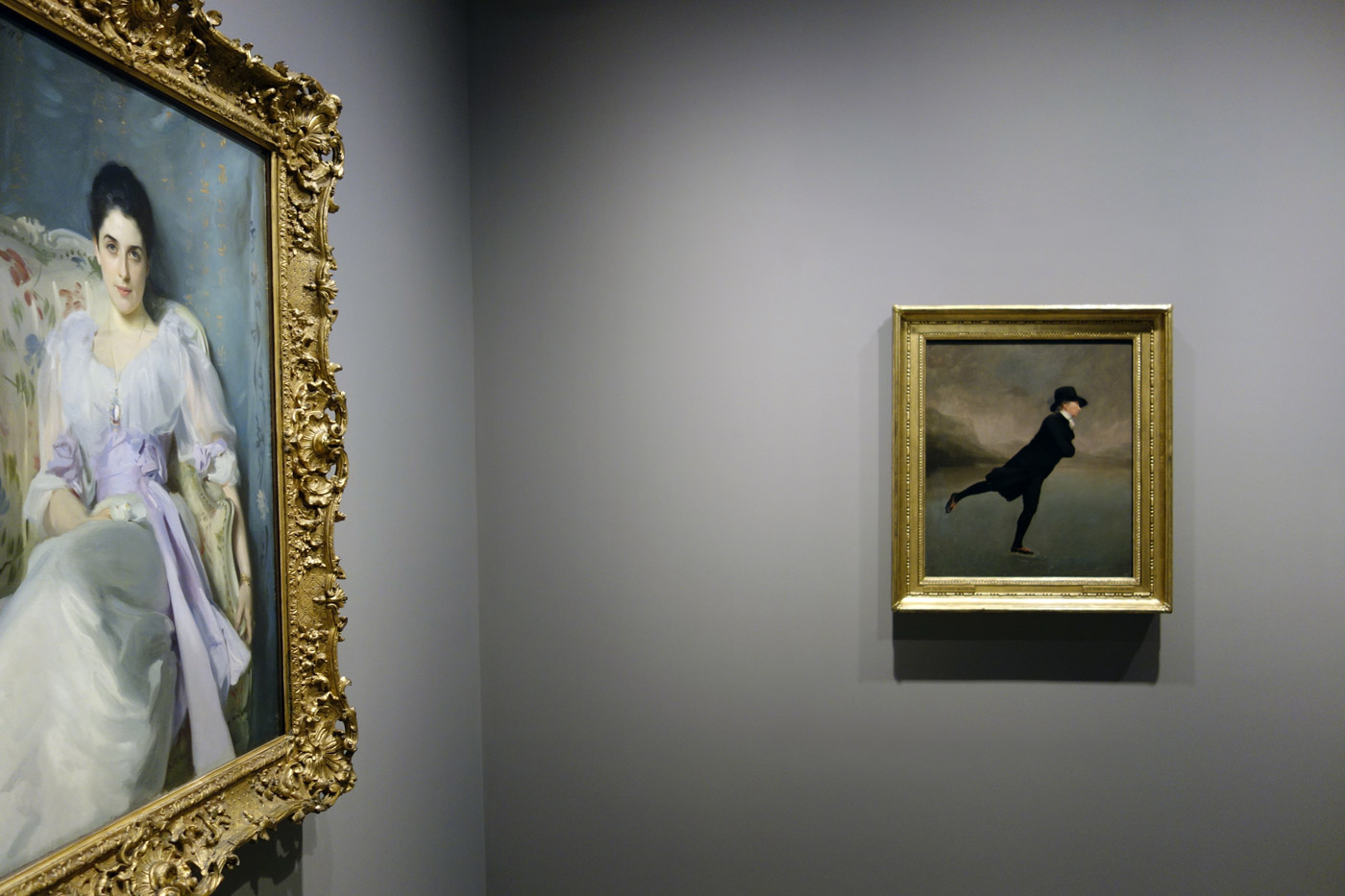
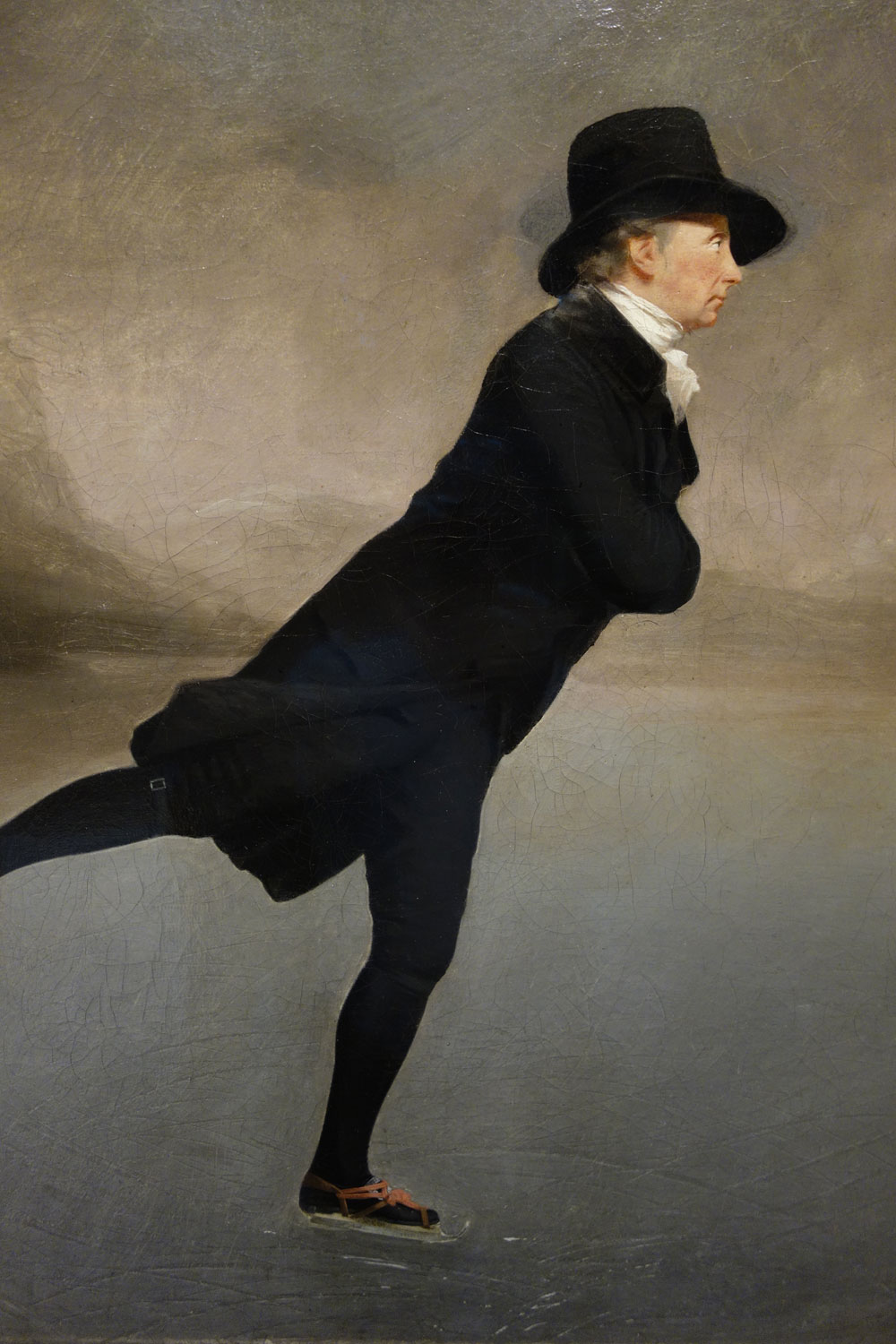
Highlights include the delicacy and strength of the William Blake, the stunning beauty of the John Singer Sargent portrait Lady Agnew of Lochnaw (1892), the perceived movement and presence of The Reverend Robert Walker skating on Duddingston Loch by Sir Henry Raeburn (c. 1795). Watteau’s Fêtes vénitiennes (1718-1719) confirmed my pleasure when looking at his paintings, the stillness, romanticism and intensity of vision while the muscularity and intensity of the painting in Constable’s The Vale of Dedham c. 1827-1828 was a revelation.

Gainsborough’s pastoral River landscape with a view of a distant village (c. 1748-1750) was a surprise while the impressionists did not disappoint. Favourite among the last room, though, was the joyous spaces and overlaid patches of light and colour in Paul Cézanne’s The big trees (c. 1904). One of the great treasures of the exhibition.

View Part 1 of the posting.

Dr Marcus Bunyan


Many thankx to the AGNSW for allowing me to publish the art work in the posting. Please click on the photographs for a larger version of the image. All installation photographs © Marcus Bunyan and the Art Gallery of New South Wales.


Installation view of the exhibition 'The Greats: Masterpieces from the National Galleries of Scotland' at the Art Gallery of New South Wales, Sydney

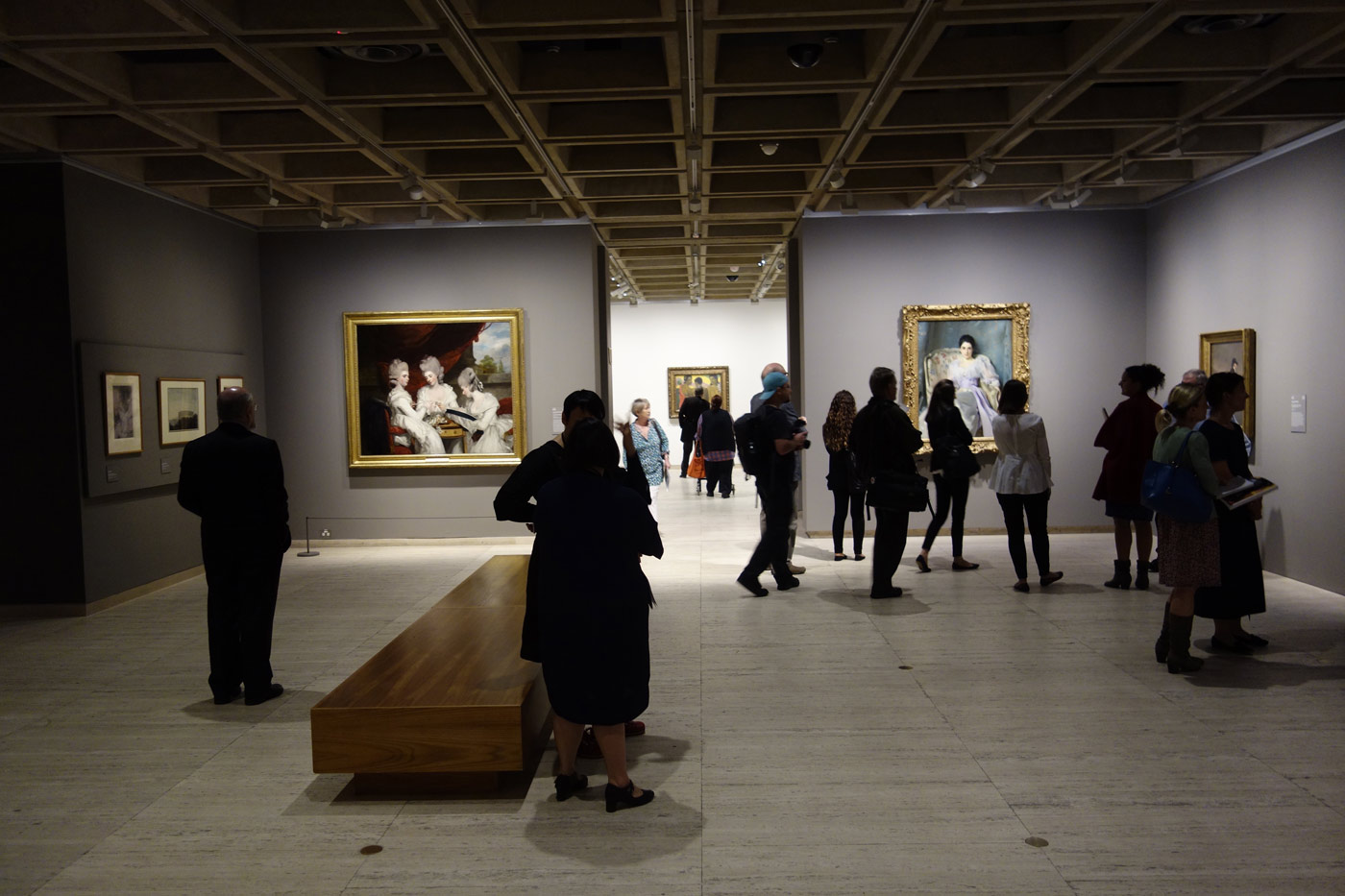
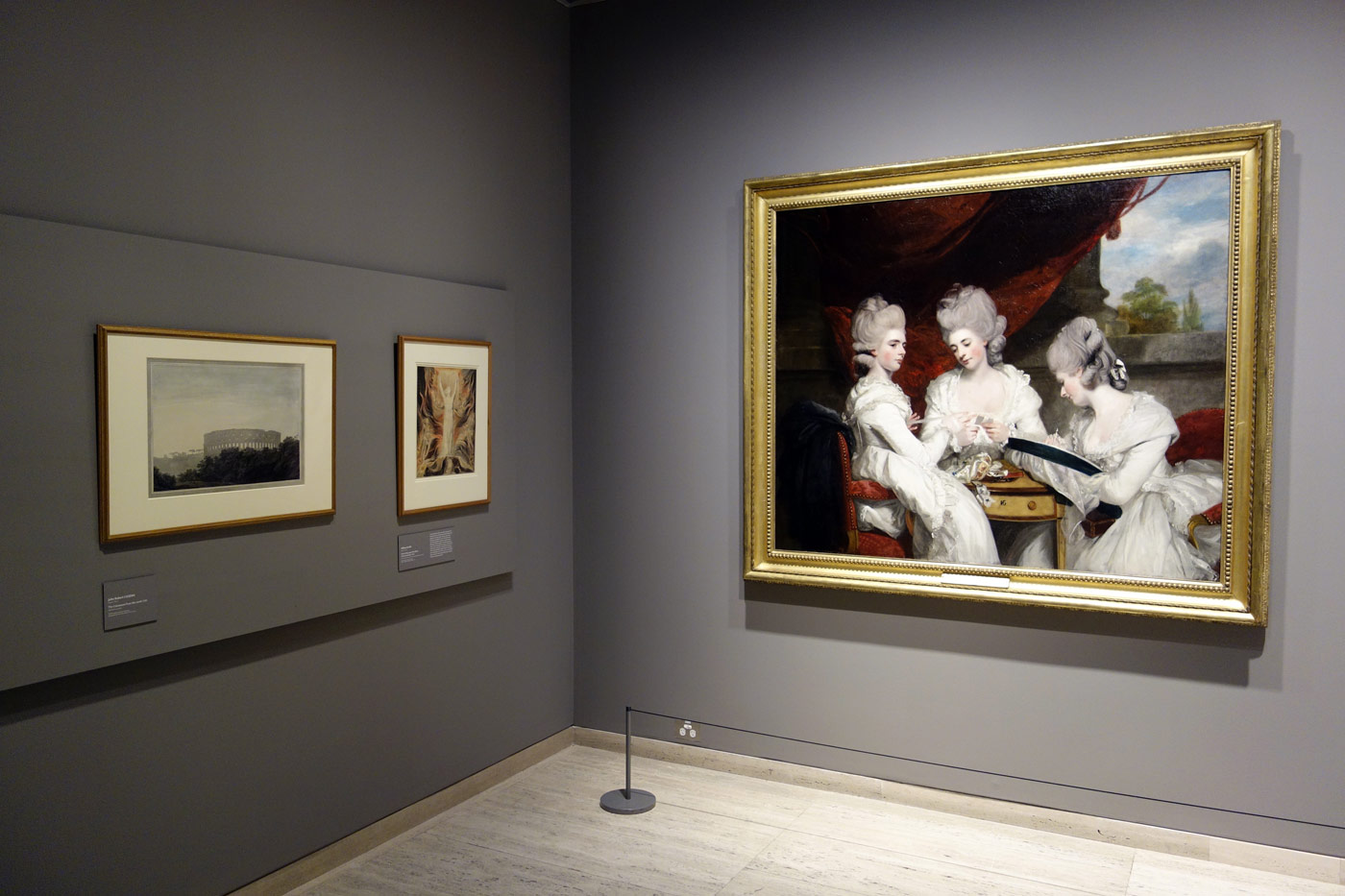
Installation view of the exhibition 'The Greats: Masterpieces from the National Galleries of Scotland' at the Art Gallery of New South Wales, Sydney with at left, Sir Joshua Reynolds' 'The Ladies Waldegrave' (1780-1781) and at right, John Singer Sargent's 'Lady Agnew of Lochnaw' (1892)


Installation view of the exhibition The Greats: Masterpieces from the National Galleries of Scotland at the Art Gallery of New South Wales, Sydney with at left, Sir Joshua Reynolds’ The Ladies Waldegrave (1780-1781) and at right, John Singer Sargent’s Lady Agnew of Lochnaw (1892)
Photos: © Marcus Bunyan and the Art Gallery of New South Wales.


Installation view of the exhibition 'The Greats: Masterpieces from the National Galleries of Scotland' at the Art Gallery of New South Wales, Sydney with in the corner left, William Blake's 'God writing upon the tables of the Covenant' (c. 1805) and at right, Sir Joshua Reynolds' 'The Ladies Waldegrave' (1780-1781)


Installation view of the exhibition The Greats: Masterpieces from the National Galleries of Scotland at the Art Gallery of New South Wales, Sydney with in the corner left, William Blake’s God writing upon the tables of the Covenant (c. 1805) and at right, Sir Joshua Reynolds’ The Ladies Waldegrave (1780-1781)
Photo: © Marcus Bunyan and the Art Gallery of New South Wales


William Blake (England, 1757-1827) 'God writing upon the tables of the Covenant' c. 1805 (installation view)


William Blake (England, 1757-1827)
God writing upon the tables of the Covenant (installation view)
c. 1805
Ink and watercolour over pencil and some sketching with a stylus on paper
Scottish National Gallery, Edinburgh
William Findlay Watson Bequest, 1881
© Trustees of the National Galleries of Scotland
Photo: © Marcus Bunyan and the Art Gallery of New South Wales


This superb watercolour comes from a group of over 80 illustrations to the Bible executed from Blake’s most significant and loyal patron, Thomas Butts. Artist and patron probably first met in 1799, when Butts commissioned Blake to produce 50 small tempera paintings of biblical subjects. This initial commission seems to have developed into an open-ended series of watercolours, painted over a period of nine years, for which Butts paid Blake a regular stipend. The original mount belonging to this work, now lost, was inscribed with a reference to the relevant biblical text, which in this case is Deuteronomy 9:10.


Sir Joshua Reynolds (England, 1723-1792) 'The Ladies Waldegrave' 1780-1781 (installation view)


Sir Joshua Reynolds (England, 1723-1792)
The Ladies Waldegrave (installation view)
1780-1781
Oil on canvas
143 x 168.3cm
Scottish National Gallery, Edinburgh Purchased with funds from the Cowan Smith Bequest and with the aid of the Art Fund, 1952
© Trustees of the National Galleries of Scotland
Photo: © Marcus Bunyan and the Art Gallery of New South Wales


The first president of the Royal Academy, Reynolds worked to raise the status of portraiture in Britain by painting people in the ‘grand manner’ more commonly associated with history painting. This informal portrait, a ‘conversation piece’, features the three sisters Lady Charlotte Maria, Lady Elizabeth Laura and Lady Anna Horatia Waldegrave. Depicting interlocking figures, Reynolds subtly alludes to trios of goddesses or graces of antiquity – a reference that would have been understood by classically educated viewers of the late 18th century. Reynolds’s triple portrait was commissioned by the sitters’ great-uncle, the celebrated antiquarian, connoisseur and critic Horace Walpole.


John Singer Sargent (USA, 1856-1925) 'Lady Agnew of Lochnaw' 1892 (installation view)

John Singer Sargent (USA, 1856-1925) 'Lady Agnew of Lochnaw' 1892 (installation view)

John Singer Sargent (USA, 1856-1925) 'Lady Agnew of Lochnaw' 1892 (installation view detail)


John Singer Sargent (USA, 1856-1925)
Lady Agnew of Lochnaw (installation views)
1892
Oil on canvas
125.7 x 100.3cm
Scottish National Gallery, Edinburgh
Purchased with the aid of the Cowan Smith Bequest Fund, 1925
© Trustees of the National Galleries of Scotland
Photo: © Marcus Bunyan and the Art Gallery of New South Wales


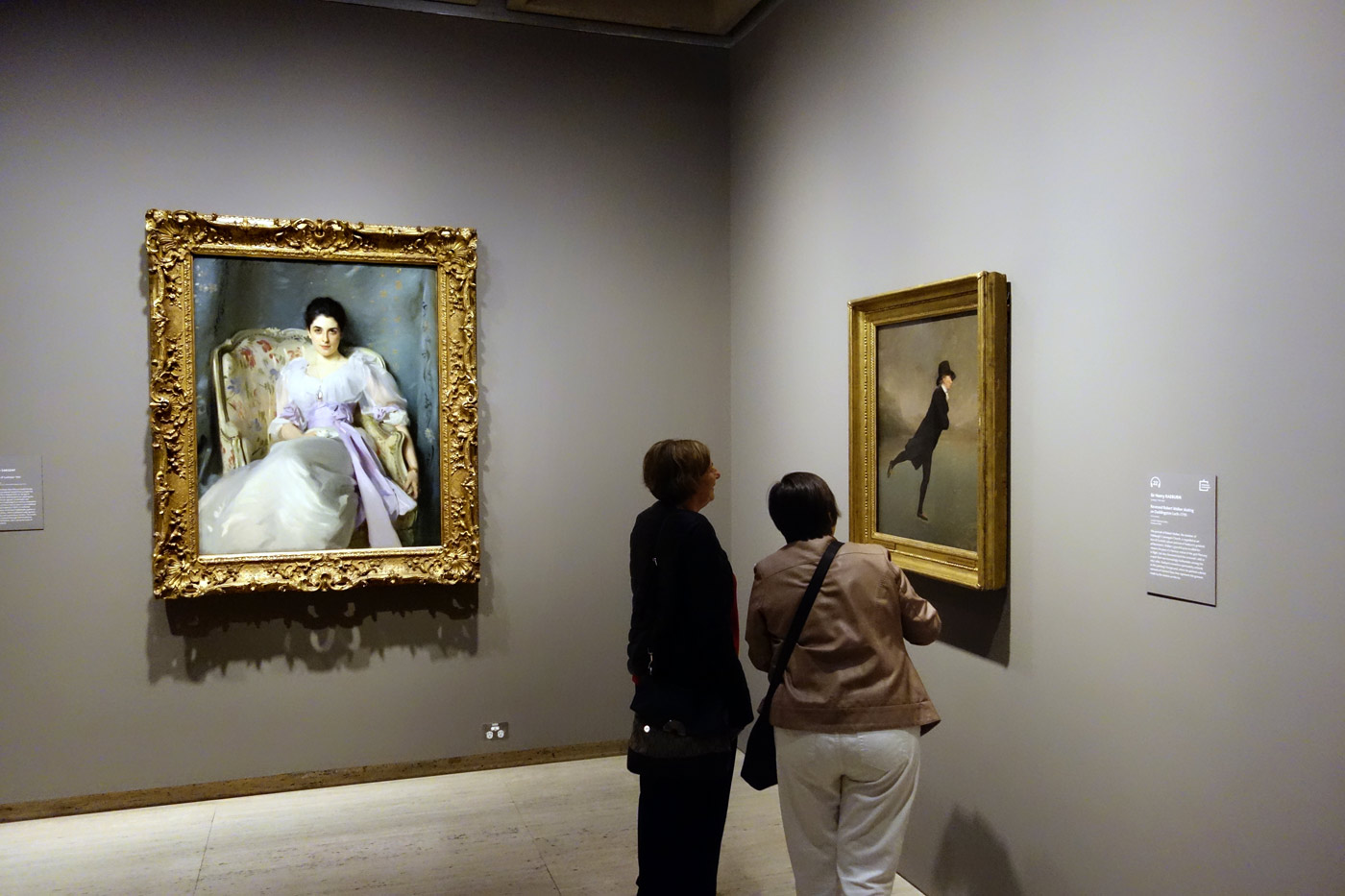
One of the best-loved pictures of the National Galleries of Scotland, this portrait of 27-year old Lady Agnew of Lochnaw is the first Sargent to be exhibited in Sydney in 35 years. As one of Sargent’s most glamorous and beguiling characterisations, it was pivotal in establishing the renown of both artist and sitter. The painting was first exhibited at the Royal Academy exhibition in 1893 to wide public acclaim and cemented Sargent’s position as a sought-after, fashionable portraitist of high society. For Lady Agnew, it launched her as a society beauty who later established her own private salon in London. Ironically, the costs of sustaining such fine style led Lady Agnew to sell her own portrait to the Scottish National Gallery in 1925.

In an ornate plush chair and surrounded by swathes of Chinese fabric, Lady Agnew gazes out at the viewer, confidently but enigmatically. Her pose is gracious, but relaxed. The chair and fabric were Sargent’s own props, and along with the generous, gauzy swathes of the sitter’s dress they give the painting a sense of comfort and luxury. Sargent’s brushstrokes are wide and fluid, and in some areas the canvas shows through the thin, sketchy layers of paint. But it is also very carefully composed to present Lady Agnew as an assured and elegant society woman.


Installation view of the exhibition 'The Greats: Masterpieces from the National Galleries of Scotland' at the Art Gallery of New South Wales, Sydney with at left, John Singer Sargent's 'Lady Agnew of Lochnaw' (1892) and at right, Sir Henry Raeburn's 'Reverend Robert Walker skating on Duddingston Loch' (c. 1795)

Installation view of the exhibition 'The Greats: Masterpieces from the National Galleries of Scotland' at the Art Gallery of New South Wales, Sydney with at left, John Singer Sargent's 'Lady Agnew of Lochnaw' (1892) and at right, Sir Henry Raeburn's 'Reverend Robert Walker skating on Duddingston Loch' (c. 1795)


Installation view of the exhibition The Greats: Masterpieces from the National Galleries of Scotland at the Art Gallery of New South Wales, Sydney with at left, John Singer Sargent’s Lady Agnew of Lochnaw (1892) and at right, Sir Henry Raeburn’s Reverend Robert Walker skating on Duddingston Loch (c. 1795)
Photos: © Marcus Bunyan and the Art Gallery of New South Wales


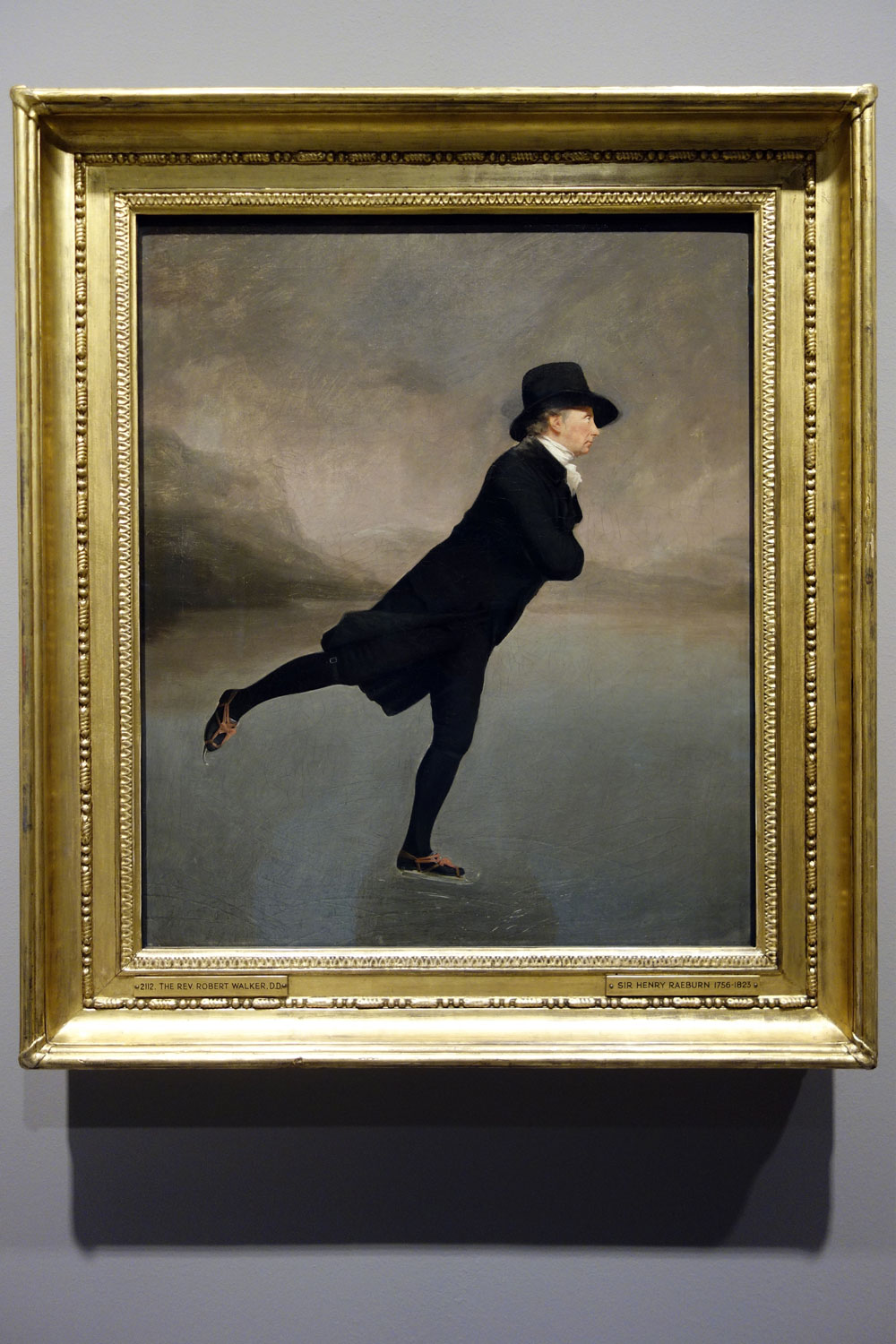
Sir Henry Raeburn (Scotland, 1756-1823) 'The Reverend Robert Walker skating on Duddingston Loch' c. 1795 (installation view)


Sir Henry Raeburn (Scotland, 1756-1823)
The Reverend Robert Walker skating on Duddingston Loch (installation view)
c. 1795
Oil on canvas
76.2 x 63.5cm
Scottish National Gallery, Edinburgh
© Trustees of the National Galleries of Scotland
Photo: © Marcus Bunyan and the Art Gallery of New South Wales


Raeburn was the leading Scottish portrait painter of his time. This striking portrait of Robert Walker (1755-1808), minister of Edinburgh’s Canongate Church and a leading member of the city’s exclusive skating society, has come to be regarded as one of Raeburn’s greatest works. It is the most famous painting in the Scottish National Gallery, often described as the quintessential Scottish painting, and is listed in a recent publication as one of the 1000 paintings you must see before you die.

Its simple composition bestows the painting with an extraordinary visual impact. Walker is shown gliding across the icy surface of one of the small lochs near Edinburgh, his arms folded nonchalantly across his chest and his right leg lifted balletically behind him. Raeburn has cleverly created the effect of ice scored by the skater’s blades by scratching back into the paint surface. Unlike most of his artistic peers, Raeburn received no formal artistic education, instead pursuing other academic studies before being apprenticed to a local goldsmith at the age of sixteen.

Raeburn’s approach to painting reflected this unusual path into his profession. He avoided the meticulous production of preparatory drawings and sketches, instead preferring to work straight onto the canvas with minimal formal planning. While this approach invariably meant having to deal with compositional changes in the process of painting, it also enabled Raeburn to produce portraits that were unrivalled in their directness and spontaneity.


Sir Henry Raeburn (Scotland, 1756-1823) 'The Reverend Robert Walker skating on Duddingston Loch' c. 1795 (detail)


Sir Henry Raeburn (Scotland, 1756-1823)
The Reverend Robert Walker skating on Duddingston Loch (detail)
c. 1795
Oil on canvas
76.2 x 63.5cm
Scottish National Gallery, Edinburgh
© Trustees of the National Galleries of Scotland
Photo: © Marcus Bunyan and the Art Gallery of New South Wales


Botticelli. Cézanne. Gauguin. Leonardo. Monet. Raphael. Titian. Turner. Velázquez. Vermeer.

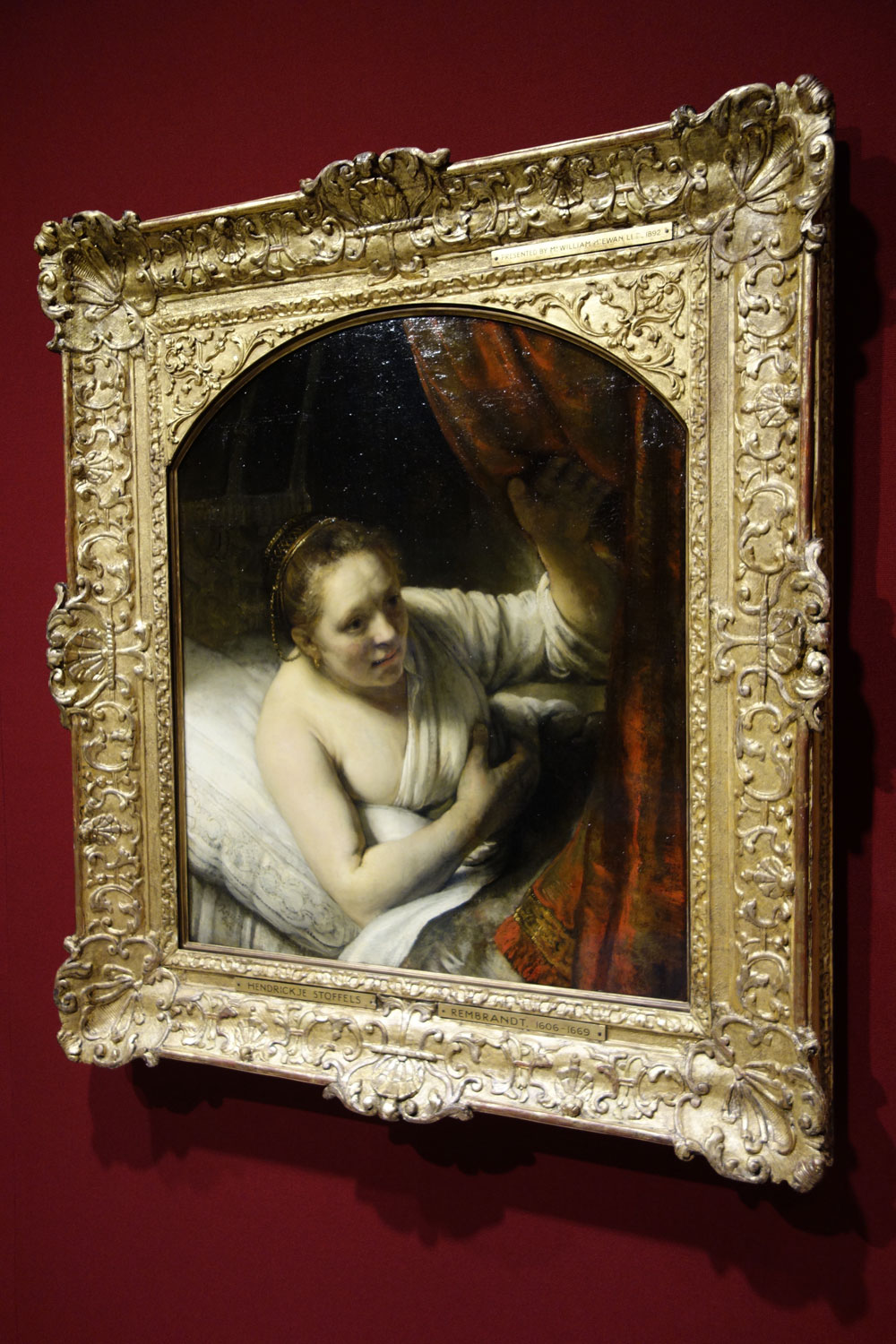
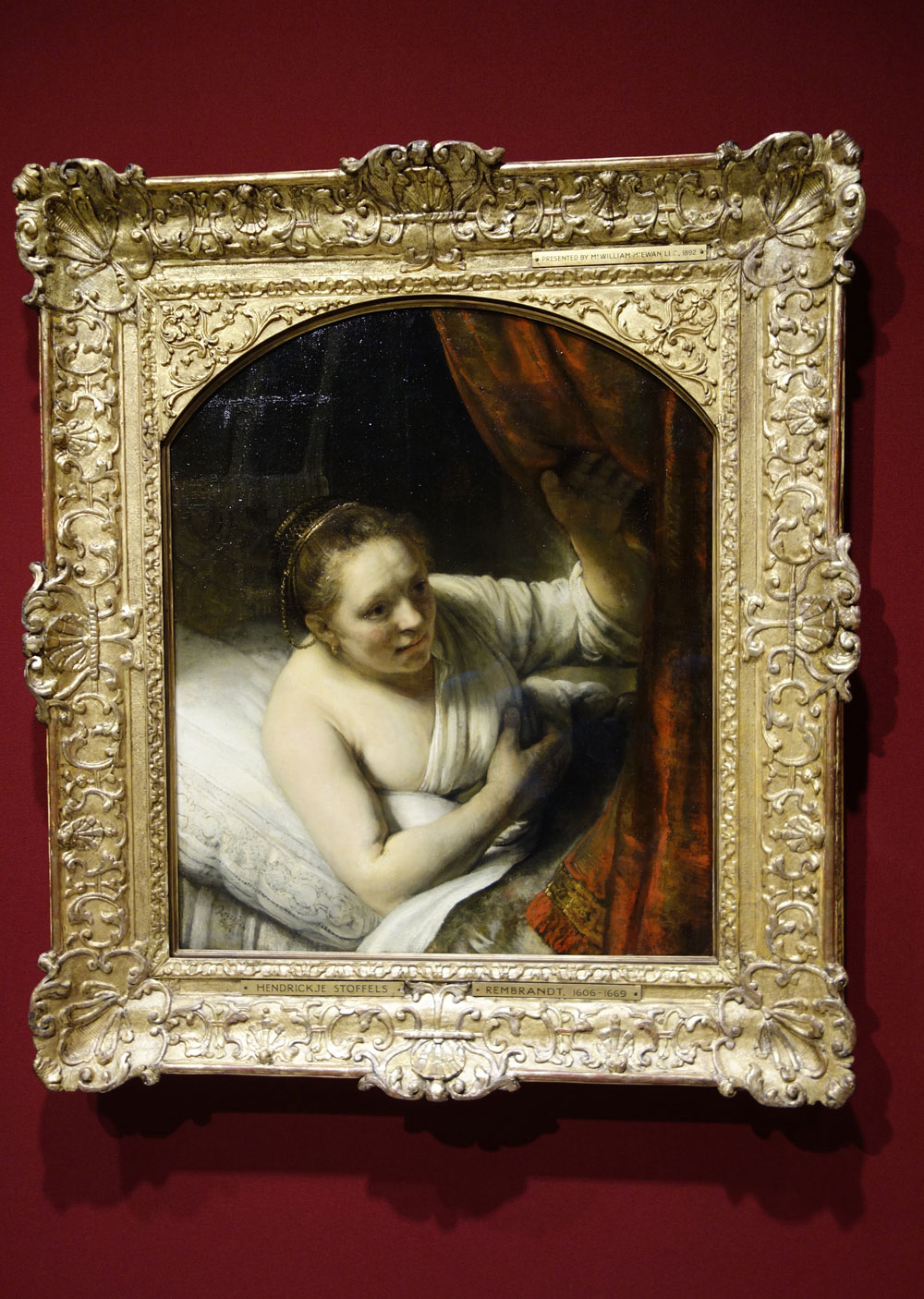
One of the most significant collections of European old master paintings ever seen in Australia is now open at the Art Gallery of New South Wales, providing a once in a lifetime opportunity for Australians to contemplate the extraordinary quality of over 70 masterful paintings and drawings from across four centuries. The Greats marks the first time these artworks have been exhibited in Australia, with the exception of Rembrandt’s A woman in bed (c. 1647) and Seurat’s La Luzerne, Saint-Denis (1884-1885).

Deputy Premier and Minister for the Arts, Troy Grant, said with works by some of the world’s most well-known artists, The Greats alongside the Art Gallery of NSW’s own impressive collection is bound to draw big crowds this summer. “An exhibition of this calibre is a real coup for the State and builds on our standing as the cultural capital of Australia,” Minister Grant said. “These incredible works from Scotland may never be on Australian soil again, so art-lovers and novices alike should visit the Art Gallery of NSW and see this historic exhibition while they can.”

Michael Brand, director of the Art Gallery of NSW said The Greats is a rich and intimate show of remarkable quality. “Each masterpiece – whether it be Titian’s luminous Venus rising from the sea (c. 1520-1525) or Gauguin’s striking Three Tahitians (1899) – tells its own unique story. Through robust and engaging public programs, the Gallery looks forward to sharing these stories with visitors of all ages.”

The Greats: masterpieces from the National Galleries of Scotland unfolds in rooms devoted to the art of the Italian Renaissance, the Baroque in Southern and Northern Europe, the French and British Enlightenment, nineteenth century Scotland, and Impressionism. The exhibition has been carefully designed and installed to accentuate the grandeur of the paintings and foster an intimate experience with each of the artworks.”

Text from the AGNSW


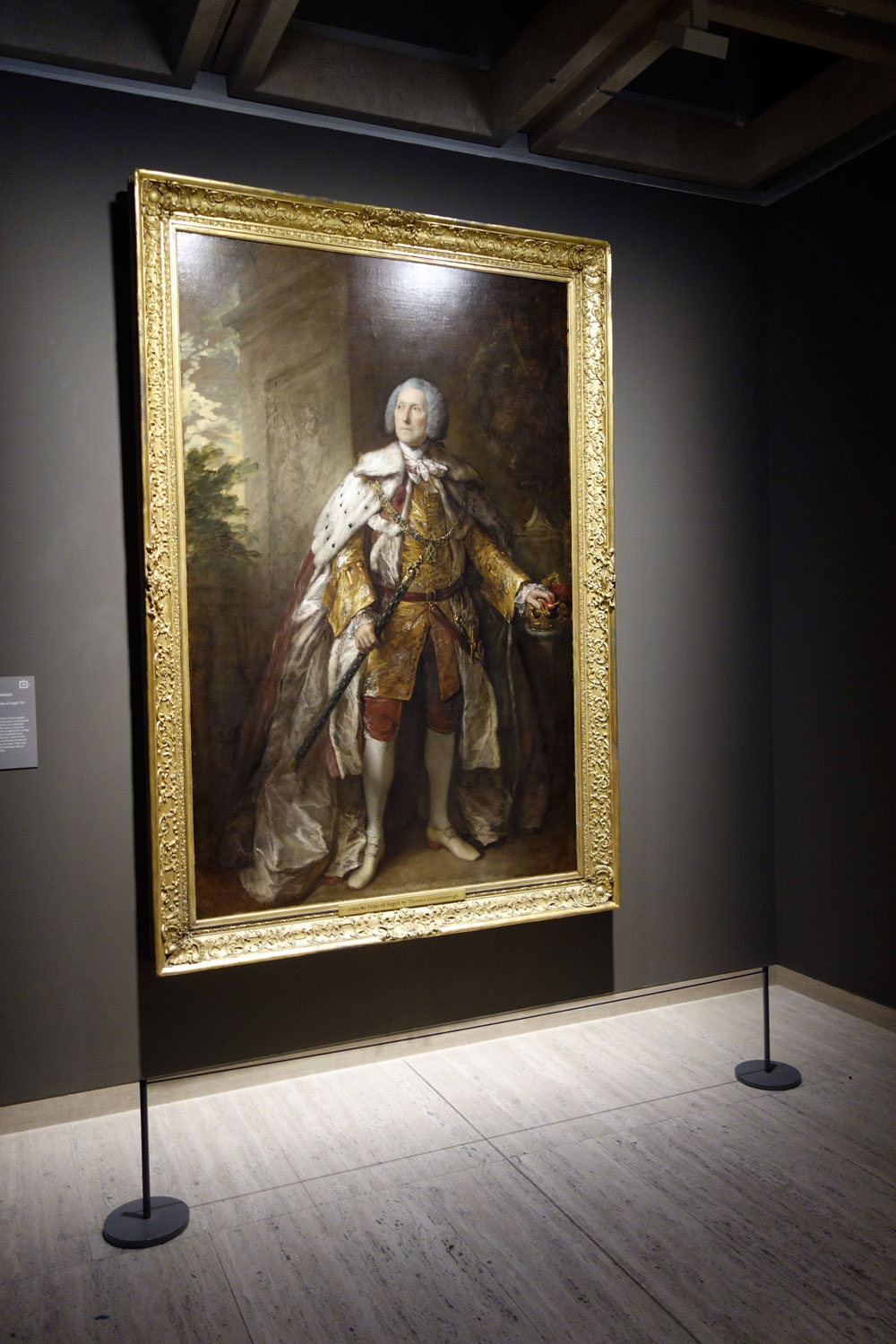
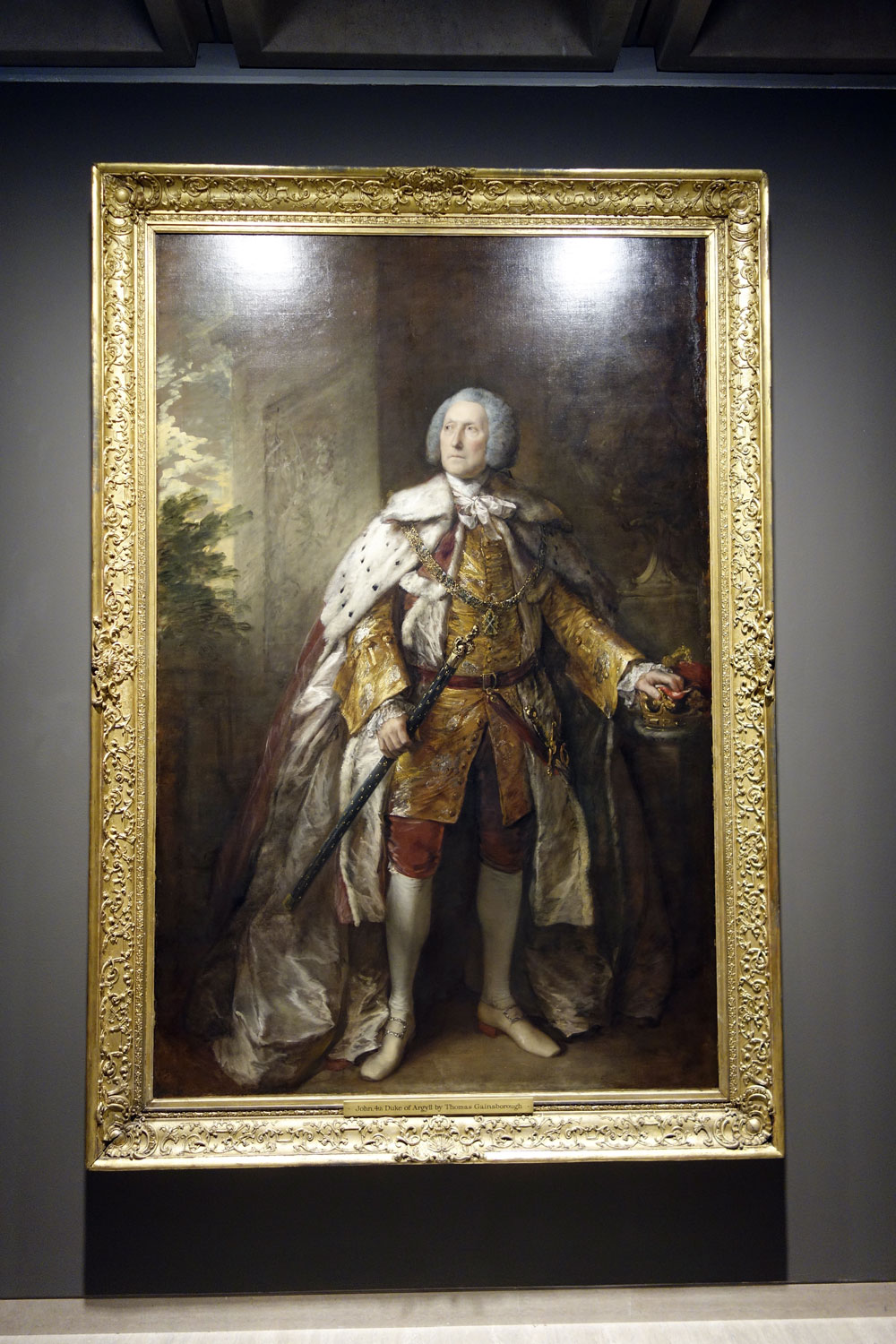
Thomas Gainsborough (England, 1727-1788) 'John Campbell, 4th Duke of Argyll' 1767 (installation view)

Thomas Gainsborough (England, 1727-1788) 'John Campbell, 4th Duke of Argyll' 1767 (installation view)


Thomas Gainsborough (England, 1727-1788)
John Campbell, 4th Duke of Argyll (installation views)
1767
Oil on canvas
235 x 154.3cm
Scottish National Portrait Gallery, Edinburg
Purchased 1953
© Trustees of the National Galleries of Scotland
Photos: © Marcus Bunyan and the Art Gallery of New South Wales


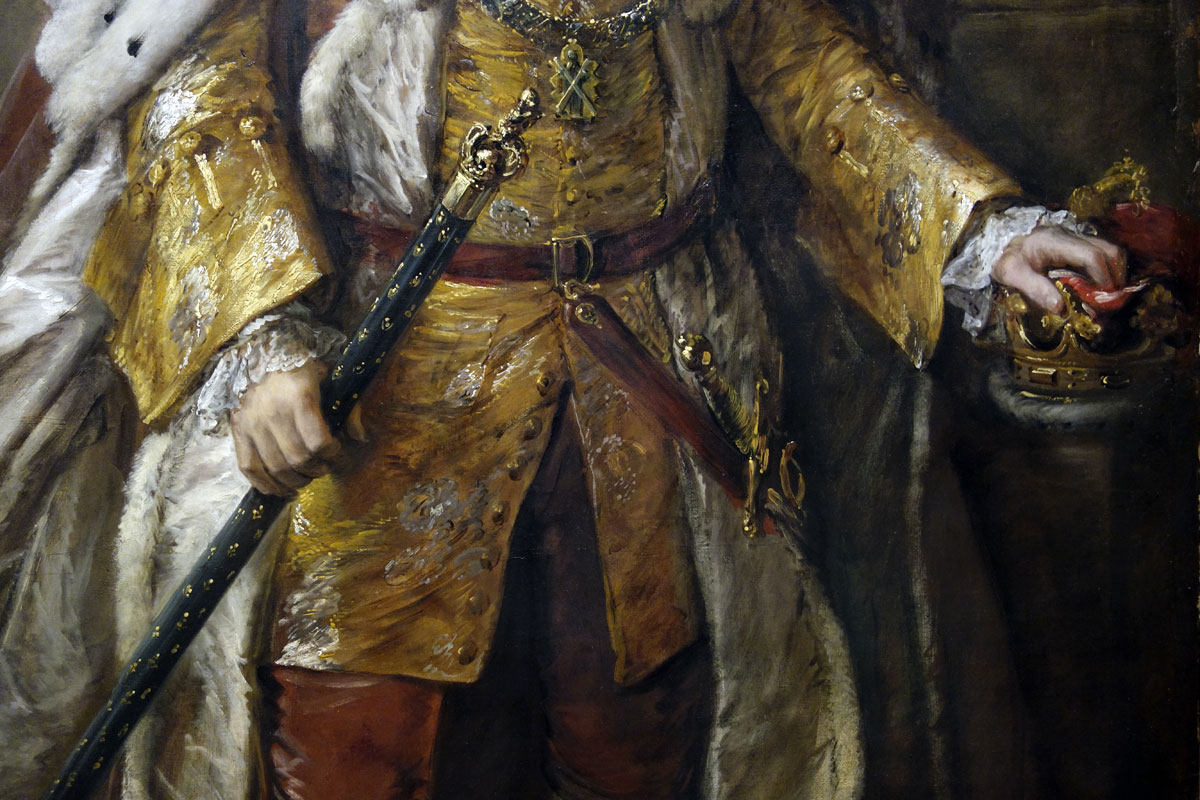
The Scottish Duke of Argyll, Chief of Clan Campbell, whose hereditary seat is Inverary Castle, commissioned Thomas Gainsborough, one of the most celebrated English portraitists of the 18th century, to paint his likeness. The artist’s talents were sought by the wealthy elite both in London and in the fashionable resort town of Bath, where he established a studio in 1759. Gainsborough applied dense and feathery brushwork to convey Argyll’s ducal robes, his collar of the Order of  Thistle, and the baton of his hereditary office of Master of the King’s Household.


Thomas Gainsborough (England, 1727-1788) 'John Campbell, 4th Duke of Argyll' 1767 (installation view detail)


Thomas Gainsborough (England, 1727-1788)
John Campbell, 4th Duke of Argyll (installation view detail)
1767
Oil on canvas
235 x 154.3cm
Scottish National Portrait Gallery, Edinburg
Purchased 1953
© Trustees of the National Galleries of Scotland
Photo: © Marcus Bunyan and the Art Gallery of New South Wales


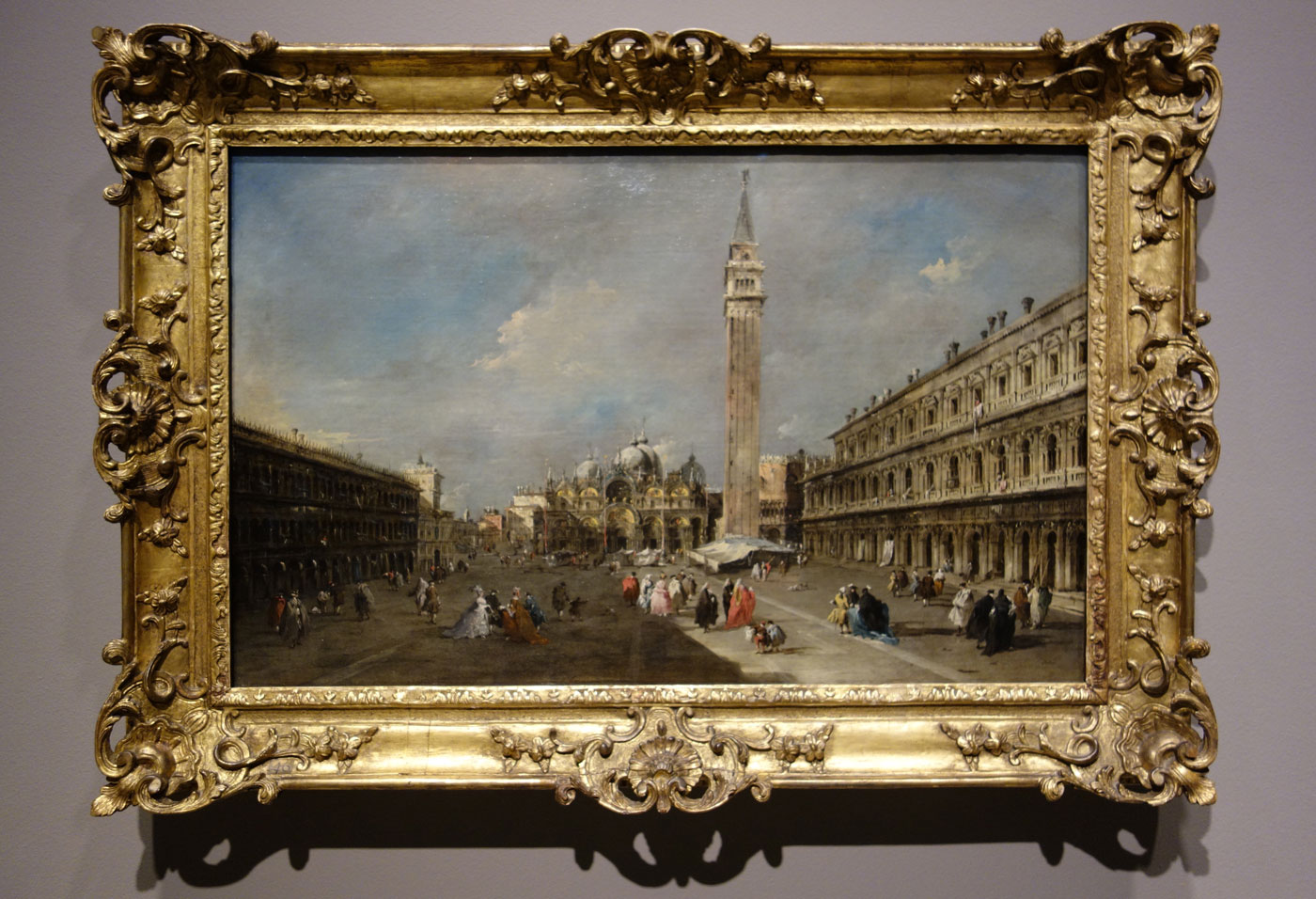
Francesco Guardi (Italy, 1712-1793) 'The Piazza San Marco, Venice' c. 1770-1775 (installation view)

Francesco Guardi (Italy, 1712-1793) 'The Piazza San Marco, Venice' c. 1770-1775 (installation view)


Francesco Guardi (Italy, 1712-1793)
The Piazza San Marco, Venice (installation views)
c. 1770-1775
Oil on canvas
55.2 x 85.4cm
Scottish National Gallery, Edinburgh Accepted by HM Government in lieu of inheritance tax and allocated to the Scottish National Gallery, 1978
© Trustees of the National Galleries of Scotland
Photos: © Marcus Bunyan and the Art Gallery of New South Wales


Like his fellow painter Canaletto, Guardi capitalised on the market of tourists eager for topographical views – vedute – of the spectacular urban spaces of Venice. This composition features the Piazza San Marco, which Napoleon would later call ‘the most splendid drawing room in Europe’. On either side, the receding arcades of official buildings, the Procurator Vecchio and Procurator Nuove, lead the eye towards the Basilica of San Marco, its mosaics shimmering in the sunlight. Behind the bellower is a glimpse of the Doge’s Palace. The scene is enlivened by traders, uniformed government officials, and fashionably dressed tourists – all portrayed through only a few deft strokes of the brush.


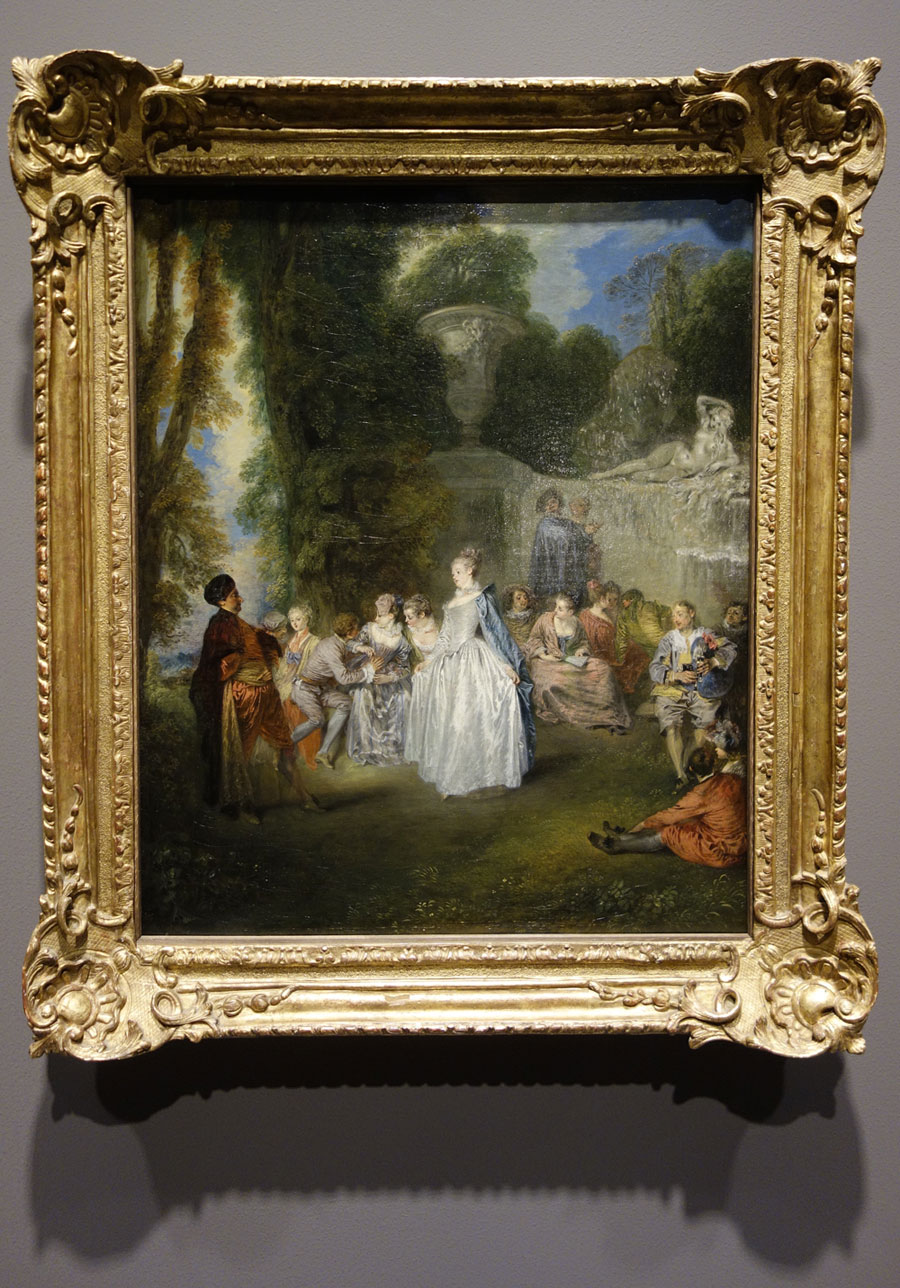
Jean-Antoine Watteau (France, 1684-1721) 'Fêtes vénitiennes (Venetian pleasures)' 1718-1719 (installation view)

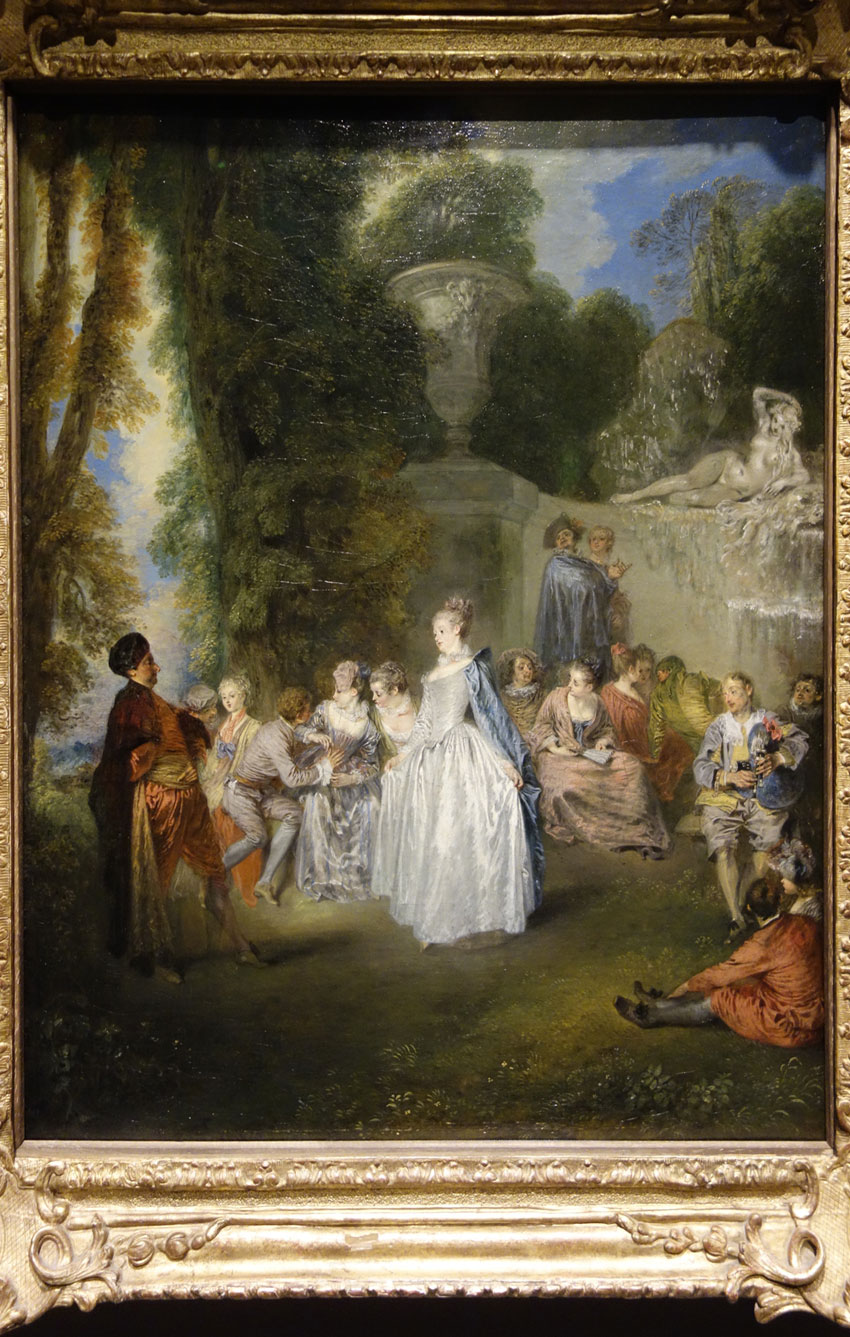
Jean-Antoine Watteau (France, 1684-1721) 'Fêtes vénitiennes (Venetian pleasures)' 1718-1719 (installation view detail)


Jean-Antoine Watteau (France, 1684-1721)
Fêtes vénitiennes (Venetian pleasures) (installation views)
1718-1719
Oil on canvas
55.9 x 45.7cm
Scottish National Gallery, Edinburgh. Bequest of Lady Murray of Henderland, 1861
© Trustees of the National Galleries of Scotland
Photos: © Marcus Bunyan and the Art Gallery of New South Wales


Jean-Antoine Watteau (France, 1684-1721) 'Fêtes vénitiennes (Venetian pleasures)' 1718-1719 (installation view detail)


Jean-Antoine Watteau (France, 1684-1721)
Fêtes vénitiennes (Venetian pleasures) (installation view detail)
1718-1719
Oil on canvas
55.9 x 45.7cm
Scottish National Gallery, Edinburgh. Bequest of Lady Murray of Henderland, 1861
© Trustees of the National Galleries of Scotland
Photo: © Marcus Bunyan and the Art Gallery of New South Wales


At the beginning of the 18th century, Watteau pioneered the fêtes gallant, a type of painting depicting a group of men and women enjoying flirtatious love, music and conversation, generally in a park or a garden setting. His paintings inspired a generation of artists who sought to capture the light-hearted elegance of the period. This painting is one of his few compositions that portray real people: the figure on the left can be identified as Watteau’s friend and fellow artist Nichola Vleugxhels, and the lovelorn bagpipe player on the right is considered a self-portrait of Watteau himself.


François Boucher (France, 1703-1770) Pastoral scene: l’offrande à la villageoise 1761 Pastoral scene: la jardinière endormie 1762 Pastoral scene: l’aimable pastorale 1762 (installation view)

François Boucher (France, 1703-1770) Pastoral scene: l’offrande à la villageoise 1761 Pastoral scene: la jardinière endormie 1762 Pastoral scene: l’aimable pastorale 1762 (installation view)


François Boucher (France, 1703-1770)
The pleasing pastoral: l’aimable pastorale
1762
Oil on canvas
231.5 x 91cm

The offering of the village girl: l’offrande à la villageoise

1761
Oil on canvas
229 x 89cm

The sleeping gardener: la jardinière endormie
1762
Oil on canvas
232 x 91cm

Scottish National Gallery, Edinburgh
Purchased by private treaty from the estate of HMV Showering, 1986
© Trustees of the National Galleries of Scotland
Photos: © Marcus Bunyan and the Art Gallery of New South Wales


Boucher, considered the pre-eminent painter of the French rococo, effectively invented this genre of elegiac, erotic pastoral which found a parallel in the pantomimes devised by his friend Charles-Simon Favart. In these three pastoral scenes set in a luxuriant and entirely unthreatening nature, shepherds engage in a perpetual drama of frustrated courtship, reflecting the polished etiquette and suppressed passions of aristocratic society in pre-revolutionary France.


Installation view of the exhibition 'The Greats: Masterpieces from the National Galleries of Scotland' at the Art Gallery of New South Wales, Sydney showing at left, John Constable's 'The Vale of Dedham' (c. 1827-1728) and at right, Thomas Gainsborough's 'River landscape with a view of a distant village' (c. 1748-1750)


Installation view of the exhibition The Greats: Masterpieces from the National Galleries of Scotland at the Art Gallery of New South Wales, Sydney showing at left, John Constable’s The Vale of Dedham (c. 1827-1728) and at right, Thomas Gainsborough’s River landscape with a view of a distant village (c. 1748-1750)
Photo: © Marcus Bunyan and the Art Gallery of New South Wales


John Constable (England, 1776-1837) 'The Vale of Dedham' c. 1827-1828 (installation view)


John Constable (England, 1776-1837)
The Vale of Dedham (installation view)
c. 1827-1828
Oil on canvas
145 x 122cm
Scottish National Gallery, Edinburgh
Purchased with funds from the Cowan Smith Bequest and with the aid of the Art Fund, 1944
© Trustees of the National Galleries of Scotland
Photo: © Marcus Bunyan and the Art Gallery of New South Wales


Constable was born in Suffolk, and he dedicated most of his career to painting the surrounding English countryside with a marked romantic idealism. He was influenced by the grand tradition of European landscape painting, which he learned from artists and dealers he met in London early in his career. This composition, for instance, is indebted broadly to that of Claude Lorrain’s work Hagar and the angel 1646 (National Gallery, London). Constable referred to his own mature masterpiece in al better of June 1828: ‘I have painted a large upright landscape, perhaps my best.’


John Constable (England, 1776-1837) 'The Vale of Dedham' c. 1827-1828 (installation view detail)

John Constable (England, 1776-1837) 'The Vale of Dedham' c. 1827-1828 (installation view detail)


John Constable (England, 1776-1837)
The Vale of Dedham (installation view details)
c. 1827-1828
Oil on canvas
145 x 122cm
Scottish National Gallery, Edinburgh
Purchased with funds from the Cowan Smith Bequest and with the aid of the Art Fund, 1944
© Trustees of the National Galleries of Scotland
Photos: © Marcus Bunyan and the Art Gallery of New South Wales


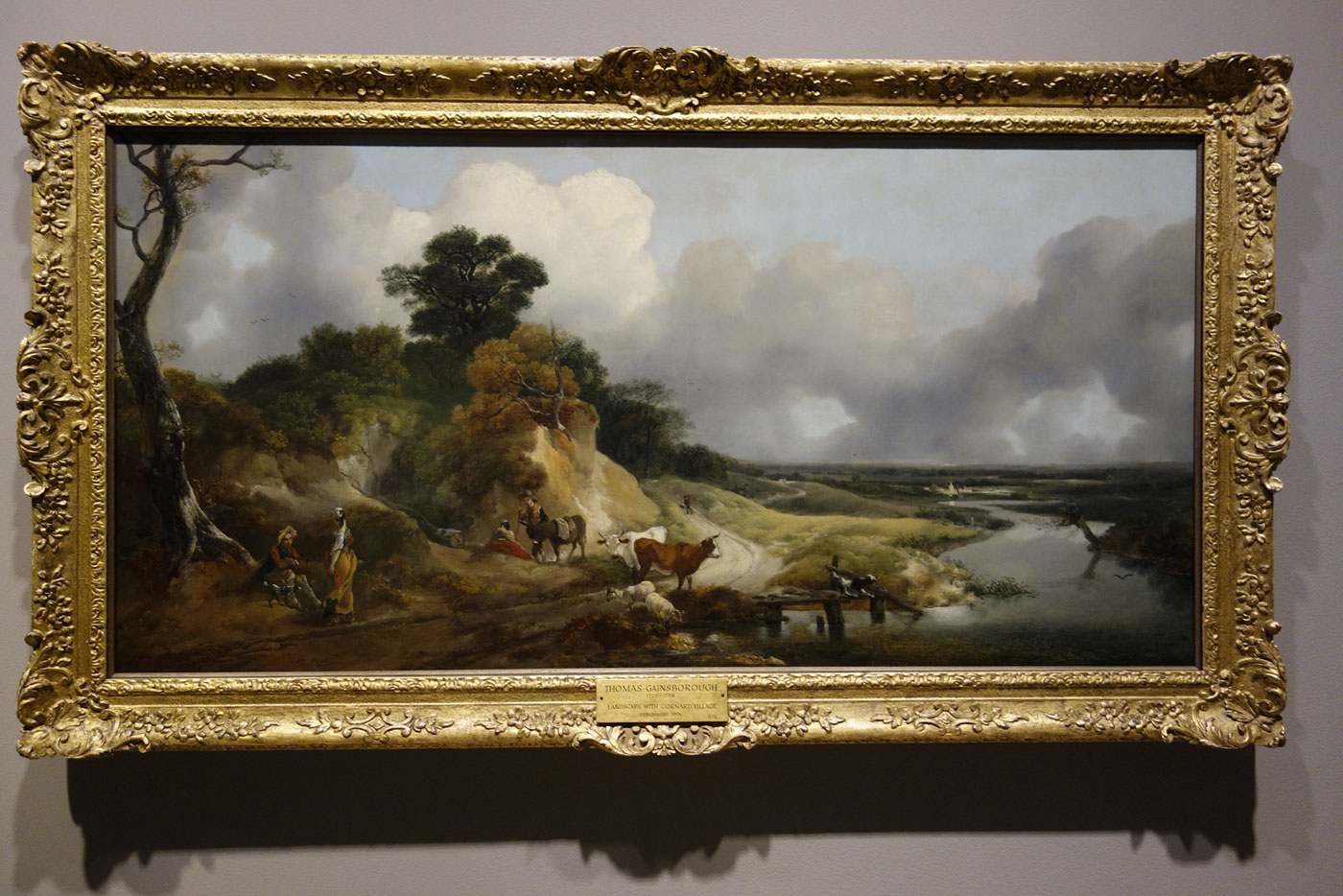
Thomas Gainsborough (England, 1727-1788) 'River landscape with a view of a distant village' c. 1748-50 (installation view)


Thomas Gainsborough (England, 1727-1788)
River landscape with a view of a distant village (installation view)
c. 1748-1750
Oil on canvas
76 x 151cm
Scottish National Gallery, Edinburgh. Purchased 1953
© Trustees of the National Galleries of Scotland
Photo: © Marcus Bunyan and the Art Gallery of New South Wales


Thomas Gainsborough (England, 1727-1788) 'River landscape with a view of a distant village' c. 1748-50 (installation view detail)

Thomas Gainsborough (England, 1727-1788) 'River landscape with a view of a distant village' c. 1748-50 (installation view detail)

Thomas Gainsborough (England, 1727-1788) 'River landscape with a view of a distant village' c. 1748-50 (installation view detail)


Thomas Gainsborough (England, 1727-1788)
River landscape with a view of a distant village (installation details)
c. 1748-1750
Oil on canvas
76 x 151cm
Scottish National Gallery, Edinburgh. Purchased 1953
© Trustees of the National Galleries of Scotland
Photos: © Marcus Bunyan and the Art Gallery of New South Wales


Although best known for his portraits, Gainsborough consistently painted landscape throughout his long career. Rich in detail and carefully composed, this painting reveals his firsthand knowledge of 17th-century Dutch landscapes. During the 1740s, collectors in London admired and sought out works by such artists of Holland’s Golden Age as Meindert Hobbema and Jacob van Ruisdael. The especially horizontal format of this work suggests that it may have been part of a decorative cycle for a domestic interior, perhaps hanging above a fireplace.


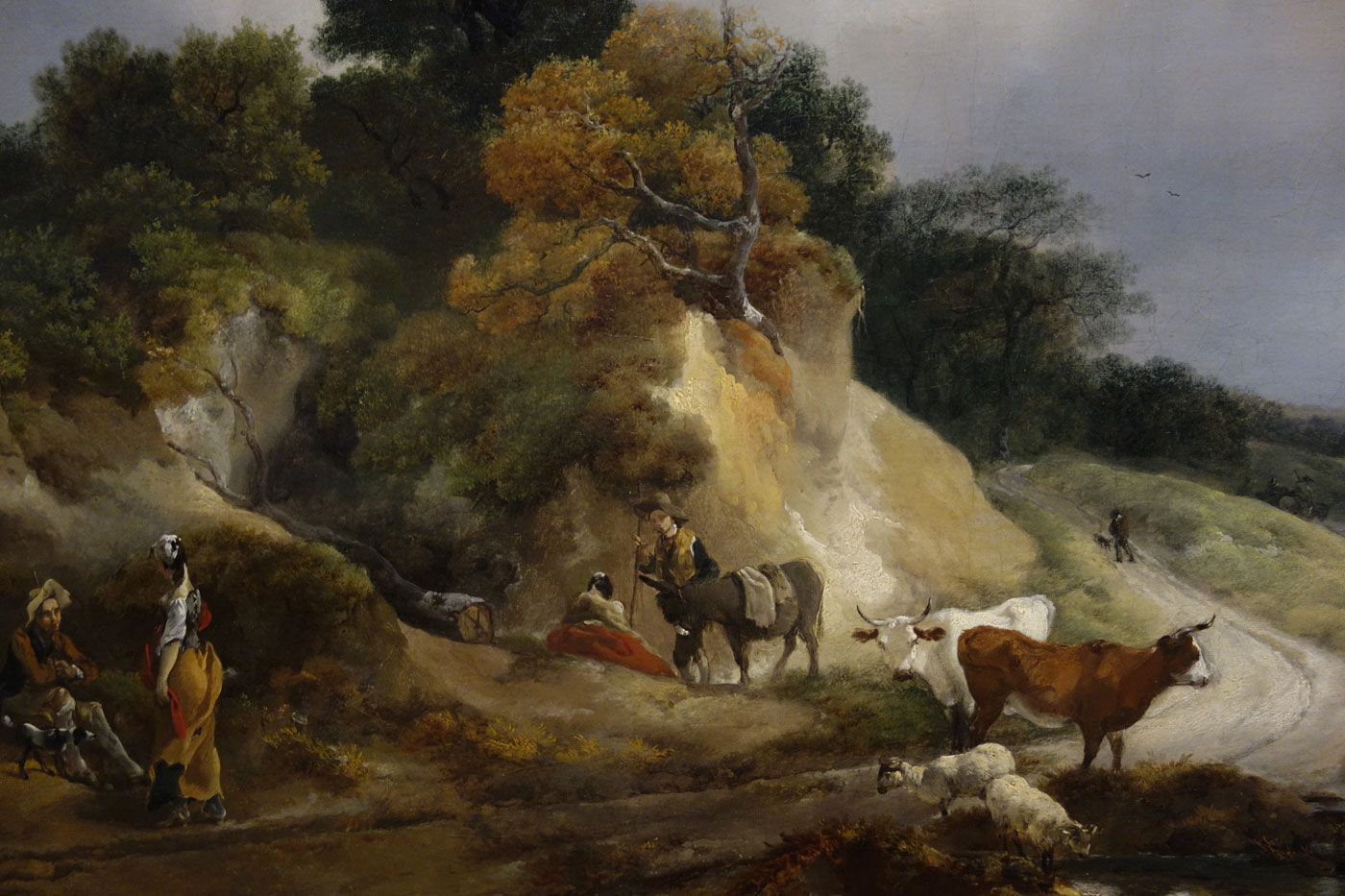
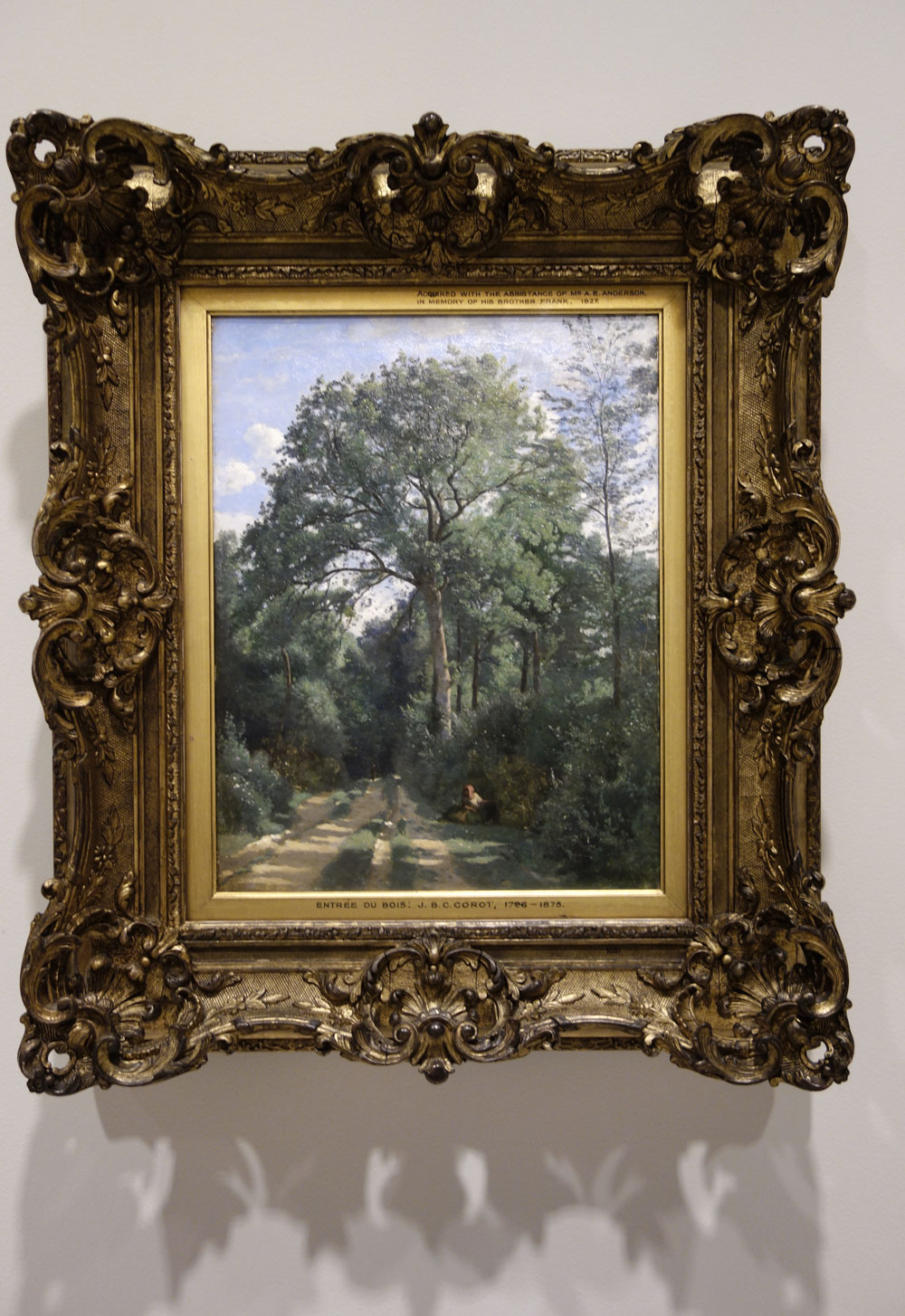
Camille Corot (France, 1796-1875) 'Ville-d'Avray: entrance to the wood' c. 1825, with later retouching (installation view)

Camille Corot (France, 1796-1875) 'Ville-d'Avray: entrance to the wood' c. 1825, with later retouching (installation view)


Camille Corot (France, 1796-1875)
Ville-d’Avray: entrance to the wood (installation views)
c. 1825, with later retouching
Oil on canvas
46 x 35cm
Scottish National Gallery, Edinburgh
Purchased with the aid of AE Anderson in memory of his brother Frank, 1927
© Trustees of the National Galleries of Scotland
Photos: © Marcus Bunyan and the Art Gallery of New South Wales


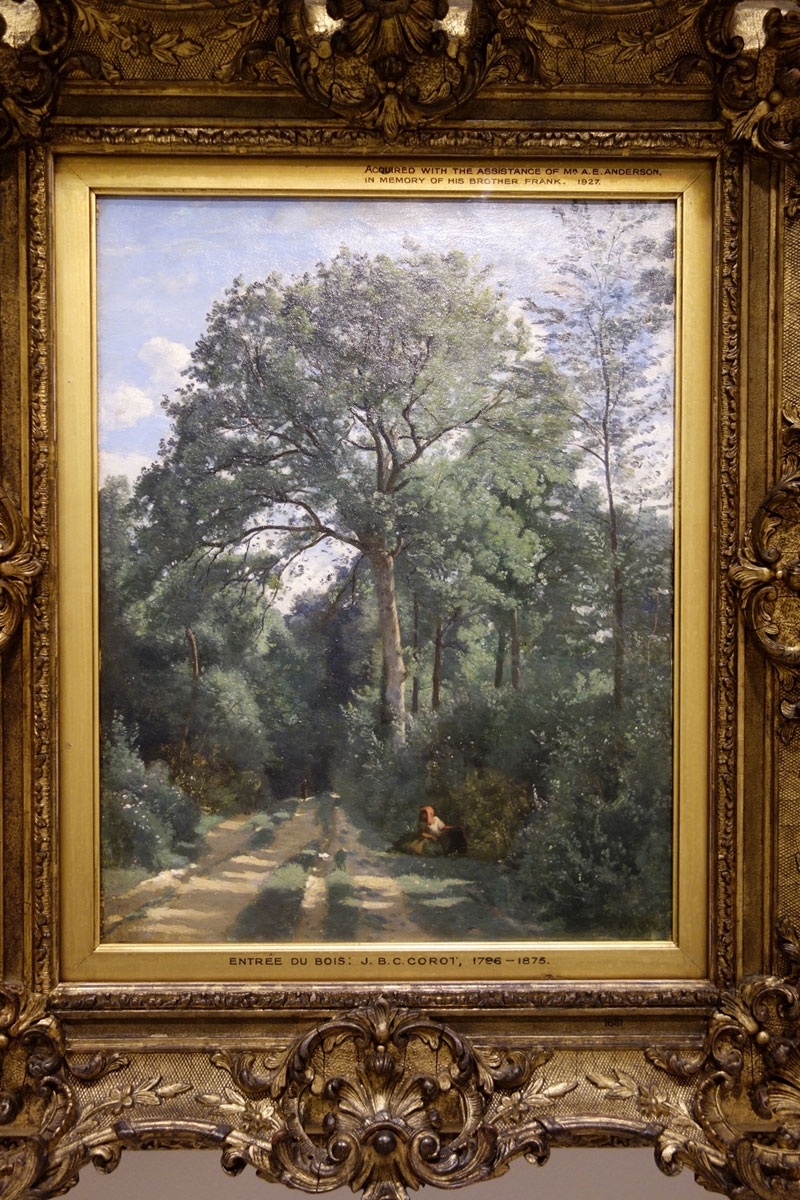
Camille Corot (France, 1796-1875) 'Ville-d'Avray: entrance to the wood' c. 1825, with later retouching (installation view detail)


Camille Corot (France, 1796-1875)
Ville-d’Avray: entrance to the wood (installation view detail)
c. 1825, with later retouching
Oil on canvas
46 x 35cm
Scottish National Gallery, Edinburgh
Purchased with the aid of AE Anderson in memory of his brother Frank, 1927
© Trustees of the National Galleries of Scotland
Photo: © Marcus Bunyan and the Art Gallery of New South Wales


Corot, whose career spanned more than 50 years, emerged from the classicism of the 1820s to found the ‘school of nature’ that would find its culmination after his death in the art of the impressionists. This bucolic early work was painted at Ville-d’Avray, a small town west of Paris, where Corot’s parents owned a modest country house with grounds. The painting was retouched around 1850, at least in part by Corot’s friend and fellow artist Narcisse Virgile Diaz de la Peña, who added the red cap of the seated woman as a bold implement to the otherwise cool palette.


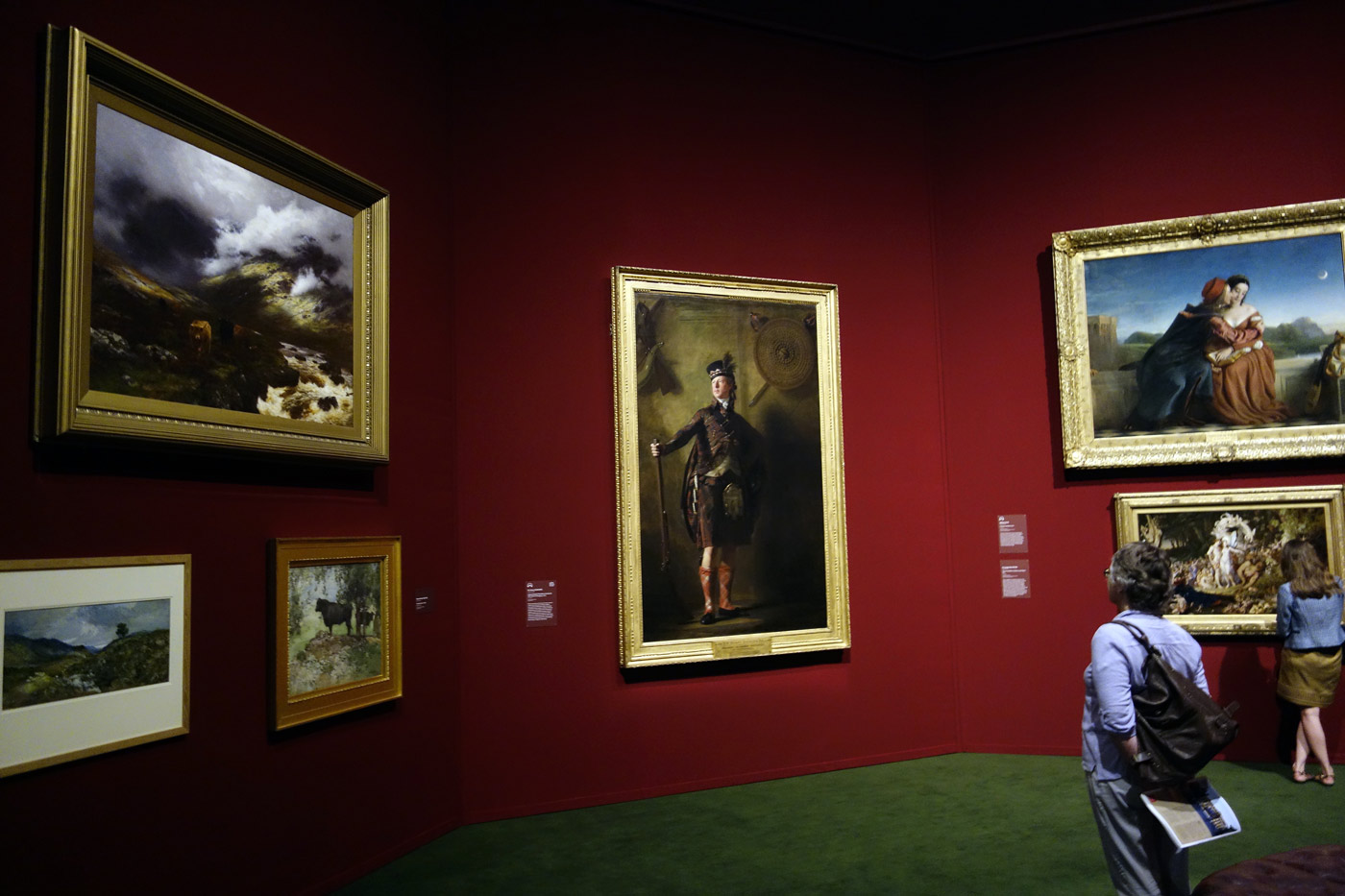
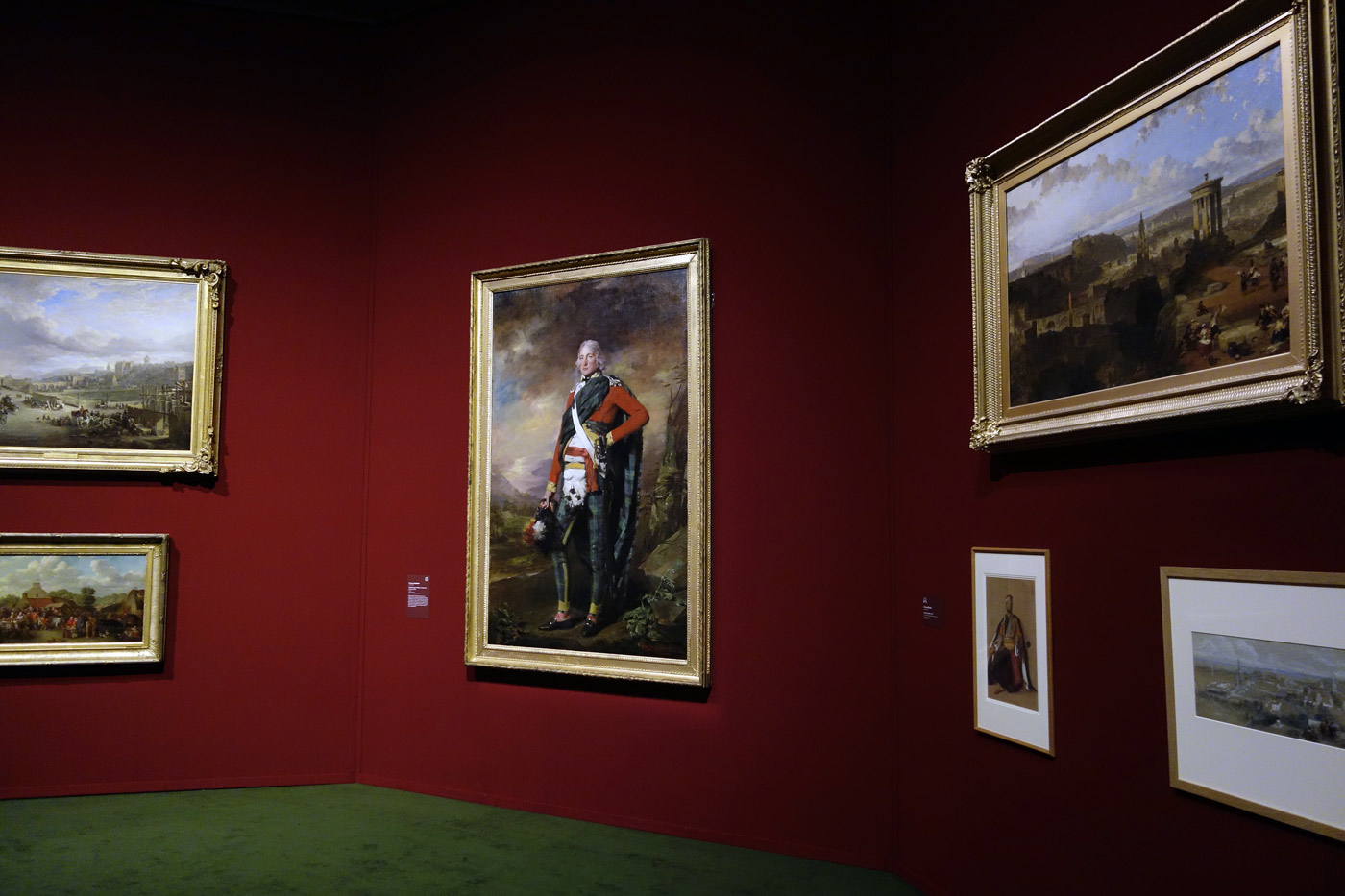
Installation view of the exhibition 'The Greats: Masterpieces from the National Galleries of Scotland' at the Art Gallery of New South Wales, Sydney showing at centre, Sir Henry Raeburn's 'Colonel Alastair Ranaldson Macdonell, 15th Chief of Glengarry' c. 1812


Installation view of the exhibition The Greats: Masterpieces from the National Galleries of Scotland at the Art Gallery of New South Wales, Sydney showing at centre, Sir Henry Raeburn’s Colonel Alastair Ranaldson Macdonell, 15th Chief of Glengarry c. 1812
Photo: © Marcus Bunyan and the Art Gallery of New South Wales


Installation view of the exhibition 'The Greats: Masterpieces from the National Galleries of Scotland' at the Art Gallery of New South Wales, Sydney showing at left, Sir Henry Raeburn's 'Colonel Alastair Ranaldson Macdonell, 15th Chief of Glengarry' (c. 1812) and at centre, William Dyce's 'Francesca da Rimini' (1837)


Installation view of the exhibition The Greats: Masterpieces from the National Galleries of Scotland at the Art Gallery of New South Wales, Sydney showing at left, Sir Henry Raeburn’s Colonel Alastair Ranaldson Macdonell, 15th Chief of Glengarry (c. 1812) and at centre, William Dyce’s Francesca da Rimini (1837)
Photo: © Marcus Bunyan and the Art Gallery of New South Wales


Installation view of the exhibition 'The Greats: Masterpieces from the National Galleries of Scotland' at the Art Gallery of New South Wales, Sydney showing at centre, Sir Henry Raeburn's 'Sir John Sinclair of Ulbster, 1st Baronet' (mid to late 1790s)

Installation view of the exhibition 'The Greats: Masterpieces from the National Galleries of Scotland' at the Art Gallery of New South Wales, Sydney showing at centre, Sir Henry Raeburn's 'Sir John Sinclair of Ulbster, 1st Baronet' (mid to late 1790s)


Installation view of the exhibition The Greats: Masterpieces from the National Galleries of Scotland at the Art Gallery of New South Wales, Sydney showing at centre, Sir Henry Raeburn’s Sir John Sinclair of Ulbster, 1st Baronet (mid to late 1790s)
Photo: © Marcus Bunyan and the Art Gallery of New South Wales


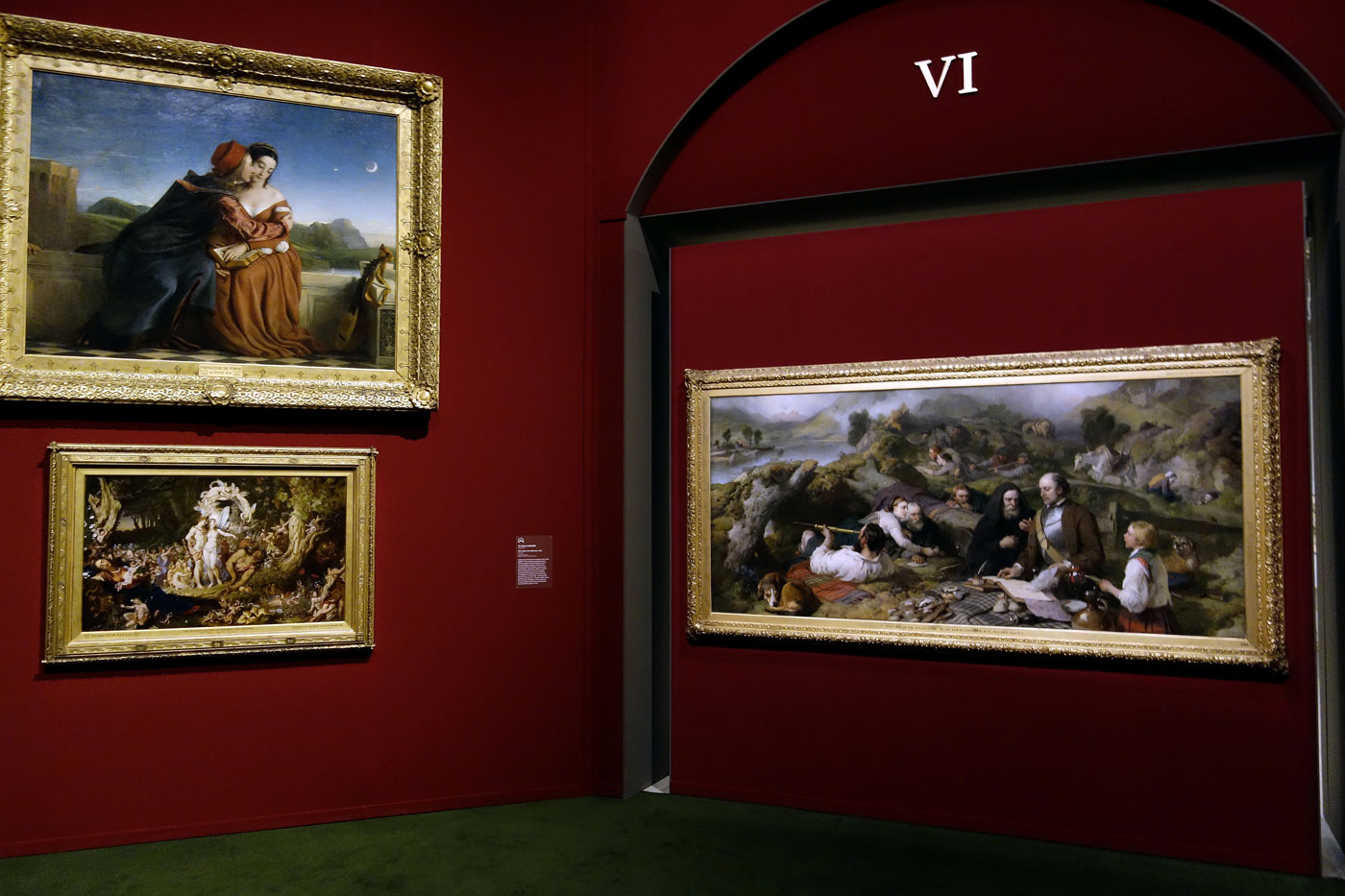
Installation view of the exhibition 'The Greats: Masterpieces from the National Galleries of Scotland' at the Art Gallery of New South Wales, Sydney showing at left, William Dyce's 'Francesca da Rimini' (1837) and at right, Sir Edwin Landseer's 'Rent-day in the wilderness' (1868)


Installation view of the exhibition The Greats: Masterpieces from the National Galleries of Scotland at the Art Gallery of New South Wales, Sydney showing at left, William Dyce’s Francesca da Rimini (1837) and at right, Sir Edwin Landseer’s Rent-day in the wilderness (1868)
Photo: © Marcus Bunyan and the Art Gallery of New South Wales


Sir Edwin Landseer (England, 1802-1873) 'Rent-day in the wilderness' 1868 (installation view)


Sir Edwin Landseer (England, 1802-1873)
Rent-day in the wilderness (installation view)
1868
Oil on canvas
122 x 265cm
Scottish National Gallery, Edinburgh
Bequest of Sir Roderick Impey Murchison, 1871
© Trustees of the National Galleries of Scotland
Photo: © Marcus Bunyan and the Art Gallery of New South Wales


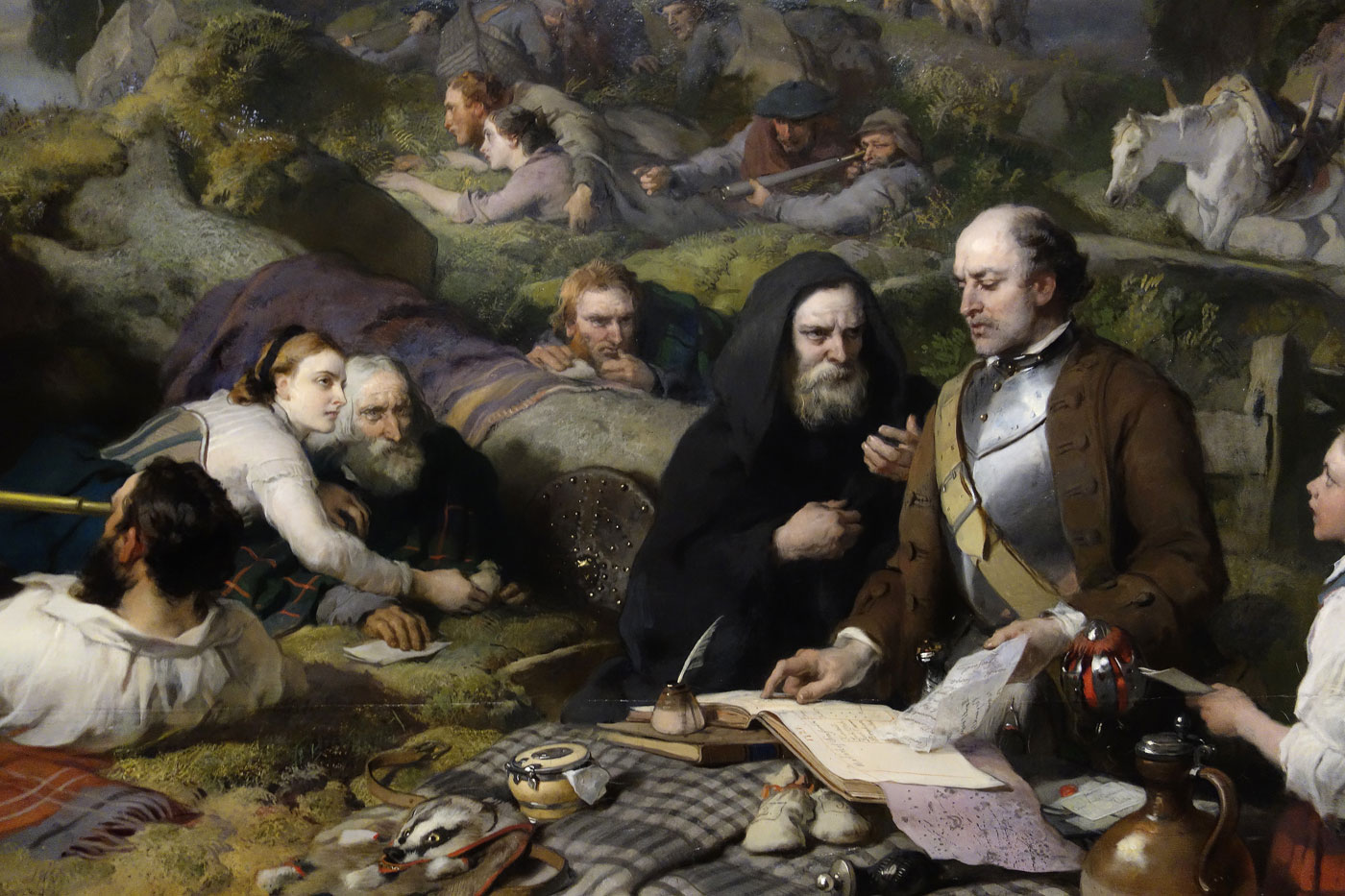
Sir Edwin Landseer (England, 1802-1873) 'Rent-day in the wilderness' 1868 (installation view detail)

Sir Edwin Landseer (England, 1802-1873) 'Rent-day in the wilderness' 1868 (installation view detail)


Sir Edwin Landseer (England, 1802-73)
Rent-day in the wilderness (installation view details)
1868
Oil on canvas
122 x 265cm
Scottish National Gallery, Edinburgh
Bequest of Sir Roderick Impey Murchison, 1871
© Trustees of the National Galleries of Scotland
Photo: © Marcus Bunyan and the Art Gallery of New South Wales


Lands became famous for his paintings of the Scottish Highlands. This unusual history painting is based on the heroic exploits of Colonel Donald Murchison, as recounted in Robert Chamber’s Domestic annals of Scotland (1858-1860). Murchison, a lawyer turned guerrilla fighter, supported the rebellion to reinstate the Stuart dynasty to the throne of Great Britain. he brazenly defied the government by collecting rents illegally from Scottish tenants to finance local armed resistance. In this painting – commissioned by Murchison’s great-grandson – Landseer conflates several distinct episodes, including the colonel’s daring and notorious ambush of government-appointed agents, escorted by British redcoats, in 1721.


Frederic Edwin Church (USA, 1826-1900) 'Niagara Falls, from the American side' 1867 (installation view)


Frederic Edwin Church (USA, 1826-1900)
Niagara Falls, from the American side (installation view)
1867
Oil on canvas
260 x 231cm
Scottish National Gallery, Edinburgh
Presented by John Stewart Kennedy, 1887
© Trustees of the National Galleries of Scotland
Photo: © Marcus Bunyan and the Art Gallery of New South Wales


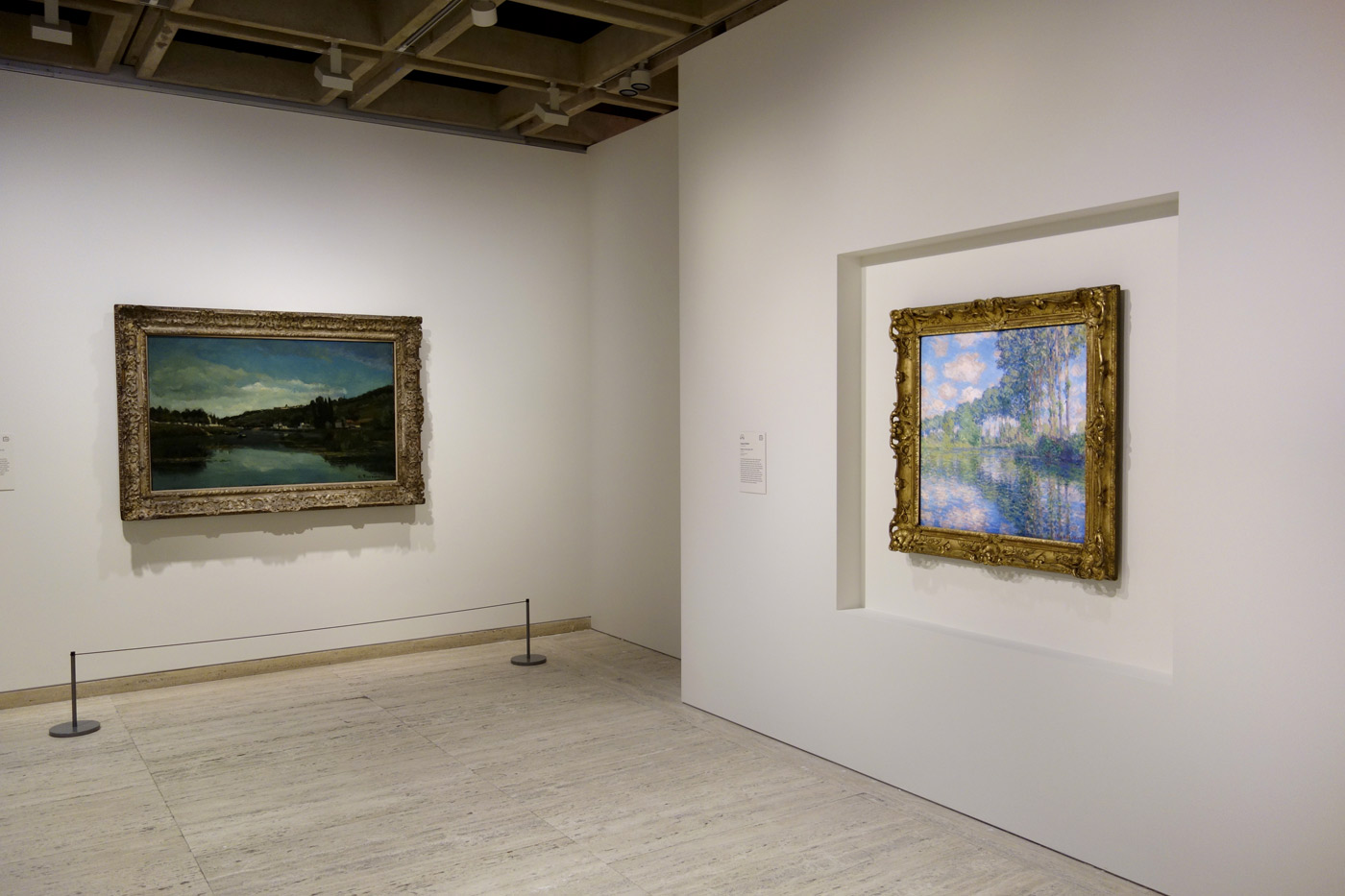
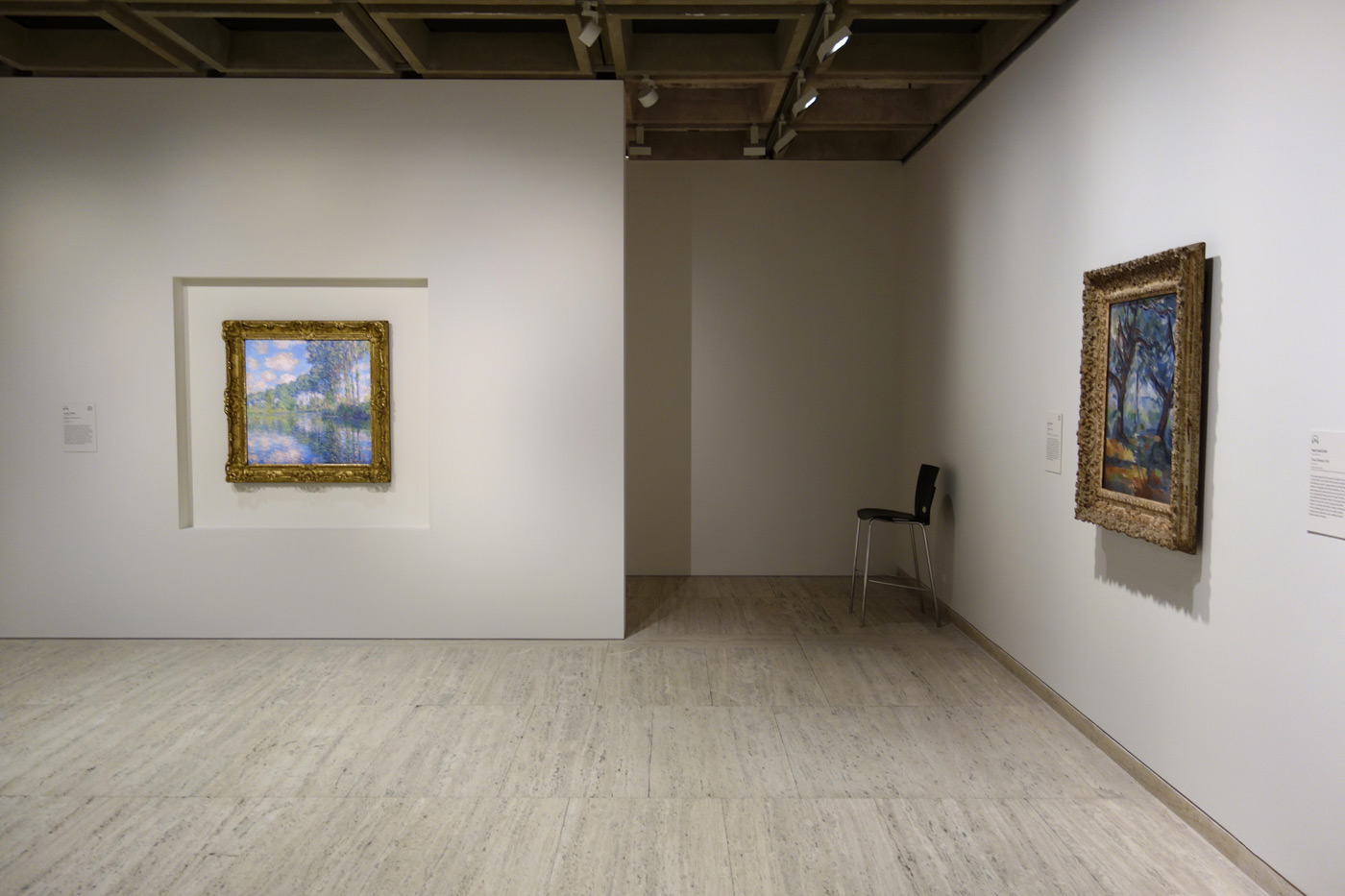
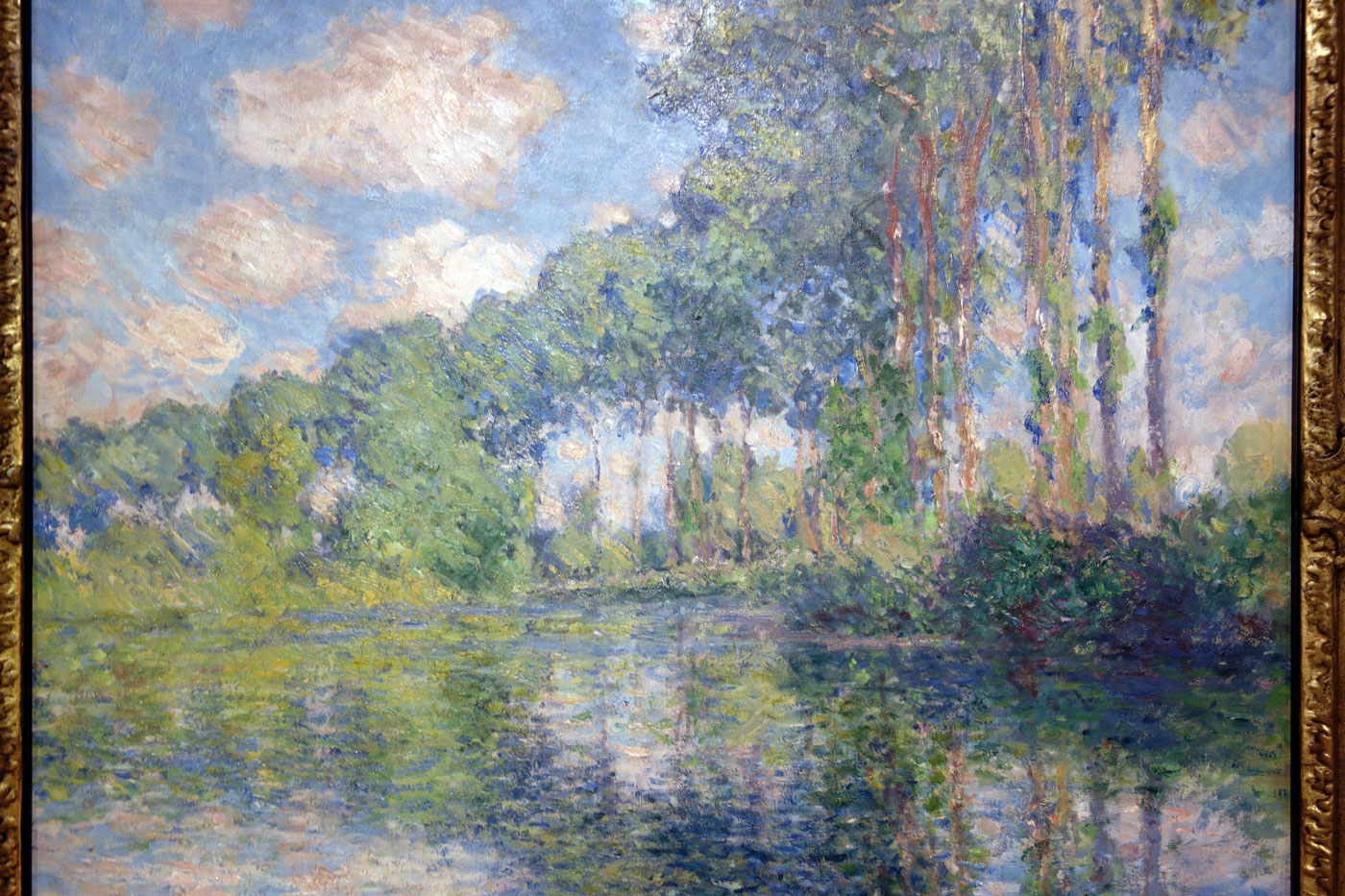
Installation view of the exhibition 'The Greats: Masterpieces from the National Galleries of Scotland' at the Art Gallery of New South Wales, Sydney showing at left, Camille Pissarro's 'The Marne at Chennevières' (c. 1864-1865) and at right, Claude Monet's 'Poplars on the Epte' (1891)


Installation view of the exhibition The Greats: Masterpieces from the National Galleries of Scotland at the Art Gallery of New South Wales, Sydney showing at left, Camille Pissarro’s The Marne at Chennevières (c. 1864-1865) and at right, Claude Monet’s Poplars on the Epte (1891)
Photo: © Marcus Bunyan and the Art Gallery of New South Wales


Installation view of the exhibition 'The Greats: Masterpieces from the National Galleries of Scotland' at the Art Gallery of New South Wales, Sydney showing at left, Claude Monet's 'Poplars on the Epte' (1891) and at right, Paul Cézanne's 'The big trees' (c. 1904)


Installation view of the exhibition The Greats: Masterpieces from the National Galleries of Scotland at the Art Gallery of New South Wales, Sydney showing at left, Claude Monet’s Poplars on the Epte (1891) and at right, Paul Cézanne’s The big trees (c. 1904)
Photo: © Marcus Bunyan and the Art Gallery of New South Wales


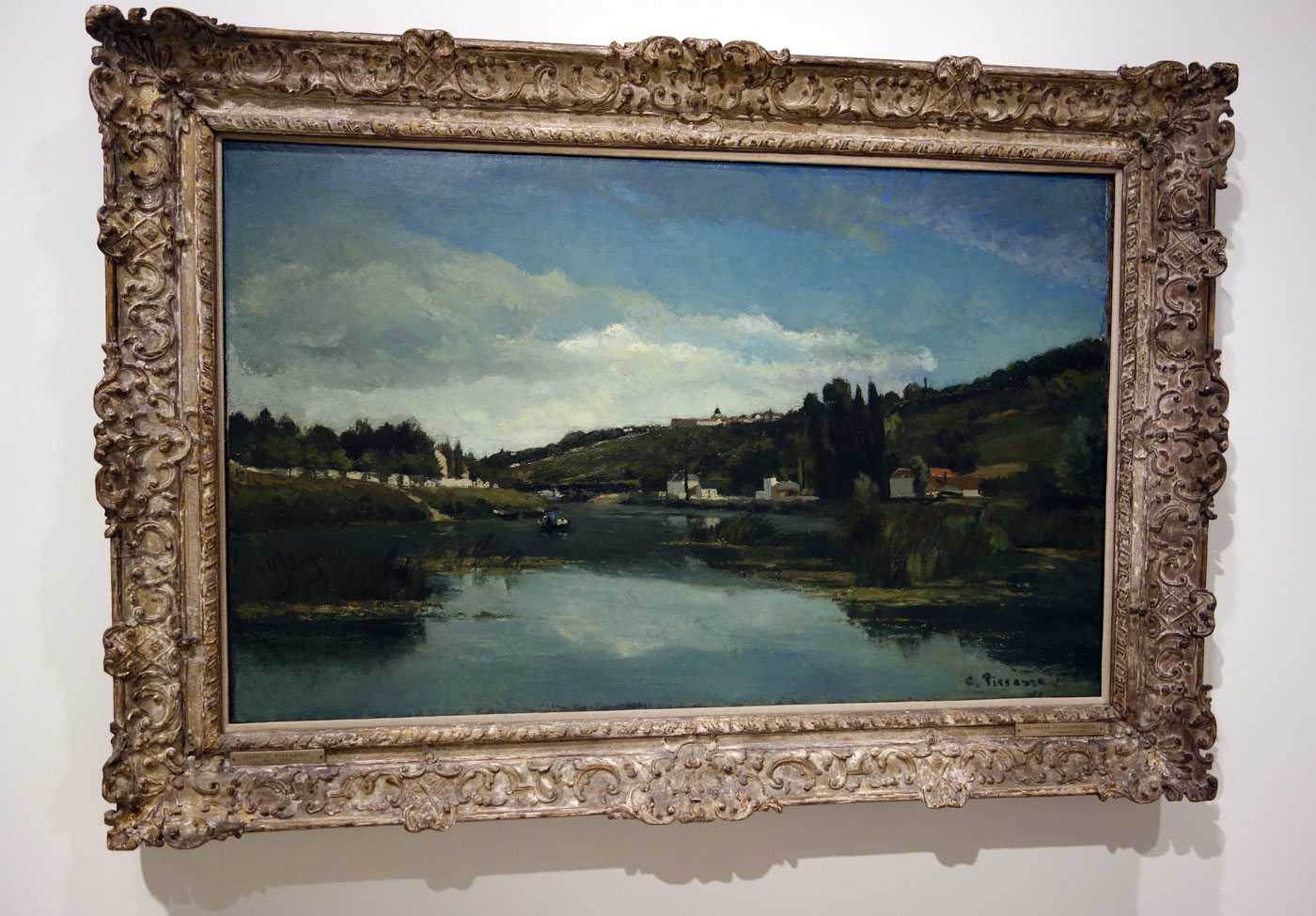
Camille Pissarro (France, 1830-1903) 'The Marne at Chennevières' c. 1864-1865 (installation view)

Camille Pissarro (France, 1830-1903) 'The Marne at Chennevières' c. 1864-1865 (installation view)


Camille Pissarro (France, 1830-1903)
The Marne at Chennevières (installation views)
c. 1864-1865
Oil on canvas
91.5 x 145.5cm
Scottish National Gallery, Edinburgh
Purchased 1947
© Trustees of the National Galleries of Scotland
Photos: © Marcus Bunyan and the Art Gallery of New South Wales


Camille Pissarro (France, 1830-1903) 'The Marne at Chennevières' c. 1864-1865 (installation view detail)


Camille Pissarro (France, 1830-1903)
The Marne at Chennevières (installation view detail)
c. 1864-1865
Oil on canvas
91.5 x 145.5cm
Scottish National Gallery, Edinburgh
Purchased 1947
© Trustees of the National Galleries of Scotland
Photo: © Marcus Bunyan and the Art Gallery of New South Wales


Pisarro, the oldest and perhaps the most paternal of the impressionists, was the only artist to show at all eight of the group exhibitions. He painted this large riverscape early in his career, while renting a house at La Varenne-Saint-Hilaire, a village to the southeast of Paris, situated on the river Marne. The diagonal composition and the use of a palette knife to create this bucolic scene reflect the painter’s admiration for such diverse artists as Charles François Daubigny and Gustave Courbet.


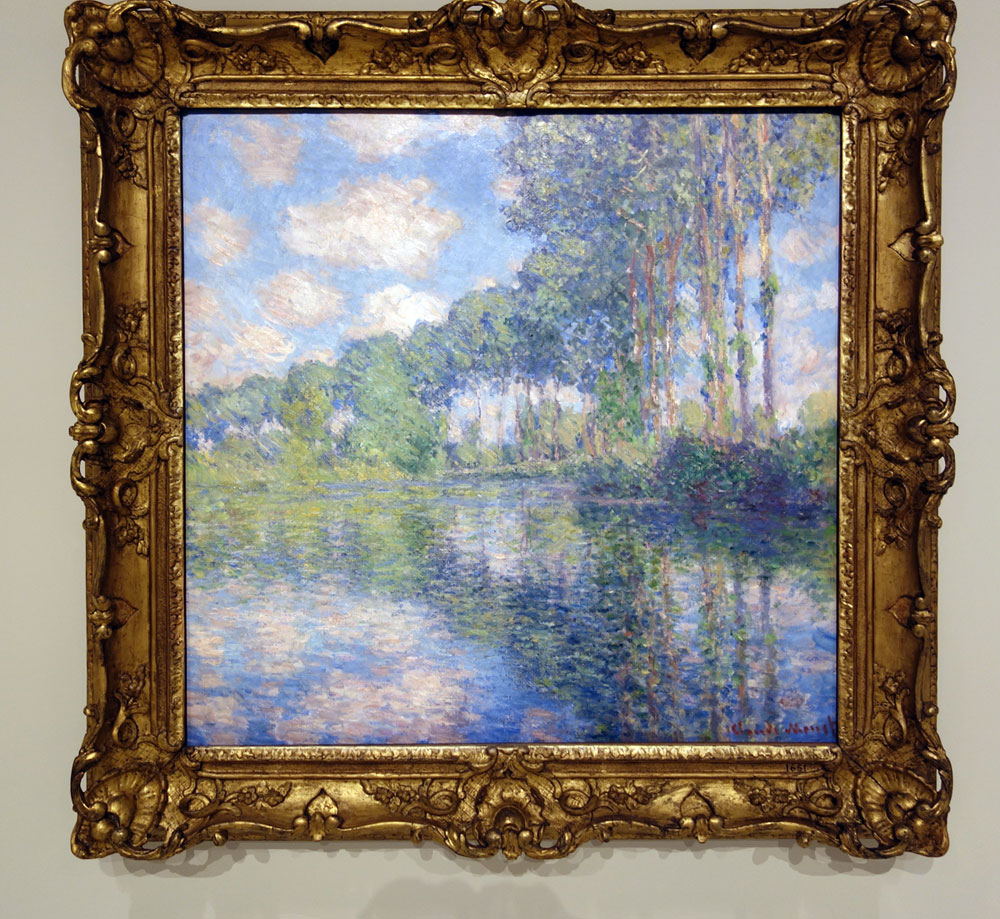
Claude Monet (France, 1840-1926) 'Poplars on the Epte' 1891 (installation view)


Claude Monet (France, 1840-1926)
Poplars on the Epte (installation view)
1891
Oil on canvas
81.8 x 81.3cm
Scottish National Gallery, Edinburgh
Purchased 1925
© Trustees of the National Galleries of Scotland
Photo: © Marcus Bunyan and the Art Gallery of New South Wales


In the 1880s, Monet gradually developed a more schematic and decorative approach to landscape, which led to his ‘series’ paintings of the 1890s, beginning with the Haystacks in 1891 and culminating in his water lily paintings. This painting belongs to a series of twenty-three canvases that Monet, the founder of French impressionism and one of the most celebrated artists in Western art history, completed in the late spring and autumn of 1891.

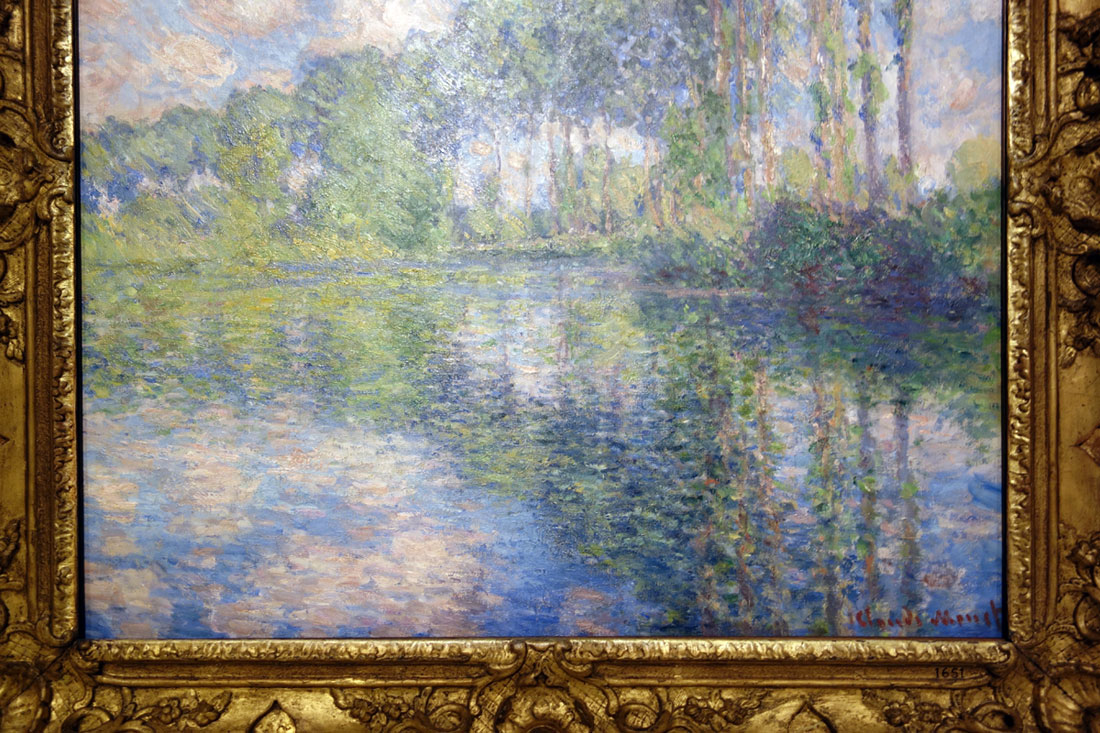
For the series, Monet painted poplar trees on the river Epte, close to where it joins the river Seine, just more than a mile from his home at Giverny. The clear blue sky and sunlit clouds express a fresh atmosphere. Monet painted the scene on the river from his boat, which served as a floating studio. This explains the low vantage point, with the trees towering above, the river bank at eye level, and the vast expanse of water dominating the lower half of the painting. Unlike most of the series paintings which are vertical, the Edinburgh picture’s format is square, emphasising the gentle curve of the bank and the verticality of the slender trees trunks and their reflection in the water.

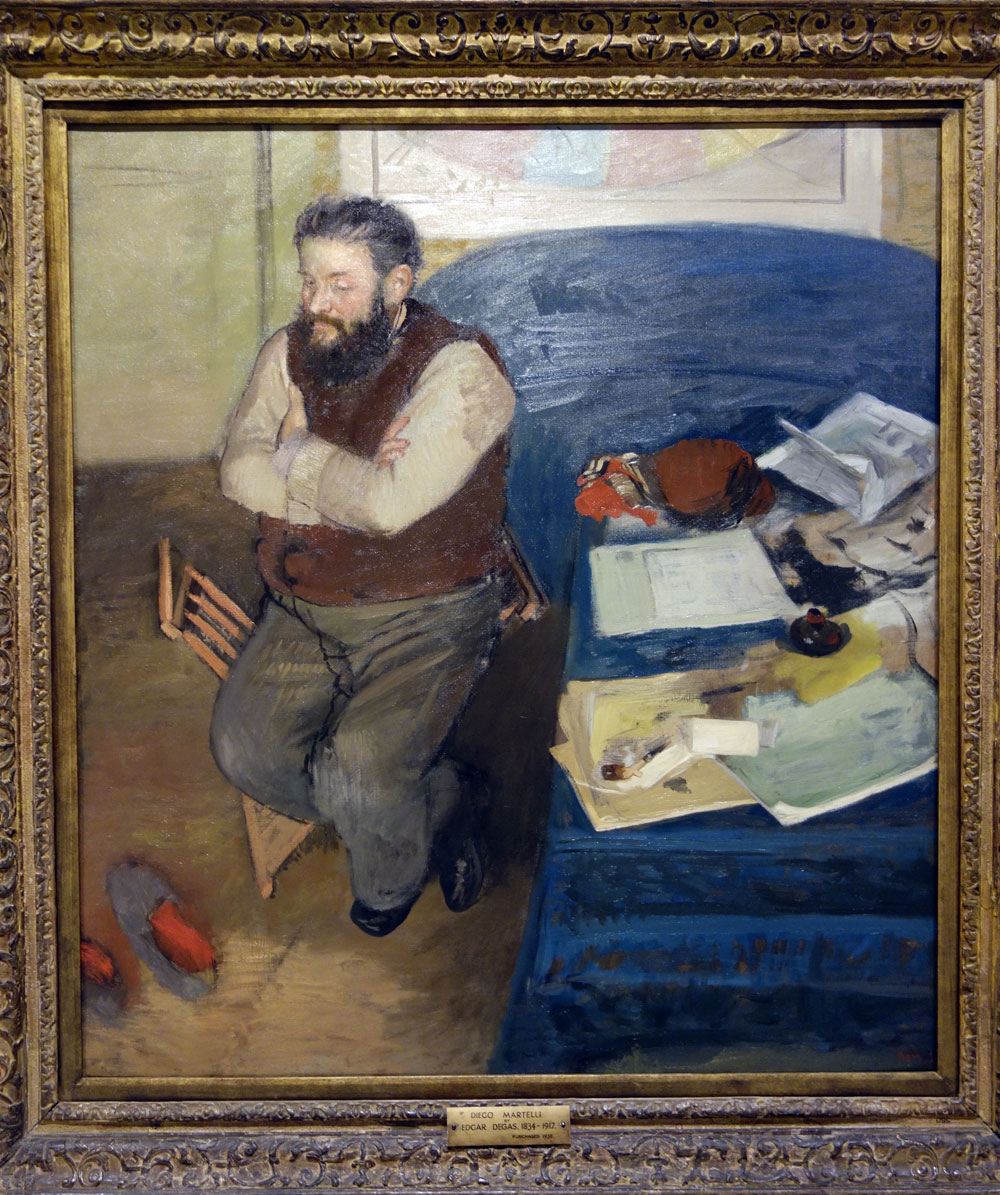
Monet had already started to create these works when municipal authorities decided to cut down the trees for lumber and sell them at auction. In order to preserve his motifs, Monet partnered with a timber merchant, and successfully saved the poplars, allowing him to complete his series for exhibition in 1892. The painting was the first impressionist picture to enter the National Galleries of Scotland’s collection. It was sold to the Gallery in 1924 by the important Scottish art dealer Alex Reid, who was responsible for introducing impressionism to many British collectors. Degas’ Portrait of Diego Martelli 1879 also passed through his hands (see below).


Claude Monet (France, 1840-1926) 'Poplars on the Epte' 1891 (installation view detail)

Claude Monet (France, 1840-1926) 'Poplars on the Epte' 1891 (installation view detail)


Claude Monet (France, 1840-1926)
Poplars on the Epte (installation details)
1891
Oil on canvas
81.8 x 81.3cm
Scottish National Gallery, Edinburgh
Purchased 1925
© Trustees of the National Galleries of Scotland
Photos: © Marcus Bunyan and the Art Gallery of New South Wales


Edgar Degas (France, 1834-1917) 'Diego Martelli' 1879 (installation view)


Edgar Degas (France, 1834-1917) 'Diego Martelli' 1879 (installation view)


Edgar Degas (France, 1834-1917)
Diego Martelli (installation views)
1879
Oil on canvas
110.4 x 99.8cm
Scottish National Gallery, Edinburgh
Purchased 1932
© Trustees of the National Galleries of Scotland
Photos: © Marcus Bunyan and the Art Gallery of New South Wales


This portrait of the Florentine art critic Diego Martelli, a close friend of Degas and an important champion of impressionism, was painted in Martelli’s Paris apartment. The high viewpoint flattens the composition, throwing the sitter’s legs into sharp perspective. The work’s asymmetry and the cropping of such elements as the discarded slippers reflect Degas’s interest in Japanese prints. The curved picture behind the sofa is a map of Paris: the river Seine is visible, running through coloured segments denoting the city’s new souther neighbourhoods.


Paul Cézanne (France, 1839-1906) 'The big trees' c. 1904 (installation view)


Paul Cézanne (France, 1839-1906)
The big trees (installation view)
c. 1904
Oil on canvas
81 x 65cm
Scottish National Gallery, Edinburgh
Presented by Mrs Anne F Kessler, 1958; received after her death, 1983
© Trustees of the National Galleries of Scotland
Photo: © Marcus Bunyan and the Art Gallery of New South Wales


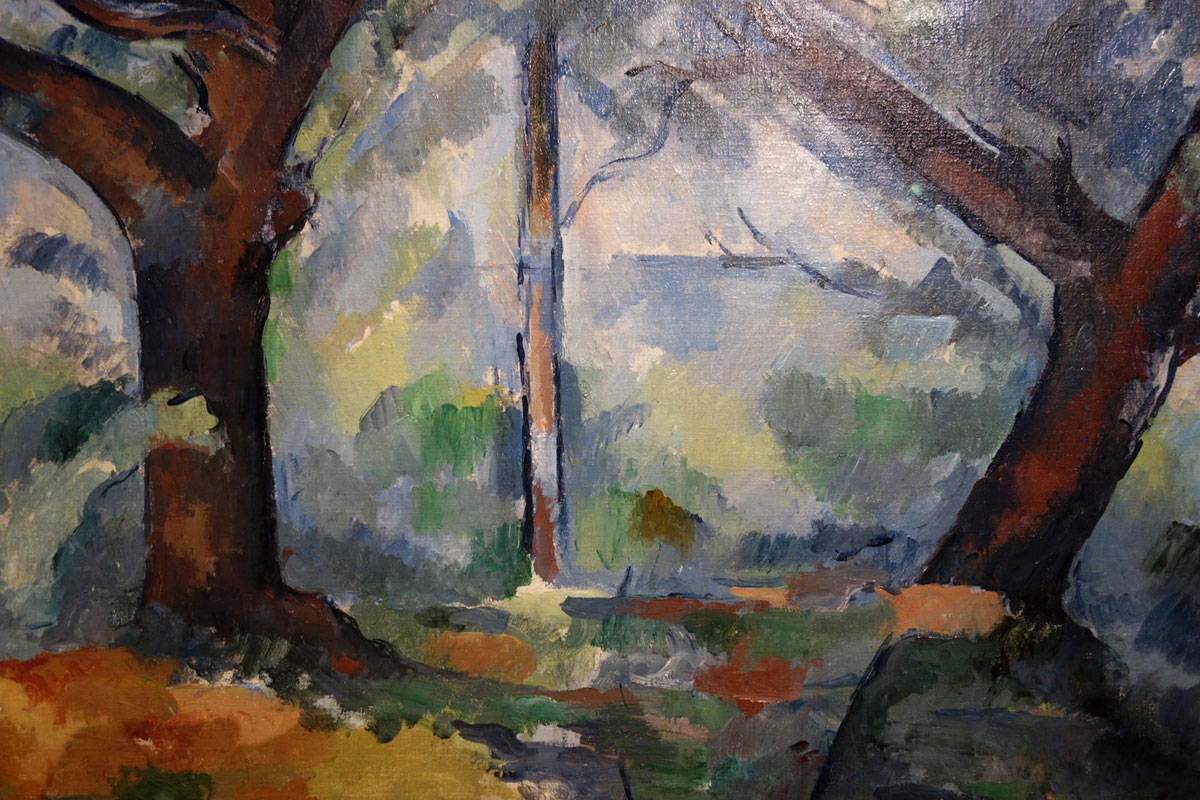
This painting dates from the last years of Cézanne’s career. It is one of a series of works executed in the forest around the Bibémus quarry and the Château Noir, areas in which he often painted in his native Aix-en-Provence. The twisting limbs of the tree at left and the dramatic diagonal of the tree at right inject a sense of dynamism into the composition. Cézanne often left his pertaining in seemingly unfinished states, with areas of the primed white canvas showing through; here, they function not only as markers of the painter’s practice but also as patches of reflected sunlight.


Paul Cézanne (France, 1839-1906) 'The big trees' c. 1904 (installation view detail)

Paul Cézanne (France, 1839-1906) 'The big trees' c. 1904 (installation view detail)


Paul Cézanne (France, 1839-1906)
The big trees (installation details)
c. 1904
Oil on canvas
81 x 65cm
Scottish National Gallery, Edinburgh
Presented by Mrs Anne F Kessler, 1958; received after her death, 1983
© Trustees of the National Galleries of Scotland
Photos: © Marcus Bunyan and the Art Gallery of New South Wales


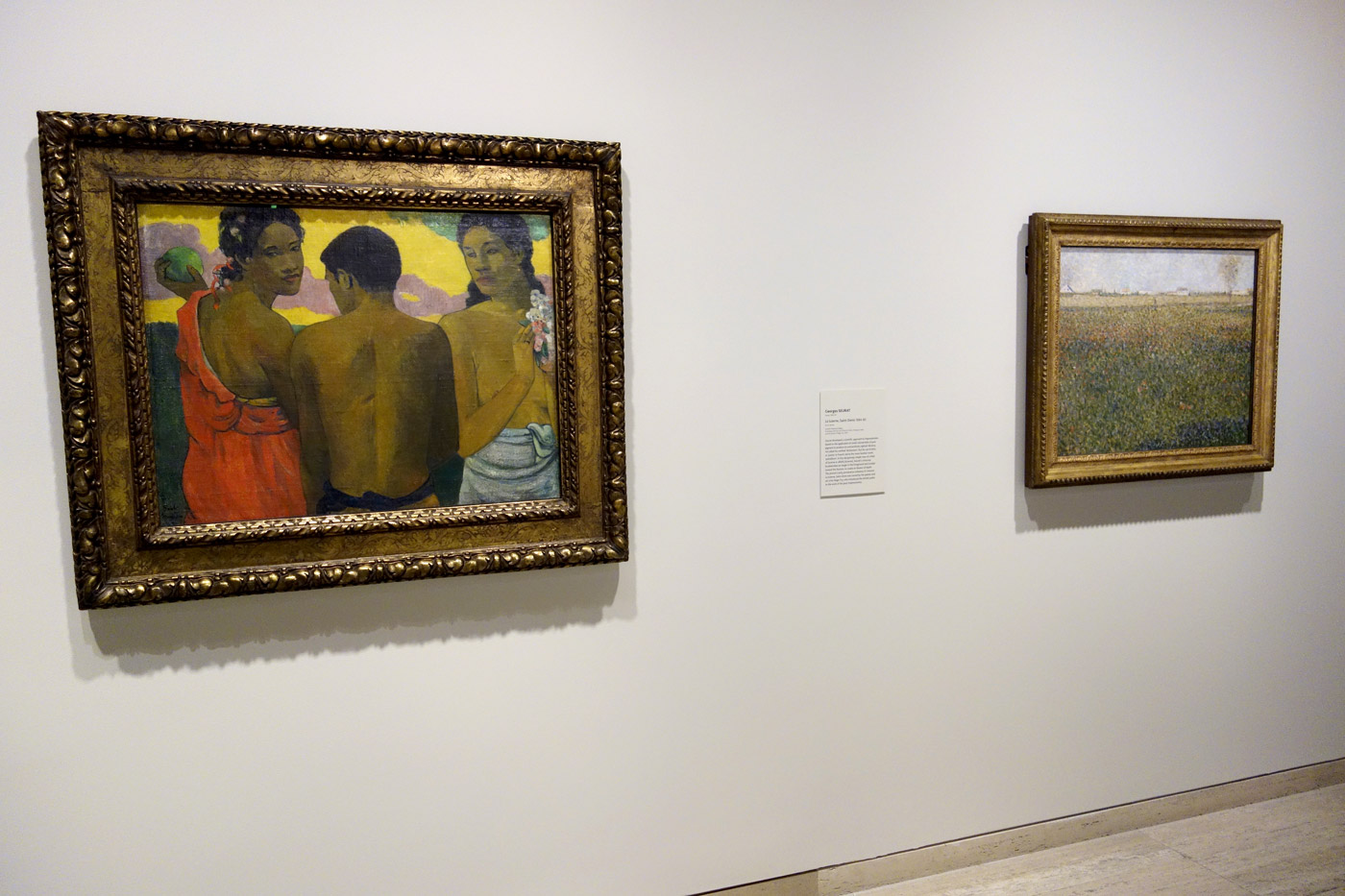
Installation view of the exhibition 'The Greats: Masterpieces from the National Galleries of Scotland' at the Art Gallery of New South Wales, Sydney showing at left Paul Gauguin's 'Three Tahitians' (1899) and at right, Georges Seurat's 'La luzerne, Saint-Denis' (1884-1885)


Installation view of the exhibition The Greats: Masterpieces from the National Galleries of Scotland at the Art Gallery of New South Wales, Sydney showing at left Paul Gauguin’s Three Tahitians (1899) and at right, Georges Seurat’s La luzerne, Saint-Denis (1884-1885)
Photo: © Marcus Bunyan and the Art Gallery of New South Wales


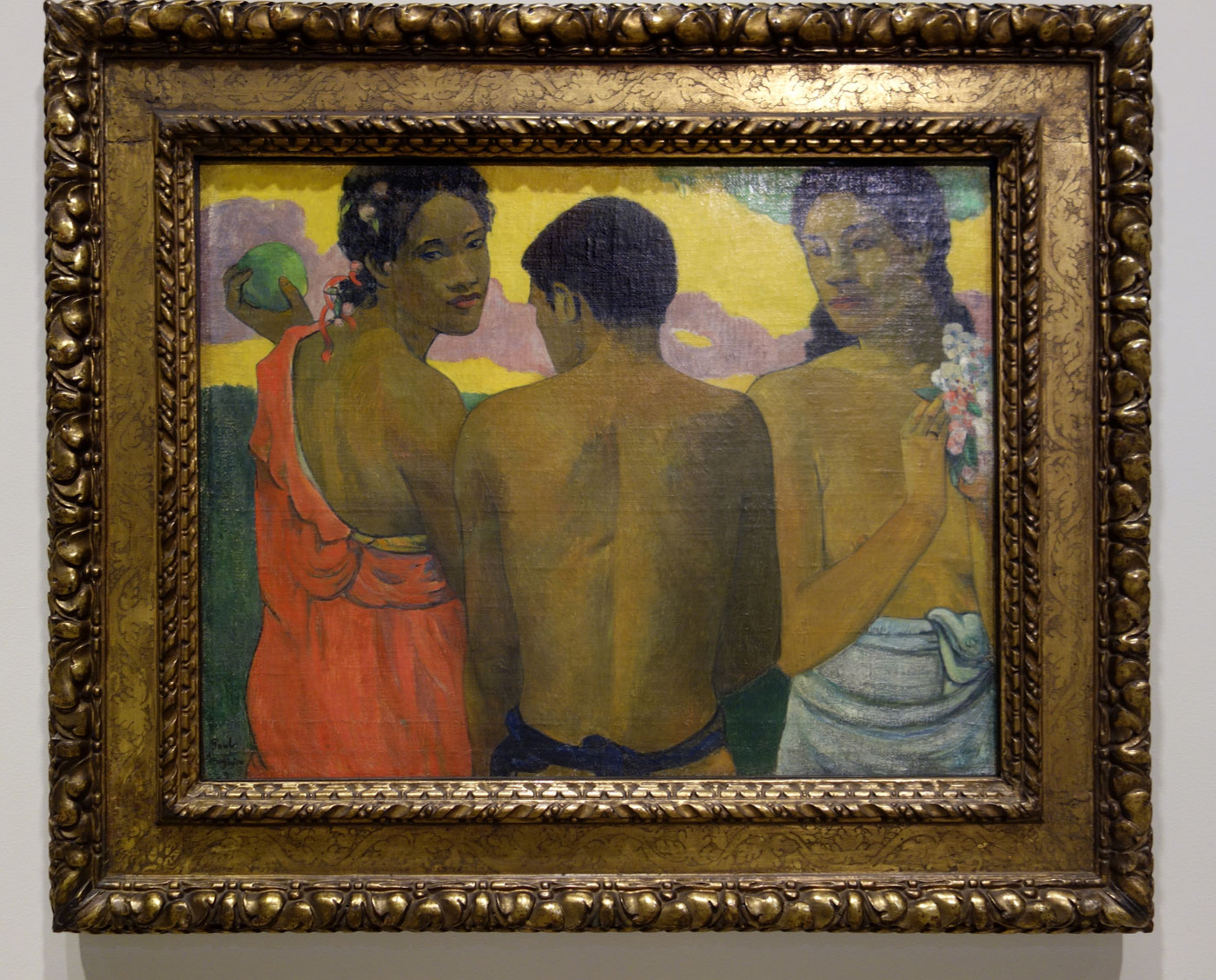
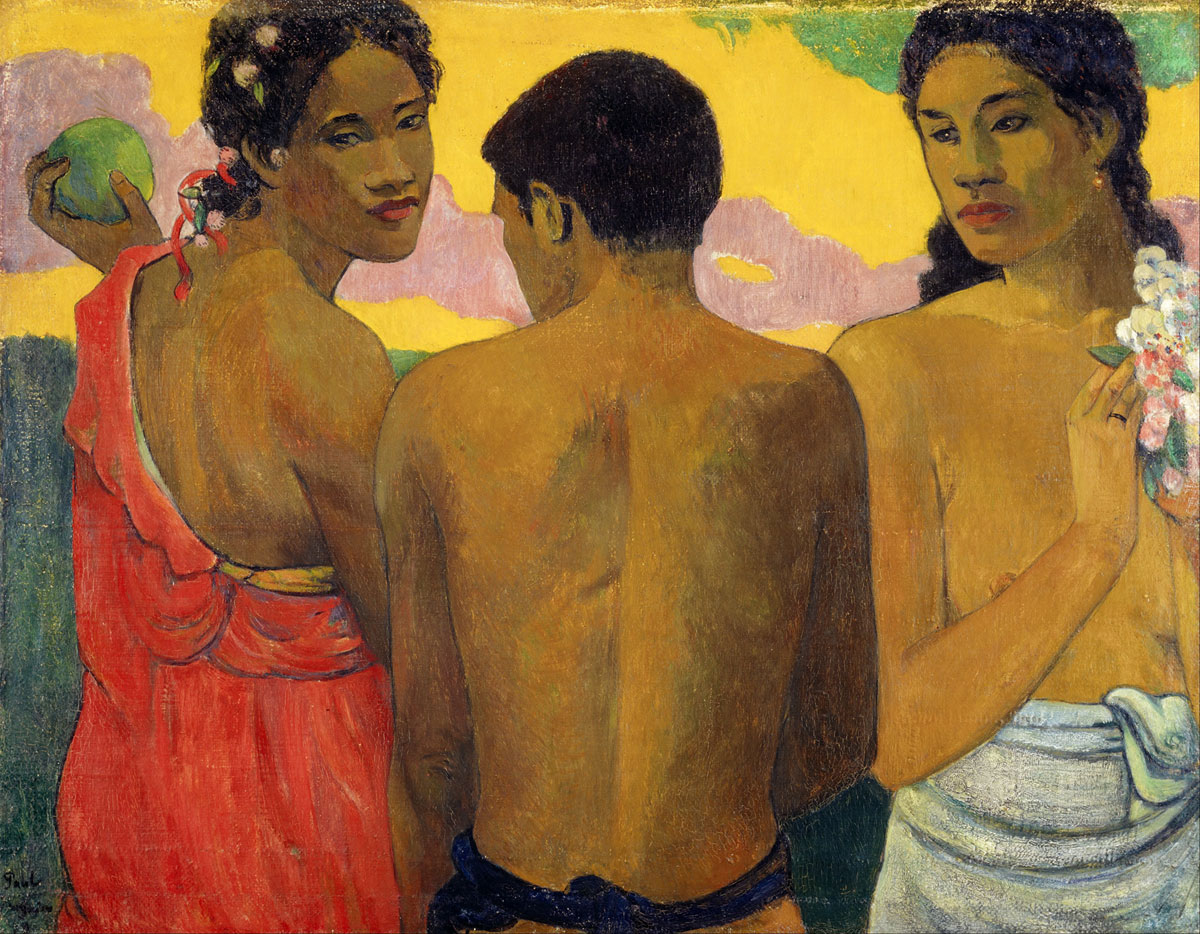
Paul Gauguin (France, 1848-1903) 'Three Tahitians' 1899 (installation view)

Paul Gauguin (France, 1848-1903) 'Three Tahitians' 1899 (installation view detail)


Paul Gauguin (France, 1848-1903)
Three Tahitians (installation views)
1899
Oil on canvas
73 x 94cm
Scottish National Gallery, Edinburgh
Presented by Sir Alexander Maitland in memory of his wife Rosalind, 1960
© Trustees of the National Galleries of Scotland
Photos: © Marcus Bunyan and the Art Gallery of New South Wales


Three Tahitians epitomises the decorative intensity of Gauguin’s late Polynesian works. Painted in the artist’s final years, during his second period in Tahiti, the work is said to depict a silent conversation in which the man appears to be undecided about the choice offered by the two attractive women – the choice between sensuality and piety. Although ambiguous, it has been suggested these two women are respectively symbolic of vice and virtue.

The bare-chested woman, holding a small posy of flowers and wearing a wedding ring, would seem to represent goodness, her gaze directed to the man. While the woman who turns to face the viewer, her sensuous lips in an enigmatic smile, and holds a mango, may be a reference to the biblical figure Eve who tempted Adam with an apple. These two women recur in several other compositions by Gauguin around this time. In the 1880s, the French post-impressionist fled urban civilisation in search of a tropical Garden of Eden, in which he felt his art could flourish. His final two years of life were spent on the remote island of Hivaoa in the tiny village of Atuona.


Art Gallery of New South Wales
Art Gallery Road, The Domain
Sydney NSW 2000, Australia

Opening hours:
Open every day 10am – 5pm
except Christmas Day and Good Friday

Art Gallery of New South Wales website

LIKE ART BLART ON FACEBOOK

Back to top

Exhibition: ‘Josef Koudelka: Uncertain Nationality’ at Fundación MAPFRE, Madrid

Exhibition dates: 10th September – 28th November, 2015

The exhibition is organised by the Art Institute of Chicago and the J. Paul Getty Museum in association with Fundación MAPFRE

Curator: Matthew Witkovsky, Richard and Ellen Sandor Chair and Curator Department of Photography of the Art Institute of Chicago


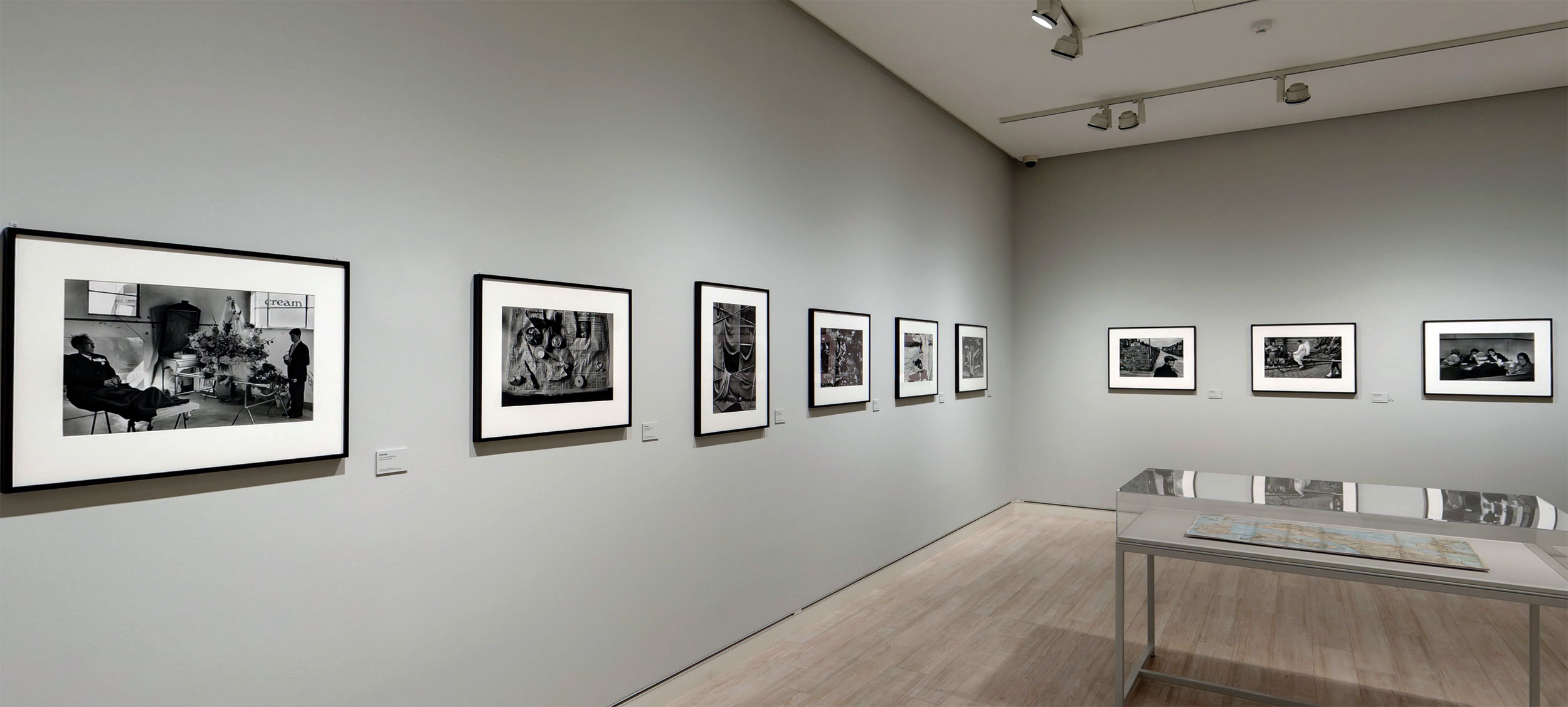
Entrance view of the exhibition 'Josef Koudelka: Uncertain Nationality' at Fundación MAPFRE, Madrid


Entrance view of the exhibition Josef Koudelka: Uncertain Nationality at Fundación MAPFRE, Madrid


Without reminding yourself every so often, you actually forget just what a master of photography Josef Koudelka is.

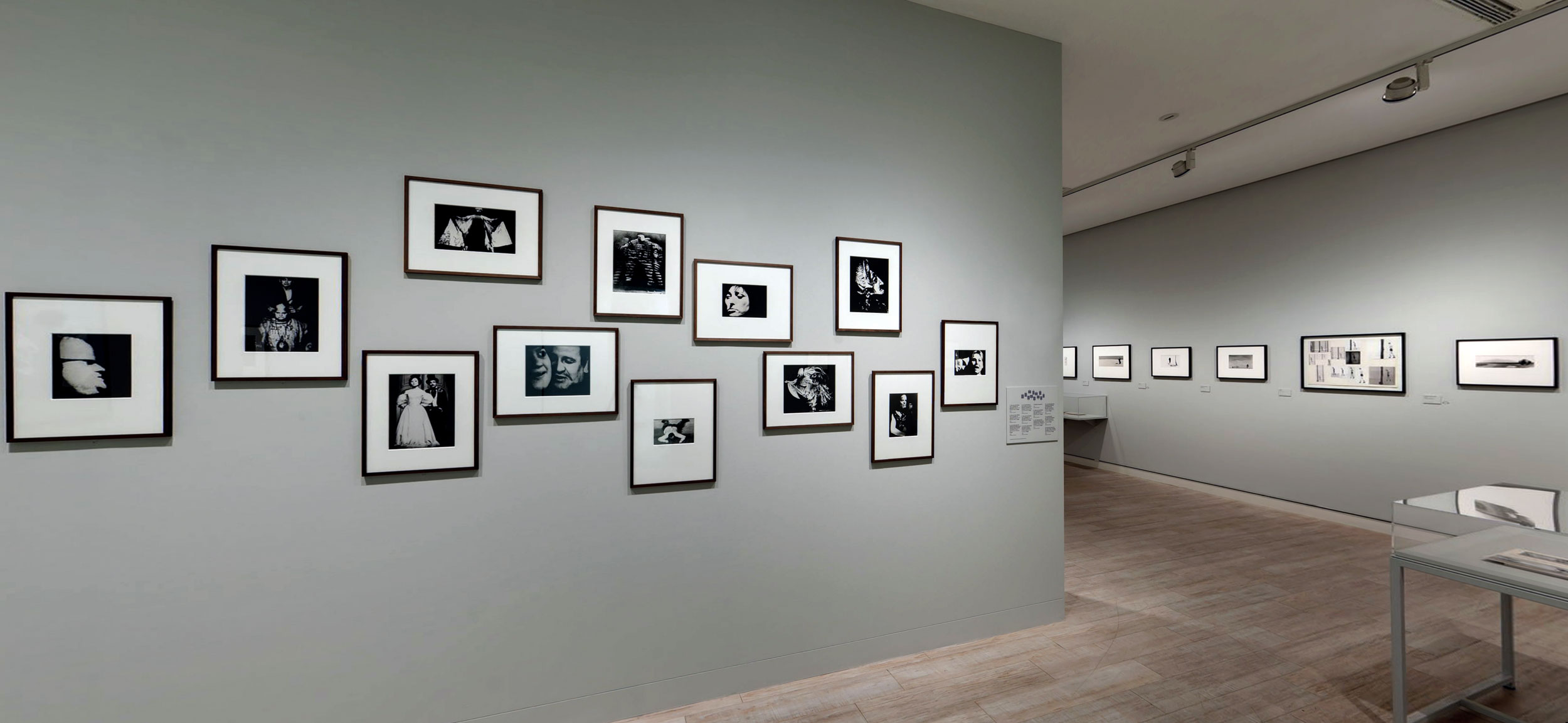
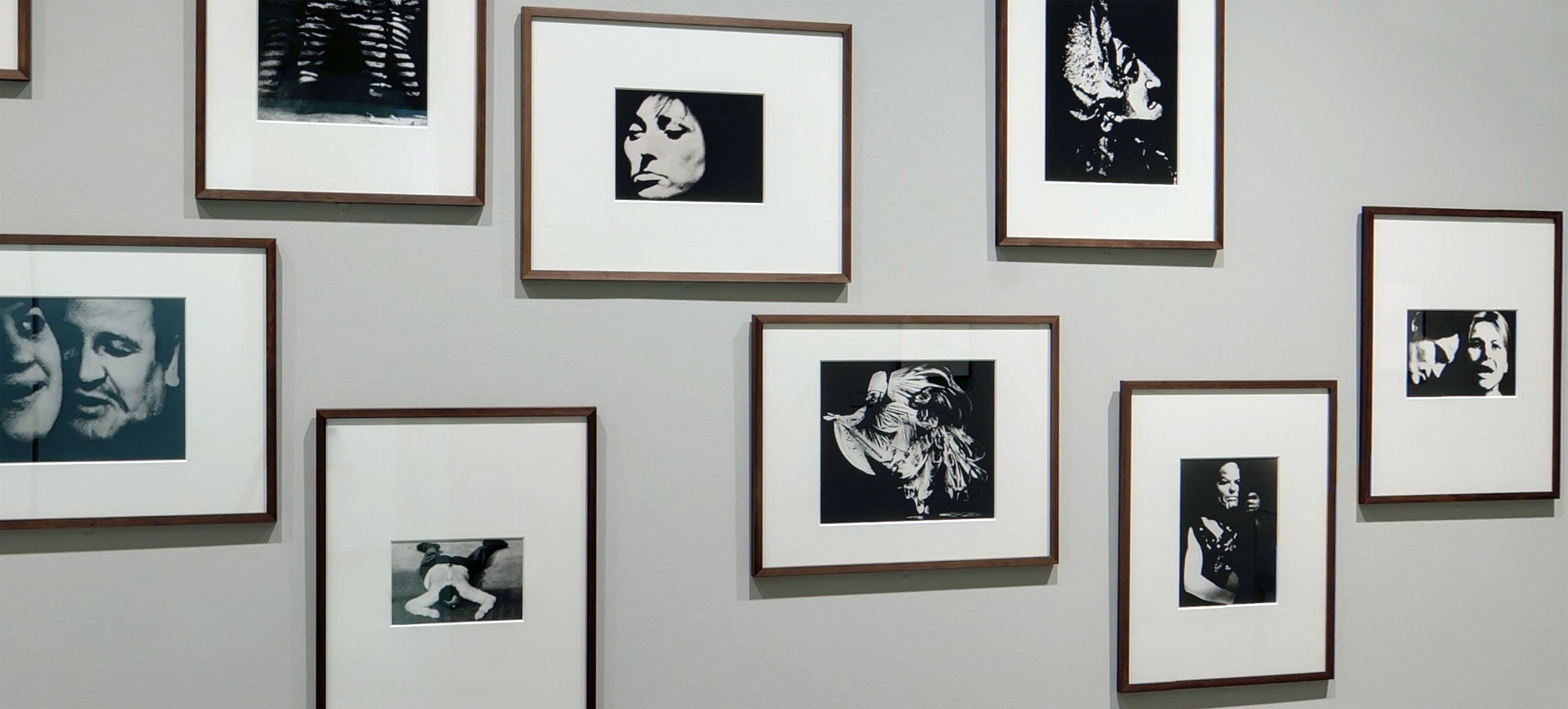
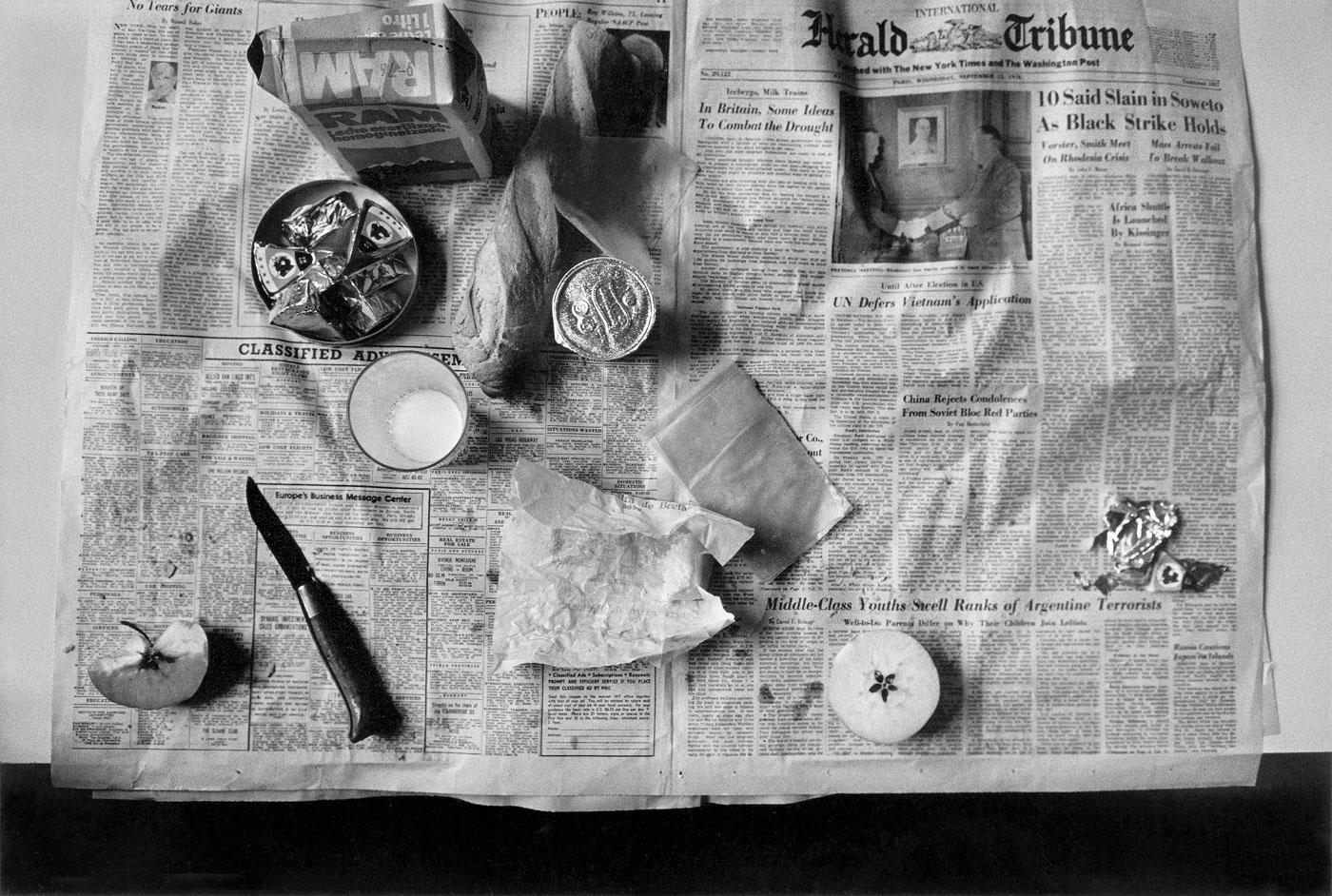
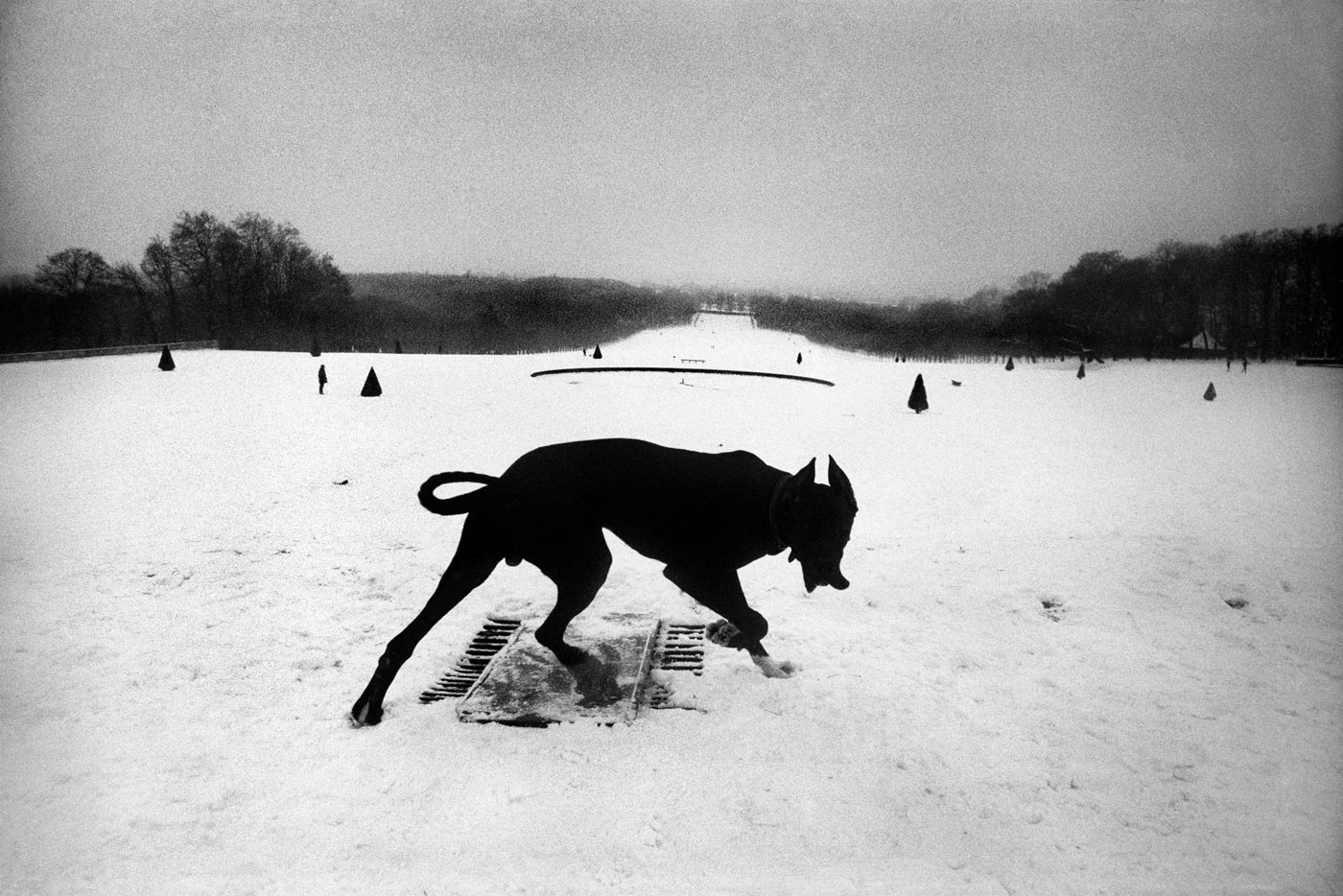
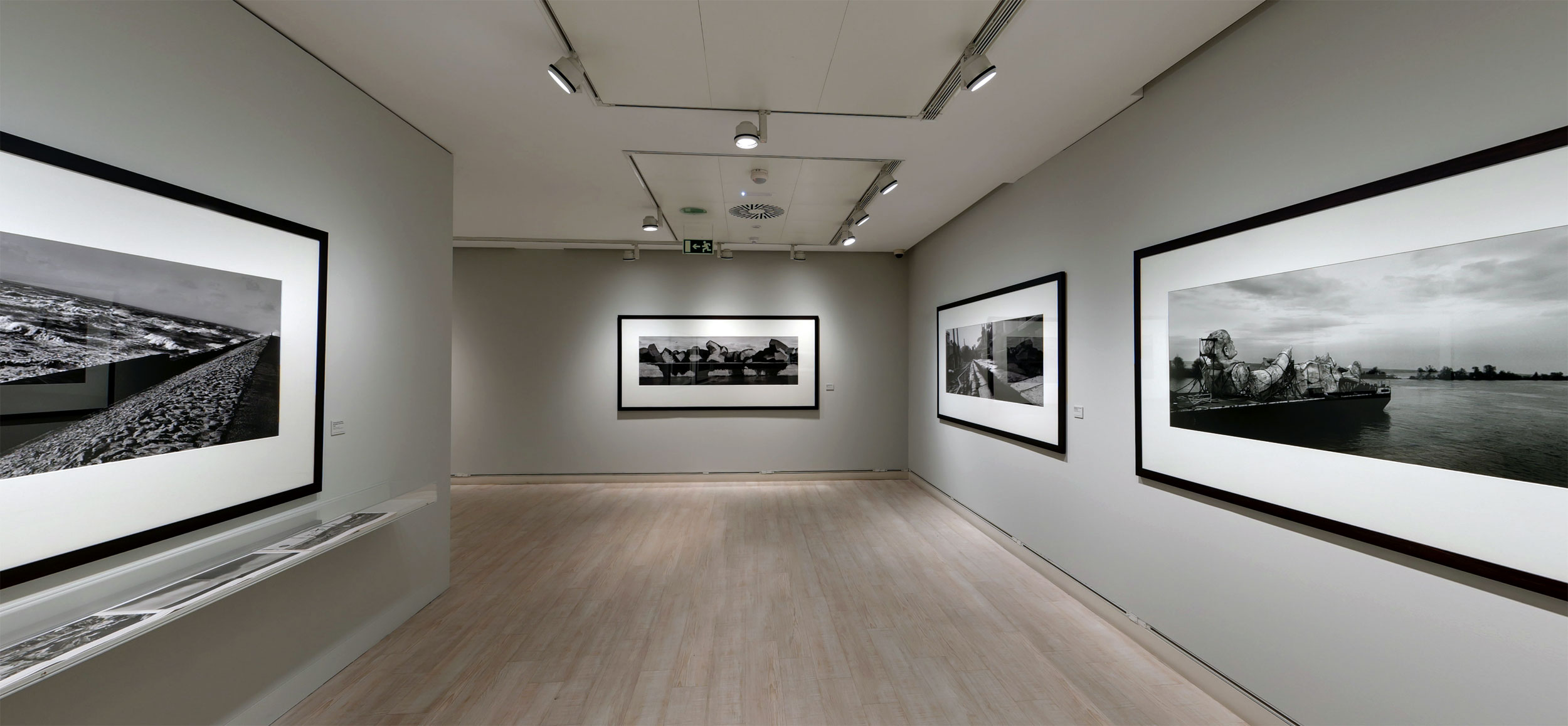
Looking at the installation photographs, without knowing the names of the individual images, is instructive. Notice how graphically strong his organisation of the picture plane is. Usually one or two, three at the most, strong vertical or horizontal elements – dark on dark, light on dark; man and hovercraft; figures on pavement; women, tree and building; assemblages of objects and light.

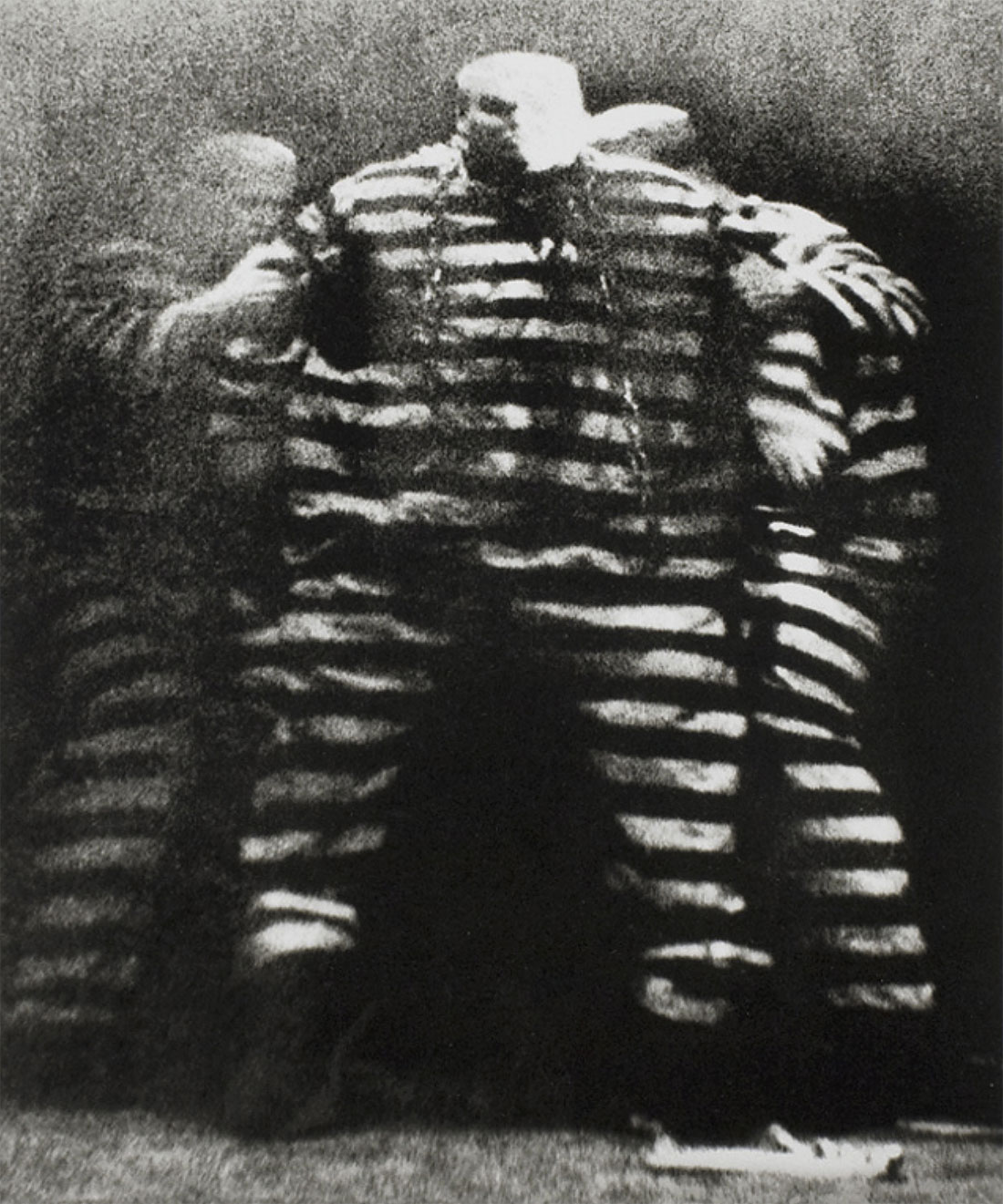
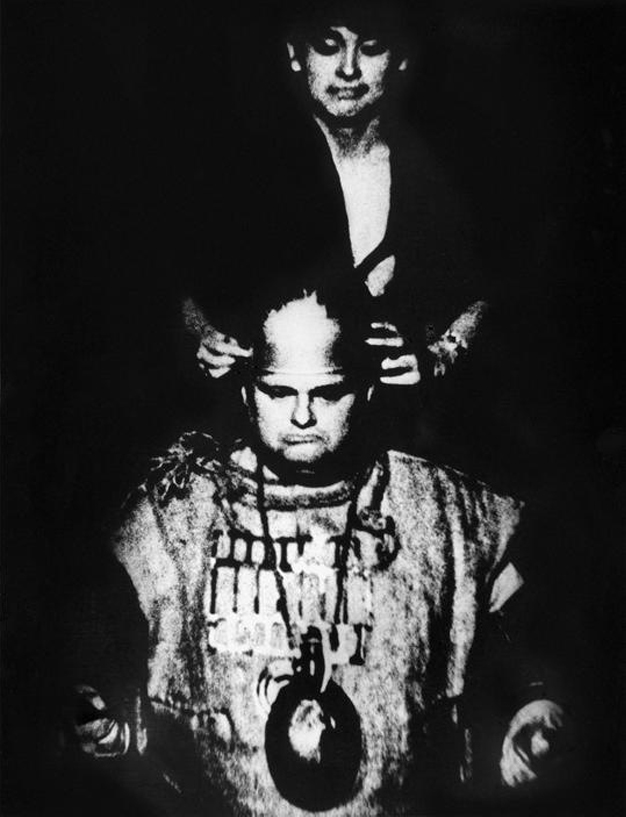
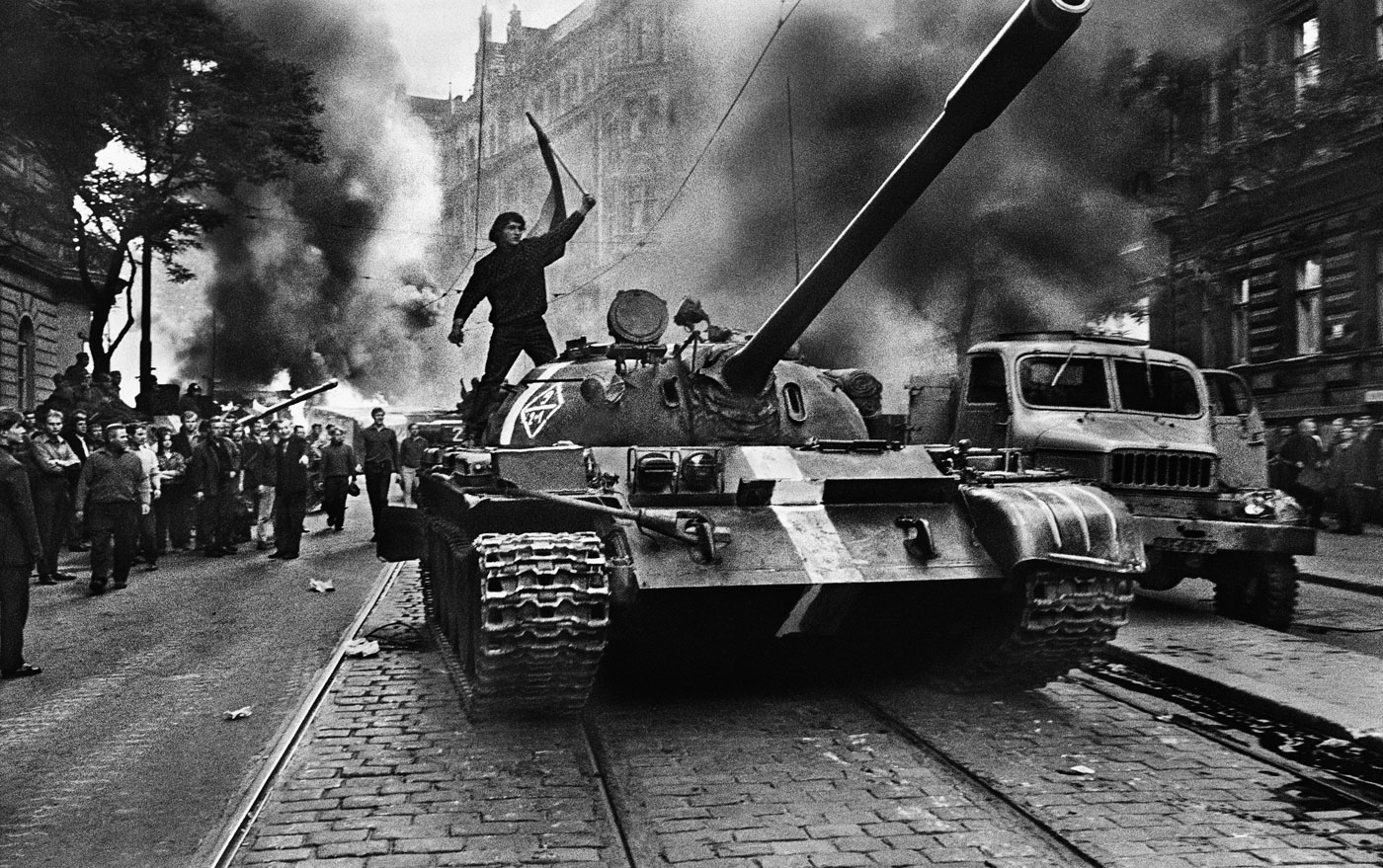
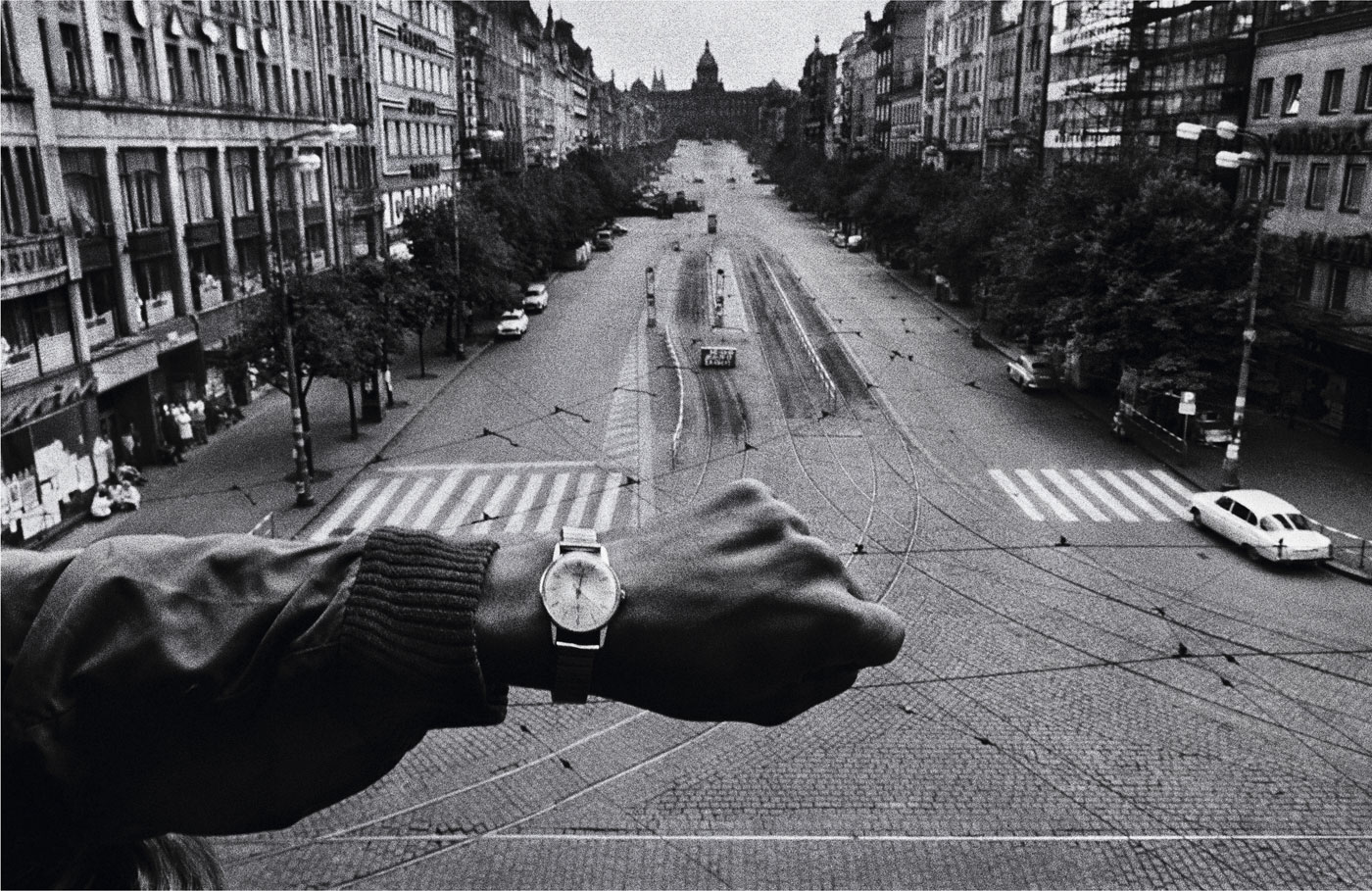
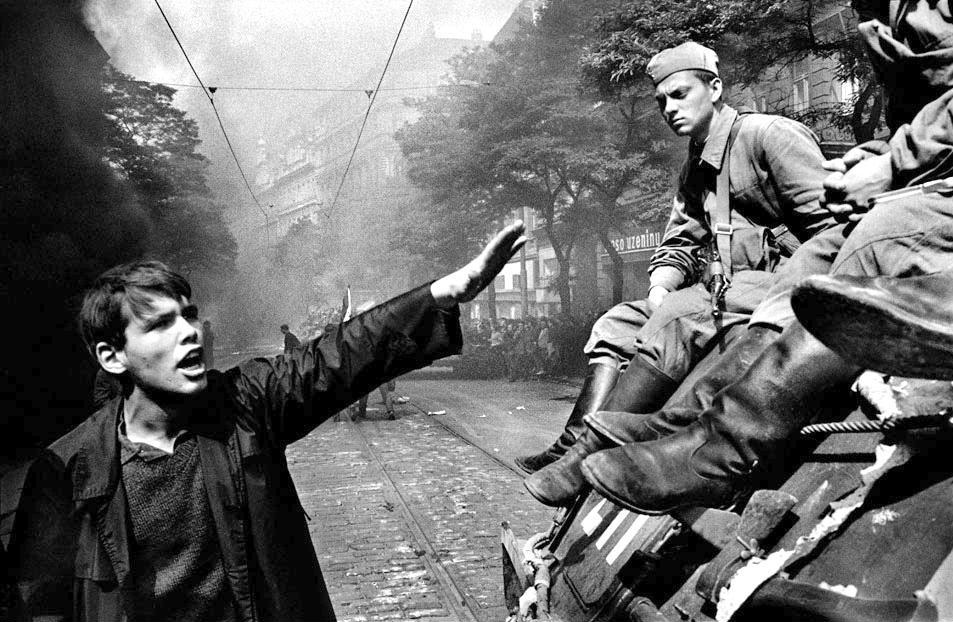
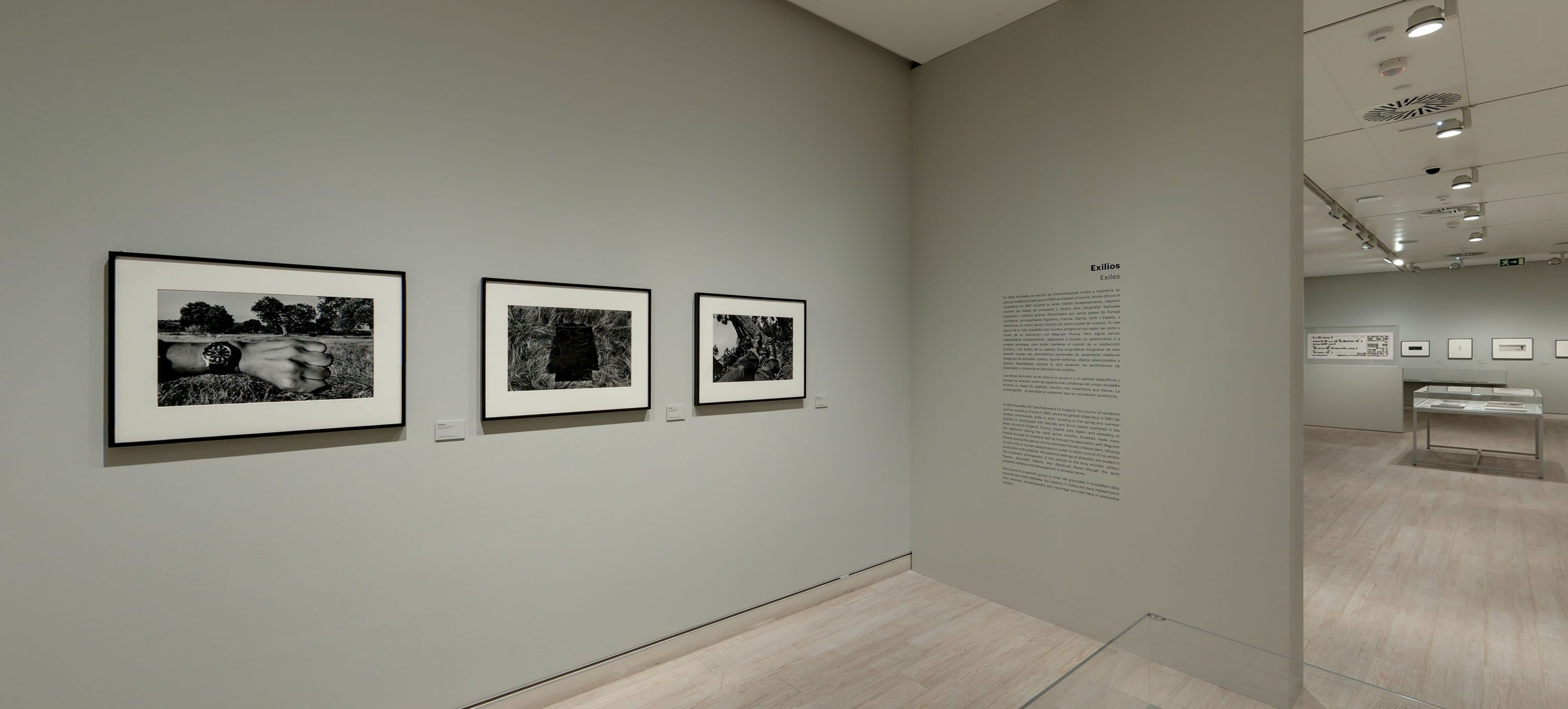
I believe all of his work links back to his sense of the theatre of memory, whether it be the landscapes and sceneries of the outdoors taken in Prague, and on trips to Slovakia, Poland and Italy or the psychological interior of the mind of his theatre characters as he portrays them through photography. From the mystery and exoticism of the Gypsies series, to the recording of history, time and conflict of the Invasion photographs (witness the Hand and wristwatch). From the metaphysical symbols of isolation (lost animals, lonely figures, scattered objects and displaced Gypsies) in Exiles, which is the core of the Koudelka vital experience, to the destruction of ancient archaeological sites and depictions of places that have been mined, swept away or marked by the scars of industrialisation, devastated by wars and altered by time in his panoramic format photographs.

These theatres of the divine, theatres of the mind are ‘Theatres of Memory’ in which the 16th century Italian philosopher Guilio Camillo asks the question: How is the motion of the memory connected with the motion of history? How is the personal political?

Koudleka’s probing of this question is present in every one of his images. Through his inquiry “he maintains a total unity through the photographer’s vision.” The artist forms mental and physical images of the things he wants to remember, that he wants us to remember, using theatrical spaces… and his subjective thoughts bind us, closely, to collective memories.

“History… is a nightmare from which I am trying to awake.”

~ James Joyce, Ulysses


Dr Marcus Bunyan


Many thankx to Fundación MAPFRE for allowing me to publish the photographs in the posting. Please click on the photographs for a larger version of the image.


Installation view of the exhibition 'Josef Koudelka: Uncertain Nationality' at Fundación MAPFRE, Madrid


Installation view of the exhibition Josef Koudelka: Uncertain Nationality at Fundación MAPFRE, Madrid


FUNDACIÓN MAPFRE presents the most complete retrospective exhibit up to this day dedicated to the Czech photographer of French nationality Josef Koudelka (b. 1938), member for the past forty years of Magnum Photos agency.

Engineer by profession, Koudelka became committed to the photographic medium in the middle of the sixties and became one of the most influential authors of his generation. Halfway between the artistic and documentary, Josef Koudelka is now a living legend. He has received prestigious awards in recognition of his work, among others, the Grand Prix National de la Photographie (1989), the Grand prix Cartier-Bresson (1991), and the International Award in Photography of the Hasselblad Foundation (1992).

This exhibition goes through his entire trajectory that covers more than five decades of work. The extensive selection with more than 150 works reflects his first experimental projects produced at the end of the fifties and during the sixties, as well as his historic series Gypsies, Invasion and Exiles and reaching the great panoramic landscapes produced in the last years. In addition the exhibition includes important documental material, the majority unpublished – layouts, pamphlets, magazines of the period among others –, that allows us to delve into the work as well as the creative process of this author.

The title of the exhibition is Uncertain Nationality, which describes the sense of not belonging to a place, a sense of disorientation so present in his work since his exile from Czechoslovakia after the invasion of Prague, and his permanent interest in territories in conflict.

Press release from Fundación MAPFRE


Installation view of the exhibition 'Josef Koudelka: Uncertain Nationality' at Fundación MAPFRE, Madrid

Installation view of the exhibition 'Josef Koudelka: Uncertain Nationality' at Fundación MAPFRE, Madrid


Installation views of the exhibition Josef Koudelka: Uncertain Nationality at Fundación MAPFRE, Madrid


Introduction

In the mid-1950s, when a new youth culture characterised by an open mindset was beginning to emerge in Czechoslovakia following the death of the Soviet leader Joseph Stalin and after two decades of brutal repression, Josef Koudelka (born in Czechoslovakia in 1938 and nationalised French) left his village in Moravia and moved to the capital, Prague. An aeronautical engineer by training, Koudelka became very actively involved in photography in the mid-1960s, contributing to the creative renaissance that took place in his native country.

Koudelka not only immortalised these years with his camera but also embodied them. He spent lengthy periods in gypsy encampments in Slovakia, he compulsively photographed actors during play rehearsals, and he mingled with demonstrators and soldiers in August 1968 in order to capture the invasion of Prague by the Soviet troops. When Koudelka went into exile shortly afterward she acquired the official status of “nationality doubtful”, becoming a stateless person as he was unable to produce documentation proving that he was born in Czechoslovakia. He refused to be intimidated by this situation, however, and continued to travel and take photographs, allowing gypsy communities and traditional and religious festivals to decide his destinations.

Koudelka settled in Paris in the 1980s and after the fall of Communism returned to Prague in 1990 where he now has a second home. Nonetheless, he continues to be a traveller, committed over the past twenty-five years to the creation of panoramic photographs that depict landscapes around the world which have been altered and often devastated by the hand of man.

This exhibition encompasses Josef Koudelka’s entire career, spanning more than five decades of work. The comprehensive selection of images on display includes his first experimental projects of the 1950s and 1960s and his historic series Gypsies, Invasion and Exiles, concluding with the great panoramic landscapes of recent years. In addition, visitors will see important documentary material, most of it previously unpublished and including layouts, leaflets and magazines of the period which contribute to a deeper understanding of this artist’s work and creative process.


Installation view of the Theatre section of the exhibition 'Josef Koudelka: Uncertain Nationality' at Fundación MAPFRE, Madrid

Installation view of the Theatre section of the exhibition 'Josef Koudelka: Uncertain Nationality' at Fundación MAPFRE, Madrid

Installation view of the Theatre section of the exhibition 'Josef Koudelka: Uncertain Nationality' at Fundación MAPFRE, Madrid


Installation view of the Theatre section of the exhibition Josef Koudelka: Uncertain Nationality at Fundación MAPFRE, Madrid


Early years + theatre

Early years and Experiments

Josef Koudelka was immersed in the ambiance of liberalization that occurred in Czechoslovakia after the death of Josef Stalin in 1953 who had subjected the country to a brutal repression for two decades. Koudelka began to photograph professionally in 1958 and create a series of landscapes and sceneries of the outdoors taken in Prague, and on trips to Slovakia, Poland and Italy. Right away, the camera accompanied him on all of his trips, which would herald his impulse to work as an independent photographer and nomad for more than forty years.

Koudelka dates his first serious photographic activity to 1958. Between that date and 1962 he produced a body of work which encompassed landscapes and outdoor views taken in Prague and during trips to Slovakia, Poland and Italy. Travel and its associated discoveries were a permanent stimulus to his creativity as a photographer. During these early years Koudelka assiduously studied the possibilities of giving form to the photographic image before and after the actual shot was taken. Initially, he inclined to manipulation subsequent to exposure, such as cropping and the use of experimental techniques in the dark room.

The Theatre

In the 1960s Koudelka worked free-lance for the most important Czech theatrical companies, Divadloza Branou (Theatre behind the Door) and Divadlona Zábradlí (Theatre on the Balustrade). As such, he evolved a new way of photographing that involved the repetition and prior visualisation of the image. Working rapidly and close to the actors on the stage while they were rehearsing, Koudelka constantly moved around them until he had the desired image in his mind. The harsh, exaggerated theatrical lighting proved difficult to photograph, obliging him to force the development of his films with low exposures. Ultimately, a detail that interested him in an image might only occupy a small part of the negative and thus required significant blowing-up and laborious manipulation during the developing process in order to obtain a legible copy. Koudelka’s images of theatrical performances were used for promotional purposes and often appeared on the front cover and in the pages of the magazine Divadlo (Theatre).

Text from the Fundación MAPFRE Josef Koudelka website [Online] Cited 22/11/2021. No longer available online


Josef Koudelka (Czech-French, b. 1938) 'An Hour of Love by Josef Topol, Divadlo za branou [Theater behind the Door], Prague' 1968 from the exhibition 'Josef Koudelka: Uncertain Nationality' at Fundación MAPFRE, Madrid, Sept - Nov, 2015


Josef Koudelka (Czech-French, b. 1938)
An Hour of Lov
e by Josef Topol, Divadlo za branou [Theater behind the Door], Prague
1968
© Josef Koudelka/Magnum Photos


Josef Koudelka (Czech-French, b. 1938) 'Theatre on the Balustrade, King Ubu (by playwright Alfred Jarry), Prague' 1964 from the exhibition 'Josef Koudelka: Uncertain Nationality' at Fundación MAPFRE, Madrid, Sept - Nov, 2015


Josef Koudelka (Czech-French, b. 1938)
Theatre on the Balustrade, King Ubu (by playwright Alfred Jarry), Prague
1964
© Josef Koudelka/Magnum Photos


Josef Koudelka (Czech-French, b. 1938) 'Alfred Jarry's Uburoi, Divadlo na zábradlí, Prague' 1964


Josef Koudelka (Czech-French, b. 1938)
Alfred Jarry’s Uburoi, Divadlo na zábradlí, Prague
1964
Gelatin silver, early print
© Josef Koudelka / Magnum Photos


Josef Koudelka (Czech-French, b. 1938) 'Czechoslovakia' 1960


Josef Koudelka (Czech-French, b. 1938)
Czechoslovakia
1960
Gelatin silver, early print
The Art Institute of Chicago, gift of the artist
© Josef Koudelka / Magnum Photos


Installation view of the Gypsies section of the exhibition 'Josef Koudelka: Uncertain Nationality' at Fundación MAPFRE, Madrid

Installation view of the Gypsies section of the exhibition 'Josef Koudelka: Uncertain Nationality' at Fundación MAPFRE, Madrid

Installation view of the Gypsies section of the exhibition 'Josef Koudelka: Uncertain Nationality' at Fundación MAPFRE, Madrid


Installation views of the Gypsies section of the exhibition Josef Koudelka: Uncertain Nationality at Fundación MAPFRE, Madrid


Gypsies

In 1961 Koudelka started to take photographs in villages and gypsy encampments. He initially continued with his habitual employment as an engineer but this photographic endeavour soon became a project that would define his artistic career and give rise to the series Gypsies. He returned again and again to around eighty different places in Slovakia and the Czech regions of Moravia and Bohemia (now part of the Czech Republic), principally between 1963 and 1970, taking thousands of photographs from which he selected various hundreds and finally a few dozen that he most preferred, entitling them with the name of the place where they were taken. The varied compositions – interiors, individual and group portraits, and landscapes – allow the subjects space to be themselves while maintaining a total unity through the photographer’s vision. These works also constitute views onto a world which seemed very exotic at that time, even for other Czechs and Slovaks, but which was nonetheless quite self-sufficient and as universally accessible as ancient myths.

The first exhibition of this series, held in the lobby of the Divadloza Branou (Theatre behind the Door) in Prague in March 1967, only included twenty-seven photographs. The twenty-two prints that have survived from that event are included in the present exhibition, mounted on their original panels and displayed as a group, as they were almost fifty years ago.

Text from the Fundación MAPFRE Josef Koudelka website [Online] Cited 22/11/2021. No longer available online


Josef Koudelka (Czech-French, b. 1938) 'Bohemia' 1966


Josef Koudelka (Czech-French, b. 1938)
Bohemia
1966
Gelatin silver, print 1967
The Art Institute of Chicago, gift of the artist
© Josef Koudelka / Magnum Photos


Josef Koudelka (Czech-French, b. 1938) 'Moravia (Strážnice)' 1966


Josef Koudelka (Czech-French, b. 1938)
Moravia (Strážnice)
1966
Gelatin silver, print 1967
Art Institute of Chicago, gift of the artist
© Josef Koudelka / Magnum Photos


Josef Koudelka (Czech-French, b. 1938) 'Slovakia' 1963


Josef Koudelka (Czech-French, b. 1938)
Slovakia
1963
Gelatin silver, print 1967
The Art Institute of Chicago, promised gift of the artist
© Josef Koudelka / Magnum Photos


Josef Koudelka (Czech-French, b. 1938) 'Romania' 1968


Josef Koudelka (Czech-French, b. 1938)
Romania
1968
Gelatin silver, print 1980s
The Art Institute of Chicago, promised gift of Robin and Sandy Stuart
© Josef Koudelka / Magnum Photos


Josef Koudelka (Czech-French, b. 1938) 'Slovakia' 1963


Josef Koudelka (Czech-French, b. 1938)
Slovakia
1963
Gelatin silver, print 1967
The Art Institute of Chicago, Amanda TaubVeazie Endowment and Photography Gala Fund
© Josef Koudelka / Magnum Photos


Installation view of the Invasion section of the exhibition 'Josef Koudelka: Uncertain Nationality' at Fundación MAPFRE, Madrid


Installation view of the Invasion section of the exhibition Josef Koudelka: Uncertain Nationality at Fundación MAPFRE, Madrid


Invasion

In August 1968, shortly after returning to Czechoslovakia after a trip to Rumania where he had gone to photograph gypsy encampments, Koudelka woke up early one morning to discover that the Warsaw Pact forces led by the Soviet Union had invaded Prague. He immediately loaded his Exakta Varex camera with East German film and went out onto the street, tirelessly photograph the devastating occupation between 21 and 27 August. Koudelka climbed on tanks, encountered soldiers armed with machine guns (as did the demonstrators alongside him), and photographed the innumerable slogans and posters which appeared every day on the city’s walls and were then removed by the invading forces every evening. Koudelka penetrated into the heart of the resistance. A new era was dawning and his photographs became a powerful reminder of how that change first began.

His images became a document of the conflict and symbol of the spirit of the resistance movement. The rolls of film that he used to photograph the Prague struggle ended up in Western Europe illegally and the Koudelka images appeared in newspapers and magazines around the world. Koudelka spent that winter editing his photographs, selecting just a handful from among thousands of images. Finally, the negatives were smuggled out to the United States and with the help of the Magnum Photos agency were distributed to magazines and newspapers around the world on the occasion of the first anniversary of the invasion in 1969. Prior to 1984, when they were publicly exhibited for the first time in London with Koudelka’s name attached to them, these images were published anonymously and only attributed to “P.P”, standing for “Prague Photographer”, in order to avoid possible reprisals against Koudelka and his family.

Text from the Fundación MAPFRE Josef Koudelka website [Online] Cited 22/11/2021. No longer available online


Josef Koudelka (Czech-French, b. 1938) '(Czech citizen on sidewalk, wearing jacket with target)' 1968


Josef Koudelka (Czech-French, b. 1938)
(Czech citizen on sidewalk, wearing jacket with target)
1968
Gelatin silver print, early print
© Josef Koudelka / Magnum Photos


Josef Koudelka (Czech-French, b. 1938) '(Czech citizen on tank)' 1968


Josef Koudelka (Czech-French, b. 1938)
(Czech citizen on tank)
1968
Gelatin silver print, early print
The Art Institute of Chicago, promised gift of a private collector
© Josef Koudelka / Magnum Photos


Josef Koudelka (Czech-French, b. 1938) 'Hand and wristwatch' 1968


Josef Koudelka (Czech-French, b. 1938)
Hand and wristwatch
1968
Invasion by Warsaw Pact troops. Prague, Czechoslovakia, August 1968
Gelatin silver, print 1990
© Josef Koudelka / Magnum Photos


Josef Koudelka (Czech-French, b. 1938) 'At the Czechoslovak Radio building, Vinohradská Avenue' 1968


Josef Koudelka (Czech-French, b. 1938)
At the Czechoslovak Radio building, Vinohradská Avenue
1968
Invasion by Warsaw Pact troops. Prague, Czechoslovakia, August 1968
Gelatin silver print, early print
© Josef Koudelka / Magnum Photos


Josef Koudelka (Czech-French, b. 1938) '(Two Czech citizens with flag)' 1968


Josef Koudelka (Czech-French, b. 1938)
(Two Czech citizens with flag)
1968
Invasion by Warsaw Pact troops. Near the Radio Headquarters. Prague, Czechoslovakia, August 1968
Gelatin silver print, early print
© Josef Koudelka / Magnum Photos


Installation view of the Exiles section of the exhibition 'Josef Koudelka: Uncertain Nationality' at Fundación MAPFRE, Madrid

Installation view of the Exiles section of the exhibition 'Josef Koudelka: Uncertain Nationality' at Fundación MAPFRE, Madrid

Installation view of the Exiles section of the exhibition 'Josef Koudelka: Uncertain Nationality' at Fundación MAPFRE, Madrid


Installation views of the Exiles section of the exhibition Josef Koudelka: Uncertain Nationality at Fundación MAPFRE, Madrid


Exiles

In 1970 Koudelka left Czechoslovakia for Great Britain, where he lived until he moved to France in 1980, obtaining French citizenship in 1987. During his years of exile he worked tirelessly, travelling during the spring and summer in order to photograph traditional festivals and gypsy events in various countries in Western Europe, principally the UK, Ireland, Italy and Spain, then retiring to his darkroom in the winter. During this period of his life Koudelka made numerous friends on his travels and through his association with Magnum Photos. He remained totally independent, however, refusing to rent an apartment or accept commissions in order to retain control of his artistic output and to be in complete charge of his agenda. His enigmatic photographs of these years evoke his own feelings of isolation through images of animals running free, lone figures, abandoned objects and displaced gypsies, although his work presents these feelings of solitude and distance in very broad terms.

Josef Koudelka left Czechoslovakia in 1970 and petitioned to exile to the United Kingdom. While he was in exile, he continued to work throughout Europe on those routes marked by Gypsy religious festivals and folklore that are held annually. The alienation that he felt for not belonging to a nation is reflected in his Exiles work that shows symbols of isolation (lost animals, lonely figures, scattered objects and displaced Gypsies) which is the core of the Koudelka vital experience. Unclear nationality refers to the legal status that appears in the author’s travel documents each time he returned to the United Kingdom, his home base during the first decade of exile, since he did not have a Czechoslovakian passport and could not prove his birthplace.

The subjects in the series Exiles are not limited to a specific group or period, and while they are based on Koudelka’s own everyday experiences during his stateless period, they are more metaphysical than physical. Here autobiography and reportage maintain a relationship of productive tension.

Text from the Fundación MAPFRE Josef Koudelka website [Online] Cited 22/11/2021. No longer available online


Josef Koudelka (Czech-French, b. 1938) 'France' 1976


Josef Koudelka (Czech-French, b. 1938)
Still Life (Newspaper), France
1976
Gelatin silver, early print
© Josef Koudelka / Magnum Photos


Josef Koudelka (Czech-French, b. 1938) 'Parc de Sceaux, Hauts-de-Seine, France' 1987


Josef Koudelka (Czech-French, b. 1938)
Parc de Sceaux, Hauts-de-Seine, France
1987
Gelatin silver, early print
© Josef Koudelka / Magnum Photos


Josef Koudelka (Czech-French, b. 1938) 'Czechoslovakia' 1968


Josef Koudelka (Czech-French, b. 1938)
Czechoslovakia
1968
Gelatin silver, early print
© Josef Koudelka / Magnum Photos


Josef Koudelka (Czech-French, b. 1938) 'Ireland' 1972


Josef Koudelka (Czech-French, b. 1938)
Ireland
1972
Gelatin silver, early print
© Josef Koudelka / Magnum Photos


Installation view of the Panoramas section of the exhibition 'Josef Koudelka: Uncertain Nationality' at Fundación MAPFRE, Madrid

Installation view of the Panoramas section of the exhibition 'Josef Koudelka: Uncertain Nationality' at Fundación MAPFRE, Madrid


Installation views of the Panoramas section of the exhibition Josef Koudelka: Uncertain Nationality at Fundación MAPFRE, Madrid


Panoramas

Since 1986 Koudelka has been taking photographs with panoramic cameras. His first project, commissioned by the Mission Photographique Transmanche, depicted the landscape of northern France affected by the construction of the Channel Tunnel. Since then he has used the broad panoramic format to depict places that have been mined, swept away or marked by the scars of industrialisation, devastated by wars and altered by time. The artist’s most recent panoramic photographs show important remains of past civilisations discovered on archaeological sites in twenty countries, particularly those bordering the Mediterranean.

Since 1986, Koudelka was using a panoramic camera. He uses this expanded format to show territories devastated by conflicts or altered with the passage of time. These images are the core of his impressive foldout publications such as Black Triangle or Chaos that shows scenery on the edge of ruins.

In 2007 Koudelka was invited along with eleven other photographers to take part in a project to explore the complex situation in Israel and Palestine. Despite his initial doubts, he accepted on the condition that he should be allowed to work as he wished and that he could focus on the wall in the West Bank and the area surrounding it on both sides. Having “grown up in Czechoslovakia, behind a wall”, Koudelka immediately pinpointed this barrier, with its physical, environmental and metaphorical connotations, as the subject that most interested him. This extensive system of concrete walls and barbed-wire fences allowed him to take full advantage of the broad panoramic format that he had been using since the 1980s, while the subject also gave him the opportunity to focus on the region’s landscape.

More recently, Josef Koudelka used this format to document the border of the West Bank and the territories that surround it such as the Negev desert or the Golan Heights. This work, Wall, urges the spectator to see the desolation of vast scenery dominated by walls, barbed-wire fences, access roads and borders. In the exhibition, there is a selection of copies from this work together with the book published in 2014. The panoramics are impressive objects that are between 1.2 and 1.8 m long. In these panoramics we perceive a scenery created by the man that tells his story, as well as the transformations that he has suffered due to human pillage, meaning: through his photographs we see man as creator and destroyer of the world.

Between 1991 and 2015, Josef Koudelka visited twenty countries bordering the Mediterranean, stopping at over two hundred Greek and Roman archaeological sites to create his series Archaeology. This was an unprecedented exploration which has not yet been completed – Koudelka keeps visiting archaeological sites in Greece, Turkey, Tunisia, Algeria, Syria, Jordan, Egypt, Lebanon and other Mediterranean countries – searching not for the documents of the sites, but for the most perfect images of their existence.


Josef Koudelka (Czech-French, b. 1938) 'France (Nord Pas-de-Calais)' From the series 'Chaos', 1989


Josef Koudelka (Czech-French, b. 1938)
France (Nord Pas-de-Calais)
From the series Chaos, 1989
Inkjet, print 2013
© Josef Koudelka / Magnum Photos


Josef Koudelka (Czech-French, b. 1938) 'Lebanon (Beirut)' From the series 'Chaos', 1991


Josef Koudelka (Czech-French, b. 1938)
Lebanon (Beirut)
From the series Chaos, 1991
Gelatin silver, print 1999
© Josef Koudelka / Magnum Photos


Josef Koudelka (Czech-French, b. 1938) 'Jordan (Amman)' from the series 'Archaeology', 2012


Josef Koudelka (Czech-French, b. 1938)
Jordan (Amman)
from the series Archaeology, 2012
Inkjet print, 2013
© Josef Koudelka / Magnum Photos


Josef Koudelka (Czech-French, b. 1938) 'Israel-Palestine (Al 'Eizariya [Bethany])' From the series 'Wall', 2010


Josef Koudelka (Czech-French, b. 1938)
Israel-Palestine (Al ‘Eizariya [Bethany])
From the series Wall, 2010
Inkjet, print 2014
© Josef Koudelka / Magnum Photos


Fundación MAPFRE – Instituto de Cultura
Paseo de Recoletos, 23
28004 Madrid, Spain
Phone: +34 915 81 61 00

Opening hours:
Mondays (except holidays): 2 pm – 8 pm
Tuesday to Saturday: 11 am – 8 pm
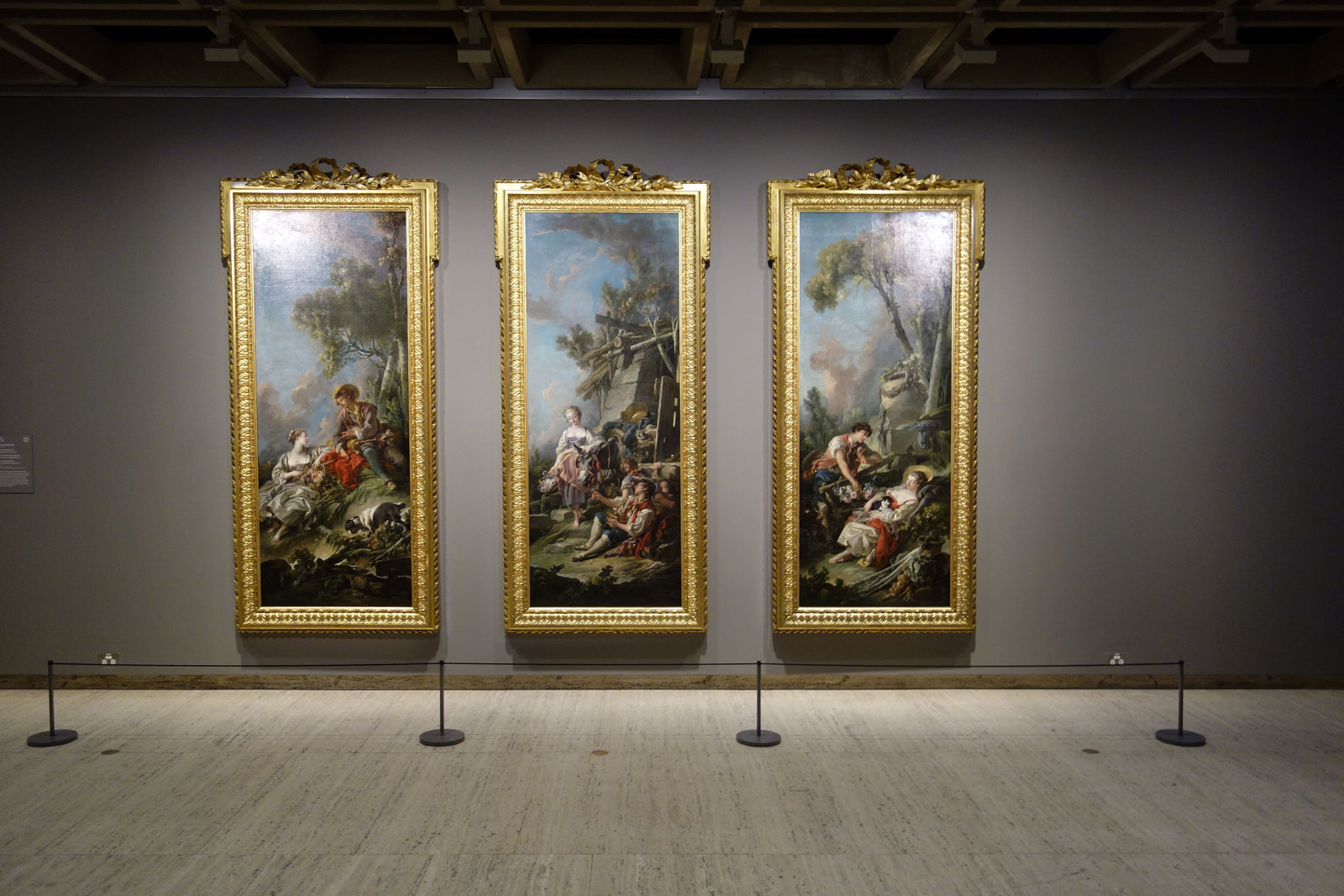
Sunday and holidays: 11 am – 7 pm

Fundación MAPFRE website

LIKE ART BLART ON FACEBOOK

Back to top

Exhibition: ‘The Greats: Masterpieces from the National Galleries of Scotland’ at the Art Gallery of New South Wales (AGNSW), Sydney Part 1

Exhibition dates: 24th October, 2015 – 14th February, 2016

Curator: Richard Beresford, Senior Curator of European art at AGNSW; Richard Johnson designed the installation


Entrance to the Art Gallery of New South Wales, Sydney


Entrance to the Art Gallery of New South Wales, Sydney
Photo: © Marcus Bunyan and the Art Gallery of New South Wales


I was lucky enough to be up in Sydney to review the Julia Margaret Cameron exhibition at the Art Gallery of New South Wales… and the media preview for The Greats was on. What an unexpected bonus!

This is part 1 of a monster 2 part posting on the exhibition which, in all honesty, is a bit of a hotchpotch of a blockbuster. But my god, what a hotchpotch it is.

Highlights in part 1 of the posting include:

~ The vibrancy and folds of the pink dress of the Virgin as it flows down and under the Christ child in Botticelli’s The Virgin adoring the sleeping Christ child, c. 1485

~ The stillness and intensity, colouration of the figures in Johannes Vermeer’s Christ in the house of Martha and Mary, c. 1654-1655

~ The glorious “atmosphere”, light and colour in Jan Lievens’ Young man in yellow c. 1630-1631, one of the unexpected highlights of the exhibition

~ The intensity of the painting, the precision and care in Diego Velazquez’s An old woman cooking eggs 1618. Now that is really looking at the world

~ And the glorious frames of all these works. I do like a good frame!


View part 2 of the posting.

Dr Marcus Bunyan


Many thankx to the AGNSW for allowing me to publish the art work in the posting. Please click on the photographs for a larger version of the image. All installation photographs © Marcus Bunyan and the Art Gallery of New South Wales.


Installation photograph of Titian (Tiziano Vecellio) (Italian, c. 1485/90-1576) 'Venus rising from the sea (Venus Anadyomene)' c. 1520-1525

Installation photograph of Titian (Tiziano Vecellio) (Italian, c. 1485/90-1576) 'Venus rising from the sea (Venus Anadyomene)' c. 1520-1525

Installation photograph of Titian (Tiziano Vecellio) (Italian, c. 1485/90-1576) 'Venus rising from the sea (Venus Anadyomene)' c. 1520-1525


Installation photographs of Titian (Tiziano Vecellio) (Italian, c. 1485/90-1576) Venus rising from the sea (Venus Anadyomene) (c. 1520-25)
Photos: © Marcus Bunyan and the Art Gallery of New South Wales


Titian (Tiziano Vecellio) (Italian, c. 1485/90-1576) 'Venus rising from the sea (Venus Anadyomene)' c. 1520-1525 from the exhibition 'The Greats: Masterpieces from the National Galleries of Scotland' at the Art Gallery of New South Wales (AGNSW), Sydney, Oct 2015 - Feb 2016


Titian (Tiziano Vecellio) (Italian, c. 1485/90-1576)
Venus rising from the sea (Venus Anadyomene)
c. 1520-1525
Oil on canvas
74 x 56.2cm
Scottish National Gallery, Edinburgh
© Trustees of the National Galleries of Scotland


Titian was the most celebrated Venetian painter of his time. His wealthy and learned patrons spanned across Europe. Well-versed in classical art and literature, including the myths of ancient Greece and Rome, they fuelled a strong demand for paintings like Venus rising from the sea c. 1520-1525. According to legend, Venus, the goddess of love and beauty, was born fully grown from the sea. She was then carried to land upon a scallop shell, blown by the zephyr winds.

In Venus rising from the sea, Titian has painted the goddess as a beautiful and voluptuous woman, emerging from the sea and wringing out her wet hair, with a miniature version of her scallop shell floating nearby. Her long auburn locks, milky skin and blushing cheeks are sensuous and tactile, suggesting her seductive powers as the goddess of love. Venus’s gracious, twisting pose recalls classical statues of the goddess. Titian rarely made preparatory drawings for his paintings, preferring to work straight onto the canvas, applying subtle gradations of colour in soft, feathery brushstrokes. He also used live models to pose for his figures, which was uncommon in the early 1500s. This lends the painting its great liveliness and sensuality – qualities that have made Titian justly famous.


Sandro Botticelli (Italian, 1444/45-1510) 'The Virgin adoring the sleeping Christ child' ('The Wemyss Madonna') c. 1485 (installation view)

Sandro Botticelli (Italian, 1444/45-1510) 'The Virgin adoring the sleeping Christ child' ('The Wemyss Madonna') c. 1485 (installation view)


Sandro Botticelli (Italian, 1444/45-1510)
The Virgin adoring the sleeping Christ child (‘The Wemyss Madonna’) (installation views)
c. 1485
Tempera, oil and gold on canvas
122 x 80.5cm
Scottish National Gallery, Edinburgh
© Trustees of the National Galleries of Scotland
Photos: © Marcus Bunyan and the Art Gallery of New South Wales


Sandro Botticelli (Italian, 1444/45-1510) 'The Virgin adoring the sleeping Christ child' ('The Wemyss Madonna') c. 1485 (installation view detail)

Sandro Botticelli (Italian, 1444/45-1510) 'The Virgin adoring the sleeping Christ child' ('The Wemyss Madonna') c. 1485 (installation view detail)


Sandro Botticelli (Italian, 1444/45-1510)
The Virgin adoring the sleeping Christ child (‘The Wemyss Madonna’) (installation details)
c. 1485
Tempera, oil and gold on canvas
122 x 80.5cm
Scottish National Gallery, Edinburgh
© Trustees of the National Galleries of Scotland
Photos: © Marcus Bunyan and the Art Gallery of New South Wales


Painted by one of the most outstanding artists of the Italian Renaissance, The Virgin adoring the sleeping Christ child c. 1485 is the earliest work in the exhibition. It has not left the United Kingdom since 1846 and The Greats presents the first time in almost three decades that any painting by Botticelli has been exhibited in Sydney. In this devotional painting, the Virgin Mary kneels silently and prays before her son, the infant Jesus Christ, in a rose-filled garden. Her gown and cloak spill onto the ground to provide a pillow for the child, who is nestled among the flowers, asleep. Its simple composition, focusing on just the two figures, invites quiet contemplation.

Like many Renaissance paintings, the picture is rich in symbolism. The enclosed garden is a reference to the purity of the Virgin, who was often called ‘a rose without thorns’. Some symbols are more ominous. The sleeping child with his pallid complexion is presumably a reference to Christ’s eventual death. The red strawberry plant in the lower right corner symbolises the blood he will shed on the cross. Technically the painting is unusual for the Florentine artist: it is quite small and has been painted on canvas rather than wooden panel. This suggests it was intended for a private home or convent, rather than a public space like a church.


Installation view of the exhibition 'The Greats: Masterpieces from the National Galleries of Scotland' at the Art Gallery of New South Wales, Sydney showing at left, Domenichino's 'The adoration of the shepherds' (c. 1606-1608)


Installation view of the exhibition The Greats: Masterpieces from the National Galleries of Scotland at the Art Gallery of New South Wales, Sydney showing at left, Domenichino’s The adoration of the shepherds (c. 1606-1608)
Photo: © Marcus Bunyan and the Art Gallery of New South Wales


Domenichino (Domenico Zampieri) (Italy, 1581-1641) 'The adoration of the shepherds' c. 1606-1608 from the National Galleries of Scotland' at the Art Gallery of New South Wales (AGNSW), Sydney, Oct 2015 - Feb 2016


Domenichino (Domenico Zampieri) (Italy, 1581-1641)
The adoration of the shepherds
c. 1606-1608
Oil on canvas
143 x 115cm
Scottish National Gallery, Edinburgh
Purchased 1971
© Trustees of the National Galleries of Scotland


Installation view of the exhibition 'The Greats: Masterpieces from the National Galleries of Scotland' at the Art Gallery of New South Wales, Sydney showing at centre, Sir Anthony van Dyck's 'Saint Sebastian bound for martyrdom' (c. 1620-1621)


Installation view of the exhibition The Greats: Masterpieces from the National Galleries of Scotland at the Art Gallery of New South Wales, Sydney showing at centre, Sir Anthony van Dyck’s Saint Sebastian bound for martyrdom (c. 1620-1621)
Photo: © Marcus Bunyan and the Art Gallery of New South Wales


Sir Anthony van Dyck (Southern Netherlands, 1599-1641) 'Saint Sebastian bound for martyrdom' c. 1620-1621 (installation view)

Sir Anthony van Dyck (Southern Netherlands, 1599-1641) 'Saint Sebastian bound for martyrdom' c. 1620-1621 (installation view)


Sir Anthony van Dyck (Southern Netherlands, 1599-1641)
Saint Sebastian bound for martyrdom (installation views)
c. 1620-1621
Oil on canvas
230 x 163.3cm
Scottish National Gallery, Edinburgh
Purchased by the Royal Institution, 1830; transferred, 1859
© Trustees of the National Galleries of Scotland
Photos: © Marcus Bunyan and the Art Gallery of New South Wales


Anthony van Dyck, the most successful pupil of Peter Paul Rubens, is regarded as one of the masters of the Flemish baroque. Painted just before Van Dyck left Flanders for Italy in 1621, this dramatic composition features Saint Sebastian, a Roman officer who converted secretly to Christianity. When Sebastian’s faith was discovered, he was tied to a tree and shot with arrows. Usually shown at the moment of his martyrdom, with the arrows piercing his body, here Sebastian has been portrayed prior to his execution. His twisting body and his upward-turned face seem to anticipate the punishment that is to come.


Sir Anthony van Dyck (Southern Netherlands, 1599-1641) 'Saint Sebastian bound for martyrdom' c. 1620-1621 (installation view detail)

Sir Anthony van Dyck (Southern Netherlands, 1599-1641) 'Saint Sebastian bound for martyrdom' c. 1620-1621 (installation view detail)


Sir Anthony van Dyck (Southern Netherlands, 1599-1641)
Saint Sebastian bound for martyrdom (installation view details)
c. 1620-1621
Oil on canvas
230 x 163.3cm
Scottish National Gallery, Edinburgh
Purchased by the Royal Institution, 1830; transferred, 1859
© Trustees of the National Galleries of Scotland
Photos: © Marcus Bunyan and the Art Gallery of New South Wales


The Greats: masterpieces from the National Galleries of Scotland is one of the most significant collections of European old master paintings ever seen in Australia and is presented as part of the Sydney International Art Series 2015-2016. Spanning a period of 400 years from the Renaissance to Impressionism, The Greats includes works by the most outstanding names in Western art, including Botticelli, Leonardo, Raphael, Titian, Rubens, Velázquez, Poussin, Rembrandt, Vermeer, Turner, Monet, Degas, Gauguin, and Cézanne.

This richly presented exhibition brings together over 70 of the greatest paintings and drawings from the National Galleries of Scotland, based in the beautiful capital city of Edinburgh. The Greats marks the first time these artworks have been exhibited in Australia, with the exception of Rembrandt’s A woman in bed (c. 1647) and Seurat’s La Luzerne, Saint-Denis (1884-1885). Botticelli’s Virgin adoring the sleeping Christ child (c. 1485) has not been exhibited outside of the United Kingdom in 169 years.

Director of the Art Gallery of New South Wales, Michael Brand, said it is a tremendous privilege to host such a fine collection of masterpieces in Sydney and that the Art Gallery of NSW is extremely grateful to the National Galleries of Scotland for their generosity and collegiality. “The Greats is a statement of unequivocal artistic excellence – each piece in this exhibition is of extraordinary quality. We are excited to provide Australian audiences the rare opportunity to come face to face with such unique and masterful artworks,” Brand said.

“Approaching the entrance to the Art Gallery of NSW, we are reminded of Sydney’s historic aspirations for viewing the creations of European old masters, with names such as Titian, Rembrandt and Botticelli adorning the Gallery’s sandstone facade. It is with great pleasure that we now welcome incredible works by these artists to our interior walls, into a sublime exhibition space that promises a moving and absorbing experience for all visitors,” Brand added.

Director of the Scottish National Gallery, Michael Clarke, said, “We are delighted to present some of the finest masterworks from the National Galleries of Scotland at the distinguished Art Gallery of New South Wales. The Gallery provides a marvellous venue for our exhibition, which includes a selection of paintings that have recently toured to art institutions in America, including the de Young in San Francisco and the Kimbell Museum in Fort Worth.”

Visitors to The Greats will experience the Scottish National Gallery’s famous interior with part of the exhibition space inspired by the Edinburgh gallery’s octagonal rooms with fabric walls of a sumptuous red – the traditional colour on which to hang old master paintings. This installation will serve to accentuate the grandeur of the paintings and foster an intimate experience with each of the artworks. A variety of associated public and education programs are on offer to visitors of all ages. Serving to engage the widest possible audience, the Gallery will host daily guided tours, lecture series, late night programs and a suite of other events designed to facilitate meaningful interactions with the artworks featured in The Greats.

Press release from the AGNSW


Installation view of the exhibition 'The Greats: Masterpieces from the National Galleries of Scotland' at the Art Gallery of New South Wales, Sydney

Installation view of the exhibition 'The Greats: Masterpieces from the National Galleries of Scotland' at the Art Gallery of New South Wales, Sydney showing Frans Hals' 'Portrait of Pieter(?) Verdonck' (c. 1627, left) and Johannes Vermeer's 'Christ in the house of Martha and Mary' (c. 1654-1655, centre)

Installation view of the exhibition 'The Greats: Masterpieces from the National Galleries of Scotland' at the Art Gallery of New South Wales, Sydney showing Frans Hals' 'Portrait of Pieter(?) Verdonck' (c. 1627, left) and Johannes Vermeer's 'Christ in the house of Martha and Mary' (c. 1654-1655, centre)


Installation views of the exhibition The Greats: Masterpieces from the National Galleries of Scotland at the Art Gallery of New South Wales, Sydney showing in the bottom two images, Frans Hals’ Portrait of Pieter(?) Verdonck (c. 1627, left) and Johannes Vermeer’s Christ in the house of Martha and Mary (c. 1654-1655, centre)
Photos: © Marcus Bunyan and the Art Gallery of New South Wales


Frans Hals (The Netherlands, 1582/3-1666) 'Portrait of Pieter(?) Verdonck' c. 1627 (installation view)


Frans Hals (The Netherlands, 1582/3-1666)
Portrait of Pieter(?) Verdonck (installation view)
c. 1627
Oil on panel
Scottish National Gallery
Presented by John J Moubray of Naemoor, 1916
© Trustees of the National Galleries of Scotland
Photo: © Marcus Bunyan and the Art Gallery of New South Wales
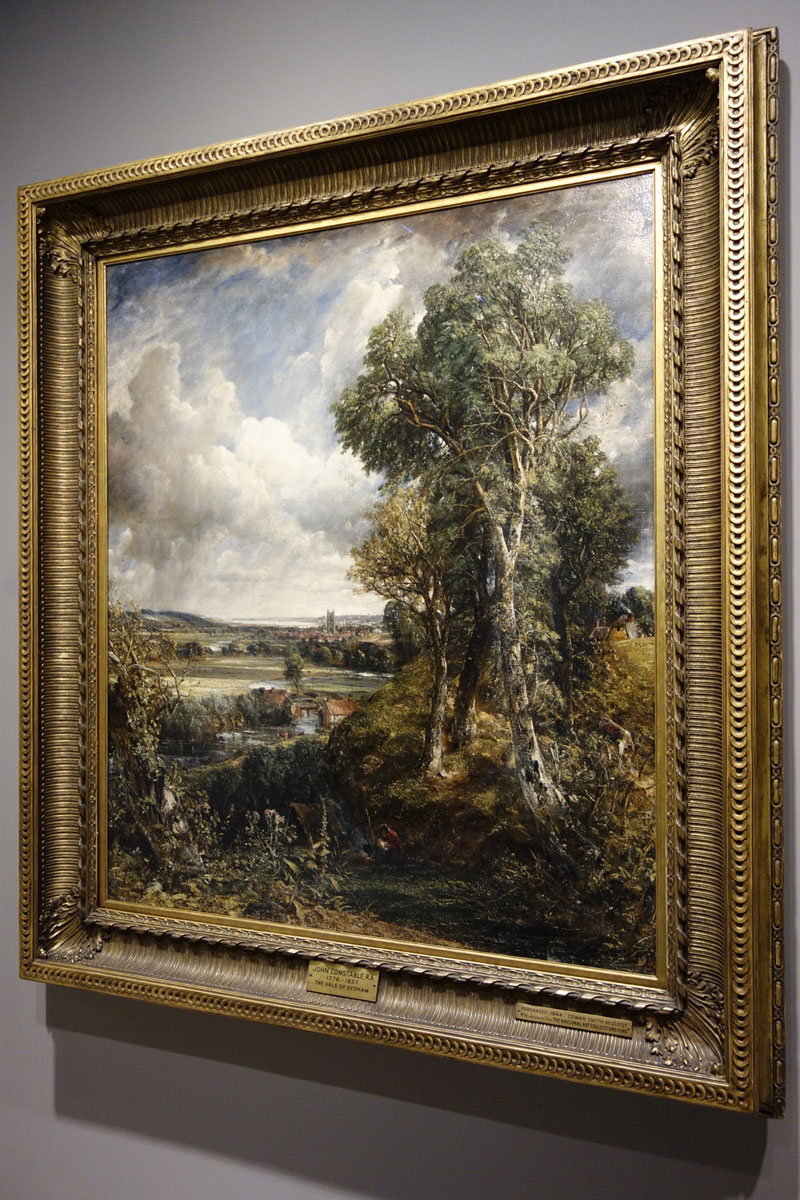
 

With his loose and seemingly spontaneous brushwork, combined with an exceptional ability to capture a sitter’s likeness and expression, Hals inspired generations of artists, from Jean-Honoré Fragonard to Édouard Manet. This portrait probably shows Pieter Verdonck, a Haarlem Mennonite, who was said to be aggressive and argumentative. In a contemporary engraving after the painting, an inscription reads: ‘This is Verdonck, that outspoken fellow, / whose jawbone attacks everyone.’ The jawbone that he holds is the same weapon used by the biblical hero Samson to kill the Philistines; here, it may refer to Verdonck’s ability to wound his enemies with his cutting words.


Frans Hals (The Netherlands, 1582/3-1666) 'Portrait of Pieter(?) Verdonck' c. 1627 (installation view detail)


Frans Hals (The Netherlands, 1582/3-1666)
Portrait of Pieter(?) Verdonck (installation view)
c. 1627
Oil on panel
Scottish National Gallery
Presented by John J Moubray of Naemoor, 1916
© Trustees of the National Galleries of Scotland
Photo: © Marcus Bunyan and the Art Gallery of New South Wales


Johannes Vermeer (The Netherlands, 1632-1675) 'Christ in the house of Martha and Mary' c. 1654-1655 (installation view)


Johannes Vermeer (The Netherlands, 1632-1675)
Christ in the house of Martha and Mary (installation view)
c. 1654-1655
Oil on canvas
Scottish National Gallery
Presented by the Sons of WA Coats in memory of their father, 1927
© Trustees of the National Galleries of Scotland
Photo: © Marcus Bunyan and the Art Gallery of New South Wales


The fame of Vermeer, now one of the best-known painter of the Dutch Golden Age, rests on just 36 paintings known to survive today. This canvas is music larger than his usual compositions and is the only one that illustrates a biblical subject. In spite of its uniqueness, the painting is replete with the quiet human interactions for which the artist is known. The scene depicts the story from Luke 10:38-42, in which Martha objected to her sister Mary listening to Jesus while she herself was busy serving. Given the substantial size of the canvas, it is likely that the painting was a specific commission, possibly intended for a Catholic church.


Installation view of the exhibition 'The Greats: Masterpieces from the National Galleries of Scotland' at the Art Gallery of New South Wales, Sydney showing at centre, Rembrandt van Rijn's 'A woman in bed' (164(7?)) and at right, Jan Lievens' 'Young man in yellow' (c. 1630-1631)


Installation view of the exhibition The Greats: Masterpieces from the National Galleries of Scotland at the Art Gallery of New South Wales, Sydney showing at centre, Rembrandt van Rijn’s A woman in bed (164(7?)) and at right, Jan Lievens’ Young man in yellow (c. 1630-1631)
Photo: © Marcus Bunyan and the Art Gallery of New South Wales


Rembrandt van Rijn (The Netherlands, 1606-1669) 'A woman in bed' 164(7?) (installation view)

Rembrandt van Rijn (The Netherlands, 1606-1669) 'A woman in bed' 164(7?) (installation view)


Rembrandt van Rijn (The Netherlands, 1606-1669)
A woman in bed (installation views)
164(7?)
Oil on canvas (formerly laid down on panel)
81.4 x 67.9cm (arched top)
Scottish National Gallery, Edinburgh Presented by William McEwan, 1892
© Trustees of the National Galleries of Scotland
Photos: © Marcus Bunyan and the Art Gallery of New South Wales


The model for this painting is still unidentified. She might be any one of the three main women in Rembrandt’s life: his wife, Saskia; his son’s nursemaid, Geertje Dircx; or his family’s servant girl, Hendrickje Stoffels. Though intimate in its appearance, the painting is probably not a portrait, as a bed would have been an inappropriate setting for a respectable female model. The figure most likely represents the biblical character Sarah from the Old Testament Book of Tobit. Rembrandt shows her watching anxiously as her bridegroom Tobias chases away the devil that had murdered each of her previous seven husbands on their wedding nights.


Rembrandt van Rijn (The Netherlands, 1606-1669) 'A woman in bed' 164(7?) (installation view detail)


Rembrandt van Rijn (The Netherlands, 1606-1669)
A woman in bed (installation view detail)
164(7?)
Oil on canvas (formerly laid down on panel)
81.4 x 67.9cm (arched top)
Scottish National Gallery, Edinburgh Presented by William McEwan, 1892
© Trustees of the National Galleries of Scotland
Photo: © Marcus Bunyan and the Art Gallery of New South Wales


Jan Lievens (The Netherlands, 1607-1674) 'Young man in yellow' c. 1630-1631 (installation view)


Jan Lievens (The Netherlands, 1607-1674)
Young man in yellow (installation view)
c. 1630-1631
Oil on canvas
112 x 99cm
Scottish National Gallery, Edinburgh
Purchased with the aid of the Cowan Smith Bequest Fund, 1922
© Trustees of the National Galleries of Scotland
Photo: © Marcus Bunyan and the Art Gallery of New South Wales


Jan Lievens (The Netherlands, 1607-1674) 'Young man in yellow' c. 1630-1631 (installation view detail)


Jan Lievens (The Netherlands, 1607-1674)
Young man in yellow (installation view detail)
c. 1630-1631
Oil on canvas
112 x 99cm
Scottish National Gallery, Edinburgh
Purchased with the aid of the Cowan Smith Bequest Fund, 1922
© Trustees of the National Galleries of Scotland
Photo: © Marcus Bunyan and the Art Gallery of New South Wales


Jan Lievens and Rembrandt van Rijn were two young artists working in Leiden in the years around 1630. They worked separately, though they engaged in artistic competition and exchange, as this painting suggests. The dramatically lit depiction of a young man posing as a commander with his gorget and baton is not a true portrait, but a tronie – a Dutch term for a painting that features an exaggerated facial expression or a figure in an almost theatrical costume. Both Lievens and Rembrandt experimented with tronies early in their careers, often introducing members of their families or their own likenesses.


Paolo Veronese (Italy, 1528-1588) 'Venus, Cupid and Mars' 1580s (installation view)

Paolo Veronese (Italy, 1528-1588) 'Venus, Cupid and Mars' 1580s (installation view)


Paolo Veronese (Italy, 1528-1588)
Venus, Cupid and Mars (installation views)
1580s
Oil on canvas
165.2 x 126.5cm
Scottish National Gallery, Edinburgh
Purchased by the Royal Institution, 1859; transferred, 1868
© Trustees of the National Galleries of Scotland
Photos: © Marcus Bunyan and the Art Gallery of New South Wales


Veronese was famous in his lifetime as a master of rich colour. His paintings often show exotic figures, sumptuous fabrics and such seemingly incidental details as the spaniel pictured at lower right. The depiction of a dog, a symbol of marital fidelity, was intended as a clever and ironic commentary on the adulterous relationship between Venus, the goddess of love and wife of Vulcan, and Mars, the god of war. This canvas was presented as a diplomatic gift on behalf of the Spanish Crown to King Charles 1 of Britain during his trip to Spain in 1623.


El Greco (Domenikos Theotokopoulos) (Greece/Spain, 1541-1614) 'An allegory (Fábula)' c. 1585-1595 (installation view)


El Greco (Domenikos Theotokopoulos) (Greece/Spain, 1541-1614)
An allegory (Fábula) (installation view)
c. 1585-1595
Oil on canvas
67.3 x 88.6cm
Scottish National Gallery, Edinburgh
Accepted by HM Government in lieu of inheritance tax (hybrid arrangement), with additional funding from the National Heritage Memorial Fund, the Art Fund, and Gallery funds, 1989
© Trustees of the National Galleries of Scotland
Photo: © Marcus Bunyan and the Art Gallery of New South Wales


This enigmatic composition has been described as an allegory to fable (fábula), though its specific meaning has long been debated. One possibility is that it is a recreation of a lost painting of a boy blowing a fire, made by the ancient artist Antiphilus of Alexandria and known from a text written in the 1st century by Pliny the Elder. The presence of the monkey evokes the classical notion of art as the ape of nature, while the man, whose toothy grin and red and yellow attire identify him as a jester, may allude to the ultimate folly of the painter’s aim of reproducing the visible world – or, perhaps, of imitating the ancients.


El Greco (Domenikos Theotokopoulos) (Greece/Spain, 1541-1614) 'An allegory (Fábula)' c. 1585-1595 (installation view detail)


El Greco (Domenikos Theotokopoulos) (Greece/Spain, 1541-1614)
An allegory (Fábula) (installation view detail)
c. 1585-1595
Oil on canvas
67.3 x 88.6cm
Scottish National Gallery, Edinburgh
Accepted by HM Government in lieu of inheritance tax (hybrid arrangement), with additional funding from the National Heritage Memorial Fund, the Art Fund, and Gallery funds, 1989
© Trustees of the National Galleries of Scotland
Photo: © Marcus Bunyan and the Art Gallery of New South Wales


Diego Velazquez (Spain, 1599-1660) 'An old woman cooking eggs' 1618 from the National Galleries of Scotland' at the Art Gallery of New South Wales (AGNSW), Sydney, Oct 2015 - Feb 2016


Diego Velazquez (Spain, 1599-1660)
An old woman cooking eggs
1618
Oil on canvas
100.5 x 119.5cm
Scottish National Gallery, Edinburgh
Purchased with the aid of the Art Fund and a special Treasury Grant, 1955
© Trustees of the National Galleries of Scotland


This simple scene of everyday life in seventeenth-century Spain displays the technical sophistication of painter Diego Velázquez. No Velázquez of comparable importance has been seen before in Australia. And indeed, the painting marks the Scottish National Gallery’s most expensive purchase to date. Painted in 1618 when the artist was just eighteen or nineteen years old, the work depicts an old woman cooking eggs in a red-glazed pot, while a young boy holds a flask of wine and a melon. The subjects were real people, perhaps family members or neighbours, and both reappear in other paintings by the artist. It is likely that Velázquez painted the objects and figures directly from life.

The scene is painted with utmost care and detail. His depiction of light and the textures of objects is meticulous – from the soft folds of the woman’s headscarf, to the thick glaze on a ceramic pot, to the warm sheen of light hitting brass or copper. Unlike other portrayals of everyday people and humble genre scenes, this portrait presents its subjects with dignity, without mockery or censure. The extraordinary skill of Velázquez was considered to be unprecedented in Spain at the time. Establishing himself as much-respected painter in his native Seville, the artist moved to the royal courts of Madrid in 1623 and was soon appointed painter to King Philip IV.


Gerrit Dou (The Netherlands, 1613-1675) 'An interior with a young viola player' 1637 (installation view)


Gerrit Dou (The Netherlands, 1613-1675)
An interior with a young viola player (installation view)
1637
Oil on oak panel
31.1 x 23.7cm (arched top)
Scottish National Gallery, Edinburgh
Purchased with the aid of the National Heritage Memorial Fund 1984
© Trustees of the National Galleries of Scotland
Photo: © Marcus Bunyan and the Art Gallery of New South Wales


Dou was the father of the so-called fijnschilders (fine painters), the Lieden school celebrated for its commitment to detailed illusionism and refined technique. This painting is rendered so precisely that it is possible to identify the open book, shown at centre, as De Friesche Lust-Hof (The Frisian pleasure garden), a popular Dutch songbook first published in 1621. The pages are turned to a comic number about the joys and sorrows of love, accompanied by an image of two lovers under a tree in a landscape. For the informed viewer, this depiction adds unexpected irony to the tranquil, melancholic portrayal of the young musician.


Art Gallery of New South Wales
Art Gallery Road, The Domain
Sydney NSW 2000, Australia

Opening hours:
Open every day 10am – 5pm
except Christmas Day and Good Friday

Art Gallery of New South Wales website

LIKE ART BLART ON FACEBOOK

Back to top

Exhibition: ‘Photography – A Victorian Sensation’ at the National Museum of Scotland, Edinburgh

Exhibition dates: 19th June – 22nd November, 2015

Curator: Dr. Alison Morrison-Low, Principal Curator of Science (and Photography) at National Museums Scotland


William Henry Fox Talbot (English, 1800-1877) 'The Open Door' 1844-1846 from the exhibition 'Photography – A Victorian Sensation' at the National Museum of Scotland, Edinburgh, June - Nov, 2015


William Henry Fox Talbot (English, 1800-1877)
The Open Door
1844-1846
Salt print from a calotype negative
Plate VI from the Pencil of Nature, the first book to be illustrated with photographs
© National Museums Scotland


In our contemporary image-saturated, comprehensively mediated way of life it is difficult for us to understand how “sensational” photography would have been in the Victorian era. Imagine never having seen a photograph of a landscape, city or person before. To then be suddenly presented with a image written in light, fixed before the eye of the beholder, would have been a profoundly magical experience for the viewer. Here was a new, progressive reality imaged for all to see. The society of the spectacle as photograph had arrived.

Here was the expansion of scopophilic society, our desire to derive pleasure from looking. That fetishistic desire can never be completely fulfilled, so we have to keep looking again and again, constantly reinforcing the ocular gratification of images. Photographs became shrines to memory. They also became shrines to the memory of desire itself.

Dr Marcus Bunyan


Many thankx to the National Museum of Scotland for allowing me to publish the photographs in the posting. Please click on the photographs for a larger version of the image.


Hill and Adamson


Dr Sara Stevenson, photo historian, talks about the origins of Hill and Adamson’s partnership and their photography skills.


Scottish daguerreotypes


Dr Alison Morrison Low, Principal Curator of Science, National Museums Scotland, talks about daguerreotype portraits in Scotland and the work of Thomas Davidson.


Amateur photographers: Julia Margaret Cameron


Anne Lyden, International Photography Curator, National Galleries of Scotland, talks about photographer Julia Margaret Cameron.


George Washington Wilson


Emeritus Professor Roger Taylor talks about George Washington Wilson’s life and work.


TR Williams


Dr Brian May, CBE, musician and collector of stereo-photography talks about the photography of TR Williams.


William Henry Fox Talbot (English, 1800-1877) 'The Ladder' 1844-1846 from the exhibition 'Photography – A Victorian Sensation' at the National Museum of Scotland, Edinburgh, June - Nov, 2015


William Henry Fox Talbot (English, 1800-1877)
The Ladder
1844-1846
Salt print from a calotype negative
Plate XIV from the Pencil of Nature, the first book to be illustrated with photographs
© National Museums Scotland


Calotype images are not as pin-sharp as daguerreotypes, but they had one great advantage: more than one image could be produced from a single negative. Yet both processes were cumbersome and very expensive. What was needed was a faster, cheaper method to really fuel the fire of Victorian photomania.


Daguerreotype camera, made by A Giroux et Cie, 1839


Giroux et Cie
Daguerreotype camera
1839
© National Museums Scotland


This camera was bought by WHF Talbot in October 1839.


William Henry Fox Talbot (English, 1800-1877) 'Talbot's home-made camera' 1840s


William Henry Fox Talbot (English, 1800-1877)
Talbot’s home-made camera
1840s
© National Museums Scotland


Some of his early equipment appears to have been constructed to his design by the estate carpenter.


William Henry Fox Talbot (English, 1800-1877) 'Talbot's calotype photography equipment' c. 1840


William Henry Fox Talbot (English, 1800-1877)
Talbot’s calotype photography equipment
c. 1840
© National Museums Scotland


Camera, printing frame, small domestic iron and chemical balance.


Platt D Babbitt (American, 1822-1879) 'Niagara Falls from the American side' whole plate daguerreotype c.1855


Platt D Babbitt (American, 1822-1879)
Niagara Falls from the American side
c. 1855
Whole plate daguerreotype
Platt D Babbitt ensconced himself at a leading tourist spot beside Niagara Falls, from 1853
© Howarth-Loomes Collection at National Museums Scotland


Platt D Babbitt (American, 1822-1879) 'Niagara Falls from the American side' c. 1855 (detail)


Platt D Babbitt (American, 1822-1879)
Niagara Falls from the American side (detail)
c. 1855
Whole plate daguerreotype
© Howarth-Loomes Collection at National Museums Scotland


Platt D Babbitt ensconced himself at a leading tourist spot beside Niagara Falls, from 1853.


Ross and Thomson of Edinburgh. 'Unknown little girl sitting on a striped cushion holding a framed portrait of a man, possibly her dead father' 1847-1860


Ross and Thomson of Edinburgh
Unknown little girl sitting on a striped cushion holding a framed portrait of a man, possibly her dead father
1847-1860
Ninth-plate daguerreotype
© Howarth-Loomes Collection at National Museums Scotland


D.O. Hill (Scottish, 1802-1870) and Robert Adamson (Scottish, 1821-1848) 'Mrs Elizabeth (Johnstone) Hall, a Newhaven fishwife, famous for her beauty and self-confidence' 1843-1848


D.O. Hill (Scottish, 1802-1870) and Robert Adamson (Scottish, 1821-1848)
Mrs Elizabeth (Johnstone) Hall, a Newhaven fishwife, famous for her beauty and self-confidence
1843-1848
From an album presented by Hill to the Society of Antiquaries of Scotland in 1850
Salt print from a calotype negative,
© National Museums Scotland


Robert Howlett (British, 1831-1858) 'Isambard Kingdom Brunel Standing Before the Launching Chains of the Great Eastern' November 1857


Robert Howlett (British, 1831-1858)
Isambard Kingdom Brunel Standing Before the Launching Chains of the Great Eastern]
November 1857
Carte-de-visite
Sold by the London Stereoscopic Company
© Howarth-Loomes Collection at National Museums Scotland


Calotype photographs from an album compiled by Dr John Adamson, among the earliest in Scotland


Calotype photographs from an album compiled by Dr John Adamson, among the earliest in Scotland


Photograph burnt in on glass, a group of workmen, Paris 1858


Photograph burnt in on glass, a group of workmen, Paris 1858


A major exhibition at the National Museum of Scotland explores the Victorian craze for photography and examine how it has influenced the way we capture and share images today, when more photographs are taken in two minutes than were taken in the whole of the 19th century. Photography: A Victorian Sensation takes visitors back to the very beginnings of photography in 1839, tracing its evolution from a scientific art practised by a few wealthy individuals to a widely available global phenomenon, practised on an industrial scale.

The exhibition showcases National Museums Scotland’s extensive early photographic collections, including Hill and Adamson’s iconic images of Victorian Edinburgh, and the Howarth-Loomes collection, much of which has never been publicly displayed. Highlights include an early daguerreotype camera once owned by William Henry Fox Talbot; an 1869 photograph of Alfred, Lord Tennyson by Julia Margaret Cameron; a carte-de-visite depicting Queen Victoria and Prince Albert as a middle-class couple and an early daguerreotype of the Niagara Falls. The exhibition covers the period from 1839 to 1900, by which point photography had permeated the whole of society, becoming a global sensation. Images and apparatus illustrate the changing techniques used by photographers and studios during the 19th century, and the ways in which photography became an increasingly accessible part of everyday life.

From the pin-sharp daguerreotype and the more textured calotype process of the early years, to the wet collodion method pioneered in 1851, photography developed as both a science and an art form. Visitors can follow the cross-channel competition between photographic trailblazers Louis Daguerre and William Henry Fox Talbot, enter the world of the 1851 Great Exhibition and snap their own pictures inside the photographer’s studio. They can also discover the fascinating stories of some of the people behind hundreds of Victorian photographs. These range from poignant mementos of loved ones to comical shots and early attempts at image manipulation. Photographs of family members were important mementos for Victorians and on display is jewellery incorporating both images of deceased loved ones and elaborately woven locks of their hair.

Sharing images of loved ones drove the craze for collecting cartes-de-visite. The average middle class Victorian home would have had an album full of images of friends and family members as well as never-before-seen famous faces ranging from royalty to well-known authors and infamous criminals. Such images sold in their hundreds of thousands. Also hugely popular were stereoscopes, relatively affordable devices which allowed people to view 3D photographs of scenes from around the world from the comfort of their own homes. On display are a range of ornate stereoscopes as well as early photographs showing views from countries ranging from Egypt to Australia. The increasing affordability of photographs fuelled the demand for the services of photographic studios, and visitors have the opportunity to get a taste of a Victorian studio by posing for their own pictures. They also have the chance to see typical objects from the photographer’s studio, including a cast iron head rest, used to keep subjects still for a sufficient period of time to capture their image.

Alison Morrison Low, Principal Curator of Science at National Museums Scotland commented: “Just as today we love to document the world around us photographically, so too were the Victorians obsessed with taking and sharing photographs. Photography: A Victorian Sensation will transport visitors back to the 19th century, linking the Victorian craze for photography with the role it plays in everyday life today. The period we’re examining may be beyond living memory, but the people featured in these early images are not so different from us.”

A book, Scottish Photography: The First 30 Years by Sara Stevenson and Alison Morrison-Low has been published by NMSEnterprises Publishing to accompany Photography: A Victorian Sensation.

Text from the National Museum of Scotland website


Taken by a photographer of the London School of Photography, based at Newgate Street and Regent Circus, London. 'Portrait of a horse held by a groom' 1858-1860


Taken by a photographer of the London School of Photography, based at Newgate Street and Regent Circus, London
Portrait of a horse held by a groom
1858-1860
Quarter- plate ambrotype
© Howarth-Loomes Collection at National Museums Scotland


George Washington Wilson (Scottish, 1823-1893) 'Balmoral Castle from the N.W.' 1863


George Washington Wilson (Scottish, 1823-1893)
Balmoral Castle from the N.W.
1863
Stereo albumen prints from a wet collodion negative
© Howarth-Loomes Collection at National Museums Scotland


Staff photographer of the London Stereoscopic and Photographic Company (probably William England). 'The Armstrong Trophy and Naval Court' 1862


Staff photographer of the London Stereoscopic and Photographic Company (probably William England)
The Armstrong Trophy and Naval Court
1862
Stereo albumen prints from a wet collodion negative
From the series of International Exhibition of 1862, No. 133
© Howarth-Loomes Collection at National Museums Scotland


It shows material lent to the exhibition by the Northern Lighthouse Board, Edinburgh, now in the collections of National Museums Scotland.


Mayall, London & Brighton. 'The Queen, gazing at a bust of Prince Albert, together with the Prince and Princess of Wales, married 10 March 1863' 1863


Mayall, London & Brighton
The Queen, gazing at a bust of Prince Albert, together with the Prince and  Princess of Wales, married 10 March 1863
1863
Carte-de-visite
© Howarth-Loomes Collection at National Museums Scotland


Cramb Brothers, of Glasgow. 'Dr E W Pritchard, His Wife, Mother-in-Law and Family' 1865


Cramb Brothers, of Glasgow
Dr E W Pritchard, His Wife, Mother-in-Law and Family
1865
Carte-de-visite
© Howarth-Loomes Collection at National Museums Scotland


Edward William Pritchard (1825-1865) was notorious for poisoning with antimony his wife and mother-in-law, both seen in this family portrait in happier days. He was the last person to be publicly executed in Glasgow.


Cramb Brothers, of Glasgow. 'Dr E W Pritchard' 1865


Cramb Brothers, of Glasgow
Dr E W Pritchard
1865
Carte-de-visite
© Howarth-Loomes Collection at National Museums Scotland


Cramb Brothers advertised this image, Price 1 shilling each. They stated: These Portraits are all Copyright, and bear the Publishers’ Names. Legal Proceedings will be taken against any one offering Pirated Copies for Sale.


Marcus Guttenberg (British born Poland, 1828-1891) 'Portrait group of four unidentified children' 1860s-1870s


Marcus Guttenberg (British born Poland, 1828-1891)
Portrait group of four unidentified children
1860s-1870s
Carte-de-visite
© Howarth-Loomes Collection at National Museums Scotland


Elliot & Fry, 55 Baker Street, Portman Square, London. 'Alfred, Lord Tennyson' 1865-1886


Elliot & Fry, 55 Baker Street, Portman Square, London
Alfred, Lord Tennyson
1865-1886
Carte-de-visite
© Howarth-Loomes Collection at National Museums Scotland


Tennyson (1809-1892) became Poet Laureate in 1850, after the death of William Wordsworth; his poems In Memoriam (1850) and Idylls of the King (1859) were hugely popular during Victorian times, but less so today.


Julia Margaret Cameron (British born India, 1815-1879) 'Alfred Tennyson' 3 June 1870


Julia Margaret Cameron (British born India, 1815-1879)
Alfred Tennyson
3 June 1870
Albumen print from a wet collodion negative
© Howarth-Loomes Collection at National Museums Scotland


Henry Frederick Van Der Weyde, 182 Regent Street, London (English born Holland, 1838-1924) 'Richard Mansfield as Dr Jekyll and Mr Hyde' c. 1888


Henry Frederick Van Der Weyde, 182 Regent Street, London (English born Holland, 1838-1924)
Richard Mansfield as Dr Jekyll and Mr Hyde
c. 1888
© Howarth-Loomes Collection at National Museums Scotland


Mansfield made his name in the title role of R.L. Stevenson’s novella, made into a play and shown in London in 1888.


Henry Frederick Van Der Weyde, 182 Regent Street, London (English born Holland, 1838-1924) 'Richard Mansfield as Dr Jekyll and Mr Hyde' c. 1888 (detail)


Henry Frederick Van Der Weyde, 182 Regent Street, London (English born Holland, 1838-1924)
Richard Mansfield as Dr Jekyll and Mr Hyde (detail)
c. 1888
© Howarth-Loomes Collection at National Museums Scotland


Francis Bedford (English, 1815-1894) 'Lydstep – the Natural Arch' 1860s


Francis Bedford (English, 1815-1894)
Lydstep – the Natural Arch
1860s
Half of a stereoscopic albumen print
From his series South Wales Illustrated
© Howarth-Loomes Collection at National Museums Scotland


Peter Henry Emerson (British, 1856-1936) 'Gathering Water Lilies' 1886


Peter Henry Emerson (British, 1856-1936)
Gathering Water Lilies
1886
Platinum print
© Howarth-Loomes Collection at National Museums Scotland


Peter Henry Emerson (British, 1856-1936) 'Gathering Water Lilies' 1886 (detail)


Peter Henry Emerson (British, 1856-1936)
Gathering Water Lilies (detail)
1886
Platinum print
© Howarth-Loomes Collection at National Museums Scotland


National Museum of Scotland
Chambers Street,
Edinburgh,
EH1 1JF
Phone: 0300 123 6789

Opening hours:
Daily: 10.00 – 17.00
Christmas Day: Closed
Boxing Day: 12.00 – 17.00
New Year’s Day: 12.00 – 17.00

National Museum of Scotland website

LIKE ART BLART ON FACEBOOK

Back to top

Exhibition: ‘In Focus: Animalia’ at the J. Paul Getty Museum, Getty Center, Los Angeles

Exhibition dates: 26th May – 18th October, 2015

Curator: Arpad Kovacs, Assistant Curator of Photographs at the J. Paul Getty Museum


Daniel Naudé (South African, b. 1984) 'Africanis 17. Danielskuil, Northern Cape, 25 February 2010' 2010 from the exhibition 'In Focus: Animalia' at the J. Paul Getty Museum, Getty Center, Los Angeles, May - Oct, 2015


Daniel Naudé (South African, b. 1984)
Africanis 17. Danielskuil, Northern Cape, 25 February 2010
2010
Chromogenic print
60 x 60cm (23 5/8 x 23 5/8 in.)
The J. Paul Getty Museum, Los Angeles
© Daniel Naudé


Some of the photographs in this posting are sad, others are just gruesome.

One animal’s in/humanity to many others.

Dr Marcus Bunyan


Many thankx to the J. Paul Getty Museum for allowing me to publish the photographs in the posting. Please click on the photographs for a larger version of the image.


Taryn Simon (American, b. 1975) 'White Tiger (Kenny)' 2007 from the exhibition 'In Focus: Animalia' at the J. Paul Getty Museum, Getty Center, Los Angeles, May - Oct, 2015


Taryn Simon (American, b. 1975)
White Tiger (Kenny), Selective Inbreeding Turpentine Creek Wildlife Refuge and Foundation Eureka Springs, Arkansas
2007
The J. Paul Getty Museum, Los Angeles
© Taryn Simon


In the United States, all living white tigers are the result of selective inbreeding to artificially create the genetic conditions that lead to white fur, ice-blue eyes and a pink nose. Kenny was born to a breeder in Bentonville, Arkansas on February 3, 1999. As a result of inbreeding, Kenny is mentally retarded and has significant physical limitations. Due to his deep-set nose, he has difficulty breathing and closing his jaw, his teeth are severely malformed and he limps from abnormal bone structure in his forearms. The three other tigers in Kenny’s litter are not considered to be quality white tigers as they are yellow-coated, crosseyed, and knock-kneed.


Frank Haes (British, 1832-1916) 'The South African Cheetah (Felis Jubata.)' c. 1865


Frank Haes (British, 1832-1916)
The South African Cheetah (Felis Jubata.)
c. 1865
Albumen silver print
8.2 x 17.2cm (3 1/4 x 6 3/4 in.)
The J. Paul Getty Museum, Los Angeles


Frank Haes (British, 1832-1916) 'The South African Cheetah (Felis Jubata.)' c. 1865 (detail)


Frank Haes (British, 1832-1916)
The South African Cheetah (Felis Jubata.) (detail)
c. 1865
Albumen silver print
8.2 x 17.2cm (3 1/4 x 6 3/4 in.)
The J. Paul Getty Museum, Los Angeles


Frank Haes (British, 1832-1916) 'The Zebra, Burchell's, or Dauw. (Asinus Burchellii.)' c. 1865


Frank Haes (British, 1832-1916)
The Zebra, Burchell’s, or Dauw. (Asinus Burchellii.)
c. 1865
Albumen silver print
8.3 x 17.2cm (3 1/4 x 6 3/4 in.)
The J. Paul Getty Museum, Los Angeles


Frank Haes (British, 1832-1916) 'The Zebra, Burchell's, or Dauw. (Asinus Burchellii.)' c. 1865 (detail)


Frank Haes (British, 1832-1916)
The Zebra, Burchell’s, or Dauw. (Asinus Burchellii.) (detail)
c. 1865
Albumen silver print
8.3 x 17.2cm (3 1/4 x 6 3/4 in.)
The J. Paul Getty Museum, Los Angeles


Frank Haes (British, 1832-1916) 'The Tiger. (Felis Tigris.)' c. 1865


Frank Haes (British, 1832-1916)
The Tiger. (Felis Tigris.)
c. 1865
Albumen silver print
8.2 x 17.1cm (3 1/4 x 6 3/4 in.)
The J. Paul Getty Museum, Los Angeles


Frank Haes (British, 1832-1916) 'The Tiger. (Felis Tigris.)' c. 1865 (detail)


Frank Haes (British, 1832-1916)
The Tiger. (Felis Tigris.) (detail)
c. 1865
Albumen silver print
8.2 x 17.1cm (3 1/4 x 6 3/4 in.)
The J. Paul Getty Museum, Los Angeles


Capt. Horatio Ross (British, 1801-1886) '[Dead stag in a sling]' c. 1850s - 1860s


Capt. Horatio Ross (British, 1801-1886)
[Dead stag in a sling]
c. 1850s – 1860s
Albumen silver print
27.9 x 33.2cm (11 x 13 1/16 in.)
The J. Paul Getty Museum, Los Angeles


Capt. Horatio Ross (British, 1801-1886) '[Dead stag in a sling]' c. 1850s - 1860s (detail)


Capt. Horatio Ross (British, 1801-1886)
[Dead stag in a sling] (detail)
c. 1850s – 1860s
Albumen silver print
27.9 x 33.2cm (11 x 13 1/16 in.)
The J. Paul Getty Museum, Los Angeles


Animals have never been camera shy – almost since the introduction of the medium in 1839, they have appeared in photographs. While early photographs typically depicted animals that were tame, captive, or dead, modern and contemporary artists have delved into the interdependent relationship between man and beast.

Drawn entirely from the J. Paul Getty Museum’s photographs collection, In Focus: Animalia, on view May 26-October 18, 2015 at the Getty Center, illustrates some of the complex relationships between people and animals. From an intimate studio portrait with dog and owner to the calculated cruelty of inbreeding practices, these photographs offer nuanced views of the animal kingdom.

“It is easy to understand why artists choose animals for their subject matter – their lives are profoundly intertwined with our own, often eliciting powerful emotions,” says Timothy Potts, Director of the J. Paul Getty Museum. “Whether seen as beloved pets, kept in zoos, or threatened by human activity, animals continue to fascinate and act as catalysts for artistic creativity. This exhibition highlights the many different ways in which animals as subject matter have served as an endearing theme for photographers throughout history right up to the present day.”

Photographs of pets, working animals, taxidermied game, and exotic beasts in newly opened zoos circulated widely during the second half of the 19th century. Early daguerreotypes required a subject to remain still for several minutes to ensure that the image would not blur, so photographing moving animals posed a problem. In Study of a White Foal (about 1845) the Swiss nobleman and amateur daguerreotypist Jean-Gabriel Eynard (1775-1863), focused the lens of his camera on a foal at rest, a moment when its movements were limited, in order to make a successful picture.

By the early 1850s most major cities in Europe and America could boast studios specialising in daguerreotype photography. Customers sat for portraits in order to preserve their own images, and also commissioned photographs of their family members and loved ones, including pets. In Dog Sitting on a Table (about 1854; artist unknown) an eager dog is photographed sitting on a tasseled pedestal. The slight blurring of the head, indicating movement during exposure, betrays the barely contained energy of this otherwise well-trained animal.

The mid-19th century saw increasing demand for stereoscopic photographs – two nearly identical prints made with a double lens camera that created a three-dimensional image when viewed in a stereoscope viewer. Frank Haes (British, 1832-1916) made a reputation for himself by photographing animals at the London Zoo, much to the delight of those fascinated by hippos, lions, zebras, and other exotic beasts. Eadweard J. Muybridge’s (American, born England, 1830-1904) pioneering work in motion studies are best remembered for his depictions of animals. Devising a system for successively tripping the shutters of up to 24 cameras, Muybridge created the illusion of movement in a galloping horse.

Artists have also relied on animals to convey symbolism and to represent fantastical worlds. A photograph by Alfred Stieglitz (American, 1864-1946) of a harnessed and castrated horse serves as a critical metaphor for American identity in the early 1920s, which Stieglitz viewed as materialist and culturally bankrupt. An elaborately staged photograph by Sandy Skoglund (American, b. 1946) presents a dreamlike atmosphere filled with handmade, larger-than-life sculptures of goldfish that create a scene at once playful and disturbing. Recently-acquired works by Daniel Naudé (South African, b. 1984) depict portraits of wild dogs the photographer found on the arid plains of South Africa. Made from a low vantage point, individual dogs are cast against broad views of the landscape, and the photographs harken back to the equestrian portrait tradition popular during the 17th century. Taryn Simon’s photograph of a caged white tiger (American, b. 1975) demonstrates the oftentimes debilitating results of the inbreeding practices utilised to obtain highly desired traits such as a white coat. This work illuminates the mistakes and failures of human intervention into a territory governed by natural selection.

In Focus: Animalia is on view May 26 – October 18, 2015 at the J. Paul Getty Museum, Getty Center. The exhibition will be accompanied by the publication of Animals in Photographs (Getty Publications) by Arpad Kovacs.

Press release from the J. Paul Getty Museum website


Sandy Skoglund (American, b. 1946) 'Revenge of the Goldfish' 1981


Sandy Skoglund (American, b. 1946)
Revenge of the Goldfish
1981
Color photograph
27 1/2″ x 35″
Individually hand-made ceramic goldfish by the artist, with live models in painted set
The J. Paul Getty Museum, Los Angeles
© 1981 Sandy Skoglund


Like many of her other works, such as Radioactive Cats and Fox Games, the piece is a set composed of props and human models, which Skoglund poses and then photographs. In the piece, a child sits on the edge of a bed while an adult sleeps next to him. The set of the scene is a monochromatic blue, with contrasting bright orange goldfish floating through the room. The goldfish in the piece were sculpted by Skoglund out of terracotta and bring an element of fantasy to an otherwise normal scene. According to Skoglund, “If the fish are eliminated the image shows nothing unusual; just a room with two people in bed.” The piece was first on display at the Saint Louis Art Museum in 1981. Since then, the piece has been in several collections at various museums, including Smith College Museum of Art, Dallas Museum of Art, Akron Art Museum, and Amon Carter Museum of American Art. Smith College Museum of Art also owns the original installation.

Text from the Wikipedia website


Eadweard J. Muybridge (American born England, 1830-1904) 'Running (Galloping)' 1878-1881


Eadweard J. Muybridge (American born England, 1830-1904)
Running (Galloping)
1878-1881
Iron salt process
18.9 x 22.6cm (7 7/16 x 8 7/8 in.)
The J. Paul Getty Museum, Los Angeles


Unknown maker (American) 'Portrait of a Girl with her Deer' c. 1854


Unknown maker (American)
Portrait of a Girl with her Deer
c. 1854
Daguerreotype 1/4 plate
Image: 6.9 x 9cm (2 11/16 x 3 9/16 in.)
Plate: 8.1 x 10.7cm (3 3/16 x 4 3/16 in.)
Mat: 8.2 x 10.6cm (3 3/16 x 4 3/16 in.)
The J. Paul Getty Museum, Los Angeles


Unknown maker (American) 'Portrait of a Girl with her Deer' c. 1854 (detail)


Unknown maker (American)
Portrait of a Girl with her Deer (detail)
c. 1854
Daguerreotype 1/4 plate
Image: 6.9 x 9cm (2 11/16 x 3 9/16 in.)
Plate: 8.1 x 10.7cm (3 3/16 x 4 3/16 in.)
Mat: 8.2 x 10.6cm (3 3/16 x 4 3/16 in.)
The J. Paul Getty Museum, Los Angeles


William Eggleston (American, b. 1939) 'Memphis' Negative 1971; print 1974


William Eggleston (American, b. 1939)
Memphis
Negative 1971; print 1974
Dye imbibition print
32.9 x 47.9cm (12 15/16 x 18 7/8 in.)
The J. Paul Getty Museum, Los Angeles
© Eggleston Artistic Trust


Keith Carter (American, b. 1948) 'Goodbye to a Horse' 1993


Keith Carter (American, b. 1948)
Goodbye to a Horse
1993
Gelatin silver print
39 x 39.2cm (15 3/8 x 15 7/16 in.)
The J. Paul Getty Museum, Los Angeles, Gift of Daniel Greenberg and Susan Steinhauser
© Keith Carter


André Kertész (American born Hungary, 1894-1985) '[Wooden Mouse and Duck]' 1929


André Kertész (American born Hungary, 1894-1985)
[Wooden Mouse and Duck]
1929
Gelatin silver print
20.9 x 16.7cm (8 1/4 x 6 9/16 in.)
The J. Paul Getty Museum, Los Angeles
© Estate of André Kertész


Alfred Stieglitz (American, 1864-1946) 'Spiritual America'
 1923


Alfred Stieglitz (American, 1864-1946)
Spiritual America

1923
Gelatin silver print
The J. Paul Getty Museum, Los Angeles


Unknown maker (American) '[Dog sitting on a table]' c. 1854


Unknown maker (American)
[Dog sitting on a table]
c. 1854
Hand-coloured daguerreotype 1/6 plate
Image: 6.8 x 5.7cm (2 11/16 x 2 1/4 in.)
Mat: 8.3 x 7cm (3 1/4 x 2 3/4 in.)
The J. Paul Getty Museum, Los Angeles


Hiro (American born China, 1930-2021) 'David Webb, Jeweled Toad, New York, 1963' 1963


Hiro (American born China, 1930-2021)
David Webb, Jeweled Toad, New York, 1963
1963
Dye imbibition print
50.2 x 39.1cm (19 3/4 x 15 3/8 in.)
The J. Paul Getty Museum, Los Angeles, Purchased with funds provided by the Photographs Council
© Hiro


Legendary photographer Yasuhiro Wakabayashi, known as “Hiro,” the man whose fashion photography revolutionized the medium as an art form and defined the aesthetic of a generation, died this week at the age of 90.

Though the son of Japanese parents, Hiro was born in Shanghai, China, in 1930, one year before the outbreak of the Sino-Japanese War. He and his family eventually repatriated to Japan in 1946, but it wasn’t long after that he relocated to New York City. There, Hiro became an apprentice to Richard Avedon, whose iconic and exclusively black-and-white photography brought a new facet to fashion photography: stark portraiture that bordered on the surreal and often showed celebrities and other high-profile figures as they were, not gilded by fashion editors.

By 1956, Hiro had become a staff photographer for the fashion magazine Harper’s Bazaar, where he remained until the mid-1970s. He opened his own New York studio in 1958, just months after the untimely death of fashion icon Christian Dior. A decade earlier, Dior had debuted his “New Look,” which was a strikingly architectural approach to fashion that emphasized the female figure by casting it in dresses designed to accentuate a “figure eight,” with pronounced shoulders and hips and a tiny waist. Dior’s simple silhouettes dominated the fashion and art world just as Hiro was coming of age into it.

Hiro, similar to his mentor Avedon, dealt in stark, clean images with elements of the surreal. One collector described his work as a “simple but elegant design with sophisticated technique and striking color.”

“A diamond-and-ruby Harry Winston necklace draped on the hoof of a Black Angus steer. A pyramid of Cartier watches set in a luminous lunar landscape of vivid green and shocking blue. A mysterious woman in the dunes at twilight, floating like a ghost off the ground in a windblown black nightgown,” wrote the New York Times’s Robert D. McFadden in a description of Hiro’s most famous images. His work was more “brilliant and infinitely more beautiful than reality.”

Beyond simply beautiful, Hiro’s photography is known for its precision: light, lines, objects all precisely placed and measured to create works reminiscent of surrealist artists such as Salvador Dali and Renee Magritte. The effect was something phantasmagorical but adamantly, elegantly real.

His life itself was surreal. His father was a Japanese linguist living in Shanghai putatively for the purpose of creating a Japanese-Chinese dictionary. However, the New York Times noted in Hiro’s obituary, his father might have actually been a spy. Following the end of World War II, Hiro and his family returned home to a changed, and occupied, Japan reeling in the aftermath of Hiroshima and Nagasaki. Amid that chaos, Hiro became “fascinated with Jeeps, Red Fox beer cans and other artifacts of American culture.” He collected fashion magazines and saved for a camera, honing his skills until he could travel to the United States, where he worked entry-level jobs until he was able to score the coveted New York apprenticeship with Avedon.

He became an American citizen in 1990.

Hiro eventually became so influential in fashion photography that American Photographer dedicated an issue entirely devoted to Hiro’s work, provocatively asking, “Is this man America’s greatest photographer?”

“Hiro stands as one of the pre-eminent photographers of his adopted country,” the 1982 magazine said. “With the pragmatic brilliance of a Renaissance master, Hiro has changed the way photographs look, and with an endlessly inventive technique has changed the way photographers work.”

Yasuhiro Wakabayashi is survived by his wife, designer Elizabeth Clark, two sons, and several grandchildren, as well as a remarkable body of work that will continue to live on far after.

Emily Zanotti. “Hiro Wakabayashi, 1930-2021,” on the Yahoo News! website August 20, 2021 [Online] Cited 25/12/2022. No longer available online


Soon Tae (Tai) Hong (South Korean, b. 1934) 'Chong Ju' 1970


Soon Tae (Tai) Hong (South Korean, b. 1934)
Chong Ju
1970
Gelatin silver print
24.8 x 20cm (9 3/4 x 7 7/8 in.)
The J. Paul Getty Museum, Los Angeles
© Hong Soon Tae (Tai)


William Wegman (American, b. 1943) 'In the Box/Out of the Box [right]' 1971


William Wegman (American, b. 1943)
In the Box/Out of the Box [right]
1971
Gelatin silver print
35.4 x 27.7cm (13 15/16 x 10 7/8 in.)
The J. Paul Getty Museum, Los Angeles
© William Wegman


William Wegman (American, b. 1943) 'In the Box/Out of the Box [left]' 1971


William Wegman (American, b. 1943)
In the Box/Out of the Box [left]
1971
Gelatin silver print
35.5 x 27.7cm (14 x 10 7/8 in.)
The J. Paul Getty Museum, Los Angeles
© William Wegman


The J. Paul Getty Museum
1200 Getty Center Drive
Los Angeles, California 90049

Opening hours:
Daily 10am – 5pm

The J. Paul Getty Museum website

LIKE ART BLART ON FACEBOOK

Back to top

Exhibition: ‘Victorian London in Photographs 1839 to 1901’ at the London Metropolitan Archives

Exhibition dates: 5th May – 29th October, 2015


Henry Flather (British, 1839-1901) 'Building the Metropolitan Railway' 1862 from the exhibition 'Victorian London in Photographs 1839 to 1901' at the London Metropolitan Archives, May - Oct, 2015


Henry Flather (British, 1839-1901)
Building the Metropolitan Railway
1862
© City of London: London Metropolitan Archives


This photograph by Henry Flather shows workers at Baker Street as they construct London’s first Tube line.


This is a fascinating exhibition about the history of London portrayed through Victorian era photographs.

The best photographs in the posting are by John Thomson. The composition of these images is exemplary with their eloquent use of light and low depth of field. The seemingly nonchalant but obviously staged positioning of the figures is coupled with superb rendition of light in photographs such as Old Furniture, London Nomades and Recruiting Sergeants At Westminster (all 1877, below).

The details are intriguing, such as shooting contre-jour or into the light in Recruiting Sergeants At Westminster with one of the soldiers and the two street lads in the distance staring directly at the camera. This seems to be a technique of Thomson’s, for there is always one person in his intimate group photographs staring straight at the camera, which in this era is unusual in itself. For example, the woman on the steps of the Romany caravan in the photograph London Nomades (1877, below) stares straight at the camera, one of the two children framed in the doorway behind being slightly blurred, telling us the length of the exposure.

Then we have the actual characters themselves. The poverty stricken, bottom of the barrel, destitute woman and baby in The “Crawlers” – Portrait of a destitute woman with an infant (1877, below). Or the man with the tall hat and what seems to be scars around his mouth, centre stage in the photograph The Cheap Fish Of St. Giles’s (1877, below), who reminds me of that nasty character Bill Sikes out of Charles Dicken’s immortal Oliver Twist (1837-39).

“The abject misery into which they are plunged is not always self sought and merited; but is, as often, the result of unfortunate circumstances and accident.”

It must have been so tough in that era to survive every day in London.

For more information on London at this time please see the engaging book by Matthew Beaumont. Nightwalking: A Nocturnal History of London, Chaucer to Dickens. London and New York: Verso, 2015.

Dr Marcus Bunyan


Many thankx to the London Metropolitan Archives for allowing me to publish the photographs in the posting. Please click on the photographs for a larger version of the image.


Philip Henry Delamotte (British, 1821-1889) 'Setting up the Colossi of Rameses the Great' 1854 from the exhibition 'Victorian London in Photographs 1839 to 1901' at the London Metropolitan Archives, May - Oct, 2015


Philip Henry Delamotte (British, 1821-1889)
Setting up the Colossi of Rameses the Great, The Crystal Palace
1854
© City of London: London Metropolitan Archives


Philip Henry Delamotte was commissioned to record the disassembly of the Crystal Palace in Hyde Park in 1852, and its reconstruction and expansion at Sydenham, a project finished in 1854. This image, entitled Setting up the Colossi of Rameses the Great, is part of an incredible set of photographs which record a large scale project in fascinating detail.


Anonymous photographer. 'Opening ceremony of the Blackwall Tunnel' 1897


Anonymous photographer
Opening ceremony of the Blackwall Tunnel
1897
© City of London: London Metropolitan Archives


This image shows the opening ceremony of the Blackwall Tunnel. The tunnel was finally opened by the then Prince of Wales (Edward VII) in 1897, having been originally proposed in the 1880’s. It was constructed using a ‘tunnel shield’ to create the tunnel and remove debris. A major engineering project of the period, the tunnel was created to improve commerce and trade in the East End by providing a Thames crossing for a mixture of foot, cycle, horse-drawn and vehicular traffic.


Anonymous photographer. 'St Paul's Cathedral' c. 1855


Anonymous photographer
St Paul’s Cathedral
c. 1855
© City of London: London Metropolitan Archives


This photograph was taken from Southwark Bridge by an anonymous photographer. The foreground shows London’s lost wharf buildings, including Iron Wharf and Bull Wharf.


George Washington Wilson (Scottish, 1823-1893) and Charles Wilson (photographers) Marion & Co (publishers) 'Piccadilly, London' 1890


George Washington Wilson (Scottish, 1823-1893) and Charles Wilson (photographers)
Marion & Co
(publishers)
Piccadilly, London
1890
© City of London: London Metropolitan Archives


The name derives from ‘picadil’, a fashionable stiff collar of the early seventeenth century. The Aberdeen photographers George Washington Wilson and his son Charles specialised in high quality topographical views. This image is believed to be the work of the Wilsons, many of which were published by the firm of Marion & Co. The distinctive viewpoint is several feet above the carriageway. The photographers and their large format camera were driven round London in a covered wagon hired from Pickfords removals firm. This method allowed them to take candid photographs of streets and people.


Life in Victorian London Exposed

The arrival of photography in London in 1839 would change the way people saw their city, and each other, forever. Quite suddenly it was possible to see life captured ‘in the flesh’, rather than as an artist’s sketch or painting. The new medium was embraced as a means of recording the progress of grand engineering projects and revealing the shocking poverty that haunted the capital’s poorer districts.

The collections at London Metropolitan Archives contain an extraordinary range of photographs from Queen Victoria’s reign, recording the city and its people in stunning detail. Whether in carefully posed studio portraits or images of people gathered in the street, it seems that almost everyone wanted to be recorded on camera. This exhibition delves into these collections to present some of most striking images of the era; from the first known photograph of London to the opening of Blackwall Tunnel at the end of the century, taking in the Crystal Palace, the first Tube line and the harsh realities of life on the city’s streets. This free exhibition runs from Tuesday 5th May to Thursday 8th October at London Metropolitan Archives.

Images on display will include photographs from these astonishing Victorian collections:

Street Life in London

The industrial and social developments of the nineteenth century and their effect on the city and by extension the poor in Britain were subjects of interest and detailed study in the Victorian period. Street Life in London by Adolphe Smith and John Thomson was an early use of photography as a medium to expose the lives of London’s poor and dispossessed in the late 1870’s. (More images from the book can be found on the LSE Digital Library website)

Preserving the Disappearing City

In March 1875 a letter appeared in The Times calling attention to the immanent demolitions affecting The Oxford Arms, a lovely but ramshackle seventeenth century coaching inn near to the Old Bailey. A response came a few days later, in the same column, announcing that a photographic record would be made. The group of historians and photographers responsible for this initiative called themselves Society for Photographing Relics of Old London. Between 1875 and 1886 they published 120 beautifully composed photographs of buildings. These images of a City swept away by the new Victorian world provide a surprising and beautiful record of a long forgotten London.

The Crystal Palace

Constructed for The Great Exhibition of 1851 in Hyde Park, the Crystal Palace remains an enduring and enticing ‘lost’ icon of Victorian London. The building was re-erected in Sydenham in 1852 and photographer Philip Henry Delamotte was engaged to record the full process, creating 160 images which begin with the first girder going into the ground and end with Victoria and Albert’s appearance at the opening ceremony. The many fabulous highlights include Roman and Egyptian courts, a cast of the Sphinx, the dinosaurs of Crystal Palace Park and an incredible recreation of the Colossi of Aboo Simbel.


H. L. Lawrence (British) 'Portrait of a woman' Nd


H. L. Lawrence (British)
Portrait of a woman
Nd
Cabinet card
© City of London: London Metropolitan Archives


Replacing the smaller carte de visite in the 1870’s, cabinet cards were a popular way to share and collect images of friends and acquaintances.


Anonymous photographer. 'Portrait of a boy, The Ragged School' c. 1860


Anonymous photographer
Portrait of a boy, The Ragged School
c. 1860
© City of London: London Metropolitan Archives


This photograph is taken from a case book of the Ragged School Union which provides biographical information and images of a group of boys who were prepared for emigration to Canada.


John Thomson (Scottish, 1837-1921) (publisher). 'Portrait of a destitute woman with an infant' 1877


John Thomson (Scottish, 1837-1921)
The “Crawlers” – Portrait of a destitute woman with an infant
1877
© City of London: London Metropolitan Archives


This image was published in 1877 by John Thomson in Street Life in London, alongside stories written by Adolphe Smith.

“Some of these crawlers are not, however, so devoid of energy as we might at first be led to infer. A few days’ good lodging and good food might operate a marvellous transformation. The abject misery into which they are plunged is not always self sought and merited; but is, as often, the result of unfortunate circumstances and accident. The crawler, for instance, whose portrait is now before the reader, is the widow of a tailor who died some ten years ago. She had been living with her son-in-law, a marble stone-polisher by trade, who is now in difficulties through ill-health. It appears, however, that, at best, “he never cared much for his work,” and innumerable quarrels ensued between him, his wife, his mother-in-law, and his brother-in-law, a youth of fifteen. At last, after many years of wrangling, the mother, finding that her presence aggravated her daughter’s troubles, left this uncomfortable home, and with her young son descended penniless into the street. From that day she fell lower and lower, and now takes her seat among the crawlers of the district.”


The industrial and social developments of the 19th century and their effect on the city and by extension the poor in Britain were subjects of interest and detailed study in the Victorian period. Street Life in London by Adolphe Smith and John Thomson is a good example of this and in particular, its use of early photographic processes.

Adolphe Smith was an experienced journalist connected to social reform movements. While John Thomson was a photographer who had spent considerable time in the Far East, especially China, and central to his work was the photography of streets and individuals at work. Produced in 12 monthly issues, starting in February 1877, each issue had three stories accompanied by a photograph. Most of the text was written by Smith, although two are attributed to Thomson – London Nomades and Street Floods in Lambeth. The images were staged as tableau rather than being spontaneous street scenes and the relatively new process – Woodburytype – was used to reproduce the images consistently in large numbers for the publication.

Text from the London Metropolitan Archives Facebook page


Anonymous photographer. 'Portrait of actor William Terriss' late 19th century


Anonymous photographer
Theatre magazine (producer)
Portrait of actor William Terriss
late 19th century
© City of London: London Metropolitan Archives


This is a typical example of the portraits of performers produced by the Theatre magazine between 1878 and 1897. Known for heroic roles such as Robin Hood, Terriss was murdered outside the Adelphi Theatre in 1897.


William Terriss (English, 1847-1897)

William Terriss (20 February 1847 – 16 December 1897), born as William Charles James Lewin, was an English actor, known for his swashbuckling hero roles, such as Robin Hood, as well as parts in classic dramas and comedies. He was also a notable Shakespearean performer. He was the father of the Edwardian musical comedy star Ellaline Terriss and the film director Tom Terriss.

Athletic as a child, Terriss briefly joined the merchant navy and tried several professions abroad and at home. Adopting the stage name William Terriss, he made his first stage appearance in 1868 and was first in the West End in Tom Robertson’s Society in 1871. In the same year he had major successes in Robin Hood and Rebecca and quickly established himself as one of Britain’s most popular actors. In 1880, he joined Henry Irving’s company at the Lyceum Theatre, appearing in Shakespeare plays.

In 1885, he met 24-year-old Jessie Millward, with whom he starred in The Harbour Lights by G. R. Sims and Henry Pettitt. They toured Britain and America together. Terriss played the hero parts in Adelphi melodramas from the late 1880s, among other roles. In 1897, he was stabbed to death by a deranged actor, Richard Archer Prince, at the stage door of the Adelphi Theatre, where he was appearing. Terriss’s ghost is supposed to haunt Covent Garden tube station and the Adelphi Theatre.

Text from the Wikipedia website


Henry Dixon (British, 1820-1893) 'The Oxford Arms Coaching Inn' 1875


Henry Dixon (British, 1820-1893)
The Oxford Arms Coaching Inn
1875
© City of London: London Metropolitan Archives


Shot by Henry Dixon as part of the ‘Society for Photographing Relics of Old London’ project to record heritage on the verge of destruction as Victorian London re-invented itself. Amongst the subjects recorded were the galleried coaching inns which had existed in some form since the time of Chaucer and which were swept away by the coming of the railways. Most ended their days as slum dwellings before being demolished. Only one, the George, now survives.


John Thomson (Scottish, 1837-1921) (publisher) 'Old Furniture' 1877


John Thomson (Scottish, 1837-1921) (publisher)
Old Furniture
1877
© City of London: London Metropolitan Archives


This image was published in 1877 by John Thomson in Street Life in London, alongside stories written by Adolphe Smith.

“At the corner of Church Lane, Holborn, there was a second-hand furniture dealer, whose business was a cross between that of a shop and a street stall. The dealer was never satisfied unless the weather allowed him to disgorge nearly the whole of his stock into the middle of the street, a method which alone secured the approval and custom of his neighbours. As a matter of fact, the inhabitants of Church Lane were nearly all what I may term “street folks” – living, buying, selling, transacting all their business in the open street. It was a celebrated resort for tramps and costers of every description, men and women who hawk during the day and evening the flowers, fruits and vegetables they buy in the morning at Covent Garden. When, however, the question of improving this district was first broached, Church Lane stood condemned as an unwholesome over-crowded, thoroughfare, and the houses on either side are now almost entirely destroyed, and the inhabitants have been compelled to migrate to other more distant and less convenient parts of the metropolis.”


John Thomson (Scottish, 1837-1921) (publisher) 'Recruiting Sergeants At Westminster' 1877


John Thomson (Scottish, 1837-1921) (publisher)
Recruiting Sergeants At Westminster
1877
© City of London: London Metropolitan Archives


This image was published in 1877 by John Thomson in Street Life in London, alongside stories written by Adolphe Smith.

“Recruiting in London is almost exclusively circumscribed to the district stretching between the St. George’s Barracks, Trafalgar Square, and Westminster Abbey. Throughout London it is known that all information concerning service in the army can be obtained in this quarter, and intending recruits troop down to this neighbourhood in shoals, converging, as the culminating point of their peregrinations, towards the celebrated public-house at the corner of King Street and Bridge Street. It is under the inappropriate and pacific sign-board of the ‘Mitre and Dove’ that veteran men of war meet and cajole young aspirants to military honours. Here may be seen every day representatives of our picked regiments. […]

“The most prominent figure in the accompanying photograph, standing with his back to the Abbey, and nearest to the kerb stone, is that of Sergeant Ison, who is always looked upon with more than ordinary curiosity as the representative of the 6th Dragoon Guards, or Carbineers – a regiment which of late has been chiefly distinguished for having included in its ranks no less a person than Sir Roger Tichborne himself! To the Carbineer’s right we have the representatives of two heavy regiments, Sergeant Titswell, of the 5th Dragoon Guards, and Sergeant Badcock, of the 2nd Dragoons, or Scots Greys; the latter is leaning against the corner of the public-house. Close to him may be recognized the features of Sergeant Bilton, of the Royal Engineers, while Sergeant Minett, of the 14th Hussars, turns his head towards Sergeant McGilney, of the 6th Dragoons, or Enniskillen, whose stalwart frame occupies the foreground. This group would not, however, have been complete without giving a glimpse at Mr. Cox, the policeman, to whose discretion and pacific interference may be attributed the order which is generally preserved even under the most trying circumstances at the ‘Mitre and Dove.'”


John Thomson (Scottish, 1837-1921) (publisher) 'The Cheap Fish Of St. Giles's' 1877


John Thomson (Scottish, 1837-1921) (publisher)
The Cheap Fish Of St. Giles’s
1877
© City of London: London Metropolitan Archives


A street market in the notorious St Giles in the Fields area, noted as one of the worst slums in Britain during the Victorian period, 1877.

This image was published in 1877 by John Thomson in Street Life in London, alongside stories written by Adolphe Smith.

“Awaiting the moment when the costermonger is able to procure a barrow of his own he must pay eighteen pence per week for the cost of hiring. Then he must beware of the police, who have a knack of confiscating these barrows, on the pretext that they obstruct the thoroughfare and of placing them in what is termed the Green Yard, where no less than a shilling per day is charged for the room the barrow is supposed to occupy. At the same time, its owner will probably be fined from half a crown to ten shillings so that altogether it is much safer to secure a good place in a crowded street market. In this respect, Joseph Carney, the costermonger, whose portrait is before the reader, has been most fortunate. He stands regularly in the street market that stretches between Seven Dials and what is called Five Dials, making his pitch by a well-known newsagent’s, whose shop serves as a landmark. Like the majority of his class, he does not always sell fish, but only when the wind is propitious and it can be bought cheaply. On the day when the photograph was taken, he had succeeded in buying a barrel of five hundred fresh herrings for twenty five shillings. Out of these he selected about two hundred of the largest fish, which he sold at a penny each, while he disposed of the smaller herrings at a halfpenny.

“Trade was brisk at that moment, though the fish is sometimes much cheaper. Indeed, I have seen fresh herrings sold at five a penny; and this is all the more fortunate, as notwithstanding the small cost, they are, with the exception of good salmon, about the most nutritious fish in the market.”


John Thomson (Scottish, 1837-1921) (publisher) 'London Nomades' 1877


John Thomson (Scottish, 1837-1921) (publisher)
London Nomades
1877
© City of London: London Metropolitan Archives


This image was published in 1877 by John Thomson in Street Life in London, alongside stories written by Adolphe Smith.

“The class of Nomades with which I propose to deal makes some show of industry. These people attend fairs, markets, and hawk cheap ornaments or useful wares from door to door. At certain seasons this class ‘works’ regular wards, or sections of the city and suburbs. At other seasons its members migrate to the provinces, to engage in harvesting, hop-picking, or to attend fairs, where they figure as owners of ‘Puff and Darts’, ‘Spin ’em rounds’, and other games. […]

“The accompanying photograph, taken on a piece of vacant land at Battersea, represents a friendly group gathered around the caravan of William Hampton, a man who enjoys the reputation among his fellows, of being ‘a fair-spoken, honest gentleman’. Nor has subsequent intercourse with the gentleman in question led me to suppose that his character has been unduly overrated. […]

“He honestly owned his restless love of a roving life, and his inability to settle in any fixed spot. He also held that the progress of education was one of the most dangerous symptoms of the times, and spoke in a tone of deep regret of the manner in which decent children were forced now-a-days to go to school. ‘Edication, sir! Why what do I want with edication? Edication to them what has it makes them wusser. They knows tricks what don’t b’long to the nat’ral gent. That’s my ‘pinion. They knows a sight too much, they do! No offence, sir. There’s good gents and kind ‘arted scholards, no doubt. But when a man is bad, and God knows most of us aint wery good, it makes him wuss. Any chaps of my acquaintance what knows how to write and count proper aint much to be trusted at a bargain.’ […]

“The dealer in hawkers’ wares in Kent Street, tells me that when in the country the wanderers ‘live wonderful hard, almost starve, unless food comes cheap. Their women carrying about baskets of cheap and tempting things, get along of the servants at gentry’s houses, and come in for wonderful scraps. But most of them, when they get flush of money, have a regular go, and drink for weeks; then after that they are all for saving… They have suffered severely lately from colds, small pox, and other diseases, but in spite of bad times, they still continue buying cheap, selling dear, and gambling fiercely.’ […]

“Declining an invitation to ‘come and see them at dominoes in a public over the way’, I hastened to note down as fast as possible the information received word for word in the original language in which it was delivered, believing that this unvarnished story would at least be more characteristic and true to life.”


Unknown photographer. 'Trafalgar Square' c. 1867


Unknown photographer
Trafalgar Square
c. 1867
© City of London : London Metropolitan Archives


The first proposal for a square on the site of the former King’s Mews was drawn up by John Nash. It was part of King George IV’s extravagant vision for the west end curtailed by his death in 1830. Trafalgar Square was completed between 1840 and 1845 by Sir Charles Barry. There had been proposals to erect a monument to Horatio Nelson since his death at Trafalgar in 1805 but it was 1838 before a committee was formed to raise funds and consider proposals. William Railton’s design was chosen from dozens of entrants and his impressive Devonshire granite column with its statue of Nelson by E. H. Baily was erected in 1839-1843. It was already attracting photographers before the scaffolding was dismantled. The four lions at the base of the column were originally to be in stone rather than bronze but it was 1857 before a commission was given to the artist Sir Edwin Landseer (1802-1873). This photograph shows two of the lions when newly positioned some ten years later.


Unknown photographer. 'Construction of Tower Bridge' 1892


Unknown photographer
Construction of Tower Bridge
1892
© City of London : London Metropolitan Archives


London Bridge was the only crossing over the river Thames in London until the eighteenth century, after which a number of bridges and tunnels were constructed. Perhaps the most famous of these is Tower Bridge. There were a number of designs for different types of bridges but the City of London Corporation decided on a bascule (French for see-saw) design. This remarkable anonymous photograph was taken two years before the bridge opened.


London Metropolitan Archives
40 Northampton Road,
London EC1R 0HB
Phone: 0207 332 3820

Opening hours:
Monday – Thursday 10am – 4pm
Friday closed

*Please note: on Tuesdays, Wednesdays and Thursdays all computers, microfilm readers, photocopiers and printers will be turned off by 7.25pm and original documents must be returned to staff by 7.25pm so that the building can close at 7.30pm.

London Metropolitan Archives website

LIKE ART BLART ON FACEBOOK

Back to top

Exhibition: ‘From Bauhaus to Buenos Aires: Grete Stern and Horacio Coppola’ at the Museum of Modern Art (MoMA), New York

Exhibition dates: 17th May – 4th October, 2015

Curators: Roxana Marcoci, Senior Curator, and Sarah Meister, Curator with Drew Sawyer, Beaumont and Nancy Newhall Curatorial Fellow, Department of Photography at MoMA


Horacio Coppola (Argentine, 1906–2012) 'Calle California. Vuelta de Rocha. La Boca' 1931 from the exhibition 'From Bauhaus to Buenos Aires: Grete Stern and Horacio Coppola' at the Museum of Modern Art (MoMA), New York, May - Oct, 2015


Horacio Coppola (Argentine, 1906-2012)
Calle California. Vuelta de Rocha. La Boca
1931
Gelatin silver print, printed 1996
7 5/8 × 11 5/16″ (19.4 × 28.7cm)
IVAM, Institut Valencià d’Art Modern


The work of Greta Stern is the better known of these two artists (Ringl + Pit studio and the surreal, psychoanalytic 1950s work), but I find it is the underrated photographs of Horacio Coppola that are the gems in this posting.

It is a bit rough that Richard B. Woodward, commenting on the exhibition on the Collector Daily website (below), observes that with no production after 1938 it “raises suspicions that he was not an artist who sustained himself at a top level.” I beg to differ. Many illuminati have short, explosive and powerful careers before giving the game away, or changing to a different medium or form.

He also observes that, “Coppola failed to channel the nocturnal otherworldliness of the city found in Brassäi and Brandt, only a few of these photos have the haunted quality they achieved,” after the curators of the exhibition, in the catalogue, compare Coppola’s work to those two esteemed individuals. He cites a “sneaky street picture” from 1936 as evidence and instance of an image where Coppola captured a magical moment. I think both curators and critic are missing the point. Coppola is certainly NOT like Brassäi and Brandt in that his photographs at night are not ROMANTIC photographs of the nocturnal fabric of the city. Coppola’s images do NOT possess the kind of magic that Woodward is looking for (that of Brassai’s Paris at Night for example), that he believes should be there, simply because they are of a different order. But that does not make them any less valuable in terms of their insight and energy.

Coppola’s images, steeped in his training at the Bauhaus, are objective, modernist magic. By that I mean they possess a most uncanny use of form, of space and light. Day or night, he places his camera so carefully, in such a controlled and ego-less way, that the precision of his renditions is exquisite. For example, look at Calle Florida (1936, below). What seems an ordinary street, a photograph that anyone could have taken. But no! look again. That perfect rendition of shadow, darkness, movement and the spaces between the figures, The eye is led down the street to the vanishing point and then is released with all that pent up energy in to the V of the sky. Magnificent.

I wish I had more of his photographs to show you, especially his night shots. Coppola wasn’t a Walker Evans or a Paul Strand, certainly not a Kertész, Brassäi or Brandt because he simply was himself, with his own unique signature. He should NEVER be put down for that. I hope this wonderful artist starts to get the recognition he deserves.

Dr Marcus Bunyan


Many thankx to the Museum of Modern Art for allowing me to publish the photographs in the posting. Please click on the photographs for a larger version of the image.


Horacio Coppola (Argentine, 1906–2012) 'Buenos Aires' 1931 from the exhibition 'From Bauhaus to Buenos Aires: Grete Stern and Horacio Coppola' at the Museum of Modern Art (MoMA), New York, May - Oct, 2015


Horacio Coppola (Argentine, 1906-2012)
Buenos Aires
1931
Gelatin silver print
3 1/8 x 4 9/16″ (8 x 11.6cm)
The Museum of Modern Art, New York. Vital Projects Fund, Robert B. Menschel


“The catalog contends that Grete Stern and Horacio Coppola created a stunning body of work, but the show argues, in many ways, for two discrete bodies of work. What might have been accomplished instead of trying to insert two lesser known figures into the canon is to highlight what’s really interesting about their lives and careers: that they – and particularly Stern – were migratory and interdisciplinary, harbingers of the kinds of artistic practice we see today in which commerce, parenthood and politics can no longer be elided, and so they become part of the work. The museum could have showcased their work along with that of their friends and compatriots, from Bauhaus to Buenos Aires, from the literary world to the poets, writers, activists and psychoanalysts with whom they interacted and not just as mute players in this narrative. Now that would have been an extraordinary show.”


Martha Schwendener. “‘From Bauhaus to Buenos Aires: Grete Stern and Horacio Coppola,’ a Bicontinental Couple” on the NY Times website, May 28 2015


“Coppola (1906-2012), on the other hand, has no paper trail of distinction. Outside of his native Argentina, where he was an early convert to Modernism in the late 1920s and later an evangelist for the style, his name draws a blank in most art circles. Parr and Badger cite his Buenos Aires, published in 1937, in volume 2 of their photobook history. But not until 2011 were Coppola’s photographs exhibited in New York, and then only in an imported group show titled Light of Modernity in Buenos Aires (1929-1954) at the Nailya Alexander Gallery. Since then, nothing until now…

The wall of photographs in the next room, done after 1935 when he returned to Argentina – and the basis of the book Buenos Aires – are meant to present Coppola at the height of his powers. Meister puts these views of the Argentine capital – teeming with urban crowds on the streets or at racetracks, shopping at department stores, walking through illuminated streets at night – on a par with Brassäi’s of Paris and Brandt’s of London.

This is a stretch. Perhaps because the prints are hung salon-style, many of them too low for their details to be read, or, more likely, because Coppola failed to channel the nocturnal otherworldliness of the city found in Brassäi and Brandt, only a few these photos have the haunted quality they achieved. If I knew Buenos Aires and had an interior map of these places in my head, I might change my mind. But a sneaky street picture from 1936 of three passersby looking into the front windows of a bridal shop, which are filled with staged, idealised portraits of marriage bliss, is one of the few instances where Coppola captured a magical moment. The absence of anything he did after 1938 raises suspicions that he was not an artist who sustained himself at a top level.”


Richard B. Woodward. “From Bauhaus to Buenos Aires: Grete Stern and Horacio Coppola @MoMA” on the Collector Daily website June 17, 2015 [Online] Cited 01/10/2015. No longer available online


Horacio Coppola (Argentine, 1906–2012) 'Rivadivia between Salguero and Medrano' 1931


Horacio Coppola (Argentine, 1906-2012)
Rivadivia between Salguero and Medrano
1931
Gelatin silver print, printed 1996
7 5/8 × 11 5/16″ (19.4 × 28.7cm)
IVAM, Institut Valencià d’Art Modern


Horacio Coppola (Argentine, 1906–2012) 'Still Life with Egg and Twine' 1932


Horacio Coppola (Argentine, 1906-2012)
Still Life with Egg and Twine
1932
Gelatin silver print
8 1/8 x 10 1/8″ (20.7 x 25.7cm)
The Museum of Modern Art, New York. Thomas Walther Collection. Acquired through the generosity of Peter Norton


Horacio Coppola (Argentine, 1906–2012) 'London' 1934


Horacio Coppola (Argentine, 1906-2012)
London
1934
Gelatin silver print
6 x 7 5/8″ (15.2 x 19.3cm)
The Museum of Modern Art, New York. Latin American and Caribbean Fund


Horacio Coppola (Argentine, 1906–2012) 'London' 1934


Horacio Coppola (Argentine, 1906-2012)
London
1934
Gelatin silver print
5 11/16 x 7 3/8″ (14.5 x 18.7cm)
The Museum of Modern Art, New York. Committee on Photography Fund


Horacio Coppola (Argentine, 1906–2012) 'Avenida Diaz Velez al 4800' 1936


Horacio Coppola (Argentine, 1906-2012)
Avenida Diaz Velez al 4800
1936
Gelatin silver print, printed 1952
16 3/4 x 23 1/2″ (42.5 x 59.7cm)
The Museum of Modern Art, New York. Agnes Rindge Claflin Fund


Horacio Coppola (Argentine, 1906–2012) 'Avenida Diaz Velez al 4800' 1936 (detail)


Horacio Coppola (Argentine, 1906-2012)
Avenida Diaz Velez al 4800 (detail)
1936
Gelatin silver print, printed 1952
16 3/4 x 23 1/2″ (42.5 x 59.7cm)
The Museum of Modern Art, New York. Agnes Rindge Claflin Fund


Horacio Coppola (Argentine, 1906–2012) 'Balneario Municipal' 1936


Horacio Coppola (Argentine, 1906-2012)
Balneario Municipal
1936
Gelatin silver print
8 1/4 x 10 7/16″ (21 x 26.5cm)
Estate of Horacio Coppola; courtesy Galería Jorge Mara – La Ruche, Buenos Aires


Horacio Coppola (Argentine, 1906–2012) 'Balneario Municipal' 1936 (detail)


Horacio Coppola (Argentine, 1906-2012)
Balneario Municipal (detail)
1936
Gelatin silver print
8 1/4 x 10 7/16″ (21 x 26.5cm)
Estate of Horacio Coppola; courtesy Galería Jorge Mara – La Ruche, Buenos Aires


Horacio Coppola (Argentine, 1906–2012) 'Calle Florida' 1936


Horacio Coppola (Argentine, 1906-2012)
Calle Florida
1936
Gelatin silver print
5 11/16 × 7 5/16″ (14.5 × 18.5cm)
Collection Léticia and Stanislas Poniatowski


Horacio Coppola (Argentine, 1906–2012) 'Calle Florida' 1936 (detail)


Horacio Coppola (Argentine, 1906-2012)
Calle Florida (detail)
1936
Gelatin silver print
5 11/16 × 7 5/16″ (14.5 × 18.5cm)
Collection Léticia and Stanislas Poniatowski


Horacio Coppola (Argentine, 1906-2012) 'Directorio and J.M. Moreno' 1936


Horacio Coppola (Argentine, 1906-2012)
Directorio and J.M. Moreno
1936
Gelatin silver print
6 5/8 × 7 13/16″ (16.8 × 19.8cm)
Museo Nacional Centro de Arte Reina Sofía, Madrid


Horacio Coppola (Argentine, 1906-2012) 'Plaza San Martín from Kavanagh' 1936


Horacio Coppola (Argentine, 1906-2012)
Plaza San Martín from Kavanagh
1936
Gelatin silver print
7 5/16 x 10 1/2″ (18.5 x 26.7cm)
Private Collection


From Bauhaus to Buenos Aires: Grete Stern and Horacio Coppola is the first major exhibition of the German-born Grete Stern and the Argentinean Horacio Coppola, two leading figures of avant-garde photography who established themselves on both sides of the Atlantic. In Berlin in 1927, Stern began taking private classes with Walter Peterhans, who was soon to become head of photography at the Bauhaus. A year later, in Peterhans’s studio, she met Ellen (Rosenberg) Auerbach, with whom she opened a pioneering studio specialising in portraiture and advertising. Named after their childhood nicknames, the studio ringl + pit embraced both commercial and avant-garde loyalties, creating proto-feminist works.

In Buenos Aires during the same period, Coppola initiated his photographic experimentations, exploring his surroundings and contributing to the discourse on modernist practices across media in local cultural magazines. In 1929 he founded the Buenos Aires Film Club to introduce the most advanced foreign films to Argentine audiences. His early works show a burgeoning interest in new modes of photographic expression that led him to the Bauhaus in 1932, where he met Stern and they began their joint history.

Following the close of the Bauhaus and the rising threat of the Nazi powers in 1933, Stern and Coppola fled Germany. Stern arrived first in London, where her friends included activists affiliated with leftist circles and where she made her now iconic portraits of German exiles. After traveling through Europe, camera in hand, Coppola joined Stern in London, where he pursued a modernist idiom in his photographs of the fabric of the city, tinged alternately with social concern and surrealist strangeness.

In the summer of 1935, Stern and Coppola embarked for Buenos Aires where they mounted an exhibition in the offices of the avant-garde magazine Sur, announcing the arrival of modern photography in Argentina. The unique character of Buenos Aires was captured in Coppola’s photographic encounters from the city’s centre to its outskirts and in Stern’s numerous portraits of the city’s intelligentsia. The exhibition ends in the early 1950s, with Stern’s forward-thinking Sueños (Dreams), a series of photomontages she contributed to the popular women’s magazine Idilio, portraying women’s dreams with urgency and surreal wit.

The exhibition is accompanied by a major publication edited by Roxana Marcoci and Sarah Meister with a selection of original texts by Stern and Coppola translated into English by Rachel Kaplan. The catalogue will consist of three essays on the artists written by the exhibition curators and scholar Jodi Roberts.

Text from the MoMA website


Ringl + Pit (German) 'Ringlpitis' 1931


Ringl + Pit (German)
Ringlpitis
1931
Artist book with collage
7 7/8 x 7 7/8″ (20 x 20cm)
Estate of Horacio Coppola, Buenos Aires


Ringl + Pit (German) 'Ringlpitis' 1931 (detail)


Ringl + Pit (German)
Ringlpitis (detail)
1931
Artist book with collage
7 7/8 x 7 7/8″ (20 x 20cm)
Estate of Horacio Coppola, Buenos Aires


Ringl + Pit (German) 'Columbus' Egg' 1930


Ringl + Pit (German)
Columbus’ Egg
1930
Gelatin silver print
9 1/4 x 7 7/8″ (23.5 x 20cm)
Collection Helen Kornblum


Ringl + Pit (German) 'Hat and Gloves' 1930


Ringl + Pit (German)
Hat and Gloves
1930
Gelatin silver print
Image: 14 7/8 x 9 3/4″ (37.8 x 24.8cm)
Sheet: 15 11/16 x 10 1/2″ (39.8 x 26.7cm)
The J. Paul Getty Museum, Los Angeles


Ringl + Pit (German) Ellen Auerbach Grete Stern. 'Soapsuds' 1930


Ringl + Pit (German)
Ellen Auerbach 
Grete Stern
Soapsuds
1930
Gelatin silver print
7 x 6 1/4″ (17.8 x 15.9cm)
The Museum of Modern Art, New York. Acquired through the generosity of Roxann Taylor


Ringl + Pit (German) 'Komol' 1931


Ringl + Pit (German)
Komol
1931
Gelatin silver print
14 1/8 x 9 5/8″ (35.9 x 24.4cm)
The Metropolitan Museum of Art. Gift of Ford Motor Company and John C. Waddell


Grete Stern (Argentine born Germany, 1904-1999) 'Self-Portrait' 1943


Grete Stern (Argentine born Germany, 1904-1999)
Self-Portrait
1943
Gelatin silver print, printed 1958
11 x 8 11/16″ (28 x 22cm)
Estate of Horacio Coppola, Buenos Aires


The Museum of Modern Art has organised the first major exhibition to examine the individual accomplishments and parallel developments of two of the foremost practitioners of avant-garde photography, film, advertising, and graphic design in the first half of the 20th century: Grete Stern (German, 1904-1999) and Horacio Coppola (Argentine, 1906-2012). From Bauhaus to Buenos Aires: Grete Stern and Horacio Coppola will be on view May 17 through October 4, 2015, and features more than 300 works gathered from museums and private collection across Europe and the Americas – many of which have never before been exhibited in the United States. These include more than 250 vintage photographs and photomontages, 40 works of original typographic design and award-winning advertising materials, 26 photobooks and periodicals, and four experimental 16mm films. From Bauhaus to Buenos Aires is organised by Roxana Marcoci, Senior Curator, and Sarah Meister, Curator; with Drew Sawyer, Beaumont and Nancy Newhall Curatorial Fellow, Department of Photography.

Stern and Coppola were united in their exploration of a modernist idiom, yet despite their relationship as husband and wife (from 1935 to 1943) they pursued this goal along remarkably original paths. Having started their artistic careers within the European avant-garde of the late 1920s and early 1930s, Stern and Coppola produced their major body of works in Argentina, where they thrived amid a vibrant milieu of Argentine and émigré artists and intellectuals. As harbingers of New Vision photography in a country caught up in the throes of forging its own modern identity, their distinctly experimental styles led to their recognition as founders of modern Latin American photography.

The earliest works in the exhibition date from the late 1920s to the early 1930s, when both artists began their initial forays into photography and graphic design. After beginning her studies in Berlin with Walter Peterhans, who became head of photography at the Bauhaus, in 1928 Stern met Ellen (Rosenberg) Auerbach and together they opened the pioneering studio ringl + pit, specialising in portraiture and advertising. Named after their childhood nicknames (Stern was ringl; Auerbach was pit), the studio embraced both commercial and avant-garde loyalties, creating proto-feminist works. The exhibition presents a large number of photographs, graphic design materials, and advertisements by the duo that explored alternative models of the feminine. Defying the conventional style of German advertising photography in this period, ringl + pit emerged as a dissident voice that stirred the interest of critics, artists, and consumers.

Coppola’s first photographs, made in Buenos Aires in the late 1920s, reveal an optical curiosity completely out of sync with prevailing trends in Argentina. Instead of using the camera to accurately render the details of the visible world, Coppola instead explored its potential to complicate traditional understandings of pictorial space. Like Man Ray and László Moholy-Nagy, he was interested in the effects of light, prisms, and glass for their visual and metaphoric potential, and he photographed his native city from unexpected perspectives akin to Germaine Krull’s images of Paris from the same decade. These early works show the burgeoning interest in new modes of photographic expression that led him to the Bauhaus in 1932, where he met Stern.

Following the close of the Bauhaus and the rising threat of the Nazi powers in 1933, Stern and Coppola fled Germany. Stern arrived first in London, where her friends included activists affiliated with leftist circles, and the exhibition presents her now iconic portraits of German exiles, including those of playwright Bertolt Brecht, actress Helene Weigel, Marxist philosopher Karl Korsch, and psychoanalyst Paula Heimann. After traveling and photographing throughout Europe, Coppola joined Stern in London, where his modernist photographs depicting the fabric of the city alternate between social concern and surrealist strangeness.

The exhibition’s third gallery includes films that Coppola produced in Berlin, Paris, and London during these years. The first of these films, Der Traum (The Dream), bears the strongest relationship to Surrealist filmmaking, while his next two films, Un Muelle del Sena (A Quai on the Seine) (1934) and A Sunday on Hampstead Heath (1935), are increasingly ambitious, using the film camera alternately as a still camera and for its unique capacity to pan across a scene and to capture action in urban environments.

In 1935, Stern and Coppola married and embarked for Buenos Aires, where they mounted an exhibition in the offices of the avant-garde magazine Sur, announcing the arrival of modern photography in Argentina. Following the exhibition’s successful critical reception, their home became a hub for artists and intellectuals, both those native to Argentina and the exiles continuously arriving from a war-torn Europe. The fourth gallery in From Bauhaus to Buenos Aires presents Coppola’s photographic encounters from the city’s centre to its outskirts and Stern’s numerous portraits of the city’s intelligentsia.

In 1936, Coppola received a career-defining commission to photograph Buenos Aires for a major publication celebrating the 400th anniversary of the city’s founding. Coppola used the opportunity to construct his own modern vision of the city, one that would incorporate the celebration of the local and his appreciation of the city’s structure inspired by the architect Le Corbusier. Concurrently, Coppola made his final film, The Birth of the Obelisk – an ode to Buenos Aires and its newly constructed monument. The film combines dynamic shots of the city with sequences of carefully constructed stills, demonstrating in six-and-a half minutes a vibrant, confident mix of influences, from Moholy-Nagy and Krull to the Concrete art movement in Argentina to films by Walter Ruttmann, Charles Sheeler, and Paul Strand.

Throughout the 1940s, Stern took incisive portraits of artists and writers, many of whom were aligned with the international antifascist cause and the emergence of an emancipatory feminist consciousness. These included playwright Amparo Alvajar; socialist realist painters Antonio Berni, Gertrudis Chale, and Lino Eneas Spilimbergo; poet Mony Hermelo; and graphic designer Clément Moreau. Among Stern’s numerous other subjects were poet-politician Pablo Neruda, abstract painter Manuel Ángeles Ortiz, and writer Jorge Luis Borges.

The exhibition concludes in the mid-1950s, at the end of Juan Domingo Perón’s era, with a large presentation of Stern’s Sueños (Dreams), a series of forward-thinking photomontages that she contributed on a weekly basis to the women’s magazine Idilio (Idyll) from 1948 to 1951. In Dream No. 1: Electrical Appliances for the Home, an elegantly dressed woman is converted into a table lamp that waits to be turned on by a male hand, using electricity as a sexual pun to expose feminine objectification. In Dream No. 24: Surprise, a female protagonist hides her face in shock as she confronts a larger-than-life baby doll advancing toward her. Debunking fantasies about women’s lives, Stern plumbed the depths of her own experience as a mother and artist to negotiate the terms between blissful domesticity and entrapment, privacy and exposure, cultural sexism and intellectual rebellion.

Press release from the MoMA website


Horacio Coppola (Argentine, 1906-2012) 'Untitled (Staircase at Calle Corrientes)' 1928


Horacio Coppola (Argentine, 1906-2012)
Untitled (Staircase at Calle Corrientes)
1928
Gelatin silver print
13 3/4 x 11 3/4″ (34.9 x 29.9cm)
Collection Alexis Fabry, Paris


Horacio Coppola (Argentine, 1906-2012) '"¡Esto es Buenos Aires!" (Jorge Luis Borges) "This is Buenos Aires!" (Jorge Luis Borges)' 1931


Horacio Coppola (Argentine, 1906-2012)
“¡Esto es Buenos Aires!” (Jorge Luis Borges)
“This is Buenos Aires!” (Jorge Luis Borges)
1931
Gelatin silver print
8 11/16 x 5 7/8″ (22 x 15cm)
Estate of Horacio Coppola, Buenos Aires


Horacio Coppola (Argentine, 1906-2012) 'Avenida Corrientes towards the West' 1936


Horacio Coppola (Argentine, 1906-2012)
Avenida Corrientes towards the West
1936
Gelatin silver print
8 1/16 x 5 5/16″ (20.5 x 13.5cm)
Estate of Horacio Coppola; courtesy Galería Jorge Mara – La Ruche, Buenos Aires


Horacio Coppola (Argentine, 1906-2012) 'Buenos Aires' 1936


Horacio Coppola (Argentine, 1906-2012)
Buenos Aires
1936
Gelatin silver print
8 3/16 x 5 15/16″ (20.8 x 15.1cm)
The Museum of Modern Art, New York. Latin American and Caribbean Fund


Horacio Coppola (Argentine, 1906-2012) 'Calle Corrientes at the Corner of Reconquista' 1936


Horacio Coppola (Argentine, 1906-2012)
Calle Corrientes at the Corner of Reconquista
1936
Gelatin silver print
11 × 7 11/16″ (28 × 19.5cm)
IVAM, Institut Valencià d’Art Modern


Horacio Coppola (Argentine, 1906-2012) 'Calle Florida at 8 pm' 1936


Horacio Coppola (Argentine, 1906-2012)
Calle Florida at 8 pm
1936
Gelatin silver print
14 3/4 x 11 7/16″ (37.5 x 29cm)
Eric Franck Fine Art, London


Grete Stern (Argentine born Germany, 1904-1999) 'Brecht' 1934


Grete Stern (Argentine born Germany, 1904-1999)
Brecht
1934
Gelatin silver print
10 1/4 x 6 11/16″ (26 x 17cm)
Private Collection, Boston


Grete Stern (Argentine born Germany, 1904-1999) 'Gyula Kosice' 1945


Grete Stern (Argentine born Germany, 1904-1999)
Gyula Kosice
1945
Gelatin silver print
11 7/16 x 9 1/8″ (29.1 x 23.2cm)
Museum Folkwang, Essen, Germany


Gyula Kosice, born Fernando Fallik (April 26, 1924) in Košice (Slovakia) is a naturalised Argentine sculptor, plastic artist, theoretician and poet, one of the most important figures in kinetic and luminal art and luminance vanguard. He used his natal city name as artist name. He was one of the precursors of abstract and non-figurative art in Latin America.


Grete Stern (Argentine born Germany, 1904-1999) 'Jorge Luis Borges' 1951


Grete Stern (Argentine born Germany, 1904-1999)
Jorge Luis Borges
1951
Gelatin silver print
10 13/16 x 8 1/4″ (27.5 x 21cm)
Estate of Horacio Coppola, Buenos Aires


Grete Stern (Argentine born Germany, 1904-1999) 'Sueño No. 7: Who Will She Be?' 1949


Grete Stern (Argentine born Germany, 1904-1999)
Sueño No. 7: Who Will She Be?
1949
Gelatin silver print
15 1/2 × 19 1/16″ (39.4 × 48.4cm)
Museo Nacional Centro de Arte Reina Sofía, Madrid


Grete Stern (Argentine born Germany, 1904-1999) 'Sueño No. 43: Untitled' 1949


Grete Stern (Argentine born Germany, 1904-1999)
Sueño No. 43: Untitled
1949
Gelatin silver print
17 7/16 × 14 5/16″ (44.3 × 36.3cm)
Collection Léticia and Stanislas Poniatowski


Grete Stern (Argentine born Germany, 1904-1999) 'Sueño No. 1: Electrical Appliances for the Home' 1949


Grete Stern (Argentine born Germany, 1904-1999)
Sueño No. 1: Electrical Appliances for the Home
1949
Gelatin silver print
10 1/2 x 9″ (26.6 x 22.9cm)
The Museum of Modern Art, New York. Latin American and Caribbean Fund through gift of Marie-Josée and Henry R. Kravis in honor of Adriana Cisneros de Griffin


Grete Stern (Argentine born Germany, 1904-1999) 'Sueño No. 28: Love without Illusion' 1951


Grete Stern (Argentine born Germany, 1904-1999)
Sueño No. 28: Love without Illusion
1951
Gelatin silver print
19 11/16 × 15 3/4″ (50 × 40cm)
IVAM, Institut Valencià d’ Art Modern


Grete Stern (Argentine born Germany, 1904-1999) 'Sueño No. 27: Doesn't Fade with Water' 1951


Grete Stern (Argentine born Germany, 1904-1999)
Sueño No. 27: Doesn’t Fade with Water
1951
Gelatin silver print, printed 1990s
11 7/16 x 9 1/16″ (29 x 23cm)
Collection Eduardo F. Costantini, Buenos Aires


Grete Stern (Argentine born Germany, 1904-1999) 'Sueño No. 31: Made in England' 1950


Grete Stern (Argentine born Germany, 1904-1999)
Sueño No. 31: Made in England
1950
Gelatin silver print
19 11/16 × 13 3/16″ (50 × 33.5cm)
IVAM, Institut Valencià d’ Art Modern


Grete Stern (Argentine born Germany, 1904-1999) 'D.L.H.' 1925


Grete Stern (Argentine born Germany, 1904-1999)
D.L.H.
1925
Photocollage
8 7/16 x 6 5/16″ (21.5 x 16cm)
Museum Folkwang, Essen, Germany


Grete Stern (Argentine born Germany, 1904-1999) 'Photomontage for Madí, Ramos Mejía, Argentina' 1946-1947


Grete Stern (Argentine born Germany, 1904-1999)
Photomontage for Madí, Ramos Mejía, Argentina
1946-1947
Gelatin silver print
23 9/16 x 19 7/16″ (59.8 x 49.4cm)
The Museum of Modern Art, New York. Latin American and Caribbean Fund and partial gift of Mauro Herlitzka


“She also photographed members of Madí (from the first two letters of the words “materialismo dialéctico”), who were committed to abstraction as an antidote to the propaganda disseminated by Juan Perón. One of Ms. Stern’s best-known works, on view here, is the “Photomontage for Madí, Ramos Mejia, Argentina” (1946-1947), which she made for the second issue of their journal. For the images, she used the “M” from a neon sign advertising Movado watches and superimposed “Madí” over the obelisk designed by Alberto Prebisch to celebrate the 400th anniversary of Buenos Aires. The obelisk symbolized, for her milieu, abstract geometry.”

Martha Schwendener. “‘From Bauhaus to Buenos Aires: Grete Stern and Horacio Coppola,’ a Bicontinental Couple” on the NY Times website, May 28 2015


The Museum of Modern Art
11 West 53 Street
New York, NY 10019
Phone: (212) 708-9400

Opening hours:
10.30am – 5.30pm
Open seven days a week

MoMA website

LIKE ART BLART ON FACEBOOK

Back to top