Photographs and text: ‘Quandong, New South Wales, Australia’ 1887

July 2015


Unknown photographer. 'Shearing, Quandong' New South Wales, Australia, 1887


Unknown photographer
Shearing, Quandong
1887
Albumen print on cabinet card
10 x 8cm


A fascinating set of albumen prints mounted on cabinet cards of Quandong, New South Wales, Australia in 1887. These images are probably among the first ever taken of the area, most likely by a travelling photographer. The reverse of the cards bearing the monogram C.A. or A.C. Each image measures 10 x 8cm (c. 4 x 3 inches), on slightly larger card (12 x 9.2cm / 4.8 x 3.6 inches).

It is instructive to look at the structure of the images to see how this unnamed photographer visualised his subject matter.

Firstly, the three photographs of the house. Taken from the top of a barn (imagine lugging a large camera up there!), one image offers a three-quarter profile of the homestead, in the background wildness, with two white picket gates providing entry through a guardian hedge that protects the habitation. Next the photographer swings the camera around 180 degrees, photographing the homestead not from front on but again on an angle for dramatic effect, framing the foreground with a fence made of chopped down trees which encloses a sparse, newly planted garden. In one dark exposure, two men stand in formal pose stand with the grandmother sitting wrapped in a shawl beside one of the men. In the other lighter exposure (the photographer obviously had trouble here), we again have a formal placement of people, this time with the grandmother (without shawl) and grandfather sitting opposite each other, probably with their grandsons with dogs in front of them. Anyone who has lived in rural Australia would understand the significance of the verandah as a gathering place and congregational space to sit, and for youngsters, to play with their dogs.

Secondly, we observe the two side-on photographs of the horse and carts. Both show a distinctly formal placement of the objects within the picture plane with a limited spatial depth to the photographs, with no vanishing point. But there are distinctive differences between the two photographs. The horse and trap evidence the status of the people involved, the two horses and large carriage being held steady by a third person and far left of picture. The second photograph is much more informal… the horse and young foal, the man in relaxed pose, hand on knee and then, in the foreground – as though to emphasise the working nature of this cart – a pile of logs and trees fill our vision, a stark contrast to the dark trees in the background. There is nothing in the foreground of the first photograph, forcing the eye to rest on the formal structure of man/horse/men/trap.

Next we observe two photographs of a flock of sheep and men. In the first image the photographer has framed the man and dog at left with horse behind the flock of sheep, while at right a group of three men stand close together before a wooden fence… holding up the right hand side of the image. Wilderness can be seen beyond. Notice how there is a flat empty area at the front of the image which leads the eye to the right and up to the men, thence to the tall trees beyond. Lovely spaces in this image, with the grouping of the sheep and men, the horizontal line of the fence dividing the tonality of the image – dark at the bottom, light at the top.

In the second image the photographer has not moved the camera but he has moved the men at right. The framing of the man at left and the horse and flock of sheep are still the same, but now he has removed one man and moved the other two men to be slightly behind the spatial plane of the man with the dog. The sun has come out as we can see the shadow of the two men on the ground, and the exposure must have been short, for we can see the paw of the dog caught in mid-air. It is interesting to note that the photographer does not mind the two trees coming out of the tops of the men’s heads at right, instead of placing them in the negative space between the trees.

Further evidence of the nature of the environment in which this homestead was evolving can be found in the photograph At Quandong, an almost modernist rendition of the wilderness, in which the image is divided into a series of horizontal lines – foreground fence, mid-ground fence, horizon line with the wild beyond. The photographer thought this view important enough to warrant a photograph, even though there is nothing obviously substantial contained in the image. It does, however, graphically illustrate the isolation of the homestead within the environment.

Lastly we have the images of Shearing in Woolshed and Shearing, Quandong. The light is absolutely beautiful in both of these images, entering as it does through the door at bottom left of the images and, as an opposite, through the open doors at the top left of the image. Shearing, Quandong is the more successful of the two images through its pure simplicity. Note the strong diagonal from top left to bottom right, which in Shearing in Woolshed is disturbed by the presence of the two overseers. Also note how in the image that was likely taken first, Shearing in Woolshed, the camera is placed higher up. We can tell this by the visibility of the poles behind the overseer and the fact that we can’t see the base of the wooden pole at right. In this image the lad at right has his hat on. In Shearing, Quandong the distance between the door, poles and the top of the image at back is much shorter and we can now see the base of the wooden pole at right. The lad has taken off his hat and put in on the floor there.

How young both of these lads are, with their crew cut hair, using huge manual shears. What backbreaking work it must have been in the heat and humidity… and the one thing that you cannot get an idea of, is the smell of these woolsheds. If you have ever been in one of these woolsheds you know what a pungent aroma these places have.

These photographs were taken a year before the iconic Australian painting by Tom Roberts Shearing the Rams (1888-1890), an archetypal vision of Australian pastoral life, and through them we can see how much they confirm Roberts’ vision of Australian rural life. Leigh Astbury observes that,

“Roberts was not, however, the first artist to depict the subject of shearing sheep. It had been previously treated in a few isolated paintings but, more frequently, shearers were shown at work in photographs and in illustrated newspapers and magazines during the 1870s and 80s. An exploration of the contemporary pictorial tradition reveals that in the formulation of his painting Roberts followed an established photographic and illustrative convention, as opposed to originating a new subject for artistic attention.”

“Roberts began preparatory studies for the picture at the Brocklesby station during the spring of 1888 when he made between seventy and eighty sketches of ‘the light, the atmosphere, the sheep, the men and the work’. … During the following spring of 1889 Roberts set out his canvas in the Brocklesby shed and began to paint the final work. He ‘picked out the most characteristic and picturesque of the shearers, the “rouseabouts” and the boy’, and carefully posed them in the manner he required… Shearing the rams was a carefully and consciously formulated painting executed over a long period, not an informal, ‘slice of life’ glimpsed in an Australian shearing shed.”

“Roberts, who worked as a photographer’s assistant, may have been aware of shearing scenes which appeared in contemporary photographs. A photograph entitled Shearing [see below], by a well-known Melbourne photographer, Charles Nettleton, anticipates the construction of pictorial space found in Shearing the rams. There is the same slightly diagonal thrust into distance, accentuated by the lines of the floorboards. The structure of the shearing shed roof plays a similar role in the composition, while one gains the same sense of rhythmic interval as the central poles recede into the background. Equally significant is the way the photograph conveys the quality and sources of light in the shed: the light filters through from outside and permeates the atmosphere.”1

This carefully planned composition, based on photographs and black and white illustrations, is a (social) construction and performance based on a reality that excludes outsiders and Other (namely Indigenous Australians in this case in point). Artist Dianne Jones rightly questions this deterministic, colonial envisioning of Australian heritage and national identity.

“Jones uses appropriation and reinterpretation to create conversations about issues that are important to her. By placing Aboriginal figures into historical artworks where previously there were none,  Jones makes us aware of their absence from Australian art and from Australian history…

Shearing the Rams provides an example of Jones’ ongoing concern with the lack of accurate Indigenous representation within Australian culture, particularly within iconic nationalistic images. The original oil painting created by Tom Roberts in 1890 celebrated pastoral life and labour, and came to be considered an icon of Australian Impressionism and popular history. Even if the painting itself is not instantly recognisable to the viewer, the sentiment behind it is familiar, it is a sentiment repeated within iconic images of Australia’s post-colonial history. By replacing some of the figures, who are all white men in Roberts’ painting, with male members of her own family, Jones is reasserting their previously unrecognised presence in this part of Australian history. Her family were actively involved in the pastoral industry, but this involvement has not previously been acknowledged or celebrated in any way.”2

This blindness and bigotry towards others continues to this day in rural and regional Australia. I have experienced it myself in rural areas of New South Wales. A certain right-wing conservatism permeates the land, is almost embedded in its ongoing structures. We need artists like Jones to shine a light into the dark corners of the Australian psyche, for only then will we begin to understand the long path as a nation that we have to travel, the new narratives that we must construct.

Dr Marcus Bunyan


1/ Extract from Leigh Astbury. “Tom Roberts’s Shearing the rams: the hidden tradition,” in Sonia Dean (ed.,). Art Journal 19. National Gallery of Victoria, Nd. [Online] Cited 26/07/2015

2/ Extract from Sarah Norris. “Dianne Jones: Revisiting/Revising Australian Icons,” on the Art Right Now website June 2013 [Online] Cited 16/07/2015

Please click on the photographs for a larger version of the image.


Unknown photographer. 'Shearing, Quandong' New South Wales, Australia, 1887 (detail)


Unknown photographer
Shearing, Quandong (detail)
1887
Albumen print on cabinet card
10 x 8cm


Unknown photographer. 'Shearing in Woolshed, Quandong' 1887


Unknown photographer
Shearing in Woolshed, Quandong
1887
Albumen print on cabinet card
10 x 8cm


Unknown photographer. 'Shearing in Woolshed, Quandong' 1887 (detail)


Unknown photographer
Shearing in the Woolshed, Quandong (detail)
1887
Albumen print on cabinet card
10 x 8cm


Charles Nettleton (Australian, 1826-1902) 'Seven Creeks Station near Longwood. Shearing' c. 1880


Charles Nettleton (Australian, 1826-1902)
Seven Creeks Station near Longwood. Shearing
c. 1880
Albumen silver photograph
23.5 x 28.5cm on mount
Currie collection, State Library of Victoria


Tom Roberts (Australian, 1856-1931) 'Shearing the Rams' 1888-1890


Tom Roberts (Australian, 1856-1931)
Shearing the Rams
1888-1890
Oil on canvas on composition board
122.4 x 183.3cm
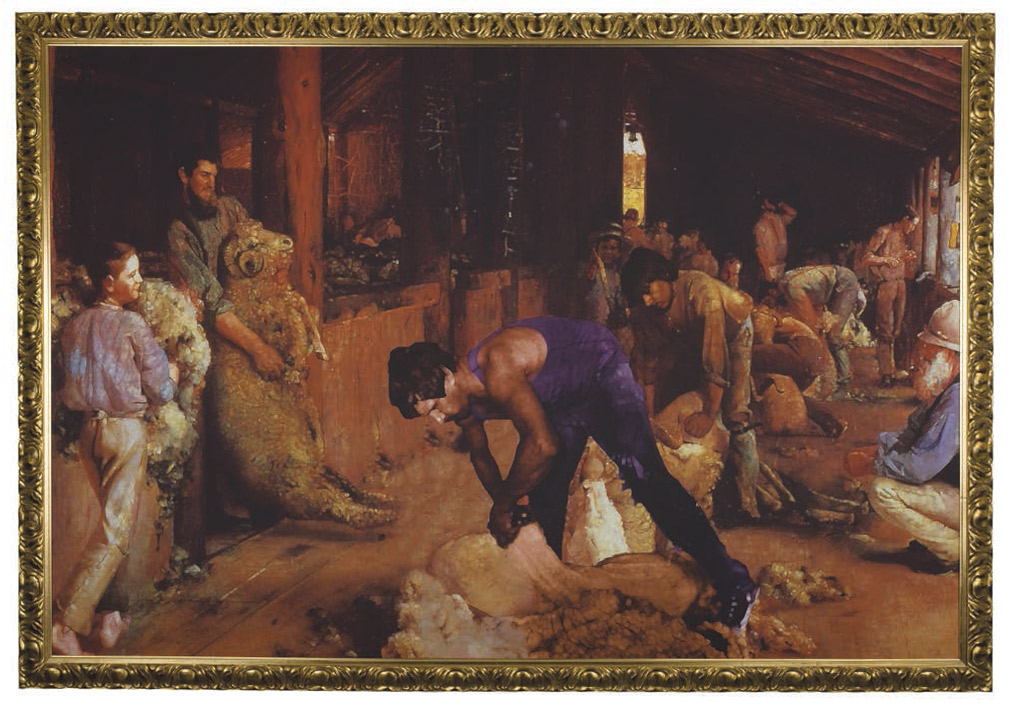
 

Dianne Jones (Australian, b. 1966) 'Shearing the rams' 2001


Dianne Jones (Australian, b. 1966)
Shearing the rams
2001

Inkjet on canvas, edition of 10
121.9 x 182.6cm
© Dianne Jones

Please note: This image is used under conditions of “fair use” for the purpose of academic scholarship and art criticism.


Dianne Jones: Revisiting/Revising Australian Icons

Imagery plays an influential role in the formation of national identity. When this imagery is dominated by a particular cultural and ethnic perspective it results in the formation of a mythology that does not accurately reflect the culture it informs. Through her art practice Jones examines the relationship between popular imagery and national and personal identity. By questioning the validity of the imagery that has illustrated Australian history and has long been considered representative of Australian culture, Jones gives a voice, and a face, to those who were previously denied a place within the paradigm of Australian art.

Jones creates reproductions of classic Australian paintings in which the original image has been altered and reinterpreted. Images by artists such as Tom Roberts, Eugene von Guerard and Max Dupain have come to be representative of a romanticised Australian history. These well-known and well-loved images have had a significant role in defining Australian national identity, their nationalistic tone reflects a particular viewpoint of Australia’s post-colonial history. This viewpoint is limited and denies the experiences of many Australians, including the history of  Jones’ family. In spite of these limitations, these images continue to hold significant cultural value for many Australians. The status of the original paintings Jones reinterprets, as highly valued and iconic works, make them ideal choices for affective reinterpretation.

Jones uses appropriation and reinterpretation to create conversations about issues that are important to her. By placing Aboriginal figures into historical artworks where previously there were none, Jones makes us aware of their absence from Australian art and from Australian history. She tries to make us aware of the lack of diversity in the images that are seen to illustrate Australian history and represent Australian culture. She highlights the absence of certain cultural groups by placing them back into the picture. In doing this she shows us how we can create a new and more accurate history that is inclusive rather than exclusive…

Shearing the Rams provides an example of Jones’ ongoing concern with the lack of accurate Indigenous representation within Australian culture, particularly within iconic nationalistic images. The original oil painting created by Tom Roberts in 1890 celebrated pastoral life and labour, and came to be considered an icon of Australian Impressionism and popular history. Even if the painting itself is not instantly recognisable to the viewer, the sentiment behind it is familiar, it is a sentiment repeated within iconic images of Australia’s post-colonial history. By replacing some of the figures, who are all white men in Roberts’ painting, with male members of her own family, Jones is reasserting their previously unrecognised presence in this part of Australian history. Her family were actively involved in the pastoral industry, but this involvement has not previously been acknowledged or celebrated in any way.

Extract from Sarah Norris. “Dianne Jones: Revisiting/Revising Australian Icons,” on the Art Right Now website June 2013 [Online] Cited 16/07/2015


Unknown photographer. 'Untitled [Horse and trap], Quandong' 1887


Unknown photographer
Untitled [Horse and trap]
Quandong, 1887
Albumen print on cabinet card
10 x 8cm


Unknown photographer. 'At Quandong [Horse, foal and cart]' 1887


Unknown photographer
At Quandong [Horse, foal and cart]
1887
Albumen print on cabinet card
10 x 8cm
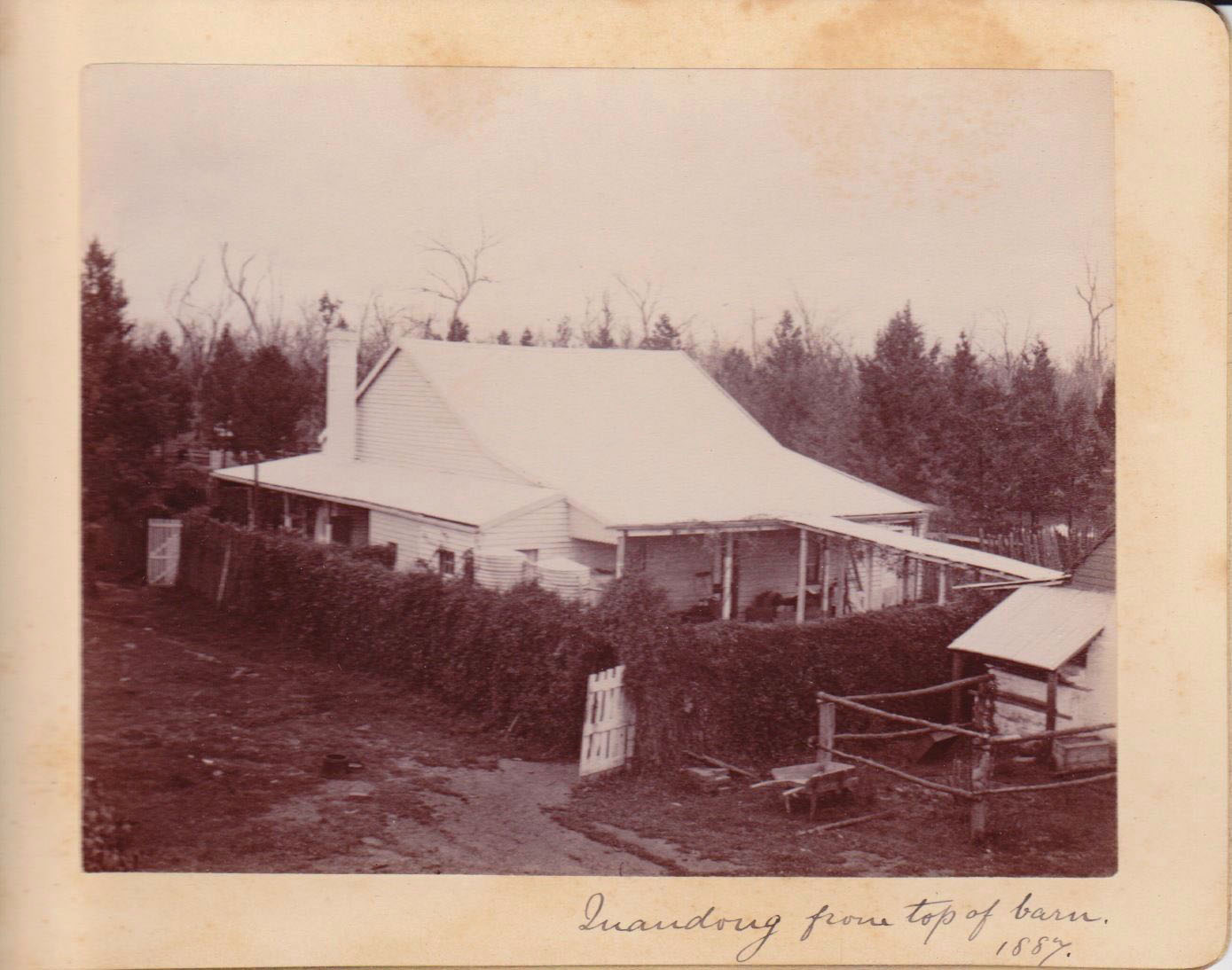
 

Unknown photographer. 'Quandong from top of barn', New South Wales, Australia, 1887


Unknown photographer
Quandong from top of barn
1887
Albumen print on cabinet card
10 x 8cm
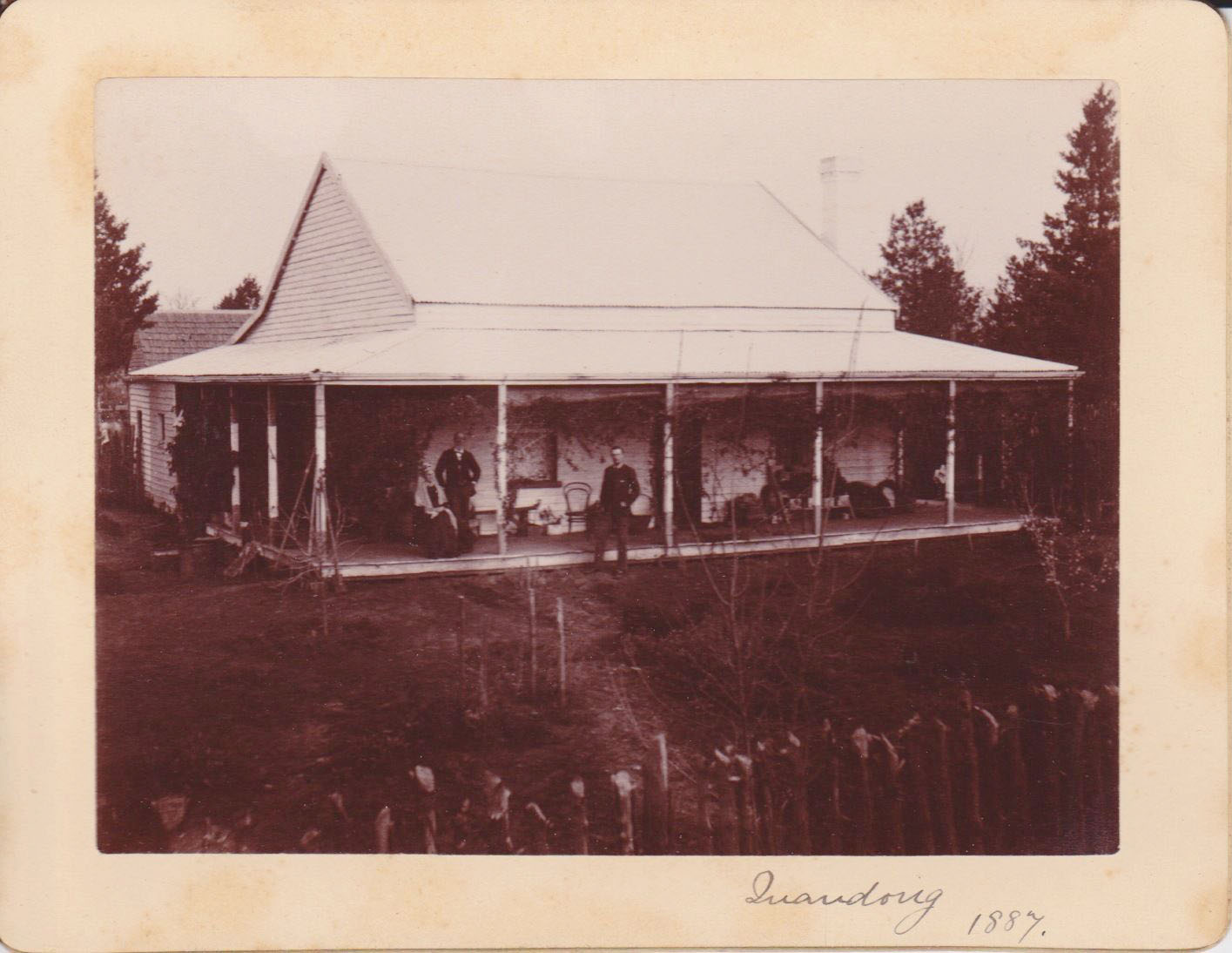
 

Unknown photographer. 'Quandong' 1887


Unknown photographer
Quandong
1887
Albumen print on cabinet card
10 x 8cm


Unknown photographer. 'Quandong', New South Wales, Australia, 1887


Unknown photographer
Quandong
1887
Albumen print on cabinet card
10 x 8cm
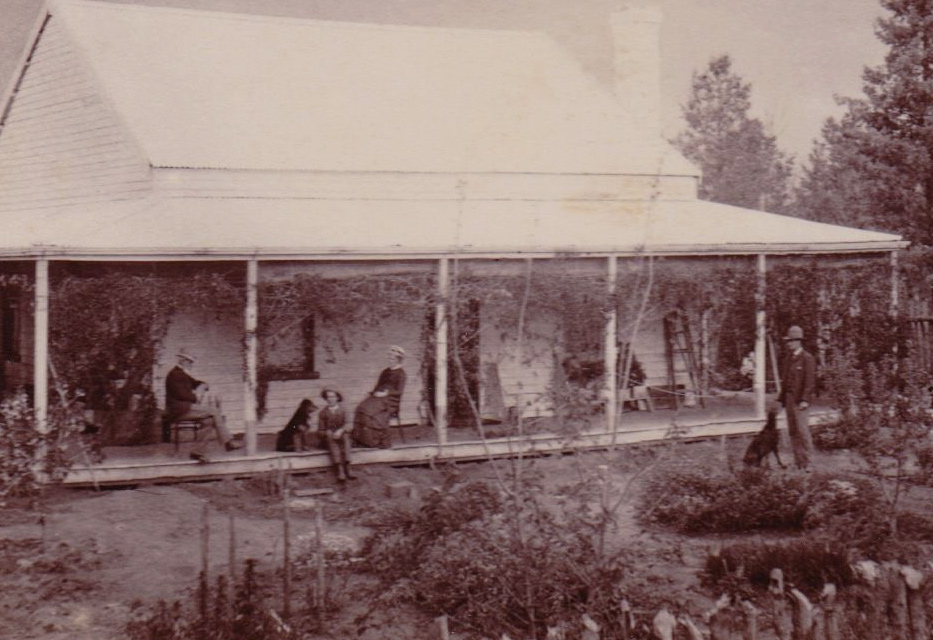
 

Unknown photographer. 'Quandong', New South Wales, Australia, 1887 (detail)


Unknown photographer
Quandong (detail)
1887
Albumen print on cabinet card
10 x 8cm
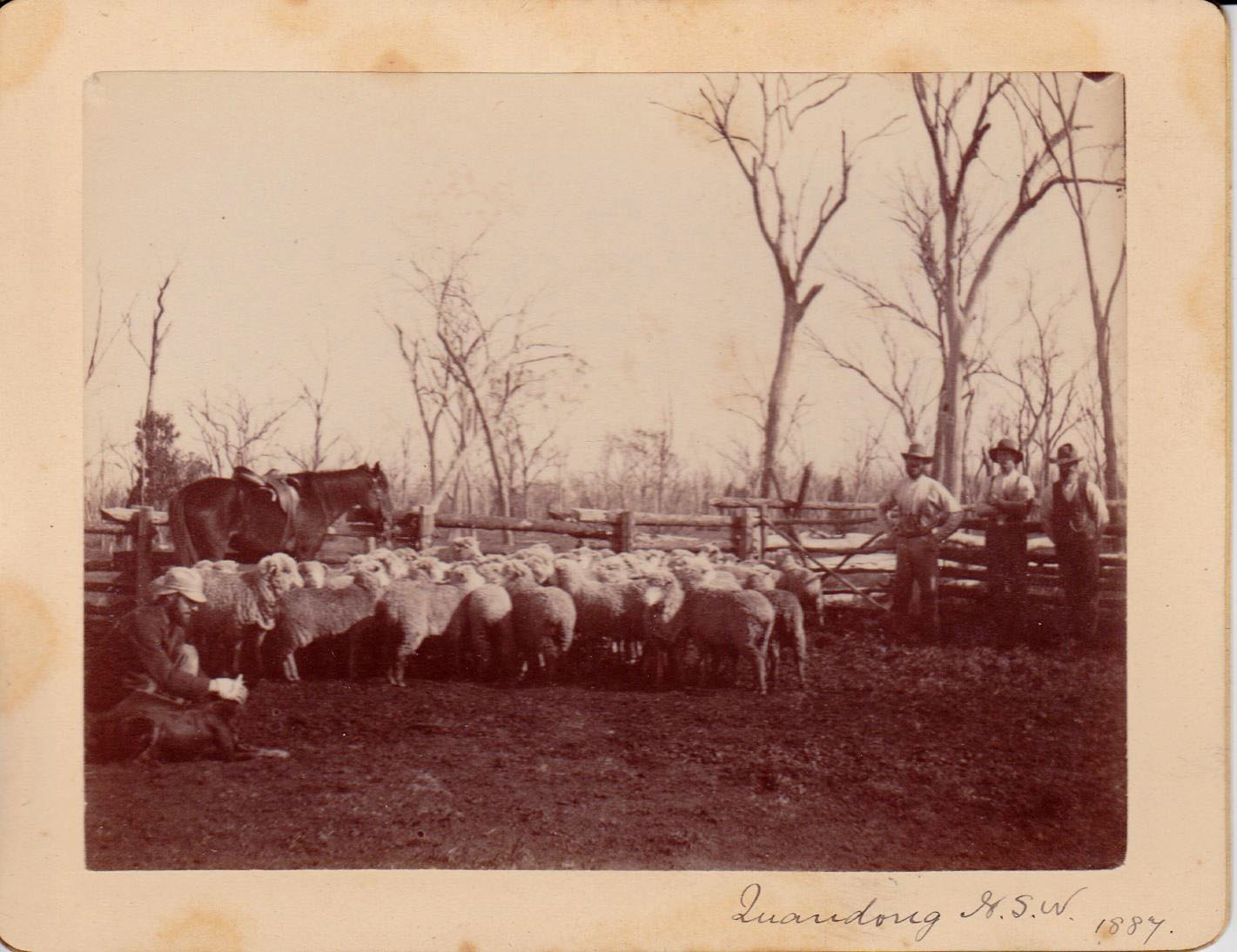
 

Unknown photographer. 'Quandong, N.S.W.', New South Wales, Australia, 1887


Unknown photographer
Quandong, N.S.W.
1887
Albumen print on cabinet card
10 x 8cm
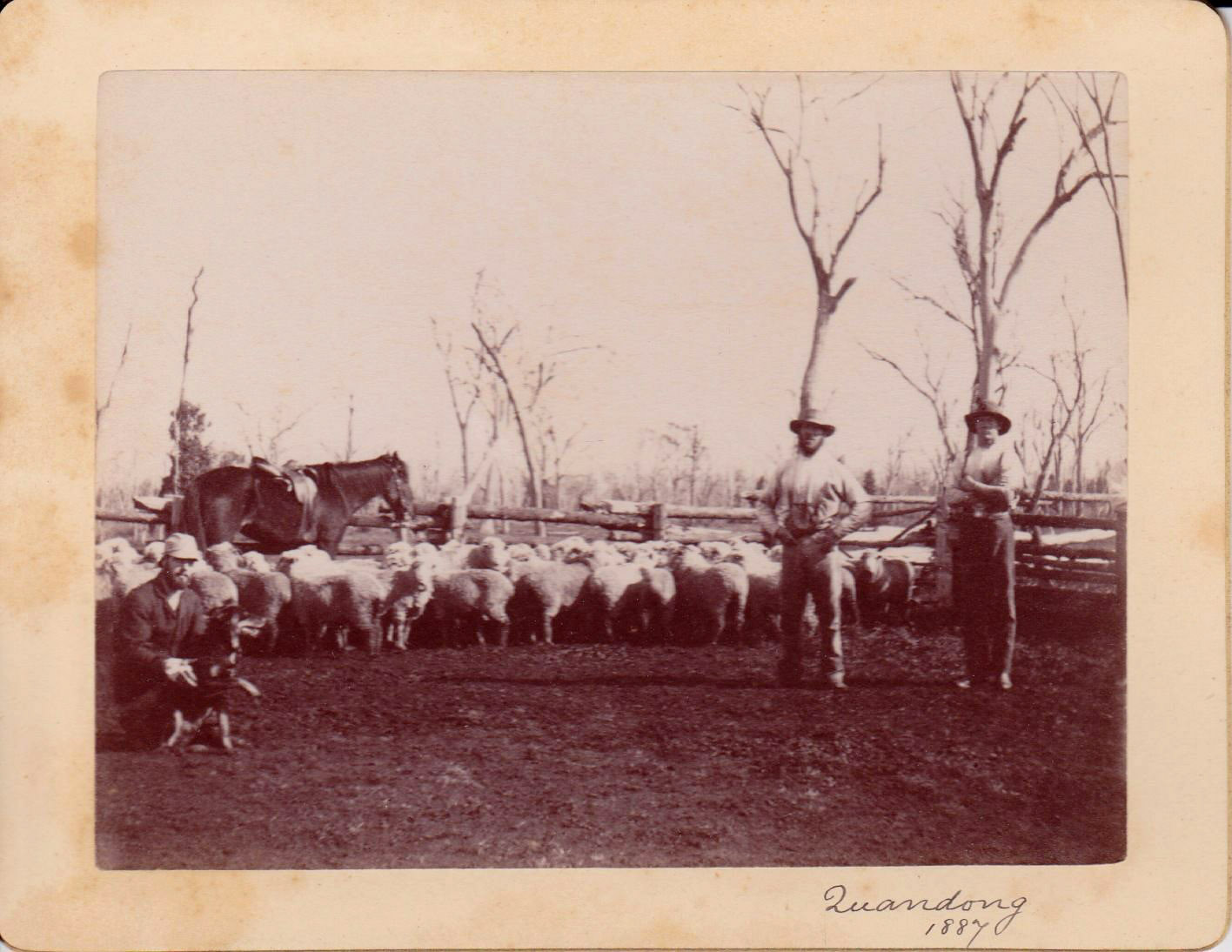
 

Unknown photographer. 'Quandong', New South Wales, Australia, 1887


Unknown photographer
Quandong
1887
Albumen print on cabinet card
10 x 8cm


Unknown photographer. 'Quandong', New South Wales, Australia, 1887 (detail)


Unknown photographer
Quandong (detail)
1887
Albumen print on cabinet card
10 x 8cm
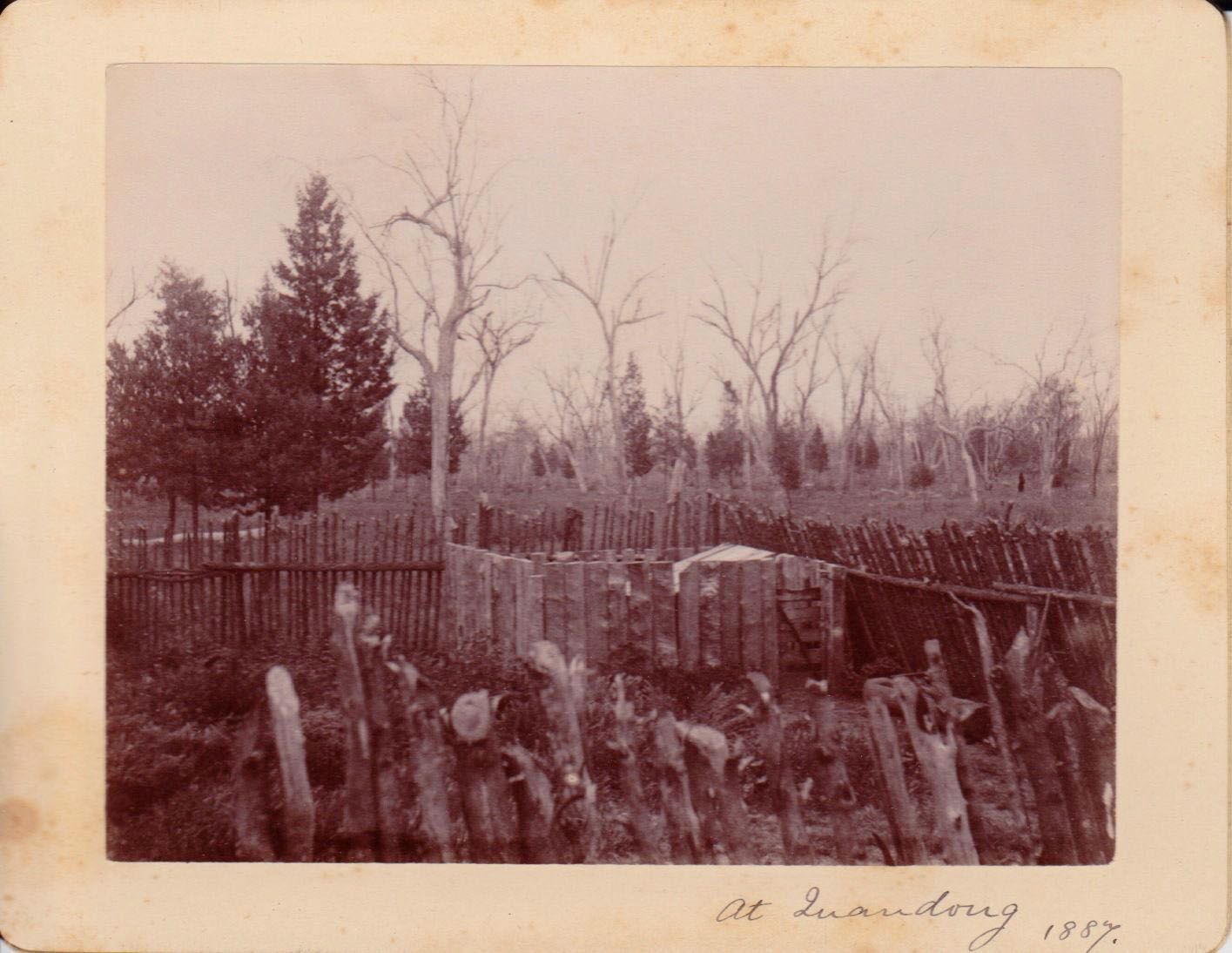
 

Unknown photographer. 'At Quandong' 1887


Unknown photographer
At Quandong
1887
Albumen print on cabinet card
10 x 8cm


Unknown photographer. 'Stile at Acme hut, Quandong', New South Wales, Australia, 1887


Unknown photographer
Stile at Acme hut, Quandong
1887
Albumen print on cabinet card
10 x 8cm


LIKE ART BLART ON FACEBOOK

Back to top

Exhibition: ‘Mario Giacomelli. Against Time’ at Fotomuseum WestLicht, Vienna

Exhibition dates: 26th June – 9th August, 2015

Curators: Rebekka Reuter and Fabian Knierim


Mario Giacomelli (Italian, 1925-2000) From the series 'Awareness of Nature, Italy, Senigallia' 1980 from the exhibition 'Mario Giacomelli. Against Time' at Fotomuseum WestLicht, Vienna, June - August, 2015
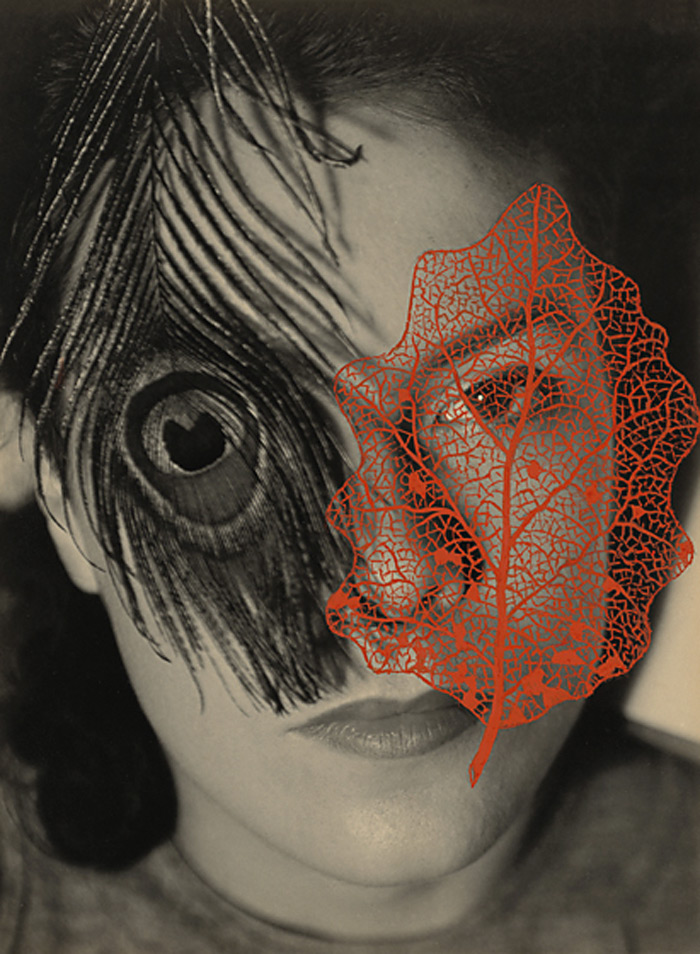
 

Mario Giacomelli (Italian, 1925-2000)
From the series Presa di coscienza sulla natura / Awareness of Nature
Italy, Senigallia
1980


Mario Gaicomelli has a unique signature as an artist. His photographs could never be anyone else’s work.

The press release states, “His works, all of them conceived as series, combine elements of reportage with lyrical subjectivity and a symbolic aesthetic which seems almost calligraphic in its harsh contrasts between black and white… On the one hand, they express a personal feeling; on the other, they embody a clear, courageous and conceptually groundbreaking attitude.” It continues, “His singular style caused him to remain beyond photographic fashions. In the five decades of his work, he created a body of work that is unparalleled in its aesthetic and thematic consistency.”

To remain beyond photographic fashions. In other words, he didn’t fit in, he was an outsider, he was Other. He did not conform.

He crafted, and I use the word deliberately, a conceptual response to life and landscape, to memory and existence – his symbolic aesthetic – that also expresses an enormous respect for personal feeling, for the stuff of life. There is a consistency to his enquiry, both aesthetically and thematically, that marks him out from the pack.

The calligraphic nature of his work has links back to his training as a printer. The aerial photographs of the landscape from the series Presa di coscienza sulla natura / Awareness of Nature (below) possess the quality of an etching. Mix in an dash of surrealism, such as in the series Verrà la morte e avrà i Tuoi Occhi / Death will come and have your eyes (below)1 and the macabre, as in the series Slaughterhouse, and you have a potent mix of portrayal of the irreality of everyday life. Some photographs, such as an image below from the series Scanno Italy, Scanno even posses the 3D quality of stereoscopic cards.

Above all, there is a sense of the mysteries of life contained within the spaces of his work. Is the white cat flying in mid-air or is clinging to someone that we can’t see, who has been printed out by the photographer because of his previsualisation of the work. What is that shape hovering next to his mother? I think it looks like a moth, and the mother is a Japanese mother after Hiroshima with a withered hand. She almost looks like she is dressed in a kimono as well. We’re not supposed to know what that is – actually it’s Agfa paper, hardest possible grade, and skilled use of bleach by the artist – and that is the mystery. Its an interesting print because it is printed so that it could be any gender.

I do love artists who push the boundaries of the sensual and the symbolic. Praise be to traces of differences.

Dr Marcus Bunyan


1/ See the case of Christine Papin and Léa Papin who were two French maids who murdered their employer’s wife and daughter in Le Mans, France, on 2 February 1933. They had both been beaten to the point of being unrecognisable, and one of the daughter’s eyes was on the floor nearby. Madame Lancelin’s eyes had been gouged out and were found in the folds of the scarf around her neck.


Many thankx to Fotomuseum WestLicht for allowing me to publish the photographs in the posting. Please click on the photographs for a larger version of the image.


Mario Giacomelli (Italian, 1925-2000) From the series 'Awareness of Nature, Italy, Senigallia' c. 1987 from the exhibition 'Mario Giacomelli. Against Time' at Fotomuseum WestLicht, Vienna, June - August, 2015


Mario Giacomelli (Italian, 1925-2000)
From the series Presa di coscienza sulla natura / Awareness of Nature
Italy, Senigallia
c. 1987


Italian Neorealism (Neorealismo)

Italian Neorealism came about as World War II ended and Benito Mussolini’s government fell, causing the Italian film industry to lose its center. Neorealism was a sign of cultural change and social progress inItaly. Its films presented contemporary stories and ideas, and were often shot in the streets because the Cinecittà film studios had been damaged significantly during the war.

The neorealist style was developed by a circle of film critics that revolved around the magazine Cinema, including Luchino Visconti, Gianni Puccini, Cesare Zavattini, Giuseppe De Santis and Pietro Ingrao. Largely prevented from writing about politics (the editor-in-chief of the magazine was Vittorio Mussolini, son of Benito Mussolini), the critics attacked the white telephone films that dominated the industry at the time. As a counter to the popular mainstream films some critics felt that Italian cinema should turn to the realist writers from the turn of the 20th century.

Both Antonioni and Visconti had worked closely with Jean Renoir. In addition, many of the filmmakers involved in neorealism developed their skills working on calligraphist films (though the short-lived movement was markedly different from neorealism). Elements of neorealism are also found in the films of Alessandro Blasetti and the documentary-style films of Francesco De Robertis. Two of the most significant precursors of neorealism are Toni (Renoir, 1935) and 1860 (Blasetti, 1934). In the Spring of 1945, Mussolini was executed and Italy was liberated from German occupation. This period, known as the “Italian Spring,” was a break from old ways and an entrance to a more realistic approach when making films. Italian cinema went from utilising elaborate studio sets to shooting on location in the countryside and city streets in the realist style.

The first neorealist film is generally thought to be Ossessione by Luchino Visconti (1943). Neorealism became famous globally in 1946 with Roberto Rossellini’s Rome, Open City, when it won the Grand Prize at the Cannes Film Festival as the first major film produced in Italy after the war…

The films are generally filmed with nonprofessional actors – although, in a number of cases, well known actors were cast in leading roles, playing strongly against their normal character types in front of a background populated by local people rather than extras brought in for the film. They are shot almost exclusively on location, mostly in run-down cities as well as rural areas due to its forming during the post-war era.

The topic involves the idea of what it is like to live among the poor and the lower working class. The focus is on a simple social order of survival in rural, everyday life. Performances are mostly constructed from scenes of people performing fairly mundane and quotidian activities, devoid of the self-consciousness that amateur acting usually entails. Neorealist films often feature children in major roles, though their characters are frequently more observational than participatory…

The period between 1943 and 1950 in the history of Italian cinema is dominated by the impact of neorealism, which is properly defined as a moment or a trend in Italian film, rather than an actual school or group of theoretically motivated and like-minded directors and scriptwriters. Its impact nevertheless has been enormous, not only on Italian film but also on French New Wave cinema, the Polish Film School and ultimately on films all over the world.

Text from the Wikipedia website


Mario Giacomelli (Italian, 1925-2000) From the series 'The Good Earth, Italy' c. 1965


Mario Giacomelli (Italian, 1925-2000)
From the series The Good Earth, Italy
c. 1965


Mario Giacomelli (Italian, 1925-2000) From the series 'Awareness of Nature, Italy, Senigallia' 1982-1992


Mario Giacomelli (Italian, 1925-2000)
From the series Presa di coscienza sulla natura / Awareness of Nature
Italy, Senigallia
1982-1992


The images by Mario Giacomelli (1925-2000), one of the most well-known Italian photographers of the post-war period, are distinctive and possessed of an almost painful intensity. Inspired by Neorealismo cinema, Giacomelli, a typesetter and printer by training who had been experimenting with painting and literature, turned to photography during the 1950s, developing a highly individual visual idiom characterised by graphic abstraction. His works, all of them conceived as series, combine elements of reportage with lyrical subjectivity and a symbolic aesthetic which seems almost calligraphic in its harsh contrasts between black and white.

Starting with the people and landscape of his native central Italy, Giacomelli’s pictures always deal with the fundamental questions of existence: life and death, faith and love, the relationship of man and his roots, the traces of time. One of his most well-known images shows a group of young priests in their cassocks dancing a round in the snow – a moment of innocence already inscribed with loss. Giacomelli’s images of the farm land around his native town of Senigallia, taken from an airplane, dissolve the fields into picturesque networks of lines, showing the landscape as a product of human toil and the passing of time. On the one hand, they express a personal feeling; on the other, they embody a clear, courageous and conceptually groundbreaking attitude.

The photographs on display are part of the Photography Collection OstLicht, curated by Rebekka Reuter and Fabian Knierim.

Text from the Fotomuseum WestLicht website


Mario Giacomelli (Italian, 1925-2000) 'From the series: Puglia Italy, Puglia' 1958


Mario Giacomelli (Italian, 1925-2000)
From the series Puglia Italy, Puglia
1958


Mario Giacomelli (Italian, 1925-2000) From the series 'Scanno Italy, Scanno' 1959


Mario Giacomelli (Italian, 1925-2000)
From the series Scanno Italy, Scanno
1959


Mario Giacomelli (Italian, 1925-2000) From the series 'Lourdes France, Lourdes' 1966


Mario Giacomelli (Italian, 1925-2000)
From the series Lourdes France, Lourdes
1966


Mario Giacomelli (Italian, 1925-2000) From the series 'Io non ho mani che mi accarezzino il volto / I have no Hands caress my face' Italy, Senigallia 1961-1963


Mario Giacomelli (Italian, 1925-2000)
From the series Io non ho mani che mi accarezzino il volto / I have no Hands to caress my face
Italy, Senigallia
1961-1963


Among his most famous designs include the photographs of the series Io non ho mani che mi accarezzino il Volto (I have no hands that caress my face, after a poem by David Maria Turoldo), 1961-63. Giacomelli observed in a group of priest candidates at their boisterous games and silliness between the seriousness of the lessons. An image showing the young clergy, as they dance in their cassocks a dance in the snow – a moment of innocence, the loss already acknowledged. The soil is so that the seminarians seem to float as black silhouettes on nothing in the recording of a pure white surface without any drawing.

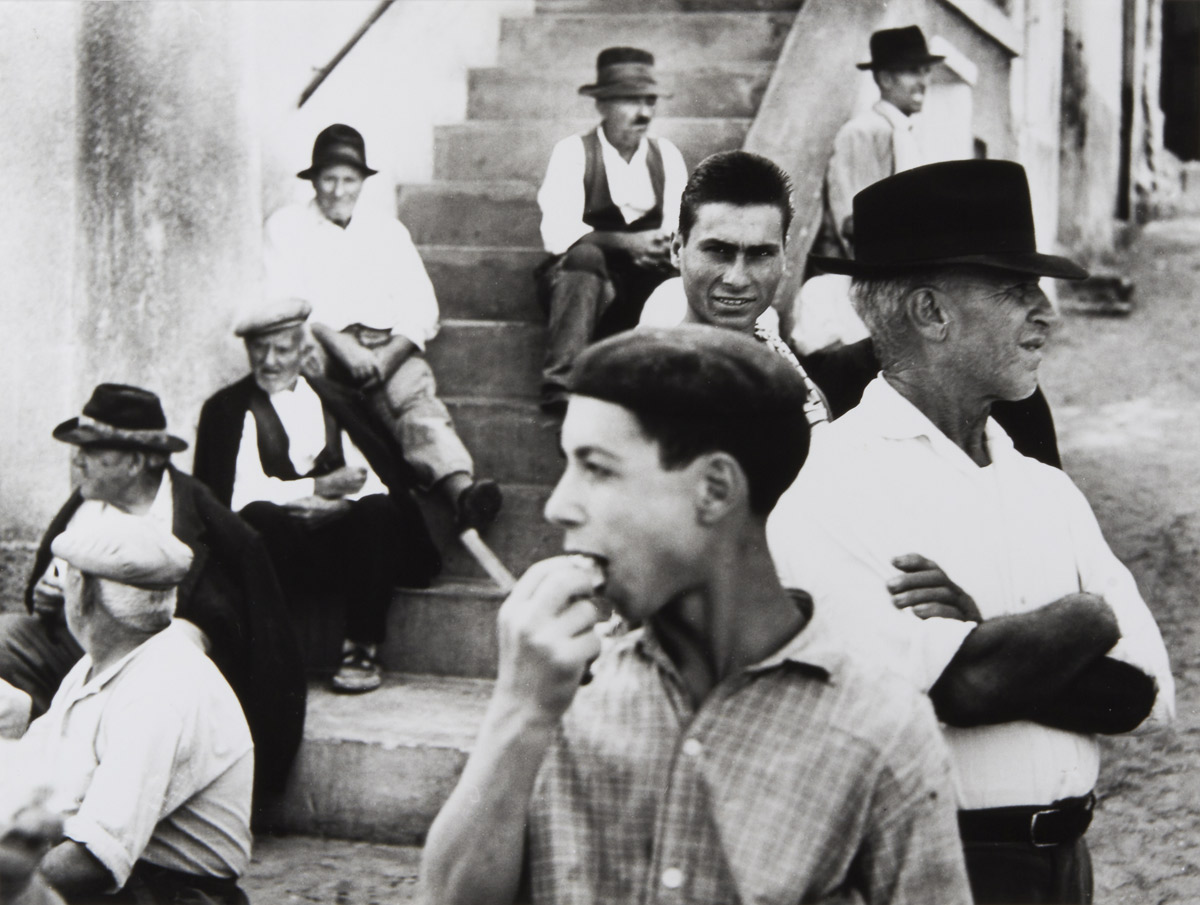
At the end of the 1950s Giacomelli photographed the street scenes of Puglia and Scanno. Both series show a largely untouched by modernity village community. The archaic rural life that still has a clearly vital undertone in Puglia (1958), turns into the black-clad figures of Scanno (1957-1959), an image of gloomy Providence.

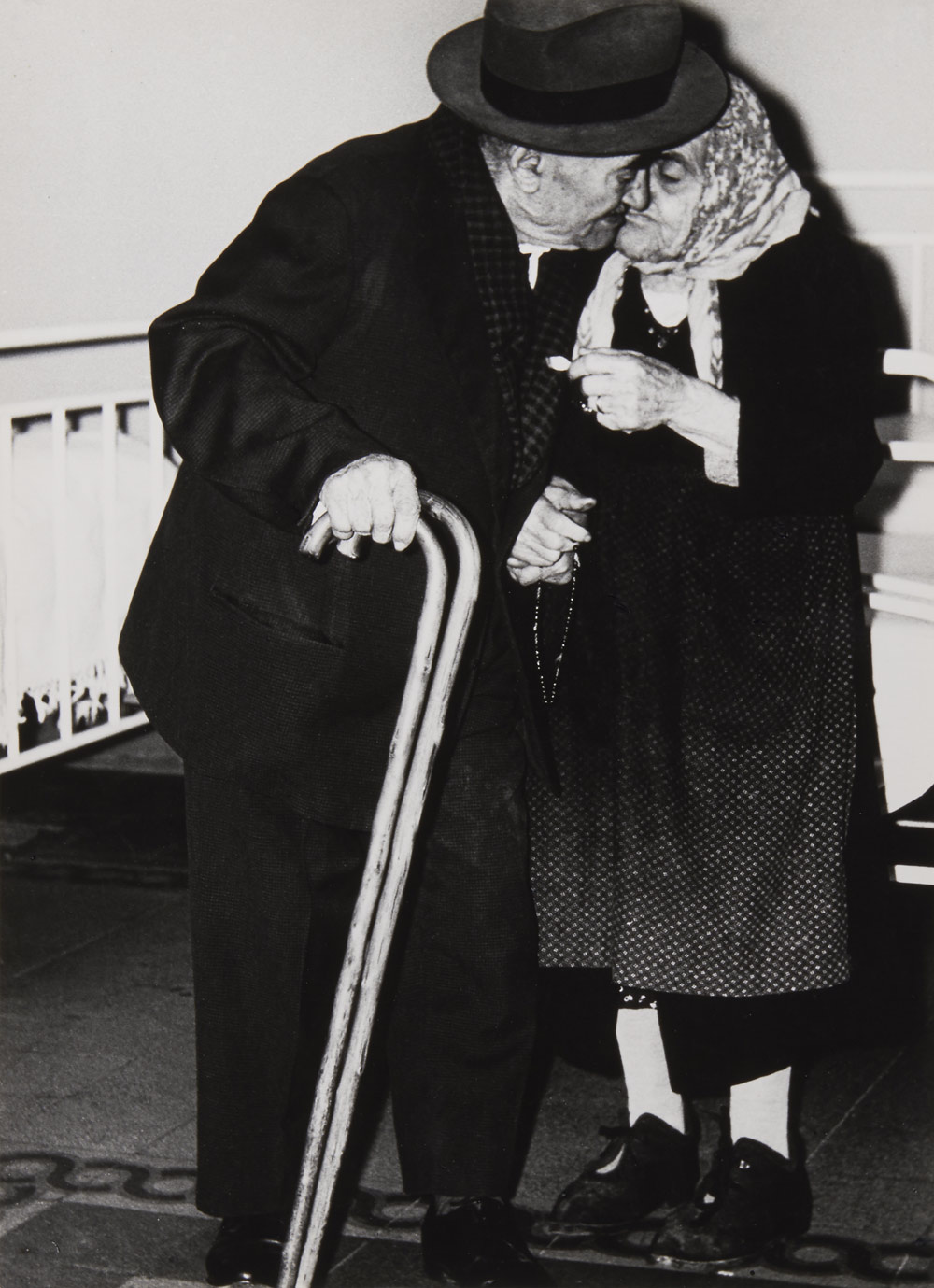
Over several years, from 1954 to 1983, Giacomelli returned to the nursing home where his mother had worked in the days of his childhood, to photograph there. As in all his series he took, even with Verrà la morte e avrà i Tuoi Occhi (Death will come and will have your eyes on a poem by Cesare Pavese), Giacomelli builds a relationship to the place and its people. The recordings are marked by a harsh realism of human decay, the white of the deductions seem to exhaust the fragile body which possesses an almost existential quality. Simultaneously Giacomelli’s identification with the residents and his silent anger at the suffering is obvious and so the ancients always remain hidden in his eyes.

Giacomelli’s shots from the plane of farmland of his birthplace Senigallia, finally resolve the fields in picturesque interwoven lines and show the landscape as a drawn from the people and time. On one hand, an expression of a personal feeling, these images embody at the same time a clear, bold and pioneering conceptual attitude. Giacomelli’s art is always a rebellion against the impositions of human existence. The bitter irony of the transience of life, he meets by means of photography. His singular style caused him to remain beyond photographic fashions. In the five decades of his work, he created a body of work that is unparalleled in its aesthetic and thematic consistency.”

Mario Giacomelli

Mario Giacomelli was born in 1925 in Senigallia. The small town on the Italian Adriatic coast in the province of Ancona remained until his death in 2000, the centre of his life. Giacomelli grew up in poverty. His father he lost before he was nine years old, his mother worked as a laundress in a retirement home. At thirteen, he left school and began an apprenticeship as a printer. With a partner, he opened after the war in Senigallia his own printing business. Inspired by photography magazines and the neo-realist film, he discovered at the beginning of the 1950s photography for himself and bought his first camera. He successfully participated in a number of photo contests and regional exhibitions. He received an important impetus in this period by Giuseppe Cavalli, with whom he founded the Photo Group Misa in 1954. In the same year he began his work on Verrà la morte. In 1957 he undertook trips to Scanno and Lourdes, from which emerged the first images of the same series. International presentations of his photographs – the Subjective Photography 3 exhibition, 1959 organised by Otto Steinert in Brussels, at Photokina in Cologne, or the George Eastman House, Rochester (both 1963) – made Giacomelli known beyond Italy. An exhibition curated by John Szarkowski at MoMA in New York meant an international breakthrough for Giacomelli 1964.

Translated from the German press release


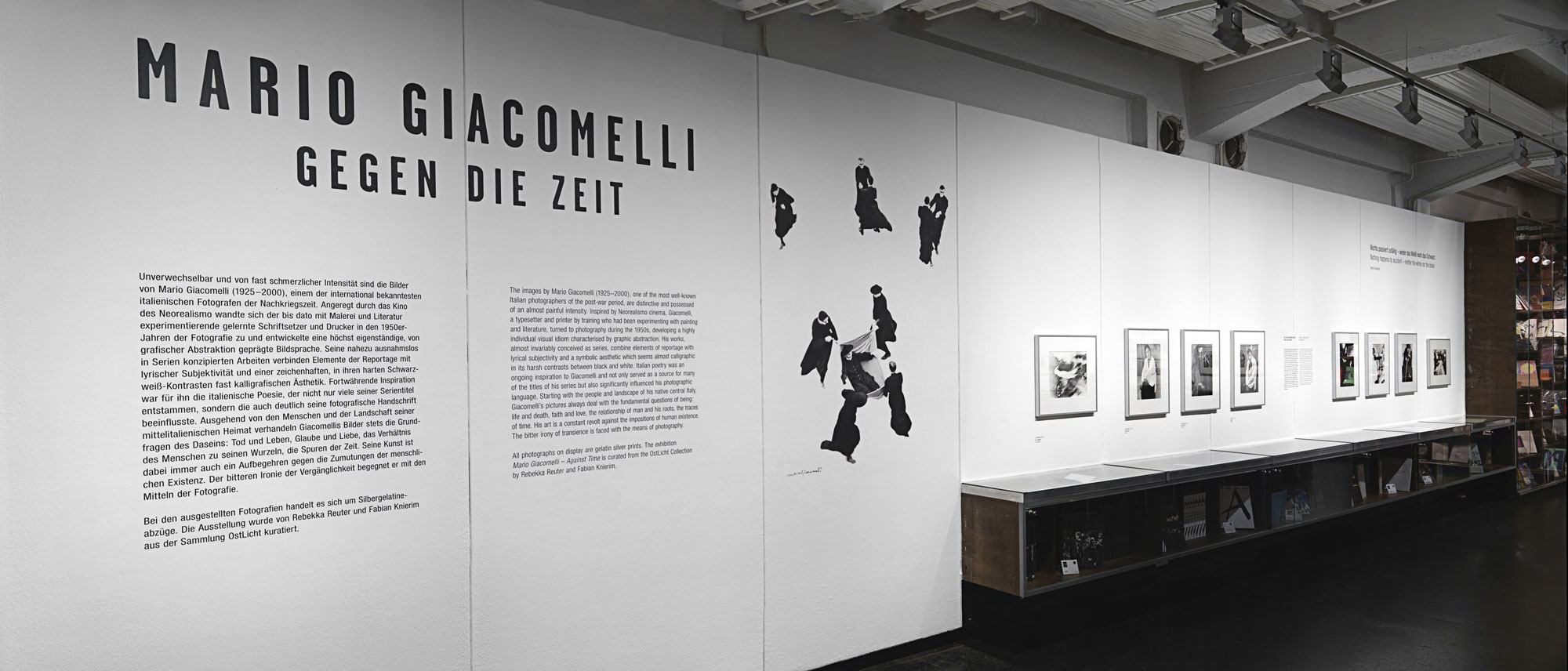
Installation view of the exhibition 'Mario Giacomelli. Against Time' at Fotomuseum WestLicht

Installation view of the exhibition 'Mario Giacomelli. Against Time' at Fotomuseum WestLicht

Installation view of the exhibition 'Mario Giacomelli. Against Time' at Fotomuseum WestLicht

Installation view of the exhibition 'Mario Giacomelli. Against Time' at Fotomuseum WestLicht


Installation views of the exhibition Mario Giacomelli. Against Time at Fotomuseum WestLicht
© WestLicht / Sandro E. E. Zanzinger


Mario Giacomelli (Italian, 1925-2000) From the series 'Slaughterhouse' Italy 1961


Mario Giacomelli (Italian, 1925-2000)
From the series Slaughterhouse
Italy 1961


Mario Giacomelli (Italian, 1925-2000) From the series: 'Verrà la morte e avrà i Tuoi Occhi / Death will come and have your eyes' Italy 1954


Mario Giacomelli (Italian, 1925-2000)
From the series: Verrà la morte e avrà i Tuoi Occhi / Death will come and have your eyes
Italy 1954


Mario Giacomelli (Italian, 1925-2000) 'Mia Madre / Mother' Italy 1959


Mario Giacomelli (Italian, 1925-2000)
Mia Madre / Mother
Italy 1959


Mario Giacomelli (Italian, 1925-2000) From the series: 'Verrà la morte e i Tuoi Occhi avrà / Death will come and your have eyes' Italy, 1955-1958


Mario Giacomelli (Italian, 1925-2000)
From the series: Verrà la morte e i Tuoi Occhi avrà / Death will come and your have eyes
Italy, 1955-1958


WestLicht
Westbahnstraße 40
A-1070 Vienna

Opening hours:
Tue, Wed, Fri 2 – 7pm
Thu 2 – 9pm
Sat, Sun 11am – 7pm
Mon closed

WestLicht website

LIKE ART BLART ON FACEBOOK

Back to top

Photographs: Thomas Eakins photography

July 2015


Please click on the photography for a larger version of the image.

Marcus


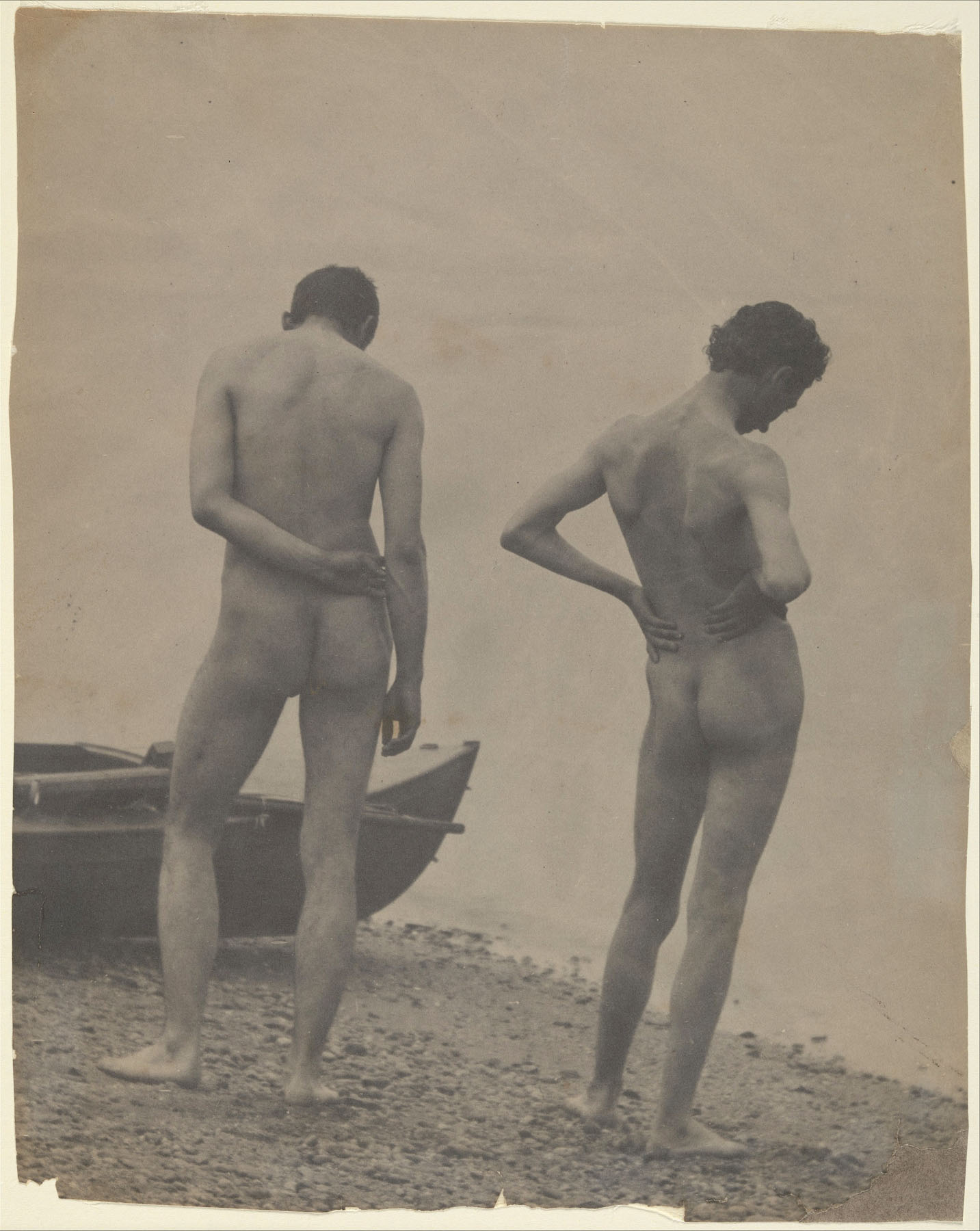
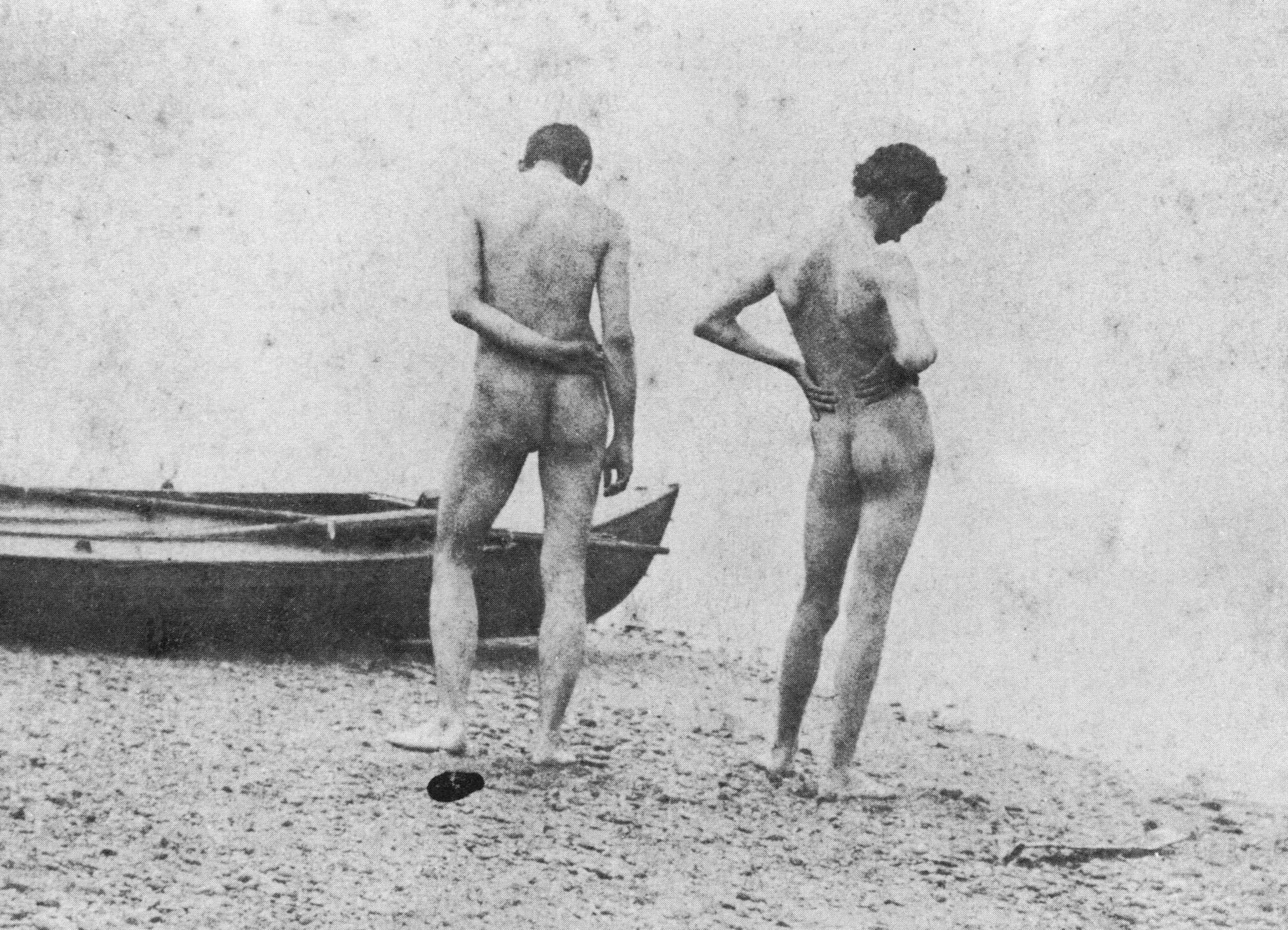
Thomas Eakins (American, 1844-1916) '(Thomas Eakins and John Laurie Wallace on a Beach)' c. 1883


Thomas Eakins (American, 1844-1916)
(Thomas Eakins and John Laurie Wallace on a Beach)
c. 1883
Public domain


The great American painter and photographer Thomas Eakins was devoted to the scientific study of the human form and committed to its truthful representation. While he and his students at the Pennsylvania Academy of the Fine Arts were surrounded by casts of classical sculpture, Eakins declared that he did not like “a long study of casts. … At best they are only imitations, and an imitation of imitations cannot have so much life as an imitation of life itself.” Photography provided an obvious solution.

This photograph, in which Eakins and a student affected the elegant contrapposto stances of classical sculpture, was probably taken during an excursion with students to Manasquan Inlet at Point Pleasant, New Jersey, during the summer of 1883. Valuing his photographs not only as studies for paintings but also for their own sake, Eakins carefully printed the best images on platinum paper. In this case, he went to the additional trouble of enlarging the original, horizontally formatted image and cropping it vertically to better contain the perfectly balanced figures.

Text from The Metropolitan Museum of Art website


Thomas Eakins (American, 1844-1916) 'Nude, Playing Pipes' c. 1883


Thomas Eakins (American, 1844-1916)
Nude, Playing Pipes
c. 1883
Platinum print
22.7 x 16.6cm (8 15/16 x 6 9/16 in.) irregular
Metropolitan Museum of Art
David Hunter McAlpin Fund, 1943
Public domain


Thomas Eakins (American, 1844-1916) 'Standing Male Nude with Pipes' 1880s


Thomas Eakins (American, 1844-1916)
Standing Male Nude with Pipes
1880s
Platinum print
22.9 x 17.3cm (9 x 6 13/16 in.)
Metropolitan Museum of Art
David Hunter McAlpin Fund, 1943
Public domain


Thomas Eakins (American, 1844-1916) 'Bill Duckett nude, reclining on side, hand on knee' c. 1889


Thomas Eakins (American, 1844-1916)
Bill Duckett nude, reclining on side, hand on knee
c. 1889
Platinum print
2 15/16 x 4 5/16 in. (7.46252 x 10.95502cm)
Pennsylvania Academy of the Fine Arts
Charles Bregler’s Thomas Eakins Collection, purchased with the partial support of the Pew Memorial Trust
Public domain


In January 1886, Thomas Eakins removed the loincloth from a male model while lecturing about the pelvis to an anatomy class that included female students at the Pennsylvania Academy of the Fine Arts. Angry protests by parents and students soon forced him to resign from the Academy at the request of the board. Following Eakins’ departure, however, thirty-eight of his male students resigned from the Academy and formed the Art Students’ League of Philadelphia, providing him with a new forum for his life classes and for the creation of many of the paintings and photographs of the 1880s, including this nude study of Bill Duckett, an amateur athlete. The relaxed atmosphere of the Art Students’ League, where Eakins and his students governed themselves, permitted greater freedom in the photography of models than had prevailed at the Pennsylvania Academy. This photograph is an excellent example of Eakins’ unabashed exploration of frontal male nudity.

Text from the Metropolitan Museum of Art website


For Eakins, the camera was a teaching device comparable to anatomical drawing, a tool the modern artist should use to train the eye to see what was truly before it.


In the 1880s, through a series of technical advances that greatly simplified its practice, photography had expanded from being the province solely of the specialist into an activity accessible to the millions. To define photography as a discipline distinct from its casual, commercial, and scientific applications became the overriding goal of many American artists in the last two decades of the century, who claimed for it a place commensurate with those artistic endeavours that celebrated the complex, irreducible subjectivity of their makers. The photographs of Thomas Eakins are a perfect example of this development.

In addition to being an accomplished painter, watercolorist, and teacher, Thomas Eakins was a dedicated and talented photographer. Working with a wooden view camera, glass plate negatives, and the platinum print process, he distinguished himself from most other painters of his generation by mastering the technical aspects of the new medium and requiring his students to do the same. For Eakins, the camera was a teaching device comparable to anatomical drawing (43.87.23; 43.87.19), a tool the modern artist should use to train the eye to see what was truly before it.

Although it is not known from whom or when Eakins learned photography, it is clear that by 1880 he had already incorporated the camera into his professional and personal life. The vast majority of photographs attributed to Eakins are figure studies (nude and clothed) and portraits of his pupils (43.87.17), extended family (including himself) (43.87.23), and immediate friends (41.142.2). More than 225 negatives survive in the Bregler collection at the Pennsylvania Academy of the Fine Arts and approximately 800 images are currently attributed to Eakins and his circle – ample proof of the intensity with which Eakins worked with the camera.

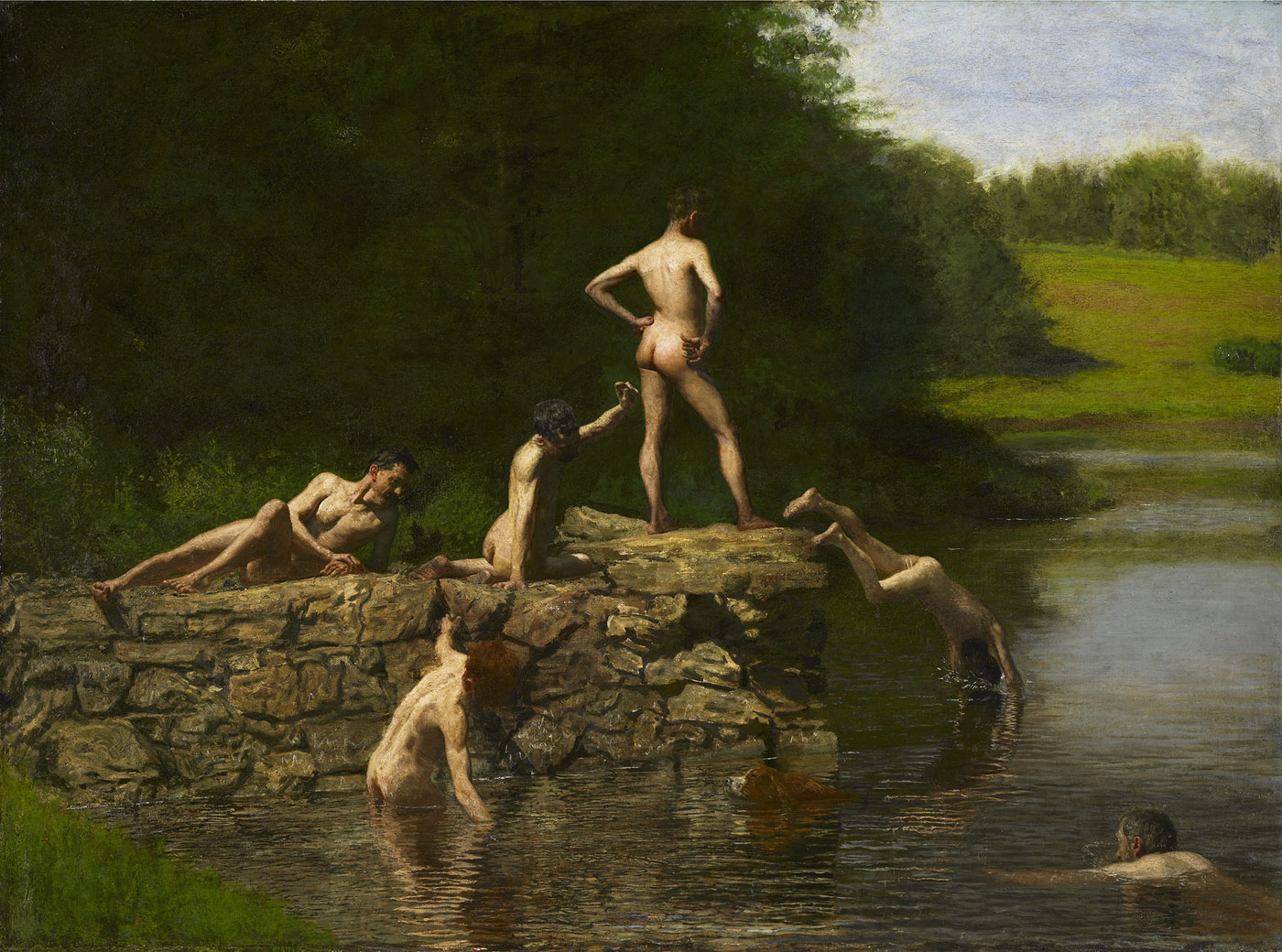
Eakins did not generally use photographs as a preparatory aid to painting, although there are a small number of oils which have direct counterparts in existing photographs: the Amon Carter Museum’s The Swimming Hole [below] and the Metropolitan’s Arcadia [below] being the foremost examples. To the contrary, Eakins saw a different role for photography – one related to his extraordinary interest in knowing the figure and improving his sensitivity to complex figure-ground relationships. Committed to teaching close observation through the practice of dissection and preparatory wax and plaster sculpture, Eakins introduced the camera to the American art studio. At first his photographs were likely quick studies of pose and gesture; later, perhaps during the process of editing and cropping the negatives, and then making enlarged platinum prints, he saw the photographs as discrete works of art on paper, at their best on equal status with his watercolours.

The artistic freedom of the classical world that Eakins strove to bring to life in his academic programs at the Pennsylvania Academy of the Fine Arts (and in his Arcadian paintings) also appears as an important element in many of his nude studies (43.87.19) with the camera. These photographs, far more than the paintings, celebrate the male physique; even today, more than a century after their creation, their unabashed frontal nudity still has the power to shock contemporary eyes.

Text from The Metropolitan Museum of Art website October 2004 [Online] Cited 16/08/2021

Citation: Department of Photographs. “Thomas Eakins (1844-1916): Photography, 1880s-90s,” in Heilbrunn Timeline of Art History. New York: The Metropolitan Museum of Art, 2000


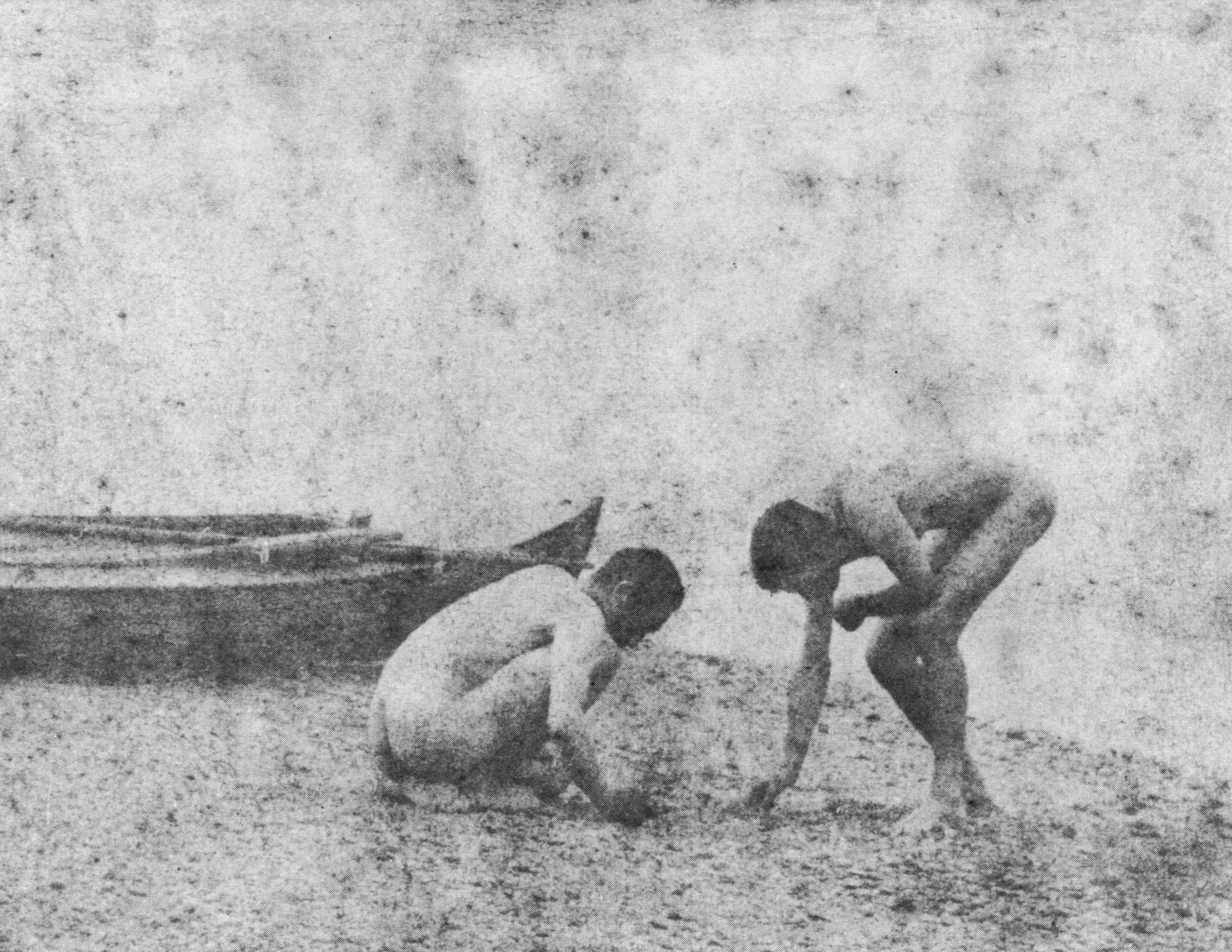
Thomas Eakins (American, 1844-1916) 'Thomas Eakins and J. Laurie Wallace at the Shore' 1883


Thomas Eakins (American, 1844-1916)
Thomas Eakins and J. Laurie Wallace at the Shore
1883
Public domain


Thomas Eakins (American, 1844-1916) 'Thomas Eakins and J. Laurie Wallace at the Shore' 1883


Thomas Eakins (American, 1844-1916)
Thomas Eakins and J. Laurie Wallace at the Shore
1883
Public domain


Thomas Eakins (American, 1844-1916) 'Thomas Eakins and J. Laurie Wallace at the Shore' 1883


Thomas Eakins (American, 1844-1916)
Thomas Eakins and J. Laurie Wallace at the Shore
1883
Public domain


Thomas Eakins (American, 1844-1916) 'Unidentified model, Thomas Anschutz and J. Laurie Wallace' 1883


Thomas Eakins (American, 1844-1916)
Unidentified model, Thomas Anschutz and J. Laurie Wallace
1883
Public domain


Thomas Eakins (American, 1844-1916) 'Unidentified model, Thomas Anschutz and J. Laurie Wallace' 1883


Thomas Eakins (American, 1844-1916)
Unidentified model, Thomas Anschutz and J. Laurie Wallace
1883
Public domain


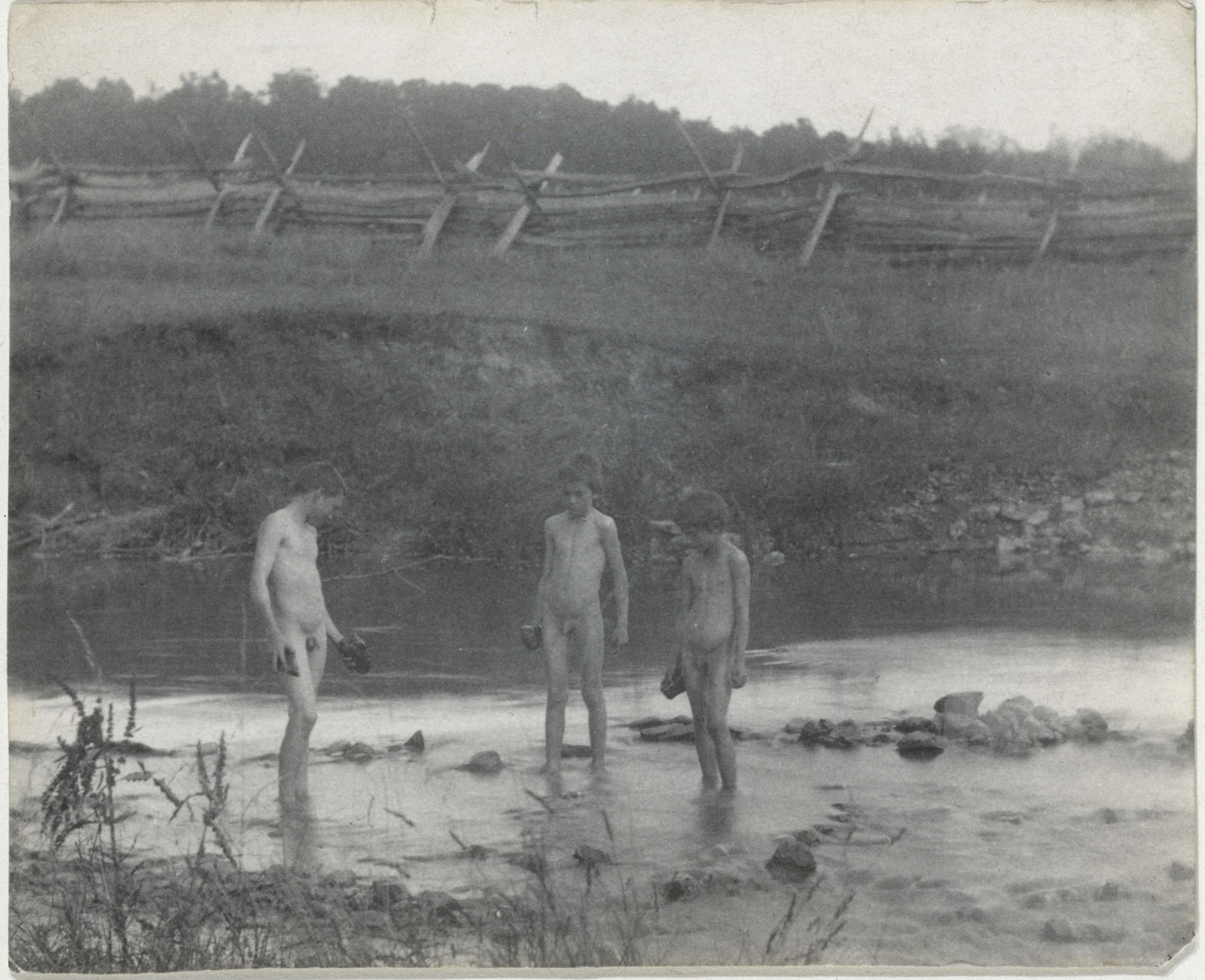
Thomas Eakins (American, 1844-1916) '(Three Boys Wading in a Creek)' 1883


Thomas Eakins (American, 1844-1916)
(Three Boys Wading in a Creek)


In 1882, Thomas Eakins was promoted to the post of director of schools at the Pennsylvania Academy of the Fine Arts, where he became known as a charismatic and innovative teacher who advocated intensive study of the nude figure. Committed to teaching close observation through every means possible, Eakins turned his school into a laboratory of photographic experimentation. He and his students (male and female) made negatives of each other – in lithe repose or in action, nude or in costume. At times, Eakins must have realised that he was pushing the limits of Philadelphia decorum. This small 4 x 5 albumen silver print shows several of Eakins’ nephews playing in a creek on the property of the artist’s sister Frances and her husband, William J. Crowell. In the 1880s, Eakins spent much of his free time at the Crowell family home in Avondale, Pennsylvania, thirty miles southwest of Philadelphia. Distant from urban distractions, the idyllic farm soon became a refuge for him. The Crowell children delighted Eakins and he made many photographs of their spirited games.

Text from The Metropolitan Museum of Art website


Thomas Eakins (American, 1844-1916) 'Arcadia' c. 1883


Thomas Eakins (American, 1844-1916)
Arcadia
c. 1883
Oil on canvas
98.1 × 114.3cm (38.6 × 45 in)
Metropolitan Museum of Art


Circle of Thomas Eakins (American, 1844-1916) 'Thomas Eakins and students, swimming nude' c. 1883


Circle of Thomas Eakins (American, 1844-1916)
Thomas Eakins and students, swimming nude
c. 1883
Public domain


The Swimming Hole (1884-1885) features Eakins’ finest studies of the nude, in his most successfully constructed outdoor picture. The figures are those of his friends and students, and include a self-portrait. Although there are photographs by Eakins which relate to the painting, the picture’s powerful pyramidal composition and sculptural conception of the individual bodies are completely distinctive pictorial resolutions. The work was painted on commission, but was refused.


Thomas Eakins (American, 1844-1916) 'Swimming / The swimming hole' 1885


Thomas Eakins (American, 1844-1916)
Swimming / The swimming hole
1885
Oil on canvas
27.625 × 36.625 in (70.2 × 93cm)
Amon Carter Museum of American Art


Thomas Eakins (American, 1844-1916) 'Wrestlers in Eakins's studio' 1899


Thomas Eakins (American, 1844-1916)
Wrestlers in Eakins’s studio
1899
Platinum print on paper
3 5/8 x 6 in. (9.0 x 15.2cm)
Hirshhorn Museum and Sculpture Garden, Smithsonian Institution, Washington, DC
Gift of Joseph H. Hirshhorn, 1966
Public domain


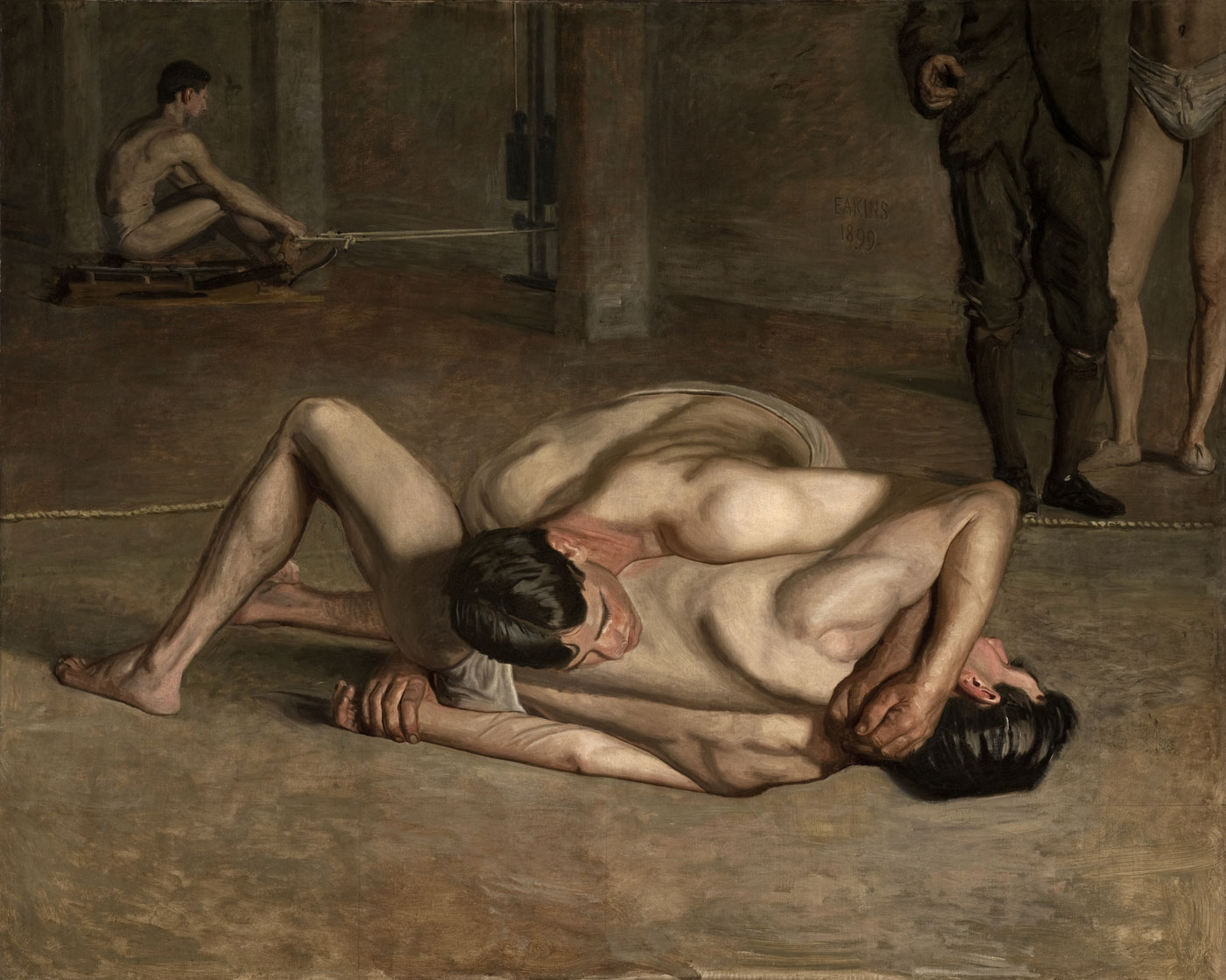
On May 22, 1899, Eakins had two wrestlers pose in his 4th-floor studio at 1729 Mount Vernon Street, Philadelphia. Three days earlier, he had written to his friend, sportswriter Clarence Cranmer: “I am going to start the wrestling picture on Monday at half past two. I wish you could find it convenient to be at the studio and help us with advice as to positions and so forth.” The artist’s protégé Samuel Murray may have been present; he modelled a small sculpture of the wrestlers that is also dated 1899. Eakins painted the works from the live models and from a nearly identical photograph, that may have been taken that day. The photograph shows the wrestler on top holding the other in a half nelson and crotch hold.

Text from the Wikipedia website


Thomas Eakins (American, 1844-1916) 'Wrestlers' 1899


Thomas Eakins (American, 1844-1916)
Wrestlers
1899
Oil on canvas
48 3/8 x 60 in. (122.87 x 152.4cm)
Image: Museum Associates/LACMA
Los Angeles County Museum of Art (LACMA) Image Library


Circle of Thomas Eakins (American, 1844-1916) 'Reclining Male Nude from The Grafly Album' 1886


Circle of Thomas Eakins (American, 1844-1916)
Reclining Male Nude from The Grafly Album
1886
Albumen print
Mounting Sheet: 6 7/8 x 10 in. (17.5 x 25.4cm)
Photo: 4 1/2 x 7 in. (11.5 x 17.8cm)
Acquired by the Clark, 2001
The Clark Art Institute
Public domain


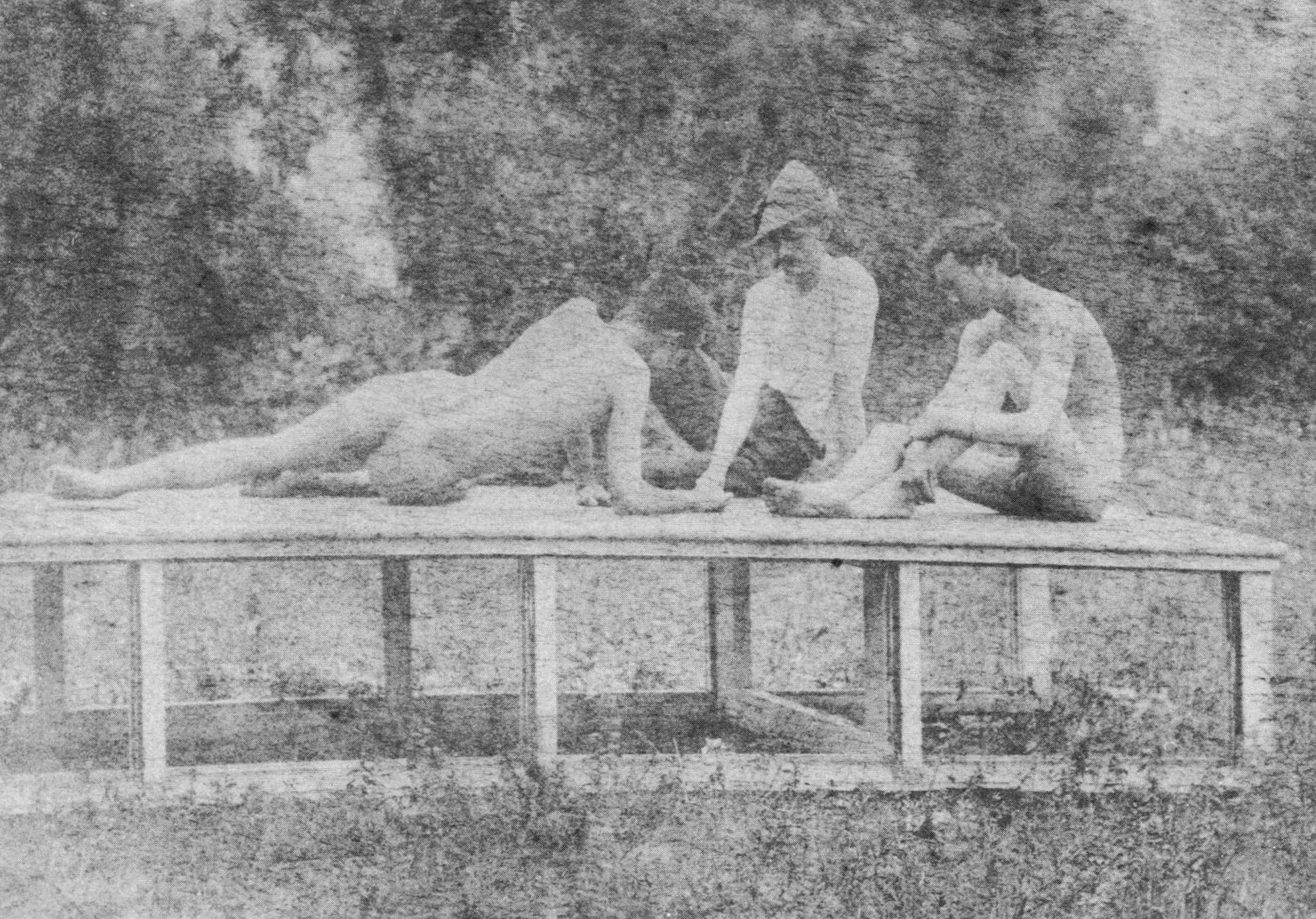
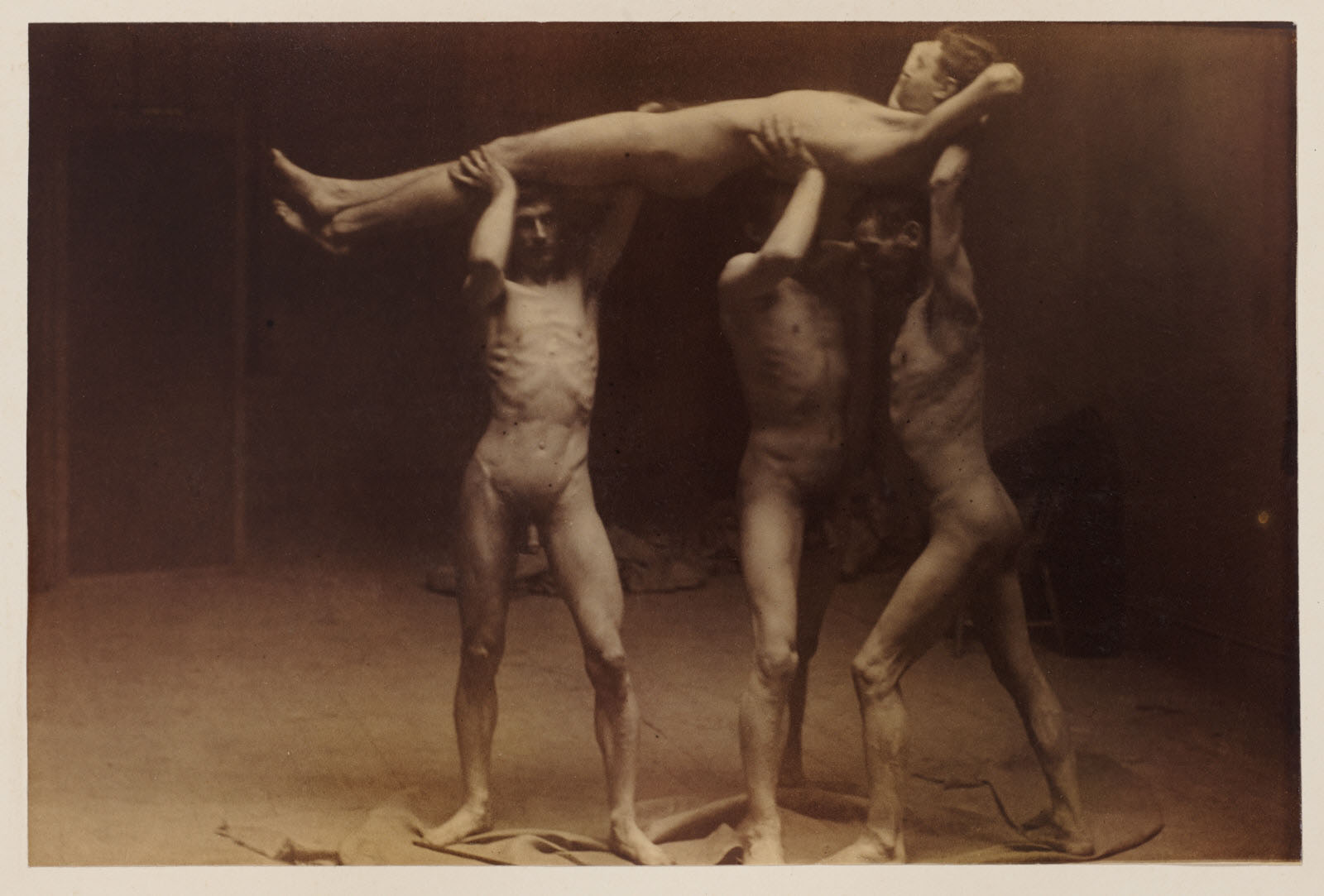
Circle of Thomas Eakins (American, 1844-1916) 'Three Male Nude Models Supporting a Reclining Fourth Model, from The Grafly Album' 1886


Circle of Thomas Eakins (American, 1844-1916)
Three Male Nude Models Supporting a Reclining Fourth Model, from The Grafly Album
1886
Albumen print
Mounting Sheet: 6 7/8 x 10 in. (17.5 x 25.4cm)
Photo: 4 1/2 x 7 in. (11.5 x 17.8cm)
Acquired by the Clark, 2001
The Clark Art Institute
Public domain


Circle of Thomas Eakins (American, 1844-1916) 'Four Standing Male Nudes, Frontal View, from The Grafly Album' 1886


Circle of Thomas Eakins (American, 1844-1916)
Four Standing Male Nudes, Frontal View, from The Grafly Album
1886
Albumen print
Mounting Sheet: 6 7/8 x 10 in. (17.5 x 25.4cm)
Photo: 4 1/2 x 7 in. (11.5 x 17.8cm)
Acquired by the Clark, 2001
The Clark Art Institute
Public domain


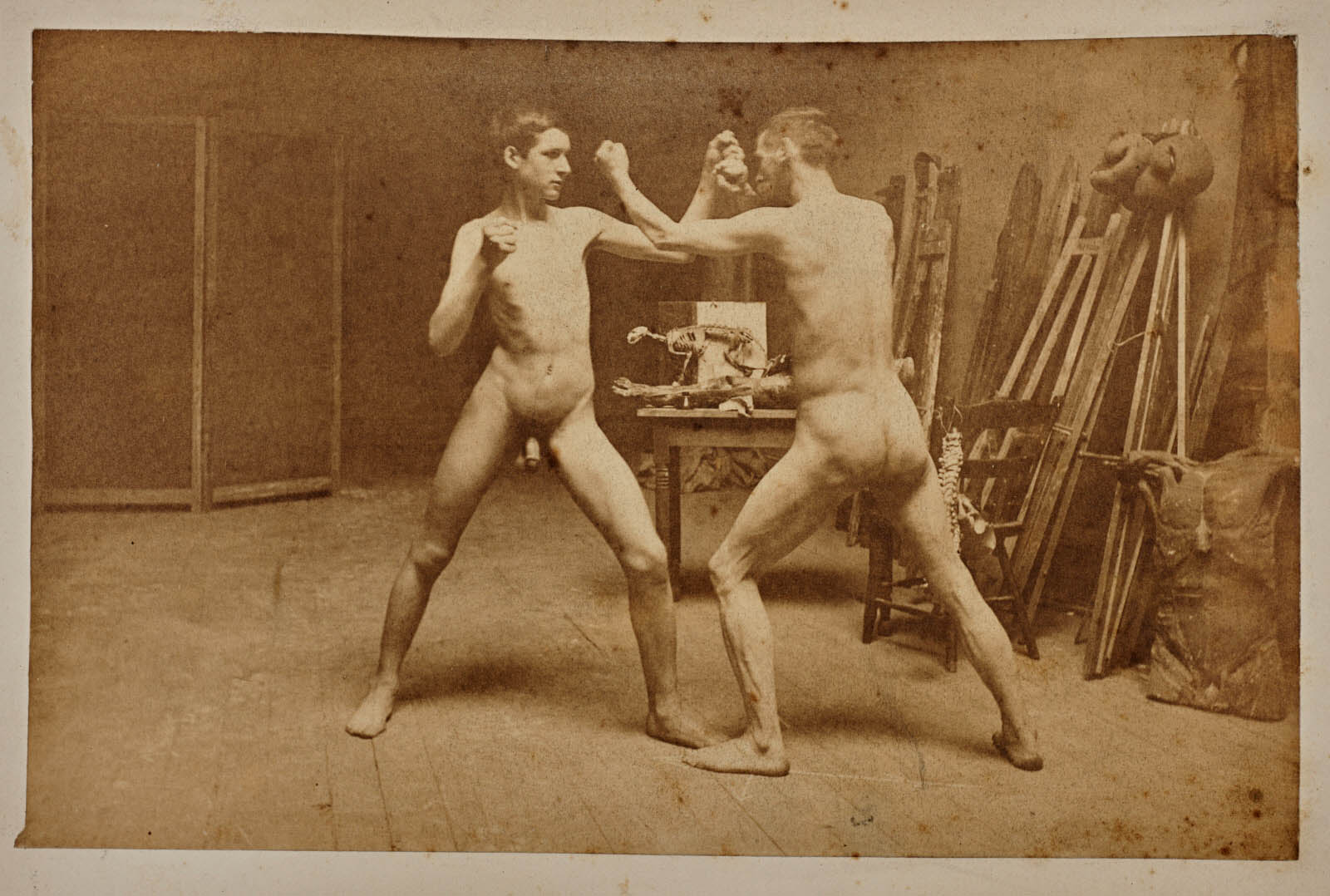
Circle of Thomas Eakins (American, 1844-1916) 'Two Male Nude Models Posing as Boxers, from The Grafly Album' 1886


Circle of Thomas Eakins (American, 1844-1916)
Two Male Nude Models Posing as Boxers, from The Grafly Album
1886
Albumen print
Mounting Sheet: 6 7/8 x 10 in. (17.5 x 25.4cm)
Photo: 4 1/2 x 7 in. (11.5 x 17.8cm)
Acquired by the Clark, 2001
The Clark Art Institute
Public domain


LIKE ART BLART ON FACEBOOK

Back to top

Exhibition: ‘Germaine Krull (1897-1985) A Photographer’s Journey’ at Jeu de Paume, Paris

Exhibition dates: 2nd June – 27th September, 2015

Curator: Michel Frizot, historian of photography


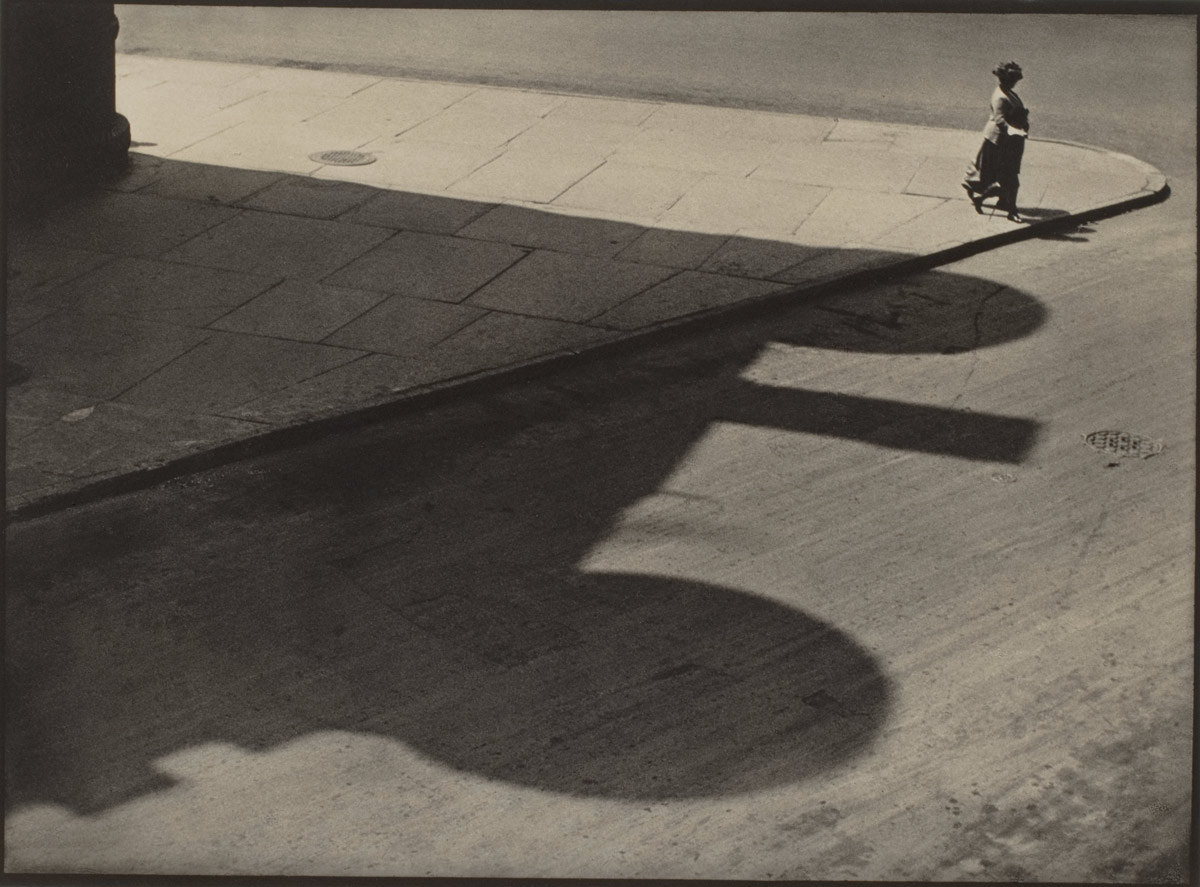
Germaine Krull (European, 1897-1985) 'Rue Auber in Paris' about 1928 from the exhibition 'Germaine Krull (1897-1985) A Photographer's Journey' at Jeu de Paume, Paris, June - September, 2015


Germaine Krull (European, 1897-1985)
Rue Auber in Paris
about 1928
Gelatin silver print
The Museum of Modern Art, New York. Thomas Walther Collection. Gift of David H. McAlpin, by exchange
© Estate Germaine Krull, Museum Folkwang, Essen


Je l’adore cette femme. Je pense que je suis en amour.

I absolutely love this women’s art. Everything she touches is inventive, vibrant, made with panache. The light, the hands, the angles, the objects – cranes and barges, brooding ancient architecture hanging in time – and then, to top it all off, the sensuality!

Left-wing convictions, lesbian love affairs, “the love of cars and road trips, the interest in women (whether writers or workers), the fascination with hands, and the free, maverick spirit that drove her work and kept her outside schools and sects.”

How can an artist make two piles of cauliflowers seem so enigmatic, so surreal and wondrous – like so many excised eyes of dead creatures staring at you, coming at you from out of the darkness. Les Halles de nuit (en toute amitié à Van Ecke) (around 1920, below) amazes me every time I look at it.

If I had to name one period above all others that I enjoy looking at most in the history of photography, the avant-garde period of the 1920s-30s would be up there near the very top. Especially the female photographers.

Dr Marcus Bunyan


Many thankx to Jeu de Paume for allowing me to publish the photographs in the posting. Please click on the photographs for a larger version of the image.


Germaine Krull: A Photographer’s Journey 

Michel Frizot, curator of the exhibition, talks about Germaine Krull, her life, her works and her publications.

Germaine Krull (Wilda-Poznań, East Prussia [after 1919: Poland], 1897 – Wetzlar, Germany, 1985) is at once one of the best-known figures in the history of photography, by virtue of her role in the avant-garde’s from 1920 to 1940, and a pioneer of modern photojournalism. She was also the first to publish in book form as an end in itself.


Germaine Krull (European, 1897-1985) 'Étalage: les mannequins [Display: mannequins]' 1928 from the exhibition 'Germaine Krull (1897-1985) A Photographer's Journey' at Jeu de Paume, Paris, June - September, 2015


Germaine Krull (European, 1897-1985)
Étalage: les mannequins [Display: mannequins]
1928
Gelatin silver print
10.8 x 15.7cm
Amsab-Institut d’Histoire Sociale, Gand
© Estate Germaine Krull, Museum Folkwang, Essen


Germaine Krull (European, 1897-1985) 'Mannequins in a shop window' 1930


Germaine Krull (European, 1897-1985)
Mannequins in a shop window
1930
Gelatin Silver Print
13.7 x 23.5cm
Collection Bouqueret-Rémy
© Estate Germaine Krull, Museum Folkwang, Essen


Hans Basler. 'Portait of Germaine Krull, Berlin' 1922


Hans Basler
Portait of Germaine Krull, Berlin
1922
Gelatin silver print
15.9 x 22cm
Museum Folkwang, Essen
© Estate Germaine Krull, Museum Folkwang, Essen


Germaine Krull (European, 1897-1985) 'Nude' Nd


Germaine Krull (European, 1897-1985)
Nude
Nd
Gelatin Silver Print
Collection Dietmar Siegert
© Estate Germaine Krull, Museum Folkwang, Essen


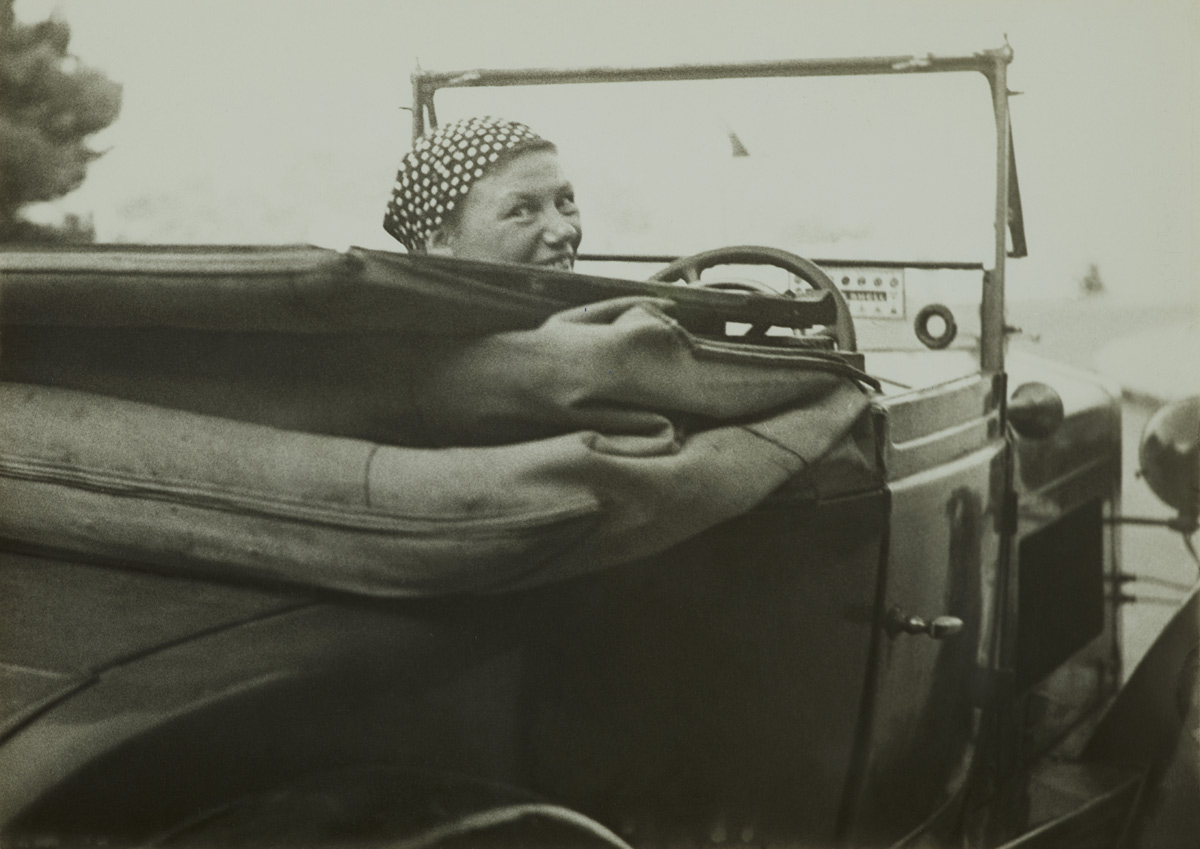
Anonymous photographer. 'Germaine Krull in her car, Monte-Carlo' 1937


Anonymous photographer
Germaine Krull in her car, Monte-Carlo
1937
Gelatin Silver Print
13 x 18.3cm
Museum Folkwang, Essen
© Germaine Krull Estate, Museum Folkwang, Essen


Germaine Krull (Wilda-Poznań, East Prussia [after 1919: Poland], 1897 – Wetzlar, Germany, 1985) is at once one of the best-known figures in the history of photography, by virtue of her role in the avant-garde’s from 1920 to 1940, and a pioneer of modern photojournalism. She was also the first to publish in book form as an end in itself.

The exhibition at Jeu de Paume revisits Germaine Krull’s work in a new way, based on collections that have only recently been made available, in order to show the balance between a modernist artistic vision and an innovative role in print media, illustration and documentation. As she herself put it – paradoxically, in the introduction to her Études de nu (1930) –, ‘The true photographer is the witness of each day’s events, a reporter.’

If Krull is one of the most famous women photographers, her work has been little studied in comparison to that of her contemporaries Man Ray, László Moholy-Nagy and André Kertész. Nor has she had many exhibitions: in 1967, a first evocation was put on at the Musée du Cinéma in Paris, then came the Rheinisches Landesmuseum, Bonn, in 1977, the Musée Réattu, Arles, in 1988, and the 1999 retrospective based on the archives placed at the Folkwang Museum, Essen.

The exhibition at Jeu de Paume focuses on the Parisian period, 1926-1935, and more precisely on the years of intensive activity between 1928 and 1933, by relating 130 vintage prints to period documents, including the magazines and books in which Krull played such a unique and prominent role. This presentation gives an idea of the constants that run through her work while also bringing out her aesthetic innovations. The show features many singular but also representative images from her prolific output, putting them in their original context.

Born in East Prussia (later Poland) to German parents, Krull had a chaotic childhood, as her hapless father, an engineer, travelled in search of work. This included a spell in Paris in 1906. After studying photography in Munich, Krull became involved in the political upheavals of post-war Germany in 1919, her role in the communist movement leading to a close shave with the Bolsheviks in Moscow. Having made some remarkable photographs of nudes during her early career, noteworthy for their freedom of tone and subject, in 1925 she was in the Netherlands, where she was fascinated by the metal structures and cranes in the docks, and embarked on a series of photographs that, following her move to Paris, would bear fruit in the portfolio Métal, publication of which placed her at the forefront of the avant-garde, the Nouvelle Vision in photography. Her new-found status earned her a prominent position on the new photographic magazine VU, created in 1928, where, along with André Kertész and Eli Lotar, she developed a new form of reportage that was particularly congenial to her, affording freedom of expression and freedom from taboos as well as closeness to the subject – all facilitated by her small-format (6 x 9cm) Icarette camera.

This exhibition shows the extraordinary blossoming of Krull’s unique vision in around 1930, a vision that is hard to define because it adapted to its subjects with a mixture of charisma and empathy, while remaining constantly innovative in terms of its aesthetic. It is essential, here, to show that Krull always worked for publication: apart from the modernist VU, where she was a contributor from 1928 to 1933, she produced reportage for many other magazines, such as Jazz, Variétés, Art et Médecine and L’Art vivant. Most importantly, and unlike any other photographer of her generation, she published a number of books and portfolios as sole author: Métal (1928), 100 x Paris (1929), Études de nu (1930), Le Valois (1930), La Route Paris-Biarritz (1931), Marseille (1935). She also created the first photo-novel, La Folle d’Itteville (1931), in collaboration with Georges Simenon. These various publications represent a total of some five hundred photographs. Krull also contributed to some important collective books, particularly on the subject of Paris: Paris, 1928; Visages de Paris, 1930; Paris under 4 Arstider, 1930; La Route Paris-Méditerranée, 1931. Her images are often disconcerting, atypical and utterly free of standardisation.

An energetic figure with strong left-wing convictions and a great traveller, Krull’s approach to photography was antithetical to the aesthetically led, interpretative practice of the Bauhaus or Surrealists. During the Second World War, she joined the Free French (1941) and served the cause with her camera, later following the Battle of Alsace (her photographs of which were made into a book). Shortly afterwards she left Europe for Southeast Asia, becoming director of the Oriental Hotel in Bangkok, which she helped turn into a renowned establishment, and then moving on to India where, having converted to Buddhism, she served the community of Tibetan exiles near Dehra-Dun.

During all her years in Asia, Krull continued to take photographs. Her thousands of images included Buddhist sites and monuments, some of them taken as illustrations for a book planned by her friend André Malraux. The conception of the books she published throughout her life was unfailingly original: Ballets de Monte-Carlo (1937); Uma Cidade Antiga do Brasil; Ouro Preto (1943); Chieng Mai (c. 1960); Tibetans in India (1968).

In her photojournalism, Krull began by focusing on the lower reaches of Parisian life, its modest, working population, the outcasts and marginal of the “Zone,” the tramps (subject of a hugely successful piece in VU), Les Halles and the markets, the fairgrounds evoked by Francis Carco and Pierre Mac Orlan (her greatest champion). The exhibition also explores unchanging aspects of her tastes and attachments: the love of cars and road trips, the interest in women (whether writers or workers), the fascination with hands, and the free, maverick spirit that drove her work and kept her outside schools and sects.

The works come from a public and private collections including the Folkwang Museum, Essen; Amsab, Institute for Social History, Ghent; the Ann and Jürgen Wilde Foundation, Pinakothek der Moderne, Munich; The Museum of Modern Art (MoMA), New York; the Centre Pompidou, Musée National d’Art Moderne, Paris; the Bibliothèque Nationale de France, Paris; the Collection Bouqueret-Rémy; the Dietmar Siegert Collection.

Press release from the Jeu de Paume


Germaine Krull (European, 1897-1985) 'Self Portrait with Icarette' around 1925


Germaine Krull (European, 1897-1985)
Self Portrait with Icarette
around 1925
Gelatin silver print
23.6 x 17.5cm
Purchase through the patronage of Yves Rocher, 2011. Former collection Bouqueret Christian. Centre Pompidou, Paris. National Museum of Modern Art / Industrial Design Centre
© Germaine Krull Estate, Museum Folkwang, Essen
Photo: © Centre Pompidou MNAM-CCI, Dist. RMN / picture Centre Pompidou-CCI MNAM


Germaine Krull (European, 1897-1985) 'Self Portrait, Paris' 1927


Germaine Krull (European, 1897-1985)
Self Portrait, Paris
1927
Gelatin silver print
23.9 x 17.9cm
Foundation Ann and Jürgen Wilde, Pinakothek der Moderne, Munich
© Estate Germaine Krull, Museum Folkwang, Essen


Germaine Krull (European, 1897-1985) 'Assia's profile' 1930


Germaine Krull (European, 1897-1985)
Assia’s profile
1930
Gelatin silver print
22.2 x 15.8cm
Collection Bouqueret-Rémy
© Estate Germaine Krull, Museum Folkwang, Essen


Germaine Krull (European, 1897-1985) 'Étude pour La Folle d’Itteville [Study for The Madwoman of Itteville]' 1931


Germaine Krull (European, 1897-1985)
Étude pour La Folle d’Itteville [Study for The Madwoman of Itteville]
1931
Gelatin silver print
21.9 x 16.4cm
Purchase through the patronage of Yves Rocher, 2011. Former collection Bouqueret Christian. Centre Pompidou, Paris. National Museum of Modern Art / Industrial Design Centre
© Germaine Krull Estate, Museum Folkwang, Essen.
Photo: © Centre Pompidou MNAM-CCI, Dist. RMN / Guy Carrard


Germaine Krull (European, 1897-1985) 'Advertising Study for Paul Poiret' 1926


Germaine Krull (European, 1897-1985)
Advertising Study for Paul Poiret
1926
Gelatin silver print
Purchase through the patronage of Yves Rocher, 2011. Former collection Bouqueret Christian. Centre Pompidou, Paris. National Museum of Modern Art / Industrial Design Centre
© Germaine Krull Estate, Museum Folkwang, Essen
Photo: © Centre Pompidou MNAM-CCI, Dist. RMN / Georges Meguerditchian


Germaine Krull (European, 1897-1985) 'Female nude' 1928


Germaine Krull (European, 1897-1985)
Female nude
1928
Gelatin silver print
21.6 x 14.4cm
Purchase through the patronage of Yves Rocher, 2011. Former collection Bouqueret Christian. Centre Pompidou, Paris. National Museum of Modern Art / Industrial Design Centre
© Germaine Krull Estate, Museum Folkwang, Essen
Photo: © Centre Pompidou MNAM-CCI, Dist. RMN / Guy Carrard


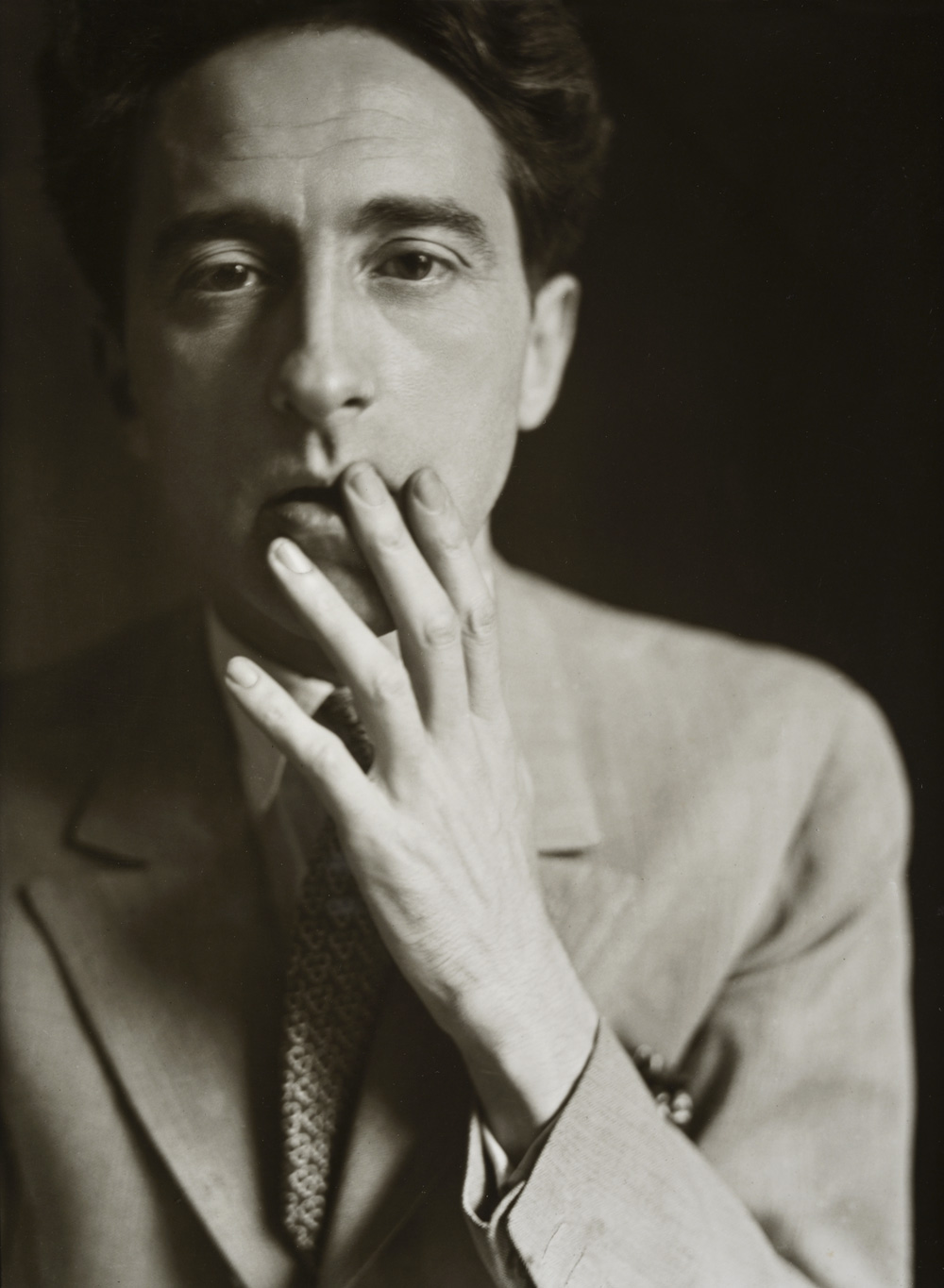
Germaine Krull (European, 1897-1985) 'Jean Cocteau' 1929


Germaine Krull (European, 1897-1985)
Jean Cocteau
1929
Gelatin silver print 1976
23.7 x 17.2cm
Bouqueret Remy collection
© Germaine Krull Estate, Museum Folkwang, Essen


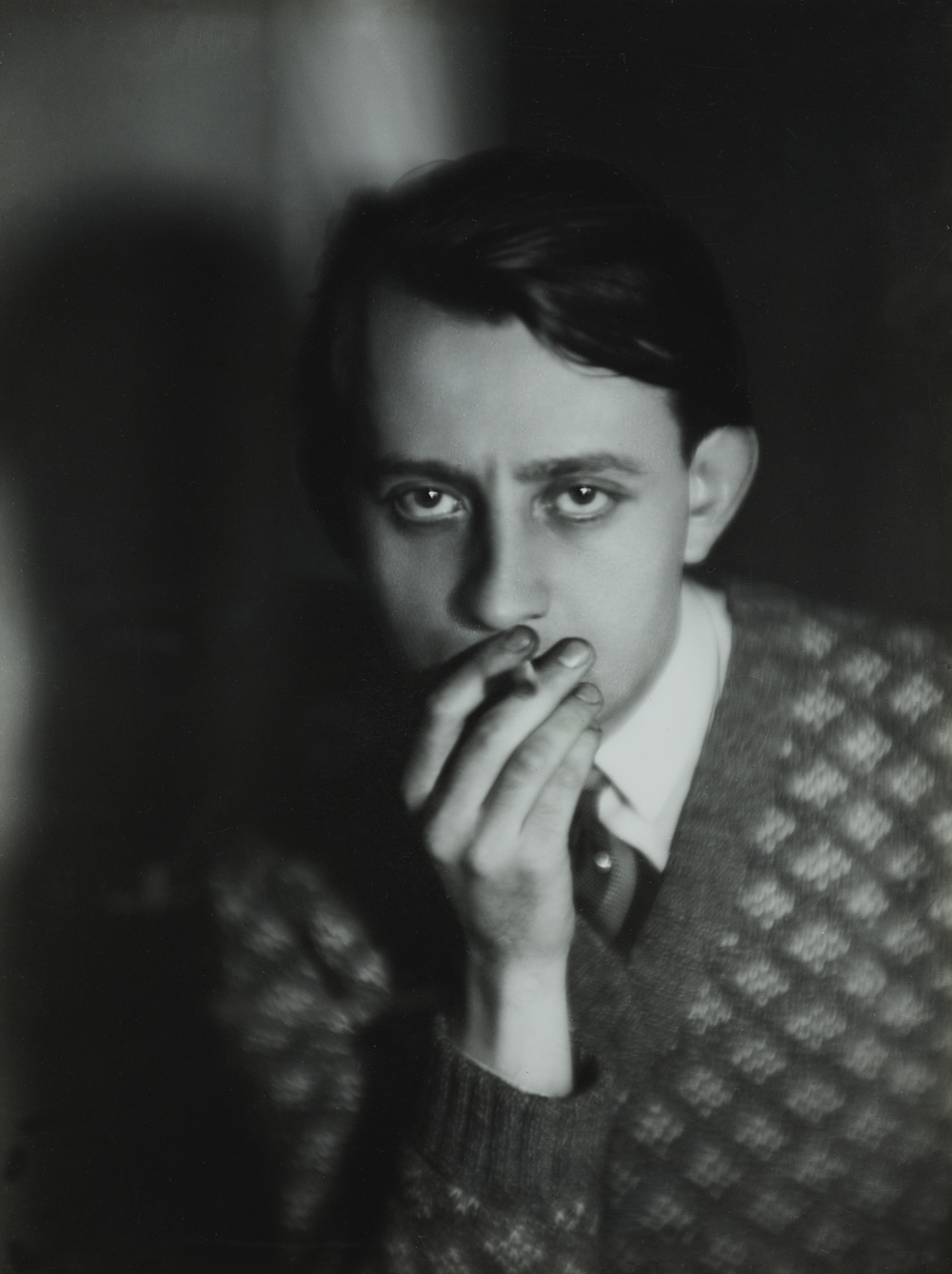
Germaine Krull (European, 1897-1985) 'André Malraux' 1930


Germaine Krull (European, 1897-1985)
André Malraux
1930
Gelatin silver print
23 x 17.3cm
Museum Folkwang, Essen
© Estate Germaine Krull, Museum Folkwang, Essen


Germaine Krull (European, 1897-1985) 'Tibetan religious ceremony offering of the white scarf' Undated


Germaine Krull (European, 1897-1985)
Tibetan religious ceremony offering of the white scarf
Undated
Gelatin silver print
24.1 x 18.5cm
Museum Folkwang, Essen
© Germaine Krull Estate, Museum Folkwang, Essen


Germaine Krull (1897-1985) A Photographer’s Journey

A famous figure of the avant-garde in the 1920-1940s, Germaine Krull (Wilda, Poland, 1897 – Wetzlar, Germany, 1985) was a pioneer of modern photojournalism and of the photographic book. Produced mainly between 1928 and 1931, her innovative work cannot be understood outside the context of her chaotic and poorly educated childhood and her activist youth, which saw her become involved in the Spartacist uprising in Germany in 1919.

After Berlin, where she produced some ambiguous nude photographs in 1923, Paris was where her career as a photographer took off. She won acclaim for her fers, the photographs of metal structures, bridges and cranes that featured in her portfolio Métal (1928), their unusual angles and framing typical of the New Vision in photography. In March 1928 she began producing innovative reportage for the newly created photographic magazine VU, focusing particularly on Parisian life, the marginal world of humble folk and popular neighbourhoods, and the “Zone.”

Often disconcerting and seemingly casual, these images taken with a hand-held Icarette were nevertheless well received by a number of illustrated magazines. Krull innovated even more as sole author of books and portfolios, which were a novelty at this time: 100 x Paris (1929), Études de nu (1930), Le Valois (1930), La Route Paris-Biarritz (1931), Marseille (1935), and the first photo-novel (phototexte) with Georges Simenon, La Folle d’Itteville (1931). Taken together, these publications represent some five hundred photos.

A woman of action and initiative, Krull had a great love of cars and road travel (which inspired  several books), and was particularly interested in behaviour, gesture and the work of women, as well as in the expressiveness of hands. Her free, maverick spirit was always in evidence, as if taking a fresh look at the world also meant constantly rising to new challenges in her photography. “Germaine Krull,” noted Pierre Mac Orlan, “does not create easy anecdotes, but she makes visible the secret details that people do not always see.”

Berlin and Paris: early days

After a free adolescence, Germaine Krull studied  photography in Munich, later contributing to a portfolio of female nudes. Her involvement with the Spartacist uprising of 1919 led all the way to prisons in Moscow in 1921. Returning to photography in 1923, she produced more female nudes, with strong erotic connotations (one series shows two women “friends”). Moving to Paris in 1926, she worked as a fashion photographer, mainly for Sonia Delaunay’s textile studio.

1928: “My fers” and VU

In 1928 Krull became known for her fers, dramatically framed photographs of cranes, bridges and silos, and of the Eiffel Tower. Often low-angle shots, these established her as an “avant-garde” photographer. At the end of  the year her portfolio Métal (64 plates) had a tremendous impact in modernist photographic circles and in progressive artistic magazines (L’Art vivant, Jazz).

Reportage and magazines

Krull’s greatest contribution was in the field of  reportage, which she pioneered in March 1928 for the magazine VU. Her favourite subject was Parisian popular culture – fairgrounds and flea markets, bars and dance halls, tramps. Her approach was free and spontaneous, favouring closeness to the subject, photographed at eye height (as enabled by her 6 x 9 Icarette), rather than elegance and balance of composition. Her idiosyncratic and highly evocative images were appreciated by the bolder magazines, which published some six hundred of them between 1928 and 1934.

Paris, Paris!

For a determined photographer like Krull, the big city represented a unique set of opportunities with real potential: department stores, shop window mannequins, effects of lighting at night and the banks of the Seine were among the subjects. Enthusiastic about the book format, she published 100 x Paris, a book of a hundred unusual views of Paris, in 1929, and contributed to Visages de Paris by Warnod (1930), and Paris by Adolf Hallman (1930). Her images gave visual expression to the “social fantastic” explored by her friend, writer Pierre Mac Orlan (Quai des Brumes, 1927).

Cars, the open road

Krull was fascinated by cars, speed and machines. In Paris she photographed the teeming traffic. After a commission to take advertising photos for  the Peugeot 201 in 1929, she developed a strong enthusiasm for road trips, the great novelty of the day, and photographed sites glimpsed from inside the vehicle. This daring work bore fruit in a new kind of photography book, Le Valois de Gérard de Nerval (1930), La Route Paris-Biarritz (1931), La Route de Paris à la Méditerranée (1931) and Marseille (1935), an aesthetic and mental as well as geographical journey to the south.

Women

As a woman photographer, Krull took an interest in artistic women such as Colette, the actress Berthe Bovy who played in La Voix humaine by Cocteau, and the singer Damia. She was especially keen to do social reportage on women’s themes, a notable example being her series on working women in Paris, published by VU in 1931-1932. Her Études de nu (1930) was an aesthetic manifesto by virtue of its  fragmented and unstructured vision of the female body. Another innovation was her photography for La Folle d’Itteville, a ground-breaking photographic version of a Simenon story, featuring an enigmatic Mrs Hubbell.

“My collection of hands”

Krull was fascinated by hands, which she  photographed with a blend of imagination and  invention. Her “collection” included Cocteau with his hand in front of his eyes or mouth, and Malraux with his cigarette. In her reportage, she homed in on gestures and postures in which the hands were signally expressive. Shown on their own, they became portraits, intriguing the viewer.

Le Courrier littéraire, 1930

The second issue (April-May-June 1930) of this ephemeral magazine contained an astonishing  portfolio of Krull’s work, with 24 photos over 17  pages. The rather emphatic presentation showed  her as a true artist, and as part of the avant-garde of the day. A letter from Cocteau was reprinted by way of an introduction. In it, the poet, Krull’s friend, expresses his surprise at her striking photos, both of Berthe Bovy in La Voix humaine and of his own hands.

Free spirit

Krull liked to concentrate on “the visual side  of things” and escape from the documentary imperatives of reportage. Her bold framing, details and situations, her use of cast shadow and touch of fantasy stimulate the imagination and create surprise. Her series on superstitions, published in VU and Variétés, was conceived with the enthusiasm of an amateur photographer exclusively intent on the narrative power of the images. Without ever entering the world of Surrealism, her very individual vision brought out an unexpected strangeness in apparently ordinary things.

War

In 1940 Krull took the boat to Brazil, aiming to work for Free France. In 1942 she was sent to Brazzaville to set up a propaganda photography  service. She also produced reportage around French Equatorial Africa. In 1943 she travelled to Algiers as a reporter, then sailed with the troops of De Lattre, arriving in the South of France and heading up to Alsace, where she witnessed the Battle of Alsace and the liberation of the Vaihingen  concentration camp.

Asia

Keen to continue working as a reporter in Southeast Asia, in 1946 Krull settled in Bangkok. Not long after, she became manager of the Oriental Hotel there, which she turned into a highly renowned establishment. Drawn to Buddhism, she photographed its temples and statues in Thailand and Burma. Leaving her position at the hotel, she travelled to India, where she took up  the cause of the Tibetan exiles (Tibetans in India, 1968). Ill, impecunious, and having lost most of her prints, Krull returned to Germany, where she died on 30 July 1985.

The films

Through Joris Ivens, Krull was in touch with many of the avant-garde filmmakers of the day, including René Clair, Georges Lacombe and Alberto  Cavalcanti. Although she claimed to dislike cinema’s complicated interdependence of machines, script and actors, she did make two short films, both in 1931: Six pour dix francs (9 min) and Il partit pour un long voyage (11 min 20 s). The second, about a young boy who dreams of travel and distant  lands and hides on a barge on the Seine at Bercy, allowed her to take some “photographically” meticulous shots of activities along the river.

Michel Frizot
Exhibition curator


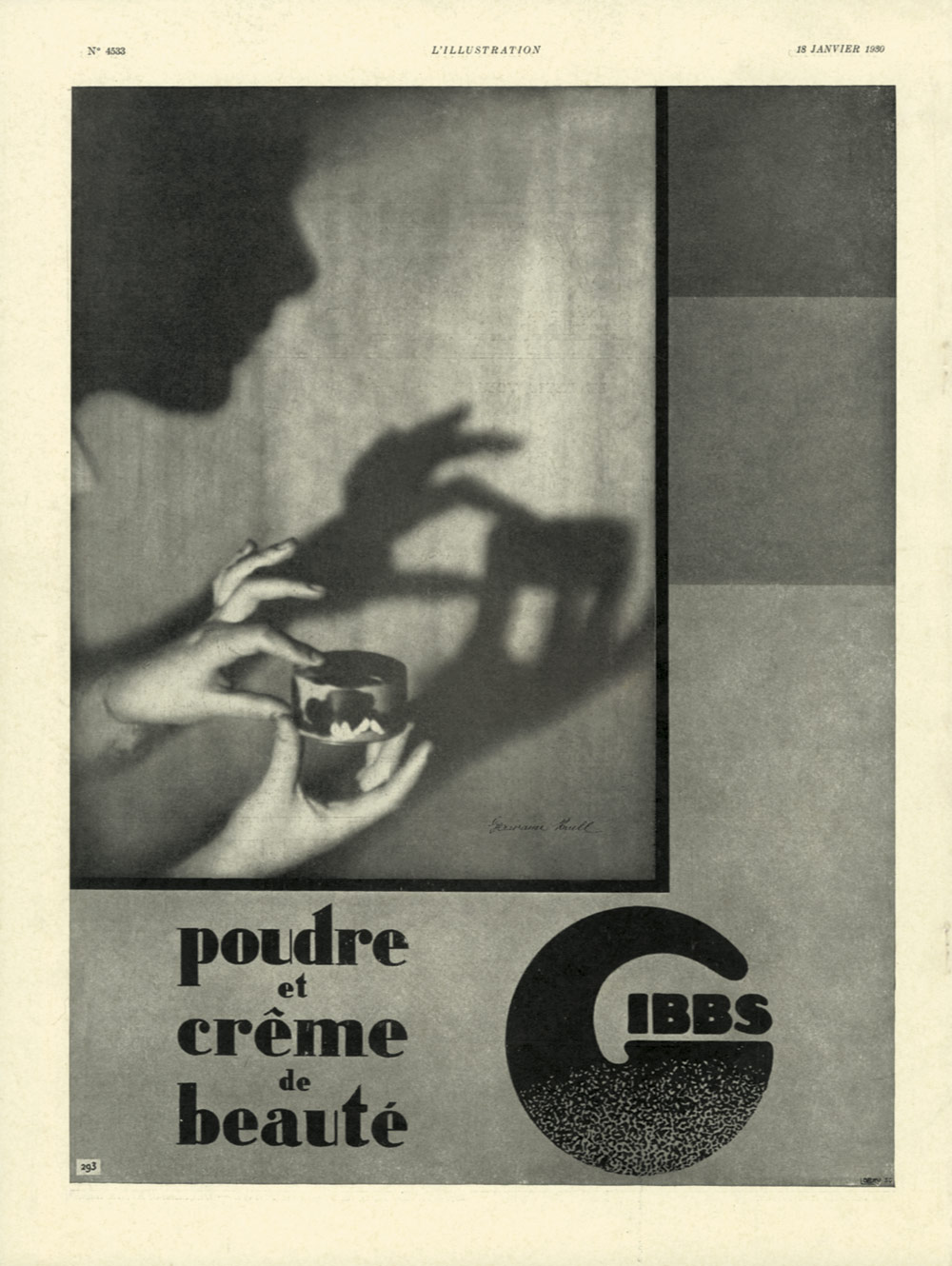
Germaine Krull (European, 1897-1985) 'Gibbs Advertising' L'Illustration, No. 4533, January 18, 1930


Germaine Krull (European, 1897-1985)
Gibbs Advertising
L’Illustration, No. 4533, January 18, 1930
36.7 x 27.8cm
Private collection
© Estate Germaine Krull, Museum Folkwang, Essen


Germaine Krull (European, 1897-1985) 'Pol Rab (illustrator)' 1930


Germaine Krull (European, 1897-1985)
Pol Rab (illustrator)
1930
Photomontage, Gelatin silver print
19.5 x 14.5cm
Amsab-Institute of Social History, Ghent
© Germaine Krull Estate, Museum Folkwang, Essen


Germaine Krull (European, 1897-1985) '100 x Paris' 1929


Germaine Krull (European, 1897-1985)
100 x Paris
1929
Cover, Publisher of the series Berlin-Westend
24.3 x 17.3cm
Private collection
© Germaine Krull Estate, Museum Folkwang, Essen


Germaine Krull (European, 1897-1985) 'Cover of the photogravure portfolio Métal (set of 64 plates)' 1928


Germaine Krull (European, 1897-1985)
Métal
Cover of the photogravure portfolio Métal (set of 64 plates)
1928
30 x 23.5cm
Collection Bouqueret-Rémy
© Estate Germaine Krull, Museum Folkwang, Essen


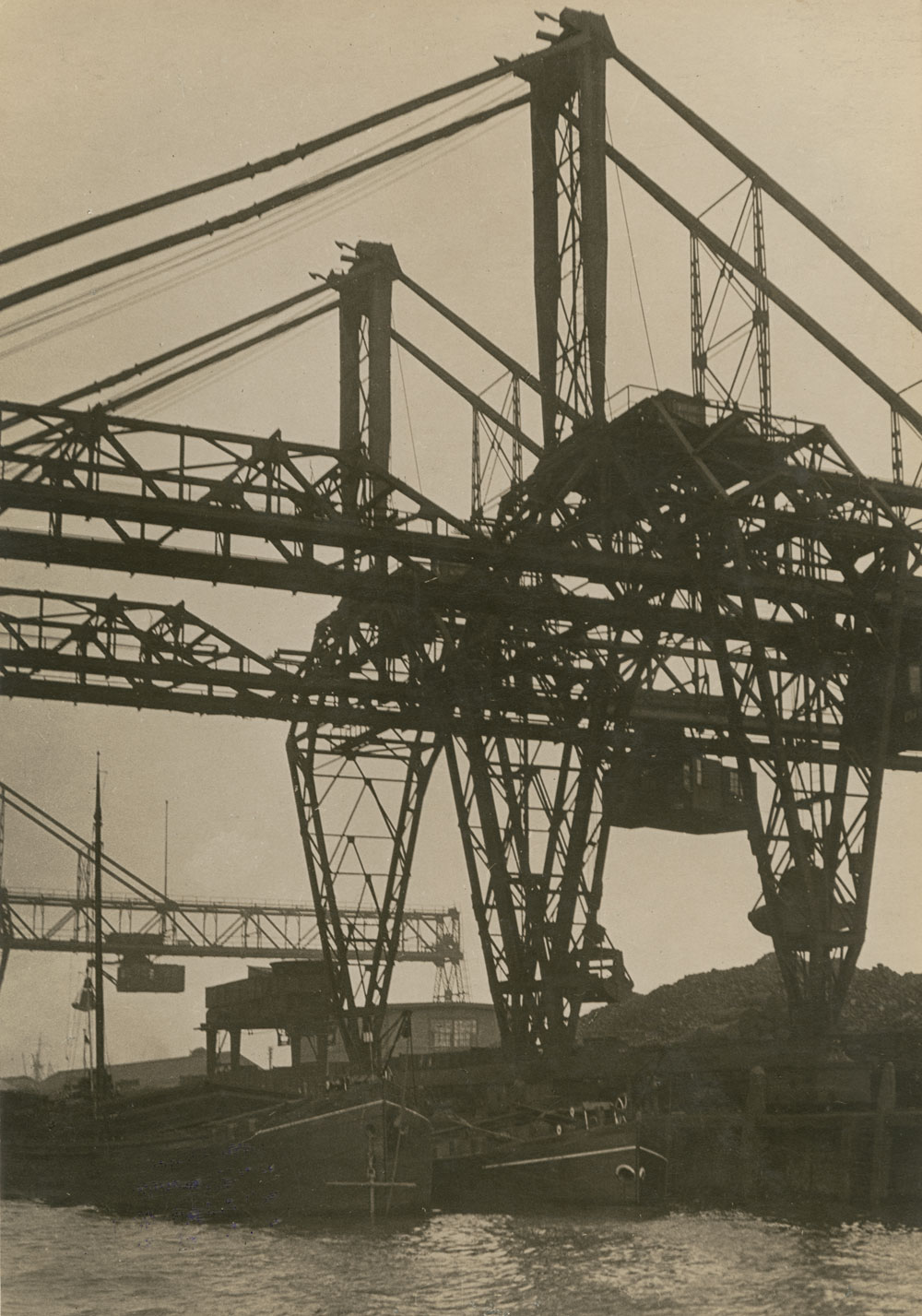
Germaine Krull (European, 1897-1985) 'Bridge crane, Rotterdam' from the series 'Métal', about 1926


Germaine Krull (European, 1897-1985)
Bridge crane, Rotterdam
about 1926
from the series Métal
Gelatin silver print
21.9 x 15.3cm
Foundation Ann and Jürgen Wilde, Pinakothek der Moderne, Munich
© Estate Germaine Krull, Museum Folkwang, Essen


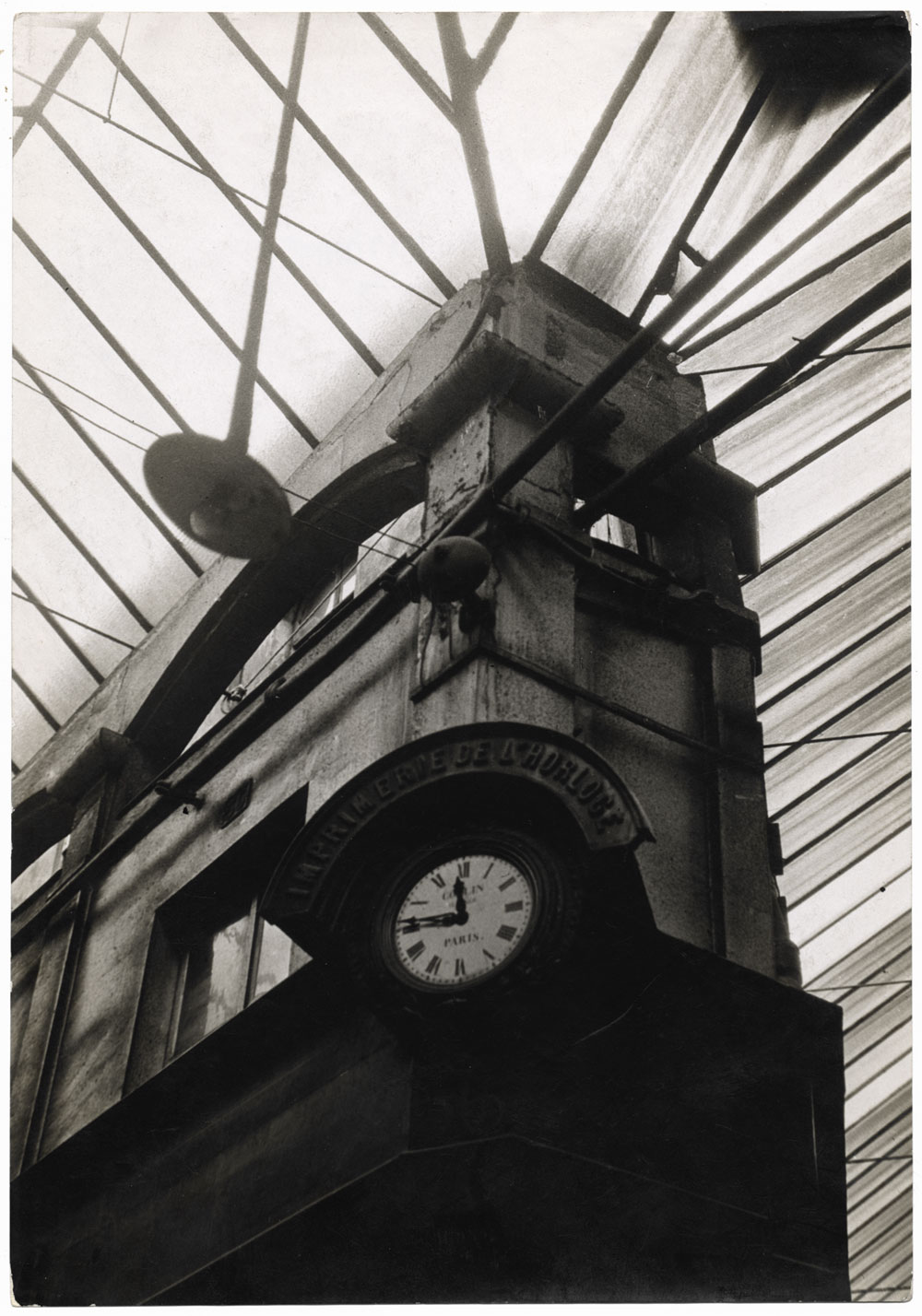
Germaine Krull (European, 1897-1985) 'Ancient architecture: printing house Clock' 1928


Germaine Krull (European, 1897-1985)
Architecture ancienne: imprimerie de l’Horloge [Ancient architecture: printing house Clock]
1928
Gelatin silver print
21.9 x 15.2cm
Amsab-Institute of Social History, Ghent
© Germaine Krull Estate, Museum Folkwang, Essen


Germaine Krull (European, 1897-1985) 'Electric plant, Issy les Moulineaux' 1928


Germaine Krull (European, 1897-1985)
Electric plant, Issy les Moulineaux
1928
Gelatin silver print
22.6 x 16.6cm
Amsab-Institute of Social History, Ghent
© Germaine Krull Estate, Museum Folkwang, Essen


Germaine Krull (European, 1897-1985) 'Halls of Night (in friendship to Van Ecke)' around 1920


Germaine Krull (European, 1897-1985)
Les Halles de nuit (en toute amitié à Van Ecke) [Halls of Night (in friendship to Van Ecke)]
around 1920
Gelatin silver print
22 x 16.2cm
Amsab-Institute of Social History, Ghent
© Germaine Krull Estate, Museum Folkwang, Essen


Germaine Krull (European, 1897-1985) 'At the right corner, Paris' 1929


Germaine Krull (European, 1897-1985)
Au bon coin, Paris [At the right corner, Paris]
1929
Gelatin silver print
14.2 x 10.5cm
Collection Bouqueret-Rémy
© Estate Germaine Krull, Museum Folkwang, Essen


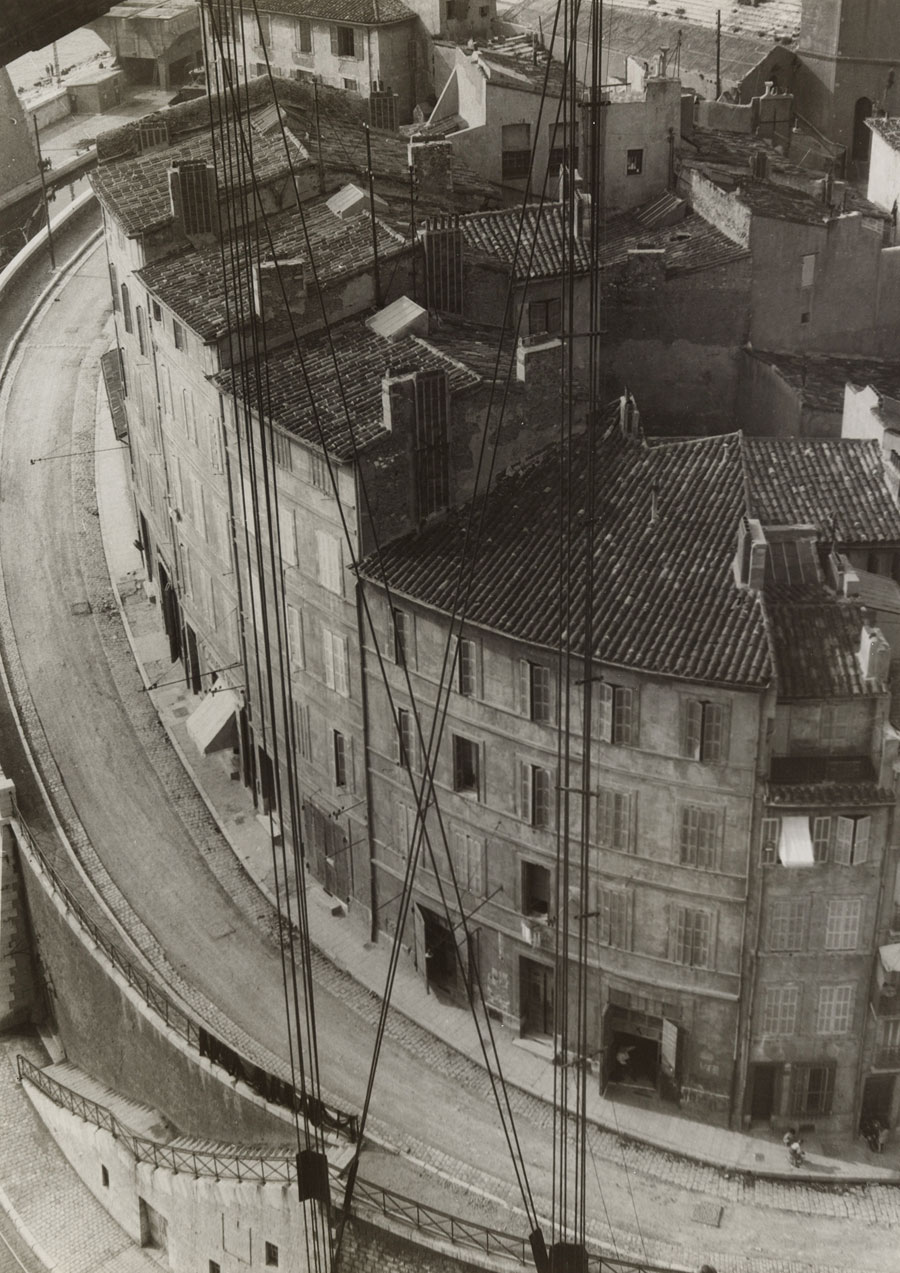
Germaine Krull (European, 1897-1985) 'Marseille' June 1930


Germaine Krull (European, 1897-1985)
Marseille
June 1930
Gelatin silver print
21.2 x 15.3cm
The Museum of Modern Art, New York. Thomas Walther Collection.Gift of Thomas Walther
© Estate Germaine Krull, Museum Folkwang, Essen
Photo: © 2015. Digital image, The Museum of Modern Art, New York/Scala, Florence


Jeu de Paume
1, Place de la Concorde
75008 Paris
métro Concorde
Phone: 01 47 03 12 50

Opening hours:
Tuesday – Sunday 11am – 7pm
Closed Mondays

Jeu de Paume website

LIKE ART BLART ON FACEBOOK

Back to top

Exhibition: ‘In Light of the Past: Celebrating 25 Years of Photography at the National Gallery of Art’ at the National Gallery of Art, Washington

Exhibition dates: 3rd May – 26th July, 2015

Curators: Sarah Greenough, Senior Curator and Head of the Department of Photographs, and Diane Waggoner, Associate Curator, Department of Photographs, National Gallery of Art


Charles Nègre (French, 1820-1880) 'Market Scene at the Port of the Hotel de Ville, Paris' before February 1852 from the exhibition 'In Light of the Past: Celebrating 25 Years of Photography at the National Gallery of Art' at the National Gallery of Art, Washington, May - July, 2015


Charles Nègre (French, 1820-1880)
Market Scene at the Port of the Hotel de Ville, Paris
before February 1852
Salted paper print
14.7 x 19.9cm
National Gallery of Art, Washington, Patrons’ Permanent Fund, 2003


What a great title for an exhibition. Photography always evidences light of the past, we live in light of the past (the light of the Sun takes just over 8 minutes to reach Earth) and, for whatever reason, human beings never seem to learn from mistakes, in light of the past history of the human race.

My favourites in this postings are the 19th century photographs, to which I am becoming further attuned the more I look at them. There is almost a point when you become psychologically enmeshed with their light, with the serenity of the images, a quality that most contemporary photographs seem to have lost. There is a quietness to their presence, a contemplation on the nature of the world through the pencil of nature that is captivating. You only have to look at Gustave Le Gray’s The Pont du Carrousel, Paris: View to the West from the Pont des Arts (1856-1858, below) to understand the everlasting, transcendent charisma of these images. Light, space, time, eternity.

Dr Marcus Bunyan


Many thankx to the National Gallery of Art for allowing me to publish the photographs in the posting. Please click on the photographs for a larger version of the image.

The Collection of Photographs at the National Gallery of Art, Washington (110kb Word doc)


William Henry Fox Talbot (English, 1800-1877) 'A Scene in York: York Minster from Lop Lane' 1845 from the exhibition 'In Light of the Past: Celebrating 25 Years of Photography at the National Gallery of Art' at the National Gallery of Art, Washington, May - July, 2015


William Henry Fox Talbot (English, 1800-1877)
A Scene in York: York Minster from Lop Lane
1845
Salted paper print
16.2 x 20.4cm
National Gallery of Art, Washington, Edward J. Lenkin Fund, Melvin and Thelma Lenkin Fund and Stephen G. Stein Fund, 2011


A British polymath equally adept in astronomy, chemistry, Egyptology, physics, and philosophy, Talbot spent years inventing a photographic process that created paper negatives, which were then used to make positive prints – the conceptual basis of nearly all photography until the digital age. Calotypes, as he came to call them, are softer in effect than daguerreotypes, the other process announced in 1839. Though steeped in the sciences, Talbot understood the ability of his invention to make striking works of art. Here the partially obstructed view of the cathedral rising from the confines of the city gives a sense of discovery, of having just turned the corner and encountered this scene.


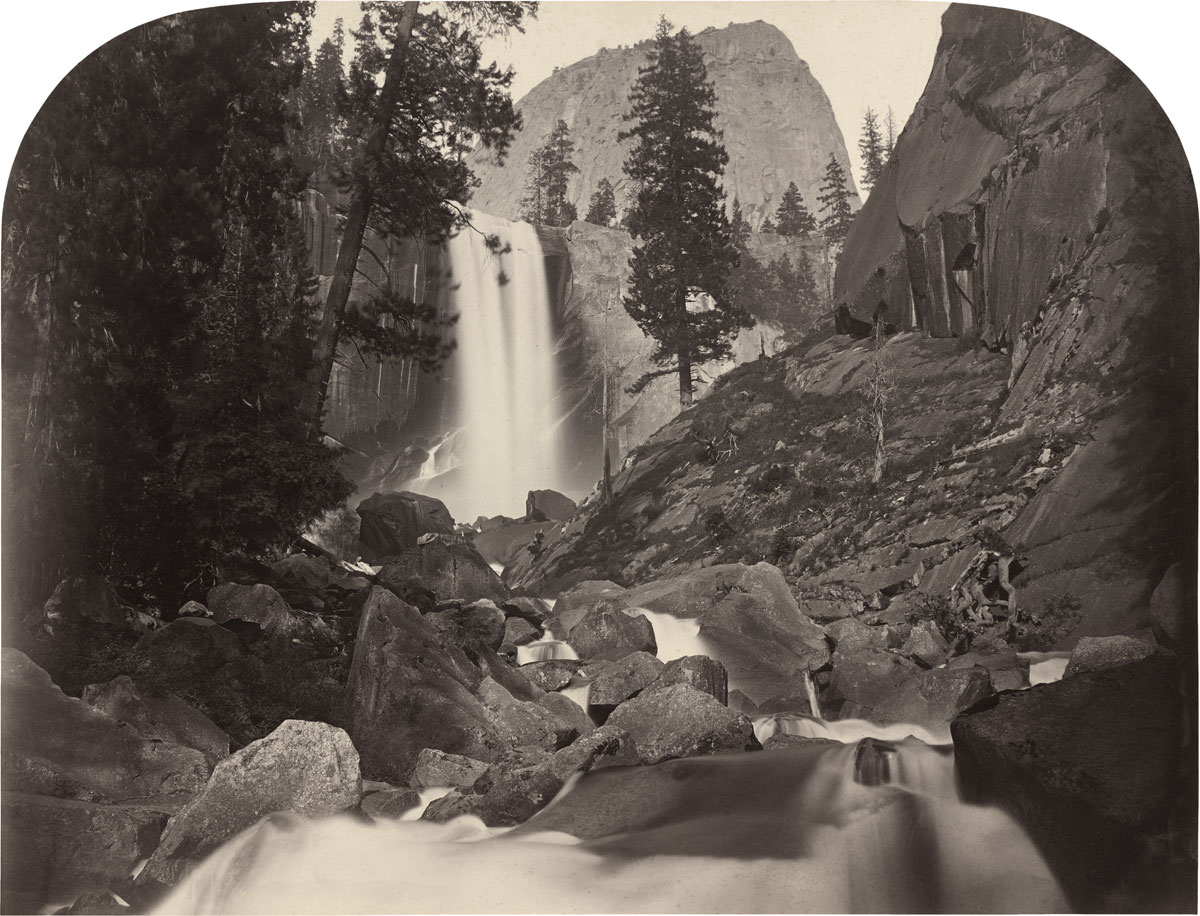
Carleton E. Watkins (American, 1829-1916) 'Piwac, Vernal Falls, 300 feet, Yosemite' 1861


Carleton E. Watkins (American, 1829-1916)
Piwac, Vernal Falls, 300 feet, Yosemite
1861
Albumen print
39.9 x 52.3cm
National Gallery of Art, Washington, Gift of Mary and David Robinson, 1995


The westward expansion of America opened up new opportunities for photographers such as Watkins and William Bell. Joining government survey expeditions, hired by railroad companies, or catering to tourists and the growing demand for grand views of nature, they created photographic landscapes that reached a broad audience of scientists, businessmen, and engineers, as well as curious members of the middle class. Watkins’s photographs of the sublime Yosemite Valley, which often recall landscape paintings of similar majestic subjects, helped convince Congress to pass a bill in 1864 protecting the area from development and commercial exploitation.


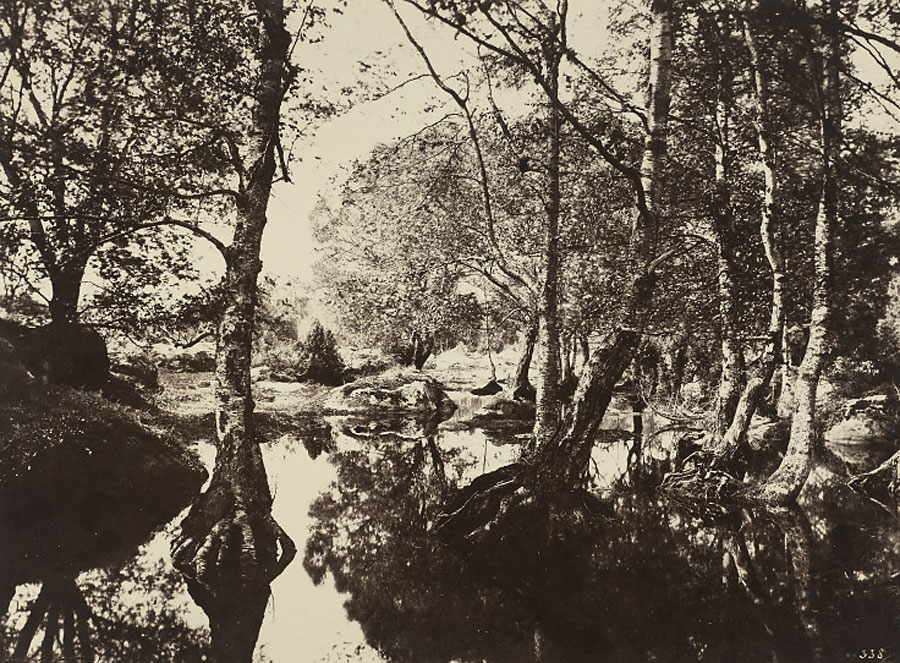
Eugène Cuvelier (French, 1837-1900) 'Belle-Croix' 1860s


Eugène Cuvelier (French, 1837-1900)
Belle-Croix
1860s
Albumen print
25.4 x 34.3cm
National Gallery of Art, Washington, Gail and Benjamin Jacobs for the Millennium Fund, 2007


In the second half of the nineteenth century, some photographers in France, hired by governmental agencies to make photographic inventories or simply catering to the growing demand for pictures of Paris, drew on the medium’s documentary abilities to record the nation’s architectural patrimony and the modernisation of Paris. Others explored the camera’s artistic potential by capturing the ephemeral moods of nature in the French countryside. Though photographers faced difficulties in carting around heavy equipment and operating in the field, they learned how to master the elements that directly affected their pictures, from securing the right vantage point to dealing with movement, light, and changing atmospheric conditions during long exposure times.


Gustave Le Gray (French, 1820-1884) 'The Pont du Carrousel, Paris: View to the West from the Pont des Arts' 1856-1858


Gustave Le Gray (French, 1820-1884)
The Pont du Carrousel, Paris: View to the West from the Pont des Arts
1856-1858
Albumen print
37.8 x 48.8cm
National Gallery of Art, Washington, Patrons’ Permanent Fund, 1995


Édouard-Denis Baldus (French, 1813-1889) 'Toulon, Train Station' c. 1861


Édouard-Denis Baldus (French, 1813-1889)
Toulon, Train Station
c. 1861
Albumen print
27.4 x 43.1cm
National Gallery of Art, Washington, Patrons’ Permanent Fund, 1995


In Light of the Past: Celebrating 25 Years of Photography at the National Gallery of Art, on view in the West Building from May 3 through July 26, 2015, will commemorate more than two decades of the Gallery’s robust photography program. Some 175 of the collection’s most exemplary holdings will reveal the evolution of the art of photography, from its birth in 1839 to the late 1970s. In Light of the Past is one of three stellar exhibitions that will commemorate the 25th anniversary of the National Gallery of Art’s commitment to photography acquisitions, exhibitions, scholarly catalogues, and programs.

In Light of the Past includes some of the rarest and most compelling photographs ever created,” said Earl A. Powell III, director, National Gallery of Art, Washington. “It also honours the generous support of our donors who have enabled us to achieve this new place of prominence for photography at the Gallery.

About the exhibition

In Light of the Past begins with exceptional 19th-century salted paper prints, daguerreotypes, and albumen prints by acclaimed early practitioners such as William Henry Fox Talbot (1800-1877), Gustave Le Gray (1820-1884), Roger Fenton (1819-1869), Julia Margaret Cameron (1815-1879), Albert Sands Southworth (1811-1894), and Josiah Johnson Hawes (1808-1901). It also displays works by American expeditionary photographers, including William Bell (1830-1910) and Carleton E. Watkins (1829-1916).

The exhibition continues with late 19th- and early 20th-century American Pictorialist photographs by Alfred Stieglitz (1864-1946), Clarence H. White (1871-1925), Gertrude Käsebier (1852-1934), and Alvin Langdon Coburn (1882-1966), among others, as well as European masters such as Eugène Atget (1857-1927). The exhibition also examines the international photographic modernism of artists such as Paul Strand (1890-1976), André Kertész (1894-1985), Marianne Brandt (1893-1983), László Moholy-Nagy (1895-1946), and Ilse Bing (1899-1998) before turning to the mid-20th century, where exceptional work by Walker Evans (1903-1975), Robert Frank (b. 1924), Harry Callahan (1912-1999), Irving Penn (1917-2009), Lee Friedlander (b. 1934), and Diane Arbus (1923-1971) will be on view.

The exhibition concludes with pictures from the 1960s and 1970s, showcasing works by photographers such as Robert Adams (b. 1937), Lewis Baltz (1945-2014), and William Eggleston (b. 1939), as well as Mel Bochner (b. 1940) and Sol LeWitt (1928-2007), which demonstrate the diverse practices that invigorated photography during these decades.

Press release from the National Gallery of Art


Albert Sands Southworth (American, 1811-1894) and Josiah Johnson Hawes (American, 1808-1901) 'The Letter' c. 1850


Albert Sands Southworth (American, 1811-1894) and Josiah Johnson Hawes (American, 1808-1901)
The Letter
c. 1850
Daguerreotype
Plate: 20.3 x 15.2cm
National Gallery of Art, Washington, Patrons’ Permanent Fund, 1999


Working together in Boston, the portrait photographers Southworth and Hawes aimed to capture the character of their subjects using the daguerreotype process. Invented in France and one of the two photographic processes introduced to the public in early 1839, the daguerreotype is made by exposing a silver-coated copper plate to light and then treating it with chemicals to bring out the image. The heyday of the technique was the 1840s and 1850s, when it was used primarily for making portraits. The daguerreotype’s long exposure time usually resulted in frontal, frozen postures and stern facial expressions; this picture’s pyramidal composition and strong sentiments of friendship and companionship are characteristic of Southworth and Hawes’s innovative approach.


Clarence H. White (American, 1871-1925) 'The Hillside' c. 1898


Clarence H. White (American, 1871-1925)
The Hillside
c. 1898
Gum dichromate print
20.8 x 15.88cm
National Gallery of Art, Washington, Patrons’ Permanent Fund, 2008


The Photo-Secession

At the turn of the century in America, Alfred Stieglitz and his colleague Edward Steichen led the movement to establish photography’s status as a fine art. In 1902 Stieglitz founded an organisation called the Photo-Secession, consisting of young artists who shared his belief in the creative potential of the medium. Many of the photographers featured here were members of the group, including Gertrude Käsebier, Clarence White, and Alvin Langdon Coburn. Through the exhibitions Stieglitz organised in his New York gallery, called 291, and the essays he published in his influential quarterly, Camera Work, he and the Photo-Secession promoted the Pictorialist aesthetic of softly textured, painterly pictures that elicit emotion and appeal to the imagination. Occasionally the photographers’ compositions refer to other works of art, such as Steichen’s portrait of his friend Auguste Rodin, whose pose recalls one of the sculptor’s most famous works, The Thinker. Influenced by the modern European and American painting, sculpture, and drawing he exhibited at 291, Stieglitz lost interest in the Photo-Secession in the early 1910s and began to explore a more straightforward expression.


Eugène Atget (French, 1857-1927) 'Saint-Cloud' 1926


Eugène Atget (French, 1857-1927)
Saint-Cloud
1926
Albumen print
22.2 x 18.1cm
National Gallery of Art, Washington, Gift of Mary and Dan Solomon and Patrons’ Permanent Fund, 2006


Using a cumbersome camera mounted on a tripod, Atget recorded the myriad facets of Paris and its environs at the turn of the century. Transforming ordinary scenes into poetic evocations, he created a visual compendium of the objects, architecture, and landscapes that were expressive of French culture and its history. He sold his photographs to artists, architects, and craftsmen, as well as to libraries and museums interested in the vanishing old city. Throughout his career he returned repeatedly to certain subjects and discovered that the variations caused by changing light, atmosphere, and season provided inexhaustible subjects for the perceptive photographer.


Julia Margaret Cameron (British, 1815-1879) 'The Mountain Nymph, Sweet Liberty' June 1866


Julia Margaret Cameron (British, 1815-1879)
The Mountain Nymph, Sweet Liberty
June 1866
Albumen print
36.1 x 26.7cm
National Gallery of Art, Washington, New Century Fund, 1997


Ensconced in the intellectual and artistic circles of midcentury England, Cameron manipulated focus and light to create poetic pictures rich in references to literature, mythology, and history. Her monumental views of life-sized heads were unprecedented, and with them she hoped to define a new mode of photography that would rival the expressive power of painting and sculpture. The title of this work alludes to John Milton’s mid-seventeenth-century poem L’Allegro. Describing the happy life of one who finds pleasure and beauty in the countryside, the poem includes the lines:

Come, and trip it as ye go
On the light fantastic toe;
And in thy right hand lead with thee,
The mountain nymph, sweet Liberty.


Dr Guillaume-Benjamin-Amant Duchenne (de Boulogne) (French, 1806-1875) 'Figure 63, "Fright" from "Mécanisme de la physionomie humaine (Mechanism of human physiognomy)" (1862)' 1854-1855


Dr Guillaume-Benjamin-Amant Duchenne (de Boulogne) (French, 1806-1875)
Figure 63, “Fright” from “Mécanisme de la physionomie humaine (Mechanism of human physiognomy)” (1862)
1854-1855
Albumen print
21.5 × 16cm
National Gallery of Art, Washington, Pepita Milmore Memorial Fund, 2015


A neurologist, physiologist, and photographer, Duchenne de Boulogne conducted a series of experiments in the mid-1850s in which he applied electrical currents to various facial muscles to study how they produce expressions of emotion. Convinced that these electrically-induced expressions accurately rendered internal feelings, he then photographed his subjects to establish a precise visual lexicon of human emotions, such as pain, surprise, fear, and sadness. In 1862 he included this photograph representing fright in a treatise on physiognomy (a pseudoscience that assumes a relationship between external appearance and internal character), which enjoyed broad popularity among artists and scientists.


Lewis Hine (American, 1874-1940) 'An Anaemic Little Spinner in a New England Cotton Mill (North Pownal, Vermont)' 1910


Lewis Hine (American, 1874-1940)
An Anaemic Little Spinner in a New England Cotton Mill (North Pownal, Vermont)
1910
Gelatin silver print
24.1 × 19.2cm
National Gallery of Art, Washington, Pepita Milmore Memorial Fund, 2015


Trained as a sociologist and initially employed as a teacher, Hine used the camera both as a research tool and an instrument of social reform. One of the earliest and most influential social documentary photographers of his time, he made many pictures under the auspices of the National Child Labor Committee, an organisation formed in 1904 to promote better working conditions for children. Hine’s focus on the thin, frail body of this barefoot twelve-year-old spinner, who stands before rows of bobbins in the mill where she worked, was meant to illustrate the unhealthy effects of her employment. Photographs like this one were crucial to the campaign to change American child labor laws in the early twentieth century.


In Light of the Past: Twenty-Five Years of Photography at the National Gallery of Art

Georgia O’Keeffe and the Alfred Stieglitz Estate laid the foundation of the photography collection of the National Gallery of Art in 1949 with their donation of 1,650 Stieglitz photographs, an unparalleled group known as the Key Set. Yet the Gallery did not start actively acquiring photographs until 1990, when it launched an initiative to build a collection of works by European and American photographers from throughout the history of the medium and mount major exhibitions with scholarly publications. Now including nearly fifteen thousand prints, the collection encompasses the rich diversity of photographic practice from fine art to scientific and amateur photography, as well as photojournalism. It is distinguished by its large holdings of works by many of the medium’s most acclaimed masters, such as Paul Strand, Walker Evans, André Kertész, Ilse Bing, Robert Frank, Harry Callahan, Lee Friedlander, Gordon Parks, Irving Penn, and Robert Adams, among others.

In Light of the Past celebrates the twenty-fifth anniversary of the 1990 initiative by presenting some of the Gallery’s finest photographs made from the early 1840s to the late 1970s. It is divided into four sections arranged chronologically. The first traces the evolution of the art of photography during its first decades in the work of early British, French, and American practitioners. The second looks at the contributions of late nineteenth and early twentieth-century photographers, from Stieglitz and the American Pictorialists to European masters such as Eugène Atget. The third section examines the international photographic modernism of the 1920s and 1930s, and the fourth features seminal mid-twentieth-century photographers. The exhibition concludes with pictures representing the varied practices of those working in the late 1960s and 1970s.

The Nineteenth Century: The Invention of Photography

In 1839 a new means of visual representation was announced to a startled world: photography. Although the medium was immediately and enthusiastically embraced by the public at large, photographers themselves spent the ensuing decades experimenting with techniques and debating the nature of this new invention. The works in this section suggest the range of questions addressed by these earliest practitioners. Was photography best understood as an art or a science? What subjects should photographs depict, what purpose should they serve, and what should they look like? Should photographers work within the aesthetics established in other arts, such as painting, or explore characteristics that seemed unique to the medium? This first generation of photographers became part scientists as they mastered a baffling array of new processes and learned how to handle their equipment and material. Yet they also grappled with aesthetic issues, such as how to convey the tone, texture, and detail of multicoloured reality in a monochrome medium. They often explored the same subjects that had fascinated artists for centuries – portraits, landscapes, genre scenes, and still lifes – but they also discovered and exploited the distinctive ways in which the camera frames and presents the world.

Photography at the Turn of the Twentieth Century

In the late nineteenth century, improvements in technology and processing, along with the invention of small handheld cameras such as the Kodak, suddenly made it possible for anyone of middle-class means to take photographs. Many amateurs took up the camera to commemorate family, friends, and special events. Others, such as the sociologist Lewis Hine, used it as a tool for social and political change. Partially in response to the new ease of photography, more serious practitioners in America and Europe banded together to assert the artistic merit of the medium. Called Pictorialists, they sought to prove that photography was just as capable of poetic, subjective expression as painting. They freely manipulated their prints to reveal their authorial control, often resulting in painterly effects, and consciously separated themselves from amateur photographers and mechanised processes.

Photography Between the Wars

In the aftermath of World War I – the first modern, mechanised conflict – sweeping changes transformed photography. Avant-garde painters, graphic designers, and journalists turned to the medium, seeing it as the most effective tool to express the fractured, fast-paced nature of modernity and the new technological culture of the twentieth century. A wide variety of new approaches and techniques flourished during these years, especially in Europe. Photographers adopted radical cropping, unusual angles, disorienting vantage points, abstraction, collage, and darkroom alchemy to achieve what the influential Hungarian teacher László Moholy-Nagy celebrated as the “new vision.” Other photographers, such as the German August Sander or the Americans Alfred Stieglitz, Edward Weston, and Walker Evans, sought a more rigorous objectivity grounded in a precise examination of the world.

Postwar Photography

Photography thrived in the decades after World War II, invigorated by new ideas, practices, and expanding venues for circulating and displaying pictures. Immediately after the war, many photographers sought to publish their pictures in illustrated magazines, which prospered during these years. Some, such as Gordon Parks, made photographs highlighting racial, economic, and social disparities. Others, such as Louis Faurer, Sid Grossman, and Robert Frank, turned to the street to address the conditions of modern life in pictures that expose both its beauty and brutality. Using handheld cameras and available light, they focused on the random choreography of sidewalks, making pictures that are often blurred, out of focus, or off-kilter.

In the later 1950s and 1960s a number of photographers pushed these ideas further, mining the intricate social interactions of urban environments. Unlike photographers from the 1930s, these practitioners, such as Garry Winogrand, Lee Friedlander, and Diane Arbus, sought not to reform American society but to record it in all its complexity, absurdity, and chaos. By the late 1960s and 1970s, other photographers, such as Robert Adams and Lewis Baltz, looked beyond conventional notions of natural beauty to explore the despoliation of the urban and suburban landscape. Their pictures of tract houses, highways, and motels are stripped of any artistic frills, yet they are exquisitely rendered and replete with telling details. Also starting in the 1960s, many conceptual or performance artists working in a variety of media embraced what they perceived to be photography’s neutrality and turned to it as an essential part of their experiments to expand traditional notions of art. In the late 1960s, improvements in colour printing techniques led others, such as William Eggleston, to explore the artistic potential of colour photography.


Edward Steichen (American, 1879-1973) 'An Apple, A Boulder, A Mountain' 1921


Edward Steichen (American, 1879-1973)
An Apple, A Boulder, A Mountain
1921
Platinum print
National Gallery of Art, Washington, Patrons’ Permanent Fund, 2014


After World War I, Steichen became disillusioned with the painterly aesthetic of his earlier work and embarked on a series of experiments to study light, form, and texture. Inverting an apple, he demonstrated how a small object, when seen in a new way, can assume the monumentality and significance of a much larger one. His close-up scrutiny of a natural form closely links this photograph with works by other American modernists of the 1920s, such as Edward Weston, Paul Strand, and Georgia O’Keeffe.


Paul Strand (American, 1890-1976) 'People, Streets of New York, 83rd and West End Avenue' 1916


Paul Strand (American, 1890-1976)
People, Streets of New York, 83rd and West End Avenue
1916
Platinum print
24.2 x 33cm
National Gallery of Art, Washington, Patrons’ Permanent Fund, 1990


Strand was introduced to photography in high school by his teacher Lewis Hine, who instilled in him a strong interest in social issues. In 1907, Hine took his pupil to Alfred Stieglitz’s 291 gallery in New York, which launched Strand’s desire to become a fine art photographer. By the early 1910s, influenced by Stieglitz, he began to make clearly delineated portraits, pictures of New York, and nearly abstract still lifes. Strand came to believe that photography was a gift of science to the arts, that it was an art of selection, not translation, and that objectivity was its very essence.


American 20th Century. 'Untitled' c. 1930


American 20th Century
Untitled
c. 1930
Gelatin silver print
5.7 x 10cm
National Gallery of Art, Washington, Gift of Robert E. Jackson, 2007


Snapshots

After World War I, a parade of technological improvements transformed the practice of photography. With smaller cameras, faster shutter speeds, and more sensitive film emulsions, both amateurs and more serious practitioners could now easily record motion, investigate unexpected angles and points of view, and work in dim light and inclement weather. The amateur’s less staid, more casual approach began to play an important role in the work of modernist photographers as they explored spontaneity and instantaneity, seeking to capture the cacophony and energy of modern life. Blurriness, distorted perspectives, and seemingly haphazard cropping-once considered typical amateur mistakes-were increasingly embraced as part of the modern, vibrant way of picturing the world.


Robert Frank (Swiss, 1924-2019) 'City of London' 1951


Robert Frank (Swiss, 1924-2019)
City of London
1951
Gelatin silver print
23 x 33.6cm
National Gallery of Art, Washington, Robert Frank Collection, Purchased as a Gift of The Howard Gilman Foundation, in Honor of the 50th Anniversary of the National Gallery of Art, 1991


Robert Frank (Swiss, 1924-2019) 'Woman/Paris' 1952


Robert Frank (Swiss, 1924-2019)
Woman/Paris
1952
Gelatin silver print in bound volume
Image: 35.1 x 25.4cm
National Gallery of Art, Washington, Robert Frank Collection, Gift (Partial and Promised) of Robert Frank, in Honor of the 50th Anniversary of the National Gallery of Art, 1990


In the late 1940s and early 1950s, Frank made several handbound volumes of photographs, exploring different ways to link his pictures through non-narrative sequences. While in Zurich in October 1952, he assembled pictures taken in Europe, South America, and the United States in a book called Black White and Things. With a brief introductory quote from Antoine de Saint-Exupéry – “it is only with the heart that one can see rightly; what is essential is invisible to the eye” – the photographs are arranged in a sophisticated sequence that uses formal repetition, conceptual contrasts, and, as here, witty juxtapositions to evoke a range of ideas …

While in Zurich in October of 1952, Frank assembled photographs taken in Europe, South America, and the United States in the preceding years into a bound book called Black White and Things. Designed by Frank’s friend Werner Zryd, and with only a brief introductory statement describing the three sections, the photographs appear in a sophisticated sequence that relies on subtle, witty juxtapositions and powerful visual formal arrangements to evoke a wide range of emotions.

Frank made three copies of this book, all identical in size, construction, and sequence. He gave one copy to his father, gave one to Edward Steichen, and kept one. The book that belonged to his father is now in a private collection; Steichen’s copy resides at the Museum of Modern Art, New York; and in 1990 Frank gave his copy to the Robert Frank Collection at the National Gallery of Art.


Robert Frank (Swiss, 1924-2019) 'Trolley - New Orleans' 1955


Robert Frank (Swiss, 1924-2019)
Trolley – New Orleans
1955
Gelatin silver print
Sheet: 21 x 31.6cm
National Gallery of Art, Washington, Gift of Maria and Lee Friedlander, 2001


Roy DeCarava (American, 1919-2009) 'Mississippi Freedom Marcher, Washington, D.C.' 1963


Roy DeCarava (American, 1919-2009)
Mississippi Freedom Marcher, Washington, D.C.
1963
Gelatin silver print
25.5 x 33cm
National Gallery of Art, Washington, Horace W. Goldsmith Foundation through Robert and Joyce Menschel, 1999


Lee Friedlander (American, b. 1934) 'New York City' 1966


Lee Friedlander (American, b. 1934)
New York City
1966
Gelatin silver print
Image: 13.3 x 20.6 cm
National Gallery of Art, Washington, Trellis Fund, 2001


Heir to the tradition of documentary photography established by Eugène Atget, Walker Evans, and Robert Frank, Friedlander focuses on the American social landscape in photographs that can seem absurd, comical, and even bleak. In dense, complex compositions, he frequently depicts surprising juxtapositions that make the viewer look twice. He has made numerous self-portraits, yet he appears in these pictures in oblique and unexpected ways, for example reflected in a mirror or window. The startling intrusion of Friedlander’s shadow onto the back of a pedestrian’s coat, at once threatening and humorous, slyly exposes the predatory nature of street photography.


Giovanni Anselmo (Italian, 1934-2023) 'Entering the Work' 1971


Giovanni Anselmo (Italian, 1934-2023)
Entering the Work
1971
Photographic emulsion on canvas
49 x 63.5cm
National Gallery of Art, Washington, Glenstone in honor of Eileen and Michael Cohen, 2008


Conceptual Photography

In the 1960s, many painters and sculptors questioned the traditional emphasis on aesthetics and turned to creating art driven by ideas. Photography’s association with mechanical reproduction appealed to them as they sought to downplay the hand of the artist while promoting his or her role as idea maker. Some conceptual artists, such as Sol Lewitt and Mel Bochner, used photographs to explore an interest in perspective, scale, and mathematics. Others turned to photography as a tool to record performances and artistic undertakings, the resulting pictures acting as an integral part of those projects.

Anselmo was a member of the Italian Arte Povera group, which sought to break down the separation of art and life through experimental performances and the use of natural materials such as trees and leaves. To make this work, Anselmo set his camera up with a timed shutter release, and raced into view so that his running figure creates a modest yet heroic impression on the landscape.


Robert Adams (American, b. 1937) 'Colorado Springs, Colorado' 1974


Robert Adams (American, b. 1937)
Colorado Springs, Colorado
1974
Gelatin silver print, printed 1983
15.2 x 15.2cm
National Gallery of Art, Washington, Gift of Mary and Dan Solomon and Patrons’ Permanent Fund, 2006


For more than forty years, Adams has recorded the changing American landscape, especially the ongoing settlement of the West. Although he has photographed roads, tract houses, and strip malls that have utterly transformed the landscape, he has also captured the beauty that remains and indeed, that refuses to die, as in his poetic picture of morning fog over California hills. He is convinced, as he wrote in 1974, that “all land, no matter what has happened to it, has over it a grace, an absolutely persistent beauty.”


Margaret Bourke-White (American, 1904-1971) 'Fort Peck Dam, Montana' 1936


Margaret Bourke-White (American, 1904-1971)
Fort Peck Dam, Montana
1936
Gelatin silver print
33.02 × 27.31cm
National Gallery of Art, Washington, Patrons’ Permanent Fund, 2014


One of the most iconic photographs by the pioneering photojournalist Bourke-White, Fort Peck Dam, Montana was published on the cover of the inaugural issue of Life magazine on November 23, 1936. A striking representation of the machine age, the photograph depicts the stark, massive piers for an elevated highway over the spillway near the dam. The two men at the bottom of the print indicate the piers’ massive scale while revealing the vulnerable position of the worker in the modern industrial landscape.


György Kepes (American born Hungary, 1906-2001) 'Juliet with Peacock Feather and Red Leaf' 1937-1938


György Kepes (American born Hungary, 1906-2001)
Juliet with Peacock Feather and Red Leaf
1937-1938
Gelatin silver print with gouache
15.7 × 11.6cm
National Gallery of Art, Washington, Pepita Milmore Memorial Fund, 2014


Trained as a painter at the Academy of Fine Arts in Budapest, Kepes was an influential designer, educator, aesthetic theorist, and photographer. In 1930 he moved to Berlin, where he worked with László Moholy-Nagy, but eventually settled in Chicago and later Cambridge, Massachusetts. Created soon after his arrival in America, this startling photograph is both an intimate depiction of Kepes’s wife and a study of visual perception. Like the red leaf that seems to float above the image, the peacock feather – its eye carefully lined up with Juliet’s – obscures not only her vision but also the viewer’s ability to see her clearly.


Irving Penn (American, 1917-2009) 'Woman with Roses (Lisa Fonssagrives-Penn in Lafaurie Dress), Paris' 1950


Irving Penn (American, 1917-2009)
Woman with Roses (Lisa Fonssagrives-Penn in Lafaurie Dress), Paris
1950
Platinum/palladium print, 1977
55.1 x 37cm
National Gallery of Art, Washington, Gift of Irving Penn, 2002


One of the most influential fashion and portrait photographers of his time, Penn made pictures marked by refinement, elegance, and clarity. Trained as a painter and designer, he began to photograph in the early 1940s while working at Vogue; more than 150 of his photographs appeared on the cover of the magazine during his long career. A perfectionist, Penn explored earlier printing techniques, such as a late nineteenth-century process that used paper coated with solutions of platinum or palladium rather than silver, to achieve the subtle tonal range he desired.


National Gallery of Art
National Mall between 3rd and 7th Streets
Constitution Avenue NW, Washington

Opening hours:
Open daily 10.00 am – 5.00pm

National Gallery of Art website

LIKE ART BLART ON FACEBOOK

Back to top

Exhibition: ‘Latin America in Construction: Architecture 1955-1980’ at the Museum of Modern Art (MoMA), New York

Exhibition dates: 29th March – 19th July, 2015

Curators: Barry Bergdoll, Curator, and Patricio del Real, Curatorial Assistant, Department of Architecture and Design, MoMA; Jorge Francisco Liernur, Universidad Torcuato di Tella, Buenos Aires, Argentina; and Carlos Eduardo Comas, Universidade Federal do Rio Grande do Sul, Porto Alegre, Brazil; with the assistance of an advisory committee from across Latin America


Mario Gandelsonas (American born Argentina, b. 1938) Marta Minujín (Argentine, b. 1943) 'Project for Transformador de cuerpos, Buenos Aires' 1966 from the exhibition 'Latin America in Construction: Architecture 1955-1980' at the Museum of Modern Art (MoMA), New York, March - July, 2015


Mario Gandelsonas (American born Argentina, b. 1938)
Marta Minujín (Argentine, b. 1943)
Project for Transformador de cuerpos, Buenos Aires
1966
Pencil and ink on paper
28 1/2 × 42″ (72.4 × 106.7cm)
The Museum of Modern Art, New York. Gift of the architects


Dynamic. Evocative. Essential. Surreal. Modern. Beautiful. Intelligent. Futuristic. Transitional. Vernacular (as in architecture concerned with domestic and functional rather than public or monumental buildings). Elitist. Monumental.

Cities in Transition. Urban Laboratories. Utopia. Here’s a posting as visual spectacle.

Dr Marcus Bunyan


Many thankx to MoMA for allowing me to publish the photographs in the posting. Please click on the photographs for a larger version of the image.


Installation photograph of the exhibition 'Latin America in Construction' at MoMA, New York

Installation photograph of the exhibition 'Latin America in Construction' at MoMA, New York

Installation photograph of the exhibition 'Latin America in Construction' at MoMA, New York

Installation photograph of the exhibition 'Latin America in Construction' at MoMA, New York

Installation photograph of the exhibition 'Latin America in Construction' at MoMA, New York

Installation photograph of the exhibition 'Latin America in Construction' at MoMA, New York

Installation photograph of the exhibition 'Latin America in Construction' at MoMA, New York


Installation views of Latin America in Construction: Architecture 1955-1980 at The Museum of Modern Art, New York (March 29-July 19, 2015) Photographs by Thomas Griesel
© 2015 The Museum of Modern Art, New York


The unprecedented urbanisation of Latin America after World War II became the catalyst for exceptional architectural innovation. Countries in the region dealt with the challenges of modernisation – from housing rapidly growing city populations to increasing production in the inland territories – even as many were rocked by struggles between democratic and authoritarian regimes. Whole cities, from Brasilia, the new capital of Latin America’s largest country, to Ciudad Guayana, in the Venezuelan interior, were realised with breathtaking speed and became showcases for modernist architectural design. As the Cold War divided the globe into hotly contested zones of influence and the idea of a “third world” emerged, the region became key to the concept of the developing world.

As early as the 1940s, spectacular architectural designs in Brazil had captured attention worldwide. From the mid-1950s on, experimental architectural cultures appeared in a broad range of countries, from Argentina and Chile in the south to Venezuela and Mexico in the north. After the revolution in 1959, Cuba offered a countermodel to capitalist development. New attitudes toward public space, the relationship of building to landscape, and the role of the nation-state led to bold new architectural forms and solutions. Throughout the period architects in Latin America were deeply entwined with developmentalism, the doctrine that the state should promote modernisation and industrialisation in all aspects of life.

Latin America in Construction is itself a construction site of histories of modern architecture in Latin America. Over the last four years the curatorial team has culled archives and architectural offices throughout the region to gather original documents – design and construction drawings, models, photographs, and films – to open for reconsideration the achievements and legacy of this era. New materials have been created for the show: anthologies of period documentary films researched and edited by filmmaker Joey Forsyte, photographs by Leonardo Finotti, and large-scale interpretive models made by student teams at the University of Miami and, under the direction of the group Constructo, at the Pontificia Universidad Católica in Santiago, Chile. The exhibition is intended to challenge the notion of Latin America as a testing ground for ideas and methods devised in Europe and the United States. It brings to light the radical originality of architecture and urban planning in the vast region during a complex quarter century.


Amancio Williams (Argentinian, 1913-1989) 'Hospital, Corrientes, Argentina' 1948-1953 from the exhibition 'Latin America in Construction: Architecture 1955-1980' at the Museum of Modern Art (MoMA), New York, March - July, 2015


Amancio Williams (Argentinian, 1913-1989)
Hospital, Corrientes, Argentina
1948-1953
Perspective view, 1948
Oil on paper
Unframed: 25 9/16 × 37 5/8″ (65 × 95.5cm)
Amancio Williams Archive


Affonso Eduardo Reidy (Brazilian, 1909-1964) 'Museum of Modern Art of Rio de Janeiro (MAM), Rio de Janeiro, Brazil' 1934-1947


Affonso Eduardo Reidy (Brazilian, 1909-1964)
Museum of Modern Art of Rio de Janeiro (MAM), Rio de Janeiro, Brazil
1934-1947
Gelatin silver photograph
© Núcleo de Documentação e Pesquisa – Faculdade de Arquitetura e Urbanismo da Universidade Federal do Rio de Janeiro


Lina Bo Bardi (Brazilian born Italy, 1914-1992) 'São Paulo Museum of Art (MASP), Sao Paulo, Brazil' Nd


Lina Bo Bardi (Brazilian born Italy, 1914-1992)
São Paulo Museum of Art (MASP), Sao Paulo, Brazil
Nd
Drawing. Graphite, and ink on paper
Unframed: 18 9/16 x 27 1/2″ (47.2 x 69.8cm)
Completed 1968
© Instituto Lina Bo e Pietro Maria Bardi


Rogelio Salmona (Colombian, 1929–2007) Hernán Vieco (Colombian, 1924–2002) 'Social Housing Complex in San Cristobal, Bogotá, Colombia' 1963-1966


Rogelio Salmona (Colombian, 1929-2007)
Hernán Vieco (Colombian, 1924-2002)
Social Housing Complex in San Cristobal, Bogotá, Colombia
1963-1966
Gelatin silver photograph
Unframed: 8 × 10″ (20.3 × 25.4cm)
Fundación Rogelio Salmona


Esguerra Sáenz y Samper. 'Luis Ángel Arango Library (Biblioteca Luis Ángel Arango), Bogotá, Colombia'. Cover plan of concert hall. 1965


Esguerra Sáenz y Samper
Luis Ángel Arango Library (Biblioteca Luis Ángel Arango), Bogotá, Colombia. Cover plan of concert hall
1965


Vittorio Garatti (Italian, 1927-2023) 'Cuba Pavillion, Montreal, Canada' 1968


Vittorio Garatti (Italian, 1927-2023)
Cuba Pavillion, Montreal, Canada
1968
Gelatin silver photograph
© Archivo Vittorio Garatti


Ricardo Porro (Born Cuba, died France 1925-2014) 'National School of Plastic Arts, Havana, Cuba' 1961-1965


Ricardo Porro (Born Cuba, died France 1925-2014)
National School of Plastic Arts, Havana, Cuba
1961-1965
Gelatin silver photograph
© Archivo Vittorio Garatti


Brasilia under construction, 1957. Geofoto. Arquivo Publico do Distrito Federal


Brasilia under construction, 1957. Geofoto. Arquivo Publico do Distrito Federal


Amancio Williams (Argentine, 1913-1989) 'Hall for visual spectacle and sound in space Buenos Aires, Argentina' 1942-1953


Amancio Williams (Argentine, 1913-1989)
Hall for visual spectacle and sound in space Buenos Aires, Argentina
1942-1953
Photomontage
Unframed: 9 7/16 × 7 1/16″ (24 × 18cm)
Amancio Williams Archive


On the 60th anniversary of its last major survey of modern architecture in Latin America, The Museum of Modern Art returns its focus to the region with Latin America in Construction: Architecture 1955-1980, a complex overview of the positions, debates, and architectural creativity from the Rio Grande to Tierra del Fuego, from Mexico to Cuba to the Southern Cone, between 1955 and 1980. On view March 29 through July 19, 2015, Latin America in Construction is organised by Barry Bergdoll, Curator, and Patricio del Real, Curatorial Assistant, Department of Architecture and Design, MoMA; Jorge Francisco Liernur, Universidad Torcuato di Tella, Buenos Aires, Argentina; and Carlos Eduardo Comas, Universidade Federal do Rio Grande do Sul, Porto Alegre, Brazil; with the assistance of an advisory committee from across Latin America.

In 1955 MoMA staged Latin American Architecture since 1945, a landmark exhibition highlighting a decade of architectural achievements across Latin America. Latin America in Construction focuses on the subsequent quarter-century, a period of self-questioning, exploration, and complex political shifts in all the countries included: Chile, Argentina, Uruguay, Brazil, Peru, Colombia, Venezuela, Mexico, Cuba, the Dominican Republic, and Puerto Rico. During these years Latin American countries created startling works that have never been fully granted their place in accounts of the history of modern architecture. Latin America in Construction brings together, for the first time, more than 500 original works that have largely never been exhibited, even in their home countries. These include architectural drawings and models, vintage photographs, and films from the period collected from architecture and film archives, universities, and architecture offices throughout the region. Highlighting the extent to which the exhibition contributes to new interpretations of Latin American architecture of the period, several research teams – in addition to the invited curators – have worked over the last five years to develop analytical models and compilations of rarely seen film footage. These historical materials will be displayed alongside newly commissioned models intended to highlight the spatial invention of some of the period’s masterworks of architecture, and to underscore the exploration of new forms of public space. Large-scale models of key structures have been commissioned for this exhibition from Constructo, a cultural organisation working with the workshops of the Catholic University of Chile, along with models of buildings and their landscapes fabricated by the University of Miami, and both the exhibition and the catalogue feature a group of new photographs by the Brazilian photographer Leonardo Finotti.

Latin America in Construction begins with some of the most telling architectural projects of the years leading up to 1955 in drawings, models, and photographs, as well as an evocation in period films of the rapidly changing rhythm and physiognomy of urban life in major cities such as Montevideo, Buenos Aires, São Paulo, Rio de Janeiro, Caracas, Mexico City, and Havana. These attest to the region’s breathtaking pace of change, modernisation, and shift toward the metropolis. The exhibition is bookended by these historical films in the first gallery and, in the final gallery, a dynamic display of present-day snapshots of sites in the exhibition, submitted by Instagram users.

Urban Laboratories

Beginning in the late 1940s, planning for new campuses for the national universities of Mexico and Venezuela announced radical new thinking in which a modernist campus became not only a laboratory for new educational ideals, but also a fragment of an ideal future city that would explore themes related to local traditions and climate. The term “Cuidad Universitaria” was born, changing the relationship between university and city. Projects in Latin America in Construction range from the universities at Concepción, in Chile, and Tucámen, in Argentina, to Rio de Janeiro, Brasília, and the National University in Bogotá. From the campus laboratory to the fully realised new city, a section of the exhibition is devoted to one seminal example of modern urban planning in Latin America: Brasília. From 1956 to 1960, Oscar Niemeyer led the newly created Companhia de Urbanização da Nova Capital (NOVACAP) to move the Brazilian capital from Rio de Janeiro to the savanna of the central plateau. In a national competition to plan a city for a half-million inhabitants, the jury selected Lucio Costa’s plan, which is exhibited in Latin America in Construction alongside very different visions from Brazilian architects Villanova Artigas and Rino Levi. Costa’s design was structured around two main axes: one of civic representation, focused on the Plaza of the Three Powers, which would come to feature Niemeyer’s Congress building; the other a bowed axis centered on a complex transportation spine connecting the horizontal spread of the superquadras (urban residential superblocks). The bus terminal was placed at the intersection of the two axes, to be surrounded by the commercial, recreational, and cultural sectors, realising a long-held modernist dream of a city centred on infrastructure and movement.

Cities in Transition

While the spectacular development of Brasília was heralded, transformations of older cities were just as dramatic. The exhibition looks at examples such as Rio de Janeiro, where new relations between monumental public buildings, landscape design, and natural settings were forged in a spectacular redesign recasting the image of the city and its fabled landscape; the creation of a new civic centre at Santa Rosa de la Pampa in Argentina, where architecture helped restructure the administration and the experience of the country’s vast interior; and the recasting of portions of the Chilean coastline at Valparaíso to accommodate an expanded Naval Academy.

Also surveyed are buildings in the late 1950s and early 1960s that created a new permeability between interior and exterior space, eroding traditional boundaries of the public realm. Many of these buildings also have complex incorporation of diverse functions within a great urban block, notably Lucio Costa’s Jockey Club in Rio de Janeiro and the Teatro San Martín in Buenos Aires, which grew to pierce through a block in the city’s grid and incorporate a range of cultural functions. Clorindo Testa’s great Bank of London in Buenos Aires, one of the masterpieces of the period, created an entirely new type of urban building block with its theatrical linking of interior spaces to the public realm of the street and sidewalk. Compelling new ideas for cultural buildings as complex structures – not set apart from the city, but interwoven within it – are also featured, from Lina Bo Bardi’s art museum in São Paulo and Clorindo Testa and Francisco Bullrich’s National Library in Buenos Aires, to Abraham Zabludovsky and Teodoro González de León’s Tamayo Museum in Mexico City.

A look at innovations in architecture for schools throughout Latin America includes Juan O’Gorman’s projects for radically modern elementary schools across Mexico in the early 1930s, new educational buildings and programs built in the early years of the Cuban Revolution, the great open hall of João Batista Vilanova Artigas’s Architectural Faculty in São Paulo, and the intertwining of classroom spaces and a great protected playground in the Belgrano school in Córdoba, Argentina. Latin America in Construction also explores the inventive flourishing of new models of church architecture in many Latin American countries, notably those of Uruguay’s Eladio Dieste; public investment in major stadiums, leading to some of the most impressive structural achievements of advanced engineering; and the development of the coastline of every country in this exhibition, particularly as the rapid expansion of airplane travel transformed spatial relations among and within countries and fuelled the development of tourism.

Housing

After World War II, Latin America emerged as one of the most sustained and innovative regions in terms of state investment and new thinking in housing design. One wall of the exhibition comprises a timeline of important housing initiatives intermixing state sponsored (public) housing with middle-class housing built by the private market. A major example is the United Nations-supported Proyecto Experimental de Vivienda (PREVI; Experimental Housing Project) in Lima, Peru, a neighbourhood of low-cost experimental housing conceived in 1966 by the British architect and planner Peter Land. In contrast to the superblock model, PREVI proposed the development of projects that could be partially built at the outset and then extended over time by the inhabitants as they gained greater resources or changed needs. Rather than a single master plan, Land chose an array of projects, resulting in a neighbourhood with units designed by emerging international talents in middle-income housing, including Christopher Alexander (USA), Kikutaki, Kurokawa, Maki (Japan), Oskar Hansen (Poland), Candilis, Josic, Woods (France), and many others. Land’s original slides are included in the exhibition.

The growing prosperity of the middle class in many Latin American countries ushered in a golden period of design for the individual family house, often combined with innovative garden design. While the emphasis of the exhibition is on public architecture and collective housing, it also includes an array of some of the most innovative and accomplished of the countless examples of architects designing houses for themselves or their family members, with examples by Agustín Hernández Navarro, Paulo Mendes da Rocha, Juan O’Gorman, and Amancio Williams.

Export

While Latin American architectural history has largely been written in terms of the importation of styles and techniques developed in Europe and the United States, Latin America in Construction seeks to bring attention to the internationalisation of many Latin American practices. Beginning with the New York World’s Fair of 1939, exhibitions have played a major role in showcasing the innovative forms and attitudes embodied in much Latin American work. Several examples of Latin American pavilions are featured in the exhibition, including Carlos Raúl Villanueva’s Venezuelan Pavilion for the 1967 Montreal Expo and Eduardo Terrazas’s Mexican Pavilion for the 1968 Triennale di Milano. More permanent and sustained exportations of Latin American architectural expertise are also examined. As countries studied new trade relationships in the realms of economy and politics, architecture in Latin America developed a more international set of practices. Seen as part of the Third World after World War II, Latin America was also an exporter of aid in the form of expertise, buildings, and plans, from Mexico providing schools to countries throughout the world (including Yugoslavia, India, and Indonesia) to Lucio Costa’s design for a new city in Nigeria.

Utopia

As in the rest of the world, in Latin America 20th-century utopian thinking often involved a radical embrace or rejection of the accelerating pace of industrialisation and the national embrace of technology. For some, technologies offered the possibility of conceiving entirely new spatial relations – even the occupation of Antarctica, as seen in a 1981 perspective for Amancio Williams’s Project for La primera ciudad en la Antarida (The first city in Antarctica). For others, technology contained an intrinsic dystopian failure, to be addressed with sharp criticism – as seen in eight collages from the series Collages Sobre la Cuidad, (1966-1970) by the Venezuelan architect Jorge Rigamonti, which reflect on the dark underside of his country’s obsession with the development of its oil economy. A number of archival photographs and materials from the School of Architecture at Valparaíso are also on view, illustrating the school’s radical refusal of the prevailing values of a technological future in the search for an architecture of poetics.

Press release from the MoMA website


Miguel Rodrigo Mazuré (Peruvian, 1926–2014) 'Hotel in Machu Picchu, Machu Picchu (Project)' 1969


Miguel Rodrigo Mazuré (Peruvian, 1926-2014)
Hotel in Machu Picchu, Machu Picchu (Project)
1969
Perspective
© Archivo Miguel Rodrigo Mazuré


Miguel Rodrigo Mazuré (Peruvian, 1926-2014) 'Chavez House, Lima' 1958


Miguel Rodrigo Mazuré (Peruvian, 1926-2014)
Chavez House, Lima
1958
Gelatin silver photograph
© Archivo Miguel Rodrigo Mazuré


Jorge Rigamonti (Venezuelan, 1940-2008) 'Caracas Transfer Node 2' 1970


Jorge Rigamonti (Venezuelan, 1940-2008)
Caracas Transfer Node 2
1970
Photocollage
9 1/4 × 15″ (23.5 × 38.1cm)
The Museum of Modern Art, New York. Latin American and Caribbean Fund


Augusto H. Álvarez (Mexican, 1914-1995) 'Banco del Valle de Mexico, Mexico City, Mexico' 1958


Augusto H. Álvarez (Mexican, 1914-1995)
Banco del Valle de Mexico, Mexico City, Mexico
1958
Gelatin silver photograph
Unframed: 8 1/4 × 11 11/16″ (21 × 29.7cm)
Archivo de Arquitectos Mexicanos, Facultad de Arquitectura, Universidad Nil Ató d Méi


Enrique de la Mora (Mexican, 1907-1978) 'Elite Building Office and Commercial Building Mexico City, Mexico' Nd


Enrique de la Mora (Mexican, 1907-1978)
Elite Building Office and Commercial Building Mexico City, Mexico
Nd
Drawing, pencil and sanguine on sketch paper
Unframed: 18 × 24″ (45.7 × 61cm)
Archivo de Arquitectos Mexicanos, Fondo: Enrique de la Mora y Palomar, Ftd d Aitt Uiidd Nil Ató d Méi


Lucio Costa (Brazilian, born France 1902-1998) Oscar Niemeyer (Brazilian, 1907-2012) Joaquim Cardozo (Brazilian, 1897-1978) 'Project Brasilia, Brasilia, Brazil' 1958-1961


Lucio Costa (Brazilian born France, 1902-1998)
Oscar Niemeyer (Brazilian, 1907-2012)
Joaquim Cardozo (Brazilian, 1897-1978)
Project Brasilia, Brasilia, Brazil
1958-1961
c. 1958
Gelatin silver photograph
Unframed: 39 3/8 × 39 3/8″ (100 × 100cm)
Marcel Gautherot / Instituto Moreira Salles Collection


Marcel André Félix Gautherot (Brazilian, 1910-1996) 'Ministries under construction Brasilia, Brazil' c. 1958


Marcel André Félix Gautherot (Brazilian, 1910-1996)
Ministries under construction Brasilia, Brazil
c. 1958
Gelatin silver photograph
Unframed: 39 3/8 × 39 3/8″ (100 × 100cm)
Marcel Gautherot / Instituto Moreira Salles Collection


Unknown photographer. 'Oscar Niemeyer. Cathedral Under Construction, Brasilia, Brazil' Nd


Unknown photographer
Oscar Niemeyer. Cathedral Under Construction, Brasilia, Brazil
Nd
Gelatin silver photograph


Marcel André Félix Gautherot (Brazilian, 1910-1996) 'Congresso Nacional, Brasília National Congress Building' 1958-1960


Marcel André Félix Gautherot (Brazilian, 1910-1996)
Congresso Nacional, Brasília National Congress Building
1958-1960
View of the inverted dome structure during construction c. 1958
Gelatin silver photograph
Unframed: 39 3/8 × 39 3/8″ (100 × 100cm)
Marcel Gautherot / Instituto Moreira Salles Collection


Brasília

The idea of moving Brazil’s capital from Rio de Janeiro to the central plateau was born in colonial times and a federal district was declared shortly after independence in 1889, but a site for the new city was chosen only in 1955. The following year the newly elected president, Juscelino Kubitschek, declared his intent to have Brazil advance fifty years in five. Oscar Niemeyer was named director of architecture and urbanism for the new city. He built the presidential palace and announced a national competition for an urban plan for a city of half a million inhabitants. From twenty-six entries, the international jury selected Lucio Costa’s plan. Costa’s design was structured around two main axes, one of civic symbolism, terminating in the Praça dos Três Poderes (Plaza of the three powers), the other – with a gentle curve to it – an axis of the daily functions of the city, a highway spine flanked by housing organised in verdant neighbourhood blocks (superquadras). The main bus terminal was placed at the intersection of the two axes, to be surrounded by the commercial, recreational, and cultural sectors, realising a long-held modernist dream of a city centred on infrastructure and movement. Niemeyer’s designs developed along the lines set out by Costa – a great esplanade lined with nearly identical buildings for the ministries and exceptionally sculptural designs for a cathedral, museum, and library. Although far from complete, Brasília was an irreversible reality at its inauguration in 1960.


Emilio Duhart (Chilean, 1917-2006) 'The United Nations Economic Commission for Latin America and the Caribbean (CEPAL), Santiago, Chile' 1962-1966


Emilio Duhart (Chilean, 1917-2006)
The United Nations Economic Commission for Latin America and the Caribbean (CEPAL), Santiago, Chile
1962-1966
Courtesy PUC Archivo de Originales


Eladio Dieste (Uruguayan, 1917-2000) 'Church in Atlantida, Uruguay' 1958


Eladio Dieste (Uruguayan, 1917-2000)
Church in Atlantida, Uruguay
1958
Photograph: Leonardo Finotti © Leonardo Finotti


Marcelo Sassón. 'Eladio Dieste at Atlantida Church, Uruguay' c. 1959


Marcelo Sassón
Eladio Dieste at Atlantida Church, Uruguay
c. 1959
Gelatin silver photograph
Archivo Dieste y Montañez


Lúcio Costa (Brazilian, 1902-1998) and Oscar Niemeyer (Brazilian, 1907-2012) 'Plaza of the three powers, Brasilia, Brazil' 1958-1960


Lúcio Costa (Brazilian, 1902-1998) and Oscar Niemeyer (Brazilian, 1907-2012)
Plaza of the three powers, Brasilia, Brazil
1958-1960
Photograph: Leonardo Finotti © Leonardo Finotti


Rogelio Salmona (French Colombian, 1929-2007) 'Torres del Parque Residencial Complex, Bogotá, Colombia' 1964-1970


Rogelio Salmona (French Colombian, 1929-2007)
Torres del Parque Residencial Complex, Bogotá, Colombia
1964-1970
Photograph: Leonardo Finotti © Leonardo Finotti


Eduardo Terrazas (Mexican, b. 1936) 'Triennale di Milano, Mexican Pavilion' 1968


Eduardo Terrazas (Mexican, b. 1936)
Triennale di Milano, Mexican Pavilion
1968
Interior view with design based on Olympic logo by Terrazas and Lance Wyman and printed matter by Beatrice Trueblood
© Eduardo Terrazas Archive


Luis Barragán (Mexican, 1902-1988) 'Torres de Satélite (1957), Ciudad Satélite, Mexico City, Perspective view of the towers' Undated


Luis Barragán (Mexican, 1902-1988)
Torres de Satélite (1957), Ciudad Satélite, Mexico City, Perspective view of the towers
Undated
Colour chalk on cardboard
719 x 730mm
Barragán Archives, Barragan Foundation, Switzerland
© 2014 Barragan Foundation, Switzerland / Artists Rights Society (ARS), New York


Juan Sordo Madaleno (Mexican, 1916-1985) 'Edificio Palmas 555, Mexico City, Mexico' 1975


Juan Sordo Madaleno (Mexican, 1916-1985)
Edificio Palmas 555, Mexico City, Mexico
1975
Gelatin silver photograph
Photograph: Guillermo Zamora
Museum of Modern Art, New York. Gift of Sordo Madaleno Arquitectos


Walter Weberhofer Quintana (Peruvian, 1923-2002) 'View of Atlas Building, Lima' 1953


Walter Weberhofer Quintana (Peruvian, 1923-2002)
View of Atlas Building, Lima
1953
Gelatin silver photograph
© Archive Walter Weberhofer


Hermano Martin Corréa, Hermano Gabriel Guarda, Patricio Gross, Raúl Ramirez. 'Benedictine Monastery Chapel, Santiago, Chile' 1964


Hermano Martin Corréa, Hermano Gabriel Guarda, Patricio Gross, Raúl Ramirez
Benedictine Monastery Chapel, Santiago, Chile
1964
Gelatin silver photograph
Courtesy PUC Archivo de Originales


Cover of 'Latin America in Construction: Architecture 1955-1980', published by The Museum of Modern Art, New York


Cover of Latin America in Construction: Architecture 1955-1980, published by The Museum of Modern Art, New York


The Museum of Modern Art
11 West 53 Street
New York, NY 10019
Phone: (212) 708-9400

Opening hours:
10.30am – 5.30pm
Open seven days a week

MoMA website

LIKE ART BLART ON FACEBOOK

Back to top

Review: ‘Luminous World: Contemporary Art from the Wesfarmers Collection’ at the Ian Potter Museum of Art, Melbourne

Exhibition dates: 31st March – 5th July, 2015

Curator: Helen Carroll


Gretchen Albrecht (New Zealand, b. 1943) 'Pink and orange sherbet sky' 1975 from the exhibition Review: 'Luminous World: Contemporary Art from the Wesfarmers Collection' at the Ian Potter Museum of Art, Melbourne, March - July, 2015


Gretchen Albrecht (New Zealand, b. 1943)
Pink and orange sherbet sky
1975
Acrylic on canvas
166 x 177cm
© Gretchen Albrecht, reproduced courtesy of the artist and Wesfarmers Collection of Australia


Gorgeous catalogue with luscious plates, insightful text by Bill Henson (below) and evocative poetry by John Kinsella. Stars on the front cover and silver edged pages. No expense spared in production, with money literally thrown at the project, or so it would seem.

The curator, Helen Carroll, talking about ‘wonder’: “It is a capacity for wonder that makes us human”. Henson talking about ‘wonder’ and ‘love’ – about moments that change your life when looking at and breathing in great art.

Then why does this exhibition feel so… well, needless?

Despite some fascinating individual works of art, collectively there is little wonder on show here.

Perhaps it is because this exhibition looks to be a cut down version of the one first shown at the Art Gallery of Western Australia in 2012, with many works missing from what are listed in the catalogue. Or perhaps it is the hang which at the Ian Potter Museum of Art consists of two rooms on the ground floor of the museum, one housing lighter works, the other dark works. Too dichotomous for my tastes. Nothing is ever so cut and dried.

Perhaps it’s the fact that the concept of the exhibition – light in its many guises – seems to have been tagged onto a groups of art works which are anything but about light. Or are about light in a roundabout, merry-go-round kind of way. The wall text states, “Rather than a chronological or stylistically ordered presentation, the exhibition follows a loosely intuitive flow of ideas and imagery, moving through night to day. The artists in this exhibition explore light from the perspective of the optical experience, the connection between the starts and the cycles of life on earth; and from diverse cultural, mythic and spiritual points of departure.” Apparently the works are more about the phenomena of light than about light itself.

While the art works are interesting in their own right they don’t really work together cohesively as a group to investigate the theme of the exhibition. Trying to burden a collection of art bought for investment purposes with a concept not “natural” to the work, or just a curator’s idea of what seems implicit in the work but is just a cerebral construction, simply does not work in this case. As I looked around the exhibition, I felt the works were more about the physicality of time and space (of history and place), about links in the existential chain, than they were about light. For me, this evinced Mikhail Bakhtin’s notion of the ‘chronotype’ – meaning ‘the connectedness of temporal and spatial relationships that are artistically expressed’ (in literature). Perhaps the intuitive flow of ideas and imagery and the multiple points of departure work against the very idea the exhibition seeks to investigate. This is so broadly thematic (the effects of light on the world) that it needed to be more focused in its conceptualisation.

It’s also a real worry when text panels in the exhibition quote Richard Goyder, Managing Director, Wesfarmers Limited, as saying that this is the first time that Wesfarmers has showcased the contemporary art of the collection, “and the works selected for Luminous World illustrate some of the ways in which the collection has grown in recent years. For instance, the inclusion of art from New Zealand, where Wesfarmers has a significant business presence, and the heightened emphasis on representing the great diversity of contemporary Indigenous art.”

The inclusion of New Zealand art because Wesfarmers has a significant business presence – not the quality or wonder of the art work – but a business presence. And only now are they collecting contemporary Indigenous art, after the collection has been in existence for more than three decades, 1977 being the first acquisition date. At least he is being refreshingly honest about why the art work has been added to the collection, but it does not give you confidence in the choice of the art work being displayed here.

Goyder, Carroll and Kinsella also proselytise about the benefits of employee’s living with this art in their daily working lives and that may be the case. But for the casual visitor to the gallery this collection of art left me feeling cold and clammy – like a fish out of water.

As the add for Reflex copy paper says with more humour than any of this work can muster, I didn’t find “enwhitenment”, or wonder, within the gallery walls. Oh, the luminosity of it all.

Dr Marcus Bunyan


Many thankx to The Ian Potter Museum of Art for allowing me to publish the photographs in the posting. All installation photographs © Marcus Bunyan and The Ian Potter Museum of Art. Please click on the photographs for a larger version of the image.


What is the Night?

‘What is the night?’ Macbeth enquires in the banquet scene, once the ghost of Banquo has departed and his wide has dismissed their mystified guests. Deprived of sleep, and half-psychotic, he urgently needs to know the time. But this is also, implicitly, a philosophical question that hints at the ontological meaning of the night…

Macbeth, Shakespeare’s most elaborate meditation on the night, is a sustained, if not obsessive, exploration of the nocturnal as a realm of alternative values – ones that contradict and threaten to undermine those of the diurnal regime that is ostensibly the domain of politics in the early modern period. In this violent, vengeful tragedy, the language and culture of the medieval night, incarnated above all in the witches, irrupts into the more enlightened languages and culture of a purportedly post-medieval epoch. An apocalyptic night, in Macbeth’s barbaric court, is one of the forces that shape realpolitik. In the Renaissance, a period in which daily life encroaches more and more on the night, especially in public settings, in the form of elaborately lit masques at court, Macbeth thus stages the limits of enlightenment.

At a time when more systematic, socially centralized modes of illumination are increasingly disrupting older patterns of rest, including biphasic sleep – so that, for the early modern ruling class at least, night starts to feel like an extension of the day, its observe rather than its inverse – Shakespeare dramatises the tyrannical attraction, the absolutism, of darkness. Macbeth describes a process of nocturnalisation whereby the night irresistibly colonises the day, fatally infiltrating both the state and the protagonist’s consciousness. To use a word that has some currency in the seventeenth century, but has long since fallen out of use, Shakespeare’s drama is a study of ‘benightment’.”

Matthew Beaumont. “What is the Night?” in Matthew Beaumont. Nightwalking: A Nocturnal History of London, Chaucer to Dickens. London and New York: Verso, 2015, pp. 86-87.


Luminous World brings together a selection of contemporary paintings, objects and photographs from the Wesfarmers Collection in a conversation about light. Through works of scale and conceptual invention that chart the range and depth of the collection, this exhibition presents significant contemporary paintings, photographs and objects by leading Australian and New Zealand artists acquired by Wesfarmers over three decades and shared together for the first time with the Australian public.

The Potter is the fifth venue for this touring exhibition which to date has travelled to Charles Darwin University Art Gallery, Darwin; National Library of Australia, Canberra; Samstag Museum of Art, Adelaide; and The Academy Gallery, University of Tasmania.


Brook Andrew (Australian, b. 1970) 'Replicant series: Owl' 2005 from the exhibition Review: 'Luminous World: Contemporary Art from the Wesfarmers Collection' at the Ian Potter Museum of Art, Melbourne, March - July, 2015


Brook Andrew (Australian, b. 1970)
Replicant series: Owl
2005
Ilfochrome print
130 x 195cm
© Brook Andrew, reproduced courtesy of the artist and Wesfarmers Collection of Australian Art


Brook Andrew (1970- ) is a Sydney born / Melbourne based interdisciplinary artist of Wiradjuri and Scottish heritage. Andrew’s conceptual based practice incorporates, sculpture, photography, installation, video and performance. The Replicant 2006 series reflects (literally) upon the act of looking, and consequent interchanges between nature and culture, subject and object, real and represented. These dualities fit broadly within the artist’s addressing of Australian identity, polemics and the politics of difference.

For the Replicant 2006 series Andrew borrowed taxidermied specimens from the education department at the Australian Museum, Sydney. These included native species of indigenous significance such as an owl, possum, flying fox and parrot. He shot each animal – artificially propped in their natural poses – and digitally manipulated each image so as to appear duplicated, a process that evolved out of the Kalar midday 2004 series.


Bill Henson (Australian, b. 1955) 'Untitled' 2009-10 


Bill Henson (Australian, b. 1955)
Untitled
2009-10
Archival inkjet pigment print
127 x 180cm
© Bill Henson, reproduced courtesy of the artist and Wesfarmers Collection of Australian Art


” … And yet certain things – particular experiences that we have are exceptional. They stand apart from the rest of the general activity.

What causes this apprehension of significance – of something in face powerfully apprehended yet not always fully understood?

And why is it that all of us, at some time or other, with have this ‘epiphany’ – Christian or otherwise – in the presence of some work of art, in the experiencing of a performance piece or some unexpected encounter with the true magic of a particular piece of sculpture?

When it happens, I always think of it as being as if one’s life – and everything that it contains – had just been ever so slightly changed, forever. Nothing, if you will, is ever quite the same again.

What happens, I think, is simply that we fall in love – and it’s the apprehension of unexpected beauty that causes us to fall in love.

The sheer force of such beauty can affect us as if it were an act of nature – and of course it is, for despite the arrogance of some theoreticians, culture is never outside nature.

I think that it is this intense, if often quite subtle, love for the subject, and the resultant emotional and intellectual interdependence within that relationship – be it in musical form, something in the visual arts, theatre of dance – that is responsible for – and in fact makes possible at all – these great and fortunate encounters in the arts. …

Stare back into time and all kinds of very ‘personal’ things return your gaze. This has always, to me, seemed to a large extent to be what art is about. Sure, it’s personal, but it’s also millennial. …

The best art always heightens our sense of mortality. This is not morbidity that I am talking about – rather, we feel more alive in the presence of great art and this is because of a profound sense of continuity – our sense of being inside nature – is expanded.

If you like, art suggests the immortal in all of us.

When we listen to Michelangeli – or, say, Jörg Demus playing Kinderszenen – and we sense that simultaneously proximate and intimate yet utterly abstract presence (was that someone? Schumann perhaps?) and at the same time sense the unbridgeable gulf that exists between ourselves and that distant past – we know that we are in the presence of something magical.

In the end I think that it is love that fuels this activity – that animates the speculative capacity in all of us – and heightens this sense of wonder.

Excerpts from Bill Henson’s speech “Reflections,” in Luminous World catalogue. Perth: Wesfarmers Limited, 2012, pp. 23-24.


Installation view of the exhibition 'Luminous World: Contemporary Art from the Wesfarmers Collection' at The Ian Potter Museum of Art, The University of Melbourne

Installation view of the exhibition 'Luminous World: Contemporary Art from the Wesfarmers Collection' at The Ian Potter Museum of Art, The University of Melbourne

Installation view of the exhibition 'Luminous World: Contemporary Art from the Wesfarmers Collection' at The Ian Potter Museum of Art, The University of Melbourne

Installation view of the exhibition 'Luminous World: Contemporary Art from the Wesfarmers Collection' at The Ian Potter Museum of Art, The University of Melbourne


Installation views of the exhibition Luminous World: Contemporary Art from the Wesfarmers Collection at The Ian Potter Museum of Art, The University of Melbourne
Photos: Marcus Bunyan


David Stephenson (Australian, b. 1955) 'Star Drawing 1996/402' 1996


David Stephenson (Australian, b. 1955)
Star Drawing 1996/402
1996
40 x 40″
Cibachrome print
National Gallery of Victoria, Melbourne
Purchased, 1997
© Courtesy of the artist


While the subject of my photographs has shifted from the landscape of the American Southwest and Tasmania, and the minimal horizons of the Southern ocean, and the icy wastes of Antarctica, to sacred architecture and the sky at both day and night, my art has remained essentially spiritual – for more than two decades I have been exploring a contemporary expression of the sublime – a transcendental experience of awe with the vast space and time of existence.

David Stephenson, 1998


Bill Henson (Australian, b. 1955) 'Untitled 39/139' 1990-91


Bill Henson (Australian, b. 1955)
Untitled 39/139
1990-91
Paris Opera Project
Type C photograph
127 × 127cm
Series of 50
Edition of 10 + 2 A/Ps


Stieg Persson (Australian, b. 1959) 'Offret' 1998 


Stieg Persson (Australian, b. 1959)
Offret
1998
Oil on canvas
183 x 167cm
© Stieg Persson, reproduced courtesy of the artist and Wesfarmers Collection of Australian Art


Works focusing on light and darkness, and how light creates and reveals our world, from one of Australia’s pre-eminent corporate art collections compiled by Wesfarmers over the past 30 years, will be exhibited at the Ian Potter Museum of Art at The University of Melbourne.

The exhibition, Luminous World: Contemporary art from the Wesfarmers Collection, presents a diverse selection of contemporary paintings, photography and works of sculpture. The works traverse a diversity of cultural, aesthetic and philosophical perspectives, with the curatorial premise of how contemporary artists explore the phenomenon of light in their work.

Some 50 artists from Australia and New Zealand are featured in the exhibition including: Susan Norrie, Rosemary Laing, Howard Taylor, Dale Frank, Paddy Bedford, Bill Henson, Fiona Pardington (NZ), Brian Blanchflower, Brook Andrew, Timothy Cook and Nyapanyapa Yunupingu. Included alongside the art is a major new body of poetry by John Kinsella, written in response to works in the exhibition. These are published for the first time under the imprint of Fremantle Press in the book Luminous World, with new writing by artist Bill Henson and composer Richard Mills.

Ian Potter Museum of Art Director, Ms Kelly Gellatly said, “Luminous World highlights the strengths of the Wesfarmers Collection, which has generously been shared, through the tour of the exhibition, with the wider community.

“In bringing together works across a range of media by Indigenous and non-Indigenous artists, Luminous World successfully showcases both the depth and continuing resonance of contemporary Australian practice in a rich, open-ended and exploratory conversation about light.

“To know and experience light and its effects however, one must equally understand its other – darkness. Together, these concerns create an exhibition experience that is at once intellectual, emotional and experiential,” Ms Gellatly said.

The Wesfarmers Collection was started in 1977, and is housed in the Wesfarmers offices around Australia and shared with the community through a loan and exhibition program. A Wesfarmers and Art Gallery of Western Australia touring exhibition.

Press release from The Ian Potter Museum of Art website


Installation view of the exhibition 'Luminous World: Contemporary Art from the Wesfarmers Collection' at The Ian Potter Museum of Art, The University of Melbourne

Installation view of the exhibition 'Luminous World: Contemporary Art from the Wesfarmers Collection' at The Ian Potter Museum of Art, The University of Melbourne

Installation view of the exhibition 'Luminous World: Contemporary Art from the Wesfarmers Collection' at The Ian Potter Museum of Art, The University of Melbourne


Installation views of the exhibition Luminous World: Contemporary Art from the Wesfarmers Collection at The Ian Potter Museum of Art, The University of Melbourne
Photos: Marcus Bunyan


“For more than three decades Wesfarmers has been collecting Australian art. From General Manager John Bennison’s first acquisition in 1977 of a pastoral scene by the Australian impressionist Elioth Gruner, Wesfarmers’ purpose was to accentuate the value of art in the workplace and encourage and understanding of the importance to society of supporting creative thinking and artistic vision. The company has always been committed to sharing its collection with the community through exhibitions and loans and by opening our workplaces for groups to view the art in our offices.

This is the first time Wesfarmers has showcased the contemporary art in the collection, and the works selected for Luminous World illustrate some of the ways in which the collection has grown in recent years. For instance, the inclusion of art from New Zealand, where Wesfarmers now has a significant business presence, and the heightened emphasis on representing the great diversity of contemporary indigenous art.

We thank the artists whose resonant and timeless works form part of Australia’s rich cultural heritage and hope that the Australian public will enjoy these works and marvel at the ingenuity and artistic vision they represent, as Wesfarmers does, surround by inspirational art in our daily lives.”

Richard Goyder
Managing Director, Wesfarmers Limited


The visual world is defined by light; everything we see is processed by the eye as patterns of brightness and colour. Monumental formations in the landscape as well as the most subtle nuances of atmosphere are made real to us by the action of light, transmitted in wavelengths as an infinitely varied register of colour that combine within the eye to shape our sense of space and form.

It is the action of light reflecting off, refracting through and being absorbed by the substance of the world that enables the eye to perceive contours, hues, and textures and mark the passing of time from day to night and season to season.

Luminous World presents a diverse selection of contemporary paintings, photography and works of sculpture, acquired by the Wesfarmers Collection over thirty years and considered through the lens of how contemporary artists variously utilise the phenomenon of light in their work.

Rather than a chronological or stylistically ordered presentation, it follows a loosely intuitive flow of ideas and imagery moving through night to day. The artists in this exhibition explore light from the perspective of the optical experience, the connection between the stars and the cycles of life on earth; and from diverse cultural, mythic and spiritual point of departure.

Published for the first time in the Luminous World catalogue are recent poems by John Kinsella, written in response to selected works in the exhibition, together with new writing by artist Bill Henson and composer Richard Mills that extend an artistic dialogue in which all can share.


Rosalie Gascoigne (Australian, 1917-1999) 'Hung fire' 1995


Rosalie Gascoigne (Australian, 1917-1999)
Hung fire
1995
Retro-reflective road-sign on wood
209 x 176cm
© Rosalie Gascoigne, licensed by Viscopy 2012 and Wesfarmers Collection of Australian Art


Elizabeth Nyumi (Australian, born c. 1947) 'Parwalla' 2010 


Elizabeth Nyumi (Australian, born c. 1947)
Parwalla
2010
Acrylic on canvas
120 x 180cm
© Elizabeth Nyumi, licensed by Viscopy 2012 and Wesfarmers Collection of Australian Art


About Parwalla

This painting depicts the country known as Parwalla, which is Nyumi’s father’s country. This country is far to the south of Balgo in the Great Sandy Desert, west of Kiwirrkurra, and is dominated by tali (sand hills). Parwalla is a large swampy area, which fills with water after the wet season rain and consequently produces an abundance of bush foods. The majority of Nyumi’s painting shows the different bush foods, including kantjilyi (bush raisin), pura (bush tomato) and minyili (seed). The whiteish colours, which dominate the painting, represent the spinifex that grows strong and seeds after the wet season rains. These seeds are white in colour, and grow so thickly they obscure the ground and other plants below.

Biography

When Nyumi was only a very young child her mother died at Kanari soakwater close to Jupiter Well. As a young girl, Nyumi lived with her family group in their country. As a teenager she walked along the Canning Stock Route into the old mission with her father and family group. There she was given clothes and taken to Billiluna Station to be trained as a domestic worker and to work for the wives of the station managers around the region.

Nyumi commenced painting in 1987 and emerged as a leading artist in the late 1990s. She is married to the artist Palmer Gordon and has four daughters, three of whom are still living and beginning to paint with strong encouragement from Nyumi. Her elder brothers Brandy Tjungurrayi and Patrick Olodoodi are both senior lawmen and recognised artists. Nyumi is a very strong culture woman and dancer and an enthusiastic teacher of culture to children, ensuring the traditional dances and songs are kept alive.

Nyumi’s paintings are mainly concerned with the abundant bush food in the country belonging to her family. Initially, she worked with a thick brush, covering the canvas with fluent lines in tones of yellow, green and red. She has now developed a strong personal style of thick impasto dotting, to build up fields of texture heavily laden with white, in which motifs of camp sites, coolamons, digging sticks and bush tucker stand out.


Rosemary Laing (Australian, 1959-2024) 'Brumby mound #5' from the series 'One dozen unnatural disasters in the landscape' 2003


Rosemary Laing (Australian, 1959-2024)
Brumby mound #5 from the series One dozen unnatural disasters in the landscape
2003
C Type photograph
110 x 222cm
© Rosemary Laing, reproduced courtesy of the artist and Wesfarmers Collection of Australian Art


Brumby mound #5 2003 is one of a series of photographs by Rosemary Laing that explores the way European culture has often been uncomfortably imposed on an ancient land. Laing chooses a desert-scape that many identify as quintessentially Australian as the setting for her interventions. The location is the Wirrimanu community lands around Balgo in north-east Western Australia. Onto these traditional lands Laing has incongruously placed items of mass-produced furniture painted to mimic the surroundings.

The words ‘brumby mound’ in her title are a reference to the introduced horses (or brumbies) that are feral and roam uncontrolled, much like the spread of furniture. The seductive beauty of these panoramic images shows the vast spectacle of the Australian bush and makes the disjunction of the natural and the unnatural all the more apparent.

Text from the NGV website


Howard Taylor (Australian, 1918-2001) 'Bushfire sun' 1996 


Howard Taylor (Australian, 1918-2001)
Bushfire sun
1996
Oil on canvas
122 x 152cm
© Howard Taylor, courtesy of the artist’s estate and Wesfarmers Collection of Australian Art


Michael Riley (Australian, 1960-2004) 'Untitled' from the series 'Cloud [Feather]' 2000


Michael Riley (Australian, 1960-2004)
Untitled from the series Cloud [Feather]
2000
Inkjet print on banner paper
86 x 120 cm
© Michael Riley Foundation, licensed by Viscopy 2012 and Wesfarmers Collection of Australian Art


“Feathers float – so do clouds – and dreams.

Feather – a Wiradjuri word for feather and wing are the same, Gawuurra. Probably Cowra, the name of a town to the south, comes from this. In contemporary Aboriginal practices of other groups, feather-appendage is extended in meaning to string tassel, sacred string marking a journey, connecting landscapes, people, family lineages, and, importantly, the embryo cord linking child and mother.

A wing of the eagle hawk, Malyan, a skin name, a scary dream-being overhead. Is it guardian angel or assassin? In the south-east, a feather left behind is often evidence of such a spiritual visit.

At the funeral of actor and activist Bob Maza in 2000, his son held his father’s Bible and recollected his words, ‘to dare to dream your dreams’. It’s interesting that Michael Riley chose to avoid the word ‘dream’ in naming his final photographic work cloud (2000), avoiding glib connections to ‘Dreamtime’. What rolls past our eyes and through our senses is the culmination of self-examination. In a series of poetic photographic texts made increasingly poignant through events in his personal life, these are dreams of childhood memories in Dubbo, New South Wales: dreams of floating, of release…

cloud appears as more personal and free. A floating feather; a sweeping wing; a vigilant angel; the cows from ‘the mission’ farm; a single Australian Plague Locust in flight, referring to the cyclical swarms of locusts; a comforting Bible; and a graceful emblematic returning boomerang. The boomerang is really the only overtly Aboriginal image in the series and the locust is one of the few native species left that is visible and cannot be swept aside. It persists…

Through the large, simply superimposed images of cloud, Michael was trying to minimalise things, to distil his ideas about physical reality and spirit. All are dichotomously connected to Dubbo and Riley and are also universal. They are not about a place but a state, the surrealistic cow with mud and manure on its hoofs floating by. In contrast to Empire’s scenes of a decayed, overworked and desolated landscape, there is no physical land in the cloud imagery.

Aboriginal creation stories begin with a sunrise and follow the journeys of an original being across a physical, seasonal and emotional landscape – seeing, experiencing, and naming this and that plant, animal, climatic occurrence and emotional feelings. Religious song cycles follow this progression. Michael’s set of large, single-subject memories can almost be thought of as a Wiradjuri song cycle of his land and his life.”

Extract from Djon Mundine. “Wungguli – Shadow: Photographing the spirit and Michael Riley” on the “Michael Riley: sights unseen” National Gallery of Australia website Nd [Online] Cited 10/08/2021. No longer available online


Paddy Bedford (Australian, 1922-2007) 'Merrmerrji–Queensland creek' 2005 


Paddy Bedford (Australian, 1922-2007)
Merrmerrji-Queensland creek
2005
Ochre and synthetic binder on composition board
80 x 100cm
© Paddy Bedford, reproduced courtesy of the artist’s estate and Wesfarmers Collection of Australian Art


“Paddy Bedford was a senior Gija lawman born at Bedford Downs Station in the East Kimberly region. Like many indigenous artists, he lived a long life as a stockman before he looked upon the Turkey Creek elders – Rover Thomas and Paddy Jiminji – to begin painting. Bedford’s first works were made with the inception of the Jirrawun Aboriginal Art Cooperative in 1997.

The distinctive minimalist style of his work is but a mask to the multifarious layers of meaning. Bedford’s paintings are inspired by the distinctive landscape and stories of his country in the East Kimberly region of Western Australia, as he depicts from an aerial perspective the traditional dreamings of the Cockatoo, Emu and Turkey; the massacres of local Aboriginal people during the colonial period; as well as episodes from his own life as a stockman and as a senior elder of his community.

Merrmerrji-Queensland Creek, 2005 is characteristically sparse in composition with bold forms, a rhythmic application of dotted fluid lines and a powerfully imposing colour palate, which is gained from a wet-on-wet mixture of white and ochre pigments suspended in a fast drying acrylic medium. The effect is a pearly radiant luminosity, an ambience of the sacred.”

Text from the Annette Larkin Fine Art website. No longer available online.


The Ian Potter Museum of Art
The University of Melbourne,
Corner Swanston Street and Masson Road
Parkville, Victoria 3010

Opening hours: Tuesday – Saturday 11am – 5pm

The Ian Potter Museum of Art website

LIKE ART BLART ON FACEBOOK

Back to top

Exhibition: ‘Modernités. Photographie brésilienne (1940-1964)’ at the Fondation Calouste Gulbenkian, Paris

Exhibition dates: 6th May – 26th July, 2015

Curators: Antonio Pinto Ribeiro, Ludger Derenthal and Samuel Titan Jr.


Thomaz Farkas (Hungarian-Brazilian, 1924-2011) 'Monumental steps of the gallery Prestes Maia, São Paulo' 1946 from the exhibition 'Modernités. Photographie brésilienne (1940-1964)' at the Fondation Calouste Gulbenkian, Paris, May - July, 2015


Thomaz Farkas (Hungarian-Brazilian, 1924-2011)
Monumental steps of the gallery Prestes Maia, São Paulo
Escalier monumental de la Galerie Prestes Maia, São Paulo

1946
Gelatin Silver photograph
Courtesy of the artist and the Instituto Moreira Salles


Another exhibition on an unusual subject that this website likes supporting: this time Brazilian photography, of which I know very little.

The feeling I get from the photographs in this posting is of an overwhelming interest in avant-garde, urban photography and humanist photography. The standout is the work of José Medeiros (1921-1990), especially the two photographs of an initiation ritual in Salvador. Their force majeure, their irresistible compulsion (presence, ritual), composition and complexity stand them head and shoulders above any of the other works in the posting.

Dr Marcus Bunyan


Many thankx to the Fondation Calouste Gulbenkian for allowing me to publish the photographs in the posting. Please click on the photographs for a larger version of the image.


Thomaz Farkas (Hungarian-Brazilian, 1924-2011) 'Copacabana Beach, Rio de Janeiro' 1947 from the exhibition 'Modernités. Photographie brésilienne (1940-1964)' at the Fondation Calouste Gulbenkian, Paris, May - July, 2015


Thomaz Farkas (Hungarian-Brazilian, 1924-2011)
Copacabana Beach, Rio de Janeiro
Plage de Copacabana, Rio de Janeiro

1947
Gelatin Silver photograph
Courtesy of the artist and the Instituto Moreira Salles


Thomaz Farkas (Hungarian-Brazilian, 1924-2011) 'Tiles, São Paulo' 1945


Thomaz Farkas (Hungarian-Brazilian, 1924-2011)
Tiles, São Paulo
Tuiles, São Paulo

1945
Gelatin Silver photograph
Courtesy of the artist and the Instituto Moreira Salles


Thomaz Farkas (Hungarian-Brazilian, 1924-2011) 'Interior façade of the building São Borja, Rio de Janeiro' c. 1945


Thomaz Farkas (Hungarian-Brazilian, 1924-2011)
Interior façade of the building São Borja, Rio de Janeiro
Façade intérieure du bâtiment São Borja, Rio de Janeiro

c. 1945
Gelatin Silver photograph
Courtesy of the artist and the Instituto Moreira Salles


Thomaz Farkas (Hungarian-Brazilian, 1924-2011) 'Construction Site, Brasília' c. 1958


Thomaz Farkas (Hungarian-Brazilian, 1924-2011)
Construction Site, Brasília
Chantier de construction, Brasília
c. 1958
Gelatin Silver photograph
Courtesy of the artist and the Instituto Moreira Salles


Hans Gunter Flieg (Brazilian, b. 1923) 'Construction engines in Villares plant, São Caetano do Sul, São Paulo' 1960


Hans Gunter Flieg (Brazilian, b. 1923)
Construction engines in Villares plant, São Caetano do Sul, São Paulo
Construction de moteurs à l’usine Villares, São Caetano do Sul, São Paulo

1960
Contemporary digital print
Courtesy of the artist and the Instituto Moreira Salles


Hans Gunter Flieg (Brazilian, b. 1923) 'Brown Boveri Electric Industry S / A Osasco, São Paulo' c. 1960


Hans Gunter Flieg (Brazilian, b. 1923)
Brown Boveri Electric Industry S / A Osasco, São Paulo
Industrie Electrique Brown Boveri S/A Osasco, São Paulo

c. 1960
Contemporary silver gelatin print
Courtesy of the artist and the Instituto Moreira Salles


Hans Gunter Flieg (Brazilian, b. 1923) 'Mercedes Benz booth at the International Exhibition of Industry and Commerce São Cristóvão (project Henri Maluf), Rio de Janeiro' 1960


Hans Gunter Flieg (Brazilian, b. 1923)
Mercedes Benz booth at the International Exhibition of Industry and Commerce São Cristóvão (project Henri Maluf), Rio de Janeiro
Stand de Mercedes Benz lors de l’Exposition internationale d’industrie et de commerce de São Cristovão (projet de Henri Maluf), Rio de Janeiro

1960
Contemporary silver gelatin print
Courtesy of the artist and the Instituto Moreira Salles


Hans Gunter Flieg (Brazilian, b. 1923) 'Eletroradiobras Store (architectural project Majer Botkowski), São Paulo' c. 1956


Hans Gunter Flieg (Brazilian, b. 1923)
Eletroradiobras Store (architectural project Majer Botkowski), São Paulo
Magasin Eletroradiobras (projet architectural de Majer Botkowski), São Paulo

c. 1956
Contemporary silver gelatin print
Courtesy of the artist and the Instituto Moreira Salles


History has taught us that cosmopolitism, people’s mobility and globalised artistic movements are not necessarily recent phenomenons. The exhibition titled Modernités. Photographie brésilienne (1940-1964) aims to demonstrate how contemporaneity does not emerge from a void but is built via continuities and ruptures. At the beginning of the 1940s, during the Second World War, Brazil was a destination of choice for thousands of emigrants. The country went through a unique modernisation process affecting all sectors of Brazilian society.

The exhibition explores this extraordinary transformation through the eyes of four photographers with very different styles and sensibilities. Marcel Gautherot (1910-1996) was a Parisian from a working class background who greatly admired Le Corbusier and Mies van der Rohe’s work; he had access to Brasília as early as 1958, thanks to his friendship with Oscar Niemeyer. Hans Gunter Flieg (1923) fled nazism as a German Jew and came to Brazil in 1939 where he specialised in photographing industries. Thomas Farkas (1924-2011), a Hungarian who emigrated to Brazil, is probably the most well-known of these four photographers, and the most avant-garde of this group since he was interested in photography as a work of art from a very young age. Finally, José Medeiros (1921-1990), a photojournalist who was born in a poor State with very little cultural tradition, had learnt photography by working with the Carioca newspapers. He was attentive to the changes and ruptures in all the social classes.

This exhibition allows the perception of a moment in history: the untouched Amazonia, the beaches and daily life in Rio de Janeiro, as well as the carnival, football, African religions and their initiation rituals, river ports and the Northern fishermen, industries and factories, baroque churches, Indian tribes, mechanical machinery, popular festivals, modernist buildings and Brasília, the new capital. These wide ranging themes sketch a portrait of Brazil during a particular era that ended with the beginning of the military dictatorship in 1964. Through the lens of these four artists whose practices and origins were so diverse, we can also anticipate notions of alterity and cosmopolitism that define our world today.”

Press release from the Fondation Calouste Gulbenkian website


Modernités. Photographie brésilienne (1940-1964)


Marcel Gautherot (Brazilian born France, 1910-1996) 'Maracanã Stadium, Rio de Janeiro' c. 1967


Marcel Gautherot (Brazilian born France, 1910-1996)
Maracanã Stadium, Rio de Janeiro
Stade du Maracanã, Rio de Janeiro

c. 1967
Contemporary silver gelatin print
Courtesy of the artist and the Instituto Moreira Salles


“Photographs by Marcel Gautherot present with pungent and sharp clarity the contrast between the apparent purity of geometric shapes and the modes of rustic and manual labour… “


Luiz Renato Martina


Marcel Gautherot (Brazilian born France, 1910-1996)

Marcel Gautherot (1910-96) was a great master of twentieth-century photography, best known for his documentation in some three-thousand images of the construction of the Brazilian capital city Brasilia from 1958 to 1960. Nevertheless, his work remains relatively little known. Even those who are familiar with his beautiful photographs of the construction of Oscar Niemeyer’s Brasilia may be surprised to learn that he produced such a large and strikingly diverse body of work.

The first book to look back on Gautherot’s entire career, Marcel Gautherot: The Monograph takes readers through the architect and photographer’s time as an apprentice in Paris, where he attended evening classes and took an ardent interest in Esprit Nouveau and the Bauhaus, as well as their proponents, including Walter Gropius, Ludwig Mies van der Rohe, and Le Corbusier. In the 1930s, Gautherot abandoned his studies in architecture to follow his passion for photography. This led him to travel extensively, and he eventually came to live and work in the city of Rio de Janeiro, where he was welcomed by a circle of artists and intellectuals who became important figures in Brazilian culture, including the architects Oscar Niemeyer and Roberto Burle Marx.

Text from the Amazon website


Marcel Gautherot (Brazilian born France, 1910-1996) 'Palace of the National Congress, Brasília' 1960


Marcel Gautherot (Brazilian born France, 1910-1996)
Palace of the National Congress, Brasília
Palais du Congrès National, Brasília

1960
Contemporary silver gelatin print
Courtesy of the artist and the Instituto Moreira Salles


Marcel Gautherot (Brazilian born France, 1910-1996) 'Palace of the National Congress, Brasília' 1960


Marcel Gautherot (Brazilian born France, 1910-1996)
Palace of the National Congress, Brasília
Palais du Congrès National, Brasília

1960
Contemporary silver gelatin print
Courtesy of the artist and the Instituto Moreira Salles


Marcel Gautherot (Brazilian born France, 1910-1996) 'Jangadeiro, Aquiraz Ceará' 1950


Marcel Gautherot (Brazilian born France, 1910-1996)
Jangadeiro, Aquiraz Ceará
Jangadeiro, Aquiraz Etat du Ceará

1950
Contemporary silver gelatin print
Courtesy of the artist and the Instituto Moreira Salles


Marcel Gautherot (Brazilian born France, 1910-1996) 'Indian' México, 1936-1937


Marcel Gautherot (Brazilian born France, 1910-1996)
Indian
México, 1936-1937
Contemporary silver gelatin print
Courtesy of the artist and the Instituto Moreira Salles


Marcel Gautherot (Brazilian born France, 1910-1996) 'Fishermen at Ilha Mexiana, Chaves, PA. Brazil' c. 1943


Marcel Gautherot (Brazilian born France, 1910-1996)
Fishermen at Ilha Mexiana, Chaves, PA. Brazil
c. 1943
Contemporary silver gelatin print
Courtesy of the artist and the Instituto Moreira Salles


Marcel Gautherot (Brazilian born France, 1910-1996) 'Festivities in the Ribeira district, Salvador' c. 1958


Marcel Gautherot (Brazilian born France, 1910-1996)
Festivities in the Ribeira district, Salvador
c. 1958
Contemporary silver gelatin print
Courtesy of the artist and the Instituto Moreira Salles


José Medeiros (Brazilian, 1921-1990) 'Man sitting in a cafe, probably in Northeast Brazil' Nd


José Medeiros (Brazilian, 1921-1990)
Man sitting in a cafe, probably in Northeast Brazil
Homme assis dans un café, probablement dans le Nordeste

Nd
Contemporary silver gelatin print
Courtesy of the artist and the Instituto Moreira Salles


José Medeiros (Brazilian, 1921-1990)

José Medeiros was a Brazilian reporter-photographer and director of photography, born in 1921 in Teresina, in the Sertão of Northeastern Brazil, and died in 1990 in L’Aquila, Italy. He is considered a master of photojournalism in his country.

He was born in 1921, and was the oldest of five children. He had a brother and three sisters. He was twelve years old when his father, an art enthusiast and amateur photographer, taught him photographic development and printing. He began to photograph family friends using a Fox Kodak donated by his godfather. With the money he earned, he bought a German camera in 9 x 12 format from his father. His first commission was to photograph a local politician, but the mission was cut short.

His family moved to Rio in 1939. He was eighteen and enrolled in a preparatory course to enter university and study architecture. He was not received at the university, so he continued to do photography and set up a shooting studio in his apartment in parallel with a job in the postal service and then in the national coffee department. He began to make portraits of important artists of the time and became known for this work. He was quickly offered contracts for the reviews Tabu, Rio and Sombra. He resigned from public service and married in 1948.

He is one of the first photographers to have met, in 1949, the populations of Xavantes Indians, most of whom had never been in contact with the rest of Brazil. In 1956, he met the French photographer Jean Manzon who integrated him into the team of the illustrated newspaper O Cruzeiro for which he would collaborate for fifteen years. This magazine is innovative in the place given to photography, like its colleagues Life and Paris Match.

His work reflects the many facets and transformations of Brazilian society in the 1940s and 1950s.

In 1962, he left O Cruzeiro to found a photographic agency with photographer Flávio Damm. From the 1960s, José Medeiros also had an important cinematographic career as director of photography and worked for the most prestigious filmmakers of the Brazilian Cinema Novo. Director Glauber Rocha considers that “he is the only one who has known how to translate Brazilian light.”

While participating in a 1990 Brazilian culture festival in the Italian city of L’Aquila, José Medeiros died of a heart attack at the age of 69.

The photographic work of José Medeiros, which has more than 20,000 photos, is kept at the Instituto Moreira Salles in Rio de Janeiro.

Text translated from the French Wikipedia website


José Medeiros (Brazilian, 1921-1990) 'Carnival in the nightclub Au Bon Gourmet, Rio de Janeiro' 1952


José Medeiros (Brazilian, 1921-1990)
Carnival in the nightclub Au Bon Gourmet, Rio de Janeiro
Carnaval dans la boîte Au Bon Gourmet, Rio de Janeiro

1952
Contemporary silver gelatin print
Courtesy of the artist and the Instituto Moreira Salles


José Medeiros (Brazilian, 1921-1990) 'Novice during the initiation ritual of the holy daughters, Salvador' 1951


José Medeiros (Brazilian, 1921-1990)
Novice during the initiation ritual of the holy daughters, Salvador
Novice pendant le rituel d’initiation des filles-de-saint, Salvador

1951
Contemporary silver gelatin print
Courtesy of the artist and the Instituto Moreira Salles


José Medeiros (Brazilian, 1921-1990) 'Oscar Niemeyer, Vinicius de Moraes, his wife Lila and Tom Jobim Bôscoli (background), behind the scenes of the first performance of Orfeu da Conceição, Rio de Janeiro' 1956


José Medeiros (Brazilian, 1921-1990)
Oscar Niemeyer, Vinicius de Moraes, his wife Lila and Tom Jobim Bôscoli (background), behind the scenes of the first performance of Orfeu da Conceição, Rio de Janeiro
Oscar Niemeyer, Vinicius de Moraes, son épouse Lila Bôscoli et Tom Jobim (au fond), dans les coulisses de la première représentation de Orfeu da Conceição , Rio de Janeiro

1956
Contemporary silver gelatin print
Courtesy of the artist and the Instituto Moreira Salles


José Medeiros (Brazilian, 1921-1990) 'Novice painted with white dots that allude to Oxalá, the god of creation, and with red feathers (ekodidé), the initiation ritual, Salvador' 1951


José Medeiros (Brazilian, 1921-1990)
Novice painted with white dots that allude to Oxalá, the god of creation, and with red feathers (ekodidé), the initiation ritual, Salvador
Novice peinte de points blancs qui font référence à Oxalá, dieu de la création, elle porte la plume rouge (ekodidé) du rituel d’initiation, Salavador

1951
Contemporary silver gelatin print
Courtesy of the artist and the Instituto Moreira Salles


José Medeiros (Brazilian, 1921-1990) 'Pedra da Gávea, Morro dos Dois Irmãos and the beaches of Ipanema and of Leblon, Rio de Janeiro' c. 1955


José Medeiros (Brazilian, 1921-1990)
Pedra da Gávea, Morro dos Dois Irmãos and the beaches of Ipanema and of Leblon, Rio de Janeiro
c. 1955
Contemporary silver gelatin print
Courtesy of the artist and the Instituto Moreira Salles


José Medeiros (Brazilian, 1921-1990) 'Woman on a bicycle crossing the railroad tracks, Rio de Janeiro' 1942


José Medeiros (Brazilian, 1921-1990)
Woman on a bicycle crossing the railroad tracks, Rio de Janeiro
Femme à vélo traversant les rails du tramway, Rio de Janeiro 

1942
Contemporary silver gelatin print
Courtesy of the artist and the Instituto Moreira Salles


Fondation Calouste Gulbenkian – Délégation en France
54, Bd Raspail
75006 Paris

Opening hours:
Monday, Wednesday, Thursday and Friday from 9am – 6pm
Saturday and Sunday from 11am – 6pm
Closed Tuesday

Fondation Calouste Gulbenkian website

LIKE ART BLART ON FACEBOOK

Back to top

Postcards: This is a real photograph

June 2015


Léon & Lévy (French) 'Paris - Le Palais de Justice - La Facade' c. 1901-1920


Léon & Lévy (French)
Paris – Le Palais de Justice – La Façade
c. 1901-1920
LL 802 of the theme France
Levy Fils & Cie, Paris to verso
Carte Postale


A selection of black and white postcards that I recently purchased in a secondhand shop. It was fun investigating the publishers and places, especially as three of them contain my surname (and probably ancestor), John Bunyan.

I particularly like the series by Raphael Tuck & Sons of the Guards Chapel at the bottom of the posting… and the fact that some of them state and guarantee: ‘This is a real photograph’.

Dr Marcus Bunyan


Please click on the photograph for a larger version of the image.


Léon & Lévy (French) 'Dunkerque - L'Eglise Saint-Eloi' c. 1901-1920


Léon & Lévy (French)
Dunkerque – L’Eglise Saint-Eloi
c. 1901-1920
LL 10 of the theme France
Carte Postale


Léon & Lévy was a French printer and a photograph editing company located in Paris. It was founded in 1864 and specialized in stereoscopic views and picture postcards of locations in Europe, Asia, Africa and the Americas. The trade mark of the enterprise was “L.L.” (“LL”). The firm was one of the most important postcard editors in France… Léon & Lévy was founded in 1864 by Isaac and his son-in-law Moyse Léon. Isaac was also known as “Georges Lévy” at that time (to increase profits, he is known as J. Lévy, 1833-1913) .

With Levy sons, Abraham Lucien and Gaspard Ernest, the company will resolutely move towards the market of the postcard: the brand “LL” is filed in 1901 – we often confuse it with the signature “L & L” studio Lehnert & Landrock which was created three years later in Tunis: Lévy publishes numerous clichés and uses the same recipes and the same patterns as Lehnert. But Levy became the second largest publisher of postcards in France, producing 40 to 50,000 snapshots.


Léon & Lévy (French) 'Amiens – Le Cathédrale – Vie de Saint-Jean-Baptiste' c. 1901-1920


Léon & Lévy (French)
Amiens – Le Cathédrale – Vie de Saint-Jean-Baptiste
c. 1901-1920
LL 194 of the theme France
Levy Fils & Cie, Paris to verso
Carte Postale


J. Valentine & Co. Ltd (British, 1825-1963) 'Inveraray Castle and Duniquaich' Nd


J. Valentine & Co. Ltd (British, 1825-1963)
Inveraray Castle and Duniquaich
Nd
Valentine Series
Lithograph post card


J. Salmon Ltd, Sevenoaks (British, 1880 -) 'The Moot Hall, Elstow, Nr. Bedford' After 1912


J. Salmon Ltd, Sevenoaks (British, 1880 -)
The Moot Hall, Elstow, Nr. Bedford
After 1912
Salmon Series
Real Photo. Printed in England
Post card


Unknown maker (Denmark) 'Horsens. Caroline Amelie Lund' Nd


Unknown maker (Danish)
Horsens. Caroline Amelie Lund
Nd
Lithograph post card


Caroline Amalie park is in everyday speech called “The Grove”. The park beautifully connects Horsens Museum and Horsens Art Museum. In the park, you can find the old water tower, designed by the known architect Viggo Norn. In the spring, a colour symphony of crocus sprouts through the grass, and later you can enjoy yourself in the shades of the beeches.


James Valentine, photographer (Scottish, 12 June 1815 - 19 June 1879) 'Rosslyn Castle and Chapel' Nd


James Valentine, photographer (Scottish, 12 June 1815 – 19 June 1879)
Rosslyn Castle and Chapel
Nd
Lithograph post card


H. Coates, Wisbech (British) 'The Derwent and Heights of Abraham, Matlock Bath' Nd


H. Coates, Wisbech (British)
The Derwent and Heights of Abraham, Matlock Bath
Nd
Lithograph post card


The Heights of Abraham, based in Matlock Bath, Peak District, offers stunning views of the surrounding landscape as well as providing a wonderful location for a family day out. The park first opened its gates in 1780 and boasts having the country’s first ‘Alpine Style’ cable car system, which was installed in 1984… The Heights of Abraham was named after the area of Quebec where Major General James P. Wolfe met his end during the Seven Years War, the British victory of which paved the way for the further expansion of the British Empire in Canada.

Originally designed as a Regency style ‘Savage Garden’ the park reflects the thoughts of the day from such as Shelley and Wordsworth, who extolled the virtues of promoting the wonderment of nature and the beauty of the environment. Even 200 years after opening the gates for the first time, many of the routes around the gardens remain as originally intended.


Unknown maker (British) 'Bedford. The Bunyan Meeting' Nd


Unknown maker (British)
Bedford. The Bunyan Meeting
Nd
This is a real photograph
Post card


Dallaporte (Portugal) 'Batalha – Mosteiro, Fachada das Capelas Imperfeitas [Monastery of Batalha, façade of the Imperfect Chapels]' Nd


Dallaporte (Portugal)
Batalha – Mosteiro, Fachada das Capelas Imperfeitas [Monastery of Batalha, façade of the Imperfect Chapels]
Nd
Colecçâo passaporte “LOTY”
Photograph, post card


The Monastery of Batalha (Portuguese: Mosteiro da Batalha), literally the Monastery of the Battle, is a Dominican convent in the civil parish of Batalha, in the district of Leiria, in the Centro Region region of Portugal. Originally, and officially known, as the Monastery of Saint Mary of the Victory (Portuguese: Mosteiro de Santa Maria da Vitória), it was erected in commemoration of the 1385 Battle of Aljubarrota, and would serve as the burial church of the 15th-Century Aviz dynasty of Portuguese royals. It is one of the best and original examples of Late Gothic architecture in Portugal, intermingled with the Manueline style.


F. Frith & Co. Ltd., Reigate (British, 1959 - 1970) 'Old Sarum, Chapel Of St Nicholas at angle of Wall, Castle well in foreground' 1913


F. Frith & Co. Ltd., Reigate (British, 1959 – 1970)
Old Sarum, Chapel Of St Nicholas at angle of Wall, Castle well in foreground
1913
Frith’s series, Negative 65298
Lithograph postcard


Francis Frith (British, 1822-1898)

Francis Frith (also spelled Frances Frith, 7 October 1822 – 25 February 1898) was an English photographer of the Middle East and many towns in the United Kingdom. Frith was born in Chesterfield, Derbyshire, attending Quaker schools at Ackworth and Quaker Camp Hill in Birmingham (c. 1828-1838), before he started in the cutlery business. Leaving in 1850 to start a photographic studio in Liverpool, known as Frith & Hayward. A successful grocer, and later, printer, Frith fostered an interest in photography, becoming a founding member of the Liverpool Photographic Society in 1853. Frith sold his companies in 1855 in order to dedicate himself entirely to photography. He journeyed to the Middle East on three occasions, the first of which was a trip to Egypt in 1856 with very large cameras (16″ x 20″). He used the collodion process, a major technical achievement in hot and dusty conditions…

When he had finished his travels in the Middle East in 1859, he opened the firm of Francis Frith & Co. in Reigate, Surrey, as the world’s first specialist photographic publisher. In 1860, he married Mary Ann Rosling (sister of Alfred Rosling, the first treasurer of the Photographic Society) and embarked upon a colossal project – to photograph every town and village in the United Kingdom; in particular, notable historical or interesting sights. Initially he took the photographs himself, but as success came, he hired people to help him and set about establishing his postcard company, a firm that became one of the largest photographic studios in the world. Within a few years, over two thousand shops throughout the United Kingdom were selling his postcards.

His family continued the firm, which was finally sold in 1968 and closed in 1970. Following closure of the business, Bill Jay, one of Britain’s first photography historians, identified the archive as being nationally important, and “at risk”. Jay managed to persuade Rothmans, the tobacco company, to purchase the archive to ensure its safety. Frith was re-launched in 1976 as The Francis Frith Collection by John Buck, a Rothmans executive, with the intention of making the Frith photographs available to as wide an audience as possible. In 1977, John Buck bought the archive from Rothmans and has continued to run it as an independent business since that time – trading as The Francis Frith Collection. The company website enables visitors to browse free of charge over 125,000 Frith photographs depicting some 7,000 cities, towns and villages.

Text from the Wikipedia website


Photochrom Co. Ltd., Tunbridge Wells, Kent (British) 'Ely Cathedral, Choir, East' Nd

Photochrom Co. Ltd., Tunbridge Wells, Kent (British) 'Ely Cathedral, Choir, East' Nd (verso)


Photochrom Co. Ltd., Tunbridge Wells, Kent (British)
Ely Cathedral, Choir, East (front and verso)
Nd
Photograph, postcard 3826


Léon & Lévy (French) 'Carisbrooke Castle – King Charles I Window' c. 1901-1920


Léon & Lévy (French)
Carisbrooke Castle – King Charles I Window
c. 1901-1920
LL 18 of the theme Britain
Printed in France
Lithograph post card


Léon & Lévy (French) 'Armentières – L'Eglise Saint Roch' c. 1883-1916


Léon & Lévy (French)
Armentières – L’Eglise Saint Roch
c. 1883-1916
LL 13 of the theme France
Levy Fils & Cie, Paris to verso
Carte Postale


According to a brochure published for the centenary of the Saint-Roch church, it was built in the heart of a working-class neighbourhood in 1883 and 1884, at the initiative of the Dean Berteloot, who also built the churches of the Sacred Heart (1879) and St. Joseph (1884), in other districts of Armentières workers; the land is given free by the contractor César Debosque-Donte; the construction of the church is financed by a family of textile industrialists, the Cardon; the building is due to the architect Paul Destombes Roubaix, who is also the author of the churches of St. Joseph and the Sacred Heart; Simple originally emergency church, it was erected in parish church from 1886. Devastated in 1916 by the bombings of World War II, it was rebuilt in 1930 on the same plane as that of the original church and within a similar style.


Luigi Grassi, Milano (Italian) 'Milano, Facciata della Cattedrale [Facade of Milan Cathedral]' Nd


Luigi Grassi, Milano (Italian)
Milano, Facciata della Cattedrale [Facade of Milan Cathedral]
Nd
Cartolina Postale, 07 19042
Lithograph post card


Unknown maker (F.W.H.) (British) 'Roof of Chancel, Rosslyn Chapel' Nd


Unknown maker (F.W.H.) (British)
Roof of Chancel, Rosslyn Chapel
Nd
Lithograph post card


L. Roisin, Barcelona (Lucien Édouard Roisin Besnard, Paris, 1876 - Paris or Barcelona, 1943) 'Gibraltar - Southport Gate' Nd


L. Roisin, Barcelona (Lucien Édouard Roisin Besnard, Paris, 1876 – Paris or Barcelona, 1943)
Gibraltar – Southport Gate
Nd
Lithograph post card, 53. 425


Edward Lucien Roisin Besnard (L. Roisin) (French, 1876-1943)

Edward Lucien Roisin Besnard (L. Roisin) (Paris, 1876 – Paris or Barcelona, 1943) French photographer and editor, based in Barcelona at the end of the First World War. Known in Spain for his trade postcards: La casa de la postal. Thanks to the high production work Roisin, it is possible to see the evolution of Spanish landscapes over thirty years. Most of his work is preserved with historical photographic archives of the Institute of Photographic Study of Catalonia.

His first Spanish postcards date from 1918. Roisin was not only in Barcelona, ​​as in World War II, much of his family perished and our photographer was accompanied by two of his nephews, who held an important role in the family business and in the fate of the archives. His contract with Toldra finished he chose to remain on Spanish soil, and he acquires a local business in the Rambla de Santa Monica where he founded his magazine “the postal casa.” He specialises in postcards of a geographical nature. Accompanied by his nephew, they will make many trips by sharing tasks. Throughout the Spanish peninsula, Edward Lucien Roisin Besnard, with his urban experience, is responsible for photographing cities, shooting of the smallest villages and countryside and delegates to his nephew the task to photograph the inhabitants. The niece meanwhile will sell the cards in the family trade.

The beginning of the second war contributes to damage the health of Lucien Roisin Besnard who returns to France where he dies in 1943. At his death, his family continues to hold his stock until the year 1962. Roisin’s work then almost disappears even going for a short stay on the shelves of a secondhand store, to finally find refuge in the Institute’s archives Photographic Studies of Catalonia (it is not let less than 30,000 negatives, 77,000 photos or 40,000 postcards). The remaining shots are preserved in the National Archives of the Generalitat of Catalonia.

La casa de la postal

“The house of the postcard” was an eminently famous place whose reputation was well established and which featured prominently in all tourist guides. Roisin sold hundreds of thousands of postcards drawn from the photographs taken during his long wanderings through all Spain (Catalonia, Pontemeude, Andalusia, Malaga) over a period of more than twenty years. Roisin boasted to offer the public a comprehensive view, a complete inventory of sites and places of interest in all the Spanish provinces. The business was a success and at certain times over 10 vendors were recruited to deal with the request of a customer as well as local tourism. In the 1930s, “The postal casa”, always at the cutting edge, inaugurated the sale of completely innovative products such as postcard accordions which associated a choice of a dozen postcards and gathering views of the same subject taken from different angles. The counterfeiting phenomenon is not new, and to preserve [his copyright], Roisin was soon appear on its productions, a stamp that guaranteed its customers the authenticity of the products they were acquiring. The fame of Roisin was such that when a publication was published concerning Spain in the world, it was almost certain that the photographic credit the photo was derived from “the postal casa”.

Text Google translated from the French Wikipedia


Lilywhite Ltd., (British) 'Bunyan's Door. Elstow Church. Bedford' Nd


Lilywhite Ltd., (British)
Bunyan’s Door. Elstow Church. Bedford
Nd
Guaranteed Real Photo and British Manufacture
Post card 28A


Unknown maker (British) 'Bunyan's Chair and Prison Door' Nd


Unknown maker (British)
Bunyan’s Chair and Prison Door
Nd
Photograph, post card


Unknown maker (Italian) 'Milano – Arco della Pace' Nd


Unknown maker (Italian)
Milano – Arco della Pace
Nd
Lithograph post card


Porta Sempione (“Simplon Gate”) is a city gate of Milan, Italy. The name “Porta Sempione” is used both to refer to the gate proper and to the surrounding district (“quartiere”), a part of the Zone 1 division (the historic city centre), including the major avenue of Corso Sempione. The gate is marked by a landmark triumphal arch called Arco della Pace (“Arch of Peace”), dating back to the 19th century, but its origins can be traced back to a gate of the Roman walls of Milan.

The Arch of Peace is a monument neoclassical Milan, located in the centre of the large area of Piazza Sempione. It was started in 1807 by Luigi Cagnola under the pressure of the town of Milan and of Napoleon. It was completed in 1838. The bronze chariot of Peace is by Abbondio Sangiorgio (1798-1879), the four wins equestrian bronze were made on the model of John Putti (1771-1847) while the marble sculptures are works of most representative neoclassical sculptors present in Milan in the first quarter of the nineteenth century, many of whom trained at the school of Camillo Pacetti (1758-1826); among these, we note the statues of History and Poetry of Louis Purchasing.


F. Frith & Co. Ltd., Reigate (British, 1959-1970) 'Windsor Castle, Long Walk, Copper Horse' Nd


F. Frith & Co. Ltd., Reigate (British, 1959-1970)
Windsor Castle, Long Walk, Copper Horse
Nd
Frith’s series
Lithograph postcard


The R. A. (Postcards) Ltd., (British) 'The Guildhall, Worcester' Nd


The R. A. (Postcards) Ltd., (British)
The Guildhall, Worcester
Nd
The Seal of Excellence Series
This is a Real Photograph
Photograph, post card


Nels (Belgium, 1898 - ) 'S. A. des Grottes de Han-sur-Lesse et de Rochefort - Le Trophée [Caves of Han-sur-Lesse and Rochefort - The Trophy]' Nd


Nels (Belgium, 1898 – )
S. A. des Grottes de Han-sur-Lesse et de Rochefort – Le Trophée
[Caves of Han-sur-Lesse and Rochefort – The Trophy]

Nd
Lithograph post card


This publishing house was founded by Edward Nels in 1898. Their goal was to spread geographic knowledge while producing maps, guide books, and photographic and printed souvenirs. They soon became the largest producer of postcards in Belgium, and they also published many cards of the Congo and of Luxembourg. Though they produced a variety of card types, most were as collotypes, many of which were hand coloured in a dull pallet. Ernest Thill, who had ben the manager of the firm took over from Nels in 1913 and added his name to the company. In the 1960’s to 1975 they were purchased by a French firm, but they are now publishing postcards under their own name again, though for the most part they are now printed in Italy.


L. Caron (French, editor) B & G, Lyon (Publisher) 'Amiens – Cathedral' Nd


L. Caron (French, editor)
B & G, Lyon (Publisher)
Amiens – Cathedral
Amiens et les environs – Cathédrale dans sous ses détails – Eglises et Châteaux de Picardie
[Amiens and surrounding area – Cathedral detail – Churches and castles of Picardie]
Nd
3000 Vues éditées par L. Caron, photo, a Amiens
3000 views edited by L. Caron, photo, in Amiens
Lithograph post card


The Cairo Postcard Trust (Joseph Max Lichtenstern, Egypt) 'Heliopolis - Monument of the first Aviateur (Oseri)' c. 1910


The Cairo Postcard Trust (Joseph Max Lichtenstern, Egypt)
Heliopolis – Monument of the first Aviateur (Oseri)
c. 1910
Serie 634
Lithograph post card


Joseph Max Lichtenstern moved to Egypt from Vienna in 1893 and took up permanent residence there in 1897. In 1899 he began publishing postcards under the name, Cairo Postcard Trust, but also issued black & white postcards under his own name. Two years later he teamed up with David Harari to form an importing business. They would also take up the publishing of postcards. Between 1904 and 1908 they seem to have taken on another partner, changing their name to Lichtenstern, Harari & Co., but they continued to use their original name, Lichtenstern & Harari on postcards. After Harari left in 1912 the firm was sold to Max H. Rudman, who had been a publisher from at least 1905. Lichtenstern continued to have some business dealings with Rudman, but after he returned to Vienna in 1914 for a visit, he ended up serving in the Austrian Army for the duration of World War One. There was a continuing relationship between this firm and the Cairo Postcard Trust but the specifics are uncertain.


Raphael Tuck & Sons (British) 'The Guard's Chapel, West End' Nd

Raphael Tuck & Sons (British) 'The Guard's Chapel, West End' Nd (verso)


Raphael Tuck & Sons (British)
The Guard’s Chapel, West End (front and verso)
Nd
The Guard’s Chapel Series A
Tuck’s Post Card
Art publishers to their majesties the King and Queen and to H.R.H. The Prince of Wales
Carte Postale
Photogravure Postcard


Raphael Tuck & Sons

Raphael Tuck & Sons was a business started by Raphael Tuck and his wife in Bishopsgate in the City of London on October 1866, selling pictures and greeting cards, and eventually selling postcards, the latter being the most successful. Their business was one of the most well known in the ‘postcard boom’ of the late 1800s and early 1900s. Their contributions left a lasting effect on most of the artistic world. During The Blitz, the company headquarters, Raphael House, was destroyed including the originals for most of their series. The company never fully recovered.

Raphael was married to the former Ernestine Lissner in March 1848. She gave birth to seven children, four boys and three girls, all born in Prussia prior to their migration to England. As the family of seven children grew, the children provided more help to the business. Raphael sent out his sons, Herman, Adolph and Gustave to bring in more business. Herman and Adolph also went on selling trips, and at the end of the day they would check the results of the day’s work. The one with the higher sales would have the bigger egg next morning for breakfast. Three of the four sons participated in the firm established by their father. Their second son, Adolph, was chairman and managing director of Raphael Tuck and Sons, Ltd. until his death on 3 July 1926…

Raphael had received training in graphic arts in his home country; and, although he was not an artist himself, he had a flair for commercial art that prompted his interest in this new field. Upon coming to England, he caught the imagination of the public in such a way that he was able to create a new graphic arts business. He was so successful at it that, according to the The Times, he “opened up a new field of labor for artists, lithographers, engravers, printers, ink and paste board makers, and several other trade classes.”

Tuck’s continued to run very successful postcard competitions through the early 1900s with the focus changing to collectors of Tuck postcards rather than the artists whose work was depicted. The top part of the 1903 Tuck Exchange Register pictured above announces the second of Tuck’s prize competitions which began in 1900. The prize competitions aroused much interest. The first contest winner turned in a collection of 20, 364 cards over the 18-month duration of the contest. The second prize competition winner submitted 25, 239 cards. In 1914 the fourth prize competition was announced. The competitions were a novel and effective marketing technique.

Text from the Wikipedia website


Raphael Tuck & Sons (British) 'The Guard's Chapel, The Font' Nd

Raphael Tuck & Sons (British) 'The Guard's Chapel, The Font' Nd (verso)


Raphael Tuck & Sons (British)
The Guard’s Chapel, The Font (front and verso)
Nd
The Guard’s Chapel Series B
Tuck’s Post Card
Art publishers to their majesties the King and Queen and to H.R.H. The Prince of Wales
Carte Postale
Photogravure Postcard


Raphael Tuck & Sons (British) 'The Guard's Chapel, South East corner of Nave' Nd

Raphael Tuck & Sons (British) 'The Guard's Chapel, South East corner of Nave' Nd (verso)


Raphael Tuck & Sons (British)
The Guard’s Chapel, South East corner of Nave (front and verso)
Nd
The Guard’s Chapel Series B
Tuck’s Post Card
Art publishers to their majesties the King and Queen and to H.R.H. The Prince of Wales
Carte Postale
Photogravure Postcard


Raphael Tuck & Sons (British) 'The Guard's Chapel, The Pulpit' Nd

Raphael Tuck & Sons (British) 'The Guard's Chapel, The Pulpit' Nd (verso)


Raphael Tuck & Sons (British)
The Guard’s Chapel, The Pulpit (front and verso)
Nd
The Guard’s Chapel Series A
Tuck’s Post Card
Art publishers to their majesties the King and Queen and to H.R.H. The Prince of Wales
Carte Postale
Photogravure Postcard


Raphael Tuck & Sons (British) 'The Guard's Chapel, Roberts & Kitchener Memorials' Nd

Raphael Tuck & Sons (British) 'The Guard's Chapel, Roberts & Kitchener Memorials' Nd (verso)


Raphael Tuck & Sons (British)
The Guard’s Chapel, Roberts & Kitchener Memorials (front and verso)
Nd
The Guard’s Chapel Series B, South West Corner
Tuck’s Post Card
Art publishers to their majesties the King and Queen and to H.R.H. The Prince of Wales
Carte Postale
Photogravure Postcard


Raphael Tuck & Sons (British) 'The Guard's Chapel, Nave Mosaics' Nd

Raphael Tuck & Sons (British) 'The Guard's Chapel, Nave Mosaics' Nd (verso)


Raphael Tuck & Sons (British)
The Guard’s Chapel, Nave Mosaics (front and verso)
Nd
The Guard’s Chapel Series A
Tuck’s Post Card
Art publishers to their majesties the King and Queen and to H.R.H. The Prince of Wales
Carte Postale
Photogravure Postcard


Raphael Tuck & Sons (British) 'The Guard's Chapel, Credence Table and Pissina' Nd

Raphael Tuck & Sons (British) 'The Guard's Chapel, Credence Table and Pissina' Nd (verso)


Raphael Tuck & Sons (British)
The Guard’s Chapel, Credence Table and Pissina (front and verso)
Nd
The Guard’s Chapel Series A
Tuck’s Post Card
Art publishers to their majesties the King and Queen and to H.R.H. The Prince of Wales
Carte Postale
Photogravure Postcard


Raphael Tuck & Sons (British) 'The Guard's Chapel, S. E. Wall of Sanctuary' Nd

Raphael Tuck & Sons (British) 'The Guard's Chapel, S. E. Wall of Sanctuary' Nd (verso)


Raphael Tuck & Sons (British)
The Guard’s Chapel, S. E. Wall of Sanctuary (front and verso)
Nd
The Guard’s Chapel Series A
Tuck’s Post Card
Art publishers to their majesties the King and Queen and to H.R.H. The Prince of Wales
Carte Postale
Photogravure Postcard


Raphael Tuck & Sons (British) 'The Guard's Chapel, The East End' Nd


Raphael Tuck & Sons (British)
The Guard’s Chapel, The East End (front and verso)
Nd
The Guard’s Chapel Series A
Tuck’s Post Card
Art publishers to their majesties the King and Queen and to H.R.H. The Prince of Wales
Carte Postale
Photogravure Postcard


LIKE ART BLART ON FACEBOOK

Back to top

Exhibition: ‘Gordon Parks: Segregation Story’ at the High Museum of Art, Atlanta

Exhibition dates: 15th November, 2014 – 21st June, 2015

Curators: Brett Abbott, Keough Family Curator of Photography and Head of Collections at the High Museum of Art, in collaboration with Peter W. Kunhardt, Jr., Executive Director from the Gordon Parks Foundation


Gordon Parks (American, 1912-2006) 'Airline Terminal, Atlanta, Georgia' 1956 from the exhibition 'Gordon Parks: Segregation Story' at the High Museum of Art, Atlanta, Nov 2014 - June 2015


Gordon Parks (American, 1912-2006)
Airline Terminal, Atlanta, Georgia
1956
Courtesy of and copyright The Gordon Parks Foundation


The more I see of this man’s work, the more I admire it.

A sense of history, truth and injustice; a sense of beauty, colour and disenfranchisement; above all, a sense of composition and knowing the right time to take a photograph to tell the story. It’s all there, right in front of us, in almost every photograph. Photographs of institutionalised racism and the American apartheid, “the state of being apart”, laid bare for all to see.

From the languid curl and mass of the red sofa on which Mr. and Mrs. Albert Thornton, Mobile, Alabama (1956) sit, which makes them seem very small and which forms the horizontal plane, intersected by the three generations of family photos from top to bottom – youth, age, family … to the blank stare of the nanny holding the white child while the mother looks on in Airline Terminal, Atlanta, Georgia (1956). I love the amorphous mass of black at the right hand side of the this image. From the neon delightful, downward pointing arrow of ‘Colored Entrance’ in Department Store, Mobile, Alabama (1956) to the ‘WHITE ONLY’ obelisk in At Segregated Drinking Fountain, Mobile, Alabama (1956). And so the story flows on like some great river, unstoppable, unquenchable…

But then we have two of the most intimate moments of beauty that brings me to tears as I write this, the two photographs at the bottom of the posting Untitled, Shady Grove, Alabama (1956). Just look at the light that Parks uses, this drawing with light. And then the use of depth of field, colour, composition (horizontal, vertical and diagonal elements) that leads the eye into these images and the utter, what can you say, engagement – no – quiescent knowingness on the children’s faces (like an old soul in a young body). This is a wondrous thing.

Notice how the photographer has pre-exposed the sheet of film so that the highlights in both images do not blow out. Pre-exposing the film lessens the contrast range allowing shadow detail and highlight areas to be held in balance. Also notice how in both images the photographer lets the eye settle in the centre of the image – in the photograph of the boy, the out of focus stairs in the distance; in the photograph of the three girls, the bonnet of the red car – before he then pulls our gaze back and to the right of the image to let the viewer focus on the faces of his subjects. In both photographs we have vertical elements (a door jam and a telegraph post) coming out of the red colours in the images and this vertically is reinforced in the image of the three girls by the rising ladder of the back of the chair. Masterful image making, this push and pull, this bravura art of creation.

Surely, Gordon Parks ranks up there with the greatest photographers of the 20th century.

Dr Marcus Bunyan


Many thankx to the High Museum of Art for allowing me to publish the photographs in the posting. Please click on the photographs for a larger version of the image. Many thanx also to Carlos Eguiguren for sending me his portrait of Gordon Parks taken in New York in 1985, which reveals a wonderful vulnerability within the artist.


Carlos Eguiguren (Chile, b. 1955) 'Gordon Parks, New York' 1985 rom the exhibition 'Gordon Parks: Segregation Story' at the High Museum of Art, Atlanta, Nov 2014 - June 2015


Carlos Eguiguren (Chile, b. 1955)
Gordon Parks, New York
1985
4 x 5″ transparency film
© Carlos Eguiguren


Gordon Parks (American, 1912-2006) 'Mr. and Mrs. Albert Thornton, Mobile, Alabama' 1956


Gordon Parks (American, 1912-2006)
Mr. and Mrs. Albert Thornton, Mobile, Alabama
1956
Promised gift of The Gordon Parks Foundation
Courtesy of and copyright The Gordon Parks Foundation


This portrait of Mr. and Mrs. Albert Thornton Sr., aged 82 and 70, served as the opening image of Parks’s photo essay. The well-dressed couple stares directly into the camera, asserting their status as patriarch and matriarch of their extensive Southern family. Photography is featured prominently within the image: a framed portrait, made shortly after the couple was married in 1906, hangs on the wall behind them, while family snapshots, including some of the Thorntons’ nine children and nineteen grandchildren, are proudly displayed on the coffee table in the foreground.


Gordon Parks (American, 1912-2006) 'Department Store, Mobile, Alabama' 1956


Gordon Parks (American, 1912-2006)
Department Store, Mobile, Alabama
1956
Promised gift of The Gordon Parks Foundation
Courtesy of and copyright The Gordon Parks Foundation


Joanne Wilson, one of the Thorntons’ daughters, is shown standing with her niece in front of a department store in downtown Mobile. The pair is impeccably dressed in light, summery frocks. The jarring neon of the “Colored Entrance” sign looming above them clashes with the two young women’s elegant appearance, transforming a casual afternoon outing into an example of overt discrimination. Notice the fallen strap of Wilson’s slip. Though this detail might appear discordant with the rest of the picture, its inclusion may have been strategic: it allowed Parks to emphasise the humanity of his subjects.


Gordon Parks (American, 1912-2006) 'Outside Looking In, Mobile, Alabama' 1956


Gordon Parks (American, 1912-2006)
Outside Looking In, Mobile, Alabama
1956
Promised gift of The Gordon Parks Foundation
Courtesy of and copyright The Gordon Parks Foundation


A group of children peers across a chain-link fence into a whites-only playground with a Ferris wheel. Although they had access to a “separate but equal” recreational area in their own neighbourhood, this photograph captures the allure of this other, inaccessible space. The children, likely innocent to the cruel implications of their exclusion, longingly reach their hands out to the mysterious and forbidden arena beyond. The pristinely manicured lawn on the other side of the fence contrasts with the overgrowth of weeds in the foreground, suggesting the persistent reality of racial inequality.


Gordon Parks (American, 1912-2006) 'At Segregated Drinking Fountain, Mobile, Alabama' 1956


Gordon Parks (American, 1912-2006)
At Segregated Drinking Fountain, Mobile, Alabama
1956
Promised gift of The Gordon Parks Foundation
Courtesy of and copyright The Gordon Parks Foundation


The Jim Crow laws established in the South ensured that public amenities remained racially segregated. These laws applied to schools, public transportation, restaurants, recreational facilities, and even drinking fountains, as shown here. The photograph documents the prevalence of such prejudice, while at the same time capturing a scene of compassion. Here, a gentleman helps one of the young girls reach the fountain to have a refreshing drink of water.


Gordon Parks (American, 1912-2006) 'Ondria Tanner and Her Grandmother Window-Shopping, Mobile, Alabama' 1956


Gordon Parks (American, 1912-2006)
Ondria Tanner and Her Grandmother Window-Shopping, Mobile, Alabama
1956
Promised gift of The Gordon Parks Foundation
Courtesy of and copyright The Gordon Parks Foundation


RARE PHOTOS BY GORDON PARKS PREMIERE AT HIGH MUSEUM OF ART

Featuring works created for Parks’ powerful 1956 Life magazine photo essay that have never been publicly exhibited.

The High Museum of Art presents rarely seen photographs by trailblazing African American artist and filmmaker Gordon Parks in Gordon Parks: Segregation Story on view November 15, 2014 through June 21, 2015.

The exhibition, presented in collaboration with The Gordon Parks Foundation, features more than 40 of Parks’ colour prints – most on view for the first time – created for a powerful and influential 1950s Life magazine article documenting the lives of an extended African-American family in segregated Alabama. The series represents one of Parks’ earliest social documentary studies on colour film. The High will acquire 12 of the colour prints featured in the exhibition, supplementing the two Parks works – both gelatin silver prints – already owned by the High. These works augment the Museum’s extensive collection of Civil Rights era photography, one of the most significant in the nation.

Following the publication of the Life article, many of the photos Parks shot for the essay were stored away and presumed lost for more than 50 years until they were rediscovered in 2012 (six years after Parks’ death). Though a small selection of these images has been previously exhibited, the High’s presentation brings to light a significant number that have never before been displayed publicly. As the first African-American photographer for Life magazine, Parks published some of the 20th century’s most iconic social justice-themed photo essays and became widely celebrated for his black-and-white photography, the dominant medium of his era. The photographs that Parks created for Life’s 1956 photo essay The Restraints: Open and Hidden are remarkable for their vibrant colour and their intimate exploration of shared human experience.

The images provide a unique perspective on one of America’s most controversial periods. Rather than capturing momentous scenes of the struggle for civil rights, Parks portrayed a family going about daily life in unjust circumstances. Parks believed empathy to be vital to the undoing of racial prejudice. His corresponding approach to the Life project eschewed the journalistic norms of the day and represented an important chapter in Parks’ career-long endeavour to use the camera as his “weapon of choice” for social change. The Restraints: Open and Hidden gave Parks his first national platform to challenge segregation. The images he created offered a deeper look at life in the Jim Crow South, transcending stereotypes to reveal a common humanity.

“Parks’ images brought the segregated South to the public consciousness in a very poignant way – not only in colour, but also through the eyes of one of the century’s most influential documentarians,” said Brett Abbott, exhibition curator and Keough Family curator of photography and head of collections at the High. “To present these works in Atlanta, one of the centres of the Civil Rights Movement, is a rare and exciting opportunity for the High. It is also a privilege to add Parks’ images to our collection, which will allow the High to share his unique perspective with generations of visitors to come.

A Day in the Life

For The Restraints: Open and Hidden, Parks focused on the everyday activities of the related Thornton, Causey and Tanner families in and near Mobile, Ala. The images present scenes of Sunday church services, family gatherings, farm work, domestic duties, child’s play, window shopping and at-home haircuts – all in the context of the restraints of the Jim Crow South.

Key images in the exhibition include:

~ Mr. and Mrs. Albert Thornton, Mobile Alabama (1956)
~ Outside Looking In, Mobile, Alabama (1956)
~ Department Store, Mobile Alabama (1956)
~ Airline Terminal, Atlanta, Georgia (1956)
~ Willie Causey, Jr., with Gun During Violence in Alabama, Shady Grove, Alabama (1956)

About Gordon Parks

Gordon Parks was born in Fort Scott, Kansas. He grew up poor and faced racial discrimination. Parks was initially drawn to photography as a young man after seeing images of migrant workers published in a magazine, which made him realise photography’s potential to alter perspective. Parks became a self-taught photographer after purchasing his first camera at a pawnshop, and he honed his skills during a stint as a society and fashion photographer in Chicago. After earning a Julius Rosenwald Fellowship for his gritty photographs of that city’s South Side, the Farm Security Administration hired Parks in the early 1940s to document the current social conditions of the nation.

By 1944, Parks was the only black photographer working for Vogue, and he joined Life magazine in 1948 as the first African-American staff photographer. In 1970, Parks co-founded Essence magazine and served as the editorial director for the first three years of its publication. Parks later became Hollywood’s first major black director when he released the film adaptation of his autobiographical novel The Learning Tree, for which he also composed the musical score, however he is best known as the director of the 1971 hit movie Shaft. Parks received the National Medal of Arts in 1988 and received more than 50 honorary doctorates over the course of his career. He died in 2006

About The Gordon Parks Foundation

The Gordon Parks Foundation permanently preserves the work of Gordon Parks, makes it available to the public through exhibitions, books, and electronic media and supports artistic and educational activities that advance what Gordon described as “the common search for a better life and a better world.” The Foundation is a division of The Meserve-Kunhardt Foundation.

Press release from the High Museum of Art


Gordon Parks (American, 1912-2006) 'Untitled, Alabama' 1956


Gordon Parks (American, 1912-2006)
Untitled, Alabama
1956
Collection of The Gordon Parks Foundation
Courtesy of and copyright The Gordon Parks Foundation


Gordon Parks (American, 1912-2006) 'Untitled, Shady Grove, Alabama' 1956


Gordon Parks (American, 1912-2006)
Untitled, Shady Grove, Alabama
1956
Collection of The Gordon Parks Foundation
Courtesy of and copyright The Gordon Parks Foundation


Gordon Parks (American, 1912-2006) 'Store Front, Mobile Alabama' 1956


Gordon Parks (American, 1912-2006)
Store Front, Mobile Alabama
1956
Collection of The Gordon Parks Foundation
Courtesy of and copyright The Gordon Parks Foundation


Gordon Parks (American, 1912-2006) 'Untitled, Shady Grove, Alabama' 1956


Gordon Parks (American, 1912-2006)
Untitled, Shady Grove, Alabama
1956
Collection of The Gordon Parks Foundation
Courtesy of and copyright The Gordon Parks Foundation


Gordon Parks (American, 1912-2006) 'Willie Causey, Jr., with Gun During Violence in Alabama, Shady Grove, Alabama' 1956


Gordon Parks (American, 1912-2006)
Willie Causey, Jr., with Gun During Violence in Alabama, Shady Grove, Alabama
1956
Collection of The Gordon Parks Foundation
Courtesy of and copyright The Gordon Parks Foundation


Gordon Parks (American, 1912-2006) 'Untitled, Shady Grove, Alabama' 1956


Gordon Parks (American, 1912-2006)
Untitled, Shady Grove, Alabama
1956
Collection of The Gordon Parks Foundation
Courtesy of and copyright The Gordon Parks Foundation


Gordon Parks (American, 1912-2006) 'Untitled, Shady Grove, Alabama' 1956


Gordon Parks (American, 1912-2006)
Untitled, Shady Grove, Alabama
1956
Collection of The Gordon Parks Foundation
Courtesy of and copyright The Gordon Parks Foundation


Gordon Parks (American, 1912-2006) 'Black Classroom, Shady Grove, Alabama' 1956


Gordon Parks (American, 1912-2006)
Black Classroom, Shady Grove, Alabama
1956
Promised gift of The Gordon Parks Foundation
Courtesy of and copyright The Gordon Parks Foundation


Although this photograph was taken in the 1950s, the wood-panelled interior, with a wood-burning stove at its centre, is reminiscent of an earlier time. Parks’s photograph of the segregated schoolhouse, here emptied of its students, evokes both the poetic and prosaic: springtime sunlight streams through the missing slats on the doors, while scraps of paper, rope, and other detritus litter the uneven floorboards. One of the Thorntons’ daughters, Allie Lee Causey, taught elementary-grade students in this dilapidated, four-room structure. After Parks’s article was published in Life, Mrs. Causey, who was quoted speaking out against segregation, was suspended from her job. She never held a teaching position again.


High Museum of Art
1280 Peachtree Street,
N.E. Atlanta, GA 30309

Opening hours:
Monday – Closed
Tuesday – Saturday 10am – 5pm
Sunday 12 – 5pm

High Museum of Art website

LIKE ART BLART ON FACEBOOK

Back to top