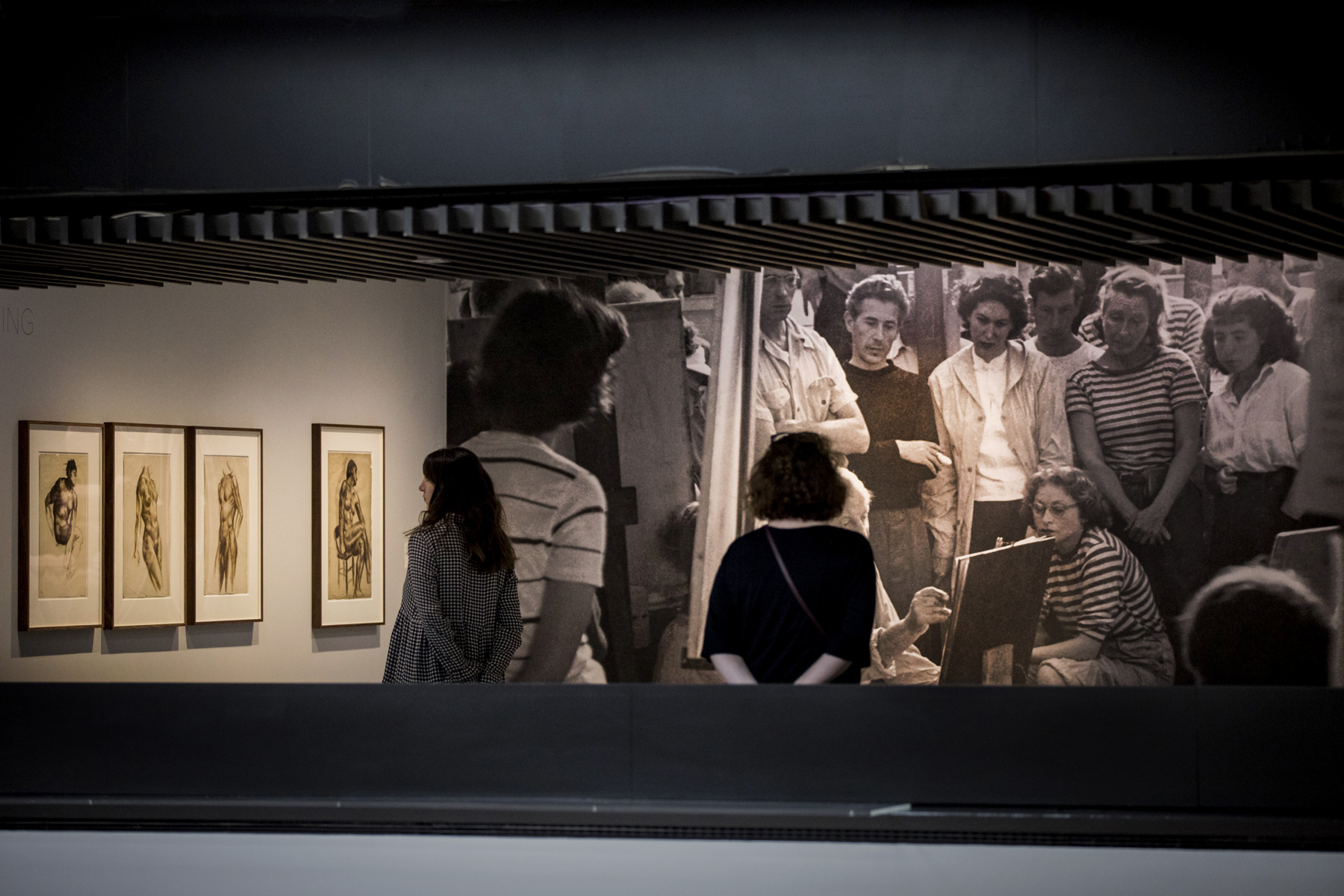
Exhibition: ‘Lee Krasner: Living Colour’ at the Barbican Art Gallery, London

Exhibition dates: 30th May – 1st September, 2019


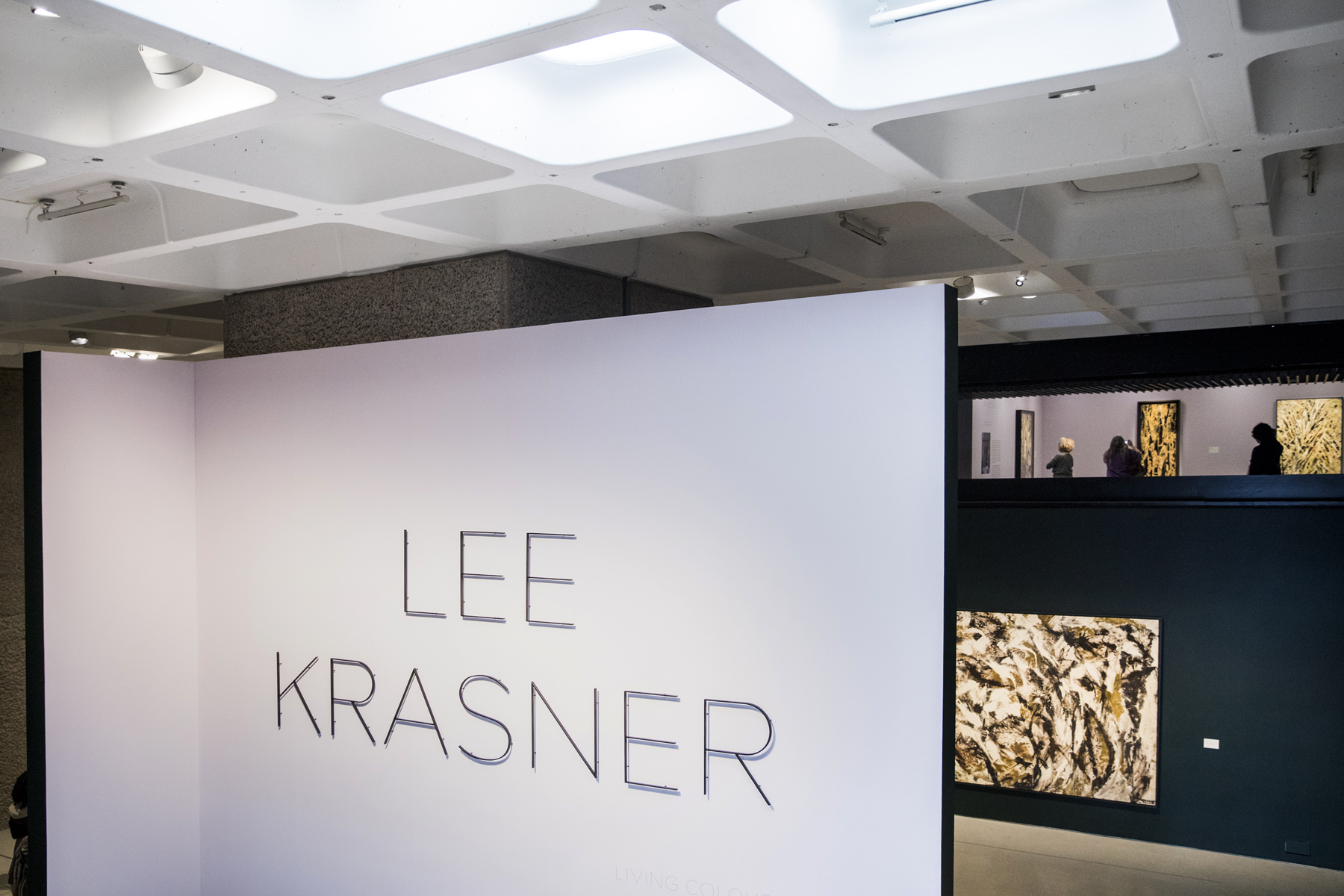
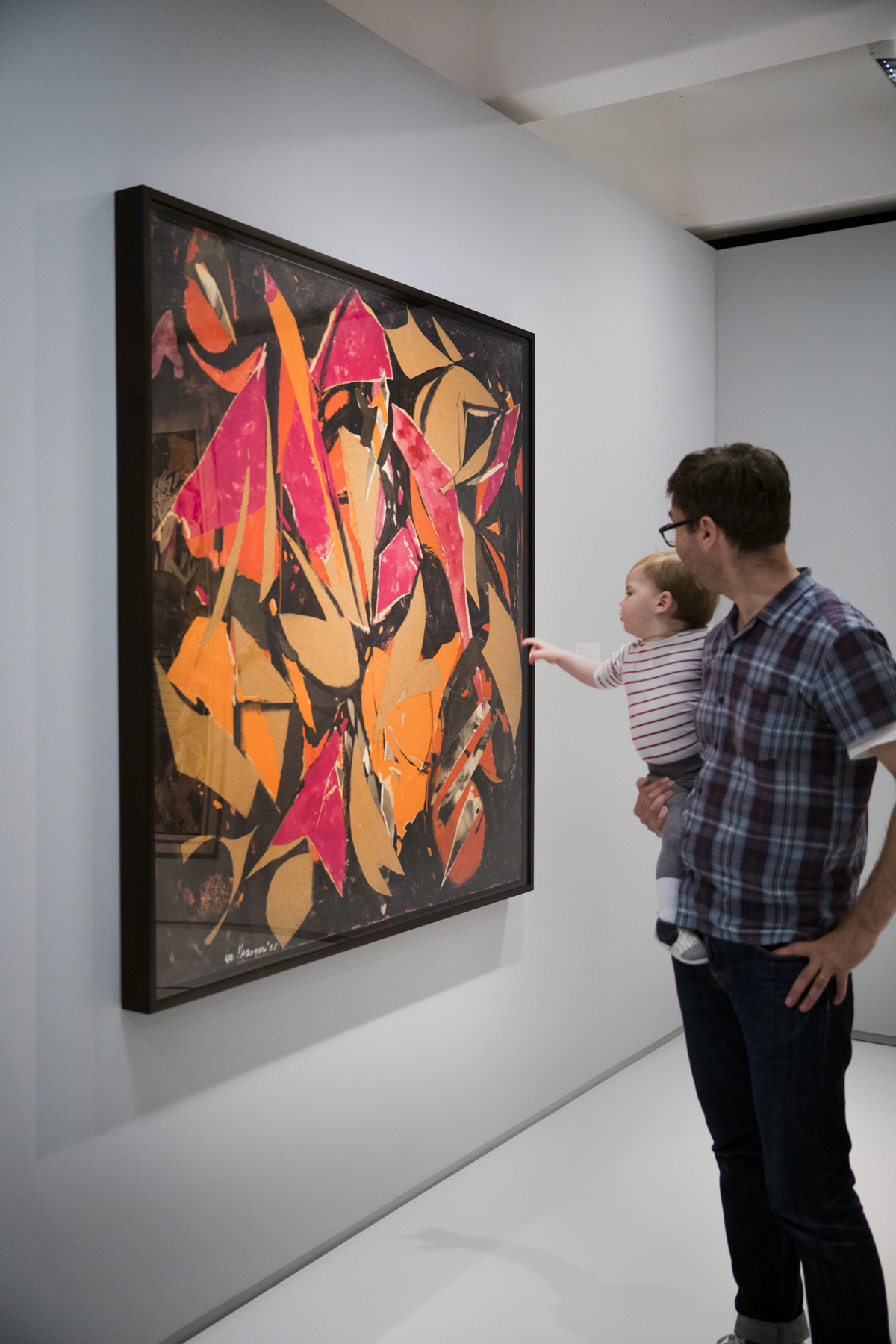
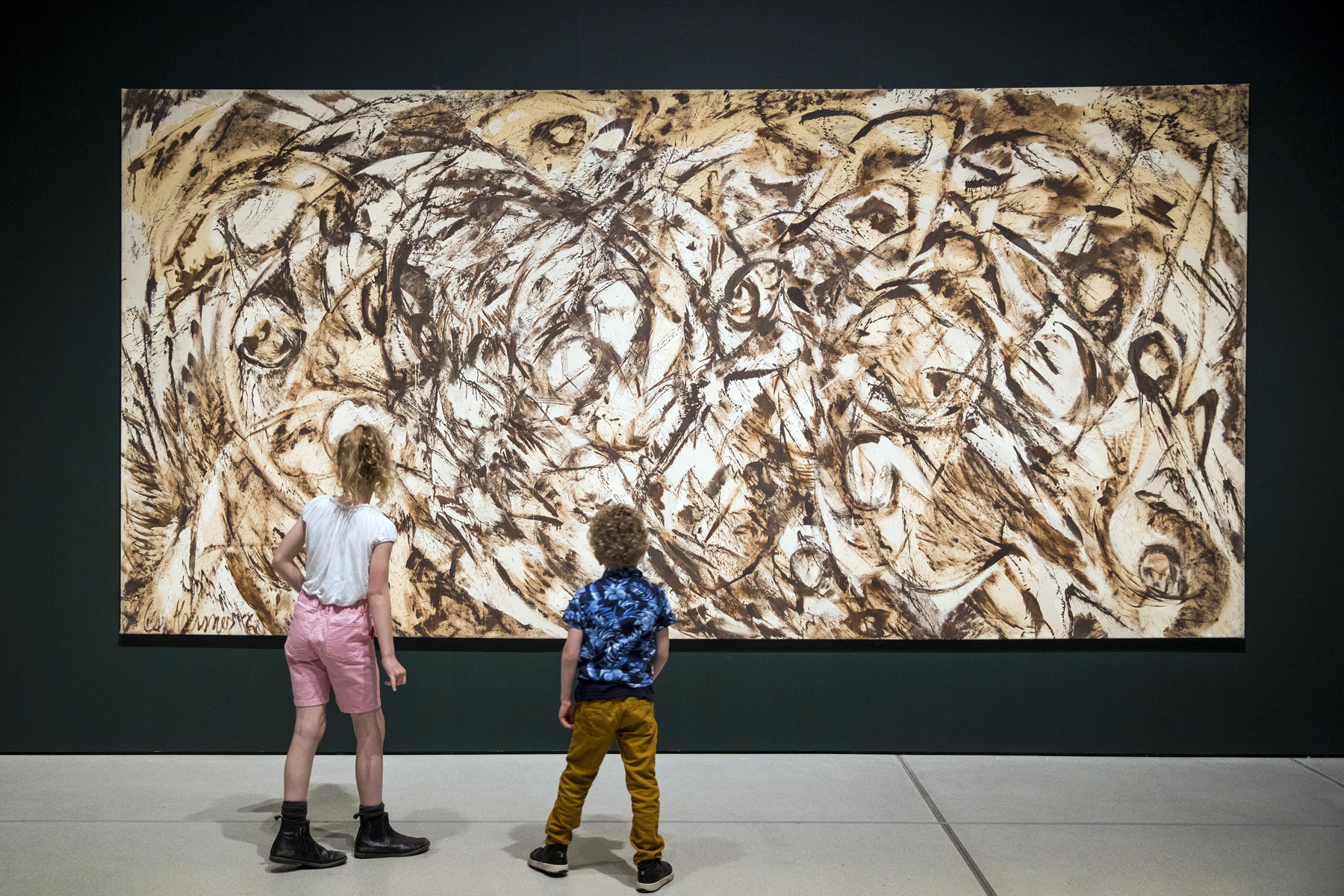
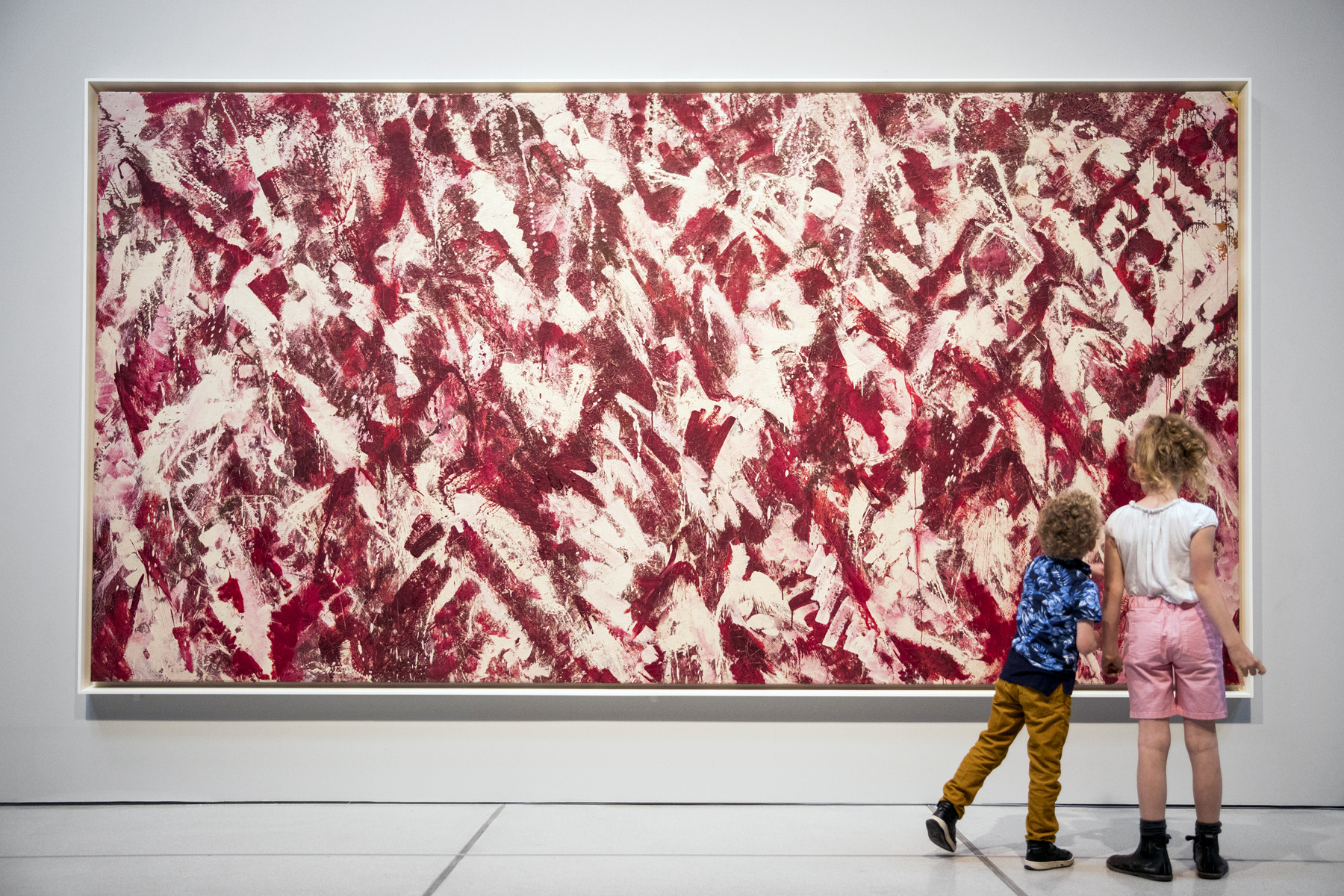
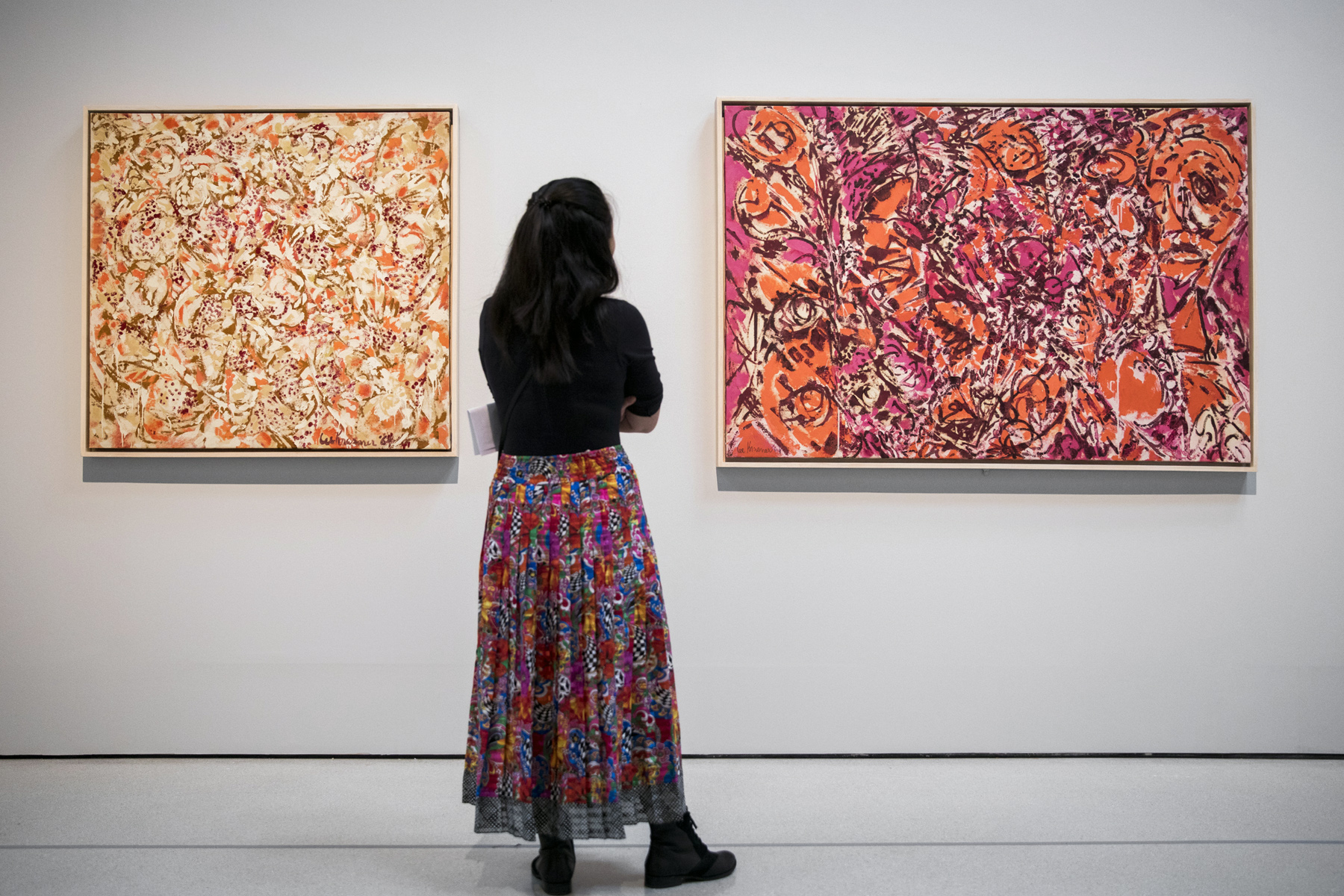
Installation view of the exhibition 'Lee Krasner: Living Colour' at the Barbican Art Gallery, London, May - Sept, 2019


Lee Krasner: Living Colour
Installation view at the Barbican Art Gallery
30 May – 1 September 2019
© Tristan Fewings/Getty Images


The augur of passion, the fire of movement, the colour of the embrace!

She used to ask herself, “does it work?”, as every artist should… not seeking affirmation from others but just being focused in her own mind on what she wanted to say, on that inner experience.

She was the equal of men, surpassing most. Krasner is finally getting the accolades she so richly deserves.

Dr Marcus Bunyan


Many thankx to the Barbican Art Gallery for allowing me to publish the art work in the posting. Please click on the photographs for a larger version of the image. The black and white photographs have been digitally cleaned by myself.


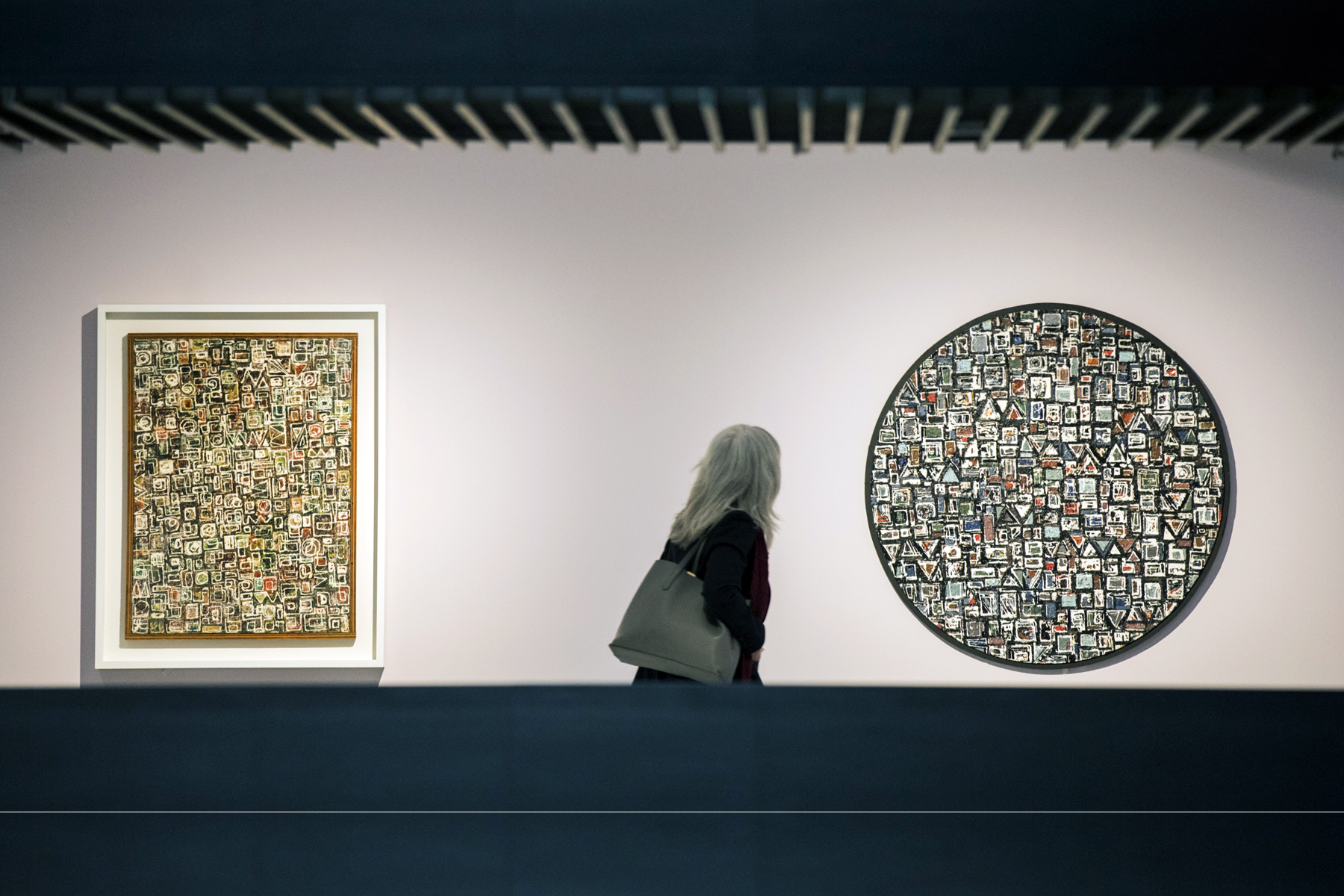
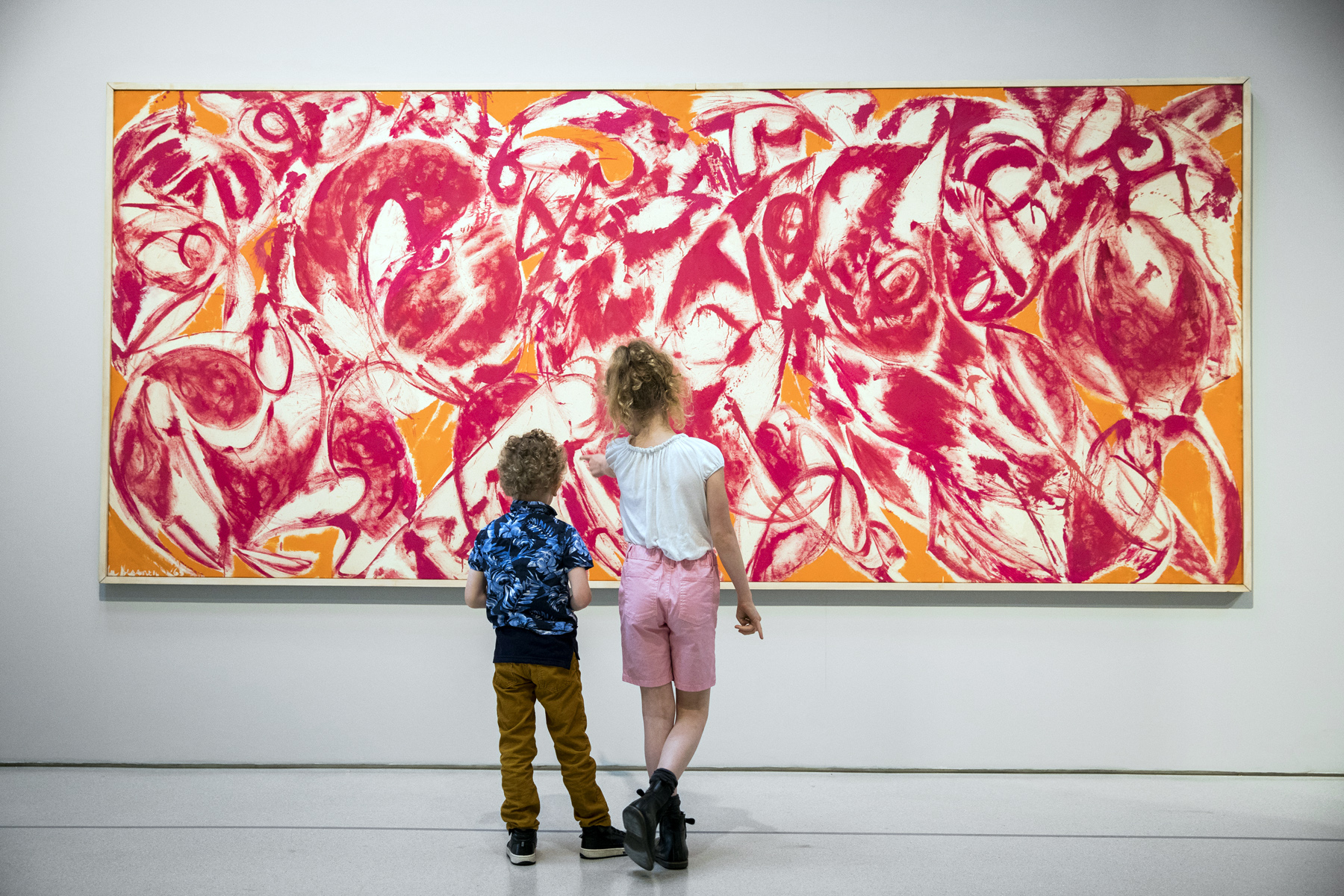
Installation view of the exhibition 'Lee Krasner: Living Colour' at the Barbican Art Gallery, London, May - Sept, 2019


Lee Krasner: Living Colour
Installation view at the Barbican Art Gallery
30 May – 1 September 2019
© Tristan Fewings/Getty Images


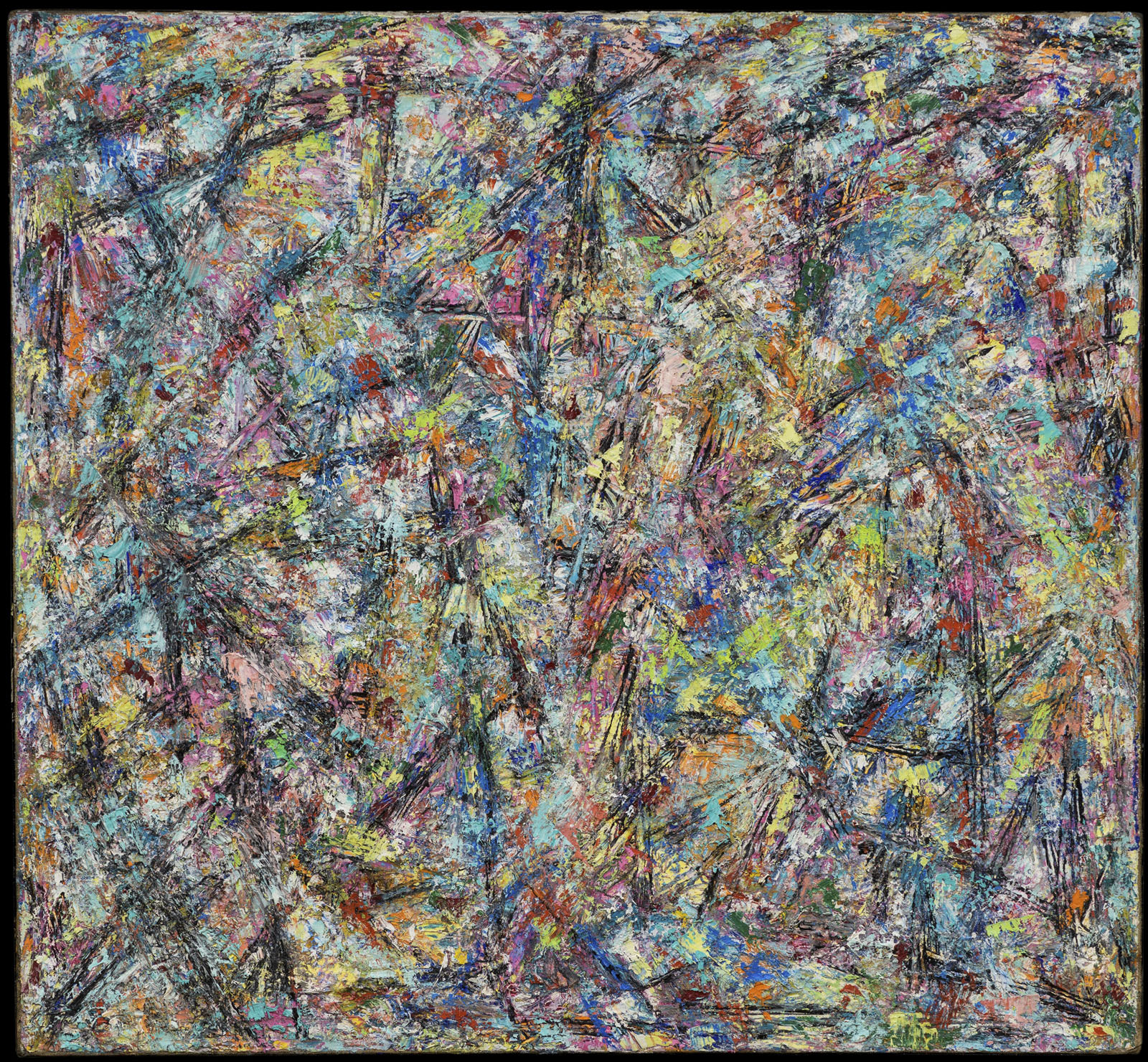
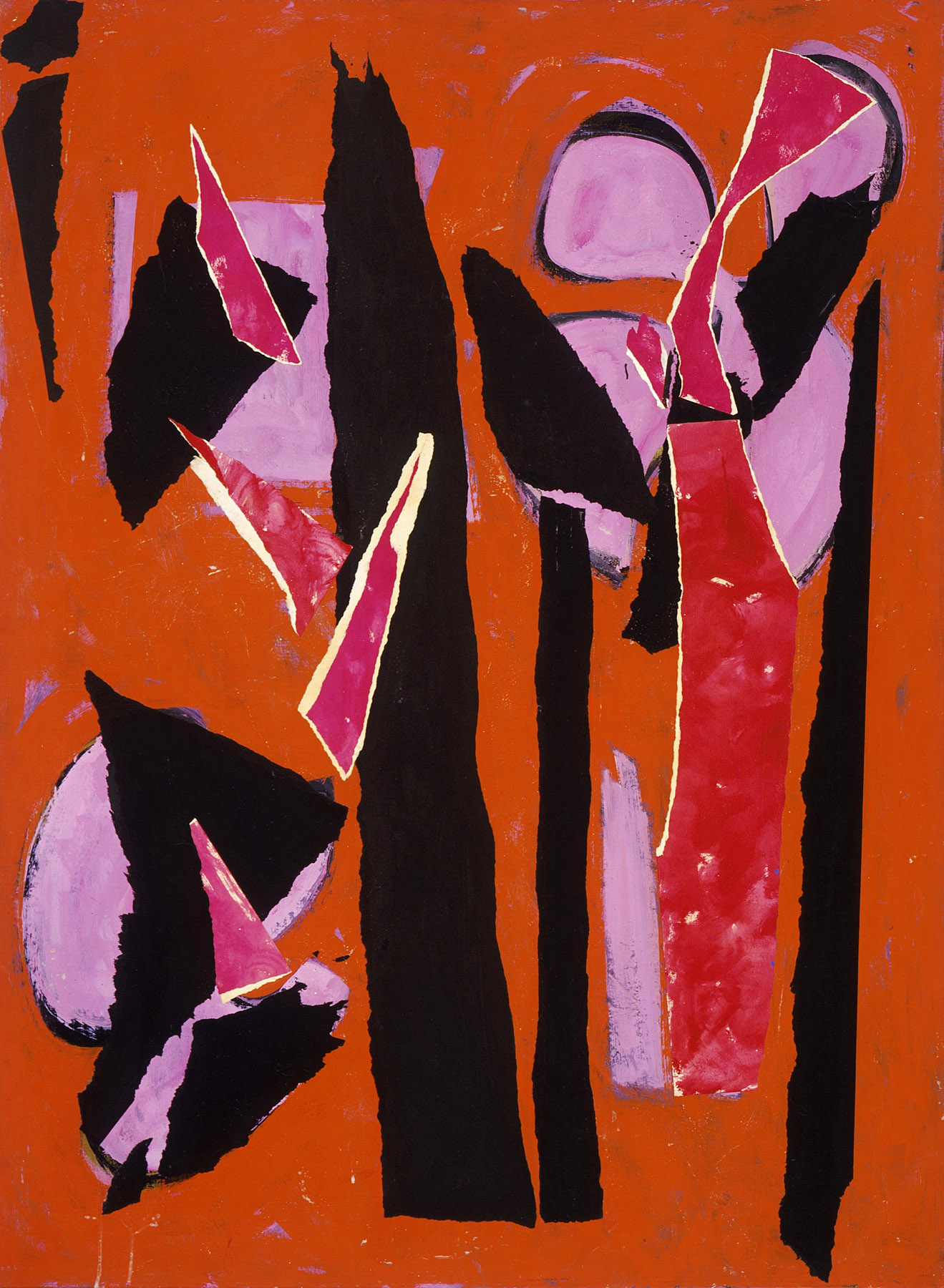
Lee Krasner (American, 1908-1984) 'Untitled' 1946 from the exhibition 'Lee Krasner: Living Colour' at the Barbican Art Gallery, London, May - Sept, 2019
 

Lee Krasner (American, 1908-1984)
Untitled
1946
Collection of Bobbi and Walter Zifkin
© The Pollock-Krasner Foundation
Photo: Jonathan Urban


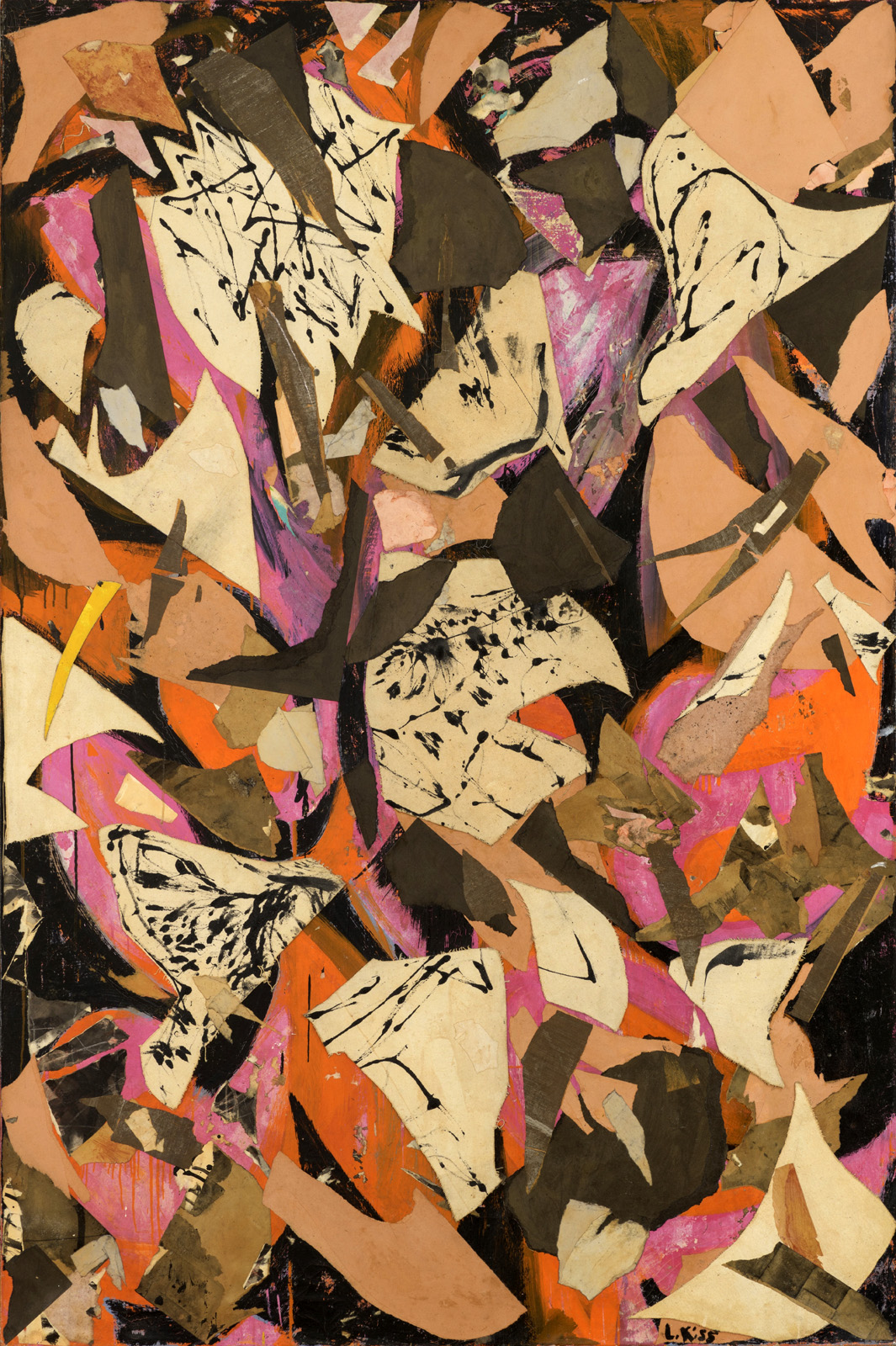
Lee Krasner (American, 1908-1984) 'Abstract No. 2' 1947 from the exhibition 'Lee Krasner: Living Colour' at the Barbican Art Gallery, London, May - Sept, 2019


Lee Krasner (American, 1908-1984)
Abstract No. 2
1947
IVAM Centre, Spain
Courtesy IVAM
© The Pollock-Krasner Foundation


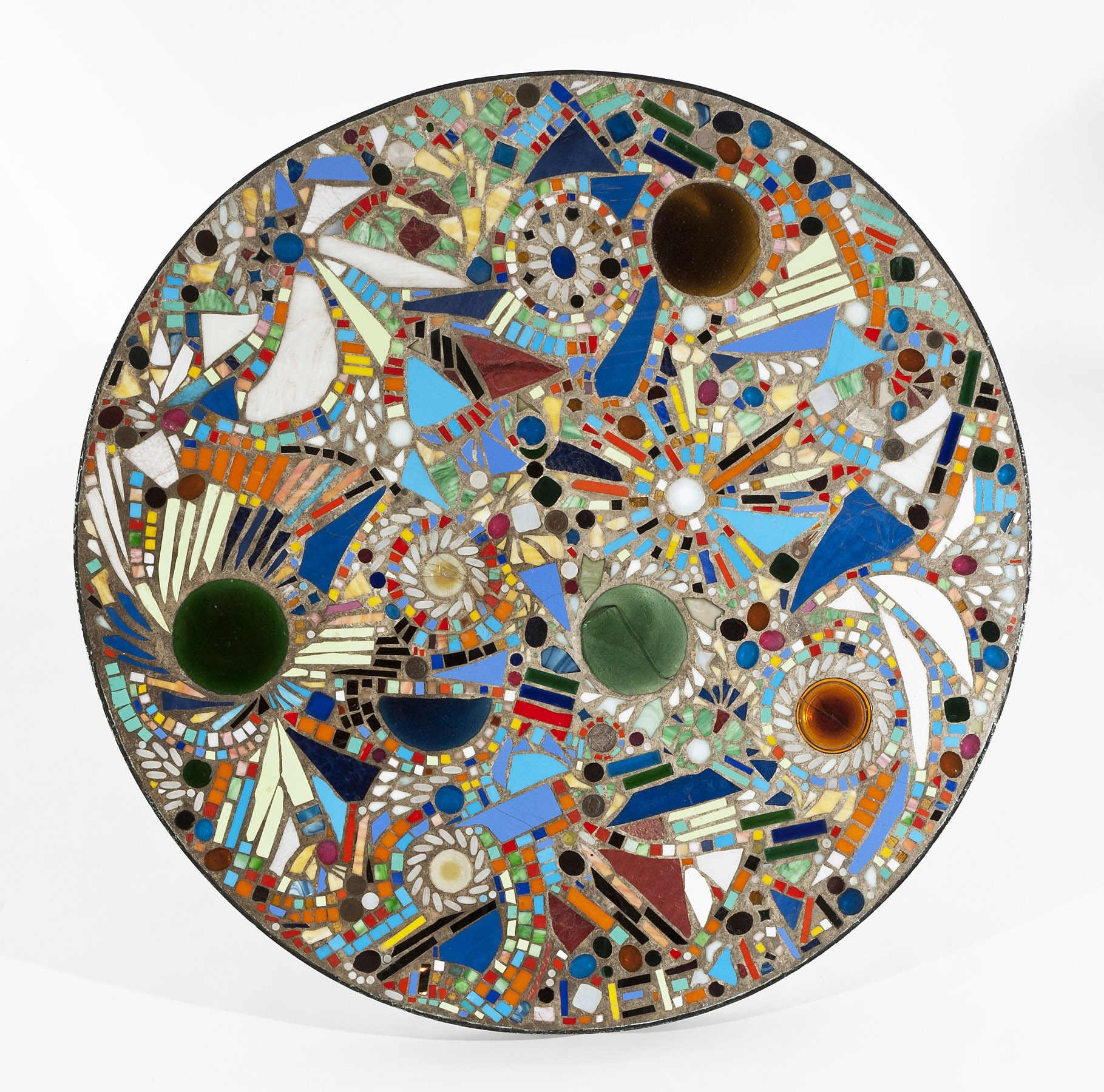
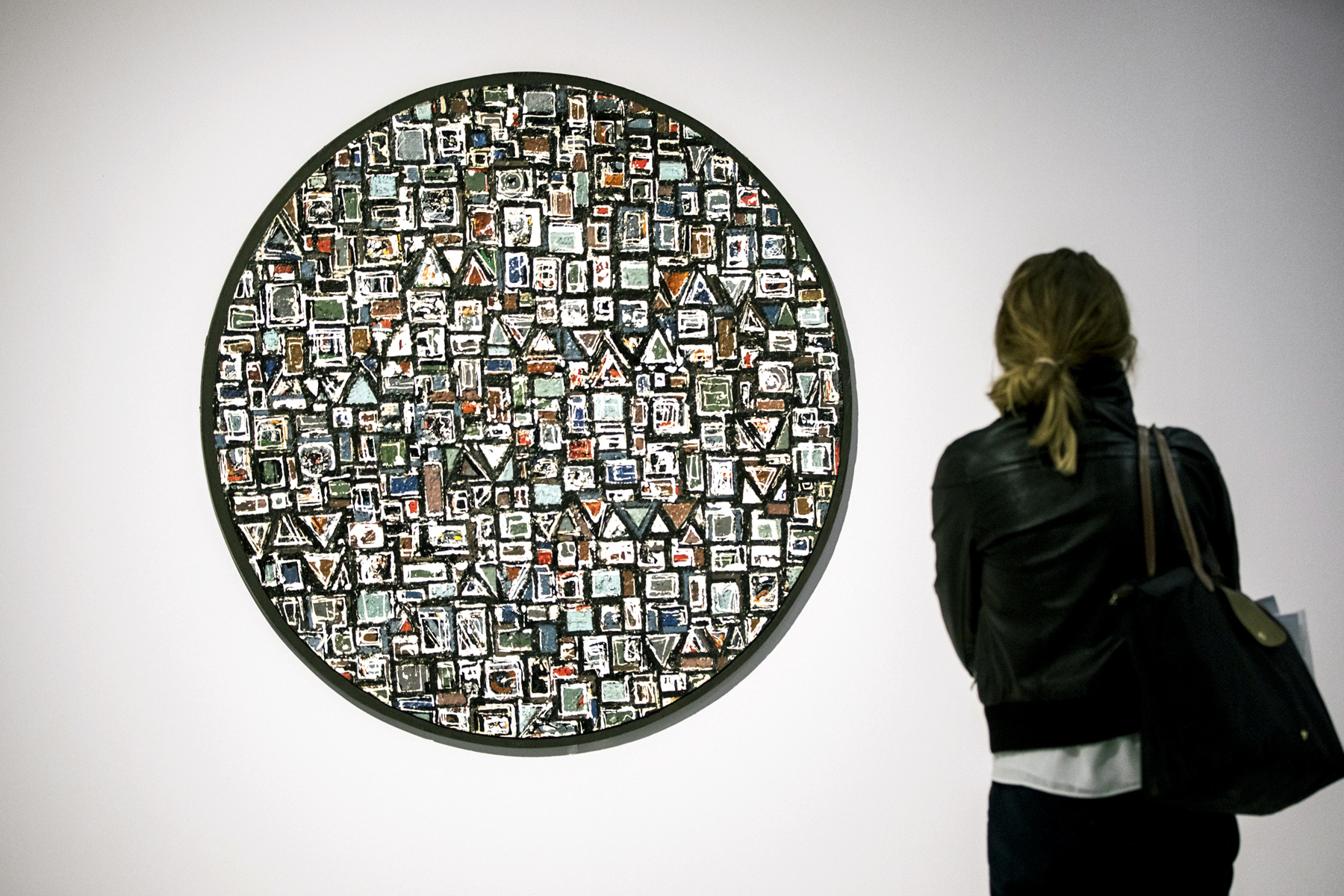
Lee Krasner (American, 1908-1984) 'Mosaic Table' 1947


Lee Krasner (American, 1908-1984)
Mosaic Table
1947
Private Collection
© The Pollock-Krasner Foundation. Courtesy Michael Rosenfeld Gallery LLC, New York


The cold winter on Long Island, where Krasner and Pollock were now living, forced her to work downstairs by the stove, where she made two brilliantly coloured mosaic tables using wagon wheels she found in the barn.


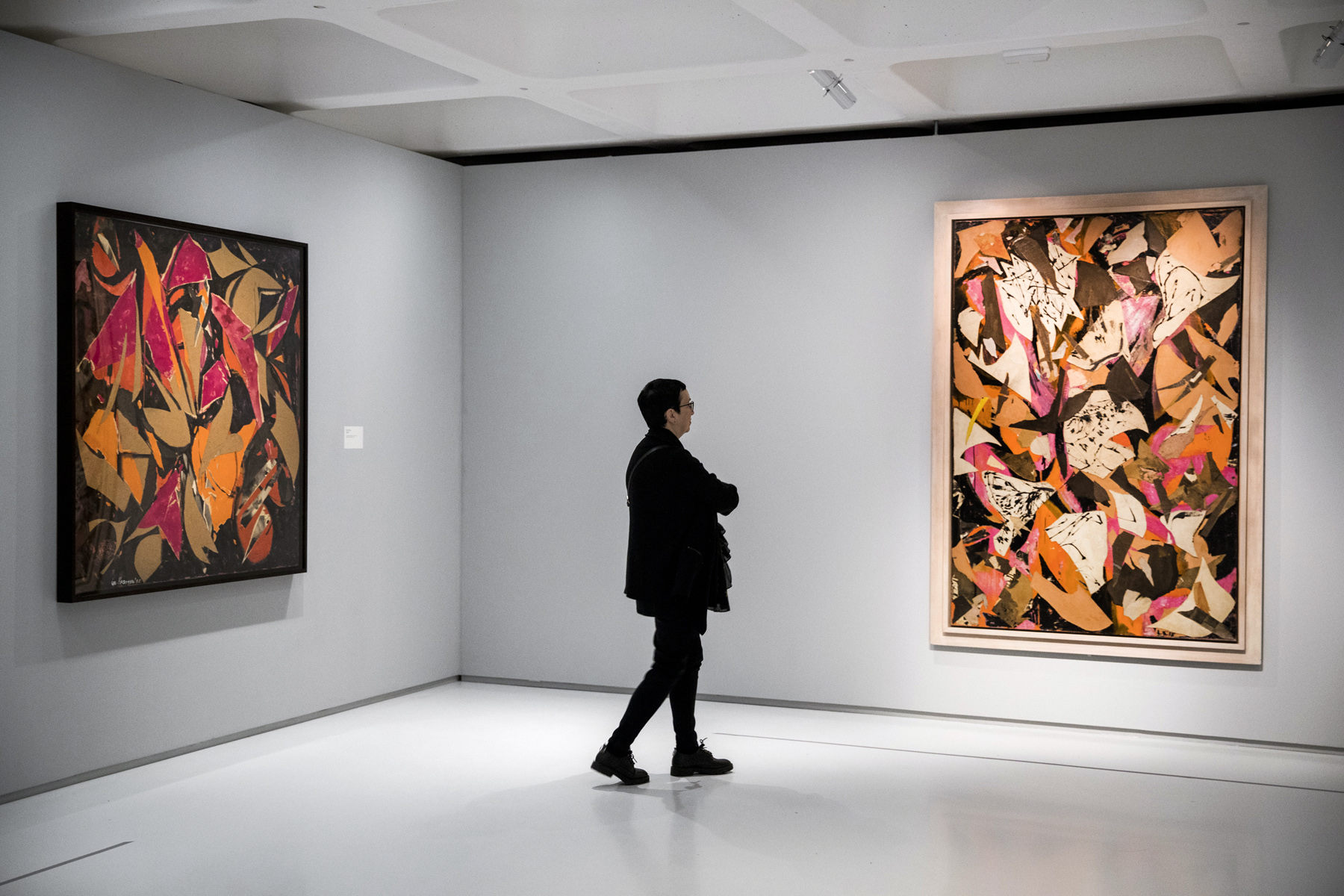
Installation view of the exhibition 'Lee Krasner: Living Colour' at the Barbican Art Gallery, London, May - Sept, 2019 showing 'Composition' 1949 and 'Stop and Go' c. 1949


Lee Krasner: Living Colour
Installation view with Composition 1949 and Stop and Go c. 1949
Barbican Art Gallery 30 May – 1 September 2019
© Tristan Fewings/Getty Images


Installation view of the exhibition 'Lee Krasner: Living Colour' with the work 'Stop and Go' c. 1949


Installation view with Stop and Go c. 1949
Barbican Art Gallery 30 May – 1 September 2019
© Tristan Fewings/Getty Images


Lee Krasner (American, 1908-1984) 'Blue Level' 1955


Lee Krasner (American, 1908-1984)
Blue Level
1955
Private Collection
© The Pollock-Krasner Foundation
Photo: Diego Flores


Lee Krasner (American, 1908-1984) 'Desert Moon' 1955


Lee Krasner (American, 1908-1984)
Desert Moon
1955
Los Angeles County Museum of Art
© The Pollock-Krasner Foundation
© 2018 Digital Image Museum Associates/ LACMA/Art Resource NY/ Scala, Florence


Lee Krasner (American, 1908-1984) 'Bald Eagle' 1955


Lee Krasner (American, 1908-1984)
Bald Eagle
1955
Collection of Audrey Irmas, Los Angeles
© The Pollock-Krasner Foundation
Photo: Jonathan Urban


Installation view of the exhibition 'Lee Krasner: Living Colour' with the works 'Bird Talk' 1955 and 'Bald Eagle' 1955


Lee Krasner: Living Colour
Installation view with Bird Talk 1955 and Bald Eagle 1955
Barbican Art Gallery 30 May – 1 September 2019
© Tristan Fewings/Getty Images


Installation view of the exhibition 'Lee Krasner: Living Colour' showing the work 'Bird Talk' 1955


Lee Krasner: Living Colour
Installation view with Bird Talk 1955
Barbican Art Gallery 30 May – 1 September 2019
© Tristan Fewings/Getty Images


Lee Krasner (American, 1908-1984) 'Prophecy' 1956


Lee Krasner (American, 1908-1984)
Prophecy
1956
Private Collection
© The Pollock-Krasner Foundation
Courtesy Kasmin Gallery, New York
Photo: Christopher Stach


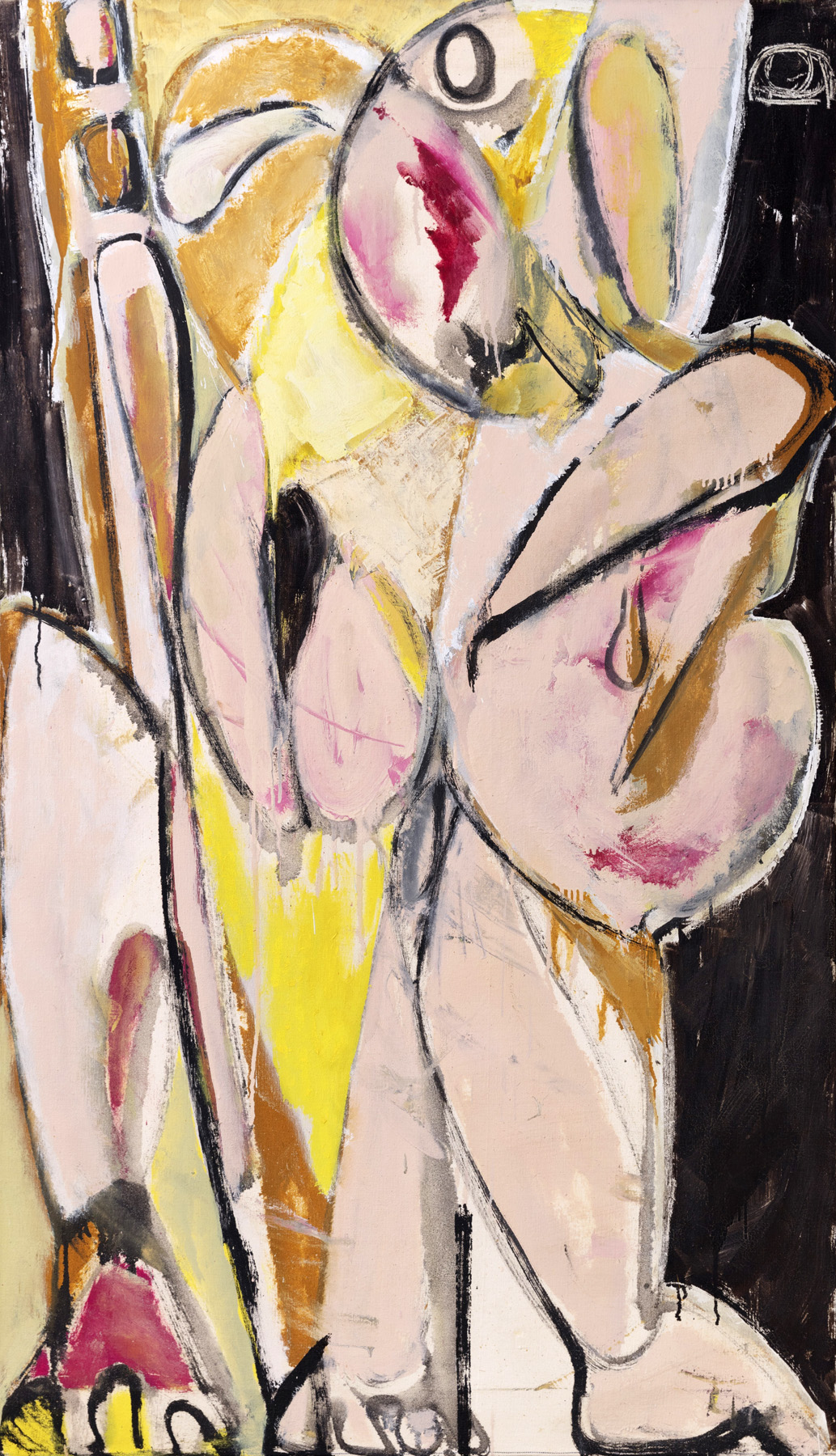
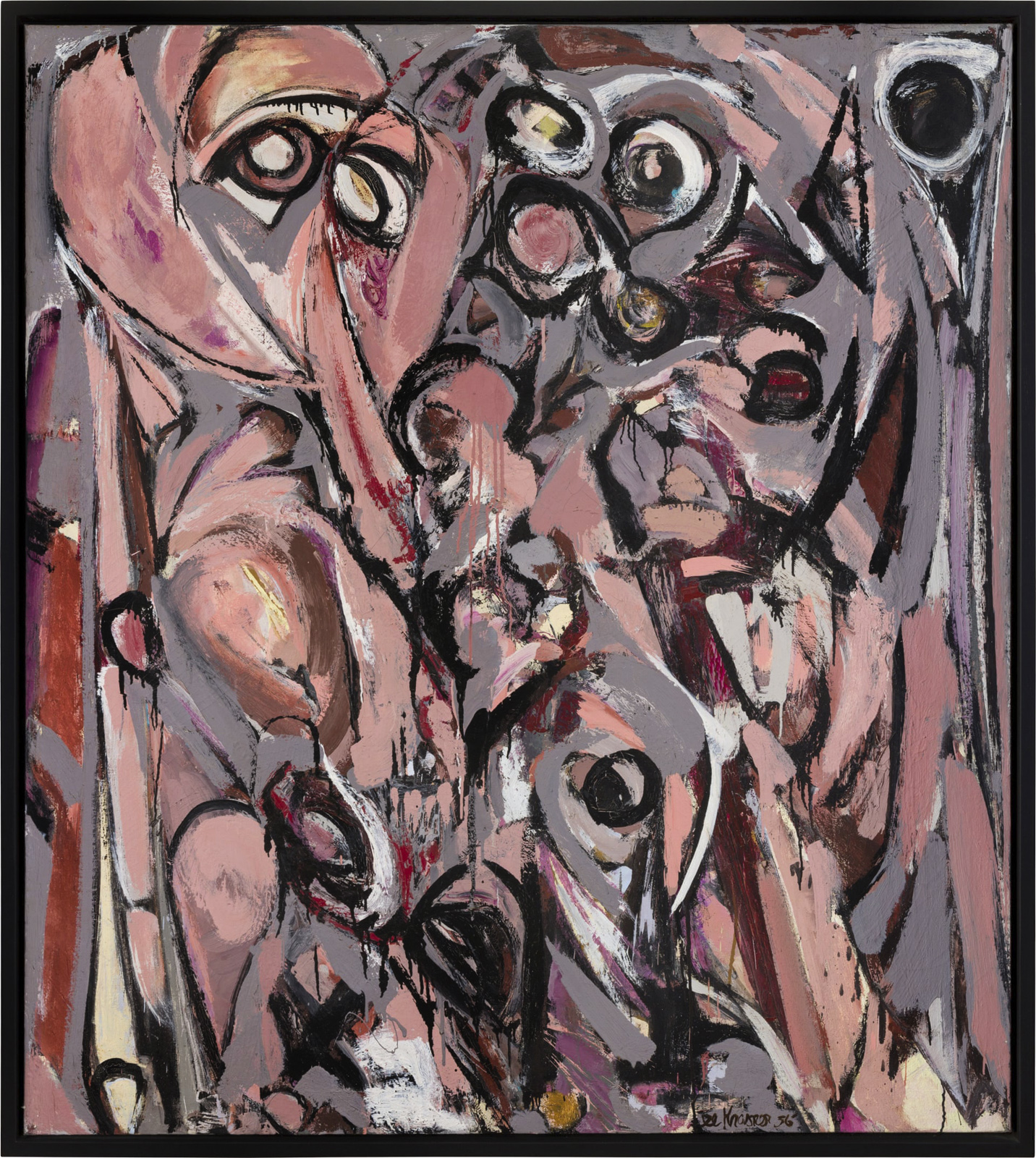
Lee Krasner (American, 1908-1984) 'Embrace' 1956


Lee Krasner (American, 1908-1984)
Embrace
1956
Photograph © The Pollock-Krasner Foundation
Photo: Christopher Stach


After Pollock’s funeral, Krasner almost immediately began work on a series of violently erotic landscapes in shades of grey, black and pink. ‘Painting is not separate from life,’ she said, when asked how she had managed to paint in the midst of grief. ‘It is one. It is like asking – do I want to live? My answer is yes – and I paint.’


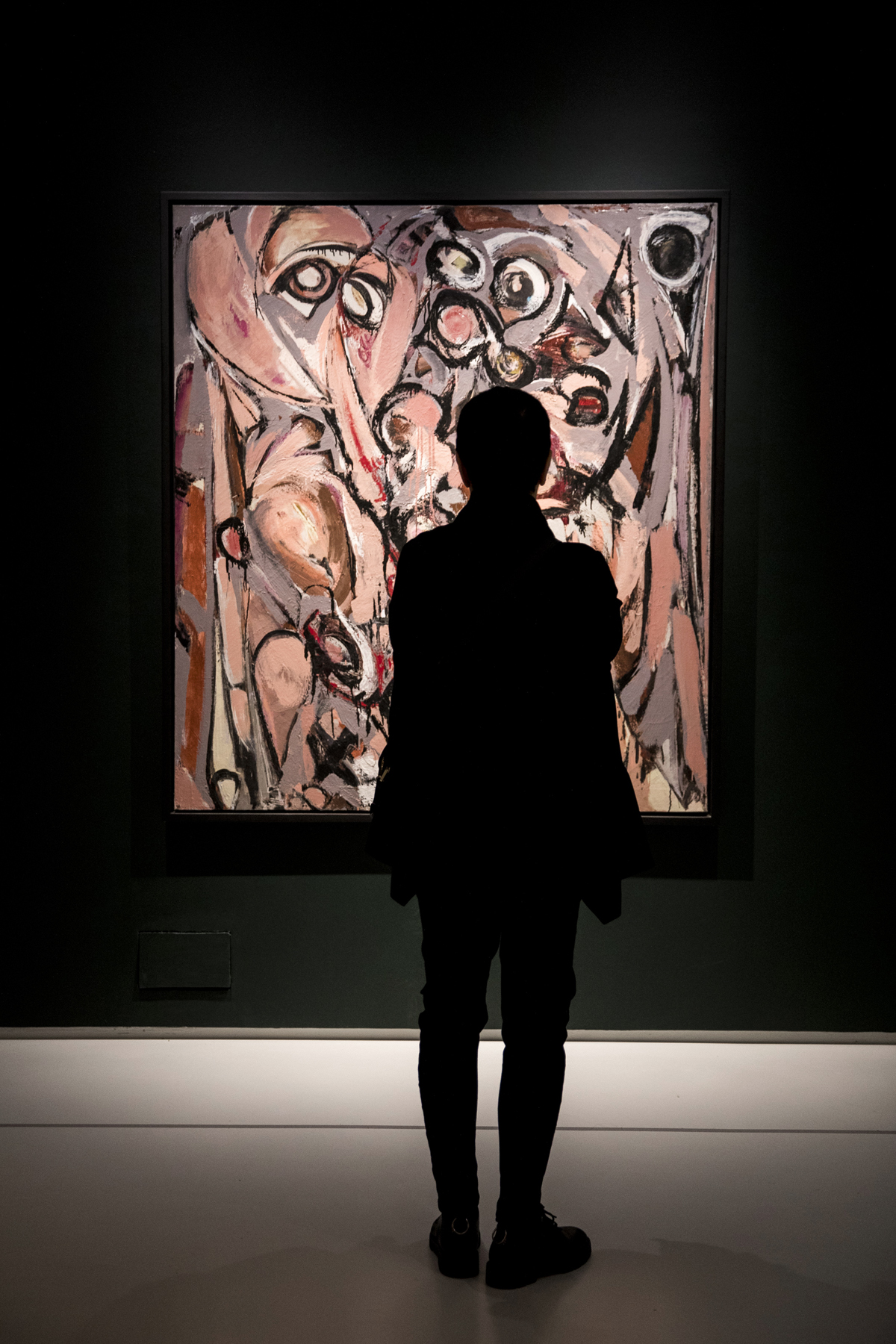
Installation view of the exhibition 'Lee Krasner: Living Colour' showing the work 'Embrace' 1956


Lee Krasner: Living Colour
Installation view with Embrace 1956
Barbican Art Gallery 30 May – 1 September 2019
© Tristan Fewings/Getty Images


“I like a canvas to breathe and be alive. Be alive is the point.”

“Painting is a revelation, an act of love… as a painter I can’t experience it any other way.”

“I was a woman, Jewish, a widow, a damn good painter, thank you, and a little too independent…”

“Aesthetically I am very much Lee Krasner. I am undergoing emotional, psychological, and artistic changes but I hold Lee Krasner right through.”

“Painting is not separate from life. It is one. It is like asking – do I want to live? My answer is yes – and I paint.”

“I couldn’t run out and do a one-woman job on the sexist aspects of the art world, continue my painting, and stay in the role I was in as Mrs Pollock… What I considered important was that I was able to work and other things would have to take their turn.”

“Jackson always treated me as an artist… he always acknowledged, was aware of what I was doing… I was a painter before I knew him, and he knew that, and when we were together, I couldn’t have stayed with him one day if he didn’t treat me as a painter.”

“[The Surrealists] treated their women like French poodles, and it sort of rubbed off on the Abstract Expressionists. The exceptions were Bradley Walker Tomlin, Franz Kline, and Jackson Pollock. That might be the end of my listing. The other big boys just didn’t treat me at all. I wasn’t there for them as an artist.”

“I go on the assumption that the artist is a highly sensitive, intellectual and aware human being… It’s a total experience which has to do with the sensitivity of being a painter. The painter’s form of expressing [them]self is through painting.”


Lee Krasner


“… their blossoming was remarkable. In fact “blossoming” is hardly the word, for it suggests a soft, floral, ethereal event, adjectives one would not pick for the tough paintings, often full of barely controlled anger, that she was to produce after 1960… Is there a less “feminine” woman artist of her generation? Probably not.”


Robert Hughes


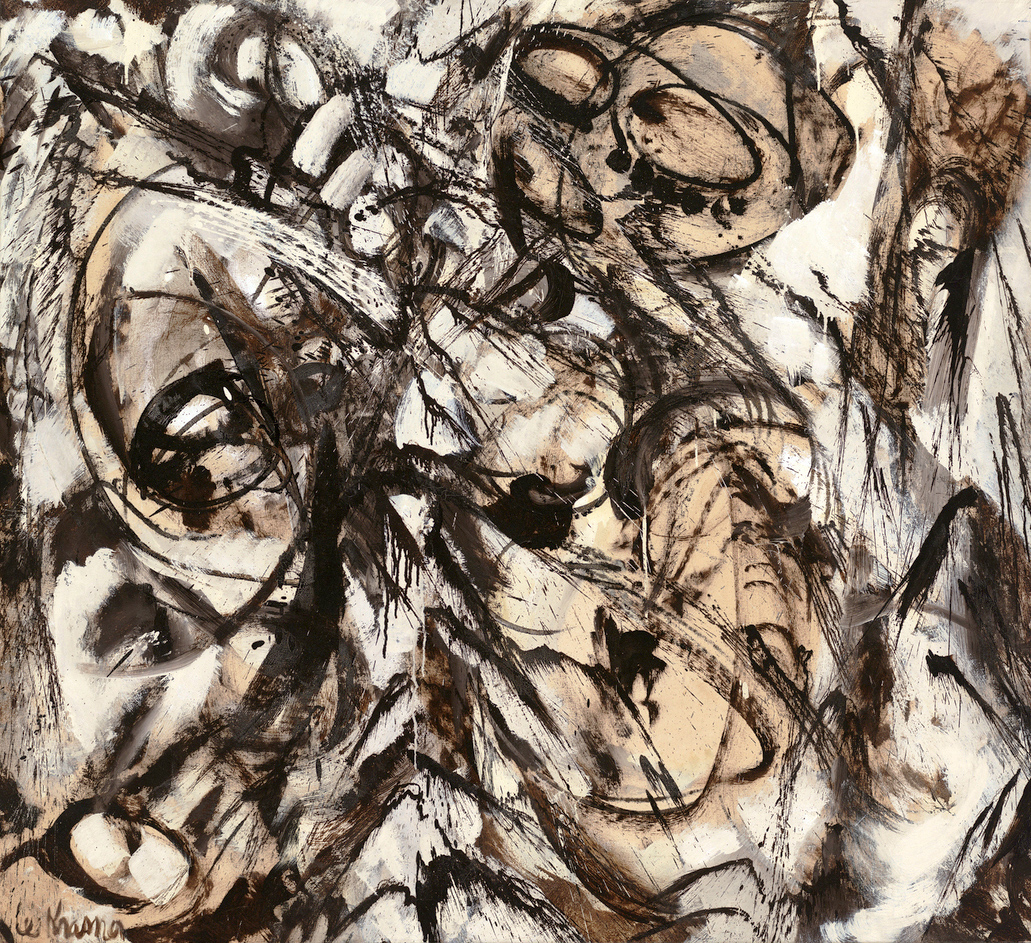
Installation view of the exhibition 'Lee Krasner: Living Colour' showing the work 'The Eye is the First Circle' 1960


Lee Krasner: Living Colour
Installation view with The Eye is the First Circle 1960
Barbican Art Gallery 30 May – 1 September 2019
© Tristan Fewings/Getty Images


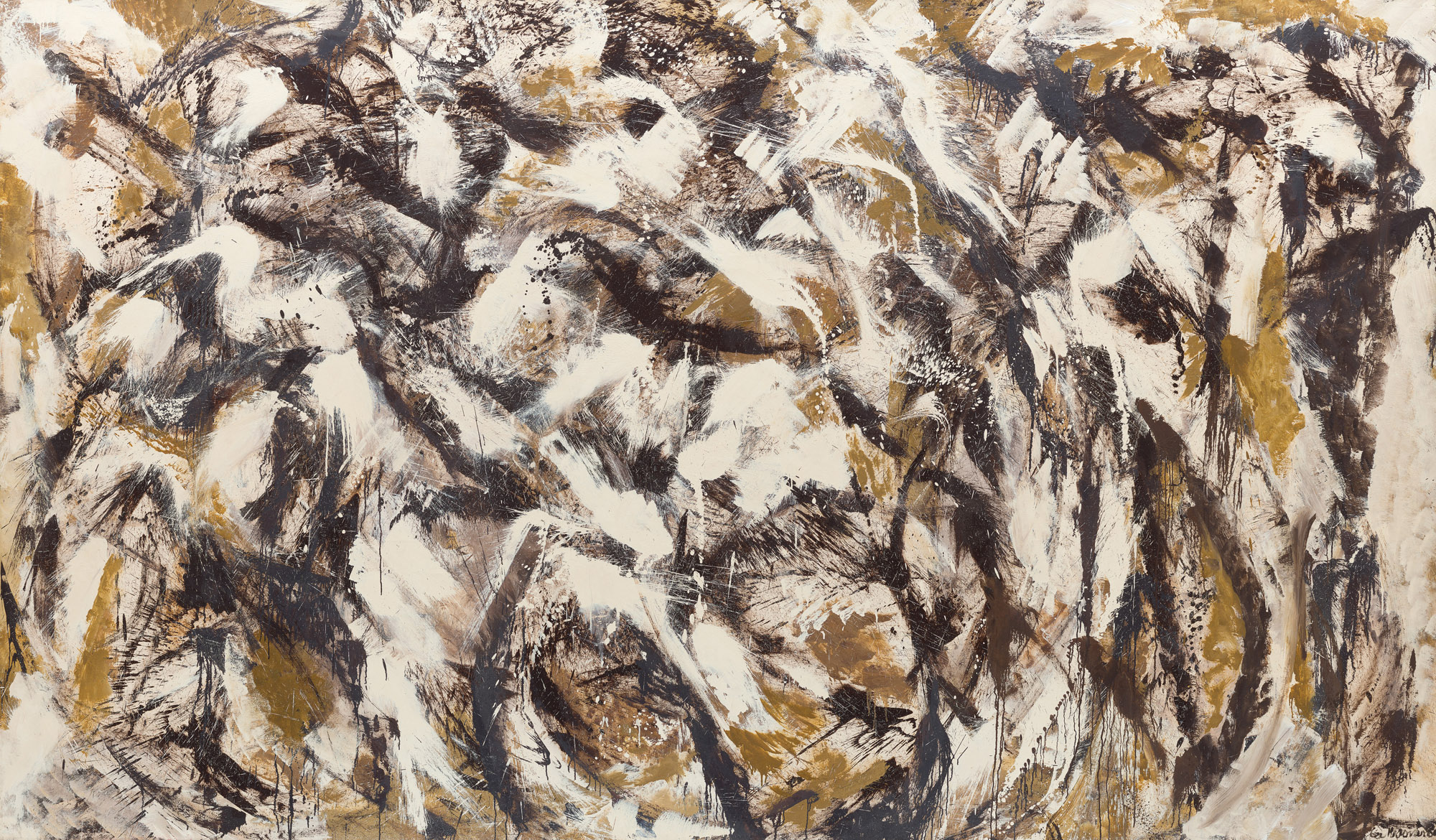
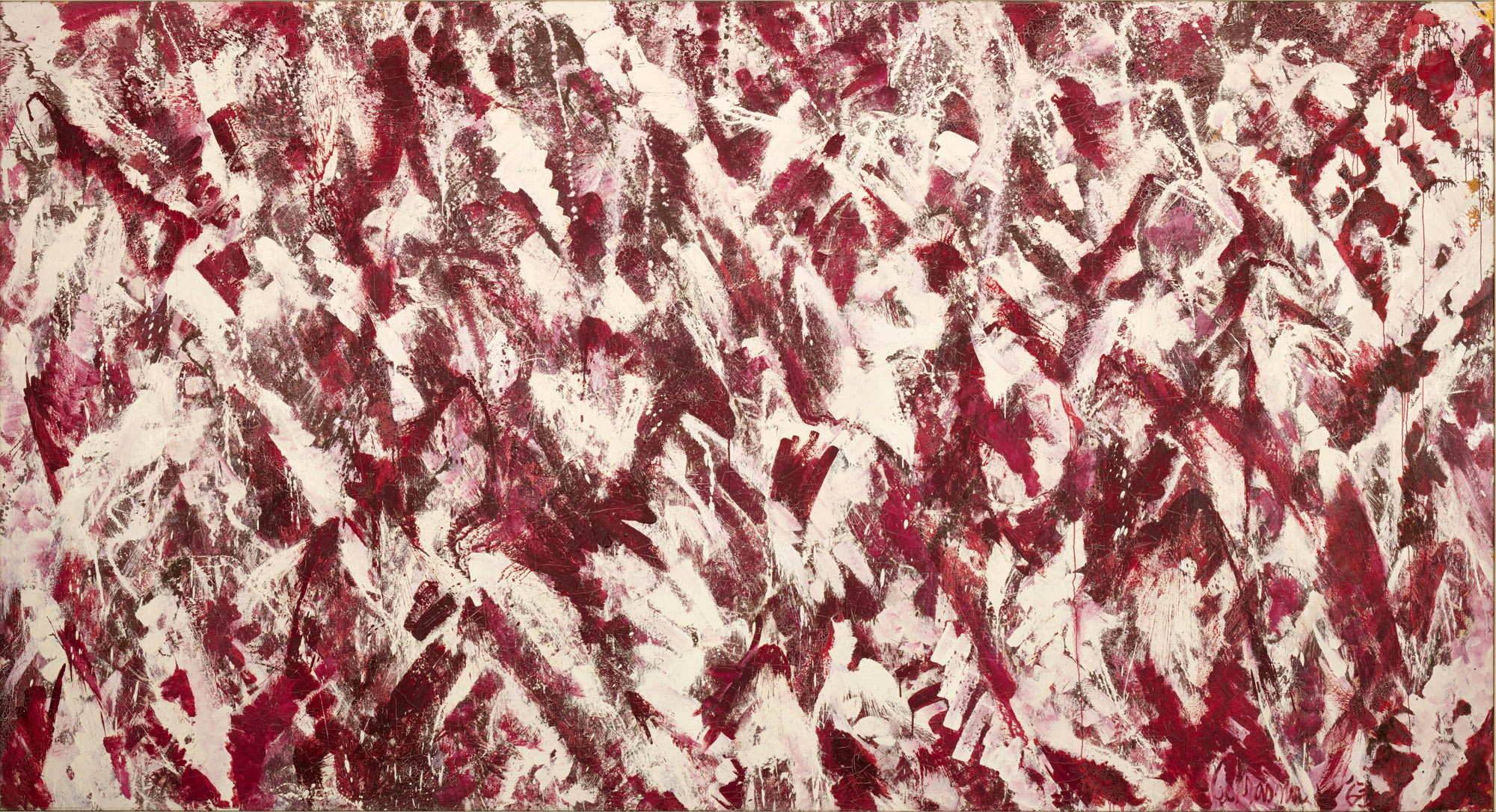
Lee Krasner (American, 1908-1984) 'Polar Stampede' 1960


Lee Krasner (American, 1908-1984)
Polar Stampede
1960
The Doris and Donald Fisher Collection at the San Francisco Museum of Modern Art
© The Pollock-Krasner Foundation
Courtesy Kasmin Gallery, New York


Polar Stampede 1960, one of a series of paintings she made at night during bouts of insomnia and which her friend, the poet Richard Howard, called her ‘Night Journeys’


Lee Krasner (American, 1908-1984) 'The Guardian' 1960


Lee Krasner (American, 1908-1984)
The Guardian
1960
Oil and house paint on canvas
53 1/8 × 58 1/8 in. (134.9 × 147.6cm)
Whitney Museum of American Art
Purchase, with funds from the Uris Brothers Foundation, Inc.


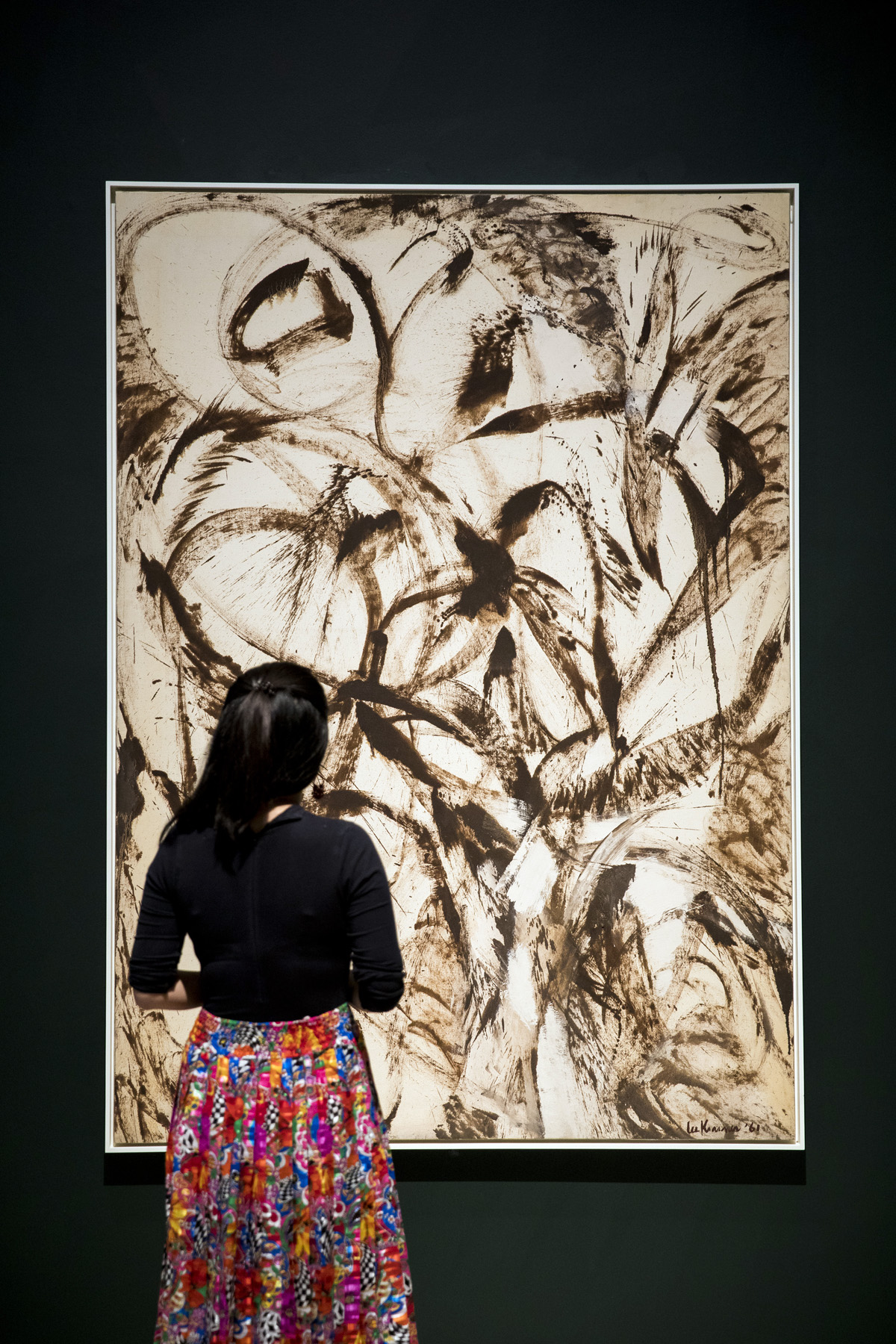
Installation view of the exhibition 'Lee Krasner: Living Colour' showing the work 'Assault on the Solar Plexus' 1961


Lee Krasner: Living Colour
Installation view with Assault on the Solar Plexus 1961
Barbican Art Gallery 30 May – 1 September 2019
© Tristan Fewings/Getty Images


Lee Krasner (American, 1908-1984) 'Through Blue' 1963


Lee Krasner (American, 1908-1984)
Through Blue
1963
Private Collection, New York City
© The Pollock-Krasner Foundation
Photo: Christopher Stach


Installation view of the exhibition 'Lee Krasner: Living Colour' showing the work 'Through Blue' 1963


Lee Krasner: Living Colour
Installation view with Through Blue 1963
Barbican Art Gallery 30 May – 1 September 2019
© Tristan Fewings/Getty Images


Installation view of the exhibition 'Lee Krasner: Living Colour' showing the work 'Another Storm' 1963


Lee Krasner: Living Colour
Installation view with Another Storm 1963
Barbican Art Gallery 30 May – 1 September 2019
© Tristan Fewings/Getty Images


Lee Krasner (American, 1908-1984) 'Another Storm' 1963


Lee Krasner (American, 1908-1984)
Another Storm
1963
Private Collection
© The Pollock-Krasner Foundation
Courtesy Kasmin Gallery, New York


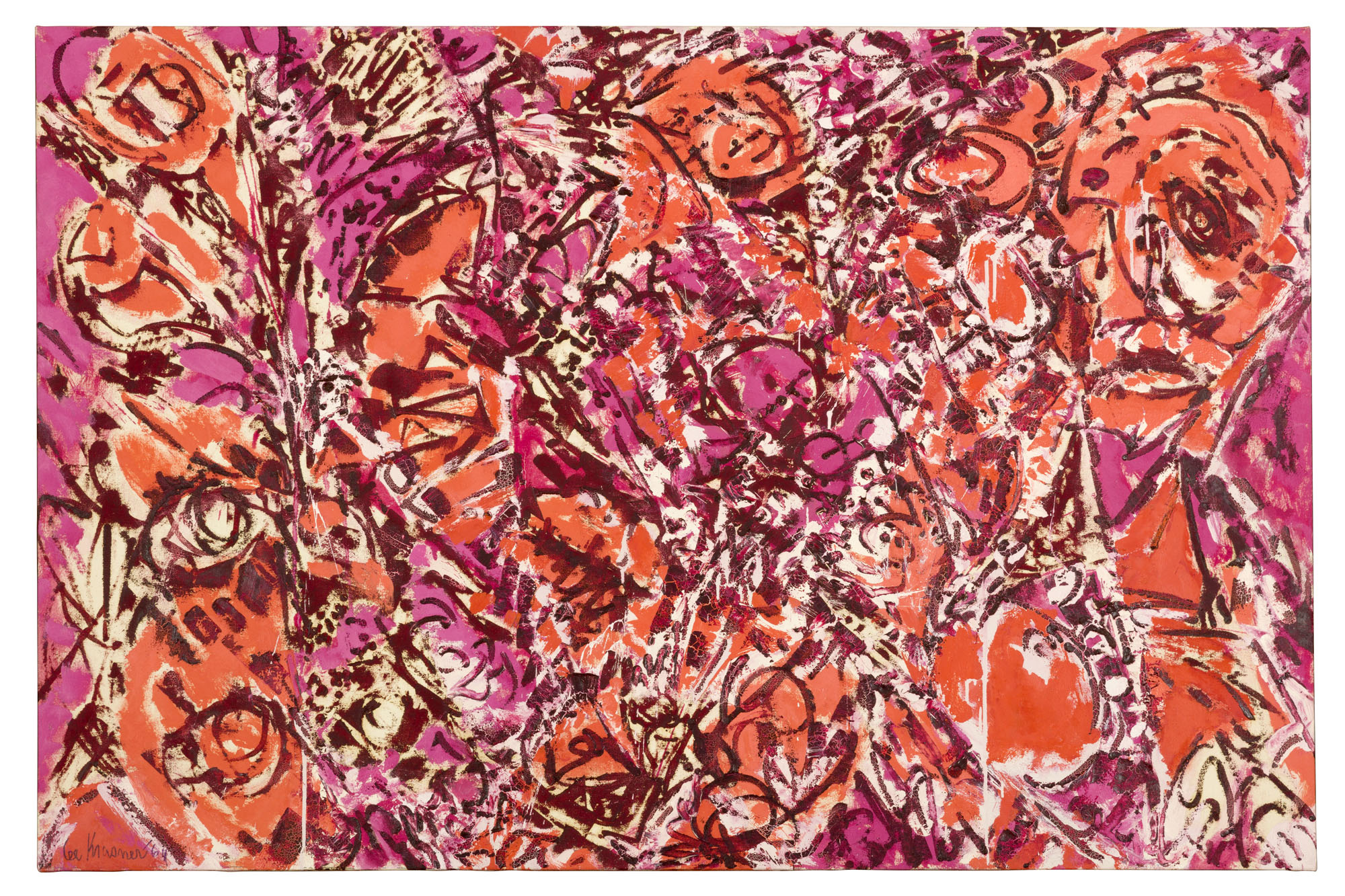
Lee Krasner (American, 1908-1984) 'Icarus' 1964


Lee Krasner (American, 1908-1984)
Icarus
1964
Thomson Family Collection, New York
© The Pollock-Krasner Foundation
Courtesy Kasmin Gallery, New York
Photo: Diego Flores


Installation view of the exhibition 'Lee Krasner: Living Colour' showing the works 'Chrysalis' 1964 and 'Icarus' 1964


Lee Krasner: Living Colour
Installation view with Chrysalis 1964 and Icarus 1964
Barbican Art Gallery 30 May – 1 September 2019
© Tristan Fewings/Getty Images


Installation view of the exhibition 'Lee Krasner: Living Colour' showing the work 'Combat' 1965


Lee Krasner: Living Colour
Installation view with Combat 1965
Barbican Art Gallery 30 May – 1 September 2019
© Tristan Fewings/Getty Images


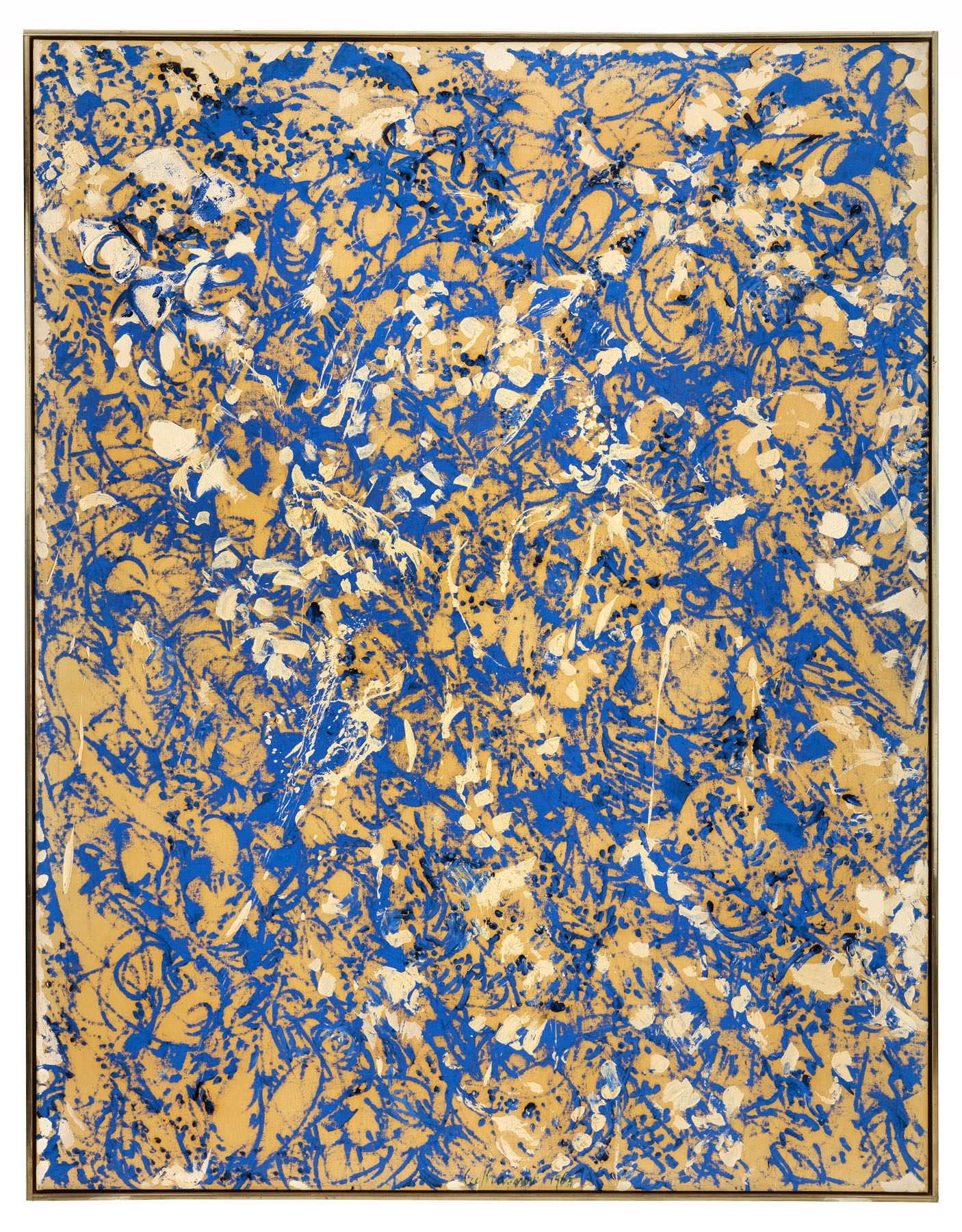
Lee Krasner (American, 1908-1984) 'Siren' 1966


Lee Krasner (American, 1908-1984)
Siren
1966
Hirshhorn Museum and Sculpture Garden, Smithsonian Institution, Washington D.C.
© The Pollock-Krasner Foundation
Photo: Cathy Carver, Hirshhorn Museum and Sculpture Garden


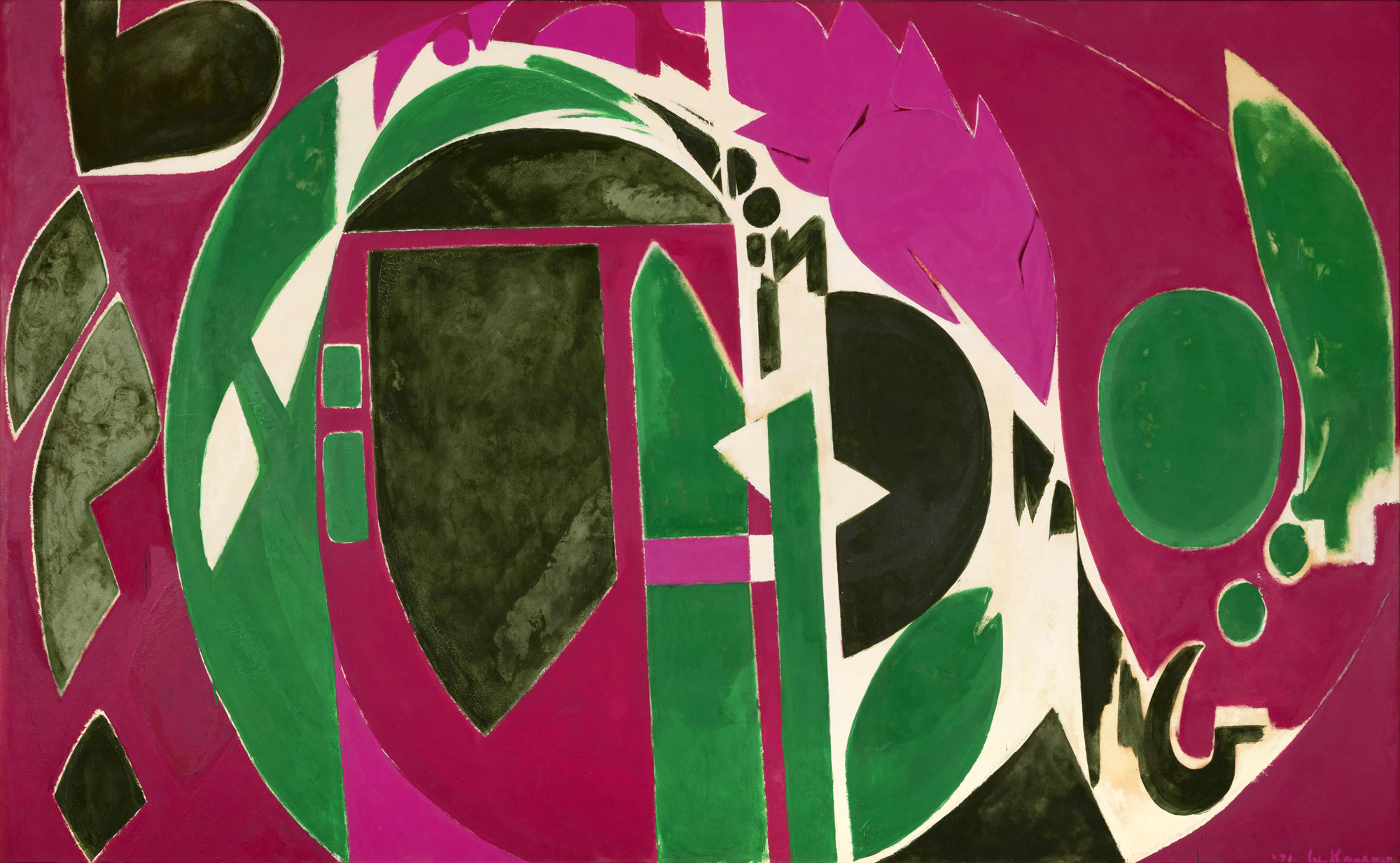
Lee Krasner (American, 1908-1984) 'Untitled' 1969


Lee Krasner (American, 1908-1984)
Untitled
1969
The Pollock-Krasner Foundation, New York City
© The Pollock-Krasner Foundation
Courtesy Kasmin Gallery, New York


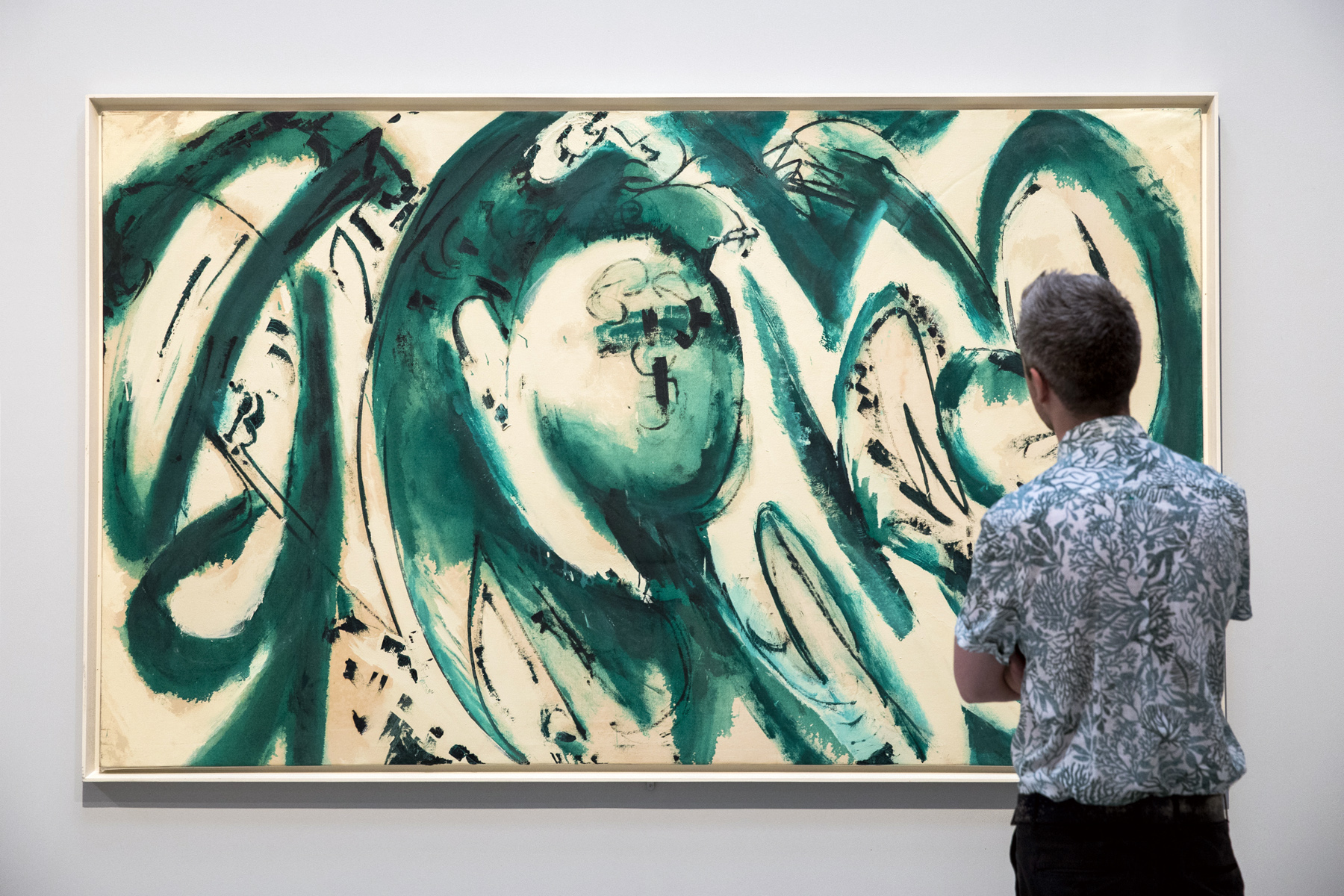
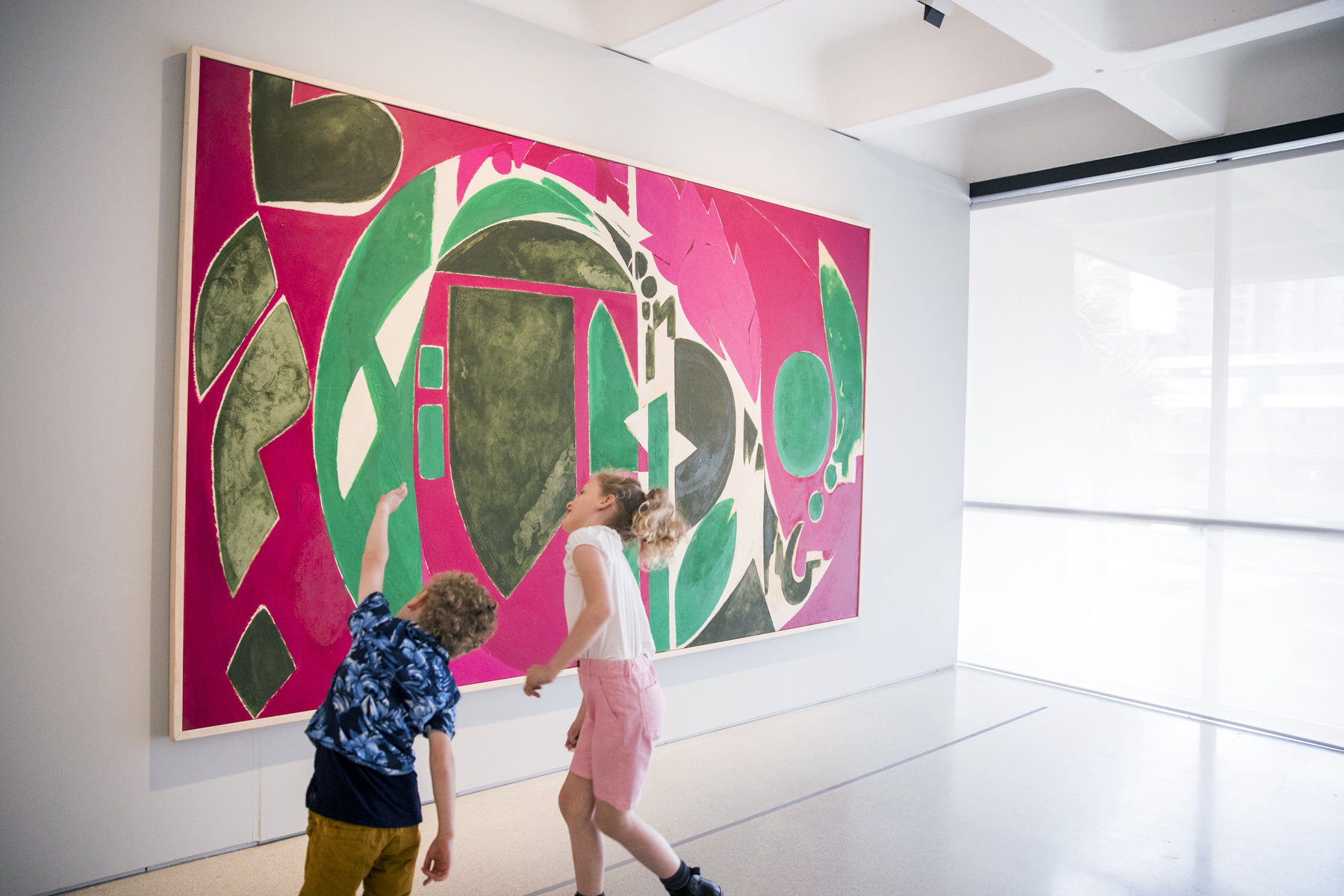
Installation view of the exhibition 'Lee Krasner: Living Colour' showing the work 'Portrait in Green' 1969


Lee Krasner: Living Colour
Installation view with Portrait in Green 1969
Barbican Art Gallery 30 May – 1 September 2019
© Tristan Fewings/Getty Images


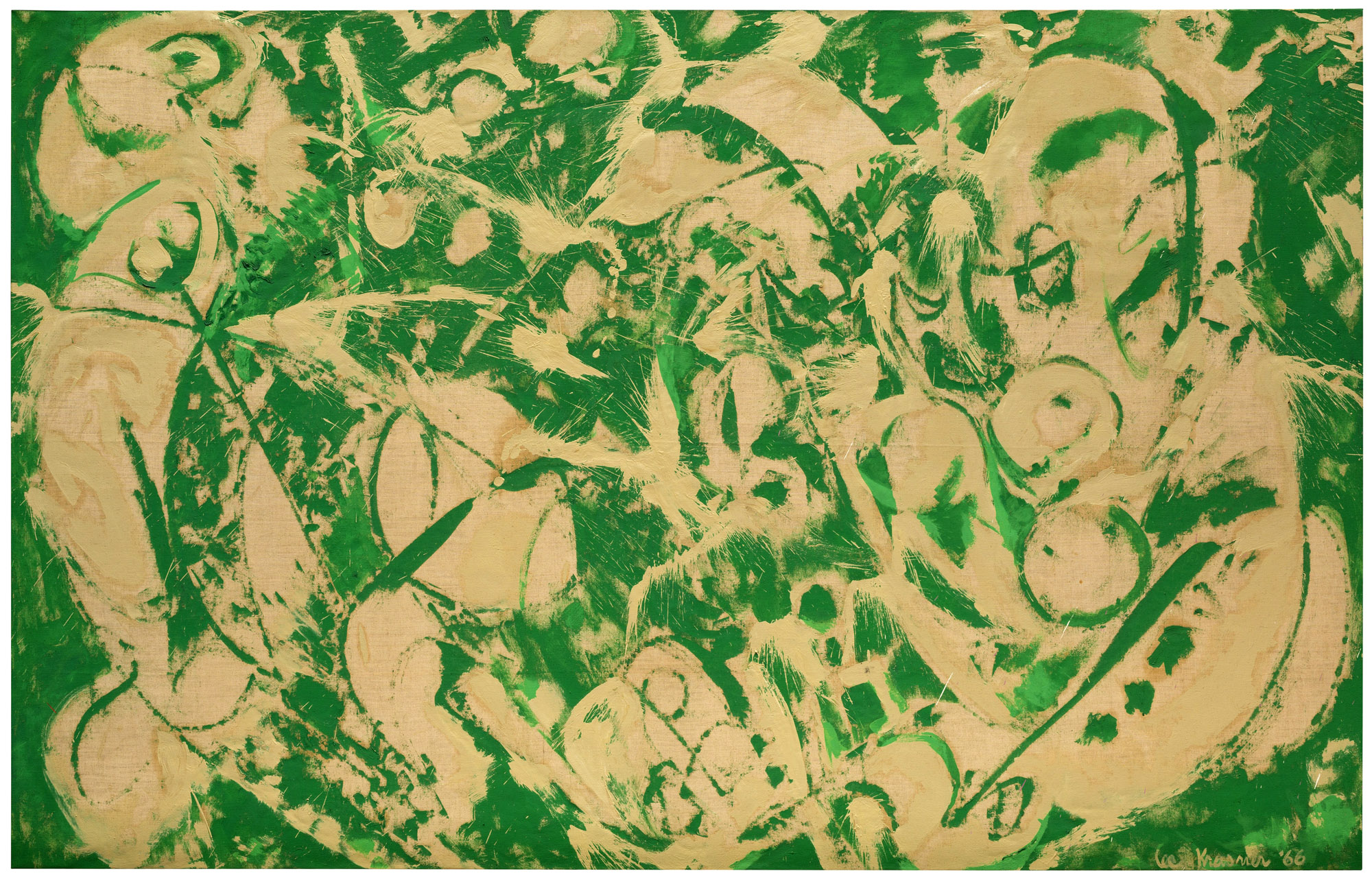
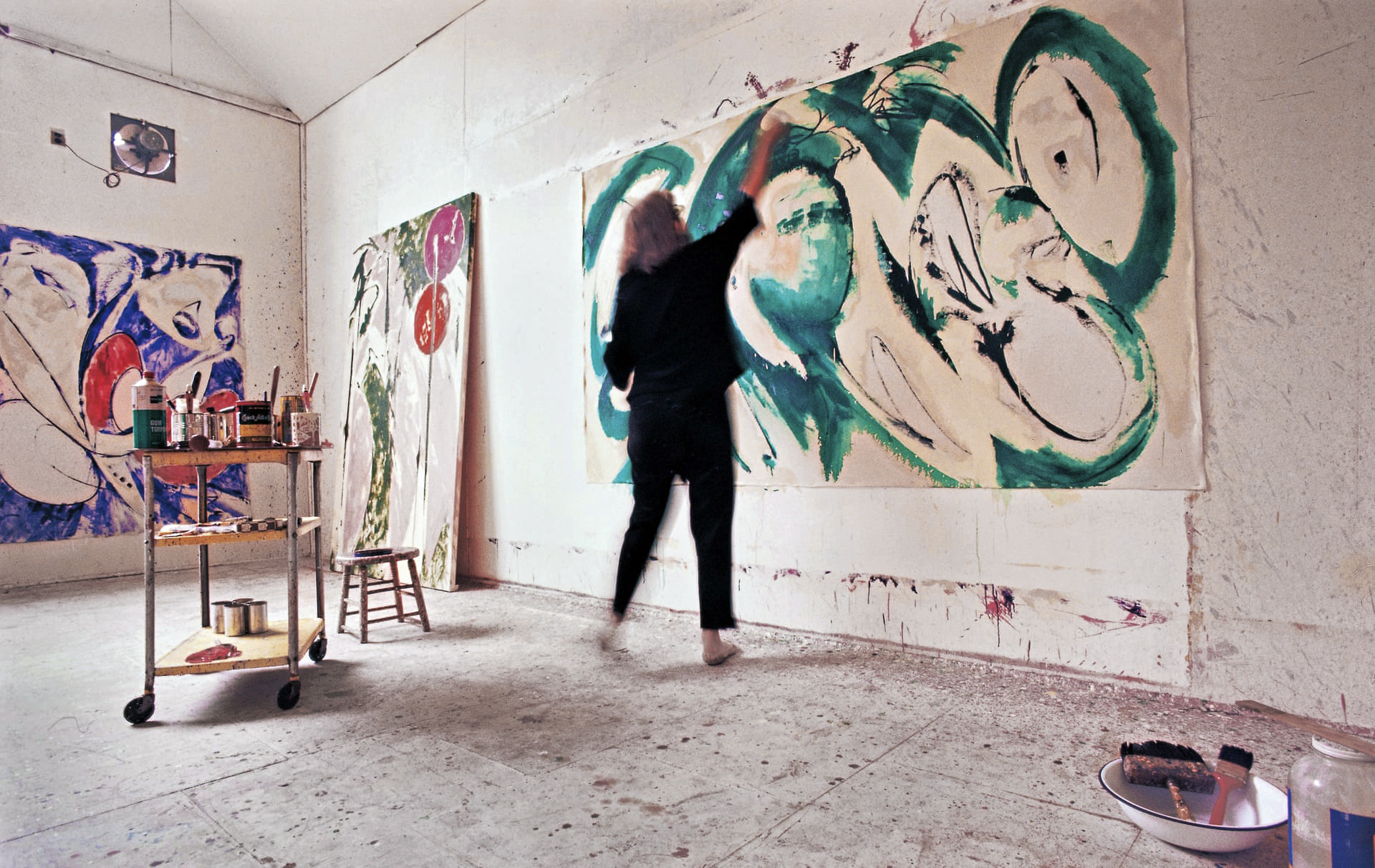
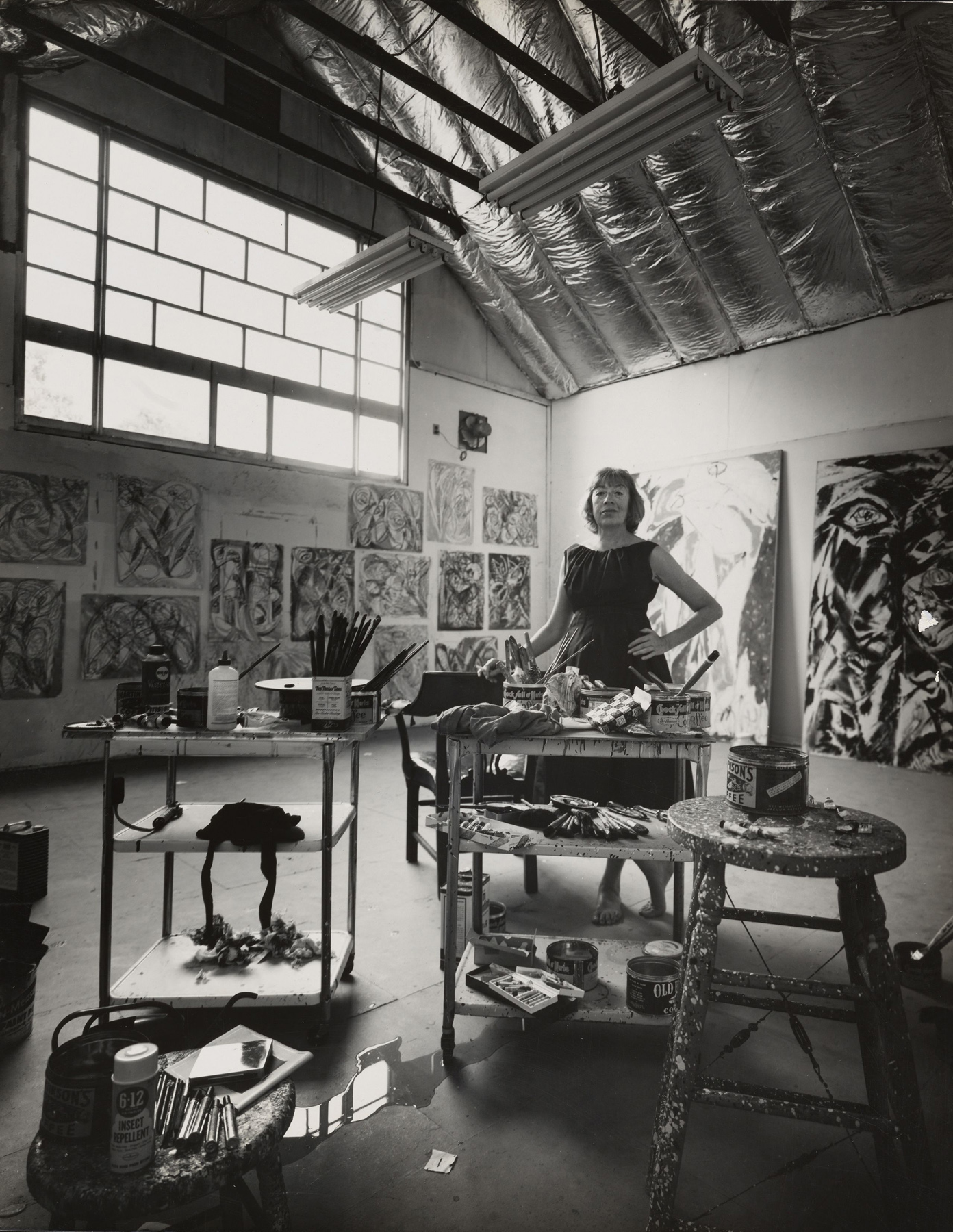
Lee Krasner, who died in 1984, at work in her studio in the 60s, painting 'Portrait in Green'


Lee Krasner, who died in 1984, at work in her studio in the 60s, painting Portrait in Green
Photo:
Mark Patiky


Installation view of the exhibition 'Lee Krasner: Living Colour' showing the work 'Palingenesis' 1971


Lee Krasner: Living Colour
Installation view with Palingenesis 1971
Barbican Art Gallery 30 May – 1 September 2019
© Tristan Fewings/Getty Images


Lee Krasner (American, 1908-1984) 'Palingenesis' 1971


Lee Krasner (American, 1908-1984)
Palingenesis
1971
Collection Pollock-Krasner Foundation
© The Pollock-Krasner Foundation
Courtesy Kasmin Gallery, New York


Palingenesis noun Biology: the exact reproduction of ancestral characteristics in ontogenesis (the development of an individual organism or anatomical or behavioural feature from the earliest stage to maturity).

When Krasner showed 12 new paintings at the Marlborough Gallery in New York the critic Robert Hughes described this pink as rapping ‘hotly on the eyeball at 50 paces’.


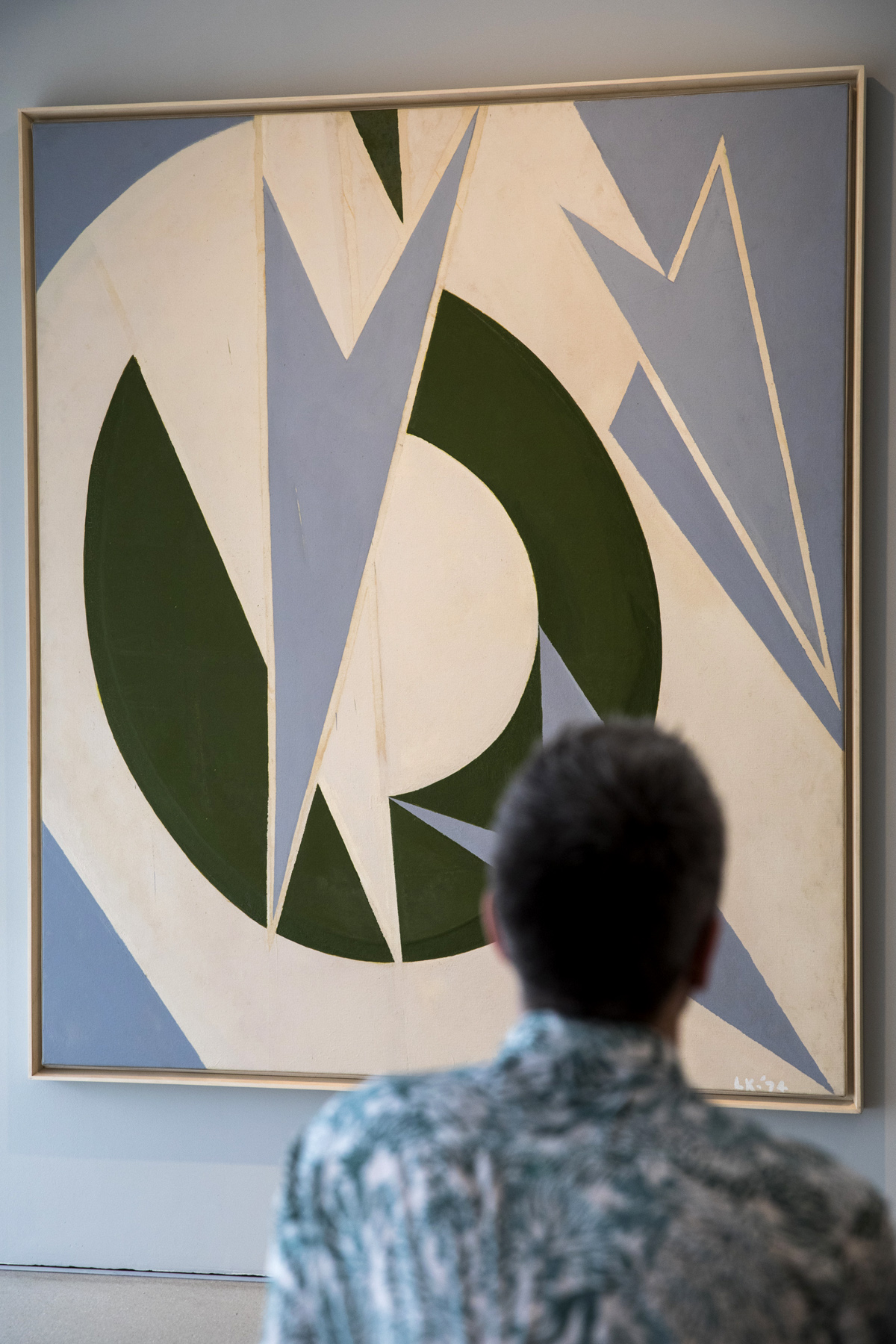
Installation view of the exhibition 'Lee Krasner: Living Colour' showing the work 'Olympic' 1974


Lee Krasner: Living Colour
Installation view with Olympic 1974
Barbican Art Gallery 30 May – 1 September 2019
© Tristan Fewings/Getty Images


Lee Krasner (American, 1908-1984) 'Imperative' 1976


Lee Krasner (American, 1908-1984)
Imperative
1976
National Gallery of Art, Washington D.C.
© The Pollock-Krasner Foundation
Courtesy National Gallery of Art, Washington D.C


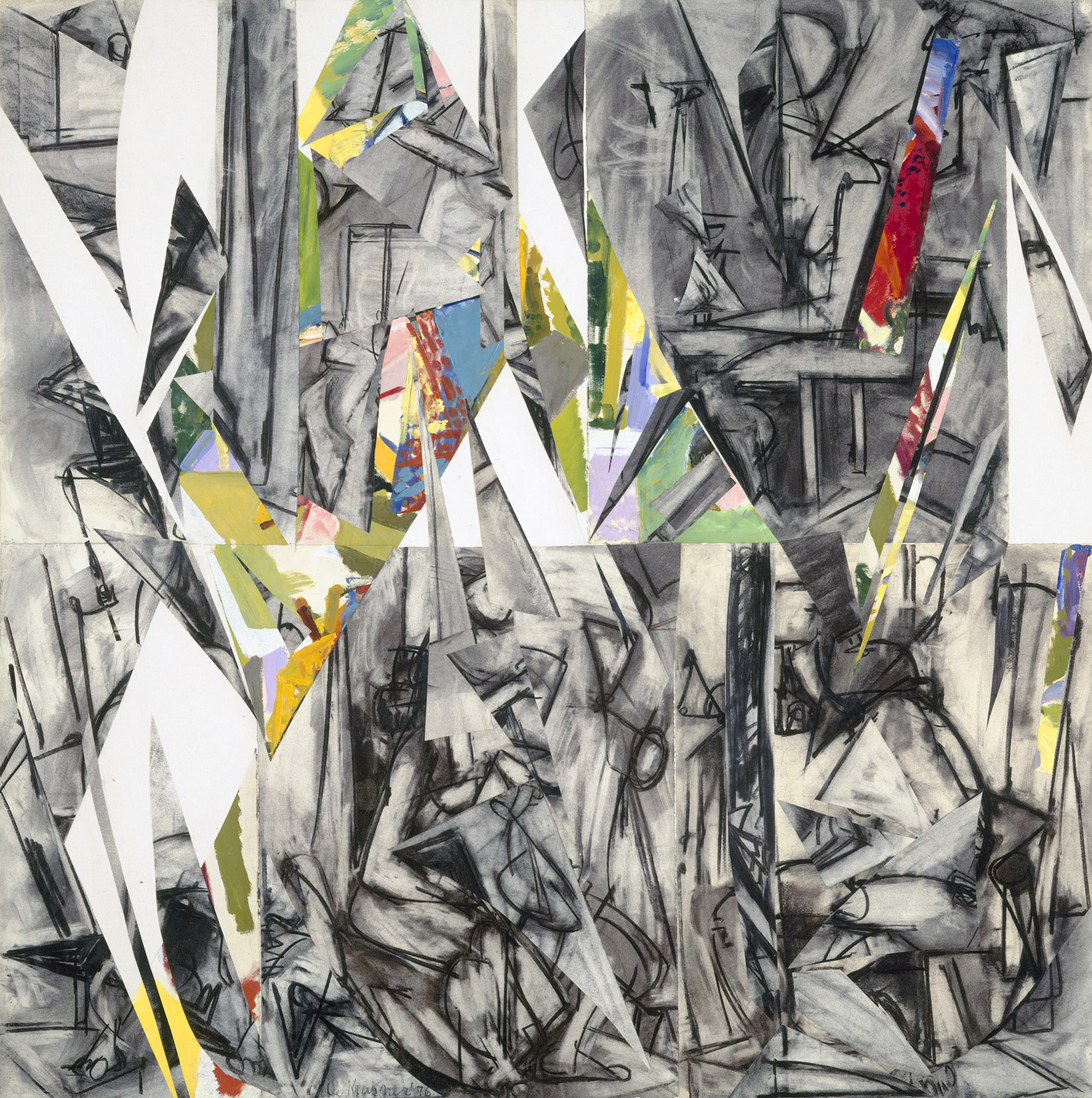
Barbican Art Gallery is pleased to stage the first retrospective in Europe for over 50 years of American artist Lee Krasner (1908-1984). One of the pioneers of Abstract Expressionism, Krasner made work reflecting the feeling of possibility and experiment in New York in the post-war period. Lee Krasner: Living Colour features nearly 100 works – many on show in the UK for the first time – from across her 50-year career, and tells the story of a formidable artist whose importance has often been eclipsed by her marriage to Jackson Pollock.

The exhibition celebrates Krasner’s spirit for invention – including striking early self-portraits; a body of energetic charcoal life drawings; original photographs of her proposed department store window displays, designed during the war effort; and her acclaimed ‘Little Image’ paintings from the 1940s with their tightly controlled geometries. It also features collages comprised of torn-up earlier work and a selection of her most impressive large-scale abstract paintings. This work is accompanied by rare photography and film from the period, in an elegant exhibition design by David Chipperfield Architects.

Jane Alison, Head of Visual Arts, Barbican, said: ‘We are thrilled to be staging Lee Krasner: Living Colour. Despite featuring in museum collections around the world and being one of the few women to have had a solo show at New York’s Museum of Modern Art, in 1984, Krasner has not received the recognition that she deserves in Europe, making this an exciting opportunity for visitors here to experience the sheer impact of her work’.

Krasner was determined to find new ways to capture inner experience. As the playwright Edward Albee commented at her memorial at the Metropolitan Museum of Art, in both her life and her work, ‘… she looked you straight in the eye, and you dared not flinch’. Born in Brooklyn in 1908 in a family recently emigrated from Russia, she chose to attend Washington Irving High School (which at the time was the only school in New York to offer an art course for girls) before going on to study at the National Academy of Design. She was inspired by the opening of MoMA in 1929; joined the Hans Hofmann School of Fine Arts, where she made lifelong friends including renowned designer Ray Eames; was a member of the American Abstract Artists; and became a friend to many leading artists of the day including Willem de Kooning and Franz Kline.

In 1945, Krasner married Jackson Pollock and they moved to Springs, Long Island, borrowing $2000 from collector and dealer Peggy Guggenheim to buy a run-down clapboard farmhouse. Krasner worked in the living room and then an upstairs bedroom – intimate make-shift studio spaces, which are mirrored in the Barbican Art Gallery’s upstairs rooms – while Pollock worked in a converted barn outside. After Pollock’s early death in a car crash in 1956, Krasner made the courageous decision to claim his studio as her own, which allowed her to work for the first time on large, un-stretched canvas tacked to the wall. The result would be the remarkable ‘Umber’ and ‘Primary’ series paintings, in which her exploration of scale, biomorphic form and colour collided into some of her most celebrated work. Examples on show include The Guardian, 1960; Happy Lady, 1963; Icarus, 1964; and Siren, 1966.

Lee Krasner: Living Colour draws from more than 50 international collections: from museums, including the Metropolitan Museum of Art, Los Angeles County Museum of Art, San Francisco Museum of Modern Art, the National Gallery of Washington, the Whitney Museum of American Art, Hirshhorn Museum and Sculpture Garden, Philadelphia Museum of Art, the Jewish Museum and the Museum of Fine Arts Houston, as well as from a large number of private collections. Many works are being exhibited in Europe for the first time, such as the monumental Combat (1965), which is over 4 metres long, and has travelled from the National Gallery of Victoria in Australia.

The exhibition is curated and organised by Barbican Centre, London, in collaboration with Schirn Kunsthalle Frankfurt, Zentrum Paul Klee, Bern and Guggenheim Museum Bilbao.

Press release from the Barbican Art Gallery website [Online] Cited 14 June 2019


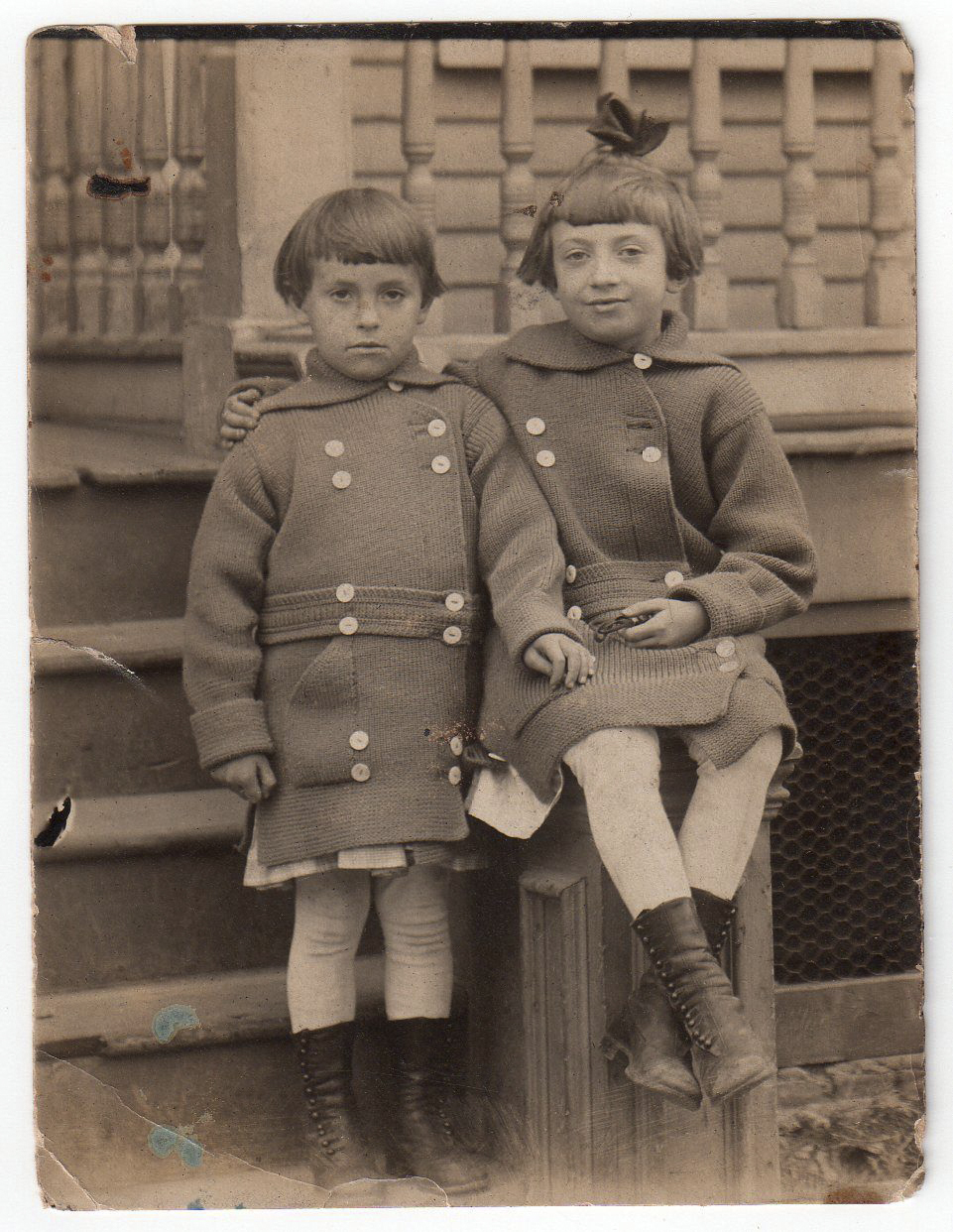
Unknown Photographer. 'Lee Krasner and her younger sister, Ruth' c. 1915-1916


Unknown Photographer
Lee Krasner and her younger sister, Ruth
c. 1915-1916


“I was brought up to be independent. I made no economic demands on my parents so in turn they let me be… I was not pressured by them, I was free to study art. It was the best thing that could have happened.”


Lee Krasner


Lee Krasner. 'Self-Portrait' c. 1928


Lee Krasner (American, 1908-1984)
Self-Portrait
c. 1928
The Jewish Museum, New York
© The Pollock-Krasner Foundation
Courtesy the Jewish Museum, New York


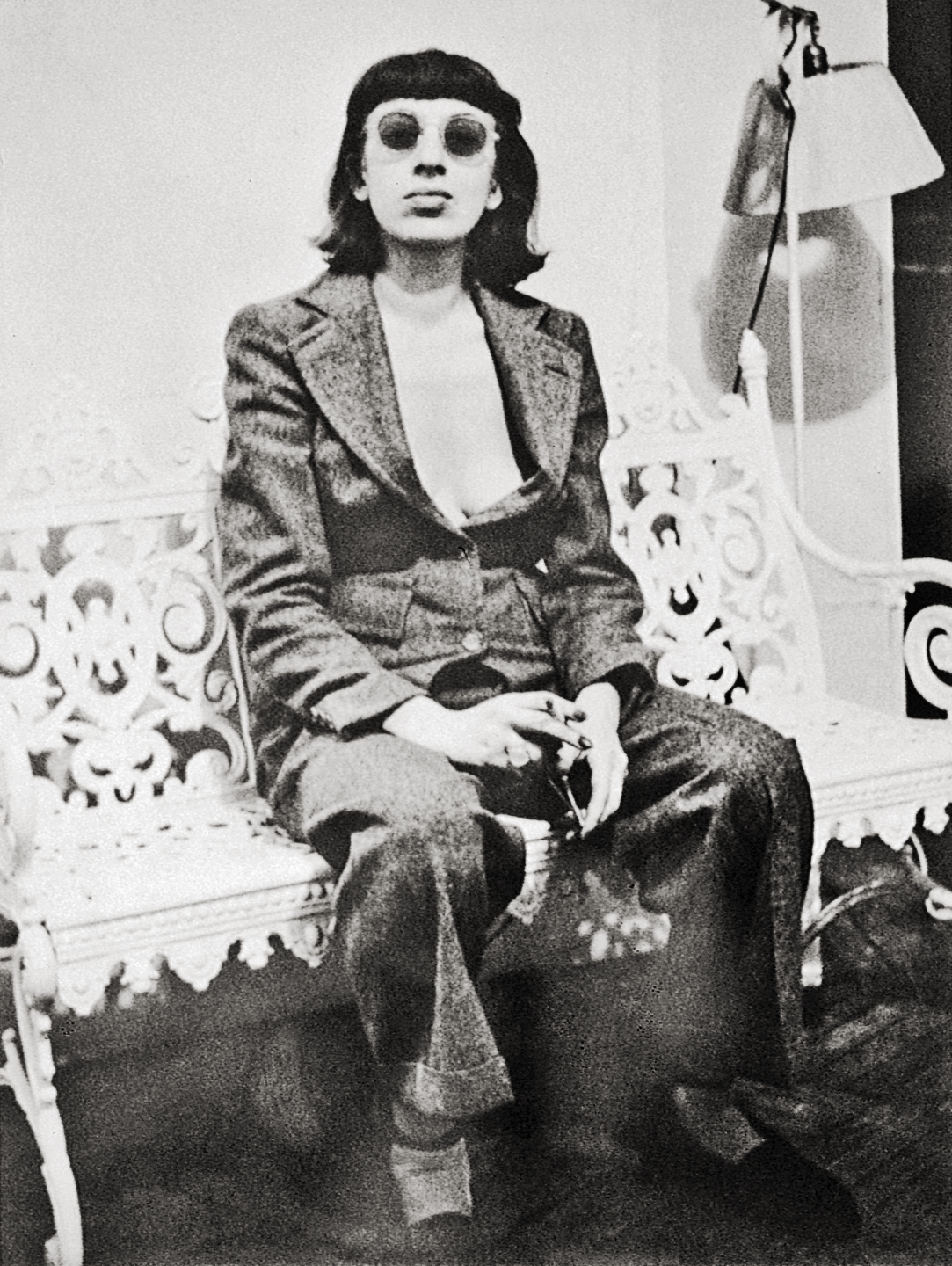
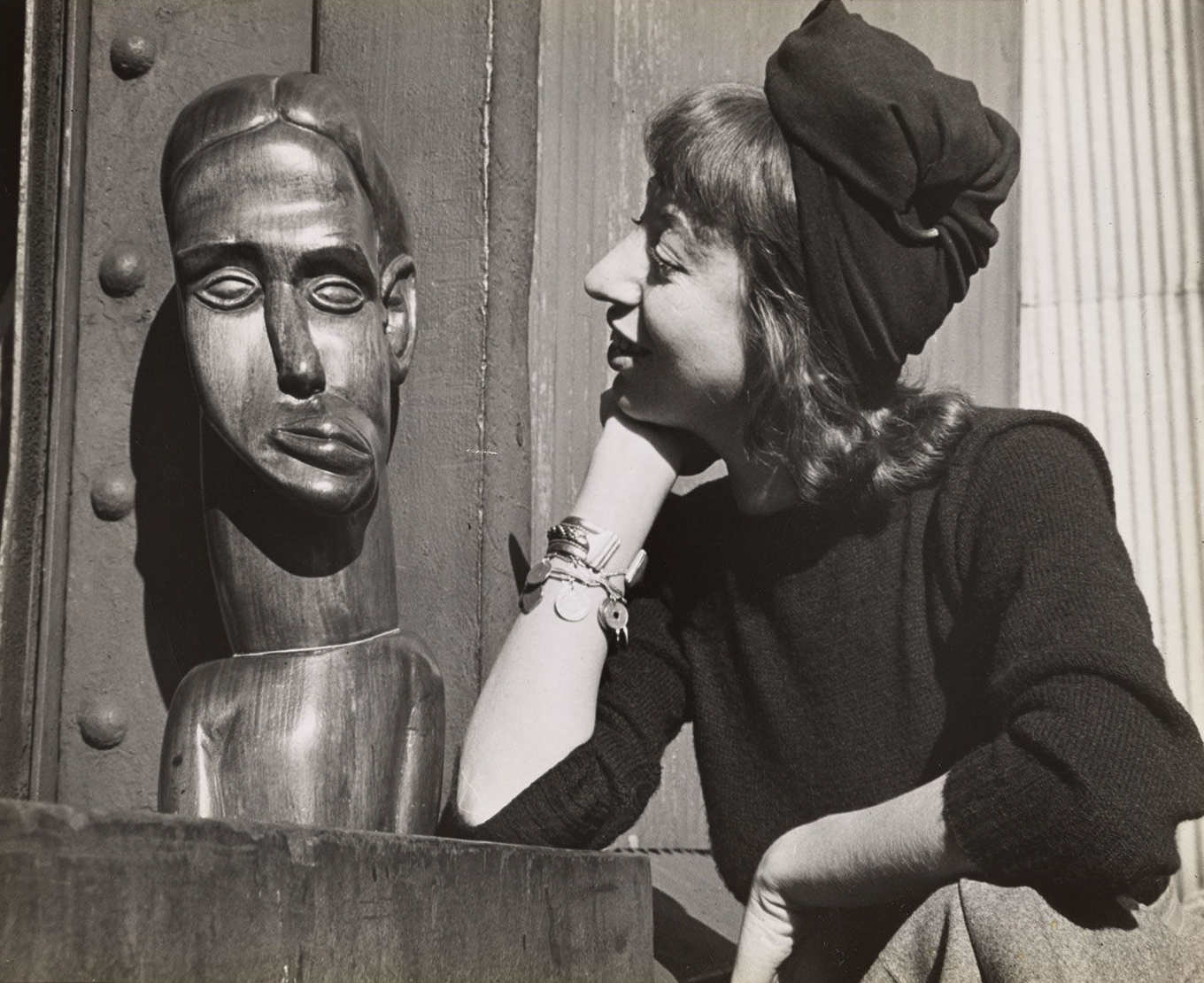
Unknown photographer. 'Lee Krasner' c. 1938


Unknown photographer
Lee Krasner
c. 1938
Gelatin silver print


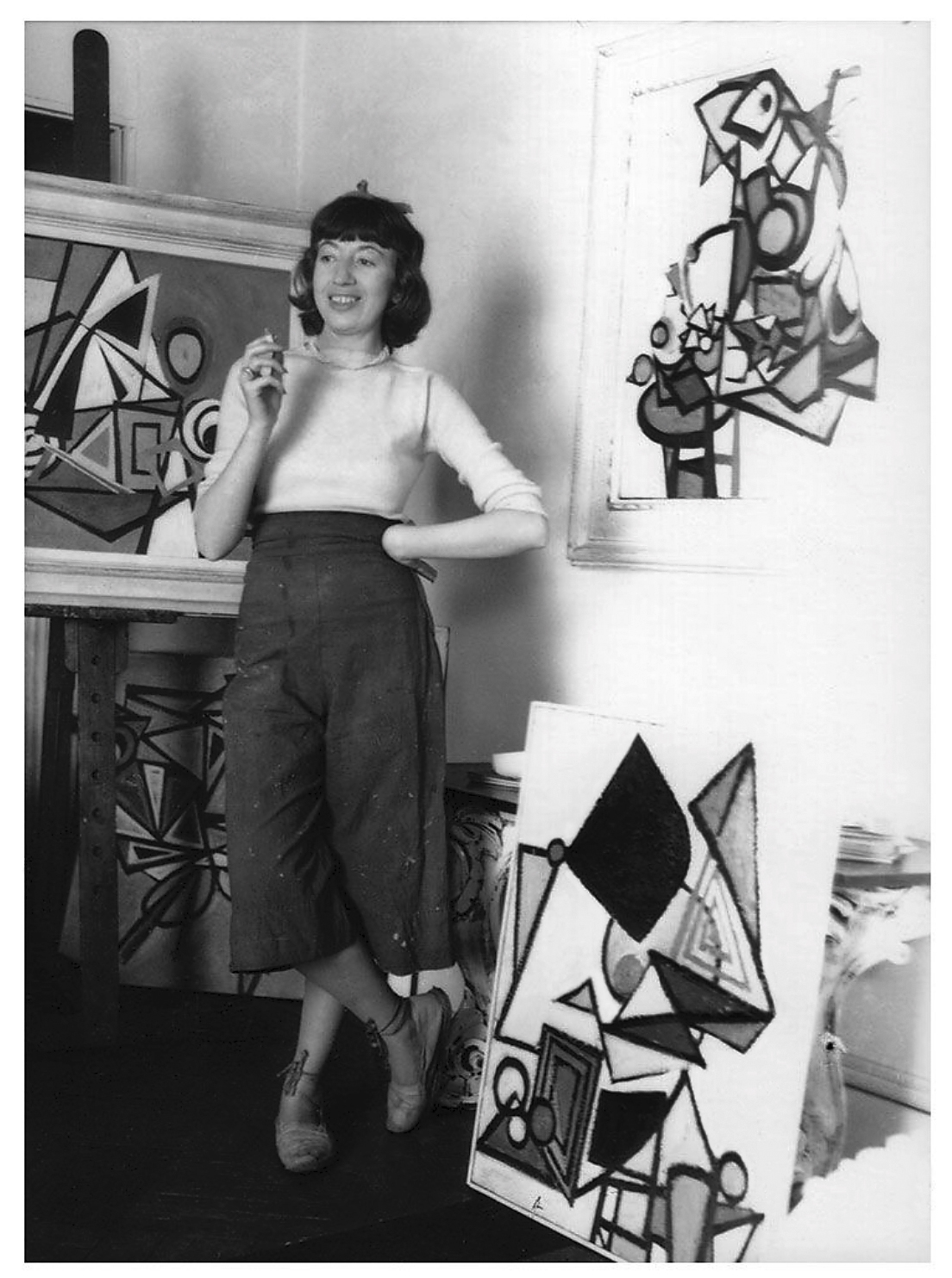
Maurice Berezov (American, 1902-1989) 'Lee Krasner in her New York studio' 1939


Maurice Berezov (American, 1902-1989)
Lee Krasner in her New York studio
1939
Gelatin silver print
© Copyright A.E. Artworks, LLC


Fred Prater. 'Lee Krasner at the WPA Pier, New York City, where she was working on a WPA commission' c. 1940


Fred Prater
Lee Krasner at the WPA Pier, New York City, where she was working on a WPA commission
c. 1940
Gelatin silver print
Lee Krasner Papers, c. 1905-1984
Archives of American Art, Smithsonian Institution


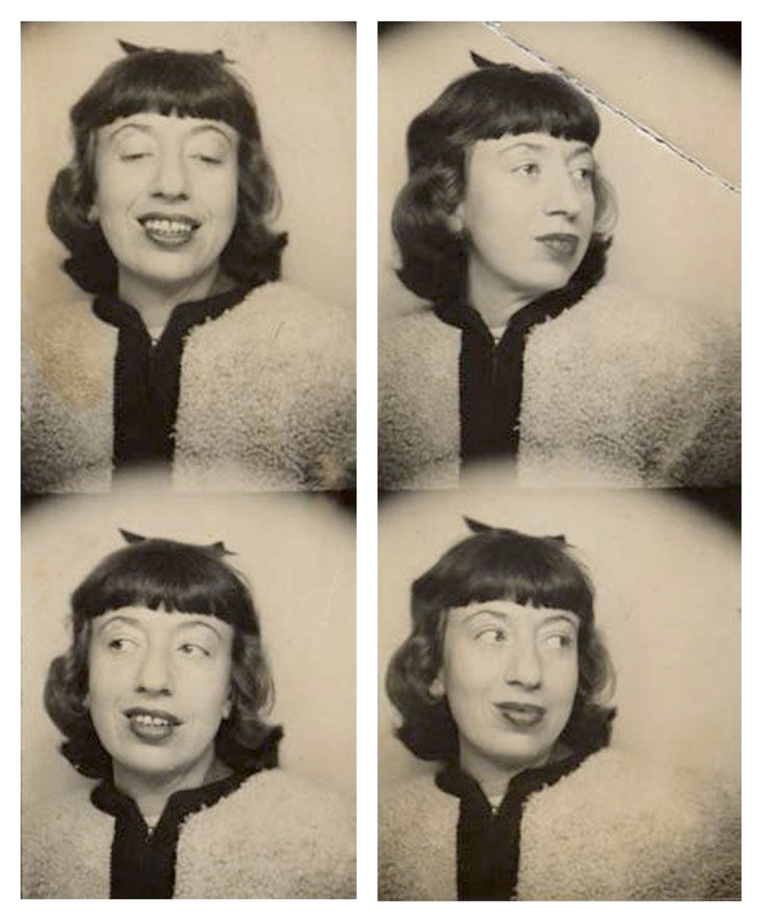
'Lee Krasner photo booth images' Nd


Lee Krasner photo booth images
1940s-1950s?


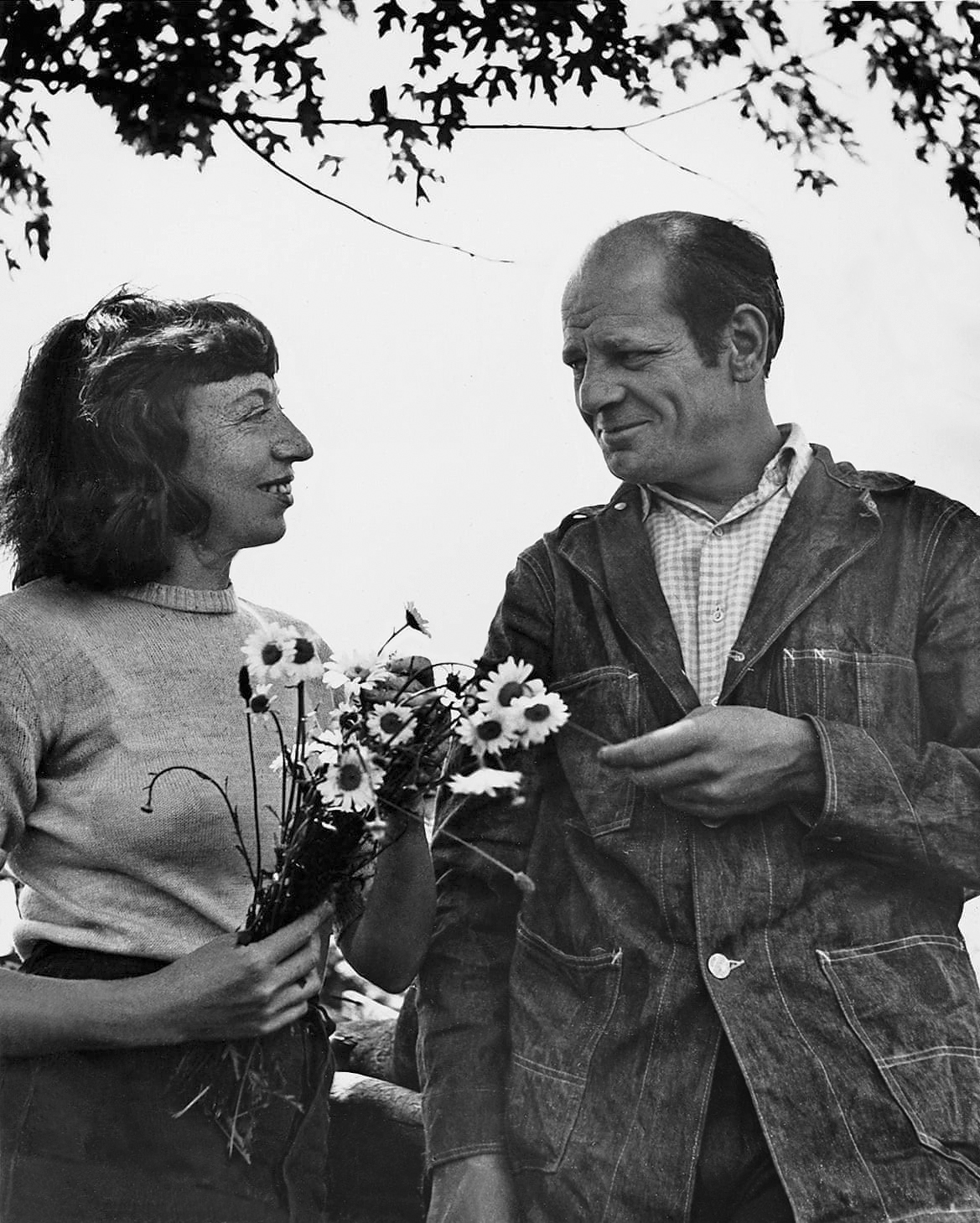
Wilfred Zogbaum. 'With Jackson Pollock in Springs, London Island' 1949


With Jackson Pollock in Springs, London Island, 1949
Photo: Wilfred Zogbaum


“She would ask me to the studio. One didn’t just go there. One waited for an invitation. But she didn’t talk about her painting. The most distinct thing for her was the question: does it work? That was the big way that she thought. She wasn’t insecure about it. She wasn’t asking my opinion. She was asking herself.

“She had a very strong conviction about herself as a painter. She saw her own worth. She saw herself as equal to the men. She didn’t have the attention Pollock had, but she’d grown inured to that. Lee knew all about brands: she was Mrs Pollock, and sometimes she took advantage of it. But she also had great feeling for him as a painter. He wasn’t an easy person, but she never disparaged him, and he never disparaged her, either. The most powerful attraction between them was their intellectual acknowledgement of each other.”

Krasner’s nephew Jason McCoy quoted in Rachel Cooke. “Reframing Lee Krasner, the artist formerly known as Mrs Pollock,” on The Guardian website Sunday 12 May 2019 [Online] Cited 22 June 2019


Halley Erskine. 'Lee Krasner standing on a ladder in front of 'The Gate' (1959) before it was completed, Springs, July or August 1959' 1959


Halley Erskine
Lee Krasner standing on a ladder in front of ‘The Gate’ (1959) before it was completed, Springs, July or August 1959
1959
Gelatin silver print


Hans Namuth (German, 1915-1990) 'Lee Krasner in her studio in the barn, Springs' 1962


Hans Namuth (German, 1915-1990)
Lee Krasner in her studio in the barn, Springs
1962
Gelatin silver print
Lee Krasner Papers, Archives of American Art, Smithsonian Institution, Washington, D.C.


Irving Penn (American, 1917-2009) 'Lee Krasner, Springs, NY' 1972


Irving Penn (American, 1917-2009)
Lee Krasner, Springs, NY
1972
Gelatin silver print
© The Irving Penn Foundation


Barbican Art Gallery
Barbican Centre
Silk Street, London, EC2Y 8DS

Opening hours:
Sat – Wed 10am – 6pm (last entry 5pm)
Thu – Fri 10am – 8pm (last entry 7pm)
Bank Holidays 12 – 6pm (last entry 5pm)

Barbican Art Gallery website

LIKE ART BLACK ON FACEBOOK

Back to top

Review: ‘Why Take Pictures?’ at the Centre for Contemporary Photography, Fitzroy, Melbourne

Exhibition dates: 15th June – 11th August, 2019

Artists: Alan Constable, Lyndal Irons, Glenn Sloggett, Michelle Tran, David Wadelton

Curator: Madé Spencer-Castle


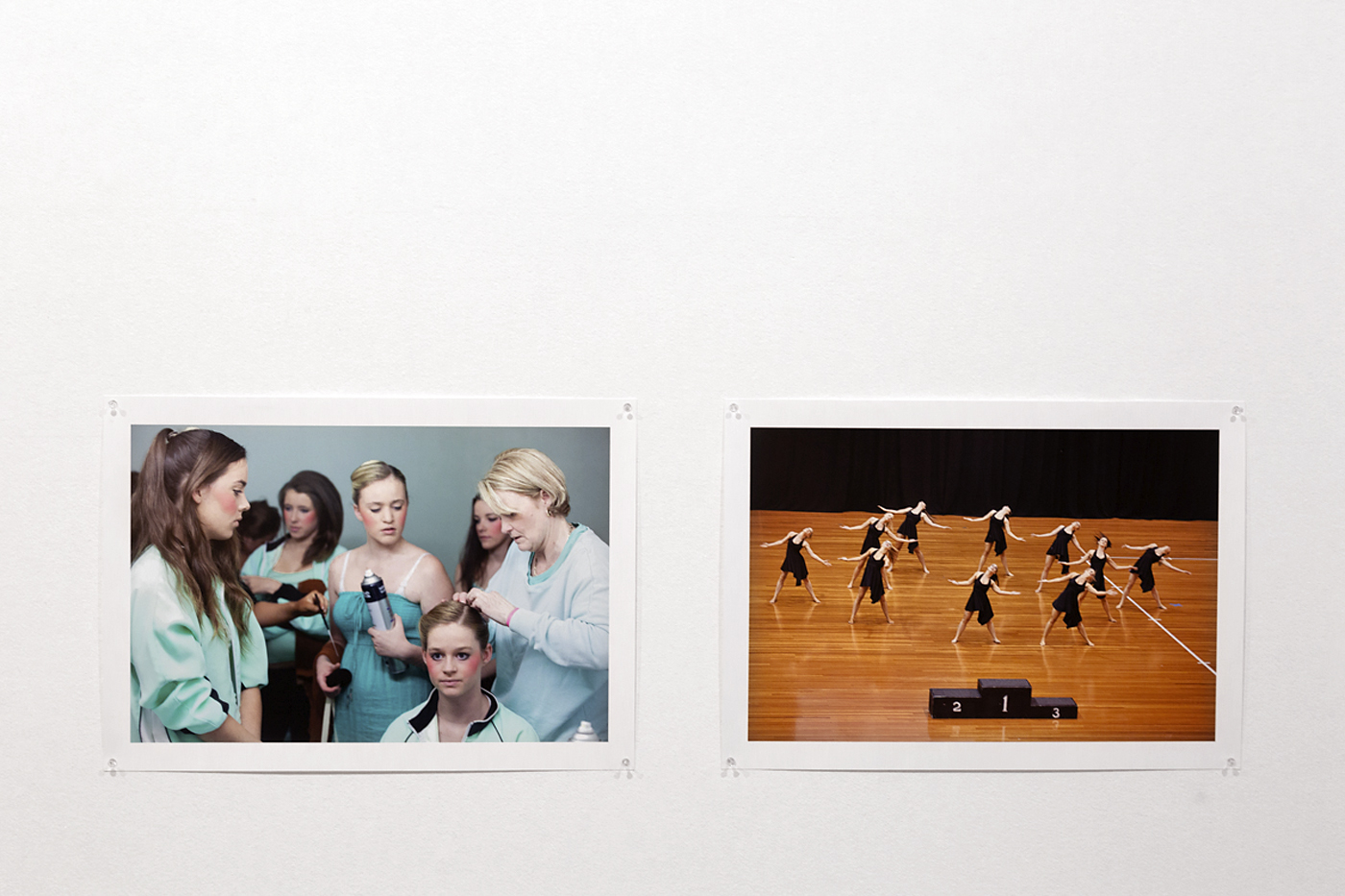
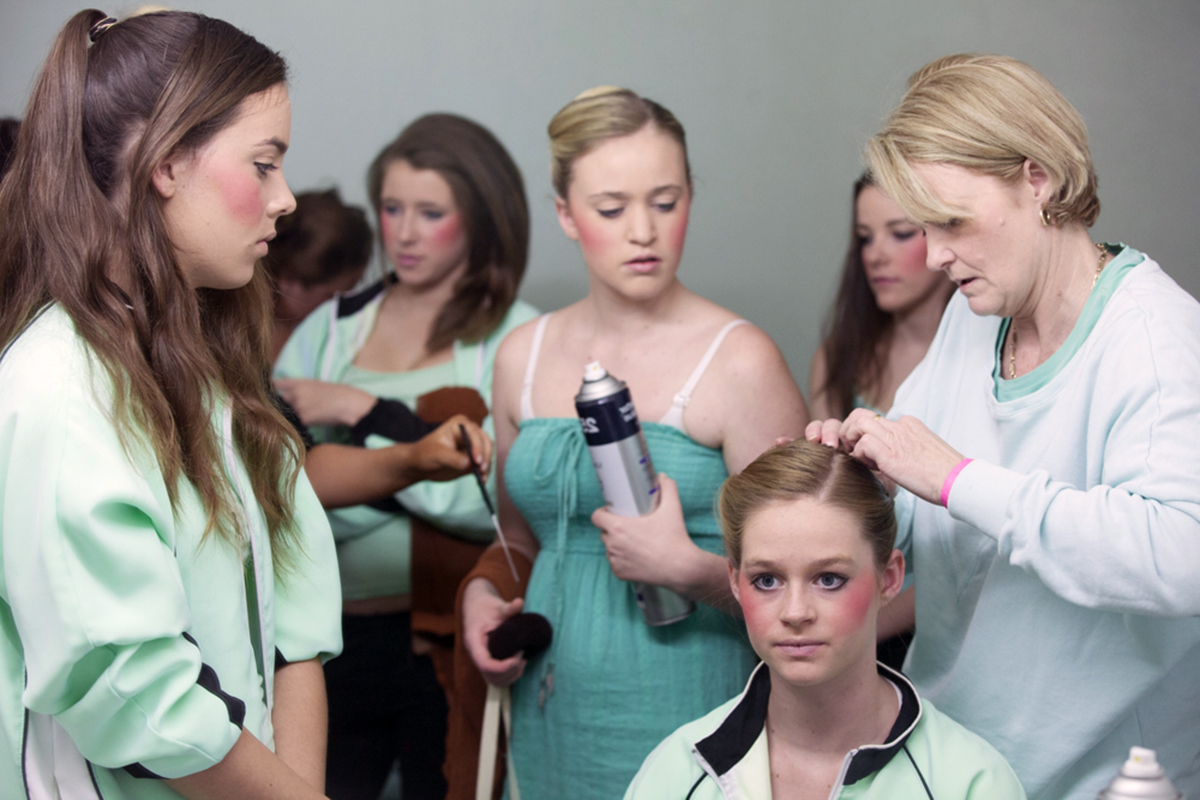
Lyndal Irons (Australian) 'Backstage before Parade of Champions' 2015 from the exhibition 'Why Take Pictures?' at the Centre for Contemporary Photography, Fitzroy, Melbourne, June - August, 2019


Lyndal Irons (Australian)
Backstage before Parade of Champions
2015
From the series Physie
Courtesy of the artist


Picturing themselves

This is another strong exhibition at the Centre for Contemporary Photography, Melbourne, principally due to the integrity of the work and not the investigation of the theme for the exhibition, why take pictures?

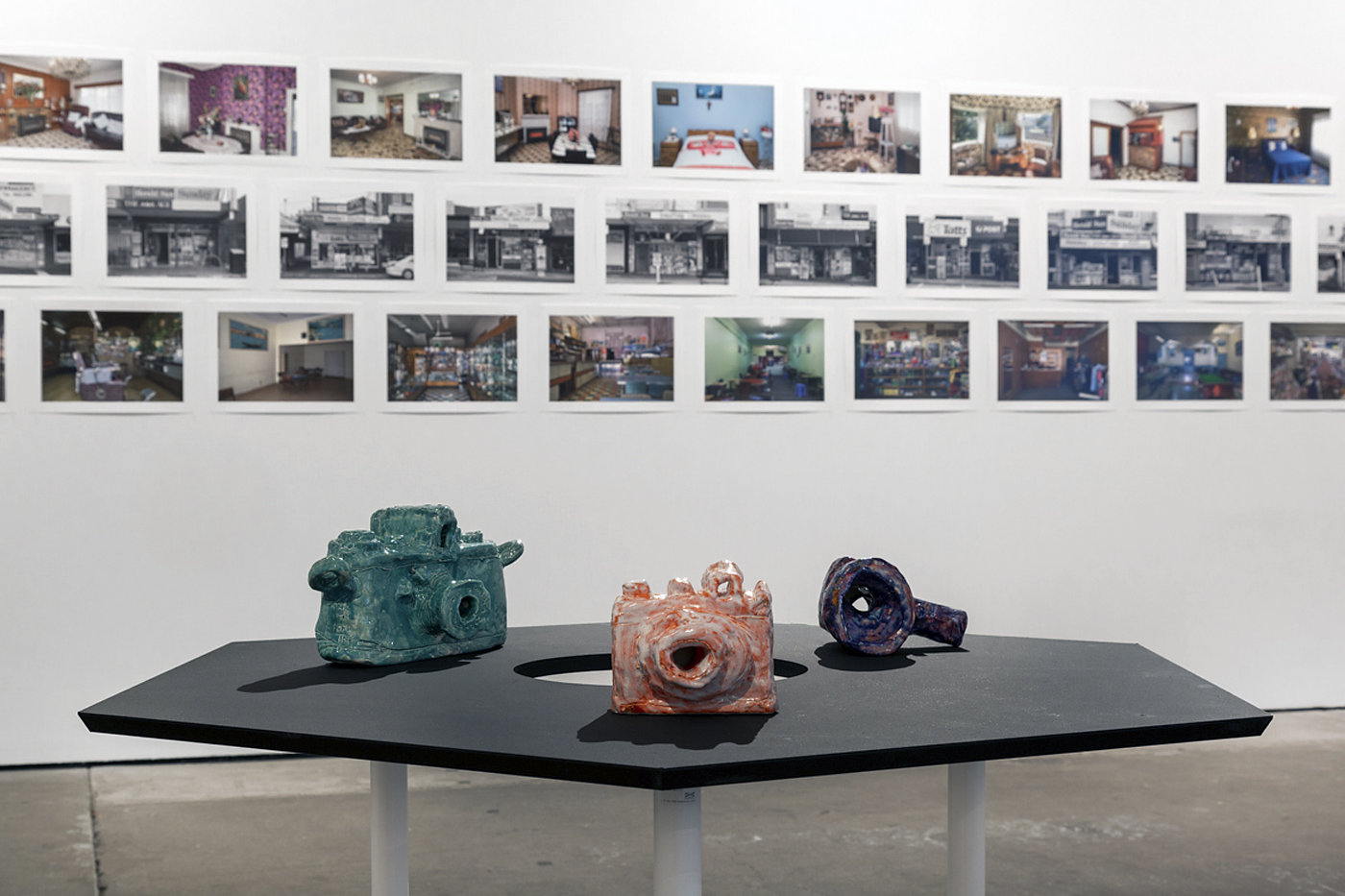
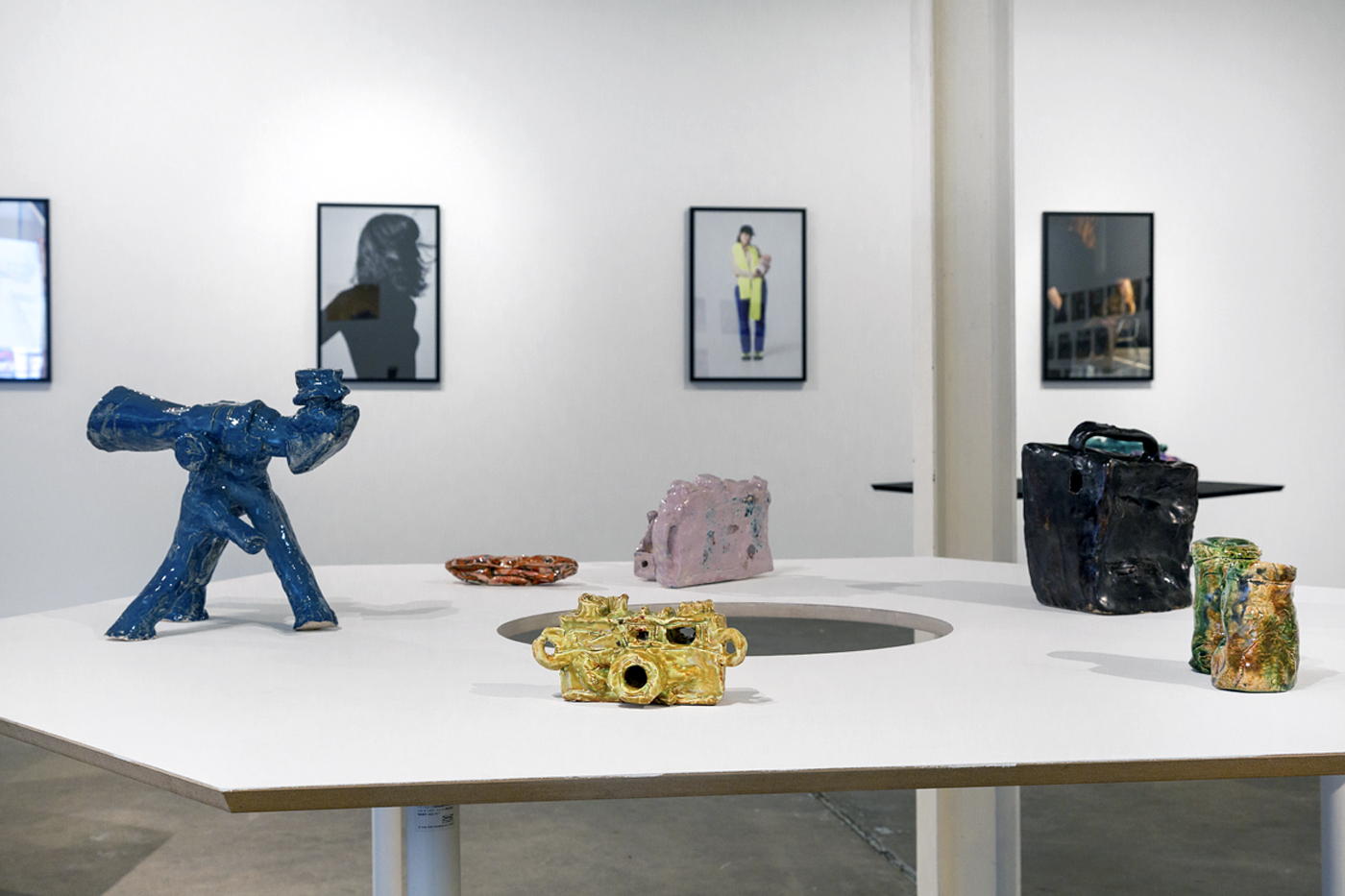
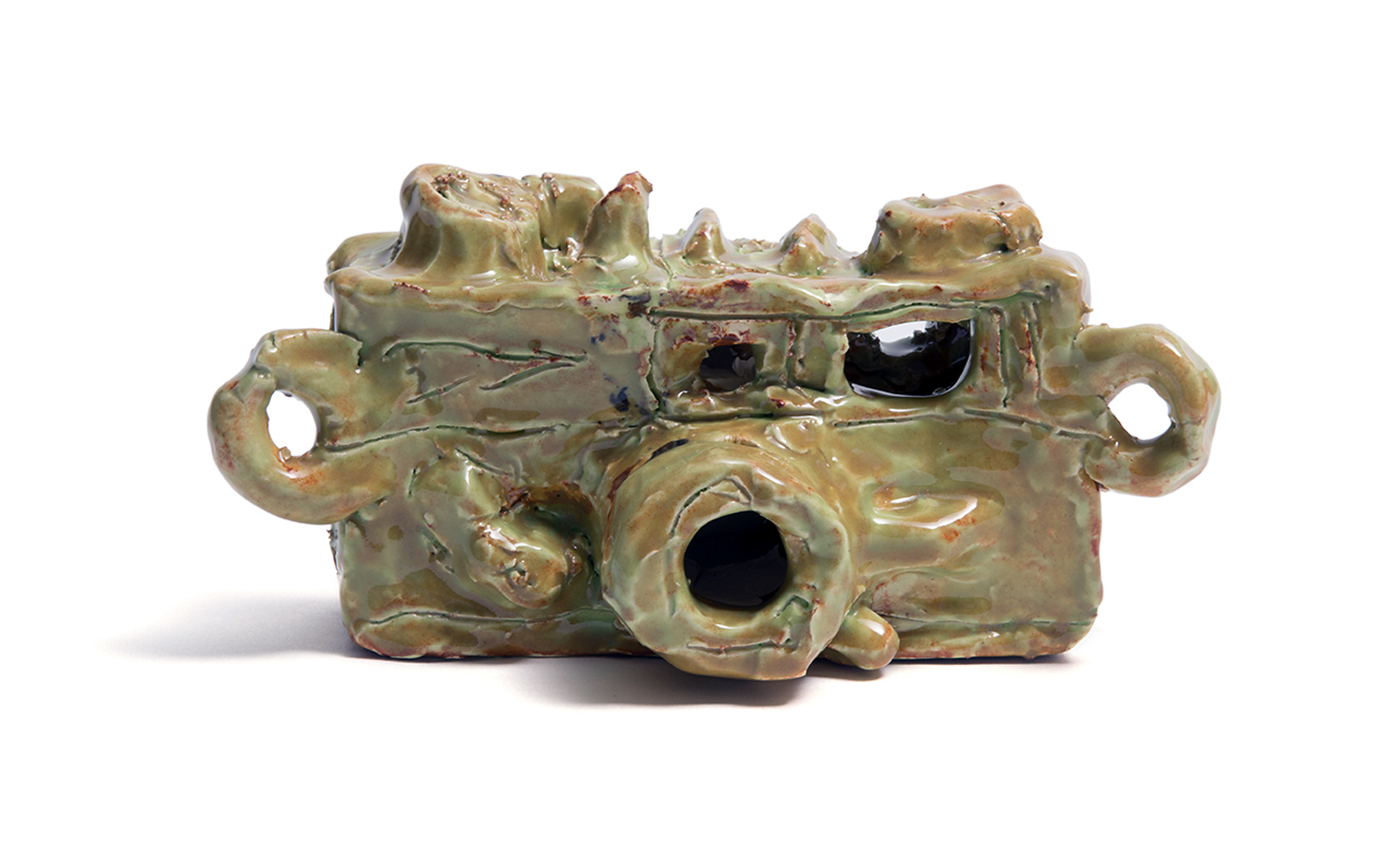
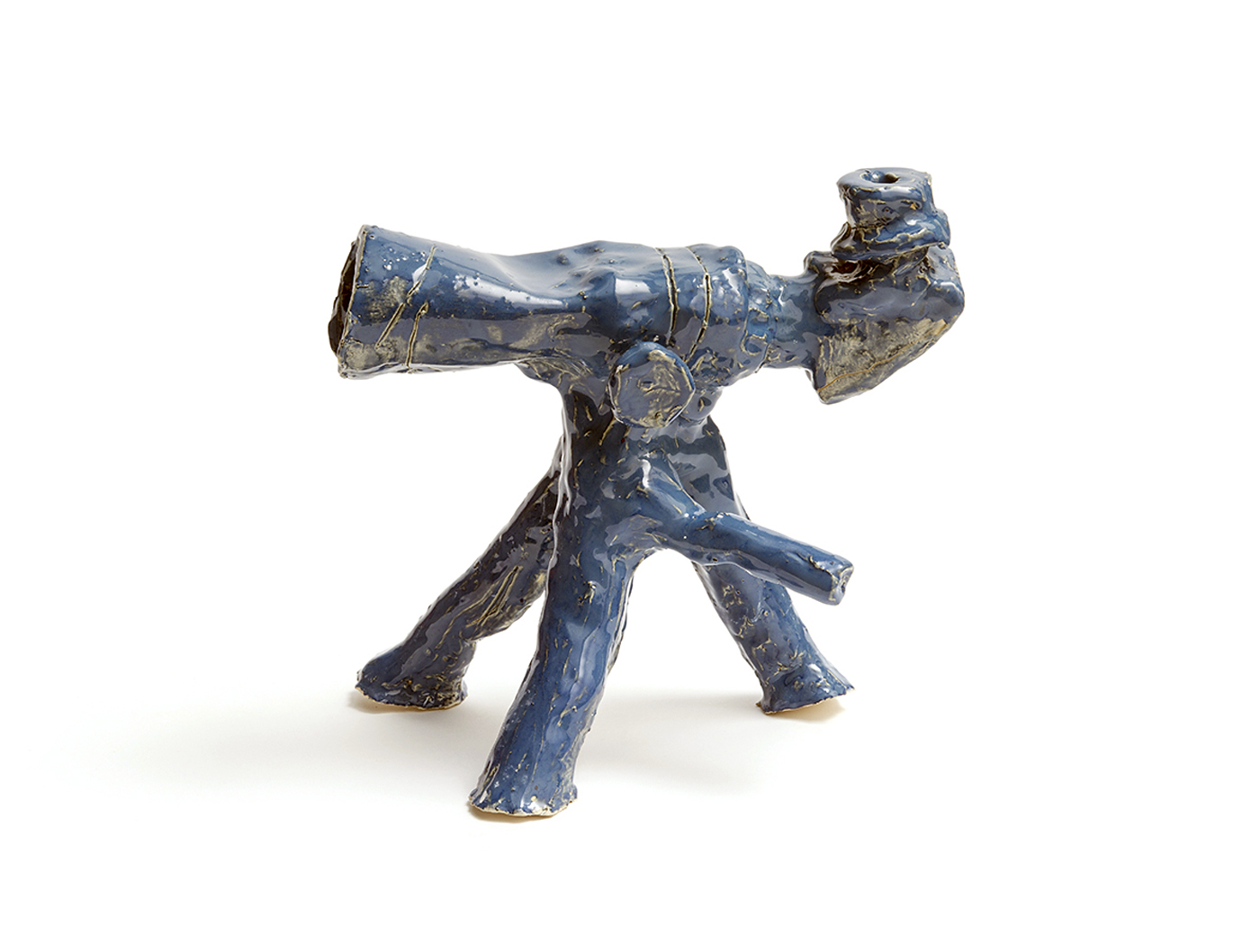
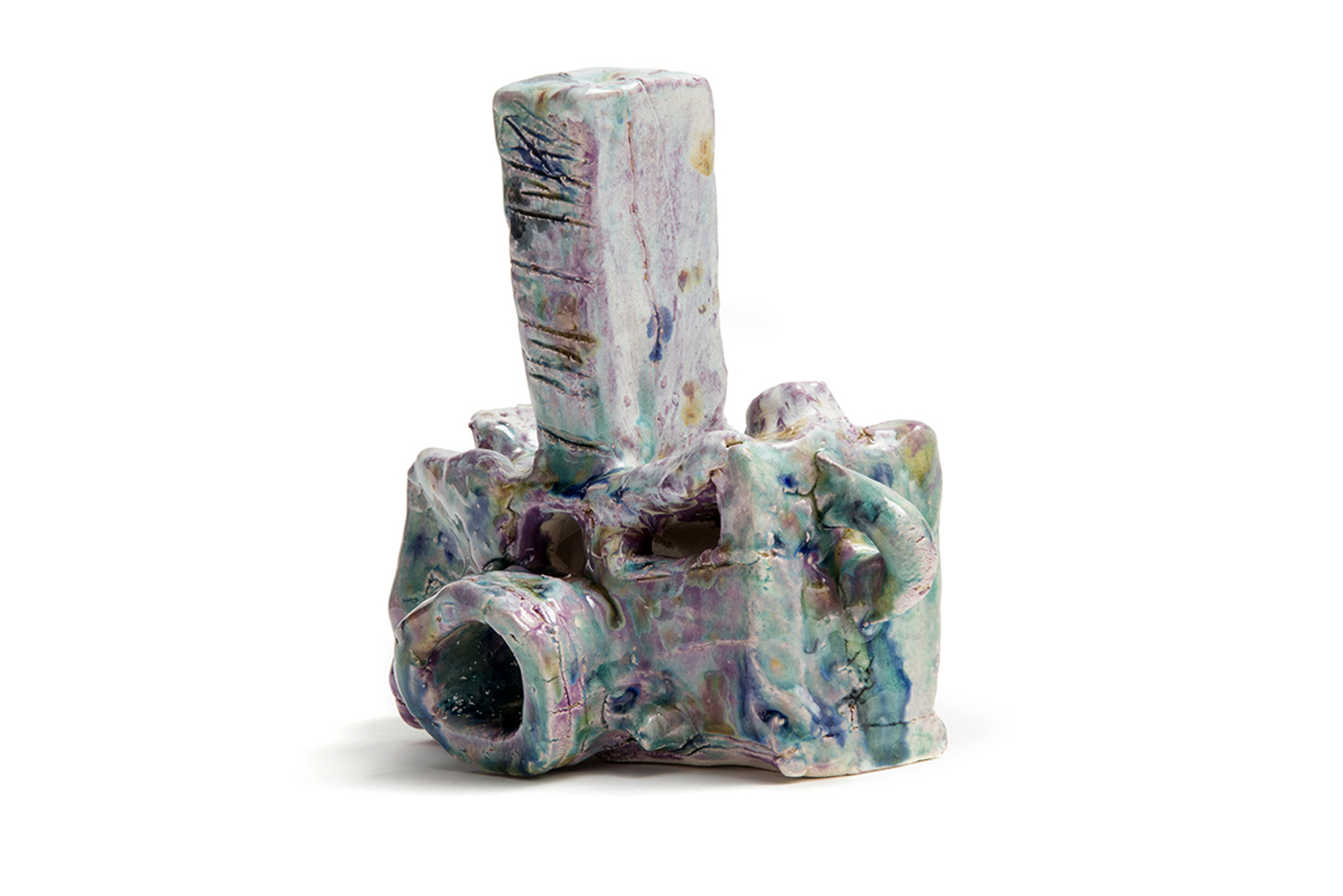
I have always loved Alan Constable’s tactile cameras every since I first saw them. Constable is legally blind. He holds photographs of old cameras up to his eyes, a couple of inches away, and scans the images, committing them to memory. He then creates these most wonderful evocations of a seeing machine, almost as though he is transferring his in/sight into these in/operable, beautifully glazed structures. He twists two dimensional, photographic reality into these lumpy, misshapen sculptures, evocations of his memory and imagination. I have three of these cameras in my own collection. I treasure them.

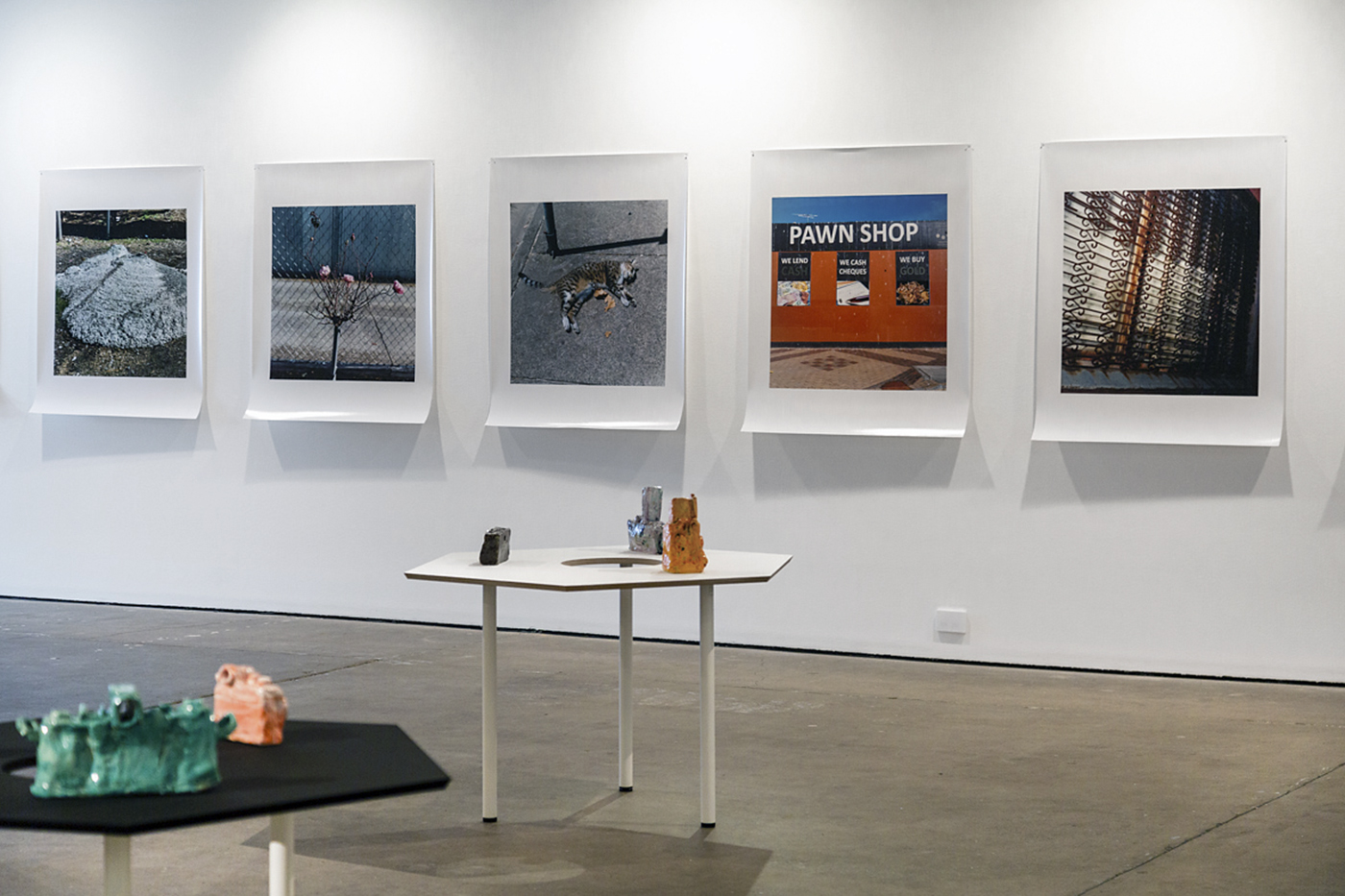
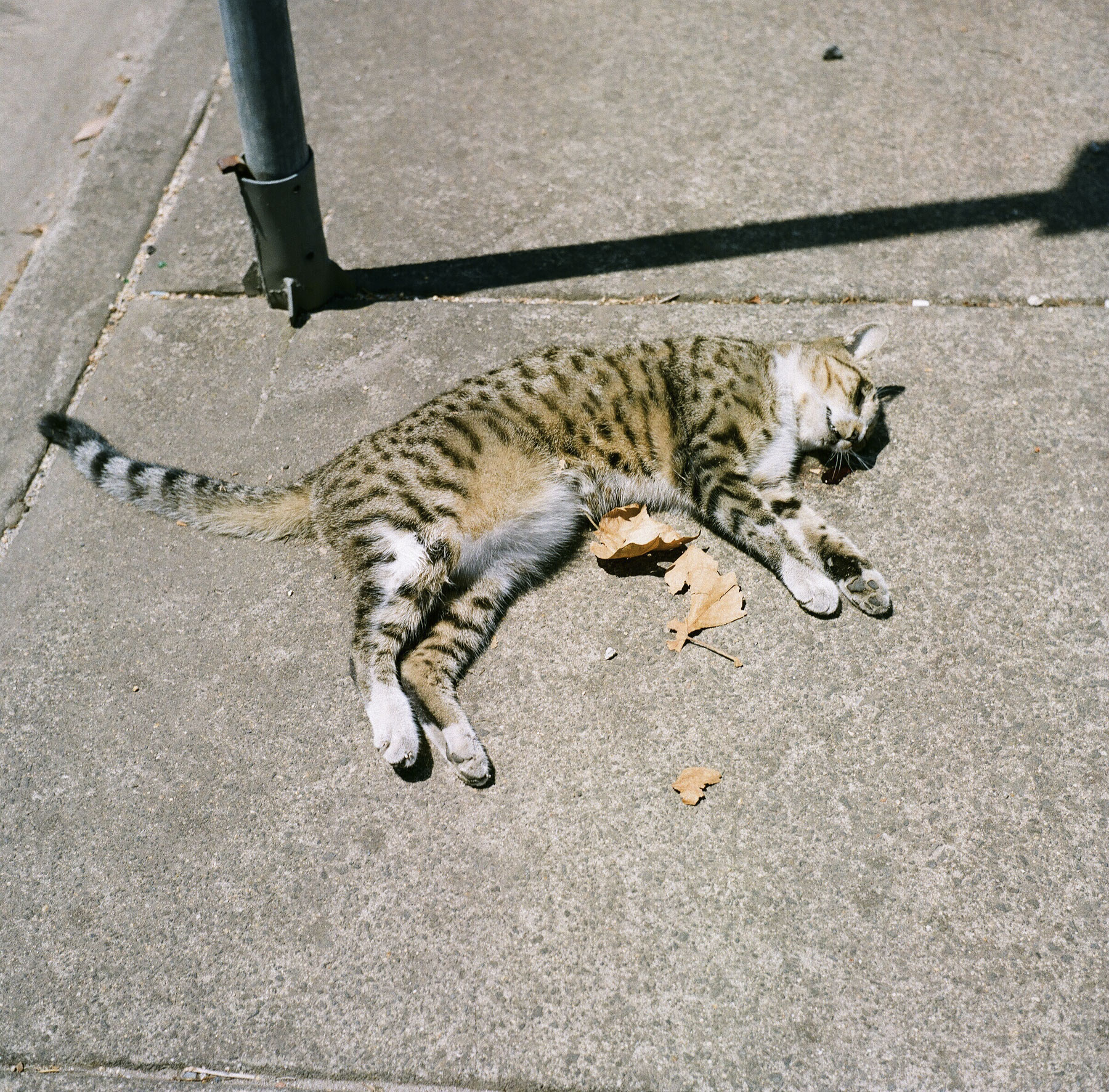
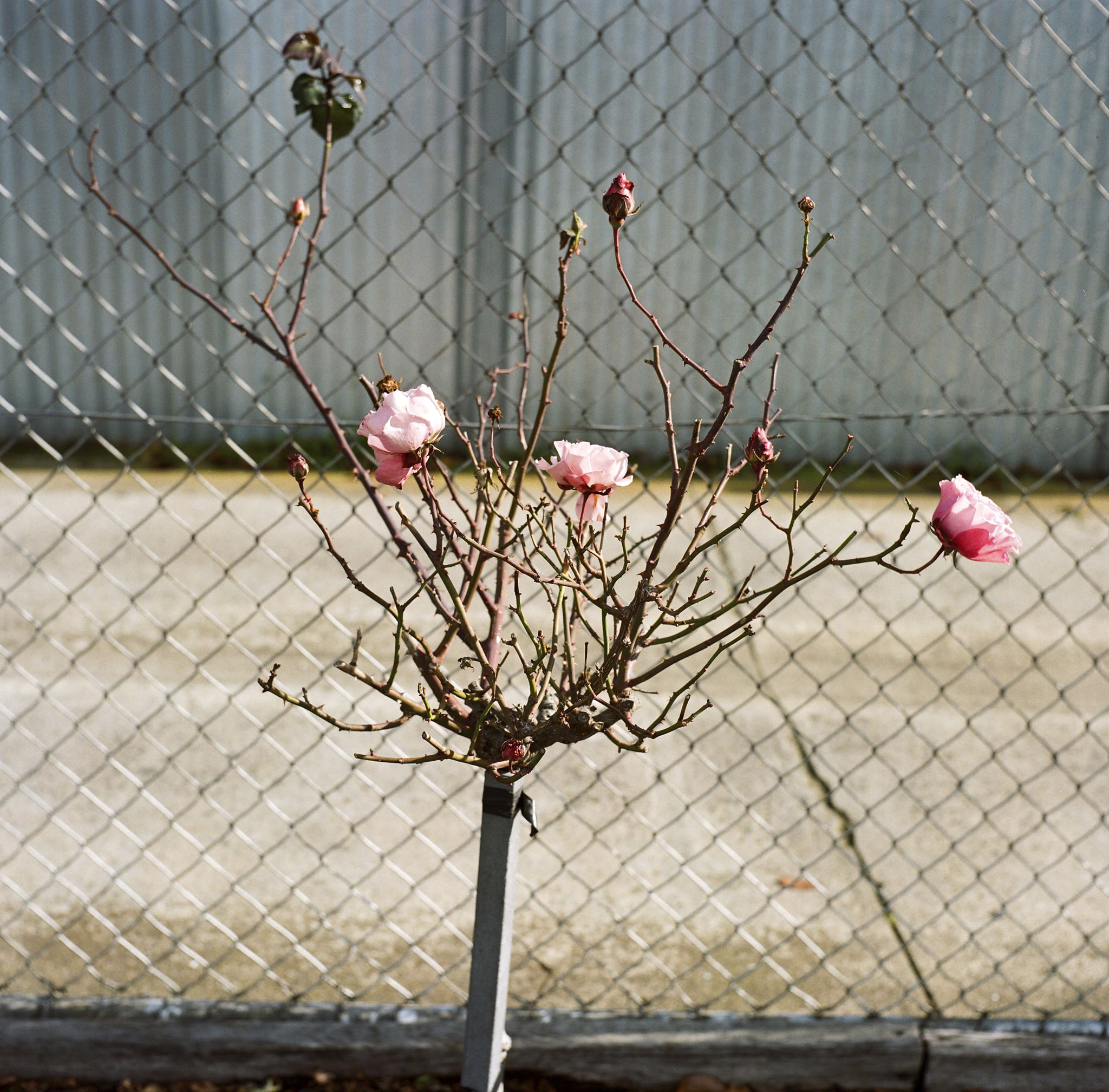
Glen Sloggett’s works is, well… Glen Slogett’s work. What I mean by the statement is that you can always recognise his photographs through his signature as an artist. There is a delicious irony and dark humour present in his work… the cat / dead. The rose / a brothel. The scree of concrete / solidified. Slogett’s insightfulness into our existential condition is evidenced through his unique view of the world, pictured in thought provoking photographs. Nothing is quite as it seems. He has a fantastic eye and aesthetic. I remember the image Cheaper and Deeper (1996) from a book I saw many years ago and it so resonated with me. Just the sensibility of looking at these spaces and contexts. He pokes around in the strangeness of the world and reflects what he sees back to us: life hidden in plain sight, revealed in all its intricacies, in all its mundanity and glory. I really like his work.

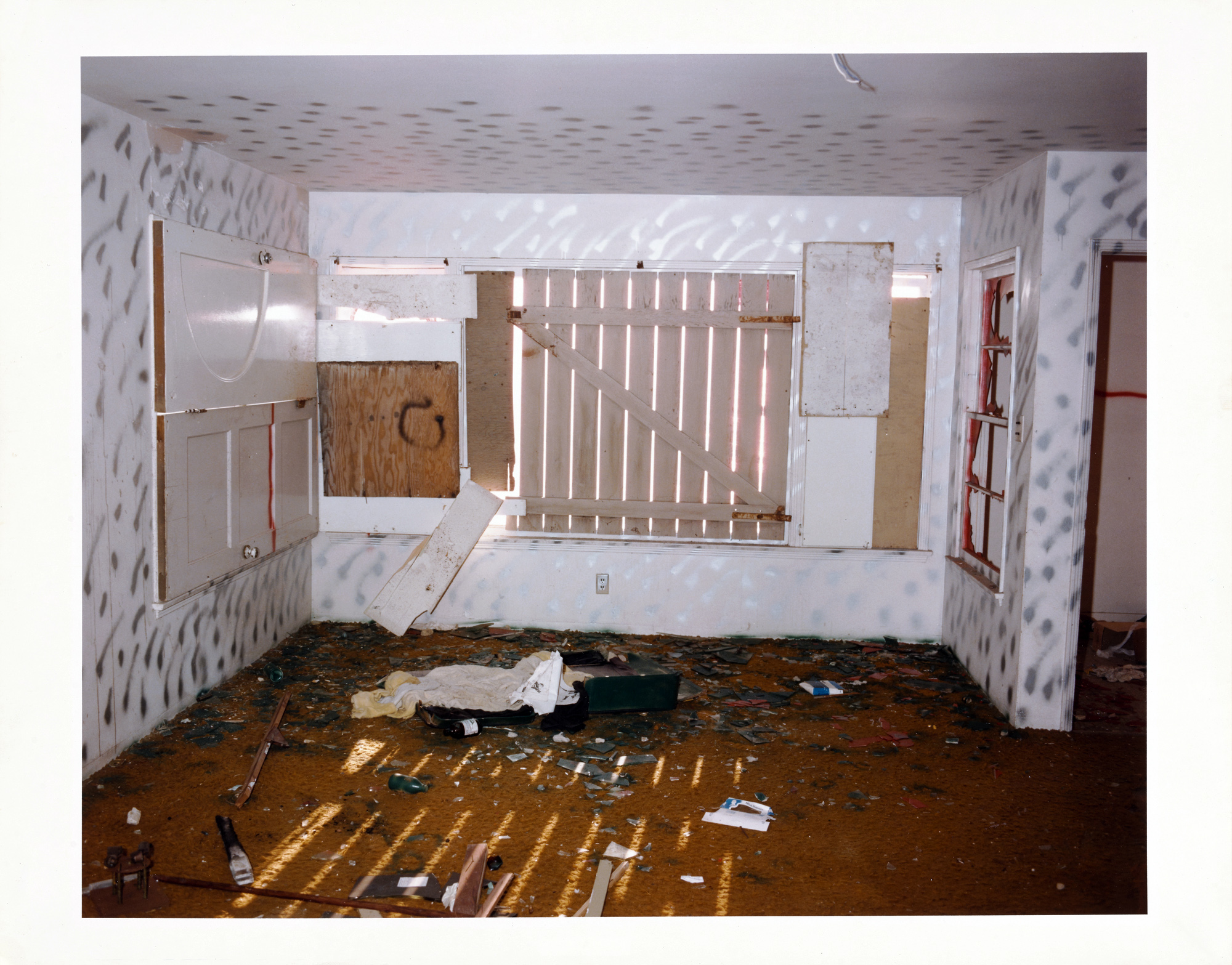
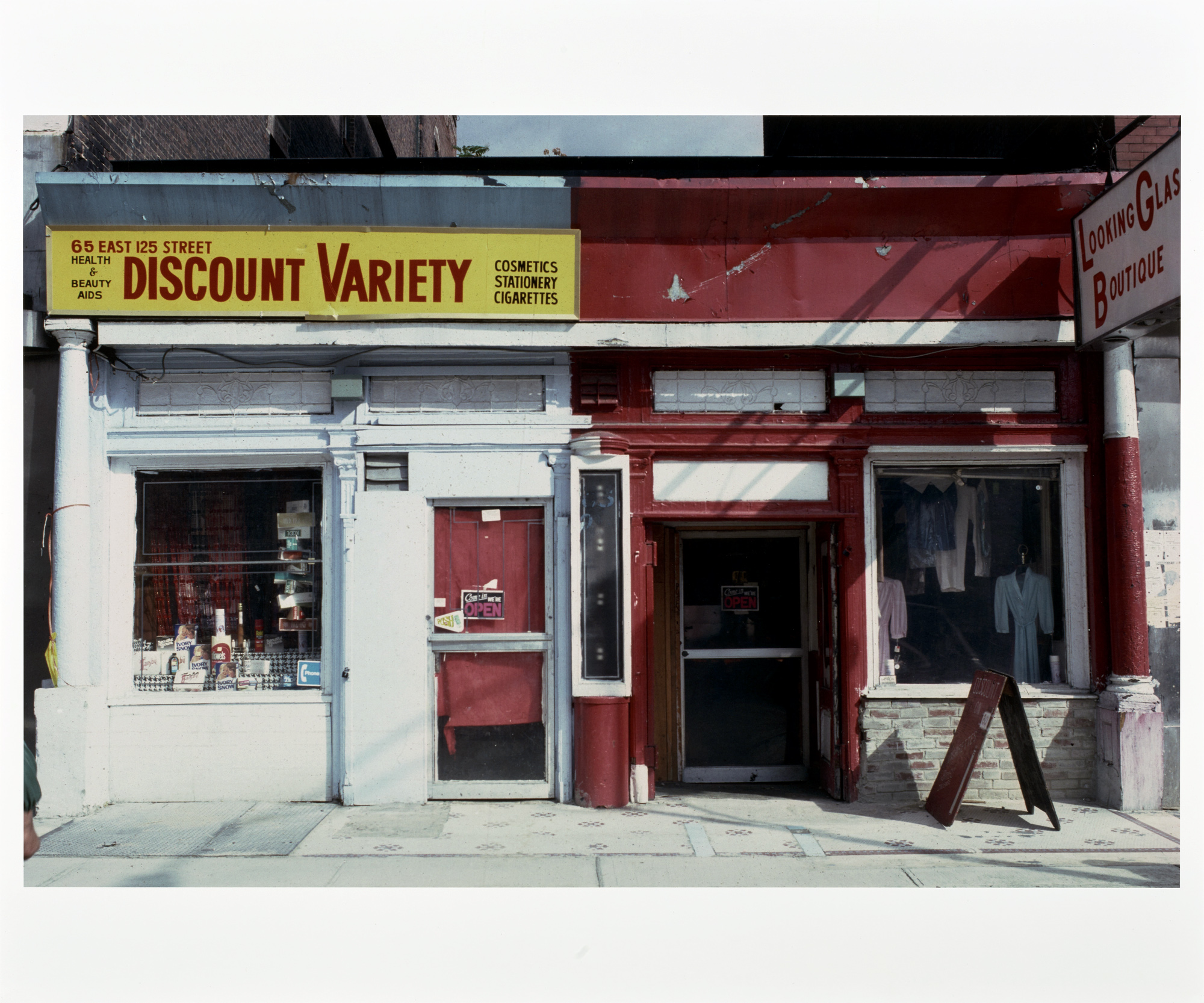
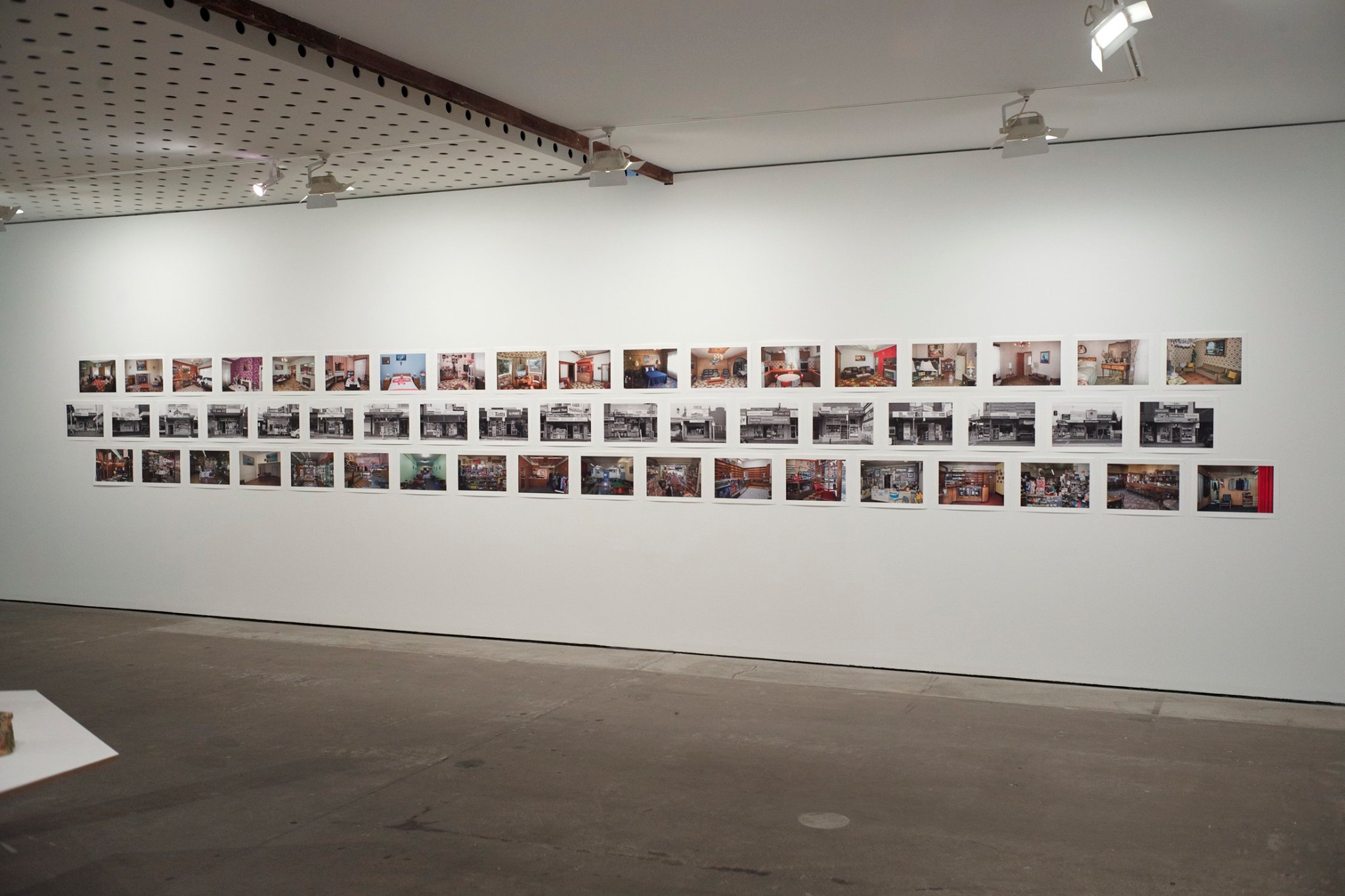
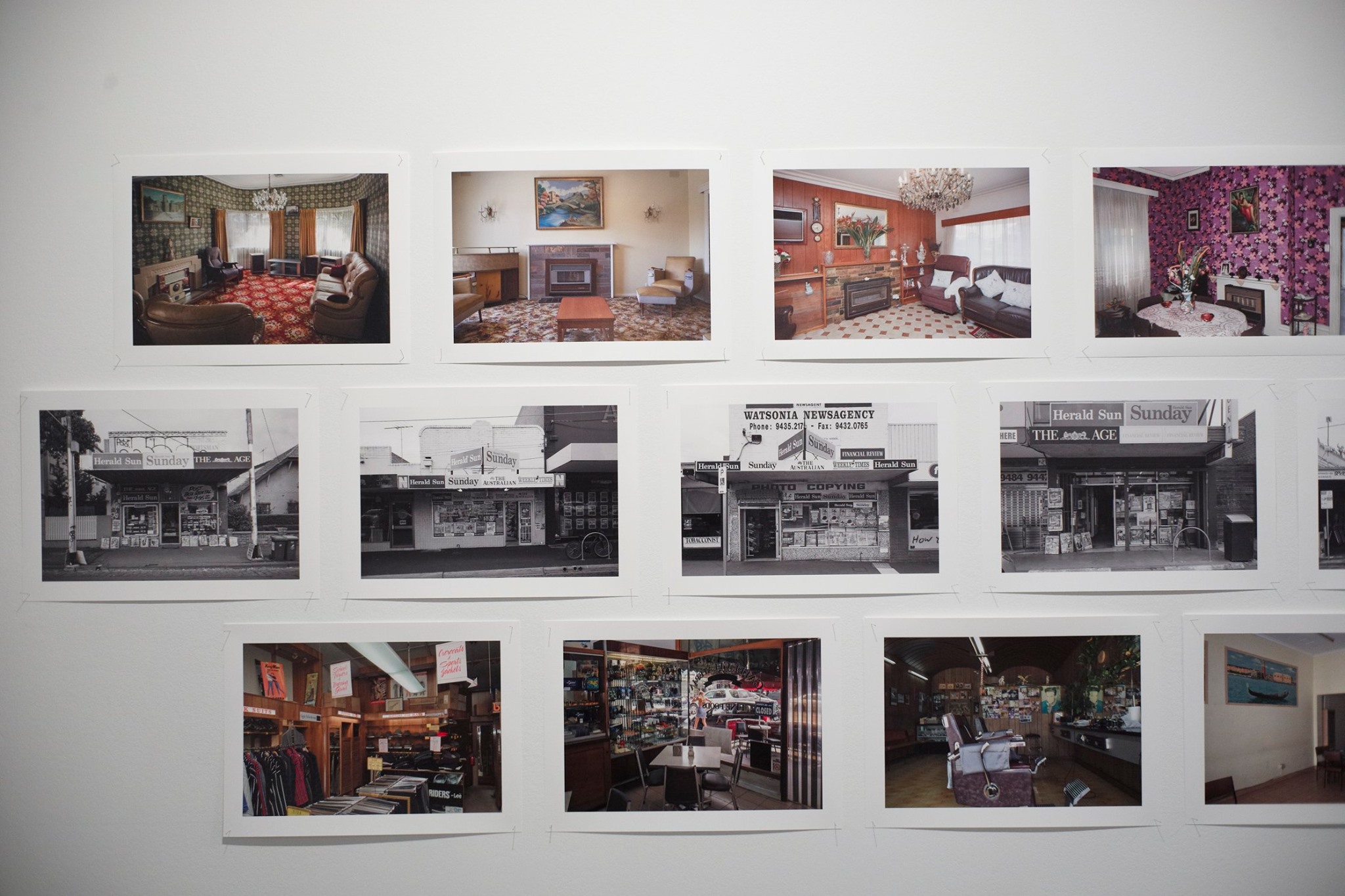
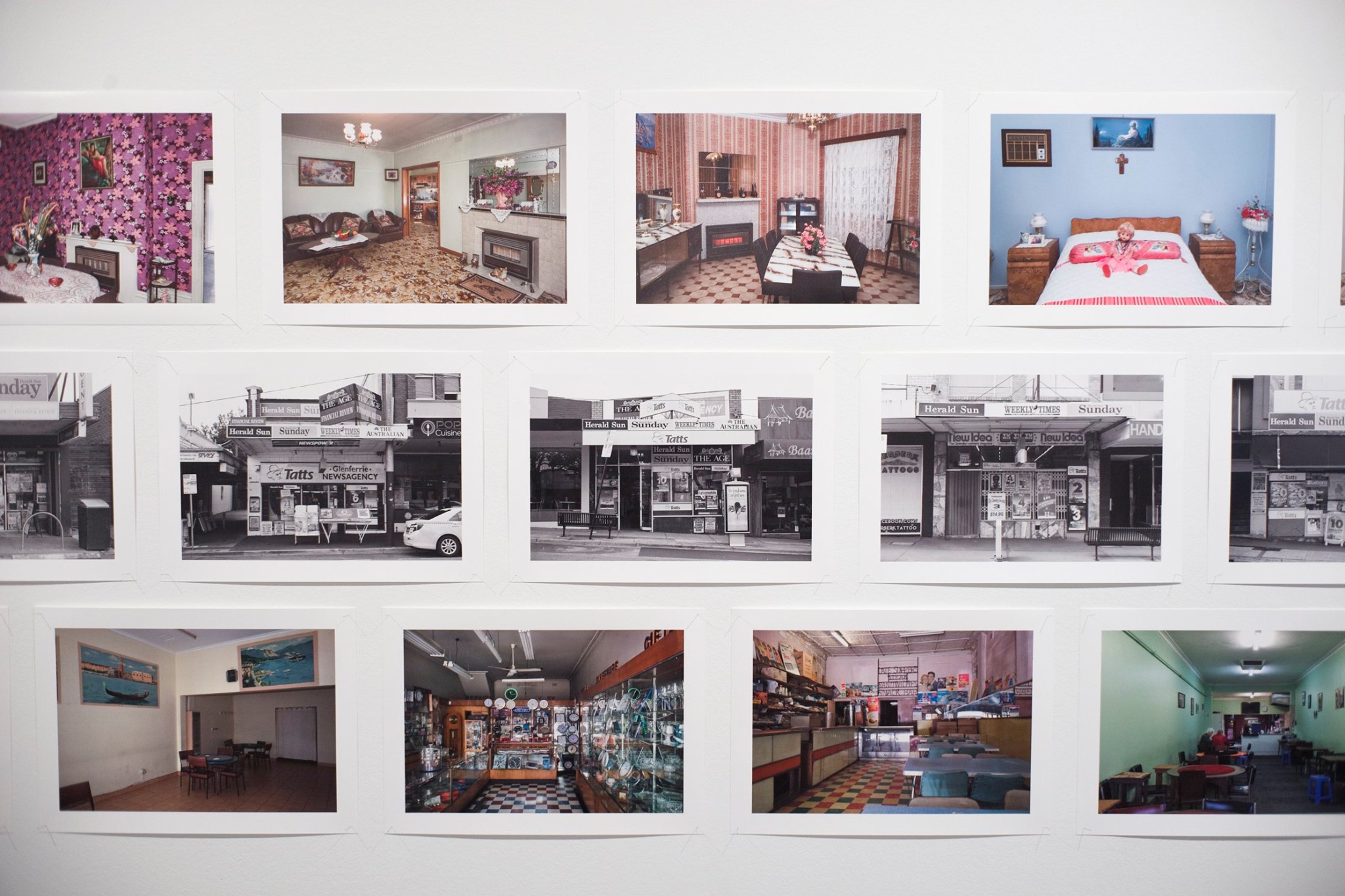
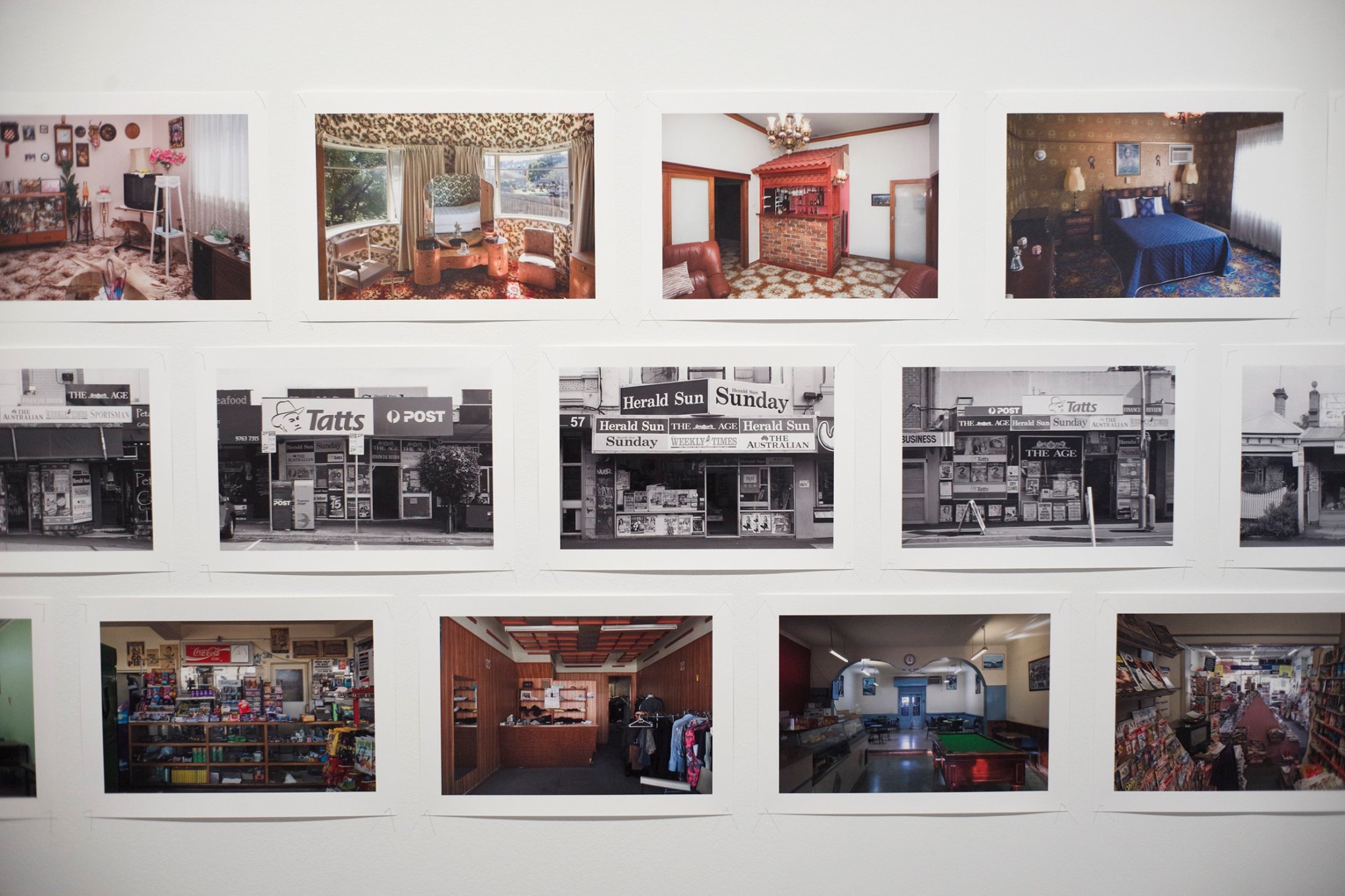
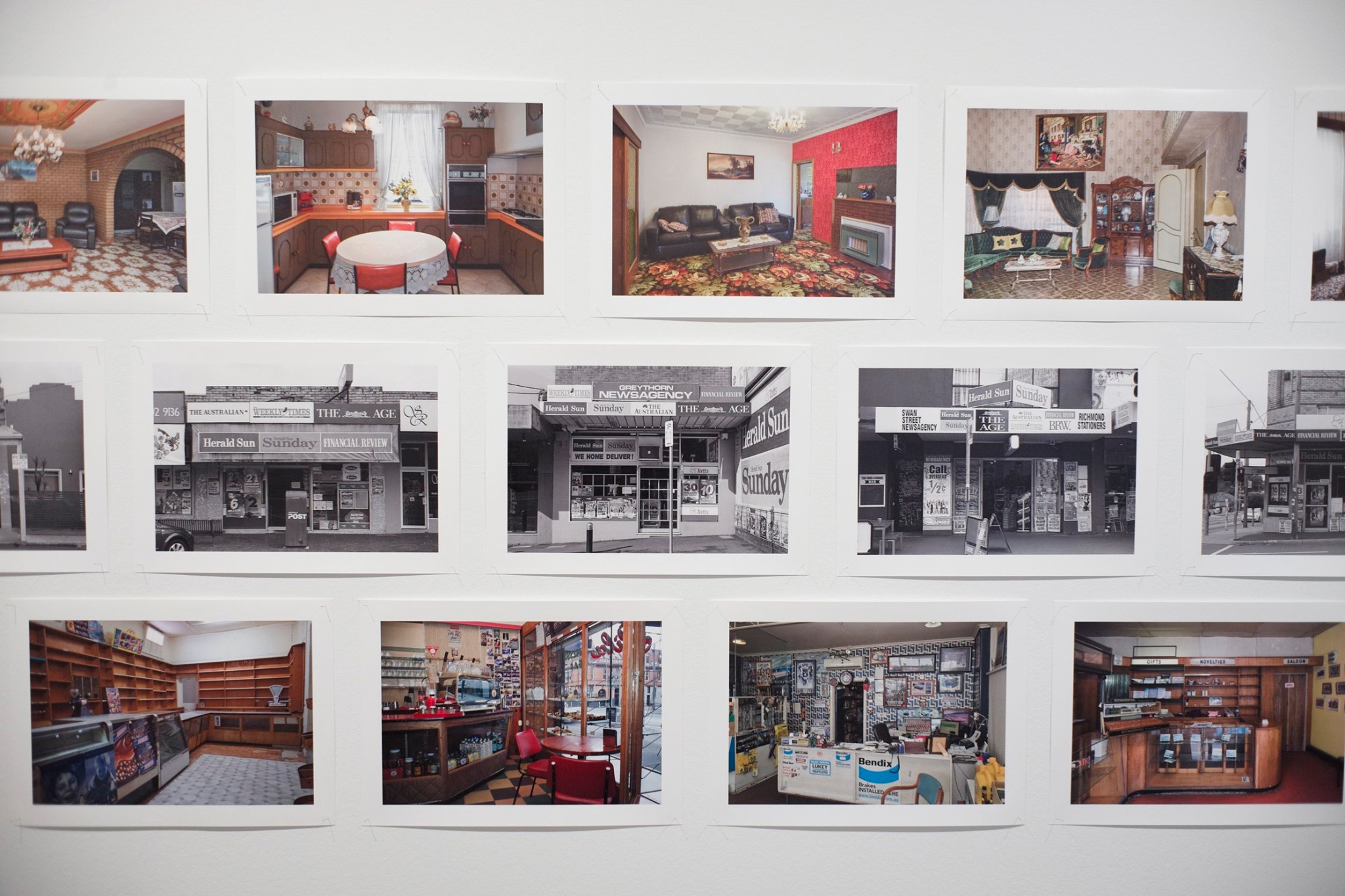
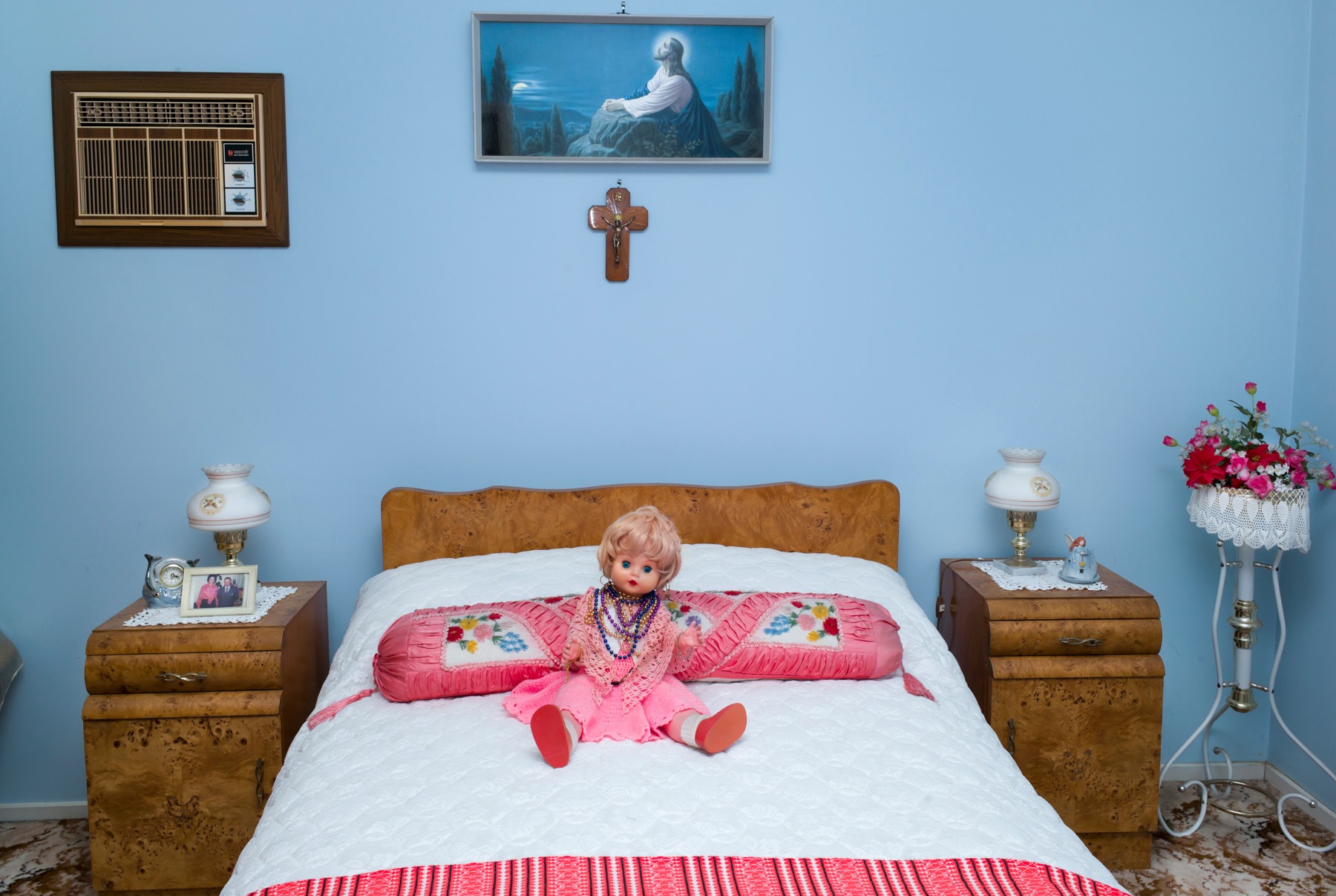
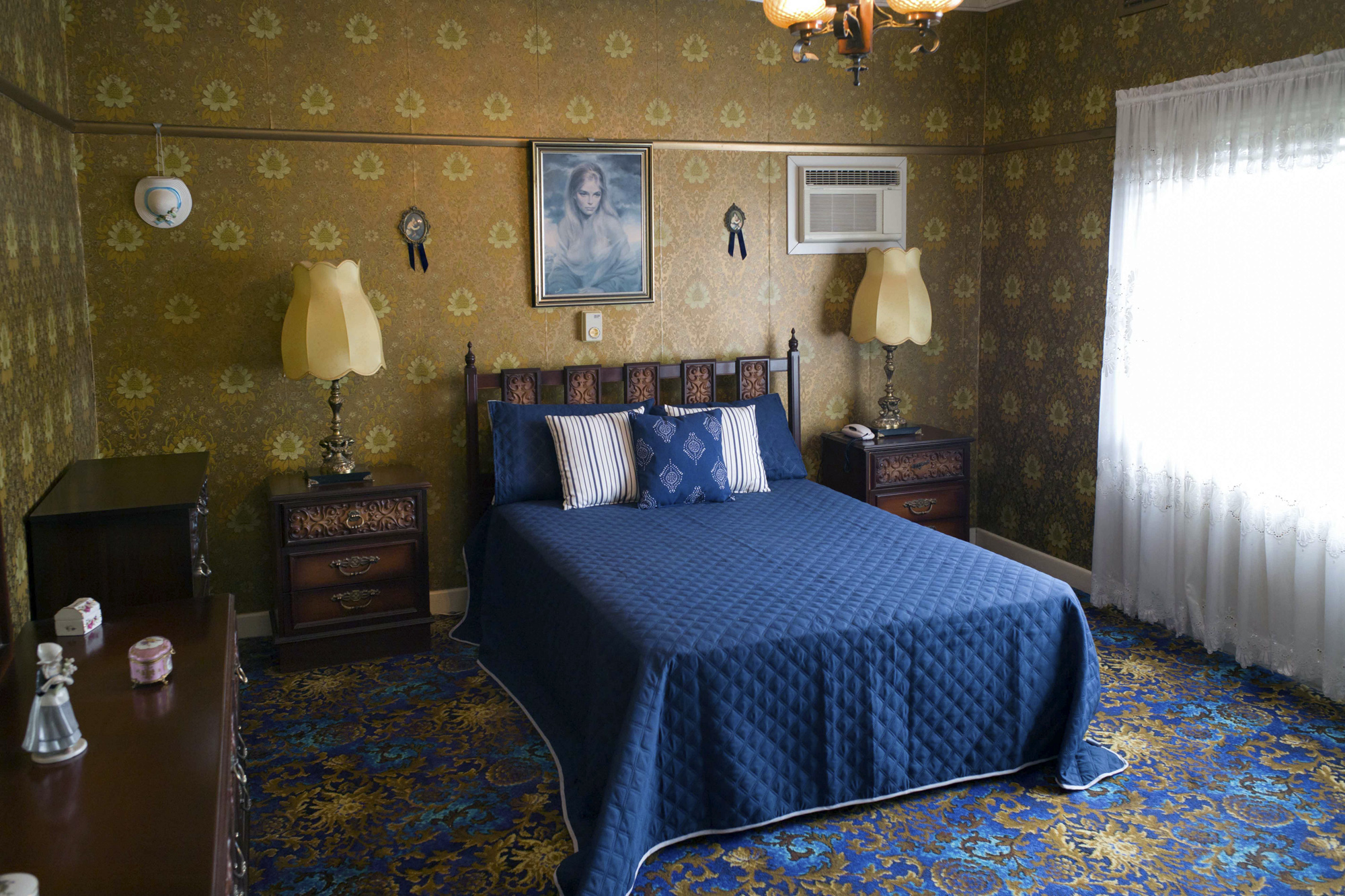
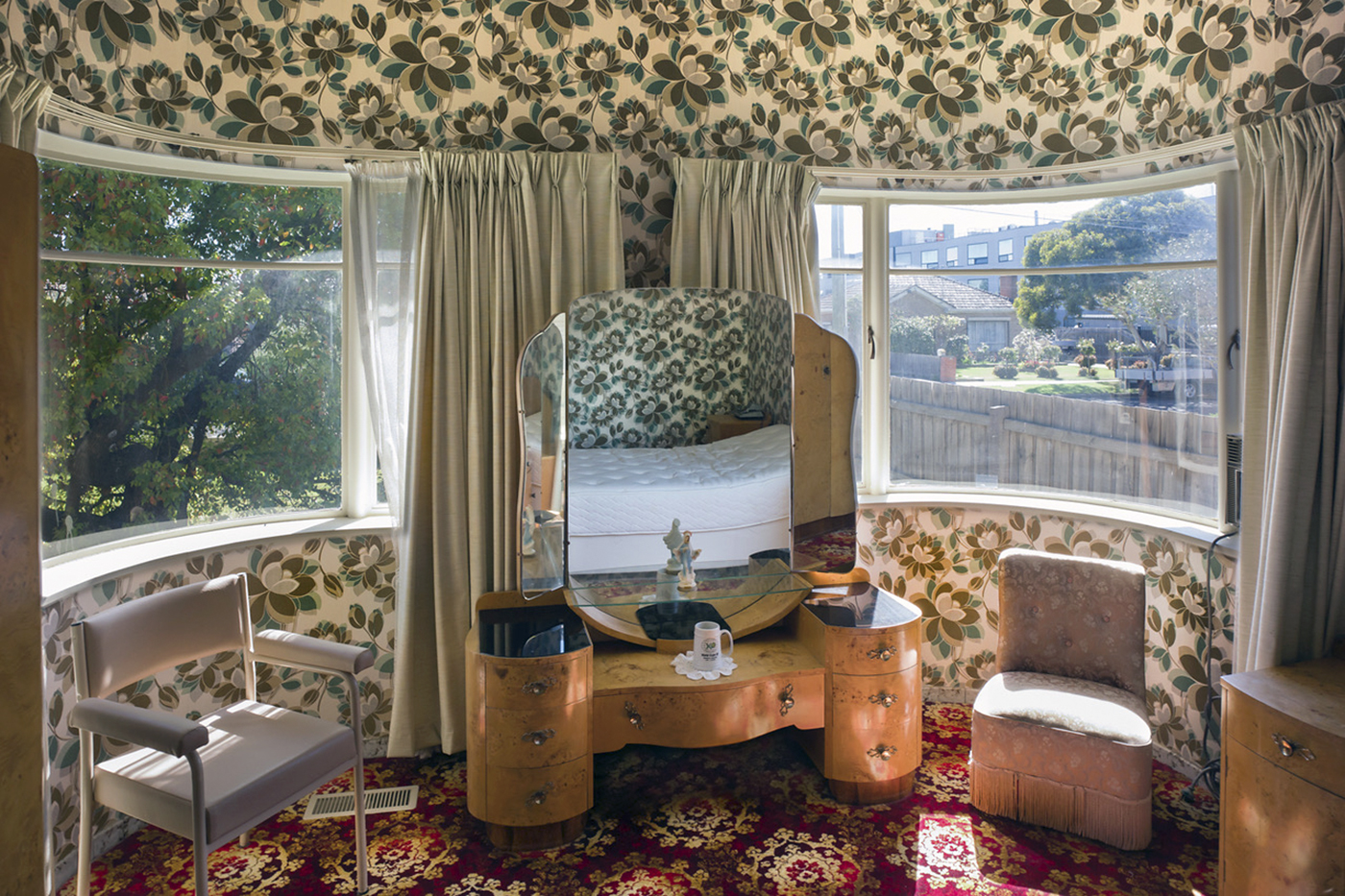
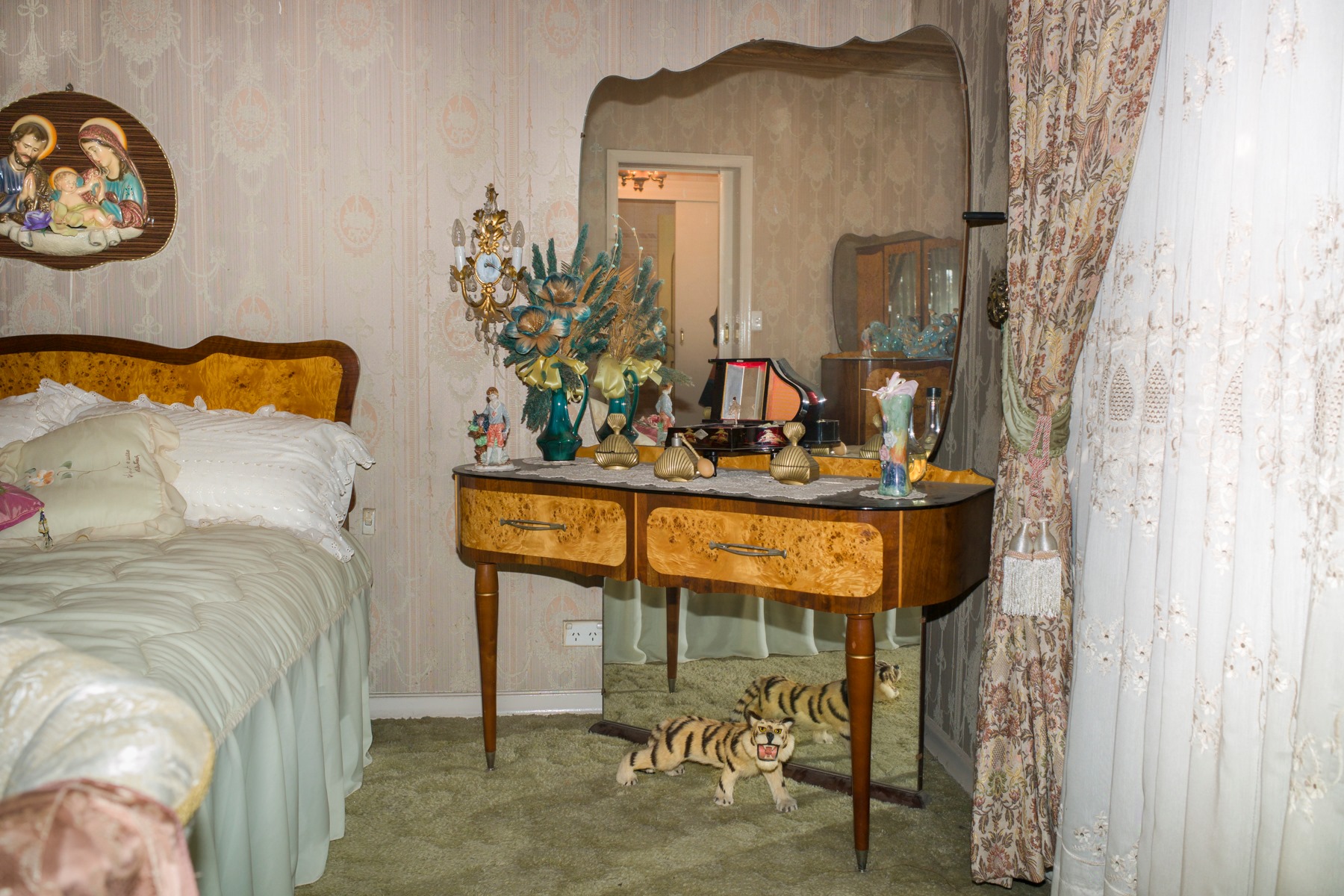
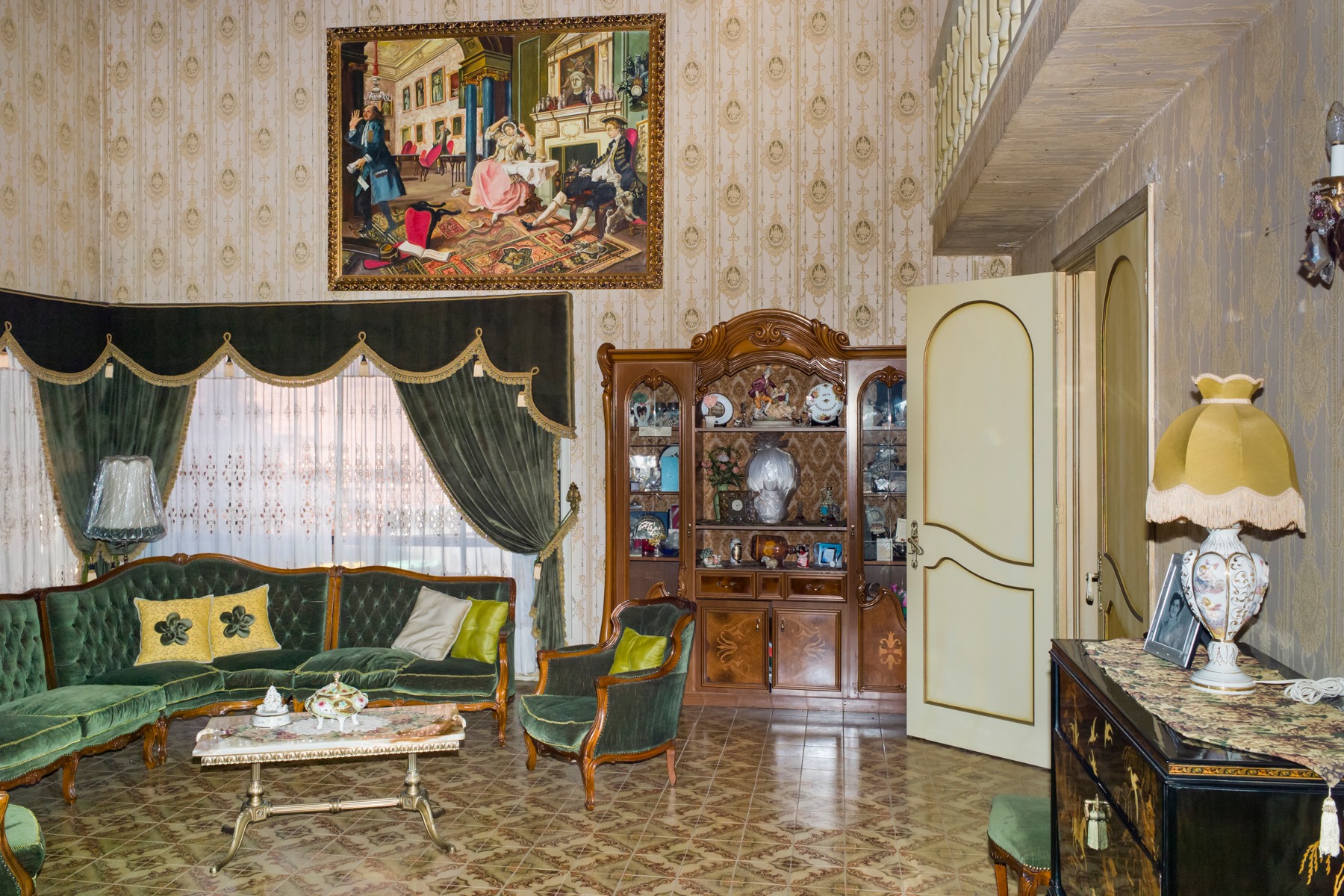
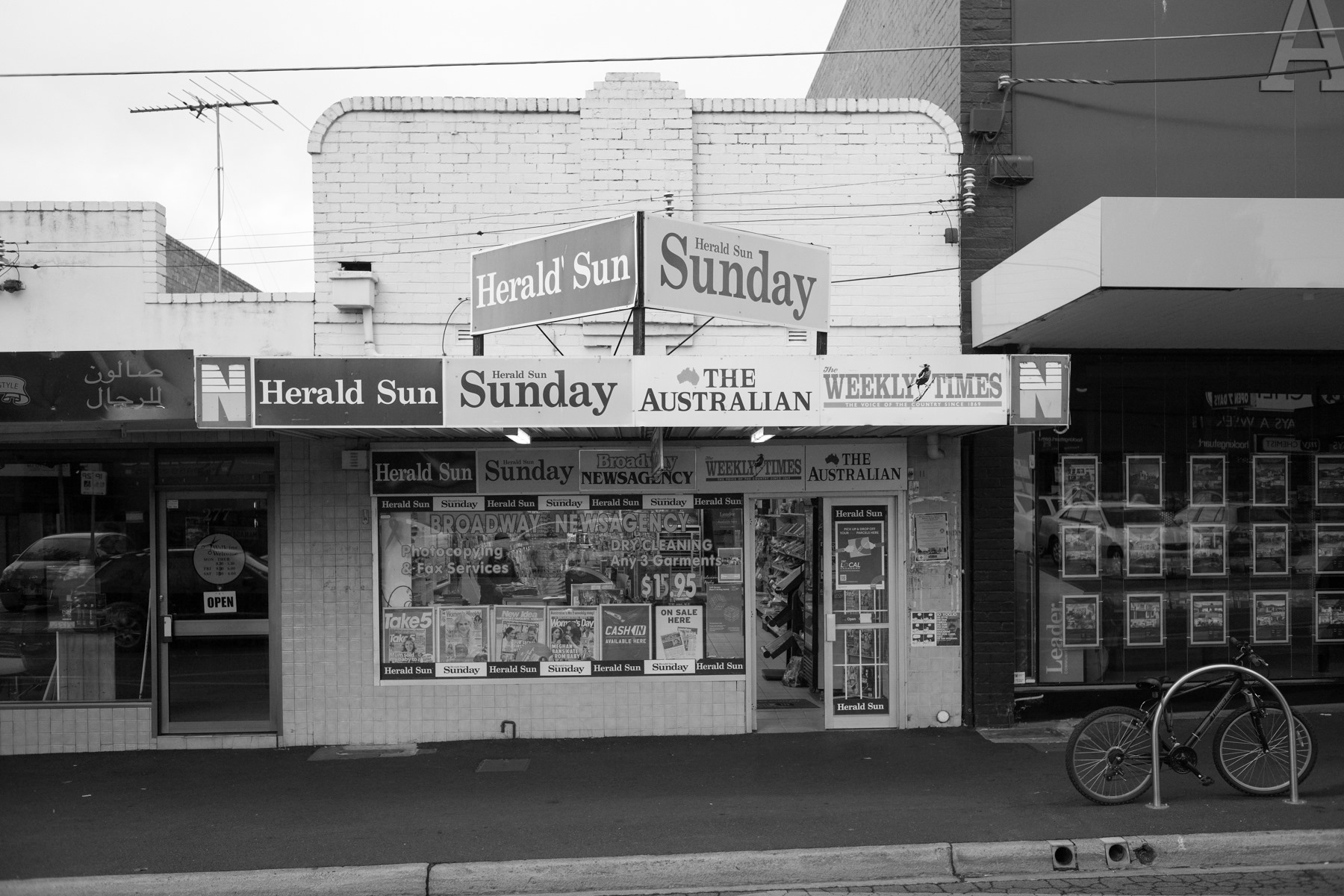
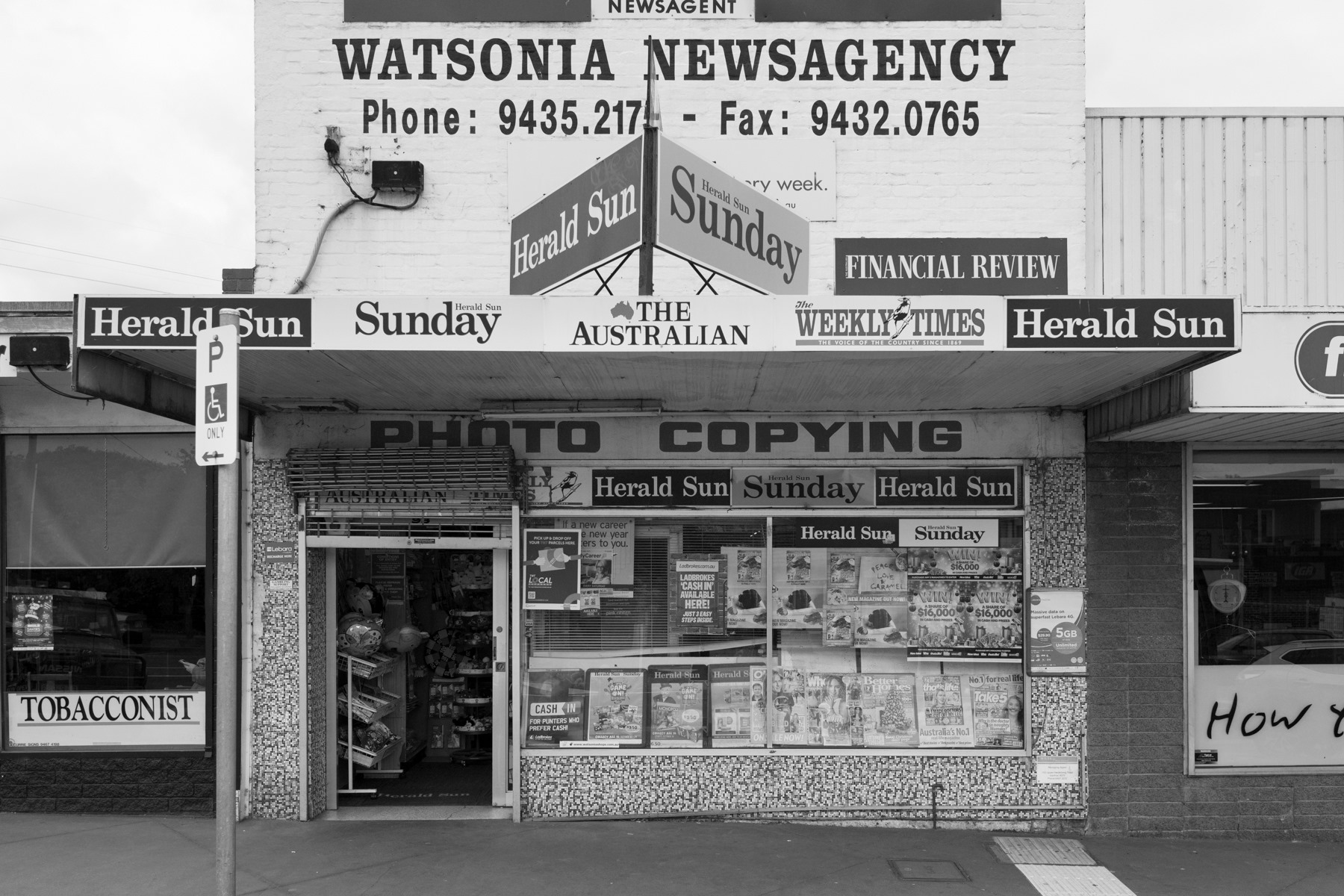
Another artist I have a great affection for is David Wadelton. Again, the signature of his work is striking. You know it’s a Wadelton image. What I admire about his work is the persistence of his vision. His intellectual vision, his photographic vision. He sets out on a project and he puts his whole mind and soul into the work, documenting the shifting and changing spaces and places of Melbourne’s suburbs since 1975. What a great eye! The black and white objective newsagents, all Becher frontality, with this seeming emotional detachment when in fact each image is so emotionally charged – through the signage, and through the knowledge that these newsagents are disappearing from our city landscape. And then the colour, some might say kitsch, Suburban Baroque living rooms which picture “mid-century suburban interiors of the formerly working-class northern areas that were the destination of choice for many post-war immigrants from Europe.” Here a different technique, photographed at an angle, off to one side, from above, sometimes central, letting the spaces and colours speak for themselves. Now vanishing, these habitats redolent with pathos and longing for the motherland.

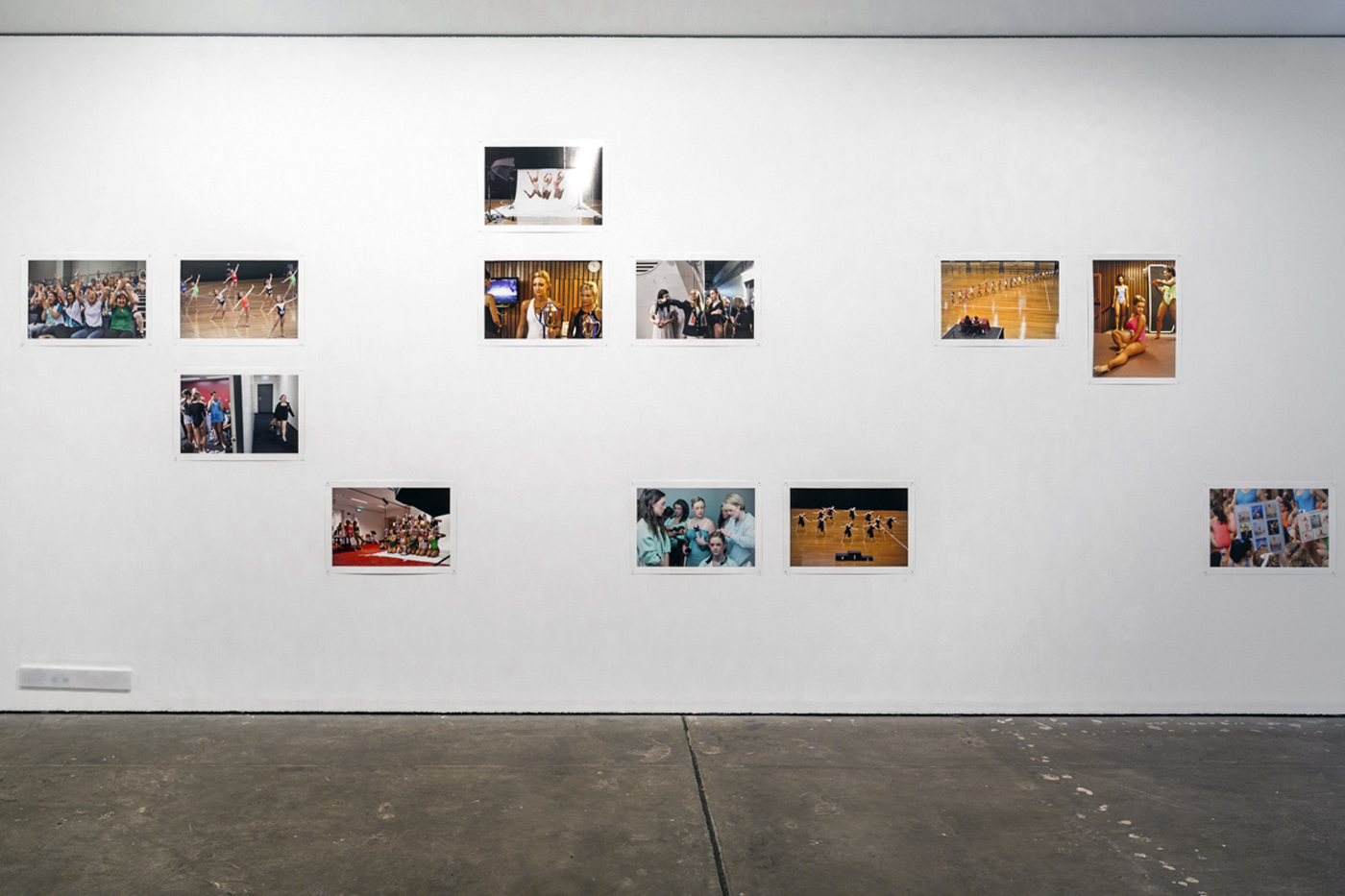
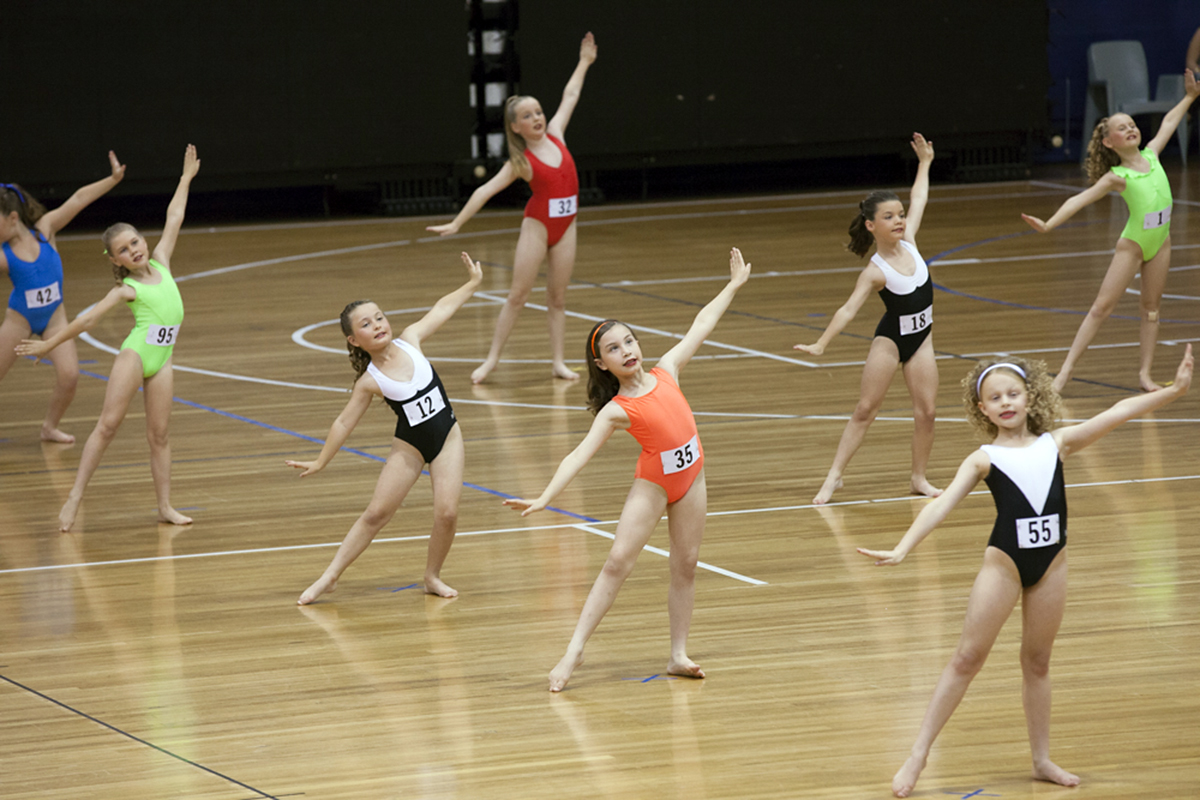
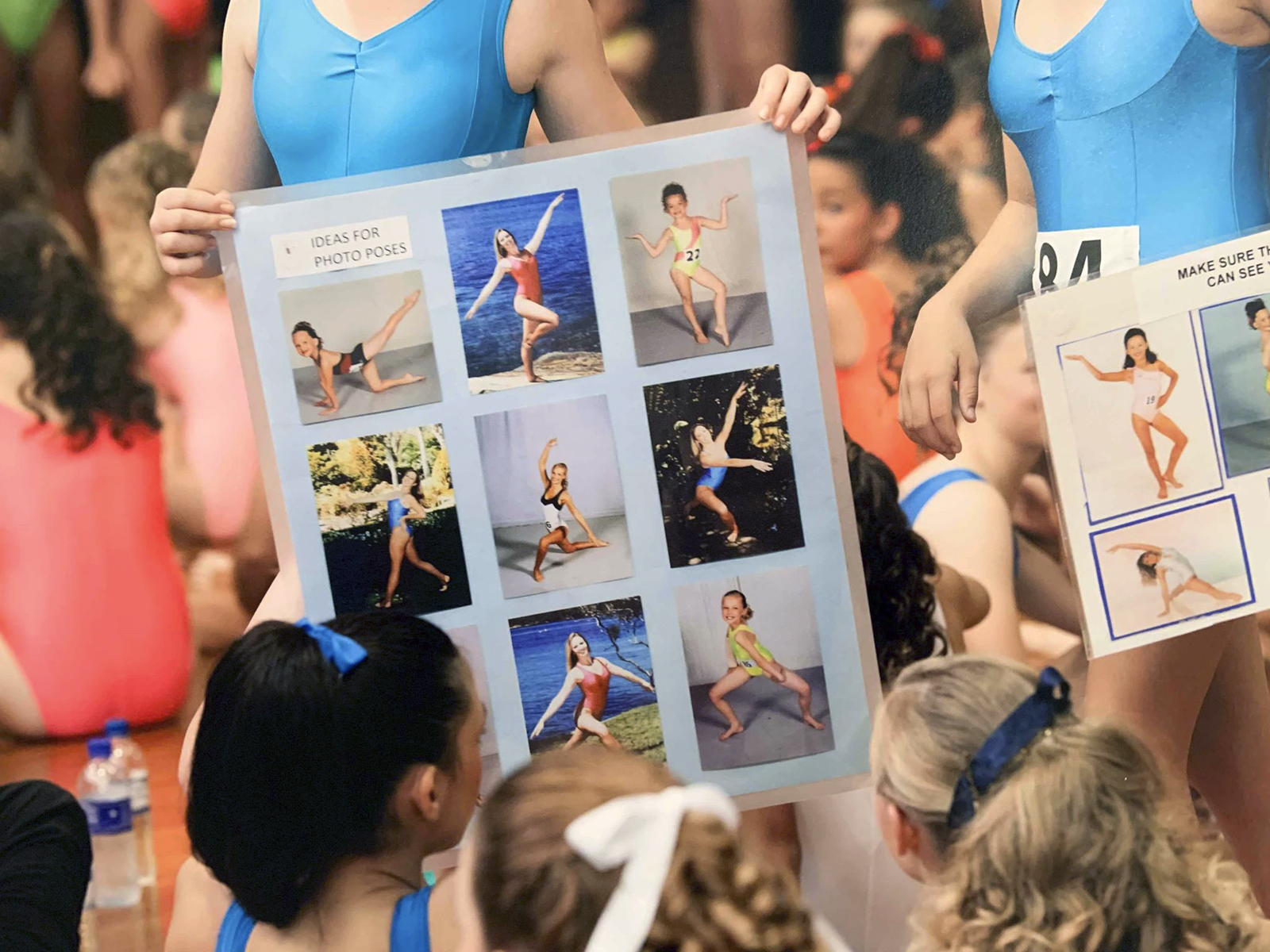
And then Lyndal Irons, an artist whose work I have never seen before. Again, beautifully composed images, the use of a limited colour palette and rouge highlights in Grooming Routine being particularly effective. There is something unnerving about the entire scenario – the fake tans, the too bright lipstick, the fervent admiration, the ecstatic posing… the winners having their photograph taken with their trophies while off to the side others watch (enviously?); the lines of young competitors and a photograph with the instructions: ‘Ideas For Photo Poses’ and ‘Make Sure The Photographer Can See your Number’. The whole charade reminds me of the hideous child beauty pageants in the good ol’ US of A. I would have liked to have seen more photographs from this body of work.

Where the exhibition fails is in its investigation into the theme, why take pictures? The exhibition does not interrogate with any rigour, in fact does not really scratch the surface of why we humans are so obsessed with taking photographs. Through the few lines of text that accompanies the exhibition (below), it offers a few titbits as way of remediation, a few possible ideas to cling to so as to answer the question: perhaps desire, perhaps obsession, curiosity, nostalgia and information. It then throws the photographic work of these artists at us as an answer, but what we are actually looking at is just representation, the outcome of the desire to picture, not an examination of the act itself. What the exhibition really needed was a thoroughly insightful text that examined our impulse to take pictures.

Here is a controversial statement. Every photograph is a self-portrait. What do I mean by this?

When we think back to the cave paintings of the Neolithic period, human beings picture the world around them by painting in colour on the rock that is earth. They picture themselves in that scene by painting what they know of the world around them. Through their imagination and creativity they place themselves in the scene – physically as hunters in the scene, and metaphorically through their relationship to the animals that they know and the objects that they carve, pictured on the cave walls. Theirs is a conscious decision to picture themselves as an infinite presence.

The same with photographs. Every time we press the shutter of a camera, it is a conscious decision to picture our relationship with the world. Through our will (to power), though our imagination and our desire, we place ourselves metaphorically (and physically when actually appear in the photograph) in every photograph. We stand behind the camera but imagine ourselves in that environment, have placed ourselves there to take the photograph. Every photograph is a self-portrait, one that establishes our relationship to the world, our identity, our values, who we are and how we react in each and every context.

These photographs are not memories at the time of their taking, although they make be taken under an impulse to memorialise. They will become memories, as when looking at old photo albums. They are not simply documents either, a recording of this time and place, because there is always the personal, the subjective relationship to the objective. Look at David Wadelton’s photographs of living rooms. Why was he present in all of these spaces? Just to observe, to document, to capture? No… he was their, to imagine, to create, to place himself at the scene, in the scene. Human beings make conscious choices to take photographs for all different kinds of reasons. But the one reason that is never mentioned is that, in reality, they are always picturing themselves.

Dr Marcus Bunyan


Many thankx to the Centre for Contemporary Photography for allowing me to publish the photographs in the posting. Please click on the photographs to view a larger version of the image.


Installation view of the exhibition 'Why Make Pictures?' at the Centre for Contemporary Photography, Melbourne

Installation view of the exhibition 'Why Make Pictures?' at the Centre for Contemporary Photography, Melbourne

Installation view of the exhibition 'Why Make Pictures?' at the Centre for Contemporary Photography, Melbourne

Installation view of the exhibition 'Why Make Pictures?' at the Centre for Contemporary Photography, Melbourne

Installation view of the exhibition 'Why Make Pictures?' at the Centre for Contemporary Photography, Melbourne


Installation views of the exhibition Why Make Pictures? at the Centre for Contemporary Photography, Melbourne
Photographs: J. Forsyth


Why Take Pictures? returns to one of the fundamental questions in photography, to consider our desire-drive and obsession with taking photographs, the apparatus of the camera and diverse approaches of looking through, or at, the lens. Featuring work by Alan Constable (VIC), Michelle Tran (VIC), Lyndal Irons (NSW), Glenn Sloggett (VIC) and David Wadelton (VIC), Why Take Pictures? considers the divergent motivations and compulsions as to why we take images in the first place.

We all take pictures, leaving every one of us with an extensive collection of images, historically as physical artefacts, but now stored within our digital devices. These collections become vessels of information and nostalgia, desire and curiosity. Why Takes Pictures? interrogates how and why we build up these storehouses of images, as considered through the lens of five exceptional artists.

Traversing documentary, commercial, political and highly personal modes, Why Take Pictures? presents a broad cross-section of different approaches to making photographs. Whether documenting social environments in states of change, examining the discarded or overlooked, prying at the strange behaviour of humans; or through examining the obsession with the camera itself, the artists in Why Take Pictures? are driven to continue to take photographs, like an itch that can’t be scratched.

Press release from the Centre for Contemporary Photography 21/09/2019


Biographies

Alan Constable is a multi-disciplinary artist whose practice spans drawing, painting and ceramics. His ceramic sculptures, which he began developing in 2007, reflects his life-long fascination with old cameras, which started at the age of eight when he would make replicas from cardboard cereal boxes. Constable’s finger impressions can be seen clearly on the clay surface, leaving the mark of the maker as a lasting imprint. Constable has been a regular studio artist at Arts Project Australia since 1991. Alongside selection in group exhibitions throughout Australia (including the Museum of Old and New Art in 2017), Constable has presented in a number of solo exhibitions including Andrew Baker Art Dealer, Brisbane; Darren Knight Gallery, Sydney; South Willard (curated by Ricky Swallow), Los Angeles; Stills Gallery, Sydney; and Helen Gory Galerie, Melbourne. Alan Constable is represented by Arts Projects Australia, Melbourne; Darren Knight Gallery, Sydney; and DUTTON, New York.

Hand-built from slabs of clay, Alan Constable’s charing sculptural cameras and optical devices … evoke and absolute obsession with the photographic apparatus. Legally blind, Constable creates his work through appropriating photographs from old books and magazines, holding the images close to his face and committing them to memory. Through recall, Constable reinterprets these images, transforming them from high-precision consumer objects, to tactile sculptures imbued with vitality, personality and warmth. Elegantly clunky, anthropomorphic and on the edge of the surreal, Constable’s compelling works all have ‘fictional’ apertures or viewfinders that can be physically seen through. Asking us to consider the functionality of vision, Constable’s ceramics have a human touch and sensibility that connects us directly to the devices we often consider merely utilitarian.


Alan Constable (Australian, b. 1956) 'Not titled' 2018 from the exhibition 'Why Take Pictures?' at the Centre for Contemporary Photography, Fitzroy, Melbourne, June - August, 2019


Alan Constable (Australian, b. 1956)
Not titled
2018
Earthenware and glaze
9 x 19 x 8cm
Courtesy of the artist
Alan Constable is represented by Arts Project Australia, Melbourne; Darren Knight, Sydney; Dutton, New York
Image copyright the artist, courtesy Arts Projects Australia
Photo: Andrew Barcham


Alan Constable (Australian, b. 1956) 'Not titled' 2019


Alan Constable (Australian, b. 1956)
Not titled
2019
Earthenware and glaze
Courtesy of the artist
Alan Constable is represented by Arts Project Australia, Melbourne; Darren Knight, Sydney; Dutton, New York
Image copyright the artist, courtesy Arts Projects Australia
Photo: Andrew Barcham


Alan Constable (Australian, b. 1956) 'Not titled' 2019


Alan Constable (Australian, b. 1956)
Not titled
2018
Earthenware and glaze
Courtesy of the artist
Alan Constable is represented by Arts Project Australia, Melbourne; Darren Knight, Sydney; Dutton, New York
Image copyright the artist, courtesy Arts Projects Australia
Photo: Andrew Barcham


Lyndal Irons (Australian) 'Mermaid Beach' 2015


Lyndal Irons (Australian)
Mermaid Beach
2015
From the series Physie
Archival inkjet print
37 x 55cm
Courtesy the artist


Lyndal Irons is a Sydney-based photographer and writer focused on local reportage, who is interested in seeking out parts of Australian society that are familiar and accessible, yet not often closely encountered. By recording social histories and building legacies using photographs and words, her work encourages curiosity and a deeper connection to daily life. Irons has presented solo exhibitions at the State Library of New South Wales (2015), the Australian Centre for Photography (2014), and Elizabeth Street Gallery (2014). Lyndal has been a finalist in the National Photographic Portrait Prize (2017), the Bowness Prize (2015) and the Olive Cotton Award for Portraiture (2015). Lyndal Irons’ Physie series documents one of Australia’s oldest sporting institutions: physical culture (physie) and calisthenics.


Lyndal Irons (Australian) 'Fans' 2015


Lyndal Irons (Australian)
Fans
2015
From the series Physie
Archival inkjet print
37 x 55cm
Courtesy the artist


Lyndal Irons (Australian) 'Grooming Routine' 2015


Lyndal Irons (Australian)
Grooming Routine
2015
From the series Physie
Archival inkjet print
37 x 55cm
Courtesy the artist


Lyndal Irons (Australian) 'Junior National Repecharge' 2015


Lyndal Irons (Australian)
Junior National Repecharge
2015
From the series Physie
Archival inkjet print
37 x 55cm
Courtesy the artist


Lyndal Irons (Australian) 'Ideas for Photo Poses' 2015


Lyndal Irons (Australian)
Ideas for Photo Poses
2015
From the series Physie
Archival inkjet print
37 x 55cm
Courtesy the artist


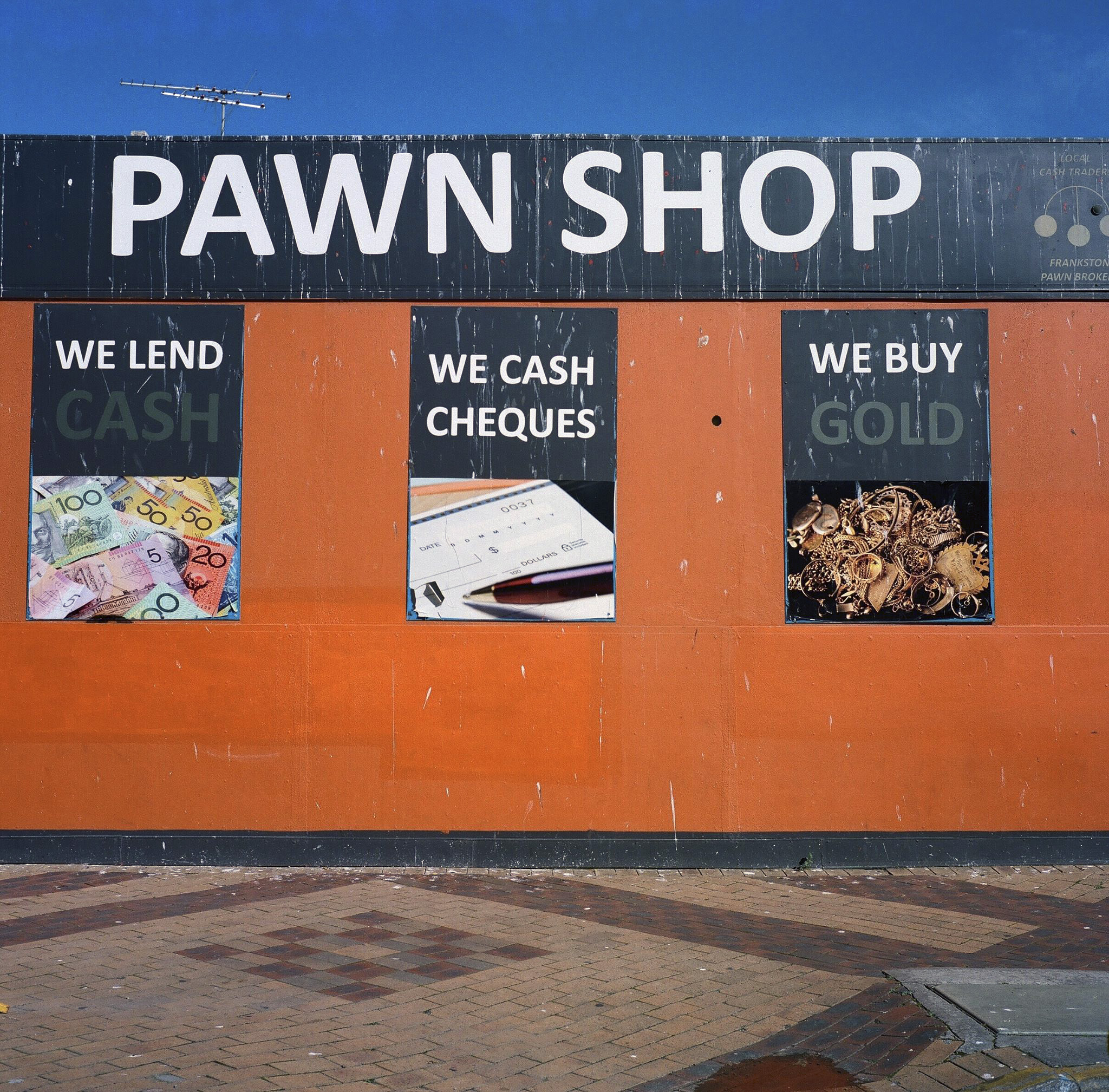
Glenn Sloggett (Australian, b. 1964) 'Pawn shop' 2018


Glenn Sloggett (Australian, b. 1964)
Pawn shop
2018
C-type print
120 x 100cm
Courtesy the artist


Glenn Sloggett has been exhibiting since the mid-90s. He won the prestigious Josephine Ulrick & Win Schubert Photography Award in 2008, and the inaugural John and Margaret Baker Memorial Fellowship for an Emerging Artist in 2001. He has held numerous solo exhibitions, including Cheaper and Deeper, a national touring show organised by the Australian Centre for Photography (2007). Sloggett’s work was featured on the ABC program The Art Life, and has been included in significant survey exhibitions of Australian art, including Australian Vernacular Photography, Art Gallery of New South Wales (2014); Melbourne Now, National Gallery of Victoria (2013-2014); internationally touring Photographica Australis (2002–2004); and nationally touring New Australiana, Australian Centre for Photography (2001). His work is held in numerous private and public collections including the Art Gallery of New South Wales, the National Gallery of Victoria and Monash Gallery of Art.

Interested in failure as a mechanism, Glenn Sloggett’s series of medium format photograph made with his twin-lens Rolleiflex could almost have been taken on a single walk around the neighbourhood on a strange, sunlit day. Wryly infused with dark humour and intermittent text punctuations such as “ICE IS A BAD THING” and “DO NOT LEAVE CHILDREN IN CARS”, Sloggett ask us to look beneath the surface of his documentary-style images. Why are people leaving their children in their cars? What precarious situation has driven someone to graffiti “is a bad thing” on this sign?

Sloggett’s work is at times bleak, and at others sublime. Looking closely, a cat that appears to be peacefully sunbaking has sunken eyes, an innocuous rose bush was taken in a brothel carpark. dumped concrete on the sidewalk looks like it has been churned up from a Friday night on the town.


Glenn Sloggett (Australian, b. 1964) 'Industrial dumping' 2019


Glenn Sloggett (Australian, b. 1964)
Industrial dumping
2019
C-type print
120 x 100cm
Courtesy the artist


Glenn Sloggett (Australian, b. 1964) 'Dead cat' 2019


Glenn Sloggett (Australian, b. 1964)
Dead cat
2019
C-type print
120 x 100cm
Courtesy the artist


Glenn Sloggett (Australian, b. 1964) 'Brothel car park' 2019


Glenn Sloggett (Australian, b. 1964)
Brothel car park
2019
C-type print
120 x 100 cm
Courtesy the artist


Michelle Tran (Australian, b. 1985) 'Sachi' 2019


Michelle Tran (Australian, b. 1985)
Sachi
2019
Archival inkjet print
79 x 54cm
Courtesy the artist and Hart & Co., Melbourne


Michelle Tran is a fashion and portrait photographer, born and raised in Melbourne by Vietnamese refugee parents. She began her photographic studies at the Victorian College of the Arts with an exploration into cultural identity through portraiture. Commercially, she has applied her interest in people to fashion, creating an approach that is both delicate and candid. Making a connection with her subjects, Michelle puts people at ease in front of the camera. Her portfolio includes portraits of celebrities such as Kendrick Lamar and Christian Louboutin, while her fashion and advertising work spans across brands including Adidas, MECCA, Amazon, Moroccan Oil, L’Oréal and Myer. Michelle lives in Melbourne with her partner, daughter and two rabbits. Michelle Tran is represented by Hart & Co., Melbourne.


Michelle Tran (Australian, b. 1985) 'Madison Shauna' 2019


Michelle Tran (Australian, b. 1985)
Madison Shauna
2019
Archival inkjet print
79 x 54cm
Courtesy the artist and Hart & Co., Melbourne


Michelle Tran (Australian, b. 1985) 'Sachi In Shadow' 2019


Michelle Tran (Australian, b. 1985)
Sachi In Shadow
2019
Archival inkjet print
79 x 54cm
Courtesy the artist and Hart & Co., Melbourne


Installation view of the exhibition 'Why Make Pictures?' at the Centre for Contemporary Photography, Melbourne

Installation view of the exhibition 'Why Make Pictures?' at the Centre for Contemporary Photography, Melbourne

Installation view of the exhibition 'Why Make Pictures?' at the Centre for Contemporary Photography, Melbourne

Installation view of the exhibition 'Why Make Pictures?' at the Centre for Contemporary Photography, Melbourne

Installation view of the exhibition 'Why Make Pictures?' at the Centre for Contemporary Photography, Melbourne


Installation views of the exhibition Why Make Pictures? at the Centre for Contemporary Photography, Melbourne showing the work of David Wadelton and his series Living Rooms (top), Milk Bars (middle) and Small business (bottom)


David Wadelton is a Melbourne-based painter and photographer who has documented the changing face of Melbourne’s Northern suburbs since 1975. Wadelton has held over 20 solo exhibitions, including three career surveys: Pictorial Knowledge, Geelong Art Gallery (1998); Icons Of Suburbia, McClelland Gallery, Langwarrin (2011) and The Northcote Hysterical Society, Bundoora Homestead Gallery (2015). Wadelton’s work has been included in Vision In Disbelief, 4th Biennale of Sydney (1982); Australian Culture Now, National Gallery of Victoria (2004); Far-Famed City of Melbourne, Ian Potter Museum of Art (2013); Melbourne Now, National Gallery of Victoria (2014); Crossing paths with Vivian Maier, Centre for Contemporary Photography (2014); The Documentary Take, Centre for Contemporary Photography (2016); Romancing the Skull, Ballarat Art Gallery (2017) and Beyond boundaries – Discoveries in contemporary photography, Aperture Gallery, New York (2019).


David Wadelton (Australian, b. 1955) 'Coburg' 2018


David Wadelton (Australian, b. 1955)
Coburg
2018
From the series Living Rooms
Courtesy the artist


David Wadelton (Australian, b. 1955) 'Reservoir' 2017-2019


David Wadelton (Australian, b. 1955)
Reservoir
2017-2019
From the series Living Rooms
Courtesy the artist


David Wadelton (Australian, b. 1955) 'Pascoe Vale South' 2018


David Wadelton (Australian, b. 1955)
Pascoe Vale South
2018
From the series Living Rooms
Courtesy the artist


David Wadelton (Australian, b. 1955) 'Reservoir' 2017


David Wadelton (Australian, b. 1955)
Reservoir
2017
From the series Living Rooms
Courtesy the artist


David Wadelton (Australian, b. 1955) 'Reservoir' 2017


David Wadelton (Australian, b. 1955)
Reservoir
2017
From the series Living Rooms
Courtesy the artist


David Wadelton (Australian, b. 1955) 'Glenferrie Road, Hawthorn' 2018


David Wadelton (Australian, b. 1955)
Glenferrie Road, Hawthorn
2018
From the series Newsagents
Courtesy the artist


David Wadelton (Australian, b. 1955) 'Broadway, Reservoir' 2019


David Wadelton (Australian, b. 1955)
Broadway, Reservoir
2019
From the series Newsagents
Courtesy the artist


David Wadelton (Australian, b. 1955) 'Watsonia Road Watsonia' 2016


David Wadelton (Australian, b. 1955)
Watsonia Road, Watsonia
2016
From the series Newsagents
Courtesy the artist


Centre for Contemporary Photography

No permanent exhibition space at the moment

Centre for Contemporary Photography website

LIKE ART BLART ON FACEBOOK

Back to top

Photographs: Marcus Bunyan. ‘The Night Journey’ 2019

July 2019


Marcus Bunyan (Australian, b. 1958) ‘Untitled’ from the series ‘The Night Journey’ 2019


Marcus Bunyan (Australian, b. 1958)
Untitled
2019
From the series The Night Journey
Digital photograph on cotton rag


The Night Journey

The only reason to make art is for yourself… but I hope you enjoy the images and the sequence as much as I enjoyed making it!

The images picture interstitial spaces, un/realities that hover at a median point, a tipping point between the real and the unreal. Which is which is open to question…

Please click on the photographs to see a larger version of the image. They are best viewed on a desktop computer to see the details of the image.

Marcus

38 images in the series in two sets
© Marcus Bunyan

SEE THE FULL SERIES ON MY WEBSITE

Photographs are available from this series for purchase. As a guide, a digital colour 16″ x 20″ costs $1000 plus tracked and insured shipping. For more information please see my Store web page.


Marcus Bunyan (Australian, b. 1958) ‘Untitled’ from the series ‘The Night Journey’ 2019


Marcus Bunyan (Australian, b. 1958)
Untitled
2019
From the series The Night Journey
Digital photograph on cotton rag


Marcus Bunyan (Australian, b. 1958) ‘Untitled’ from the series ‘The Night Journey’ 2019


Marcus Bunyan (Australian, b. 1958)
Untitled
2019
From the series The Night Journey
Digital photograph on cotton rag


Marcus Bunyan (Australian, b. 1958) ‘Untitled’ from the series ‘The Night Journey’ 2019


Marcus Bunyan (Australian, b. 1958)
Untitled
2019
From the series The Night Journey
Digital photograph on cotton rag


Marcus Bunyan (Australian, b. 1958) ‘Untitled’ from the series ‘The Night Journey’ 2019


Marcus Bunyan (Australian, b. 1958)
Untitled
2019
From the series The Night Journey
Digital photograph on cotton rag


Marcus Bunyan (Australian, b. 1958) ‘Untitled’ from the series ‘The Night Journey’ 2019


Marcus Bunyan (Australian, b. 1958)
Untitled
2019
From the series The Night Journey
Digital photograph on cotton rag


Marcus Bunyan (Australian, b. 1958) ‘Untitled’ from the series ‘The Night Journey’ 2019


Marcus Bunyan (Australian, b. 1958)
Untitled
2019
From the series The Night Journey
Digital photograph on cotton rag


Marcus Bunyan (Australian, b. 1958) ‘Untitled’ from the series ‘The Night Journey’ 2019


Marcus Bunyan (Australian, b. 1958)
Untitled
2019
From the series The Night Journey
Digital photograph on cotton rag


Marcus Bunyan (Australian, b. 1958) ‘Untitled’ from the series ‘The Night Journey’ 2019


Marcus Bunyan (Australian, b. 1958)
Untitled
2019
From the series The Night Journey
Digital photograph on cotton rag


Marcus Bunyan (Australian, b. 1958) ‘Untitled’ from the series ‘The Night Journey’ 2019


Marcus Bunyan (Australian, b. 1958)
Untitled
2019
From the series The Night Journey
Digital photograph on cotton rag


Marcus Bunyan (Australian, b. 1958) ‘Untitled’ from the series ‘The Night Journey’ 2019


Marcus Bunyan (Australian, b. 1958)
Untitled
2019
From the series The Night Journey
Digital photograph on cotton rag


Marcus Bunyan (Australian, b. 1958) ‘Untitled’ from the series ‘The Night Journey’ 2019


Marcus Bunyan (Australian, b. 1958)
Untitled
2019
From the series The Night Journey
Digital photograph on cotton rag


Marcus Bunyan (Australian, b. 1958) ‘Untitled’ from the series ‘The Night Journey’ 2019


Marcus Bunyan (Australian, b. 1958)
Untitled
2019
From the series The Night Journey
Digital photograph on cotton rag


Marcus Bunyan (Australian, b. 1958) ‘Untitled’ from the series ‘The Night Journey’ 2019


Marcus Bunyan (Australian, b. 1958)
Untitled
2019
From the series The Night Journey
Digital photograph on cotton rag


Marcus Bunyan website

LIKE ART BLART ON FACEBOOK

Back to top

Vale Joyce Evans OAM photographer (1929-2019)

July 2019


Joyce Evans (Australian, 1929-2019) 'Untitled [Joyce with camera]' 1951


Joyce Evans (Australian, 1929-2019)
Untitled [Joyce with camera]
1951
Gelatin silver print
From We Had Such High Hopes: Student Activism and the Peace Movement 1949-1952, A Photographic Memoir by Joyce Evans (Australian Scholarly Publishing 2019)


It’s taken me more than a moment of reflection to write this text. The events are almost too close to write about my surrogate mother in Australia, my friend and fellow artist, Joycie. I can only write about the person I knew, not the time before I knew her – and so this will be a very personal reflection on one of the most incredible human beings that I have ever met.


Do not go gentle into that good night
Rage, rage, against the dying of the light

Vale Joyce Evans.

Human, female, lover, mother, grandmother, wife, poet, publisher, writer, romantic, creative, humanist, universalist, spiritualist, bohemian, pioneer, gallery director, teacher, lecturer, collector, philanthropist, activist, artist, feminist, supporter of artists, Indigenous rights, civil rights, and the disenfranchised, exhibitor… and working photographer.


I met the force of nature that was Joyce Olga Evans (1929-2019) through a mutual friend, Alison Inglis, who knew of our love of photography. It was the start of an intense friendship that lasted just seven or eight years until Joycie, as I used to call her, passed away at Easter this year. Before she passed she knew that she had been awarded an OAM (Medal of the Order of Australia) for service to photography. This was a long overdue tribute to a pioneer and supporter of photography in Australia, one of the first women to be the director of an independent, commercial photography gallery in this country.

Joyce had an incredible passion for and knowledge about photography, whether it was historical Australian or world photographers and their prints from any era, or contemporary artists here and overseas. Her collection of both local and international photographs was almost unparalleled in private hands in this country. She had such a keen eye. When attending a local auction with her she purchased an original William Mortensen for next to nothing. Nobody else had recognised the power and presence of the image by this master artist.

This incisive vision translated into her work as an artist who was a working photographer. At heart, that’s what Joyce was – a working photographer and a storyteller. She believed in photography like photographers get photography… not like an academic or a theoretician, but like an avid fan, an enthusiast, a passionate collector, a teacher. Photography was an integral part of her life, her soul.

She said to me of being an artist, “If we can find out what we are… that is the artist. The core element of your being, and the core element of your enquiry as an artist remains the same. The concerns that you had when you started being an artist are with you until the end. If the core part of your life is the search for truth then that becomes a core part of your identity. It becomes embedded in your soul.”

In this sense, photography becomes something of you, more than just intention – it becomes your essence, your shape…. your physical shape, a tangible thing.

Photography and its spirit inhabited Joyce as Joyce lived in the world. To Joyce, photography was just as much about the world and creativity as it was about the image. The image was just a manifestation of spirit, something that you worked at, recognised, and captured for what it was and could be. As Minor White said, “There is always a dragon in the negative,” and a dragon, that symbol of power, strength, and good luck, lived inside Joyce (see my favourite photograph of her below) and in her work. Her photographs possessed a spiritual and psychological sensation of the place.

As she said, “Making photographs that are memorable requires more than just camera, light and a story. It requires a type of harmony, unity, and an indefinable something, which I can best explain as becoming emotionally attached to the subject so that the images almost make themselves.”

Joyce’s commitment to photography was legendary. She was in it for the long haul.

I was always amazed when we were out in public, going to the exhibitions that we loved to visit, that she would always be taking photographs. Whenever she saw something that interested her out would come her beloved iPhone or digital camera, and she would talk to strangers and their children and take their photos. She was a totally open spirit and had no fear about the path she took. People embraced her, talked to her, responded to her energy and spirit. I remember travelling up to Sydney with her to see an exhibition of her favourite photographer, “Our Julia”, Julia Margaret Cameron at the Art Gallery of New South Wales, and just observing that sparkle in her eyes, that unparalleled love that transcends all our pasts and futures in the simple moment of being and looking at these photographs.

Joyce was uncompromising. If she thought you were being a fuckwit she told you so in no uncertain terms. But she was a rock on which I came to depend. As someone said of her, “Joyce wasn’t into niceties and didn’t take any shit from anyone! I hope I grow up to be as tough as her. She was a visionary.” She really did not stand fools gladly (thank god), and had little truck for fine art photographers who didn’t understand the medium, its history or their small place within the grand scheme of things. As the playwright Edward Albee commented at the American painter Lee Krasner’s memorial at the Metropolitan Museum of Art, in both her life and her work, ‘… she looked you straight in the eye, and you dared not flinch’. It was the same with Joycie. She could see deep inside you to the core of your being.

Joyce loved helping people. She was so generous of her time and energy, of her wisdom and knowledge. Some of the best times of my life were spent in her kitchen talking about art, love and life. People were drawn to her. As Julie Moss has observed, she was “such a strong, creative and vibrant role model for so many female photographers” in a sea of male prejudice and ambivalence. What Joyce did not do is live on her memories… she was ever active, ever inquiring. She stood up for what she believed. A couple of weeks before she passed she said to me, “I don’t want to go yet, I still have so much that I want to do.” She was still raging against the dying of the light, not going gently into that good night.

But what she achieved in her truly remarkable life is a testament to her unquenchable spirit. In a journey full of determination, intelligence, exploration and love she achieved so much and touched so many. I miss her terribly.


I am the (sublime) space where I am, that surrounds me with countless presences.

Dr Marcus Bunyan July 2019


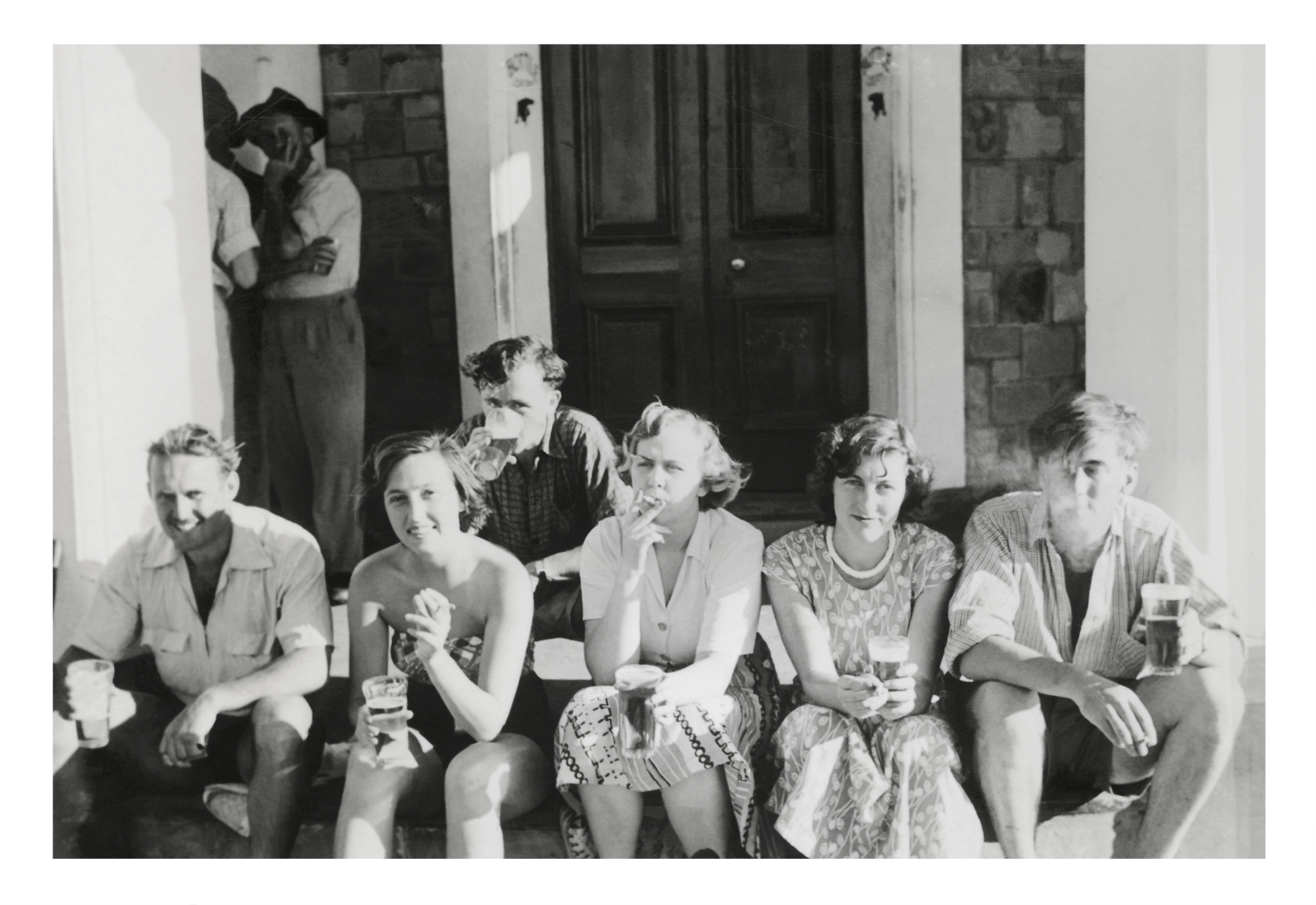
Joyce Evans (Australian, 1929-2019) 'Dissipation at the pub: students outside Largs Bay pub while attending N.U.A.U.S. conference, South Australia 1951 - Joyce Zerfas, Jill Warwick, Val Groves' 1951


Joyce Evans (Australian, 1929-2019)
Dissipation at the pub: students outside Largs Bay pub while attending N.U.A.U.S. conference, South Australia 1951 – Joyce Zerfas, Jill Warwick, Val Groves
1951
Gelatin silver print
From We Had Such High Hopes: Student Activism and the Peace Movement 1949-1952, A Photographic Memoir by Joyce Evans (Australian Scholarly Publishing 2019)


This photograph, showing students smoking and drinking outside the pub at Largs Bay, was published in an Adelaide newspaper. At the time this was considered to be immoral behaviour. Note the man in the background with his fingers up in a derogatory manner.

The names of the three women who have been identified are from left to right: Joyce Evans (nee Zerfas) photographer, Jill Warwick, deceased, (producer of TV programme “It Could Be You”) Val Groves, psychologist. I have been unable to identify the men. ~ Joyce Evans


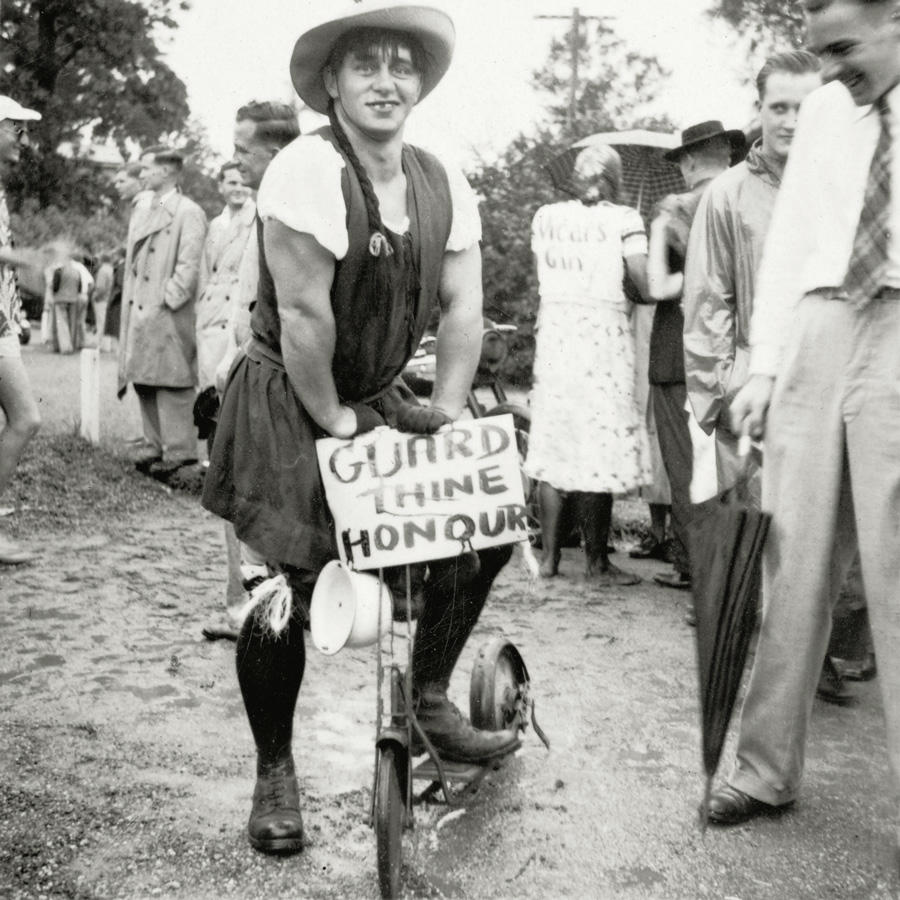
Joyce Evans (Australian, 1929-2019) 'Guard Thine Honour, May Day March, Flinders Street, Melbourne' 1951


Joyce Evans (Australian, 1929-2019)
Guard Thine Honour, May Day March, Flinders Street, Melbourne
1951
Gelatin silver print
From We Had Such High Hopes: Student Activism and the Peace Movement 1949-1952, A Photographic Memoir by Joyce Evans (Australian Scholarly Publishing 2019)


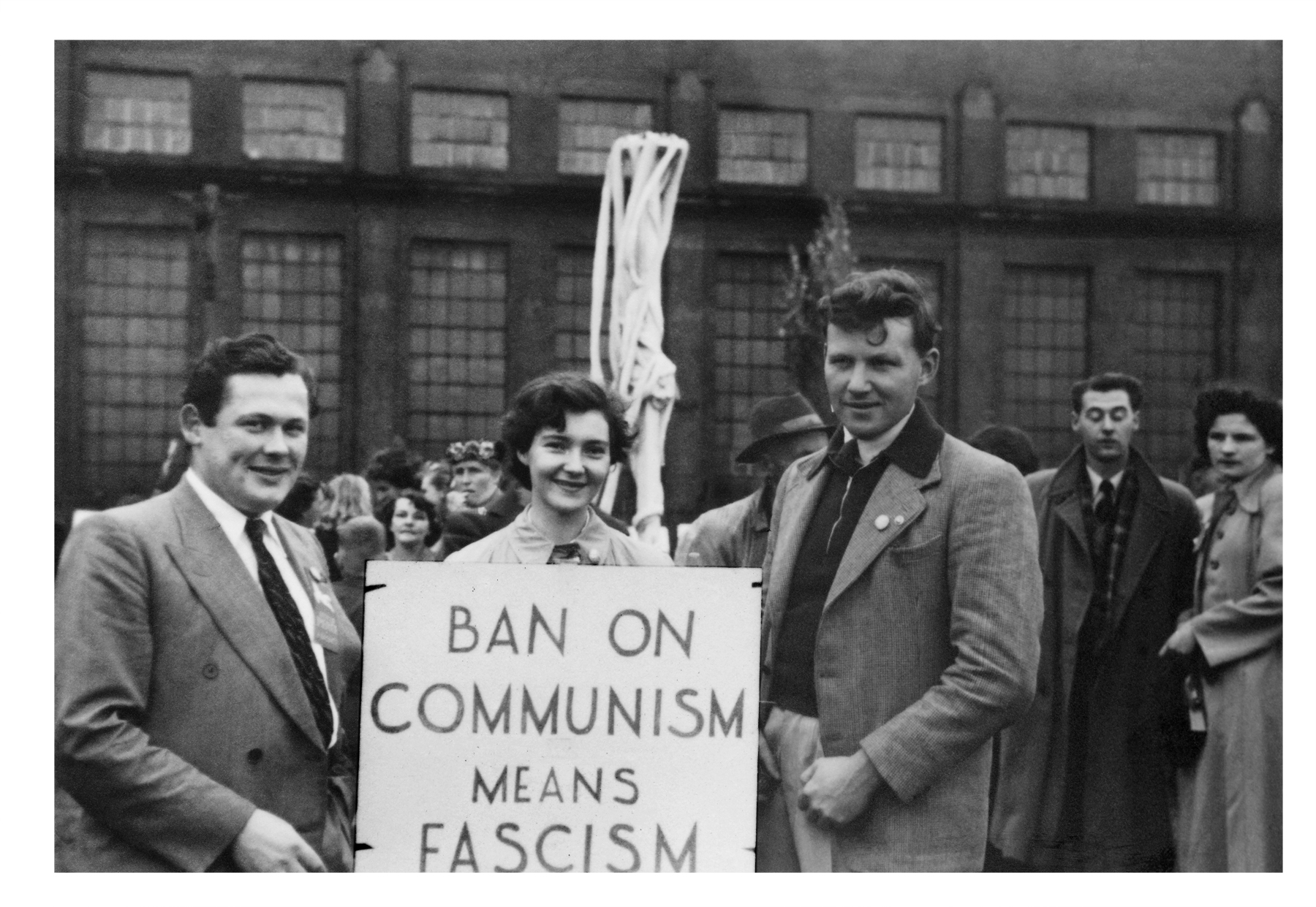
Joyce Evans (Australian, 1929-2019) 'Ban on Communism Means Fascism, May Day March, Flinders Street, Melbourne' 1951


Joyce Evans (Australian, 1929-2019)
Ban on Communism Means Fascism, May Day March, Flinders Street, Melbourne
1951
Gelatin silver print
From We Had Such High Hopes: Student Activism and the Peace Movement 1949-1952, A Photographic Memoir by Joyce Evans (Australian Scholarly Publishing 2019)


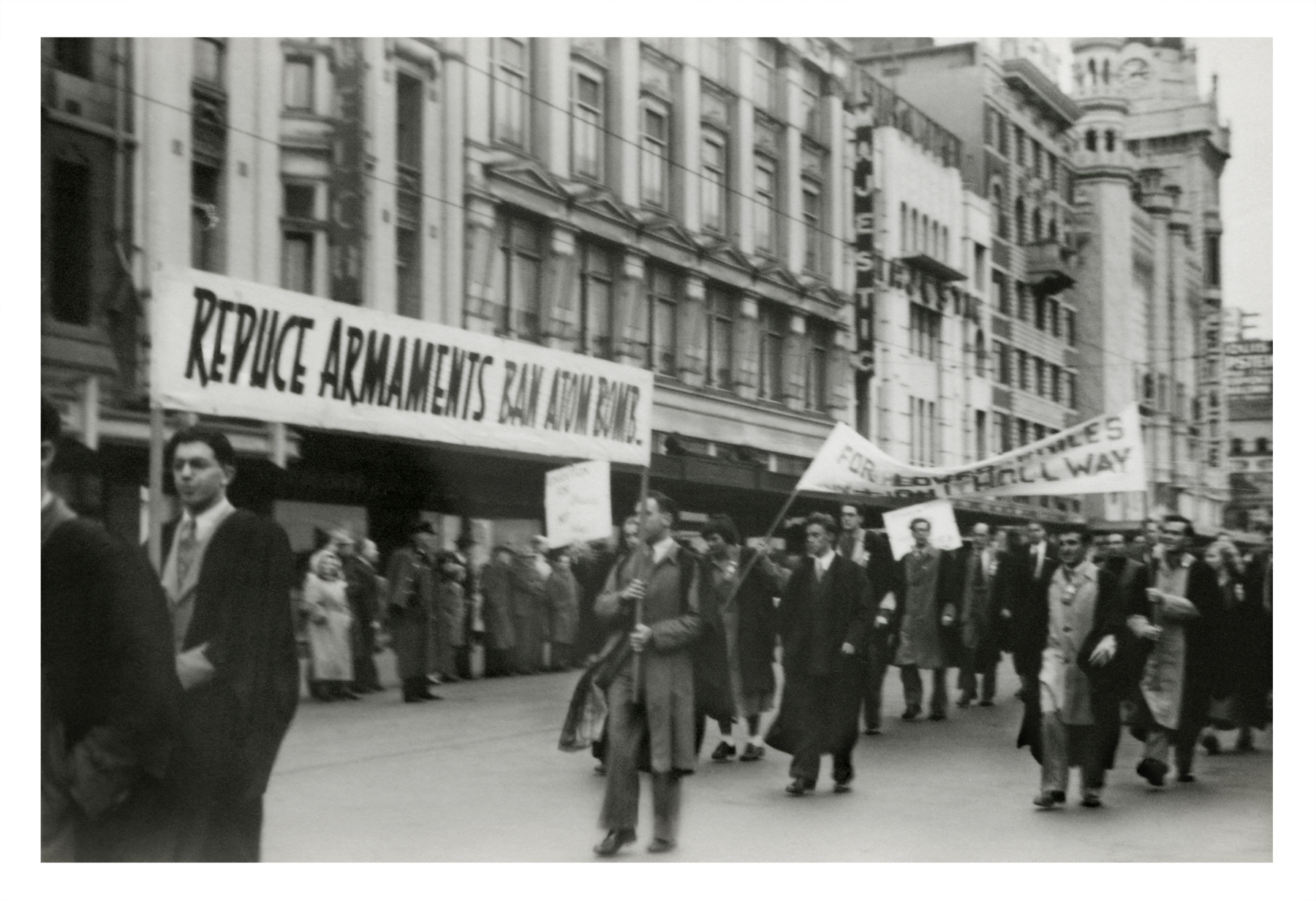
Joyce Evans (Australian, 1929-2019) 'Reduce Armaments Ban Atomic Bomb' 1951


Joyce Evans (Australian, 1929-2019)
Reduce Armaments Ban Atomic Bomb, May Day March, Flinders Street, Melbourne [pictured image-right, Professor Bernard Rechter]
1951
Gelatin silver print
From We Had Such High Hopes: Student Activism and the Peace Movement 1949-1952, A Photographic Memoir by Joyce Evans (Australian Scholarly Publishing 2019)


“Making photographs that are memorable requires more than just camera, light and a story. It requires a type of harmony, unity, and an indefinable something, which I can best explain as becoming emotionally attached to the subject so that the images almost make themselves.”


Joyce Evans


“Photography for me is a type of communion with my subject. Like everybody else I take photographs which have little meaning. But sometimes I sense an underlying value in the land, a group of people, a location, and then I make photograph, which is satisfying to myself. I think I would like to call that the way in which the quintessential spirit of what I am seeing has stirred me to need to make a photograph of it.

To me, I am alive, and my life and the life of everything in the world is connected. For me it is that universality that is the basis of my idea of the spiritual. I feel uncomfortable about formal organised religion and am perhaps more than a humanist, a universalist.”


Joyce Evans


“Aesthetically, I enjoy the camera’s capacity to record relationships and detail, which my subconscious may perceive, but I may not fully see.

My appreciation of aesthetics goes back to when I studied painting with John Olsen at the Bakery Art School, Sydney in 1967-1968. Olsen made me aware of the power of the edge of the image to relate to what was not shown in the image. My formal education was further enhanced when I did a degree in fine arts at Sydney University 1969-1971. There, Dr Anton Wilhelm taught me how to read an image. My understanding of the limits and potentials of two-dimensional imagery was expounded by Professor Bernard Smith.

Informally, my knowledge of photography and my practice was refined through formative conversations with a wide range of great photographers such as Andre Kertesz, Max Dupain, Ansel Adams and Bill Henson, Julie Millowick and Linda Connor.

Each of these relationships helped me to clarify my photographic position, which is based on a search for the essence of a subject.”


Joyce Evans


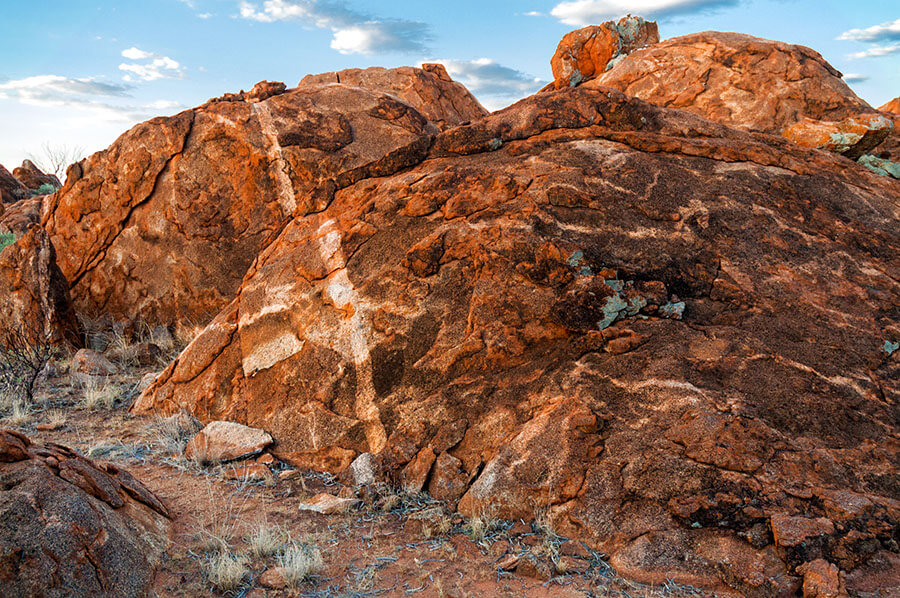
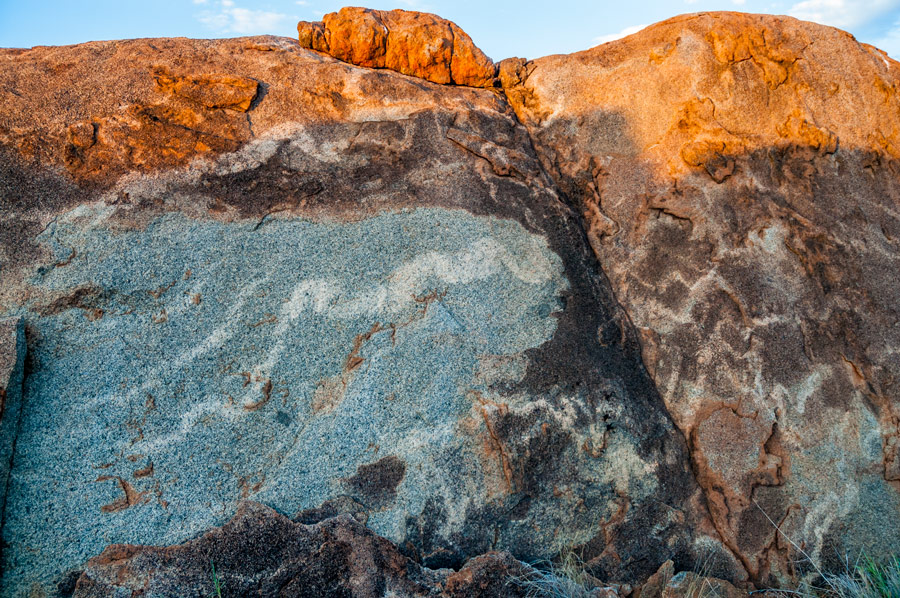
Joyce Evans (Australian, 1929-2019) 'Rain Dreaming, Yuendumu, NT' 2005


Joyce Evans (Australian, 1929-2019)
Rain Dreaming, Yuendumu, NT
2005


Joyce Evans (Australian, 1929-2019) 'Rain Dreaming, Yuendumu, NT' 2005


Joyce Evans (Australian, 1929-2019)
Rain Dreaming, Yuendumu, NT
2005


Joyce Evans (Australian, 1929-2019) 'Rain Dreaming, Yuendumu, NT' 2005


Joyce Evans (Australian, 1929-2019)
Rain Dreaming, Yuendumu, NT
2005


Joyce Evans (Australian, 1929-2019) 'Rain Dreaming, Yuendumu, NT' 2005


Joyce Evans (Australian, 1929-2019)
Rain Dreaming, Yuendumu, NT
2005


Joyce Evans (Australian, 1929-2019) 'Rain Dreaming, Yuendumu, NT' 2005


Joyce Evans (Australian, 1929-2019)
Rain Dreaming, Yuendumu, NT
2005


Joyce Evans short biography

Joyce Olga Evans is well known in Australian photography. In 1976 Joyce opened Church Street Photographic Centre, a pioneer Australian commercial gallery devoted to Photography. It showcased the best of Australian and International photographers. Joyce exhibited works by Frank Hurley, Imogen Cunningham, Bill Henson, Henri Cartier-Bresson, Julia Margret Cameron, Max Dupain and many other renowned photographers – she says that they were her teachers.

Passionately dedicated to photography, she has had many solo exhibitions of both her landscapes (she photographed in the Dandenongs and Mt Martha regions in the outer Melbourne; along the Hume Highway; in the Central Desert and outback Australia, most notably Oodnadatta, Oodlawirra, Menindee, and Lake Mungo; vineyards and rural villages in the South of France; the old Jewish cemetery in the centre of Prague; and numerous others) and her portraits (she photographed Australian intelligentsia and personalities, including Marianne Baillieu; Barbara Blackman; Baron Avid von Blumenthal; Tim Burstall; Dur-e Dara; Robert Dessaix; Germaine Greer; Elena Kats-Chernin; Joan Kerr; Ellen Koshland; David Malouf; Dame Elisabeth Murdoch; Lin Onus; Jill Reichstein; Chris Wallace-Crabbe; and innumerable others) throughout Australia and Europe.

Joyce has spent two decades documenting Australia for the National Library of Australia, who are acquiring her life’s work for their permanent collection. When this acquisition is complete the Library will hold over 30,000 analogue images and 80,000 digital files. Also included are diaries and other relevant documents and files. Much of this work is destined for display on Trove, the library’s online viewing resource. She has exhibited extensively in Australia and in France and her photographs are held in many major collections. Joyce has been published widely. Her monograph Only One Kilometre was published in 2003 by Lothian Press. It detailed her many years of studying the unique qualities of the Balcombe Estuary Reserve, at Mount Martha as well as poems and articles by distinguished writers. Her work is held in many collections both locally and internationally.

Joyce Evans also plays an important educational role in Australian photography. She taught history of photography at Melbourne’s RMIT University; appointed inaugural assistant director of Waverley City Gallery (now Monash Gallery of Art), 1990-1991, the first municipal public collection in Melbourne to specialise in photography; established and inaugurated a course on the History of Photography and appointed Research Fellow at the University of Melbourne, 1997-2010.

Evans worked as an honorary photographer for the Department of Aboriginal Affairs in Central Australia and for over ten years documented Australian country towns and events for the National Library of Australia. Important publications on Joyce Evans include a monograph Only One Kilometre (Melbourne: Lothian Press, 2003), and exhibition catalogues with essays by Alison Inglis, Eugene Barilo von Reisberg, Tim Page, Victoria Hammond, and many others.

Anonymous text from the Joyce Evans Photographer website Nd [Online] Cited 16th June 2019. No longer available online


William Yang (Australian, b. 1943) 'Marcus and Joyce' 2018


William Yang (Australian, b. 1943)
Marcus and Joyce
2018


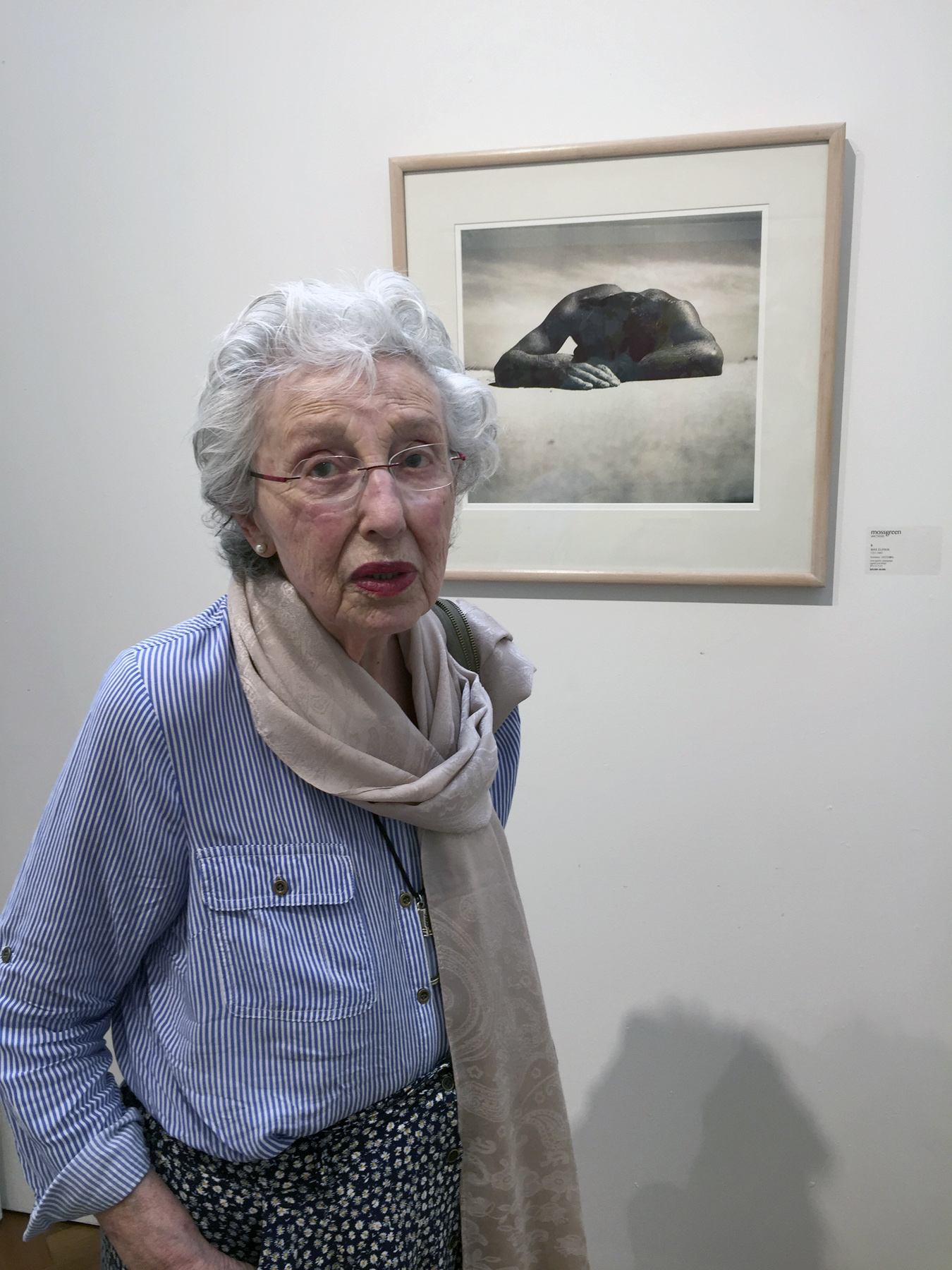
Being two photographers, the only photograph of Joyce and Marcus together, taken by another photographer William Yang.


Michael Silver (Australian) 'Joyce Evans' 2013


Michael Silver (Australian)
Joyce Evans
2013


Marcus Bunyan (Australian, b. 1958) 'Joyce Evans standing in front of Max Dupain's 'Sunbaker' 1937' 2018


Marcus Bunyan (Australian, b. 1958)
Joyce Evans standing in front of Max Dupain’s ‘Sunbaker’ 1937
2018


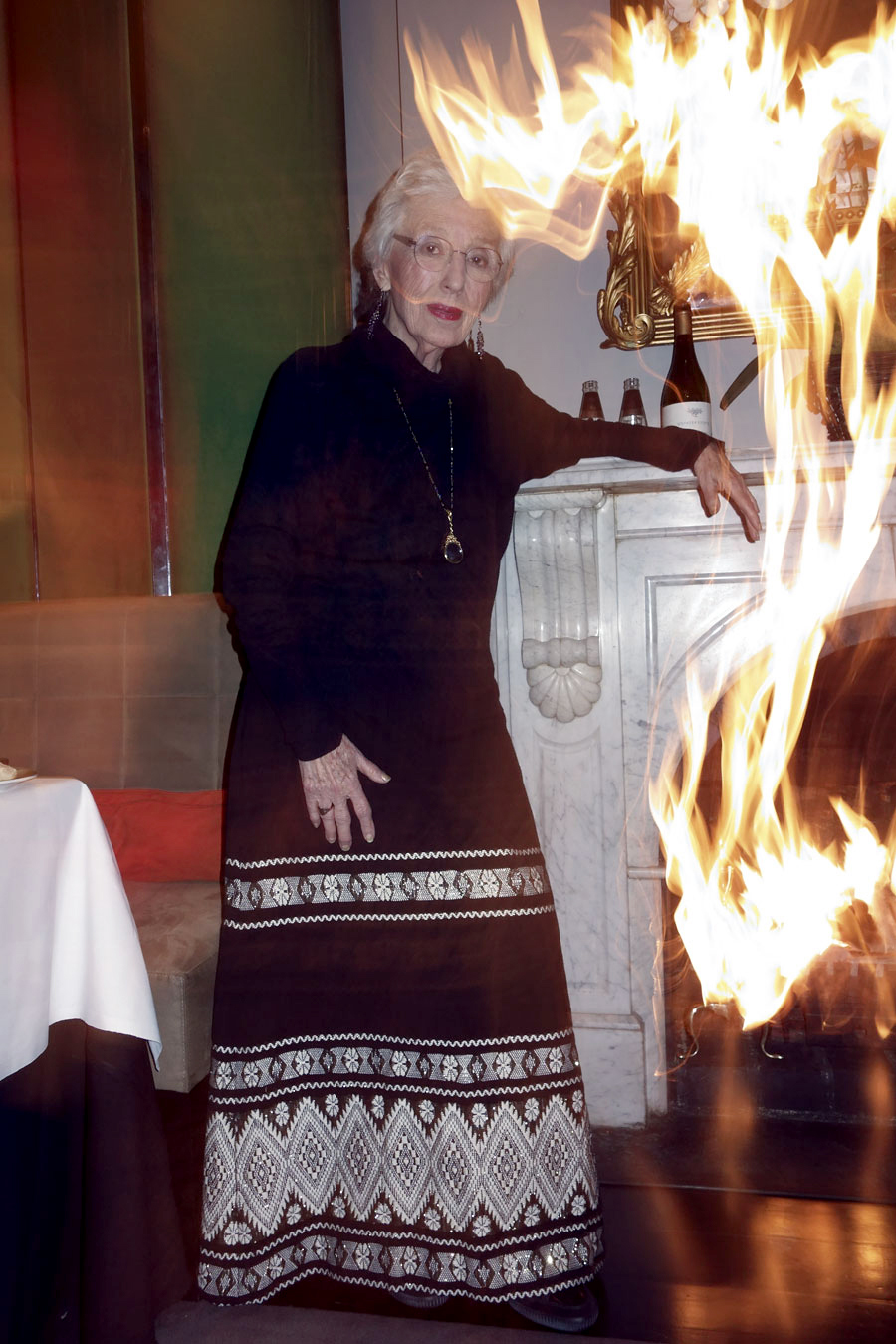
Marcus Bunyan (Australian, b. 1958) 'Joyce and the dragon' 2016


Marcus Bunyan (Australian, b. 1958)
Joyce and the dragon
2016


Joyce standing in front of the fireplace at Jacques Reymond’s restaurant for the birthday of her friend Marcus Bunyan. In Chinese mythology the dragon traditionally symbolises potent and auspicious powers and also is a symbol of power, strength, and good luck for people who are worthy of it.


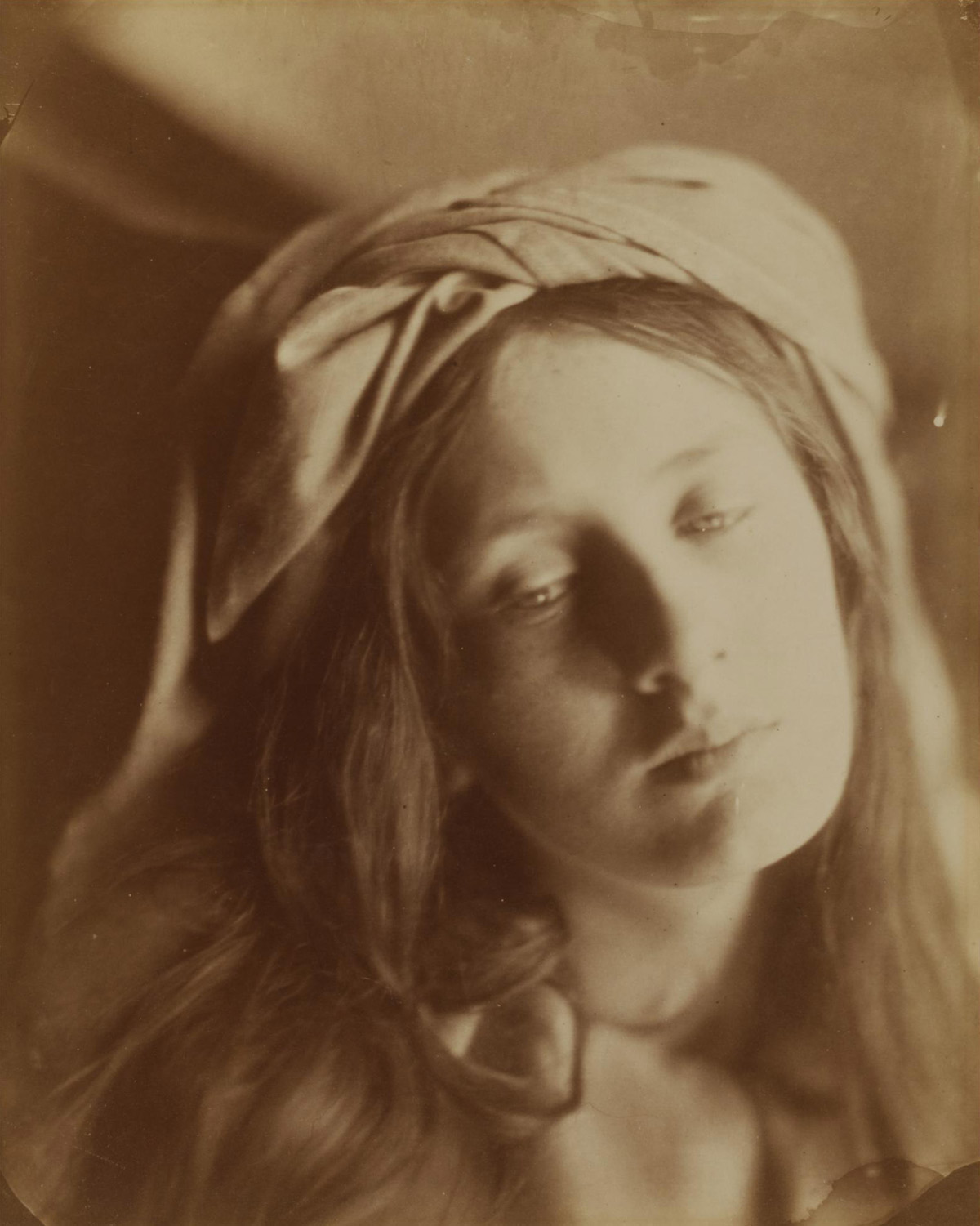
Julia Margaret Cameron (British, 1815-1879) 'Beatrice' 1866


Julia Margaret Cameron (British, 1815-1879)
Beatrice
1866
Albumen silver print


Joyce Evans Photographer website

LIKE ART BLART ON FACEBOOK

Back to top

Photographs: Herbert Ponting Chinese stereocards

June 2019


Herbert Ponting (British, 1870-1935) (photographer) The Universal Photo Art Co (C.H. Graves) (publisher) 'At the barber's, Peking, China' 1902


Herbert Ponting (British, 1870-1935) (photographer)
The Universal Photo Art Co., (C.H. Graves) (publisher)
At the barber’s, Peking, China
c. 1902
Albumen print on card


Fabulous, early Herbert Ponting social documentary stereoviews. I have never seen these before.

The placement of figures and the formal construction of the pictorial plane – strong diagonals and verticals, near to far, vanishing point – make for beautifully balanced, tensioned and dynamic images.

Marcus


Please click on the photographs for a larger version of the image.


Herbert Ponting (British, 1870-1935) (photographer) The Universal Photo Art Co (C.H. Graves) (publisher) 'A Chinese strawberry garden. Proprietor and coolie. China' c. 1902


Herbert Ponting (British, 1870-1935) (photographer)
The Universal Photo Art Co., (C.H. Graves) (publisher)
A Chinese strawberry garden. Proprietor and coolie. China
c. 1902
Albumen print on card


Herbert Ponting (British, 1870-1935) (photographer) The Universal Photo Art Co (C.H. Graves) (publisher) 'En Route to the Great Wall of China. Entrance to the city of Nankow' c. 1902


Herbert Ponting (British, 1870-1935) (photographer)
The Universal Photo Art Co., (C.H. Graves) (publisher)
En Route to the Great Wall of China. Entrance to the city of Nankow
c. 1902
Albumen print on card


Herbert Ponting (British, 1870-1935) (photographer) Underwood & Underwood (publisher) 'Where China's Great Wall begins its 1,250 mile course - from Shan-hai-ewan (N.) to Liao Hsi Mountains' 1904


Herbert Ponting (British, 1870-1935) (photographer)
Underwood & Underwood (publisher)
Where China’s Great Wall begins its 1,250 mile course – from Shan-hai-ewan (N.) to Liao Hsi Mountains
1904
Albumen print on card


Herbert Ponting (British, 1870-1935)

Herbert George Ponting, FRGS (21 March 1870 – 7 February 1935) was a professional photographer. He is best known as the expedition photographer and cinematographer for Robert Falcon Scott’s Terra Nova Expedition to the Ross Sea and South Pole (1910-1913). In this role, he captured some of the most enduring images of the Heroic Age of Antarctic Exploration. …

Early life

Ponting was born in Salisbury, Wiltshire in the south of England, on 21 March 1870. His father was a successful banker, Francis Ponting, and his mother was Mary Sydenham. From the age of eighteen Herbert was employed at a local bank branch in Liverpool, where he stayed for four years. That time was long enough to convince him that he did not wish to follow in the profession of his father, and attracted to stories of the American West, he moved to California where he worked in mining and then bought a fruit ranch in the 1890s. In 1895 he married a California woman, Mary Biddle Elliott; their daughter Mildred, was born in Auburn, California in January 1897.

Ponting sold his fruit farm in 1898 and, with his wife and daughter, returned to Britain to stay with his family. When they returned to the USA he turned his long-standing hobby of photography in his next career. Following a chance meeting with a professional photographer in California, to whom he had given advice about the locality and showed his own photos, he entered his pictures in competitions and won awards; he also sent some of his stereoscopic photographs to companies who published them. His work was also selected for the first San Francisco Salon; at that time he was living in Sausalito, north of San Francisco. He took stereoviews of and reported on the Russo-Japanese war of 1904-1905, and afterwards continued to travel around Asia, working in Burma, Korea, Java, China and India taking stereoviews and working as a freelance photographer for English-speaking periodicals. Improvements in the printing press had made it possible, for the first time, for mass-market magazines to print and publish photographic illustrations.

After spending much of 1901-1906 travelling around photographing in Asia, Ponting returned to Europe, where he continued to take stereoviews (including in Switzerland and Spain) and wrote illustrated articles for magazines including Country Life, the Graphic, the Illustrated London News, Pearson’s, and the Strand Magazine. In the Strand, Ponting’s work appeared side by side with the Sherlock Holmes stories of Arthur Conan Doyle, one of Ponting’s contemporaries.

Ponting expanded his photographs of Japan into a 1910 book, In Lotus-land Japan. He took extensive photographs in Spain. He was elected a Fellow of the Royal Geographical Society (FRGS). His flair for journalism and ability to shape his photographic illustrations into a narrative led to his being signed as expedition photographer aboard the Terra Nova, the first time a professional photographer was included on an Antarctic expedition.

Text from the Wikipedia website


Herbert Ponting (British, 1870-1935) (photographer) The "Perfec" Stereograph. H.C. White Co., (publisher) 'The-Tien-ning-ssu Pagoda, near Peking, China' 1907


Herbert Ponting (British, 1870-1935) (photographer)
The “Perfec” Stereograph. H.C. White Co., (publisher)
The-Tien-ning-ssu Pagoda, near Peking, China
1907
Albumen print on card


Herbert Ponting (British, 1870-1935) (photographer) The "Perfec" Stereograph. H.C. White Co., (publisher) 'Peking, the capital of China, looking east from a balcony of the Drum Tower' 1907


Herbert Ponting (British, 1870-1935) (photographer)
The “Perfec” Stereograph. H.C. White Co., (publisher)
Peking, the capital of China, looking east from a balcony of the Drum Tower
1907
Albumen print on card


William Cooper (British, 1878-1945) 'Drum Tower, Peking' 1910


William Cooper (British, 1878-1945)
Drum Tower, Peking
1910
Gelatin silver print
University of Bristol – Historical Photographs of China
Creative Commons 3.0


Beijing’s Bell and Drum Towers are situated on a small square north of the Forbidden City. The towers, which were used for telling time until 1924, were built in 1272 during the reign of Kublai Khan and were rebuilt after two fires during the Ming and Qing dynasties. The Bell and Drum Towers are quintessential landmarks of historic Beijing.


William Boyd Cooper (1878-1945)

William Boyd Cooper (1878-1945) was born in Belfast, Northern Ireland. Around 1911, he was appointed Professor of Commerce at Peking University, where he lectured in English and French. Cooper joined the North China British Volunteer Corps. On 12 February 1917, he was commissioned as a Second Lieutenant in the Chinese Labour Corps (CLC). He served in France with the CLC and rose to be a captain, relinquishing his Commission in 1919. William Cooper and his family returned from China and settled in Wimbledon, London. The William Cooper Collection is held in Special Collections, University of Bristol Library (Special Collections ref DM2823). 336 images.

Anonymous text. “Cooper, William Collection,” on the Historical Photographs of China website Nd [Online] Cited 04/06/2023


Herbert Ponting (British, 1870-1935) (photographer) The "Perfec" Stereograph. H.C. White Co., (publisher) 'A Tea seller in the streets of Moukden, Manchuria' c. 1906


Herbert Ponting (British, 1870-1935) (photographer)
The “Perfec” Stereograph. H.C. White Co., (publisher)
A Tea seller in the streets of Moukden, Manchuria
c. 1906
Albumen print on card


Herbert Ponting (British, 1870-1935) (photographer) 'A poppy field in Manchuria, natives extracting fluid from which opium is made' c. 1902-1907


Herbert Ponting (British, 1870-1935) (photographer)
The “Perfec” Stereograph. H.C. White Co., (publisher)
A poppy field in Manchuria, natives extracting fluid from which opium is made
c. 1902-1907
Albumen print on card


Herbert Ponting (British, 1870-1935) (photographer) 'The Old Bell Tower in the heart of Mukden, Manchuria' 1905


Herbert Ponting (1870-1935) (photographer)
The “Perfec” Stereograph. H.C. White Co., (publisher)
The Old Bell Tower in the heart of Mukden, Manchuria
1905
Albumen print on card


Herbert Ponting (British, 1870-1935) (photographer) 'Along the Great Wall of China (originally 1700 miles long), looking east up to a watch tower' 1907


Herbert Ponting (British, 1870-1935) (photographer)
The “Perfec” Stereograph. H.C. White Co., (publisher)
Along the Great Wall of China (originally 1700 miles long), looking east up to a watch tower
1907
Albumen print on card


Herbert Ponting (British, 1870-1935) (photographer) 'Scene on Ha-ta-Men St., one of the principal thoroughfares of Peking, China' 1907


Herbert Ponting (British, 1870-1935) (photographer)
The “Perfec” Stereograph. H.C. White Co., (publisher)
Scene on Ha-ta-Men St., one of the principal thoroughfares of Peking, China
1907
Albumen print on card


LIKE ART BLART ON FACEBOOK

Back to top

Exhibition: ‘Josef Albers in Mexico’ at the Heard Museum, Phoenix, Arizona

Exhibition dates: 1st February – 27th May, 2019

Curator: Lauren Hinkson, Associate Curator of Collections at the Guggenheim Museum in New York

Organised by The Solomon R. Guggenheim Foundation, New York


Josef Albers (American born Germany, 1888-1976) 'Study for Homage to the Square, Closing' 1964 from the exhibition 'Josef Albers in Mexico' at the Heard Museum, Phoenix, Arizona, Feb - May, 2019


Josef Albers (American born Germany, 1888-1976)
Study for Homage to the Square, Closing
1964
Acrylic on Masonite
Solomon R. Guggenheim Museum, New York, Gift, The Josef Albers Foundation, Inc., 1996


It is fascinating to see “the influence and connectivity between the work of Josef Albers and the abstracted geometric vocabulary of pre-Columbian art, architecture and material culture” … and the press release might add, between Albers, architecture and the flattened, geometric vocabulary of his photographs.

The lesser-known photographs and collages are “a visual conversation Albers created in response to his frequent visits to Mexico to view archaeological sites as early as the 1930s, illustrating the nuanced relationship between the geometry and design elements of pre-Columbian monuments and the artist’s iconic abstract canvases and works on paper.”

But these photographic collages stand as works of art in their own right, for they are music not just notation. Just look at the elegance and tension between the lower images in Mitla (1956, below). You don’t group photographs together like this so that they sing, so that the ‘ice-fire’ as Minor White would say (that space between each image that acts as tension between two or more images), enacts powerful attractors of light, form and energy (or spirit, if you like) … without knowing what you are doing, without feeling the presence of what you are photographing.

While artists have used photographs as “models” for other forms of art for years (for example Atget’s “documents for artists”), and we acknowledge that purpose, these images stand on their own two feet as visually nuanced, cerebral and finished works of art.

Dr Marcus Bunyan


Many thankx to the Heard Museum for allowing me to publish the photographs in the posting. Please click on the photographs for a larger version of the image.


Josef Albers (American born Germany, 1888-1976) 'Study for Sanctuary' 1941-1942 from the exhibition 'Josef Albers in Mexico' at the Heard Museum, Phoenix, Arizona, Feb - May, 2019


Josef Albers (American born Germany, 1888-1976)
Study for Sanctuary
1941-1942
Ink on paper
The Josef and Anni Albers Foundation, Bethany, Connecticut, 1976


Josef Albers (American born Germany, 1888-1976) 'Ballcourt at Monte Alban, Mexico' c. 1936-1937


Josef Albers (American born Germany, 1888-1976)
Ballcourt at Monte Alban, Mexico
c. 1936-1937
Gelatin silver print
The Josef and Anni Albers Foundation, Bethany, Connecticut, 1976


Josef Albers (American born Germany, 1888-1976) 'Tenayuca' 1942


Josef Albers (American born Germany, 1888-1976)
Tenayuca I
1942
Oil on Masonite
The Josef and Anni Albers Foundation, Bethany, Connecticut, 1976


Josef Albers (American born Germany, 1888-1976) 'The Pyramid of the Magician, Uxmal' 1950


Josef Albers (American born Germany, 1888-1976)
The Pyramid of the Magician, Uxmal
1950
Gelatin silver print
Solomon R. Guggenheim Museum, New York, Gift, The Josef Albers Foundation, Inc., 1996


Josef Albers (American born Germany, 1888-1976) 'Governor’s Palace, Uxmal' 1952


Josef Albers (American born Germany, 1888-1976)
Governor’s Palace, Uxmal
1952
Gelatin silver print
Solomon R. Guggenheim Museum, New York, Gift, The Josef Albers Foundation, Inc., 1996


Josef Albers (American born Germany, 1888-1976) 'Luminous Day' 1947-1952


Josef Albers (American born Germany, 1888-1976)
Luminous Day
1947-1952
Oil on Masonite
The Josef and Anni Albers Foundation, Bethany, Connecticut, 1976


Josef Albers (American born Germany, 1888-1976) 'Platform of the Eagles, Chichen Itza' 1952


Josef Albers (American born Germany, 1888-1976)
Platform of the Eagles, Chichen Itza
1952
Gelatin silver print
The Josef and Anni Albers Foundation, Bethany, Connecticut, 1976


The Heard Museum is presenting Josef Albers in Mexico. The exhibition demonstrates the influence and connectivity between the work of Josef Albers (German, 1888-1976) and the abstracted geometric vocabulary of pre-Columbian art, architecture and material culture. The Heard Museum is the third and final stop of the exhibition which opened in New York in 2017 then traveled to the Peggy Guggenheim Collection in Venice in 2018.

Josef Albers in Mexico is organised by the Solomon R. Guggenheim Foundation, and curated by Lauren Hinkson, Associate Curator of Collections at the Guggenheim Museum in New York. Drawing from the collections of the Solomon R. Guggenheim Museum and the Josef and Anni Albers Foundation, Josef Albers in Mexico presents an opportunity to learn about a little-known aspect of the artist’s practice and the influences he absorbed in his travels.

“Through his close attention to ancient architecture, Josef Albers developed new modes of seeing the modern world,” says Lauren Hinkson. “This exhibition of his celebrated paintings, along with lesser-known photographs and collages, reveals the complex and often surprising roles of place, time, and spirituality in Albers’s body of work.”

Included in the exhibition are rarely seen early paintings by Albers, including Homage to the Square and Variant / Adobe series, works on paper, and a rich selection of photographs and photocollages, many of which have never before been on view. The photographic works reveal a visual conversation Albers created in response to his frequent visits to Mexico to view archaeological sites as early as the 1930s, illustrating the nuanced relationship between the geometry and design elements of pre-Columbian monuments and the artist’s iconic abstract canvases and works on paper. Accompanying the artworks are a series of letters, personal photographs, studies and other ephemera.

Josef Albers was born in Bottrop, Germany in 1888 and was a fixture at the pioneering school of art, architecture, and design, the Bauhaus, until its forced closure by the Nazis. Albers and his wife, Anni Albers (1899-1994), an accomplished artist and textile designer, relocated to the United States in 1933, where he first accepted a position as head of the department of art at Black Mountain College outside of Asheville, North Carolina, a position he held until 1949. He then went on to be the head of the design department at Yale University in New Haven, Connecticut. Josef and Anni Albers traveled often to Latin America with particular interest in Mexico – visiting the country more than a dozen times from the 1930s to the 1960s. Albers’ fascination with the visual culture of Mexico left an indelible mark on his own artistic production and methodology, with sites like Teotihuacán, Chichén Itza, Monte Albán, and Mitla resonating within his paintings and stimulating new experiments in his photography.

The Heard also produced a series of public programs co-curated by the Heard Museum’s Fine Arts Curator, Erin Joyce. Topics include explorations of colour theory with some of todays’ leading artists, designers, and architects; the influence of Indigenous art and aesthetics on broader visual art, the role it has on informing artistic production and investigations into formalism and politics. Josef Albers in Mexico runs through Monday, May 27, 2019 at the Heard Museum.

Press release from the Heard Museum website [Online] Cited 25/02/2019


Josef Albers (American born Germany, 1888-1976) 'Mitla' 1956


Josef Albers (American born Germany, 1888-1976)
Mitla
1956
Gelatin silver prints and postcards, mounted to paperboard
The Josef and Anni Albers Foundation, Bethany, Connecticut, 1976


Josef Albers (American born Germany, 1888-1976) 'Mitla' 1956 (detail)


Josef Albers (American born Germany, 1888-1976)
Mitla (detail)
1956
Gelatin silver prints and postcards, mounted to paperboard
The Josef and Anni Albers Foundation, Bethany, Connecticut, 1976


Josef Albers (American born Germany, 1888-1976) 'Mitla' 1956 (detail)


Josef Albers (American born Germany, 1888-1976)
Mitla (detail)
1956
Gelatin silver prints and postcards, mounted to paperboard
The Josef and Anni Albers Foundation, Bethany, Connecticut, 1976


Josef Albers (American born Germany, 1888-1976) 'Mitla' 1956 (detail)


Josef Albers (American born Germany, 1888-1976)
Mitla (detail)
1956
Gelatin silver prints and postcards, mounted to paperboard
The Josef and Anni Albers Foundation, Bethany, Connecticut, 1976


Josef Albers (American born Germany, 1888-1976) 'Mitla' 1956 (detail)


Josef Albers (American born Germany, 1888-1976)
Mitla (detail)
1956
Gelatin silver prints and postcards, mounted to paperboard
The Josef and Anni Albers Foundation, Bethany, Connecticut, 1976


Josef Albers (American born Germany, 1888-1976) 'Josef Albers, Mitla' 1935-1939


Anni Albers (American born Germany, 1899-1994)
Josef Albers, Mitla
1935-1939
The Josef and Anni Albers Foundation, Bethany, Connecticut, 1976


Heard Museum
2301 N. Central Avenue
Phoenix, Arizona 85004

Opening hours:
Monday – Sunday 10am – 4pm

Heard Museum website

LIKE ART BLART ON FACEBOOK

Back to top

Exhibition: ‘Graciela Iturbide’s Mexico’ at the Museum of Fine Arts, Boston

Exhibition dates: 19th January – 12th May, 2019

Curator: Kristen Gresh, Estrellita and Yousuf Karsh Curator of Photographs


Graciela Iturbide (Mexican, b. 1942) 'Desierto de Sonora, México' 1979 from the exhibition 'Graciela Iturbide's Mexico' at the Museum of Fine Arts, Boston, Jan - May, 2019


Graciela Iturbide (Mexican, b. 1942)
Desierto de Sonora, México
1979
Gelatin silver print
35.6 x 35.4cm
Courtesy of the Museum of Fine Arts, Boston
© Graciela Iturbide


From a different world

There’s something consistently awesome about Mexican photography that is so grounded, so essential, and yet at the same time so spiritual.

One of my favourite photographic artists of all time is Manuel Alvarez Bravo, he of the lyrical narrative, the sensual body, the assassinated worker. Iturbide seems to be cut from the same cloth – she was his assistant for two years; he her teacher about photography and life – and his influence is telling in Iturbide’s imaginative and sometimes incongruous images, such as the skull in Mexico… I want to get to know you! (1975, below) or Our Lady of the Iguanas, Juchitán, Mexico (1979, below).

Life, death, violence, sacrifice, beauty, identity and place, mixed with daubs of Surrealism, are constant themes of Mexican photography and this symbology can be seen in Iturbide’s unusual urban geometries and her eye for the unexpected. She is a visionary ethnographer who paints in black and white a story of magical literary realism… seeing through her camera something different than she sees with her eyes directly. She sees, and then feels, a different world.

Octavio Paz, the great Mexican poet, writing about the great Mexican photographer Manuel Alvarez Bravo, said that, “Reality exists, but it is more real in black and white.” And so here. Iturbide feels that black and white is more real than colour – and that reality is in black and white. It is in this tonal space that Graciela Iturbide’s Mexico pictures a place of beauty and contradiction, a place of transformations and interstitial spaces (intermediate, indeterminate spaces), an amalgamation of Indigenous and Spanish traditions. “I always shoot what surprises me,” she says. “My eyes see them, and my heart shoots them.”

Gracia Graciela, oh Graceful Beauty, for your gift to us.

Dr Marcus Bunyan


Many thankx to the Museum of Fine Arts Boston for allowing me to publish the photographs in the posting. Please click on the photographs for a larger version of the image.


“Photography is also like life, right? … I think in my case, taking photos as therapy has a lot to do with death with everything I do, with Frida Kahlo, because I like to photograph things in therapy, things that are healing, which is powerful, right?”


Graciela Iturbide


Hear from the Artist | Museum of Fine Arts, Boston


Graciela Iturbide (Mexican, b. 1942) 'Mexico City' 1969 from the exhibition 'Graciela Iturbide's Mexico' at the Museum of Fine Arts, Boston, Jan - May, 2019


Graciela Iturbide (Mexican, b. 1942)
Mexico City
1969
Gelatin silver print
Courtesy of the Museum of Fine Arts, Boston
© Graciela Iturbide


Graciela Iturbide (Mexican, b. 1942) 'Chalma' 1974


Graciela Iturbide (Mexican, b. 1942)
Chalma
1974
Gelatin silver print
Museum purchase with funds donated by John and Cynthia Reed, Charles H. Bayley Picture and Painting Fund, Barbara M. Marshall Fund, Lucy Dalbiac Luard Fund, Horace W. Goldsmith Foundation Fund for Photography, Francis Welch Fund, and Jane M. Rabb Fund for Film and Photography
Courtesy of the Museum of Fine Arts, Boston
© Graciela Iturbide


Graciela Iturbide (Mexican, b. 1942) 'Casa de la Muerte, Ciudad de México' 1975


Graciela Iturbide (Mexican, b. 1942)
Casa de la Muerte, Ciudad de México
1975
Gelatin silver print
Museum purchase with funds donated by John and Cynthia Reed, Charles H. Bayley Picture and Painting Fund, Barbara M. Marshall Fund, Lucy Dalbiac Luard Fund, Horace W. Goldsmith Foundation Fund for Photography, Francis Welch Fund, and Jane M. Rabb Fund for Film and Photography
Courtesy of the Museum of Fine Arts, Boston
© Graciela Iturbide


Graciela Iturbide (Mexican, b. 1942) 'Volantín, San Martin Tilcajete, Oaxaca, Mexico' (Merry-Go-Round, San Martín Tilcajete, Oaxaca, Mexico) 1976


Graciela Iturbide (Mexican, b. 1942)
Volantín, San Martín Tilcajete, Oaxaca, Mexico (Merry-Go-Round, San Martín Tilcajete, Oaxaca, Mexico)
1976
Gelatin silver print
Museum purchase with funds donated by John and Cynthia Reed, Charles H. Bayley Picture and Painting Fund, Barbara M. Marshall Fund, Lucy Dalbiac Luard Fund, Horace W. Goldsmith Foundation Fund for Photography, Francis Welch Fund, and Jane M. Rabb Fund for Film and Photography
Courtesy of the Museum of Fine Arts, Boston
© Graciela Iturbide


Graciela Iturbide (Mexican, b. 1942) 'Mujer ángel, Desierto de Sonora, México' (Angel Woman, Sonora Desert, Mexico) 1979


Graciela Iturbide (Mexican, b. 1942)
Mujer Ángel, Desierto de Sonora, México (Angel Woman, Sonora Desert, Mexico)
1979
Gelatin silver print
Courtesy of the Museum of Fine Arts, Boston
© Graciela Iturbide


Pedro Meyer. 'Manuel Álvarez Bravo and Graciela Iturbide, Coyoacán (Mexico)' 1983


Pedro Meyer (Spanish, b. 1935)
Manuel Álvarez Bravo and Graciela Iturbide, Coyoacán (Mexico)
1983
Gelatin silver print


When I went to study at the university he was teaching at the university as well and I attended one of his courses; that’s how I got to know him. Then, after a couple of weeks I became his assistant. At that time he was not that famous in Mexico, he was very famous in Europe and the United States. He was known in Mexico but he was not really a big star. So, what I really need to make clear is that he was not just a teacher of photography; he was a teacher about life for me. Because he taught me about everything, he talked about literature, cinematography… so he was more of a teacher of life… he never said this picture is good or this picture is bad, he would never say that flat out. Instead, he would always say something to guide you in the right direction. Yet he would never say, “This is good or this is bad”.

With Álvarez I went to certain little towns but I was only his assistant for two years. After that I made the decision to cut the umbilical cord and make my own way.

Extract from Munem Wasif. “An Interview with Graciela Iturbide,” on the Chobi Mela website, November 24, 2014 [Online] Cited 06/04/2019


Graciela Iturbide (Mexican, b. 1942) 'Festival del Lagarto' 1985


Graciela Iturbide (Mexican, b. 1942)
Festival del Lagarto (Lizard Festival)
1985
Gelatin silver print
Museum purchase with funds donated by John and Cynthia Reed, Charles H. Bayley Picture and Painting Fund, Barbara M. Marshall Fund, Lucy Dalbiac Luard Fund, Horace W. Goldsmith Foundation Fund for Photography, Francis Welch Fund, and Jane M. Rabb Fund for Film and Photography
Courtesy of the Museum of Fine Arts, Boston
© Graciela Iturbide


Graciela Iturbide (Mexican, b. 1942) 'Dance, Juchitán, México' 1986


Graciela Iturbide (Mexican, b. 1942)
Dance, Juchitán, México
1986
Gelatin silver print
Courtesy of the Museum of Fine Arts, Boston
© Graciela Iturbide


Graciela Iturbide (Mexican, b. 1942) 'Pajaros en el poste, carretera a Guanajuato, Mexico' 1990


Graciela Iturbide (Mexican, b. 1942)
Pajaros en el poste, carretera a Guanajuato, Mexico (Birds on a post, road to Guanajuato, Mexico)
1990
Gelatin silver print
Museum purchase with funds donated by John and Cynthia Reed, Charles H. Bayley Picture and Painting Fund, Barbara M. Marshall Fund, Lucy Dalbiac Luard Fund, Horace W. Goldsmith Foundation Fund for Photography, Francis Welch Fund, and Jane M. Rabb Fund for Film and Photography
Courtesy of the Museum of Fine Arts, Boston
© Graciela Iturbide


Graciela Iturbide (Mexican, b. 1942) 'Cayó del Cielo, Chalma, México' 1989


Graciela Iturbide (Mexican, b. 1942)
Cayó del Cielo, Chalma, México
1989
Gelatin silver print
Museum purchase with funds donated by John and Cynthia Reed, Charles H. Bayley Picture and Painting Fund, Barbara M. Marshall Fund, Lucy Dalbiac Luard Fund, Horace W. Goldsmith Foundation Fund for Photography, Francis Welch Fund, and Jane M. Rabb Fund for Film and Photography
Courtesy of the Museum of Fine Arts, Boston
© Graciela Iturbide


Graciela Iturbide (Mexican, b. 1942) 'La danza de la cabrita, antes de la matanza, La Mixteca, Oaxaca, Mexico' (The Little Goat's Dance, Before the Slaughter, La Mixteca, Oaxaca, Mexico) 1992


Graciela Iturbide (Mexican, b. 1942)
La danza de la cabrita, antes de la matanza, La Mixteca, Oaxaca, Mexico (The Little Goat’s Dance, Before the Slaughter, La Mixteca, Oaxaca, Mexico)
1992
Gelatin silver print
Museum purchase with funds donated by John and Cynthia Reed, Charles H. Bayley Picture and Painting Fund, Barbara M. Marshall Fund, Lucy Dalbiac Luard Fund, Horace W. Goldsmith Foundation Fund for Photography, Francis Welch Fund, and Jane M. Rabb Fund for Film and Photography
Courtesy of the Museum of Fine Arts, Boston
© Graciela Iturbide


A way of life, a way of seeing

The photographs of Graciela Iturbide not only bear witness to Mexican society but express an intense personal and poetic lyricism about her native country. One of the most influential photographers active in Latin America today, Iturbide captures everyday life and its cultures, rituals, and religions, while also raising questions about paradoxes and social injustice in Mexican society. Her photographs tell a visual story of Mexico since the late 1970s – a country in constant transition, defined by the coexistence of the historical and modern as a result of the culture’s rich amalgamation of cultures. For Iturbide, photography is a way of life and a way of seeing and understanding Mexico and its beauty, challenges, and contradictions.

This is the first major East Coast presentation of Iturbide’s work, featuring approximately 125 photographs that span her five-decade-long career. Organised into nine sections, the exhibition opens with early photographs, followed by three series focused on three of Mexico’s many indigenous cultures: Juchitán captures the essential role of women in Zapotec culture; Los que viven en la arena (Those Who Live in the Sand) concentrates on the Seri people living in the Sonoran Desert; and La Mixteca documents elaborate goat-slaughtering rituals in Oaxaca, serving as critical commentary on the exploitation of workers. Thematic groupings highlight Iturbide’s explorations of various aspects of Mexican culture, including fiestas, death and mortality, and birds and their symbolism. Her more recent work is presented in two series related to Mexico’s cultural and artistic heritage, featuring plants – mainly cacti – in “intensive care” at the Oaxaca Ethnobotanical Gardens, as well as El baño de Frida (Frida’s Bathroom), depicting personal belongings in Frida Kahlo’s bathroom at the Casa Azul that had been locked away for 50 years after the artist’s death.

Iturbide’s powerful and provocative photographs are anti-picturesque, anti-folkloric. Her work embodies her empathetic approach to photography and her deep connection with her subjects, asking questions through its capacity for imaginary associations. Drawn primarily from Iturbide’s own collection, “Graciela Iturbide’s Mexico” also includes the Museum’s recent acquisition of 37 works by the artist, as well as loans from museums and private collections throughout the US and Mexico. The exhibition is accompanied by an illustrated catalogue produced by MFA Publications.

Text from the Museum of Fine Arts, Boston website [Online] Cited 05/04/2019


Graciela Iturbide (Mexican, b. 1942) 'Cementerio de Dolores Hidalgo, Guanajuato, México' 1978


Graciela Iturbide (Mexican, b. 1942)
Cementerio de Dolores Hidalgo, Guanajuato, México (Cemetery of Dolores Hidalgo, Guanajuato, México)
1978
Gelatin silver print
11.3 x 11.3cm
Courtesy of the Museum of Fine Arts, Boston
© Graciela Iturbide


Graciela Iturbide (Mexican, b. 1942) 'Jardín Botánico, Oaxaca, México' 1998-1999


Graciela Iturbide (Mexican, b. 1942)
Jardín Botánico, Oaxaca, México
1998-1999
Gelatin silver print
Courtesy of the Museum of Fine Arts, Boston
© Graciela Iturbide


Graciela Iturbide (Mexican, b. 1942) 'Jardín Botánico de Oaxaca, México' 2002


Graciela Iturbide (Mexican, b. 1942)
Jardín Botánico de Oaxaca, México
2002
Gelatin silver print
35.7 x 32.8cm
Museum purchase with funds donated by John and Cynthia Reed, Charles H. Bayley Picture and Painting Fund, Barbara M. Marshall Fund, Lucy Dalbiac Luard Fund, Horace W. Goldsmith Foundation Fund for Photography, Francis Welch Fund, and Jane M. Rabb Fund for Film and Photography
Courtesy of the Museum of Fine Arts, Boston
© Graciela Iturbide


Graciela Iturbide (Mexican, b. 1942) 'El Baño de Frida, Coyoacán, Ciudad de México' (Frida's Bathroom, Coyoacán, Mexico City) 2005


Graciela Iturbide (Mexican, b. 1942)
El Baño de Frida, Coyoacán, Ciudad de México (Frida’s Bathroom, Coyoacán, Mexico City)
2005
Gelatin silver print
35.7 x 35.5cm
Courtesy of the Museum of Fine Arts, Boston
© Graciela Iturbide


Graciela Iturbide (Mexican, b. 1942) 'El Baño de Frida, Coyoacán, Ciudad de México' (prosthetic leg against wall) 2006


Graciela Iturbide (Mexican, b. 1942)
El Baño de Frida, Coyoacán, Ciudad de México (Prosthetic leg against wall, Frida’s Bathroom, Coyoacán, Mexico City)
2006
Gelatin silver print
Museum purchase with funds donated by John and Cynthia Reed, Charles H. Bayley Picture and Painting Fund, Barbara M. Marshall Fund, Lucy Dalbiac Luard Fund, Horace W. Goldsmith Foundation Fund for Photography, Francis Welch Fund, and Jane M. Rabb Fund for Film and Photography
Courtesy of the Museum of Fine Arts, Boston
© Graciela Iturbide


Graciela Iturbide (Mexican, b. 1942) 'El Baño de Frida, Coyoacán, Ciudad de México' (Frida's Bathroom, Coyoacán, Mexico City) 2006


Graciela Iturbide (Mexican, b. 1942)
El Baño de Frida, Coyoacán, Ciudad de México (Frida’s Bathroom, Coyoacán, Mexico City)
2006
Gelatin silver print
Courtesy of the Museum of Fine Arts, Boston
© Graciela Iturbide


Nearly 140 Images in Graciela Iturbide’s Mexico Portray Photographer’s Native Country through Her Eyes

Throughout a five-decade-long career, photographer Graciela Iturbide (born 1942) has focused on capturing and understanding the beauty, rituals, challenges and contradictions of her native Mexico. Graciela Iturbide’s Mexico is the first major East Coast presentation of the artist’s work, featuring nearly 140 photographs that tell the visual story of her country since the late 1970s. Going beyond documentary photography, Iturbide’s work reveals Mexico’s complexities through her personal explorations. Focused on the tensions between urban and rural life, human presence and nature, and indigenous and Spanish cultures, her photographs have contributed to Mexico’s visual identity while calling attention to the rich syncretism, diversity and inequalities of Mexican society. The exhibition is drawn primarily from Iturbide’s own collection and also highlights a recent acquisition of her photographs, the first major group of works by the artist to enter the Museum’s collection – 35 purchased by the MFA and two donated by Iturbide. Loans from museums and private collections throughout the U.S., Mexico and France are also included. On view from January 19 through May 12, 2019 in the Henry and Lois Foster Gallery, the exhibition features interpretation in English and Spanish, as well as a documentary video of the artist, produced by the Museum and shot at Iturbide’s studio in Mexico City. Graciela Iturbide’s Mexico is accompanied by an illustrated catalogue produced by MFA Publications, which features more than 100 striking tritone reproductions of evocative photographs alongside essays that invite readers to share in Iturbide’s personal artistic journey. This beautiful volume with a three-piece cloth and printed binding with foil stamping teases out key ideas and visual relationships across different moments in the photographer’s storied career. The exhibition is supported by the Leigh and Stephen Braude Fund for Latin American Art, The Bruce and Laura Monrad Fund for Exhibitions, and the Diane Krane Family and Jonathan and Gina Krane Family Fund. Generous support for the publication was provided by the Andrew W. Mellon Publications Fund.

“I am thrilled to present Graciela’s groundbreaking images to our global audiences, and it has been a pleasure and honour to work closely with her in preparation for this exhibition,” said Kristen Gresh, Estrellita and Yousuf Karsh Curator of Photographs. “Her work has successfully and beautifully brought to the forefront the many untold stories of Mexican culture and history – from the eyes of an insider.”

The exhibition is organised thematically into nine sections and opens with early photographs. One of her first works, Zihuatanejo, México (1969, Collection of Les and Sandy Nanberg), is a pensive portrait of a young girl that marks the beginning of Iturbide’s forays into photographing the diverse peoples of Mexico. Shot during the same year, Mexico City (1969, Collection of Daniel Greenberg and Susan Steinhauser) portrays a sex worker in what appears to be a cantina or pulquería. In fact, the subject is a figure in a wax museum. The photograph’s graphic background – a mural of a large skull painted on a wall – alludes to both Mexico’s long history of muralism and the country’s fascination with death. Works such as Little Bull / Torito (1982, Collection of Galeria Lopez Quiroga) and Juchitán (1975, MFA) reveal Iturbide’s attraction to unusual urban geometries and her eye for the unexpected. Together, these early images attest to the photographer’s keen observation of Mexican contemporary culture in the 1970s and early 1980s.

The next three sections of the exhibition focus on Iturbide’s deep commitment to photographing different populations throughout Mexico. One of her early projects was to document the way of life of the Seri Indians, a formerly nomadic group of fisherfolk living in the Sonoran Desert in northwestern Mexico. In 1978, Iturbide and anthropologist Luis Barjau immersed themselves within the community, staying for a month and a half on their first trip and another month on the second. The result of their collaboration was the 1981 book Los que viven en la arena ( Those Who Live in the Sand) and a selection of additional photographs that Iturbide printed and exhibited years later. The exhibition features two prints of one of Iturbide’s most well-known works, Angel Woman / Mujer ángel (1979, Collection of Elizabeth and Michael Marcus and Collection of Galeria Lopez Quiroga ), an ethereal image that captures a woman in traditional dress carrying a boom box as she heads down to the empty desert plain. The photograph exemplifies a theme running through the series: the impact of capitalism on the Seri people’s otherwise minimalist culture. This early project confirmed Iturbide’s interests in working thematically, raising her awareness of Mexico’s diversity and building close relationships with her subjects.

Over the course of a decade beginning in 1979, Iturbide traveled regularly to Juchitán, a city in southern Oaxaca. Juchitán is home to the Zapotec culture, in which women are known for their economic, political and sexual independence. Iturbide’s iconic photograph Our Lady of the Iguanas / Nuestra Señora de las Iguanas (1979, Brooklyn Museum) portrays a woman, Zobeida Diaz, wearing a wreath of iguanas on her head as she makes her way to sell them at the market. The iguana has historical importance in Zapotec society, both as a gastronomic delicacy and as an animal believed to have healing properties. Our Lady of the Iguanas, reproduced today on everything from municipal offices to highway signs and murals, has become a symbol for the community of Juchitán and for Zapotec womanhood. Original contact sheets displayed alongside the photograph show a cinematic sequence of Diaz interacting with Iturbide as she poses for the camera. She appears to be overtaken by laughter at certain points – an indication of the artist’s empathetic way of connecting with her subjects. Yellow grease-pencil marks also reveal Iturbide’s working method and creative process, highlighting the image she had chosen to print and how she envisioned cropping it. In her final selection, the iguanas themselves appear to be posing for the camera – an idea that corresponds to Iturbide’s search for the unexpected and the symbolic.

In addition to highlighting the importance of women in Juchitán, Iturbide also captured the society’s openness to muxes – men who dress as women, sometimes referred to as a Zapotec third gender. Her photographs of a muxe named Magnolia – Magnolia with Mirror / Magnolia con espejo (1986, J. Paul Getty Museum) and Magnolia with Sombrero / Magnolia con sombrero (1986, MFA) – demonstrate her ability to connect intimately with the community. Immersing herself in Zapotec culture, Iturbide also recorded the enduring legacy of native traditions – from an annual two-day festival and pilgrimage celebrating an alligator deity to el rapto, a premarital ritual practiced by those in lower and middle classes. Her strong and poetic images of Juchitán not only gained her international recognition, but also became a point of departure for a new vision of Juchitec society that has since been integrated into Mexico’s identity.

Following the Juchitán section are Iturbide’s photographs of the annual goat-slaughtering ritual in the Oaxacan region of La Mixteca, in south-central Mexico. The tradition dates back to colonial times, when Spanish landowners contracted Mixtec workers to butcher animals for sale, and carries on today. Tens of thousands of goats are killed during the month-long festival, which involves ritualistic aspects such as saving a lone animal every year as an act of repentance before the slaughter. Iturbide’s photographs from this series also highlight the exploitation of workers in one of Mexico’s poorest regions, who have created a ritual out of their harsh working conditions as a way of coping with the violence and pain. This experience had a tremendous impact on Iturbide, marking a personal turning point. Her wrenching experience in La Mixteca became the last time she spent extended amounts of time with an indigenous community.

The next three sections focus on themes that recur throughout Iturbide’s oeuvre: fiestas, death and birds. Since the mid-1970s, Iturbide has traveled throughout the country, including Chalma, Oaxaca and Tlaxcala, to observe and record a variety of fiestas – lavish and visually stimulating celebrations, which often include elaborate costumes or disguises. Death is another dominant element of Mexican culture, and Iturbide’s photographs related to the subject reflect both a personal experience and larger cultural manifestations. Her works range from depictions of signs of mortality in everyday life, as seen in the early photograph Mexico… I want to get to know you! / México… Quiero Conocerte! (1975, MFA), to representations of surreal-like funerary rituals and celebrations like the annual Día de los Muertos (Day of the Dead). Iturbide’s fascination with birds is intimately linked to her own emotional journey toward overcoming a personal loss. Her photographs of the subject – ranging from spectacular and sublime skies full of birds to close-up portraits of birds in trees and even self-portraits with birds – show her interest in the rites and cycles of the natural world, while also evoking the spiritual world.

In 1998, Iturbide was invited by Francisco Toledo to photograph the newly opened Ethnobotanical Garden of Oaxaca. By design, the garden tells the story of the relationship between the people of Oaxaca and their native plants, which are arranged by ecological and cultural themes. The next section of the exhibition presents these photographs, particularly of cacti undergoing therapeutic treatment. The images, published in her 2004 book Naturata, reflect the caretaking aspect of the garden. A startling view of the tops of several columnar cacti in Botanical Garden / Jardín Botánico (1998-1999) shows them with bundles of newspaper padding and wooden boards as splints, all bound around the plants with rope. In another photograph, Botanical Garden / Jardín Botánico (2002) a thorny treelike plant receives an intravenous treatment as two bags of a cream-coloured liquid drip into lines connected to its limbs.

The final section features the most recent series in the exhibition, El baño de Frida (Frida’s Bathroom), which will be on view from February 27, 2019 through June 16, 2019 in the Museum’s Art of the Americas Wing, alongside another MFA exhibition, Frida Kahlo and Arte Popular. In 2005, Iturbide was commissioned to photograph personal belongings in Frida Kahlo’s bathroom at the Casa Azul, which had been locked away for 50 years following the artist’s death. Iturbide’s stark images provide an emotional narrative about the intimate space within the “Blue House,” where Kahlo was born and died, and the mystery of the objects. Iturbide’s photographs focus primarily on objects related to Kahlo’s pain – from a box of Demerol, an opioid pain medication, to a prosthetic leg. In one photograph, a hospital gown – stained by blood or paint – hangs ominously against the tiled wall, serving as a reminder of Kahlo’s many operations. In another, a self-portrait that depicts Iturbide’s bare feet in Kahlo’s bathtub, the photographer puts herself in the artist’s place and evokes one of Kahlo’s famous paintings, What the Water Gave Me (1938). Iturbide’s images reveal a side of Kahlo that is dramatically different from the colourful magical realist portrayed by her clothes and paintings. In photographing Kahlo’s private space, Iturbide grapples not only with the cultural and symbolic legacy of the painter, but with her own legacy as well. The series reveals a silent dialogue between the two women, two artists of Mexico, who have seen their art as a form of therapy and escape from everyday life.

About Graciela Iturbide

Iturbide was born in 1942 in Mexico City. In 1969, at the age of 27, she enrolled at the film school Centro de Estudios Cinematográficos at the Universidad Nacional Autónoma de México to become a film director. However, she was soon drawn to the art of still photography as practiced by the Mexican modernist master Manuel Álvarez Bravo, who was teaching at the University. From 1970 to 1971 she worked as Bravo’s assistant, accompanying him on various photographic journeys throughout Mexico. In the early half of the 1970s, Iturbide traveled widely across Latin America – in particular to Cuba and Panama. In 1978, she was commissioned by the Ethnographic Archive of the National Indigenous Institute of Mexico to photograph Mexico’s indigenous population. Iturbide decided to document and record the way of life of the Seri people along the country’s border with Arizona. In 1979, she was invited by the artist Francisco Toledo to photograph the Juchitán people who form part of the Zapotec culture native to Oaxaca in southern Mexico. This series resulted in the publication of her book Juchitán de las Mujeres in 1989. Between 1980 and 2000, Iturbide was invited to work in Cuba, Germany, India, Madagascar, Hungary, France and the U.S., producing a number of important projects. She has enjoyed solo exhibitions at the Centre Pompidou (1982), San Francisco Museum of Modern Art (1990), J. Paul Getty Museum (2007), MAPFRE Foudation, Madrid (2009), Photography Museum Winterthur (2009) and Barbican Art Gallery (2012), among others. Iturbide is the recipient of the W. Eugene Smith Memorial Foundation Award (1987); the Grand Prize Mois de la Photo, Paris (1988); a Guggenheim Fellowship for the project Fiesta y Muerte (1988); the Hugo Erfurth Award, Leverkusen, Germany (1989); the International Grand Prize, Hokkaido, Japan (1990); the Rencontres Internationales de la Photographie Award, Arles (1991); the Hasselblad Award (2008); the National Prize of Sciences and Arts in Mexico City (2008); an Honorary Degree in photography from Columbia College Chicago (2008); and an Honorary Doctorate of Arts from the San Francisco Art Institute (2009).

Press release from the Museum of Fine Arts, Boston website [Online] Cited 05/04/2019


Graciela Iturbide (Mexican, b. 1942) 'Señor Enmarcado, Ciudad de México' (Framed Man, Mexico City) 1970


Graciela Iturbide (Mexican, b. 1942)
Señor Enmarcado, Ciudad de México, (Framed Man, Mexico City)
1970
Gelatin silver print
Courtesy of the Museum of Fine Arts, Boston
© Graciela Iturbide


Graciela Iturbide (Mexican, b. 1942) '¡Mexico, Quiero Conocerte!, Chiapas, Mexico' (Mexico... I want to get to know you!) 1975


Graciela Iturbide (Mexican, b. 1942)
¡Mexico, Quiero Conocerte!, Chiapas, Mexico (Mexico… I want to get to know you!)
1975
Gelatin silver print
Gift of the artist
Courtesy of the Museum of Fine Arts, Boston
© Graciela Iturbide


Graciela Iturbide (Mexican, b. 1942) 'Los Pollos, Juchitán, México' (Chickens, Juchitán, Mexico) 1979


Graciela Iturbide (Mexican, b. 1942)
Los Pollos, Juchitán, México (Chickens, Juchitán, Mexico)
1979
Gelatin silver print
Courtesy of the Museum of Fine Arts, Boston
© Graciela Iturbide


“For her, the camera is an instrument of sharing, making visible what, to many, is invisible,” Ms. Gresh said. Ms. Iturbide’s photos, she added, provide “a poetic vision of contemporary culture informed by a sense of life’s surprises and mysteries.”


Graciela Iturbide (Mexican, b. 1942) 'Nuestra Señora de las Iguanas, Juchitán, México' (Our Lady of the Iguanas, Juchitán, Mexico) 1979


Graciela Iturbide (Mexican, b. 1942)
Nuestra Señora de las Iguanas, Juchitán, México (Our Lady of the Iguanas, Juchitán, Mexico)
1979
Gelatin silver print
Courtesy of the Museum of Fine Arts, Boston
© Graciela Iturbide


Graciela Iturbide (Mexican, b. 1942) 'Iguanas, Juchitán, México' 1984


Graciela Iturbide (Mexican, b. 1942)
Iguanas, Juchitán, México
1984
Gelatin silver print
Museum purchase with funds donated by John and Cynthia Reed, Charles H. Bayley Picture and Painting Fund, Barbara M. Marshall Fund, Lucy Dalbiac Luard Fund, Horace W. Goldsmith Foundation Fund for Photography, Francis Welch Fund, and Jane M. Rabb Fund for Film and Photography
Courtesy of the Museum of Fine Arts, Boston
© Graciela Iturbide


Graciela Iturbide (Mexican, b. 1942) 'Serafina, Juchitán, México' 1984


Graciela Iturbide (Mexican, b. 1942)
Serafina, Juchitán, México
1984
Gelatin silver print
Courtesy of the Museum of Fine Arts, Boston
© Graciela Iturbide


Graciela Iturbide (Mexican, b. 1942) 'Magnolia with Mirror, Juchitán, México' 1986


Graciela Iturbide (Mexican, b. 1942)
Magnolia with Mirror, Juchitán, México
1986
Gelatin silver print
Courtesy of the Museum of Fine Arts, Boston
© Graciela Iturbide


Graciela Iturbide (Mexican, b. 1942) 'Magnolia (2), Juchitán, México' (Magnolia with Sombrero / Magnolia con sombrero) 1986


Graciela Iturbide (Mexican, b. 1942)
Magnolia (2), Juchitán, México (Magnolia with Sombrero / Magnolia con sombrero)
1986
Gelatin silver print
30 x 47.2cm
Courtesy of the Museum of Fine Arts, Boston
© Graciela Iturbide


“The dark ballast of Iturbide’s photography is a deep knowledge of predation: how humans prey on animals; how multinational corporations subsume developing economies; how modern industry exploits a largely indigenous underclass; how artists wrangle life from their subjects in the name of creation. In one haunting early photograph, a young Cuna woman walks through an open field in Panama, Pepsi-Cola’s logo embroidered on her shirt. The pernicious creep of capitalism, yes, but also its corollary: a vivid reminder that indigenous people, often relegated to an imagined antiquity, are full participants in contemporary life. …

In 1979, the painter Francisco Toledo invited Iturbide to visit his native Juchitán, in southeastern Oaxaca, a town known for its fierce independence and long-standing leftist sympathies. She returned frequently over the next decade, chronicling the public and private life of its largely Zapotec population. As a perpetual guest, Iturbide became a master of the threshold, of doorways and frames, storefront windows and cemeteries, masks and carnival, of the moments preceding and following transformation.

Contact sheets enclosed in glass vitrines accompany select images, often annotated with grease pencil. According to Iturbide, there are – pace Cartier-Bresson – two “decisive moments” in photography: “One, when you take the photo; and two, when you discover it in the contact sheet, because you often think you took one photo, and another comes out.” In the sheet for Magnolia with Mirror (1986, above), a livewire thread of intimacy is palpable in the sense of giddy experimentation between artist and subject. In the proofs for Our Lady of the Iguanas, Zobeida Díaz shakes the hand of a passerby, adjusts her crown of iguanas, suppresses laughter. The sheets underscore the contingency and providence of any image’s origins, how a slightly upturned lip or shifted frame catapults one into the pantheon while another slips into obscurity.”

Extract from Christopher Alessandrini. “Graciela Iturbide, Visionary Ethnographer,” on The New York Review of Books website [Online] Cited 06/04/2019


Graciela Iturbide (Mexican, b. 1942) 'Novia Muerte, Chalma, Mexico' 1986


Graciela Iturbide (Mexican, b. 1942)
Novia Muerte, Chalma, Mexico
1986
Gelatin silver print
30.5 x 20.5cm (12 x 8 1/8 in.)
Courtesy of the Museum of Fine Arts, Boston
© Graciela Iturbide


Graciela Iturbide (Mexican, b. 1942) 'Cuatro Pescaditos, Juchitán, México' (Four Little Fishes, Juchitán, Mexico) 1986


Graciela Iturbide (Mexican, b. 1942)
Cuatro Pescaditos, Juchitán, México (Four Little Fishes, Juchitán, Mexico)
1986
Gelatin silver print
Courtesy of the Museum of Fine Arts, Boston
© Graciela Iturbide


Graciela Iturbide (Mexican, b. 1942) 'El gallo, Juchitán, México' 1986


Graciela Iturbide (Mexican, b. 1942)
El gallo, Juchitán, México
1986
Gelatin silver print
32 x 47.8cm
Courtesy of the Museum of Fine Arts, Boston
© Graciela Iturbide


Graciela Iturbide (Mexican, b. 1942) 'El sacrificio, La Mixteca, Oaxaca, México' 1992


Graciela Iturbide (Mexican, b. 1942)
El sacrificio, La Mixteca, Oaxaca, México
1992
Gelatin silver print
35.9 x 64.3cm
Courtesy of the Museum of Fine Arts, Boston
© Graciela Iturbide


Graciela Iturbide (Mexican, b. 1942) 'Torito' (Little Bull) 1982


Graciela Iturbide (Mexican, b. 1942)
Torito (Little Bull)
1982
Gelatin silver print
Collection of Galeria Lopez Quiroga
Courtesy of the Museum of Fine Arts, Boston
© Graciela Iturbide


Iturbide studied photography at universities in Mexico, where she met her mentor, the teacher, cinematographer, and photographer Manuel Álvarez Bravo. Inspired by Bravo, she developed her particular interest in the daily life of Mexico’s indigenous cultures. Iturbide has photographed things and people found in Mexico City, in her native Juchitán, in Oaxaca, and on the Mexico-U.S. border. Her camera lens often traces Mexico’s rich life of religion and rituals. Torito represents an assemblage of a bicycle frame and a cow’s skull and horn, found in Mexico City, and shows the photographer’s exploration of the relationship between the individual and the broader culture.


Museum of Fine Arts, Boston
Avenue of the Arts
465 Huntington Avenue
Boston, Massachusetts

Opening hours:
Saturday – Monday, Wednesday 10am – 5pm
Closed Tuesday
Thursday – Friday 10am – 10pm

Museum of Fine Arts, Boston website

LIKE ART BLART ON FACEBOOK

Back to top

Joyce Evans celebration

May 2019

Where: Monash Gallery of Art, Wheelers Hill
When: Monday 20th May 2019, 6-9pm


Joyce Evans photographer celebration… I hope many of you can attend.

A celebration of Joyce and her contribution to art, photography, women’s status, mentorship and philanthropy. At least 30 of her prints will be displayed. Celebrants will talk and recall in their own words experiences with Joyce and her passions. The event will be recorded and made available for non-attendees. Snacks and drinks will be available.

A truly remarkable human being.

Marcus


If we can find out what we are… that is the artist. This goes to the core element of your being, and the core element of your enquiry remains the same.

If the core part of your life is the search for the truth then that becomes a core part of your identity for the rest of your life. It becomes embedded in your soul.


Joyce Evans


Michael Silver (Australian) 'Joyce Evans' Nd


Michael Silver (Australian)
Joyce Evans
Nd


Monash Gallery of Art
860 Ferntree Gully Road, Wheelers Hill
Victoria 3150 Australia
Phone: + 61 3 8544 0500

Opening hours:
Tue – Fri: 10am – 5pm
Sat – Sun: 10pm – 4pm
Mon/public holidays: closed

Monash Gallery of Art website

LIKE ART BLART ON FACEBOOK

Back to top

Review: ‘Dombrovskis: journeys into the wild’ at Monash Gallery of Art, Wheelers Hill, Melbourne

Exhibition dates: 9th March – 12th May 2019

part of the CLIMARTE Festival: ART+CLIMATE=CHANGE 2019


Peter Dombrovskis (Australian born Germany, 1945-1996) 'Morning mist, Rock Island Bend, Franklin River, Franklin-Gordon Wild Rivers National Park, Tasmania' 1980 from the exhibition 'Dombrovskis: journeys into the wild' at Monash Gallery of Art, Wheelers Hill, Melbourne, March - May, 2019


Peter Dombrovskis (Australian born Germany, 1945-1996)
Morning mist, Rock Island Bend, Franklin River, Franklin-Gordon Wild Rivers National Park, Tasmania
1980
Courtesy of the National Library of Australia and the Estate of Peter Dombrovskis


A little too perfect

A few ideas that struck me at this exhibition.

1/ The large format 4 x 5″ colour transparencies must be near absolute perfect exposures…. everything is there in the exposure. It’s as though the transparency is the finished print. Everything that Dombrovskis wanted to capture, he did. He was a perfectionist.

His previsualisation of the scene was exceptional. He knew what he wanted to capture, he was so focused on it. The beauty is there, but how do you make it sing? Only in a few images was I swept off my feet.

2/ His use of ‘near far’ is noticeable, taken from Ansel Adams most likely. In photographs like Morning light on Little Horn (1995), Cushion plants, Mount Anne (1984) and Mount Geryon from the Labyrinth (1986) your eye is led from the detailed foreground to the magnificent vista beyond.

3/ In photographs such as Lichen on dead eucalypt, Lake Dixon (1979) and Rock platform, Tarkine Wilderness (1995) the subject seems to dissolve into Abstract Expressionist compositions.

4/ The wall colours of the exhibition utterly failed the work, especially with the line colour change running through the image.

5/ I never really felt the “sublime” nature of the Tasmanian wilderness in these photographs. I wanted to be transported to the place that was pictured but it never happened.

6/ I suspect this has to do with a/ the perfection of the transparency b/ the size at which these contemporary photographs were printed, and c/ the almost scientific, analytical nature of the contemporary printing.

 
I had no sense or feeling for place or “atmosphere” that emanates from a truly great photograph. These large prints were wholly disappointing in that regard. They were nearly all printed at the same size, too big, with the same monotonous clarity of composition and balancing of print, one to the other. Almost a clinical printing with too much colour saturation with no room for chaos or vibration of energy.

When printing, I was taught to rack the enlarger up and down to find when the print becomes like a jewel. This is a felt response to the negative, and an image can have several positions or print sizes when this may occur. To print the bulk of these digital images at the same size goes against this very intuitive response to the work.

There are so many moves that can be justified by an objective argument when making a fine art print – but which still don’t add up when you view the whole. Oh! to see five vintage prints in this exhibition, to see how Dombrovsksi would have printed them himself.

I really wanted to like these photographs but when you try and force something, it ain’t ever going to happen.

Dr Marcus Bunyan


Many thankx to Monash Gallery of Art for allowing me to publish the media photographs in the posting. Please click on the photographs for a larger version of the image. All installation photographs © Dr Marcus Bunyan, the artist and the Monash Gallery of Art.


‘When you go out there, you don’t get away from it all. You get back to it all. You come home to what’s important. You come home to yourself.’


Peter Dombrovskis


‘… we moved in a glittering, sun-splashed world where living assumed a clarity and intensity unknown in ordinary city-bound existence. Our bodies became attuned to rock and rapid, our senses easily absorbed the roar of white-water, the silent greens of the rainforest. My steadily growing skill at negotiating obstacles bolstered my self-confidence and eased the shyness of adolescence.’


Peter Dombrovskis in Jane Cadzow, ‘A lasting image’, Sydney Morning Herald, Good Weekend magazine, 22 March 1997


‘An ethic of the land is needed because the remaining wilderness, that which makes this island truly unique, is threatened by commercial exploitation that will destroy its value to future generations. Machines are already shattering the silence of ages, invading the last forests and damming and drowning the wild rivers and gorges.’


Peter Dombrovskis, ‘The quiet land’ (Peter Dombrovskis Pty Ltd., Hobart 1977)


‘We must try to retain as much as possible of what still remains of the unique, rare and beautiful. Is there any reason why … the ideal of beauty could not become an accepted goal of national policy? Is there any reason why Tasmania should not be more beautiful on the day we leave it than on the day we came? … if we can accept the role of steward and depart from the role of conqueror; if we can accept the view that man and nature are inseparable parts of the unified whole, then Tasmania can be a shining beacon in a dull, uniform and largely artificial world.’


Olegas Truchanas in Max Angus, ‘The world of Olegas Truchanas’ (Olegas Truchanas Publication Committee, Hobart 1975)


The photograph [at the top of the posting], Morning mist, Rock Island Bend, Franklin River, Tasmania (1979), is one of the most celebrated landscape photographs in Australian history. Commissioned by Bob Brown (later to become leader of the Greens Party), this image became synonymous with the successful campaign of the 1980s to prevent the damming of the Franklin River for hydro-electric development. It appeared on posters with the memorable yellow, triangular slogan ‘NO DAMS’ and showed Australians what would be lost under the waters of a dam should the hydroelectric scheme go ahead. Using his camera as a tool, Dombrovskis shared with society the riches that they would forgo if the environment was not protected.

The photograph below, Mount Geryon from the Labyrinth Cradle, Mountain-Lake St Clair National Park, Tasmania (1986) is an image that Bob Brown had in his office at a similarly large scale to provide an immediate and memorable talking point with visitors.

Many Australians encountered these images for the first time in prosaic settings: in a newspaper campaign advertisement, a diary used at work, a calendar on the side of the fridge, or a poster in a waiting room. Most of us will never visit the places he photographed, but into our ordinary everyday lives his images bring something of the beauty and the power of the wild places of Tasmania. Seldom in the history of photography has there been such a clear example of visual culture having such a political sway.

Exhibition label


Installation view of the exhibition 'Dombrovskis: journeys into the wild' at Monash Gallery of Art, Wheelers Hill

Installation view of the exhibition 'Dombrovskis: journeys into the wild' at Monash Gallery of Art, Wheelers Hill

Installation view of the exhibition 'Dombrovskis: journeys into the wild' at Monash Gallery of Art, Wheelers Hill


Installation views of the opening of the exhibition Dombrovskis: journeys into the wild at Monash Gallery of Art, Wheelers Hill
Photos: Marcus Bunyan


Peter Dombrovskis (Australian born Germany, 1945-1996) 'Mount Geryon from the Labyrinth, Du Cane Range, Tasmania' 1986 from the exhibition 'Dombrovskis: journeys into the wild' at Monash Gallery of Art, Wheelers Hill, Melbourne, March - May, 2019


Peter Dombrovskis (Australian born Germany, 1945-1996)
Mount Geryon from the Labyrinth, Du Cane Range, Tasmania
1986
Courtesy of the National Library of Australia and the Estate of Peter Dombrovskis


Installation view of the exhibition 'Dombrovskis: journeys into the wild' at Monash Gallery of Art, Wheelers Hill


Installation view of the exhibition Dombrovskis: journeys into the wild at Monash Gallery of Art, Wheelers Hill
Photo: Marcus Bunyan


Installation view of the exhibition 'Dombrovskis: journeys into the wild' at Monash Gallery of Art, Wheelers Hill showing at left, 'Coastline north of the Pieman River, Tarkine wilderness, Tasmania' (1992); at centre 'Kelp detail, Macquarie Island, Tasmania' (1984); and at right 'Drying kelp at Sandy Bay, Macquarie Island, Tasmania' (1984)


Installation view of the exhibition Dombrovskis: journeys into the wild at Monash Gallery of Art, Wheelers Hill showing at left, Coastline north of the Pieman River, Tarkine wilderness, Tasmania (1992); at centre Kelp detail, Macquarie Island, Tasmania (1984); and at right Drying kelp at Sandy Bay, Macquarie Island, Tasmania (1984)
Photo: Marcus Bunyan


Installation view of the exhibition 'Dombrovskis: journeys into the wild' at Monash Gallery of Art, Wheelers Hill showing at left, 'Kelp detail, Macquarie Island, Tasmania' (1984); and at right 'Drying kelp at Sandy Bay, Macquarie Island, Tasmania' (1984)


Installation view of the exhibition Dombrovskis: journeys into the wild at Monash Gallery of Art, Wheelers Hill showing at left, Kelp detail, Macquarie Island, Tasmania (1984); and at right Drying kelp at Sandy Bay, Macquarie Island, Tasmania (1984)
Photo: Marcus Bunyan


Peter Dombrovskis (Australian born Germany, 1945-1996) 'Drying kelp at Sandy Bay, Macquarie Island, Tasmania' 1984


Peter Dombrovskis (Australian born Germany, 1945-1996)
Drying kelp at Sandy Bay, Macquarie Island, Tasmania
1984
Courtesy of the National Library of Australia and the Estate of Peter Dombrovskis


Installation view of the exhibition 'Dombrovskis: journeys into the wild' at Monash Gallery of Art, Wheelers Hill showing at left, ''Macrocystis' and 'Hormosira' seaweed, Tasmania' (1987); and at right 'Giant kelp, Hasselborough Bay, Macquarie Island, Tasmania' (1984)


Installation view of the exhibition Dombrovskis: journeys into the wild at Monash Gallery of Art, Wheelers Hill showing at left, ‘Macrocystis’ and ‘Hormosira’ seaweed, Tasmania (1987); and at right Giant kelp, Hasselborough Bay, Macquarie Island, Tasmania (1984)
Photo: Marcus Bunyan


Installation view of the exhibition 'Dombrovskis: journeys into the wild' at Monash Gallery of Art, Wheelers Hill

Installation view of the exhibition 'Dombrovskis: journeys into the wild' at Monash Gallery of Art, Wheelers Hill


Installation views of the exhibition Dombrovskis: journeys into the wild at Monash Gallery of Art, Wheelers Hill
Photos: Marcus Bunyan


Installation view of the exhibition 'Dombrovskis: journeys into the wild' at Monash Gallery of Art, Wheelers Hill showing at left, 'Douglas Gorge, Douglas-Apsley National Park, Tasmania' (1989); and at right, 'Waterfall Valley, Cradle Mountain-Lake St Clair National Park, Tasmania' (1990)


Installation view of the exhibition Dombrovskis: journeys into the wild at Monash Gallery of Art, Wheelers Hill showing at left, Douglas Gorge, Douglas-Apsley National Park, Tasmania (1989); and at right, Waterfall Valley, Cradle Mountain-Lake St Clair National Park, Tasmania (1990)
Photo: Marcus Bunyan


Installation detail of Peter Dombrovskis' photograph 'Waterfall Valley, Cradle Mountain-Lake St Clair National Park, Tasmania' (1990)


Installation detail of Peter Dombrovskis’ photograph Waterfall Valley, Cradle Mountain-Lake St Clair National Park, Tasmania (1990)
Photo: Marcus Bunyan


Installation view of the exhibition 'Dombrovskis: journeys into the wild' at Monash Gallery of Art, Wheelers Hill showing at left, 'Lichen on dead eucalypt, Lake Dixon, Tasmania' (1979); and at right, 'Rock platform, Tarkine Wilderness, Tasmania' (1995)


Installation view of the exhibition Dombrovskis: journeys into the wild at Monash Gallery of Art, Wheelers Hill showing at left, Lichen on dead eucalypt, Lake Dixon, Tasmania (1979); and at right, Rock platform, Tarkine Wilderness, Tasmania (1995)
Photo: Marcus Bunyan


Installation detail of Peter Dombrovskis' photograph 'Lichen on dead eucalypt, Lake Dixon, Tasmania' (1979)


Installation detail of Peter Dombrovskis’ photograph Lichen on dead eucalypt, Lake Dixon, Tasmania (1979)
Photo: Marcus Bunyan


Installation detail of Peter Dombrovskis' photograph 'Rock platform, Tarkine Wilderness, Tasmania' (1995)


Installation detail of Peter Dombrovskis’ photograph Rock platform, Tarkine Wilderness, Tasmania (1995)
Photo: Marcus Bunyan


Peter Dombrovskis (1945-1996) was one of the world’s foremost wilderness photographers. His powerful, reflective and deeply personal images of the unique Tasmanian wilderness had a lasting impact, changing the way Australians think about their environment by making remote nature accessible through images.

Dombrovskis: journeys into the wild draws together a vast sweep of nearly 80 images, shown for the first time in Victoria. The exhibition was initially developed by the National Library of Australia from their comprehensive collection of Dombrovskis’s work.

Through their use in environmental campaigns, Dombrovskis’s images have become shorthand for environmental concerns in Australia. Particularly memorable was the image Morning Mist, Rock Island Bend that Bob Brown (later to become Leader of the Greens Party) used in the ‘No Dams’ campaign to save the Franklin River.

Seldom in the history of photography has there been as clear an example of visual culture bearing such political sway and prompting such passion in communities.

‘Dombrovskis’s ability to capture the sublime beauty of the Tasmanian wilderness led to his work becoming synonymous with the Tasmanian Wilderness conservation movement. Dombrovskis once commented “photography is, quite simply, a means of communicating my concern for the beauty of the Earth.” His work was his voice and it powerfully evoked his passion for the environment which inspired the nation to work for its protection. MGA is thrilled to have an opportunity to showcase Dombrovskis’s practice to Victorian audiences, and to inspire a new generation to embrace his unique vision and celebrate his legacy.’ ~ Anouska Phizacklea, MGA Director

This exhibition was initially developed by the National Library of Australia, Canberra. In 2007, the Library acquired over 3000 colour transparencies that make up the Dombrovskis archive. The photographs on display here, which are also part of the Library’s Pictures Collection, were printed by Les Walkling on Canson Platine Fibre Rag paper by an Epson SureColor P20070.

Monash Gallery of Art and the National Library of Australia would like to acknowledge Peter’s widow, Liz Dombrovskis, and thank her for her guidance and support for this project.

Press release from the Monash Gallery of Art website [Online] Cited 13/03/2019


Installation view of the exhibition 'Dombrovskis: journeys into the wild' at Monash Gallery of Art, Wheelers Hill showing at left, 'Cushion plant mosaic, Tasmania' (1980); at middle, 'Macquarie Island cabbage at Finch Creek, Macquarie Island, Tasmania' (1984); and at right, 'Web and dew, Waterfall Valley, Tasmania' (1985)


Installation view of the exhibition Dombrovskis: journeys into the wild at Monash Gallery of Art, Wheelers Hill showing at left, Cushion plant mosaic, Tasmania (1980); at middle, Macquarie Island cabbage at Finch Creek, Macquarie Island, Tasmania (1984); and at right, Web and dew, Waterfall Valley, Tasmania (1985)
Photo: Marcus Bunyan


Installation view of the exhibition 'Dombrovskis: journeys into the wild' at Monash Gallery of Art, Wheelers Hill showing 'Myrtle tree in rainforest at Mount Anne, Southwest National Park, Tasmania' (1984)


Installation view of the exhibition Dombrovskis: journeys into the wild at Monash Gallery of Art, Wheelers Hill showing Myrtle tree in rainforest at Mount Anne, Southwest National Park, Tasmania (1984)
Photo: Marcus Bunyan


Peter Dombrovskis (Australian born Germany, 1945-1996) 'Myrtle tree in rainforest at Mount Anne, Southwest National Park, Tasmania' 1984


Peter Dombrovskis (Australian born Germany, 1945-1996)
Myrtle tree in rainforest at Mount Anne, Southwest National Park, Tasmania
1984
Courtesy of the National Library of Australia and the Estate of Peter Dombrovskis


Installation view of the exhibition 'Dombrovskis: journeys into the wild' at Monash Gallery of Art, Wheelers Hill showing at left, 'Icicles near Big Bend, Mount Wellington, Tasmania' (1992); at middle, 'Ice patterns on the Labyrinth, Cradle Mountain-Lake St. Clair National Park, Tasmania' (1986); and at right, 'Ice patterns, Lake Elysia, Du Cane Range, Cradle Mountain-Lake St. Clair National Park, Tasmania' (1987)


Installation view of the exhibition Dombrovskis: journeys into the wild at Monash Gallery of Art, Wheelers Hill showing at left, Icicles near Big Bend, Mount Wellington, Tasmania (1992); at middle, Ice patterns on the Labyrinth, Cradle Mountain-Lake St. Clair National Park, Tasmania (1986); and at right, Ice patterns, Lake Elysia, Du Cane Range, Cradle Mountain-Lake St. Clair National Park, Tasmania (1987)
Photo: Marcus Bunyan


Installation views of the exhibition 'Dombrovskis: journeys into the wild' at Monash Gallery of Art, Wheelers Hill showing 'Morning light on Little Horn, Cradle Mountain-Lake St Clair National Park, Tasmania' (1995)


Installation views of the exhibition Dombrovskis: journeys into the wild at Monash Gallery of Art, Wheelers Hill showing Morning light on Little Horn, Cradle Mountain-Lake St Clair National Park, Tasmania (1995)
Photo: Marcus Bunyan


Peter Dombrovskis (Australian born Germany, 1945-1996) 'Morning light on Little Horn, Cradle Mountain-Lake St Clair National Park, Tasmania' 1995


Peter Dombrovskis (Australian born Germany, 1945-1996)
Morning light on Little Horn, Cradle Mountain-Lake St Clair National Park, Tasmania
1995
Courtesy of the National Library of Australia and the Estate of Peter Dombrovskis


Installation view of the exhibition 'Dombrovskis: journeys into the wild' at Monash Gallery of Art, Wheelers Hill showing at left, 'Snow gum on the Labyrinth, Du Cane Range, Tasmania' (1988); and at right 'Shore lichen on granite, east Freycinet, Freycinet National Park, Tasmania' (1989)


Installation view of the exhibition Dombrovskis: journeys into the wild at Monash Gallery of Art, Wheelers Hill showing at left, Snow gum on the Labyrinth, Du Cane Range, Tasmania (1988); and at right Shore lichen on granite, east Freycinet, Freycinet National Park, Tasmania (1989)
Photo: Marcus Bunyan


Installation detail of 'Peter Dombrovskis' photograph Shore lichen on granite, east Freycinet, Freycinet National Park, Tasmania' (1989)


Installation detail of Peter Dombrovskis’ photograph Shore lichen on granite, east Freycinet, Freycinet National Park, Tasmania (1989)
Photo: Marcus Bunyan


Installation view of the exhibition 'Dombrovskis: journeys into the wild' at Monash Gallery of Art, Wheelers Hill showing 'Ancient 'Nothofagus gunnil', Cradle Mountain, Cradle Mountain-Lake St. Clair National Park, Tasmania' (1986)


Installation view of the exhibition Dombrovskis: journeys into the wild at Monash Gallery of Art, Wheelers Hill showing Ancient ‘Nothofagus gunnil’, Cradle Mountain, Cradle Mountain-Lake St. Clair National Park, Tasmania (1986)
Photo: Marcus Bunyan


Installation view of the exhibition 'Dombrovskis: journeys into the wild' at Monash Gallery of Art, Wheelers Hill with, at right, 'Polished quartzite above Irenabyss, Franklin River, Franklin-Gordon Wild Rivers National Park, Tasmania' (1979)


Installation view of the exhibition Dombrovskis: journeys into the wild at Monash Gallery of Art, Wheelers Hill with, at right, Polished quartzite above Irenabyss, Franklin River, Franklin-Gordon Wild Rivers National Park, Tasmania (1979)
Photo: Marcus Bunyan


Installation detail of Peter Dombrovskis' photograph 'Polished quartzite above Irenabyss, Franklin River, Franklin-Gordon Wild Rivers National Park, Tasmania' (1979)


Installation detail of Peter Dombrovskis’ photograph Polished quartzite above Irenabyss, Franklin River, Franklin-Gordon Wild Rivers National Park, Tasmania (1979)
Photo: Marcus Bunyan


Installation view of the exhibition 'Dombrovskis: journeys into the wild' at Monash Gallery of Art, Wheelers Hill


Installation view of the exhibition Dombrovskis: journeys into the wild at Monash Gallery of Art, Wheelers Hill
Photo: Marcus Bunyan


Peter Dombrovskis (Australian born Germany, 1945-1996) 'Pencil pine at Pool of Siloam, Walls of Jerusalem National Park, Tasmania' 1982


Peter Dombrovskis (Australian born Germany, 1945-1996)
Pencil pine at Pool of Siloam, Walls of Jerusalem National Park, Tasmania
1982
Courtesy of the National Library of Australia and the Estate of Peter Dombrovskis


Installation view of the exhibition 'Dombrovskis: journeys into the wild' at Monash Gallery of Art, Wheelers Hill showing, at middle left, 'The rocking stone, south Mount Wellington, Tasmania' (1995); and at right, 'Dolerite tors on Mount Wellington plateau, Hobart, Tasmania' (1990)


Installation view of the exhibition Dombrovskis: journeys into the wild at Monash Gallery of Art, Wheelers Hill showing, at middle left, The rocking stone, south Mount Wellington, Tasmania (1995); and at right, Dolerite tors on Mount Wellington plateau, Hobart, Tasmania (1990)
Photo: Marcus Bunyan


Installation view of the exhibition 'Dombrovskis: journeys into the wild' at Monash Gallery of Art, Wheelers Hill showing, at left, 'The rocking stone, south Mount Wellington, Tasmania' (1995); and at right, 'Dolerite tors on Mount Wellington plateau, Hobart, Tasmania' (1990)


Installation view of the exhibition Dombrovskis: journeys into the wild at Monash Gallery of Art, Wheelers Hill showing, at left, The rocking stone, south Mount Wellington, Tasmania (1995); and at right, Dolerite tors on Mount Wellington plateau, Hobart, Tasmania (1990)
Photo: Marcus Bunyan


Installation view of the exhibition 'Dombrovskis: journeys into the wild' at Monash Gallery of Art, Wheelers Hill showing 'Dolerite tors on Mount Wellington plateau, Hobart, Tasmania' (1990)


Installation view of the exhibition Dombrovskis: journeys into the wild at Monash Gallery of Art, Wheelers Hill showing Dolerite tors on Mount Wellington plateau, Hobart, Tasmania (1990)
Photo: Marcus Bunyan


Peter Dombrovskis (Australian born Germany, 1945-1996) 'The rocking stone, south Mount Wellington, Tasmania' 1995


Peter Dombrovskis (Australian born Germany, 1945-1996)
The rocking stone, south Mount Wellington, Tasmania
1995
Courtesy of the National Library of Australia and the Estate of Peter Dombrovskis


Peter Dombrovskis (Australian born Germany, 1945-1996) 'Dolerite tors on Mount Wellington plateau, Hobart, Tasmania' 1990


Peter Dombrovskis (Australian born Germany, 1945-1996)
Dolerite tors on Mount Wellington plateau, Hobart, Tasmania
1990
Courtesy of the National Library of Australia and the Estate of Peter Dombrovskis


Installation view of the exhibition 'Dombrovskis: journeys into the wild' at Monash Gallery of Art, Wheelers Hill showing, at left, 'Painted cliffs, Maria Island National Park, Tasmania' (1991); and at right, 'Painted cliffs, Maria Island, Tasmania' (1991)


Installation view of the exhibition Dombrovskis: journeys into the wild at Monash Gallery of Art, Wheelers Hill showing, at left, Painted cliffs, Maria Island National Park, Tasmania (1991); and at right, Painted cliffs, Maria Island, Tasmania (1991)
Photo: Marcus Bunyan


Installation view of the exhibition 'Dombrovskis: journeys into the wild' at Monash Gallery of Art, Wheelers Hill with, at left, 'Beach detail with shells, Louisa Bay, Southwest National Park, Tasmania' (1993); at middle, 'Abalone shell at New Habour, southwest Tasmania' (1988); and at right, 'Native pigface, Tarkine Wilderness, Tasmania' (1995)

Installation view of the exhibition 'Dombrovskis: journeys into the wild' at Monash Gallery of Art, Wheelers Hill with, at left, 'Beach detail with shells, Louisa Bay, Southwest National Park, Tasmania' (1993); at middle, 'Abalone shell at New Habour, southwest Tasmania' (1988); and at right, 'Native pigface, Tarkine Wilderness, Tasmania' (1995)


Installation view of the exhibition Dombrovskis: journeys into the wild at Monash Gallery of Art, Wheelers Hill with, at left, Beach detail with shells, Louisa Bay, Southwest National Park, Tasmania (1993); at middle, Abalone shell at New Habour, southwest Tasmania (1988); and at right, Native pigface, Tarkine Wilderness, Tasmania (1995)
Photos: Marcus Bunyan


Installation view of the exhibition 'Dombrovskis: journeys into the wild' at Monash Gallery of Art, Wheelers Hill showing 'Rock and rapid below Pine Camp, Franklin River, Tasmania' (1979)


Installation view of the exhibition Dombrovskis: journeys into the wild at Monash Gallery of Art, Wheelers Hill showing Rock and rapid below Pine Camp, Franklin River, Tasmania (1979)
Photo: Marcus Bunyan


Peter Dombrovskis (Australian born Germany, 1945-1996) 'Rock and rapid below Pine Camp, Franklin River, Tasmania' 1979


Peter Dombrovskis (Australian born Germany, 1945-1996)
Rock and rapid below Pine Camp, Franklin River, Tasmania
1979
Courtesy of the National Library of Australia and the Estate of Peter Dombrovskis


Installation view of the exhibition 'Dombrovskis: journeys into the wild' at Monash Gallery of Art, Wheelers Hill

Installation view of the exhibition 'Dombrovskis: journeys into the wild' at Monash Gallery of Art, Wheelers Hill


Installation views of the exhibition Dombrovskis: journeys into the wild at Monash Gallery of Art, Wheelers Hill
Photos: Marcus Bunyan


Installation view of the exhibition 'Dombrovskis: journeys into the wild' at Monash Gallery of Art, Wheelers Hill showing at left, 'Snow on pencil pine, Cradle Mountain-Lake St. Clair National Park, Tasmania' (1990); and at right, 'Fruiting lichen and ice, the Labyrinth, Du Cane Range, Cradle Mountain-Lake St. Clair National Park, Tasmania' (1987)

Installation view of the exhibition 'Dombrovskis: journeys into the wild' at Monash Gallery of Art, Wheelers Hill showing at left, 'Snow on pencil pine, Cradle Mountain-Lake St. Clair National Park, Tasmania' (1990); and at right, 'Fruiting lichen and ice, the Labyrinth, Du Cane Range, Cradle Mountain-Lake St. Clair National Park, Tasmania' (1987)


Installation view of the exhibition Dombrovskis: journeys into the wild at Monash Gallery of Art, Wheelers Hill showing at left, Snow on pencil pine, Cradle Mountain-Lake St. Clair National Park, Tasmania (1990); and at right, Fruiting lichen and ice, the Labyrinth, Du Cane Range, Cradle Mountain-Lake St. Clair National Park, Tasmania (1987)
Photos: Marcus Bunyan


Installation view of the exhibition 'Dombrovskis: journeys into the wild' at Monash Gallery of Art, Wheelers Hill showing at left, 'Cradle Mountain from Hounslow Heath, Cradle Mountain-Lake St. Clair National Park, Tasmania' (1982); at middle, 'Snow-encrusted shrubbery, Central Highlands, Tasmania' (1990); and at right, 'Icicles on fire-killed snow gums, south of Mount Wellington, Tasmania' (1990)

Installation view of the exhibition 'Dombrovskis: journeys into the wild' at Monash Gallery of Art, Wheelers Hill showing at left, 'Cradle Mountain from Hounslow Heath, Cradle Mountain-Lake St. Clair National Park, Tasmania' (1982); at middle, 'Snow-encrusted shrubbery, Central Highlands, Tasmania' (1990); and at right, 'Icicles on fire-killed snow gums, south of Mount Wellington, Tasmania' (1990)


Installation view of the exhibition Dombrovskis: journeys into the wild at Monash Gallery of Art, Wheelers Hill showing at left, Cradle Mountain from Hounslow Heath, Cradle Mountain-Lake St. Clair National Park, Tasmania (1982); at middle, Snow-encrusted shrubbery, Central Highlands, Tasmania (1990); and at right, Icicles on fire-killed snow gums, south of Mount Wellington, Tasmania (1990)
Photos: Marcus Bunyan


Installation view of the exhibition 'Dombrovskis: journeys into the wild' at Monash Gallery of Art, Wheelers Hill showing 'Dunes and granite near Interview River, Tarkine Wilderness, Tasmania' (1990)


Installation view of the exhibition Dombrovskis: journeys into the wild at Monash Gallery of Art, Wheelers Hill showing Dunes and granite near Interview River, Tarkine Wilderness, Tasmania (1990)
Photo: Marcus Bunyan


Peter Dombrovskis

Peter Herbert Dombrovskis was born in a World War II refugee camp in Wiesbaden, Germany, in 1945 to Latvian parents. His father, Karl, went missing at the end of the war and in 1950 his mother, Adele, moved the pair of them to Hobart, Tasmania; as far from the war-torn Europe and the war as imaginable. Adele was a keen naturalist and encouraged Peter’s photography, buying him a 35mm Zeiss camera to experiment with when he was just six.

In the early 1970s, Dombrovskis established a working pattern of making five or six two-week journeys into the wilds of Tasmania each year. His first calendar was produced in 1972, his first diary in 1976 and his first book The quiet land in 1977. He set up his own publication company, West Wind Press, in 1977. His second wife Liz, continued to run West Wind Press, producing calendars, books and diaries, until 2009. In 1996, while hiking and photographing near Mount Hayes in south-west Tasmania’s Western Arthur Range, Dombrovskis suffered a heart attack and died. He was 51 years old.

The sublime

The photographs of Dombrovskis carry on a rich tradition of depicting the wild places of Tasmania as Romantic landscapes. Romanticism was a cultural movement in the late-eighteenth and early-nineteenth centuries that emphasised the senses, emotion and spontaneity at the expense of order, rationality and intellect. Particularly influential was the Romantic idea of the sublime. Unlike the picturesque landscape, which was attractive and charming but tame and unthreatening, the sublime landscape dramatises nature’s overwhelming power and grandeur. It shows the natural world untouched and uncompromised by human intervention, provoking feelings of awe, even fear, and reminding the viewer that wilderness is a valuable resource to respect, not exploit. Dombrovskis’s images demonstrate nature’s powerful splendour but they also have a quiet, reflective quality that draws the viewer into an intimate conversation with the natural world. This is, perhaps, achieved through his habit of including the unexpected and sensitive details within a landscape, as well as the marvellous and dramatic vistas. Dombrovskis was passionate about the vast and rugged beauty of his adopted home, but also curious about nature, seeing it as both mysterious and welcoming.

Influences

The photographer most often connected with Dombrovskis is Olegas Truchanas. The two men shared backgrounds as refugees from war-torn Central Europe. Together the two would explore Tasmania, marvelling at and photographing the beauty of their natural surroundings. They were adventurers and photographers in equal measures and both died in pursuit of these passions. It was Truchanas who introduced Peter to the political nature of landscape photography. In the 1960s, he would stage slide-shows in the Hobart City Hall, pairing his images with classical music and speaking about society’s responsibility for the natural planet. Many of Truchanas’s slides were lost in a bushfire that took his home in 1967, and it was in 1972, when he was out rebuilding his archive of images of the south-west that he drowned in the Gordon River. It was Peter who found Truchanas’s body in the water after days of searching.

“I like to think I’m carrying on where Olegas left off, in my own way, finishing the work that he started.”

Dombrovskis’s photographic style was also influenced by the great American landscape photographers:

“I enjoy Ansel Adams for his finely controlled and logical composition; Edward Weston for his intense identification with subject matter; Brett Weston for his strikingly graphic structural forms; Paul Caponigro for images that intimate the mysterious and the unknowable; and Eliot Porter for compositional subtlety and delicate colour harmony.”

Legacy

Dombrovskis’s contribution to the environmental movement is profound but his technical ability and artistry as a photographer are equally celebrated. In February 2003, he was inducted into the International Photography Hall of Fame in Oklahoma City, an honour afforded to only 76 other innovators in the art form’s history. He is the only Australian to be honoured in this way and sits alongside those who influenced him, such as Ansel Adams and Edward and Brett Weston and Eliot Porter. Dombrovskis’s work has been acquired by several of Australia’s major cultural institutions and is part of the collections of the National Library of Australia, National Gallery of Australia, National Gallery of Victoria, Tasmanian Museum and Art Gallery and Monash Gallery of Art.

Equipment

Dombrovskis’s preferred camera was the Linhof Master Technika. Requiring 4 x 5 inch film, almost 16 times larger than that used in a standard 35mm camera, the Linhof was heavy and cumbersome, forcing Dombrovskis to take more care and time in setting up his shots and making each of these images the result of physical and mental endurance, as well as involved decision-making.

“… because sheet film is expensive and loading it is slow and tedious, I seldom take more than one exposure of each subject. This occasionally leads to bitter regret when I misjudge exposure after spending, perhaps, an hour on a single image.”

Smaller 35mm or contemporary digital cameras would have allowed Dombrovskis ease of use and immediacy, but this would have come at the expense of the extraordinary detail he could achieve with his Linhof. When walking for a week in the wilderness, Dombrovskis carried the required supplies, as well as the camera and around 50 sheets of film; a heavy pack in rugged terrain.

Tasmania

“I took photographs for the simple pleasure of recording objects and places that were important to me, and because the discipline of photography increased my awareness of Tasmania’s beauty and made me appreciate more clearly the value of its wilderness.”

The work of Dombrovskis helped to change perceptions of the Tasmanian wilderness. In 1982 the area that he photographed was inscribed on the UNESCO World Heritage List as part of the Tasmanian Wilderness World Heritage Area. His photograph Morning Mist, Rock Island Bend, Franklin River, Tasmania (1979), which is located at the beginning of this exhibition, was integral to the successful campaign to prevent the Tasmanian Hydro Electric Commission damming the Gordon and Franklin rivers.

Dombrovskis’s photographs showed Australians what would be lost under the waters of a dam should the hydroelectric scheme go ahead, and many credit this image as helping to sway the Federal election in favour of Bob Hawke’s Australian Labor Party, which promised to save the Franklin River. It is rare and noteworthy that a photograph might carry such social and political sway.

Exhibition label text


Installation view of the exhibition 'Dombrovskis: journeys into the wild' at Monash Gallery of Art, Wheelers Hill showing, at right, 'Rock lichen (Crustose lichen), Lake Rodway, Cradle Mountain-Lake St Clair National Park, Tasmania' (1981)


Installation view of the exhibition Dombrovskis: journeys into the wild at Monash Gallery of Art, Wheelers Hill showing, at right, Rock lichen (Crustose lichen), Lake Rodway, Cradle Mountain-Lake St Clair National Park, Tasmania (1981)
Photo: Marcus Bunyan


Peter Dombrovskis (Australian born Germany, 1945-1996) 'Rock lichen (Crustose lichen), Lake Rodway, Cradle Mountain-Lake St Clair National Park, Tasmania' 1981


Peter Dombrovskis (Australian born Germany, 1945-1996)
Rock lichen (Crustose lichen), Lake Rodway, Cradle Mountain-Lake St Clair National Park, Tasmania
1981
Courtesy of the National Library of Australia and the Estate of Peter Dombrovskis


Installation view of the exhibition 'Dombrovskis: journeys into the wild' at Monash Gallery of Art, Wheelers Hill showing at left, 'Bark of snow gum, Cradle Mountain-Lake St. Clair National Park, Tasmania' (1987); and right, 'Red phase of deciduous beech, 'Nothofagus gunnii', Cradle Mountain-Lake St. Clair National Park, Tasmania' (1988)


Installation view of the exhibition Dombrovskis: journeys into the wild at Monash Gallery of Art, Wheelers Hill showing at left, Bark of snow gum, Cradle Mountain-Lake St. Clair National Park, Tasmania (1987); and right, Red phase of deciduous beech, ‘Nothofagus gunnii’, Cradle Mountain-Lake St. Clair National Park, Tasmania (1988)
Photo: Marcus Bunyan


Peter Dombrovskis (Australian born Germany, 1945-1996) 'Red phase of deciduous beech, 'Nothofagus gunnii', Cradle Mountain-Lake St. Clair National Park, Tasmania' 1988


Peter Dombrovskis (Australian born Germany, 1945-1996)
Red phase of deciduous beech, ‘Nothofagus gunnii’, Cradle Mountain-Lake St. Clair National Park, Tasmania
1988
Courtesy of the National Library of Australia and the Estate of Peter Dombrovskis


Installation view of the exhibition 'Dombrovskis: journeys into the wild' at Monash Gallery of Art, Wheelers Hill


Installation views of the exhibition Dombrovskis: journeys into the wild at Monash Gallery of Art, Wheelers Hill
Photo: Marcus Bunyan


Peter Dombrovskis (Australian born Germany, 1945-1996) 'Frost on snow berry (Gaultheria hispida) leaves, Milles Track, Mount Wellington, Tasmania, June 1990' 1990


Peter Dombrovskis (Australian born Germany, 1945-1996)
Frost on snow berry (Gaultheria hispida) leaves, Milles Track, Mount Wellington, Tasmania, June 1990
1990
Courtesy of the National Library of Australia and the Estate of Peter Dombrovskis


Installation view of the exhibition 'Dombrovskis: journeys into the wild' at Monash Gallery of Art, Wheelers Hill


Installation views of the exhibition Dombrovskis: journeys into the wild at Monash Gallery of Art, Wheelers Hill
Photo: Marcus Bunyan


Installation view of the exhibition 'Dombrovskis: journeys into the wild' at Monash Gallery of Art, Wheelers Hill showing at left, 'Limestone pinnacles on Mount Api, Sarawak, Borneo' (1985); and at right, 'Reflections in mist, Walls of Jerusalem National Park, Tasmania' (1994)


Installation view of the exhibition Dombrovskis: journeys into the wild at Monash Gallery of Art, Wheelers Hill showing at left, Limestone pinnacles on Mount Api, Sarawak, Borneo (1985); and at right, Reflections in mist, Walls of Jerusalem National Park, Tasmania (1994)
Photo: Marcus Bunyan


Installation view of the exhibition 'Dombrovskis: journeys into the wild' at Monash Gallery of Art, Wheelers Hill showing 'Limestone pinnacles on Mount Api, Sarawak, Borneo' (1985)


Installation view of the exhibition Dombrovskis: journeys into the wild at Monash Gallery of Art, Wheelers Hill showing Limestone pinnacles on Mount Api, Sarawak, Borneo (1985)
Photo: Marcus Bunyan


Peter Dombrovskis (Australian born Germany, 1945-1996) 'Limestone pinnacles on Mount Api, Sarawak, Borneo' 1985


Peter Dombrovskis (Australian born Germany, 1945-1996)
Limestone pinnacles on Mount Api, Sarawak, Borneo
1985
Courtesy of the National Library of Australia and the Estate of Peter Dombrovskis


Installation view of the exhibition 'Dombrovskis: journeys into the wild' at Monash Gallery of Art, Wheelers Hill showing at left, 'Reflection pool, Walls of Jerusalem National Park,Tasmania' (1990); and at right, 'Morning mist in myrtle forest, Cradle Mountain-Lake St Clair National Park, Tasmania' (1981)


Installation view of the exhibition Dombrovskis: journeys into the wild at Monash Gallery of Art, Wheelers Hill showing at left, Reflection pool, Walls of Jerusalem National Park,Tasmania (1990); and at right, Morning mist in myrtle forest, Cradle Mountain-Lake St Clair National Park, Tasmania (1981)
Photo: Marcus Bunyan


Peter Dombrovskis (Australian born Germany, 1945-1996) 'Lake Oberon, Western Arthur Range, Southwest National Park, Tasmania' 1988


Peter Dombrovskis (Australian born Germany, 1945-1996)
Lake Oberon, Western Arthur Range, Southwest National Park, Tasmania
1988
Courtesy of the National Library of Australia and the Estate of Peter Dombrovskis


Installation view of the exhibition 'Dombrovskis: journeys into the wild' at Monash Gallery of Art, Wheelers Hill showing at left, 'Lake Oberon, Western Arthur Range, southwest Tasmania' (1988); and at right, 'Richea scoparia in bloom below Halls Buttress, Walls of Jerusalem National Park, Tasmania' (1992)

Installation view of the exhibition 'Dombrovskis: journeys into the wild' at Monash Gallery of Art, Wheelers Hill showing at left, 'Lake Oberon, Western Arthur Range, southwest Tasmania' (1988); and at right, 'Richea scoparia in bloom below Halls Buttress, Walls of Jerusalem National Park, Tasmania' (1992)


Installation view of the exhibition Dombrovskis: journeys into the wild at Monash Gallery of Art, Wheelers Hill showing at left, Lake Oberon, Western Arthur Range, southwest Tasmania (1988); and at right, Richea scoparia in bloom below Halls Buttress, Walls of Jerusalem National Park, Tasmania (1992)
Photo: Marcus Bunyan


Peter Dombrovskis (Australian born Germany, 1945-1996) 'Richea scoparia in bloom below Halls Buttress, Walls of Jerusalem National Park, Tasmania' 1992


Peter Dombrovskis (Australian born Germany, 1945-1996)
Richea scoparia in bloom below Halls Buttress, Walls of Jerusalem National Park, Tasmania
1992
Courtesy of the National Library of Australia and the Estate of Peter Dombrovskis


Peter Dombrovskis (Australian, born Germany 1945-96) 'Cushion plants, Mount Anne, Southwest National Park, Tasmania' 1984


Peter Dombrovskis (Australian born Germany, 1945-1996)
Cushion plants, Mount Anne, Southwest National Park, Tasmania
1984
Courtesy of the National Library of Australia and the Estate of Peter Dombrovskis


Monash Gallery of Art
860 Ferntree Gully Road, Wheelers Hill
Victoria 3150 Australia
Phone: + 61 3 8544 0500

Opening hours:
Tue – Fri: 10am – 5pm
Sat – Sun: 10pm – 4pm
Mon/public holidays: closed

Monash Gallery of Art website

LIKE ART BLART ON FACEBOOK

Back to top

Exhibition: ‘Arnold Kramer: Domestic Scenes’ at Joseph Bellows Gallery, La Jolla, California

Exhibition dates: 15th February – 12th April, 2019


Arnold Kramer (American, 1944-2017) 'Interior view' 1977 from the exhibition 'Arnold Kramer: Domestic Scenes' at Joseph Bellows Gallery, La Jolla, California, Feb - April, 2019


Arnold Kramer (American, 1944-2017)
Interior view
1977
Gelatin silver print
11 x 14 inches


I really like these.

While I disagree with some of the statements in the press release – I don’t see much Minor White in these photographs except for the occasional door / window, some small whiteness in these photographs, and his negatives aren’t that good – these photographs evidence Arnold Kramer’s unique way of seeing the world.

A dash of Walker Evans, a little Lewis Baltz (with the added smooth high values and distinct cool drama of a cold light head enlarger), a bit of Diane Arbus and her settings, and very much New Topographics for the interior space, they capture an original vision of these domestic scenes.

It’s the concept, high key, light, use of flash, wide angle lens and clinical presence that gets me in. As the press release correctly observes, “Kramer has a unique way of creating a three dimensional scene within the sheet of a two dimensional photographic paper: In his photographs of rooms, objects and patterns that can appear to look haphazard and random are flattened out and pieced together to create a marvellous kind of collage effect.”

This piecing together can be seen in the last photograph in the posting, where I analyse Kramer’s construction of pictorial space. He loves shapes thrusting in from the bottom of the image, or falling from the top, creating this complex assemblage flattened on the page. Very frontal, formal, banal as beauty (or the other way round), structured.

Ralph Gibson says: “I’m lucky to have a subconscious really” – Weston, Evans, and White can join in on that. But not Kramer. He doesn’t need the subconscious… for these images, with their paired back aesthetic, are almost scientific in their analytical probing. It’s as though the subconscious has been banished to be replaced by the cerebral.

A gesture of denial and concern at one and the same time – denial of the actual human inhabitants, and concern for their in/habitation – their habits and habitats.

Dr Marcus Bunyan


Many thankx to Joseph Bellows Gallery for allowing me to publish the photographs in the posting. Please click on the photographs for a larger version of the image.


Arnold Kramer (American, 1944-2017) 'Interior view' 1977 from the exhibition 'Arnold Kramer: Domestic Scenes' at Joseph Bellows Gallery, La Jolla, California, Feb - April, 2019


Arnold Kramer (American, 1944-2017)
Interior view
1977
Gelatin silver print
11 x 14 inches


Arnold Kramer (American, 1944-2017) 'Interior view' 1977


Arnold Kramer (American, 1944-2017)
Interior view
1977
Gelatin silver print
11 x 14 inches


Arnold Kramer (American, 1944-2017) 'Interior view' 1977


Arnold Kramer (American, 1944-2017)
Interior view
1977
Gelatin silver print
11 x 14 inches


Arnold Kramer (American, 1944-2017) 'Interior view' 1977


Arnold Kramer (American, 1944-2017)
Interior view
1977
Gelatin silver print
11 x 14 inches


Arnold Kramer (American, 1944-2017) 'Interior view' 1977


Arnold Kramer (American, 1944-2017)
Interior view
1977
Gelatin silver print
11 x 14 inches


Arnold Kramer (American, 1944-2017) 'Interior view' 1977


Arnold Kramer (American, 1944-2017)
Interior view
1977
Gelatin silver print
11 x 14 inches


These black and white photographs, with their sharp eye for the pattern and details of domestic settings, established Kramer as a distinct talent whose avoidance of “romantic bombast” and “emphasis on formal clarity,” made his pictures particularly fresh, when they were exhibited by Jane Livingston at the Corcoran Gallery of Art in 1978. In their emphasis on emotionally restrained, frontal views of rooms they look back and reference the work of Walker Evans, especially Evans’ Message From the Interior. In their attention to pattern and line as visual motifs within everyday spaces, he reveals his bond with another 20th century photographic master, his mentor Minor White.

Kramer has a unique way of creating a three dimensional scene within the sheet of a two dimensional photographic paper: In his photographs of rooms, objects and patterns that can appear to look haphazard and random are flattened out and pieced together to create a marvellous kind of collage effect. “I try to strike a balance between commitment to craft and commitment to seeing,” Kramer once explained.

The impact of this thinking is evident in his seductive series of interiors, which began with pictures made in the Baltimore home of his wife’s parents. The range of interiors expanded to include settings in homes of friends, family and others that spanned Baltimore, Washington and his hometown of Boston/Cambridge.

“These places transcend their own banality to become rather fabulously beautiful,” Kramer aptly asserted. For Kramer, meeting Minor White was pivotal. He enrolled in one of White’s classes while earning a Master’s Degree in Electric Engineering at the Massachusetts Institute of Technology (completed in 1968). On the basis of some pictures he had made for his high school yearbook, White allowed him to enter his advanced class in photography at M.I.T. and ultimately became Kramer’s mentor. He studied with White for five years beginning in 1967 and it was White’s insistence that his students strive for original vision in their work as much as excellent technique that was crucial to Kramer’s development as an artist.

He was the recipient of fellowships from the National Endowment for the Arts in both 1975 and 1979. From 1970 until 1981, Kramer was on the faculty of the School of Architecture at the University of Maryland, teaching undergraduate and graduate courses in still photography. During the 1980s, he also had a flourishing practice as an architectural and commercial photographer in Washington, D.C. He has served on the staff of the United States Holocaust Memorial Museum since 1987, heading up its Information Office and overseeing its technological initiatives for exhibitions and national outreach, as well as creating photographs for its archives and exhibits. Among collections in which Arnold Kramer is represented include: Birmingham Museum of Art, Corcoran Gallery of Art, National Museum of American Art, Addison Gallery of American Art and The Baltimore Museum of Art.

Press release from the Joseph Bellows Gallery Cited 04/03/2019


Arnold Kramer (American, 1944-2017) 'Interior view' 1977


Arnold Kramer (American, 1944-2017)
Interior view
1977
Gelatin silver print
11 x 14 inches


Arnold Kramer (American, 1944-2017) 'Interior view' 1977


Arnold Kramer (American, 1944-2017)
Interior view
1977
Gelatin silver print
11 x 14 inches


Arnold Kramer (American, 1944-2017) 'Interior view' 1977


Arnold Kramer (American, 1944-2017)
Interior view
1977
Gelatin silver print
11 x 14 inches


Arnold Kramer (American, 1944-2017) 'Interior view' 1977


Arnold Kramer (American, 1944-2017)
Interior view
1977
Gelatin silver print
11 x 14 inches


Arnold Kramer (American, 1944-2017) 'Interior view' 1977


Arnold Kramer (American, 1944-2017)
Interior view
1977
Gelatin silver print
11 x 14 inches


Arnold Kramer (American, 1944-2017) 'Interior view' 1977


Arnold Kramer (American, 1944-2017)
Interior view
1977
Gelatin silver print
11 x 14 inches


Arnold Kramer (American, 1944-2017) 'Interior view' 1977


Arnold Kramer (American, 1944-2017)
Interior view
1977
Gelatin silver print
11 x 14 inches


Arnold Kramer (American, 1944-2017) 'Interior view' 1977


Arnold Kramer (American, 1944-2017)
Interior view
1977
Gelatin silver print
11 x 14 inches


Arnold Kramer (American, 1944-2017) 'Interior view' 1977


Arnold Kramer (American, 1944-2017)
Interior view
1977
Gelatin silver print
11 x 14 inches


Arnold Kramer (American, 1944-2017) 'Interior view' 1977


Arnold Kramer (American, 1944-2017)
Interior view
1977
Gelatin silver print
11 x 14 inches


Arnold Kramer (American, 1944-2017) 'Interior view' 1977


Arnold Kramer (American, 1944-2017)
Interior view
1977
Gelatin silver print
11 x 14 inches


Arnold Kramer picture construction graphic


Arnold Kramer picture construction graphic


Joseph Bellows Gallery
7661 Girrard Avenue
La Jolla, California
Phone: 858 456 5620

Opening hours:
Tuesday – Saturday 11am – 5pm and by appointment

Joseph Bellows Gallery website

LIKE ART BLART ON FACEBOOK

Back to top