Exhibition: ‘Pieter Hugo: This must be the place’ at The Hague Museum of Photography, The Netherlands

Exhibition dates: 3rd March – 20th May 2012


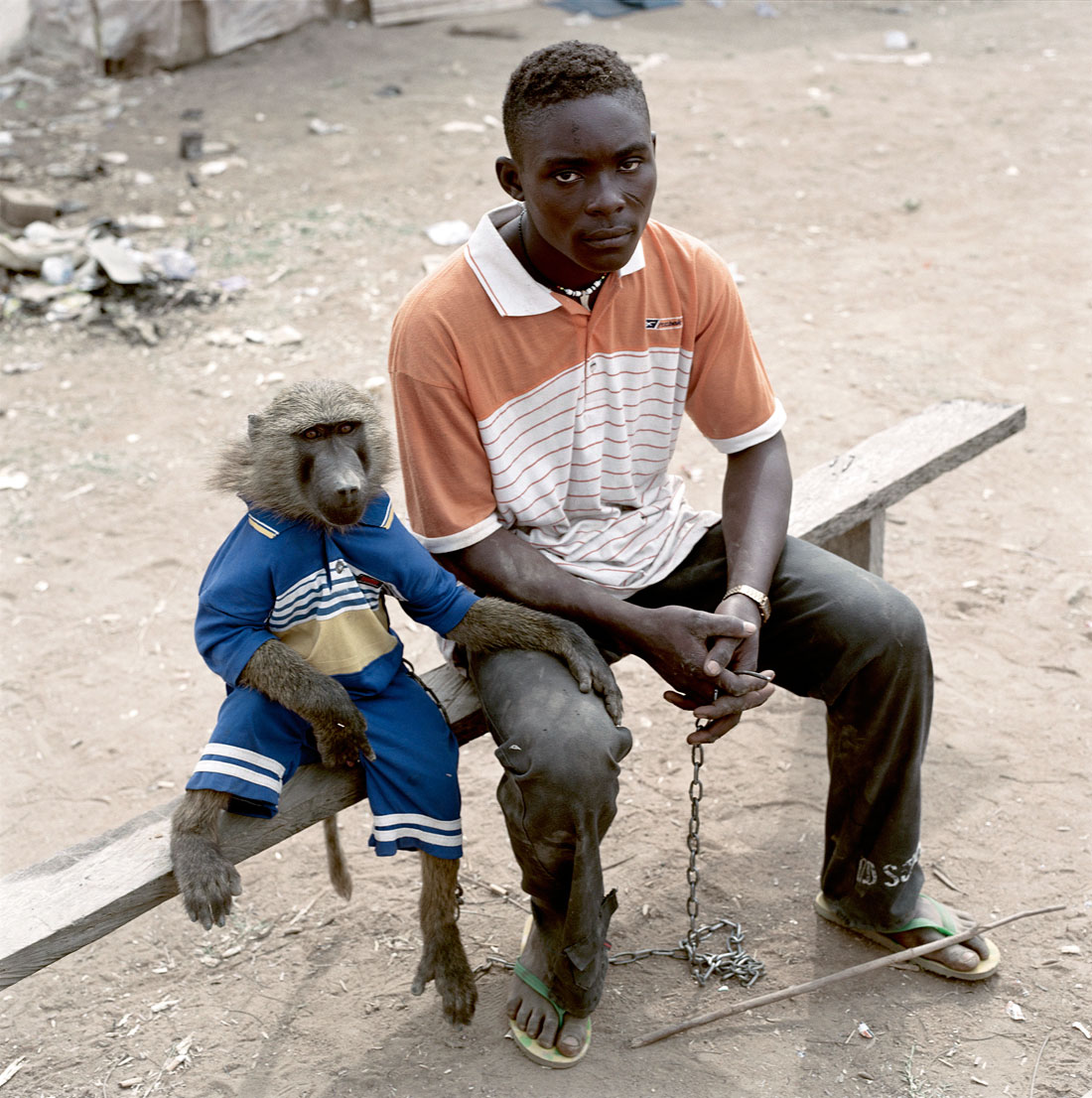
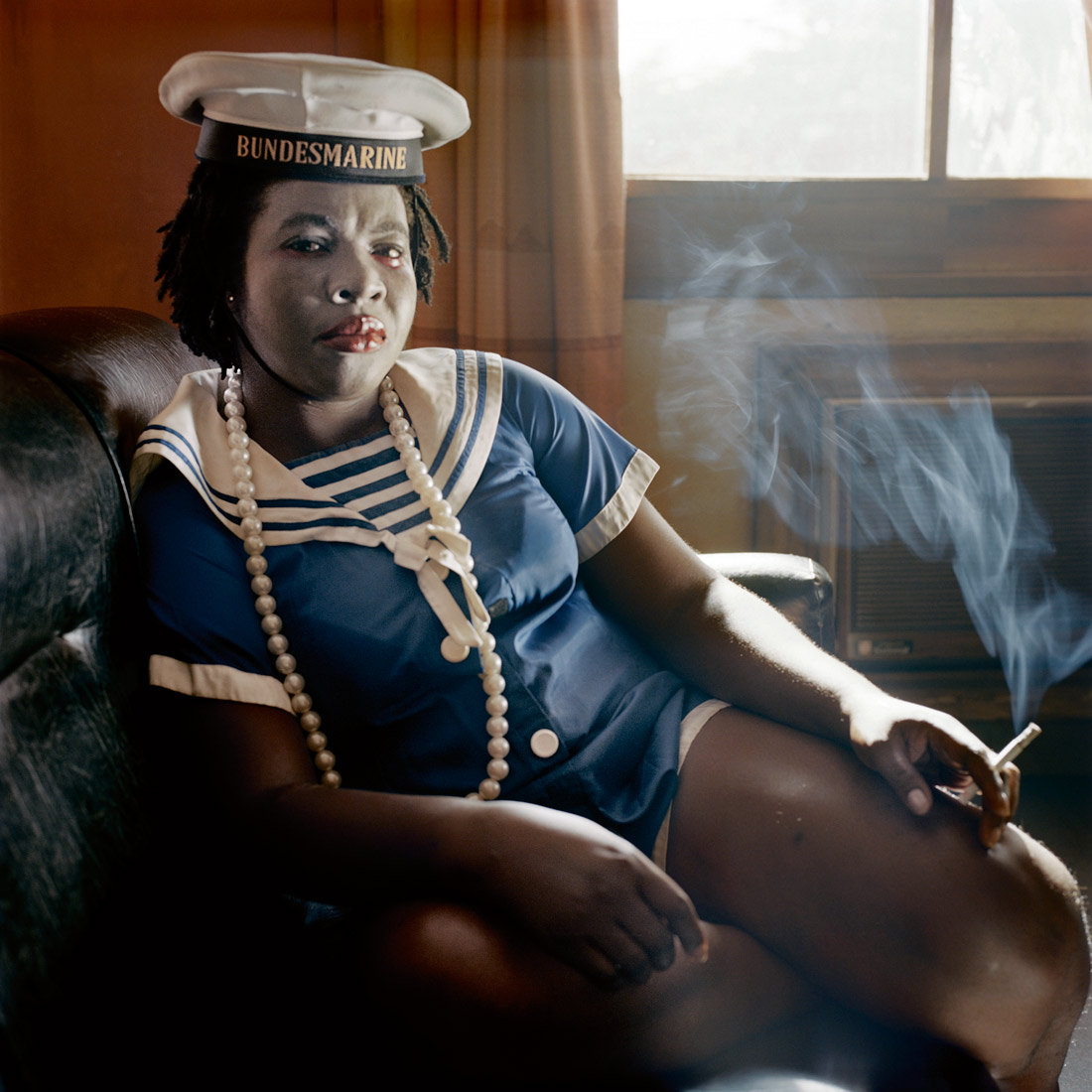
Pieter Hugo (South African, b. 1976) 'Mallam Mantari Lamal with Mainasara, Abuja' From the series 'The Hyena & Other Men' 2005-2007


Pieter Hugo (South African, b. 1976)
Mallam Mantari Lamal with Mainasara, Abuja
2005-2007 
From the series The Hyena & Other Men
© Courtesy of Stevenson Gallery, Kaapstad / Yossi Milo, New York


Sexy, scary and very sad.

The hand of the monkey Clear on the thigh of Dayaba Usman (see second photograph below) – and the look on his face – makes one wonder who is really in chains.

Marcus


Many thankx to the Hague Museum of Photography for allowing me to publish the photographs in the posting. Please click on the photographs for a larger version of the image.


Pieter Hugo (South African, b. 1976) 'Dayaba Usman with the monkey Clear, Abuja' From the series 'The Hyena & Other Men' 2005-2007


Pieter Hugo (South African, b. 1976)
Dayaba Usman with the monkey Clear, Abuja
2005-2007
From the series The Hyena & Other Men
© Courtesy of Stevenson Gallery, Kaapstad / Yossi Milo, New York


Pieter Hugo (South African, b. 1976) 'Mummy Ahmadu and a snake charmer with a rock python, Abuja' From the series 'The Hyena & Other Men' 2005-2007


Pieter Hugo (South African, b. 1976)
Mummy Ahmadu and  a snake charmer with a rock python, Abuja
2005-2007
From the series The Hyena & Other Men
© Courtesy of Stevenson Gallery, Kaapstad / Yossi Milo, New York


The South African photographer Pieter Hugo’s (1976) monumental photographs, centred around contemporary Africa, are now well known around the world. He has already won numerous awards including the KLM Paul Huf award in 2008 and was recently nominated for the Deutsche Börse Photography Prize 2012. The Hague Museum of Photography will be the first museum to exhibit a comprehensive survey of Hugo’s work from 2002-2011. Together with many previously unseen works, the exhibition will include a curated selection of his most well-known series: The Hyena & Other Men, the bizarre Nollywood and the striking Permanent Error. His impressive portraits tell personal stories about recurring themes throughout his oeuvre, namely those people who inhabit the margins of society in Sub-Saharan Africa. 

The differences between the West and Africa, rich and poor, white and black are confronted in Hugo’s vivid compositions. Many of his series are prompted by newspaper articles, or radio and television pieces, which he finds compelling. He came in contact, for instance with the group of men who travel around Nigeria with hyenas and pythons, through an image sent via cell phone camera by a friend. He decided to accompany the group on their travels, and the outcome of this experience is The Hyena & Other Men (2005-2007), a series of portraits from a travelling group of street performers, who together with their – sometimes forcefully – tamed animals earn money to continue travelling.

In the series Permanent Error (2009-2010) he offers portraits of young men and woman who live amidst an immense waste dump of broken computers, mother boards and keyboards. To earn money these young people burn the computers dumped here as a means to extract valuable metals. The dangerous and poisonous vapours produce a hell on earth, where the quality of life is already challenging. The people who pose for Hugo stand in front of the camera with a defiant self-confidence.

From a different perspective comes his series about Nollywood (2008-2009) in Nigeria, the biggest film industry in the world after Hollywood and Bollywood. Here, stories that have for centuries been part of an oral tradition are told in dramatic films in which a central role is reserved for themes such as romance, witchcraft, bribery and prostitution. It is this world, where the everyday and the surreal exist simultaneously, that Hugo finds fascinating. In this series Hugo depicts actors and assistants posing in the role of movie characters. The result is an absurd tableau such as a photo of a half-naked woman sitting on a bed with a bloody knife stuck between her breasts. All the while she stares blankly at the camera. In another image, a woman well-dressed in Nigerian clothing sits completely unfazed by the man next to her made-up as the devil.

Press release from The Hague Museum of Photography website


Pieter Hugo (South African, b. 1976) 'Escort Kama, Enugu' From the series 'Nollywood' 2008-2009


Pieter Hugo (South African, b. 1976)
Escort Kama, Enugu
2008-2009
From the series Nollywood
© Courtesy of Stevenson Gallery, Kaapstad / Yossi Milo, New York


Pieter Hugo (South African, b. 1976) 'Obechukwu Nwoye, Enugu' From the series 'Nollywood' 2008-2009


Pieter Hugo (South African, b. 1976)
Obechukwu Nwoye, Enugu
2008-2009
From the series Nollywood
© Courtesy of Stevenson Gallery, Kaapstad / Yossi Milo, New York


Pieter Hugo (South African, b. 1976) 'Abdulai Yahaya, Agbogbloshie Market, Accra' From the series 'Permanent Error', 2009-2010


Pieter Hugo (South African, b. 1976)
Abdulai Yahaya, Agbogbloshie Market, Accra
2009-2010
From the series Permanent Error
© Courtesy of Stevenson Gallery, Kaapstad / Yossi Milo, New York


Pieter Hugo (South African, b. 1976) 'Abdulai Yahaya, Agbogbloshie Market, Accra' 2009-2010 From the series 'Permanent Error'


Pieter Hugo (South African, b. 1976)
Abdulai Yahaya, Agbogbloshie Market, Accra
2009-2010
From the series Permanent Error
© Courtesy of Stevenson Gallery, Kaapstad / Yossi Milo, New York


Pieter Hugo (South African, b. 1976) 'David Akore, Agbogbloshie Market, Accra' 2009-2010 From the series 'Permanent Error'


Pieter Hugo (South African, b. 1976)
David Akore, Agbogbloshie Market, Accra
2009-2010
From the series Permanent Error
© Courtesy of Stevenson Gallery, Kaapstad / Yossi Milo, New York


The Hague Museum of Photography
Stadhouderslaan 43
2517 HV Den Haag
Phone: 31 (0)70 – 33 811 44

Opening hours:
Tuesday – Sunday, 11am – 5pm
Closed Mondays

The Hague Museum of Photography website

LIKE ART BLART ON FACEBOOK

Back to top

Exhibition: ‘Andy Warhol: Polaroids / MATRIX 240’ at Berkeley Art Museum and Pacific Film Archive, University of California

Exhibition dates: 27th January – 20th May 2012

PLEASE NOTE: This posting contains nude photographs. If you do not like please do not look!


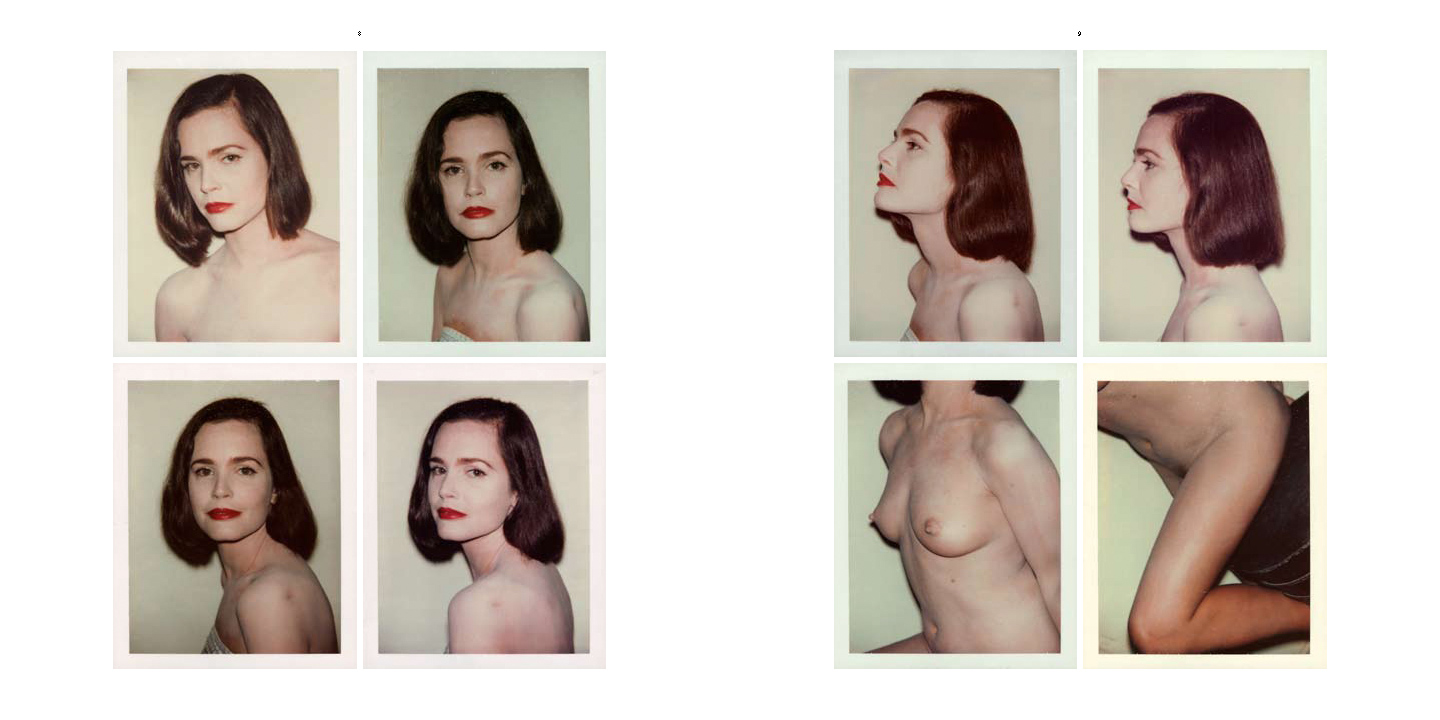
Andy Warhol (American, 1928-1987) 'Untitled' Pages 8 and 9 of The Andy Warhol Photographic Legacy Program, Vol. III


Andy Warhol (American, 1928-1987)
Untitled
Pages 8 and 9 of The Andy Warhol Photographic Legacy Program, Vol. III
of The Andy Warhol Foundation for the Visual Arts Twenty-Year Report, 1987–2007


ONE PERSON has found one of the images below offensive; so just for them please note that his posting has a PENIS and A-RRRRRR-SE rating. For all others, enjoy another spectacular Andy posting!

Marcus


Many thankx to BAM/PFA for allowing me to publish the photographs in the posting. Please click on the photographs for a larger version of the image (especially the two images directly below). View the complete The Andy Warhol Photographic Legacy Program Vol. III as a pdf (3.7Mb pdf)


“I’ve never met a person I couldn’t call a beauty.”


Andy Warhol


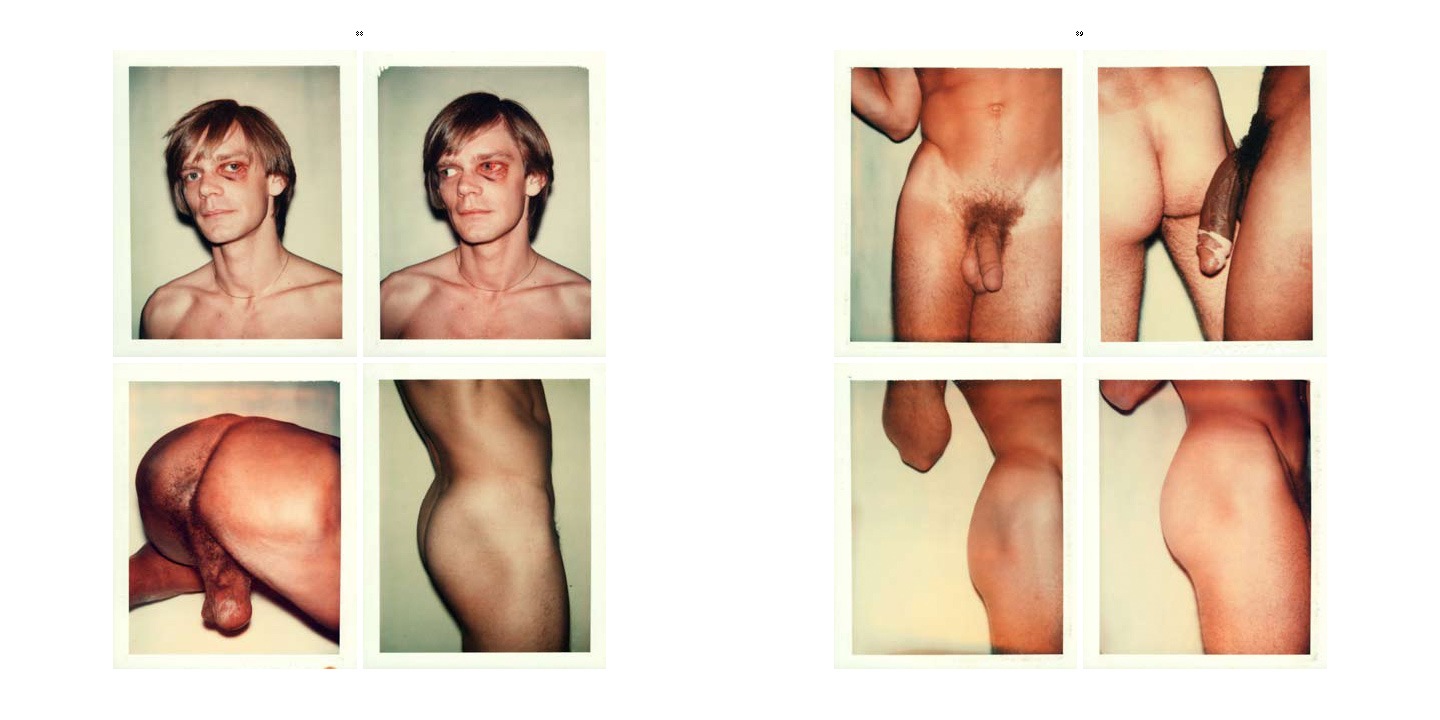
Andy Warhol (American, 1928-1987) 'Untitled' Pages 38 and 39 of The Andy Warhol Photographic Legacy Program, Vol. III


Andy Warhol (American, 1928-1987)
Untitled
Pages 38 and 39 of The Andy Warhol Photographic Legacy Program, Vol. III
of The Andy Warhol Foundation for the Visual Arts Twenty-Year Report, 1987–2007


The University of California, Berkeley Art Museum and Pacific Film Archive presents Andy Warhol: Polaroids / MATRIX 240. The exhibition features a selection of Warhol’s Polaroid portraits drawn from an extraordinary gift of The Andy Warhol Foundation for the Visual Arts to the museum. From 1970 to 1987, Warhol, armed with his Polaroid Big Shot camera, captured a wide range of individuals – the royalty, rock stars, executives, artists, patrons of the arts, and athletes who epitomised seventies and eighties high society, but also as many unknown subjects. From January 27 through May 20, 2012, BAM/PFA will feature a group of approximately forty of these photographs, including portraits of Caroline, Princess of Monaco; Diane von Furstenberg; and O.J. Simpson.

Famous for his contributions to Pop Art, Warhol used photography as a central part of his art-making process. Before turning to fine art, Warhol worked in advertising and commercial art, experiences that informed his approach to portraiture. In 1962, he debuted his first silkscreen paintings of celebrities, serialising pictures he pulled from magazines and press photos. In addition to using found images, Warhol eventually incorporated his own photography into his practice. In 1969 he launched inter/View magazine, which featured his photos of celebrities. By the 1970s and 1980s, portrait commissions were a major source of his income, and many of his Polaroids would serve as the basis for these works.

While each of the images in Andy Warhol: Polaroids is unique, the consistency of composition, poses, and plain white backdrop equalises the superstars and lesser-known subjects. To Warhol, they were all beautiful people. But even within this uniform staging, we see the artist finding numerous ways to create memorable, varied, and iconic compositions. Though these photos may be small in size, together the Warhol Polaroids provide a glimpse into the artistic process of one of the twentieth century’s most important artists.

From 1970 to 1987 Andy Warhol took scores of Polaroid and black-and-white photographs, the vast majority of which were never seen by the public. These images often served as the basis for his commissioned portraits, silk-screen paintings, drawings, and prints. In 2007, to commemorate its twentieth anniversary, the Andy Warhol Foundation for the Visual Arts launched the Andy Warhol Photographic Legacy Program. Designed to give a broad public greater access to Warhol’s photographs, the program donated over 28,500 of Warhol’s original Polaroids and gelatin silver prints to more than 180 college and university museums and galleries across the country. Each institution received a curated selection of over one hundred Polaroids and fifty black-and-white prints.

The number of images he took at each session varied as greatly as the figures he photographed. Repetition, a recurring motif in Warhol’s paintings, plays both a conceptual and practical role in his photography. By making several Polaroids, he had more material from which to work. By shooting at length, more about the sitter was exposed. Seen all together, the Polaroids destabilise the iconic status that a Warhol image assumes when displayed singly. On its own, a Polaroid image is fully identified with the artwork that ultimately grew out of it; the face depicted becomes a kind of signifier for larger cultural concepts of beauty, power, and worth.

Text adapted from “Andy Warhol’s Photographic Legacy,” in The Andy Warhol Photographic Legacy Program, Vol. III of The Andy Warhol Foundation for the Visual Arts Twenty-Year Report, 1987-2007 (New York: The Andy Warhol Foundation for the Visual Arts, Inc, 2007), 4-5.

View the complete Vol. III as a pdf (3.7Mb pdf)

Text and press release from the BAM/PFA website


Andy Warhol (American, 1928-1987) 'Billy Squier' 1982


Andy Warhol (American, 1928-1987)
Billy Squier
1982
Polacolor 2
4 1/4 x 3 3/8 in
Gift of the The Andy Warhol Center for the Visual Arts
© The Andy Warhol Center for the Visual Arts


Andy Warhol (American, 1928-1987) 'Daryl Lillie' 11/1978


Andy Warhol (American, 1928-1987)
Daryl Lillie
11/1978
Polacolor 2
4 14 x 3 3/8 in
© The Andy Warhol Center for the Visual Arts


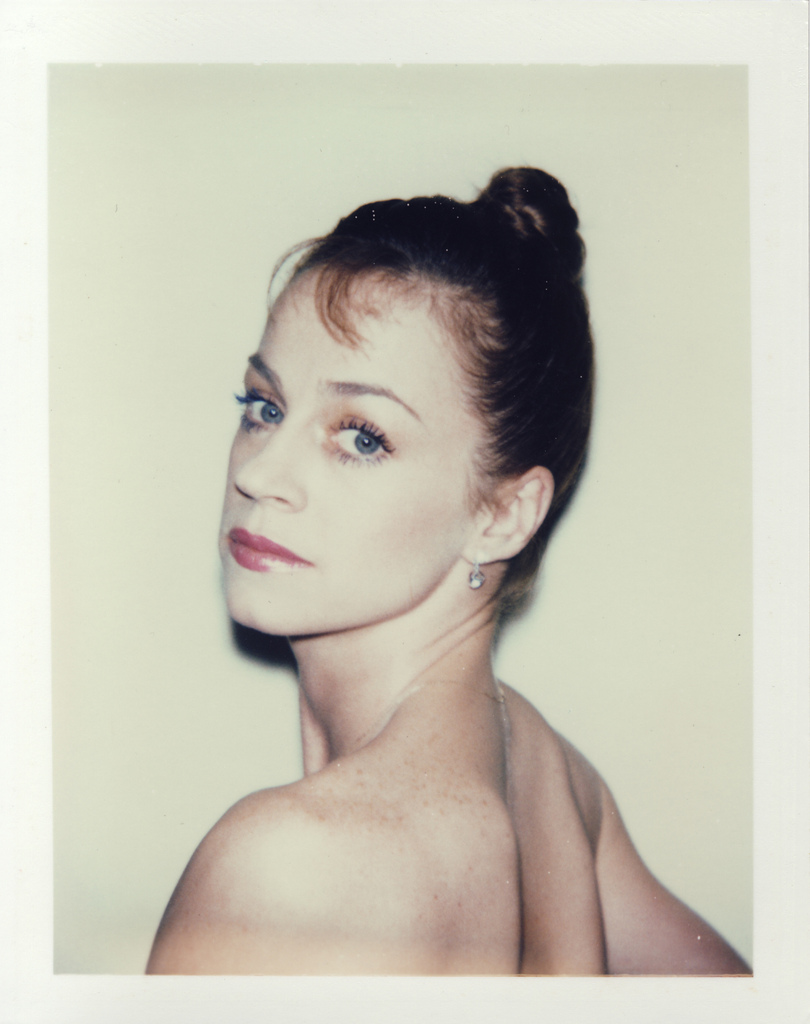
Andy Warhol (American, 1928-1987) 'Heather Watts' after June 1986


Andy Warhol (American, 1928-1987)
Heather Watts
after June 1986
Polacolor ER
4 1/4 x 3 3/8 in
© The Andy Warhol Center for the Visual Arts


From 1970 to 1987 Andy Warhol took thousands of Polaroid pictures, the vast majority of which were never seen by the public. These images often served as the basis for his commissioned portraits, silkscreen paintings, drawings, and prints. Warhol captured a wide range of individuals with his Polaroid Big Shot camera. The royalty, rock stars, industrialists, artists, patrons of the arts, and athletes who epitomised 1970s and 1980s high society, as well as unknown sitters, are represented with a sense of dignity and verve. Warhol was interested in a new definition of “Society” that emerged in this period. In the introduction to the 1979 publication Andy Warhol’s Exposures, the artist wrote:

“Now it doesn’t matter if you came over on the Mayflower, so long as you can get into Studio 54. Anyone rich, powerful, beautiful, or famous can get into Society. If you’re a few of those things you can really get to the top.”1

Warhol’s images not only documented, but participated in, the creation of this new social world, satisfying both the need of his subjects to be seen and the desire of the viewer to gain access to this milieu through the act of looking. Warhol worked in advertising and commercial art before turning to fine art, experiences that informed his approach to portraiture. In 1962, he debuted his first silk-screen paintings of celebrities, serialising pictures appropriated from magazines or press photos of the time. In addition to employing found images, Warhol eventually incorporated photography into his practice and, in 1969, started a magazine (originally called inter/VIEW) that often featured his own photographs of celebrities. By the 1970s and 1980s, portrait commissions became a main source of his income.

Warhol’s Polaroids are strikingly intimate, an effect achieved in part by his personal relationship with the sitters and in part by formal aspects of the images. The artist often provided a luncheon in advance of the photo session, establishing a bond with his subject and a tone for the shoot. In the resulting Polaroids, the sitter is in direct eye contact with Warhol and the camera. The strong sense of immediacy created by the sitter’s open gaze is enhanced by the tight compositions in which the subject, pressed up close to the picture plane, is isolated from any context. A feeling of vulnerability appears in some of the portraits (as suggested by the bared shoulders of Unidentified woman (blond with bangs), for example), indicating a willingness to be exposed as well as the seductive nature of the artist and the photo shoot itself. The closeness forged between photographer and sitter and captured by the camera offers an illusion of sharing these private moments and of entering into Warhol’s circle of beautiful people and their glamorous lives.

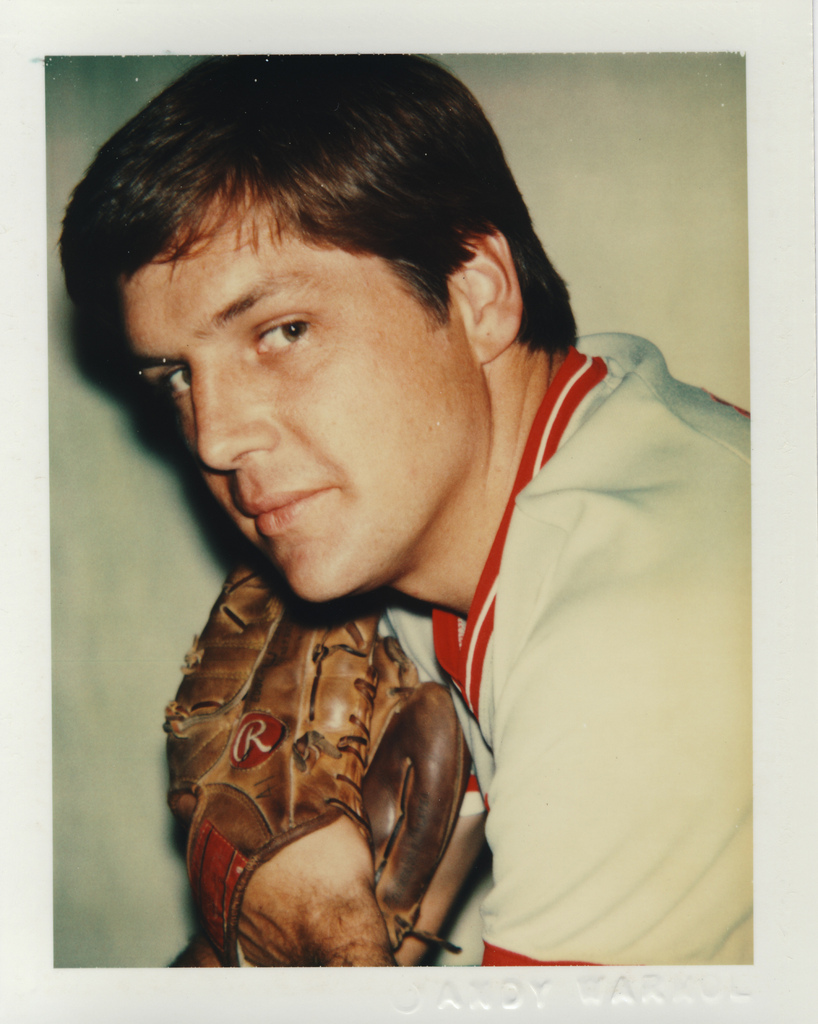
While each image is unique, the consistency of composition, poses, and plain white backdrop equalises the celebrities and the unknown subjects of Warhol’s Polaroids. After all, to Warhol, they were all beautiful people. Polaroids of individuals who are not immediately recognisable pique our curiosity. Who is the enigmatic Frau Buch? Like many of Warhol’s subjects, she is photographed with a prop. The small dog that she hugs may not identify her, but it suggests a dimension of her personality. In other Polaroids, Warhol used props as identifying elements like the attributes in Renaissance portraiture – major-league baseball pitcher Tom Seaver is shown with his mitt and NFL legend O.J. Simpson clutches a football. The teddy bear in the arms of the subject of Unidentified girl (blue t-shirt with teddy bear) represents an aspect childhood that everyone can relate to, although the girl is actually a scion of the new high society: Jade, the daughter of Mick and Bianca Jagger.

Warhol’s Polaroids were designed to be source material for his canvases. He would direct the sitter in a series of poses, which gave the artist ample material from which to create the subsequent silkscreen portraits. Subjects such as fashion designer Diane Von Furstenberg and patron of the arts Daryl Lillie are photographed wearing thick white makeup, black eyeliner, and bright red lipstick that evoke the stage or a high-fashion photo shoot; however, the makeup also served to flatten the images for a smooth effect in the screen-print transfer. The Polaroid Big Shot’s strong flash overexposes many images and increases the contrast, an effect Warhol deployed in the subsequent silkscreens; the flash also seems to catch each sitter – celebrities and unknowns alike – in the sudden glare of a paparazzo’s camera.

Warhol’s Polaroids borrow from paparazzi and high-fashion photography and at the same time elevate an inexpensive, everyday medium to the realm of high art. Warhol embossed his name in capital letters in the lower right-hand border of most of the Polaroids, marking them as a painter would sign a canvas. For Warhol, coming from the world of advertising, this was also a kind of branding. He wrote of Jade Jagger: “She never calls me Andy always Andywarhol, as if it were one word – or a brand name, which I wish it were.”2 Warhol’s portraits confuse the boundaries of advertising and art, high and low, celebrity portraiture and the depiction of everyday people, and even photography and painting. His subjects are perpetually illuminated by the afterimage of a flashbulb, their faces immortalised by Warhol’s style

Fabian Leyva-Barragan, Curatorial Intern
Stephanie Cannizzo, Assistant Curator


1/ Warhol, Andy and Colacello, Bob . Andy Warhol’s Exposures (New York: Andy Warhol Books / Grosset & Dunlop, Inc., 1979), p. 19

2/ Ibid., pp. 28-29


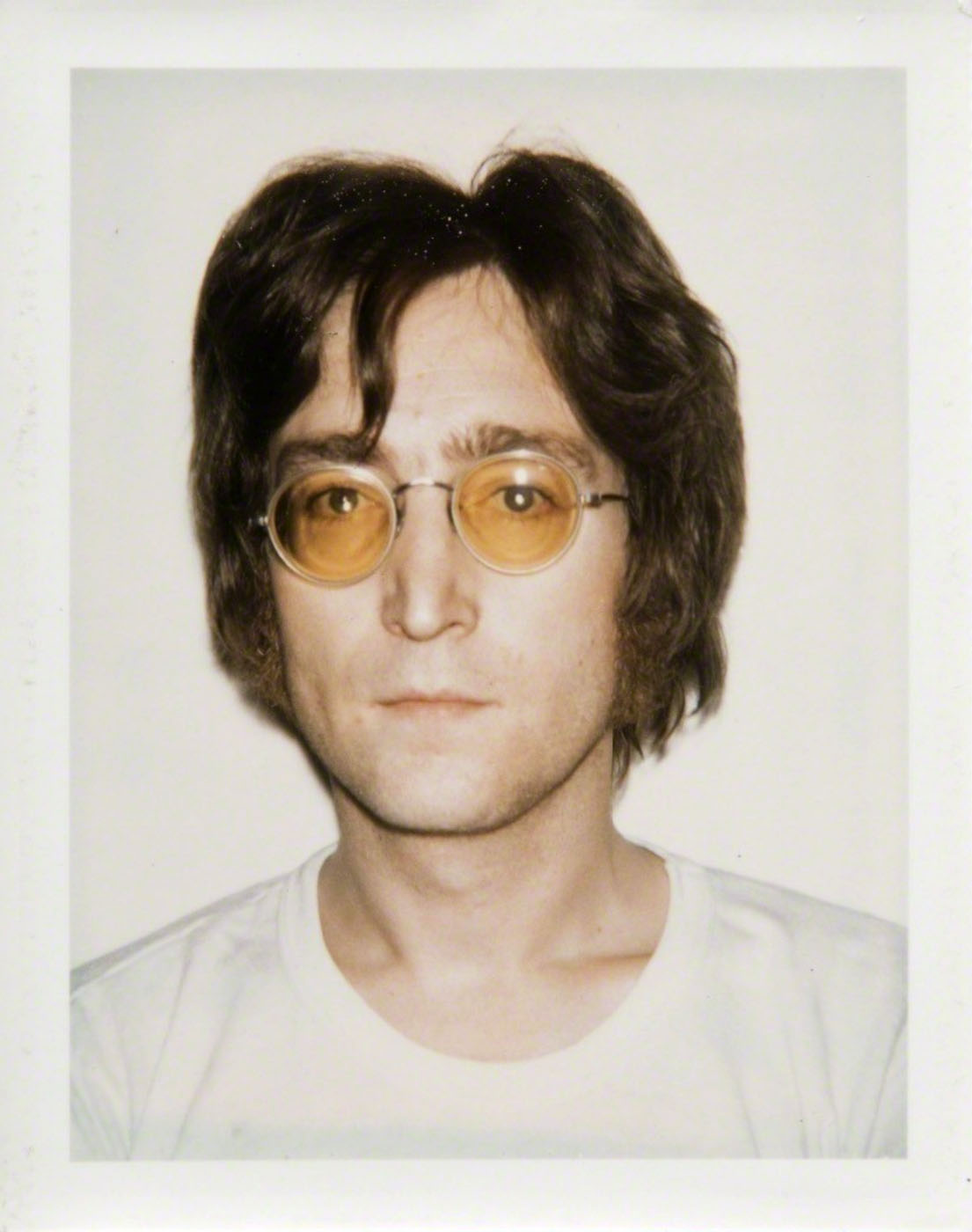
Andy Warhol (American, 1928-1987) 'John Lennon' 1971


Andy Warhol (American, 1928-1987)
John Lennon
1971
Polacolor ER
4 1/4 x 3 3/8 in
Gift of the The Andy Warhol Center for the Visual Arts
© The Andy Warhol Center for the Visual Arts


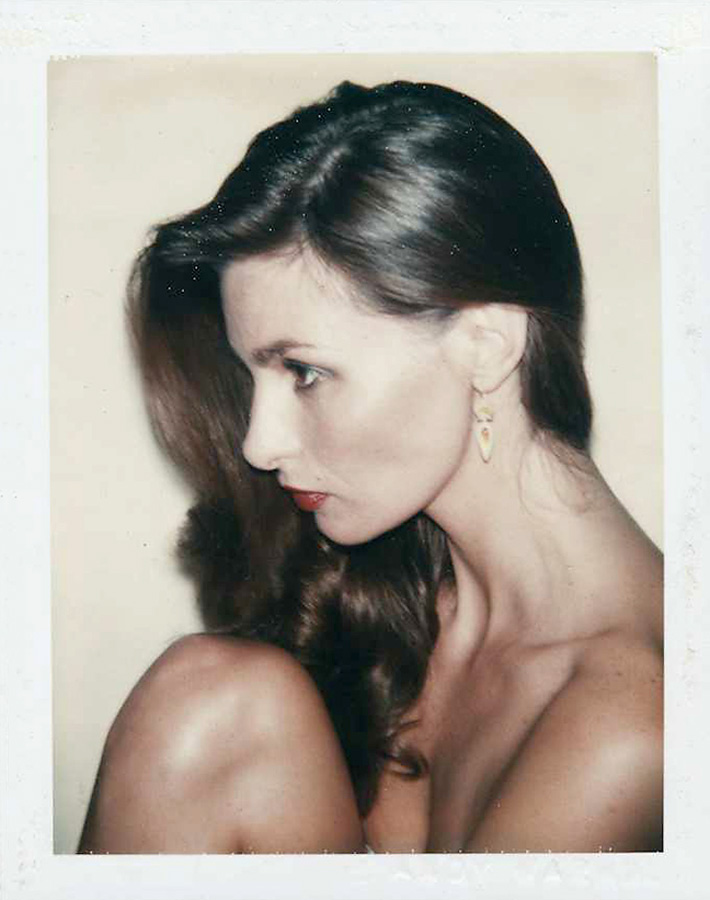
Andy Warhol (American, 1928-1987) 'Apollonia Von Ravenstein' c. 1979


Andy Warhol (American, 1928-1987)
Apollonia Von Ravenstein
c. 1979
Polacolor ER
4 1/4 x 3 3/8 in
Gift of the The Andy Warhol Center for the Visual Arts
© The Andy Warhol Center for the Visual Arts


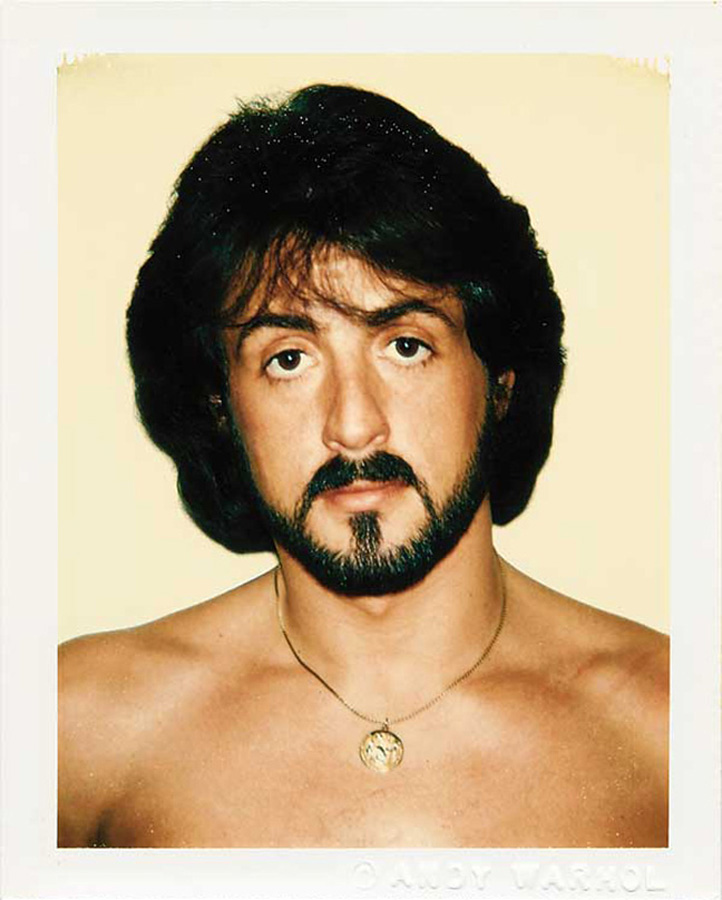
Andy Warhol (American, 1928-1987) 'Sylvester Stallone' 2/1980


Andy Warhol (American, 1928-1987)
Sylvester Stallone
2/1980
Polacolor ER
4 1/4 x 3 3/8 in
Gift of the The Andy Warhol Center for the Visual Arts
© The Andy Warhol Center for the Visual Arts


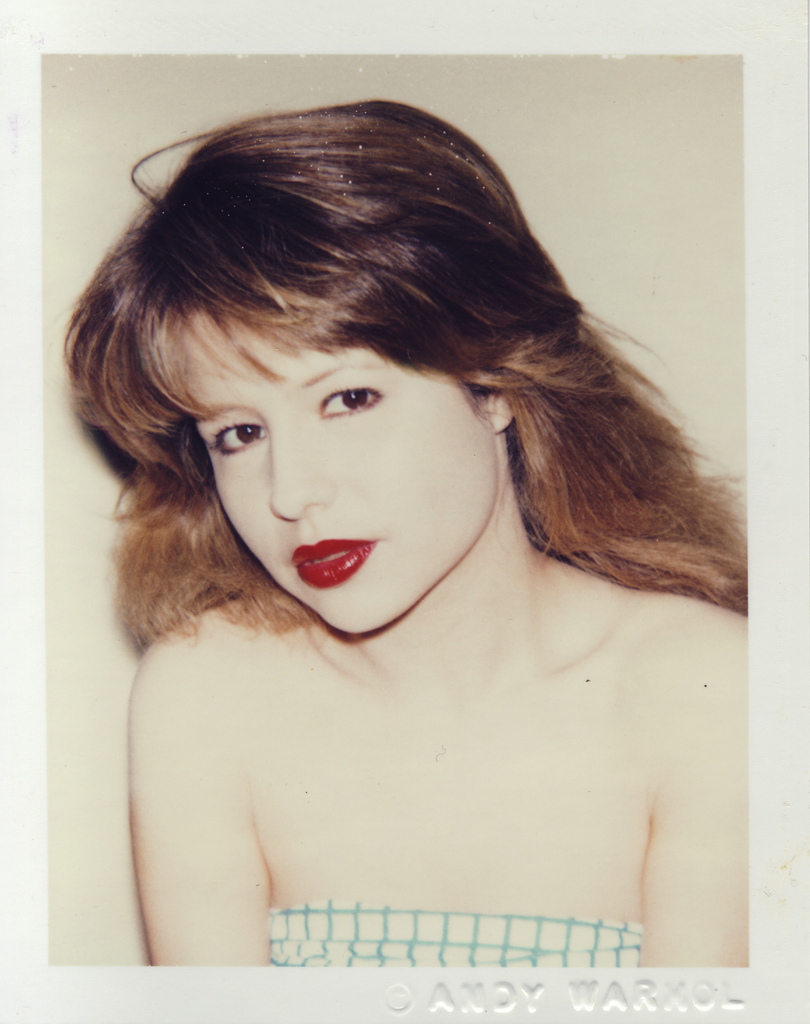
Andy Warhol (American, 1928-1987) 'Pia Zadora' 1983


Andy Warhol (American, 1928-1987)
Pia Zadora
1983
Polacolor ER
4 1/4 x 3 3/8 in
Gift of the The Andy Warhol Center for the Visual Arts
© The Andy Warhol Center for the Visual Arts


Andy Warhol (American, 1928-1987) 'Tom Seaver' 1977


Andy Warhol (American, 1928-1987)
Tom Seaver
1977
Polacolor Type 108
4 14 x 3 3/8 in
Gift of the The Andy Warhol Center for the Visual Arts
© The Andy Warhol Center for the Visual Arts


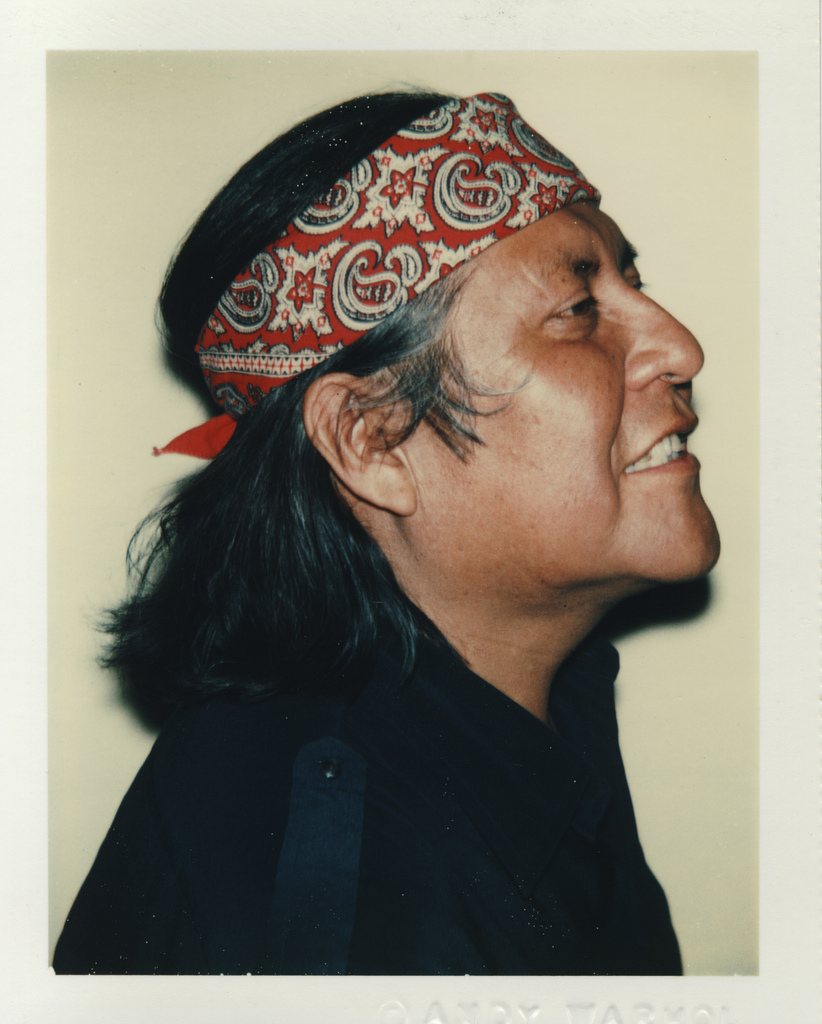
Andy Warhol (American, 1928-1987) 'R.C. Gorman' 1979


Andy Warhol (American, 1928-1987)
R.C. Gorman
1979
Polacolor Type 108
4 1/4 x 3 3/8 in
© The Andy Warhol Center for the Visual Arts


Berkeley Art Museum and Pacific Film Archive

BAMPFA is located at 2155 Center Street
between Oxford Street and Shattuck Avenue, in downtown Berkeley
Phone: (510) 642-0808

Opening hours:
Wednesday – Sunday, 11am – 7pm
Closed Mondays and Tuesdays

Berkeley Art Museum and Pacific Film Archive website

LIKE ART BLART ON FACEBOOK

Back to top

Exhibition: ‘The Mind’s Eye: 50 Years of Photography by Jerry Uelsmann’ at Peabody Essex Museum, Salem, MA

Exhibition dates: 11th February – 15th July, 2012


Jerry Uelsmann (American, 1934-2022) 'Untitled (Pigeon Hill, Bloomington, Indiana)' 1958–59


Jerry Uelsmann (American, 1934-2022)
Untitled (Pigeon Hill, Bloomington, Indiana)
1958-1959
Gelatin silver print
5 3/8 x 9 1/8 in (13.6 x 23.3cm)
© Jerry Uelsmann


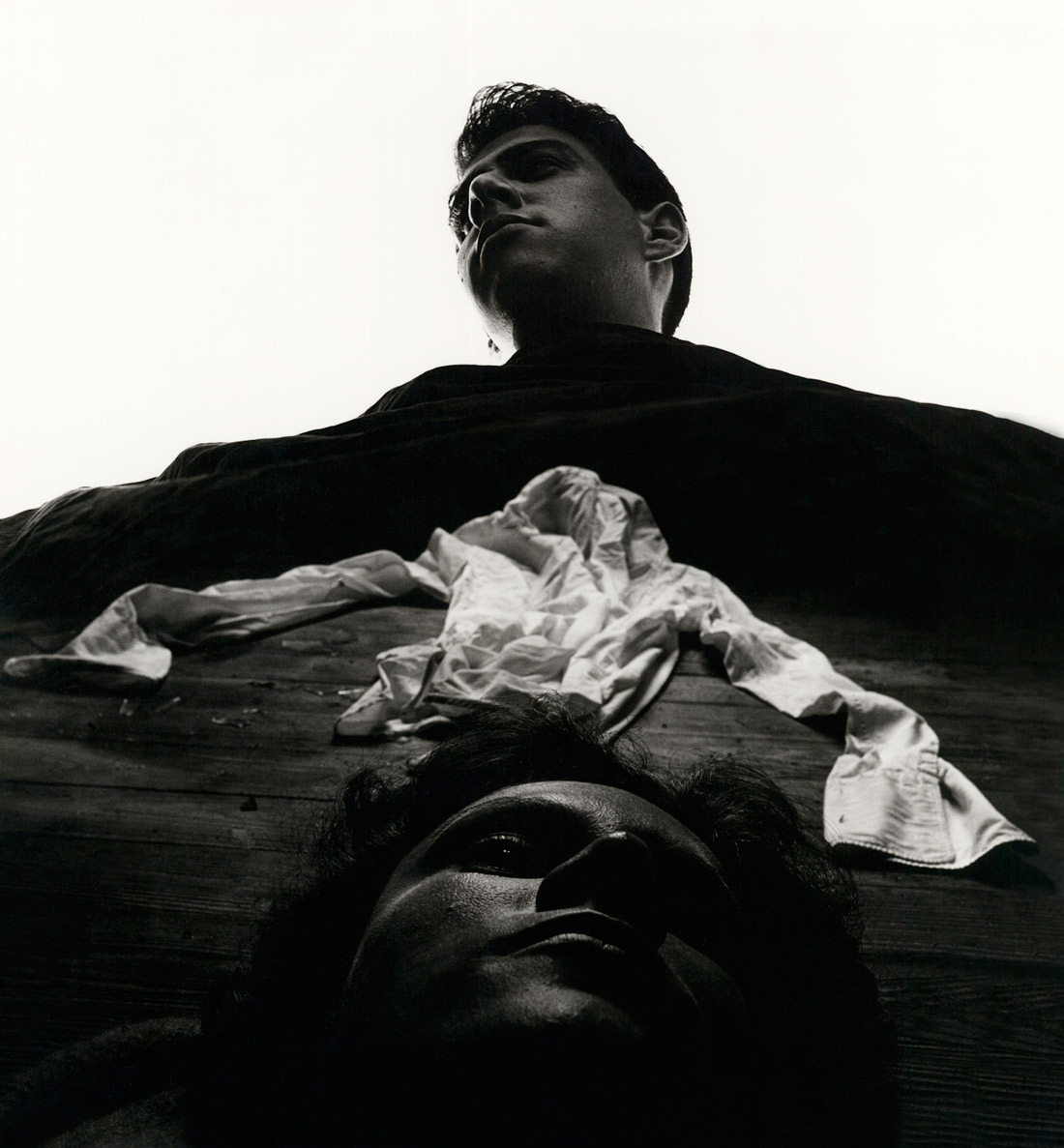
More wonderful photographs from this magnificent photographer as featured in this touring exhibition. It is invaluable to see other images from the artist’s oeuvre (especially early work from the 1950s to observe thematic development), not just the most famous of the surreal montages. Untitled (1966, below) is an absolute ripper that I have never seen before while Untitled (1959, bottom) is as disturbing in a fantastical way as any of Joel-Peter Witkins’ theatrical tableaux vivant.

See my other posting on this exhibition from the Harn Museum of Art, Florida.

Marcus


Many thankx to the Peabody Essex Museum for allowing me to publish the photographs in the posting. Please click on the photographs for a larger version of the image.


Jerry Uelsmann (American, 1934-2022) 'Room #1' 1963


Jerry Uelsmann (American, 1934-2022)
Room #1
1963
Gelatin silver print
9 1/8 x 13 3/4 in (23.3 x 34.8cm)
© Jerry Uelsmann


Jerry Uelsmann (American, 1934-2022) 'Untitled' 1966


Jerry Uelsmann (American, 1934-2022)
Untitled
1966
Gelatin silver print
6 1/2 x 6 5/8 in (16.6 x 16.8cm)
© Jerry Uelsmann


Jerry Uelsmann (American, 1934-2022) 'Untitled' 1962


Jerry Uelsmann (American, 1934-2022)
Untitled
1962
Gelatin silver print
8 1/2 in x 7 3/4 in (21.5 x 19.6cm)
© Jerry Uelsmann


Jerry Uelsmann (American, 1934-2022) 'Bless Our Home and Eagle' 1962


Jerry Uelsmann (American, 1934-2022)
Bless Our Home and Eagle
1962
Gelatin silver print
13 3/8 x 10 1/2 in (33.8 x 26.5cm)
© Jerry Uelsmann


Beautiful and surreal, funny and provocative, the photographs of Jerry Uelsmann are icons of American photo history. The Peabody Essex Museum (PEM) presents the first retrospective of Uelsmann’s work in over 30 years. The Mind’s Eye: 50 Years of Photography by Jerry Uelsmann features 90 works spanning the artist’s celebrated and wide-ranging career, with well-known works shown alongside never-before-seen recent images.

As a pioneer of contemporary photography and master of experimental darkroom technique, Uelsmann has continuously pushed the creative and technical boundaries of photography, revealing new visual possibilities and critical considerations for the medium. In the late 1950s, Uelsmann began experimenting with multiple enlargers and advanced masking, diffusing, burning and dodging techniques, to create imaginary images in the darkroom decades before the advent of Photoshop. Uelsmann’s ingenious work references Surrealists like Rene Magritte, Max Ernst, and Man Ray, as well as Modern photographers such as Edward Weston and Ansel Adams. He has spent his career advocating for the acceptance of experimental photography as an art form.

“For more than half a century, Uelsmann has challenged conventional ideas about what photography can and should do,” said Phillip Prodger, exhibition curator and PEM’s curator of photography. “Uelsmann’s pictures provide a valuable touchstone for understanding new trends in photographic art. His ideas and example have become ever more relevant as photography embraces Photoshop and other computer technologies for altering and manipulating photographs.”

The Mind’s Eye presents works drawn from the artist’s personal archive of vintage materials and, in addition to photographic prints, includes a selection of three-dimensional photographic sculptures, films, artist’s books, albums and work prints to give viewers first-hand insight into Uelsmann’s creative process and expressive range. Through experimental techniques, Uelsmann has explored universal themes of relationships, family, home and politics by creating unexpected and surprising juxtapositions.

“My visual quest is driven by a desire to create a universe capable of supporting feelings and ideas,” said Jerry Uelsmann. “I am drawn to art that challenges one’s sense of reality.”

Born in Detroit in 1934, Uelsmann received a Bachelor of Fine Arts from the Rochester Institute of Technology in 1957 and Master of Science and Master of Fine Arts degrees from Indiana University in 1960. He is recently retired from the faculty of the University of Florida, which he joined in 1960. Uelsmann received a National Endowment for the Arts Fellowship and a Guggenheim Fellowship. In 1967 he had his first solo exhibition at the Museum of Modern Art, New York.

Press release from the PEM website


Jerry Uelsmann (American, 1934-2022) 'Magritte's Touchstone (first version)' 1965


Jerry Uelsmann (American, 1934-2022)
Magritte’s Touchstone (first version)
1965
Gelatin silver print
© Jerry Uelsmann


Jerry Uelsmann (American, 1934-2022) 'Untitled' 1977


Jerry Uelsmann (American, 1934-2022)
Untitled
1977
Gelatin silver print
13 1/8 x 10 5/8 in (33.5 x 27.1cm)
© Jerry Uelsmann


Jerry Uelsmann (American, 1934-2022) 'Untitled' 1996


Jerry Uelsmann (American, 1934-2022)
Untitled
1996
Gelatin silver print
19 5/8 x 14 3/4 in (49.8 x 37.4cm)
© Jerry Uelsmann


Jerry Uelsmann (American, 1934-2022) 'Untitled' 1976


Jerry Uelsmann (American, 1934-2022)
Untitled
1976
Gelatin silver print
19 1/2 x 14 1/2 in (49.5 x 36.9cm)
© Jerry Uelsmann


Jerry Uelsmann (American, 1934-2022) 'Bloomington, Indiana' 1958


Jerry Uelsmann (American, 1934-2022)
Bloomington, Indiana
1958
Gelatin silver print
7 7/8 x 7 1/4 in (19.9 x 18.3cm)
© Jerry Uelsmann


Jerry Uelsmann (American, 1934-2022) 'Untitled' 1959


Jerry Uelsmann (American, 1934-2022)
Untitled
1959
Gelatin silver print
13 1/2 x 5 5/8 in (34.2 x 14.3cm)
© Jerry Uelsmann


Peabody Essex Museum
East India Square
161 Essex Street
Salem, MA 01970-3783 USA
Phone: 978-745-9500, 866-745-1876

Opening hours:
Open Tuesday – Sunday 10am – 5pm
Closed Mondays

Peabody Essex Museum website

LIKE ART BLART ON FACEBOOK

Back to top

Review: ‘Jane Brown / Australian Gothic’ at Edmund Pearce Gallery, Melbourne

Exhibition dates: 25th April – 12th May 2012


Jane Brown (Kuwait, Australia, b. 1967) 'Big Trout, New South Wales' 2010


Jane Brown (Kuwait, Australia, b. 1967)
Big Trout, New South Wales
2010
Museo silver rag print
59 x 46cm


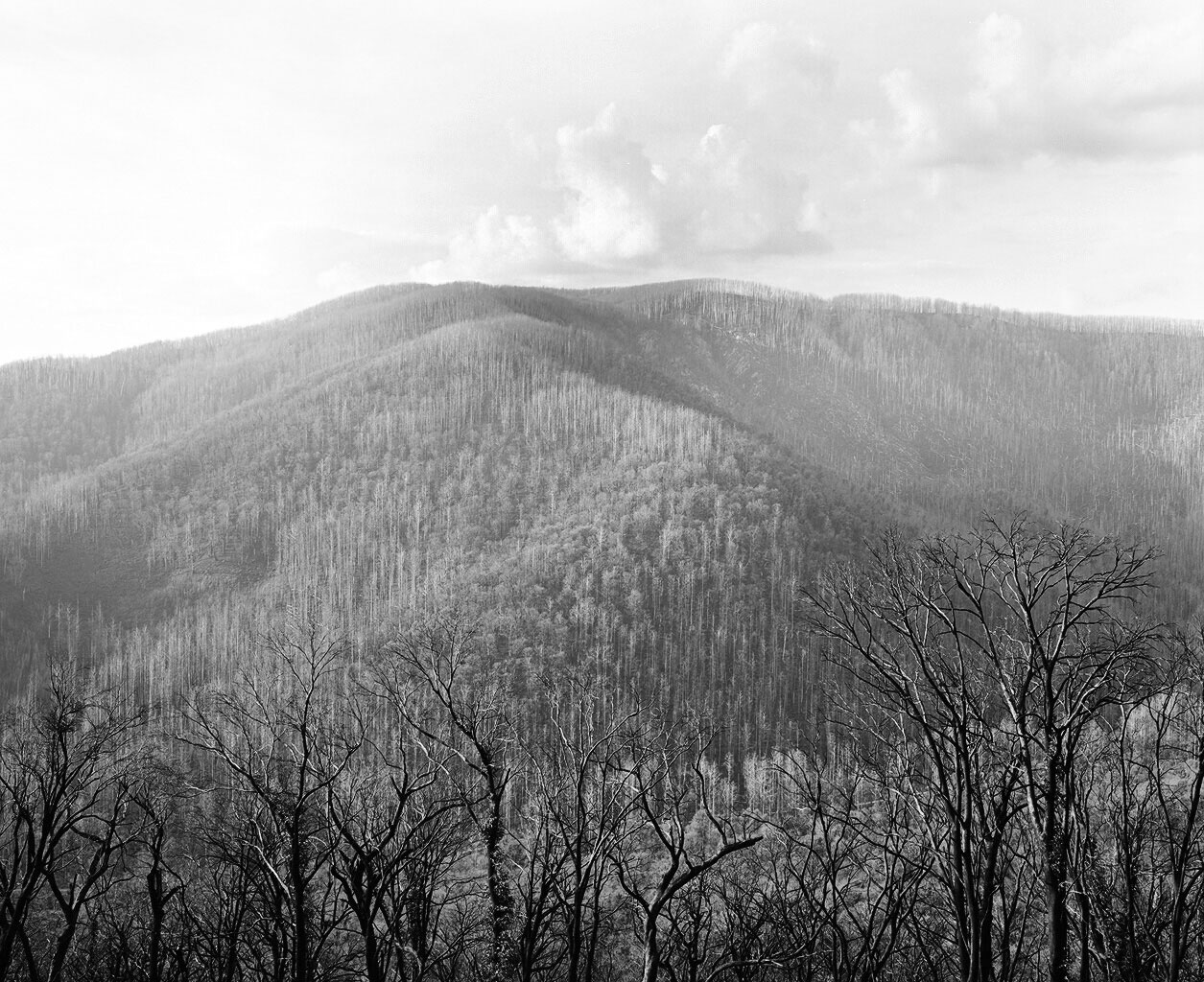
As you should know by now, this blog tries to promote the work of less well known artists and subject matter. So instead of concentrating on the wonderful aerial bushfire photographs of the well-known artist John Gollings (showing in the same gallery in different spaces with the work of Michael Norton) I have decided to do a posting on the exhibition Australian Gothic by Jane Brown.

This is a good exhibition of small, darkly hewn, traditionally printed silver gelatin photographs, beautifully hung in the small gallery at Edmund Pearce and lit in the requisite, ambient manner. There are some outstanding photographs in the exhibition. The strongest works are the surrealist tinged, film noir-ish mise-en-scènes, the ones that emphasise the metaphorical darkness of the elements gathered upon the stage. Photographs such as Big TroutThe Female Factory, Adelong, New South Wales and Captain’s Flat Hotel, New South Wales really invoke a feeling of unhomely (or unheimlich), where nature is out of kilter. These images unsettle our idea of Oztraliana, our perceived sense of Self and our place in the world. They disrupt normal transmission; they transmutate the seen environment, transforming appearance, nature and form. Less successful in this quest are the bushfire landscapes. I feel these add little to the narrative thread of the exhibition and could have easily been left out in a judicious cull of the photographs. This would have made the overarching story line stronger still.

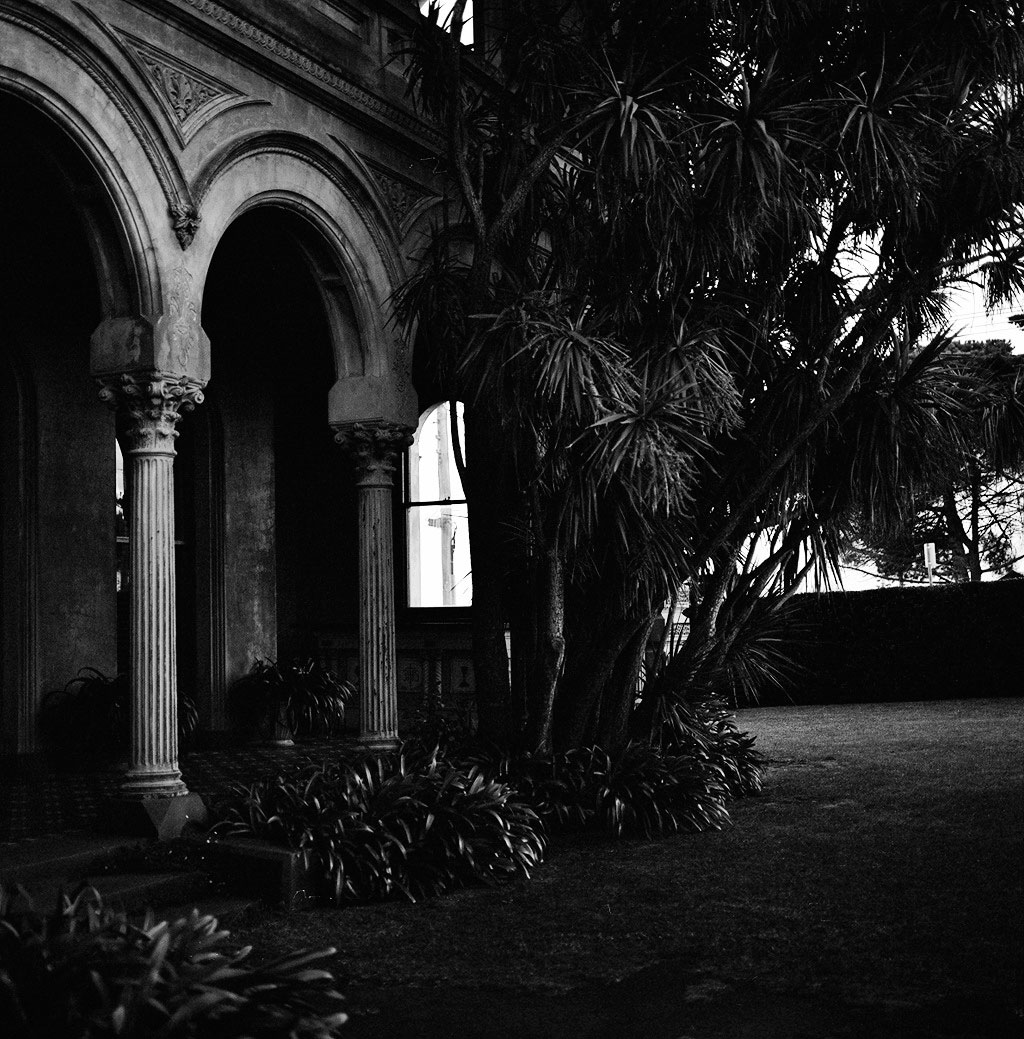
One of the best photographs in the exhibition is Lathamstowe (2011, below). This dark, brooding, intense photograph is a beautifully realised visualisation, one that balances scale, tone, light, form and darkness to create a haunting image that stays with you a long time after you have seen it. This one images says it all: the artist has talent. More please!

Dr Marcus Bunyan


Many thankx to Edmund Pearce Gallery for allowing me to publish the photographs in the posting. Please click on the photographs for a larger version of the image.


Jane Brown (Kuwait, Australia, b. 1967) 'Bushfire Landscape I' 2011


Jane Brown (Kuwait, Australia, b. 1967)
Bushfire Landscape I
2011
Fibre based, silver gelatin print
16.5 x 20.5cm


Jane Brown (Kuwait, Australia, b. 1967) 'Bushfire Landscape II, Lake Mountain, Victoria' 2010


Jane Brown (Kuwait, Australia, b. 1967)
Bushfire Landscape II, Lake Mountain, Victoria
2010
Fibre based, silver gelatin print
16.5 x 19.5cm


Jane Brown (Kuwait, Australia, b. 1967) 'The Female Factory (convict women’s prison), Ross, Tasmania' 2009


Jane Brown (Kuwait, Australia, b. 1967)
The Female Factory (convict women’s prison), Ross, Tasmania
2009
Fibre based, silver gelatin print
15.8 x 19.5cm


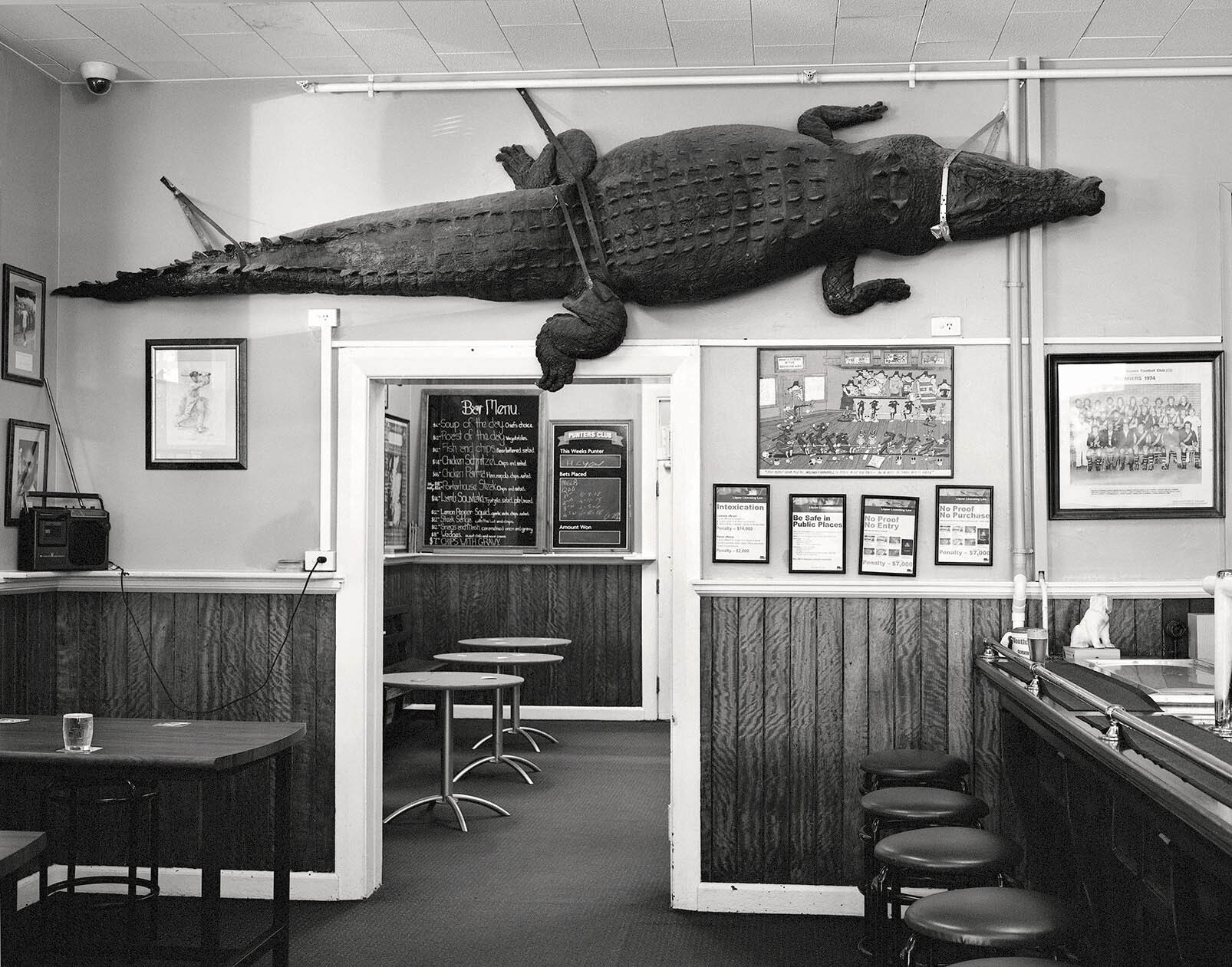
Jane Brown (Kuwait, Australia, b. 1967) 'Front Bar, Wonthaggi Hotel, Victoria' 2012


Jane Brown (Kuwait, Australia, b. 1967)
Front Bar, Wonthaggi Hotel, Victoria
2012
Fibre based, selenium toned, gelatin silver print


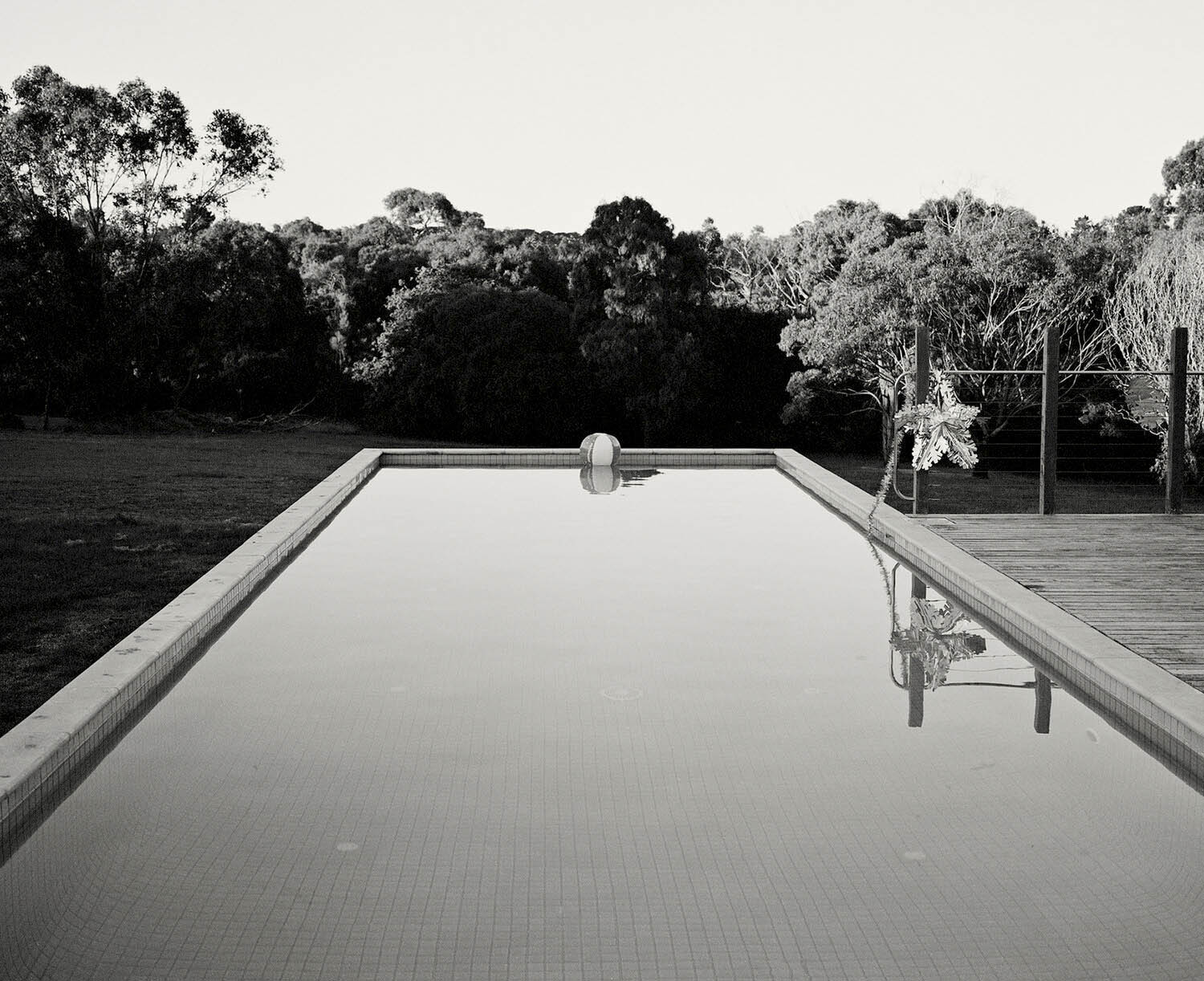
Jane Brown (Kuwait, Australia, b. 1967) 'Bush Christmas, Victoria' 2011


Jane Brown (Kuwait, Australia, b. 1967)
Bush Christmas, Victoria
2011
Fibre based, selenium toned, gelatin silver print


Jane Brown (Kuwait, Australia, b. 1967) 'Lathamstowe' 2011


Jane Brown (Kuwait, Australia, b. 1967)
Lathamstowe
2011
Fibre based, silver gelatin print
16.5 x 16.5cm


“I find it interesting how monochrome is used to differentiate the living and the dead, the past and the present. It has an ability to transcend the constraints of time, memory and death. I examine this a lot in my work – landscapes seem to have vestiges or traces of past life and memorials become otherworldly.”


Jane Brown. ‘Weekend Australian Review’, August 2011


“The antipodes was seen as a world of reversals, the dark subconscious of Britain. It was for all intents and purposes Gothic par excellence.”


Gary Turcotte. “Australian Gothic,” in Marie Mulvey-Roberts (ed.). The Handbook to Gothic Literature. 1998


Comprising photographs taken in rural New South Wales, the ACT, Victoria and Tasmania, this exhibition takes its cue from the gothic imaginings of colonial Australia. We see images of a convict past, the bush Christmas, unforgiving landscapes and melancholic hotels. It carries echoes of the cinema of Wake in Fright (1971) and the Cars that Ate Paris (1974)Rendering visible the themes of the melancholic and the uncanny, Australian Gothic manifests itself in rural isolation – where the homely becomes unhomely (or unheimlich) and where nature is out of kilter.


Jane Brown (Kuwait, Australia, b. 1967) 'Adelong, New South Wales' 2011


Jane Brown (Kuwait, Australia, b. 1967)
Adelong, New South Wales
2011
Fibre based, silver gelatin print
16.5 x 20.5cm


Jane Brown (Kuwait, Australia, b. 1967) 'Tumbarumba, New South Wales' 2012


Jane Brown (Kuwait, Australia, b. 1967)
Tumbarumba, New South Wales
2012
Fibre based, silver gelatin print
16.5 x 19.5cm


Jane Brown (Kuwait, Australia, b. 1967) 'One Way, Hobart, Tasmania' 2009


Jane Brown (Kuwait, Australia, b. 1967)
One Way, Hobart, Tasmania
2009
Fibre based, silver gelatin print
16.5 x 19.5cm


Jane Brown (Kuwait, Australia, b. 1967) 'Unheimlich, French Island, Victoria' 2010


Jane Brown (Kuwait, Australia, b. 1967)
Unheimlich, French Island, Victoria
2010
Fibre based, silver gelatin print
19 x 16cm


Jane Brown (Kuwait, Australia, b. 1967) 'Captain’s Flat Hotel, New South Wales' 2012


Jane Brown (Kuwait, Australia, b. 1967)
Captain’s Flat Hotel, New South Wales
2012
Fibre based, silver gelatin print
21.5 x 17.5cm


Edmund Pearce Gallery

This gallery has now closed.

LIKE ART BLART ON FACEBOOK

Back to top

Exhibition: ‘Polixeni Papapetrou: The Dreamkeepers’ at Stills Gallery, Sydney

Exhibition dates: 28th March – 5th May 2012


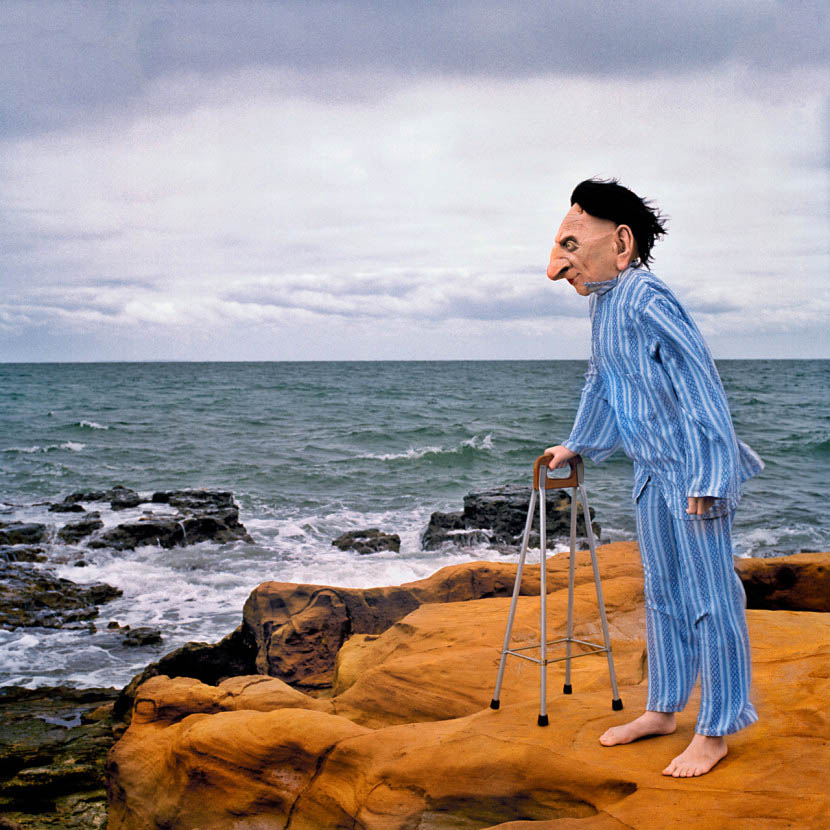
Polixeni Papapetrou (Australian, 1960-2018) 'The Wanderer No. 3' 2012


Polixeni Papapetrou (Australian, 1960-2018)
The Wanderer No. 3
2012
From The Dreamkeepers
Pigment print
105 x 105cm


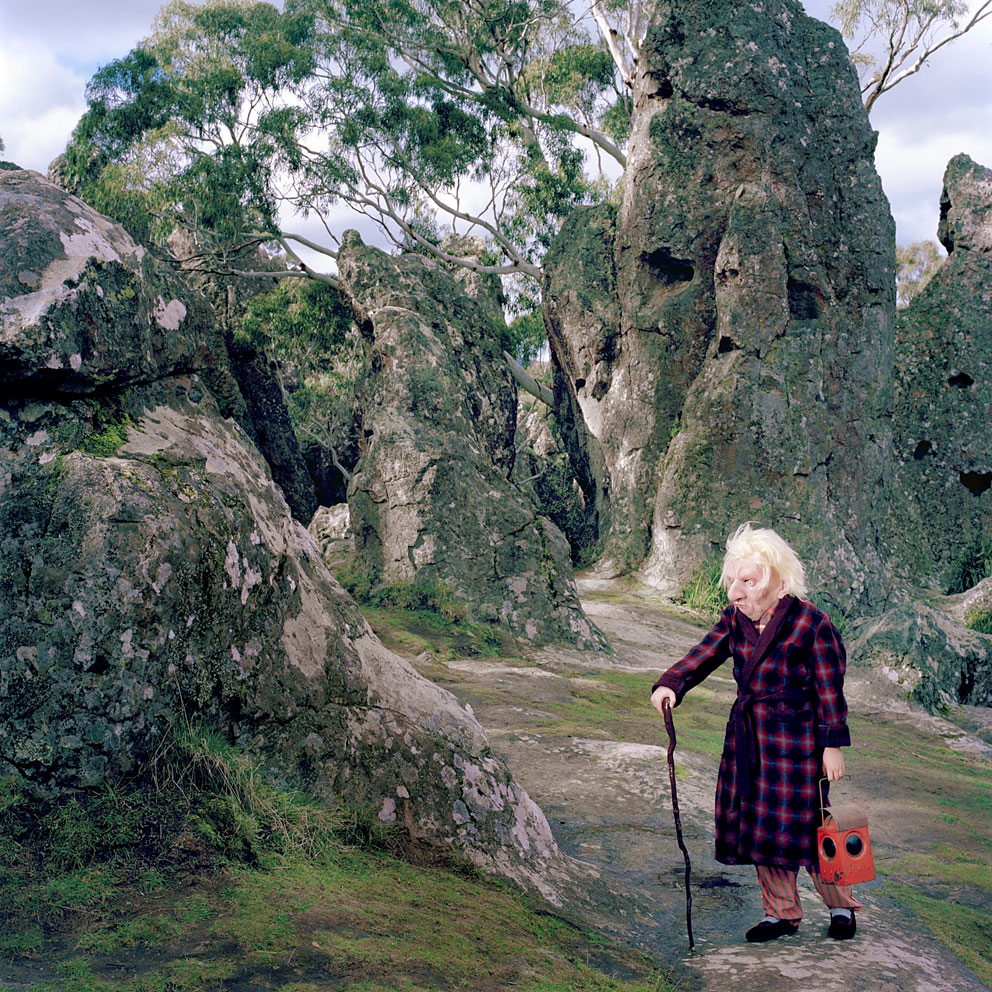
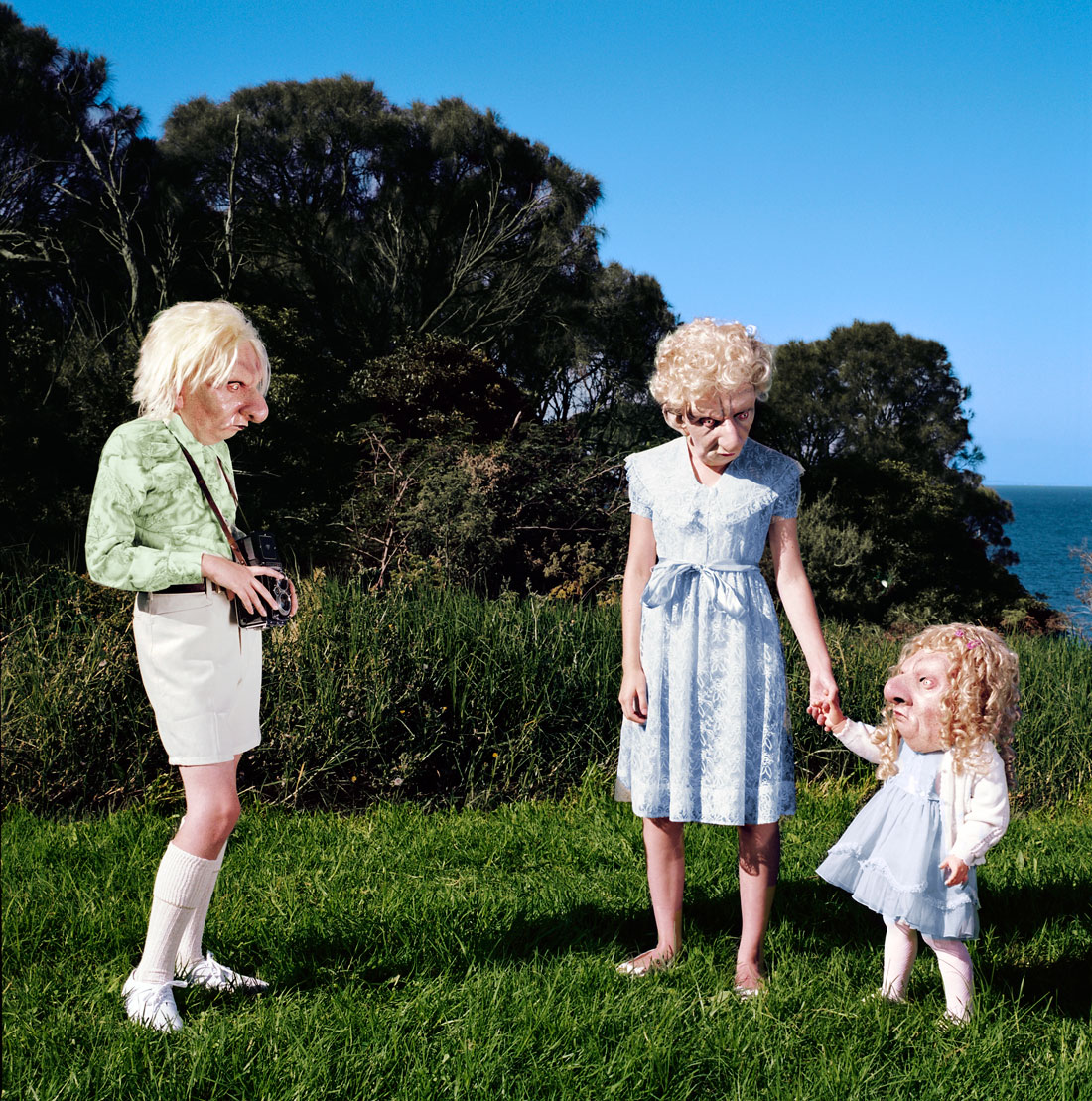
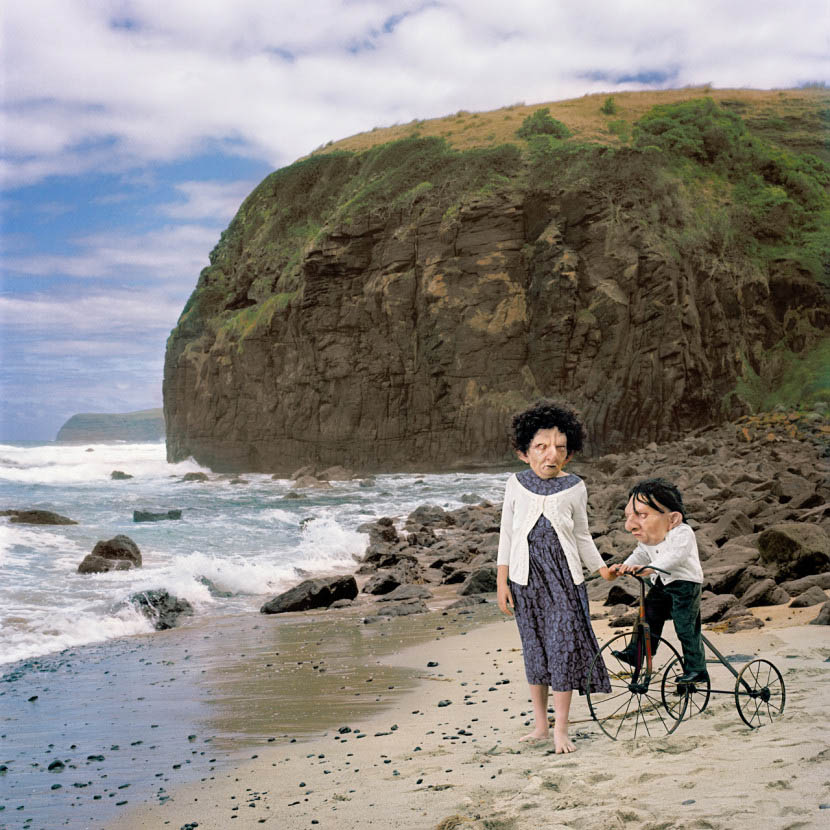
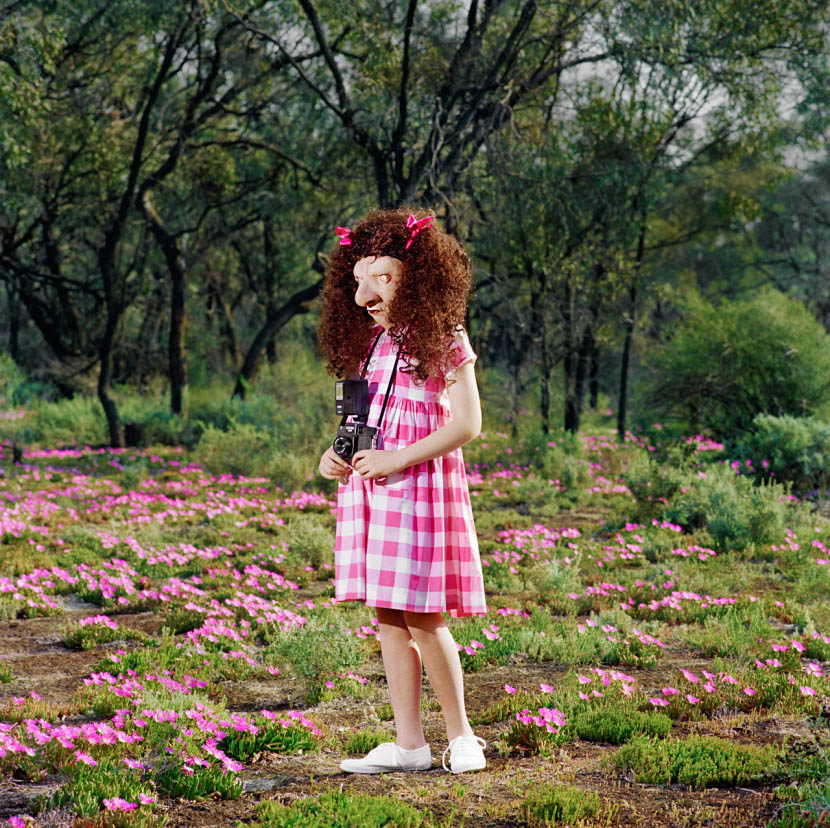
I absolutely love these. The colours, the spaces, the ambiguous vistas, the fantastical archetypes, the fables. What springs to mind, with the use of masks to disguise youth positioned within the decorous landscape, is the notion of “passing”. Passing on (as in dying), passing through (as in travelling), in passing (as in an aside) and just “passing” (passing yourself off as someone or something else) to hide your true character or feelings. Gay men did this in the 1950s and 60s all the better to fit into society, for if it was found that you were homosexual you could loose your job, your apartment and even your life. Of course, there is also the passing of time, the longing for misspent youth in these masked ephebes and adolescent women. Age shall not weary them…

Wandering, dreaming, remembering, keeping, collecting, counting. These neophytes on the path of life, both old/wise, young/hidden pass through (into?) our dreams. Papapetrou creates visions that elude the senses, visions that slip between dreaming and waking, between conscious and subconscious realms. As John Berger and Jean Mohr have observed,

“Cameras are boxes for transporting appearances. Are the appearances which a camera transports a construction, a man-made cultural artefact, or are they, like a footprint in the sand, a trace naturally left by something that has passed? The photographer choses the events he photographs. This choice can be thought of as a cultural construction. The space for this construction is, as it were, cleared by his rejection of what he did not choose to photograph.”1

As an artist Papapetrou has the intelligence to leave this nature/nurture question open in her photographs. Her skill as an artist is in choosing the right things to photograph. This enables her creatures to pass through liminal spaces, the space of our consciousness. Through this process a trace will always be left with us, for this is a strong body of work, well realised, in passing.

Dr Marcus Bunyan


1/ Berger, John and Mohr, Jean. Another Way of Telling. New York: Pantheon Books, 1982, pp. 92-93.


Many thankx to Stills Gallery for allowing me to publish the photographs in the posting. Please click on the photographs for a larger version of the image.


Polixeni Papapetrou (Australian, 1960-2018) 'The Wave Counter' 2011


Polixeni Papapetrou (Australian, 1960-2018)
The Wave Counter
2011
From The Dreamkeepers
Pigment print
105 x 105cm


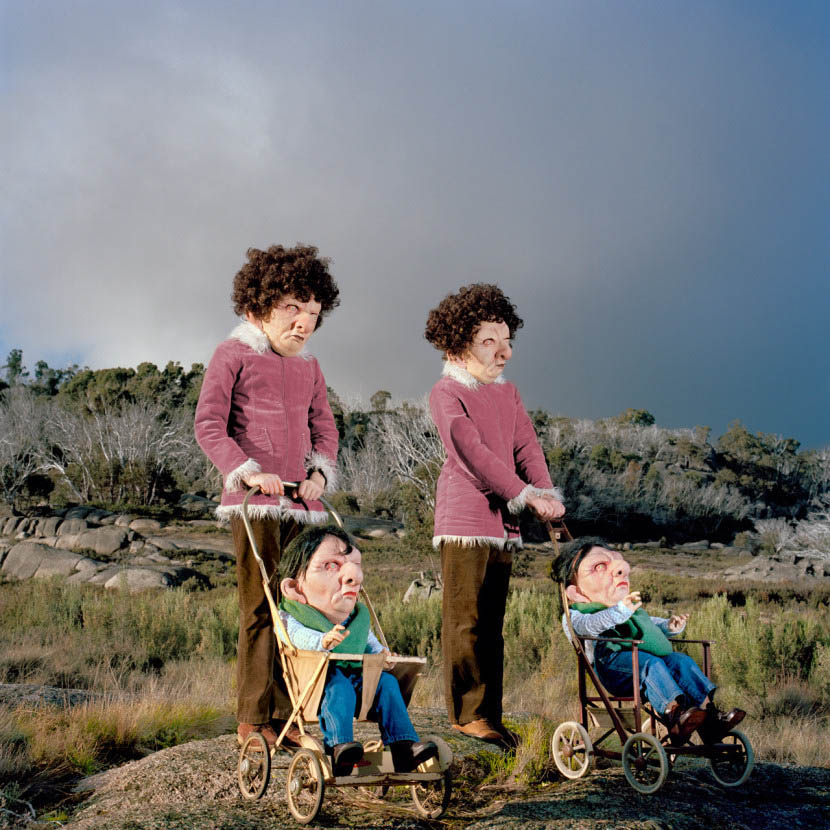
Polixeni Papapetrou (Australian, 1960-2018) 'The Mystical Mothers' 2011


Polixeni Papapetrou (Australian, 1960-2018)
The Mystical Mothers
2011
From The Dreamkeepers
Pigment print
105 x 105cm


Polixeni Papapetrou (Australian, 1960-2018) 'The Lantern Keeper' 2012


Polixeni Papapetrou (Australian, 1960-2018)
The Lantern Keeper
2012
From The Dreamkeepers
Pigment print
105 x 105cm


“These transitional places in one’s life are often the most creative, and as we grapple for answers and clarity what is often realized is ambiguity and confusion that reigns supreme. Like fairy stories, Papapetrou uses absurdity to make symbolic sense of world she struggles to understand.”


Susan Bright. Between Worlds catalogue 2009


In Polixeni Papapetrou’s work there is identification with the world of children that is rare and remarkable. She sees children themselves as ‘between worlds’, between infancy and adulthood. Yet she does more than identify, creating fantastical worlds that only adults can truly understand and relate to.

A man in blue striped pyjamas stands on a rock by the sea, leaning into the wind. His body seems young yet he supports himself with a walking frame. His face is old, oversized, a little grotesque. He is The Wavecounter. Like the other characters in Polixeni Papapetrou’s series The Dreamkeepers, he is lithe in body yet gnarly of physiognomy, both young and old. Gazing out in contemplation these dream keepers look with anticipation to the future, or is it with nostalgia to the past? The timeless backdrops of shoreline or hilltop reflect this ambiguity, echoing through landscape the collapsing of thresholds and blurring of boundaries.

Papapetrou’s art practice has involved collaboration with her children and their friends for over 10 years. As they have grown and transformed so too have the roles they perform and spaces they inhabit. It is the awkward evolution of adolescence that informs the in-between space of The Dreamkeepers. To parallel the cripplingly self-conscious yet powerfully self-realising period of our lives, Papapetrou engages part reality, part fantasy from which a space of unreality emerges, the space of archetype. Here the anonymity afforded by masks separates her adolescent actors from who they really are, and allows them to stand in for us all. In this way, Papapetrou asks us to consider how masks, whether symbolic or literal, not only conceal identity, but also expand and transform it.

The aged masks do so in The Dreamkeepers by confounding adolescence, as the characters exude a quiet lack of self-consciousness, despite their disturbing appearance. They arouse a gentle pathos, reminding us of our own shapeshifting, of time playing out on our bodies and minds. The abstract meeting of these two ages may indicate the latent wisdom and self-acceptance that only realises with maturity, or the cyclical nature of our life spans that inevitably brings us back to the vulnerability of youth. In either case the work is a powerful testament to the surrendering of childhood.

Also on exhibition is a small selection of works from Papapetrou’s current work in progress. Using ghillie suits, she transforms her actors into animate objects – rocks with life and seaweed with attitude.

Press release from the Stills Gallery website


Polixeni Papapetrou (Australian, 1960-2018) 'The Holiday Makers' 2011


Polixeni Papapetrou (Australian, 1960-2018)
The Holiday Makers
2011
From The Dreamkeepers
Pigment print
105 x 105cm


Polixeni Papapetrou (Australian, 1960-2018) 'The Mender' 2011


Polixeni Papapetrou (Australian, 1960-2018)
The Mender
2011
From The Dreamkeepers
Pigment print
105 x 105cm


Polixeni Papapetrou (Australian, 1960-2018) 'The Joy Pedlars' 2011


Polixeni Papapetrou (Australian, 1960-2018)
The Joy Pedlars
2011
From The Dreamkeepers
Pigment print
105 x 105cm


Polixeni Papapetrou (Australian, 1960-2018) 'The Shell Collectors' 2012


Polixeni Papapetrou (Australian, 1960-2018)
The Shell Collectors
2012
From The Dreamkeepers
Pigment print
105 x 105cm


Polixeni Papapetrou (Australian, 1960-2018) 'The Lighthouse Keepers' 2011


Polixeni Papapetrou (Australian, 1960-2018)
The Lighthouse Keepers
2011
From The Dreamkeepers
Pigment print
105 x 105cm


Polixeni Papapetrou (Australian, 1960-2018) 'The Photographer' 2011


Polixeni Papapetrou (Australian, 1960-2018)
The Photographer
2011
From The Dreamkeepers
Pigment print
105 x 105cm


Stills Gallery

This gallery has now closed.

Stills Gallery website

LIKE ART BLART ON FACEBOOK

Back to top
Exhibition: ‘Gerhard Richter. Atlas’ at the Staatliche Kunstsammlungen Dresden

Exhibition dates: 4th February – 22nd April 2012


Installation photograph of 'Gerhard Richter. Atlas' at Kunsthalle im Lipsiusbau, Staatliche Kunstsammlungen Dresden 2012


Installation photograph of Gerhard Richter. Atlas
Kunsthalle im Lipsiusbau
Photograph: David Brandt, 2012
© Gerhard Richter Archive, Staatliche Kunstsammlungen Dresden


Meaning arises out of context – or the lack of it. Unlike the grids of the Bechers which promote multiple ways of seeing and construct narrative tension these images do not increase the photographic narrative. They are like the parrots, finches or scarab beetles in a display case at a natural history museum – part of a taxonomic classification system, where one out of a thousand is the most impressive beetle, the bird with the brightest plumage, where the composition is the most surprising. Multiples as collected here are fascinating but emerge from a slightly obsessive mind (which any collectors mind is!)

This photomontage of impressions, ground and movement blurs the history and memory embedded in each photograph. The assemblage of all these visions ranges far and wide but ultimately collapses time and space into one huge universal snapshot. As in advertising imagery the individual documentary-style images mean relatively little – it is the overall impression that impinges on the consciousness. If you watch MTV and stop to analyse the individual images in a pop video you soon acknowledge their vacuousness. The context of the singular image is lost. In this display the grid controls the photographs position relative to each other and the viewer – a compositional design matrix that has a symbolic function. The grid both decontextualises and recontextualises the floating signifier.

Richter obviously uses them as an aide-memoire. Some remind me of the folded photographs found in Francis Bacon’s studio; others Bacon’s portraits of blurred bodies; yet more, ethnographic mappings of Indigenous bodies or criminals cut out of newspapers. Others remind me of Surrealist experiments and the colour photographs the paintings of Gerhard Richter. Funny about that…

They may be the source material of a great artist but in this regimented form of prosaic knowledge they become like bugs caught in amber.

Dr Marcus Bunyan


Many thankx to the Staatliche Kunstsammlungen Dresden for allowing me to publish the photographs in the posting. Please click on the photographs for a larger version of the image.


“I see countless landscapes, photograph barely one in 100,000, and paint barely 1 in 100 of those that I photograph,”


Gerhard Richter, 1986


“If the grids of art are about arrangement, synchronic vision, connections and knowledge, a standing back to grasp a pattern, then the grids of life are just as much about chance, disconnections among the connections, and the inability of the elements within the grid to perceive, and know, the larger patterns of which they are a part, so that it is only a ‘higher’ consciousness standing outside the grid that will be able to see it all (with or without understanding it). How you know and form a grid depends on whether you are inside or outside it. You can ‘form’ a grid both actively and passively, wittingly and unwittingly – either by simply being part of a grid or by actually assembling one… The grid becomes a potentially totalizing system with which reality (the real of experience as well as the real of the mind), another totalizing system, must endlessly play its games of elusiveness and containment, chaos and order, freedom and necessity.”


Aveek Sen. “The Grid and More,” in ‘What We Talk About When We Talk About Photography,’ on the Fotomuseum Winterthur website, 7th April 2012


Gerhard Richter. Atlas

The film for the special exhibition!

The ATLAS occupies an outstanding position in Gerhard Richter’s entire work. It is both the basis of his painterly oeuvre and an independent work. As a so-called work in progress, the artist, who was born on February 9, 1932 in Dresden, has repeatedly revised and supplemented the ATLAS for more than four decades.

The ATLAS was on display in a special exhibition at the Gerhard Richter Archive of the Dresden State Art Collections.


Installation photograph of 'Gerhard Richter. Atlas' at Kunsthalle im Lipsiusbau, Staatliche Kunstsammlungen Dresden 2012


Installation photograph of Gerhard Richter. Atlas
Kunsthalle im Lipsiusbau
Photograph: David Brandt, 2012
© Gerhard Richter Archive, Staatliche Kunstsammlungen Dresden


Gerhard Richter (German, b. 1932) 'Atlas. Plate 68. Photo experiment' 1969


Gerhard Richter (German, b. 1932)
Atlas. Plate 68. Photo experiment
1969
© Gerhard Richter 2011


Portrait of Gerhard Richter 1966


Portrait of Gerhard Richter
1966
© Gerhard Richter, Köln 2012


In celebration of Gerhard Richter’s 80th birthday, the Gerhard Richter Archive of the Staatliche Kunstsammlungen Dresden presents the ATLAS of the artist in the Kunsthalle im Lipsiusbau. The ATLAS takes a prominent role in the oeuvre of Gerhard Richter. It is the basis of many of his paintings just as it is an artwork in its own right. The ATLAS consists of approximately 800 framed panels with more than 15,000 photographs, newspaper clippings, sketches and designs, which Richter had accumulated for work in his studio from the early 1960s onwards. In 1972, he ordered and arranged the collection on boards and presented it under the title ATLAS for the first time. Ever since then, he has continuously added new material. The conceptual character of the ATLAS offers unique insights into the mindset of the artist, into the development of some ideas for works as well as into the creational process of several of his paintings.

Gerhard Richter’s ATLAS merits a special place within his oeuvre as a whole. It not only forms the basis of his entire work as a painter but is also an autonomous artwork in its own right. Born in Dresden on 9th February 1932, Richter has been constantly revising and augmenting this “work in progress” for more than four decades.

ATLAS may be seen as an accompaniment, commentary and extension of the entire oeuvre of Gerhard Richter, for it also develops its own perspectives and poses its own questions. ATLAS is Richter’s reflection not only on his own work but also on the everyday world of images that he himself has documented photographically in their thousands. “I see countless landscapes, photograph barely one in 100,000, and paint barely 1 in 100 of those that I photograph,” Richter wrote in 1986. This photographed, yet and seemingly inexhaustible flood of images has afforded Richter a concentrated, ready accessibility of motifs for his future works. Indeed, for some of his paintings, he has been able to draw upon old motifs in his ATLAS, some of them dating back more than a decade.

The accompanying artist’s book “ATLAS” is not just intended as a means of documenting the exhibition. Gerhard Richter sees it as an alternative presentation to the exhibited panels, one that permits an additional, different, non-linear approach to the material. By 1964, Richter had collected a vast amount of pictorial source material for his painting, first keeping it in drawers and portfolios. Five years later he began to sift through this material with a critical eye, grouping the individual photographs, reproductions and sketches into different themes and pasting them onto separate panels. Richter then soon recognised the intrinsic artistic quality of these collections of source material and, in 1972, framed the panels and exhibited them at the Museum Hedendaagse Kunst in Utrecht under the title ATLAS. Meanwhile this repository of source material has grown from its original 343 panels to its present 783, with more than 8,000 individual motifs.

Press release from the Staatliche Kunstsammlungen Dresden website


Gerhard Richter (German, b. 1932) 'Atlas. Tafel 5. Album Photos' 1962-1968


Gerhard Richter (German, b. 1932)
Atlas. Plate 9. Photographs of papers and books etc
1962-1968
© Gerhard Richter 2011


Gerhard Richter (German, b. 1932) 'Atlas. Plate 5. Album Photos' 1962-1968


Gerhard Richter (German, b. 1932)
Atlas. Plate 5. Album Photos
1962-1968
© Gerhard Richter 2011


Gerhard Richter (German, b. 1932) 'Atlas. Plate 58. Double exposure' Nd


Gerhard Richter (German, b. 1932)
Atlas. Plate 58. Double exposure
Nd
© Gerhard Richter 2011


Gerhard Richter (German, b. 1932) 'Atlas. Plate 422. Baysricher forest' 1982


Gerhard Richter (German, b. 1932)
Atlas. Plate 422. Baysricher forest
1982
© Gerhard Richter 2011


Gerhard Richter (German, b. 1932) 'Atlas. Plate 13. Photographs of papers and books etc' 1964-67


Gerhard Richter (German, b. 1932)
Atlas. Plate 13. Photographs of papers and books etc
1964-1967
© Gerhard Richter 2011


Gerhard Richter (German, b. 1932) 'Atlas. Plate 651. Reichstag' 1998


Gerhard Richter (German, b. 1932)
Atlas. Plate 651. Reichstag
1998
© Gerhard Richter 2011


Gerhard Richter (German, b. 1932) 'Atlas. Plate 31 for 48 Portraits' 1971


Gerhard Richter (German, b. 1932)
Atlas. Plate 31 for 48 Portraits
1971
© Gerhard Richter 2011


Staatliche Kunstsammlungen Dresden
Residenzschloss Taschenberg 2
01067 Dresden Germany

Kunsthalle im Lipsiusbau opening hours:
Daily 10am – 6pm
Closed Mondays

Staatliche Kunstsammlungen Dresden website

LIKE ART BLART ON FACEBOOK

Back to top

Exhibition: ‘Ladies and Gentlemen: The Camera as a Mirror’ at the Moderna Museet, Malmö, Sweden

Exhibition dates: 18th February 2012 – 22nd April 2012

Curator: Magnus af Petersens

Many thankx to the Moderna Museet for allowing me to publish the photographs in the posting. Please click on the photographs for a larger version of the image.


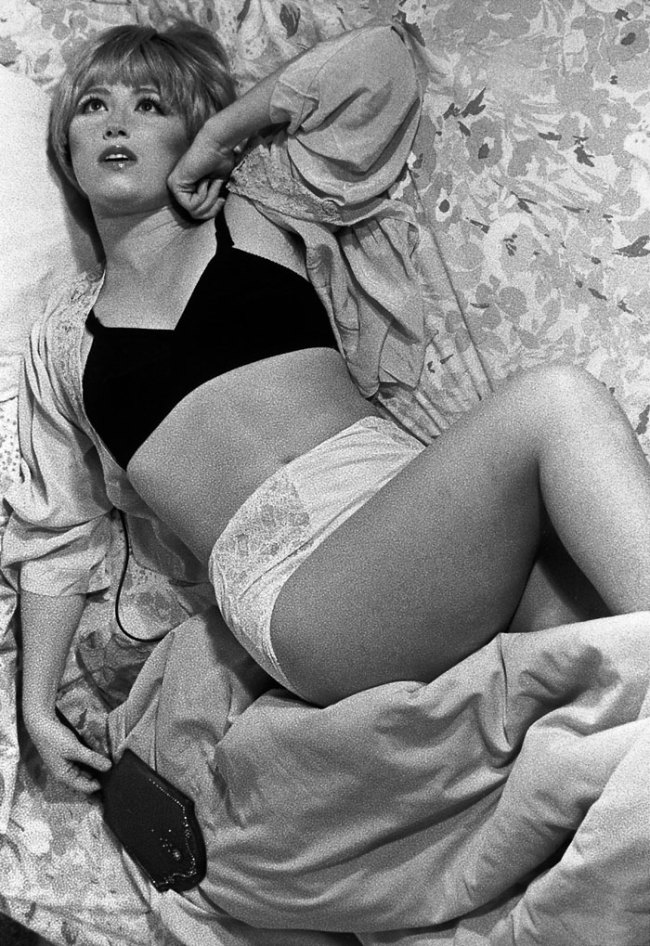
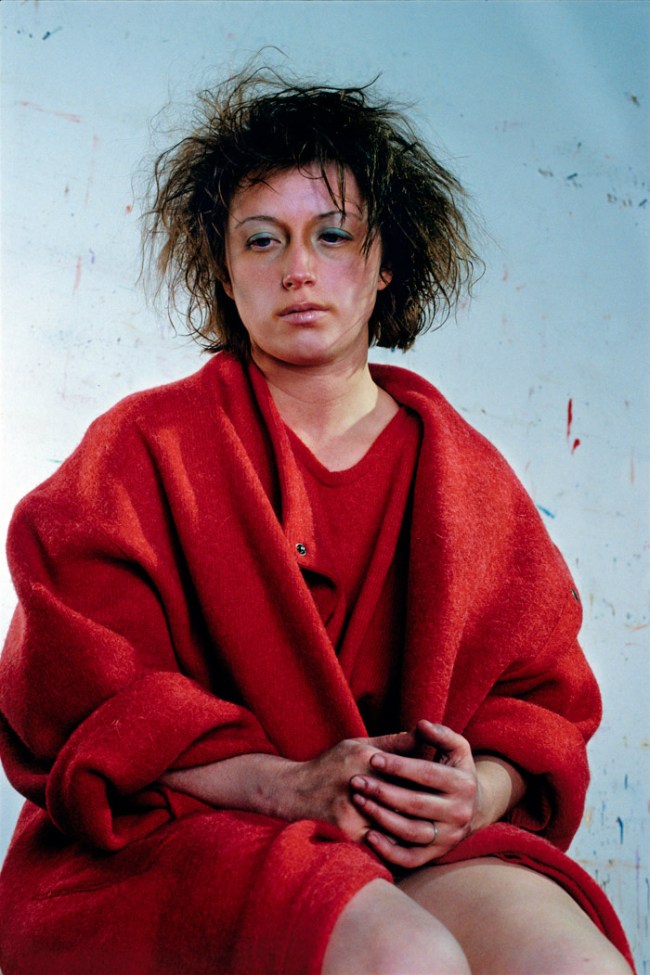
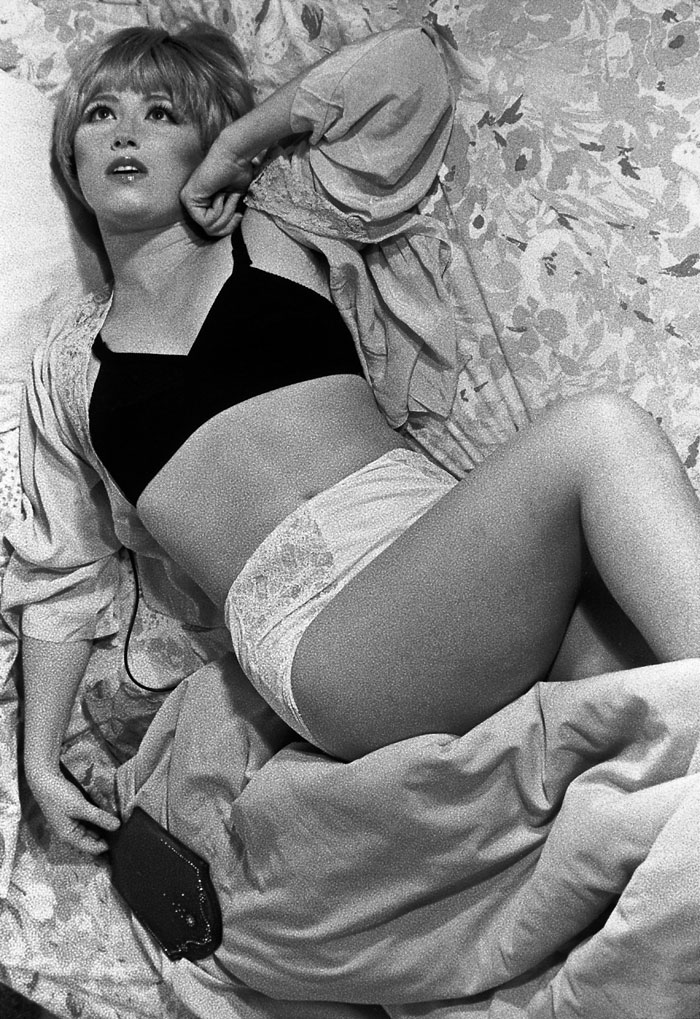
Cindy Sherman (American, b. 1954) 'Untitled Film Still #56' 1980


Cindy Sherman (American, b. 1954)
Untitled Film Still #56
1980
© Cindy Sherman. Courtesy of the Artist and Metro Pictures


Tracey Moffatt (Australian, b. 1960) 'Something More #1' 1997


Tracey Moffatt (Australian, b. 1960)
Something More #1
1997
Cibachrome print
© Tracey Moffatt/BUS 2012


Samuel Fosso (Cameroon, b. 1962) 'Sans titre. De la série Années 70' 1970-1980


Samuel Fosso (Cameroon, b. 1962)
Sans titre. De la série Années 70
1970-1980
Gelatin silver print
© Samuel Fosso, Courtesy JM Patras/Paris


Robert Mapplethorpe (American, 1946-1989) 'Patti Smith' 1979


Robert Mapplethorpe (American, 1946-1989)
Patti Smith
1979
Gelatin silver print
© Robert Mapplethorpe Foundation


Robert Mapplethorpe (American, 1946-1989) 'Self Portrait' 1980


Robert Mapplethorpe (American, 1946-1989)
Self Portrait
1980
Gelatin silver print
© Robert Mapplethorpe Foundation


Malick Sidibé (Malian, 1936-2016) 'Danser le Twist' (Dance the Twist) 1965 


Malick Sidibé (Malian, 1936-2016)
Danser le Twist (Dance the Twist)
1965
Gelatin silver print


Seydou Keïta (Mali, 1921-2001) 'Untitled #419' 1950-1952


Seydou Keïta (Mali, 1921-2001)
Untitled #419
1950-1952
Gelatin silver print
© Seydou Keïta / SKPEAC


Seydou Keïta (Mali, 1921-2001) 'Untitled #420' 1950-1952


Seydou Keïta (Mali, 1921-2001)
Untitled #420
1950-1952
© Seydou Keïta / SKPEAC


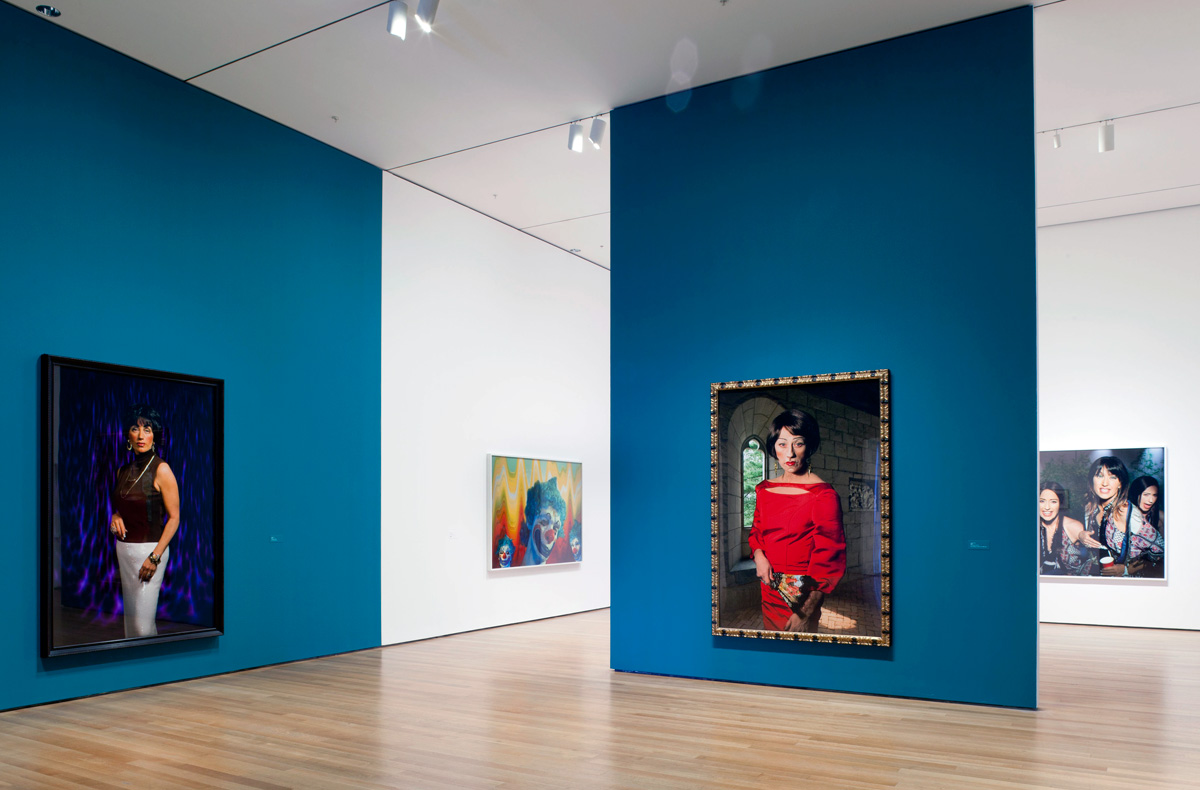
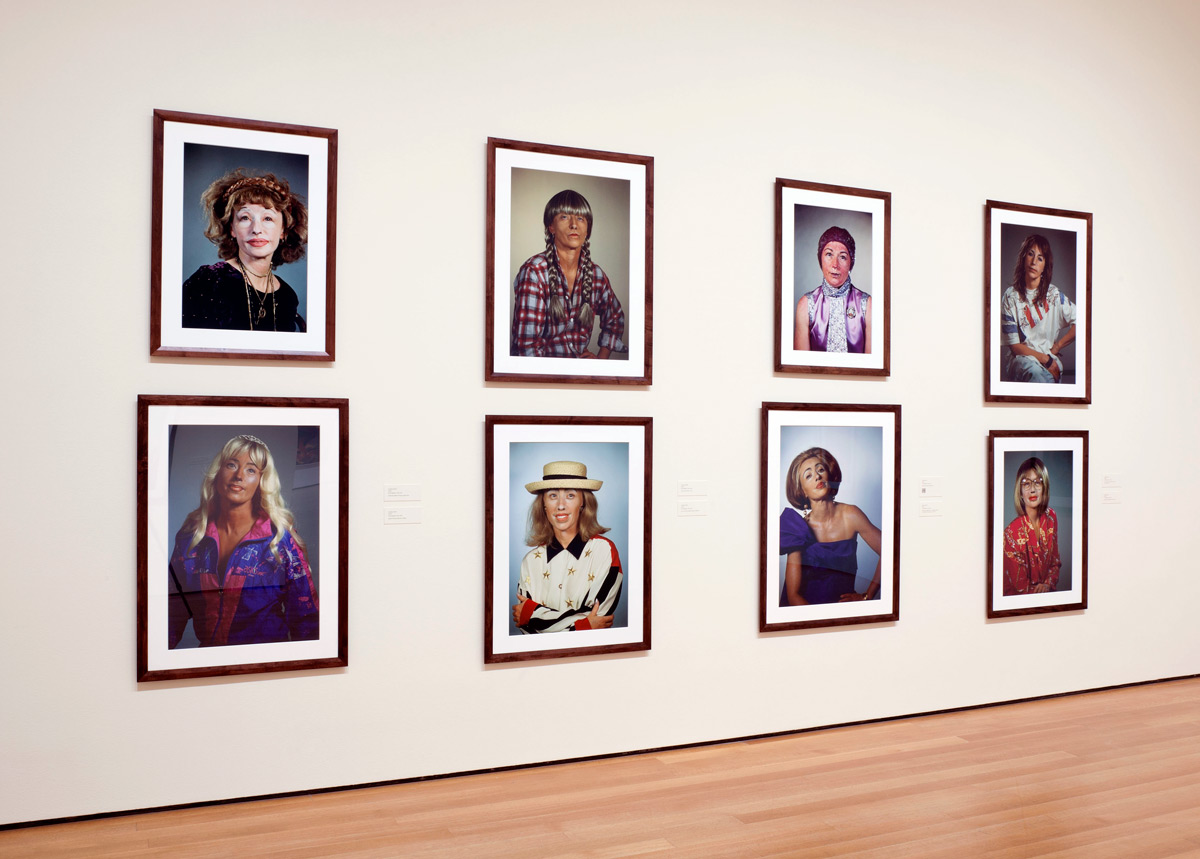
This spring we will be showing more than forty photographs from the period 1950-90 taken by leading artists such as Andy Warhol, Cindy Sherman, Robert Mapplethorpe, Samuel Fosso, Tracey Moffatt, and Elina Brotherus. The exhibition focuses on the art of portrait photography and how the artist in his or her studio creates images that depict people not just as they actually are, but also as they would like to appear.

Moderna Museet’s collection of photography is among the foremost in Europe, it includes some of the most prominent figures in the history of photography. Andy Warhol, Cindy Sherman, and Robert Mapplethorpe are all big names in photography, artists whose work often revolves around concepts of identity, sexuality, and performativity. The photography studio is a place for masquerades and manipulations, a stage where various identities and roles can be tested. It therefore problematises the idea that a portrait is meant to convey some truth about the subject’s inner life. How do we distinguish a staged scene from reality? Is it even possible to make such a distinction? How free are we to form our own identity? If it’s a matter of choosing a role, what roles are available to us?

Andy Warhol’s Polaroid pictures, whose title, Ladies and Gentlemen, has also provided the name for the exhibition, are examples of his interest in – or rather his obsession with – celebrities. From industrial magnates to movie stars, from rock musicians to the “superstar” friends who hung out around the Factory, his fabled studio. In the world of pop art and popular culture, surface is everything. Robert Mapplethorpe’s photographs are instead classically composed – stylised and aesthetically formed. In the controlled environment and lighting of the photo studio, he strives not for realism but for beauty. Here role-play becomes a part of the picture’s constructed character.

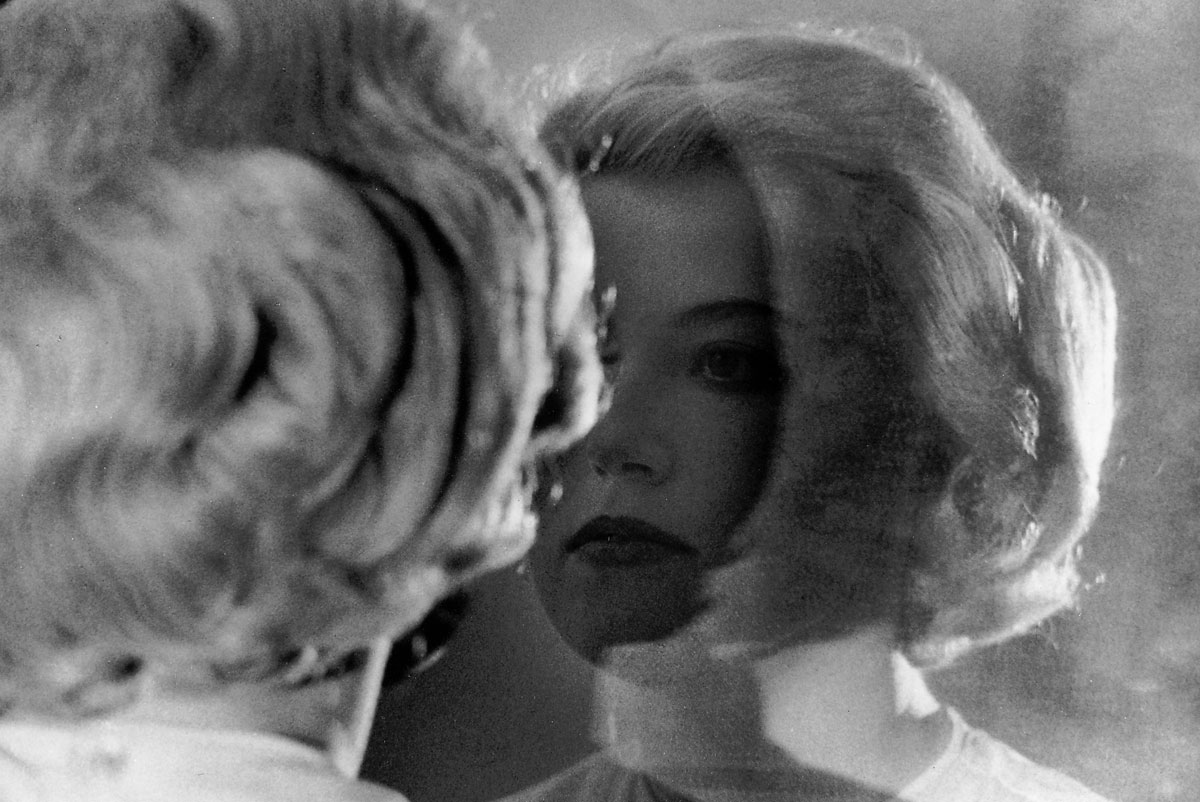
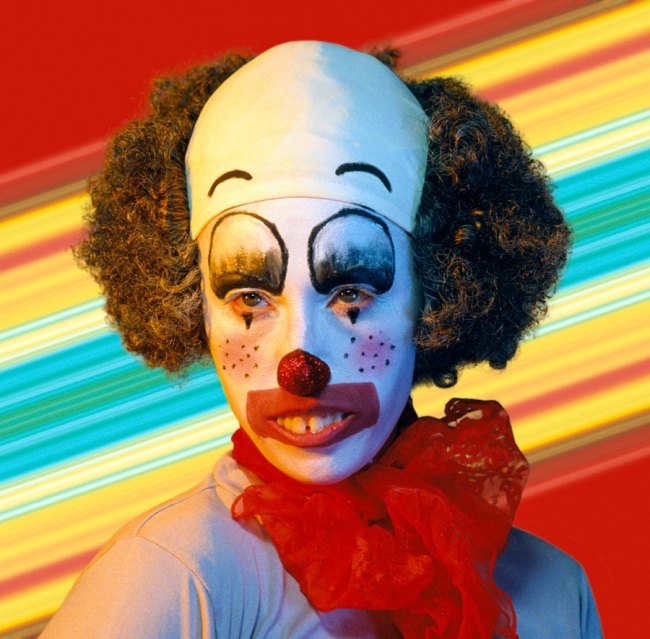
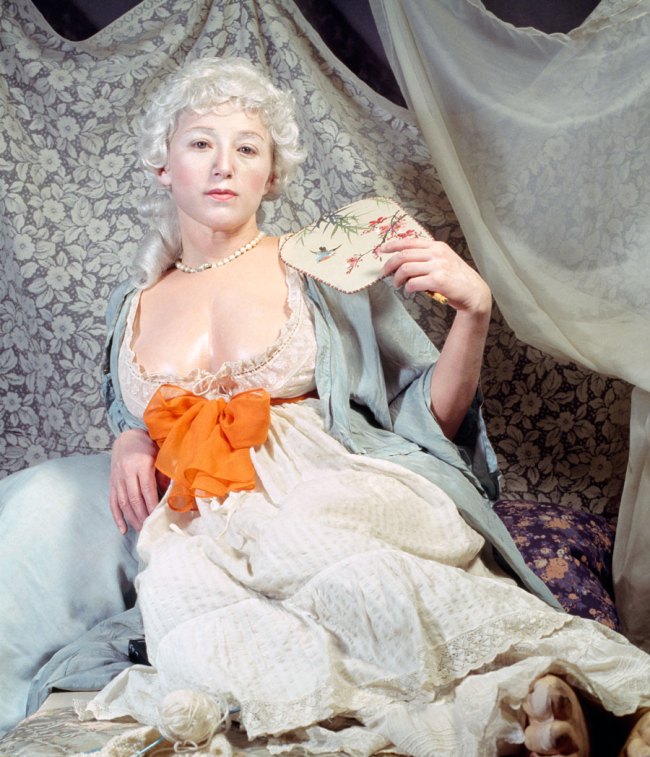
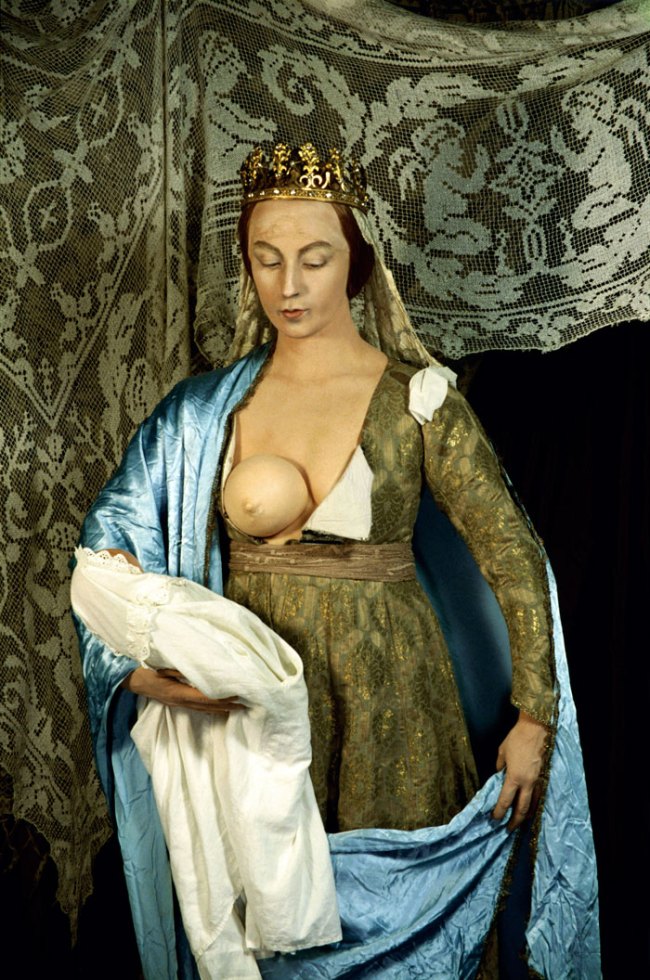
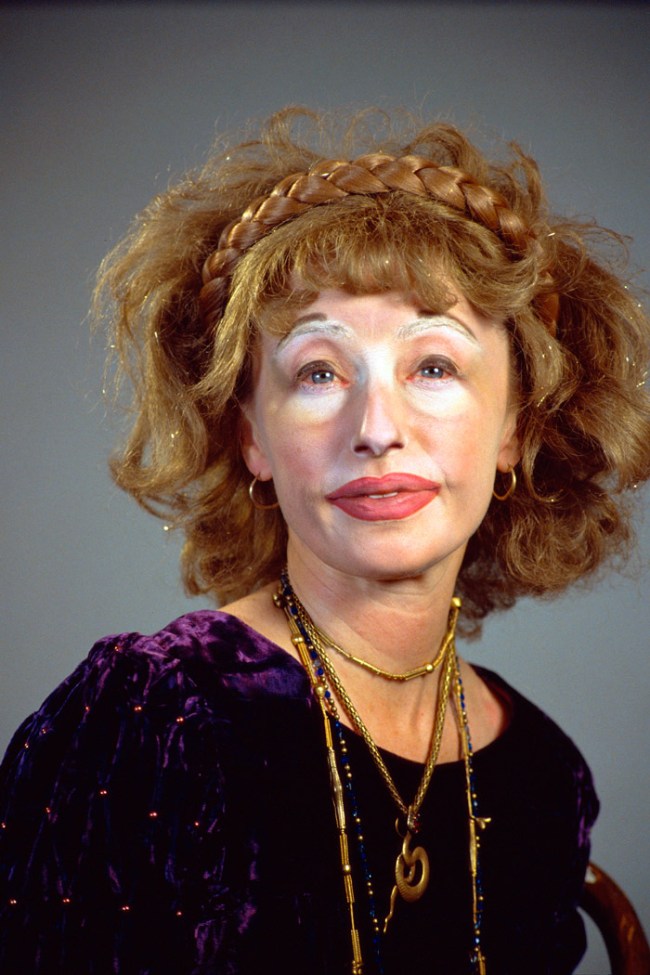
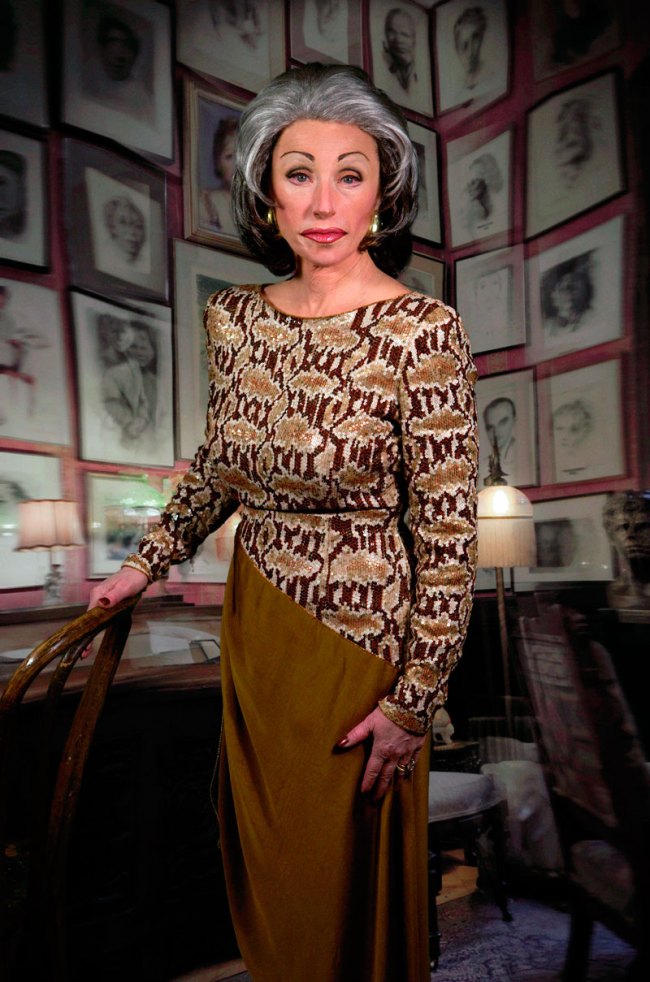
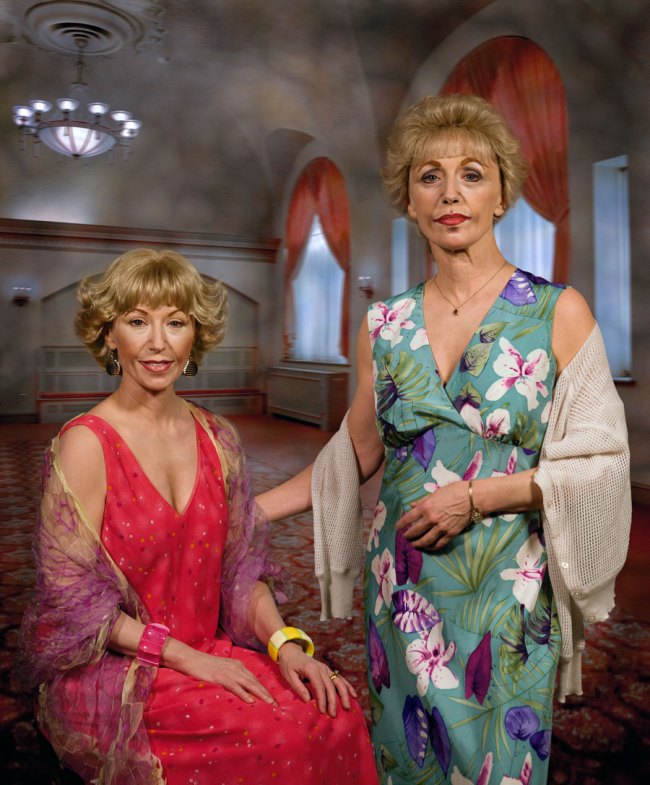
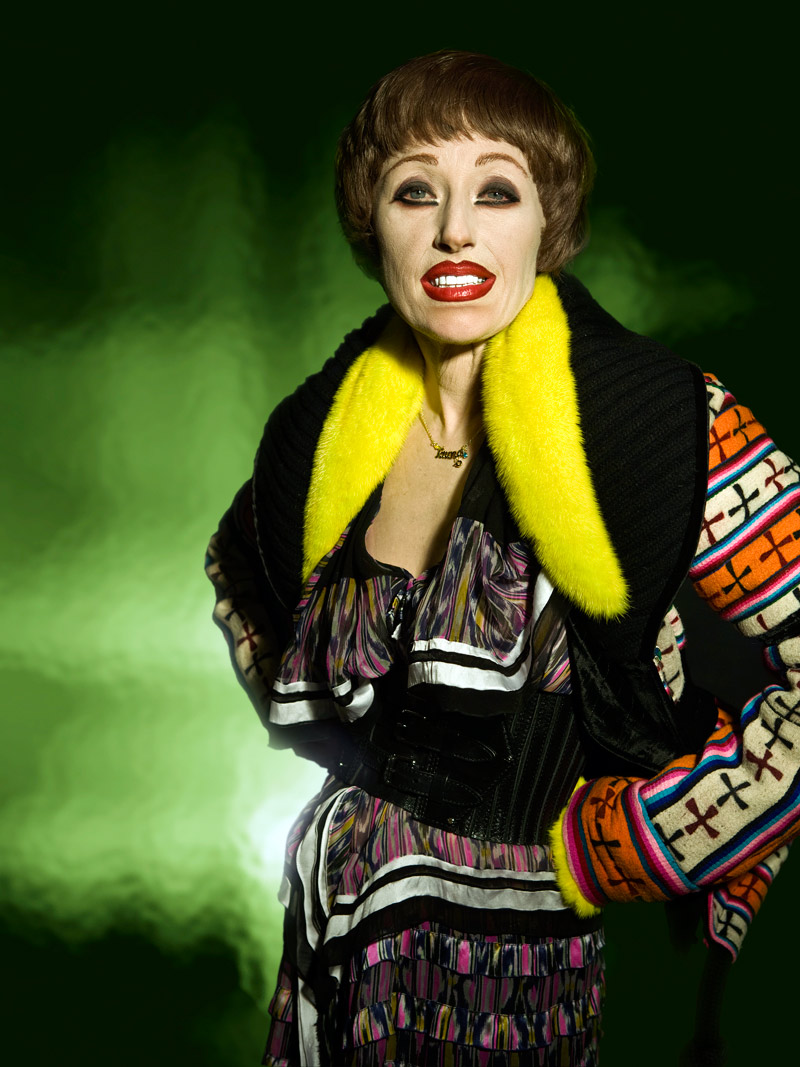
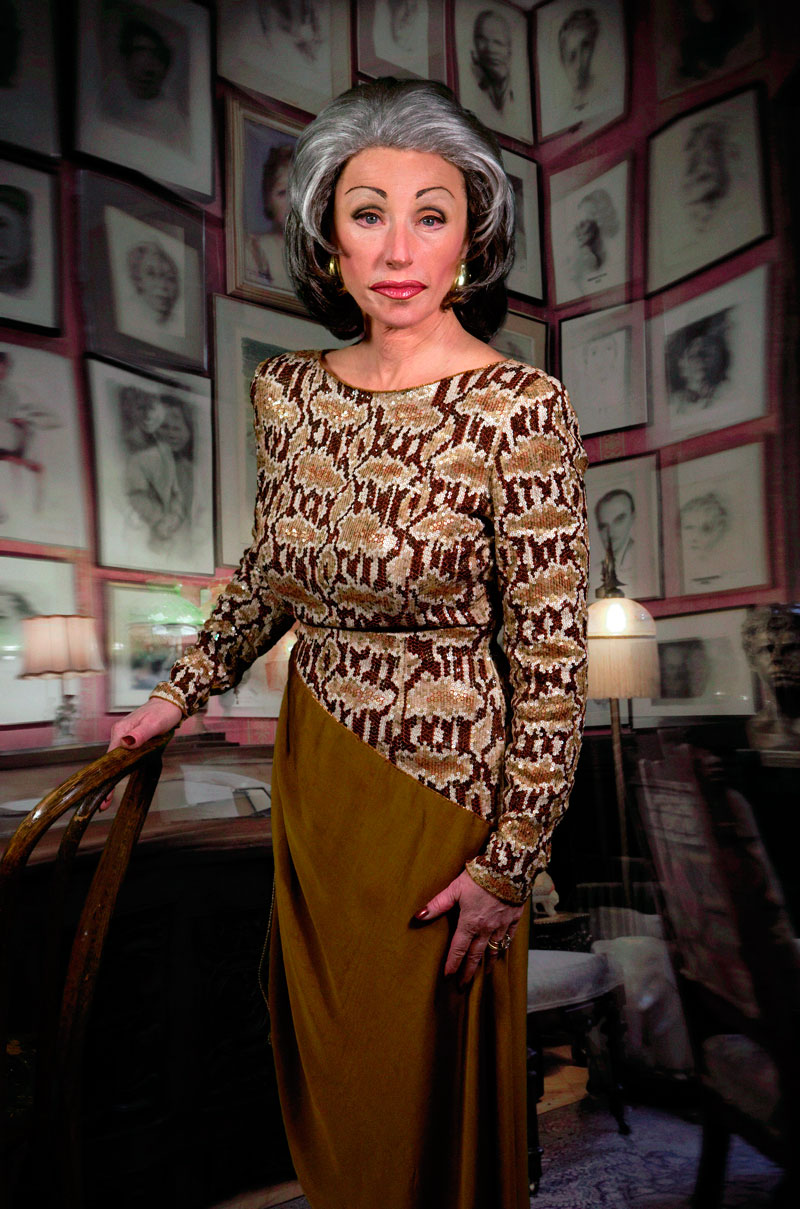
In Cindy Sherman’s suite of images called Untitled Film Stills (1977-1980), she plays with film clichés. The scenes and characters in her photographs seem familiar, but in fact it’s always Sherman herself we see in the leading role. Using the camera as a mirror, she takes on and explores various roles. It’s a game of trying on identities that is familiar to teenagers in particular the world over, a game we play in an attempt to find ourselves, or rather to construct an individual identity. One of the many ways in which Sherman’s pictures have been interpreted is as a feminist critique of the limited number of roles available to women.

This exhibition also presents several works by Seydou Keïta, Malick Sidibé, and Samuel Fosso, studio photographers who work primarily with portrait photography. Keïta’s studio was next-door to a movie theater in Bamako, the capitol city of Mali. Sidibé takes pictures not just in his studio but also at weddings and other parties. His photographs from Bamako in the 1960s reflect the great hope that came with liberation from French colonial power. Fosso opened his studio in Bangui, in the Central African Republic, when he was still a teenager. He is best known for a series of self-portraits in which he dons a variety of outfits to assume different roles.

Press release from the Moderna Museet website


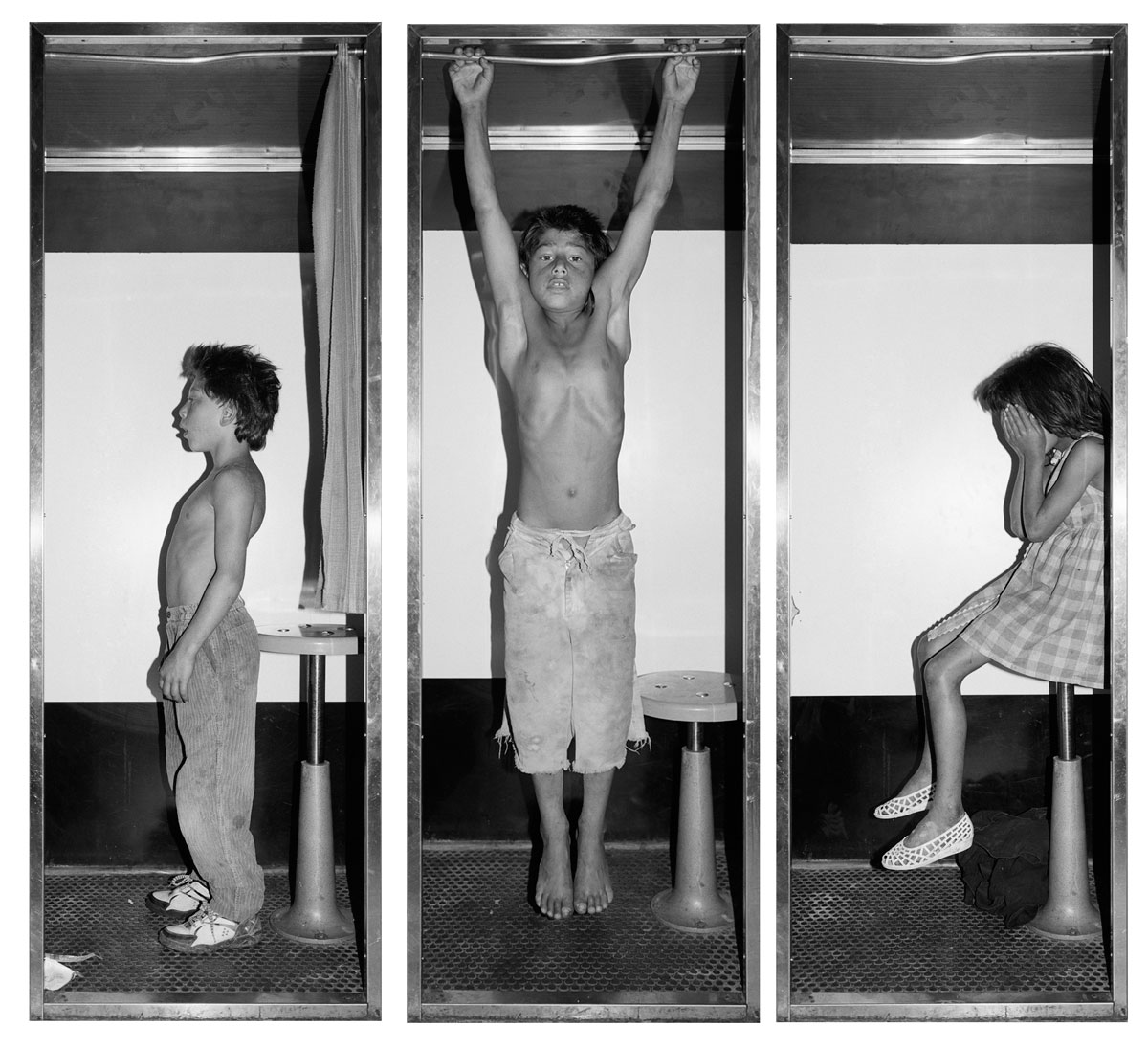
Elina Brotherus (Finnish, b. 1972) 'Honeymoon' 1997 (detail)


Elina Brotherus (Finnish, b. 1972)
Honeymoon (detail)
1997
© Elina Brotherus


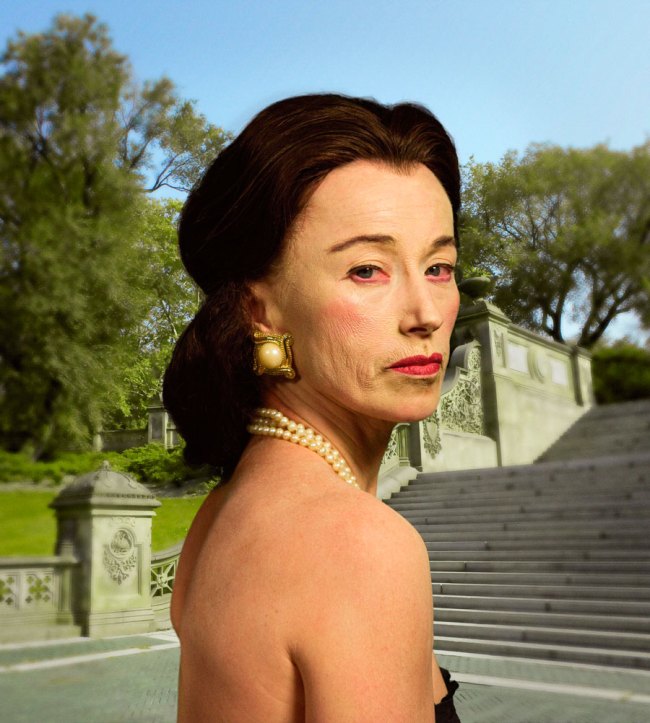
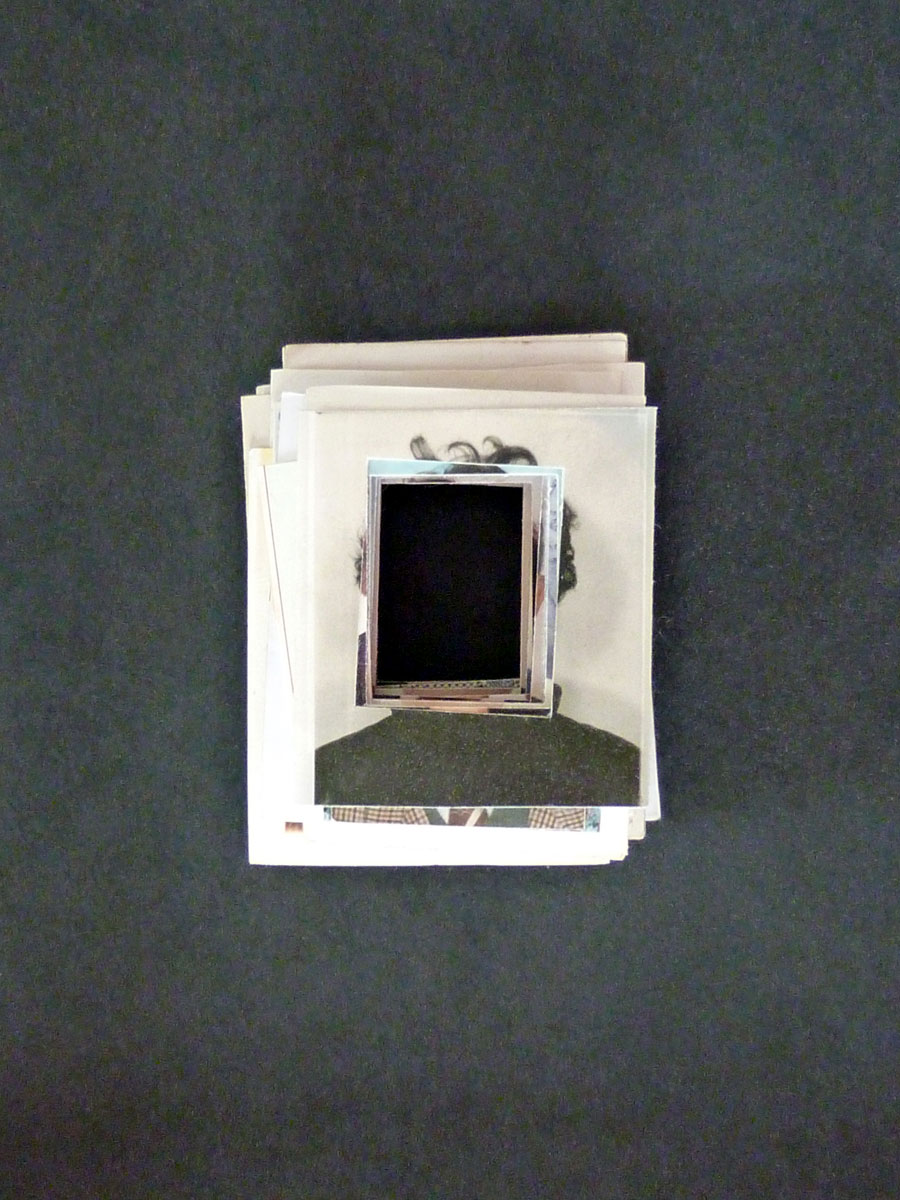
Francesco Vezzoli (Italian, b. 1971) 'Portrait of H.R.H The Princess of Hanover (Before & After Salvador Dalí)' 2009


Francesco Vezzoli (Italian, b. 1971)
Portrait of H.R.H The Princess of Hanover (Before & After Salvador Dalí)
2009
© Francesco Vezzoli/BUS 2012


Andy Warhol (American, 1928-1987) 'Gianni Agnelli' 1972


Andy Warhol (American, 1928-1987)
Gianni Agnelli
1972
© Andy Warhol/BUS 2012


Andy Warhol (American, 1928-1987) 'John Chamberlain and Lorraine' 1978


Andy Warhol (American, 1928-1987)
John Chamberlain and Lorraine
1978
© Andy Warhol/BUS2012


Andy Warhol (American, 1928-1987) 'Ladies and Gentlemen (Wilhelmina Ross)' 1974


Andy Warhol (American, 1928-1987)
Ladies and Gentlemen (Wilhelmina Ross)
1974
© Andy Warhol/BUS 2012


Cindy Sherman. 'Untitled' 2008


Cindy Sherman (American, b. 1954)
Untitled
2008
© Cindy Sherman. Courtesy the Artist and Metro Pictures


Moderna Museet Malmö
Gasverksgatan 22 in Malmö

Moderna Museet Malmö is located in the city centre of Malmö. Ten minutes walk from the Central station, five minutes walk from Gustav Adolfs torg and Stortorget.

Opening hours:
Tuesday – Sunday 11 – 17
Mondays closed

Moderna Museet Malmö website

LIKE ART BLART ON FACEBOOK

Back to top

Exhibition: ‘Karlheinz Weinberger: Intimate Stranger’ at Kunstmuseum Basel, Museum for Gegenwartskunst

Exhibition dates: 21st January – 15th April 2012


Karlheinz Weinberger (Swiss, 1921-2006) 'Hardau, Zürich' 1962


Karlheinz Weinberger (Swiss, 1921-2006)
Hardau, Zürich
1962
Schwarz-Weiss Fotografie
50.7 x 58cm
Courtesy The Estate of Karlheinz Weinberger in care of Patrik Schedler, Zürich


Another relatively unknown artist, people whose work I like promoting in this archive. I certainly had never heard of this photographer. A self-taught part-time photographer who worked as a warehouseman most of his life, Weinberger published photographs in the homosexual magazine “Der Kreis,” the same early gay magazine that George Platt Lynes submitted photographs to in the last stages of his life.

While their might seem to be a dichotomy between the desirous photographs of male youth and the city toughs and “rowdies”, gay men have always been drawn to rough trade: from Oscar Wilde who was more sexually drawn towards the swarthy young rough trade to contemporary iconography of gay skinheads and punks, still a prevalent culture in London for example. Tattoos, shaved heads, braces, Docs – in Weinberger’s case rockabillies. Notice how in the photograph of the male reclining with candlestick, the form of the candlestick mimics the spidery tattoo on the hand in the photograph above. Notice also how the crouching nude lad looks almost identical to the lad in the photograph below, with his hands thrust into his pockets emphasising the crutch area. And the earlier crutch photograph with the mating of Elvis and Vince over a skull and cross bones which has delicious, subversive homosocial overtones. Toughs or not, there is always the desire for the dangerous and different.

Dr Marcus Bunyan


Many thankx to the Kunstmuseum Basel for allowing me to publish the photographs in the posting. Please click on the photographs for a larger version of the image.


Karlheinz Weinberger (Swiss, 1921-2006) 'Knabenschiessen, Albisgütli, Zürich' 1961


Karlheinz Weinberger (Swiss, 1921-2006)
Knabenschiessen, Albisgütli, Zürich
1961
Schwarz-Weiss Fotografie
50.5 x 60.5cm
Courtesy The Estate of Karlheinz Weinberger in care of Patrik Schedler, Zürich


Karlheinz Weinberger (Swiss, 1921-2006) 'Fisherman with Hat, Sicily' c. 1960


Karlheinz Weinberger (Swiss, 1921-2006)
Fisherman with Hat, Sicily
c. 1960
Schwarz-Weiss Fotografie
18.5 x 24cm
Courtesy The Estate of Karlheinz Weinberger in care of Patrik Schedler, Zürich


Karlheinz Weinberger (Swiss, 1921-2006) 'Drei zusammen (three together)' c. 1965


Karlheinz Weinberger (Swiss, 1921-2006)
Drei zusammen (three together)
c. 1965
Schwarz-Weiss Fotografie
50 x 53.5cm
Courtesy The Estate of Karlheinz Weinberger in care of Patrik Schedler, Zürich


Karlheinz Weinberger (Swiss, 1921-2006) 'Untitled, Zürich' c. 1962


Karlheinz Weinberger (Swiss, 1921-2006)
Untitled, Zürich
c. 1962
Schwarz-Weiss Fotografie
23.8 x 30.4cm
Courtesy The Estate of Karlheinz Weinberger in care of Patrik Schedler, Zürich


Karlheinz Weinberger (Swiss, 1921-2006) 'Untitled, Zurich' c. 1962


Karlheinz Weinberger (Swiss, 1921-2006)
Untitled, Zurich
c. 1962
Schwarz-Weiss Fotografie
23.8 x 30.4cm
Courtesy The Estate of Karlheinz Weinberger in care of Patrik Schedler, Zürich


Karlheinz Weinberger (Swiss, 1921-2006) 'Untitled, Zurich' c. 1962


Karlheinz Weinberger (Swiss, 1921-2006)
Untitled, Zurich
c. 1962
Schwarz-Weiss Fotografie
23.8 x 30.4cm
Courtesy The Estate of Karlheinz Weinberger in care of Patrik Schedler, Zürich


Karlheinz Weinberger (Swiss, 1921-2006) 'Untitled, Zurich' c. 1962


Karlheinz Weinberger (Swiss, 1921-2006)
Untitled, Zurich
c. 1962
Schwarz-Weiss Fotografie
29.7 x 39.1cm
Courtesy The Estate of Karlheinz Weinberger in care of Patrik Schedler, Zürich


The exhibition presents the rarely shown work of the photographer Karlheinz Weinberger (1921-2006). Together with magazines and a selection of vintage apparel, the pictures document a youth culture in Zurich that emerged after World War II whose members sought to subvert contemporary notions of “Swiss correctness.”

Weinberger spent the largest part of his life working as a warehouseman for Siemens-Albis in Zurich. In his free time, he was a self-taught photographer, portraying his lovers and people he met in the street. From the late 1940s on, he frequently published his pictures in “Der Kreis,” a homosexual magazine produced in Zurich from 1943 until 1967 that garnered international attention, pseudonymously signing his work as “Jim.” In 1958, he launched a major project for which he would photograph a group of teenagers, the city’s so-called “Halbstarke,” over an extended period of time. Weinberger’s unfailingly respectful approach allowed him to capture the non-conformism of these “rowdies” with regard to social convention and their play with stereotypes of masculinity and femininity, most readily evident in the way they dressed.

Wearing embroidered denim jackets and oversized belt buckles adorned with the likenesses of idols such as Elvis or James Dean, Weinberger’s adolescent subjects present themselves to his camera in public settings like members of a gang. Photographs such as those taken at the Knabenschiessen, a target shooting competition held at Zurich’s Albisgüetli, show them sprawling on the ground between fairground stalls and compact vans, illustrating the “Halbstarke”‘s refusal to fit in with the traditions surrounding this Zurich folk festival. In addition to the photographs in public settings, Weinberger also took pictures in the improvised studio in his living room. Scantily clad, some of his subjects, mostly young men, strike confident poses showing off their denim shorts and hats, while others cower, their eyes glancing at the camera with a vulnerable expression. Weinberger’s role is that of an Intimate Stranger: he records the attitudes of a generation and its marginal social position in unvarnished pictures and develops the photographs capturing the objects of his fascination in his own photo laboratory.

In an oeuvre that spanned many years, Weinberger portrayed what lay behind the curtains of 1960s bourgeois Switzerland, finding ways to document deviancy without ever putting his protagonists on display.

Press release from the Kunstmuseum Basel website


Karlheinz Weinberger (Swiss, 1921-2006) 'Untitled' c. 1969


Karlheinz Weinberger (Swiss, 1921-2006)
Untitled
c. 1969
Schwarz-Weiss Fotografie
30.4 x 23.8cm
Courtesy The Estate of Karlheinz Weinberger in care of Patrik Schedler, Zürich


Karlheinz Weinberger (Swiss, 1921-2006) 'Untitled' c. 1961


Karlheinz Weinberger (Swiss, 1921-2006)
Untitled
c. 1961
Schwarz-Weiss Fotografie
24 x 18cm
Courtesy The Estate of Karlheinz Weinberger in care of Patrik Schedler, Zürich


Karlheinz Weinberger (Swiss, 1921-2006) 'Untitled' c. 1960


Karlheinz Weinberger (Swiss, 1921-2006)
Untitled
c. 1960
Schwarz-Weiss Fotografie
39 x 29cm
Courtesy The Estate of Karlheinz Weinberger in care of Patrik Schedler, Zürich


What is the story behind Karlheinz Weinberger and his photographs?

Weinberger was totally fascinated with photography. From the day he received his first camera at a very young age, which was given to him by a lover, he felt the urge to take pictures. Although he had a day job as warehouseman and never really made money with his shots, he maintained this passion until the end of his life. Under the pseudonym Jim he began, in the mid 50s, to publish portraits in a gay magazine. Most of them were taken whilst travelling in Southern Italy. In 1958, he met a young rocker named Jimmy Oechslin in the streets of Zurich and asked him, excitedly, if he could take his portrait. Through him he was introduced to the burgeoning gang culture in Switzerland. Teenagers under the influence of American culture celebrated their own lifestyle by wearing customised jeans and by riding motorcycles. Eventually, in the 80s and 90s, Weinberger went on to photograph the Hell’s Angels in Switzerland.

How would you describe Weinberger’s aesthetic?

Rough, personal, artistic. He was at times very commanding during photo shoots and had an almost ethnographic interest in gangs and biker culture. At times, a buckle belt was more important than a face. Through his passion for photography he was part of gangs without adopting their lifestyle.

Who are the people in these images?

In Germany and Switzerland the German term ‘Halbstarker’ was created in the 50s. It literally means half strong. The ‘half strongs’ were gangs of young people who were looking for an identity of their own. They rejected society’s expectation and were pioneers in the establishment of youth culture through music, cloths and assimilation of American culture.

Ricky Lee. “Karlheinz Weinberger: Rebel Youth,” on the AnOther website February 7th, 2011 [Online] Cited 06/04/2012


Karlheinz Weinberger (Swiss, 1921-2006) 'The Jets, Basel' 1962


Karlheinz Weinberger (Swiss, 1921-2006)
The Jets, Basel
1962
Schwarz-Weiss Fotografie
Courtesy The Estate of Karlheinz Weinberger in care of Patrik Schedler, Zürich


Karlheinz Weinberger (Swiss, 1921-2006) 'The Lions, Basel' c. 1962


Karlheinz Weinberger (Swiss, 1921-2006)
The Lions, Basel
c. 1962
Schwarz-Weiss Fotografie
Courtesy The Estate of Karlheinz Weinberger in care of Patrik Schedler, Zürich


Karlheinz Weinberger (Swiss, 1921-2006) 'Zürich am Limmatquai' 1962


Karlheinz Weinberger (Swiss, 1921-2006)
Zürich am Limmatquai
1962
Schwarz-Weiss Fotografie
30 x 24cm
Courtesy The Estate of Karlheinz Weinberger in care of Patrik Schedler, Zürich


Karlheinz Weinberger (Swiss, 1921-2006) 'Milchbuck, Zürich' c. 1962


Karlheinz Weinberger (Swiss, 1921-2006)
Milchbuck, Zürich
c. 1962
Schwarz-Weiss Fotografie
60.5 x 49cm
Courtesy The Estate of Karlheinz Weinberger in care of Patrik Schedler, Zürich


Karlheinz Weinberger(Swiss, 1921-2006)

Career

Karlheinz Weinberger was a self-taught photographer spending over sixty years producing intimate, often homoerotic photographs of rebellious male youth, mostly working-class men. Weinberger worked in the warehouse at Zürich’s Siemens factory during the day and his nights he spent shooting portraits of construction workers, bikers, and athletes for the underground gay journal Der Kreis. Weinberger published his works under the pseudonym Jim. In 1958 he began focusing his camera on the Halbstarken, an edgy, antiauthoritarian teen subculture whose members styled themselves as bad boys à la James Dean in Rebel Without a Cause or Elvis Presley.

Work

As early as 1948, Weinberger made contact with the gay magazine Der Kreis, where he used the pseudonym “Jim”. At the parties of the district subscribers, he showed off his musical talent and was the “house photographer”. From September 1952 to 1965 his photographs were an integral part of the circle. With around 80 photos published, he had a significant impact on homosexual aesthetics until the end of the magazine in 1967 and its successor magazine Club68. The photographs, which Weinberger published under the pseudonym “Jim”, mainly show workers and evoke the homoeroticism of simple men.

From 1958 Weinberger began photographing the hooligan scene in Zürich. He was also interested in rockers and tattooed people. Weinberger was one of the first photographers to get permission to document the Hells Angels’ local offshoot. Between 1964 and 1976 Weinberger also worked as a freelancer for various sports magazines and specialised in sports reports.

Text from the Wikipedia website


Karlheinz Weinberger (Swiss, 1921-2006) 'Adler Gang, Zurich' c. 1966


Karlheinz Weinberger (Swiss, 1921-2006)
Adler Gang, Zurich
c. 1966
Schwarz-Weiss Fotografie
Courtesy The Estate of Karlheinz Weinberger in care of Patrik Schedler, Zürich


Karlheinz Weinberger (Swiss, 1921-2006) 'Lone Star Camp, Gossau' 1967


Karlheinz Weinberger (Swiss, 1921-2006)
Lone Star Camp, Gossau
1967
Schwarz-Weiss Fotografie
Courtesy The Estate of Karlheinz Weinberger in care of Patrik Schedler, Zürich


Kunstmuseum Basel
St. Alban-Graben 16
CH-4010 Basel
Phone: 0041 (0)61 206 62 62

Opening hours:
Tuesday – Sunday 10am – 6pm
Closed on Monday

Kunstmuseum Basel website

LIKE ART BLART ON FACEBOOK

Back to top

Exhibition: ‘Hijacked III: Contemporary Photography from Australia and the UK’ at Perth Institute of Contemporary Art (PICA)

Exhibition dates:  18th February – 8th April 2012


Hijacked III Interview with writer Anthony Luvera


The photographs in this posting highlight the conceptual diversity in contemporary art practice and emphasise the talent of the practitioners working today. Just an observation: how serious are the portraits – it’s as if no’body’ is allowed to laugh or smile anymore. Perhaps this is a reflection of the times in which we live, full of malaise, anxiety and little wonder. Fear of being replaced, fear of discrimination, fear of growing up, fear of dying. Or dressed up in a women’s dress and pink hat, having the “courage” or ignorance (the opposite of fear?) to look like a stunned mullet with a blank expression on the face (deadpan photography that I really can’t stand). Or, perhaps, simple effacement: defiance as body becomes mannequin, body hidden behind a mask or completely cloaked from view. These grand photographs have the intensity, perhaps not a lightness of being.

Dr Marcus Bunyan


Many thankx to PICA for allowing me to publish the photographs in the posting. Please click on the photographs for a larger version of the image.


Trish Morrissey (Irish, b. 1967) 'Hayley Coles, June 17th, 2006' 2006


Trish Morrissey (Irish, b. 1967)
Hayley Coles, June 17th, 2006
2006
Courtesy of the artist and Elaine Levy Project, commissioned by Impressions Gallery

Review of Trish Morrissey on Art Blart


Front deals with the notion of borders, boundaries and the edge; using the family group and the beach setting as metaphors. For this work, the artist travelled to beaches in the UK and around Melbourne. There, she approached families and groups of friends who had made temporary encampments, or marked out territories and asked if she could be part of their family temporarily. Morrissey took over the role or position of a woman within that group – usually the mother figure. The artist asked to take the place of the mother figure, and to borrow her clothes. The mother figure then took over the artist’s role and photographed her family using a 4 x 5 camera (which Morrissey had already carefully set up) under the artist’s instruction. While Morrissey, a stranger on the beach, nestled in with the mother figure’s loved ones.

These highly performative photographs are shaped by chance encounters with strangers, and by what happens when physical and psychological boundaries are crossed. Ideas around the mythological creature the ‘shape shifter’ and the cuckoo are evoked. Each piece within the series is titled by the name of the woman who the artist replaced within the group.

Text from the PICA website


Bindi Cole (Australian, b. 1975) 'Ajay' 2009


Bindi Cole (Australian, b. 1975)
Ajay
2009
From the series Sistagirls
Courtesy of Nellie Castan Gallery

Review of Sistagirls on Art Blart


The term ‘Sistagirl’ is used to describe a transgender person in Tiwi Island culture. Traditionally, the term was ‘Yimpininni’. The very existence of the word provides some indication of the inclusive attitudes historically extended towards Aboriginal sexual minorities. Colonisation not only wiped out many Indigenous people, it also had an impact on Aboriginal culture and understanding of sexual and gender expression.

As many traditions were lost, this term became a thing of the past. Yimpininni were once held in high regard as the nurturers within the family unit and tribe much like the Faafafine from Samoa. As the usage of the term vanished, tribes’ attitudes toward queer Indigenous people began to resemble that of the western world and the religious right. Even today many Sistagirls are excluded from their own tribes and suffer at the hands of others.

Text from the PICA website


Maciej Dakowicz (Polish, b. 1976) 'Pink Hat, 23:42. Cardiff' 2006


Maciej Dakowicz (Polish, b. 1976)
Pink Hat, 23:42. Cardiff
2006
Courtesy of the artist and Third Floor Gallery


St Mary Street is one of the main streets in central Cardiff, the capital city of Wales; a city as any other in the UK. Unassuming during the day, on weekend nights it becomes the main scene of the city night life, fuelled by alcohol and emotions. Some of Cardiff’s most popular clubs and pubs are located there or in its vicinity. The very popular Chippy Lane, with its numerous chip and kebab shops, is just a stone’s throw away. Sooner or later most party-goers end up in that area, whether looking for another drink, some food or in search of another dance floor.

Everything takes place in this public arena – from drinking, fighting, kissing to crying and sleeping. Supermen chat up Playboy Bunnies, somebody lies on the pavement taking a nap, the hungry ones finish their portions of chips and the policemen stop another argument before it turns into a fight. Nobody seems to worry about tomorrow, what matters is here and now, punctuated by another week at work, until the next weekend rolls around again.

Text from the PICA website


Laura Pannack (British, b. 1985) 'Shay' 2010


Laura Pannack (British, b. 1985)
Shay
2010
Courtesy of the artist
Represented by Lisa Pritchard Agency


What’s so special about this picture are the details. The tattoo – not just what it says but the way it mimics the Nike Swoosh on her shirt – and the cigarette, that although it is not in focus, one imagines has a large line of ash on it, as if time has stopped. This is echoed in the expression on her face, deep intensity and focused on something ahead although the car is obviously stationary. From a distance one could be mistaken that this is an American photograph from the 70s but on closer inspection – the piercing, the Nike Swoosh, the car door handles – one realises that this is contemporary and British. And yet of course that stare is timeless.

Harry Hardie on the Foto8 website [Online] Cited 22/03/2012 no longer available online


Adam Broomberg and Oliver Chanarin. 'Culture3/Sheet72/Frame3' 2011


Adam Broomberg and Oliver Chanarin
Culture3/Sheet72/Frame3
2011
Courtesy of the artists & Paradise Row, London


HIJACKED III interview with PICA curator Leigh Robb


… Artists are notorious for their ability to hijack; meaning to stop and hold up, to seize control by use of force in order to divert or appropriate, a deliberate attempt to action a change of direction.

Hijacked III: Contemporary Photography from Australia the UK draws on the success and unique energy of Hijacked I (Australia and USA) and Hijacked II (Australia and Germany), to once again bring together two geographically distant but historically connected communities through a range of diverse photographic practices.

This exhibition will be simultaneously presented across two sites: PICA in Perth, Western Australia and QUAD Gallery in Derby, United Kingdom, and has been timed to coincide with the launch of the luscious, full colour and 420 page Hijacked III compendium, published by Big City Press. Utilising portraiture, digital collage, archival images, documentary snap shots, internet grabs and refined photographic tableaux, the 24 artists and over 120 works in this exhibition explore themes as diverse as curious weekend leisure pursuits, gender politics and displaced Indigenous culture.

Artists: Tony Albert, Warwick Baker, Broomberg & Chanarin, Natasha Caruana, Bindi Cole, Maciej Dakowicz, Christopher Day, Melinda Gibson, Toni Greaves, Petrina Hicks, Alin Huma, Seba Kurtis, David Manley, Tracey Moffatt, Trish Morrissey, Laura Pannack, Sarah Pickering, Zhao Renhui, Simon Roberts, Helen Sear, Justin Spiers, Luke Stephenson, Christian Thompson, Tereza Zelenkova, Michael Ziebarth.

Press release from PICA website


Sarah Pickering (British, b. 1972) 'Land mine' 2005


Sarah Pickering (British, b. 1972)
Land mine
2005
Courtesy of the artist and Meessen De Clercq, Brussels


The Explosion pictures document the literal theatre of war – the detailed level of artifice used to prepare men and women for combat on the front lines. They also reveal the minutiae of packaging war as entertainment. The beauty of the pictures lies in their perverse seductiveness, and this attraction underscores the distance most of us have from real combat.

Pickering’s Explosion images, by distilling an aspect of the war that is a fiction, question the reliability of seemingly objective historical accounts, such as news reports and photographs that influence how war is communicated and remembered. By extension they question how we come to know what we know about it. We learn about war from a variety of sources, from history books, first-hand accounts, news media, and movies, all of which can get confused and merged in our minds as memory.

The dual purpose of the explosives – training and re-enacting – forms a fitting parallel to how we cope with trauma, a process of both anticipation and reconciliation.”

Sarah Pickering website


Simon Roberts (British, b. 1974) 'We English No. 56' 2007


Simon Roberts (British, b. 1974)
We English No. 56
2007

More Simon Roberts We English on Art Blart


Simon Roberts travelled across England in a motorhome between 2007 and 2008 for this portfolio of large-format tableaux photographs of the English at leisure. We English builds on his first major body of work, Motherland (2005), with the same themes of identity, memory and belonging resonating throughout. Photographing ordinary people engaged in diverse pastimes, Roberts aims to show a populace with a profound attachment to its local environment and homeland. He explores the notion that nationhood – that what it means to be English – is to be found on the surface of contemporary life, encapsulated by banal pastimes and everyday leisure activities. The resulting images are an intentionally lyrical rendering of a pastoral England, where Roberts finds beauty in the mundane and in the exploration of the relationship between people and place, and of our connections to the landscapes around us.

Text from the Simon Roberts website


Tony Albert (Australian, b. 1981) 'No Place' 2009


Tony Albert (Australian, b. 1981)
No Place
2009
Courtesy of the artist


Tony Albert is a Girramay rainforest man from the Cardwell area… The No Place series references The Wizard of Oz ‘there’s no place like home’. For No Place Tony returns to his tropical paradise home with a group of Lucho Libre wrestling masks from Mexico. His family adorn these masks and again become warriors protecting their paradise. These seemingly playful masks share much with Aboriginal and particularly rainforest culture. Body and shield designs from this area represent animal gods or spirit beings. The use of these masks brings a prescient new layer of armour for a new generation of warrior.

The colour scheme of solid blocks of red, black and yellow also speak to traditional rainforest aesthetics. There are strong elements of the sublime and the fantastical within these works. Viewing Aboriginal people in iconic north Queensland locations masked in Mexican wrestling paraphernalia carries more than a hint of the surreal and absurd.

Anon. “Tony Albert and No Place,” on the Big Art website, 2010 [Online] Cited 22/03/2012 no longer available online


Christian Thompson (Australian / Bidjara, b. 1978) 'Untitled #7 from the King Billy Series' 2010


Christian Thompson (Australian / Bidjara, b. 1978)
Untitled #7 from the King Billy series
2010
Courtesy of the artist and Gallery Gabrielle Pizzi


King Billy, is an ode to his great great grandfather, King Billy of Bonnie Doon Lorne. The initial inspiration was a photograph of King Billy, standing alone wearing his ‘name plate’. Despite its colonial overtones, for Thompson, this image of the senior tribesman exudes wisdom and kindness and reminds him of his father. In much of Thompson’s work his processes are intuitive, he delves into a rich dream world and draws out fabulous images. He manifests his own mythological world. In this series his figures are clad in fabrics patterned with Indigenous motifs, mainly cheap hoodies in lurid colours; a modern / ancient skin for a magic youth culture. He has made a triptych, three views of a pink hooded figure spewing cascading pearl stands from the face; opulent, decadent, excessive and sensual.

Another image shows a crowned figure swathed in fabrics bearing the markings of various clans, perhaps indicating the domain of this regal form. In the hands a (poisoned?) chalice – the sawn off plastic bottle a warning about petrol sniffing? His self-portrait as psychedelic godhead/Carnaby Street dandy / flower child is spectacular and arresting. He is wearing a tailored suit, patterned with more Indigenous motifs and he cradles a bouquet. His skin is green and his eyes are purple flowers. What can this otherworldly creature tell us?

Thompson seems to emphasise a theme of disparity in this work; the ‘hoodie’ with the cascading pearls, the crown with the plastic bottle, the opulence with the desperate. These works are both beautiful and confronting.

Text from the PICA website


HIJACKED III interview with Christian Thompson


Petrina Hicks (Australian, b. 1972) 'Emily the Strange' 2011


Petrina Hicks (Australian, b. 1972)
Emily the Strange
2011
Courtesy of the artist and Stills Gallery


Petrina Hicks’ Beautiful Creatures appeals to our senses. Immediately alluring, the large-scale, hyper-real photographs, are all rendered so clearly and with such control they are reminiscent of advertisements. But with a series of little ruptures, within images and between them, Hicks disrupts our usually beguiled response to such artistry. For her, photography’s capability to both create and corrupt the process of seduction and consumption is of endless interest.

Hicks loads her images with history and associations but denies us a clear message. Along with the ambiguity, there is a visceral quality in these new works; her depiction of flesh, hair and veins stops the viewer short of being lulled into consumption. Hicks engages a playful yet confronting approach to confound our expectations. A cat, naked without fur, in the image Sphynx, contrasts a beautiful blonde with a face full of it in Comfort. In Emily the Strange the hairless creature reappears with a young girl whose piercing green eyes, skin-pink dress, and latent defiance, make her eerily akin to her pet. Alluded to, in the title of the exhibition, this duality is present in much of the work. Her subjects are not simply beautiful or simply creatures.

Text from the PICA website


HIJACKED III interview with photographer Petrina Hicks


Tereza Zelenkova (Czech, b. 1985) 'Cadaver' 2011


Tereza Zelenkova (Czech, b. 1985)
Cadaver
2011
Courtesy of the artist


Luke Stephenson (British, b. 1983) 'Diamond Sparrow #1' 2009


Luke Stephenson (British, b. 1983)
Diamond Sparrow #1
2009
Courtesy of the artist


Stephenson finds birds and the world surrounding them wonderfully fascinating. The birds he has photographed all belong to avid bird breeders who on the whole have been keeping birds their whole lives. It’s a hobby people generally don’t come into contact with, unless you are active within it. The artist does not keep birds but finds them beautiful in all their variations and colours, so has set out capture these birds in a way that would show them at their best.

There are many criteria to breeding a prize-winning bird, from shape and form to its pattern, and this is something Stephenson has tried to convey whilst also attempting to show some of their personalities. He set out to photograph every breed of bird within the ‘hobby’ of keeping birds but soon realised there were thousands of variations, so decided to keep this as an ongoing project; realising instalments every couple of years which people can collect and, hopefully one day, the dictionary will be complete.

Luke Stephenson website


Perth Institute of Contemporary Art (PICA)
Perth Cultural Centre
James Street Northbridge
Phone: + 61 (0) 8 9228 6300

Opening hours:
Tuesday – Sunday 10am – 5pm
Closed Mondays

PICA website

LIKE ART BLART ON FACEBOOK

Back to top

Exhibition: ‘The Photographs of Brett Weston’ at the The Nelson-Atkins Museum of Art, Kansas City

Exhibition dates: 23rd November 2011 – 25th March 25 2012


Brett Weston (American, 1911-1993) 'Botanical' c. 1975


Brett Weston (American, 1911-1993)
Botanical
c. 1975
Gelatin silver print
Unframed: 11 x 14 inches (27.94 x 35.56cm)
The Nelson-Atkins Museum of Art
Gift from the Christian K. Keesee Collection
© The Brett Weston Archive


Brett Weston’s pictures are ageing well – the decorative aesthetic seems to have more currency today than previously when the values of his father were predominant. Perhaps this has to do with the continuing influence of the Bechers and the exhibition New Topographics: Photographs of a Man Altered Landscape (1975). Although Weston photographs nature there is a beautiful, reductive minimalism to his photographs, an enticing simplicity of light and form that could be seen as decorative but today has taken on more symbolic weight; man and nature under threat, with hints of Atget and Wynn Bullock in the mix as well. Under that seeming simplicity are sophisticated photographs that take a good eye to capture and bring to life – what seems simple isn’t by any means. The light is beautiful, the sensitivity to subject present beyond doubt. His photographs will only gain greater currency in the future.

Dr Marcus Bunyan


Many thankx to The Nelson-Atkins Museum of Art for allowing me to publish the photographs in the posting. Please click on the photographs for a larger version of the image.


Brett Weston (American, 1911-1993) 'Snow' c. 1970


Brett Weston (American, 1911-1993)
Snow
c. 1970
Gelatin silver print
Unframed: 11 x 14 inches (27.94 x 35.56 cm)
The Nelson-Atkins Museum of Art
Gift from the Christian K. Keesee Collection
© The Brett Weston Archive


Brett Weston (American, 1911-1993) 'Water' 1970


Brett Weston (American, 1911-1993)
Water
1970
Gelatin silver print
Unframed: 11 x 14 inches (27.94 x 35.56cm)
The Nelson-Atkins Museum of Art
Gift from the Christian K. Keesee Collection
© The Brett Weston Archive


Brett Weston (American, 1911-1993) 'Water Reflection, Logging, Alaska' 1973


Brett Weston (American, 1911-1993)
Water Reflection, Logging, Alaska
1973
Gelatin silver print
Unframed: 11 x 14 inches (27.94 x 35.56cm)
The Nelson-Atkins Museum of Art
Gift from the Christian K. Keesee Collection
© The Brett Weston Archive


Brett Weston (American, 1911-1993) 'Lava, Hawaii' c. 1985


Brett Weston (American, 1911-1993)
Lava, Hawaii
c. 1985
Gelatin silver print
Unframed: 16 x 20 inches (40.64 x 50.8cm)
The Nelson-Atkins Museum of Art
Gift from the Christian K. Keesee Collection
© The Brett Weston Archive


Over his long and prolific career, photographer Brett Weston (1911-1993) exemplified the modernist aesthetic. The son of famed photographer Edward Weston (1886-1958), Brett Weston was a “natural” with the camera: he was still a teenager when he first received high-level, international recognition as a creative artist.

The Photographs of Brett Weston, Nov. 23, 2011, through April 1, 2012, at The Nelson-Atkins Museum of Art in Kansas City, presents a condensed 40-print survey of his long and prolific career. While rare works from the Museum’s Hallmark Photographic Collection are also included, this exhibition celebrates a gift of 260 Weston prints from Christian K. Keesee, owner of the Brett Weston Archive in Oklahoma City.

“This generous gift from Mr. Keesee exemplifies the deep interest in our program on the part of leading collectors and estates across the nation,” said Keith F. Davis, senior curator of photography. “There is also a wonderful symmetry here: this gift of Brett Weston’s work compliments one of the earliest photography gifts to the Museum, when Mr. and Mrs. Milton McGreevy donated 60 Edward Weston prints in 1958.”

Brett Weston was one of photography’s greatest prodigies. After serving as his father’s apprentice, he achieved international recognition at the age of 17 through inclusion in a landmark exhibition in Stuttgart, Germany in 1929.

“Weston’s images are beautifully modulated, unmanipulated black-and-white prints,” said Davis. “He loved sharp lenses and precision cameras, and he applied this “purist” approach to a sustained exploration of the idea of abstraction.”
Weston always sought an energising balance between fact and form, the objective reality of the world and the purely graphic logic of pictorial shape and structure. In exploring the graphic language of form, Weston aimed to suggest the deeper possibilities, and mysteries, of familiar things.

Press release from The Nelson-Atkins Museum of Art website


Brett Weston (American, 1911-1993) 'Magnolia Bud' 1927


Brett Weston (American, 1911-1993)
Magnolia Bud
1927
Gelatin silver print
The Nelson-Atkins Museum of Art
Gift of Hallmark Cards, Inc.
© The Brett Weston Archive


Brett Weston (American, 1911-1993) 'Los Angeles' 1927


Brett Weston (American, 1911-1993)
Los Angeles
1927
Gelatin silver print
Image: 9 5/8 x 6 7/8 inches (24.45 x 17.46cm)
Framed: 21 1/4 x 17 1/4 inches (53.98 x 43.82cm)
The Nelson-Atkins Museum of Art
Gift of Hallmark Cards, Inc.
© The Brett Weston Archive


Brett Weston (American, 1911-1993) 'Building, Ivy, Tree, Sutton Place, New York' 1945


Brett Weston (American, 1911-1993)
Building, Ivy, Tree, Sutton Place, New York
1945
Gelatin silver print
Unframed: 10 x 8 inches (25.4 x 20.32cm)
The Nelson-Atkins Museum of Art
Gift from the Christian K. Keesee Collection
© The Brett Weston Archive


Brett Weston (American, 1911-1993) 'Reflections through Window' 1955


Brett Weston (American, 1911-1993)
Reflections through Window
1955
Gelatin silver print
Image and sheet: 9 9/16 × 7 3/16 inches (24.29 × 18.26 cm)
The Nelson-Atkins Museum of Art
Gift of Hallmark Cards, Inc.
© The Brett Weston Archive


Brett Weston (American, 1911-1993) 'Broken Window' c. 1970


Brett Weston (American, 1911-1993)
Broken Window
c. 1970
Gelatin silver print
Unframed: 11 x 14 inches (27.94 x 35.56cm)
The Nelson-Atkins Museum of Art
Gift from the Christian K. Keesee Collection
© The Brett Weston Archive


Brett Weston (American, 1911-1993) 'Tree Root' c. 1980


Brett Weston (American, 1911-1993)
Tree Root
c. 1980
Gelatin silver print
Unframed: 14 x 11 inches (35.56 x 27.94cm)
The Nelson-Atkins Museum of Art
Gift from the Christian K. Keesee Collection
© The Brett Weston Archive


Brett Weston (American, 1911-1993) 'Leaf' 1982


Brett Weston (American, 1911-1993)
Leaf
1982
Gelatin silver print
Unframed: 20 x 16 inches (50.8 x 40.64cm)
The Nelson-Atkins Museum of Art
Gift from the Christian K. Keesee Collection
© The Brett Weston Archive


Brett Weston (American, 1911-1993) 'Rock Wall' c. 1985


Brett Weston (American, 1911-1993)
Rock Wall
c. 1985
Gelatin silver print
Unframed: 14 x 11 inches (35.56 x 27.94cm)
The Nelson-Atkins Museum of Art
Gift from the Christian K. Keesee Collection
© The Brett Weston Archive


Brett Weston (American, 1911-1993) 'Botanical' c. 1985


Brett Weston (American, 1911-1993)
Botanical
c. 1985
Gelatin silver print
Unframed: 14 x 11 inches (35.56 x 27.94cm)
The Nelson-Atkins Museum of Art
Gift from the Christian K. Keesee Collection
© The Brett Weston Archive


Brett Weston (American, 1911-1993) 'Botanical' c. 1985


Brett Weston (American, 1911-1993)
Botanical
c. 1985
Gelatin silver print
Unframed: 14 x 11 inches (35.56 x 27.94cm)
The Nelson-Atkins Museum of Art
Gift from the Christian K. Keesee Collection
© The Brett Weston Archive


The Nelson-Atkins Museum of Art
4525 Oak Street
Kansas City, MO 64111

Opening hours:
Thursday – Monday 10am – 5pm
Closed Tuesdays and Wednesdays

The Nelson-Atkins Museum of Art website

LIKE ART BLART ON FACEBOOK

Back to top