Exhibition dates: 21st October, 2023 – 14th April, 2024
Curator: Betty Yao
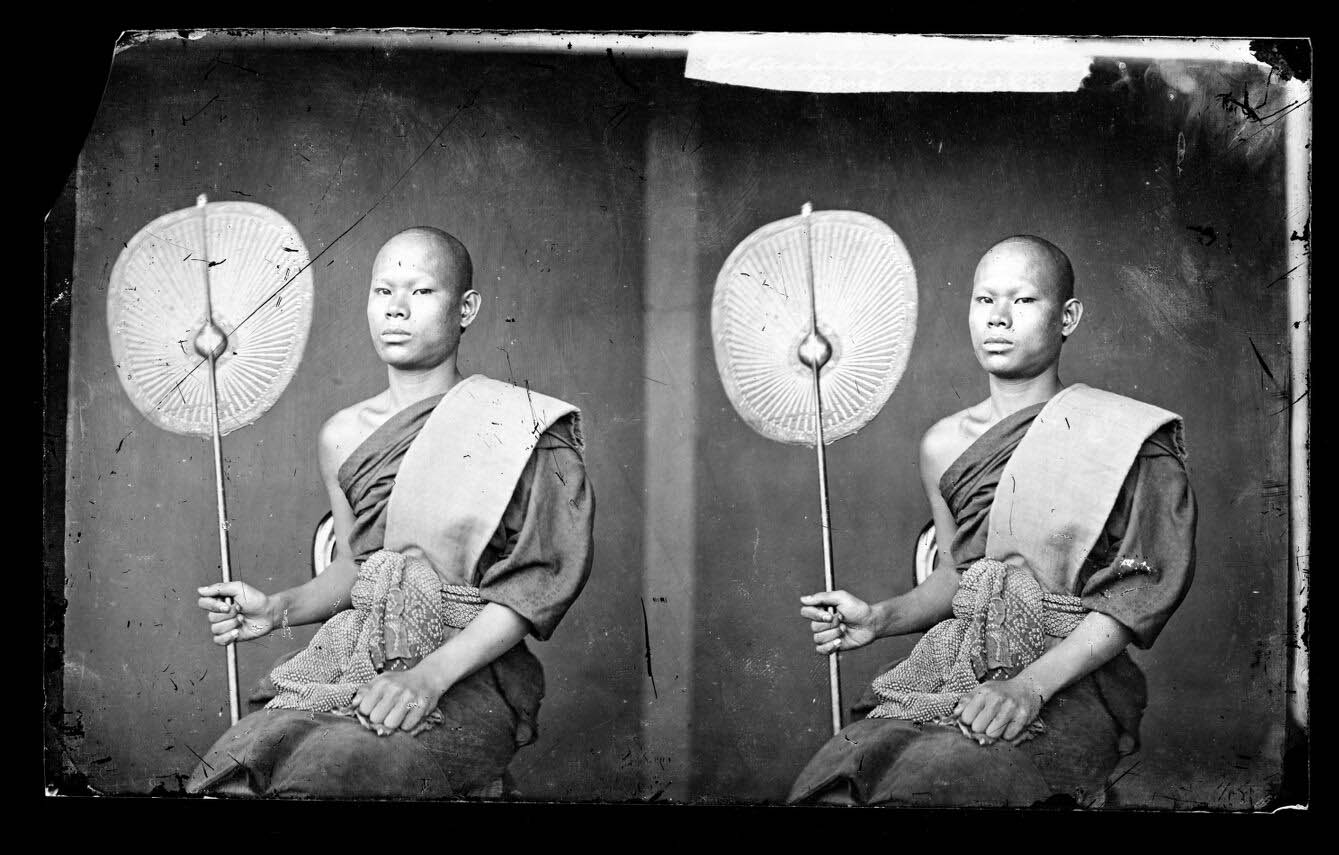
John Thomson (Scottish, 1837-1921) A Siamese monk holding a fan 1865 Photograph from a glass photonegative, wet collodion Public domain
A bridge between past and present
An Easter Monday posting.
Magnificent large format photographs of the landscape and people of Siam (now Thailand), just two decades after the invention of photography. The photographs give “us a glimpse into some characteristics of people and places of Siam in the 1860s.”
In the portrait photographs the engagement revealed by the photographer of the subject with the camera lens is masterful. To elicit this response from people unused to posing in front of a large, bulky camera shows how the photographer must have been empathetic to his subjects and put them at their ease with the process of having their photograph taken.
The subjects are not apprehensive of the camera. The images show them directly: composed, reserved, non-declamatory and possessing a powerful presence. The exchange between subject and photographer evidences a direct line of communication with the sitter.
The eyes of A Siamese boy (1865, below) drill into mine and I feel a profound engagement with his questioning gaze. I am pierced by his gaze … which forces me to confront my own identity, and mortality.
As a viewer of these human beings all these decades later (a bridge between past and present), it’s as if I could reach out and touch their humanity. Their soul.
Dr Marcus Bunyan
Many thankx to the Russell-Cotes Art Gallery and Museum for allowing me to publish the photographs in the posting. Please click on the photographs for a larger version of the image.
In the mid-19th century, John Thomson arrived in Siam with a fairly new invention of those days photography….
Step back in time and immerse yourself in the wonders of 19th-century Southeast Asia as seen through the lens of the intrepid adventurer and photographer, John Thomson. The Russell-Cotes Art Gallery & Museum is proud to present an enchanting new exhibition Siam: Through the Lens of John Thomson on display from 21 October 2023 to 14 April 2024, inviting visitors to embark on a captivating journey through time and space. This extraordinary showcase offers a unique glimpse into the captivating landscapes, diverse cultures, and fascinating history of Southeast Asia.
A British photographer with an exceptional eye for detail, Thomson embarked on a groundbreaking journey to Siam during the late Victorian era, with a fairly new invention in those days: photography, capturing scenes that had been scarcely witnessed before in the Western world. Throughout his remarkable career, Thomson ventured into uncharted territories and documented the exotic beauty and cultural richness of Thailand and Cambodia in stunning detail. Featuring dramatic images developed from negatives preserved in London’s Wellcome Collection, this exhibition introduces the sights and people of nineteenth-century Thailand and Cambodia as witnessed by Thomson first hand. In this new exhibition, visitors to the Russell-Cotes Art Gallery & Museum will have the privilege of witnessing many meticulously preserved photographs taken by Thomson during his travels, carefully curated to provide an insightful narrative of his exploration. Each image tells a story of its own, serving as a bridge between the past and the present, enabling visitors to forge a deeper connection with the cultures and history of Thailand and Cambodia.
Text from the Russell-Cotes Art Gallery and Museum website
Siam Through the Lens of John Thomson, 1865-66: In-Focus audio tour with Jo O’Rourke when the exhibition was at Chester Beatty
This exhibition gives us a glimpse into some characteristics of people and places of Siam in the 1860s. We are guided through a wonderful collection of images taken with great sensitivity by one of the pioneers of photojournalism John Thomson (1837-1921).
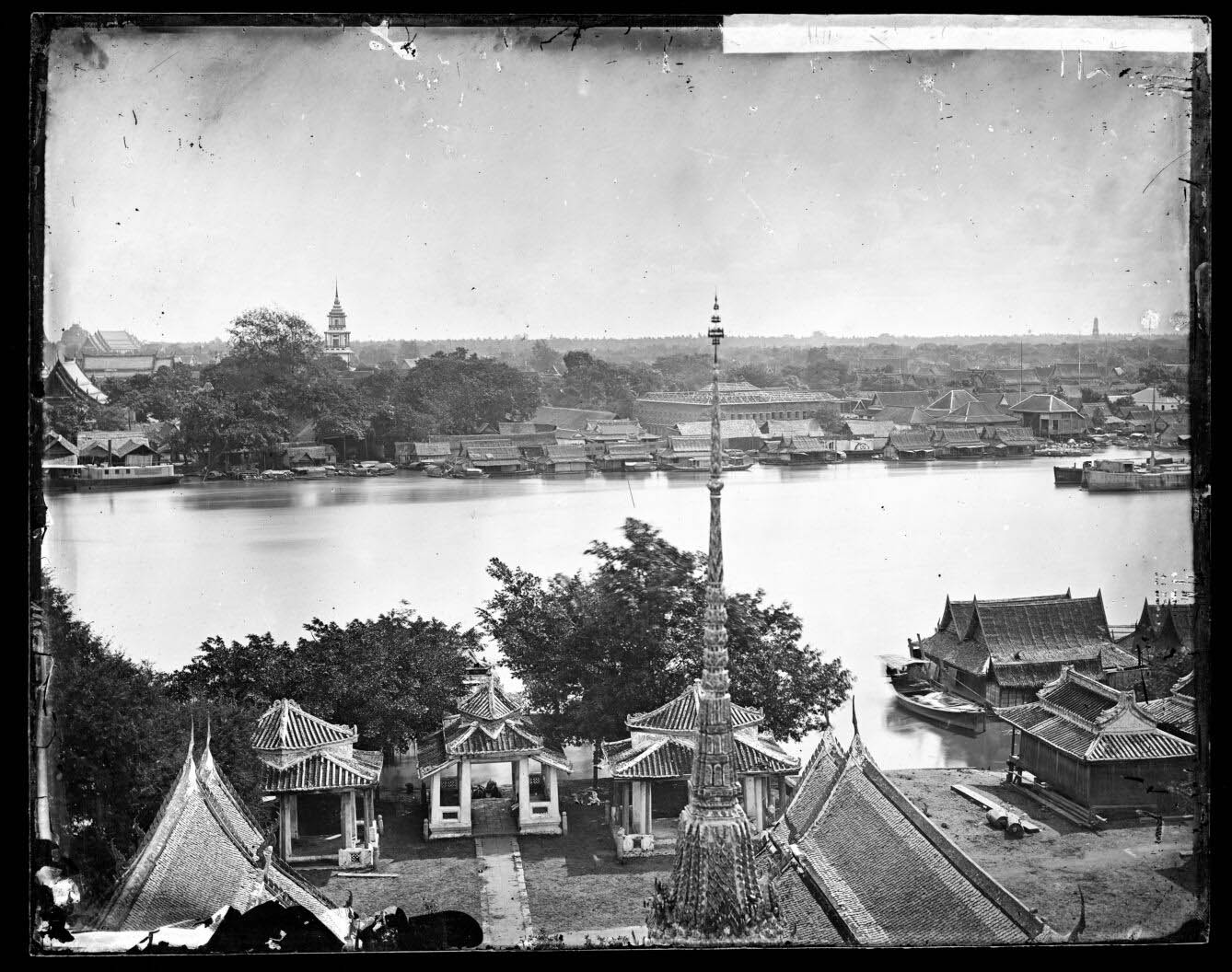
John Thomson (Scottish, 1837-1921) The Chao Phraya River and Rattanakosin Island from the Prang of Wat Arun 1865 Panorama of three photographs from a glass photonegatives, wet collodion Public domain
John Thomson (Scottish, 1837-1921) King Mongkut (King Rama IV) in the uniform of a French Field Marshall 1865 Photograph from a glass photonegative, wet collodion Public domain
“A shrill blast of horns heralded the approach of the King and caused us hastily to descend into the court,” Thomson wrote of the occasion. “His Majesty entered through a massive gateway, and I must confess that I felt much impressed by his appearance, as I had never been in the presence of an anointed sovereign before. He stood about five feet eight inches, and his figure was erect and commanding; but an expression of severe gravity was settled on his somewhat haggard face. His dress was a robe of spotless white, which reached right down to his feet; his head was bare.
“All was prepared beneath a space in the court when, just as I was about to take the photograph, His Majesty changed his mind, and without a word to anyone, passed suddenly out of sight. We patiently waited, and at length the King reappeared, dressed this time in a sort of French Field Marshal’s uniform. The portrait was a great success, and His Majesty afterwards sat in his court robes, requesting me to place him where and how I pleased.”
In the photo of the King in the field marshal’s regalia, he wears the sash of the Legion d’honneur and the Star First Class presented to him on behalf of Emperor Napoleon III by the admiral of the French fleet in Indochina. On a side able rests a small telescope, reflecting the king’s interest in astronomy and its Western means of study.
Anonymous. “How the world first saw Siam,” on The Nation website Thursday January 22nd, 2015 [Online] Cited 14/03/2024. Used under fair use conditions for the purposes of education and research
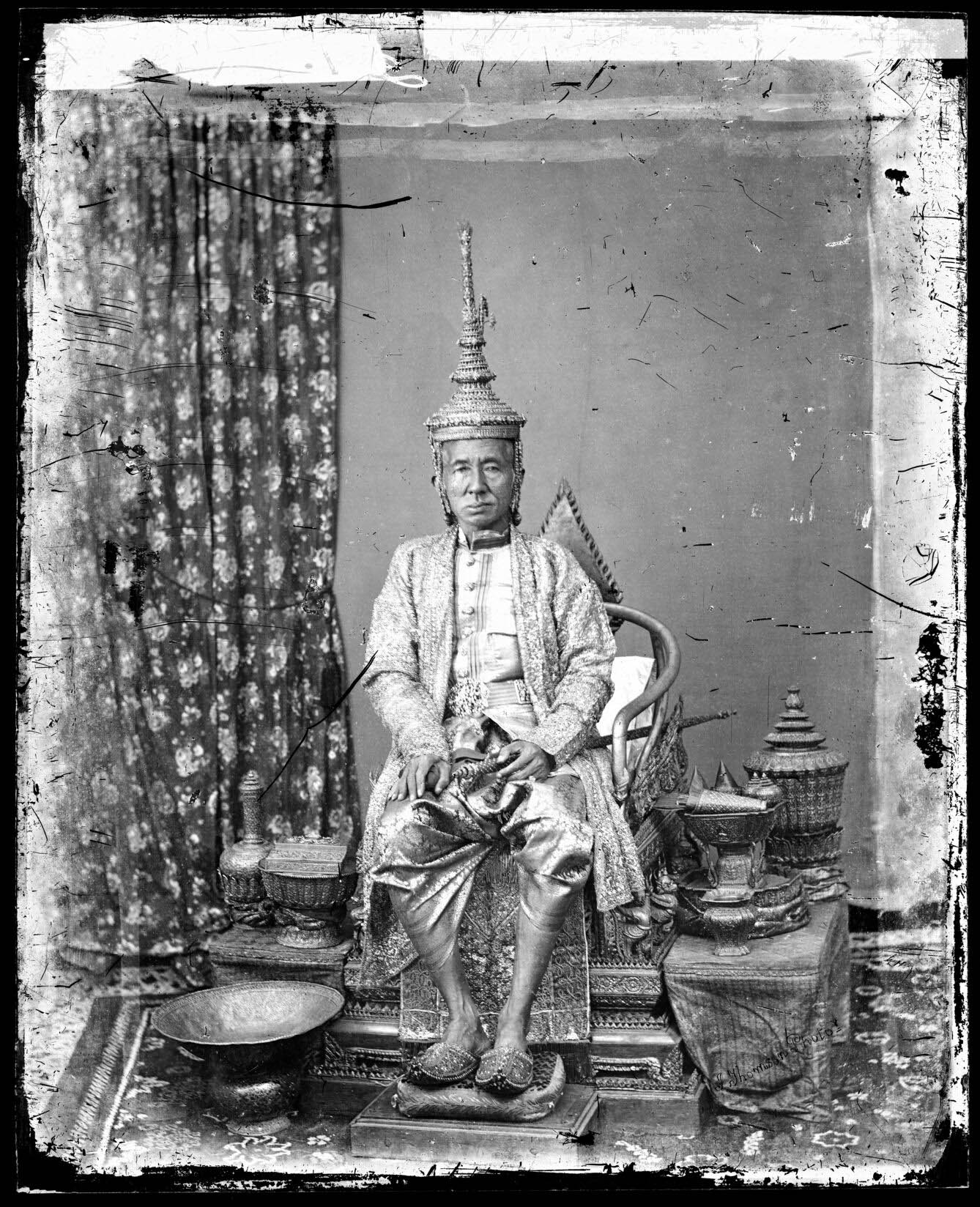
John Thomson (Scottish, 1837-1921) King Mongkut (King Rama IV) in state attire 1865 Photograph from a glass photonegative, wet collodion Public domain
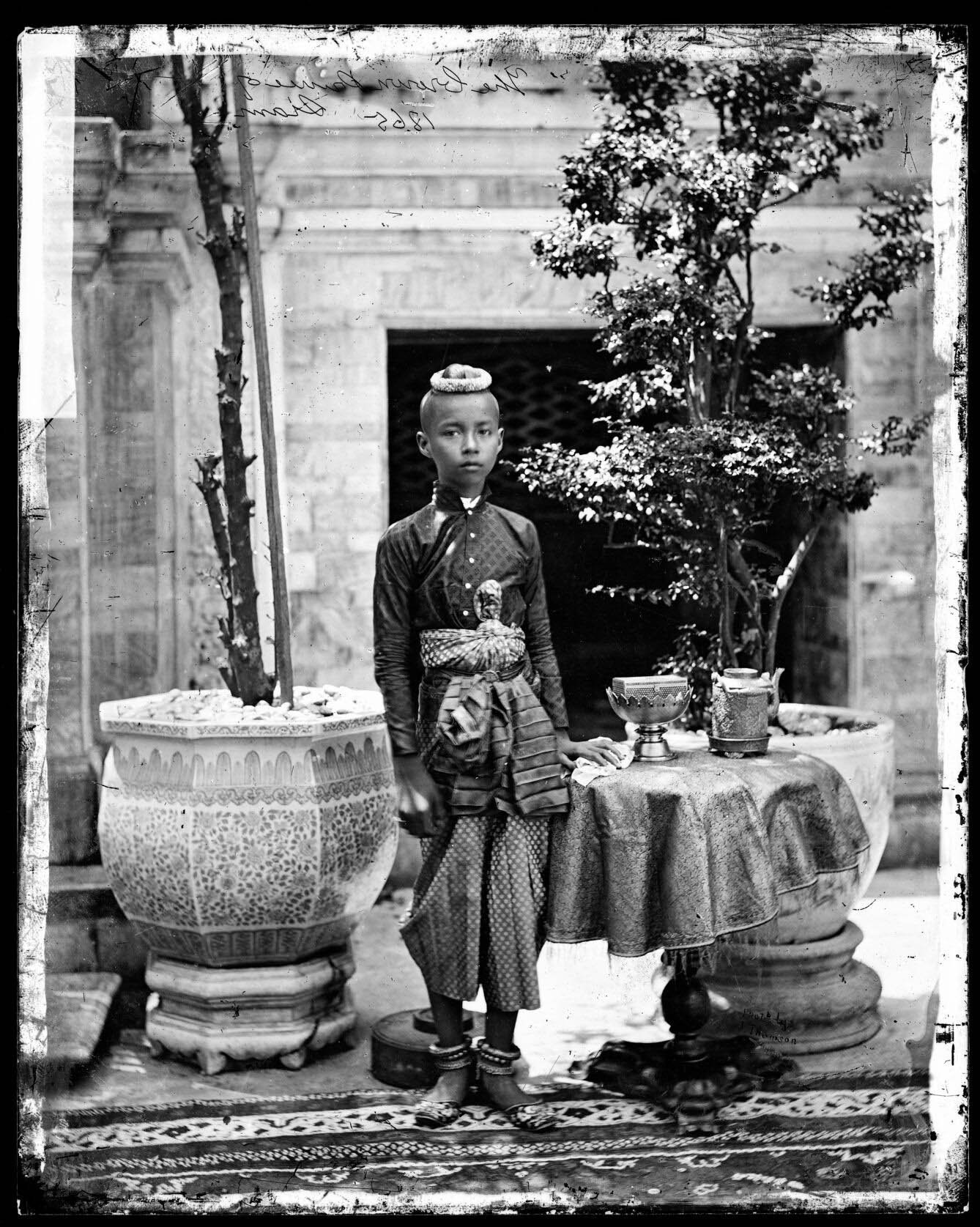
John Thomson (Scottish, 1837-1921) Prince Chulalongkorn 1865 Photograph from a glass photonegative, wet collodion Public domain
Prince Chulalongkorn, subsequently King Chulalongkorn (1853-1910), aged 12 years, wearing a top-knot, fine traditional Thai clothes and jewellery. Standing in a courtyard of the Grand Palace, Bangkok, between an ornamental table and an urn.
John Thomson (Scottish, 1837-1921) Royal Barge Anantanakkharat / A Royal Barge Procession marks the Buddhist Kathin festival on Oct. 14, 1865 1865 Photograph from a glass photonegative, wet collodion Public domain
John Thomson (Scottish, 1837-1921) Offering lunch to Buddhist monks 1865-1866 Photograph from a glass photonegative, wet collodion Public domain
John Thomson (Scottish, 1837-1921) Khon and Lakhon troupe 1865-1866 Photograph from a glass photonegative, wet collodion Public domain
John Thomson (Scottish, 1837-1921) A white elephant belonging to King Mongkut 1865-1866 Photograph from a glass photonegative, wet collodion Public domain
John Thomson (Scottish, 1837-1921) Siam (Thailand) 1865 Photograph from a glass photonegative, wet collodion Public domain
John Thomson (Scottish, 1837-1921) A Siamese boy 1865 Photograph from a glass photonegative, wet collodion Public domain
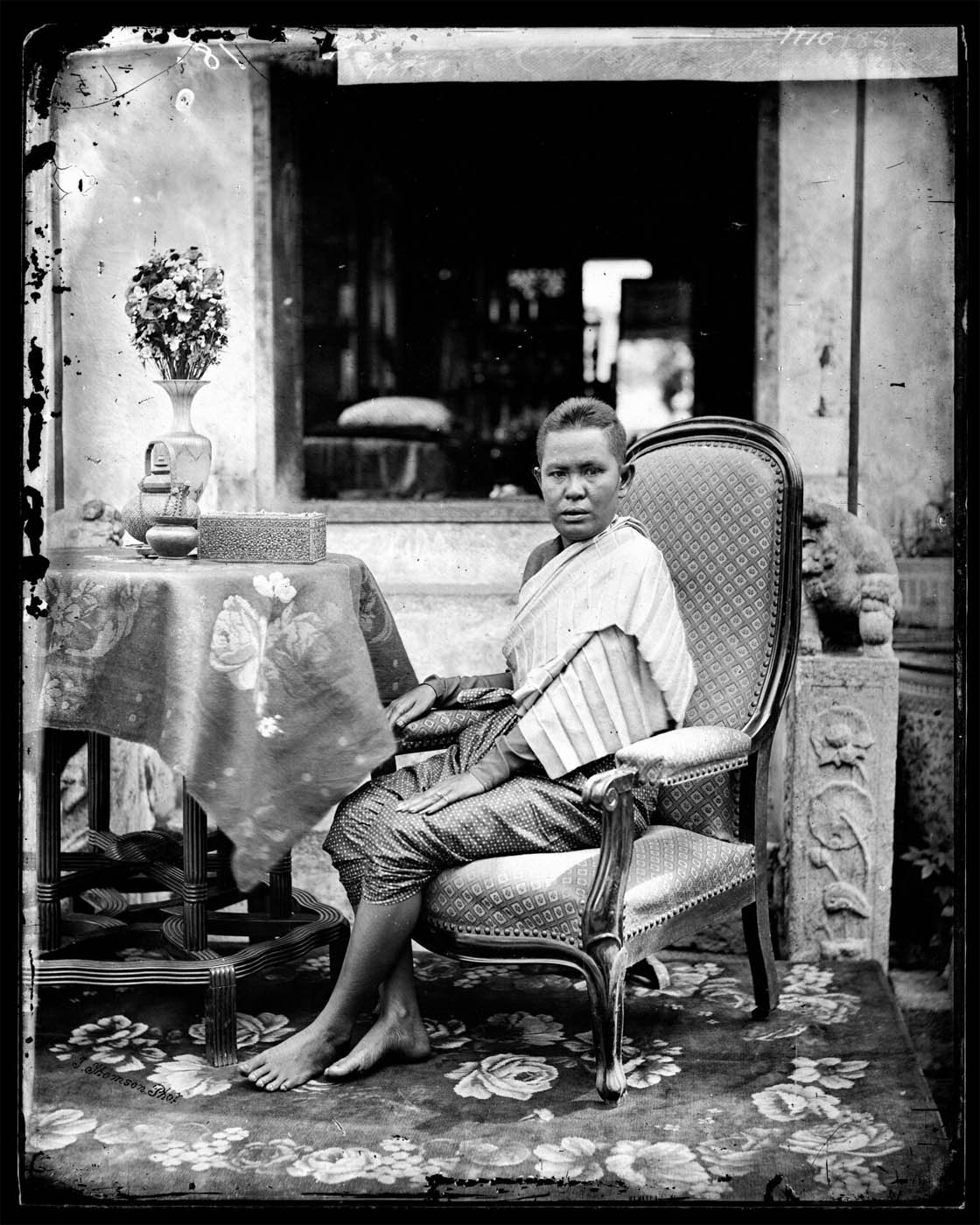
John Thomson (Scottish, 1837-1921) Portrait of a princess with her maidservant (possibly a daughter of Prince Nilarat, Prince of Alongkot Kitpreecha) 1865 Photograph from a glass photonegative, wet collodion Public domain
Step back in time and immerse yourself in the wonders of 19th-century Southeast Asia as seen through the lens of the intrepid adventurer and photographer, John Thomson. The Russell-Cotes Art Gallery & Museum is proud to present an enchanting new exhibition Siam: Through the Lens of John Thomson on display from 21 October 2023 to 14 April 2024, inviting visitors to embark on a captivating journey through time and space. This extraordinary showcase offers a unique glimpse into the captivating landscapes, diverse cultures, and fascinating history of Southeast Asia, as captured by the illustrious Scottish Victorian photographer, John Thomson.
A Scottish photographer with an exceptional eye for detail, Thomson embarked on a groundbreaking journey to Siam during the late Victorian era, with a fairly new invention in those days: photography, capturing scenes that had been scarcely witnessed before in the Western world. Throughout his remarkable career, Thomson ventured into uncharted territories and documented the exotic beauty and cultural richness of Thailand and Cambodia in stunning detail. His evocative photographs offer an invaluable historical record and a testament to his artistic sensibility and his photographic vision marks him out as one of history’s most important travel photographers.
The founders of the Russell-Cotes Art Gallery and Museum, Merton and Annie Russell-Cotes travelled extensively in their lifetime, bringing back crates full of ‘objets d’art’,as Merton described them in his memoirs. These were to fill almost every room of the house alongside Merton’s vast art collection and, in some cases, inspired the Russell-Cotes to alter and adapt rooms to a particular theme. As they visited almost every continent during their grand worldwide tours, it is only fitting that this exhibition works in collaboration with the vast collections from around the world on display at the Russell-Cotes Art Gallery and Museum today. Annie and Merton witnessed similar scenes to John Thomson, but chose to collect objects, rather than images.
Featuring dramatic images developed from negatives preserved in London’s Wellcome Collection, this exhibition introduces the sights and people of nineteenth-century Thailand and Cambodia as witnessed by Thomson first hand. In this new exhibition, visitors to the Russell-Cotes Art Gallery & Museum will have the privilege of witnessing many meticulously preserved photographs taken by Thomson during his travels, carefully curated to provide an insightful narrative of his exploration. Each image tells a story of its own, serving as a bridge between the past and the present, enabling visitors to forge a deeper connection with the cultures and history of Thailand and Cambodia.
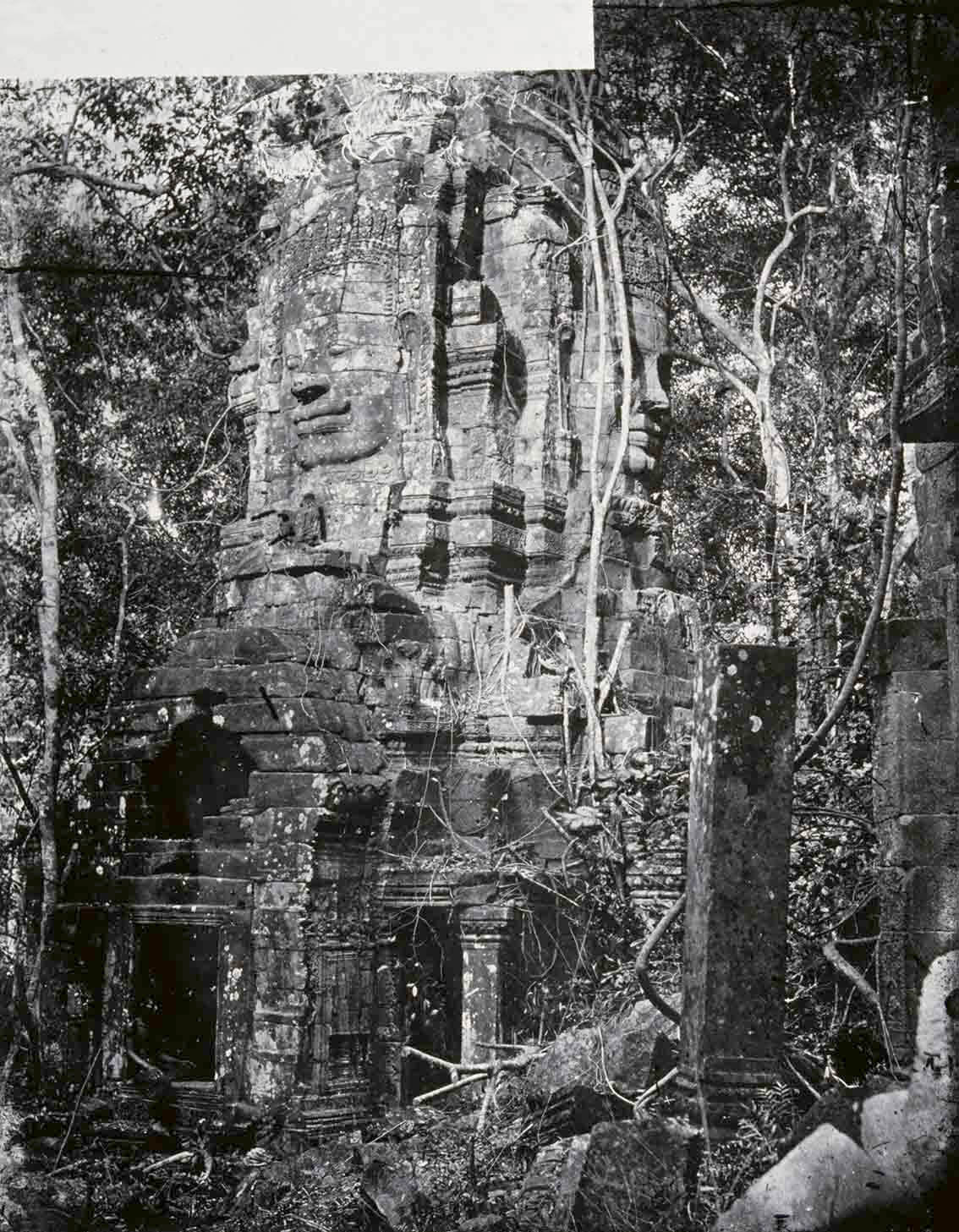
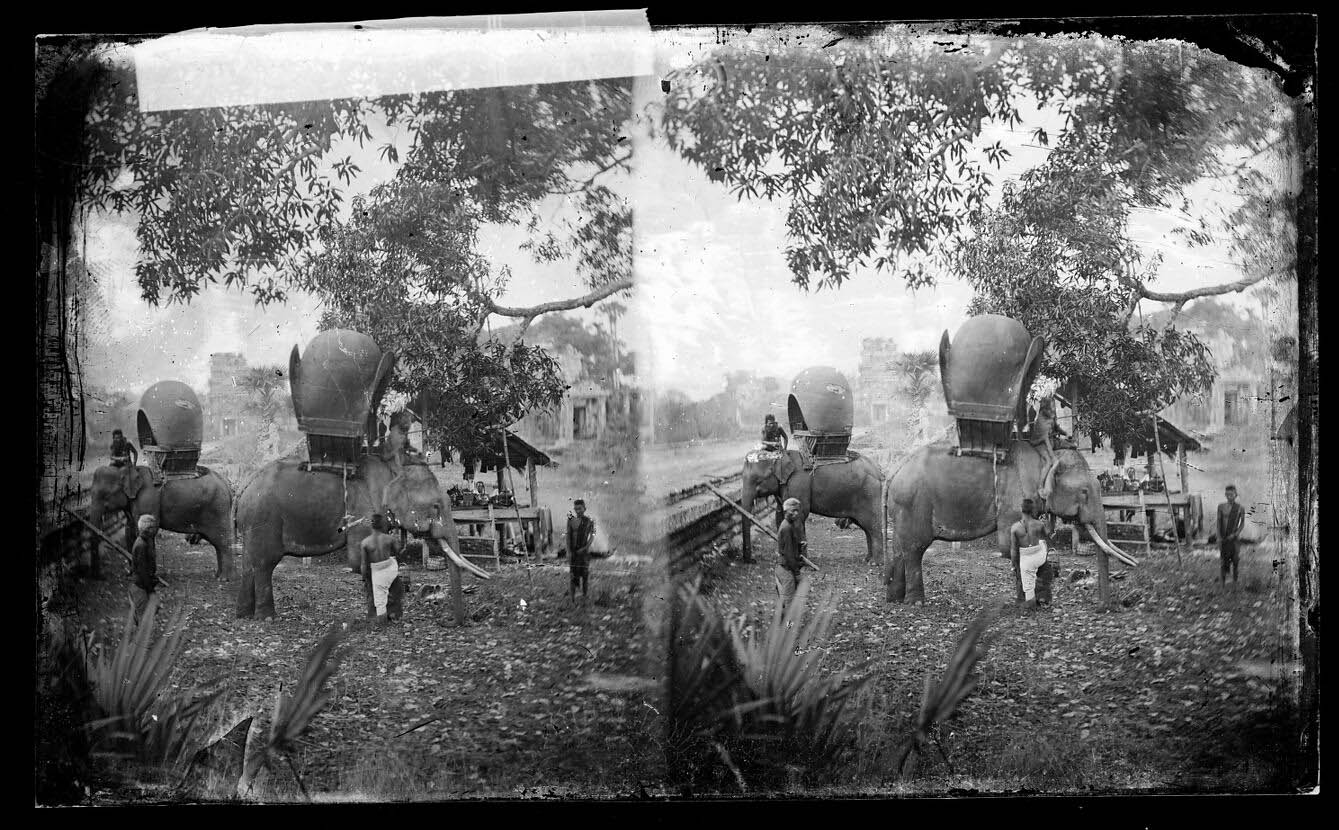
The photographs on display encompass a diverse range of subjects, including awe-inspiring temples, architectural marvels, picturesque landscapes, and enchanting portraits of everyday life, ceremonies royalty, tradition, and customs. Each photograph serves as a testament to Thomson’s skill as a storyteller, highlighting the allurement of these distant lands. Thomson also received special permission to visit Angkor Wat (then under Siam’s control), becoming the first to photograph its famous ruins.
He used the wet-collodion process as his method for taking photographs, so called because an exposure was made onto a glass negative. His process had to be carried out in complete darkness, requiring a portable darkroom tent and a large amount of equipment. He travelled around Siam with many crates of glass negatives and bottles of potentially harmful chemicals, which was remarkable considering the difficult terrain and unfamiliar regions he often visited. Despite these challenges, Thomson was able to capture the natural beauty of the land as well as the daily lives of the people he encountered. His style has been described as “photo-journalistic,” a term which acknowledges his ability to capture authentic and natural moments through his photography.
In addition to the captivating photographs, the exhibition will also feature informative panels, present day photographs and an exciting calendar of insightful talks and workshops. Visitors will have the opportunity to engage with historical context of the time and gain insights into Thomson’s wet collodion photography methods and techniques to understand the cultural significance of his work in Southeast Asia and the world of photography.
Press release from Russell-Cotes Art Gallery and Museum
John Thomson (Scottish, 1837-1921) Phra Chom Klao Bridge, Phetchaburi River 1865-1866
The Phra Chom Klao bridge over the Phetchaburi river.
John Thomson (Scottish, 1837-1921) The wife of the Prime Minister (Kralahom) of Siam 1865 Photograph from a glass photonegative, wet collodion Public domain
John Thomson (Scottish, 1837-1921) Siamese boatman 1865 Photograph from a glass photonegative, wet collodion Public domain
John Thomson (Scottish, 1837-1921) Face-towers of the Bayon temple, Angkor Wat 1866 Photograph from a glass photonegative, wet collodion Public domain
John Thomson (Scottish, 1837-1921) Elephants outside Angkor Wat 1866 Photograph from a glass photonegative, wet collodion Public domain
John Thomson (Scottish, 1837-1921) The western Gopura, Angkor Wat 1866 Photograph from a glass photonegative, wet collodion Public domain
Siam: Through the Lens of John Thomson (1865-66) poster
Russell-Cotes Art Gallery & Museum East Cliff Promenade, Bournemouth, BH1 3AA
Opening hours: Tuesdays – Sundays and Bank Holiday Mondays, 10am – 5pm
“Lange’s masterpieces such as ‘Dispossessed Arkansas farmers’ (1935) are truly avant-garde and experimental photographs for their time” Dr Marcus Bunyan
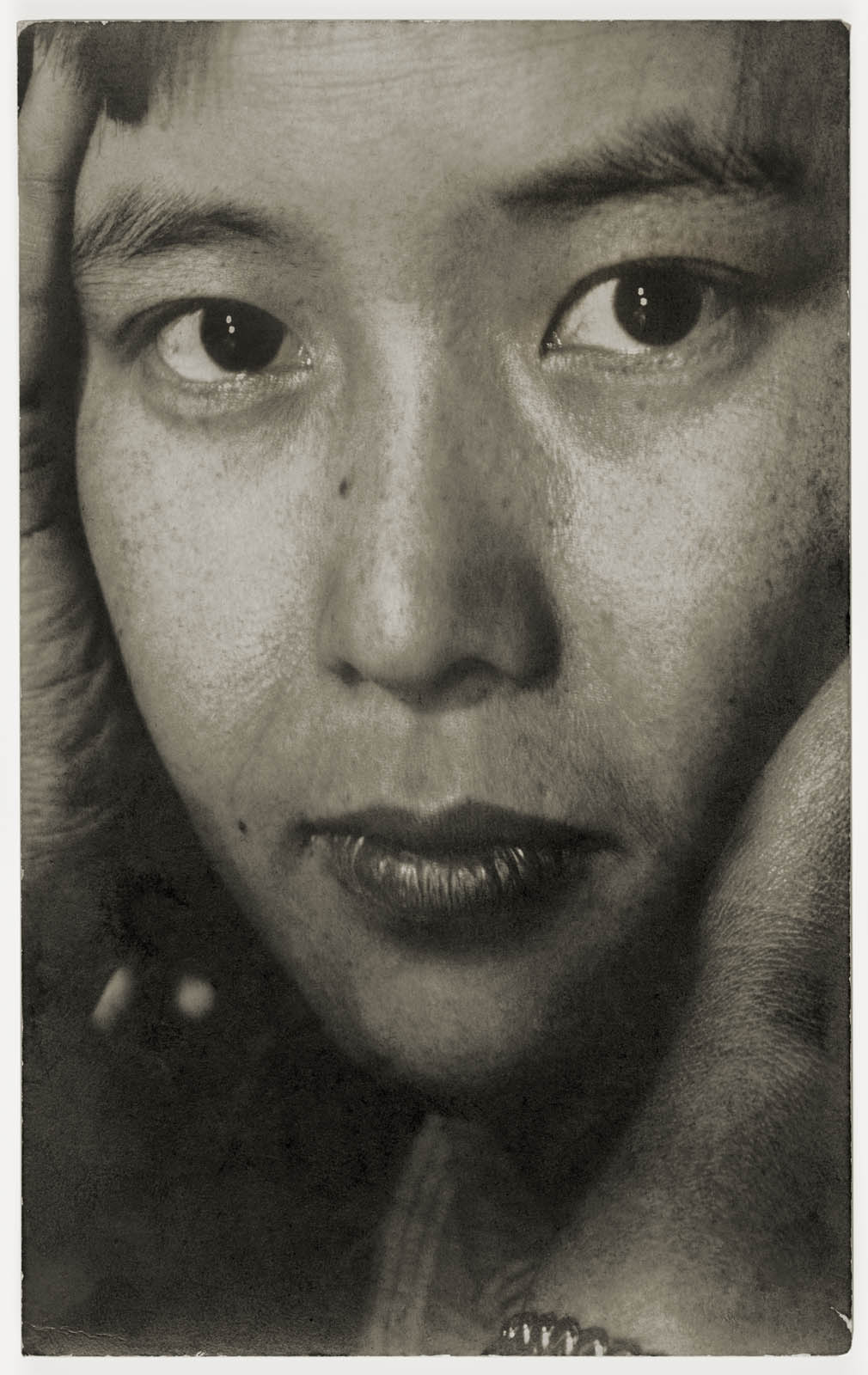
Stella Hurtig Jones was a famous American vaudeville performer who traveled the world as a flamenco and tango dancer during the late 19th and early 20th centuries. One of Lange’s earliest professional portraits, the composition uses the soft focus and diffused light that characterises pictorial photography, popular among celebrities. Lange photographed Hurtig Jones as herself, rather than as her stage persona La Estrellita (The Little Star), perhaps in recognition of her recent retirement. As European travel waned during World War I and movies replaced vaudeville as mass entertainment, the allure of traditional Spanish dance diminished. La Estrellita married, started a perfume business, and moved from Hollywood to the Bay Area.
Label text from the exhibition
Full of the world
Just when you think that you know the work of an artist photographs emerge that you have never seen before, photographs that challenge the canon of famous images on which the reputation of the artist rests. Such is the case in this two part posting on the work of social documentary photographer Dorothea Lange (American, 1895-1965). See Part 1 of the posting.
Rather, it is the relatively unknown early Pictorialist photographs, the earthy photographs of Irish people, and photographs that challenge the formalist construction of images of the disintegration of families and communities during the Great Depression – images that are far more avant-garde and experimental than I would have expected from Lange – which shine in the mind’s eye (in one’s imagination or memory).
The ethereal Pictorialist portraits (this posting) with their asymmetrical construction, trembling? vibrational? negative space, luminous light and low depth of field are a delightful surprise… as are the 1950’s Irish portrait photographs (Part 1 of the posting) full of earthy, brooding darkness – with faces that are “pure Ireland.” What intensity in these images, clearly and empathetically seen.
But it is the abstract figurative studies in which I am most interested… images that disrupt Lange’s normative representation in her social documentary photographs of humanity and their resilience. In photographs such as On the Plains a Hat Is More Than a Covering(1938, below) and Jake Jones’s Hands, Gunlock County, Utah(1953) – taken fifteen years apart but which could have been taken the same day, on a theme the artist was obviously interested in – Lange dissects the body, closing in on gnarled hands, weatherbeaten hats as metaphor for a tough life, well lived. These are images in which we see very little (as opposed to Barthes assertion that in photography’s realism a photo is an image in which we see everything) … but implicitly understand the sublime blur of legend of these workers and their hats.
Other photographs dial up the figurative abstraction. Demonstration, San Francisco (1934, below) is a study of light, shape and form, an almost Constructivist image of fragments and negative space: hand, pole, amorphous mass of shoulder, face turned away, hat and declarative “FEED US!” banner; San Francisco Waterfront (1934) is a beautifully rendered abstract pictorial space evidencing the despair of humanity through light and form: witness, the clasped hands at rear like sentinels, the thumb pointing left… while below, covered head in hand, the thumb points vertically to the surmounted ear, which echoes the cropped ear and hair at the bottom of the photo, while to the right the two buttons of the jacket lead us to the ascending column of four buttons back to the portentous, clasping, guarding hands above. A masterpiece of photographic pictorial construction. Further, with their radical pictorial construction and cropping of the picture frame, masterpieces such as Dispossessed Arkansas farmers(1935) are truly avant-garde and experimental photographs for their time, something I don’t normally associate with the work of Dorothea Lange. As my friend Jonathan Kamholtz observes of the photographs I have been discussing, Lange “tended to lose interest in the backgrounds. The pictorial space is really very shallow. This contributes to their theatricality – not in the sense that they are false or artificial, but that each one displays character, costume, fate.”
Forearmed with this knowledge, I start looking at her well known images with fresh eyes… and its all there in more subtle form: the low angle of the camera looking up at the subject, the geometric shape of hands and arms, the solid blocks of bodies filling the picture frame, the sculptural, abstract shape of bodies in fields (Migratory Field Worker Picking Cotton in San Joaquin Valley, 1938), the flattening of bodies one against another (May Day, San Francisco, California, 1934) and the disassociation of human identity through the occlusion of faces (This man is a labor contractor in the pea fields of California 1936, below; Damaged Child, Shacktown 1936, below; Washington, Yakima Valley, near Wapato 1939, below).
Dorothea Lange was an incredibly intelligent and passionate artist who removed her ego from the act of taking photographs, who lost herself in the visual experience in order to take photographs to effect social change, who connected with the world in order “to experience love, hate, and passion in every form in one’s body.”1
“That the familiar world is often unsatisfactory cannot be denied, but it is not, for all that, one that we need abandon,” she argued. “We need not be seduced into evasion of it any more than we need be appalled by it into silence… Bad as it is, the world is potentially full of good photographs. But to be good, photographs have to be full of the world.”2
And full of the spirit of the artist.
Dr Marcus Bunyan
1/ Carl Jung quoted in Nicos Hadjicostis. Destination Earth: A New Philosophy of Travel by a World-Traveler. Bamboo Leaf Press, 2016, p. 42.
2/ Dorothea Lange and Daniel Dixon, “Photographing the Familiar,” Aperture 1, no. 2 (1952), 15.
Many thankx to the National Gallery of Art for allowing me to publish the photographs in the posting. Please click on the photographs for a larger version of the image. See Part 1 of the posting
“When you enter into the visual world, detaching yourself from all the holds on you… it is a mental disengagement so that you live, for maybe two or three hours, as completely as possible a visual experience, where you feel that you have lost yourself, your identity.”
Dorothea Lange quoted in Dyanna Taylor and Public Broadcasting Service (U.S.), directors. American Masters – Dorothea Lange: Grab a Hunk of Lightning. Kanopy Streaming, 2014.
“The researcher ought to hang up exact science and put away the scholar’s gown, to say farewell to his study, and wander with human heart through the world, through the horror of prisons, madhouses, and hospitals, through drab suburban pubs, in brothels, and gambling dens, through the salons of elegant society, the stock exchanges, the socialist meetings, the churches, the revivals and ecstasies of the sects, to experience love, hate, and passion in every form in one’s body.”
Carl Jung quoted in Nicos Hadjicostis. Destination Earth: A New Philosophy of Travel by a World-Traveler. Bamboo Leaf Press, 2016, p. 42.
During her long, prolific, and groundbreaking career, the American photographer Dorothea Lange made some of the most iconic portraits of the 20th century. Dorothea Lange: Seeing People reframes Lange’s work through the lens of portraiture, highlighting her unique ability to discover and reveal the character and resilience of those she photographed.
Featuring some 100 photographs, the exhibition addresses her innovative approaches to picturing people, emphasising her work on social issues including economic disparity, migration, poverty, and racism.
“Five years earlier I would have thought it enough to take a picture of a man, no more. But now, I wanted to take a picture of a man as he stood in his world.”
“A single photographic print may be “news,” a “portrait,” “art,” or “documentary” – any of these, all of them, or none.”
“The whole world is a museum. To walk through the streets, as though down a museum corridor. … To step into a supermarket as though setting forth in the National Gallery – is an experience and an exercise in vision.”
Dorothea Lange
Dorothea Lange (American, 1895-1965) Untitled (Fleishhacker Portrait) 1920 Gelatin silver print Image: 15.4 x 15.1cm (6 1/16 x 5 15/16 in.) Mat: 16 x 14 in. Frame (outside): 17 1/4 x 15 1/4 in. Collection of the Oakland Museum of California, Gift of Paul S. Taylor
Lange embraced the chance to experiment outside her studio. In August 1923, she visited Walpi Village of the Hopi Nation with her then-husband Maynard Dixon, an avid outdoor painter. She had begun to crop some of her portraits to accentuate a gaze, hand, touch, or torso – a way of capturing the essence of a person, paradoxically showing less to reveal more.
When printing Hopi Man, Lange focused so closely on the subject’s face that his features resemble a map of his experience. She undercut her own effort to reach meaningfully across the cultural divide, however, because she did not record the man’s name or any other information about him. As a portrait, Hopi Man risks picturing a type or class of person rather than this individual’s character.
Label text from the exhibition
Dorothea Lange (American, 1895-1965) Clausen Child and Mother c. 1930 Gelatin silver print Image: 15.6 x 21cm (6 1/8 x 8 1/4 in.) Mat: 14 x 17 in. Frame (outside): 15 1/4 x 18 1/4 in. The Museum of Modern Art, New York. Thomas Walther Collection. Gift of Henri Cartier-Bresson, by exchange
Lange frequently photographed the subject of mother and child, a long-standing Western art historical tradition rooted in depictions of the Virgin Mary and baby Jesus and modernised and secularised in high-end portrait studios. Here Frances Clausen stares directly at the camera while her mother, Gertrude, sits in shadow, looking away. Lange focuses on the child’s inquisitive gaze, as well as her affectionate bond to and emerging independence from her mother. Lange’s expertise photographing children – acquired from her early studio work – led to some of her most important photographs made during the Great Depression, displayed in the next galleries.
Maynard Dixon (January 24, 1875 – November 11, 1946) was an American artist. He was known for his paintings, and his body of work focused on the American West. Dixon is considered one of the finest artists having dedicated most of their art to the U.S. Southwestern cultures and landscapes at the end of the 19th-century and the first half of the 20th-century. He was often called “The Last Cowboy in San Francisco.”
Through his work with the Galerie Beaux Arts, a cooperative gallery in San Francisco, Dixon played a pivotal role ensuring the West Coast supported the work of local, modern artists. He was married for a time to photographer Dorothea Lange, and later to painter Edith Hamlin.
In summer 1931, escaping the Depression-era turmoil of San Francisco, Lange and Dixon bought their first car and drove to New Mexico with their children. Her few surviving photographs from this trip reveal significant steps in her transition away from studio portraiture and toward a more straightforward approach to photographing people. A series of pictures portrays this unidentified Indigenous girl in a direct documentary style. Although her expression reveals few emotions, she looks squarely at the lens in one photograph and seems comfortable in front of the camera.
Lange met Dorothy Brett in 1931 when the photographer and her family spent several months in Taos. Born into an aristocratic British family, Brett rebelled against their expectations, attending art school and becoming a painter. In London she befriended writers associated with the Bloomsbury group, including D. H. Lawrence, who was recruiting people to go to New Mexico to form a utopian society. Brett was the only person who followed him, but she was so enchanted with the area that she lived there for the rest of her life.
Label text from the exhibition
Hon. Dorothy Eugénie Brett (10 November 1883 – 27 August 1977) was an Anglo-American painter, remembered as much for her social life as for her art. Born into an aristocratic British family, she lived a sheltered early life. During her student years at the Slade School of Art, she associated with Dora Carrington, Barbara Hiles and the Bloomsbury group. Among the people she met was novelist D.H. Lawrence, and it was at his invitation that she moved to Taos, New Mexico in 1924. She remained there for the rest of her life, becoming an American citizen in 1938.
Her work can be found in the Smithsonian American Art Museum in Washington D.C., in the Millicent Rogers Museum and the Harwood Museum of Art, both in Taos. Also at the New Mexico Museum of Art, Santa Fe, the Roswell Museum and Art Center, Roswell, New Mexico and in many private collections.
Dorothea Lange (American, 1895-1965) Demonstration, San Francisco 1934 Gelatin silver print Image: 12.1 x 14.3cm (4 3/4 x 5 5/8 in.) Sheet: 12.1 x 14.3cm (4 3/4 x 5 5/8 in.) Mount: 14.6 x 23.8cm (5 3/4 x 9 3/8 in.) Lent by The Metropolitan Museum of Art, Gilman Collection, Purchase, Joseph M. Cohen Gift, 2005
In 1934, as Lange began to forge a new documentary practice, she sought “to take a picture of a man as he stood in his world.” With no clients to please, she drew on insights she had learned from modernism, especially its celebration of close-up studies and dramatic angles. Like other artists, she also found that signs – such as the protest poster declaring “… FEED US!” – could root a photograph in a specific time and place and give agency to those she depicted, allowing them to speak. With carefully composed pictures like this one, Lange was acknowledging the power of modernist photography to tell stories in simple, dynamic ways.
Label text from the exhibition
Dorothea Lange (American, 1895-1965) Andrew Furuseth 1934 Gelatin silver print Image: 20.5 x 19.6cm (8 1/16 x 7 11/16 in.) Sheet: 21.1 x 20.3cm (8 5/16 x 8 in.) National Portrait Gallery, Smithsonian Institution
Andrew Furuseth was an American labor leader known for organising seamen during the late 19th and early 20th centuries. He helped create the Sailors’ Union of the Pacific and the International Seamen’s Union, heading both as their president. Lange met 80-year-old Furuseth around the time of the San Francisco waterfront strikes of 1934. She had been photographing labor organisers and protesters at May Day events around the city while Furuseth was working to help moderate the seamen’s anger to avoid a damaging strike. Her portrayal of Furuseth in profile against a dark background – eyes closed, deep in thought – emphasises his years of experience and a weary strength.
Label text from the exhibition
Andrew Furuseth (March 17, 1854 – January 22, 1938) of Åsbygda, Hedmark, Norway was a merchant seaman and an American labor leader. Furuseth was active in the formation of two influential maritime unions: the Sailors’ Union of the Pacific and the International Seamen’s Union, and served as the executive of both for decades.
Furuseth was largely responsible for the passage of four reforms that changed the lives of American mariners. Two of them, the Maguire Act of 1895 and the White Act of 1898, ended corporal punishment and abolished imprisonment for deserting a vessel.
Furuseth was credited as the key figure behind drafting and enacting the Seamen’s Act of 1915, hailed by many as “The Magna Carta of the Sea” and the Jones Act of 1920 which governs the workers’ compensation rights of sailors and the use of foreign vessels in domestic trade. In his later years, he was known as “the Old Viking”.
Lange’s portrait of a Depression-era stenographer omits her face to focus on her dark, creased dress, tattered hosiery, and woven shoes. Her stockings are stitched up the front, mended to keep them – and her – going for another day or two. They reveal the grit and fortitude of San Francisco’s working women during a time when jobs were scarce and people had to conserve all their resources in the face of financial insecurity.
Dorothea Lange (American, 1895-1965) Black sharecropper with twenty acres. He receives eight cents a day for hoeing cotton. Brazos river bottoms, near Bryan, Texas June 1938, printed c. 1950 Gelatin silver print Image: 24.1 x 19.2cm (9 1/2 x 7 9/16 in.) Sheet: 25.3 x 20.5cm (9 15/16 x 8 1/16 in.) Mat: 18 x 14 in. Frame (outside): 19 x 15 in. National Gallery of Art, Washington, Gift of Daniel Greenberg and Susan Steinhauser
American photographer Dorothea Lange (1895-1965) created some of the most groundbreaking portraits of the 20th century. Through pictures of labourers, demonstrators, refugees, migrant farmers, the unjustly incarcerated, and others, Lange captured the spirit of human endurance while recording some of the profound social inequities of the period. Her work expanded the boundaries of portraiture and helped spark the development of modern documentary photography.
Dorothea Lange: Seeing People reframes Lange’s art through the lens of portraiture and highlights her capacity to spotlight the humanity and resilience of those she photographed. She began her career as a studio portrait photographer, and even as she ventured far outside her studio people remained key to her mission. Focusing on Lange’s abiding concern for those in need, this exhibition reveals her lifelong investigation into how photography – and portraits in particular – could help bring about collective change.
One of the most important documentary photographers of her time, Lange sought to transform how we see and understand one another. Motivated by an ever-growing interest in social justice, she was also an intrepid reporter who traveled extensively in the United States and around the world to create indelible and influential photographs. This exhibition illuminates the centrality of portraiture in Lange’s career and its role in exposing the impacts of economic disparity, climate change, migration, and war – issues that remain equally urgent today.
Dorothea Lange (American, 1895-1965) This man is a labor contractor in the pea fields of California. “One-Eye” Charlie gives his views. “I’m making my living off of these people (migrant laborers) so I know the conditions,” San Luis Obispo County, California February 1936 Gelatin silver print Image: 24.1 x 19.7cm (9 1/2 x 7 3/4 in.) Sheet: 25.4 x 20.3cm (10 x 8 in.) Mat: 18 x 14 in. Frame (outside): 19 x 15 in. National Gallery of Art, Washington, Gift of Daniel Greenberg and Susan Steinhauser
Dorothea Lange (American, 1895-1965) Migratory Pea Pickers, Nipomo, California March 1936 Gelatin silver print Image: 19.4 x 24.5cm (7 5/8 x 9 5/8 in.) Sheet: 20.3 x 25.7cm (8 x 10 1/8 in.) Mat: 13 x 16 in. Frame (outside): 14 x 17 in. National Gallery of Art, Washington, Gift of Daniel Greenberg and Susan Steinhauser
Dorothea Lange (American, 1895-1965) Post Office and Postmistress, Widtsoe, Utah April 1936 Gelatin silver print Image: 24.4 x 19.3cm (9 5/8 x 7 5/8 in.) Sheet: 25.4 x 20.3cm (10 x 8 in.) Mat: 16 x 13 in. Frame (outside): 17 x 14 in. National Gallery of Art, Washington, Gift of Daniel Greenberg and Susan Steinhauser
When Lange photographed Widtsoe, Utah, for the Resettlement Administration, the town’s population had dwindled to 17 families. Cycles of drought devastated the region’s agricultural economy and the RA stepped in to buy out landowners and relocate them. Signs of desolation are evident in this portrait of the town’s postmistress at the post office. Perched on cinder blocks, surrounded by dusty earth, the building appears to teeter – an effect intensified by Lange’s skewed composition. The stoic presence of the postmistress, who is posed neatly within the doorframe, hints at the stabilising role women often play in Lange’s compositions.
Label text from the exhibition
Dorothea Lange (American, 1895-1965) Plantation Owner, Mississippi Delta, near Clarksdale, Mississippi June 1936 Gelatin silver print Image: 18.7 x 24.1cm (7 3/8 x 9 1/2 in.) The Art institute of Chicago, Purchased with funds provided by Vicki and Thomas Horwich
In 1938, a cropped version of this photograph was featured in the publication of Archibald MacLeish’s book-length poem Land of the Free. The cropped photograph focused attention on the “plantation owner” and erased four of the Black men, leaving just one silhouetted in the background. MacLeish’s poem proclaims, “All you needed for freedom was being American” – yet Lange’s original picture, and the subsequent cropped version, reveals the fallacy of this sentiment. Both point to how African Americans were barred from achieving the freedom that MacLeish claims was available to all Americans. Paul Taylor appears at the far left edge interviewing the owner.
Label text from the exhibition
Dorothea Lange (American, 1895-1965) Drought Refugees from Oklahoma Camping by the Roadside, Blythe, California August 17, 1936 Gelatin silver print Image: 24 x 19.1cm (9 7/16 x 7 1/2 in.) Mount: 33.02 x 28.26 cm (13 x 11 1/8 in.) Mat: 20 x 16 in. Frame (outside): 21 x 17 in. National Gallery of Art, Washington, Gift of Daniel Greenberg and Susan Steinhauser
As a result of droughts and erosion that destroyed tillable land and crops in Oklahoma and Arkansas, thousands of farmers moved west with their families to start their lives over in places such as Blythe. Zella, Jess, and Jesse Power were among these families. It is not clear when the Powers began their move to California, but Jesse was born in Blythe, so Zella may have been pregnant during their journey. Lange’s field notes indicate that the Powers were a family of seven; an older sibling’s foot may be glimpsed in the lower right. With her furrowed brow and slumped posture, Zella exemplifies the difficulties faced by migrant mothers seeking better lives for themselves and their families in places that did not promise immediate relief.
Label text from the exhibition
Dorothea Lange (American, 1895-1965) Child Living in Oklahoma City Shacktown [Damaged Child, Shacktown] August 1936 Gelatin silver print Image: 24.2 x 19.4cm (9 1/2 x 7 5/8 in.) Mat: 17 x 14 in. The Museum of Modern Art, New York. Purchase
This photograph of a bruised girl with a hollow gaze is one of many Lange made depicting the exploitation of migrant children during the Great Depression. The portrait suggests the range of emotional and physical harm children experienced as they, too, struggled to survive economic hardship.
Label text from the exhibition
Dorothea Lange (American, 1895-1965) Eighty-year-old woman living in squatters’ camp on the outskirts of Bakersfield, California. “If you lose your pluck you lose the most there is in you – all you’ve got to live with” November 1936 Gelatin silver print Image: 19 x 24.4cm (7 1/2 x 9 5/8 in.) Sheet: 20.3 x 25.5cm (8 x 10 1/16 in.) Mat: 13 x 16 in. Frame (outside): 14 x 17 in. National Gallery of Art, Washington, Gift of Daniel Greenberg and Susan Steinhauser
Dorothea Lange (American, 1895-1965) Young Cotton Picker, San Joaquin Valley, California November 1936 Gelatin silver print Image: 24.1 x 18.4cm (9 1/2 x 7 1/4 in.) Collection of the Oakland Museum of California, Gift of Paul S. Taylor
Dorothea Lange (American, 1895-1965) Alabama Plow Girl, near Eutaw, Alabama 1936 Gelatin silver print Image: 19.1 x 19.4cm (7 1/2 x 7 5/8 in.) Lent by The Metropolitan Museum of Art, Purchase, Alfred Stieglitz Society Gifts, 2001
Lange travelled to the American South in 1936 while employed by the Resettlement Administration. Near Eutaw, Alabama, she photographed Black tenant farmers like this shoeless girl plowing a field in the punishing summer heat. In the South, Lange witnessed the oppressive working conditions endured by Black tenants, who farmed land predominantly held by white owners and often struggled to access New Deal resources. Southern Black farmers faced undue difficulty during the Depression as economic disaster exacerbated the oppression and poverty produced by the region’s racist agricultural system.
Label text from the exhibition
Dorothea Lange (American, 1895-1965) Migratory Workers Harvesting Peas near Nipomo, California Spring 1937 Gelatin silver print Image: 19.4 x 24.5cm (7 5/8 x 9 5/8 in.) Sheet: 20.6 x 25.4cm (8 1/8 x 10 in.) Mat: 13 x 16 in. frame (outside): 14 x 17 in. National Gallery of Art, Washington, Gift of Daniel Greenberg and Susan Steinhauser
Dorothea Lange (American, 1895-1965) Country store on dirt road. Sunday afternoon. Note the kerosene pump on the right and the gasoline pump on the left. Rough, unfinished timber posts have been used as supports for porch roof. Black men are sitting on the porch. Brother of store owner stands in doorway, Gordonton, North Carolina July 1939, printed later Gelatin silver print Image: 24.5 x 34.3cm (9 5/8 x 13 1/2 in.) Sheet: 25.6 x 35.4cm (10 1/16 x 13 15/16 in.) Mat: 16 x 20 in. Frame (outside): 17 x 21 in. National Gallery of Art, Washington, Gift of Daniel Greenberg and Susan Steinhauser
Rainey Curry Baynes II, the store owner’s brother, leans in the doorway conversing with five Black men. On the far right is Arthur Thorpe, and the man wearing overalls is Joe Carrington. The men appear relaxed in Baynes’s presence, but it is unclear whether their demeanour is genuine or for the benefit of Lange’s camera. They may have been sharecroppers or tenant farmers indebted to the Baynes brothers, or simply customers of the store.
Label text from the exhibition
Dorothea Lange (American, 1895-1965) Washington, Yakima Valley, near Wapato. One of Chris Adolph’s Younger Children. Farm Security Administration Rehabilitation Clients August 1939 Gelatin silver print Image: 20.83 x 25.4cm (8 3/16 x 10 in.) Collection of the Oakland Museum of California, Gift of Paul S. Taylor
Dorothea Lange (American, 1895-1965) End of Shift, Richmond, California 1942, printed 1965 Gelatin silver print Image: 75.7 x 59.5cm (29 13/16 x 23 7/16 in.) The Museum of Modern Art, New York. Purchase
Fortune magazine commissioned Lange to document the bustling shipyards in Richmond, north of Oakland, where newly desegregated defence firms were rapidly constructing transport, cargo, and warships for the United States Navy. With its tight cropping and dynamic configuration, End of Shift focuses on the rushing legs and torsos of shipbuilders leaving a wartime facility. Lange expressed the urgency of their work in defence production without showing their individual features. The angled composition and complex interplay of light and shadow demonstrate Lange’s understanding of how modern design techniques could convey the force and energy of a group working together on a project critical to the nation’s defence.
Label text from the exhibition
Dorothea Lange (American, 1895-1965) Street Encounter, Richmond, California c. 1943 Gelatin silver print Image: 21.7 x 17.9cm (8 9/16 x 7 1/16 in.) Frame (outside): 18 3/4 x 15 3/4 in. The Nelson-Atkins Museum of Art, Kansas City, Missouri (Gift of Hallmark Cards, Inc.)
Dressed for work as a welder, this woman was one of thousands who moved to Richmond, California, during the early 1940s to seek employment in the expanding wartime shipbuilding yards. On assignment for Fortune magazine, Lange documented the upheaval wrought by Richmond’s rapidly growing population and diversifying workforce. Lange’s field notes described this picture as an “Item on race relations. Scene on main street. The girl was a taxi driver in New Orleans. She came to Richmond with her husband two years ago.” Recognising the power of words in her pictures, Lange included a sign that could be read as “Serve You” or “Serve Your Country,” but which actually says “Serve Yourself” – a wry comment on the national unity promoted by the era’s patriotic propaganda.
Label text from the exhibition
Early Portraits
Born in Hoboken, New Jersey, in 1895, Dorothea Lange learned photography in New York City before embarking in 1918 on a round-the-world trip. When forced to cut her journey short and find employment in San Francisco, she secured a position at the photo-finishing counter of a variety store. She soon opened her own portrait studio and worked among a cohort of bohemian artists and intellectuals including Imogen Cunningham, Consuelo Kanaga, Ansel Adams, Edward Weston, and the painter Maynard Dixon, who would become her first husband.
Bay Area high-society and cultural figures became Lange’s clients and the subjects of her studio portraits. These early pictures combine elements of the pictorial style in which she was trained, such as soft focus and diffused light, with an emerging modernist aesthetic that included dramatic cropping and unusual angles. She used light, shadow, and carefully constructed poses to articulate the character, attitude, and individuality of her models: “I really and seriously tried, with every person I photographed, to reveal them as closely as I could.”
Poverty and Activism
Although she had a highly successful studio practice, Lange in 1933 was compelled by the nation’s worsening economic conditions to rethink her occupation and carry her cameras into the city. “There in my studio I was surrounded by evidence of the Depression,” she said. “I remember well standing at that one window and just watching the flow of life. … I was driven by the fact that I was under personal turmoil to do something.”
Out in the streets during the early years of the Great Depression, Lange saw poverty, breadlines, strikes, and labor demonstrations. Her photographs from this period portray the unemployment and unrest that plagued San Francisco, and also document the activism of workers who organised to change their conditions. In 1934, Lange met the agricultural economist Paul Taylor. The two formed an important professional and personal partnership (they married the following year). Lange soon shifted her attention to the plight of migrant farmers, who were moving to California to seek work.
The Great Depression
As the Great Depression deepened, Dorothea Lange focused her lens on the families who had fled westward in the face of economic hardship caused by depleted land and failed farm tenancy in the South and Midwest. When she was working for government agencies, she documented the success of rural cooperatives and the unsanitary conditions in California migrant camps while striving to humanise the large numbers of people seeking shelter and employment. For Lange, portraiture offered a way to visualise the impacts of migration, racism, and environmental change, as well as the legacy of slavery, to gain public support for government aid programs.
During this period Lange cemented her style of documenting people. Her empathetic, highly detailed, and sharply focused depictions show labourers within their living and working environments. Some subjects are alone, but many are seen with family and other members of their communities. These photographs provided evidence of economic disaster and bore witness to the resulting human tragedy while underscoring her subjects’ strength and resilience. This powerful merging of portraiture and documentary photography expanded the boundaries of both traditions, transforming them in ways that resonate deeply today.
World War II
During World War II, Dorothea Lange focused on the impact of the war on Americans at home as well as the nation’s complicated racial dynamics. Nowhere is this seen more acutely than in her portraits of individuals of Japanese ancestry who were forced to abandon their homes in response to President Franklin D. Roosevelt’s executive order (see nearby panel).
Lange also recorded the epochal shifts in California’s social fabric sparked by the growing defence industries, which helped rebuild the economy. Hired by Fortune magazine, she documented the Kaiser Shipyards in Richmond, California, where well-paid jobs attracted African Americans, Native Americans, and women into what had previously been a white male-dominated workforce. Yet as the population of Richmond quickly swelled, and as these newly empowered groups began to assert themselves, the changes also provoked housing shortages and social unrest.
Postwar America
Despite frequent health struggles, in the 1950s Dorothea Lange pursued photographic stories about a variety of American communities in the western United States. These include a project about urban life, for which she roamed the Bay Area; Three Mormon Towns, a collaboration made with Ansel Adams and Paul Taylor in Utah for Life magazine; and an environmental critique produced with photographer Pirkle Jones about the flooding of a Northern California town to create a reservoir. Wide-ranging in subject matter, Lange’s photographs reveal an extraordinary ability to portray the continued transformation of the American West and shine a light on the environmental and human consequences of the postwar economic boom.
World View
Dorothea Lange began working globally in 1954. Her first trip overseas was to Ireland, where she documented the kinship and community of country villages for Life magazine. Her husband, Paul Taylor, began consulting on international economic development for the US State Department and, in 1958, they traveled abroad for eight months, visiting Korea, Indonesia, Vietnam, and other countries; in the early 1960s, the couple traveled to Venezuela and Egypt. Continuing to concentrate on portraiture, Lange found a new sort of beauty and serenity in these foreign environments as well as ties to the economic and social disparities she had photographed in the United States. While photographs taken during these trips confirm her ongoing creativity in the face of declining health, profound cultural differences made it more difficult for Lange to connect with people.
Lange devoted the last years of her life to her family and to organising a retrospective exhibition of her photographs at the Museum of Modern Art in New York. She passed away in late 1965, but her legacy continues in the enduring resonance of her photographs and the new generations of photographers who use portraiture and documentary styles to prompt social change.
Travel
Beginning in 1922, Lange traveled with her first husband, artist Maynard Dixon, to Arizona and New Mexico, where she produced portraits of Indigenous Americans. The few photographs that remain from these excursions show Lange testing new strategies. She started to experiment with portraits that featured just a fragment of a person – their hands or face, for example – perhaps inspired by the modernist work of photographer Alfred Stieglitz, whom she had met in 1923. She also shed the soft-focus pictorial style of her earlier studio portraits in favour of a more direct approach. Although Lange interacted only briefly with the Indigenous people she photographed, she witnessed some of the “harsh and unjust treatment” they faced. The sensitivity and experimentation seen in these early photographs helped establish Lange’s expansive concept of portraiture, which impacted her later work.
The Resettlement Administration and the Farm Security Administration
From mid-1935, Dorothea Lange worked for the federal government’s Resettlement Administration (RA), reorganised as the Farm Security Administration (FSA) in 1937. Created to revitalise the country’s faltering agricultural economy, the RA helped farmers acquire land through low interest loans, administered projects on soil conservation and reforestation, and supported resettlement for those who could no longer work their land.
To document and report on its efforts, the RA established a historical division. Led by economist Roy Emerson Stryker, it enlisted some of America’s finest documentary photographers, including Walker Evans, Russell Lee, Marion Post Wolcott, Arthur Rothstein, and Ben Shahn. Stryker hired Lange on the strength of her earlier photographs documenting agricultural conditions for the state of California. In pictures of migrant labourers in California, tenant farmers in Alabama, drought refugees from Oklahoma, and others, Lange recorded the work and aspirations of the agencies. She covered a wide range of socially engaged stories that highlighted themes of human struggle and resilience, but the federal agencies – eager to garner widespread public and congressional support – discouraged depictions of racial oppression.
Migrant Mother March 1936
Human Erosion in California depicts a mother and three children at a migrant labor camp. Lange carefully composed the portrait to capture the woman’s face – prematurely etched by years of labor and worry – and her daughters embracing her. Migrant Mother, as the photograph is commonly known, has been compared to a Renaissance-era Madonna and child and described as an icon of 20th-century art, revered for its empathetic portrayal. Lange did not record the mother’s name. Only in 1978 was she finally identified as Florence Owens Thompson, a woman of Cherokee descent from Oklahoma. At the time of the photograph, Owens Thompson and her family were driving back home from California, where her husband had been working in a sawmill. When their car broke down, they were stranded at a nearby pea pickers’ camp. First published in a newspaper editorial urging government aid for migrant labourers, Migrant Mother prompted support from the state and the picture become an emblem of the power of photography to bring about social change. It also raises questions about the ethics of documentary photography and the dynamics between photographer and subject. Lange recalled that Owens Thompson “seemed to know that my pictures might help her, and so she helped me. There was a sort of equality about it.” Owens Thompson, however, received little benefit and was never given a copy of the photograph.
Executive Order 9066
In February 1942, months after the Japanese attack on the Pearl Harbor naval base, President Franklin D. Roosevelt signed Executive Order 9066. The order paved the way for the removal of more than 120,000 individuals of Japanese ancestry – the majority of whom were American citizens – from the West Coast to inland incarceration camps. Denying individuals their civil liberties, the government registered and tagged people before loading them onto buses and transporting them to rudimentary “assembly centers” and, eventually, one of 10 detention camps spread across seven states. The last camp closed four years after Roosevelt issued the order.
Soon after the initial order, the government’s War Relocation Administration (WRA) hired Lange to document this process. Opposed to the government’s actions, Lange believed it was important to record for history “what we did.” Through poignant portraits, she also depicted the resilience of Japanese Americans forced to abandon the lives and businesses they had built and face incarceration. Fearing that Lange’s portraits would elicit too much sympathy, the WRA did not release the photographs during the war.
Documentary Portraiture
Lange’s work during the 1930s synthesised her ideas about portraiture and documentary photography. With new purpose, she used the techniques, compositional strategies, and social skills she had cultivated in her portrait studio to frame the people and events she recorded. By 1940 she had distilled her understanding of documentary photography as an art form that “records the social scene of our time. It mirrors the present and documents for the future.”
Yet these photographs were also documents that followed the government’s New Deal economic doctrine – they emphasised getting the country back on its feet through perseverance, hard work, regulatory reforms, and government relief. This mix of presumed objectivity, propaganda, and documentary storytelling in service of a critical national agenda proved to be particularly powerful. As photography historian Beaumont Newhall later wrote, Lange was “resolved to photograph the now, rather than the timeless; to capture somehow the effects on people of the calamity which overwhelmed America.”
Lange’s Titles
You will notice Lange’s varied approach to titles across her career. Sometimes she simply used someone’s name or the location where a picture was made. Other titles describe or poetically evoke what she saw. Lange also created elaborate captions, often taken from interviews or conversations with those whom she photographed. This was an experimental documentary technique, which relied on Lange’s memory and prolific note taking. These long captions are seen especially in work she made for government agencies during the 1930s and 1940s.
Lange and her editors frequently retitled photographs when exhibiting or publishing them. For this exhibition, we have used Lange’s original titles when known. In a few instances we have updated language in original titles to reflect contemporary usage.
Wall text from the exhibition
Dorothea Lange (American, 1895-1965) Migrant Agricultural Worker’s Family, Nipomo, California March 1936 Gelatin silver print Image: 26.67 x 34cm (10 1/2 x 13 3/8 in.) Sheet: 27.94 x 35.56 cm (11 x 14 in.) Mat: 18 x 22 in. Frame (outside): 19 x 23 in. National Gallery of Art, Washington, Gift of Daniel Greenberg and Susan Steinhauser
Florence Owens Thompson
Human Erosion in California (Migrant Mother) captures the worry, need, and insecurity of everyday Americans during the Great Depression. It is one of the most recognisable American photographs. And it almost wasn’t taken.
In spring 1935, Lange was driving home from a long trip photographing migrant worker camps when she passed a sign pointing toward a pea pickers camp. Lange had already taken many photographs of pea pickers. She tried to convince herself that she didn’t need any more. But about 20 miles later, she turned around.
We don’t know exactly what happened when Lange doubled back – this time, she didn’t take notes. And she didn’t ask many questions. Lange assumed that she had come upon a mother and her three children, there among the waves of workers coming to pick peas, California’s cash crop.
But that wasn’t true. Florence Owen Thompson was traveling with her family from elsewhere in California. The family had set up a camp on the side of the road while her husband and son went into town to resolve some car troubles. When they returned, she mentioned a photographer had taken some photos. Thompson never expected one of those photographs to immortalise her as the “Migrant Mother.” Decades later she wrote a letter to the editor of her local paper expressing irritation with her likeness being misused. In a later interview, Thompson expressed regret at ever allowing Lange to take the photo saying, “I wish she hadn’t taken my picture. I can’t get a penny out of it. [Lange] didn’t ask my name. She said she wouldn’t sell the pictures. She said she’d send me a copy. She never did.”
Dorothea Lange (American, 1895-1965) Human Erosion in California (Migrant Mother) March 1936 Gelatin silver print Image: 34.1 x 26.8 cm (13 7/16 x 10 9/16 in.) Mount: 34.8 x 27.1 cm (13 11/16 x 10 11/16 in.) Frame (outside): 28 5/8 x 22 5/8 x 1 3/8 in. The J. Paul Getty Museum, Los Angeles
Dorothea Lange (American, 1895-1965) Grandfather and Grandson of Japanese Ancestry at a War Relocation Authority Center, Manzanar, California July 1942 Gelatin silver print Image: 26.4 x 33.7cm (10 3/8 x 13 1/4 in.) Sheet: 28 x 35.3cm (11 x 13 7/8 in.) Mat: 16 x 20 in. Frame (outside): 17 x 21 in. National Gallery of Art, Washington, Gift of Daniel Greenberg and Susan Steinhauser
Dorothea Lange (American, 1895-1965) Grandfather and Grandchildren Awaiting Evacuation Bus, Hayward, California 1942 Gelatin silver print Image: 26.4 x 22.7cm (10 3/8 x 8 15/16 in.) Sheet: 35.4 x 27.8cm (13 15/16 x 10 15/16 in.) Frame (outside): 20 3/4 x 16 7/8 in. The Nelson-Atkins Museum of Art, Kansas City, Missouri (Gift of Hallmark Cards, Inc.)
In the spring of 1942, Dorothea Lange requested another leave from her Guggenheim fellowship when she was hired to document the internment of Japanese Americans during World War II. Following the bombing of Pearl Harbor in December 1941, President Roosevelt signed Executive Order 9066 in February1942, which allowed military commanders to set up security zones wherever they thought necessary, with the full authority to remove anyone from these areas regardless of nationality or age. In March, Lieutenant General John L. DeWitt, head of the Western Defense Command, announced that all persons of Japanese ancestry would have to leave the Pacific Coast military zone, which included California, western Oregon and Washington, and southern Arizona. Though no specific charges were placed against any individuals, approximately 120,000 men, women, and children – more than two-thirds of them native-born American citizens – were ordered to abandon their homes and businesses and be relocated to internment camps established by the federal government. Two of the ten camps, Manzanar and Tule Lake, were in California as were twelve of the preliminary holding areas called assembly centers. The U.S. Army was responsible for gathering the Japanese Americans and retaining them in the makeshift assembly centers – race tracks, fairground exhibition halls, empty automobile showrooms – until the camps were ready. The War Relocation Authority (WRA) was established in March 1942 to oversee management of the camps. In a letter dated 1 April1942 to Moe, Lange requested a postponement of her Guggenheim fellowship explaining: the Japanese (aliens and citizens) are being evacuated from California. The War Relocation Authority has asked me to make photographic documentation of this situation. It’s too worth-while to refuse… It interrupts my fellowship, but is in line with my work.
For the next four months, Lange documented the internees as they were evicted from their homes and businesses, tagged and labeled, and then shuffled by trains and motor convoys to various assembly centers before they were incarcerated. She photographed at only one of the actual internment camps, Manzanar, in the desert of Owns Valley in Southern California. Although Lange was a government employee while recording what is now universally acknowledged as a gross violation of justice, her sympathies were with the Japanese Americans.
Scope and Content
Lange was hired by the San Francisco Regional Office of the War Relocation Authority (WRA) in early April 1942 as a photographer investigator to document the evacuation of Japanese Americans from Northern California. Lange completed her work at the end of July 1942. It has been estimated that of the approximately 13,000 existing photographs taken for the federal government, Lange made over 700. Because of the political nature of her relocation photography, she was required to turn over to the WRA all of her negatives, prints, and undeveloped film; thus, very little of this material is contained within the museum’s archive. Following the end of the war, a complete file of Lange’s WRA negatives and prints was placed in the National Archives in Washington, D.C., with a duplicate set of prints placed at the Bancroft Library of the University of California, Berkeley.
Anonymous. “Guide to the Lange (Dorothea) Collection 1919-1965,” on the Online Archive of California website Nd [Online] Cited 25/02/2024. Used under fair use conditions for the purposes of education and research
Dorothea Lange (American, 1895-1965) Japanese American-Owned Grocery Store, Oakland, California March 1942 Gelatin silver print Image: 19 x 24.4cm (7 1/2 x 9 5/8 in.) Sheet: 20.3 x 25.4 cm (8 x 10 in.) Mat: 14 x 18 in. frame (outside): 15 x 19 in. National Gallery of Art, Washington, Gift of Daniel Greenberg and Susan Steinhauser
On December 8, 1941, a day after Japan bombed Pearl Harbor, Tatsuro Masuda, the 25-year-old American-born owner of the Wanto Company store in Oakland, posted a sign on his building: “I AM AN AMERICAN.” Masuda’s bold assertion of his national identity did little good. In March 1942, Masuda, a University of California graduate, closed the store that his father had founded 26 years earlier. In August 1942, he and his family were incarcerated at the Gila River War Relocation Center in Arizona. They were not released until October 1944. They never returned to Oakland.
Label text from the exhibition
Tatsuro Masuda
After the bombing of Pearl Harbor in 1941, President Franklin D. Roosevelt issued Executive Order 9066 in 1942. The order forced the unjust incarceration of more than 120,000 Americans of Japanese descent (the majority of whom were American citizens). The War Relocation Authority hired Lange to document this process. Lange was horrified by what she witnessed. She chronicled her subjects in a sympathetic light, so much so that her photographs were censored during the war.
Lange began by photographing Japanese Americans as they prepared to abandon their homes. She took this picture of a grocery store on a street corner in Oakland, California, in March 1942, a month after the executive order was issued.
Tatsuro Masuda ran the Wanto Company store (look for its name on the windows), opened by his father in 1900. Fearful of growing anti-Japanese sentiments, Masuda paid for the “I AM AN AMERICAN” sign to be installed the day after Pearl Harbor. By the time Lange took the photograph, Masuda decided to close the store. Japanese Americans were forced to sell or relinquish any property they couldn’t carry with them. He moved to Fresno with his new wife, Hatsue Kuge. In August the couple (now expecting their first child) were incarcerated at Gila River War Relocation Center in Arizona. Their second child was born at Gila, as well. They weren’t released until October 1944.
Among the places Lange visited for the Life magazine photo-essay Three Mormon Towns (produced with Ansel Adams and Paul Taylor) was Saint George, Utah. A formerly secluded pastoral community, the area had grown into a town with gas stations and motels to accommodate visitors to nearby Zion National Park. The town’s modernisation infringed upon the community’s prior isolation from mainstream American culture, and Lange feared that some of its early pioneer principles might be lost. Perhaps equating her own fragile health with the town’s vulnerability, Lange photographed her face and camera reflected in the window of a dilapidated building, calling the picture a self-portrait.
These family portraits were abandoned in a home in Monticello, California, when residents were forced to relocate. The Napa County town was destroyed and flooded in 1957 after the creation of Lake Berryessa, a reservoir formed by the new Monticello Dam. Lange made this photograph for the series Death of a Valley, a collaboration with photographer Pirkle Jones, reproduced in a 1960 edition of Aperture magazine. Lange’s “portrait” of forsaken family photographs communicates a sense of lost memories and the human costs of development. It demonstrates not only Lange’s prescient environmentalism but also her long-standing concern for the disintegration of families and communities.
Lange and Taylor traveled to South Korea in 1958 and encountered people still reeling from a divisive war. When visiting a classroom, Lange focused on a group of excited students. But when she printed Korean Child for her 1966 retrospective exhibition, she radically cropped her negative to concentrate on one boy’s serene features. Since her early portraits of the 1920s, Lange had used dramatic cropping to shape the meaning of her photographs. Here, by isolating the boy’s calm face from the chaos surrounding him, she created a more universal exploration of the innocence of childhood in a nation then torn by war and poverty.
For years, Lange and Taylor spent many weekends with their children and grandchildren at a rented cabin on Steep Ravine above Stinson Beach, just north of San Francisco. Bad Trouble over the Weekend was made during one such stay near the end of Lange’s life – she had already been diagnosed with terminal cancer. She cropped the photograph to focus on her daughter-in-law Mia Dixon’s hands, which cradle her unseen face. The gesture and the caption suggest the emotional weight of Lange’s flagging health, although she provided few narrative details. The photograph communicates both a personal and a universal connotation of “trouble,” telling an ambiguous story for viewers to imagine and, perhaps, identify with.
Label text from the exhibition
Dorothea Lange (American, 1895-1965) Pledge to the Flag, San Francisco 1942, printed c. 1965 Gelatin silver print Image/sheet: 31.7 x 13.9cm (12 1/2 x 5 1/2 in.) Mat: 22 x 16 in. Frame: 23 x 17 in. National Gallery of Art, Washington, Gift of Daniel Greenberg and Susan Steinhauser
National Gallery of Art National Mall between 3rd and 7th Streets Constitution Avenue NW, Washington
Curator: Susan van Wyk, NGV Senior Curator of Photography
Paul Strand (American 1890-1976, France 1951-1976) Still life, pear and bowls, Twin Lakes, Connecticut 1916, printed 1983 From the Paul Strand: The Formative Years 1914-1917 portfolio photogravure National Gallery of Victoria, Melbourne Purchased, 1984 Public domain
“I feel that photographs can either document or record reality or they can offer images as an alternative to everyday life: places for the viewer to dream in.”
Francesca Woodman, 1980
Smoke and mirrors, smoke and mirrors…
In many ways the exhibition Photography: Real & Imagined at The Ian Potter Centre: NGV Australia can be seen as a summation of all that is good and bad with the photography collection and the photography exhibition program at the National Gallery of Victoria.
Since the sad and unfortunate demise of the small but important dedicated photography gallery, photography exhibitions at the NGV (other than the large Patrick Pound exhibition all those years ago in 2017) have been in a state of deep freeze. I MISS that little third floor gallery… it’s all we had for photography at the NGV on a regular basis and there were some interesting shows there. It’s been gone for years and photography has been lumped in with contemporary art. And then, and now, nothing for years.
Therefore, as a fellow photographic artist observed to me, “It was great to see the NGV finally give photography a large exhibition after so many years of neglect.” Never a truer word said.
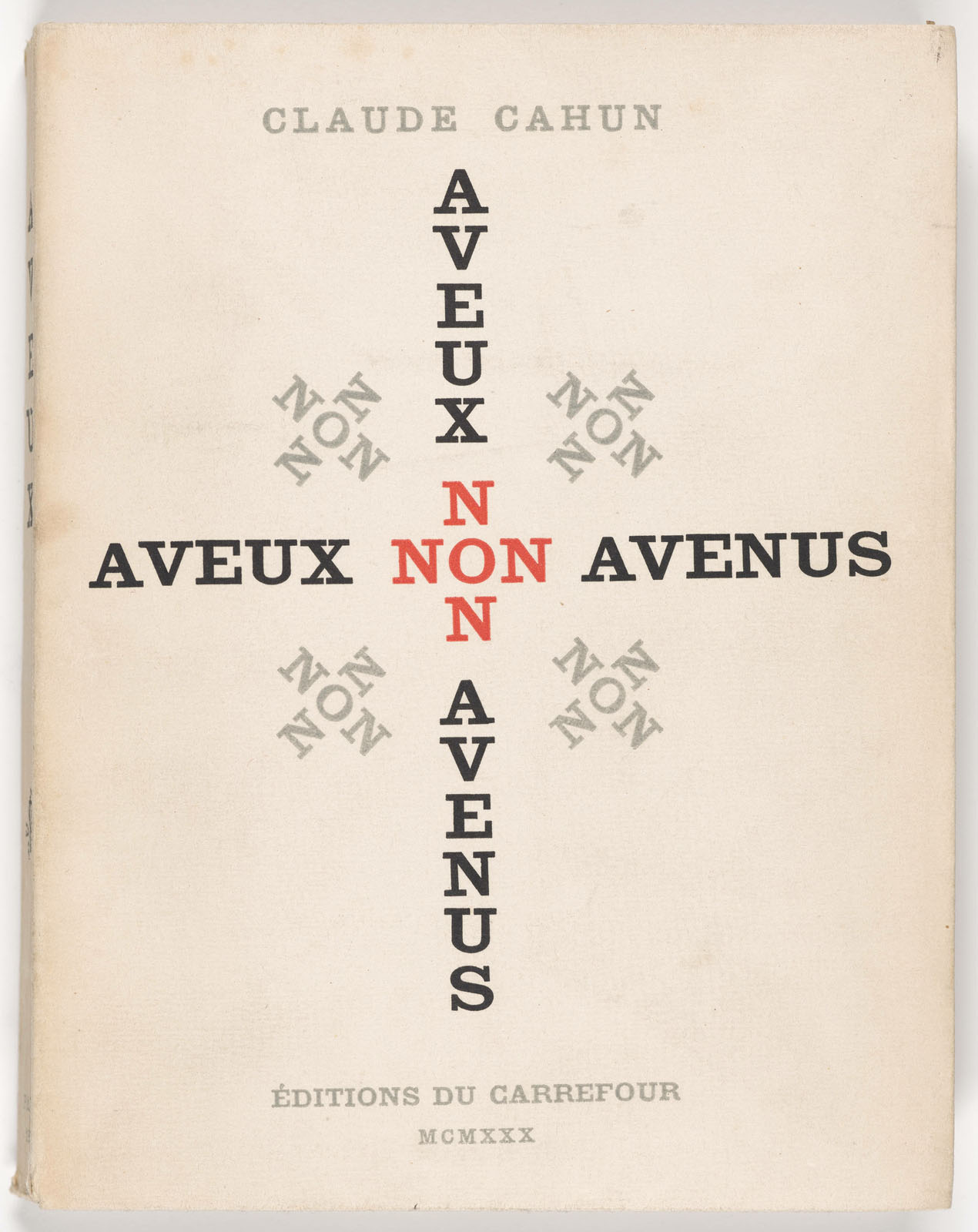
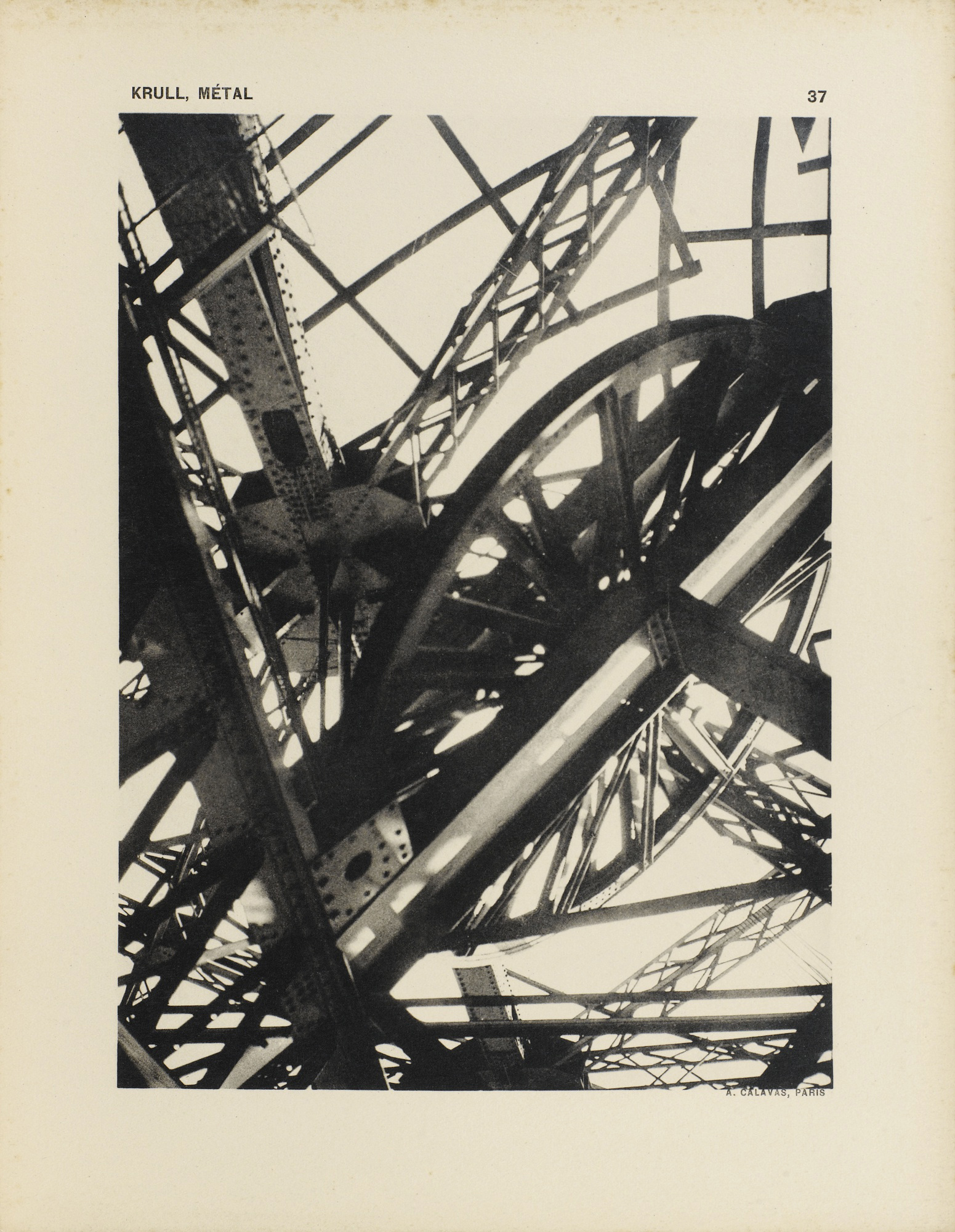
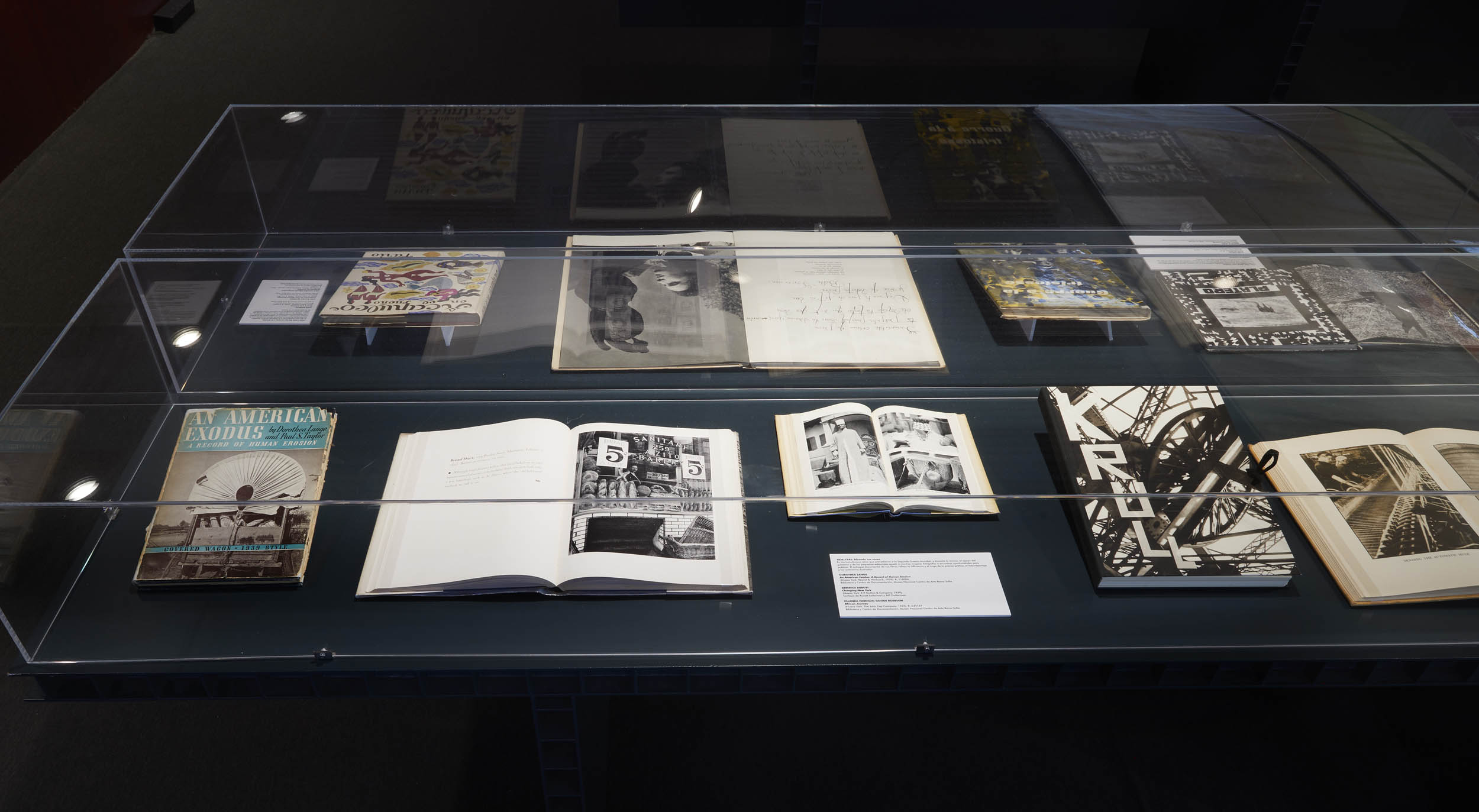
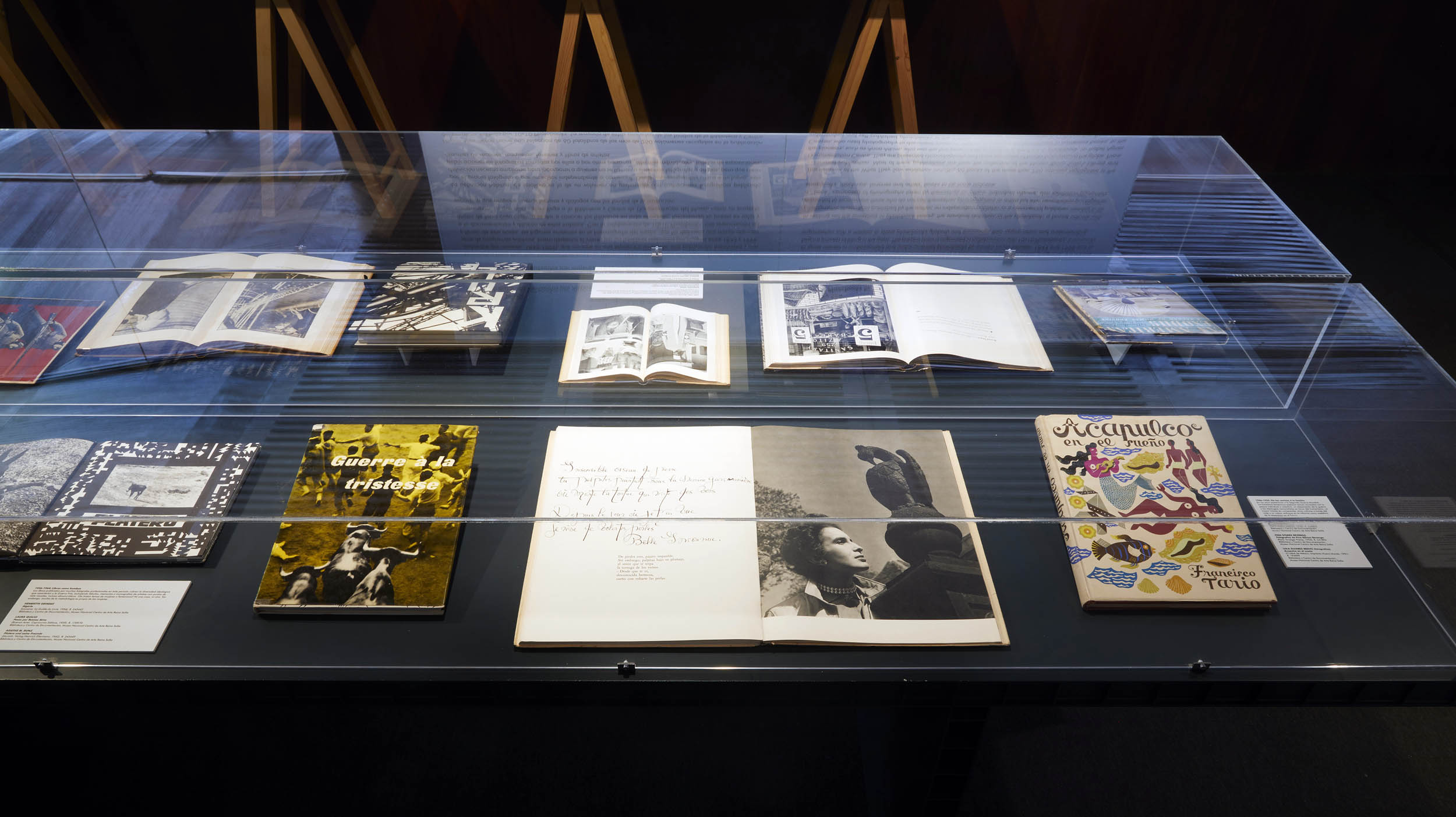
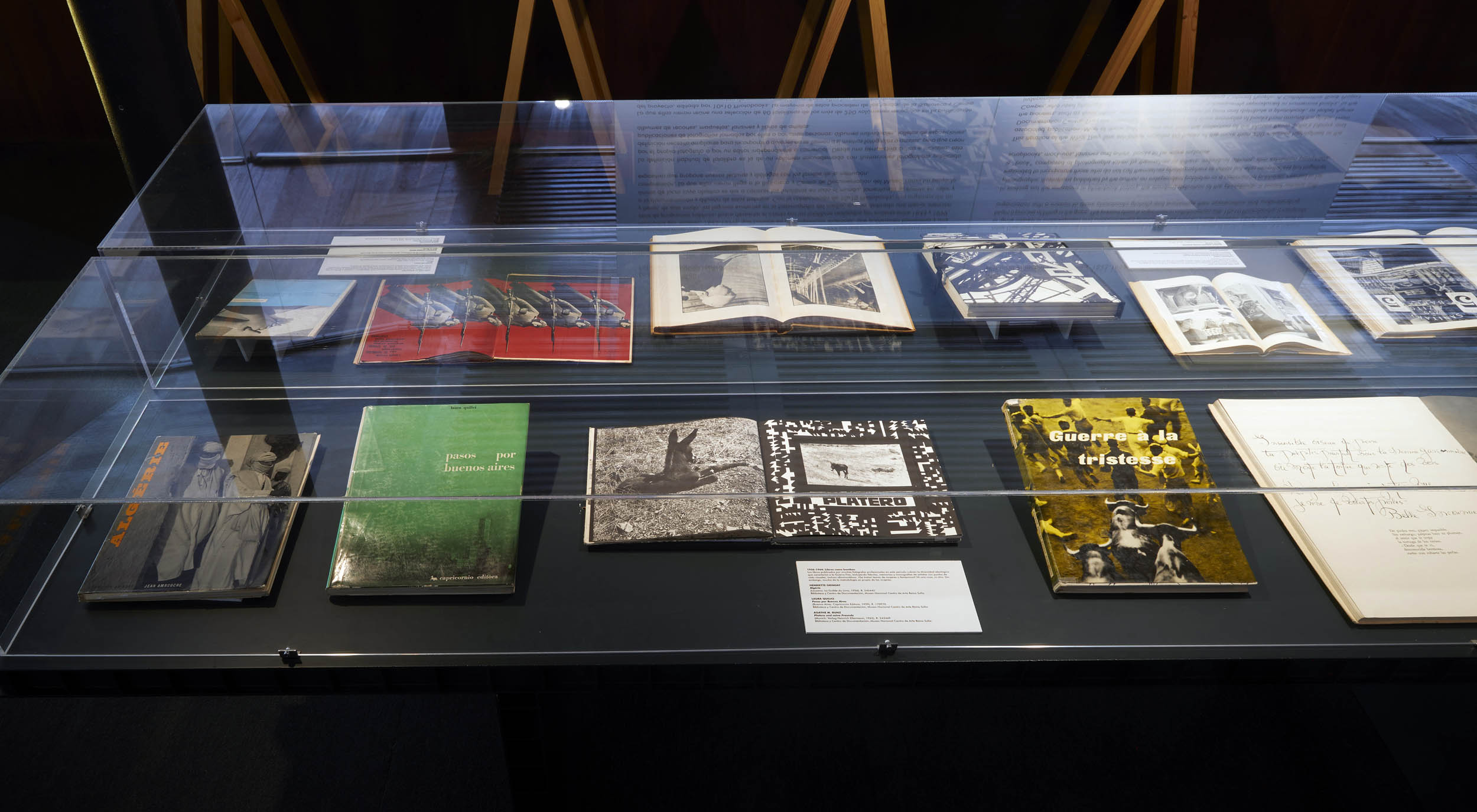
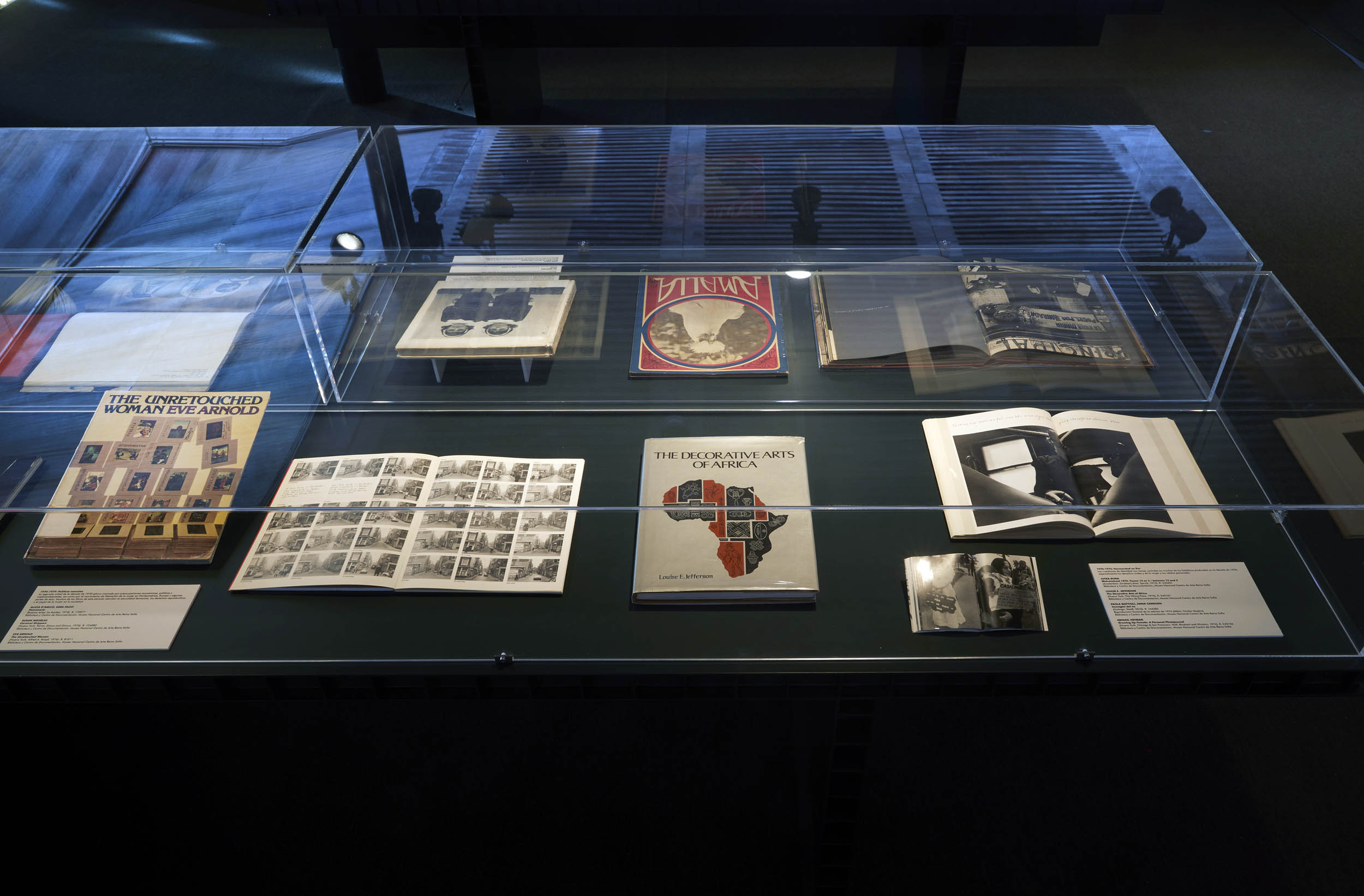
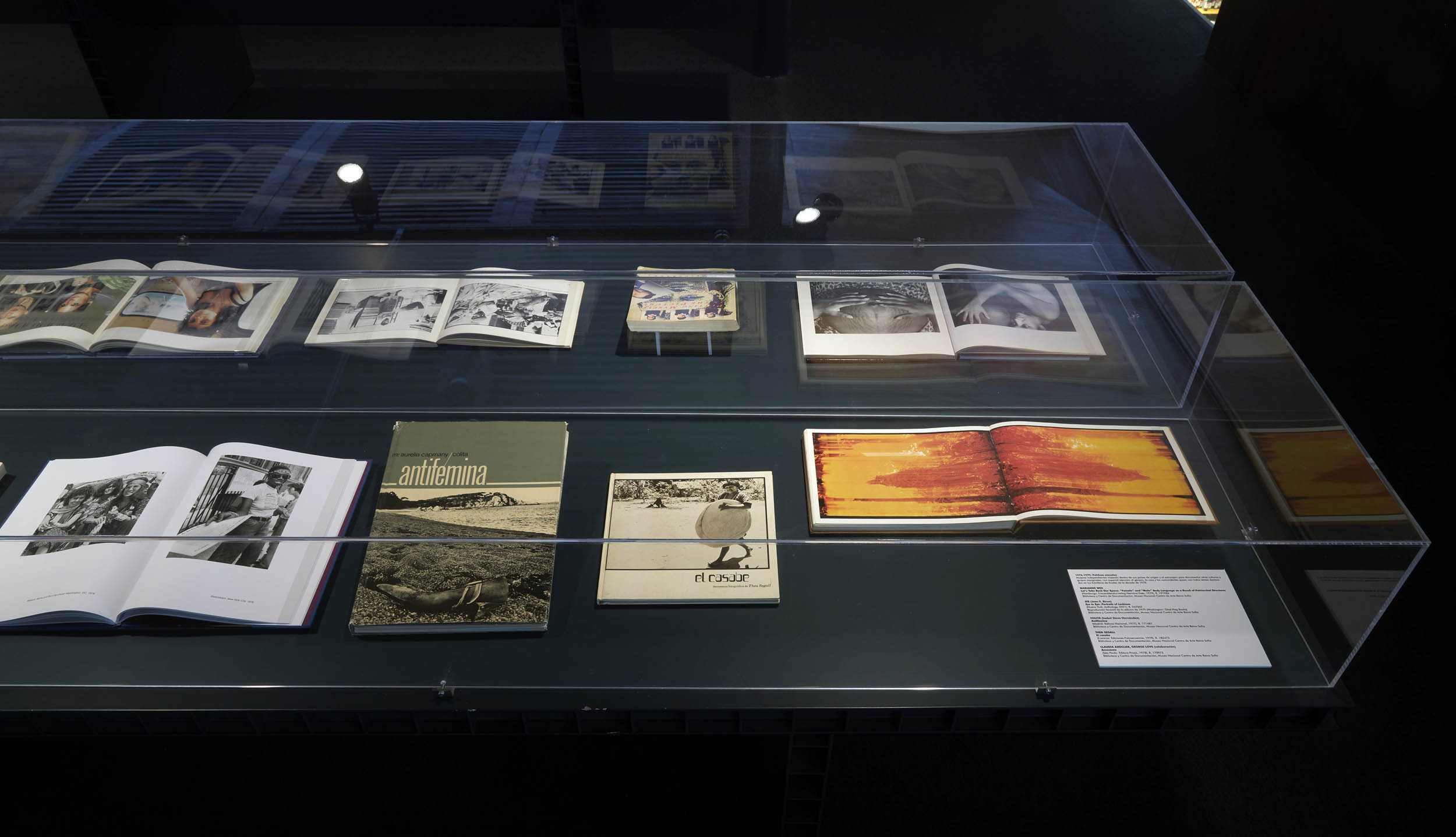
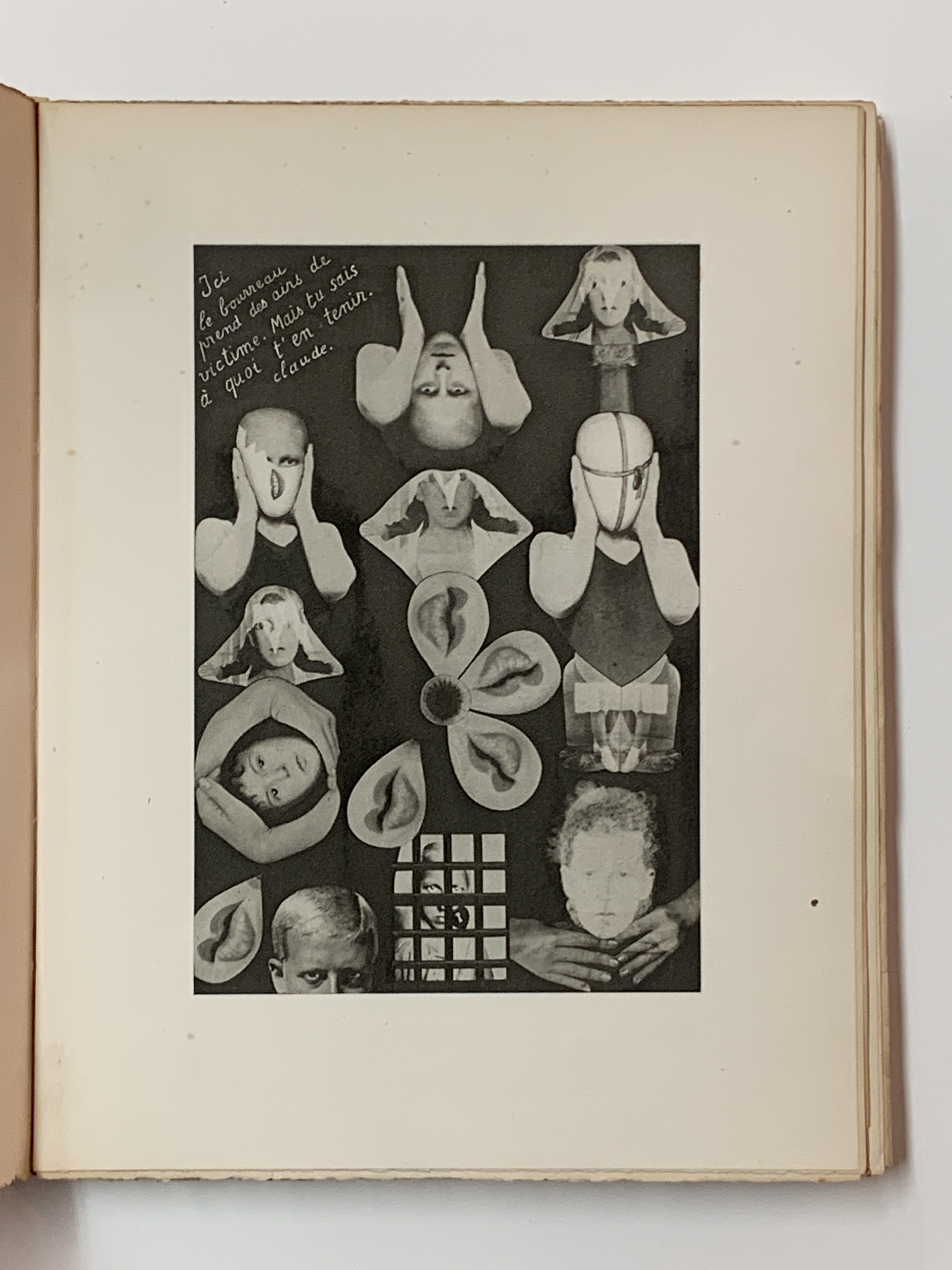
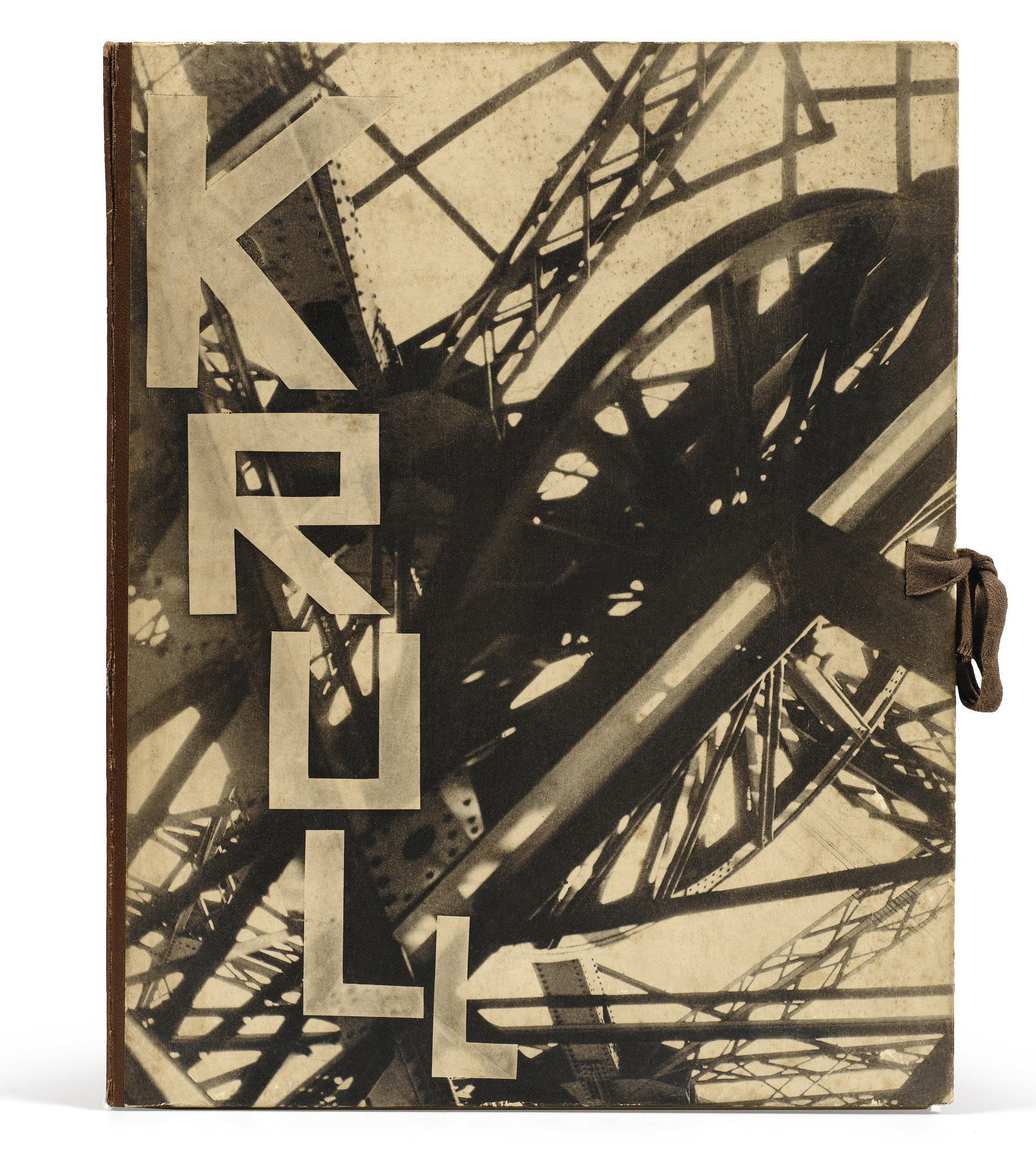
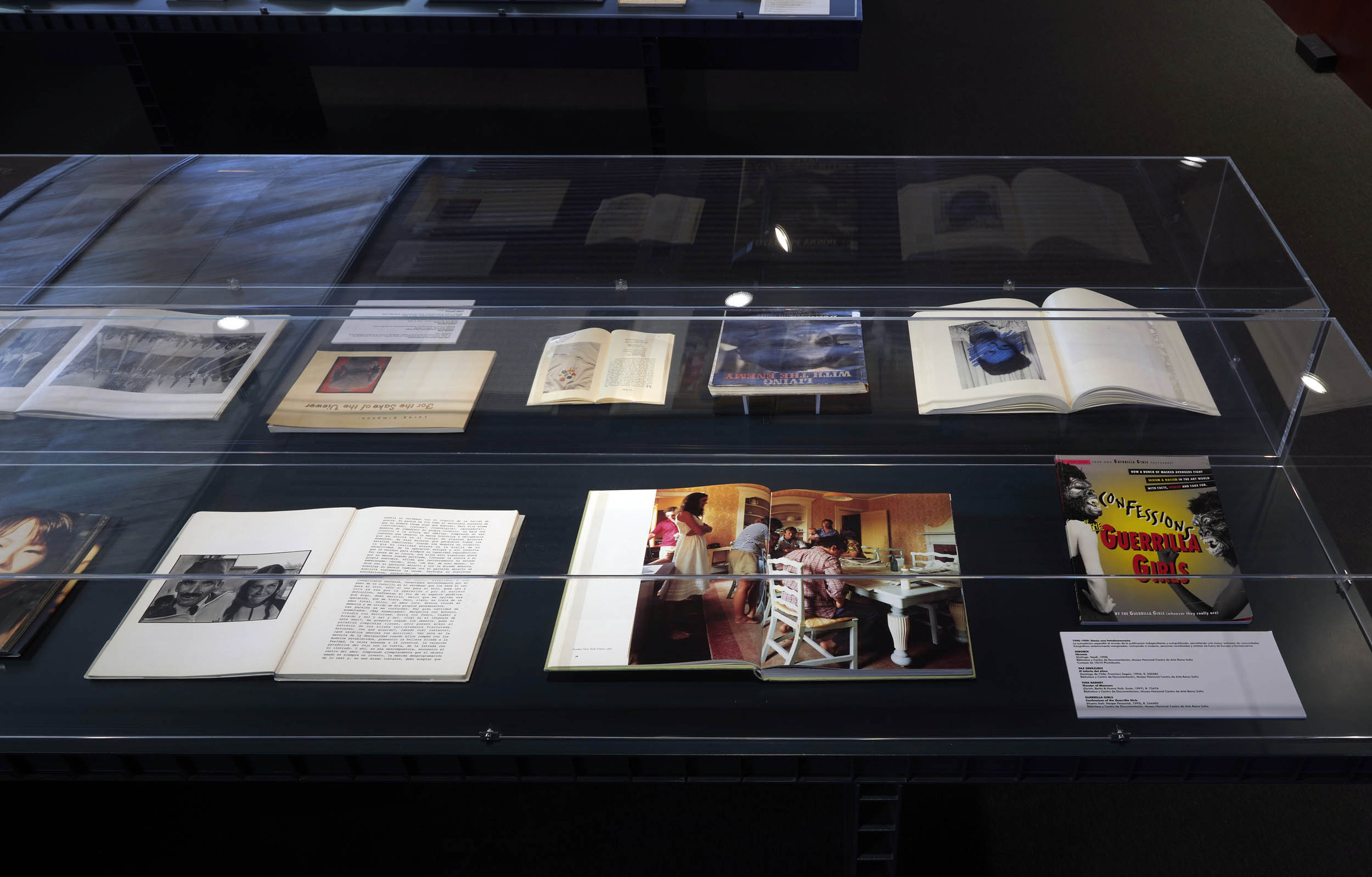
Let’s get the good stuff about the exhibition out of the way first. Whoever curated the exhibition (unknown, unnamed) really knew how to pull an installation of photographs together. There was some sophisticated sequencing of the images on the various themes from Australian and International artists, very intelligently and beautifully rendered which I enjoyed tremendously. I also enjoyed seeing the glorious display of photobooks: I was in heaven seeing in one display cabinet Man Ray’s book Photographs by Man Ray Paris 1920-1934 (published 1934), Claude Cahun and Marcel Moore’s book Aveux non Avenus (Disavowals or Cancelled Confessions) (published 1930), Bill Brandt’s book Perspective of Nudes (published 1961), and Germaine Krull’s book Nude studies (Études de nu) (published 1930). What a selection!
And it was finally great to see Australian and international work displayed together on such a large scale, something I can’t remember happening in the 35 years I have being viewing photography exhibitions in Australia. This is something that the NGV should have been promoting for many years, the placement of Australian photography in an international context… even taking this concept overseas, to promote Australian photography internationally. But no, nothing of this kind of forward thinking has ever happened in insular Australia.
Now to the not so good stuff. The most glaring anomaly about the exhibition was its over ambitious structure. While the concept ‘Real & Imagined’ was very strong – an exhibition of photographs picturing a version of reality captured by the camera (for it can never capture reality itself) / photographs created by the imagination of human beings – this robust concept was overwhelmed by too many thematic sections in the exhibition.
These sections included ‘Light’ and ‘Systems and Surface’ and ‘Surreal’ and ‘Narrative’ and ‘Work and Play’ and ‘Movement’ and ‘Studio and Things’ and ‘Display’ and ‘Consumption’ and ‘Self’ and ‘Skin’ and ‘Community and Touch’ and ‘Environment’ and ‘Place and Built’ and ‘Nineteenth-century photography’ and ‘Conflict’ and ‘Death’. I’m exhausted already…
And then, walking around the exhibition, the wall texts used to identify and illuminate these sections became totally irrelevant as through their placement on the wall I had no idea to which area they were referring. It was totally confusing and in the end I just ignored them.
As I observed people wandering around the exhibition, most had no idea of the importance of some of the images on display… why would they? They are not photography aficionados but the viewing public. If I found the exhibition confusing imagine how they viewed it. What the NGV should have done was have a guided tour on the hour, every hour, to talk about the seminal works in the exhibition and about how the exhibition had been structured. Imagine someone explaining the importance of the four photobooks in a display cabinet mentioned earlier in the history of photography and how by putting them together you were creating a sophisticated dialogue over time about identity and gender issues.
As the aforementioned colleague observed to me, “the exhibition felt like a data dump with a tacked on theme that strained (and failed) to resonate.” I wouldn’t go that far for the overall concept was strong and vibrant but like much of what has happened with the photography collection at the NGV, the overall outcome was confused and piecemeal.
This can no better be illustrated than through the comments of the Director of the NGV, Tony Ellwood, when he said in the press release, “This exhibition celebrates the collections and achievements of the NGV’s photography department, which has presented more than 180 exhibitions in its 55-year history. The exhibition is a testament to the strength of the NGV Collection, with so many key examples of the history of photography represented, from the earliest examples from the 19th century, through to contemporary images being produced right now in the twenty-first century.”
I note that when the head of the NGV boasts about the number of photography exhibitions over the last 55 years (180, about 3 a year mainly small exhibitions) and the “strength” of the NGV Photography Collection… you know that he is proselytising.
Most of the large photography exhibitions have been brought in from outside sources in the last 30 years and little research has been done into Australian photography and its relationship to world photography in house. And while the NGV collection has “strength” in certain areas it is woefully lacking in others. Again, the word “piecemeal” springs to mind, like Swiss cheese full of the biggest holes … and this exhibition only serves to reinforce that idea, often displaying the only photograph by an important artist that the collection holds.
Smoke and mirrors, smoke and mirrors!
For example I picked a few photographic artists off the top of my head as I thought of them – and the NGV collection possesses some in reasonable depth:
Edward Steichen 23
Paul Strand 51
Brassai 17
André Kertesz 45
Eugène Atget 143
Frank Hurley 20
Max Dupain 94
Bill Brandt 44
Bill Henson 108
Lee Friedlander 31
David Goldblatt 15
Dorothea Lange 28
August Sander 16
Other important photographers the NGV have nothing or next to nothing at all:
Joseph Sudek 1
Stephen Shore 0
William Eggleston 0
Julia Margaret Cameron 3
Robert Mapplethorpe 1
Ansel Adams 4
Hiroshi Sugimoto 1
Daido Moriyama 0
Raja Deen Dayal 0
Aleksandr Rodchenko 1
Olive Cotton 9
Berenice Abbott 7
Diane Arbus 2
Roger Ballen 1
Bernd and Hiller Becher 1
Thomas Ruff 2
Manuel Álvarez Bravo 0
Edward Weston 6
Henri Cartier-Bresson 2
Robert Frank 11
Garry Winogrand 0
Nan Goldin 3
Gordon Parks 3
Lewis Hine 9
Peter Hujar 0
Imogen Cunningham 6
Not exactly an institution that has “strength” in their photography collection. And over the last 30 years seemingly nothing much has been done to plug these enormous holes in the collection…. instead, for example, buying one work by Jeff Wall for a million dollars.
The NGV needs to improve the photography collection and its photography exhibition program. After too many years of stagnation an injection of new ideas and a new direction for exhibition programming is needed. A couple of focused photography exhibitions per year would be a good start, as would the purchasing of historic photographs to fill huge gaps in the collection rather than the purchasing of contemporary work. Non-vintage prints of the masters can still be bought at affordable prices. And therein lies just one of the problems: money.
Investment in photography at the NGV in terms of people and money is much needed, otherwise the deep freeze and dance of smoke and mirrors will continue well into the future.
Photography: Real and Imagined examines two perspectives on photography; photography grounded in the real world, as a record, a document, a reflection of the world around us; and photography as the product of imagination, storytelling and illusion. On occasion, photography operates in both realms of the real and the imagined.
Highlighting major photographic works from the NGV Collection, including recent acquisitions on display for the very first time, Photography: Real and Imagined examines the complex, engaging and sometimes contradictory nature, of all things photographic. The NGV’s largest survey of the photography collection, the exhibition includes more than 300 works by Australian and international photographers and artists working with photo-media from the nineteenth, twentieth and twenty-first centuries.
Installation view of the exhibition Photography: Real & Imagined at The Ian Potter Centre: NGV Australia, Melbourne showing at rear left, Penelope Davis’ Shelf (2008) and Non-fiction (red) (2008, below); at third right, Anne Ferran’s Scenes on the death of nature, III (1986); at second right, Candida Höfer’s Teylers Museum Haarlem II (2003, below); and at right, Thomas Struth’s Pergamon Museum IV, Berlin (2001) Photo: Marcus Bunyan
Installation view of the exhibition Photography: Real & Imagined at The Ian Potter Centre: NGV Australia, Melbourne showing Penelope Davis’ Shelf (2008) and Non-fiction (red) (2008) from the Fiction-Non-Fiction series 2007-2008 Photo: Marcus Bunyan
Installation view of the exhibition Photography: Real & Imagined at The Ian Potter Centre: NGV Australia, Melbourne showing at middle left, Anne Ferran’s Scenes on the death of nature, III (1986); at centre, Candida Höfer’s Teylers Museum Haarlem II (2003, below); and at middle right, Thomas Struth’s Pergamon Museum IV, Berlin (2001) Photo: Marcus Bunyan
The luminous photograph by Thomas Struth shows museum visitors immersed in observing the Telephos frieze within a room of the Pergamon Museum in Berlin. Struth draws our attention to the fact that viewing a work of art in a public gallery is rarely a private experience. The visit is usually shared by other visitors, museum staff, security guards and tour guides. There is also the omnipresent gaze of security cameras. Struth seems to be emulating the technical innovations of the Telephos frieze in his arrangement of the viewers. Similarities between the poses of the audience members and the poses of the carved relief figures gradually emerge, suggesting an unconscious dialogue between the viewers and the objects they regard.
Wall text from the exhibition
Candida Höfer (German, b. 1944) Teylers Museum Haarlem II 2003 Type C photograph National Gallery of Victoria, Melbourne Purchased, 2004
This photograph shows the famous Oval Room within Teylers Museum, the oldest public museum in the Netherlands. Candida Höfer photographed the space bathed in a brilliant, even light that illuminates its architecture, objects and famed mineralogical cabinet. The highly structured museological ordering of the objects and the Neoclassical architecture that contains them are exaggerated by the formal, symmetrical composition of the photograph. This image invites reflection of the ways in which cultural institutions direct our engagement with materials. As the artist has said, ‘There are no people there, but you understand that the places were made specially for them. This is very meaningful for me, and it’s exactly what I want to express’.
Wall text from the exhibition
Installation view of the exhibition Photography: Real & Imagined at The Ian Potter Centre: NGV Australia, Melbourne showing at left, Anne Ferran’s Scenes on the death of nature, III (1986); at centre, Candida Höfer’s Teylers Museum Haarlem II (2003, above); and at right, Thomas Struth’s Pergamon Museum IV, Berlin (2001). In the distance can be seen Lotte Jacobi’s Head of a dancer (1929, below); Man Ray’s Head of a dancer (1929, below); and Lee Miller’s Nimet Eloui Bey (c. 1930, below) Photo: Marcus Bunyan
Lotte Jacobi (German 1896-1990, United States 1935-1990) Head of a dancer 1929, printed c. 1970 Gelatin silver photograph 26.4 x 33.2cm National Gallery of Victoria, Melbourne Bowness Family Fund for Photography, 2021 Public domain
Man Ray (Emmanuel Radnitzky) (American, 1890-1976) Kiki with African mask 1926 Gelatin silver photograph 21.1 x 27.6cm National Gallery of Victoria, Melbourne Purchased through The Art Foundation of Victoria with the assistance of Miss Flora MacDonald Anderson and Mrs Ethel Elizabeth Ogilvy Lumsden, Founder Benefactors, 1983 Public domain
Kiki with African maskis one of Man Ray’s most celebrated photographs and an iconic image of the Art Deco period. First published in Vogue in 1926, it is an elegant image, but it also speaks to the impact of European colonialism in Africa. In this pared-back studio photograph all extraneous detail is excluded from the image, focusing our attention on the exquisitely made-up face of Kiki in juxtaposition with the perfectly polished ebony of the mask. This photograph invites us to delight in the physical beauty of Man Ray’s celebrated model but offers nothing about the mask or its maker.
Wall text from the exhibition
Installation view of the exhibition Photography: Real & Imagined at The Ian Potter Centre: NGV Australia, Melbourne showing Lee Miller’s Nimet Eloui Bey (c. 1930, below) Photo: Marcus Bunyan
Lee Miller (American 1907-1977) Nimet Eloui Bey (installation view) c. 1930 Gelatin silver photograph 23.0 x 15.8cm National Gallery of Victoria, Melbourne Gift of Krystyna Campbell-Pretty AM and Family through the Australian Government’s Cultural Gifts Program, 2022 Photo: Marcus Bunyan
Lee Miller may have been well-known as Man Ray’s colleague, model and lover, but she was also celebrated for her own photographic practice, producing portrait and fashion photographs. When Miller photographed Egyptian model Nimet Eloui Bey the encounter changed both women’s lives. Four years after taking this intimate portrait, Miller would marry Nimet’s then husband, Aziz Eloui Bey. As curator Sophia Cai comments, ‘The personal scandal behind this portrait colours many contemporary interpretations, but also demonstrates the way that the personal lives of artists become interwoven with their artistic identities. This is particularly true in instances of women artists who are relegated to the role of the “muse” or lovers to male artists’.
Wall text from the exhibition
Installation view of the exhibition Photography: Real & Imagined at The Ian Potter Centre: NGV Australia, Melbourne showing at centre, Fiona Pardington’s Portrait of a life-cast of Koe, Timor (2010) and Portrait of a life cast of Matoua Tawai, Aotearoa New Zealand (2010); and at right, Linda Judge’s Victoria and Albert Museum 20/4/94 (1994, below) Photo: Marcus Bunyan
Fiona Pardington’s photograph shows a life cast of the tattooed head of a Māori man, Matoua Tawai. The cast, held in a museum collection, is one of many made by Pierre- Marie Alexandre Dumoutier of Māori peoples in the 1830s. Pardington, who is of Māori and Scottish descent, has spoken of her desire to reconsider the complex history of these life casts and find a state of continuum between the past and present, to, as she says, ‘find the faces of the living people presenting and manifesting in the object’. Printing the photograph at larger-than-life scale provokes a physical encounter, an opportunity to look again and reconsider the histories of the person, the object and the image.
Wall text from the exhibition
Linda Judge (Australian, b. 1964) Victoria and Albert Museum 20/4/94 (installation view detail) 1994 Type C photographs National Gallery of Victoria, Melbourne Margaret Stewart Endowment, 1994 Photo: Marcus Bunyan
In this image, Linda Judge wittily creates new narratives and resurrects otherwise ‘mummified’ museum objects. Concerned with the open-ended nature of archives and their ability to slip between fiction and reality, Judge presents photographs of historical lace from the collection of the Victoria and Albert Museum, London. Beneath each photograph, Judge has provided a range of both ‘plausible’ captions (’12. collar, cuff, border: Italian, late 17th century, Tape lace with needlepoint fillings and brides’) and fanciful ones (’51. veil: Brussels, end 18th century, needlepoint on bobbin ground. Worn by Madonna, for Like a Virgin in her Brussels tour ’91’). Judge humorously invites the viewer to interrogate the expectations of truth in the presentation of archival content.
Wall text from the exhibition
Installation view of the exhibition Photography: Real & Imagined at The Ian Potter Centre: NGV Australia, Melbourne showing at left, Martin Parr’s Pink pig cakes from Common Sense (1995-1999); at fourth left, ringl+pit’s Komol (1931, below); at fifth left, Ilse Bing’s Salut de Schiaparelli (1934, below); and at sixth left, Dora Maar’s Untitled (Study of Beauty) (1936, below) Photo: Marcus Bunyan
Installation view of the exhibition Photography: Real & Imagined at The Ian Potter Centre: NGV Australia, Melbourne showing ringl+pit’s Komol (1931, below) Photo: Marcus Bunyan
Installation view of the exhibition Photography: Real & Imagined at The Ian Potter Centre: NGV Australia, Melbourne showing at left, Martin Parr’s Pink Pig Cakes, Bristol, UK (1995); at third right, Lillian Bassman’s More fashion mileage per dress, Barbara Vaughn, Harper’s Bazaar, New York (1956); at second right, and at right, Darren Sylvester’s On Holiday (2010) Photo: Marcus Bunyan
Darren Sylvester builds and photographs hyperreal tableaux using the visual language of advertising – beautiful models, perfect lighting and considered ‘product’ placement – to construct a familiar yet illusionary reality. Here Sylvester’s model plays the role of a handsome businessman. ‘Against a sunrise, a business traveller gazes at an unknown destination’, Sylvester once wrote of this image. ‘The composition plays on stereotypes of luxury aspirations and aeroplane advertisements. For example, no-one ever flies into darkness or storms in an ad.’ In this lush, seductive photograph, Sylvester explores the slippery space between reality and illusion, aspiration and irrelevance, as we move on to the next shiny thing.
Wall text from the exhibition
Lillian Bassman (American, 1917-2012) More fashion mileage per dress, Barbara Vaughn, Harper’s Bazaar, New York 1956, printed later Gelatin silver photograph National Gallery of Victoria, Melbourne Gift of Krystyna Campbell-Pretty AM and Family through the Australian Government’s Cultural Gifts Program, 2023
In the late 1930s, Lillian Bassman studied fashion illustration and textile design at the Pratt Institute, New York. In 1940 she began working with Alexey Brodovitch, art director of Harper’s Bazaar magazine, which soon led to her appointment as art director of the subsidiary publication Junior Bazaar. In this capacity she worked with photographers, including Richard Avedon and Robert Frank, and in 1947 began working as a freelance fashion and advertising photographer. In an interview later in her life Bassman played down her directorial role as photographer, stating, ‘It is part of the nature of a woman to be unconsciously graceful … I try to record that natural grace with a camera’.
Wall text from the exhibition
Installation view of the exhibition Photography: Real & Imagined at The Ian Potter Centre: NGV Australia, Melbourne showing Athol Shmith’s Fashion illustration, model Ann Chapman (c. 1961) Photo: Marcus Bunyan
Installation view of the exhibition Photography: Real & Imagined at The Ian Potter Centre: NGV Australia, Melbourne showing at left, Alice Mills’ Joan Margaret Syme (c. 1918, below); at second left, works by Edson Chagas from his Tipo Passe series (2014); and at third left, Hassan Hajjaj’s Master Cobra Mansa (2013, below) with at right, Martin Parr’s Pink Pig Cakes, Bristol, UK (1995) Photo: Marcus Bunyan
Alice Mills (attributed to) (Australian, 1870-1929) Joan Margaret Syme c. 1918 Gelatin silver photograph, coloured dyes National Gallery of Victoria, Melbourne Presented through the NGV Foundation by Michael Hayne, 2005 Public domain
Alice Mills set up her first studio in Melbourne in 1900. She was highly regarded as a portrait photographer and in 1907 was invited to exhibit in the Australian Exhibition of Women’s Work. Her portrait of five-year-old Joan Margaret Syme dressed in a leopard-skin robe is an outstanding example of studio portraiture. It shows the skilled application of hand colouring, which was used to transform black-and-white photographs in the era before colour photography, bringing a life-like quality to the portrait. At almost two metres high, this is no only a charming study of a young child, but one of the largest photographs from the early twentieth century in the NGV Collection.
Wall text from the exhibition
Installation view of the exhibition Photography: Real & Imagined at The Ian Potter Centre: NGV Australia, Melbourne showing at left Alice Mills’ Joan Margaret Syme (c. 1918, above); at centre, works by Edson Chagas from his Tipo Passe series (2014); and at right, Hassan Hajjaj’s Master Cobra Mansa (2013, below) Photo: Marcus Bunyan
Multidisciplinary artist Hassan Hajjaj’s portraits show London’s Moroccan diaspora; as a designer he also creates stylish street fashion and playful interiors that are a contemporary take on Moroccan tea houses and riads. Hajjaj came to professional photography by happenstance, taking pictures both for fun and as a tool while working as a stylist on music videos. It soon became a cornerstone of his creative practice. From the outset Hajjaj wanted his photography to show ‘another side of Moroccan culture’, something that, as he says, was not ‘camels, dates and drinking mint tea!’
Wall text from the exhibition
Adolphe Braun (French 1811-1877) No title (Flower study) c. 1854 Albumen silver photograph 31.0 x 37.3cm National Gallery of Victoria, Melbourne Purchased NGV Foundation, 2017 Public domain
Adolphe Braun arrived in Paris in 1828 to study drafting and decorative design and within six years had established a textile design studio. Around 1853 he began to make photographs using the recently invented collodion process. The following year Braun commenced a project to photograph an extensive series of flower studies with the intent of providing documentary source material for artists and designers. He produced 300 of these photographs and in 1854 published his images in a six-volume series titled Fleurs photographiés. When they were exhibited in the 1855 Universal Exhibition in Paris, Braun was awarded a gold medal for his work’s usefulness to the fabric and decorating industries.
Wall text from the exhibition
Installation view of the exhibition Photography: Real & Imagined at The Ian Potter Centre: NGV Australia, Melbourne showing at left Julie Rrap’s Persona and shadow: Madonna (1984, below)
Julie Rrap (Australian, b. 1950) Persona and shadow: Madonna 1984 Cibachrome photograph 194.7 × 104.6cm (image and sheet) National Gallery of Victoria, Melbourne Michell Endowment, 1984
Installation view of the exhibition Photography: Real & Imagined at The Ian Potter Centre: NGV Australia, Melbourne showing from left to right, Yasumasa Morimura’s An inner dialogue with Frida Kahlo (Flower wreath and tears) (2001, below); Phumzile Khanyile’s Untitled (2016); Zanele Muholi’s Ntozkhe II (Parktown) (2016, below); Ayana V. Jackson’s How sweet the song (2017); Julie Rrap’s Madonna (1984, above); and Siri Hayes Spilling pearls (2012) Photo: Marcus Bunyan
Yasumasa Morimura (Japanese, b. 1951) An inner dialogue with Frida Kahlo (Flower wreath and tears) (installation views) 2001 From the An Inner Dialogue with Frida Kahlo series 1991-2001 Photograph, plastic 213.4cm diameter National Gallery of Victoria, Melbourne Purchased NGV Foundation, 2022 Photos: Marcus Bunyan
Using found props – in this instance a ‘crown’ of scouring pads – Zanele Muholi has photographed themself to confront racial stereotypes and examine concepts of self-representation while honouring generations of women who have worked domestically. Discussing this work the artist wrote, ‘In some ways, yes: Ntozakhe is based on the Statue of Liberty, representing the idea of freedom – the freedom all women should have – as well as pride: pride in who we are as black, female-bodied beings. But what kind of freedom are we talking about? What is the colour of the Statue of Liberty? What race is the figure monumentalised as Lady Liberty?’
Wall text from the exhibition
Installation view of the exhibition Photography: Real & Imagined at The Ian Potter Centre: NGV Australia, Melbourne showing at left, Julie Rrap’s Madonna (1984, above); at second left, Siri Hayes’ Spilling pearls (2012); at third left, Sarah Lucas’ Self-portrait with fried eggs (1999); at fourth left, William Yang’s William, Father, Mother, Graceville, Brisbane (1974, below) and then his Self Portrait #5 (2008, below) Photo: Marcus Bunyan
William Yang (Australian, b. 1943) William, Father, Mother, Graceville, Brisbane (installation view) 1974, printed 2014 Inkjet print National Gallery of Victoria, Melbourne Purchased, Victorian Foundation for Living Australian Artists, 2014 Photo: Marcus Bunyan
William Yang’s autobiographical photographs combine photographs and handwritten text to tell the stories of Yang’s family, his childhood, and his experiences of being Chinese in an Australia that was not always welcoming to him. In one of these photographs Yang points to the difficulties he faced as a young man torn between his parents’ aspirations for him and his own wish for a different life. In the other, he describes himself as more content, at ease with himself and the choices he has made in his life. Together they form part of a powerful account of his life and sense of self.
Wall text from the exhibition
William Yang (Australian, b. 1943) Self Portrait #5 (installation view) 2008; printed 2014 From the Self Portrait series Inkjet print 43 x 65cm National Gallery of Victoria, Melbourne Purchased, Victorian Foundation for Living Australian Artists, 2014 Photo: Marcus Bunyan
Installation view of the exhibition Photography: Real & Imagined at The Ian Potter Centre: NGV Australia, Melbourne showing from left to right, Virginie Grange’s Untitled (1990); George Hoyningen-Huene’s Horst torso (1931, below); František Drtikol’s Nude (1927-1929); Olive Cotton’s Max after surfing (1937, below); Edward Weston’s Nude (1936, below); Eadweard Muybridge’s Plate 227 from Animal Locomotion series 1887; and Helmut Newton’s Big nude I (1980) Photo: Marcus Bunyan
Installation view of the exhibition Photography: Real & Imagined at The Ian Potter Centre: NGV Australia, Melbourne showing from left to right, George Hoyningen-Huene’s Horst torso (1931, below); František Drtikol’s Nude (1927-1929); Olive Cotton’s Max after surfing (1937, below); Edward Weston’s Nude (1936, below); Eadweard Muybridge’s Plate 227 from Animal Locomotion series 1887 Photo: Marcus Bunyan
The František Drtikol was the first fine art photograph to enter the National Gallery of Victoria collection.
George Hoyningen-Huene (Russian 1900-1968, England 1917-1921, France 1921-1935, United States 1935-1968) Horst torso 1931, printed 1980s Gelatin silver photograph 23.1 x 27.9cm National Gallery of Victoria, Melbourne Bowness Family Fund for Photography, 2017
Edward Weston (American 1886-1958) Nude 1936, printed 1976 Gelatin silver photograph 17.8 x 23.8cm (image and sheet) National Gallery of Victoria, Melbourne Purchased from Agfa and B. H. P. donation, 1977 Public domain
Olive Cotton (Australian, 1911-2003) Max after surfing 1937, printed 1998 Gelatin silver photograph 26.0 x 19.7cm National Gallery of Victoria, Melbourne Purchased through The Art Foundation of Victoria with the assistance of Optus Communications Pty Limited, Member, 1998
Photographs of lovers, family and friends are perhaps the most emotionally charged of all images, not because the subject is monumental or dramatic, but because they allow us to see into intimate relationships. When photographs show subjects nude, or even partially naked, the sense of familiarity is heightened. Olive Cotton’s photograph of Max Dupain is an image that reveals intimacy and tenderness. His body is sculpted by raking side lighting and the allusion to Classical sculpture is apparent, but this photograph also carries an erotic charge – Dupain is shown as being tanned and muscular, movie-star handsome and the object of Cotton’s desire.
Wall text from the exhibition
Installation view of the exhibition Photography: Real & Imagined at The Ian Potter Centre: NGV Australia, Melbourne showing from left to right, Francesca Woodman’s Space², Providence, Rhode Island, 1976 (1976, below); E. J. Bellocq’s Woman reclining with mask (c. 1912, below); Florence Henri’s Nude composition (c. 1930, below); an anonymous American photographer’s image Kaloma (1914); and Germaine Krull’s Daretha (Dorothea) Albu (c. 1925) Photo: Marcus Bunyan
Francesca Woodman (American, 1958-1981) Space², Providence, Rhode Island, 1976 1976, printed c. 2000 Gelatin silver photograph 16.3 x 16.3cm National Gallery of Victoria, Melbourne Ruth Margaret Frances Houghton Bequest, 2021
Francesca Woodman once stated, ‘I want my pictures to have a certain timeless, personal but allegorical quality like they do in many Ingres history paintings, but I like the rough edge that photography gives a nude’. Woodman was only twenty-three when she died, her work has had a profound impact on other artists, including Cindy Sherman, who wrote, ‘[Woodman] had few boundaries and made art out of nothing: empty rooms with peeling wallpaper and just her figure … Her process struck me more the way a painter works, making do with what’s right in front of her, rather than photographers like myself who need time to plan out what they’re going to do’.
Wall text from the exhibition
E. J. Bellocq (American, 1873-1949) No title (Woman reclining with mask) c. 1912, printed c. 1981 From the Storyville Portraits series c. 1911-1913 Gelatin silver photograph National Gallery of Victoria, Melbourne Purchased, 1981 Public domain
Florence Henri (American, 1893-1982) Nude composition (Nu composition) c. 1930 Gelatin silver photograph National Gallery of Victoria, Melbourne Gift of Krystyna Campbell-Pretty AM and Family through the Australian Government’s Cultural Gifts Program, 2021 Public domain
This photograph is a beautiful example of the way in which Florence Henri combined the elements of New Objectivity in photography, including sharp focus and unexpected vantage points, with her exploration of identity and sexuality. The presentation of the woman is unashamedly erotic: her naked form is presented for the pleasure of the viewer, but she does not conform to conventional modes of softcore pornography. The woman’s gaze excludes the viewer; she reclines on a coarse cloth backdrop, crumpled to suggest a beach as she looks at a perfect conch shell symbolising female fertility and an eloquently beautiful indicator of the artist’s object of desire.
Wall text from the exhibition
Installation view of the exhibition Photography: Real & Imagined at The Ian Potter Centre: NGV Australia, Melbourne showing at left, Sophie Calle’s The giraffe (2012); and centre right, Lynne Roberts-Goodwin’s Al Hammadi Desert Saqar #1 and #3; and at right, Sarah Waiswa’s Finding solace (2016) Photo: Marcus Bunyan
Sarah Waiswa (Ugandan, b. 1980) Finding solace (installation view) 2016 From the Stranger in a Familiar Land series 2016 Inkjet print 79.5 × 79.5cm Purchased NGV Foundation, 2017 Photo: Marcus Bunyan
Sarah Waiswa has described her series Stranger in a Familiar Land as an exploration of life outside the security and boundaries of community. Discussing her work, she wrote, ‘People fear what they do not understand … The concept of Stranger in a Familiar Land groups together various portraits of an albino woman set against the backdrop of the Kibera slums, which are a metaphor for my turbulent vision of the outside world. The series also explores how the sense of non-belonging has led her to wander and exist in a dreamlike state. People notice Kisombe, but at the same time, they don’t’.
Wall text from the exhibition
Installation view of the exhibition Photography: Real & Imagined at The Ian Potter Centre: NGV Australia, Melbourne showing at right, Lynne Roberts-Goodwin’s Al Hammadi Desert Saqar #1 and #3 Photo: Marcus Bunyan
Installation view of the exhibition Photography: Real & Imagined at The Ian Potter Centre: NGV Australia, Melbourne showing from left to right, Jan Groover’s Untitled (1981); August Sander’s Bohemians (Willi Bongard and Gottfried Brockman) (1922-1925, below); Julia Margaret Cameron’s Mrs Herbert Duckworth, her son George, Florence Fisher and H. A. L. Fisher (c. 1871, below); Harry Callahan’s Eleanor and Barbara, Chicago (1954); Gordon Parks’ Big Mama and boy, 1961 (1961); Micky Allan’s Man holding his daughter (1982, below); Brenda L. Croft’s In my mother’s garden (1998); and Angela Lynkushka’s Zühre Yildirim from Turkey with grand-daughter Nurahan Gundogdu, born in Australia. De Carle Street, Brunswick (1982) Photo: Marcus Bunyan
August Sander (German, 1876-1964) Bohemians (Willi Bongard and Gottfried Brockman) 1922-1925, printed 1973 From the People of the Twentieth Century project 1920s-1964 Gelatin silver photograph 23.3 x 30.5cm (image and sheet) National Gallery of Victoria, Melbourne Purchased, 1974
Gottfried Waldemar Brockmann (1903-1983) was a German artist, educator, publisher, and served as a cultural advisor for the city of Kiel, Germany. He taught at Muthesius Academy of Art in Kiel.
Julia Margaret Cameron (English, 1815-1879, Ceylon (Sri Lanka) 1875-1879) Mrs Herbert Duckworth, her son George, Florence Fisher and H. A. L. Fisher c. 1871 Albumen silver photograph 31.0 x 22.7cm (image and sheet) National Gallery of Victoria, Melbourne Purchased through The Art Foundation of Victoria with the assistance of the Herald & Weekly Times Limited, Fellow, 1979 Public domain
In this portrait, Julia Duckworth sits for her aunt, Julia Margaret Cameron, one of the nineteenth century’s most esteemed photographers. As curator Elisa deCourcy notes, ‘Julia Duckworth’s lackadaisical pose and her flailing hand cast her as somewhat of a Pre-Raphaelite heroine, very much in the style of Cameron’s broader oeuvre’. DeCourcy adds it is perhaps also a depiction of the experience of maternal exhaustion: ‘Julia’s distant gaze and slouched form makes it hard for us not to read this photograph as depicting fatigued motherhood. Through touch, the children seem to demonstrate a sentimental connection to Julia while also laying claim to her attention and energy’.
Wall text from the exhibition
Harry Callahan (American, 1912-1999) Eleanor and Barbara 1954, printed 1970s Gelatin silver photograph National Gallery of Victoria, Melbourne Purchased, 1979
Harry Callahan began photographing his wife Eleanor shortly after they married in 1936 and continued to do so for almost fifty years. Discussing their relationship as artist and muse in a 1983 film, Callahan said, ‘I felt very natural photographing Eleanor. I didn’t feel like there were any obstacles of any kind’. Following the birth of their daughter Barbara in 1950 he began to photograph mother and child and, as can be seen in this image, often captured moments of family life in pictures of great intimacy.
Wall text from the exhibition
Installation view of the exhibition Photography: Real & Imagined at The Ian Potter Centre: NGV Australia, Melbourne showing Micky Allan’s Man holding his daughter (1982) from the People of Elizabeth series 1982-1983 Photo: Marcus Bunyan
The application of hand-colouring to photographs was generally the work of women in photography studios until the 1950s. In the 1970s and 80s these superseded processes experienced a revival as some feminist photographers applied the historic treatment to their images of contemporary life. As art historian Elisa deCourcy observes, ‘Micky Allan’s vibrant hand-colouring radically alters the topography of this otherwise monochrome photographic portrait of a young father and daughter from the 1980s … The application of colour to the father’s and daughter’s faces and the “retouching” of their hair, eyes and lips with colour offers an illuminated realism to each subject’.
Wall text from the exhibition
Installation view of the exhibition Photography: Real & Imagined at The Ian Potter Centre: NGV Australia, Melbourne showing at right Gilbert & George’s FORWARD (2008, below) Photo: Marcus Bunyan
Gilbert & George (active 1967- ) Gilbert Proesch (Italian, b. 1943 George Passmore (English, b. 1942) FORWARD 2008 From the Jack Freak series Inkjet print National Gallery of Victoria, Melbourne Professor AGL Shaw AO Bequest, 2021
Writer Michael Bracewell described the Jack Freak series as being ‘among the most iconic, philosophically astute and visually violent works that Gilbert & George have ever created’. In this picture the Union Jack, an internationally familiar flag and politically charged symbol whose significance spans the cultural spectrum from contemporary fashion to aggressive national pride, forms the backdrop to monumental portraits of the artists. In contrast to this visual cacophony the artists appear as rather low-key, neatly dressed, senior statesmen maintaining their central relevance in a community that too often disregards the elderly.
Wall text from the exhibition
Installation view of the exhibition Photography: Real & Imagined at The Ian Potter Centre: NGV Australia, Melbourne showing from left to right, Ellen José’s Basket Weaver, Lake Tyers (1988); Roman Vishniac’s Grandfather and granddaughter, Warsaw (c. 1935-1938, below); Wolfgang Tillmans’ Lars in tube (1993); Ruth Maddison’s Molly O’Sullivan, 82 (1990); Naomi Hobson’s The God Father (2021); Donna Bailey’s Lush (2002); Carol Jerrems Sharpies (1976, below); and Nan Goldin’s Misty in Sheridan Square, NYC (1991, below) Photo: Marcus Bunyan
Roman Vishniac (Russian, 1897-1990, United States 1940-1990) Grandfather and granddaughter, Warsaw c. 1935-1938, printed 1977 Gelatin silver photograph National Gallery of Victoria, Melbourne Purchased, 1978
Installation view of the exhibition Photography: Real & Imagined at The Ian Potter Centre: NGV Australia, Melbourne showing Carol Jerrems’ Sharpies (1976) Photo: Marcus Bunyan
Installation view of the exhibition Photography: Real & Imagined at The Ian Potter Centre: NGV Australia, Melbourne showing from left to right, Huang Yan’s Chinese landscape – Tattoo (Number 1) (1999); four photographs by Hedda Morrison (1935, below); and Mervyn Bishop’s Prime Minister Gough Whitlam pours soil into the hands of traditional land owner Vincent Lingiari, Northern Territory (1975, below) Photo: Marcus Bunyan
Huang Yan (Chinese, b. 1966) Chinese landscape – Tattoo (Number 1) 1999, printed 2004 Type C photograph National Gallery of Victoria, Melbourne Purchased, 2004
In this photograph Huang Yan uses the human body as a canvas for the traditional shānshuǐ style of Chinese landscape painting. Discussing this image, curator and writer Isobel Crombie observed, ‘The title of the work, Tattoo, implies that landscape traditions are written permanently into the Chinese body, making them alive and active. However, ironically, the scenes painted onto the artist’s torso are clearly fugitive, alerting us to both the fragility of the natural environment and the transience of the body’.
Wall text from the exhibition
Hedda Morrison (German 1908-1991, China 1933-1946, Australia 1967-1991) No title (Fairy Palm Cliff) 1935 Gelatin silver photograph 25.3 x 22.8cm Purchased, 1976 National Gallery of Victoria, Melbourne Purchased, 1976 Public domain
Hedda Morrison (German 1908-1991, China 1933-1946, Australia 1967-1991) No title (Three gnarled pines) 1935 Gelatin silver photograph 30.6 × 19cm Purchased, 1976 National Gallery of Victoria, Melbourne Purchased, 1976 Public domain
Hedda Morrison (German 1908-1991, China 1933-1946, Australia 1967-1991) No title (Lone pine against clouds) 1935; printed 1976 Gelatin silver photograph 25.3 x 22.8cm Purchased, 1976 National Gallery of Victoria, Melbourne Purchased, 1976 Public domain
Hedda Morrison (German 1908-1991, China 1933-1946, Australia 1967-1991) No title (Morning clouds) 1935; printed 1970s Gelatin silver photograph 25.3 x 22.8cm Purchased, 1976 National Gallery of Victoria, Melbourne Purchased, 1976 Public domain
In August 1975 Mervyn Bishop travelled to Daguragu, formerly known as Wattie Creek, in the Northern Territory. As a press photographer he captured the moment when then prime minister Gough Whitlam placed a handful of soil into the palm of Gurindji elder and activist Vincent Lingiari. This photograph is an iconic image of the ongoing battle for self-determination for Australia’s traditional owners; however, the photograph is not as straightforward as it appears: the moment was re-staged outside so Bishop could take advantage of better lighting.
Wall text from the exhibition
Installation view of the exhibition Photography: Real & Imagined at The Ian Potter Centre: NGV Australia, Melbourne showing from left to right, Robert Macpherson’s Rome (c. 1860); Louis-Emile Durandelle and Clémence Delmaet’s The new Paris Opera, ornamental sculpture (c. 1870, below); Edouard Baldus’ Notre Dame, Paris (c. 1852-1853, below); and Véronique Ellena’s Santi Luca e Martina, Rome (2011) Photo: Marcus Bunyan
In Véronique Ellena’s photograph we see a shrouded figure, draped in a blanket or canvas cloth, lying on the steps of a Baroque church in central Rome. Initially seducing us with the formal beauty of the city and its architecture, the photograph then jolts us as we recognise the harsh reality of the scene. This was a calculated strategy on Ellena’s part, as she acknowledges: ‘At first, we could only perceive the sublime beauty of architecture. But this work tells us something else: the place of some people in this world, who are there but whom we do not see – or not anymore’.
Wall text from the exhibition
Louis-Emile Durandelle (French, 1839-1917) Clémence Delmaet (French, 1838-1917) The new Paris Opera, ornamental sculpture c. 1870 Albumen silver photograph 38.1 x 28.3cm (image and sheet) National Gallery of Victoria, Melbourne Presented by the Lunn Gallery, Washington D.C, USA, 1982 Public domain
Edouard Baldus (Prussian 1813-1989, France c. 1848 – c. 1869) Notre Dame, Paris c. 1852-1853, printed 1880s Platinum photograph National Gallery of Victoria, Melbourne Presented by the National Gallery Women’s Association, 1995 Public domain
By the middle of the nineteenth century many of the great historic buildings of Paris, including Notre Dame Cathedral, were in a state of disrepair due to decades of neglect. Under the auspices of the Commission des Monuments Historiques, significant historic buildings underwent extensive restoration. This committee recognised the invaluable role photography could play in documenting the changes occurring to the architectural heritage of Paris. Official Second Empire photographer, Édouard Baldus, captured the splendour of newly commissioned and lavishly restored architectural icons as cultural highlights of the Second Empire.
Wall text from the exhibition
Installation view of the exhibition Photography: Real & Imagined at The Ian Potter Centre: NGV Australia, Melbourne showing at left, Véronique Ellena’s Santi Luca e Martina, Rome (2011); at second right, work from Girma Berta’s Moving shadows series (2017); and at right, Pieter Hugo’s Green Point Common, Cape Town (2013) Photo: Marcus Bunyan
Installation view of the exhibition Photography: Real & Imagined at The Ian Potter Centre: NGV Australia, Melbourne showing at centre, Girma Berta’s Untitled IV, VI and XII (2017) at right, Pieter Hugo’s Green Point Common, Cape Town (2013) Photo: Marcus Bunyan
Girma Berta has been photographing people on the streets of Addis Ababa, Ethiopia, since around 2014. His earlier photographs were documentary in style, but over time his work has become more refined and stylised.
The five photographs from his Moving Shadows series 2017 … are from an ongoing body of work in which all background detail has been removed. These photographs show isolated figures, and their shadows, on immersive, coloured backgrounds. The works feature individuals photographed on the streets of Addis Ababa going about the daily lives. Using the camera in his phone, Berta is able to work discretely and capture his subjects without them being aware of his presence.
In all his street-based work, Berta is interested in presenting a ‘portrait’ of the people of Addis Ababa. Working in his studio, he has developed a method to extract aspects of the scenes he photographs from the city’s busy streetscapes. Berta explains further: ‘Through my work on Instagram, I wish the world (would) stare into the eyes of a face of Addis Ababa; the city where I was born and where I grew up. The beautiful, the ugly and all that is in between.’
Text from the National Gallery of Victoria website
Installation view of the exhibition Photography: Real & Imagined at The Ian Potter Centre: NGV Australia, Melbourne showing at second left, Girma Berta’s Untitled IV, VI and XII (2017, above); and at right, Dacre Stubbs’ St. George’s Road flats (1953, below) Photo: Marcus Bunyan
Installation view of the exhibition Photography: Real & Imagined at The Ian Potter Centre: NGV Australia, Melbourne showing from left to right, Gertrude Kasebier’s Gargoyle (1901, top); Albert Renger-Patzsch’s Art d’eglise in Achen (1930s, bottom); Werner Mantz’s Industrial Landscape (1937, top); Max Dupain’s Silos through windscreen (1935, bottom); Edward Steichen’s The maypole (1932); Barbara Morgan’s City shell (1938, top); Berenice Abbott’s Park Avenue and Thirty-ninth Street, Manhattan, October 8 (1936, bottom) and Dacre Stubbs’ St. George’s Road flats (1953) Photo: Marcus Bunyan
For modernist architects in the 1930s there was a natural synergy between their own vision of the constructed environment in the machine age and the work of photographers. In architecture this was manifested in structural clarity and precision, and the use of modern building materials such as steel, glass and unadorned concrete. In photography the use of sharp focus, unexpected vantage points, radical cropping of images and unusual perspectives formed part of the lexicon of the so-called New Objectivity. Photographers like Werner Mantz show a world in which compressed space and unexpected vantages confound our expectations of how buildings should be photographed.
Wall text from the exhibition
Gertrude Kasebier (American, 1852-1934) Gargoyle 1901 Platinum photograph 20.6 x 13.5cm (image and sheet) National Gallery of Victoria, Melbourne Purchased through The Art Foundation of Victoria with the assistance of the Herald & Weekly Times Limited, Fellow, 1979 Public domain
Werner Mantz (German 1901-1983) Industrial landscape 1937 Gelatin silver photograph 38.6 x 29.2cm (image and sheet) National Gallery of Victoria, Melbourne Purchased, 1983 Public domain
Max Dupain (Australian 1911-1992) Silos through windscreen 1935, printed c. 1985 Gelatin silver photograph National Gallery of Victoria, Melbourne Purchased, 1986 Public domain
Installation view of the exhibition Photography: Real & Imagined at The Ian Potter Centre: NGV Australia, Melbourne showing Edward Steichen’s The maypole (1932) Photo: Marcus Bunyan
Barbara Morgan (American, 1900-1992) City shell 1938, printed 1972 Gelatin silver photograph 34.4 x 25.1cm (image and sheet) National Gallery of Victoria, Melbourne Gift of Krystyna Campbell-Pretty AM and Family through the Australian Government’s Cultural Gifts Program, 2022 Public domain
Barbara Morgan moved to New York in 1930 and began experimenting with the avant-garde photographic techniques of photograms and photomontage. City shell is an outstanding example of Morgan’s innovative photography from the 1930s. In this image she combined a view from her studio window of the Empire State Building with a shell gifted to her by a friend. The monumental skyscraper is shown tilted on an extreme angle while the shell appears upright in the centre of the photograph – a visual metaphor, according to the artist, for the transient nature of built structures in comparison to those of the natural world.
Wall text from the exhibition
Berenice Abbott (American 1898-1991, France 1921-1929) Park Avenue and Thirty-ninth Street, Manhattan, October 8 1936 Gelatin silver photograph 19.3 x 24.3cm National Gallery of Victoria, Melbourne Bowness Family Fund for Photography, 2021 Public domain
In 1929, after living in Paris for eight years, Berenice Abbott returned to New York and, having noted the rapid change taking place across the city, commenced a project to document New York in photographs. Abbott’s project was funded by the WPA Federal Art Project from 1935 to 1939, which culminated in the 1939 book and exhibition, Changing New York. Discussing her project, Abbott wrote of desiring to capture the ‘spirit’ of the city, driven by the urgent realisation that ‘the tempo of the metropolis is not of eternity, or even time, but of the vanishing instant’.
Wall text from the exhibition
Installation view of the exhibition Photography: Real & Imagined at The Ian Potter Centre: NGV Australia, Melbourne showing Dacre Stubbs’ St George’s Road flats (1953, below) Photo: Marcus Bunyan
Dacre Stubbs (English 1910-2001, Australia 1948-2001) St George’s Road flats 1953 Gelatin silver photograph 47.6 x 38.0cm National Gallery of Victoria, Melbourne Purchased, 1993 Public domain
More photographs from the exhibition
Installation view of the exhibition Photography: Real & Imagined at The Ian Potter Centre: NGV Australia, Melbourne showing William Henry Fox Talbot’s Portrait of a man (c. 1844, below) Photo: Marcus Bunyan
William Henry Fox Talbot (English, 1800-1877) No title (Portrait of a man) c. 1844 Salted paper photograph 7.6 x 6.6cm irreg. National Gallery of Victoria, Melbourne Purchased through The Art Foundation of Victoria with the assistance of David Syme & Co. Limited, Fellow, 1982 Public domain
Maxime Du Camp (French 1822-1894) Peristyle of the Palace of Rameses III, Medinet Habu, Thebes 1849-1851, printed 1852 Salted paper photograph National Gallery of Victoria, Melbourne Purchased, 1983 Public domain
Gaspard-Felix Tournachon Nadar (French, 1820-1910) Alexander Dumas (père) 1855 Salted paper photograph 24.4 x 18.6cm irreg. (image and sheet) National Gallery of Victoria, Melbourne Presented by the National Gallery Women’s Association, 1995 Public domain
Alexander Gardner (American 1821-1882) Home of a Rebel sharpshooter, Gettysburg 1863; printed 1865-1866 Plate no. 41 from Gardner’s Photographic Sketch Book of the War, vol. I and II, 1865-1866 Albumen silver photograph National Gallery of Victoria, Melbourne Purchased through The Art Foundation of Victoria with the assistance of the Herald & Weekly Times Limited, Fellow, 1979 Public domain
Around 620,000 soldiers are believed to have died during the American Civil War, which was fought from 1861 to 1865. Discussing the war, this photograph, and the work of Alexander Gardner, author and art historian Helen Ennis wrote, ‘The extensive coverage of the war that Gardner and his colleagues achieved – including its often graphic, confronting imagery – is lauded in the history of photography for its pioneering documentary photography and photojournalism. However, war photography has its own disturbing history, one in which photographing the dead has become routine. In Gardner’s photograph the corpse (and his rifle) may have been specially positioned for the photograph, a further reminder that in war death has no dignity’.
Wall text from the exhibition
Installation view of the exhibition Photography: Real & Imagined at The Ian Potter Centre: NGV Australia, Melbourne showing Julia Margaret Cameron’s Julia Jackson (1864, below) Photo: Marcus Bunyan
Julia Margaret Cameron (English, 1815-1879) Julia Jackson 1864 Albumen silver photograph 24.0 x 19.1cm (image and sheet) National Gallery of Victoria, Melbourne Purchased through The Art Foundation of Victoria with the assistance of the Herald and Weekly Times Limited, Fellow, 1979 Public domain
Giorgio Sommer (German 1834-1914) Human imprint, Pompeii (Impronte umare. Pompei) 1873 Albumen silver photograph 19.8 x 25.5cm National Gallery of Victoria, Melbourne Presented through the NGV Foundation by Janice Hinderaker, Member, 2003 Public domain
Charles Rudd (Australian 1872-1900) Statuary Gallery, Melbourne Public Library 1886-1887 From the C. Rudd’s New Views of Melbourne series 1886-1887 Albumen silver photograph 13.6 x 19.8cm National Gallery of Victoria, Melbourne Gift of Terence Lane, 1990 Public domain
F. B. Mendelssohn & Co., Melbourne (Australian, active 1889-1900) No title (Young woman, full length, seated at plush covered table) 1889 Cabinet print Albumen silver photograph 14 x 10cm National Gallery of Victoria, Melbourne Gift of C. Stuart Tompkins, 1972 Public domain
Installation view of the exhibition Photography: Real & Imagined at The Ian Potter Centre: NGV Australia, Melbourne showing Diane Jones’ Woman in black Dress (2009) Photo: Marcus Bunyan
Writing about historical and contemporary studio photography, curator Sophia Cai explored connections between the work of contemporary artist Dianne Jones and historical vernacular portraits, noting that ‘Jones is a contemporary Balardung artist who works in photo media to critically re-examine historical and contemporary depictions of Indigenous peoples in popular imagery. Jones’s work sees the artist insert herself into familiar, iconic scenes from Australian art and photography to challenge myths of cultural nationhood and identity. This act of insertion is both a comedic and political action, as it not only highlights the homogeneity common to these scenes, but also addresses the lack of Indigenous representation in our histories and stories’.
Wall text from the exhibition
Unknown photographer (Japanese active 1880s) No title (Woman with umbrella) 1880s Albumen silver photograph, colour dyes 24.2 x 19.4cm (image and sheet) National Gallery of Victoria, Melbourne Public domain
In the nineteenth century a distinctive style of photography developed in Japan in which the aesthetics of traditional woodblock prints (ukiyo-e) were translated into photographic practice. The resulting photographs included carefully composed genre images featuring traditional aspects of the life and work of the Japanese middle classes. Typical life scenes, such as this one showing a woman walking through a rainstorm, were recreated in the studio with remarkable attention to detail, as seen in the subject’s ‘windblown’ kimono. As these images were staged for the European market, however, they often diverted from reality in favour of focusing on customs that would have appeared ‘exotic’ to their Western viewers.
Wall text from the exhibition
Installation view of the exhibition Photography: Real & Imagined at The Ian Potter Centre: NGV Australia, Melbourne showing Frank Hurley’s A turreted berg (1913, below) Photo: Marcus Bunyan
Frank Hurley (Australian, 1890-1962) No title (A turreted berg) 1913 Carbon print National Gallery of Victoria, Melbourne Purchased, 1999 Public domain
The photographs produced by Frank Hurley during his time as the official photographer for the Australasian Antarctic Expedition (1911-1914), and his subsequent texts, dramatically convey the awe-inspiring gargantuan icebergs encountered in the region. ‘No grander sight have I ever witnessed among the wonders of Antarctica’, Hurley wrote of the icebergs in the area where this photograph was taken. ‘We threaded a way down lanes of vivid blue with shimmering walls of mammoth bergs rising like castles of jade on either side.’ This photograph is, at first appearance, a sublimely ‘true’ representation of an iceberg. On closer inspection, however, subtle alterations become apparent. More real than real, Hurley’s constructed image was celebrated at the time and continues to be.
Wall text from the exhibition
André Kertész (Hungarian, 1894-1985) Chez Mondrian, Paris 1926; c. 1972 {printed} Gelatin silver photograph 24.7 x 18.5 cm (image) 25.3 x 20.4 cm (sheet) National Gallery of Victoria, Melbourne Purchased, 1973 Public domain
Trude Fleischmann (Austrian 1895-1990, United States 1938-1990) The actress Sibylle Binder, Vienna c. 1926 Gelatin silver photograph 21.9 x 16.2cm National Gallery of Victoria, Melbourne Bowness Family Fund for Photography, 2022 Public domain
Trude Fleischmann (American born Austria, 1895-1990)
Trude Fleischmann (22 December 1895 – 21 January 1990) was an Austrian-born American photographer. After becoming a notable society photographer in Vienna in the 1920s, she re-established her business in New York in 1940. …
In 1920, at the age of 25, Fleischmann opened her own studio close to Vienna’s city hall. Her glass plates benefitted from her careful use of diffuse artificial light. Photographing music and theatre celebrities, her work was published in journals such as Die Bühne, Moderne Welt, ‘Welt und Mode and Uhu. She was represented by Schostal Photo Agency (Agentur Schostal). In addition to portraits of Karl Kraus and Adolf Loos, in 1925 she took a nude series of the dancer Claire Bauroff which the police confiscated when the images were displayed at a Berlin theatre, bringing her international fame. Fleischmann also did much to encourage other women to become professional photographers.
With the Anschluss in 1938, Fleischmann was forced to leave the country. She moved first to Paris, then to London and finally, together with her former student and companion Helen Post, in April 1939 to New York. In 1940, she opened a studio on West 56th Street next to Carnegie Hall which she ran with Frank Elmer who had also emigrated from Vienna. In addition to scenes of New York City, she photographed celebrities and notable immigrants including Albert Einstein, Eleanor Roosevelt, Oskar Kokoschka, Lotte Lehmann, Otto von Habsburg, Count Richard von Coudenhove-Kalergi and Arturo Toscanini. She also worked as a fashion photographer, contributing to magazines such as Vogue. She established a close friendship with the photographer Lisette Model.
Sybille Binder (5 January 1895 – 30 June 1962) was an Austrian actress of Jewish descent whose career of over 40 years was based variously in her home country, Germany and Britain, where she found success in films during the 1940s.
Binder began her stage career in Berlin in 1915, then in 1918 moved to Munich, where she enjoyed success in classical drama. Between 1916 and 1918 she also appeared in a handful of silent films. In 1922, she returned to Berlin and received acclaim for her performance in Frank Wedekind’s Earth Spirit. Over the next few years she performed regularly in Germany and Austria then, in the mid-1930s as war approached and conditions in Germany became difficult, she made the decision to move to England.
Between 1942 and 1950 Binder featured in 13 British films, including several of superior quality. Her first screen appearance in Britain came auspiciously in the highly acclaimed supernatural drama Thunder Rock, playing opposite dramatic heavyweights including Michael Redgrave, James Mason and Frederick Valk. Other notable films in which Binder appeared were war drama Candlelight in Algeria (1944), hugely popular period melodrama Blanche Fury, espionage thriller Against the Wind and amnesia-themed romance Portrait from Life (all 1948).
Binder returned to Germany in 1950, settling in Düsseldorf, where she successfully picked up her stage career but did not attempt to break into the German film industry. She died on 30 June 1962, aged 67.
Walker Evans (American 1903-1975) Graveyard, houses and steel mill, Bethlehem, Pennsylvania 1935, printed c. 1975 Gelatin silver photograph 39.5 x 49.5cm National Gallery of Victoria, Melbourne Purchased, 1975 Public domain
Marion Post Wolcott (American, 1910-1990) Near Wadesboro, North Carolina 1938; c. 1975 {printed} Gelatin silver photograph 26.4 x 26.5cm National Gallery of Victoria, Melbourne Purchased, 1975
Joe Rosenthal (1911-2006) Raising the Flag on Iwo Jima 1945; printed (c. 1948) Gelatin silver photograph 11.5 x 8.8cm National Gallery of Victoria, Melbourne Gift of Francis Reiss, 2014 Public domain
Imogen Cunningham (American, 1883-1976) The unmade bed 1957 Gelatin silver photograph 24.4 x 32.7cm National Gallery of Victoria, Melbourne Gift of Krystyna Campbell-Pretty AM and Family through the Australian Government’s Cultural Gifts Program, 2023
In 1957, while teaching at the California School of Fine Arts in San Francisco, Imogen Cunningham overheard her colleague Dorothea Lange set a task for her students to photograph an ordinary object that they used every day. Cunningham is said to have set the same task for herself. The resulting photograph, The unmade bed, is an image constructed with familiar objects, including discarded hairpins and a crumpled bedsheet. In this quiet and unassuming photograph, Cunningham has created both an elegant still life and an unexpectedly tender portrait of a woman recently risen from her sleep.
Wall text from the exhibition
George Bell (Australian 1878-1966, England 1907-1920) Pain 1966, printed 1991 Gelatin silver photograph 28.2 × 35.6cm National Gallery of Victoria, Melbourne Purchased, 1991 Public domain
Ulrich Wüst (German, b. 1949) Berlin (installation view) 1982 From the Cityscapes (Stadtbilder) series 1979-1984 Inkjet print National Gallery of Victoria, Melbourne Purchased NGV Foundation, 2018 Photo: Marcus Bunyan
Hank Willis Thomas’s photographs printed on mirrors are sometimes difficult to look at, but with the viewer’s reflection integrated into the work they are also impossible to ignore. In this work we bear witness to the shockingly violent incursions into what was intended to have been a peaceful civil rights protest in Selma, Alabama. Willis Thomas’s work and its source image, a photograph taken in 1965 by Spider Martin, show civil rights activist Amelia Boynton Robinson being carried by fellow marchers after being gassed and beaten. Through his use of archival images Willis Thomas draws connections between historical moments and contemporary life, leaving little comfortable space to be a dispassionate observer.
Malala Andrialavidrazana’s series Figures are digital photomontages created using images sourced from archival collections of nineteenth-century maps of the African continent, as well as bank notes and stamps. The historical maps are overlaid with portraits of various heads of state and depictions of colonial developments and decorative details showing people, places, plants and animals from across Africa. These photomontages reveal the complex political and cultural histories of maps, cartography and archives, and the changing understanding of the greater African continent by European colonial powers in the nineteenth and twentieth centuries.
Wall text from the exhibition
Section wall texts from the exhibition
Light wall text from the exhibition
Systems and Surface wall text from the exhibition
Surreal wall text from the exhibition
Narrative wall text from the exhibition
Work and Play wall text from the exhibition
Movement wall text from the exhibition
Studio and Things wall text from the exhibition
Display wall text from the exhibition
Consumption wall text from the exhibition
SELF wall text from the exhibition (missing)
Skin wall text from the exhibition
Community and Touch wall text from the exhibition
ENVIRONMENT wall text from the exhibition (missing)
Place and Built wall text from the exhibition
NINETEETH-CENTURY PHOTOGRAPHY wall text from the exhibition (missing)
Conflict wall text from the exhibition
DEATH wall text from the exhibition (missing)
The Ian Potter Centre: NGV Australia Federation Square Corner of Russell and Flinders Streets, Melbourne
Dorothea Lange (American, 1895-1965) Child of Impoverished Black Tenant Family Working on Farm, Alabama July 1936 Gelatin silver print Image: 20 x 19.2cm (7 7/8 x 7 9/16 in.) Sheet: 25.4 x 20.2cm (10 x 7 15/16 in.) Mat: 14 x 14 in. Frame (outside): 15 x 15 in. National Gallery of Art, Washington, Gift of Daniel Greenberg and Susan Steinhauser
A humungous two-part posting on the work of American photographer Dorothea Lange (1895-1965) which features over 110 of her photographs many of which were unknown to me.
Of course, the posting features the photographs for which she is rightly famous (Migrant Mother; White Angel Breadline; Nettie Featherston; Migratory cotton picker with his cotton sack slung over his shoulder rests at the scales before returning to work in the field; Once a Missouri farmer, now a Migratory Farm Laborer) but others are a surprise for the senses, especially the Irish portrait photographs.
Many thankx to the National Gallery of Art for allowing me to publish the photographs in the posting. Please click on the photographs for a larger version of the image.
During her long, prolific, and groundbreaking career, the American photographer Dorothea Lange made some of the most iconic portraits of the 20th century. Dorothea Lange: Seeing People reframes Lange’s work through the lens of portraiture, highlighting her unique ability to discover and reveal the character and resilience of those she photographed.
Featuring some 100 photographs, the exhibition addresses her innovative approaches to picturing people, emphasising her work on social issues including economic disparity, migration, poverty, and racism.
“The portrait is made more meaningful by intimacy – an intimacy shared not only by the photographer with his subject but by the audience.”
Dorothea Lange
“The power of her pictures – their ability to speak to the character and resilience of those she photographed – lies not only in her desire to effect social change, but also in her deep humanism, her abiding interest in people, and the skills and insights she learned as a portrait photographer.”
A growing desire to capture the Depression’s impact drew Lange to the White Angel Jungle, a San Francisco soup kitchen run by Lois Jordan, the “White Angel.” There Lange photographed this downtrodden man leaning on a barricade, his jaw clenched, shoulders hunched, back to the crowd, and eyes covered by the brim of his hat. Though anonymous, he drew Lange’s sympathetic eye and became a symbol of the nameless masses who faced economic hardship as the United States plunged deep into financial crisis.
In spring and summer 1934, a longshoremen’s strike gripped San Francisco and demonstrations took place throughout the city. Protesters also advocated for Japanese unions, which were being threatened by anti-labor forces in Japan. Lange wrote in her notes, “This was just before the New Deal during a time when Communists were very active. A few blocks away … soup was being distributed daily to the unemployed.”
Lange focused on a lone policeman standing before a crowd of protesters holding placards in English and Japanese. The policeman projects authority through his firm stance, crisp uniform, and shiny badge, creating a barrier between the photographer and the crowd.
In the summer of 1935, Lange traveled with Paul Taylor, working with his research team on a study of migrant labourers funded by California’s State Emergency Relief Administration. Mexican farm labourers, like this trio of cantaloupe harvesters, saw wages plummet during the Depression as thousands of westbound American migrants flooded the labour market. Angling her camera upward, Lange silhouetted the workers against a hazy sky, producing a striking group portrait. Working together solidified Lange and Taylor’s professional relationship, which developed into a romantic partnership and marriage later that same year.
Label text from the exhibition
Dorothea Lange (American, 1895-1965) Once a Missouri farmer, now a Migratory Farm Laborer. San Joaquin Valley, California February 1936, printed c. 1965 Gelatin silver print Image/sheet: 44.6 x 39.5cm (17 9/16 x 15 9/16 in.) Mat: 26 x 22 in. Frame (outside): 27 x 23 in. National Gallery of Art, Washington, Gift of Daniel Greenberg and Susan Steinhauser
Although this farm labourer from Missouri seems to be alone behind the wheel of his car, he is actually seated beside his wife, in the passenger seat. Her overcoat and right arm are easily overlooked at the bottom left. By focusing only on the driver, with his gaunt features and intense gaze, Lange heightens our sense of his isolation to create an evocative portrait of a man grappling with the consequences of dislocation. The photograph also calls attention to the automobile as a means of transport and escape for some Depression-era migrants.
Label text from the exhibition
Dorothea Lange (American, 1895-1965) Former Tenant Farmer on Relief Grant in the Imperial Valley, California March 1937 Gelatin silver print Image/sheet: 9.5 x 9cm (3 3/4 x 3 9/16 in.) Mat: 14 x 11 in. Frame (outside): 15 x 12 3/4 in. National Gallery of Art, Washington, Gift of Daniel Greenberg and Susan Steinhauser
Dorothea Lange (American, 1895-1965) Eighteen-Year-Old Mother from Oklahoma, now a California Migrant March 1937 Gelatin silver print Image: 18.9 x 24.5cm (7 7/16 x 9 5/8 in.) Sheet: 20.6 x 25.5cm (8 1/8 x 10 1/16 in.) Mat: 13 x 16 in. Frame (outside): 14 x 17 in. National Gallery of Art, Washington, Gift of Daniel Greenberg and Susan Steinhauser
Dorothea Lange (American, 1895-1965) Displaced Tenant Farmers, Goodlett, Hardeman County, Texas July 1937, printed 1950s Gelatin silver print Image: 19 x 24cm (7 1/2 x 9 7/16 in.) Sheet: 20.3 x 25.2cm (8 x 9 15/16 in.) Mat: 14 x 16 in. Frame (outside): 15 x 17 in. National Gallery of Art, Washington, Gift of Daniel Greenberg and Susan Steinhauser
During the 1930s, machines began to replace people in some cotton-growing regions like Hardeman County in Northeast Texas; consequently, many tenant farmers were evicted from their land. Already reckoning with severe drought and economic depression, these “tractored out” farmers were forced to seek work as day labourers, a precarious livelihood offering little security. In this picture, five displaced tenant farmers congregate outside the screened porch of a small house. Although they are united by a common plight, each man seems utterly alone, unable to find solace or support within an eroding agricultural system.
When Lange photographed her on a North Texas farm, 40-year-old Nettie Featherston was accustomed to a life of hard labor and poverty. She and her family had left Oklahoma seeking work in California when they ran out of money in Texas and found work picking cotton. Lange’s portrait reveals a gaunt survivor of the Dust Bowl, her right arm echoing the shape of the storm cloud behind her – a symbol of the difficult road ahead for migrant families looking for work. Reflecting on the photograph of herself years later, Featherston said, “It seems like … I have too much on my mind. I can just be burdened so bad, awful burdens they’ll be.”
Label text from the exhibition
Nettie Featherston
Lange met Nettie Featherston while working on that same FSA project. Like Turpen, Featherston’s family had been forced off their farm in Oklahoma. On their way to California to find work, they ran out of money and found themselves stranded in Childress, Texas.
The Featherstons sold their car for money to buy food. That left them with no way out of the dry and dusty landscape we seen behind Featherston. She looks desperate and distraught. “This county’s a hard county. They won’t help bury you here. If you die, you’re dead, that’s all,” she told Lange.
Decades later photographer and author Bill Ganzel tracked down Featherston. Then in her 80s, she still remembered how difficult that time had been. “Your kids would cry for something to eat, and you couldn’t give it. We cooked with black-eyed peas until I never wanted to ever see another black-eyed pea.”
Dorothea Lange (American, 1895-1965) Arkansas mother come to California for a new start, with husband and eleven children. Now a rural rehabilitation client. Tulare County, California, from The American Country Woman November 1938, printed 1965 Gelatin silver print Image/sheet: 35.5 x 27.9cm (14 x 11 in.) Mat: 20 x 16 in. Frame (outside): 21 x 17 in. National Gallery of Art, Washington, Gift of Daniel Greenberg and Susan Steinhauser
Dorothea Lange (American, 1895-1965) On the Plains a Hat Is More Than a Covering 1938, printed c. 1965 Gelatin silver print Image/sheet: 32 x 26.3cm (12 5/8 x 10 3/8 in.) Mat: 20 x 18 in. Frame (outside): 21 x 19 in. National Gallery of Art, Washington, Gift of Daniel Greenberg and Susan Steinhauser
Lange wrote in her field notes that a “hat is more than a covering against sun and wind … it is a badge of service … linking past and present.” This artfully cropped photograph of James Abner Turpen, a 70-year-old Texas tenant farmer, focuses on Turpen’s hand as his fingers curl around the brim of a hat. Both hand and hat are weathered, aged by time and work, and portray Turpen without showing his face.
Label text from the exhibition
James Abner Turpen
From 1936 to 1939, Lange worked for the Resettlement Administration (which later became the Farm Security Administration). In Texas she documented the impacts of mechanisation on farmers. In the town of Goodlett she met James Abner Turpen, a 70-year-old tenant farmer who was about to be “tractored out” of his farm. Realising that agricultural machines like tractors could replace many farmers, landowners would evict their tenant farmers.
Turpen’s sons had already been tractored out. In her caption, Lange recorded his distress. “What are my boys going to do?” he asked. He believed the government was partly to blame. “They’re not any up there in Congress but what are big landowners and they’re going to see that the program is in their interest.”
Lange cropped one image to focus on Turpen’s weathered hand grasping his hat. The photograph is titled On the Plains a Hat Is More Than a Covering. But curator Philip Brookman inspected the image closely and compared it with others to confirm that Turpen is the subject.
Dorothea Lange (American, 1895-1965) Migratory Field Worker Picking Cotton in San Joaquin Valley, California from An American Exodus November 1938, printed later Gelatin silver print Image/sheet: 19 x 24cm (7 1/2 x 9 7/16 in.) Mat: 14 x 18 in. Frame (outside): 15 x 19 in. National Gallery of Art, Washington, Gift of Daniel Greenberg and Susan Steinhauser
This photograph of hard stoop labor appeared in Lange and Paul Taylor’s 1939 book An American Exodus. According to Taylor’s field notes, “These pickers are paid seventy-five cents per hundred pounds of picked cotton. Strikers organising under CIO union (Congress of Industrial Organizations) are demanding one dollar. A good male picker, in good cotton, under favourable weather conditions, can pick about two hundred pounds in a day’s work.”
Label text from the exhibition
Dorothea Lange (American, 1895-1965) Cotton Pickers and Farm Owners, Bakersfield, California 1938, printed c. 1950s Gelatin silver print Image: 19 x 24cm (7 1/2 x 9 7/16 in.) Sheet: 20.32 x 25.4cm (8 x 10 in.) Mat: 13 x 16 in. Frame (outside): 14 x 17 in. National Gallery of Art, Washington, Gift of Daniel Greenberg and Susan Steinhauser
Dorothea Lange (American, 1895-1965) Yazoo Delta, Mississippi from An American Exodus 1938, printed 1965 Gelatin silver print Image/sheet: 34.2 x 44.7cm (13 7/16 x 17 5/8 in.) Mat: 20 x 24 in. Frame (outside): 21 x 25 in. National Gallery of Art, Washington, Gift of Daniel Greenberg and Susan Steinhauser
Dorothea Lange (American, 1895-1965) Edison, Kern County, California. Young migratory mother, originally from Texas. On the day before the photograph was made, she and her husband traveled 35 miles each way to pick peas. They worked 5 hours each and together earned $2.25. They have two young children… Live in auto camp. April 11, 1940, printed 1950s Gelatin silver print Image/sheet: 30.1 x 24cm (11 7/8 x 9 7/16 in.) Mount: 30.8 x 24cm (12 1/8 x 9 7/16 in.) Mat: 20 x 16 in. Frame (outside): 21 x 17 in. National Gallery of Art, Washington, Gift of Daniel Greenberg and Susan Steinhauser
Dorothea Lange (American, 1895-1965) Children of the Weill Public School Shown in a Flag Pledge Ceremony, San Francisco, California April 1942, printed c. 1965 Gelatin silver print Image: 23.5 x 17.4cm (9 1/4 x 6 7/8 in.) Mat: 18 x 14 in. Frame (outside): 19 x 15 in. National Gallery of Art, Washington, Gift of Daniel Greenberg and Susan Steinhauser
Fortune magazine commissioned Lange to document the bustling shipyards in Richmond, north of Oakland, where newly desegregated defence firms were rapidly constructing transport, cargo, and warships for the United States Navy. With its tight cropping and dynamic configuration, End of Shift focuses on the rushing legs and torsos of shipbuilders leaving a wartime facility. Lange expressed the urgency of their work in defence production without showing their individual features. The angled composition and complex interplay of light and shadow demonstrate Lange’s understanding of how modern design techniques could convey the force and energy of a group working together on a project critical to the nation’s defence.
While in Richmond, Lange photographed not only shipyard workers but also local people on the street, such as this pair of young mothers. Cradling swaddled infants, with a knee-high toddler between them, the two women personify the prosperity and growth generated by the wartime boom, which brought renewed economic stability to many Californians. Lange’s pictures from Richmond capitalise on the symbolism presented by the backdrop of expanding production. In this photograph, for example, cruciform utility poles seem to watch over the women and children like industrial guards, symbolically guiding them away from the poverty of the Depression years.
During her prolific and groundbreaking career, the American photographer Dorothea Lange (1895-1965) made some of the most iconic portraits of the 20th century. Dorothea Lange: Seeing People examines Lange’s decades-long investigation into how portrait photography could embody the humanity of the people she depicted. It demonstrates how her photographs helped shape contemporary documentary practice by connecting everyday people with moments of history – from the Great Depression through the mid-1960s – that still resonate with our lives in the 21st century. Featuring 101 photographs, the exhibition addresses her innovative approaches to picturing people, emphasising her work on various social issues including economic disparity, migration, poverty, and racism. The exhibition is on view from November 5, 2023, through March 31, 2024, in the West Building of the National Gallery of Art.
“Throughout the course of her 50-year career, Lange created an intensely humanistic body of work that sought to transform how we see and understand people,” said Kaywin Feldman, director of the National Gallery of Art. “Merging her skills as a portrait artist, a social documentary photographer, and a storyteller, she helped redefine photography through images that emphasise social issues.”
About the Exhibition
Dorothea Lange: Seeing People examines how Lange’s portraits have shaped our contemporary understanding of documentary photography as well as its importance to her vision and creative practice. Divided into six thematic sections, the exhibition features portraits ranging from her early career as a San Francisco studio photographer – the earliest work is from 1919 – and her powerful coverage of the Great Depression through expressive photographs of everyday people and communities during the 1950s and early 1960s.
Among the works on view are portraits of Indigenous people in Arizona and New Mexico from the 1920s and early 1930s; later depictions of striking labourers, migrant farmworkers, rural African Americans during the Jim Crow era, Japanese Americans denied their civil rights during World War II, and postwar baby boomers; and portraits of people in Ireland, Korea, Vietnam, Egypt, and Venezuela that Lange made in the decade before her death in 1965.
Lange began her career as a commercial studio photographer in San Francisco in 1918. Her studio became a gathering spot for artists who had serious discussions about photography and art. In 1920 she married Maynard Dixon, a painter of western subjects, who encouraged Lange to take her photography outside. She accompanied him on trips through the American Southwest, photographing rural landscapes and Dixon at work, along with the Indigenous communities he was portraying.
She started to work in the streets of San Francisco in 1933, making photographs such as White Angel Breadline, San Francisco, California (1933) that capture the effects of the Great Depression and the plight of the city’s dispossessed men and women. Lange also photographed labor organisers and protesters at May Day events around San Francisco’s Civic Center Plaza: she focused on the protesters speaking, listening, or holding signs, and vowed to produce prints within 24 hours, as in May Day, San Francisco, California (1934). She also documented ensuing strikes, creating portraits of speakers and demonstrators with placards as well as photographs of the police presence in works such as Street Demonstration, San Francisco (1934). When she met the labor economist Paul Schuster Taylor in 1934, Lange began to photograph the plight of migrant farmers who had moved to California from the South and Midwest seeking new livelihoods.
From 1935 to 1943, while working for the for the US Resettlement Administration, Farm Security Administration, and War Relocation Authority, Lange focused on the resilience of Depression-era families, farmworkers, rural cooperative communities, migrant camps, and the forced incarceration of Japanese Americans in the early days of World War II. The resulting images illustrate the human and economic impact wrought across the United States by farm tenancy, racism, the legacy of slavery, climate change, and migrations. These portraits, sometimes combined with interviews, added a personal element to Lange’s stark pictures of makeshift housing and agricultural fields and cemented her documentary style.
During World War II Lange produced one of her most powerful series for the War Relocation Authority, depicting the forced incarceration of California’s Japanese Americans at Manzanar, in works on view such as Grandfather and Grandson of Japanese Ancestry at a War Relocation Authority Center, Manzanar, California (July 1942). She also photographed the shifts in California’s social fabric as its rising economy – sparked by growing defence industries – drew African Americans from the South and women into previously male-dominated and segregated businesses such as shipbuilding. In the 1950s, Lange continued to pursue stories about people and their communities for personal projects, as well as for Life magazine, that include her first photographs from Europe. Asia, South America, and North Africa.
Exhibition Publication
Published by the National Gallery of Art and distributed by Yale University Press, this 208-page illustrated volume explores Dorothea Lange’s decades-long investigation of how photography, through articulating people’s core values and their sense of self, helped to expand our current understanding of portraiture and the meaning of documentary practice. Lange’s sensitive, humane portraits of often-marginalised people galvanised public understanding of important social problems in the 20th century.
Compassion guided Lange’s early portraits of Indigenous people in Arizona and New Mexico from the 1920s and 1930s, as well as her depictions of striking workers, migrant farmers, rural African Americans during the Jim Crow era, Japanese Americans in internment camps, and the people she met while traveling in Europe, Asia, Venezuela, and Egypt. Drawing on new research, Philip Brookman, Sarah Greenough, Andrea Nelson, and Laura Wexler, examine Lange’s roots in studio portraiture and demonstrate how her influential and widely seen photographs addressed issues of identity as well as social, economic, and racial inequalities – topics that remain as relevant for our times as they were for hers.
In fall 1919 Lange met Maynard Dixon, a painter and illustrator of western subjects and one of the best-known artists in California. Early the following year, Lange and Dixon were married. Their first son, Daniel, was born in 1925 and their second, John, in 1928. This intimate portrait presents a close-up view of Dixon’s hands holding Dan in a gentle embrace, with the boy’s tiny fingers quietly resting on top of his father’s. Here Lange directed their pose to express both character and personal narrative, which recalls her training in New York portrait studios, as well as Alfred Stieglitz’s “portraits” of Georgia O’Keeffe that focused on her hands to convey her personality.
Label text from the exhibition
Alfred Stieglitz (American, 1864-1946) Georgia O’Keeffe – Hands 1917 Silver-platinum print National Gallery of Art, Alfred Stieglitz Collection
Mary Ann Savage was a faithful Mormon all her life. She was a plural wife. She was a pioneer. She crossed the plains in 1856 with her family when she was six years old. Her mother pushed her little children across plain and desert in a hand-cart. A sister died along the way. “My mother wrapped her in a blanket and put her to one side.”
From Dorothea Lange Looks at the American Country Woman
Dorothea Lange (American, 1895-1965) Dispossessed Arkansas farmers. These people are resettling themselves on the dump outside of Bakersfield, California from An American Exodus 1935 Gelatin silver print Image: 24.1 x 18.8cm (9 1/2 x 7 3/8 in.) Sheet: 25.3 x 20.7cm (9 15/16 x 8 1/8 in.) Mat: 16 x 14 in. Frame (outside): 17 x 15 in. National Gallery of Art, Washington, Gift of Daniel Greenberg and Susan Steinhauser
Dorothea Lange (American, 1895-1965) Black Woman Working in Field near Eutaw, Alabama 1936 Gelatin silver print Image/sheet: 20.5 x 13.8cm (8 1/16 x 5 7/16 in.) Mount: 21.2 x 14.5cm (8 3/8 x 5 11/16 in.) Mat: 15 x 12 in. Frame (outside): 16 x 13 in. National Gallery of Art, Washington, Gift of Daniel Greenberg and Susan Steinhauser
Dorothea Lange (American, 1895-1965) Calipatria (vicinity), California. Native of Indiana in a migratory labor contractor’s camp. “It’s root hog or die for us folks.” February 1937 Gelatin silver print Image/sheet: 24.1 x 19.1cm (9 1/2 x 7 1/2 in.) Mat: 16 x 14 in. Frame (outside): 17 x 15 in. National Gallery of Art, Washington, Gift of Daniel Greenberg and Susan Steinhauser
Dorothea Lange (American, 1895-1965) Line of men inside a division office of the State Employment Service office at San Francisco, California, waiting to register for unemployment benefits January 1938, printed c. 1960s Gelatin silver print Image: 19 x 24cm (7 1/2 x 9 7/16 in.) Sheet: 25.08 x 20.32cm (9 7/8 x 8 in.) Mat: 14 x 17 in. Frame (outside): 15 x 18 in. National Gallery of Art, Washington, Gift of Daniel Greenberg and Susan Steinhauser
Dorothea Lange (American, 1895-1965) Funeral Cortege, San Joaquin Valley, California 1938, printed early 1950s Gelatin silver print Image: 20 x 19cm (7 7/8 x 7 1/2 in.) Sheet: 25.08 x 20.32cm (9 7/8 x 8 in.) Mat: 16 x 14 in. Frame (outside): 17 x 15 in. National Gallery of Art, Washington, Gift of Daniel Greenberg and Susan Steinhauser
Dorothea Lange (American, 1895-1965) Hitch-hiking from Joplin, Missouri, to a sawmill job in Arizona. On U.S. 66 near Weatherford, western Oklahoma August 12, 1938, printed c. 1960s Gelatin silver print Image: 24 x 19.5cm (9 7/16 x 7 11/16 in.) Sheet: 25.4 x 20.32cm (10 x 8 in.) Mat: 16 x 13 in. Frame (outside): 17 x 14 in. National Gallery of Art, Washington, Gift of Daniel Greenberg and Susan Steinhauser
Dorothea Lange (American, 1895-1965) Formerly Enslaved Woman, Alabama from The American Country Woman 1938, printed 1950s Gelatin silver print Image/sheet: 20.3 x 27.9cm (8 x 11 in.) Mat: 14 x 18 in. Frame (outside): 15 x 19 in. National Gallery of Art, Washington, Gift of Daniel Greenberg and Susan Steinhauser
This formerly enslaved woman, whom Lange does not name, would have witnessed several events that transformed the nation. She would have experienced the tragedy of chattel slavery in the United States and the victory for enslaved people in the South through Emancipation, as well as the ups and downs of Reconstruction, the passage of Jim Crow laws that permitted segregation, and the Great Depression. The dilapidated home, falling and standing simultaneously, suggests her own perseverance amid a lifetime of racial, gender, and class oppression.
Label text from the exhibition
Dorothea Lange (American, 1895-1965) Formerly Enslaved Woman, Alabama from The American Country Woman 1938, printed c. 1955 Gelatin silver print Image: 24 x 19cm (9 7/16 x 7 1/2 in.) Sheet: 25 x 20cm (9 13/16 x 7 7/8 in.) Mat: 16 x 13 in. Frame (outside): 17 x 14 in. National Gallery of Art, Washington, Gift of Daniel Greenberg and Susan Steinhauser
Lange’s portraits of Depression-era people have inspired other artists, such as Elizabeth Catlett, to remember that time. In Survivor, Catlett translated the power of Lange’s photograph of a formerly enslaved woman into a linocut, an image cut into a linoleum block, inked, and then pressed onto paper, which prints it in reverse from the original.
Label text from the exhibition
Elizabeth Catlett (American, 1915-2012) Survivor 1983 Linocut National Gallery of Art Purchased as the Gift of the Roy Lichtenstein Foundation in Honor of Mary Lee Corlett
Wheeley’s Church was a congregation of Primitive Baptists, conservative practitioners located primarily in the South. Lange had a knack for building rapport with people from various religious communities and worked to gain their trust and respect to make photographs. This portrait features one church member, “Queen” Bowes, a devout widow shaded by her elaborate sunbonnet. Lange captured her stern expression, with piercing eyes and a tightly closed mouth that hid her false teeth.
Label text from the exhibition
Dorothea Lange (American, 1895-1965) Scandinavian Homesteader, Great Plains, South Dakota from The American Country Woman 1939, printed 1950s Gelatin silver print Image/sheet: 25.9 x 26.6cm (10 3/16 x 10 1/2 in.) Mat: 18 x 18 in. Frame (outside): 19 x 19 in. National Gallery of Art, Washington, Gift of Daniel Greenberg and Susan Steinhauser
Dorothea Lange (American, 1895-1965) Near Coolidge, Arizona. Migratory cotton picker with his cotton sack slung over his shoulder rests at the scales before returning to work in the field November 1940, printed c. 1965 Gelatin silver print Image/sheet: 31.5 x 41cm (12 3/8 x 16 1/8 in.) Mat: 24 x 20 in. Frame (outside): 21 x 25 in. National Gallery of Art, Washington, Gift of Daniel Greenberg and Susan Steinhauser
Dorothea Lange (American, 1895-1965) Edison, Kern County, California. Young girl looks up from her work. She picks and sacks potatoes on large-scale ranch April 11, 1940 Gelatin silver print Image: 18.7 x 24cm (7 3/8 x 9 7/16 in.) Sheet: 20.2 x 25.3cm (7 15/16 x 9 15/16 in.) Mat: 13 x 16 in. Frame (outside): 14 x 17 in. National Gallery of Art, Washington, Gift of Daniel Greenberg and Susan Steinhauser
Riley Savage, son of Mary Ann Savage (pictured in the photograph nearby), was a third-generation Mormon settler whose grandmother had crossed the plains to the Utah Territory in 1856.
On assignment for Life magazine in 1954, Lange spent six weeks in Ireland with her son, Dan Dixon – her first time overseas. They stayed in Ennis, a small town in County Clare, and traveled extensively; Lange took some 2,400 photographs. Twenty-two of these were featured in Life the following year. Lange enjoyed working in Ireland and was particularly fond of this portrait of a smiling girl in a rain bonnet, which she pinned to a corkboard in her home kitchen. “Isn’t that a beautiful face?” she declared. “That’s pure Ireland.”
During a 1958 trip to Indonesia with Paul Taylor, Lange observed a practice session of traditional gamelan music and Javanese dance. In this photograph, she focused on a gesture known as Ngrayung / Nangreu. Although such gestures can carry different meanings depending on the choreography, each highly controlled movement is believed to embody an expression of the soul and requires deep concentration.
Lange joined Taylor on a trip to Venezuela, where he was consulting on agrarian reform. Here, she captured a man holding an axe in one hand and a machete in the other – blades used to clear corn stalks in the field. The presence of these sharp tools, along with the man’s torn clothing and bare feet, hint at the physical and economic vulnerability of farm labourers working on the land.
Curators: Jim Ganz (Senior Curator of Photographs) and Paul Martineau (Curator in the Department of Photographs) at the J. Paul Getty Museum
Warning: This posting contains photographs of male nudity and sexual activity.
Installation view of the exhibition Arthur Tress: Rambles, Dreams, and Shadows at the J. Paul Getty Museum, Los Angeles showing the work Boy in Flood Dream, Ocean City, Maryland 1971
Arthur Tress: fantastical photographer
Definition of ‘fantastical’
1. strange, weird, or fanciful in appearance, conception, etc.
2. created in the mind; illusory.
I honour the work of Arthur Tress. Strange and wonderful, like something out of a fairytale or a nightmare, Arthur Tress’ ‘imaginary’ stories take the viewer out of themselves and into a different realm of being and believing. His staged, performative “magic realism” photographs – featuring the inclusion of fantastic or mythical elements into seemingly realistic fiction – emerge from the psyche of the artist, from his deepest thoughts, feelings and dreams.
Taking advice from that another gay photographer, American Duane Michals (who works in sequences of images to tell stories), Michals told Tress that “a photograph can be anything”. As Michals insightfully observes,
“I believe in the imagination. What I cannot see is infinitely more important than what I can see…
Everything we experience is in our mind. It is all mind. What you are reading now, hearing now, feeling now…
There is not one photography. There is no photography. The only value judgment is the work itself. Does it move, touch, fill me?”1
It’s all in the mind.
Tress discovered his own way to tell stories, his own signature style, that was completely different from anything being accomplished in New York at the time by (for example) Robert Mapplethorpe, Peter Hujar, Diane Arbus, David Wojnarowicz, or Nan Goldin. Through the transmutation of metal into gold, or dream into photograph, Tress placed himself outside the trendy happenings of the Big Apple. In images such as the early Woman with Coin Operated Binoculars, Coit Tower, San Francisco (1964, below) – redolent of what was to follow – the disturbing Boy with Root Hands, New York (1970, below), Bride and Groom, New York, New York (1970, below) and Boy in Flood Dream, Ocean City, Maryland (1971, below), Tress reaches out an illuminates the dreams, desires and fears of children and adults.
What is disappointing is that neither the media images nor the accompanying text include any images from or text about what I feel is one of Tress’ strongest bodies of work, his photographs of gay fantasies. Can we not include these images for fear of upsetting delicate conservative sensibilities? I don’t know whether there were any included in the exhibition either, having not seen the presentation in person.
Again, created from the artist’s fantasies and imagination these works posses a tremendous élan vital, a celebration of sexuality and life. They also possess intelligence and wit a plenty. Witness, Band-aid Fantasy (1978, below) which is clever and sensitive in its fetishisation of the removal of a Band-aid from a friend; or the look on the face of Superman and the male subject in Superman Fantasy (1977, below) where one cock belongs to both: the penis of the male “standing” in for that of the super man, standing in for the always hidden power of Superman’s cock represented by the (irony: cut-out cardboard) phallic armoured body of the hyper-masculine hero, desired by the male with his lustful look. The photograph makes me laugh. If you are so further inclined, there are six pages of these wonderful gay fantasies on the Stanford Libraries Arthur Tress Photograph Collection web pages. Well worth a visit.
To my mind, Arthur Tress has always been an underrated artist. A courageous and dedicated photographer who forged an extra-ordinary magical path, it is a pleasure to see his work exhibited at the Getty.
Dr Marcus Bunyan
1/ Duane Michals June 20, 1976 September 1, 1976
Many thankx to the J. Paul Getty Museum for allowing me to publish the photographs in the posting. Please click on the photographs for a larger version of the image.
“Tress credits his friend and fellow photographer Duane Michals with opening his eyes to the possibilities of his chosen medium in the 1960s, back when Tress’ photographs hewed more closely to the prevalent “documentary” style of the day. “He said a photograph can be anything,” Tress says, describing Michals’ approach. “It can be a sequence, you can write on the photograph, paint on it, make collages, tell a story. In the ’60s, that was revolutionary.”
As it turned out, Tress was a receptive audience for Michals’ manifesto. By the time the Brooklyn native had secured his breakthrough assignment in 1969 to photograph what he describes as the “endangered folk cultures” of Appalachia, Tress was already pushing against the dispassion of the documentary style.”
The first exhibition to chronicle the early career of Arthur Tress, one of the most innovative American photographers of the postwar era. During his first decade as an emergent professional in the New York photography world (1968-1978), his artistic practice evolved from being rooted in the social documentary tradition to a bold new approach drawing inspiration from the inner worlds of fantasies, daydreams, and nightmares.
One of Tress’s best known images from his Dream Collectors photobook, the photograph depicts a child emerging out of a discarded roof on a pier in Ocean City, Maryland. The effectiveness of this composition is remarkable given that Tress stumbled on the site and the subject by chance.
Wall label
Installation view of the exhibition Arthur Tress: Rambles, Dreams, and Shadows at the J. Paul Getty Museum, Los Angeles showing Boy in Flood Dream, Ocean City, Maryland (1971, above)
Installation views of the exhibition Arthur Tress: Rambles, Dreams, and Shadows at the J. Paul Getty Museum, Los Angeles showing works from his Shadows series in the bottom image
Arthur Tress’s Magic Realism Comes to Getty
Drawn from his imagination, dreams, and queer identity, Arthur Tress’s photography presents a surrealist world with fantastical subjects In the field of staged photography, Arthur Tress (American, born 1940) was a trailblazer, directing his subjects in fictional and often surreal scenes.
The first exhibition to chronicle his early career, Arthur Tress: Rambles, Dreams, and Shadows, on view October 31, 2023 – February 18, 2024 at the Getty Center, examines how his artistic practice evolved from being rooted in the social documentary tradition to a bold new approach drawing inspiration from fantasies, daydreams, and nightmares.
“Tress’s early work from his Dream Collector and other related series constitutes a remarkable artistic achievement and a major contribution to the history of post-war photography and the photo book,” says Timothy Potts, Maria Hummer-Tuttle and Robert Tuttle Director of the J. Paul Getty Museum. “In a series of increasingly radical projects, Tress delved deeply into the worlds of surrealism and the unconscious, establishing himself as one of the most interesting mavericks of his generation.”
Born in Brooklyn, New York, Tress began his career as a documentary photographer in the late 1960’s, focusing his lens on the people of New York and the Appalachian region of the eastern United States. Initially concerned with such societal issues as poverty, pollution, and lack of open space for urban recreation, by the mid-1970s he began channeling his creative energy into more personal artistic projects that reflected his imagination, dreams, and his own queer identity.
This exhibition presents highlights from Tress’s major photographic projects dating from 1968 to 1978: Appalachia: The Disturbed Land; Open Space in the Inner City; The Dream Collector; Shadow; Theater of Mind; and The Ramble.
Tress’s early work is rooted in the social documentary tradition, recalling photographs made by Depression-era artists for the U.S. government. Tress’s Appalachia: The Disturbed Land captures scenes of poverty and environmental degradation in coal mining communities. The work was originally exhibited at the Sierra Club’s gallery in New York where it garnered positive reviews.
Tress’s next major project, Open Space in the Inner City, also reflects his concern for the environment as well as his interest in documenting problems facing young people. Set primarily in New York City and its environs, the photographs show polluted streetscapes and waterways, housing projects, junkyards, factories, and parking lots, and include both candid and posed images of children, families, and commuters. A central theme of the series is the general lack of open space for recreation.
Appearing as his first major photo book in 1972, The Dream Collector visualises children’s fantasies and nightmares. This body of work cemented Tress’s reputation for staging macabre and fantastic subjects at a time when the photography world was largely dedicated to prosaic realism.
Between 1972 and 1975 Tress created a series of photographs centered on his own shadow. The images reproduced in his photobook Shadow trace the mystical dream journey of an individual soul through birth, death, and enlightenment. Tress chose to use a wide-angle lens that alters the perspective and imparts a dreamlike quality. His only light source was the sun, which made early morning or late afternoon the ideal times to shoot, as the raking light lengthened the shadows, making them more dramatic.
In Theater of the Mind Tress explored his personal anxieties as well as the complexities of family relationships. He convinced his subjects to play out dramatic and sometimes disturbing scenes for the camera which were informed by the artist’s own psychic intuitions. Afterwards, when he shared the photographs with them, his sitters often remarked on his having illuminated an important but hitherto hidden aspect of their family dynamic.
One of Tress’s most personal bodies of work is an extraordinary series depicting the Ramble, a wooded section of Central Park in New York City known as a gay cruising ground. The Ramble was a personal photographic project that he did not exhibit or publish, as doing so could have exposed his subjects to embarrassment, harassment, or violence. Tress was still struggling with his sexuality at this time and making these pictures helped allay his anxieties, giving him something else to focus on in the Ramble aside from his own furtive sexual encounters.
“By revisiting an energetic decade of professional and personal work from 1968 to 1978, this exhibition enabled me to see more clearly how these early explorative years marked the beginning of a very personal vision, unique to myself, as an emerging photo artist – a peculiar combination of documentary realism and emotional responsiveness to the hidden mysteries of everyday life,” says Arthur Tress.
“I’m excited to have this amazing opportunity both in our exhibition and its accompanying catalogue to share an extraordinary body of work that is not well known to the general public, and to narrate the remarkable story behind Tress’s early career that has remained untold,” says Jim Ganz, senior curator in the Getty Museum’s Department of Photographs.
Arthur Tress: Rambles, Dreams, and Shadows is curated by Jim Ganz with Paul Martineau, curator in the Department of Photographs. Related programming includes Magic Realism: An Evening with Arthur Tress, where Tress will discuss his bold approach to photography, and the world premiere of Arthur Tress: Water’s Edge, an immersive journey into the life and unique vision of acclaimed photographer Arthur Tress. The exhibition is also accompanied by a catalogue, Arthur Tress: Rambles, Dreams, and Shadows.
Anonymous. “Arthur Tress’s Magic Realism Comes to Getty,” on the Getty website Oct 18, 2023 [Online] Cited 28/10/2023. Used under fair use conditions for the purposes of education and research
Photographer Arthur Tress’s “shaman vision quest dream journey”
Photographer Arthur Tress revels in the weird and fantastic – a hand sticking out of a bus seat, boys blending in with trees, children and adults playing against backdrops of rubble and trash – dark, spooky, unnerving images.
Tress, who spent time in his early career as a documentary photographer and traveled widely, staged his photographs to set a mood and tell a story.
Tress is one of the foremost practitioners of staged photography. He’s well known for his surreal photobooks, especially The Dream Collector (1972), but his career began earlier, in the 1960s, with commercial projects that encouraged his artistic development and anticipated his later fantastical works.
Arthur Tress: Rambles, Dreams, and Shadows (out now from Getty) looks closely at the artist’s early career, from 1968 to 1978, from his travels abroad through his return to the United States, stopping in Sweden, Russia, Appalachia, New York, San Francisco, and many other places. The images and quotations below are drawn from the exhibition catalog and take you into his world.
Tress traveled to Appalachia several times early in his career, and he became increasingly passionate about accurately representing the character of the destitute yet beautiful region and its people. Photographs curator Mazie Harris writes that the twisted branches and lonely image reflect the region’s “barren future.”
In 1969 Tress photographed “the Ramble,” known as a gay cruising ground in New York’s Central Park. But he never published this work, says photographs curator James Ganz, “because doing so could have exposed the photographer and his subjects to embarrassment or harassment.” Even the act of taking these pictures was dangerous at the time. This body of work is a deeply personal, intimate expression and probing of Tress’s identity as a gay man and also reflects much about the culture of the time and the anxieties, fears, and longings experienced by members of his community.
The image Hobby Horses, Harlem River, Bronx, New York (1970, below) is part of Tress’s series Open Space in the Inner City (1969-1971). It shows his environmentalism, which he cultivated throughout his travels, especially in his exploration of Appalachia. Having settled in New York after living in Sweden, Tress was shocked by the rampant urban blight and crowding in the city and how few open spaces there were for people to play, thrive, and live. His series helped bring attention to this widespread civic issue and was shown by institutions like the Sierra Club and the New York State Council on the Arts.
While Tress was at work on what would become his Dream Collector series, he sought the advice of famed children’s author Maurice Sendak, who is most widely known for the book Where the Wild Things Are. At the end of their visit, Tress offered Sendak the choice of one of Tress’s photographs, and Sendak picked Wild Man of the Forest, Central Park, New York (1969, below) which “evoke[s] the archetypal figure of the medieval wild man of the woods.”
Between 1972 and 1975 Tress created a series and photobook called Shadow. The work Shadow, Cannes, France (negative 1974; print 1975, below), featuring the artist and shadows cast by a sculpture of birds, appeared toward the end of the book in a section titled “Magic Flight.” Curator of photographs Paul Martineau says this picture – juxtaposed with other images of imprisoned shadows – symbolises freedom and “traces a mystical dream journey of an individual soul from the past to the present and into the future, through birth, death, and enlightenment.”
“[This] photograph of my father in a snowstorm is, in fact, a kind of surrogate self-portrait that mirrors my own hollow fearfulness about my own body’s decline and disappearance into a cold emptiness,” Tress wrote in a 2022 letter to curator Paul Martineau. [Last Portrait of My Father, New York, New York, 1978 below]
In 1970 Tress wrote about the magical properties of a photograph, and, surely, he is a visual magician, an artist possessed of a creative vision and intuition that allows him to connect to his subjects in a deep, revelatory way. Tress’s images pull you into his imagined, constructed worlds. His work is mysterious, surprising, surreal, and dreamlike. His images, the product of personal experiences and feelings, are universal in their play on and exploration of human fears, desires, and longings. He once described his series Shadow as a “shaman vision quest dream journey.”
Rachel Barth. “A Kind of Magic,” on the Getty website Nov 07, 2023 [Online] Cited 10/11/2023. Used under fair use conditions for the purposes of education and research
In July 1969, while photographing the site of the Newark race riots that had occurred two summers earlier, Tress wrote to his sister that the police took him in for questioning. “They could have arrested me for being in the abandoned buildings – so I was very polite to them.”
While Tress was at work on what would become his Dream Collector series, he sought the advice of famed children’s author Maurice Sendak, who is most widely known for the book Where the Wild Things Are. At the end of their visit, Tress offered Sendak the choice of one of Tress’s photographs, and Sendak picked Wild Man of the Forest, Central Park, New York, which “evoke[s] the archetypal figure of the medieval wild man of the woods.”
The above image is part of Tress’s series Open Space in the Inner City (1969-1971). It shows his environmentalism, which he cultivated throughout his travels, especially in his exploration of Appalachia. Having settled in New York after living in Sweden, Tress was shocked by the rampant urban blight and crowding in the city and how few open spaces there were for people to play, thrive, and live. His series helped bring attention to this widespread civic issue and was shown by institutions like the Sierra Club and the New York State Council on the Arts.
Installation view of the exhibition Arthur Tress: Rambles, Dreams, and Shadows at the J. Paul Getty Museum, Los Angeles showing Hockey Player, New York (1972, below)
Between 1972 and 1975 Tress created a series and photobook called Shadow. The above work, featuring the artist and shadows cast by a sculpture of birds, appeared toward the end of the book in a section titled “Magic Flight.” Curator of photographs Paul Martineau says this picture – juxtaposed with other images of imprisoned shadows – symbolises freedom and “traces a mystical dream journey of an individual soul from the past to the present and into the future, through birth, death, and enlightenment.”
“[This] photograph of my father in a snowstorm is, in fact, a kind of surrogate self-portrait that mirrors my own hollow fearfulness about my own body’s decline and disappearance into a cold emptiness,” Tress wrote in a 2022 letter to curator Paul Martineau.
In 1970 Tress wrote about the magical properties of a photograph, and, surely, he is a visual magician, an artist possessed of a creative vision and intuition that allows him to connect to his subjects in a deep, revelatory way. Tress’s images pull you into his imagined, constructed worlds. His work is mysterious, surprising, surreal, and dreamlike. His images, the product of personal experiences and feelings, are universal in their play on and exploration of human fears, desires, and longings. He once described his series Shadow as a “shaman vision quest dream journey.”
Rachel Barth. “A Kind of Magic,” on the Getty website Nov 07, 2023 [Online] Cited 10/11/2023. Used under fair use conditions for the purposes of education and research
Installation view of the exhibition Arthur Tress: Rambles, Dreams, and Shadows at the J. Paul Getty Museum, Los Angeles showing the work Bride and Groom, New York, New York 1970 (below)
Child’s Dream of Redwood Monster, Santa Cruz, CA, 1971 on the cover
Arthur Tress: Rambles, Dreams, and Shadows book
Edited by James A. Ganz, with contributions by Mazie M. Harris and Paul Martineau
This richly illustrated volume is the first critical look at the early career of Arthur Tress, a key proponent of magical realism and staged photography.
Arthur Tress (b. 1940) is a singular figure in the landscape of postwar American photography. His seminal series, The Dream Collector, depicts Tress’s interests in dreams, nightmares, fantasies, and the unconscious and established him as one of the foremost proponents of magical realism at a time when few others were doing staged photography.
This volume presents the first critical look at Tress’s early career, contextualising the highly imaginative, fantastic work he became known for while also examining his other interrelated series: Appalachia: People and Places; Open Space in the Inner City; Shadow; and Theater of the Mind. James A. Ganz, Mazie M. Harris, and Paul Martineau plumb Tress’s work and archives, studying ephemera, personal correspondence, unpublished notes, diaries, contact sheets, and more to uncover how he went from earning his living as a social documentarian in Appalachia to producing surreal work of “imaginative fiction.” This abundantly illustrated volume imparts a fuller understanding of Tress’s career and the New York photographic scene of the 1960s and 1970s.
This volume is published to accompany an exhibition on view at the J. Paul Getty Museum at the Getty Center from October 31, 2023, to February 18, 2024.
James A. Ganz is senior curator in the Department of Photographs at the J. Paul Getty Museum.
“Along with several others of his cohort, Arthur Tress spearheaded the resurgence of the directorial mode in the 1970s, as well as his generation’s engagement with previously taboo subject matter. With his unique blend of documentary and surrealist approaches, he has made a major contribution to his medium.”
~ A. D. Coleman, photography critic and historian
264 pages 9 1/2 x 11 inches 17 color and 198 b/w illustrations ISBN 978-1-60606-861-8 hardcover
Getty Publications Imprint: J. Paul Getty Museum
Arthur Tress: Rambles, Dreams, and Shadows book cover
Arthur Tress: Rambles, Dreams, and Shadows pp. 30-31
Arthur Tress: Rambles, Dreams, and Shadows pp. 40-41
Arthur Tress: Rambles, Dreams, and Shadows pp. 82-83
The J. Paul Getty Museum 1200 Getty Center Drive Los Angeles, California 90049
“We are living in a time when, to borrow a phrase and book title of Sigmund Freud’s, civilization and its discontents are becoming painfully evident to us all. Our machine age technology with its private greed, ecologically disastrous policies, crass materialism, human alienation, incessant strife and conflict, and the portent of man’s destroying himself by his own recklessness, is taking its toll in terms of our confidence and optimism about life. …
When we turn to our popular culture – which includes the arts – for diversion and meaning, we are confused, oftentimes, by the welter of contradictory impressions. We are trivialized and mesmerized by the pap that is purveyed on the television and radio, and in newspapers and magazines. We take away from our experience with these forms of entertainment a sense of having spent time but not having been taught anything or having been ennobled. We learn without understanding and visualize without seeing.”
John Anson Warner. “Introduction” to The Life & Art of the North American Indian. London: Hamlyn, 1975, p. 6.
Photography and its discontents
I love Moriyama’s early gritty, surreal, street snap style, high contrast black and white photographs. They possess a certain air, a certain essentialness, established through the artist’s unique aesthetic “famously known by the Japanese phrase ‘are, bure, boke’ (meaning ‘grainy, blurry, out of focus’).” The images are memorable and unforgettable.
I am far lest convinced by Moriyama’s contemporary photographs. His attempts to democratise the image – where he is trying to create something more automatic and where each image becomes of equal importance and meaning – leads to the collective banality of photography. As Diane Smyth observes, “I think he clearly understands that this banality, this horizontality is an essential aspect of photography.”
Instead of a hierarchical system of valuing significant images, Moriyama “rejected the dogmatism of art and the veneration of vintage prints, making the accessible and reproducible aspects of photography its most radical asset.” (Press release)
“Since the 1990s he has used a digital camera to make colour photographs, looking at advertisements in shopping malls and beyond. He is interested in the idea that the image is becoming more present in reality, in certain cases even substituting our reality. His work from the 2000s envelops the architecture of the gallery with vinyls, he makes huge patterns of images that go from floor to ceiling. Of course he’s anticipating our lives completely connected to screens, to these multiple virtual realities of the image which are making and in a way eliminating the real world.”2
As Paul Virlio has observed, images contaminate us like viruses. He suggests that they communicate by contamination, by infection. In our ‘media’ or ‘information’ society we now have a ‘pure seeing’; a seeing without knowing.3 Images “infiltrate our collective consciousness, touching every aspect of our lives. From the advertisements that entice us to purchase particular products, to the news coverage that shapes our understanding of current events, visual imagery surrounds us and leaves an indelible mark on our subconscious. This notion becomes particularly relevant in our increasingly digital age, where images have become the primary vehicle for communication and information dissemination… In an age where images dominate and multiply, the line between reality and its representation blurs.”4
A seeing without knowing… a democracy of the image… the banality of the photograph / photography … the line between reality and its (multiple) representations.
Again, I repeat that I am not convinced by Moriyama’s contemporary photographs. While I understand his investigation into contemporary photographic re/production I am not persuaded by the promiscuity nor by the profundity of his image making. If we look at the installation photographs of Moriyama’s work from Pretty Woman in this exhibition (below) where images go from floor to ceiling I struggle to make sense of this mass of information… and I will struggle to remember any of the images minutes or even seconds after seeing them. None of these photographs leaves an indelible mark on our subconscious. But perhaps that is the point (or just, my point of view).
What makes Moriyama’s early photographs so remarkable is that they are memorable. We remember them because they are iconic, they have a distinctive excellence. The Stray Dog that roaming mongrel staring balefully at us; the surreal Bunuel-like opening of the eye Setagaya-ku, Tokyo, Midnight; the fleeing woman in Yokosuka (1970) so much better in black and white.
Moriyama’s black and white photographs provide “a raw, restless vision of city life and the chaos of everyday existence, strange worlds, and unusual characters.” More than that, they plunge us into a mesmerising, hypnotic world where the viewer is immersed in a fractured dream / scape / space… Strange, haunting and evocative, Moriyama’s black and white photographs project the derangement of the world onto the psyche of the viewer, producing an abnormal condition of the mind that promotes a loss of contact with reality.5 This derangement of the world, this re/arrangement of the world and the mind resonates within our subconscious, like harmonics in music. Something that a thousand thousand thousand irrelevant, inconsiderate (not examined, not remembered) photographs can never do.
2/ Paul Virilio. “The Work of Art in the Electronic Age,” in Block No. 14, Autumn, 1988, pp. 4-7 quoted in McGrath, Roberta. “Medical Police,” in Ten.8 No. 14, 1984 quoted in Watney, Simon and Gupta, Sunil. “The Rhetoric of AIDS,” in Boffin, Tessa and Gupta, Sunil (eds.,). Ecstatic Antibodies: Resisting the AIDS Mythology. London: Rivers Osram Press, 1990, p. 143
4/ Marcus Bunyan commenting on the exhibition Fracture: Daido Moriyama at the Los Angeles County Museum of Art (LACMA) on the Art Blart website July 20, 2012 [Online] Cited 08/02/2024
Many thankx to The Photographers’ Gallery for allowing me to publish the photographs in the posting. Please click on the photographs for a larger version of the image.
The world is a reality, not because of the way it is, but because of the possibilities it presents.
Frederick Sommer
“Forget everything you’ve learned on the subject of photography for the moment, and just shoot. Take photographs – of anything and everything, whatever catches your eye. Don’t pause to think.”
“There may remain some fragments of memory still lying in the depths of my experience waiting to be awakened, and they are ready to evoke new memories at any time. Of course, I need to interpose a camera into that place.”
“To focus on reality or be concerned with memory, choices that, at first glance, seem opposite are, in fact, identical twins for me.”
Daido Moriyama
The retrospective focuses on different moments of Moriyama’s vast and productive career – beginning with his early works for Japanese magazines, interest in the American occupation, and engagement with photorealism. During this time Moriyama also established his unique aesthetic, famously known by the Japanese phrase are, bure, boke (meaning ‘grainy, blurry, out of focus’).
The second part of the exhibition picks up his work from the self-reflexive period in the 1980s and 1990s. In the decades which followed, he explored the essence of photography and of his own self, developing a visual lyricism with which he reflected on reality, memory and cities through tireless documentation and the reinvention of his own archive.
Fittingly, Daido Moriyama: A Retrospective, brings together more than 200 works and large-scale installations, as well as many of Moriyama’s rare photobooks and magazines, for the first time in the UK. One floor of the gallery has been transformed into a reading room – a dedicated space offering a rare opportunity to spend time with his legendary publications.
Text from The Photographers’ Gallery website
For more than sixty years, Daido Moriyama (森山 大道 b. 1938) has used his camera to interrogate and revolutionise the way we look at the world with his dense, grainy images. Even today, Moriyama’s pioneering artistic spirit and visual intensity remain groundbreaking.
The exhibition traces the path of a photographer who transformed the way we see photography and questioned the very nature of photography itself.
Installation views of the exhibition Daido Moriyama: A Retrospective at The Photographers’ Gallery, London October 2023 – February 2024 showing at left in the bottom image, work from Farewell Photography (1972).
His 1972 photobook Farewell Photography highlights photography itself, showing edges of discarded film, flecks of dust, and sprocket holes and questioning its role as a medium.
Installation views of the exhibition Daido Moriyama: A Retrospective at The Photographers’ Gallery, London October 2023 – February 2024 showing at left in the bottom image, work from Farewell Photography (1972).
Installation views of the exhibition Daido Moriyama: A Retrospective at The Photographers’ Gallery, London October 2023 – February 2024 showing work from Provoke (1968-1970)
Installation view of the exhibition Daido Moriyama: A Retrospective at The Photographers’ Gallery, London October 2023 – February 2024 showing work from Japan, a Photo Theater
Installation view of the exhibition Daido Moriyama: A Retrospective at The Photographers’ Gallery, London October 2023 – February 2024
Installation views of the exhibition Daido Moriyama: A Retrospective at The Photographers’ Gallery, London October 2023 – February 2024 showing work from A Hunter
Installation view of the exhibition Daido Moriyama: A Retrospective at The Photographers’ Gallery, London October 2023 – February 2024 showing covers of Record magazine top to bottom No’s 1-53
Installation views of the exhibition Daido Moriyama: A Retrospective at The Photographers’ Gallery, London October 2023 – February 2024 showing work from Pretty Woman
Curator Thyago Nogueira spent three years working with Moriyama on The Photographers’ Gallery retrospective
What Moriyama is really saying is that it’s in the nature of photography to be reproducible and replicable. He’s against and not interested in the veneration of artworks, he wants photography to be disseminated. It’s one of his most radical ideas. So we’re presenting plenty of pages from the magazines and books, printed, on the gallery walls and for visitors to browse, and have made videos flipping through each of his really rare books. There’s also a whole section dedicated to seeing the original books. It is going to be a very dense show. But we also wanted to break the hierarchy between a framed picture, a printed image, a wallpaper, and a vinyl. So there are all these different and very interesting kinds of images. …
In the 1960s and 70s, he was making extraordinary, beautiful images, capturing Japanese society and this ambiguous feeling towards Westernisation and the erosion of traditional Japanese culture. He was also a very interested in the nature of the language of photography, and all the possibilities that that language could offer. He started to struggle with the idea of photography being a window to the world, and started testing the materiality and the flatness of the image. He worked as a conceptual artist. He was saying, ‘There’s nothing beyond an image, this is just an image’, and to accept that was radically original and beautiful.
But he has continued to move and has become, if anything, more in tune with the times. Since the 1990s he has used a digital camera to make colour photographs, looking at advertisements in shopping malls and beyond. He is interested in the idea that the image is becoming more present in reality, in certain cases even substituting our reality. His work from the 2000s envelops the architecture of the gallery with vinyls, he makes huge patterns of images that go from floor to ceiling. Of course he’s anticipating our lives completely connected to screens, to these multiple virtual realities of the image which are making and in a way eliminating the real world.
Since 2006 he has also published a magazine called Record, where he is photographing every day non-stop, looking at his own neighbourhood and daily life. He’s addressing issues of ego, saying ‘I don’t think artists are more special than anyone else’ and trying to produce something more automatic, and thus democratic. I think he clearly understands that this banality, this horizontality is an essential aspect of photography.
The Photographers’ Gallery presents the first UK retrospective of work by the acclaimed Japanese photographer, Daido Moriyama (b. 1938).
Featuring over 200 works, spanning from 1964 until the present day, Daido Moriyama: A Retrospective traverses different moments of Moriyama’s vast and productive career.
Taking over the whole Gallery, this exhibition celebrates one of the most innovative and influential artists and street photographers of our day. Championing photography as a democratic language, Moriyama inserted himself up close with Japanese society, capturing the clash of Japanese tradition with an accelerated Westernisation in post-war Japan. With his non-conformist approach and desire to challenge the medium, his work is tirelessly unpretentious, raw, blurred, radical and grainy and has defined the style of an entire generation.
Moriyama has spent his sixty-year career asking a fundamental question: what is photography? He rejected the dogmatism of art and the veneration of vintage prints, making the accessible and reproducible aspects of photography its most radical asset. Over and over, he reused his photographs in different contexts, experimenting with enlargements, crops and printing. Most of his work was made for printed pages rather than gallery walls. Fittingly, Daido Moriyama: A Retrospective is the first UK exhibition to showcase many of his rare photobooks and magazines.
These publications, dating from early rare editions and out-of-print Japanese magazines to more recent titles, are on show alongside large-scale works and installations. The magazines and photobooks will give visitors unrivalled access to abundant archival and visual material to view, read and discover.
Presented in two phases of Moriyama’s work, Daido Moriyama: A Retrospective starts with Moriyama’s early work for Japanese magazines, his challenging of photojournalism, his experiments in Provoke magazine and the conceptual radicalisation of his photobook Farewell Photography (1972). During this period, he established his unique aesthetic, famously known as, buke, boke (meaning ‘grainy, blurry, out of focus’).
The second part of the exhibition starts in the 1980s, when Moriyama overcame a creative and personal crisis. In the following decades, he explored the essence of photography and of his own self, developing a visual lyricism with which he reflected on reality, memory and history.
Moriyama renewed street photography inside and outside Japan. His wanderings led him to cover miles in Tokyo, Osaka and Hokkaido, but also New York, Paris, São Paulo and Cologne. His work and travels are showcased in Record magazine, which the photographer continues to publish today.
Daido Moriyama: A Retrospective is the product of a three-year research period, and is one of the most comprehensive exhibitions ever mounted of this artist’s work. It is organised by Instituto Moreira Salles in cooperation with the Daido Moriyama Photo Foundation.
The accompanying catalogue Daido Moriyama: A Retrospective is published by Prestel, £45.
Learn more about Moriyama, a name synonymous with avant-garde photography, in this quick guide
Born in 1938 in Osaka, Japan, Moriyama’s photographic journey has been one of constant reinvention, testament to his unrelenting pursuit of the unexpected, chaotic, and the intensely personal.
Here we delve into seven things to know about Moriyama, the subject of the first retrospective of his work in the UK, now on at The Photographers’ Gallery:
1. A lens on post-war Japan
Born in post-war Japan, Daido Moriyama embraced photography as a democratic language, promoted by the mass media industry. His work encapsulates the clash between Japanese tradition and Westernisation, following the US military occupation of Japan after the end of World War II. He saw his camera as a tool for capturing not just images but also the essence of an evolving society, making his photographs a mirror to an era of rapid transformation.
2. Influence of American artists
Moriyama was profoundly influenced by American artists like Andy Warhol and William Klein, as well as novelist and poet Jack Kerouac. Their bold and unconventional styles left a mark on his work. This influence can be seen in his daring approach to photography.
3. Provoke era
Provoke was a Japanese magazine which rejected the glossy commercial imagery and the style of documentary photography. Provoke was part of the photographic movement that arose out of the late 1960s and was motivated by the opposition artists had felt towards the traditional powers of Japan.
Moriyama played a pivotal role in the Provoke era, which saw a radical departure from conventional photography. He, along with other like-minded artists, aimed to free photography from its traditional confines. They believed in creating images that didn’t rely on words for interpretation.
4. Unique aesthetic
Moriyama’s work is known for its distinct style characterised in Japanese by ‘are, bure, boke,’ which translates as ‘grainy, blurry, out of focus’. This unique style challenges the conventional notion of photography and invites us to experience images in a new way.
5. Raw, radical, real approach to photography
Moriyama is a trailblazer in the world of photography, effectively reinventing street photography. He challenged the status quo by rejecting traditional norms and embracing the accessible and reproducible nature of photography as its most radical asset – something he continues to do to this day.
6. Farewell Photography and Record
Photobooks play a critical role in Moriyama’s work – one of his most radical works is Farewell Photography (Shashin yo Sayonara) – a book that pushes the boundaries of photographic reality. Moriyama collected rejected images, discarded photos, and even odd negatives to create a chaotic yet thought-provoking sequence of grainy, cropped, solarised, and scratched images. This work is a rebellion against conventional photography.
Magazines were also Moriyama’s fertile ground for photographic production and debates. His journey through photography can be seen in his ongoing publication, Record magazine. It’s a diary of his life in cities, a place where he explores his obsessions, insecurities, and memories. Flip through its pages, and you’ll experience an intimate glimpse into Moriyama’s life.
7. What is Photography?
Moriyama has spent his career asking a fundamental question: “What is photography?”
He rejected the dogmatism of art and the fetishisation of vintage prints, instead embracing the accessible and reproducible aspects of photography as its most radical asset.
Daido Moriyama (Japanese, b. 1938) Cover of Record No. 8 Published 2007 Tokyo: Akio Nagasawa Publishing
“It was 34 years ago, back in 1972, that I came out with the self-published photo journal ‘Kiroku.’ At the time, I was busy with all sorts of work for magazines. Partly because of a daily feeling inside that I shouldn’t let myself get carried away by it all, I came up with the idea of a small, self-published personal photo journal. Without any ties to work or any fixed topic, I just wanted to continue publishing a 16-page booklet with an arbitrary selection of favourite photos among the pictures I snapped from day to day. By nature, it was directed first and foremost to myself rather than other people. I wanted a simple, basic title, so I called it ‘Kiroku’ (record). However, the publication of ‘Kiroku’ sadly ended with issue number five. Now, thanks to the willpower and efforts of Akio Nagasawa, ‘Kiroku’ the magazine has resumed publication. Or rather, we should call it a fresh publication. With the hope that it will continue this time, I am selfishly thinking of asking Mr. Nagasawa to publish ‘Kiroku’ at a pace of four issues per year. I happily accept his proposal and look forward now to embarking on a new ‘voyage of recording.'”
~ Daido Moriyama
Daido Moriyama (Japanese, b. 1938) Cover of Record No. 48 Published September, 2021 Tokyo: Akio Nagasawa Publishing
A few days ago in the evening, I suddenly felt the urge to take a train to Yokosuka. It was already after 8 PM when I arrived in the “Wakamatsu Market” entertainment district behind Yokosuka Chuo Station on the Keihin Line, but due to the ongoing pandemic, the lights of the normally crowded shops were all switched off. The streets at night had turned into a bleak, dimly lit place, with the usual drunken crowd nowhere in sight. I eventually held my camera into the darkness and shot a dozen or so pictures, while walking quite naturally down the main street toward the “Dobuita-dori” district. However, most of the shops here were closed as well, and only a few people passed by. It was a truly sad and lonely sight.
“Little wonder,” I muttered to myself, considering that more than half a century had passed since the time I wandered with the camera in my hand around Yokosuka, right in the middle of the Vietnam War.
It was here in Yokosuka that I decided to devote myself to the street snap style, so the way I captured the Yokosuka cityscape defined the future direction of my photographic work altogether. I was 25 at the time, and was still in my first year as an independent photographer. I remember how determined and ambitious I was when I started shooting, eager to carry my pictures into the Camera Mainichi office and get them published in the magazine. It was a time when I spent my days just clicking away while walking around with the camera in my hand, from Yokosuka out into the suburbs, from the main streets into the back alleys.
I had been familiar with the fact that Yokosuka was a US military base since I was a kid, and it also somehow seemed to suit my own constitution, so I think my dedication helped me overcome the fearfulness that came on the flip side of the fun that was taking photos in Yokosuka.
These are the results of a mere two days of shooting, but somewhere between the changing faces of Yokosuka, and my own response from the position of a somewhat cold and distant observer in the present, I think they are reflecting the passage of time, and the transformations of the times.
~ Afterword by Daido Moriyama
The Photographers’ Gallery 16-18 Ramillies Street London W1F 7LW
Exhibition dates: 13th October 2023 – 4th February 2024
Curator: Susan van Wyk, Senior Curator of Photography at the NGV
Warning: Aboriginal and Torres Strait Islander readers should be aware that this posting contains images and names of people who may have since passed away.
O. G. Rejlander (British born Sweden, 1813-1875) No title (The Virgin in prayer) c. 1858-1860 Albumen silver photograph 20.2 x 15.4cm irreg. (image and sheet) National Gallery of Victoria, Melbourne Purchased, 2002 Public domain
This is an ambitious, complex but flawed exhibition of photographic works from the NGV Collection. Further comment in Part 2 of the posting…
Dr Marcus Bunyan
Many thankx to the NGV for allowing me to publish the media images in the posting. Other photographs in the posting are public domain. All installation images are by Marcus Bunyan.
Photography: Real and Imagined examines two perspectives on photography; photography grounded in the real world, as a record, a document, a reflection of the world around us; and photography as the product of imagination, storytelling and illusion. On occasion, photography operates in both realms of the real and the imagined.
Highlighting major photographic works from the NGV Collection, including recent acquisitions on display for the very first time, Photography: Real and Imagined examines the complex, engaging and sometimes contradictory nature, of all things photographic. The NGV’s largest survey of the photography collection, the exhibition includes more than 300 works by Australian and international photographers and artists working with photo-media from the nineteenth, twentieth and twenty-first centuries.
Text from the NGV website
Installation view of the entrance to the exhibition Photography: Real & Imagined at The Ian Potter Centre: NGV Australia, Melbourne with introduction wall text to the right Photo: Marcus Bunyan
Introduction
Photography was once described by writer and critic Lucy Lippard as having ‘a toe in the chilly waters of verisimilitude’. Photographs, Lippard posits, may be a close – rather than exact – reflection of truth. This proposition raises a raft of questions. Is reality so uncomfortable that we only engage with it partially, or out of necessity? Can a photograph show the truth, and if it does, whose truth is it showing – the photographer’s, the subject’s or the viewer’s? If truth is the end game, what does this mean for creative practice and other types of photography? The suggestion that photography is only partially, and somewhat uncomfortably, engaged with the notion of truth highlights the complexity encountered when trying to nearly encapsulate any selection of photographs.
Through works from the NGV Collection, Photography: Real and Imagined teases out connections between iconic and lesser known photographs, putting them in a dialogue with one another that both explores and transcends the time in which they were made. It dos not set out to be a history of photography, but historical context does inform the content, leading to nuanced discussions of past and present, real and imagined.
Introductory wall text from the exhibition
Installation view of the exhibition Photography: Real & Imagined at The Ian Potter Centre: NGV Australia, Melbourne showing at right, Mike and Doug Starn’s Invictus (1992); and at left works by John Kauffmann, Norman Deck and Edward Steichen (see below) Photo: Marcus Bunyan
The sun was the light source that enabled the earliest photographs to be made in the 1830s. More than 150 years later the sun is the subject of this photographic sculpture by Mike and Doug Starn that embraces the possibilities of light and its potential effects on photography, in terms of both producing an image and as a force contributing to its irreparable damage. In the centre of their installation, the circular form of a sun seems to pulse and leach out of the layers of exposed orthographic film, which is stretched and layered across steel beams and held with pipe clamps and tape.
Wall text from the exhibition
Installation view of the exhibition Photography: Real & Imagined at The Ian Potter Centre: NGV Australia, Melbourne showing at top left, John Kauffmann’s The Cloud (c. 1905, below); at bottom left, Kauffmann’s The grey veil c. 1919; at top right, Norman Deck’s Sunset, Parramatta River (1909); and a bottom right, Edward Steichen’s Moonrise (1904) Photo: Marcus Bunyan
John Kauffmann (Australian, 1864-1942) The cloud c. 1905 Gelatin silver photograph 28.2 x 37.2cm National Gallery of Victoria, Melbourne Gift of Mr John Bilney, 1976 Public domain
John Kauffmann (Australian, 1864-1942) The grey veil c. 1919 Gelatin silver photograph National Gallery of Victoria, Melbourne Purchased through The Art Foundation of Victoria with the assistance of the Herald & Weekly Times Limited, Fellow, 1990 Public domain
The Yarra River, the Princes Bridge and the Melbourne city skyline beyond shimmer in this photograph by John Kauffmann. And yet, they are not the image’s subject. Using a highly refined Pictorialist treatment, a reduced tonal range and luminous mid tones, the artist has manipulated light to the extent that the feeling and atmospheric qualities become the focus of the image – it is the impression that is paramount. With the choice of title, too, the photograph moves away from a specific documentation of place or time.
Wall text from the exhibition
Norman Deck (Australian 1882-1980) Sunset, Parramatta River 1909 Gelatin silver photograph 30.5 x 24.9cm National Gallery of Victoria, Melbourne Gift of Joyce Evans, 1993 Public domain
Installation view of the exhibition Photography: Real & Imagined at The Ian Potter Centre: NGV Australia, Melbourne showing at centre, David Thomas’ The Movement of Colour (White), Taking a Monochrome for a Walk (London) (2010-2011), with at right works by David Noonan, Hiroshi Sugimoto, László Moholy-Nagy and Susan Fereday (see below) Photo: Marcus Bunyan
David Thomas (British, b. 1951, Australia 1958- ) The Movement of Colour (White), Taking a Monochrome for a Walk (London) (installation view) 2010-2011 National Gallery of Victoria, Melbourne Gift of an anonymous donor through the Australian Government’s Cultural Gifts Program 2015 Photo: Marcus Bunyan
“It was made during a residency at the Centre for Drawing Research at Wimbledon School of Art University of the Arts London… and plays on Paul Klee’s definition of drawing as taking a line for a walk on a page… this is taking a monochrome for a walk in the world where the monochrome becomes a key for seeing other colours… an interval in the world. It also suggests the ideas of movement in time and feelings of impermanence.”
~ David Thomas
Installation view of the exhibition Photography: Real & Imagined at The Ian Potter Centre: NGV Australia, Melbourne showing at top right, David Noonan’s Untitled (1992); at bottom left, Hiroshi Sugimoto’s Winnetka Drive-In, Paramount (1993); at top right, László Moholy-Nagy’s Fotogram, 1925 (1925); and at bottom right, Susan Fereday’s Untitled (2001) Photo: Marcus Bunyan
Light and time are both the means and subject of Hiroshi Sugimoto’s Drive-In Theaters series. To produce the images, the artist directs his camera at the movie screen. Once the film starts, Sugimoto opens the lens shutter of his large-format camera and shuts it the moment the movie ends. The result is a visual condensation of the moving images and projected light of the film for its duration into a vivid, hovering rectangle of virtually pulsating light and, in the case of this drive-in cinema, the surrounding human-made and astronomical light, too.
Wall text from the exhibition
Installation view of the exhibition Photography: Real & Imagined at The Ian Potter Centre: NGV Australia, Melbourne showing David Noonan’s Untitled (1992) Photo: Marcus Bunyan
László Moholy-Nagy (Hungarian 1895-1946, Germany 1920-1934, England 1935-1937, United States 1937-1946) Fotogram, 1925 1925 Gelatin silver photograph National Gallery of Victoria, Melbourne Presented by the National Gallery Society of Victoria, 1985 Public domain
From 1922 to 1943 László Moholy-Nagy experimented extensively with the photogram process – he was passionate about the optical effects and inherent properties of these camera-less images freed from a purely representational mode. In this work a pale shape, an organic swathe, streams across a page while curved shapes dance at the base. A halo above emits small geometric patterns. The work is a celebration of abstraction of the image – of the effects of playing with light, objects and photographic paper in a darkroom.
Wall text from the exhibition
Installation view of the exhibition Photography: Real & Imagined at The Ian Potter Centre: NGV Australia, Melbourne showing at left, Barbara Kasten’s Composition 8T (2018, below); and at right, Lydia Wegner’s Purple square (2017, below) Photo: Marcus Bunyan
This photograph from Barbara Kasten’s Collisions/Compositions series continues her practice of creating architectural spaces in the studio using a range of materials, such as plexiglas and mirrors, which she lights and photographs at close range. Influenced by Constructivism and the teachings of the Bauhaus, specifically the work of László Moholy-Nagy, Kasten has experimented with the parameters of abstract photography for around five decades. She has written of her ongoing fascination with light in the creation and conceptual development of her photographs, saying, ‘The interdependency of shadow and light is the essence of photographic exploration and an inescapable part of the photographic process’.
Wall text from the exhibition
Installation view of the exhibition Photography: Real & Imagined at The Ian Potter Centre: NGV Australia, Melbourne showing Lydia Wegner’s Purple square (2017) Photo: Marcus Bunyan
Installation view of the exhibition Photography: Real & Imagined at The Ian Potter Centre: NGV Australia, Melbourne showing at left, Todd McMillan’s Equivalent VIII (2014); and at right, Sue Pedley’s Sound of lotus 1 (2000) Photo: Marcus Bunyan
Installation view of the exhibition Photography: Real & Imagined at The Ian Potter Centre: NGV Australia, Melbourne showing at back left, Thomas Ruff’s Portrait (V. Liebermann D) (1999); and at back second left, Ruff’s Portrait (A. Koschkarow) (2000) Photo: Marcus Bunyan
Installation view of the exhibition Photography: Real & Imagined at The Ian Potter Centre: NGV Australia, Melbourne showing at left, Thomas Ruff’s Portrait (V. Liebermann D) (1999); and at right, Ruff’s Portrait (A. Koschkarow) (2000) Photo: Marcus Bunyan
The earnest gazes of the man and woman in these two monumental photographs by Thomas Ruff are so calm and serene that they bely the intense experience of viewing their enlarged faces. Applying a standardised approach – similar to a generic passport photograph – these portraits have a timeless quality that invites you to attempt to ‘read’ their faces and to search for clues as to the inner state of the person. Ruff, however, lets nothing slip. The faces are known to the artist but remain anonymous to the viewer.
Wall text from the exhibition
Installation view of the exhibition Photography: Real & Imagined at The Ian Potter Centre: NGV Australia, Melbourne showing Robert Rooney’s AM-PM: 2 Dec 1973-28 Feb 1974 (1973-1974) (detail) Photo: Marcus Bunyan
Featuring some of the most iconic photographs ever created alongside contemporary approaches to the photographic medium, Photography: Real & Imagined is the largest survey of the NGV’s Photography collection in the institution’s history and features more than 270 photographs by Australian and international practitioners.
Four years in the making, this landmark exhibition features photographs from across the 200-year period since the invention of photography in the 19th century, including work by leading international photographers including Man Ray, Cindy Sherman, Wolfgang Tillmans, Gilbert & George and Nan Goldin, alongside Australian photographers Max Dupain, Olive Cotton, Mervyn Bishop, Polly Borland, Destiny Deacon and Darren Sylvester.
Through twenty-one thematic sections, this large-scale exhibition explores the proposition that a photograph can be grounded in the real world, recording, documenting and reflecting the world around us; or be the product of imagination, storytelling and illusion; and on occasion operate in both realms. The thematic sections explore subject matter such as light, place and environment, consumption, conflict, community, and death.
Exhibition highlights include Mervyn Bishop’s important photograph of former Prime Minister of Australia, Gough Whitlam, pouring sand into the open palm of Gurindji Elder Vincent Lingiari. The 1975 image captures the historic meeting between these two figures where Lingiari received the crown lease of his ancestral lands. Also on display is Joe Rosenthal’s World War II photograph Raising the flag on Iwo Jima, 1945, in which American marines raise their country’s flag over the Japanese Island. Both Bishop and Rosenthal’s photographs were staged, or re-constructed for better pictorial effect, illustrating the fluid space between the real and imagined.
The exhibition also presents fashion and advertising photography, including key examples by Lilian Bassman, Athol Smith, Horst P. Horst and Dora Maar. These images showcase a world of designer fashion and high-end products, which set a standard in advertising that continues today. Ilse Bing’s Surrealist inspired photograph commissioned by Elsa Schiaparelli to launch her new perfume Salut in 1934 is a highlight of the exhibition.
Highlighting an area of focused collecting for the NGV, the exhibition recognises the work of women practicing in the early 20th century, including Barbara Morgan whose acclaimed photo montage City shell, 1938, shows an unexpected view of the then recently completed Empire State Building.
Through to the current day, Photography: Real & Imagined presents contemporary photographers of the 21st century including Zanele Muholi, Richard Mosse and Alex Prager. Highlights include Cindy Sherman’s celebrated self-portrait in the guise of Renaissance aristocrat. Also on display will be the oldest photographic work in the NGV Collection, an early 19th century portrait by Englishman William Henry Fox Talbot, one of the inventors of the medium, as well as examples of daguerreotypes, unique images on silver plated copper sheets that are amongst the earliest forms of photography.
The exhibition is accompanied by a major publication – the most ambitious book published on the NGV Photography Collection, generously supported by the Bowness Family Foundation. The publication comprises essays from NGV Senior Curator of Photography, Susan van Wyk, Susan Bright and David Campany; alongside texts by Curator of Photography, Maggie Finch and external authors from Australia, Europe, North America and Southeast Asia.
Regular introductory talks for students are held on weekdays during term times, and free drop-by guided tours each Thursday and Sunday at 10.30am during the exhibition period.
Tony Ellwood AM, Director, NGV, said: ‘This exhibition celebrates the collections and achievements of the NGV’s photography department, which has presented more than 180 exhibitions in its 55-year history. The exhibition is a testament to the strength of the NGV Collection, with so many key examples of the history of photography represented, from the earliest examples from the 19th century, through to contemporary images being produced right now in the twenty-first century. We are grateful for the support of the many donors and philanthropists, such as the Bowness Family Foundation, who have helped to grow and strengthen the NGV’s photography collection.’
Press release from the NGV
Installation view of the exhibition Photography: Real & Imagined at The Ian Potter Centre: NGV Australia, Melbourne at top left, O. G. Rejlander’s The Virgin in prayer (c. 1858-1860, below); at bottom left, Henry Peach Robinson’s Elaine watching the shield of Lancelot (1859); at centre, Ruth Hollick’s Thought (1921); and at right Cindy Sherman’s Untitled (1988) from the History Portraits series 1988-1990 Photo: Marcus Bunyan
Describing the complex conundrum presented by Cindy Sherman in this photograph, photographer and curator Patrick Pound once wrote: ‘Fake chested and with a face like a mask, here Cindy Sherman is costumed to the max. She stares out like a disapproving Renaissance figure who has just walked off set from a Peter Greenaway extravaganza. Here we have a photographer looking like a painting that walked out of a film. Sherman’s photographs speak of the fragilities of the visage in an image-saturated world where information and construction slip into foreplay. In Sherman’s photographic world gender and identity is a compilation album. There is a toughness to the excess that is all her own’.
Wall text from the exhibition
Installation view of the exhibition Photography: Real & Imagined at The Ian Potter Centre: NGV Australia, Melbourne showing O. G. Rejlander’s The Virgin in prayer (c. 1858-1860, above) Photo: Marcus Bunyan
Henry Peach Robinson (English, 1830-1901) Elaine watching the shield of Lancelot 1859 Albumen silver photograph 24.3 x 19.3cm (image and sheet) National Gallery of Victoria, Melbourne Purchased from Admission Funds, 1988 Public domain
In the 1850s Henry Peach Robinson was renowned for producing elaborately staged narrative images based on scenes from popular literary sources. He was particularly interested in Arthurian legends and drew upon these stories as inspiration for some of his most admired photographs. Elaine watching the shield of Lancelot is based on Alfred Tennyson’s version of the story of Lancelot and Elaine. Peach Robinson has recreated the scene in which the lovelorn Elaine gazes dreamily at the shield of Lancelot. She is shown as a woman who has shunned reason and propriety and abandoned herself to the intensity of her emotions, making this photograph both a tragic love story and a cautionary narrative.
Wall text from the exhibition
Ruth Hollick (Australian, 1883-1977) Thought 1921 Gelatin silver photograph 37.4 25.3cm National Gallery of Victoria, Melbourne Presented through The Art Foundation of Victoria by Mrs Lucy Crosbie Morrison, Member, 1993 Public domain
Installation view of the exhibition Photography: Real & Imagined at The Ian Potter Centre: NGV Australia, Melbourne Photo: Marcus Bunyan
Installation view of the exhibition Photography: Real & Imagined at The Ian Potter Centre: NGV Australia, Melbourne showing Bernd and Hilla Becher’s Coal tipple, Goodspring, Pennsylvania 1975 from the Artists and Photographs folio 1975 Photo: Marcus Bunyan
In 1959, German-born artists Bernd and Hilla Becher began travelling throughout Europe to create photographic typologies of vanishing industrial architecture (a practice they continued for more than four decades). While predominantly documenting German structures and landscapes, they occasionally worked overseas. This image, four views of a coal tipple, was taken on their first trip to North America in the mid 1970s. The Bechers constructed a system for comparing structures: photographed from a consistent angle, with virtually identical lighting conditions, printed at the same size and often displayed in grids.
Wall text from the exhibition
Edward Ruscha (American, b. 1937) Twentysix Gasoline Stations (installation view) 1963, published 1967 Artist’s book: photo-offset lithograph and printed text, 48 pages, printed cover, glued binding National Gallery of Victoria, Melbourne Gift of Robert Rooney through the Australian Government’s Cultural Gifts Program, 2009 Photos: Marcus Bunyan
With the first publication of Twentysix Gasoline Stations, and his subsequent artist books, Edward Ruscha’s work was influential in initiating the widespread interest in photographic book publishing that continues today. Ruscha’s use of photographs as a means of recording – a seemingly unemotional, detached cataloguing of the world – and simply as a ‘device to complete the idea’ influenced the interest in serial imaging adopted by many conceptual artists. Ruscha’s use of the book format was also crucial, providing a transportable way of presenting art in varied contexts that existed as a type of ‘map’ to be read and interpreted, with the subject matter becoming less important than the documentation as a whole.
Wall text from the exhibition
John Baldessari (American 1931-2020) Fable: A Sentence of Thirteen Parts (with Twelve Alternate Verbs) Ending in a Fable (installation views) 1977 Artist’s book: photo-offset lithography on concertina fold-out in cross formation, folded paper cover 9.8 x 14.0 x 1.8cm (closed) 70.0 x 126.5cm approx. (overall, opened) National Gallery of Victoria, Melbourne Purchased, Friends of the Gallery Library, 2017 Photos: Marcus Bunyan
Conceptual artist John Baldessari, is renowned for his often-playful investigations into ideas of language, image and authenticity, once said: ‘I was always interested in language. I thought, why not? … And then I also had a parallel interest in photography … I could never figure out why photography and art had separate histories. So I decided to explore both’. Taking art off the walls and requiring someone to unfold and activate it is a central idea of this artist’s book. A visual puzzle, it invites an interaction between looking and reading, creating your own fables as you jump from image to word to image again.
Wall text from the exhibition
Eve Sonneman (American, b. 1946) Real time (installation view) 1968-1974, published 1976 Artist’s book: photo-offset lithograph and printed text, 46 folios, printed paper cover, glued binding National Gallery of Victoria, Melbourne Purchased NGV Supporters of Photography, 2021 Photos: Marcus Bunyan
Eve Sonneman’s photobook Real time includes paired photographs, each separated by a black line border. The diptychs allow for the occurrence of movement and gestures and changes between the artist’s camera clicks. The ordered presentation, however, takes the images away from a straight documentary reading and to a consideration of their ‘objectness’. After first showing the photographs at MoMA, New York, then photography curator, John Szarkowski, set up a mentorship for Sonneman with the photographer Diane Arbus. As Sonneman recalled: ‘[Arbus] loved my pictures and we got along great. For two years she helped me edit’. Sonneman then published the images through the newly established Printed Matter in New York in 1976.
Wall text from the exhibition
Installation view of the exhibition Photography: Real & Imagined at The Ian Potter Centre: NGV Australia, Melbourne showing at top left, Carol Jerrems and Virginia Fraser’s book A Book About Australian Women (published 1974); at top centre, Nan Goldin’s book The Ballad of Sexual Dependency (published 1986); and at bottom left, Tracey Emin’s Exploration of the Soul (published 1994) Photo: Marcus Bunyan
Installation view of the exhibition Photography: Real & Imagined at The Ian Potter Centre: NGV Australia, Melbourne showing at bottom left, Harold Cazneaux’s book The Bridge Book (published 1930); and at top right, Lee Friedlander’s book The American Monument (published 1976) Photo: Marcus Bunyan
Lee Friedlander (American, b. 1934) The American Monument (installation view) Published by The Eakins Press Foundation, New York, 1976 Half-tone plate Shaw Research Library, National Gallery of Victoria Photo: Marcus Bunyan
Berenice Abbott (American 1898-1991, worked in France 1921-1929) Changing New York (installation view) Published by E. P. Dutton & Co, New York, 1939 Half-tone plate and letterpress text National Gallery of Victoria, Melbourne Purchased NGV Foundation, 2022 Photo: Marcus Bunyan
Installation view of the exhibition Photography: Real & Imagined at The Ian Potter Centre: NGV Australia, Melbourne showing at top left, Man Ray’s book Photographs by Man Ray Paris 1920-1934 (published 1934); at bottom left, Claude Cahun and Marcel Moore’s book Aveux non Avenus (Disavowals or Cancelled Confessions) (published 1930); at top right, Bill Brandt’s book Perspective of Nudes (published 1961); and at bottom right, Germaine Krull’s book Nude studies (Études de nu) (published 1930) Photo: Marcus Bunyan
Photographs today are often viewed in galleries in frames, hung on walls. Many photographs, however, were originally created for display in combination with text and graphic design; to be laid out on a page and reproduced in different formats; to be held, worn on the body, published, and shared.
With recognition of these expanded histories of photography, and the contemporary resurgence in publishing, this exhibition includes artist books, magazines and photobooks that use the photographic image in print, publishing and design. These two cases include examples that show the influence of Surrealism, the New Objectivity and Constructivist graphic design in dynamic modern publications.
Artist and author Martin Parr has described the photobook as the ‘supreme platform’ for photographers to share the work with a broad audience. The 1920s to the 1970s were arguably the most important period for the publication of photobooks. These two cases include examples that show the influence of modernist, humanist and documentary photography traditions in innovative publications from this time. These include exhibition catalogues, examples of first edition books, publications published in larger un-editioned print runs and coveted collectable limited-edition books and portfolios.
Wall text from the exhibition
Installation view of the exhibition Photography: Real & Imagined at The Ian Potter Centre: NGV Australia, Melbourne showing Man Ray’s book Photographs by Man Ray Paris 1920-1934 (published 1934) with at right, Man Ray’s Anatomies (1930, below) Photo: Marcus Bunyan
Man Ray (Emmanuel Radnitzky) (American, 1890-1976) Anatomies 1930 Gelatin silver photograph
Please note: this photograph is not in the exhibition
Claude Cahun (French, 1894-1954) Marcel Moore (French, 1892-1972) Aveux non Avenus (Disavowals or Cancelled Confessions) (installation view) Published by Éditions du Carrefour, Paris, 1930 Illustrated book: photogravure, letterpress text, 237 pages, 10 leaves of plates, paper cover, stitched binding National Gallery of Victoria, Melbourne Shaw Research Library, acquired through the Friends of the Gallery Library endowment, 2017 Photos: Marcus Bunyan
Aveux non Avenus, by the celebrated poet, writer, sculptor and photographer Claude Cahun, was published in 1930 by Éditions du Carrefour, Paris, in an edition of five hundred. The book comprises a series of texts in French: poems, literary aphorisms, recollections of dream sequences and philosophical thoughts, ideas and meanderings. Pierre Mac Orlan, a French novelist who wrote the preface to the book, described Mademoiselle Claude Cahun’s text as ‘de poèmes-essais et d’essais-poèmes’, or ‘poem-essays and essay-poems’, and said that overall ‘the book is virtually entirely dedicated to the word adventure’
The alliterative title presents a conundrum for English translation – ‘aveux’ meaning ‘avowals’ or ‘confessions’, and ‘non avenus’ meaning ‘voided’ – and is variously translated as Disavowals, Denials, and Unavowed confessions, among other things. Curator Jennifer Mundy has written that the title suggests ‘an affirmative expression immediately followed by some form of negation or retraction’.
Ambiguities around the title aside, there is a strong visual aspect to the book too. The texts are each demarcated with a complex and fantastical photogravure created by Cahun’s partner, Marcel Moore. These photogravure (where an image from the negative of a photograph is etched into a metal plate, similar to printmaking) are collages made up of photographic images of, and by, Cahun. Throughout the book, graphic devices of stars, eyes and lips are also used to separate sections of text. Aveux non Avenus, which has been described as an anti-realist or surrealist-autobiography of the multi-disciplinary Cahun, exists as a potential critique of the autobiography format altogether, is wonderfully irreducible.
Maggie Finch and Isobel Crombie. “Claude Cahun,” in the 2019 July/August edition of NGV Magazine on the NGV website 9th April 2020 [Online] Cited 28/01/2024. Used under fair use conditions for the purposes of education and research
Claude Cahun (French, 1894-1954) and Marcel Moore (French, 1892-1972) Untitled 1930 In Aveux non avenus 1930 Published by Éditions du Carrefour, Paris Illustrated book: heliographs National Gallery of Victoria, Melbourne Shaw Research Library, acquired through the Friends of the Gallery Library endowment, 2017
Germaine Krull (German, 1897-1985) Nude Studies (Études de Nu) (installation view) Published by Librarie des arts décoratifs, Paris, 1930 24 photogravures, letterpress on paper, white cloth-backed orange paper-covered board portfolio with ribbons National Gallery of Victoria Purchased, NGV Foundation, 2022 Photo: Marcus Bunyan
Bill Brandt (English born Germany, 1904-1983) Perspective of Nudes (installation view) Published Bodley Head, London, 1961 Half-tone plate Shaw Research Library, National Gallery of Victoria Photo: Marcus Bunyan
Karl Blossfeldt (German, 1865-1932) Art Forms in Nature: Examples from the Plant World Photographed Direct from Nature (installation view) Published by A. Zwemmer, London, 1929 Half-tone plate Shaw Research Library, National Gallery of Victoria Photo: Marcus Bunyan
Karel Teige typographer (Czechoslovakia 1900-1951) Karel Paspa photographer (Czechoslovakia 1862-1936) ABECEDA (Alphabet) (installation view) Published by J. Otto, Prague, 1926 Photomontage National Gallery of Victoria Shaw Research Library, acquired through the Friends of the Gallery Library endowment, 2017 Photo: Marcus Bunyan
Aleksandr Rodchenko (Russian, 1891-1958) and Varvara Stepanova (Russian, 1894-1958) USSR in Construction, no. 12 (Parachute issue) (URSS en Construction) (installation view) 1935 Illustrated journal: colour rotogravure, 22 pages with fold-out inserts, lithographic cover National Gallery of Victoria Purchased, NGV Supporters of Prints and Drawings, 2019 Photo: Marcus Bunyan
Installation view of the exhibition Photography: Real & Imagined at The Ian Potter Centre: NGV Australia, Melbourne showing at top left, Eliza Hutchinson’s No. 9 (2010); at bottom left, Ewa Narkiewicz’s Copper flax #4 (1999); at centre top, Harry Nankin’s The first wave: fragment 2 (1996); at centre bottom, Peter Peryer’s Seeing (1989); and at right, Aaron Siskind’s New York (1950) Photo: Marcus Bunyan
In much the same way that tactile writing systems such as braille are impenetrable to those with vision, a photograph printed in two dimensions can be incomprehensible for people with vision impairment. Each system presents a conversion – of letters, texts and illustration – into raised dots on a page; of visible wavelengths of light into an image on a light-sensitive surface. Each relies on an irreversible alteration of the surface. Seeing, the title of this Peter Peryer photograph, infers an action – seeing something. Yet the conversion into a photographic image draws attention to the impenetrability of both acts.
Wall text from the exhibition
Installation view of the exhibition Photography: Real & Imagined at The Ian Potter Centre: NGV Australia, Melbourne showing at left, Gregory Crewdson’s Untitled (1999) from the Twilight series (1998-2002); at centre, Malerie Marder’s Untitled (2001); and at right, Anne Zahalka’s Sunday, 2:09pm (1995) Photo: Marcus Bunyan
Gregory Crewdson (American, b. 1962) Untitled (installation view) 1999 From the Twilight series 1998-2002 Type C photograph 121.9 x 152.4cm National Gallery of Victoria, Melbourne Kaiser Bequest, 2000 Photo: Marcus Bunyan
Anne Zahalka (Australian, b. 1957) Sunday, 2:09pm 1995, printed 2019 From the Open House series 1995 Colour cibachrome transparency, light box 121.7 x 161.4cm National Gallery of Victoria, Melbourne Purchased, Victorian Foundation for Living Australian Artists, 2019 Photo: Marcus Bunyan
Installation view of the exhibition Photography: Real & Imagined at The Ian Potter Centre: NGV Australia, Melbourne showing at left, Polly Borland’s Untitled (2018); and at right, Anne Zahalka’s Sunday, 2:09pm (1995) Photo: Marcus Bunyan
Installation view of the exhibition Photography: Real & Imagined at The Ian Potter Centre: NGV Australia, Melbourne showing at rear from left to right, Gregory Crewdson’s Untitled (1999) from the Twilight series (1998-2002); at second left, Malerie Marder’s Untitled (2001); and centre, Anne Zahalka’s Sunday, 2:09pm (1995); and at right, Alex Prager’s Crowd #11 (Cedar and Broad Street) (2013, below) Photo: Marcus Bunyan
Installation view of the exhibition Photography: Real & Imagined at The Ian Potter Centre: NGV Australia, Melbourne showing Alex Prager’s Crowd #11 (Cedar and Broad Street) (2013, below) Photo: Marcus Bunyan
Alex Prager (American, b. 1979) Crowd #11 (Cedar and Broad Street) 2013 Inkjet print 149.7 x 142.0cm (image and sheet) National Gallery of Victoria, Melbourne Bowness Family Fund for Contemporary Photography, 2014
Alex Prager’s staged photographs openly reference the aesthetics of mid-twentieth century American cinema, fashion photography and the photographs of Cindy Sherman. Her images resemble film stills and are packed with emotion and human melodrama. Working with actors, directing their placement and interaction to create a hyperreal dramatisation of crowd behaviour, Prager’s narrative tableaux pair the banal and fantastic, the everyday and the theatrical, real life and cinematic representation. In this image we have a bird’s eye view of a mass of people crossing the road. We can see the patterns of movement, contact and avoidance and a suggestion of the narrative possibilities of the interacting crowd.
Wall text from the exhibition
Installation view of the exhibition Photography: Real & Imagined at The Ian Potter Centre: NGV Australia, Melbourne showing at second right, Pat Brassington’s Rosa (2014); and at right, Yvonne Todd’s Werta (2005) Photo: Marcus Bunyan
Zoë Croggon (Australian, b. 1989) Fonteyn (installation view) 2012 Digital type C print 102.8 x 99.9cm Purchased with funds arranged by Loti Smorgon for Contemporary Australian Photography, 2013 Photo: Marcus Bunyan
Installation view of the exhibition Photography: Real & Imagined at The Ian Potter Centre: NGV Australia, Melbourne showing Loretta Lux’s The Drummer (2004, below) Photo: Marcus Bunyan
Loretta Lux is known for her eerie, hyperreal photographs of children. The luminous pallor of the boy’s skin and the subtle tonal range throughout the photograph is achieved through Lux’s delicate use of digital manipulation to reduce the palette in her image. Lux’s history as a painter informs photographs such as this, which seem to owe as much of a debt to Old Master paintings as modern technology. Her skilful combination of photographic reality and painterly effect gives the image a profoundly disconcerting quality that is reminiscent of the fantastical (and disturbing) character of Oskar, the little drummer boy, in the Günter Grass novel The Tin Drum (1959).
Wall text from the exhibition
Installation view of the exhibition Photography: Real & Imagined at The Ian Potter Centre: NGV Australia, Melbourne showing at bottom left, Raoul Ubac’s Penthésilée (c. 1938, below); at top centre, André Kertész’s Satiric Dancer, Paris (1926, below); and at right, Max Dupain’s Impassioned clay (1936, below) Photo: Marcus Bunyan
Raoul Ubac (Belgian, 1909-1985) Penthésilée c. 1938 Gelatin silver photograph 31.0 x 41.5cm National Gallery of Victoria, Melbourne Purchased NGV Foundation, 2013
From the mid 1930s onwards Surrealist photographer Raoul Ubac experimented with collage, photomontage and solarisation. These processes disrupted the surface of his photographs, enabling him to create new and fantastic realities and introducing an element of chance into his image making. Penthésilée is from his most important series of photographs. The image is based on the story of Penthesilea, queen of the Amazons, who was killed by Achilles while fighting alongside the Trojans. To represent this mythic battle Ubac created this complex photomontage by cutting up, collaging, rephotographing and solarising photographs of nude female figures. The resulting image has an uncanny sense of movement suggesting the height of battle.
Wall text from the exhibition
André Kertész (Hungarian 1894-1985, France 1925-1936, United States 1936-1985) Satiric Dancer, Paris 1926, printed c. 1972 Gelatin silver photograph Purchased, 1973
Installation view of the exhibition Photography: Real & Imagined at The Ian Potter Centre: NGV Australia, Melbourne showing Max Dupain’s Impassioned clay (1936, below) Photo: Marcus Bunyan
Max Dupain (Australian 1911-1992) Impassioned clay 1936 Gelatin silver photograph 50.4 x 36.7cm irreg. National Gallery of Victoria, Melbourne William Kimpton Bequest, 2016 Public domain
Installation view of the exhibition Photography: Real & Imagined at The Ian Potter Centre: NGV Australia, Melbourne showing at left, Pat Brassington’s Rosa (2014); and at right, Yvonne Todd’s Werta (2005) Photo: Marcus Bunyan
Yvonne Todd selects her subjects, most often young women, from ‘call outs’ seeking certain types, people encountered on the street, or modelling agencies where she invariably chooses those with little or no industry experience. In her studio Todd uses costumes, heavy make-up and wigs to style her models. Costuming is an important aspect of Todd’s practice; her interest lies in in what she describes as, ‘the way they carry character and narrative connotations’. Todd’s finished photographs are heavily reworked using Photoshop so that they appear obviously artificial. This overt use of artifice shifts her images from simply being nostalgic recreations to being strangely familiar and undeniably creepy.
Wall text from the exhibition
Installation view of the exhibition Photography: Real & Imagined at The Ian Potter Centre: NGV Australia, Melbourne showing at back left, Robyn Stacey’s Nothing to see here (2019) and at back centre, Polly Borland’s Untitled (2018) Photo: Marcus Bunyan
Robyn Stacey (Australian, b. 1952) Nothing to see here 2019 From the Nothing to See Here series 2019 Lenticular image 155.5 x 119cm National Gallery of Victoria, Melbourne Purchased, Victorian Foundation for Living Australian Artists, 2020
This large-scale lenticular photograph shows the face of a woman projected onto a curtain. The curtain suggests a hidden cinema screen; however, Robyn Stacey’s curtains cannot be pulled back. From one viewpoint a beautiful face with eyes softly closed as if in sleep appears, but as you move past the image you can only see the curtain. The curtain becomes what the artist described as ‘a membrane between reality and allegory’ and acts as the screen as the portrait appears and disappears.
Wall text from the exhibition
Installation views of the exhibition Photography: Real & Imagined at The Ian Potter Centre: NGV Australia, Melbourne showing Polly Borland’s lenticular photograph Untitled (2018) from the MORPH series Photos: Marcus Bunyan
Installation view of the exhibition Photography: Real & Imagined at The Ian Potter Centre: NGV Australia, Melbourne showing at left, Narelle Autio’s two photographs Untitled from The Seventh Wave series (1999-2000); and at centre right, Selina Ou’s Convenience (2001) Photo: Marcus Bunyan
Installation view of the exhibition Photography: Real & Imagined at The Ian Potter Centre: NGV Australia, Melbourne showing Narelle Autio’s two photographs Untitled from The Seventh Wave series (1999-2000) Photo: Marcus Bunyan
Narelle Autio (Australian, b. 1969) Untitled (installation view) 2000 From The Seventh Wave series 1999-2000 Gelatin silver photograph 90.0 x 134.1cm National Gallery of Victoria, Melbourne Purchased with funds arranged by Loti Smorgon for Contemporary Australian Photography, 2001 Photo: Marcus Bunyan
Installation view of the exhibition Photography: Real & Imagined at The Ian Potter Centre: NGV Australia, Melbourne showing at back centre, Selina Ou’s Convenience (2001); and at right, Rosemary Laing’s welcome to Australia (2004) Photo: Marcus Bunyan
Installation view of the exhibition Photography: Real & Imagined at The Ian Potter Centre: NGV Australia, Melbourne showing at back left, Ben Shahn’s Young cotton picker, Pulaski County, Arkansas. Schools for coloured children do not open until January 1st so as not to interfere with cotton picking 1935; and back right, Lewis Hine’s Finishing garments, 10 Hanover Ave., Boston, Massachusetts 1912; and at right in the cabinet, Kusakabe Kimbei’s album (Landscape and portraits) (1880s-1910s) Photo: Marcus Bunyan
Ben Shahn (Lithuanian 1898-1969, United States c. 1925-1969) Young cotton picker, Pulaski County, Arkansas. Schools for coloured children do not open until January 1st so as not to interfere with cotton picking (installation view) 1935, printed c. 1975 Gelatin silver photograph 21.7 x 32.8cm National Gallery of Victoria, Melbourne Purchased, 1975 Photo: Marcus Bunyan
Lewis Hine (American, 1874-1940) Finishing garments, 10 Hanover Ave., Boston, Massachusetts 1912 Gelatin silver photograph 11.4 x 16.4cm National Gallery of Victoria, Melbourne Purchased, 1980 Public domain
Installation view of the exhibition Photography: Real & Imagined at The Ian Potter Centre: NGV Australia, Melbourne showing Kusakabe Kimbei’s album (Landscape and portraits) (1880s-1910s) Photo: Marcus Bunyan
Installation view of the exhibition Photography: Real & Imagined at The Ian Potter Centre: NGV Australia, Melbourne showing at left, John Thomson’s The crawlers (1876-1877, below); at top right, Heather George’s Stockyards, stockmen in distance. Wave Hill Station, Northern Territory (1952); and at bottom right, Fred Kruger’s Group of Aborigines in hop gardens, Coranderrk (1876, below) Photo: Marcus Bunyan
Installation view of the exhibition Photography: Real & Imagined at The Ian Potter Centre: NGV Australia, Melbourne showing John Thomson’s The crawlers (1876-1877, below) Photo: Marcus Bunyan
John Thomson (Scottish 1837-1921) The crawlers 1876-1877 From the Street Life in London series 1877 Woodbury type 11.5 x 8.7cm (image and sheet) National Gallery of Victoria, Melbourne Felton Bequest, 1977 Public Domain
Heather George (Australian 1907-1983) Stockyards, stockmen in distance. Wave Hill Station, Northern Territory (installation view) 1952, printed 1978 From the Northern Territory series 1952 Gelatin silver photograph Purchased, 1980 Photo: Marcus Bunyan
In 1952 the Australian magazine Walkabout included a series of images made by photojournalist Heather George at Wave Hill Station in the Northern Territory. The vast pastoral lease on the lands of the dispossessed Gurindji people would later become famous as a turning point in the recognition of land rights for Australia’s First Nations peoples, but when George visited, it was a place of entrenched, officially sanctioned discrimination. In George’s photograph, the Gurindji stockmen appear overshadowed by the stockyards in the foreground, perhaps reflecting the attitude of pastoralists who, having been granted leases, took advantage of people living on Country, exploiting them as an unpaid workforce.
Wall text from the exhibition
Fred Kruger (German 1831-1888, Australia 1860-1888) Group of Aborigines in hop gardens, Coranderrk 1876 Albumen silver photograph 13.3 x 20.2cm National Gallery of Victoria, Melbourne Gift of Mrs Beryl M. Curl, 1979 Public domain
In 1876 Fred Kruger was commissioned to produce two series of photographs at Coranderrk, a settlement and working farm established to rehouse dispossessed people of the Kulin Nation. One of the many subjects he photographed was the productive farmland and the activities of the community working the land. Kruger’s photograph shows a multigenerational group of people in the lush Arcadian setting of the hop garden, but what it obscures is the reality of exploitation and poverty that afflicted First Nations people in this place. Kruger’s photographs met a brief to promote the so-called ‘civilising’ work of colonial authorities but in doing so represented a largely imagined reality and created an effective form of propaganda.
Wall text from the exhibition
Selina Ou (Australian, b. 1977) Convenience (installation view) 2001 From the Serving You Better series 2001 Type C photograph National Gallery of Victoria, Melbourne Purchased with funds arranged by Loti Smorgon for Contemporary Australian Photography, 2005 Photo: Marcus Bunyan
Installation view of the exhibition Photography: Real & Imagined at The Ian Potter Centre: NGV Australia, Melbourne showing at top left, Kusakabe Kimbei’s Vegetable peddler (1880s, below); at bottom left, David Wadelton’s Richmond hairdresser (1979, below); at top centre, Rennie Ellis’ Between strips, Kings Cross (1970-1971, below); at bottom centre, Brassai’s Washing up in a brothel, Rue Quincampoix (La Toilette, rue Quincampoix (Bidet)) (1932, below); and at right, Wolfgang Sievers’ Shiftchange at Kelly and Lewis engineering works, Springvale, Melbourne (1949, below) Photo: Marcus Bunyan
Kusakabe Kimbei (Japanese, 1841-1934) Vegetable peddler 1880s Albumen silver photograph, colour dyes 20.6 x 26.3cm (image and sheet) National Gallery of Victoria, Melbourne Gerstl Bequest, 2000 Public domain
Japanese photographer Kusakabe Kimbei established his studio in 1881, making photographs for the domestic and tourist markets. Most of the photographs in this elaborate album are conventional, staged domestic scenes; picturesque views of popular tourist attractions; and street scenes. This image, however, stands alone in the album as an unusual view of contemporary life. Despite the women weavers wearing traditional dress and working hand-operated looms, the factory in which they are working is lit by electric lights and they are supervised by men wearing European-style dress. Unlike its companion works in Kimbei’s album, this photograph speaks to the industrialisation that was part of the Meiji-era modernisation in Japan.
Wall text from the exhibition
Kusakabe Kimbei (Japanese, 1841-1934)
Kusakabe Kimbei (日下部 金兵衛; 1841-1934) was a Japanese photographer. He usually went by his given name, Kimbei, because his clientele, mostly non-Japanese-speaking foreign residents and visitors, found it easier to pronounce than his family name
Kusakabe Kimbei worked with Felice Beato and Baron Raimund von Stillfried as a photographic colourist and assistant. In 1881, Kimbei opened his own workshop in Yokohama, in the Benten-dōri quarter. From 1889, the studio operated in the Honmachi quarter. By 1893, his was one of the leading Japanese studios supplying art to Western customers. Many of the photographs in the studio’s catalogue featured depictions of Japanese women, which were popular with tourists of the time. Kimbei preferred to portray female subjects in a traditional bijinga style, and hired geisha to pose for the photographs. Many of his albums are mounted in accordion fashion.
Around 1885, Kimbei acquired the negatives of Felice Beato and of Stillfried, as well as those of Uchida Kuichi. Kusakabe also acquired some of Ueno Hikoma’s negatives of Nagasaki. Kimbei retired as a photographer in 1914.
Installation view of the exhibition Photography: Real & Imagined at The Ian Potter Centre: NGV Australia, Melbourne showing David Wadelton’s Richmond hairdresser (1979, below) Photo: Marcus Bunyan
Installation view of the exhibition Photography: Real & Imagined at The Ian Potter Centre: NGV Australia, Melbourne showing Brassaï’s Washing up in a brothel, Rue Quincampoix (La Toilette, rue Quincampoix (Bidet)) (1932, below) Photo: Marcus Bunyan
Brassaï (Hungarian-French, 1899-1984) Washing up in a brothel, Rue Quincampoix (La Toilette, rue Quincampoix (Bidet)) 1932; printed c. 1979 From The secret of Paris in the 30s series 1931–1935 Gelatin silver photograph 20.5 x 29.2cm (image and sheet) National Gallery of Victoria, Melbourne Purchased, 1980 Public Domain
In the 1930s Brassaï became well-known for his photographs of the nightlife of Paris, but it was the sex workers, along with other characters of the city’s underbelly, who excited his imagination. Reflecting on this time, he wrote, ‘Rightly or wrongly, I felt at that time that this underground world represented Paris at its least cosmopolitan, at its most alive, its most authentic, that in these colourful faces of its underworld there had been preserved, from age to age, almost without alteration, the folklore of its remote past’. This photograph presents a matter-of-fact view – there is nothing exotic or erotic about the woman washing herself as her client ties his shoes and prepares to leave.
Wall text from the exhibition
Installation view of the exhibition Photography: Real & Imagined at The Ian Potter Centre: NGV Australia, Melbourne showing Wolfgang Sievers’ Shiftchange at Kelly and Lewis engineering works, Springvale, Melbourne (1949, below) Photo: Marcus Bunyan
Wolfgang Sievers arrived in Australia in 1938, bringing photographic equipment, rigorous training in modernist photography, a firmly held belief in the union of art and industry, left-leaning political views, and the self-declared desire to ‘assist this country through my knowledge as thanks for the freedom I can enjoy here’. The human face of industrial Australia is captured in Sievers’s celebrated photograph of the change of shift at a Melbourne engineering works, showing a sea of men and women surging into work. The upturned, smiling faces of the masses speaking to Sievers’s firmly held belief in the dignity of work.
Wall text from the exhibition
Rosemary Laing (Australian, 1959-2024) welcome to Australia (installation view) 2004 Type C photograph 110.8 × 224.4cm National Gallery of Victoria, Melbourne Purchased with funds from the Victorian Foundation for Living Australian Artists, 2005 Photo: Marcus Bunyan
This photograph by Rosemary Laing makes an obviously ironic statement, as curator Kyla MacFarlane notes: ‘The title and compositional beauty of this photograph … purposefully jar against its subject matter – the remote Woomera Immigration Detention and Processing Centre in South Australia. Photographing the site while the sun sits low in the sky, Laing observes the Centre’s mechanisms of containment and surveillance – a violent presence on the red dirt and gravel road, and sun-tinged, cloudless sky of its remote location’. The photograph’s formal emptiness reflects the lack of freedom imposed on those seeking asylum and the loss of their civil liberties once detained.
Wall text from the exhibition
Installation view of the exhibition Photography: Real & Imagined at The Ian Potter Centre: NGV Australia, Melbourne showing at left, Rosemary Laing’s welcome to Australia (2004, above); and at right, four photographs from Michael Cook’s Civilised series (2012) Photo: Marcus Bunyan
Installation view of the exhibition Photography: Real & Imagined at The Ian Potter Centre: NGV Australia, Melbourne showing Dorothea Lange’s Towards Los Angeles, California (1936, below) Photo: Marcus Bunyan
Dorothea Lange (United States 1895-1965) Towards Los Angeles, California 1936; c. 1975 {printed} Gelatin silver photograph 39.6 x 39.1cm National Gallery of Victoria, Melbourne Purchased, 1975
In this photograph Dorothea Lange has ironically juxtaposed the aspiration of clean, comfortable train travel with the exhausting reality of the unemployed traversing America in search of work in the 1930s. Renowned for making photographs that combine empathy and clear-eyed observation, Lange also believed that photographs and text should be presented together to amplify the messages carried in both mediums. She understood that captions ‘fortified’ her photographs and that they should ‘not only (carry) factual information, but also add clues to attitudes, relationships and meanings’. Although it doesn’t have a caption, the opportunistic combination of image and text in this image highlights the gulf between the haves and have nots.
Wall text from the exhibition
Installation view of the exhibition Photography: Real & Imagined at The Ian Potter Centre: NGV Australia, Melbourne showing at top left, Alfred Stiegliz’s The steerage (1907, below); at bottom left, David Moore’s Migrants arriving in Sydney (1966, below); at centre, Charles Nettleton’s Hobsons Bay railway pier (1870s, below); at top right, Maggie Diaz’s The Canberra, Port Melbourne (1961-1967); and at bottom right, Paul Haviland’s Passing steamer (1910) Photo: Marcus Bunyan
Alfred Stieglitz (American 1864-1946, Germany 1881-1990) The steerage 1907, printed 1911 Photogravure National Gallery of Victoria, Melbourne Purchased, 1979 Public domain
Alfred Stieglitz was a pioneering photographer, publisher and gallery director. The steerage, arguably his most important photograph, is regarded as his first great modernist work. The composition, with its compressed space, apparent lack of horizon and striking diagonal lines, is suggestive of avant-garde painting of the time. Showing the densely packed lower decks of the of the transatlantic steamer Kaiser Wilhelm II, Stieglitz’s oblique reference to the return movement of unsuccessful immigrants to America offers an insight into the social outcomes and complexities of mass global migration in the early twentieth century.
David Moore was Australia’s pre-eminent photojournalist of the 1960s. His work was regularly seen in leading local and international magazines. Moore’s Migrants arriving in Sydney, was commissioned and published by National Geographic in 1966. This now iconic image shows the climactic moment when a ship carrying migrants to Australia docks at Sydney harbour. The tightly framed photograph reveals a range of emotions on the faces of a group of people about to disembark and begin a new life. “We must do more than record the sensational, the bizarre, and the tragic. The lens of the camera must probe, with absolute sincerity, deep into the lives of ordinary men and women and show how we work and play.” David Moore, 1953
Text from the National Gallery of Victoria website
THIS IS NOT CORRECT NGV!
In 2015, Judy Annear [Head of Photography at the Art Gallery of New South Wales] said of this famous photograph: “It’s great to consider that it’s not actually what it seems.” Years after the photo was published, it emerged that four of the passengers in it were not migrants but Sydneysiders returning home from holiday.
Charles Nettleton (English 1825-1902, Australia 1854-1902) Hobsons Bay railway pier 1870s Albumen silver photograph 12.8 × 19.2cm National Gallery of Victoria, Melbourne Purchased, 1992 Public domain
Maggie Diaz (American, 1925-2016, Australia 1961-2016) The Canberra, Port Melbourne 1961-1967, printed 2014 Pigment print National Gallery of Victoria, Melbourne Purchased, Victorian Foundation for Living Australian Artists, 2015
As a young woman, Maggie Diaz had been fascinated by the work of French photographer Henri Cartier-Bresson. Her photographs are a ‘slice of life’ offering similar insights into the everyday experiences of people wherever she encountered them. The ship she photographed at Melbourne’s Station Pier in the 1960s was The Canberra, the largest of the passenger ships sailing between Britain and Australia at that time. Often bringing British migrants on assisted passages, the ship also held personal significance for Diaz: as a migrant from the United States, she travelled one-way from the US to Australia on The Canberra’s maiden voyage in 1961.
Wall text from the exhibition
Installation view of the exhibition Photography: Real & Imagined at The Ian Potter Centre: NGV Australia, Melbourne showing four photographs from Michael Cook’s Civilised series (2012) Photo: Marcus Bunyan
Bidjara artist Michael Cook poses a question in his Civilised series: ‘What makes a person civilised?’ In these photographs he represents the ways Europeans – English, French, Portuguese and Spanish colonists – responded to First Nations people when they arrived on these shores. The artist asserts that his Civilised series ‘suggests how different history might have been if those Europeans had realised that the Aborigines were indeed civilised’.
Wall text from the exhibition
Installation view of the exhibition Photography: Real & Imagined at The Ian Potter Centre: NGV Australia, Melbourne showing at right, Narelle Autio’s two photographs Untitled from The Seventh Wave series (1999-2000) Photo: Marcus Bunyan
Installation view of the exhibition Photography: Real & Imagined at The Ian Potter Centre: NGV Australia, Melbourne showing at third left bottom, Henri Cartier-Bresson’s Sunday on the banks of the Marne (1938, below); at fourth left top, Gabriel de Rumine’s Caryatid porch of Erechtheum, Acropolis, Athens (1859, below); at fourth left bottom, Lee Friedlander’s Mount Rushmore (1969, below); at centre top, John Williams’ Clovelly Beach, Sydney (1969, below); at top right, Eugène Atget’s The roller coaster, Invalides funfair (Montagnes russes, fête des Invalides) (1898, below); and at bottom right, Roger Scott’s Ghost train, Sydney Royal Easter Show (1972? 1975? below) Photo: Marcus Bunyan
Installation view of the exhibition Photography: Real & Imagined at The Ian Potter Centre: NGV Australia, Melbourne showing David Goldblatt’s The playing fields of Tladi, Soweto, Johannesburg, August 1972 Photo: Marcus Bunyan
Harold Cazneaux was one of the most important and influential Australian photographers of the early twentieth century. He had a great love of the natural world but early in his career also found a rich subject in the inner-city streets of Sydney. Cazneaux made photographs that appear lively and spontaneous, although given the limitations of the equipment at the time they are almost certain to have been staged to a degree. His charming studies of children at play in city streets transformed the bleak, impoverished urban environments of inner-city Sydney into a wonderful playground.
Wall text from the exhibition
Installation view of the exhibition Photography: Real & Imagined at The Ian Potter Centre: NGV Australia, Melbourne showing Helen Levitt’s New York (Boys fighting on a pediment) c. 1940 Photo: Marcus Bunyan
Helen Levitt (American, 1913-2009) New York (Boys fighting on a pediment) c. 1940 Gelatin silver print 31.8 x 21.1cm National Gallery of Victoria, Melbourne Bowness Family Fund for Photography, 2022 Public domain
Francis Bedford (attributed to) (English, 1815-1894) Fairy Glen, Betws-y-Coed (Ffos Noddyn, Betws-y-Coed) c. 1860 From the No title (Stephen Thompson album) (1859 – c. 1868) Albumen silver photograph 13.7 x 17.8cm (image and sheet) National Gallery of Victoria, Melbourne Purchased from Admission Funds, 1988 Public domain
In 1938 Henri Cartier-Bresson photographed a group of people picnicking on the banks of the river Marne. It is a celebratory image showing a quintessential aspect of everyday life in France: long Sunday lunches. But it also reveals something of the revolutionary politics of the period and their profound influence on Cartier-Bresson in the 1930s. In 1938 the left-wing Popular Front swept into power in France and the newly elected government mandated two weeks paid leave for all workers. At the time, Cartier-Bresson worked for the Paris-based communist press and was commissioned by Regards magazine to photograph an extended series that looked at the social impact of this initiative.
Wall text from the exhibition
Gabriel de Rumine (European, 1841-1871) No title (Caryatid porch of Erechtheum, Acropolis, Athens) 1859 Albumen silver photograph 25.7 x 35.8cm irreg. (image and sheet) National Gallery of Victoria, Melbourne Presented by the National Gallery Women’s Association, 1995 Public domain
Installation view of the exhibition Photography: Real & Imagined at The Ian Potter Centre: NGV Australia, Melbourne showing Lee Friedlander’s Mount Rushmore (1969, below) Photo: Marcus Bunyan
Installation views of the exhibition Photography: Real & Imagined at The Ian Potter Centre: NGV Australia, Melbourne showing John Williams’ Clovelly Beach, Sydney (1969, below) Photos: Marcus Bunyan
Eugène Atget (French, 1857-1927) The roller coaster, Invalides funfair (Montagnes russes, fête des Invalides) 1898 From the Festivals and Fairs series in the Art in Old Paris series 1898-1927 Albumen silver photograph National Gallery of Victoria, Melbourne Gift of Patrick Pound through the Australian Government’s Cultural Gifts Program, 2020 Public domain
Curators: The exhibition is curated by Sarah Greenough, senior curator and head of the department of photographs, with Andrea Coffman, collection manager in the department of photographs, both at the National Gallery of Art.
Charles Nègre (French, 1820-1880) Cathédrale de Chartres – Portique du Midi XIIe Siècle c. 1854, printed c. 1857 Photogravure Image: 53 x 73cm (20 7/8 x 28 3/4 in.) Sheet: 59.3 x 80cm (23 3/8 x 31 1/2 in.) National Gallery of Art, Washington, The Sarah and William L Walton Fund
The under appreciated photogravure process, which prints photographs in ink on paper, produces images of luscious lucidity.
In the “photomechanical process, which came to be called photogravure, a photographic image is etched into a printmaking plate, ink is rubbed into the etched surface, a damp sheet of paper is laid on top of the plate, and both are put through a printing press to transfer the ink to paper.” (Press release)
The prints are tonally rich and have a smooth, continuous tonal range and, depending on the choice of paper and inks, can be produced in a variety of colours and textures. While the process is time-consuming and labour-intensive nothing – except perhaps a platinum print developed in Amidol or alike whose negative has been developed in Pyro developer – comes close to the beauty and tonality of the gravure. “This intricate, painstaking and time-consuming method produces images with rich tones and a sense of light, depth, and realism.”
“The process offers the most sophisticated photomechanical means to reproduce large editions while still retaining the warm blacks and subtle shades of gray. It thrived into the 1930s, but World War II brought an end to its popularity due to costs and availability. As the spirit of hands-on experimentation returned to photography in the 1960s, Jon Goodman (b. 1953) is credited with its revival, and is lauded for creating sumptuous portfolios of the works of famed photographers Paul Strand (1890-1976) and Edward Steichen (1879-1973).”1
Some of the most beautiful photographs ever made are printed in the photogravure process. Alfred Stieglitz (American, 1864-1946), that pioneering artist, publisher and teacher, used them extensively in his influential quarterly photographic journal Camera Work (1903-1917).
One of my favourite photographs of all time, Paul Strand’s Wall Street (1915) is known only in two vintage platinum palladium prints, but is more commonly seen in reproduction as a photogravure print, notably in Stieglitz’s Camera Work Number 48 October 1916 (see below). “Wall Street became one of his most famous images because of his willingness to reproduce it in various photographic media and at different periods throughout his career.” (Philadelphia Museum of Art website)
Thus the reproducibility of the photogravure process led to the wider distribution of beautiful photographs. Crucially these hand printed photomechanical prints still retain an aura – of reality, presence and the hand of the artist, spirit if you like – unlike many reproductions in later photography books.
Dr Marcus Bunyan
1/ Robin O’Dell. “The Photogravure Process,” on the Florida Museum of Photographic Arts website Nov 15, 2020 [Online] Cited 26/01/2024
Many thankx to the National Gallery of Art for allowing me to publish the photographs in the posting. Please click on the photographs for a larger version of the image.
Paul Strand (American, 1890-1976) New York [Wall Street] Negative 1915; print 1916 Photogravure From Camera Work. Number 48. Alfred Stieglitz (American, 1864-1946) publisher Image: 13 × 16.2 cm (5 1/8 × 6 3/8 in.) Sheet: 27.8 × 19.7 cm (10 15/16 × 7 3/4 in.) The J. Paul Getty Museum, Los Angeles Public domain
Please note: As far as I know, this photograph is not in the exhibition.
Discover an intriguing chapter in the history of photography, as innovative practitioners searched for and perfected a method to produce identical photographic prints in ink. The process, which came to be called photogravure, yielded some of the most beautiful photographs ever made – featuring delicate highlights, lush blacks, a remarkably rich tonal range, and a velvety matte surface. Etched by Light: Photogravures from the Collection, 1840-1940 tells the story of the first 100 years of this process. Artists and scientists working across Europe from the 1840s through the 1870s were dismayed to discover that identical silver-based photographic prints were not only difficult to make but also faded quickly. Building on one another’s discoveries, innovators such as William Henry Fox Talbot, Hippolyte Fizeau, and Charles Nègre perfected a way to etch a photographic image into a copperplate and print it in ink. In the late 19th and early 20th centuries, photographers such as James Craig Annan and Peter Henry Emerson utilised this process to demonstrate the artistic nature of photography while somewhat later photographers such as Alfred Stieglitz, Man Ray, and Laure Albin-Guillot used the technique to create large, bold pictures that they disseminated widely. Including 46 photogravures and 5 bound volumes illustrated with photogravures, many never before exhibited, Etched by Light shows how these works, through their proliferation, have helped shape our collective visual experience.
Bisson Frères. Louis-Auguste Bisson (French, 1814-1876) and Auguste-Rosalie Bisson (French, 1826-1900) Notre-Dame 1850s Heliogravure on chine colle Sheet: 35.7 x 27.3cm (14 1/16 x 10 3/4 in.) National Gallery of Art, Washington, Alfred H. Moses and Fern M. Schad Fund Public domain
Joseph Cundall (British, 1818-1895) and Robert Howlett (British, 1831-1858) Crimean Braves – Men of the Trenches and Battlefields in the Crimea 1856 Photogalvanograph proof on chine collé Plate: 31 x 25cm (12 3/16 x 9 13/16 in.) Sheet: 55.8 x 38cm (21 15/16 x 14 15/16 in.) National Gallery of Art, Washington, Alfred H. Moses and Fern M. Schad Fund Public domain
Peter Henry Emerson (British, 1856-1936) A Winter’s Morning 1887 Photogravure Image: 17.7 x 28.7cm (6 15/16 x 11 5/16 in.) Sheet: 21.5 x 32.4cm (8 7/16 x 12 3/4 in.) Mount: 40 x 50.8cm (15 3/4 x 20 in.) National Gallery of Art, Washington, Carolyn Brody Fund and Robert B. Menschel and the Vital Projects
Peter Henry Emerson (British born Cuba, 1856-1936) The Poacher – A Hare in View 1888 Photogravure Image: 28.5 x 23.7cm (11 1/4 x 9 5/16 in.) Sheet: 30.5 x 25.7cm (12 x 10 1/8 in.) National Gallery of Art Gift of Mary and Dan Solomon and Patrons’ Permanent Fund Public domain
Peter Henry Emerson (British born Cuba, 1856-1936) The Poacher – A Hare in View (detail) 1888 Photogravure Image: 28.5 x 23.7cm (11 1/4 x 9 5/16 in.) Sheet: 30.5 x 25.7cm (12 x 10 1/8 in.) National Gallery of Art Gift of Mary and Dan Solomon and Patrons’ Permanent Fund Public domain
James Craig Annan (British, 1864-1946) A Black Canal 1894 Photogravure Image: 9.1 x 12.6cm (3 9/16 x 4 15/16 in.) Sheet: 9.6 x 12.8cm (3 3/4 x 5 1/16 in.) National Gallery of Art Pepita Milmore Memorial Fund and Robert B. Menschel and the Vital Projects Fund
Peter Henry Emerson (British born Cuba, 1856-1936) Marsh Leaves Published 1895 1 vol: ill: 16 photogravures on wove paper Page size: 28.4 x 18.4cm (11 3/16 x 7 1/4 in.) National Gallery of Art, Washington, Gift of Harvey S. Shipley Miller and J. Randall Plummer, in Honor of the 50th Anniversary of the National Gallery of Art
Clarence H. White (American, 1871-1925) Spring 1899 Photogravure overmatted and mounted on gray wove paper Image (sight): 12.9 x 13cm (5 1/16 x 5 1/8 in.) Mat: 28.5 x 19.5cm (11 1/4 x 7 11/16 in.) Mount: 38 x 27.8cm (14 15/16 x 10 15/16 in.) National Gallery of Art, Washington, Anonymous Gift Public domain
Mathilde Weil (American, 1872-1942) Beatrice 1899 Photogravure in sepia on chine collé mounted on cream wove paper Image: 16.7 x 9cm (6 9/16 x 3 9/16 in.) Sheet: 18.8 x 10.4cm (7 3/8 x 4 1/8 in.) Mount: 37.8 x 27.8cm (14 7/8 x 10 15/16 in.) National Gallery of Art, Washington, Anonymous Gift
Clarence H. White (American, 1871-1925) Edge of the Woods, Evening 1900 Photogravure Image: 14.5 x 10.1cm (5 11/16 x 4 in.) Sheet: 28.5 x 19.8cm (11 1/4 x 7 13/16 in.) National Gallery of Art Robert B. Menschel and the Vital Projects Fund Public domain
Clarence H. White (American, 1871-1925) Morning c. 1905 Photogravure Image: 20.2 x 15.5cm (7 15/16 x 6 1/8 in.) Mount: 20.7 x 16.2cm (8 1/8 x 6 3/8 in.) National Gallery of Art Washington, Robert B. Menschel and the Vital Projects Fund Public domain
Etched by Light: Photogravures from the Collection, 1840-1940 tells the fascinating story of the search to find and perfect a way to print photographs in ink. The process, which came to be called photogravure, resulted in some of the most beautiful photographs ever made – featuring delicate highlights, lush blacks, a remarkably rich tonal range, and a velvety matte surface. Presenting 40 photogravures and 4 bound volumes illustrated with them (many recently acquired and exhibited here for the first time), Etched by Light shows how this process enabled photographs to circulate widely and help shape our collective visual experience. The exhibition is on view from October 15, 2023, through February 4, 2024, in the West Building of the National Gallery of Art.
“Discover an intriguing chapter in the history of photography, as innovative practitioners developed a method to produce photographic prints in ink,” said Sarah Greenough, senior curator and head of the department of photographs at the National Gallery of Art. “Including photogravures from the National Gallery’s collection, this exhibition shows the pivotal role photogravures played in the history of photography by enabling the creation and widespread dissemination of tonally rich and lasting prints.”
About the Exhibition
From its very beginnings, photography revolutionised the way pictures were made and knowledge about the visual world was disseminated. But in the early 1840s, artists and scientists working across Europe discovered that it had drawbacks. The daguerreotype process, developed by Louis-Jacques-Mandé Daguerre, created astonishingly vivid images, but each one was unique and could only be copied by making another photograph. William Henry Fox Talbot’s negative / positive process held more promise, but his silver-chloride prints faded when exposed to light. Early practitioners also learned that it was hard to make numerous identical prints that could be tipped into books or journals, owing to variabilities in the paper and chemicals that were used to make prints. Such obstacles, at least initially, frustrated their hopes of fully realising the potential of this new medium.
Divided into three sections, Etched by Light traces the search – unfolding across 100 years – for a process to print photographs in ink, which were more stable than traditional silver-based photographic prints. It moves from the experiments in the 1840s and 1850s by French and British photographers such as Armand-Hippolyte-Louis Fizeau, Charles Nègre, and Talbot, who discovered the chemical and technical components necessary to print photographs in ink, to the successful solution invented by Talbot in the 1850s and perfected by Karl Klíč in 1879. In their photomechanical process, which came to be called photogravure, a photographic image is etched into a printmaking plate, ink is rubbed into the etched surface, a damp sheet of paper is laid on top of the plate, and both are put through a printing press to transfer the ink to paper. Favoured from the mid-1880s through the 1930s, revived in the 1980s and 1990s, and still popular today, photogravures have a smooth, continuous tonal range, although an extremely fine grain is evident under magnification.
The exhibition also shows how photographers working in the late 19th and early 20th centuries, including Peter Henry Emerson and Alfred Stieglitz, exploited the photogravure process for its artistic potential. They highlighted the individuality of their pictures through their choice of paper and inks, and even manipulated the photographic image itself. They also utilised the reproducibility of the process, inserting their photogravures into limited edition books, portfolios, and journals that they circulated in an effort to prove the artistic merit of photography.
The exhibition concludes with the work of modernist photographers, such as Alvin Langdon Coburn, Laure Albin Guillot, Man Ray, and Margaret Bourke-White, who used the process to enlarge small negatives, creating big, bold, and sometimes colourful photogravures. Circulating their photogravures widely in books and portfolios, as well as commercial advertisements, these artists demonstrated that photography could tackle new subjects, revitalising our view of life, art, and science, and in the process revealing critical new insights about the world around us.
The exhibition is organised by the National Gallery of Art, Washington
Press release from the National Gallery of Art
Alvin Langdon Coburn (British born United States, 1882-1966) Trafalgar Square 1909 Photogravure Image: 21.2 x 16.2cm (8 3/8 x 6 3/8 in.) Sheet: 21.7 x 16.7cm (8 9/16 x 6 9/16 in.) National Gallery of Art Robert B. Menschel and the Vital Projects Fund
Alvin Langdon Coburn (British born United States, 1882-1966) Brooklyn Bridge c. 1910 Photogravure Image: 19.9 x 14.7cm (7 13/16 x 5 13/16 in.) Sheet: 21.2 x 15.3cm (8 3/8 x 6 in.) National Gallery of Art Robert B. Menschel and the Vital Projects Fund
Alvin Langdon Coburn (British born United States, 1882-1966) The Battery c. 1909 Photogravure Image: 16 x 15.56cm (6 5/16 x 6 1/8 in.) Sheet: 17.3 x 16.4cm (6 13/16 x 6 7/16 in.) National Gallery of Art Robert B. Menschel and the Vital Projects Fund
Alfred Stieglitz (American, 1864-1946) The Street – Design for a Poster / The Street – Fifth Avenue 1896? / 1901-1902?, printed 1903 Photogravure National Gallery of Art Public domain
Alfred Stieglitz (American, 1864-1946) The Steerage 1907, printed in or before 1913 Photogravure on cream moderately thick smooth wove Japanese paper Image: 33.2 x 26.4cm (13 1/16 x 10 3/8 in.) Sheet: 46.3 x 31.9cm (18 1/4 x 12 9/16 in.) National Gallery of Art Alfred Stieglitz Collection
Alfred Stieglitz (American, 1864-1946) Old and New New York 1910, printed in or before 1913 Photogravure on beige thin slightly textured laid Japanese paper Image: 33.3 x 25.7cm (13 1/8 x 10 1/8 in.) Sheet: 40.3 x 28.3cm (15 7/8 x 11 1/8 in.) National Gallery of Art Alfred Stieglitz Collection
Alfred Stieglitz (American, 1864-1946) After Working Hours – The Ferry Boat 1910, printed in or before 1913 Photogravure Image: 33.6 x 25.9cm (13 1/4 x 10 3/16 in.) Sheet: 40.4 x 28.1cm (15 7/8 x 11 1/16 in.) National Gallery of Art Alfred Stieglitz Collection
Alfred Stieglitz (American, 1864-1946) The City of Ambition 1910, printed in or before 1913 Photogravure on beige thin slightly textured laid Japanese paper Sheet (trimmed to image): 34 x 26cm (13 3/8 x 10 1/4 in.) Mount: 43.3 x 32 cm (17 1/16 x 12 5/8 in.) National Gallery of Art, Washington, Alfred Stieglitz Collection
Anne Brigman (American, 1859-1960) The Cleft of the Rock 1912 Photogravure Image: 21 x 16cm (8 1/4 x 6 5/16 in.) National Gallery of Art, Washington, Gift of Mark Katzman and Hilary Skirboll
Alvin Langdon Coburn (British born United States, 1882-1966) The Tunnel Builders 1913 Photogravure Image: 21 x 17cm (8 1/4 x 6 11/16 in.) National Gallery of Art, Washington, Gift of Funds from John S. Parsley and Nancy Nolan Parsley
Man Ray (American, 1890-1976) Électricité 1931 Photogravure Image: 26 x 20.5cm (10 1/4 x 8 1/16 in.) Mount: 37.5 x 27.5cm (14 3/4 x 10 13/16 in.) National Gallery of Art, Washington, Gift of Robert B. Menschel
Man Ray (American, 1890-1976) Le Monde 1931 Photogravure Image: 26 x 20.5cm (10 1/4 x 8 1/16 in.) Mount: 37.5 x 27.5cm (14 3/4 x 10 13/16 in.) National Gallery of Art, Washington, Gift of Robert B. Menschel
Man Ray (American, 1890-1976) La Ville (The City) 1931 Photogravure Image: 26 x 20.5cm (10 1/4 x 8 1/16 in.) Mount: 37.5 x 27.5cm (14 3/4 x 10 13/16 in.) National Gallery of Art, Washington, Gift of Robert B. Menschel
Man Ray (American, 1890-1976) Le Souffle (Breeze) 1931 Photogravure Image: 26 x 20.2cm (10 1/4 x 7 15/16 in.) Mount: 37.5 x 27.5cm (14 3/4 x 10 13/16 in.) National Gallery of Art, Washington, Gift of Robert B. Menschel
Paul Strand (American, 1890-1976) Virgin, Sand Felipe, Oaxaca 1933, printed 1940 Photogravure Image: 26.4 x 20.7cm (10 3/8 x 8 1/8 in.) Sheet: 40.4 x 31.7cm (15 7/8 x 12 1/2 in.) National Gallery of Art, Washington, Alfred H. Moses and Fern M. Schad Fund
Paul Strand (American, 1890-1976) Men of Santa Anna, Michoacan 1933, printed 1940 Photogravure Image: 16.1 x 12.7cm (6 5/16 x 5 in.) Sheet: 40.4 x 31.7cm (15 7/8 x 12 1/2 in.) National Gallery of Art, Washington, Alfred H. Moses and Fern M. Schad Fund
Paul Strand (American, 1890-1976) Boy, Uruapan 1933, printed 1940 Photogravure Image: 25.7 x 20.5cm (10 1/8 x 8 1/16 in.) Sheet: 40.4 x 31.7cm (15 7/8 x 12 1/2 in.) National Gallery of Art, Washington, Alfred H. Moses and Fern M. Schad Fund
Paul Strand (American, 1890-1976) Cristo, Tiacochoaya, Oaxaca 1933, printed 1940 Photogravure Image: 26 x 20.4cm (10 1/4 x 8 1/16 in.) Sheet: 40.4 x 31.7cm (15 7/8 x 12 1/2 in.) National Gallery of Art, Washington, Alfred H. Moses and Fern M. Schad Fund
Paul Strand (American, 1890-1976) Cristo with Thorns, Huexotla 1933, printed 1940 Photogravure Image: 26 x 20.5cm (10 1/4 x 8 1/16 in.) Sheet: 40.4 x 31.7cm (15 7/8 x 12 1/2 in.) National Gallery of Art, Washington, Alfred H. Moses and Fern M. Schad Fund
Paul Strand (American, 1890-1976) Church, Coapiaxtla 1933, printed 1940 Photogravure Image: 16.2 x 12.7cm (6 3/8 x 5 in.) Sheet: 40.4 x 31.7cm (15 7/8 x 12 1/2 in.) National Gallery of Art, Washington, Alfred H. Moses and Fern M. Schad Fund
Doris Ulmann (American, 1882-1934) Plate 35 1933 Photogravure Image: 21 x 16cm (8 1/4 x 6 5/16 in.) National Gallery of Art, Washington, Gift of Mary and Dan Solomon
Doris Ulmann (American, 1882-1934) Plate 47 1933 Photogravure Image: 16 x 21cm (6 5/16 x 8 1/4 in.) National Gallery of Art, Washington, Pepita Milmore Memorial Fund
National Gallery of Art National Mall between 3rd and 7th Streets Constitution Avenue NW, Washington
Exhibition dates: 23rd April, 2023 – 4th February, 2024
Curator: Barbara Tannenbaum, curator of photography and chair of prints, drawings, and photographs at Cleveland Museum of Art
Raja Deen Dayal (Indian, 1844-1905) Album of 37 photographs c. 1887-1888 37 albumen prints Cleveland Museum of Art Purchase from the J. H. Wade Fund
There are some beautiful photographs in this mid-week posting by the most eminent Indian photographer of the 19th century, Raja Deen Dayal (Indian, 1844-1905).
Dayal had access to the upper echelons of British and Indian society where he photographed in the Western tradition of formal portraiture and more personal views of the British occupiers and Indian nobility, namely the Maharaja of the semi-independent “princely states” of central India.
“Dayal posed and composed Indian royalty exactly as he did his photographs of British leadership, with the most important person in the center, often surrounded by advisers and subordinates. Head-on to the camera, stately but not overly formal, viceroys and rajahs alike became accessibly human but at imposing removes.”1
Will Heinrich in an article for the New York Times observes that what really stands out, what is really shocking are “the rows of Indian servants lined up like stiff accessories behind rickshaws, buggies and English garden parties” and the fact that “they were photographed that way by an Indian photographer complicates any easy read of what they mean.” And that none of the Indian servants is identified.
This should not be shocking at all… for the Indian world, as the British world, was all about status and power. You can see British servants lined up outside and behind the owners of stately homes in the United Kingdom. And they won’t be named. That’s because their social status made them invisible in name if not in physical appearance. They were servants.
And it should come as no surprise that Dayal photographs Indians in the way that he does because he aspired to enter the highest levels of British and Indian society – through his talent yes but also using that talent to advance his social climbing and social standing. By imitating Westernised portraiture of the ruling class both British and Indian, he sought to cement his stature as one of the country’s top photographers, picturing both the country and people through “an archive of depictions of meaningful sites, important occasions, and significant people that was essential to running a profitable studio.”
He took photographs of superb pictorial refinement and luxurious tonality. Through his talent and business acumen he became a man of importance, he had access to the upper echelons of society and his name is still known today … unlike all the anonymous men (and one woman) who are lost to the mists of time.
Many thankx to the Cleveland Museum of Art for allowing me to publish the photographs in the posting. Please click on the photographs for a larger version of the image.
A map of central and northern India showing some of the cities where Dayal took photographs in this posting.
Raja Deen Dayal (Indian, 1844-1905) Detachment of Bhopal Battalion at Indore 1886 Albumen print Image: 19.1 x 26.5cm (7 1/2 x 10 7/16 in.) Paper: 19.1 x 26.5cm (7 1/2 x 10 7/16 in.) Cleveland Museum of Art Purchase from the J. H. Wade Fund
In state and military portraits, people seated in chairs and in the middle are generally of the highest rank. Amid these Indian soldiers sits a lone British officer. The Bhopal Battalion had seen combat just six years earlier during the Second Anglo-Afghan War, helping to keep Afghanistan a British-friendly buffer against Russia’s desire to expand into India. This detachment includes a number of Sikhs, identifiable by their neatly trimmed beards and turbans that cover their ears. Members of that religious group were avidly recruited by the British Indian Army due to their reputed ferocity and courage in battle.
Raja Deen Dayal (Indian, 1844-1905) Detachment of Bhopal Battalion at Indore (detail) 1886 Albumen print Image: 19.1 x 26.5cm (7 1/2 x 10 7/16 in.) Paper: 19.1 x 26.5cm (7 1/2 x 10 7/16 in.) Cleveland Museum of Art Purchase from the J. H. Wade Fund
Raja Deen Dayal (Indian, 1844-1905) The Duke and Duchess of Connaught, with Col. Adam, Captain H.V. Benett, Col. Becher, Gen. Knowles, Captain Herbert, Col. Cavaye, Mrs. Cavaye, and Gen. R. Gellispie, Mhow 1887 Albumen print Image: 19.1 x 26.6cm (7 1/2 x 10 1/2 in.) Paper: 19.1 x 26.6cm (7 1/2 x 10 1/2 in.) Purchase from the J. H. Wade Fund
This gathering of British military officers was occasioned by the visit of Queen Victoria’s seventh child, Prince Arthur, Duke of Connaught and Strathearn (1850-1942) (seated, second from left). His wife, Princess Louise Margaret of Prussia, is the woman on the right. As commander in chief of the Bombay Presidency from 1886 to 1890, the prince performed military inspections and embarked on diplomatic missions throughout India. Dignitaries’ visits were routinely commemorated with a professional photograph. The photographer often took the image for free, counting on the purchase of prints by those wanting to feature the dignitary in their parlours on walls and tables or in albums.
In 2016, the museum acquired 37 photographs made by Raja Deen Dayal (1844-1905), hailed as the first great Indian photographer. This exhibition marks the Cleveland debut of these rare images, all of which come from a single album and were shot in 1886 and 1887, an important juncture in the artist’s life. On display alongside Dayal’s photographs are historical Indian paintings, textiles, clothing, and jewellery from the museum’s collection. These objects provide viewers with insight into the cultural context and help translate the objects in the photographs from monochrome into colour.
Dayal was a surveyor working for the British government when he took up photography as a hobby in 1874. In 1885, he attempted to make it his career and by 1887 had cemented his stature as one of the country’s top photographers, British or Indian. This rare early album pictures both the maharajas of princely India and the British colonial elite.
Dayal produced formal portraits but also more personal views of the Indian nobility. In a moving portrait of a 10-year-old maharaja, Dayal reveals the boy beneath the crown. Weighed down by necklaces and jewels, he occupies a chair that is too tall for him; his stockinged feet curl under so they touch the ground.
Dayal’s talent also won him access to the highest levels of British society. He photographed government meetings and leisurely afternoons of badminton and picnics, costume parties, and even a private moment of communion between an Englishman and his bulldog. Dayal portrayed how the British brought England with them to India and in some images, the Indian servants who supported that lifestyle. The photographer cultivated his relationship with the military by documenting troop manoeuvres, several views of which are included.
Visually striking, seductively charming, and highly informative, these photographs and objects offer new insights into the early career of India’s most important 19th-century photographer and into British and Indian life at the height of the colonial “Raj.”
Text from the Cleveland Museum of Art website
Unknown artist (Central India, Madhya Pradesh) A Ruler Seated on a Terrace Worshipping at a Shrine of Radha and Krishna c. 1800 Gum tempera and gold on paper 25.1 x 20cm (9 7/8 x 7 7/8 in.) Purchase and partial gift from the Catherine and Ralph Benkaim Collection; Severance and Greta Millikin Purchase Fund
A noble clad in a black woollen shawl and a red turban, both with delicate floral embroidery, kneels before a small shrine with icons of Krishna fluting alongside his lover Radha. An attendant dressed in white holds a fly whisk that denotes the kneeling figure’s royal status. The black sky with light horizon suggests that the sun has recently set. In spite of the individualised facial features, this noble remains unidentified. Both figures have rosaries of rudraksha beads usually worn by followers of Shiva, instead of Krishna.
Unknown maker (Indian) Ornament 1800s Gold with green enamel ground, white sapphires, rubies, and pearls Diameter: 5.2 cm (2 1/16 in.) Gift of Mr. and Mrs. J. H. Wade
Circular ornaments were worn as pendants, sewn onto textiles, or pinned into hair. The decorative motif made of colourful gems depicting flowering plants was introduced during the reign of the Mughal emperor Shah Jahan (1628-1658) and remained popular through the 1800s.
Unknown maker (Indian) Medallion 1800s Silver gilt with rubies and emeralds Diameter: 5.4 cm (2 1/8 in.) Gift of Mr. and Mrs. J. H. Wade
Circular ornaments were worn as pendants, sewn onto textiles, or pinned into hair. The decorative motif made of colorful gems depicting flowering plants was introduced during the reign of the Mughal emperor Shah Jahan (1628-1658) and remained popular through the 1800s.
Unknown maker (Indian) Pendant 1700s Northwestern India, Rajasthan, Rajput Kingdom of Jaipur Gold, emerald, diamonds, enamel, and pearl Overall: 7.4 x 4.8 cm (2 15/16 x 1 7/8 in.) Bequest of Anne Jessop Smith
The large green emerald on one side of this pendant was probably imported to India from Columbia. Delicately incised with a lotus blossom, a symbol of the sun, it is surrounded by inset diamonds in organic, petal-like shapes. Emeralds, especially prized for their green colour, were associated with the planet Mercury in Hindu astrology and with the power to ward off evil in Islam. On the reverse, a peacock and two peahens surrounded by flowers are rendered using blue, green, and red glass.
Attributed to Balchand (Indian, active 1595 – c. 1650) Portrait of Murad Bakhsh (1624-1661) c. 1635; borders c. 1700s Mughal India, court of Shah Jahan (reigned 1628-1658) Gum tempera and gold on paper Overall: 28.4 x 25.7cm (11 3/16 x 10 1/8 in.) Painting: 4.3 x 3.5cm (1 11/16 x 1 3/8 in.) Gift in honour of Madeline Neves Clapp; Gift of Mrs. Henry White Cannon by exchange; Bequest of Louise T. Cooper; Leonard C. Hanna Jr. Fund; From the Catherine and Ralph Benkaim Collection
The miniature portrait of a Mughal prince is now mounted on an album page. Originally, it was in a gemstone setting as a “portrait jewel” to be worn by family and supporters at court. India’s ruling elite had been wearing portrait jewels since Sir Thomas Rowe (about 1581-1655) presented British portrait miniatures and cameos to the Mughal emperor as part of a diplomatic gift in 1616, when he successfully negotiated for British access to India’s ports.
Raja Deen Dayal (Indian, 1844-1905) His Highness Maharaja Scindia of Gwalior 1887 Albumen print Image: 25.5 x 18.4cm (10 1/16 x 7 1/4 in.) Paper: 25.5 x 18.4cm (10 1/16 x 7 1/4 in.) Cleveland Museum of Art Purchase from the J. H. Wade Fund
Ten-year-old Madho Rao Scindia, the Maharaja of Gwalior (1876-1925; reigned 1886-1925), inherited the throne one year before this photograph was taken. Acceptance of both Indian and British cultural influences can be seen in the contrast of his garb, which is Indian from turban to shoe, with the Western-style furniture, clock, and books. Reflected in the glass balls on the table, which may be an inkwell or perfume jar, are the other people in the room during the shot. The person on the left in the top ball may be the photographer, Lala Deen Dayal.
Raja Deen Dayal (Indian, 1844-1905) His Highness Maharaja Scindia of Gwalior (detail) 1887 Albumen print Image: 25.5 x 18.4cm (10 1/16 x 7 1/4 in.) Paper: 25.5 x 18.4cm (10 1/16 x 7 1/4 in.) Cleveland Museum of Art Purchase from the J. H. Wade Fund
In 1887, a photographer named Lala Deen Dayal took a picture of Frederick Temple-Blackwood, First Marquess of Dufferin and Ava [below]. The men were in Shimla, in the foothills of the Himalayas, because the British colonial government in India moved there every summer to escape the heat of Kolkata. Dufferin was the British viceroy, and Dayal, who had worked as a surveyor for the colonial government before leaving to pursue his passion as a freelancer, was his official photographer.
Dayal posed Dufferin, a short, balding, goateed, intelligent-looking man, at the center of the photo, behind a round table covered in a patterned cloth. To either side of him sit three other men, all seven constituting the Supreme Council of Government of India. Beneath them is an enormous, intricately patterned carpet; behind them, a nondescript curtain and rough wooden walls. They look like what they were: fresh conquerors who hadn’t yet built themselves palaces.
They also look pretty discomfited by the camera in what were still its early days. Two look at the viceroy, who leans aside to deliver some incidental remark; one gazes at the floor; two stare stiffly into nowhere; and only one councillor, like a faint glimmer of self-awareness within the raj, peers suspiciously into the lens.
The photograph became one of a deep file of stock images available in Dayal’s shop. One souvenir album, assembled by an unidentified purchaser and later broken apart, was partially acquired by the Cleveland Museum of Art in 2016. In “Raja Deen Dayal: King of Indian Photographers,” the museum combines this cache of 37 photographs with roughly contemporary miniature paintings and objets to create a small but incisive look at cross-cultural projections of power – Dayal was official photographer to the British military commander in chief, too, as well as to the Nizam of Hyderabad, who gave him the title Raja.
An acute wall label next to “His Eminence Commander in Chief and Party, Simla” [below] draws attention to the tiger skin on the floor, flung carelessly under British feet; beside the photo, on the gallery wall, to illustrate the Indian association of this animal with royalty, hangs a 19th century painting from Rajasthan showing a “Tiger Hunt of Ram Singh II.”
It’s just one of the show’s many examples of the casual degradations of imperial rule, which also include an English-style silver teapot with a goddess for a handle, and a painting of an Indian servant walking British dogs – a mordant wall label notes that Indian art traditionally pictured “dogs and jackals” only in cremation grounds. But it’s the rows of Indian servants lined up like stiff accessories behind rickshaws, buggies and English garden parties that really stand out. They’re shocking, but the fact that they were photographed that way by an Indian photographer complicates any easy read of what they mean.
Also in 1887, give or take a year or two, Dayal made a portrait of “His Highness the Maharaja of Rewa,” one of the semi-independent “princely states” of central India. Draped in gold and jewels, with a stylized footprint of Vishnu painted on his forehead, slumping comfortably sideways in an ornate chair with his stocking feet curled underneath, the boy king is pretty much the opposite of the severely styled Dufferin. But Dayal posed and composed Indian royalty exactly as he did his photographs of British leadership, with the most important person in the center, often surrounded by advisers and subordinates. Head-on to the camera, stately but not overly formal, viceroys and rajahs alike became accessibly human but at imposing removes. In retrospect, Dayal’s pictures aren’t just portraits of royal and imperial power – they’re portraits of the nascent power of photography.
Unknown maker (Indian) Cap 1800s Velvet embroidered with gilt-silver–wrapped silk thread (zari); silk: lining; rubies, pearls, and spinels Overall: 6.3 x 15.2 x 15.2 cm (2 1/2 x 6 x 6 in.) Gift of Mr. and Mrs. J. H. Wade 1916.1477
Historically in India, head coverings were worn in outdoor and formal contexts and can signal age, allegiance, and status among Indian men and boys. A low round cap such as this was worn primarily by the well-educated aristocratic boys in the king’s circle. The painstaking process of creating the ornament involved wrapping gilt-silver wire of various dimensions around a silk thread core to create a textured appearance for the flowers and vines.
Raja Deen Dayal (Indian, 1844-1905) Maharaja of Rewa and Classmates 1886 Albumen print Image: 19.8 x 27.1cm (7 13/16 x 10 11/16 in.) Paper: 19.8 x 27.1cm (7 13/16 x 10 11/16 in.) Cleveland Museum of Art Purchase from the J. H. Wade Fund
Deen Dayal uses the arrangement of people and the architecture to point to the most important person in the photograph. Here, the Maharaja of Rewa is placed front and center. In this image, the young maharaja is shown with Indian teachers, but the instructional tools are Western: bound books and a raised relief globe (with Asia visible).
Raja Deen Dayal (Indian, 1844-1905) Maharaja of Rewa and Sardars 1886 Albumen print Image: 19.7 x 26.9cm (7 3/4 x 10 9/16 in.) Paper: 19.7 x 26.9cm (7 3/4 x 10 9/16 in.) Cleveland Museum of Art Purchase from the J. H. Wade Fund
Deen Dayal uses the arrangement of people and the architecture to point to the most important person in the photograph. Here, the Maharaja of Rewa is placed front and centre. “Sardars,” inscribed on the picture’s mount, refers to the military officials surrounding him. After 1858, British influence dictated that Indian rulers be educated in European history and ideas as well as their local culture and history.
Raja Deen Dayal (Indian, 1844-1905) Maharaja of Rewa in Prayer 1886 Albumen print Image: 20 x 27.2cm (7 7/8 x 10 11/16 in.) Paper: 20 x 27.2cm (7 7/8 x 10 11/16 in.) Cleveland Museum of Art Purchase from the J. H. Wade Fund
Performing religious devotions was part of a maharaja’s duty to protect his kingdom. Praying before an altar, the maharaja fingers prayer beads and sits opposite a mirror, an auspicious object in Hindu worship. The lines painted on the men’s foreheads indicate that they are devotees of the Hindu god Vishnu. This group portrait demonstrates three ways rulers serve the state: by being a military commander, a worldly scholar, and, in this image, an observant Hindu.
Raja Deen Dayal (Indian, 1844-1905) His Highness the Maharaja of Rewa 1886 Albumen print Image: 20 x 27.2cm (7 7/8 x 10 11/16 in.) Paper: 20 x 27.2cm (7 7/8 x 10 11/16 in.) Purchase from the J. H. Wade Fund
Deen Dayal’s status as an Indian person may have helped him gain access to Indian rulers at the start of his career. The year before he received the patronage of British officials, Deen Dayal photographed ten-year-old Venkat Raman Singh (1876-1918; reigned 1880-1918), the Maharaja of Rewa. The studio portrait reveals the boy beneath the crown. He straddles a Western-style chair that is too tall for him, curling under his stockinged feet so they touch the floor. One of his many necklaces holds a painted or photographic portrait similar to the portrait jewel pendant in the nearby case.
Raja Deen Dayal (Indian, 1844-1905) His Highness the Maharaja of Rewa 1886 Albumen print Image: 26.7 x 20.3cm (10 1/2 x 8 in.) Paper: 26.7 x 20.3cm (10 1/2 x 8 in.) Cleveland Museum of Art Purchase from the J. H. Wade Fund
Deen Dayal’s status as an Indian person may have helped him gain access to Indian rulers at the start of his career. The year before he received the patronage of British officials, Deen Dayal photographed ten-year-old Venkat Raman Singh (1876-1918; reigned 1880-1918), the Maharaja of Rewa. The studio portrait reveals the boy beneath the crown. He straddles a Western-style chair that is too tall for him, curling under his stockinged feet so they touch the floor. One of his many necklaces holds a painted or photographic portrait similar to the portrait jewel pendant in the nearby case.
Unknown maker (Indian) Turban Ornament (Sarpech) 1800s Gilt silver with diamonds, rubies, emeralds, topaz, blue sapphires, yellow sapphire Overall: 10.2 x 8.4cm (4 x 3 5/16 in.) Gift of Mr. and Mrs. J. H. Wade
This type of ornament would have been affixed to the front of a turban as an emblem of high noble status. The raised central element mimics the shape of an eagle feather or plume.
Unknown artist (Indian) Royal Elephant Ramkali with a Mahout c. 1761 Northwestern India, Rajasthan, Rajput kingdom of Mewar, Udaipur, Court of Ari Singh (reigned 1761-73) Gum tempera, ink, and gold on paper Painting: 20.6 x 21.4cm (8 1/8 x 8 7/16 in.) Overall: 24.1 x 25cm (9 1/2 x 9 13/16 in.) Gift of Dr. Norman Zaworski
The mahout (elephant driver), directs the confident female elephant at a brisk trot, with bells swinging in response to her movements. This painting belongs to a series depicting the elephants in the royal stables at Udaipur, each one named in the upper margin. Elephants have been a potent emblem for royalty in India for more than three thousand years.
Raja Deen Dayal (Indian, 1844-1905) Ramkishore Singh of Rewa 1886 Albumen print Image: 20.3 x 27.3cm (8 x 10 3/4 in.) Paper: 20.3 x 27.3cm (8 x 10 3/4 in.) Cleveland Museum of Art Purchase from the J. H. Wade Fund
Ramkishore Singh, likely a high-ranking official or merchant, is depicted twice in the album, each time aboard a luxurious type of transport. In one photograph [above], he rides atop an elephant, a creature associated with India, power, and fortitude, preceded by an attendant on horseback. In the other [below], he rides in a European-style carriage pulled by two horses, flanked by attendants on camels (native to parts of India) and horses. Like the images of Britons in their carriages and rickshaws, these depictions suggest the sitter’s wealth through his possession of servants, animals, and vehicles.
Raja Deen Dayal (Indian, 1844-1905) Ramkishore Singh of Rewa 1886 Albumen print Image: 18.6 x 27cm (7 5/16 x 10 5/8 in.) Paper: 18.6 x 27cm (7 5/16 x 10 5/8 in.) Cleveland Museum of Art Purchase from the J. H. Wade Fund
Raja Deen Dayal (Indian, 1844-1905) Colonel F. G. Oldham, Simla 1887 Albumen print Image: 13 x 20.3cm (5 1/8 x 8 in.) Paper: 13 x 20.3cm (5 1/8 x 8 in.) Cleveland Museum of Art Purchase from the J. H. Wade Fund
In Deen Dayal’s shots of large groups, the sitters are artfully arranged in close proximity, some even touching. But in his family portraits, at least in this album, the individuals are separated. Francis Oldham (1839-1923), an engineer at the India Public Works Department, poses with his wife Nora, their son Brian, an unidentified woman, and rickshaw drivers.
Raja Deen Dayal (Indian, 1844-1905) Colonel H.R. Thuillier and His Wife Emmeline Williams Thuillier, Simla 1887 Albumen print Image: 18.1 x 26.1cm (7 1/8 x 10 1/4 in.) Paper: 18.1 x 26.1cm (7 1/8 x 10 1/4 in.) Cleveland Museum of Art Purchase from the J. H. Wade Fund
In Deen Dayal’s shots of large groups, the sitters are artfully arranged in close proximity, some even touching. But in his family portraits, at least in this album, the individuals are separated. The above image features Colonel H. R. Thuillier (1838-1922) holding his horse’s bridal, his wife Emmeline, their two terriers, and rickshaw drivers. Thuillier became the surveyor general of India the year this photograph was taken by Deen Dayal, who had just given up surveying for photography.
Raja Deen Dayal (Indian, 1844-1905) Colonel H.R. Thuillier and His Wife Emmeline Williams Thuillier, Simla (detail) 1887 Albumen print Image: 18.1 x 26.1cm (7 1/8 x 10 1/4 in.) Paper: 18.1 x 26.1cm (7 1/8 x 10 1/4 in.) Cleveland Museum of Art Purchase from the J. H. Wade Fund
Raja Deen Dayal (Indian, 1844-1905) His Honor The Lieutenant Governor of the Punjab and Party, Simla 1887 Albumen print Image: 19.5 x 27.4cm (7 11/16 x 10 13/16 in.) Paper: 19.5 x 27.4cm (7 11/16 x 10 13/16 in.) Cleveland Museum of Art Purchase from the J. H. Wade Fund
This photograph may commemorate a family reunion of the Lyalls. In 1887 James Lyall (1838-1916) (possibly on the left) was appointed lieutenant governor of the Punjab region, the same year that his elder brother Alfred Lyall (1835-1911) (second from left) retired as lieutenant governor of North-Western Provinces. After recovering from a serious illness, Alfred visited James in Simla. The women are likely Alfred’s daughter Mary Evelina Lyall (1868-1948) (left) and “Mrs. Lyall,” possibly Mary’s aunt, James Lyall’s wife. A master at staging group portraits, Deen Dayal used symmetry, proximity, height, and other formal devices to indicate the sitters’ interrelationships and relative ranks.
Raja Deen Dayal (Indian, 1844-1905) Lord Dufferin and the Supreme Council of Government of India, Simla 1887 Albumen print Image: 19.4 x 27.3cm (7 5/8 x 10 3/4 in.) Paper: 19.4 x 27.3cm (7 5/8 x 10 3/4 in.) Cleveland Museum of Art Purchase from the J. H. Wade Fund
Each summer, the British government left the heat of Calcutta for Simla in the foothills of the Himalayas, where this photograph was taken. In 1885 Deen Dayal began spending his summers there to be near the officials, who were both subjects and clients. The viceroy, or British ruler, of India, Frederick Temple-Blackwood, 1st Marquess of Dufferin and Ava (1826-1902), sits at the centre of this staged meeting of the Supreme Council. Deen Dayal made images of Lord Dufferin and his wife, herself an amateur photographer, that led to his appointment as photographer to the viceroy, which resulted in access to other members of the British elite.
Raja Deen Dayal (Indian, 1844-1905) His Eminence Commander in Chief and Party, Simla 1887 Albumen print Image: 19.5 x 27.2cm (7 11/16 x 10 11/16 in.) Paper: 19.5 x 27.2cm (7 11/16 x 10 11/16 in.) Cleveland Museum of Art Purchase from the J. H. Wade Fund
In 1887 Deen Dayal was appointed photographer to the commander in chief of the British Indian Army, Field Marshal Frederick Roberts (1832-1914) (seated, third from left). This casually dressed group of Roberts’s family and friends had just enjoyed a week of formal events, including a “fancy dress” ball celebrating the 50th anniversary of Queen Victoria’s accession to the throne. That party inaugurated a ballroom built onto Roberts’s home. The following day, Roberts was made Knight Commander of the Order of the Indian Empire. The tiger skin attests to British success at big game hunting. Its use as a rug reveals a very different attitude toward this favoured pastime among the British than the Indians, for whom it symbolised royal power.
Unknown artist (Indian) Tiger Hunt of Ram Singh II c. 1830-1840 Northwestern India, Rajasthan, Rajput kingdom of Kota, court of Ram Singh II (reigned 1826–66) Gum tempera, ink, and gold on paper Painting: 25.3 x 49.1cm (9 15/16 x 19 5/16 in.) Seventy-fifth anniversary gift of Dr. Norman Zaworski
Set against the dramatic backdrop of the cliffs that define the landscape of the small princely kingdom of Kota, a majestic tiger has just been shot by the king. Noisemakers with a firebrand drive the tiger out of the forest, and men at the right keep bears at bay. The women and musicians in two small boats look on in admiration.
Raja Deen Dayal (Indian, 1844-1905) His Eminence Commander in Chief and Party, Simla (detail) 1887 Albumen print Image: 19.5 x 27.2cm (7 11/16 x 10 11/16 in.) Paper: 19.5 x 27.2cm (7 11/16 x 10 11/16 in.) Cleveland Museum of Art Purchase from the J. H. Wade Fund
In 2016, the museum acquired 37 photographs by Raja Deen Dayal (1844-1905), hailed as the first great Indian photographer. These images, which show the British ruling elite in India and two boy maharajas and their nobles, had all once been part of a single photo album. Popular from the 1850s until the spread of digital photography in the 1990s, photo albums are precious mementos of a time or place. They served as status symbols and objects that defined one’s identity for future generations.
The album in question had been ordered from the photographer’s studio around 1888, probably by a male British official serving in or visiting India in late 1887 or 1888. This exhibition marks the United States debut of these rare, early photographs by Deen Dayal. On display alongside them are historical Indian paintings and luxurious textiles, clothing, and jewelry from the museum’s collection that help bring the photographs to life.
The client would have chosen which images he wanted in the volume, and he seems to have greatly favored portraits. Captions elegantly handwritten in English on the mounts identify the subjects. Most of the prints came from Deen Dayal’s stock images – an archive of depictions of meaningful sites, important occasions, and significant people that was essential to running a profitable studio. Nonetheless, it is likely that the purchaser of the album met many of the British individuals he selected – perhaps had tea or dinner at their homes – and spent time at a number of the locales depicted. If the visitor was on official business, he may even have been received at the courts of these maharajas. After all, this album was a souvenir of his time in India, something to jog his own memory in the future and to pass down the story of his glorious adventure in India to later generations.
How personal were this man’s connections with the sitters? A young woman identified as Miss Lyall appears in three different photographs and a Mrs. Lyall (most likely a sister-in-law but possibly a mother) in two of them. Was the album commissioned by someone courting Miss Lyall, perhaps even her future husband? We may never know, even though we can track the biographies of many of the British sitters and of the two 10-year-old maharajas, both of whom remained on the throne for almost 40 years.
What do these images, taken 135 years ago by an Indian whose business relied heavily on a British clientele, suggest about the British colonists and the Indian people over whom they ruled? Deen Dayal portrayed how the British brought England with them to India and, in a number of pictures, the Indian servants who supported that colonial lifestyle. These servants are never identified or even referred to in the captions. We see them posing alongside the British horses and dogs they walk, feed, and groom; hovering in the background at a picnic ready to offer more food; and standing at attention behind British carriages.
Visually striking, seductively charming, and providing much food for thought, Deen Dayal’s photographs and the related Indian art objects offer new insights into the early career of India’s most important historic photographer and into British and Indian life in late 19th-century India.
Raja Deen Dayal (Indian, 1844-1905) Miss Lyall, Simla 1887 Albumen print Image: 12.4 x 20.3cm (4 7/8 x 8 in.) Paper: 12.4 x 20.3 cm (4 7/8 x 8 in.) Cleveland Museum of Art Purchase from the J. H. Wade Fund
Raja Deen Dayal (Indian, 1844-1905) Miss Lyall, Simla (detail) 1887 Albumen print Image: 12.4 x 20.3cm (4 7/8 x 8 in.) Paper: 12.4 x 20.3 cm (4 7/8 x 8 in.) Cleveland Museum of Art Purchase from the J. H. Wade Fund
Raja Deen Dayal (Indian, 1844-1905) Mrs. and Miss Lyall, Simla 1887 Albumen print Image: 19.9 x 27cm (7 13/16 x 10 5/8 in.) Paper: 19.9 x 27cm (7 13/16 x 10 5/8 in.) Cleveland Museum of Art Purchase from the J. H. Wade Fund
A number of Deen Dayal’s Simla portraits include rickshaws, which were items of great novelty, being found in India only in Simla at the time. The two-wheeled, human-powered passenger cart first appeared in Japan around 1870 and was introduced to Simla around 1880 by a Scottish missionary. The town’s steep hills required four drivers, two to pull and two to push. Horse-drawn buggies were another common means of transport. Miss Lyall and Mrs. Lyall also appear in the photograph, suggesting that they had a significant personal relationship with the purchaser of the album.
Raja Deen Dayal (Indian, 1844-1905) Mrs. and Miss Lyall, Simla (detail) 1887 Albumen print Image: 19.9 x 27cm (7 13/16 x 10 5/8 in.) Paper: 19.9 x 27cm (7 13/16 x 10 5/8 in.) Cleveland Museum of Art Purchase from the J. H. Wade Fund
Raja Deen Dayal (Indian, 1844-1905) Sir Auckland Colvin and Family, Simla 1887 Albumen print Image: 20 x 26.9cm (7 7/8 x 10 9/16 in.) Paper: 20 x 26.9cm (7 7/8 x 10 9/16 in.) Cleveland Museum of Art Purchase from the J. H. Wade Fund
Deen Dayal’s large glass plate negatives and view camera required daylight to capture people without a blur, so his large group portraits are usually set before the sitters’ homes in their gardens. The equipment also dictated that scenes be carefully posed, not candid, shots. Sir Auckland Colvin (1838-1908) and his daughters were photographed in 1887, the year he became lieutenant governor of North-Western Provinces, a position his father had once held. The sitters are arranged so they orbit two framed photographs displayed on a table, presumably depictions of Colvin’s deceased wife and son. Thanks to photography, the entire Colvin family was reunited.
Raja Deen Dayal (Indian, 1844-1905) Picnic party, Mashobra 1887 Albumen print Image: 19.3 x 26.1cm (7 5/8 x 10 1/4 in.) Paper: 19.3 x 26.1cm (7 5/8 x 10 1/4 in.) Cleveland Museum of Art Purchase from the J. H. Wade Fund
This scene is from one of many lavish entertainments hosted by caterer, restaurateur, and hotelier Federico Peliti (Italian, 1844-1914) at his forested country estate outside Simla. In the photograph, Peliti is on horseback and his wife Judith on the swing. Swings have a long history as items of leisurely pleasure in Europe and India. Badminton, which originated in England in 1873, was popular in India. Deen Dayal may have been invited to document this gathering because he and Peliti, an amateur photographer, both belonged to the Photographic Society of Bombay.
Raja Deen Dayal (Indian, 1844-1905) Picnic party, Mashobra (detail) 1887 Albumen print Image: 19.3 x 26.1cm (7 5/8 x 10 1/4 in.) Paper: 19.3 x 26.1cm (7 5/8 x 10 1/4 in.) Cleveland Museum of Art Purchase from the J. H. Wade Fund
Raja Deen Dayal (Indian, 1844-1905) Reverend Loche at Neemuch 1887 Albumen print Image: 19.4 x 26.5cm (7 5/8 x 10 7/16 in.) Paper: 19.4 x 26.5cm (7 5/8 x 10 7/16 in.) Cleveland Museum of Art Purchase from the J. H. Wade Fund
This building is a “dak bungalow,” one of the British government guesthouses that were central to the lives of British travellers in India. This network of houses offered places to eat, stay, rent fresh horses, and conduct business while traveling between residences. The bungalows’ wide latticed verandahs admitted breezes, kept out pests, and provided some privacy. The average British Indian military household had at least six servants; eleven Indian servants are shown here, including the only Indian woman pictured in this exhibition. Many images in this album show servants, but they are never mentioned in the captions.
Raja Deen Dayal (Indian, 1844-1905) Heavy Field Battery, Jhansi 1886 Albumen print Image: 18.3 x 27cm (7 3/16 x 10 5/8 in.) Paper: 18.3 x 27cm (7 3/16 x 10 5/8 in.) Cleveland Museum of Art Purchase from the J. H. Wade Fund
Exercises involving elephant batteries, which were exotic to European eyes, attracted spectators; photographs of them were excellent souvenirs of these military forces employed by the British Indian Army. Elephants had been employed in warfare in India since at least the 500s BC, but with the advent of heavy artillery, their function switched from attack to support. They transported big guns and supplies and worked in logging and construction. It took many cattle to pull a load that could be handled by two elephants.
Raja Deen Dayal (Indian, 1844-1905) Jhansi Fort and Elephant Battery 1886 Albumen print Image: 19.4 x 27.2 cm (7 5/8 x 10 11/16 in.) Paper: 19.4 x 27.2 cm (7 5/8 x 10 11/16 in.) Purchase from the J. H. Wade Fund
Raja Deen Dayal (Indian, 1844-1905) Mr. Brown’s Horses, Jhansi 1887 Albumen print Image: 18.9 x 27.6cm (7 7/16 x 10 7/8 in.) Paper: 18.9 x 27.6cm (7 7/16 x 10 7/8 in.) Cleveland Museum of Art Purchase from the J. H. Wade
Imported into India in great numbers by the British, horses were used for both transportation and sports such as riding, polo, and racing. Caring for the animals fell largely to Indian servants. Captions on the photographs’ mounts specify the owners of these animals (note that Major Sparks also has a monkey and pet deer). However, none of the Indian servants is identified. Nor would they have received a copy of the photograph because of their low social status, which was far below that of Deen Dayal.
Teapot (Indian) c. 1860-1890 Silver Overall: 14 x 21 x 13.5 cm (5 1/2 x 8 1/4 x 5 5/16 in.) Gift of Dr. Ranajit K. Datta
Made either for export or to appeal to the British community living in colonial splendor in India, this pot is a rare testament to the influence of the British Empire on consumer design during the period. Shri Lakshmi, the Hindu goddess of wealth, crowns the vessel as an apt divinity to preside over the horse races depicted on the belly of the teapot.
Raja Deen Dayal (Indian, 1844-1905) Treacher and Co.’s Shop in the Fort, Bombay 1886 Albumen print Image: 19.6 x 26.3cm (7 11/16 x 10 3/8 in.) Paper: 19.6 x 26.3cm (7 11/16 x 10 3/8 in.) Cleveland Museum of Art Purchase from the J. H. Wade Fund
The English in India approximated life back home instead of adopting local ways. This image, probably one of Deen Dayal’s stock photographs, proved to those back in England that the comforts of home were readily available in India. Treacher’s, a multi-story emporium in Bombay, offered a plethora of products ranging from drugs, wine, and electro-medical instruments to silver tea sets and rocking horses. Many goods were imported, but some local craftsmen had mastered traditional European forms for objects including furniture and silver.
Raja Deen Dayal (Indian, 1844-1905) Treacher and Co.’s Shop in the Fort, Bombay (detail) 1886 Albumen print Image: 19.6 x 26.3cm (7 11/16 x 10 3/8 in.) Paper: 19.6 x 26.3cm (7 11/16 x 10 3/8 in.) Cleveland Museum of Art Purchase from the J. H. Wade Fund
Cleveland Museum of Art 11150 East Boulevard Cleveland, Ohio 44106
“There is little love and tenderness here, little magic or generosity of spirit. Goldin’s attitude to the world at the time seems to be one of hostility and resentment. It’s all very well portraying the underbelly of society – the depravity, violence and degradation – but if your point of departure is one of anger and animosity, this is always going to be reflected in your art. I remember going out with my friends partying in the 1980s, the drugs, the sex, the pushing it to the edge, but you know what – we cared about each other. Nothing could be further from the truth in Goldin’s hedonistic (not heuristic) approach to her aura. …”
Over six years later it was time to reevaluate my feelings towards the work by looking again. Had my feelings changed in the intervening years? Or was I just being an obtuse human at the time who couldn’t see what everyone else could see, the genius of the work?
I have reflected long and hard on my feelings in relation to these photographs. Perhaps I was too close to the subject matter, that the series cut too close to the bone: many years of partying in London taking drugs, so many friends and lovers lost to HIV/AIDS. But that is not the case.
The problem for me with this work is its rather sad detachment from life and a pervading sadness attached to each of these photographs. While Goldin announces that “For me it is not a detachment to take a picture” I feel the opposite is true: Goldin seems uber detached when taking these photographs. The artist goes “diving for pearls” hoping to create some magical, random psychological subtexts where the subconscious is made visible, but she doesn’t ever know whether it’s her or the camera’s subconscious that is revealed or who (the camera or the artist) is doing the work. So much for knowing thyself, being responsible to the world, to others, and to oneself, intellectually, morally, and practically.
While the diaristic photographs of this “seminal” body of work feature intimate moments of love and loss, moments of bohemian sex, transgression, beauty, spontaneity, and suffering captured in photographs of “unflinching candour, rich hues, and a keen sense of empathy and lyricism” where is the real Goldin in all of this observational performance (Goldin says her photographs ‘come out of relationships, not observation’.) I’ll just leave that one there…
What I would really like to see is the full 700 slide sequence, live, with the music that was supposed to go with these slides. I want to feel the context of these photographs and their intimacies in the flesh with the freshness and passion of what was happening at the time in New York:
Images and words and music
the real memory the real experience
HIV/AIDS death life bitterness love anger immediacy
Mark Morrisroe David Wojnarowicz Peter Hujar Cookie Mueller Keith Haring Kiki Smith
addiction music with the ballad of sexual dependency = I put a spell on you witness… to life, to the hurt conformity and denial rebellion
Each period reframes issues surrounding gender, sex, drug use and death … and what it means to be free. These images would feel totally different in 1980s New York but today, they feel cold, desperate and sad and I can’t identify with them or their photographic pathology, their study of suffering.
Have my feelings changed towards this work six years on. Yes they have. I more fully appreciate their photographic snapshot composition, their colour, their diaristic bravado. But I still don’t like their energy…. nor their masochistic indulgence.
Perhaps I just want to feel the real memory, the real experience (the energy and atmosphere of being in New York at the time) not viewed through the prism of this distanced, distancing monologue.
Dr Marcus Bunyan
Many thankx to the National Gallery of Australia for allowing me to publish the photographs in the posting. Please click on the photographs for a larger version of the image.
The photographs in Nan Goldin’s The ballad of sexual dependency depict the everyday lives, often in intimate detail, of people in Goldin’s immediate community during the late 1970s and early 1980s. Please be advised that works of art in this exhibition depict explicit nudity, sexual acts, drug use, and the impacts of violence against women. Viewer discretion is advised. This exhibition is not suitable for children under the age of 15.
‘For me it is not a detachment to take a picture. It’s a way of touching somebody – it’s a caress, I think that you can actually give people access to their own soul.’
Nan Goldin
‘The people who have been photographed extensively by me feel that my camera is as much a part of their life as any other aspect of their life with me. It then becomes perfectly natural to be photographed. It ceases to be an external experience and becomes a part of the relationship, which is heightened by the camera, not distanced. The camera connects me to the experience and clarifies what is going on between me and the subject.’
Nan Goldin, wall text from the exhibition
“Since David Armstrong and I were young he always referred to photography as “diving for pearls.” If you took a million pictures you were lucky to come out with one or two gems. … I never learned control over my machines. I made every mistake in the book. But the technical mistakes allowed for magic. … Random psychological subtexts that I never would have thought to intentionally create. The subconscious made visible – though whether mine or the camera’s I don’t know …”
Nan Goldin. “Diving for Pearls,” quoted in Hilton Als. “Nan Goldin’s Life in Progress,” on The New Yorker website, July 4, 2016 [Online] Cited 18/11/2021
‘Nan Goldin’s nostalgic snapshots depict intimate moments of bohemian sex, transgression, beauty, spontaneity, and suffering. Her frames are marked by unflinching candour, rich hues, and a keen sense of empathy and lyricism. Goldin’s most famous work, ‘The Ballad of Sexual Dependency’ (1985), is a slideshow that presents nearly 700 images from her life in New York [and around the world] during the 1970s and ’80s; throughout the reel, the artist lies in bed with her lover, drag queens kiss in bars, and the AIDS epidemic ravages the photographer’s community.’
Anonymous text from the Artsy website
All The Beauty And The Bloodshed Official Trailer
Directed by Academy Award-winning filmmaker Laura Poitras, All the Beauty And The Bloodshed is an epic, emotional and interconnected story about internationally renowned artist and activist Nan Goldin told through her slideshows, intimate interviews, ground-breaking photography, and rare footage of her personal fight to hold the Sackler family accountable for the overdose crisis.
Installation views, Nan Goldin: the ballad of sexual dependency, National Gallery of Australia, Kamberri / Canberra, 2023 Photos: Karlee Holland
The ballad of sexual dependency is a defining artwork of the 1980s. Nan Goldin’s extended photographic study of her chosen family – her ‘tribe’ – began life as a slide show screened in the clubs and bars of New York where Goldin and her friends worked and played. The slide show was then distilled to a series of 126 photographs, which has recently become part of the National Gallery’s collection.
Goldin takes photographs to connect, to keep the people she loves in her memory. She is committed to the idea that photography can faithfully record a time and place, and do so in a way that has real social purpose. Using a documentary, snapshot style, she lays bare her life in the manner of a family album. We see her alongside her friends and lovers as they live their lives – hanging out, falling in and out of love, having children. But this is a community that would be decimated by HIV / AIDS and drug-related deaths. The ballad has become as much a testament to how much Goldin and her community have lost, as it is a record of the look and feel of a past time.
Goldin refers to The ballad as her ‘public diary’, stating that her photographs ‘come out of relationships, not observation’. The work’s overriding themes, she has stated, are those of love and empathy and the tension between autonomy and interdependence in relationships – relationships in which all genders struggle to find a common language.
Nan Goldin is one of the world’s most influential photographers and her iconic series of 126 photographs The ballad of sexual dependency is a defining artwork of the 1980s. The National Gallery recently acquired the last, complete edition of this cornerstone work, which will be shown at the Gallery from 8 July.
Decades in the making, Goldin’s extended photographic study of her chosen family – her ‘tribe’ – is a deeply moving portrayal of life in the 1970s and 1980s, as the artist and her loved ones navigate a time of unrelenting energy and extremes.
National Gallery Curator of Photography Anne O’Hehir said Goldin’s rich and evocative series explores themes of sexual identity, community, and love and loss against the backdrop of New York City and has shaped a generation who’ve fallen in love with the unvarnished intimacy of her storytelling.
‘Goldin takes photographs to connect, to keep the people she loves in her memory. She is committed to the idea that photography can faithfully record a time and place and do so in a way that has real social purpose,’ O’Hehir said.
‘Using a documentary, snapshot style, she lays bare her life in the manner of a family album. We see her alongside her friends and lovers as they live their lives – hanging out, falling in and out of love, having children. But this is a community that would soon be decimated by HIV / AIDS and drug-related deaths.
‘The ballad of sexual dependency has become as much a testament to how much Goldin and her community have lost, as it is a record of the look and feel of a past time.’
O’Hehir said this engaged and at times moving series urges you to empathise with stories and experiences that are rarely depicted. ‘Goldin is committed to making public that which is usually hidden and private, and to the truthful recording of her life,’ O’Hehir said.
Goldin refers to The ballad of sexual dependency as her ‘public diary’, stating that her photographs ‘come out of relationships, not observation’. The work’s overriding themes, she has stated, are those of love and empathy and the tension between autonomy and interdependence in relationships – relationships in which all genders struggle to find a common language.
The ballad of sexual dependency began its life as a slideshow presented by Goldin at parties and in clubs and bars in New York City’s downtown art scene. The slide show was then distilled to a series of 126 photographs, which are now part of the national collection.
The opening of The ballad of sexual dependency at the National Gallery coincides with the release of Goldin’s acclaimed documentary All The Beauty And The Bloodshed on DocPlay. Directed by Academy Award®-winning filmmaker Laura Poitras, All The Beauty And The Bloodshed is an epic, emotional and interconnected story about Goldin’s life, work and activism, focussing on her recent fight to hold the Sackler family accountable for the opioid crisis. The biographical film will also be screened at the National Gallery on Saturday 22 July.
Nan Goldin’s The ballad of sexual dependency is free and will be on display at the National Gallery in Kamberri / Canberra from 8 July 2023 – 28 Jan 2024. This exhibition is part of the National Gallery of Australia’s 40th Anniversary celebrations and continues the Know My Name gender equity initiative. Nan Goldin’s exhibition The ballad of sexual dependency is supported by DocPlay, the streaming home of the world’s best documentaries.
Curator: Anne O’Hehir, Curator, Photography
Press release from the National Gallery of Australia
You must be logged in to post a comment.