I have posted twice before on Art Blart on Dawoud Bey’s An American Project exhibition – once when it was at the High Museum of Art (November 2020 – March 2021) and then the Whitney Museum of American Art (April – October, 2021)
I waxed lyrical about his photographs which I greatly admire.
“From formal to informal portraiture, through conceptual “bodies”, Bey’s work visualises Black American history in the present moment, not by using the trope of reusing colonial photographs or memorabilia, but by presenting afresh the history of injustice enacted on a people and a culture, picturing their ongoing pain and disenfranchisement – in the here and now – through powerful and deeply political photographs…
From his early street photographs through the later large format Polaroid work and on to the conceptual series, Bey’s photographs have an engaging directness and candour to them. There are no photographic or subjective histrionics here, just immensely rich social documentary photographs that speak truth to subject. The subjects stare directly at the camera and reveal themselves with a poignant honesty.”
If you look at the installation photographs of both postings you will notice the small-scale prints of his notable black and white large-format (4 × 5-inch) camera and Polaroid Type 55 film photographs. But in this exhibition, Dawoud Bey: Street Portraits at the Denver Art Museum, Bey has used the large format negatives “to make large-scale, highly detailed prints that could be enlarged to create monumental portraits.”
To my eye and mind, these monumental portraits simply don’t work … on many levels.
Firstly, the size seems totally inappropriate as a form of theatre (for that is what Bey is making them at this size) and as a photographic document to the honest representation of these people – to me, completely at odds with the spirit of the subject being captured.
Secondly – and remembering that I have not seen the exhibition or walked through it but I am using the numerous installation photographs as my guide – there seems to be little flow to the images, installed as they are cheek by jowl, on the line, with no groupings or spacing, facing off against each other, face after face – with seemingly no understanding by curator or artist of Minor White’s idea of ice/fire, or the space between, the frisson that is generated between two or more images, in conversation, in sequence. Even the lines of sight between exhibition spaces leave little to be discovered afresh.
I have never understood this need for “monumentalism” in contemporary photography especially when the work does not need it and the energy of the work does not support it.
The advent of digital printing and large scale printers have enabled the production of gigantic contemporary photographs. “Large-scale photography challenges traditional notions of what constitutes a photograph and can be seen as a way to engage with the history of painting and cinema… Large-scale photography allows artists to explore the relationship between the overall composition and the individual details within the image. This can create a sense of both macro and micro, where the viewer can zoom in and out to appreciate different aspects of the image… Large-scale photography is used by many artists to explore themes related to identity, technology, consumerism, and environmental issues. The size of the prints can be a way to amplify these themes and create a more impactful visual statement. Large-scale photographs are well-suited for exhibition spaces where they can be displayed in a way that maximizes their impact. The large size of the prints can also create a sense of awe and wonder for the viewer.” (Generative AI on Google)
“In the 1990s, the group most commonly associated with large-scale photography, and in many ways responsible for the worldwide popularity of the technique, were the students of Bernd and Hilla Becher at the Kunstakademie Düsseldorf, including Thomas Struth, Andreas Gursky, Candida Höfer, and Thomas Ruff.” (Artsy website) With the work of artist’s such as Jeff Wall or Gregory Crewdson we become immersed in their cinematically constructed, staged fantasy worlds through the sheer scale of the photographs. With the gigantic portraits of Thomas Ruff it is not so much about the individual persona in the photograph as their every pore, a scientific examination of the surface micro death contained within every image.
Of course, I understand the desire for large photographs in creating a sense of immersion and exploring themes related to scale, power, identity and the human experience … but I don’t necessarily agree with the conditions of their becoming, nor do I think scale necessarily works for every photographic image. A photograph can be printed so that it has many sizes where it “speaks” to you and the viewer, but not every size works. I vividly remember seeing the exhibition Richard Avedon People at The Ian Potter Museum of Art, Melbourne in 2015 and observing that Avedon’s reaction to the ever expanding size of postmodern “gigantic” photography were floor to ceiling photographs, vertiginous overblown edifices which fell as flat as a tack.
I get the same feeling here.
Impact not intimacy, (visually) overwhelming not (visually) engaging.
Fundamentally, these “monumental” photographs by Dawoud Bey are no longer “street portraits” for they lack the intimacy and intensity of that style, becoming something rather less … beguiling, in the process.
Dr Marcus Bunyan
Many thankx to the Denver Art Museum for allowing me to publish the photographs in the posting. Please click on the photographs for a larger version of the image.
Installation views of the exhibition Dawoud Bey: Street Portraits at the Denver Art Museum
From 1988 to 1991, Dawoud Bey (American, born 1953) photographed African Americans in the streets of various American cities. He asked a cross section of these communities to pose for him, creating a space of self-presentation and performance in their urban environments. Bey used a large format tripod-mounted camera and a unique positive/negative Polaroid film that created both an instant print and a reusable negative. As part of every encounter, Bey gave each person the small black-and-white print as a way of reciprocating and returning something to the people who allowed him to make their portraits. The resulting photographs reveal the Black subjects in their psychological complexity, presenting themselves openly and intimately to the camera, the viewer, and the world.
Installation views of the exhibition Dawoud Bey: Street Portraits at the Denver Art Museum
Dawoud Bey: Street Portraits is the first standalone museum show to explore a transformational phase of the celebrated photographer and 2017 MacArthur Fellow Dawoud Bey’s work. The show features 37 portraits he made between 1988 and 1991, when he collaborated with Black Americans of all ages whom he met on the streets of various American cities. He asked a cross section of people in these communities to pose for him, creating a space of self-presentation and performance in their urban environments.
Bey used a large format tripod-mounted camera and a unique positive/negative Polaroid film that created both an instant print and a reusable negative. Bey considers photography an ethical practice that requires collaboration with his subjects. As part of every encounter, he gave each person a small black-and-white Polaroid print as a way of reciprocating and returning something to the people who allowed him to make their portrait.
Street Portraits is organised by the community the photographs were made in: Brooklyn; Washington, D.C.; Rochester; Amityville; and Harlem. Bey defies racial stereotypes by encouraging Black people to present themselves openly and intimately to the camera, the viewer, and the world.
The Denver Art Museum (DAM) is proud to present Dawoud Bey: Street Portraits, featuring 37 portraits by celebrated photographer and 2017 MacArthur Fellow Dawoud Bey (American, born 1953).
From 1988 to 1991, Bey collaborated with Black Americans of all ages whom he met on the streets of various American cities. He asked a cross section of people in these communities to pose for him, creating a space of self-presentation and performance in their urban environments.
“We’re pleased to present the first standalone museum show of this important work,” said Eric Paddock, Curator of Photography for DAM. “Dawoud Bey’s Street Portraits mark a turning point where the deliberate, closely observed portraits he had been making with a handheld camera began to contain what he has called ‘the kind of lush physical description’ he wanted his pictures to convey – and that is a consistent part of all the work he has made since. The slower process of working with a camera on a tripod invited collaboration between the artist and his subjects, making each picture both an experiment and a discovery.”
Bey used a large format tripod-mounted camera and a unique positive/negative Polaroid film that created both an instant print and a reusable negative. Bey considers photography an ethical practice that requires collaboration between the artist and his subjects. As part of every encounter, he gave each person a small black-and-white Polaroid print as a way of reciprocating and returning something to the people who allowed him to make their portrait.
The exhibition is organised by the community the photographs were taken in: Brooklyn; Washington, D.C.; Rochester; Amityville; and Harlem. Defying racial stereotypes, the resulting photographs reveal the Black subjects in all of their psychologically rich complexity, presenting themselves openly and intimately to the camera, the viewer, and the world.
Exhibition dates: 21st November, 2024 – 5th May, 2025
Curators: Yasufumi Nakamori, former Senior Curator of International Art (Photography) Tate Modern, Helen Little, Curator, British Art, Tate Britain and Jasmine Chohan, Assistant Curator, Contemporary British Art, Tate Britain with additional curatorial support from Bilal Akkouche, Assistant Curator, International Art, Tate Modern; Sade Sarumi, Curatorial Assistant, Contemporary British Art, Tate Britain and Bethany Husband, Exhibitions Assistant, Tate Britain
List of artists: Keith Arnatt; Zarina Bhimji; Derek Bishton; Sutapa Biswas; Tessa Boffin; Marc Boothe; Victor Burgin; Vanley Burke; Pogus Caesar; Thomas Joshua Cooper; John Davies; Poulomi Desai; Al-An deSouza; Willie Doherty; Jason Evans; Rotimi Fani-Kayode; Anna Fox; Simon Foxton; Armet Francis; Peter Fraser; Melanie Friend; Paul Graham; Ken Grant; Joy Gregory; Sunil Gupta; John Harris; Lyle Ashton Harris; David Hoffman; Brian Homer; Colin Jones; Mumtaz Karimjee; Roshini Kempadoo; Peter Kennard; Chris Killip; Karen Knorr; Sirkka-Liisa Konttinen; Grace Lau; Dave Lewis; Markéta Luskačová; David Mansell; Jenny Matthews; Don McCullin; Roy Mehta; Peter Mitchell; Dennis Morris; Maggie Murray; Tish Murtha; Joanne O’Brien; Zak Ové; Martin Parr; Ingrid Pollard; Brenda Prince; Samena Rana; John Reardon; Paul Reas; Olivier Richon; Suzanne Roden; Franklyn Rodgers; Paul Seawright; Syd Shelton; Jem Southam; Jo Spence; John Sturrock; Maud Sulter; Homer Sykes; Mitra Tabrizian; Wolfgang Tillmans; Paul Trevor; Maxine Walker; Albert Watson; Tom Wood; Ajamu X.
A humungous posting that, much like the exhibition itself, cannot do justice to the photographs and issues of an entire decade – the flow on effects of which are still being felt today.
From distant Australia and having not seen the exhibition myself, I cannot do justice – now there is an apposite word for the decade – to the flow of the exhibition, the many included or neglected artists involved or not, the bodies of work displayed or their commentary on the many disparate, competing and complex political, economic and social cataclysms (def: a sudden violent political or social upheaval) of the decade: including but not limited to, race, gender, identity, representation, activism, neoliberalism, Thatcher, The Miners’ Strike, Clause 28, HIV/AIDS, feminism, racism, class, patriarchy, money, greed, hedonism, humanism, subcultures, unemployment, strikes, poverty, luxury, consumer culture, war (Falklands) and riots, for example the Brixton riots of 1981.
I lived those years in the UK before emigrating to Australia in 1986. What I remember is the terrible weather, the cold and the damp, the vile Thatcher, and the poor quality of living. I lived in Stockwell (or Saint Ockwell as we used to call it) near Brixton in the early 80s before moving to Shepherd’s Bush were all the Mods gathered on their scooters on the roundabout as part of the mod revival.
I worked at a fish and chip restaurant called Geales just off Notting Hill Gate working double shifts, 10.30 – 3pm, 5.30 – 12, five days a week. The restaurant served fish and chips with French champagne and wines. The mostly gay floor staff were paid a pittance but we earnt our money off the tips we received from the celebrities that inhabited the place, people such as Bill Connolly, John Cleese, Divine and Kenny Everett. They loved us gay boys.
We worked hard and partied harder, often going out from Friday night to Sunday night to the clubs with a rest day on Monday. We were young. We ran from place to place living at a hundred miles an hour, not realising the ruts in London are very deep and you were spending as much as you made just to pay the rent, to eat at dive cafe (I lived on Mars bars, fish and chips, braised heart, mashed potatoes and bullet peas to name a few and I was as thin as a rake), and to go out partying, to have fun, visiting the alternative clubs in Kings Cross, Vauxhall, Brixton and the East End.
And then there was the spectre of HIV/AIDS raising its ugly head. I had my first HIV test in 1983. I had my blood taken and I went back 2 weeks later for the result. I sat outside the doctor’s room and if they called you in and said you had it, you were dead. To look death in the face at 25. The was no treatment. I survived but many of my friends, both here and in Australia, didn’t. We partied harder.
There are so many perspectives on the 80s that it is an impossible task for one exhibition to cover all of the issues. Reviews have noted that the exhibition is “a meandering look at pomp, protest” (Guardian); “exhaustive and exhausting… [the exhibition] makes for a dogged viewing experience that confuses as much as it enlightens” (Guardian); “a sense of fatigue and depletion as it went on and on … it could have been more engaging, more pleasurable” (1000 Words); and “the critical reception of the show has been rather lukewarm” (The Brooklyn Rail).
Most writer’s observe that the exhibition illuminates the way photography shifts “from monochrome to colour, from photojournalism to a more detached style of documentary” featuring “constructed, studio-based and appropriationist work.” The exhibition distils “the curatorial thrust of this sprawling exhibition, which, as its subtitle suggests, is more about photography’s often conceptually based responses to the 1980s than the turbulent nature of the decade itself.”1
Further, Bartolomeo Sala observes that the meandering view of the 1980s is consistent with the curatorial approach to the exhibition, “that is, to present eighties Britain not as a ossified relic but rather a container of multitudes, a country animated by competing, clashing energies and defying coherent description in a way that feels very reminiscent of today. A neoliberal hellhole, a nightmare of petit bourgeois conformity and cheapness, and at the same time an increasingly tolerant, multicultural, and open society, which finds its motor and pride in diversity and the endless project of self-fashioning.”2
Forty plus years on we are still paying the price for Thatcher’s neoliberal hellhole, with the loss of community, and the lack of compassion and empathy for others. I often think it was a more vibrant, more alive time in the 1980s despite all of its inherent problems. While we may have become a more tolerant, multicultural society, fascism and the right, disenfranchisement and loss of rights lurk ever closer to the surface. While we have pride we also have arrogance and self-aggrandisement, self-entitlement. While then we seemingly had freedom and love we now have surveillance and control. In some ways then I disagree with today being a more “open” society.
What social documentary and conceptual photography pictured so strongly and conscientiously in 1980s Britain was the vibrant madness of the age. The passions and the prejudices. Half your luck that you go and see this exhibition in London, that you have a chance to breathe in these photographs, for in Australia the chance of seeing such an exhibition of photographs from the 1980s by a state or national gallery would be zero.
Many thankx to Tate Britain for allowing me to publish the photographs in the posting. Please click on the photographs for a larger version of the image.
Installation view of the exhibition The 80s: Photographing Britain at Tate Britain, London showing at left, the work of Jason Evans and Simon Foxton from the series Strictly 1991 (below); and at centre left top, Wolfgang Tillmans’ Love (Hands in Air) 1989 (below) Courtesy of Tate Britain
Installation view of the exhibition The 80s: Photographing Britain at Tate Britain, London showing at rear, photographs from Maud Sulter’s series Zabat 1989 Courtesy of Tate Britain
Maud Sulter produced the Zabat series for Rochdale Art Gallery in 1989, the 150th anniversary of the invention of photography. It was a direct response to the lack of a black presence at other celebratory events and exhibitions. Here we see the conventions of Victorian portrait photography under the command of a black woman photographer. The backdrop, props and pose are all retained but the image is transformed with African clothes, non-European objects and, most importantly, by the resolute black woman at its centre.
The title ‘Zabat’ also signifies Maud Sulter’s call for a repositioning of black women in the history of photography: the word describes an ancient ritual dance performed by women on occasions of power.
Installation view of the exhibition The 80s: Photographing Britain at Tate Britain, London showing at left the work of Paul Graham Courtesy of Tate Britain
Installation view of the exhibition The 80s: Photographing Britain at Tate Britain, London Courtesy of Tate Britain
Wolfgang Tillmans (German, b. 1968) Love (Hands in Air) 1989
“Depending on where you stood in terms of race, gender, or class, the 1980s would seem a time of unprecedented economic expansion, an era defined by the triumph of consumerism and a particularly brass form of hedonism, or else an era of widening disparities, rising unemployment, and generalized economic crisis; a time defined by the booming of the housing market or the return of homelessness; a time of general disaffection and disillusionment toward the prospects of organized politics or an era defined by political activism and struggle, often hyperlocal in nature, as well as successive waves of discontent that at different points rocked the nation. …
In general, the critical reception of the show has been rather lukewarm. Many broadsheet commentators have lamented the meandering nature of the exhibition, while one critic noted the programmatic downplaying of the decade’s heavy-hitters. (Don McCullin and Chris Killip get a handful of photographs each, while virtuoso of political photomontage Peter Kennard is relegated to display cases.) Such assessments feel a little unfair and condescending to the excellent artists who do get a good showing, and in any case this curatorial approach is consistent with the intention of the exhibition – that is, to present eighties Britain not as a ossified relic but rather a container of multitudes, a country animated by competing, clashing energies and defying coherent description in a way that feels very reminiscent of today. A neoliberal hellhole, a nightmare of petit bourgeois conformity and cheapness, and at the same time an increasingly tolerant, multicultural, and open society, which finds its motor and pride in diversity and the endless project of self-fashioning.”
Syd Shelton (British, b. 1947) Skinheads, Petticoat Lane, East London 1979, printed 2012 Gelatin silver print on paper 417 x 281 mm Tate Gift Eric and Louise Franck London Collection 2016
Skinheads, known for their shaved heads and heavy boots, emerged as a working-class subculture in the 1960s. Initially non-political, some became associated with extreme nationalism. Others took an anti-racist position aligned with two-tone, a musical movement blending Jamaican ska and British punk. One of Syd Shelton’s photographs shows two members of Skins Against the Nazis proudly displaying a Rock Against Racism badge. The other was taken after an argument about racism. ‘I saw the guy at the front clenching his fists’, notes Shelton, ‘so I took the shot, said thanks and legged it as fast as I could.’
Wall text from the exhibition
Syd Shelton (British, b. 1947) Anti-racist Skinheads, Hackney, London 1979, printed 2012 Gelatin silver print on paper 417 x 282 mm Tate Gift Eric and Louise Franck London Collection 2016
In 1977, 500 National Front (NF) members attempted to march through Lewisham, an area in southeast London with a significant Black population. Thousands ignored a police blockade to hold a peaceful counter-demonstration that led to the NF abandoning their march. Protestors clashed with police and were met by riot shields, baton charges and mounted officers. The events became known as the Battle of Lewisham. Shelton’s photographs contrast the chaos of the streets with the resolve of the protestors. ‘Politics was one of the reasons that I became a photographer’, notes Shelton, ‘the idea of the objective photographer is nonsense.’
Explore one of the UK’s most critical decades, the 1980s. This exhibition traces the work of a diverse community of photographers, collectives and publications – creating radical responses to the turbulent Thatcher years. Set against the backdrop of race uprisings, the miner strikes, section 28, the AIDS pandemic and gentrification – be inspired by stories of protest and change.
At the time, photography was used as a tool for social change, political activism, and artistic and photographic experiments. See powerful images that gave voice and visibility to underrepresented groups in society. This includes work depicting the Black arts movement, queer experience, South Asian diaspora and the representation of women in photography.
This exhibition examines how photography collectives and publications highlighted these often-unseen stories, featured in innovative photography journals such as Ten.8 and Cameraworks. It will also look at the development of Autograph ABP, Half Moon Photography Workshop, and Hackney Flashers.
Visitors will go behind the lens to trace the remarkable transformation of photography in Britain and its impact on art and the world.
Text from the Tate Britain website
The 80s: Photographing Britain
David Preshaah and Helen Little curator of The 80s: Photographing Britain at Tate Britian discuss the show running 21st November, 2024 – 5th May, 2025. See powerful images that gave voice and visibility to underrepresented groups in society. This includes work depicting the Black arts movement, queer experience, South Asian diaspora and the representation of women in photography
On 4 May 1978, Altab Ali, a 24-year-old Bangladeshi textile worker, was murdered in a racially motivated attack. During police interviews, the three teenagers responsible casually described the regularity of their racist violence. The Bangladeshi community in east London mobilised in response. 7,000 people marched from Bethnal Green’s Brick Lane to Downing Street, following a vehicle carrying Ali’s coffin. Protestors rallied in Hyde Park chanting, ‘Who killed Altab Ali? Racism, racism!’
Paul Trevor was a member of Half Moon Photography Workshop and helped produce Camerawork magazine. He contributed to an issue on the 1978 Battle of Lewisham in southeast London. While photographing the violent clashes between police and anti-fascist protestors, Trevor recalls, ‘A woman – appealing for help – shouted at me in desperation “What are you taking pictures for?” Good question, impossible to answer in that melee.’ The special issue of Camerawork, ‘What are you taking pictures for?’ was devoted to that question.
Wall text from the exhibition
Don McCullin (British, b. 1935) Jean, Whitechapel, London Late 1970s Gelatin silver print Tate Gift Eric and Louise Franck London Collection 2011
Photojournalist and war photographer Don McCullin spent nearly twenty years photographing people living on the streets of Aldgate and Whitechapel in east London. He documented people living at the edge of the city’s wealthy financial centre. In the late 1970s, unprofitable psychiatric institutions in the area had begun to close, leaving many residents homeless. These photographs of Jean show how closely McCullin worked with the people he photographed. Of his British social documentary work, McCullin notes: ‘Many people send me letters in England saying “I want to be a war photographer”, and I say, go out into the community you live in. There’s wars going on out there, you don’t have to go halfway around the world.’
Wall text from the exhibition
This autumn, Tate Britain will present The 80s: Photographing Britain, a landmark survey which will consider the decade as a pivotal moment for the medium of photography. Bringing together nearly 350 images and archive materials from the period, the exhibition will explore how photographers used the camera to respond to the seismic social, political, and economic shifts around them. Through their lenses, the show will consider how the medium became a tool for social representation, cultural celebration and artistic expression throughout this significant and highly creative period for photography.
This exhibition will be the largest to survey photography’s development in the UK in the 1980s to date. Featuring over 70 lens-based artists and collectives, it will spotlight a generation who engaged with new ideas of photographic practice, from well-known names to those whose work is increasingly being recognised, including Maud Sulter, Mumtaz Karimjee and Mitra Tabrizian. It will feature images taken across the UK, from John Davies’ post-industrial Welsh landscape to Tish Murtha’s portraits of youth unemployment in Newcastle. Important developments will be explored, from technical advancements in colour photography to the impact of cultural theory by scholars like Stuart Hall and Victor Burgin, and influential publications like Ten.8 and Camerawork in which new debates about photography emerged.
The 80s will introduce Thatcher’s Britain through documentary photography illustrating some of the tumultuous political events of the decade. History will be brought to life with powerful images of the miners’ strikes by John Harris and Brenda Prince; anti-racism demonstrations by Syd Shelton and Paul Trevor; images of Greenham Common by Format Photographers and projects responding to the conflict in Northern Ireland by Willie Doherty and Paul Seawright. Photography recording a changing Britain and its widening disparities will also be presented through Anna Fox’s images of corporate excess, Paul Graham’s observations of social security offices, and Martin Parr’s absurdist depictions of Middle England, displayed alongside Markéta Luskačová and Don McCullin’s portraits of London’s disappearing East End and Chris Killip’s transient ‘sea-coalers’ in Northumberland.
A series of thematic displays will explore how photography became a compelling tool for representation. For Roy Mehta and Vanley Burke, who portray their multicultural communities, photography offers a voice to the people around them, whilst John Reardon, Derek Bishton and Brian Homer’s Handsworth Self Portrait Project 1979, gives a community a joyous space to express themselves. Many Black and South Asian photographers use portraiture to overcome marginalisation against a backdrop of discrimination. The exhibition will spotlight lens-based artists including Roshini Kempadoo, Sutapa Biswas and Al-An deSouza who experiment with images to think about diasporic identities, and the likes of Joy Gregory and Maxine Walker who employ self-portraiture to celebrate ideas of Black beauty and femininity.
Against the backdrop of Section 28 and the AIDS epidemic, photographers also employ the camera to assert the presence and visibility of the LGBTQ+ community. Tessa Boffin subversively reimagines literary characters as lesbians, whilst Sunil Gupta’s ‘Pretended’ Family Relationships 1988, juxtaposes portraits of queer couples with the legislative wording of Section 28. For some, their work reclaims sex-positivity during a period of fear. The exhibition will spotlight photographers Ajamu X, Lyle Ashton Harris and Rotimi Fani-Kayode who each centre Black queer experiences and contest stereotypes through powerful nude studies and intimate portraits. It will also reveal how photographers from outside the queer community including Grace Lau were invited to portray them. Known for documenting fetishist sub-cultures, Lau’s series Him and Her at Home 1986 and Series Interiors 1986, tenderly records this underground community defiantly continuing to exist.
The exhibition will close with a series of works that celebrate countercultural movements throughout the 80s, such as Ingrid Pollard and Franklyn Rodgers’s energetic documentation of underground performances and club culture. The show will spotlight the emergence of i-D magazine and its impact on a new generation of photographers like Wolfgang Tillmans and Jason Evans, who with stylist Simon Foxton pioneer a cutting-edge style of fashion photography inspired by this alternative and exciting wave of youth culture, reflective of a new vision of Britain at the dawn of the 1990s.
Markéta Luskačová’s London Street Musicians series includes photographs taken between 1975 and 1990. They document the lives of street musicians performing at London markets. Her photographs reveal the humanity and resilience of these often-solitary musicians. ‘The street musicians themselves were often quite lonely men, yet their music lessened the loneliness of the street, the people in it and my own loneliness’, she recalls. For Luskačová, photography is ‘a tool for trying to understand life … to remember the people and things that I photograph. I want them to be remembered.’
Chris Killip first visited the seacoaling community at Lynemouth Beach in Northumberland in 1976. ‘The beach beneath me was full of activity with horses and carts backed into the sea’, Killip recalls. ‘Men were standing in the sea next to the carts, using small wire nets attached to poles to fish out the coal from the water beneath them. The place confounded time.’ In 1982, Killip started photographing the community, living alongside them from 1983 to 1984. ‘I wasn’t getting close enough, so I bought a caravan and moved into the place and that made a very big difference.’
Killip used a large format plate camera to capture his subjects. ‘It’s not a casual thing’, he notes. ‘I think it works to your advantage. They know this is going to live after this moment. It’s not ephemeral.’
These images are from Remodelling Photo History, a collaboration between Jo Spence and Terry Dennett. The work was originally published as a sequence of 13 photographs in which Spence and Dennett both act as photographer and photographic subject. The series was devised as a critique of standard histories of photography and particularly the depiction of women in art. It employs a practice Spence called ‘photo-theatre’. Each photograph emphasises its staging and construction in order to challenge and ‘make strange’ the assumed ‘naturalism’ of photography. Spence commented ‘it is obvious that a vast amount of work still needs to be done on the so-called history of photography, and on the practices, institutions and apparatuses of photography itself, and the function they have had in constructing and encouraging particular ways of viewing and telling about the world.’
Joy Gregory’s early interest in colour photography began as student at Manchester Polytechnic. The university was known for its emphasis on the technical and chemical aspects of photography. Gregory’s education taught her the craft of commercial photography but she set out to use these skills like a painter. Her early experiments informed an ongoing interest in stillness, space and light. This series of colour transparencies presents models and still lifes in a painted studio interior. By using multiple exposures and layering images, Gregory suggests a spectral presence in the works. Her focus on the painterly qualities of colour and light here are typical of her practice. She employs languages of beauty and seduction in small textured prints that invite close inspection.
Wall text from the exhibition
John Harris (British, b. 1958) Mounted Policeman attacking Lesley Boulton at the Battle of Orgreave 1984, printed 2024
John Harris’s photographs from the 1984 Battle of Orgreave challenged government portrayals of miners as aggressors. In 1984, the National Union of Miners identified Orgreave coking plant in South Yorkshire as a key site for picketing. From May to June, strikers attempting to disrupt deliveries were met by growing police presence. Tensions came to a head on 22 June when an estimated 6,000 officers clashed with pickets. One of Harris’s images captures Lesley Boulton cowering beneath the truncheon of a mounted officer. It became an emblem of the strike, appearing on badges, banners and posters.
From 1984 to 1986, Paul Graham documented Northern Irish locations featured in news reports of the Troubles. During his first visit, Graham was stopped by a British military patrol suspicious of his camera. As they left, he took a shot with his camera hanging from his neck. The photograph became a ‘gateway’ for Graham’s Troubled Land series. He felt his other images of rioting, murals and destruction, ‘weakly echoed what I saw in the newspapers. This one image did not’. ‘There were people walking to shops and driving cars – simply going about their day, but then there was a soldier in full camouflage, running across the roundabout.’ For Graham, the image ‘reintegrated the conflict into the landscape … it was a conflict photograph masquerading as a landscape photograph.’
Wall text from the exhibition
Pogus Caesar (British born St. Kitts, b. 1953) Handsworth Riots: Birmingham, United Kingdom September 1985, printed 2020 Gelatin silver print Martin Parr Foundation Collection
These photographs capture two days of uprisings in Handsworth, Birmingham, following the arrest of a Black man over a parking violation and a police raid on a pub on the Lozells Road. The photographer, Handsworth resident Pogus Caesar, notes: ‘Where possible it was vital to document.’ He explains: ‘The media has a way of portraying these type of events, I needed to document my truth.’ Caesar’s insider perspective allowed him to capture a range of images, such as artist John Akomfrah reading a sensationalist newspaper account of the two days of violence between the police and local communities.
The 80s: Photographing Britain explores a critical decade for photography in the UK. It highlights the work of artists who were radically reconsidering the possibilities of the medium and its role in society.
The exhibition traces developments in photographic art from 1976 to 1993. It follows artists working against a backdrop of high unemployment, industrial action and civil rights activism. Many were part of local photographic communities that developed around key photography schools and collectives. Yet, through innovative publications and independent galleries, they reached national and international audiences.
The artists included in the exhibition expanded photographic practice in Britain. They often collaborated, shared ideas and debated theory. Some were inspired by the activism of the period’s protest movements, using their cameras to provide new ways of looking at society. Others embraced technical developments to push the boundaries of fine art photography. Their work highlights the medium’s range, from landscapes to self-portraiture, and social documentary to conceptual photography.
The 80s: Photographing Britain invites us to reflect on photography’s political and artistic potential. It acknowledges that the diversity of contemporary photographic practice is indebted to the groundbreaking photographers of the 1980s.
Room 1
Documenting the decade
This room documents a period of significant social and political upheaval in the UK. It features protests, uprisings and acts of violence photographed through an activist lens. These photographers challenged dominant narratives and amplified marginalised voices. Some photographed their own communities, giving them access an outsider might not be granted. Others, free from the violence and oppression their subjects faced, turned to photography as an act of solidarity.
The exhibition begins in 1976, the year Jayaben Desai walked out of Grunwick Film Processing Laboratories in London, starting a two-year strike for the right to union representation. The Grunwick dispute typifies the events explored in this room. It was led by an activist whose intersecting identities were the root of her cause. When thousands took to the streets in solidarity it revealed the power of collective action. But it is also an example of failed industrial action, hardline policing and racist media coverage.
In 1979, following months of industrial disputes during the so-called ‘Winter of Discontent’, James Callaghan’s Labour government lost the general election. When Conservative prime minister Margaret Thatcher took office, she promised to reverse the country’s ‘decline’. The answer, she argued, was free markets, traditional values and British nationalism. Her political philosophy became known as Thatcherism. It helped UK financial markets thrive but led to growing class division and inequalities.
Within this context, socially engaged photographers joined the fight for change. They documented protests and the hardline police tactics designed to silence them. Their images reveal a range of documentary practices and photography’s ability to uncover events that might otherwise remain hidden.
Anti-racist movements
The 1948 British Nationality Act allowed everyone born in Britain or its Empire to become a ‘Citizen of the United Kingdom and Colonies’. The act encouraged people from Britain’s current and former colonies to move to the UK to address labour shortages, help facilitate post-war reconstruction and build the welfare state. Yet, on arrival, citizens of colour faced hostility and racial discrimination. It marked the beginning of decades of racist rhetoric, rioting and civil rights activism.
In 1968, Conservative MP Enoch Powell delivered his ‘Rivers of Blood’ speech in Birmingham, criticising immigration and emboldening the far-right. That same year, writer Obi Egbuna founded the British Black Panthers to defend Black communities against racism and discrimination. By the mid-1970s, the far-right, anti-immigration National Front was England’s fourth largest political party. They capitalised on the perception that white workers were losing jobs to immigrants rather than government failures to address unemployment levels. Their far-right ideology was opposed by anti-fascist and anti-racist campaign groups whose members vastly outnumbered the National Front. Throughout the 1980s, high-profile uprisings in Bristol, Leeds, London, Manchester, Liverpool and Birmingham revealed the strength of anti-racist feeling across the country.
The Miners’ Strike
Following the First World War, there were 1 million miners in the UK. By the beginning of the 1980s, there were 200,000. In March 1984, the National Coal Board announced plans to close 20 collieries, putting 20,000 jobs at risk. The National Union of Mineworkers, led by Arthur Scargill, responded with a series of year-long strikes. Observed across England, Scotland and Wales, the strikes were a national issue.
Determined to disable labour movements across the UK, Margaret Thatcher took steps to break the miners’ union and limit their power. The government stockpiled coal, mobilised police forces, brought legal challenges, and made media statements heavily criticising the union and striking workers.
Journalists challenged the government’s portrayal of miners as aggressors and agitators. Photographers helped evidence instances of excessive and often unprovoked violence by law enforcement. But the government’s plans to take down miners, one of the strongest unionised workforces in the country, had worked. On 3 March 1985, after 362 days, the National Union of Mineworkers accepted defeat. Union members voted to end the strike. The strike put industrial issues and workers’ rights on the national agenda and had a profound impact on the politics of the period.
Brenda Prince was a member of Format Photographers Agency. Started by Maggie Murray and Val Wilmer in 1983, Format was set up as an agency for women. Prince joined in 1984. ‘We were all documentary photographers’, Prince notes. ‘We would work on our own stories and my miners’ strike images came out of that.’ ‘The miners’ strike gave me the opportunity to document working class people who were really struggling to keep their jobs and keep their communities alive’, Prince explains. She spent eighteen months in Nottinghamshire’s mining communities. Her works highlight the vital role women played in sustaining the strike.
On 5 September 1981, a group of women marched from Cardiff to the Royal Air Force base at Greenham Common in Berkshire. The site was common land, loaned to the US Air Force by the British Government during the Second World War and never returned. The group called themselves Women for Life on Earth. They were challenging the decision to house 96 nuclear missiles at the site. On arrival, they delivered a letter to the base commander stating: ‘We fear for the future of all our children and for the future of the living world which is the basis of all life.’ When their request for a debate was ignored, they set up camp. Others joined and the site became a women-only space.
Over the next 19 years, Greenham Common Women’s Peace Camp became a site of protest and home to thousands of women. Some stayed for months, others for years, and many visited multiple times. Greenham women saw their anti-nuclear position as a feminist one. They used their identities as mothers and carers to fight for the protection of future generations and inspired protest movements across the world.
In 1987, Soviet President Mikhail Gorbachev and US President Ronald Reagan signed a treaty which paved the way for the removal of cruise missiles from Greenham. Gorbachev has since paid tribute to the role ‘Greenham women and peace movements’ played in this historic agreement. By 1992, all missiles sited at Greenham had been removed and the US Air Force had left the base. The Peace Camp remained until 2000 as a protest against nuclear weapons.
Format Photographers Agency (1983-2003), featuring Maggie Murray, Melanie Friend, Brenda Prince and Jenny Matthews, played a crucial role in documenting social movements. Their photographs of the Greenham Common Women’s Peace Camp capture this landmark protest against nuclear missiles. They record the activism, daily life and personal stories of the women involved, highlighting their strength and creativity. They also reveal contrast between the women’s camp and their non-violent resistance and the militarised environment they were protesting.
The Gay Rights Movement
In 1967, the Sexual Offences Act partially decriminalised sexual acts between two men. It was the result of decades of campaigning but the act did nothing to address the discrimination LGBTQ+ communities faced. In 1970, the first meeting of the Gay Liberation Front took place. They wrote a manifesto outlining how gay people were oppressed and mapped out a route to liberation through activism and consciousness-raising. In the 1980s, the Gay Rights movement continued to grow. Queer communities came together in opposition to homophobia fuelled by Conservative ‘family values’ campaigns and fear of the HIV/ AIDS epidemic.
The first cases of Gay-Related Immune Deficiency (GRID) in the UK were identified in 1981. In 1982, GRID was renamed Acquired Immune Deficiency Syndrome (AIDS) and Britain saw its first deaths from the disease. By 1987, AIDS was a worldwide epidemic, with around 1,000 recorded cases in the UK. The public focus was largely on gay men, who were being infected in much greater numbers, fuelling anti-gay rhetoric in politics and the press.
In 1988, the government passed Section (formerly Clause) 28 of the Local Government Act. The legislation stated local authorities ‘shall not intentionally promote homosexuality’ or ‘promote the teaching in any maintained school of the acceptability of homosexuality as a pretended family relationship’. Section 28 forced many LGBT groups to disband and saw literature depicting gay life removed from schools and libraries. But it also galvanised the Gay Rights movement. People took to the streets in a series of marches and protests, and set up organisations to lobby for change.
Poll Tax
The community charge, commonly known as the ‘poll tax’, was introduced by Margaret Thatcher’s Conservative government in 1989 in Scotland, and 1990 in England and Wales. This flat-rate tax on every adult replaced previous taxation based on property value. The tax was accused of benefitting the rich and unfairly targeting the poor.
The national anti-poll tax movement began on the streets of Glasgow and led to a series of anti-poll tax actions across the UK. Many demonstrations saw clashes between police and protestors, and resulted in rioting. The fallout from the tax triggered leadership challenges against the prime minister and, in 1990, Thatcher resigned. In 1991, following vehement national opposition, John Major’s Conservative government announced the poll tax would be replaced by council tax.
The Troubles
The Troubles was a 30-year conflict in Northern Ireland between Protestant Ulster loyalists, who believe Northern Ireland should remain part of the United Kingdom, and Catholic Irish republicans, who believe in an independent united Ireland. The roots of the conflict date back to the twelfth century, when English settlers displaced Irish landholders and colonised areas of Ireland. In the seventeenth century, in an attempt strengthen British rule over the Catholic population, Britain moved protestants from Scotland and England to the north of Ireland. This caused sectarian divisions that continue to this day.
During the 1920 Irish War of Independence against British rule, a treaty was signed dividing the island into two self-governing areas. The majority Catholic counties, primarily in the south, formed the Irish Free State. The six majority Protestant counties in the north became a region of the United Kingdom. Catholics living in Northern Ireland faced discrimination and police harassment and, in the late 1960s, they organised civil rights marches challenging their treatment. Activists were met by counter-demonstrators and violent suppression by the almost exclusively Protestant police force. Riots ensued and the Troubles began. In 1969, the British Army was deployed to restore order in the region, but instead violence escalated. Paramilitary organisations on both sides took up arms and employed guerrilla tactics. More than 3,500 people had been killed by the time the Good Friday Agreement was signed in 1998, ending 30 years of violence.
Room 2
The cost of living
These photographs spotlight UK class dynamics in the 1980s. Images of social security waiting rooms and people living on the streets, sit alongside office workers, Conservative Party functions and gallery private views.
Margaret Thatcher believed, ‘whatever your background, you have a chance to climb to the top’. She presented social mobility as the reward for those who worked hard enough. The government encouraged people to become part of the property-owning middle classes. The 1980 Housing Act gave 5 million council house tenants the right to buy at discounted prices. But Thatcherism also advocated for limited government controls, privatisation of industry, low taxes and free markets. Conservative economic philosophy made the wealthiest in society richer. While young urban professional ‘yuppies’ in financial centres thrived, the gap between classes increased.
In the 1970s, a global economic recession and increased mechanisation had led to deindustrialisation. By the 1980s, working-class communities centred around heavy industries were greatly affected. Specialised machines replaced workers and manufacturing moved to countries where wages were lower. The government introduced legislation to limit the influence of trade unions and allow employers to sack striking workers. Thousands were left unemployed. The foundations of working-class identity were being eroded while the prospect of middle-class affluence remained out of reach for many.
The photographers in this room produced work that highlights these class dynamics. Some revealed the human stories behind the policies and statistics, others helped cement stereotypes.
Room 3
Landscape
The photographs in this room highlight different political and social narratives embedded in the landscape of the British Isles. They reveal the impact of human endeavour on the land and the effect of the land and its borders on people.
While these photographs depict a particular part of the world, they also explore how landscapes are constructed in our imaginations. As artist Jem Southam notes, ‘When we look at a photograph of a landscape, we’re looking as much at a projection of the cultural, social, historical, literary connections we have with that place, as we are with an actual physical landscape.’ Southam describes his work as ‘a description of a culture, and of a place, but also an investigation of how we carry imagery in our minds’.
Some of the featured photographers drew on the history of British landscape painting to produce nostalgic images of sublime natural vistas. Others parodied or subverted the romantic notion of a green and pleasant land, revealing British landscapes as sites of decay, conflict, deindustrialisation and racism. Several artists produced photographs that immerse us in their chosen scenes, treating industrial ruins with the same careful attention as natural phenomena. Those working with large format cameras and slow exposure times gave their chosen scenes a painterly quality. Others utilised photography’s ability to record the everyday. They embraced a medium some didn’t consider high art to capture landscapes many didn’t consider worthy of documenting.
Room 4
Image and text
Conceptual art prioritises the idea (or concept) behind an artwork. The photographs in this room focus on photography’s ability to carry ideas. They challenge the notion of the photograph as a window on the world and use text to complicate the medium’s relationship with reality.
Artist and academic, Victor Burgin wrote that our most common encounters with photographs – in advertisements, newspapers and magazines – are all mediated by text. Informed by semiotics, the study of signs and symbols, Burgin highlighted our reliance on existing systems of codes and social meanings to ‘read’ photographs. By making work that combines image and text he was ‘turning away from concerns inherited from “art” and towards everyday life and its languages, which are invariably composed of image/text relations’. Burgin used image and text to ‘dismantle existing communication codes’ and ‘generate new pictures of the world.’
Burgin’s art and ideas influenced the photographers in this room, several of whom he taught. They used text borrowed from literature, film, parliamentary speeches and journalism to expose hidden meanings, heighten emotion and confuse. The resulting artworks expanded contemporary photographic practice while offering new ways of viewing the world.
Room 5
Remodelling history
The personal and intimate photographs of Jo Spence and Maud Sulter remodel the history of representation. Their artworks and writings challenge photography’s sexist and colonial past, and its relationship to class politics. Rather than using the camera to stereotype, categorise, objectify or commodify, they used it to reclaim agency.
For both artists, their collaborative approach to image-making was key to the politics of their practice. Sulter and Spence worked closely with other artists and their subjects. Through collaboration, they discovered new ways of seeing and being seen.
For Spence, this meant ‘putting myself in the picture’. She recognised the power of having control over her representation and, together with artist Rosy Martin, developed photo-therapy. Spence noted: ‘I began to use the camera to explore links that I had never approached before, links between myself, my identity, the body, history and memory’. Known for her unflinching gaze and use of satire, Spence challenged social expectations. She questioned common visual representations of beauty, health and womanhood, as well as women’s place in society.
Sulter’s photography explores absence and presence. She was interested in the ways that ‘Black women’s experience and Black women’s contribution to culture is so often erased and marginalised’. Whether rephotographing personal family photographs or producing portraits, Sulter ‘put Black women back in the centre of the frame – both literally within the photographic image, but also within the cultural institutions where our work operates’. Sulter saw her practice as a contribution to ‘archival permanence’. As she noted: ‘Survival is visibility.’
Room 6
Reflections on the Black experience
This room examines the influence of Reflections of the Black Experience, which opened at Brixton Art Gallery in south London in 1986. The exhibition was organised by the Greater London Council’s Race Equality Unit. It invited artists ‘from a diversity of cultural/political backgrounds’ to collectively ‘challenge the existing and inadequate visual histories of the black experience’. In the 1980s, the term ‘political blackness’ was used as an organising tool to encourage people of colour to come together in the fight against racism. Reviews noted the range of practices on display and that the exhibition set ‘a new agenda where black people can begin to trace a history of representation of ourselves by ourselves’. Yet they also warned: ‘If seen as definitive representations / reflections in photographic imagery the exhibition becomes very limited.’
D-MAX: A Photographic Exhibition was a response to this possible containment of Black photographic practice. Three of the photographers featured had exhibited work in Reflections of the Black Experience. The exhibition opened at Watershed in Bristol in 1987 and toured to the Photographers’ Gallery in London and Chapter Arts Centre in Cardiff. It attempted to free Black photographers from the burden of representation and the restrictions of documentary practice.
Both exhibitions played an important role in the development of the Association of Black Photographers, now Autograph ABP. Established in 1988, its mission was to advocate for the inclusion of historically marginalised photographic practices. Working from a small office in Brixton, the agency delivered an ambitious programme of exhibitions, publications and events. Autograph ABP developed alternative models of producing and sharing photography without defining Black photographic practice or the Black experience.
Although the focus of Reflections of the Black Experience was on young photographers, the exhibition also included a tribute to Armet Francis, who was already well-established. Francis’s photographs focus on the areas of Notting Hill and Brent in west London, documenting the lives of people in the African and Caribbean diasporas. His images capture elements of everyday life, like school and church, as well as shining a light on Black community activism. Francis provided a crucial early articulation of Black identity and political presence in British photography.
Room 7
Self-portraiture
Whether putting themselves in the frame or handing the shutter release to their subjects, the photographers in this room understood the importance of people of colour having control over their image.
In the nineteenth century, photography was a valuable tool for colonial powers. Ethnographic images of Indigenous Peoples and landscapes were distributed through postcards and magazines. They ‘othered’ subjects and created racist stereotypes that legitimised the mission of empire. The photographs on display here challenge this colonial gaze. They present nuanced, multi-dimensional representations of Black and Asian British selfhood.
These artists used different photographic and post-production techniques to complicate the idea of representation and identity. The diversity of their images enhances our understanding of what it means to capture the ‘self’. By adding text, highlighting objects and layering images through projection and photomontage, they remind us that identity isn’t a fixed entity.
Three of the photographers shown here took part in Autoportraits, Autograph ABP’s first exhibition, held at Camerawork in east London in 1990. The exhibition took self-portraiture as its theme. Cultural theorist, Stuart Hall, wrote an essay for the catalogue. In ‘Black Narcissus’, he defended the use of ‘self-images’ by contemporary Black photographers. Far from ‘a narcissistic retreat to the safe zone of an already constituted “self”‘, Hall notes that self-portraiture presents a ‘strategy … of putting the self-image, as it were, for the first time, “in the frame”, on the line, up for grabs. This is a significant move in the politics and strategies of black representation.’
Room 8
Community
The photographs in this room are contributions to a people’s history. They focus on communities whose stories were often absent from the visual arts of the period. To tell these stories with integrity, photographers attempted to document communities from within. Some formed collectives, brought together by shared interests and common goals. They encouraged photographers to move to live alongside their subjects and to build relationships with local people to better represent them. Others documented their own lives and those of their local communities. Their images challenged prevailing narratives and aimed to bring about social change.
Here, photographs of everyday life are presented through a different lens. By the 1970s, most people expected to be photographed in colour, using roll film in point-and-shoot cameras. By producing black-and-white prints, these photographers appear to reference fine art and documentary practice. They invite us to view their subjects as part of the history of photography.
These photographers recorded different social pressures: inadequate housing, disproportionate unemployment, aggressive policing and stereotypical framing in the media. They also highlighted the joy, pride and humour within these communities. By working with their subjects and photographing their own experiences, they produced works that provide insight, build connections and encourage empathy.
Room 9
Colour
These photographers challenged the expectation that ‘art’ photography had to be black and white. At a time when the market for colour photography was still young, they subverted and appropriated colour’s associations with the commercial worlds of fashion and snapshot photography. They used burgeoning colour technologies to create a new visual language that became emblematic of the period. Their images offered new ways of seeing British life and culture.
Britain’s first exhibition of photography taken on colour film was Peter Mitchell’s 1979 show at Impressions Gallery in York. By this time, colour had almost entirely replaced black-and-white film in amateur photography. But many professional photographers were looking for greater nuance than the saturated results of commercially available film stock.
Across the decade, small technical leaps allowed for greater creativity in colour image-making. Kodachrome, the first commercially available colour negative film, was the most commonly used of the period. It provided rich and naturalistic colours, remarkable contrast and extraordinary sharpness. New papers such as Cibachrome II allowed artists to produce high-quality colour prints with greater permanence. Around 1984, Fuji introduced a new colour negative film offering even punchier, brighter saturation. Used with new cameras such as the Plaubel Makina 67 and daytime flash, photographers could produce detailed images in vivid colour.
Photographers exploited these technical advances. They used the camera like a painter, highlighted the garish excesses of consumer society and invented new forms of documentary. By December 1985, Creative Camera journal had announced ‘from today, black and white is dead’.
Room 10
Black Bodyscapes
The photographs of Rotimi Fani-Kayode, Ajamu X and Lyle Ashton Harris explore masculinity, sexuality and Blackness. Their staged portraits highlight the artists’ technical skills while challenging essentialist ideas of identity.
Fani-Kayode was described by Ajamu X as ‘the most visible, out, Black, queer photographer’ of the 1980s. His photographs interrogate a perceived tension between his heritage, spirituality and gay identity. Fani-Kayode commented: ‘On three counts I am an outsider: in terms of sexuality; in terms of geographical and cultural dislocation; and in the sense of not having become the sort of respectably married professional my parents might have hoped for.’ For Fani-Kayode the position of ‘outsider’ produced ‘a sense of freedom’ that he felt opened up ‘areas of creative enquiry which might otherwise have remained forbidden’.
Ajamu X’s desire to document ‘the whole of Black queer Britain’ has been dubbed ‘Pleasure Activism’. ‘There is a reluctance to talk about sex and pleasure’, he notes. ‘To me, the act of pleasure has to … be part of the conversation around making work.’ For Ajamu X, the materiality of his photography is as important as his subject. ‘I still get excited by the magic alchemy of being in the darkroom’, he reflects. ‘Process is key to my practice – in some cases, much more than the photographic image itself.’
Harris, a US photographer, was included in Autograph ABP’s first exhibition, 1990’s Autoportraits. He describes his photographs as a celebration of ‘Black beauty and sensuality’. Harris notes: ‘I think it’s important to understand that my work is not so much about trying to unpack identity as it is about relationally exploring my positionality to what has gone before and to what is unfolding in our present day lives, as a way to imagine a future to come.’
Room 11
Celebrating subculture
By the end of the decade, previous distinctions between commercial and art photography had begun to break down. Launched in 1980, popular magazines like The Face and i-D brought together fashion, art and advertising. They employed cutting-edge photographers to capture the youth movements that set trends and defined contemporary culture.
Many of the photographs in this final room of the exhibition document subcultures. They feature young people resisting dominant values and beliefs, and challenging the policies and rhetoric that informed them. Section 28 of the Local Government Act was one such policy. Passed in 1988, it prohibited local authorities from ‘promoting homosexuality’. Schools and libraries banned literature, plays and films referencing same-sex relationships and arts organisations faced censorship. Yet, in the face of discrimination, gay and lesbian communities mobilised. The government had put queer culture in the spotlight and, with great courage, many gay and lesbian photographers produced work that changed public discourse.
These artists embraced a range of photographic practices. They combined street photography with saturated colour to challenge stereotypes. They produced highly staged portraits exploring social justice issues, and they captured underground club scenes using the principles of community photography.
The photographs in this room offered a new vision of the UK. One that is both politically engaged and celebratory. They highlight the importance of self-expression, give agency to the photographic subject and make overlooked perspectives visible. Across style, format and subject, these artists asserted photography’s role in society: to document, interrogate and celebrate.
Martin Parr took his first colour photographs as a student at Manchester Polytechnic in 1971 and has worked exclusively in colour since 1982. These photographs are from his series The Last Resort. They document the Merseyside seaside resort of New Brighton at a time of economic decline. The series features Parr’s characteristic use of daytime flash and saturated colour to produce satirical images exploring leisure and consumption. Parr was ‘interested in showing how British society is decaying; how this once great society is falling apart.’ Of the series’ reception, Parr notes, ‘People thought it was exploitation, you know – middle-class guy photographing a working-class community, that sort of stuff. The thing is, it was shown first in Liverpool and no one batted an eyelid … middle-class people [in London] don’t know what the north of England’s like.’
“Deregulation of the banking system meant credit was easy to come by and consumer spending rose fast. Shopping malls were the new cathedrals of consumption and retail parks with supermarkets and furniture stores the parish churches. Shopping became leisure”
~ Paul Reas
Inspired by the use of colour in advertising, Paul Reas dedicated his first series of colour photographs to the post- industrial consumer boom in the UK in the 1980s. These works, taken with a medium-format camera and a large flashgun, present everyday scenes at US-style retail parks, supermarkets and the new housing estates fast becoming a feature of British towns and villages. Reas’s images consider the impact of these ‘new cathedrals of consumption’. Reas has described how Margaret Thatcher’s belief in a free-market economy and individualism moved British society from a ‘we’ to a ‘me’ mentality. As he explains: ‘Although I was photographing people, I never really think about my photographs as being totally about people. They’re about the systems that we’re all subjected to.’
“Thatcher was a powermonger and her favourite phrase, ‘there is no such thing as society, just individuals’ saw the end of a culture of community support and a rise in the pursuit of wealth for individuals – primarily white men. Compared to now, things in some ways were more straightforward, and as artists we knew what we were making work about – there was a positive sense that we could change things; we criticised society with hope fueling us…
I made two key bodies of work in this period, including Work Stations – a study of London office life with found texts, creating satirical commentary on a very conservative Britain. I was interested in how consumerism was sweeping the floor with us and how money ruled. There were hardly any documentary images made of office life, it wasn’t considered a valid subject and this interested me. All documentary images change as time passes – design and style become more fascinating as they age – and I am so pleased these images have stayed in people’s imagination. They are a significant record of a particular time and they bring up a lot of memories of what it was like to live and work in it.”
In her Work Stations series, Anna Fox captures London office life in the late 1980s. ‘I was attracted to it because it’s such an ordinary subject and hardly anyone had ever photographed office life’, she says. The photographs combine colour, on-camera flash and snapshot style compositions to create hard shadows and emphasise the immediacy of each scene. The unusual framing and off-kilter camera angles give them a spontaneous and humorous feel. Fox repurposed text from business articles and magazines to loosely pair with each image in the series. They reveal the intense competition, stress and absurdities of corporate culture in Thatcher-era Britain.
While working on her 1987-1988 series Work Stations exploring office life, Anna Fox came across the phenomenon of paintballing. Learning that corporate sales teams often took part in outdoor paintball games to encourage team spirit and competitiveness, she wanted to capture these ‘weekend wargames’ in action. In her series Friendly Fire, Fox plays the role of war photographer just as the participants play at being soldiers. This image depicts a paint-splattered cardboard cutout of Margaret Thatcher used for target practice. Taken in the aftermath of the Falklands War, Fox’s work explores the connections and contrasts between these sites of simulated conflict and the experiences of military personnel.
Grace Lau employs colour to explore fetish subcultures from a feminist perspective. This series was produced following an invitation to document a London cross-dressing community. Lau’s portraits are often set in private, domestic spaces where fantasies and alternative lifestyles could be acted out more openly. As the artist explains: ‘When I started making portraits of cross-dressers, many projected their alter-identities with such joyous style that I felt black-and-white could not do justice to their vibrant characters. Colour seemed to express their proud desire to project subliminal identities and these images with their saturated, bright colours, reflect my subjects’ multi-layered personalities; their bright red lipstick, glamorous dresses and jewellery blazing into life in colour transparency film.’
Did the 80s really last from 1976-94? This exhibition thinks it did – resulting in a show replete with gems, but in need of a tight edit…
The exhibition starts out along thematic lines. The opening room is dedicated to protest, from the Grunwick strike led by British/South Asian workers in Brent, through clashes between pickets and the police at the Orgreave coking plant, and marches opposing the homophobic Section 28 legislation. In a gallery dedicated to money and the growing divide between haves and have-nots, Paul Graham’s grimly atmospheric pictures of DHSS waiting rooms face off against Martin Parr’s snarky snaps of garden parties and gallery openings. In the next section, the lens is turned on the landscape, and the transformations wrought both by industry and its removal. …
The closing section Celebrating Subcultures bypasses those usually associated with the 1980s (punks, goths, rude boys, new age travellers) but includes an entire wall of 1990s photographs by Wolfgang Tillmans, most of which were shot in Germany and Greece…
The art world of the 1980s speaks strongly to our own, in particular, the shared interest in identity and representation. In short supply here is the punky irreverence of an era in which taking the piss was practically a national hobby.
For all that, I left this show feeling slightly beleaguered by the overload of images and attendant theory. The foregrounding of emerging visual strategies, from activist reportage to nascent conceptualism to identity-driven self-portraiture, is brave but often bewildering rather than enlightening. The final room, Celebrating Subculture, is a case in point, being a cursory nod to a decade that saw the emergence of the style-conscious youth culture that echoes through fashion, music and indeed everyday life until this day.
If your image of the 80s is predicated on memories of The Face magazine, or the blossoming of extravagant tribal subcultures such as goths and New Romantics in clubs such as the Batcave and Blitz, you may be as baffled as I was not to encounter a single image by the likes of Juergen Teller, Nigel Shafran or Derek Ridgers. Instead, there are four street portraits of stylish young men by Jason Evans and a recreation of Wolfgang Tillmans’s first photo installation, which mainly comprises images first published in i-D magazine. A portrait of the 80s, then, but one that at times seems determinedly out of focus.
Roy Mehta (British, b. 1968) From the series Revival, London 1989-1993 C-print on paper Courtesy of the artist and LA
Roy Mehta’s Revival, London, series focusses on Caribbean and Irish communities in Brent northwest London, where he lived in the 1980s. Much of Mehta’s practice engages with the complexity of identity and belonging.
Mehta invites us ‘to share in the atmosphere of the subject’s internal world by illustrating the gentle essence of our shared humanity through images of empathy, faith and tenderness’. He notes: ‘I wanted the work to depict compassion and solidarity, along with reflections of the everyday. I felt these were absent from some mainstream representations of diasporic identities at that time in the 1980s.’
Ajamu X (British, b. 1963) Body Builder in Bra 1990 Gelatin silver print on paper Tate Presented by Tate Members 2020
When asked about the photoshoot for this image, Ajamu said: ‘we went to the local market here in Brixton, bought a bra and played around with it. This was one of the first shots.’ This spontaneity is contrasted with the carefully framed close-up of the sitter’s back. Bodybuilding has long been an area of interest for Ajamu. Although it represents ‘an archetypal image of the male body’, he describes how his practice is ‘a consistent attempt to subvert, re-think, play with these limited modes of representations around particular bodies in a multi-dimensional way.’
“This work was made in collaboration with Simon Foxton. It takes the head-to-toe ‘straight up’ documentary approach to street style as a point of departure, however they’re entirely constructed. We saw fashion photography as a political space where we could create something that pushed back at the media stereotypes of young Black men. This is a Trojan horse exercise, intended to disrupt the white supremacist media project. For many, it may be hard to imagine how racist the UK felt then, which, especially with hindsight, makes today’s politics all the harder to witness.”
Al-An deSouza (Kenyan, b. 1958) Junglee, Indian Aphorisms series 1992/2024 Courtesy Al-An deSouza and Talwar Gallery, New York and New Delhi
In Indian Aphorisms, Al-An deSouza combines self-portraits with introspective reflections. Through the series, the artist attempts to reclaim and redefine their identity. Each work portrays the tension between public perception and private reality, illustrating the ways in which personal identity is continually negotiated and reshaped. DeSouza’s photographs reveal their struggle to separate reality from yearning and imagining. ‘I don’t know which of my memories are my own remembrance, which are tales whispered to me secretly as I lay in my bed, or which are ghostly after images, effigies petrified between the tissue leaves of photo albums’, the artist explains.
Wall text from the exhibition
Related publications
The 80s: Photographing Britain
Edited by Yasufumi Nakamori, Helen Little and Jasmine Chohan
Featuring contributions by Bilal Akkouche, Geoffrey Batchen, Derek Bishton, Jasmine Chohan, Taous Dahmani, Helen Little, Yasufumi Nakamori, Mark Sealy, Noni Stacey
Curator: Clément Chéroux, Director of the Fondation Henri Cartier-Bresson (FHCB), Paris, in collaboration with the Weegee Archive at the International Center of Photography (ICP), New York
Installation view of the exhibition Weegee: Society of the Spectacle at the International Center of Photography, New York
I have so many current photography exhibitions that there will be mid-week postings for the next two weeks.
I have posted on this exhibition before when it was presented at the Foundation Henri Cartier-Bresson, Paris, January – May 2024 (“To see ourselves as others see us”) and Fundación MAPFRE, Madrid, September 2024 – January 2025 (“Self Seen”) – with a slightly different title but the same exhibition – but it is always interesting to imbibe the creativity and culture photography of Weegee’s work.
While there are the famous photographs as seen in previous postings, there are also new photographs to examine, one’s that you hardly ever see: for example [Clothing salesman, Easter Sunday, Harlem, New York] (c. 1940, below); [Mrs. Bernice Lythcott and son looking through window shattered by rock-throwing hoodlums, Harlem, New York] (October 18, 1943, below); the infrared photograph [Lovers at the movies, New York] (c. 1943, below); Ladies keep their money in their stockings… (1944, below); and Night… a black velvet curtain has dropped over the white sky… (March 2, 1944, below) – all taken during the Second World War.
Dr Marcus Bunyan
Many thankx to the ICP for allowing me to publish the photographs in the posting. Please click on the photographs for a larger version of the image.
The career of photographer Weegee (born Arthur Fellig, 1899-1968) is often divided into two distinct phases, one gritty, the other glamorous. Celebrated for his sensationalist images of crime scenes, fires, car crashes, and the onlookers who witnessed these harrowing events across New York City in the 1930s and ’40s, Weegee also spent time in his career documenting the joyful crowds, premieres, and celebrities of Hollywood. His documentary images on both coasts gave way to experimental portraits late in his life, which were distorted using a kaleidoscope and other tricks from his technical toolbox. Weegee: Society of the Spectacle aims to reconcile these two sides of Weegee through an investigation of his focus, throughout his career, on a critique of 20th century popular culture and its insatiable appetite for spectacle.
Weegee: Society of the Spectacle is curated by Clément Chéroux, Director of the Fondation Henri Cartier-Bresson (FHCB), Paris, in collaboration with the Weegee Archive at the International Center of Photography (ICP), New York. The exhibition opens at ICP after a run at the FHCB and the Fundación MAPFRE, Madrid. The exhibition will be accompanied by the publication Weegee: Society of the Spectacle (Thames & Hudson).
Text from the ICP website
Installation views of the exhibition Weegee: Society of the Spectacle at the International Center of Photography, New York
The International Center of Photography (ICP) is pleased to announce Weegee: Society of the Spectacle, an exhibition presented in partnership with Fondation Henri Cartier-Bresson, Paris and curated by Clément Chéroux, Director of the Fondation Henri Cartier-Bresson.
This exhibition revisits Weegee’s bold, boundary-pushing perspective and celebrates his pioneering role in documenting spectacle, from crime and tragedy on New York City’s streets to distorted portraits of iconic Hollywood celebrities. The exhibition will be accompanied by a new publication created by the Fondation and Thames & Hudson that explores the impact of Weegee’s art and his critical view of urban spectacle. ICP is excited to present the new English-language edition of this important study of Weegee’s work.
Weegee: Society of the Spectacle marks the sixth major presentation of Weegee’s work at ICP and the first since it relocated to Manhattan’s Lower East Side neighbourhood, the very same one that Weegee transformed into an urban stage in his photographs. The exhibition arrives at a time when his commentary on the blurred lines between reality and performance and news and entertainment feel newly relevant and urgent in the age of smartphones and viral media where every individual has become both a voyeur and a consumer of spectacle.
Drawn largely from ICP’s Weegee collection, itself comprised of his entire studio archive and also the most comprehensive holdings of the photographer’s work in the world, Weegee: Society of the Spectacle is a re-examination of the photographer’s visual commentary on the society of his time, connecting his early career documenting New York City streets to his later work in Hollywood’s glamorised world of celebrity and working with experimental image distortions. Long regarded as two distinct periods in his career, the works in Weegee: Society of the Spectacle challenge this division by underscoring how Weegee’s exploration of spectacle persisted across different contexts – from crime scenes and fires to red carpet premieres. Weegee’s masterful depiction of the ‘society of spectators’ captures both the unfiltered, everyday urban experience and the glossy allure of fame.
“While he may never have imagined the centrality of images to contemporary life, Weegee’s provocative and prescient perspective on urban life forces us to reflect on how we now exist simultaneously as both consumers and the consumed,” Elisabeth Sherman, Senior Curator and Director of Exhibitions and Collections at ICP, said. “In an age where technology and constant image sharing shape our reality, Weegee’s work challenges us to reconsider the camera’s role not only as a witness but as an active participant in the creation of spectacle.”
Clément Chéroux, Director at Fondation Henri Cartier-Bresson, stated, “Weegee’s works highlight his ability to capture life’s extremes, from high society to the underworld. Often working at night, Weegee’s images of crime, fire and urban unrest reveal the harsh realities of 1930s and 1940s New York. His later shift to Hollywood did not distance him from this focus on spectacle but rather amplified his satirical approach, as he created playful distortions of celebrities that critiqued the American obsession with fame.”
The exhibition will highlight three recurring themes in Weegee’s work. The Spectacle of the News focuses on his nighttime photos of crime scenes, car accidents and fires, where the onlookers are as important as the events themselves. The Society of Spectators shows Weegee’s lens turned towards the people on the fringes of the main action – from high-society parties to street scenes – emphasising that spectatorship is part of the spectacle. Hollywood Distortions highlights Weegee’s later years, which saw him experiment with techniques that satirised Hollywood stars and the world of celebrity through exaggerated photo-caricatures, offering a pointed critique of the culture of fame.
The publication accompanying the exhibition, Weegee: Society of the Spectacle, further explores these themes, presenting essays by leading photography scholars including Clément Chéroux, Isabelle Bonnet, David Campany and Cynthia Young alongside rare archival material that deepens the viewer’s understanding of Weegee’s complex legacy. The book, published by Fondation Henri Cartier-Bresson and Thames & Hudson, will be available for purchase at ICP’s bookstore and through select retailers.
“Although these artists were explicitly not dealing with mundane reality but instead with what lies beneath, behind and in-between, the still relatively new medium of photography was of great importance for many. Last but not least, they also used it to make visible what remains hidden to the naked eye without technical means: the distant, the tiny, the moving.” (Press release)
Expressing the unconscious mind through illogical, dreamlike imagery and ideas, exploring the irrational, challenging notions of reality through a technical instrument – the camera – to create “a rich and multifarious cosmos of idiosyncratic realities that radically transcended traditional aesthetics.”
In the dream of the mind and the camera’s eye. Over and above the real.
Dr Marcus Bunyan
Many thankx to the Museum für Fotografie for allowing me to publish the photographs in the posting. Please click on the photographs for a larger version of the image.
“The invention of modern photomontage in the early twentieth century by Max Ernst with his Dada colleagues Hannah Höch, John Heartfield, George Grosz and Raoul Hausmann established new history in a variety of ways. Expanding modern art with multimedia as well as placing found photographs into art cut from printed magazines, rather than chemical made prints from the darkroom. Redefining final works of art without the paint brush or canvas. Ernst freed imagery into the unconscious by self-made combinations of drawing with torn and pasted photographic fragments, evoking memories and other responses by viewers that continue today.”
Steve Yates, Fulbright scholar, photographic artist, author and curator
Max Ernst holds a prominent position within Dada and Surrealist Art. His name stands for genre-bending works that combine dream and reality. The exhibition FOTOGAGA: Max Ernst and Photography. A Visit from the Würth Collection is the first to search for points of intersection between his work and photography. Commemorating Surrealism’s centenary, the Museum für Fotografie (Museum of Photography) is showing a representative overview of Max Ernst’s artworks from the Würth Collection. These are complemented by works from the Kunstbibliothek, Kupferstichkabinett, Sammlung Scharf-Gerstenberg and the Staatsbibliothek zu Berlin, and other exceptional loans from museums and private collections in France and Germany.
Max Ernst and Photography – A Special Connection
The art of Max Ernst (1891-1976) was created at a time characterised by a new, creative approach to photography. Snapshots, scientific photographs and images of war machinery inspired him and served as working materials, especially for his collages. Technical and artistic developments in the medium of photography significantly influenced his work. He used photographic reproduction techniques to increase the visual impact of his works: enlargements allowed his small-format collages to hold their own alongside paintings in exhibitions; the production of photo postcards of the collages ensured that the works could be distributed quickly and easily; and the inversion of the tonal values in a photogram enhanced the effect of his frottages.
Max Ernst himself never used a camera for his art, but he liked to pose for the camera, whether for images taken by well-known photographers or made in photo booths. At times serious, at times a little “gaga”, the portraits illustrate not just the artist’s love for playfulness but also an occasionally strategic use of photography to promote his artistic agenda. The title of the exhibition – “FOTOGAGA” – is derived from a group of works by Hans Arp and Max Ernst, which they called “FATAGAGA”: the “FAbrication de TAbleaux GAsométriques Garantis (Fabrication of Guaranteed Gasometric Images)”. One of these photocollages, in which the two artists address their relationship as friends, can be seen in the exhibition.
A Century of Surrealism
Some 270 works will be exhibited, primarily works on paper but also paintings by Max Ernst and photographs, photograms, collages, and illustrated books by his Surrealist contemporaries. Although these artists were explicitly not dealing with mundane reality but instead with what lies beneath, behind and in-between, the still relatively new medium of photography was of great importance for many. Last but not least, they also used it to make visible what remains hidden to the naked eye without technical means: the distant, the tiny, the moving.
Max Ernst’s works are framed within the context of both contemporary and historical references. There are numerous and surprising parallels to photographs by other artists. An avid delight in experimentation and a creative game played with chance characterise the works selected for the exhibition. Their originators reflected on forgotten photographic processes from the 19th century and developed new techniques using light-sensitive materials. Semi-automatic methods, working with found objects, unusual combinations, and the blurring of traces have equally shaped the work of Max Ernst and the photographic oeuvres of many of his contemporaries and other artists that followed. Even a century after André Breton published the first Surrealist Manifesto on 15 October 1924, they have not lost any of their fascination.
A cooperation with tradition
The Staatliche Museen zu Berlin look back on a longstanding cooperation with the Würth Collection. FOTOGAGA: Max Ernst and Photography is the fourth exhibition in a series that began in 2019‒2020 with Anthony Caro: The Last Judgement Sculpture from the Würth Collection at the Gemä-ldegalerie. It was followed in 2021‒2022 by Illustrious Guests: Treasures from the Kunstkammer Würth in the Kunstgewerbemuseum and David Hockney – Landscapes in Dialogue. “The Four Seasons” from the Würth Collection in 2022, also shown at the Gemäldegalerie. The exhibition at the Museum für Fotografie draws on the Würth Collection’s extensive holdings, especially of Max Ernst’s graphic works, which are now being shown in Berlin for the first time.
Press release from the Museum für Fotografie
Max Ernst (German, 1891-1976) Above the Clouds Midnight Passes 1920 Photographic enlargement of a collage and ink, facsimile, 2024 73 x 55cm Kunsthaus Zürich Public domain
László Moholy-Nagy (Hungarian, 1895-1946) The broken marriage 1925 Photomontage 16.5 x 12.2cm Sammlung Siegert, München Public domain
Max Ernst (German, 1891-1976) The Stall of the Sphinx 1925 Pencil on paper 16.4 x 15.2cm Sammlung Ulla und Heiner Pietzsch, Berlin
Max Ernst (German, 1891-1976) Little Tables around the Earth (Petites tables autour de la terre) 1926 From Natural History (Histoire naturelle) Collotype of a frottage 50 x 32.5 cm (sheet) Paris: Éditions Jeanne Bucher Portfolio with 34 collotypes of frottages 51.7 x 35 x 1cm
Aenne Biermann (German, 1898-1933) Cactus 1929 Silver gelatin paper 12.4 x 17.3cm
“The object, which, in its surroundings, is never seen other than in its most mundane aspect, is given new life when isolated in the lens of the viewfinder. […] It seemed to me that the clarity of a constructed form, when removed from its overly distracting surroundings, could be depicted convincingly through the use of photography.”
~ Aenne Biermann
Max Ernst (1891–1976) Quiétude from The Hundred-Headless Woman 1929 Collage novel with 147 reproductions of collages Paris: Éditions du Carrefour 25 x 19cm
The Hundred Headless Woman is Ernst’s first collage novel. It features a loosely narrative sequence of uncanny Surrealist collages, made by cutting up and reassembling nineteenth-century illustrations, accompanied by Ernst’s equally strange captions. Ernst’s French title, La Femme 100 têtes, is a double entendre; when read aloud it can be understood as either “the hundred-headed woman” or “the headless woman.” Along with this enigmatic title character, the book marks the introduction of Ernst’s favourite alter ego, Loplop, “the Bird Superior.” Ernst was deeply engaged with illustrated books during the 1930s; in addition to collage novels, he created many etchings and lithographs to complement the poems and stories of Surrealist writers with whom he was closely associated.
Gallery label from Max Ernst: Beyond Painting, September 23, 2017-January 1, 2018 on the MoMA website Nd [online] Cited 31/03/2025
Max Ernst (German, 1891-1976) Loplop presents the members of the Surrealist group 1931 Reproduction of a collage in Le Surréalisme au service de la revolution, No. 4 27.4 x 19.9cm
Claude Cahun (French, 1894-1954) / Marcel Moore (French, 1892-1972) Aveux non avenus / Disavowals (frontispiece) 1930 Paris: Éditions du Carrefour Book with 11 heliogravures of collages 22 x 17 x 2.8cm Sammlung Siegert, München
Raoul Ubac (Belgian, 1910-1985) The Battle of the Penthesilea II 1937 Photomontage, silver gelatin paper 18 x 24.2cm Sammlung Siegert, München
Max Ernst (1891-1976) is one of the most important representatives of Dadaism and Surrealism, two artistic movements that turned traditional norms on their head from the 1920s onwards. His boundary-crossing works combine dream and reality. His art also was created at a time characterized by a new, creative approach to photography. Snapshots, scientific photographs and images of war machinery inspired him and served as working materials, especially for his collages. Although he never used a camera for his art himself, technical and artistic developments in the medium of photography significantly influenced his work. Last but not least, Max Ernst liked to pose for the camera, whether for images taken by well-known photographers or made in photo booths.
Some 270 works will be exhibited, primarily works on paper but also paintings by Max Ernst and photographs, photograms, collages, and illustrated books by his Surrealist contemporaries. Although these artists were explicitly not dealing with mundane reality but instead with what lies beneath, behind and in-between, the still relatively new medium of photography was of great importance for many. Last but not least, they also used it to make visible what remains hidden to the naked eye without technical means: the distant, the tiny, the moving.
Max Ernst’s works are framed within the context of both contemporary and historical references. There are numerous and surprising parallels to photographs by other artists. Semi-automatic methods, working with found objects, unusual combinations, and the blurring of traces have equally shaped the work of Max Ernst and the photographic oeuvres of many of his contemporaries and other artists that followed. Even a century after André Breton published the first Surrealist Manifesto on 15 October 1924, they have not lost any of their fascination.
Gazes and Visions
The Motif of the Eye as a Surrealist Symbol
For the Surrealists, free, wild seeing opened up perspectives on an untamed world beyond reality – provided that the eyes were used in the right way or equipped with appropriate devices. Thus the motif of the eye symbolizes the translation of visions into perceptible images. Max Ernst’s frottages show radically enlarged, wide-open eyes hovering over a flat horizon. Visionary seeing can also be assisted by various instruments. In a coloured collage for Les malheurs des immortels, a young man gazes through two pipes, cheeks flushed with excitement: what might he be looking at?
The focus on inner vision becomes the theme of a 1929 collage, in which the portrait photos of the Surrealists, all shown with eyes closed, are arranged around the reproduction of a nude painting by René Magritte. In so doing, a very masculinely connoted group activity is simulated in which sexual desire makes possible the liberation of thought. A violent variation – a blinding, likewise understood as liberation – appears in the famous eyeball-slicing scene in the prologue of the 1928 film Un chien andalou by Luis Buñuel and Salvador Dalí.
Flora, fauna, firmament
Frottage, Nature Printing, and Plant Photography
Plantlike animals, seashell flowers, fishbone forests, crocheted stars – the visual world of Max Ernst is full of fantastic forms. For him, nature served as both inspiration and material. In his frottages, he used wood, leaves and much more for rubbings on paper. This is how the portfolio Histoire naturelle (Natural History) was created in 1926. The frottages were reproduced as collotype prints, photomechanically produced prints using an exposed glass plate as a printing block.
With Histoire Naturelle, Max Ernst drew on natural history encyclopaedias, but reworked the originals to create his own natural history. In so doing he dissected nature, showed the tiny and the distant, and created planar structures rather than views. This interest in the formal language of nature also resonates in the photography of the New Objectivity from around the same time, which reveal the aesthetic power of natural forms. That also made them interesting to the Surrealist movement.
In his artist’s book Maximiliana or the Illegal Practice of Astronomy from 1964, Max Ernst devoted himself entirely to celestial phenomena. As in photograms, Ernst used objects here like spirals or gears as stencils to evoke comets and nebulas.
Between Positive and Negative
Photogram, Cliché Verre, and Other Darkroom Experiments
The play of positive and negative effects is a recurring theme in Max Ernst’s oeuvre. Early works created using fine lines incised on a black ground show motifs that appear fragile and vague. He also used photographic techniques for some of his works and transformed his frottages into negative forms in Man Ray’s studio. In 1931, for example, he created dark photograms as illustrations for René Crevel’s text Mr. Knife, Miss Fork.
Max Ernst’s use of manually produced prototypes relates to a technique borrowed from the early days of photography: cliché verre, or glass printing. In this hybrid process, an etching is created on a glass plate coated with paint or ink, which then serves as a negative for the print. The twentieth century witnessed a rediscovery of cliché verre and the further amalgamation of photographic and drawing processes. The growing interest in camera-less photography led to a wide range of experiments using light and unconventional materials in various avant-garde circles.
Invisible Cuts
(Photo-) Collages, Collage Novels, and Surrealist Photography
For Max Ernst, collage is the fundamental mode of artistic production. It encompasses a colorful variety of methods for combining materials of all kinds, initiating an open-ended artistic process. Max Ernst had already experimented with collages of printed photographs during his Dada years. The combination of the most diverse illustrations and their fusion into a new image by painting and drawing over them all took place within the working process.
For his wood engraving collages, Max Ernst made use of old-fashioned illustrations from popular scientific magazines of the nineteenth century. Many of these images were also based on photographs; at that time, however, photos could not yet be reproduced and thus had to be rendered as wood engravings. His three collage novels featured visions and hallucinations alongside blasphemy, the critique of bourgeois morals, and the glorification of free love and revolution.
Photographers of the Surrealist movement from Claude Cahun to Karel Teige, from Georges Hugnet to Emila Medková created with the help of camera and darkroom as well as scissors and glue, a rich and multifarious cosmos of idiosyncratic realities that radically transcended traditional aesthetics.
Max Ernst in Front of the Camera
From Studio Portrait to Photo Booth
Max Ernst is one of the most frequently photographed artists of the twentieth century. He posed for the cameras of important photographers such as Berenice Abbott, Arnold Newman, Lee Miller, Irving Penn, and Man Ray. Their portraits demonstrate just how individual the view of a person can be. A whole series of photographs shows the artist at work, with his art, or in the studio. Whether in focused concentration wearing his painter’s smock, in the midst of creative chaos, or in intimate relation to his sculptures – such photographs reinforce or even create the iconic conception of the artist.
Another group of images shows Max Ernst with female companions such as the artists Leonora Carrington or Dorothea Tanning, which convey the intensity of their relations. As a member of the Surrealists Max Ernst frequently appears in group portraits. These images bear witness to the various stations of the movement – its beginnings in Paris or exile in America – as well as to constellations of fashion and gender. Whether individually or in a group, pensive, playful, joyful or serious, the photographs tell of Max Ernst’s delight in self-representation and in theatrical play.
Text from the Museum für Fotografie
George Platt Lynes (American, 1907-1955) Max Ernst, New York 1941 Silver gelatin paper, new print 25.1 x 20.1cm
Josef Breitenbach (German, 1896-1984) Max Ernst and the seahorse, New York 1942 Silver gelatin paper 24 x 19cm
Arnold Newman (American, 1918-2006) Max Ernst, New York 1942 Silver gelatin paper 24.2 x 18.6cm
Frederick Sommer (American, 1905-1999) Max Ernst 1946 Gelatin silver print
A reproduction of this image on postcard for the Max Ernst retrospective: 30 Years of his Work – A Survey, Copley Galleries, Beverly Hills 1949 is included in the exhibition.
John Kasnetzis Dorothea Tanning and Max Ernst with the sculpture Capricorne, Arizona 1948 Silver gelatin print, later print 23.6 x 18.8cm
In the summer of 1947, Max Ernst, exuberant and inspired by the arrival of water piped to our house (up to then we had hauled it daily from a well 5 miles away), began playing with cement and scrap iron with assists from box tops, eggshells, car springs, milk cartons and other detritus, The result: Capricorn, a monumental sculpture of regal but benign deities that consecrated our “garden” and watched over its inhabitants. Years later, when we had gone, a sculptor friend made molds and sent them to their creator in Huismes, France where he reassembled his Capricorn for casting in bronze. The above photo is a one-shot, spur-of-the-moment caper made after taking a people-less documentary photo.
Dorothea Tanning from Birthday, Santa Monica: The Lapis Press, 1986
Denise Colomb (French, 1902-2004) Max Ernst on the roof terrace on the Quai Saint-Michel in Paris 1953 Silver gelatin paper, later print 28 x 22cm
Fritz Kempe (German, 1909-1988) Max Ernst, Hamburg 1964 Silver gelatin print 12.8 x 17.7cm
Max Ernst (German, 1891-1976) Seen at the Neuilly fair 1971 Colour reproduction of a collage, sheet 3 from the portfolio: Commonplaces. Eleven Poems and Twelve Collages 49 x 34.5cm
Museum für Fotografie Jebensstraße 2, 10623 Berlin
Grant Mudford (Australian, b. 1944) El Paso, Texas 1976 Vintage gelatin silver print 16 x 20 inches Joseph Bellows Gallery
Let There Be Light
For so long I have wanted to do a posting on the Australian photographer Grant Mudford (b. 1944) and finally the time is here. Mudford has lived in the United States of America since his final move to the Los Angeles area in mid-1977 but I still think of him as Australian.
Between 1974 – 1977 he undertook an intensive program of travel and work in the United States before his final move. In 1977 he had major exhibitions at the Australian Centre for Photography, Sydney; The Photographers’ Gallery, London; and Light Gallery, New York and is represented in major collections such as The J. Paul Getty Museum, Los Angeles; Los Angeles County Museum of Art, Los Angeles; International Museum of Photography, George Eastman House; and the National Gallery of Australia, Canberra which holds sixty six of his photographs in their collection.
Mudford’s mature style – capturing in beautiful, minimalist black and white photographs the essence and reality of the built landscape envisioned without people, usually working with common, generally uncelebrated subject-matter – emerged at a time that was parallel to that of the groundbreaking exhibition of contemporary landscape photography New Topographics: Photographs of a Man-Altered Landscape held at the George Eastman House’s International Museum of Photography, October 1975 – February 1976.
This important exhibition proposed a new way of looking at the American landscape, a concept that was historically grounded in the Neue Sachlichkeit (New Objectivity) – new order – movement of Germany in the 1920s, developed further and most importantly by the German artists Bernd and Hiller Becher in the late 1960s – early 1970s.
The New Topographics photographers (including the Bechers) “documented built and natural landscapes in America, often capturing the tension between natural scenery and the mundane structures of post-war America: parking lots, suburban homes, crumbling coal mines. The photographs, stark and documentary, are often devoid of human presence. William Jenkins [curator of the New Topographics exhibition] described the images as “neutral” in style, “reduced to an essentially topographic state, conveying substantial amounts of visual information but eschewing entirely the aspects of beauty, emotion, and opinion”.1
As I have argued elsewhere I believe that the photographs of the Bechers and alike are just as much about the beauty of the subject as they are their topographic state.
“Despite protestations to the contrary (appeals to the objectivity of the image, eschewing entirely the aspects of beauty, emotion and opinion; the rigorous frontality of the individual images giving them the simplicity of diagrams, while their density of detail offers encyclopaedic richness) these are subjective images for all their objective desire. The paradox is the more a photographer strives for objectivity, the more ego drops away, the more the work becomes their own: subjective, beautiful, emotive.”2
At least Mudford is honest enough to own up to desiring beauty. “I am deeply interested in the relationship between man-made structures and the landscape,” says Mudford. “Photography allows me to capture that intersection, where design meets nature, light, and texture. I strive to create images that reflect both beauty and complexity.” (Text from the Joseph Bellows website)
Evidence of the development of his later mature style can be seen in photographs taken in Australia such as Jenolan (1972, below) and Woolloomooloo (Stop sign) (1973, below) which already contain a minimalist, paired back, topographic yet beautiful aesthetic. But it was his move to Los Angeles, and above all the LIGHT and TEXTURE of the new world, that seem to have brought forth the best within this artist.
While, as Foucault observes, texts “are caught up in a system of references to … other texts, other sentences: it is a node within a network … Its unity is variable and relative”3 – in other words there is a close relationship between the work of Mudford and the New Topographics movement – his work is very much his own.
There is a crispiness, frontality and seeming simplicity to Mudford’s photographs and yet also almost a painterly aspect, that belies the complexity of these well resolved and beautiful images. He captures “the emotional resonance of a moment, whether it be the play of light on a building’s surface or the dynamic contrasts found in nature.” (Text from the Joseph Bellows website) And unlike the huge photographs of Dawoud Bey in an upcoming posting – which seem to me completely at odds with the spirit of the subject being captured – Mudford’s 16 x 20 inches photographs allow the viewer to focus on the images inherent qualities of beauty, nature, light and texture.
Finally, it is beyond me why Grant Mudford has not received greater recognition in the country of his birth. Forget that he has lived for years in the United States of America, Mudford is a magnificent photographer par excellence and his worldwide achievement should be celebrated at a national level. Perhaps it is time that a gallery such as the National Gallery of Australia or the Museum of Australian Photography should put on a major retrospective of this artist’s work… before it is too late!
We are loosing too many great photographers from this era already.
Dr Marcus Bunyan
1/ New Topographics: Photographs of a Man-Altered Landscape was a groundbreaking exhibition of contemporary landscape photography held at the George Eastman House’s International Museum of Photography (Rochester, New York) from October 1975 to February 1976. The show, curated by William Jenkins, had a lasting impact on aesthetic and conceptual approaches to American landscape photography. The New Topographics photographers, including Robert Adams, Lewis Baltz, Bernd and Hilla Becher, Frank Gohlke, Nicholas Nixon, and Stephen Shore, documented built and natural landscapes in America, often capturing the tension between natural scenery and the mundane structures of post-war America: parking lots, suburban homes, crumbling coal mines. The photographs, stark and documentary, are often devoid of human presence. Jenkins described the images as “neutral” in style, “reduced to an essentially topographic state, conveying substantial amounts of visual information but eschewing entirely the aspects of beauty, emotion, and opinion”.
3/ Foucault, Michel. The Order of Things: An Archeology of the Human Sciences.New York: Vintage, 1973 quoted in Thumlert, Kurt. Intervisuality, Visual Culture, and Education. [Online] Cited 10/08/2006. www.forkbeds.com/visual-pedagogy.htm (link no longer active)
Many thankx to Joseph Bellows Gallery for allowing me to publish the photographs in the posting. Please click on the photographs for a larger version of the image.
“Photographs reveal unexpected mysteries within the familiarities of our existence. We over familiarise ourselves with our surroundings and after become unaware and insensitive to the forces of the essence or reality before us. It is that essence or reality which I strive to photograph.”
Grant Mudford quoted in Graham Howe (ed.,). New Photography Australia. Paddington, N.S.W.: Australian Centre for Photography, 1974, p. 8
“I think it is incredibly difficult to define a building with photographs. Space and spatial relationships within and around a building are not fully experienced from photographs. The photograph imposes its own sense of these relationships, which to me are abstract representations having little to do with architecture or reality. So what I am interested in are the photographic manifestations of what buildings and structures can present when specifically scrutinised as a photograph. To extend this transformation, I prefer to work with common, generally uncelebrated subject-matter”
Grant Mudford in Archetype Magazine Spring 1981 quoted in Reimund Zunde. Photography: An Approach For Secondary Schools. Education Department of Victoria, Curriculum Services Unite, in association with the Secondary Art/Craft Standing Committee, 1982
Grant Mudford (Australian, b. 1944) Jenolan 1972 Gelatin silver print 34.5 h x 38.8 w cm National Gallery of Australia Gift of the artist, 1985
Grant Mudford (Australian, b. 1944) Woolloomooloo (Stop sign) 1973 Gelatin silver print 34.5 h x 38.4 w cm National Gallery of Australia Gift of the artist, 1985
Grant Mudford (Australian, b. 1944) Houston, Texas 1975 Gelatin silver print 33.8 h x 49.8 w cm National Gallery of Australia Gift of the Phillip Morris Arts Grant 1982
Graham Howe (ed.,). New Photography Australia. Paddington, N.S.W.: Australian Centre for Photography, 1974, p. 8.
Reimund Zunde. Photography: An Approach For Secondary Schools. Education Department of Victoria, Curriculum Services Unite, in association with the Secondary Art/Craft Standing Committee, 1982
Renowned photographer Grant Mudford had made his mark in the art world with a distinctive vision, capturing anonymous structures with a profound sense of space, light, texture and form. With a career spanning several decades, Mudford’s work remains a testament to his unique ability to meld the art of photography with the subtle intricacies of design, nature, and human influence.
Mudford’s photographic style is known for its dramatic compositions and meticulous attention to detail. Whether focusing on the clean lines of modern architecture or the rugged textures of natural landscapes, his work consistently transcends traditional photographic boundaries. His images invite viewers to engage with the built environment and the natural world in new and thought-provoking ways.
His work has been described by Keith Davis in An American Century of Photography as “an appreciation for both the alienations and incongruities of the urban landscape.”
“I am deeply interested in the relationship between man-made structures and the landscape,” says Mudford. “Photography allows me to capture that intersection, where design meets nature, light, and texture. I strive to create images that reflect both beauty and complexity.”
Mudford’s approach to photography is marked by his commitment to capturing the emotional resonance of a moment, whether it be the play of light on a building’s surface or the dynamic contrasts found in nature. His work not only documents his subjects but also engages viewers in a deeper conversation about the spaces they inhabit.
Mudford’s photographs have been exhibited internationally in solo and group exhibitions since the mid 1970’s; beginning this history with a solo show at the notable Light Gallery. His photographs are in numerous private and public collections, including the Los Angeles County Museum of Art, the J. Paul Getty Museum, the Museum of Modern Art, the George Eastman House, the Nelson-Atkins Museum, and the National Museum of American Art. In 2014, Mudford received the Julius Shulman Institute Excellence in Photography Award. His photographs have been featured in publications such as Architectural Digest, The New York Times, and Artforum, solidifying his place as one of the most respected photographers of his generation.
Grant Mudford’s photography is more than just an aesthetic experience; it is an invitation to reconsider how we perceive the world around us. His lens captures what is often overlooked – the powerful simplicity of everyday structures and the quiet majesty of the natural world. Through his work, Mudford encourages viewers to find beauty in both the grand and the subtle, offering a fresh perspective on the environments we encounter.
Text from the Joseph Bellows Gallery website
Grant Mudford (Australian, b. 1944) Los Angeles, CA 1977 Vintage gelatin silver print 16 x 20 inches
Grant Mudford (Australian, b. 1944) Los Angeles, CA 1976 Vintage gelatin silver print 16 x 20 inches
Grant Mudford (Australian, b. 1944) Irvine, CA 1976 Vintage gelatin silver print 16 x 20 inches
Grant Mudford (Australian, b. 1944) Los Angeles, CA 1976 Vintage gelatin silver print 16 x 20 inches
Grant Mudford (Australian, b. 1944) Los Angeles, CA 1977 Vintage gelatin silver print 16 x 20 inches
Grant Mudford
b. 1944
Grant Mudford (b. 1944) is a Sydney-born, Los Angeles-based photographer renowned for his large-format, abstract depictions of the urban landscape and built environment. Mudford developed an interest in photography as a child, and turned the laundry into a darkroom at the age of ten. For several years in his teens he photographed children on Santa Claus’ lap at Christmas. After studying architecture at the University of NSW for two years from 1964-1964, he chose to focus on photography, opening his own studio. In the 1960s and early 1970s he photographed for a range of advertising, fashion and theatre clients, as well as working as a cinematographer on short films. Mudford held his first solo show at Bonython Gallery in Sydney in 1972 and shortly after received funding from the Australia Council for the Arts, enabling him to travel throughout the USA and Mexico between 1975 and 1977. He then settled in Los Angeles, where he worked for various American and international publications including Harper’s Bazaar, Esquire, Architectural Digest, Vanity Fair, the LA Times and the New York Times. The Museum of Contemporary Art in Los Angeles commissioned him as photographer for the exhibition and book, Louis I. Kahn: In the Realm of Architecture (1991). Mudford’s work is in many American and international collections including the Museum of Modern Art, the J. Paul Getty Museum and Los Angeles County Museum of Art, Art Gallery of NSW and National Gallery of Australia.
Auguste and Louis Lumière (French, 1862-1954) (French, 1864-1948) Bangles 1893-1900 ALL Chroma 8.4 x 17.8cm The ALBERTINA Museum, Vienna – Permanent loan by Höhere Graphische Bundes-Lehr- und Versuchsanstalt
What a wonderful exhibition.
It’s so exciting to see the history and development of colour photography pre the ubiquitous, American artists William Eggleston and Stephen Shore, much as I like both artists.
In my eyes, that would have made the exhibition even better!
Dr Marcus Bunyan
Many thankx to the Albertina Modern for allowing me to publish the photographs in the posting. Gracious thankx also to Karin Svadlenak-Gomez for allowing me to use her wonderful photographs of the exhibition in the posting, noted below each image. Please click on the photographs for a larger version of the image.
Installation view of the exhibition True Colors: Color in Photography from 1849 to 1955 at Albertina Modern, Vienna showing in the bottom image, Léon Vidal’s photograph Oriental Onyx Saucier, 16th century, from Le Tresor artistique de la France, c. 1876-1878 (below)
Léon Vidal (French, 1833-1906) Oriental Onyx Sardonyx Cup (16th century) 1876 Photomechanical proof (photochromy using the Léon Vidal process) mounted on cardboard H. 20.8 ; L. 26.2 cm. Don Fondation Kodak-Pathé, 1983
Installation view of the exhibition True Colors: Color in Photography from 1849 to 1955 at Albertina Modern, Vienna showing at left, Heinrich Kühn’s Twilight 1896 (below); and at right, Heinrich Bachmann’s Winter Landscape 1903
One of my personal highlights from True Colours was the section dedicated to pictorialist photography. Emerging in the late 19th and early 20th centuries, pictorialism sought to elevate photography to the level of fine art, favouring soft focus, painterly compositions, and atmospheric effects. In fact the Albertina modern had a whole exhibition on Pictorialism in 2023, which was a great joy to me.
Heinrich Kühn’s Twilight (1896, above), produced through the autochrome process, was a standout for me, its subtle gradations of light and shadow creating an almost dreamlike serenity. Kühn was also one of the pioneers of the autochrome process, the first commercially successful colour photography method introduced by the Lumière brothers in 1907. Autochromes used a fine layer of dyed potato starch grains to filter light, creating rich and softly textured images. Kühn masterfully employed this process to enhance the painterly, impressionistic quality of his photographs, further bridging the gap between photography and fine art. Seeing these images up close, I was reminded of how photographers of the past fought for their medium to be recognised as more than mere documentation – it was, and remains, an art form in its own right.
Karin Svadlenak-Gomez. “Photography in Full Spectrum,” on the ViennaCultgram website 13th March 2025 [Online] Cited 25/03/2024
Installation view of the exhibition True Colors: Color in Photography from 1849 to 1955 at Albertina Modern, Vienna Photo:Karin Svadlenak-Gomez
Installation view of the exhibition True Colors: Color in Photography from 1849 to 1955 at Albertina Modern, Vienna showing Anonymous. Laboratory Still Life 1906
Installation view of the exhibition True Colors: Color in Photography from 1849 to 1955 at Albertina Modern, Vienna showing two photographs by Atelier D’Ora with at right, Maria Delvard as Tambour 1913
The aesthetics of fine art photography had their greatest impact on studio photograph. In the early twentieth century, such progressive studios as Atelier d’Ora (later called Atelier d’Ora Benda) adopted the reformed portrait style and its elaborate techniques. The bromoil and broccoli transfer processes finally offered an alternative to gum prints, so that works in colour could be produced in a much less complicated and inexpensive way.
Wall text from the exhibition
Installation view of the exhibition True Colors: Color in Photography from 1849 to 1955 at Albertina Modern, Vienna showing Kurt Husnik’s three photographs Untitled 1950s
Installation view of the exhibition True Colors: Color in Photography from 1849 to 1955 at Albertina Modern, Vienna showing Kurt Husnik’s Untitled 1950s
Installation view of the exhibition True Colors: Color in Photography from 1849 to 1955 at Albertina Modern, Vienna showing at left, Hans Madensky’s Fashion Portrait – Student of the Vienna-Hetzendorf School of Fashion 1952 (below)
The exhibition True Colors – Color in Photography from 1849 to 1955 answers this question with outstanding works from the Albertina Museum’s photo collection.
The desire for colour in photography has dominated the world of photography from the very beginning. True Colors traces the development of colour photography, from the first experimental techniques in the 19th century to generally applicable analog colour photography.
Even in the early days of photography, daguerreotypes and salt paper prints were colored by hand to create colorful images. Monochrome pigment papers, which enjoyed great popularity until the 1890s, also contributed to the broad chromatic diversity of 19th century photographs.
The first successful color process, which was reserved for an exclusive circle, was introduced in 1891. The brilliant images in the so-called interference colour process are based on the physical principle of standing waves, which also allows us to see coloured reflections in soap bubbles. The unique pieces from the Albertina Museum’s Collection represent a unique focal point.
The autochrome process, which was introduced in 1907, brought about a major change in image culture. It was also practicable for amateurs and helped its inventors, the Lumière brothers, to achieve great commercial success. However, it was mainly used as a glass slide for projection. At the same time, around 1900, fine art printing processes were developed that used color pigments to produce multicolored image solutions. They fulfilled the artistic aspirations of the Pictorialists and were commonplace in large photo studios until the 1930s. For a long time, the challenge was to obtain colored prints on paper. This was also achieved at the beginning of the 20th century with the use of various three-color processes, which were assembled in several steps.
Kodak finally achieved the breakthrough to easy-to-use and therefore mass-market colour photography in 1936 with the first 35mm colour slide films. These products revolutionised the use of colour photography in the following decades, which form the conclusion of this Albertina Museum exhibition.
True Colors provides an insight into the rich holdings of the Albertina Museum’s photography collection, the historical part of which is based on the collection of the Höhere Graphische Bundes- Lehr- und Versuchsanstalt (GLV). The exhibition demonstrates the great public interest, the constant development and the various fields of application of historical photography in colour. True Colors also explores the impact of popular colour processes on the visual culture of the early 20th century.
The exhibition is on view from 24 January until 21 April 2025 at the Albertina Modern
Photochrom Print Collection (photographer) The Falls of the Rhine, by Bengal Light, Schaffhausen, Switzerland Between 1890 and 1900 Print no. “16491”.; Forms part of: Views of Switzerland in the Photochrom print collection.; Title from the Detroit Publishing Co., Catalogue J-foreign section, Detroit, Mich.: Detroit Publishing Company, 1905. Photomechanical print, photochrom, colour
True Colors: Color in Photography from 1849 to 1955
Today, colour photography is omnipresent, but the knowledge about its complex genesis is not very familiar. This exhibition highlights the multifaceted developments that were initiated starting in the mid-nineteenth century to bring colour into photography. Thanks to the extensive photographic collection of the Imperial-Royal Institution of Graphic Education and Research, the Albertina possesses unique holdings of important examples from this exciting chapter of photographic history.
As early as the middle of the nineteenth century, individual scientists managed to create unique photographs in color, which, however, were not intended for everyday use. Therefore, it was common from the early days to employ colouration or toned photographic papers. In 1891, Gabriel Lippmann achieved a crucial success in direct color photography by formulating the interferential colour process, which produced brilliantly vivid images. The Lumière brothers finally accomplished the first revolution in color photography: in 1907, they brought industrially manufactured autochromes to market. It was now for the first time that photographers and amateurs could access a practicable process for the production of colour glass slides. Thanks to more elaborate three-colour processes and Pictorialist fine art printing, which were developed around the same time, it was also possible to produce photographs in colour on paper.
The desire for colour in photography, which had been evident since it had existed, continued to prevail in the twentieth century. A decisive breakthrough was achieved by the Kodak Company in the mid-1930s, when it produced the first 35 mm photographic color slide film. Starting out from the USA, more practical materials for analog color photography, which had been developed gradually, also established themselves in Europe after World War II. It was now impossible to stop the triumph of modern colour photography.
All objects on display here come from the holdings of the Albertina or are on permanent loan from the collection of the Höhere Graphische Bundes-Lehr- und Versuchsanstalt [Higher Federal Institution of Graphic Education and Research].
Chromatic Diversity
Before it was possible to produce color photographs, photographers made use of a number of methods to bring color into their images. Even in the early days, daguerreotypes and salted paper prints were coloured by hand. While daguerreotypes were usually colored only partially, salted paper prints were sometimes heavily painted over. The so-called pigment papers, which enjoyed great popularity from the 1850s onward, enabled monochrome prints in various colours. Industrial manufacturers offered a wide range of nuances that could be variably used depending on the motif. Another way of lending prints uniform colour effects were toning baths. It was thus variable methods that were employed to produce photographs displaying a rich chromatic diversity.
A vital contribution to photography in colour was the introduction of the so called orthochromatic negative plates. In 1873, Hermann Wilhelm Vogel discovered the sensitisation of the photographic emulsion, so that the plates truthfully rendered the brightness values of blue, orange, yellow, and green. Earlier, the grey values of the blue areas had appeared overly bright, while the other colours had often seemed too dark. With the development of so-called panchromatic negative material it became possible from 1902 on to accurately record the entire visible spectral range according to tonal values. This progress was crucial for colour photography, as an incorrect recording of the tonal values during a shot could result in a distorted colour impression in the final product.
A Solitaire – the Interferential Colour Process
The interferential colour process, with which Gabriel Lippmann went public in Paris in 1891, is considered a first milestone in direct color photography. The method ensured permanently stable, brilliantly vivid colour images. It is based on the interference of light waves caused during exposure by the reflections of incident light rays off a reflective layer of mercury behind the negative. In the photographic emulsion, the finest layers are created alongside the standing waves, in which accumulations of silver are deposited. The spacing between the layers corresponds to the wavelength of the recorded colour, so that when the image is viewed at the correct angle, the individual parts reflect their original colour. Standing waves are the phenomenon that also causes the colour effects on soap bubbles.
The process, which had its pitfalls, was enthusiastically received by specialists. The Lumière brothers, who as producers of photographic plates were highly interested in colour photography, collaborated with Lippmann to improve emulsions. The Berlin-based scientist Richard Neuhauss also dealt intensively with this method, based on the research conducted by the Viennese photochemist Eduard Valenta. Due to its chromatic purity, the spectrum offered itself as an ideal motif for images. Neuhauss’s plates fascinate us not only because of their luminous colours, but mainly for their wide range of motifs, which was facilitated by the reduction of exposure times.
Photomechanical Color Printing Processes
Since the development of chromolithography in 1837, color reproductions had been increasingly used for luxury volumes. In combination with photography, the printing plates could either be exposed directly, or the photographic images were transferred to the plates by means of transfer printing. This and related procedures led to an increase of elaborately produced publications of scholarly character. For the work Le Trésor artistique de la France, which contained high-quality colour reproductions of art objects held by the Louvre, the French photographer Léon Vidal developed a complex process referred to as photochromie. Photographic prints constituted the base layer onto which he printed several tinted lithographic plates. Through the additional use of metallic colours or papers and a layer of varnish, Vidal achieved three-dimensional effects.
Another important step was the introduction of the collotype process, which, from 1868 onward, allowed printing black-and-white photographs in halftones. Institutions like the Imperial-Royal Austrian Trade Museum in Vienna published such luxurious scholarly publications as the illustrated volume Orientalische Teppiche [Oriental Rugs], which appeared in 1892. For this work, black-and-white collotypes and the chromolithographic plates were partly each executed across the entire surface and partly combined with each other in order to document the knotting technique and the colouration of the objects equally accurately. A colour sample based on the original rug was first painted on the collotype and then transferred by lithography. Up to thirteen individually tinted printing plates were employed in the process. Both publications stand out for the effort to imitate the object character in the coloured reproduction.
Commercial Successes – the Autochrome and Other Color Screen Processes
In 1893, in search of a viable color process, the industrialists Auguste and Louis Lumière developed the ALL Chroma, a transparency made up of three coloured layers. Since its production and use involved a high input of costs and time, the method did not prevail, despite the vivid colors it produced. Following further research, the Lumière brothers eventually achieved a breakthrough with the autochrome in 1907, which was to revolutionise colour photography for the first time. The autochrome is also a positive transparency, yet based on the principle of additive color synthesis. A glass plate functioning as carrier material is covered with a photosensitive layer on one side. A mixture of red, green, and blue starch granules is applied on top of it, forming an irregular pattern. The image is created after exposure and negative and positive development, as the granules fuse together to form coloured areas when viewed in transmitted light. Its vibrant colors and uncomplicated handling earned the inventors of this method great commercial success. The autochrome was no longer exclusively accessible to specialists. The process was not only employed for scientific images, but also and mainly in amateur photography.
In addition to the autochrome, there were numerous products relying on the principle of additive color synthesis, such as the Joly process, which had already been developed in England ten years earlier and which was based on a grid of vertical lines. By 1910, further colour screen processes had made it onto the market, such as Omnicolore or the Agfacolor plate. But the autochrome remained the most widely used colour process until the early 1930s because of its unsurpassed chromatic brilliance.
Colour by “Indirect” Means – Three-Colour Processes
Three-colour photographic printing methods on paper are based on the principle of subtractive colour mixing. The processes, their implementation differing in detail, followed a multistep procedure. At first, three subsequent black-and-white shots were taken behind red, green, and blue filters. The so called colour separation negatives were then inverted into positives. From the three positives, three matrices – in the complementary colours cyan, magenta, and yellow – were then produced. The colour image was finally composed of these three colours.
For the pinatype, three matrices were transferred onto a sheet of prepared paper. What mattered for an accomplished picture was not only proper colour adjustment, but also an absolutely precise alignment of the images. The still life of various laboratory utensils demonstrates the individual steps leading to a colourful picture. The so-called interpositives provide the basis for the coloured matrices, which, printed one upon the other, provide the final version of the picture. Apart from still lifes, photographers also employed this technique, which was developed to market maturity by Ernst König in 1905, for portraits. In these photographs, they showcased their creative skills in handling colour.
Pictorialist Endeavors – Fine Art Printing Processes
Artistic photography around 1900 was propagated by wealthy amateurs who wished to elevate photography to the level of fine art. Their ambition was to be able to manipulate the photographic print by hand, as the mechanical aspect of photography was criticised as being inartistic. The gum bichromate print, a so-called fine art printing process, allowed them to control the work as much as possible. A mixture of pigments, gum arabic, and photosensitive salts was applied to coarse paper and then exposed. After washing out the unexposed areas, the image became visible. For multicolor works, this process could be repeated as often as desired, each time using a different pigment. This advancement of the gum bichromate printing technique toward multicolour printing was first implemented by members of the Camera Club in Vienna, an association of amateur photographers. The possibility of creating such colourful images that could be used as decorative works of art on the wall and sometimes reach large dimensions, was particularly enthusiastically received in German-speaking countries.
Paths to Modern Colour Photography
The consequential breakthrough to mass-market color photography was achieved in the mid-1930s, when the companies Eastman Kodak (USA) and, shortly thereafter, Agfa (Germany) put so-called modern multilayer films with dye couplers on the market. By 1936, the first 35mm colour slide films and, by 1942, the first colour films and corresponding photographic papers for the negative-positive process were available, the latter of which revolutionised colour photography a second time. Yet the outbreak of World War II initially delayed the spread of these innovations in Europe. But from the 1950s onward, the triumph of modern analog colour photography could not longer be stopped.
However, contemporary high-quality copying and printing processes were still extremely expensive and complicated. The Duxochrome and dye-transfer processes, for example, were valued not only for the brilliance and stability of their colours, but also because they could be manipulated during the production process. But due to the high cost of production, they were mainly used for commercial purposes. Product and fashion photography accommodated the needs of advertising and the press. In Vienna, the photographers Arthur Benda and Hans Madensky were very successful in these fields.
Text from the Albertina Museum
Installation views of the exhibition True Colors: Color in Photography from 1849 to 1955 at Albertina Modern Photos:Karin Svadlenak-Gomez
Ernst König (German, 1869-1924) Still-life with flowers 1905 Pinatype Photo:Karin Svadlenak-Gomez
Installation view of the exhibition True Colors: Color in Photography from 1849 to 1955 at Albertina Modern, Vienna showing Kodak Company. Photo Magazines for Amateurs 1957-1959
Installation views of the exhibition True Colors: Color in Photography from 1849 to 1955 at Albertina Modern, Vienna Photos:Karin Svadlenak-Gomez
True Colors: Color in Photography from 1849 to 1955 at Albertina Modern poster
The Albertina Museum Albertinaplatz 1 1010 Vienna Phone: +43 (0)1 534 83 0
So many words, so much verbiage about the work of American artist Saul Leiter (1923-2013).
I’d rather not add to that noise.
It is well to reinforce the meaning of an image with text but it is not necessary.
Just be aware …. of the beauty of the image and your feelings towards it.
Lucidly, appreciate the integrity of the image.
Nothing more but certainly nothing less.
Dr Marcus Bunyan
PS. It’s wonderful to see the earlier black and white work, breadcrumb trail of the colour work to come.
Many thankx to Foam for allowing me to publish the photographs in the posting. Please click on the photographs for a larger version of the image.
“Photographs are often treated as important moments, but really they are fragments and souvenirs of an unfinished world.”
Saul Leiter
“I may be old-fashioned. But I believe there is such a thing as a search for beauty – a delight in the nice things in the world. And I don’t think one should have to apologise for it.”
Saul Leiter, In No Great Hurry, 2013
“His photos feel – as Akiko Atake puts it – like “quiet stolen glimpses”; moments plucked from the everyday and preserved in the eye of Leiter’s camera.”
“I’ve always felt a closeness to Japan in Leiter’s work; the photographs in the snow; the women under their umbrellas; the improbable perspectives and revolutionary compositions reminiscent of Japanese woodblocks, ukiyo-e; the presence of the seasons and the verticality of the compositions evoking Japanese scroll paintings, kakajiku; the beauty he found in cracks and broken surfaces, in the unfinished, the worn out, the imperfect – the endurance of the elements and the effects of time. There is a “mono no aware”* beauty to his photographs, in the color work especially – an acute awareness of the beauty of the transient, of the ephemeral, which might explain, in part, their magical and poetic essence.”
“Leiter was destined to become a rabbi like his father, but moved to New York to be a painter, then choosing photography – which appalled his father. Beginning in 1948, Leiter using an Argus C3 camera, then a Leica and a Rolleiflex
In the 2012 documentary, In No Great Hurry, Saul Leiter said: “There are the things that are out in the open, and there are the things that are hidden, and life has more to do, the real world has more to do with what is hidden.” These tender and graceful depictions of “the things that are hidden” – images that Leiter rarely showed – retain their essential mystery, defying interpretation.”
* mono no aware = a Japanese concept that describes a poignant awareness of the transient nature of existence, a sensitivity to the beauty of things that are fleeting, and a gentle sadness at their passing
Leiter’s love of beauty, Bonnard, Japan, Buddhism, Ukiyo-e prints, Japanese scroll paintings, “ma” (space), kyūdō, haiku.
“The unorthodox and seemingly disproportionate compositions… the emphasis on shapes; the presence of calligraphy; unusual viewpoints and perspectives, everyday subject matter; the ubiquity of women; and a fondness for the ordinary and the ephemeral”
~ Leiter’s complex and impressionistic photographs are as much about evoking an atmosphere as nailing the decisive moment.
~ Leiter was a keen observer as life unfolded before him, somehow finding a way to reliably pluck a sublime split-second out of a mundane moment. ‘I like to take things that are very common and to find something in them,’ he once said.
~ Photographs are often considered important moments, but according to Leiter they are tiny fragments of an unfinished world. Such is his own world: little fragments of images juxtaposed and conjoined, amassing and forming vast, ever-expanding fields.
~ He photographed that which obstructs, hides, encloses, and thus reveals new depths of reality.
~ Everything is a matter of balance, exactitude and humility in the works of this man, who nonetheless accorded great importance to imperfection.
Foam is proud to present a major retrospective exhibition of the celebrated American artist Saul Leiter (1923-2013). Leiter is seen as one of the most important photographers of the 1950’s in the United States and a pioneer of colour photography. This exhibition brings together over 200 works, consisting of photography, both black-and-white and colour, as well as his abstract paintings. His eclectic oeuvre reveals a practice using shadow, light, and reflections to craft layered compositions.
About the artist
Saul Leiter (1923-2013) began painting and photographing in his teenage years, gaining an early recognition for his paintings. After moving to New York in 1946, he turned to photography as a profession while continuing to paint. His abstract forms and groundbreaking compositions possess a painterly quality that distinguishes them from the works of other photographers of that era. His work significantly contributed to the emergence of what is now known as the New York School of photography.
In 1957, he began working for major publications like Esquire and Harper’s Bazaar, balancing his commercial success with his personal passion for street photography in his Manhattan neighbourhood. Leiter’s groundbreaking work in colour photography gained widespread acclaim with the release of his first book, Early Colour (2006). By the time of his death in 2013, Leiter had achieved international recognition, with his work featured in numerous museum exhibitions and publications worldwide.
Text from the Foam website
Installation views of the exhibition Saul Leiter – An Unfinished World at Foam, Amsterdam
Saul Leiter remained dedicated to painting throughout his career, producing many gouaches (opaque watercolours), which were essential to his artistic expression. While most of his works are abstract, with large areas of colour, some feature playful lines that suggest landscapes or figures. His expressive use of colour is distinctive, often favouring muted tones like soft violets, mauves, and faded ochres or yellows. Although Leiter is best known for his photography, his paintings reflect a similarly poetic and intimate vision of the world.
Text from the Foam Facebook page
Installation view of the exhibition Saul Leiter – An Unfinished World at Foam, Amsterdam showing Leiter’s photograph The Pull (c. 1960, below)
Leiter was a keen observer as life unfolded before him, somehow finding a way to reliably pluck a sublime split-second out of a mundane moment. ‘I like to take things that are very common and to find something in them,’ he once said.
Installation view of the exhibition Saul Leiter – An Unfinished World at Foam, Amsterdam showing Leiter’s photograph
Foam is proud to present a major retrospective exhibition of the celebrated American artist Saul Leiter (1923-2013). Leiter is seen as one of the most important photographers of the 1950’s in the United States, and a pioneer of colour photography. This exhibition brings together over 200 works, consisting of photography, both black-and-white and colour, as well as his abstract paintings. His eclectic oeuvre reveals a practice using shadow, light, and reflections to craft layered compositions. For nearly sixty years, Leiter photographed daily, capturing everyday moments of New York City life. With various techniques and mediums, and the use of telephoto lenses, Leiter would enhance the painterly quality of his images and transform seemingly mundane street scenes into visual poetry. New York, a symbol of modernity in the 1950s, became the backdrop for Leiter’s aesthetic discoveries.
By shooting in the rain and snow, and using windows and other reflective surfaces, he created abstract images. A red umbrella, a green traffic light, or the yellow flash of a passing taxi add an unexpected play of colour to his photographs. In the 1940s and 1950s, Leiter was virtually the only non-commercial photographer to work in colour. The use of aged or damaged film allowed him to include surprising compositions with shifts in light and colour. Once lost to obscurity, his work was rediscovered in the mid 2010s for its ground-breaking role in the emergence of colour photography.
By shooting in the rain and snow, and using windows and other reflective surfaces, he created abstract images. A red umbrella, a green traffic light, or the yellow flash of a passing taxi add an unexpected play of colour to his photographs. In the 1940s and 1950s, Leiter was virtually the only non-commercial photographer to work in colour. The use of aged or damaged film allowed him to include surprising compositions with shifts in light and colour. Once lost to obscurity, his work was rediscovered in the mid 2010s for its ground-breaking role in the emergence of colour photography.
Leiter was a self-taught photographer whose strong sense of curiosity made him a lifelong student. He maintained his experimental and spontaneous approach throughout his career, which is evident in both his street photography and fashion work.
Upon his death in 2013, Leiter left behind a remarkable collection of approximately 15,000 black-and-white prints, at least 40,000 colour slides, a similar number of black-and-white negatives and over 4000 paintings, only a handful of which have been seen publicly. The exhibition An Unfinished World offers visitors the chance to admire the endless poetry of Saul Leiter’s artistic practice through his paintings, photography and unique view on the world around him.
“This ambidextrous painter and photographer recognised no limits. If, in the silence of his studio, his movement inscribed on paper imperceptible little rhythmic abbreviations, like an everyday exercise, his gaze penetrated the tumult of the city, challenging what draws the eye and scrutinising what is not seen.”
“If only we give them just a little more attention, these voices also tell us that the images are fragments containing enigmas, and that they journey through time and endure, intact, despite the darkness that may prevail in the world.”
“For nearly sixty years, Leiter photographed daily, capturing everyday moments of New York City life. With various techniques and mediums, and the use of telephoto lenses, Leiter would enhance the painterly quality of his images and transform seemingly mundane street scenes into visual poetry. New York, a symbol of modernity in the 1950s, became the backdrop for Leiter’s aesthetic discoveries. By shooting in the rain and snow, and using windows and other reflective surfaces, he created abstract images. A red umbrella, a green traffic light, or the yellow flash of a passing taxi add an unexpected play of color to his photographs. In the 1940s and 1950s, Leiter was virtually the only non-commercial photographer to work in color. The use of aged or damaged film allowed him to include surprising compositions with shifts in light and color.”
Curators: Hujar’s biographer John Douglas Millar, Hujar’s close friend the artist and master printer Gary Schneider, with Raven Row’s director Alex Sainsbury
And then there is Peter Hujar (American, 1934-1987).
Using contextless backgrounds and simple settings, Hujar’s non-judgmental portraits of friends and lovers rely on the slight twist of the head, the drop of a shadow, the photographer’s look and subjects pose, performance, that curves and bends reality into a presence that is magnetic, magical, eternal.
Hujar’s direct, intimate photographs, suggestive of both love and loss, proffer a mirror to strength and determination / to friendship / to love. His pictures gather, together, a feeling for the freedom of people and places, that essence of being true to yourself (getting to the bone as Harrison Adams puts it). A direct connection between the photographer and subject captured by the camera revealed to the world.
You might have guessed I am in love with his photographs.
Thus, it is a great delight to post on this exhibition at Raven Row in London which looks to be an absolute delight, Hujar’s photographs simply and beautifully presented in the space.
His images reveal themselves over time, expounding his love of life and his intimate and free engagement with the world around him.
That is Hujar’s music, his signature.
Dr Marcus Bunyan
1/ Harrison Adams. Photography in the First Person: Robert Mapplethorpe, Peter Hujar, Nan Goldin and Sally Mann (Dissertation). Yale University, 2018 quoted on the “Peter Hujar” Wikipedia page Nd [Online] Cited 14/03/2025
Further postings on this incredible artist on Art Blart can be found at
Many thankx to Raven Row for allowing me to publish the photographs in the posting. Please click on the photographs for a larger version of the image.
One aspect of this intimate quality was Hujar’s ability to connect with his sitters. One of his models was quoted after an unsuccessful session as saying:
“We couldn’t ‘reveal’. As an actor you have to reveal. And Hujar’s big thing was that you had to reveal. I know that now, but I didn’t know it at the time. In other words, blistering, blazing honesty directed towards the lens. No pissing about. No posing. No putting anything on. No camping around. Just flat, real who-you-are…You must strip down all the nonsense until you get to the bone. That’s what Peter wanted and that was his great, great talent and skill.”
This is the first exhibition to take on the full breadth of Peter Hujar’s later photography. Hujar was a central figure in the downtown scene of 1970s and early 80s New York, but at his death in 1987 from AIDS-related pneumonia his work was largely unknown to a broader art world. Now it is widely admired for its austere elegance and emotional charge. Hujar’s principal concern was with forms of portraiture – of his friends and denizens of the downtown scene, whom he encountered on the street, shot in his apartment studio or sought out backstage. He also turned his attention to animals, whom he photographed with particular empathy, as well as to architectural, landscape and street photography.
Eyes Open in the Dark concentrates on his later work, when his emergence from a debilitating depression in 1976 brought about a new expansiveness. The exhibition also reveals the darkening tone of his photography in the early 1980s, as the AIDS crisis devastated his community, and his work entered into dialogue with the younger artist David Wojnarowicz. Peter Hujar – Eyes Open in the Dark is curated by Hujar’s biographer John Douglas Millar, and Hujar’s close friend, the artist and master printer Gary Schneider, with Raven Row’s director Alex Sainsbury. As well as lifetime prints it will include prints of little-known works specially prepared by Gary Schneider, working closely with the artist’s Estate.
Stephen Lloyd Varble (American, 1946-1984) was a notorious American performance artist, playwright, and fashion designer in lower Manhattan during the 1970s. His work challenged mainstream conceptions of gender and exposed the materialism of the established, institutionalised world.
This is the first exhibition to take on the full breadth of Peter Hujar’s later photography. Hujar was a central figure in the downtown scene of 1970s and early 80s New York, but at his death in 1987 from AIDS-related pneumonia his work was largely unknown to a broader art world. Now it is widely admired for its austere elegance and emotional charge.
Hujar’s principal concern was with forms of portraiture – of his friends and denizens of the downtown scene, whom he encountered on the street, shot in his apartment studio or sought out backstage. He also turned his attention to animals, whom he photographed with particular empathy, as well as to architectural, landscape and street photography. Eyes Open in the Dark concentrates on his later work, when his emergence from a debilitating depression in 1976 brought about a new expansiveness. The exhibition also reveals the darkening tone of his photography in the early 1980s, as the AIDS crisis devastated his community, and his work entered into dialogue with the younger artist David Wojnarowicz.
Peter Hujar – Eyes Open in the Dark is curated by Hujar’s biographer John Douglas Millar, and Hujar’s close friend, the artist and master printer Gary Schneider, with Raven Row’s director Alex Sainsbury. As well as lifetime prints it will include prints of little-known works specially prepared by Gary Schneider, working closely with the artist’s Estate.
The exhibition is free to attend and open Wednesday to Sunday, 11am to 6pm, no booking required. Please note that some images in this exhibition feature explicit sexual content.
David Wojnarowicz (American, 1954-1992) Untitled 1989 From Sex Series (for Marion Scemama) 1988-1989 Gelatin silver print
One of Wojnarowicz’s most remarkable pieces here is the “Sex Series (for Marion Scemama),” a miracle of technical prowess and visual intensity. Wojnarowicz began it in 1988, a year after the photographer Peter Hujar, his close friend and former lover, died of AIDS. These photomontages combine stock photographs with circular insets salvaged from Hujar’s porn collection [among other insets of, for example, police, medical, money, religion and life], which he’d thrown away after his diagnosis.
Much of Wojnarowicz’s work is about sex in an age of death. During the AIDS crisis, sexual activity, particularly that of gay men, was demonized. Resisting the dogma and censorship of the Right’s conservatism and the Left’s moralism alike, the “Sex Series” vibrates with anxious and desirous energy, a mood amplified by the eerie reversal of the printing process, in which light and dark have been inverted to create a near negative.
Exhibition dates: 6th October, 2024 – 6th April, 2025
Curator: Andrea Nelson, associate curator in the department of photographs, National Gallery of Art
Martha Rosler (American, b. 1943) Cleaning the Drapes 1967-1972, printed 2007 From the series House Beautiful: Bringing the War Home Inkjet print Image: 44.2 x 60.4cm (17 3/8 x 23 3/4 in.) National Gallery of Art Gift of the Collectors Committee and Pepita Milmore Memorial Fund
Martha Rosler originally distributed photocopies from this series, House Beautiful: Bringing the War Home, as flyers at anti – Vietnam War demonstrations. She made the original photomontages by combining gritty news photographs of fighting in Vietnam with homerelated advertisements culled from glossy women’s magazines. Here Rosler paired a woman cleaning patterned drapes with two tired soldiers smoking amid rocks and sandbags. The woman’s vacuum wand points to and echoes the soldiers’ rifles. The jolting collision of war imagery and affluent domestic space gives visual form to the description of the conflict as “the living room war” – so called because it appeared on television news nightly.
Wall text from the exhibition
“Ce n’est pas une pipe mais de la photographie, sous toutes ses formes variables et multivalentes”
René Magritte’s 1929 painting Ceci n’est pas une pipe is also known as La Trahison des images … The Treachery of Images.
Treachery – the betrayal of trust – is an apposite word in relation to photography of the 1970s. Finally, once and for all, documentary photography in America broke free of the West Coast fine art photography tradition of mainly white male artists and the “aura” of the fine art print (Walter Benjamin). Photography betrayed the trust placed in the authenticity of the image and its link to the “truth” of reality represented in the photograph to become a medium of variability, in concept, execution and outcome. Photography became whatever you wanted it to be.
Documentary photography and its link to the reality of the referent – its assumed representation of a truth that existed in reality – began to be subsumed into the whole of photography, just part of a conceptual, art, performative, staged, street, cameraless, documentary, fashion, photojournalist, activist, amoebic (from the Greek ἀμοιβή amoibe, meaning “change”), and viral (Paul Virilio) medium.
Photography had always been a medium of communication but now became multi-perspectival – whether that be imaginings of the mind relayed through photographs, conceptual ideas about the world and how we interact with it created and staged through photographs, or new colour photography that challenged the orthodoxy of fine art black and white West Coast American photography.
As Anne-Marie Willis observes on the On This Date In Photography website, “any curator who would challenge the orthodox Beaumont Newhall-style photo history limited to images that are distinctively photographic, aesthetic, and “Straight” … would open a Pandora’s box full of photographs pervasive across so many fields, of such limitless subject matters, and crossing so many disciplines that their histories in photography would be obscured.”1
This is the alleged treachery of multi-perspectival photography, the betraying of photographic histories that stretched back to the beginnings of the medium… but it had to be done for photography to fully open itself up to the imaginings of the human and the media flows of the world. “It was a time when photography challenged the art photography norm: photography should not, could not be restricted to what was considered ‘art’.”2
Thus, it is a great joy to see photographs from this stimulating exhibition, photographs that challenge the established “norm” of what photography should be. But what is surprising to me when looking at the complete list of photographs in this exhibition is the important artists who changed the face of photography in the 1970s who are not represented at all or only have one or two images on show:
Gordon Parks 0 Garry Winogrand 1 Lee Friedlander 2 Diane Arbus 1 Robert Mapplethorpe 0 Robert Heinecken 0 Richard Avedon 0 Andy Warhol 1 Polaroid Cindy Sherman 0 Barbara Kruger 0 Nan Goldin 1 Stephen Shore 1
Diane Arbus, who was instrumental in changing portrait photography at the time, only has one photograph in the exhibition; Barbara Kruger and Robert Heinecken, both “para-photographers” whose work stood “beside” or “beyond” traditional ideas associated with photography have none; Stephen Shore who, along with William Eggleston, was responsible for making colour photography acceptable in art photography has only one photograph.
But most surprisingly of all, Cindy Sherman whose Untitled Film Stills were made predominantly between 1977-1980 and who casts herself as clichés or feminine types, becoming both the artist and subject in the work … is not there at all. Her loss, her evisceration, and the absence of “arguably one of the most significant bodies of work made in the twentieth century and thoroughly canonized by art historians, curators, and critics,”3 is unfathomable.
Dr Marcus Bunyan
1/ Anne-Marie Willis quoted in Dr James McArdle. “DECEMBER 14: CONTEXT,” on the On This Date In Photography website 15/12/2019 [Online] Cited 26/02/2025
2/ Ibid.,
3/ Exhibition Catalogue, New York, Museum of Modern Art, Cindy Sherman, 2012, p. 18 quoted in the “Untitled Film Stills” page on the Wikipedia website
Many thankx to the National Gallery of Art for allowing me to publish the photographs in the posting. Please click on the photographs for a larger version of the image.
Martha Rosler (American, b. 1943) Roadside Ambush 1967-1972, printed 2007 Inkjet print Image/sheet: 50.8 x 61cm (20 x 24 in.) National Gallery of Art Gift of the Artist and Mitchell-Innes and Nash
Rosler originally distributed photocopies of House Beautiful: Bringing the War Home at anti–Vietnam War demonstrations. “I saw House Beautiful not as art,” she later reflected. “I wanted it to be agitational.” The artist created the original photomontages, from which these collages are derived, by combining news photographs of scorched battlefields in Vietnam with glossy advertisements for US homes, layering images of soldiers within cut-out silhouettes of men from polo-shirt advertisements; and splicing pictures of soldiers’ burials with those of military marches. By tying the destruction abroad to untroubled affluence at home, Rosler gave visual form to the description of the conflict as “the living-room war” – so called because it was the first war to be televised.
The exhibition The ’70s Lens: Reimagining Documentary Photography examines how new approaches to documentary photography that emerged during the 1970s reflected a radical shift in American life – and in the medium itself.
The 1970s was a decade of uncertainty in the US – soaring inflation, energy crises, the Watergate scandal, and protests about pressing social issues – and the profound upheaval that rocked the country formed the backdrop for a revolution in documentary photography. Now on view at @ngadc, The ’70s Lens: Reimagining Documentary Photography explores this compelling and contested moment of reinvention when the genre’s association with objectivity and truthfulness came into question. Featuring works from over eighty artists, the exhibition delves into how the camera was used to examine life in the US from a diverse range of perspectives, and in doing so, transformed the practice of documentary photography.
The ’70s Lens: A Conversation with Anthony Hernandez
Artist Anthony Hernandez discusses 50 years of work with curator Andrea Nelson on October 24, 2024. The conversation celebrates the exhibition The ’70s Lens: Reimagining Documentary Photography (October 2024 – April 2025).
Anthony Hernandez (b. 1947, Los Angeles, California) has crafted a richly varied oeuvre, ranging from a distinctive style of black-and-white street photography to colour photographs of abstracted details of his surroundings. Much of Hernandez’s work focuses on his native Los Angeles, revealing a unique insight into the people and landscape of the much-pictured city. Hernandez is a recipient of a Guggenheim Fellowship (2018), the Rome Prize (1999) and has been named a United States Artists Fellow (2009).
Eggleston is celebrated for his use of colour photography, which he began experimenting with in the late 1960s. Eggleston’s 1976 exhibition Colour Photographs, held at the Museum of Modern Art, New York, is considered a pivotal moment in the development of colour photography as a contemporary art form and widely credited with increasing recognition of the medium.
Since first picking up a camera in 1957, Eggleston has photographed his family, friends and the people that he encountered in his everyday life, particularly in his native Memphis. Eggleston is said to find the beauty in the everyday and his work has inspired many present day photographers, artists and filmmakers, including Martin Parr, Sofia Coppola, David Lynch and Juergen Teller.
Anthony Friedkin (American, b. 1949) Young Man, Troupers Hall, Hollywood 1969 From the series The Gay Essay Gelatin silver print National Portrait Gallery Gift of Mary and Dan Solomon
In 1969, Anthony Friedkin was only 19 years old when he set out to document the queer communities of San Francisco and Los Angeles. The resulting project, The Gay Essay, is an expressive and nuanced portrait. Friedkin charts various facets of the culture, from street life and protests to parades and drag performances.
Friedkin’s photographs record the beginnings of the gay liberation movement in California. With a respectful intimacy he pictures individuals living true to themselves while defying prevailing social norms.
Wall text from the exhibition
Mel Bochner (American, 1940-2025) Misunderstandings (A Theory of Photography) (details) 1970 10 offset lithographs on notecards and envelope Sheet (each): 12.7 x 20.32cm (5 x 8 in.) National Gallery of Art, Gift of Mary and Dan Solomon
When Mel Bochner started documenting his works of sculpture with a camera, he realised that his practice had “become about photography without [my] wanting it to.” He studied the history of the medium and found conflicting ideas about what photography is or should be. By illustrating these “misunderstandings” with quotes from notable figures and sources, Bochner underscored the gap between a photograph itself and what it purports to represent. He even fabricated three of the quotations, further playing on photography’s tenuous relationship to truth. The photograph of the artist’s hand and forearm is also a misunderstanding: it is much smaller than the actual body part it depicts. It also appears to be a negative of a Polaroid photograph, but Polaroids exist only as positive prints.
Wall text from the exhibition
Mel Bochner was a key figure in the Conceptual Art movement of the 1960s and 70s. Bochner was part of a group of artists who challenged the traditional notion of art as a physical object to be admired for its aesthetic qualities and instead sought to explore the ideas and concepts behind the object, often using language and text as their medium.
Bochner’s early works were influenced by his interest in mathematics and logic, which he applied to create intricate geometric patterns. As his practice evolved, he incorporated language and words into his artwork, exploring the relationship between language, thought, and perception.
Anthony Barboza (American, b. 1944) New York City 1970s Gelatin silver print Image/sheet: 23.7 × 16.1cm (9 5/16 × 6 1/4 in.) National Gallery of Art Pepita Milmore Memorial Fund
Anthony Barboza’s photography has been integral in shaping the image of Black America. A founding member of the Kamoinge Workshop, a group of Black photographers formed in New York in 1963, Barboza went on to establish a thriving commercial and personal practice focused largely on Black subjects. His affirmative representations of African Americans in daily life – like this photograph of two ultra-stylish men standing in front of a hotel coffee shop in midtown Manhattan – contributed to an empowering narrative for the Black community in the face of inequality and adversity. Describing his approach to making pictures on the street, Barboza commented, “”The photograph finds you, you don’t find the photograph.”
Wall text from the exhibition
Anthony Barboza (American, b. 1944) New York City 1970s Gelatin silver print Image: 23.7 × 15.9cm (9 5/16 × 6 1/4 in.) National Gallery of Art Pepita Milmore Memorial Fund
Lee Friedlander (American, b. 1934) Hillcrest, New York 1970 Gelatin silver print Image: 20.3 x 30.5cm (8 x 12 in.) National Gallery of Art Patrons’ Permanent Fund
The fracturing of the image plane, where multiple, diverse realities are represented within one photograph, deconstructing the reality of fine art photography. ~ Marcus
Lee Friedlander’s layered compositions wittily observe connections between American life and commerce. In this dizzying photograph, Friedlander captures himself, at center, in a sideview mirror while at a filling station. In the reflection behind him we see a strip mall with the stores’ signs reversed. Near and far vie for attention and parts of the composition are blocked from our view.
The photograph with a World War I memorial similarly features vertical elements that break up the composition into separate frames. At left, the memorial’s soldier with rifle – who appears to be on guard – goes completely unnoticed as pedestrians make their way along a street full of storefronts.
Wall text from the exhibition
Kenneth Josephson (American, b. 1932) Wyoming 1971 From the History of Photography series Gelatin silver print Image: 22.8 x 14.1cm (9 x 5 9/16 in.) National Gallery of Art Patrons’ Permanent Fund
Kenneth Josephson’s conceptual photography experiments with playful illusion to explore and question his medium. Josephson was a graduate among the first generation of photography candidates from the Illinois Institute of Design. A student of such masters as Aaron Siskind, Harry Callahan, and Minor White, Josephson went on to teach for 35 years at the Art Institute of Chicago, where he routinely taught the “Introduction to Photography” course as it inspired him to continue experimentation.
“This photograph of a photograph held in space causes the viewer to question assumptions about truthful representation according to size and scale; it also draws attention to the principle that photographic reality is constructed through an artist’s ideas and choices. The subject of the photograph is photography itself, and the ways that life is documented, manipulated, trivialised, and celebrated with photographs.”
Lewis Baltz (American, 1945-2014) Tract House #4 1971 From the portfolio The Tract Houses Gelatin silver print Image/sheet: 14.5 × 22.5cm (5 11/16 × 8 7/8 in.) National Gallery of Art Corcoran Collection (Gift of the artist)
Lewis Baltz’s The Tract Houses captures the austere geometry of the shoddily built homes that sprang up in California’s suburban landscape beginning in the mid-1940s. Straight-edge architectural details, positioned strictly parallel to the picture plane, recall the reductive forms of minimalist art. Entire, recently constructed houses appear forlorn. None of the pictures include shadows, clouds, or people. Baltz’s series is a powerful critique of the transformation of the American landscape into an unending terrain of anonymous architecture. At the same time, the exquisitely rendered tones and textured surfaces emphasise the subtle beauty to be found in this bleak environment.
Wall text from the exhibition
With his iconic, minimalist photographs of suburban landscape, Lewis Baltz was at the forefront of a revolutionary shift in the medium of photography. Baltzs work exemplifies the ways in which photography started to loose the bonds of its isolation within its own segregated history and aesthetics and began to take its place among other media. In the late 1960s and early 1970s Baltz became fascinated by the stark, man-made landscape rolling over Californias then still-agrarian terrain. His earliest portfolio, The Tract Houses (1971), and his preliminary forays into a minimal aesthetic, The Prototype Works (1967-1976), illuminate his drive to capture the reality of a sprawling Western ecology gone wild.
Diane Arbus (American, 1923-1971) A young man and his girlfriend with hot dogs in the park 1971 Gelatin silver print Image: 37.7 x 36.5cm (14 13/16 x 14 3/8 in.) National Gallery of Art, Corcoran Collection Gift of Stephen G. Stein
Diane Arbus prowled New York’s public spaces looking for humor and strangeness in the everyday. Here a young couple walks in Central Park, wearing similar clothes, hairstyles, and dejected expressions. Arbus’s carefully composed but disorienting photograph – the subjects are in crisp focus while the background is blurred – compels us to look anew at the familiar. Is this couple unhappy in love or expressing the uncertainty of the times? Arbus made this photograph the year she died. Her influence on documentary photography would continue through the decade.
Wall text from the exhibition
Eleanor Antin (American, b. 1935) Philip Steinmetz (American, 1944-2013) (photographer) 100 Boots (details) 1971-1973 51 halftone prints (postcards) image/sheet (each): 11.5 x 17.75cm (4 1/2 x 7 in.) National Gallery of Art Pepita Milmore Memorial Fund
In this epic visual narrative, black rubber boots stand in for a fictional hero traveling from California to New York City. Eleanor Antin created temporary installations with the boots, had them photographed (by Philip Steinmetz), and made 51 postcards, copies of which she mailed to approximately 1,000 people and institutions involved in the arts. The journey starts at a Bank of America and ends at Central Park – after a visit to the Museum of Modern Art, where the boots and a set of postcards and photographs were later exhibited. Using the postal service, Antin bypassed the traditional gallery system, which had long overlooked women artists. While many of these scenes are humorous, the empty army boots also recall the Vietnam War and the soldiers who did not come home.
Wall text from the exhibition
100 Boots, 1971-1973
For her 51-piece instalment 100 Boots Eleonor Antin positioned one hundred ordinary black rubber boots on various locations all over Southern California and consequently in New York City. She took photos, printed them on postcards and assembled a mailing list of about a thousand names – mainly artists, writers, critics, galleries, universities and museums – who received the various postcards over a period of two and a half years between 1971 and 1973. The first card, 100 Boots Facing the Sea, was mailed on the Ides of March, 1971, unannounced and without further comment. A few weeks later it was followed by 100 Boots on the Way to Church and three weeks thereafter by the next one.
In a total of 51 photographs, Eleanor Antin documented the travels of the 100 Boots, her so called “hero” – from a beach close to San Diego to a church, to a bank, to the supermarket, trespassing, under the bridge, to a saloon and on their travels eastward. Finally, on May 15th, 1973 100 Boots arrived at the Museum of Modern Art in New York. By this time, 100 Boots had long become an epic visual narrative and a picaresque work of conceptual art.
Henry Wessel (American, 1942-2018) Walapai, Arizona 1971 Gelatin silver print Image: 26.51 x 39.85cm (10 7/16 x 15 11/16 in.) National Gallery of Art Gift of Mary and Dan Solomon and Patrons’ Permanent Fund
In 1975 New Topographics: Photographs of a Man-Altered Landscape opens at the International Museum of Photography in Rochester, N.Y. It includes photographs by Robert Adams, Lewis Baltz, Bernd and Hilla Becher, Joe Deal, Frank Gohlke, Nicholas Nixon, John Schott, Stephen Shore, and Henry Wessel Jr.
“Henry Wessel began taking photographs while majoring in psychology at Pennsylvania State University in the mid-1960s. Travel throughout the United States in subsequent years led him to direct his gaze increasingly to details of human interaction with the natural and man-made environment. Wessel’s move to the West Coast in the early 1970s inspired him to incorporate light and climate into his work. His inclusion in the seminal exhibition New Topographics: Photographs of a Man-Altered Landscape, organised in 1975 by the George Eastman House in Rochester, New York, solidified his reputation as a keen observer of the American topography.”
Text from Pacific Standard Time at the Getty
John Simmons (American, b. 1950) Will on Chevy, Nashville, Tennessee 1971, printed 2024 Gelatin silver print Image: 30.48 x 20.32cm (12 x 8 in.) National Gallery of Art Alfred H. Moses and Fern M. Schad Fund
A fashionably dressed older man crosses the street with his umbrella. A young woman turns to look at the camera while holding hands with a man in uniform. These were people John Simmons encountered while studying art at Fisk University in Nashville. Raised on Chicago’s South Side, Simmons had first published photographs as a teenager in the African American newspaper Chicago Defender. Refuting white-centered media’s failure to show positive imagery of the Black experience, Simmons has focused on people enjoying everyday life.
“I always feel like my subject and I were meant to share that moment together,” he has said. “So many of the pictures I take, it was like our paths were meant to cross.”
Wall text from the exhibition
Simmons began his career at 15 as a photographer for the oldest African American-owned newspaper, The Chicago Daily Defender in 1965. Over his decades long career, he’s photographed icons of the Civil Rights Movement, turbulent protests and demonstrations, famed musicians and poignant intimate moments of everyday life. “I’m glad to see photographs I took back in my teens are still relevant today,” he says.
Helen Levitt frequently made photographs of children on the streets of New York City, exploring their relationships to the urban setting as they played, imagined, and discovered together. After decades of working in black and white, Levitt became an early advocate of color documentary photography. Color allowed her to tell a fuller story of everyday life. Here, the green of the boy’s T-shirt is echoed in the poster and frame behind him. “I thought my photographs would be closer to reality if I got the color of the streets,” she said. “Black and white is an abstraction.”
Wall text from the exhibition
Bill Owens (American, b. 1938) Ronald Reagan 1972 From the series Suburbia Gelatin silver print Image: 16.4 x 21.6cm (6 7/16 x 8 1/2 in.) National Gallery of Art Patrons’ Permanent Fund
Over the course of a year, Bill Owens made photographs of the housing developments that had recently sprung up outside of Oakland and San Francisco. With an eye to humor, he captured the apparent conformity and materialism of the new suburbs. Here, a home is decorated for Christmas. At center, Nativity figures sit atop a television console showing an old film featuring Ronald Reagan, who had been a movie actor before becoming a politician. Owens also respected the liberation that many suburbanites felt, as well as their determination to build better lives. In his book Suburbia (1972), he included quotations from his subjects describing the opportunities and challenges they faced in their new environments.
Wall text from the exhibition
Owens began his photographic career in the late 1960s as a staff photographer for a local newspaper in Livermore, California. During this period, he began his most noteworthy project, “Suburbia,” which would become a major body of work in American documentary photography.
“Suburbia” was published as a book in 1973, featuring Owens’ images and conversations with suburban dwellers. The project’s goal was to investigate the goals, aspirations, and inconsistencies of suburbia life, offering a critical yet sympathetic study of the American Dream.
Owens’ images depicted scenes of backyard barbecues, family gatherings, children at play, and the myriad rituals and social interactions that constituted suburban areas. He highlighted both the humor and the underlying intricacies of suburban life through his good observation and direct attitude.
What distinguished Owens’ work was his ability to see past the surface and capture the soul of his subjects. His images conveyed a sense of realism by portraying suburbanites in their natural settings and enabling their tales to flow through genuine moments captured in time.
Owens’ art struck a chord with a large audience because it highlighted a huge societal transition in America during the 1970s. Owens’ images challenged the idealized image of suburban life by exposing the hardships, wants, and inconsistencies inherent in the pursuit of the American Dream.
Anonymous. “Bill Owens,” on the Photo.com website Nd [Online] Cited 06/20/2025
See how documentary photography transformed during the 1970s.
The 1970s was a decade of uncertainty in the United States. Americans witnessed soaring inflation, energy crises, and the Watergate scandal, as well as protests about pressing issues such as the Vietnam War, women’s rights, gay liberation, and the environment. The country’s profound upheaval formed the backdrop for a revolution in documentary photography. Activism and a growing awareness and acceptance of diversity opened the field to underrepresented voices. At the same time, artistic experimentation fueled the reimagining of what documentary photographs could look like.
Featuring some 100 works by more than 80 artists, The ’70s Lens examines how photographers reinvented documentary practice during this radical shift in American life. Mikki Ferrill and Frank Espada used the camera to create complex portraits of their communities. Tseng Kwong Chi and Susan Hiller demonstrated photography’s role in the development of performance and conceptual art. With pictures of suburban sprawl, artists like Lewis Baltz and Joe Deal challenged popular ideas of nature as pristine. And Michael Jang and Joanne Leonard made interior views that examine the social landscape of domestic spaces.
The questions these artists explored – about photography’s ethics, truth, and power – continue to be considered today.
Text from the National Gallery of Art
Lee Friedlander (American, b. 1934) Doughboy. Stamford, Connecticut 1973 Gelatin silver print Image: 17.8 x 27cm (7 x 10 5/8 in.) National Gallery of Art Robert B. Menschel Fund
William Eggleston has said that he has “a democratic way of looking around,” where nothing is more important or less important. For him, everyday subjects are not boring but instead offer visual richness. Here, that richness has a pronounced edge. Eggleston directed his lens up to a red ceiling with a single bare lightbulb at center. We glimpse only the top of a doorframe and a fragment of an explicit poster. The saturated, bloodlike color that dominates the composition is shocking, even menacing. It also challenged Eggleston technically as he developed his skills with dye imbibition printing. Commonly known as dye transfer, the process was labor intensive but allowed for customisation and a wide range of colours and tones.
Viewers of a certain age will recognize this setting as the parking lot of a Howard Johnson’s restaurant. HoJos, as they were nicknamed, were once ubiquitous along America’s highways. The cheery saturated colors belie the scene’s subject: a couple having a bad travel day. A man in suit and tie works under the hood of a beat-up Chevy Impala. His partner, wearing a pale pink skirt and top, arms crossed, appears frustrated. The cars zooming by seem to mock their immobility. Part of Mitch Epstein’s Recreation series, which documented Americans engaging in leisure activities, the photograph today evokes melancholy and nostalgia. Explaining his early turn to colour film, the artist said, “The world is in color, so why not photograph in color?”
Wall text from the exhibition
I started to work in colour, which was a radical, and some thought foolish, move in 1973. Colour photography was not yet a medium for serious photography – it was used almost exclusively for slick advertising and illustration. Within a month of shooting in colour, though, I wanted to do nothing else…
As I developed, I learned that a photograph is other than the thing itself photographed, and this freed me to think about how I could use photography to fictional effect, even while my pictures were drawn from the real world…
Photography remains a tool with which I form and sharpen my response to the world around me. Anything and everything is photographable in an infinite number of ways. That excites me.
Mitch Epstein in Lewis Blackwell. PhotoWisdom: Master Photographers on Their Art quoted quoted in “Mitch Epstein – Meet The Master Photographer,” on the Milkbooks website Nd [Online] Cited 06/02/2025
Adams’ photographic vision is extra ordinary and I cannot fault his individual photographs. I become engrossed in them. I breathe their atmosphere. He has a resolution, both in terms of large format aesthetic, the aesthetic of beauty and of using materials, light and composition… that seems exactly right. He possesses that superlative skill of few great photographers, and by that I mean: sometimes he has true compassion** / parallel to a religious compassion, but not based on something higher / just perfect human. In some of his photographs (such as East from Flagstaff Mountain, Boulder County, Colorado 1975) he possesses real forgiveness, in others there is the perfection of cruel, the perfection of de/composition.
** achieved by Arbus, Atget and sometimes by Clift, Gowin.
And then, each image holds small clues vital to the overall conversation that is the accumulation of his work and it is in their collective accumulation of meaning that Adams’ photographs grow and build to shatter not just the American silence on environmental issues, but the deafening silence of the whole industrialised world. In their holistic nature, Adams’ body of work becomes punctum and because of this his work produces other “things”, things as great as anything the French literary theorist, essayist, philosopher, critic, and semiotician Roland Barthes wrote about. As in Barthes’ seminal work Camera Lucida, Adams’ work reminds us that the “photograph is evidence of ‘what has ceased to be’. Instead of making reality solid, it reminds us of the world’s ever changing nature.”1
Marcus Bunyan. “The quiet of the great beyond,” on the exhibition American Silence: The Photographs of Robert Adams at the National Gallery of Art, Washington, May – October 2022 on Art Blart: art and cultural memory archive website, September 25, 2022 [Online] Cited 06/02/2025
1/ Anonymous. “Roland Barthes,” on the Wikipedia website Nd [Online] Cited 23/09/2022
Michael Jang (American, b. 1951) Study Hall 1973 Gelatin silver print 15.5 × 23.5cm (6 1/8 × 9 1/4 in.) National Gallery of Art Charina Endowment Fund
In Study Hall, Michael Jang’s extended family sits together on a couch reading comics and a television guide, a messy tray of Kraft Teez Dip and potato chips on the table in front of them. The covers of the decidedly not studious publications block their faces, becoming stand-ins for their portraits. In Aunts and Uncles (nearby), relatives are caught joking around while posing for an official family portrait in silly sunglasses.
Jang’s humorous photographs of his Chinese American family and the trappings of their suburban lives offer a refreshing take on the often staid genre of family portraiture. They also debunk the 1970s stereotype – think The Brady Bunch – that the “all-American” family could only be white.
Wall text from the exhibition
In his series The Jangs, Michael Jang photographed family at home. His humorous photographs of their suburban lives expanded the concept of the “all-American” family – the Chinese American Jangs didn’t look like The Brady Bunch.
In Study Hall, Jang’s cousins and aunt sit together on a couch reading comics and a television guide, a messy tray of potato chips and dip on the table in front of them. The covers of decidedly not studious publications block their faces, becoming stand-ins for their portraits.
Jang’s delightful series was almost entirely forgotten. The photographs, which he had first made while a student, sat in a box in the artist’s house for decades while he established a career as a commercial photographer.
In the 2000s, Jang reconsidered this series and shared it with museums, which began adding the photographs to their collections. His photographs took on a new light in the wake of a rise of anti-Asian hate during the COVID-19 pandemic. In 2021, Jang wheat pasted images from The Jangs on buildings in San Francisco’s Chinatown.
Susan Meiselas (American, b. 1948) Lena on the Bally Box, Essex Junction, Vermont 1973 Gelatin silver print Image: 22 x 32.5cm (8 11/16 x 12 13/16 in.) National Gallery of Art Anonymous Gift in honor of Sarah Greenough and Andrea Nelson
The final and most essential selection in this posting – Susan Meiselas’ 1972-1975 Carnival Strippers series – goes behind the “front” to document the lives of women who performed striptease for small-town carnivals in New England, Pennsylvania and South Carolina. “Meiselas’ frank description of these women brought a hidden world to public attention, and explored the complex role the carnival played in their lives: mobility, money and liberation, but also undeniable objectification and exploitation. Produced during the early years of the women’s movement, Carnival Strippers reflects the struggle for identity and self-esteem that characterised a complex era of change.” (Booktopia)
Intense, intimate and revealing, the series proves that we can think we know something (the phenomenal) and yet photography reveals how strange and different each world is – whether that be in trying to understand the mind of the artist and what they intended in a constructed photograph or, in this case, having an impression of someone else’s life, a life we can perceive (through the “presence” of the photograph) but never truly know (the noumenal).
Susan Meiselas (American, b. 1948) Tentful of Marks, Tunbridge, Vermont 1974 Gelatin silver print Image: 19.7 x 29.4cm (7 3/4 x 11 9/16 in.) National Gallery of Art, Corcoran Collection Museum Purchase, Photography Acquisition Fund
In Tentful of Marks, Susan Meiselas trains her camera from backstage on the legs and high heels of a carnival dancer. The all-male audience – the “marks” of the title – are in sharp focus, and they crowd around the small stage, lustfully gawking up at her. Meiselas spent three summers documenting women who performed striptease at small-town carnivals in New England, Pennsylvania, and South Carolina. In addition to making photographs, she recorded audiotapesof conversations with the dancers, giving them agency to describe their experience. Meiselas saw her project as a collaboration. Merging listening and looking, it expanded perspectives on a largely invisible and – from the dancers’ perspective – misunderstood world.
Wall text from the exhibition
Installation view of the exhibition The ’70s Lens: Reimagining Documentary Photography at the National Gallery of Art, Washington showing at left, Milton Rogovin’s photograph Jimmy Webster with His Father, Verne (1973, below); and at right, Jimmy Webster (1985)
Milton Rogovin (American, 1909-2011) Jimmy Webster with His Father, Verne 1973 Gelatin silver print Image: 17.4 x 15.5cm (6 7/8 x 6 1/8 in.) National Gallery of Art Gift of Pierre Cremieux and Denise Jarvinen
Verne Webster, sitting on his front stoop, looks guardedly at the camera while sheltering his toddler son Jimmy in a protective embrace. This is an early work from Milton Rogovin’s 30-year series documenting Buffalo’s Lower West Side. The project focused on a six-block neighbourhood that was among Buffalo’s most diverse and most impoverished. Rogovin asked permission to photograph his subjects, let them choose their poses and settings, and gave them free prints. He returned every decade or so to photograph the same individuals. A nearby picture shows Jimmy 12 years later. Looking back at Rogovin’s photographs in 2003, Jimmy Webster said, “Whenever you look at his photographs, you just see people for who they are.”
Wall text from the exhibition
John Baldessari (American, 1931-2020) Throwing three balls in the air to get a straight line: (best of thirty-six attempts) 1973 Colour offset photolithographs National Gallery of Art Library David K. E. Bruce Fund
West Coast conceptual art has a whimsical air. Artists such as John Baldessari and Ed Ruscha created scenarios that lampoon both the pretense of “high art” and the self-seriousness of conceptual art, particularly as the latter was developing in New York. Beneath the humor, however, their works spoke to more substantive issues like artistic failure and social mores. In 1973 Baldessari photographed his 36 attempts to throw three balls in the air to form a straight line. He never succeeded but included his 12 best attempts in a portfolio.
Wall text from the exhibition
Henry Wessel (American, 1942-2018) Utah 1974 gelatin silver print Image: 26.5 x 39.7cm (10 7/16 x 15 5/8 in.) National Gallery of Art Patrons’ Permanent Fund
Stephen Shore (American, b. 1947) Holden Street July 13, 1974 Chromogenic print Image: 20.5 x 25.4cm (8 1/16 x 10 in.) National Gallery of Art Diana and Mallory Walker Fund
Stephen Shore’s photograph may appear casual, but it is carefully constructed. The vertical of the lamppost draws our attention to the shadowed foreground. Buildings and sidewalks on each side act as perspective lines that meet in the brighter background. Shore was exploring how three-dimensional space is rendered in two dimensions, particularly in a colour photograph. He was also examining where a once-powerful New England industrial town abruptly ended and the verdant countryside began. The lack of people, saturated colours, and clarity of detail – made possible by using a large-format 8 × 10 camera – give the picture an air of timelessness but also hyperreality.
Wall text from the exhibition
Thomas Barrow (American, 1938-2024) Dart 1974, printed 1994 From the series Cancellations Gelatin silver print 23.9 × 34.6cm (9 7/16 × 13 5/8 in.) National Gallery of Art Randi and Bob Fisher Fund
In Dart, Thomas Barrow photographed a huge arrow that appears to have plunged from the threatening clouds above into a parking lot shared by Snappy Photos, a Goodwill drop-off bin, and a K-Mart. The work is part of his series Cancellations, documenting the suburban sprawl overtaking much of the United States. Barrow “cancelled” his images before printing by slashing the negatives with an icepick. (“Cancelling” refers to the practice of defacing a printing plate or negative to ensure no more official prints can he made from it.) This action calls attention to the photograph’s surface and its materiality, which in turn emphasise the choices Barrow made in its production.
Wall text from the exhibition
Thomas F. Barrow is an artist working with photography more than he is a photographer… For Barrow, the ideas are what matter, not the material they are realized with.
Barrow’s Cancellations series is an early expression of this artistic philosophy. Created between 1973-1981, it began when Barrow moved from Rochester, New York to Albuquerque, New Mexico to teach at UNM. Like many photographers of this era (Lewis Baltz, Frank Gohlke, Robert Adams) Barrow was struck by the transformation underway with the (sub)urbanization of the Western landscape. However, he was inspired to do more than document with his camera; he wanted to challenge his viewers while subverting some fundamental truths of photography. Inspired by a cancelled Marcel Duchamp etching (a process where the etching plate is defaced to indicate that no more official prints may be made), he began defacing his negatives with an ice pick and hole punch, “cancelling” them before making the images.
Almost 40 years later, it’s still unclear whether Barrow is canceling the photograph or the scene in the picture. He is certainly calling attention to the matrix that produced the photograph, an unheard of practice at the time and still rare today. By defacing his negatives, he has created photographs that are as much about the physical image as they are about the subject in the photograph.
David Ondrik. “Cancellations by Thomas Barrow,” in Fraction Magazine Issue 49 on the Fraction Magazine website Nd [Online] Cited 07/02/2025
Blythe Bohnen (American, 1940-2022) Self-Portrait: Triangular Motion, Small 1974 From the series Self-Portraits: Studies in Motion Gelatin silver prints National Gallery of Art Gift of Herbert and Paula Molner
Most self-portraits offer some idea of the artist’s physical appearance and perhaps psychological state. The focus of Blythe Bohnen’s intentionally distorted self-portraits, however, is altogether different. Bohnen was interested in the physical element of artmaking – specifically, the role of her body’s movements or gestures in the creative process. Photographs usually capture an instant, but Bohnen instead used exposures of several seconds and the precise, predetermined gestures identified in her titles to distill the essence of motion. The portraits, blurry and disorienting, become more of a performance in time, condensed into a single image.
For the works in his series Altered Landscape, John Pfahl playfully juxtaposed the organic and natural with the manipulated and constructed. In this picture, he placed six oranges on a path in the woods. Typically, if the fruits were all the same size they would appear to grow smaller the farther from the camera they were located. Here, however, the artist has reversed that expectation, with the smallest orange sitting nearest the camera and the largest in place at the top of the picture. Through his staging, Pfahl makes the viewer aware of how a camera, by recording three-dimensional space onto a two-dimensional surface, actually produces a distorted view.
Wall text from the exhibition
In 1981, Peter C. Bunnell observes in his Introduction to James Alinder’s book Altered Landscapes: The Photographs of John Pfahl, “Our momentary, fragmented and captured vision of disorder and emotion has been replaced by a cool rendering of purposefulness as if to accord another dimension of positivism to the moving force of contemporary human awareness. Pfahl’s work is an attack on the problems of space and, ultimately, existence from a rational point of view.”
Forty years later, these photographs seem not so much rational, or picturesque, as spiritual. The human construction touches the earth lightly, almost reverentially. As Pfahl notes, utmost care is taken not to alter the actual subject in a way he would consider harmful to his positivist respect for nature. In this delicate footprint, these photographs are very prescient of the dangers of our own Anthropocene – of climate change, of raging bushfires, drought, flood and bio-exinction. We are literally destroying this planet and its creatures. Bunnell states, “Pfahl’s imagery is a sure manifestation of the belief that society can produce an art suitable to its nature and, in this case, a specific kind of photographic presence that expresses current societal values.”
Unfortunately, it’s all too late. The lesson has not been learned.
Marcus Bunyan on the exhibition John Pfahl Altered Landscapes at Joseph Bellows Gallery, La Jolla, California, November – December 2019
Anthony Hernandez (American, b. 1947) Washington, DC #11 1975 Gelatin silver print Image: 18.1 × 27.31cm (7 1/8 × 10 3/4 in.) National Gallery of Art Corcoran Collection (Museum Purchase)
Anthony Hernandez cleverly uses the crook of a woman’s raised arm to frame a fruit seller on the street behind her. A Los Angeles – based photographer, Hernandez was invited to Washington, DC, in 1975 to participate in The Nation’s Capital in Photographs, a bicentennial documentary project organized by the Corcoran Gallery of Art. Ignoring the city’s monuments, Hernandez captured life in commercial downtown areas where the architecture and people on the street defined the landscape. This sparsely populated composition evokes urban alienation. Neither figure seems aware of the other, and both look small against the austere modern building and grate-covered sidewalk that fill the background.
Wall text from the exhibition
Anthony Hernandez’s 1970s photographs of urban inhabitants are often focused on odd-looking people staring right at the camera. His subjects often appear surprised and slightly perturbed, as if caught unaware in private moments of thought or conversation.
Following two years of study at East Los Angeles College and two years of service in the United States Army as a medic in the Vietnam War, Hernandez took up photography in earnest around 1970. He walked the streets of his native Los Angeles, observing its inhabitants. In order to work quickly and intuitively, he would pre-focus the camera and then wait for subjects to come into the zone of focus – only briefly bringing the camera to his eye as he walked past them. He repeated this strategy in other cities, including London, Madrid, Saigon, and Washington, D.C.
Joanne Leonard (American, b. 1940) Memo Center with Wall Plaque c. 1975 Gelatin silver print Image: 33.3 × 43.1cm (13 1/8 × 16 15/16 in.) National Gallery of Art Gift of the Artist in honor of her daughter, Julia Marjorie Leonard
Dotted curtains, a flowered light switch plate, and a humorous wall plaque add a personal touch to this carefully framed picture of a so-called memo center – an area near a wall phone where notes could be jotted down that was popular in 1970s homes. A practitioner of what she called “intimate documentary,” feminist artist Joanne Leonard recorded familiar but often overlooked domestic spaces traditionally associated with women. She explained, “Through my work as an artist I’ve discovered that the realms of the personal and the public are rarely as separate as I once imagined.”
Wall text from the exhibition
In the 1970s Leonard began examining how domestic spaces are transformed through the presence of technology by photographing the interiors of her neighbours’ homes in West Oakland, California, later moving on to other locations. She captured personal objects in bedrooms and found repetition in the common appliances present in kitchen after kitchen. She also documented the proliferation of “memo centers” – areas where notes could be jotted down near the location of a telephone, which at this time was still tethered in place by a cord.
Museum of Modern Art (MoMA) Gallery label from 2022
Joanne Leonard (American, b. 1940) Lupe’s Kitchen Window, San Leandro, California c. 1975 Gelatin silver print Image: 41.8 x 43.1cm (16 7/16 x 16 15/16 in.) National Gallery of Art Gift of the Artist in honor of her daughter, Julia Marjorie Leonard
Peter Hujar (American, 1934-1987) Susan Sontag 1975 Gelatin silver print Image: 37.15 x 37.15cm (14 5/8 x 14 5/8 in.) National Gallery of Art Stephen G. Stein Employee Benefit Trust
Robert Cumming (American, 1943-2021) 67-Degree Body Arc Off Circle Center 1975, printed 2022 Inkjet print Image: 148.59 x 185.42cm (58 1/2 x 73 in.) National Gallery of Art Gift of David Knaus
Sometimes Cumming used his own body as an eccentric subject, as in “67-degree body arc off circle center” from 1975. Shown in profile with his hips thrust forward, his torso arched back and his neck and head awkwardly aligned with the angle of his legs, he’s a mathematical or scientific demonstration whose geometry turns the graceful rationality of Leonardo da Vinci’s “Vitruvian Man” on its ear. The title’s geometric forms drawn around his body on the surface of the photograph might have been made with an oversized pen-nib, into which the hand on Cumming’s hip is discreetly hidden.
The artist’s photograph, like a drawing, is an artifice.
His work as a painter, sculptor and performance artist informed his distinctive, often witty approach to images made with a camera, which Cumming began to explore in 1969 and continued for more than a decade. Artists as diverse as Eve Sonneman, Jan Groover, Lew Thomas, Judy Fiskin and Lewis Baltz were blurring traditional boundaries in different but Conceptually cogent ways. Photography would never be the same.
Francesca Woodman (American, 1958-1981) House #3 c. 1975-1976, printed 1997-2004 Gelatin silver print Image: 16.1 x 16.3cm (6 5/16 x 6 7/16 in.) National Gallery of Art Gift of the Heather and Tony Podesta Collection
At the far end of a decrepit room, the phantom-like figure of the photographer appears to be merging with, or emerging from, the wall. In contrast to the sharply rendered interior, she is an ethereal blur whose face can barely be made out. Both the creator and subject of most of her work, Francesca Woodman staged dreamlike performances that explore self-portraiture, the female body, and architectural space. Although sometimes carefully planned, they more often represented her spontaneous, imaginative responses to an environment. Woodman made this photograph in an abandoned house in Providence when she was in her late teens.
Wall text from the exhibition
The 1970s was a decade of uncertainty in the United States. Americans witnessed soaring inflation, energy crises, and the Watergate scandal, as well as protests about the Vietnam War, women’s rights, gay liberation, and the environment. The profound upheaval that rocked the country formed the backdrop for a revolution in documentary photography. Activism and growing support of multiculturalism opened the field to underrepresented voices, while artistic experimentation fuelled the reimagining of what documentary photographs could look like.
The ’70s Lens: Reimagining Documentary Photography examines this compelling and contested moment of reinvention when documentary photography’s automatic association with objectivity and truthfulness came into question. The photographs on view record subjects, communities, and landscapes previously overlooked and expand the boundaries of the genre. During this turbulent decade, documentary practice became more deeply entwined with fine art, while conceptual and performance artists used the medium to preserve their ideas and record their actions. An openness to individual expression and a turn from black and white to color film further transformed a field previously celebrated for accurately representing the world and its social ills.
Drawn primarily from the National Gallery’s collection and featuring some 100 photographs by more than 80 artists, The ’70s Lens is on view from October 6, 2024, through April 6, 2025, in the West Building.
“The profound upheaval in American life during the 1970s inspired artists to question the objective nature of documentary photography,” said Kaywin Feldman, director of the National Gallery. “The extraordinary photographs on view in this exhibition explore their diverse and compelling responses, revealing relevant connections to today’s thinking about community and who gets to represent it, as well as broader concepts including photographic truth, equity, and environmental responsibility.”
The Exhibition
Organised thematically, The ’70s Lens: Reimagining Documentary Photography examines how the many documentary approaches that emerged during the 1970s reflected a radical shift in American life – and in photography itself.
Seeing Community
Spurred by the civil rights movement and a growing recognition of the rich ethnic and cultural diversity within the United States, photographers – especially from the Black, Latinx, and LGBTQ+ communities – reclaimed documentary practice to represent the fullness of their lives. Responding to a history of misrepresentation by outsiders, Anthony Barboza, Frank Espada, Mikki Ferrill, Nan Goldin, Jeanne Moutoussamy-Ashe, John Simmons, among others, focused their cameras on close-knit neighborhoods, often their own, building trusting relationships with the people they photographed. These artists worked collaboratively with their subjects to challenge preconceived notions of their communities.
Experimental Forms
Influenced by the groundbreaking photographs made by Roy DeCarava and Robert Frank beginning in the 1950s, a new generation of documentary photographers used the camera to visualise the world and their place in it. By combining clear-eyed observation with individual expression, artists such as Jim Goldberg, Sophie Rivera, and Shawn Walker revealed the complexity of the human condition from a more personal perspective. Others, such as Diane Arbus, Lee Friedlander, Anthony Hernandez, and Garry Winogrand, focused their attention on the irony and ambivalence rooted in American culture of the time, depicting everyday life with a psychological frankness. Together their revitalization of portraiture and street photography merged documentary practice with fine-art photography.
Conceptual Documents
Documentary photography became central to the practice of many conceptual artists in the 1970s. For them, the idea behind a work was more important than the finished object. John Baldessari, Thomas Barrow, and Robert Cumming interrogated the conventions of photography’s widely assumed objectivity and truthfulness by highlighting the difference between photographic appearance and reality. Others, like Susan Hiller and Dennis Oppenheim, used the camera to record their creative process, often integrating photographs with texts to address larger social issues about gender and the environment.
Performance and the Camera
Documentary photography was also integral to performance-based art during the 1970s. Many artists used the medium to record their otherwise ephemeral actions – including those who made performances specifically for the camera. This photographic documentation became a new form of art inseparable from the overall conception of the performance. Senga Nengudi in collaboration with Maren Hassinger explored the elasticity of the body through choreographed actions. Ana Mendieta and Francesca Woodman examined their identities through interventions in the environment, while Tseng Kwong Chi, Marcia Resnick, and David Wojnarowicz staged journeys and constructed histories that pushed the boundaries between truth and fiction.
Life in Color
The art world’s embrace of color film in the 1970s transformed documentary photography. Commercial color processes had existed for more than 50 years, but serious documentary photography was strictly associated with black-and-white prints. Color photography’s status changed gradually over the decade, and especially in the wake of an exhibition of William Eggleston’s mundane but incisive photographs at the Museum of Modern Art in 1976. Pictures of everyday life made in color by William Christenberry, Mitch Epstein, Richard Misrach, and John Valadez held an immediacy that fascinated viewers and offered a new framework for reflecting on contemporary life.
Alternative Landscapes
The 1970s witnessed a radical shift in how landscapes were understood and photographed. Robert Adams, Lewis Baltz, and Joe Deal challenged popular ideas of nature as pristine and timeless with pictures of environmental destruction and suburban sprawl. From grain elevators to roadside motels, Frank Gohlke and John Schott focused on structures that form the built environment, revealing how humans have shaped their surroundings. The artists in this section documented with an austere eye, and at times subversive wit, a rampant consumer culture and the damage done in the name of progress.
Intimate Documentary
Many photographers in the 1970s turned their cameras on themselves and close family members to analyze the social landscape of domestic spaces. Often informed by second-wave feminism, they prioritized interiors and life at home as topics for artistic examination. Joanne Leonard has described her narrative-rich scenes of everyday life as “intimate documentary,” while Bill Owens observed the rise of suburbia as both a place and a mentality. Concerned that documentary photography was losing its activist force, Martha Rosler and Eleanor Antin engaged with politics – especially the home front during the Vietnam War – more directly.
Sunil Gupta documented the emergence of a gay public space in New York’s Greenwich Village during the 1970s. The India-born Gupta had arrived from his adopted home in Montreal in 1976 to study business, but quickly decided instead to fine-tune his photographic skills. Energized by the overtly gay environment – a result, in part, of LGBTQ+ demonstrations in 1969 known as the Stonewall uprising – he started photographing people on the streets. Not impartial, Gupta was enthralled by those he encountered, including two stylishly dressed men who seem to acknowledge Gupta’s camera. In the Christopher Street series, Gupta recorded the then extraordinary act of being openly gay – a practice both political and deeply personal.
Still moved by this project, the artist has recently started making large-scale prints from his original negatives.
Wall text from the exhibition
This series was shot in New York in 1976 when I spent a year studying photography with Lisette Model in the New School… I spent my weekends cruising with my camera, it was the heady days after Stonewall and before AIDS when we were young and busy creating a gay public space such as hadn’t really been seen before.
Ana Mendieta (Cuban-American, 1948-1985) Untitled 1977-1978 From the Silueta Series Gelatin silver print Image: 33.8 x 49.5cm (13 5/16 x 19 1/2 in.) National Gallery of Art Gift of the Collectors Committee
In her Silueta Series, Cuban American artist Ana Mendieta used the outline of her body to carve and shape silhouettes into the land. Informed by her interest in Afro-Cuban ritual, her fusion of performance and earthworks explored spiritual connections between nature and the female body. Mendieta’s exile with her family from Communist Cuba to the United States in the 1960s left her with a deep sense of loss. She remarked, “I have no motherland; I feel a need to join with the earth.” Photography was crucial in documenting these ephemeral pieces, preserving them before they were lost to the elements. Hauntingly beautiful, the pictures enable Mendieta’s practice to be both transitory and enduring.
Wall text from the exhibition
Larry Fink (American, 1941-2023) Studio 54, New York City May 1977 From the series Social Graces Gelatin silver print 37.2 × 38cm (14 5/8 × 14 15/16 in.) National Gallery of Art Gift of Tony Podesta Collection, Washington, DC
In the photography of Lynne Cohen, you won’t see a single person. But you’ll find their traces everywhere. Her images feel haunted by people, as if the action has just ended or has yet to begin. Despite their absence, however, people are the true subject of the artist’s gaze. Former Gallery curator Ann Thomas explained in her essay for the 2001 National Gallery of Canada exhibition No Man’s Land: The Photography of Lynne Cohen: “While her photographs do not include human beings, they are on occasion more revealing about human behaviour than any group portrait.”
From her earliest photographs in 1971 to her final works before her death in 2014, Cohen made deadpan images of interior spaces, training her lens on the everyday peculiarities of living rooms, offices, banquet halls, social clubs, learning centres, salons, laboratories and shooting ranges. Her signature style used flat lighting, deep focus and symmetrical compositions to lend her works what she termed “a cool, dispassionate edge.” The works can be funny, sinister, maddening, familiar, bizarre and often surreal.
Although in later years Cohen would make prints large enough to envelope the viewer – introducing colour and shifting her choice of subject from domestic interiors and clubhouses to more restricted environments, such as military installations – her conceptual mission never wavered from the start. Her photography investigates how setting makes a simulation of experience, how reality is more engineered than we may care to recognize and how the spaces we design also design us in turn.
Chris Hampton. “Lynne Cohen: Art Surrounds Us,” on the National Gallery of Canada website November 22, 2024 [Online] Cite 07/02/2025
Joanne Leonard (American, b. 1940) Dining Area and Patterned Wallpaper, Blake Street, Berkeley, California c. 1977 Gelatin silver print Image: 18 x 17.7cm (7 1/16 x 6 15/16 in.) National Gallery of Art Gift of the Artist in honor of her daughter, Julia Marjorie Leonard
David Wojnarowicz (American, 1954-1992) Arthur Rimbaud in New York (Diner) 1978-1979 Gelatin silver print Image: 17.15 x 24.13cm (6 3/4 x 9 1/2 in.) National Gallery of Art Gift of Funds from Heather Muir Johnson
“Transition is always a relief. Destination means death to me. If I could figure out a way to remain forever in transition, in the disconnected and unfamiliar, I could remain in a state of perpetual freedom.”
~ David Wojnarowicz , Close to the Knives: A Memoir of Disintegration
David Wojnarowicz made a series of pictures featuring friends donning a homemade mask of the 19th-century French poet Arthur Rimbaud. Staged at sites around New York that were significant to the photographer, the surrogate self-portraits explore parallels between Wojnarowicz and Rimbaud – both gay artists who rebelled against the social mores of their times. The historical figure with its unchanging expression appears alone or apart from others, a man eerily out of time. The series also documents many of the then vibrant spaces of gay life shortly before the AIDS epidemic ravaged the city’s gay community. Wojnarowicz died from AIDS-related complications at the age of 37.
Wall text from the exhibition
Sophie Rivera (American, 1938-2021) Untitled 1978 Gelatin silver print Image/sheet: 25.4 x 25.4cm (10 x 10 in.) National Gallery of Art Estate of Martin Hurwitz
Bathed in light against a dark background, each sitter in Sophie Rivera’s portrait series of fellow New Yorkers of Puerto Rican descent, known as Nuyoricans, addresses the viewer directly. To find her subjects, Rivera asked passersby in her Harlem neighborhood if theywere Puerto Rican. If so, she invited them to her home to have their pictures taken. The mutual trust between artist and subject is reflected in the sitters’ grace and dignity.
Rivera, who defined herself as “an artist, Latino, and feminist,” sought to make Nuyoricans part of the distinguished history of American portrait photography. As she noted, “I have attempted to integrate my cultural heritage into an artistic continuum.”
Wall text from the exhibition
Rivera’s monumental portraits of Puerto Ricans in New York (or Nuyoricans) counteract the stereotypes that have circulated in the mass media. The artist found her subjects by asking passersby outside her building if they were Puerto Ricans. If they said yes, she invited them to her studio and photographed them against a dark background. Rivera’s subjects remain anonymous but never powerless. Her direct photographs allow the unassuming individuality of everyday people to speak for itself.
Our America: The Latino Presence in American Art, 2013
Multidisciplinary artist John Valadez has long been committed to depicting the lived experiences of Chicanx Angelenos like himself. Using the camera to record the world around him, Valadez first made photographs principally as source material for his drawings and paintings. In 1978 he exchanged black and white for colour film and made a series of powerful full-length portraits. His subjects included people he knew, such as the stylish young couple dressed for a birthday party, as well as people he encountered on the street, like the two men sporting identical clothes. Valadez’s aim, he said, was to capture people who weren’t being seen – by doing so, he has become a key chronicler of Chicanx identity.
Tseng Kwong Chi leaps into the air in front of the Brooklyn Bridge, mimicking the joy of a first time visitor to New York. This work is from Tseng’s series East Meets West, which was inspired in part by the thaw in Chinese – United States relations following President Nixon’s visit to Beijing in 1972. A performance artist and photographer, Tseng made self-portraits as his adopted persona, Ambiguous Ambassador, at popular spots across the country. Assuming the guise of a Chinese official, Tseng – wearing what is now called a Mao suit – mischievously exposed cultural biases and notions of “the other” in American society. He made his selfies with a shutter release cable, which is visible in his right hand.
Wall text from the exhibition
Tseng Kwong Chi, known as Joseph Tseng prior to his professional career (Chinese: 曾廣智; c. 1950 – March 10, 1990), was a Hong Kong-born American photographer who was active in the East Village art scene in the 1980s.
Tseng was part of a circle of artists in the 1980s New York art scene including Keith Haring, Kenny Scharf, and Cindy Sherman. Tseng’s most famous body of work is his self-portrait series, East Meets West, also called the “Expeditionary Series”. In the series, Tseng dressed in what he called his “Mao suit” and sunglasses (dubbed a “wickedly surrealistic persona” by the New York Times), and photographed himself situated, often emotionlessly, in front of iconic tourist sites. These included the Statue of Liberty, Cape Canaveral, Disney Land, Notre Dame de Paris, and the World Trade Center. Tseng also took tens of thousands of photographs of New York graffiti artist Keith Haring throughout the 1980s working on murals, installations and the subway. In 1984, his photographs were shown with Haring’s work at the opening of the Semaphore Gallery’s East Village location in a show titled “Art in Transit”. Tseng photographed the first Concorde landing at Kennedy International Airport, from the tarmac. According to his sister, Tseng drew artistic influence from Brassai and Cartier-Bresson.
In these images Tseng inhabits a persona he referred to as the “Ambiguous Ambassador.” Wearing a Mao suit (the grey uniform associated with the Chinese Communist Party) and mirrored sunglasses, he poses next to landmarks and monuments, many of them emblems of American national identity. Like the Untitled Film Stills of Cindy Sherman – also produced in the late 1970s – East Meets West is a groundbreaking photographic work that illuminates the changeable and socially constructed nature of identity. It is also a rare piece of conceptual art to specifically reflect on the racialised experiences of Asian people in the United States. …
A gay man, Tseng was well-aware of the signifying power of dress, gesture, and posture. His donning of the Mao suit can be understood as racial camp – a playful, self-protective manoeuvre that did not prevent Tseng from being misinterpreted but did allow him to take control of the manner of the misreading. To those who perceived the levity with which Tseng wore the suit, something was revealed about his ironic sensibility. The dissonance of his appearance – the fact that the suit looked both “natural” and “unnatural” on him was not effaced but highlighted, at least to the knowing beholder. But when people were unable to see past type, the misconception did not come at the cost of Tseng’s psychic humiliation.
Tseng went on to create roughly 150 images comprising East Meets West. His performance of “Chineseness” in these photographs reveals his acute awareness of the stereotypes of Euro-American Orientalism. His blank, robotic demeanour in images such as Disneyland, California invite stock associations of the Chinese as “Yellow Peril,” and the repetition of this pose in numerous photographs would seem to tap into White America’s century-long dread of being overrun by Asian immigrants. In other images, Tseng’s stylishness and humor come through – some of the earliest photographs picture him coolly strolling the boardwalk and beaches of the popular gay vacation spot of Provincetown, Massachusetts, appearing more like a character from a French New Wave film than a visitor from the People’s Republic of China. The shutter release Tseng plainly grasps in many pictures reminds us that he is the author of these varied depicted realities; that, even as he presents himself to the Orientalist gaze, he is in command of the means of representation. Given that racial identities circulate and perpetuate via staged images – and that European American assumptions have traditionally driven those images – this is a significant gesture.
The Gullah Geechee – enslaved people who labored on the Sea Island plantations, and their descendants – built communities all along the eastern coast of the US, from North Carolina to Florida…
From 1977 to 1982, Moutoussamy-Ashe visited Daufuskie, building relationships with the Gullah Geechee people and snapshotting rare pictures of their quotidian life. Born in Chicago, Illinois, the photographer had just returned from a six-month independent study in west Africa before she traveled to the island. At the time of her initial visit, there were only 80 permanent residents left on Daufuskie, a drastic drop from the thousands of Gullah people who had once resided there. Today, just 3% of the island’s population is Black.
Moutoussamy-Ashe’s series of monochrome images include candids of weddings, stills of a church gathering and everyday portraits of the island, showing a way of life that is treasured and fast fading.
Like many historic Black alcoves, Daufuskie has been altered by decades of gentrification. After the American civil war, many Gullah people who were already on Daufuskie made the island their permanent home once the plantation owners had left. They cultivated the land and preserved their rich culture and language, an English-based creole. But development, unfair zoning practices and other challenges have caused a sharp decrease in the Black population on the island.
Moutoussamy-Ashe’s photos offer a more private understanding of Black folks in Daufuskie, one not defined by white developers who have turned Daufuskie into a destination for tourists. The area is a placid haven in Moutoussamy-Ashe’s images. Jake and his Boat Arriving on Daufuskie’s Shore, Daufuskie Island, SC, for instance, features a man paddling a boat across a rippling river. Swooping trees frame either side of the man, who peacefully rows the vessel. The landscape looks expansive, with the scenery appearing to go on for miles. Such scenes of stillness would become rare as residents were largely driven out by the encroachment of others.
Between 1977 and 1981, Jeanne Moutoussamy-Ashe made extended visits to Daufuskie Island in South Carolina. The island’s relative isolation from the mainland allowed its inhabitants, who descended directly from enslaved people, to keep their distinct Gullah language and culture. Moutoussamy Ashe’s landscapes, still lifes, and portraits convey a holistic impression of the community. She captured residents’ dignity and joy – as in this photograph of a bride in fuzzy slippers, sharing a laugh with her maid of honor – but she also recorded their uncertainty in the face of development. Daufuskie’s permanent Gullah population had dwindled to 85 residents by the time Moutoussamy-Ashe published her photographs as a book in 1982.
“I see myself as a fine-arts photographer with a documentary foundation,” Shawn Walker has explained. “I look for the truth within the image, the multi-layers of existence and the ironies in our everyday lives.” Walker grounded his photographic practice in the Harlem community where he was born and raised. He joined the Kamoinge Workshop and learned from a collective of Black photographers. Inspired by Ralph Ellison’s novel Invisible Man (1952), Walker created a series of self-portraits that reveal only his silhouette. Here, the photographer pictures his reflection in a window while looking directly at us: “I look into the intersections of dark and light, into the shadows that grow the seeds of existence.”
Wall text from the exhibition
Jim Goldberg (American, b. 1953) Vickie Figueroa 1981 Gelatin silver print Image/sheet: 35.4 x 27.6cm (13 15/16 x 10 7/8 in.) National Gallery of Art Corcoran Collection, Gift of the Artist
“My dream was to become a schoolteacher. Mrs. Stone is rich. I have talents but not opportunity. I am used to standing behind Mrs. Stone. I have been a servant for 40 years. Vickie Figueroa.”
Jim Goldberg (American, b. 1953) Clyde Norbert 1978 From the series Rich and Poor Gelatin silver print Corcoran Collection Gift of the Artist, 1994
Framed against a tall window, Clyde Norbert appears slight, flanked by his modest but carefully ordered possessions. The caption in Norbert’s own words speaks to his contrasting bold ambition: “I am going to build an empire.” In his series Rich and Poor, Jim Goldberg made portraits of both wealthy and marginalised San Franciscans where they lived. He radically shifted the relationship between photographer and subject by asking the people he photographed to respond to his pictures by writing directly on them. He believed this collaboration, which he referred to as “total documentation,” “would bring an added dimension, a deeper truth” than a photograph alone.
Wall text from the exhibition
The ’70s Lens: Reimagining Documentary Photography poster
National Gallery of Art National Mall between 3rd and 7th Streets Constitution Avenue NW, Washington
Apparently, “the exhibition presents photography by one of Germany’s most important artists.”
Until recently I had never heard of this artist and I have been studying photography for over 35 years.
Allegedly, “many of Klemm’s photographs have become “icons of contemporary history” and have shaped the cultural memory of several generations.”
What does that even mean – “icons of contemporary history” – it’s just art speak that means absolutely nothing!
If we actually look at the work there are some really strong photographs here that form a cohesive body of work which interrogates the reality of a country that was divided for decades, which examine the postwar formation of German culture and identity.
“[The exhibition] includes pictures from every sphere of society: from politics, culture and the economy, photos that capture unique and often tense moments as well as plain everyday life, photos of demonstrations, protests, and of immigrants, of cultural events, mass gatherings, and urban spaces.” (Text from ifa website)
While Klemm’s photographs combine the documentary and the artistic in German press photography, her artistic voice is not a lone voice in the wilderness documenting Germany before and after reunification. Variously (but not exclusively) we have from the 1930s onwards and reaching its social reality apotheosis in the 1970s-1980s artists such as Friedrich Seidenstücker, Benjamin Katz, Chargesheimer, Michael Schmidt, Helga Paris, Günter Zint, Wendelin Bottländer, Andreas Horlitz, Christa Mayer, Sibylle Bergemann, Tata Ronkholz, Thomas Struth, Wilhelm Schürmann, Volker Döhne, Elfriede Mejchar, Hildegard Heise, and Timm Rautert.
At their best Klemm’s photographs are essential – (in the sense ‘in the highest degree’): from late Latin essentialis, from Latin essentia (see essence) – which is, the intrinsic nature or indispensable quality of something … which determines its character. That is what Klemm so vibrantly and insightfully captures, the true essence of an event which is then marked down in history. “Her sure sense of the true essence of an event allows her to capture moments that tell stories far beyond what the pictures seem to show at first glance.” In the highest degree, Klemm’s photographs “offer an insight into the most significant aspects of social life in both the Federal Republic of Germany and the GDR”
But she is not alone in this endeavour and to argue that her photographs are “icons of history” and that she is one of Germany’s most important artists is pure hokum. Why curators and/or media people continue to write this stuff is beyond me…
Just let the artist tell her stories and the photographs will speak for themselves.
Strength, insight, essence.
Dr Marcus Bunyan
Many thankx to the Galerie für Zeitgenössische Kunst for allowing me to publish the photographs in the posting. Please click on the photographs for a larger version of the image.
The exhibition presents photography by one of Germany’s most important artists. Barbara Klemm’s work, spanning forty years, bears witness to the historical development and present-day reality of a country that was divided for decades. Many of her pictures have become icons of contemporary history, shaping the cultural memory of several generations.
An exhibition by ifa – Institut für Auslandsbeziehungen e. V. ifa is funded by the German Federal Foreign Office, the state of Baden-Württemberg, and the city of Stuttgart.
Barbara Klemm’s works bear witness to the historical development and present-day reality of a country that was divided for decades. Many of her pictures have become icons of contemporary history, shaping the cultural memory of several generations. It is a body of photographic work that blends documentation and artistic inspiration in a way that is rarely encountered in the German press.
With the exhibition Barbara Klemm: Light and Dark. Photographs from Germany, the ifa – Institut für Auslandsbeziehungen presents photographs by one of Germany’s leading photographers. At GfZK, they will be shown in Germany for the first time in 15 years
Most of the photographs shown in the exhibition were taken for the Frankfurter Allgemeine Zeitung. Starting in 1959, Barbara Klemm began her career at this newspaper working as a laboratory assistant and in plate production. From 1970, she became an editorial photographer focusing primarily on political and feature photography. However, her photographs are far more than coverage photos taken for the moment. They offer an insight into the most significant aspects of social life in both the Federal Republic of Germany and the GDR. A central focus of the exhibition is on photographs taken in East and West Germany before and after reunification. These images portray diverse aspects of social life, including politics, culture, and business. They depict a wide range of social realities – precarious and everyday situations, demonstrations, protests, migrant life, as well as cultural events, mass gatherings and urban space.
With an unerring instinct for the essence of a situation, the photographer captures moments that reveal far more than what is portrayed on the surface. Her photographs, as Barbara Klemm herself describes, reveal the “distillation of an action” – and, in doing so, the distillation of history itself.
Photography as documentation and artistic inspiration
Many of Klemm’s photographs have become “icons of contemporary history” and have shaped the cultural memory of several generations. It is a photographic work that combines documentation and artistic inspiration in a way rarely found in the German press. Barbara Klemm adds her own perspective to the supposedly objective documentary and follows the design rules of art in her image compositions.
Although these photographs were mostly commissioned by the Frankfurter Allgemeine Zeitung – for which Barbara Klemm worked from 1959 as a laboratory assistant and in cliché production, and from 1970 as an editorial photographer specialising in politics and the arts section – they are far more than reportage images made for the day.
Social insights from East and West Germany before and after reunification
The images show the most important areas of social life in the Federal Republic of Germany and the GDR. A clear focus of the exhibition is on photographs taken in East and West Germany before and after reunification. There are pictures from all areas of social life – from politics, culture and the economy – of precarious and everyday situations of social reality, of demonstrations, protests and the lives of immigrants as well as of cultural events, mass events and urban spaces.
About the exhibition
Many of her pictures have become “icons of contemporary history”, shaping the cultural memory of several generations. She has created a body of photographs which combine the documentary and the artistic in a manner seldom encountered in German press photography. She adds her own perspective to the documentary genre, following artistic principles of composition. Although the majority of these photos were commissioned for the daily newspaper Frankfurter Allgemeine Zeitung they represent far more than coverage of the day’s events. Barbara Klemm first joined the newspaper in 1959, working in the photo lab and producing photographic plates, before becoming a photographer on the editorial board for art, culture and politics in 1970. Her commissioned work for the newspaper took her to many of the most important events and places in the Federal Republic of Germany, the German Democratic Republic and in numerous other countries. Photos of East and West Germany before and after unification are clearly the focus of this exhibition. It includes pictures from every sphere of society: from politics, culture and the economy, photos that capture unique and often tense moments as well as plain everyday life, photos of demonstrations, protests, and of immigrants, of cultural events, mass gatherings, and urban spaces. And again and again, Barbara Klemm portrays people in those rare moments of being that make life so special.
Barbara Klemm’s photographs stand for concrete social reality. Her sure sense of the true essence of an event allows her to capture moments that tell stories far beyond what the pictures seem to show at first glance. These photos are “action in condensed form”, as Klemm puts it, and thus also a condensed image of history. Her photos of the fall of the Berlin Wall are a dramatic climax to her own narrative of history, and in retrospect, her earlier photos from both sides of the Wall seem to be tracing the two Germanies on their path towards reunification, while her later photos closely observe the consequences of the new order.
Text from ifa – Institut für Auslandsbeziehungen website


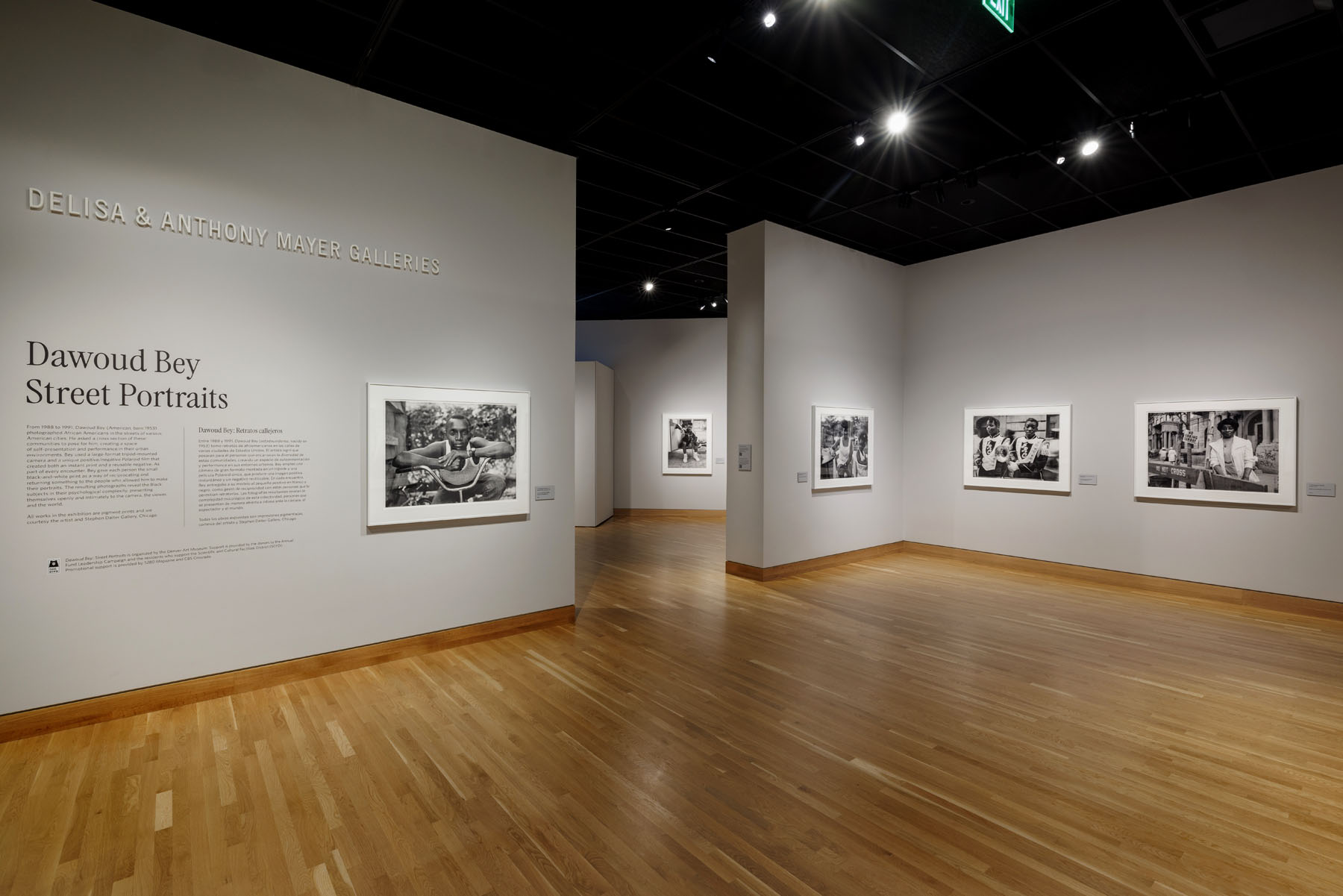
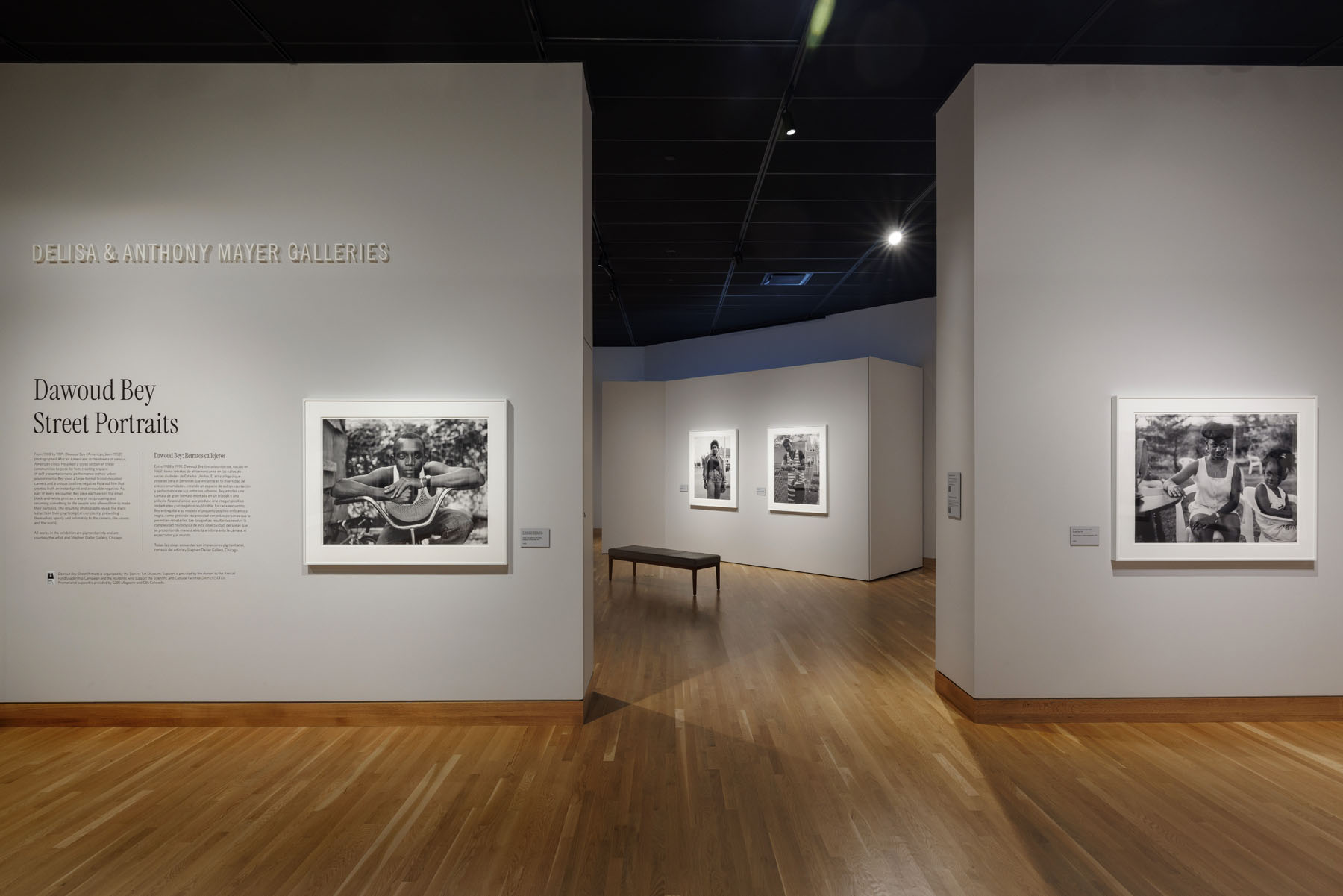
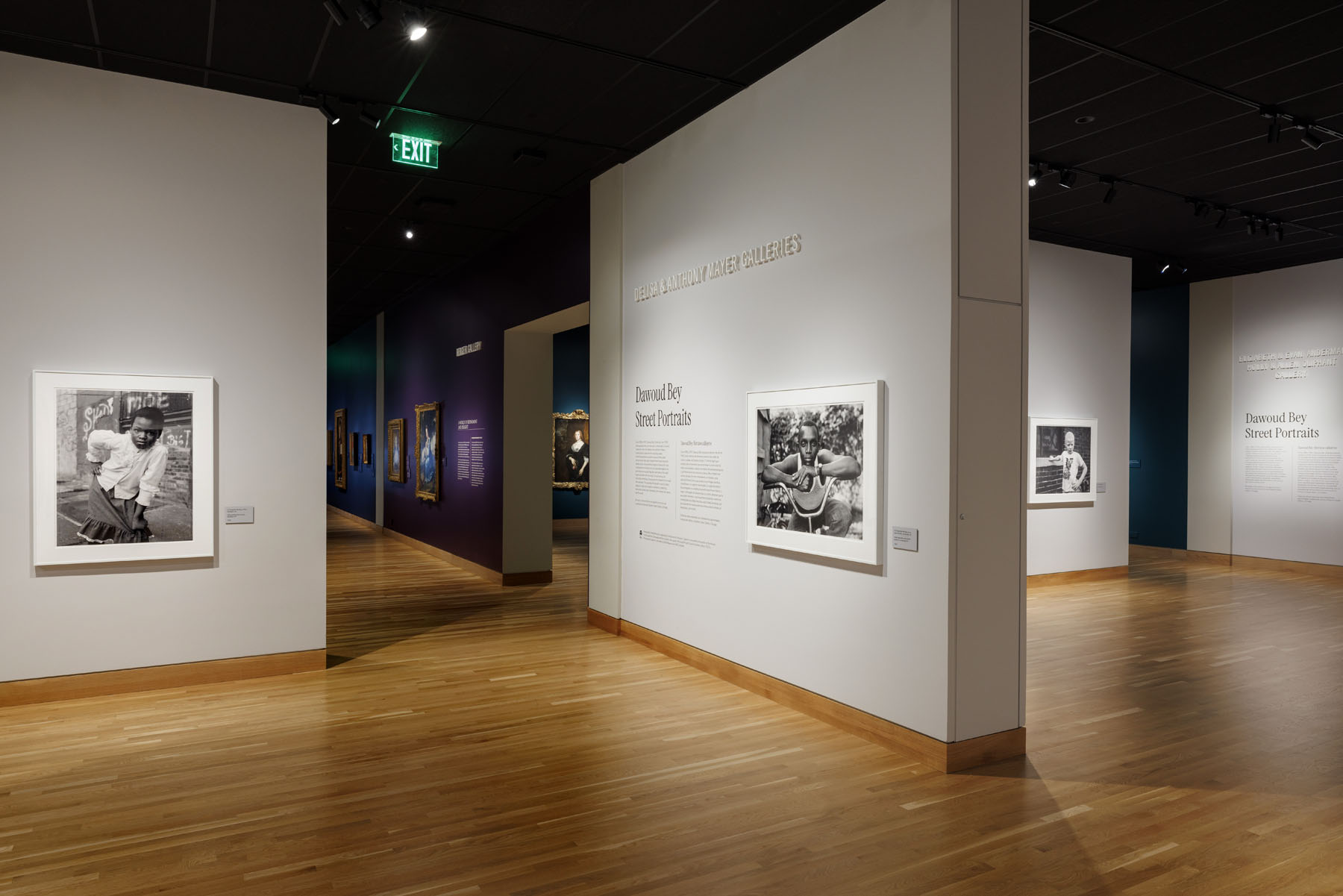
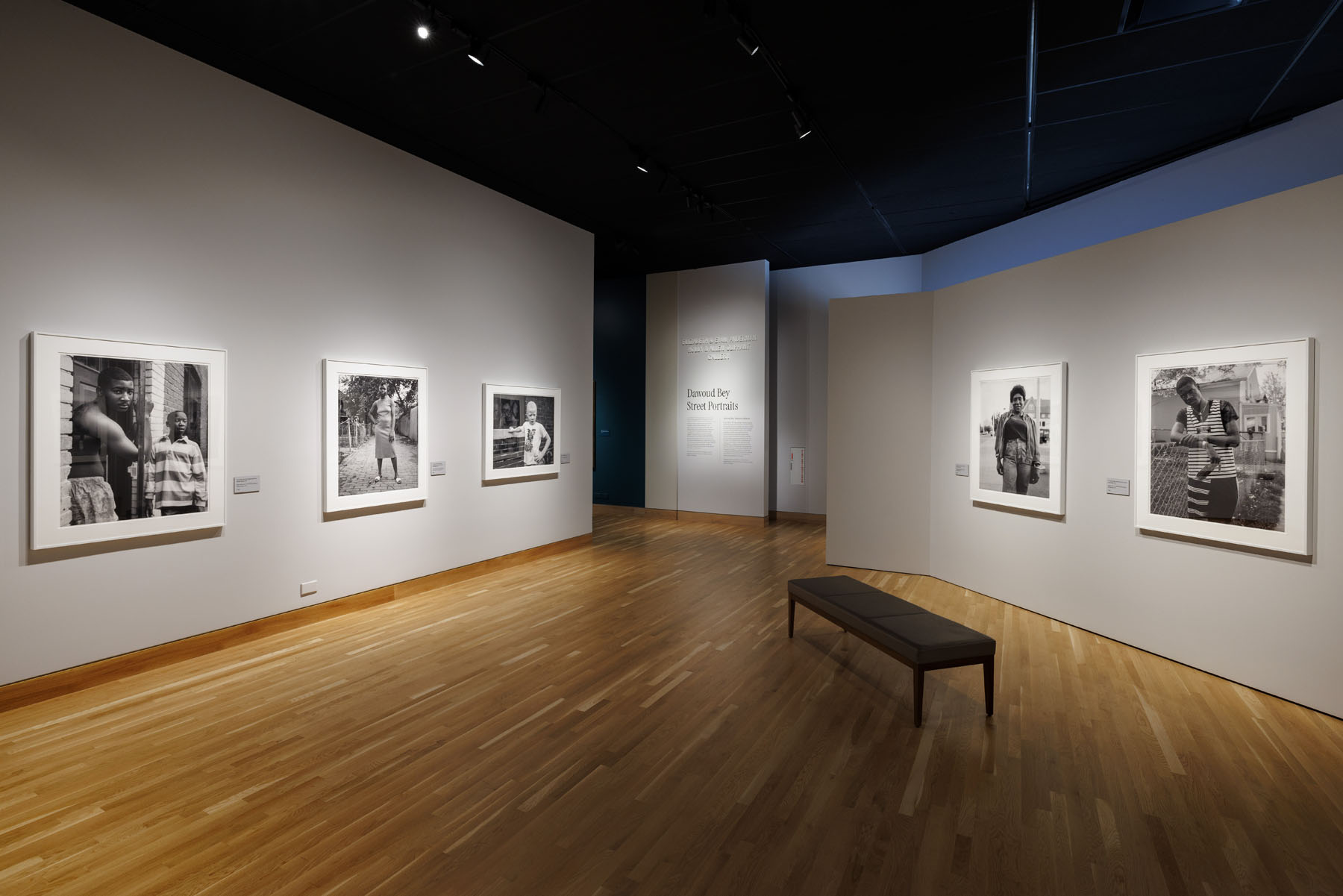
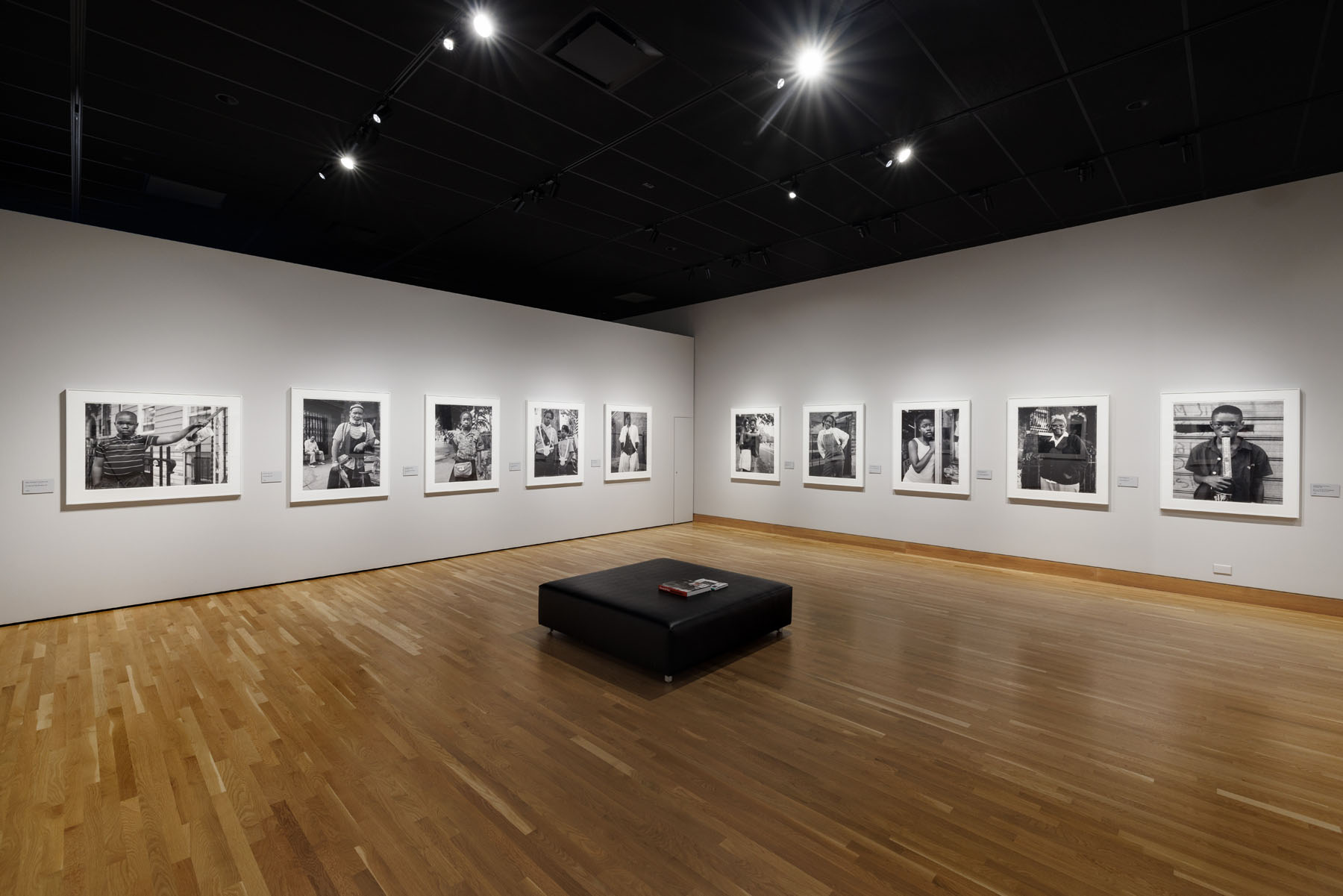
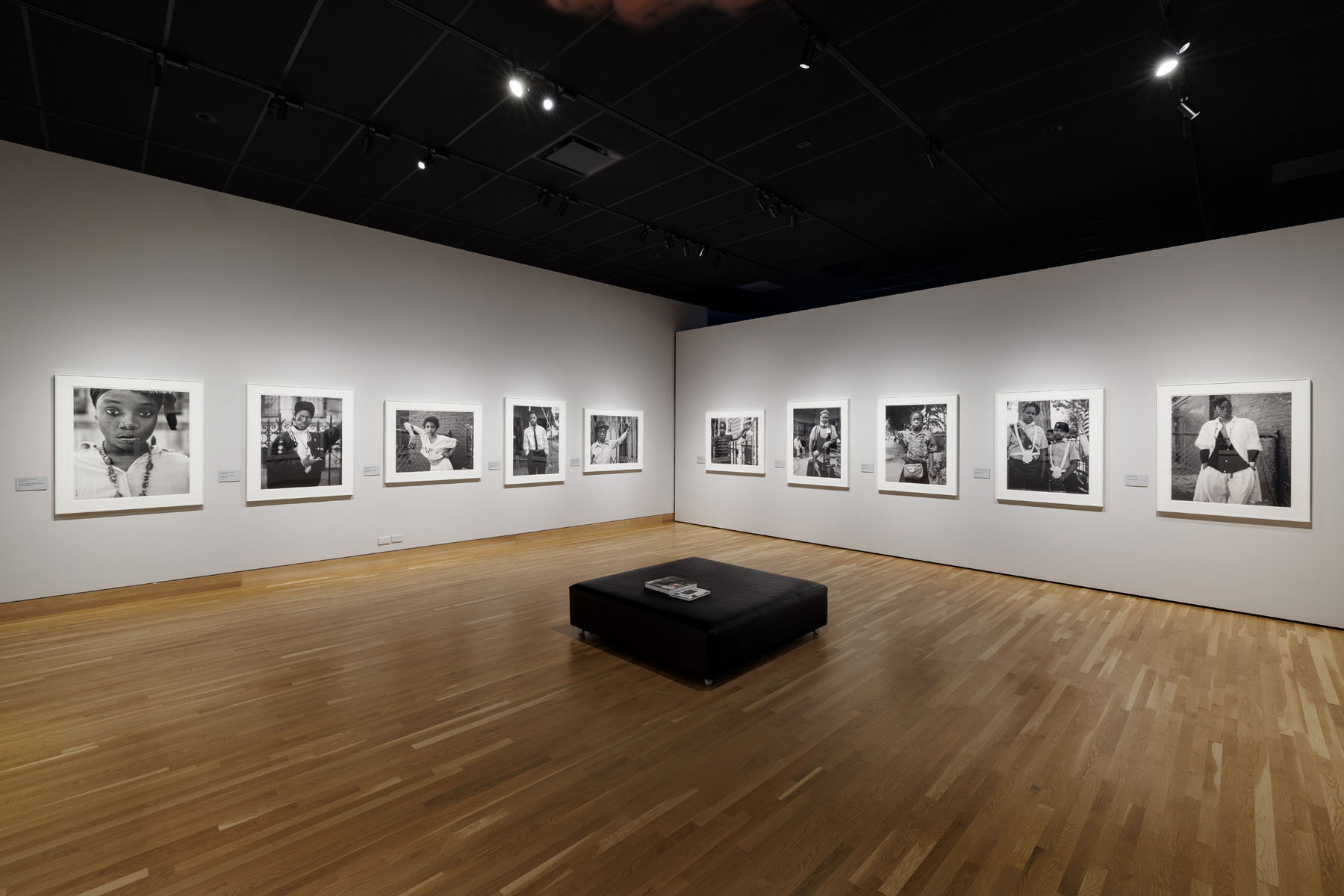
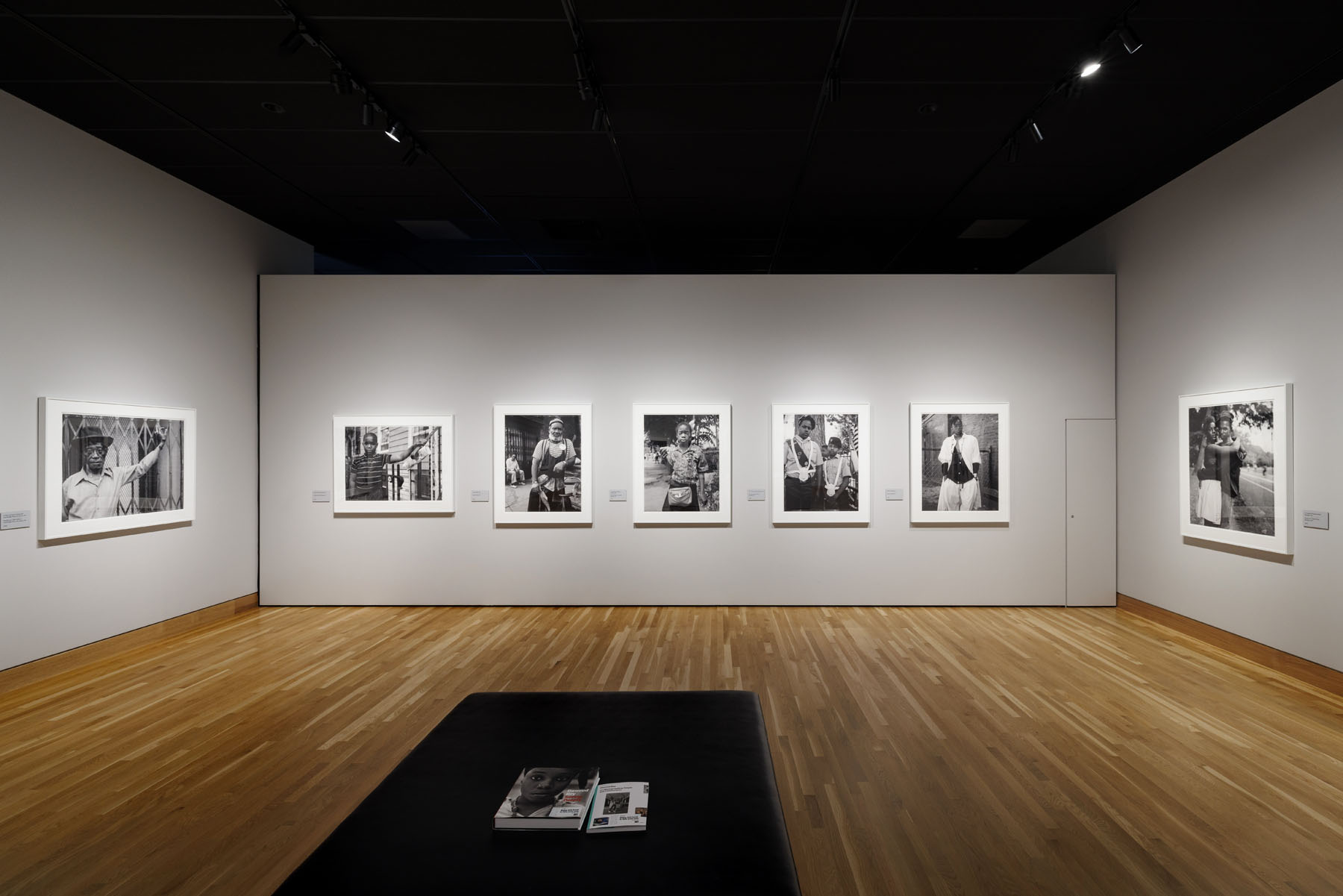
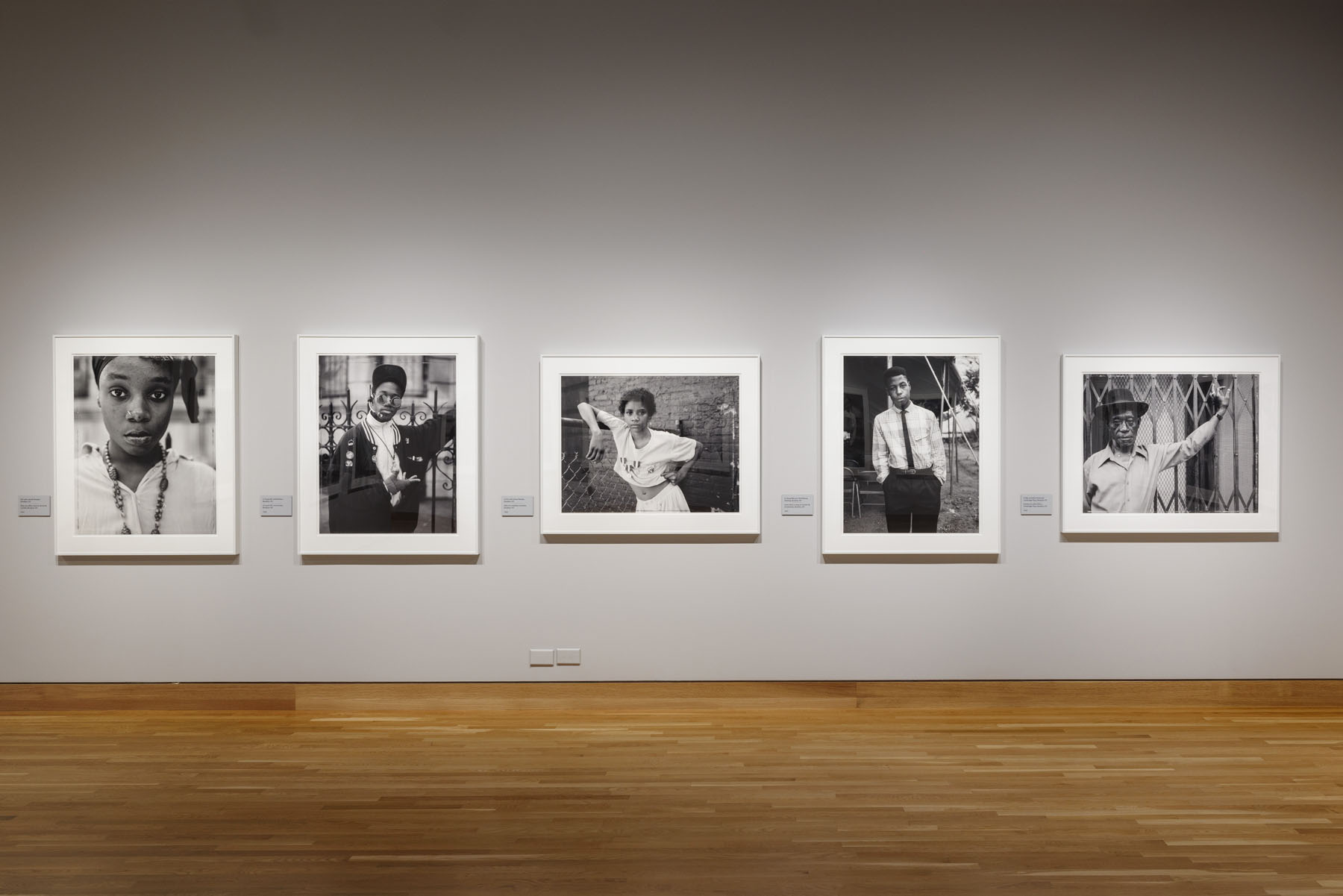
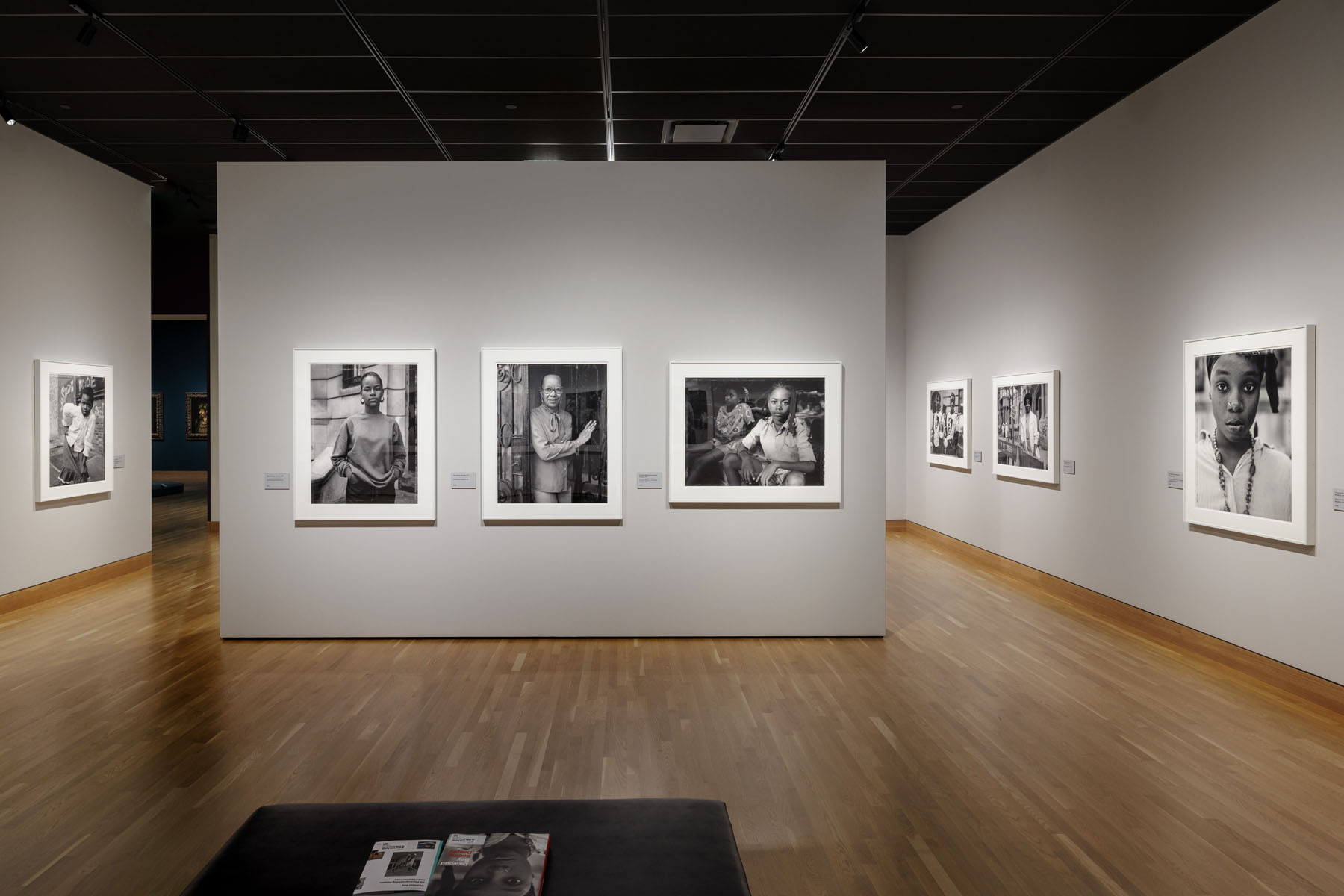
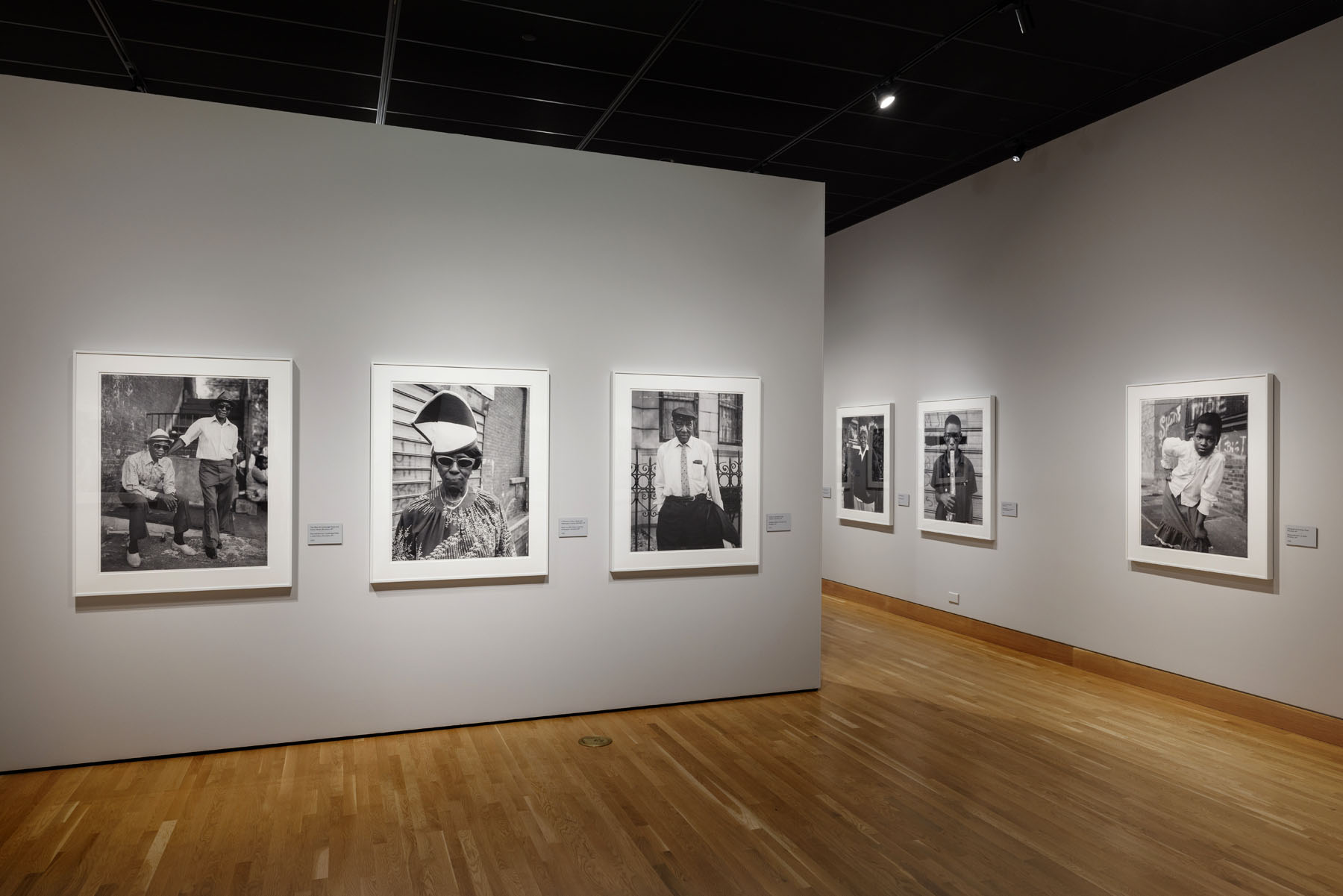
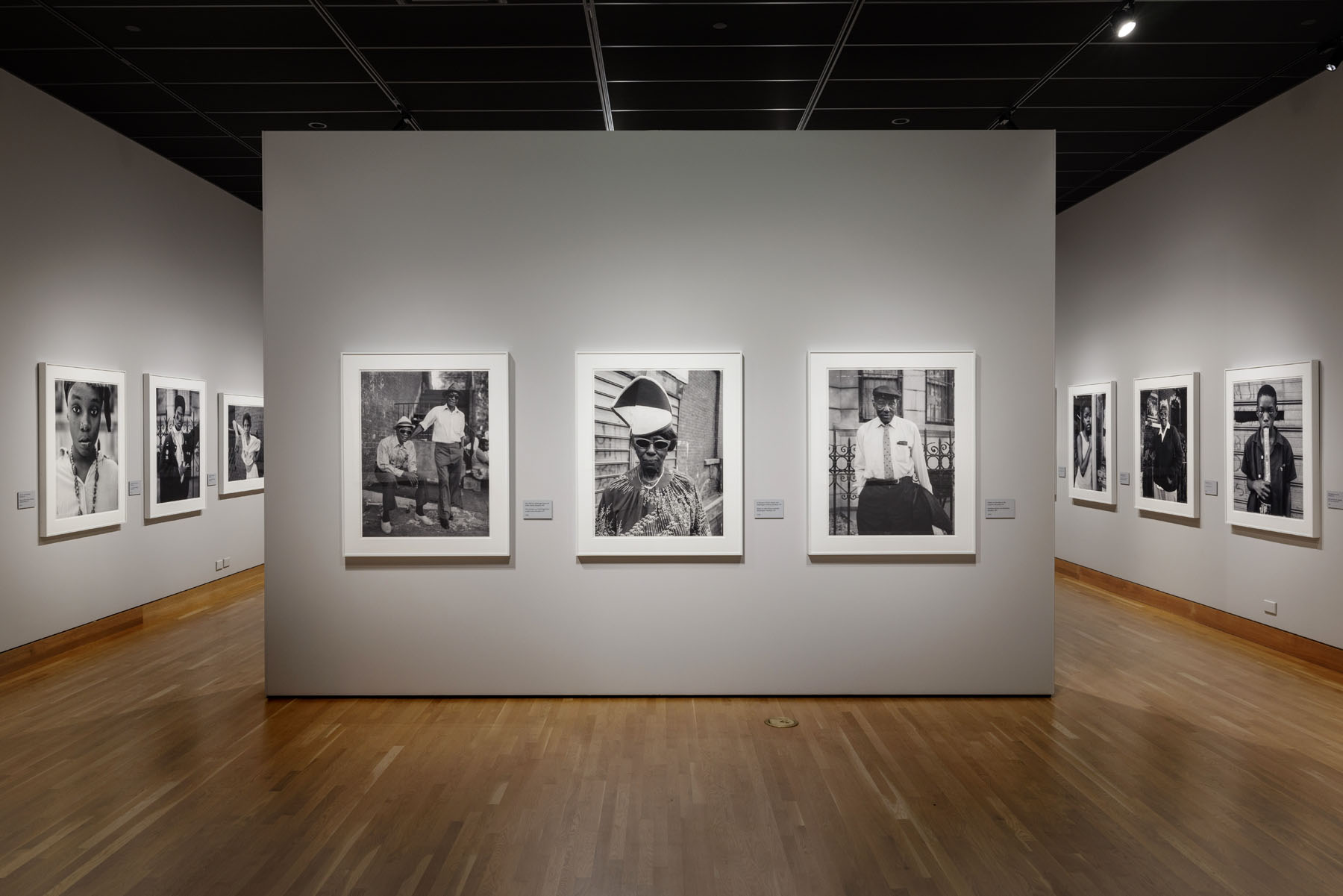
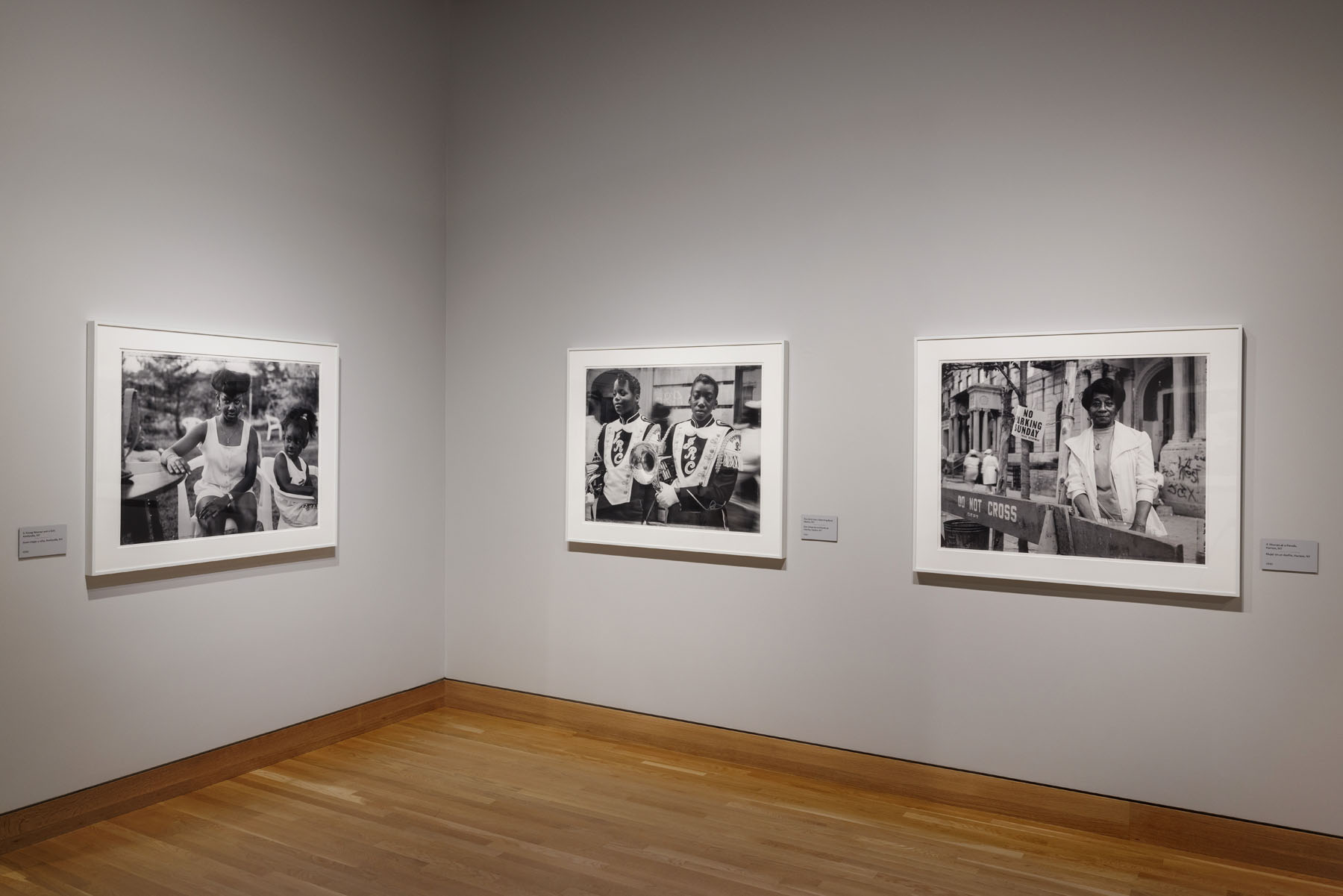
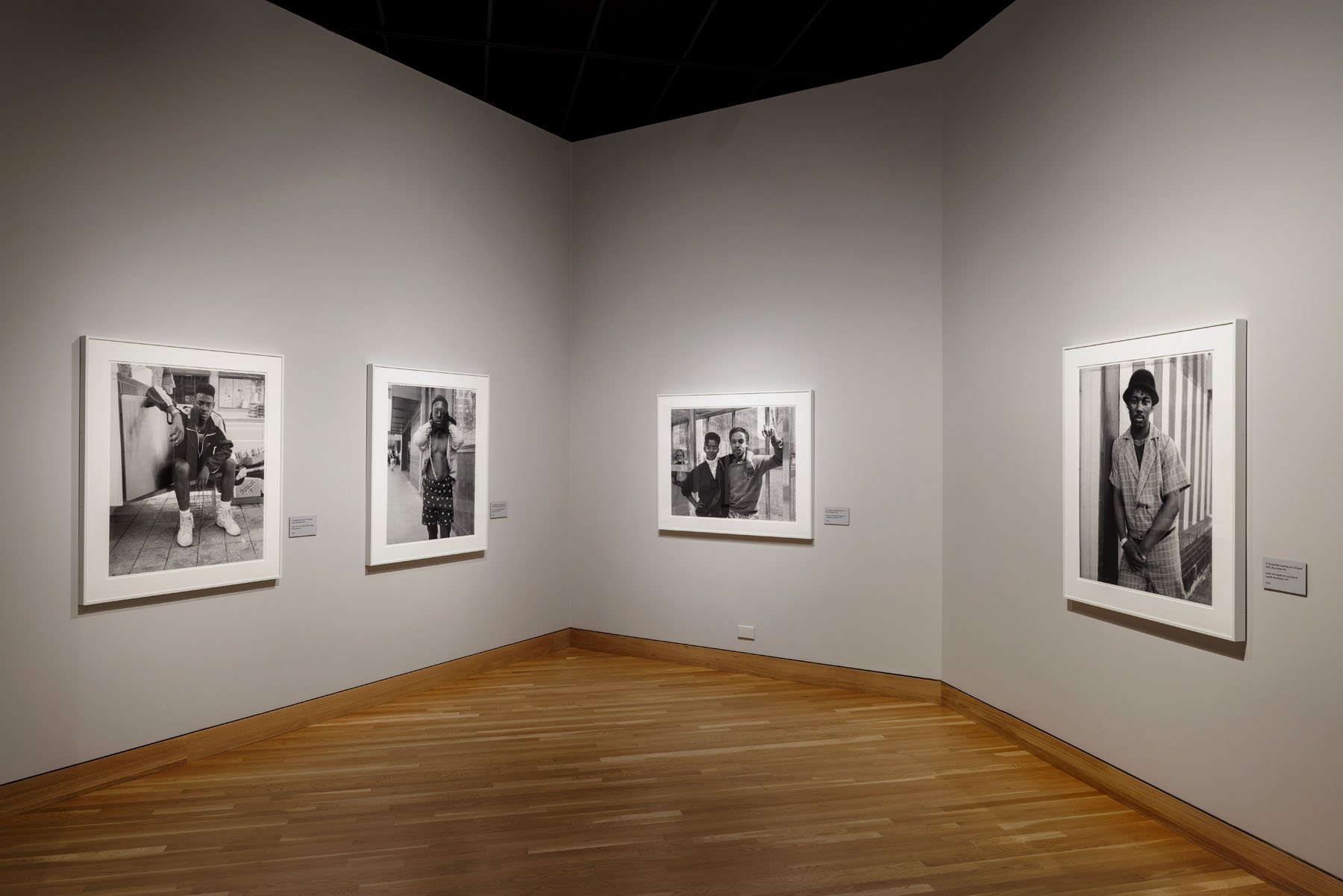
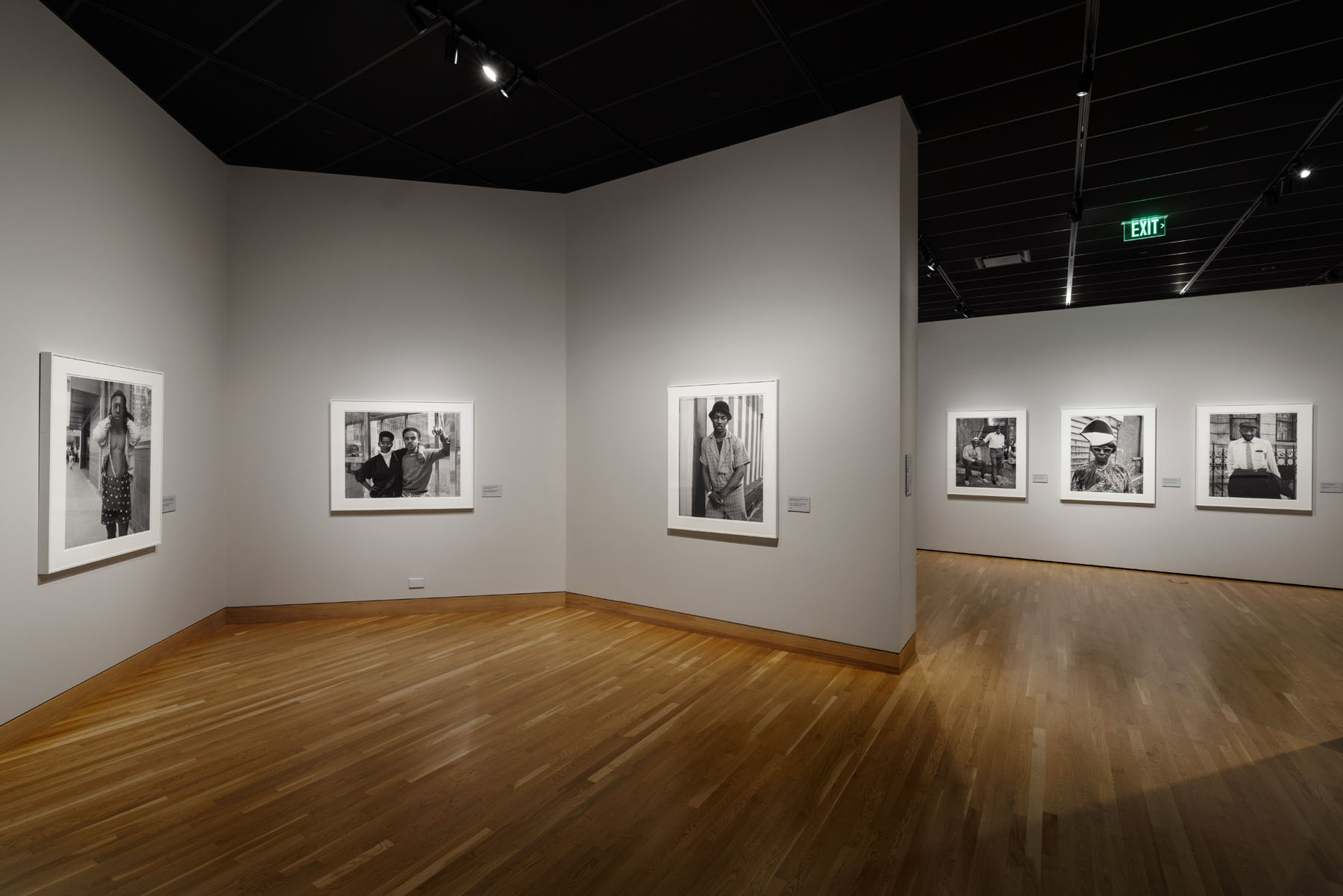
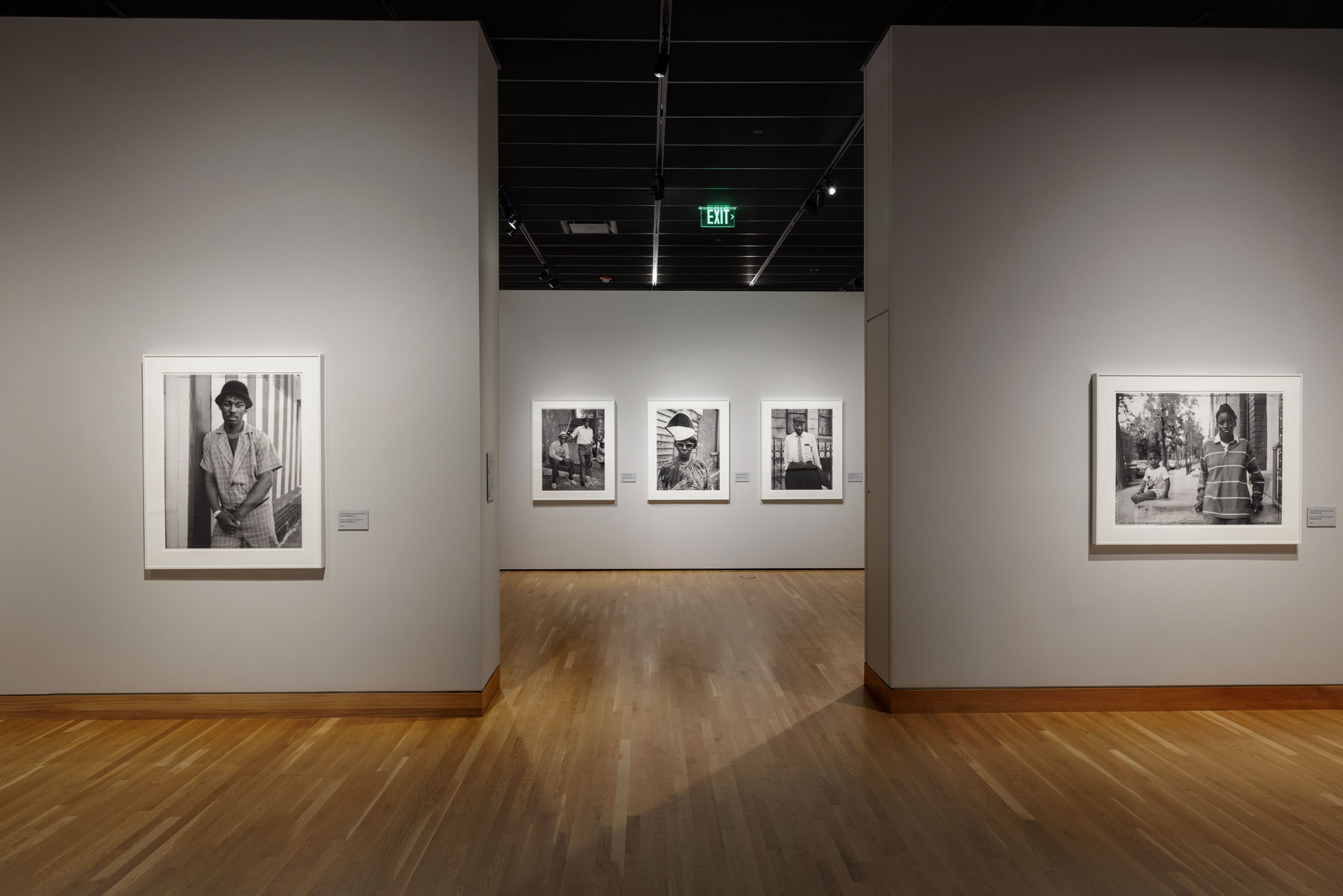
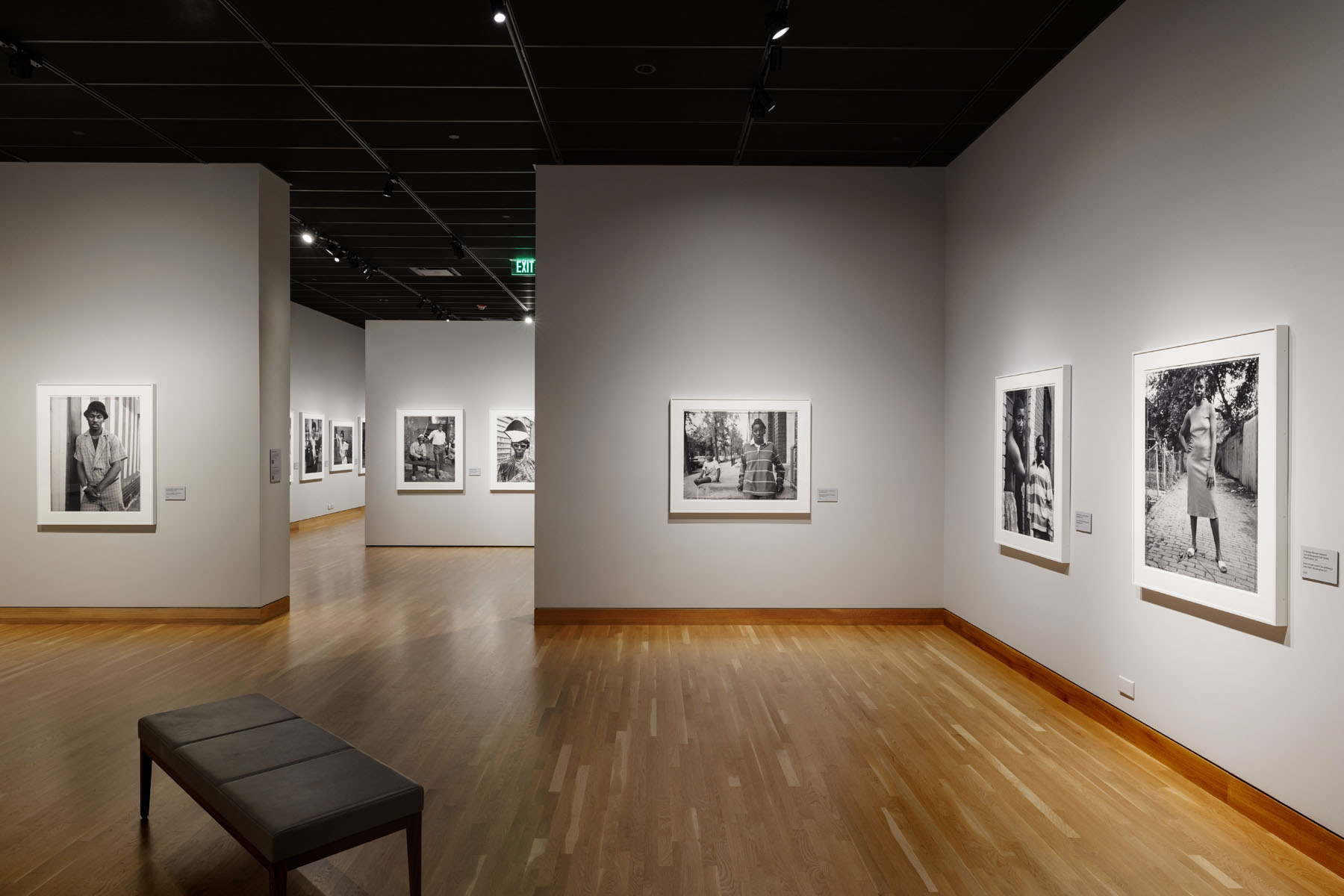
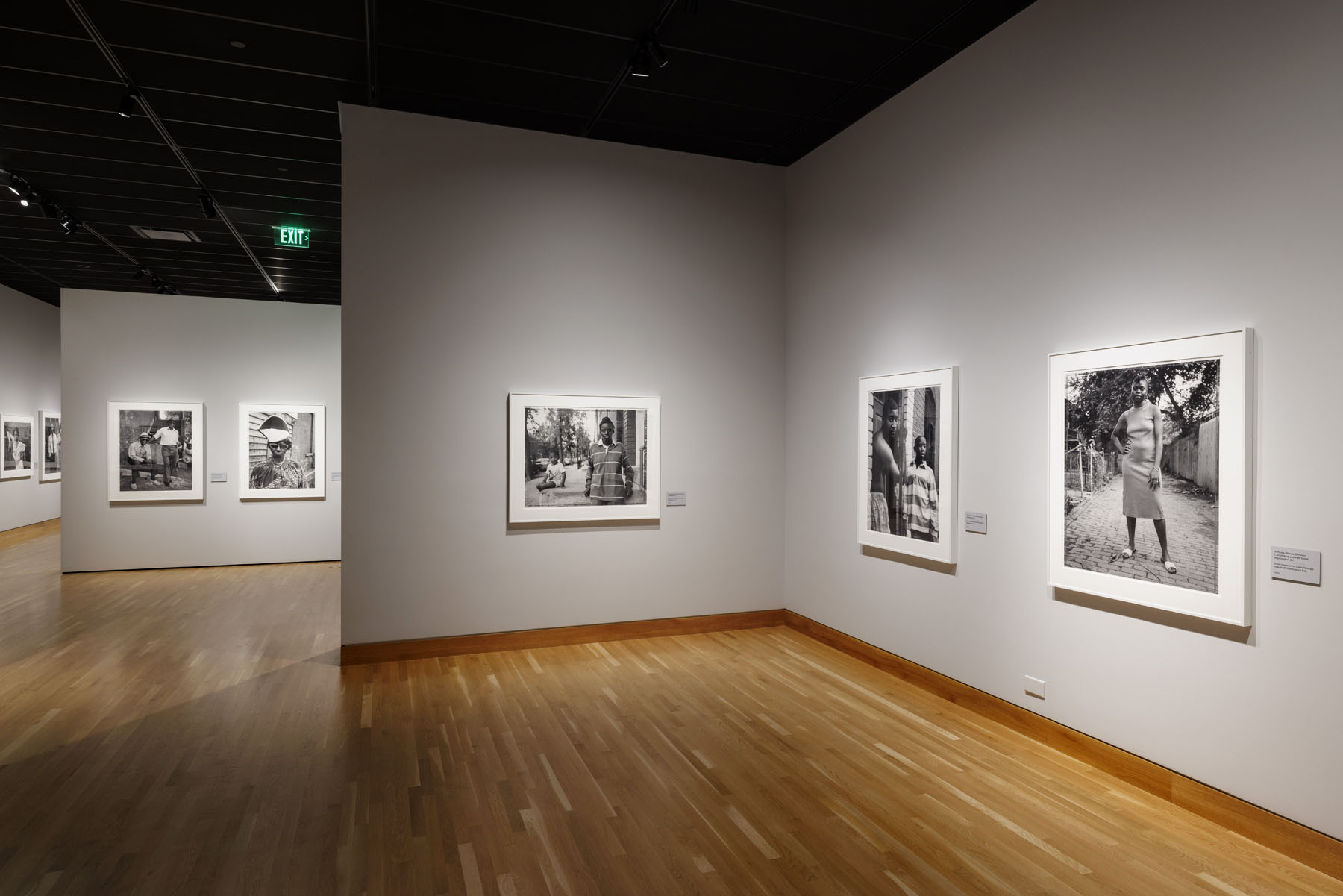
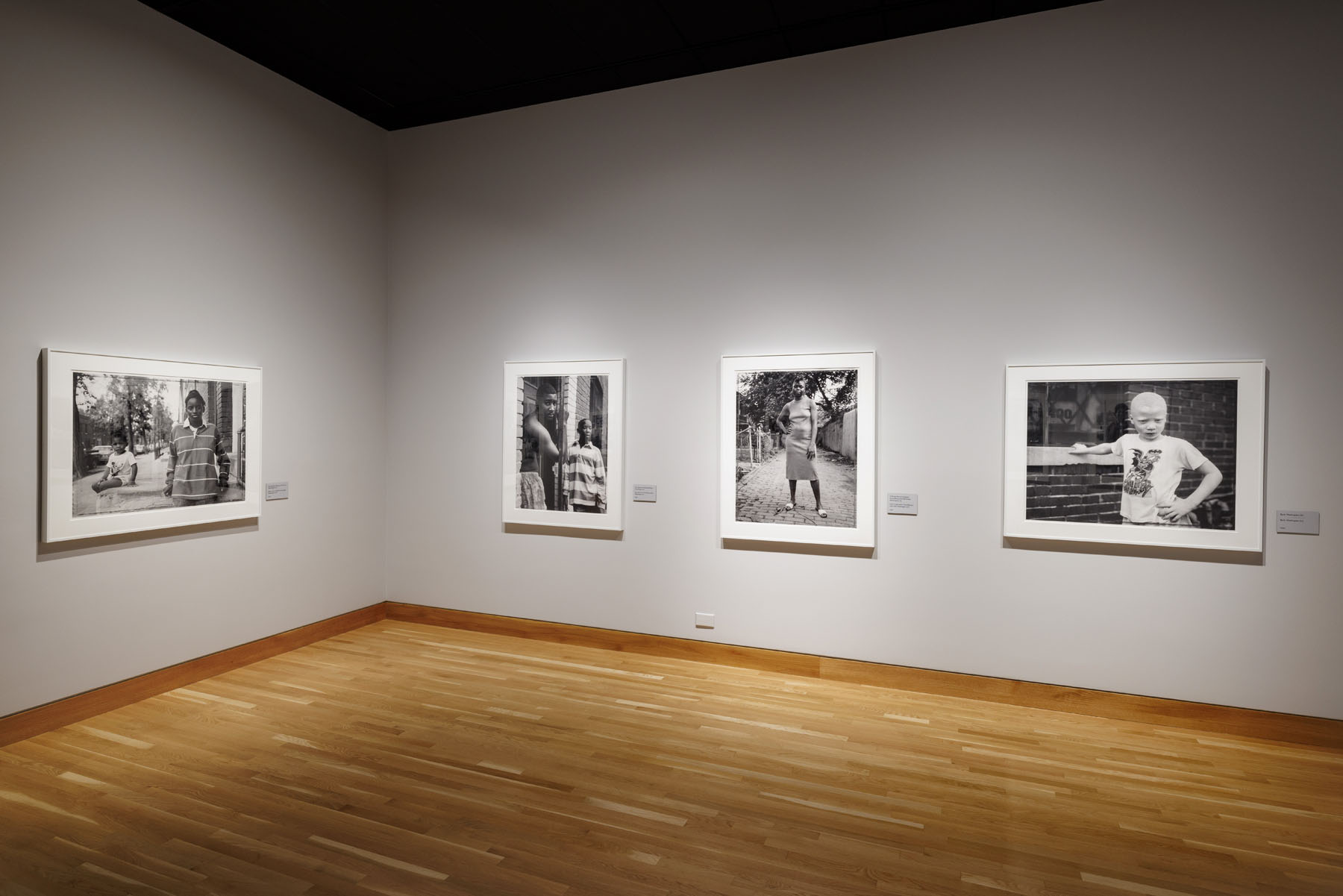
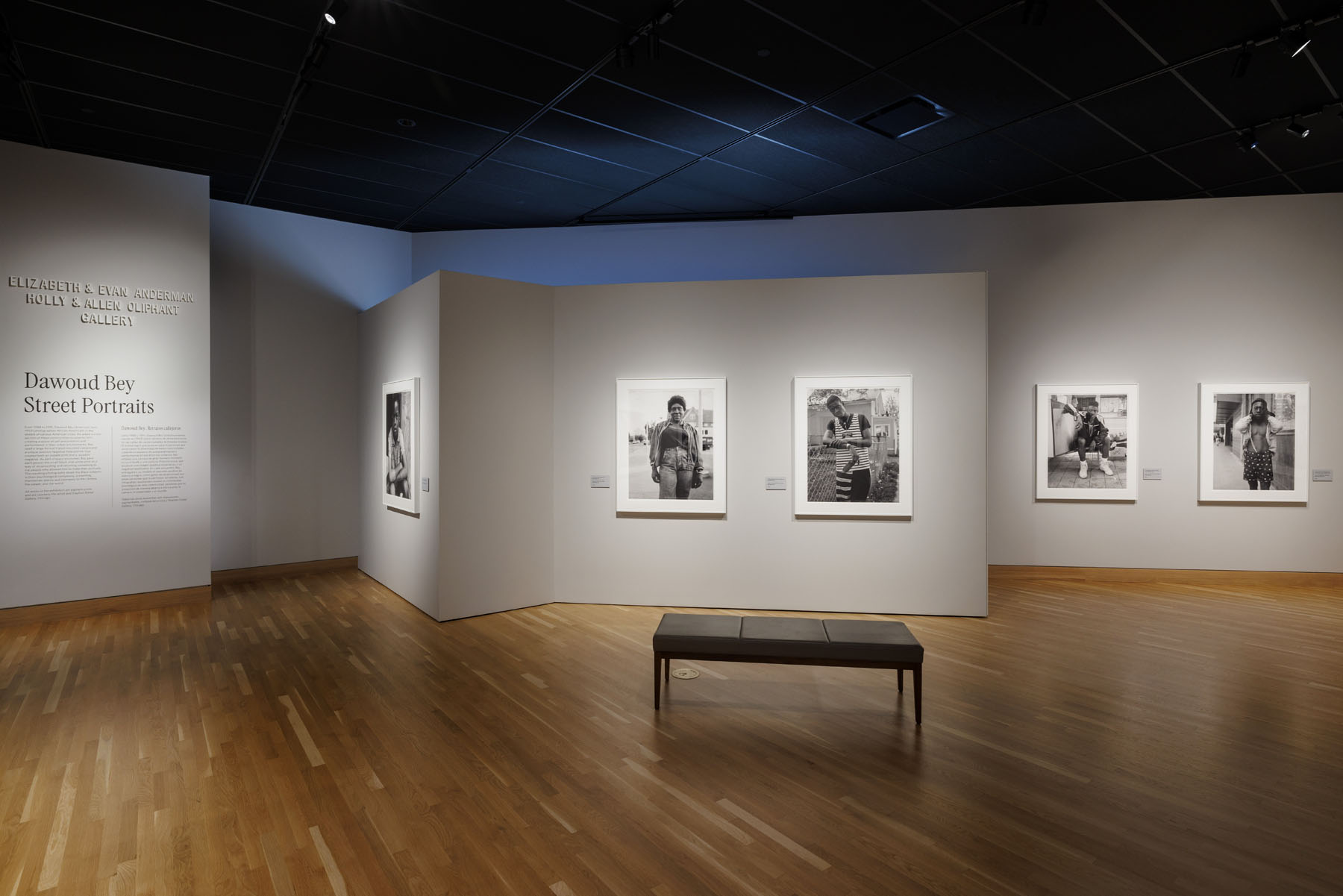
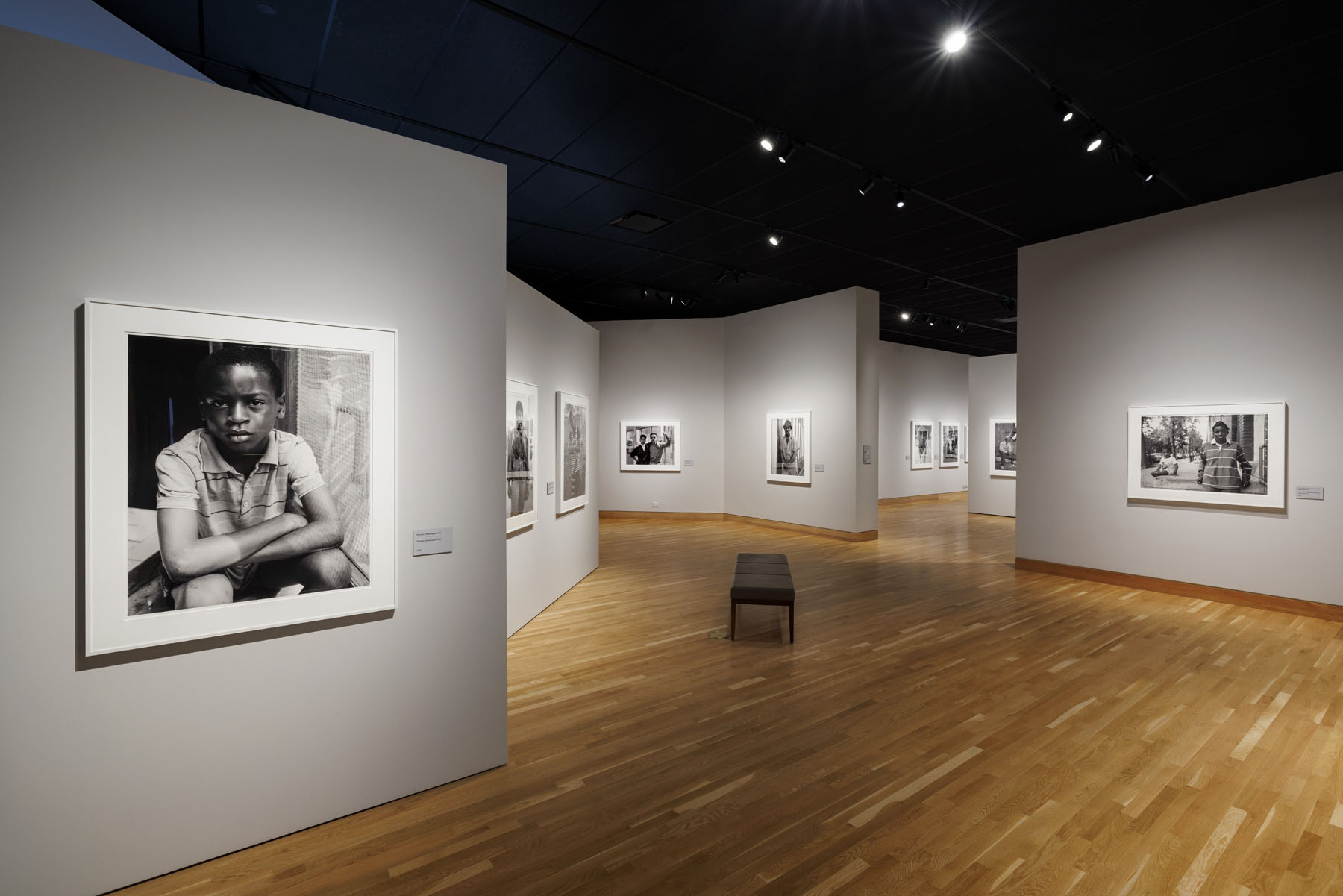
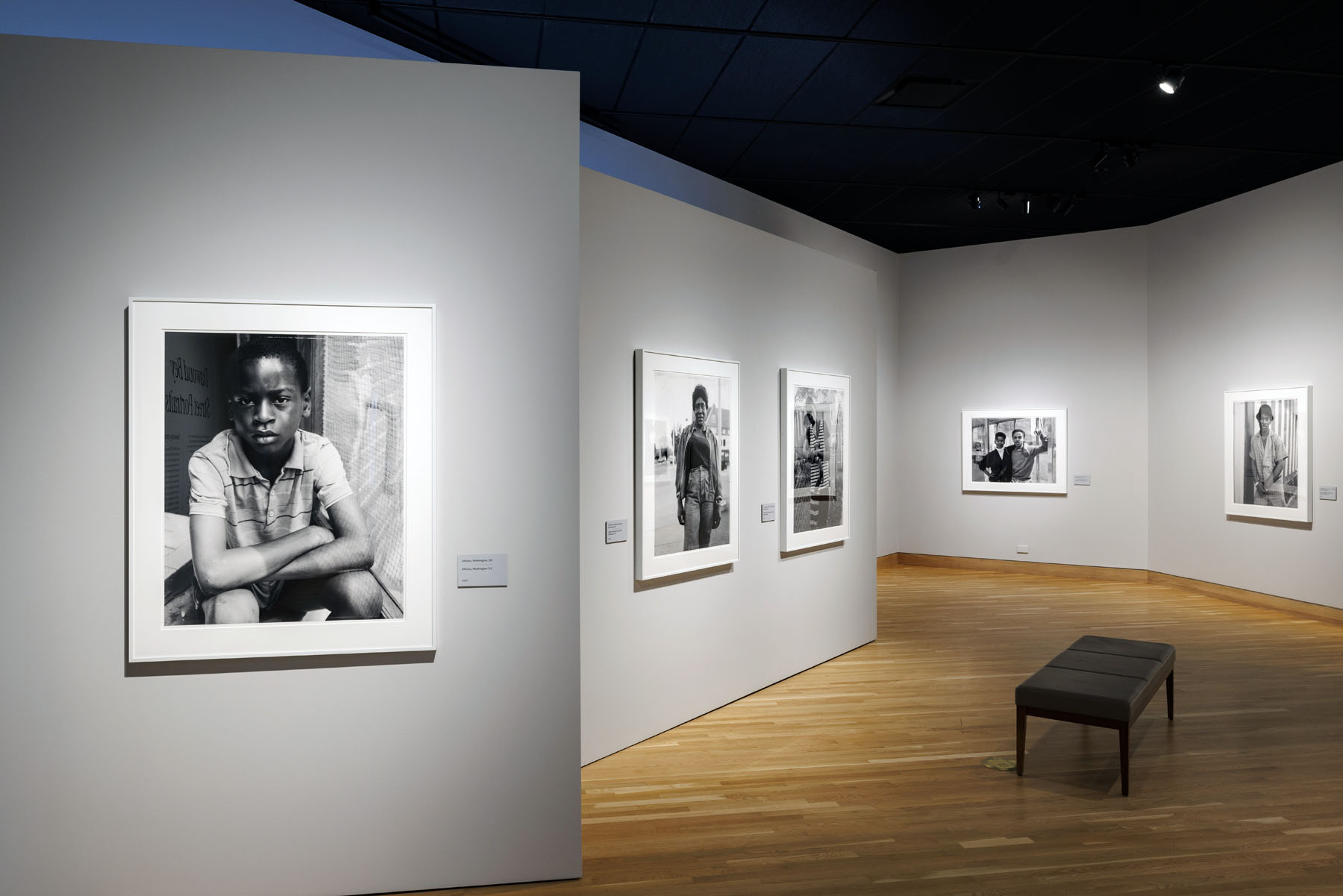


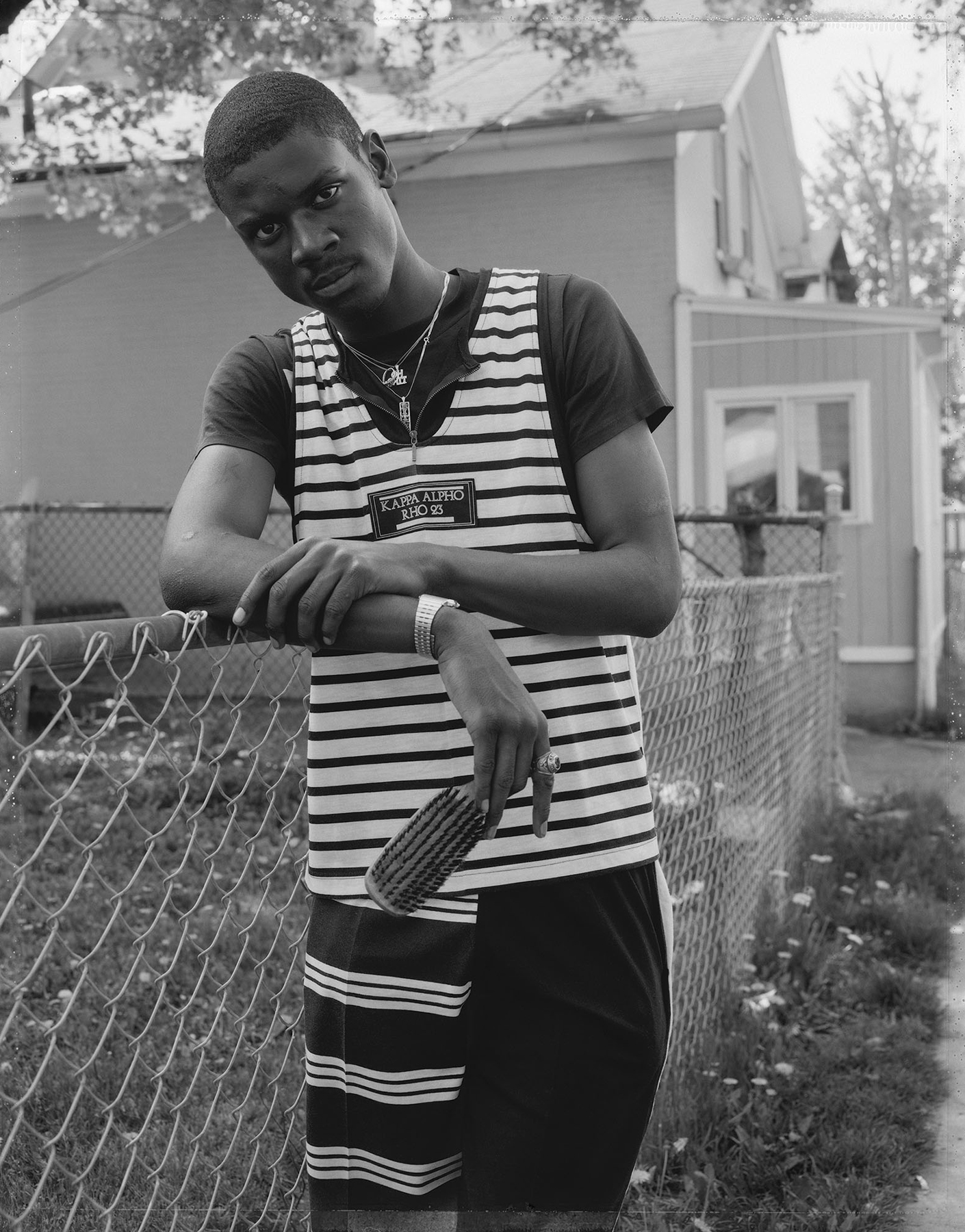


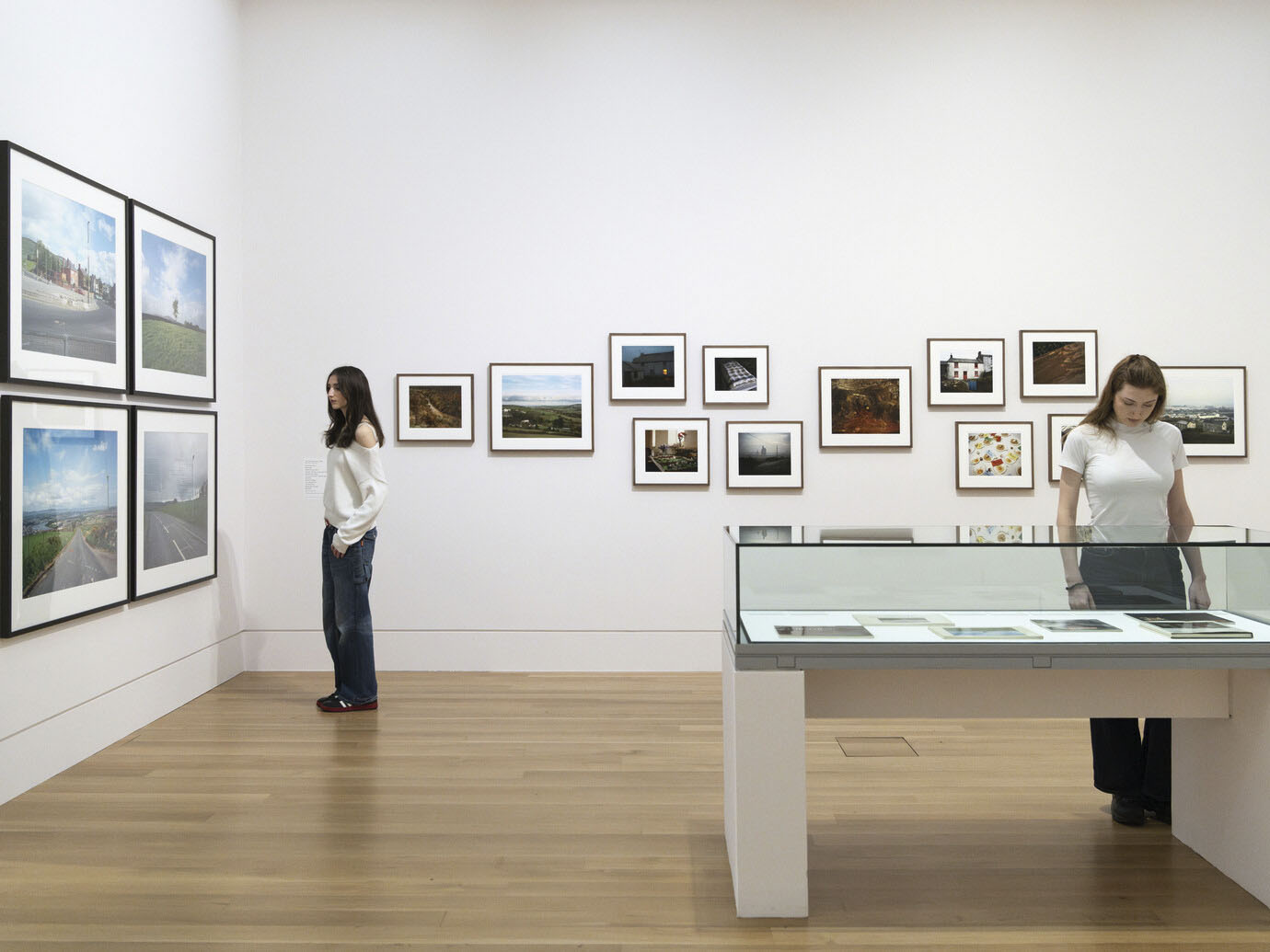


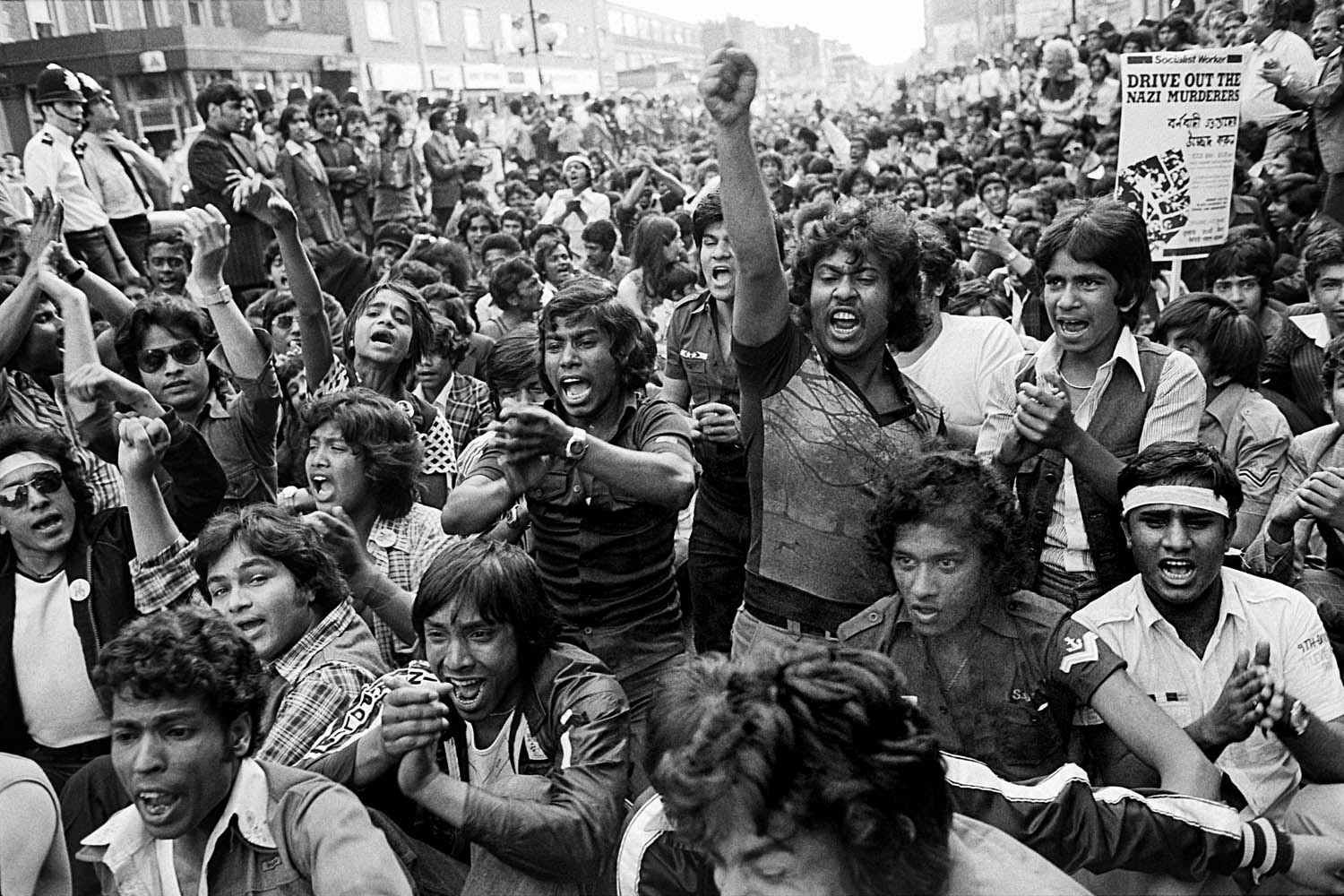

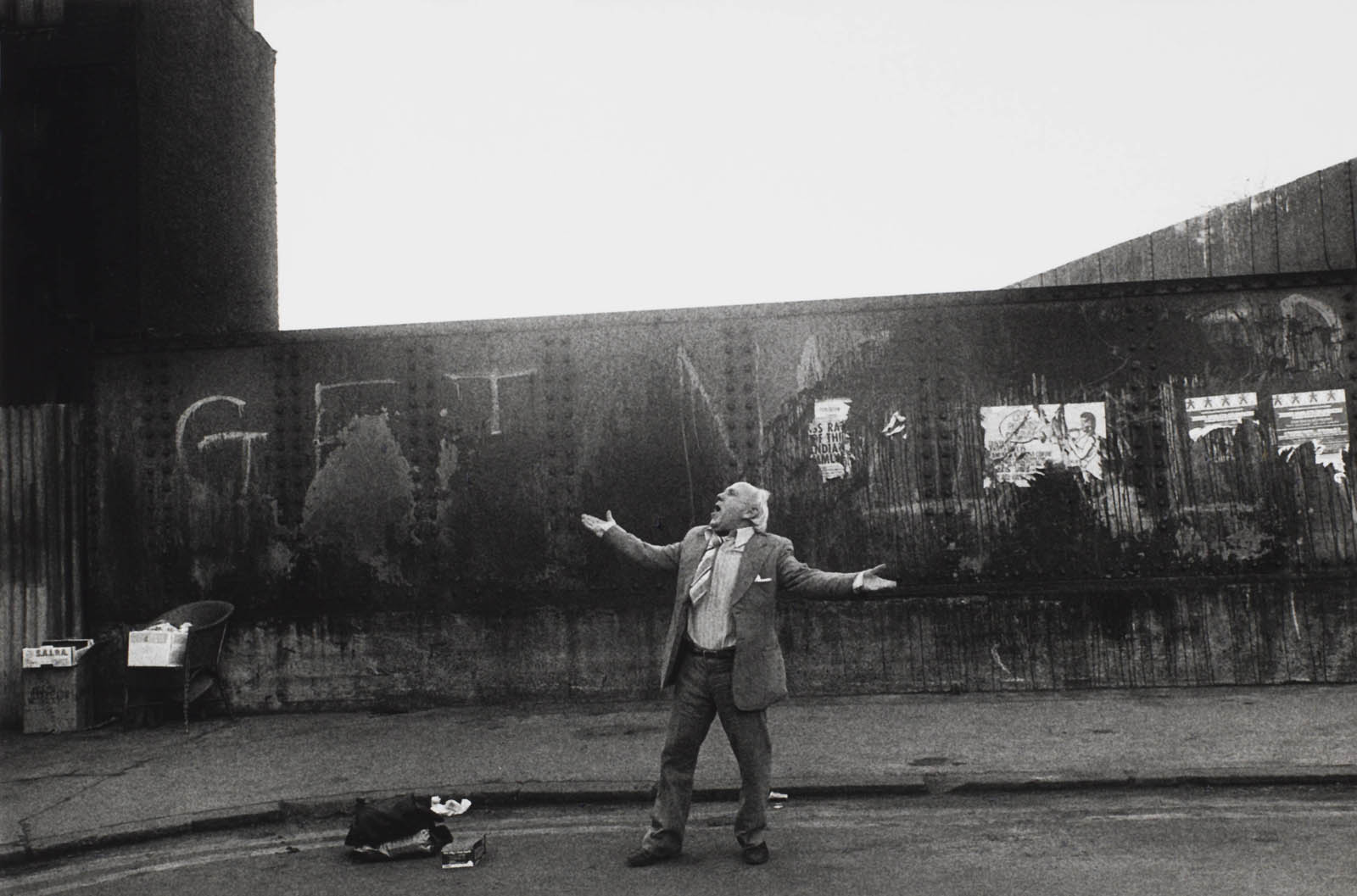


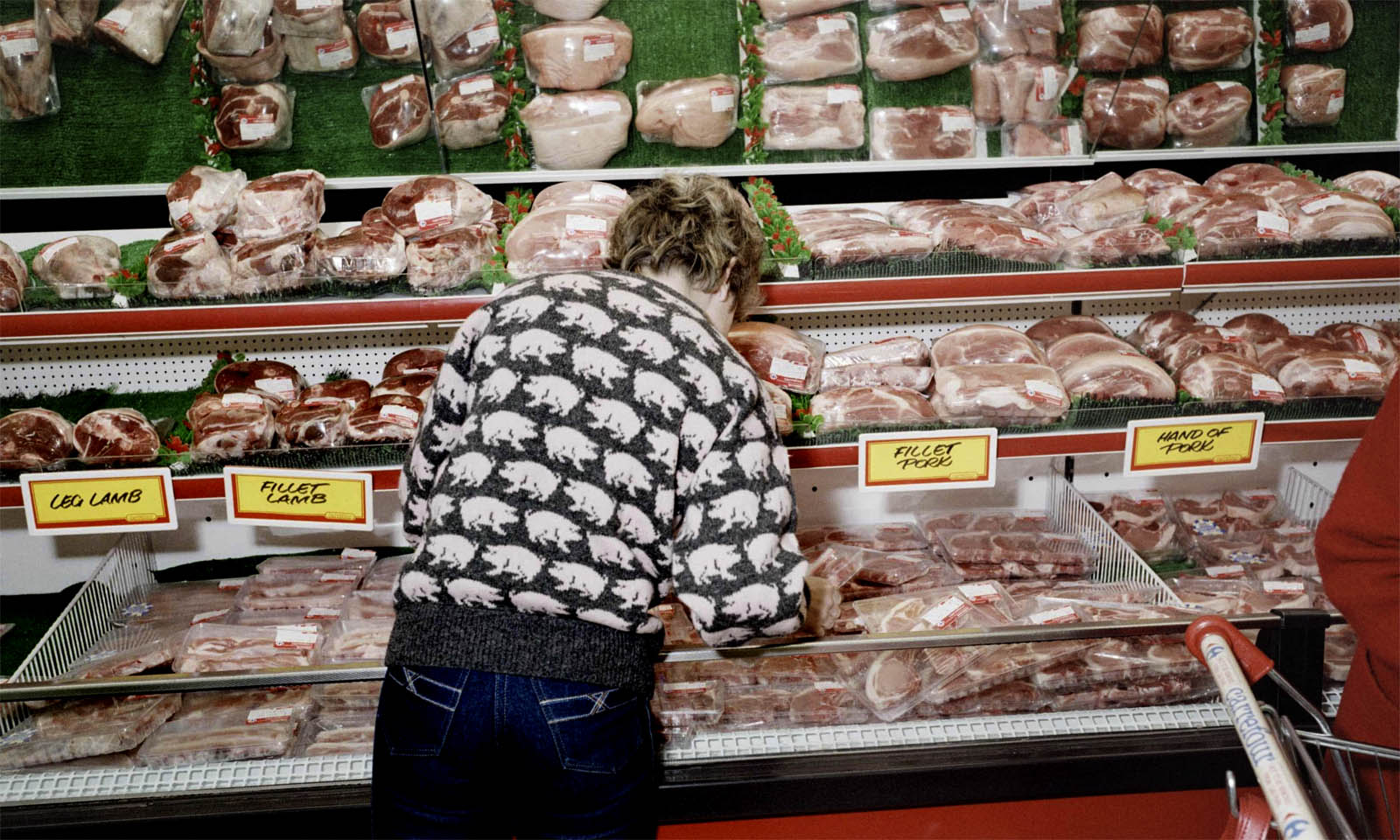
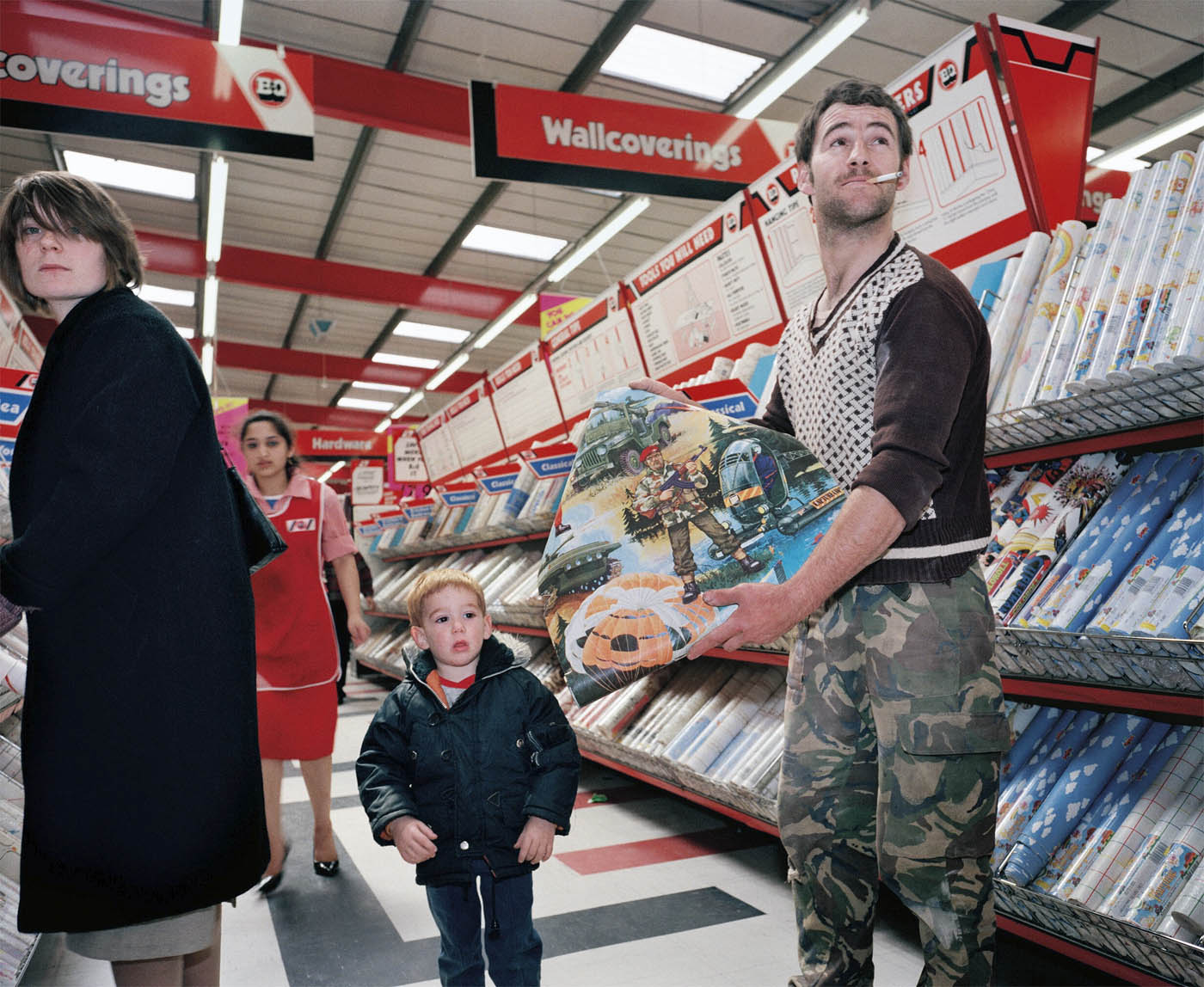
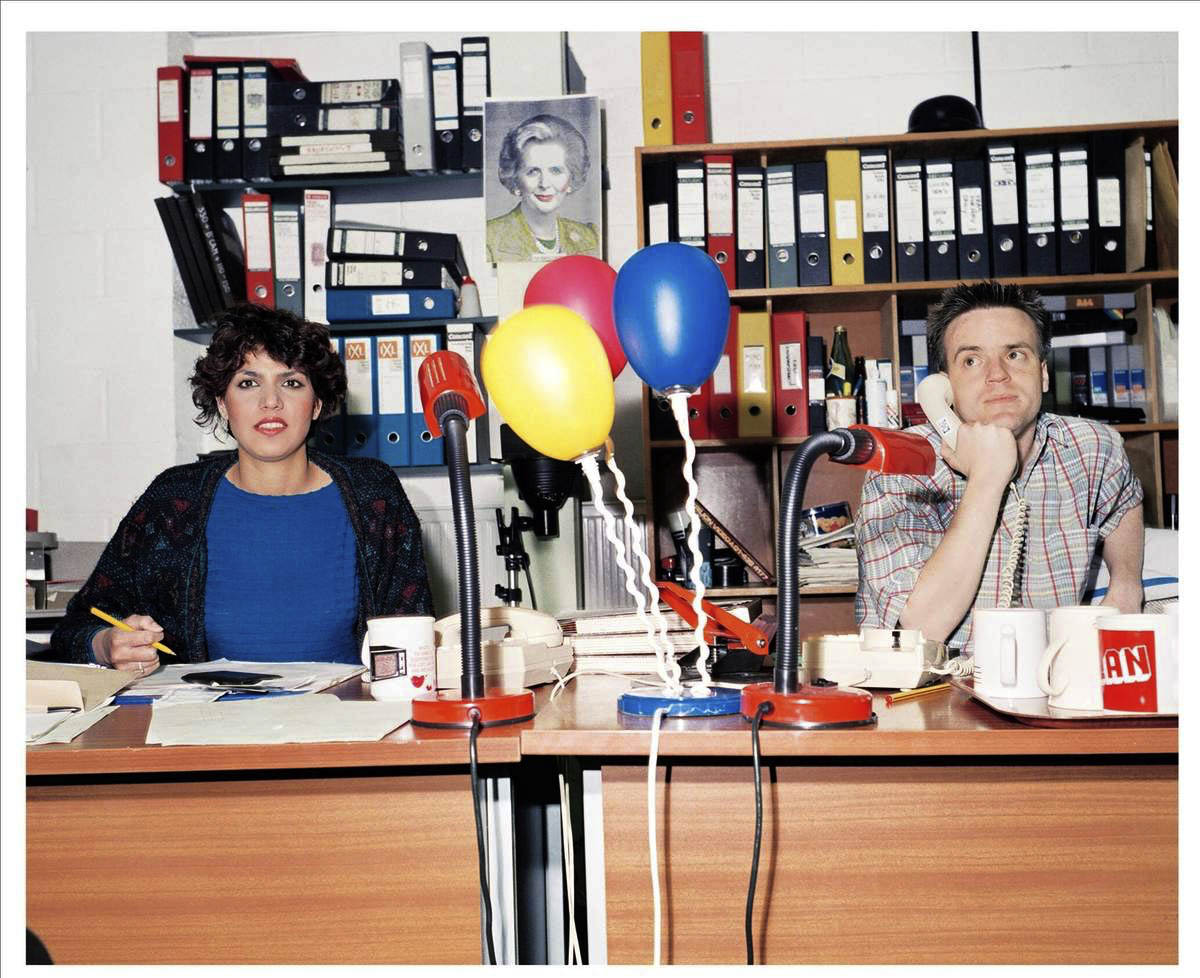

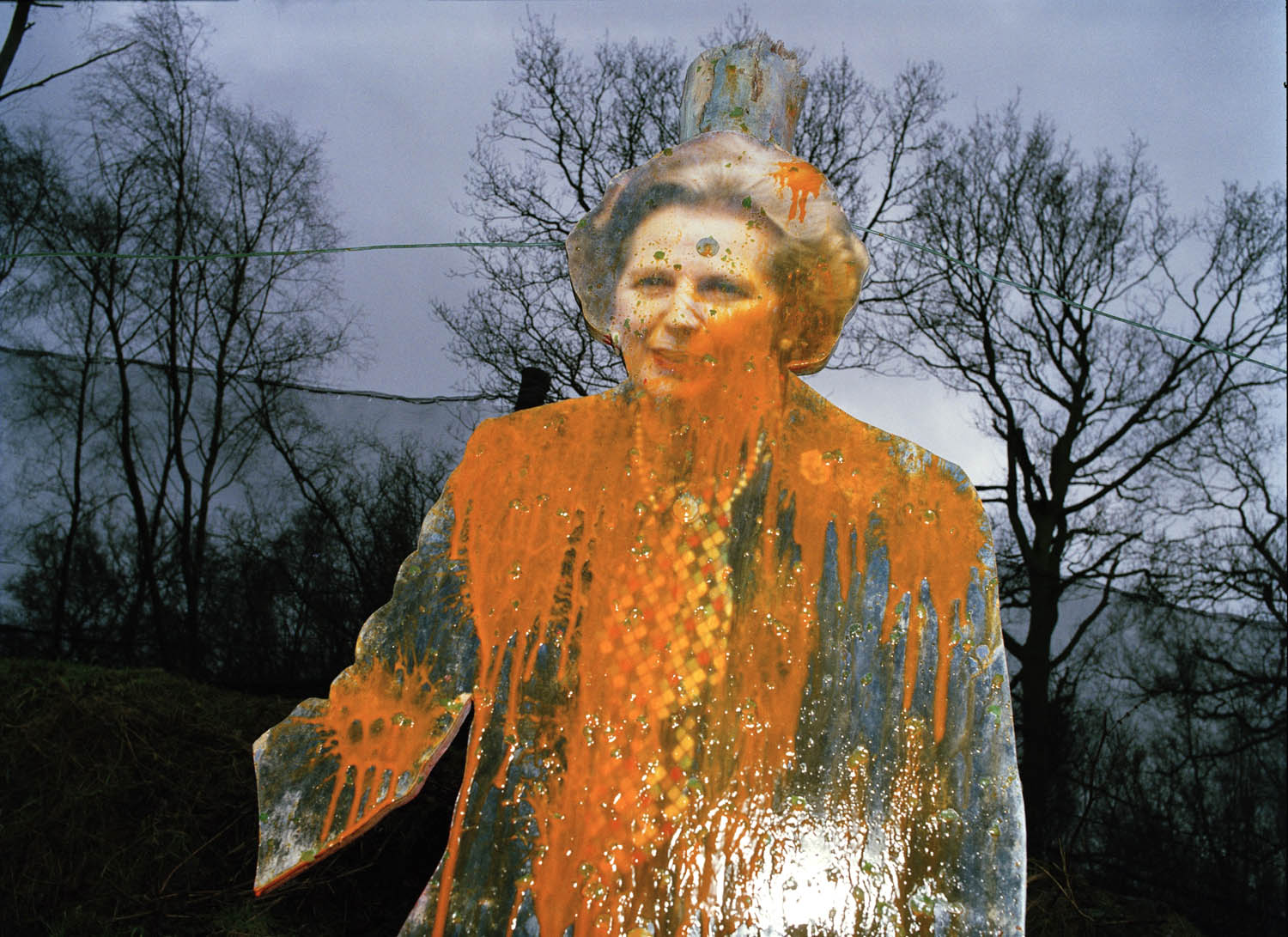


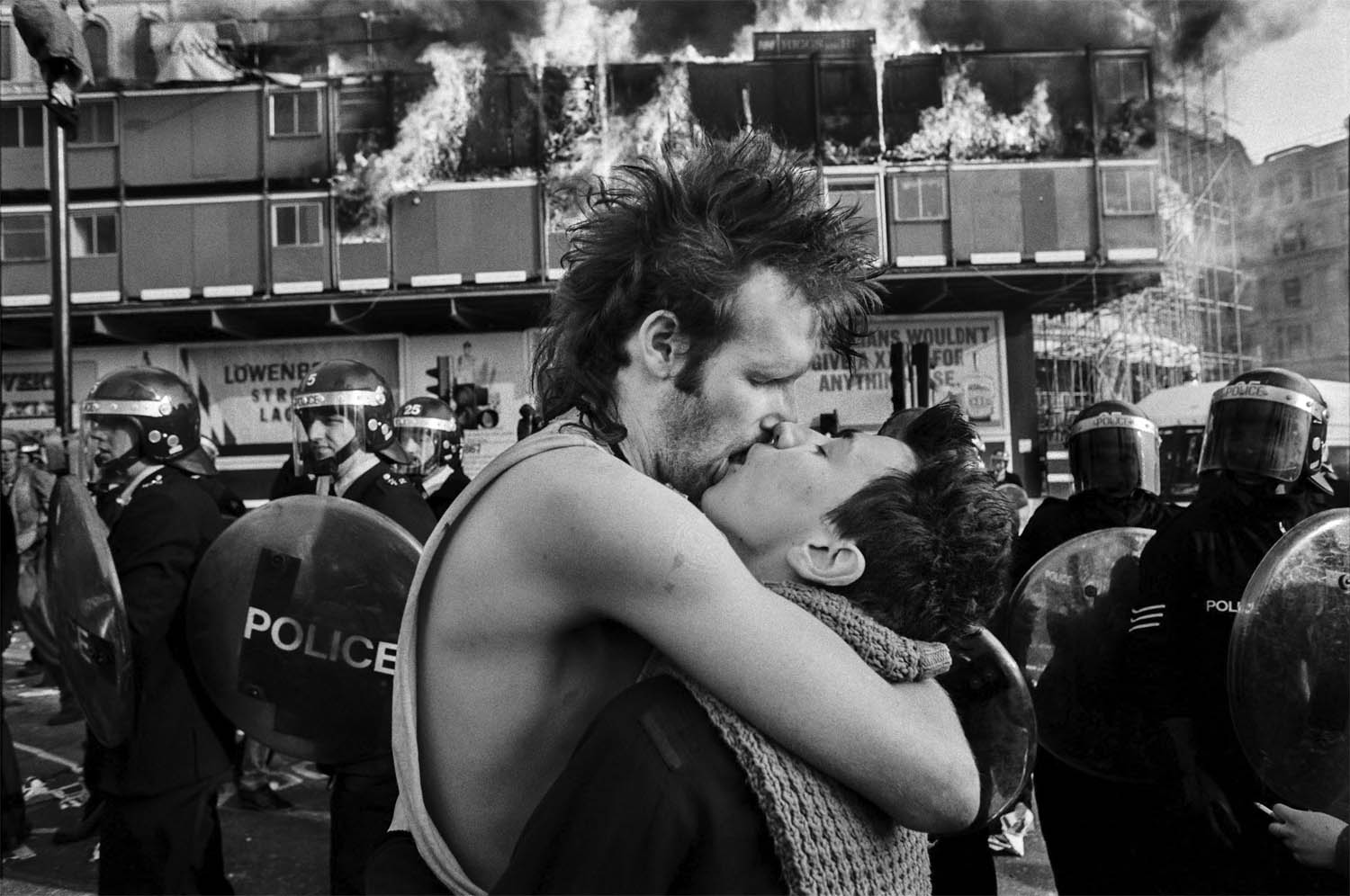
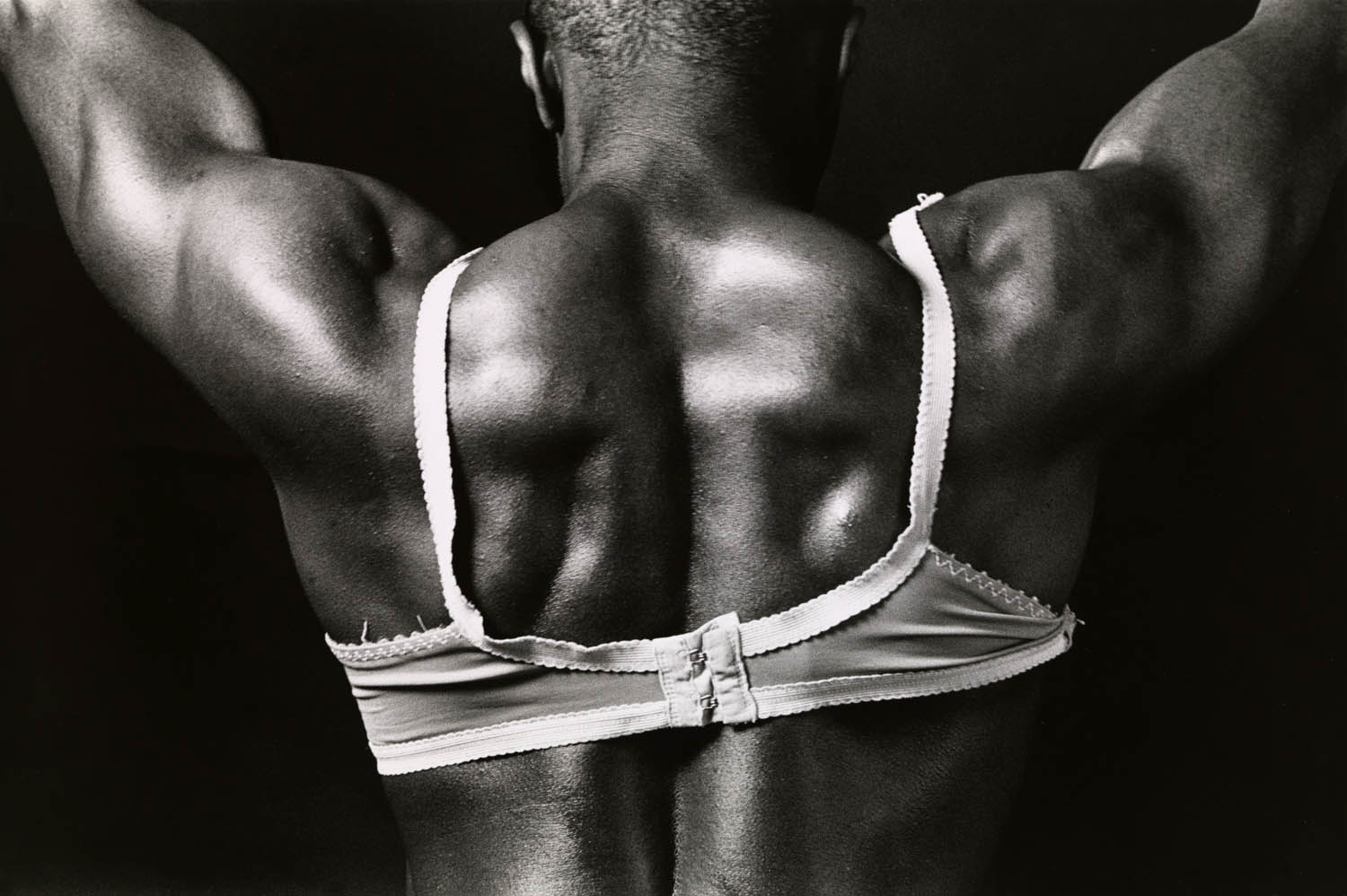


![Weegee (Arthur Fellig) (American born Ukraine, 1899-1968) '[Clothing salesman, Easter Sunday, Harlem, New York]' c. 1940 from the exhibition 'Weegee: Society of the Spectacle' at the International Center of Photography, New York, Jan - May 2025](https://artblart.com/wp-content/uploads/2025/04/weegee-clothing-salesman.jpg "Weegee (Arthur Fellig) (American born Ukraine, 1899-1968) '[Clothing salesman, Easter Sunday, Harlem, New York]' c. 1940 from the exhibition 'Weegee: Society of the Spectacle' at the International Center of Photography, New York, Jan - May 2025")
![Weegee (Arthur Fellig) (American born Ukraine, 1899-1968) [Afternoon crowd at Coney Island, Brooklyn] July 21st, 1940 from the exhibition 'Weegee: Society of the Spectacle' at the International Center of Photography, New York, Jan - May 2025](https://artblart.com/wp-content/uploads/2024/11/7_sm.jpg "Weegee (Arthur Fellig) (American born Ukraine, 1899-1968) [Afternoon crowd at Coney Island, Brooklyn] July 21st, 1940 from the exhibition 'Weegee: Society of the Spectacle' at the International Center of Photography, New York, Jan - May 2025")
![Weegee (Arthur Fellig) (American born Ukraine, 1899-1968)
'[Anthony Esposito, booked on suspicion of killing a policeman, New York]' January 16, 1941 from the exhibition 'Weegee: Society of the Spectacle' at the International Center of Photography, New York, Jan - May 2025](https://artblart.com/wp-content/uploads/2012/08/3-weegee_anthony-esposito-web.jpg "Weegee (Arthur Fellig) (American born Ukraine, 1899-1968) '[Anthony Esposito, booked on suspicion of killing a policeman, New York]' January 16, 1941 from the exhibition 'Weegee: Society of the Spectacle' at the International Center of Photography, New York, Jan - May 2025")
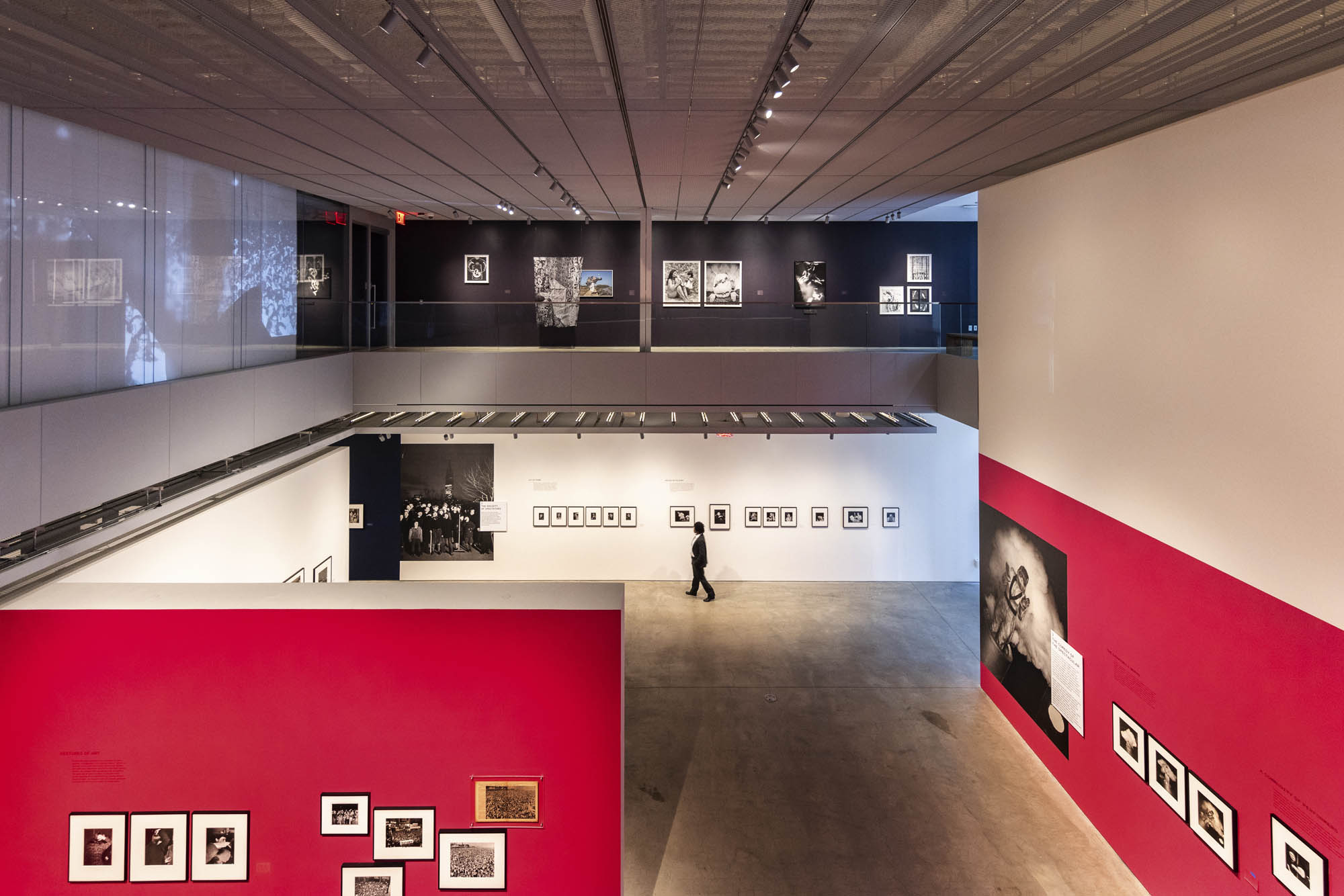

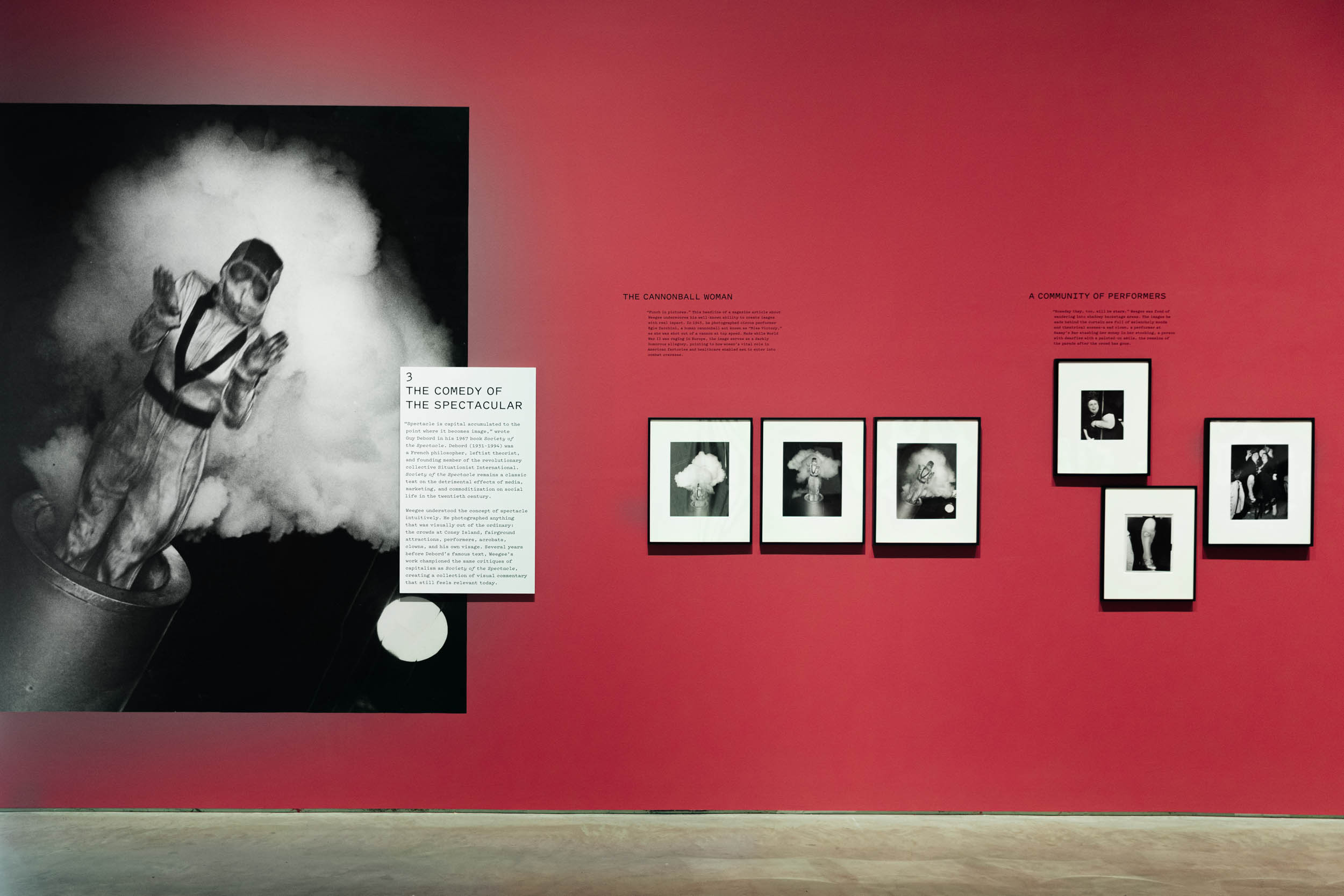

![Weegee (Arthur Fellig) (American born Ukraine, 1899-1968) '[Circus performer Miss Victory (Eglie Zacchini) shot out of a cannon at the speed of 360 feet a second, New York]' June 28, 1943](https://artblart.com/wp-content/uploads/2025/04/weegee-circus-performer-miss-victory.jpg "Weegee (Arthur Fellig) (American born Ukraine, 1899-1968) '[Circus performer Miss Victory (Eglie Zacchini) shot out of a cannon at the speed of 360 feet a second, New York]' June 28, 1943")
![Weegee (Arthur Fellig) (American born Ukraine, 1899-1968) '[Mrs. Bernice Lythcott and son looking through window shattered by rock-throwing hoodlums, Harlem, New York]' October 18, 1943](https://artblart.com/wp-content/uploads/2024/04/weegee-mme-bernice-lythcott.jpg "Weegee (Arthur Fellig) (American born Ukraine, 1899-1968) '[Mrs. Bernice Lythcott and son looking through window shattered by rock-throwing hoodlums, Harlem, New York]' October 18, 1943")

![Weegee (Arthur Fellig) (American born Ukraine, 1899-1968) '[Lovers at the movies, New York]' c. 1943](https://artblart.com/wp-content/uploads/2025/04/weegee-lovers-at-the-movies.jpg "Weegee (Arthur Fellig) (American born Ukraine, 1899-1968) '[Lovers at the movies, New York]' c. 1943")


![Weegee (Arthur Fellig) (American born Ukraine, 1899-1968) '[St. Louis Gag Shot]' c. 1950](https://artblart.com/wp-content/uploads/2024/04/1_hd.jpg "Weegee (Arthur Fellig) (American born Ukraine, 1899-1968) '[St. Louis Gag Shot]' c. 1950")


![Weegee (Arthur Fellig) (American born Ukraine, 1899-1968) '[Mona Lisa distortion]' c. 1958](https://artblart.com/wp-content/uploads/2025/04/weegee-mona-lisa.jpg "Weegee (Arthur Fellig) (American born Ukraine, 1899-1968) '[Mona Lisa distortion]' c. 1958")


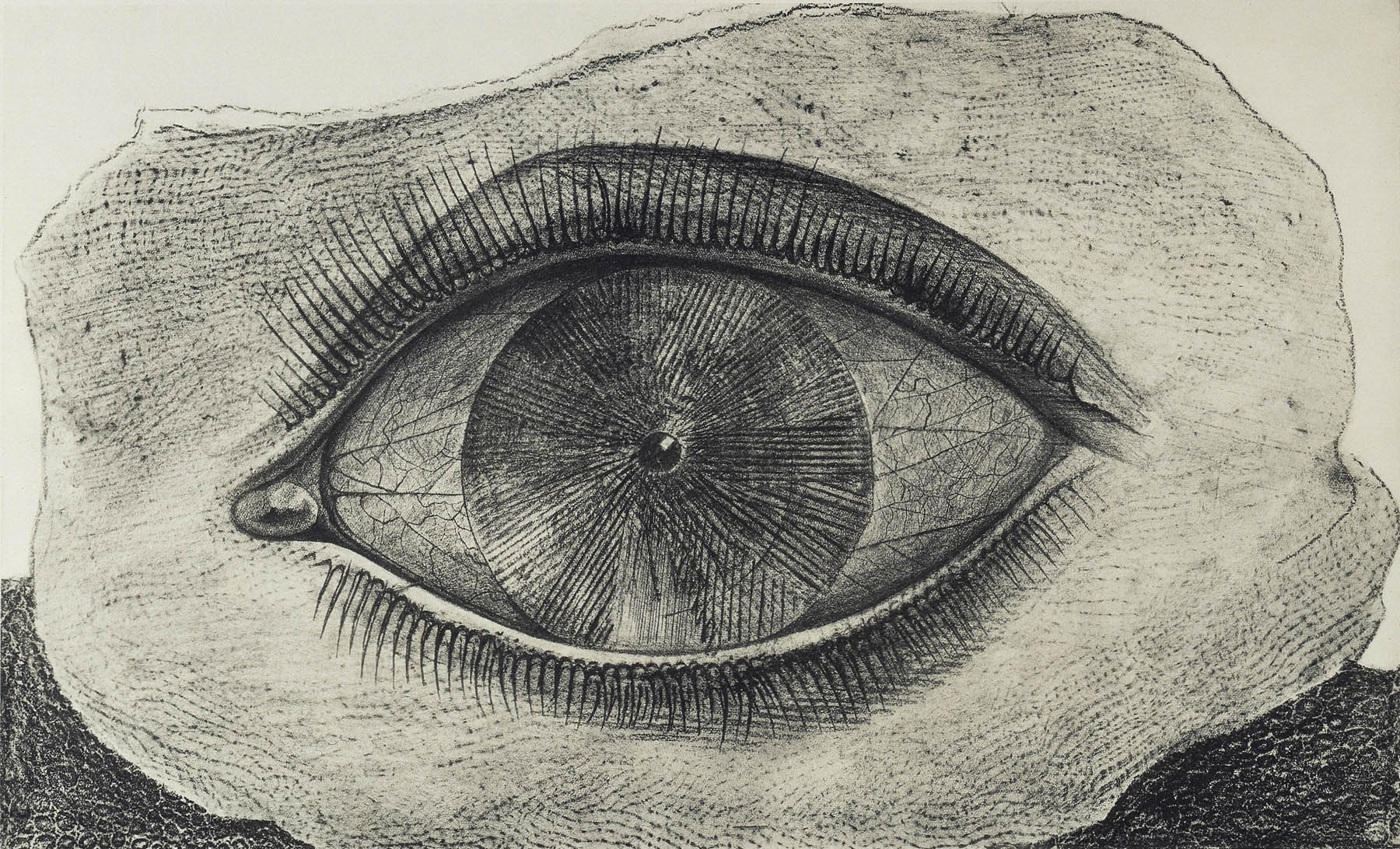


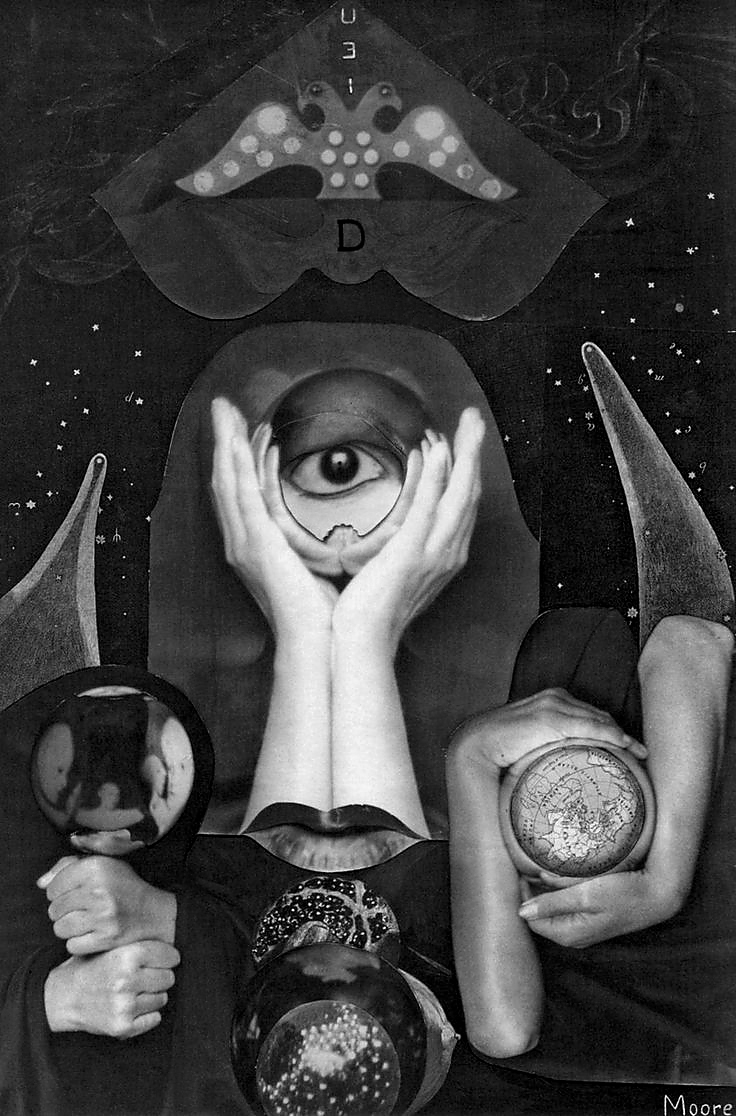

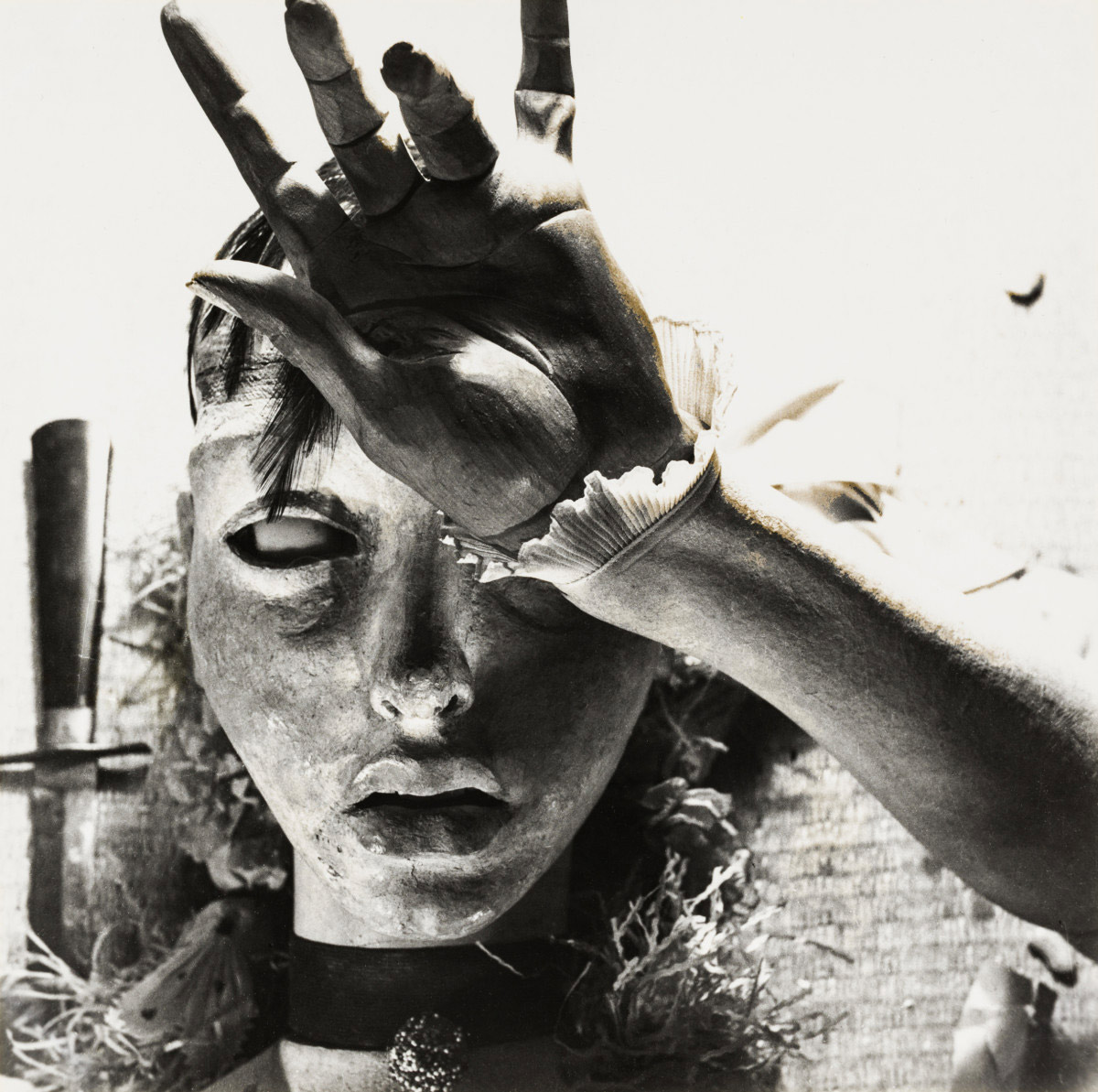


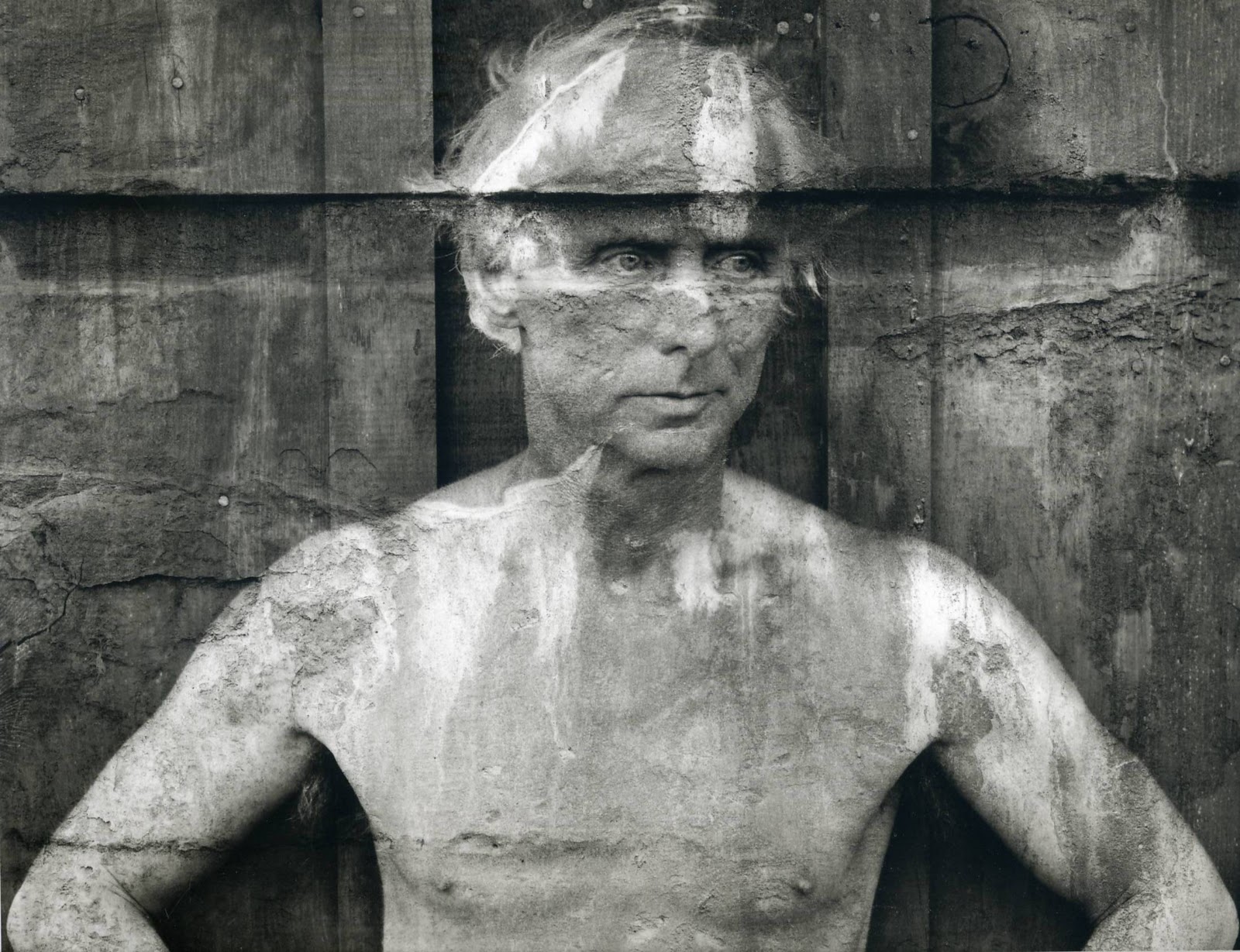


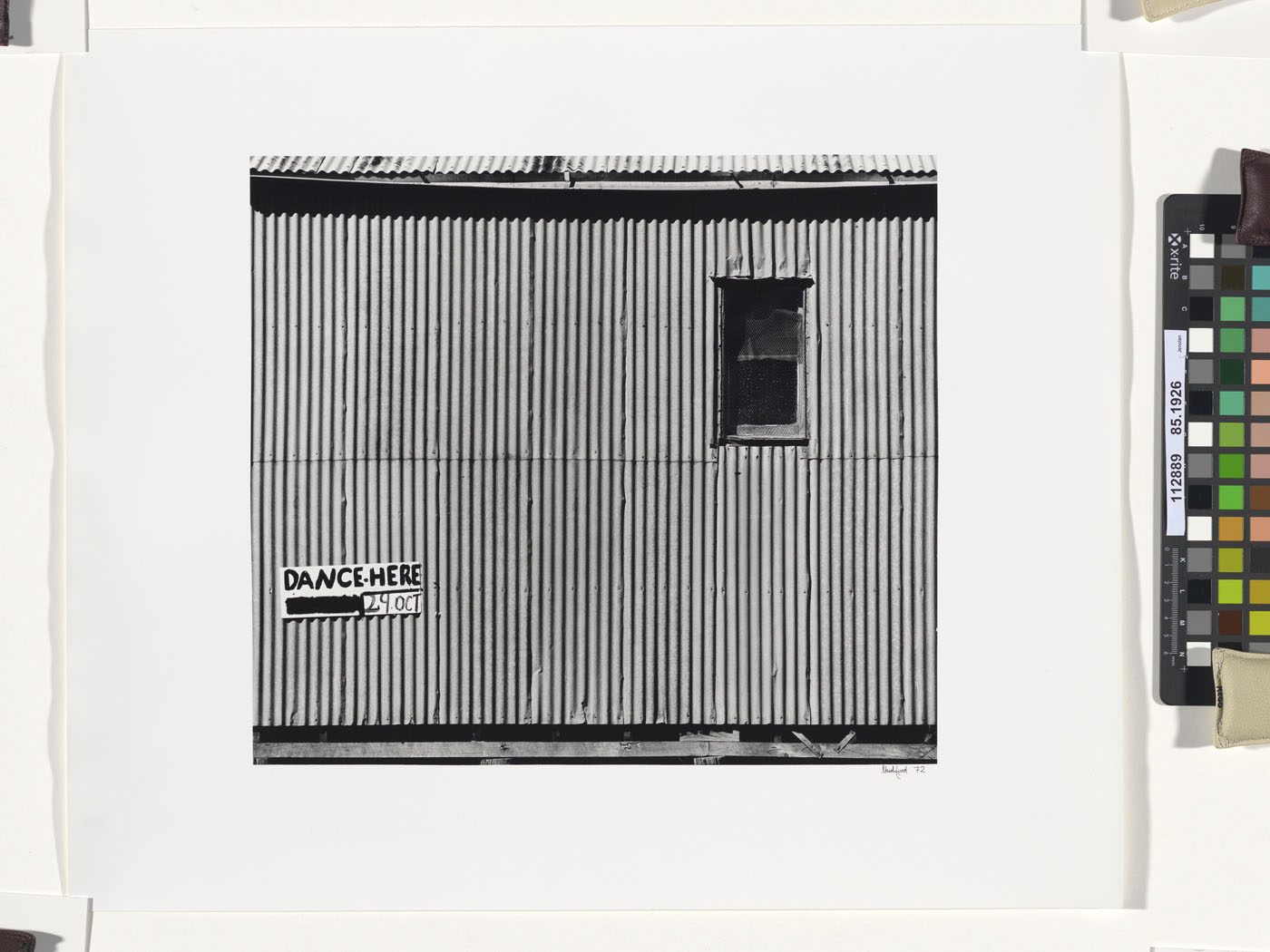
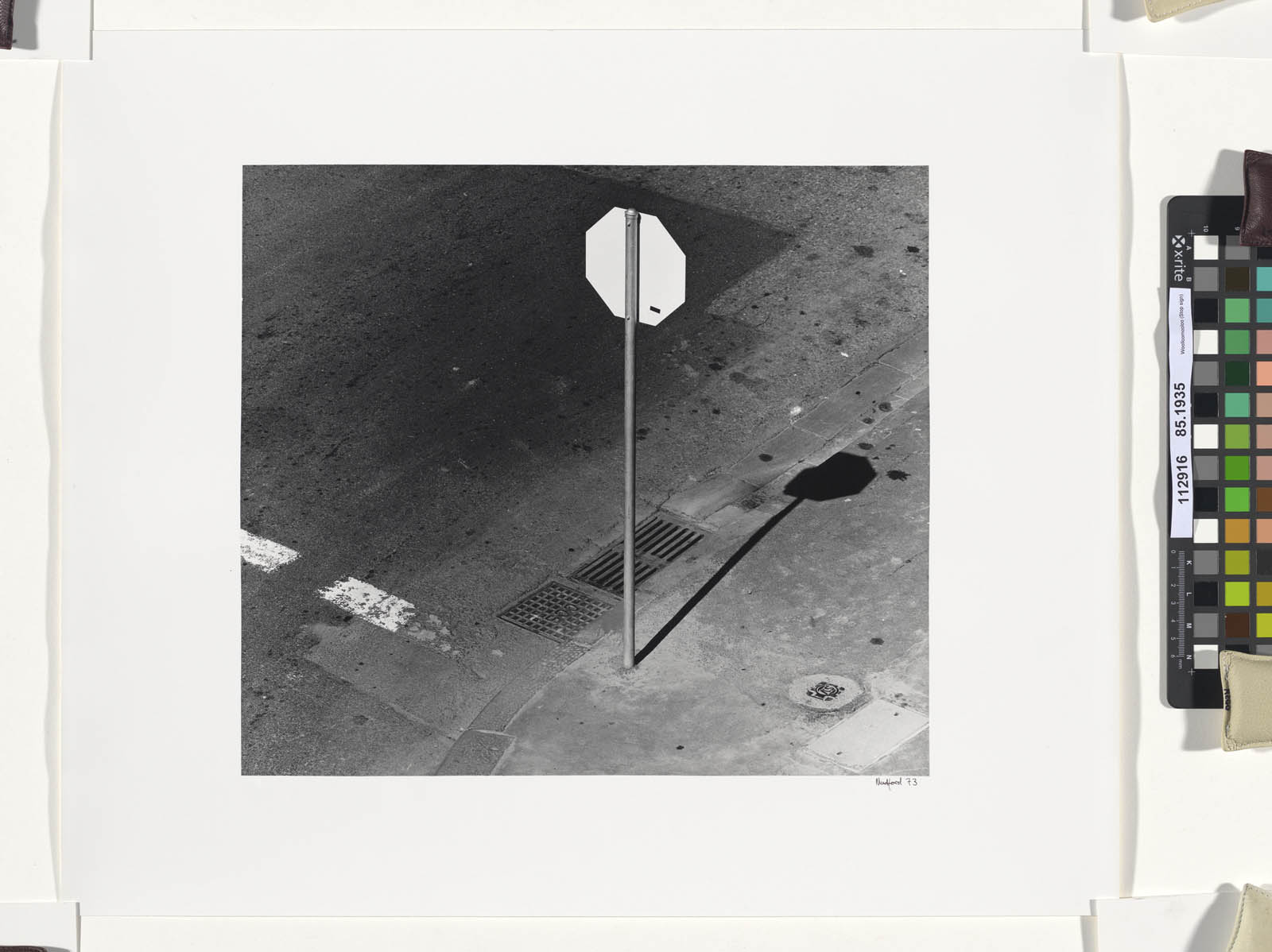
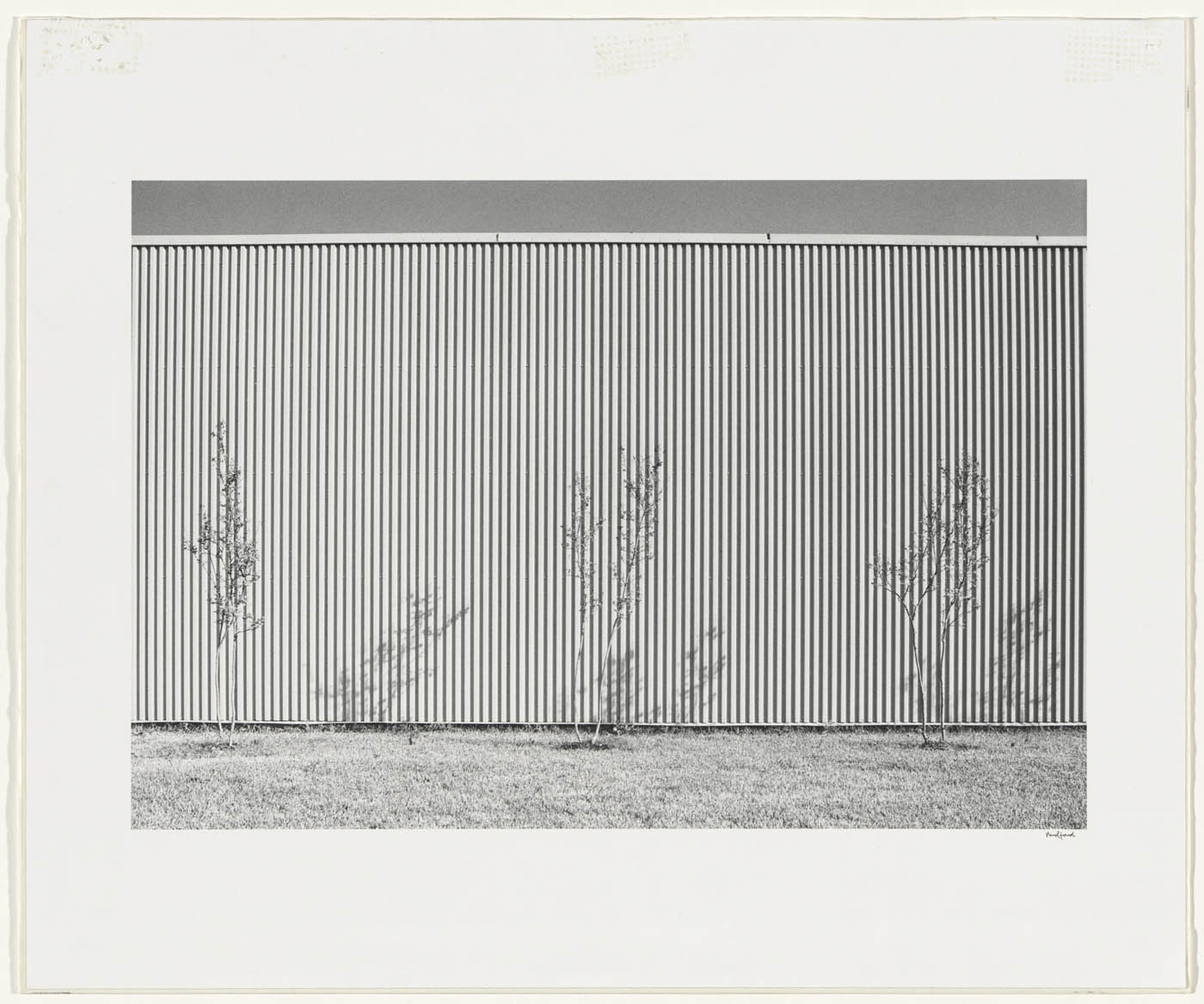

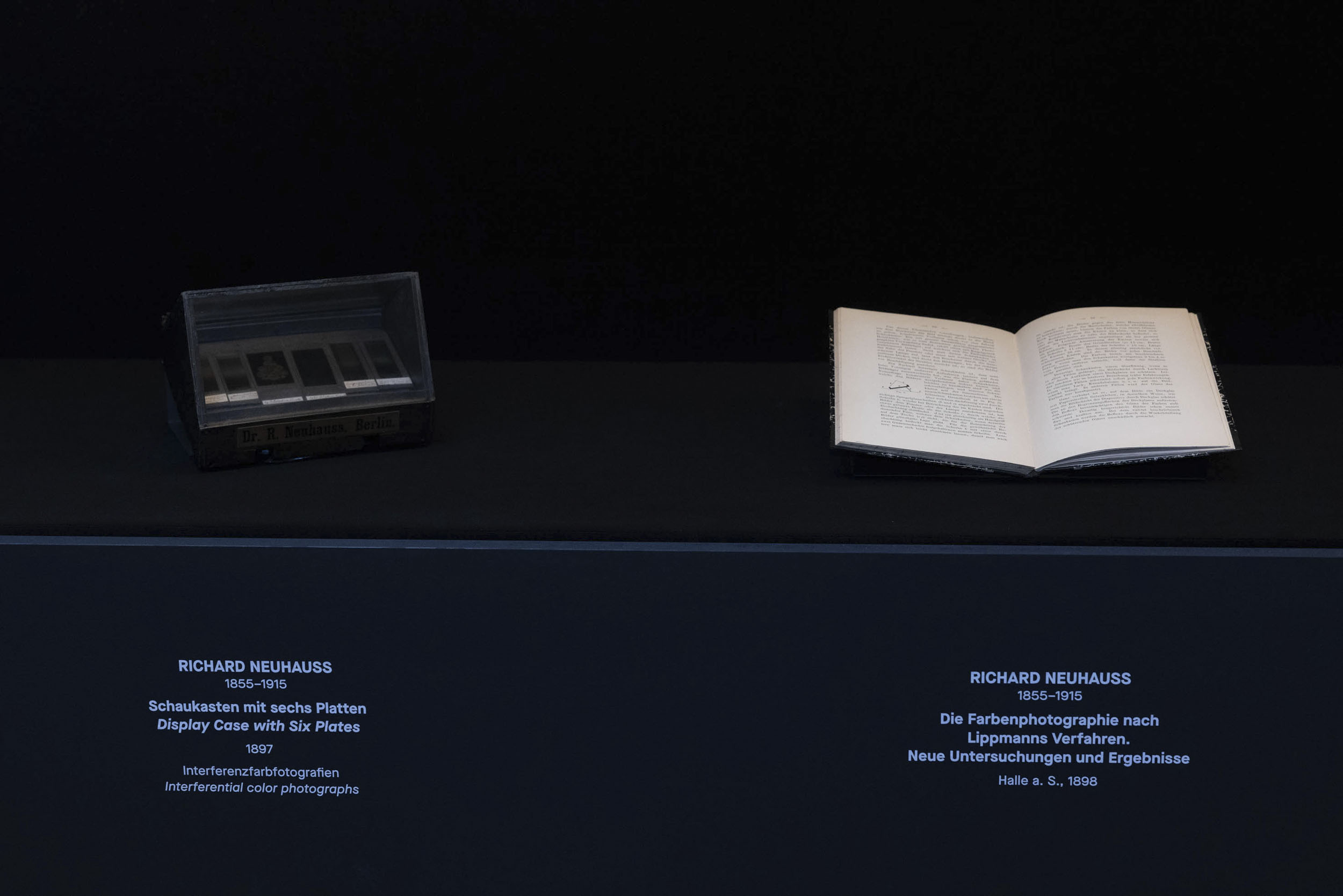

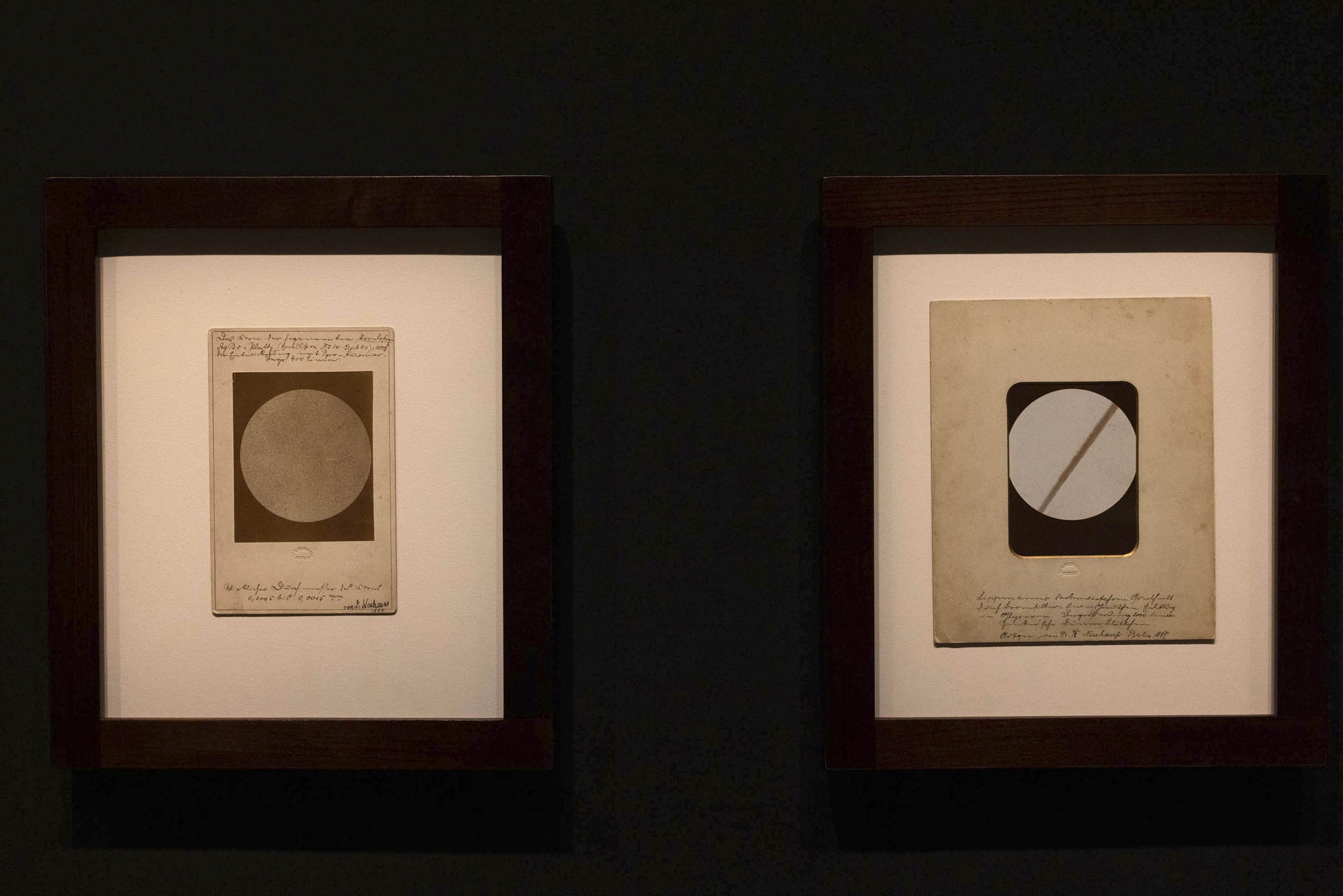
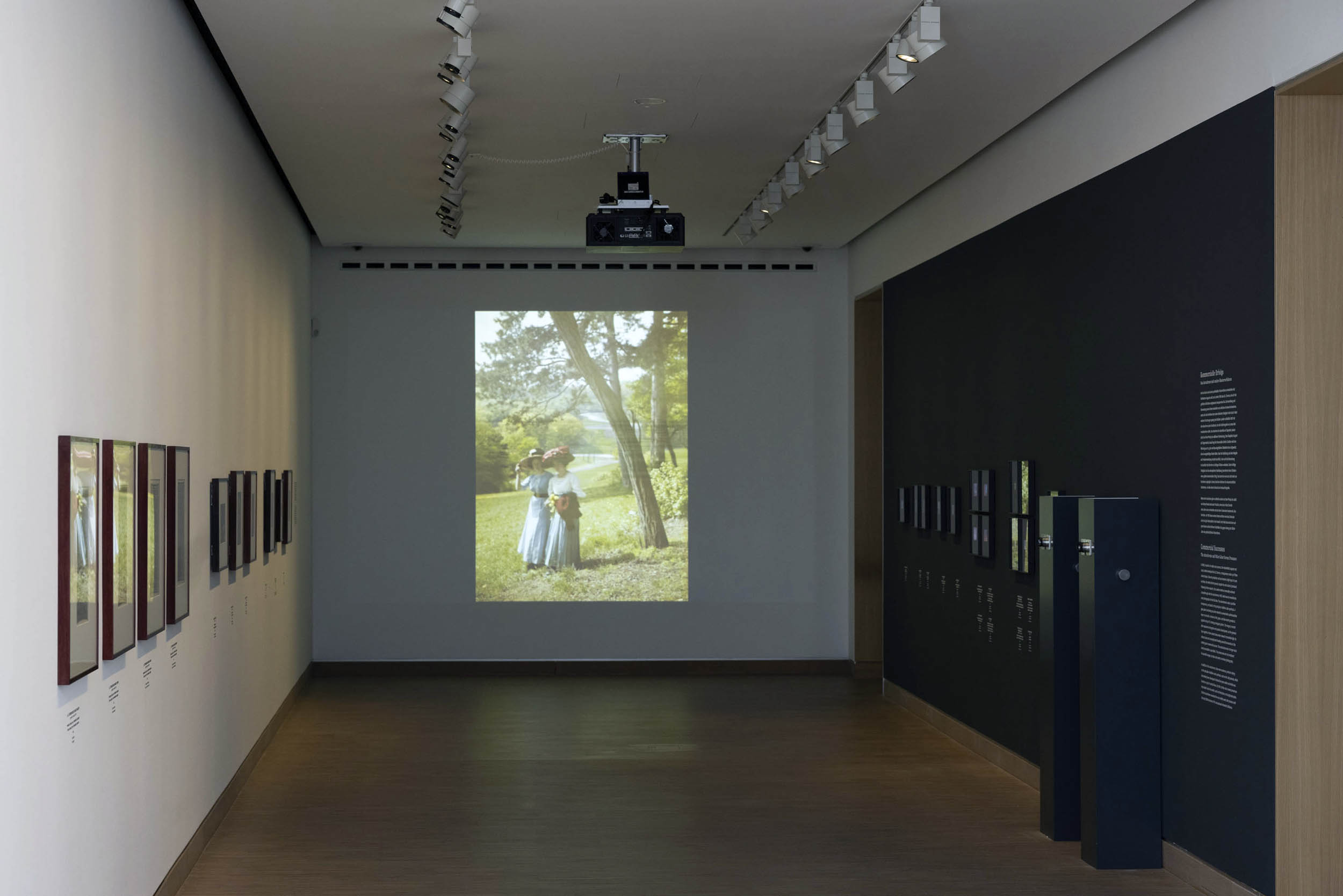

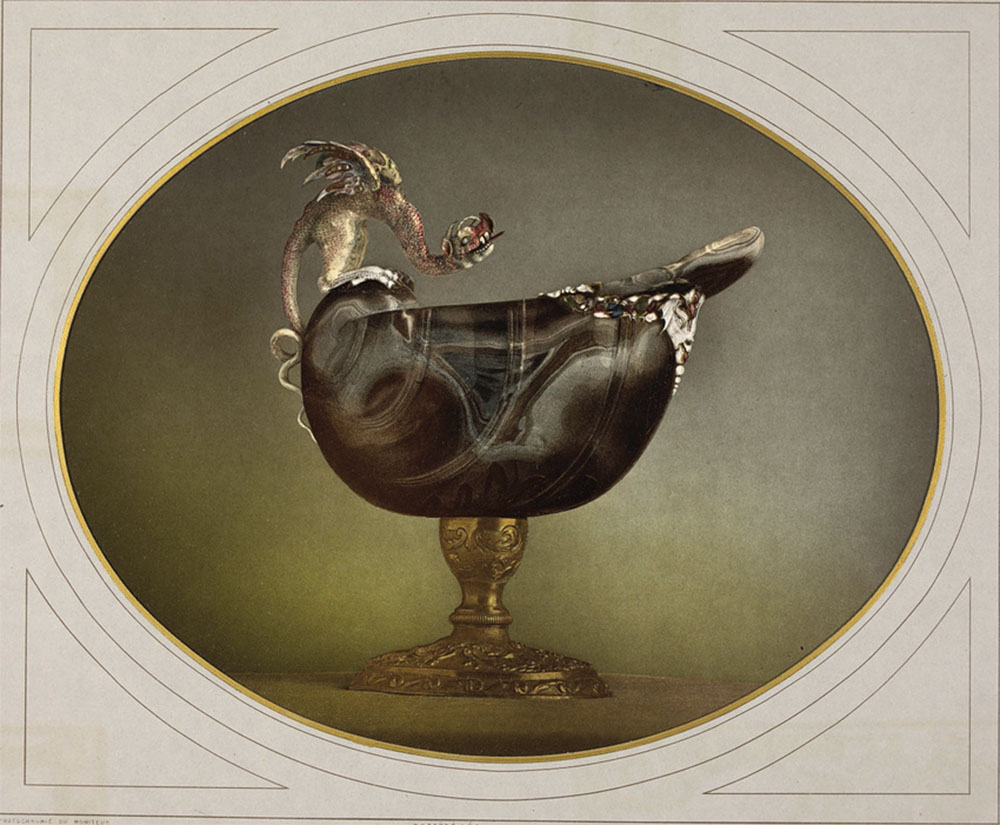
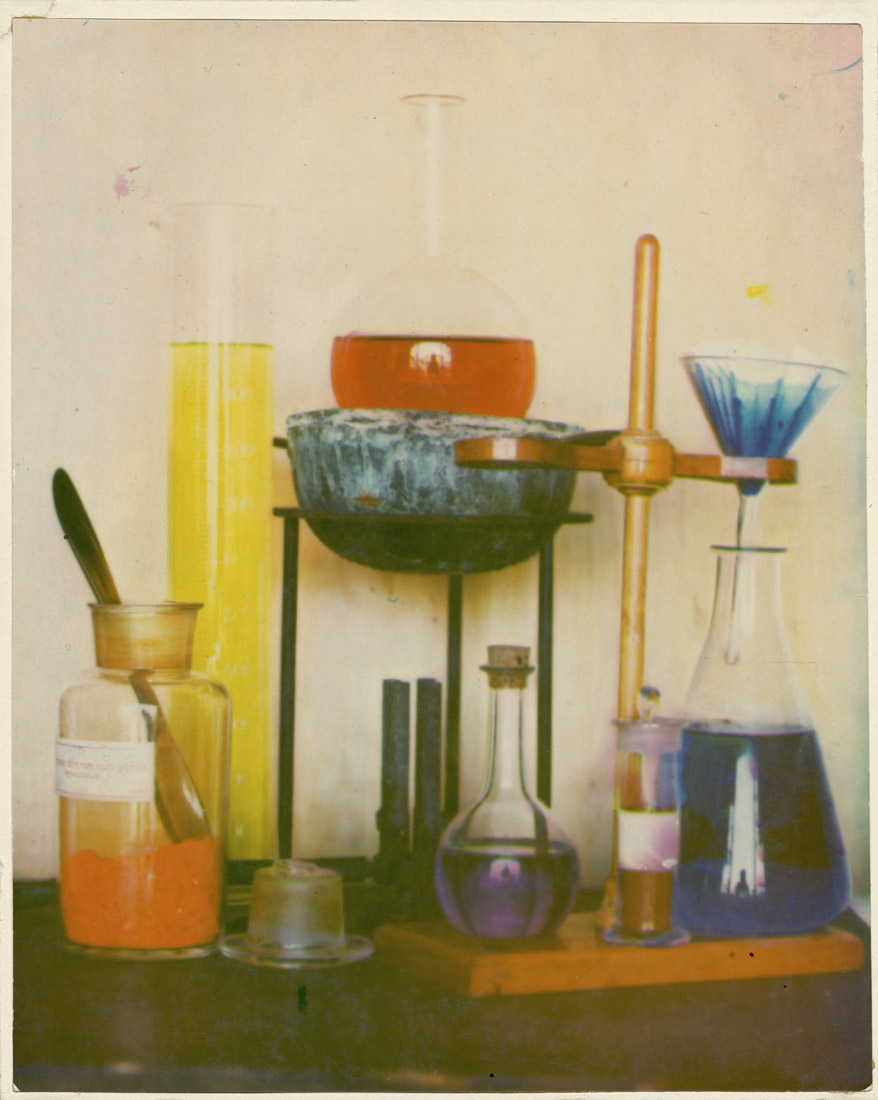
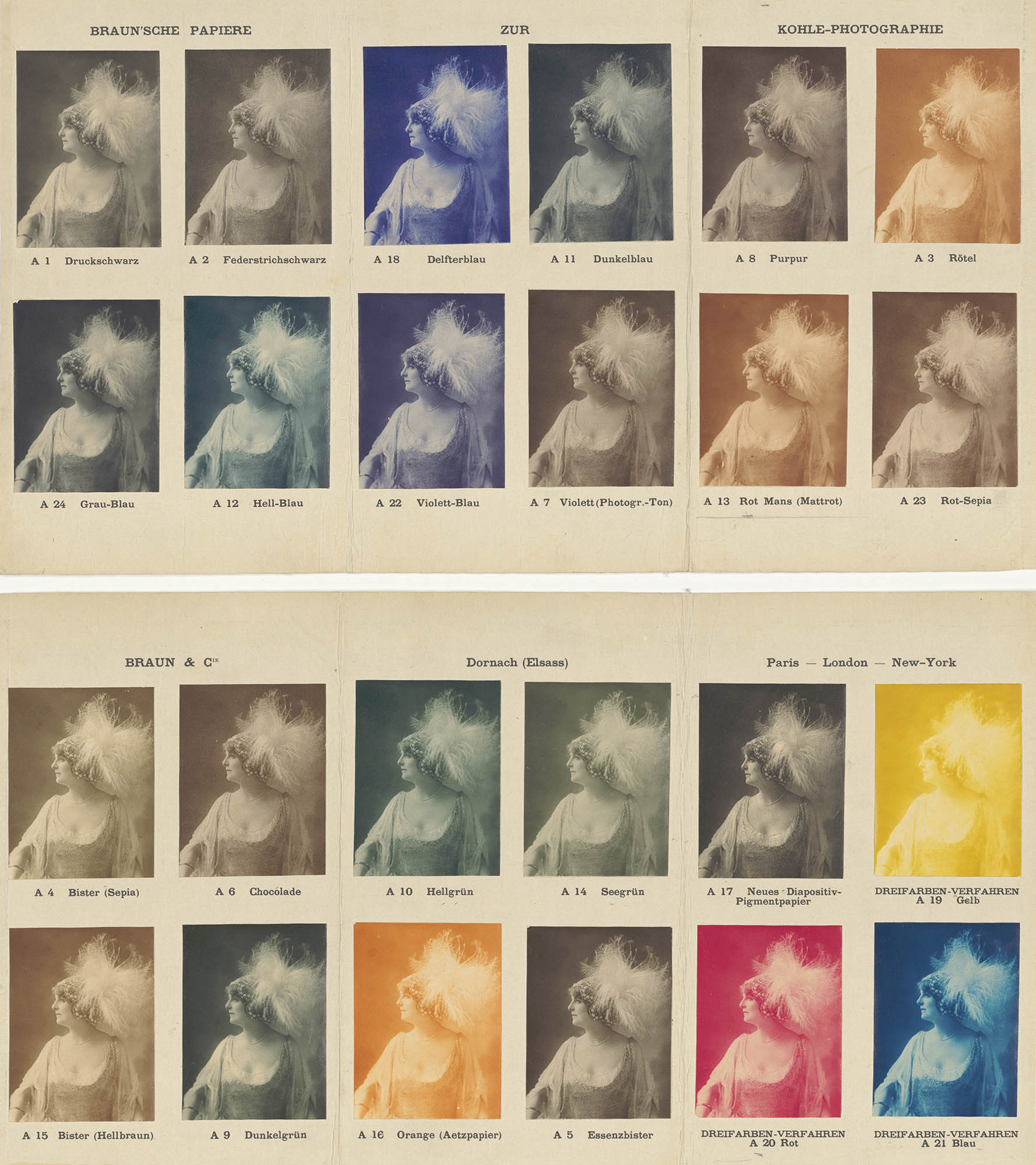


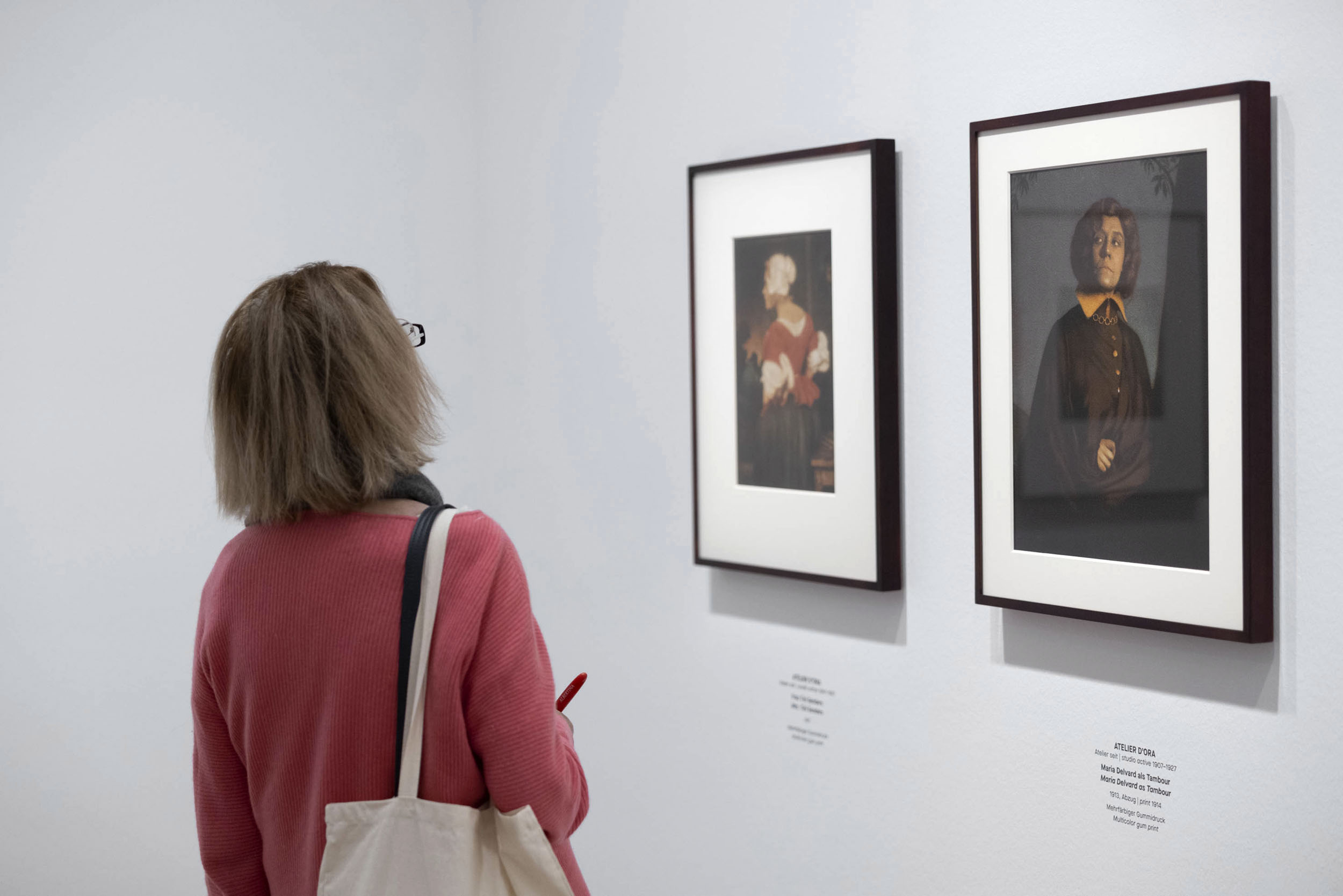

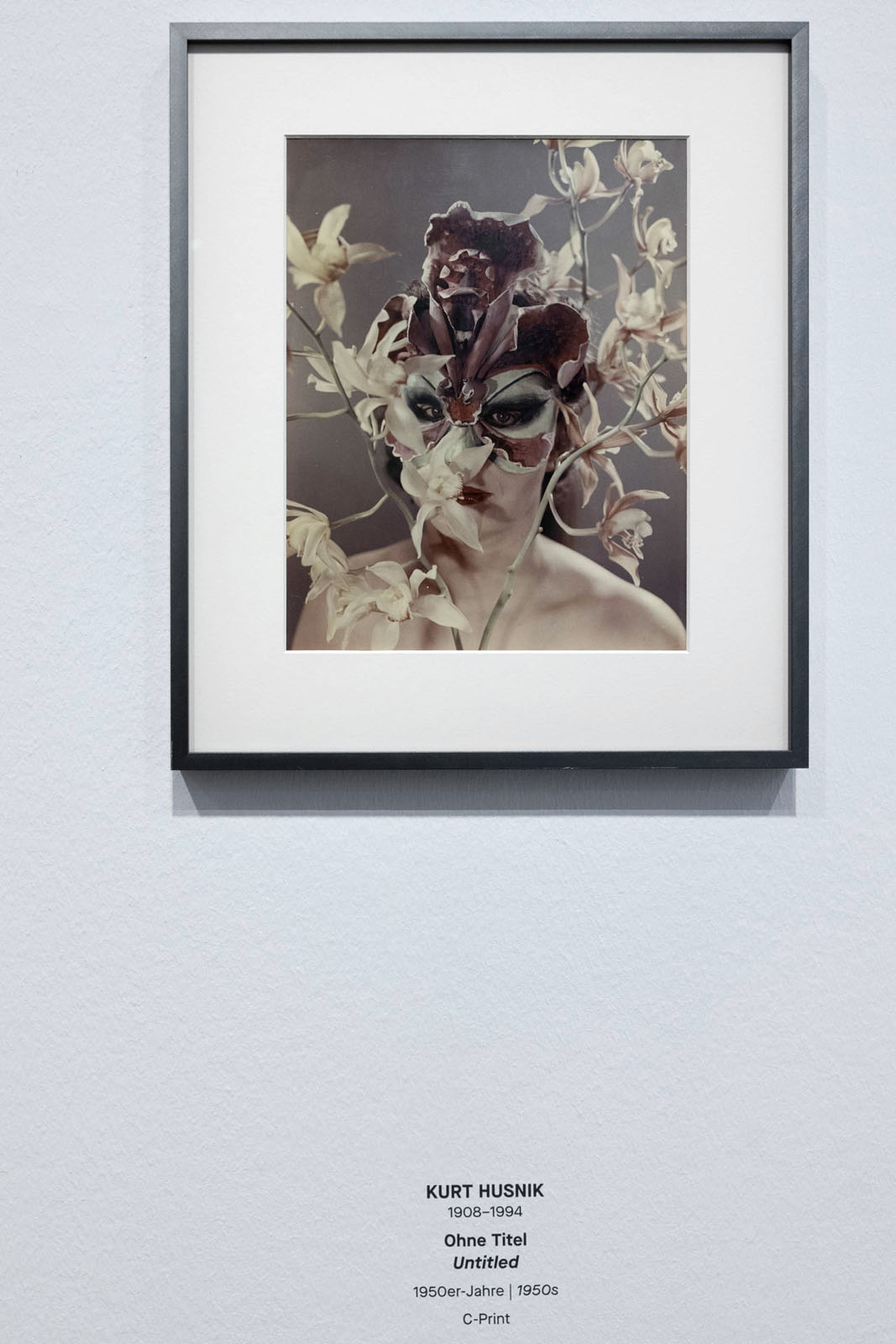



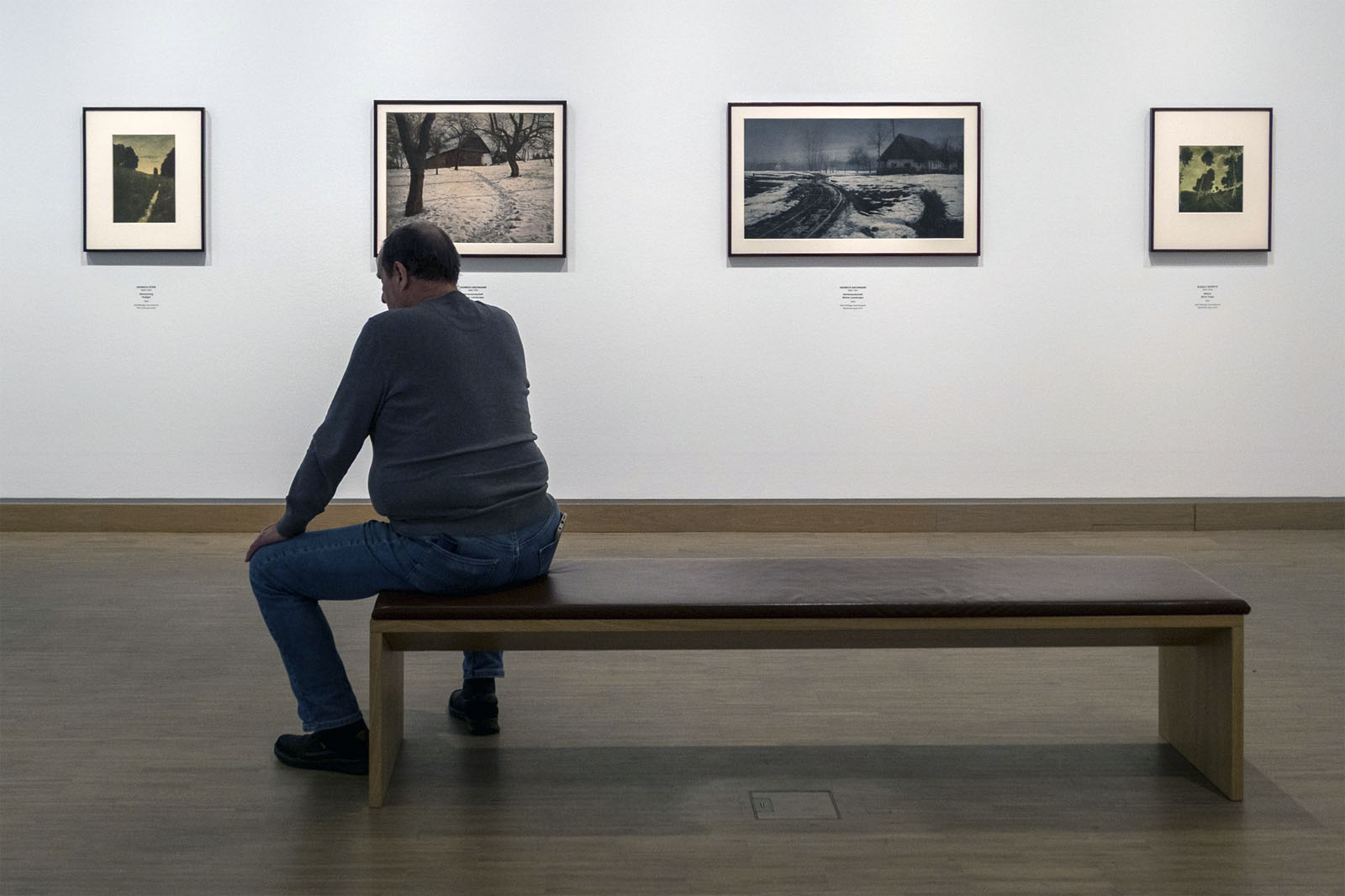
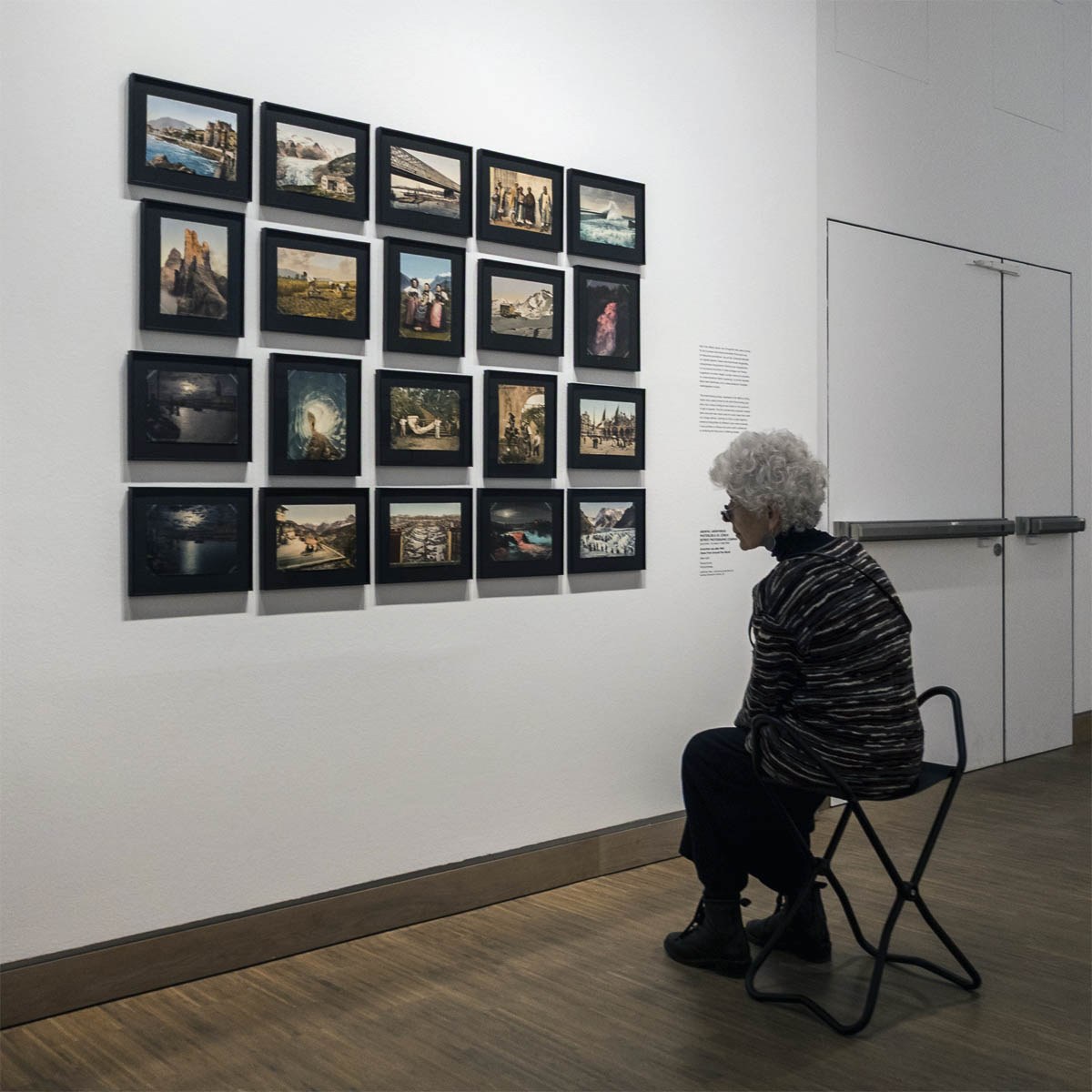
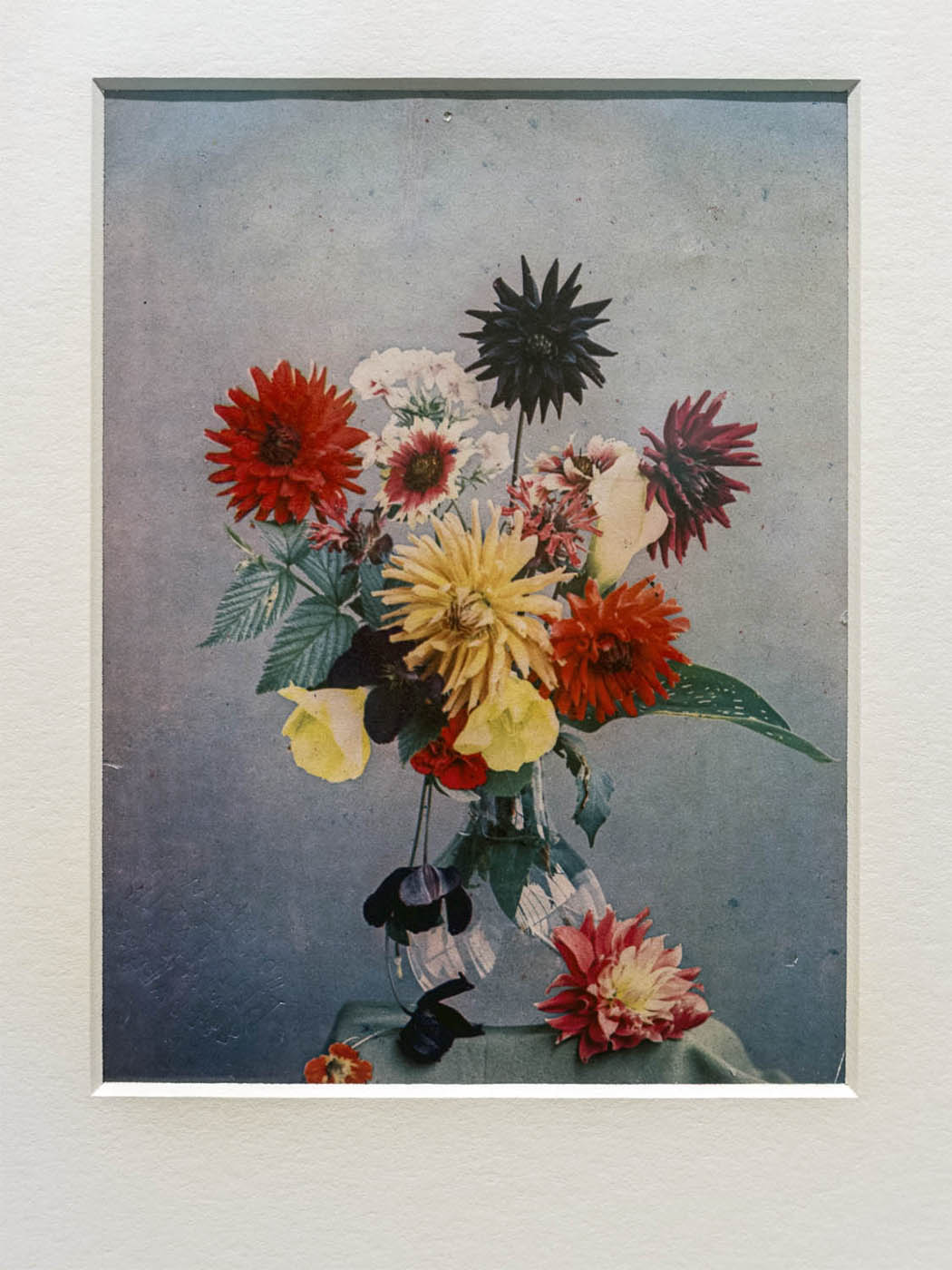
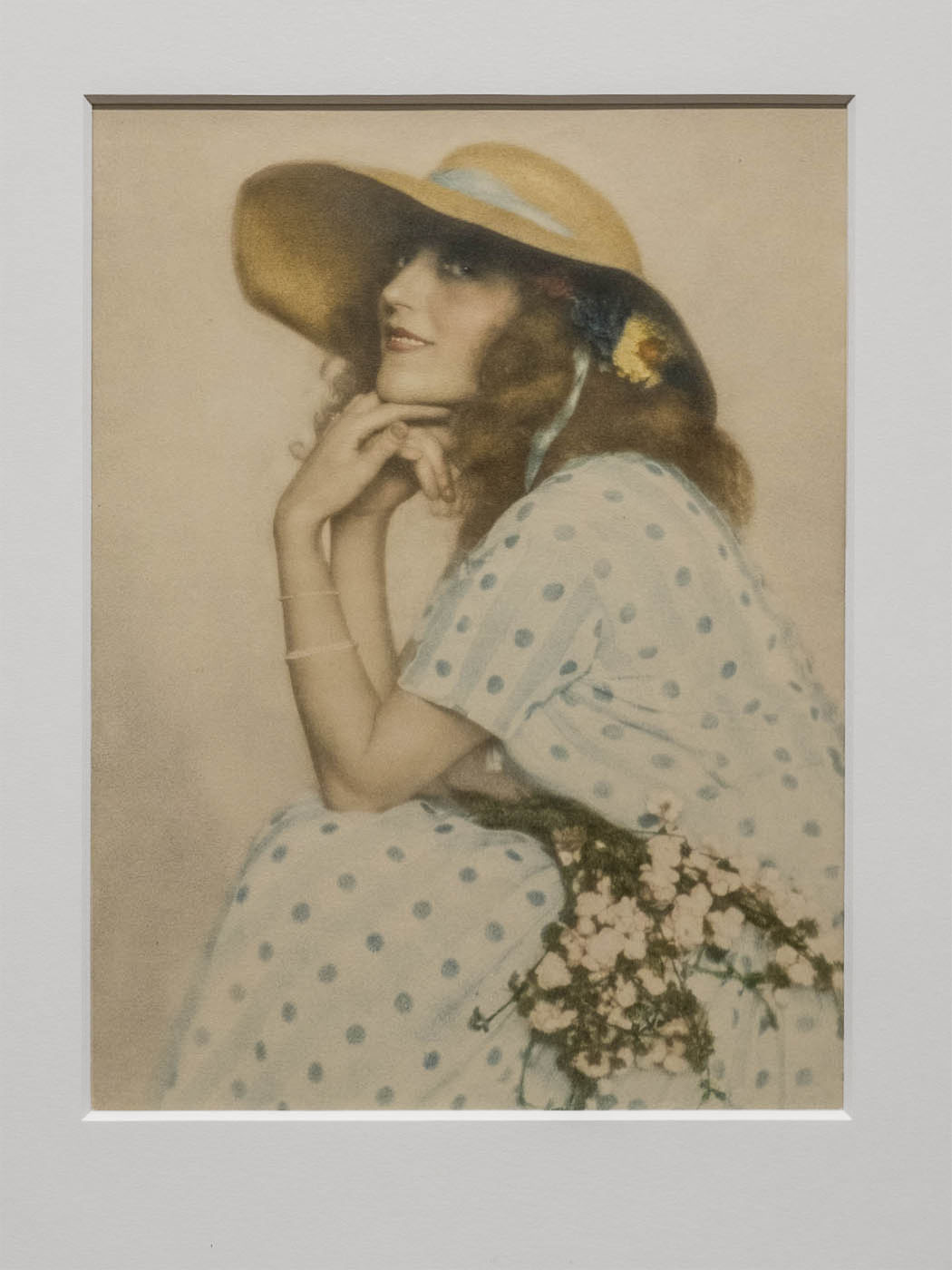
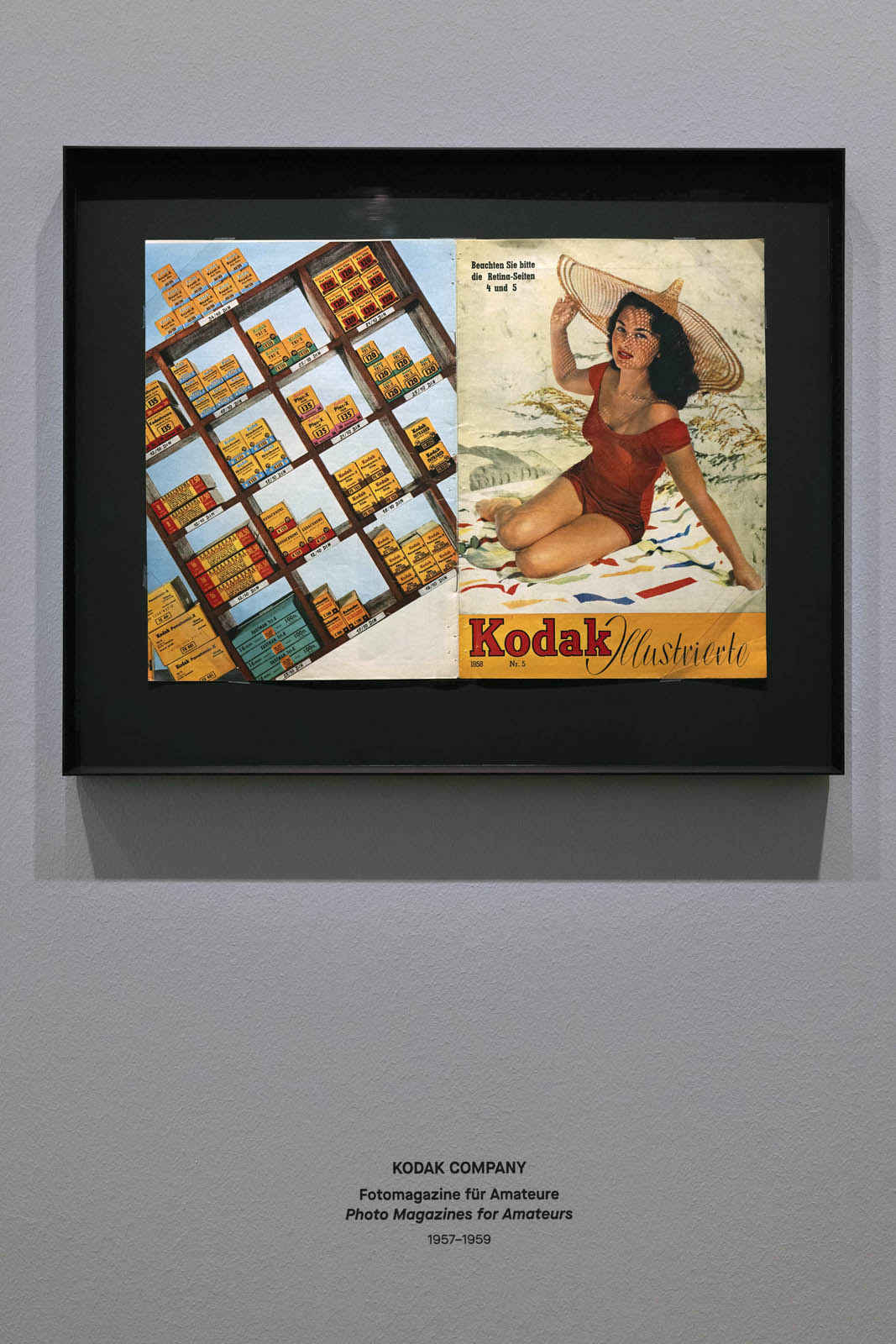


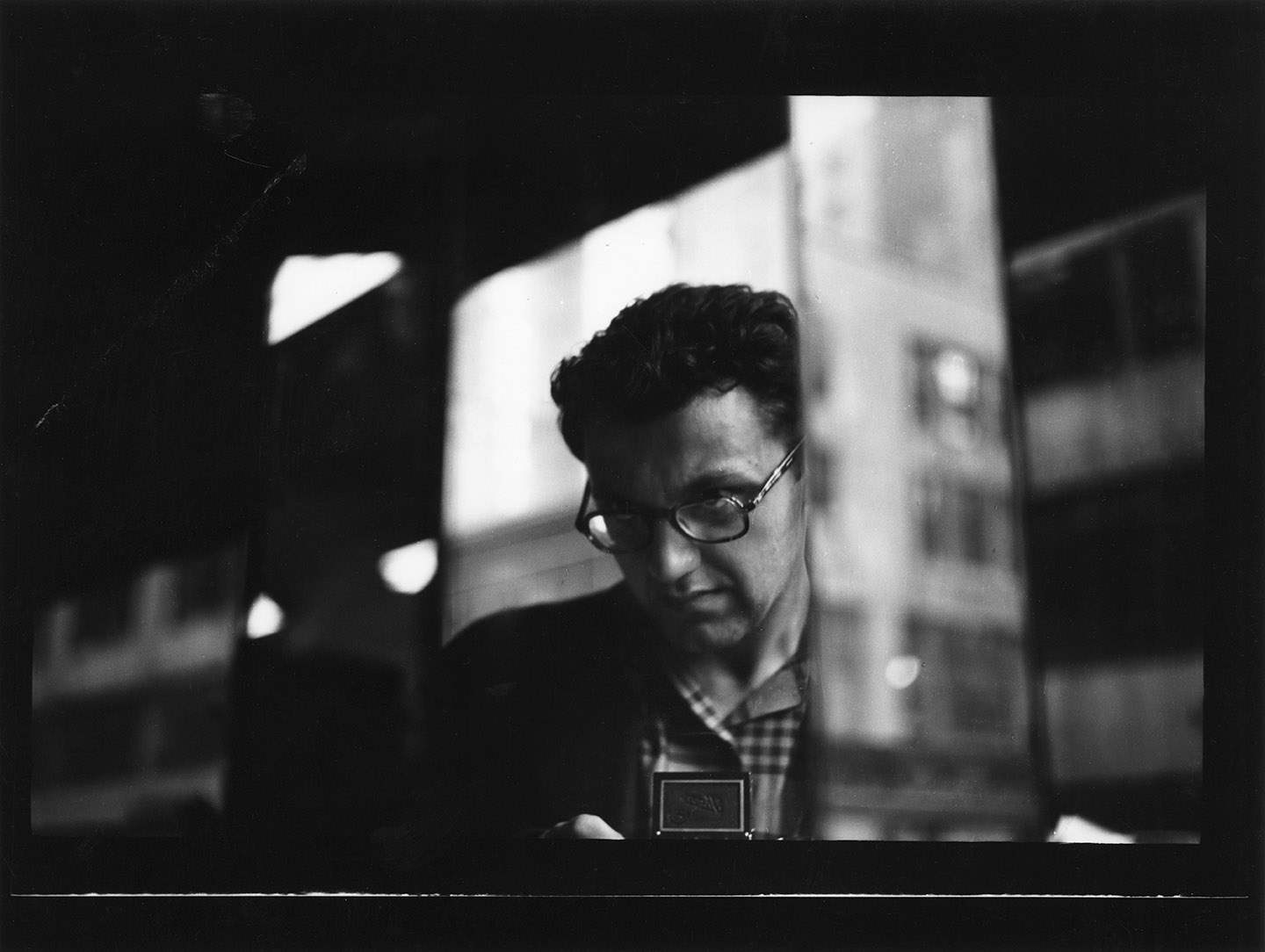

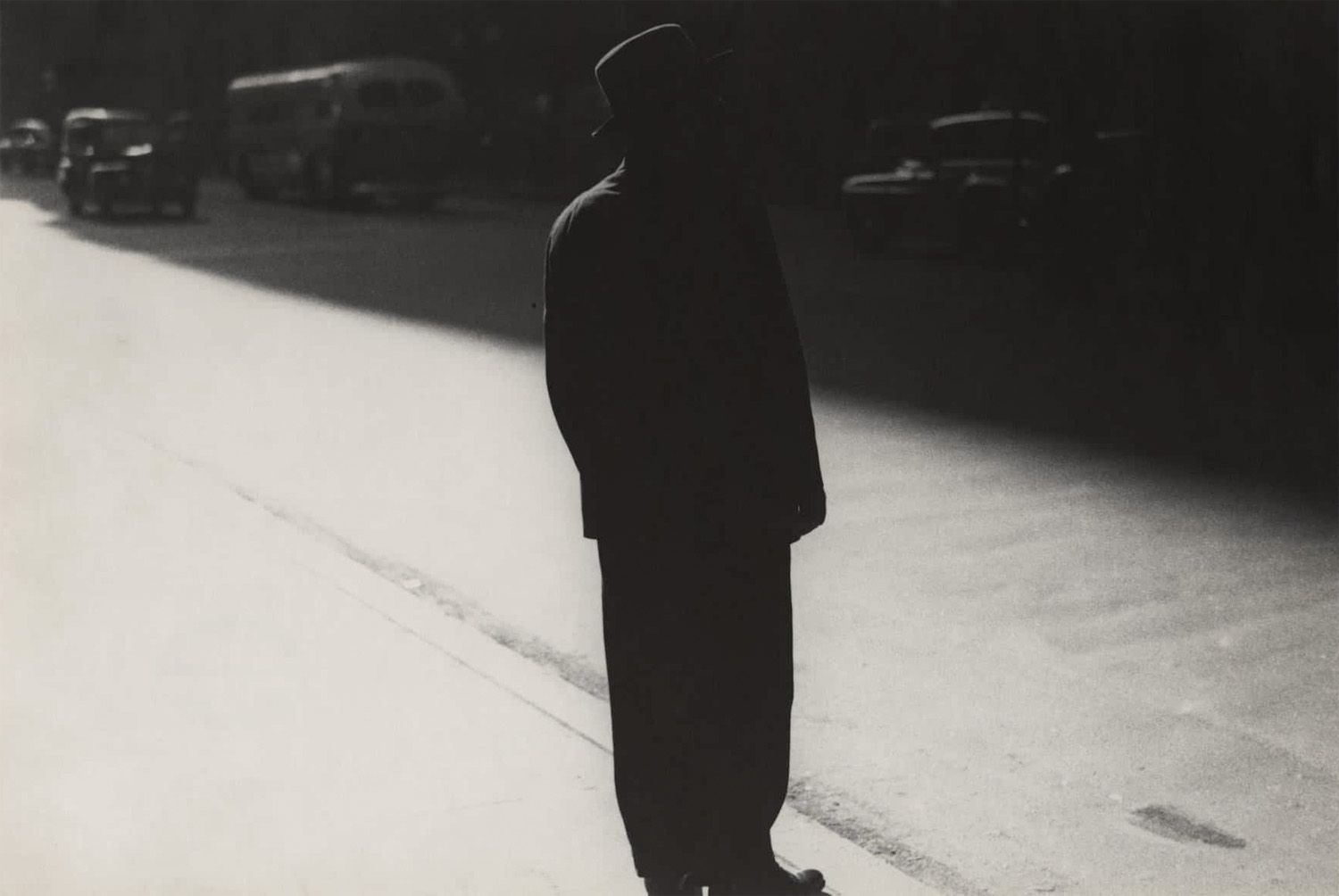
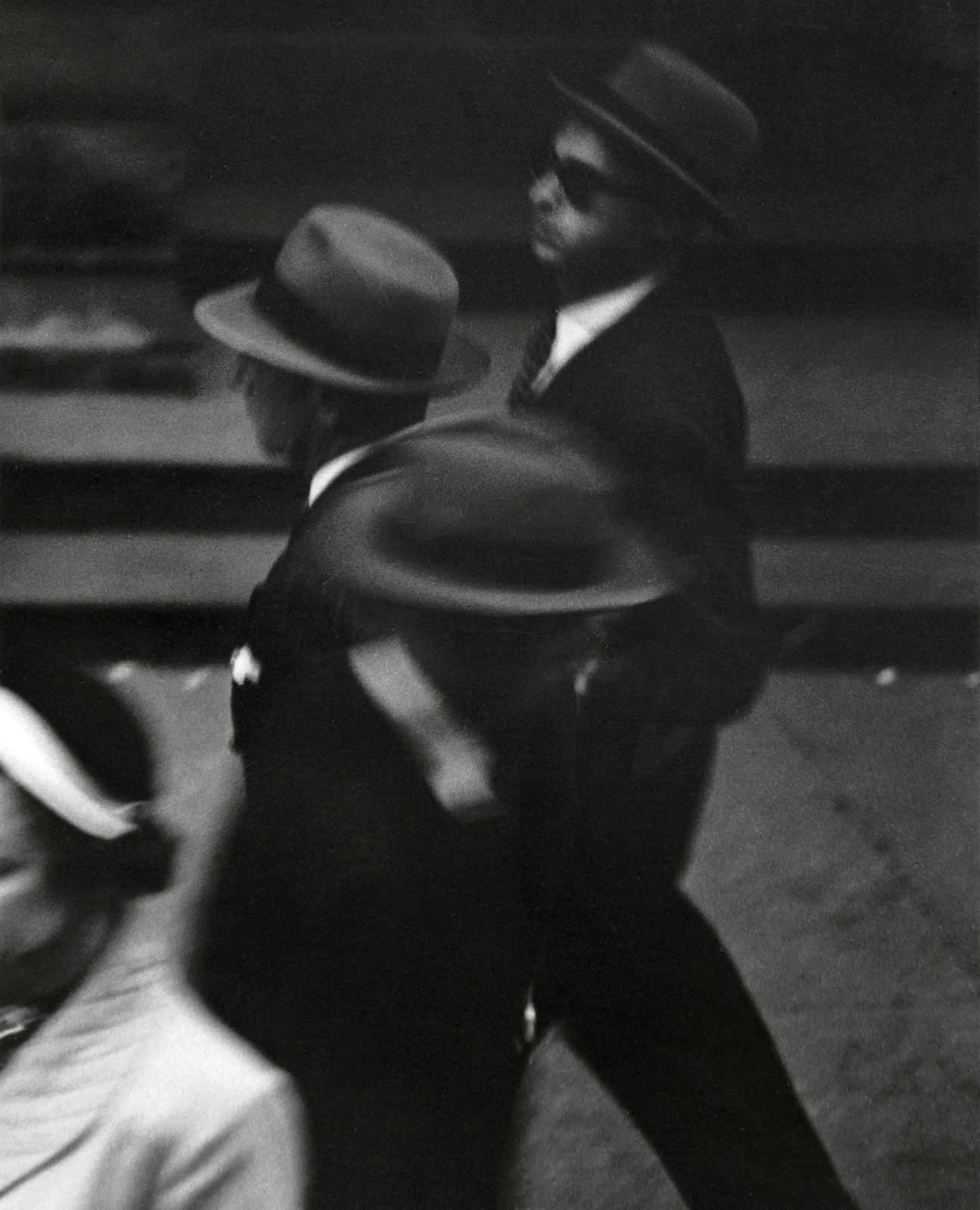
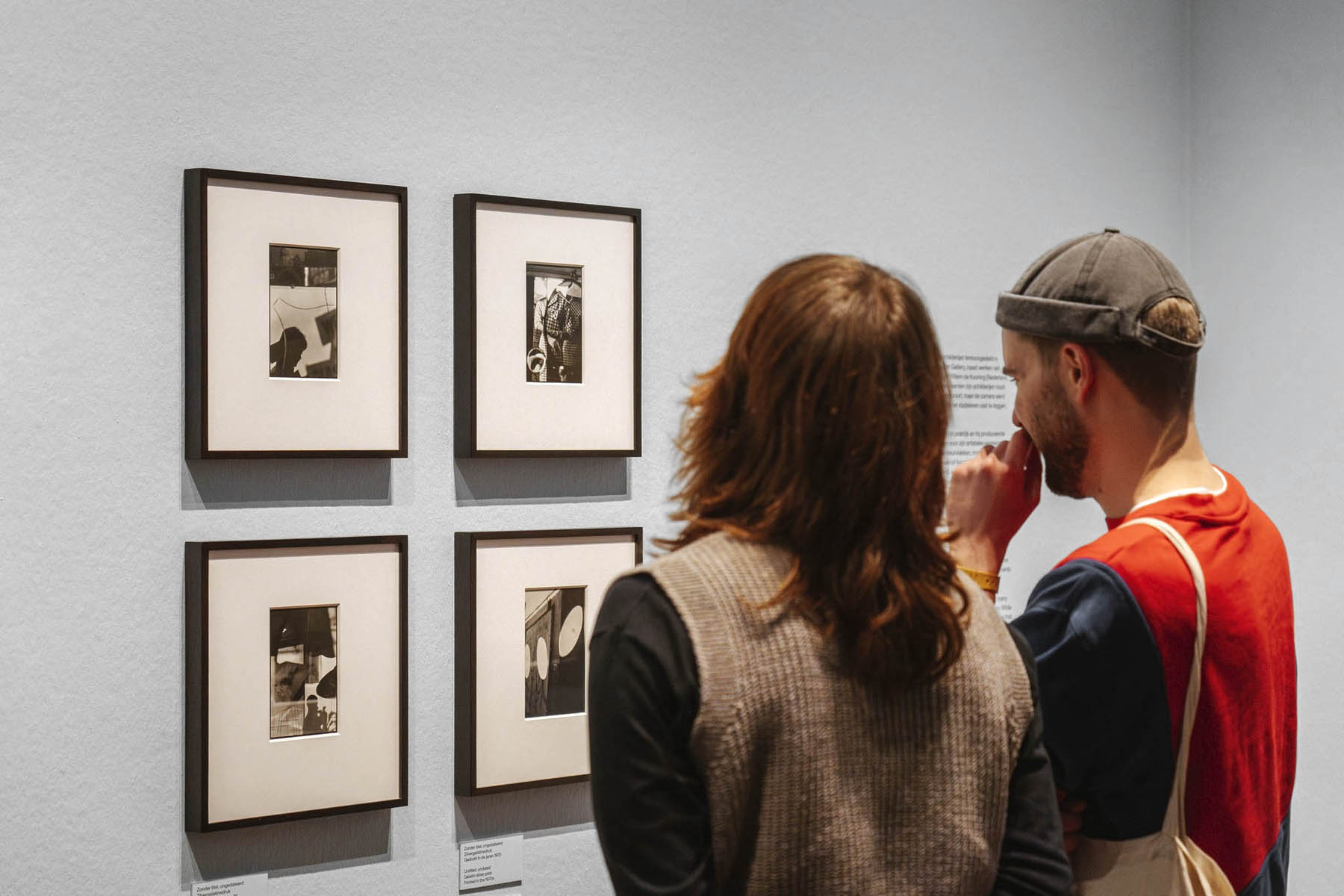







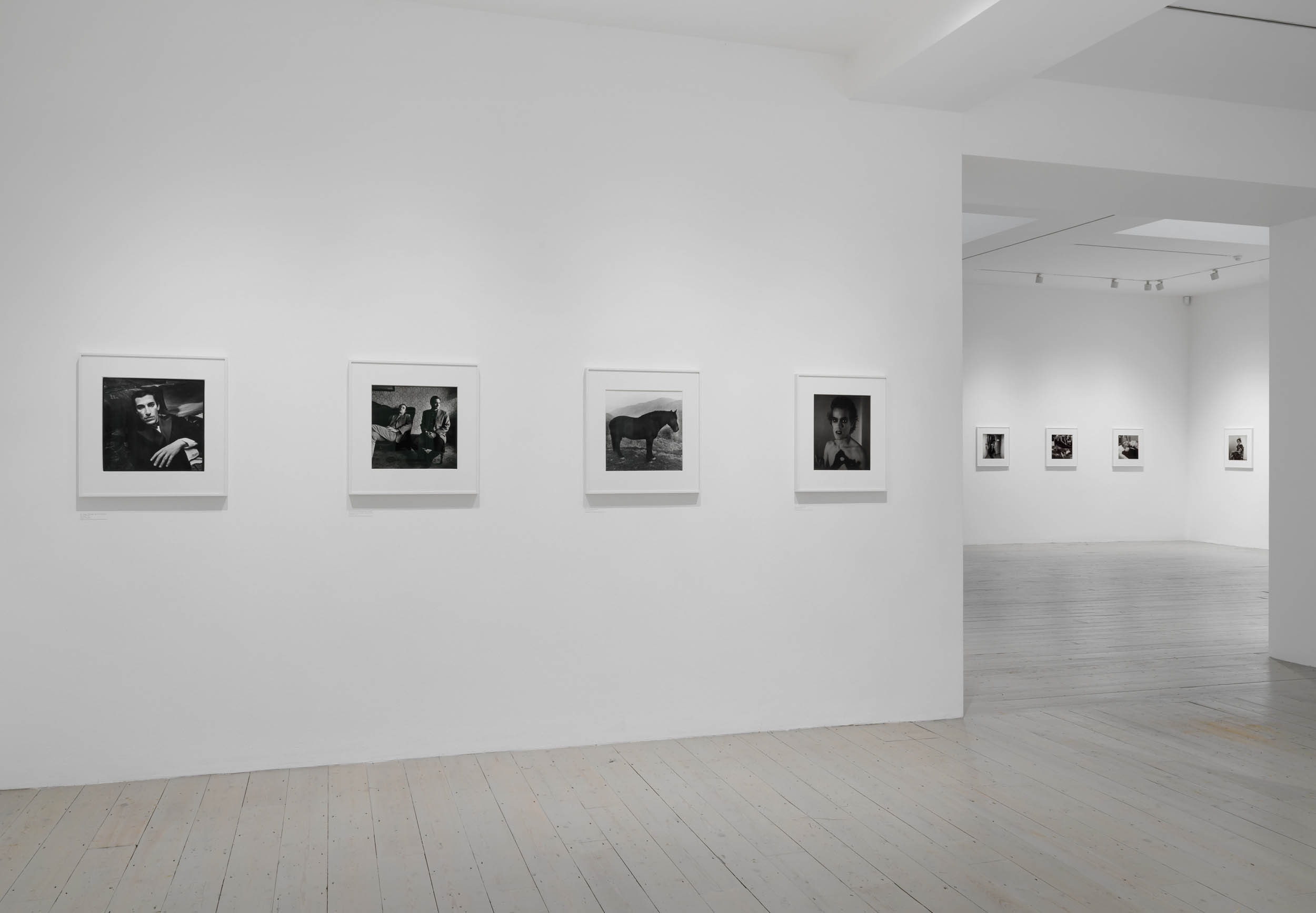
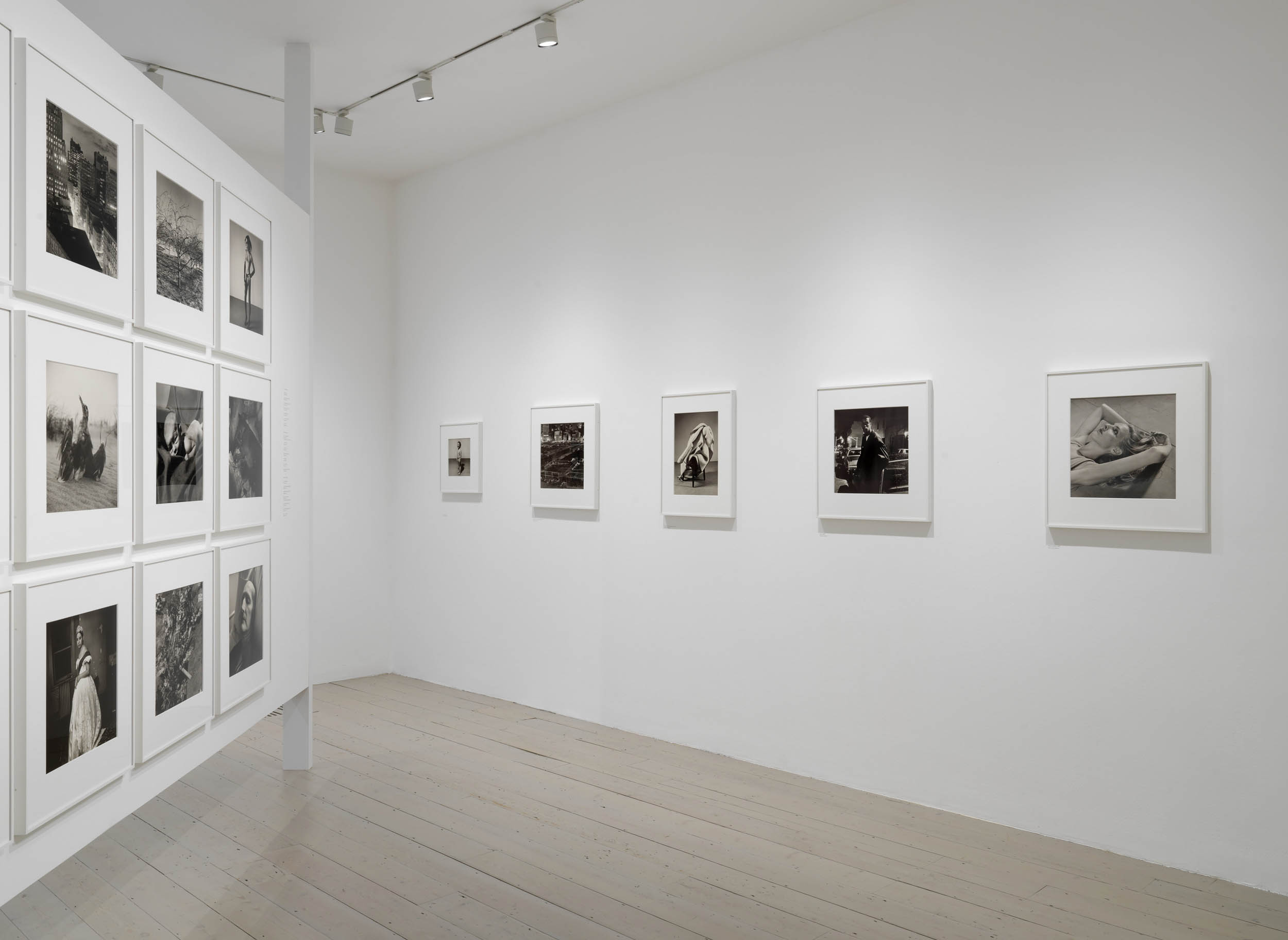
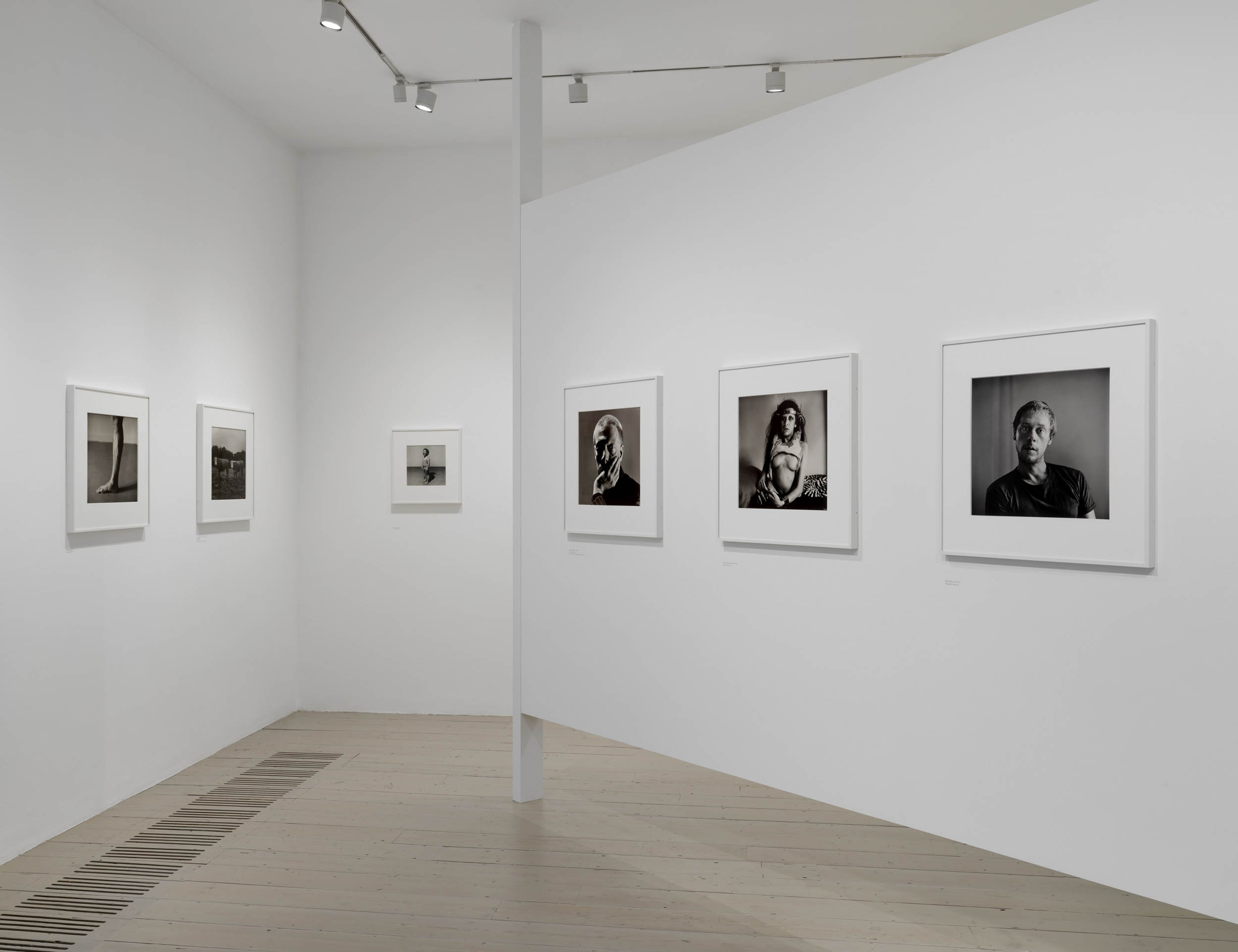
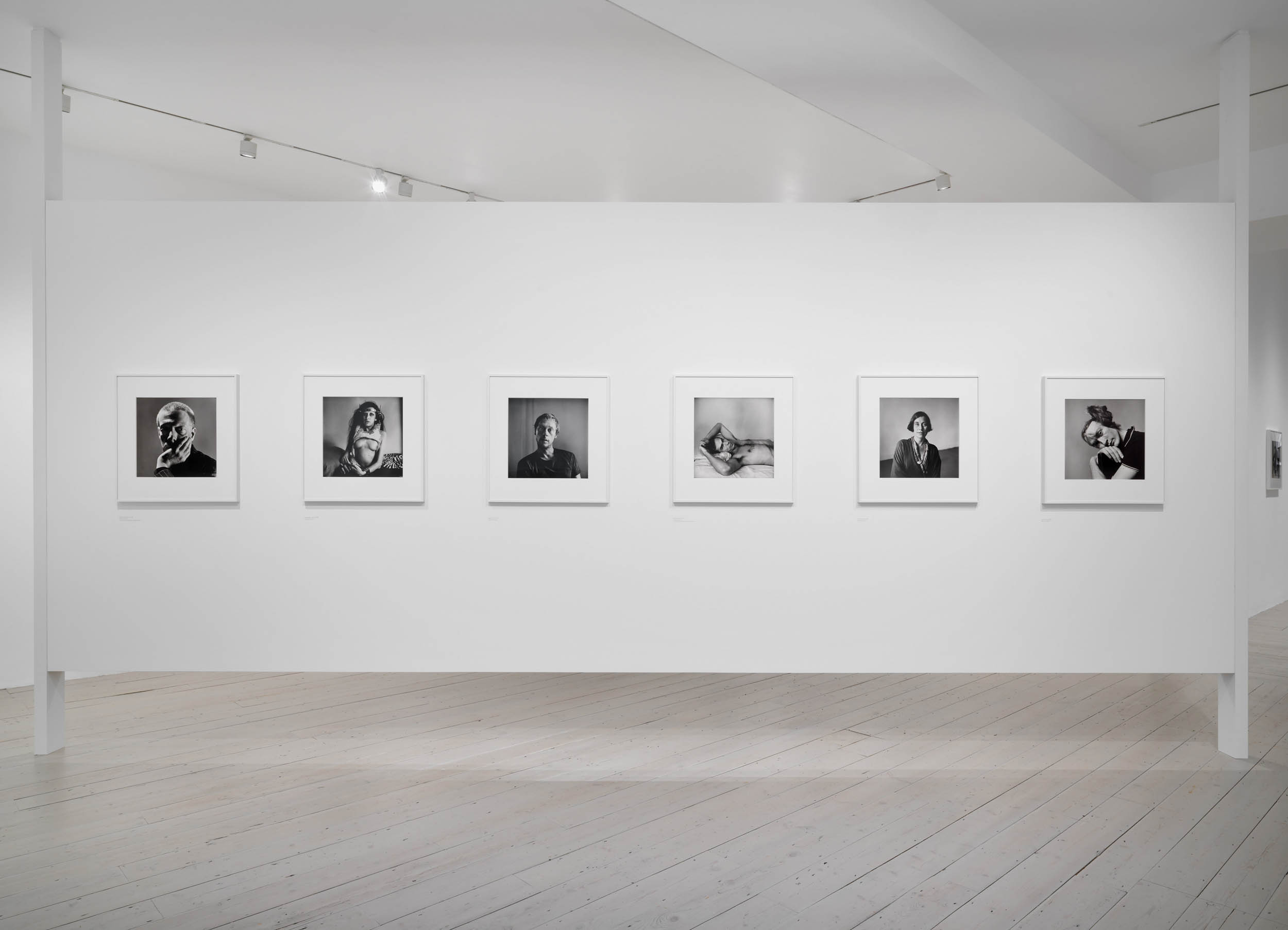
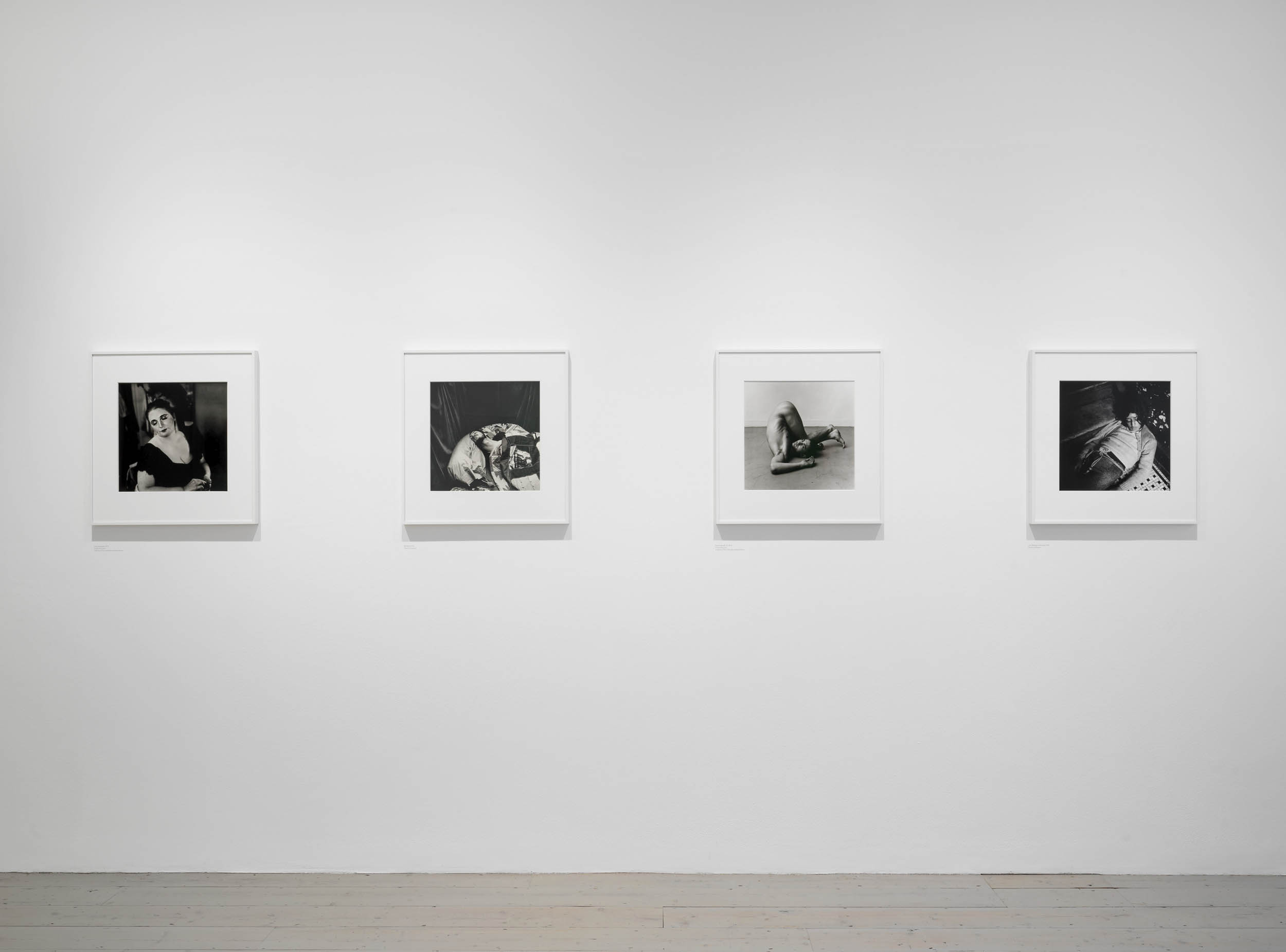
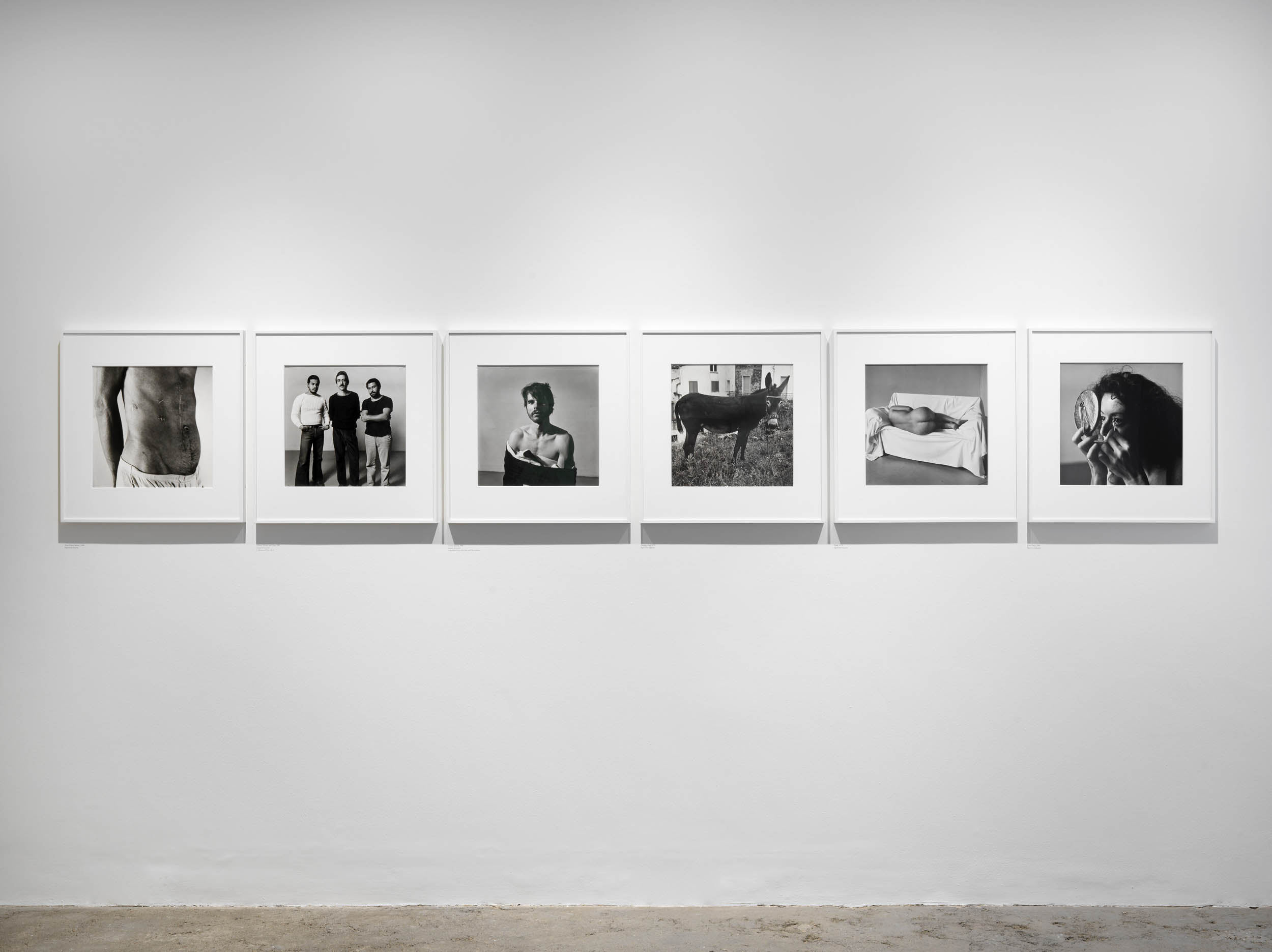



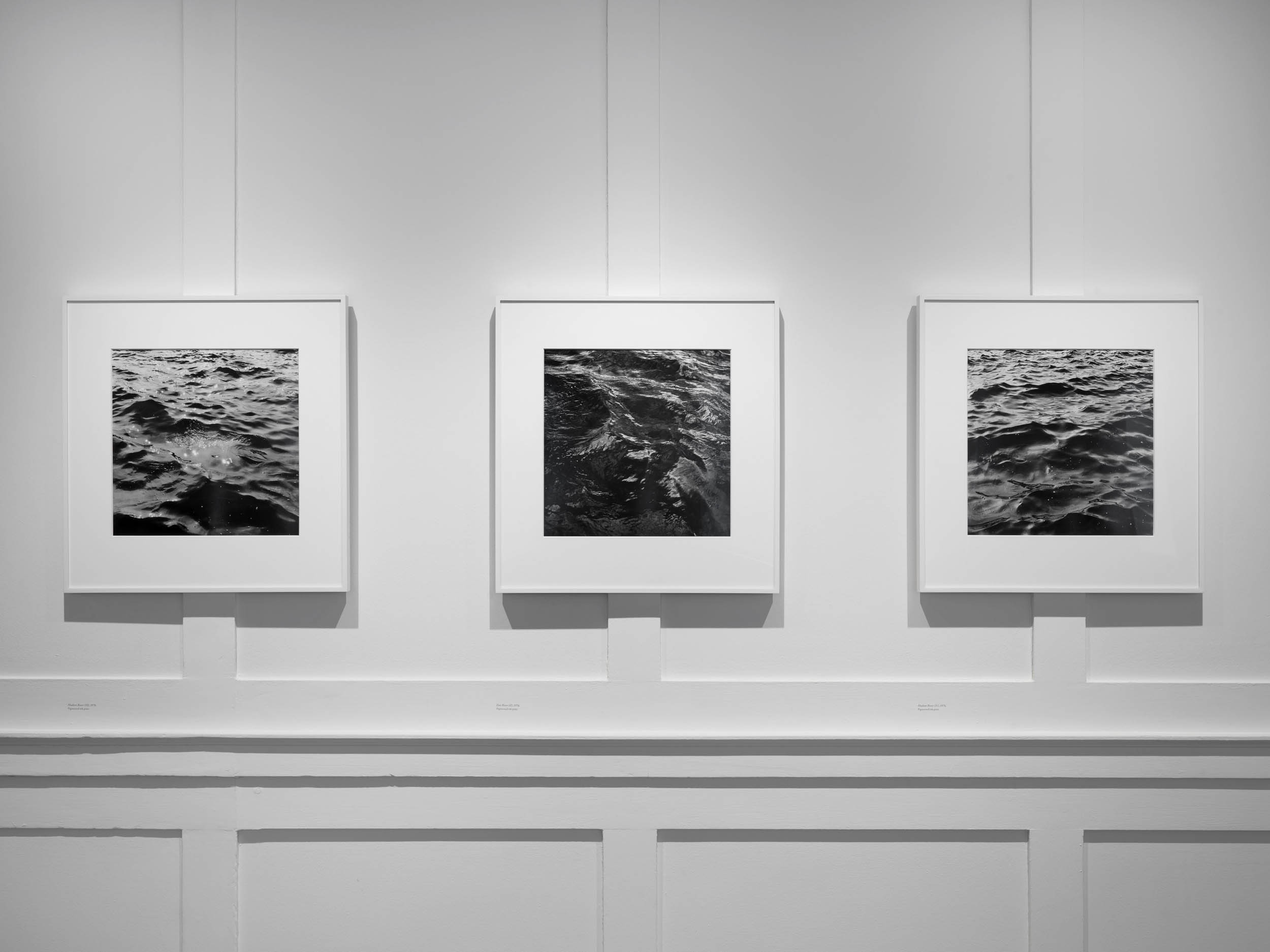
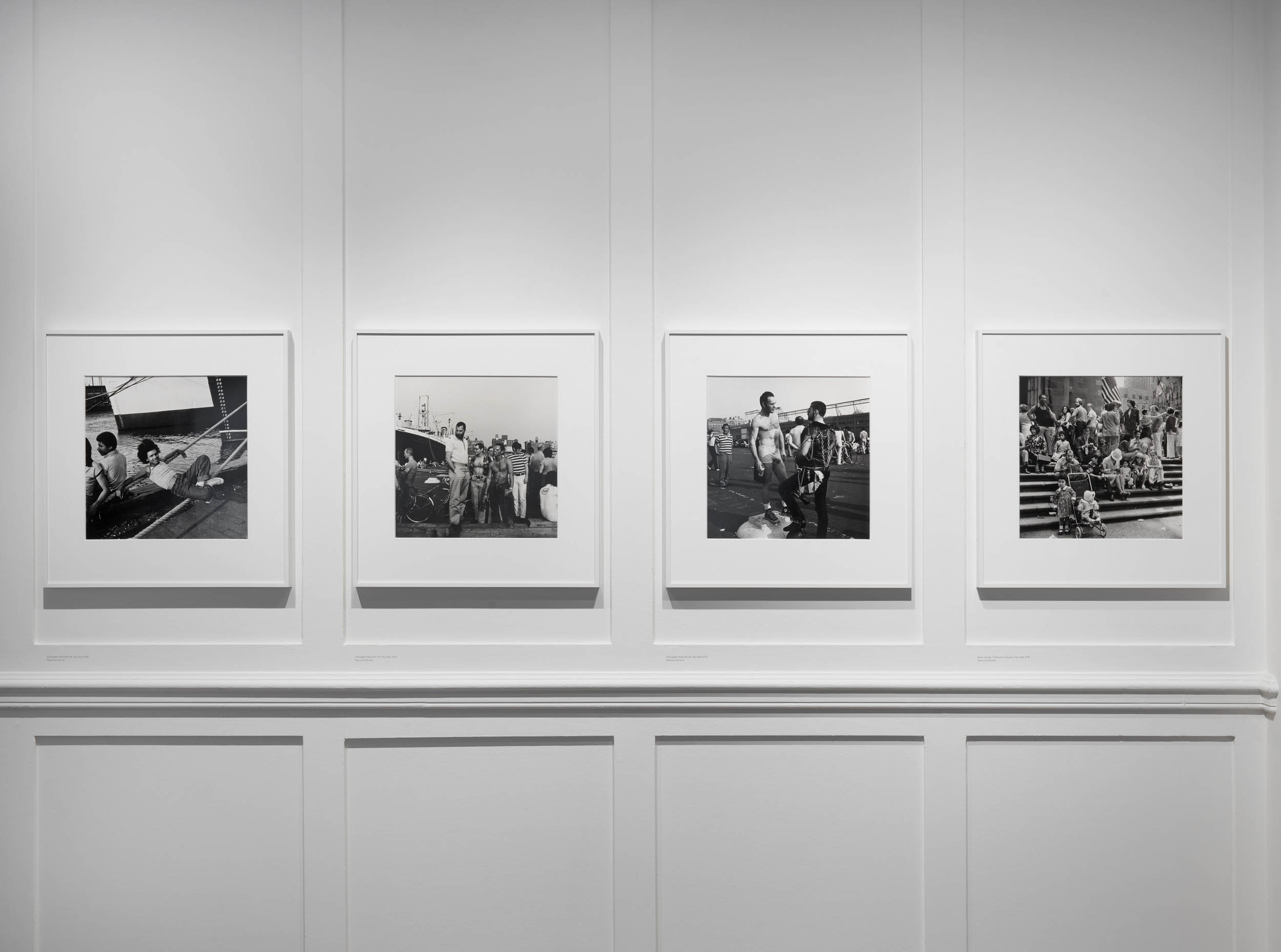


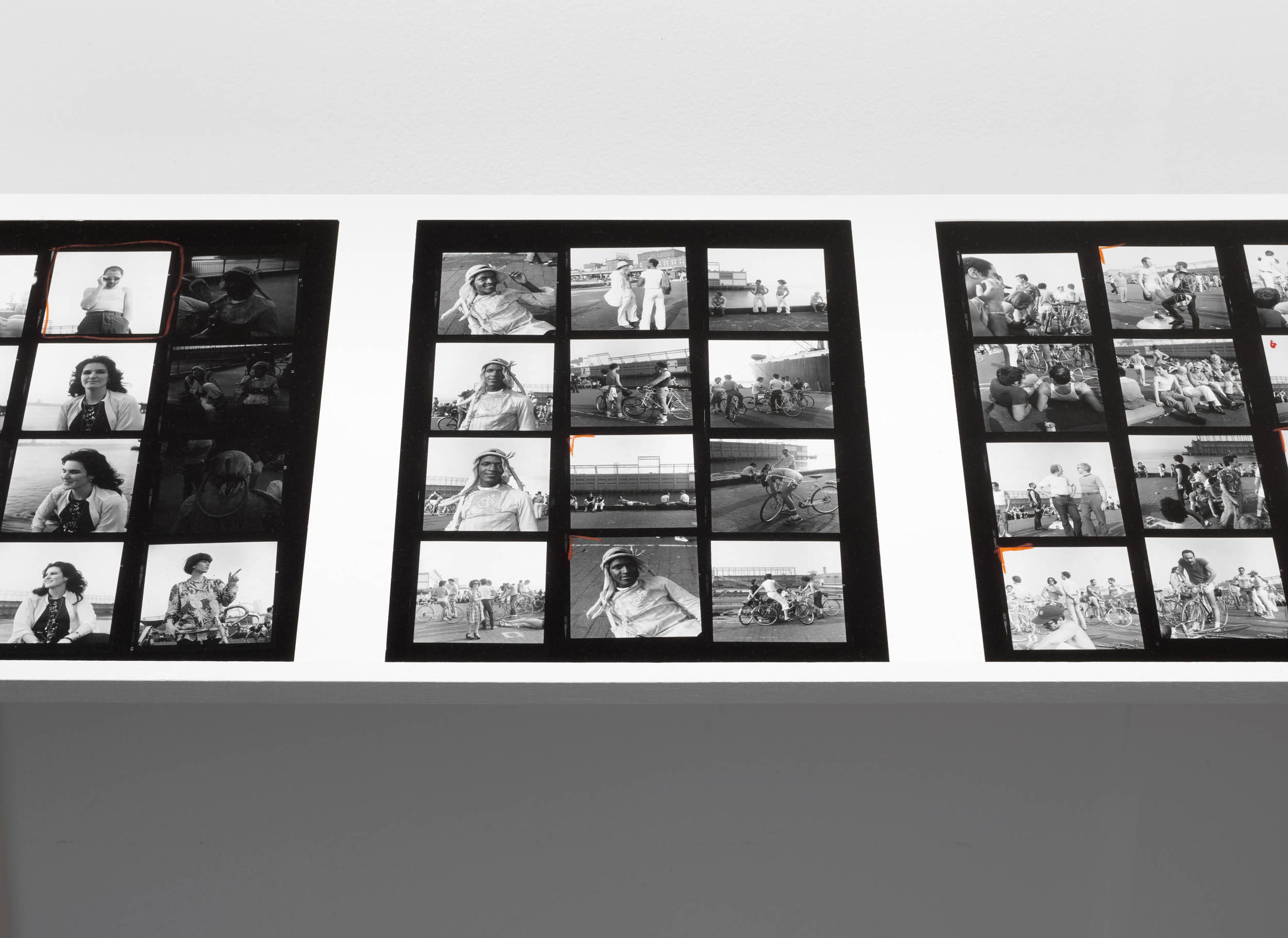
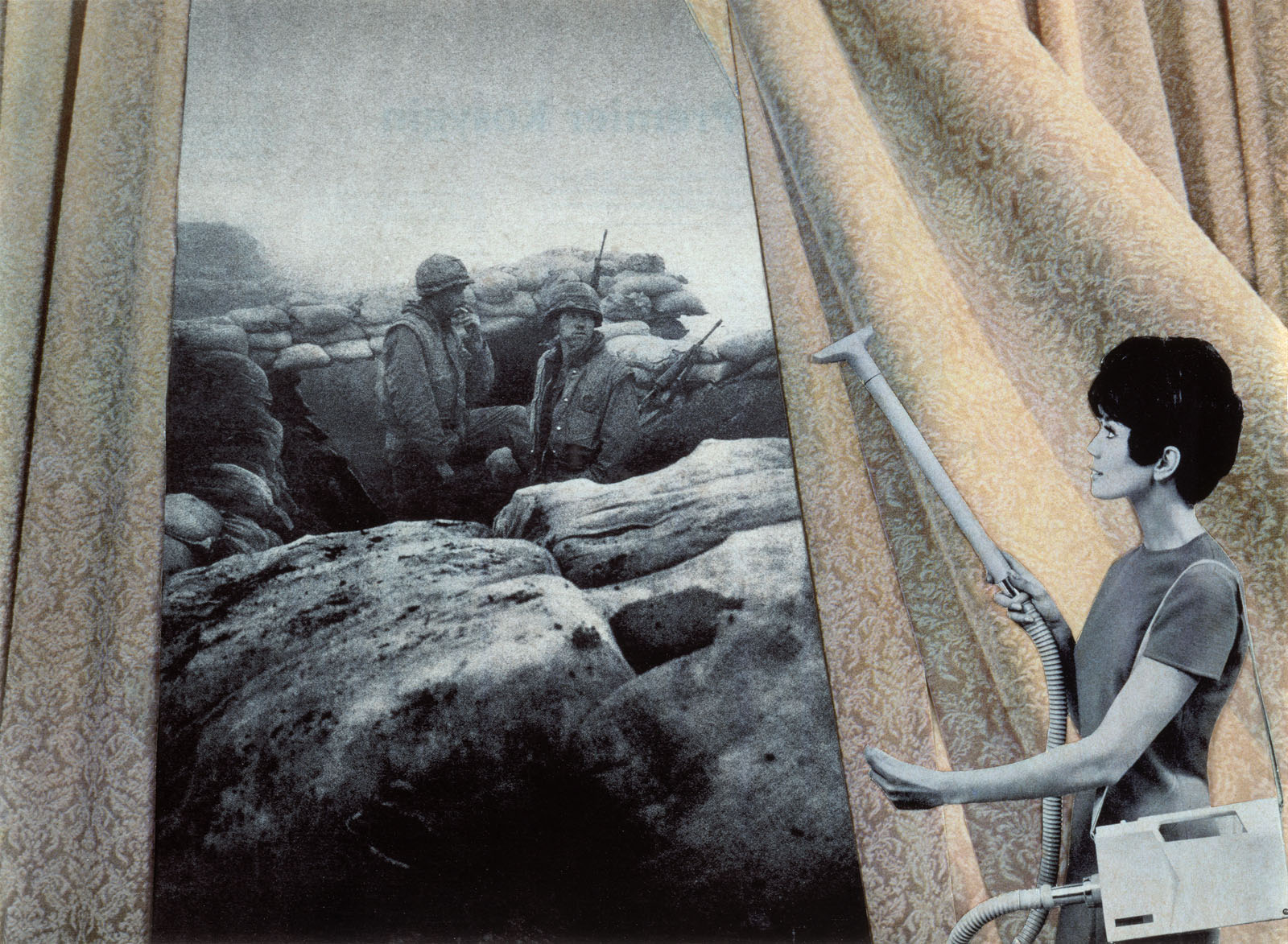











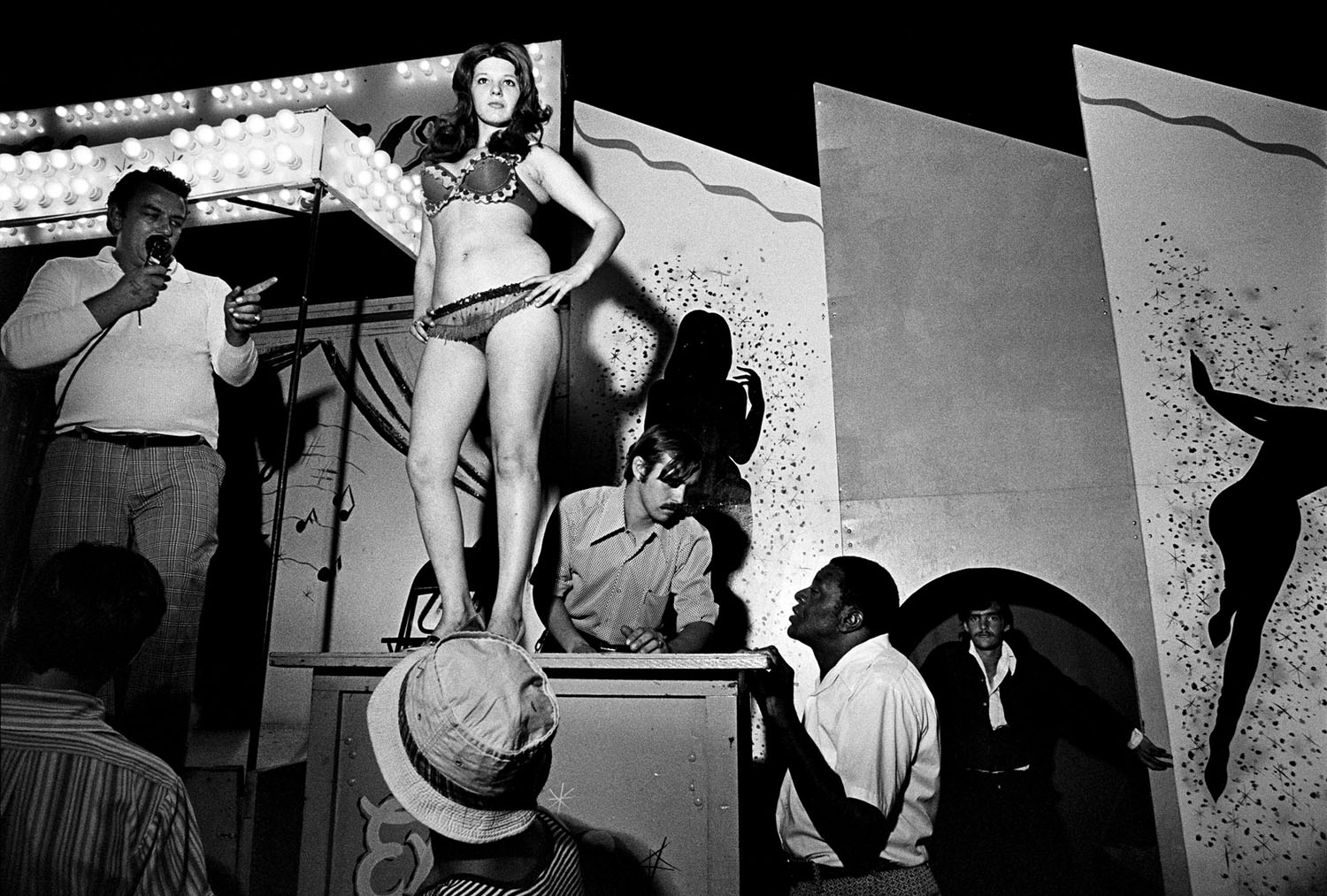


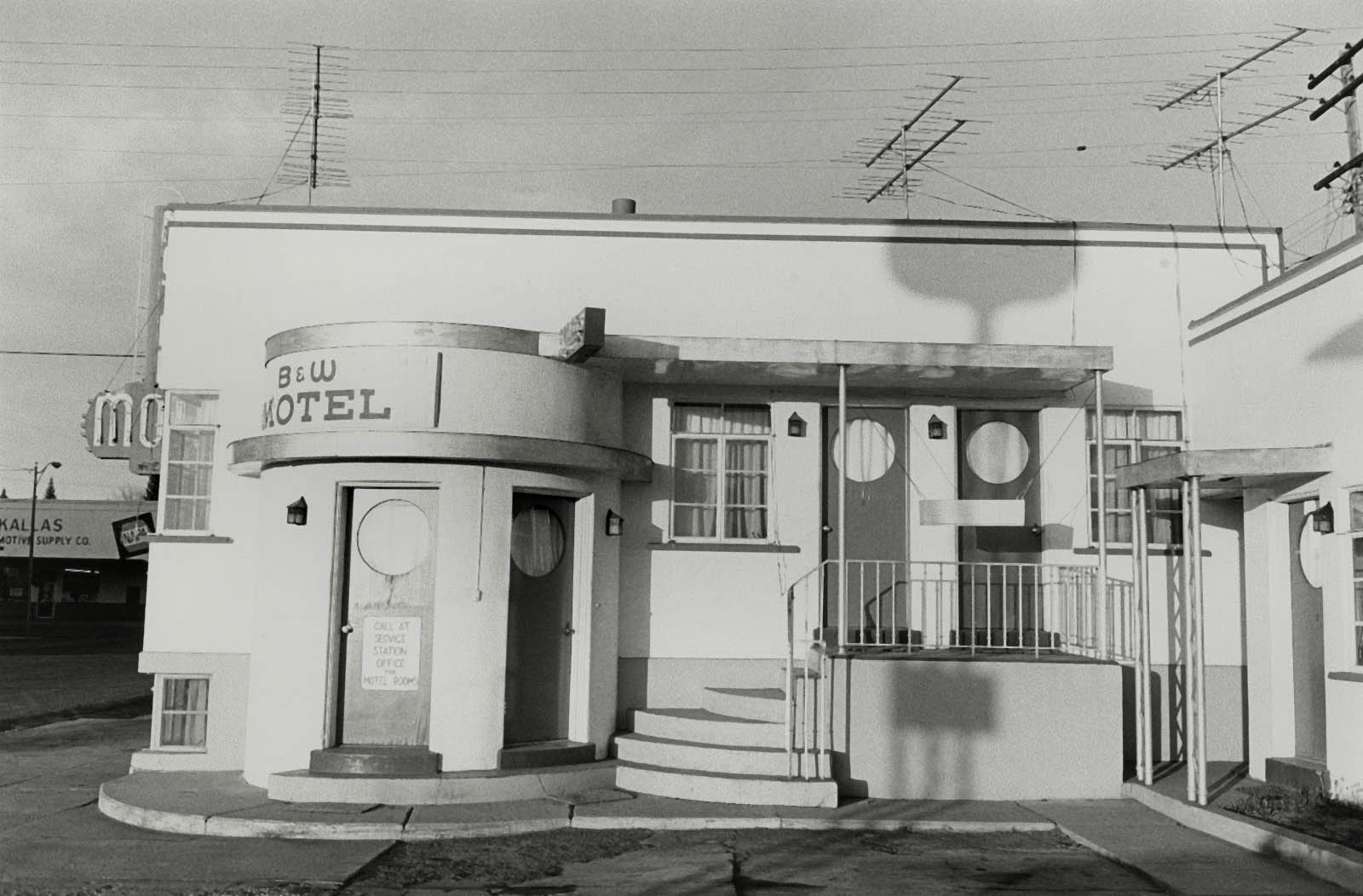

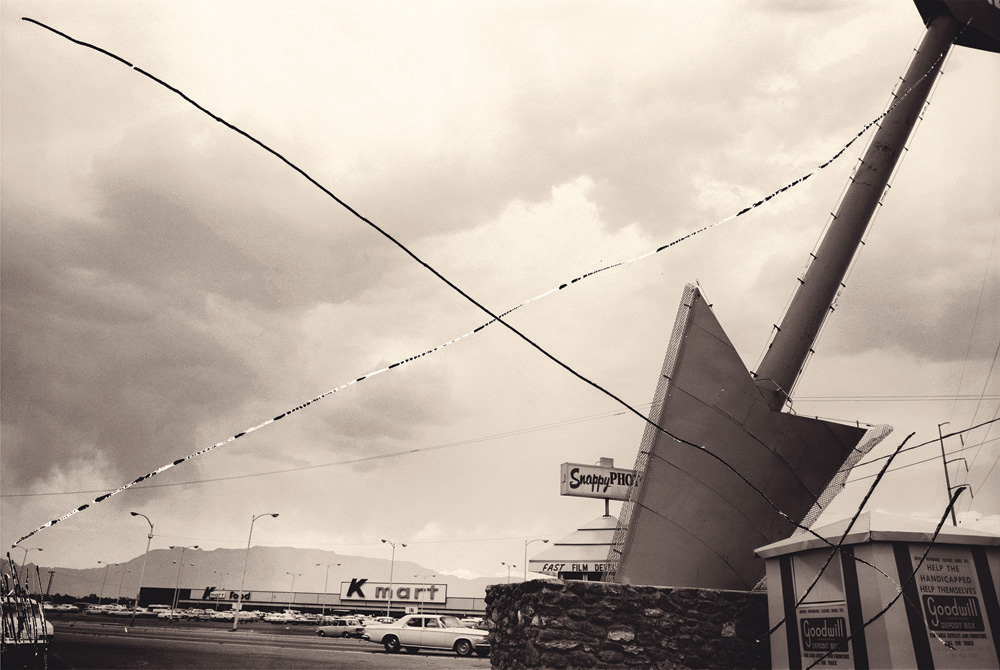
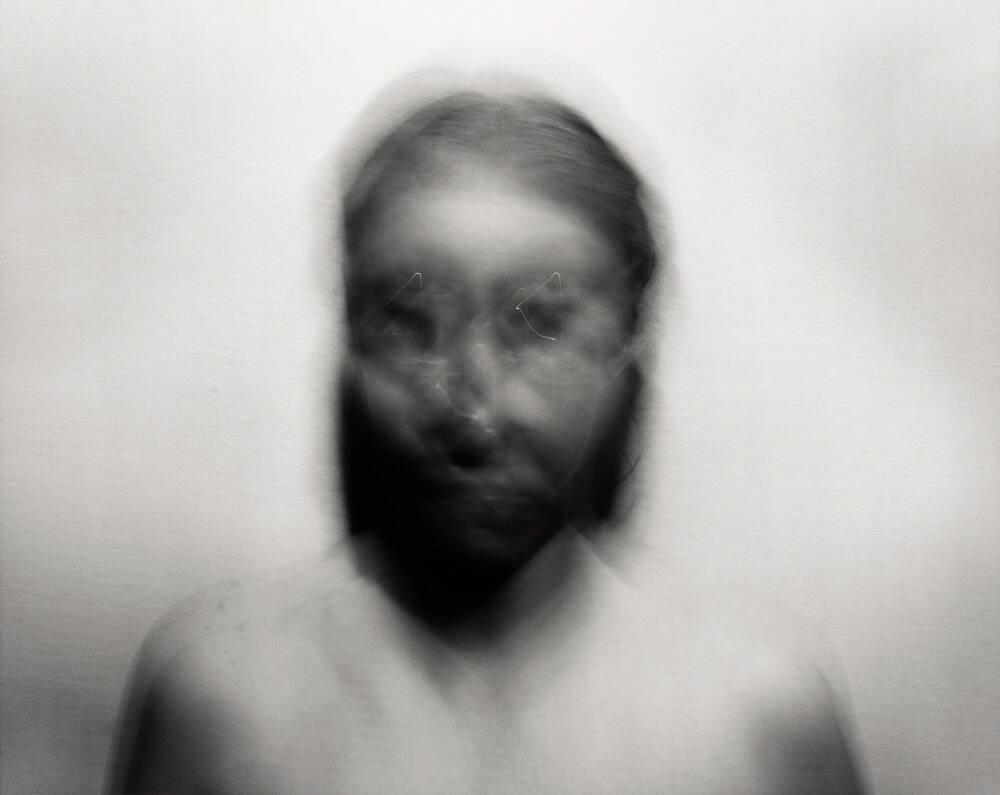
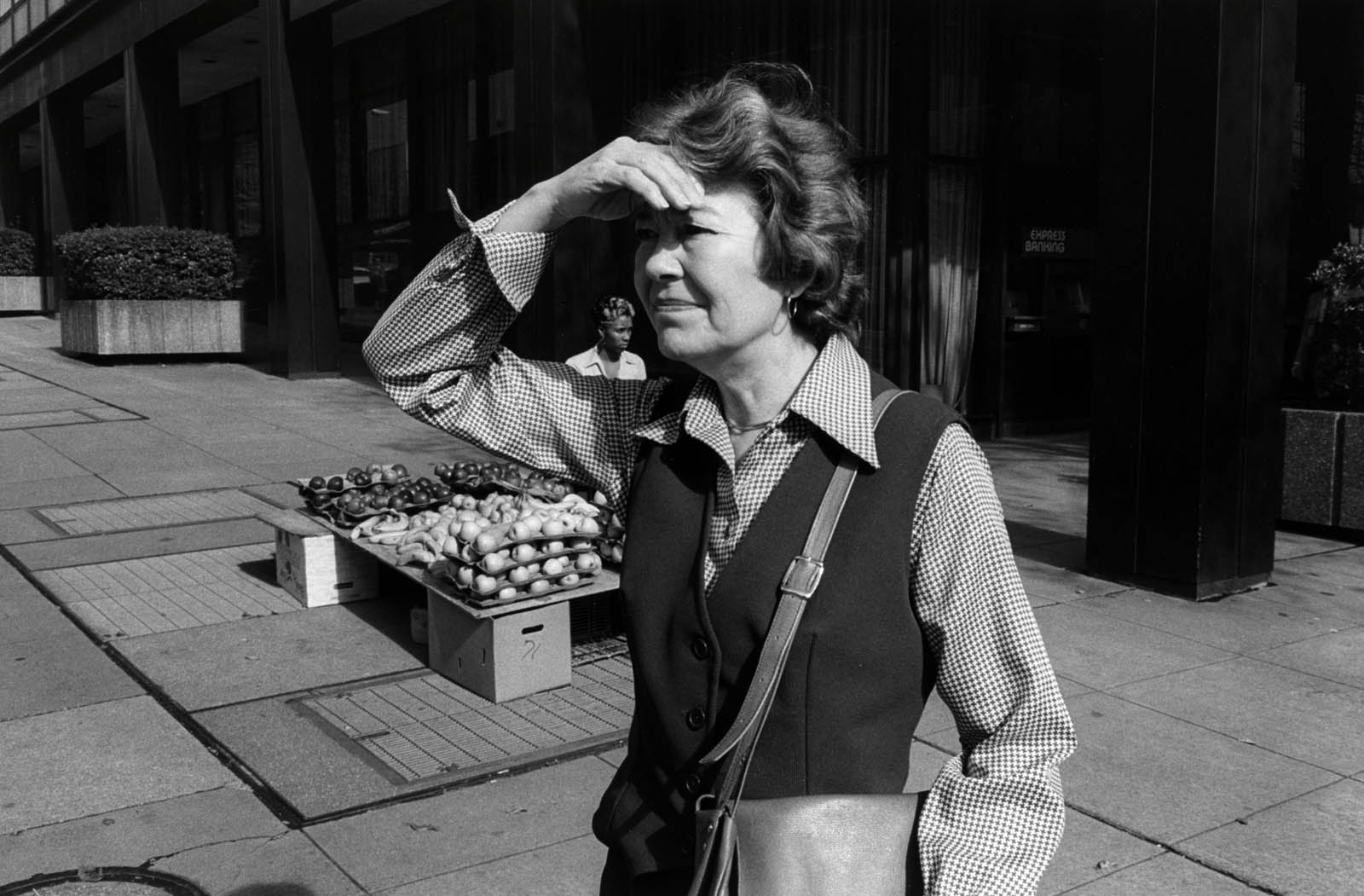










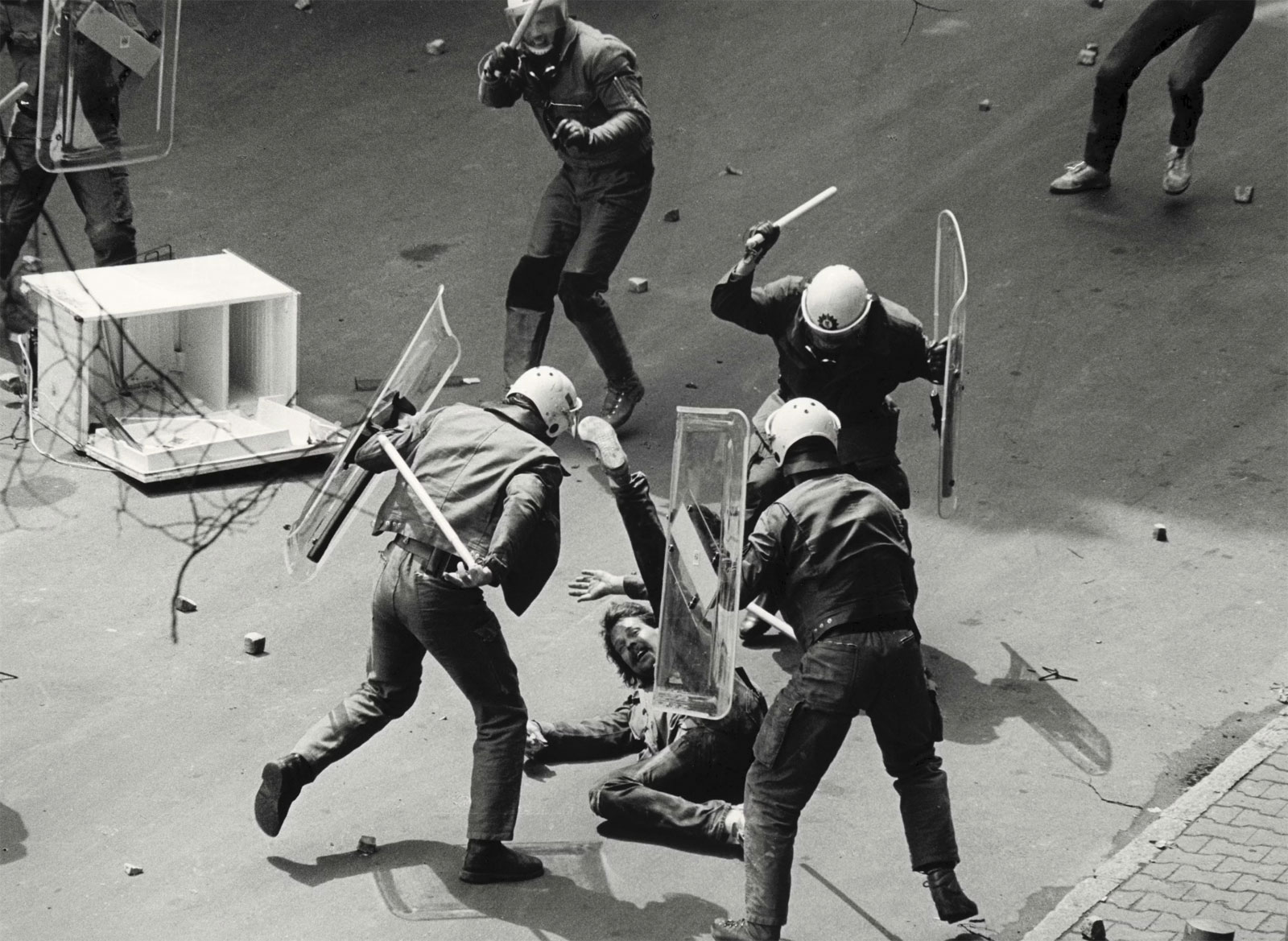
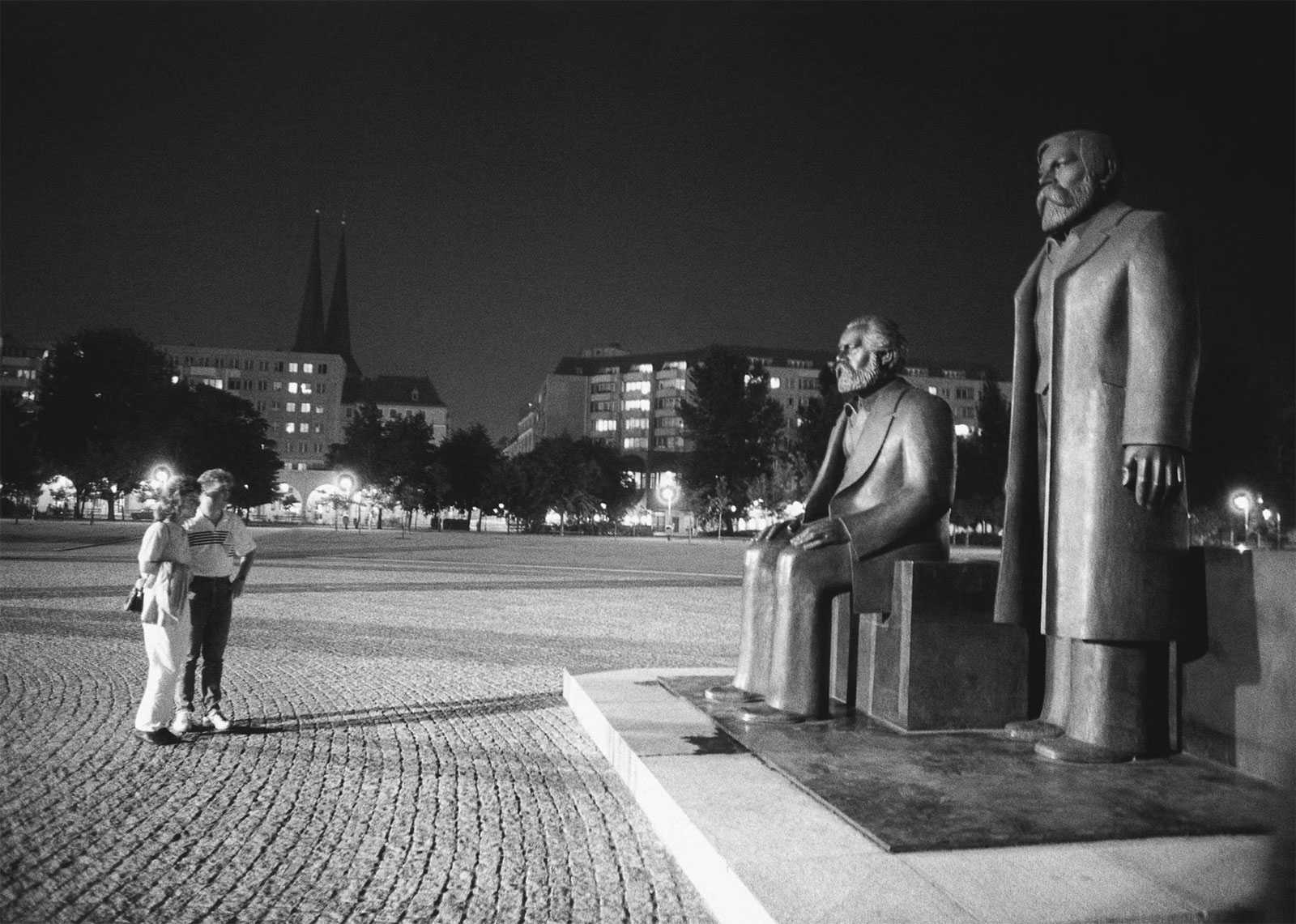

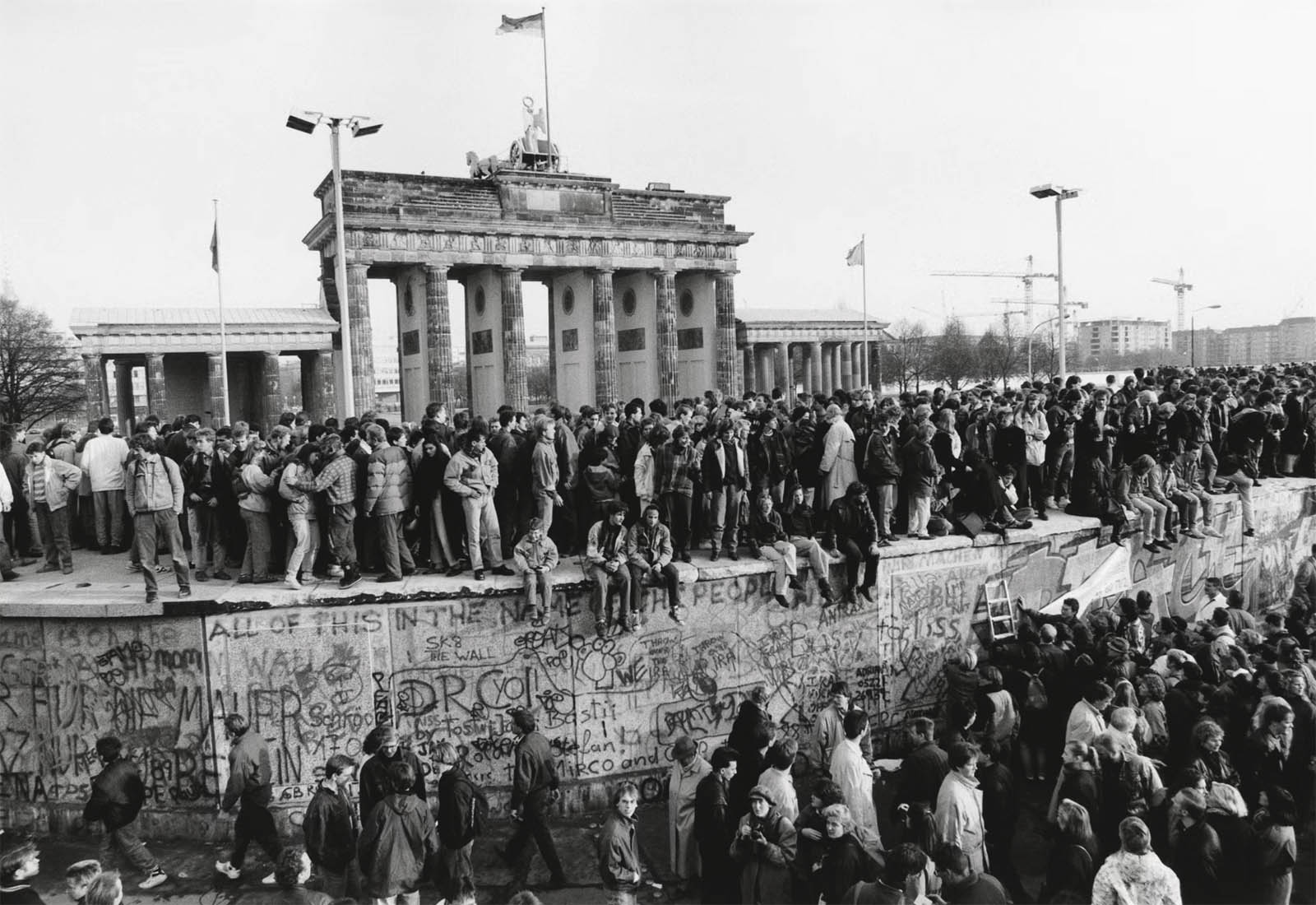

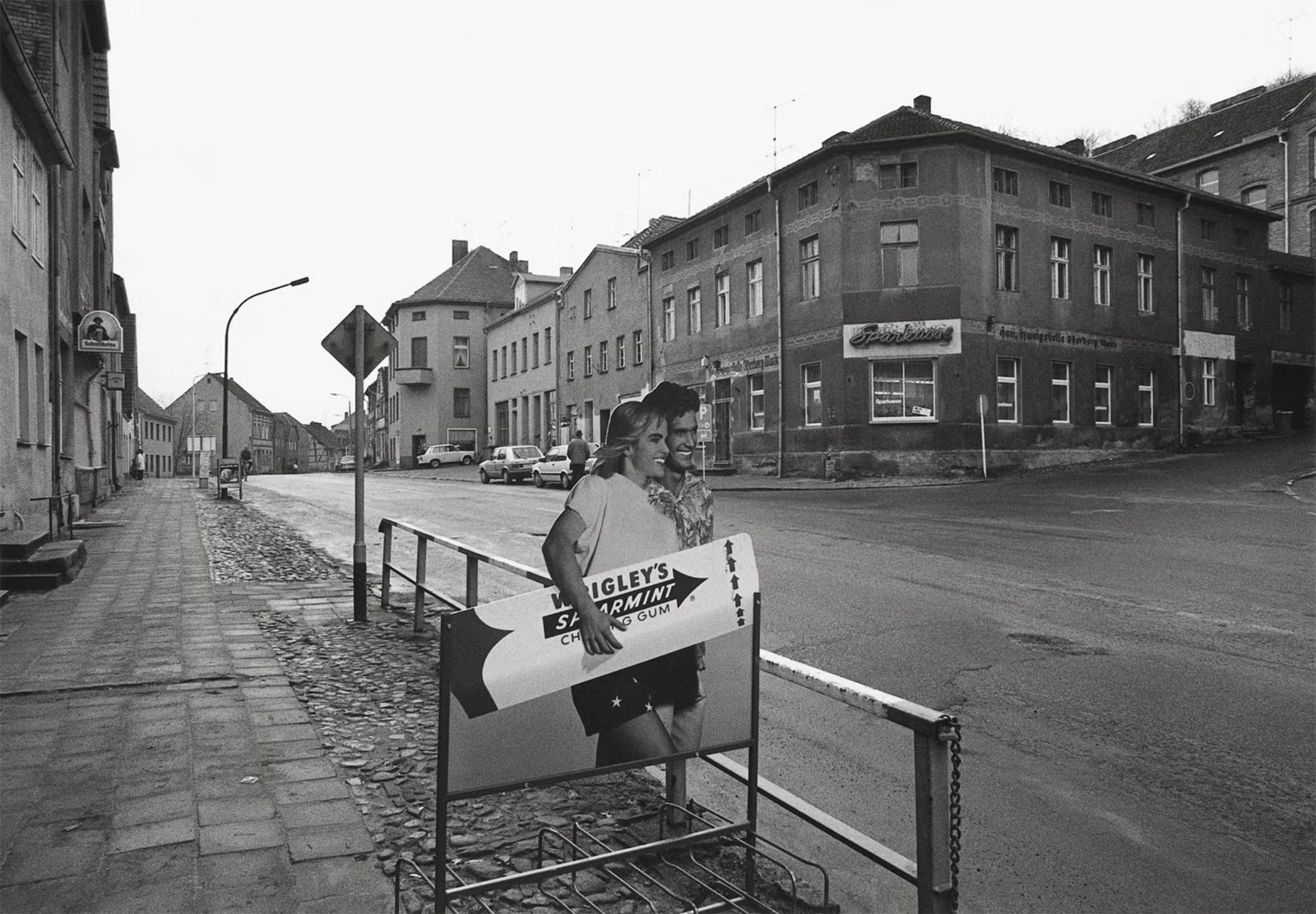


 Art Blart _ art and cultural memory archive
You must be logged in to post a comment.