Exhibition: ‘Warhol and Cars: American Icons’ at The Andy Warhol Museum, Pittsburgh

Exhibition dates: 5th February – 13th May 2012


Many thankx to The Warhol Museum for allowing me to publish the photographs of the art in the posting. Please click on the photographs for a larger version of the image.


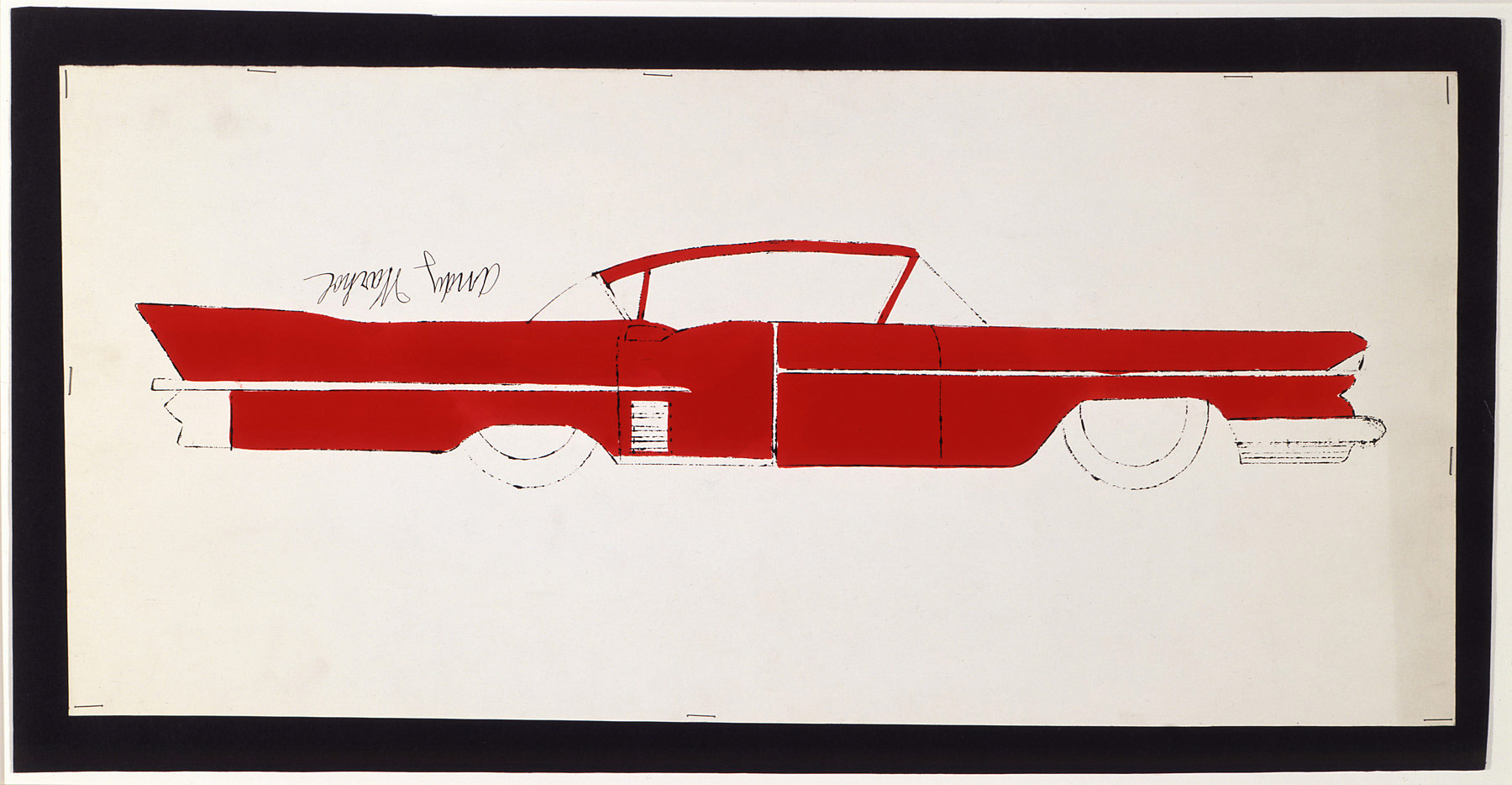
Andy Warhol (American, 1928-1987) 'Car' 1950s


Andy Warhol (American, 1928-1987)
Car (1958 Cadillac Coupe DeVille)
c. 1958
Ink and Dr. Martin’s Aniline dye on Strathmore paper
13 1/4 x 25 5/8 in (33.7 x 65.1cm)
The Andy Warhol Museum, Pittsburgh; Founding Collection, Contribution The Andy Warhol Foundation for the VisualArts, Inc.,
© 2010 The Andy Warhol Foundation for the Visual Arts / Artists Rights Society (ARS), New York


I think of myself as an American artist; I like it here. I think it’s so great. I feel I represent the U.S. in my art but I’m not a social critic: I just paint those objects in my paintings because those are the things I know best… I’ve heard it said that my paintings are as much a part of the fashionable world as clothes and cars.


Andy Warhol, 1966


Andy Warhol (American, 1928-1987) 'Female Fashion Figure' 1950s


Andy Warhol (American, 1928-1987)
Female Fashion Figure (with 1959 Plymouth Sport Fury Convertible)
c. 1959
Ink and Dr. Martin’s Aniline dye on Strathmore paper
20 1/8 x 24 7/8 in (51.1 x 63.2cm)
The Andy Warhol Museum, Pittsburgh; Founding Collection, Contribution The Andy Warhol, Foundation for the Visual Arts, Inc.,
© 2010 The Andy Warhol Foundation for the Visual Arts / Artists Rights Society (ARS), New York


Andy Warhol (American, 1928-1987) '5 Deaths' 1963


Andy Warhol (American, 1928-1987)
5 Deaths
1963
Acrylic and silkscreen ink on canvas
20 1/8 x 30 in (51.1 x 76.2cm)
The Andy Warhol Museum, Pittsburgh; Founding Collection, Contribution The Andy Warhol Foundation for the Visual Arts, Inc.,
© 2010 The Andy Warhol Foundation for the Visual Arts / Artists Rights Society (ARS), New York.


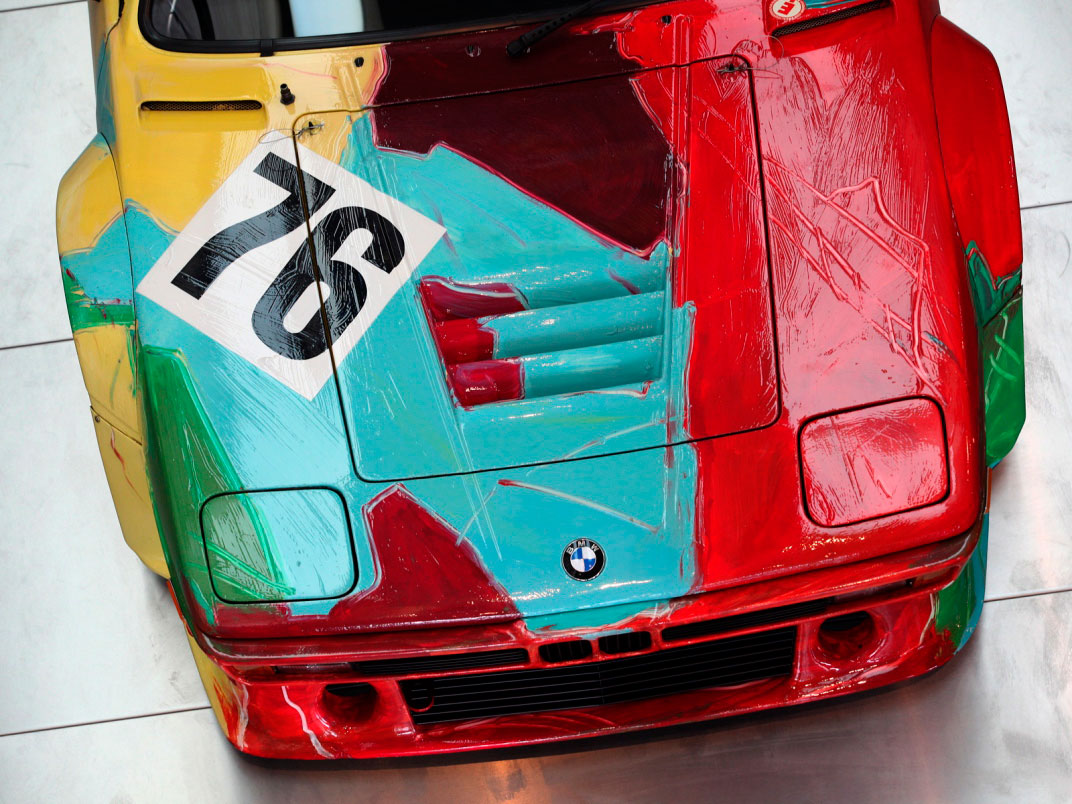
Andy Warhol (American, 1928-1987) 'BMW M1 Art Race Car' 1979


Andy Warhol (American, 1928-1987)
BMW M1 Art Race Car
1979


Andy Warhol (American, 1928-1987) 'BMW M1 Art Race Car' 1979 (detail)


Andy Warhol (American, 1928-1987)
BMW M1 Art Race Car (detail)
1979


Warhol and Cars: American Icons is the first exhibition to examine Warhol’s enduring fascination with automotive vehicles as products of American consumer society. This exhibition features more than forty drawings, paintings, photographs, and related archival material spanning from 1946 to 1986. As one of the most iconic and influential artists of the 20th century, Andy Warhol has helped to define America. His signature images of such American products and celebrities as Campbell’s soup cans, Coca-Cola bottles, Marilyn Monroe, and Elizabeth Taylor have become instantly recognisable. The majority of the work in the exhibition is from The Andy Warhol Museum’s collection.

The exhibition, organised by the Montclair Art Museum in New Jersey, traces the development of Warhol’s work with cars throughout his career. Warhol and Cars highlights include drawing created in the 1940s; works on paper of the 1950s, as well as paintings and prints from the 60s, 70s and 80s. The exhibition is organised chronologically and thematically, tracing the development of Warhol’s work with cars throughout his career. Exhibition highlights include a rare, spontaneous drawing of the 1940s featuring a produce truck operated by Warhol’s brother Paul; works on paper of the 1950s, dating from the era of Warhol’s commercial magazine illustration; and paintings and prints from his important and poignant Car Crash series.

A key work is Twelve Cadillacs, part of a group of nine Warhol car paintings published in the November 1962 issue of Harper’s Bazaar, which commissioned Warhol to make a visual commentary on the phenomenon of the iconic American motor car. The repetition and grid organisation became a central feature of Warhol’s work. For the first time, Twelve Cadillacs will be juxtaposed with potential source images, as well as the related Seven Cadillacs and the hand-painted Lincoln Continental, both of which were also part of the Harper’s Bazaar commission. Also on view will be a related drawing and car model of Cadillacs from the Jean S. and Frederic A. Sharf Collection of American Automobile Art.

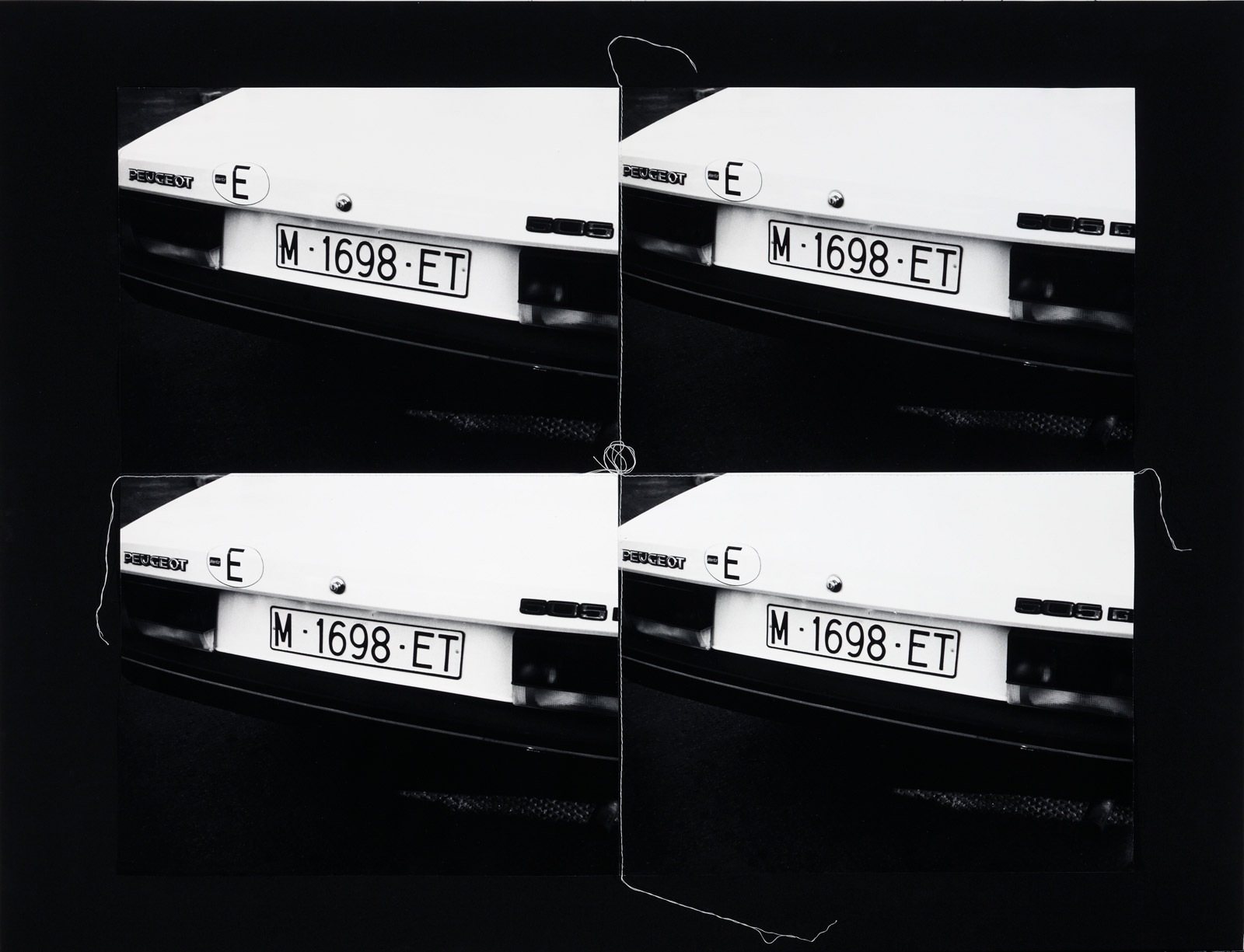
Warhol’s continued engagement with the theme of the automobile is seen in prints and paintings of the 1970s and 1980s based on Volkswagen advertisements, as well as in multiple photographs of European and American cars sewn together with thread into a format evocative of Warhol’s characteristic assembly-line aesthetic. An original BMW M-1 racing car that was hand-painted by Warhol will be on display in the entrance gallery. A film of Warhol painting a BMW in 1979 as part of the BMW Art Race Car Projects introduced by French race car driver Herve Poulin will be on view during the exhibition. The car is part of the BMW Museum’s collection in Munich and was last displayed in the United States at Grand Central Terminal in New York City in 2009.

Press release from The Warhol Museum website


Andy Warhol (American, 1928-87) '1978 BMW 320i Art Car Maquette' 1978


Andy Warhol (American, 1928-1987)
1978 BMW 320i Art Car Maquette
1978


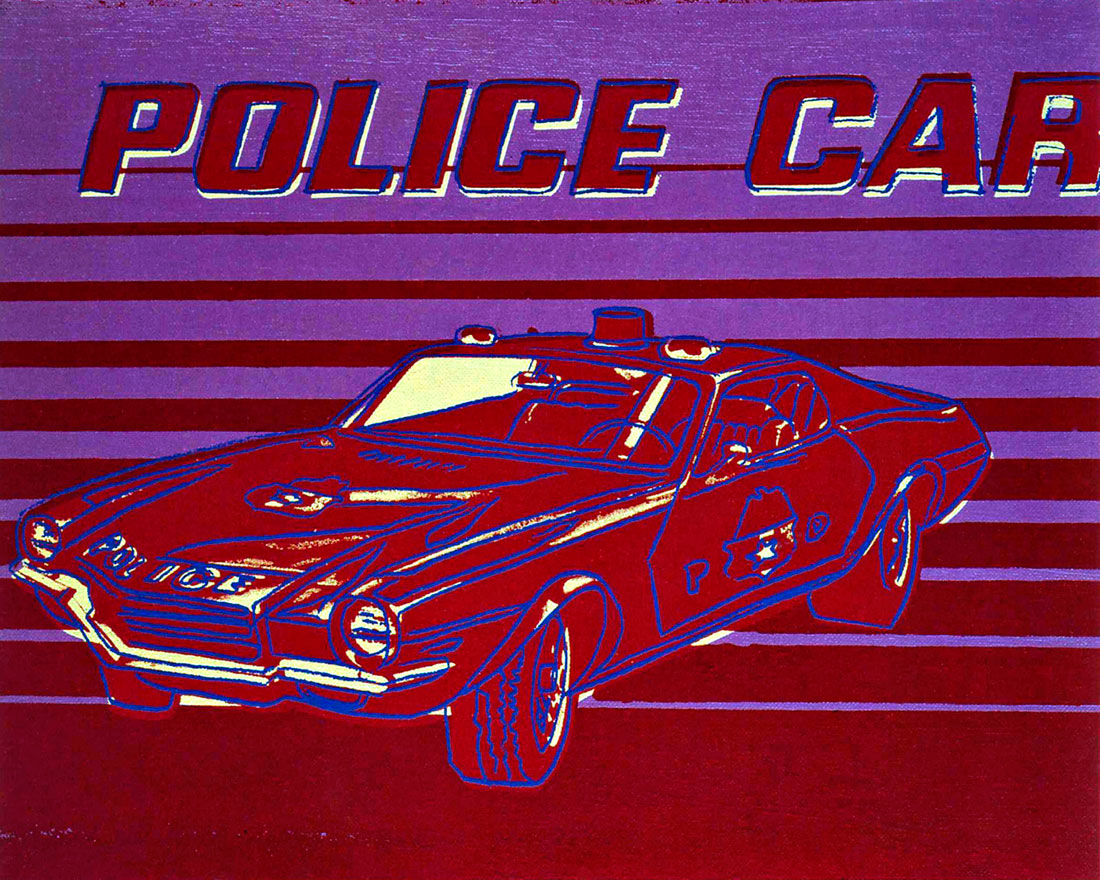
Andy Warhol (American, 1928-1987) 'Police Car' 1983


Andy Warhol (American, 1928-1987)
Police Car
1983
From the series Paintings for Children
Synthetic polymer and silkscreen inks on canvas
The Andy Warhol Museum, Pittsburgh; Founding Collection, Contribution The Andy Warhol Foundation for the Visual Arts, Inc.,
© 2010 The Andy Warhol Foundation for the Visual Arts / Artists Rights Society (ARS), New York.


Andy Warhol (American, 1928-1987) 'European License Plate, 1976-1986' 1986


Andy Warhol (American, 1928-1987)
European License Plate, 1976-1986
1986
© AWF


Andy Warhol (American, 1928-1987) 'Truck' 1985


Andy Warhol (American, 1928-1987)
Truck
1985
© AWF


Andy Warhol (American, 1928-1987) 'Seven Cadillacs' 1962


Andy Warhol (American, 1928-1987)
Seven Cadillacs
1962
Silkscreen ink on linen
56 x 19 in (142.2 x 48.3cm)
The Andy Warhol Museum, Pittsburgh; Founding Collection, Contribution The Andy Warhol Foundation for the Visual Arts, Inc.,
© 2010 The Andy Warhol Foundation for the Visual Arts / Artists Rights Society (ARS), New York.


The Andy Warhol Museum
117 Sandusky Street
Pittsburgh, PA 15212-5890
Phone: 412-237-8300

Opening hours:
Thursday – Monday 10am – 5pm
Tuesday closed

Andy Warhol Museum website

LIKE ART BLART ON FACEBOOK

Back to top

Notes from the lecture ‘Anti-Entropy: A natural History of the Studio’ by William Kentridge at the Australian Centre for the Moving Image (ACMI), Melbourne

Date: 8th March 2012


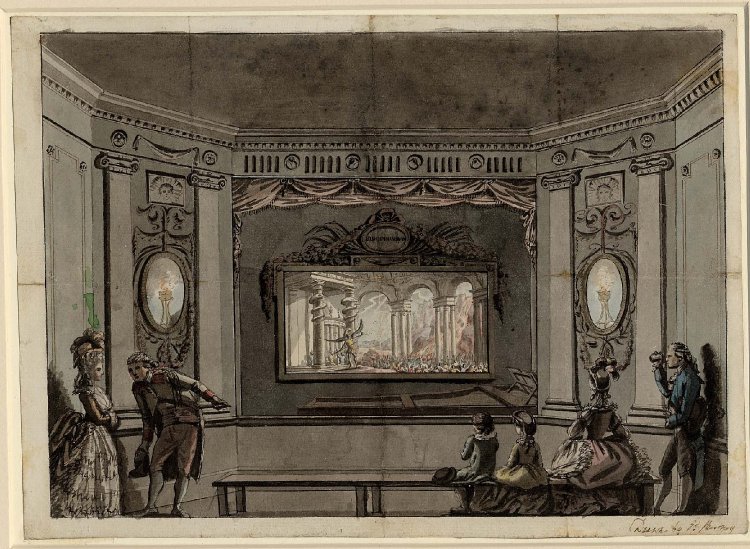
Edward Francis Burney (English, 1760-1848) 'A view of Philip James de Loutherbourg's Eidophusikon' c. 1782


Edward Francis Burney (English, 1760-1848)
A view of Philip James de Loutherbourg’s Eidophusikon
c. 1782
At left a man bowing to a woman, to right figures seated on a bench in the foreground, watching a scene titled ‘Satan Arraying his Troops on the Banks of a Fiery Lake, with the Raising of the Palace of Pandemonium’ during a performance of Milton’s “Paradise Lost” on a stage labelled EIDOPHUSIKON in a cartouche above
Pen and grey ink and grey wash, with watercolour
© The Trustees of the British Museum


A munificence of Minor White and the revelation of the object through contemplation could be found in the lecture by William Kentridge. As an artist you must keep repeating and constructively playing and something else, some new idea, some new way of looking at the world may emerge. As a glimpse into the working methodology of one of the worlds great artists the lecture was fascinating stuff!

Images in this posting are used under fair use for commentary and illustration of the lecture notes. No copyright breach is intended. © All rights remain with the copyright holder. My additions to the text can be found in [ ] brackets.


On self-doubt as an artist

“At four in the morning there are no lack of branches for the crow of doubt to land upon.”


On Memory

“Memory – both memory and the forgetting of memory. For example, the building of monuments [monuments to the Holocaust, to wars] takes the responsibility of remembering away.”


On Play

“We absolutely want to make sense of the world in that way. That’s one of the principles of play – that however much you distort and break things apart, in the end we will try to reconstruct them in some way to make sense of the world. I think that every child does it. It’s fundamental.”


On Looking

“It’s the capacity for recognition that makes a difference between order and disorder in looking at visual images. And it’s the vocabulary of recognisable images that we have inside us, which is completely vital to what it is to see. I don’t really buy the idea that order and disorder are the same.”


William Kentridge


First History of the Cinema

Performances of Transformation

~ Cinema
~ Shadow dancing
~ Eidophusikon (The Eidophusikon was a piece of art, no longer extant, created by 18th century English painter Philip James de Loutherbourg. It opened in Leicester Square in February 1781.Described by the media of his day as “Moving Pictures, representing Phenomena of Nature,” the Eidophusikon can be considered an early form of movie making. The effect was achieved by mirrors and pulleys.
~ Quick change artist
~ Stage magicians


All work against the time of the audience e.g. the quick change artist may take 3 seconds, the sunset in a Georges Méliès film may take 2 minutes instead of 2 hours. The technology / scrims / screens happen at different speeds but the different times become one in the finished film. There is an elision of time: appearances / disappearances. Stopping time [changing a scene, changing clothing etc…], starting time again.


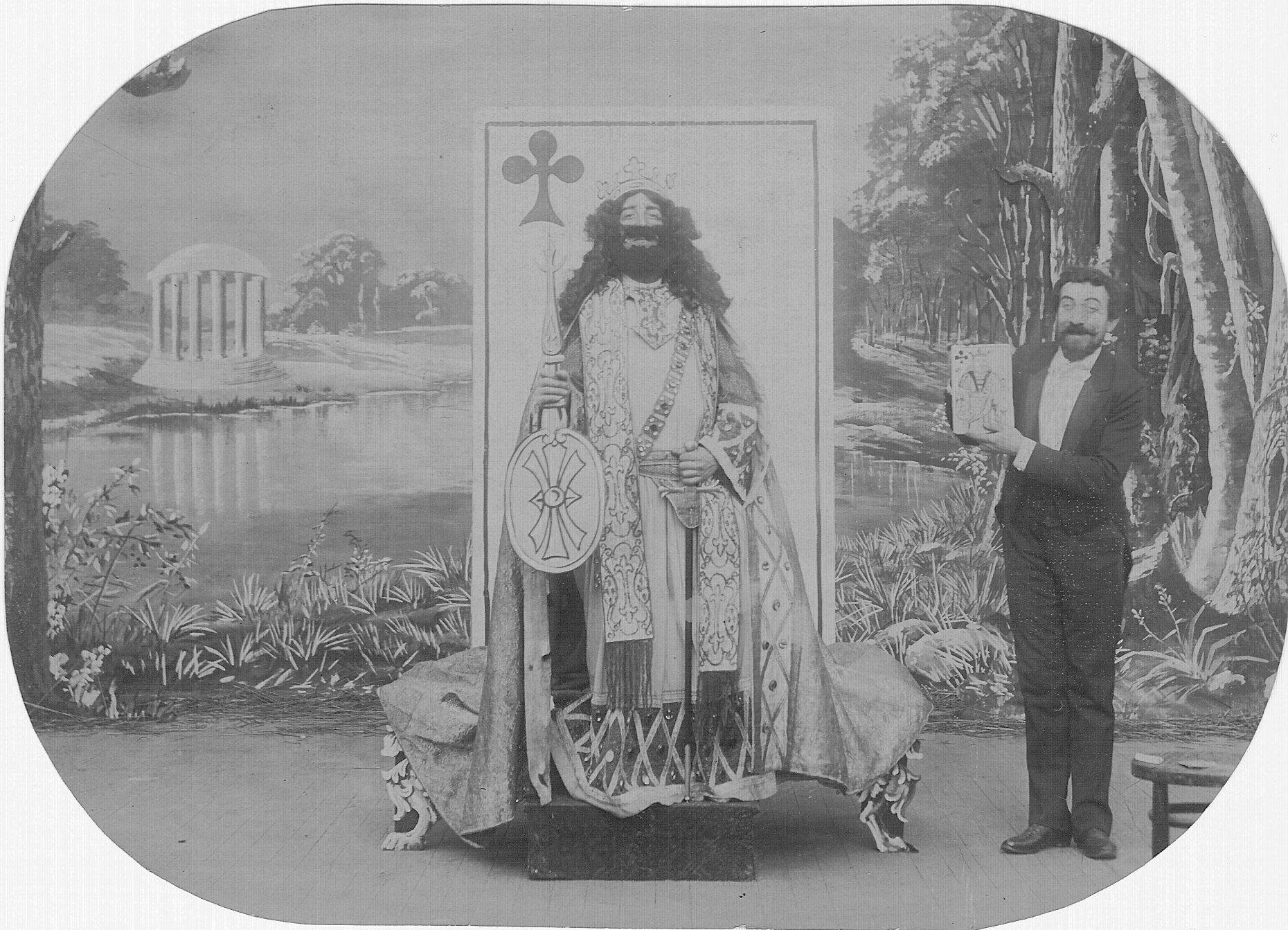
Méliès starring in 'The Living Playing Cards' 1904


George Méliès starring in The Living Playing Cards (1904)


Second History of the Cinema

The sedimented gaze of the early camera. The slow chemicals meant that the object had to wait under the camera’s gaze for minutes. People were held in place by stiff neck braces to capture the trace of their likeness. Congealed time.

On the other hand, in cinema, a tear forward becomes a repair in reverse.

By rolling the film in reverse there is a REVERSAL of time, a REMAKING of the world – the power to be more than you are – by reversing to perfection. You throw a book or smash a plate: in reverse they become perfect again, a utopian world.

YOU MUST GIVE YOURSELF OVER TO PLAY!

Giving yourself over to what the medium suggests, you follow the metaphor back to the surface. Following the activity [of play] back to its root. Projecting forwards, projecting backwards. There is endless rehearsal, constant repetition, then discovering the nature of the final shot or drawing to be made. New ideas get thrown around: leaning into the experience, the experiment, the repetition, the rehearsal.

Four elements

1/ something to be seen

2/ the utopian perfection: perfectibility

3/ the grammar of learning that action

4/ Greater ideas, further ideas and thoughts; potentiality and its LOSS
Further meanings arise


How is this achieved?
Rehearsal, repetition

New thoughts will arise being led by the body in the studio NOT in the mind. Not conceptual but the feeling of the body walking in the studio.

The physical action as the starting point not the concept.

Six different degrees of tension

1/ Least tension in the body possible: slumped

2/ Relaxed

3/ Neutral

4/ Purpose: an impulse to make things happen – desire

5/ Insistence: listen to me, this is very important

6/ Manic: Noh theatre with its rictus of the body


What the body suggests is the construction of an image.

There are different degrees of tension in these performances. What do they suggest? This reverse osmosis from one state to another?


Third History of Cinema

Technologies of Looking

Pre-cinematic devices – a process of seeing in the world, of looking. Produces a reconfigured seeing, the invisible made [moving] visible.

Stereoscope

3D world made into a 2D image put back into 3D by our brains. The nature of binocularity, of depth perception. We see an illusion of depth, a construction by the eyes. Our brain is a muscle combining the two images. Depth of Field (DOF): focusing at different distances, we are inside the field of the image. Peripheral vision is blanked off; we look through a magnifying glass. A machine for demonstrating seeing.

Text from the Wikipedia website


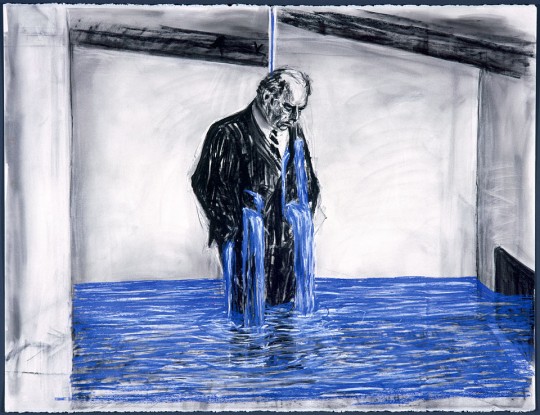
William Kentridge (South African, b. 1955) Drawing for the film 'Stereoscope' 1998-1999


William Kentridge (South African, b. 1955)
Drawing for the film Stereoscope
1998-1999
Charcoal, pastel, and coloured pencil on paper
The Museum of Modern Art, New York
© 2008 William Kentridge


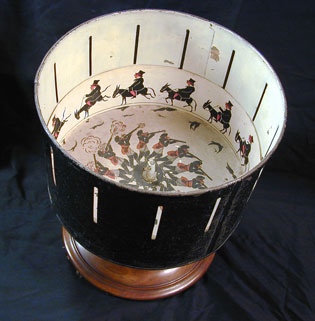
Zoetrope by William George Horner, 1834


Zoetrope by William George Horner, 1834


Zoetrope

An illusion of movement not depth. Double revelation:

A/ the brain constructed illusion of movement
B/ Caught in time [as the action goes around and around] and wanting to get out of it!

THIS IS CRITICAL – THE ACTION OF REPETITION IS IMPORTANT!

In the reordering, in the crack, something else may emerge, some new idea may eventuate. The tearing of time. 

[Marcus: the cleft in time]

Text from the Wikipedia website

The Etching Press

There are erotics built into the language of the etching, but there is also a logic built into the machine used for etching. The Proof print, arriving at the first state. Going on the journey from artist as maker to artist as viewer through the mechanism of the etching press.


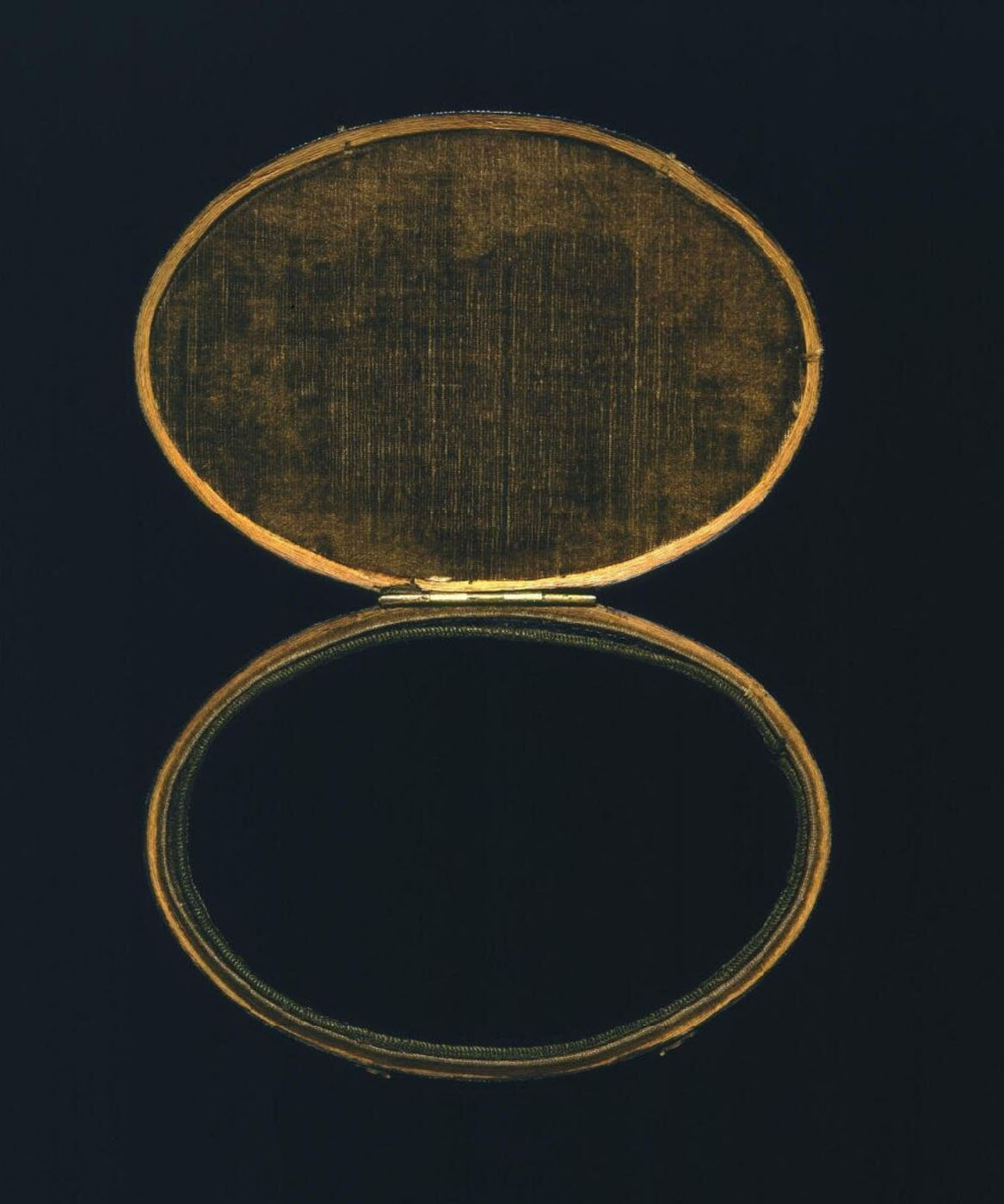
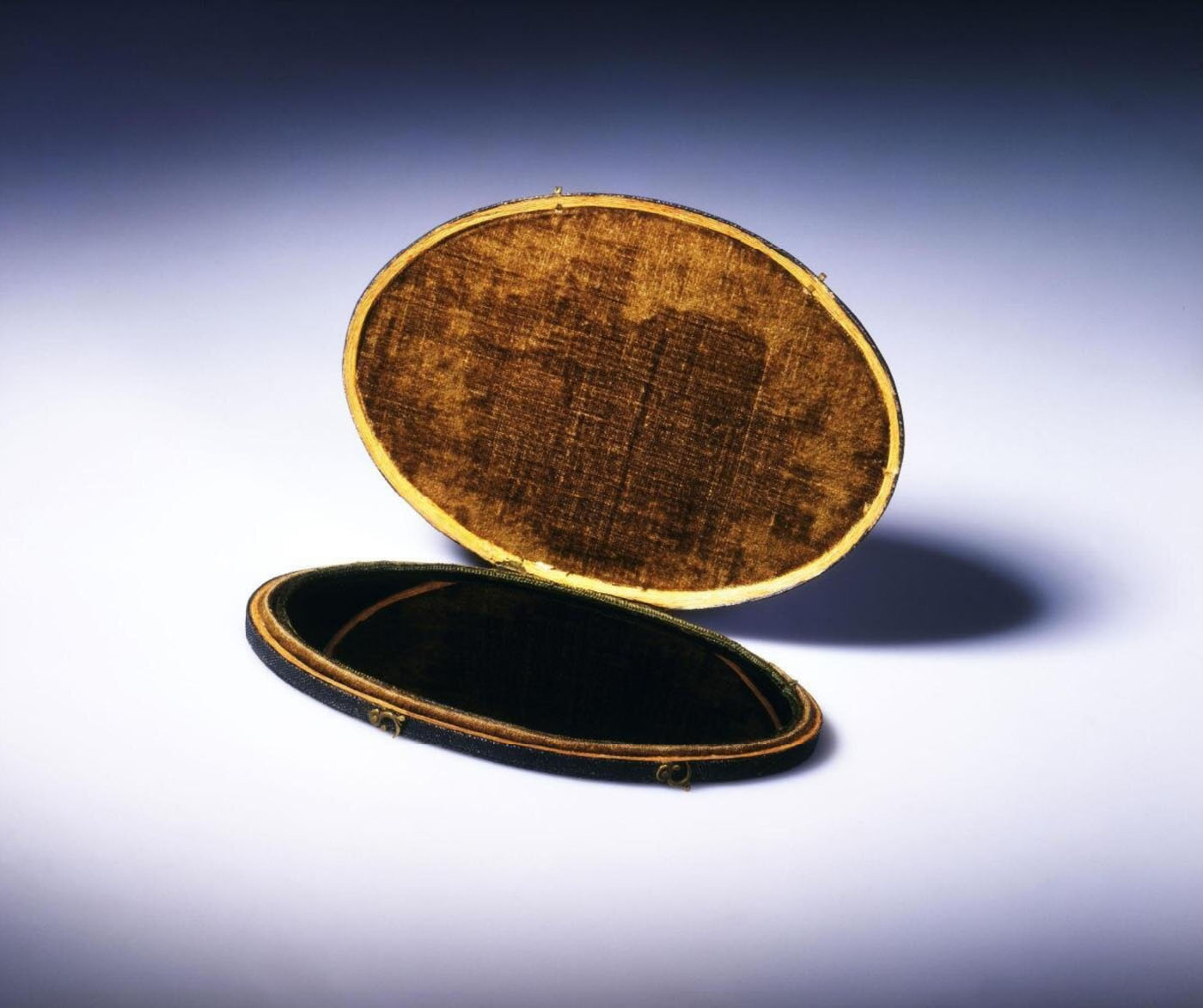
Artist/Maker unknown. 'Claude Glass' manufactured in England, 18th century


Artist / Maker unknown
Claude Glass, manufactured in England
18th century
V & A


Claude Glass

“A Claude glass (or black mirror) is a small mirror, slightly convex in shape, with its surface tinted a dark colour. Bound up like a pocket-book or in a carrying case, black mirrors were used by artists, travellers and connoisseurs of landscape and landscape painting. Black Mirrors have the effect of abstracting the subject reflected in it from its surroundings, reducing and simplifying the colour and tonal range of scenes and scenery to give them a painterly quality).”

Text from the Wikipedia website


“The Claude glass was standard equipment for Picturesque tourists, producing instant tonal images that supposedly resembled works by Claude. “The person using it ought always to turn his back to the object that he views,” Thomas West explained in his Guide to the Lakes. “It should be suspended by the upper part of the case… holding it a little to the right or the left (as the position of the parts to be viewed require) and the face screened from the sun.”

Object Type

A Claude Glass – essentially a small, treated mirror contained in a box – is a portable drawing and painting aid that was widely used in the later 18th century by amateur artists on sketching tours. The reflections in it of surrounding scenery were supposed to resemble some of the characteristics of Italian landscapes by the famous 17th-century painter and sketcher Claude Lorrain, hence the name.

Materials & Use

The ‘glass’ consists of a slightly convex blackened mirror, which was carried in the hand and held up to the eye. The image thus seen was the scenery behind – rather than in front of – the user. The mirror’s convexity reduced extensive views to the dimensions of a small drawing. The use of a blackened rather than an ordinary silvered mirror resulted in a somewhat weakened reflection, which stressed the prominent features in the landscape at the expense of detail. It also lowered the colour key. A larger version of this device is said on occasion to have been fixed to the windows of horse-drawn carriages in order to reflect the passing scenery.”

From the V & A website


Artist/Maker unknown. 'Claude Glass' manufactured in England, 18th century


Artist / Maker unknown
Claude Glass, manufactured in England
18th century
V & A


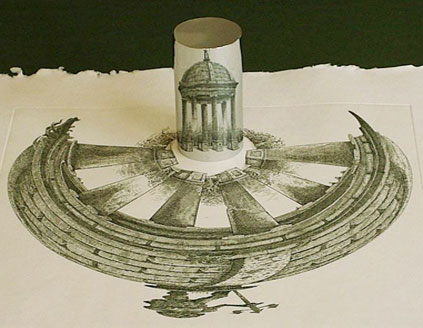
Anamorphic Mirror

A counter intuitive way of drawing; turning 2D into 3D. The landscape has no edge, like a carrousel.

A LINK TO THE ENDLESS CIRCLING AND WALKING AROUND THE STUDIO!


Anamorphic drawing and cone shaped mirror


Anamorphic drawing and cone shaped mirror


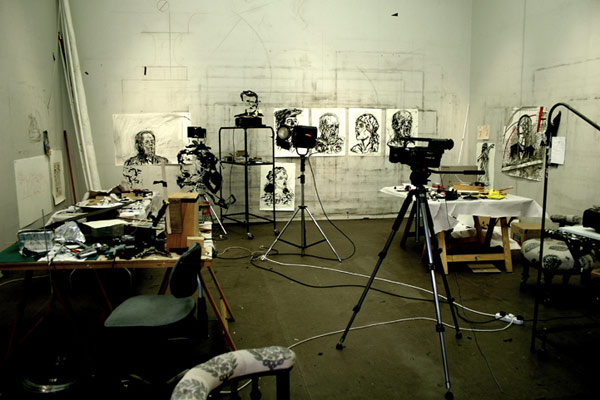
William Kentridge studio


William Kentridge studio
Photo by John Hodgkiss
Art Tatler


The Studio

In the studio you gather the pieces together like a kind of Zoetrope. You may arrive at a new idea, a new starting point. Repetition, going around and around your head (at four in the morning!). There must be a truce between the artist as maker and the artist as viewer. As in earlier times, you walk the cloisters, you promenade.

You find the walk that is the prehistory of the drawing, that is the prehistory to the work.

A multiple, fragmented, layered performance of walking. You are trying to find the grammar of the studio – the necessary stupidity. Making a space for uncertainty. The conscious suppression of rationality. At some point, emerging, escaping the Zoetrope, from the physical making, something will be revealed. The spaces open up by the stupidities. Something new emerges.

THIS IS THE SPACE OF THE STUDIO.


Australian Centre for the Moving Image (ACMI)
Federation Square, Melbourne, Australia

William Kentridge: Five Themes

Thursday 8 March – Sunday 27 May 2012
Exhibition open daily 10am – 6pm

ACMI website

LIKE ART BLART ON FACEBOOK

Back to top

Exhibition: ‘The Prints of Martin Lewis: From the Collection of Dr. Dorrance Kelly’ at the Bruce Museum, Greenwich, CT

Exhibition dates: 2nd October 2011 – 26th February 2012


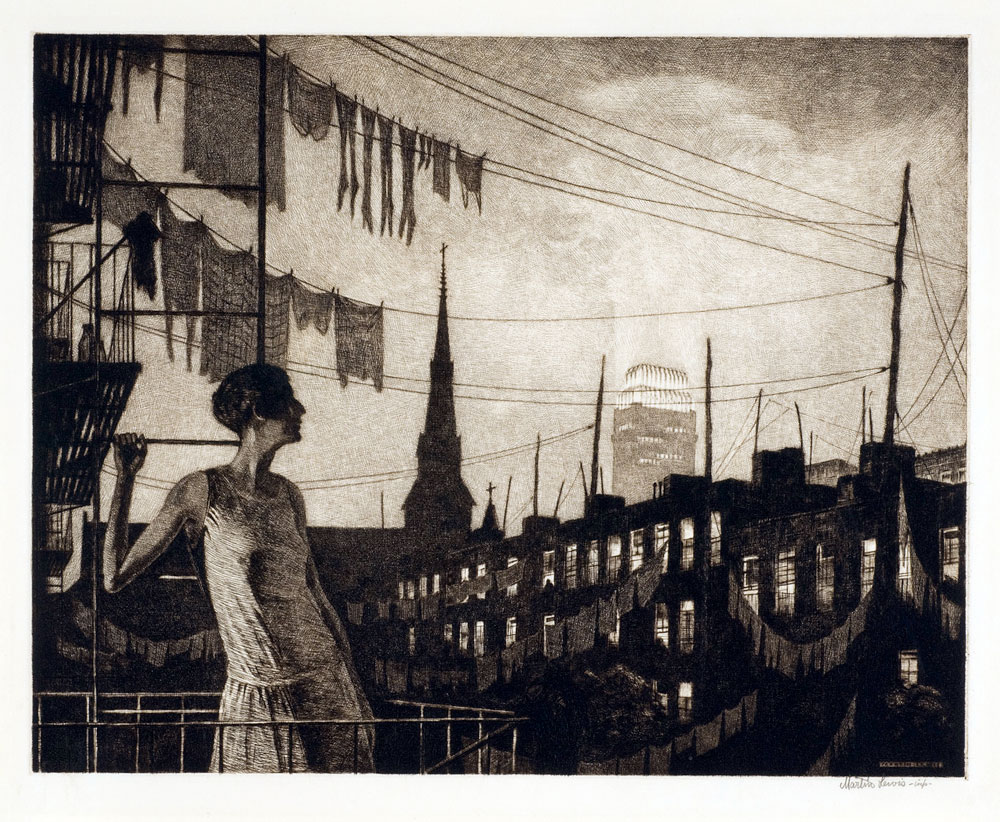
Martin Lewis (Australian, 1881-1962) 'Glow of the City' 1929


Martin Lewis (Australian, 1881-1962)
Glow of the City
1929 
Drypoint
11 1/4 x 14 1/4 in
Collection of Dr. Dorrance T. Kelly
© Estate of Martin Lewis


One of the great pleasures of presenting this blog is introducing myself and my readers to forgotten artists. Here we have a dazzling Australian artist who died largely forgotten, especially, it seems, in his native country. He does not deserve this fate!


How many works does the National Gallery of Australia hold in its collection?

6

Count them … 1, 2, 3, 4, 5, 6

(and none displayed online)


AGNSW 5, NGV 0

(and none displayed online)


Tell me, is there something wrong with this picture?

Dr Marcus Bunyan


Many thankx to the Bruce Museum for allowing me to publish the images in the posting. Please click on the images for a larger version.


Martin Lewis (Australian, 1881-1962). 'Late Traveler' 1949


Martin Lewis (Australian, 1881-1962)
Late Traveler
1949 
Drypoint
9 7/8 x 11 7/8 in
Collection of Dr. Dorrance T. Kelly
© Estate of Martin Lewis


Martin Lewis (1881-1962) was born in Castlemaine, Victoria, Australia on June 7, 1881. He was the second of eight children and had a passion for drawing. At the age of 15, he left home and traveled in New South Wales, Australia, and in New Zealand, working as a pothole digger and a merchant seaman. He returned to Sydney and settled into a Bohemian community outside Sydney. Two of his drawings were published in the radical Sydney newspaper, The Bulletin. He studied with Julian Ashton at the Art Society’s School in Sydney. Ashton, a famous painter, was also one of the first Australian artists to take up printmaking.

In 1900, Lewis left Australia for the United States. His first job was in San Francisco, painting stage decorations for William McKinley’s presidential campaign of 1900. By 1909, Lewis was living in New York, where he found work in commercial illustration. His earliest known etching is dated 1915. However, the level of skill in this piece suggests he had been working in the medium for some time previously. It was during this period that he helped Edward Hopper learn the basics of etching. In 1920, after the break up of a romance, Lewis traveled to Japan, where for two years he drew and painted and studied Japanese art. The influence of Japanese prints is very evident in Lewis’s prints after that period. In 1925, he returned to etching and produced most of his well-known works between 1925 and 1935 Lewis’s first solo exhibition in 1929 was successful enough for him to give up commercial work and concentrate entirely on printmaking. Lewis is most famous for his black and white prints, mostly of night scenes of non tourist, real life street scenes of New York City. During the Depression, however, he was forced to leave the city for four years between 1932 and 1936 and move to Connecticut. When Lewis was able to return to the New York City in 1936, there was no longer a market interested in his work. He died largely forgotten.

Text from the Wikipedia website


Martin Lewis (Australian, 1881-1962). 'Fifth Ave Bridge' 1928


Martin Lewis (Australian, 1881-1962)
Fifth Ave Bridge
1928
Drypoint
9 7/8 x 12 in
Collection of Dr. Dorrance T. Kelly
© Estate of Martin Lewis


Martin Lewis (Australian, 1881-1962). 'Grandpa Takes a Walk' 1935


Martin Lewis (Australian, 1881-1962)
Grandpa Takes a Walk
1935 
Drypoint and sand ground
8 7/8 x 11 3/4 in
Collection of Dr. Dorrance T. Kelly
© Estate of Martin Lewis


Martin Lewis (Australian, 1881-1962). 'Quarter of Nine, Saturday's Children' 1929


Martin Lewis (Australian, 1881-1962)
Quarter of Nine, Saturday’s Children
1929 
Drypoint
9 7/8 x 12 7/8 in
Collection of Dr. Dorrance T. Kelly
© Estate of Martin Lewis


Martin Lewis (Australian, 1881-1962). 'Shadow Dance' 1930


Martin Lewis (Australian, 1881-1962)
Shadow Dance
1930 
Drypoint and sandpaper ground
9 1/2 x 10 7/8 in
Collection of Dr. Dorrance T. Kelly
© Estate of Martin Lewis


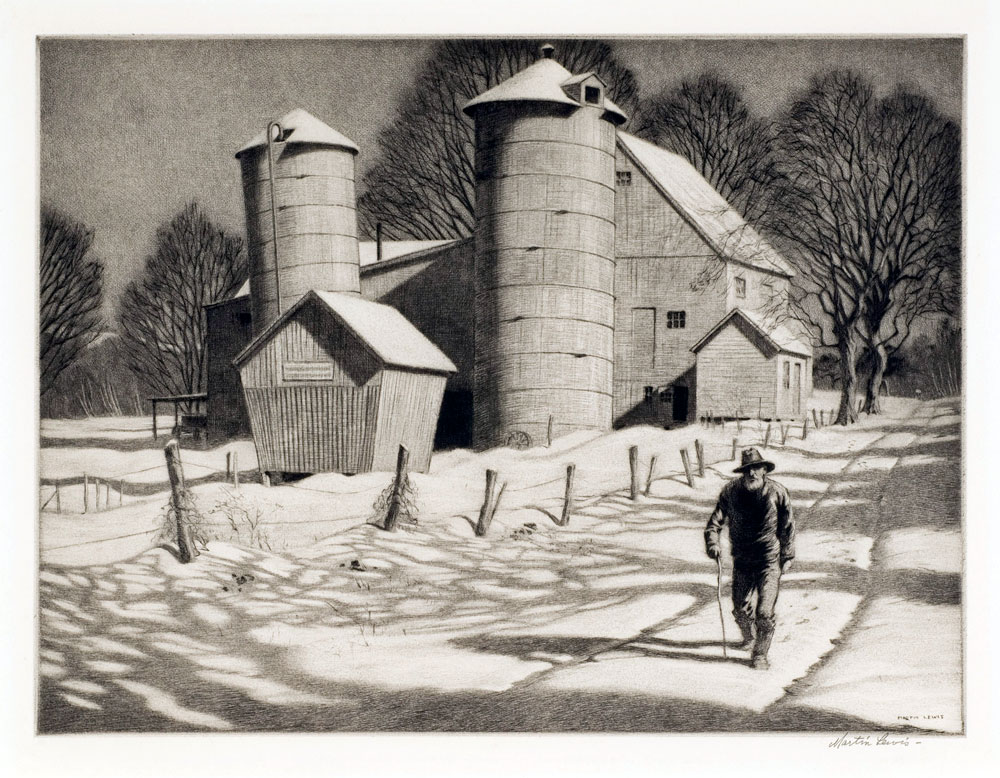
The Bruce Museum in Greenwich, Connecticut, presents the new exhibition The Prints of Martin Lewis: From the Collection of Dr. Dorrance Kelly from October 2, 2011, through February 19, 2012. Recognised as one of the premier American printmakers of the first half of the 20th-century, Martin Lewis (1881-1962) left an indelible mark on the landscape of the art world. Although not as publicly well known as some of his contemporaries such as Edward Hopper, Lewis was a highly skilled printer who was greatly involved in the artistic scene of New York City during the 1920s and ’30s. This exhibition features more than thirty etchings and several canceled plates by the artist from the private collection of Dr. Dorrance Kelly of West Redding, Connecticut.

The exhibition The Prints of Martin Lewis: From the Collection of Dr. Dorrance Kelly provides a brief biographical account of Lewis and showcases some of the artist’s best technical prints. Lewis was an acknowledged master of the intaglio techniques of printmaking, experimenting with multiple processes including etching, aquatint, engraving, mezzotint, and dry point.

In 1915 he produced his first documented etching, Smoke Pillar, Weehawken. Images like this one documented the scenes of everyday life as they played out in the thriving metropolis around New York City. Lewis portrayed all aspects of city life including dockworkers, skyscrapers, tugboats, and pedestrians – mostly the ladies. He produced magnificent prints that captured the energy, bustle, and occasional solitude of New York. With his move to Connecticut in 1932, Lewis investigated another topic through his printmaking: country life. This firmly entrenched Lewis as a prominent American scene artist, as his prints captured the intersection between the urban and rural environments and shed light on the slowly emerging suburban culture.

Press release from the Bruce Museum website


Martin Lewis (Australian, 1881-1962). 'Windy Day' 1932


Martin Lewis (Australian, 1881-1962)
Windy Day
1932 
Drypoint
9 7/8 x 12 in
Collection of Dr. Dorrance T. Kelly
© Estate of Martin Lewis


Martin Lewis (Australian, 1881-1962). 'Politics' 1936


Martin Lewis (Australian, 1881-1962)
Politics
1936 
Drypoint and sand ground
9 3/4 x 10 5/8 in
Collection of Dr. Dorrance T. Kelly
© Estate of Martin Lewis


Martin Lewis (Australian, 1881-1962). 'Little Penthouse' 1931


Martin Lewis (Australian, 1881-1962)
Little Penthouse
1931 
Drypoint
9 7/8 x 6 3/4 in
Collection of Dr. Dorrance T. Kelly
© Estate of Martin Lewis


Martin Lewis (Australian, 1881-1962). 'Bay Windows' 1929


Martin Lewis (Australian, 1881-1962)
Bay Windows
1929 
Drypoint and sandpaper ground
11 3/4 x 7 7/8 in
Collection of Dr. Dorrance T. Kelly
© Estate of Martin Lewis


Martin Lewis (Australian, 1881-1962). 'Chance Meeting' 1940-1941


Martin Lewis (Australian, 1881-1962)
Chance Meeting
1940-1941 
Drypoint
10 1/2 x 7 1/2 in
Collection of Dr. Dorrance T. Kelly
© Estate of Martin Lewis


Martin Lewis (Australian, 1881-1962). 'Relics (Speakeasy Corner)' 1928


Martin Lewis (Australian, 1881-1962)
Relics (Speakeasy Corner)
1928 
Drypoint
11 7/8 x 9 7/8 in
Collection of Dr. Dorrance T. Kelly
© Estate of Martin Lewis


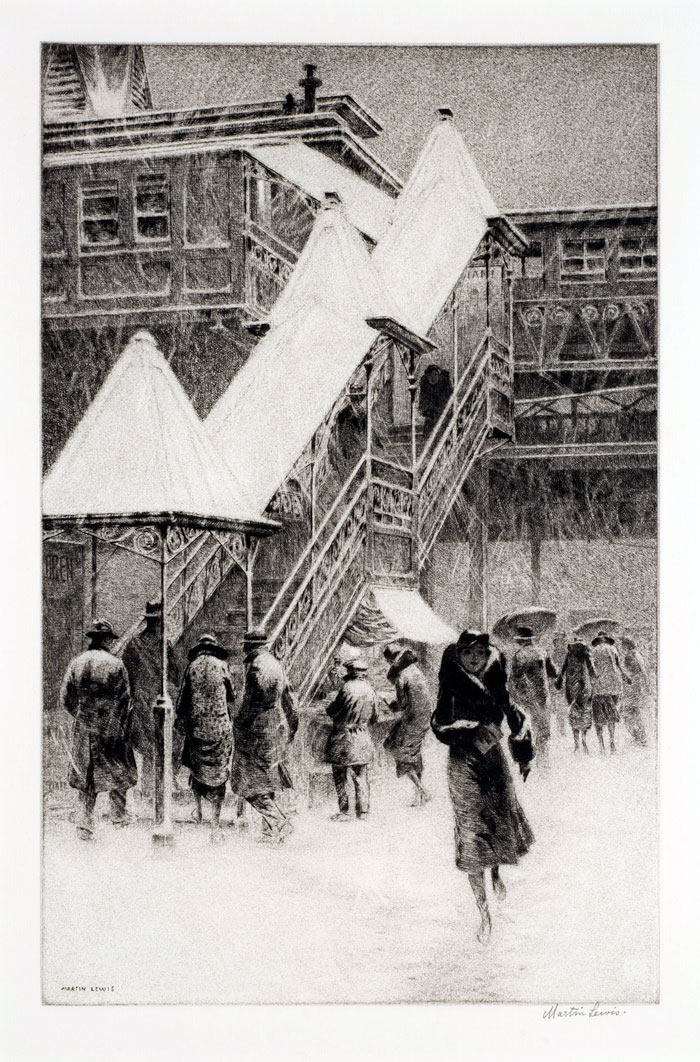
Martin Lewis (Australian, 1881-1962). 'Snow on the "El"' 1931


Martin Lewis (Australian, 1881-1962)
Snow on the “El”
1931 
Drypoint and sand ground
14 x 9 in
Collection of Dr. Dorrance T. Kelly
© Estate of Martin Lewis


Bruce Museum
1 Museum Drive
Greenwich, CT
Phone: 203.869.0376

Opening hours:
Tuesday – Saturday 10am – 5pm
Sunday 1pm – 5pm
Closed Mondays

Bruce Museum website

LIKE ART BLART ON FACEBOOK

Back to top

Opening: ‘Movement and Emotion’ and ‘Jodie Noble Solo’ exhibitions at Arts Project Australia, Melbourne

Exhibition dates: 20th October – 26th November 2011

Curator of Movement and Emotion: Paul Hodges

Artists: Steven Ajzenberg, Patrick Francis, Brigid Hanrahan, Paul Hodges, Chris Mason, Cameron Noble, Jodie Noble, Lisa Reid, Anthony Romagnano and Cathy Staughton


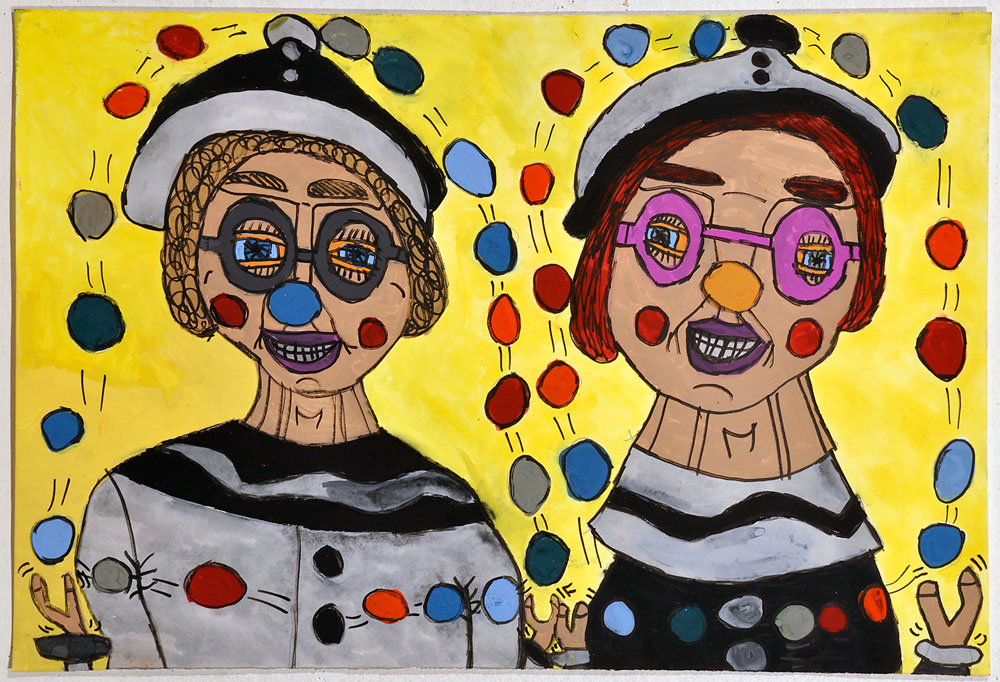
Catherine Staughton (Australian, b. 1968) 'Juggle Ball Hand Jump Roller' 2011


Catherine Staughton (Australian, b. 1968)
Juggle Ball Hand Jump Roller
2011
Gouache and felt pen on paper
38 x 56cm


Opening night speech by Dr Marcus Bunyan

Thank you for your welcome to Arts Project Australia on this auspicious occasion, the first ever exhibition to be curated by an Arts Project artist, Paul Hodges. Together with the Jodie Noble solo exhibition in the front gallery I am sure you will agree that the gallery is full of vibrant work. There are some things that may be said about both bodies of work.

I asked Paul what had been the inspiration behind Movement and Emotion. He said that he often goes to the National Gallery of Victoria and looks at the pictures and imagines the artist painting. He wonders how they were feeling and he visualises the pictures coming to life, especially pictures of dancers in which he has a personal interest. He came back to Arts Project and started thinking about the work in the collection and after much thought made the selection you see here tonight. He used his imagination, his feelings and his understanding of the world to curate the exhibition.

Let’s consider the title Movement and Emotion.

Emotion can be defined as an agitation, a strong feeling, a departure from the normal calm state of an organism. The logos of emotion begins in the experience of ‘being moved’ in some manner. Any emotion holds within its structure some potential for movement, whether it be physical or mental. You can be physically still yet be mentally moved, causing you to have emotion. Some emotions occur over a period of seconds (for example, surprise), whereas others can last years (for example, love). In the word ’emotion’ is the very act of movement, namely motion. Hence e/motion is the root of this wonderful feeling that I get from these artworks. Emotion is movement. Emotion is feeling. Emotion is passion.1

And it is this very act that sustains the work in both exhibitions. The work is personal. It speaks from the heart. It is intimate, transcendent and enigmatic. It moves me like little contemporary art ever does. When I first saw the artwork in the space at the back of the gallery, when they were revealed to me I gasped at their simple, eloquent beauty. Whimsical and playful these works possess an element of the carnivalesque,2 a riot of colour and form that exist on the border of art and life. Mingling depictions of high culture and personal narrative the works have no pretence but a visceral immediacy: a direct connection from the artists imagination of the world, through the eyes to the hand and the paper to depict what is in the world. As Susan Sontag observes, “A work of art is a thing in the world, not just a text or commentary on the world…”3

Some of you may be familiar with the American photographer Walker Evans – his famous US Depression era pictures are a thing in the world, as well as text/commentary on the world. He refers to this working method as ‘transcendent documentary’4: a watchful intelligence that recognises a moment of seeing, a movement of emotion – and then describes it. Yes, a quest for ‘the thing itself’ but more than that, the imagination to describe the substance of our existence, the nature of reality. Objects, people and places are transformed from things seen to things that we known. Intimately. Inherently.

In their unique vision it is the artists relation to self, the nature of what they see and feel around them that creates e/motion. They transcend form while ordering it at the same time. It is both the immediate world, simply described, perceived as it stands with the whole of consciousness coupled with the imagination as always there, between our eyes and the world, for it is the imagination that defines our humanity, declares our consciousness. They imagine, they perceive the simple radiance of what is.

That is what these artists do.

Perceive.

What is.


In Movement and Emotion, and in the portraits of Jodie Noble we see what is and imagine what should be. The photographer Elliott Erwitt in his book Personal Exposures (1988) said, “The work I care about is terribly simple … I observe, I try to entertain, but above all I want pictures that are emotion.”5

Those pictures are here, e/motioning, all around us. I enjoy these pictures tremendously. Congratulations to all the artists for the experience that you have given us.

Dr Marcus Bunyan


Footnotes

1/ See Robbins, Brent Dean. Emotion, Movement & Psychological Space: A Sketching Out of the Emotions in terms of Temporality, Spatiality, Embodiment, Being-with, and Language. Duquesne University, 1999 [Online] Cited 08/10/2011

2/ Bakhtin, Mikhail. Rabelais and His World (trans. Helene Iswolsky). Cambridge: MIT Press, 1968, p. 7

3/ Sontag, Susan. “On Style,” in Against Interpretation and Other Essays. New York: Delta Book, 1966, pp. 21-22

4/ Anon. “”A Revolutionary Project” Brings Cuba to the Getty Museum,” on Cuban Art News [Online] 05/10/2011 Cited 08/10/2011. No longer available online

5/ Erwitt, Elliott. Personal Exposures. W. W. Norton & Company, 1988 quoted on Anon. “Photographer Elliott Erwitt’s Archive to be Housed at Harry Ransom Center,” on Harry Ransom Center: The University of Texas website [Online] 22/09/2011. Cited 08/10/2011. No longer available online


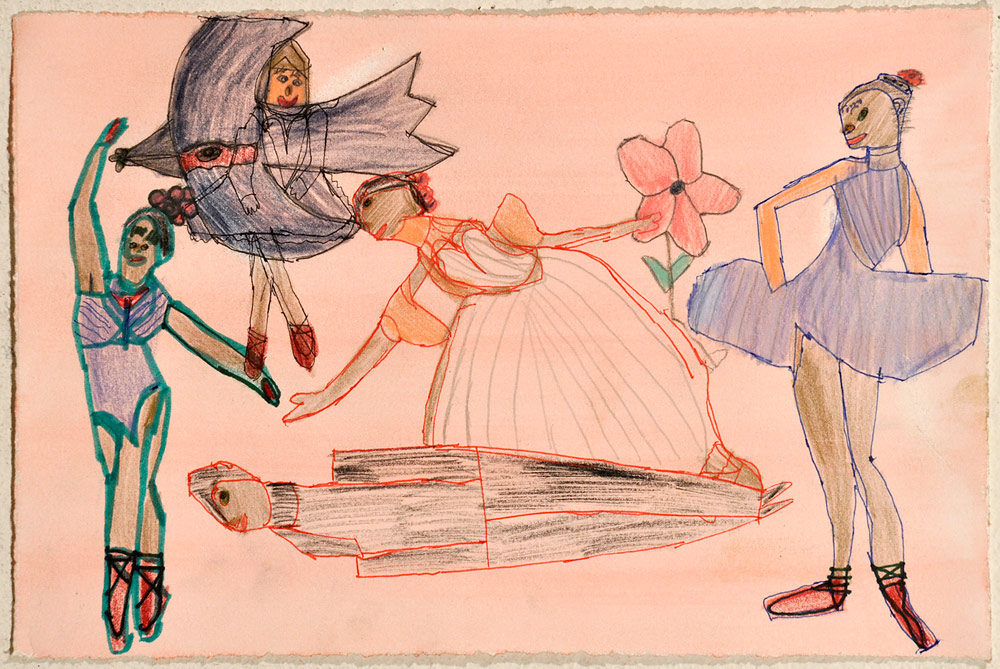
Brigid Hanrahan. 'Not titled (Ballet Dancers)' 2009


Brigid Hanrahan (Australian)
Not titled (Ballet Dancers)
2009
Colour pencil and fineliner on paper
20 x 30cm


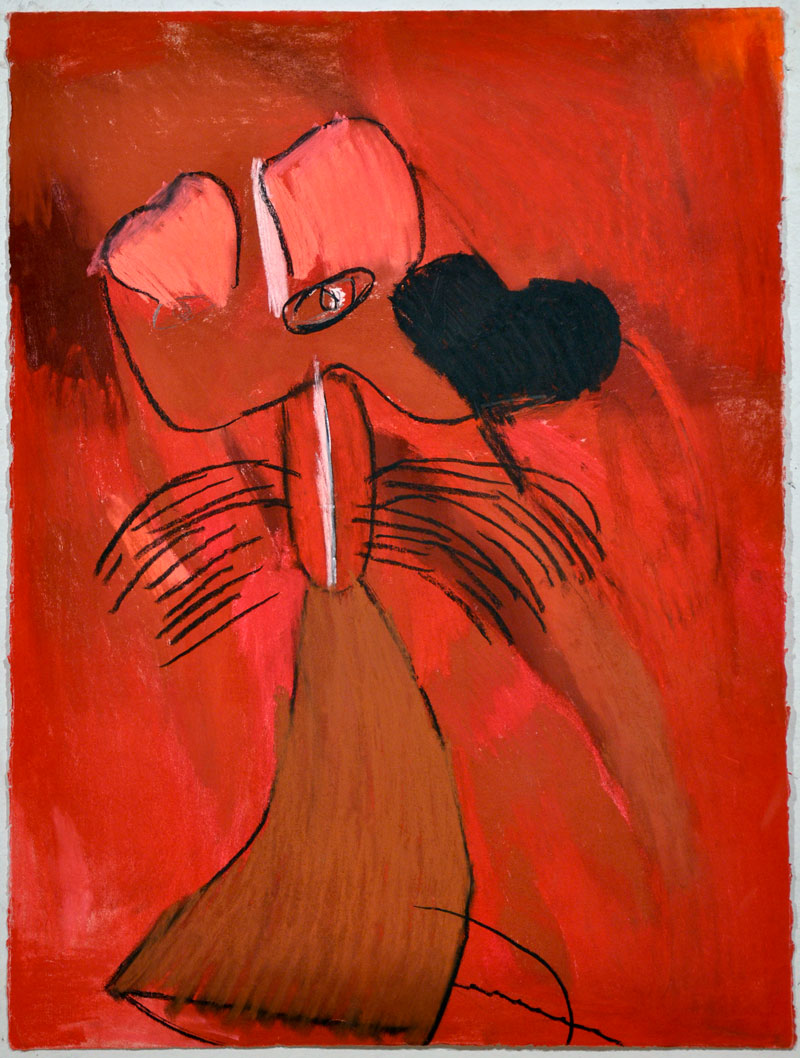
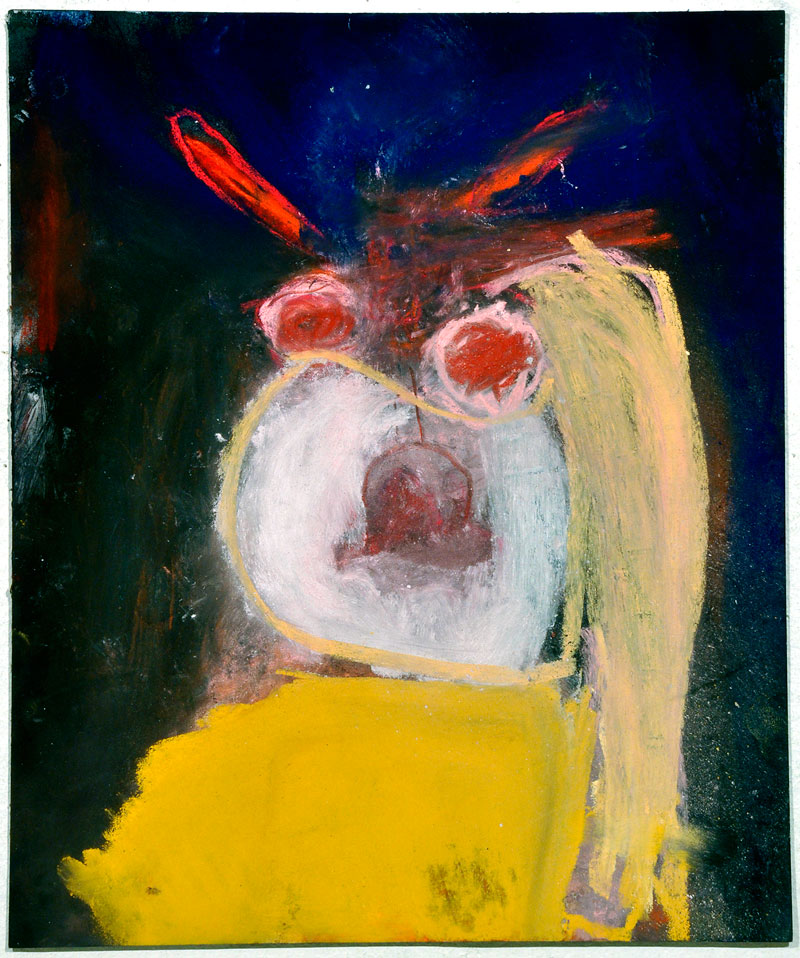
Jodie Noble. 'Not titled (red dog)' 2006


Jodie Noble (Australian)
Not titled (red dog)
2006
Pastel on paper
76 x 57cm


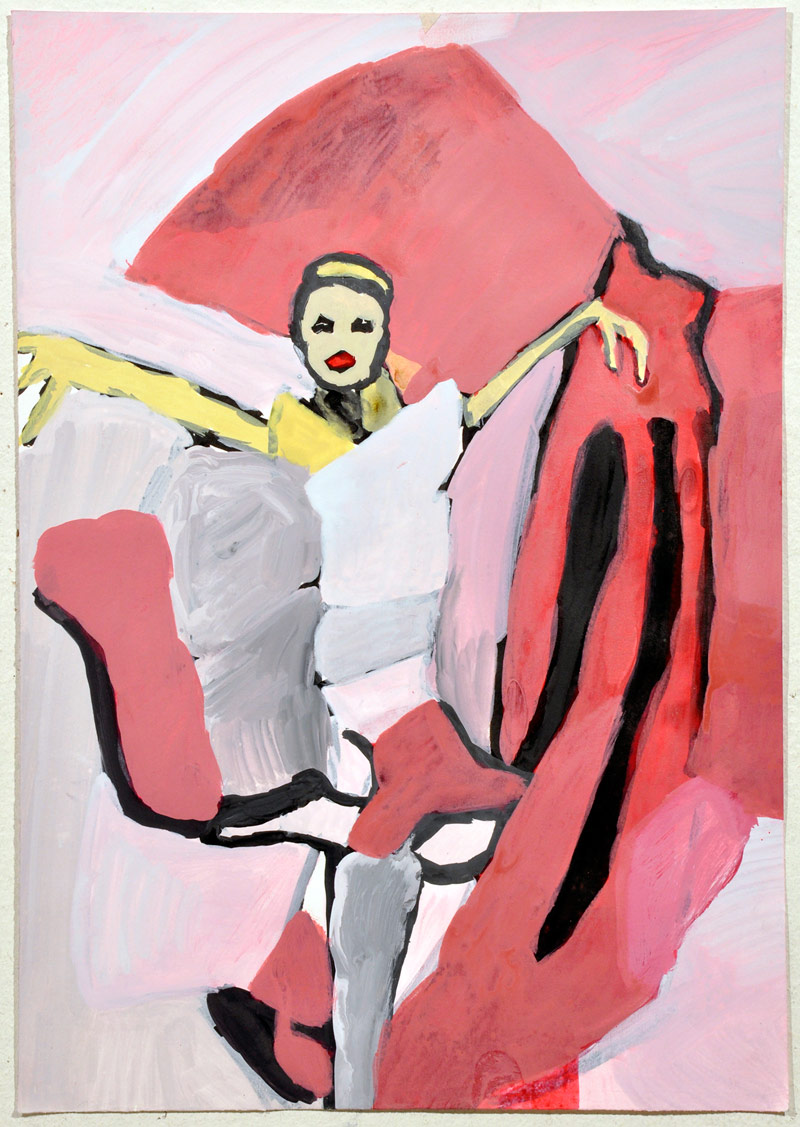
Paul Hodges (Australian, b. 1974) 'Not titled (Pink Dancer)' 2010


Paul Hodges (Australian, b. 1974)
Not titled (Pink Dancer)
2010
Ink on paper
50 x 35cm


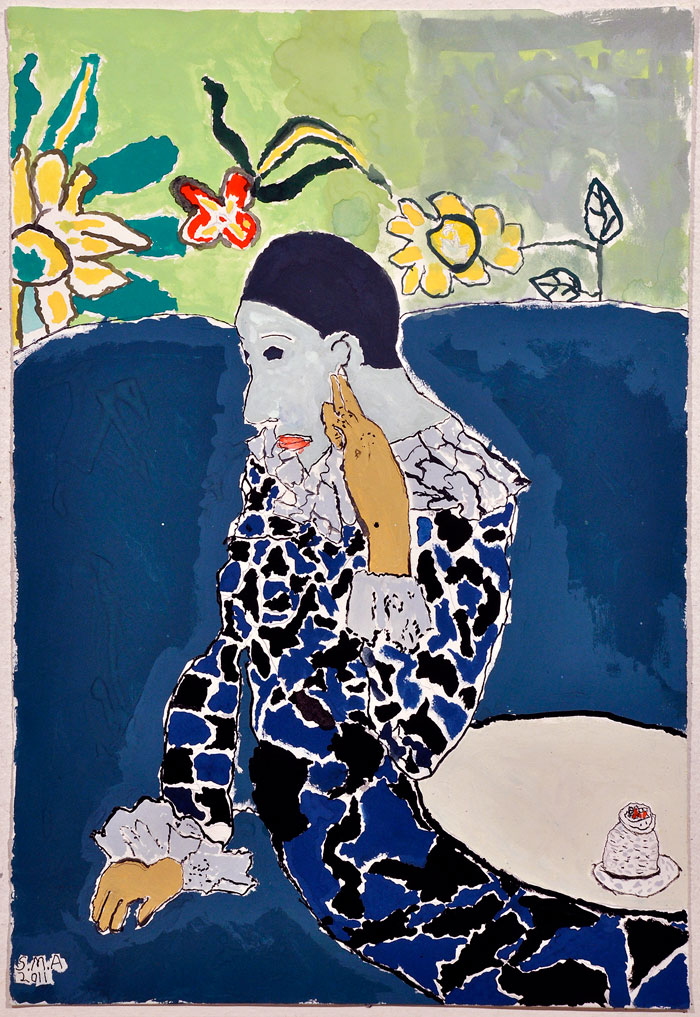
Steven Ajzenberg (Australian, b. 1964) 'Harlequin' 2010


Steven Ajzenberg (Australian, b. 1964)
Harlequin
2010
Gouache on paper
55.5 x 38cm


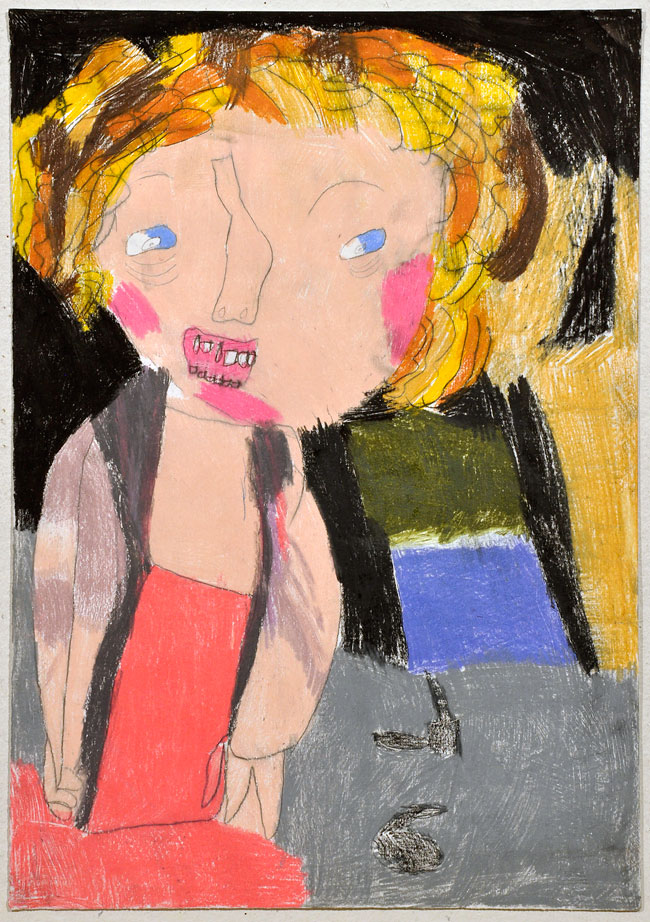
Jodie Noble. 'Not titled (girl wearing pink dress)' 2010


Jodie Noble (Australian)
Not titled (girl wearing pink dress)
2010
Prisma colour pencil on paper
50 x 35cm


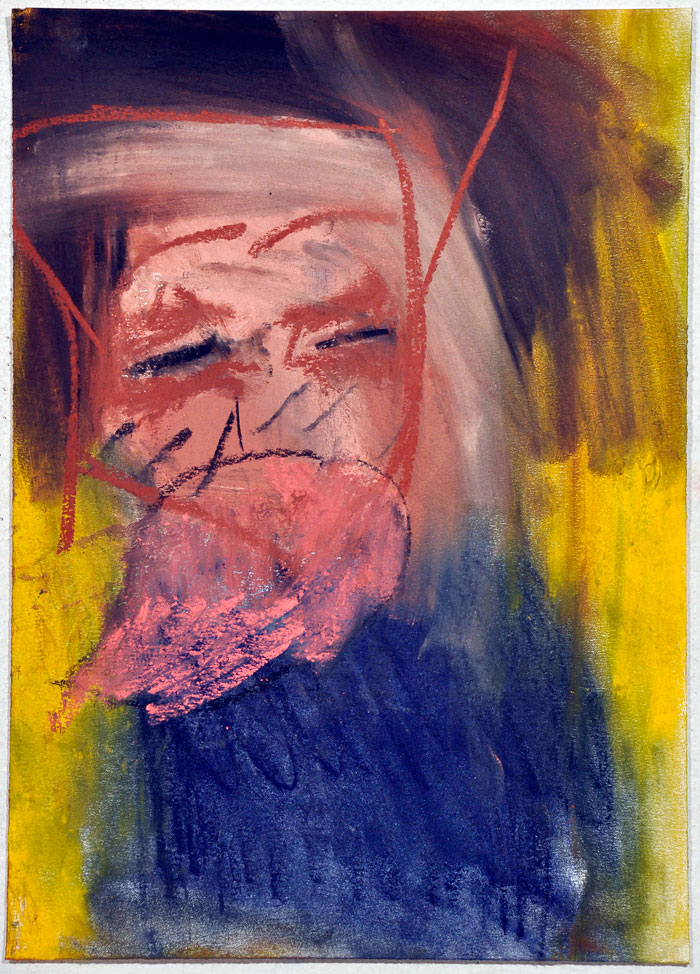
Cameron Noble. 'Not titled (Blue Lady)' 2011


Cameron Noble (Australian)
Not titled (Blue Lady)
2011
Dry pastel on paper
57 x 37.5cm


Jodie Noble. 'Geisha Girl' 2011


Jodie Noble (Australian)
Geisha Girl
2011
Dry pastel on paper
35 x 25cm


Movement and Emotion

This exhibition will explore movement in paintings and the emotions of people in everyday life. These works are vibrant, expressive and each work is unique; they jump out at you. Key themes investigated include carnival, dance and portraits. This is the first exhibition Paul Hodges has curated.

“This is a wonderful show presenting movement and emotion in art by ten artists that I have collected from Arts Project Australia’s studio.”

Paul Hodges, 2011

“When I walk past Jodie Noble’s paintings I can almost feel what she is feeling … Jodie is telling us what she is feeling through her paintings.”

Paul Hodges 2010


Jodie Noble Solo

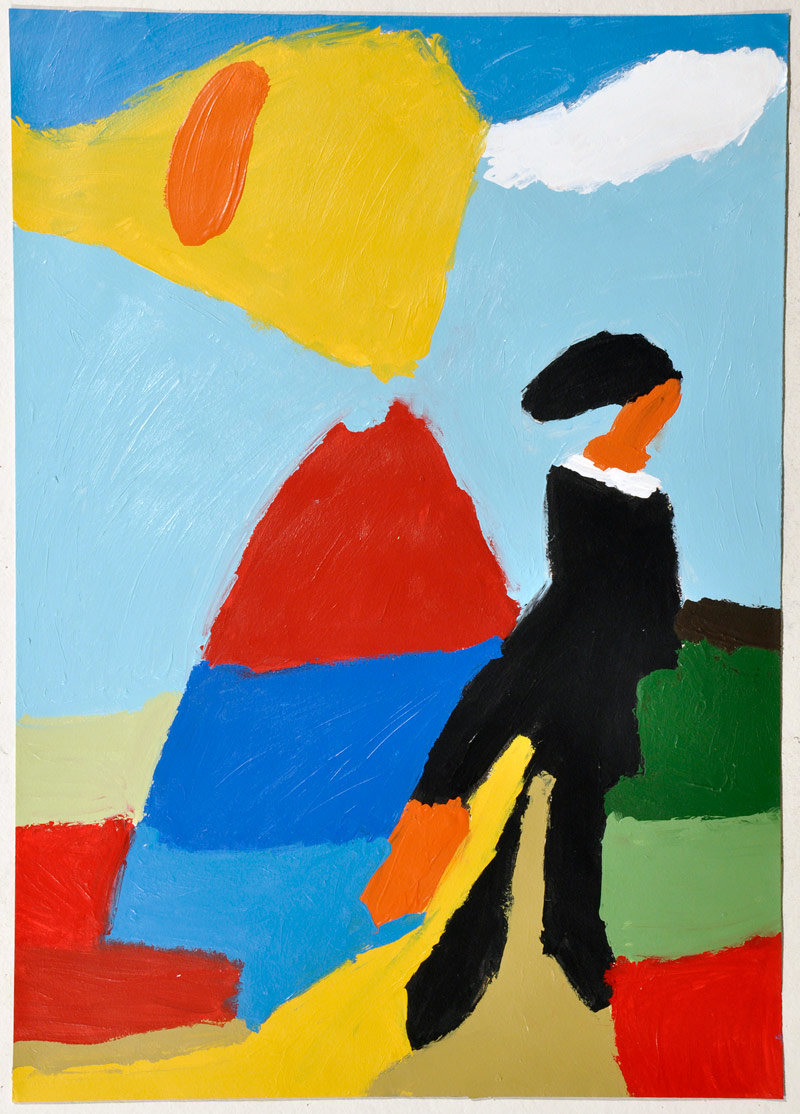
Jodie Noble’s current work is figurative and often incorporates an autobiographical narrative. While occasionally painting from life, her work also references popular culture. In particular, Noble is inspired by contemporary famous figures, from Frida Kahlo and Francisco Goya to Queen Elizabeth II. Noble’s work is descriptive, expressive and infused with a sense of physicality.

In this exhibition, Noble has selected a series of portraits on paper that are autobiographical and of people she knows in her life. This is Jodie’s second solo exhibition.


Lisa Reid (Australian, b. 1975) 'Not titled (Adam Baddeley)' 2001


Lisa Reid (Australian, b. 1975)
Not titled (Adam Baddeley)
2001
Pastel and pencil on paper
50 x 33cm


Lisa Reid (Australian, b. 1975) 'Great Aunt Edna' 2003


Lisa Reid (Australian, b. 1975)
Great Aunt Edna
2003
Gouache on paper
55 x 37.5cm


Anthony Romagnano (Australian, b. 1985) 'Madonna' 2010


Anthony Romagnano (Australian, b. 1985)
Madonna
2010
Prisma colour pencil on paper
50 x 35cm


Jodie Noble. 'Not titled' 2010


Jodie Noble (Australian)
Not titled
2010
Ink and fine-liner on paper
38 x 28.5cm


Cameron Noble. 'Not titled' 2011


Cameron Noble (Australian)
Not titled
2011
Dry pastel on paper
38.5 x 32.5cm


Patrick Francis (Australian, b. 1991) 'Not titled' 2011


Patrick Francis (Australian, b. 1991)
Not titled
2011
Acrylic on paper
70 x 50cm


Arts Project Australia
24 High Street
Northcote Victoria 3070
Phone: + 61 3 9482 4484

Gallery location:
Level 1 Perry Street Building,
Collingwood Yards
Enter via 35 Johnson Street
or 30 Perry Street, Collingwood

Opening hours:
Wed – Fri 11am – 5pm
Sat & Sun 12 – 4pm

Arts Project Australia website

LIKE ART BLACK ON FACEBOOK

Back to top

opening: ‘movement and emotion’ and ‘jodie noble solo’ at arts project australia, melbourne

October 2011


I am opening the exhibitions Movement and Emotion and Jodie Noble Solo at Arts Project Australia, Northcote on Wednesday 19th October 2011 from 6 – 8pm. All welcome, would be great to see you there. Details on the flyer!

Dr Marcus Bunyan


Exhibitions: 'Movement and Emotion' and 'Jodie Noble Solo' at Arts Project Australia, Northcote


Arts Project Australia website

LIKE ART BLART ON FACEBOOK

Back to top

Exhibition: ‘Line and Space. American Drawings and Sculpture since 1960, from a private collection’ at Pinakothek de Moderne, Munich

Exhibition dates: 28th July – 25th September 2011


Many thankx to the Pinakothek der Moderne for allowing me to publish the art work in the posting. Please click on the art work for a larger version of the image.


Barry Le Va (American, 1941-2021) 'Untitled' 1977


Barry Le Va (American, 1941-2021)
Untitled
1977
Pencil, ink and ballpoint on graph paper
Private collection
Photo: Arne Schultz
© Barry Le Va 2011


Sol LeWitt (American, 1928-2007) 'A2' 1967


Sol LeWitt (American, 1928-2007)
A2
1967
Painted steel
Private collection
Photo: Arne Schultz
© VG Bild-Kunst, Bonn 2011


Donald Judd (American, 1928-1994) 'Untitled' 1962


Donald Judd (American, 1928-1994)
Untitled
1962
Woodcut on paper, trial proof
Private collection
Photo: Arne Schultz
© Art Judd Foundation, Licensed by VAGA, NY / VG Bild-Kunst, Bonn 2011


Gordon Matta-Clark (American, 1943-1978) 'Untitled (cut drawing)' 1974


Gordon Matta-Clark (American, 1943-1978)
Untitled (cut drawing)
1974
Cuts in paper
Private collection
Photo: Arne Schultz
© VG Bild-Kunst, Bonn 2011


The exhibition, part of the AMERICAN SUMMER project, features the predominantly American holdings of drawings and sculptures from a private collection, with most of the works going on public display for the first time. What comes to the fore in this exemplary selection of largely American artists from the sixties and seventies and their impressive groups of works is the relationship between the media of sculpture and drawing. At the heart of the show lies the subtle dialogue between the conceptual ideas of ‘disegno’ and their sensual transfer to the materiality of sculpture.

One of the private collection’s particular strengths is its focus on groups of works by individual artists. As a result, entire rooms have been dedicated to the artists Fred Sandback and Barry Le Va, while in addition larger groups of works by other artists, including Donald Judd or Gordon Matta-Clark, can be studied in detail.

The selection of exhibits creates a display of the art movements of the sixties and seventies: among them, Minimal Art, as represented by Carl Andre, Bill Bollinger, Donald Judd, Dan Flavin and Fred Sandback, Post-minimalism of Barry Le Va or Keith Sonnier, Conceptual Art, as represented by Sol LeWitt, and Land Art of such artists as Michael Heizer and Walter de Maria. The exhibition is enriched with works from the Staatliche Graphische Sammlung München and the Sammlung Moderne Kunst.

A fully illustrated catalogue accompanies the exhibition: Der Raum der Linie – Amerikanische Zeichnungen und Skulpturen, edited by Michael Semff, Corinna Thierolf and Alexander Klar, with assistance from Pia Gottschaller and Birgitta Heid (containing essays from Jörg Daur, Pia Gottschaller, Birgitta Heid, Christiane Meyer-Stoll, Michael Semff, a conversation with Peter Soriano and an interview with the collector).

Press release from the Pinakothek de Moderne


Barry Le Va (American, 1941-2021) 'Bearings Rolled' 1966


Barry Le Va (American, 1941-2021)
Bearings Rolled
1966
Ink on paper
Sheet from a series of 15 drawings
Private collection
Photo: Arne Schultz
© Barry Le Va 2011


Fred Sandback (American, 1943-2003) 'Untitled (Milanese Drawing)' c. 1971/72


Fred Sandback (American, 1943-2003)
Untitled (Milanese Drawing)
c. 1971/1972
Chalk on paper
Private collection
Photo: Arne Schultz
© Fred Sandback Archive 2011


Dan Flavin (American, 1933-1996) 'from August 5, 1964' 1966


Dan Flavin (American, 1933-1996)
from August 5, 1964
1966
Crayon on black paper
Private collection
Photo: Arne Schultz
© Estate of Dan Flavin / VG Bild-Kunst, Bonn 2011


Sol LeWitt (American, 1928-2007) 'Incomplete open cube drawing - ten & eleven part variations' undated (c. 1973/74)


Sol LeWitt (American, 1928-2007)
Incomplete open cube drawing – ten & eleven part variations
Undated (c. 1973/1974)
Pencil and ink on paper
Private collection
Photo: Staatliche Graphische Sammlung München
© VG Bild-Kunst, Bonn 2011


Robert Mangold (American, b. 1937) '104" Perimeter Series' 1969


Robert Mangold (American, b. 1937)
104″ Perimeter Series
1969
Pencil on paper
Private Collection
Photo: Arne Schultz
© VG Bild-Kunst, Bonn 2011


Pinakothek Der Moderne
Barer Strasse 40
Munich

Gallery Hours:
Daily except Monday 10am – 6pm
Thursday 10am – 8pm

Pinakothek der Moderne website

LIKE ART BLART ON FACEBOOK

Back to top

The Museum of Old and New Art (MONA), Hobart

August 2011


MONA exterior, Hobart


MONA exterior, Hobart
Image Courtesy of MONA Museum of Old and New Art


“Lyotard writes,”We must not begin with transgression, we must immediately go to the very end of cruelty, construct the anatomy of polymorphous perversion, unfold the immense membrane of the libidinal ‘body,’ which is quite the inverse of a system of parts.” Lyotard sees this “membrane” as composed of the most heterogeneous items: human bone and writing paper, steel and glass, syntax and the skin on the inside of the thigh. In the libidinal economy, writes Lyotard: “All of these zones are butted end to end … on a Moebius strip … a moebian skin [an] interminable band of variable geometry (a concavity is necessarily a convexity at the next turn) [with but] a single face, and therefore neither exterior nor interior.”


Jean-François Lyotard quoted in Victor Burgin. In/Different Spaces 1


“Taking a walk is also an extremely immediate form of experience. Serge Daney describes the act of perception while taking a walk: ‘Because I am not particularly fond of bravura pieces, I always need a transition from one thing to the next. And I am glad that I can find it through by body and experience of walking…’
The visual memory of the walker / viewer determines the sequence of the pictures. Since the 1960s Marcel Broodthaers has defined the exhibition as a cinematic sequence of pictures and objects, thereby subverting the fixity of the single object through recontextualisation.”


Serge Daney quoted in Hans Obrist. “In the Midst of Things, At the Centre of Nothing.”2


Libidinal, Moebic MONA

My analogy: you are standing in the half-dark, your chest open, squeezing the beating heart with blood coursing between your fingers while the other hand is up your backside playing with your prostrate gland. I think ringmeister David Walsh would approve.

My best friends analogy: a cross between a car park, night club, sex sauna and art gallery.

Weeks later I am still thinking about the wonderful immersive, sensory experience that is MONA. Peter Timms in an insightful article in Meanjin calls it a post-Google Wunderkammer, or wonder chest.3 It can be seen as a mirabilia – a non-historic installation designed primarily to delight, surprise and in this case shock. The body, sex, death and mortality are hot topics in the cultural arena4 and Walsh’s collection covers all bases. The collection and its display are variously hedonistic, voyeuristic, narcissistic, fetishistic pieces of theatre subsumed within the body of the spectacular museum architecture.

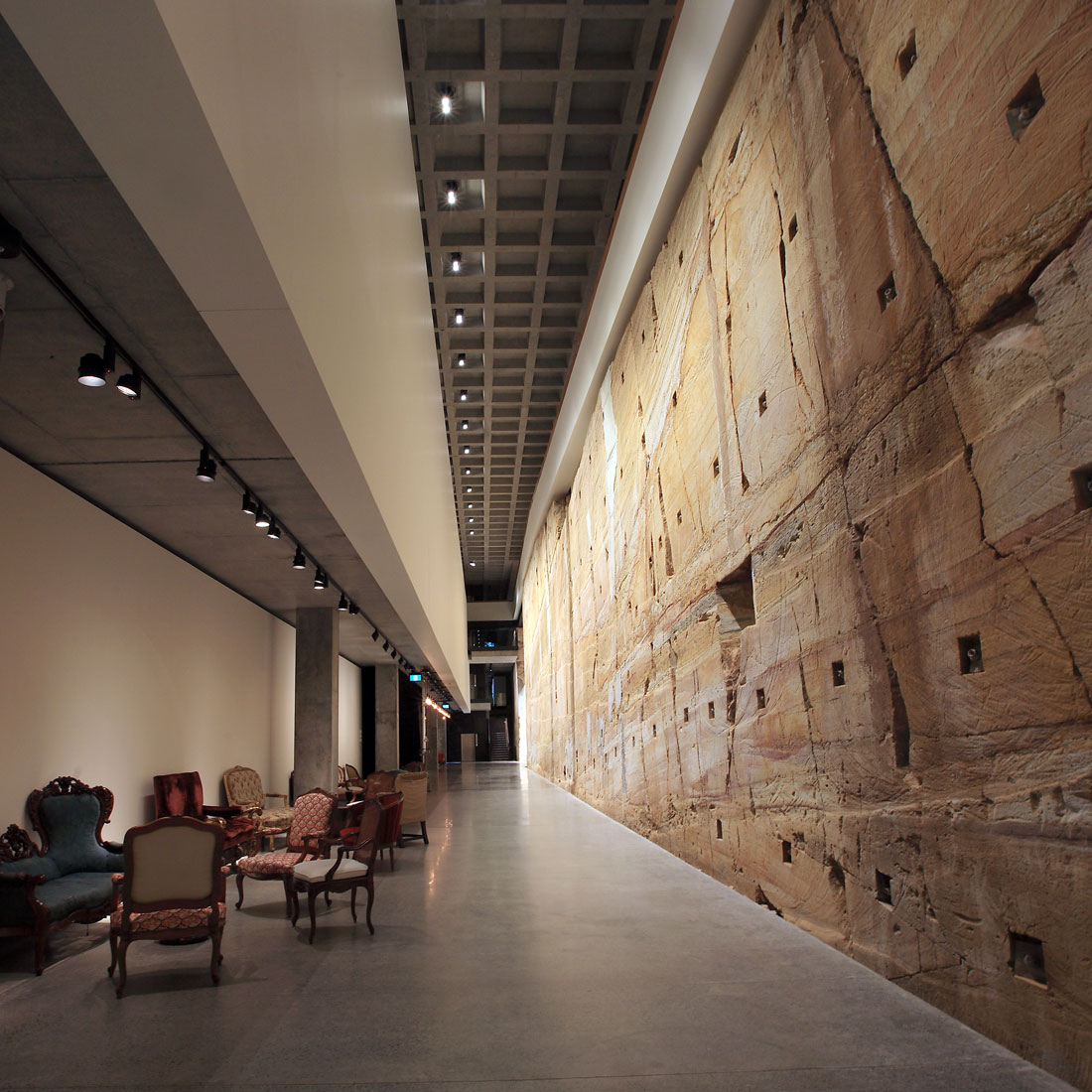
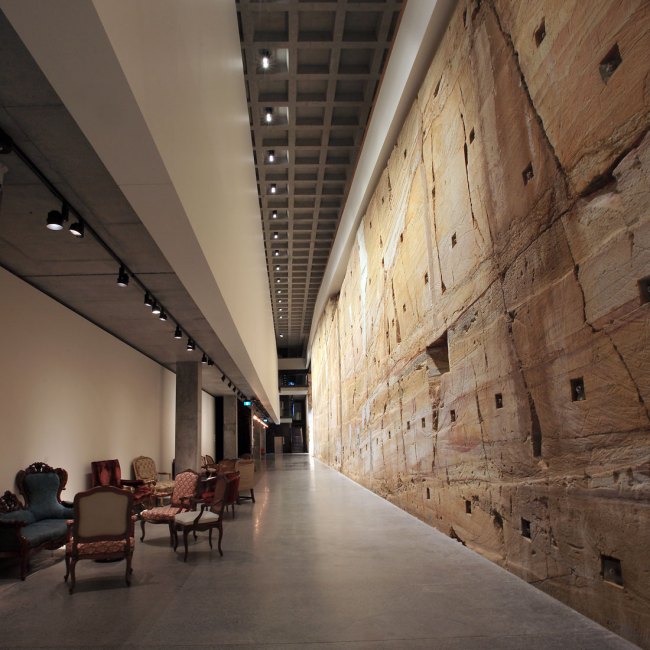
The experience starts with the ferry ride from the wharf in Hobart to the museum – the only way to arrive. During the 20 minutes of the journey mental baggage seems to drop away as you look over the water to the industrial zinc works, pass under bridges and then the museum comes into view. Perched on a promontory of land the museum rises like a rusted ancient temple. After disembarking you climb a colossal staircase to the entrance of the museum, all angles and mirrored surfaces. You enter one of two Roy Grounds listed modernist buildings built in the 1950s – beautiful, crisp white spaces that house the shop and a cafe, cloakroom and inquiry desk where you collect your ‘O’, an iPhone-like device that tracks all the artworks that you look at. The are no didactic text panels in the museum freeing the viewer to just experience, all data such as artists names and educational information and the tit-bit Gonzo text being accessed through the ‘O’. Into the large enclosed forecourt space a spiral staircase with a circular lift in the centre descends into the abyss (an inspired piece of design) and your journey proper has begun. Three levels deep into the ground you travel, the space carved out of solid rock. Impressive.

The museum is the body and the artworks are the organs, fragments of the whole exhibition (that of the actual museum). The experience is very kinaesthetic as the body gets lost within the space of the gallery. We wandered like flâneur among the darkened, cinema-like spaces, almost floating from one area to the next, discovering, feeling disorientated, following underground passages, tunnels and stairs, emerging into light and then descending into the abyss again. Hours passed. Like a Moebius strip there seemed to be no interior/exterior to the body. As Lyotard notes the membrane of the libidinal ‘body’ is composed of the most heterogeneous items: here was rock, steel, shit, bestiality, intestines, brain, touch, burial etc… the curating of the collection within the space “creating a safe space for the appreciation and consideration of seemingly extreme and subversive practices.”5

Into this space of controlled transgression, the carnivalesque mise-en-scène allow the artists to delve into the deeper and darker areas of the human condition: “as Anthony Everitt once said of Damien Hirst [to] ‘open up paths for the viewer into areas of experience which are not anti-moral or amoral but extra-moral… a world where bad taste is driven to the point of elegance and disgust is filtered into delight’.”6

While some of the works were spotlit in the darkened galleries, “this dramatic lighting working to decontextualise the art objects, evoking a crepuscular and “timeless” sense of space, out of which the individual pieces emerged,”7 there also seemed to be an affinity between the building itself and the artworks (relating to the concept of affinity in museum curation). The diversity of installation techniques made an acknowledgement of the institutionalising processes part of the viewer’s experience of the show, disrupting a unified, totalising presentation of these objects and their cultures as “exhibition.”8 The intertextual tableaux mixed a Damien Hirst spin painting with Egyptian sculpture, ancient artefacts with Fat Cars. The context of the objects and their relationship to each other and the architecture is how the works are “framed.” This device emphasises the aesthetic rather than information and encourages the viewer to think about the relationship between the artefacts, objects and contemporary works. These inventive arrangements create a meta-narrative that offers the possibility of multiple interpretations to the viewer, multiple truths. All of this undertaken as the body moves through the spaces of the gallery and gets “lost”. As Norman Bryson has observed, “Architecture is sensed primarily through the eye and through bodily movement, and these sensations also play a key role in the way in which the contents of museums make their impact.”9

While the items are not explicitly related in terms of subject, medium or style through unexpected confrontation the works spring to dissonant life. Most of the time. When this process doesn’t work the viewer is left a little flat feeling, and…. so? wandering from piece to piece becoming slightly disenchanted. Little of the work at MONA took me to new spaces; in fact some of it was pretty mediocre, including the very dated Sir Sidney Nolan Snake (1970 to 1972, see below) that is permanent ‘wallpaper’ and takes up a whole, beautiful gallery wall. The tri-screen video by Russian collective AES+F, the works by Anselm Kiefer and the ancient artefacts (most of all) were notable exceptions. The museum is not a place for prolonged concentration and contemplation. This is not really the point of the place. The whole museum is a sensory, immersive surprising experience that cannot be broken down to its parts. David Walsh’s collection does tick all the fashionable boxes: here a Juan Davila, there a Del Kathyrn Barton, now a Howard Arkeley as though his buyers have advised him on just what to buy, but it is his personal vision, his collection. You can’t argue with that.

On of the problems of lumping all of these works together is obvious: “Ancient objects whose meaning is lost to us, medieval utensils, Christian religious images, and art objects made by modern masters were reduced to one meaning – stylistic resemblances providing evidence of the essential nature of humanity.”10 In other words a return to the globalising view of humanity evidenced by Edward Steichen’s MoMA world touring photographic exhibition of the 1950s The Family of Man. Conversely, when this strategy works well it promotes for the viewer different modes and levels of ‘interpretation’ through subtle juxtaposition of ‘experience’. As Emma Barker has observed, “we still need a curator to stimulate readings of the collection and to establish those ‘climatic zones’ which can enrich our appreciation and understanding of art… Our aim must be to generate a condition in which visitors can experience a sense of discovery in looking at particular paintings, sculptures or installations in a particular room at a particular moment, rather than find themselves standing on the conveyer belt of history.”11 Within this plastic space experience is paramount, allowing the viewer to develop their own reading without relying on the curatorial interpretation of history, setting new parameters for the relationship between viewer and object. As Barker notes such juxtapositions are a more natural strategy for a private collector than for a museum curator, with exhibitions and displays according to this dialectical principle happening with more frequency.12 The museum looses its fundamental didactic, educational purpose.

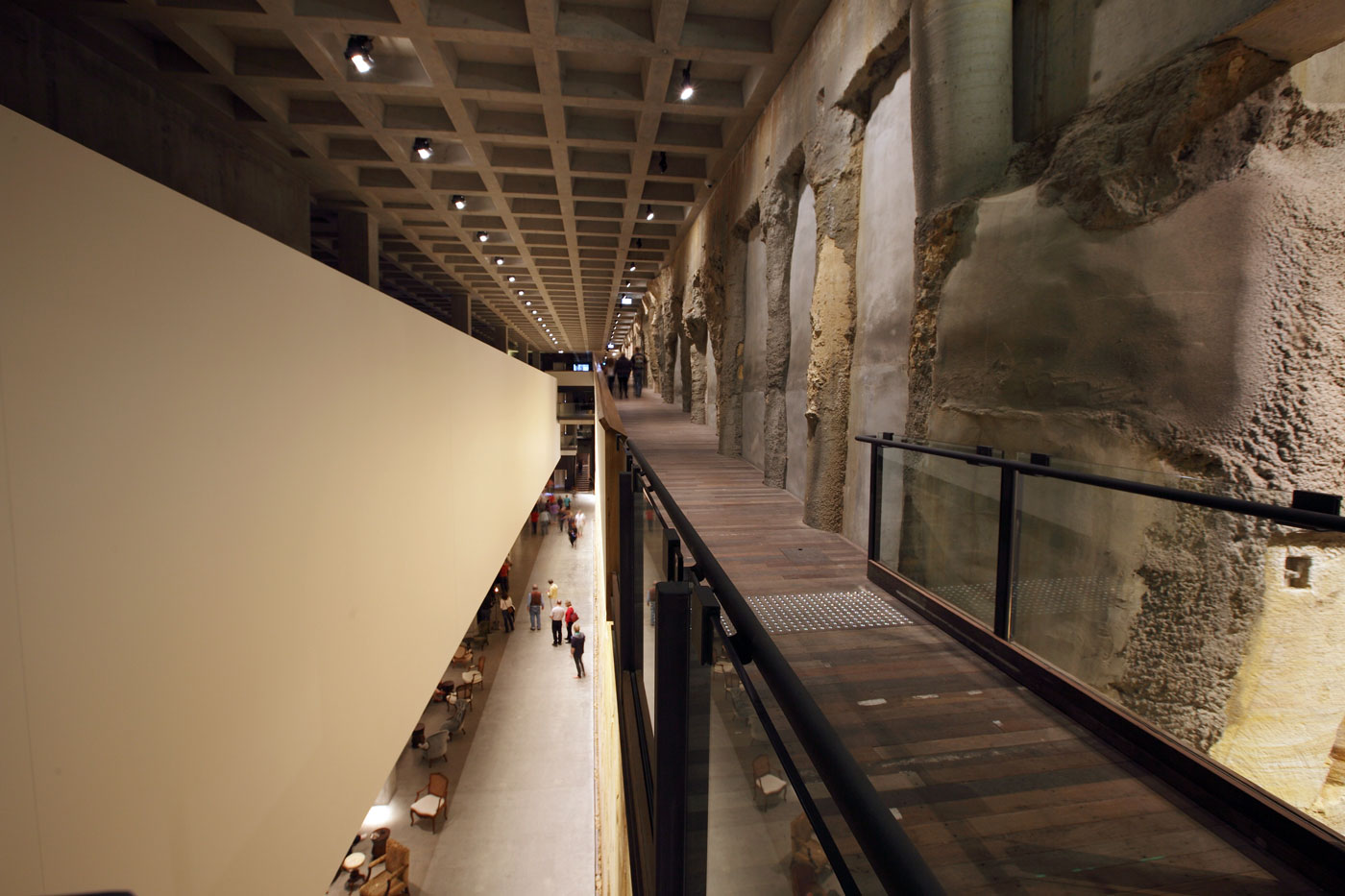
Other problems may also become evident. In a museum whose spectacular architecture was specifically designed for David Walsh’s collection it will be interesting to see how outside, touring exhibitions (such as the recently installed Experimenta Utopia Now exhibition) display in the space, especially given the psychosexual nature of his collection and its relationship to the building. If the quality of the temporary exhibitions is overwhelmed by the architecture, if the labyrinthine, enigmatic and layered nature of the space (all those floating bridges and the huge Void that can be seen in the photographs below) engulfs lesser works then it may well fall very flat.

At the end of the day we emerged into the afternoon light, expelled from the museum in a tidal wave of humanity, exhausted, satiated. Where else in Australia could you spend all day at a museum and not have seen enough? On flying home you can log into the MONA website to retrieve your ‘O’ tour, to see what art you liked and what you didn’t; what pieces you saw and all those that somehow you missed! The physical and its remembrance transported into the virtual.


Since Laura Mulvey’s essay of 1974 “Visual Pleasure and Narrative Cinema,” we have been aware of the voyeuristic and fetishistic character of our psychosexual relation to cinema. Engulfed in the dark cube, that psychosexual panorama, the cinematic labyrinth that is MONA has the viewer absenting themselves in front of the art in favour of the Eye and the Spectator.13 Spectatorship and their attendant erotics has MONA as a form of fetishistic cinema. It is as if what Barthes calls “the eroticism of place” were a modern equivalent of the eighteenth century genius loci, the “genius of the place.”

The place is spectacular, the private collection writ large as public institution, the symbolic power of the institution masked through its edifice. The art become autonomous, cut free from its cultural associations, transnational, globalised, experienced through kinaesthetic means; the viewer meandering through the galleries, the anti-museum, as an international flaneur. Go. Experience!

Dr Marcus Bunyan


Footnotes

1/ Lyotard, Jean-François. Économie Libidinale. Paris: Éditions de Minuit, 1974, pp. 10-11 quoted in Burgin, Victor. In/Different Spaces: Place and Memory in Visual Culture. Berkeley: University of California Press, 1995, p. 150

2/ Obrist, Hans Ulrich. “In the Midst of Things at the Center of Nothing,” in Harding, Anna (ed.,). Curating: The Contemporary Museum and Beyond, (Art & Design Magazine Profile No. 52), London: A.D., 1997, p. 88

3/ Timms, Peter. “A Post-google Wunderkammer: Hobart’s Museum of Old and New Art Redefines the Genre,” in Meanjin, Vol. 70, No. 2, Winter 2011. pp. 31-39

4/ Keidan, Lois. “Showtime: Curating Live Art  in the 90s,” in Harding, Anna (ed.,). Curating: The Contemporary Museum and Beyond, (Art & Design Magazine Profile No. 52), London: A.D., 1997, p. 41

5/ Ibid., p. 41

6/ Ibid., p. 41

7/ Staniszewski, Mary Anne. The power of display: a history of exhibition installations at the Museum of Modern Art. Cambridge, Mass.: MIT Press, 1998, p. 84

8/ Ibid., p. 97

9/ Bryson, Norman. “A Walk for a Walk’s Sake,” in De Zegher, Catherine (ed.,). The Stage of Drawing: Gesture and Act. London: Tate, 2003, pp. 149-58.

10/ Staniszewski, op. cit. p. 129

11/ Barker, Emma. “Exhibiting the Canon: The Blockbuster Show,” in Barker, Emma (ed.,). Contemporary Cultures of Display. New Haven and London: Yale University Press, 1999, p. 55

12/ Ibid., p. 45

13/ O’Neill, Paul. “The Curatorial Turn: From Practice to Discourse,” in Rugg, Judith and Sedgwick, Michèle (eds.,). Issues in Curating Contemporary Art and Performance. Bristol: Intellect, 2007, pp. 13-28


Many thankx to Delia Nicholls for all her help and to MONA for allowing me to publish most of the photographs in the posting (all except the top two and the one of us inside Babylonia that were taken by Fredrick White). Please click on the photographs for a larger version of the image.
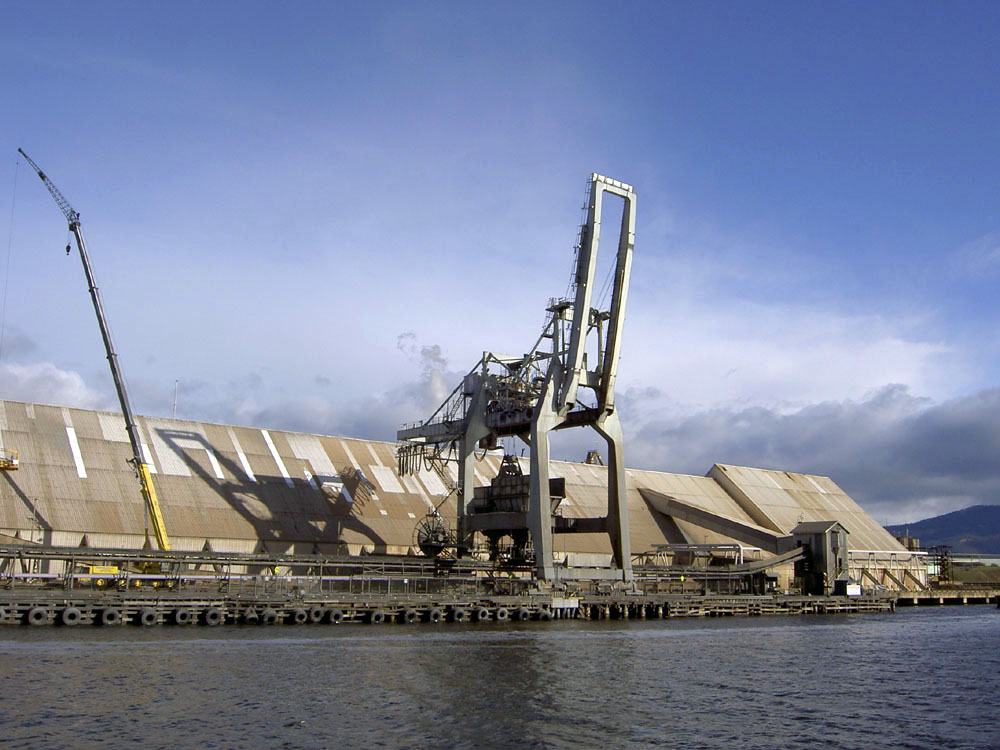
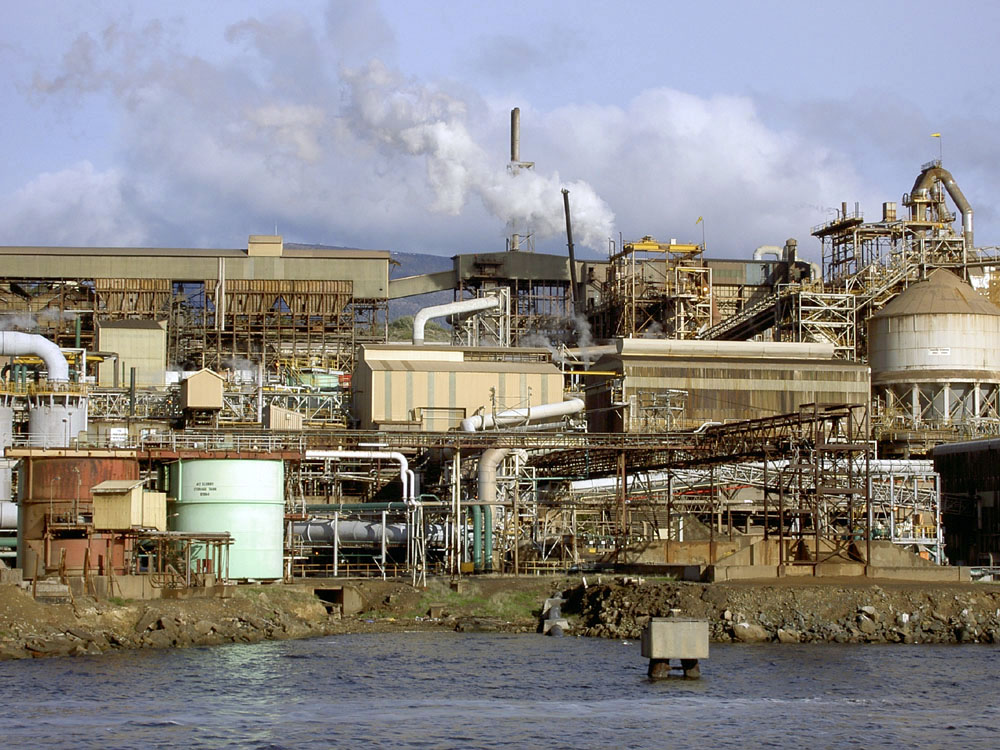


Zinc works from the ferry on the way to MONA

Zinc works from the ferry on the way to MONA


Zinc works from the ferry on the way to MONA
Photos: Marcus Bunyan


3d schematic from the O, showing the levels and nodes indicating art works visited, MONA
 

3d schematic from the O, showing the levels and nodes indicating art works visited, MONA


MONA The Void February 2011


The Void
February 2011
Museum of Old and New Art – interior
Photo credit: MONA/Leigh Carmichael
Image Courtesy of MONA Museum of Old and New Art
 

MONA B1 walkway overlooking The Void February 2011


B1 walkway overlooking The Void
February 2011
Museum of Old and New Art – interior
Photo credit: MONA/Leigh Carmichael
Image Courtesy of MONA Museum of Old and New Art
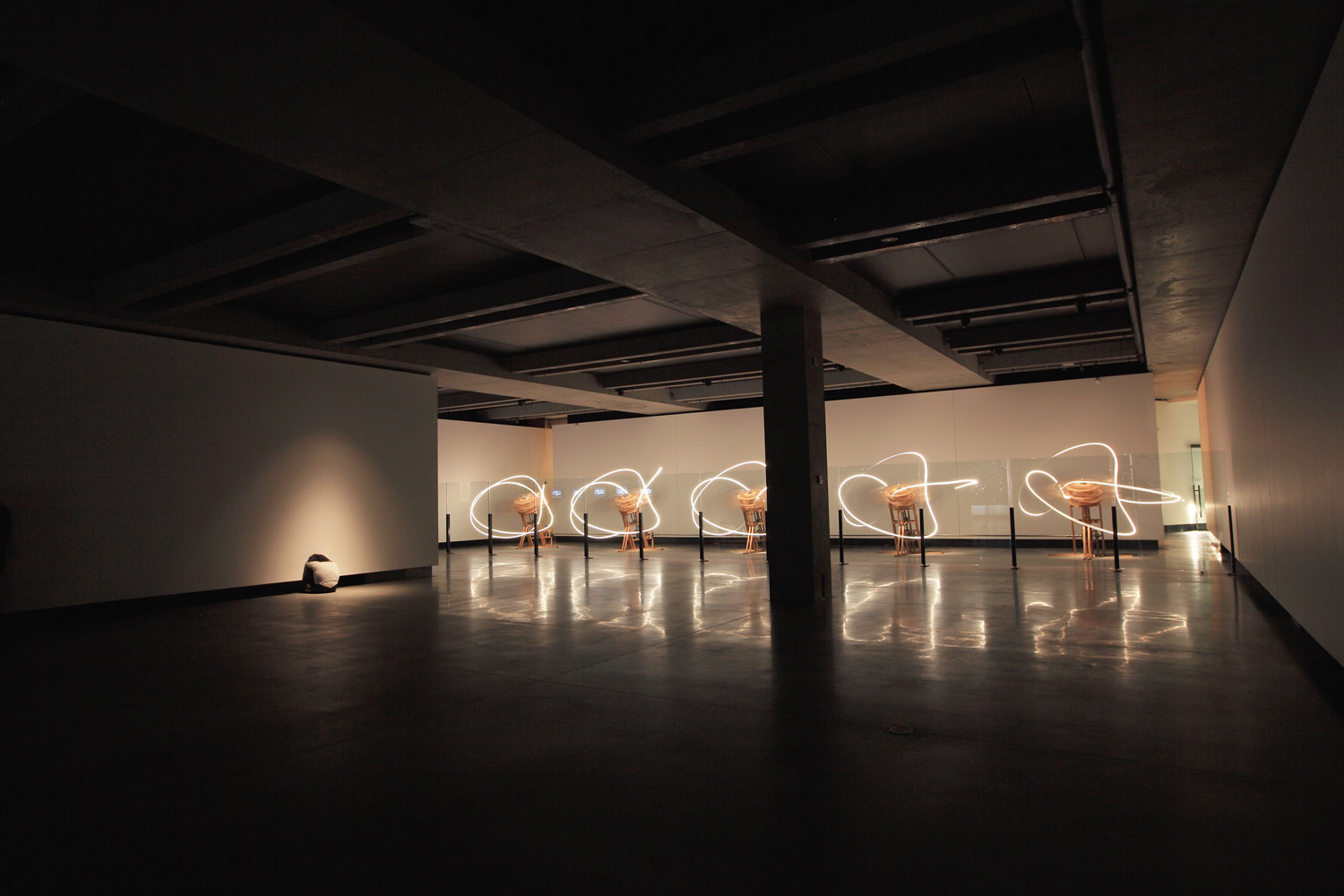
 

MONA Loop System Quintet/Untitled (stool for guard)


Loop System Quintet/Untitled (stool for guard)

Left:
Taiyo Kimura (Japanese, b. 1970)
Untitled (stool for guard)
2007
Mixed media, clothes, cd player, speaker

Right:
Conrad Shawcross (English, b. 1977)
Loop System Quintet

2005
Waxed machined oak, five light bulbs, electric motor and gearbox, drive shafts, cogs, universal joints, flange units, screws, bolts, nuts, washers

Photo credit: MONA/Leigh Carmichael
Image Courtesy of MONA Museum of Old and New Art
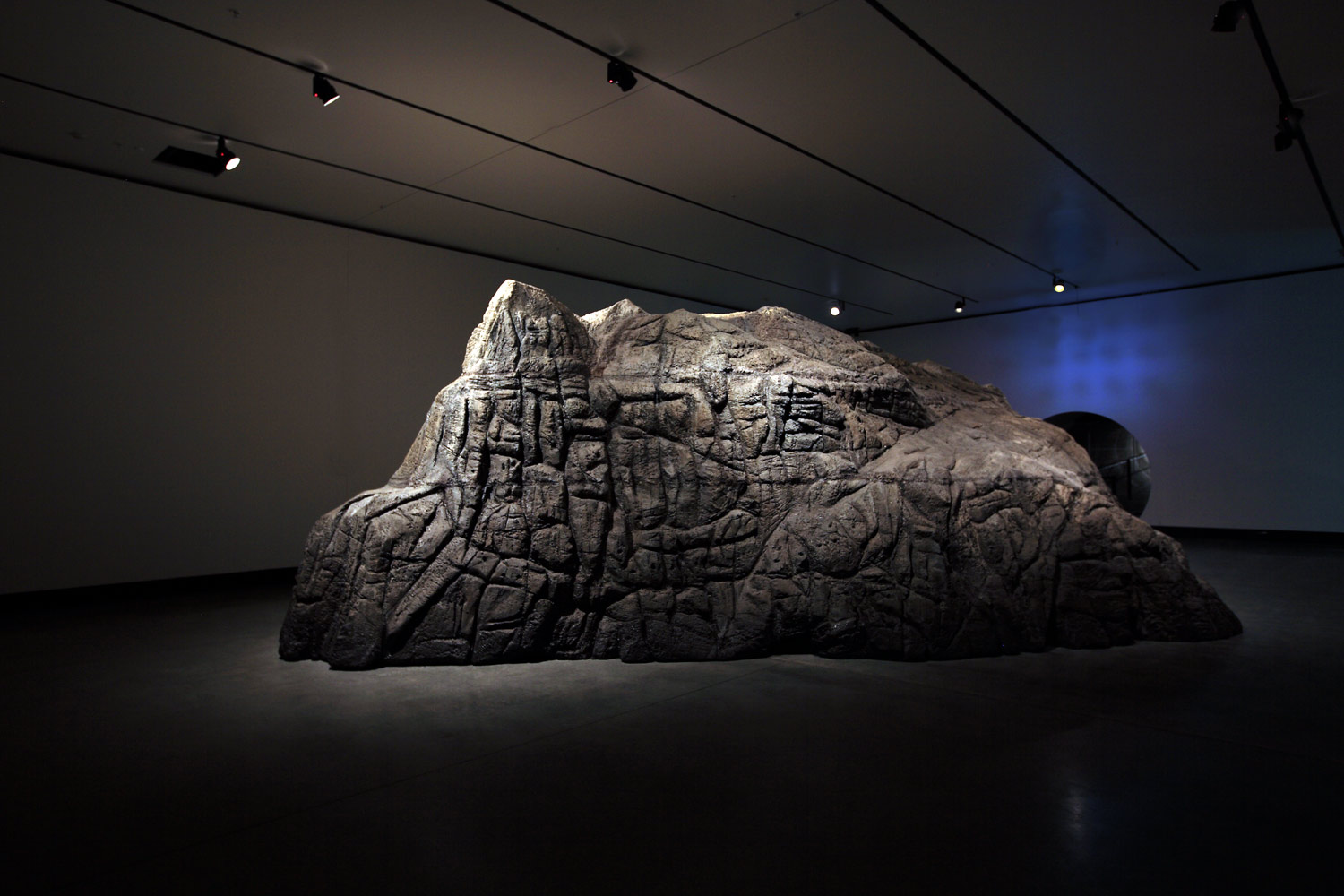
 

Callum Morton (Australian born Canada, b. 1965) 'Babylonia' 2005


Callum Morton (Australian born Canada, b. 1965)
Babylonia
2005
Wood, polystyrene, epoxy resin, acrylic paint, light, carpet, mirror and sound
Photo credit: MONA/Leigh Carmichael
Image Courtesy of MONA Museum of Old and New Art


Sculptor Fredrick White and Marcus Bunyan inside Callum Morton's 'Babylonia' wearing the 'O'


Sculptor Fredrick White and Marcus Bunyan inside Callum Morton’s Babylonia wearing the ‘O’
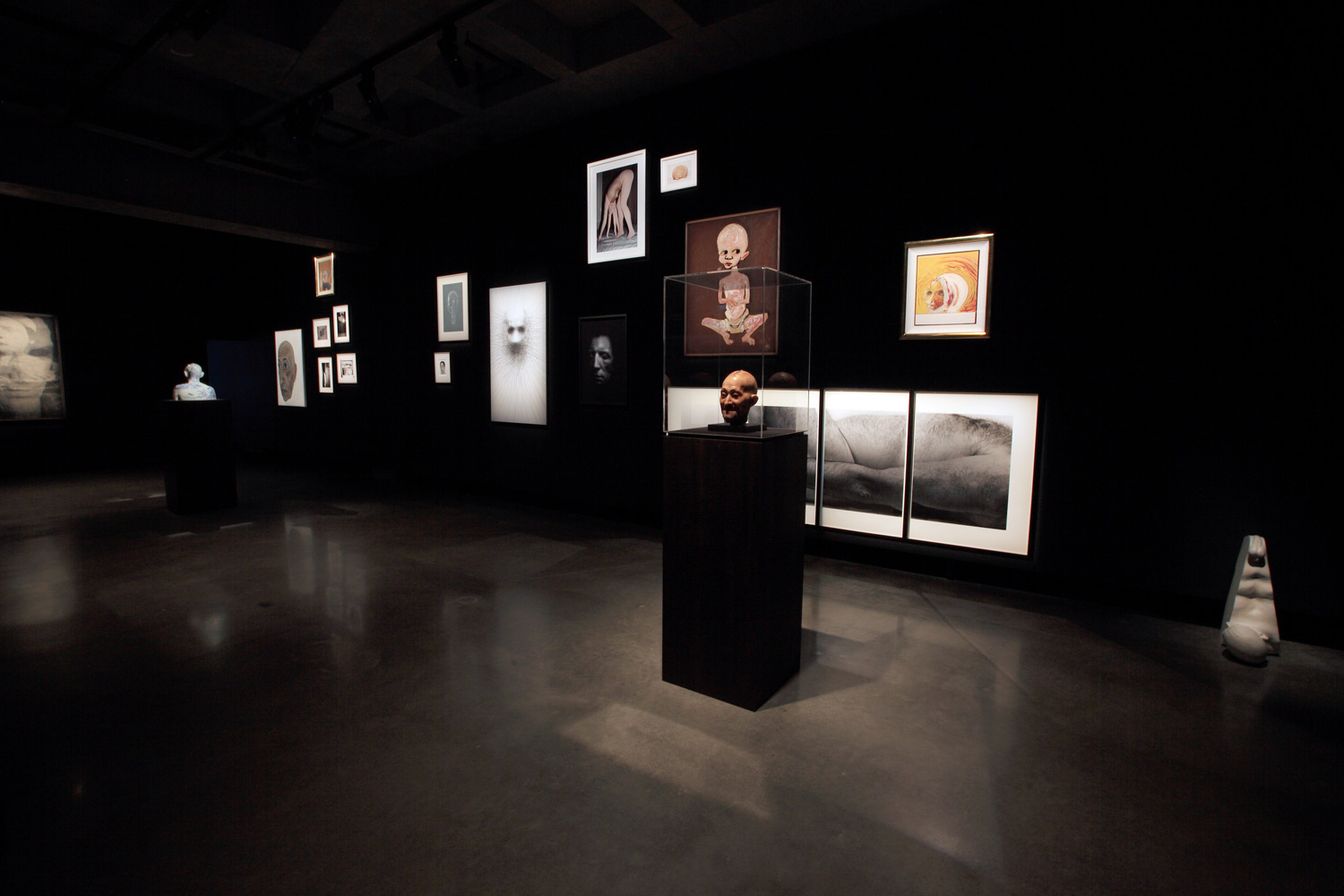
 

Portrait gallery. Various artworks by various artists. Museum of Old and New Art - interior


Portrait gallery
Various artworks by various artists
Museum of Old and New Art – interior
Photo credit: MONA/Leigh Carmichael
Image Courtesy of MONA Museum of Old and New Art


Masturbation. It is a source of endless irony to me that when I was young, and desperately in need of endless fucking, no one was interested in helping me out, whereas now, older and slower, I could fill even my desired adolescent quota. What saved me then was my right hand, even though I call myself left-handed. Surely the hand that you wank with (I guess John Holmes was ambidextrous) defines you just as much as the hand you write with? Anyway, who writes anymore? It’s so much easier to type. Mental masturbation allows me to pretend I’m a mental John Holmes, takes both hands. But no brains.

Art. I’m not at all sure that conceptual art and traditional art are the same thing. One can come from muscle memory, from pragma; at its best it’s not at all conscious. The former, though, is so self-aware it’s often targeting its own self-awareness. Check out the Hirst and the Pylypchuk at the other end of the gallery.


David Walsh 2011


MONA Corten Stairwell February 2011


Corten Stairwell
February 2011
Museum of Old and New Art – interior
Photo credit: MONA/Leigh Carmichael
Image Courtesy of MONA Museum of Old and New Art
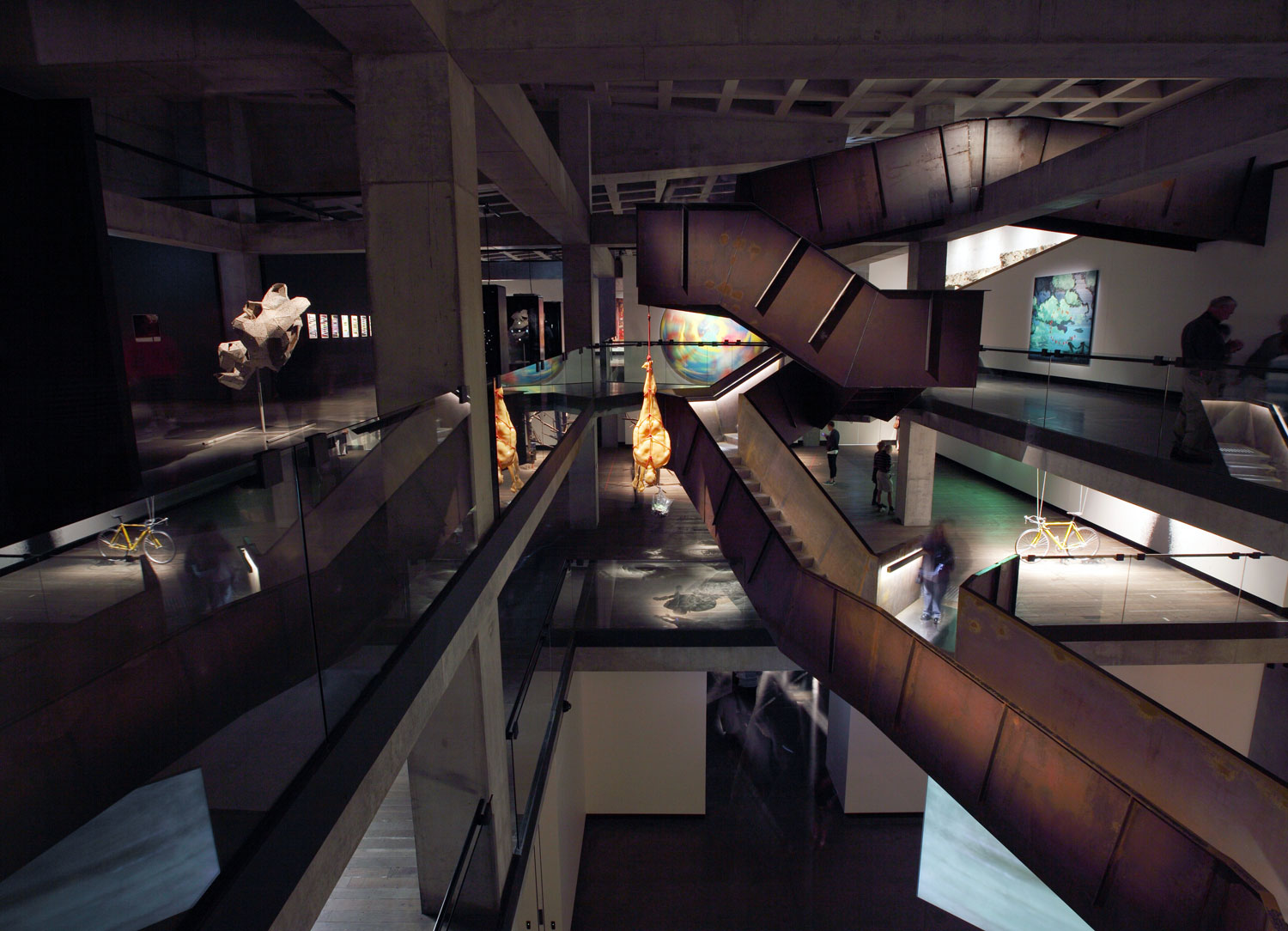
 

MONA Corten Stairwell & Surrounding Artworks February 2011


Corten Stairwell & Surrounding Artworks
February 2011
Museum of Old and New Art – interior
Photo credit: MONA/Leigh Carmichael
Image Courtesy of MONA Museum of Old and New Art
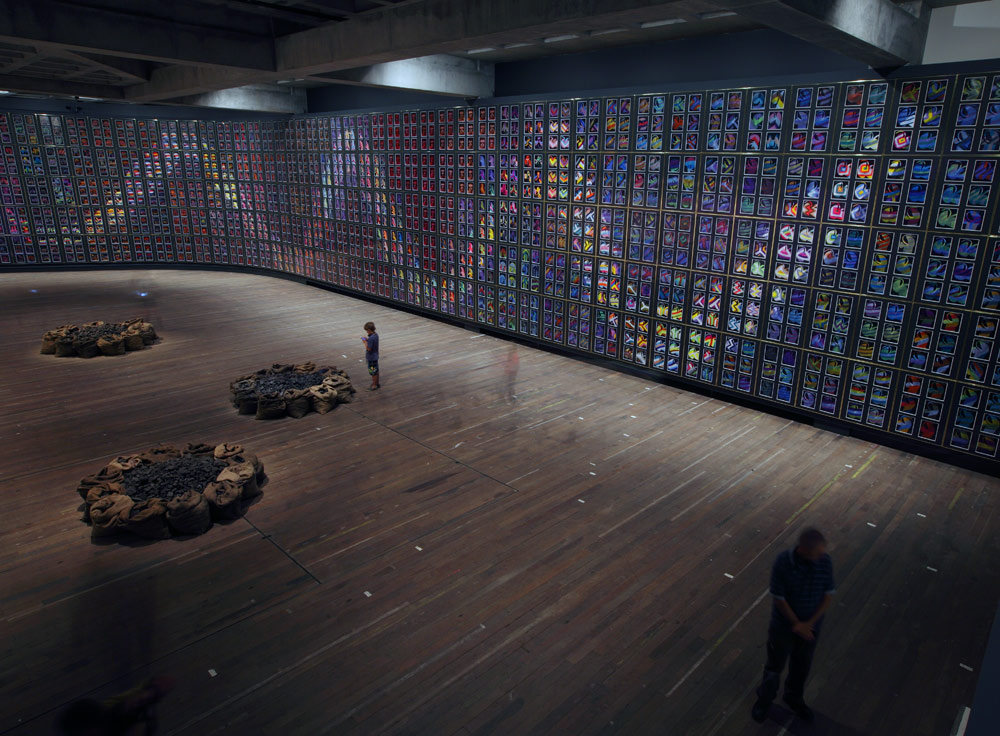
 

MONA The Nolan Gallery February 2011


The Nolan Gallery

Sir Sidney Nolan (Australian, 1917-1992)
Snake
1970 to 1972
Mixed media on paper, 1620 sheets

Jannis Kounellis (Greece, 1936-2017)
Untitled

2002
Jute coffee bags, coal; three parts

Photo credit: MONA/Leigh Carmichael
Image Courtesy of MONA Museum of Old and New Art
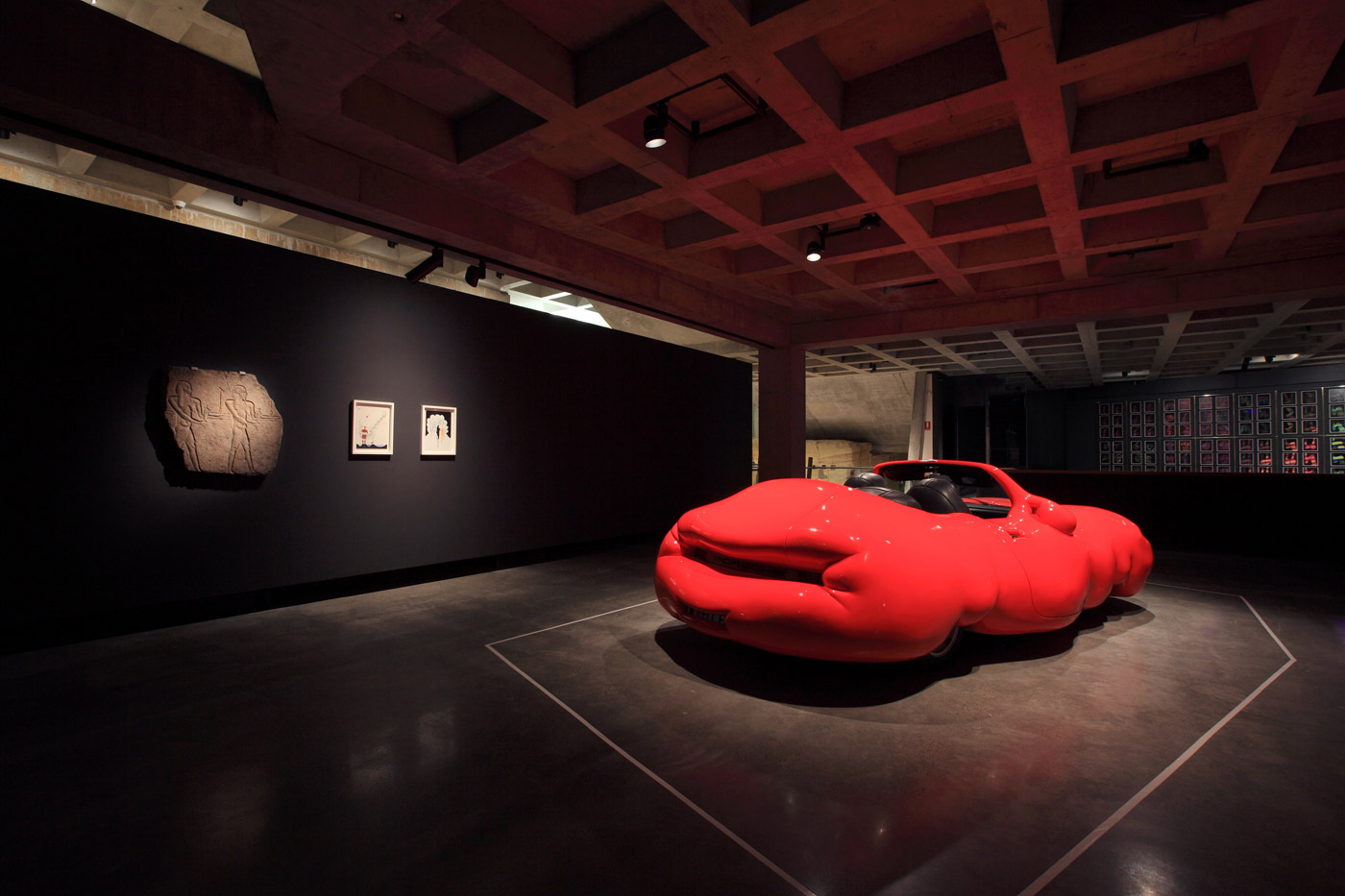
 

Erwin Wurm (Austrian, b. 1954) 'Fat Car' 2006
 at MONA


Erwin Wurm (Austrian, b. 1954)
Fat Car
2006
Steel chassis and body; leather interior, with polystyrene and fibreglass
Photo credit: MONA/Leigh Carmichael
Image Courtesy of MONA Museum of Old and New Art


Museum of Old and New Art
655 Main Road Berriedale
Hobart Tasmania 7011, Australia

Opening hours:
Fridays – Mondays, 10am – 5pm

MONA website

LIKE ART BLART ON FACEBOOK

Back to top

Exhibition: ‘Monika Tichacek, To all my relations’ at Karen Woodbury Gallery, Richmond

Exhibition dates: 4th May – 28th May 2011


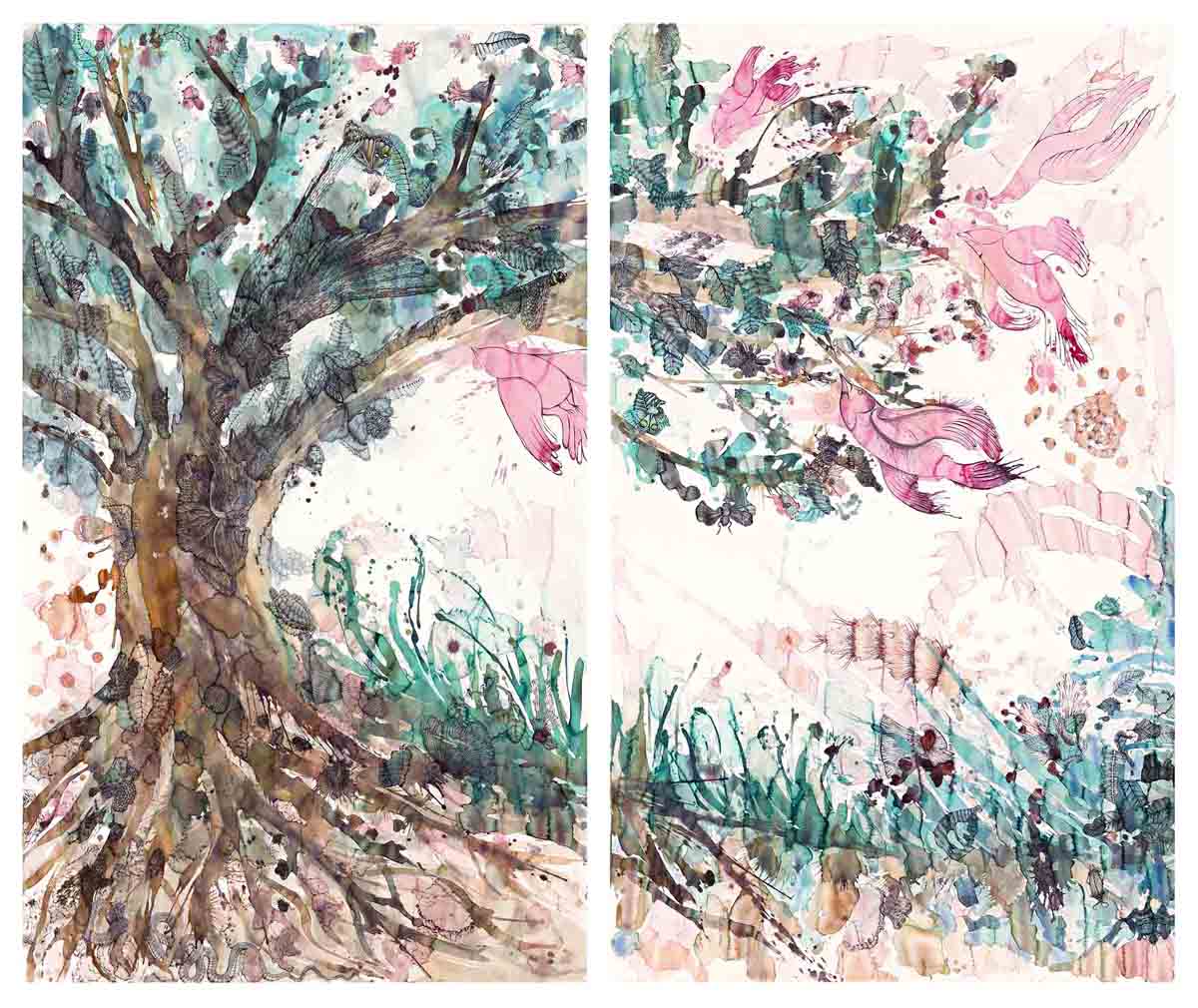
Monika Tichacek (Australian, b. 1975 Switzerland) 'To all my relations' 2011


Monika Tichacek (Australian, b. 1975 Switzerland)
To all my relations
2011
Diptych
Gouache, pencil and watercolour on paper
244 x 300cm overall


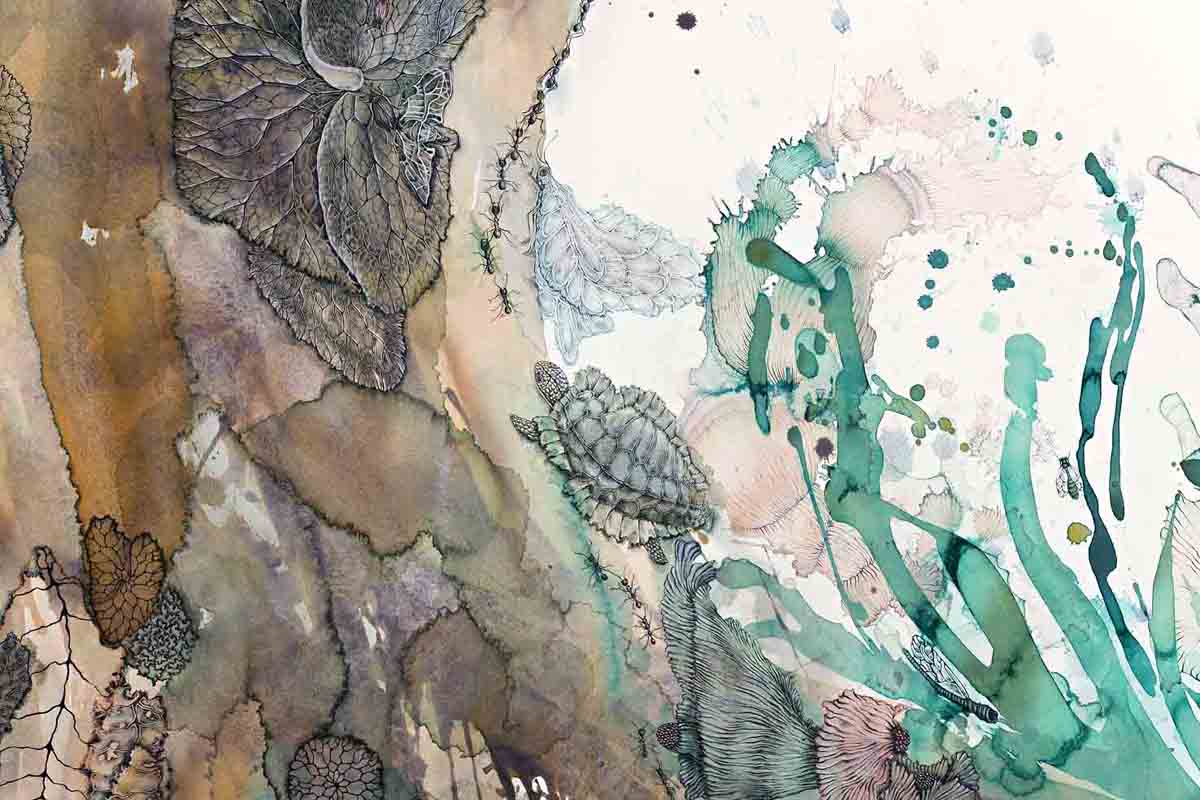
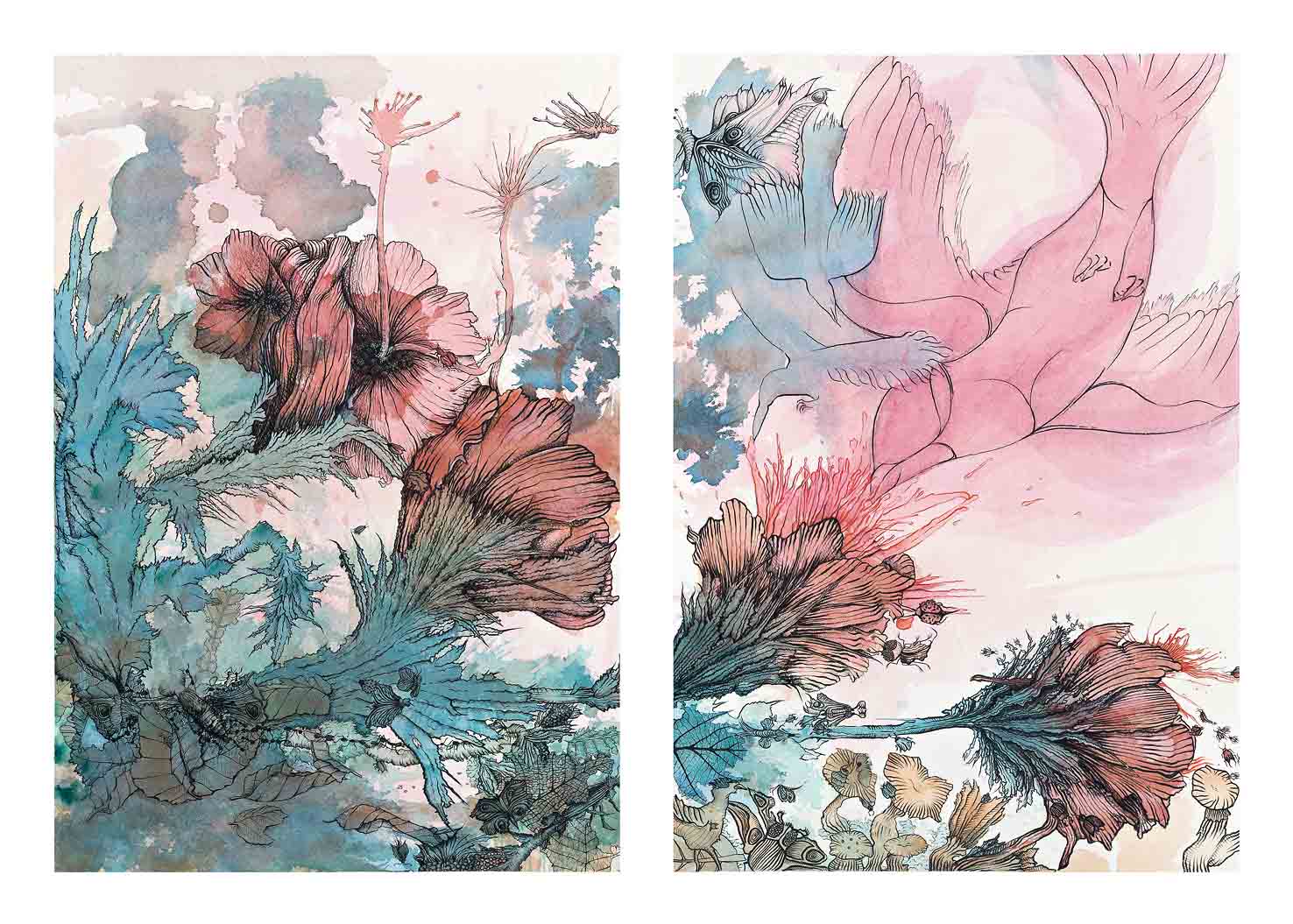
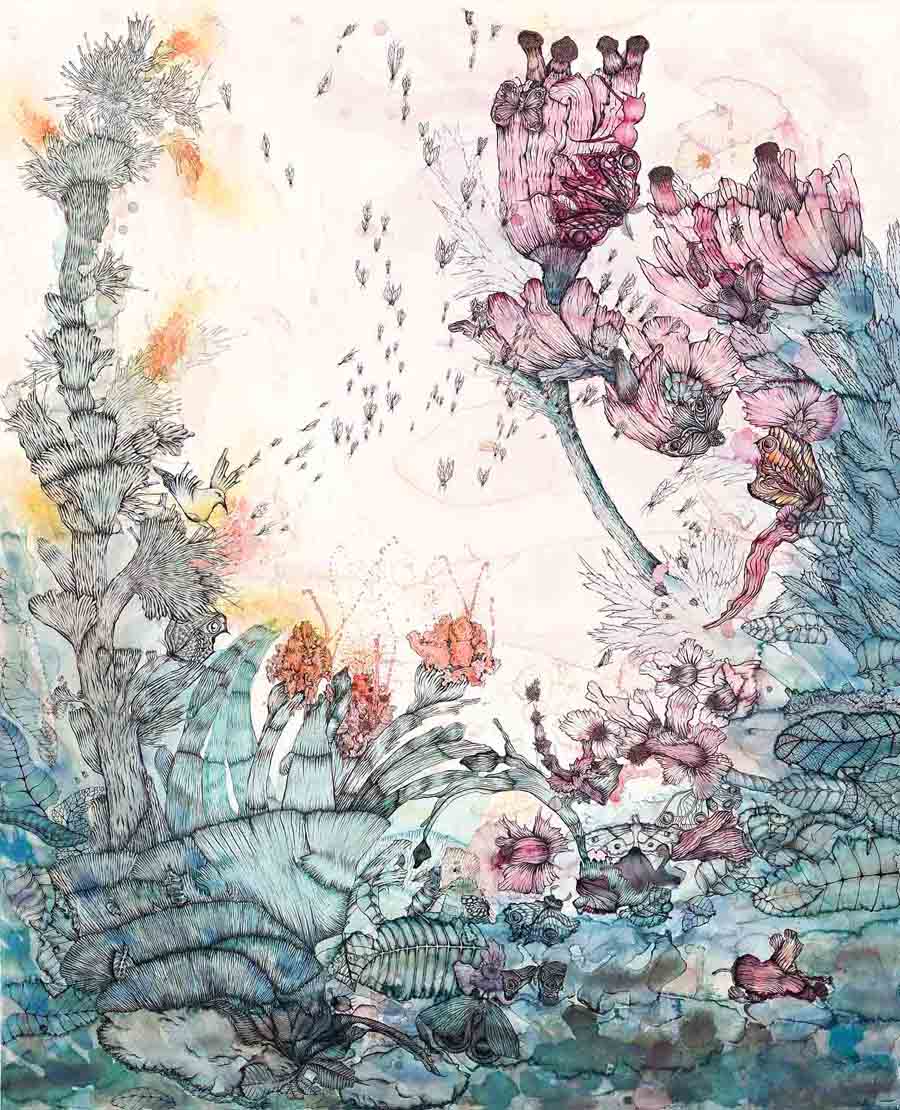
This is a stupendous exhibition by Monika Tichacek, at Karen Woodbury Gallery. One of the highlights of the year, this is a definite must see!

The work is glorious in it’s detail, a sensual and visual delight (make sure you click on the photographs to see the close up of the work!). The riotous, bacchanalian density of the work is balanced by a lyrical intimacy, the work exploring the life cycle and our relationship to the world in gouache, pencil & watercolour. Tichacek’s vibrant pink birds, small bugs, flowers and leaves have absolutely delicious colours. The layered and overlaid compositions show complete control by the artist: mottled, blotted, bark-like wings of butterflies meld into trees in a delicate metamorphosis; insects are blurred becoming one with the structure of flowers in a controlled effusion of life. The title of the exhibition, To all my relations,

“has inspired an understanding that all animist cultures’ peoples have who live in close relationship to the earth. We are all related, we all exist in an interdependent system. The ecosystem is such an unbelievably complex, harmonious system. Every drop of rain, every insect, every micro-organism has its place for the perfect functioning and health of nature… The title is an acknowledgement and honouring of all that is live-giving, every little element that makes up the big picture of life on earth.”1

It was very difficult to pull myself away from the beauty and intimate polyphony of voices contained within the work. I loved it!

Dr Marcus Bunyan


1/ O’Sullivan, Jane. “Artist Interview: Monika Tichacek,” on Australian Art Collector website, 19th May 2011 [Online] Cited 21/05/2010 no longer available online


Many thankx to Karen Woodbury Gallery for allowing me to publish the photographs and Art Guide Australia for allowing me to publish the text in the posting. The text by Dylan Rainforth was commissioned by Art Guide Australia and appears in the May/June 11 issue of Art Guide Australia magazine. Please click on the photographs for a larger version of the image.


Monika Tichacek (Australian, b. 1975 Switzerland) 'To all my relations' 2011 (detail)


Monika Tichacek (Australian, b. 1975 Switzerland)
To all my relations (detail)
2011
Diptych
Gouache, pencil and watercolour on paper
244 x 300cm overall


Monika Tichacek (Australian, b. 1975 Switzerland) 'To all my relations' 2011 (detail)


Monika Tichacek (Australian, b. 1975 Switzerland)
To all my relations (detail)
2011
Diptych
Gouache, pencil and watercolour on paper
244 x 300cm overall


Monika Tichacek (Australian, b. 1975 Switzerland) 'To all my relations' 2011 (detail)


Monika Tichacek (Australian, b. 1975 Switzerland)
To all my relations (detail)
2011
Diptych
Gouache, pencil and watercolour on paper
244 x 300cm overall


The Cycle of Nature – Monika Tichacek’s To All My Relations

Dylan Rainforth

Anyone used to the immaculately controlled, exactingly lit photographic and video mise en scène that Swiss-born artist Monika Tichacek presented in such series as The Shadowers, for which she won the prestigious Anne Landa Award for Video and New Media Arts in 2007, may be surprised by the direction her work has taken in her latest exhibition. To All My Relations consists entirely of works on paper – watercolour and ink drawings that evince a tension between abstract, gestural shapes and bleeds of colour, recalling (just for convenience’s sake) Kandinsky, and intricately rendered natural forms that owe more to the scientific, zoological and botanical narratives of the Endeavour voyages of Captain Cook, Joseph Banks and the artist Sydney Parkinson.

The work has come out of an intensive period over the last few years in which Tichacek spent considerable time in the jungles of South America and the deserts of the United States, as well as time spent in the New South Wales bush and studying nature books. “I’m getting more and more interested in the cellular, microscopic imagery that you get when you enlarge something and peer deeper into the structure of how material elements are composed, and that really coincides with my interest in Eastern philosophies of Buddhism and many other things too. I guess I’m looking as deeply into the nature of something as is possible but I’m trying not to do it so much with my mind – but of course that’s very challenging,” she says, laughing lightly.

“The exploration of feeling is quite important to me – it’s quite a departure from what I used to do, which were certainly works that came from a very inner landscape but then the execution would be very conceptual, obviously – it had to be and this new work is much more intimate.”

That challenge to the rational, objective Western subject is informed by Tichacek’s exposure to indigenous traditions in South America and other places.

“In 2006 I had a research grant and I went to the Amazon because I wanted to look more deeply into animist cultures, meaning cultures that really see the land as living and as alive with energy and with spirit or ‘beingness’. So I went to the Amazon and spent quite a long time there and also in the mountains in Peru and saw a little bit of Central America and also North America in the desert. I spent time there and really learnt a lot about their indigenous ways and got to participate in a lot of things and experience a lot of things. In the Amazon shamanic tradition there is a process – they call it dieting – you spend a few months more or less alone, existing on very limited foods. You get very little, limited food and very little contact and they give you different traditional plants that, through the communion they do, they are ‘told’ to give you. And you are encouraged to connect with this plant for its healing properties to come through. So that was quite an amazing time to get quite still…”

The exhibition title comes from a Native American ceremony. According to Tichacek, “It’s always said when entering the sweat lodge and it’s an acknowledgement of being related to everything in nature, every being, the understanding that without all these other relations one wouldn’t exist. In those cultures it’s much more understood – we’ve lost that understanding because we can just buy things in the supermarket and eat them but if we lived that way we would probably remember a lot more that we are closely related to everything around us.”

From this perspective we can see that this new work is not a complete departure from Tichacek’s earlier work after all, yet its intentions are radically different. Both the natural world and shamanistic knowledge played their part in The Shadowers. Professor Anne Marsh has described Tichacek’s video, played out in a violent scene occurring between three women (one of whom Marsh characterises as a witch doctor or shaman) in a forest environment, as stretch[ing] the boundaries between body art, ritual and sado-masochism by assaulting the senses and transgressing the social realm. In psychoanalytic terms it tears at the screen of the real and immerses the viewer into the abject world of instinctual response where language has no authority.” [i]

Pain, sado-masochism, ritual and endurance certainly have their place in shamanistic traditions – one need only think of any number of initiation rites – but now Tichacek is looking for a less conflicted relationship with nature. “The work has always been very personal and I guess in The Shadowers that nature relationship was starting to come in but it was very tense and very violent and very confused. The continuation of that theme is still there – the exploration of how to understand the experience of the self and what we are doing here and how we come to exist. That’s definitely been there before but this new work is more in the realm of psychology and the previous works are more in the realm of the female body.”

To All My Relations will present several drawings, with one in particular being conceived on a massive scale that Tichacek intends to convey the sense of awe we experience when surrounded by nature. The artist will also stage a performance – something her interdisciplinary practice has always embraced – at the opening. Although she had not completely determined the details when I spoke to her the performance was inspired by a drawing she made a few years ago and will symbolically connect the artist’s body to the roots of a tree.

“I always feel like [performance serves] to bring my body into it. Although I feel like my body’s very much in these drawings there’s something about performance that’s really physically present.”

Dylan Rainforth.


Monika Tichacek (Australian, b. 1975 Switzerland) 'To all my relations' 2011 (detail)


Monika Tichacek (Australian, b. 1975 Switzerland)
To all my relations (detail)
2011
Diptych
Gouache, pencil and watercolour on paper
244 x 300cm overall


Monika Tichacek (Australian, b. 1975 Switzerland) 'To all my relations' 2011 (detail)


Monika Tichacek (Australian, b. 1975 Switzerland)
To all my relations (detail)
2011
Diptych
Gouache, pencil and watercolour on paper
244 x 300cm overall


Monika Tichacek (Australian, b. 1975 Switzerland) 'Birth of generosity' 2011


Monika Tichacek (Australian, b. 1975 Switzerland)
Birth of generosity
2011
Diptych
Pencil and watercolour on paper
70 x 114cm overall


Monika Tichacek (Australian, b. 1975 Switzerland) 'Transmission' 2011


Monika Tichacek (Australian, b. 1975 Switzerland)
Transmission
2011
Pencil and watercolour on paper
150 x 125cm


Karen Woodbury Gallery

This gallery has now closed

LIKE ART BLART ON FACEBOOK

Back to top
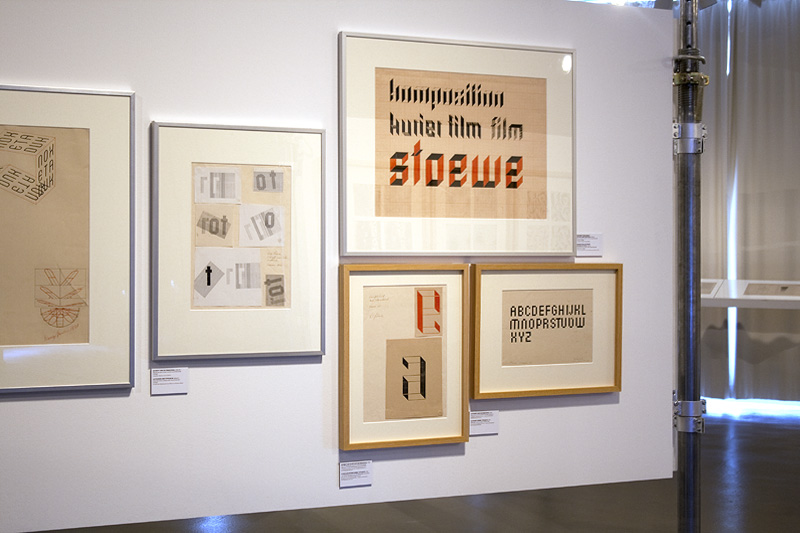
Exhibition: ‘Kurt Kranz: Programming of Beauty’ at the Bauhaus Dessau, Berlin

Exhibition marking the 100th birthday of Kurt Kranz
19th November 2010 – 29th May 2011


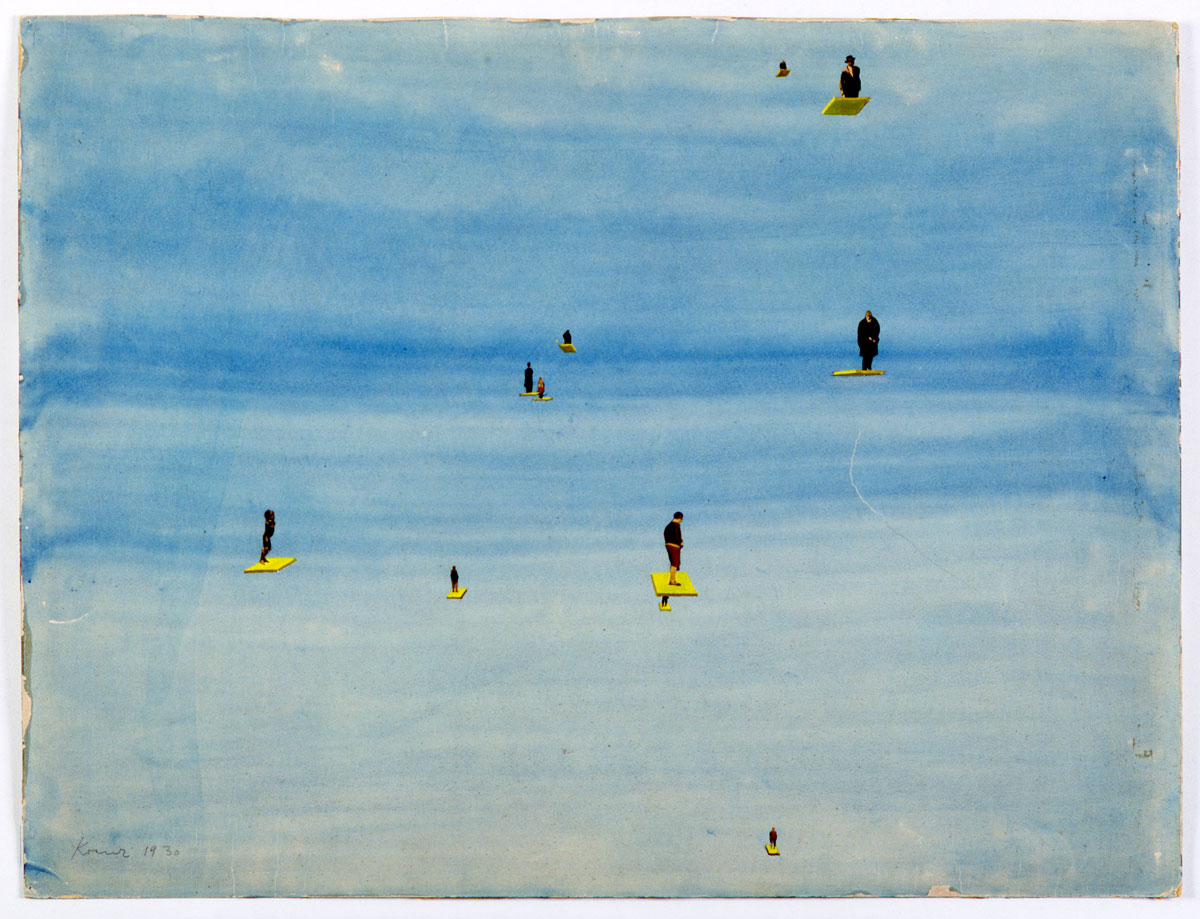
Kurt Kranz (German, 1910-1997) 'Perspective' 1931


Kurt Kranz (German, 1910-1997)
Perspective
1931
Ingrid Kranz / Stiftung Bauhaus Dessau
Foto: Lars Lohrisch / Abdruck mit Genehmigung der Kunsthalle


One of the great pleasures of publishing this archive is that I get to research the life of an artist whose work I never knew before. Kurt Kranz is one such artist.

Dr Marcus Bunyan


Many thankx to the the Bauhaus Dessau for allowing me to publish the photographs in the posting. Please click on the photograph for a larger version of the image.


Kurt Kranz (German, 1910-1997) 'Vereinsamung' Dessau 1930


Kurt Kranz (German, 1910-1997)
Vereinsamung (Isolation)
Dessau
1930
Ingrid Kranz / Stiftung Bauhaus Dessau
Leihgeber: Kunsthalle Bremen


Installation photograph of 'Programming of Beauty' by Kurt Kranz at the Bauhaus Dessau


Installation photograph of Programming of Beauty by Kurt Kranz at the Bauhaus Dessau


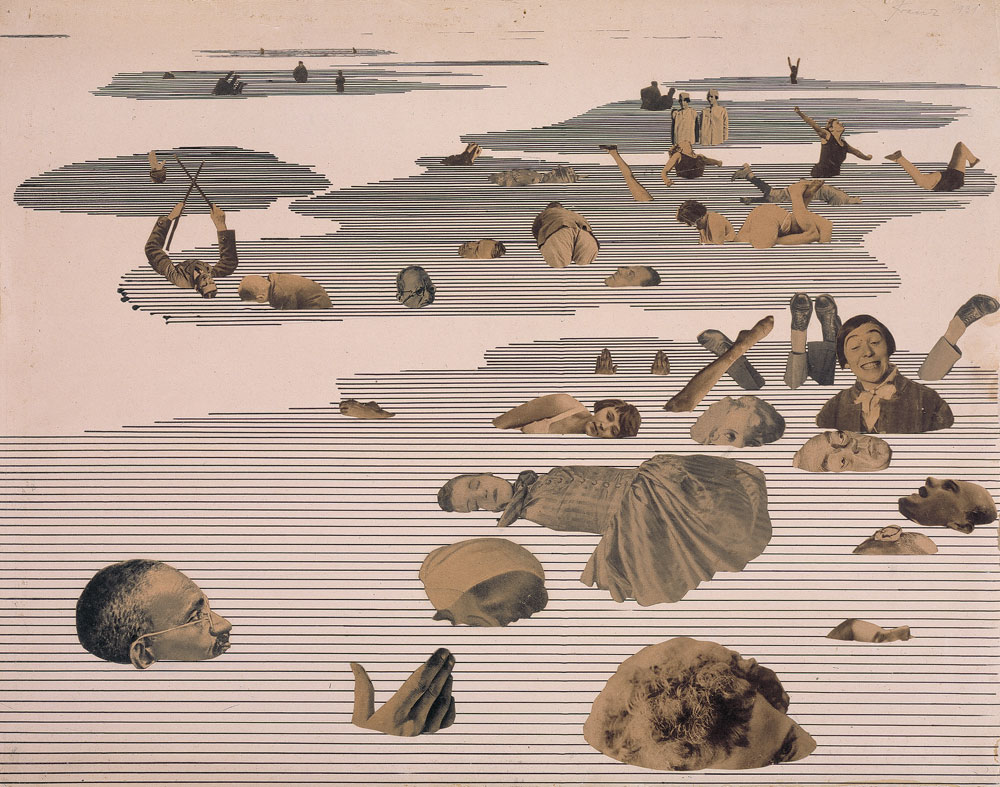
Kurt Kranz (German, 1910-1997) 'Versinkende' (Sinking one) 1931


Kurt Kranz (German, 1910-1997)
Versinkende (Sinking one)
1931
Ingrid Kranz / Stiftung Bauhaus Dessau


Kurt Kranz (German, 1910-1997) 'Persischer Garten' (Persian garden) 1970


Kurt Kranz (German, 1910-1997)
Persischer Garten (Persian garden)
1970
Ingrid Kranz / Stiftung Bauhaus Dessau
Foto: Uwe Jacobshagen


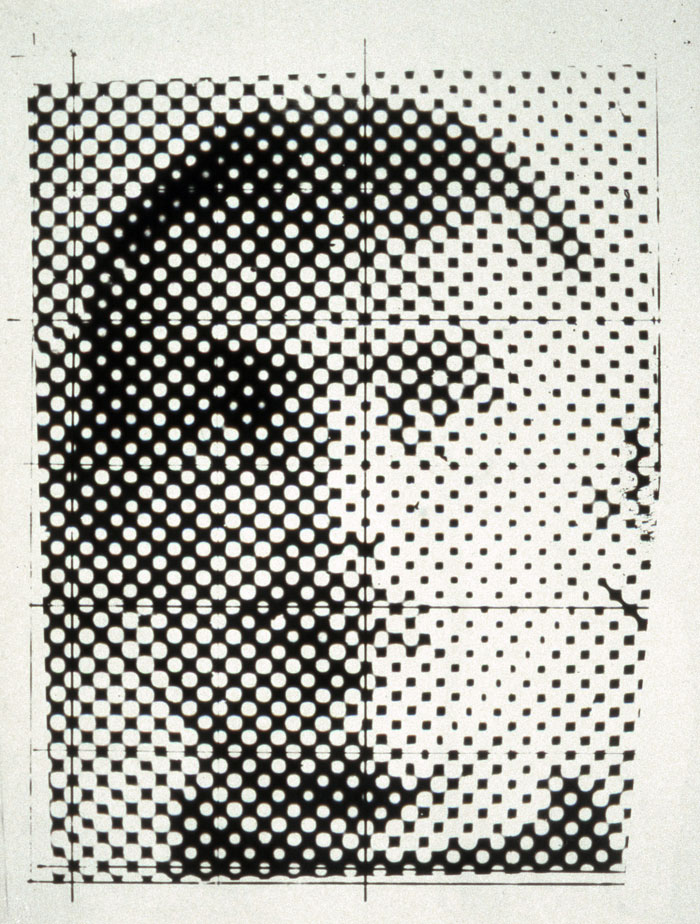
The Bauhaus Dessau dedicates a comprehensive exhibition to the painter, graphic designer and photographer Kurt Kranz to mark his 100th birthday. In 1930, the then twenty-year-old lithographer came from Bielefeld to study at the Bauhaus Dessau, where he soon established himself as a pioneer of serial and generative methods. With his avant-garde work, Kranz’s methods anticipated those of later generations.

Inspired by a lecture by László Moholy-Nagy, Kurt Kranz came to the Bauhaus Dessau in April 1930. In Walter Peterhans’s photography class, Kranz began to experiment with photographic techniques and created some of the most striking abstract picture series to emerge from the Bauhaus. Alienated and abstracted faces and hands appear repeatedly in his dynamic picture series. These show Kranz’s early affinity for film as, page for page, the abstract forms interact with one another. Kranz drafted his first concepts for abstract films at the Bauhaus, although he was first able to realise these decades later in 1972.

The exhibition to mark the artist’s 100th birthday shows works from Kranz’s Bauhaus years and his later work as an advertising graphic designer, and focuses on a selection of his large picture cycles. Strikingly diverse leporellos dating from the 1960s onwards take centre stage, as do the so-called “Matrix-und Schiebebilder”

Text from the Bauhaus Dessau website


Kurt Kranz (German, 1910-1997) 'Selbstporträt en face (objektives Foto)' (Self-portrait with face (objective photo)) 1931


Kurt Kranz (German, 1910-1997)
Selbstporträt en face (objektives Foto) (Self-portrait with face (objective photo))
1931
Ingrid Kranz / Stiftung Bauhaus Dessau


Kurt Kranz (German, 1910-1997) 'Rasterfoto' (Raster photograph) 1932


Kurt Kranz (German, 1910-1997)
Rasterfoto (Raster photograph)
1932
Ingrid Kranz / Stiftung Bauhaus Dessau


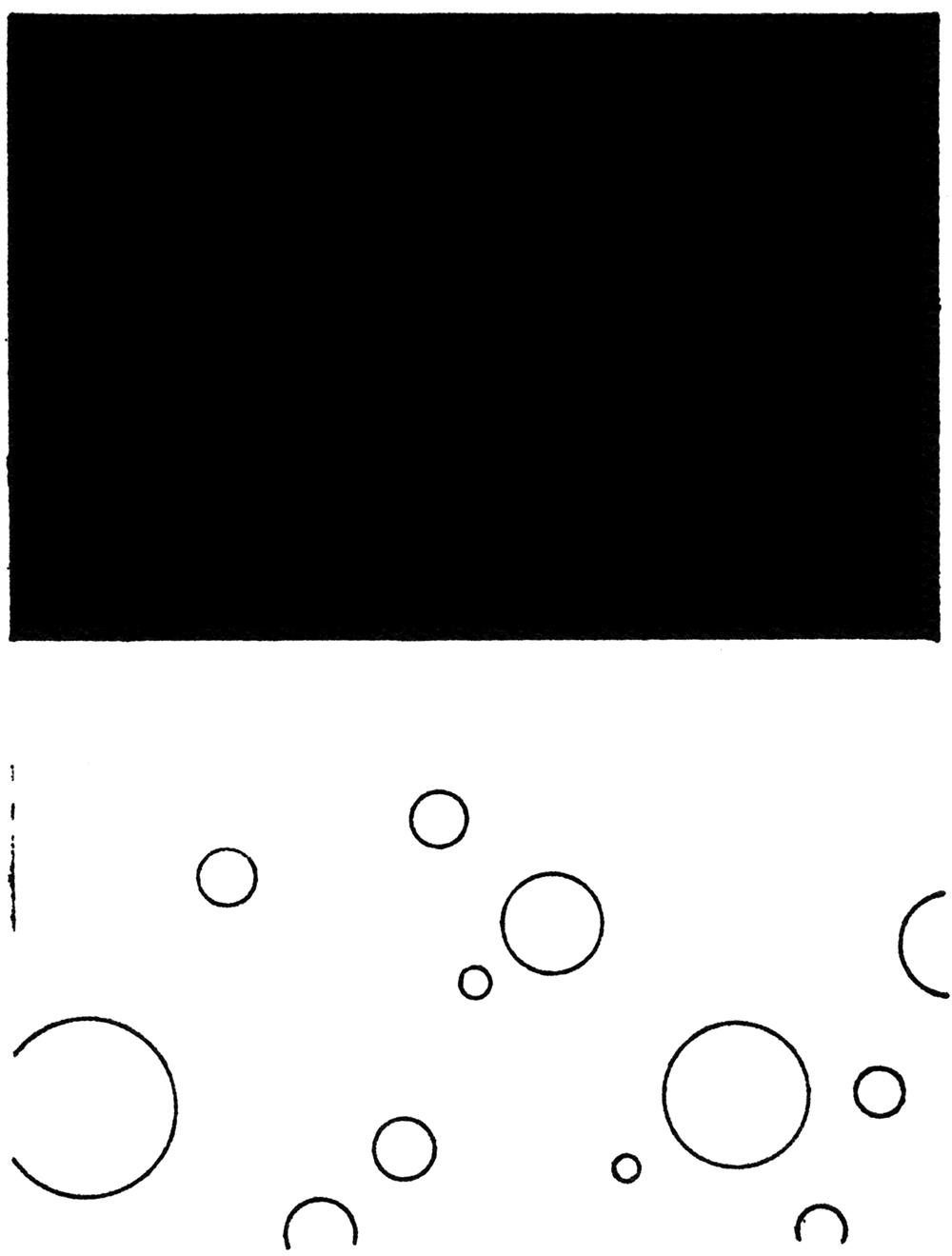
Kurt Kranz (German, 1910-1997) 'Schwarz : Weiß' (Black: White) 1928-29


Kurt Kranz (German, 1910-1997)
Schwarz: Weiß (Black: White)
1928-1929
Ingrid Kranz / Stiftung Bauhaus Dessau
Privatbesitz


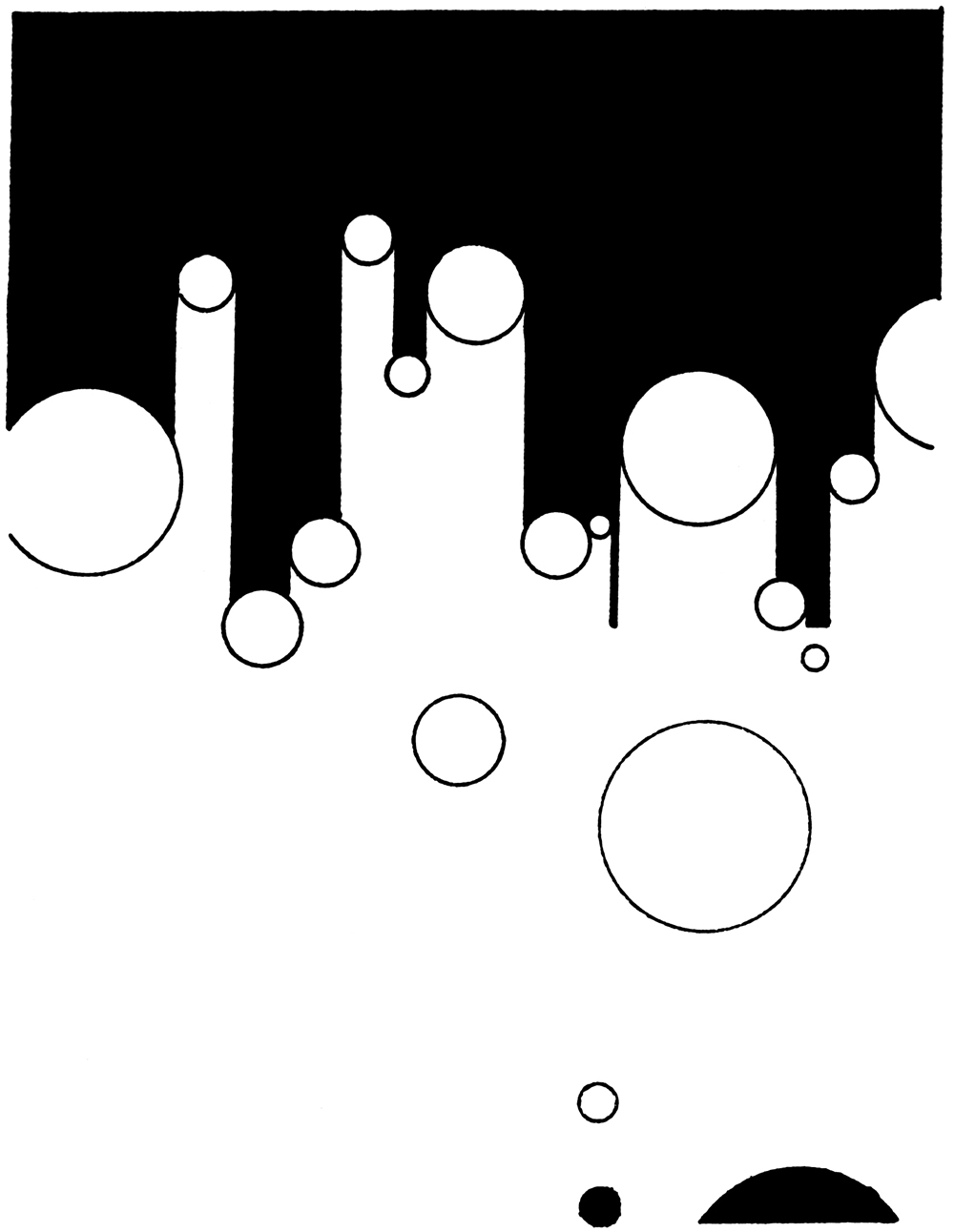
Kurt Kranz (German, 1910-1997) 'Schwarz : Weiß' (Black: White) 1928-29


Kurt Kranz (German, 1910-1997)
Schwarz: Weiß (Black: White)
1928-1929
Ingrid Kranz / Stiftung Bauhaus Dessau
Privatbesitz


Kurt Kranz (German, 1910-1997) 'Schwarz : Weiß' (Black: White) 1928-29


Kurt Kranz (German, 1910-1997)
Schwarz: Weiß (Black: White)
1928-1929
Ingrid Kranz / Stiftung Bauhaus Dessau
Privatbesitz


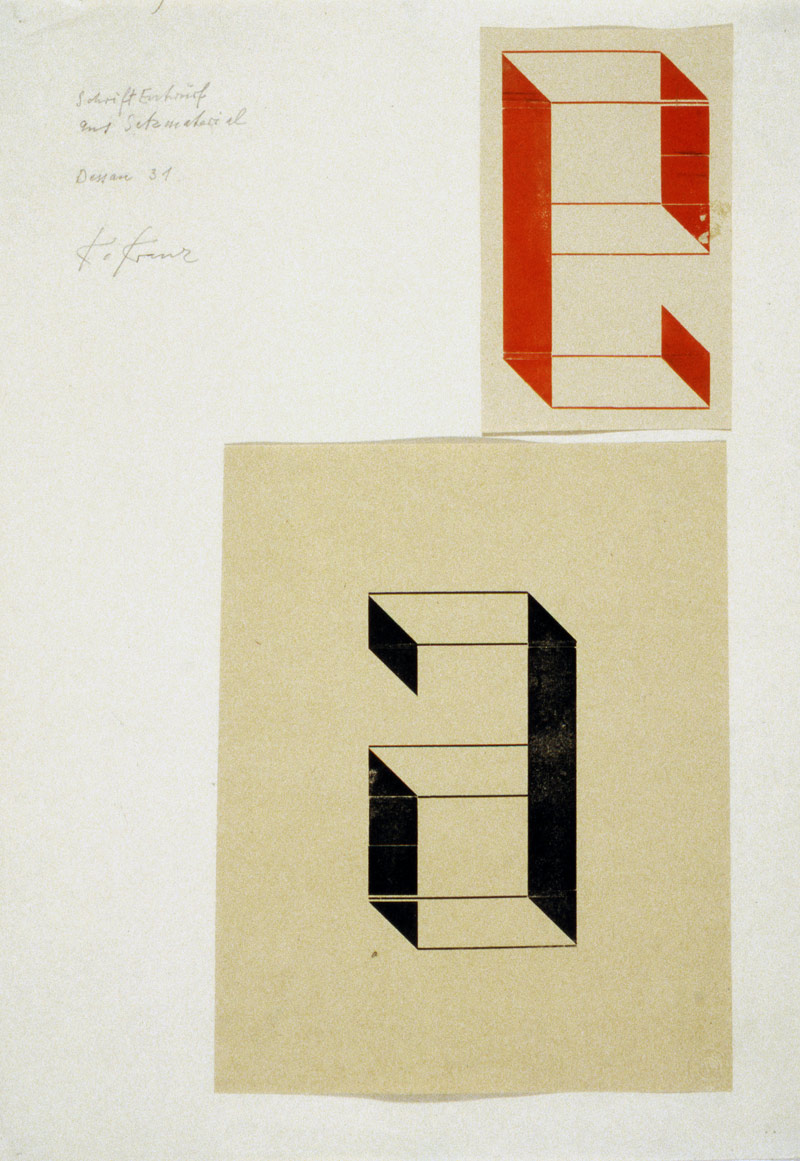
Kurt Kranz (German, 1910-1997) 'Schrift Entwurf aus Satzmaterial' (Writing draft from sentence material) Dessau 1931


Kurt Kranz (German, 1910-1997)
Schrift Entwurf aus Satzmaterial (Writing draft from sentence material)
Dessau
1931
Ingrid Kranz / Stiftung Bauhaus Dessau


Kurt Kranz (German, 1910-1997) Aus der Serie "Sieben Schritte zum symmetrischen Oval"' (From the series "Seven steps to the symmetrical Oval") 1982


Kurt Kranz (German, 1910-1997)
Aus der Serie “Sieben Schritte zum symmetrischen Oval” (From the series “Seven steps to the symmetrical Oval”)
1982
Ingrid Kranz / Stiftung Bauhaus Dessau
Foto: Uwe Jacobshagen


Kurt Kranz (German, 1910-1997) 'Augenreihe' (Eye rows) 1931


Kurt Kranz (German, 1910-1997)
Augenreihe (Eye rows)
1931 (montiert 1981) (1931 (1981 install))
Ingrid Kranz / Stiftung Bauhaus Dessau
Leihgeber: Kunsthalle Bremen


Kurt Kranz (German, 1910-1997) 'Mund-Reihen' (Mouth rows) 1931


Kurt Kranz (German, 1910-1997)
Mund-Reihen (Mouth rows)
1931
Ingrid Kranz / Stiftung Bauhaus Dessau
Leihgeber: Kunsthalle Bremen
Foto: Ingrid Kranz, Wedel


Bauhaus Dessau
Gropiusalle 38, Dessau, Germany

Opening hours:
Tue – Sun 10am – 6pm

Bauhaus Dessau website

LIKE ART BLART ON FACEBOOK

Back to top

Review: ‘Alan Constable: Viewfinder’ at Arts Project Australia, Northcote, Melbourne

Exhibition dates: 30th April 2011 – 1st June 2011


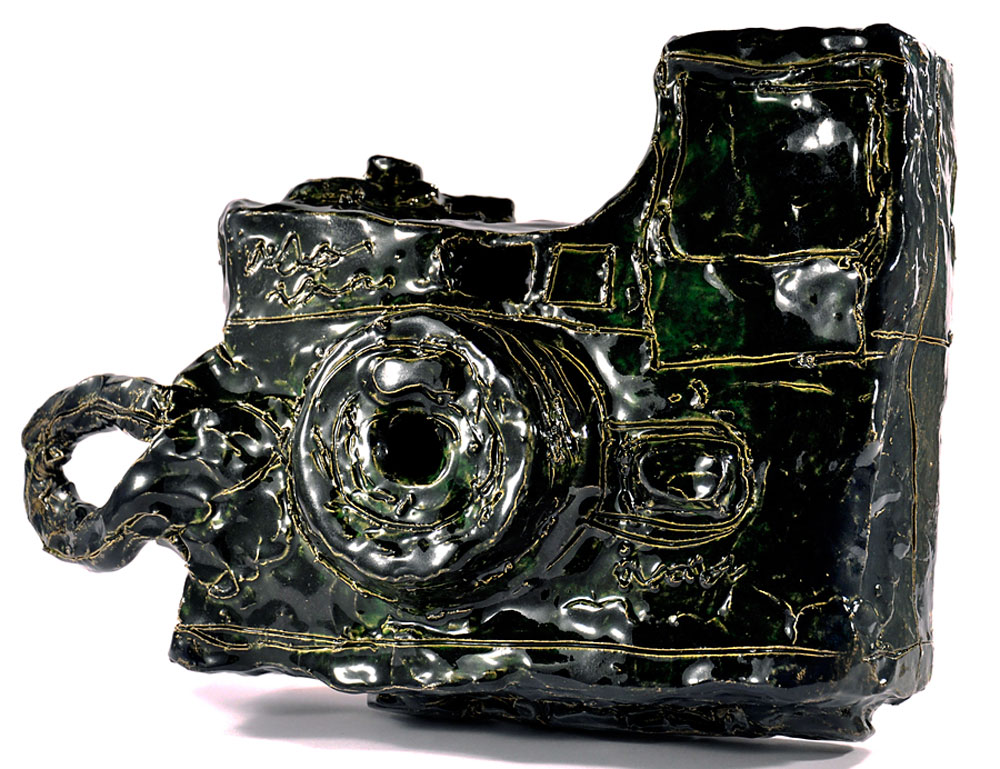
Alan Constable (Australian, b. 1956)
'Konica Pop' 2009


Alan Constable (Australian, b. 1956)
Konica Pop
2009
Ceramic
21 x 32 x 10cm


“For me, art is what is most animal in us … It is the most noble thing because it’s a celebration precisely of the forces of the body and the forces of life.”


Elizabeth Grosz


This Saturday, after a journey around the galleries of Albert Street, Richmond (underwhelming) and a visit to Sutton Gallery to see Simon Terrill’s photographic exhibition Phantom (an exhibition that I was going to review but when I saw it I changed my mind: two excellent photographs, Balfron Tower 2010-2011 and Rivoli #2 2010-2011, let down by three “empty” long exposure photographs allegedly showing traces of humanity, residues of presence) had left me a little deflated, I ventured to the opening of Alan Constable’s twenty-year retrospective Viewfinder curated by Dr Cheryl Daye at Arts Project Australia.

What a breath of fresh air this exhibition is!


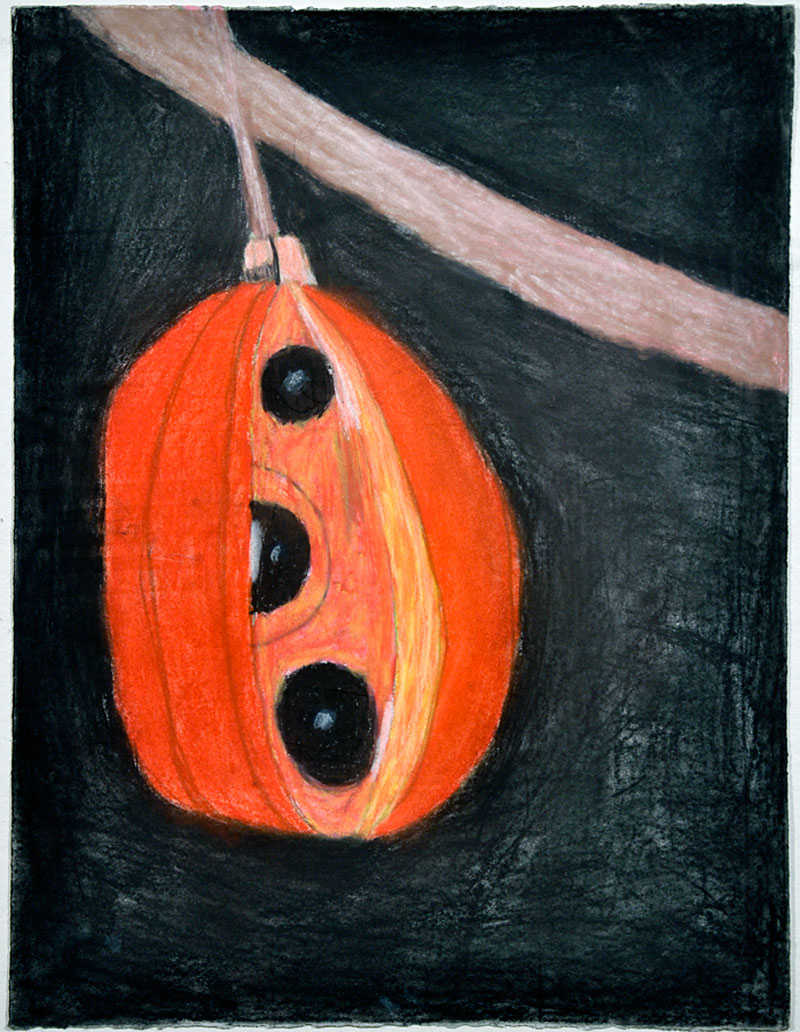
The exhibition shows beautifully in the gallery space. Hung chronologically, the more tightly controlled early series feature luminous pastels that investigate themes: landscapes, birds (rarely figures) – the rubbed and layered medium building up an almost translucent surface that reminded me of the pastel work of Odilon Redon. Later work, such as the two paintings Not titled (person with binoculars) 2009 and Not titled (figure with camera) 2006 (both below) show a greater engagement with the world and a freeing up of technique – running figures, Barak Obama, Dr. Who, suited men with headdresses, football players: happenings – with exaggerated form (hands for example), wonderful spontaneity and an essential simplicity that engages the viewer directly. All the paintings evidence a spatial flatness that brings everything onto the same plane, gives everything equal importance within the image (denying Renaissance perspective; as Cliff Burtt notes in the catalogue the converging lines and horizons act as elements of design, forming the scaffolding of composition). This technique is one of the most powerful elements of Constable’s work. A wonderful understanding of light and use of colour are other essential elements. The transformational, rough hewn, playful clay cameras (such as Konica Pop, 2009, below) are a particular favourite of mine. The glazes on the cameras, their tactility, the colours – are luscious. To hold them, to pick them up and feel them in your hands is a very special experience for me. Outstanding.
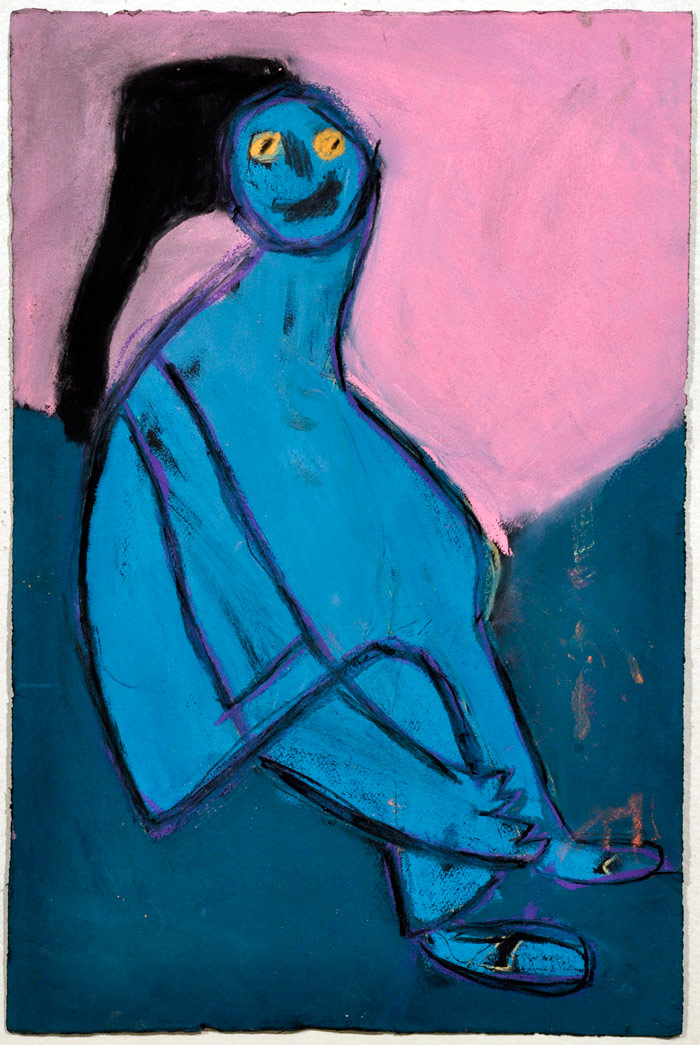
Constable has a unique way of seeing and imaging the world; his working method is unique. After carefully selecting source images from journals, magazines (for example National Geographic) and newspapers, Constable visually scans the photograph from a few inches, holding it up to his eyes and carefully manoeuvring his way across the surface of the image, then making what he sees – a direct pointing to reality. Without a concept to worry about, through an enabled fluidity and freedom of expression, the artist cuts to the essential form of what he wants to make and because of this directness his work contains absolute kernels of wisdom. His observation is fantastic.

These are exuberant works that are a celebration of the body and of life. They have great spontaneity. What Constable sees, he feels and makes: the mark of the maker writ bold. They made me feel so alive. After the disappointment of earlier exhibitions in the day, this work made me laugh and smile!

You really can’t ask for more. It made my day.

Dr Marcus Bunyan


Many thankx to Sue Roff, Melissa Petty, Sim Lutin and everyone at Arts Project Australia for their help and for allowing me to publish the photographs in the posting. Please click on the photographs for a larger version of the image.


Alan Constable (Australian, b. 1956)
'Untitled (three-lens camera)' 2011


Alan Constable (Australian, b. 1956)
Untitled (three-lens camera)
2011
Ceramic


Alan Constable (Australian, b. 1956) 'Not titled (person with binoculars)' 2009


Alan Constable (Australian, b. 1956)
Not titled (person with binoculars)
2009
acrylic on canvas
71 x 71.5cm


Alan Constable (Australian, b. 1956) 'Not titled (figure with camera)' 2006


Alan Constable (Australian, b. 1956)
Not titled (figure with camera)
2006
gouache on paper
65.5 x 45cm


Alan Constable is both a painter and a ceramicist. Alan Constable: Viewfinder is a major survey exhibition that will include paintings, drawings and ceramics, opening Saturday 30 April until Wednesday 1 June 2011.

Showcasing more than 60 works selected from over a 20 year period, Viewfinder offers new and rich insights into the unique art of Alan Constable. Legally blind, Constable has been able to create a body of work that is highly regarded. He is been a  finalist in numerous Australian Art Awards and his ceramic cameras are highly collectable.

‘Often when a painter is faced with a scene, there’s simply so much that’s appealing it’s hard to choose what to focus on’, says Dr Cheryl Daye, founding director, Arts Project Australia. ‘This is where a viewfinder comes in useful; as it helps you focus on particular parts of the scene, enabling you to decide what will make the best composition, both in terms of focus and format’. Daye has worked closely with Constable from the time he joined the Arts Project studio in 1987.

Viewfinder the title of his survey suggests the artist’s process and methodology as well as the composition and subject matter of his work.

In Constable’s two-dimensional works this can be traced from very early self-portraits (1992), through to carefully observed depictions of birds and animals to the series based on silhouettes framed in industrial or stormy landscapes, a fascination with light and energy and, more recently with colourful interpretations of political and cultural figures, all of which are sourced from photographic images carefully and sometimes painstakingly selected by the artist.

Based on imagery from newspapers and magazines, Constables recent paintings are notable for their vibrant kaleidoscopic effects and strong sense colour and patterning. Though Constable’s works are often centred on political events and global figures, his thematic concerns are frequently subjugated by the pure visual experience of colour and form.

His three-dimensional works, most notably the cameras, also sit well within this theme and given the fact that Constable is legally blind is also obliquely referenced. Constable’s ceramic works reflect a life-long fascination with old cameras, which began with his making replicas from cardboard cereal boxes at the age of eight. The sculptures are lyrical interpretations of technical instruments, and the artist’s finger marks can be seen clearly on the clay surface like traces of humanity. In this way, Constable’s cameras can be viewed as extensions of the body, as much as sculptural representations of an object.

Arts Project Australia supports people with disabilities to become practitioners in the visual arts. The studio and gallery nurtures and promotes artists with an intellectual disability as they develop their body of work.

Press release from Arts Project Australia


Arts Project Australia Artist Profile: David Hurlston on Alan Constable

Alan Constable’s ceramic cameras have seen international acclaim for their tactile, poetic resonances. In this video David Hurlston, Senior Curator of Australian Art at the National Gallery of Victoria, talks through Constable’s process, Constable’s highly idiosyncratic practice and why he believes Constable is one of the most important contemporary artists working today.


Alan Constable (Australian, b. 1956) 'Red NEK SLR' 2011


Alan Constable (Australian, b. 1956)
Red NEK SLR
2011
Ceramic
5.5 x 12.25 x 4.75 inches


Alan Constable (Australian, b. 1956) 'Orange AKI SLR' 2011


Alan Constable (Australian, b. 1956)
Orange AKI SLR
2011
Ceramic
6 x 10 x 4 inches


Alan Constable (Australian, b. 1956) 'Not titled (explosion II)' 1996


Alan Constable (Australian, b. 1956)
Not titled (explosion II)
1996
pastel on paper
50 x 66cm


Alan Constable (Australian, b. 1956) 'Not titled (fruit)' 1993


Alan Constable (Australian, b. 1956)
Not titled (fruit)
1993
pastel on paper
66 x 50cm
Arts Project Australia Permanent Collection


Arts Project Australia

Studio
24 High Street
Northcote Victoria 3070
Phone: + 61 3 9482 4484

Gallery
Level 1 Perry Street building
Collingwood Yards
Enter via 35 Johnson Street or 30 Perry Street, Collingwood
Phone: +61 477 211 699

Opening hours:
Wednesday – Friday 11am – 5pm
Saturday & Sunday 12 – 4pm

Arts Project Australia website

LIKE ART BLART ON FACEBOOK

Back to top