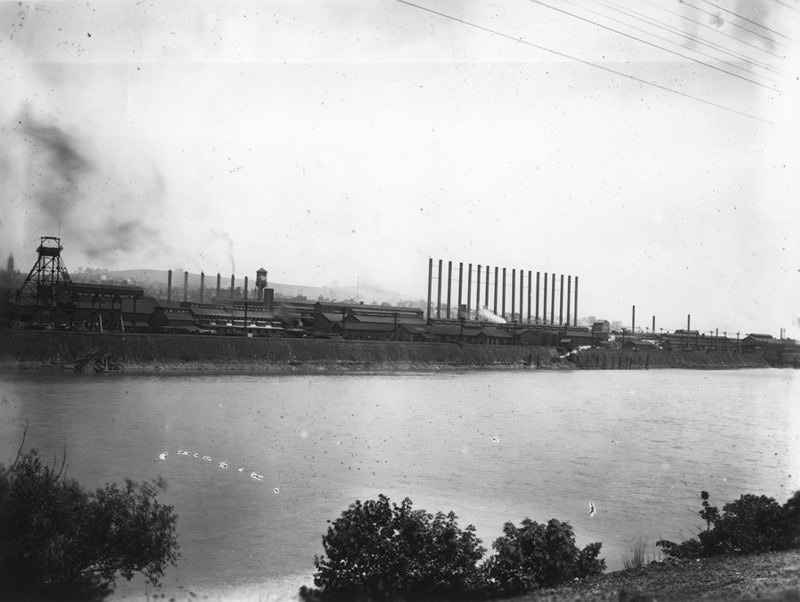
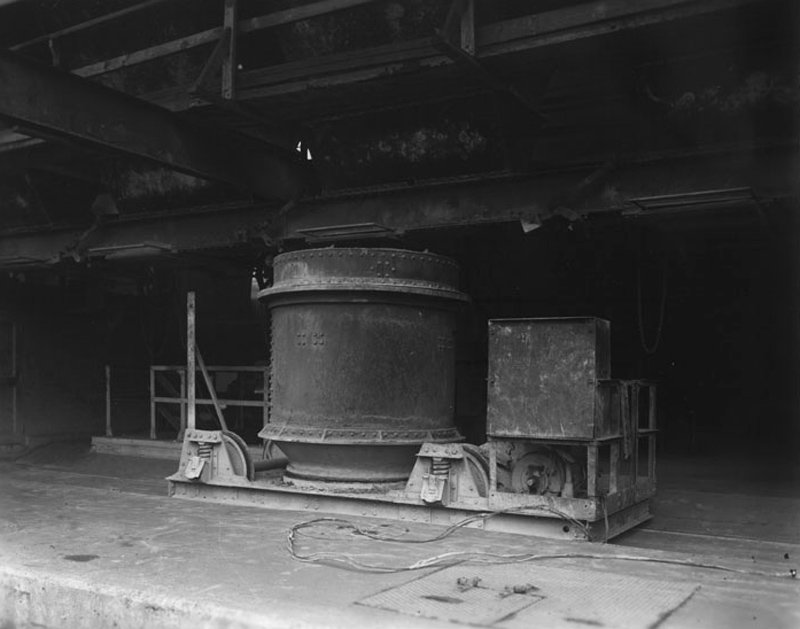
Unknown photographer A shot of the Wire Works Acid Plant from across the Monongahela River Nd Gelatin silver print
I stumbled across this digital collection quite by accident when researching something entirely different and was amazed by some of the powerful images that reflect life in a Pennsylvanian industrial town. Sadly, the The Donora Digital Collection website is now no longer online.
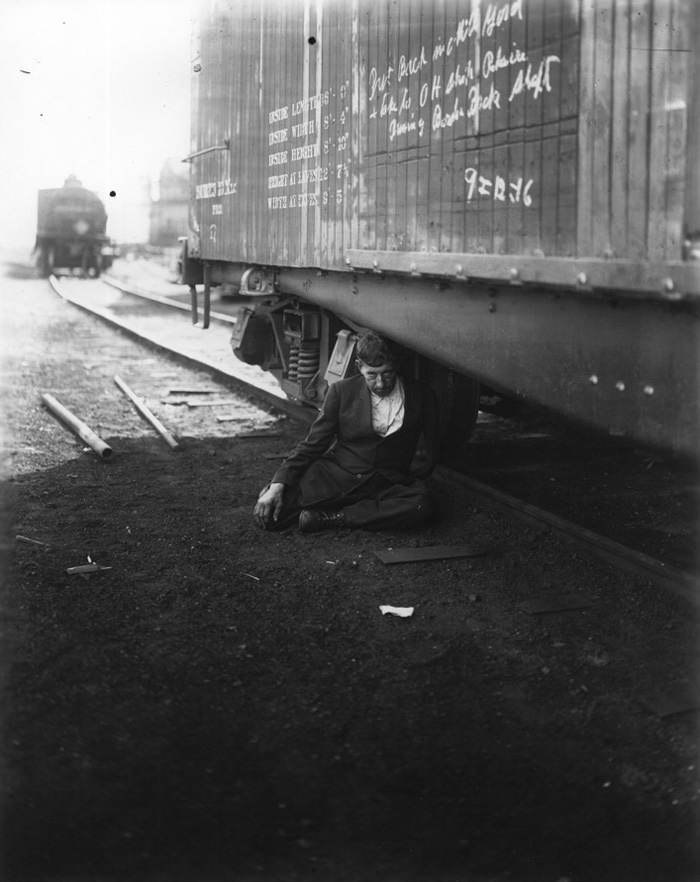
The last photograph is one of the most painful and emotive I have seen in a long time. Man in suit underneath train
Sitting in a suit under a train this photograph says nothing but everything about this man’s life. He sits in the dirt, crumpled suit, dirty shirt, filthy hands, head bowed, one armed with his left suit sleeve hanging limply at his side, eyes daubed with dark rings staring straight at the camera under glowering lids. This is me this is who I am! he declares. Sitting in the dirt in a suit under a train.
Perhaps he was a odd job worker in the town, but he doesn’t wear a labourers clothes and the suit is incongruous with his dirty hand. Perhaps he was a hobo (A hobo is a migrant worker or homeless vagrant, especially one who is impoverished) hopping from town to town on the railcars hoping not to get caught. From the photograph it looks like the 1920s. The dark shadow of the train looms menacingly over him and two steel poles lay abandoned by the tracks. I can’t make out what the writing says directly above him and I am unsure whether it is written on the side of the train or on the photograph itself.
But it is his text… the marking an anonymous epitaph for his life: “I was here, I lived.”
And I thank God he did.
Dr Marcus Bunyan
Please click on the photograph for a larger version of the image
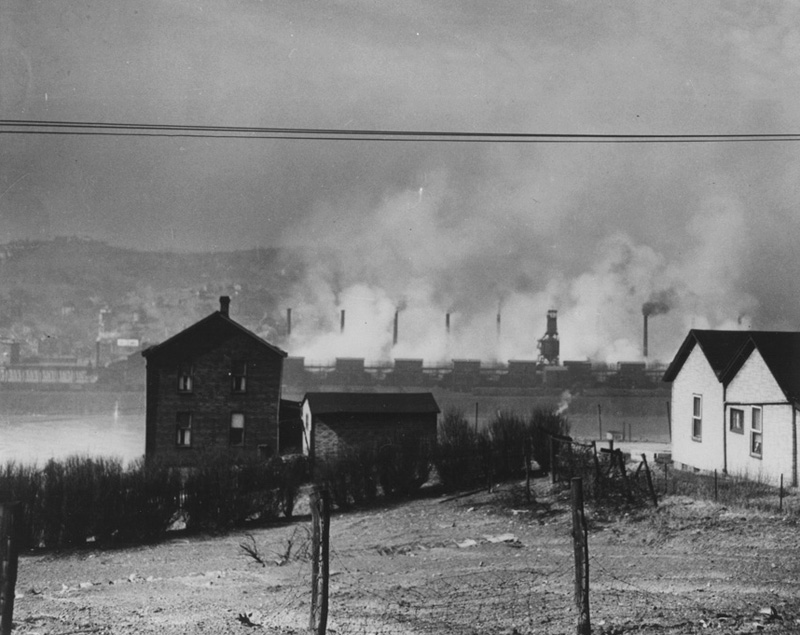
Unknown photographer Looking toward the Zinc Works in Donora, PA from Webster, PA 1948 Gelatin silver print
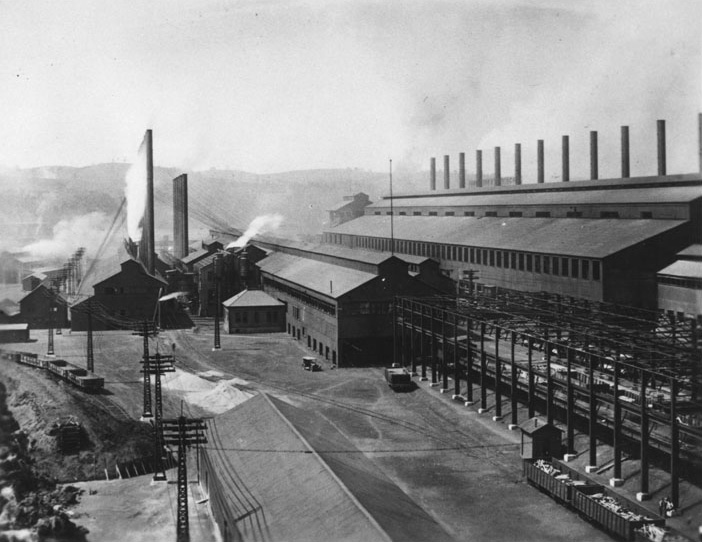
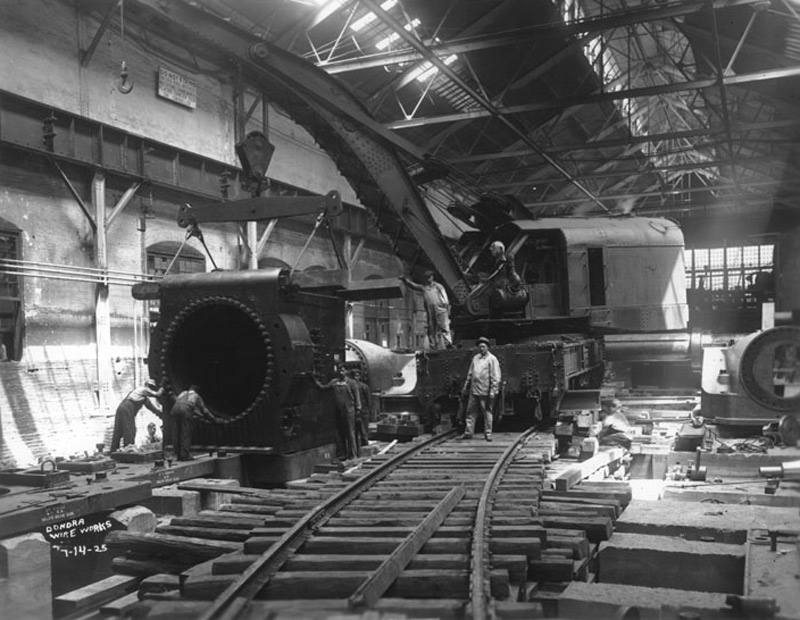
Unknown photographer Open Hearth and Rod Yard Nd Gelatin silver print
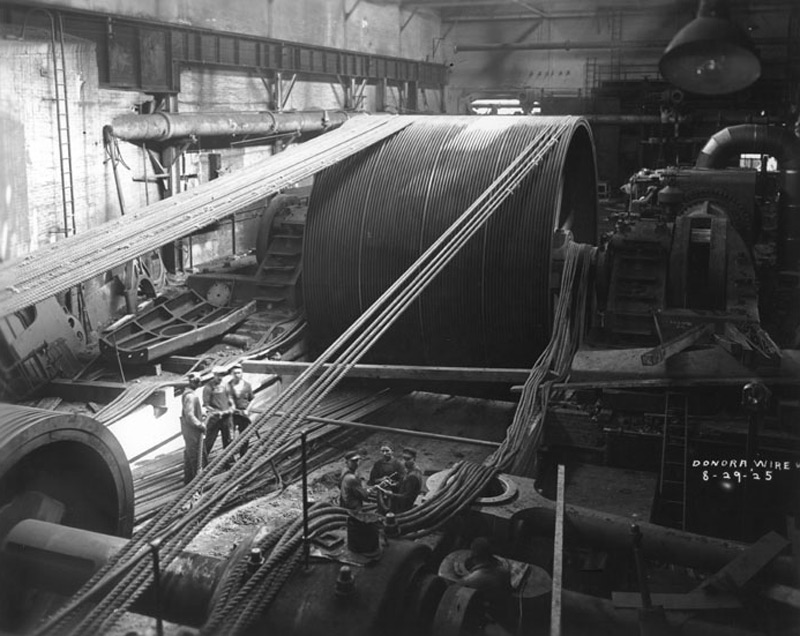
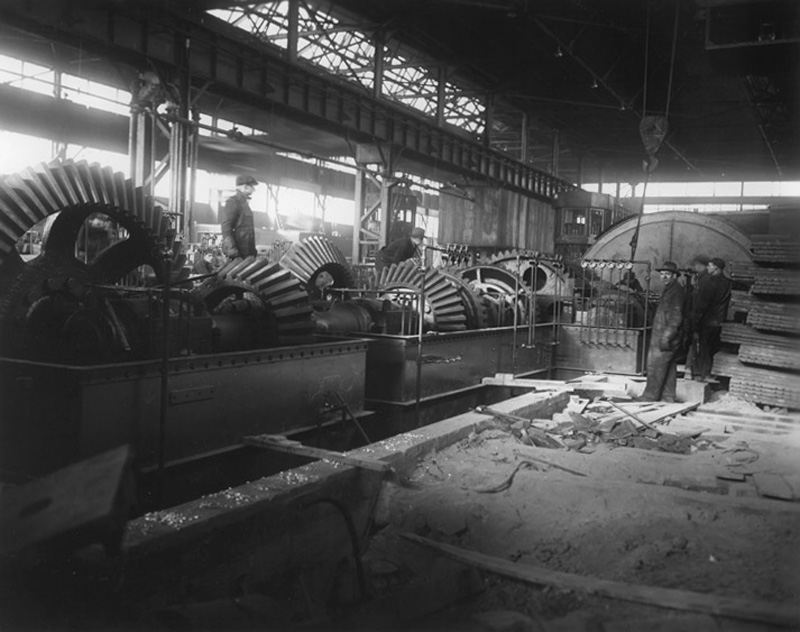
Unknown photographer Wire workers in mill near large cables, August, 29, 1925 1925 Gelatin silver print
Unknown photographer Acid storage area Nd Gelatin silver print
The month of October, 2008 marks the 60th Anniversary of a 1948 Donora smog incident that claimed the lives of at least 21 people and sickened thousands. All signs pointed towards the emissions from the world’s largest zinc mill and a weather inversion that encompassed the geographical horseshoe of the Mon Valley. Sixty years later a museum opened on McKean Avenue to preserve and share the unique history of Donora, PA and to celebrate the clean air movement that followed. This Digital Collection is the site of a special exhibit devoted to the arduous process of digitally preserving and cataloging hundreds of the primary source materials that have survived the test of time. These materials provide special insight into industrial and social aspects of American life in southwestern Pennsylvania and date from the beginning of Donora at the turn of the 20th century up to the current period.
Text from the The Donora Digital Collection website [Online] Cited 24/04/2009. No longer available online
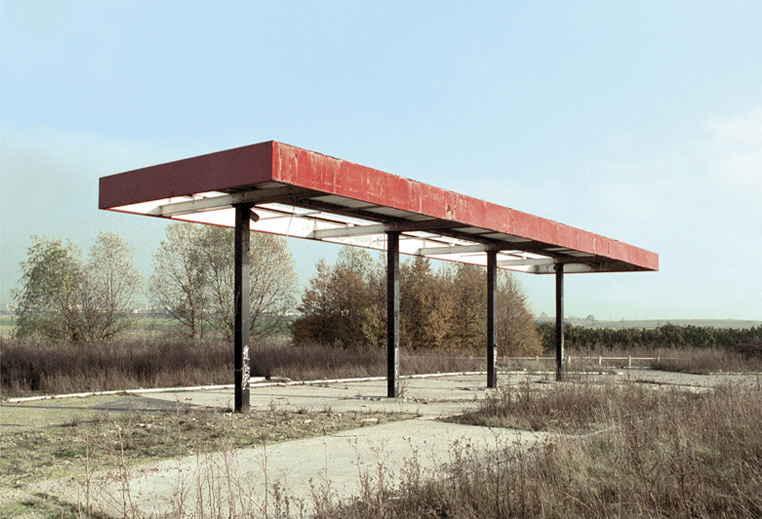
Eric Tabuchi (French, b. 1959) Station #1 from the book Twentysix Abandoned Gas Stations 2002
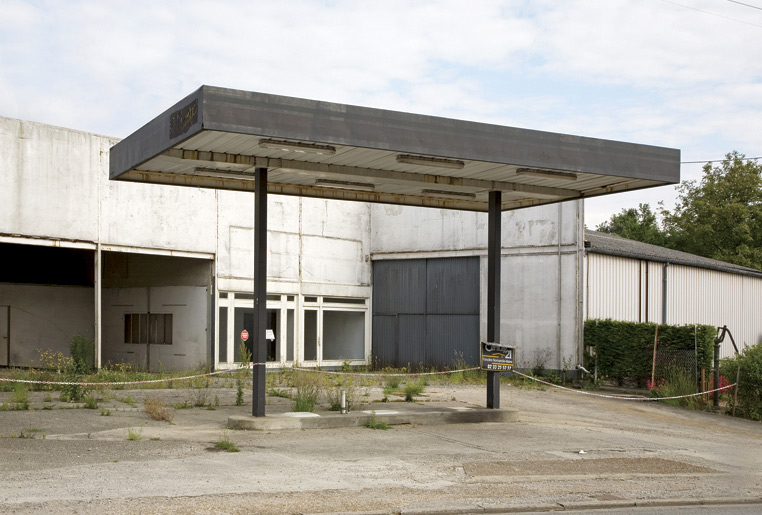
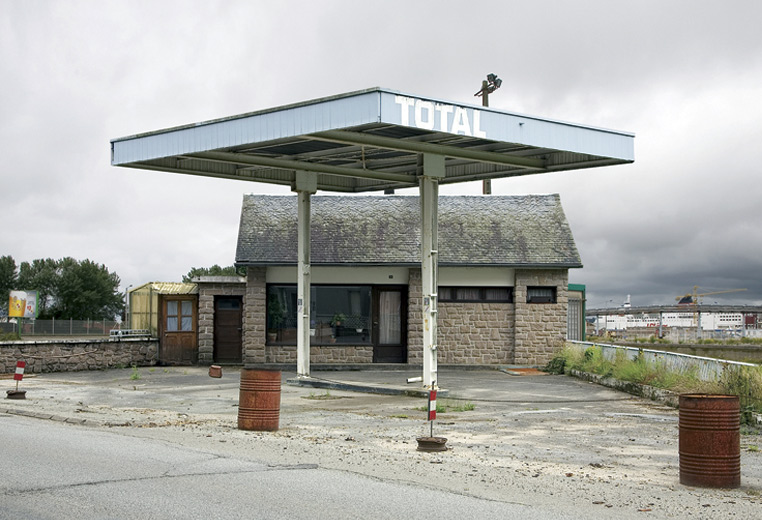
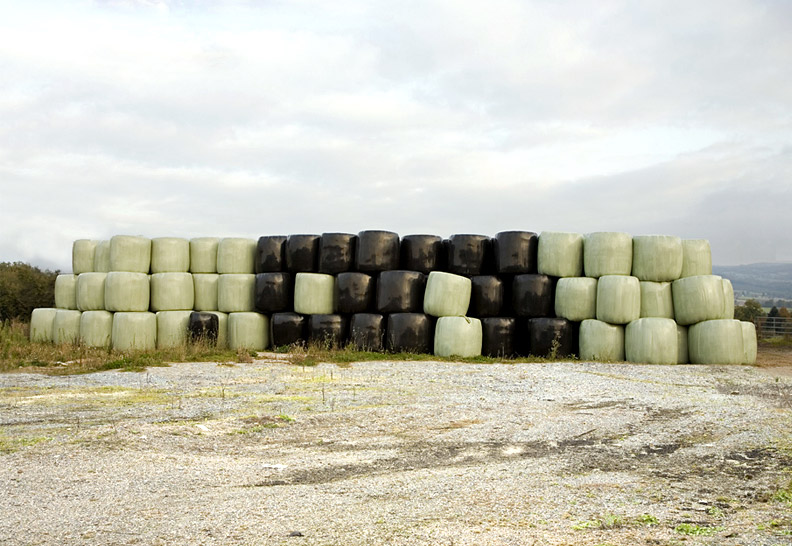
One of my favourite artists at the moment is Frenchman Eric Tabuchi. I don’t know a lot about him as there is only an exhibition list on his website and no other details but this does not matter. His work speaks for him. Taken in simple formalist objective style his colour photographs tell it like it is, speaking the images of existence in a clear and precise manner. His work ‘en serie’ are conceptually based but the images themselves are straight forward, images that depict the ironies and degradations of environments and artefacts without moral judgement. His photographs have links back to the formalist style of the German Bernd and Hiller Becher whose work has influenced many contemporary photographers (including Andreas Gursky, Candid Hofer, Thomas Ruff and Thomas Struth amongst others).
Tabuchi’s latest artist book Twentysix Abandoned Gas Stations is a contemporary reprise on the very first modern artist’s book Twentysix Gasoline Stations produced by Ed Ruscha in 1963. Using minimalist notions of repetitive sequence and seriality Tabuchi addresses a contemporary landscape full of abandoned technologies, toxic environments and architectural wastelands foretelling the badlands of future worlds. As in all his bodies of work the body of the human is absent, the sense of corporeal distance from object to viewer devastating. His constructions, both photographic and environmental, speak eloquently to the human present, presence absence.
He is a photographer to remember.
Dr Marcus Bunyan
Many thankx to Eric Tabuchi for allowing me to publish the photographs in the posting. Please click on the photographs for a larger version of the image.
Eric Tabuchi (French, b. 1959) Station #21 from the book Twentysix Abandoned Gas Stations 2008
Eric Tabuchi (French, b. 1959) Station #22 from the book Twentysix Abandoned Gas Stations 2006
Eric Tabuchi (French, b. 1959) Stock Options #3 from the Monument series 2007
Eric Tabuchi (French, b. 1959) Two Windows from the Road Signs series 2006
Eric Tabuchi (French, b. 1959) Untitled from the Untitled Landscape series 2005
Eric Tabuchi (French, b. 1959) Untitled from the Various Ruins series 2007
Eric Tabuchi (French, b. 1959) Untitled from the Work in Progress series 2007
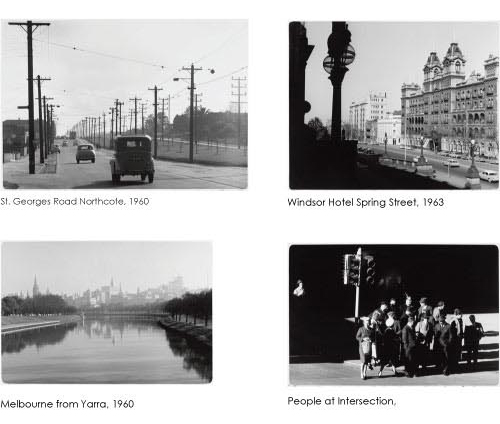
Mark Strizic (Australian, 1908-2012) Eastern Market Destruction – 1 1960, printed 1996 Silver gelatin photograph 19 x 22.5cm
Social Fact and Urban Vision
This is an exhibition by the veteran Australian photographer Mark Strizic that plays like the coda at the end of a piece of music, the pensive full stop at the end of a well read book. There are some stunning highlight photographs among the 139 black and white silver gelatin prints on display, some good photographs and some fairly mundane images and prints. With some judicious editing of the photographs (perhaps by a third), the exhibition could have had a stronger artistic aesthetic and carried the voice of the photographer with greater projection. As it is the exhibition will be popular drawing in the crowds because of the photographs subject matter and their appeal to both an individual and collective nostalgia.
Examining Strizic’s photographs we note a traditional structure to the picture plane. Unlike the photographs of Eugene Atget who photographed Paris in the early 20th century there is little sublime spatial representation in Strizics photographs, that different angle of alignment that Atget achieved with the positioning of his camera. Further, we observe that unlike an immigrant to another country at around the same time, Robert Frank and America, the photographs follow traditional format: none of the revolutionary experimentation in handheld, grainy images of jukeboxes, cut up people or images of flags appear in this work. We can also say that unlike Helen Levitt’s early black and white images of New York from around the same period there is little ‘joie de vivre’, little engagement with the actual nitty gritty stuff of living in Strizic’s work. The quote below articulates what Strizic’s photographs both address and dismiss:
“To walk in the city is to experience the disjuncture of partial vision/partial consciousness. The narrativity of this walking is belied by a simultaneity we know and yet cannot experience. As we turn a corner, our object disappears around the next corner. The sides of the street conspire against us; each attention suppresses a field of possibilities. The discourse of the city is a syncretic discourse, political in its untranslatability. Hence the language of the state elides. Unable to speak all the city’s languages, unable to speak all at once, the state’s language become monumental, the silence of headquarters, the silence of the bank. In this transcendent and anonymous silence is the miming of corporate relations. Between the night workers and the day workers lies the interface of light; in the rotating shift, the disembodiment of lived time. The walkers of the city travel at different speeds, their steps like handwriting of a personal mobility. In the milling of the crowd is the choking of class relations, the interruption of speed, and the machine. Hence the barbarism of police on horses, the sudden terror of the risen animal.”1
We observe in the photographs an emphasis on surfaces, on a supreme understanding of light and shade coupled with a certain distance and emotional remoteness from the frenetic hubbub of city life. Empty streets and isolated people fall into shadow and their is little evidence of ‘play’ in the photographs. This is observation not interaction or integration as an immigrant observing Melbourne life. There is no up front presence of disembodied people as in Robert Franks photographs in The Americans. Here the alienation that pervades the photographs is the alienation of the photographer from the people as much as it is the alienation of the people from themselves. People are shot in silhouette against the sun or shop windows or peering in at unobtainable goods; desolate streets and working class suburbs all express the isolation of city life but at a structured distance from them.
When Strizic’s photographs are good they are very good. His understanding of light is magnificent: light reflects off water, hazes and shimmers off city buildings. The mixing of shadows and sun and his use of the technique of ‘contre jour’ (shooting into the sun) the one thing Strizic does against traditional conventions works to good effect in some of the best photographs. His 1968 night time long exposure photograph of the old Gas and Fuel Building is rewarding for the black bulk of the end of the building looming over Flinders Street and the striations of car headlamps. The photograph Flinders Lane (1967, below) shows a delicate use of depth of field where the foreground of cars and person are out of focus, the light bouncing off the edges of the woman, the focus of the image in the far distance. The photograph McPhersons Building (1958, below) is one of my personal favourites in the exhibition and is a stunning photograph for the atmosphere the photographer has captured.
After a while the use of the ‘contre jour’ technique becomes tiresome. Other photographs simply document a city in transition. These photographs appeal both to an individual nostalgia (‘I used to work in that building’; ‘My grandmother used to live in that street’) and a collective nostalgia where people experience things collectively, “in the sense that [collective] nostalgia occurs when we are with others who shared the event(s) being recalled, and also in the sense that one’s nostalgia is often for the collective – the characteristics and activities of a group or institution in which the individual was a participant.”2
Collective nostalgia refers to that condition in which the symbolic objects are of a highly public, widely shared and familiar character, i.e. those symbolic resources from the past which can under proper conditions trigger off wave upon wave of nostalgic feeling in millions of persons at the same time3 and in this exhibition it is the photographs of a city in transition that trigger this nostalgia, a city now lost to the mists of time. Through these photographs we remember what Melbourne was like at this time collectively.
As Harper has observed
“Nostalgia combines bitterness and sweetness, the lost and the found, the far and near, the new and the familiar, absence and presence. The past which is over and gone, from which we have been or are being removed, by some magic becomes present again for a short while. But its realness seems even more familiar, because renewed, than it ever was, more enchanting and more lovely …”4
Does this collective nostalgia make the photographs good? This is a pertinent question.
Today, nostalgia has become a cultural phenomenon one centred on a longing for home (home is where you are happy to be!) in a collective sense and promoted through commercialisation and the realisation that nostalgia sells. The use of the value seeking word ‘rare’ in the exhibition title is instructive in this regard. Only about 25% of the photographs in this exhibition are “vintage” prints, in other words photographs printed within 3 years of the negative being taken. All other photographs have been printed within the last 15 years. Some are ‘Unique state’ gelatin photographs while others are not. What does this mean. Are they are unique state only in this size? What about the common or garden silver gelatin prints in the show? What does the status word “rare” imply for them?
I remember seeing an exhibition of the photographs of Henri Cartier-Bresson in Scotland about ten years ago. Three rooms had large prints of his work. One room just had vintage prints. The contrast was astounding. The room full of vintage prints had an intensity of vision, of his vision at the time he took the photographs evidenced in small jewel like photographs that the three other rooms photographs simply did not possess – through scale, printing and aesthetics. The same question, without any need for an answer, can be posed here. Only the word ‘rare’ demands that answer for the modern prints are just what they are and nothing more.
In conclusion this is a strong show by Strizic that could have been edited and focused in a more rewarding way. Strizic is one of Australia’s best photographers for understanding the significance of place. His use of light is superb but there always seems to be an emotional distance to his photographs. An element of collective nostalgia adds to their documentary appeal but the best photographs do not just record, they challenge and transcend the subject matter taking the work to an altogether different plane of existence.
Dr Marcus Bunyan
1/ Stewart, Susan. On Longing: Narratives of the Miniature, the Gigantic, the Souvenir, the Collection. Durham: Duke University Press, 1993, p. 2. Prologue
2/ Wilson, Janelle. “”Remember when …” a consideration of the concept of nostalgia,” in et Cetera. Concord: Fall 1999. Vol. 56, Iss. 3; pg. 296, 9 pgs
3/ Davis, F. Yearning For Yesterday: A Sociology of Nostalgia. New York: The Free Press, 1979, p. 222
4/ Harper, R. Nostalgia: An Existential Exploration of Longing and Fulfilment in the Modern Age. The Press of Western Reserve University, 1966, p. 120 quoted in Wilson, Janelle. “”Remember when …” a consideration of the concept of nostalgia,” in et Cetera. Concord: Fall 1999. Vol. 56, Iss. 3; pg. 296, 9 pgs
Many thankx to Gallery 101 for allowing me to publish the photographs in the posting. Please click on some of the photographs for a larger version of the image.
Installation views of the exhibition Mark Strizic: Melbourne – A City in Transition exhibition at Gallery 101, Melbourne Photos: Marcus Bunyan
Mark Strizic, one of Australia’s eminent photographic artists presents us with nostalgic views of Melbourne and the changing face of the city in rare silver gelatin photographs. The exhibition, Melbourne – A City in Transition will be held at Gallery 101 from 8th April – 2nd May. There will be an evening artist reception on Thursday 9th April to celebrate the opening of the exhibition. Strizic’s oeuvre represents a collection of iconic images of architecture and of life – a record of the changing face of a migrating society of new prosperity, youth and popular culture – taken with a sympathetic eye for humanistic detail.
The exhibition will coincide with the announcement of the forthcoming publication, Mark Strizic, Melbourne: Marvellous to Modern, published by Thames & Hudson in association with the State Library of Victoria. In 2007, the State Library of Victoria acquired Mark Strizic’s entire archive of approximately 5000 negatives, colour transparencies and slides. In addition, the Library holds a fine collection of Strizic photographs, including examples of all types of photographic print, from gelatin silver to digital, produced by the photographer during his long career.
Press release from Gallery 101
“‘Melbourne – A City in Transition’ is a collection of iconic images of Melbourne city life taken with a sympathetic eye for humanist detail. Strizic accurately depicts the joys and hardships experienced in everyday life with a fresh and living memory. He successfully captures the vicarious essence of suburban life. His portrait of Melbourne includes the city, harbour and river banks – streets and trams, pavements, arcades and lanes, stations and bridges, billboards and facades and public sculpture. We see people going about their daily activities – commuting, shopping at leisure, trading, embracing, conversing, reading the newspaper and visiting the beach. Other works record the demolition and construction of building sites and the changing face of Melbourne, both in society and the urban landscape.”
Text from the exhibition flyer
“In these eloquent studies of light and shadow, Strizic finds beauty in the commonplace – Melbourne’s desolate lanes, street paving, derelict ferries – adopting interesting camera angles, viewpoints and cropping. Through his images, this visual humanist teaches us to observe, to see our surroundings, perhaps with the intention of stimulating us to a higher level of civilisation.”
Emma Matthews. Mark Strizic, Melbourne: Marvellous to Modern. Thames & Hudson in association with the State Library of Victoria, September, 2009.
“This magnificent collection of photographs arose from the creativity of a young photographer and his adoption of his new home town, Melbourne. His pictures were taken at a time when the Victorian elegance of the city once known as ‘Marvellous Melbourne’ was being punctuated by a wave of development and the modern architectural movement. Today Mark Strizic is renowned as a photographer. In the 1950s he was a young science student from Europe playing with the possibilities of the camera. As he gained work as a professional his commercial success was accompanied by the instincts and eye of an artist. His solid technicality was accompanied by the whimsy and wit that made him the ‘poet of the fleeting movement’. The versatility of his work shows us many aspects of Melbourne – its magnificent architectural heritage, its intimate and vibrant laneways, its grand arcades counter-posed against the sudden spaces of the wrecker, the brash intrusion of the glass and concrete skyscrapers, the poignancy of poverty in the rundown inner suburbs. We see the people, on grand occasions such as the 1954 Royal Visit, or just caught in their own world of travelling, shopping, resting, walking, working.”
Mark Strizic, Melbourne: Marvellous to Modern book cover
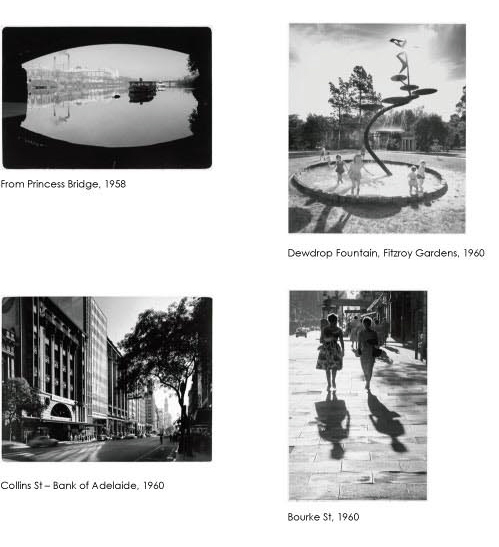
Mark Strizic (Australian, 1908-2012) From Princes Bridge 1958, printed 2006 Silver gelatin photograph 58 x 39cm
Mark Strizic (Australian, 1908-2012) Near Spencer Street – 1 1950 Silver gelatin photograph 27.5 x 38.5cm
Mark Strizic (Australian, 1908-2012) At St. Pauls (St Paul’s Cathedral steps) 1954, printed 1999 Silver gelatin photograph 17.8 × 24.5cm
Mark Strizic (Australian, 1908-2012) St Paul’s Cathedral steps 1954, printed 1999 Silver gelatin photograph 17.8 × 24.5cm
Mark Strizic (Australian, 1908-2012) Collins Street at Russell Street 1957, printed 1997 Unique silver gelatin photograph 39 x 56cm
Mark Strizic (Australian, 1908-2012) St Georges Road, Northcote at Summer Av. 1958, printed 1998 Silver gelatin photograph
Mark Strizic (Australian, 1908-2012) St. Patrick’s Cathedral January 1967, printed 1998 Unique silver gelatin photograph 27 x 41cm
Mark Strizic (Australian, 1908-2012) Bourke Street from the Parliament – 2 1967, printed 1998 Silver gelatin photograph 38 x 27cm
Mark Strizic (Australian, 1908-2012) Russell Street Pawn Shop 1958 Silver gelatin photograph
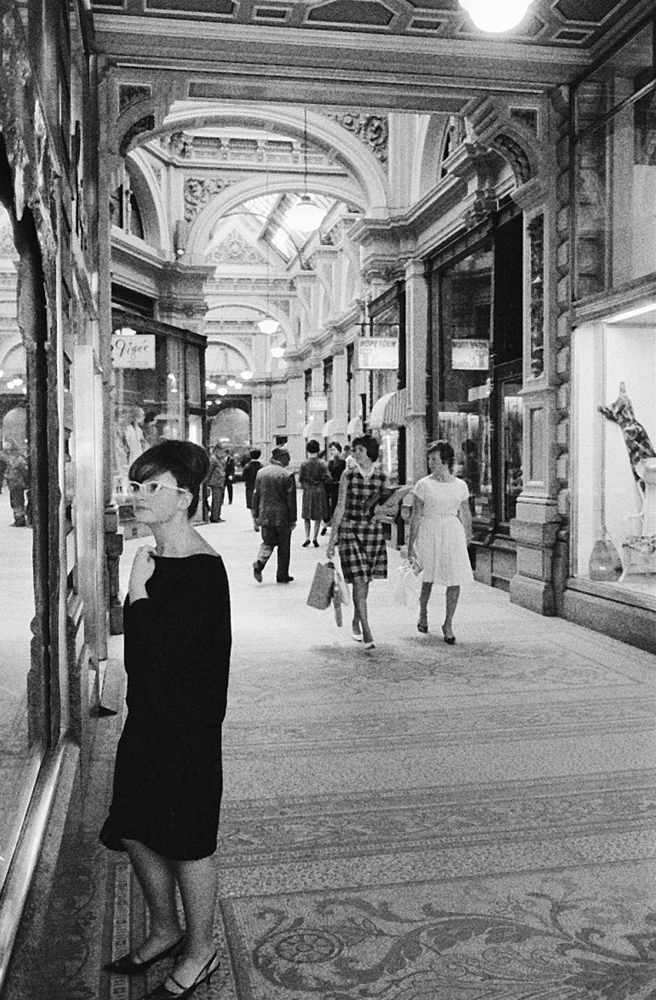
Mark Strizic (Australian, 1908-2012) Block Arcade 1967, printed February 2008 Unique silver gelatin photograph 53.5 x 37cm
Mark Strizic (Australian, 1908-2012) From Princes Bridge (Winter moorings from Princes Bridge) 1955, printed 2006 Silver gelatin photograph 58 x 39cm
Mark Strizic (Australian, 1908-2012) Flinders Lane 1967, printed 1998 Unique silver gelatin photograph 41 x 41cm
Mark Strizic (Australian, 1908-2012) Swan Street, Richmond, at Church Street 1963 Silver gelatin photograph
Mark Strizic (Australian, 1908-2012) Queensberry Street at Errol Street, North Melbourne 1963 Silver gelatin photograph
Mark Strizic (Australian, 1908-2012) Swan Street at Church Street 1963, printed 1998 Silver gelatin photograph
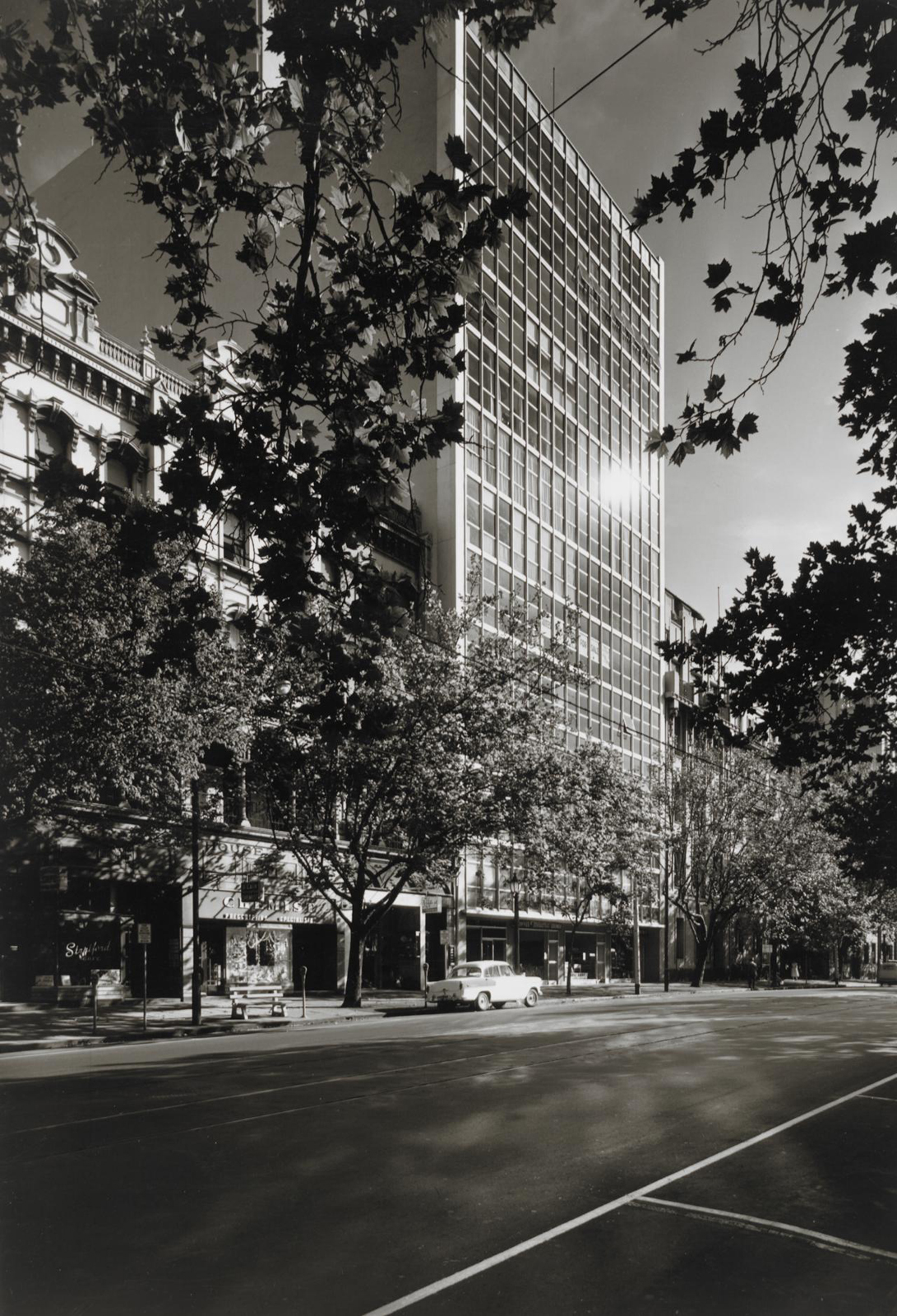
Mark Strizic (Australian, 1908-2012) Coates Building 1960, printed 1961 Vintage silver gelatin photograph 23.5 x 15cm
Mark Strizic (Australian, 1908-2012) Macphersons Building – 1 1958 Silver gelatin photograph
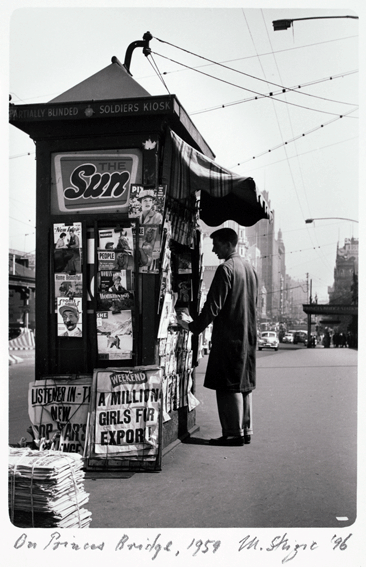
Mark Strizic (Australian, 1908-2012) On Princes Bridge 1959, printed 1996 Silver gelatin photograph 17 x 24cm
Curator: Eva Respini, Associate Curator, Department of Photography, The Museum of Modern Art
Carelton Watkins (American, 1829-1916) Views from the Sentinel Dome, Yosemite 1865-1866 Albumen silver prints from glass negatives Museum of Modern Art, New York
The Museum of Modern Art presents Into the Sunset: Photography’s Image of the American West, a survey of 138 photographic works dating from 1850 to 2008 that chart the West’s complex, rich, and often compelling mythology via photography. The exploration of a large part of the American West in the mid-nineteenth century by European Americans coincided with the advent of photography, and photography and the West came of age together. The region’s seemingly infinite bounty and endless potential symbolised America as a whole, and photography, with its ability to construct persuasive and seductive images, was the perfect medium with which to forge a national identity. This relationship has resulted in a complex association that shapes the perception of the West’s social and physical landscape to this day. With political, cultural, and social attitudes constantly shifting in the region over the last 150 years, Into the Sunset further examines the way photographers have responded to these changes. The exhibition is organised by Eva Respini, Associate Curator, Department of Photography, The Museum of Modern Art, and is on view in the Special Exhibitions Gallery on the third floor from March 29 to June 8, 2009.
Organised thematically rather than chronologically, Into the Sunset brings together the work of over 70 photographers, including Robert Adams, John Baldessari, Dorothea Lange, Timothy O’Sullivan, Cindy Sherman, Joel Sternfeld, Carleton E. Watkins, and Edward Weston, among others. The exhibition draws extensively from MoMA’s collection, along with private and public collections in the United States, and features new acquisitions from Adam Bartos, Katy Grannan, and Dennis Hopper, with each work also on view for the first time at the Museum.
Ms. Respini states: “Ranging from grand depictions of paradise to industrial development, from pictures taken on the road to prosaic suburban scenes, the photographs included in Into the Sunset do not all picture the West from the same point of view, or even perhaps, picture the same West. Rather, each is one part in a continually shifting and evolving composite image of a region that has itself been growing and changing since the opening of the frontier.”
Into the Sunset begins with the birth of photography and the American West. In the mid-nineteenth century, the region’s seemingly infinite bounty and endless potential symbolised America as a whole, and Carleton E. Watkins (American, 1829-1916) captured the grand depictions of an American paradise in his photographs of Yosemite Valley in California. Arguably the world’s first renowned landscape photographer, Watkins made his first photographs there in 1861 – large sized prints made with an 18-by-22-inch mammoth plate camera, well suited to the grandeur of the land. Included are the three contiguous photographs that make up his extraordinarily detailed View from the Sentinel Dome (1865-1866).
The exhibition balances the early work of landscape photographers with the twentieth century focus on the failure of the West’s promised bounty. In Joel Sternfeld’s (American, b. 1944) After a Flash Flood, Rancho Mirage, California (1979), the photographer documents the impact of a natural disaster, specifically a landslide, shot with neutral tones softly camouflaging the extent of flash flood on this suburban neighbourhood. And in Karin Apollonia Müller’s (German, b. 1963) Civitas (1997), the photographer shows a very different view of California than that of Watkins, with Müller revealing a contemporary Los Angeles as a littered wasteland of freeways and anonymous glass towers.
As highways and interstate travel became more prevalent, the automobile and the open road became synonymous with the region, with Edward Weston (American, 1886-1958) as the first great photographer of these open roads. Included is Weston’s iconic Hot Coffee, Mojave Desert (1937), a humorous black-and-white photograph of a road sign revealing a greater thematic shift to the highway and its signage as an inescapable element in picturing the West in the twentieth century.
Once the West became more populated, photographers began to showcase humans’ effects on the land, including images of industrial development. In the 1950s William Garnett (American, 1916-2006) was hired by a real estate company to record the efficiency of mass-produced housing. For this series, Lakewood, California (1950), Garnett took photographs of the neighbourhood from an airplane, resulting in images that are completely devoid of people and focus on the progress of mass-produced construction. However, the series subsequently came to represent all that was wrong with such development and the massive sprawl of the West in the eyes of its critics.
Photographs of the people of the West represent a diversity of archetypes: gold miners and loggers, Native Americans, cowboys, suburbanites, city dwellers, starlets, dreamers, and drifters. Into the Sunset explores these archetypes, and their mutability into the twenty-first century. Included is Half Indian / Half Mexican (1991), from the photographer James Luna (Native American, Pooyukitchum / Luiseno, b. 1950), an artist of Native American ancestry. This tongue-in-cheek self-portrait captures in profile both an identity photograph and a mug shot, and works as a counterpoint to the tokenised portrayals of Native Americans from the past 150 years.
A similar reevaluation of past archetypes occurs in Richard Prince’s (American, b. 1949) Cowboy series from 1980, with one work from the series included in the exhibition. For that series Prince famously photographed Marlboro advertisements, cutting out the text, cropping the images, and enlarging them, highlighting the artifice of the virile image of the cowboy and its potency as a deeply ingrained figure in American mythology.
The suburbs and their inhabitants have been a rich subject for photographers of the West, and included are Larry Sultan’s (American, b. 1946) Film Stills from the Sultan Family Home Movies (1943-1972), in which Sultan chose individual frames from his family’s home movies and enlarged them. Although the images feature the activities that epitomise suburban life, a sense of unease lurks beneath the surface of these images; cropped and grainy, they resemble surveillance or evidence photographs.
Into the Sunset concludes with the theme of the failed promise of Western migration. Dorothea Lange’s well-known 1936 photograph Migrant Mother, Nipomo, California, photographed when Lange was employed by the Farm Security Administration, is included and documents the conditions of the West in rural areas during the Great Depression. Her photographs had a humanist purpose and resulted in putting a face on the hardships of that era.
This tradition of capturing the downtrodden of the West continues into this century with Katy Grannan (American, b. 1969), a photographer who recently completed a series of new pioneers, individuals struggling to define themselves in the West of today. In Nicole, Crissy Field Parking Lot (I) (2006), a woman, “Nicole,” poses seductively on a gravel parking lot, with her makeup-streaked face and harsh light alluding to her perilous existence on the fringe of society.”
Text from the MoMA website [Online] Cited 12/04/2009. No longer available online
Many thankx to MoMA for allowing me to publish the photographs in the posting. Please click on the photographs for a larger version of the image.
Installation view of the exhibition Into the Sunset: Photography’s Image of the American West at The Museum of Modern Art (MoMA), New York showing Ed Ruscha’s Every Building on the Sunset Strip 1966
Joel Sternfeld (American, b. 1944) After a Flash Flood, Rancho Mirage, California 1979 Chromogenic colour print, printed 1987 15 15/16 x 20″ (40.5 x 50.8cm) Museum of Modern Art, New York Gift of Beth Goldberg Nash and Joshua Nash
During the 1970s, Joel Sternfeld’s work reflected a trend towards a newly dispassionate, less idealised approach to nature and culture. His photographs have a seductive beauty, even though they often focus on those places where the natural and man-made worlds come together in uncomfortable ways. Working with a large-format camera and luminous colour to create images that are frequently ironic or even humorous, his compositions appear simple but in fact are surprisingly complex and often unsettling. In this photograph of a suburban California neighbourhood in the aftermath of a flash flood, the lovely monochrome tones trick us into not immediately seeing the car that has toppled into the gaping sinkhole or realising that the buildings above could be on the verge of falling, too.
“I was hired commercially to illustrate the growth of that housing project. I didn’t approve of what they were doing. Seventeen thousand houses with five floor plans, and they all looked alike, and there was not a tree in sight when they got through.”
“I was discharged and heard you could hitchhike on the transport taking GIs home. The airplane was full, but the captain let me sit in the navigator’s seat so I had a command view. I was amazed at the variety and beauty of these United States. I had never seen anything like that – in a book, in school, or since then. So I changed my career.”
William A. Garnett
Lakewood, located on the outskirts of Los Angeles, was the location for the second major postwar housing development built in the United States. Some 17,500 tract houses were constructed assembly-line style on 3,500 acres of cleared farmland. Mass production made the houses affordable, so a greater number of people could take part in the American dream of home ownership. The developers hired William Garnett to document different phases of the subdivision’s construction from his Cessna airplane. He often photographed his subjects early in the day, so the angled light would emphasise their otherwise flat-looking forms. The photographs serve a utilitarian purpose but also demonstrate Garnett’s impeccable sense of design. In Trenching Lakewood, California, stacked lumber appears for the foundations, utility poles are installed, and the main roads are carved out. …
William Garnett took his first cross-country flight after serving as a United States Army Signal Corps cameraman during World War II. What he saw below inspired him to learn how to pilot a plane so he could photograph the American landscape. Garnett’s aerial photographs resemble abstract expressionist paintings or views through a microscope. As landscapes, they do not have the conventional grounding of a horizon line. All reveal astonishing patterns that are not seen from the ground. Garnett honed his elegant design sensibility well before earning a pilot’s license. Before the war, he attended Art Center College of Design in Los Angeles. Later, he headed the Pasadena Police Department’s photography lab. In the 1940s and 1950s, he began to rack up flying hours around Los Angeles, speaking out about the area’s increasing air pollution. He illustrated Nathaniel Owings’s American Aesthetic, a book about land-use practices. During ten thousand hours of flying, Garnett simultaneously piloted a plane while photographing out the window – traveling above every state and many parts of the world. His light 1956 Cessna plane allowed him to fly to just the right location to capture subjects with precision. At first, he experimented with a variety of camera formats and films but found that two 35mm cameras (one loaded with black-and-white film, the other with colour film) best suited his needs. Garnett’s work defies the stereotype of aerial photography as purely scientific and devoid of artistry. He became the first aerial photographer to earn a prestigious Guggenheim fellowship.
Anonymous. “Historical Witness, Social Messaging,” from the J. Paul Getty Museum Education Department [Online] Cited 13/01/2019
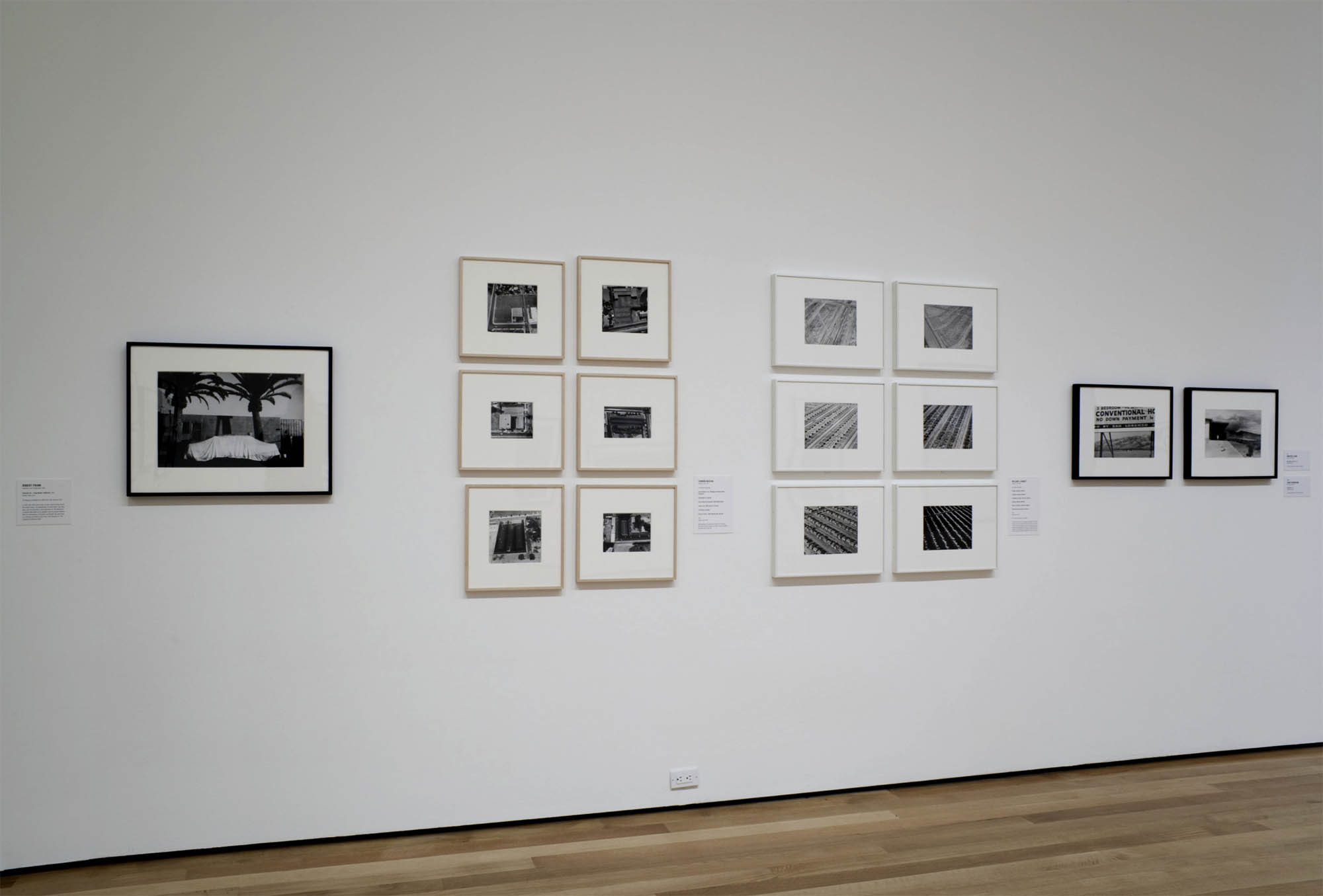
Installation view of the exhibition Into the Sunset: Photography’s Image of the American West at The Museum of Modern Art (MoMA), New York showing at left, Robert Frank’s Covered Car – Long Beach, California (1956, below); and at centre right, photographs by William A. Garnett (above)
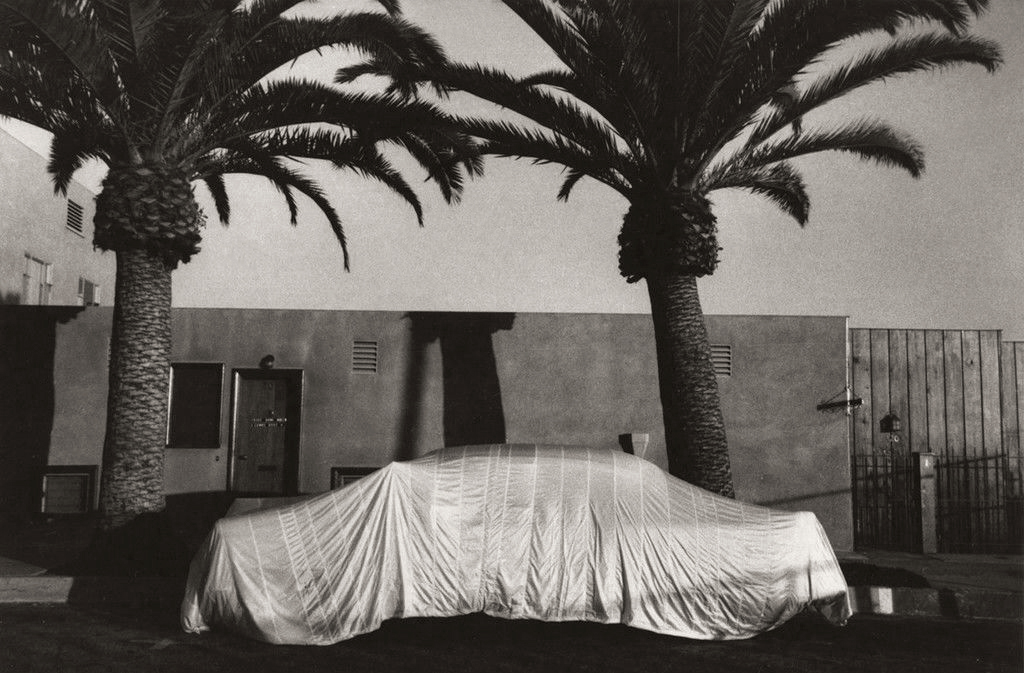
Robert Frank (American, 1924-2019) Covered Car – Long Beach, California 1956 From The Americans (1955-1956) Gelatin silver print Museum of Modern Art, New York
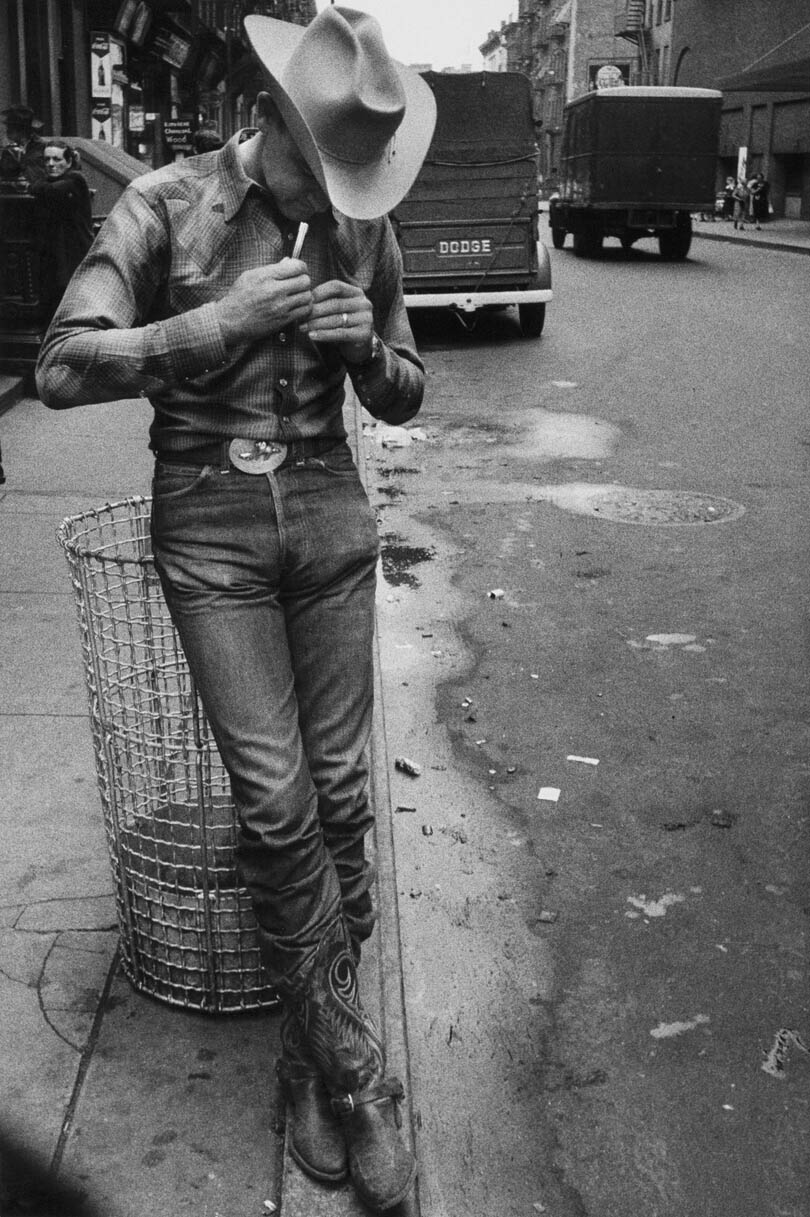
Robert Frank (American, 1924-2019) Rodeo – New York City 1954 From The Americans (1955-1956) Gelatin silver print Museum of Modern Art, New York
Dorothea Lange (American, 1895-1965) Migrant Mother, Nipomo, California 1936 Gelatin silver print 11 1/8 x 8 9/16″ (28.3 x 21.8cm) Museum of Modern Art, New York
Dorothea Lange took this photograph on assignment for the U.S. government’s Farm Security Administration (FSA) program, formed during the Great Depression to provide aid to impoverished farmers. FSA photographers documented the conditions that Americans faced throughout the course of the Great Depression, a period of economic crisis. Lange’s photograph suggests the impact of these harsh conditions on a 32-year-old mother of seven. She took a number of pictures of the mother with her children and chose this image as the most effective. Her keen sense of composition and attentiveness to the power of historical images of the Madonna and Child have helped this photograph transcend its original documentary function and become an iconic work of art.
Text from the MoMA website
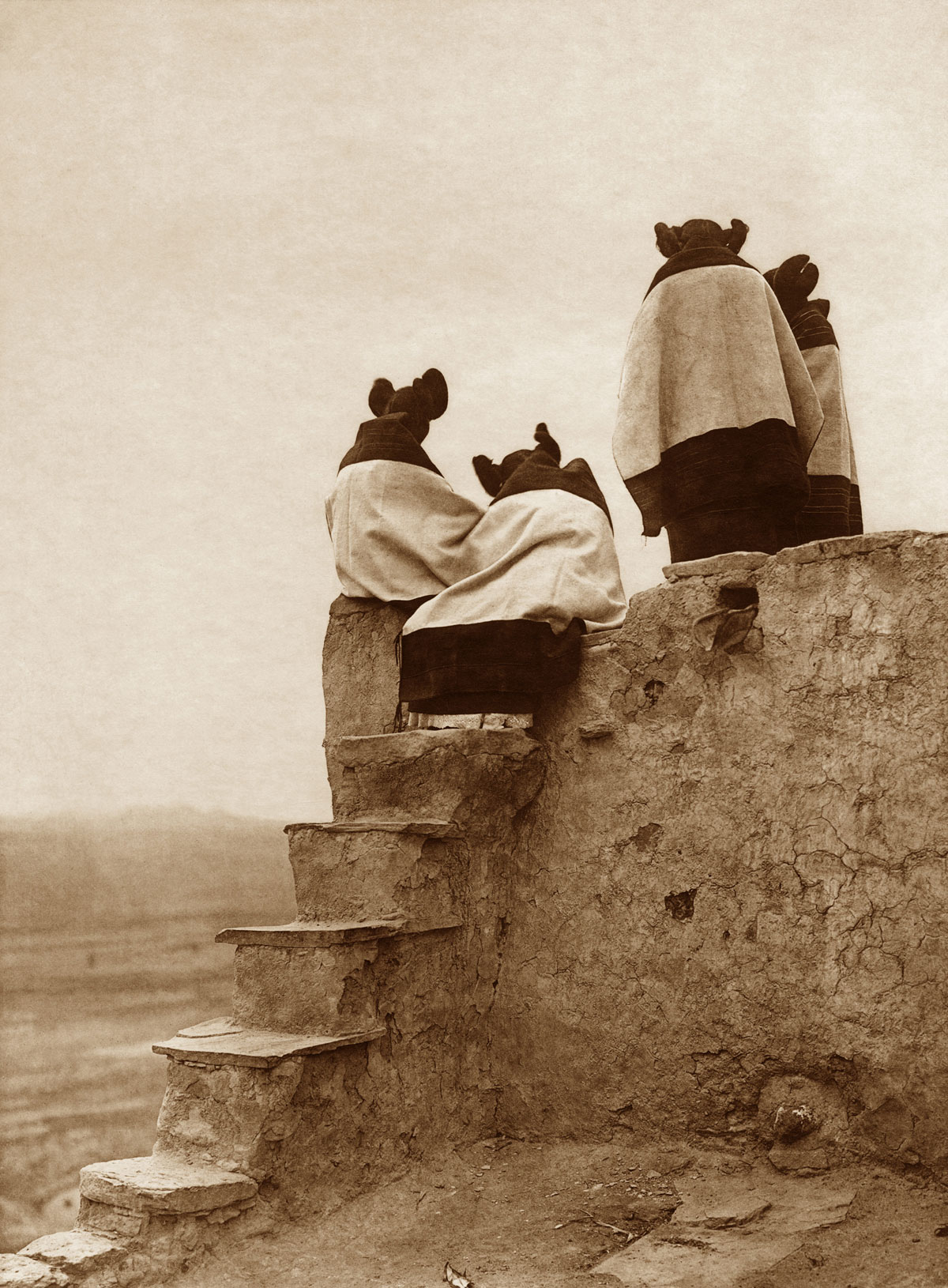
Edward S. Curtis (American, 1868-1952) Watching the Dancers 1906 Photogravure Museum of Modern Art, New York
James Luna (American, 1950-2018) Half Indian/Half Mexican (installation view) 1991 Gelatin silver print
James Luna (February 9, 1950 – March 4, 2018) was a Payómkawichum, Ipi, and Mexican-American performance artist, photographer and multimedia installation artist. His work is best known for challenging the ways in which conventional museum exhibitions depict Native Americans. With recurring themes of multiculturalism, alcoholism, and colonialism, his work was often comedic and theatrical in nature. In 2017 he was awarded a Guggenheim Fellowship.
In the mid-1970s Prince was an aspiring painter who earned a living by clipping articles from magazines for staff writers at Time-Life Inc. What remained at the end of the day were the advertisements, featuring gleaming luxury goods and impossibly perfect models; both fascinated and repulsed by these ubiquitous images, the artist began rephotographing them, using a repertoire of strategies (such as blurring, cropping, and enlarging) to intensify their original artifice. In so doing, Prince undermined the seeming naturalness and inevitability of the images, revealing them as hallucinatory fictions of society’s desires.
“Untitled (Cowboy)” is a high point of the artist’s ongoing deconstruction of an American archetype as old as the first trailblazers and as timely as then-outgoing president Ronald Reagan. Prince’s picture is a copy (the photograph) of a copy (the advertisement) of a myth (the cowboy). Perpetually disappearing into the sunset, this lone ranger is also a convincing stand-in for the artist himself, endlessly chasing the meaning behind surfaces. Created in the fade-out of a decade devoted to materialism and illusion, “Untitled (Cowboy)” is, in the largest sense, a meditation on an entire culture’s continuing attraction to spectacle over lived experience.
Text from the Metropolitan Museum of Art website
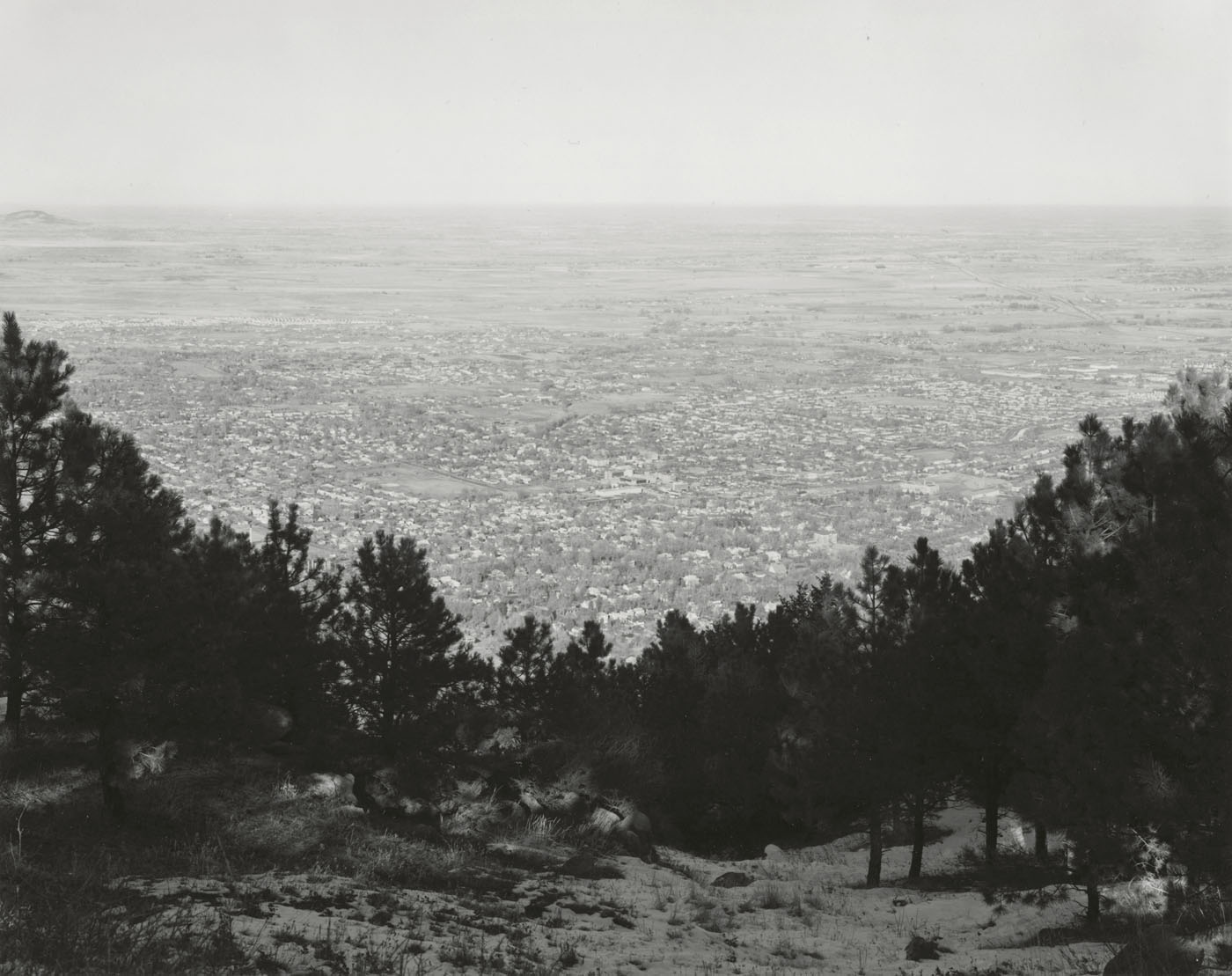
Robert Adams (American, b. 1937) East from Flagstaff Mountain, Boulder County, Colorado 1975 Gelatin silver print Museum of Modern Art, New York
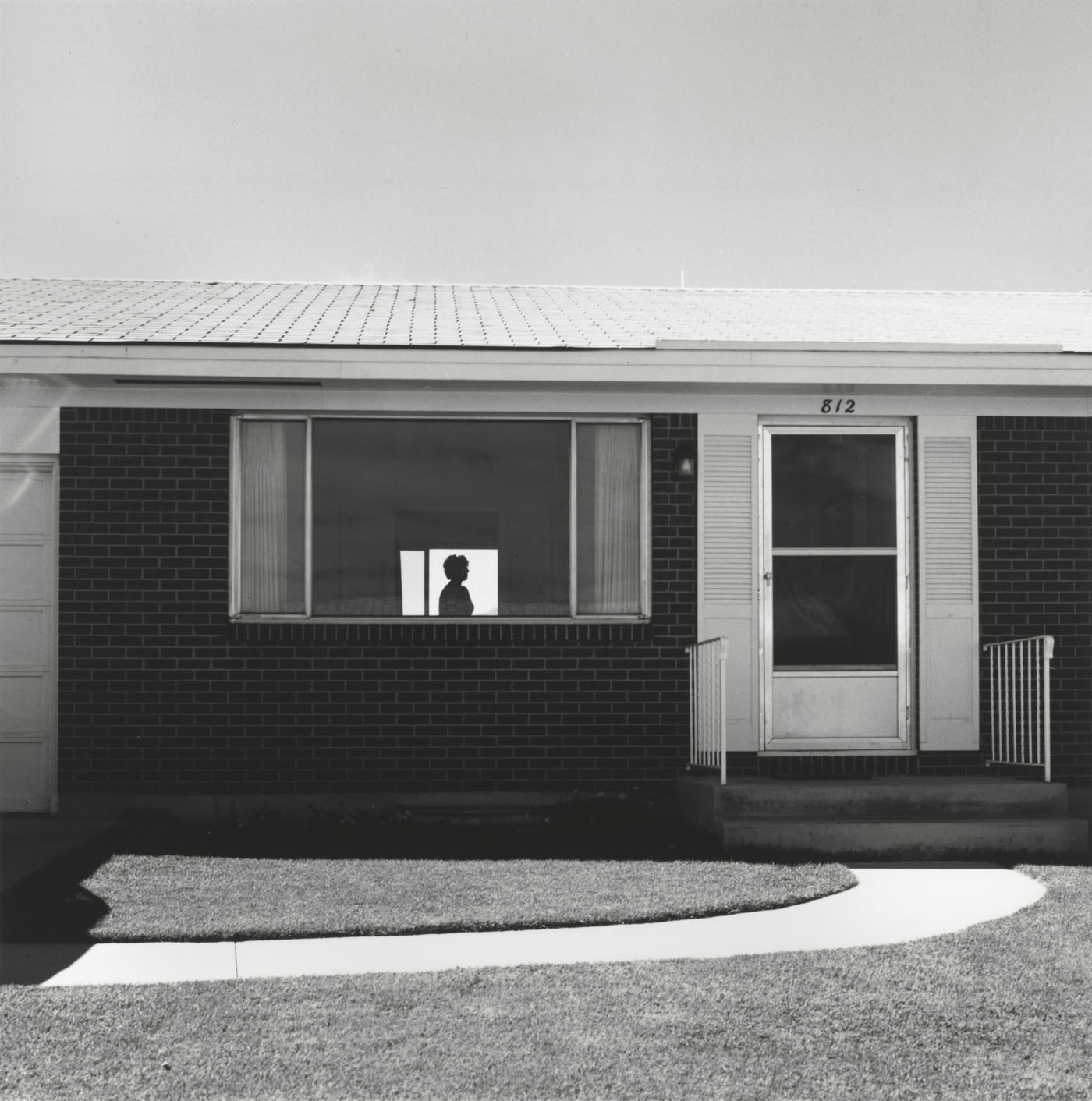
Robert Adams (American, b. 1937) Colorado Springs 1968 Gelatin silver print Museum of Modern Art, New York
Robert Adams (American, b. 1937) Burning oil sludge, north of Denver, Colorado 1973-1974 Gelatin silver print Museum of Modern Art, New York
Stephen Shore (American, b. 1947) Beverly Boulevard and La Brea Avenue, Los Angeles, California, June 21, 1975 1975 From the series Uncommon Places, 1973-1986 Museum of Modern Art, New York
Cindy Sherman (American, b. 1954) Untitled Film Still #43 1979 Gelatin silver print 7 9/16 x 9 7/16″ (19.2 x 24cm) Acquired through the generosity of Sid R. Bass Museum of Modern Art, New York
Cindy Sherman’s Untitled Film Stills is a suite of seventy black-and-white photographs in which the artist posed in the guises of various generic female film characters, among them, ingénue, working girl, vamp, and lonely housewife. Staged to resemble scenes from 1950s and ’60s Hollywood, film noir, B movies, and European art-house films, the printed images mimic in format, scale, and quality the often-staged “stills” used to promote films. By photographing herself in such roles, Sherman inserts herself into a dialogue about stereotypical portrayals of women. Whether she was the one to release the camera’s shutter or not, she is considered the author of the photographs. However, the works in Untitled Film Stills are not considered self-portraits.
Richard Avedon (American, 1923-2004) Carl Hoefert, unemployed blackjack dealer, Reno, Nevada August 30, 1983 From the series In the American West Gelatin silver print Museum of Modern Art, New York
The Museum of Modern Art 11 West 53 Street New York, NY 10019 Phone: (212) 708-9400
Opening hours: Sun – Fri 10.30am – 5.30pm Sat 10.30am – 7.00pm
Monday mornings from 10.30am to 1.00pm are reserved exclusively for members and their guests.
Jindřich Štreit (Czech, b. 1946) Arnoltice 1985 From the Village Life series Gelatin silver print
Jindřich Štreit (born 5 September 1946 in Vsetín) is a Czech photographer and pedagogue known for his documentary photography. He concentrates on documenting the rural life and people of Czech villages. He is considered one of the most important exponents of Czech documentary photography.
Looks like an interesting exhibition. I wish I had been able to see it. Wouldn’t it be such a grand job flying around the world, reviewing photography exhibitions and bringing you my thoughts. I can only wish…
Dr Marcus Bunyan
Many thankx to the Exhibition Hall of the Federal Republic of Germany for allowing me to publish the photographs in the posting. Please click on the photographs for a larger version of the image.
František Drtikol (Czech, 1883-1961) Wave 1925 Gelatin silver print
Czech photography produced and produces leading figures in all areas of photography – from classical documentary photojournalism to surrealism, realism or avant-garde works. From 13 March 2009 on, the Art and Exhibition Hall of the Federal Republic of Germany is presenting over 400 photographic works, a historical mosaic of Czech photography from 1900 until the late 20th century that underlines the international reputation enjoyed by Czech photography today. That reputation is not only apparent in the outstanding contributions by such renowned artists as Josef Sudek, Karel Hájek, Václav Jírů, Vilém Reichmann, Jan Reich, Jindřich Štreit, Frantisek Drtikol, Jaromír Funke, Jaroslav Rossler, Josef Koudelka and Jan Saudek, but also in works from a host of younger photographers. The exhibition does not only showcase famous names but also less well-known photographers, providing an overall impression of the variation and innovation in Czech photography.
From Surrealism and other avant-garde experimentation to realism and classic photo reportage, Czech photographers have long played a key role in all areas of photography and continue to do so to this day.
This exhibition is the first in Germany to present the history and development of Czech photography from 1900 to the turn of the millennium. Beginning with Art Nouveau-inspired Pictorialism, the comprehensive survey traces the rise of avant-garde photography and the development of photo montage in the 1920s to the 1940s. It examines the influence of ideological pressure on photography during the Second World War, the Stalinist 1950s and the period of Communist ‘normalisation’ after the occupation in 1968 and introduces the visitor to the multifaceted range of contemporary trends.
Text from the Exhibition Hall of the Federal Republic of Germany website [Online] Cited 10/04/2009. No longer available online
František Drtikol (Czech, 1883-1961) Nude 1927 Gelatin silver print
František Drtikol (3 March 1883, Příbram – 13 January 1961, Prague) was a Czech photographer of international renown. He is especially known for his characteristically epic photographs, often nudes and portraits.
From 1907 to 1910 he had his own studio, until 1935 he operated an important portrait photostudio in Prague on the fourth floor of one of Prague’s remarkable buildings, a Baroque corner house at 9 Vodičkova, now demolished. Jaroslav Rössler, an important avant-garde photographer, was one of his pupils. Drtikol made many portraits of very important people and nudes which show development from pictorialism and symbolism to modern composite pictures of the nude body with geometric decorations and thrown shadows, where it is possible to find a number of parallels with the avant-garde works of the period. These are reminiscent of Cubism, and at the same time his nudes suggest the kind of movement that was characteristic of the futurism aesthetic.
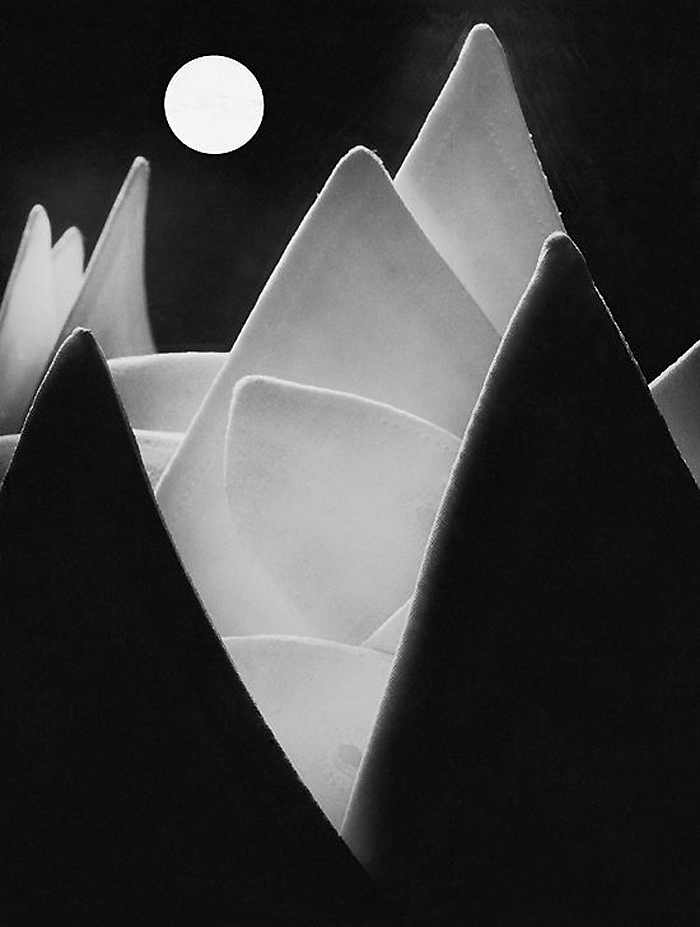
Eugen Wiskovsky (Czech, 1888-1964) Lunar Landscape or Collars 1929 Gelatin silver print
The oeuvre of the leading Czech avant-garde photographer Eugen Wiskovsky (1888-1964) is not large in size or subject range, but it is noteworthy in its originality, depth of ideas, and mastery. Wiskovsky’s early New Objectivist works, from the late 1920s and early 1930s, sought artistic effect in apparently non-aesthetic objects: His inventive lighting and cropping allowed their elementary lines to stand out, to lose their worldly associations and take on potential metaphorical meanings. In his dynamic diagonal compositions, Wiskovsky was among the most radical practitioners of Czech Constructivism. His landscape work is similarly distinctive.
Jaroslav Rössler (Czech, 1902-1990) Untitled 1931 Gelatin silver print
Jaroslav Rössler (25 May 1902, Smilov – 5 January 1990, Prague) was a pioneer of Czech avant-garde photography and a member of the association of Czech avant-garde artists Devětsil (Butterbur).
Rössler was born to the Czech-German father, Eduard Rössler, and a Czech mother, Adela Nollova. From 1917 to 1920, Rössler studied in the atelier of the company owned by renowned Czech photographer František Drtikol. Subsequently, he worked with the company as a laboratory technician. As a 21 years old, he began collaboration with the art theorist Karel Teige, who assigned him to create typographic layout for magazines Pásmo, Disk, Stavba and ReD (Revue Devětsilu). While working on these tasks, Rössler deepened his knowledge of photographic methods. In his works he utilised and combined the techniques of photogram, photomontage, collage and drawing. The beginnings of his photographic work were influenced by Cubism and Futurism, but he also attempted to create the first abstract photographs. In 1923, he became a member of the avant-garde association Devětsil.
In 1925, he went on a six-month study visit to Paris. The same year he began working as a photographer in the Osvobozené divadlo in Prague. Before his second departure to Paris, he co-worked as a commercial photographer with the pictorial magazine Pestrý týden.
In 1927, Rössler moved to Paris together with his wife, Gertruda Fischerová (1894-1976). Initially, he focused on commercial photography. He collaborated with the experimental studio of Lucien Lorell, and worked on commissions for notable companies such as Michelin and Shell. However, later he found an interest in the “street life” of Paris, which influenced his future stay in the city. During a demonstration, he encountered the protesters and took photographs of the event. Shortly after that he was arrested, and after a six-month imprisonment he was expelled from the country, in 1935. The alleged reason for his expulsion was his German-sounding surname.
After his return from Paris, Rössler and his wife resided in Prague, Žižkov. He opened a small photographic atelier, but difficulties associated with the management of the studio caused a significant gap in his artistic work, lasting for almost two decades.
In the 1950s, he resumed his previous activities and again began experimenting with the camera and photographic techniques. He created so-called “prizmata” (prisms), photographs taken through a birefringent prism. Additionally, he experimented with solarisation and explored the possibilities of the Sabatier effect.
Jindřich Štyrský (Czech, 1899-1942) From the Man with Blinkers series 1934 Museum of Decorative Arts, Prague
Eugen Wiskovsky (Czech, 1888-1964) Disaster 1939 Gelatin silver print
Josef Sudek (Czech, 1896-1976) The Last Rose from the Rose series 1956 Gelatin silver print
Josef Sudek (17 March 1896, Kolín, Bohemia – 15 September 1976, Prague) was a Czech photographer, best known for his photographs of Prague.
Sudek was originally a bookbinder. During the First World War he was drafted into the Austro-Hungarian Army in 1915 and served on the Italian Front until he was wounded in the right arm in 1916 which led to the limb being amputated at the shoulder. After the war he studied photography for two years in Prague under Jaromir Funke. His army disability pension gave him leeway to make art, and he worked during the 1920s in the romantic Pictorialist style. Always pushing at the boundaries, a local camera club expelled him for arguing about the need to move forwards from ‘painterly’ photography. Sudek then founded the progressive Czech Photographic Society in 1924. Despite only having one arm, he used large, bulky cameras with the aid of assistants.
Sudek’s photography is sometimes said to be modernist. But this is only true of a couple of years in the 1930s, during which he undertook commercial photography and thus worked “in the style of the times”. Primarily, his personal photography is neo-romantic.
Josef Sudek was a Czech photographer best known for his elegiac black-and-white images of Prague, interiors, still lifes, and the landscapes of Bohemian forests. Many of Sudek’s most memorable images were taken from the window of his small studio, documenting his humble courtyard during changing weather and light conditions. “Everything around us, dead or alive, in the eyes of a crazy photographer mysteriously takes on many variations,” he explained, “so that a seemingly dead object comes to life through light or by its surroundings.”
Text from the artnet website [Online] Cited 10/01/2019
Jan Saudek (Czech, b. 1935) Life 1966 Gelatin silver print
Josef Koudelka (Czech, b. 1938) France 1987 Gelatin silver print
The Art and Exhibition Hall of the Federal Republic of Germany Museumsmeile Bonn Helmut-Kohl-Allee 4 53113 Bonn Telephone: +49 228 9171-200
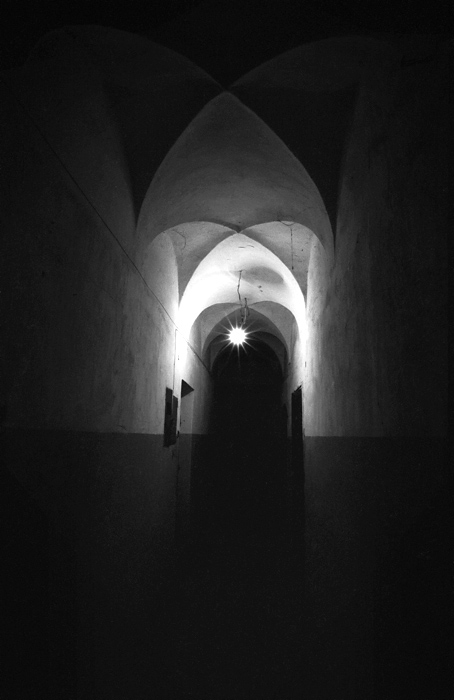
Jeff Gusky (American) Corridor in Kazimierz (Former Jewish District) Cracow, Poland 1996
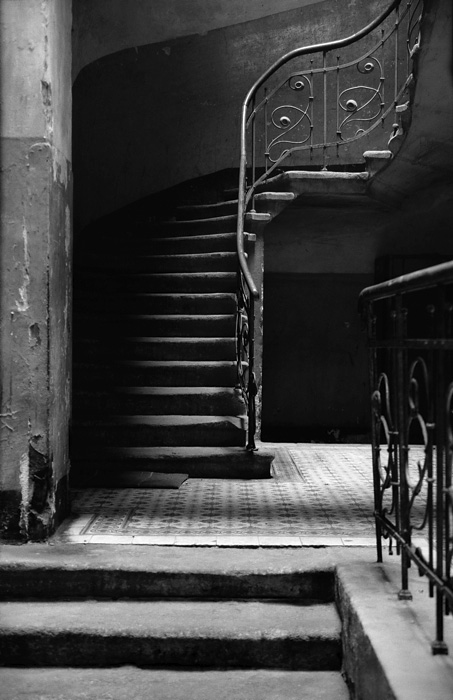
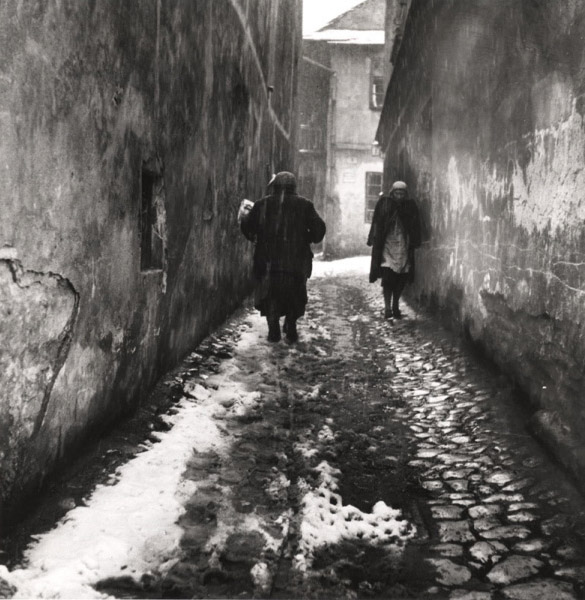
As promised photographs by Jeff Gusky from the exhibition Of Life and Loss: The Polish Photographs of Roman Vishniac and Jeffrey Gusky. Many thanks to Jeff for making them available to me. I have tried to form a small narrative from some of the photographs that Jeff sent me, like a piece of music. The flow through passageways and doorways forming rivers of light and dark ends in the ascending stairs that hold the possibility of deliverance and redemption. The image is reminiscent of photographs by Eugene Atget.
The most beautiful video and music (see below) is entirely appropriate for this post: Gorecki Symphony No. 3 “Sorrowful Songs” – Lento e Largo.
Dr Marcus Bunyan
Jeff Gusky (American) Former Jewish Home in Use as a Public Toilet Dzialoszyce, Poland 1996
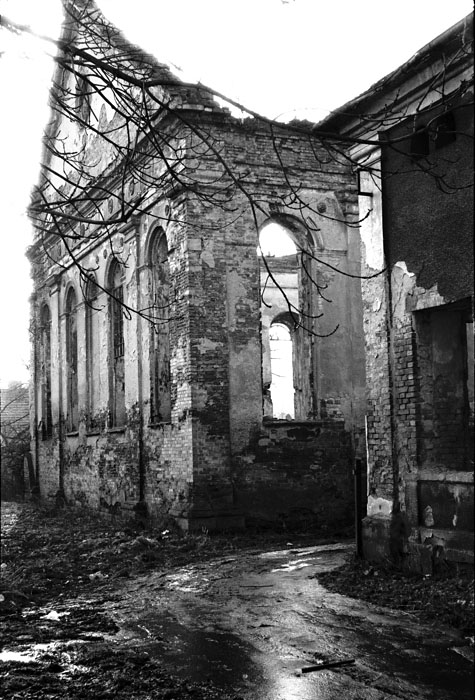
Jeff Gusky (American) Desecrated Synagogue and Jewish School Dzialoszyce, Poland 1999
Jeff Gusky (American) Lublin Corridor #1 Lublin, Poland 1999
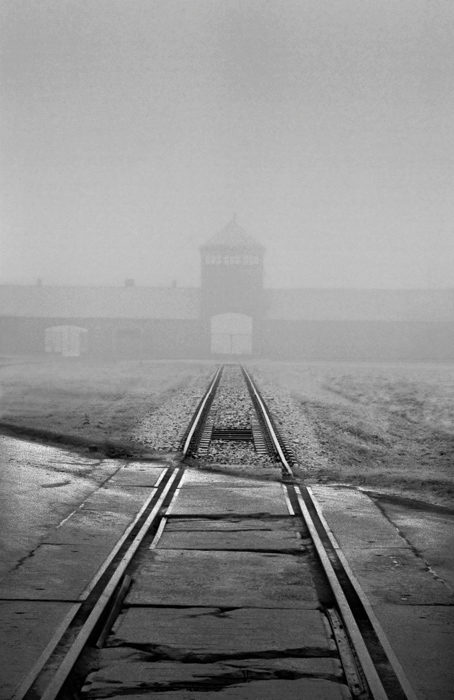
Jeff Gusky (American) Birkenau Silhouette Auschwitz, Poland 1996
Jeff Gusky (American) Where They Lived #4 Cracow, Poland 2001
Gorecki Symphony No. 3 “Sorrowful Songs” – Lento e Largo
Detroit Institute of Arts 5200 Woodward Avenue Detroit, Michigan 48202 Phone: 313.833.7900
“During my journeys, I took over sixteen thousand photographs. All but two thousand were confiscated and, presumably, destroyed – although perhaps they will reappear someday. I hope my photographs enable the reader to envision a time and place that worthy of remembrance.”
Roman Vishniac
Hardly any photographs by Jeffrey Gusky online but he has provided some via email. I will post them asap. Thank you very much Jeff for contacting me. I knew little about the photographer Roman Vishniac but after more research I know much more now. What a photographer!
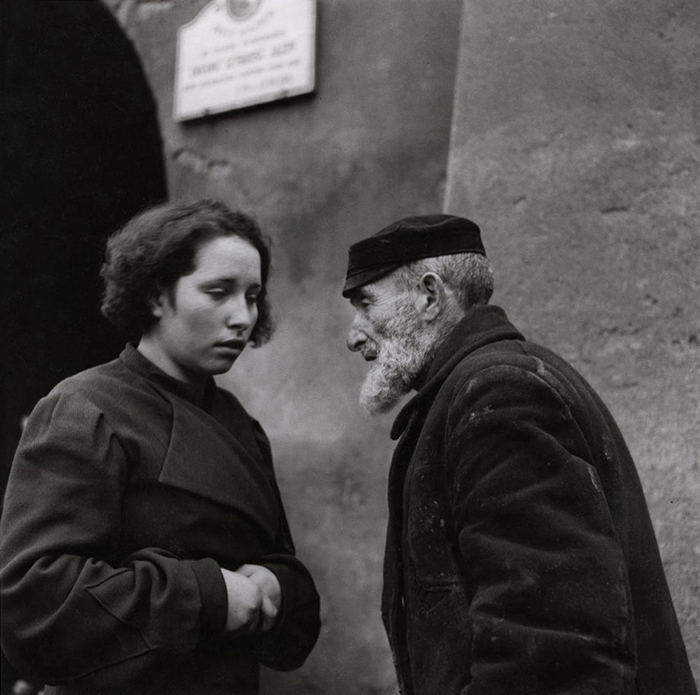
Just look at the image below to see a masterpiece of classical photography. Look at the space between the figures, the tension almost palpable, the look on the granddaughters face and the wringing of her hands a portent of the despair to come. A good archive of his photographs is on the International Center of Photography website.
Dr Marcus Bunyan
Many thankx to The Detroit Institute of Arts for allowing me to publish the photographs in the posting. Please click on the photographs for a larger version of the image.
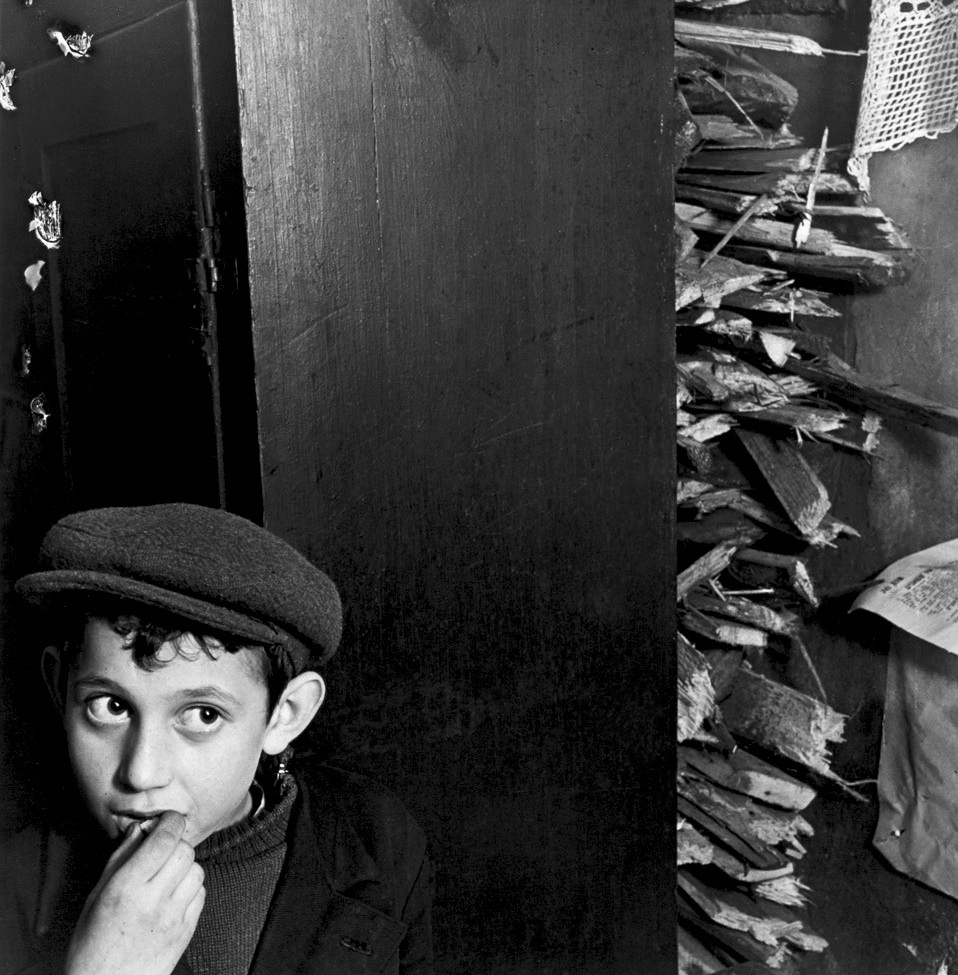
This previously unpublished photograph attests to Vishniac’s bold and innovative use of composition: the slim, vertical register of kindling wood, offset by a corner of Yiddish newspaper on a table and triangle of lace at the window, is balanced by the young boy’s sideways glance peering out from the corner of the frame, reflecting a modern sensibility not usually associated with Vishniac’s work in Eastern Europe.
Text from the International Center of Photography website
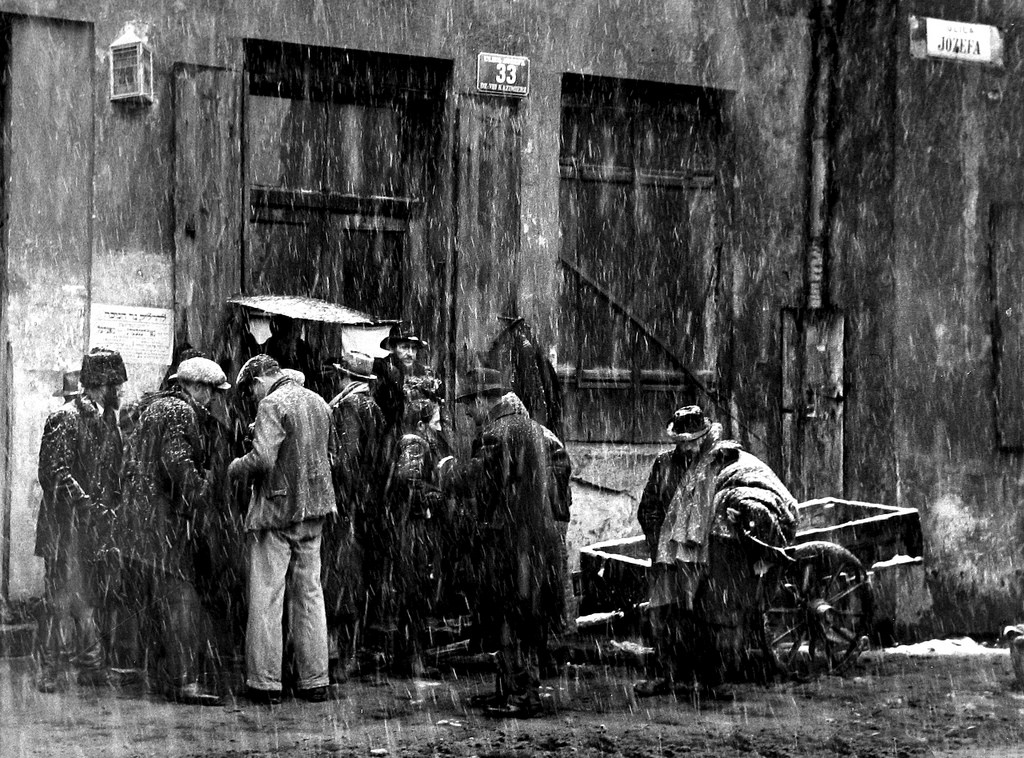
Examining each photographer separately, Vishniac and Gusky have very distinctive photographic styles. Due to the nature of his project and the ever-escalating semblance of anti-semitism, Vishniac’s photographs are less polished and more emotionally raw in an attempt to tell the stories of people’s individual lives. By contrast, Gusky finds inspiration in the physical places which made up the world of now entirely absent communities of Jews.
While each photographer had an individual style and statement to make, it is both the relationship with and stark difference between the two that provides the greatest emotional poignancy. The exhibition pairs many Vishniac and Gusky photographs, illuminating the individual lives lost, culture destroyed, and environments degraded by decades of neglect in Poland, as Gusky photographed the desecrated cemeteries, crumbling synagogues, and empty streets that served as the backdrop for Vishniac’s scenes of mid-century Jewish life.
There are also several points of convergence in the biographies of Vishniac and Gusky. Like Vishniac, Gusky is of Russian Jewish descent, and both men were compelled to their photographic projects in part by personal reasons springing from their Jewish heritage. The photographers also have professional ties to biological science which embody their work through illustration of the fragility of human life.
Text from the Santa Barbara Museum website [Online] Cited 01/04/2009. No longer available online
This exhibition, organised by the Santa Barbara Museum of Art, includes around 90 black-and-white photographs taken by two photographers: Roman Vishniac, who photographed throughout Poland’s Jewish communities in the mid-1930s, and Jeffrey Gusky who photographed many of the same Polish sites during the 1990s.
In 1935, Russian-born photographer Roman Vishniac was commissioned by the American Joint Distribution Committee (a Paris-based relief agency) to photograph Jewish communities in the cities and villages of Poland as well as other areas of Eastern Europe. He took over 16,000 photographs (around 2,000 have survived) depicting the people, life, homes, schools, and trades of these communities. The photographs, in turn, were to be used to help raise money for humanitarian aid for individuals in areas that were becoming increasingly destitute.
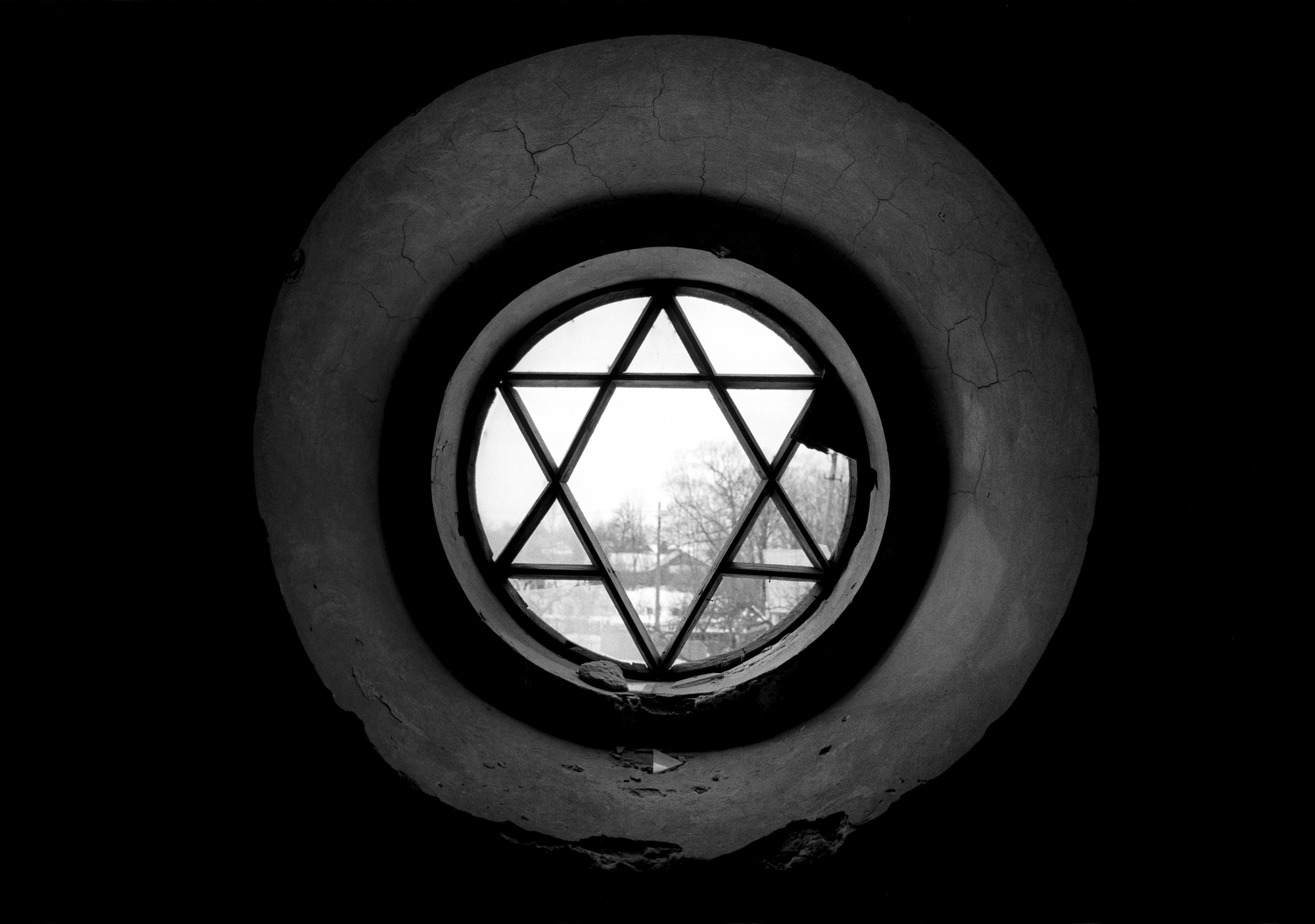
In 1996, Jeffrey Gusky, an amateur photographer and doctor of Russian-Jewish descent set out on a personal journey in search of Jewish identity and culture in Eastern Europe. He made the first of four trips to Poland where he traveled to cities and villages where Jews had lived and worked for centuries. Gusky photographed what remained of Jewish culture in Poland focusing on the ruins of synagogues, cemeteries – many of which were desecrated, and the empty and still streets.
Text from the Detroit Institute of Arts website [Online] Cited 01/04/2009. No longer available online
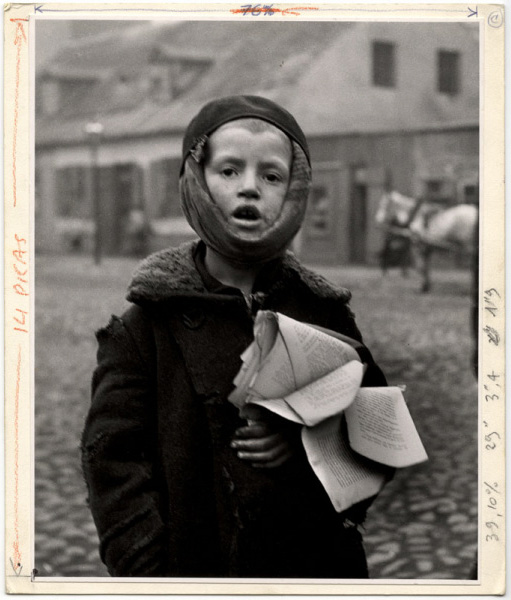
Roman Vishniac (Russian-American, 1897-1990) A Boy with a toothache. Next year another child will inherit the tattered schoolbook. Slonim c. 1935-1938 Gelatin silver print
Poignant, haunting photographs of Poland’s Jewish communities taken in the 1930s by Roman Vishniac, and images of many of the same areas taken in the 1990s by Jeffrey Gusky are the subject of the moving exhibition Of Life and Loss: The Polish Photographs of Roman Vishniac and Jeffrey Gusky. The exhibition, at the Detroit Institute of Arts (DIA) from April 19 to July 12, includes 90 black-and-white photographs and is free with museum admission.
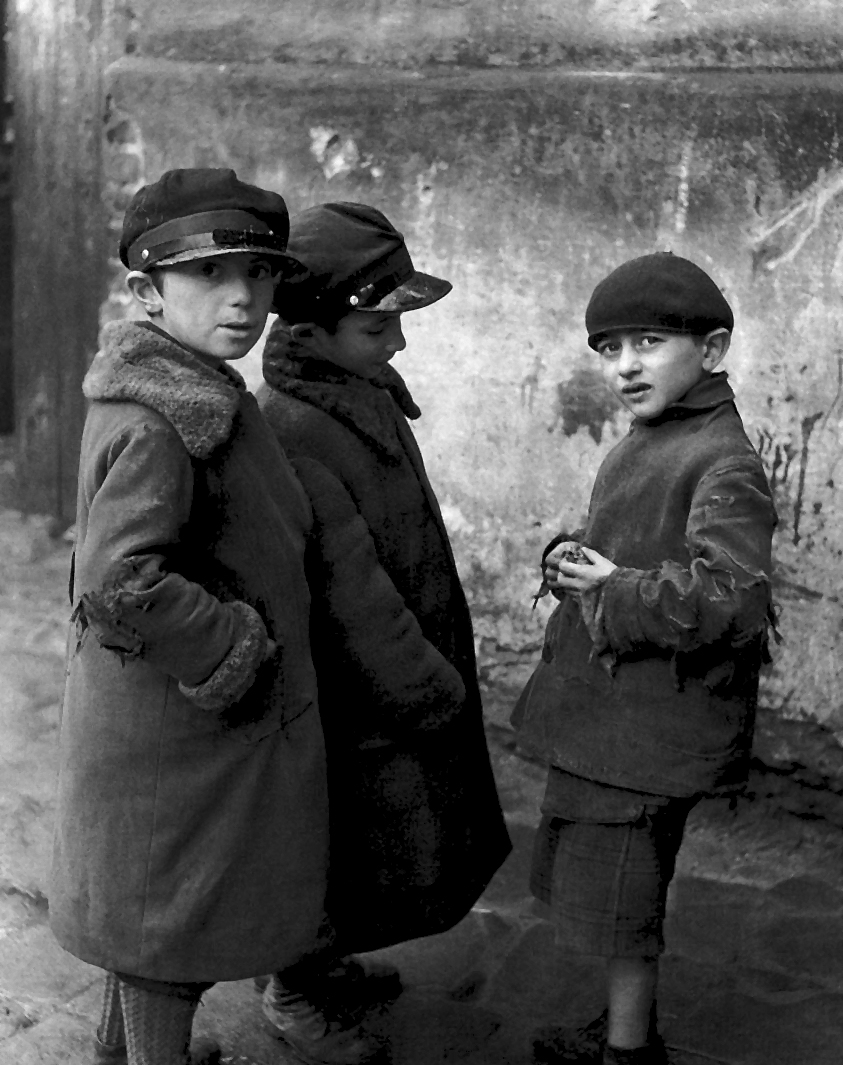
Through their photographs, Vishniac (1897-1990) and Gusky (born 1953), two very different photographers from very different eras, bore witness to the Jewish experience in Poland during the 20th century, preserving memories and documenting life experiences for future generations. Although taken 60 years apart, their images share themes of memory, life, and loss and are evidence of people and places that once were, and what remains in their absence.
Vishniac and Gusky have very distinctive styles. Due to the nature of his project and the escalation of anti-Semitism in 1930s Poland, Vishniac made photographs in the documentary tradition. With great empathy, he recorded the places and lives of individuals exactly as he found them, in their homes and in the streets. Almost 60 years later, Gusky, by contrast, interpreted former Jewish sites throughout Poland with a sensitive eye on the past. His misty and haunting images are devoid of human presence, and show former sites from many Jewish communities that once thrived throughout Poland.
While each photographer had an individual style and statement to make, it is both the relationship with and stark difference between the two that provides the greatest emotional impact. Brought together for the first time, Vishniac’s and Gusky’s photographs illuminate the individual lives lost, culture destroyed, and environments degraded by decades of neglect in Poland, as Gusky photographed the desecrated cemeteries, crumbling synagogues, and empty streets that served as the backdrop for Vishniac’s scenes of vibrant, mid-century Jewish life.
Vishniac was born in Russia, and fled to Berlin with his family in 1920. He worked as a biologist and supplemented his income as a photographer. Eventually he became compelled to use photography to document people and communities throughout Europe. In the 1930s Vishniac was commissioned by the Joint Distribution Committee, a Paris-based relief agency, to photograph Jewish life in Poland, where he took over 16,000 photographs (only 2,000 survived the war) over a three-year period. He photographed vibrant communities filled with people in their homes and schools, at their trades and in their streets, markets and temples. His poignant works are evidence of communities filled with life despite the lack of food, medical care and livelihood that prevailed.
Gusky is a physician in rural Texas who began photographing as a way to explore Jewish identity. Although a Jew of Russian decent, he became interested in the history of Jews in Poland after hearing a radio interview with Ruth Ellen Gruber, an American journalist who documented the ruins of Jewish communities in Eastern Europe. His photographs depict the vacant and somber sites of once-thriving Jewish communities throughout the country. With these images, Gusky reveals a powerful, dramatic message about a lost culture that was once part of Poland’s Jewish past. This initial photographic work has led him to further examine “the void of modern life,” and the threat of genocide that continues to haunt humankind of all ethnicities and cultures in the past and present. This exhibition is organised by the Santa Barbara Museum of Art.
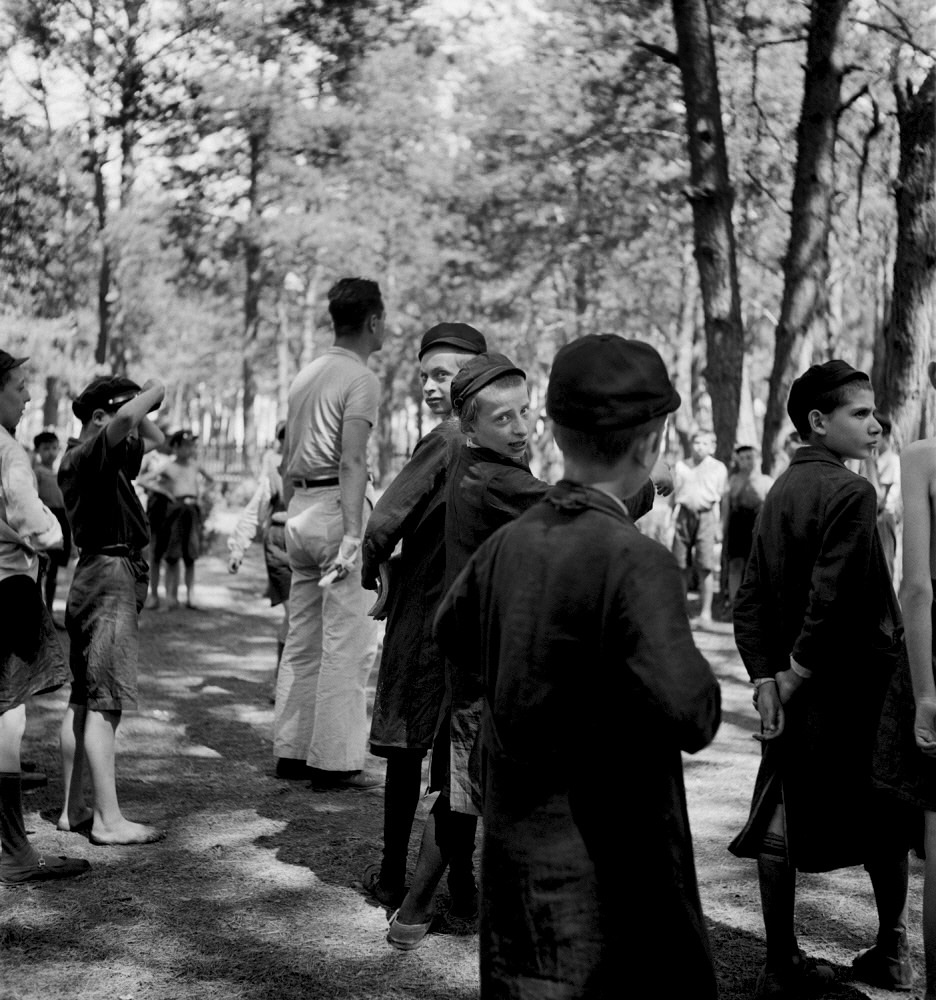
Many of the children wear Jewish star pins and necklaces as they wait in the Schlachtensee transit bureau offices and courtyards in the American sector of occupied Berlin. By 1952, more than 136,000 Jewish Displaced Persons (DPs) had immigrated to Israel, and over 80,000 to the United States, aided by the Jewish Joint Distribution Committee (JDC), the United Jewish Appeal (UJA), and other nongovernmental agencies that played an important role in lobbying for and providing economic, educational, and emigration assistance to DPs.
Text from the International Center of Photography website
Housed in a 1722 château outside Paris, the Hénonville Displaced Persons camp was administered by the Jewish Joint Distribution Committee (JDC), the Society for Trades and Agricultural Labor (ORT), and Agudath Israel (the umbrella organisation for Orthodox and ultra-Orthodox Jews), from 1946 to 1952. Hénonville was a homogeneous religious community of Orthodox Jews that included a relocated Lithuanian yeshiva, a home for Jewish orphans, and an Orthodox kibbutz, and was directed by a charismatic leader, Rabbi Solomon Horowitz. Vishniac photographed daily life in the camp, including a series documenting the preparation of matzoh for the Passover holiday.
Text from the International Center of Photography website
Detroit Institute of Arts 5200 Woodward Avenue Detroit, Michigan 48202 Phone: 313.833.7900
Siri Hayes (Australian, b. 1977) Gunnai man land 2008
A handsome group of large photographs in crisp white frames is displayed in the large space of Gallerysmith, Melbourne. Undoubtably they are well taken and printed photographs but conceptually their thematic development is confused. The photographs purport to investigate how industrialisation has changed the Gippsland landscape since colonisation whilst referencing human interactions that ‘are sometimes’ associated with Western art.
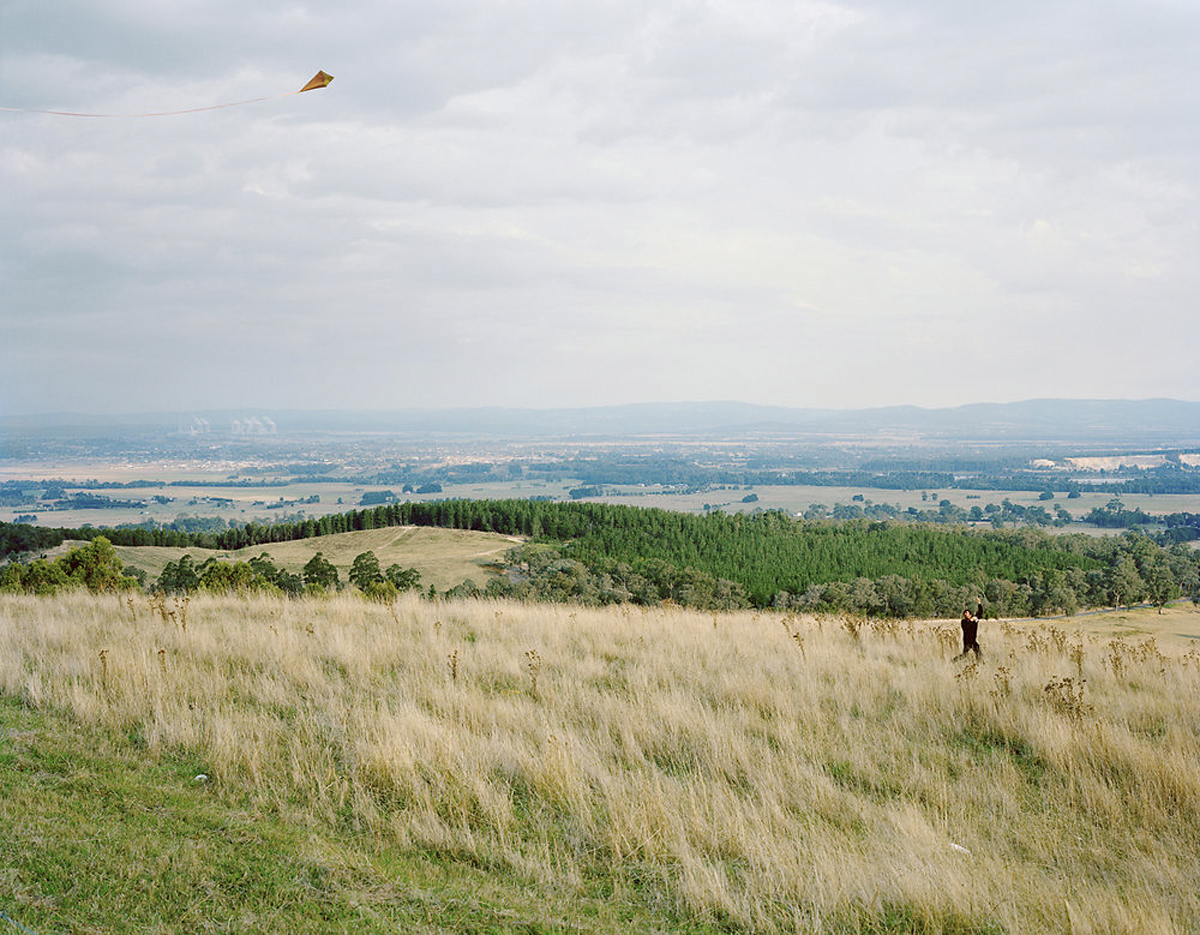
Gunnai land man (above) is very effective in this quest juxtaposing as it does an Indigenous Australian and fallen tree on a bare track with a smoke billowing power station (symbolic of the industrialisation of the area) looming in the background. Other photographs are less successful. What a man flying a kite has to do with the pre-colonial Gippsland landscape is beyond me and the juxtapositional incongruity sought by the artist simply does not work, despite the presence of the power station on the plains in the distance. The symbology has more to do with Japanese art than it has to do with Western art.
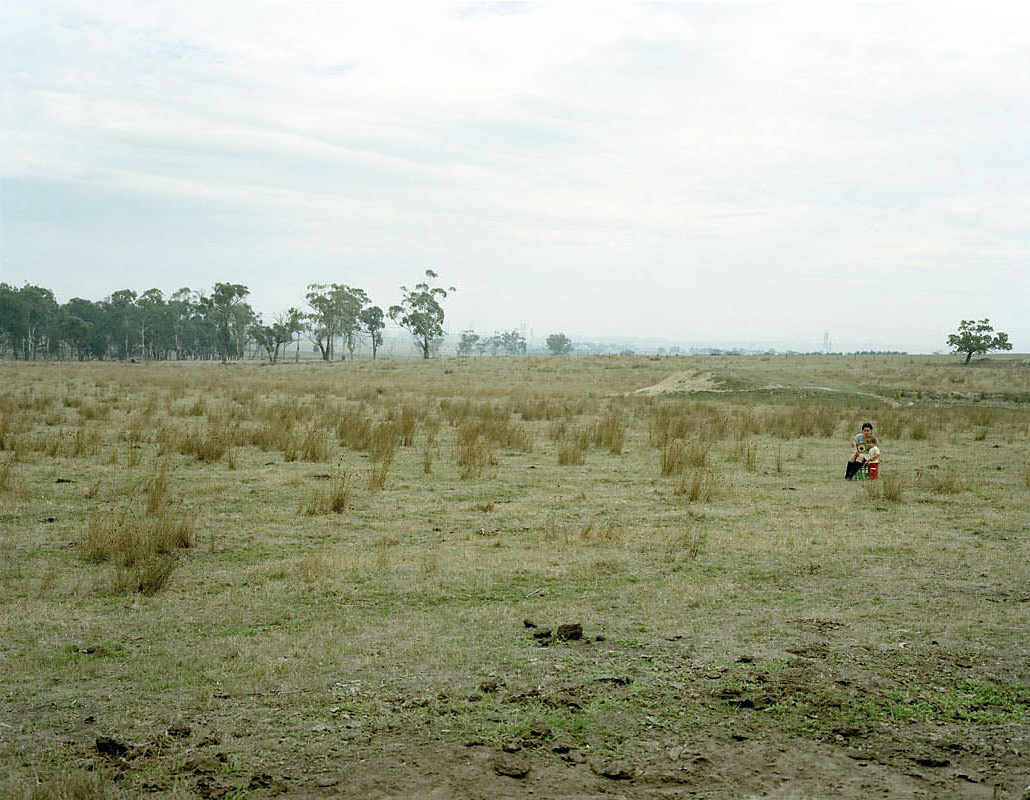
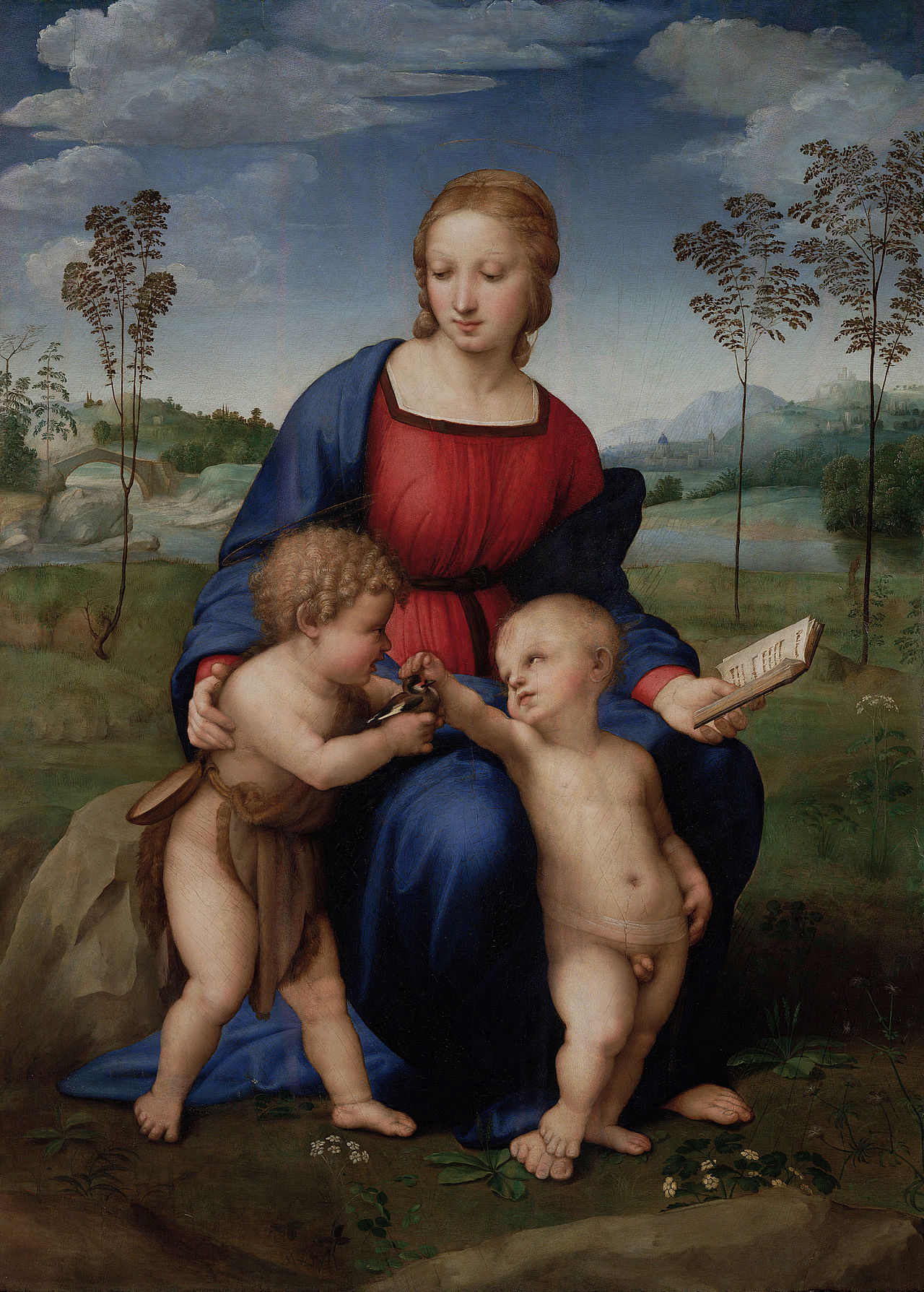
The conceptual narrative of the photograph Moe Madonna (below) works only partially as well. The destruction of the landscape has been caused by pastoralisation not industrialisation. In the image that Hayes is referencing the Madonna is front and centre set in an idyllic landscape. In the work by Hayes the incongruity has to be explained, has to be verbalised in text for the association to be didactically made. The interpretation leaves no room for personal reflection and when I looked at this image, the mother and child were so small in the landscape, the placement so obviously constructed that there incongruity turned to disbelief: namely that I simply did not believe the mise en scène being created.
Other narratives are equally confusing. In Paper bag lovers (below) I had to ask the gallery director what was going on in the photograph because the bodies where so small in the landscape (in fact it looks like one body) and you can’t really see the paper bags on their heads because the bodies are just an amorphous mass containing no detail at all (you can just see the body in the photograph below in the mid distance just below the large central tree). Why paper bags anyway? If something intentionally odd and incongruous is sought to be portrayed in the landscape perhaps Hayes should look at the work of Eugene Meatyard (see below) to see a real subversion of the body/landscape dichotomy.
The one standout photograph of the exhibition is Plein air explorers (below). This is confirmed in the sales of the show as all six prints of this photograph have been sold. One can see why!
The title is perfect, the construction of the image faultless. The naked white man stands proudly surveying his conquered domain, the land, whilst around him artists (reminding me of the dilettantes of the Victorian age going on day trips), hunker down into the ground with their easels oblivious to the desiccated trees around them. Here the photographer just observes, doesn’t construct, the incongruity of it all. The artists draw the white man based on direct observation of him and not on their conceptions or conventional images or memories of him while ignoring their surroundings. Here is the paradox, the ironic perfect storm that the artist was conceptually seeking: the representation of landscape based upon direct observation “in the open air” ignored for a perfect white arse while on the horizon smoke stacks of a power station stand in silent witness to the present and imminent destruction of the world. What a photograph! Can I have one now please?
Dr Marcus Bunyan
Many thankx to Gallerysmith for allowing me to publish the photographs in the posting. Please click on the photographs for a larger version of the image.
Siri Hayes (Australian, b. 1977) Moe Madonna 2008
Siri Hayes (Australian, b. 1977) Kite 2008
Raphael (Italian, 1483-1520) Madonna of the Goldfinch 1505-1506 Oil on panel 107 x 77cm Galleria degli Uffizi
Siri Hayes (Australian, b. 1977) Paper Bag Lovers 2008
I have predominantly focused on the parts of the Gippsland landscape that have been impacted by white settlement. I have composed various human interactions that are sometimes associated with Western art and its construction. For example, Moe Madonna references Raphael’s Goldfinch Madonna. The narratives are intentionally odd and incongruous with the surrounding location. My son and I seem out-of-place in a barren paddock while the autumn mist shrouds distant gum trees and electricity pylons. The soil here has been compacted beyond repair by cattle hooves – an inappropriate animal in Australia’s delicate ecosystems. As we sit on this barren plain, I read to Oliver from a European pre-schooler book titled Autumn, creating an interesting juxtaposition with the antipodean equivalent season.
The work in this exhibition considers the pre-colonial Gippsland landscape and how industrial ‘progress’ has altered it. Hopefully it provides pause for thought.
Siri Hayes exhibition notes. March 2009
Siri Hayes (Australian, b. 1977) Plein air explorers 2008
Gallerysmith 170-174 Abbotsford St, North Melbourne, Victoria, 3051 Australia
Curator: Shane Hulbert Opening: Thursday 2nd April, 2009
Group photography show with artists: Shane Hulbert (Aus), John Billan (Aus), So Hing Keung (HK), Stephanie Neoh (Aus), Darren Sylvester (Aus), Ming Tse Ching (HK), Kellyann Geurts (Aus), Andrew Guthrie (HK), Kim Lawler (Aus), Law Sum Po Jamsen (HK), and Lyndal Walker (Aus).
Sculptor Fredrick White in front of Lyndal Walker’s The Time to Hesitate is Through, no Time to Wallow in the Mire 2009
Great to catch up again with John Billan, Shane Hulbert and Les Walkling!
Marcus
Please click on the photographs for a larger version of the image.
Lyndal Walker (Australian, b. 1973) The Time to Hesitate is Through, no Time to Wallow in the Mire 2009
“The images in this show all reflect on an exploration of intersecting territories within Australia and the Chinese Special Administration Region [SAR] of Hong Kong. Central to this exploration are the cultural linkages between claimed and reclaimed territories, social territories and psychological territories and the way this in turn influences national identity. The claim is that these things of importance, and the way we respond to the notion of territory, have recurring similarities between different cultures.
Despite the broadness of the title, the notion of territories is becoming increasingly relevant in a global community, as the traditional borderlines and barriers that define who we are and what we stand for as a culture change in response to internal and external shifts.”
Shane Hulbert 2009
Territories opening night crowd at Project Space/Spare Room, Melbourne
Ming Tse Chong (Chinese, b. 1960) City Still Life II 2008
Many thankx to Philadelphia Museum of Art for allowing me to publish the photographs in the posting. Please click on the photographs for a larger version of the image.
Daidō Moriyama often calls himself a “stray dog,” a reference to one of his iconic early pictures of a roaming mongrel, but also to his preferred incidental vantage points in relation to his subjects and his beguiled yet wary stance toward modernising Japanese society. In the series Memory of Dog, he revisited photographic scenarios and motifs from his previous two decades of work, overlaying his peripheral approach with another quality that he finds crucial to photography: its relationship to memory.
Daidō Moriyama is one of the most important and exciting Japanese photographers of our time, having made prolific, often experimental pictures of modern urban life since the 1960s. This exhibition showcases a group of approximately 45 photographs made in and around Tokyo in the 1980s, when Moriyama focused his mature aesthetic on the city with renewed intensity.
Moriyama approaches the world with an equalising eye, capturing disparate peripheral details that in themselves account for little, but together add up to a powerful diagnosis of modern experience. In 1980s Japan such details encompassed the disorienting and sometimes brutal juxtaposition of traditional culture and modernisation, most visible in the glut of consumer goods and images. But in Moriyama’s photographs these subjects appear alongside the banal elements of any streetscape: a derelict patch of pavement and wall, a car with an aggressive key scratch running its full length, even a single rose blossom.
Moriyama’s urban imagery shares some of its qualities with other great street photography of the 20th century, and he has cited the photographs of William Klein as a major influence. But his work involves strong responses to a wide range of modern art and literature, including photographs and graphic designs by many of his Japanese contemporaries, Andy Warhol’s silkscreens, and the novels of Jack Kerouac and James Baldwin. Moriyama’s mix of international and Japanese trends to represent modern Tokyo is one source of his photography’s power, and the exhibition will include a small number of works by other artists to demonstrate his visual sensibility, including prints and photographs by Warhol, Klein, Shomei Tomatsu, and Tadanori Yokoo.
Since the 1960s Japanese photographer Daidō Moriyama (born 1938) has been making dynamic, often experimental images of modern urban life, establishing a reputation as one of the most important and exciting photographers of our time. The Philadelphia Museum of Art will present an exhibition of approximately 45 photographs by Moriyama, made in and around Tokyo in the 1980s, when the artist focused his mature aesthetic on the city with renewed intensity. The exhibition will be on view from February 28-June 30, 2009 in the Julien Levy Gallery at the Ruth and Raymond G. Perelman Building.
Born in 1938 in Ikeda-cho (now Ikeda-shi), Osaka, Moriyama witnessed the dramatic changes that swept over Japan in the decades following World War II. After his father’s death in a train accident, he began working as a freelance graphic designer at age 20. He was intrigued by the graphic possibilities of screenprinting, the cheapest and most prolific form for printed imagery, and by international trends in contemporary art. These interests, along with attention to the various forms of visual stimuli that populate the urban landscape have been a hallmark of Moriyama’s career.
In 1960 Moriyama took up the study of photography under Takeji Iwamiya and one year later moved to Tokyo hoping to join the eminent photographers’ group VIVO, a short-lived cooperative whose members were exploring and confronting the revolution in modern Japanese society in their work. Although VIVO disbanded a week after Moriyama’s arrival in the capital, the visual and existential turmoil they explored would become one of the core subjects in Moriyama’s photographs. His gritty, black and white images of streets and highways express the conflicting realities of contemporary Japan, the disorienting and sometimes brutal juxtaposition of traditional culture and modernisation.
“It is a pleasure to present this group of photographs from the Museum’s collection reflecting the distinctive vision of Daidō Moriyama, who is undoubtedly among the great urban photographers of the 20th century,” Curator of Photographs Peter Barberie said. “These particular images focus on the visual experience of modern-day Tokyo, but through them Moriyama is documenting broader global trends of modernisation, and at the same time exploring the unique aesthetic qualities of his medium.”
His early images from the 1960s and 70s tested the notion of photographic artistry in an extreme fashion. He chose seemingly arbitrary subjects, and experimented with motion and overexposure to create blurred or nearly blank images, adopting an anti-aesthetic position. Other Japanese photographers were also working in this vein, but Moriyama’s 1972 book Bye Bye Photography became the defining statement of this particular style. The later photographs presented in this exhibition are generally sharper in focus but maintain the peripheral vantage point that Moriyama so often employed, as well as the seemingly random content. His images capture with an equalising eye the kinds of disparate peripheral details that litter the modern urban experience: shadows, cars, and abandoned corners, as well as the glut of consumer goods and commodities.
Profoundly influenced by Japanese photographers Eikoh Hosoe and Shomei Tomatsu, Moriyama’s vision was also enriched by his acquaintance with the work of American photographers William Klein and Robert Frank. Like them he practiced a new, more action-oriented street photography. His images are often out of focus, vertiginously tilted, or invasively cropped.
His work also involves strong responses to a wide range of modern art and literature, including photographs and graphic designs by many of his Japanese contemporaries, Andy Warhol’s silkscreens, and the novels of Jack Kerouac and James Baldwin. The exhibition will include a small number of works by other artists to demonstrate his visual sensibility, including prints and photographs by Warhol, Klein, Shomei Tomatsu, and Tadanori Yokoo.



































 Art Blart _ art and cultural memory archive
You must be logged in to post a comment.