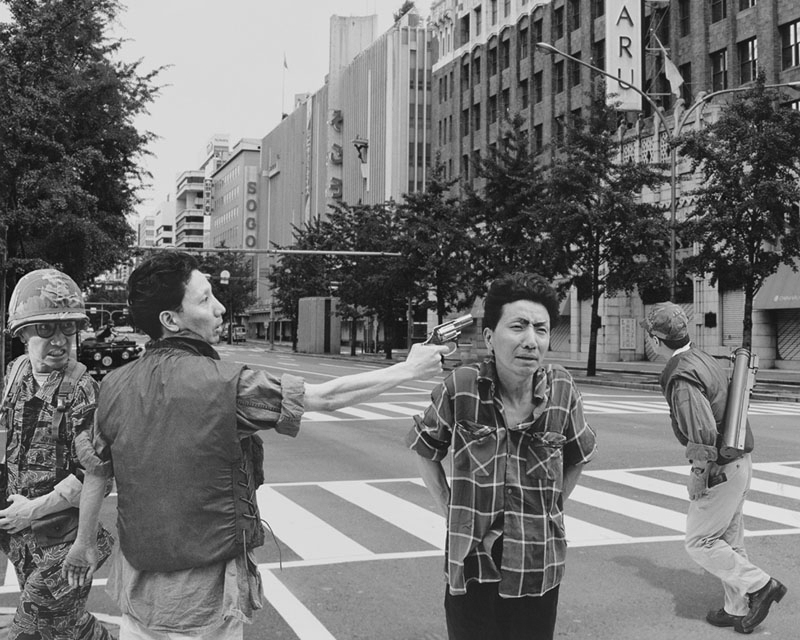
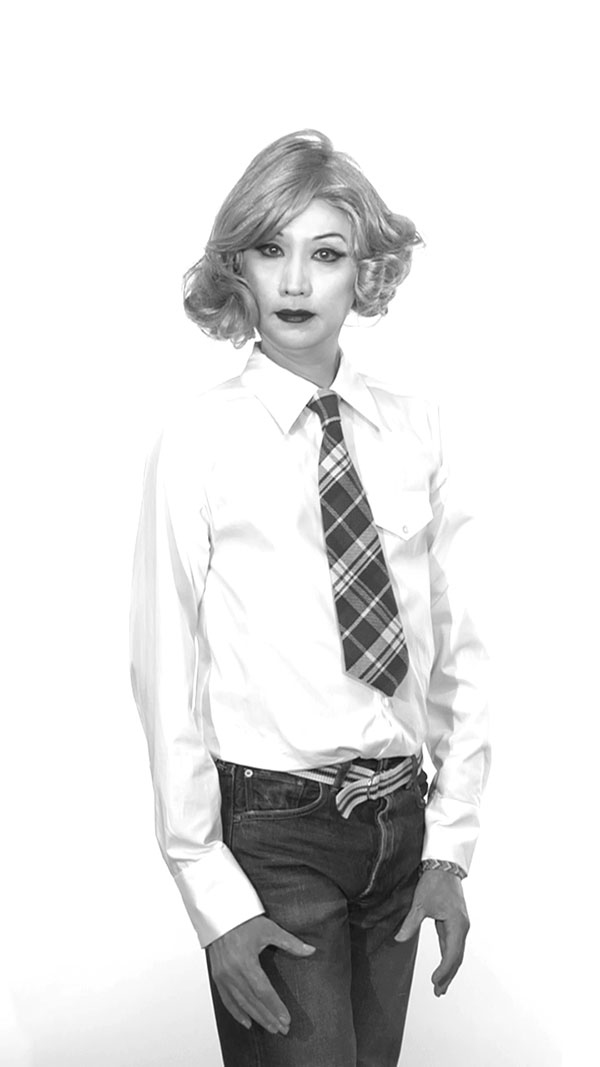
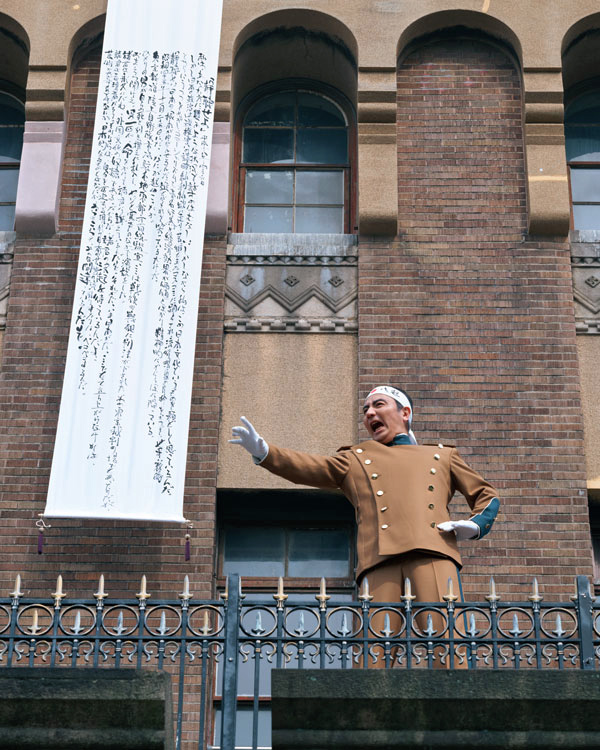
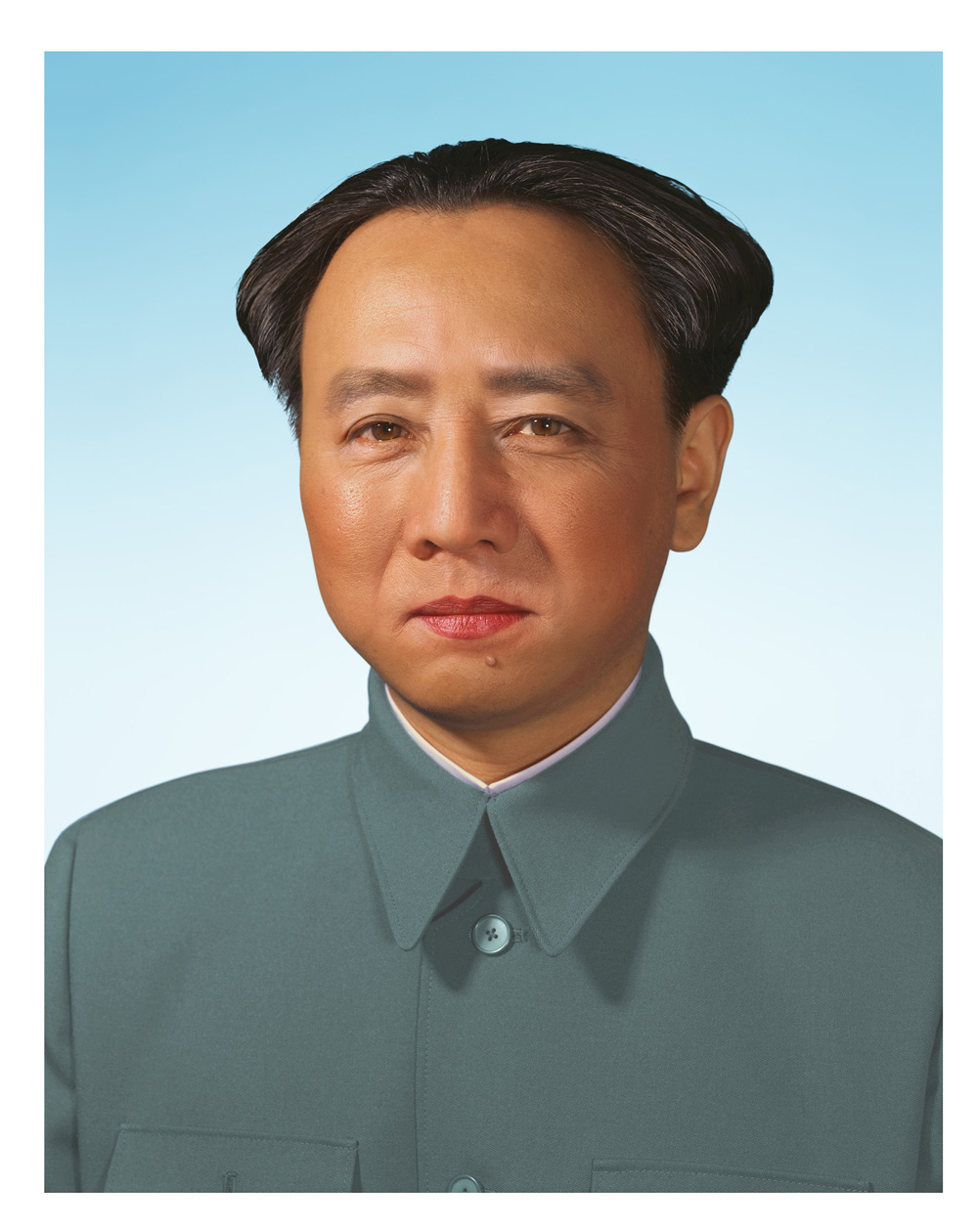
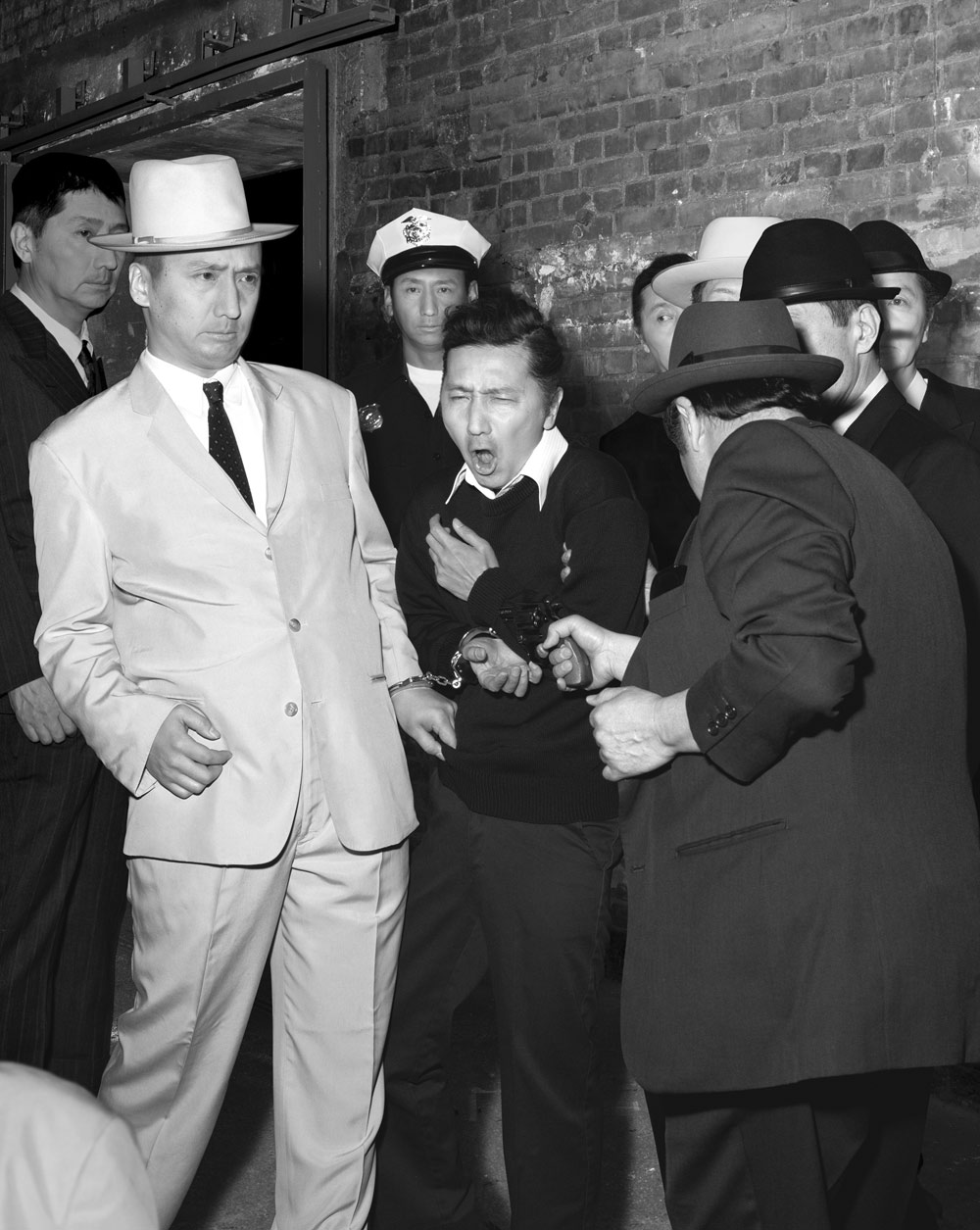
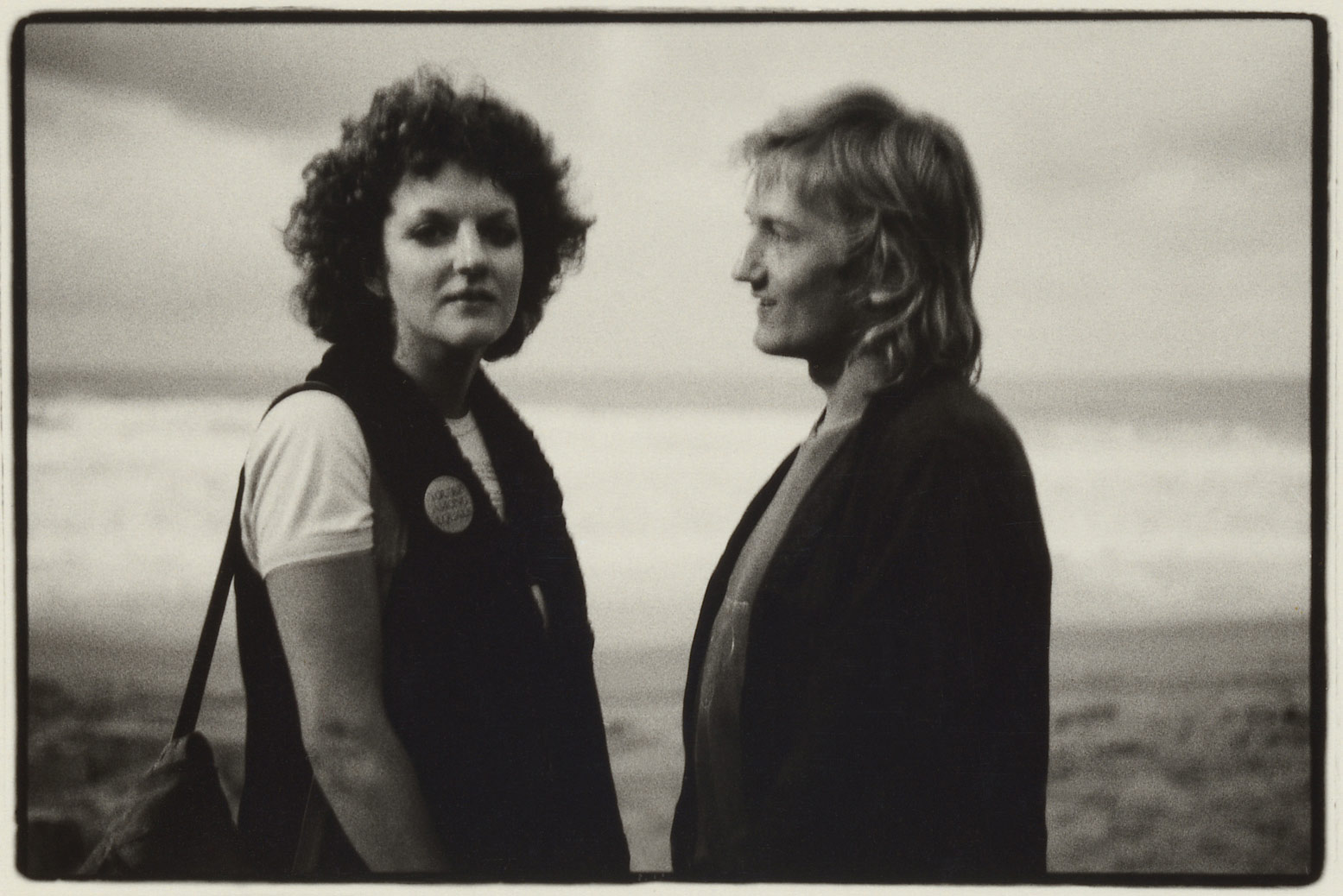
Exhibition: ‘The Weak Sex – How Art Pictures the New Male’ at Kunstmuseum Bern

Exhibition dates: 18th October 2013 – 9th February 2014

Curator: Kathleen Bühle

Participating artists: Vito Acconci / Bas Jan Ader / Luc Andrié / Lynda Benglis / Luciano Castelli / Martin Disler / VALIE EXPORT and Peter Weibel / Gelitin / Pascal Häusermann / Alexis Hunter / Cathy Joritz / Jesper Just / Jürgen Klauke / Frantiček Klossner / Elke Silvia Krystufek / Marie-Jo Lafontaine / Peter Land / Littlewhitehead / Sarah Lucas / Urs Lüthi / Manon / Paul McCarthy / Tracey Moffatt / Josef Felix Müller / Ursula Palla / Adrian Piper / Anne-Julie Raccoursier / Ugo Rondinone / Carole Roussopoulos / Rico Scagliola and Michael Meier / Sylvia Sleigh / Nedko Solakov / Megan Francis Sullivan / Sam Taylor-Johnson / Costa Vece / William Wegman / Silvie Zürcher.

PLEASE NOTE: THIS POSTING CONTAINS ART PHOTOGRAPHS OF MALE NUDITY AND MALE SEXUAL AROUSAL – IF YOU DO NOT LIKE PLEASE DO NOT LOOK, FAIR WARNING HAS BEEN GIVEN


Alexis Hunter (New Zealand, b. 1948) 'Approach to Fear: XVII: Masculinisation of Society – exorcise' 1977


Alexis Hunter (New Zealand, b. 1948)
Approach to Fear: XVII: Masculinisation of Society – exorcise
1977
10 Colour photographs, mounted on two panels, both 25 x 101cm
Courtesy of Richard Saltoun Gallery
© 2013 ProLitteris, Zürich
(From the section Experiments)


The Cult of Muscularity


“… muscularity is a key term in appraising men’s bodies … this comes from men themselves. Muscularity is the sign of power – natural, achieved, phallic.”


Richard Dyer. Only Entertainment. London: Routledge, 1992, p. 114


“The formation of ‘The Cult of Muscularity’ (Elliott Gorn. The Manly Art. London: Robson Books, 1986) in the last decade of the 19th century was a reaction to the perceived effeminisation of heterosexual masculinity. The position of the active, heroic hetero-male was under attack from the passivity of industrialisation, from the expansion of women’s rights and their ability to become breadwinners, and through the naming of deviant sexualities that were seen as a threat to the stability of society. By naming deviant sexualities they became visible to the general public for the first time, creating apprehension in the minds of men gazing upon the bodies of other men lest they be thought of as ‘pansies’. (Remember that it was in this decade the trials of Oscar Wilde had taken place in England after he was accused of being a sodomite by The Marquis of Queensbury. It is perhaps no coincidence that the rules that governed boxing, a very masculine sport in which a man could become a popular hero, were named after his accuser. By all accounts he was a brute of a man who despised and beat his son Lord Alfred Douglas and sought revenge on his partner, Oscar Wilde, for their sexual adventures). Muscles became the sign of heterosexual power, prowess, and virility. A man had control over his body and his physical world. His appearance affected how he interacted with this world, how he saw himself, and was seen by others, and how closely he matched the male physical ‘ideal’ impacted on his own levels of self-esteem. The gymnasium became a meeting point for exercise, for health, for male bonding, and to show off your undoubted ‘masculinity’…”

The development of ‘The Cult of Muscularity’ may also have parallels in other social environments which were evolving at the turn of the century. For example, I think that the construction of the muscular mesomorphic body can be linked to the appearance of the first skyscrapers in cities in the United States of America. Skyscrapers were a way increasing visibility and surface area within the limited space of a crowded city. One of the benefits of owning a skyscraper like the Chrysler Building in New York, with its increased surface area, was that it got the company noticed. The same can be said of the muscular body. Living and interacting in the city, the body itself is inscribed by social interaction with its environment, its systems of regulation and its memories and historicities (his-tor-i-city, ‘tor’ being a large hill or formation of rocks). Like a skyscraper, the muscular body has more surface area, is more visible, attracts more attention to its owner and is more admired. The owner of this body is desired because of his external appearance which may give him a feeling of superiority and power over others. However this body image may also lead to low self-esteem and heightened body dissatisfaction in the owner (causing anxiety and insecurity in his identity) as he constantly strives to maintain and enhance his body to fulfil expectations he has of himself.

Of course, body image is never a static concept for the power of muscular images of the male body resides in their perceived value as a commodity. This value is reinforced through social and moral values, through fluid personal interactions, and through the desire of self and others for a particular type of body image; it is a hierarchical system of valuation. It relies on what type of body is seen as socially desirable and ‘beautiful’ in a collective sense, even though physical attractiveness is very much a personal choice.”

Dr Marcus Bunyan. Excerpt from “Bench Press” in Pressing the Flesh: Sex, Body Image and the Gay Male, PhD thesis, RMIT University, Melbourne, 2001.

“Re-Pressentation” chapter from Pressing the Flesh: Sex, Body Image and the Gay Male. Phd Research, RMIT University, Melbourne, 2001

“In Press” chapter from Pressing the Flesh: Sex, Body Image and the Gay Male. Phd research, RMIT University, Melbourne, 2001

“Bench Press” chapter from Pressing the Flesh: Sex, Body Image and the Gay Male. Phd research, RMIT University, 2001

“Historical Pressings” chapter from Pressing the Flesh: Sex, Body Image and the Gay Male. Phd research, RMIT University, 2001


Many thankx to the Kunstmuseum Bern for allowing me to publish the art work in the posting. Please click on the photographs for a larger version of the image.
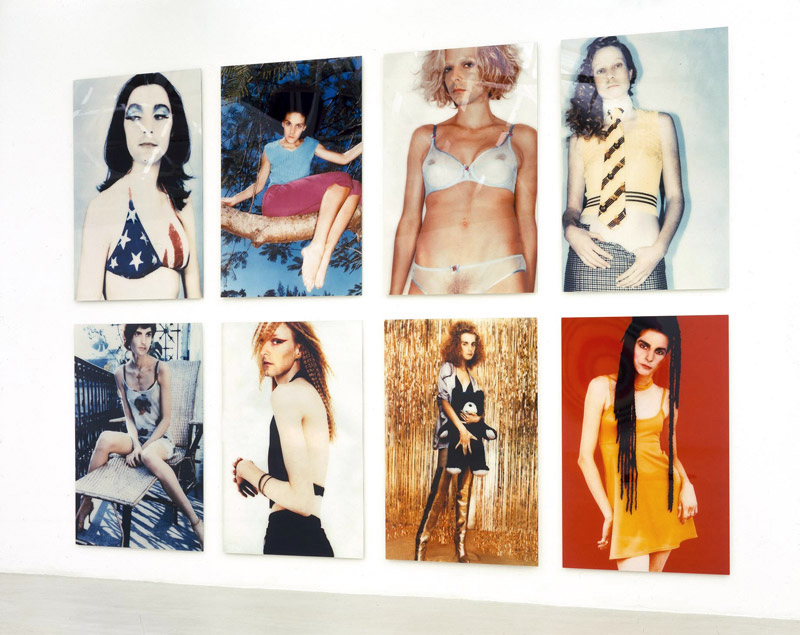


Ugo Rondinone (Switzerland, b. 1962) 'I Don't Live Here Anymore' 1998


Ugo Rondinone (Switzerland, b. 1962)
I Don’t Live Here Anymore
1998
C-prints between Alucobond and Plexiglas
Each 180 × 125cm
Kunstmuseum Bern, purchased with the donation of an Art Lover
(From the section Masculinity as Masquerade)


Digitally manipulates photos of women depicted in various suggestive poses, replacing their features with his own in a sufficiently consistent way for the image to retain its erotic content. By slipping into different bodies, he tests his own body and appearance, and he raises the issue of reality. The artist can only offer his own, man-made version.


Lynda Benglis (American, b. 1941) 'Artforum Advertisement in: Artforum, November 1974, Vol. 13, No. 3, S. 3-4' 1974


Lynda Benglis (American, b. 1941)
Artforum Advertisement in: Artforum, November 1974, Vol. 13, No. 3, S. 3-4
1974
26.7 × 26.5 × 0.5cm
Bayerische Staatsbibliothek, München
(From the section Experiments)


Peter Land (Danish, b. 1966) 'Peter Land d. 5. maj 1994' 1994


Peter Land (Danish, b. 1966)
Peter Land d. 5. maj 1994
1994
Colour video
Time, 25 Min.
Courtesy Galleri Nicolai Wallner
(From the section Crisis and Criticism)
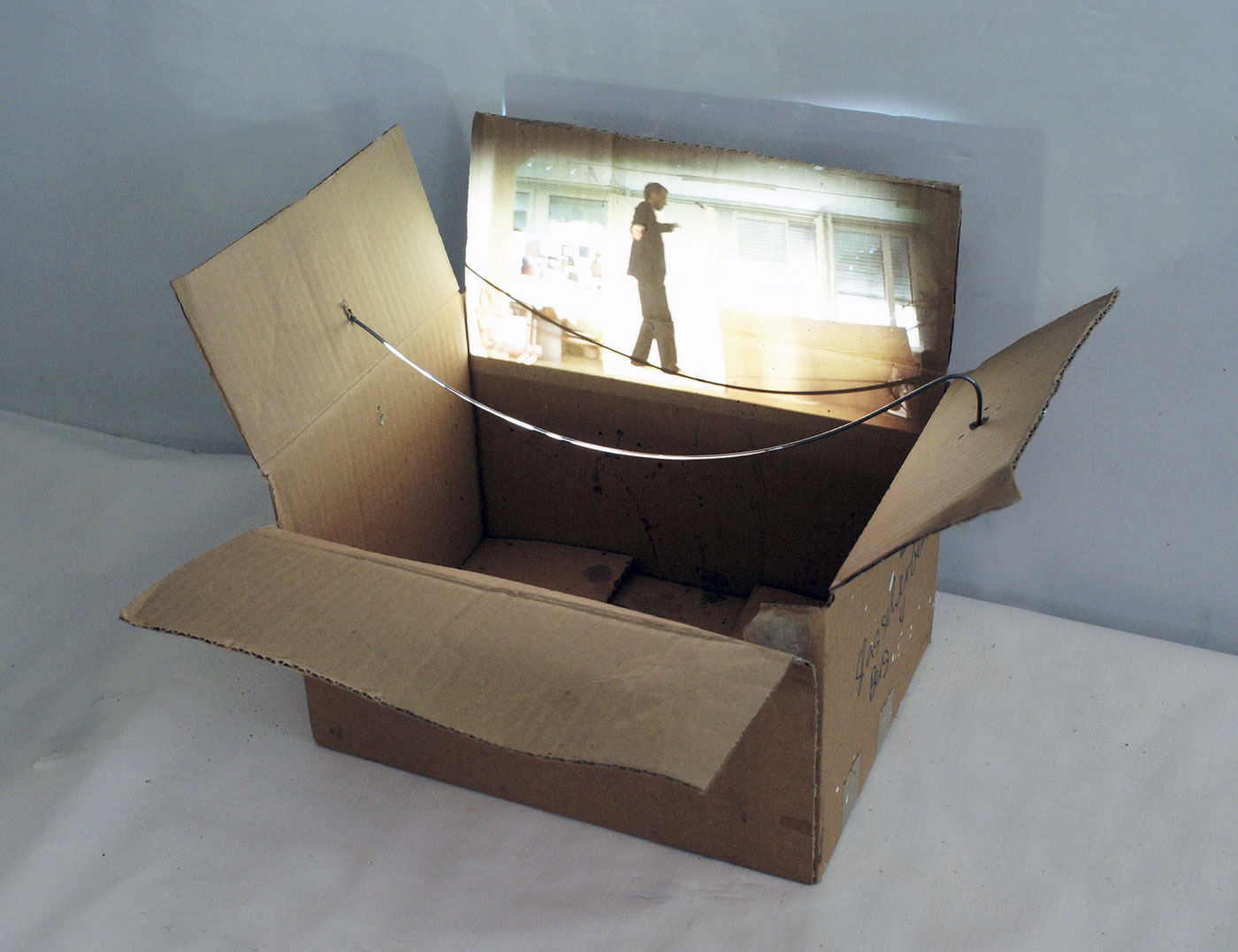
 

Ursula Palla (Switzerland, b. 1961) 'balance' 2012


Ursula Palla (Switzerland, b. 1961)
balance
2012
Colour video installation
Time, 8 Min.
Courtesy the artist
(From the section Crisis and Criticism)


Masculinity under scrutiny

This themed group exhibition is our contribution to the discussion on new role definitions of the male gender, a topic that has long been on the agenda of academia and popular culture. Works by artists of both sexes will address the issue of how contemporary art stages male role models and masculinity, critically scrutinising the content of the same.

Who or what makes a man? How do men define themselves in art since feminism; how do they reflect on their gender and the portrayal thereof? Whereas the preferred angle of engaging with female artists is still today via “gender”, this is still a novel angle for looking at male artists. And as feminist art has finally become an established entity in major institutions, it is time to take a closer look at the art produced by men about men. The Sexual Revolution as well as the feminist and gay movements did not have only one side to them: they likewise impacted the roles of men and transformed images of masculinity. The exhibition therefore explores how contemporary Western artists of both sexes have, since the 1960s, invented new notions of masculinity or shattered existing ones. It does this with some 45 installations, some of which are large and extensive.

With this exhibition, the Kunstmuseum Bern is addressing a topic that, until now, has hardly been tackled in a museum context: the “normal” white heterosexual male, hitherto the ultimate measure for everything we consider characteristically human, is now facing a crisis. The exhibition and catalogue draw on the reflections and insights gained from masculinities studies to throw light on the consequences of the contemporary male crisis and how it is reflected in art, making the extent of the crisis visually palpable.

The works selected for the show have been divided up into six sections. These sections explore what “normal” might be and what the new nuances inherent in being “male” are today. The prescribed tour of the exhibition begins with the chapter on “Strong Weaknesses” and then proceeds through the sections focusing thematically on “Experiments”, “Emotions”, “Eroticism”, “Critique and Crisis”, and “Masculinity as Masquerade”. This route follows, at the same time, a roughly chronological order. The show is accompanied by a rich fund of educational programs with tours of the exhibition, discussions of artworks with invited guests, as well as a film program in collaboration with the cinema Kino Kunstmuseum, and not least, workshops for schools.

Text from the Kunstmuseum Bern website


Tracey Moffat (Australian, b. 1960) 'Heaven' 1997 (still)

Tracey Moffat (Australian, b. 1960) 'Heaven' 1997 (still)

Tracey Moffat (Australian, b. 1960) 'Heaven' 1997 (still)


Tracey Moffat (Australian, b. 1960)
Heaven (3 stills)
1997
Colour video
Time, 28 Min.
© 2013 ProLitteris, Zürich
(From the section Eroticism)


Male to the Hilt: Images of Men

The exhibition The Weak Sex – How Art Pictures the New Male zeroes in on the evolution of male identity since the 1960s. On view are works by 40 artists regardless of gender who question masculinity and stage it anew. The Kunstmuseum Bern seeks to foster dialogue in the exhibition and is therefore increasing its focus on social media. For the first time our visitors can respond to issues raised by an exhibition immediately on location…

The whole spectrum of art media and male images

The exhibition is presenting works that cover the entire range of media used by artists, including paintings, drawings, photographs, films, videos, sculptures and performance-installations. Artists of all ages are represented in the exhibition, enabling it to highlight images of men in all age groups. Each of the artworks questions social norms, who or what a man is, while orchestrating masculinity in novel ways and reflecting on what it means to be a “man”. The artworks in the show take up the theme of masculinity or male emotions – as discussed in society in general or as openly demonstrated by men today: as weeping sport heroes, the disadvantaged position of divorced fathers, overstrained top managers or criminal youths.

Of strong weaknesses, eroticism and the male in crisis

The exhibition is divided into six sections that explore key aspects of masculinity studies and thus simultaneously follow a loose art-historical chronological thread. The introductory section takes up the theme of “Strong Weaknesses” with representations of men weeping or expressing fear. The second section “Experiments” scrutinises the exciting events that took place in conjunction with the social movements of the 1960s and 1970s. The section “Emotions” presents male emotionality in intensely stirring artistic orchestrations. The section “Eroticism” take us through a selection of artworks that investigate men as objects of desire. The last two sections of the exhibition “Crisis and Critique” and “Masculinity as Masquerade” investigate traditional male images and give us an account of the potential of new gender orientations.

Press release from the Kunstmuseum Bern website
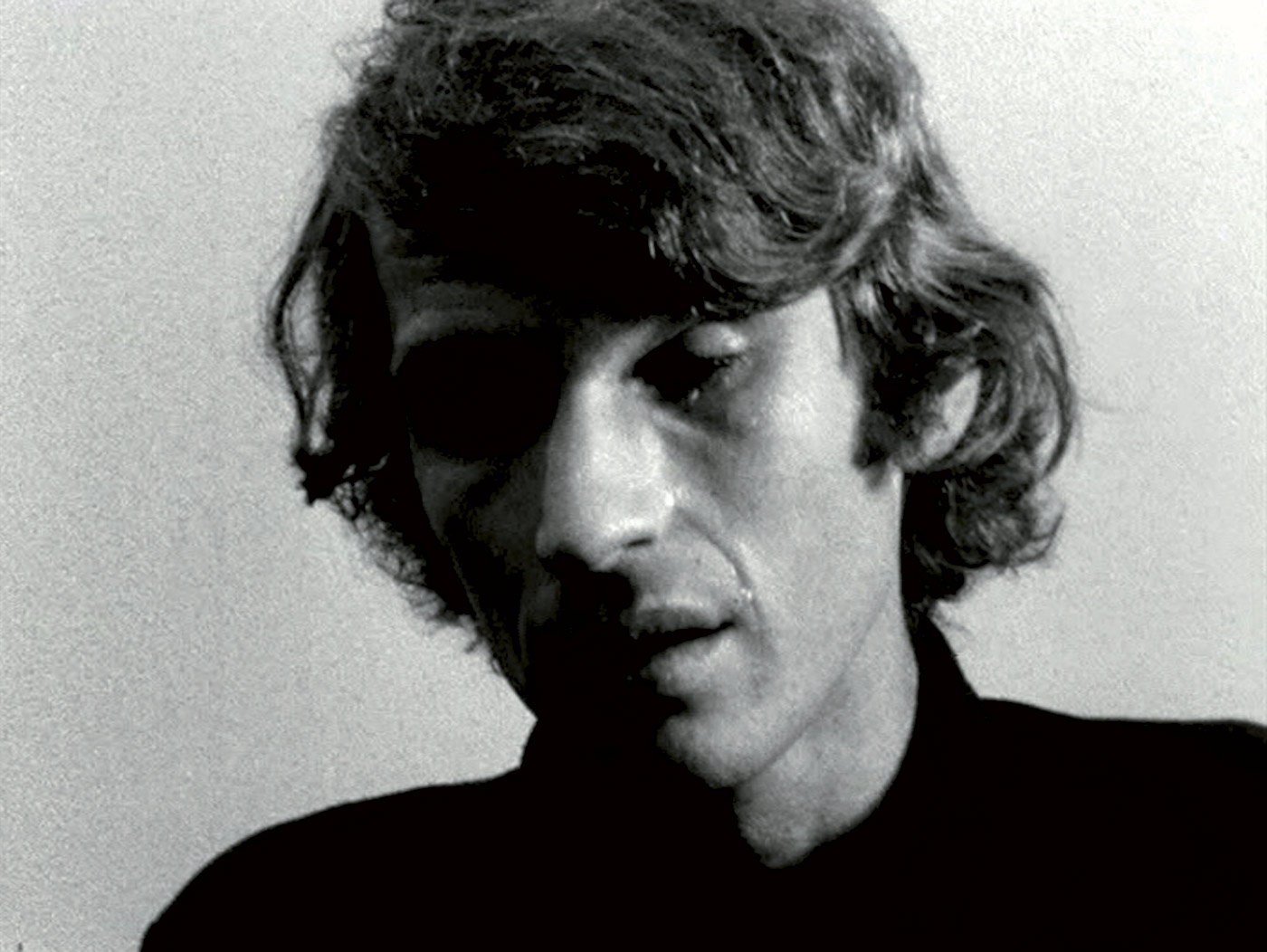
 

Bas Jan Ader (born Winschoten, Netherlands, 1942, died 1975 presumably on the high seas. Lived in California, USA, as of 1963) 'I'm Too Sad to Tell You' 1970-1971


Bas Jan Ader (born Winschoten, Netherlands, 1942, died 1975 presumably on the high seas. Lived in California, USA, as of 1963)
I’m Too Sad to Tell You
1970-1971
16mm, s/w
Time, 3:34 Min.
Museum Boijmans Van Beuningen, Rotterdam
(From the section Strong Weaknesses)


Sylvia Sleigh (born Llandudno, Wales, Great Britain, 1916; died New York, USA, 2010) 'Paul Rosano in Jacobson Chair' 1971


Sylvia Sleigh (born Llandudno, Wales, Great Britain, 1916; died New York, USA, 2010)
Paul Rosano in Jacobson Chair
1971
Oil on canvas
131 x 142cm
Courtesy The Estate of Sylvia Sleigh & Freymond-Guth Fine Arts Zürich
(From the section Eroticism)
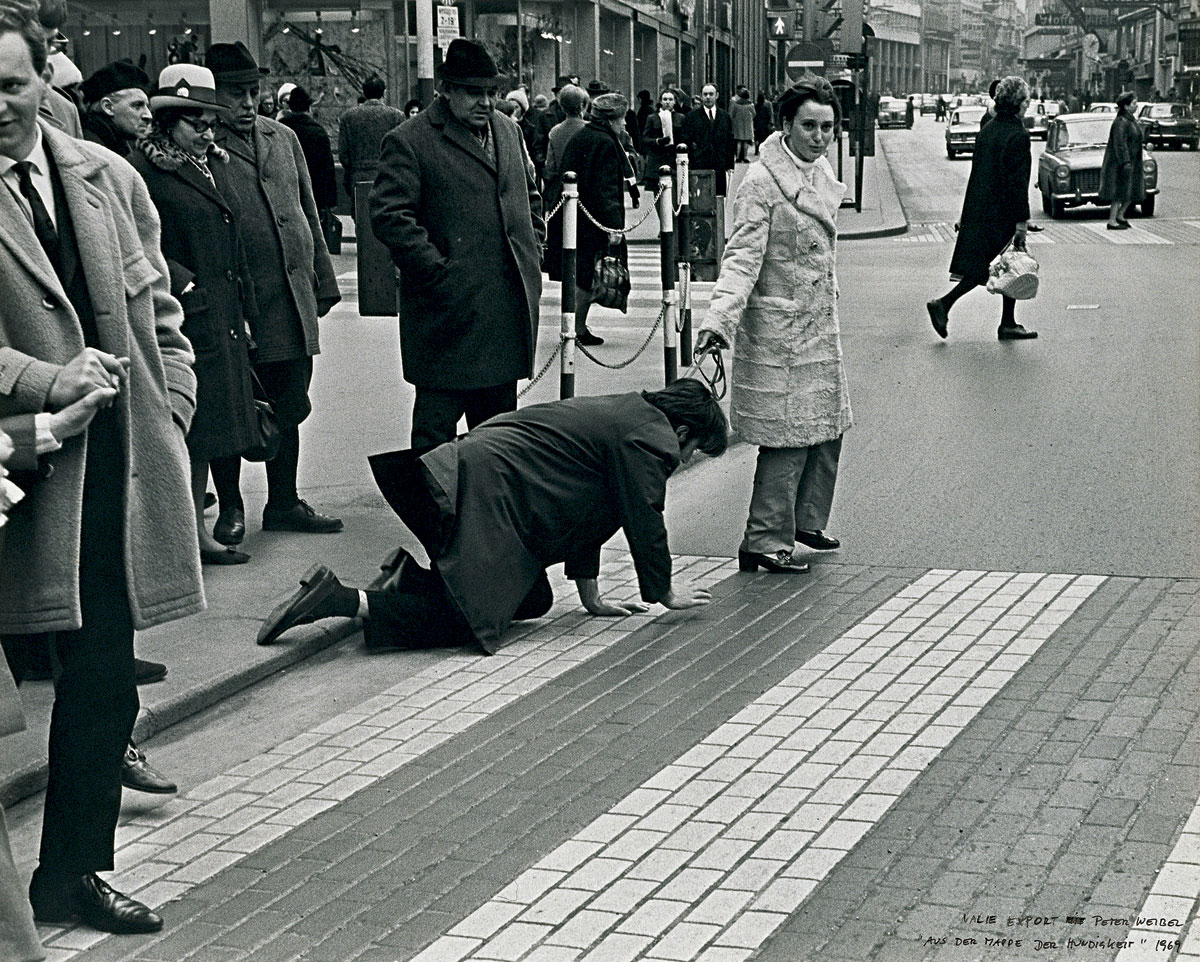
 

Peter Weibel (Austrian, 1944-2023) with VALIE EXPORT (Austrian, 1940-2026) 'Peter Weibel Aus der Mappe der Hundigkeit' (Peter Weibel From the Underdog File) 1969


Peter Weibel (Austrian, 1944-2023) with VALIE EXPORT (Austrian, 1940-2026)
Peter Weibel Aus der Mappe der Hundigkeit (Peter Weibel From the Underdog File)
1969
Documentation of the action
5 s/w photographs, 40.4 x 50cm / 50 x 40.4cm
Sammlung Generali Foundation
Vienna Foto: Josef Tandl
© Generali Foundation © 2013 ProLitteris, Zürich
(From the section Experiments)
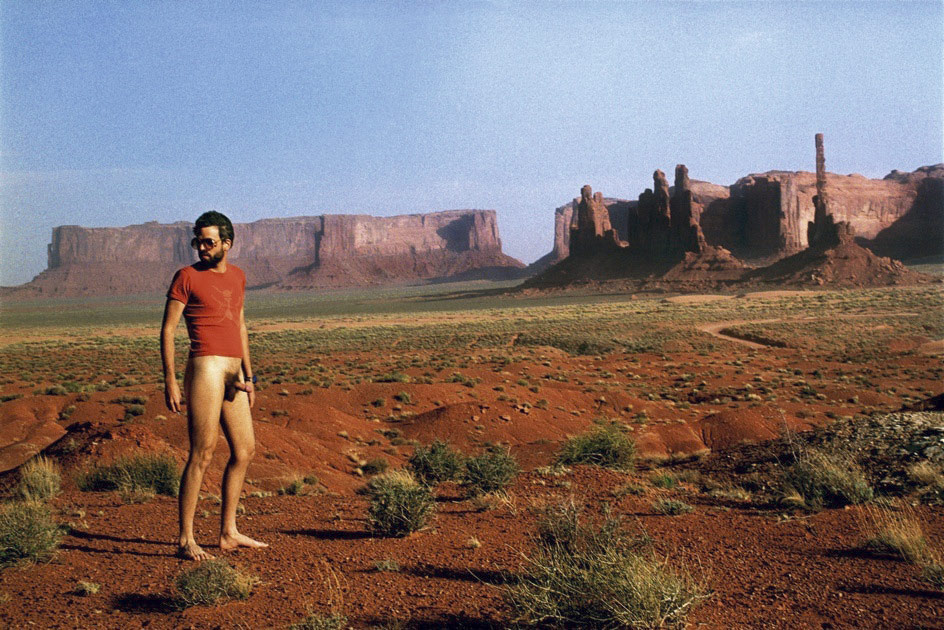
 

Gelitin. 'Ständerfotos – Nudes' (Standing Photos – Nudes) 2000


Gelitin
Ständerfotos – Nudes (Standing Photos – Nudes)
2000
Series of 15 Lambda prints
Various dimensions
(From the section Eroticism)


Gelitin. 'Ständerfotos – Nudes' (Standing Photos – Nudes) 2000


Gelitin
Ständerfotos – Nudes (Standing Photos – Nudes)
2000
Series of 15 Lambda prints
Various dimensions
(From the section Eroticism)


Austrian artists’ collective with Wolfgang Gantner, Ali Janka, Florian Reither, and Tobias Urban. Apparently became acquainted at a summer camp in 1978. Changed their name from Gelatin to Gelitin in 2005.


Those who lived through their childhood and youth as members of the baby-boomer generation in the period of the late nineteen-fifties to the mid-seventies, as we did, received a clear view of the world along the way. It was the Cold War. There were precise dividing lines, and it was possible to completely separate good and evil, right and wrong, from one other. The division of roles between men and women was regulated in a way that was just as self-evident. For many children of this time, it was natural that the father earned the money while the mother was at home around the clock and, depending on her social position, went shopping and took care of the laundry herself, or left the housework to employees in order to be able to dedicate herself to “nobler” tasks such as, for instance, beauty care. Family and social duties were clearly distributed between husband and wife: the “strong” sex was responsible for the material basics of existence and for the social identity of the family. The “weak” or also fair sex, in contrast, was responsible for the “soft” factors inside: children, housekeeping, and the beautification of the home. The year 1968 did away with bourgeois concepts of life. Feminism and emancipation anchored the equality of men and women in law. And since the nineteen-sixties, art has also dealt intensively and combatively with feminism and gender questions.

Since VALIE EXPORT walked her partner Peter Weibel on a leash like a dog in their public action that unsettled the public in 1968, legions of creators of art, primarily of the female sex, have questioned the correlations between the genders and undertaken radical reassessments. The formerly “strong” gender has thus long since become a “weak” one. Nevertheless, the exhibition The Weak Sex: How Art Pictures the New Male is not dedicated first and foremost to the battlefield of the genders. Nor is the gender question, which has so frequently been dealt with, posited in the foreground. The Weak Sex is instead dedicated to man as object of research. In what state does he find himself now that his classical role has been invalidated? How does he behave after the shift from representative external appearance to work within the family unit? And where does he stand in the meantime in the midst of so many strong women? What has become of the proud and self-assured man who once signed the school report cards with praise or reproach as head of the family? What has become of the XY species since then is presented – insightfully, sarcastically, and wittily – in the exhibition by Kathleen Bühler.

Part of the Preface to the exhibition by Matthias Frehner, Director of the Kunstmuseum Bern and Klaus Vogel, Director of the Deutsches Hygiene-Museum Dresden
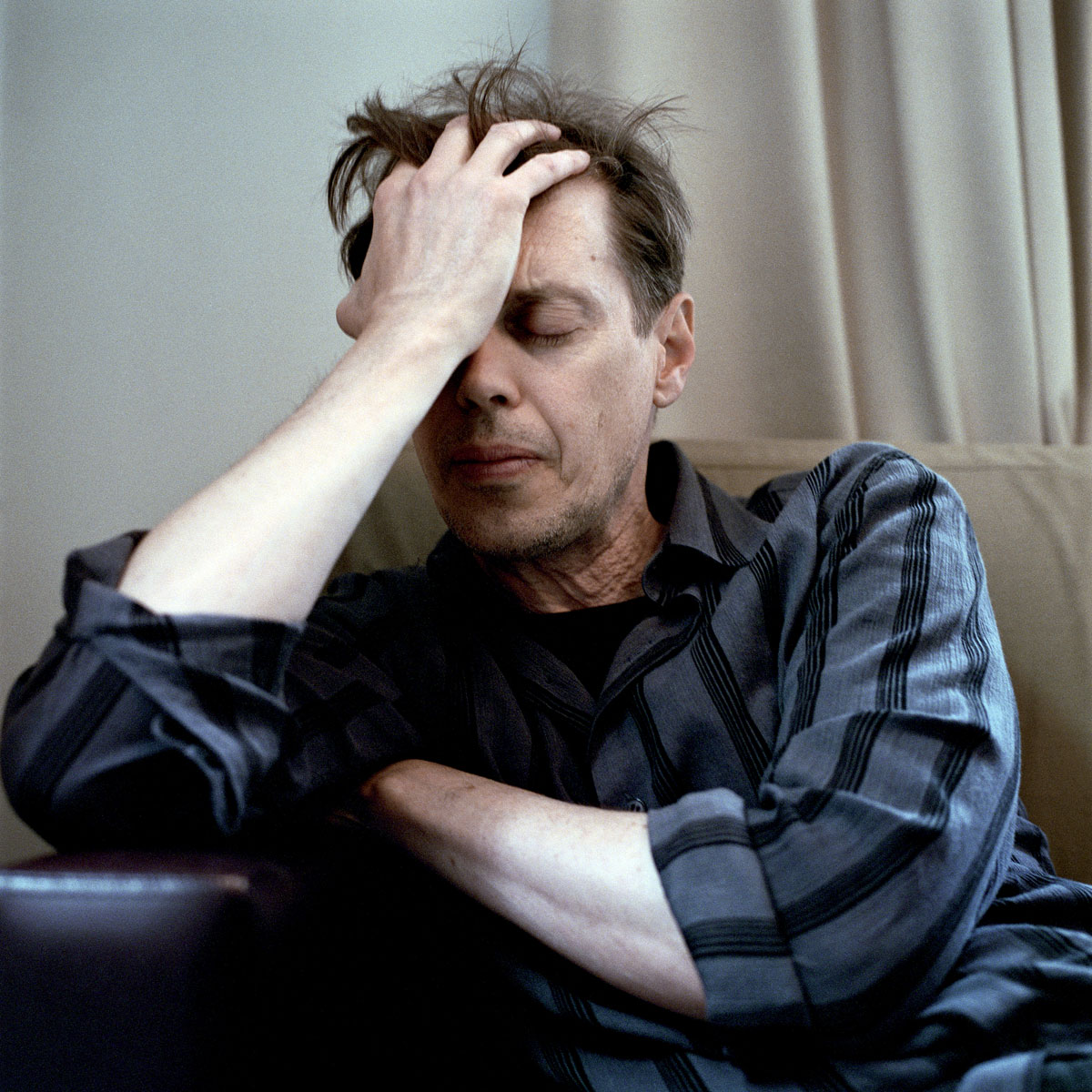
 

Sam Taylor-Johnson (British, b. 1967) 'Steve Buscemi' 2004


Sam Taylor-Johnson (British, b. 1967)
Steve Buscemi
2004
From the series: Crying Men, 2002-2004
C-Print
99.2 x 99.2cm framed
Courtesy White Cube
© Sam Taylor-Johnson
(From the section Strong Weaknesses)


Sam Taylor-Johnson (British, b. 1967) 'Gabriel Byrne' 2002


Sam Taylor-Johnson (British, b. 1967)
Gabriel Byrne
2002
From the series: Crying Men, 2002-2004
C-Print
86.2 x 86.2cm framed
Courtesy White Cube
© Sam Taylor-Johnson
(From the section Strong Weaknesses)
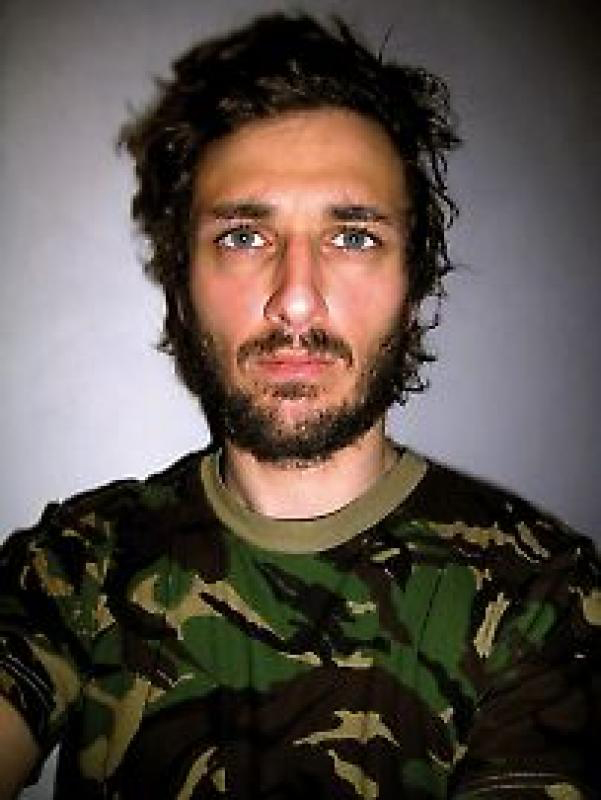
 

Costa Vece (Swiss, b. 1969) 'Me as a Revolutionary, Dictator, Guerilla, Freedom Fighter, Terrorist, Jesus Christ' 2007


Costa Vece (Swiss, b. 1969)
Me as a Revolutionary, Dictator, Guerilla, Freedom Fighter, Terrorist, Jesus Christ
2007
Ultrachrome – Digitalprint
106 × 80cm
(From the section Crisis and Criticism)


Ugo Rondinone (Swiss, b. 1962) 'I Don't Live Here Anymore' 1998


Ugo Rondinone (Swiss, b. 1962)
I Don’t Live Here Anymore
1998
C-print between Alucobond and Plexiglas
180 × 125cm
Kunstmuseum Bern, purchased with the donation of an Art Lover
(From the section Masculinity as Masquerade)


Rico Scagliola & Michael Meier (Swiss, b. 1985; Swiss, b. 1982) Nude, Leaves and Harp 2012


Rico Scagliola & Michael Meier (Swiss, b. 1985; Swiss, b. 1982)
Nude, Leaves and Harp
2012
Floor Installation, HD Digital Print on Novilux traffic, dimensions variable
Ed. 1/5


Jürgen Klauke (Germany, b. 1943) 'Rot' 1974


Jürgen Klauke (Germany, b. 1943)
Rot
1974
Series of 7 photographs
Each 40 × 30cm
Kunstmuseum Bern
(From the section Experiments)


Stronger and Weaker Sexes: Remarks on the Exhibition

Kathleen Bühler Curator Kunstmuseum Bern

In 1908, the Genevan politician and essayist William Vogt wrote the book Sexe faible (The Weak Sex), in which he examines the “natural” weaknesses and inabilities of the female gender. Intended as a “response to absurd exaggerations and feminist utopias,”1 since then the catchy title has shaped the battle of the sexes as a dictum. Like Otto Weininger’s misogynistic study Geschlecht und Charakter (Sex and Character, 1903), Sexe faible is one of the texts from the turn of the previous century that justified the legal, political, and social subordination of women based on their anatomical and, according to the opinion of the author, thus also intellectual inferiority in comparison with men.2 The perception of women as the “weak sex” persisted tenaciously. It is first in recent years that this ascription has slowly been shifted to men, as for instance in the report by neurobiologist Gerald Huther called Das schwache Geschlecht und sein Gehirn (The Weak Sex and His Brain) published in 2009.

Polemics has long since yielded to statistics, and the most recent biological discoveries are gaining currency, such as the fact that male babies are already at risk in the womb because they lack a second X chromosome.3 This genetic “weakness” would apparently lead seamlessly to a social weakness, since males more frequently have problems in school, turn criminal, and die earlier.4 In addition to the findings on biologically based weaknesses also comes the social, economic, and political challenge, which has for some years been discussed as a “crisis of masculinity.” With this metaphor, “an attempt is made to apprehend all the changes that contribute to the fact that the dominance of the male gender, which was formerly consolidated to a large extent, … has lost the obviousness of being self-evident.”5 Nothing therefore demonstrates the transience of gender stereotypes more clearly, and one might rightly ask whether the earlier “weaknesses” might long since have come to be considered new “strengths.” The exhibition at the Kunstmuseum Bern takes up the thread that was already spun by the small but noteworthy exhibition in Switzerland Helden Heute (Heroes Today) in 2005.6 At that time, the focus was put on hero images in contemporary art and on society’s current need for strong men in art and politics.7 The current exhibition in Bern, in contrast, argues quite differently that specifically images of “weak” men best represent the social and cultural liberation movements of the twentieth and twenty-first centuries. The fact that men today are allowed to express their feelings publicly, as is shown for instance by the example of the exceptional Swiss athlete Roger Federer, or that they are staged by female artists as object of desire and no longer as subject of desire is a crucial innovation in the visualisation of gender identities. After various exhibitions in recent years were dedicated to gender relations, gender imprinting, or the social latitude in performative stagings of gender,8 the exhibition at the Kunstmuseum Bern focuses exclusively on men in contemporary art for the first time.9 It brings together the points of view of male and female artists who deal either with their own experiences with men and / or being a man, or with an examination of the images of men that are available. This exhibition has been long overdue.

Nonetheless, what first needs to be overcome is the perception that “gender” themes are a woman’s matter and that only marginalised positions have addressed their social gender. Hegemonic male types – thus men who, according to general opinion, embody the dominant masculine ideal most convincingly – have only been reflected in public through media for a relatively short time, even though the male gender is also a sociocultural construct, just like that of women, transgender, or inter-gender individuals.10 What comes to be expressed here is the invisibility of norms. As is generally known, it is those social groups that hold the most power that actually expose their own status the least. In Western cultural tradition, these are physically sound, white heterosexual men.11 They remain the norm unchallenged as a “blind spot” without their position of power and their power to make decisions ever becoming a focus. The masculine-heterosexual dominance succeeds in “remaining out of the question itself,” as the art historian Irit Rogoff has criticised, by subordinating all representations of the “other” to their own norm, including women, individuals with a different sexual orientation, and non-whites.12

The fact that male bodies are becoming visible today in the most unexpected places is demonstrated in a striking way by the work Nude, Leaves and Harp (2012) by Rico Scagliola and Michael Meier, which graces the entrance area to the exhibition in Bern. The artist duo incorporated detailed images of their naked, sculpted bodies into a palm and marble decor on the floor. The path to the exhibition literally leads over their nakedness. Two exhibitions in Austria were also recently dedicated to this new presence of the naked man,13 with numerous works documenting “the deconstruction of hegemonic models of masculinity – the look of desire at the male body as well as body cult and exploitation,” which is also a focus of the exhibition in Bern.14 However, while those responsible in Linz and Vienna assumed a distanced, art-historical perspective by taking an iconographic approach based on the selection of motifs or a chronological approach according to epoch, the exhibition in Bern favours a different perspective. It focuses on representations of masculinity in art since the nineteen-sixties while simultaneously taking the historical conditions of being a man into consideration by utilising central issues in masculinity research as a guide. What thus results is a logical division of the exhibition and this publication into six chapters.

The introductory chapter “Strong Weaknesses” revolves around the change in gender virtues and considers this based on the example of the weeping and fearful man. The chapter “Experiments” presents eccentric artistic stagings and socio-critical actions that were influenced by the sexual revolution. The chapter “Emotions” highlights the point in time at which men themselves increasingly cast aside the image of the successful and unflinching hero and explore men’s emotionality through doing so. The chapter “Eroticism” describes the change in gaze and position from the male subject to object of desire. The final two chapters “Crisis and Criticism” and “Masculinity as Masquerade,” in contrast, are dedicated to a younger generation of artists who deal out criticism of their “fathers” and also discover the arsenal of gender stagings and their utopian potential anew.


Footnotes

1/ Une riposte aux exagérations, aux absurdités et aux utopies du féminisme is the subtitle.

2/ Otto Weininger, Geschlecht und Charakter, 19th ed. (Leipzig and Vienna, 1920), p. 390. Both Weininger’s book and Vogt’s pamphlet, which saw signs of cultural decay in the women’s movement, are considered to be expressions of a growing antifeminism. The often-used term “weak sex” then also provided the title of a theatre piece by Edouard Bourdet in 1929, which was even filmed in 1933.

3/ “Männer – Das schwache Geschlecht und sein Gehirn: Peter Schipek im Gespräch mit Prof. Dr. Gerald Hüther,” p. 2 (accessed July 2013) No long available online.

4/ Carmen Sadowski, “Der Mann: das schwache Geschlecht,” Express.de, (accessed July 14, 2013) No longer available online.

5/ Michael Meuser and Sylka Scholz, “Krise oder Strukturwandel hegemonialer Männlichkeit?,” in In der Krise? Männlichkeiten im 21. Jahrhundert, ed. Mechthild Bereswill and Anke Neuber (Münster, 2011), p. 56. See also the text by Michael Meuser in this book.

6/ Helden Heute: Das Heldenbild in der zeitgenössischen Kunst, Centre Pasquart, Biel, 2005.

7/ Sociologists interpret this as a sign of need in times of social upheaval. See Dolores Denaro, in Helden Heute: Das Heldenbild in der zeitgenössischen Kunst, ed. Dolores Denaro, exh. cat. Centre Pasquart (Biel, 2005), p. 20.

8/ Oh boy! It’s a Girl, Kunstverein München, 1994; Féminin – Masculin, Centre Georges Pompidou, Paris, 1995; Rosa für Jungs: Hellblau für Mädchen, Neue Gesellschaft für Bildende Kunst, Berlin, 1999; Das achte Feld, Museum Ludwig, Cologne, 2006; to name but a few.

9/ To date, this has occurred only in smaller exhibition spaces, above all during the nineteen-eighties and nineties, and has remained practically undocumented. An exception in this respect was the exhibition Women’s Images of Men (1984) at the Institute of Contemporary Art, London, organised by Joyce Agee, Catherine Elwes, Jacqueline Morreau, and Pat Whiteread.

10/ Inge Stephan, “Im toten Winkel: Die Neuentdeckung des ‘ersten Geschlechts’ durch men’s studies und Männlichkeitsforschung,” in Männlichkeit als Maskerade: Kulturelle Inszenierungen vom Mittelalter bis zur Gegenwart, ed. Claudia Benthien and Inge Stephan (Cologne et al., 2003), p. 13.

11/ Richard Dyer, “Introduction,” in The Matter of Images: Essays on Representation, ed. Richard Dyer (London and New York, 1993), p. 4.

12/ Irit Rogoff, “Er selbst: Konfigurationen von Männlichkeit und Autorität in der Deutschen Moderne,” in Blick-Wechsel: Konstruktionen von Männlichkeit und Weiblichkeit in Kunst und Kunstge-schichte, ed. Ines Lindner et al. (Berlin, 1989), p. 141.

13/ Nude Men, Leopold Museum, Vienna, 2012-2013; The Naked Man, Lentos Museum, Linz, 2012-2013.

14/ Barnabàs Bencsik and Stella Rollig, “Vorwort,” in Der nackte Mann: Texte, exh. cat. Lentos Kun-stmuseum Linz and Ludwig Museum – Museum of Contemporary Art (Budapest, 2012), p. 7.


Urs Lüthi (Swiss, b. 1947) 'Lüthi weint auch für Sie' (Lüthi also cries for you) 1970


Urs Lüthi (Swiss, b. 1947)
Lüthi weint auch für Sie (Lüthi also cries for you)
1970
Offset printing on paper
85.5 x 58.6cm
Ed. 15/100
Kunstmuseum Bern Sammlung Toni Gerber (Schenkung 1983)
© Urs Lüthi
(From the section Experiments)


Luciano Castelli (Swiss, b. 1951) 'Lucille, Straps Attractive' 1973


Luciano Castelli (Swiss, b. 1951)
Lucille, Straps Attractive
1973
Collage on cardboard
100 x 70cm
Kunstmuseum St. Gallen
© 2013 ProLitteris, Zürich
(From the section Experiments)
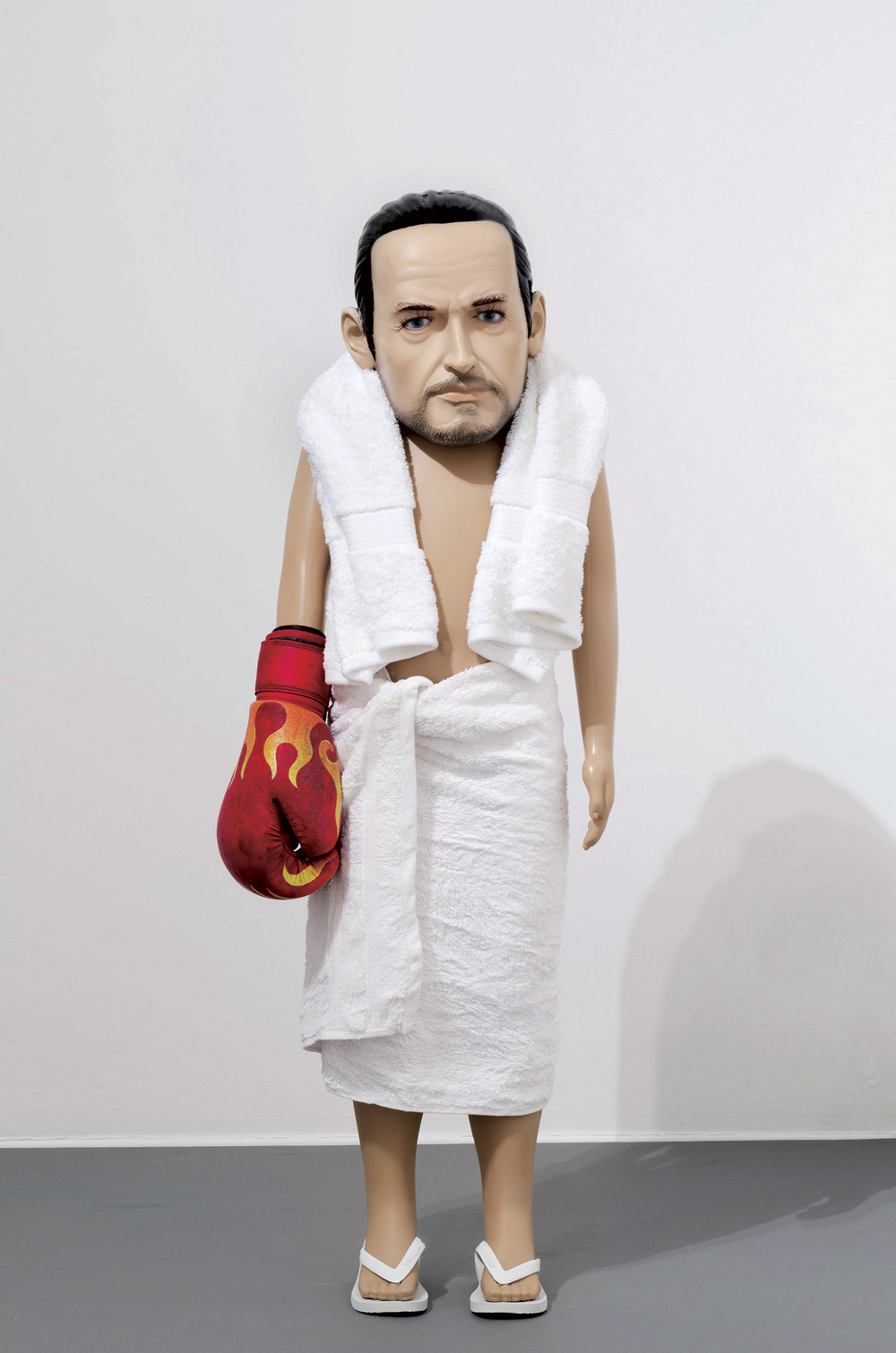
 

littlewhitehead (Craig Little, born Glasgow (UK), 1980. Blake Whitehead, born Lanark (UK), 1985) 'The Overman' 2012


littlewhitehead (Craig Little, born Glasgow (UK), 1980. Blake Whitehead, born Lanark (UK), 1985)
The Overman
2012
Mannequin, towels, Boxing Glove, wooden base
120 x 120 x 120cm
Saatchi Collection, London Courtesy of the artist/Sumarria Lunn Gallery/Saatchi Collection
(From the section Crisis and Criticism)
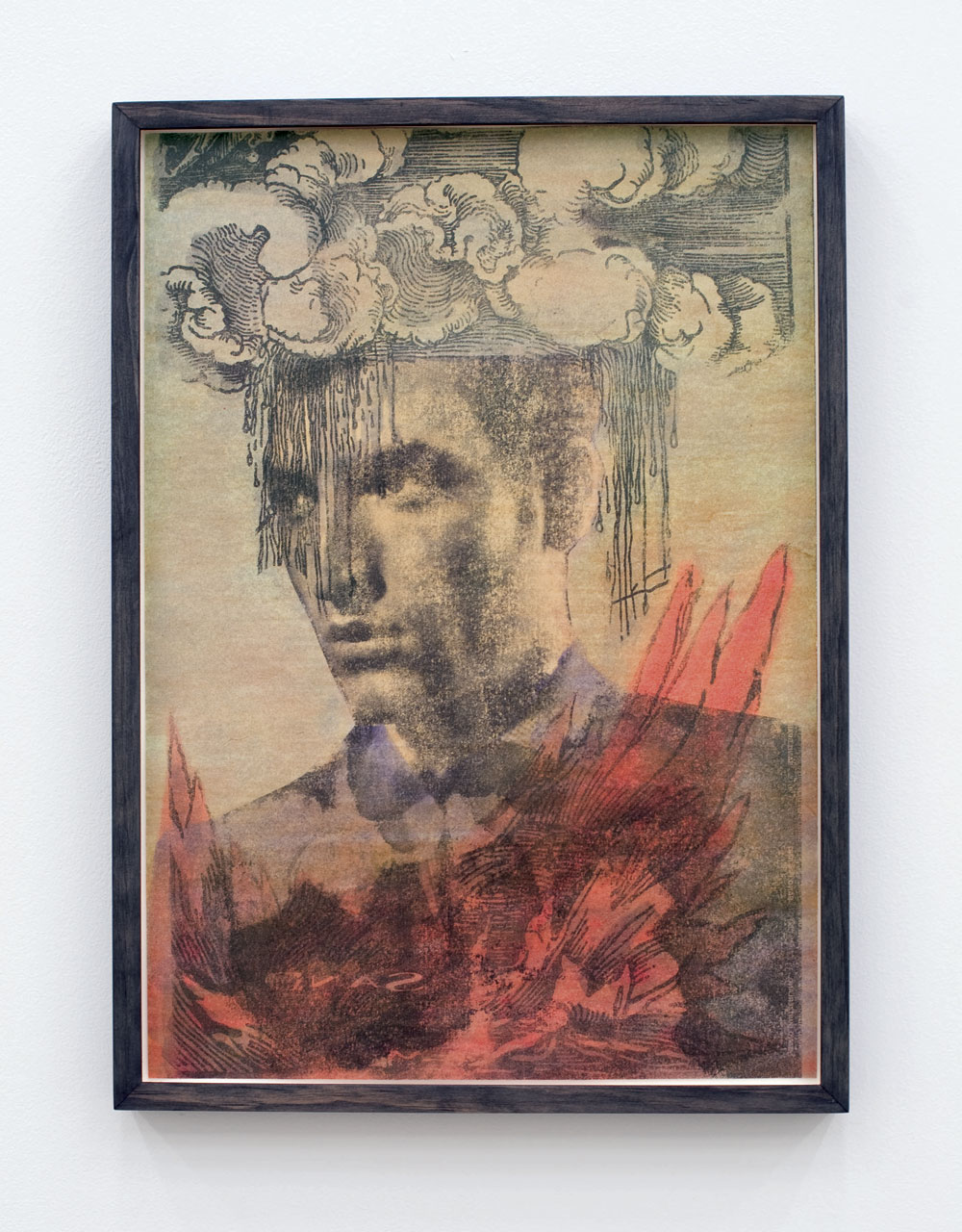
 

Pascal Häusermann (Swiss, b. 1973) 'Megalomania, No. 8' 2009


Pascal Häusermann (Swiss, b. 1973)
Megalomania, No. 8
2009
Monotype, oil paint, shellac
43 x 29cm
Private Collection, Courtesy the artist
(From the section Crisis and Criticism)
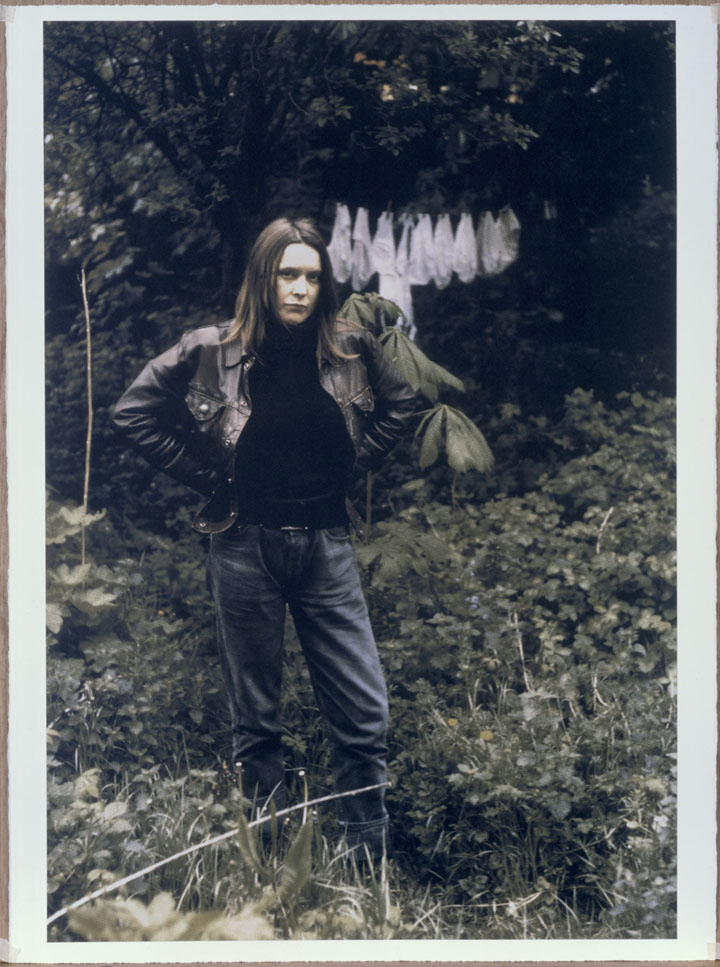
 

Sarah Lucas (British, b. 1962) 'Self Portrait with Knickers' 1999


Sarah Lucas (British, b. 1962)
Self Portrait with Knickers
1999
From Self Portraits 1990-1999
1999
Iris print on watercolour paper
80 x 60cm
© Sarah Lucas, courtesy Sadie Coles HQ, London
(From the section Masculinity as Masquerade)
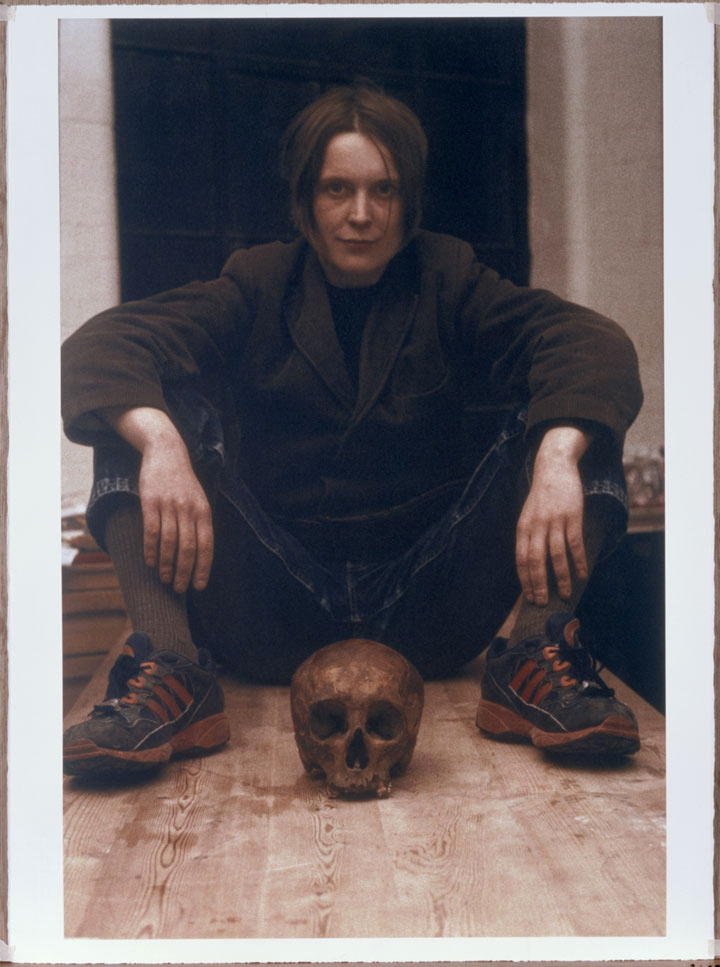
 

Sarah Lucas (British, b. 1962) 'Self Portrait With Skull' 1996


Sarah Lucas (British, b. 1962)
Self Portrait With Skull
1996
From Self Portraits 1990-1999
1999
Iris print on watercolour paper
80 x 60cm
© Sarah Lucas, courtesy Sadie Coles HQ, London
(From the section Masculinity as Masquerade)
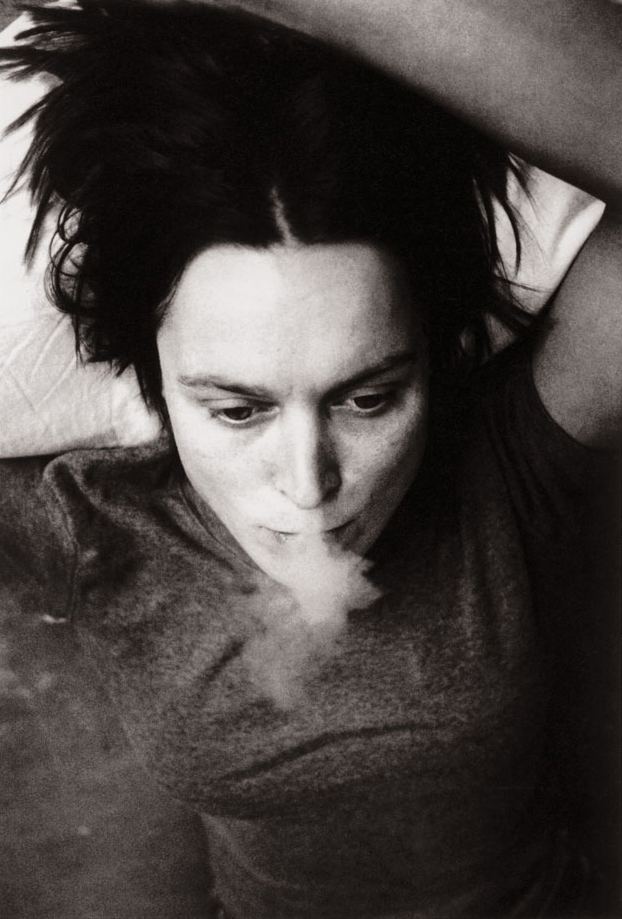
 

Sarah Lucas (British, b. 1962) 'Smoking' 1998


Sarah Lucas (British, b. 1962)
Smoking
1998
From Self Portraits 1990-1999
1999
Iris print on watercolour paper
80 x 60cm
© Sarah Lucas, courtesy Sadie Coles HQ, London
(From the section Masculinity as Masquerade)


Silvie Zürcher (Swiss, b. 1977) 'Blue Shorts' 2005-2006


Silvie Zürcher (Swiss, b. 1977)
Blue Shorts
2005-2006
From the series I Wanna Be a Son
Collage
31.5 x 24.4cm
Courtesy Silvie Zürcher
(From the section Masculinity as Masquerade)


Kunstmuseum Bern
Hodlerstrasse 12
3000 Bern 7
Phone: +41 31 328 09 44
Email: info@kunstmuseumbern.ch

Opening hours:
Tuesday: 10h – 21h
Wednesday to Sunday: 10h – 17h
Mondays: closed
Kunstmuseum Bern website

LIKE ART BLART ON FACEBOOK

Back to top

Exhibition: ‘Golden Years / Rob Hornstra’s Russia (and Oleg Klimov and Olga Chernysheva and Sarkis and Willie Doherty)’ at Huis Marseille – Museum for Photography, Amsterdam

Exhibition dates: 14th December, 2013 – 9th March, 2014

Curator: The museum


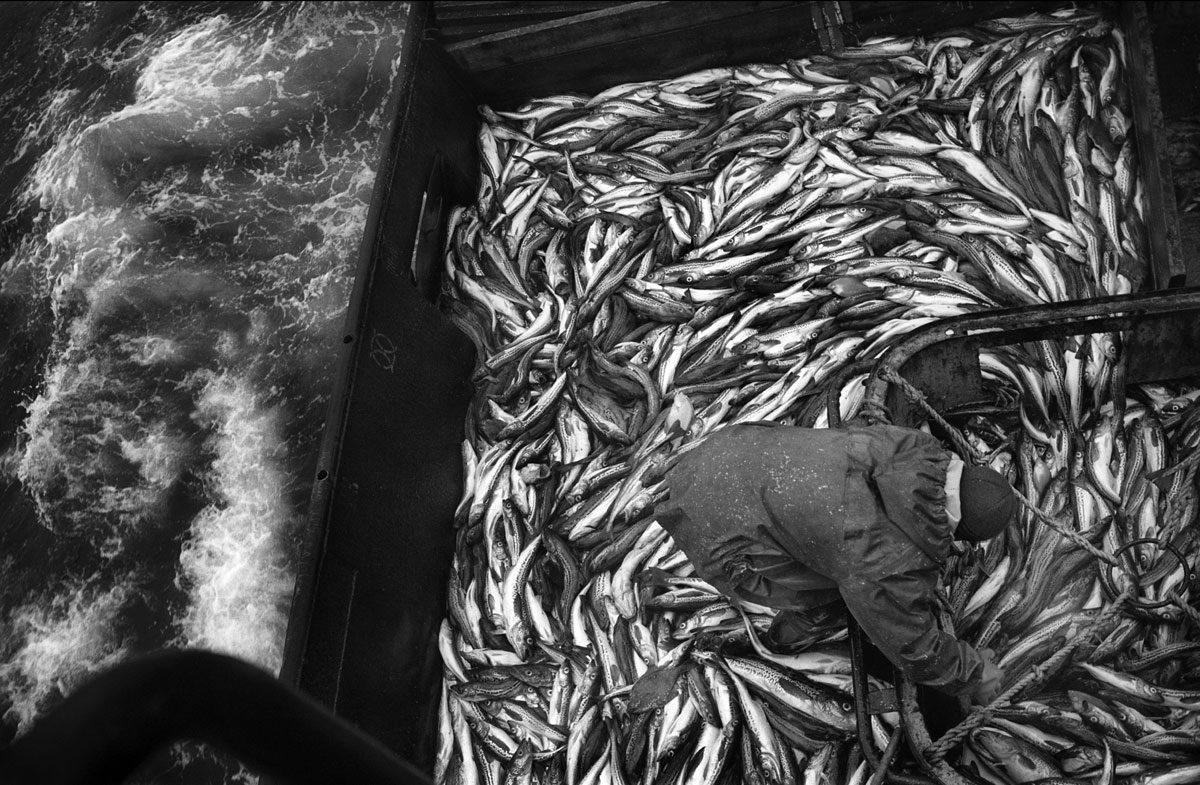
Oleg Klimov (Russian, b. 1964) 'Visser sorteert de vangst in het ruim. Ochotka Zee / Kamtsjatka' (Fisherman sorting the catch in the hold. Ochotka Sea / Kamchatka) Augustus 2007 from the exhibition 'Golden Years / Rob Hornstra's Russia (and Oleg Klimov and Olga Chernysheva and Sarkis and Willie Doherty)' at Huis Marseille – Museum for Photography, Amsterdam, December 2013 - March 2014


Oleg Klimov (Russian, b. 1964)
Visser sorteert de vangst in het ruim. Ochotka Zee / Kamtsjatka (Fisherman sorting the catch in the hold. Ochotka Sea / Kamchatka)
Augustus 2007
© Oleg Klimov


A very strange conglomeration of artists in this exhibition. Individually some interesting work, but not sure what the rationale was of putting them together…

Dr Marcus Bunyan


Many thankx to Huis Marseille – Museum for Photography for allowing me to publish the photographs in the posting. Please click on the photographs for a larger version of the image.


Oleg Klimov (Russian, b. 1964) 'Bootsman neemt douche op het dek van het vrachtschip 'Anatoli Tortsjinov'. Russische Verre Oosten / Stille Oceaan' (Boatswain takes shower on the deck of the freighter 'Anatoli Tortsjinov. Russian Far East / Pacific) July 2007


Oleg Klimov (Russian, b. 1964)
Bootsman neemt douche op het dek van het vrachtschip ‘Anatoli Tortsjinov’. Russische Verre Oosten / Stille Oceaan
(Boatswain takes shower on the deck of the freighter ‘Anatoli Tortsjinov. Russian Far East / Pacific)
July 2007
© Oleg Klimov


Oleg Klimov (Russian, b. 1964) 'Illegale krabvangst in de Ochtoka Zee / Kamtsjatka' (Illegal crab catch in the Ochtoka Sea / Kamchatka) Augustus 2007


Oleg Klimov (Russian, b. 1964)
Illegale krabvangst in de Ochtoka Zee / Kamtsjatka (Illegal crab catch in the Ochtoka Sea / Kamchatka)
Augustus 2007
© Oleg Klimov


Oleg Klimov: Along the shores of Russia

After years of reporting on the Caucasus, Central Asia and other hotbeds of unrest in the former Soviet Union, the Russian photographer Oleg Klimov went in search of the country’s ancient, but still unsettled relationship with water. In terms of land area, Russia remains the largest country in the world. Rivers and canals have been the most efficient transport routes since time immemorial, not only for traders and soldiers who had to traverse the country, but also for those whom tsars and, later, party leaders wanted to see exiled to its furthest reaches. Russians always sought ice-free harbours and seas from which to spread their wings still further. Nevertheless, having found open water they seldom crossed it, preferring to regard the coasts and shores as the fringes of their enormous realm. In recent years Klimov travelled by boat, or in his own yacht, along Russian waterways and seas. He visited the historic Gulag of the Siberian north, the fishermen of Kamchatka, the Pacific Ocean in the far east, the first Stalinist forced-labour camps below the White Sea, and settlements and military bases along the Volga. Klimov photographed playing children, burly fishermen, and those ‘typically Russian’ figures lying at the water’s edge that he says ‘are the epitome of unguardedness and openness – some of them are just drunk, though’.

Oleg Klimov (Tomsk/ Siberia, 1964) studied astrophysics at the University of Kazan but worked from 1991 onwards as a war photographer, including for the NRC Handelsblad. In 2004 Huis Marseille exhibited Oleg Klimov’s Legacy of an Empire. In December 2013, IKON TV will broadcast Letters to myself, a documentary by the Dutch/Russian film-maker Maja Novikova about Oleg Klimov’s life as a former war photographer.


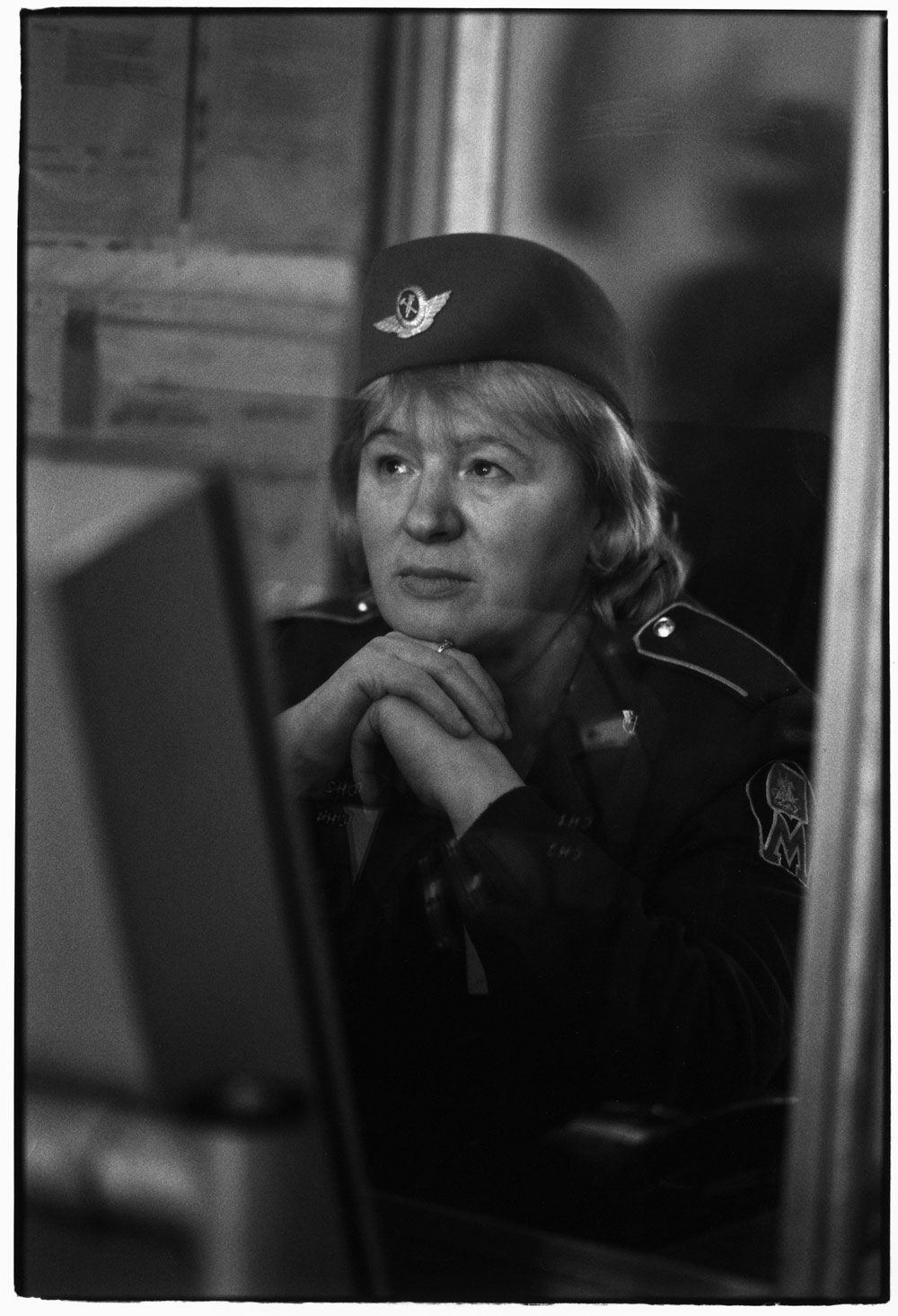
Olga Chernysheva (Russian, b. 1962) 'On duty' 2007


Olga Chernysheva (Russian, b. 1962)
On duty
2007
Courtesy of DIEHL Berlin


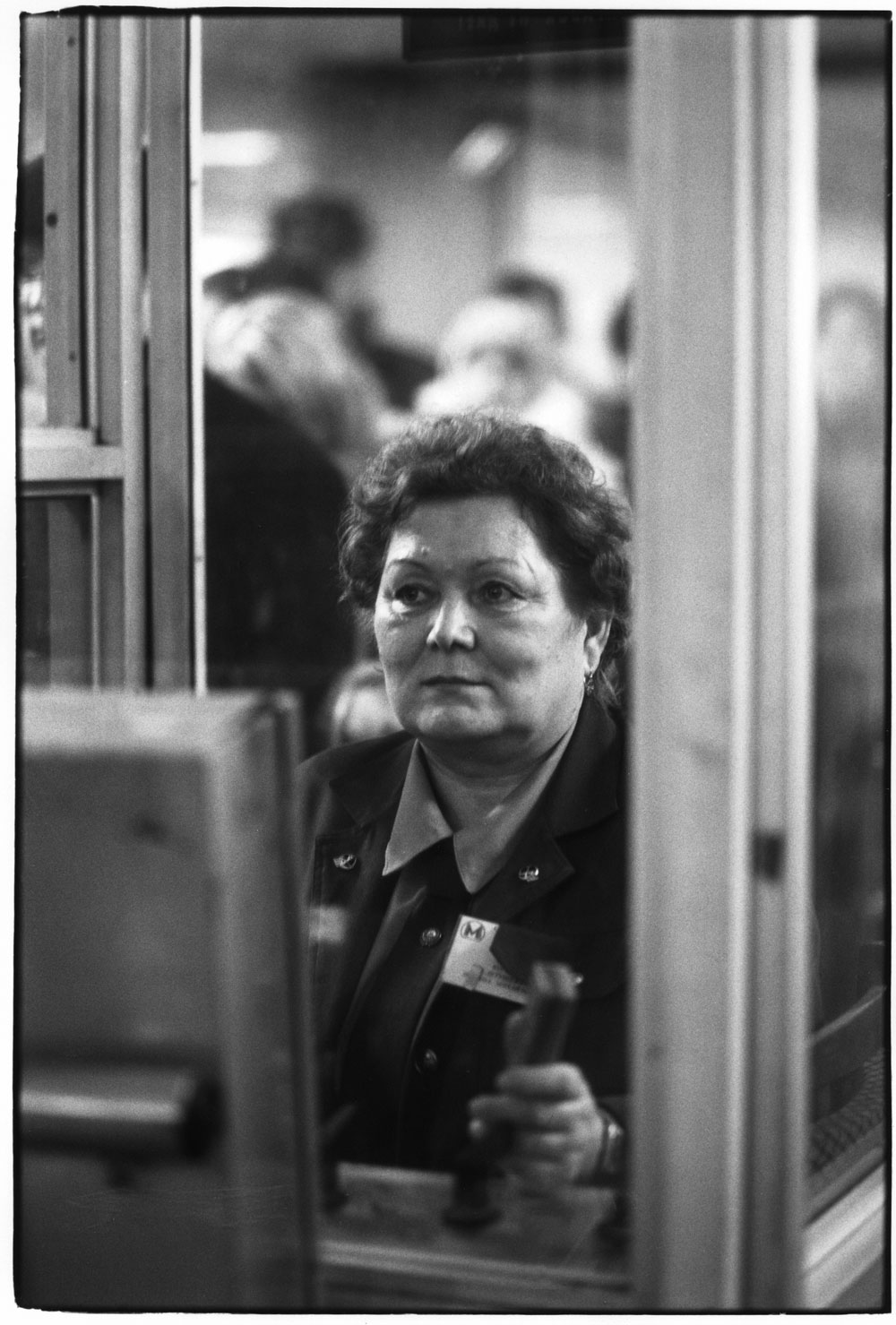
Olga Chernysheva (Russian, b. 1962) 'On duty' 2007


Olga Chernysheva (Russian, b. 1962)
On duty
2007
Courtesy of DIEHL Berlin


Olga Chernysheva (Russian, b. 1962) 'On duty' 2007


Olga Chernysheva (Russian, b. 1962)
On duty
2007
Courtesy of DIEHL Berlin


Olga Chernysheva: Windows and On Duty

With her gift for delicate, empathic observation Olga Chernysheva reveals art in the everyday. Her subjects are simple and unspectacular; they concern ordinary people and objects, and are devoid of any satirical or cynical commentary. Chernysheva’s work represents a new kind of realism. On Duty (2007) is a series of portraits of Moscow subway attendants, people who are ‘seen but not noticed’. It is their blank expressions – directed inward and sometimes upward – which particularly fascinated the artist. The video installation Windows (2007) – sixteen glimpses of interiors through the windows of Russian houses – is shown on iPads. Chernysheva examines the relationship between objects and figures, particularly in the ways people enter uneasy relationships with the spaces they occupy. For her, art is “a little office that conducts research into the poetic truth of life.”

Olga Chernysheva (Moscow, 1962) studied at the Gerassimov Institute for Cinematography in Moscow from 1981 to 1986 and at the Rijksakademie van beeldende kunsten in Amsterdam from 1995 to 1996. In 2013 she was given a solo exhibition, Compossibilities, at the Kunsthalle Erfurt.


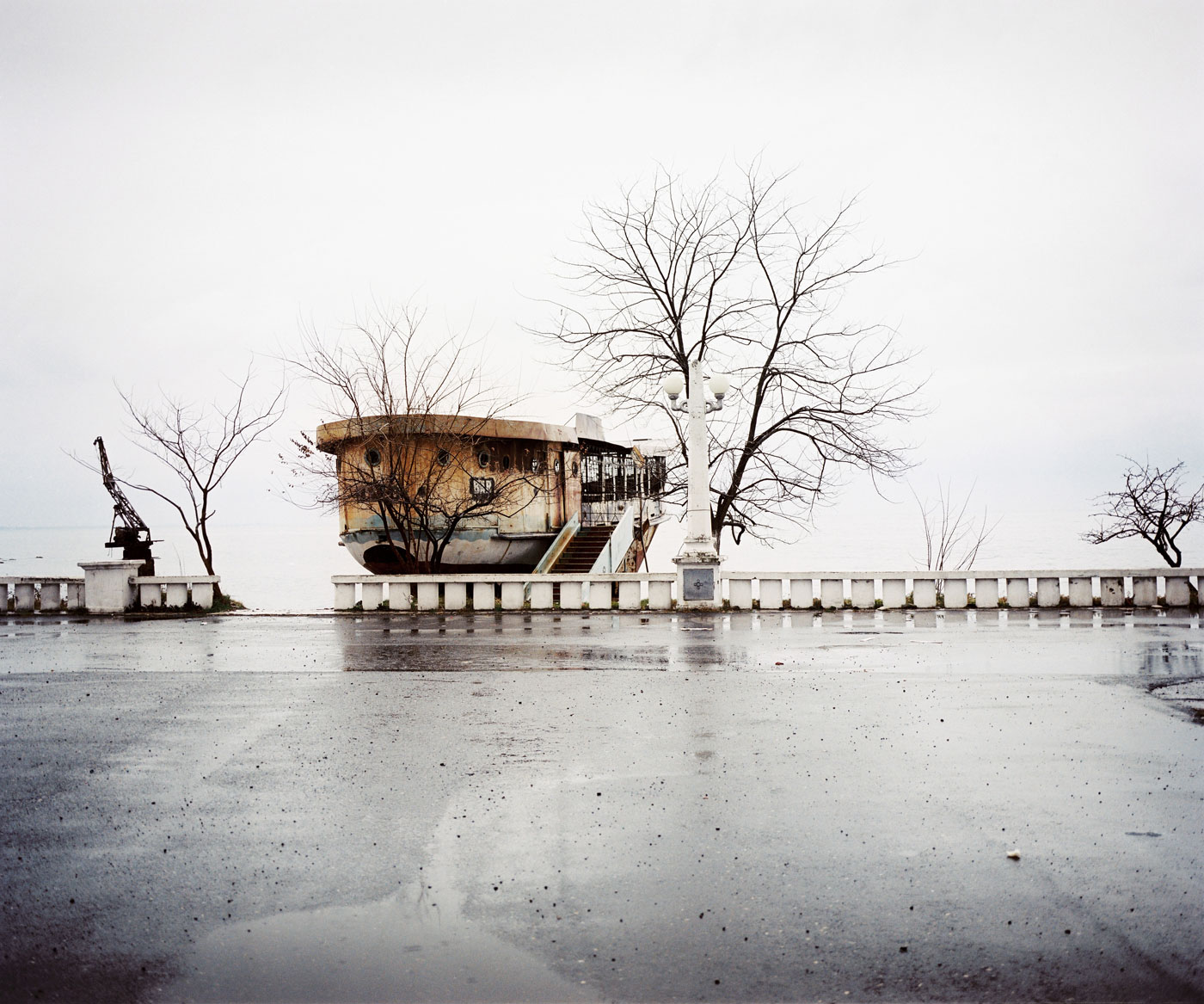
Rob Hornstra (Dutch, b. 1975) 'Sukhumi, Abkhazia' 2007


Rob Hornstra (Dutch, b. 1975)
Sukhumi, Abkhazia
2007
© Rob Hornstra / Flatland Gallery


Former restaurant at the Black Sea coast in the centre of Sukhumi, capitol of Abkhazia. The restaurant was destroyed during the Georgian-Abkhazian conflict in 1992-1993.


Rob Hornstra (Dutch, b. 1975) 'Beslan, North Ossetia, Russia' 2011


Rob Hornstra (Dutch, b. 1975)
Beslan, North Ossetia, Russia
2011
© Rob Hornstra / Flatland Gallery


The school hostage crisis in Beslan (North Ossetia) in 2004 caused 334 deaths, including 186 children. An unwashed shirt smeared with blood has been kept as a last physical memory to one of the children.


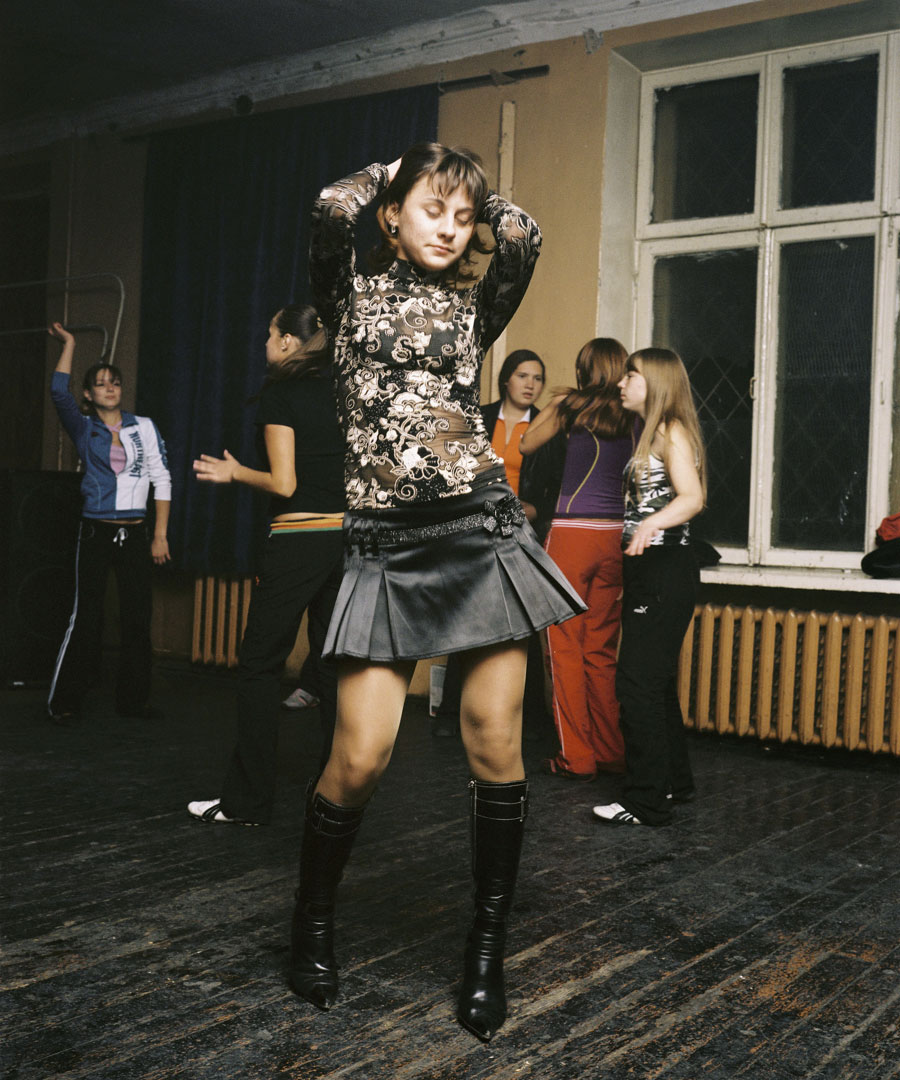
Rob Hornstra (Dutch, b. 1975) 'Angarsk, Russia' 2007


Rob Hornstra (Dutch, b. 1975)
Angarsk, Russia
2007
© Rob Hornstra / Flatland Gallery


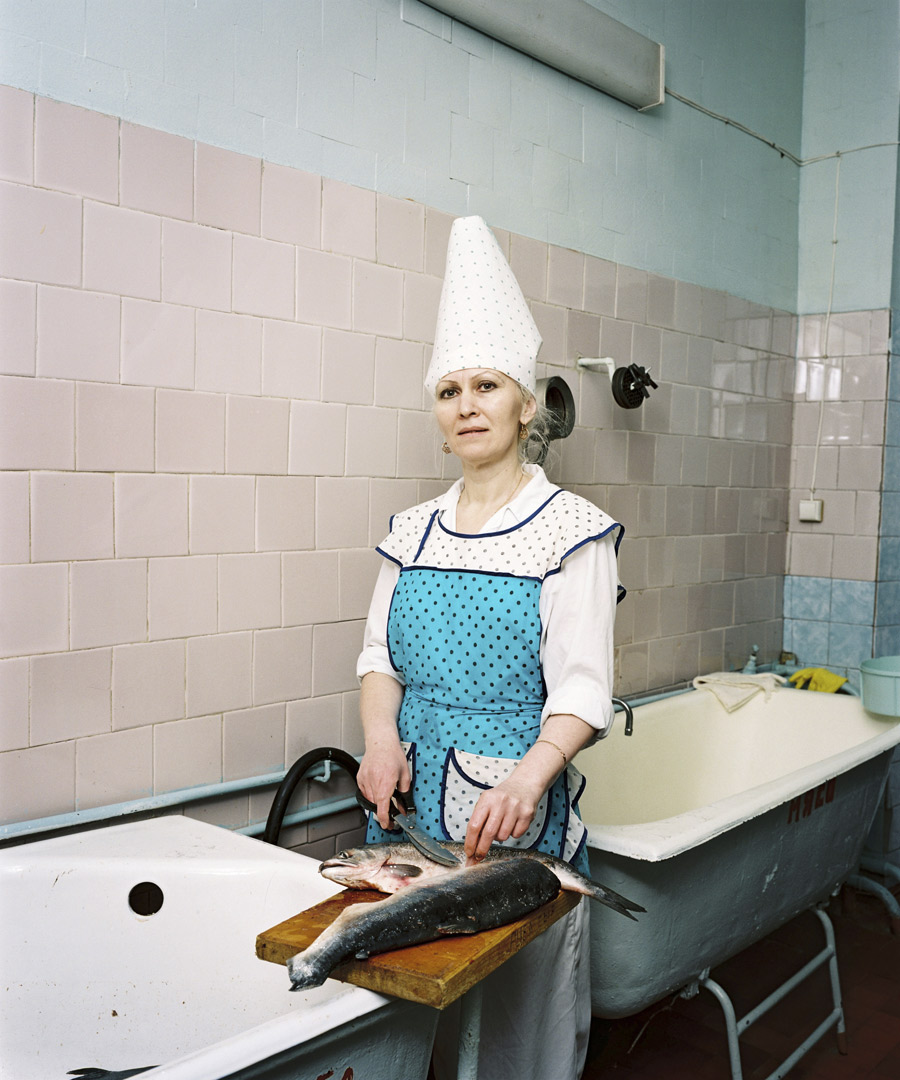
Masha dances at the weekend disco in the cultural centre of Cement Town, a suburb of Angarsk.


Rob Hornstra (Dutch, b. 1975) 'Angarsk, Russia' 2008 from the exhibition 'Golden Years / Rob Hornstra's Russia (and Oleg Klimov and Olga Chernysheva and Sarkis and Willie Doherty)' at Huis Marseille – Museum for Photography, Amsterdam, December 2013 - March 2014


Rob Hornstra (Dutch, b. 1975)
Angarsk, Russia
2008
© Rob Hornstra / Flatland Gallery


Employee preparing fish in the cement factory’s canteen.


Golden Years / Rob Hornstra’s Russia

In the wake of an eventful Netherlands-Russia year, from 14 December 2013 Huis Marseille is devoting several of its exhibition galleries to a photographic examination of the intrinsically Russian soul. The Dutch photographer Rob Hornstra lays bare the Russian soul in a thousand details: the erratically-applied false eyelashes on the flamboyant Natalya Shorogova, floor supervisor at Hotel Zhemchuzhina in Sochi; the educational ‘Cosmonautics’ museum at Orlyonok, a children’s summer camp; in nostalgic found photos, or the simple image of plate of prison food.

After his exhibition in Moscow was cancelled a few weeks ago, photographer Rob Hornstra’s Sochi Project has been continuously in the news. Since it was announced that the 2014 Winter Olympics would be held in Sochi, this subtropical Black Sea resort has turned into a huge building site; the 2014 Winter Olympics have already been declared the most expensive ever. This makes Sochi the perfect subject for Rob Hornstra, whose preference is for long-term projects that allow him, first and foremost, to tell stories and overturn prejudices. Together with writer and film-maker Arnold van Bruggen, Hornstra has spent five years documenting this region of the Caucasus. But controversial Sochi is only one of Hornstra’s Russian projects. Huis Marseille will be showing a large retrospective of his work in Russia over the last ten years. While Hornstra’s photographs are in the documentary tradition, he has an entirely original style and his images are marked by a narrative and painterly character. In illustrative themes, the typical inhabitants of various Russian regions are paraded before us: veterans, junkies, artisans, patients, prostitutes, Muslims, children, lovers, housewives, and artists. It is the documentation of a love-hate relationship with a colourful country and its remarkable people.

Rob Hornstra (b. 1975) made his name with long-term projects in Iceland, the Netherlands, Russia and elsewhere. In 2004 he graduated cum laude from the HKU with his book Communism & Cowgirls [Tsjeljabinsk-Russia], whose independent print run also won him the Dutch Photo Academy Award. With the help of crowdfunding, Hornstra is now working together with writer Arnold van Bruggen on a number of books connected with The Sochi Project. The last of these publications, An Atlas of War and Tourism in the Caucasus (Aperture), will be for sale in the museum shop in November 2013.

Text from the Huis Marseille – Museum for Photography website


Rob Hornstra (Dutch, b. 1975) 'Chelyabinsk, Russia' 2003


Rob Hornstra (Dutch, b. 1975)
Chelyabinsk, Russia
2003
© Rob Hornstra / Flatland Gallery


Elfrem and Sveta near a lake in Chelyabinsk, close to the Kurchatov monument, a place where alternative people gather in Chelyabinsk.


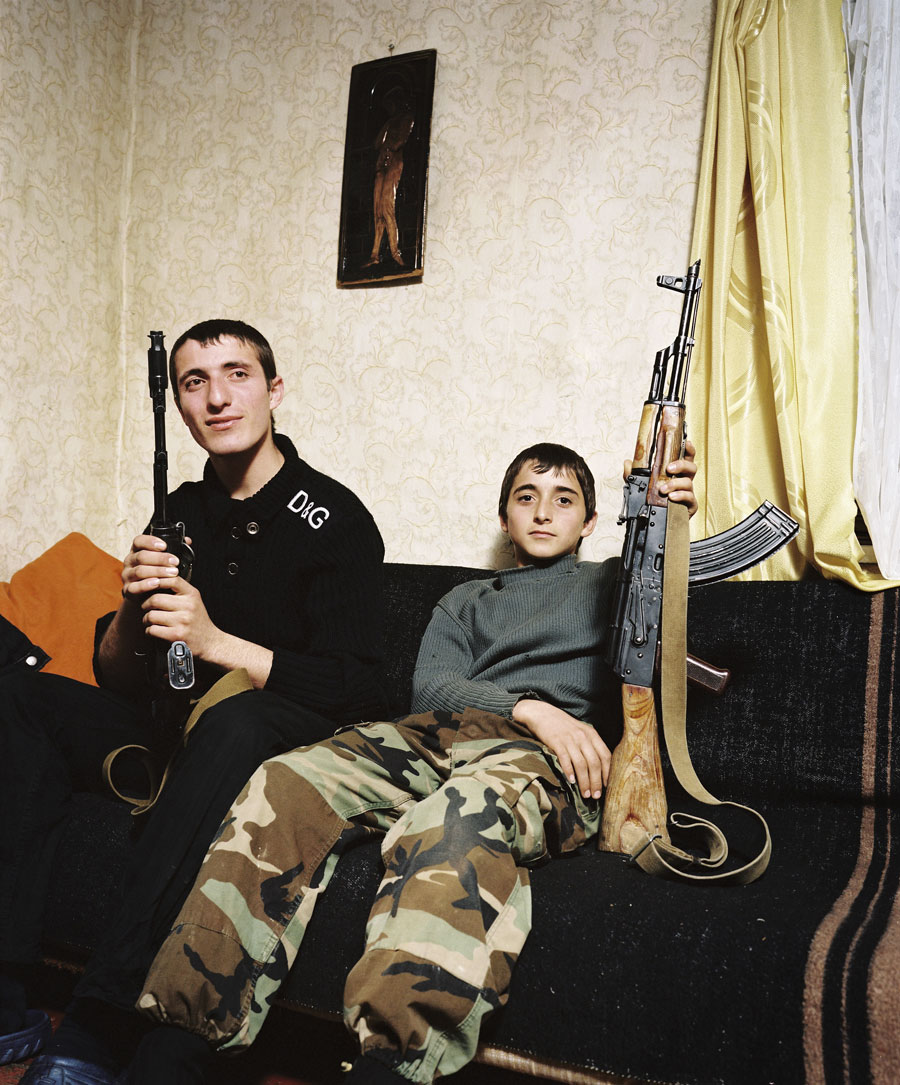
Rob Hornstra (Dutch, b. 1975) 'Kuabchara, Abkhazia' 2009


Rob Hornstra (Dutch, b. 1975)
Kuabchara, Abkhazia
2009
© Rob Hornstra / Flatland Gallery


Brothers Zashrikwa (17) and Edrese (14) pose proudly with a Kalashnikov on the sofa in their aunt and uncle’s house. They live in a remote mountainous region on the border between Abkhazia and Georgia.


Interview with Rob Hornstra

Nanda van den Berg: Why Russia?

Rob Hornstra: When I was at the academy I was interested in Russia because at that time the country was undergoing rapid transition. In the late 1990s Russia was broke, literally bankrupt, and people stood in lines for a piece of bread; by 2004 the country was going all out for hard-core capitalism and making a mint out of its natural resources. The transition from being a country in ruins to being a country rebuilding itself at a crazy speed, with young people suddenly having access to the rest of the world – something their parents and forefathers had never had – I thought that was interesting. I decided to research into it, and especially to look into how the youngest generation, in their early 20s, were reacting to the new developments. The fact that I then spent ten years working there is probably more because of my own aberrant nature; wherever I go, I get more and more interested in it. There were more subjects I wanted to research in Russia, so I went back, and every time I went back there were more things I wanted to know about it. So I just got deeper and deeper into the material, and it turned into ten years’ work. This might be the end of it, though.

NvdB: Did you always have a writing partner, like Arnold [van Bruggen]?

RH: In 2003, my last academic year but one, when I made the first trip to Russia, I went on my own and wrote everything myself. The first book I made, Communism and Cowgirls, has some text; the photographs are interspersed with quotes from students in Chelyabinsk. I was working the same way as I do now, really, but without a writer, because I couldn’t afford one, and no-one wanted to come along. Obviously, I’d only just started out. In 2007 I went on my own as well. It’s only on the the last two trips, for the book 101 Billionaires, that was completed in 2008, that I did it together with someone else.

NvdB: How long does that kind of trip last?

RH: The first one, in 2003, took exactly a month, all 31 days in May. And for the Sochi project, too, Arnold and I were travelling for about three and a half weeks. For 101 Billionaires I made trips that lasted three or four weeks. So the trips always take about a month, and that’s a period that has a sort of maximum energy and concentration span for me. At the end of the month I’m utterly exhausted, and I have a huge pile of undeveloped films and stuff like that, so I just have to go home.

NvdB: So how many of those months can you fit into a year? You work in projects, don’t you – what about repeat visits?

RH: For the Sochi project we made two big trips a year. Every now and then there was a small research trip, maybe ten days, for a magazine or a newspaper, but in principle we made two big, proper trips a year. That said, in 2007 I went to Russia four times.

NvdB: Is there a fixed pattern to those journeys? I see certain lines developing in your work. You return to certain places and people. How does that work?

RH: The whole month is just work, work, work. That’s all we do, and it’s how it started in 2003. I would go somewhere and realise that every second I had there was costing loads of money, so the only thing to do was work. Even if ‘work’ meant sitting at a table socialising. It might seem like relaxing, but in fact it’s all part of the work, because we use everything we encounter. Once I’m in Russia my radar never switches off. I try to see everything in the light of the documentary we’re making. And we plan our days. The last year of the Sochi project – and we’d planned that in 2009 – was the year of ‘revisiting people’. In 2013 we looked up many of those we’d met earlier in the project, to see how they were doing. That’s a really important part of our work – documenting the course of time, because it says something about the region or the area you’re working in.

NvdB: And how do you approach the people you’d like to have pose for you? Is it easy?

RH: Well, people do say no sometimes, even in Russia. But in practice we’ll be out and about and we’ll just start chatting to people. It’s not like we have a plan or a gimmick… I think in our case it’s just about giving it a go, getting out and about, knocking on doors and approaching lots of people. Bit by bit you make progress, and a lot of it is by word of mouth. We’ll often make early contact with students from the local university. Then we’ll go to the English classes and meet local youngsters and they’re generally happy to put us in touch with granddads and grandmas and there’s usually a party going on somewhere. It boils down to just going everywhere; the rest pretty much happens by itself.

NvdB: So do the students mediate for you?

RH: A student can also be an assistant, and arrange all sorts of thing for us, but then of course we have to pay them. We’re always looking for local assistants, and they can be students. We once had an English teacher, who took two weeks’ holiday so he could go everywhere with us. But as long as they speak English and want to help, it could be anyone.

NvdB: Do neither of you speak Russian, then?

RH: I speak reasonably good Russian – but speaking Russian is harder than understanding it, and we both understand it reasonably well. We like to keep that under our hats – it’s very useful to be able to know what people are saying about you, particularly if you’ve been arrested and you’re in a police station. We don’t use our Russian to have conversations. It’s not good enough for that, and we’d much rather have a local intermediary anyway.

NvdB: So you’ve made your contacts. How do you approach your work? You practice ‘slow photography’ and use heavy cameras, right?

RH: I always work with two cameras, one medium-format camera and one large-format camera, together with a large studio flash: a really solid, powerful piece of equipment. The assistant or Arnold carries the flash, and that’s what makes it ‘portable’ and means it can go everywhere with us. Then I choose which camera I’m going to use. There’s no real pattern to that; I make landscape photos in medium format and in large format, but I also make portraits in medium format and in large format. When you work with such a big flash, and a medium-format or large-format camera, then you’re obviously present in the crowd, or in someone’s home, and there’s absolutely no way people won’t see you as a photographer. I’m so conspicuously present that it’s simply impossible to ignore me or pretend that I can’t be seen. And the idea behind that – that’s why I use such a big studio flash, and use studio cameras too, actually – is that I see the place I’m in as a sort of studio. In fact I use the world as a studio space, and the people I want to take pictures of as my models. What I’m trying to achieve with this working method is that the photograph rises above the level of a snapshot or visual document, and – I know this sounds a bit vague – that it becomes a really strong image, one that endures, and intrigues people. I’m trying to get more and more people interested in the story behind the image. And I’m convinced that if you use really powerful photographs – if you use photography in the right way – then you can interest new people in photography, but above all, in the stories behind the photographs, and that’s actually my main aim.

NvdB: Did you develop this method mostly in Russia, or did it arise earlier, in your study years?

RH: It developed during my time at the art academy. My project Communism and Cowgirls was made using the same materials, the same equipment, in the same style, and with the same underlying ideology. I’ve noticed that the way I look at things has gradually changed, but that hasn’t affected my intentions, or my convictions about what you can do with photography, at all. The reason I became a photographer is the same, but the way I look at things has changed.

NvdB: In what way?

RH: I think I mentioned that when I was in Russia in 2003 I made absolutely no landscape photos, and only one photograph in landscape mode. The whole book was filled with photos in portrait mode. The ratio is now 50:50 but that was never a conscious decision; I never made an effort to make that happen. Perhaps you change as a person, or something arises in you which brings about changes by itself.

NvdB: Many of the photos in your series supply contextual information – like the plate of food, for instance – so wouldn’t landscapes do the same sort of thing, to show where these people lived?

RH: Yes, and the strange thing is that in 2003 I was already making many photographs of interiors, and yes, of lots of small objects, but no landscapes – and I couldn’t say why. It just didn’t occur to me. If I look back now, I miss the landscapes that I didn’t take for the 2003 series. But the fact is that the landscapes came later, perhaps in Iceland. I think landscapes can sometimes say an enormous amount about a region, or about the people who live there. And that can make a significant contribution. But I just didn’t make any, and I took all my photos in portrait mode. Right now I couldn’t say why.

NvdB: Then there’s the rest of your aesthetic: your use of colour, the fact that they’re always printed on matt paper… How did that come about? Did you have any examples you wanted to copy, or photographers whose work you particularly admired?

RH: I do admire a number of photographers, and have done so since my time at the art academy, so my style may have had its roots there. I’d found my style by the time I graduated, but a funny thing happened in 2003 when I got back from my first trip to Russia. I went to the academy to make some contacts prints. I was standing in the colour darkroom making the prints when a classmate came by and said “Your work looks a lot Adam Broomberg and Oliver Chanarin’s.” Now in the meantime their work has changed a lot, but they came out of a hardcore documentary tradition… well, perhaps ‘hardcore’ isn’t quite the right word. Are you familiar with their background? They ran Colors Magazine for a long time, until 2005, and only after that did they go in an entirely autonomous direction; up to that point they did just what I’m doing now, more or less. My classmate knew about Colors Magazine and said: you should check it out, because your work really looks like theirs. So I saw Colors Magazine, and I bought their books, and I thought: this is really weird, it’s exactly what I want to do. Everything those two had made, I thought it was terrific. And there’s a little book called Mister Mkhize’s portrait and other stories from the new South Africa – something like that, I’d have to look it up – very cheap book, you can buy it anywhere on the internet for ten or twenty euros. I thought that book was great, because of its beautiful rhythm and the balance between photography and text. The text is continuous, and the photography also forms a continuous story, and the funny thing is that from time to time the text links directly to a photograph; but sometimes the text is opposite the appropriate photograph, and sometimes the text just goes its own way. And I thought: that’s what I want to do, they’re doing just what I’ve got in mind. So they were a source of inspiration from that moment on, in everything I did.

NvdB: But you don’t seem to have had the classic heroes – Walker Evans, or August Sander, or…

RH: Well, I was actually a bit of a difficult customer at the academy. The teachers rolled out the icons, people like Walker Evans and Cartier Bresson, and I did my level best to feel admiration for them. And I do think Walker Evans is a fantastic photographer. But right from the start I didn’t like Cartier Bresson at all. I thought then, and I think now, that his work is heavily overrated. I thought Walker Evans was definitely very good, but for some reason I have a problem with black and white photography when there is a large time interval – I have a problem identifying with it. That’s why it can’t be an inspiration to me, although it doesn’t change the fact that Walker Evans is definitely a hero of mine, and Diane Arbus is an even bigger hero. There are some older photographers amongst them who I think are really good, people like William Eggleston. Perhaps those photographers were an inspiration… but I would rather name some of today’s photographers.

NvdB: Do you think that if you go somewhere new to take photographs – and perhaps you will, because you already said that you might be finished with Russia – that you might start developing a new idiom, or start including new elements? Do you think your style is strongly inspired by Russia itself?

RH: No, because I also have the same style in Iceland or in the Netherlands. I don’t consciously employ a specific style; I just have the idea that what I do closely reflects who I am as a person, and that any other style would come less naturally to me. The country I happen to be in has absolutely no influence on that, but I do think that small changes in style can occur, because as a person you also go through occasional changes. In the year to come I want to have the time to reflect on what I’m doing. I can’t imagine I’ll be making any great changes. Things just happen more gradually with me. For instance, I was fascinated to see how Broomberg & Chanarin made documentary work in 2004-2005 and then suddenly switched to autonomous work. That’s when I think: what’s happening to them? I think my own trajectory is a more gradual one.

NvdB: So do you have any ideas where your trajectory might be headed in the future?

RH: That’s a rather difficult choice, because analogue photography seems to be dying out – I’m increasingly coming round to that idea – and if it doesn’t disappear altogether it’s going to be a very expensive business. I don’t make all that much money, so it’s going to be hard to keep doing analogue photography, and I’m not all that keen on digital photography. I’m rather inclined to go even more extreme with the analogue work, like with an 8 x 10 inch camera, and focus only on even more powerful, more extreme, stronger images, and let the rest go.

NvdB: And the subject?

RH: I’m still thinking hard about that. I can see myself just staying and working here in the Netherlands for a while. For ages I’ve wanted to do something with my own family, with the area they come from, south-west Friesland; that would be an interesting place to comb through. On the other hand I’d like to go back to Russia and head towards South East Asia, through Central Asia, with all those authoritarian regimes in Uzbekistan and Kirgizia. You end up in China, Vietnam, Cambodia, those sorts of countries, and that’s a fascinating part of the world. So I’ve got different places in mind, some close to home and some a long way away. Anything goes, really. The world’s my oyster.

NvdB: And new subjects are always possible.

RH: I don’t want to make any hasty decisions. Over the last three or four years I’ve been non-stop running, I’ve had to keep going, keep going, keep going. I’d really like to have some time again to see new books, visit exhibitions, get lots of new inspiration and ideas. I don’t want to start out by keeping up this tempo. I think it would be much healthier to take it easy for a while.

NvdB: The Sochi project was rather inclined towards ‘commentary’. Perhaps you’d like to do something with less commentary – or are you in fact always looking for it?

RH: Yes, I’m afraid that’s exactly what I want! I think there are already far too many people who never comment, and I feel the lack, I miss the nuance and the depth. I think people shout a lot but say very little, and I think there is too little investigative journalism. Art and investigative journalism are both dying out for lack of funding, and I think that puts the world at a great risk. People – and governments – don’t seem to understand the importance of free artistic expression and the freedom to carry out in-depth journalism, and that it’s a real threat to democracy if they no longer take place. These days all these things are being swept into a corner and then thrown away, especially in journalism, but also in the arts, and that worries me. So if you’re asking me whether I want to make less comment in the future, then the answer’s no, absolutely not. I want to stay involved, stay concerned about everything that’s happening in the world. I think it’s important to get people thinking, and I think it’s essential to sometimes confirm preconceived ideas and sometimes to totally negate them. I don’t think that’ll ever disappear from my life.

NvdB: Is there anything you’d like to add?

RH: Yes, and it has to do with the fact that I work in the Netherlands and live in a Vogelaarwijk, an official ‘problem neighbourhood’, and started observing my neighbours. Because the assumption is that only antisocial types live in a Vogelaarwijk, and that bothers me. I want to ask them: ever been there for yourself? Ever knock on one of their doors? It’s the same with Islam. Lots of people have a low opinion of Muslims, but go and knock on a door, go and have a look in a mosque – they invariably welcome you with open arms. That’s want I want to do with my work. I have a huge ambition to get people thinking and to confront them, acquaint them with other habits and customs; with things they might never have expected, or had never seen before. In Sochi, the project we did in the North Caucasus, you can see this very clearly. If we hadn’t done it, there would probably have been precious little interest in its violation of human rights and that sort of thing. I want to keep adding to that knowledge, and I think it’s very important to stay focussed on it.

Interview from the Huis Marseille – Museum for Photography website


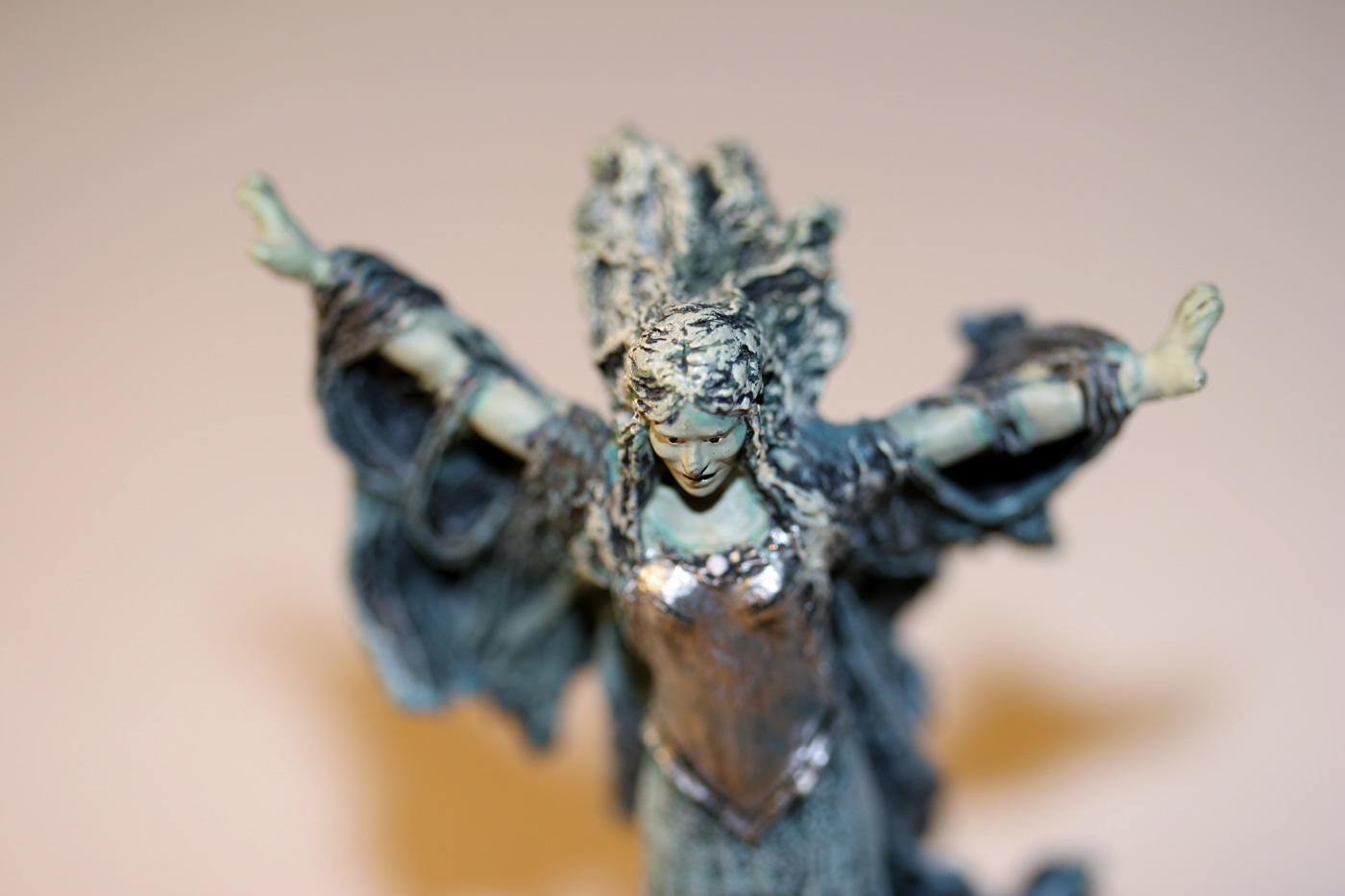
Sarkis (Turkish, b. 1938) 'Galadriel' 2008


Sarkis (Turkish, b. 1938)
Galadriel
2008
C-print
30 x 45cm
Courtesy of Galerie De Zaal, Delft


Sarkis (Turkish, b. 1938) 'Gimli' 2008


Sarkis (Turkish, b. 1938)
Gimli
2008
C-print
30 x 45cm
Courtesy of Galerie De Zaal, Delft


Sarkis (Turkish, b. 1938) 'Legolas' 2008


Sarkis (Turkish, b. 1938)
Legolas
2008
C-print
30 x 45cm
Courtesy of Galerie De Zaal, Delft


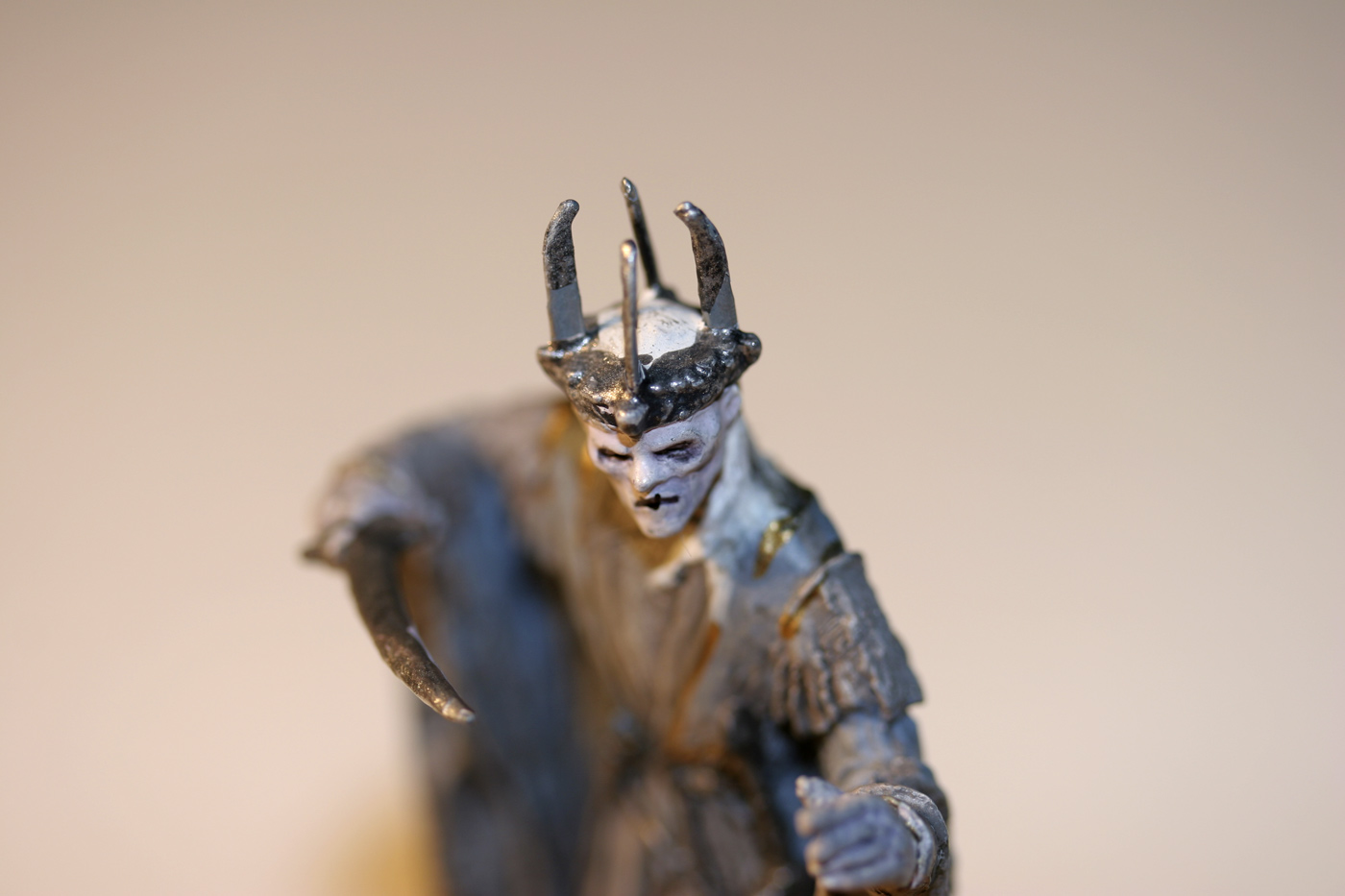
Sarkis (Turkish, b. 1938) 'The Witch-king of Angmar' 2008


Sarkis (Turkish, b. 1938)
The Witch-king of Angmar
2008
C-print
30 x 45cm
Courtesy of Galerie De Zaal, Delft


Sarkis: Portraits of the Ring

The elves, orcs, magicians and hobbits populating J.R.R. Tolkien’s saga The Lord of the Rings form a unique culture in which the forces of good and evil are engaged in a constant struggle for supremacy. This good and evil are also depicted in the expressions given to the tiny, mass-produced figurines of Ring characters, so the expressions of these figurines allow others to communicate the nature of the struggle between good and evil. Sarkis collected Ring figurines and used them to create a series of 54 Ring portraits, photographing them in an analytic manner so as to sublimate their powers. Sarkis focuses on their faces, which gaze downwards; we cannot see what they see. This fusion of the exotic and the contemporary is characteristic of Sarkis’ entire oeuvre. Huis Marseille is showing 30 of his Ring portraits; the rest can be seen in a video, made specially for this exhibition by Emma van der Put, which describes the seeds from which these artworks first grew. 

Sarkis (Istanbul, 1938, lives and works in Paris) was invited by the Museum Boijmans van Beuningen in 2012 to transform the Submarine Wharf in Rotterdam harbour into a new experiential world, Ballads. Sarkis’ work has been exhibited internationally since the 1970s, including at the Venice Biennale and in Istanbul. Over the last four months the young video artist Emma van der Put (1988, Den Bosch) also made four videos of the last stages of Huis Marseille’s rebuilding activities and its preparations for the exhibition The rediscovery of the world.


Willie Doherty (Northern Ireland, b. 1959) 'TO THE BORDER' From the series 'A Fork In The Road' 1986-2012


Willie Doherty (Northern Ireland, b. 1959)
TO THE BORDER
From the series A Fork In The Road 1986-2012
Black and white fibre photograph mounted on aluminium
122 x 183cm
Collection Huis Marseille


Willie Doherty (Northern Ireland, b. 1959) 'Seepage' 2011


Willie Doherty (Northern Ireland, b. 1959)
Seepage
2011
C-print mounted on aluminium faced with non-reflective Plexiglas
122 x 152cm
Collection Huis Marseille


Willie Doherty and the Huis Marseille collection

The museum galleries devoted to Huis Marseille’s own collection include two large, recently-acquired works by the Northern Ireland photographer Willie Doherty (Derry, 1959). At this year’s Art Basel Doherty was represented by his compelling video Remains (2013), drawn from ‘a body of work that meditates upon the irrefutable traces of past events that will not disappear, that resurfaces and cannot be forgotten.’ The two photographs, Seepage and To the Border, A Fork in the Road, were made at the end of the last century but first printed only very recently. Here, along the fracture line of escalating violence between Irish Catholics and Protestants, Doherty traces and articulates the scars in the city and the country in an understated but powerful way. Willie Doherty is currently the subject of a retrospective exhibition in Derry, Unseen, which will be shown in Tilburg’s De Pont museum of contemporary art in 2015.


Huis Marseille – Museum for Photography
Keizersgracht 401
1016 EK Amsterdam

Opening hours:
Tuesday – Sunday
11 – 18 hr

Huis Marseille – Museum for Photography website

LIKE ART BLART ON FACEBOOK

Back to top

Exhibition: ‘Louise Lawler. Adjusted’ at the Ludwig Museum of Contemporary Art, Budapest

Exhibition dates: 11th October, 2013 – 26th January, 2014

Curator: Philipp Kaiser


Louise Lawler (American, b. 1947) '16' 1985 from the exhibition 'Louise Lawler. Adjusted' at the Ludwig Museum of Contemporary Art, Budapest, October 2013 - January 2014


Louise Lawler (American, b. 1947)
16
1985
Cibachrome (museum box)
27 x 39-5/8 inches (68.6 x 100.6cm)
© Louise Lawler, Metro Pictures, New York, Sprüth Magers Berlin/London
Andy Warhol Artwork
© The Andy Warhol Foundation for the Visual Arts, Inc.


Complex and polyglot, conceptual and analytical, but simultaneously ironically light, elegiac, and unfathomable. Abstract, non-evaluative, impartial presentations and suggestive settings gazing toward the fringes of art. Strongly shaped by institutional critique, the works are casual (causal?) sociological commentaries reflecting on aesthetic, economic, and historical factors in art.

Apparently…

But do you like them?

Dr Marcus Bunyan


Many thankx to the Ludwig Museum of Contemporary Art for allowing me to publish the photographs in the posting. Please click on the photographs for a larger version of the image.


Louise Lawler (American, b. 1947) 'Etude pour La Lecture, 1923, This Drawing is for Sale, Paris' 1985 from the exhibition 'Louise Lawler. Adjusted' at the Ludwig Museum of Contemporary Art, Budapest, October 2013 - January 2014


Louise Lawler (American, b. 1947)
Etude pour La Lecture, 1923, This Drawing is for Sale, Paris
1985
Gelatin silver print
39.5 x 59cm
© Louise Lawler, Metro Pictures, New York, Sprüth Magers Berlin/London


Etude pour La Lecture, 1923, This Drawing is for Sale, Paris, 1985 is a gelatine silver print showing a corner in a Paris room. The image is a careful composition of vertical and horizontal lines made up by architectural features in the background and, in the foreground, a square-edged leather covered chair on the right and a group of framed artworks, stacked against the wall, on the left. A free-standing ashtray in the image centre firmly anchors the composition on its vertical-horizontal axis: its narrow metal tube stand creating a strong vertical line and the ashtray repeating the horizontal plane of the chair arm below it. One artwork is visible in its entirety: a drawing by Fernand Léger (1881-1955) showing two women, one standing and one reclining, both holding books. Propped on a much larger frame that is turned towards the wall, the image – Etude pour La Lecture, 1923 – reinforces the combination of horizontal and vertical elements in Lawler’s picture. Below it, a painting of an organic form, also by Léger (La Racine, 1934), is partially visible behind the arm of the chair.

Extract from Elizabeth Manchester. “Etude pour La Lecture, 1923, This Drawing is for Sale, Paris,” on the Tate website April 2007 [Online] Cited 21/01/2021. Used under fair use conditions for the purposes of education and research


Louise Lawler (American, b. 1947) (Holzer, Nadin and Other Artists) 'Baby Blue' 1981


Louise Lawler (American, b. 1947)
(Holzer, Nadin and Other Artists)
Baby Blue
1981
Cibachrome (museum box)
28 1/2 x 37 1/4 x 1 inches (72.4 x 94.6 x 2.5cm)
© Louise Lawler, Metro Pictures, New York, Sprüth Magers Berlin/London

Top left: Edward Weston’s photographs of his son Neil Weston


Louise Lawler (American, b. 1947) 'I-O (adjusted to fit)' 1993-1998


Louise Lawler (American, b. 1947)
I-O (adjusted to fit)
1993-1998
Cibachrome (museum box)
19 5/16 x 23 3/8 inches (49.1 x 59.4cm)
© Louise Lawler, Metro Pictures, New York, Sprüth Magers Berlin/London
Andy Warhol Artwork
© The Andy Warhol Foundation for the Visual Arts, Inc.


Louise Lawler (American, b. 1947) 'Taking Place - Il m'aime, un peu, beaucoup, passionnément, à la folie, pas du tout' (He loves me, a little, a lot, passionately, madly, not at all) 2008/2009


Louise Lawler (American, b. 1947)
Taking Place – Il m’aime, un peu, beaucoup, passionnément, à la folie, pas du tout (He loves me, a little, a lot, passionately, madly, not at all)
2008-2009
Cibachrome face mounted to plexiglass on 2″ museum box
47 3/4 x 55 3/4 inches (121.3 x 141.6cm)
© Louise Lawler, Metro Pictures, New York, Sprüth Magers Berlin/London


Louise Lawler (American, b. 1947) 'Salon Hodler' 1992/1993


Louise Lawler (American, b. 1947)
Salon Hodler
1992-1993
Cibachrome
58 1/2 x 49 1/4 inches (148.6 x 125.1cm)
© Louise Lawler, Metro Pictures, New York, Sprüth Magers Berlin/London


Louise Lawler (American, b. 1947) 'Unsentimental' 1999/2000


Louise Lawler (American, b. 1947)
Unsentimental
1999-2000
Cibachrome
120.7 x 144.8cm
© Louise Lawler, Metro Pictures, New York, Sprüth Magers Berlin/London


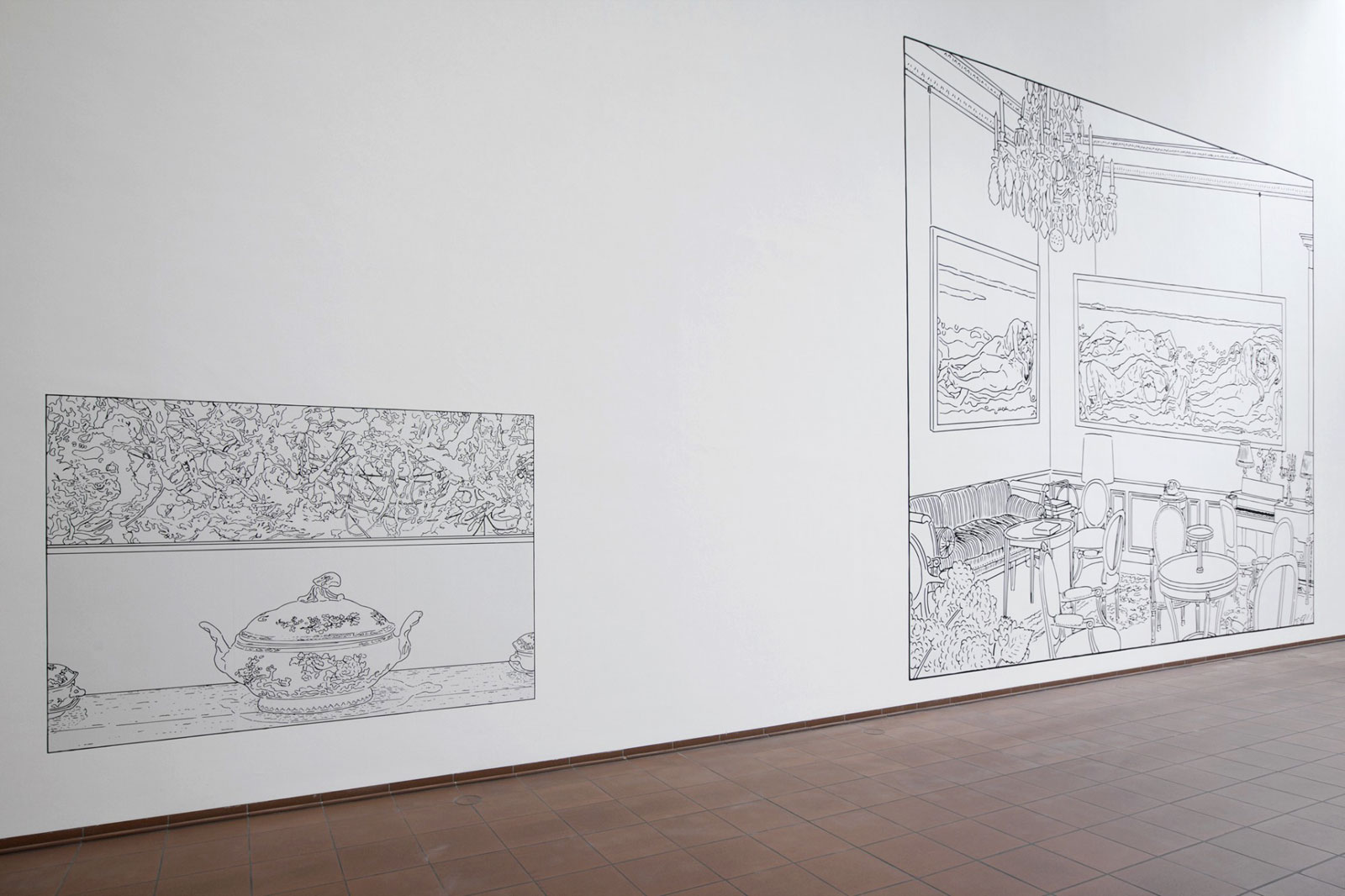
Left: Louise Lawler (American, b. 1947) 'Pollock and Tureen (traced)' 1984/2013; Right: Louise Lawler (American, b. 1947) 'Salon Hodler (traced)' 1992/1993/2013 (installation view)


Left:

Louise Lawler (American, b. 1947)
Pollock and Tureen (traced) (installation view)
1984-2013
Bedruckte Folie / printed vinyl
Dimensions variable

Right:

Louise Lawler (American, b. 1947)
Salon Hodler (traced) (installation view)
1992/1993/2013
Bedruckte Folie / printed vinyl
Dimensions variable


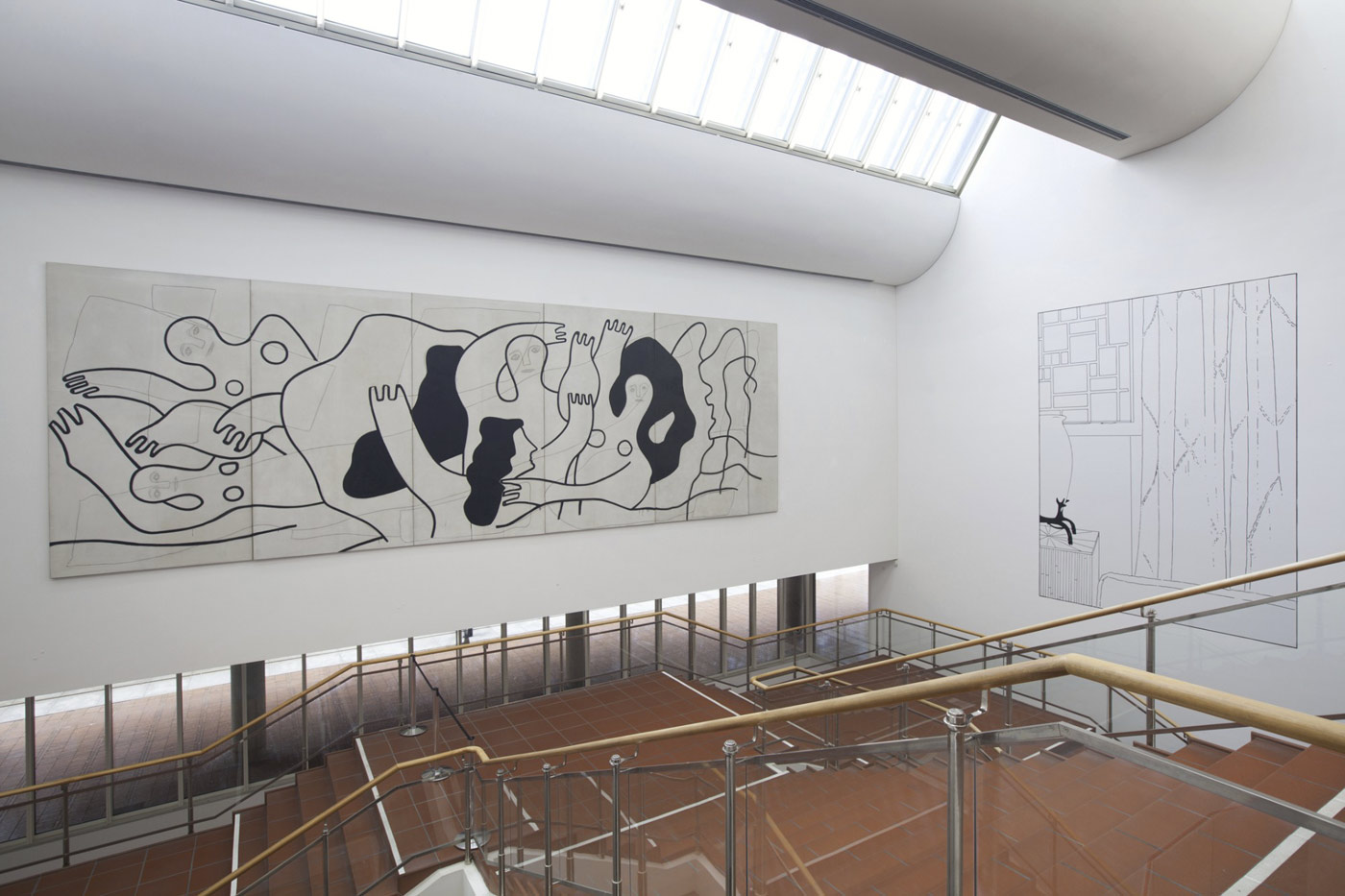
Louise Lawler (American, b. 1947) 'Hand On Her Back (traced)' 1997/1998 (installation view)


Louise Lawler (American, b. 1947)
Hand On Her Back (traced) (installation view)
1997/1998/2013
Bedruckte Folie / printed vinyl
Dimensions variable


The Museum Ludwig is hosting the first comprehensive exhibition in Germany of the American Conceptual artist Louise Lawler (born 1947, lives and works in New York). The exhibition comprises around 80 works, which are positioned throughout the entire building, thus engendering surprising situations through their encounters with the Museum Ludwig’s permanent collection. In addition, a new series of ten “tracings” has been created for the show – outline drawings that are reminiscent of children’s colouring books and draw on earlier works by Lawler. Furthermore, the artist has agreed to create two new, large-format “stretches” for the Museum Ludwig. These are photos that she has printed out on self-adhesive vinyl film and whose proportions she tailors to the space in question – even if that means deforming the motifs. Lawler’s work has been featured in numerous international exhibitions, including Documenta 12, the Whitney Biennial 2008, and recently in a large overview at the Wexner Art Center in Columbus, Ohio.

Louise Lawler photographs works by other artists and captures them in their various contexts: in museums, in private collections, at auctions, or in storage. Her works illustrate just how much the meaning of art is influenced by how it is presented and by the attendant circumstances in the institutions where it is located. Her analytical and at times ironic approach is revealing, but by no means evaluative, such as when her view of an abstract work by Jackson Pollock correlates with the way she looks at a decorative soup tureen.

Louise Lawler, who embarked on her oeuvre in the late 1970s, belongs to the broader field of the “Pictures Generation,” which also includes Sherrie Levine, Jack Goldstein, Richard Prince, and Cindy Sherman. At the same time, her beginnings were also strongly shaped by the institutional critique of the early 1970s, and consequently her works were initially interpreted as sociological commentaries reflecting on aesthetic, economic, and historical factors in art. Yet beyond this, her photographs illustrate to this day that an impartial presentation of art simply does not exist; they reveal the ideological implications inherent in the suggestive settings given to artworks, which would otherwise scarcely be visible. Lawler directs her gaze toward the fringes of art, as it were, creating subtle commentaries of a poetic casualness via compositions that distinguish themselves by their formal approach as well as by their eccentricity.

Press release from Museum Ludwig


Louise Lawler (American, b. 1947) 'Pink and Yellow and Black II (Green Coca Cola Bottles) from On a Wall, On a Cow, In a Book, In the Mail' 1999


Louise Lawler (American, b. 1947)
Pink and Yellow and Black II (Green Coca Cola Bottles) from On a Wall, On a Cow, In a Book, In the Mail
1999
Cibachrome (museum box)
26 5/8 x 26 5/8 inches (67.6 x 67.6cm)
© Louise Lawler, Metro Pictures, New York, Sprüth Magers Berlin/London
Andy Warhol Artwork
© The Andy Warhol Foundation for the Visual Arts, Inc.


Louise Lawler (American, b. 1947) 'Pink and Yellow and Black I (Red Disaster) from On a Wall, On a Cow, In a Book, In the Mail' 1999


Louise Lawler (American, b. 1947)
Pink and Yellow and Black I (Red Disaster) from On a Wall, On a Cow, In a Book, In the Mail
1999
Cibachrome (museum box)
38 3/4 x 32 1/2 inches (98.4 x 82.6cm)
© Louise Lawler, Metro Pictures, New York, Sprüth Magers Berlin/London
Andy Warhol Artwork
© The Andy Warhol Foundation for the Visual Arts, Inc.


Foreword

To describe Louise Lawler’s artistic practice is not easy: it is complex and polyglot, conceptual and analytical, but simultaneously ironically light, elegiac, and unfathomable. Lawler eyes the incidental, undermining the economy of attention, dislocating hierarchies, and querying, with the air of critical nonchalance, the system of art and its institutions. When works of art, arranged based on their colours and forms like flowers, unashamedly reveal the tastes and values of their owners, or sculptures held in gloomy depots are deprived of the attention they deserve, then Lawler’s works are a means of redress – what is not visible is given visibility. Her camera registers not only the life of artworks (after they have left the artists’ studios) in museums, corporate collections, depots, or at auctions, it also penetrates the most intimate abodes of the collectors, intruding even into their bedrooms. Lawler’s practice here is ambivalent, hardly judgmental, but constantly interested in poetic ambiguities, fractured harmony, and suggestive relationships. Her work does not seek out the essence of art but looks for compulsions, rules, and their readability. Incidental contiguities, formal-aesthetic analogies, but also savage thought shape the work of Louise Lawler, which had its beginnings in the late 1970s in the context of appropriation art and followed in the footsteps of the practice of institutional critique, which has been all too often discursively co-opted. Almost forty years later a differentiated perspective on this subtle work opens up, a work that does not understand melancholy and postmodernist criticality as a contradiction and unfolds its potency precisely in subtle unsharpness.

We are delighted that with Adjusted Louise Lawler has put together such an extensive survey of her work for the very first time, a show that covers the early conceptual and performative relics, the so-called ephemera, as well as a wide-ranging selection of photographic works and the latest wall works. Although the greater part of her oeuvre is photographic, it becomes clear that Lawler is not a photographer. She uses the medium as a means to appropriate situations and, in resolute focusing, to let the things which would otherwise remain unarticulated speak for themselves. Her exhibition title, Adjusted, which is to be understood as referring to her large format wallpapers adjusted to fit the given circumstances, is the distant echo of a critical practice fully aware that adjusting is a dialectic process where there are neither winners nor losers, neither conquerors nor conquered.

Louise Lawler’s exhibition Adjusted opens simultaneously with the new presentation of the collection Not Yet Titled. New and Forever at Museum Ludwig, which emphasises the provisional nature of art historical narratives and presentations, colliding with the claim to eternity raised by the institution of the museum. Lawler’s exhibition spans the entire building, intervenes in the contexts of the collection, and spreads itself out, then retreats, or functions plainly and simply as a casual commentary. The reflectivity of her work, its context-specific changeability, presents the provisional as a quality constitutive for art, which in the process makes it clear just how much circumstances determine the way of looking at things.

Excerpt from the Foreword by Philipp Kaiser


Louise Lawler (American, b. 1947) 'Life After 1945 (Hats)' 2006/2007


Louise Lawler (American, b. 1947)
Life After 1945 (Hats)
2006-2007
Cibachrome (mounted on museum box)
27 1/4 x 22 3/4 inches (69.2 x 57.8cm)
© Louise Lawler, Metro Pictures, New York, Sprüth Magers Berlin/London
Andy Warhol Artwork
© The Andy Warhol Foundation for the Visual Arts, Inc.


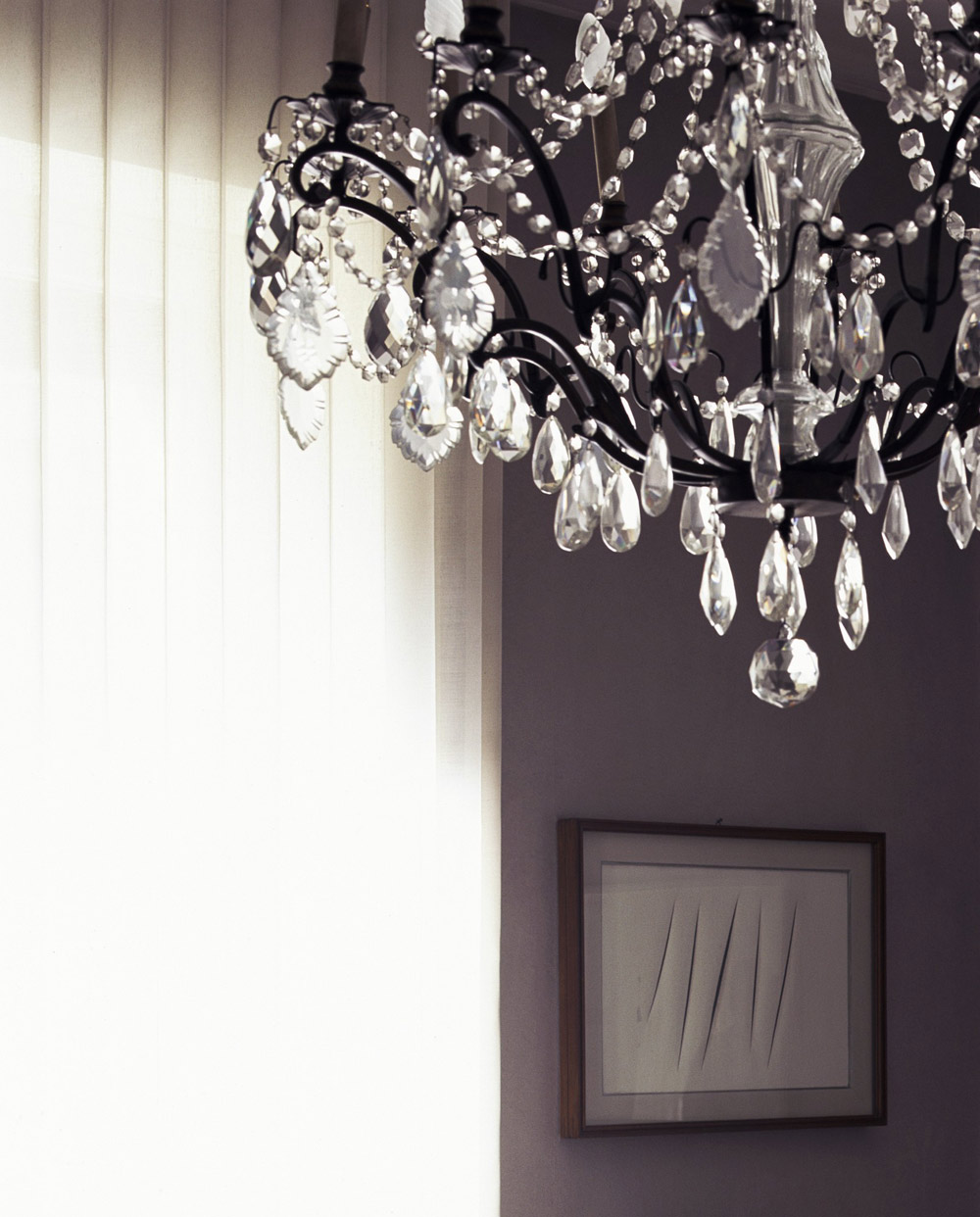
Louise Lawler (American, b. 1947) 'Chandelier' 2001/2007


Louise Lawler (American, b. 1947)
Chandelier
2001-2007
Cibachrome (mounted on museum box)
19 1/4 x 15 1/2 inches (48.9 x 39.4cm)
© Louise Lawler, Metro Pictures, New York, Sprüth Magers Berlin and London

(Lucio Fontana)


Louise Lawler (American, b. 1947) 'Nude' 2002/2003


Louise Lawler (American, b. 1947)
Nude
2002/2003
Cibachrome (museum mounted)
59.5 x 47.5 inches (151.1 x 12.70cm)
© Louise Lawler, Metro Pictures, New York, Sprüth Magers Berlin/London

(Gerhard Richter. Ema (Nude on a Staircase) 1966, 200 x 130cm, Oil on canvas)


Louise Lawler (American, b. 1947) 'Still Life (Napkins)' 2003


Louise Lawler (American, b. 1947)
Still Life (Napkins)
2003
Digital cibachrome on aluminum museum box
19 3/4 x 14 1/4 inches (50.2 x 36.2cm)
© Louise Lawler, Metro Pictures, New York, Sprüth Magers Berlin/London


Louise Lawler (American, b. 1947) 'WAR IS TERROR' 2001/2003 (Julia Margaret Cameron)


Louise Lawler (American, b. 1947)
WAR IS TERROR
2001-2003
Cibachrome (museum mounted)
30 x 25 3/4 inches (76.2 x 65.4cm)
© Louise Lawler, Metro Pictures, New York, Sprüth Magers Berlin/London

(Julia Margaret Cameron)


Louise Lawler (American, b. 1947) 'Monogram' 1984


Louise Lawler (American, b. 1947)
Monogram
1984
Cibachrome, type on wall (sometimes)
39 1/2 x 28 inches (100.3 x 71.1cm)
© Louise Lawler, Metro Pictures, New York, Sprüth Magers Berlin/London

(Jasper Johns)


Louise Lawler (American, b. 1947) 'Portrait' 1982


Louise Lawler (American, b. 1947)
Portrait
1982
Cibachrome
19 x 19 inches (48.3 x 48.3cm)
© Louise Lawler, Metro Pictures, New York, Sprüth Magers Berlin/London


Ludwig Museum of Contemporary Art
1095 Budapest Komor Marcell Street 1
Hungary 06 1 555-3444

Opening hours:
Tuesday – Sunday: 10.00 – 18.00
Closed on Mondays

Ludwig Museum of Contemporary Art website

LIKE ART BLART ON FACEBOOK

Back to top

Exhibition: ‘Everyday Epiphanies: Photography and Daily Life Since 1969’ at The Metropolitan Museum of Art, New York

Exhibition dates: 25th June, 2013 – 26th January, 2014

 Curator: Doug Eklund, curator in the Department of Photographs


John Baldessari (American, 1931-2020) 'Hands Framing New York Harbor' 1971


John Baldessari (American, 1931-2020)
Hands Framing New York Harbor
1971
Gelatin silver print
25.4 x 18cm (10 x 7 1/16 in.)
Purchase, The Horace W. Goldsmith Foundation Gift, through Joyce and Robert Menschel, 1992
Shunk-Kender © Roy Lichtenstein Foundation


Epiphany: a moment in which you suddenly see or understand something in a new or very clear way.

Stephen Shore’s photographs are the most insightful epiphanies in this posting, picturing as they do “what he ate, the rest stops he visited, the people he met.” In other words, the wor(l)d as he saw it.

Dr Marcus Bunyan


Many thankx to The Metropolitan Museum of Art, New York for allowing me to publish the photographs in the posting. Please click on the photographs for a larger version of the image.


“With the unspoken rules that exhibitions in the Met’s contemporary photography gallery must be drawn exclusively from the museum’s permanent collection and be organised as surveys of the period from the late 1960s to the present, it’s no wonder that these long running shows are often so broad that their themes seem to dissolve into edited collections of everything. The newest selection of images is tied up under the umbrella of “everyday epiphanies”, a construct that implies a delight in the ordinary, the quotidian, or the familiar, but in fact, reaches outward beyond these routine boundaries to works that have a wide variety of conceptual underpinnings and points of view. With some effort, it’s possible to follow the logic of why each piece has been included here, but when seen together, the diversity of the works on view diminishes the show’s ability to deliver any durable insights… The works that function best inside this theme are those that capture moments of unexpected, elemental elegance, often as a result of the way the camera sees the world.”


Loring Knoblauch. “Everyday Epiphanies: Photography and Daily Life Since 1969 @Met,” on the Collector Daily website August 14, 2013 [Online] Cited 20/01/2014. Used under fair use conditions for the purposes of education and research


Martha Rosler (American, b. 1943) 'Semiotics of the Kitchen' 1975 (still)


Martha Rosler (American, b. 1943)
Semiotics of the Kitchen (still)
1975
Video
Purchase, Henry Nias Foundation Inc. Gift, 2010
Courtesy Electronic Arts Intermix (EAI), New York


Jan Groover (American, 1943-2012) 'Untitled' 1980


Jan Groover (American, 1943-2012)
Untitled
1980
Platinum print
19 x 24cm (7 1/2 x 9 7/16 in.)
David Hunter McAlpin Fund, 1981
The Metropolitan Museum of Art
© Jan Groover


Carrie Mae Weems (American, b. 1953) 'Untitled (Man Smoking)' 1990


Carrie Mae Weems (American, b. 1953)
Untitled (Man Smoking)
1990
From the Kitchen Table Series
Gelatin silver print
Image: 71.8 × 71.8cm (28 1/4 × 28 1/4 in.)
Courtesy of the artist and Jack Shainman Gallery, New York


Erica Baum (American, b. 1961)  'Buzzard' 2009


Erica Baum (American, b. 1961) 
Buzzard
2009
Inkjet print
22.9 x 22.9cm (9 x 9 in.)
Purchase, Marian and James H. Cohen Gift, in memory of their son, Michael Harrison Cohen, 2012
The Metropolitan Museum of Art
© Erica Baum


Since the birth of photography in 1839, artists have used the medium to explore subjects close to home – the quotidian, intimate, and overlooked aspects of everyday existence. Everyday Epiphanies: Photography and Daily Life Since 1969, an exhibition of 40 works at The Metropolitan Museum of Art, presents photographs and videos from the last four decades that examine these ordinary moments. The exhibition features photographs by a wide range of artists including John Baldessari, Philip-Lorca diCorcia, Fischli & Weiss, Jan Groover, Robert Gober, Nan Goldin, Elizabeth McAlpine, Gabriel Orozco, David Salle, Robert Smithson, Stephen Shore, and William Wegman, as well as videos by Martha Rosler, Ilene Segalove, Brandon Lttu, and Svetlana and Igor Kopytiansky.

Daily life, as it had been lived in Western Europe and America since the 1950s, was called into question in the late 1960s by a counterculture that rebelled against the prior “cookie-cutter” lifestyle. Everything from feminism to psychedelic drugs to space exploration suggested a nearly infinite array of alternative ways to perceive reality; and artists and thinkers in the ’60s and ’70s proposed a “revolution of everyday life.” A four-part work by David Salle from 1973 exemplifies the artist’s flair for piquant juxtaposition at an early stage in his career. In depicting four women in bathrobes standing before their respective kitchen windows in contemplative states, Salle goes against the grain of feminist orthodoxy – revealing a penchant for courting controversy that he would expand in his later paintings; pasted underneath the black-and-white images of the women are brightly coloured labels of their preferred coffee brands, with the arbitrarily differentiated brands signifying an insufficient substitute for true freedom in the postwar era. Martha Rosler’s bracingly caustic video Semiotics of the Kitchen and Ilene Segalove’s wistfully funny The Mom Tapes complete a trio of works investigating the role of women in a rapidly changing society.

In the 1980s, artists’ renewed interest in conventions of narrative and genre led to often highly staged or produced images that hint at how even our deepest feelings are mediated by the images that surround us. In the wake of the economic crash of the late 1980s, photographers focused increasingly on what was swept under the carpet – the repressed and the taboo. Sally Mann’s Jesse at Five (1987) depicts the artist’s daughter as the central figure, half-dressed, dolled-up, and posed like an adult. Mann often created these frank images of her children and caused some controversy during the culture wars of the late 1980s and early 1990s. However, her photographs of her children are remarkable for the artist’s assured handling of a potentially explosive subject with equanimity and grace.

During the following decade, artists created photographs and videos that confused the real and the imaginary in ways that almost eerily predicted the epistemological quandaries posed by the digital revolution. Meanwhile, a trio of recently made works by Erica Baum, Elizabeth McAlpine, and Brandon Lattu combine process and product in novel ways to comment obliquely on the shifting sands of how we come to know the world in our digital age.

Press release from The Metropolitan Museum of Art website


Jean-Marc Bustamante (French, b. 1952) 'Untitled' 1997


Jean-Marc Bustamante (French, b. 1952) 
Untitled
1997
Chromogenic print
40 x 59cm (15 3/4 x 23 1/4 in.)
Purchase, The Horace W. Goldsmith Foundation Gift, through Joyce and Robert  Menschel, 1999
The Metropolitan Museum of Art
© Jean-Marc Bustamante


Nan Goldin (American, b. 1953) 'Heart-Shaped Bruise, NYC' 1980


Nan Goldin (American, b. 1953)
Heart-Shaped Bruise, NYC
1980
Silver dye bleach print
50.8 x 60.96cm (20 x 24 in.)
Purchase, The Horace W. Goldsmith Foundation Gift, through Joyce and Robert  Menschel, 2001
The Metropolitan Museum of Art
© Nan Goldin, Courtesy Matthew Marks Gallery, New York


Larry Sultan (American, 1946-2009) 'My Father Reading the Newspaper' 1989


Larry Sultan (American, 1946-2009)
My Father Reading the Newspaper
1989
Chromogenic print
Stewart S. MacDermott Fund, 1991
© Larry Sultan


Gabriel Orozco (Mexican, b. 1962) 'Caja vacia de zapatos' (Empty shoebox) 1993


Gabriel Orozco (Mexican, b. 1962)
Caja vacia de zapatos (Empty shoebox)
1993
Silver dye bleach print
31.8 x 46.4cm (12 1/2 x 18 1/4 in.)
Gift of the artist, 1995
The Metropolitan Museum of Art
© Gabriel Orozco


Gabriel Orozco (Mexican born Jalapa Enriquez, b. 1962) 'Vitral' 1998


Gabriel Orozco (Mexican, born Jalapa Enriquez, b. 1962)
Vitral
1998
Silver dye bleach print
40.6 x 50.8cm (16 x 20 in.)
Purchase, The Judith Rothschild Foundation Gift, 1999
© Gabriel Orozco


Stephen Shore (American, b. 1947) 'Oklahoma City, Oklahoma' July 9, 1972


Stephen Shore (American, b. 1947)
Oklahoma City, Oklahoma
July 9, 1972
From the series American Surfaces
Chromogenic print
Gift of Weston J. Naef, 1974
© Stephen Shore


As a teenager in the 1960s, Shore was one of two in-house photographers at Andy Warhol’s Factory. During his first cross-country photographic road trip, Shore adopted the catholic approach of his mentor, accepting into his art everything that came along – what he ate, the rest stops he visited, the people he met. He then processed his colour film as “drugstore prints”, the imprecise, colloquial term for the kind of amateur non-specialised snapshots that filled family photo albums. The entire series of 229 prints was shown for the first time in 1974 and acquired by the Metropolitan from that exhibition.


Stephen Shore (American, b. 1947) 'West Palm Beach, Florida' January 1973


Stephen Shore (American, b. 1947)
West Palm Beach, Florida
January 1973
From the series American Surfaces
Chromogenic print
Gift of Weston J. Naef, 1974
© Stephen Shore


Stephen Shore (American, b. 1947) 'Clovis, New Mexico' 1974


Stephen Shore (American, b. 1947)
Clovis, New Mexico
1974
From the series American Surfaces
Chromogenic print
Gift of Weston J. Naef, Jr., 1974
The Metropolitan Museum of Art
© Stephen Shore


The Metropolitan Museum of Art
1000 Fifth Avenue at 82nd Street
New York, New York 10028-0198
Phone: 212-535-7710

Opening hours:
Sunday – Tuesday and Thursday: 10am – 5pm
Friday and Saturday: 10am – 9pm
Closed Wednesday

The Metropolitan Museum of Art website

LIKE ART BLART ON FACEBOOK

Back to top

Text: ‘Facile, Facies, Facticity’ by Dr Marcus Bunyan; Exhibition: ‘About Face: Contemporary Portraiture’ at the Nelson-Atkins Museum of Art, Kansas City

Exhibition dates: 9th August, 2013 – 19th January, 2014

Co-curators: April M. Watson and Jane L. Aspinwall, Associate Curators of Photography at the Nelson-Atkins Museum of Art


Rachel Herman (American) 'Hannah and Tim' 2007 from the exhibition 'About Face: Contemporary Portraiture' at the Nelson-Atkins Museum of Art, Kansas City, August 2013 - January 2014


Rachel Herman (American)
Hannah and Tim
2007
Inkjet print (printed 2012)
Gift of the Hall Family Foundation


Facile, Facies, Facticity


“The structure of presentation – point-of-view and frame – is intimately implicated in the reproduction of ideology (the ‘frame of mind’ of our ‘points-of-view’). More than any other textual system, the photograph presents itself as ‘an offer you can’t refuse’.”


Victor Burgin 1


Facies simultaneously signifies the singular air of a face, the particularity of its aspect, as well as the genre or species under which this aspect should be subsumed. The facies would thus be a face fixed to a synthetic combination of the universal and the singular: the visage fixed to the regime of representation, in a Helgian sense.

Why the face? – Because in the face the corporeal surface makes visible something of the movements of the soul, ideally. This also holds for the Cartesian science of the expression of the passions, and perhaps also explains why, from the outset, psychiatric photography took the form of an art of the portrait.”


Georges Didi-Huberman 2


How shallow contemporary portrait photography has become when compared to the sensual portraits of Julia Margaret Cameron, the grittiness of Gordon Parks or the in your face style of Diane Arbus. I think the word facile (from Latin facilis ‘easy’, from facers ‘do, make’) with its link to the etymologically similar word ‘face’ (Old Latin facies) is a good way to describe most of the photographs in this posting. These simplistic, nihilistic portraits, with their contextless backgrounds and head on frontally (also the name of an insipid Australian portrait photography prize), are all too common in contemporary portraiture. People with dead pan expressions stare at the camera, stare off camera. The photographs offer little insight and small engagement for the viewer. If these photographs are representative of the current ‘frame of mind’ of our ‘points-of-view’ vis a vis the construction of identity then the human race is in deep shit indeed. As we accept an offer that we can’t refuse – the reflexivity of selfies, an idealised or passive image of ourselves reflected back through the camera lens º we uncritically accept the mirror image, substituting passive receptivity for active (critical) reading. We no longer define and engage critically with something we might call ‘photographic discourse’:

“A discourse can be defined as an arena of information exchange, that is, as a system of relations between parties engaged in communicative activity. In a very important sense the notion of discourse is a notion of limits. That is, the overall discourse relation could be regarded as a limiting function, one that establishes a bounded arena of shared expectations as to meaning. It is this limiting function that determines the very possibility of meaning. To raise the issue of limits, of the closure affected from within any given discourse situation, is to situate oneself outside, in a fundamentally metacritical relation, to the criticism sanctioned by the logic of the discourse…

A discourse, then, can be defined in rather formal terms as the set of relations governing the rhetoric of related utterances. The discourse is, in the most general sense, the context of the utterance, the conditions that constrain and support its meaning, that determine its semantic target.”3

These photographs have few conditions that support their meaning. The context of their utterances is constrained by their own efficacy and passivity. Paul Virilio, speaking of contemporary images, describes them as ‘viral’. He suggests that they communicate by contamination, by infection. In our ‘media’ or ‘information’ society we now have a ‘pure seeing’; a seeing without knowing.4 A seeing without knowing… quite appropriate for these faceless images, images that contaminate how we observe humans living in the world. Of course, one can be involved in logical criticism of the discourse from within but that still gives the discourse power. By situating yourself outside the conditions that constrain the discourse, you can criticise from a different perspective, “seeing something new” as an active, temporal protension of seeing. “Such is the fundamental instability of the pleasure of seeing, of Schaulust, between memory and threat.”5 We may glance, instead of staring (as the subject of these portraits blankly stare back) – the glance becoming a blow of the eye, the acting-out of seeing.6

Here is a possible way forward for contemporary photographic portraiture: a description of the states of the body and the air of the face through a subtle and constant art of the recovering of surfaces, an inquiry that always seeks depth – conceptual depth – in the filmy fabric or stratum of the cameras imaging of the constructed subject. In other words an inquiry into the source, the etiology and logic of the subjects own being – through the glance, not the passive gaze. Even as the object of knowledge is photographically detained for observation, fixed to objectivity, that knowledge can slip away from itself into what Georges Didi-Huberman calls the paradox of photographic resemblance.7

“Thus photography is ultimately an uncertain technique (see Barthes. Camera Lucida. p. 18), changeable and ill-famed, too. Photography stages bodies: changeability. And at one moment or another, subtly, it belies them (invents them), submitting them instead to figurative extortion. As figuration, photography always poses the enigma of the “recumbence of the intelligible body,” even as it lends itself to some understanding of this enigma, and even as this understanding is suffocated…

And when one comes to pose oneself, before a photograph, paradoxical questions: whom does this photographed face resemble? Exactly whose face is being photographed? In the end, doesn’t a photograph resemble just anyone? Well, one cannot, for all that, simply push resemblance aside like a poorly posed problem. Rather, one points a finger at Resembling as an unstable, vain, and phantasmatic temporal motion. One interrogates the drama of imaginary evidence.

For “to resemble,” or Resembling, is the name for a major concern about time in the visible. This is precisely what exposes all photographic evidence to anxiety, and beyond it, to staging, compromises, twisted meanings, and simulacra. And this is how photography circumvents itself – in its own sacrilege. It blasphemes it own evidence because evidence is diabolical. It ruins evidence, from a theater.”8

Only through slippage may we stumble upon the uncertainty of the soul in the uncertainty of the photographic technique. Only through the facticity of the face, the “thrownness” – Heidegger’s Geworfen, which denotes the arbitrary or inscrutable nature of Dasein, being there or presence, that connects the past with the present, just as photographs do – of the individual rendered in the lines of the human face can we engage with the intractable conditions of human existence. Not a bland resemblance-filled anxiety (the hair covering the face, the face in suburban ephemera, the compressed face pressed up against the condensation-filled window), but an unstable signification that has been passionately re(as)sembled in the anxiety of photographic evidence. Only then can contemporary portrait photography make visible something of the movements of the soul, ideally.


“Into this world we’re thrown /
Like a dog without a bone”
(Jim Morrison, Riders on the Storm, 1971)

 
Dr Marcus Bunyan


Endnotes

1/ Burgin, Victor (ed.,). Thinking Photography. Basingstoke: Macmillan, 1982, p. 146
2/ Didi-Huberman, Georges. Invention of Hysteria: Charcot and the Photographic Iconography of the Salpetriere (trans. Alisa Hartz). Cambridge, Mass.: MIT Press, 2003, p. 49
3/ Burgin, pp. 84-85
4/ Virilio, Paul. “The Work of Art in the Electronic Age,” in Block No. 14, Autumn, 1988, pp. 4-7 quoted in McGrath, Roberta. “Medical Police,” in Ten.8 No. 14, 1984 quoted in Watney, Simon and Gupta, Sunil. “The Rhetoric of AIDS,” in Boffin, Tessa and Gupta, Sunil (eds.,). Ecstatic Antibodies: Resisting the AIDS Mythology. London: Rivers Osram Press, 1990, p. 143
5/ Didi-Huberman, op. cit., pp. 27-28
6/ Ibid., “Coup d’oeil, signifying “glance,” literally means the “blow of an eye.” Here as elsewhere, Didi-Huberman draws on the notion of the glance as a blow. He also works with the various meanings of trait, including trait, line, draught, and shaft of an arrow” – Translator
7/ Didi-Huberman, op. cit., p. 59
8/ Didi-Huberman, op. cit., p. 65


Many thankx to The Nelson-Atkins Museum of Art for allowing me to publish the photographs in the posting. Please click on the photographs for a larger version of the image.


Anna Shteynshleyger (Russian, b. 1977) 'City of Destiny (Covered)' 2007 from the exhibition 'About Face: Contemporary Portraiture' at the Nelson-Atkins Museum of Art, Kansas City, August 2013 - January 2014


Anna Shteynshleyger (Russian, b. 1977)
City of Destiny (Covered)
2007
Inkjet print
Gift of the Hall Family Foundation


Lise Sarfati (French, b. 1958) 'Emily, 2860 Sunset Blvd.' 2012


Lise Sarfati (French, b. 1958)
Emily, 2860 Sunset Blvd.
2012
Chromogenic print
Gift of the Hall Family Foundation


Alec Soth (American, b. 1969) 'Mother and daughter, St. Paul, Minnesota, 1999' 1999


Alec Soth (American, b. 1969)
Mother and daughter, St. Paul, Minnesota, 1999
1999


LaToya Ruby Frazier (American, b. 1982) 'Momme' 2008


LaToya Ruby Frazier (American, b. 1982)
Momme
2008
Gelatin silver print
Gift of the Hall Family Foundation


This exhibition will explore the breadth and global diversity of contemporary photographic portraiture since 2000, highlighting recent acquisitions to the museum’s permanent collection.

About Face will include works by twenty-nine artists from the United States, England, Canada, France, Germany, Russia, Japan, Iran and South Africa. Though each of these photographers approaches portrait-making differently, certain thematic threads resonate throughout the show, including questions of racial, cultural, ethnic, class and gender identity; the relationship between individuals and typologies; the way photographic processes themselves inform meaning; the relevance of historical precedents to contemporary practice; and the impact of media stereotypes on self-presentation. Considered collectively, the works in About Face offer a provocative and engaging forum for considering the question: how do we define portraiture today?

The project will present two distinct, simultaneous exhibitions: About Face, our in-gallery exhibition at the Nelson-Atkins, and Making Pictures of People, a digital exhibition presented online for web-based audiences worldwide. Visitors will be able to access the Flak Photo exhibition via touch screens in the gallery and on mobile devices outside the museum. The goal of our collaboration is twofold: to celebrate the complementary experiences of engaging with photographs as objects and as images, and to connect museum visitors in Kansas City with an international community deeply engaged in thinking about portraiture and contemporary photographic practice.

“Contemporary photographers approach portraiture from multiple perspectives, and this show reflects that diversity,” said April M. Watson, who co-curated this exhibition with Jane L. Aspinwall (both are Associate Curators of Photography). “Some portraits emphasise the construction of identity through race, gender and class, while others question the relationship between individuality and typology, or the impact of the media on self-presentation. At the core is the relationship between the photographer and his or her subject, and how that interaction translates in the final portrait.” Adds Aspinwall: “Some of these photographers use antiquated processes such as the daguerreotype and tintype to make portraits of contemporary subjects. These historical resonances add an interesting dimension to the show.

Press release from the  Nelson-Atkins Museum of Art website


Richard Learoyd (English, b. 1966) 'Erika' 2007


Richard Learoyd (English, b. 1966)
Erika
2007
Ilfachrome print
Gift of the Hall Family Foundation in honour of the 75th anniversary of The Nelson-Atkins Museum of Art


Jocelyn Lee (American born Italy, b. 1962) 'Untitled (Julia and Greenery)' 2005


Jocelyn Lee (American born Italy, b. 1962)
Untitled (Julia and Greenery)
2005
Chromogenic print
Gift of the Hall Family Foundation


Jim Goldberg (American, b. 1953) 'Prized Possession, Democratic Republic of Congo' 2008


Jim Goldberg (American, b. 1953)
Prized Possession, Democratic Republic of Congo
2008
Gelatin silver print
Gift of the Hall Family Foundation


Vanessa Winship (British, b. 1960) 'Hakkari 8' 2007-2008


Vanessa Winship (British, b. 1960)
Hakkari 8
2007-2008
Inkjet print (printed 2008)
Gift of the Hall Family Foundation


Pieter Hugo (South African, b. 1976) 'Annebelle Schreuders (1)' 2012


Pieter Hugo (South African, b. 1976)
Annebelle Schreuders (1)
2012
Inkjet print
Gift of the Hall Family Foundation


Sage Sohier (American, b. 1954) '12-Year Old Boy with His Father' 2009


Sage Sohier (American, b. 1954)
12-Year Old Boy with His Father
2009
Inkjet print
Gift of the Hall Family Foundation


Michael Wolf (American, b. 1954) 'Tokyo Compression #18' 2010


Michael Wolf (American, b. 1954)
Tokyo Compression #18
2010
Inkjet print
Gift of the Hall Family Foundation


Tomoko Sawada (Japanese, b. 1977) 'Recruit/BLACK' 2006


Tomoko Sawada (Japanese, b. 1977)
Recruit/BLACK
2006
Chromogenic print
Purchase: acquired through the generosity of the Photography Society


The Nelson-Atkins Museum of Art
4525 Oak Street
Kansas City, MO 64111

Opening hours:
Thursday – Monday 10am – 5pm
Closed Tuesdays and Wednesdays

The Nelson-Atkins Museum of Art website

LIKE ART BLART ON FACEBOOK

Back to top

Exhibition: ‘Philip-Lorca diCorcia: Photographs 1975-2012’ at the De Pont museum of contemporary art, Tilburg

Exhibition dates: 5th October, 2013 – 19th January, 2014

Curator: Katharina Dohm

PLEASE NOTE: THIS POSTING CONTAINS ART PHOTOGRAPHS OF FEMALE NUDITY – IF YOU DO NOT LIKE PLEASE DO NOT LOOK, FAIR WARNING HAS BEEN GIVEN


Philip-Lorca diCorcia (American, b. 1951) 'Norfolk' 1979 from the exhibition 'Philip-Lorca diCorcia: Photographs 1975-2012' at the De Pont museum of contemporary art, Tilburg, October 2013 - January 2014


Philip-Lorca diCorcia (American, b. 1951)
Norfolk
1979
Fujicolor Crystal Archive print
16 x 20 inches (40.6 x 50.8cm)
Courtesy the artist and David Zwirner, New York/London


This is (our) reality.


Many thankx to the De Pont museum of contemporary art for allowing me to publish the photographs in the posting. Please click on the photographs for a larger version of the image.


Philip-Lorca diCorcia (American, b. 1951) 'Marilyn; 28 years old; Las Vegas, Nevada; $30' 1990-1992 from the exhibition 'Philip-Lorca diCorcia: Photographs 1975-2012' at the De Pont museum of contemporary art, Tilburg, October 2013 - January 2014


Philip-Lorca diCorcia (American, b. 1951)
Marilyn; 28 years old; Las Vegas, Nevada; $30
1990-1992
© Philip-Lorca diCorcia, Courtesy David Zwirner, New York/London


Philip-Lorca diCorcia (American, b. 1951) 'Ike Cole, 38 years old, Los Angeles, California, $25' 1990-1992


Philip-Lorca diCorcia (American, b. 1951)
Ike Cole, 38 years old, Los Angeles, California, $25
1990-1992
Fujicolor Crystal Archive print
30 x 40 inch (111.8 x 167.6cm)
© Courtesy of the artist and David Zwirner, New York and Sprüth Magers, London/Berlin


Philip-Lorca diCorcia (American, b. 1951) 'Eddie Anderson, 21 years old, Houston, Texas, $ 20' 1990-1992


Philip-Lorca diCorcia (American, b. 1951)
Eddie Anderson, 21 years old, Houston, Texas, $ 20
1990-1992
Fujicolor Crystal Archive print
30 x 40 inches (76.2 x 101.6cm)
Courtesy the artist and David Zwirner, New York/London


Philip-Lorca diCorcia (American, b. 1951) 'New York' 1993


Philip-Lorca diCorcia (American, b. 1951)
New York
1993
Ektacolor print
30 x 40 inches (76.2 x 101.6cm)
Courtesy the artist and David Zwirner, New York/London


Philip-Lorca diCorcia (American, b. 1951) 'Wellfleet' 1993


Philip-Lorca diCorcia (American, b. 1951)
Wellfleet
1993
Fujicolor Crystal Archive print
41.3 x 51.8cm
© Courtesy of the artist and David Zwirner, New York/London


Philip-Lorca diCorcia (American, b. 1951) 'Hong Kong' 1996


Philip-Lorca diCorcia (American, b. 1951)
Hong Kong
1996
Ektacolor print
25 x 37 1/2 inches (63.50 x 95.25cm)
Courtesy the artist, and David Zwirner, New York/London


Philip-Lorca diCorcia (American, b. 1951) 'New York City' 1996


Philip-Lorca diCorcia (American, b. 1951)
New York City
1996
Fujicolor Crystal Archive print
16 1/4 x 20 3/8 inches (41.3 x 51.8cm)
© Courtesy of the artist and David Zwirner, New York/London


Starting October 5, 2013 De Pont museum of contemporary art is hosting the first European survey of the oeuvre of US photographer Philip-Lorca diCorcia. Born in 1951, diCorcia is one of the most important and influential contemporary photographers. His images oscillate between everyday elements and arrangements that are staged down to the smallest detail. In his works, seemingly realistic images that are taken with an ostensibly documentary eye are undermined by their highly elaborate orchestration. This exhibition is organised in collaboration with Schirn Kunsthalle Frankfurt.

One of the primary issues that diCorcia addresses is the question of whether it is possible to depict reality, and this is what links his photographs, most of which he creates as series. For Hustlers (1990-1992), for example, he took pictures of male prostitutes in meticulously staged settings, while in what is probably his most famous series, Heads (2000-2001), he captured an instant in the everyday lives of unsuspecting passers­‐by. Alongside the series Streetwork (1993-1999), Lucky 13 (2004) and A Storybook Life (1975-1999), the exhibition at the Schirn, which was organised in close collaboration with the artist, will also present works from his new and ongoing East of Eden (2008-) project for the first time.

In addition, the work Thousand (2007) will also be on show in Tilburg. This installation consisting of 1,000 Polaroid’s, which are considered one complete work, offers a distinctive vantage point into the artist’s sensibility and visual preoccupations. Seen alongside Polaroid’s from some of diCorcia’s most recognised bodies of work and distinctive series – Hustlers, Streetwork, Heads, Lucky Thirteen – are intimate scenes with friends, family members, and lovers; self portraits; double-exposures; test shots from commercial and fashion shoots; the ordinary places of everyday life, such as airport lounges, street corners, bedrooms; and still life portraits of common objects, including clocks and lamps.

For the Hustlers series (1990-1992), diCorcia shot photographs of male prostitutes along Santa Monica Boulevard in Hollywood. The artist carefully staged the protagonists’ positions as well as the setting and the accompanying lighting. The titles of the respective photographs make reference to the name, age, and birthplace of the men as well as the amount of money diCorcia paid them for posing and which they typically receive for their sexual services. Staged in Tinseltown, the Hollywood district of Los Angeles, the hustlers become the touching performers of their own lost dreams.

The streets of New York, Tokyo, Paris, London, Mexico City, or Los Angeles are the setting for diCorcia’s Streetwork series. Produced between 1993 and 1999, passers-by walk into the artist’s photo trap on their way home, to work, to the gym, or to the grocery store, unsuspectingly passing through diCorcia’s arranged photoflash system. The photographer releases the shutter at a certain moment, “freezing” it in time. DiCorcia has time stand still in the hustle and bustle of big-city life and shifts individuals and groups of people into the centre of events. In much the same way as in Hustlers, what counts here is not the documentary character of the work; instead, diCorcia poses the question: What is reality?

The artist heightens this focus on the individual in his subsequent series, Heads (2000-2001), for which he selected seventeen heads out of a total of some three thousand photographs. The viewer’s gaze is directed toward the face of the passer-by, who is moved into the centre of the image by means of the lighting and the pictorial detail. The rest remains in shadowy darkness. The individuals – a young woman, a tourist, a man wearing a suit and tie – seem strangely isolated, almost lonely, their gazes otherworldly. DiCorcia turns the inside outward and for a brief moment elevates the individual above the crowd. The artist produces a profound intimacy.

With Streetwork and Heads, diCorcia treads a very individual path of street photography, which in America looks back at a long tradition established by artists such as Walker Evans, Robert Frank, or Diane Arbus. He reinvents the seemingly chance moment and transfers it into the present.

The painterly quality of diCorcia’s photographs, which is produced by means of dramatic lighting, becomes particularly evident in the series Lucky 13 (2004). The artist captures the athletic, naked bodies of pole dancers in the midst of a falling motion. The women achieve a sculptural plasticity by means of the strong lighting and the almost black background, and seem to have been chiselled in stone. Although the title of the series, an American colloquialism used to ward off a losing streak, makes reference to the seamy milieu of strip joints, the artist is not seeking to create a milieu study or celebrate voyeurism. Instead, the performers become metaphors for impermanence, luck, or the moment they begin to fall, suggesting the notion of “fallen angels.”

DiCorcia also includes a religious element in his most recent works, the series East of Eden, a work in progress that is being published for the first time in the catalogue accompanying the exhibition. Besides the biblical inspiration, which the title underscores, a literary connection can furthermore be made to the eponymous novel by John Steinbeck, which relates the story of Cain and Abel in the form of an American family saga set between the period of the Civil War and World War I. In his choice of motifs, diCorcia makes use of iconographic visual worlds: an apple tree in all its tantalising glory, a blind married couple sitting at the dining table, a landscape photograph that leads us into endless expanses.

DiCorcia deals intensely with the motif of the figure in his oeuvre. His compact compositions are marked by a non-dialogue between people and their environment or between individual protagonists. The motifs captured in compositional variations in most of the series feature painterly qualities. Subtly arranged and falling back on a complex orchestration of the lighting, the visual worlds created by the American manifest social realities in an almost poetic way. The emotionally and narratively charged works are complex nexuses of iconographic allusions to and depictions of contemporary American society.

Press release from the De Pont website


Philip-Lorca diCorcia (American, b. 1951) 'Head #10' 2001


Philip-Lorca diCorcia (American, b. 1951)
Head #10
2001
Fujicolor Crystal Archive print
48 x 60 inches (121.9 x 152.4cm)
Courtesy the artist and David Zwirner, New York/London


Philip-Lorca diCorcia (American, b. 1951) 'Head #11' 2001


Philip-Lorca diCorcia (American, b. 1951)
Head #11
2001
Fujicolor Crystal Archive print
48 x 60 inches (121.9 x 152.4cm)
Collection De Pont museum of contemporary art, Courtesy the artist and David Zwirner, New York/London


Philip-Lorca diCorcia (American, b. 1951) 'Head #23' 2001


Philip-Lorca diCorcia (American, b. 1951)
Head #23
2001
Fujicolor Crystal Archive print
48 x 60 inches (121.9 x 152.4cm)
© Courtesy of the artist and David Zwirner, New York/London


Philip-Lorca diCorcia (American, b. 1951) 'Lola' 2004


Philip-Lorca diCorcia (American, b. 1951)
Lola
2004
Fujicolor Crystal Archive print
64 1/2 x 44 1/2 inches (163.8 x 113cm)
Courtesy the artist and David Zwirner, New York/London


Philip-Lorca diCorcia (American, b. 1951) 'Juliet Ms. Muse' 2004


Philip-Lorca diCorcia (American, b. 1951)
Juliet Ms. Muse
2004
Fujicolor Crystal Archive print
64 1/2 x 44 1/2 inches (163.8 x 113cm)
Courtesy the artist and David Zwirner, New York/London


Philip-Lorca diCorcia (American, b. 1951) 'The Hamptons' 2008


Philip-Lorca diCorcia (American, b. 1951)
The Hamptons
2008
Inkjet print
40 x 60 inches (101.6 x 152.4cm)
Courtesy the artist and David Zwirner, New York/London


Philip-Lorca diCorcia (American, b. 1951) 'Sylmar, California' 2008


Philip-Lorca diCorcia (American, b. 1951)
Sylmar, California
2008
Inkjet print
56 x71 inches (142.2 x 180.3cm)
Collection De Pont museum of contemporary art, Courtesy the artist and David Zwirner, New York/London


De Pont museum of contemporary art
Wilhelminapark 1
5041 EA Tilburg

Opening hours:
Tuesday through Sunday 11am – 5pm

De Pont museum of contemporary art website

LIKE ART BLART ON FACEBOOK

Back to top

Exhibition: ‘Edward Burtynsky: Water’ presented by The New Orleans Museum of Art and the Contemporary Arts Center

Exhibition dates: 5th October, 2013 – 19th January, 2014

Curator: Russell Lord, Freeman Family Curator of Photographs at NOMA


Edward Burtynsky (Canadian, b. 1955) 'Xiaolangdi Dam #1, Yellow River, Henan Province, China' 2011 from the exhibition 'Edward Burtynsky: Water' presented by The New Orleans Museum of Art and the Contemporary Arts Center, October 2013 - January 2014


Edward Burtynsky (Canadian, b. 1955)
Xiaolangdi Dam #1, Yellow River, Henan Province, China
2011


“Now with the assistance of the web and being able to look at things in a bit more depth before I go there, I can actually predetermine my pictures…”


Edward Burtynsky


Predetermined weather music

The geometric images such as Navajo Reservation / Suburb (2011), Pivot Irrigation #11 (2011) and Pivot Irrigation / Suburb (2011) are of more interest here, with their juxtaposition of irrigation/habitation/nature.

I especially like the Andreas Gursky-esque patterning of Benidorm #2 (2010) … but I’m really over the abstract pattern of rivers, rice terraces and greenhouses covering the plane of view, mainly because so many photographers have done it and all in the same way.

You only have to type in ‘Australian aerial landscape photographer’ into Google Images to see what I mean. Australia even has its own version in the West Australian photographer Richard Woldendorp. Bet you can’t tell the difference between the two photographers in a blind taste test!

These images are a bit like elevator music (also known as Muzak, piped music, weather music or lift music). Quite a nice analogy, weather music, as these photographs are generic, middle of the road easy listening abstraction, beauty, and formality – images with a simple melody that constantly loop back to the beginning, commonly played through speakers (in this case the institutions that laud such repetitive work).

While Burtynsky’s work seeks to explore the relationship between art and environment, “focusing on all the facets of people’s relationship with water, including ritual and leisure,” he offers evidence without argument. And there is the crux of the problem. When an artist promulgates an objective point of view without comment, they run the risk of saying very little with the work for they have nothing to say themselves.

There is nothing passionate, weak, decadent and impure here. Perhaps the artist needs to change the angle of attack for me to sit up and take notice. Otherwise the motion of the train has a somewhat soporific effect.

Dr Marcus Bunyan


Many thankx to The New Orleans Museum of Art and the Contemporary Arts Center for allowing me to publish the photographs in the posting. Please click on the photographs for a larger version of the image.


NOMA CAC

NOMA CAC is an ongoing exhibition and programming partnership between two of the most significant cultural institutions of New Orleans: the New Orleans Museum of Art and the Contemporary Arts Center. Edward Burtynsky: Water is the second initiative of this unique collaboration, which will draw on the strengths of both institutions to provide thought-provoking exhibitions and programming for a cross section of the community. The exhibition is presented in the second floor Lupin Foundation Gallery of the Contemporary Arts Center (CAC).


Where I Stand: A Behind the Scenes Look at Edward Burtynsky’s Photographic Essay, Water


Edward Burtynsky (Canadian, b. 1955) 'Cerro Prieto Geothermal Power Station, Baja, Mexico' 2012 from the exhibition 'Edward Burtynsky: Water' presented by The New Orleans Museum of Art and the Contemporary Arts Center, October 2013 - January 2014


Edward Burtynsky (Canadian, b. 1955)
Cerro Prieto Geothermal Power Station, Baja, Mexico
2012


Edward Burtynsky (Canadian, b. 1955) 'Marine Aquaculture #1, Luoyuan Bay, Fujian Province, China' 2012


Edward Burtynsky (Canadian, b. 1955)
Marine Aquaculture #1, Luoyuan Bay, Fujian Province, China
2012


Edward Burtynsky (Canadian, b. 1955) 'Rice Terraces #2, Western Yunnan Province, China' 2012


Edward Burtynsky (Canadian, b. 1955)
Rice Terraces #2, Western Yunnan Province, China
2012


Edward Burtynsky (Canadian, b. 1955) 'Verona Walk, Naples, Florida, USA' 2012


Edward Burtynsky (Canadian, b. 1955)
Verona Walk, Naples, Florida, USA
2012


Edward Burtynsky (Canadian, b. 1955) 'Thjorsá River #1, Iceland' 2012


Edward Burtynsky (Canadian, b. 1955)
Thjorsá River #1, Iceland
2012


Edward Burtynsky (Canadian, b. 1955) 'Stepwell #4, Sagar Kund Baori, Bundi, Rajasthan, India' 2010


Edward Burtynsky (Canadian, b. 1955)
Stepwell #4, Sagar Kund Baori, Bundi, Rajasthan, India
2010


NOMA CAC is proud to present Edward Burtynsky: Water, the world premiere of the latest body of work by internationally renowned photographer Edward Burtynsky, opening Saturday, October 5 in the second floor Lupin Foundation Gallery of the Contemporary Arts Center (CAC). This second initiative of the ongoing NOMA CAC programming partnership includes over 50 large-scale colour photographs that form a global portrait of humanity’s relationship to water. Burtynsky’s images address several facets of the world’s vital resource, exploring the source, collection, control, displacement, and depletion of water. The exhibition opens on October 5, 2013 and runs through January 19, 2014.

Edward Burtynsky (born 1955, St. Catharines, Ontario, Canada) has long been recognised for his ability to combine vast and serious subject matter with a rigorous, formal approach to picture making. The results are images that are part abstraction, part architecture, and part raw data. In producing Water, Burtynsky has worked across the globe – from the Gulf of Mexico to the shores of the Ganges – weaving together an ambitious representation of water’s increasingly fragmented lifecycle.

“The CAC is thrilled to be able to premiere an exhibition of this scale and quality through our partnership with NOMA,” said Neil Barclay, Executive Director of the Contemporary Arts Center. “Burtynsky’s work has long served as a commentary on the relationship between art and environment, and I believe the subject of these works will be of keen interest to anyone who has experienced life in New Orleans over the past decade.”

“Five years in the making, Water is at once Burtynsky’s most detailed and expansive project to date, with images of the 2010 Gulf oil spill, step wells in India, dam construction in China, aquaculture, farming, and pivot irrigation systems,” said Susan M. Taylor, Director of the New Orleans Museum of Art. In addition Water includes some of the first pure landscapes that Burtynsky has made since the early 1980s. These archaic, almost primordial looking images of British Columbia place the structures of water control in a historical context – tracing the story of water from the ancient to the modern, and back again.

While the story of water is certainly an ecological one, Burtynsky is more interested in presenting the facts on the ground than in declaring society’s motives good or bad. In focusing on all the facets of people’s relationship with water, including ritual and leisure, Burtynsky offers evidence without an argument. “Burtynsky’s work functions as an open ended question about humanity’s past, present, and future,” said Russell Lord, Freeman Family Curator of Photographs at the New Orleans Museum of Art. “The big question is: do these pictures represent the achievement of humanity or one of its greatest faults, or both? Each visitor might find a different answer in this exhibition, depending upon what they bring to it.”

The exhibition, organised by Russell Lord, is accompanied by a catalogue published by Steidl with over 100 colour plates from Burtynsky’s water series. It includes essays by Lord and Wade Davis, renowned anthropologist and Explorer-in-Residence at the National Geographic Society.

Press release from NOMA CAC


Edward Burtynsky (Canadian, b. 1955) 'Navajo Reservation / Suburb, Phoenix, Arizona, USA' 2011


Edward Burtynsky (Canadian, b. 1955)
Navajo Reservation / Suburb, Phoenix, Arizona, USA
2011


Edward Burtynsky (Canadian, b. 1955) 'Pivot Irrigation #11, High Plains, Texas Panhandle, USA' 2011


Edward Burtynsky (Canadian, b. 1955)
Pivot Irrigation #11, High Plains, Texas Panhandle, USA
2011


Edward Burtynsky (Canadian, b. 1955) 'Pivot Irrigation / Suburb, South of Yuma, Arizona, USA' 2011


Edward Burtynsky (Canadian, b. 1955)
Pivot Irrigation / Suburb, South of Yuma, Arizona, USA
2011


Edward Burtynsky (Canadian, b. 1955) 'Benidorm #2, Spain' 2010


Edward Burtynsky (Canadian, b. 1955)
Benidorm #2, Spain
2010


Edward Burtynsky (Canadian, b. 1955) 'Dryland Farming #2, Monegros County, Aragon, Spain' 2010


Edward Burtynsky (Canadian, b. 1955)
Dryland Farming #2, Monegros County, Aragon, Spain
2010


Edward Burtynsky (Canadian, b. 1955) 'Dryland Farming #24, Monegros County, Aragon, Spain' 2010


Edward Burtynsky (Canadian, b. 1955)
Dryland Farming #24, Monegros County, Aragon, Spain
2010


Edward Burtynsky (Canadian, b. 1955) 'Greenhouses, Almira Peninsula, Spain' 2010


Edward Burtynsky (Canadian, b. 1955)
Greenhouses, Almira Peninsula, Spain
2010


Contemporary Arts Center
900 Camp Street
New Orleans, LA 70130-3908

Opening hours:
Wednesday – Monday 11am – 5pm
Closed Tuesdays

Contemporary Arts Center website

LIKE ART BLART ON FACEBOOK

Back to top

Exhibition: ‘She Who Tells a Story: Women Photographers from Iran and the Arab World’ at The Museum of Fine Arts, Boston

Exhibition dates: 27th August, 2013 – 12th January, 2014

Curator: Kristen Gresh, Estrellita and Yousuf Karsh Assistant Curator of Photographs at the MFA


Gohar Dashti (Iranian, b. 1980) 'Untitled #5' 2008 from the exhibition 'She Who Tells a Story: Women Photographers from Iran and the Arab World' at The Museum of Fine Arts, Boston, August 2013 - January 2014


Gohar Dashti (Iranian, b. 1980)
Untitled #5
2008


I love that this archive gives a presence to disparate voices.

This is an important exhibition, one that challenges “Western notions about the ‘Orient,’ examines the complexities of identity, and redefines documentary as a genre.” The work of 12 women artists from Iran and the Arab World challenge stereotypes and provides insight into political and social issues. “The images – ranging from fine art to photojournalism – refute the conception that Arab and Iranian women are “oppressed and powerless,” instead reinforcing that some of the most significant photographic work in the region today is being done by women.”

Dr Marcus Bunyan


Many thankx to The Museum of Fine Arts, Boston for allowing me to publish the photographs in the posting. Please click on the photographs for a larger version of the image.


Gohar Dashti (Iranian, b. 1980) 'Untitled #2' 2008 from the exhibition 'She Who Tells a Story: Women Photographers from Iran and the Arab World' at The Museum of Fine Arts, Boston, August 2013 - January 2014


Gohar Dashti (Iranian, b. 1980)
Untitled #2
2008


Tanya Habjouqa (Jordanian, b. 1975) 'Untitled' 2009


Tanya Habjouqa (Jordanian, b. 1975)
Untitled
2009
From the Women of Gaza series


Tanya Habjouqa (Jordanian, b. 1975) 'Untitled' 2009


Tanya Habjouqa (Jordanian, b. 1975)
Untitled
2009
From the Women of Gaza series


Rania Matar (Lebanese/Palestinian/American, b. 1964) 'Stephanie, Beirut, Lebanon' 2010


Rania Matar (Lebanese/Palestinian/American, b. 1964)
Stephanie, Beirut, Lebanon
2010


Rania Matar (Lebanese/Palestinian/American, b. 1964) 'Alia, Beirut, Lebanon' 2010


Rania Matar (Lebanese/Palestinian/American, b. 1964)
Alia, Beirut, Lebanon
2010


Rula Halawani (Palestinian, b. 1964) 'Untitled XIII' 2002


Rula Halawani (Palestinian, b. 1964)
Untitled XIII
2002


Lalla Essaydi (Moroccan, b. 1956) 'Bullets Revisited #3' 2012


Lalla Essaydi (Moroccan, b. 1956)
Bullets Revisited #3
2012


Power and passion will be on display at the Museum of Fine Arts, Boston (MFA) in an exhibition of works by 12 women photographers from Iran and the Arab World. The first of its kind in North America, the exhibition features approximately 100 photographs and two videos, created almost entirely within the last decade, that challenge stereotypes and provide insight into political and social issues. The images – ranging from fine art to photojournalism – refute the conception that Arab and Iranian women are “oppressed and powerless,” instead reinforcing that some of the most significant photographic work in the region today is being done by women. On view from August 27, 2013 – January 12, 2014, She Who Tells a Story: Women Photographers from Iran and the Arab World highlights the rich artistic expression of pioneering photographers Jananne Al-Ani, Boushra Almutawakel, Gohar Dashti, Rana El Nemr, Lalla Essaydi, Shadi Ghadirian, Tanya Habjouqa, Rula Halawani, Nermine Hammam, Rania Matar, Shirin Neshat, and Newsha Tavakolian. Accompanying the exhibition is a new publication, She Who Tells a Story (MFA Publications, September 2013), authored by exhibition curator Kristen Gresh, the MFA’s Estrellita and Yousuf Karsh Assistant Curator of Photographs. This exhibition is generously supported by the Robert Mapplethorpe Foundation. Additional support from the Barbara Jane Anderson Fund.

She Who Tells a Story brings together recent photographs from 12 groundbreaking artists,” said Malcolm Rogers, Ann and Graham Gund Director of the MFA. “Their works tell stories that evoke a range of emotion, challenge our perception, and present the Middle East with a fresh perspective.”

In Arabic, the word rawiya means “she who tells a story.” These photographs are a collection of stories about contemporary life in Iran and the Arab World. The exhibition will explore themes of “Deconstructing Orientalism,” “Constructing Identities,” and “New Documentary,” revealing the individuality of each artist’s work, while allowing glimpses into the region’s social and political landscapes. The MFA has acquired 18 of the works on view in the Henry and Lois Foster Gallery in the Linde Family Wing for Contemporary Art. Acquisitions made in 2013 include Roja (Patriots) from the series Book of Kings (2012) by Shirin Neshat; the complete series of nine photographs in Mother, Daughter, Doll (2010) by Boushra Almutawakel; three prints from the series Women of Gaza (2009) by Tanya Habjouqa; two photos from the series The Metro (2003) by Rana El Nemr; two prints from the series Qajar (1998) by Shadi Ghadirian; and Untitled #2 from Today’s Life and War (2008) by Gohar Dashti.

“Reflecting on the power of politics and the legacy of war, the photographs in this exhibition challenge Western notions about the ‘Orient,’ examine the complexities of identity, and redefine documentary as a genre,” said curator Kristen Gresh, who was first exposed to this work while living abroad for 15 years, teaching history of photography in Paris and Cairo.

Historically, Orientalism refers to depictions by European or American artists of the East, including Middle Eastern, North African, and Eastern cultures – often presenting the “Orient” as culturally inferior. The history of photography in the area has largely consisted of images created by outsiders, ranging from pyramids and sacred biblical sites to staged harem scenes and belly dancers. Coupled with myths and traditional tales like the “Persian” Queen Sheherazade and the “Arabian” Thousand and One Nights, misconceptions continue to persist to this day. These stereotypes are shattered with Shirin Neshat’s groundbreaking series Women of Allah (1993-1997). The series grew out of a visit she made to her native Iran 15 years after the Iranian Revolution (1979). On view are four portraits from the series – Untitled (1996), Speechless (1996), I Am Its Secret (1993) and Identified (1995) – each of which incorporate elements of the veil (or hijab), gun, text and gaze and break down Orientalist myths, showing women empowered in the face of opposition. Among the earliest photographs in the exhibition, they are overlaid with Persian script from contemporary Iranian women writers and evoke the role that women played in the Iranian Revolution. The series marked a turning point in the recent history of representation and debates about the veil, inspiring exploration by other photographers.

In addition to Neshat, others have had an impact on the history of visual representation and the perception of Orientalist stereotypes. In the diptych Untitled I & II (1996) Iraqi-born Jananne Al-Ani uses the women in her family (and herself) to show a progression in veiling, from unveiled to fully veiled, and back again. The installation of the large-format prints have the effect of trapping the viewer between the women’s unblinking stares, using the power of the lens to address myths about the oppression of Muslim women. Moroccan-born Lalla Essaydi, a former painter and alumnus of the School of the Museum of Fine Arts, Boston (SMFA), uses iconography from 19th-century Orientalist paintings as inspiration to explore and question her own cultural identity. In the triptych Bullets Revisited #3 (2012), the most expansive work in the exhibition at 5 1/2 x 12 1/2 feet, and Converging Territories #29 (2004), she uses calligraphy (a typically male art form) to suggest the complexity of gender roles within Islamic culture. In Bullets Revisited #3, silver and golden bullet casings evoke symbolic violence, referencing her fear about growing restrictions on women in a new, post-revolutionary era that followed demonstrations and protests in the Arab world that began in 2010.

Like Neshat’s and Al-Ani’s work from the 1990s, the iconic series Qajar (1998) by Iranian artist Shadi Ghadirian was a point of departure for many photographers of the time. Ghadirian, who currently lives in Tehran, took pictures that illustrated issues of identity and being female in Iran. The nine prints on view from the Qajar series juxtapose young women in traditional dress with then-forbidden objects, such as boom boxes, musical instruments, and makeup, suggesting tension between tradition and modernity, restriction and freedom, public and private. Also included in the exhibition is another, later Ghadirian series that presents juxtapositions – Nil, Nil (2008), which brings to the forefront the experience of women at home during war, invoking untold tales of loss and waiting. The series includes images of bullets protruding from a handbag; a grenade in a bowl of fruit; and a military helmet hanging on the wall next to a headscarf, bringing to mind the complexities of male and female public personas and private desires.

Ghadirian’s early staged portraits laid the foundation for later photographers to address the subject of identity, including Boushra Almutawakel, a native of Yemen. Her series Mother, Daughter, Doll (2010) uses the veil to challenge social trends and the rise of religious extremism, which calls for women – and even young girls – to cover their bodies in public. The staged portraits do not denounce the hijab, but protest the extremist notions of covering bodies and the trend toward black. The nine prints on display show smiles from mother and daughter fade as their colorful clothing disappears from one picture to the next. The series ends with an image of an empty pedestal draped in black fabric as mother, daughter and doll are completely eliminated – a statement about erasing the individual through dress. Almutawakel offers a sensitive perspective on the public and private lives of young women, as does Lebanese-born Rania Matar in her series A Girl and Her Room (2009, 2010). These six portraits of young women from the Middle East capture girls in their bedrooms, surrounded by their belongings. Despite a diversity of settings and sitters, the series reflects the universally-shared experiences of coming of age and the complexities of being a young woman.

Identity is further investigated in the work of photojournalist Newsha Tavakolian, who currently lives in Tehran and whose recent photos of the Iranian elections appeared in publications from The New York Times to Time magazine. After experiencing difficulty photographing in public in 2009, she turned to fine art photography to address social issues. The exhibition presents six portraits, six imaginary CD covers, and a six-screen video from her series Listen (2010), all portraying professional singers who, as women, are forbidden by Islamic tenets to perform in public or to record CDs in their native country of Iran. Tavakolian’s singers do not appear with microphones, although each is clearly caught mid-song. Her passion for these women’s stories inspired her to create the imaginary CD covers that represent the character of each performer. The accompanying video shows the women emotionally mouthing unheard words, suggesting the idea of imposed silence. Metaphors of music, voice and expression, are also found in other works on display, such as in the Qajar series, and in Mystified (1997) by Neshat.

Tavakolian represents a generation of post-revolutionary Iranian photographers, while Neshat represents a generation of artists born before the revolution but who have left the country. Neshat left her native country in 1974 to study art in the United States before the upheaval in 1979, and she continues to draw on her cultural heritage. Eight images from her series Book of Kings (2012) will be on view in the exhibition. This recent series, translating its title from the 1,000-year-old Persian epic Shahnameh, marked a return to black-and-white photography and is composed of portraits of groups of individuals that Neshat calls the Masses, the Patriots, and the Villains. The figures in this series stand for the thousands that participated in protests, particularly the Iranian Green Movement (2009) and the Arab Spring (2011). The Masses are represented by headshots of Arab and Iranian men and women whose faces are overlaid with calligraphy – except for the eyes and mouth. The pictures are meant to be shown side by side to simulate power of the people. Just as she did in Women of Allah, Neshat pursues paradoxes of past and present and power and submission; Book of Kings also demonstrates her development and evolution as an artist.

In addition to addressing social and political issues, She Who Tells a Story also presents a new kind of documentary – artistic imagination brought to real-life experiences. Themes of war, occupation, protest, and revolt, as well as concerns about photography as a medium, all find a place in this new genre. Just as Ghadirian’s Nil, Nil recounted stories of war, Iranian Gohar Dashti’s work also tackles the subject. Both photographers grew up during the Iran-Iraq war (1980-1988). Dashti’s Today’s Life and War (2008) is a series of theatrical, staged photographs in which a couple pursues ordinary activities in a fictionalised battlefield. In Untitled #5, they sit as newlyweds in the shell of an abandoned car and in Untitled #7, on the ground at a makeshift traditional table celebrating the Persian New Year, Nowruz. The remaining four prints show the couple performing daily routines but interrupted by symbols of war – a tank, missile head, wall of sandbags. Dashti’s images are metaphors for the experience of war and recall her own memories of childhood living near the Iran-Iraq border.

Alternatives to Dashti’s staged documentaries can be found in the works of Egyptian Rana El Nemr and Jordanian Tanya Habjouqa, both of whom directly capture people in urban settings. In The Metro (2003), El Nemr inconspicuously shoots passengers in the car designated for women, seated or standing, deep in thought. The images convey how anonymous daily life can be, and how people interact with one another in public spaces. Habjouqa’s Women of Gaza (2009) records the experience of women in Gaza, who, like all residents of the occupied territory, live with limited freedom. Taken over a span of two months, the images celebrate modest pleasures, including a picnic on the beach, a boat ride, and an aerobics class. Habjouqa gently portrays the bright side of her subjects’ lives. Women of Gaza is one example of photojournalism on display.

Another area of exploration for Middle Eastern photographers is the medium itself. Al-Ani, Rula Halawani, and Nermine Hammam push the boundaries of photography in new ways. Al-Ani’s works Aerial I and Shadow Sites II, a single channel video, depict the Jordanian landscape from an airplane. The nearly nine-minute video, made exclusively from photographs that dissolve one into another, combine nature, flight, and technology. Halawani, a native of Palestine who currently resides in East Jerusalem, addresses the experience of destruction and displacement. In Negative Incursions (2002), a series of pictures of the 2002 Israeli invasion of the West Bank, she photographs scenes of war and then enlarges and prints them in their negative form. This technique obscures the specifics of time and place, increasing the dramatic intensity and resulting in powerful images of tanks in action, grieving mothers and families in the rubble of the aftermath. Streaks of light among the ruins are a metaphor for the plight of the Palestinian people, while thick black borders imitate the shape of a television screen to convey Halawani’s criticism of media coverage.

Hammam’s Cairo Year One (2011-2012), addressing the 18-day uprising in Egypt (January 2011) and its aftermath, also experiments with uses of photography. It consists of 13 prints in two parts: Upekkha (reference to Buddhist concept of equanimity) and Unfolding (reference to folding Japanese screens). In Upekkha, Hammam imbeds photographs of soldiers in Tahrir Square within peaceful landscape scenes from postcards from her personal collection, showing the vulnerability of the young men. In contrast, the second part of the series, Unfolding, was created after the uprising was over, when it was difficult for her to photograph. In the two prints, she combines reproductions of 17th and 18th Japanese screens with photos of police brutality.

Press release from The Museum of Fine Arts, Boston website


Nermine Hammam (Egyptian, b. 1967) 'Dreamland' I 2011


Nermine Hammam (Egyptian, b. 1967)
Dreamland I
2011


Nermine Hammam (Egyptian, b. 1967) 'The Break' 2011


Nermine Hammam (Egyptian, b. 1967)
The Break
2011


Rana El Nemr (Egyptian, b. 1974) 'Metro #7' 2003


Rana El Nemr (Egyptian, b. 1974)
Metro #7
2003


Newsha Tavakolian (Iranian, b. 1981) 'Don't Forget This Is Not You (for Sahar Lotfi)' 2010


Newsha Tavakolian (Iranian, b. 1981)
Don’t Forget This Is Not You (for Sahar Lotfi)
2010


Newsha Tavakolian (Iranian, b. 1981) 'I Am Eve (for Mahsa Vahdat)' 2010


Newsha Tavakolian (Iranian, b. 1981)
I Am Eve (for Mahsa Vahdat)
2010


Boushra Almutawakel (Yemeni, b. 1969) 'Mother, Daughter, Doll series' 2010


Boushra Almutawakel (Yemeni, b. 1969)
Mother, Daughter, Doll series
2010


Shadi Ghadirian (Iranian, b. 1974) 'Nil, Nil #4' 2008


Shadi Ghadirian (Iranian, b. 1974)
Nil, Nil #4
2008


Shadi Ghadirian (Iranian, b. 1974) 'Untitled' 1998 From 'Qajar' series


Shadi Ghadirian (Iranian, b. 1974)
Untitled
1998
From Qajar series


Shirin Neshat (Iranian, b. 1957) 'Roja' 2012


Shirin Neshat (Iranian, b. 1957)
Roja
2012


Shirin Neshat (Iranian, b. 1957) 'Speechless' 1996


Shirin Neshat (Iranian, b. 1957)
Speechless
1996


Museum of Fine Arts, Boston
Avenue of the Arts
465 Huntington Avenue
Boston, Massachusetts

Opening hours:
Saturday – Monday, Wednesday 10am – 5pm
Thursday – Friday 10am – 10pm
Closed Tuesdays

Museum of Fine Arts, Boston website

LIKE ART BLART ON FACEBOOK

Back to top

Exhibition: ‘Yasumasa Morimura: Theater of the Self’ at The Andy Warhol Museum, Pittsburgh, Pennsylvania

Exhibition dates: 6th October, 2013 – 12th January, 2014

Curator: Nicholas Chambers, The Milton Fine Curator of Art at The Andy Warhol Museum


Yasumasa Morimura (Japanese, b. 1951) 'To My Little Sister: for Cindy Sherman' 1998 from the exhibition 'Yasumasa Morimura: Theater of the Self' at The Andy Warhol Museum, Pittsburgh, Pennsylvania, October 2013-  January 2014


Yasumasa Morimura (Japanese, b. 1951)
To My Little Sister: for Cindy Sherman
1998
Ilfochrome print mounted on aluminium
55 x 31 inches
Private Collection, New York


Cindy Sherman, eat your actress out…

A fascinating, erudite analysis of the difference between Edouard Manet’s Olympia and Yasumasa Morimura’s Futago can be found on the seemingly anonymous Hoegen: Thoughts About Gender, Sex And Sexuality web page (excerpt below).

If you can find an author’s name it would be appreciated!

Dr Marcus Bunyan


Many thankx to The Andy Warhol Museum for allowing me to publish the photographs in the posting. Please click on the photographs for a larger version of the image.


Yasumasa Morimura (Japanese, b. 1951) 'Portrait (Futago)' 1988 from the exhibition 'Yasumasa Morimura: Theater of the Self' at The Andy Warhol Museum, Pittsburgh, Pennsylvania, October 2013-  January 2014


Yasumasa Morimura (Japanese, b. 1951)
Portrait (Futago)
1988
Colour photograph
82 3/4 x 118 inches
Carnegie Museum of Art, Pittsburgh; A.W. Mellon Acquisition Endowment Fund, 92.108


In Anne D’Alleva’s article concerning reception theory, she draws upon several scholars of art and literature to discuss the importance of not only the artist, but also of the viewer. She discusses the symbiotic relationship that must exist and the merits of the ideal viewer. The two artworks that she mentions to support her arguments are Edouard Manet’s Olympia and Ysumasa Morimura’s Futago. These two artworks are prime examples of works that establish an ideal viewer, or viewers, as well as a mirror stage. These two theories assist the art historian to go beyond the biography of the artist and question the relationship of the image and it’s audience.

Just as Wolfgang Iser believes there is an implied reader for literature, one must believe that there is an implied viewer of Edouard Manet’s Olympia and a different implied viewer for Yasumasa Morimura’s Futago (114). In the case of Manet’s Olympia, one might believe the ideal implied viewer is a white and wealthy man of the upper class. This ideal viewer would appreciate, or maybe question, the bold gaze of Olympia, and possibly even recognize her as the popular courtesan (116)…

The ideal viewer for Morimura’s photograph is not as easy to define.  One might make the presumption that Morimura desires the same ideal viewer of Manet, so that they can simply see the work differently. Also, one could assume that he intended his painting to be viewed by Asian, upper class homosexuals who have seen Manet’s Olympia and want to connect on a more personal level. Either of these audiences may be ideal.

According to Ernest Kris, art “requires the participation of both artist and spectator.” (110) Therefore, there must be something that establishes a relationship of the ideal viewer and the photograph of Yasumasa Morimura. Since it is a photograph, and not a painting, there is a humanistic connection that is not present in Manet’s Olympia that ultimately assists the creation of an image-audience relationship. The gaze is not a representation of a gaze but the actual gaze of Morimura establishing a deeper relationship with the ideal viewer of the artist and subject. Since the ideal audience is harder to define for Morimura’s photograph, the establishing element of the relationship between the ideal viewer and the artwork are also hard to define. If the ideal viewer is exactly that of Manet’s: a white, wealthy, upper-class man, then the “shock factor” of the image is multiplied. The ideal viewer has just begun to accept this shocking image of a nude female daring to look at her viewer when Morimura decided to change the race, gender, and possibly the sexual orientation of the subject of the artwork. This assumption, however, provides that the viewer come with “pre-understanding” as described by Roman Ingarden (113); in this case, a memory of Manet’s Olympia. If one assumes that this image is meant for the common man, this relationship is established through the use of photography, the universal and common way to capture images. If one assumes the connection between the inclusive group of Asian, male, homosexuals, then the establishment of the relationship is directly associated with the subject and artist…

The reception theory of Ernest Gombrich states the importance of perception is clearly prevalent within these works (113). The artists have taken their own interpretations of these works, but one must value the fact that their ideal viewers can be similar and have similar perceptions. The differences of their individual perceptions provide for the differences between their viewers. However, the perception of the viewer, whether ideal or not, is the ultimate reflection of the artwork in the culture.

Clearly, the mirror stage is present in these two images. The viewer does not seem to view their self in the artwork directly, but they do feel a connection to the work. Morimura most definitely used Manet’s Olympia as a basis image for his Futago. Although some details are incongruous, the overall effect of Futago is a mirrored image of the whole self of Olympia. There are several differences in these paintings that one may attribute to race and gender that affect the dynamics of the mirror effect. Most obviously, Morimura, who was his own subject in his photographic rendition of Manet’s Olympia, is a man. This affects the mirror image of the body. He is leaner, has no curves and is more muscular. Also, his race affects skin color as well as the some of the details of the picture. He has clearly chosen a kimono to replace the intricate shawl, and a seated, waving cat to replace standing one – both of these depictions have significance in Asian culture (116). Cultural implications are evident.

Overall, these two images reflect Anne D’Avelia’s idea that that two similar artworks can have two different implied viewers. Also, they can mirror each other in certain respects, but diverge in others. These help reinforce D’Avelia notes that gender, expression, details, and race, all play roles in developing the image-audience relationship. They also reflect our class work exploring the troubling of gender norms and the gaze.

Anonymous. “Olympia vs. Futago,” in the article ‘Hoegen: Thoughts about Gender, Sex and Sexuality’ on the Fairfield University website [Online] Cited 19/01/2021. Used under fair use conditions for the purposes of education and research


Yasumasa Morimura (Japanese, b. 1951) 'Doublonnage (Marcel)' 1988


Yasumasa Morimura (Japanese, b. 1951)
Doublonnage (Marcel)
1988
Colour photograph
59 x 47 1/4 inches
Private Collection, New York


Art History

Yasumasa Morimura’s reprisals of European masterpieces are, at once, acts of homage and parody. Painstakingly realised, his photographic reconstructions of paintings by Leonardo da Vinci, Johannes Vermeer, Rembrandt van Rijn and Edouard Manet, among others, bring compositional questions together with those pertaining to race, gender and sexuality. In doing so, they reveal both the aesthetics and the politics embedded in the art historical canon.

Actresses

This section of the exhibition focuses on Morimura’s restaging of scenes from award winning films featuring Marlene Dietrich, Audrey Hepburn, Liza Minnelli, Jodie Foster and many others. It is notable that the artist’s impersonations are not anonymous but well-known stars, archetypes of Hollywood’s leading ladies. As stated in their titles, each work is a self-portrait and together they propose a range of possibilities for the artist’s own identity. Morimura has stated, “My own self-definition includes this entire zone of possibilities. When I apply this way of thinking to making a self-portrait, it becomes what I call an ‘open self-portrait.’


Yasumasa Morimura (Japanese, b. 1951) 'M's Self-portrait No.15' 1995


Yasumasa Morimura (Japanese, b. 1951)
M’s Self-portrait No.15
1995
Gelatin silver print
18 1/2 x 21 1/4 inches (framed)
Collection of the artist, on deposit at the Toyota Municipal Museum of Art


Yasumasa Morimura (Japanese, b. 1951) 'Self-portrait (Actress)/after Elizabeth Taylor 1' 1996


Yasumasa Morimura (Japanese, b. 1951)
Self-portrait (Actress)/after Elizabeth Taylor 1
1996
Ilfochrome print mounted to plexiglass
47 1/4 x 37 1/4 inches
Courtesy of the artist and Luhring Augustine, New York


Yasumasa Morimura (Japanese, b. 1951) 'M's self-portrait No. 56/B 9 (or "as Marilyn Monroe")' 1996


Yasumasa Morimura (Japanese, b. 1951)
M’s self-portrait No. 56/B 9 (or “as Marilyn Monroe”)
1996
Gelatin silver print
Edition 6 of 10
11 3/4 x 14 inches


For more than three decades Japanese artist Yasumasa Morimura has forged an extraordinary body of work that reimagines the visual culture of the West, as well as that of his native Japan. Whether portraying Elizabeth Taylor, Mao Zedong or Andy Warhol, Morimura’s iconic images examine the practice of photography while also claiming a space for the self in historical narratives. The artist inserts himself as the subject(s) in all of his works. The exhibition, Yasumasa Morimura: Theater of the Self, is a retrospective of Morimura’s 30 year career covering his fascination with the self-portrait, celebrity, gay and transgendered life, art history, and popular culture align him closely with the work of Andy Warhol. Morimura has described himself as Warhol’s “conceptual son.”

Developed in close collaboration with the artist, the exhibition focuses on three important bodies of work: his celebrated “Art History” photographs in which he painstakingly restages European masterpieces; “Requiem” in which Morimura recreates iconic photographs relating to political and cultural life; and the “Actors” series in which he assumes the personae of Hollywood luminaries such as Marilyn Monroe, Elvis Presley and Audrey Hepburn.

Milton Fine Curator of Art, Nicholas Chambers states, “Including almost 100 images, many of which have never before been seen in the United States, Theater of the Self offers audiences an in-depth view of Morimura’s work. His pictures reveal a sophisticated form of engagement with the worlds of celebrity, art and the mass media that is at once celebration and critique, homage and parody, and has the effect of questioning the nature of the individual’s relationship to culture-at-large.””

Press release from The Warhol website


Requiem

The artworks comprising the Requiem Series are derived from photographic sources and depict prominent masculine figures in moments of triumph or transition. Substituting himself for ideologues, dictators and creative thinkers, Morimura reflects on what these figures represent for the broader culture and on the role of photography in celebrating, demonising or memorialising them.


Yasumasa Morimura (Japanese, b. 1951) 'A Requiem: Vietnam War 1968-1991' 1991-2006


Yasumasa Morimura (Japanese, b. 1951)
A Requiem: Vietnam War 1968-1991
1991-2006
Gelatin silver print


Yasumasa Morimura (Japanese, b. 1951) 'A Requiem: Theater of Creativity / Andy Warhol in Motion' 2010


Yasumasa Morimura (Japanese, b. 1951)
A Requiem: Theater of Creativity / Andy Warhol in Motion
2010
Digital video, black and white, silent, 3:58 minutes
Collection of the artist


Yasumasa Morimura (Japanese, b. 1951) 'A Requiem: Mishima 1970' 2006


Yasumasa Morimura (Japanese, b. 1951)
A Requiem: Mishima 1970
2006
Digital video, colour, sound, 7:42 minutes
Courtesy of the artist and Luhring Augustine, New York


Yasumasa Morimura (Japanese, b. 1951) 'A Requiem: Red Dream/ Mao' 2007


Yasumasa Morimura (Japanese, b. 1951)
A Requiem: Red Dream / Mao
2007
C- print mounted on alpolic
59 x 47 1/4 inches
Courtesy of the artist and Luhring Augustine, New York


Yasumasa Morimura (Japanese, b. 1951) 'A Requiem: Oswald, 1963' 2006


Yasumasa Morimura (Japanese, b. 1951)
A Requiem: Oswald, 1963
2006
Gelatin silver print
Courtesy of the artist and Luhring Augustine, New York


The Andy Warhol Museum
117 Sandusky Street
Pittsburgh, PA 15212-5890
Phone: 412.237.8300

Opening hours:
Wednesday – Monday 10am – 5pm
Tuesday closed

The Andy Warhol Museum website

LIKE ART BLART ON FACBEOOK

Back to top

Melbourne’s magnificent nine 2013

January 2014


Darron Davies (Australian) 'Encased' 2012


Darron Davies (Australian)
Encased 
2012
Archival Pigment Print on Photo Rag
80 x 80cm / edition of 6


Here’s my pick of the nine best local exhibitions which featured on the Art Blart art and cultural memory archive in 2013 (plus a favourite of the year from Hobart). Enjoy!
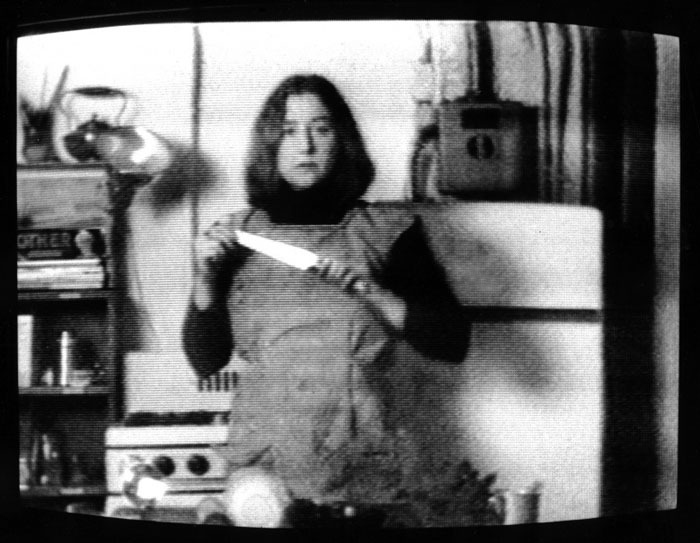
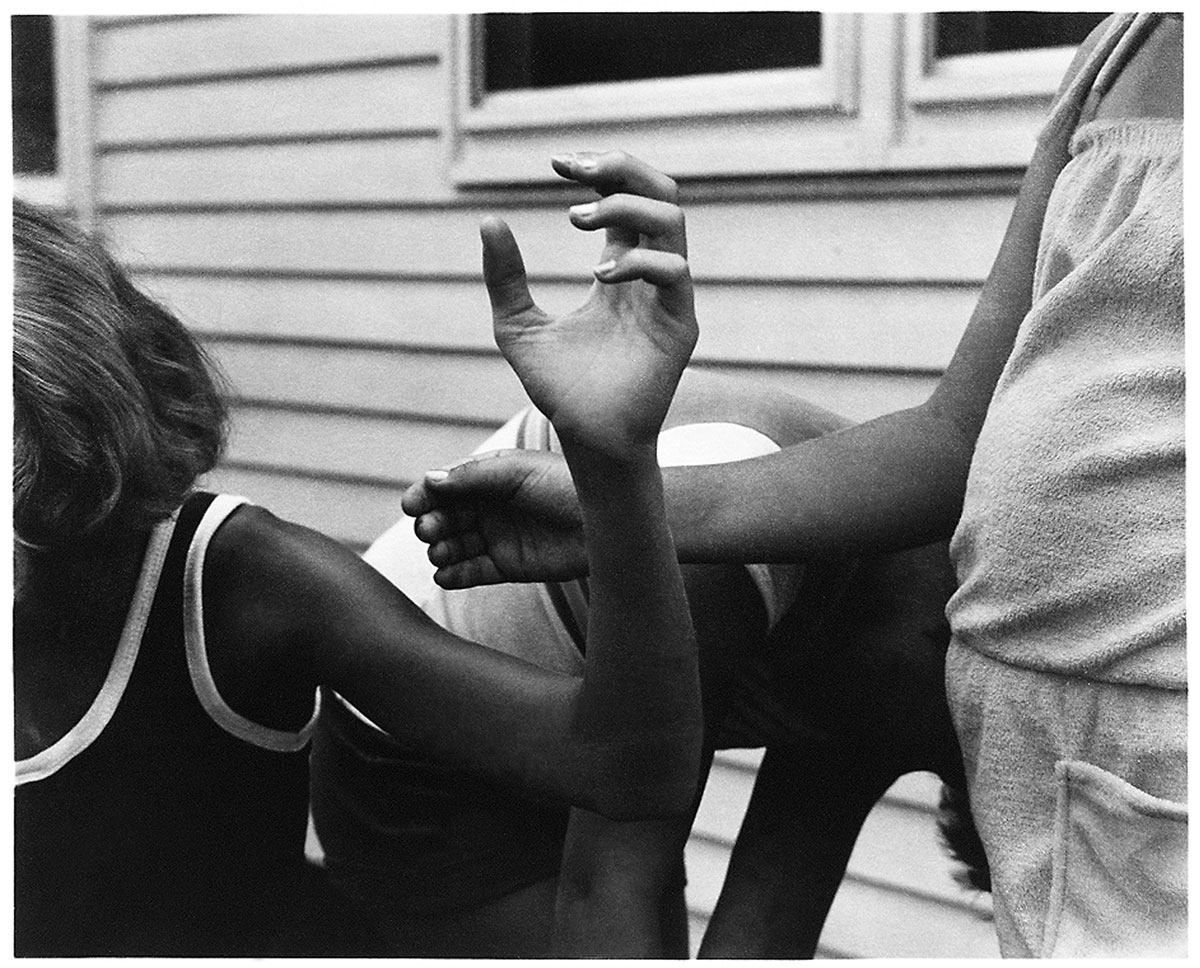
Dr Marcus Bunyan


1/ Review: Terraria by Darron Davies at Edmund Pearce Gallery, Melbourne

This is the first “magical” exhibition of photography that I have seen in Melbourne this year. Comprising just seven moderately large Archival Pigment Print on Photo Rag images mounted in white frames, this exhibition swept me off my feet. The photographs are beautiful, subtle, nuanced evocations to the fragility and enduring nature of life…

A sense of day / dreaming is possible when looking at these images. Interior / exterior, size / scale, ego / self are not fixed but fluid, like the condensation that runs down the inside of these environments (much like blood circulates our body). This allows the viewer’s mind to roam at will, to ponder the mysteries of our short, improbable, joyous life. The poetic titles add to this introspective reflection. I came away from viewing these magical, self sustaining vessels with an incredibly happy glow, more aware of my own body and its relationship to the world than before I had entered Darron Davies enveloping, terrarium world.


Darron Davies (Australian) 'The Red Shard' 2012


Darron Davies (Australian)
The Red Shard 
2012
Archival Pigment Print on Photo Rag
80 x 80cm / edition of 6


2/ Review: Confounding: Contemporary Photography at NGV International, Melbourne

Presently, contemporary photography is able to reveal intangible, constructed vistas that live outside the realm of the scientific. A photograph becomes a perspective on the world, an orientation to the world based on human agency. An image-maker takes resources for meaning (a visual language, how the image is made and what it is about), undertakes a design process (the process of image-making), and in so doing re-images the world in a way that it has never quite been seen before.
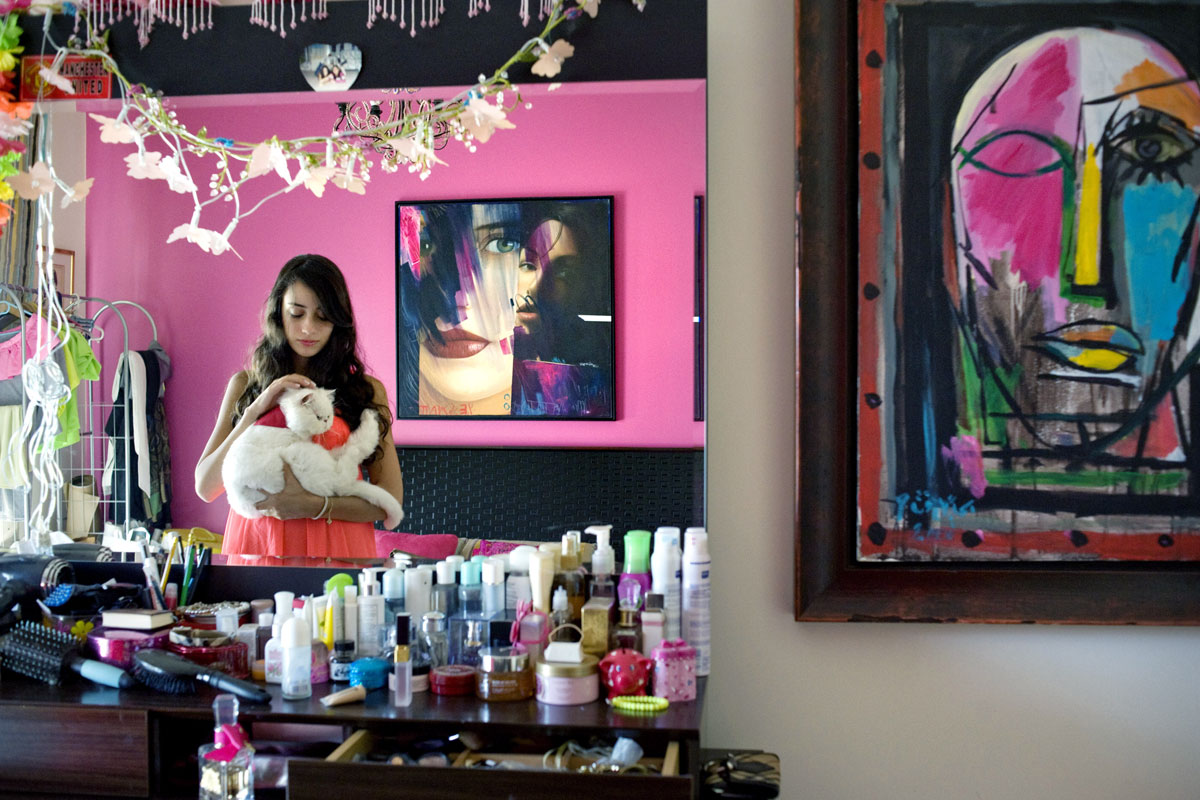
These ideas are what a fascinating exhibition titled Confounding: Contemporary Photography, at the National Gallery of Victoria, Melbourne investigates. In the confounding of contemporary photography we are no longer witnessing a lived reality but a break down of binaries such as sacred and profane, public and private, natural and artificial, real and dreamed environments as artists present their subjective visions of imagined, created worlds. Each image presents the viewer with a conundrum that investigates the relationship between photographs and the “real” world they supposedly record. How do these photographs make you feel about this constructed, confounding world? These fields of existence?
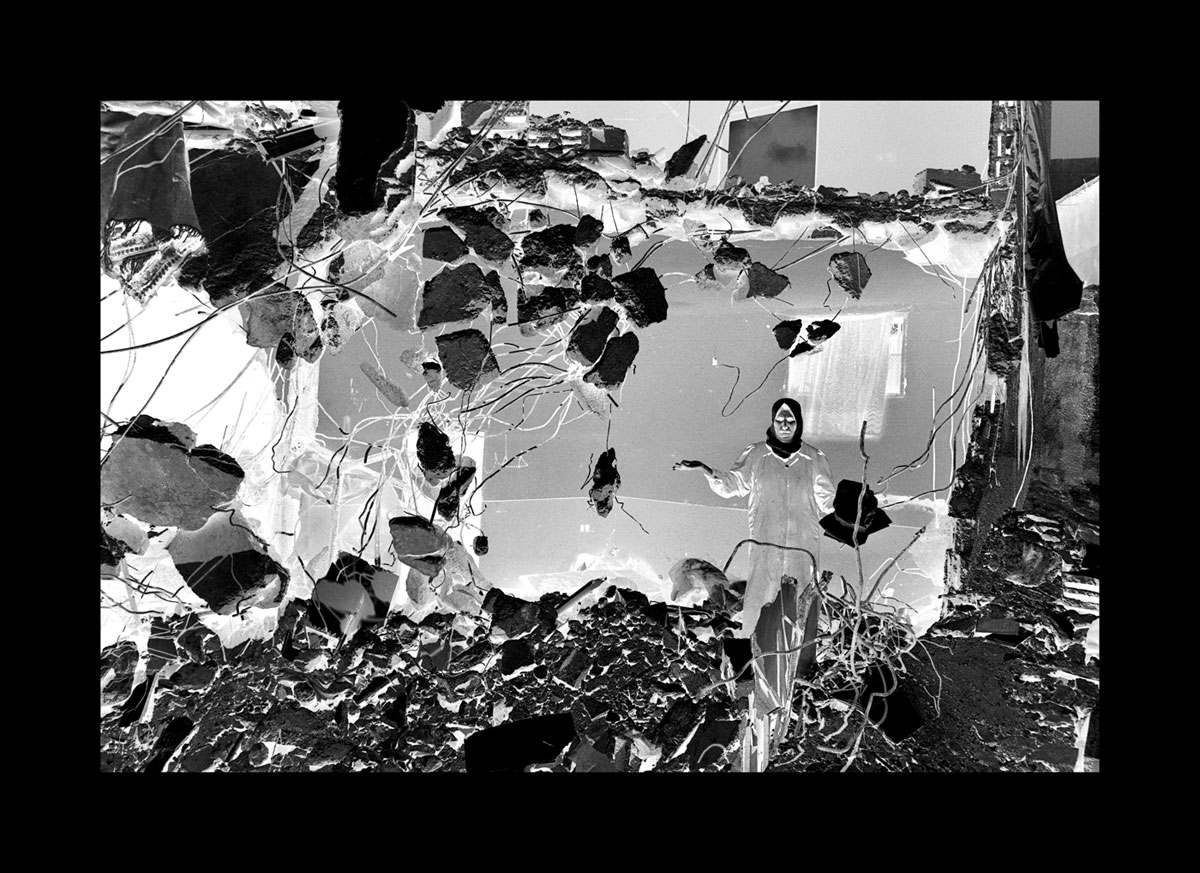
 

Thomas Demand (German b. 1964) 'Public housing' 2003


Thomas Demand (German b. 1964)
Public housing
2003
Type C photograph
100.1 x 157cm (image and sheet)
National Gallery of Victoria, Melbourne
Purchased with funds donated by the Bowness Family Fund for Contemporary Photography, 2010
© Thomas Demand/VG Bild-Kunst, Bonn. Licensed by VISCOPY, Sydney


Eliza Hutchison (Australian, b. 1965) 'The ancestors' 2004


Eliza Hutchison (Australian, b. 1965)
The ancestors
2004
Light-jet print
95.4 x 72.9cm (image), 105.4 x 82.9cm (sheet)
National Gallery of Victoria, Melbourne
Purchased with funds arranged by Loti Smorgon for Contemporary Australian Photography, 2005
© Eliza Hutchison, courtesy Murray White Room


3/ Review: Louise Bourgeois: Late Works at Heide Museum of Modern Art, Melbourne


'Louise Bourgeois: Late Works' installation view Heide Museum of Modern Art, Melbourne


Louise Bourgeois: Late Works installation view
Heide Museum of Modern Art, Melbourne
Photograph: John Gollings 2012


Louise Bourgeois (French-American, 1911-2010) 'Untitled' 2002


Louise Bourgeois (French-American, 1911-2010)
Untitled
2002
Tapestry and aluminium
43.2 x 30.5 x 30.5cm
Courtesy Cheim & Read and Hauser & Wirth
Photo: Christopher Burke
© Louise Bourgeois Trust


This is a tough, stimulating exhibition of late works by Louise Bourgeois at Heide Museum of Modern Art, Melbourne. All the main themes of the artist’s work explored over many years are represented in these late works: memory, emotion, anxiety, family, relationships, childhood, pain, desire and eroticism are all present as are female subjectivity and sexuality, expressed through the body…

Bourgeois’ work gives me an overall feeling of immersion in a world view, one that transcends the pain and speaks truth to power. Bourgeois confronted the emotion, memory or barrier to communication that generated her mood and the work. She observed, “My art is an exorcism. My sculpture allows me to re-experience fear, to give it a physicality, so that I am able to hack away at it.” By weaving, stitching and sewing Bourgeois threaded the past through the present and enacted, through artistic performance, a process of repair and reconstruction, giving meaning and shape to frustration and suffering. I have not been so lucky. My mother refuses to discuss the past, will not even come close to the subject for the pain is so great for her. I am left with a heaviness of heart, dealing with the demons of the past that constantly lurk in the memory of childhood, that insistently impinge on the man I am today. Louise Bourgeois’ sculptures brought it all flooding back as the work of only a great artist can, forcing me to become an ethical witness to her past, my past. A must see exhibition this summer in Melbourne.


4/ Exhibition: Petrina Hicks: Selected Photographs, 2013 at Helen Gory Galerie, Prahran, Melbourne

A stunning, eloquent and conceptually complex exhibition buy Petrina Hicks at Helen Gory Galerie…

I am just going to add that the photograph Venus (2013, below) is one of the most beautiful photographs that I have seen “in the flesh” (so to speak) for a long while. Hicks control over the ‘presence’ of the image, her control over the presence within the image is immaculate. To observe how she modulates the colour shift from blush of pink within the conch shell, to colour of skin, to colour of background is an absolute joy to behold. The pastel colours of skin and background only serve to illuminate the richness of the pink within the shell as a form of immaculate conception (an openness of the mind and of the body). I don’t really care who is looking at this photograph (not another sexualised male gaze!) the form is just beauty itself. I totally fell in love with this work.

Forget the neo-feminist readings, one string of text came to mind: The high fidelity of a fetishistic fecundity.


Petrina Hicks (Australian, b. 1972) 'Venus' 2013


Petrina Hicks (Australian, b. 1972)
Venus
2013
Pigment print, Edition of 8
100 x 100cm


Petrina Hicks (Australian, b. 1972) 'Enigma' 2013


Petrina Hicks (Australian, b. 1972)
Enigma
2013
Pigment print, Edition of 8
100 x 100cm


5/ Exhibition: Density by Andrew Follows at Anita Traverso Gallery, Richmond

I include this in my list of magnificent photographic exhibitions for the year not because I curated it, but because of the conceptualisation, the unique quality of the images and the tenacity of a visually impaired artist to produce such memorable work.

A wonderful exhibition by vision impaired photographer Andrew Follows at Anita Traverso Gallery, Richmond. It has been a real pleasure to mentor Andrew over the past year and to see the fruits of our labour is incredibly satisfying. The images are strong, elemental, atmospheric, immersive. Due to the nature of Andrew’s tunnel vision there are hardly any traditional vanishing points within the images, instead the ‘plane of existence’ envelops you and draws you in.


Density n.

The degree of optical opacity of a medium or material, as of a photographic negative;

Thickness of consistency;

Complexity of structure or content.


Andrew Follows (Australian, d. 2019) 'Number 31, Eltham' 2013


Andrew Follows (Australian, d. 2019)
Number 31, Eltham
2013
Digital photograph on archival cotton rag
130 cm x 86.5cm


Andrew Follows (Australian, d. 2019) 'Green, Montsalvat' 2013


Andrew Follows (Australian, d. 2019
Green, Montsalvat
2013
Digital photograph on archival cotton rag
130 cm x 86.5 cm


Carol Jerrems (Australian, 1949-1980) 'Mark and Flappers' 1975


Carol Jerrems (Australian, 1949-1980)
Mark and Flappers
1975
Gelatin silver photograph
National Gallery of Australia, Canberra
© Ken Jerrems and the Estate of Lance Jerrems


Carol Jerrems (Australian, 1949-1980) 'Carol Jerrems, self-portrait with Esben Storm' c. 1975


Carol Jerrems (Australian, 1949-1980)
Carol Jerrems, self-portrait with Esben Storm
c. 1975
Gelatin silver photograph
National Gallery of Australia, Canberra
Gift of Mrs Joy Jerrems 1981
© Ken Jerrems and the Estate of Lance Jerrems


6/ Review: Carol Jerrems: photographic artist at the Monash Gallery of Art, Wheelers Hill, Melbourne

This is a fascinating National Gallery of Australia exhibition about the work of Australian photographer Carol Jerrems at Monash Gallery of Art, Wheelers Hill – in part both memorable, intimate, informative, beautiful, uplifting and disappointing…

The pity is that she died so young for what this exhibition brought home to me was that here was an artist still defining, refining her subject matter. She never had to time to develop a mature style, a mature narrative as an artist (1975-1976 seems to be the high point as far as this exhibition goes). This is the great regret about the work of Carol Jerrems. Yes, there is some mediocre work in this exhibition, stuff that really doesn’t work at all (such as the brothel photographs), experimental work, individual and collective images that really don’t impinge on your consciousness. But there are also the miraculous photographs (and for a young photographer she had a lot of those), the ones that stay with you forever. The right up there, knock you out of the ball park photographs and those you cannot simply take away from the world. They live on in the world forever.

Does Jerrems deserve to be promoted as a legend, a ‘premier’ of Australian photography as some people are doing? Probably not on the evidence of this exhibition but my god, those top dozen or so images are something truly special to behold. Their ‘presence’ alone – their physicality in the world, their impact on you as you stand before them – guarantees that Jerrems will forever remain in the very top echelons of Australian photographers of all time not as a legend, but as a women of incredible strength, intelligence, passion, determination and vision.


7/ Exhibition: Edward Steichen & Art Deco Fashion at NGV International, Melbourne

What a gorgeous exhibition. It’s about time Melbourne had a bit of style put back into the National Gallery of Victoria, and this exhibition hits it out of the park. Not only are the photographs absolutely fabulous but the frocks are absolutely frocking as well. Well done to the NGV for teaming the photographs with the fashion and for a great install (makes a change to see 2D and 3D done so well together). Elegant, sophisticated and oozing quality, this is a sure fire winner….


Installation photograph of the exhibition 'Edward Steichen & Art Deco Fashion' at NGV International


Installation photograph of the exhibition Edward Steichen & Art Deco Fashion at NGV International


Edward Steichen (American 1879-1973, emigrated to United States 1881, worked in France 1906-1923) 'Marlene Dietrich' 1934


Edward Steichen (American 1879-1973, emigrated to United States 1881, worked in France 1906-1923)
Marlene Dietrich
1934
Gelatin silver photograph
Courtesy Condé Nast Archive
© 1924 Condé Nast Publications


8/ Exhibition: Reinventing the Wheel: the Readymade Century at the Monash University Museum of Art (MUMA), Melbourne

Monash University Museum of Art (MUMA) is generating an enviable reputation for holding vibrant, intellectually stimulating group exhibitions on specific ideas, concepts and topics. This exhibition is no exception. It is one of the best exhibitions I have seen in Melbourne this year. Accompanied by a strong catalogue with three excellent essays by Thierry de Duve, Dr Rex Butler and Patrice Sharkey, this is a must see exhibition for any Melbourne art aficionado before it closes.

“This transition is a flash, a boundary where this becomes that, not then, not that – falling in love, jumping of a bridge. Alive : dead; presence : absence; purpose : play; mastery : exhaustion; logos : silence; worldly : transcendent. Not this, not that. It is an impossible presence, present – a moment of unalienated production that we know exists but we cannot define it, place it. How can we know love? We can speak of it in a before and after sense but it is always a past moment that we recognise.”

Dr Marcus Bunyan. Made Ready: A Philosophy of Moments. December 2013


Jeff Koons (American, b. 1955) 'Balloon dog (Red)' 1995 designed


Jeff Koons (American, b. 1955)
Balloon dog (Red)
1995 designed
Porcelain, ed. 1113/2300
11.3 x 26.3 cm diameter
National Gallery of Victoria, Melbourne
Photo: Marcus Bunyan


Andrew Liversidge (Australian, b. 1979) 'IN MY MIND I KNOW WHAT I THINK BUT THAT’S ONLY BASED ON MY EXPERIENCE' 2009


Andrew Liversidge (Australian, b. 1979)
IN MY MIND I KNOW WHAT I THINK BUT THAT’S ONLY BASED ON MY EXPERIENCE
2009
10,000 $1 coins (AUD)
30 x 30 x 30cm
Courtesy of the artist and The Commercial Gallery, Sydney
Photo: Marcus Bunyan


9/ Review: Claudia Terstappen: In The Shadow Of Change at the Monash Gallery of Art, Wheelers Hill, Melbourne


Claudia Terstappen (Australian born Germany, b. 1959) 'Cabbage trees (Queensland, Australia)' 2002


Claudia Terstappen (Australian born Germany, b. 1959)
Cabbage trees (Queensland, Australia)
2002
From the series Our ancestors 1990-
Gelatin silver print
29 x 29cm
Courtesy  of the artist


Claudia Terstappen (Australian born Germany, b. 1959) 'Zion Park (USA)' 1996


Claudia Terstappen (Australian born Germany, b. 1959)
Zion Park (USA)
1996
From the series Sacred land of the Navajo Indians 1990-
Gelatin silver print
37 x 37cm
Courtesy  of the artist


Without doubt this is the best pure photography exhibition I have seen this year in Melbourne. The exhibition is stimulating and enervating, the image making of the highest order in its aesthetic beauty and visual complexity. The artist explores intangible spaces which define our physical and spiritual relationship with the un/known world…

In Terstappen’s work there is no fixed image and no single purpose, a single meaning, or one singular existence that the images propose. They transcend claims about the world arising from, for example, natural or scientific attitudes or theories of the ontological nature of the world. As the artist visualises, records the feeling of the facts, such complex and balanced images let the mind of the viewer wander in the landscape. In their fecundity the viewer is enveloped in that situation of not knowing. There is the feeling of the landscape, a sensitivity to being “lost” in the landscape, in the shadow of ‘Other’, enhanced through the modality of the printing. Dreamworld vs analytical / descriptive, there is the enigma of the landscape and its spiritual places. Yes, the sublime, but more an invocation, a plea to the gods for understanding. This phenomenological prayer allows the artist to envelop herself and the viewer in the profundity – the great depth, intensity and emotion – of the landscape. To be ‘present’ in the the untrammelled places of the world as (divine) experience…

I say to you that this is the most sophisticated reading of the landscape that I have seen in a long time – not just in Australia but from around the world. This is such a joy of an exhibition to see that you leave feeling engaged and uplifted. Being in the gallery on your own is a privilege that is hard to describe: to see (and feel!) landscape photography of the highest order and by an Australian artist as well.


10/ Exhibition: Joan Ross: Touching Other People’s Shopping at Bett Gallery, Hobart

The claiming of things
The touching of things
The digging of land
The tagging of place
The taking over of the world

Tag and capture.
Tag and capture.
Shop, dig, spray, destroy.


An ironic critique of the pastoral, neo/colonial world, tagged and captured in the 21st century.

Excellent work. The construction, sensibility and humour of the videos is outstanding. I also responded to the two works Tag and capture and Shopping for butterfly (both 2013, below).


Joan Ross (Australian, b. 1961) 'Tag and capture' 2013


Joan Ross (Australian, b. 1961)
Tag and capture
2013
Hand painted pigment print on cotton rag paper
50 x 47cm (image size)
Edition of 3


Joan Ross (Australian, b. 1961) 'Shopping for butterfly' 2013


Joan Ross (Australian, b. 1961)
Shopping for butterfly
2013
Hand painted pigment print on cotton rag paper
51.5 x 50cm (image size)
Edition of 3


LIKE ART BLART ON FACEBOOK

Back to top