Review: ‘Carol Jerrems: photographic artist’ at the Monash Gallery of Art, Wheelers Hill, Melbourne

Exhibition dates: 6th July – 30th September 2013

A National Gallery of Australia exhibition

PLEASE NOTE: THIS POSTING CONTAINS ART PHOTOGRAPHS OF FEMALE NUDITY – IF YOU DO NOT LIKE PLEASE DO NOT LOOK, FAIR WARNING HAS BEEN GIVEN


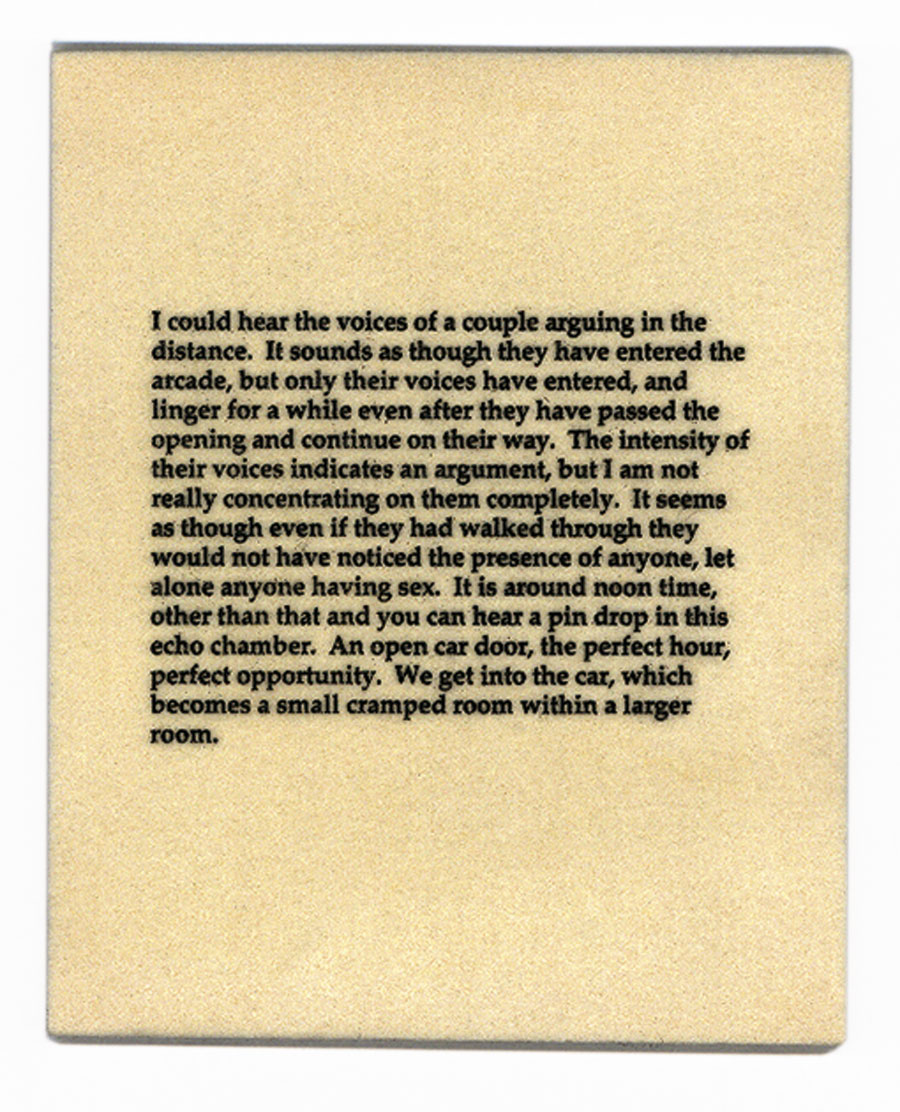
Carol Jerrems (Australian, 1949-1980) 'A poem' 1970 (installation view)


Carol Jerrems (Australian, 1949-1980)
A poem (installation view)
1970
Gelatin silver photographs, letterpress, installed at Monash Gallery of Art
Photograph: Katie Tremschnig


The one and only…

This is a fascinating National Gallery of Australia exhibition about the work of Australian photographer Carol Jerrems at Monash Gallery of Art, Wheelers Hill – in part both memorable, intimate, informative, beautiful, uplifting and disappointing. Let me explain what I mean.

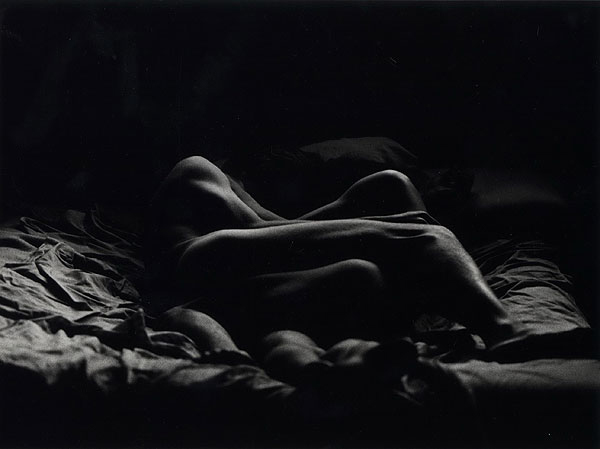
The first section of the exhibition is devoted to Jerrems student work, notably her experiments with overlapping bodies, depth of field, movement and the layering of space and time that can be seen in her vibrant photo boooks and concertina books (see installation photographs below), accompanied by her own poems. This early work, which I had never seen, provides a wonderful insight into how the later images came to be: the shooting down hallways into the light, the pairing and tripling of bodies one behind the other, and how she constructed narrative in her later set piece photographs. This is the informative part of the exhibition.

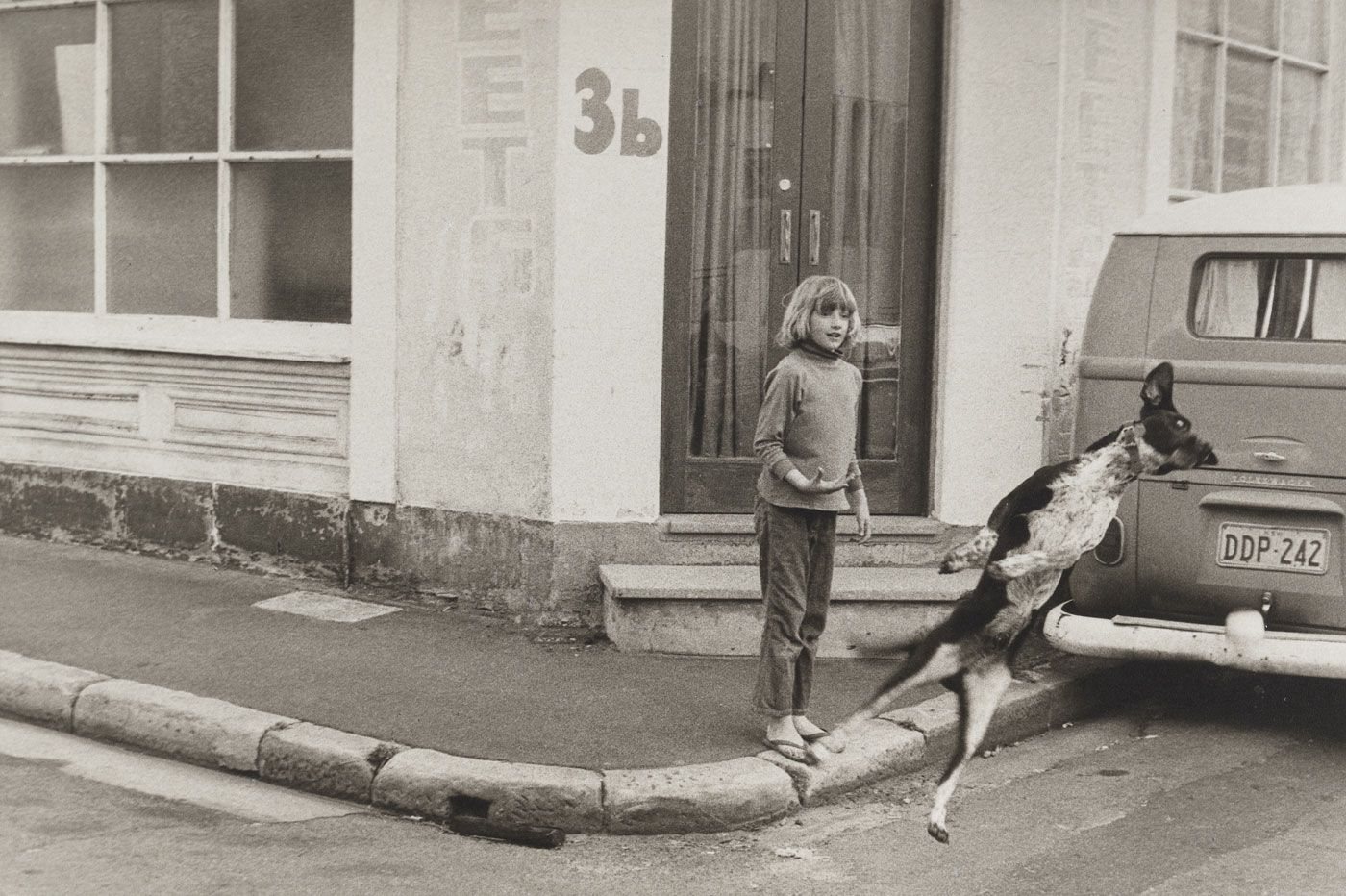
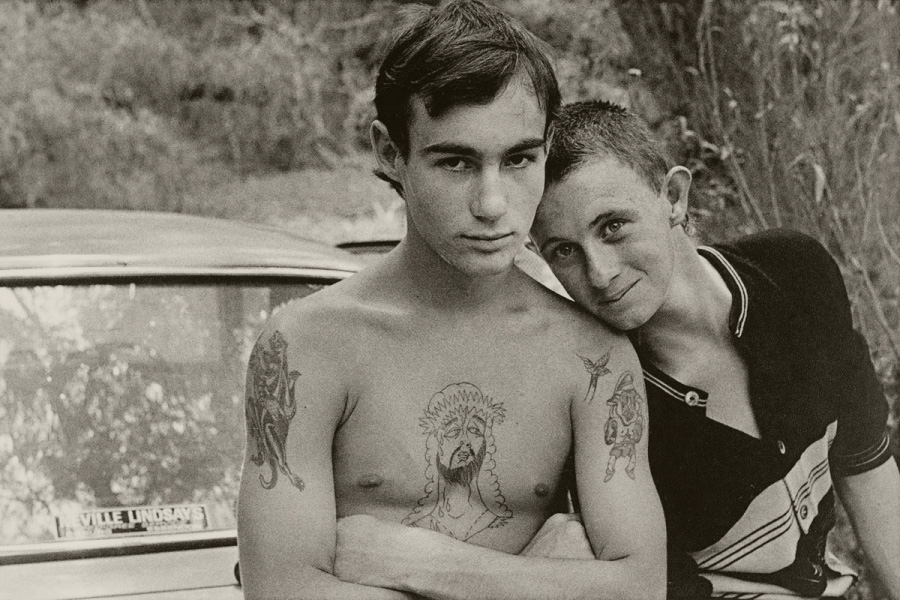
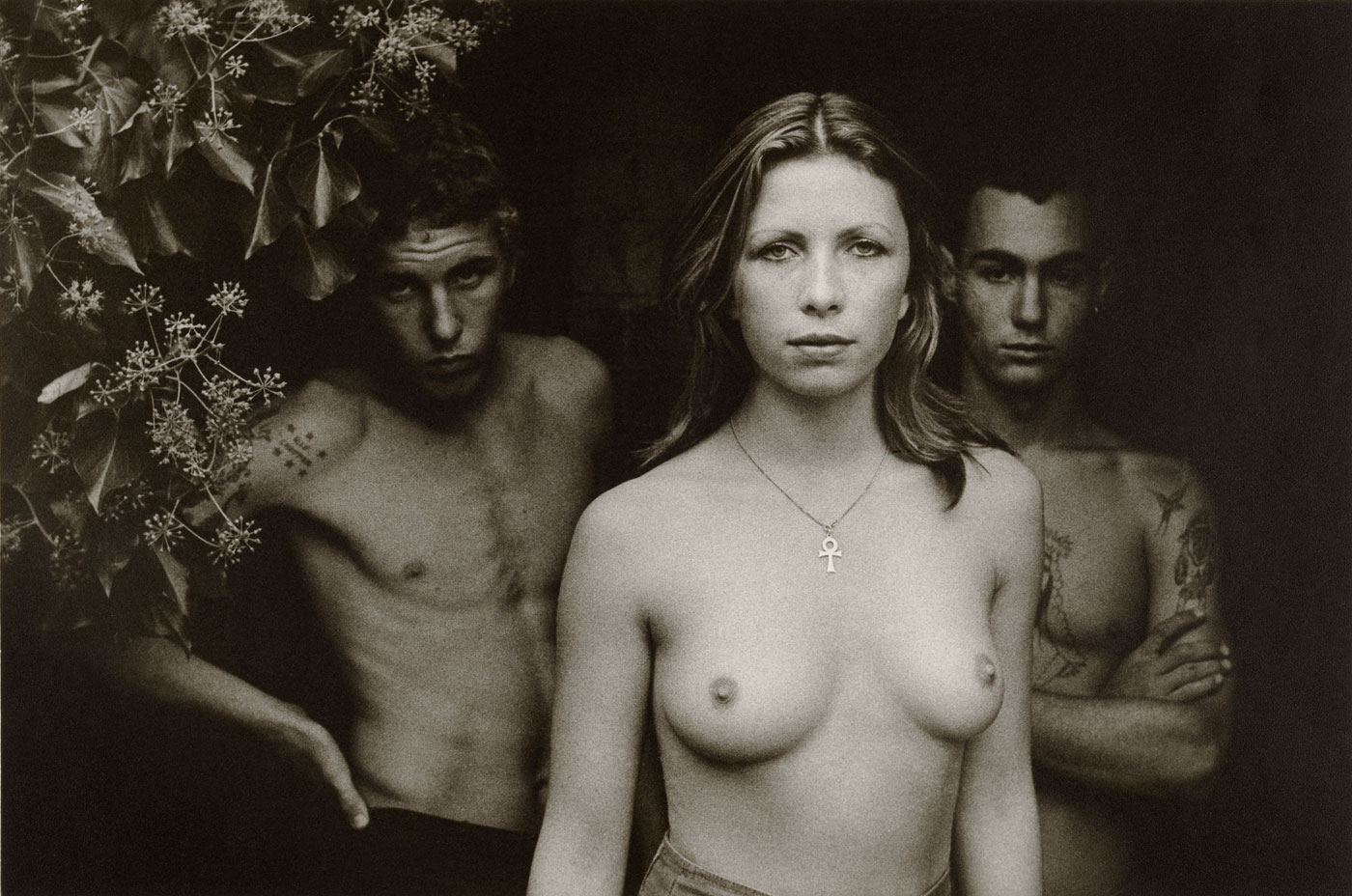
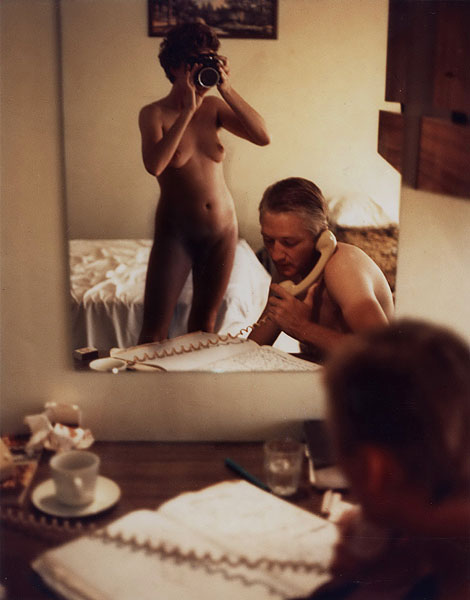
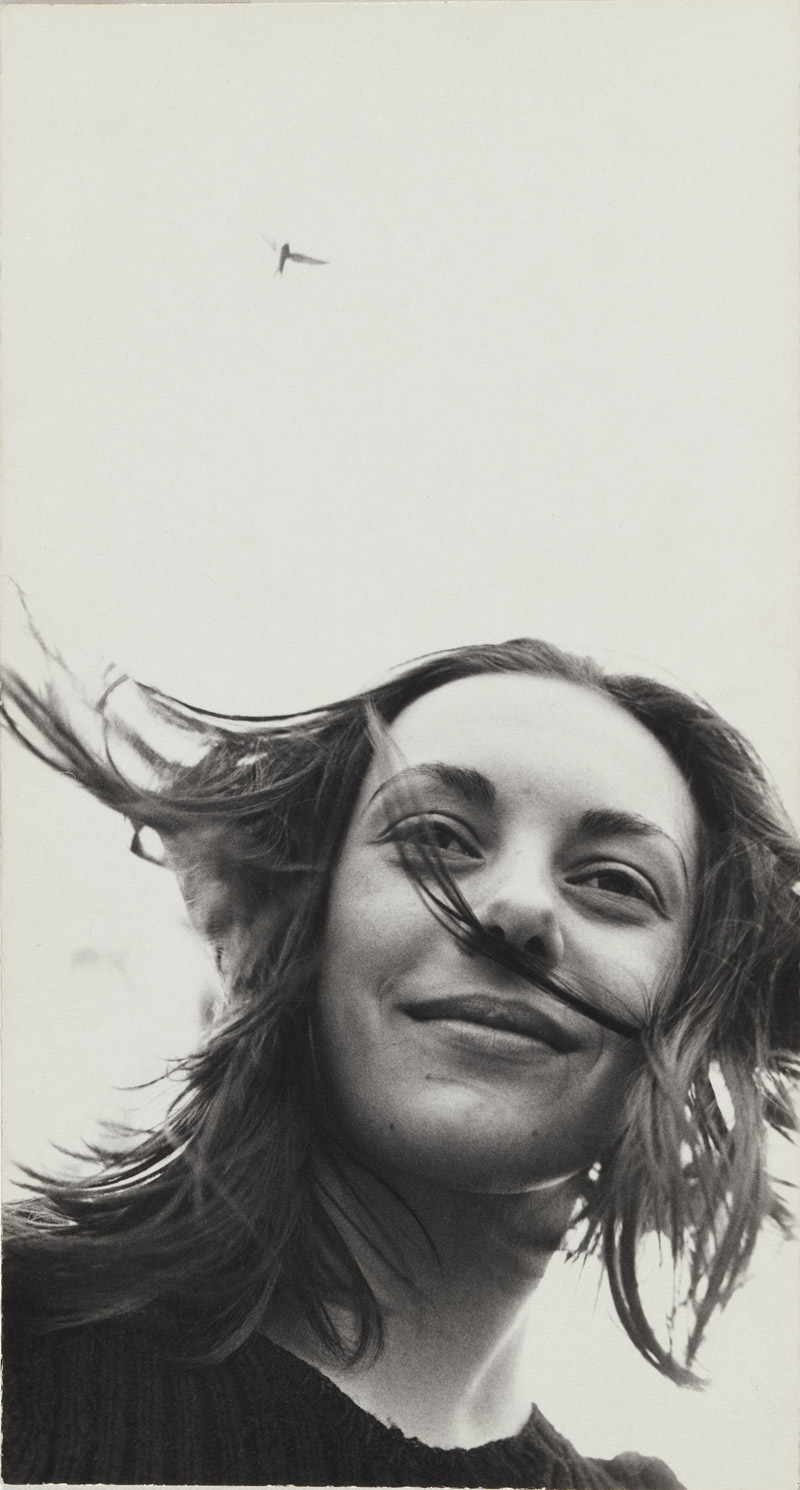
As the exhibition moves on to the main body of Jerrems work there, in all their glory, are the famous images: Evonne Goolagong, Melbourne (1973), Flying dog (1973), Vale Street (1975), Mark and Flappers (1975), Mark Lean: rape game (1975), Mozart Street (1975), Butterfly behind glass [Red Symons from Skyhooks] (1975), Lyn (1976), Lyn and the Buick (1976), Dusan and Esben, Cronulla (1977), the self portraits and the lads with their car down by the river bank. These are memorable, intimate images, at the top of tree in terms of their importance as some of the greatest images taken by any Australian photographer of all time. They are right up there with the very best and there is no denying this. But what else is there? Take away the top dozen images of any photographer and look at the next twenty images. Now, what do you see? In Jerrems case, the results (as evidenced by this exhibition) are a little disappointing. Of course, this is not unusual with any artist.

In her low key, diaristic documentary style, Jerrems focuses on life before her lens. She finds joy, intimacy, love, danger, transgression and rape; she portrays women and gay liberation, youth on the streets, sharpies and the indigenous population. As Christopher Allen notes, sexuality and its darker side was never far from the surface in Jerrems work and there was a “mix of defiance, erotic assertiveness and vulnerability of that time… [an] intimate closeness to the subject and the direct and unmodified transcription of the world before her.”1 Her intelligent imaging of everyday subject matter “produced a body of photographs that symbolised the hopes and aspirations of the counter-culture in Australia in the 1970s,” but this investigation did not produce particularly memorable photographs. Outside the top group of images I am struggling to remember her other images.

But what we must remember is that this Australia was another time and place. Art photography books had only just arrived in Melbourne in 1970 and Jerrems was one of the first women to point her camera at other women (producing the book A Book About Australian Women in 1974) and people of the revolution. These are socially important documents in terms of Australian (photographic) history. I believe that she said to herself – I know who I am, but I want to know what other people are like – and she transcribed how she was thinking about the world to the people around her through her photographs. Building on the legacy of artists like Henri Cartier-Bresson, André Kertész and Robert Frank, her photographs are like an after-image of some other place, some other Australia that is only forty years ago but now seems eons away in time and space.

What we take for granted, in terms of sexual liberation, freedom of action and speech, she had to fight for. She had to fight for photographic, conceptual and technical knowledge to arm herself as an intelligent women (for that is what she was), so that she could image / imagine the world. She had to fight damn hard for these things – and then she upped the ante and pushed even harder, even further. These are dangerous photos, for women and gay men were vulnerable and threatened, marginalised and they were a target. Even in the act of photographing, her going into these places (brothels for example), she would have been a target. Does this make for memorable photographs?  Not necessarily, and you can see this in the unevenness of the results of her investigation. But socially these are very important images.

The pity is that she died so young for what this exhibition brought home to me was that here was an artist still defining, refining her subject matter. She never had to time to develop a mature style, a mature narrative as an artist (1975-1976 seems to be the high point as far as this exhibition goes). This is the great regret about the work of Carol Jerrems. Yes, there is some mediocre work in this exhibition, stuff that really doesn’t work at all (such as the brothel photographs), experimental work, individual and collective images that really don’t impinge on your consciousness. But there are also the miraculous photographs (and for a young photographer she had a lot of those), the ones that stay with you forever. The right up there, knock you out of the ball park photographs and those you cannot simply take away from the world. They live on in the world forever.

Does Jerrems deserve to be promoted as a legend, a ‘premier’ of Australian photography as some people are doing? Probably not on the evidence of this exhibition but my god, those top dozen or so images are something truly special to behold. Their ‘presence’ alone – their physicality in the world, their impact on you as you stand before them – guarantees that Jerrems will forever remain in the very top echelons of Australian photographers of all time not as a legend, but as a women of incredible strength, intelligence, passion, determination and vision.

Dr Marcus Bunyan


1/ Allen, Christopher. “Between suburbia and radicalism,” in The Australian newspaper, October 20th, 2012 [Online] Cited 20/09/2013 no longer available online.


Many thankx to Mark Hislop for his help and Monash Gallery of Art for allowing me to publish the photographs in the posting. Please click on the photographs for a larger version of the image.


Carol Jerrems (Australian, 1949-1980) 'A poem' 1970 (installation view)


Carol Jerrems (Australian, 1949-1980)
A poem
1970
Gelatin silver photographs, letterpress, installed at Monash Gallery of Art
Photograph: Katie Tremschnig


Carol Jerrems (Australian, 1949-1980) 'Jim Fields, a portrait' 1970 (installation view)


Carol Jerrems (Australian, 1949-1980)
Jim Fields, a portrait (installation view)
1970
Gelatin silver photographs, letterpress, installed at Monash Gallery of Art
Photograph: Katie Tremschnig


Carol Jerrems (Australian, 1949-1980) 'The Royal Melbourne Show.....1968, an essay' (L) and 'Movement with Zara' (R) 1968


Carol Jerrems (Australian, 1949-1980)
The Royal Melbourne Show…1968, an essay (L) and Movement with Zara (R)
1968
Gelatin silver photographs, letterpress, installed at Monash Gallery of Art
Photograph: Katie Tremschnig


Living in the seventies

Carol Jerrems’s gritty, poetic and elusive images show people trying to find a new way of life and action in the 1970s. Her images have come to define a decade in Australia’s history. In contrast to an earlier generation of internationally renowned magazine photojournalists such as David Moore, the new generation did not seek commissioned commercial or magazine work and took instead a low key intimate approach with a diaristic personal-documentary style of imagery focussed on themselves and their own, mostly urban, environments. Jerrems put her camera where the counter culture suggested; women’s liberation, social inclusiveness for street youths and Indigenous people in the cities who were campaigning for justice and land rights.

Carol Jerrems was the first contemporary Australian woman photographer to have work acquired by a number of museums including the National Gallery of Australia. The National Gallery holds an extensive archive of Jerrems photographs and film work gifted by the artist’s mother Joy Jerrems in 1983. The current exhibition concentrates on prints signed or formally exhibited, by Carol Jerrems in her lifetime dating from 1968-1978. MGA is the only Victorian venue to host the National Gallery of Australia’s major new exhibition Carol Jerrems: photographic artist. This extraordinary exhibition tells the story of Jerrems’ complex and highly influential practice. Drawn from the National Gallery of Australia’s massive holdings of the artist’s work, Carol Jerrems: photographic artist features more than 100 works, most of which have not been seen in Melbourne since Jerrems lived here during the late ’60s and ’70s.

Jerrems was born in Melbourne in 1949 and studied photography at Prahran Technical College under Paul Cox and Athol Shmith. Although she practised as an artist for only a decade, Jerrems has acquired a celebrated place in the annals of Australian photography. Her reputation is based on her intensely compassionate, formally striking pictures, her intimate connection with the people involved in social movements of the day, and her role in the promotion of ‘art photography’ in this country.

Jerrems was one of several Australian women whose work during the 1970s challenged the dominant ideas of what a photographer was and how they worked. She adopted a collaborative approach to making photographs, often featuring friends and associates, and sought a photographic practice that would bring about social change. Her gritty, poetic and elusive images show people trying to find a new way of life in the 1970s. Her images have come to define Melbourne in a decade of great social and political upheaval.

Carol Jerrems: photographic artist pays tribute to this important period in recent Australian history, showing how Jerrems participated in and helped to define Melbourne’s subculture and style in the 1970s. MGA Director Shaune Lakin said Jerrems’ vision would particularly resonate with Melbourne audiences, especially as her vision was revealed across the full breadth of her work. “Carol Jerrems: photographic artist is a perfect story for MGA to tell, as it is also the story of Melbourne in the 1970s. Jerrems captured Melbourne’s sub-cultures – sharpies, mods, hippies, feminists and gay liberationists – with powerful images that engage the viewer intimately with her subjects.”

As Dr Lakin notes, this is a rare chance to see the works Jerrems intended for exhibition: “Carol Jerrems: photographic artist concentrates on prints signed or formally exhibited by Jerrems in her lifetime, most returning to Melbourne for the first time. In addition to many of the images for which Jerrems is rightly famous, visitors to MGA can see Jerrems’ early work, including her extraordinary concertina books and other photo books,” Lakin said.”

Press release from the Monash Gallery of Art website


Carol Jerrems (Australian, 1949-1980) 'Flying dog' 1973


Carol Jerrems (Australian, 1949-1980)
Flying dog
1973
Gelatin silver photograph
National Gallery of Australia, Canberra
Purchased 1976
© Ken Jerrems and the Estate of Lance Jerrems


Carol Jerrems (Australian, 1949-1980) 'Mark and Flappers' 1975


Carol Jerrems (Australian, 1949-1980)
Mark and Flappers
1975
Gelatin silver photograph
National Gallery of Australia, Canberra
© Ken Jerrems and the Estate of Lance Jerrems


Carol Jerrems (Australian, 1949-1980) 'Vale Street' 1975


Carol Jerrems (Australian, 1949-1980)
Vale Street
1975
Gelatin silver photograph
National Gallery of Australia, Canberra
Purchased 1976
© Ken Jerrems and the Estate of Lance Jerrems


From the outset, Jerrems was interested in the expressive possibilities of the photographic medium, declaring that she was ‘an artist whose tool of expression is the camera’. She concentrated on photographing people; her subjects included her students, and her friends and acquaintances. Her first photographs were documentary in style, but by the mid-1970s the scenes she photographed were often contrived. She used a non-exploitative approach, based on the consent of her subjects. For Jerrems, photography had a crucial social role: ‘the society is sick and I must help change it’. Her photographs were a means of ‘bringing people together’ and offered affirmative views of certain aspects of contemporary life. With Virginia Fraser, she published A Book About Australian Women (Melbourne, 1974), to which she contributed the photographs…

Although one critic regarded her work as uneven – ‘she took a casual approach’ – Jerrems’s talents as a photographer were widely recognised. With her camera ‘firmly pointed at the heart of things’, she produced a body of photographs that symbolised the hopes and aspirations of the counter-culture in Australia in the 1970s.

Helen Ennis, Australian Dictionary of Biography Volume 14, (MUP), 1996


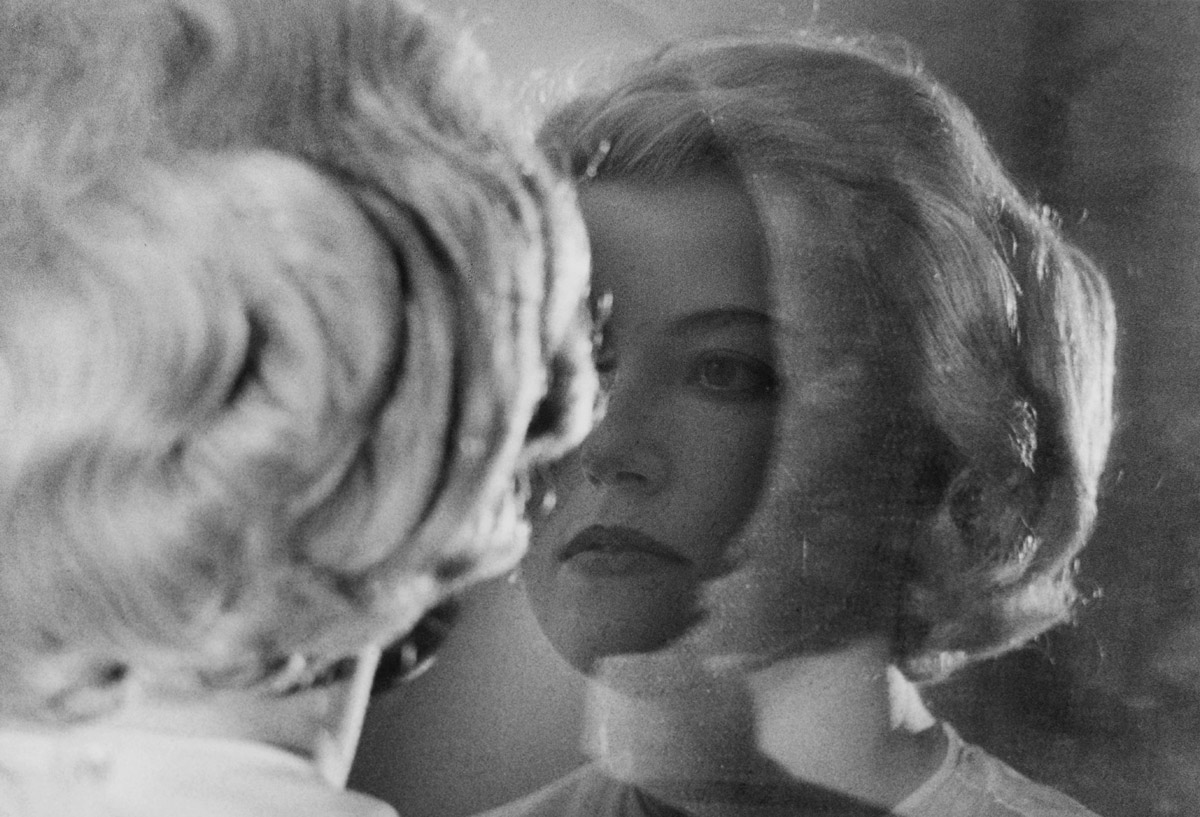
Carol Jerrems (Australian, 1949-1980) 'Mirror with a memory: motel room' 1977


Carol Jerrems (Australian, 1949-1980)
Mirror with a memory: motel room
1977
Type C colour photograph
National Gallery of Australia, Canberra
Gift of Mrs Joy Jerrems 1981
© Ken Jerrems and the Estate of Lance Jerrems


Carol Jerrems (Australian, 1949-1980) 'Boys' 1973


Carol Jerrems (Australian, 1949-1980)
Boys
1973
Gelatin silver photograph
National Gallery of Australia, Canberra
© Ken Jerrems and the Estate of Lance Jerrems


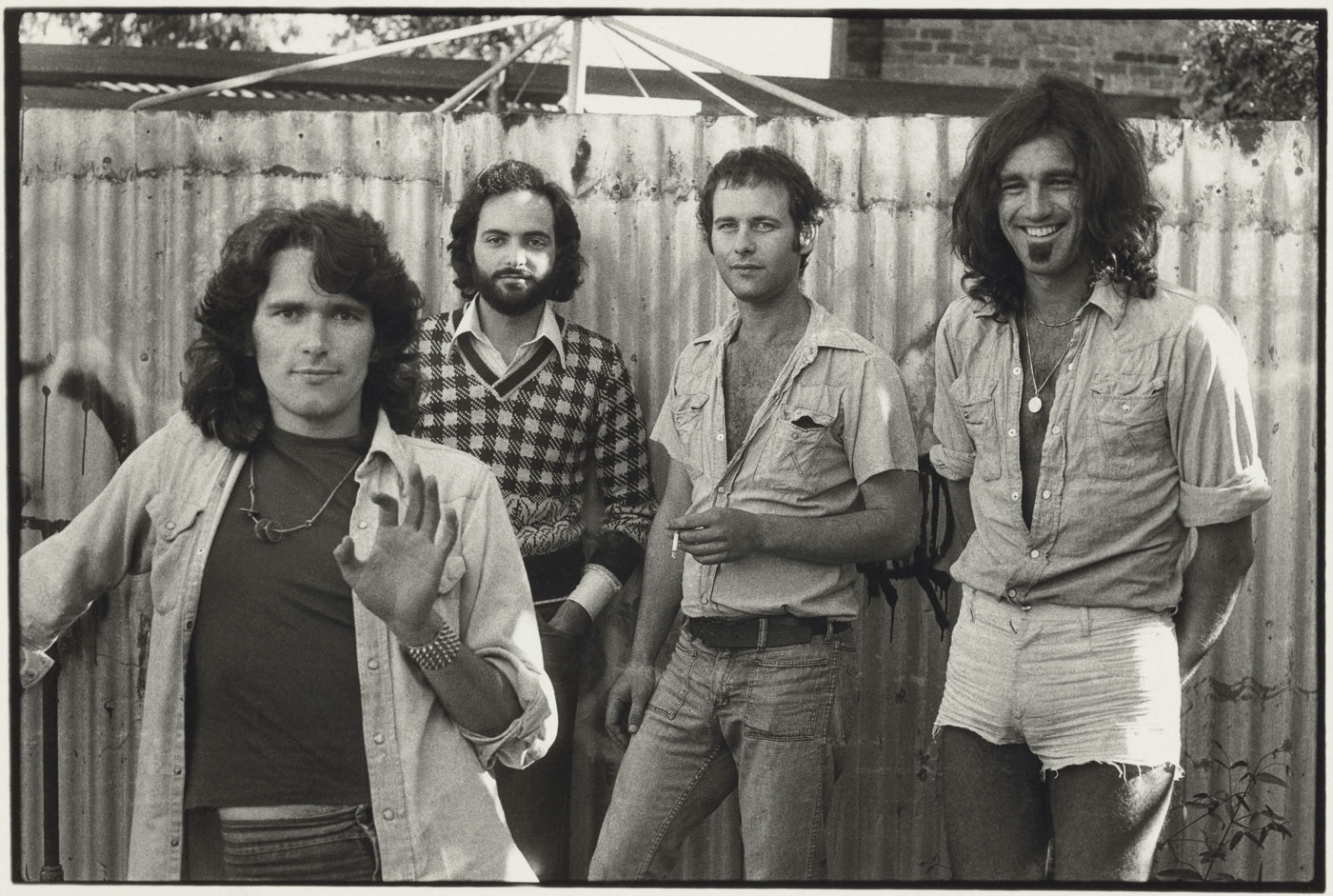
Carol Jerrems (Australian, 1949-1980) 'Boys' 1973  'Outback Press Melbourne' 1974


Carol Jerrems (Australian, 1949-1980)
Outback Press Melbourne
1974
left to right: Colin Talbot (writer), Alfred Milgrom (publisher), Morry Schwartz (entrepreneur, publisher, now publisher of The Monthly), Mark Gillespie (singer/songwriter)
Gelatin silver photograph
National Gallery of Australia, Canberra
Gift of Mrs Joy Jerrems 1981
© Ken Jerrems and the Estate of Lance Jerrems


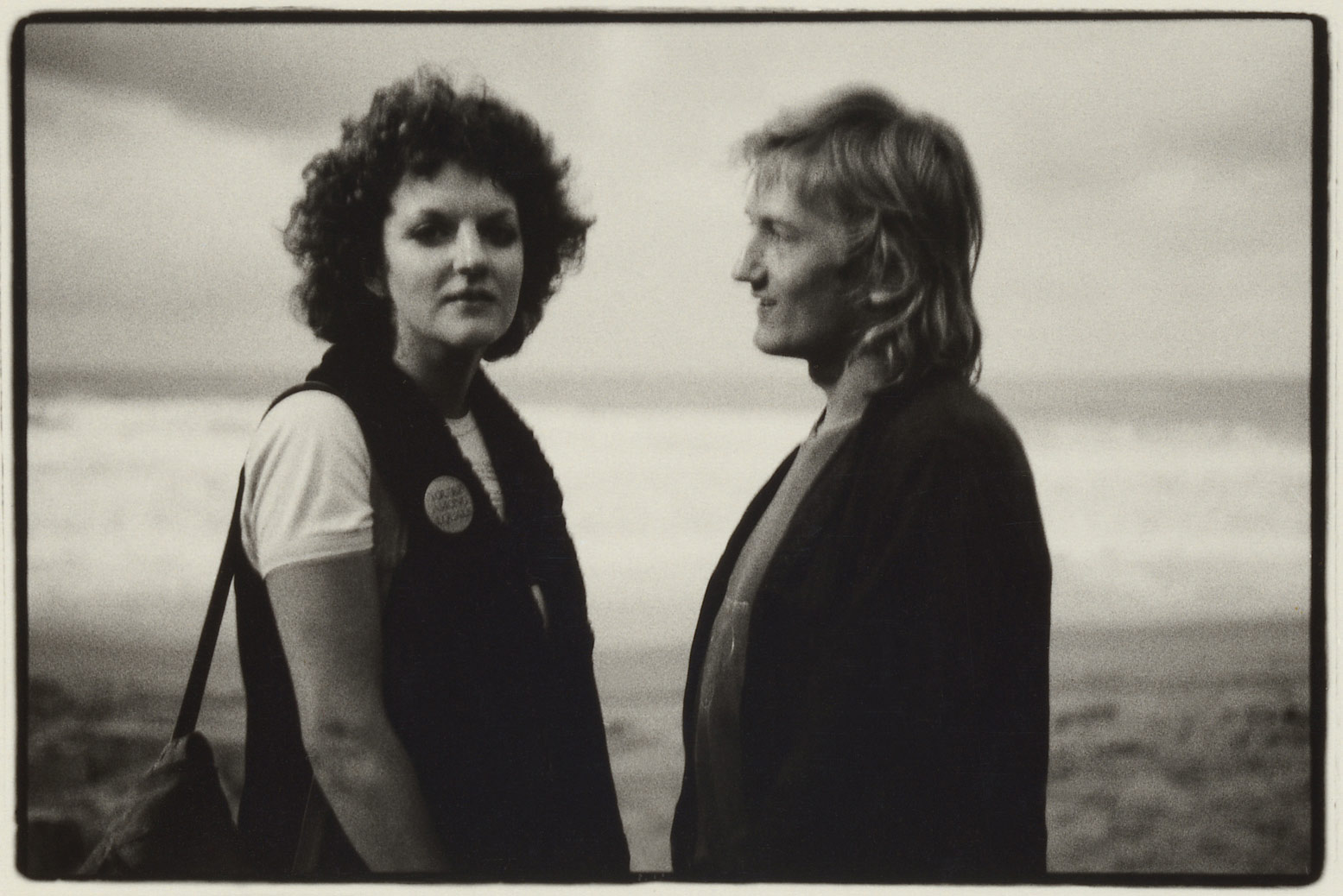
Carol Jerrems (Australian, 1949-1980) 'Carol Jerrems, self-portrait with Esben Storm' c.1975


Carol Jerrems (Australian, 1949-1980)
Carol Jerrems, self-portrait with Esben Storm
c. 1975
Gelatin silver photograph
National Gallery of Australia, Canberra
Gift of Mrs Joy Jerrems 1981
© Ken Jerrems and the Estate of Lance Jerrems


Carol Jerrems (Australian, 1949-1980) 'Dusan and Esben, Cronulla' 1977


Carol Jerrems (Australian, 1949-1980)
Dusan and Esben, Cronulla
1977
Gelatin silver photograph
20.1 x 30.3cm
© Ken Jerrems and the Estate of Lance Jerrems


Carol Jerrems (Australian, 1949-1980) 'Butterfly behind glass [Red Symons from Skyhooks]' 1975


Carol Jerrems (Australian, 1949-1980)
Butterfly behind glass [Red Symons from Skyhooks]
1975
Gelatin silver photograph
National Gallery of Australia, Canberra
Gift of Mrs Joy Jerrems 1981
© Ken Jerrems and the Estate of Lance Jerrems


Carol Jerrems (Australian, 1949-1980) 'Jane Oehr, “Womenvision”, Filmaker's Co-Op' 1973


Carol Jerrems (Australian, 1949-1980)
Jane Oehr, “Womenvision”, Filmaker’s Co-Op
1973
From A Book about Australian Women (Outback Press, 1974)
Gelatin silver photograph
National Gallery of Australia, Canberra
Gift of Mrs Joy Jerrems 1981
© Ken Jerrems and the Estate of Lance Jerrems


Carol Jerrems (Australian, 1949-1980) 'Performers on stage,' Hair', Metro Theatre Kings Cross, Sydney, January 1970 [Jim Sharman Director cast included Reg Livermore]' 1970


Carol Jerrems (Australian, 1949-1980)
Performers on stage, ‘Hair’, Metro Theatre Kings Cross, Sydney, January 1970
[Jim Sharman Director cast included Reg Livermore]
1970
Gelatin silver photograph
National Gallery of Australia, Canberra
Gift of Mrs Joy Jerrems 1981
© Ken Jerrems and the Estate of Lance Jerrems


Carol Jerrems (Australian, 1949-1980) 'Peggy Selinski' 1968


Carol Jerrems (Australian, 1949-1980)
Peggy Selinski
1968
Gelatin silver photograph
National Gallery of Australia, Canberra
Gift of Mrs Joy Jerrems 1981
© Ken Jerrems and the Estate of Lance Jerrems


Carol Jerrems (Australian, 1949-1980) 'Lynn' 1976


Carol Jerrems (Australian, 1949-1980)
Lynn
1976
Gelatin silver photograph
National Gallery of Australia, Canberra
© Ken Jerrems and the Estate of Lance Jerrems


Monash Gallery of Art
860 Ferntree Gully Road, Wheelers Hill
Victoria 3150 Australia
Phone: + 61 3 8544 0500

Opening hours:
Tue – Fri: 10am – 5pm
Sat – Sun: 10pm – 4pm
Mon/public holidays: closed

Monash Gallery of Art website

LIKE ART BLART ON FACEBOOK

Back to top

Exhibition: ‘Cindy Sherman – Untitled Horrors’ at the Astrup Fearnley Museet, Oslo

Exhibition dates: 4th May – 22nd September 2013


Cindy Sherman (American, b. 1954) 'Untitled #92' 1981


Cindy Sherman (American, b. 1954)
Untitled #92
1981
Chromogenic colour print
61 x 121.9cm
The National Museum of Art, Architecture and Design, Oslo


Like a mouthful of cinders.

Marcus


Many thankx to the Astrup Fearnley Museet for allowing me to publish the photographs in the posting. Please click on the photographs for a larger version of the image.


Cindy Sherman (American, b. 1954) 'Untitled #167' 1985


Cindy Sherman (American, b. 1954)
Untitled #167
1985
Chromogenic colour print
150 x 225cm
Astrup Fearnley Collection


Cindy Sherman (American, b. 1954) 'Untitled Film Still #32' 1979


Cindy Sherman (American, b. 1954)
Untitled Film Still #32
1979
Gelatin silver print
69.5 x 87.2cm
Astrup Fearnley Collection


Cindy Sherman (American, b. 1954) 'Untitled #150' 1985


Cindy Sherman (American, b. 1954)
Untitled #150
1985
Chromogenic colour print
121 x 163.8cm
Collection of Cynthia and Abe Steinberger


Cindy Sherman (American, b. 1954) 'Untitled Film Still #56' 1980


Cindy Sherman (American, b. 1954)
Untitled Film Still #56
1980
Gelatin silver print
15.5 x 22.8cm
Moderna Museet
Donation from The American Friends of the Moderna Museet, Inc., 2010


Cindy Sherman (born 1954) is one of the leading and most influential artists of our time. She belongs to a generation of postmodern artists who redefined the photograph and its place in an ever more visually oriented culture. Taking female roles in photographic representations as her starting point, Sherman creates recognisable pictures that mirror the human condition in its many nuances. Sherman’s pictures became key works in a time of turbulence for the very concept of art, and continue to challenge concepts of representation, identity and portrait.

Cindy Sherman’s allegorical pictures reflect our own conception of the world and open up for new interpretations of familiar phenomena. She uses herself as a model and equally portrays film stars and pin-up girls, as well as abnormal monsters from fantasy worlds. Sherman’s assertive use of masks, wigs and prosthetics has a disturbing effect, which is further reinforced in pictures where the human presence is gradually reduced in favour of posed dolls or traces of waste and decay.

The exhibition Cindy Sherman – Untitled Horrors has been composed to emphasise the disturbing, grotesque and disquieting sides of Sherman’s pictures. These are aspects that are visible in her exploration of well-established photographic genres such as film stills, fashion photography or classic portraits, as well as in series with titles such as Fairy Tales, Disasters, Sex Pictures, Civil War and Horror & Surrealist. This exhibition seeks to highlight these key aspects in her artistry and to examine their relevance through a dedicated selection of works from the beginning of her career in the mid-1970s up to the present day.

In conjunction with the exhibition, a richly illustrated catalogue is being published in cooperation with art publishers Hatje Cantz Verlag. The idea behind the catalogue is to explore and examine the more disquieting sides of Sherman’s art by inviting contributions from authors who have touched on similar themes in their own works. Contributors are well-known artists, dramatists and authors including Lars Norén, Miranda July, Sibylle Berg, Sjón, Sara Stridsberg, Karl Ove Knausgård and Kathy Acker.

Press release from the Astrup Fearnley Museet website


Cindy Sherman (American, b. 1954) 'Untitled #402' 2000


Cindy Sherman (American, b. 1954)
Untitled #402
2000
Chromogenic colour print
88 x 60cm
Astrup Fearnley Samlingen / Collection


Cindy Sherman (American, b. 1954) 'Untitled #132' 1984


Cindy Sherman (American, b. 1954)
Untitled #132
1984
Chromogenic colour print
176.3 x 119.2cm
Kunsthaus Zürich


Cindy Sherman (American, b. 1954) 'Untitled #199-A' 1989


Cindy Sherman (American, b. 1954)
Untitled #199-A
1989
Chromogenic colour print
63.3 x 45.7cm
Astrup Fearnley Collection


Cindy Sherman (American, b. 1954) 'Untitled #152' 1985


Cindy Sherman (American, b. 1954)
Untitled #152
1985
Chromogenic colour print
184.2 x 125.4cm
Astrup Fearnley Samlingen/ Collection


Cindy Sherman (American, b. 1954) 'Untitled #470' 2008


Cindy Sherman (American, b. 1954)
Untitled #470
2008
Chromogenic colour print
216.5 x 147.5cm
Acquired with founding from The American Friends of the Moderna Museet Inc.,


Astrup Fearnley Museet
Strandpromenaden 2, 0252 Oslo
Phone: +47 22 93 60 60

Opening hours:
Tuesday – Friday 12-17
Thursday 12-19
Saturday, Sunday 11-17
Mondays closed

Astrup Fearnley Museet website

LIKE ART BLART ON FACEBOOK

Back to top

Exhibition: ‘Lifelike’ at The Blanton Museum of Art, Austin, Texas

Exhibition dates: 23rd June – 22nd September 2013


Daniel Douke (American, b. 1943) 'Ace' 1979


Daniel Douke (American, b. 1943)
Ace
1979
Acrylic on masonite
8 x 8 x 12 1/4 in.
Courtesy Minnesota Museum of American Art, Saint Paul


Life (like).


“For the French theorist Jean Baudrillard, this consciousness of construction finds its most powerful expression in the concept of hyperreality. To appreciate Baudrillard’s view, recall the treatment of literary deconstruction… Deconstruction theorists propose that words gain their meaning through their reference to other words; literary works gain their significance by the way they are related to other writings. Thus language does not derive its character from reality, but from other language. Now consider the media – newspapers, television, the movies, radio. For Baudrillard, media portrayals of the world are not driven by the way the world “is,” but by the steadily emerging histories of portrayal itself. As these histories unfold, each new lamination is influenced by the preceding, accounts are layered upon accounts, and reality is transformed into hyperreality. For example, Baudrillard asks, what is the reality of the “Holocaust”? One cannot deny that certain events took place, but as time goes on these events become subject to myriad re-presentations. Diaries become subject to redefinition by television and movies; biographies influence the writing of historical novels; narrated history is transformed into plays, and each “telling” lays the experiential groundwork for subsequent retellings. Realities accumulate, accentuate, interpenetrate, and ultimately create the world of hyperreality – itself in continuous evolution into the future. We feel we possess an intimate acquaintance of the events in themselves; they are sharply etched in our consciousness. For Baudrillard, however, this consciousness moves increasingly toward hyperreality.

And thus the culture opens to the possibility of selves as artifacts of hyperreality. As political events, health and illness, and world history slip from the realm of the concrete into the domain of representation, so a commitment to obdurate selves becomes increasingly difficult to maintain. What, after all, is the reality of our motives, intentions, thoughts, attitudes, and the like? …

As we find, the current texts of the self are built upon those of preceding eras, and they in turn upon more distant forms of discourse. In the end we have no way of “getting down to the self as it is.” And thus we edge toward the more unsettling question: On what grounds can we assume that beneath the layers of accumulated understandings there is, in fact, an obdurate “self” to be located? The object of understanding has been absorbed into the world of representations.”

Gergen, Kenneth. The Saturated Self: Dilemmas of Identity in Contemporary Life. New York: Harper Collins, 1991, pp. 121-122.


Many thankx to The Blanton Museum of Art for allowing me to publish the artwork in this posting. Please click on the photographs for a larger version of the art.


Evan Penny (South African, b. 1953) '(Old) No One – in Particular #6, Series 2' 2005


Evan Penny (South African, b. 1953)
(Old) No One – in Particular #6, Series 2
2005
Silicone, pigment, hair, aluminium
40 x 32 x 7 1/2 in.
© Evan Penny
Courtesy Sperone Westwater, New York


Vija Celmins (Latvian American, b. 1938) 'Eraser' 1967


Vija Celmins (Latvian American, b. 1938)
Eraser
1967
Acrylic on balsa wood
6 5/8 x 20 x 3 1/8 in.
Collection Orange County Museum of Art, Newport Beach, CA
Gift of Avco Financial Services, Newport Beach


Maurizio Cattelan (Italian, b. 1960) 'Untitled' 2001


Maurizio Cattelan (Italian, b. 1960)
Untitled
2001
Stainless steel, composition wood, electric motor, electric light, electric bell, computer
23 1/2 x 33 5/8 x 18 5/8 in.
Courtesy the artist and Marian Goodman Gallery, New York


Keith Edmier (American, b. 1967) 'Bremen Towne' 2008


Keith Edmier (American, b. 1967)
Bremen Towne
2008
Installation dimensions variable
Courtesy of the artist and Friedrich Petzel Gallery


Bremen Towne was an idea I’d been thinking about prior to [my 2008] show at Bard College. It had been floating in my head for a number of years based on the sales brochure of my parents’ home I had obtained around 1999 off of eBay. It was just one of these things I had around… I didn’t really have the idea of constructing this house back then… As it turned out, the interior dimensions of my parents’ home from the original blueprints fit directly into one of the galleries at the museum. At that point I started considering it more as an art object, or as a sculpture more than an installation… The main visual references were family photographs, mostly taken during critical events or holidays or birthday parties. My process involved going through the photo album – everything. They were all pictures of people posing, so I started looking at the spaces [in the background]… I ended up buying the whole decade of both Sears and JCPenney catalogues up until that time, the early ’70s. Through that I was able to identify some products based on visual descriptions or in the family photographs… I initially went to a place that has all kinds of wallpapers and floorings from other periods, used a lot for movies and things like that. I heard they had thousands of wallpapers. It turned out I couldn’t find the exact wallpaper that was in the house. I guess at that point I started thinking it was more interesting for me to remake it, and to remake it more or less new. I wanted to represent the time element, the moment before the day of the family moving into the new house. It wasn’t supposed to look lived in.

I think I was initially interested in doing that to have some kind of separation from taking a real object that was loaded with personal history or some sentimental thing. It was a way of moving from a subjective to an objective position… [I was interested] in just thinking about the whole interior of the house itself as a cast, or this negative space. I thought about how the house is essentially the space that shapes us, that shapes oneself… I think that my reason to make it, or to make almost anything, went beyond just the visual aspects of it, or the idea of re-creating an illusion of the thing. I’ve always been more interested in a certain level of representation or pictorial literalness… I like words or descriptions like “actual” or “actual scale.” I like the idea of “what is real?”

Keith Edmier

Siri Engberg. “Unconventionally Real: Nine Artists Discuss Their Work in Lifelike,” on the Walker Art Center website Mar 1, 2012 [Online] Cited 20/12/2020


The exhibition Lifelike, on view at the Blanton Museum of Art at The University of Texas at Austin June 23 to September 22, 2013, invites a close examination of artworks based on commonplace objects and situations, which are startlingly realistic, but often made of unusual materials in unexpected sizes.

Organized by the Walker Art Center in Minneapolis, this international, multigenerational group exhibition features 75 works from the 1960s to the present by leading figures in contemporary art, such as Andy Warhol, Gerhard Richter, James Casebere, Vija Celmins, Keith Edmier, Robert Gober, Ron Mueck, Mungo Thomson, and Ai Weiwei, and illuminates artists’ enduring fascination with realism.

Avoiding the flashiness embraced by 1960s Pop Artists and the slick urban scenes introduced at that time by the Photorealists, the contemporary artists in Lifelike investigate often overlooked items and moments as subject matter: a paper bag, an eraser, an apple core, a waiting roo, an afternoon nap. Favouring a handmade, labour intensive practice rather than technological enhancements, the works in the exhibition – including painting, sculpture, photography, drawing and video – transform the seemingly ordinary into something beguiling, loaded with narrative and metaphor.

The exhibition explores the many ways artists have pursued realism through a range of media. Some artists featured, such as Vija Celmins, Chuck Close, and Peter Rostovsky, paint from photographs, creating works that exhibit an astonishing degree of likeness and detail. Others work in sculpture often fashioning objects from materials that belie the pedestrian nature of the subject – Ai Weiwei’s jar of hundreds of sunflower seeds, hand painted on to cast porcelain, or Tom Friedman’s bee, made out of clay, plastic, and paint. In photography, artists including James Casebere and Isaac Layman play with the hyperreal, through fabricated scenes or clever layering of images. In video, artists including Thomas Demand and Jeon Joonho create moving images that at first seem familiar, but deceive us through sly use of animation.

Conspicuously absent in most of the works in Lifelike is a reliance on technological intervention. Instead, in seemingly inverse proportion to the ease of producing goods for the marketplace, many artists are slowing and complicating their own working methods, remaking banal things into objects of fixation and desire: Catherine Murphy’s details of textured fabric on the seat of a chair, or Ron Mueck’s strikingly “real” sculpture – down to the last hair and pore – of human subjects. Frequently these artists work from photographs, but just as often, their inspiration is the observed world, and the notion that a tangible, perhaps ephemeral object or moment can somehow be brought back to life æ reinterpreted through the artist’s hand as re-made readymades.

To address the nuances of this subject, the exhibition presents several key conceptual sections:

Common Objects gathers a group of late 1960s and early 1970s works that borrowed strategies from Pop, but rejected that movement’s brand-name emphasis in favour of conceptual, more process-oriented approaches to subject matter.

Another section presents the notion of  The Uncanny, which features work by a generation of artists in the 1980s and 1990s who inflected realism with a psychologically-laden, surreal sensibility, such as Robert Gober’s child-sized chair and flower-covered box of tissues, resting mysteriously atop a floor drain; or Charles Ray’s disarming photograph of himself as a mannequin.

A third section entitled Realism into Abstraction presents a range of works by artists such as Peter Rostovsky, Catherine Murphy and Tauba Auerbach, in which lushly painted surfaces such as velvet curtains, the seat of a chair, and other ordinary items are cropped in such a way that they resemble abstract paintings, their original sources difficult to discern.

Handmade Sleight of Hand, the fourth section, presents work by artists who make objects that are indistinguishable from their real-life counterparts, but made with the traditional techniques of painting, sculpture, or drawing. Highlights include Jud Nelson’s trash bag carved from Carrara marble and Susan Collis’s checkered plastic shopping bag painstakingly rendered in ballpoint pen on paper.

A fifth section, Special Effects: The Real as Spectacle, presents artists making work that engages an instant response – be it astonishment, fear, confusion, or delight – through their surprising size or unusual installation.

Press release from The Blanton Museum of Art website


Peter Rostovsky (Russian, b. 1970) 'Curtain' 2010


Peter Rostovsky (Russian, b. 1970)
Curtain
2010
Oil on linen
72 x 48 in.
Courtesy of the artist


What does it mean in Warholian fashion to “want to be a machine,” to long for a kind of inhumanity that has to be constantly performed and repeated? Is this not a radical disavowal of an all too human vulnerability? Can we not read in the mechanical appeals of photorealism a kind of excessive sentimentality, a naïve expressionism that uses the camera and the photograph as a shield against trauma?

And likewise in expressionism’s hyperbolic restatement of its humanity, is there not a silent concession to its opposite, a founding anxiety about inauthenticity, a mortal dread regarding the total triumph of simulation and technology?

However, it is important to stress that these are unfulfilled desires. No photorealist painting completely fools the viewer into the fact that it is machine-made; it entertains the fantasy, much like electronic music. And each autonomous artwork is only a temporary escape, a utopian space, “an orchid in the land of technology,” to borrow a phrase that Walter Benjamin applied to the illusion of reality in film.

What these two positions in fact represent are two negative theologies that stand as sentinels, forever pointing to and away from a traumatically unresolved subject position – a position of the never sufficiently technological, and the never completely human. They are both Romantic positions and should be read as such: as positions of longing and disavowal, not of identity.

Why would this be important to emphasise? Because it answers the familiar question asked to every painter painting photographs. It’s not about the ends, it’s about the means. It’s about the performance of painting that re-states the position, not the photo-like product that it yields. In other words, it’s about trying and failing to be a machine. Therein resides the futility and poetic nature of the practice. The failure marks the fragility and evanescence of the subject negatively, knowing that the alternative is to misname, to misrepresent, to conjure the opposite. This poetic is more latent, and seldom acknowledged in art that aspires toward indifference and inhumanity, but I hope that I have shown that every tin man has a heart, just like every photorealist hides an abstract painter.

Peter Rostovsky

Siri Engberg. “Unconventionally Real: Nine Artists Discuss Their Work in Lifelike,” on the Walker Art Center website Mar 1, 2012 [Online] Cited 20/12/2020


Matt Johnson (American, b. 1978) 'American Spirit' 2010


Matt Johnson (American, b. 1978)
American Spirit
2010
Paper, plastic, foam, paint, and magnets
1 x 3 1/2 x 2 1/4 in.
Edition of 3
Courtesy of the artist and Blum & Poe, Los Angeles
Photo credit: Joshua White
© Matt Johnson


Ron Mueck (Australian, b. 1958) 'Untitled (Seated Woman)' 1999


Ron Mueck (Australian, b. 1958)
Untitled (Seated Woman)
1999
Silicone, acrylic, polyurethane foam and fabric
25 1/4 x 17 x 16 1/2 in.
Collection of the Modern Art Museum of Fort Worth


Alex Hay (American, b. 1930) 'Paper Bag' 1968


Alex Hay (American, b. 1930)
Paper Bag
1968
Fiberglass, epoxy, paint, and paper
59 1/4 x 29 x 18 in.
Whitney Museum of American Art, New York
© Alex Hay
Courtesy of the artist and Peter Freeman, Inc., New York Photograph by Jerry L. Thompson


Jonathan Seliger (American, b. 1955) 'Heartland' 2010


Jonathan Seliger (American, b. 1955)
Heartland
2010
Enamel on bronze
103 x 29 x 29 in.
Courtesy of the artist and Jack Shainman Gallery, NY


Yoshihiro Suda (Japanese, b. 1969) 'Weeds' 2008


Yoshihiro Suda (Japanese, b. 1969)
Weeds
2008
Painted on wood
Size varied according to site
© Yoshihiro Suda
Courtesy of Gallery Koyanagi, Tokyo


The Blanton Museum of Art
200 E. Martin Luther King Jr. Blvd.
Austin, TX 78712

Opening hours:
Wednesday – Saturday 10am – 5pm
Sunday 1pm – 5pm
Closed Mondays and Tuesdays

The Blanton Museum of Art website

LIKE ART BLART ON FACEBOOK

Back to top

Exhibition: ‘Piero Manzoni. When Bodies Became Art’ at Städel Museum, Frankfurt

Exhibition dates: 26th June – 22nd September 2013


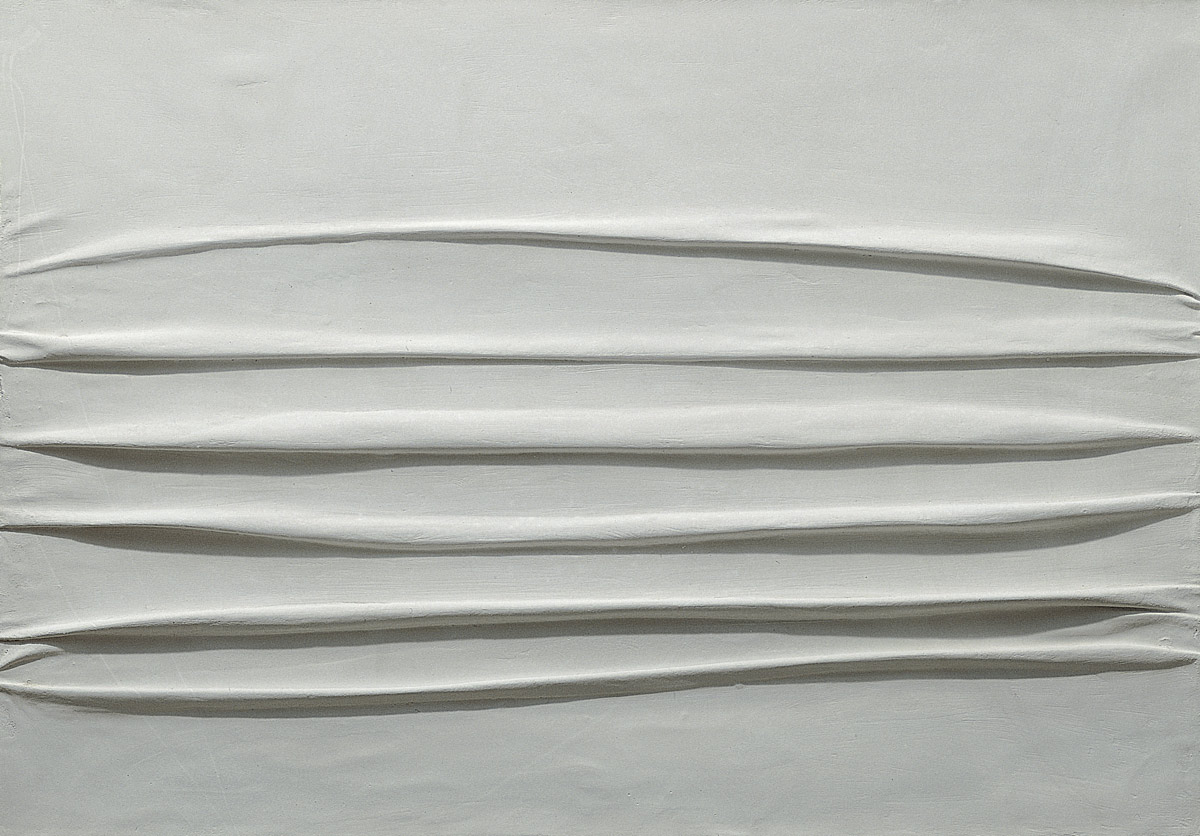
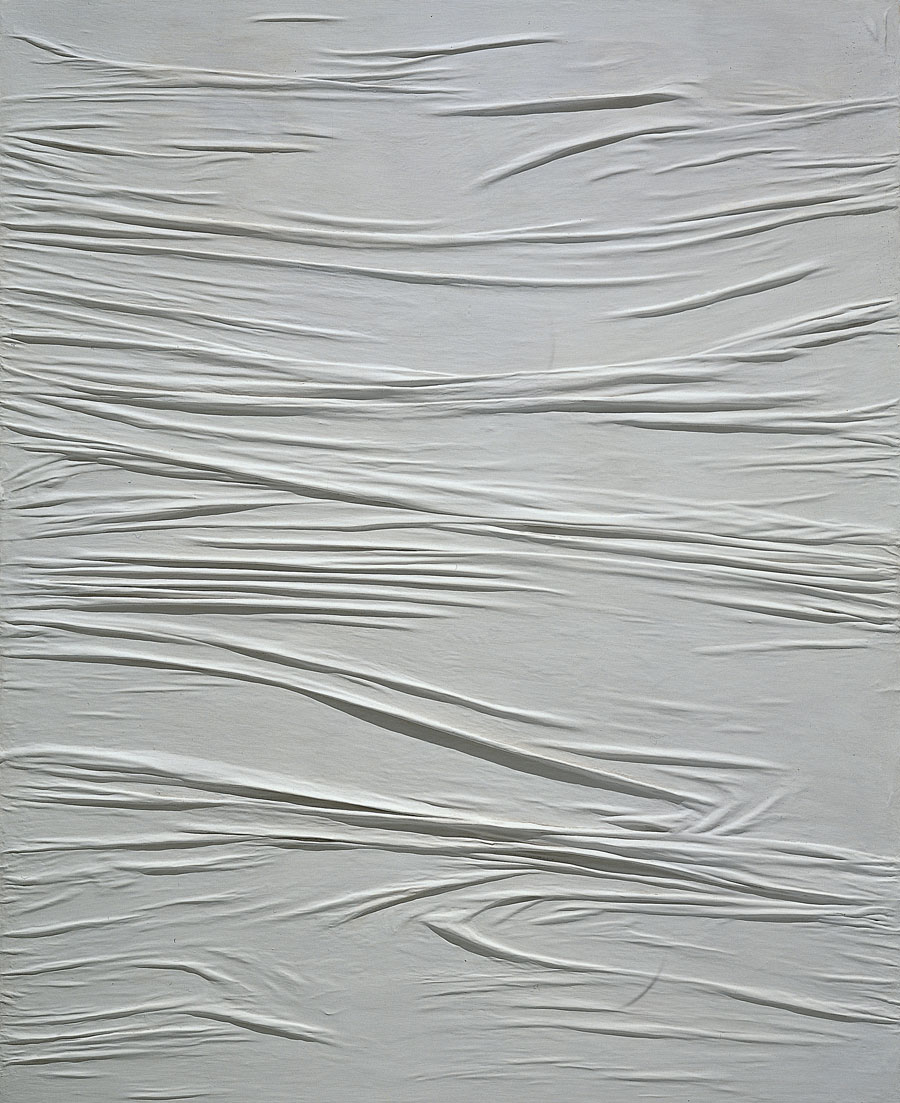
Piero Manzoni (Italian, 1933-1963) 'Achrome' 1958


Piero Manzoni (Italian, 1933-1963)
Achrome
1958
Kaolin on canvas
50 x 69.5cm
Fondazione Piero Manzoni, Milan, in collaboration with Gagosian Gallery
© Fondazione Piero Manzoni, Milano, by VG Bild-Kunst, Bonn 2013


A slight switch in gears for the next two postings. Conceptual, sculptural, minimal, monochromatic, corporeal, haptically varied surfaces that are absolutely fascinating…

Marcus


Many thankx to the Städel Museum for allowing me to publish the artwork in the posting. Please click on the photographs for a larger version of the art.


Piero Manzoni (Italian, 1933-1963) 'Achrome' 1957-1963


Piero Manzoni (Italian, 1933-1963)
Achrome
1957-1963
Kaolin on canvas
80 x 100cm
Städel Museum, Frankfurt am Main
© Fondazione Piero Manzoni, Milano, by VG Bild-Kunst, Bonn 2013


Piero Manzoni (Italian, 1933-1963) 'Achrome' 1958


Piero Manzoni (Italian, 1933-1963)
Achrome
1958
Kaolin on canvas
160 x 130cm
© Fondazione Piero Manzoni, Milano, by VG Bild-Kunst, Bonn 2013
Courtesy FaMa Gallery, Verona


Piero Manzoni (Italian, 1933-1963) 'Achrome' 1962


Piero Manzoni (Italian, 1933-1963)
Achrome
1962
Pebbles and kaolin on canvas
70 x 50cm
Fondazione Piero Manzoni, Milan, in collaboration with Gagosian Gallery
© Fondazione Piero Manzoni, Milano, by VG Bild-Kunst, Bonn 2013


Piero Manzoni (Italian, 1933-1963) 'Alfabeto' (Alphabet) 1959


Piero Manzoni (Italian, 1933-1963)
Alfabeto (Alphabet)
1959
Printed paper and pencil on cardboard
70 x 50cm
Neues Museum Weimar
© VG Bild-Kunst, Bonn 2013


Ennio Vicario (Italian, b. 1935) 'Manzoni in his studio in Via Fiori Oscuri' 1958


Ennio Vicario (Italian, b. 1935)
Manzoni in his studio in Via Fiori Oscuri
1958


Ennio Vicario (Italian, b. 1935) 'Manzoni in his studio in Via Fiori Oscuri' 1958


Ennio Vicario (Italian, b. 1935)
Manzoni in his studio in Via Fiori Oscuri
1958


Despite his short career, Piero Manzoni (Italian, 1933‒1963), who died an early death at the age of twenty-nine, is regarded as one of the most momentous representatives of Italian art after 1945. Manzoni would have celebrated his eightieth birthday on July 13, 2013. The Städel will pay tribute to this key figure of the European post-war avant-garde with a comprehensive survey to mark the occasion exactly fifty years after the artist’s death. Piero Manzoni. When Bodies Became Art will be the first Manzoni retrospective ever to be staged in the German-speaking world. The exhibition, on display from June 26 to September 22, 2013, will highlight the radical character of the artist’s multifaceted position: Manzoni not only submitted Duchamp’s concept of the ready-made to a far-reaching revision, but also thought central discourses of Modernism like monochromy through to the end and opened painting into the fields of the everyday world and commodity aesthetics. With works like Merda d’artista – (allegedly) 30 grams of artist’s shit in a strictly limited edition – or Socle du monde (Base of the World, 1961) – a pedestal elevating the world to an artwork – Manzoni created two icons within the more recent history of art. More than one hundred works from all phases of Manzoni’s productive career will offer complex insights into a still persuasive and influential oeuvre between Art Informel and the emergence of a new concept of art, Modernism and neo-avant-garde, art and the everyday world. Manzoni’s still unbroken influence on contemporary art production will be illustrated in the exhibition by works of the artists Erwin Wurm (b. 1954), Leni Hoffmann (b. 1962), and Bernard Bazile (b. 1952), which – offering an essayistic introduction to the show ‒explore central dimensions of Manzoni’s oeuvre regarding their relevance to the present.

“Though Piero Manzoni had a pivotal position in the cross-European ZERO network and, as a breathtaking innovator of the concept of art, strikes us hardly less avant­garde today, he is far less known than many of his ZERO colleagues in these parts. Fifty years after his sudden death, we want to change this situation with the first presentation of Manzoni’s work in a museum outside Italy for more than two decades,” says Max Hollein, Director of the Städel Museum.

“The exhibition is not only aimed at shedding light on the wide variety of Manzoni’s work produced within only a few years, but also at examining his enormous impact on the paradigm change in the art of the 1960s. Manzoni actually paved the way for today’s art, exercising an influence on Body Art and Performance Art, as well as on Conceptual Art and Land Art,” explains Dr. Martin Engler, Head of the Städel’s Contemporary Art Collection and curator of the show.

Piero Manzoni was born the son of Valeria Meroni and Egisto Manzoni, Count of Chiosca and Poggiolo, in Soncino, Lombardy, on July 13, 1933. He began to study law in 1951 and philosophy in 1955, when he also presented his first solo exhibition in Soncino. This was about the time he got to know artists of the CoBrA group, of the “Spatialist” movement around Lucio Fontana, and finally the “Arte Nucleare” group he joined in 1957. It was in Rotterdam where he presented his first solo show abroad in 1958. One year after, Manzoni founded the Azimut Gallery in Milan together with Enrico Castellani. The dato Gallery was the first to exhibit his work in Frankfurt in 1961. At the age of twenty-nine, Piero Manzoni died from a heart attack in his studio in Milan.

Piero Manzoni. When Bodies Became Art opens on the ground floor of the Städel’s Exhibition Building with early works by the artist, which oscillate between informal grounds and strongly abstracted figurativeness. Mirroring the agent provocateur and avant-gardist’s mediating role within the international ZERO network, his early oeuvre is displayed next to selected works by such contemporaries as Lucio Fontana, Alberto Burri, or Yves Klein, as well as by ZERO artists like Günther Uecker or Heinz Mack. Thus, the presentation conveys an idea of both Manzoni’s intricate network of relationships and the interaction and exchange with his closely affiliated colleagues in Düsseldorf, Amsterdam, Frankfurt am Main, Paris, or Copenhagen right from the beginning.

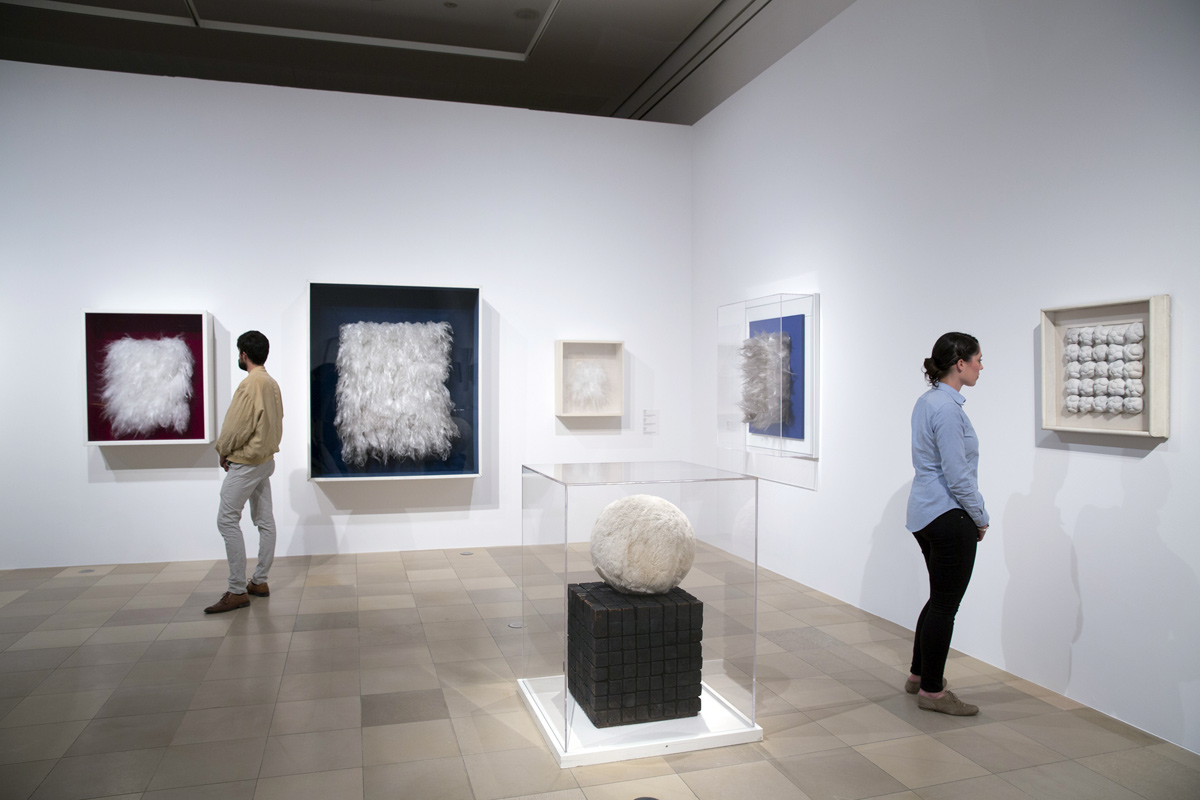
In the adjoining, completely open exhibition space, forty-three works of Manzoni’s central Achromes series provide the basis of the presentation ‒or rather interlock the artist’s different strands of production: a band running along all four outside walls unfolds a seamless chronology of this epochal group of works, which spans the entire exhibition. Between 1957 and his death in 1963, Manzoni produced about six-hundred of these paintings without colour, whose different forms of appearance made them a background of reference for his whole oeuvre. Thanks to the open exhibition architecture the Achromes enclose the artist’s performative, body-related workgroups presented in the centre of the hall with the help of a freestanding architectural display.

Manzoni did without any direct artistic gesture when creating his “colourless” works. His “white” painting, defined by the absence of colour – white or “achrome” meaning in the colour of the material for him – takes a special position in the context of the international ZERO movement and its turn toward monochromy: Manzoni saw his Achromes as paintings in spite of their ultimate reduction on the one hand, yet extended them by everyday elements like rolls or Styrofoam by body and space on the other. Employing materials such as plaster of Paris, kaolin, or synthetic fibres, he relied on means with sculptural qualities which initiated a transition process from the picture into a third, corporeal dimension. The velvety, satiny, shining and haptically varied surfaces show the conceptual severity that characterises the description of this aesthetic concept to be a lie.


Exhibition view of 'Piero Manzoni. When Bodies became Art' at the Städel Museum, Frankfurt

Exhibition view of 'Piero Manzoni. When Bodies became Art' at the Städel Museum, Frankfurt

Exhibition view of 'Piero Manzoni. When Bodies became Art' at the Städel Museum, Frankfurt

Exhibition view of 'Piero Manzoni. When Bodies became Art' at the Städel Museum, Frankfurt

Exhibition view of 'Piero Manzoni. When Bodies became Art' at the Städel Museum, Frankfurt

Exhibition view of 'Piero Manzoni. When Bodies became Art' at the Städel Museum, Frankfurt

Exhibition view of 'Piero Manzoni. When Bodies became Art' at the Städel Museum, Frankfurt


Exhibition views of Piero Manzoni. When Bodies became Art
Städel Museum, Frankfurt am Main, 2013
Photo: Alex Kraus
© Fondazione Piero Manzoni, Milano, by VG Bild-Kunst, Bonn 2013


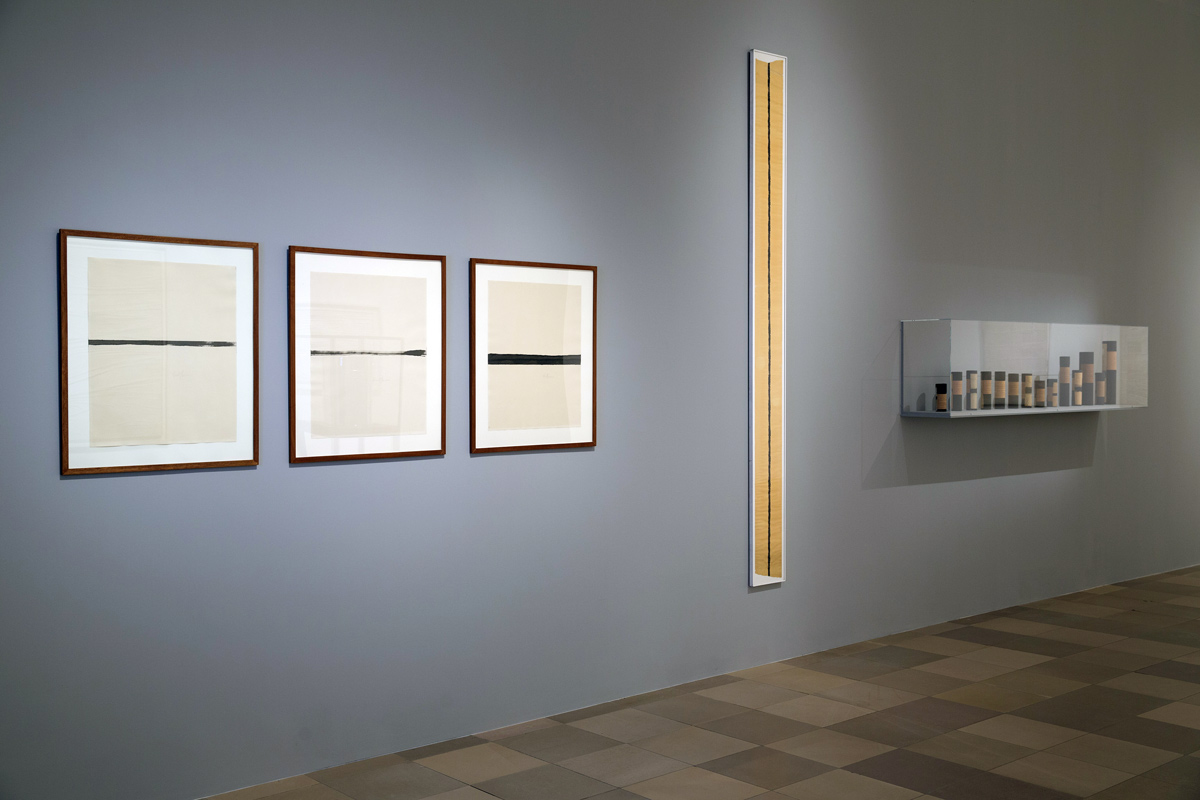
After his reduction of colour, Manzoni also radically reduced its counterpart, the line, to the core of its essence. Starting in 1959, Manzoni produced more than one hundred and thirty conceptual works he categorised as Linee (Lines). This group confronts us with the idea of the isolated line as a reduced artistic gesture: the uniform horizontal lines drawn on long strips of paper were rolled up in cardboard tubes and thus hidden from the eye. The works are presented in their tubes positioned upright like figurines. The highlight of this series is definitely the line Manzoni drew at a newspaper’s printers in Herning, Denmark, in 1960: it was more than seven kilometres long and stored in a zinc cylinder.

Manzoni’s endeavours as an artist centred on the issue of the body, an issue consistently derived from the corporeality of his Achromes and Linee. From the late 1950s on, he also dedicated himself to two further series: Corpi d’aria (Bodies of Air) and Fiato d’artista (Artist’s Breath) ‒ works vacillating between object and biology, between body and concept. The exhibited balloons, formerly filled with their owners’ or Manzoni’s breath, related to a body discourse that anticipated the 1970s and was also reflected in other works by the artist like in the performance Consumazione dell’arte (Consumption of Art, 1960), in which he marked hard-boiled eggs with his thumbprint and offered them to the audience to eat. The thumbprint is to be read as Manzoni’s most reduced physical trace which becomes a sign of his identity as individual, body, and artist.

The provocative impact of Manzoni’s probably best known group of works, Merda d’artista (Artist’s Shit, 1961), is still unbroken even five decades after the artist’s death: thirty grams of artist’s shit in strictly limited compact cans, which were allegedly sold on the art market for the price of gold. This series may be understood as a logical continuation of Manzoni’s earlier art consumption performances: the artist’s body becomes the biological medium for the production of art, and Duchamp’s ready-made finds itself grounded in human biology. The exhibition comprises eleven cans of this series combining high and low, the spiritual and the abstract with the concrete and the physical and thus radically extends the traditional concept of art.

The resulting discourse of the body finds its culmination in the artist’s Sculture viventi (Living Sculptures, 1961) displayed in the show. Declaring bodies to be art by means of a pedestal, these works by Manzoni appropriate man as a living work of art: whoever steps onto the pedestal is elevated to a living sculpture and object of art for the time being. Going beyond the concept of the ready-made, Manzoni made the body the material of his art. His approach involved the viewer and opened the door for the Actionist Art of the 1960s and 1970s. The work Socle du monde (Base of the World, 1961), which is also among the Städel’s exhibits, focuses on the whole world at once: a plinth presumably placed upside down elevates the world, including man, to a work of art in an all-embracing manner.

The presentation of three contemporary positions – Erwin Wurm (b. 1954), Leni Hoffmann (b. 1962), and Bernard Bazile (b. 1952) – provides an essayistic introduction to the show in the foyer of the Exhibition Building, a foreword exploring central dimensions of Manzoni’s oeuvre regarding their relevance to the present. The Austrian artist Erwin Wurm will present the visitor as a living sculpture in one of his One Minute Sculptures he conceived especially for the show at the Städel. Leni Hoffmann’s re-edition of the longest line from Manzoni’s series Linee follows up the present reception of the artist’s work by realising a well-nigh endless line on the rotary press of a daily newspaper. The French artist Bernhard Bazile will show two of his works. In his film project Die Besitzer (The Owners) he interviews forty-nine collectors whose holdings comprise a sample of Manzoni’s Merda d’artista and, talking about the motives for their acquisition, reflect on the artist’s oeuvre far beyond the actual subject of the conversation. The show also comprises the Merda d’artista sample Bazile opened in 1989 and since then presents as his own work under the title Boîte ouverte de Piero Manzoni.

The exhibition Piero Manzoni. When Bodies Became Art highlights the achievements of an artist who, in a radically innovative way, succeeded in condensing issues of late Modernism into a differentiated oeuvre that would prove to be a landmark for contemporary art. Today, Manzoni’s works mark a key position that has given birth to a conceptual discourse of the body and become the yardstick for a new, extended understanding of art which still clearly informs today’s debates.

Press release from the Städel Museum website


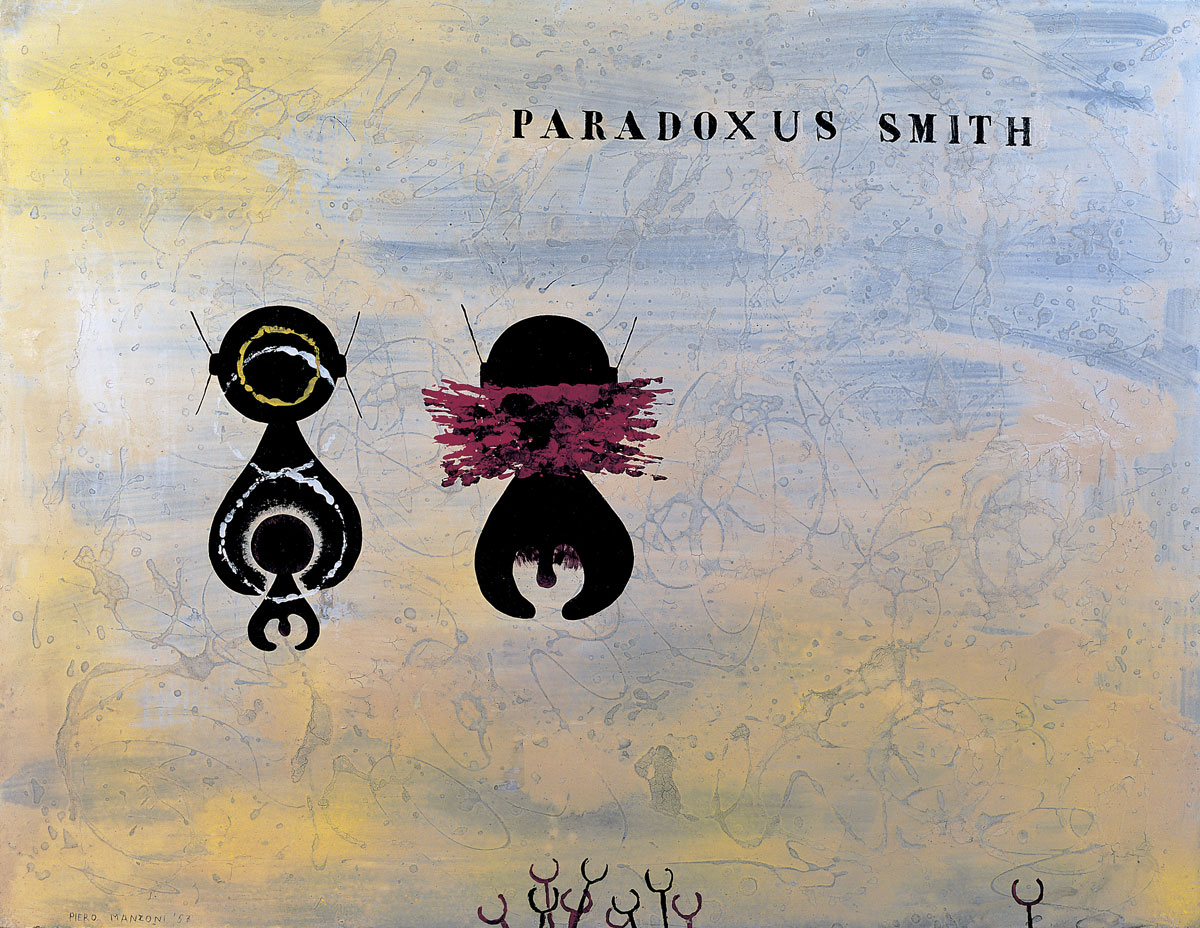
Piero Manzoni (Italian, 1933-1963) 'Paradoxus Smith' 1957


Piero Manzoni (Italian, 1933-1963)
Paradoxus Smith
1957
Oil on board
100 x 130cm
The Sander Collection
© VG Bild-Kunst, Bonn 2013


Piero Manzoni (Italian, 1933-1963) 'Milano et-mitologiaa' (Milan and mythology) 1956


Piero Manzoni (Italian, 1933-1963)
Milano et-mitologiaa (Milan and mythology)
1956
Oil on board
95 x 130cm
Private Collection Milan
© Fondazione Piero Manzoni, Milano, by VG Bild-Kunst, Bonn 2013


Piero Manzoni (Italian, 1933-1963) 'Socle du monde' (Base of the world) 1961


Piero Manzoni (Italian, 1933-1963)
Socle du monde (Base of the world)
1961
Iron, bronze
82 x 100 x 100cm
HEART – Herning Museum of Contemporary Art
© Fondazione Piero Manzoni, Milano, by VG Bild-Kunst, Bonn 2013


Piero Manzoni (Italian, 1933-1963) 'Base magica – Scultura vivente' (Magic Base – Living sculpture) 1961


Piero Manzoni (Italian, 1933-1963)
Base magica – Scultura vivente (Magic Base – Living sculpture)
1961
Wood, metal, felt
79.5 x 79.5 x 60cm
Fondazione Piero Manzoni, Milan, in collaboration with Gagosian Gallery
© Fondazione Piero Manzoni, Milano, by VG Bild-Kunst, Bonn 2013


Piero Manzoni (Italian, 1933-1963) 'Fiato d'artista' (Artist's breath) 1960


Piero Manzoni (Italian, 1933-1963)
Fiato d’artista (Artist’s breath)
1960
Rubber balloon, string, lead seal, brass, wood
18 x 18cm
Fondazione Piero Manzoni, Milan, in collaboration with Gagosian Gallery
© Fondazione Piero Manzoni, Milano, by VG Bild-Kunst, Bonn 2013


Piero Manzoni (Italian, 1933-1963) 'Merda d'artista N.° 038' (Artist's shit N.° 038) 1961


Piero Manzoni (Italian, 1933-1963)
Merda d’artista N.° 038 (Artist’s shit N.° 038)
1961
Artist’s shit, printed paper, tin can
Private collection
© Fondazione Piero Manzoni, Milano, by VG Bild-Kunst, Bonn 2013


Piero Manzoni (Italian, 1933-1963) 'Linea m 3,54' (Line 3.54 m) 1959


Piero Manzoni (Italian, 1933-1963)
Linea m 3,54 (Line 3.54 m)
1959
23 x 6 cm
Ink on paper, cardboard container
Consolandi Collection
© Fondazione Piero Manzoni, Milano, by VG Bild-Kunst, Bonn 2013


Städel Museum
Schaumainkai 63
60596 Frankfurt

Opening hours:
Tuesday – Wednesday, Friday – Sunday 10.00am – 6.00pm
Thursday 10.00am – 9.00pm
Closed Mondays

Städel Museum website

LIKE ART BLART ON FACEBOOK

Back to top

Exhibition: ‘French Twist: Masterworks of Photography from Atget to Man Ray’ at the Delaware Art Museum, Wilmington, DE

Exhibition dates: 29th June – 15th September 2013


Ilse Bing (German, 1899-1998) 'Cancan Dancers' Moulin Rouge 1931


Ilse Bing (German, 1899-1998)
Cancan Dancers

Moulin Rouge 1931
Gelatin silver print
6 1/4 × 9 in. (15.9 × 22.9cm)
Collection of Michael Mattis and Judith Hochberg
© Estate of Ilse Bing. Courtesy Edwynn Houk Gallery, New York


C’est magnifique!

Marcus


Many thankx to the Delaware Art Museum for allowing me to publish the photographs in the posting. Please click on the photographs for a larger version of the image.


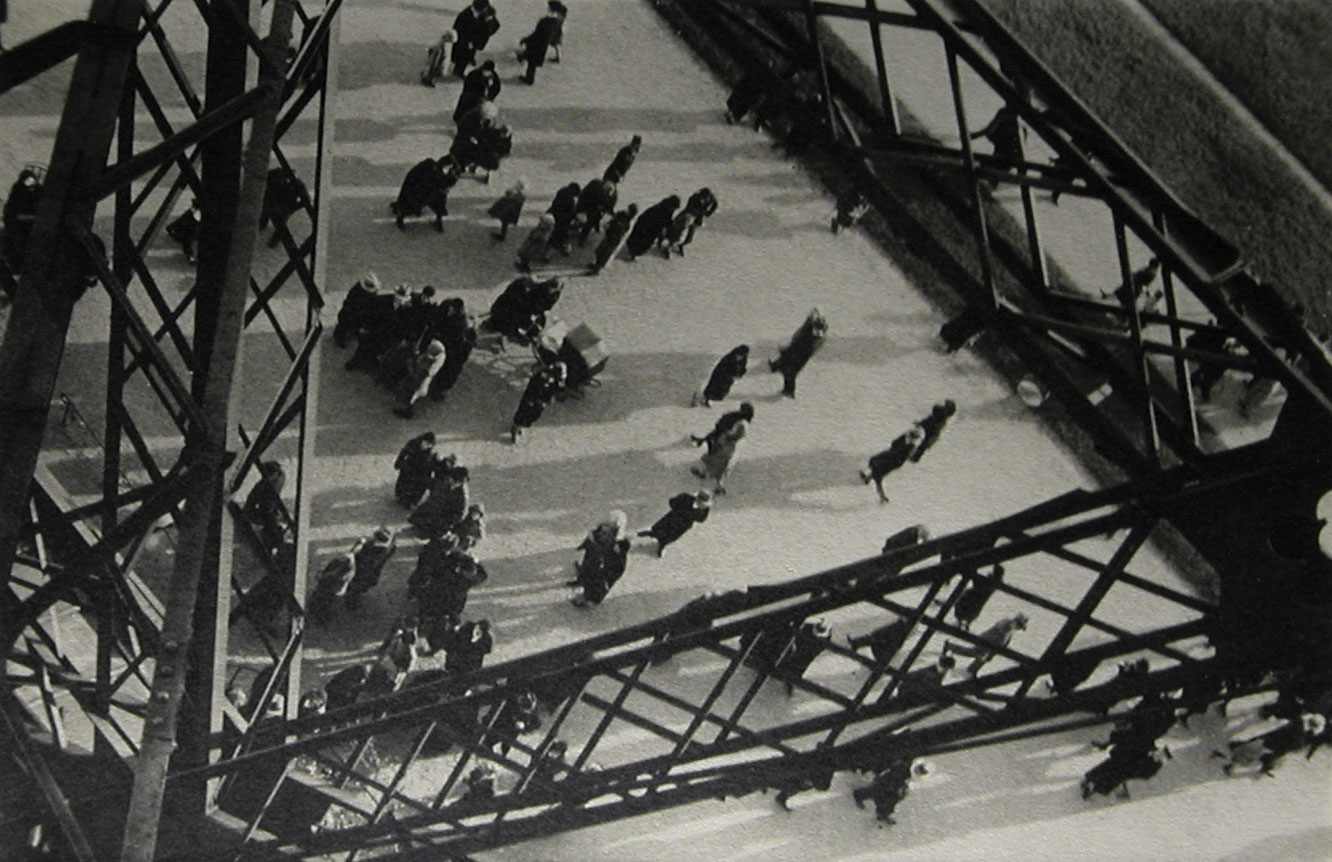
Ilse Bing (German, 1899-1998) 'Champ-de-Mars from the Eiffel Tower' 1931


Ilse Bing (German, 1899-1998)
Champ-de-Mars from the Eiffel Tower
1931
7 1/2 x 11 inches
Collection of Michael Mattis and Judith Hochberg
© Estate of Ilse Bing, Courtesy Edwynn Houk Gallery, New York


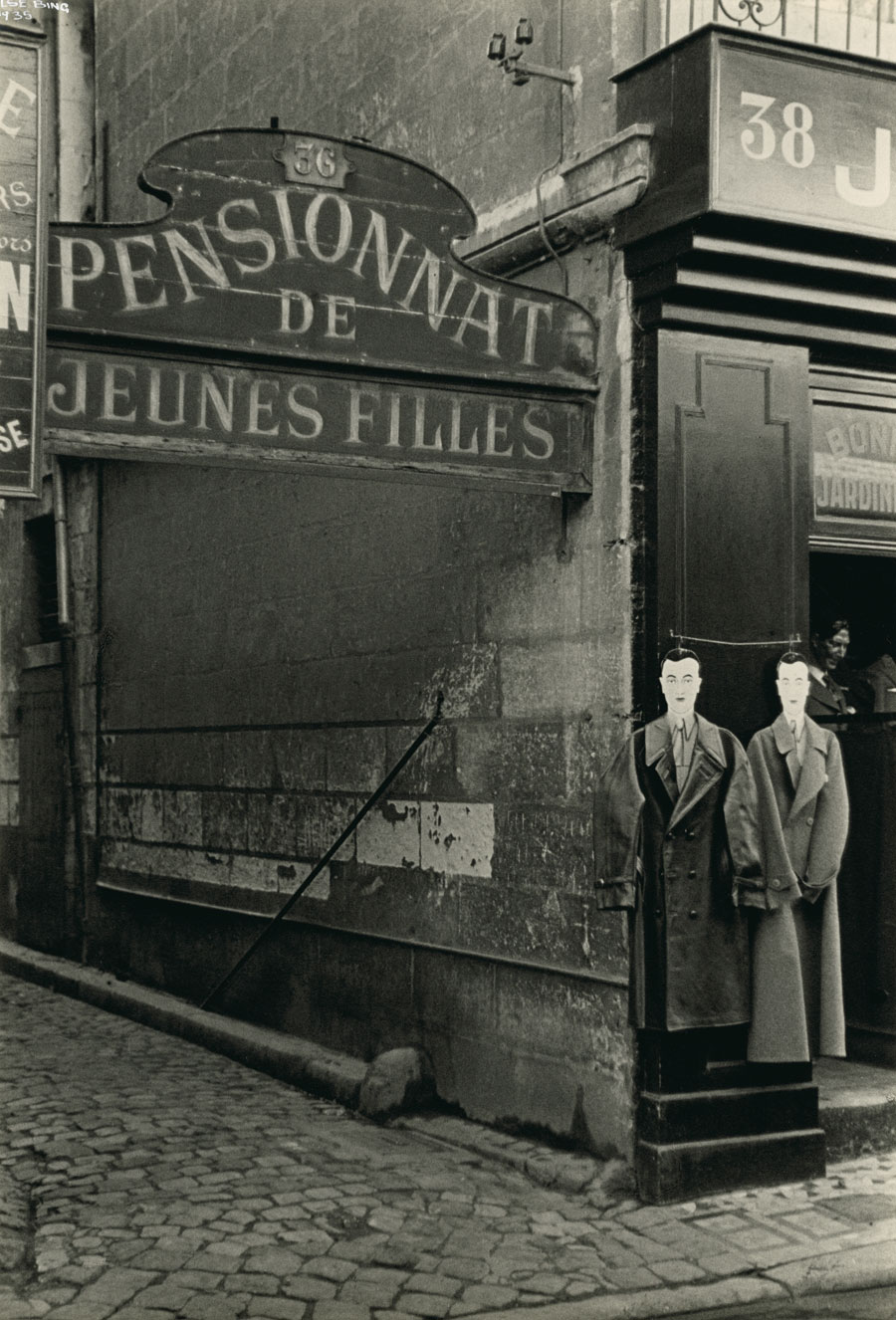
Ilse Bing (German, 1899-1998) 'Boarding House for Young Women, Tours' 1935


Ilse Bing (German, 1899-1998)
Boarding House for Young Women, Tours
1935
Gelatin silver print
11 1/8 × 7 1/2 in. (28.3 × 19.1cm)
Collection of Michael Mattis and Judith Hochberg
© Estate of Ilse Bing. Courtesy Edwynn Houk Gallery, New York


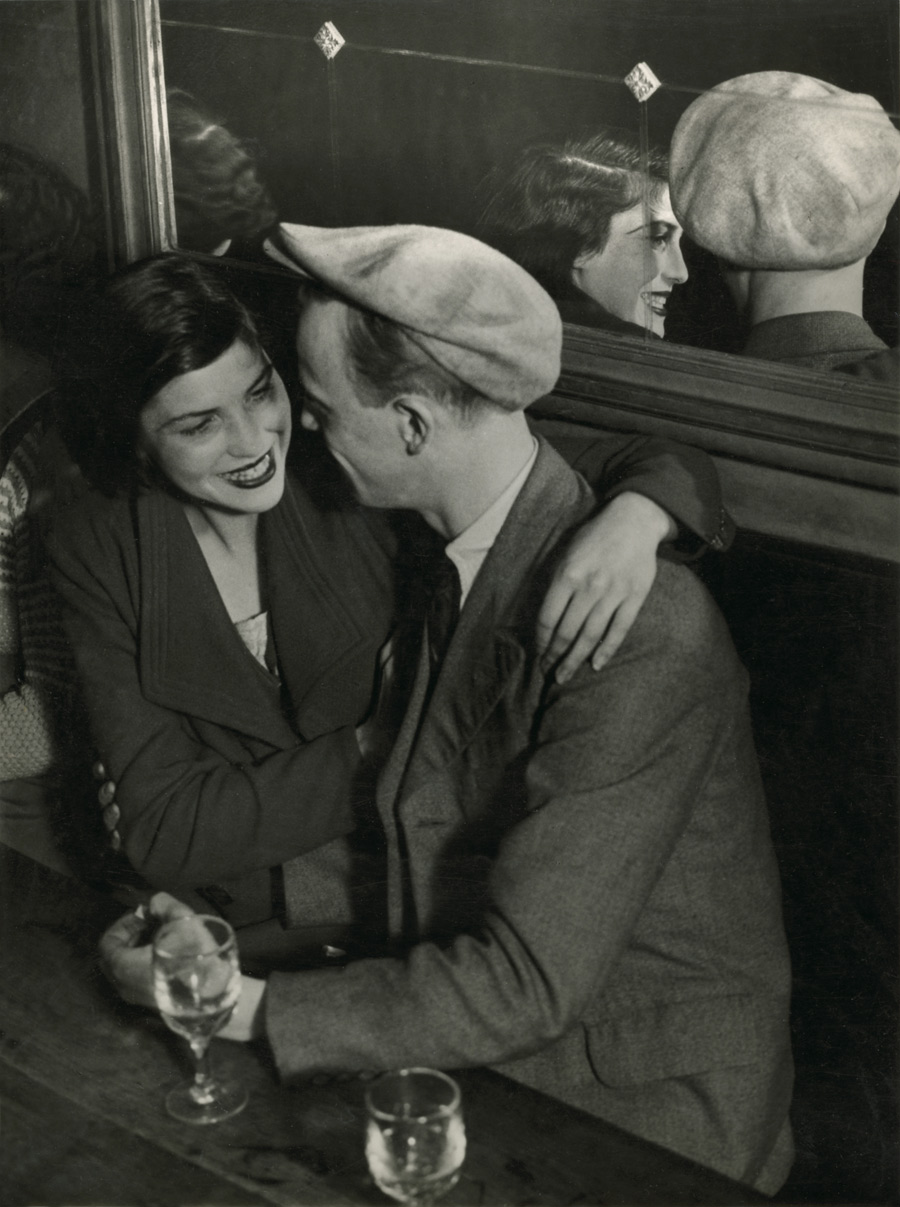
Ilse Bing (German, 1899-1998) 'Lovers, Bal Musette des Quatre Saisons, rue de Lappe' c. 1932


Brassaï (French, 1899-1984)
Lovers, Bal Musette des Quatre Saisons, rue de Lappe
c. 1932
9 3/8 x 7 inches
Collection of Michael Mattis and Judith Hochberg
© The Brassaï Estate-RMN


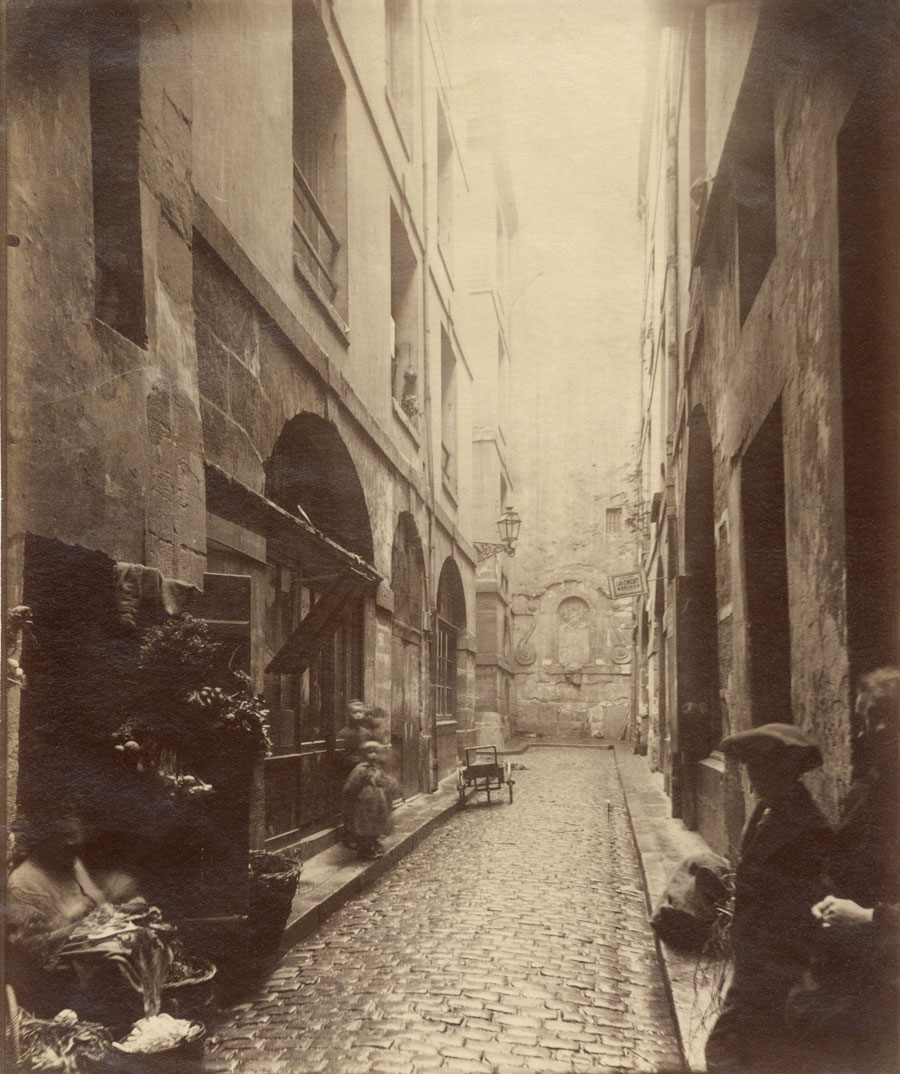
In the early 20th century, between the two world wars, Paris saw a fervour of change. From 1910 to 1940, the city became a creative epicentre for artistic exploration, attracting international avant-garde artists – including photographers experimenting with Surrealism, Modernism, and the new reportage. French Twist: Masterworks of Photography from Atget to Man Ray, on view at the Delaware Art Museum from June 29, 2013 through September 15, 2013, features 100 vintage prints from this golden age of French photography and explores the variety and inventiveness of native and immigrant photographers working in France in the early 20th century.

This exhibition presents a number of themes that capture the flavour and nightlife of Paris at this exciting moment. “Life of the Streets,” “Diversions,” and “Paris by Night” are just some of the topics that these masterful photographs explore. Visitors will experience Eugène Atget’s lyrical views of Paris streets and gardens, Man Ray’s surrealist experiments, and Henri Cartier-Bresson’s pioneering photojournalism, as well as works by Ilse Bing, Brassaï, Jacques-Henri Lartigue, André Kertész, and Dora Maar. Many of these artists settled in France for life, while others, fleeing the Nazis, brought their Paris‐trained sensibilities and influences to America.

Eugène Atget

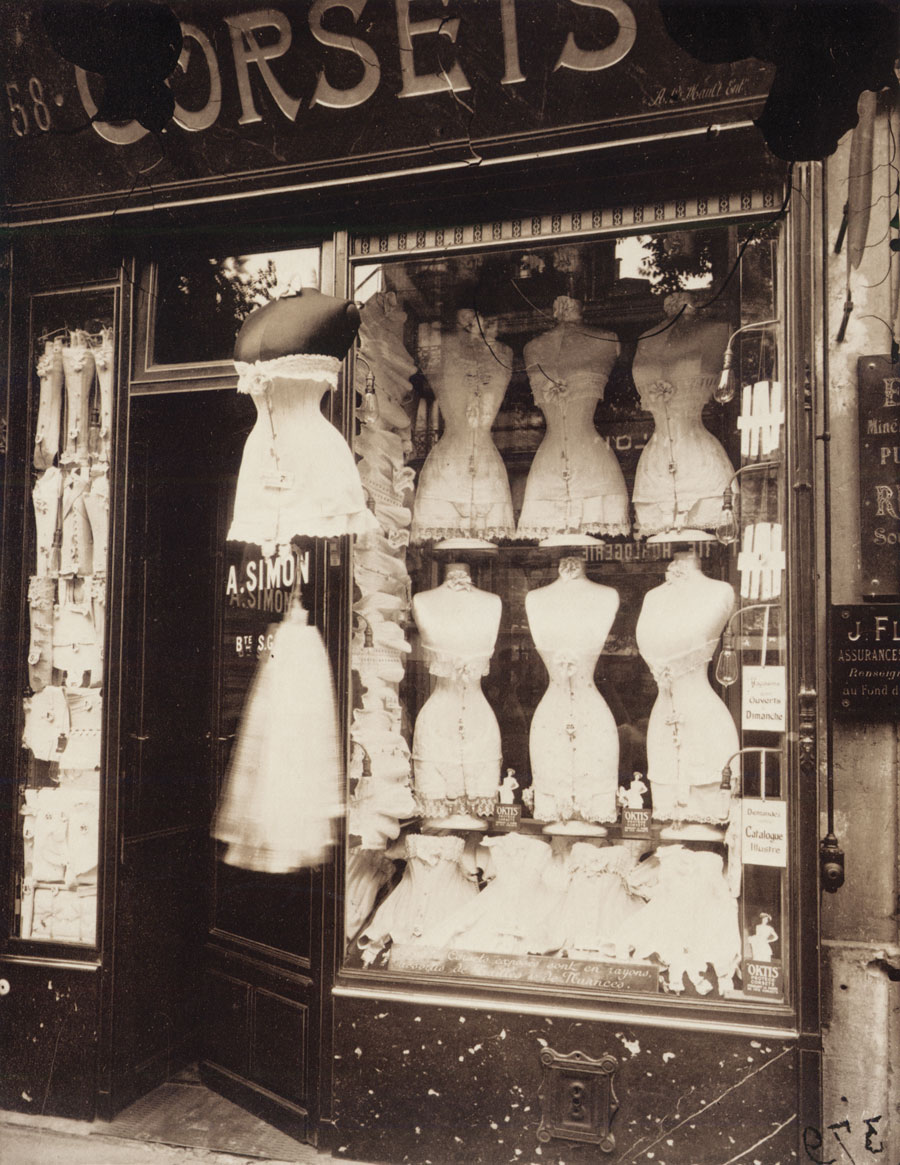
The exhibition opens with one of the most significant figures in the history of photography, Eugène Atget, whose work influenced a range of artists from Surrealists to documentary photographers. This selection encompasses pictures of city streets, architectural details, and the gardens at Versailles and includes one of his most famous photographs, Boulevard de Strasbourg, Corsets (1912).

La vie de la rue (Life of the Street)

This section includes images of the streets and buildings of Paris – of the bustling Champ-de-Mars and the deserted Avenue du Maine – and features a large selection of photographs by Ilse Bing. In her modernist views of urban architecture, Bing provides a modern take on the old city through unexpected angles and dramatic cropping.

Divertissement (Diversions)

Divertissement focuses on the myriad amusements available in the City of Lights. Lartigue provides an insider’s view of upper-class life in the Belle Epoque, while Bing and Brassaï chronicle the attractions of the dance hall, the theatre, and the street.

Henri Cartier-Bresson

The master of the “decisive moment” and one of the most significant photojournalists of the 20th century, Henri Cartier-Bresson is featured along with 17 famous photographs from his travels around the world. This section includes his stellar images of the Spanish Second Republic and his iconic view of the coronation of George VI in London.

Les basses classes (The Lower Classes)

Between the wars, photographers from Ilse Bing to Andre Kertész to Brassaï chronicled lives of poor Parisians, often bringing a Modernist sensibility, rather than a reformer’s eye, to scenes of urban poverty.

Paris de nuit (Paris by Night) 

In 1933 Brassaï released his photo book Paris by Night, which chronicled the city’s streets and amusements after dark. The book became an immediate success and Brassaï became famous as the foremost photographer of the city’s bars and brothels, performers, and prostitutes.

L’art pour l’art (Art for Art’s Sake)

This section focuses on the technical experimentation and virtuoso technique of photographers including Pierre Dubreuil, Edward Steichen, and Pal Funk Angelo. It features examples of unusual techniques like cliché-verre, solarisation, and oil printing.

Cliché verre is a combination of art and photography. In brief, it is a method of either etching, painting or drawing on a transparent surface, such as glass, thin paper or film and printing the resulting image on a light sensitive paper in a photographic darkroom. It is a process first practiced by a number of French painters during the early 19th century. The French landscape painter Jean-Baptiste-Camille Corot was the best known of these. Some contemporary artists have developed techniques for achieving a variety of line, tone, texture and colour by experimenting with film, frosted Mylar, paint and inks and a wide assortment of tools for painting, etching, scratching, rubbing and daubing.

Cliché verre is French. Cliché is a printing term: a printing plate cast from movable type; while verre means glass. (Text from Wikipedia)

Andre Kertész, Dora Maar, Man Ray

These three important photographers – all immigrants to Paris between the Wars and all involved in Surrealist movement – are featured in individual sections that highlight their most famous works. Kertész is represented by his photographs of the painter Piet Mondrian’s studio. Maar’s Surrealist street photographs capture her dark humor, and a full complement of Man Ray’s experimental and psychologically charged images summarize his photographic interests.

La figure (Portraits and Nudes)

La Figure showcases experimental approaches to the classic subject of the female nude, including a cameraless photograph and a solarisation by Man Ray and a distortion created with fun-house-type mirrors by Kertész.

Ilse Bing (German, 1899-1998), nicknamed the “Queen of the Leica” after her camera of choice, moved to Paris in 1930 and immersed herself in its cultural milieu, interacting with painters like Pavel Tchelitchev and fashionistas Elsa Schiaparelli and Carmel Snow. The decade she spent in France is considered the high point of her artistic career.

Dora Maar (French, 1907-1997) created startlingly imaginative Surrealist photographs under the tutelage of Man Ray. However, she is best known as Picasso’s lover, muse, and “Weeping Woman” from 1936 to 1943. Her photographs documenting Picasso’s creation of Guernica hang alongside the painting in the Reina Sofía museum in Madrid.

JacquesHenri Lartigue (French, 1894-1986), considered by many to be a child prodigy, received his first camera as a gift when he was six years old and immediately set to work documenting the activities of his energetic family and circle of friends. Lartigue’s light‐hearted snapshots capture the essence of France’s Belle Époque, the halcyon period before World War I when it seemed that modernity would bring nothing but progress and delight.


Eugène Atget (French, 1857-1927) 'Boulevard de Strasbourg Corsets' 1912


Eugène Atget (French, 1857-1927)
Boulevard de Strasbourg Corsets
1912
Printing-out paper
8 3/4 x 7 inches
Collection of Michael Mattis and Judith Hochberg


Eugène Atget (French, 1857-1927) 'Rue Egynard' 1901


Eugène Atget (French, 1857-1927)
Rue Egynard
1901
Albumen print
8 1/4 × 7 in. (21 × 17.8cm)
Collection of Michael Mattis and Judith Hochberg


Man Ray (American, 1890-1976) 'Solarized nude' 1930


Man Ray (American, 1890-1976)
Solarized nude
1930
11 5/8 x 8 7/8 inches
Collection of Michael Mattis and Judith Hochberg
© 2013 Man Ray Trust / Artists Rights Society (ARS), NY / ADAGP, Paris


Edward Steichen (American, 1879-1973) 'Three Pears and an Apple, Voulangis, France' 1921


Edward Steichen (American, 1879-1973)
Three Pears and an Apple, Voulangis, France
1921
Gelatin silver print
14 x 11 inches
Collection of Michael Mattis and Judith Hochberg


Man Ray (American, 1890-1976) 'Kiki de Montparnasse' 1923


Man Ray (American, 1890-1976)
Kiki de Montparnasse
1923
11 x 8 3/4 inches
Collection of Michael Mattis and Judith Hochberg
© 2013 Man Ray Trust / Artists Rights Society (ARS), NY / ADAGP, Paris


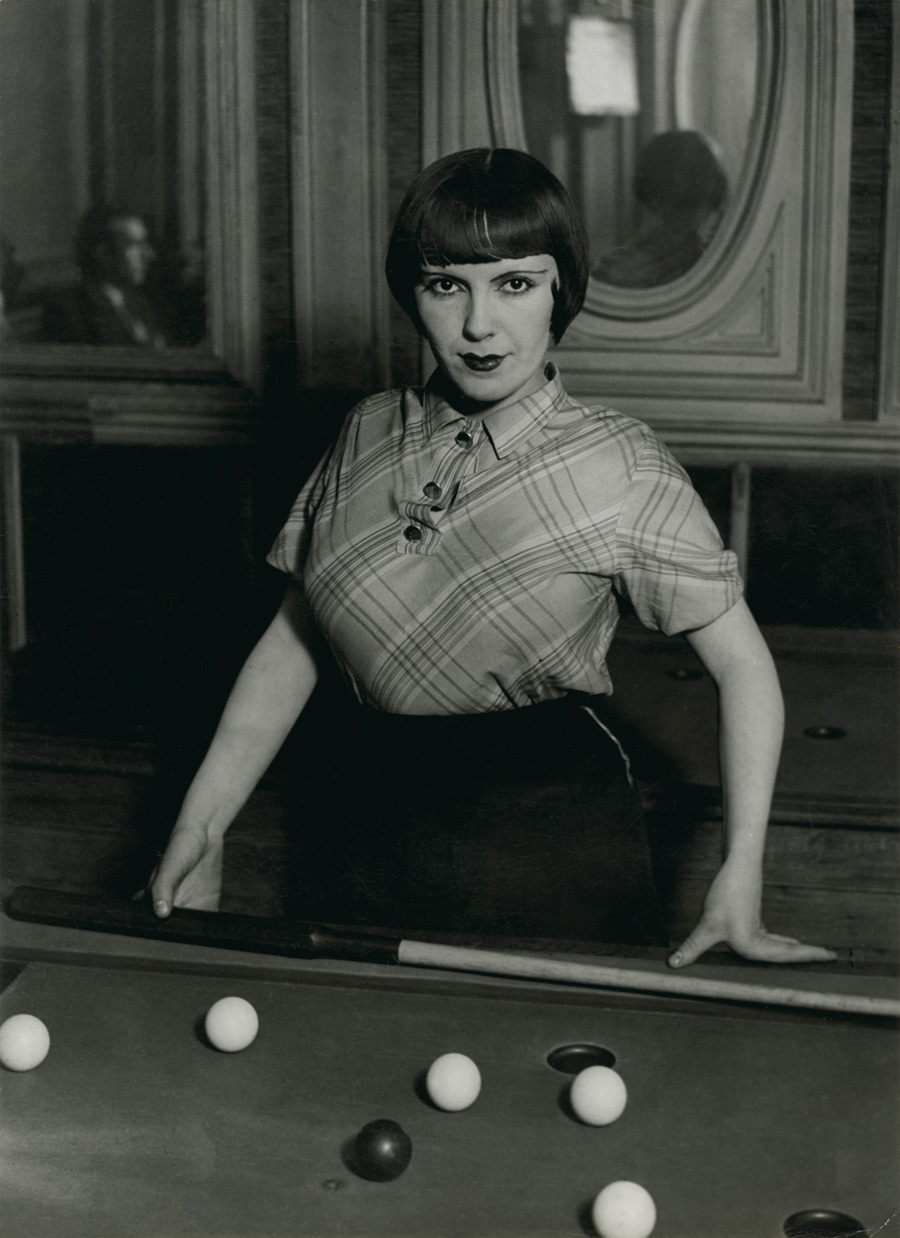
Brassaï (French, 1899-1984) 'Fille de Montmartre playing Russian billiards, Blvd Rochechouart' 1932-33


Brassaï (French, 1899-1984)
Fille de Montmartre playing Russian billiards, Blvd Rochechouart
1932-1933
11 1/4 x 8 1/4 inches
Collection of Michael Mattis and Judith Hochberg
© The Brassaï Estate-RMN


Delaware Art Museum
2301 Kentmere Parkway
Wilmington, DE 19806

Opening hours:
Wednesday – Sunday 10am – 4pm
Closed Monday and Tuesday

Delaware Art Museum website

LIKE ART BLART ON FACBEOOK

Back to top

Exhibition: ‘This Is Not A Silent Movie: Four Contemporary Alaska Native Artists’ at Craft Contemporary, Los Angeles

Exhibition dates: 26th May – 8th September 2013

Curator: Dr Julie Decker, Chief Curator at the Anchorage Museum


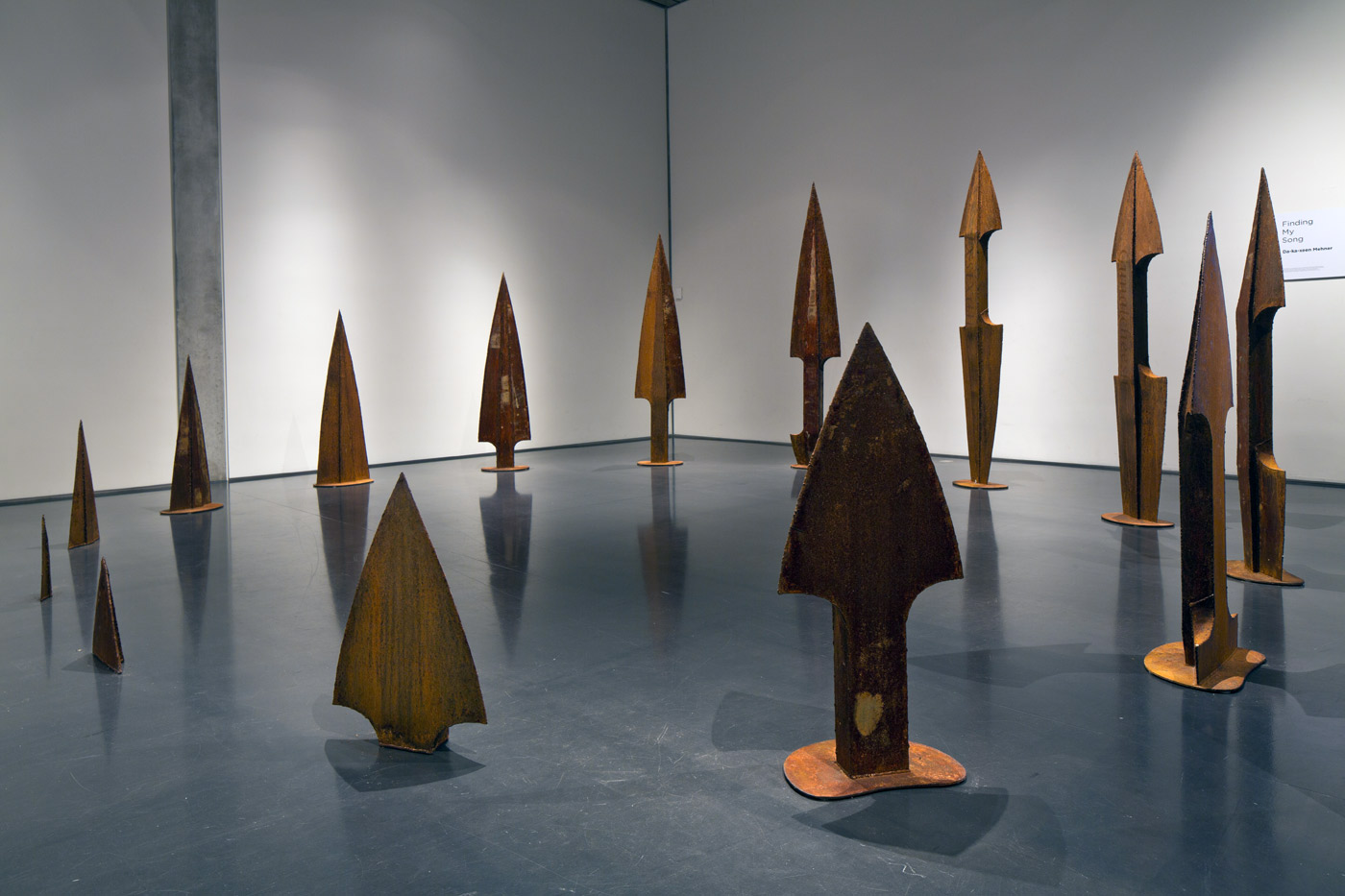
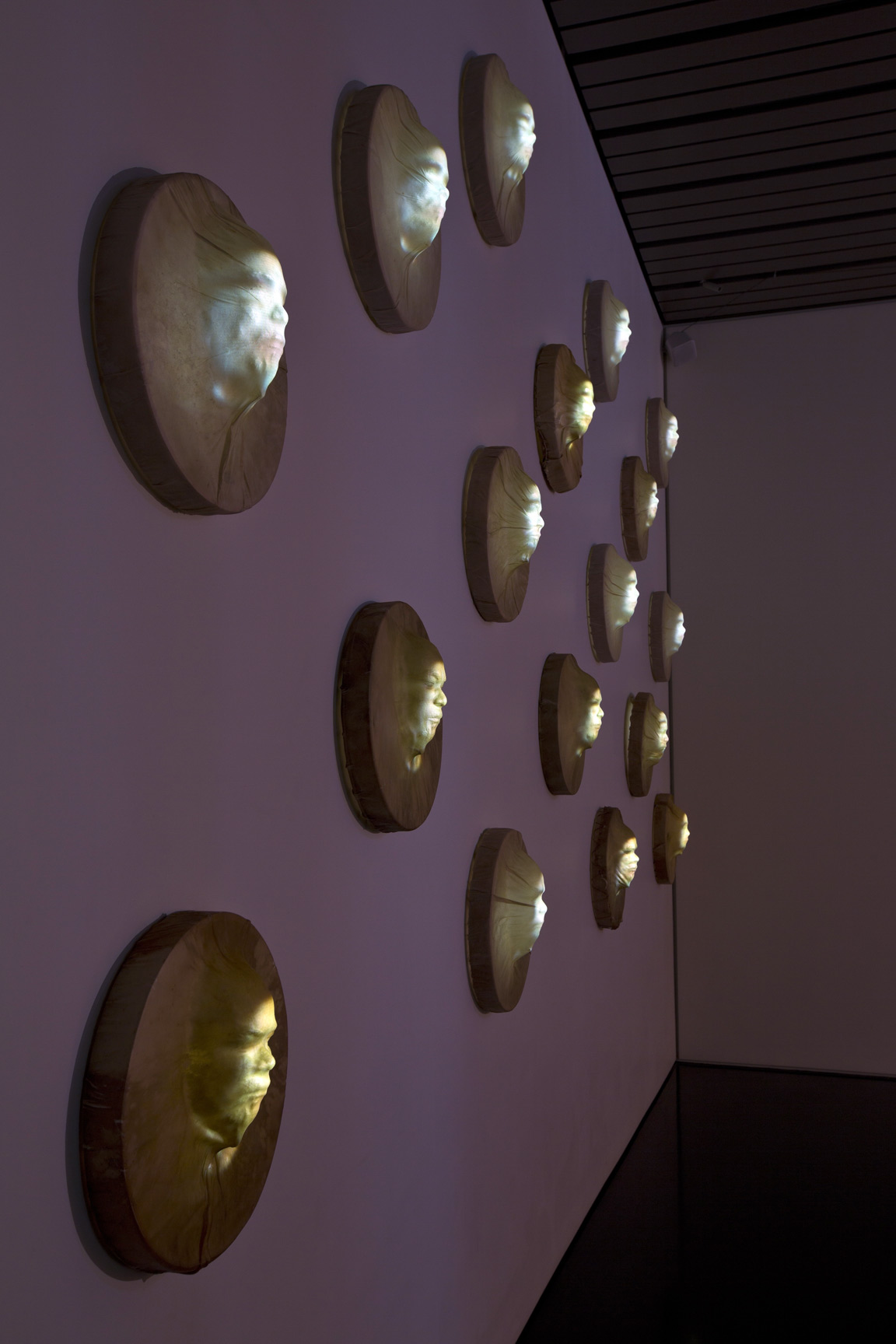
Da-ka-xeen Mehner (Tlingit/N'ishga - American) 'Finding My Song Weapons' 2012


Da-ka-xeen Mehner (Tlingit/N’ishga – American)
Finding My Song Weapons
2012


Another interesting exhibition that this archive likes promoting, this time about mixed-race identity.

Dr Marcus Bunyan


Many thankx to The Craft & Folk Art Museum for allowing me to publish the art work in the posting. Please click on the images for a larger version of the art.


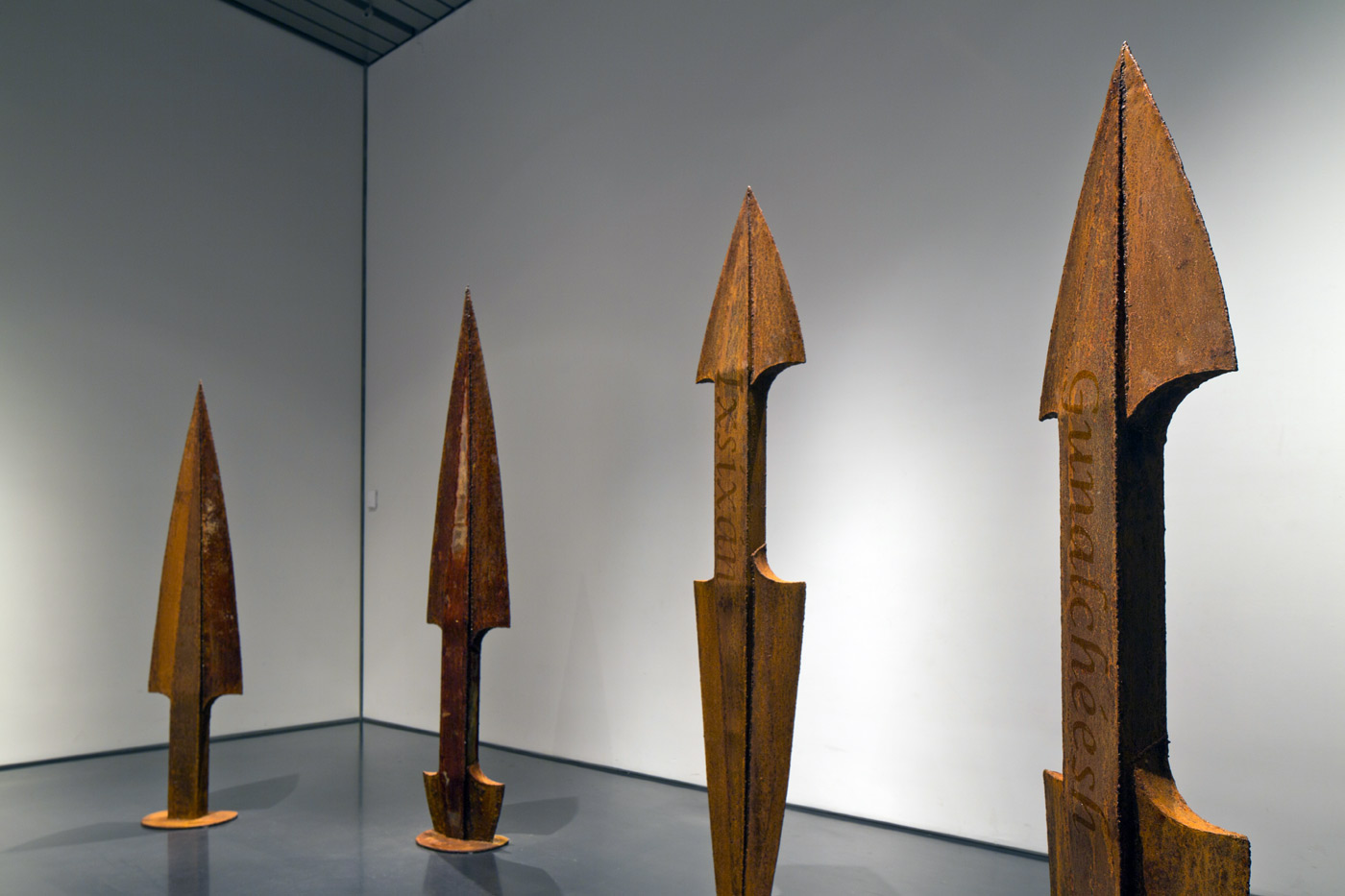
Da-ka-xeen Mehner (Tlingit/N'ishga - American) 'Finding My Song Weapons' 2012 (detail)


Da-ka-xeen Mehner (Tlingit/N’ishga – American)
Finding My Song Weapons (detail)
2012


Da-ka-xeen Mehner (Tlingit/N'ishga - American) 'Finding My Song' 2012


Da-ka-xeen Mehner (Tlingit/N’ishga – American)
Finding My Song
2012


Da-ka-xeen Mehner (Tlingit/N'ishga - American) 'Finding My Song' 2012


Da-ka-xeen Mehner (Tlingit/N’ishga – American)
Finding My Song
2012


Da-ka-xeen Mehner (Tlingit/N'ishga - American) 'Finding My Song' 2012


Da-ka-xeen Mehner (Tlingit/N’ishga – American)
Finding My Song
2012
Projections on rawhide
Courtesy of the Anchorage Museum


Da-ka-xeen Mehner (Tlingit/N'ishga - American) 'Finding My Song' 2012


Da-ka-xeen Mehner (Tlingit/N’ishga – American)
Finding My Song
2012
Projections on rawhide
Courtesy of the Anchorage Museum


Da-ka-xeen Mehner (Tlingit/N'ishga - American) 'Finding My Song' 2012


Da-ka-xeen Mehner (Tlingit/N’ishga – American)
Finding My Song
2012
Projections on rawhide
Courtesy of the Anchorage Museum


Nicholas Galanin (Tlingit/Aleut - American, b. 1979) 'There is No "I" in Indian' Nd


Nicholas Galanin (Tlingit/Aleut – American, b. 1979)
There is No “I” in Indian
Nd
Digital photograph


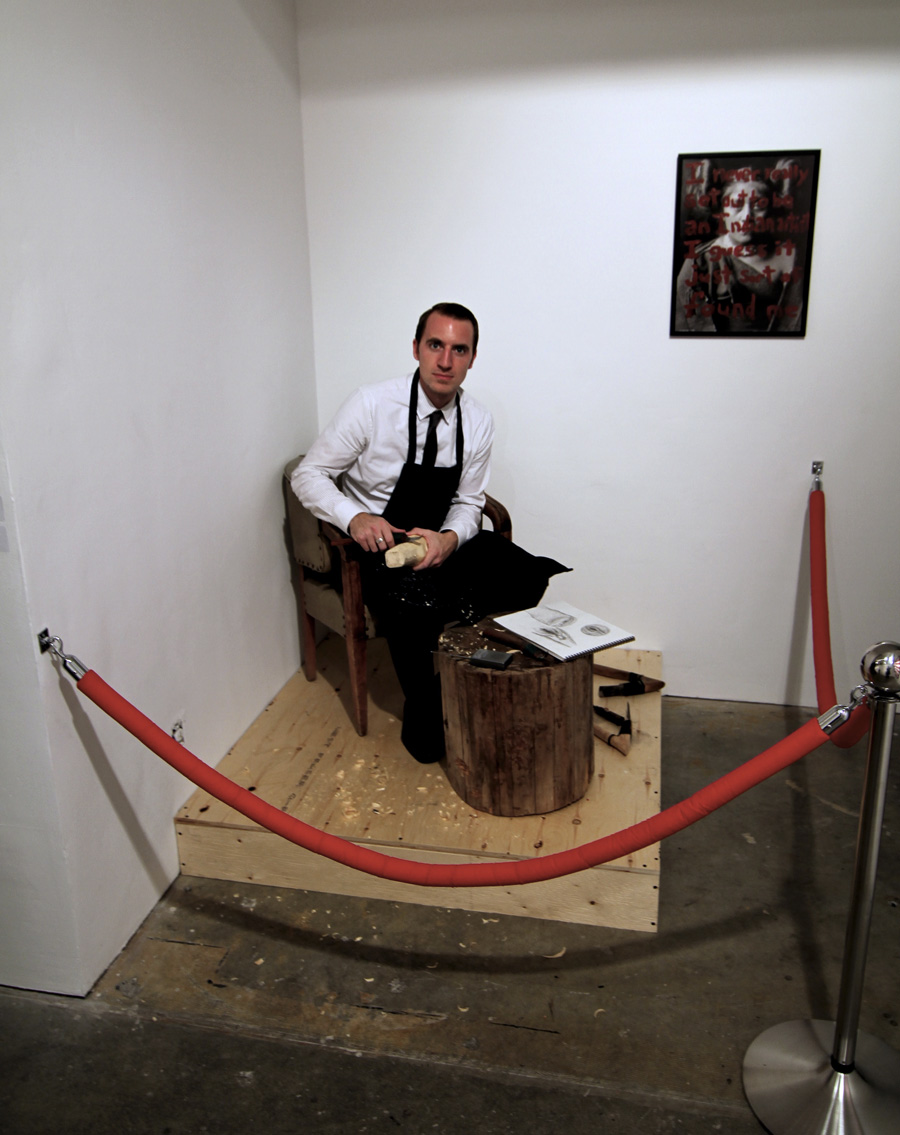
Nicholas Galanin (Tlingit/Aleut - American, b. 1979) 'White Carver' Nd


Nicholas Galanin (Tlingit/Aleut – American, b. 1979)
White Carver
Nd
Performance and installation


Nicholas Galanin (Tlingit/Aleut - American, b. 1979) 'Indian Land' 2012


Nicholas Galanin (Tlingit/Aleut – American, b. 1979)
Indian Land
2012
Digital photograph
Courtesy of the artist


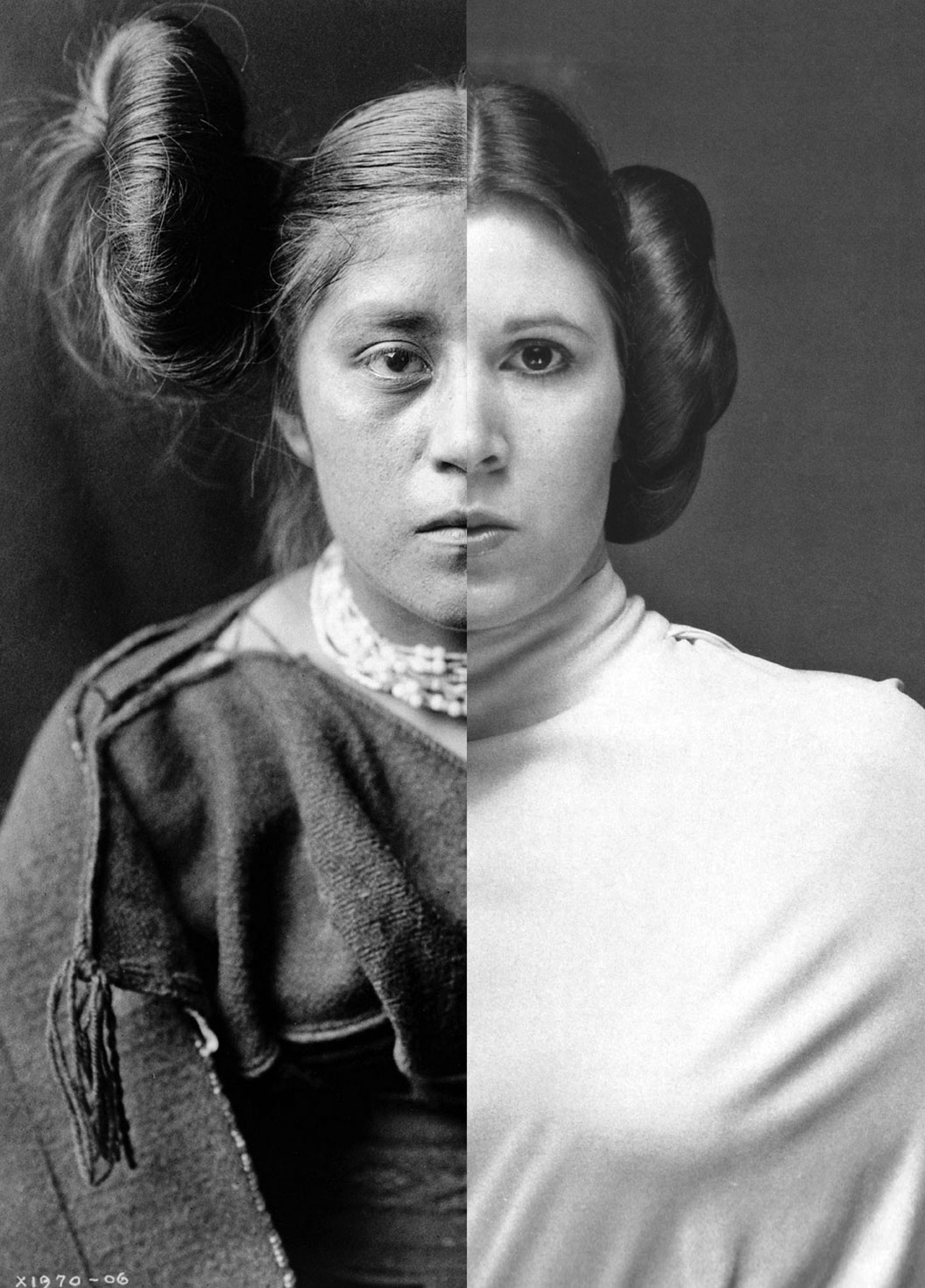
Nicholas Galanin (Tlingit/Aleut - American, b. 1979) 'Things Are Looking Native, Native's Looking Whiter' 2012


Nicholas Galanin (Tlingit/Aleut – American, b. 1979)
Things Are Looking Native, Native’s Looking Whiter
2012
Digital photograph
Courtesy of the artist


The Craft & Folk Art Museum (CAFAM) in collaboration with the Anchorage Museum presents This Is Not A Silent Movie: Four Contemporary Alaska Native Artists, an exhibition centred around four acclaimed Alaska Native artists whose groundbreaking contemporary works question institutional methods of identifying Native heritage, examine their own mixed-race identities, and challenge perceptions and stereotypes about indigenous peoples. It will be on view from Sunday, May 26 through Sunday, September 8, 2013.

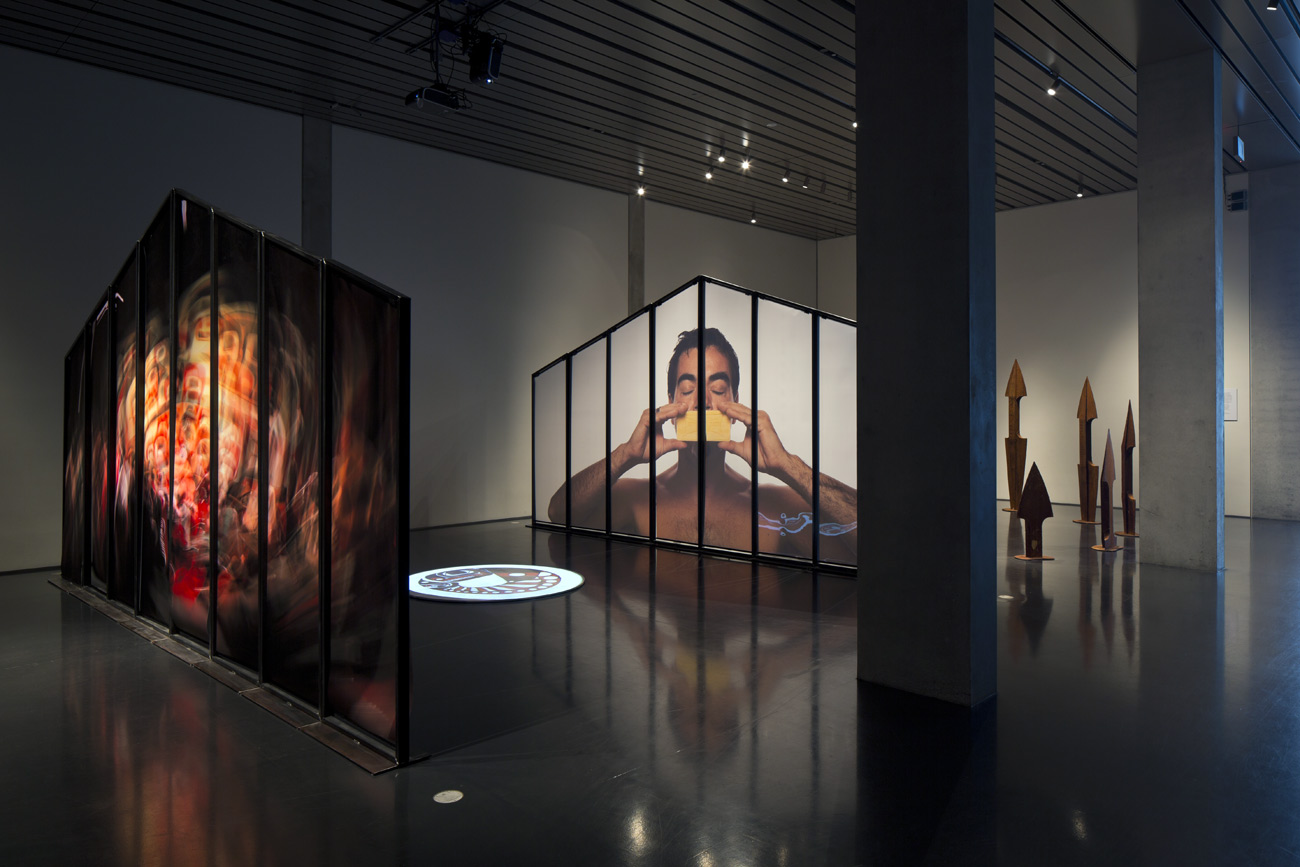
Through the language of contemporary visual art, Sonya Kelliher-Combs, Susie Silook, Da-ka-xeen Mehner, and Nicholas Galanin seek new and distinct ways to speak of tradition and mediate the serious and sometimes ironic conditions of art, identity, and history in the late 20th and early 21st century. Though each artist’s work is rooted in a lifelong immersion in their respective Alaska Native craft traditions, their multi-media installations dissolve the boundaries between contemporary and traditional arts.

Sonya Kelliher-Combs (Iñupiaq/Athabascan) utilises media such as polyurethane, Beluga intestine, and walrus stomach into her paintings, sculptures, and labor-intensive installations. These works often simulate skin, which is a point of investigation into her struggle for self-definition and identity. Nicholas Galanin’s (Tlingit/Aleut) video and photography installations object to the cultural appropriation and categorisation of indigenous peoples by popular culture. In Things are Looking Native, Native’s Looking Whiter, Galanin creates a split image that is a composite of one of photographer Edward Curtis’ Native American models with actress Carrie Fisher as Princess Leia in Star Wars. The image references the cross-pollination of the traditional butterfly whorl hairstyle that was worn by unmarried Hopi girls and the popular culture image. In 2013, Galanin received a major award from United States Artists.

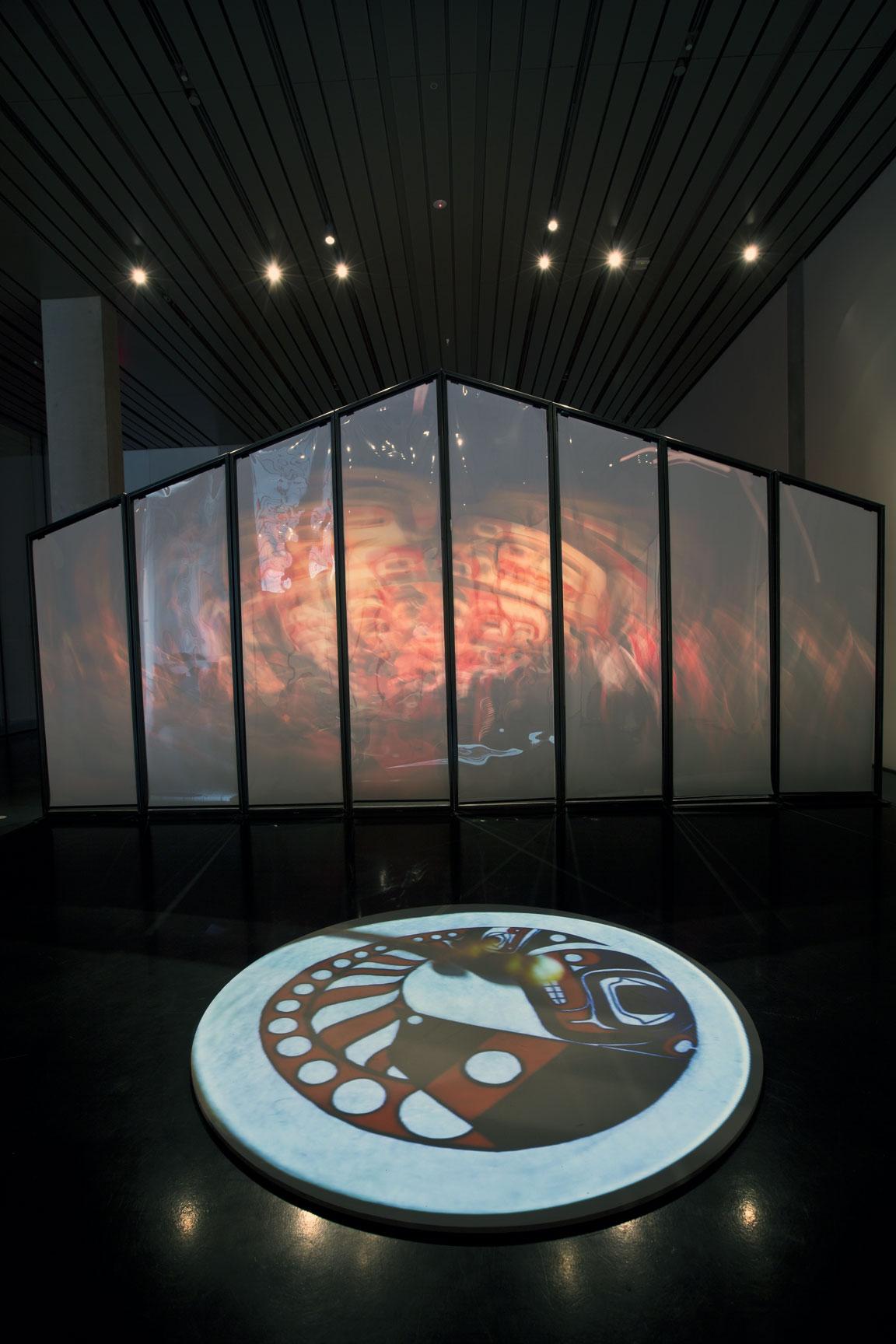
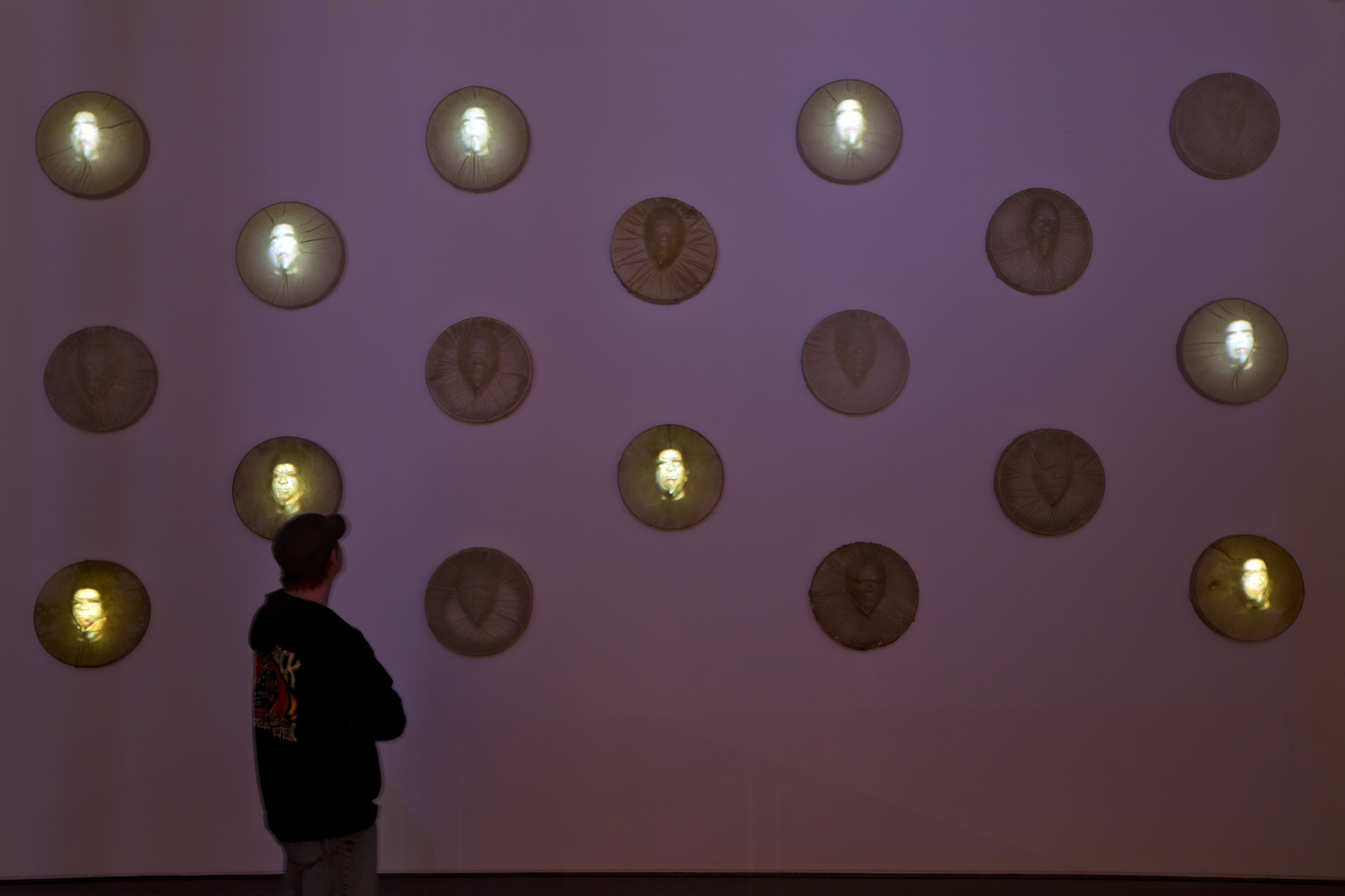
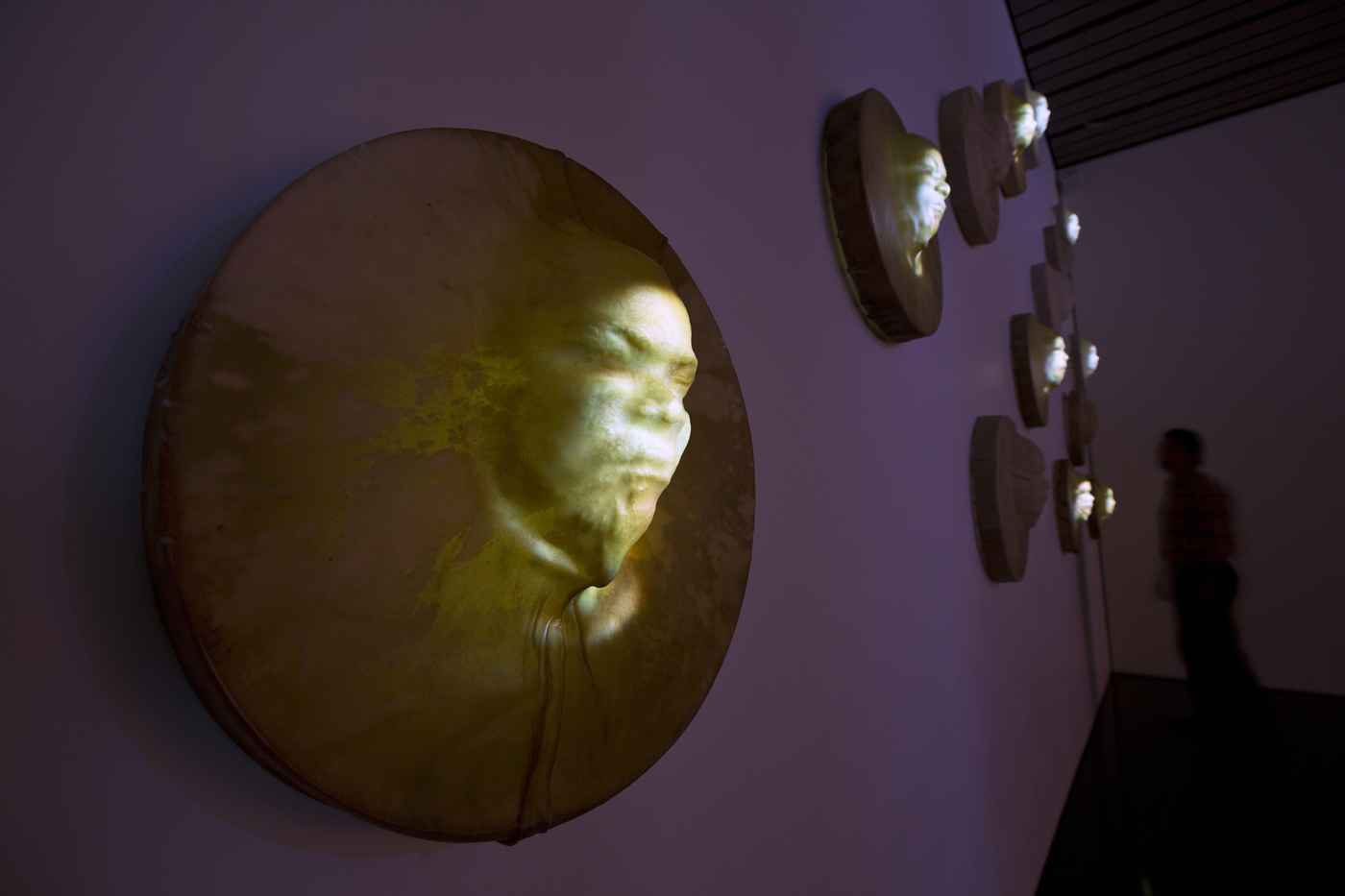
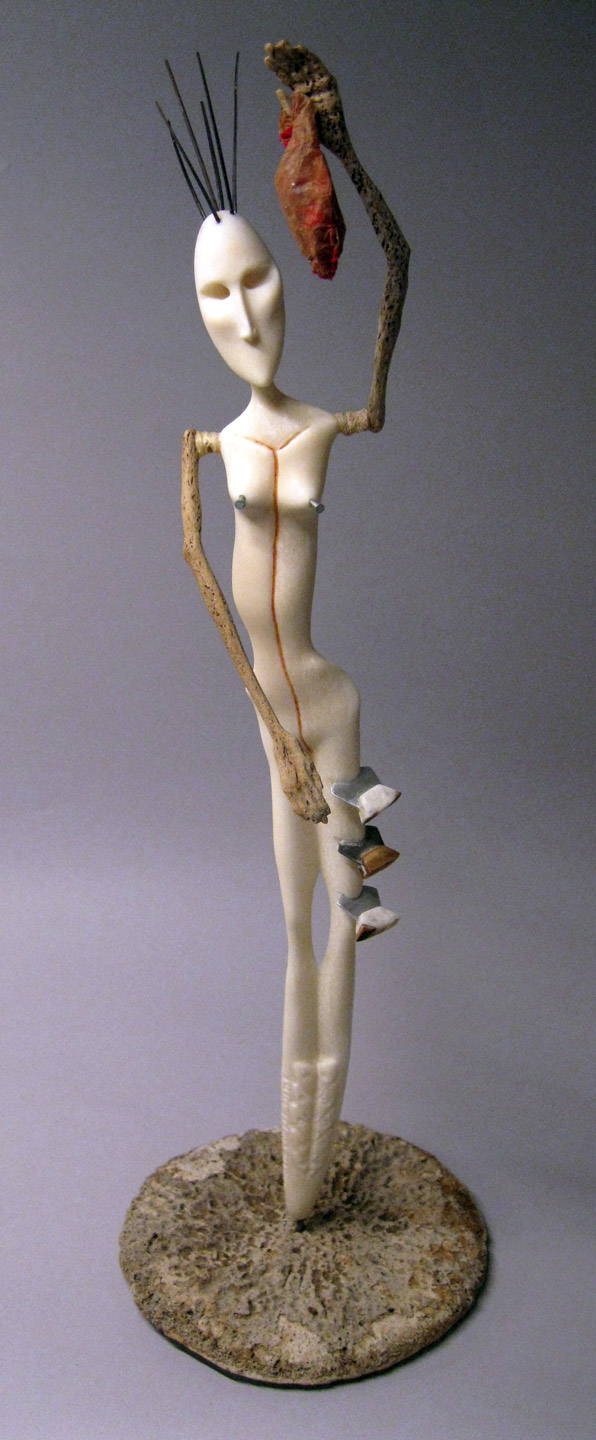
Carver Susie Silook (Yupik/Iñupiaq) is a writer and sculptor. The ancestral ivory dolls of Saint Lawrence, traditionally carved by men, are the basis of her work. Silook also departs from tradition by depicting women in her carvings rather than the animals most commonly rendered by men. Her walrus tusk carvings add a distinctly feminist perspective to an otherwise male-dominated art form as they address the widespread incidence of sexual abuse and violence perpetrated against Native women. Silook received a United States Artists Fellowship in 2007. Da-ka-xeen Mehner’s installation Finding My Song (Tlingit/N’ishga) draws upon his family’s stories to take a personal look at the retention and reclamation of language. The installation is inspired partially by his grandmother, whose mouth was washed out with soap whenever she spoke her Tlingit language in school in order to “encourage” her to speak English. Mehner’s work examines his own multicultural heritage – and the social expectations and definitions that accompany each aspect of it.

The title This is Not A Silent Movie comes from a quote by Native American writer and filmmaker Sherman Alexie, who works to move audiences away from narrow and stereotypical views of Native people – a view that Native people had very little influence in shaping. The exhibition has been curated by Julie Decker, Ph.D., Chief Curator at the Anchorage Museum.

Press release from The Craft & Folk Art Museum website


Susie Silook (Yupik/Iñupiaq - American, b. 1960) 'Keeping My Heart' 2008


Susie Silook (Yupik/Iñupiaq – American, b. 1960)
Keeping My Heart
2008
Courtesy of Anchorage Museum Collection


Susie Silook (Yupik/Iñupiaq - American, b. 1960) 'Aghnaghpak (Great Woman)' Nd


Susie Silook (Yupik/Iñupiaq – American, b. 1960)
Aghnaghpak (Great Woman)
Nd
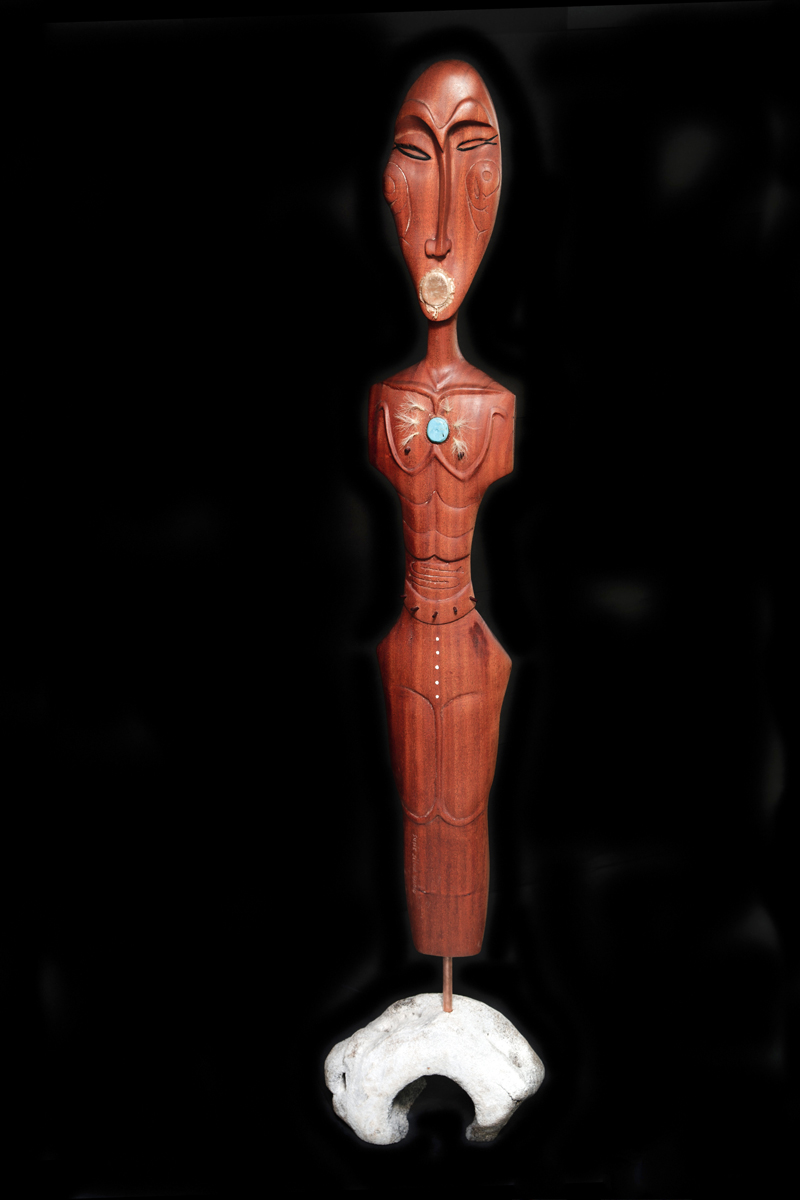
African Mahogany, whalebone, polar bear, turquoise, baleen, ivory, ink, walrus stomach membrane, brass


Susie Silook (Yupik/Iñupiaq - American, b. 1960) 'The Healer' Nd


Susie Silook (Yupik/Iñupiaq – American, b. 1960)
The Healer
Nd
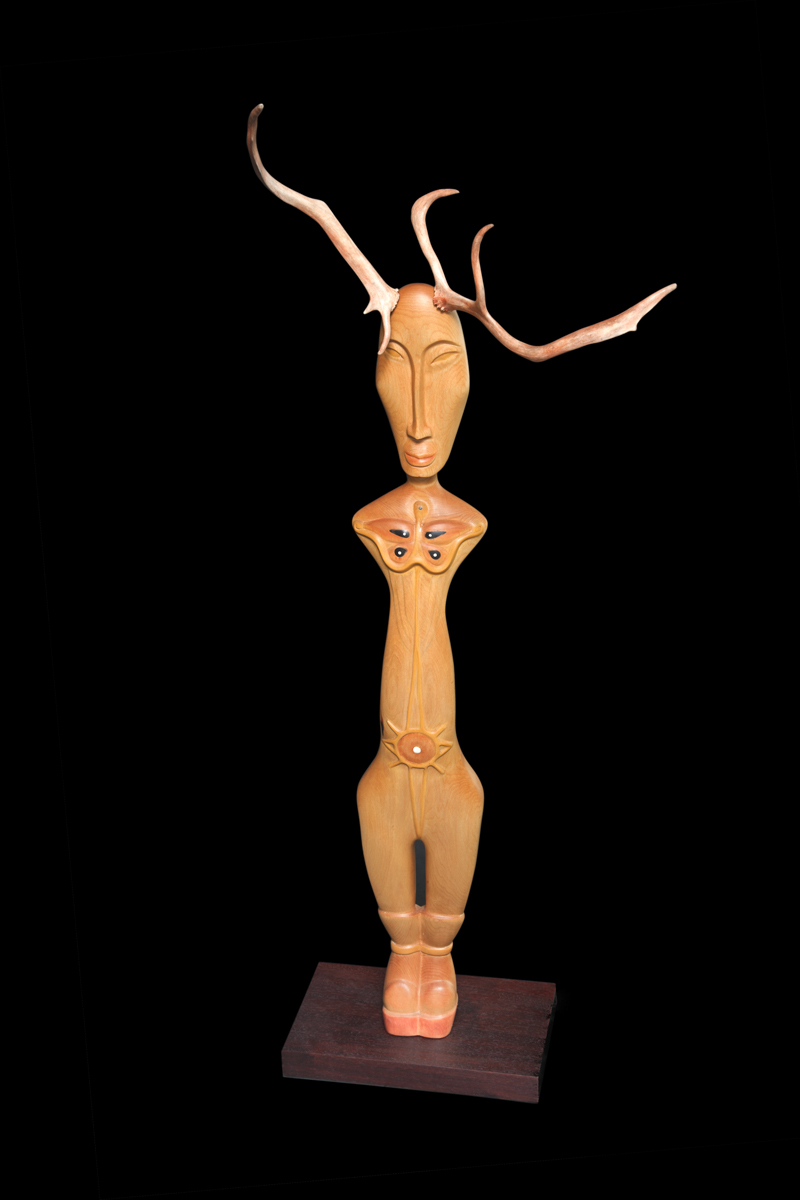
Basswood, caribou antler, ivory, baleen, seal whiskers, purple heart, red ocher


Susie Silook (Yupik/Iñupiaq - American, b. 1960) 'Ice Incantation' Nd


Susie Silook (Yupik/Iñupiaq – American, b. 1960)
Ice Incantation
Nd
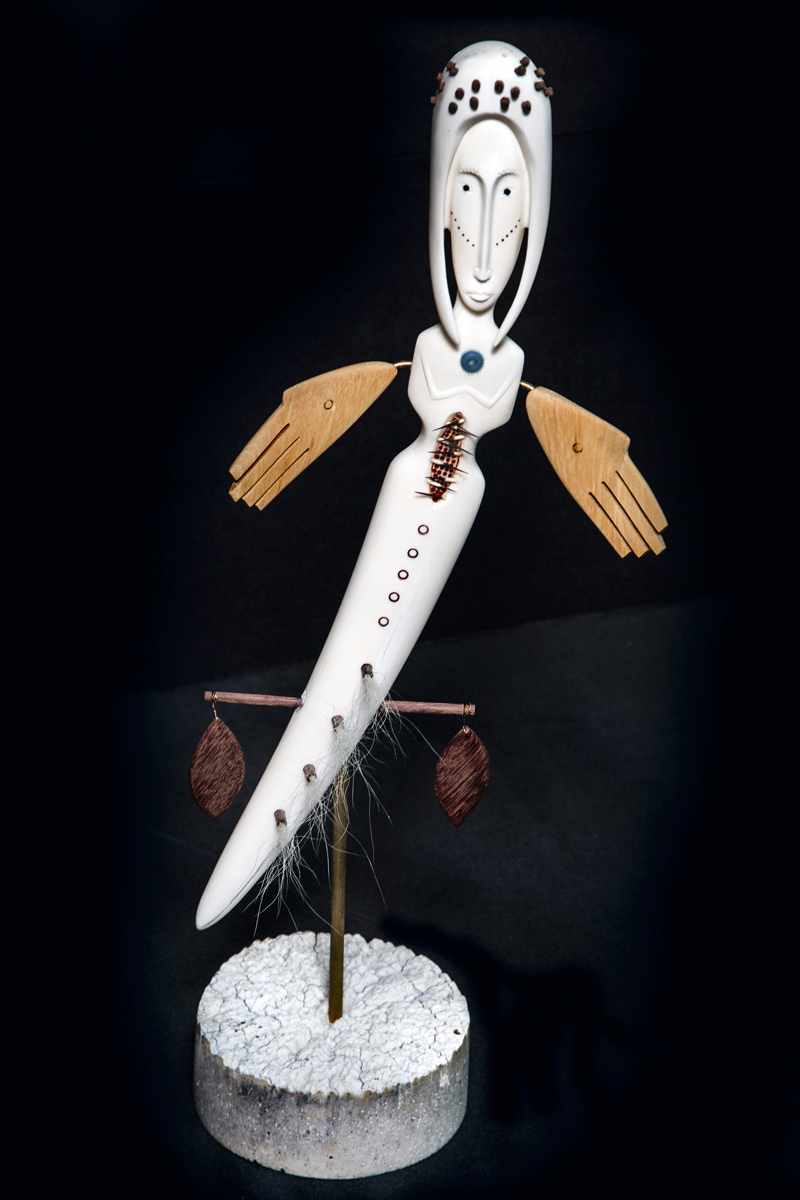
Walrus ivory, purple heart, porcupine quills, polar bear, blue bead, baleen, red ocher, whalebone, wood


Susie Silook (Yupik/Iñupiaq - American, b. 1960) 'Mighty Elder' Nd


Susie Silook (Yupik/Iñupiaq – American, b. 1960)
Mighty Elder
Nd
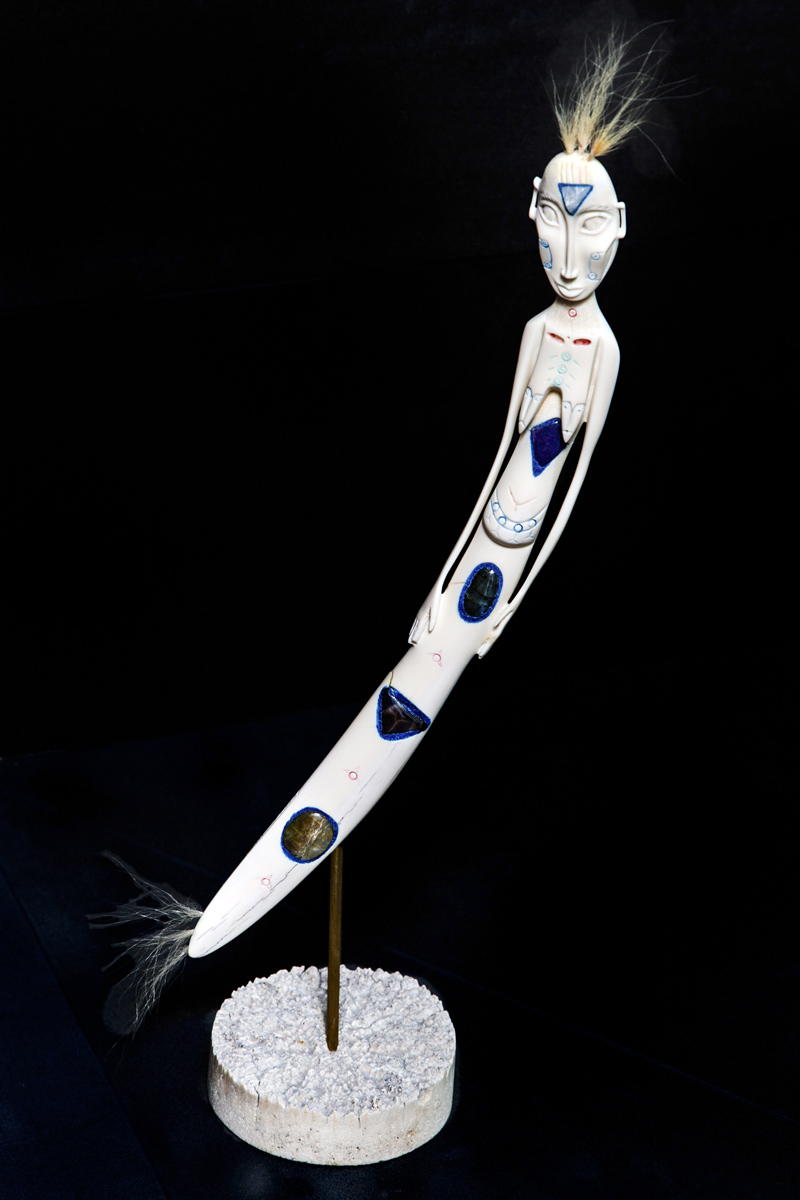
Ivory, natural stones, polar bear, whale bone, brass, pastels


Susie Silook (Yupik/Iñupiaq - American, b. 1960)


Susie Silook (Yupik/Iñupiaq – American, b. 1960)


Craft Contemporary
5814 Wilshire Blvd.,
Los Angeles, CA 90036

Opening hours:
Wednesday – Sunday 11am – 5pm
Closed Mondays and Tuesdays

Craft Contemporary website

LIKE ART BLART ON FACEBOOK

Back to top

Exhibition: ‘Max Ernst’ at Fondation Beyeler, Riehen, Switzerland

Exhibition dates: 26th May – 8th September 2013


Many thankx to the Fondation Beyeler for allowing me to publish the images in the posting. Please click on the images for a larger version of the art.


Max Ernst (German, 1891-1976) The Entire City La ville entière 1935/36


Max Ernst (German, 1891-1976)
The Entire City
La ville entière
1935-1936
Oil on canvas
60 x 81cm
Kunsthaus Zurich
© 2013, ProLitteris, Zurich
Photo: Kunsthaus Zurich


Max Ernst (German, 1891-1976) Nature at Dawn (Evensong) La nature à l’aurore (Chant du soir) 1938


Max Ernst (German, 1891-1976)
Nature at Dawn (Evensong)
La nature à l’aurore (Chant du soir)

1938
Oil on canvas
81 x 100cm
Private collection
© 2013, ProLitteris, Zurich


Max Ernst (German, 1891-1976) 'Painting for Young People' 1943


Max Ernst (German, 1891-1976)
Painting for Young People
1943
Oil on canvas
60.5 x 76.5cm
The Ulla and Heiner Pietzsch Collection, Berlin
© 2013, ProLitteris, Zurich
Photo: Jochen Littkemann, Berlin


Max Ernst (German, 1891-1976) Woman, Old Man, and Flower Weib, Greis und Blume 1924


Max Ernst (German, 1891-1976)
Woman, Old Man, and Flower
Weib, Greis und Blume
1924
Oil on canvas
97 x 130cm
The Museum of Modern Art, New York
© 2013, ProLitteris, Zurich
Photo: © 2013, Digital image, The Museum of Modern Art, New York / Scala, Florence


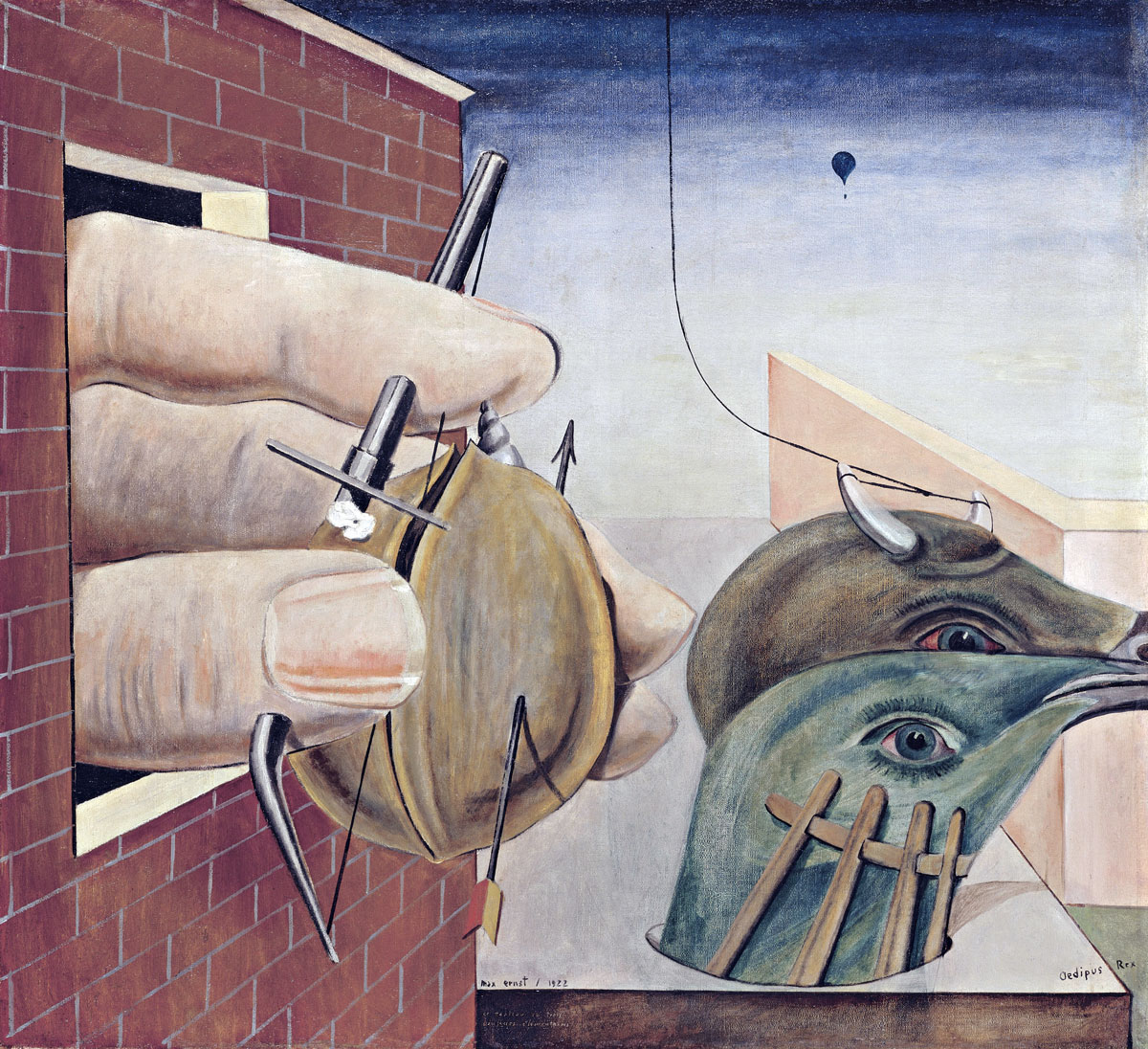
Max Ernst (German, 1891-1976) 'Oedipus Rex' 1922


Max Ernst (German, 1891-1976)
Oedipus Rex
1922
Oil on canvas
93 x 102cm
Private collection
© 2013, ProLitteris, Zurich


This work is innately Freudian just in name, let alone in content. The Oedipus complex is one of the most well recognised components of Freudian theory and it is seen in this work names after it in many ways. The first is through the process of condensation. This can be seen as the bird headed man, which shows up in many of Ernst’s images: the association in this image between the man and the bird is the desire of man to be free from the inhibitions imposed upon him by society, and despite the fact that these two still retain their separate identities, they are consistent with Freud’s ideas. In the case of this work, the head is removed from the body, showing a detachment from true feeling and true understanding of life. Another Freudian idea is the use of the joke, which is seen in the treatment of several of the objects in this work. Such as the contrast and juxtaposition of the wall, the over-sized fingers, upside down eyes on the birds, and the balloon in the aft of the painted collage. Several other associations relating this work to Freud can be drawn as well.

This work has intense sexual undercurrents. The nut represents the female and the crack in the nut is a symbol for the vulva. The cracking of the nut by the hands of a male is a metaphor for sexual intercourse and also gender roles in traditional patriarchal cultures. The idea of the treatment of woman and of her place within society is also visible in another piece by Ernst, The Tottering Woman. In this piece, he addresses the constraints in which woman are held in the world and the patriarchy that she must deal with on a daily basis. It also touches upon the objectification of woman as well. Hoffman also theorises that the squeezing of the nut has implications of sadomasochistic roles as the nut is being dominated and crushed, the spike is punishing the hand equally and finally, once forced open, the “nut” could always snap back shut, injuring the index finger and thereby is a signifier of neurotic sexual attachment. The bird head towards the back of the picture plane is tethered by some sort of rope, which could be seen as societal restrictions on deviant sexuality and possibly is a reaction to the taboo associated with incest. Additionally, the arrow as it pierces the shell of the nut could be seen as a phallic signifier or also as a representation for the idea of love and then a refutation of the existence of love within the constraints of sexual desire and sexuality. The imagery in this piece by Ernst is intensely psychosexual in nature and content and can be seen mostly in those terms.

In defence of picking Oedipus Rex to write about in the context of collage, it is true that it is an oil painting, but its imagery was taken from print sources and then was transposed into the work by the act of painting them. The nut squeezing image was taken from an article entitled “Experience sur l’elasticite, faite avec une noix,” from the popular 19th century French Magazine La Nature.

Anonymous. “Ernst: Chance, Collage and the Study of Freud,” on the Center for Biological Computing, Indiana State University Department of Life Sciences website [Online] Cited 12/12/2020. No longer available online


Max Ernst (German, 1891-1976) The Fireside Angel (The Triumph of Surrealism) L’ange du foyer (Le triomphe du surréalisme) 1937


Max Ernst (German, 1891-1976)
The Fireside Angel (The Triumph of Surrealism)
L’ange du foyer (Le triomphe du surréalisme)
1937
Oil on canvas
114 x 146cm
Private collection
© 2013, ProLitteris, Zurich


This is one of the rare pictures by Max Ernst which refer directly to a political incident. He commented on this: “The Fireside Angel is a picture I painted after the defeat of the Republicans in Spain. This is, of course, an ironical title for a kind of clumsy oaf which destroys everything that gets in the way. That was my impression in those days of the things that might happen in the world. And I was right.” The Fireside Angel is depicted as an avenging character from the Bible. Its destructive potential is stressed by its aggressive colouring. In the figure of the angel, blind traumatising force is expressed, against which mankind is defenceless. Since there is no hope for negotiations with an inhuman force, the blind aggressor seems even more frightening.


With the exhibition of over 160 of his works at the Fondation Beyeler in cooperation with the Albertina, Vienna, the “artist of the century” Max Ernst (1891-1976) will be given the first comprehensive retrospective in Switzerland since his death as well as the first held in a German-speaking country since 1999.

Max Ernst is one of Modernism’s most versatile artists. After his beginnings as a rebellious Dadaist in Cologne, he moved to Paris in 1922, where he soon became one of the pioneers of Surrealism. He was interned twice as an enemy alien during the Second World but was released thanks to the intervention of the poet Paul Éluard, who was his friend. In 1941 Max Ernst fled to the USA, where he found new stimuli for his work as well as providing new impulses for the generation of young American artists. A decade later he returned to a Europe that had been devastated by the war and where the once highly esteemed Max Ernst seemed to have been forgotten, only to be rediscovered as one of the 20th century’s most multifaceted artists. In 1958, having renounced his German nationality in 1948 in order to take US citizenship, Max Ernst eventually became a French citizen.

Ernst was indeed one of the “artists of the century” – not only because of the high quality and wide range of his oeuvre but also because of the length of his creative career, which lasted around 60 years from 1915 to 1975. Active at a time of tremendous artistic, social, political and technical upheaval, he knew how to integrate these changes into his oeuvre, which therefore reflects key characteristics of the 20th century. The pleasure Max Ernst took in experimenting with different techniques made him a pioneer of multimedia expression. With no apparent effort, he combined in his work the themes, styles and techniques that were important to successive generations. His ceaseless quest for new forms of expression, questions and subjects is emblematic of modern man. Max Ernst appears to us as the artist who never wanted to find himself, as he once said: “A painter is lost when he finds himself”.

With his early Dadaist experience, his key position among the Surrealists and his prelude to action painting, Max Ernst travelled between worlds and cultures, moving to Paris from Cologne and from New York back to France. At a time of political unrest, he maintained his critical, creative gaze, seeking refuge in a country, the USA, which he scarcely knew but to which he nonetheless responded with curiosity and which provided him with important impulses for his late work. With exhibitions in New York, projects in Arizona and Touraine, participation in the Venice Biennale and Documenta, Max Ernst was an early 20th century example of the kind of “cultural and artistic nomad” who only later became a customary figure.

Collage

As early as 1919, Max Ernst started working with the technique of collage, which he used to design or simulate new pictorial realities. He created his collages from illustrations taken from various novels, textbook catalogues, natural science journals and 19th century sales catalogues. He excised the fragments from wood engravings, using a scalpel in order to achieve cut edges that were perfectly exact and smooth. In around 1929 / 1930 Max Ernst created his most famous collage novels La femme 100 têtes (Hundred-Headed Woman / Headless Woman) and Rêve d’une petite fille qui voulut entrer au Carmel (A little Girl dreams of taking the Veil), which are among Surrealism’s most fascinating, enigmatic works.

Frottage

In around 1925, Max Ernst began his Natural History series, in which he used the technique of frottage for the first time (the French word frotter means “to rub”) as a semi-automatic procedure. He placed objets trouvés he found outdoors, such as leaves and wood, under a sheet of paper and rubbed over them with a pencil. Then he took the structures that emerged and transformed them into fantastic pictures. In his frottages, Ernst breathes new life into lifeless objects, giving them another, to some extent uncustomary, significance. Max Ernst developed frottage while he was staying in Brittany. In his essay Beyond Painting he describes a kind of visionary revelation that caused him to use the wooden floor and other objects in his guest-house room as objects for his frottages.

Grattage

Grattage is an artistic technique used by Max Ernst in painting that he developed in around 1927 as an extension of frottage. In a first phase, he applied several superimposed layers of paint to a canvas. Underneath the painting ground that he prepared in that way, he placed objects such as metal grids, wooden boards and string, the relief of which could be seen through the canvas. In order to transfer those structures to the picture, he scratched away the top layers of paint (gratter is the French word for “to scratch”). In a subsequent phase, he reworked the patterns that had become visible, transforming them into forests, shellflowers, birds and petrified cities.

Decalcomania

Decalcomania is a transfer technique in which the damp pigment on a piece of glass or a sheet of paper is pressed against a canvas, leaving behind fine streaks, bubbles or marbled traces of paint when they are removed. In a subsequent phase, the artist reworks the complex surface structure. This artistic technique had already been developed in the 18th century and was used by other Surrealist artists too. Max Ernst adopted the technique in the late 1930s, using it to represent mysterious landscapes peopled by eery faces, figures and animals hiding in the thickets of nature.

Oscillation

In around 1942, while an exile in the USA, Max Ernst started developing the technique of oscillation. He let paint drip out of a tin perforated with a number of holes, which he attached to a long string and swung to and fro over the canvas. This largely uncontrollable and, once again, semi-automatic procedure created reticulated compositions of circles, lines and points on the surface that were reminiscent of planets’ orbits. Oscillation was an innovative technique that not only extended the range of Surrealism’s artistic repertoire but also heralded Jackson Pollock’s Drip Painting.

Press release from the Fondation Beyeler website


Max Ernst (German, 1891-1976) At the First Limpid Word Au premier mot limpide 1923


Max Ernst (German, 1891-1976)
At the First Limpid Word
Au premier mot limpide
1923
Oil on plaster, transferred to canvas
232 x 167cm
Kunstsammlung Nordrhein-Westfalen, Düsseldorf
© 2013, ProLitteris, Zurich
Photo: Walter Klein, Düsseldorf


At the First Limpid Word is one such puzzle. A monumental work, it formed part of the decoration of the house that Max Ernst shared with Paul Éluard and his wife Gala (who later became Dalí’s muse). It was only in the 1960s that the wall painting, which had been painted over, was rediscovered. This painting, “an allegory of seduction,” is such a simple composition but is filled with symbolism in colour and subject.


Max Ernst (German, 1891-1976) 'Ubu Imperator' 1923


Max Ernst (German, 1891-1976)
Ubu Imperator
1923
Oil on canvas
100 x 81cm
Musée national d’art moderne, Centre Georges Pompidou, Paris
© 2013, ProLitteris, Zurich
Photo: © Centre Pompidou, MNAM-CCI, Dist. RMN-Grand Palais / Philippe Migeat


Like many of Ernst’s paintings during his Paris period (1922-1941), Ubu Imperator resembles a collage in painted form. The artist’s knowledge of Freudian theories, familiarity with myth and extreme wit are reflected in this early painting, which is now considered proto-Surrealist due to its strange juxtapositions.

In Ubu Imperator (1923), an anthropomorphic top dances in a vast, empty landscape. Such works captured early on the surrealist notion of estrangement and commitment to the subconscious, but also they seem surprisingly contemporary. The red Ubu Imperator marked the entry of Ernst in the articulated stage of surrealism by his use of a literary narrative that was sometimes personal, sometimes political. In this seminal work a spinning top, a red carcass with iron reinforcement, and human hands express an astonishing image of the Ubu Father, a grotesque symbol of authority invented by Alfred Jarry. Other paintings suggest Ernst’s impressions of ancient Buddhist temples (à la Angkor Wat) as inspired from his trip to Asia following the breakup of his famous ménage à trois with Gala and Paul Eluard. This structure and thickly overgrown plants appear in many of his engravings and grattage [Grattage is a surrealist painting technique that involves laying a canvas prepared with a layer of oil paint over a textured object and then scraping the paint off to create an interesting and unexpected surface (Tate)] oil paintings, such as The Entire City (1935-1936) and The Petrified City (1935).

Valery Oisteanu. “Max Ernst: A Retrospective,” on the The Brooklyn Rail website, May 2005 [Online] Cited 12/12/2020


Max Ernst (German, 1891-1976) 'Approaching Puberty… (The Pleiades)' La puberté proche... (les pléiades) 1921


Max Ernst (German, 1891-1976)
Approaching Puberty… (The Pleiades)
La puberté proche… (les pléiades)
1921
Collage, gouache, and oil on paper, mounted on cardboard
24.5 x 16.5cm
Private collection
© 2013, ProLitteris, Zurich


The Pleiades, companions of Artemis, were the seven daughters of the titan Atlas and the sea-nymph Pleione born on Mount Cyllene. They are the sisters of Calypso, Hyas, the Hyades, and the Hesperides. The Pleiades were nymphs in the train of Artemis, and together with the seven Hyades were called the Atlantides, Dodonides, or Nysiades, nursemaids and teachers to the infant Bacchus. There is some debate as to the origin of the name Pleiades. Previously, it was accepted the name is derived from the name of their mother, Pleione. However, the name Pleiades may derive from πλεῖν(to sail) because of their importance in delimiting the sailing season in the Mediterranean Sea. (Wikipedia)

For Ernst eroticism was another way of entering the unconscious, of escaping from convention, and possibly of tweaking bourgeois taste. But he was aware that adult sexuality had its limits, as is apparent in the exquisite Approaching Puberty… (1921). A photograph of a nude, faceless girl floats in a blue space stratified by horizontal lines, suggesting water or the sky. A few strangely disparate forms surround the girl, and the short text at the bottom ends, “The gravitation of the undulations does not yet exist.” The title, this line, and the fact that the girl floats in space rather than standing on the ground – as most of Ernst’s figures do – suggests that he sees in pubescence a kind of weightless freedom. In a related but nonsexual image, an Untitled c. 1921 collage, four schoolboys peer out of their classroom (from which a wall is missing) at a vast blue sky in which a hot-air balloon floats. A schoolmaster stands alone and ignored at his desk; next to him one of the boys balances a giant pencil on a pointer. What’s learned in school, Ernst seems to say, is far less important than visions of the sky.

Fred Camper. “Max Ernst’s Theater of Reveries,” on the Chicago Reader website, November 1993 [Online] Cited 12/12/2020


Max Ernst (German, 1891-1976) 'Napoleon in the Wilderness' 1941


Max Ernst (German, 1891-1976)
Napoleon in the Wilderness
1941
Oil on canvas
46.3 x 38cm
The Museum of Modern Art, New York
© 2013, ProLitteris, Zurich
Photo: © 2013, Digital image, The Museum of Modern Art, New York / Scala, Florence


In Max Ernst’s painting Napoleon in the Wilderness (1941), a strange whimsical trumpet appears in the hand of a female figure that seems to have sprung from the sinister rock and coral formations of a world in ruin. This painting formed part of suite of decalcomania [A transfer technique, developed in the 18th century, in which ink, paint, or another medium is spread onto a surface and, while still wet, covered with material such as paper, glass, or aluminium foil, which, when removed, transfers a pattern that may be further embellished upon. The technique was adopted by the Surrealists to create imagery by chance rather than through conscious control (MoMA)] works, in which Carrington’s semi-naked figure haunts a series of eerie landscapes, richly textured and abundant with mythological hybrid forms. Between periods of internment during the war, Ernst had managed to continue painting, producing haunting images of his abandoned lover in works that evoke his own sense of loss and grief in macabre scenes that promise both decay and renewal.

Text from Natalya Lusty, Surrealism, Feminism, Psychoanalysis. Ashgate Publishing, 2007.


The exhibition is a chronological presentation of all the major creative phases and groups of themes in Max Ernst’s work, opening with Capricorn, his most important sculpture. Max Ernst, who was born on 2 April 1891 in Brühl (Germany), first learnt about painting from his father. He had a conservative, middle-class upbringing, against which he soon rebelled. Starting in 1910, he studied art history as well as psychology, Romance languages and philosophy. Initially influenced by Expressionism and Futurism, he soon came in contact with other artists and art movements.

His early work City with Animals demonstrates this unique combination of different styles, displaying both Cubist and Futurist features. His encounter with Hans Arp (also represented in the Beyeler Collection along with the Surrealists Dalí, Giacometti and Miró) came at a time full of turmoil. Dada is born; the years after the First World War are a time of radical change, protest and experimentation.

Dada brings Max Ernst into contact with Surrealist artists. He ceases to be just a German artist and becomes a leading figure in the Surrealist art movement in Paris. There his works begin to acquire enigmatic qualities, for the unconscious and dreams are important elements of Surrealism, which it took over from psychoanalysis. Max Ernst remains an innovator, experimenting with frottage from the mid-1920s onwards. Hybrid creatures are created from different natural species; his interest in the natural sciences finds expression in his works.

At the First Limpid Word is one such puzzle. A monumental work, it formed part of the decoration of the house that Max Ernst shared with Paul Éluard and his wife Gala (who later became Dalí’s muse). It was only in the 1960s that the wall painting, which had been painted over, was rediscovered. The Blessed Virgin Chastising the Infant Jesus is an equally spectacular work, a scandal-provoking painting with blasphemous elements that deconstructs the traditional sacred image of the Madonna, representing a radical liberation from Ernst’s middle class roots. One whole room in the exhibition is developed to the theme of the forest, with a number of masterpieces from that series. Considerable importance is also attached to the series of Horde paintings from the late 1920s; the metamorphosed figures convey the theme of transformation. With the Flowers and Cities series (which focus on the antitheses of nature and culture), other important groups of themes are also presented.

Room 11 will contain a number of key works with the jungle paintings from the second half of the 1930s including Nature at Dawn with its dark, sinister character. Different traditions are echoed here, ranging from borrowings from Henri Rousseau to the Romanticism of a painter like Caspar David Friedrich. With The Robing of the Bride there is not only an obvious reference to Renaissance art but also a more differentiated context. The transformation of a woman into an animal and vice versa is an erotic motif that the painting conveys through a number of details. The Fireside Angel, on the other hand, thematises the Spanish Civil War of the late 1930s, with which many artists and intellectuals concerned themselves. With the brightly coloured, mask-like, terrifying dimension of its figure, which seems to fly towards the viewer as an unstoppable whirlwind between aggression and mockery, Max Ernst prefigures the political catastrophe that was to befall Europe.

Ernst’s late work displays thematic caesura – on the one hand, a poetical and sensuous contemplation using over-painting in the refined, technically innovative work The Garden of France and, on the other, Birth of a Galaxy, a splendid late work in which air, water, earth and light all rise into a starry firmament. As a free spirit – ironical, elegant and rebellious – and a man of many different facets, Max Ernst today remains an artist whose work is both accessible and complex. His works speak to us, evoking uncharted depths and hidden mysteries, as well as prompting reflection. Like mercury – which continuously changes shape in a fascinating way, hence being impossible to grasp – Max Ernst is still an exceptional artist almost forty years after his death, exemplary in his artistic independence and possessing an urge for freedom and a bold readiness for innovation in his work and life that preserve his oeuvre from stylistic opportunism and conventionality.

Max Ernst’s creativity in handling sources of imagery and inspiration, the breaks between his many phases and types of subject matter, are still capable of astonishing viewers today. Like a revolutionary of vision, he rearranged images and elements, and as a Surrealist established links between pictures and the viewer’s unconscious mind. What remained a constant was the persistence of Ernst’s rebellion. Like his life, he once said, his work was “not harmonious in the sense of classical composers.” A master of metamorphosis, Ernst was a searcher and discoverer, an honorary doctor of philosophy who increasingly expanded his range of investigation to include astronomy, ethnology, ornithology, mathematics and psychoanalysis, following up his love of the natural sciences and creative chance.

Press release from the Fondation Beyeler website


Max Ernst (German, 1891-1976) The Robing of the Bride L'habillement de l’épousée / de la mariée 1940


Max Ernst (German, 1891-1976)
The Robing of the Bride
L’habillement de l’épousée / de la mariée
1940
Oil on canvas
129.6 x 96.3cm
Peggy Guggenheim Collection, Venice (Solomon R. Guggenheim Foundation, New York)
© 2013, ProLitteris, Zurich
Photo: Peggy Guggenheim Collection, Venice (Solomon R. Guggenheim Foundation, New York)


The Robing of the Bride (1939-1941; Venice, Guggenheim) employs Renaissance perspective devices and Cranach-like figures to represent a pagan marriage.


Max Ernst (German, 1891-1976) The Blessed Virgin Chastising the Infant Jesus before Three Witnesses: André Breton, Paul Éluard and the Artist La Vierge corrigeant l’enfant Jésus devant trois témoins: André Breton, Paul Éluard et le peintre 1926


Max Ernst (German, 1891-1976)
The Blessed Virgin Chastising the Infant Jesus before Three Witnesses: André Breton, Paul Éluard and the Artist
La Vierge corrigeant l’enfant Jésus devant trois témoins: André Breton, Paul Éluard et le peintre
1926
Oil on canvas
196 x 130cm
Museum Ludwig, Cologne
© 2013, ProLitteris, Zurich
Photo: Peter Willi / ARTOTHEK


Max Ernst (German, 1891-1976) The Immaculate Conception L'immaculée conception 1929


Max Ernst (German, 1891-1976)
The Immaculate Conception
L’immaculée conception
1929
Master illustration for La femme 100 têtes, chapter 1, plate 12
Collage on paper
14.2 x 14.5cm
Private collection
© 2013, ProLitteris, Zurich


La Femme 100 Têtes 1967 with English Subtitles


'Dorothea Tanning and Max Ernst with the cement sculpture Capricorne (Capricorn), Sedona, Arizona' 1948


Dorothea Tanning and Max Ernst with the cement sculpture Capricorne (Capricorn), Sedona, Arizona
1948
© 
2013, ProLitteris, Zurich
Photo: Max Ernst Documentation, Deutsches Forum für Kunstgeschichte, Paris / John Kasnetsis


Dorothea Margaret Tanning (August 25, 1910 – January 31, 2012) was an American painter, printmaker, sculptor and writer. She created ballet sets and costumes for George Balanchine’s Night Shadow, at the Metropolitan Opera House and others. She also appeared in Hans Richter’s avant-garde films. As an artist she was influenced by Dada and Surrealism and married fellow Surrealist Max Ernst.

As she recounts in her memoirs, Birthday and Between Lives, when Ernst visited her studio in 1942, they played chess, fell in love, and embarked on a life together that soon took them to Sedona, Arizona, and later to France. They met at a party in 1942 and after he would drop by Dorothea’s studio where she painted for a Surrealist movement exhibition of art by women for Peggy Guggenheim’s Art of This Century. In that exhibition, Tanning’s work showed along with the work of Louise Nevelson and Gypsy Rose Lee. Soon after this encounter Ernst moved in with her.

They married in 1946, in a double wedding with Man Ray and Juliet Browner in Hollywood, after Ernst’s divorce from Peggy Guggenheim. They remained married for 30 years until his death. In 1949, Tanning and Ernst moved to France, where they divided their time between Paris, Touraine and later Provence. They would often host guest such as Balanchine, Henri Cartier-Bresson, Marcel Duchamp, Pavel Tchelitchew and Dylan Thomas. In 1957 Tanning and Ernst moved to France again because Max Ernst was denied citizenship as a German during the McCarthy era. When speaking on her relationship with Ernst in an interview, Tanning said: “I was a loner, am a loner, good Lord, it’s the only way I can imagine working. And then when I hooked up with Max Ernst, he was clearly the only person I needed and, I assure you, we never, never talked art. Never.”

After Max Ernst died in 1979 Dorothea Tanning returned to the United States.

Text from the Wikipedia website


'Max Ernst with rocking horse, Paris' 1938


Max Ernst with rocking horse, Paris
1938
2013, ProLitteris, Zurich
Photo: Max Ernst Museum Brühl des LVR, Stiftung Max Ernst


Fondation Beyeler
Beyeler Museum AG
Baselstrasse 77, CH-4125
Riehen, Switzerland

Opening hours:
10 am – 6 pm daily, Wednesdays until 8 pm

Fondation Beyeler website

LIKE ART BLART ON FACEBOOK

Back to top

Exhibition: ‘Photography and the American Civil War’ at the Metropolitan Museum of Art, New York

Exhibition dates: 2nd April – 2nd September 2013

PLEASE BE WARNED: LIKE “INCIDENTS OF WAR”, THIS POSTING IS DISTURBING AND NOT FOR THE FAINT HEARTED!


Andrew Joseph Russell (American, 1830-1902) 'Slave Pen, Alexandria, Virginia' 1863 (detail)


Andrew Joseph Russell (American, 1830-1902)
Slave Pen, Alexandria, Virginia (detail)
1863
Albumen silver print from glass negative
The Metropolitan Museum of Art, Gilman Collection, Purchase, The Horace W. Goldsmith Foundation Gift, through Joyce and Robert Menschel, 2005
© The Metropolitan Museum of Art, New York


There are some very poignant and disturbing photographs in this posting. The youth of some of the combatants (Private Wood sits against a blank wall in a photographer’s studio. He is sixteen years old and will not see seventeen. An orphan, he joined Company H in Social Circle, Georgia, on July 3, 1861, and before the end of the year died of pneumonia in a Richmond hospital). The sheer brutality and pointlessness of war. Bloated and twisted bodies, inflated like balloons. Starved and beaten human beings.

And yet, you look at the photograph “Slave Pen” – the office of those ‘Dealers in Slaves’ now guarded by Union soldiers (above) – or the photograph of Wilson, Branded Slave from New Orleans and the photograph of the anonymous African American soldier fighting for the Union cause directly below and you understand just one of the reasons that this was such a bloody conflict: it was about the right of all men to be free, to throw off the bonds of servitude.

To be replaced all these years later by another corrupted power – the power of government, the power of government to surveil its people at any and all times. The power of religion, money, the military and the gun.

Praise be the land of the free.

Dr Marcus Bunyan


Many thankx to the Metropolitan Museum of Art for allowing me to publish the photographs in the posting. Please click on the photographs for a larger version of the image.


“It was, indeed, a ‘harvest of death.’ … Such a picture conveys a useful moral: It shows the blank horror and reality of war, in opposition to its pageantry. Here are the dreadful details! Let them aid in preventing such another calamity falling upon the nation.”

“Before the war, a child three years old, would sell in Alexandria, for about fifty dollars, and an able-bodied man at from one thousand to eighteen hundred dollars. A woman would bring from five hundred to fifteen hundred dollars, according to her age and personal attractions.”


Alexander Gardner


“In your hands, my dissatisfied fellow-countrymen, and not in mine, is the momentous issue of civil war. The Government will not assail you. You can have no conflict without being yourselves the aggressors. You have no oath registered in heaven to destroy the Government, while I shall have the most solemn one to ‘preserve, protect, and defend it’.”

“We are not enemies, but friends. We must not be enemies. Though passion may have strained it must not break our bonds of affection. The mystic chords of memory, stretching from every battlefield and patriot grave to every living heart and hearthstone all over this broad land, will yet swell the chorus of the Union, when again touched, as surely they will be, by the better angels of our nature.”

“The dogmas of the quiet past, are inadequate to the stormy present. The occasion is piled high with difficulty, and we must rise – with the occasion. As our case is new, so we must think anew, and act anew.”

American President Abraham Lincoln (1809-1865)
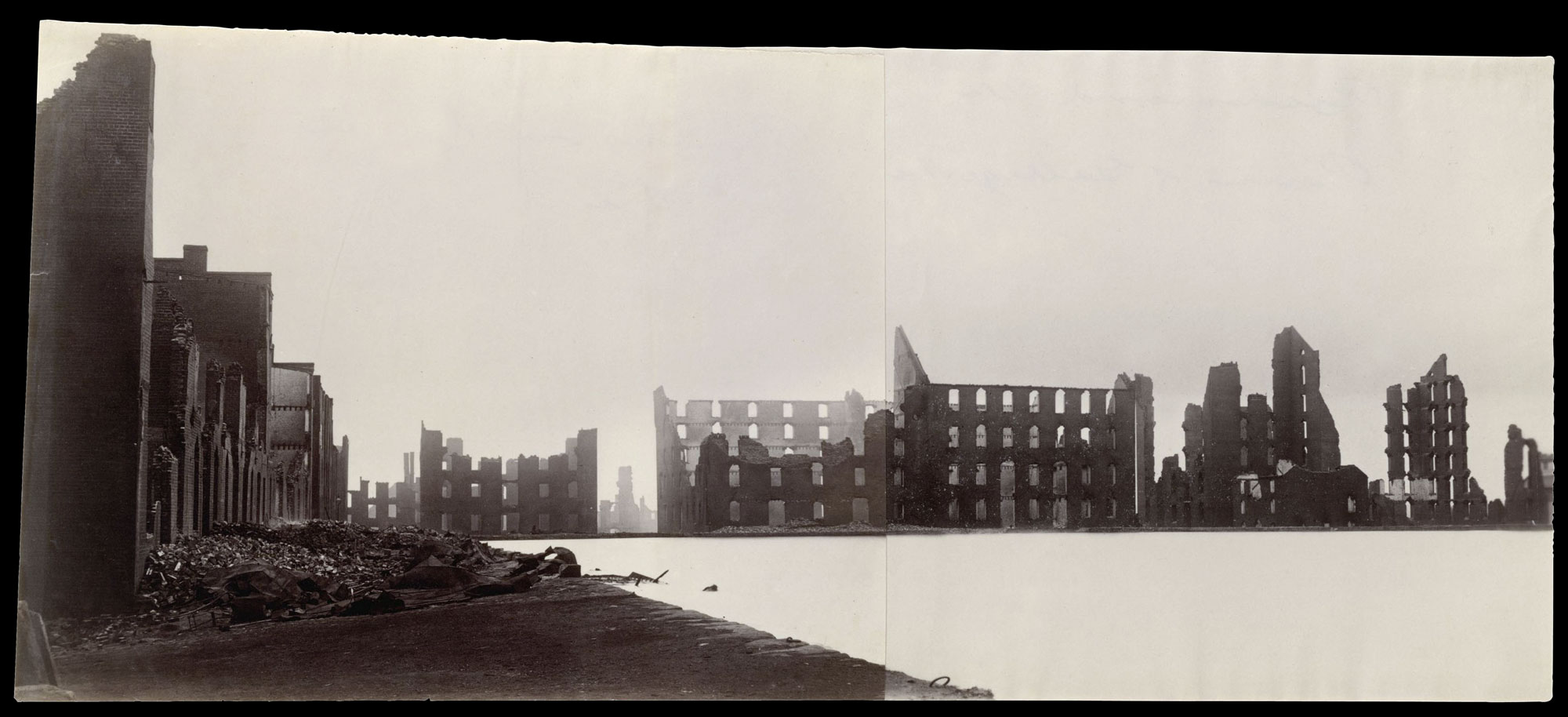


Alexander Gardner (American born Scotland, 1821-1882) 'Ruins of Gallego Flour Mills, Richmond' 1865


Alexander Gardner (American born Scotland, 1821-1882)
Ruins of Gallego Flour Mills, Richmond
1865
Albumen silver prints from glass negatives
The Metropolitan Museum of Art, Harris Brisbane Dick Fund, 1933
© The Metropolitan Museum of Art, New York


In 1861, at the outset of the Civil War, the Confederate government moved its capital from Montgomery, Alabama, to Richmond, Virginia, to be closer to the front and to protect Richmond’s ironworks and flour mills. On April 2, 1865, as the Union army advanced on Richmond, General Robert E. Lee gave the orders to evacuate the city. A massive fire broke out the following day, the result of a Confederate attempt to destroy anything that could be of use to the invading Union army. In addition to consuming twenty square blocks, including nearly every building in Richmond’s commercial district, it destroyed the massive Gallego Flour Mills, situated on the James River and seen here. Alexander Gardner, Mathew B. Brady’s former gallery manager, then his rival, made numerous photographs of the “Burnt District” as well as this dramatic panorama from two glass negatives. The charred remains have become over time an iconic image of the fall of the Confederacy and the utter devastation of war.
 

A display of three photographs of American Civil War soldiers in the exhibition, "Photography and the American Civil War" April 1, 2013 at The Metropolitan Museum of Art in New York


A display of three photographs of American Civil War soldiers in the exhibition, “Photography and the American Civil War” April 1, 2013 at The Metropolitan Museum of Art in New York. The three albumen silver prints are all by Gayford & Speidel, “Private Christopher Anderson, Company F, 108th Regiment, U.S. Colored Infantry, January-May 1865” (L), “Private Louis Troutman, Company F, 108th Regiment, U.S. Colored Infantry, January-May 1865”, (C) and “Private Gid White, Company F, 108th Regiment, U.S. Colored Infantry, January-May 1865”, (R).
AFP PHOTO/Stan HONDA


Unknown Artist. 'Union Private, 11th New York Infantry (Also Known as the 1st Fire Zouaves)' May-June 1861


Unknown artist
Union Private, 11th New York Infantry (Also Known as the 1st Fire Zouaves)
May-June 1861
One-sixth plate ambrotype
Michael J. McAfee Collection
© The Metropolitan Museum of Art, New York


This melancholy young volunteer was a member of the Eleventh New York Infantry, an early war regiment organised in New York City in May 1861. Primarily composed of volunteers from the city’s many fire companies, the men were also known as the First Fire Zouaves. Along with other volunteer units, the Eleventh helped capture Alexandria, Virginia on May 24, 1861, just a day after the state formally seceded from the Union.


Unknown Artist. 'Union Private, 11th New York Infantry (Also Known as the 1st Fire Zouaves)' May-June 1861 (detail)


Unknown artist
Union Private, 11th New York Infantry (Also Known as the 1st Fire Zouaves) (detail)
May-June 1861
One-sixth plate ambrotype
Michael J. McAfee Collection
© The Metropolitan Museum of Art, New York


Timothy H. O'Sullivan (American, born Ireland, 1840-1882) 'A Harvest of Death, Gettysburg, Pennsylvania' July 1863


Timothy H. O’Sullivan (American, born Ireland, 1840-1882)
A Harvest of Death, Gettysburg, Pennsylvania
July 1863
Printer: Alexander Gardner (American, Glasgow, Scotland 1821-1882 Washington, D.C.)
Publisher: Alexander Gardner (American, Glasgow, Scotland 1821-1882 Washington, D.C.)
Albumen silver print from glass negative
17.8 × 22.5cm (7 × 8 7/8 in.)
Gilman Collection, Museum Purchase, 2005


This photograph of the rotting dead awaiting burial after the Battle of Gettysburg is perhaps the best-known Civil War landscape. It was published in Gardner’s Photographic Sketch Book of the War (1866), the nation’s first anthology of photographs. The Sketch Book features ten photographic plates of Gettysburg – eight by Timothy H. O’Sullivan, who served as a field operator for Alexander Gardner, and two by Gardner himself. The extended caption that accompanies this photograph is among Gardner’s most poetic: “It was, indeed, a ‘harvest of death.’ … Such a picture conveys a useful moral: It shows the blank horror and reality of war, in opposition to its pageantry. Here are the dreadful details! Let them aid in preventing such another calamity falling upon the nation.”


Timothy H. O'Sullivan (American, born Ireland, 1840-1882) Alexander Gardner, printer. 'Field Where General Reynolds Fell, Gettysburg, July 1863' 1863


Timothy H. O’Sullivan (American, born Ireland, 1840-1882)
Alexander Gardner, printer
Field Where General Reynolds Fell, Gettysburg, July 1863
1863
Plate 37 in Volume 1 of Gardner’s Photographic Sketch Book of the War
Albumen silver print from glass negative
The Metropolitan Museum of Art, Gilman Collection, Purchase, Ann Tenenbaum and Thomas H. Lee Gift, 2005
© The Metropolitan Museum of Art, New York


This photograph of the aftermath of the Battle of Gettysburg appears in the two-volume opus Gardner’s Photographic Sketch Book of the War (1865-1866). Gardner’s publication is egalitarian. Offended by Brady’s habit of obscuring the names of his field operators behind the deceptive credit “Brady,” Gardner specifically identified each of the eleven photographers in the publication; forty-four of the one hundred photographs are credited to Timothy O’Sullivan. Gardner titled the plate Field Where General Reynolds Fell, Battlefield of Gettysburg. But the photograph, its commemorative title notwithstanding, relates a far more common story: six Union soldiers lie dead, face up, stomachs bloated, their pockets picked and boots stolen. As Gardner described the previous plate, aptly titled The Harvest of Death, this photograph conveys “the blank horror and reality of war, in opposition to its pageantry.”


Unknown Artist. 'Captain Charles A. and Sergeant John M. Hawkins, Company E, “Tom Cobb Infantry,” Thirty-eighth Regiment, Georgia Volunteer Infantry' 1861-62


Unknown artist
Captain Charles A. and Sergeant John M. Hawkins, Company E, “Tom Cobb Infantry,” Thirty-eighth Regiment, Georgia Volunteer Infantry
1861-1862
Quarter-plate ambrotype with applied colour
David Wynn Vaughan Collection
Photo: Jack Melton


The vast majority of war portraits, either cased images or cartes de visite, are of individual soldiers. Group portraits in smaller formats are more rare and challenged the field photographer (as well as the studio gallerist) to conceive and execute an image that would honour the occasion and be desirable – saleable – to multiple sitters. For the patient photographer, this created interesting compositional problems and an excellent opportunity to make memorable group portraits of brothers, friends, and even members of different regiments.

In this quarter-plate ambrotype, Confederate Captain Charles Hawkins of the Thirty-eighth Regiment, Georgia Volunteer Infantry, on the left, sits for his portrait with his brother John, a sergeant in the same regiment. They address the camera and draw their fighting knives from scabbards. Charles would die on June 13, 1863, in the Shenandoah Valley during General Robert E. Lee’s second invasion of the North. John, wounded at the Battle of Gaines’s Mill in June 1862, would survive the war, fighting with his company until its surrender at Appomattox.
 

Reed Brockway Bontecou (American, 1824-1907) 'Union Private John Parmenter, Company G, Sixty-seventh Pennsylvania Volunteers' June 21, 1865


Reed Brockway Bontecou (American, 1824-1907)
Union Private John Parmenter, Company G, Sixty-seventh Pennsylvania Volunteers (Union Private John Parmenter Under Anesthesia on an Operating Table with His Amputated Foot)
June 21, 1865
Carte de visite format albumen silver print from glass negative
5.7 x 9.1 cm (2 1/4 x 3 9/16 in.)
Collection Stanley B. Burns, M.D.


In this remarkable carte de visite, Private Parmenter lies unconscious from anaesthesia on an operating table at Harewood Hospital in Washington, D.C. To save his patient’s life, Doctor Bontecou amputated the soldier’s wounded, ulcerous foot. Before the discovery of antibiotics, gangrene was a dreaded and deadly infection that greatly contributed to the high mortality rate of soldiers during the Civil War.


Andrew Joseph Russell (American, 1830-1902) 'Slave Pen, Alexandria, Virginia' 1863


Andrew Joseph Russell (American, 1830-1902)
Slave Pen, Alexandria, Virginia
1863
Albumen silver print from glass negative
The Metropolitan Museum of Art, Gilman Collection, Purchase, The Horace W. Goldsmith Foundation Gift, through Joyce and Robert Menschel, 2005
© The Metropolitan Museum of Art, New York


Better known for his later views commissioned by the Union Pacific Railroad, A. J. Russell, a captain in the 141st New York Infantry Volunteers, was one of the few Civil War photographers who was also a soldier. As a photographer-engineer for the U.S. Military Railroad Con struction Corps, Russell’s duty was to make a historical record of both the technical accomplishments of General Herman Haupt’s engineers and the battlefields and camp sites in Virginia. This view of a slave pen in Alexandria guarded, ironically, by Union officers shows Russell at his most insightful; the pen had been converted by the Union Army into a prison for captured Confederate soldiers.

Between 1830 and 1836, at the height of the American cotton market, the District of Columbia, which at that time included Alexandria, Virginia, was considered the seat of the slave trade. The most infamous and successful firm in the capital was Franklin & Armfield, whose slave pen is shown here under a later owner’s name. Three to four hundred slaves were regularly kept on the premises in large, heavily locked cells for sale to Southern plantation owners. According to a note by Alexander Gardner, who published a similar view, “Before the war, a child three years old, would sell in Alexandria, for about fifty dollars, and an able-bodied man at from one thousand to eighteen hundred dollars. A woman would bring from five hundred to fifteen hundred dollars, according to her age and personal attractions.”

Late in the 1830s Franklin and Armfield, already millionaires from the profits they had made, sold out to George Kephart, one of their former agents. Although slavery was outlawed in the District in 1850, it flourished across the Potomac in Alexandria. In 1859, Kephart joined William Birch, J. C. Cook, and C. M. Price and conducted business under the name of Price, Birch & Co. The partnership was dissolved in 1859, but Kephart continued operating his slave pen until Union troops seized the city in the spring of 1861.
 

Unknown Artist, after an 1860 carte de visite by Mathew B. Brady. 'Presidential Campaign Medal with Portraits of Abraham Lincoln and Hannibal Hamlin' 1860


Unknown Artist, after an 1860 carte de visite by Mathew B. Brady
Presidential Campaign Medal with Portraits of Abraham Lincoln and Hannibal Hamlin
1860
Tintypes in stamped brass medallion
The Metropolitan Museum of Art, Purchase, The Overbrook Foundation Gift, 2012
© The Metropolitan Museum of Art, New York


More than 200 of the finest and most poignant photographs of the American Civil War have been brought together for the landmark exhibition Photography and the American Civil War, opening April 2 at The Metropolitan Museum of Art. Through examples drawn from the Metropolitan’s celebrated holdings of this material, complemented by exceptional loans from public and private collections, the exhibition will examine the evolving role of the camera during the nation’s bloodiest war. The “War between the States” was the great test of the young Republic’s commitment to its founding precepts; it was also a watershed in photographic history. The camera recorded from beginning to end the heartbreaking narrative of the epic four-year war (1861-1865) in which 750,000 lives were lost. This traveling exhibition will explore, through photography, the full pathos of the brutal conflict that, after 150 years, still looms large in the American public’s imagination.

At the start of the Civil War, the nation’s photography galleries and image purveyors were overflowing with a variety of photographs of all kinds and sizes, many examples of which will be featured in the exhibition: portraits made on thin sheets of copper (daguerreotypes), glass (ambrotypes), or iron (tintypes), each housed in a small decorative case; and larger, “painting-sized” likenesses on paper, often embellished with India ink, watercolour, and oils. On sale in bookshops and stationers were thousands of photographic portraits on paper of America’s leading statesmen, artists, and actors, as well as stereographs of notable scenery from New York’s Broadway to Niagara Falls to the canals of Venice. Viewed in a stereopticon, the paired images provided the public with seeming three-dimensionality and the charming pleasure of traveling the world in one’s armchair.

Photography and the Civil War will include: intimate studio portraits of armed Union and Confederate soldiers preparing to meet their destiny; battlefield landscapes strewn with human remains; rare multi-panel panoramas of the killing fields of Gettysburg and destruction of Richmond; diagnostic medical studies of wounded soldiers who survived the war’s last bloody battles; and portraits of Abraham Lincoln as well as his assassin John Wilkes Booth. The exhibition features groundbreaking works by Mathew B. Brady, George N. Barnard, Alexander Gardner, and Timothy O’Sullivan, among many others. It also examines in-depth the important, if generally misunderstood, role played by Brady, perhaps the most famous of all wartime photographers, in conceiving the first extended photographic coverage of any war. The exhibition addresses the widely held, but inaccurate, belief that Brady produced most of the surviving Civil War images, although he actually made very few field photographs during the conflict. Instead, he commissioned and published, over his own name and imprint, negatives made by an ever-expanding team of field operators, including Gardner, O’Sullivan, and Barnard.

The exhibition will feature Gardner’s haunting views of the dead at Antietam in September 1862, which are believed to be the first photographs of the Civil War seen in a public exhibition. A reporter for the New York Times wrote on October 20, 1862, about the images shown at Brady’s New York City gallery: “Mr. Brady has done something to bring home to us the terrible reality and earnestness of war. If he has not brought bodies and laid them in our dooryards and along the streets, he has done something very like it… Here lie men who have not hesitated to seal and stamp their convictions with their blood – men who have flung themselves into the great gulf of the unknown to teach the world that there are truths dearer than life, wrongs and shames more to be dreaded than death.”

Approximately 1,000 photographers worked separately and in teams to produce hundreds of thousands of photographs – portraits and views – that were actively collected during the period (and over the past century and a half) by Americans of all ages and social classes. In a direct expression of the nation’s changing vision of itself, the camera documented the war and also mediated it by memorialising the events of the battlefield as well as the consequent toll on the home front.

Among the many highlights of the exhibition will be a superb selection of early wartime portraits of soldiers and officers who sat for their likenesses before leaving their homes for the war front. In these one-of-a-kind images, a picture of American society emerges. The rarest are ambrotypes and tintypes of Confederates, drawn from the renowned collection of David Wynn Vaughan, who has assembled the country’s premier archive of Southern portraits. These seldom-seen photographs, and those by their Northern counterparts, will balance the well-known and often-reproduced views of bloody battlefields, defensive works, and the specialised equipment of 19th-century war.

The show will focus special attention on the remarkable images included in the two great wartime albums of original photographs: Gardner’s Photographic Sketch Book of War and George N. Barnard’s Photographic Views of Sherman’s Campaign, both released in 1866. The former publication includes 100 views commissioned, sequenced, and annotated by Alexander Gardner. This two-volume opus provides an epic documentation of the war seen through the photographs of 11 artists, including Gardner himself. It features 10 plates of Gettysburg, including Timothy O’Sullivan’s A Harvest of Death, Gettysburg, and Gardner’s Home of a Rebel Sharpshooter, Gettysburg, both of which are among the most well-known and important images from the early history of photography. The second publication includes 61 large-format views by a single artist, George N. Barnard, who followed the army campaign of one general, William Tecumseh Sherman, in the final months of the war – the “March to the Sea” from Tennessee to Georgia in 1864 and 1865. The exhibition explores how different Barnard’s photographs are from those in Gardner’s Sketch Book, and how distinctly Barnard used the camera to serve a nation trying to heal itself after four long years of war and brother-versus-brother bitterness.

Among the most extraordinary, if shocking, photographs in the exhibition are the portraits by Dr. Reed Brockway Bontecou of wounded and sick soldiers from the war’s last battles. Drawn from a private medical teaching album put together by this Civil War surgeon and head of Harewood Hospital in Washington, D.C., and on loan from the celebrated Burns Archive, the photographs are notable for their humanity and their aesthetics. They recall Walt Whitman’s words from 1865, that war “was not a quadrille in a ball-room. Its interior history will not only never be written, its practicality, minutia of deeds and passions, will never be suggested.” Bontecou’s medical portraits offer a glimpse of what the poet thought was not possible.

In addition to providing a thorough analysis of the camera’s incisive documentation of military activity and its innovative use as a teaching tool for medical doctors, the exhibition explores other roles that photography played during the war. It investigates the relationship between politics and photography during the tumultuous period and presents exceptional political ephemera from the private collection of Brian Caplan, including: a rare set of campaign buttons from 1860 featuring original tintype portraits of the competing candidates; a carved tagua nut necklace featuring photographic portraits of Confederate President Jefferson Davis and two members of his cabinet; and an extraordinary folding game board composed of photographic likenesses of President Lincoln and his generals. The show also includes an inspiring carte de visite portrait of the abolitionist and human rights activist Sojourner Truth. A former slave from New York State, she sold photographs of herself to raise money to educate emancipated slaves, and to support widows, orphans, and the wounded. And finally the exhibition includes the first photographically illustrated “wanted” poster, a printed broadside with affixed photographic portraits that led to the capture John Wilkes Booth and his fellow conspirators after the assassination of President Lincoln in April 1865.

Press release from the Metropolitan Museum of Art website


Unknown (American) '[Broadside for the Capture of John Wilkes Booth, John Surratt, and David Herold]' April 20, 1865


Unknown (American)
[Broadside for the Capture of John Wilkes Booth, John Surratt, and David Herold]
Artist: Alexander Gardner (American, Glasgow, Scotland 1821-1882 Washington, D.C.)
Photography Studio: Silsbee, Case & Company (American, active Boston)
Photography Studio: Unknown
April 20, 1865
Ink on paper with three albumen silver prints from glass negatives
Sheet: 60.5 x 31.3cm (23 13/16 x 12 5/16 in.)
Each photograph: 8.6 x 5.4cm (3 3/8 x 2 1/8 in.)
Collages
Gilman Collection, Purchase, The Horace W. Goldsmith Foundation Gift, through Joyce and Robert Menschel, 2005


On the night of April 14, 1865, just five days after Lee’s surrender to Grant at Appomattox, John Wilkes Booth shot Lincoln at the Ford Theatre in Washington, D.C. Within twenty-four hours, Secret Service director Colonel Lafayette Baker had already acquired photographs of Booth and two of his accomplices. Booth’s photograph was secured by a standard police search of the actor’s room at the National Hotel; a photograph of John Surratt, a suspect in the plot to kill Secretary of State William Seward, was obtained from his mother, Mary (soon to be indicted as a fellow conspirator), and David Herold’s photograph was found in a search of his mother’s carte-de-visite album. The three photographs were taken to Alexander Gardner’s studio for immediate reproduction. This bill was issued on April 20, the first such broadside in America illustrated with photographs tipped onto the sheet.
The descriptions of the alleged conspirators combined with their photographic portraits proved invaluable to the militia. Six days after the poster was released Booth and Herold were recognised by a division of the 16th New York Cavalry. The commanding officer, Lieutenant Edward Doherty, demanded their unconditional surrender when he cornered the two men in a barn near Port Royal, Virginia. Herold complied; Booth refused. Two Secret Service detectives accompanying the cavalry, then set fire to the barn. Booth was shot as he attempted to escape; he died three hours later. After a military trial Herold was hanged on July 7 at the Old Arsenal Prison in Washington, D.C.
 Surratt escaped to England via Canada, eventually settling in Rome. Two years later a former schoolmate from Maryland recognised Surratt, then a member of the Papal Guard, and he was returned to Washington to stand trial. In September 1868 the charges against him were nol-prossed after the trial ended in a hung jury. Surratt retired to Maryland, worked as a clerk, and lived until 1916.


Attributed to McPherson & Oliver (American, active New Orleans and Baton Rouge, Louisiana, 1860s) 'The Scourged Back' April 1863


Attributed to McPherson & Oliver (American, active New Orleans and Baton Rouge, Louisiana, 1860s)
The Scourged Back
April 1863
Albumen silver print from glass negative
8.7 x 5.5cm (3 7/16 x 2 3/16 in.)
International Center of Photography, Purchase, with funds provided by the ICP Acquisitions Committee, 2003


Gordon, a runaway slave seen with severe whipping scars in this haunting carte-de-visite portrait, is one of the many African Americans whose lives Sojourner Truth endeavoured to better. Perhaps the most famous of all known Civil War-era portraits of slaves, the photograph dates from March or April 1863 and was made in a camp of Union soldiers along the Mississippi River, where the subject took refuge after escaping his bondage on a nearby Mississippi plantation.

On Saturday, July 4, 1863, this portrait and two others of Gordon appeared as wood engravings in a special Independence Day feature in Harper’s Weekly. McPherson & Oliver’s portrait and Gordon’s narrative in the newspaper were extremely popular, and photography studios throughout the North (including Mathew B. Brady’s) duplicated and sold prints of The Scourged Back. Within months, the carte de visite had secured its place as an early example of the wide dissemination of ideologically abolitionist photographs.


J. W. Jones (American, active Orange, Massachusetts, 1860s) 'Emaciated Union Soldier Liberated from Andersonville Prison' 1865


J. W. Jones (American, active Orange, Massachusetts, 1860s)
Emaciated Union Soldier Liberated from Andersonville Prison
1865
Albumen silver print from glass negative
Image: 9 x 5.5cm (3 9/16 x 2 3/16 in.)
Brian D. Caplan Collection


Most soldiers who survived Andersonville Prison were marked for life. This portrait of an unidentified former prisoner is one of many that document the intense cruelty of prison life during the Civil War. It would be another eighty years, at the end of World War II, before anyone would see comparable pictures of man’s inhumanity to man.


George Wertz (American, active Kansas City, Missouri, 1860s) 'Private William Henry Lord, Company I, Eleventh Kansas Volunteer Cavalry' 1863-65


George Wertz (American, active Kansas City, Missouri, 1860s)
Private William Henry Lord, Company I, Eleventh Kansas Volunteer Cavalry
1863-1865
Albumen silver print from glass negative
8.4 x 5.6cm (3 5/16 x 2 3/16 in.)
W. Bruce and Delaney H. Lundberg Collection


Private William Henry Lord, a cavalryman, sits alert and ready for the next ride. A yet unmuddied enlistee from “Bleeding Kansas,” the last state to enter the Union before Fort Sumter, Lord was in the Eleventh Kansas Volunteer Cavalry; he was wounded in the shoulder in October 1864 but rejoined his company and was mustered out in September 1865.
 

Unknown. 'March from Annapolis to Washington, Robert C. Rathbone, Sergeant Major, Seventh Regiment, New York Militia' April 24, 1861


Unknown photographer
March from Annapolis to Washington, Robert C. Rathbone, Sergeant Major, Seventh Regiment, New York Militia
April 24, 1861
Albumen silver print from glass negative
8.9 x 5.4cm (3 1/2 x 2 1/8 in.)
Michael J. McAfee Collection


The Seventh Regiment, New York Militia was among the first military groups to leave for Washington, D.C., after Lincoln’s call to arms in April 1861. In or near Annapolis, en route to the nation’s capital, Sergeant Major Rathbone posed for his portrait. He annotated his likeness with enough information to suggest that this image might be the first (identifiable) photograph of a soldier made after the fall of Fort Sumter. Representative of thousands of similar portraits, this study of an officer seen against a blank wall with just a hint of a studio column is typical of the simplicity of the earliest war pictures.

Note the stand just visible behind Sergeant Major Rathbone’s feet to brace the sitter for the long exposures necessary.


Mathew B. Brady (American, near Lake George, New York 1823?–1896 New York) 'General Robert E. Lee' 1865


Mathew B. Brady (American, near Lake George, New York 1823? – 1896 New York)
General Robert E. Lee
1865
Albumen silver print from glass negative
14 × 9.3cm (5 1/2 × 3 11/16 in.)
Gilman Collection, Museum Purchase, 2005


Confederate General Robert E. Lee surrendered his army to Union General Ulysses S. Grant at Appomattox Court House, Virginia, on April 9, 1865. The Civil War was over. If not whole, the nation was at least reunited, and the slow recovery of Reconstruction could begin. As soon as he heard that Lee had left Appomattox and returned to Richmond, Mathew B. Brady headed there with his camera equipment. The Lees’ Franklin Street residence had survived the fires that had devastated many of the commercial sections of the city. Through the kindness of Mrs. Lee and a Confederate colonel, Brady received permission to photograph the general on April 16, 1865, just two days after President Lincoln’s assassination. Brady’s portrait of General Lee holding his hat, on his own back porch, is one of the most reflective and thoughtful wartime likenesses. The fifty-eight-year-old Confederate hero poses in the uniform he had worn at the surrender. It would be Brady’s last wartime photograph.


Charles Paxson (American, active New York, 1860s) 'Wilson, Branded Slave from New Orleans' 1863


Charles Paxson (American, active New York, 1860s)
Wilson, Branded Slave from New Orleans
1863
Albumen silver print from glass negative
8.4 x 5.3cm (3 5/16 x 2 1/16 in.)
Private Collection, Courtesy of William L. Schaeffer


On January 30, 1864, to fan the anti-slavery cause and promote the sale of abolitionist photographs, Harper’s Weekly published this carte de visite and three others as wood engravings. The newspaper also included stirring bibliographies of the emancipated slaves. The editors noted that Wilson Chinn was about sixty years old. His former master, Volsey B. Marmillion, a sugar planter near New Orleans, “was accustomed to brand his negroes, and Wilson has on his forehead the letters ‘V.B.M.'”
 

Gayford & Speidel (Active Rock Island, Illinois, 1860s) 'Private Louis Troutman, Company F, 108th Regiment, U.S. Colored Infantry' January-May 1865


Gayford & Speidel (Active Rock Island, Illinois, 1860s)
Private Louis Troutman, Company F, 108th Regiment, U.S. Colored Infantry
January – May 1865
Albumen silver print from glass negative
8.8 x 5.4cm (3 7/16 x 2 1/8 in.)
Thomas Harris Collection


Samuel Masury (American, 1818-1874) 'Frances Clalin Clayton' 1864-66


Samuel Masury (American, 1818-1874)
Frances Clalin Clayton
1864-1866
Albumen silver print from glass negative
9.4 x 5.6cm (3 11/16 x 2 3/16 in.)
Buck Zaidel Collection


Frances Clayton is an exception – a woman who served in the Union army by disguising herself as a man. In a popular carte de visite collected by soldiers at the end of the war, she poses here as Jack Williams and suggestively holds the handle of a cavalry sword between her crossed legs. The facts of her life story and military service are difficult to confirm, but it is believed that she served in the Missouri cavalry (or infantry) beside her husband, who died at the Battle of Stones River in late December 1862.


Reed Brockway Bontecou (American, 1824-1907) 'Private Samuel Shoop, Company F, 200th Pennsylvania Infantry' April-May 1865


Reed Brockway Bontecou (American, 1824-1907)
Private Samuel Shoop, Company F, 200th Pennsylvania Infantry
April-May 1865
Albumen silver print from glass negative
18.9 × 13.1cm (7 7/16 × 5 3/16 in.)
Gift of Stanley B. Burns, M.D. and The Burns Archive, 1992


The last great battle of the Civil War was the siege of Petersburg, Virginia – a brutal campaign that led to Confederate General Robert E. Lee’s surrender on April 9, 1865. Samuel Shoop, a twenty-five-year-old private in Company F of the 200th Pennsylvania Volunteers, received a gunshot wound in the thigh at Fort Steadman on the first day of the campaign (March 25) and was evacuated to Harewood Hospital in Washington, D.C. His leg was amputated by Dr. Reed Brockway Bontecou, surgeon in charge, who also made this clinical photograph. It was intended, in part, to serve as a tool for teaching fellow army surgeons and is an extremely rare example of the early professional use of photography in America.


George N. Barnard (American, 1819-1902) 'Bonaventure Cemetery, Four Miles from Savannah' 1866


George N. Barnard (American, 1819-1902)
Bonaventure Cemetery, Four Miles from Savannah
1866
Albumen silver print from glass negative
34 x 26.4cm (13 3/8 x 10 3/8 in.)
Gilman Collection, Purchase, Ann Tenenbaum and Thomas H. Lee Gift, 2005


Unknown photographer. 'Sojourner Truth, "I Sell the Shadow to Support the Substance"' 1864


Unknown photographer
Sojourner Truth, “I Sell the Shadow to Support the Substance”
1864
Albumen silver print from glass negative
Carte-de-visite
The Metropolitan Museum of Art, Purchase, Alfred Stieglitz Society Gifts, 2013
© The Metropolitan Museum of Art, New York


Sojourner Truth (c. 1797 – November 26, 1883) was the self-given name, from 1843 onward, of Isabella Baumfree, an African-American abolitionist and women’s rights activist. Truth was born into slavery in Swartekill, Ulster County, New York, but escaped with her infant daughter to freedom in 1826. After going to court to recover her son, she became the first black woman to win such a case against a white man. Her best-known extemporaneous speech on gender inequalities, “Ain’t I a Woman?”, was delivered in 1851 at the Ohio Women’s Rights Convention in Akron, Ohio. During the Civil War, Truth helped recruit black troops for the Union Army; after the war, she tried unsuccessfully to secure land grants from the federal government for former slaves.

Text from the Wikipedia website


Mathew B. Brady (American born Ireland, 1823/24-1896 New York) Edward Anthony (American, 1818-1888) 'Abraham Lincoln' February 27, 1860


Mathew B. Brady (American born Ireland, 1823/1824-1896 New York)
Edward Anthony (American, 1818-1888)
Abraham Lincoln
February 27, 1860
Albumen silver print from glass negative
Carte-de-visite
The Meserve-Kunhardt Foundation


Three months before his nomination as the Republican Party candidate for president, Abraham Lincoln went East, stopping in New York City on February 27, 1860, to give a speech at the Cooper Institute (now the Cooper Union for the Advancement of Science and Art). Many considered Lincoln’s powerful antislavery lecture as his most important to date. The closing words spurred his audience and the country at large: “Let us have faith that right makes might, and in that faith, let us, to the end, dare to do our duty as we understand it.”

Earlier in the day he sat for this portrait at Mathew B. Brady’s gallery on Broadway and Tenth Street, just a few blocks from the lecture hall. Although his visit to the studio could not have lasted long, the result of this first of many portrait sessions with Brady was a simple but powerful image that would alter the visual landscape during the upcoming election. In a single exposure on a silver-coated sheet of glass, Brady captured the odd physiognomy of the man who would change the course of American history.


Unknown photographer (American) '[Private James House with Fighting Knife, Sixteenth Georgia Cavalry Battalion, Army of Tennessee]' 1861-1862?


Unknown photographer (American)
[Private James House with Fighting Knife, Sixteenth Georgia Cavalry Battalion, Army of Tennessee]
1861-1862?
Ambrotype
Sixth-plate; ruby glass
David Wynn Vaughan Collection
Image: Jack Melton


This portrait of a cavalryman is an excellent example of a well-armed Confederate soldier. Private House wears a slouch hat and a checked battle shirt seen through the gaps in a modified woollen shell jacket with tabbed button closures. He brandishes his fighting knife and for quick use has half removed a pocket revolver from its belted holster. Perhaps the most frightening weapons in House’s personal arsenal may be his focused stare and his set jaw.

16th Cavalry Battalion was assembled in May, 1862, at Big Shanty, Georgia, and was composed of six companies. It served in East Tennessee and Southwest Virginia and took part in the engagements at Blue Springs, Bean’s Station, Cloyd’s Mountain, and Marion. In January, 1865, the battalion merged into the 13th Georgia Cavalry Regiment. Lieutenant Colonels F.M. Nix and Samuel J. Winn, and Major Edward Y. Clarke were its commanding officers.


Unknown photographer (American) '[Private James House with Fighting Knife, Sixteenth Georgia Cavalry Battalion, Army of Tennessee]' 1861-1862? (detail)


Unknown photographer (American)
[Private James House with Fighting Knife, Sixteenth Georgia Cavalry Battalion, Army of Tennessee] (detail)
1861-1862?
Ambrotype
Sixth-plate; ruby glass
David Wynn Vaughan Collection
Image: Jack Melton


Unknown photographer (American) 'Union Sergent John Emery' 1861-1865


Unknown photographer (American)
Union Sergent John Emery
1861-1865
Tintype
Plate: 8.9 x 6.4cm (3 1/2 x 2 1/2 in.)
Case: 10 × 8.9cm (3 15/16 × 3 1/2 in.)
The Horace W. Goldsmith Foundation Fund, through Joyce and Robert Menschel, 2012


The only details presently known about this handsome, young Union sergeant wearing a striped bowtie and an imported English snake belt buckle derive from a small paper note found behind the portrait inside the thermoplastic case: “Uncle John Emery / brother of / Lucy King / buried at E. Concord / died in 1876 / buried at back in right corner.”


Unknown photographer (American) '[Private Thomas Gaston Wood, Drummer, Company H, "Walton Infantry," Eleventh Regiment Georgia Volunteer Infantry]' 1861


Unknown photographer (American)
[Private Thomas Gaston Wood, Drummer, Company H, “Walton Infantry,” Eleventh Regiment Georgia Volunteer Infantry]
1861
Tintype
Plate: 6.4 x 5.1cm (2 1/2 x 2 in.)
David Wynn Vaughan Collection


Private Wood sits against a blank wall in a photographer’s studio. He is sixteen years old and will not see seventeen. An orphan, he joined Company H in Social Circle, Georgia, on July 3, 1861, and before the end of the year died of pneumonia in a Richmond hospital. Wood seems proud of his shell jacket and especially his kepi, which he marked under the brim with his initials. The photographer tipped up the cap to reveal the sitter’s handiwork, but the letters are laterally reversed in the tintype. As a musician, he poses without any prop other than his uniform, the buttons touched with gold.


The Metropolitan Museum of Art
1000 Fifth Avenue at 82nd Street
New York, New York 10028-0198
Phone: 212-535-7710

Opening hours:
Sunday – Tuesday and Thursday: 10am – 5pm
Friday and Saturday: 10am – 9pm
Closed Wednesday

The Metropolitan Museum of Art website

LIKE ART BLART ON FACEBOOK

Back to top

Exhibition: ‘Laure Albin Guillot (1879-1962), The Question of Classicism’ at The Musée de l’Elysée, Lausanne

Exhibition dates: 5th June – 1st September 2013


Laure Albin Guillot (French, 1879-1962) 'Nude Study' c. 1940


Laure Albin Guillot (French, 1879-1962)
Nude Study
c. 1940
Collections Roger-Viollet / Parisienne de Photographie
© Laure Albin Guillot / Roger-Viollet


Six new images in this posting that I have not published before in a previous posting on this exhibition, at a different venue. I love her style and sensuality!

Marcus


Many thankx to The Musée de l’Elysée for allowing me to publish the photographs in the posting. Please click on the photographs for a larger version of the image.


Laure Albin Guillot (French, 1879-1962) 'Louis Jouvet' c. 1925


Laure Albin Guillot (French, 1879-1962)
Louis Jouvet
c. 1925
Collections Roger-Viollet / Parisienne de Photographie
© Laure Albin Guillot / Roger-Viollet


Louis Jouvet (24 December 1887 – 16 August 1951) was a renowned French actor, director, and theatre director.

Overcoming speech impediments and sometimes paralysing stage fright as a young man, Jouvet’s first important association was with Jacques Copeau’s Théâtre du Vieux-Colombier, beginning in 1913. Copeau’s training included a varied and demanding schedule, regular exercise for agility and stamina, and pressing his cast and crew to invent theatrical effects in a bare-bones space. It was there Jouvet developed his considerable stagecraft skills, particularly makeup and lighting (he developed a kind of accent light named the jouvet). These years included a successful tour to the United States.

While influential, Copeau’s theatre was never lucrative. Jouvet left in October 1922 for the Comédie des Champs-Élysées (the small stage of the Théâtre des Champs-Élysées). In December 1923 he staged his single most successful production, the satire Dr. Knock, written by Jules Romains. Jouvet’s meticulous characterisation of the manipulative crank doctor was informed by his own experience in pharmacy school. It became his signature and his standby; “Jouvet was to produce it almost every year until the end of his life”.

Jouvet began an ongoing close collaboration with playwright Jean Giraudoux in 1928, with a radical streamlining of Giraudoux’s 1922 Siegfried et le Limousin for the stage. Their work together included the first staging of The Madwoman of Chaillot in 1945, at the Théâtre de l’Athénée, where Jouvet served as director from 1934 through his death in 1951.

Jouvet starred in some 34 films, including two recordings of Dr. Knock, once in 1933 and again in 1951. He was professor at the French National Academy of Dramatic Arts. He had a heart attack while at his beloved Théâtre de l’Athénée and died in his dressing room on August 16, 1951. Jouvet is buried in the Montmartre Cemetery in Paris. The Athénée theatre now bears his name.

Text from the Wikipedia website


Louis Jouvet in a scene from Entrée des artistes (Marc Allegret, 1938)


Laure Albin Guillot (French, 1879-1962) 'Off-print for the Mayoly-Spindler laboratory, Paris' c. 1940


Laure Albin Guillot (French, 1879-1962)
Off-print for the Mayoly-Spindler laboratory, Paris
c. 1940
Pivate collection, Paris


Laure Albin Guillot (French, 1879-1962) 'Advertisement for the Manufacture Jaeger-LeCoultre' c. 1940


Laure Albin Guillot (French, 1879-1962)
Advertisement for the Manufacture Jaeger-LeCoultre
c. 1940
Private collection, Paris


Laure Albin Guillot (French, 1879-1962) 'Jean Cocteau' 1939


Laure Albin Guillot (French, 1879-1962)
Jean Cocteau
1939
Private collection, Paris
© Laure Albin Guillot / Roger-Viollet


Trailer for Beauty and the Beast by Jean Cocteau, narrated by Cocteau himself


Laure Albin Guillot (French, 1879-1962) 'Hubert de Givenchy' 1948


Laure Albin Guillot (French, 1879-1962)
Hubert de Givenchy
1948
Collections Roger-Viollet / Parisienne de Photographie
© Laure Albin Guillot / Roger-Viollet


The Fashion Designer and His Muse – Audrey Hepburn and Hubert de Givenchy


Laure Albin Guillot (French, 1879-1962), a “resounding name that should become famous”, one could read just after World War II. Indeed, the French photographic scene in the middle of the century was particularly marked by the signature and aura of this artist, who during her lifetime was certainly the most exhibited and recognised, not only for her talent and virtuosity but also for her professional engagement.

The exhibition presented at the Musée de l’Elysée in collaboration with the Jeu de Paume gathers a significant collection of 200 original prints and books by Laure Albin Guillot, as well as magazines and documents of the period from public and private collections. A large number of the original prints and documents on show come from the collections of the Agence Roger-Viollet, in collaboration with Parisienne de Photographie, which acquired Laure Albin Guillot’s studio stock in 1964. Made up of 52,000 negatives and 20,000 prints, this source has made it possible to question the oeuvre and the place that the photographer really occupies in history. The photographer’s work could appear as a counter-current to the French artistic scene of the 1920s to 40s, whose modernity and avant-garde production attract our attention and appeal to current tastes. It is however this photography, incarnating classicism and a certain “French style” that was widely celebrated at the time.

If Laure Albin Guillot’s photography was undeniably in vogue between the wars, her personality remains an enigma.

Paradoxically, very little research has been carried out into the work and career of this artist. Her first works were seen in the salons and publications of the early 1920s, but it was essentially during the 1930s and 40s that Laure Albin Guillot, artist, professional and institutional figure, dominated the photographic arena. As an independent photographer, she practised several genres, including portraiture, the nude, landscape, still life and, to a lesser degree, documentary photography. Technically unrivalled, she raised the practice to a certain elitism. A photographer of her epoch, she used the new means of distribution of the image to provide illustrations and advertising images for the press and publishing industry.

She was notably one of the first in France to consider the decorative use of photography through her formal research into the infinitely tiny. With photomicrography, which she renamed “micro­graphie”, Laure Albin Guillot offered new creative perspectives in the combination of art and science. Finally, as member of the Société des artistes décorateurs, the Société française de photo­graphie, director of photographic archives for the Direction générale des Beaux-Arts (forerunner of the Ministry of Culture) and director of the project for the Cinémathèque nationale, president of the Union féminine des carrières libérales, she emerges as one of the most active personalities and most aware of the photographic and cultural stakes of the period.

Organised in four parts, the exhibition explores the various aspects of Laure Albin Guillot’s work


Portraits

Laure Albin Guillot began her career in the early 1920s with portraits and fashion photography. Already, her trademark was elegance, her method was quite systematic and she used various artifices: pared-back decor, close-ups, limited depth of field, simple lighting. The sought-after effect of interiority and intimacy was accentuated by inspired poses that translate the sitter’s character as is done by painters. She accepted being compared to the Pictorialists. At the start she was quite close to them in her form and technique, following an aesthetic whose expression was facilitated by her use of lenses that blur (Opale and Eïdoscope). Her sessions were short (never more than twenty minutes), the lamps were positioned to supplement each other and not a detail was left in the shadow thanks to a weaker lighting facing the first; while claiming not to go beyond a certain naturalism, she improved the natural: contours are softened, the diffused light is flattering.

In the exercise of the nude, the photographer privileged the mastery of form over inspiration, she sought a poetic purity, a dematerialisation of the body through the power of the spirit; her nudes are constructed by light, they tend towards the ideal. In complete contrast to the importance of character in the portrait, its reduction to a visual form makes the model into a collection of lines, the face is pushed into the corners, almost rubbed out. Laure Albin Guillot did not practise a fragmented language, she proposed fluid forms that appear simple but in reality are highly worked. The reference to statuary is assumed and provides a wide variety of uses for the photographs, each containing several.

A Decorative Art

After 1918, Paris rediscovered its artistic vocation and the “French style” triumphed at the 1925 Exposition internationale des arts indus­triels et modernes. Alongside the artists and craftsmen, Laure Albin Guillot exhibited an exceptional series of portraits of decorators. She herself made some kakemonos [a Japanese unframed painting made on paper or silk and displayed as a wall hanging], starting from stylised photographs and, inspired by Japanisation, she had some of her photographs inserted into lacquered wood as screens or fire guards.

In 1931, her book Micrographie décorative won her instant international recognition; the work is a visual curiosity, playing on the ambiguity between the origins of the photographic subject and the nature of the reproduced image. The twenty plates of diatoms, minerals and plants taken through a microscope are as much aesthetic propositions as the magisterial culmination of a reflection shared with her late husband, himself a collector of microscopic preparations. This much publicised publication triggered a series of glowing articles that enthused on the fusion between science and art. The micrographs were declined in wallpaper, silks, bindings and assorted objects. In the debate between partisans and detractors of photography as art, she provided her answer: according to her, photography is a decorative art. Micrographie décorative was to be published with a preface by Paul Léon, Director of Fine Art, in homage to Albin Guillot, deceased in 1929.

Advertising Photography

In 1933, Laure Albin Guillot published Photographie publicitaire (Advertising Photography). This book is one of the rare theoretical works written by a French photographer between the wars. At the time she was known for her portraits, her decorative proposals, her fashion photographs and advertising images. But she was also an institutional figure, director of both the photographic archives of the Beaux-Arts (the future Ministry of Culture) and the Cinémathèque nationale.

Laure Albin Guillot was fully aware of the media and commercial stakes developing around the cinema, radio and the illustrated press. Based on her own experience, she tried with this book to define the role that photography could play in the world of advertising that was taking shape. From the end of the 1920s, she carried out a large number of advertising illustrations. She thus elaborated a repertory of simple, effective and easily understandable visual diagrams. A large proportion of her work concerned luxury products such as fine watchmaking, jewellery or fashion. But she also carried out numerous advertisements for the cosmetic and pharmaceutical industries, the newest and most dynamic industrial sectors of the time.

Books and Bibliophile Editions

Laure Albin Guillot’s work was published extensively. The photographer did not work only for the press but also for book publishers, whether it was a matter of portraits of writers for the frontispiece of novels or photographs used here and there in collective works. Between 1934 and 1951, she illustrated no less than eleven books of varying type and subject: novel, school textbook, guide to the Musée du Louvre, prayer book, etc.

In parallel, in collaboration with Paul Valéry, Henry de Montherlant, Marcelle Maurette and Maurice Garçon, she made sumptuous “artist’s books” combining literature and photography. It was with a real strategy of promoting her work that the photographer undertook these works, which were mostly sold by subscription. Their fabrication, luxury and rarity made them true collectors’ pieces at a time when a photography market did not exist (“I made photography an accepted part of bibliophilia,” she would write at the end of her life).

Exhibitions and artist’s books were intimately linked in her method: their publication was heralded by the presentation at a salon or a gallery of sets of prestigious proofs (the large majority pigmented proofs from Ateliers Fresson). Thus, the large-format prints exhibited in this section showing roads or landscapes were probably destined to appear in albums finally not published.

Press release from the The Musée de l’Elysée website


Laure Albin Guillot (French, 1879-1962) 'Micrography, Hippuric Acid' c. 1931


Laure Albin Guillot (French, 1879-1962)
Micrography, Hippuric Acid
c. 1931
Collection société française de photographie
© Laure Albin Guillot / Roger-Viollet


Laure Albin Guillot (French, 1879-1962) 'Untitled' c. 1935-1940


Laure Albin Guillot (French, 1879-1962)
Untitled
c. 1935-1940
Collection du Centre Pompidou, MNAM-CCI, Paris, 2012
Centre Pompidou, MNAM-CCI, Dist. RMN-Grand Palais


Laure Albin Guillot (French, 1879-1962) 'Nude Study' 1939


Laure Albin Guillot (French, 1879-1962)
Nude Study
1939
Bibliothèque nationale de France
© Laure Albin Guillot / Roger-Viollet


Laure Albin Guillot (French, 1879-1962) 'Nude Study' c. 1938


Laure Albin Guillot (French, 1879-1962)
Nude Study
c. 1938
Collections Roger-Viollet / Parisienne de Photographie
© Laure Albin Guillot / Roger-Viollet


Laure Albin Guillot (French, 1879-1962) 'Les tierces alternées', illustration for 'Les préludes de Claude Debussy' 1948


Laure Albin Guillot (French, 1879-1962)
Les tierces alternées, illustration for Les préludes de Claude Debussy
1948
Musée français de la photographie / Conseil général de l’Essonne, Benoît Chain
© Laure Albin Guillot / Roger-Viollet


Claude Debussy – Prelude No.10: La cathedrale engloutie – Krystian Zimerman


The Musée de l’Elysée
18, avenue de l’Elysée
CH - 1014 Lausanne
Phone: + 41 21 316 99 11

Opening hours:
Wednesday – Monday, 10am – 6pm
Closed Tuesday, except for bank holidays

The Musée de l’Elysée website

LIKE ART BLART ON FACEBOOK

Back to top
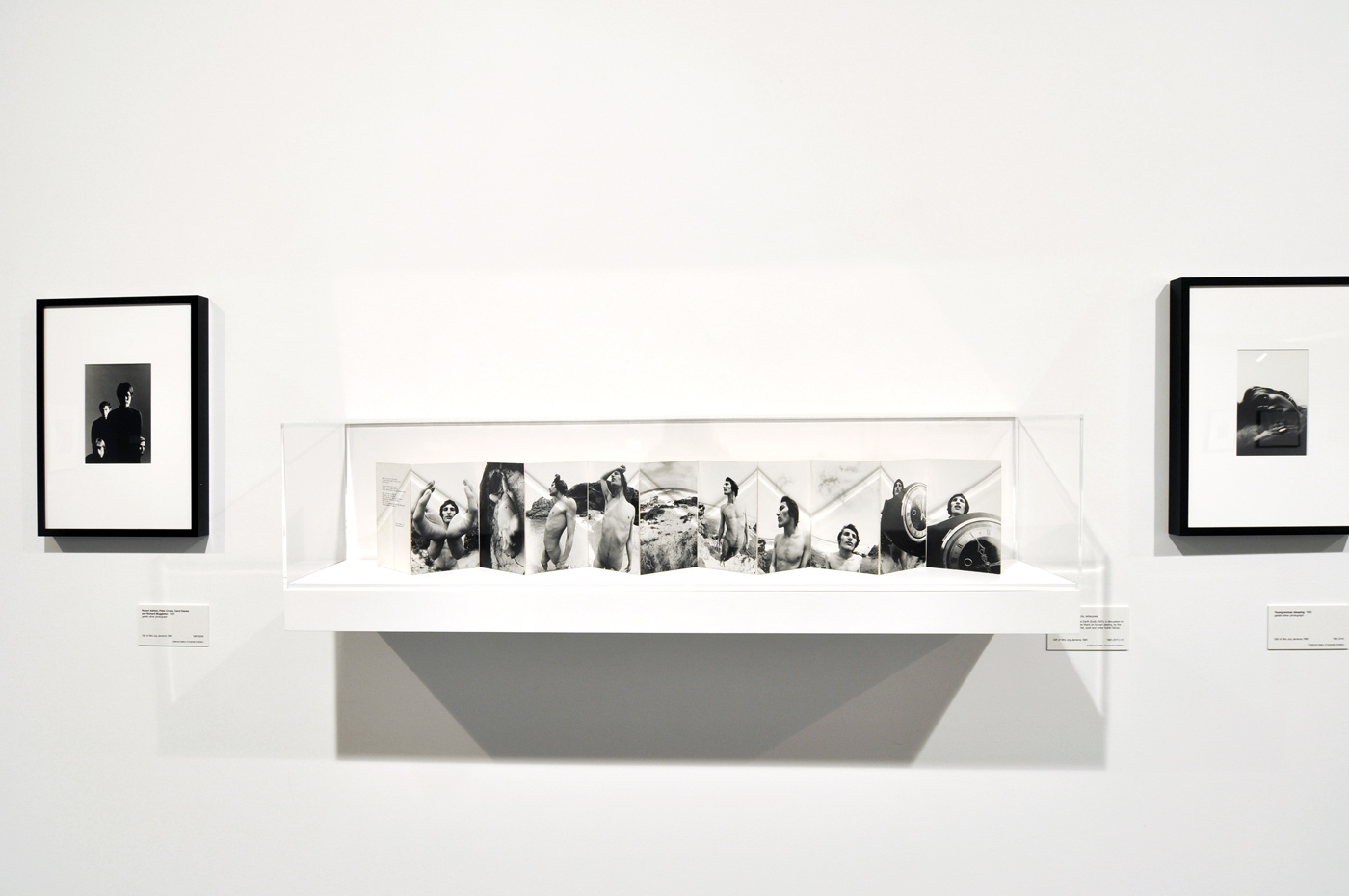
Exhibition: ‘Lorna Simpson’ at Jeu de Paume, Paris

Exhibition dates: 28th May – 1st September 2013


Lorna Simpson (American, b. 1960) 'Five Day Forecast (Prévisions à cinq jours)' 1988


Lorna Simpson (American, b. 1960)
Five Day Forecast (Prévisions à cinq jours)
1988
5 gelatin silver prints in a frame, 15 plates engraved plastic
24 1/2 x 97 in (62.2 x 246.4cm) overall
Lillian and Billy Mauer Collection
© Lorna Simpson


A fascinating practice!

Identity, memory, gender, representation, the body, the subject, felt, text, images, video, gesture, reenactment, concept and performance, all woven together seamlessly like a good wig made of human hair…

Dr Marcus Bunyan


Many thankx to Jeu de Paume for allowing me to publish the photographs in the posting. Please click on the photographs for a larger version of the image.


Lorna Simpson (American, b. 1960) 'Stereo Styles (Styles stéréo)' 1988


Lorna Simpson (American, b. 1960)
Stereo Styles (Styles stéréo)
1988
10 dye-diffusion black-and-white Polaroid prints, 10 engraved plastic plaques
57 3/4 x 125 1/4 x 1 3/8 in (146.7 x 318.1 x 3.5cm) overall
Collection of Melva Bucksbaum and Raymond Learsy
© Lorna Simpson


Lorna Simpson (American, b. 1960) 'Wigs II' 1994-2006


Lorna Simpson (American, b. 1960)
Wigs II
1994-2006
Serigraph on 71 felt panels (images and text)
98 x 265 in (248.9 x 673.1cm) overall
Courtesy the artist; Salon 94, New York; and Galerie Nathalie Obadia, Paris/Brussels
© Lorna Simpson


Lorna Simpson surprised her audiences in 1994 when she began to print her photographs on felt, inspired by its materiality after seeing an exhibition of the sculpture of Joseph Beuys in Paris “where the piano and walls were covered for a beautiful installation.” Simpson questioned whether the medium might be appropriate in a far different way for her work given the perspective afforded her by the passage of time. With the felt pieces, Simpson turned away from photography’s traditional paper support, magnified the already larger-than-life-size of the images within her large photo-text pieces to extremely large-scale multi-part works, and, most critically, absented the figure, in particular, the black woman in a white shift facing away from the camera for which she had received critical acclaim.

Ever-present, nevertheless, were her thematic concerns. The first felts offered surrogates for the body in a taxonomy of her own photographs of Wigs, with voicings “in and around gender,” and expanded upon the investigation of the role of coiffure in the construction of identity in Simpson’s photo-texts (such as Stereo Styles, Gallery 1). In the mid-1990s, such felts were succeeded by a series of photographs of interior and exterior scenes that were accompanied by long text passages printed on separate small felts. In these works the figure was replaced, as Okwui Enwezor wrote, “by the rumour of the body.”


Lorna Simpson (American, b. 1960) 'Please remind me of who I am' 2009 (detail)


Lorna Simpson (American, b. 1960)
Please remind me of who I am (detail)
2009
50 found photo booth portraits, 50 ink drawings on paper, 100 bronze elements
Overall installation dimensions variable
Collection of Isabelle and Charles Berkovic
© Lorna Simpson


For each multi-part photo-booth piece, Simpson sets in bronze frames these small inexpensive shots as well as her drawings of selected details of the photographs. Self-styled and performed, these photographs were used for a variety of purposes by their now anonymous sitters, ranging from sober, formal ID photos to glamorous, often theatrically playful mementos. Encompassing photo booth shots of different sizes from the 1920s to the 1970s (a few in colour), Simpson’s constellations of many images for each work offer a collective portrait of self-portraiture (Gather, 2009) and continue her ongoing explorations of identity and memory, explicitly phrased in the title of one of them: Please remind me of who I am (2009).


Lorna Simpson (American, b. 1960) 'Waterbearer [Porteuse d'eau]' 1986


Lorna Simpson (American, b. 1960)
Waterbearer (Porteuse d’eau)
1986
Gelatin silver print, vinyl letters
59 x 80 x 2 1/2 in (149.9 x 203.2 x 5.7cm) overall
Courtesy the artist; Salon 94, New York; and Galerie Nathalie Obadia, Paris / Brussels
© Lorna Simpson


Waterbearer shows a woman from the back, pouring water from an elegant silvery metallic pitcher in one hand and from an inexpensive plastic jug in the other, echoing art historical renderings of women at wells or in the domestic settings of Dutch still-life paintings. As if balancing the scales of justice, this figure also symbolically offers disjunctions of means and class. In the accompanying text, Simpson explicitly addresses memory and the agency of speakers: “She saw him disappear by the river, they asked her to tell what happened, only to discount her memory.”


For her first European retrospective, the Jeu de Paume presents thirty years of Lorna Simpson’s work. For this Afro-American artist, born in Brooklyn, New York, in 1960, the synthesis between image and text is profound and intimate. If one were to consider Lorna Simpson as a writer, the textual element of her works could have an autonomous life as prose poems, very short stories or fragments of scripts. And yet, her texts are inseparable from her images; there is a dynamic between the two that is both fragile and energising, which links them unfailingly. Lorna Simpson became known in the 1980s and 90s for her photographs and films that shook up the conventions of gender, identity, culture and memory.

Throughout her work, the artist tackles the complicated representation of the black body, using different media, while her texts add a significance that always remains open to the spectator’s imagination. In her recent work, Lorna Simpson has integrated archive images, which she reinvents by positioning herself in them as subject. As the artist underlines: “The theme I turn to most often is memory. But beyond this subject, the underlying thread is my relationship to text and ideas about representation.” (Lorna Simpson)

This retrospective reveals the continuity in her conceptual and performative research. In her works linking photography and text, as well as in her video installations, she integrates – while continually shaking them up – the genres of fixed and moving images, using them to ask questions about identity, history, reality and fiction. She introduces complexity through her use of photography and film, in her exploitation of found objects, in the processes she develops to take on the challenges she sets herself and to spectators.

The exhibition gathers her large format photo-texts of the mid 1980s, which brought her to the attention of the critics (Gestures / Reenactments, Waterbearer, Stereo Styles), her work in screenprints on felt panels since the 1990s (Wigs, The Car, The Staircase, Day Time, Day Time (gold), Chandelier), a group of drawings (Gold Headed, 2013), and also her “Photo Booths,” ensembles of found photos and drawings (Gather, Please remind me of who I am…). The exhibition is also an opportunity to discover her video installations: multivalent narratives that question the way in which experience is created and perceived more or less falsely (Cloudscape, 2004, Momentum, 2010), among them, Playing Chess, a new video installation made especially for the occasion.


About the exhibition

Joan Simon

In her critically acclaimed body of work spanning more than thirty years, Lorna Simpson questions identity and memory, gender and history, fact and fiction, playing eye and ear in tandem if not in synchrony to prompt consideration of how meaning is constructed. That she has often described herself as an observer and a listener informs an understanding of both her approach and her subjects. In her earliest black-and-white documentary street photographs (1978-1980), Simpson isolated gestures that bespoke an intimacy between those framed in her viewfinder, recording what was less a decisive moment than one of coming into relation. Some of these photographs seem to capture crossed glances, pauses in an ongoing conversation. Others are glimpses of occasions, transitional events identifiable by a white confirmation or wedding dress, which convey a sense of palpable silence in exchanges between people just out of earshot.

When Simpson began to stage her own photographs in 1985 and to write accompanying texts, she came in closer. She allowed us to see a carefully framed black body, abstracted in gesture and in white clothing, yet also permitted us to read seemingly overheard comments that redirected and recomplicated the view. While her images captured gestures, her narratives imbued these images frozen in a never-changing present with memory, a past. The title of her first photo-text work, made in 1985, and of the exhibition of that year in which it was first exhibited was Gestures / Reenactments, and one can argue that all Simpson’s work is built on the juxtaposition of gestures and reenactments, creating meaning in the resonant gap between the two. It is a gap that invites the viewer / reader to enter, all the while requiring an active reckoning with some inalienable truths: seeing is not necessarily believing, and what we might see is altered not only by our individual experiences and assumptions but also, critically, by what we might hear.

The exhibition

Whether for still or moving picture productions, Lorna Simpson (b. 1960) uses her camera as catalyst to question identity and gender, genres and history, race and class, fact and fiction, memory and meanings. Assumptions of photographic “truth” are challenged and qualified – indeed redirected – by the images she creates that are inseparable from the texts she writes to accompany them, by the soundings she chooses  for videos, or by her pairings of vintage photographs with newly made renderings. The Jeu de Paume presents lorna Simpson’s first large-scale exhibition in Europe beginning with her earliest photo-text pieces of the 1980s through her newest video installation, Chess, 2013, which makes its debut in Paris.

Works in the exhibition show the artist drawing on traditional photo techniques such as gelatin silver prints in an intimate synthesis with speakerly texts (Gallery 1). They also show Simpson’s creation of new combines, among them serigraphs on felt with writings and images invoking film noir (Gallery 2), a video installation of three projections based on historic photographs and her own prior still photos (Gallery 3), constellations of recuperated photo-booth photos with her drawings isolating details from them as well as vintage photographs together with those re-staged by the artist (Gallery 4), and a video focusing on performance as well as time itself and its reversal (Gallery 5).

The exhibition’s parcours [route] reveals turning points in Simpson’s oeuvre as well as thematic continuities. The earliest pieces in the show are Simpson’s performative proto-cinematic photo-texts, beginning with the 1985 Gestures/ Reeactments, a title literally evocative of the work’s visual / verbal aspect while also paradigmatically descriptive of what would be her conceptual practice for the next three decades. Simpson herself makes a rare appearance in her work in two related pieces in the show: the 2009 epic still photo work 1957-2009 (Gallery 4), for which the artist re-enacted scenes from vintage photos, and Chess, 2013, (Gallery 3), which features re-enactments of some of the same photos.

.
Gallery 1 introduces the artist’s signature, indeed iconic early images of the 1980s – a black figure in white clothing, face turned away from the camera or cropped out of the frame – accompanied by precisely crafted, allusive texts that recomplicate what is seen by what is heard in these voicings. The intention to deny a view of a face, as Simpson says, “was related to the idea that the one thing that people gravitate to in photography is the face and reading the expression and what that says about the person pictured, an emotional state, who they are, what they look like, deciphering and measuring. Who is being pictured, what is actually the subject? Photographing from the back was a way to get viewers’ attention as well as to consciously withdraw what they might expect to see.”

The performative photo-text works in Gallery 1 are Gestures / Reenactments, 1985 (created as part of her thesis project for her MFA at the University of California, San Diego), Waterbearer and Twenty Questions (A Sampler) (the first works that Simpson made when she moved to New York in 1986), as well as Five Day Forecast, 1988, and Stereo Styles, 1988. Beginning with Waterbearer, all of these except Gestures / Reenactments (which features a black male) show a black female in a white shift played by artist Alva Rogers, who was often mistaken for Simpson herself.

Gallery 2 marks important changes the artist made during the ’90s, most notably Simpson’s surprising shift to printing her photographs on felt and absenting the human figure. At first she used surrogates for the body, seen in the many and various wigs she photographed and which she accompanied with texts that continued to address ideas of identity and gender (Wigs, 1994-2006). She used photographs taken during her travels for the next series of felt works, which were interior and exterior scenes (The Car, 1995, The Rock, 1995, The Staircase, 1998) that in both imagery and texts invoked film noir. These works led almost inevitably to the start of Simpson’s film and video work in 1997. (Her earliest photo-texts will be recognised by the viewer as proto-cinematic with their multiple frames and conversational voices.)

This gallery also reveals how Simpson continues to use her felt medium and returns to her own archive of images   as well as found objects. Three related works, though no longer using text, nevertheless “comment” on each other:  a video of a performance (Momentum, 2010) inspired by an early 1970s performance at Lincoln Center generated felt works based on vintage photographs of this famous New York theatre – Chandelier, 2011, Daytime, 2011, and Daytime (gold), 2011 – as well as the Gold Headed (2013) drawings, based on the dancers costumed head to foot in gold. Drawings are perhaps the least known medium in Simpson’s practice, and while they reveal the fluid gestures of her hand, visitors will recognise in these gold heads turned from the viewer an echo of the position of the figures  in Gallery 1.

Gallery 3 is devoted to Simpson’s newest video, Chess, 2013, which is based on historic photos as well as her own earlier photographic piece, 1957-2009 (Gallery 4), in which she restaged found vintage photographs. Chess and 1957-2009 mark the rare instances in which Simpson has herself appeared in her work.

Gallery 4 presents reenactments that use quotidian photographic genres to explore constructions of identity and that offer a collective portrait of photographic portraiture over time. All of the works in this gallery are based on found photographs Simpson purchased on eBay and each depicts anonymous subjects performing for the camera. 1957-2009 is based on photographs in a vintage album; Gather and Please remind me of who I am are constellations of bronze-framed found photo-booth images (from the 1920s to the 1970s) accompanied by Simpson’s similarly framed drawings of details from the photographs.

Gallery 5 offers Simpson’s video installation Cloudscape, 2004, which focuses on performance itself and the soundings of a body, that of artist Terry Adkins whistling a hymn. Embodying memory (and the distortions of it) as she did in her earliest photo-works but playing also with the particularities of video, Simpson loops the video to play forward and backward. In this process a new melody is created even as the stationary figure appears same but different.


Lorna Simpson (American, b. 1960) 'Chess (Échecs)' 2013


Lorna Simpson (American, b. 1960)
Chess (Échecs)
2013
HD video installation with three projections, black & white, sound
10:25 minutes (loop)
Score and performance by Jason Moran
Courtesy the artist; Salon 94, New York; and Galerie Nathalie Obadia, Paris/Brussels
© Lorna Simpson


Lorna Simpson (American, b. 1960) 'Chess (Échecs)' 2013


Lorna Simpson (American, b. 1960)
Chess (Échecs)
2013
HD video installation with three projections, black & white, sound
10:25 minutes (loop)
Score and performance by Jason Moran
Courtesy the artist; Salon 94, New York; and Galerie Nathalie Obadia, Paris/Brussels
© Lorna Simpson


“Gestures” and “reenactments” could both be described as the underlying methods of Simpson’s practice for the decades to follow. Whether working with photographs she herself staged, found photographs, or archival film footage, her images captured gestures (as in her earliest documentary photographs of 1978-1980) while her series of multiple images, accompanied by texts, proposed simultaneous (if not synchronous) reenactments. This method also applied to works in which she replicated found images, whether turning images from her films into drawings, or using herself to re-play roles depicted by anonymous figures she had discovered in vintage photographs, either for staged still photographs (as in 1957-2009, 2009), or for moving pictures (as in the video Chess, 2013).

Chess, 2013, Simpson’s video installation made expressly for this exhibition, draws on images from 1957-2009, her still photograph ensemble of 2009 (on view in Gallery 4). For both, in a departure from her earlier videos and prior staged photographs, Simpson herself performs. In 1957-2009, by reenacting scenes from found vintage prints with which they are shown, Simpson is “mirroring both the male and  the female character, in dress, pose, expression, and setting. When I would mention the idea of working with mirrors [for the Chess video] people would often mention the famous portraits of Picasso and Picabia taken at a photo studio in New York by an anonymous photographer who placed the subject at a table in front of two mirrored panels at seventy-degree angles. The result is a five-way portrait that includes views that are not symmetrical and that offer slightly different angles: a surrealist trope of trick photography.”

Though the artist first rejected the idea of working with the mirror device used in these historic portraits, which she had seen many times, she decided to take it on fully and reconstruct it in her studio for this new video project after  art historian and sociologist Sarah Thornton sent her “a beautiful image of an unknown man of African descent in a white straw hat, which had been in an exhibition at MoMA [catalogue page 61]. It was a five-way portrait probably taken by the same photographer who had taken the portraits of Picasso and Picabia. I could no longer resist or dismiss this idea. I felt that it was demanding my attention.”

Shot in Simpson’s studio over the weekend of December 8, 2012, Chess is comprised of three video projections. For two of them Simpson again plays both female and male chess-players, and with the help of makeup and hair assistants, she now allows her characters to age. The third projection shows pianist Jason Moran performing his improvised score for this project, which was inspired by discussions between artist and composer about “mirroring in music,” especially “in the work of musician Cecil Taylor, who employs mirroring in his compositions.”


Lorna Simpson (American, b. 1960) 'The Car' 1995


Lorna Simpson (American, b. 1960)
The Car
1995
Serigraph on 12 felt panels with felt text panel
102 x 104 in (259.1 x 264.2cm)
Courtesy the artist; Salon 94, New York; and Galerie Nathalie Obadia, Paris/Brussels
© Lorna Simpson


Lorna Simpson (American, b. 1960) 'The Car' 1995 (detail)


Lorna Simpson (American, b. 1960)
The Car (detail)
1995
Serigraph on 12 felt panels with felt text panel
102 x 104 in (259.1 x 264.2cm)
Courtesy the artist; Salon 94, New York; and Galerie Nathalie Obadia, Paris/Brussels
© Lorna Simpson


Lorna Simpson (American, b. 1960) '1957-2009' 2009 (detail)


Lorna Simpson
1957-2009 (detail)
2009
299 gelatin silver prints, framed
5 x 5 in. (12.7 x 12.7cm) each (image size)
Rennie Collection, Vancouver
© Lorna Simpson


While collecting photo booth images on eBay, Simpson found the first of the vintage photographs – a woman in a tight sweater-dress leaning on a car – that would generate 19572009 (2009). The artist subsequently bought the entire album and in 2009 restaged these photographs of an anonymous black woman and sometimes a man performing for their camera between June and August 1957 in Los Angeles, which they may have done in the hope of gaining movie work in Hollywood or as an independent project of self-invention. For 1957-2009, Simpson reenacted both female and male roles, and the 299 images are comprised of both the 1957 originals and Simpson’s 2009 remakes. Simpson again reenacted a selection of these vignettes for her video installation Chess, 2013.


Lorna Simpson (American, b. 1960) 'Cloudscape (Paysage nuageux)' 2004


Lorna Simpson (American, b. 1960)
Cloudscape (Paysage nuageux)
2004
Video projection, black & white, sound
3:00 minutes (loop)
Centre national des arts plastiques, purchase in 2005
Photo courtesy the artist; Salon 94, New York; and Galerie Nathalie Obadia, Paris/Brussels
© Lorna Simpson/Centre national des arts plastiques


Lorna Simpson’s video installation Cloudscape (2004) isolates one man, Simpson’s friend, the artist and musician Terry Adkins, in a dark room, spotlighted as he whistles a hymn and is enveloped in fog. Focusing on the ephemerality of performance, the artist employs a technique afforded by her medium to play with time as well. Simpson runs the video forward and then also backward in a continuous loop, creating new visual and oral / aural permutations of gesture and reenactment. In the reversal of the time sequence, the image remains somewhat familiar while the tune turns into something else, a different melody.


Lorna Simpson (American, b. 1960) 'Momentum' 2010


Lorna Simpson (American, b. 1960)
Momentum
2010
HD video, color, sound
6:56 minutes
Courtesy the artist; Salon 94, New York; and Galerie Nathalie Obadia, Paris/Brussels
© Lorna Simpson


As Simpson explored new mediums, such as film and video starting in 1997 or found photographs in  the late 1990s, she continued to work in parallel with her felt serigraphs. In this gallery are three related sets of works that, unlike her earlier photo-text pieces, are all based on a personal memory: performing as a youngster, age 12, in gold costume, wig, and body paint in a ballet recital at New York’s Lincoln Center. Simpson re-staged such a performance for her video Momentum (2010).


Jeu de Paume
1, Place de la Concorde
75008 Paris
métro Concorde
Phone: 01 47 03 12 50

Opening hours:
Tuesday – Friday: 12am – 8pm
Saturday and Sunday: 11am – 7pm
Closed Monday

Jeu de Paume website

Lorna Simpson website

LIKE ART BLART ON FACEBOOK

Back to top