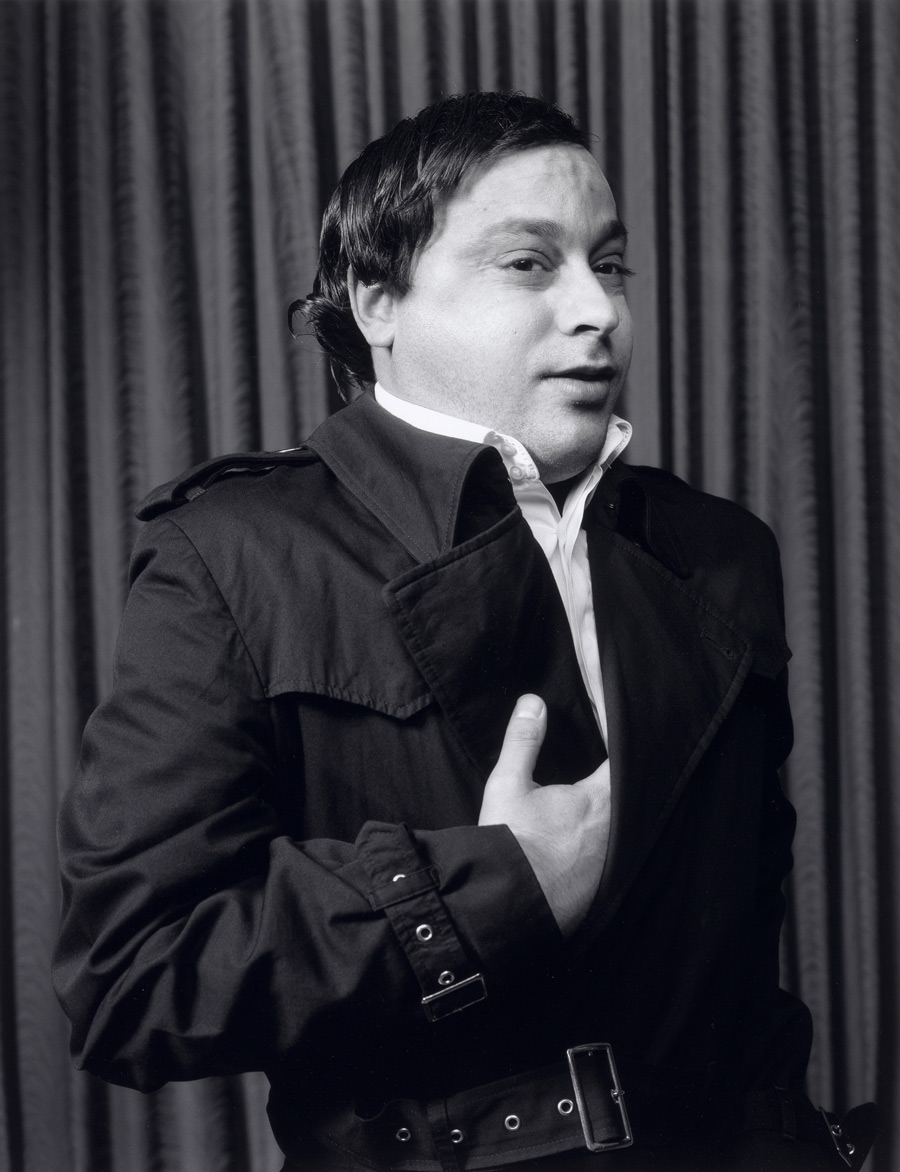
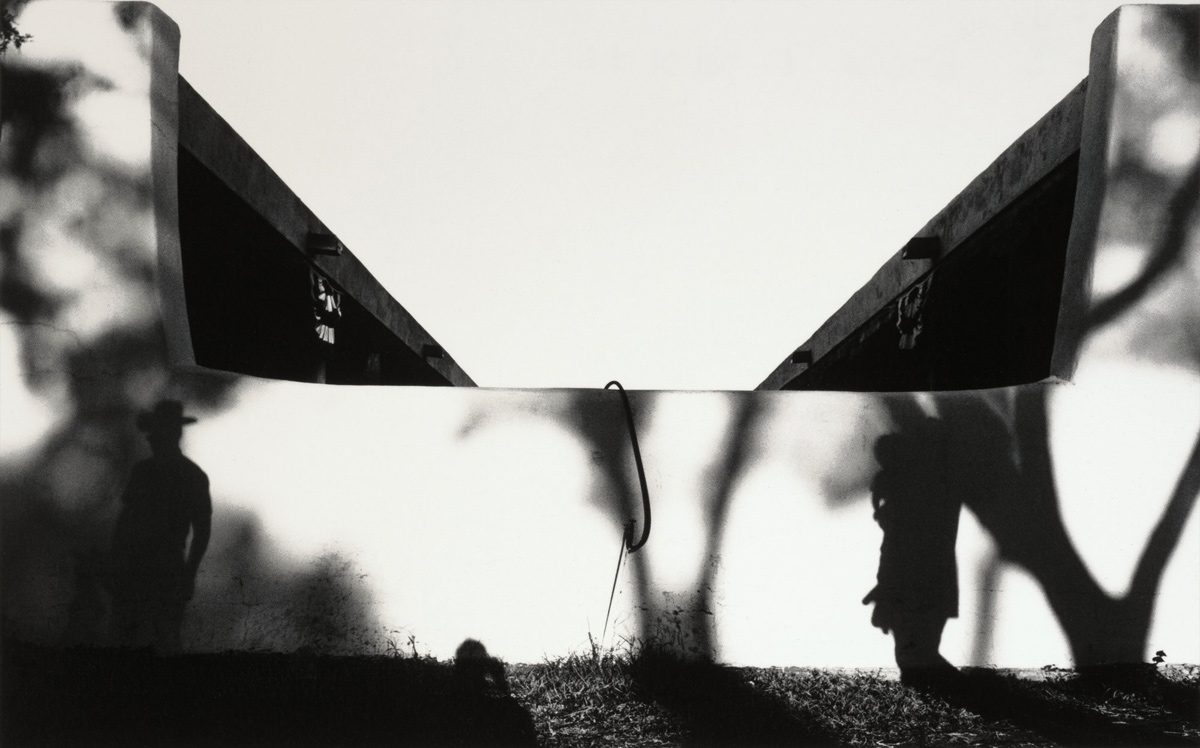
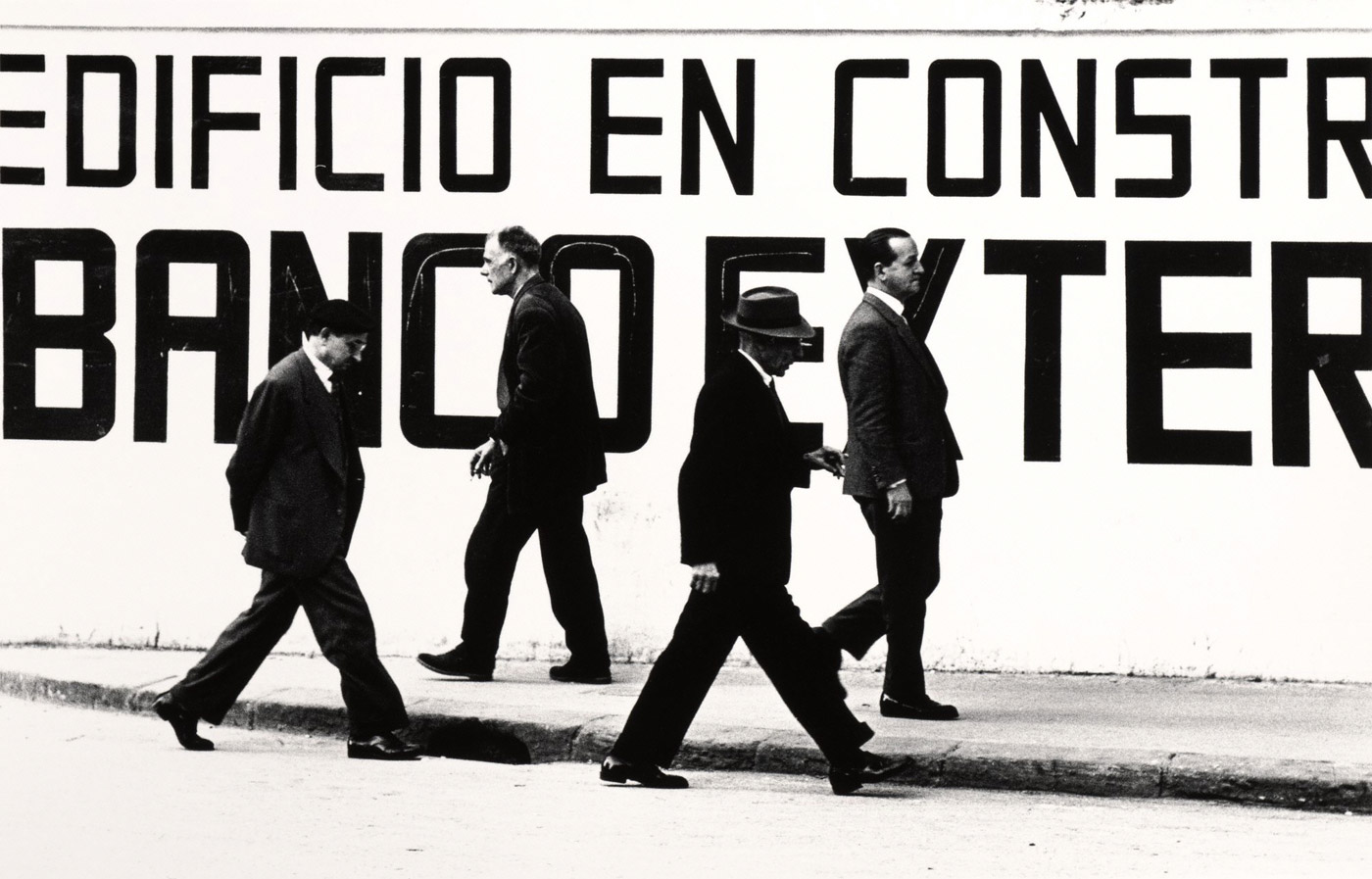
Exhibition: ‘Catherine Opie’ at Regen Projects, Los Angeles

Exhibition dates: 23rd February – 29th March 2013


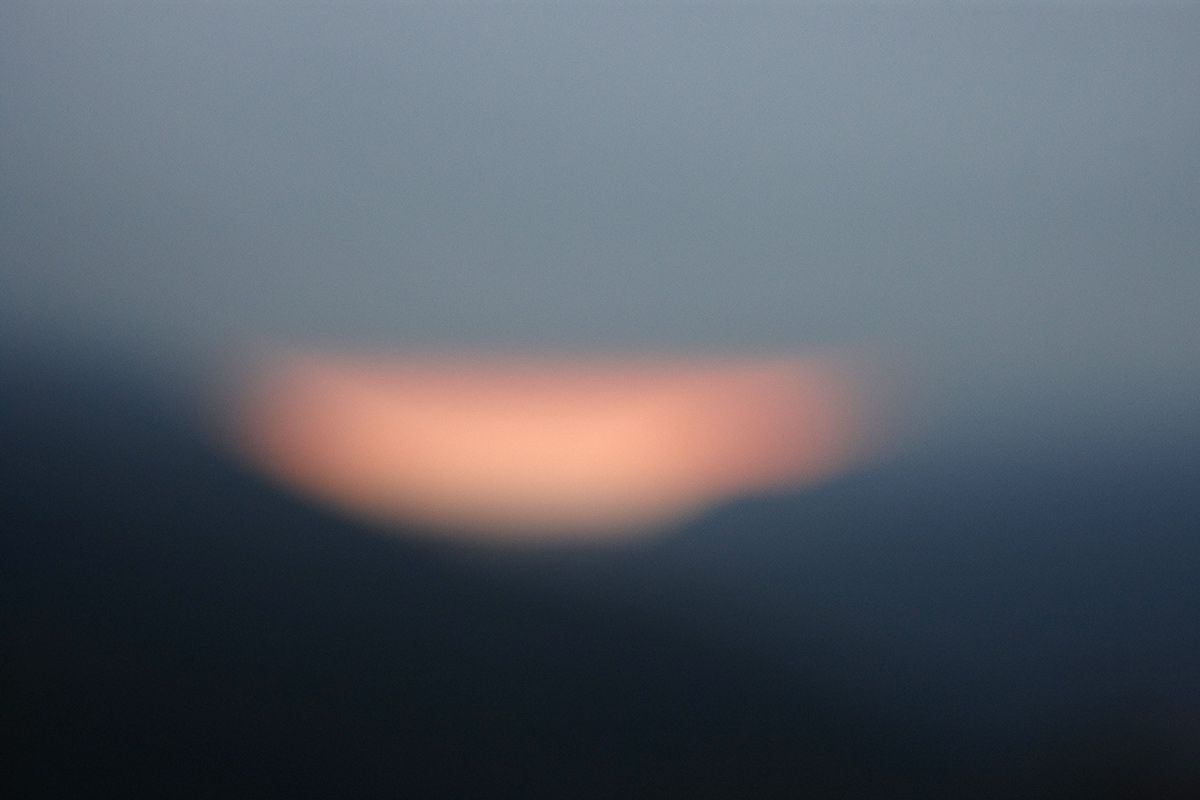
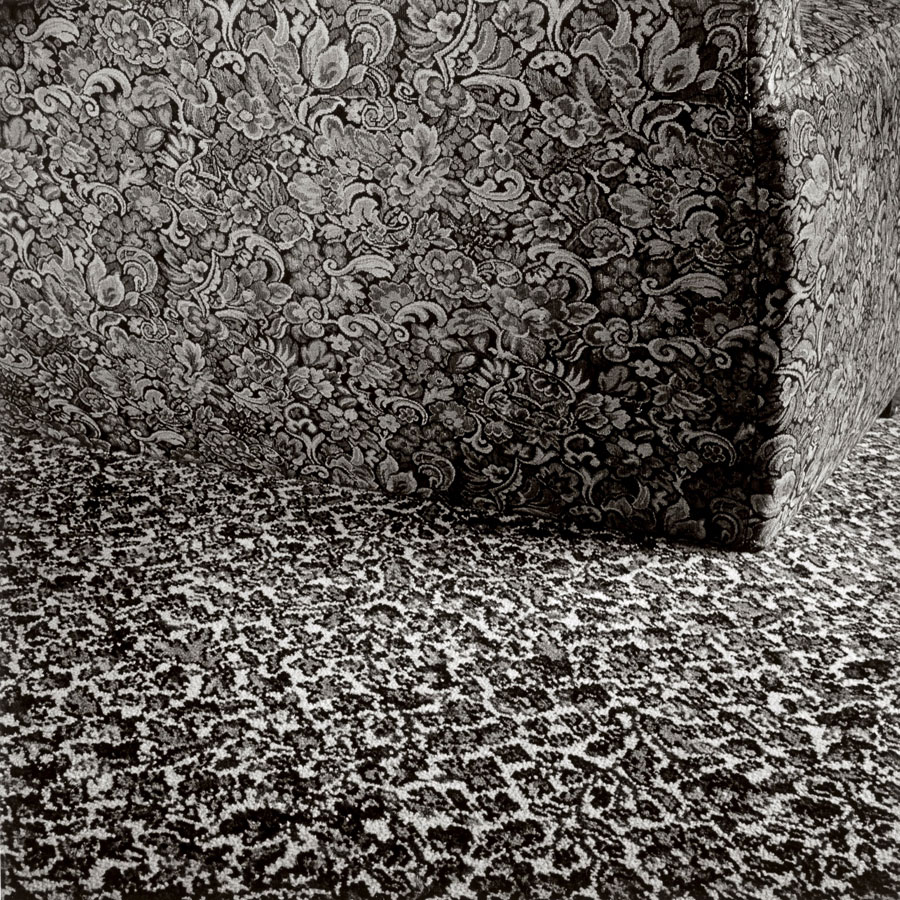
Catherine Opie (American, b. 1961) 'Untitled #4' 2012


Catherine Opie (American, b. 1961)
Untitled #4
2012
Pigment print
40 x 60 inches (101.6 x 152.4cm)
Edition 1/5, +2 APs


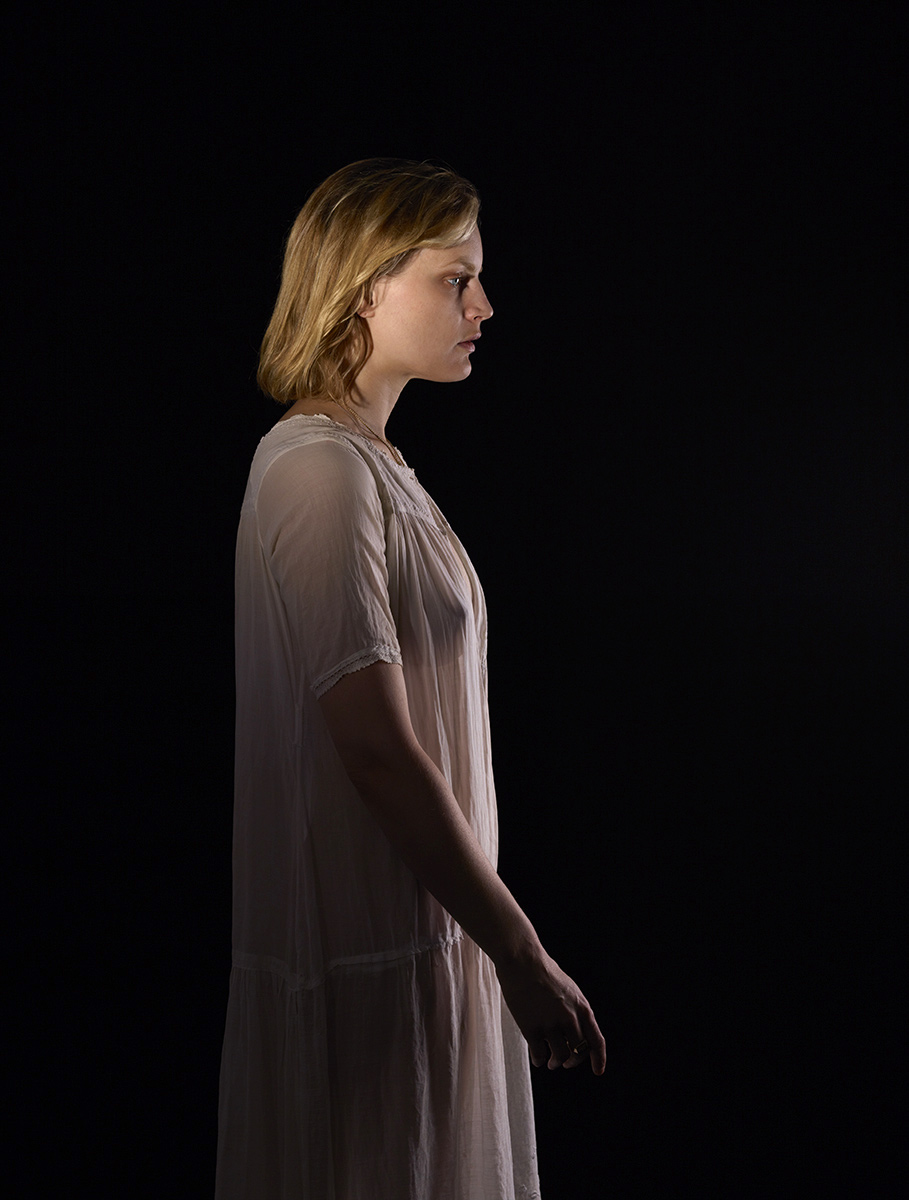
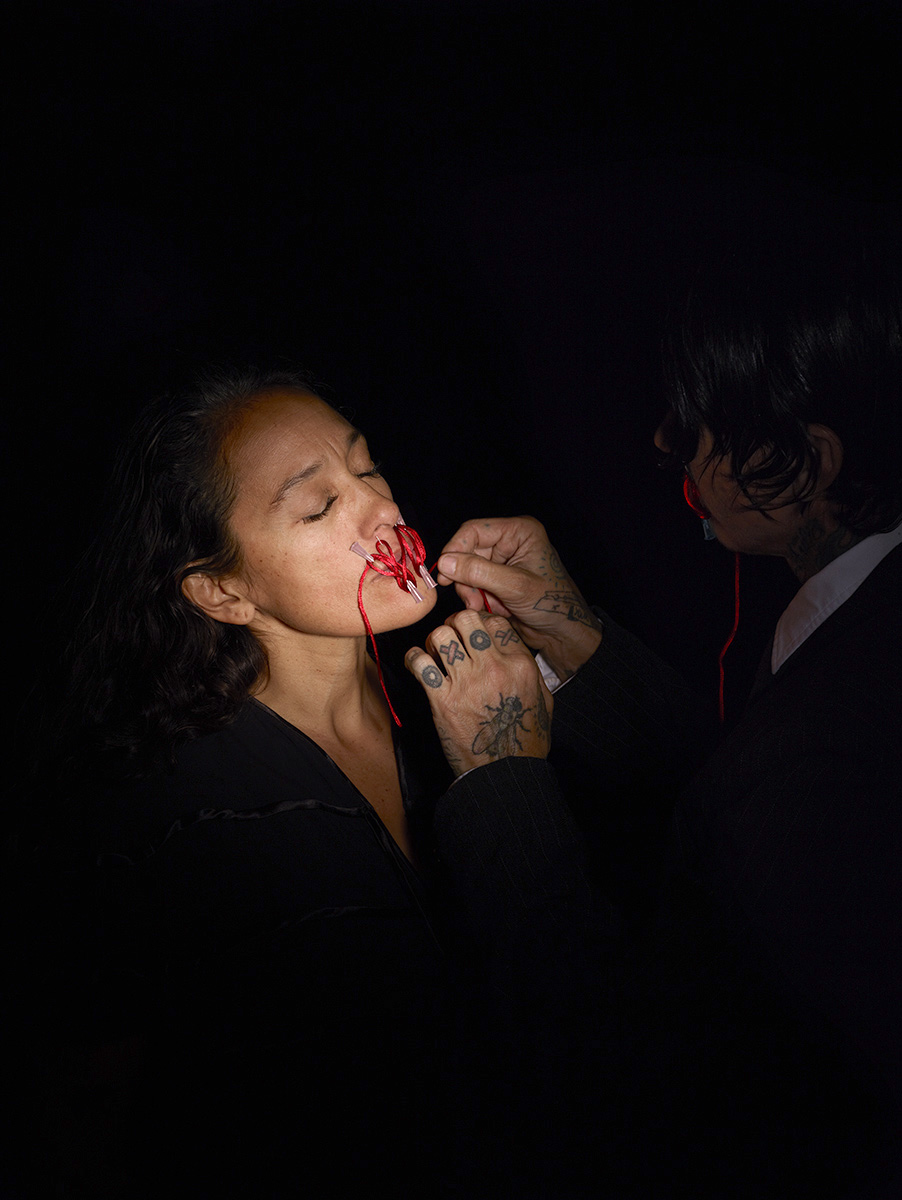
In a nutshell: good presentation, good idea – just needs really good pictures. In fact the presentation is too good for the pictures, so in the end it feels a bit ridiculous.

There IS something here (the relationship between young and old, wisdom and penitence, love and abuse, tondo and ethereal landscape), but it seems a bit of a muddle. For me, too many easy decisions have been made – obvious opposites, too much reliance on “black”, sometimes caricature rather than real observation… but then again there is occasionally something inside that caricature.

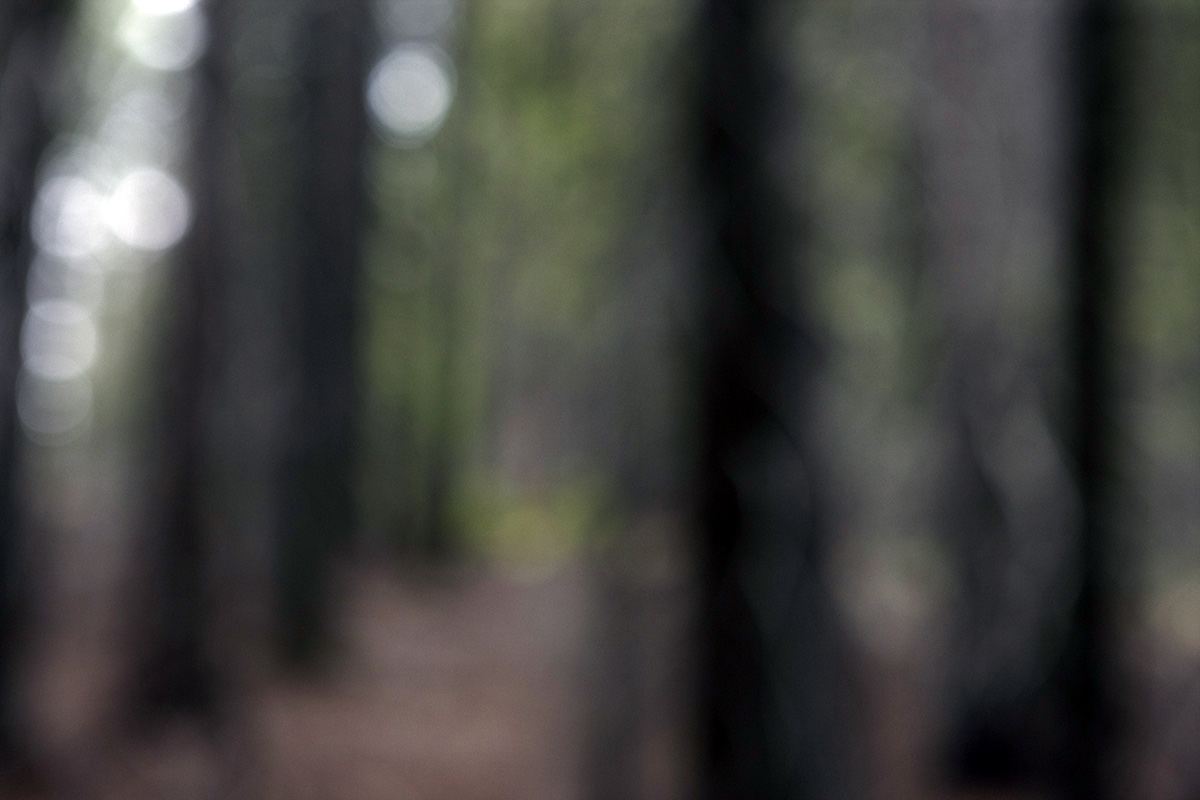
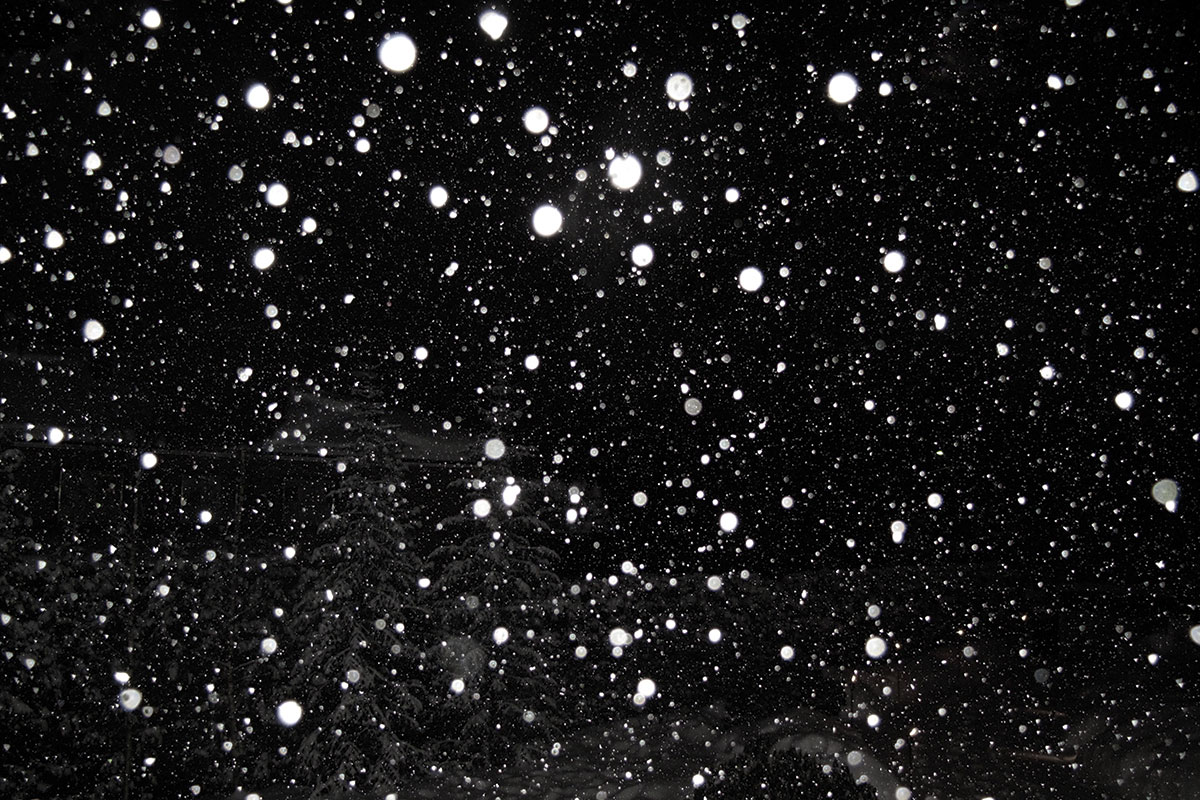
This feeling of muddling through is not helped by an abysmal press release. Along with zen and ironic (both of which seem to have any meaning a writer wants today), we now have sublime joining the pack. Maybe if anything is out of focus (such as these forgettable landscapes) it is sublime. As I go through each sentence I get shivers from either how generic or incorrect or meaningless or (especially) SELF-SERVING they are (… and now the new photographs make a trajectory… and now Opie draws on documentary photography AND the history of photography… and seduction, and formalism, and painting, and high aesthetic, and abstraction, and conceptualisation, a(n)d nauseum… )

I have seen “the Unphotographable” … and it is not as good as one hoped!

Dr Marcus Bunyan

PS. When you walk across a room, you can remark about your chiaroscuro.


Many thank to Regen Projects for allowing me to publish the photographs in the posting. Please click on the photographs for a larger version of the image. Courtesy Regen Projects, Los Angeles © Catherine Opie


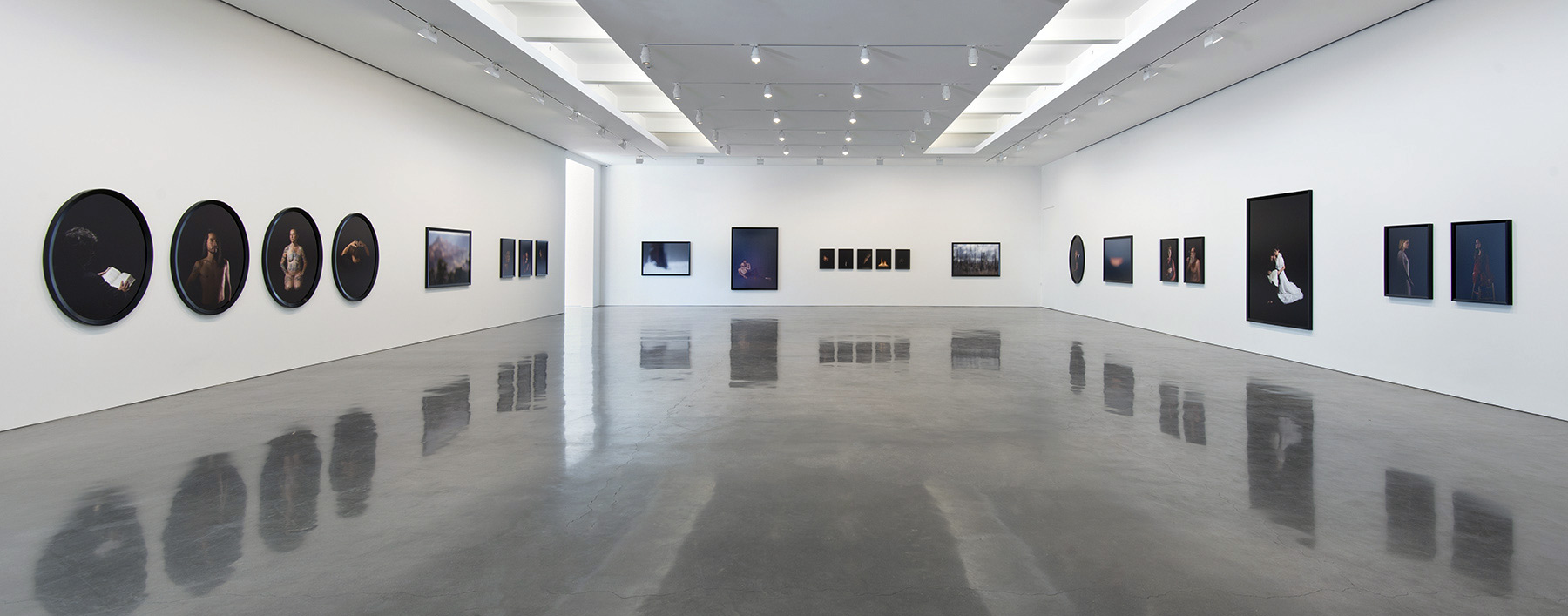
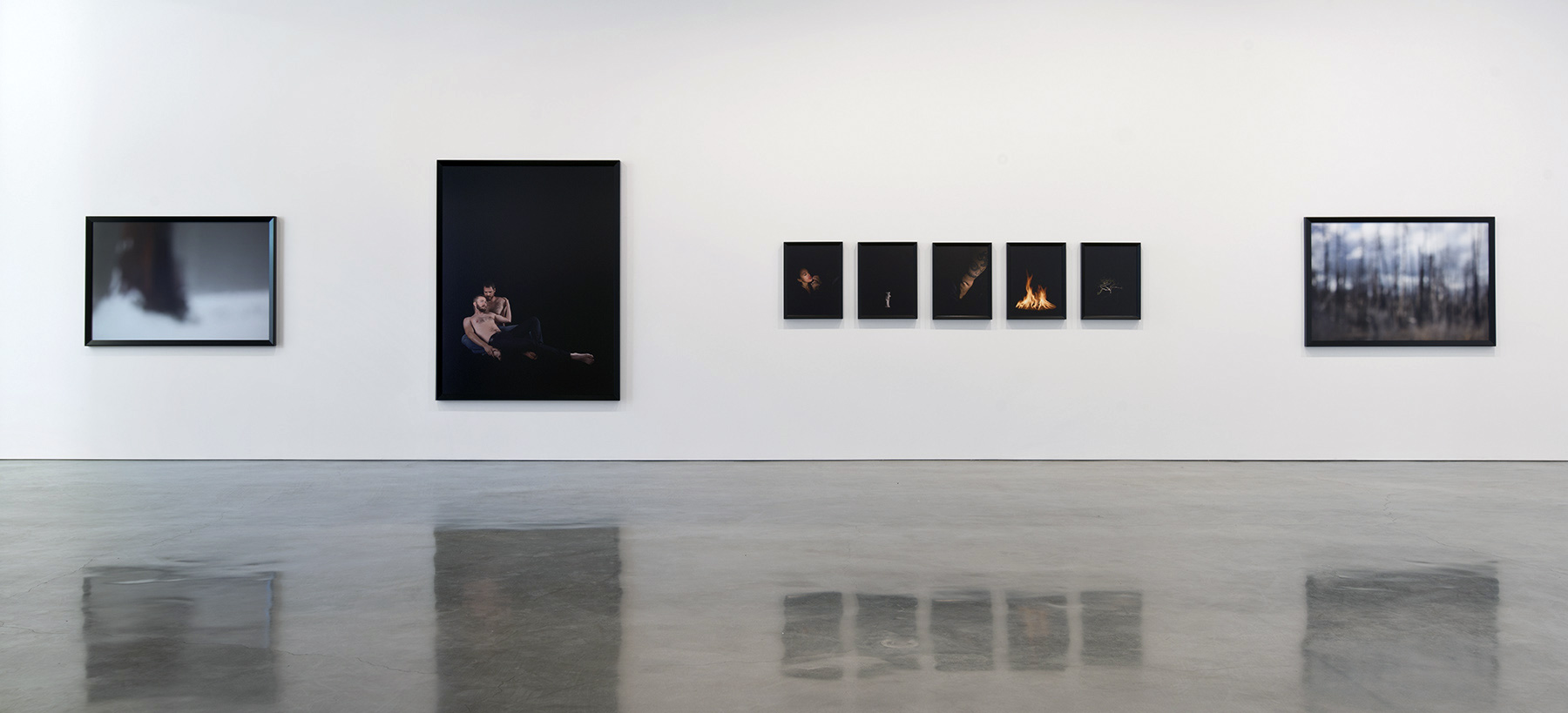
Installation view of the exhibition 'Catherine Opie' at Regen Projects, Los Angeles, February 23 - March 29, 2013

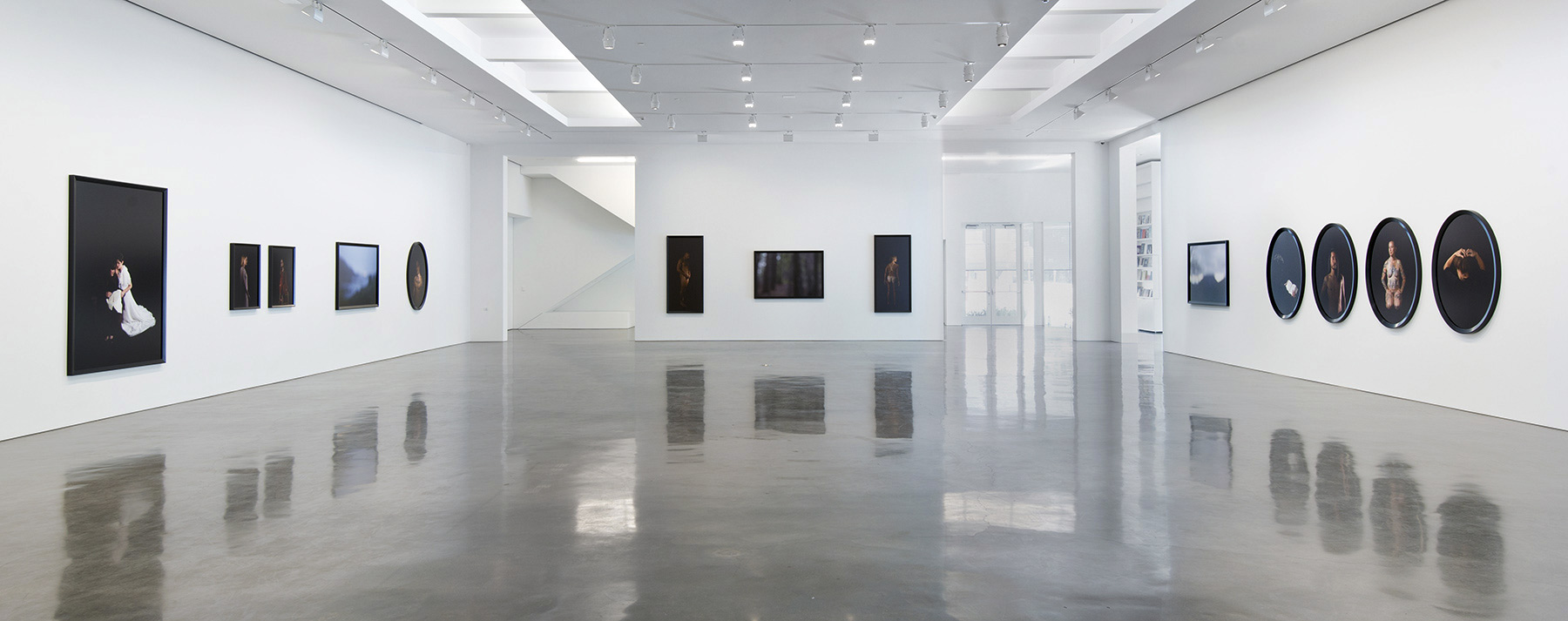
Installation view of the exhibition 'Catherine Opie' at Regen Projects, Los Angeles, February 23 - March 29, 2013

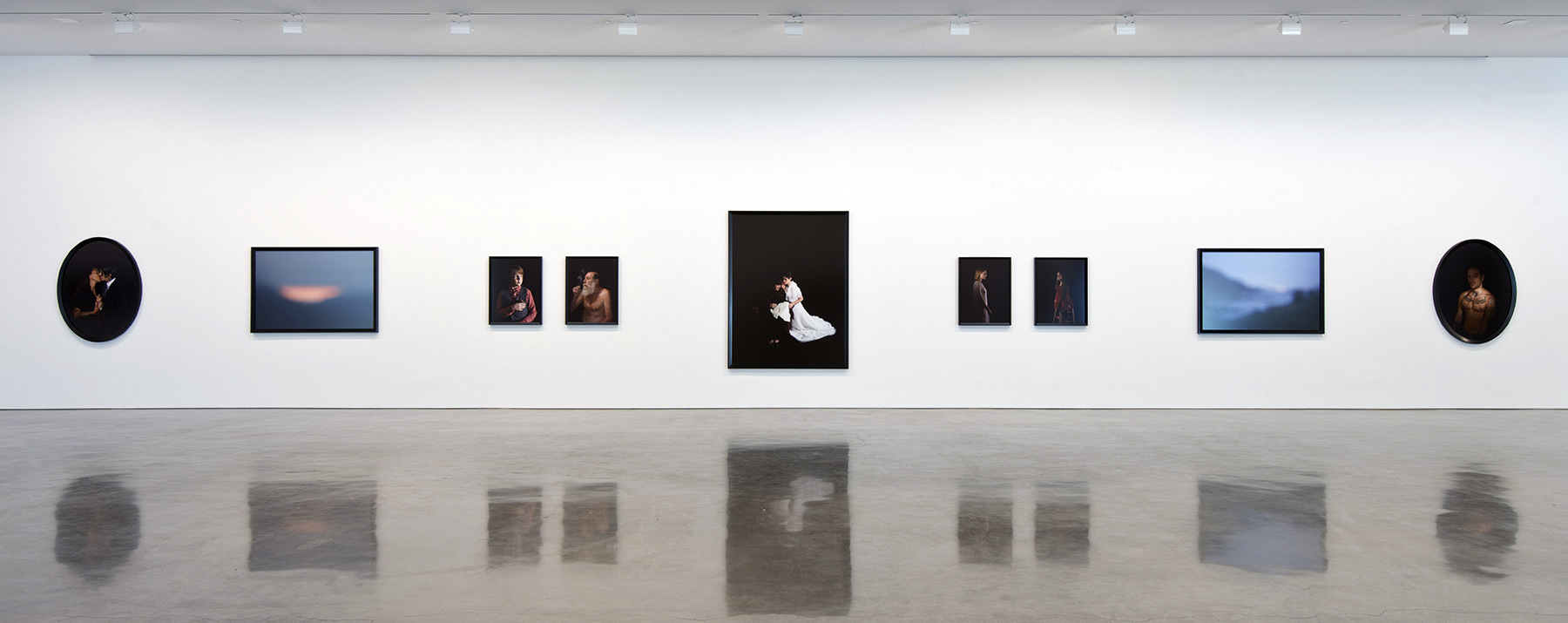
Installation view of the exhibition 'Catherine Opie' at Regen Projects, Los Angeles, February 23 - March 29, 2013

Installation view of the exhibition 'Catherine Opie' at Regen Projects, Los Angeles, February 23 - March 29, 2013

Installation view of the exhibition 'Catherine Opie' at Regen Projects, Los Angeles, February 23 - March 29, 2013

Installation view of the exhibition 'Catherine Opie' at Regen Projects, Los Angeles, February 23 - March 29, 2013


Installation views of the exhibition Catherine Opie at Regen Projects, Los Angeles, February 23 – March 29, 2013
Photography by Brian Forrest


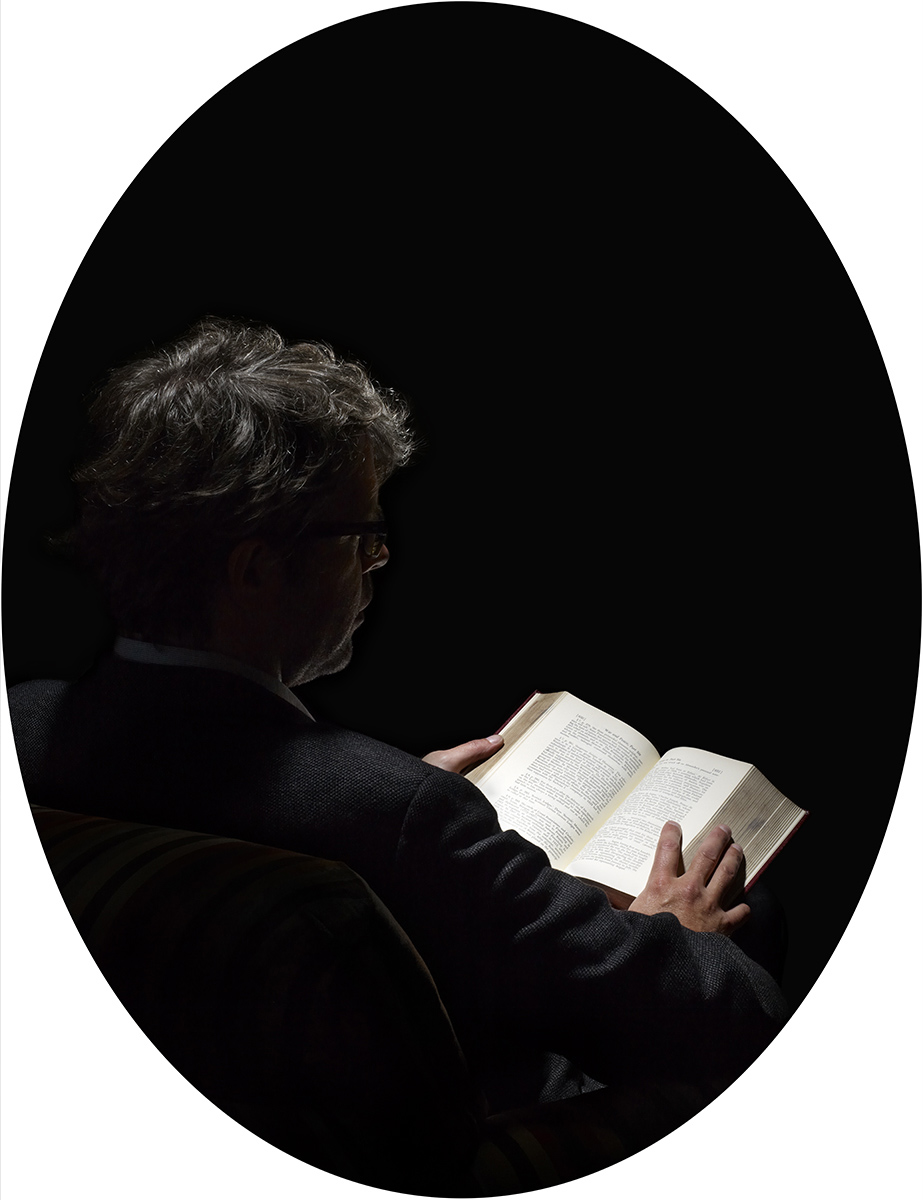
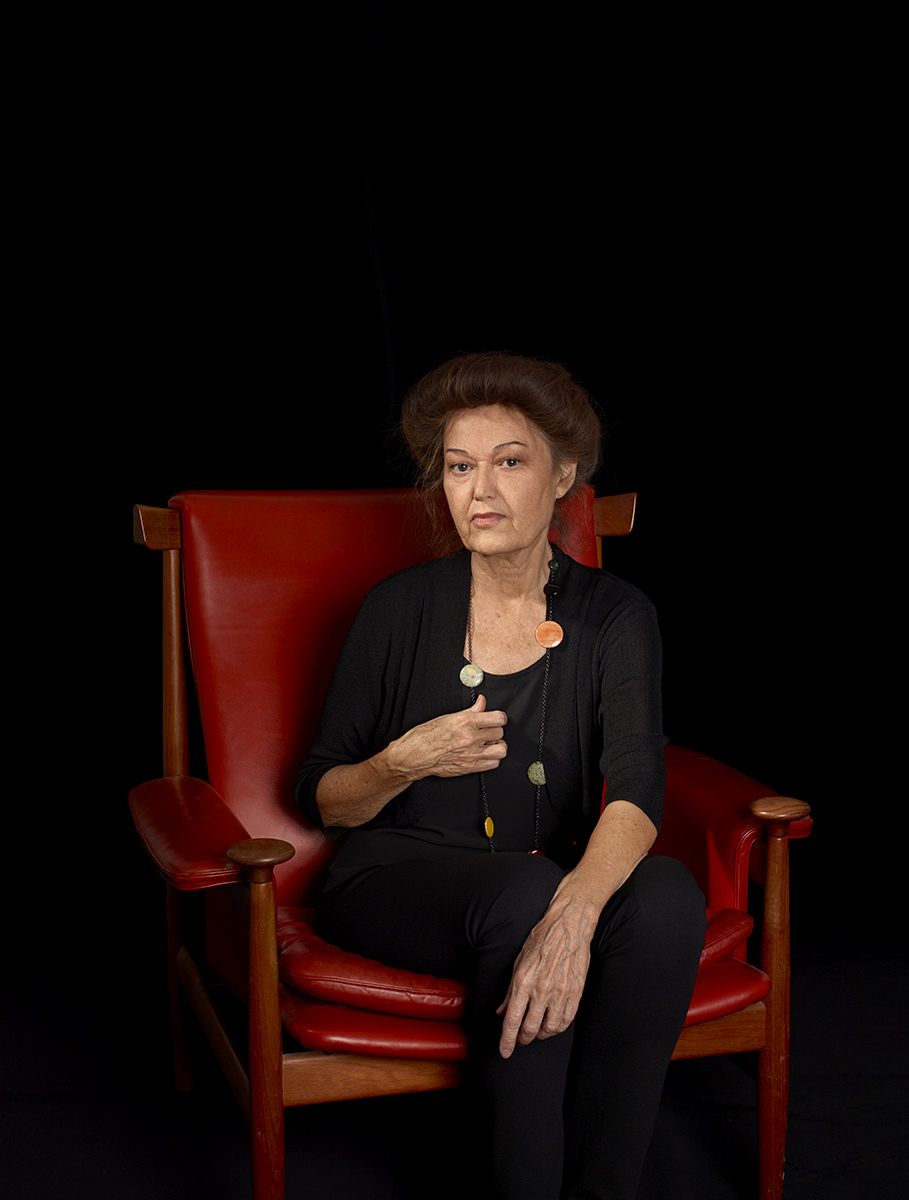
Catherine Opie (American, b. 1961) 'Jonathan' 2012


Catherine Opie (American, b. 1961)
Jonathan
2012
Pigment print
50 x 38.4 inches (127 x 97.5cm) Oval
Edition 1/5, + 2 APs


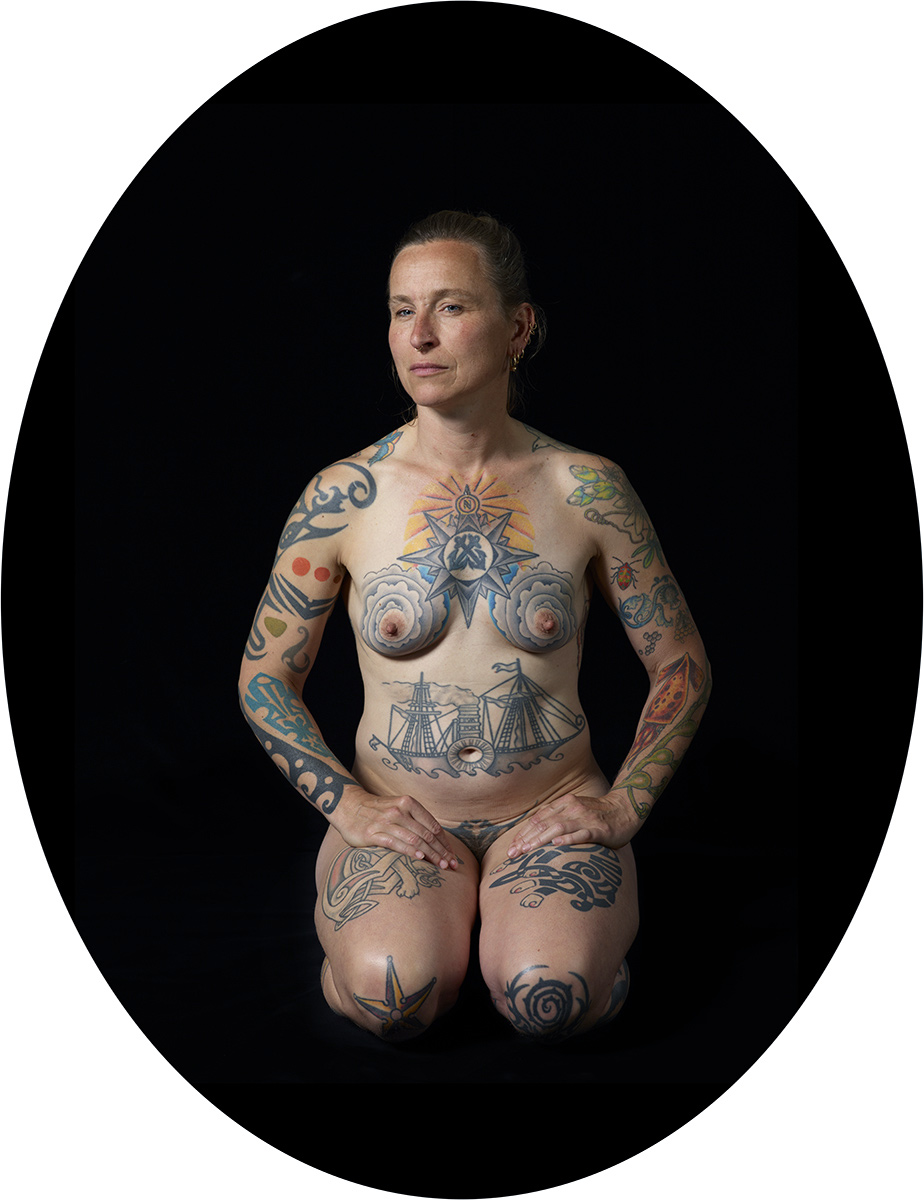
Catherine Opie (American, b. 1961) 'Idexa' 2012


Catherine Opie (American, b. 1961)
Idexa
2012
Pigment print
50 x 38.4 inches (127 x 97.5cm) Oval
Edition 1/5, + 2 APs


Regen Projects is pleased to announce an exhibition of new portraits and landscapes by Catherine Opie. These photographs mark both a progression and a departure for the artist. Opie’s work has always investigated the figure in relation to the landscape, disregarding the polarities typically found within these approaches. This new body of work draws upon Opie’s beginnings in documentary photography, the traditions of painting, and the history of photography.

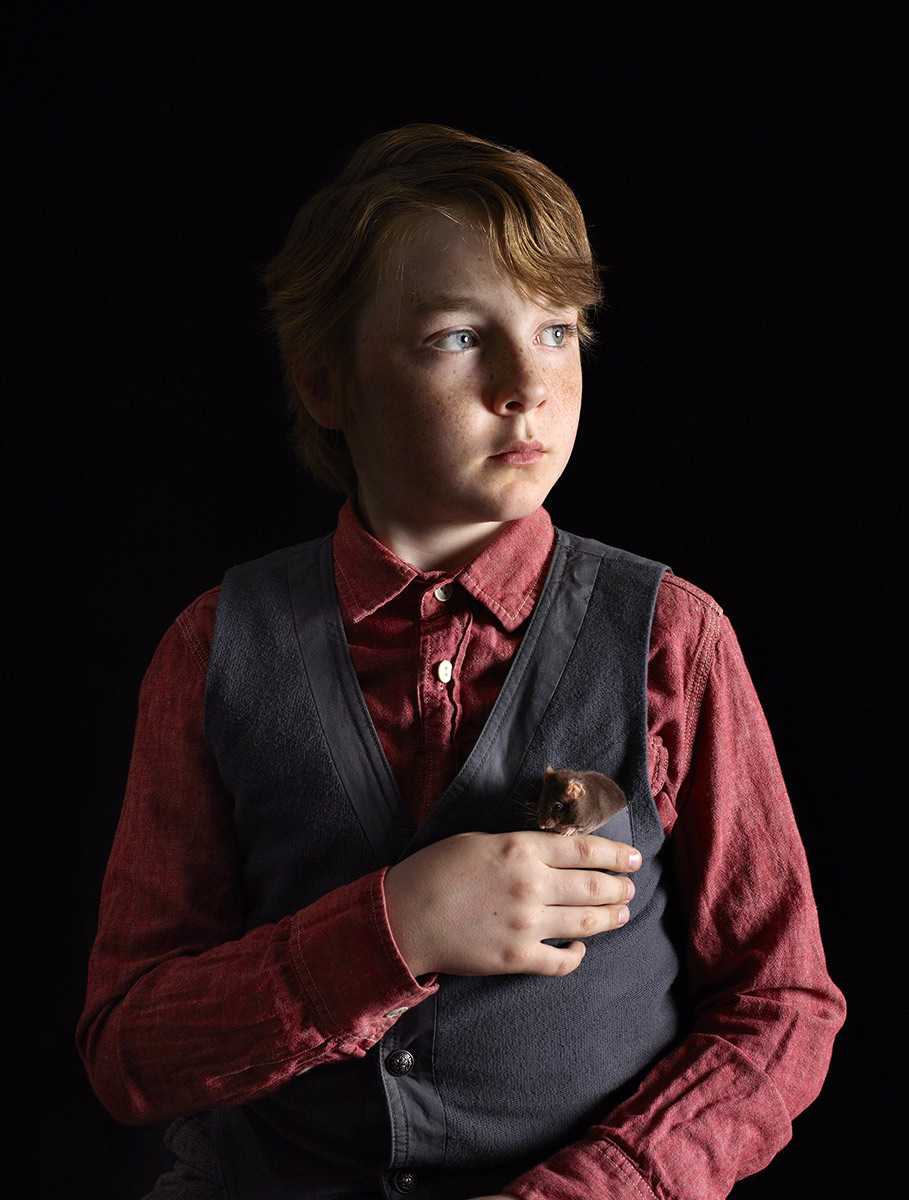
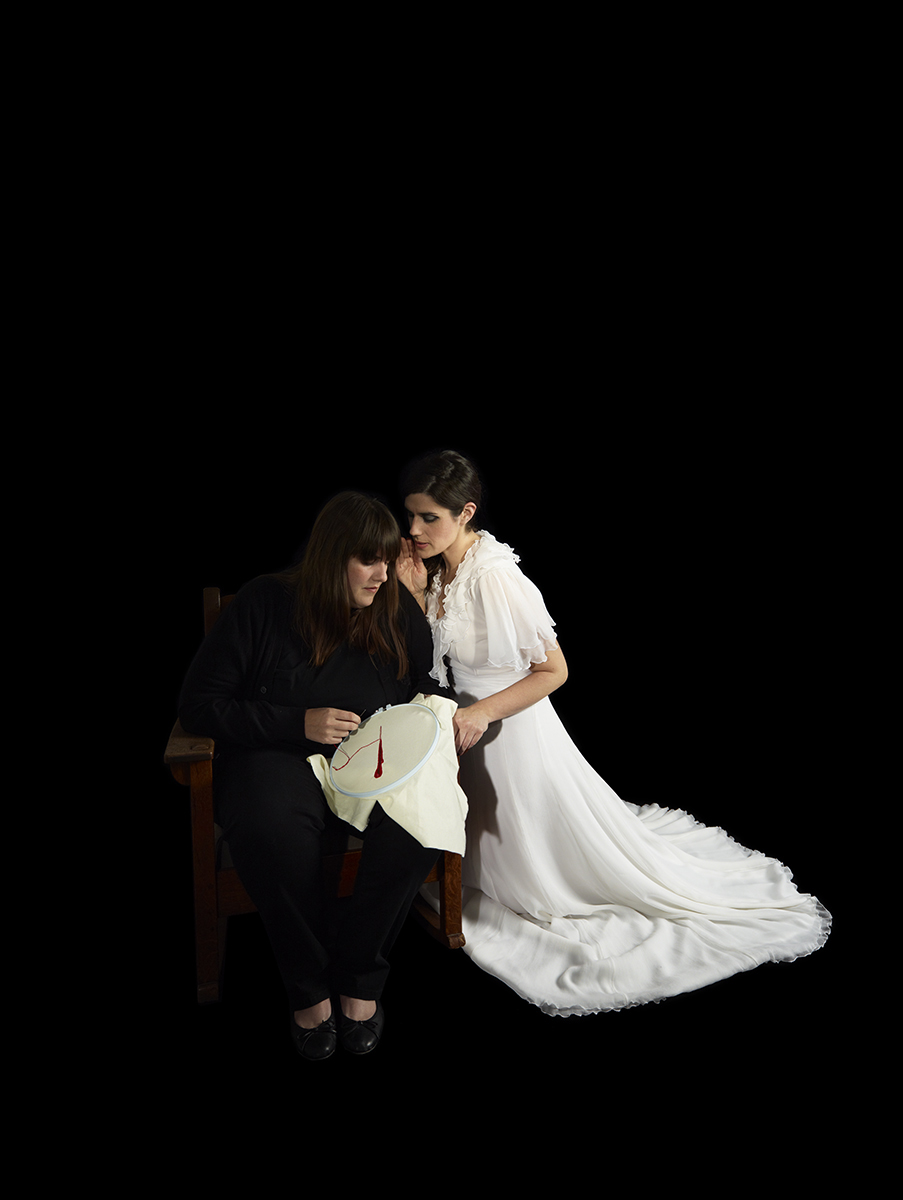
Opie’s new portraits evoke the sublime and the inner psychological space of both the viewer and subject. Utilising techniques of chiaroscuro, colour, and formal composition found in classical 17th century portraiture, Opie arranges her subjects in allegorical poses that suggest an emotional state. Evoking formal classicism, these beautifully elegant and technically masterful compositions immerse and seduce the eye. Opie’s subjects have always been part of her personal community, and the range of individuals in these new works illustrates how this community has shifted and expanded.

Catherine Opie’s work is deeply rooted in the history of photography. The new landscapes draw upon this trajectory – both contemporary and historical. In addition to utilising motifs that informed the California Pictorialists, these works reference the painterly tradition. Images of iconic landscapes float in abstraction and are reduced to elementary blurred light drawings. The viewer no longer relies on traditional markers of recognition of place, but instead on the visceral reaction to the sensate images Opie captures. These painterly, poetic, and lyrical visions resonate with oblivion, the sublime, and the unknown.

Catherine Opie’s complex and diverse body of work is political, personal, and high aesthetic – the formal, conceptual, and documentary are always at play. Her work consistently engages in formal issues and maintains a formal rigour and technical mastery that underscores an aestheticised oeuvre. Visual pleasure can always be found in her arresting and seductive images.

Opie very knowingly engages art-historical conventions of representation like this in order to seduce her viewers: “I have to be interested in art history since so much of my work is related to painting and photography history. It gives me the ability to use a very familiar language that people understand when looking at my work and seduce the viewer into considering work that they might not normally want to look at. It is very classical and formal in so many ways… In a way, it is elegant in the seduction I was talking about earlier, that this device really can draw the viewer in through the perfection of the image. It is like wearing armour for a battle in a way, the battle for people to look into themselves for the prejudices that keep them from having an open mind.”

(Jennifer Blessing. “Catherine Opie: American Photographer” in Catherine Opie: American Photographer, published by The Solomon R. Guggenheim Museum, New York, 2008, p. 14).

Press release from the Regen Projects website


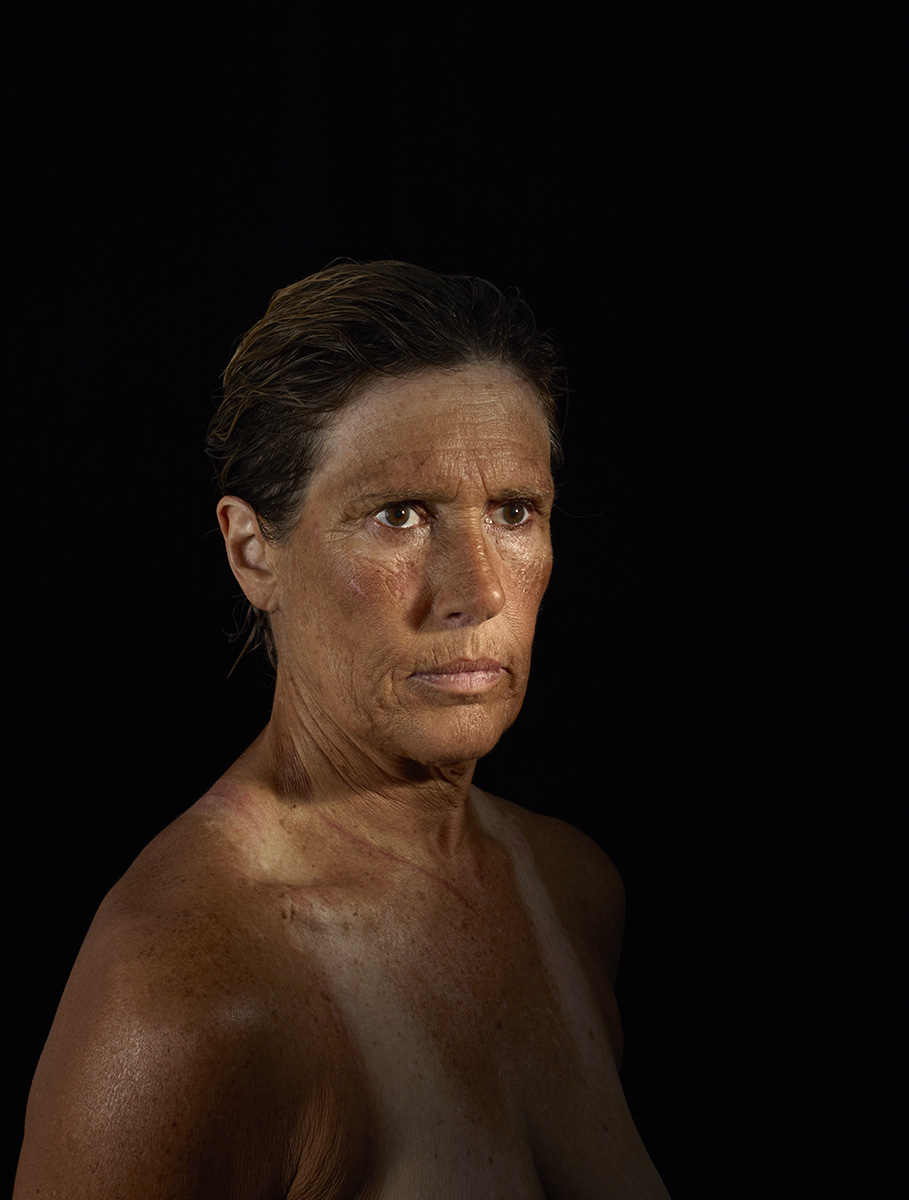
Catherine Opie (American, b. 1961) 'Diana' 2012


Catherine Opie (American, b. 1961)
Diana
2012
Pigment print
33 x 25 inches (83.8 x 63.5cm)
Edition 1/5, + 2 APs


Catherine Opie (American, b. 1961) 'Mary' 2012


Catherine Opie (American, b. 1961)
Mary
2012
Pigment print
33 x 25 inches (83.8 x 63.5cm)
Edition 1/5, + 2 APs


Catherine Opie (American, b. 1961) 'Untitled #5' 2012


Catherine Opie (American, b. 1961)
Untitled #5
2012
Pigment print
40 x 60 inches (101.6 x 152.4cm)
Edition 1/5, + 2 APs


Catherine Opie (American, b. 1961) 'Oliver & Mrs. Nibbles' 2012


Catherine Opie (American, b. 1961)
Oliver & Mrs. Nibbles
2012
Pigment print
33 x 25 inches (83.8 x 63.5cm)
Edition 2/5, + 2 APs


Catherine Opie (American, b. 1961) 'Kate & Laura' 2012


Catherine Opie (American, b. 1961)
Kate & Laura
2012
Pigment print
77 x 58 inches (195.6 x 147.3cm)
Edition 2/5, 2 APs


Catherine Opie (American, b. 1961) 'Guinevere' 2012


Catherine Opie (American, b. 1961)
Guinevere
2012
Pigment print
33 x 25 inches (83.8 x 63.5cm)
Edition 1/5, + 2 APs


Catherine Opie (American, b. 1961) 'Untitled #2' 2012


Catherine Opie (American, b. 1961)
Untitled #2
2012
Pigment print
40 x 60 inches (101.6 x 152.4cm)
Edition 1/5, + 2 APs


Catherine Opie (American, b. 1961) 'Friends' 2012


Catherine Opie (American, b. 1961)
Friends
2012
Pigment print
24 x 18 inches (61 x 45.7cm)
Edition 1/5, + 2 APs


Catherine Opie (American, b. 1961) 'Untitled #1' 2012


Catherine Opie (American, b. 1961)
Untitled #1
2012
Pigment print
40 x 60 inches (101.6 x 152.4cm)
Edition 1/5, +2 APs


Regen Projects
6750 Santa Monica Blvd
Los Angeles, CA 90038, United States
Phone: +1 310-276-5424

Opening hours:
Tuesday – Saturday 10am – 6pm

Regen Project website

LIKE ART BLART ON FACEBOOK

Back to top

Exhibition: ‘In Focus: Robert Mapplethorpe’ at The J. Paul Getty Museum, Los Angeles

Exhibition dates: 23rd October 2012 – 24th March 2013


Robert Mapplethorpe
 (American, 1946-1989) 'Ken Moody and Robert Sherman' 1984 Platinum print


Robert Mapplethorpe
 (American, 1946-1989)
Ken Moody and Robert Sherman
1984
Platinum print
Jointly acquired by the Los Angeles County Museum of Art, with funds provided by The David Geffen Foundation, and The J. Paul Getty Trust
© Robert Mapplethorpe Foundation


One of the reasons for setting up Art Blart nearly five years ago was the idea of an exhibition archive – the cataloguing of the archive so that featured exhibitions did not ephemerally drift off into virtual space. One of the problems of a blog is its roll-through postings one after the other and I didn’t want this to happen. Thankfully, I recognised the need for a taxonomic ordering of the information early on in the life of the archive, so that Art Blart has now become a form of cultural memory.

The impulse for this idea was the memory of seeing the Robert Mapplethorpe retrospective at the Museum of Contemporary Art (MCA) in Sydney in 1995 (and what an outstanding experience it was) and being able to find nothing about this exhibition online (at the time of writing in 2013). Thankfully, there is now a Mapplethorpe Retrospective web page with 7 installation photographs on the MCA website, so at least there is some representation online.

Dr Marcus Bunyan


This exhibition runs concurrently with that of the last posting, Robert Mapplethorpe: XYZ at the Los Angeles County Museum of Art (LACMA). Many thankx to The J. Paul Getty Museum for allowing me to publish the photographs in the posting. Please click on the photographs for a larger version of the image.


Robert Mapplethorpe
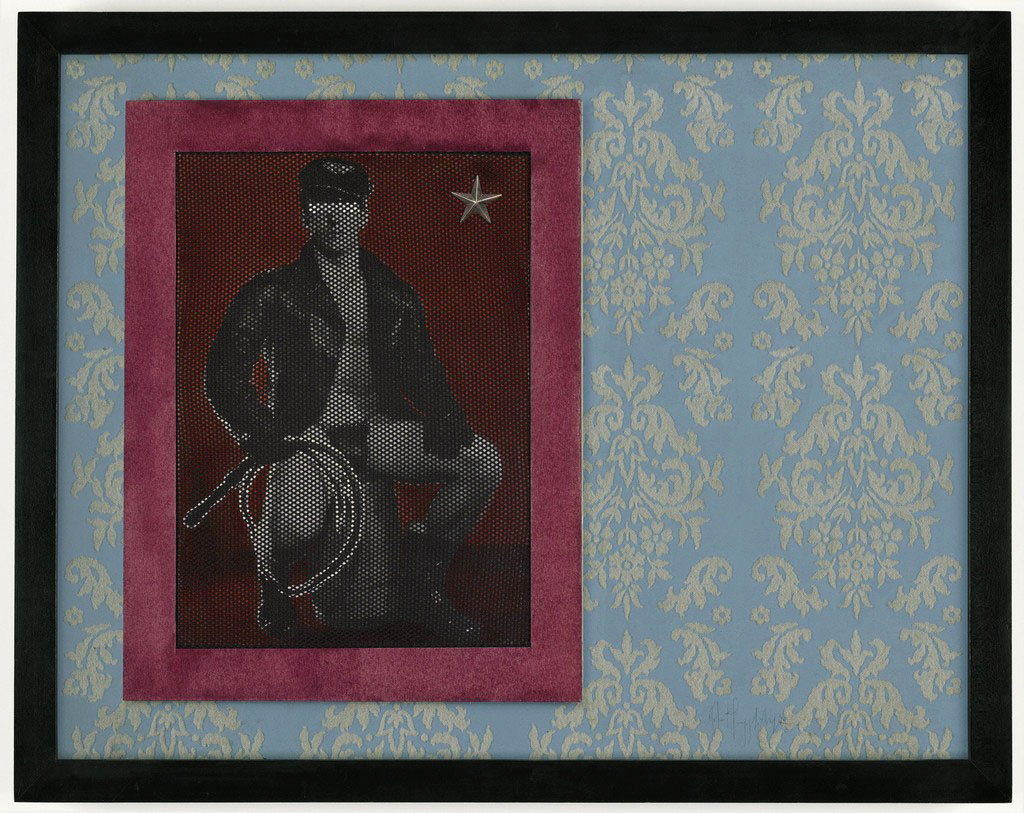
 (American, 1946-1989) 'Leatherman #1' 1970


Robert Mapplethorpe
 (American, 1946-1989)
Leatherman #1
1970
Mixed media print
9 7/16 x 6 3/4 in
Jointly acquired by the Los Angeles County Museum of Art, with funds provided by The David Geffen Foundation, and The J. Paul Getty Trust
© Robert Mapplethorpe Foundation


Early Work

Born in Queens, New York, Mapplethorpe studied graphic arts at Pratt Institute in Brooklyn. His early work included collage, found objects, and jewellery. Before he took up the camera, Mapplethorpe often used pictures he cut out of magazines as collaged elements to explore sexuality and eroticism. By altering this fetishistic image and re-presenting it in a shadow box, Mapplethorpe removed the picture from its original context and elevated it to a homoerotic icon. The five-pointed star is a symbol of religious significance and the plastic mesh covering the figure evokes the metal screens commonly found in confessionals in Roman Catholic churches.

In 1972 Mapplethorpe met two influential curators: John McKendry, who gave him a Polaroid camera, and Samuel Wagstaff Jr., who became the artist’s lover and mentor. By the mid-1970s, Mapplethorpe had acquired a medium format camera and began documenting New York’s gay S&M community.


Robert Mapplethorpe
 (American, 1946-1989) 'Holly Solomon' Negative 1976; print 2005


Robert Mapplethorpe
 (American, 1946-1989)
Holly Solomon
Negative 1976; print 2005
Gelatin silver print
35.3 × 35.5 cm (13 7/8 × 14 in.)
Jointly acquired by the J. Paul Getty Trust and the Los Angeles County Museum of Art, with funds provided by the J. Paul Getty Trust and the David Geffen Foundation
© Robert Mapplethorpe Foundation


Robert Mapplethorpe
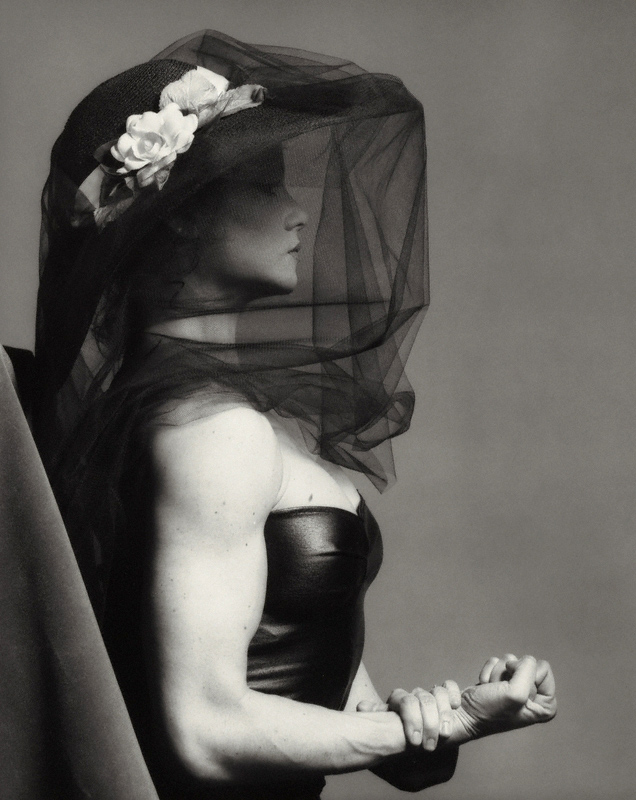
 (American, 1946-1989) 'Lisa Lyon' 1982


Robert Mapplethorpe
 (American, 1946-1989)
Lisa Lyon
1982
Jointly acquired by the Los Angeles County Museum of Art, with funds provided by The David Geffen Foundation, and The J. Paul Getty Trust
© Robert Mapplethorpe Foundation


Portraits

Mapplethorpe met writer-musician Patti Smith in 1967, and they lived together as intimate and artistic partners until 1974. This image of Smith was one of his earliest celebrity portraits. 

The two collaborated to create this image as the cover for her 1975 debut rock album, Horses. Working in a borrowed apartment, Mapplethorpe suggested using a wall adjacent to a window where a triangle of light fell at a certain time in the afternoon. Smith dressed in men’s clothes and channeled the American entertainer Frank Sinatra with her jacket slung over her shoulder. Her uncombed hair and androgynous air broke radically from the image that the music industry expected women in rock to assume.


Robert Mapplethorpe
 (American, 1946-1989) 'Patti Smith' Negative 1975; print 1995


Robert Mapplethorpe
 (American, 1946-1989)
Patti Smith
Negative 1975; print 1995
Jointly acquired by the Los Angeles County Museum of Art, with funds provided by The David Geffen Foundation, and The J. Paul Getty Trust
© Robert Mapplethorpe Foundation


A man’s jacket slung over one shoulder, the cuffs of her shirt cut off with scissors, the Bohemian poet and performer Patti Smith levels her gaze outward with authority and calm. The set of her jaw and lift of her chin suggest she wears confrontation lightly. Simultaneously, a waifish delicacy haunts her tiny body. She touches the ribbon around her neck with long fingers cupped near her heart – a shy gesture and nod to the garb of the 19th-century Romantic poets she admires. With quiet ferocity, the portrait hovers between masculine and feminine, strength and vulnerability.

Intimately bonded in life and work, Mapplethorpe and Smith made this image for the cover of her debut rock album, Horses. It is one of his earliest celebrity portraits, a genre in which he went on to distinguish himself. He often amplified the glamour of his subjects, but modernised conventional portrayals with provocative depictions of race, gender, and sexuality. For example, record executives, concerned that Smith with her lack of makeup and messy hair wasn’t conventionally pretty enough to sell records like other “girl singers,” wanted to airbrush this image. Knowing Mapplethorpe would back her up, Smith refused and the image and album shaped the start of both their iconoclastic careers.


Robert Mapplethorpe (American, 1946-1989) 'Jim, Sausalito' 1977


Robert Mapplethorpe
 (American, 1946-1989)
Jim, Sausalito
1977
Gelatin silver print
35.2 × 35.3cm (13 7/8 × 13 7/8 in.)
Jointly acquired by the J. Paul Getty Trust and the Los Angeles County Museum of Art, with funds provided by the J. Paul Getty Trust and the David Geffen Foundation
© Robert Mapplethorpe Foundation


Robert Mapplethorpe (American, 1946-1989) 'Ken Moody' 1983


Robert Mapplethorpe
 (American, 1946-1989)
Ken Moody
1983
Gelatin silver print
38.5 × 38.7cm (15 3/16 × 15 1/4 in.)
Jointly acquired by the J. Paul Getty Trust and the Los Angeles County Museum of Art, with funds provided by the J. Paul Getty Trust and the David Geffen Foundation
© Robert Mapplethorpe Foundation


The model Ken Moody poses face front, eyes closed, centred in a simple composition characteristic of the photographer Robert Mapplethorpe’s clean aesthetic. His perfectly hairless head, face, and body, the result of alopecia universalis, appear to take on a sculptural weight and dimension. The dark shadows of the background seem to lap at his neck, shoulders and under his arms, as if he emerges from a timeless, dark sea. The sophisticated lighting also sculpts the curves of his face, collarbone, and chest to further heighten their elegant forms.

This figure study is part of a large body of work featuring African-American men. Mapplethorpe was absorbed by the texture and colour of their skin, which he referred to as bronze. He used Agfa’s Portriga 118 paper for its ability to produce the velvety texture and glow discernible in this reproduction. His strong, uncluttered compositions of statuesque male models fused a classical sensibility with homoerotic content at a time when the male nude was not a popular subject among camera artists.

Text from the J. Paul Getty Museum website


Robert Mapplethorpe
 (American, 1946-1989) 'Ajitto' 1981


Robert Mapplethorpe
 (American, 1946-1989)
Ajitto
1981
Gelatin silver print
45.4 × 35.5cm (17 7/8 × 14 in.)
Jointly acquired by the J. Paul Getty Trust and the Los Angeles County Museum of Art, with funds provided by the J. Paul Getty Trust and the David Geffen Foundation
© Robert Mapplethorpe Foundation


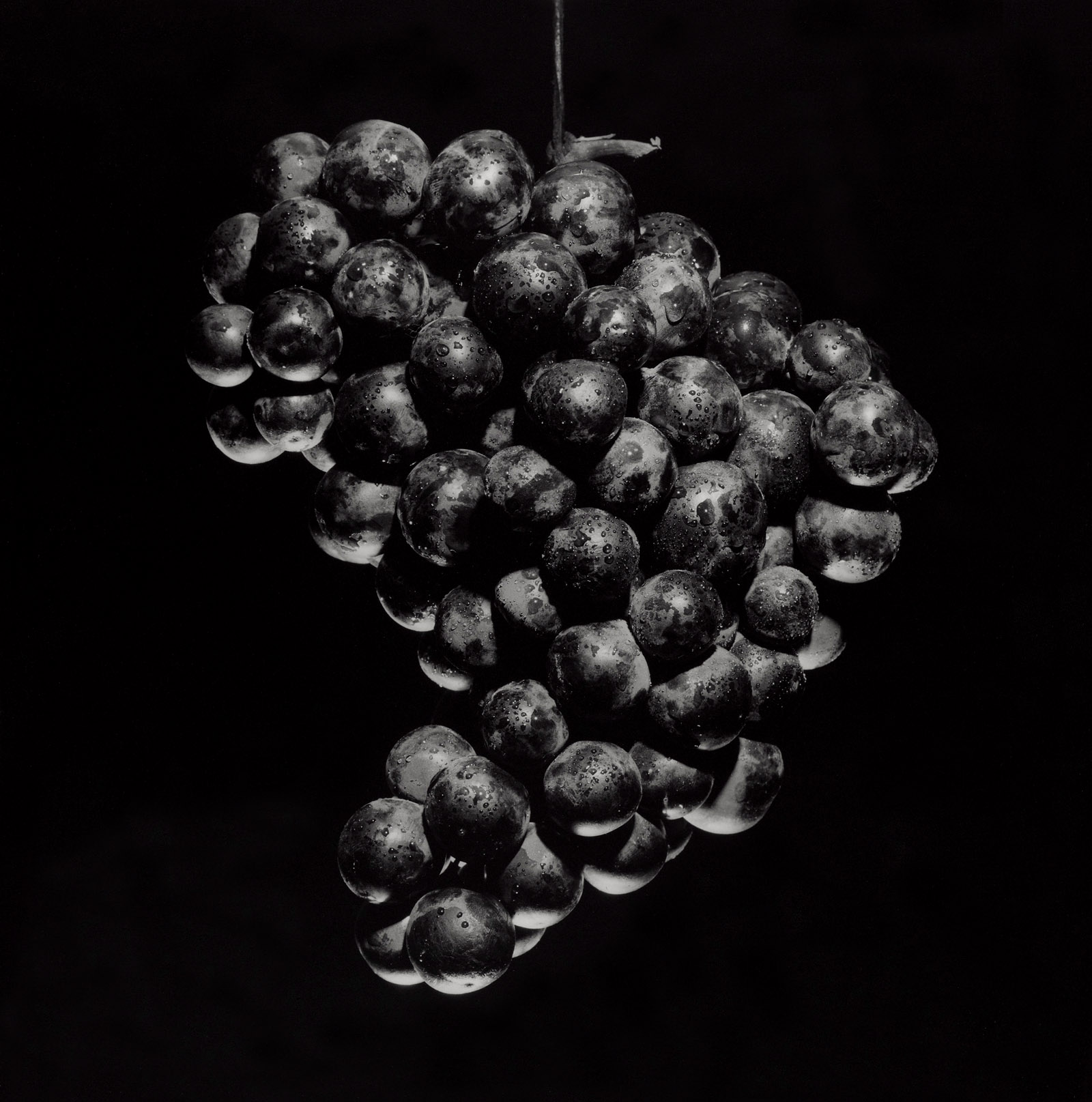
Robert Mapplethorpe (American, 1946-1989) 'Grapes' Negative 1985; print 2004


Robert Mapplethorpe (American, 1946-1989)
Grapes
Negative 1985; print 2004
Gelatin silver print
38.5 × 38cm (15 3/16 × 14 15/16 in.)
Jointly acquired by the J. Paul Getty Trust and the Los Angeles County Museum of Art, with funds provided by the J. Paul Getty Trust and the David Geffen Foundation
© Robert Mapplethorpe Foundation


Robert Mapplethorpe. 'Calla Lily' Negative 1988; print 1990


Robert Mapplethorpe
 (American, 1946-1989)
Calla Lily
Negative 1988; print 1990
Gelatin silver print
The J. Paul Getty Museum, Los Angeles, Jointly acquired by The J. Paul Getty Trust and the Los Angeles County Museum of Art. Partial gift of The Robert Mapplethorpe Foundation; partial purchase with funds provided by The J. Paul Getty Trust and the David Geffen Foundation
© Robert Mapplethorpe Foundation


Flowers and Still Lifes

Mapplethorpe refined his style in the early 1980s, creating images of timeless elegance. After his erotic nudes, his delicate floral still lifes encouraged sexual interpretations. Although floral still lifes have traditionally held these connotations, Mapplethorpe transformed them from a subject that sophisticated collectors were reluctant to display in their homes into an important contemporary theme.

 Arranged with his characteristic sense of balance and meticulously lit, this image of a calla lily appears to glow from within. Although preternaturally still, the composition exudes a sense of latent excitement, with the milky white flower almost vibrating against the rich, black background.


“My whole point is to transcend the subject… go beyond the subject somehow, so that the composition, the lighting, all around, reaches a certain point of perfection.”

~ Robert Mapplethorpe


Mapplethorpe’s work, whether in his fashion or fine art photography, is distinguished by a tension between opposites. At the base of this image of a calla lily, he punctuates the wide planes of black and white with what seems a decadent surprise: the three-dimensional, curving lip of the flower’s edge. He explores the effects of light as a painter might experiment with a palette of colours. At the top, the flower glows milky white, reminiscent of light seen through delicate alabaster or porcelain. Mapplethorpe’s spare compositions often showcase familiar subjects in unusual ways. Floral still lifes, for example, have long encouraged sexual interpretations, and especially here, given the artist’s other work with erotic and sadomasochistic subjects. His imagination transformed and energised what some had considered a stale genre.


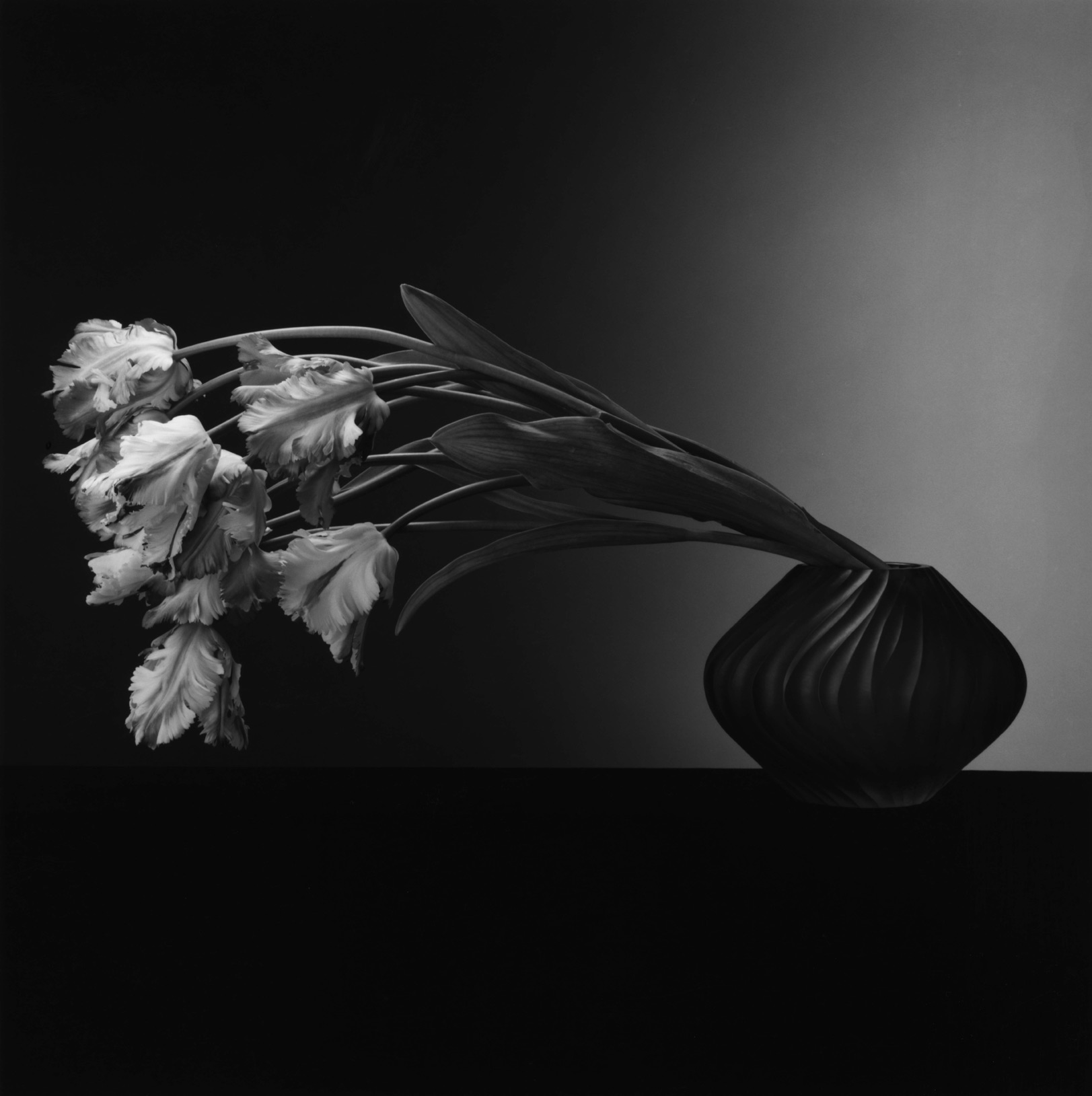
Robert Mapplethorpe
 (American, 1946-1989) 'Parrot Tulips' 1988


Robert Mapplethorpe
 (American, 1946-1989)
Parrot Tulips
Negative 1988; print 1990
49 × 49cm (19 5/16 × 19 5/16 in.)
Jointly acquired by the J. Paul Getty Trust and the Los Angeles County Museum of Art; partial gift of The Robert Mapplethorpe Foundation; partial purchase with funds provided by the J. Paul Getty Trust and the David Geffen Foundation
© Robert Mapplethorpe Foundation


Robert Mapplethorpe (American, 1946-1989) is one of the best-known and most controversial photographers of the second half of the 20th century. As a tastemaker and provocateur, his highly stylised explorations of gender, race, and sexuality became hallmarks of the period and exerted a powerful influence on his contemporaries. In recognition of the 2011 joint acquisition of Mapplethorpe’s art and archival materials with the Getty Research Institute and the Los Angeles County Museum of Art (LACMA), the Getty Museum presents In Focus: Robert Mapplethorpe, on view October 23, 2012 – March 24, 2013 at the J. Paul Getty Museum, Getty Center.

Containing 23 images that date from the early 1970s to the late 1980s, the Getty’s exhibition features key last of edition prints, rarely shown early unique mixed-media objects, and PolaroidsTM, as well as a wide range of subject matter including self-portraits, nudes and still lifes.

Before he took up the camera, Mapplethorpe often used pictures he cut out of magazines as collaged elements to explore sexuality and eroticism. In Leatherman #1 (1970), Mapplethorpe alters a fetishistic image and re- presents it in a shadow box, removing the picture from its original context and elevating it to a homoerotic icon. His early work also reflected the influence of his idol, Andy Warhol, and it is perhaps Warhol’s cover art for the band The Velvet Underground’s 1967 debut album featuring a banana that inspired Banana & Keys (1973), a photograph-in-a-box construction. This object marks a transition in Mapplethorpe’s work between his collages and sculpture and his work as a photographer. Much of the tension is contained in the object’s success as a clever trompe l’oeil.

“The mixed-media objects and PolaroidTM snapshots in the exhibition demonstrate the struggle of a budding artist to find his proper medium of expression and develop his aesthetic vision,” said Paul Martineau, associate curator of photographs at the J. Paul Getty Museum. “However, the carefully crafted gelatin silver and platinum prints make evident Mapplethorpe’s mature style as well as his eye for prints of the highest quality and beauty.”

As Mapplethorpe committed his focus to photography, he began to explore the subjects to which he would return throughout his career – portraits, self-portraits, and nudes. Photographs that feature these subjects are among his best-known, and continue to influence artists today. One of his earliest celebrity portraits, Patti Smith (1975), was carefully staged by Mapplethorpe and Smith, his lifelong friend. Dressed in men’s clothes and channeling the American entertainer Frank Sinatra, Smith broke radically from the image that women in rock were expected to assume, and embodies the androgyny often found in Mapplethorpe’s photographs.

Mapplethorpe also evoked classical themes in his work, particularly in his nude figure studies. Using the motif of the three graces as depicted by artists from ancient Greece to the 19th century, Ken and Lydia and Tyler (1985) features one female and two male models of different racial backgrounds. Mapplethorpe chose a range of skin tones from light to dark in order to invite new, non-binary interpretations of gender, race and sexual orientation.

Concurrent to the Getty’s exhibition, the Los Angeles County Museum of Art will present Robert Mapplethorpe: XYZ, from October 21, 2012 – March 24, 2013. The exhibition presents the 39 black and white photographs that make up the X, Y, and Z Portfolios created by Mapplethorpe and published in 1978, 1978, and 1981, respectively. Taken together, the portfolios summarise his ambitions as a fine-art photographer and contemporary artist.

About Robert Mapplethorpe (1946-1989)

Mapplethorpe was a major cultural figure during a period of tumultuous change who contributed to shaping not only the art of photography but the larger social landscape. His international fame derives from his prolific body of almost 2,000 editioned, large format black-and-white and colour photographs, which have been featured in over 200 solo exhibitions around the world since 1977. Extensively exhibited and widely published, Mapplethorpe’s elegant prints representing portraits, nudes, flowers, and erotic and sadomasochistic subjects dominated photography in the late 20th century. Less known are the over 1,500 PolaroidTM works that Mapplethorpe produced in the early 1970s before he took up the Hasselblad 500 camera given to him in 1975 by Sam Wagstaff, the visionary curator who became Mapplethorpe’s benefactor and mentor.

Widely recognised for the role he played in elevating photography to the level of art, Robert Mapplethorpe always considered himself not only a photographer, but an artist. From 1963 to 1969, Mapplethorpe studied for a B.F.A. at the Pratt Institute, Brooklyn, where he majored in graphic arts and took courses in painting and sculpture – but never attended photography courses. In the late 1960s, he started clipping images from magazines to incorporate into collages. While living at the Chelsea Hotel with his friend and muse, Patti Smith, he borrowed a PolaroidTM camera in 1971 from fellow hotel resident Sandy Daley to create his own images for use in collages. Overshadowed by the power of his later large format photographs, Mapplethorpe’s early drawings, collages and assemblages, created between 1968 and 1972, remain largely unfamiliar, despite the importance they hold in understanding the artist’s formative years.

In the mid-1970s, using the Hasselblad 500, he began photographing participants in New York’s S&M subculture and created many of the strikingly powerful studies for which he is most renowned. He refined his style in the early 1980s and began concentrating on elegant figure studies and delicate floral still lifes, as well as glamorous celebrity portraits. In the late 1980s and early 1990s, his work emerged at the centre of a culture war over the use of public money to support art that some deemed obscene or blasphemous. When some of Mapplethorpe’s more controversial works were exhibited at The Contemporary Arts Center in Cincinnati, director Dennis Barrie was arrested and charged with pandering (a charge of which he was ultimately acquitted after a landmark public trial).

Mapplethorpe died in 1989 at age 42 from complications of AIDS.

Press release from the J. Paul Getty Museum website


Nudes

Mapplethorpe often evoked classical themes in his work, particularly in his nude figure studies. In this image, he began with motif of the Three Graces as depicted by artists from the ancient Greeks to the nineteenth century, but took the reference in fresh directions. 

He selected one female and two male models of different racial backgrounds to achieve a range of skin tones from light to dark and to invite new, non-binary interpretations of gender, race, and sexual preference. Mapplethorpe trained his lens on the models’ conjoined bodies, purposely excluding their heads from the frame. Although he identified his models by name in the title, instead of a portrait, he created an elegant study of form and tone.


Robert Mapplethorpe
 (American, 1946-1989) 'Thomas' Negative 1987; print 1994


Robert Mapplethorpe
 (American, 1946-1989)
Thomas
Negative 1987; print 1994
Jointly acquired by the Los Angeles County Museum of Art, with funds provided by The David Geffen Foundation, and The J. Paul Getty Trust
© Robert Mapplethorpe Foundation


Mapplethorpe’s strong, uncluttered compositions of statuesque male models fused a classical sensibility with homoerotic content at a time when the male nude was not a popular subject among camera artists. In this image, the model’s body is taut with compressed energy, his muscled limbs bent in a way that is reminiscent of those seen on ancient Greek figure vases.


Robert Mapplethorpe
 (American, 1946-1989) 'Ken and Lydia and Tyler Negative' 1985, print 2004


Robert Mapplethorpe
 (American, 1946-1989)
Ken and Lydia and Tyler
Negative 1985, print 2004
Gelatin silver print
5 1/8 x 15 1/16 in.
Jointly acquired by the Los Angeles County Museum of Art, with funds provided by The David Geffen Foundation, and The J. Paul Getty Trust
© Robert Mapplethorpe Foundation


Robert Mapplethorpe
 (American, 1946-1989) 'Self-Portrait' 1980


Robert Mapplethorpe
 (American, 1946-1989)
Self-Portrait
1980
Gelatin silver print
14 x 14 in.
Jointly acquired by The J. Paul Getty Trust and the Los Angeles County Museum of Art. Partial gift of The Robert Mapplethorpe Foundation; partial purchase with funds provided by The J. Paul Getty Trust and the David Geffen Foundation
© Robert Mapplethorpe Foundation


Self Portraits

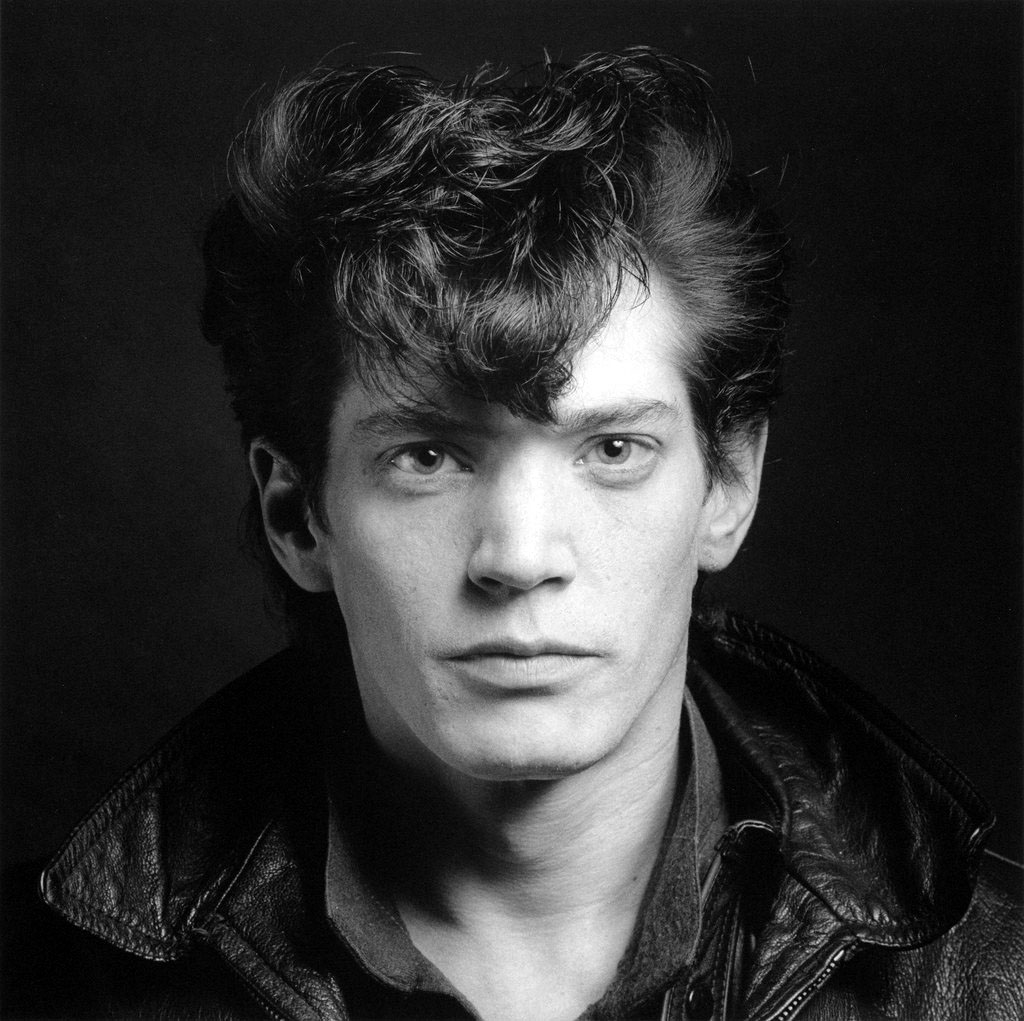
From 1970 until his untimely death in 1989, Mapplethorpe continually returned to the self-portrait as a means of expression. Despite his elaborate pompadour and face so attractive as to be almost pretty, the artist’s stare in this self-portrait is forceful and direct. Mapplethorpe’s sophisticated use of lighting gives the outlines of his mouth, nostrils, and earlobes a refined, even sculptural quality. The same elements of glamour and striking simplicity for which he is known in his celebrity and fashion portraiture are visible here, including a tightly cropped composition and uncluttered background that further dramatise the face. Mapplethorpe drew on his early commercial work for magazines, including Vogue. This aspect of his career followed the examples of other noted photographers such as Edward Steichen, Irving Penn, Richard Avedon, and Herb Ritts.


Robert Mapplethorpe
 (American, 1946-1989) 'Self-Portrait' 1985


Robert Mapplethorpe
 (American, 1946-1989)
Self-Portrait
1985
Gelatin silver print
15 1/4 x 15 3/16 in.
Jointly acquired by the Los Angeles County Museum of Art, with funds provided by The David Geffen Foundation, and The J. Paul Getty Trust
© Robert Mapplethorpe Foundation


The J. Paul Getty Museum
1200 Getty Center Drive
Los Angeles, California 90049

Opening hours:
Tuesday – Friday, Sunday 10am – 5.30pm
Saturday 10am – 8pm
Monday Closed

The J. Paul Getty Museum website

LIKE ART BLART ON FACEBOOK

Back to top

Exhibition: ‘Robert Mapplethorpe: XYZ’ at The Los Angeles County Museum of Art (LACMA)

Exhibition dates: 21st October 2012 – 24th March 2013


Robert Mapplethorpe (American, 1946-1989) 'Y Portfolio' 1978


Robert Mapplethorpe (American, 1946-1989)
Y Portfolio
1978
37.7 x 35.5 x 4.9cm closed
The J. Paul Getty Museum, Los Angeles, jointly acquired by the J. Paul Getty Trust and the Los Angeles County Museum of Art. Partial Gift of the Robert Mapplethorpe Foundation; partial purchase with funds provided by the David Geffen Foundation and the J. Paul Getty Trust
© Robert Mapplethorpe Foundation


“The X Portfolio centers on men engaged in gay sex, including hard-core sadomasochism. The subject wasn’t entirely new. In Greek vase decorations, Indian miniatures and pagan temple sculptures, candid and highly refined sex pictures, heterosexual and homosexual, have been around since before Alexander the Great and the Mahabharata.”


Christopher Knight, Los Angeles Times Art Critic


Robert Mapplethorpe made photographs of hard-core sadomasochistic gay sex. Robert Mapplethorpe made photographs of hard-core sadomasochistic gay sex. Robert Mapplethorpe made photographs of hard-core sadomasochistic gay sex. Robert Mapplethorpe made photographs of hard-core sadomasochistic gay sex.

A fist up an arse, a finger down the penis, a dildo up the bum. These photographs are seminal images in the work of the artist and yet we never get to see them online. Would it be too shocking for the sensibilities of the gallery or the Robert Mapplethorpe Foundation that these cause célèbre images, five of which were used as evidence in the obscenity trial of Director Dennis Barrie and the Cincinnati Contemporary Arts Center in 1990, were actually seen?

Instead we have two tame representations from the X Portfolio in the posting.

If you go to the slick Robert Mapplethorpe Foundation website, what do you find in the portfolio section: tasteful self portraits, male nudes, female nudes, flowers, portraits, statuary. Nothing to suggest that Mapplethorpe was one of the most transgressive artists of the twentieth century, an artist who documented an essential element of gay culture AS ART, who famously said that there was nothing shown in his photographs that he hadn’t done himself. Not an inkling, not a whisper, not a bull whip up the arse to be found. This is the sanitised vision of the artist – the desire, the pleasure, the release of living, re-shackled under the commercialisation of brand Mapplethorpe.

It’s like the Foundation is afraid of the artist’s shadow. On their website they state that the Foundation was set up by Mapplethorpe in part to protect his work and advance his creative vision. The X Portfolio and his early work are part of that vision, deserving to be seen by everyone – online!

Dr Marcus Bunyan


Many thankx to The Los Angeles County Museum of Art (LACMA) for allowing me to publish some of the photographs in the posting. Please click on the photographs for a a larger version of the image.


Robert Mapplethorpe (American, 1946-1989) 'Cedric, N.Y.C. (X Portfolio)' 1978


Robert Mapplethorpe (American, 1946-1989)
Cedric, N.Y.C. (X Portfolio)
1978
19.5 x 19.5cm
The J. Paul Getty Museum, Los Angeles, jointly acquired by the J. Paul Getty Trust and the Los Angeles County Museum of Art. Partial Gift of the Robert Mapplethorpe Foundation; partial purchase with funds provided by the David Geffen Foundation and the J. Paul Getty Trust
© Robert Mapplethorpe Foundation


Robert Mapplethorpe (American, 1946-1989) 'Irises, N.Y.C. (Y Portfolio)' 1977


Robert Mapplethorpe (American, 1946-1989)
Irises, N.Y.C. (Y Portfolio)
1977
19.5 x 19.5cm
The J. Paul Getty Museum, Los Angeles, jointly acquired by the J. Paul Getty Trust and the Los Angeles County Museum of Art. Partial Gift of the Robert Mapplethorpe Foundation; partial purchase with funds provided by the David Geffen Foundation and the J. Paul Getty Trust
© Robert Mapplethorpe Foundation


Robert Mapplethorpe (American, 1946-1989) 'Jim, Sausalito (X Portfolio)' 1977


Robert Mapplethorpe (American, 1946-1989)
Jim, Sausalito (X Portfolio)
1977
19.5 x 19.5cm
The J. Paul Getty Museum, Los Angeles, jointly acquired by the J. Paul Getty Trust and the Los Angeles County Museum of Art. Partial Gift of the Robert Mapplethorpe Foundation; partial purchase with funds provided by the David Geffen Foundation and the J. Paul Getty Trust
© Robert Mapplethorpe Foundation


Robert Mapplethorpe (1946-1989) 'Joe' 1978


Robert Mapplethorpe (American, 1946-1989)
Joe, N.Y.C
1978
Gelatin silver print
7 11/16 × 7 11/16 in
Los Angeles County Museum of Art
Jointly acquired by the Los Angeles County Museum of Art and The J. Paul Getty Trust; Partial gift of The Robert Mapplethorpe Foundation; partial purchase with funds provided by The David Geffen Foundation and The J. Paul Getty Trust
© Robert Mapplethorpe Foundation


Robert Mapplethorpe (American, 1946-1989) 'Patrice, N.Y.C.' 1977


Robert Mapplethorpe (American, 1946-1989)
Patrice, N.Y.C.
1977
Gelatin silver print
7 11/16 × 7 11/16 in.
Jointly acquired by the Los Angeles County Museum of Art and The J. Paul Getty Trust; Partial gift of The Robert Mapplethorpe Foundation; partial purchase with funds provided by The David Geffen Foundation and The J. Paul Getty Trust
© Robert Mapplethorpe Foundation


Robert Mapplethorpe (American, 1946-1989) 'Helmut, N.Y.C.' 1978


Robert Mapplethorpe (American, 1946-1989)
Helmut, N.Y.C.
1978
Gelatin silver print
7 3/4 × 7 11/16 in.
Jointly acquired by the Los Angeles County Museum of Art and The J. Paul Getty Trust; Partial gift of The Robert Mapplethorpe Foundation; partial purchase with funds provided by The David Geffen Foundation and The J. Paul Getty Trust
© Robert Mapplethorpe Foundation


The Los Angeles County Museum of Art (LACMA) presents three portfolios created by American photographer Robert Mapplethorpe (1946-1989). The exhibition, Robert Mapplethorpe: XYZ, features a total of thirty-nine black-and-white photographs, exploring three subject matters: homosexual sadomasochistic imagery (X, published in 1978); flower still lifes (Y, 1978); and nude portraits of African American men (Z, 1981). LACMA’s presentation will showcase the works in three rows – X above, Y in the middle, and Z along the bottom – an idea which was suggested by Mapplethorpe in 1989.

“Robert Mapplethorpe is among the most important photographic artists of the twentieth century,” comments Britt Salvesen, Department Head and Curator of the Wallis Annenberg Photography Department at LACMA. “The X, Y, and Z portfolios not only defined the artist’s career, but also played a role in an important moment of American cultural politics that is still pertinent to us today.”

This is the first presentation of Mapplethorpe’s work since last year’s widely publicised joint acquisition by LACMA, The J. Paul Getty Museum, and The Getty Research Institute of Mapplethorpe’s art and archives – including over 1,900 editioned prints and over 1,000 non-editioned prints, 200 unique mixed-media objects, over 160 Polaroids, 120,000 negatives, and extensive working materials, ephemera, and documents. The majority of the acquisition originated as a generous gift from the Robert Mapplethorpe Foundation, and the remainder of the funds provided by the David Geffen Foundation and the J. Paul Getty Trust.

Concurrent with the LACMA exhibition, The J. Paul Getty Museum presents In Focus: Robert Mapplethorpe, on view October 23, 2012 – March 24, 2013. This single-gallery exhibition reviews the artist’s work from the early 1970s to the late 1980s, and features editioned prints, rarely seen mixed-media objects, and Polaroids that depict a wide range of subject matter including self-portraits, nudes, and still lifes. A larger Mapplethorpe retrospective, jointly organised by LACMA and the Getty, is planned for 2016.

About the artist

Born in 1946, Robert Mapplethorpe grew up in the suburban area of Floral Park, Queens. As a student at the Pratt Institute in New York, he studied drawing, painting, and sculpture and experimented with various materials in mixed-media collages. When Mapplethorpe acquired a Polaroid camera in 1970, he began incorporating his own photos into his constructions. His first solo gallery exhibition, Polaroids, took place at Light Gallery in New York City in 1973.

Two years later he transitioned from the Polaroid to a Hasselblad medium format camera and began shooting his circle of friends and acquaintances. His subjects – artists, musicians, socialites, pornographic film stars, and members of the S & M underground – came from a variety of backgrounds. Mapplethorpe’s interest in documenting the New York S&M scene was strongest in the late 1970s, when he produced photographs with shocking content but remarkable technique and formal mastery. In 1978, the Robert Miller Gallery in New York City became his exclusive dealer. Throughout the 1980s, Mapplethorpe produced images that challenged and adhered to classical aesthetic standards including stylised compositions of male and female nudes, delicate flower still lifes, and studio portraits of artists and celebrities. He explored and refined different techniques and formats – including colour 20″ x 24″ Polaroids, photogravures, platinum prints on paper and linen, Cibachrome and dye transfer colour processes – but gelatin silver printing remained his primary medium.

In 1986, Robert Mapplethorpe was diagnosed with AIDS. Despite his illness, he accelerated his creative efforts, broadened the scope of his photographic inquiry, and accepted numerous commissions. The Whitney Museum of American Art mounted his first major American museum retrospective in 1988, one year before his death in 1989. Beyond the art historical and social significance of his work, his legacy lives on through the work of Robert Mapplethorpe Foundation, which he established in 1988 to promote photography, support museums that exhibit photographic art, and to find medical research in the fight against AIDS and HIV related infection.

Exhibition history

Mapplethorpe’s work has historically provoked strong reactions, most notably during the so-called Culture Wars of the 1980s, a period of conflict between conservative and liberal factions. The traveling retrospective, The Perfect Moment, opened at the Institute of Contemporary Art in Philadelphia in 1988. Among the 150 photographs and objects in the show were the sadomasochistic imagery of Mapplethorpe’s X portfolio, as well as the Y and Z portfolios; the show appeared in two venues without any incident. When it was due to open at the Corcoran Gallery of Art in Washington, D.C., during the summer of 1989, politicians who opposed federal funding for the arts became alarmed. The Corcoran canceled the exhibition, resulting in a protest against the gallery’s withdrawal of the show. Controversy ensued further at a subsequent venue, the Contemporary Arts Center in Cincinnati, where charges of obscenity were brought against director David Barrie. In this high-profile trial, five images from the X portfolio were used as evidence. Barrie was acquitted, and Mapplethorpe has been linked to debates about censorship ever since.

Press release from The Los Angeles County Museum of Art (LACMA) website


Robert Mapplethorpe (American, 1946-1989) 'Carnation, N.Y.C. (Y Portfolio)' 1978


Robert Mapplethorpe (American, 1946-1989)
Carnation, N.Y.C. (Y Portfolio)
1978
19.5 x 19.5cm
The J. Paul Getty Museum, Los Angeles, jointly acquired by the J. Paul Getty Trust and the Los Angeles County Museum of Art. Partial Gift of the Robert Mapplethorpe Foundation; partial purchase with funds provided by the David Geffen Foundation and the J. Paul Getty Trust
© Robert Mapplethorpe Foundation


Robert Mapplethorpe (American, 1946-1989) 'Alistair Butler, N.Y.C. (Z Portfolio)' 1980


Robert Mapplethorpe (American, 1946-1989)
Alistair Butler, N.Y.C. (Z Portfolio)
1980
Gelatin Silver Print
19.5 x 19.5cm
The J. Paul Getty Museum, Los Angeles, jointly acquired by the J. Paul Getty Trust and the Los Angeles County Museum of Art. Partial Gift of the Robert Mapplethorpe Foundation; partial purchase with funds provided by the David Geffen Foundation and the J. Paul Getty Trust
© Robert Mapplethorpe Foundation


Robert Mapplethorpe (American, 1946-1989) 'Leigh Lee, N.Y.C. (Z Portfolio)' 1980


Robert Mapplethorpe (American, 1946-1989)
Leigh Lee, N.Y.C. (Z Portfolio)
1980
Gelatin Silver Print
19.5 x 19.5cm
The J. Paul Getty Museum, Los Angeles, jointly acquired by the J. Paul Getty Trust and the Los Angeles County Museum of Art. Partial Gift of the Robert Mapplethorpe Foundation; partial purchase with funds provided by the David Geffen Foundation and the J. Paul Getty Trust
© Robert Mapplethorpe Foundation


Robert Mapplethorpe (American, 1946-1989) 'Philip Prioleau, N.Y.C.' 1979


Robert Mapplethorpe (American, 1946-1989)
Philip Prioleau, N.Y.C.
1979
Gelatin silver print
7 1/2 × 7 7/16 in. (19.05 × 18.89cm)
Jointly acquired by the Los Angeles County Museum of Art and The J. Paul Getty Trust; Partial gift of The Robert Mapplethorpe Foundation; partial purchase with funds provided by The David Geffen Foundation and The J. Paul Getty Trust
© Robert Mapplethorpe Foundation


Robert Mapplethorpe (American, 1946-1989) 'Rose, N.Y.C. (Y Portfolio)' 1977


Robert Mapplethorpe (American, 1946-1989)
Rose, N.Y.C. (Y Portfolio)
1977
Gelatin silver print
Image 19.5 x 19.5cm
The J. Paul Getty Museum, Los Angeles, jointly acquired by the J. Paul Getty Trust and the Los Angeles County Museum of Art. Partial Gift of the Robert Mapplethorpe Foundation; partial purchase with funds provided by the David Geffen Foundation and the J. Paul Getty Trust
© Robert Mapplethorpe Foundation


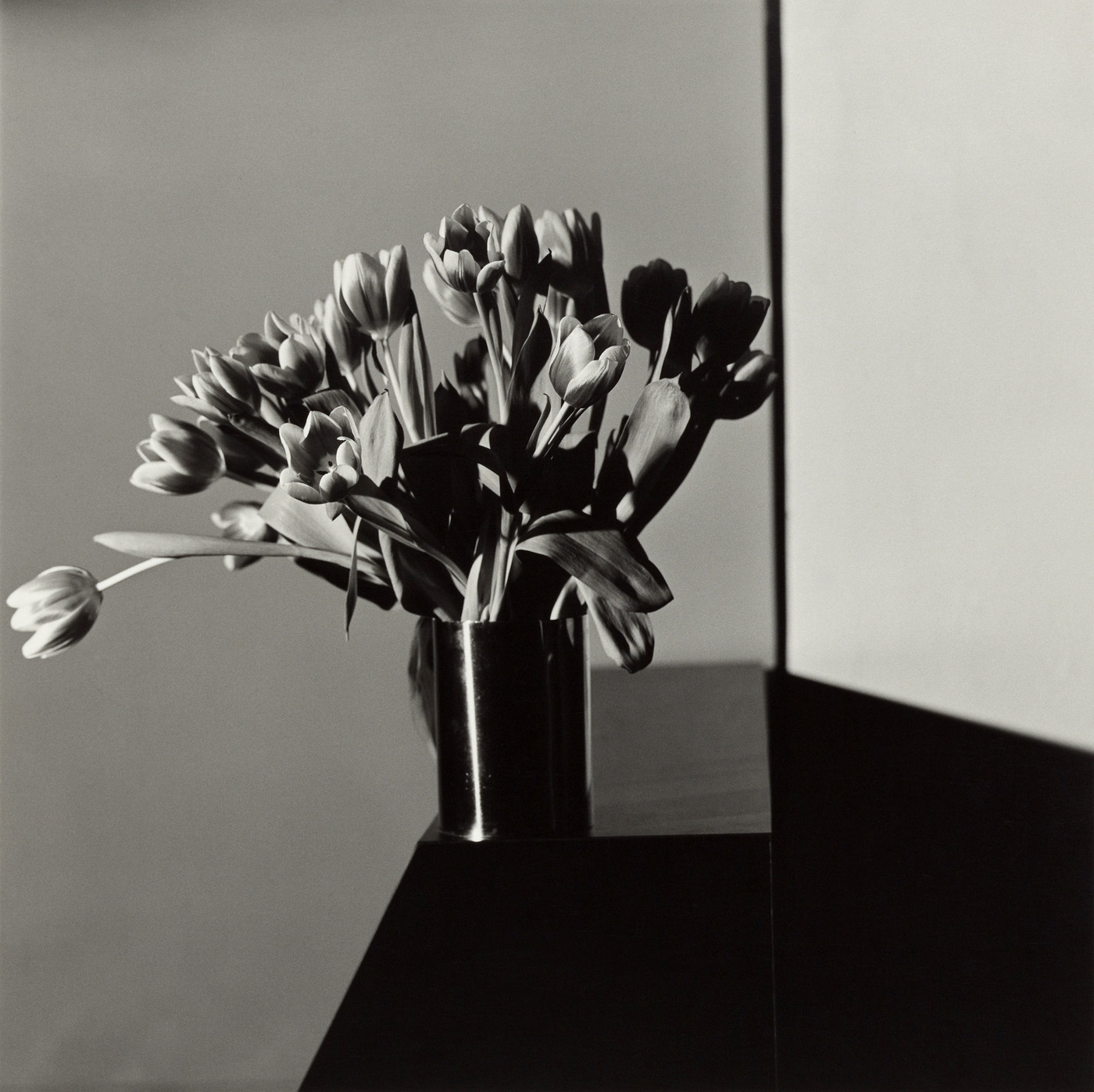
Robert Mapplethorpe (American, 1946-1989) 'Tulips' 1978


Robert Mapplethorpe (American, 1946-1989)
Tulips
1978
Gelatin silver print
7 11/16 × 7 3/4 in. (19.53 × 19.69cm)
Jointly acquired by the Los Angeles County Museum of Art and The J. Paul Getty Trust; Partial gift of The Robert Mapplethorpe Foundation; partial purchase with funds provided by The David Geffen Foundation and The J. Paul Getty Trust
© Robert Mapplethorpe Foundation


Robert Mapplethorpe (American, 1946-1989) 'Z Portfolio' 1978


Robert Mapplethorpe (American, 1946-1989)
Z Portfolio
1978
37.7 x 35.5 x 4.9 cm closed
The J. Paul Getty Museum, Los Angeles, jointly acquired by the J. Paul Getty Trust and the Los Angeles County Museum of Art. Partial Gift of the Robert Mapplethorpe Foundation; partial purchase with funds provided by the David Geffen Foundation and the J. Paul Getty Trust
© Robert Mapplethorpe Foundation


Los Angeles County Museum of Art (LACMA)
5905 Wilshire Boulevard (at Fairfax Avenue)
Los Angeles, CA, 90036
Phone: 323 857-6000

Opening hours:
Monday, Tuesday, Thursday: 11am – 5pm
Friday: 11am – 8pm
Saturday, Sunday: 10am – 7pm
Closed Wednesday

LACMA website

LIKE ART BLART ON FACEBOOK

Back to top

Review: ‘Confounding: Contemporary Photography’ at NGV International, Melbourne

Exhibition dates: 5th October 2012 – 3rd March 2013


Thomas Demand (Germany, b. 1964) 'Public housing' 2003


Thomas Demand (Germany, b. 1964)
Public housing
2003
Type C photograph
100.1 x 157.0cm (image and sheet)
National Gallery of Victoria, Melbourne
Purchased with funds donated by the Bowness Family Fund for Contemporary Photography, 2010
© Thomas Demand/VG Bild-Kunst, Bonn. Licensed by VISCOPY, Sydney


Thinking contemporary photography

At its birth in the 19th century, photography was seen as the ultimate tool for the representation and classification of the visual world.1 Photography recorded reality; a photograph was seen as a visual and literal truth of something that existed in the world. It re-presented the world to the viewer, telling something of the world, reflecting the world. A photograph provided a freeze frame – the snap of the shutter – of one point in time and space. People were astounded that their likeness and that of the world around them could be captured for all to see.

Technological advancements in the early twentieth century, such as faster exposure times and more portable cameras, transformed the potential of the medium to not only show things that escaped the eye but new ways of seeing them as well.2 The photograph began to reveal the personal dimensions of reality. It began to explore the intangible spaces that define our physical and spiritual relationship with reality. “Photographers and artists attempted to depict via photographic means that which is not so easily photographed: dreams, ghosts, god, thought, time” (Jeffrey Fraenkel The Unphotographable Fraenkel Gallery Books 2013). With the advent of modernism, they sought to capture fragments, details and blurred boundaries of personal experience.3 The indexical link photograph and referent, between the camera, the object being photographed and the photograph itself was being stretched to breaking point.

Think of it like this. Think of a photograph of an apple that a camera has taken. There is a link between the photograph and its referent, the photograph of the apple and the object itself (in reality, in the lived world). As a viewer of the photograph of the apple we are secondary witness to the fact that, at some point in time, someone took a photograph of this apple in real life. We bear witness to the eyewitness. Now what if I rip up the photograph of the apple and reassemble it in a different order? Is this still not an apple, only my subjective interpretation of how I see an apple existing in the world? Is it no less valid than the “real” photograph of the apple? What kinds of visual “truth” can exist in images?

Presently, contemporary photography is able to reveal intangible, constructed vistas that live outside the realm of the scientific. A photograph becomes a perspective on the world, an orientation to the world based on human agency. An image-maker takes resources for meaning (a visual language, how the image is made and what it is about), undertakes a design process (the process of image-making), and in so doing re-images the world in a way that it has never quite been seen before.

These ideas are what a fascinating exhibition titled Confounding: Contemporary Photography, at the National Gallery of Victoria, Melbourne investigates. In the confounding of contemporary photography we are no longer witnessing a lived reality but a break down of binaries such as sacred and profane, public and private, natural and artificial, real and dreamed environments as artists present their subjective visions of imagined, created worlds. Each image presents the viewer with a conundrum that investigates the relationship between photographs and the “real” world they supposedly record. How do these photographs make you feel about this constructed, confounding world? These fields of existence?

Thomas Demand’s Public Housing (2003, above) plays with the real and the fictional, presenting the viewer with an idealised vision of a public housing complex illustrated on a Singapore $10 note. Demand makes large models out of paper and cardboard in his studio and then photographs the result before destroying the basis of his performance, the model, leaving only the photograph as evidence of their existence, an existence that emanated from the imagination of the artist. This particular Demand is unusual in that it depicts the totality of an outdoor structure, for the artist usually focuses on details of buildings, plants and environments in mid to close up view. The flattened perspective, limited colour palette and absence of detail adds to the utopian nature of the work (almost like a photographic Jeffrey Smart), aping the aesthetic and social ideals of Le Courbusier. As John Meades notes, “From early in its history, photography was adopted by architects as a means of idealising their buildings. As beautiful and heroic, as tokens of their ingenuity and mankind’s progress, etc. This debased tradition continues to thrive. At its core lies the imperative to show the building out of context, as a monument, separate from streetscape, from awkward neighbours, from untidiness.”4

In Roger Ballen’s photograph Terminus (2004, below), one the more moody works in the exhibition, a heavy wooden board with a deflated leather bladder on top presses down on a human face. Although it is not a human face (it confounds!), it is the painted face of a mannequin which the viewer can only acknowledge after a jolt of recognition. There is a feeling of entombment, a palpable feeling of claustrophobia, as the meta / physical “weight” of the bladder (like the weight of a heavy meteorite) presses down on the half obscured, thin lipped, black eyed face. Similarly confounding are the two photographs by Eliza Hutchison called The ancestors (2004, below). Shot from the waist up, these photographs remind you of those old black and white Photo Booth snapshots that you used to get for passports (there are still two of those machines outside the Elizabeth Street entrance to Flinders Street railway station, standing there like forlorn sentinels of a by gone age), complete with nondescript curtain that you used to pull behind you. There is something “not quite right” about the people in the photographs but you can’t put your finger on it until the text panel, a little gleefully, informs you that the portraits had been shot upside down. Now you realise what is out of kilter: more cheek and jowl rather than cheek by jowl.

The exhibition makes a powerful point as Robert Nelson in his review of the exhibition in The Age newspaper observes: photography doesn’t necessarily have to be confounding to be art, to become enduring, it just has to have a decent idea behind it.

“I would say that being confounding is not a necessary property of art photography; and even when it’s present, it isn’t in itself a sufficient ingredient to guarantee enduringly valuable art. Photography doesn’t have to confound in order to be art, but it does have to have an idea in it. The idea is always the issue, whether it works by confounding us or not.”5


The idea has always been the issue. Collectively, it is the ideas contained within the images in this exhibition that unsettle the relationship between the photograph and the world in the mind of the viewer, not their confounding. I don’t find any of these images contain much emotion (except possibly the Ballen) but the images are transformational because they fire up our imagination. Images speak not just of the world, but to the world; they challenge our beliefs, our politics and our daily practices. The camera’s single viewpoint, our single viewpoint, our field of existence has changed. People find themselves somehow, somewhere, not in a lived reality but in an imagined one.

Much is staged, scaled and variations in perspective are paramount. This affects the relationship between the viewer and the viewed for we can no longer take anything at face value. In a media saturated world full of images we begin to question every image that we see: has it been digitally manipulated, does it, did it actually exist in the world? These days “truth” in photography is an elusive notion and that might not be such a bad thing as people question the nature of images that surround them, their authenticity and their aura. In a media saturated world, in a world no longer of our making, seeing is no longer believing.

Dr Marcus Bunyan


Footnotes

1/ Anon. “Flatlands: photography and everyday space,” press release from the Art Gallery of New South Wales website posted on Art Blart [Online] Cited 19/02/2013

2/ Ibid.,

3/ Ibid.,

4/ Meades, Jonathan. “Architects are the last people who should shape our cities,” on The Guardian website, Tuesday 18 September 2012 [Online] Cited 19/02/2013

5/ “First, do all confounded photographic images qualify as art? Or does a photograph have to be founding in a special way? And second, can a photograph be art without being confounding? Bundling these questions together, I would say that being confounding is not a necessary property of art photography; and even when it’s present, it isn’t in itself a sufficient ingredient to guarantee enduringly valuable art. Photography doesn’t have to confound in order to be art, but it does have to have an idea in it. The idea is always the issue, whether it works by confounding us or not.”
Nelson, Robert. “Getting the picture can be confounding,” in The Age newspaper, Wednesday January 2nd, 2013, p. 11.


Many thankx to the National Gallery of Victoria for allowing me to publish the photographs in the posting. Please click on the photographs for a larger version of the image.


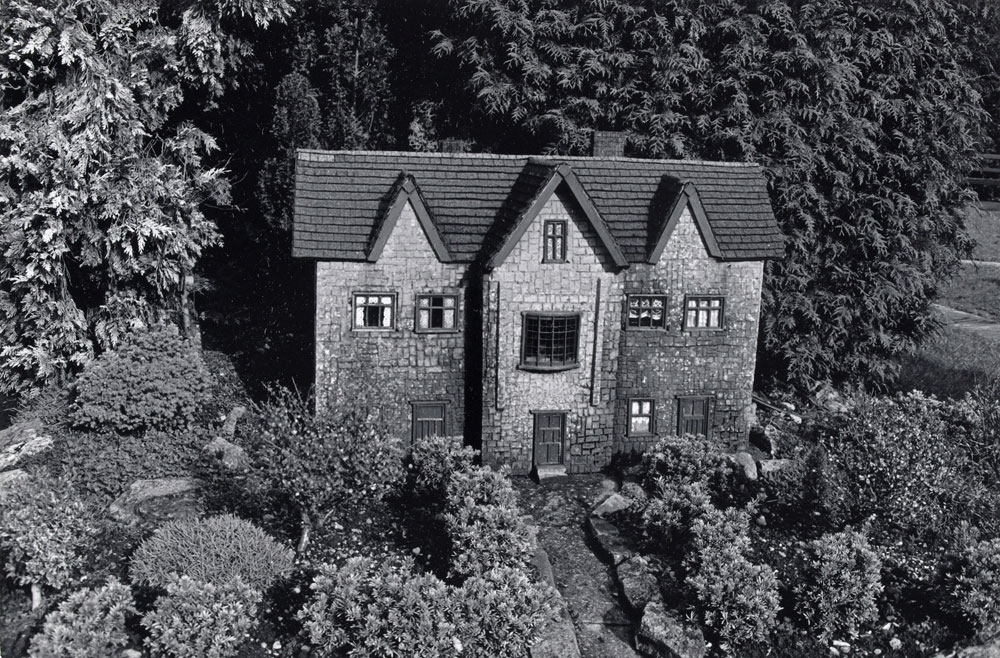
Peter Peryer (New Zealand, 1941-2018) 'Home' 1991


Peter Peryer (New Zealand, 1941-2018)
Home
1991
Gelatin silver photograph
35.6 x 53.8cm
National Gallery of Victoria, Melbourne
Purchased, 1996
© Peter Peryer


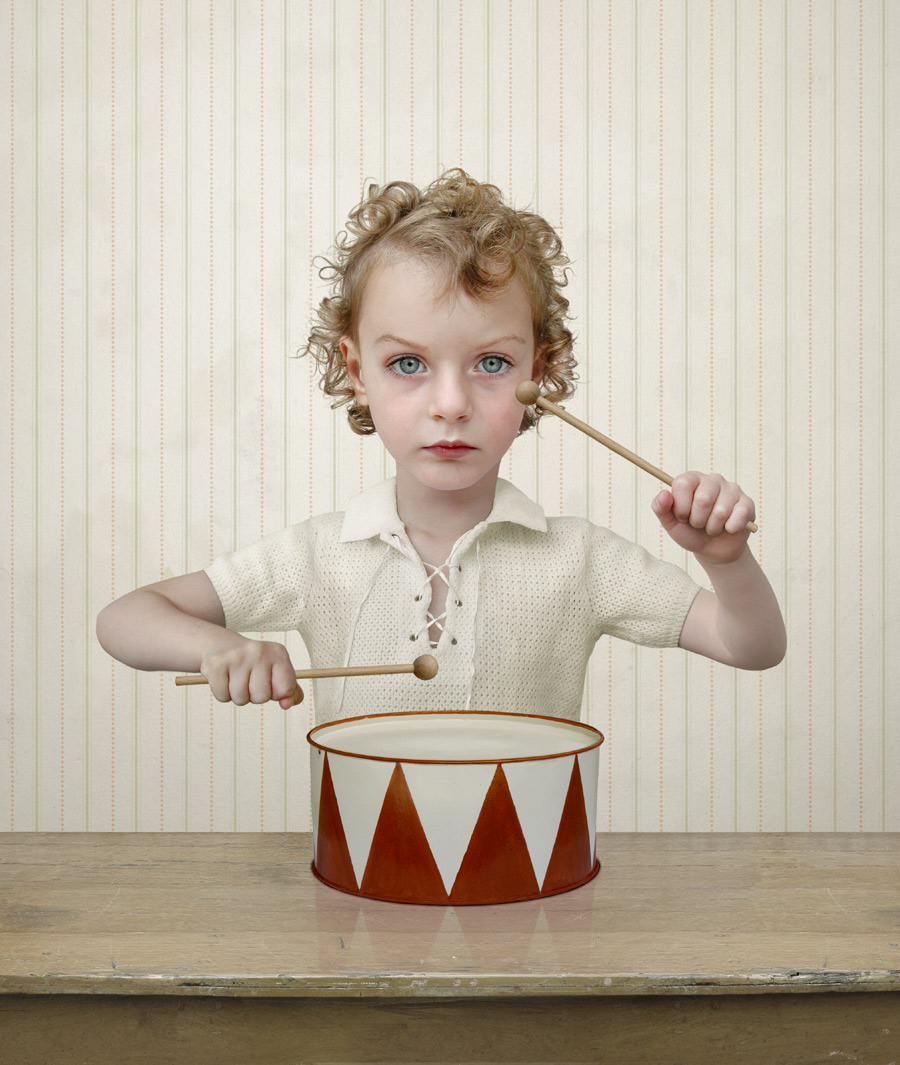
Loretta Lux (Germany, b. 1969) 'The drummer' 2004


Loretta Lux (Germany, b. 1969)
The drummer
2004
Cibachrome photograph
Image: 45.0 x 37.7cm
Sheet: 56.0 x 49.0cm
National Gallery of Victoria, Melbourne
Purchased, NGV Foundation, 2006
© Loretta Lux/VG BILD-KUNST, Bonn. Licensed by VISCOPY, Australia


On 5 October, the National Gallery of Victoria will present Confounding: Contemporary Photography, an exploration of the uncanny worlds created by human imagination, dreams and memories.

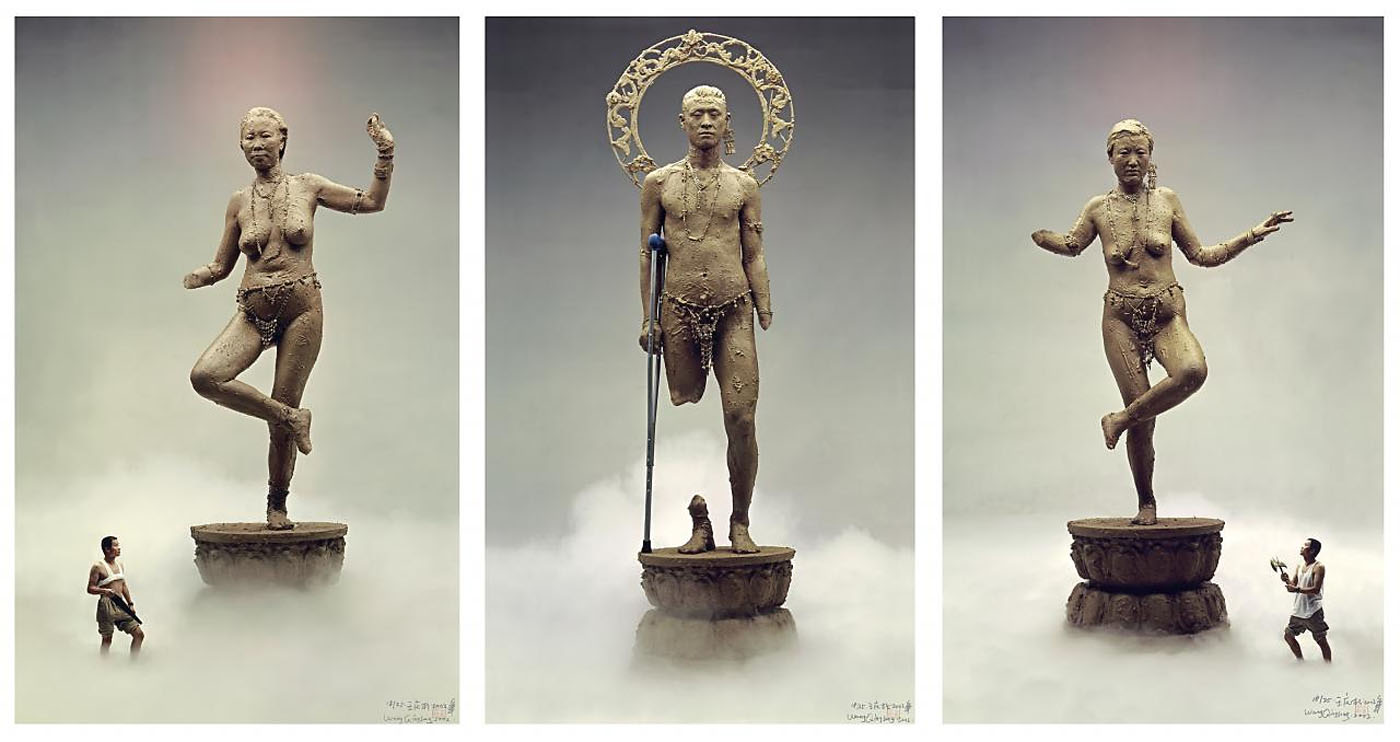
Drawn from the NGV’s collection, the fourteen works on display transform the strange, uncomfortable and awkward into plausible realities. Visitors will discover the gaze of unnerving children in the hyper-real work of Loretta Lux; be jolted upon realising the hidden reality of Wang Qingsong’s monumental tableaux; and wonder at the strange beauty in the carefully constructed cardboard world of Thomas Demand.

Susan van Wyk, Curator, Photography, NGV, said: “Like the recollection of a dream, the photographs displayed in Confounding seem to make sense, but do not sit comfortably in the world. There are subtle, slightly sinister elements within the images that suggest a mystifying alternative reality… Through a selection of works by Australian and international artists, including two new acquisitions by Thomas Demand and Roger Ballen, Confounding explores the unexpected with images that bridge the divide between real and fictional.”

Confounding will present works by contemporary photographers including Roger Ballen, Pat Brassington, Thomas Demand, Eliza Hutchison, Rosemary Laing, Loretta Lux, Patricia Piccinini, Peter Peryer, Wang Qingsong and Ronnie van Hout.

Press release from the National Gallery of Victoria website


Patricia Piccinini (b. Sierra Leone 1965, lived in Italy 1968-1972, arrived Australia 1972) 'Protein lattice – subset blue, portrait' 1997


Patricia Piccinini (b. Sierra Leone 1965, lived in Italy 1968-1972, arrived Australia 1972)
Protein lattice – subset blue, portrait
1997
From the Protein lattice series 1997
Type C photograph
Image: 80.5 x 80.3cm irreg.
Sheet: 90.0 x 126.9cm
National Gallery of Victoria, Melbourne
Purchased through The Art Foundation of Victoria with the assistance of Optus Communications Pty Limited, Member, 1998
© Patricia Piccinini


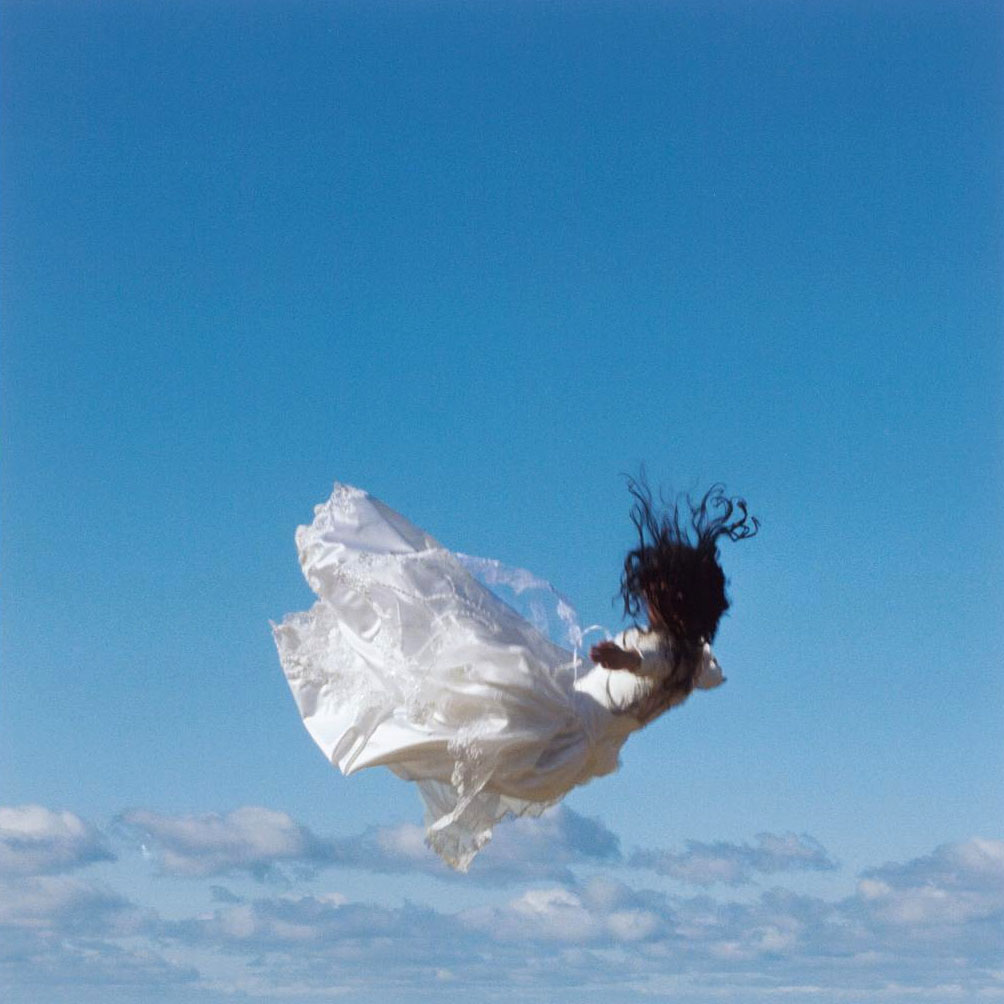
Rosemary Laing (Australian, 1959-2024) 'flight research #8' 1999, printed 2000


Rosemary Laing (Australian, 1959-2024)
flight research #8
1999, printed 2000
Type C photograph
Image: 59.8 x 59.8 cm
Sheet: 78.7 x 78.7 cm
National Gallery of Victoria, Melbourne
Purchased with funds from the Victorian Foundation for Living Australian Artists, 2004
© Estate of Rosemary Laing


Wang Qingsong (Chinese, b. 1966) 'Preincarnation' 2002


Wang Qingsong (Chinese, b. 1966)
Preincarnation
2002
Type C photographs
(a) 100.0 × 63.0cm (image)
(b) 100.0 × 61.0cm (image)
(c) 100.1 × 63.0cm (image)
National Gallery of Victoria, Melbourne
Purchased with the assistance of the Lillian Ernestine Lobb Bequest, 2007
© Wang Qingsong


Ronnie van Hout (New Zealand, b. 1962) 'Mephitis' 1995


Ronnie van Hout (New Zealand, b. 1962)
Mephitis
1995
Gelatin silver photograph
Image: 47.2 x 32.6cm
Sheet: 50.5 x 40.9cm
National Gallery of Victoria, Melbourne
Purchased, 1996
© Courtesy the artist and Darren Knight Gallery, Sydney


Roger Ballen (American, b. 1950, worked in South Africa 1982- ) 'Terminus' 2004


Roger Ballen (American, b. 1950, worked in South Africa 1982- )
Terminus
2004
Carbon print
45.2 x 44.9cm
National Gallery of Victoria, Melbourne
Gift of Bill Bowness through the Australian Government’s Cultural Gift’s Program, 2012
© courtesy the artist and Stills Gallery, Sydney


Eliza Hutchison (Australian, b. 1965) 'The ancestors' 2004


Eliza Hutchison (Australian, b. 1965)
The ancestors
2004
Light-jet print
Image: 95.4 x 72.9cm
Sheet: 105.4 x 82.9cm
National Gallery of Victoria, Melbourne
Purchased with funds arranged by Loti Smorgon for Contemporary Australian Photography, 2005
© Eliza Hutchison, courtesy Murray White Room


Eliza Hutchison (Australian, b. 1965) 'The ancestors' 2004


Eliza Hutchison (Australian, b. 1965)
The ancestors
2004
Light-jet print
Image: 95.3 x 73.0cm
Sheet: 105.3 x 83.0cm
National Gallery of Victoria, Melbourne
Purchased with funds arranged by Loti Smorgon for Contemporary Australian Photography, 2005
© Eliza Hutchison, courtesy Murray White Room


NGV International
180 St Kilda Road

Opening hours
Open daily 10am – 5pm

National Gallery of Victoria website

LIKE ART BLART ON FACEBOOK

Back to top

Exhibition: ‘The Photographs of Ray K. Metzker and the Institute of Design’ at the J. Paul Getty Museum, Los Angeles

Exhibition dates: 25th September, 2012 – 24th February, 2013


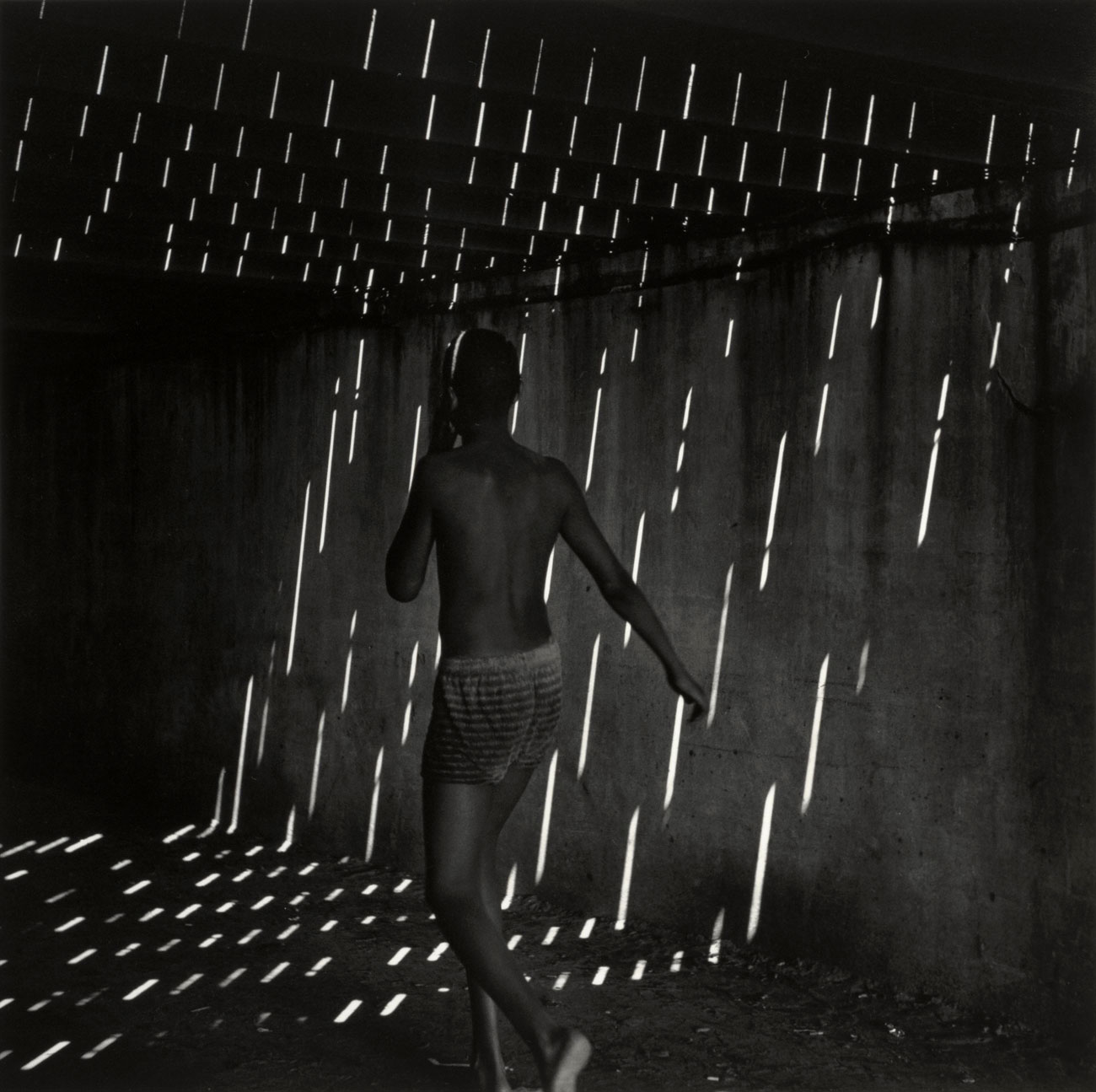
Ray K. Metzker (American, 1931-2014) 'New Mexico' negative 1972; print 1987


Ray K. Metzker (American, 1931-2014)
New Mexico
Negative 1972; print 1987
Gelatin silver print
17.8 x 27.9cm (7 x 11 in.)
The Nelson-Atkins Museum of Art, Gift of the Hall Family Foundation
© Ray K. Metzker


It is a pleasure to able to post more of the tough, no nonsense photographs of Ray. K. Metzker. Atlantic City (1966, below) is an absolute beauty – from the shards of light raining down at exaggerated speed on the right hand wall, to the colour of the body, the colouration of the sole of the uplifted foot matching that of the bathers, the out flung arm, the single ray of light hitting the top of the head, to the march into endless darkness at left of image. Imagine actually seeing that image and then capturing it on film…

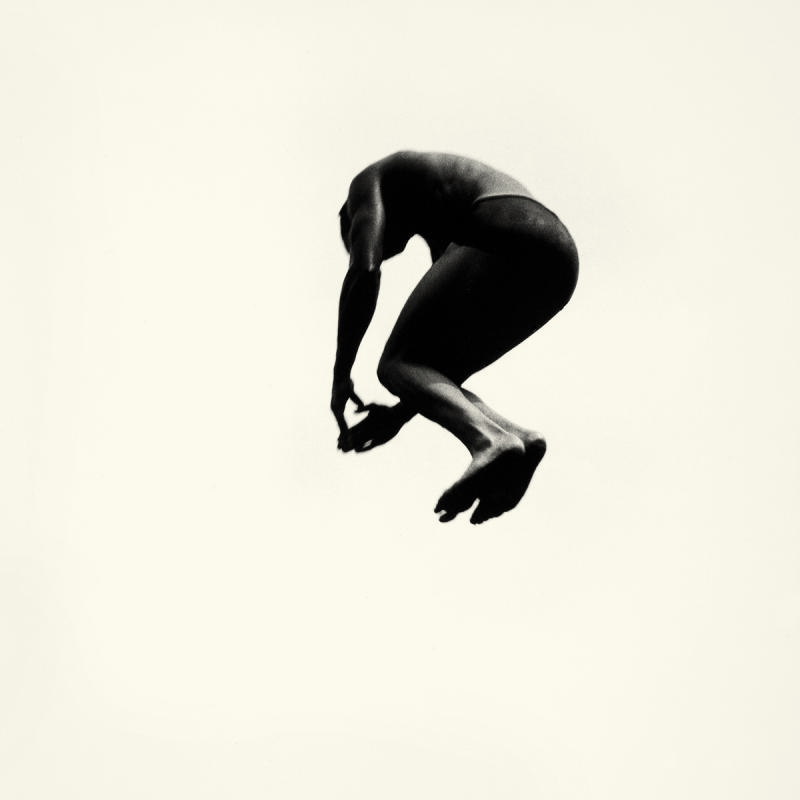
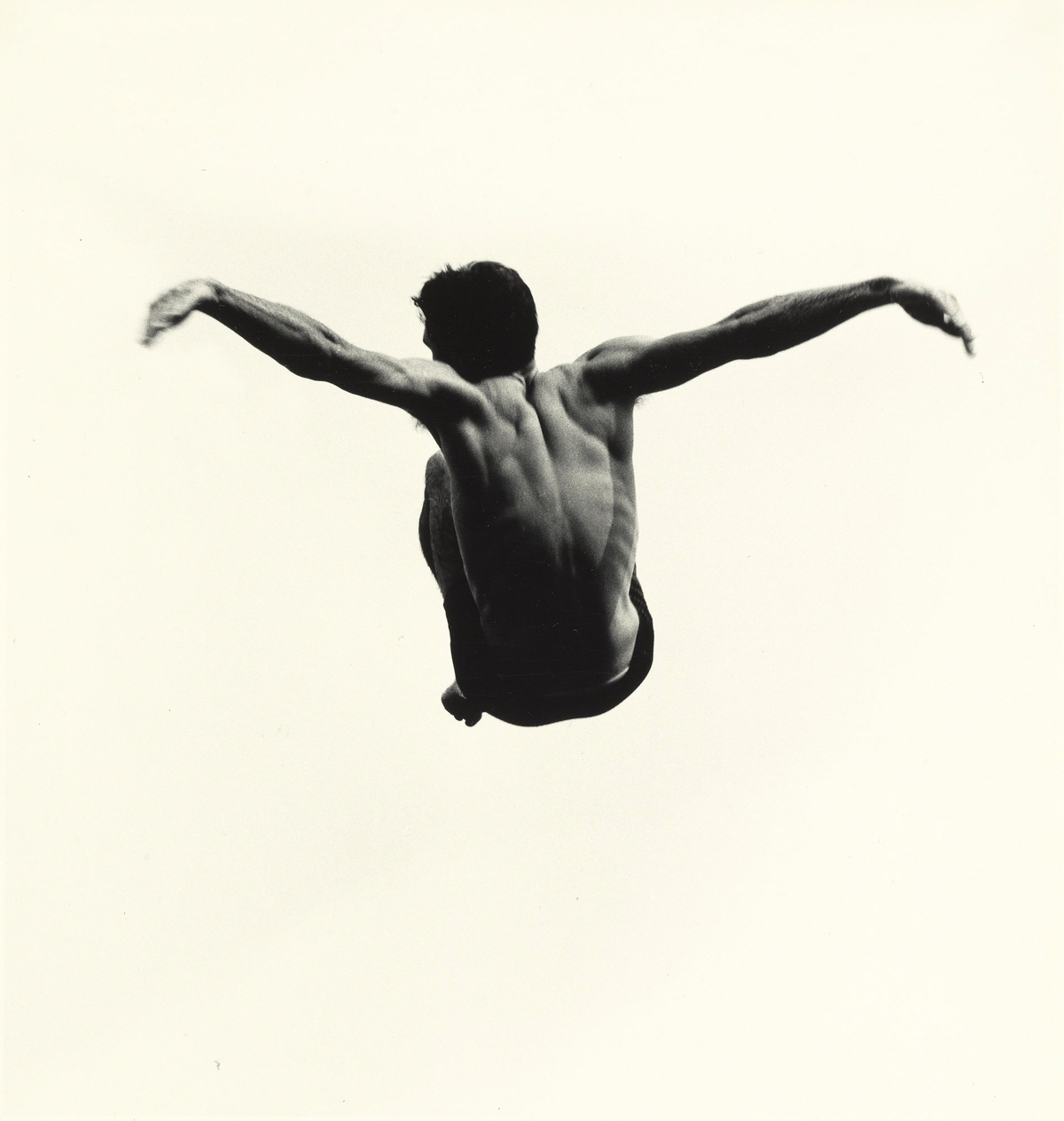
My personal favourite in the posting are the two photographs by Aaron Siskind. His monumental series, Pleasures and Terrors of Levitation, are photographs of divers leaping through the air captured from below to emphasise the abstract quality of their twisting shapes by isolating them against the sky:

“Highly formal, yet concerned with their subject as well as the idea they communicate, The Pleasures and Terrors of Levitation photographs depict the dark shapes of divers suspended mid-leap against a blank white sky. Shot with a hand-held twin-lens reflex camera at the edge of Lake Michigan in Chicago, the balance and conflict suggested by the series’ title is evident in the divers’ sublime contortions.” (Anonymous. “Aaron Siskind,” on the Museum of Contemporary Photography website 17/02/2013. No longer available online)

Such a simple idea, so well executed, the photographs become a single frame of Muybridge’s motion studies where the audience can imagine the rest of the sequence without seeing. Balance and conflict are in equilibrium and the pleasure and terror of jumping from the top board at the local swimming pool is caught in stasis, crystallised in a sublime field of existence under the gaze of the viewer.

Dr Marcus Bunyan


Many thankx to the J. Paul Getty Museum for allowing me to publish the photographs in the posting. Please click on the photographs for a larger version of the image.


Ray K. Metzker (American, 1931-2014) 'Valencia' 1961


Ray K. Metzker (American, 1931-2014)
Valencia
1961
Gelatin silver print
14.3 x 22.9cm (5 5/8 x 9 in.)
The Nelson-Atkins Museum of Art, Gift of the Hall Family Foundation
© Ray K. Metzker


Ray K. Metzker (American, 1931-2014) 'Atlantic City' negative, 1966; print, 2003


Ray K. Metzker (American, 1931-2014)
Atlantic City
negative, 1966; print, 2003
Gelatin silver print
20.3 x 20.3cm (8 x 8 in.)
The Nelson-Atkins Museum of Art, Gift of the Hall Family Foundation
© Ray K. Metzker


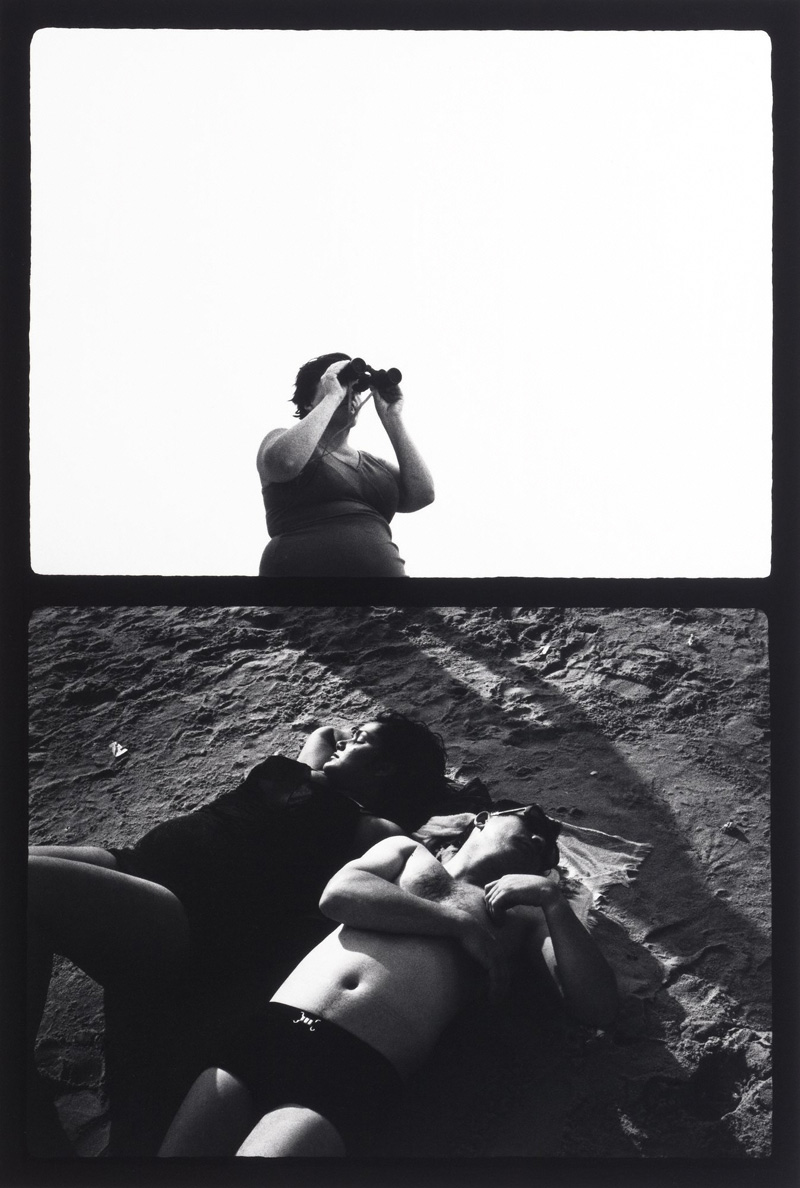
Ray K. Metzker (American, 1931-2014) 'Double Frame: Philadelphia' negative 1965; print 1972


Ray K. Metzker (American, 1931-2014)
Double Frame: Philadelphia
Negative 1965; print 1972
Gelatin silver print
21.6 x 9.8cm (8 1/2 x 3 7/8 in.)
The Nelson-Atkins Museum of Art, Gift of the Hall Family Foundation
© Ray K. Metzker


Ray K. Metzker (American, 1931-2014) 'Couplets: Atlantic City' negative 1969; print 1984


Ray K. Metzker (American, 1931-2014)
Couplets: Atlantic City
Negative 1969; print 1984
Gelatin silver print
22.9 x 15.6cm (9 x 6 1/8 in.)
The Nelson-Atkins Museum of Art, Gift of the Hall Family Foundation
© Ray K. Metzker


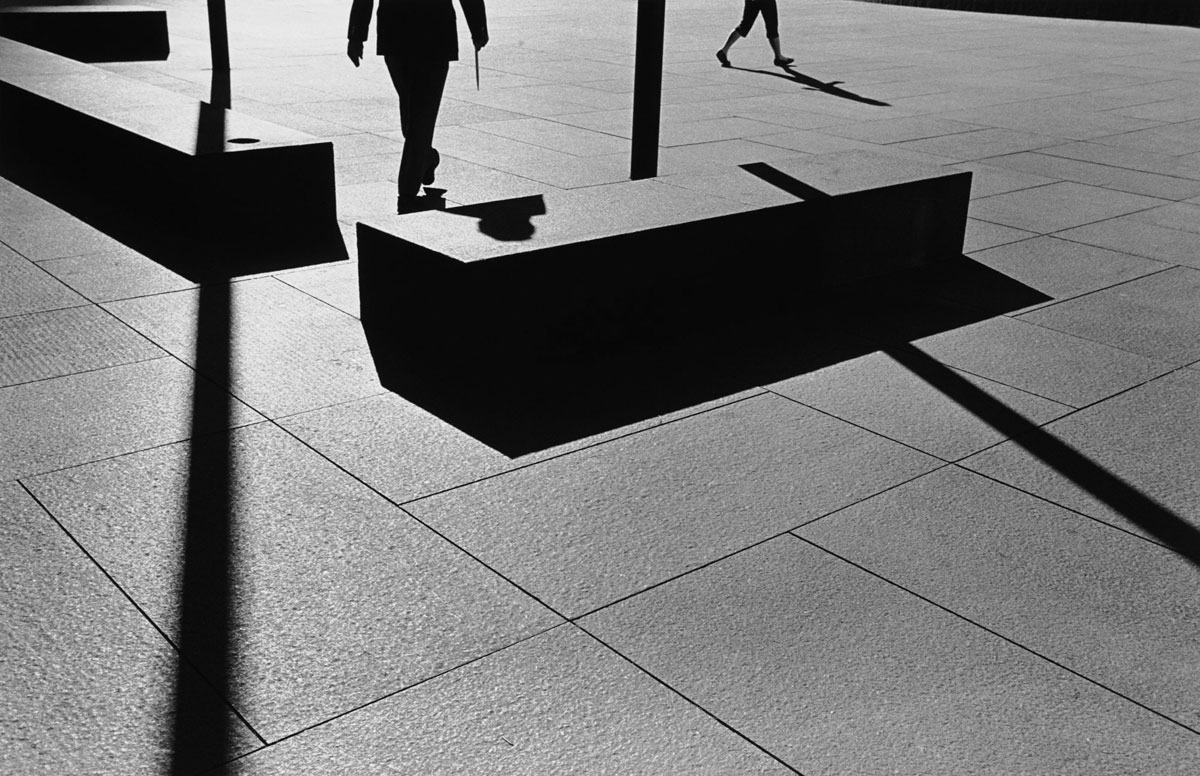
Ray K. Metzker (American, 1931-2014) 'City Whispers: Los Angeles' negative 1981; print 2006


Ray K. Metzker (American, 1931-2014)
City Whispers: Los Angeles
Negative 1981; print 2006
Gelatin silver print
26.8 x 41.4cm (10 9/16 x 16 5/16 in.)
The Nelson-Atkins Museum of Art, Gift of the Hall Family Foundation
© Ray K. Metzker


Ray K. Metzker (American, 1931-2014) 'City Whispers, Philadelphia' 1983


Ray K. Metzker (American, 1931-2014)
City Whispers, Philadelphia
1983
Gelatin silver print
24.5 x 24cm (9 5/8 x 9 7/16 in.)
The J. Paul Getty Museum, Los Angeles
© Ray K. Metzker


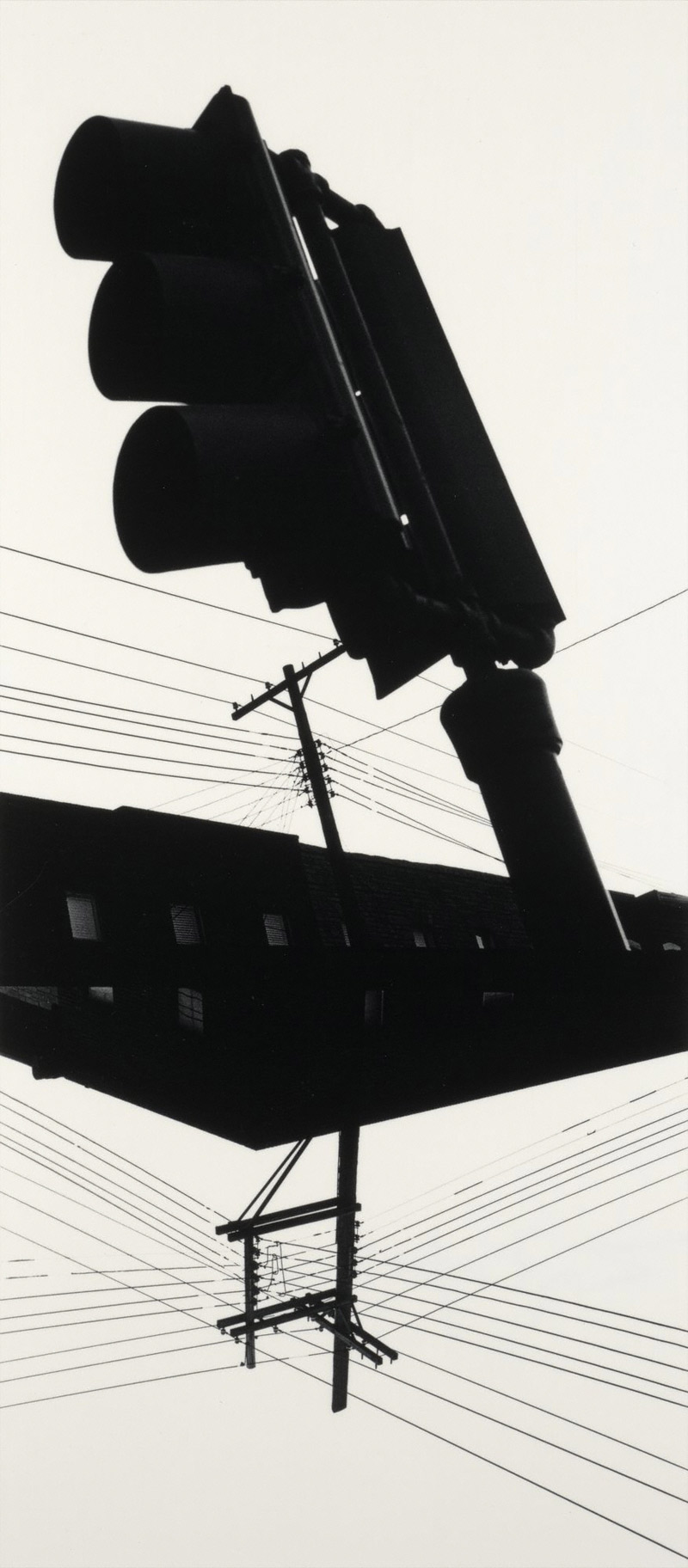
Metzker’s work is part of a revered tradition that emerged from the experimental approach of Chicago’s Institute of Design (ID), where he received his graduate degree in 1959. Inspired by instructors Harry Callahan and Aaron Siskind, Metzker fashioned an entirely personal synthesis of formal elegance, technical precision, and optical innovation. His composite works hold an important status in the history of creative photography: at the time of their making, they were unprecedented in ambition and perceptual complexity.

Metzker’s devotion to photographic seeing as a process of discovery is also deeply humanistic in its illumination of isolation and vulnerability. This exhibition offers a comprehensive overview of Metzker’s five-decade career, while also providing examples of work by instructors and fellow students at the Institute of Design in Chicago, where Metzker studied from 1956 to 1959. Learn more about Metzker’s diverse forays into photography as well as the ID and its profound influence.

Ray K. Metzker (American, 1931-2014) is one of the most dedicated and influential American photographers of the last half century. His photographs strike a distinctive balance between formal brilliance, optical innovation, and a deep human regard for the objective world. The Photographs of Ray K. Metzker and the Institute of Design, on view at the Getty Center September 25, 2012 – February 24, 2013, offers a comprehensive overview of Metzker’s five-decade career, while also providing examples of work by instructors and fellow students at the Institute of Design in Chicago, where Metzker studied from 1956 to 1959.

Organised in collaboration with Keith F. Davis, senior curator of photography at The Nelson-Atkins Museum of Art in Kansas City, Missouri, the exhibition is curated by Virginia Heckert, curator of photographs, and Arpad Kovacs, assistant curator of photographs, at the J. Paul Getty Museum. The exhibition features nearly 200 photographs, including approximately 80 from the holdings of The Nelson-Atkins Museum.

Ray K. Metzker

Dynamically composed, Metzker’s luminous black-and-white photographs feature subjects ranging from urban cityscapes to nature, all demonstrating the inventive potential of the photographic process. While a student at the ID, Metzker was mentored by renowned photographers Harry Callahan and Aaron Siskind. His curiosity led to experiments with high contrast, selective focus, and multiple images.

Metzker’s thesis project for the ID, a study of Chicago’s business district, or Loop, displayed many of these techniques. One image, a multiple exposure of commuters ascending a sun-bathed staircase, prefigures the novel Composites that he began to make in 1964. Whether documenting everyday life in an urban environment or exploring the natural landscapes, Metzker’s photographs often incorporate elements of abstraction. A longtime resident of Philadelphia, Metzker taught at the Philadelphia College of Art for many years. His frequent focus on Philadelphia and other cityscapes has yielded iconic images of automobiles, commuters, streets, sidewalks, and architectural facades.

“Metzker’s love of the photographic process has produced a rich body of work that suggests a vulnerability underlying the human condition,” explains Virginia Heckert, curator of photographs at the J. Paul Getty Museum. “With highlights and shadows pushed to extremes and multiple frames combined in innovative ways, his photographs create a graceful choreography of human interaction against urban settings.”

Metzker titles and groups his images based on their location or technique. The exhibition features Metzker’s most significant bodies of work, including Chicago (1956-59), Europe (1960-61), Early Philadelphia (1961-64), Double Frames and Couplets (1964-1969), Composites (1964-1984), Sand Creatures (1968-1977), Pictus Interruptus (1971-1980), City Whispers (1980-1983), Landscapes (1985-1996), and Late Philadelphia (1996-2009).

From the New Bauhaus to the Institute of Design

Revered for an energetic atmosphere of experimentation, the ID opened in the fall of 1937 under the name of the New Bauhaus. With the avant-garde artist and educator László Moholy-Nagy at the helm, the school was modelled after the German Bauhaus (1919-1933), which integrated principles of craft and technology into the study of art, architecture, and design. Photography quickly became an integral component of the curriculum.

Moholy-Nagy’s death in 1946 marked a pivotal moment in the school’s history. That year also saw the introduction of a new four-year photography program and the arrival of Harry Callahan, who was instrumental in hiring Aaron Siskind in 1951. The two became a formidable teaching duo and together created a graduate program that encouraged prolonged investigation of a single idea.

Callahan and Siskind served as Ray Metzker’s mentors during his graduate studies at the ID from 1956-59. Other key photography instructors at the ID included György Kepes, Nathan Lerner, Henry Holmes Smith, Arthur Siegel, Edmund Teske, Art Sinsabaugh, and Frederick Sommer. A selection from Metzker’s thesis project, along with those of fellow students Kenneth Josephson, Joseph Sterling, Joseph Jachna, and Charles Swedlund, was included in a 1961 issue of Aperture magazine devoted to the IDs graduate program in photography. Now a part of the Illinois Institute of Technology, the ID continues to educate students with the same innovative teaching philosophy that was a hallmark of the original Bauhaus.

Harry Callahan and Aaron Siskind

In 1946, the year of Moholy-Nagy’s death, the ID introduced a new four-year photography program and welcomed instructor Harry Callahan. Callahan was instrumental in hiring Aaron Siskind in 1951, and together they became a formidable teaching duo. Their work will be featured in two galleries within the exhibition, with a focus on photographs they created while at the ID.

Harry Callahan’s work benefitted greatly from the attitude of experimentation that was a hallmark of the ID, and his time at the school marked a particularly productive period in his own career. Architectural details, views of nature and intimate photographs of his wife, Eleanor and daughter, Barbara became subjects that defined his career. A central tenet of his teaching was to return to previously explored subjects, an approach that he himself practiced, as did Metzker.

Influenced by the Abstract Expressionist painters he befriended in the 1940s, Aaron Siskind’s work features abstracted textures and patterns excerpted from the real world. Often calligraphic in form, the urban facades, graffiti, stains, and debris he photographed capitalise on the flatness of the picture plane. In Pleasures and Terrors of Levitation, his studies of male divers against a blank sky experiments with the figure-ground relationship.

“Callahan and Siskind had vastly different visual styles and interests in subject matter” said Arpad Kovacs, assistant curator of photographs at the J. Paul Getty Museum. “However, both emphasised the expressive possibilities of the medium rather than the mechanics of producing a photograph. It was this shared interest in constantly challenging their students that came to define their influential presence at the ID.”

Also featured in the exhibition is work by a number of founding ID photography instructors and those who taught in the years Metzker attended the school, including György Kepes, Nathan Lerner, Henry Holmes Smith, Arthur Siegel, Edmund Teske, Art Sinsabaugh, and Frederick Sommer. Another gallery is dedicated to the work of ID students Kenneth Josephson, Joseph Sterling, Joseph Jachna, and Charles Swedlund, all of whom, together with Metzker, were featured in a 1961 issue of Aperture magazine that extolled the virtues of the ID’s photography program.”

Press release from the J. Paul Getty Museum website


Arthur Siegel (American, 1913-1978) 'State Street' 1949


Arthur Siegel (American, 1913-1978)
State Street
1949
Dye transfer print
21.9 x 26.4cm (8 5/8 x 10 3/8 in.)
The Nelson-Atkins Museum of Art, Gift of Hallmark Cards, Inc.,
© Estate of Arthur Siegel


Aaron Siskind (American, 1903-1991) 'Jerome, Arizona 21' 1949


Aaron Siskind (American, 1903-1991)
Jerome, Arizona 21
1949
Gelatin silver print
The J. Paul Getty Museum
© Aaron Siskind Foundation


Harry Callahan (American, 1912-1999) 'Eleanor, Chicago' 1952


Harry Callahan (American, 1912-1999)
Eleanor, Chicago
1952
Gelatin silver print
10.2 x 12.7cm (4 x 5 in.)
The J. Paul Getty Museum, Los Angeles
© Estate of Harry Callahan


Aaron Siskind (American, 1903-1991) 'Pleasures and Terrors of Levitation 25' 1957


Aaron Siskind (American, 1903-1991)
Pleasures and Terrors of Levitation 25
1957
Gelatin silver print
27.9 x 26.4cm (11 x 10 3/8 in.)
The J. Paul Getty Museum, Los Angeles
© Aaron Siskind Foundation


Aaron Siskind (American, 1903-1991) 'Pleasures and Terrors of Levitation 94' 1961


Aaron Siskind (American, 1903-1991)
Pleasures and Terrors of Levitation 94
1961
Gelatin silver print
27.9 x 26.1cm (11 x 10 1/4 in.)
The J. Paul Getty Museum, Los Angeles
© Aaron Siskind Foundation


Joseph Sterling (American, 1936-2010) 'Untitled' 1961


Joseph Sterling (American, 1936-2010)
Untitled
1961
Gelatin silver print
19.1 x 19.1cm (7 1/2 x 7 1/2 in.)
The Nelson-Atkins Museum of Art, Gift of Hallmark Cards, Inc.
Courtesy Stephen Daiter Gallery
© Deborah Sterling


Charles Swedlund (American, b. 1935) 'Buffalo, NY' about 1970


Charles Swedlund (American, b. 1935)
Buffalo, NY
about 1970
Gelatin silver print
18.7 x 15.9cm (7 3/8 x 6 1/4 in.)
The J. Paul Getty Museum, Los Angeles, Purchased in part with funds provided by an anonymous donor in memory of James N. Wood
© Charles Swedlund


The J. Paul Getty Museum
1200 Getty Center Drive
Los Angeles, California 90049

Opening hours:
Tuesday – Friday, Sunday 10am – 5.30pm
Saturday 10am – 8pm
Monday Closed

The J. Paul Getty Museum website

LIKE ART BLART ON FACEBOOK

Back to top

Exhibition: ‘National Geographic: The Past and Future Present’ at Steven Kasher Gallery, New York

Exhibition dates: 10th January – 16th February 2013


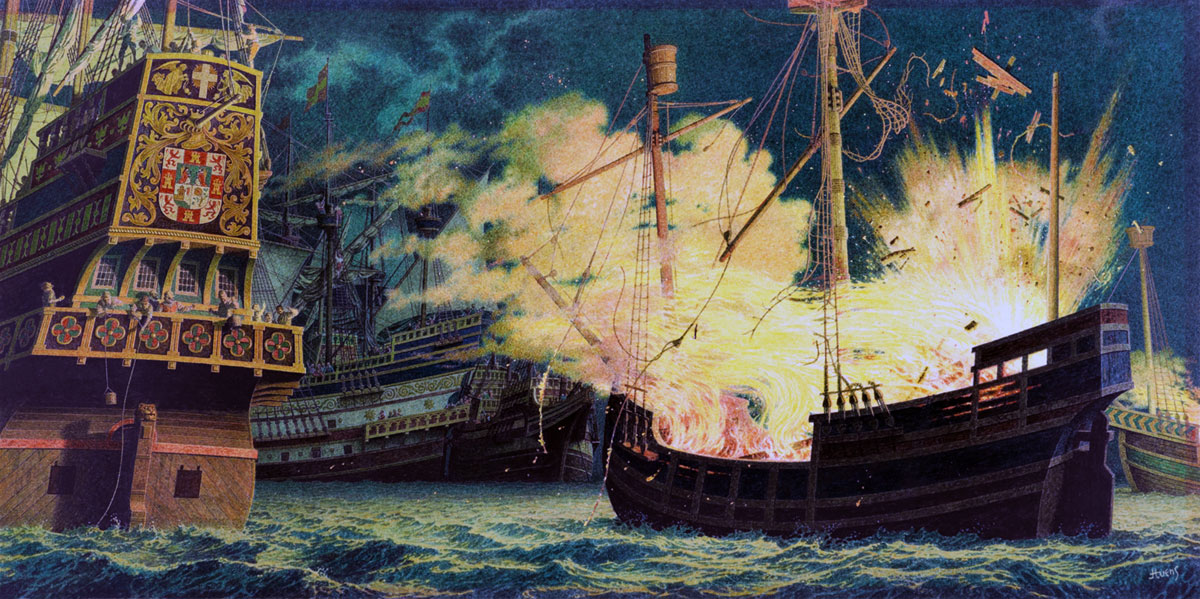
Jean-Leon Huens (Belgian, 1921-1984) 'Sir Frances Drake, Unmanned British Ships with Flammables Explode Among Spanish Ships' Nd


Jean-Leon Huens (Belgian, 1921-1984)
Sir Frances Drake, Unmanned British Ships with Flammables Explode Among Spanish Ships
Nd
Jean-Leon Huens / National Geographic Society / Steven Kasher Gallery


A wonderfully eclectic posting!

Marcus


Many thankx to Steven Kasher Gallery for allowing me to publish the photographs in the posting. Please click on the photographs for a larger version of the image.


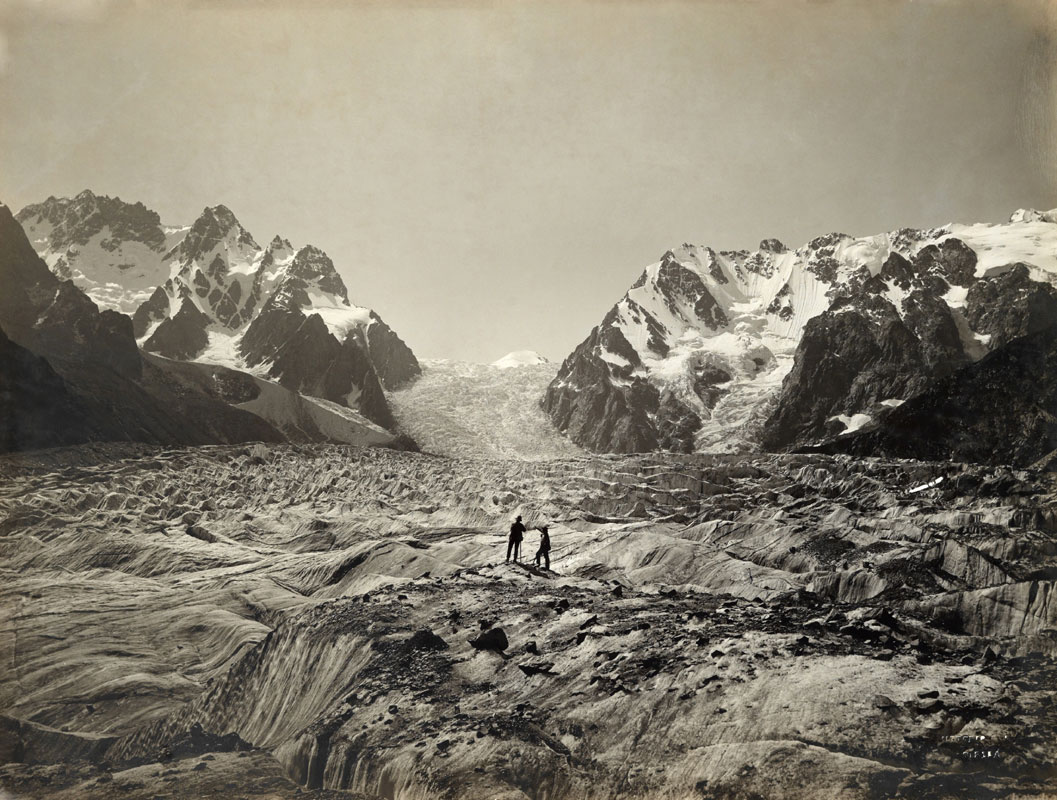
Vittorio Sella (Italian, 1859-1943) 'A Cascade of Weathered Ice Spills From the 14 Square Mile' Glacier Karagom Glacier, Caucasus Mountains, Russia 1890


Vittorio Sella (Italian, 1859-1943)
A Cascade of Weathered Ice Spills From the 14 Square Mile Glacier
Karagom Glacier, Caucasus Mountains, Russia
1890
Vittorio Sella / National Geographic Image Collection / Steven Kasher Gallery


Vittorio Sella (28 August 1859 – 12 August 1943) was an Italian photographer and mountaineer, whose photographs of mountains are regarded as some of the finest ever made. …

The high quality of Sella’s photography was in part due to his use of 30×40 cm photographic plates, in spite of the difficulty of carrying bulky and fragile equipment into remote places. He had to invent equipment, including modified pack saddles and rucksacks, to allow these particularly large glass plates to be transported safely. His photographs were widely published and exhibited, and highly praised; Ansel Adams, who saw thirty-one that Sella had presented to the US Sierra Club, said they inspired “a definitely religious awe.” Many of the photographs he took were of mountains which had not been previously recorded and so have historical as well as artistic significance; for example by recording the retreat of glaciers in the Rwenzori mountains in Central Africa.

Text from the Wikipedia website


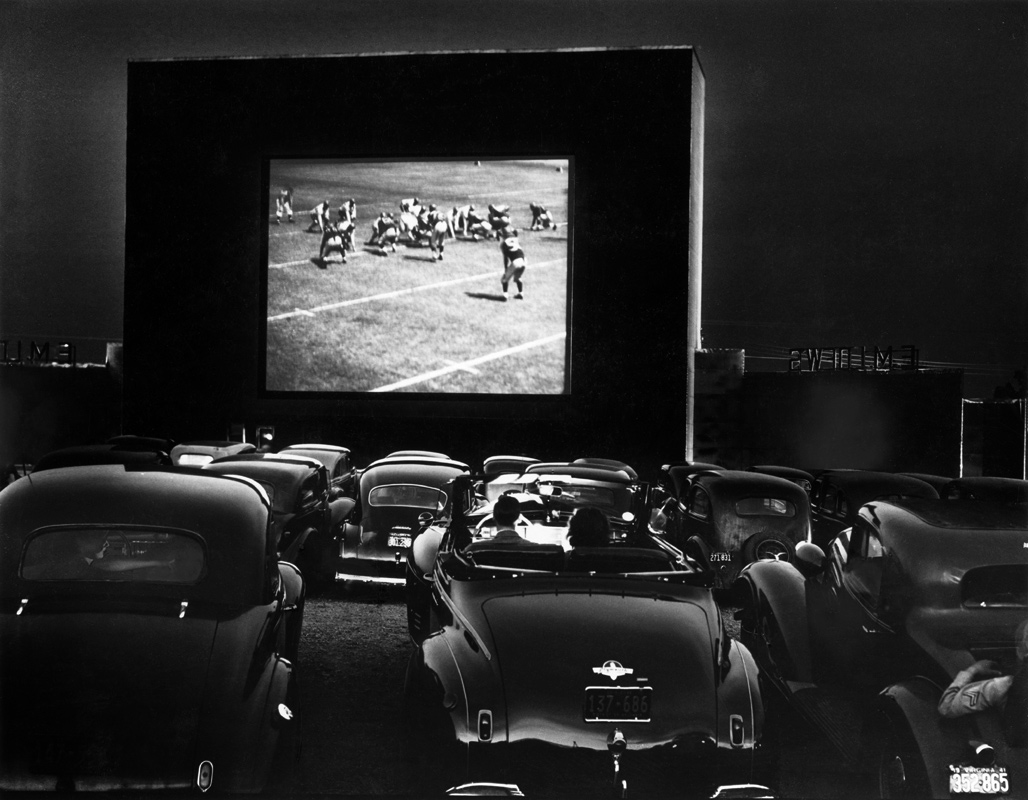
J. Baylor Roberts (American, 1902-1994) 'The Drive-In on Route 1' Alexandria, Virginia, 1941


J. Baylor Roberts (American, 1902-1994)
The Drive-In on Route 1
Alexandria, Virginia, 1941
J. Baylor Roberts / National Geographic Image Collection / Steven Kasher Gallery


Jacques Ertaud (French, 1924-1995) 'Jacques Yves Cousteau Films A Jet-propelled Submersible' Caribbean Sea, 1959


Jacques Ertaud (French, 1924-1995)
Jacques Yves Cousteau Films A Jet-propelled Submersible
Caribbean Sea, 1959
Jacques Ertaud / National Geographic Image Collection / Steven Kasher Gallery


Ned M. Seidler (American, 1922-2007) 'Freshwater Pond Life' c. 1970


Ned M. Seidler (American, 1922-2007)
Freshwater Pond Life
c. 1970
Gouache and watercolour on paper
12 1/2 x 28 1/2 inches


Steven Kasher Gallery is proud to present the exhibition National Geographic: The Past and Future Present. It is the gallery’s fifth show of works from the National Geographic archives, but our first that presents vintage illustrations side by side with vintage photographs. The one hundred works presented span the entire 20th century. Photographers will include Herbert Ponting, Baron von Gloeden, Maynard Owen Williams, and Hiram Bingham. Illustrators will include Thornton Oakley, Louis Agassi Fuertes, and Tom Lovell. The exhibition will encompass works that represent National Geographic’s rich history in the fields of geography, archaeology, exploration, science, wildlife and world cultures.

Themes explored include Past Civilizations, the Age of the Dinosaur, Space Travel, Native American Cultures, American Industry, the Sea, and Flora and Fauna. National Geographic: The Past and Future Present juxtaposes photographic images taken from life, botanical studies drawn from live specimens, and depictions of the past and the future, imagined but unseen. These juxtapositions will highlight changing visions of natural and human history as they have evolved over the twelve decades of the Society’s image making.

“This exhibition represents the continuation of a four-year partnership with the Steven Kasher Gallery to put our commissioned work in the public eye. The inclusion of illustrations in this exhibition demonstrates the overall range of our archive, which spans vintage and contemporary photography, as well as drawings, paintings and other illustrations from the late 1800s to the present day.”

Maura Mulvihill, Senior Vice President for National Geographic Society and Director of the National Geographic Image Collection

Press release from the Steven Kasher Gallery website


Herbert Ponting (British, 1870-1935) 'Aboard the Terra Nova on the British Antarctic Expedition 1910-1913' c. 1911


Herbert Ponting (British, 1870-1935)
Aboard the Terra Nova on the British Antarctic Expedition 1910-1913
c. 1911
Herbert Ponting / National Geographic Image Collection / Steven Kasher Gallery


Roland Reed (American, 1864-1934) 'Tribute to Dead Piegan Blackfoot' Montana, 1912


Roland Reed (American, 1864-1934)
Tribute to Dead Piegan Blackfoot
Montana, 1912
Roland Reed / National Geographic Image Collection / Steven Kasher Gallery


Washburn-Crosby Company (American) 'The Minneapolis Milling District, The Largest U.S. Flour Producer' 1915


Washburn-Crosby Company (American)
The Minneapolis Milling District, The Largest U.S. Flour Producer
1915
Washburn-Crosby Company / National Geographic Image Collection / Steven Kasher Gallery


Charles Bittinger (American, 1879-1970) 'Eclipse of the Sun by the Earth' 1930s


Charles Bittinger (American, 1879-1970)
Eclipse of the Sun by the Earth
1930s
Charles Bittinger / National Geographic Society / Steven Kasher Gallery


Else Bostelmann (American born Germany, 1882-1961) 'A Saber-Toothed Viperfish Attacking Young Ocean Sunfish' c. 1934


Else Bostelmann (American born Germany, 1882-1961)
A Saber-Toothed Viperfish Attacking Young Ocean Sunfish
c. 1934
Gouache on paper
14 x 11 inches


Else Winkler von Röder (Roeder) Bostelmann (1882-1961), a German Empire-born American artist, joined the New York Zoological Society (now the Wildlife Conservation Society) in 1929 to paint marine life during William Beebe’s bathysphere oceanographic expeditions at Bermuda’s Nonsuch Island (1930-1934).

Bostelmann’s marine life paintings depicted the unbelievable sights that Beebe encountered from great depths in the ocean. “Had it not been for Mrs. Bostelmann’s deftness in rapidly sketching what she saw, much of the colour and drama would have been lost.” …

Bostelmann’s marine life art was published in several National Geographic Magazines in the 1930s, 1940s and beyond. Her depiction of the bioluminescence of unknown ocean life caused a stir in the oceanographic world.

Although she did not descend in the Bathysphere, her studies and final paintings were true to life at the time. Beebe described what he saw as he descended in the bathysphere through a direct telephone line to the ship above him. Detailed notes were taken by Gloria Hollister, a member of the research team. When Beebe exited the bathysphere, he immediately worked with Bostelmann as she put his descriptions to paper using watercolour, gouache and pencil. She did don a 16-pound copper helmet with an air hose attached to the ship above, sat on a chair on the ocean floor (20-35 feet down) with her canvas attached to an iron music stand weighted with lead and her brushes tied to the stand as she painted with oil the fish she saw around her. Due to the change in available light at that depth, the colours in her paintings were muted.

Text from the Wikipedia website


Richard Hewitt Stewart (American, 1901-2004) 'Colossal Olmec Head' La Venta, Mexico, 1940


Richard Hewitt Stewart (American, 1901-2004)
Colossal Olmec Head
La Venta, Mexico, 1940
Richard Hewitt Stewart / National Geographic Image Collection / Steven Kasher Gallery


Richard Hewett Stewart (1901-2004) began working for the National Geographic Society as a photo lab technician in 1924. Ten years later, he joined Matthew Stirling’s archeological team to photograph and, to a lesser extent, film the team’s eight expeditions to Veracruz and Tabasco (1939-1946). As a result, Stewart’s photographs illustrated all of National Geographic articles about the Olmec excavations carried out by the Smithsonian. Stewart again joined Stirling for the 1948-1949 archaeological expedition to Panama, sponsored by the Smithsonian Institution and the National Geographic Society.

Text from the Smithsonian Institution website


Thorton Oakley (American, 1881-1953) 'Liquid Steel Pours From an Electric Furnace' 1940s


Thorton Oakley (American, 1881-1953)
Liquid Steel Pours From an Electric Furnace
1940s
Thorton Oakley / National Geographic Society / Steven Kasher Gallery


Steven Kasher Gallery
166 Second Ave., 3A
New York, NY 10003
Phone: 917 922 6861

Opening hours:
By appointment only

Steven Kasher Gallery website

LIKE ART BLART ON FACEBOOK

Back to top

Exhibition: ‘Cabinet of Curiosities: Photography & Specimens’ at The Nelson-Atkins Museum of Art, Kansas City

Exhibition dates: 12th September, 2012 – 10th February, 2013


Many thankx to The Nelson-Atkins Museum of Art for allowing me to publish the photographs in the posting. Please click on the photographs for a larger version of the image.


Joseph Javier Woodward (American, 1833-1884) 'Photomicrograph of a Crab Louse' c. 1864-1865


Joseph Javier Woodward (American, 1833-1884)
Photomicrograph of a Crab Louse
c. 1864-1865
Albumen print
Gift of the Hall Family Foundation


Wilson Alwyn Bentley (American, 1865-1931) 'Snowflakes' c. 1905


Wilson Alwyn Bentley (American, 1865-1931)
Snowflakes
c. 1905
Gelatin silver prints
Gifts of the Hall Family Foundation


Wilson Alwyn Bentley (American, 1865-1931) 'Snowflakes' c. 1905 (detail)


Wilson Alwyn Bentley (American, 1865-1931)
Snowflakes (detail)
c. 1905
Gelatin silver prints
Gifts of the Hall Family Foundation


Charles Jones (American, 1866-1959) 'Radish, French Breakfast' c. 1900


Charles Jones (American, 1866-1959)
Radish, French Breakfast
c. 1900
Gelatin silver print
Gift of the Hall Family Foundation


The photography exhibition Cabinet of Curiosities: Photography & Specimens opens Sept. 12 at The Nelson-Atkins Museum of Art. Featuring works that date from the 1850s to the present day, this show explores the many ways photography has expanded our centuries-old fascination with the marvellous, unusual, unexpected, exotic, extraordinary or rare.

“In the 16th and 17th centuries, Cabinets of Curiosities functioned like small museums. They were assembled by their owners to reflect the fascination with science and art,” said Jane Aspinwall, associate curator of photography. “Photography has always emphasised that relationship: specimens are typically used for scientific study, but they can also be considered works of art.”

This exhibition includes examples ranging from the very tiny (microscopic images of snowflakes and insects) to the very distant (telescopic image of the moon’s surface). Some images, such as X-rays, emphasise photography’s role in extending human vision. Others document such oddities as Peter the Great’s collection of pulled teeth. The wide range of processes on display – including daguerreotypes, tintypes and cyanotypes – further suggests that these photographic objects are themselves visual specimens from a bygone era.

“To me, the range of specimens in this exhibition is fascinating. Botanical, X-ray, microscopic, medical… there is even a photograph of a fragment of a Civil War soldier’s arm bone, mounted and saved by the Army Medical Museum… what an oddity!”

Featured contemporary photographers Matthew Pillsbury, Emmet Gowin, and Richard Barnes raise questions about how specimens are displayed, preserved and interpreted and how this relates to the natural world. The differing ways specimens are seen photographically, and the human-made constructs used for specimen display are also explored.

Press release from The Nelson-Atkins Museum of Art website


William Bell (American born England, 1830-1910) 'Successful Excision of the Head of the Humerus' 1864


William Bell (American born England, 1830-1910)
Successful Excision of the Head of the Humerus
1864
Albumen print
Gift of Hallmark Cards, Inc.,


Unknown maker (American) 'Man with Skulls' c. 1850


Unknown maker (American)
Man with Skulls
c. 1850
Daguerreotype
Gift of Hallmark Cards, Inc.,


Unknown maker (American) 'Hand X-Ray' 1897


Unknown maker (American)
Hand X-Ray
1897
Gelatin silver print
Gift of Hallmark Cards, Inc.,


Anna Atkins (English, 1799-1871) 'Paris Arguta' c. 1850


Anna Atkins (English, 1799-1871)
Paris Arguta
c. 1850
Cyanotype
Gift of the Hall Family Foundation


The Nelson-Atkins Museum of Art
4525 Oak Street
Kansas City, MO 64111

Opening hours:
Thursday – Monday 10am – 5pm
Closed Tuesdays and Wednesdays

The Nelson-Atkins Museum of Art website

LIKE ART BLART ON FACEBOOK

Back to top

Exhibition: ‘Flatlands: photography and everyday space’ at the Art Gallery of New South Wales (AGNSW), Sydney

Exhibition dates: 13th September 2012 – 3rd February 2013


David Moore (Australia, 1927-2003) 'Light pattern, camera in motion' c. 1948, printed 1997


David Moore (Australia, 1927-2003)
Light pattern, camera in motion
c. 1948, printed 1997
Gelatin silver photograph
50.7 x 40.3cm
Art Gallery of New South Wales, Sydney
Gift of Karen, Lisa, Michael and Matthew Moore, 2004


This posting contains one of my favourite early works by Fiona Hall, Leura, New South Wales (1974, below) which is redolent of all the themes that would be expressed in the later work – an alien landscape that examines “the relationship between humankind and nature and the symbolic role of the [fecund] garden in western iconography.” In her work the “nature” of things (plants, money, videotape, plumbing fittings, birds nests, etc…) are re/classified, re/ordered and re/labelled.

Another stunning photograph in this posting is Minor White’s Windowsill daydreaming (1958, below). It is one of my favourite images of all time: because of the power of observation (to be able to recognise, capture and present such a manifestation!); because of the images formal beauty; and because of its metaphysical nature – a poetry full of esoteric allusions, one that addresses a very profound subject matter that is usually beyond ordinary knowledge or understanding. This alien presence, like the structure of an atom, is something that lives beyond the edges of our consciousness, some presence that hovers there, that we can feel and know yet can never see. Is it our shadow, our anima or animus? This is one of those rare photographs that will always haunt me.

Dr Marcus Bunyan


Many thankx to the Art Gallery of New South Wales for allowing me to publish the photographs in the posting. Please click on the photographs for a larger version of the image. All text accompanying photographs © Art Gallery of New South Wales Photography Collection Handbook, 2007.


Olive Cotton (Australia, 1911-2003) 'By my window' 1930


Olive Cotton (Australia, 1911-2003)
By my window
1930
Gelatin silver photograph
20.3 x 15.1cm
Art Gallery of New South Wales, Sydney
Purchased with funds provided by the Photography Collection Benefactors’ Program 2006


Keast Burke (Australian born New Zealand, 1896-1974) 'Untitled' 1930s


Keast Burke (Australian born New Zealand, 1896-1974)
Untitled
1930s
Gelatin silver print
23.1 x 23.1cm
Art Gallery of New South Wales, Sydney
Purchased with funds provided by the Photography Collection Benefactors’ Program 2003

Formwork for Sydney Harbour Bridge


Australasian Photo-Review’s cover of 15 March 1932 by Burke was the first which could be described as typically modernist with its dynamic photograph of the structures of Sydney Harbour Bridge. In December 1932 Burke had written:

The New Photography is the kind which seeks to shatter that blissful state of peace with photographs of an entirely different kind. It demands that photography shall be purely objective, shall photograph anything and everything – snap repetition and pattern wherever it is to be found.


That same year he published the Harbour Bridge photographs in a volume entitled Achievement: a collection of unusual studies of the Sydney Harbour Bridge, Sydney: Mick Simmons Ltd. His second modernist AP-R cover was for 14 January 1933 featuring a diver and diving board photographed in a similar style, emphasising form and structure and indistinguishable from images of divers and athletes being photographed by the Modernists of Europe and the USA.

Keast Burke’s determination to assimilate the new style into his work can be seen in the tug of war between the painterliness of pictorialism, in his warm-toned prints, and the boldness and geometricism of Modernism.

James McArdle. “January 16: Man,” on the On This Date In Photography website 16/01/2017 [Online] Cited 27/07/2024


Cecil Bostock (Australia, 1884-1939) 'Phenomena' c. 1938


Cecil Bostock (Australia, 1884-1939)
Phenomena
c. 1938
Gelatin silver photograph
26.3 x 30.5cm
Art Gallery of New South Wales, Sydney
Gift of Max Dupain 1980


Bostock remains an enigmatic personality in Australian pictorial and early modernist photography. This is at least in part due to his body of work being scattered on his death in 1939 as it was auctioned to cover his debts. Fortunately Phenomena was left to his former assistant Max Dupain who had worked with him from 1930 to 1933.

Phenomena was one of 11 photographs Bostock exhibited with the Contemporary Camera Groupe and it was placed in the window at David Jones along with other photographs such as Plum blossom 1937 by Olive Cotton and Mechanisation of art by Laurence Le Guay. Phenomena is a wonderful modernist work with its plays of light and dark and disorienting shapes and curving lines. It is impossible to tell exactly how the shapes are made or where the light is coming from, nor what the objects are. It could easily be exhibited upside down where the viewer could be looking down on objects arranged on a flat surface. Phenomena is a tribute to Bostock’s restless, inventive and exacting abilities.


Fiona Hall (Australia, b. 1953) 'Leura, New South Wales' 1974


Fiona Hall (Australia, b. 1953)
Leura, New South Wales
1974
Gelatin silver photograph
27.8cm x 27.8cm
Art Gallery of New South Wales, Sydney
Purchased 1981
© Fiona Hall


The rich tones and fine detail of Leura, New South Wales were made possible by Hall’s use of a large-format nineteenth-century view camera. The antiquated technology, once used by colonial photographers to document nature and the taming of the Australian landscape, here records instead the verdant foliage of a floral-patterned couch and carpet. Made at the beginning of Hall’s career, it demonstrates her burgeoning interest in the representation of nature. The relationship between humankind and nature and the symbolic role of the garden in western iconography has since been a recurrent theme in her work, which ranges across photography, sculpture and installation. Leura… differs from Hall’s other photographs in that it documents a “found” object. Hall’s later works, such as The Antipodean suite 1981 and her large-format polaroids of 1985, are of her own constructions and sculptures. Her Paradisus terrestris series 1989-1990, 1996, 1999, of aluminium repousse sculptures takes the garden of Eden as its subject and treats it as an Enlightenment florilegium, wherein nature is classified, ordered and labelled. This kind of botanical transcription, like photography, was the process through which the alien Australian landscape was ‘naturalised’ by its colonists – a process which Hall wryly comments on in this acutely observed encounter within a domestic interior.


David Stephenson (USA/Australia, b. 1955) 'Sant'ivo alla Sapienza 1645-50 Rome, Italy' 1997


David Stephenson (USA/Australia, b. 1955)
Sant’ivo alla Sapienza 1645-50 Rome, Italy
1997
From the series Domes 1993-2005
Type C photograph
55 × 55cm
Art Gallery of New South Wales, Sydney
Purchased with funds provided by Joanna Capon and the Photography Collection Benefactors Program 2002
© David Stephenson


With poetic symmetry the Domes series considers analogous ideas. It is a body of work which has been ongoing since 1993 and now numbers several hundred images of domes in countries including Italy, Spain, Portugal, Turkey, England, Germany and Russia. The typological character of the series reveals the shifting history in architectural design, geometry and space across cultures and time, demonstrating how humankind has continually sought meaning by building ornate structures which reference a sacred realm.2 Stephenson photographs the oculus – the eye in the centre of each cupola. Regardless of religion, time or place, this entry to the heavens – each with unique architectural and decorative surround – is presented as an immaculate and enduring image. Placed together, the photographs impart the infinite variations of a single obsession, while also charting the passage of history, and time immemorial.

2. Hammond, V. 2005, “The dome in European architecture,” in Stephenson, D. 2005, Visions of heaven: the dome in European architecture, Princeton Architectural Press, New York p. 190.

© Art Gallery of New South Wales Photography Collection Handbook, 2007


David Stephenson (USA/Australia, b. 1955)
'Cathedral of the Assumption, Kremlin 1475-79, Moscow, Russia' 2000


David Stephenson (USA/Australia, b. 1955)
Cathedral of the Assumption, Kremlin 1475-79, Moscow, Russia
2000
Type C photograph
55 x 55cm
Art Gallery of New South Wales, Sydney
Purchased with funds provided by Graham and Mary Bierman, Josef and Jeanne Lebovic 2002
© David Stephenson


David Stephenson (USA/Australia, b. 1955) 'Pantheon c. 117-138, Rome, Italy' 1997, printed 2002


David Stephenson (USA/Australia, b. 1955)
Pantheon c. 117-138, Rome, Italy
1997, printed 2002
Type C photograph
55 x 55cm
Art Gallery of New South Wales, Sydney
Purchased with funds provided by Graham and Mary Bierman, Josef and Jeanne Lebovic 2002
© David Stephenson


Pat Brassington (Australian, b. 1942) 'In marble halls #1' 2003


Pat Brassington (Australian, b. 1942)
In marble halls #1
2003
From the series In marble halls
Pigment print
90 x 140cm
Art Gallery of New South Wales, Sydney
Gift of the artist 2009
© Pat Brassington


Simryn Gill (Singapore/Malaysia/Australia, b. 1959) From 'A long time between drinks' 2005


Simryn Gill (Singapore/Malaysia/Australia, b. 1959)
From A long time between drinks
2005
Portfolio of 13 offset prints
29.8cm x 29.7cm
Art Gallery of New South Wales, Sydney
© Simryn Gill


Among Simryn Gill’s multi-disciplinary explorations of identity and belonging, investigations of suburban locations carry a particular resonance due to their often autobiographical nature. A long time between drinks 2009 is an intensely focused look at suburban Adelaide which was the artist’s first experience of Australia when she arrived in 1987 from Kuala Lumpur, and the city where she first exhibited. Gill returned to Adelaide in 2005 to revisit this early point of contact, producing an evocative series of 13 images.

The photographs impart an ostensible sense of alienation and isolation that corresponds to the artist’s position as an outsider looking in. Gill’s viewpoint of these empty streets that seem to lead nowhere is forensic and detached. But surprisingly, as repetitious compositions and details culminate across the photographs, the prosaic subject matter becomes increasingly surreal, abstract and even poetic.

As Sambrani Chaitanya has stated, “Gill’s work is an investigation of the limits of categorisation,”1 and this group of works, just as in Gill’s examination of Marrickville (where she now lives) in May 2006, emphasises the difficulty of defining an idea of place through mere description. Memory, time and pure invention are required to fill in the gaps. The eerie, yet evocative environment in these photographic prints is further enhanced by their presentation in a square box emulating those of sets of vinyl LP recordings.

1/ Sambrani, C. “Other realties, someone else’s fictions: the tangled art of Simryn Gill,” [Online], Art and Australia Vol. 42, No. 2, Summer 2004, p. 220.


Simryn Gill (Singapore/Malaysia/Australia, b. 1959) From 'A long time between drinks' 2005


Simryn Gill (Singapore/Malaysia/Australia, b. 1959)
From A long time between drinks
2005
Portfolio of 13 offset prints
29.8cm x 29.7cm
Art Gallery of New South Wales, Sydney
© Simryn Gill


A new exhibition, Flatlands: photography and everyday space, examines photography’s role in transforming the way we perceive, organise and imagine the world. The 39 works by 23 Australian and international artists included in the exhibition have been drawn from the Gallery’s permanent collection of 20th century and contemporary photography.

Definitions of space have always depended on the scientific, social and cultural aspects of the human experience. At its birth in the 19th century, photography’s monocular vision was seen as the ultimate tool for representation and classification. Elusive phenomena such as distance, depth and emptiness seemed within grasp. Yet, limited to freezing single moments or viewpoints in time, the photograph’s ability to objectively represent the world was under question by the turn of the 20th century. Technological advancements, such as faster exposure times transformed the potential of the medium to not only show things that escaped the eye but new ways of seeing them as well.

Embracing partiality and ambivalence, modernist photography sought to capture the fragments, details and blurred boundaries in the expanses we call personal space. What the photograph began to reveal were dimensions which German cultural theorist Walter Benjamin described in 1931 as the ‘optical unconscious’ of reality. The works of photographers such as Melvin Vaniman, Frederick Evans, Harold Cazneaux, William Buckle, Franz Roh, Olive Cotton, David Moore, Josef Sudek, Minor White and Robert Rauschenberg explore the intangible in spaces which define our physical and spiritual relationship with reality. Windows, doorways, ceilings, staircases – these mundane and ordinary passageways suddenly acquire a centrality and metaphysical depth normally denied to them.

The edges between sacred and profane, public and private, natural and artificial, real and dreamed environments became further entangled in the subjective visions of late 20th century and contemporary photographic work. For Daido Moriyama, Fiona Hall, Pat Brassington, Simryn Gill, Christine Godden, Geoff Kleem, Leonie Reisberg, Ingeborg Tyssen, David Stephenson and Justine Varga, space is seen to be a product of the perception of the individual. Photographs are able to reveal realms outside of the scientific – that is those created by emotion, memory and desire.

As Fiona Hall commented in 1996, “our belief might be maintained, for at least as long as the image can hold our attention, in the possibility of inhabiting a world as illusory as the two-dimensional one of the photograph.” Collectively, these images destabilise naturalised certainties while activating the imaginary dimension and the unsettling, albeit poetic potential of photography to impact and alter our view of the world.

Press release from the AGNSW website


Frederick H. Evans (British, 1853-1943) 'A Sea of Steps - Stairs to Chapter House - Wells Cathedral' 1903


Frederick H. Evans (England, 1853-1945)
A sea of steps
1903
Platinotype photograph
23.6 x 19.2cm
Art Gallery of New South Wales, Sydney
Gift of the Sydney Camera Circle 1977


Minor White (America, 1908-1976) 'Christmas ornament, Batavia, New York, January 1958' 1958


Minor White (America, 1908-1976)
Christmas ornament, Batavia, New York, January 1958
1958
From the portfolio Sound of one hand 1960-1965
Gelatin silver photograph mounted on card
Art Gallery of New South Wales, Sydney
Gift of Patsy Asch 2005
Reproduction with permission of the Minor White Archive
© Princeton University Art Museum


Minor White. 'Windowsill daydreaming' 1958


Minor White (America, 1908-1976)
Windowsill daydreaming
Rochester, New York, July 1958
From the portfolio Sound of one hand 1960-1965
Art Gallery of New South Wales, Sydney
Reproduction with permission of the Minor White Archive
© Princeton University Museum of Art


Informed by the esoteric arts, eastern religion and philosophy, Minor White’s belief in the spiritual qualities of photography made him an intensely personal and enigmatic teacher, editor and curator. White’s initial experience with photography was through his botanical studies at the University of Minnesota where he learned to develop and print photomicrography images, a view of life that he saw as akin to modern art forms. White advocated Stieglitz’s concept of ‘Equivalence’ in which form directly communicated mood and meaning, that ‘darkness and light, objects and spaces, carry spiritual as well as material meanings’.1 White disseminated his photographic theories through the influential quarterly journal Aperture, which he edited and co-founded with his contemporaries Ansel Adams, Dorothea Lange, Beaumont Newhall and others.

Like Stieglitz, White also worked in sequences that through abstraction, expression and metaphor emphasised his mystical interpretation of the visual world. The sequences allow for a dialogue to continue through and in-between the images, engaging the viewer in a visual poem rather than any strict or formal narrative. The series, Sound of one hand, exemplifies White’s study of Zen and esoteric philosophies, reflecting his meditation of the Zen koan from which he saw rather than heard any sound. The first of the series, Metal ornament, Pultneyville, New York, October 1957 presents an abstracted form that is both sensual and elusive, slipping in and out of ocular register. The ambiguous graduated tones and reflected light pull the eye into the centre of the image before vicariously dragging it back. This broken semi-elliptical shape is mirrored in Windowsill daydreaming, Rochester, New York, July 1958 as the gently moving curtains play with the light and shadows of White’s flat, creating abstracted organic forms. Abstracted forms of nature were of great interest to White as can be seen in the rest of the series that capture the frosted window of his flat with its crystallised ice, condensation and glimpses of the outside world.

1/ Rice, S. 1998, “Beyond reality,” in Frizot, M. (ed.,). A new history of photography, Könemann, Cologne pp. 669-673


Minor White (America, 1908-1976) 'Burned mirror, Rochester, New York, June 1959' 1959


Minor White (America, 1908-1976)
Burned mirror, Rochester, New York, June 1959
1959
From the portfolio Sound of one hand 1960-1965
Gelatin silver photograph mounted on card
32.2 x 21.2cm
Art Gallery of New South Wales, Sydney
Gift of Patsy Asch 2005
Reproduction with permission of the Minor White Archive
© Princeton University Museum of Art


Olive Cotton (Australia, 1911-2003) 'Skeleton Leaf' 1964


Olive Cotton (Australia, 1911-2003)
Skeleton Leaf
1964
Gelatin silver photograph
24.7 × 19.6cm
Art Gallery of New South Wales, Sydney
Purchased with funds provided by the Photography Collection Benefactors’ Program 2006
© artist’s estate


Leonie Reisberg (Australian, b. 1955) 'Fragments from the bizarre theatre of my life' 1980


Leonie Reisberg (Australian, b. 1955)
Fragments from the bizarre theatre of my life
1980
3 gelatin silver photograph
a – empty room, 19.6 x 24.4cm
b – room with woman, 19.7 x 24.5cm
c – room with woman and ghost, 19.7 x 24.4cm
Art Gallery of New South Wales, Sydney
Purchased 1981
© Leonie Reisberg


Deeply personal, Leonie Reisberg’s photographs delve into the ambiguities of intimate space. Like many women photographers of the 1970s-80s, such as Fiona Hall, Micky Allan, Robyn Stacey and Kate Breakey, Reisberg was interested in pushing the boundaries of the medium through techniques such as hand-painting, double exposure and collage.


Art Gallery of New South Wales
Art Gallery Road, The Domain
Sydney NSW 2000, Australia

Opening hours:
Open every day 10am – 5pm
except Christmas Day and Good Friday

Art Gallery of New South Wales website

LIKE ART BLART ON FACEBOOK

Back to top

Exhibition: ‘WAR/PHOTOGRAPHY: Images of Armed Conflict and Its Aftermath’ at the Museum of Fine Arts, Houston – Posting Part 4

Exhibition dates: 11th November 2012 – 3rd February 2013
 

Anonymous photographer. 'Under blue & gray – Gettysburg' July 1913


Anonymous photographer
Under blue & gray – Gettysburg
July 1913
Photo shows the Gettysburg Reunion (the Great Reunion) of July 1913, which commemorated the 50th anniversary of the Battle of Gettysburg
Library of Congress Prints and Photographs Division Washington, D.C.


Part 4 of the biggest posting on one exhibition that I have ever undertaken on Art Blart!

As befits the gravity of the subject matter this posting is so humongous that I have had to split it into 4 separate postings. This is how to research and stage a contemporary photography exhibition that fully explores its theme. The curators reviewed more than one million photographs in 17 countries, locating pictures in archives, military libraries, museums, private collections, historical societies and news agencies; in the personal files of photographers and service personnel; and at two annual photojournalism festivals producing an exhibition that features 26 sections (an inspired and thoughtful selection) that includes nearly 500 objects that illuminate all aspects of WAR / PHOTOGRAPHY.

I have spent hours researching and finding photographs on the Internet to support the posting. It has been a great learning experience and my admiration for photographers of all types has increased. I have discovered the photographs and stories of new image makers that I did not know and some enlightenment along the way. I despise war, I detest the state and the military that propagate it and I surely hate the power, the money and the ethics of big business that support such a disciplinarian structure for their own ends. I hope you meditate on the images in this monster posting, an exhibition on a subject matter that should be consigned to the history books of human evolution.

**Please be aware that there are graphic photographs in all of these postings.** Part 1Part 2Part 3

Dr Marcus Bunyan


Many thankx to the Museum of Fine Arts, Houston for allowing me to publish some of the photographs in the posting. Please click on the photographs for a larger version of the image.


Memorials

25. Photographs in the “Memorials” section range from the tomb of an unknown World War I soldier in England, by Horace Nicholls; and a landscape of black German crosses throughout a World War II burial site, by Bertrand Carrière; to an anonymous photograph of a reunion scene in Gettysburg of the opposing sides in the Civil War; and Joel Sternfeld’s picture of a woman and her daughter at the Vietnam Veterans Memorial in Washington, DC, in 1986. (8 images)


Horace Nicholls (English, 1867-1941) 'The Unknown Warrior at Westminster Abbey, London, November 1920' 1920


Horace Nicholls (English, 1867-1941)
The Unknown Warrior at Westminster Abbey, London, November 1920
1920
Silver gelatin print
© IWM (Q 31514)


In order to commemorate the many soldiers with no known grave, it was decided to bury an ‘Unknown Warrior’ with all due ceremony in Westminster Abbey on Armistice Day in 1920. The photograph shows the coffin resting on a cloth in the nave of Westminster Abbey before the ceremony at the Cenotaph and its final burial.
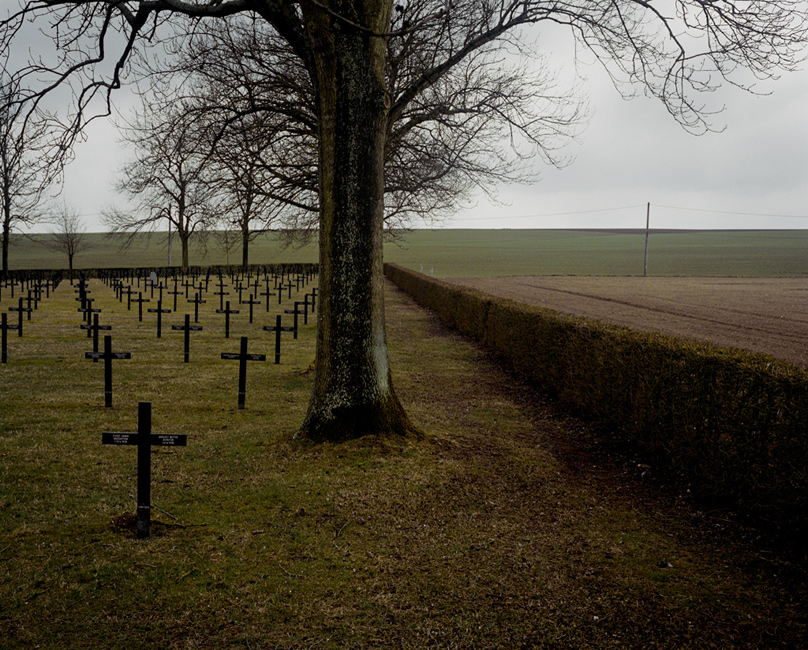
 

Bertrand Carrière (Canadian, b. 1957) 'Untitled' 2005-2009


Bertrand Carrière (Canadian, b. 1957)
Untitled
2005-2009
From the series Lieux Mêmes [Same Places]


Joel Sternfeld (American, b. 1944) 'Vietnam Veterans Memorial, Washington, D.C.,' May 1986


Joel Sternfeld (American, b. 1944)
Vietnam Veterans Memorial, Washington, D.C.,
May 1986
Chromogenic print, ed. #1/25 (printed October 1986)
The Museum of Fine Arts, Houston, the Target Collection of American Photography, gift of the artist
© 1986 Joel Sternfeld


Remembrance

26. The last gallery in the exhibition is “Remembrance.” Most of these images were taken by artists seeking to come to terms with a conflict after fighting had ceased. Included are Richard Avedon’s picture of a Vietnamese napalm victim; a survivor of a machete attack in a Rwandan death camp, by James Nachtwey; a 1986 portrait of a hero who rescued Jews during the Holocaust, by Houston native Gay Block; and Suzanne Opton’s 2004 portrait of a soldier who survived the Iraq War and returned to the United States to work as a police officer, only to be murdered on duty by a fellow veteran. The final wall features photographs by Simon Norfolk of sunrises at the five D-Day beaches in 2004. The only reference to war is the title of the series: The Normandy Beaches: We Are Making a New World(33 images)


Richard Avedon (American, 1923-2004) 'Napalm Victim #1, Saigon, South Vietnam, April 29, 1971' 1971


Richard Avedon (American, 1923-2004)
Napalm Victim #1, Saigon, South Vietnam, April 29, 1971
1971
Silver gelatin print
© Richard Avedon


Gay Block (American, b.1942) 'Zofia Baniecka, Poland' 1986


Gay Block (American, b. 1942)
Zofia Baniecka, Poland
1986
From the series Rescuers: Portraits of Moral Courage in the Holocaust, a record of non-Jewish citizens from European countries who risked their lives helping to hide Jews from the Nazis
Chromogenic print, printed 1994
Courtesy of Museum of Fine Arts, Houston, gift of Clinton T. Wilour in honour of Eve France


Zofia Baniecka (born 1917 in Warsaw – 1993) was a Polish member of the Resistance during World War II. In addition to relaying guns and other materials to resistance fighters, Baniecka and her mother rescued over 50 Jews in their home between 1941 and 1944.
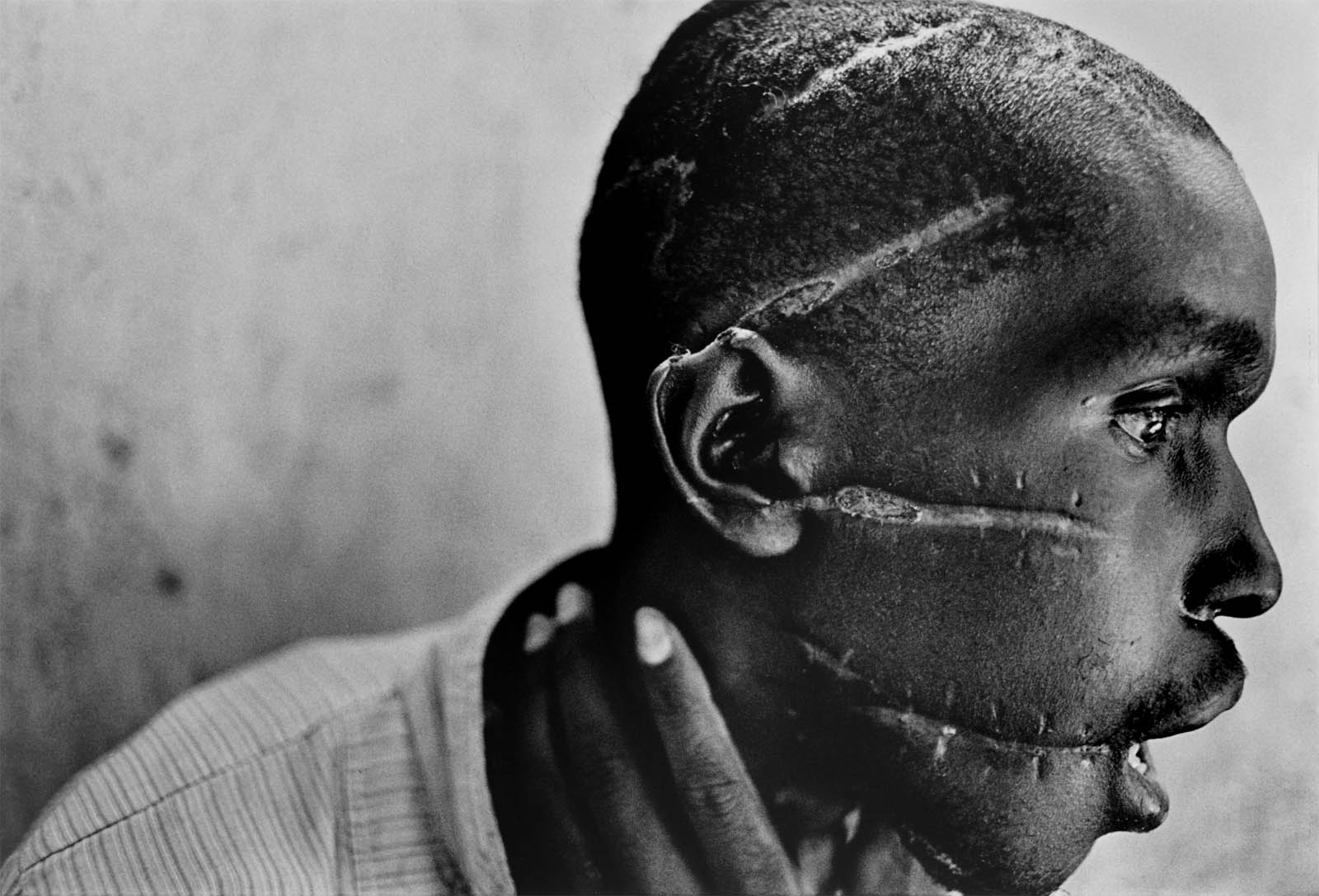
 

James Nachtwey (American, b. 1948) 'A Hutu man who did not support the genocide had been imprisoned in the concentration camp, was starved and attacked with machetes. He managed to survive after he was freed and was placed in the care of the Red Cross, Rwanda, 1994' 1994


James Nachtwey (American, b. 1948)
A Hutu man who did not support the genocide had been imprisoned in the concentration camp, was starved and attacked with machetes. He managed to survive after he was freed and was placed in the care of the Red Cross, Rwanda, 1994
1994
Silver gelatin print
© James Nachtwey / TIME

World Press Photo of the Year, prize singles


A Hutu man at a Red Cross hospital in Nyanza, Rwanda. His face was mutilated by the Hutu ‘Interahamwe’ militia, who suspected him of sympathising with the Tutsi rebels.

Liberated from a nearby Hutu camp, where mainly Tutsis were incarcerated, starved, beaten, and killed, this man did not support the genocide and was thus subjected to the same treatment. Starved and attacked with machetes, he had managed to survive, though he was unable to speak and could barely walk or swallow when this photo was made.

Jibran Abbasi. “Mutilated By The Hutu ‘Interahamwe’ by James Nachtwey,” on the Business Recorder website April 5, 2017 [Online] Cited 27/07/2024
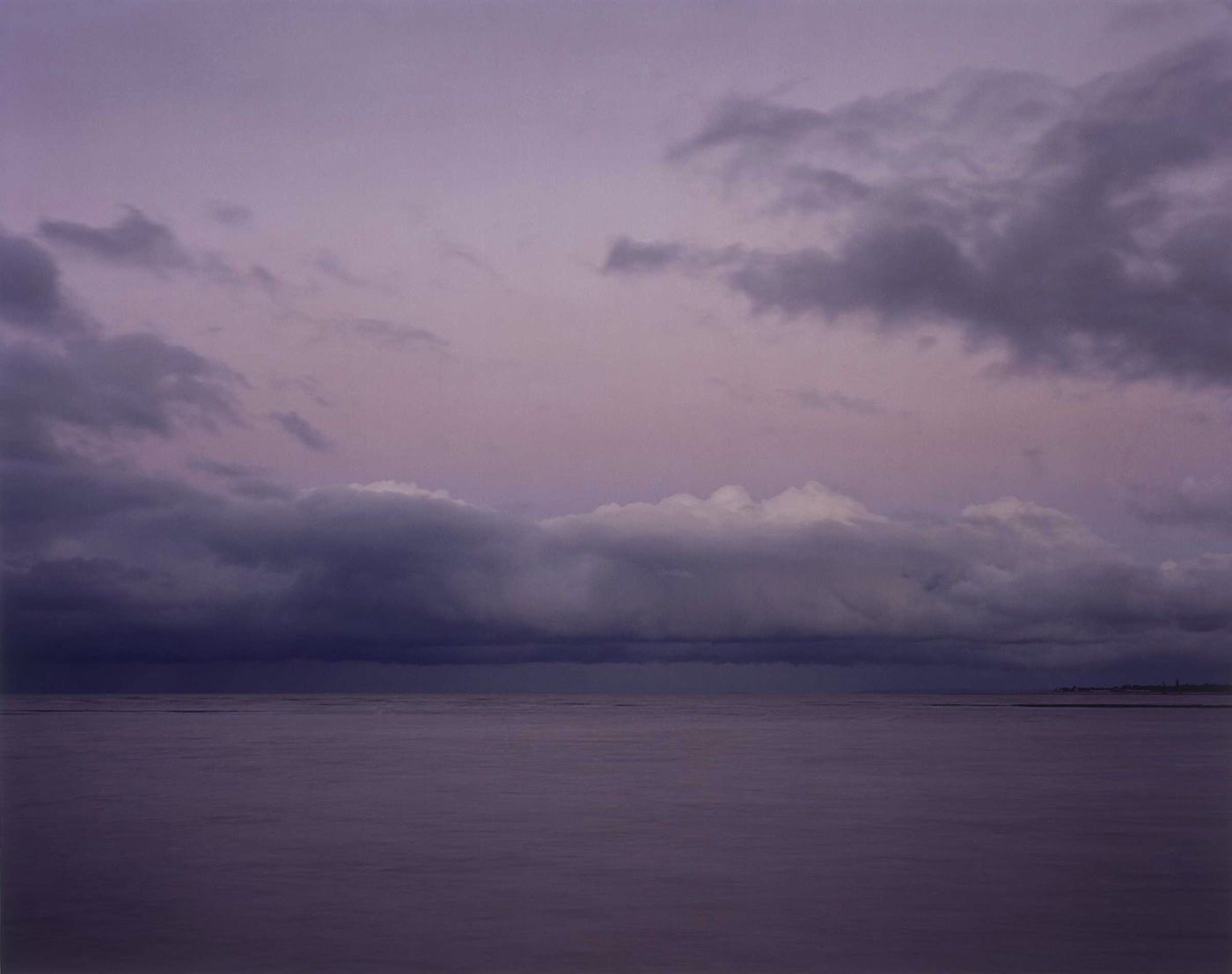
 

Simon Norfolk (British, b. Nigeria, 1963) 'Sword Beach' 2004


Simon Norfolk (British born Nigeria, b. 1963)
Sword Beach
2004
From the series The Normandy Beaches: We Are Making a New World
Chromogenic print, ed. #1/10 (printed 2006)
The Museum of Fine Arts, Houston
Gift of Bari and David Fishel, Brooke and Dan Feather and Hayley Herzstein in honor of Max Herzstein and a partial gift of the artist and Gallery Luisotti, Santa Monica
© Simon Norfolk / Gallery Luisotti


WAR/PHOTOGRAPHY Extended Info


Other photographs from the exhibition


Alexander Gardner (1821-1882) 'Scouts and Guides to the Army of the Potomac, Berlin, MD, October, 1862' October 1862 (detail)


Alexander Gardner (American, 1821-1882)
Scouts and Guides to the Army of the Potomac, Berlin, MD, October, 1862
October 1862
Albumen silver print
Photograph by Alexander Gardner, from “Incidents of the War. Guide to the Army of the Potomac,” from Gardner’s Photographic Sketch Book of the War, Washington
Records of the War Department General and Special Staffs, Record Group 165, National Archives Still Picture Branch, College Park, Maryland
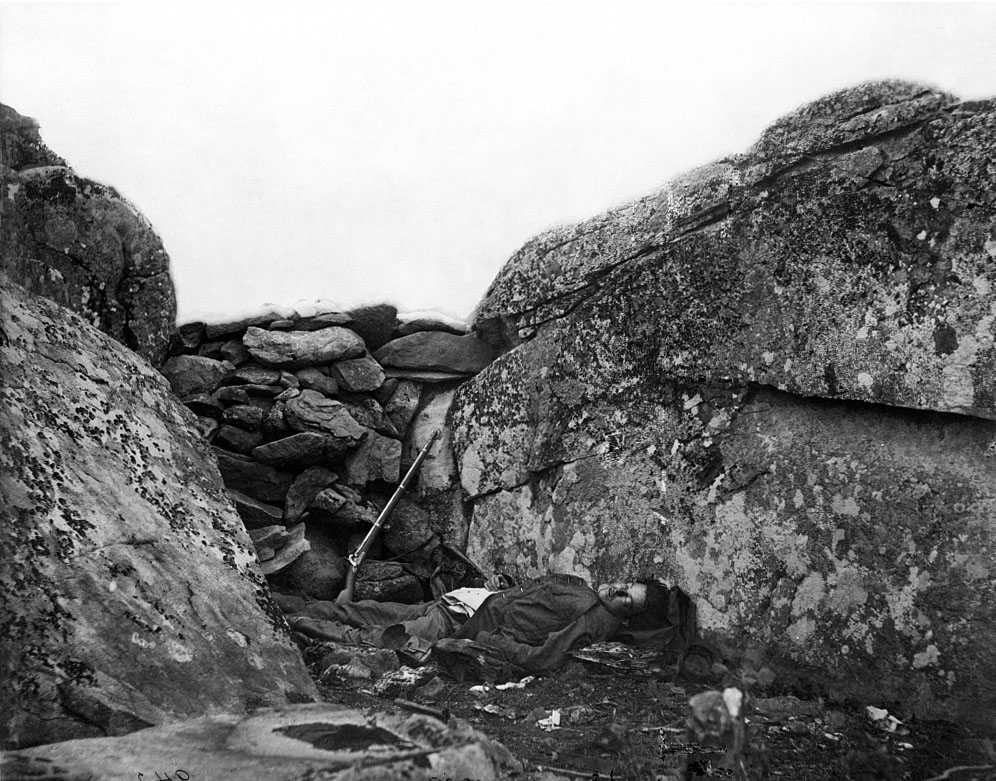
 

Alexander Gardner (American, 1821-1882) ‘The Home of a Rebel Sharpshooter, Gettysburg, Pennsylvania’. Albumen paper print


Alexander Gardner (American, 1821-1882)
The Home of a Rebel Sharpshooter / Dead Confederate soldier in the devil’s den, Gettysburg, Pennsylvania
July 1863
Albumen paper print copied from glass, wet collodion negative
Library of Congress, Prints and Photographs Division
 

Josiah Barnes (Australian, 1858-1921) 'Embarkation of HMAT Ajana, Melbourne, July 8, 1916' 1916


Josiah Barnes (Australian, 1858-1921)
Embarkation of HMAT Ajana, Melbourne, July 8, 1916
1916
Gelatin silver print from original glass half-plate negative (printed 2012)
On loan from the Australian War Memorial
 

Wesley D. Archer (American, d. 1952) 'Just as he left the burning plane' 1933


Wesley D. Archer (American, d. 1952)
Just as he left the burning plane
1933
From the publication Death in the Air: The War Diary and Photographs of a Flying Corps Pilot


The typewritten script of a First World War pilot’s diary with a large number of photographs was submitted to the publishers William Heinemann and published by them in 1933. Heinemann stated on the book’s jacket that the diary contained no names, dates, or anything that could reveal the identity of the writer or the squadron in which he served. The publishers understood that the diarist was killed in action in 1918 and that it was in deference to the wishes of those who were close to him that his diary should be published.

So remarkable were the photographs that their veracity was immediately questioned, but no proof of their authenticity or otherwise could be ascertained. It was not until 1983 that a collection of documents, photographs and artifacts was presented to the Smithsonian’s National Air and Space Museum. Some of the photographs were recognized as being those of the mystery diarist and the truth was soon revealed.

The author was Wesley Archer, an American with Canadian parents who served with the RFC in the First World War, and the photographs and diary had been faked.

Text from the Google Books website

For more information on the faked photographs see the article “How dramatic images of WWI dogfights in the skies of Europe were FAKED by a conman who was just looking to make some money”.


August Sander (German, 1876-1964) 'Soldier' c. 1940


August Sander (German, 1876-1964)
Soldier
c. 1940
Gelatin silver print, printed by Gunther Sander, 1960s
The Museum of Fine Arts, Houston
Gift of John S. and Nancy Nolan Parsley in honour of the 65th birthday of Anne Wilkes Tucker
© Die Photographische Sammlung/SK StiftungKultur – August Sander Archiv, Cologne; DACS, London 2012
 

Arkady Shaikhet (Soviet, 1898-1959) 'Partisan Girl' 1942


Arkady Shaikhet (Soviet, 1898-1959)
Partisan Girl
1942
Gelatin silver print
Gift of Marion Mundy
© Arkady Shaikhet Estate, Moscow
 

Anonymous photographer / U.S. Department of Defense. 'US Coast Guard crew of cutter Spencer watched as a depth charge exploded near U-175, North Atlantic, 500nm WSW of Ireland, 17 Apr 1943'


Anonymous photographer
U.S. Department of Defense
US Coast Guard crew of cutter Spencer watched as a depth charge exploded near U-175, North Atlantic, 500nm WSW of Ireland, 17 Apr 1943
17 April 1943
Public domain


W. Eugene Smith (American, 1918-1978) 'Wounded, dying infant found by American soldier in Saipan Mountains' June 1944


W. Eugene Smith (American, 1918-1978)
Wounded, dying infant found by American soldier in Saipan Mountains
June 1944
Gelatin silver print
© W. Eugene Smith
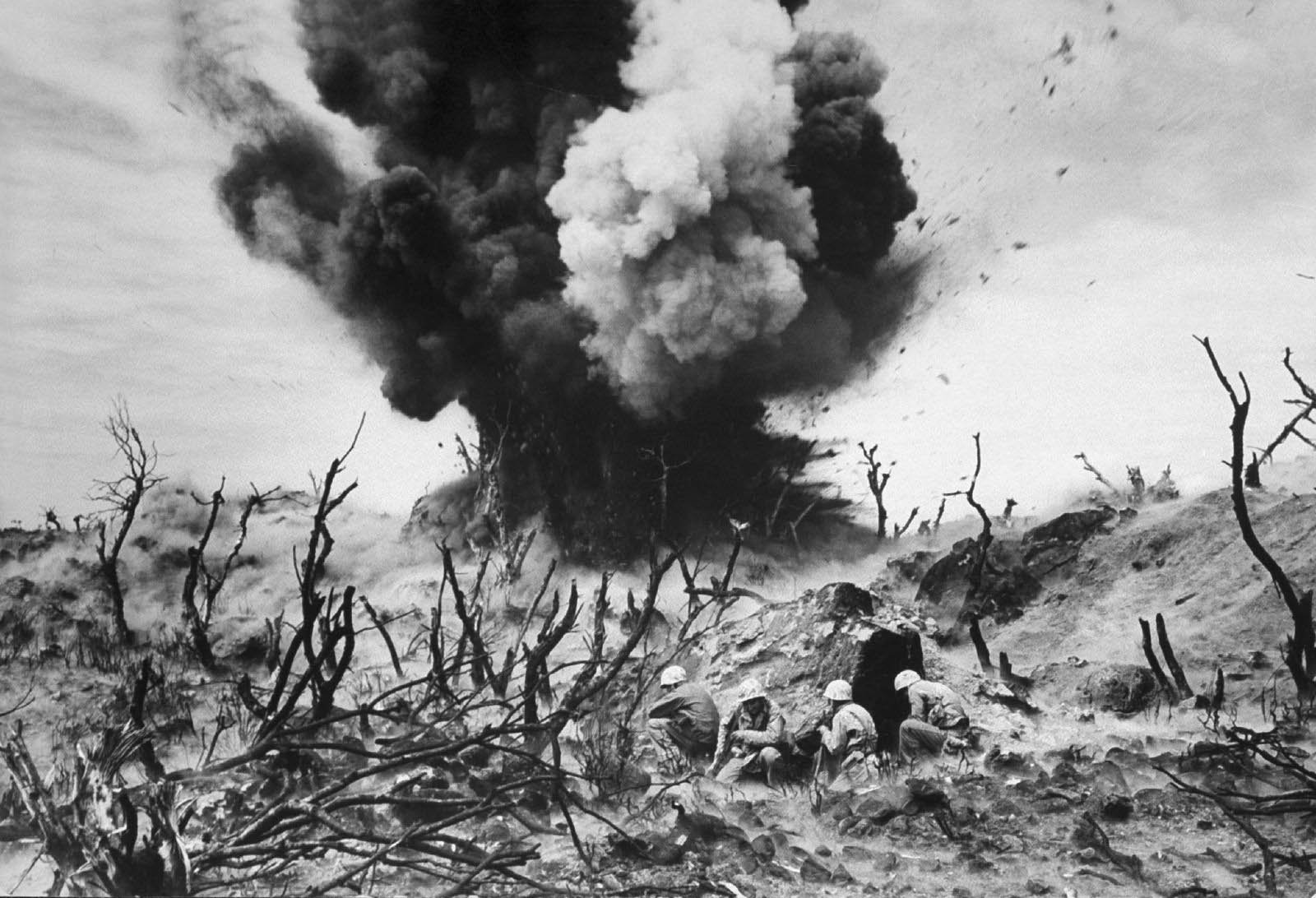
 

W. Eugene Smith (American, 1918-1978) 'World War II. The Pacific Campaign. The Battle of Iwo Jima (Japanese island). US Marine demolition team blasting out a cave on Hill 382. Iwo Jima. February, 1945' 1945


W. Eugene Smith (American, 1918-1978)
World War II. The Pacific Campaign. The Battle of Iwo Jima (Japanese island). US Marine demolition team blasting out a cave on Hill 382. Iwo Jima. February, 1945
1945
Gelatin silver print
© W. Eugene Smith
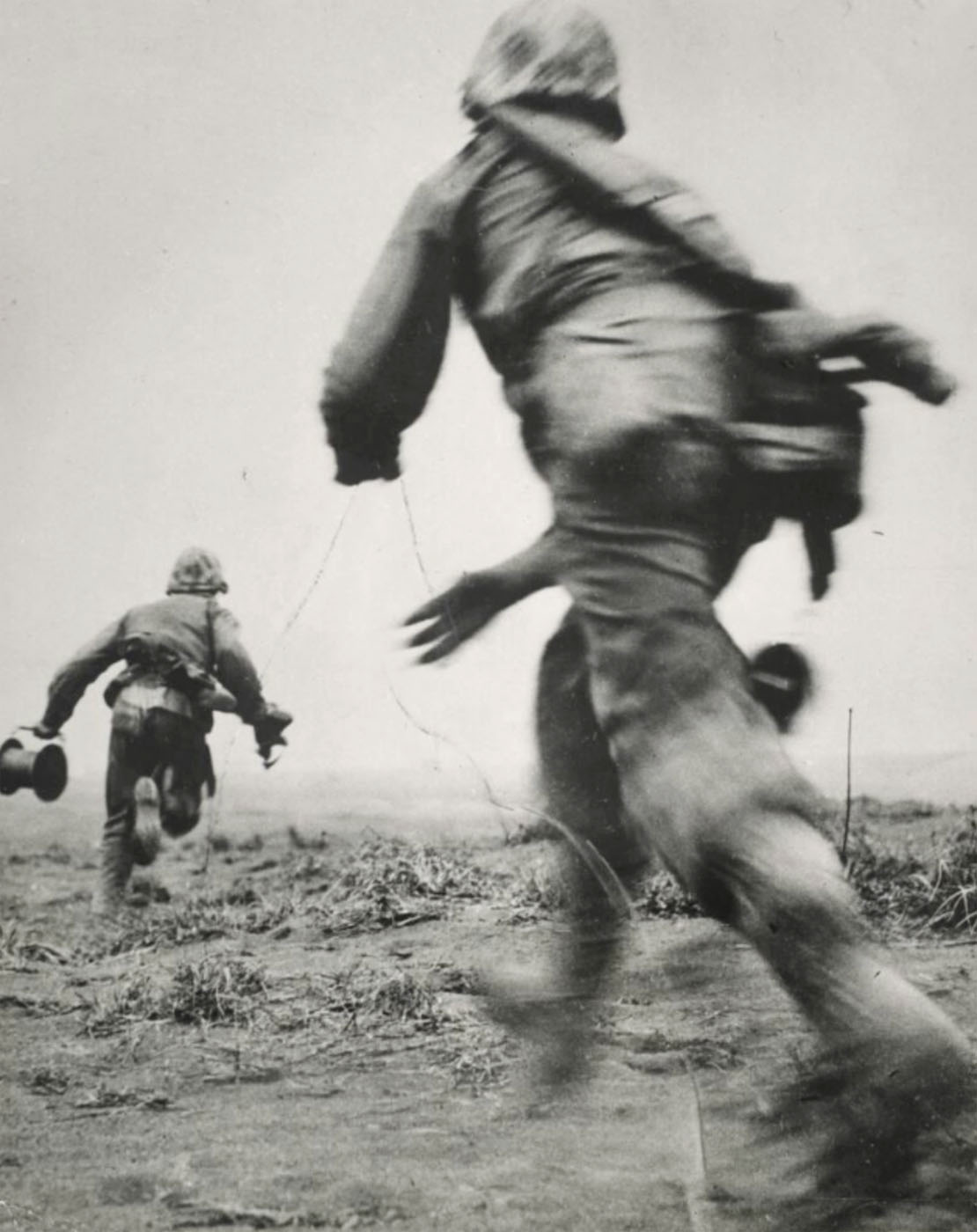
 

Joseph Schwartz (American, 1913–2013) 'Hold the Phone - Two Marine wiremen on Iwo Jima race across an open field, under heavy enemy fire to establish field telephone contact with the front lines' February 19, 1945, printed early 1950s


Joseph Schwartz (American, 1913–2013)
Hold the Phone – Two Marine wiremen on Iwo Jima race across an open field, under heavy enemy fire to establish field telephone contact with the front lines
February 19, 1945, printed early 1950s
Gelatin silver print mounted on board
18 13/16 × 14 15/16 in. (47.8 × 37.9cm)
The Museum of Fine Arts, Houston
Museum purchase funded by Knox Nunnally at “One Great Night in November, 2009,” in honor of Houston trial lawyer Joe Reynolds, a U.S. Marine who fought on Iwo Jima
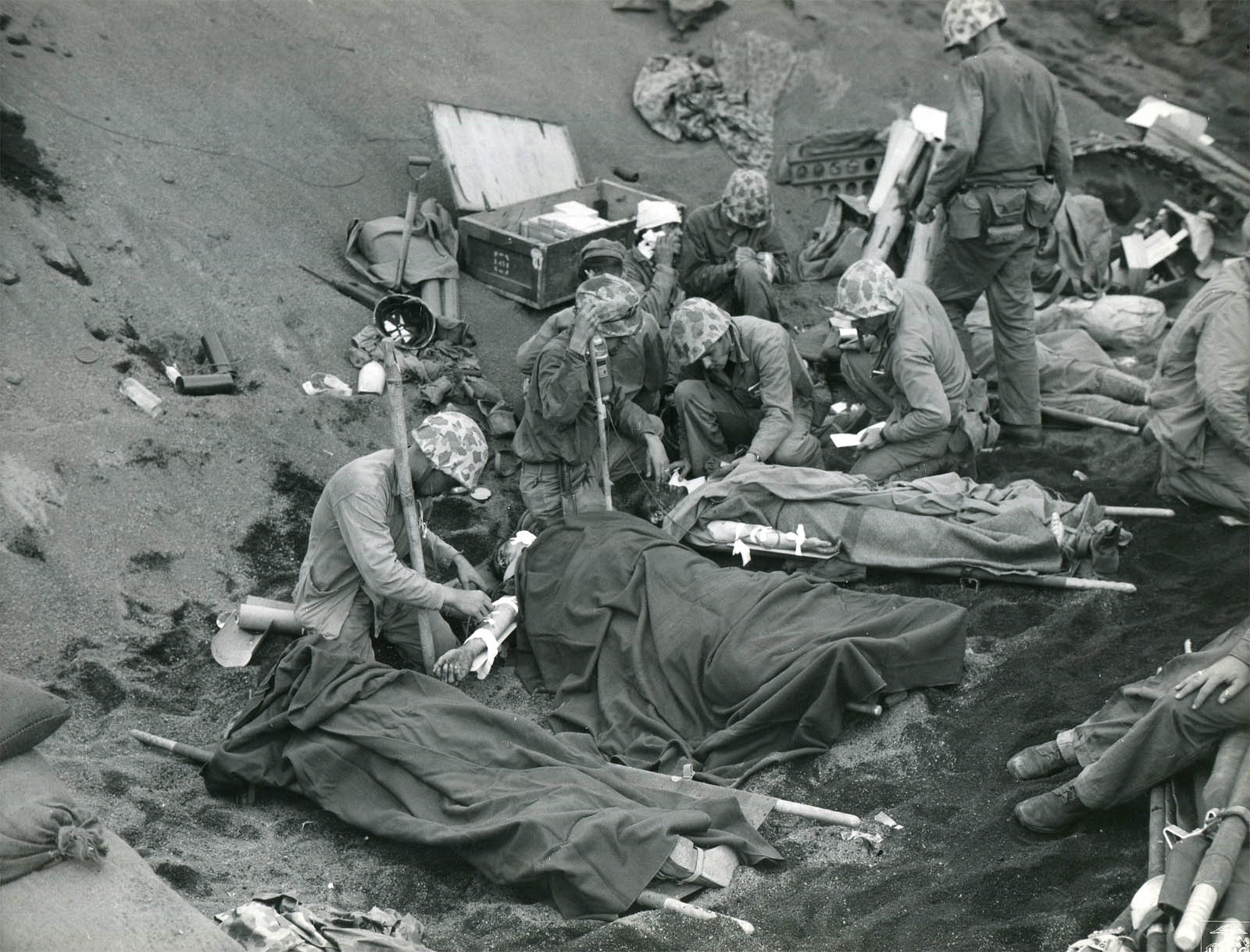
 

Anonymous photographer. U.S. Department of Defense / USMC Official Photograph 'PLASMA WARD – Navy doctors and corpsmen administer to wounded Marines at an aid station established in a gully on Iwo Jima. The high casualty rate in this operation required the use of gallons of plasma and whole blood sent by air from the West Coast' 1945


Anonymous photographer
U.S. Department of Defense / USMC Official Photograph
PLASMA WARD – Navy doctors and corpsmen administer to wounded Marines at an aid station established in a gully on Iwo Jima. The high casualty rate in this operation required the use of gallons of plasma and whole blood sent by air from the West Coast
1945
Gelatin silver print
Creative Commons Attribution 2.0 Generic
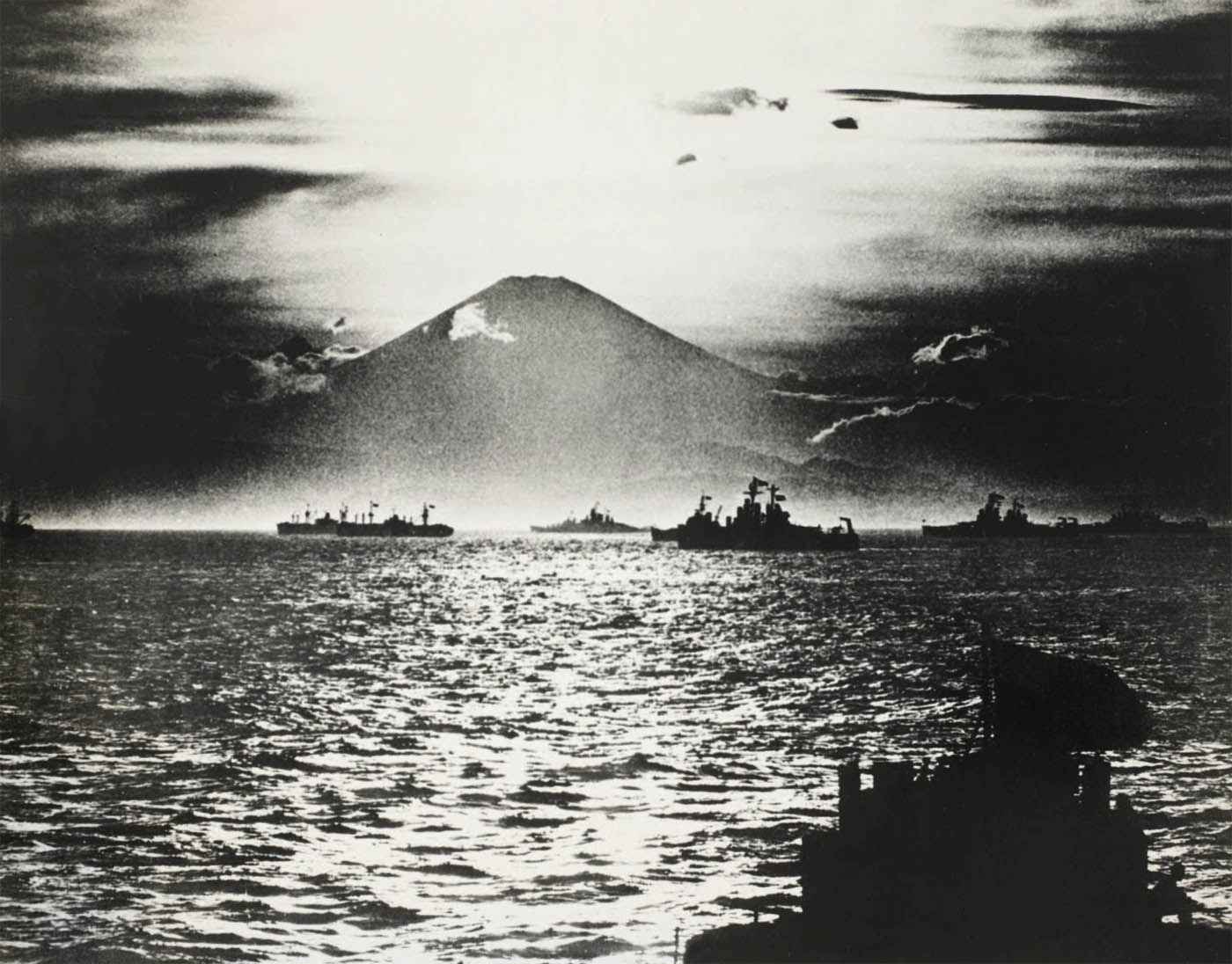
 

U.S. Navy Photographic Team. 'U.S. and British Warships Anchored in Sagami Wan, Outside of Tokyo Bay, Japan, on the Day the Allied Ships Entered Japanese Waters' 27th August 1945


U.S. Navy Photographic Team
U.S. and British Warships Anchored in Sagami Wan, Outside of Tokyo Bay, Japan, on the Day the Allied Ships Entered Japanese Waters
27th August 1945
Gelatin silver print
The Museum of Fine Arts, Houston, museum purchase funded by Laura and Tony Visage in honor and memory of William A. Visage and his fellow soldiers in Battery “E” of the 2nd Battalion, 131st Field Artillery, U.S. Army Air Corps
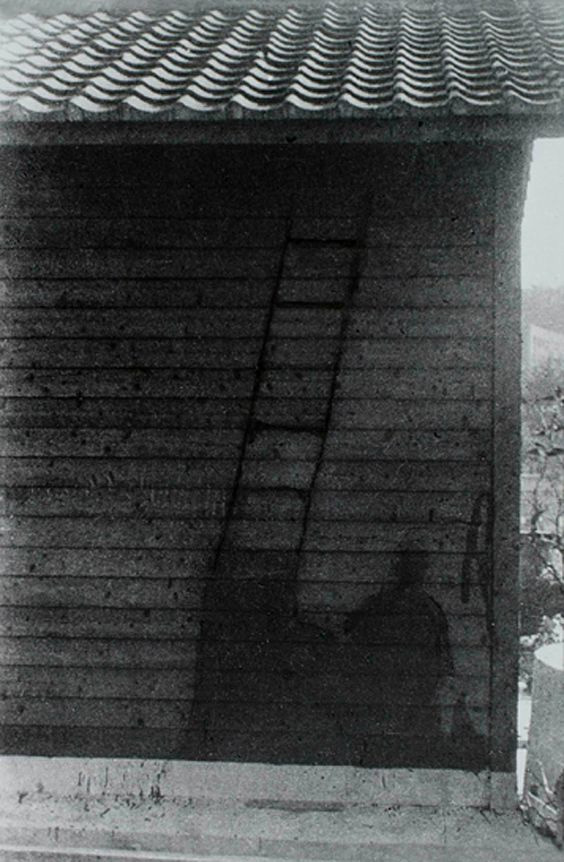
 

Matsumoto Eiichi (Japanese, 1915-2004) 'Shadow of a soldier remaining on the wooden wall of the Nagasaki military headquarters (Minami-Yamate machi, 4.5km from Ground Zero)' 1945


Matsumoto Eiichi (Japanese, 1915-2004)
Shadow of a soldier remaining on the wooden wall of the Nagasaki military headquarters (Minami-Yamate machi, 4.5km from Ground Zero)
1945
Gelatin silver print
Collection of the Tokyo Metropolitan Museum of Photography
© Matsumoto Eiichi
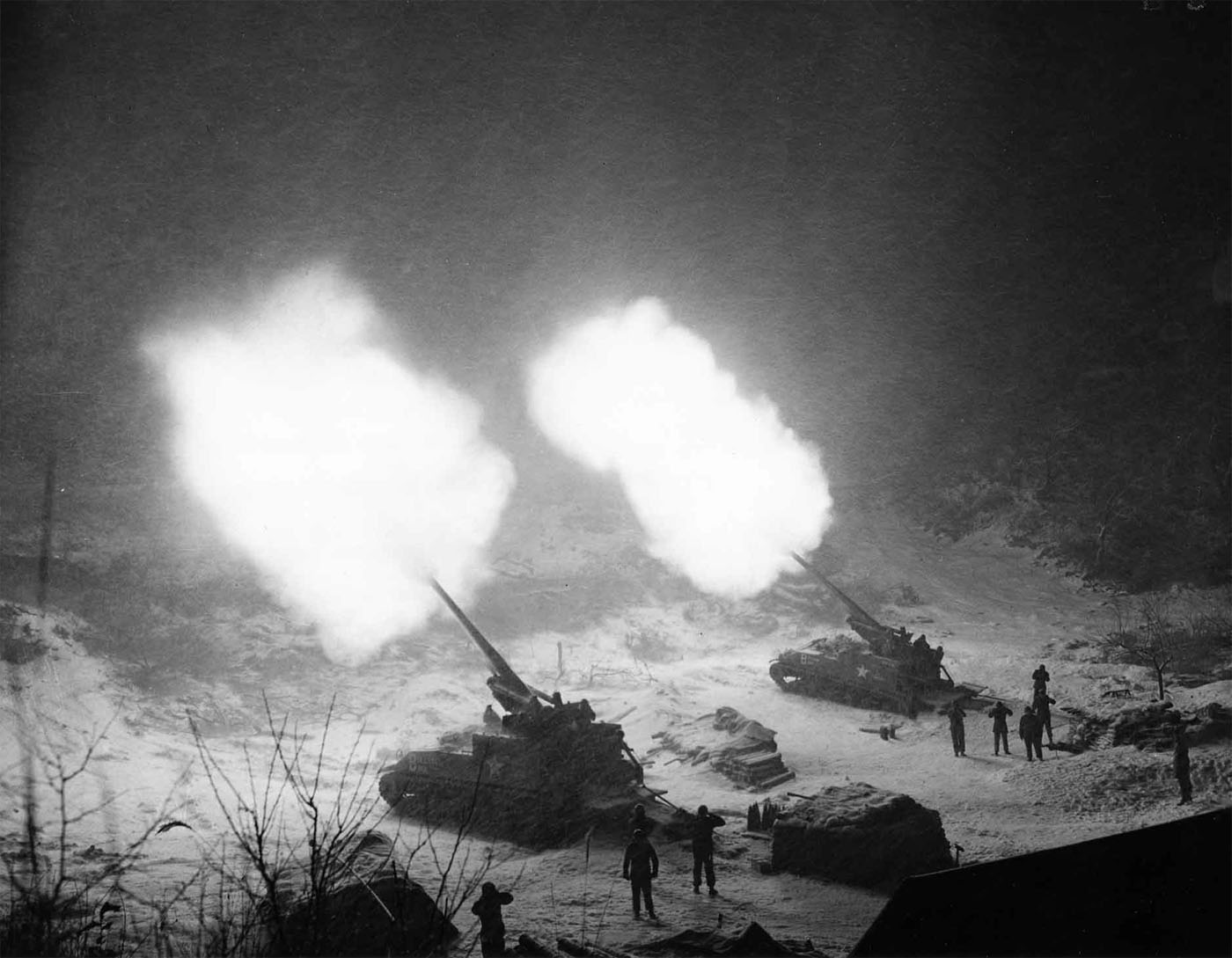
 

Unknown photographer. 'A pair of M-40 155mm Gun Motor Carriages of Battery B, 937th Field Artillery Battalion, providing fire support to U.S. Army 25th Infantry Division, Munema, Korea' 26 November 1951


Unknown photographer
A pair of M-40 155mm Gun Motor Carriages of Battery B, 937th Field Artillery Battalion, providing fire support to U.S. Army 25th Infantry Division, Munema, Korea
26 November 1951
Gelatin silver print
U.S. Department of Defense


Cathy LeRoy (French, 1944-2006) 'Corpsman In Anguish' 1967


Cathy LeRoy (French, 1944-2006)
Corpsman In Anguish
1967
Gelatin silver print


Her pictures from Vietnam were stunning. Her photos from Battle of Hill 881 evoked “ghosts of Iwo Jima and Pork Chop Hill,” Time magazine wrote in May 1967. Her photos of corpsman Vernon Wike during the battle was a triptych of an all-too-familiar scene: in the first, Wike has two hands on his friend’s chest, trying to staunch the wound; in the second, he tries to find a heartbeat; in the third frame, “Corpsman In Anguish”, he realised the man is dead.

LeRoy herself came very close to death two weeks later. Her Nikon barely stopped a piece of mortar shrapnel that ripped open her chest. She said that she thought the last words she would ever hear were, “I think she’s dead, sarge.” During the Tet offensive in 1968, LeRoy was briefly captured by the North Vietnamese during the battle for Hue. LeRoy’s photos of her captivity later made the cover of Life, ‘A Remarkable Day in Hue: the Enemy Lets Me Take His Picture’. She was the first person to take photos of North Vietnamese Army Regulars behind their lines.

Anonymous. “Corpsman In Anguish | Cathy LeRoy,” on the Iconic Photos website January 13, 2014 [Online] Cited 27/07/2024


A licensed parachutist, Leroy jumped with the U.S. 173rd Airborne Brigade into combat during Operation Junction City in February of 1967. It was in this action, the battle for Hill 881, that Leroy photographed U.S. Navy Corpsman Vernon Wike as he rushed to the aid of a fallen comrade. “Corpsman in anguish” is the third frame of a series that Leroy shot, capturing the unimaginable grief of war. Later, in an interview for the documentary “The Hill Fights”, Wike recounted the moment that Leroy photographed.

“I know there was chaos going on around me, but there was no sound,” she says. “… I knew he didn’t have a chance, but I still got p—–d off when he died.” Leroy describes the aftermath as the corpsman “lost in this nightmare landscape” grabbed the fallen marine’s M16 and charged a Viet bunker alone in a hail of obscenities. The fallen marine was a man called “Rock”, a New Yorker from Puerto Rico. Earlier that day he had told Wike that he only had 60 days left “in country” – his deployment in Vietnam.

Anonymous. “Giving War a Face: Catherine Leroy,” on the Dismal Nitch website September 04, 2020 [Online] Cited 27/07/2024
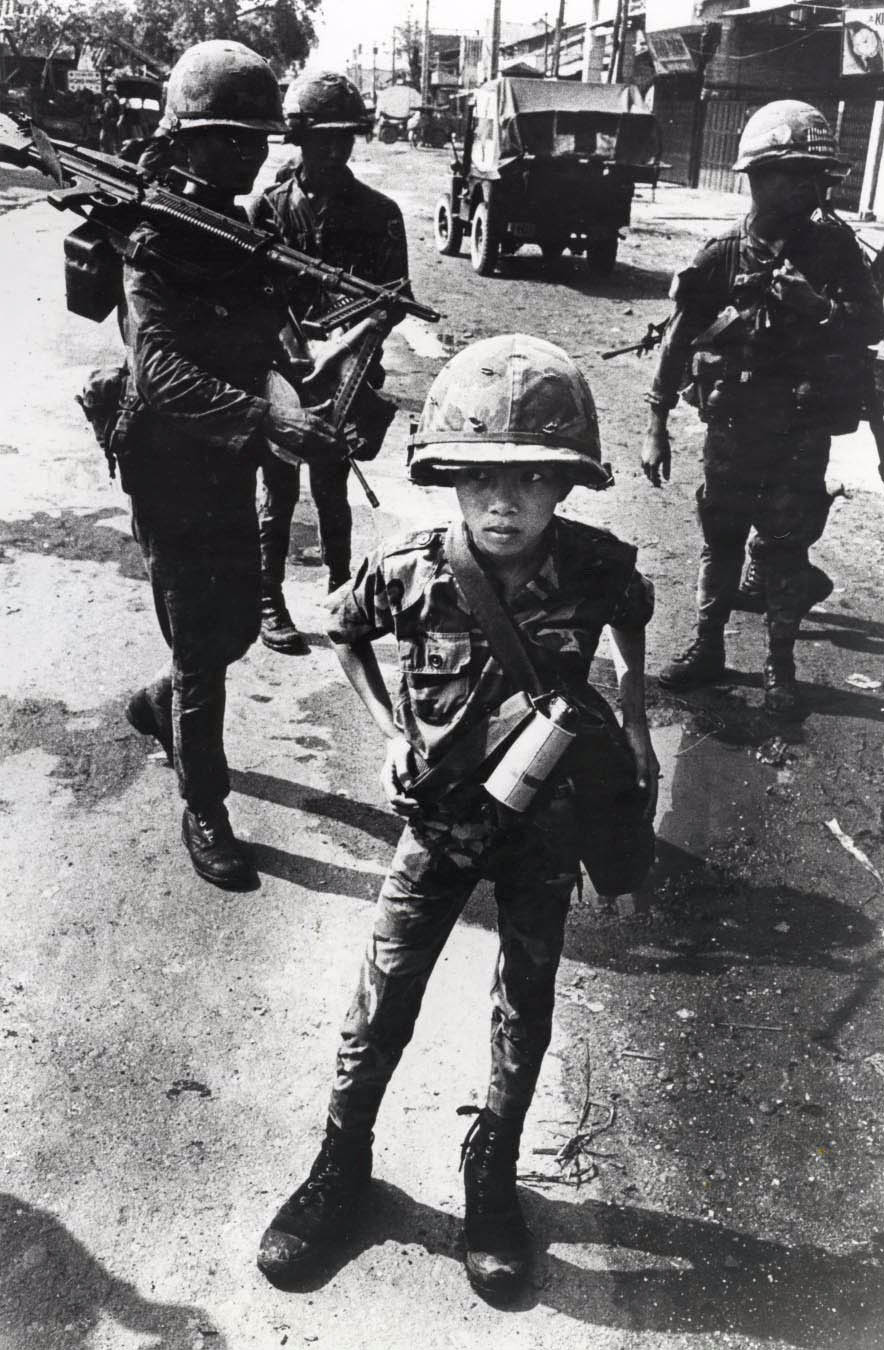
 

Arkady Shaikhet (Soviet, 1898-1959) 'Partisan Girl' 1942


Philip Jones Griffiths (Welsh, 1936-2008)
​Called “Little Tiger” for killing two “Viet Cong women cadre” – his mother and teacher, it was rumored, Vietnam​
1968
Gelatin silver print
The Philip Jones Griffiths Foundation, courtesy of Howard Greenberg Gallery
© Philip Jones Griffiths / Magnum Photos
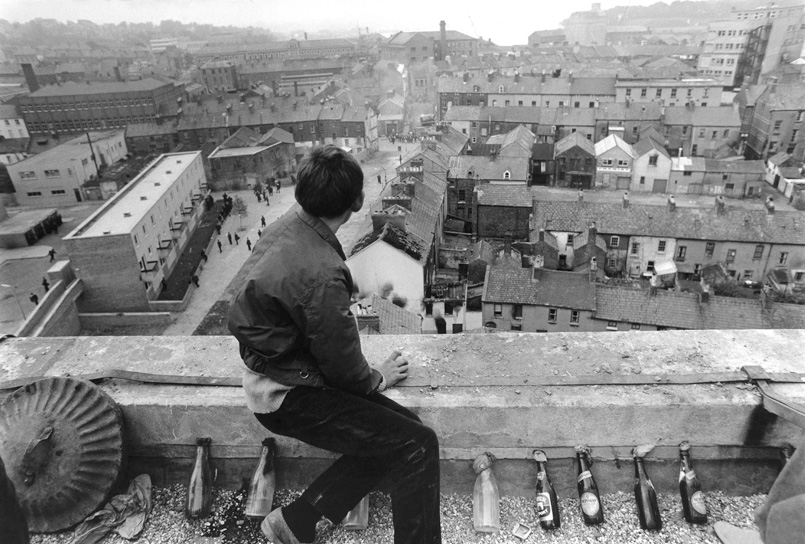
 

Gilles Caron (French, 1939-1970) 'Young Catholic demonstrator on Londonderry Wall, Northern Ireland' 1969


Gilles Caron (French, 1939-1970)
Young Catholic demonstrator on Londonderry Wall, Northern Ireland
1969
Gelatin silver print
Courtesy of Foundation Gilles Caron and Contact Press Images
© Gilles Caron
 

Rafael Wollmann (Argentinian, b. 1958) 'British Marines surrender to Argentinean troops in Malvinas/Falklands' April 2, 1982, printed 2012


Rafael Wollmann (Argentinian, b. 1958)
British Marines surrender to Argentinean troops in Malvinas/Falklands
April 2, 1982, printed 2012
Inkjet print
15 7/8 × 20 in. (40.4 × 50.8cm)
The Museum of Fine Arts, Houston
Gift of Rafael Wollmann
 

David Leeson (American, b. 1957) 'Death of a Soldier, Iraq' March 24, 2003


David Leeson (American, b. 1957)
Death of a Soldier, Iraq
March 24, 2003
Inkjet print, printed 2012
Courtesy of the artist


Ziv Koren (Israeli, b. 1970) 'A sniper’s-eye view of Rafah, in the Southern Gaza strip, during an Israeli military sweep' 2006


Ziv Koren (Israeli, b. 1970)
A sniper’s-eye view of Rafah, in the Southern Gaza strip, during an Israeli military sweep
2006
Inkjet print, printed 2012
© Ziv Koren/Polaris Images
 

Goran Tomasevic (Serbian, b. 1959) /Reuters. 'SHOOTING. Sgt. William Olas Bee, a US Marine from the 24th Marine Expeditionary Unit, has a close call after Taliban fighters opened fire near Garmser in Helmand Province of Afghanistan May 18, 2008. The Marine was not injured.' 2008


Goran Tomasevic (Serbian, b. 1959) /Reuters
SHOOTING. Sgt. William Olas Bee, a US Marine from the 24th Marine Expeditionary Unit, has a close call after Taliban fighters opened fire near Garmser in Helmand Province of Afghanistan May 18, 2008. The Marine was not injured.
2008


Tomašević began photographing the war that followed the breakup of Yugoslavia from 1991 for daily newspaper Politika. In 1996 he joined the world’s largest news agency, Reuters, covering the simmering political tensions in Kosovo and the anti-Milošević demonstrations in his hometown of Belgrade since mid-1990s. During three-month NATO bombing of Yugoslavia in 1999, Tomašević was the only photographer working for foreign press to spend the duration of the conflict in Kosovo.

Tomašević moved to Jerusalem in 2002, covering the second Palestinian intifada. During the U.S. led invasions of Iraq in 2003, his picture of a U.S. Marine watching the toppling of a Saddam Hussein statue became one of the most memorable images of the war. He often returned to Iraq as sectarian violence escalated and regularly photographed America’s other war in Afghanistan. His sequence of photographs of U.S. Marine Sergeant Bee narrowly escaping Taliban bullets became an iconic image in U.S. war history.

Tomašević moved to Cairo in 2006 and was at the heart of Reuters’ coverage of the Arab Springs. In Libya, his image of a fireball that spewed up after an air strike on pro-Gaddafi fighters became an iconic image of the Libyan war, gracing the front pages of more than 100 newspapers around the globe. He stayed in Cairo until 2012. His raw pictures of rebel fighters battling pro-Assad forces among the ruins of Aleppo and Damascus during the Syrian Civil War have won international acclaim, as did his coverage of the bloody siege on a Nairobi shopping mall in Kenya. Tomašević worked for Reuters until 2022.

Text from the Wikipedia website


Museum of Fine Arts, Houston
1001 Bissonnet Street
Houston, TX 77005

Opening hours:
Wednesday 11am – 5pm
Thursday 11am – 9pm
Friday 11am – 6pm
Saturday 11am – 6pm
Sunday 12.30pm – 6pm
Closed Monday and Tuesday, except Monday holidays
Closed Thanksgiving Day and Christmas Day

Museum of Fine Arts, Boston website

LIKE ART BLART ON FACEBOOK

Back to top

Exhibition: ‘Cartier-Bresson: A Question of Colour’ at Somerset House, London

Exhibition dates: 8th November 2012 – 27th January 2013

Curator: William E. Ewing


Henri Cartier-Bresson (French, 1908-2004) 'Harlem, New York' 1947


Henri Cartier-Bresson (French, 1908-2004)
Harlem, New York, 1947
1947
Gelatin silver print / printed 1970s
Image: 29.1 x 19.6cm
Paper: 30.4 x 25.4cm
© Henri Cartier-Bresson/Magnum Photos, Courtesy Fondation Henri Cartier-Bresson


They may be channelling the master, but none does it like Cartier-Bresson. There is a spareness and spatial intensity to Cartier-Bresson’s work that is absolutely his own. Look at the photograph directly above (Harlem, New York, 1947). A railing leads the eye in bottom right, echoed by the bottom jamb of the window. The opening is set for the old man to perform complete with curtains, talking stage right. The jamb zig zags above a trilby-wearing, cigarette-smoking man’s head leading to a wire mesh fence that takes the eye out of the frame on the left. The two men, lower than the old man in the framed window, look in a completely different direction to him.

Counterpoise. The image pulls in two directions. Above their head a series of cantilevered staircases ascends to the heavens, thought ascending. A masterpiece.

So many of the other photographers in this posting crowd the plane with people looking in all directions, closed off foregrounds or tensionless images. Images that are too complex or too simple. There is an opposition to Cartier-Bresson’s images that is difficult for the viewer to resolve neatly, yet they appear as if in perfect balance. Look at Brooklyn, New York, 1947 towards the bottom of the posting. Nothing in this still life is out of place (from the light to the multiple, overlapping shadows and the out of focus elements of the composition) yet there is humbling agony about the whole thing. It is almost is if he is saying, “cop a load of this, this is what I can see.” And what a fabulous eye it is.

Dr Marcus Bunyan


Many thankx to Somerset House for allowing me to publish the photographs in the posting. Please click on the photographs for a larger version of the image.


Ernst Haas (Austrian-American, 1921-1986) 'New Orleans, USA' 1960


Ernst Haas (Austrian-American, 1921-1986)
New Orleans, USA,
1960
Chromogenic archival print
50 x 35cm
© Ernst Haas Estate, New York


Saul Leiter (American, 1923-2013) 'Snow' 1960


Saul Leiter (American, 1923-2013)
Snow
1960
© Saul Leiter
Courtesy: Saul Leiter, Howard Greenberg Gallery, New York


Helen Levitt (American, 1913-2009) 'Cat next to red car, New York' 1973


Helen Levitt (American, 1913-2009)
Cat next to red car, New York,
1973
Type C prints
18 x 12 inches
© Estate of Helen Levitt


Alex Webb (American, b. 1952) 'Tehuantepec, Mexico' 1985


Alex Webb (American, b. 1952)
Tehuantepec, Mexico
1985
71 x 47cm
Digital Type C print
© Alex Webb


“I only know how to approach a place by walking. For what does a street photographer do but walk and watch and wait and talk, and then watch and wait some more, trying to remain confident that the unexpected, the unknown, or the secret heart of the known awaits just around the corner.”

~ Alex Webb


Jeff Mermelstein (American, b. 1957) 'Untitled (Package Pile Up, New York City)' 1995


Jeff Mermelstein (American, b. 1957)
Untitled (Package Pile Up, New York City)
1995
Chromogenic print
© Jeff Mermelstein
Courtesy Rick Wester Fine Art, New York


Carolyn Drake (American, b. 1971) 'Birthday party at Olympia, a gated community, Wellington, Florida' 2005


Carolyn Drake (American, b. 1971)
Birthday party at Olympia, a gated community, Wellington, Florida
2005
Digital Pigment Print
© Carolyn Drake / Magnum Photos


Carolyn Drake (American, b. 1971) 'Hotel room. Zhetisay, Kazakhstan. Carolyn Drake' 2009


Carolyn Drake (American, b. 1971)
Hotel room. Zhetisay, Kazakhstan. Carolyn Drake
2009
Digital Pigment Print
© Carolyn Drake/Magnum Photos


Andy Freeberg (American, b. 1958) 'Sean Kelly, Art Basel Miami' 2010


Andy Freeberg (American, b. 1958)
Sean Kelly, Art Basel Miami
2010
From the series Art Fare
Artist: Kehinde Wiley
63 x 43cm
Pigment ink print
© Andy Freeberg
Courtesy Kopeikin Gallery


Carolyn Drake (American, b. 1971) 'New Kashgar. Kashgar, China'  2011


Carolyn Drake (American, b. 1971)
New Kashgar. Kashgar, China  
2011
30.48 x 20.32cm
Digital Light Jet print
© Carolyn Drake 2012


Positive View Foundation announces its inaugural exhibition Cartier-Bresson: A Question of Colour, to be held at Somerset House, 8 November 2012 – 27 January 2013. Curated by William A. Ewing, the exhibition will feature 10 Henri Cartier-Bresson photographs never before exhibited in the UK alongside over 75 works by 15 international contemporary photographers, including: Karl Baden (US), Carolyn Drake (US), Melanie Einzig (US), Andy Freeberg (US), Harry Gruyaert (Belgium), Ernst Haas (Austrian), Fred Herzog (Canadian), Saul Leiter (US), Helen Levitt (US), Jeff Mermelstein (US), Joel Meyerowitz (US), Trent Parke (Australian), Boris Savelev (Ukranian), Robert Walker (Canadian), and Alex Webb (US).

The extensive showcase will illustrate how photographers working in Europe and North America adopted and adapted the master’s ethos famously known as  ‘the decisive moment’ to their work in colour. Though they often departed from the concept in significant ways, something of that challenge remained: how to seize something that happens and capture it in the very moment that it takes place.

It is well-known that Cartier-Bresson was disparaging towards colour photography, which in the 1950s was in its early years of development, and his reasoning was based both on the technical and aesthetic limitations of the medium at the time. Curator William E. Ewing has conceived the exhibition in terms of, as he puts it, ‘challenge and response’. “This exhibition will show how Henri Cartier-Bresson, in spite of his skeptical attitude regarding the artistic value of colour photography, nevertheless exerted a powerful influence over photographers who took up the new medium and who were determined to put a personal stamp on it. In effect, his criticisms of colour spurred on a new generation, determined to overcome the obstacles and prove him wrong. A Question of Colour simultaneously pays homage to a master who felt that black and white photography was the ideal medium, and could not be bettered, and to a group of photographers of the 20th and 21st centuries who chose the path of colour and made, and continue to make, great strides.”
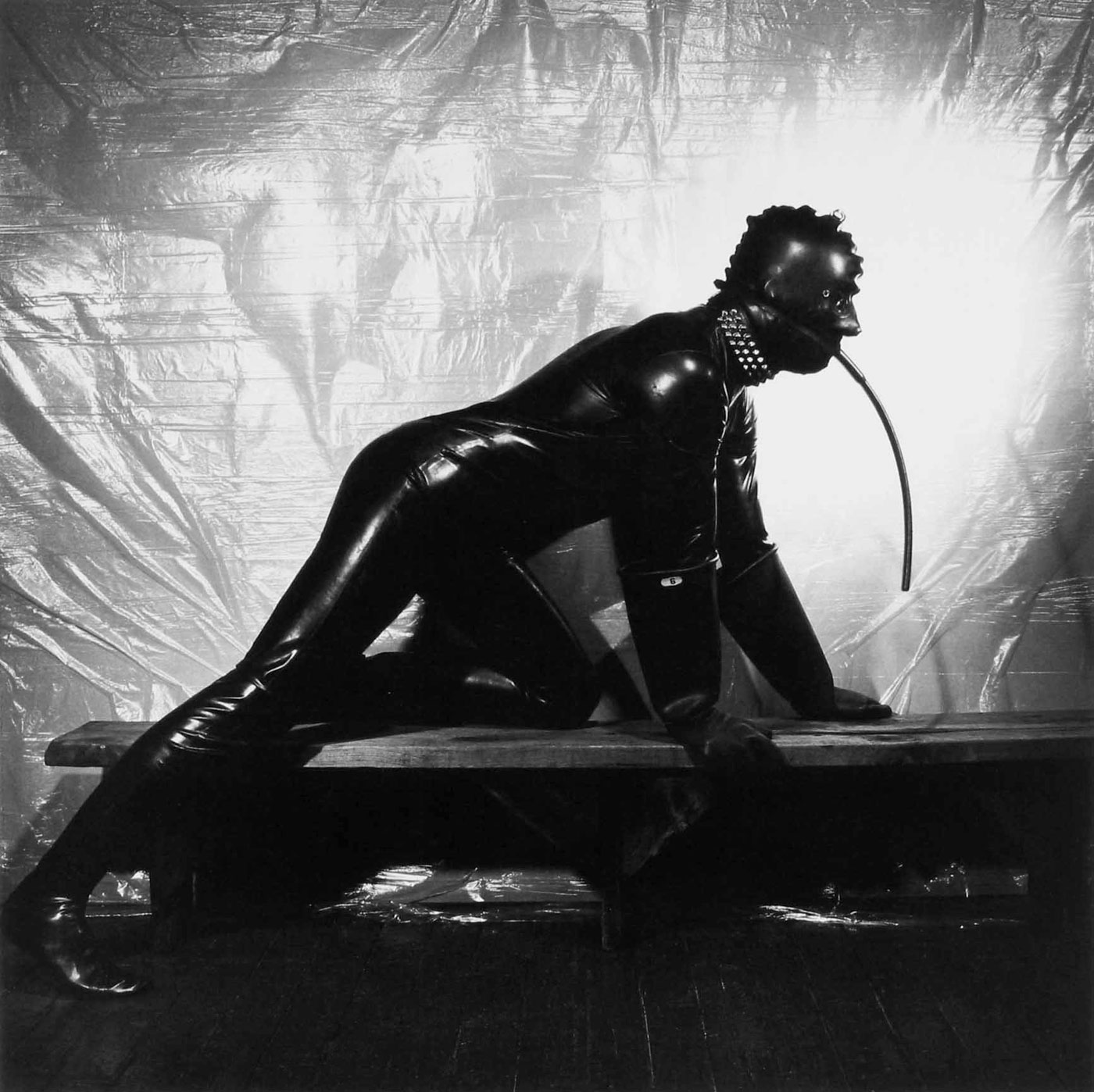
Cartier-Bresson: A Question of Colour will feature a selection of photographers whose commitment to expression in colour was – or is – wholehearted and highly sophisticated, and which measured up to Cartier-Bresson’s essential requirement that content and form were in perfect balance. Some of these artists were Cartier-Bresson’s contemporaries, like Helen Levitt, or even, as with Ernst Haas, his friends; others, such as Fred Herzog in Vancouver, knew the artist’s seminal work across vast distances; others were junior colleagues, such as Harry Gruyaert, who found himself debating colour ferociously with the master; and others still, like Andy Freeberg or Carolyn Drake, never knew the man first-hand, but were deeply influenced by his example.

Press release from Somerset House website


Fred Herzog (Canadian born Germany, 1930-2019)
'Man with Bandage, Vancouver, Canada'
1968


Fred Herzog (Canadian born Germany, 1930-2019)
Man with Bandage, Vancouver, Canada
1968


Joel Meyerowitz (American, b. 1938) 'Madison Avenue, New York City 1975


Joel Meyerowitz (American, b. 1938)
Madison Avenue, New York City
1975
Archival Pigment Print
© Joel Meyerowitz 2012
Courtesy Howard Greenberg Gallery, NYC


Joel Meyerowitz (American, b. 1938) Camel Coats, Fifth Avenue, New York 1975


Joel Meyerowitz (American, b. 1938)
Camel Coats, Fifth Avenue, New York
1975
Archival Pigment Print
© Joel Meyerowitz 2012
Courtesy Howard Greenberg Gallery, NYC


Ernst Haas (American, 1921-1986) 'New York City, US' 1981


Ernst Haas (American, 1921-1986)
New York City, US
1981


Fred Herzog (Canadian born Germany, 1930-2019) 'Crossing Powell 2' 1984


Fred Herzog (Canadian born Germany, 1930-2019)
Crossing Powell 2
1984
Ink jet print


Harry Gruyaert (Belgian, b. 1941) 'Morocco, town of Duarzazte' 1986


Harry Gruyaert (Belgian, b. 1941)
Morocco, town of Duarzazte
1986
© 2015 Harry Gruyaert / Magnum Photos


Harry Gruyaert (Belgian, b. 1941) 'Province of Brabant, Flanders region, Belgium' 1988


Harry Gruyaert (Belgian, b. 1941)
Province of Brabant, Flanders region, Belgium
1988
© 2015 Harry Gruyaert / Magnum Photos


Harry Gruyaert is known for his extraordinary photographic work with color. Born in Antwerp in 1941, he originally dreamed of becoming a film director. In the late 1970s, Pop art and a trip to Morocco inspired him to become one of the first photographers in Europe to devote his work entirely to color photography. Gruyaert’s cinematographic background instilled in him an aesthetic conception of photography. Rather than telling stories or documenting the world through his lens, he searches for beauty in everyday elements. His images are simply snapshots of magical moments in which different visual aspects, primarily color, form, light and movement, spontaneously come together in front of his lens.
Text from the Magnum website


Jeff Mermelstein (American, b. 1957) 'Unitled ($10 bill in mouth) New York City' 1992


Jeff Mermelstein (American, b. 1957)
Unitled ($10 bill in mouth) New York City, 1992
1992
Chromogenic print
20 x 16 in.
© Jeff Mermelstein
Courtesy Rick Wester Fine Art, New York


“My process is linked to everyday life. Only on rare occasions do I go out specifically to ‘shoot’. My best photographs were taken going to or from work, or some other destination. Sometimes a picture appears that helps me sum up a strange mood or thought that I’ve struggled with for weeks. Other times my work is more documentary in nature.

Photographing in public keeps me awake and aware, always looking around, in awe at what we humans are up to. In a time when staged narratives and rendered images are popular, I am excited by the fact that life itself offers situations far more strange and beautiful than anything I could set up.”

~ Jeff Mermelstein


Jeff Mermelstein (American, b. 1957) 'Run #9, New York' 1999-2000


Jeff Mermelstein (American, b. 1957)
Run #9, New York
1999-2000
© Jeff Mermelstein


Trent Parke (Australian, b. 1971) 'Man Vomiting, Gerald #1' 2006


Trent Parke (Australian, b. 1971)
Man Vomiting, Gerald #1
2006
Type C print
© Trent Parke
Courtesy Magnum Photos


Karl Baden (American, b. 1952) 'Chestnut Hill, Massachusetts' 2009


Karl Baden (American, b. 1952)
Chestnut Hill, Massachusetts
2009
Archival Inkjet
40.64 x 54.19cm
© Karl Baden


Boris Savelev (Russian, b. 1947) 'Cafe Ion, Moscow' 2009


Boris Savelev (Russian, b. 1947)
Cafe Ion, Moscow
2009
© Boris Savelev


Andy Freeberg (American, b. 1958) 'Nina Menocal, Armory Show' 2011


Andy Freeberg (American, b. 1958)
Nina Menocal, Armory Show
2011
From the series Art Fare
Pigment ink print
© Andy Freeberg
Courtesy Kopeikin Gallery


Henri Cartier-Bresson (French, 1908-2004) 'Brooklyn, New York' 1947


Henri Cartier-Bresson (French, 1908-2004)
Brooklyn, New York, 1947
1947
Gelatin silver print / printed in 2007
Image: 19.8 x 29.8cm
Paper: 22.9 x 30.4cm
© Henri Cartier-Bresson/Magnum Photos, Courtesy Fondation Henri Cartier-Bresson


Melanie Einzig (American, b. 1967) 'September 11th, New York' 2001


Melanie Einzig (American, b. 1967)
September 11th, New York 2001
2001
21 x 33cm
Inkjet print
© Melanie Einzig 2012


Terrace Rooms & Courtyard Rooms, Somerset House
Strand, London, WC2R 1LA

Opening hours:
10am – 6pm daily

Somerset House website

LIKE ART BLART ON FACEBOOK

Back to top