Australian artist, curator and writer.
Doctor of Philosophy (RMIT University), Melbourne.
Master of Art Curatorship (University of Melbourne), Melbourne.
Master of Arts (RMIT University), Melbourne.
BA (Hons) (RMIT University), Melbourne.
A.R.C.M. (Associate of the Royal College of Music), London.
For those of you that remember The Venue, St Kilda and Razor Club, this posting is for you.
This is a FAB exhibition of the life and times of Nick Cave, Roland S Howard, Genevieve McGuckin, Polly Borland, The Boys Next Door, The Birthday Party et al. Peter Milne… the photographs are fantastic, perfectly capturing the spirit, youth and electricity of the times. My god, everyone is so young, so lskinny and Roland is SO androgynous in quite a few of the photos – all eyeliner and come to bed eyes.
Although I never mixed in these circles I occasionally went to The Venue, but Razor was definitely the place to be. One enduring memory was of me, totally off my face on a big party night, climbing up past the ladies loo using the gutter down pipes up to the first floor balcony and clambering over, so that I could go and get someone from management to let us all in.
The hang of the exhibition is perfect. In a flow of images, here is Peter Milne at 17 sitting on a couch with Roland S Howard reading Playboy; Polly Borland at home with a broken, unlit fag hanging from her mouth; and the most beautiful, colour photograph of Nick Cave and Rowland S Howard after Birthday Party gig (1982, below) with arms around each, Nick planting a kiss on the dapper Roland, flocked wallpaper behind. Youth, innocence, life, love, beauty and nostalgia all rolled into one. Gen (Genevieve McGuckin), long-time partner of Roland, has been a friend of mine for years and so it was wonderful to see photographs of her in her youth, as vivacious and delightful then as now.
I loved every second of this exhibition. The creativity of the people, the vibrancy of the ad hoc poses and the sheer joy of living the life – coupled with the magic of the insightful, intuitive images – make this a must see exhibition. If you do anything in Melbourne this coming week, go see this show (ends Saturday, 28th March).
Dr Marcus Bunyan
Many thankx to Strange Neighbour and Peter Milne for allowing me to publish the photographs in the posting. Please click on the photographs for a larger version of the image. All images courtesy of the artist and M.33. Download the Juvenilia web essay (2.7Mb pdf)
Installation photographs of the exhibition Juvenilia at Strange Neighbour, Melbourne Photography:Alex Bell Moffat
Juvenilia brings together for the first time 100 astonishing photographs of friends and family taken by renowned Victorian artist Peter Milne when he was a very young man. Warm, intimate, surprising and already displaying the great compositional skills, originality and humour for which Milne is known, these images offer an unprecedented peep into mid 1970s to mid 1980s Melbourne and a milieu of people who would go on to play pivotal roles in Melbourne’s burgeoning cultural scene.
Starting in 1976 when Milne was 16 and photographing school friends Gina Riley and Rowland S Howard, through to images of the legendary band, the Boys Next Door lounging in Nick Cave’s bedroom in his parents’ house, the first Boys Next Door gig and photo shoot, parties, trips to the country, outings to the beach, rehearsals and a full length photo essay tracing A Day in the Life of Rowland S Howard, the photographs feature a dazzling cast including Anita Lane, Blixa Bargeld, Tony Clark, Polly Borland and Mick Harvey as well as Milne’s less famous but equally interesting friends and family.
Peter Milne is based in Castlemaine. He has exhibited extensively around Australia and internationally. He has had three monographs of his work published: When Nature Forgets (M.33, Melbourne, 2013), Beautiful Lies – Notes Towards a History of Australia (QCP, Brisbane, 2011) and Fish in a Barrel – Nick Cave & The Bad Seeds on Tour (Tender Prey, London, 1993). He is represented by M.33, Melbourne.
I was initially quite dubious when curators Linsey Gosper and Helen Frajman approached me about exhibiting this work because it is so obviously the product of a callow youth (the earliest images on show here were shot when I was 16 years old, soon after the dismissal of the Whitlam government in the mid 1970s).
I was placated by the argument that the work had some kind of historical value that negated my concerns about poor technique and the visible signs of decay in an archive that has been poorly stored for the last four decades but I still felt uncomfortable. I think my key anxiety was the possibility that I would come across like one of those figures we’ve seen in numerous, recent documentaries about the Punk days in Melbourne – fat, balding, middle-aged individuals banging on about how amazing they were when 18 years old. As a fat, balding, middle-aged artist (with visible signs of decay) I try to be more focused on my next body of work than I am on images I produced so very, very long ago.
However, having pulled the negatives and slides out of their dusty boxes, I now see some merit in them. I am immediately struck by the evidence that I really did hang out with some lovely, clever people who went on to fulfil much of the creative potential that they so clearly promised.
I cannot say that life in Melbourne in the late 1970s and early 1980s was bliss (because the city had some meagre, stale and forbidding ways) but it was a time and a place where I found myself in the company of a cohort with great inventive energy and all the joyous arrogance of youth.
Looking at these images now, I see that my friends and family were every bit as beautiful as I remember them.
My friends and I were in our mid-teens and we’d heard about the coming of Australian punk: the Saints in Brisbane and Radio Birdman in Sydney. We’d been to a few gigs at Burnhearts, a gay venue housed in the old ‘Thumping Tum’ that had given up its Tuesday nights to punk. We’d seen Fiction, the Negatives and News there. Punk had exploded across the world, not that you’d know it in Melbourne unless you were one of the few hundred weirdo kids who listened to the new Community Radio station 3RMT FM.
Every form of popular music culture was about something from outside of Australia, untouchable and inaccessible to us. On the other hand, punk was raw and exciting, friends who could strum a few chords had started picking up guitars and all of a sudden, some of us were playing something that resembled music, sure it was dumb and clumsy but it was also empowering and exhilarating.
There was a girl at my high school, Jenny Shannon. Jenny had been telling me and my mates of when her good friend Anita Lane had taken her to see the coolest punk band in Melbourne, so we had to check them out, but each attempt was thwarted with false gig listings and cancellations. Finally, we heard of a gig in Footscray Gardens where Suicide Records were promoting the release of their ‘Lethal Weapons’ compilation LP with a free open air punk gig. We rolled across to Footscray on a beautiful sunny day with the occasional sun shower. In the old red rattler, we were amongst about 50 curious, pimply kids with our hair becoming shorter as our conviction for this new thing grew.
On this particular day punk bands played, loud, distorted music with no frills and minimal production. The Boys Next Door, a tall skinny gang of guys in black, stove pipe pants, long black duffel coats, high collars turned up and mean, superior stares saunter in. “Rowlands here” Jenny whispers “He’s not a member of the band he’s just a friend of Nicks.” Who’s Rowland? Who’s Nick I’m wondering? “We’re the Boys Next Door” one of them spits. With that, the sky suddenly opens and people run for the cover of the trees.
The promoter jumps onto the mic and announces that due to rain they won’t play. There’s a round of booing from 50 people who wanna witness the spectacle of some real punk bands like animals in a zoo. The tall skinny guy grabs the mic, “We’re not fucking playing!” “That’s Nick” says Jenny… more boos… “Fuck off” says skinny guy, so we’ve seen them now, they seem like real assholes and I can’t wait to actually hear ’em live. As we walk back to the station in the drizzle I’ve got Dum Dum Boys by Iggy Pop ringing in my head…
“The first time I saw the dum dum boys I was fascinated”
I didn’t get to catch the Boys Next Door properly until a few months later at the VCA, it was Rowlands 1st gig as the new member of the band…
“I was most impressed. No one else was impressed… they looked as if they put the whole world… down”
This era was exhilaration, bright, skinny, sharp, obnoxious vitality, compelling handsome boys with eyeliner, well-spoken brats with beautiful intelligent sharp witted girls hanging off their arms, the birth of a movement in popular culture that had come to kick the ass of everything that had come before it, to burn brightly and then splinter off into a million shiny pieces. Peter Milne was there at its birth, captured the first sparks of this Super Nova going off. Fortunately he was the only kid around at the time with a good camera who actually knew how to use it to recognise a bunch of ascending stars and shoot those “Fish in a Barrel.”
Quincy McLean 2015
The Birthday Party Nick The Stripper 1981
Band Location: Melbourne, VIC, Australia Track: Nick The Stripper Album: Prayers On Fire Composed By: Nick Cave Produced by: Tony Cohen & The Birthday Party
Co-curators: Elizabeth Siegel, Associate Curator of Photography, and Sarah Kelly Oehler, Gilda and Henry Buchbinder Associate Curator of American Art at the Art institute of Chicago
Again, I am drawn to these impressive avant-garde works of art. I’d have any of them residing in my flat, thank you very much. The Dalí, Delaunay and Léger in painting and drawing for me, and in photography, the muscular Ilse Bing, the divine Umbo and the mesmeric, disturbing can’t take your eyes off it, Witkiewicz self-portrait.
Dr Marcus Bunyan
Many thankx to the Art Institute of Chicago for allowing me to publish the art works in the posting. Please click on the photographs for a larger version of the image.
“Everything had broken down in any case, and new things had to be made out of the fragments.”
Luis Buñuel (Spanish, 1900-1983) and Salvador Dalí (Spanish, 1904-1989) Un Chien Andalou 1929
Director – Luis Buñuel Writers – Salvador Dali, Luis Buñuel Cast – Simone Mareuil, Pierre Batcheff
Un Chien Andalou (An Andalusian Dog) is a 1929 Franco-Spanish silent surrealist short film by Spanish director Luis Buñuel and artist Salvador Dalí. Buñuel’s first film, it was initially released in a limited capacity at Studio des Ursulines in Paris, but became popular and ran for eight months.
Un Chien Andalou has no plot in the conventional sense of the word. With disjointed chronology, jumping from the initial “once upon a time” to “eight years later” without events or characters changing, it uses dream logic in narrative flow that can be described in terms of the then-popular Freudian free association, presenting a series of tenuously related scenes.
Ballet Mécanique (1923-1924) is a Dadaist post-Cubist art film conceived, written, and co-directed by the artist Fernand Léger in collaboration with the filmmaker Dudley Murphy (with cinematographic input from Man Ray). It has a musical score by the American composer George Antheil. However, the film premiered in silent version on 24 September 1924 at the Internationale Ausstellung neuer Theatertechnik (International Exposition for New Theater Technique) in Vienna presented by Frederick Kiesler. It is considered one of the masterpieces of early experimental filmmaking.
Ballet mécanique (1924) | MoMA
Ballet mécanique, conceived by painter Fernand Léger and photographed by filmmaker Dudley Murphy (possibly with some involvement from Man Ray), is a rhythmic interplay between human and object. Affected by his experience of fighting in World War I, and in particular by the mustard gas attack that left him hospitalised for a year, Léger became fascinated with mechanical technology, which would feature heavily in his post-1917 art. Ballet mécanique, his only film, is an example of this juxtaposition of man and machine: gears and pendulums vs. eyes and mouths, pistons pumping vs. a woman’s endless climb up the stairs, clocks vs. legs. A kaleidoscopic combination of faces and kitchen utensils, Ballet mécanique was completely unlike contemporary commercial movies, and would pave the way for other revolutionary films like Metropolis and Limite.
If you were to see Ballet mécanique installed in one of our galleries or projected in one of our theaters, it would look a little different than it does here – the frameline would be stabilised and the edges of the picture would either be cropped or camouflaged with masking around the screen. However, we are presenting this version the way a scholar visiting the Film Study Center would see it on a flatbed viewing machine, with a slight bounce to the image and the sprocket holes visible, and without live musical accompaniment. (The score, composed by George Antheil and usually performed as a separate concert piece, was finished several years after Ballet mécanique premiered and is significantly longer than the film.)
MoMA text from the YouTube website
Claude Cahun (French, 1894-1954) Object 1936 The Art Institute of Chciago Through prior gift of Mrs. Gilbert W. Chapman
A century ago, society and life were changing as rapidly and radically as they are in today’s digital age. Quicker communication, faster production, and wider circulation of people, goods, and ideas – in addition to the outbreak of World War I – produced a profoundly new understanding of the world, and artists in the early years of the 20th century responded to these issues with both exhilaration and anxiety. Freeing themselves from the restraints of tradition, modern artists developed groundbreaking pictorial strategies that reflect this new shift in perception.
Shatter Rupture Break, the first exhibition in The Modern Series, explores the manifold ways that ideas of fragmentation and rupture, which permeated both the United States and Europe, became central conceptual and visual themes in art of the modern age. Responding to the new forms and pace of the metropolis, artists such as Robert Delaunay and Gino Severini disrupted traditional conventions of depth and illusionism, presenting vision as something fractured. Kurt Schwitters and George Grosz explored collage, using trash and bits and pieces of printed material in compositions to reflect social and political upheaval and produce something whole out of fragments. In the wake of new theories of the mind as well as the literal tearing apart of bodies in war, artists such as Hans Bellmer, Salvador Dalí, and Stanisław Witkiewicz produced photographs and objects revealing the fractured self or erotic dismemberment. The theme of fragmentation was ubiquitous as inspiration for both the formal and conceptual revolutions in art making in the modern age.
Shatter Rupture Break unites diverse objects from across the entire holdings of the Art Institute – paintings, sculpture, works on paper, photographs, decorative arts and designed objects, textiles, books, and films – to present a rich cacophony that exemplifies the radical and generative ruptures of modern art.
The Modern Series
A quintessentially modern city, Chicago has been known as a place for modern art for over a century, and the Art Institute of Chicago has been central to this history. The Modern Series exhibitions are designed to bring together the museum’s acclaimed holdings of modern art across all media, display them in fresh and innovative ways within new intellectual contexts, and demonstrate the continued vitality and relevance of modern art for today.
Text from the Art Institute of Chicago website
Robert Delaunay (French, 1885-1941) Champs de Mars: The Red Tower 1911/1923 The Art Institute of Chicago Joseph Winterbotham Collection
Stuart Davis (American, 1892-1964) Ready-to-Wear 1955 The Art Institute of Chicago Restricted gift of Mr. and Mrs. Sigmund W. Kunstadter; Goodman Endowment
Designed by Ruben Haley Made by Consolidated Lamp and Glass Company “Ruba Rombic” Vase 1928/1932 Art Institute of Chicago Raymond W. Garbe Fund in honor of Carl A. Erikson; Shirley and Anthony Sallas Fund
The Art Institute of Chicago is introducing an innovative new series of exhibitions that presents works from the museum’s acclaimed collection of modern art in reimagined ways that demonstrate the continued vitality and significance these works have today.
The Modern Series debuts with Shatter Rupture Break, opening Sunday, February 15, in Galleries 182 and 184 of the museum’s Modern Wing. The exhibition unites such diverse objects as paintings, sculpture, works on paper, photographs, decorative arts and designed objects, textiles, books, and films.
“We wanted to explore how the idea of rupture permeated modern life in Europe and the Americas,” said Elizabeth Siegel, Associate Curator of Photography, who, with Sarah Kelly Oehler, the Gilda and Henry Buchbinder Associate Curator of American Art, took the lead in organising the first exhibition. “It served as an inspiration for revolutionary formal and conceptual developments in art making that remain relevant today.”
A century ago, society was changing as rapidly and radically as it is in today’s digital age. Quicker communication, faster production, and wider circulation of people, goods, and ideas – in addition to the outbreak of World War I – produced a profoundly new understanding of the world, and artists responded with both anxiety and exhilaration. Freeing themselves from the restraints of tradition, modern artists developed groundbreaking pictorial strategies that reflected this new shift in perception.
Responding to the new forms and pace of cities, artists such as Robert Delaunay (French, 1885-1941) and Gino Severini (Italian, 1883-1966) disrupted traditional conventions of depth and illusionism, presenting vision as something fractured. Delaunay’s Champs de Mars: The Red Tower fragments the iconic form of the Eiffel Tower, exemplifying how modern life – particularly in an accelerated urban environment – encouraged new and often fractured ways of seeing. Picturesque vistas no longer adequately conveyed the fast pace of the modern metropolis.
The human body as well could no longer be seen as intact and whole. A devastating and mechanised world war had returned men from the front with unimaginable wounds, and the fragmented body became emblematic of a new way of understanding a fractured world. Surrealists such as Hans Bellmer (German, 1902-1975), Claude Cahun (French, 1894-1954) and Salvador Dalí (Spanish, 1904-1989) fetishised body parts in images, separating out eyes, hands, and legs in suggestive renderings. A more literal representation of the shattered body comes from Chicago’s own Ivan Albright, who was a medical draftsman in World War I. In his rarely shown Medical Sketchbook, he created fascinatingly gruesome watercolours that documented injured soldiers and the x-rays of their wounds.
Just as with the body, the mind in the modern era also came to be seen as fragmented. Stanislaw Witkiewicz (Polish, 1885-1939) produced a series of self-portraits as an act of psychological exploration. His work culminated in one stunning photograph made by shattering a glass negative, which he then reassembled and printed, thus conveying an evocative sense of a shattered psyche. The artistic expression of dreams and mental imagery perhaps reached a pinnacle not in a painting or a sculpture, but in a film. Luis Buñuel and Salvador Dalí’s film Un chien andalou (An Andalusian Dog) mystified viewers with its dreamlike narrative, dissolves from human to animal forms, dismembered body parts, and shockingly violent acts in an attempt to translate the unconscious mind onto a celluloid strip.
Kurt Schwitters (German, 1887-1948) and George Grosz (German, 1893-1959) explored collage, which took on new importance for avant-garde artists thanks to the aesthetic appeal and widespread availability of mass-produced media. Schwitters used the ephemera of German society to create what he called Merz, an invented term signifying an artistic practice that included collage, assemblage, painting, poems, and performance. The Art Institute owns a significant group of these collages by Schwitters, and six will appear in the exhibition. The use of thrown-away, ripped up, and scissored-out pieces of paper, divorced from their original meaning and reassembled with nails and glue into new objects, was an act that exposed the social and political disruptions of a German society that seemed broken and on the edge of collapse in the aftermath of World War I.
Shatter Rupture Break is unusual in that it unites objects from across the entire museum – from seven curatorial departments as well as the library. This multiplicity is significant because modern artists did not confine themselves to one medium, but explored different visual effects across a variety of media. As well, the show prominently features the voices of artists, writers, scientists, and other intellectuals of the period. The goal is to create a dynamic space that evokes the electrifying, disruptive, and cacophonous nature of modern art at the time.
“We hope to excite interest in the modern period as a crucial precursor to the changes of our own time, to show how what might seem old now was shockingly fresh then,” said Oehler.
Considered one of the finest and most comprehensive in the world, the Art Institute’s collection of modern art includes nearly 1,000 works by artists from Europe and the Americas. The museum was an early champion of modern artists, from its presentation of the Armory Show in 1913 to its early history of acquiring major masterpieces. This show highlights some recent acquisitions of modern art, but also includes some long-held works that have formed the core of the modern collection for decades. Shatter Rupture Break celebrates this history by bringing together works that visitors may know well, but have never seen in this context or with this diverse array of objects.”
Florence Henri is rapidly becoming one of my favourite photographers, an artist who emerged during one of the golden periods of photography, the avant-garde of the 1920s-30s. While we have seen some of these photographs before in a previous posting, there are some new and delightful images to enjoy here.
If you believe the text by Priscilla Frank, “Meet Florence Henri, The Under-Acknowledged Queen Of Surrealist Photography,” on the Huffington Post website [02/20/2015], you could be forgiven for thinking that her photography is based on Surrealist themes. Nothing could be farther from the truth. There is nothing about Henri’s photographs to suggest that they are based on the creative potential of the unconscious mind exemplified by the irrational juxtaposition of images. Henri’s photographs are quite logical and ordered, being an investigation into space, time and object using the “extension of the formal and structural aesthetics of Cubism, Purism and Constructivism.”
Her geometric abstractions “exploited the dialogue between realism and abstraction… and she explored spatial extension and fragmentation in her utter modern vocabulary. Her still life and abstract compositions achieved by balancing abstraction with a pure and essential subject were created in the spirit of the machine age. She viewed space as if it were elastic, distorting figure and ground and altering planes through the use of mirrors and lenses.”
Through attention and attentiveness to subject, Henri achieved her results by using created space to investigate the fragmentation and distortion of the world. Her art is not about the production of phenomena (the spectacle), but about the creation of volumes that are in an of space itself. As Donald Judd’s observes of his created volumes in 1981: “… familiar objects, objects as we habitually perceive them, assume physical neutrality because they and their environment are deactivated: “They are points in space, and space is an empty surround. Instead, what is needed is a created space, space made by someone, space that is formed as a solid, the two the same, with the space and the solid defining each other.” Objects in and of space, the two the same: this was the crux. Judd did more than set new solids into existing voids. He formed solids and their correlative spaces as an integrated operation, as if he were establishing an architecture from the ground up, creating the entire environment, intensifying it, saturating it with its own sensation.”1
In a photographic sense, Henri can be seen as a precursor to Judd’s volumes, creating her own worlds from the ground up, creating the entire environment where the space and the object are one and the same thing… only to then record and flatten that space into the essential nature of the photograph, its physicality. Her sensory affects “remain fixed in the concatenation of materials, structure and placement that generates it. They are the lived equivalent of those conditions, experienced as continuous in time – hence, timeless – remaining wholly the same until interrupted.”2 How appropriate for Henri’s photographs for they do indeed have a timeless “air”, a transcendence of the time and place they were taken, a transcendence of the space which her volumes inhabit. Objects in and of space, the two the same.
As Judd observes, “Time and space don’t exist [as idealised abstractions]; they are made by events and positions. Time and space can be made and don’t have to be found like stars in the sky or rocks on a hillside.” Time and space are grounded in being human: they exist when someone experiences them.”3 Here is the nub of the matter, for it matters that we experience Henri’s photographs each in its definite time and space. Henri’s being is immersed in these volumes and they hold our interest because the created environments are saturated with her own sensations.
Dr Marcus Bunyan
Footnotes
1/ Donald Judd quoted in Richard Shiff. “Sensous Thoughts,” in Marianne Stockebrand (ed.,). Donald Judd. The Multicolored Works. Yale University Press, 2014, p. 106
2/ Ibid.,
3/ Ibid., p. 107.
Many thankx to the Jeu de Paume for allowing me to publish the photographs in the posting. Please click on the photographs for a larger version of the image.
“With photography, what I really want to do is compose the image, as I do in painting. The volumes, lines, shadows and light should submit to my will and say what I would like them to say. All of this under the strict control of the composition, because I do not claim to be able to explain the world or to explain my own thoughts.”
Florence Henri in an interview with Attilio Colombo, “Specchio, essenzialità, geometría,” in ‘Florence Henri’ (Milan: Gruppo Editoriale Fabbri, 1983)
“Henri soon recognised the medium’s capacity as a pictorial language and outlet for creative expression. Upon returning to France [from the Bauhaus], Henri began to develop a large body of photographic work based upon her Bauhaus experience and an extension of the formal and structural aesthetics of Cubism, Purism and Constructivism. These non-objective principles forged an alternative to the then-dominant French art movement Surrealism. Henri transcended the avant-garde of one art form to that of another…
Henri’s greatest experimentation with geometric abstraction occurred during the period between 1929-1930… In the photographic work, Florence Henri exploited the dialogue between realism and abstraction, but always maintained a recognisable subject. She was concerned with transparency and movement, and she explored spatial extension and fragmentation in her utter modern vocabulary.
Her still life and abstract compositions achieved by balancing abstraction with a pure and essential subject were created in the spirit of the machine age. She viewed space as if it were elastic, distorting figure and ground and altering planes through the use of mirrors and lenses.”
Lynne Warren. ‘Encyclopedia of Twentieth-Century Photography’, 3-Volume set. Routledge, 2005, p. 691.
Florence Henri. Mirror of the avantgarde illustrates the desire of the Jeu de Paume to highlight the important role played by women photographers from the 1920s to the 1950s, and follows on from previous exhibitions devoted to Claude Cahun, Kati Horna, Eva Besnyö, Berenice Abbott, Lisette Model, Laure Albin Guillot and indeed, Lee Miller.
The exhibition brings together, for the first time in France, over 130 vintage prints by Florence Henri, as well as rare documents and publications, revealing the artist’s photographic production. Influenced by Constructivism, Cubism and Surrealism, Florence Henri’s work is part of the exciting creative tenor of the period, during which, photography, like cinema or architecture, embodied a spirit of innovation and progress, as well as a certain unconventionality in terms of the dominant visual order.
Familiar with Bauhaus, Florence Henri was one of the figures of the European artistic intelligentsia of the time. Her friendship with Fernand Léger, the Delaunays, Hans Arp, László Moholy-Nagy and Theo van Doesburg would have a profound influence on her work. In 1929, Florence Henri opened a photography studio in Paris. It soon rivalled that of Man Ray’s. Her classes were very well-attended and her talents as a portrait photographer were quickly recognised.
It is not so much the image alone as the constant research that brings Florence Henri’s work to life. Lines and geometric compositions are recurring elements in her photographs. Over the years, she made her compositions increasingly complex through the use of mirrors, industrial and natural objects, or through collage and superposition. The exhibition attempts to both decipher and highlight the work of Florence Henri in terms of reflections, perspective, the depth of field and photomontage – key technical experimentations in the history of modern photography.
“All that I know, and how I know this, is primarily made up of abstract elements: spheres, planes, and grids whose parallel lines provide numerous opportunities, without taking into account the mirrors I use, to present the same object from several different angles within a single photograph, in order to yield, in the same way, different visions that complement and complete each other, and which when taken as a whole, are better able to explain it. Essentially, all of this is much more difficult to explain than to do.”
Florence Henri in an interview with Attilio Colombo, “Specchio, essenzialità, geometría,” in ‘Florence Henri’ (Milan: Gruppo Editoriale Fabbri, 1983)
Florence Henri (New York 1893 – Compiègne (France) 1982) was a multi-faceted artist, who was first known for her paintings before making a name for herself as a major figure in avant-garde photography between the end of the 1920s and the beginning of the 1940s. She lived in Silesia, Munich, Vienna, Rome and above all Berlin, before finally settling in Paris in 1924 and devoting herself to photography. This medium enabled her to experiment new relationships with space, in particular by the use of mirrors and other objects in her compositions.
The Jeu de Paume is presenting a vast panorama of Florence Henri’s photographic production from 1927 to 1940, including her self-portraits, abstract compositions, portraits of artists, nudes, photomontages, photocollages, as well as documentary photos taken in Rome, Paris and Brittany. The exhibition comprises vintage prints, various documents and published material.
When she was young, Florence Henri studied music and painting in England and Germany. In 1919, when she was a student at the Berlin Academy of Arts, she made the acquaintance of writer and art historian Carl Einstein and became friends with several figures of the avant-garde, including Hans Arp, Adrian Ludwig Richter, John Heartfield and Lázló Moholy-Nagy. She took classes with Paul Klee and Vassily Kandinsky at the Bauhaus in Weimar. In 1924 she moved to Paris, where she followed classes at the Académie Montparnasse, whose director was André Lhote, then at the Académie moderne (founded by Fernand Léger and Amédée Ozenfant). In 1927, after a visit to Bauhaus in Dessau, she abandoned painting in favour of photography. It was at this time that she produced her famous self-portraits in mirrors and her still lifes; the result of her first steps in the spatial research that she would carry out through the medium of photography.
Between the end of the 1920s and the beginning of the 1930s, three mythical exhibitions in terms of the history of European photography took place in Germany: “Fotografie der Gegenwart” at the Folkwang Museum in Essen (1929); “Film ind Foto” (Fifo) organised the same year by the Deutscher Werkbund in Stuttgart and “Das Lichtbild” held in Munich (1931). These exhibitions bore witness to the rapid expansion of new photographic concepts and a rupture with tradition. Fifo marked the zenith of the Neues Sehen (New Vision) movement of which László Moholy-Nagy was an exponent and “Das Lichtbild” marked the triumph of Neue Sachlichkeit (New Objectivity), whose leading representative was Albert Renger-Patzsch.
Florence Henri was invited to show an important number of prints at these three exhibitions in recognition of her photographic production during this fundamental period that saw the photography used to free our vision and open out onto new experiences.
Florence Henri’s studio rivalled that of Man Ray, even if she had also opened a school of photography where Lisette Model and Gisèle Freund, amongst others, would enrol. In fact, despite the central position that her oeuvre occupied in avant-garde photography at the end of the 1920s, her reputation as a portraitist in Paris, and the fact that her photos had been published in many of the period’s illustrated magazines such as Arts et Métiers and Lilliput etc, Florence Henri’s body of work remains largely unknown.
László Moholy-Nagy’s* comments are a perfect illustration of Florence Henri’s position: “With Florence Henri’s photos, photographic practice enters a new phase, the scope of which would have been unimaginable before today. Above and beyond the precise and exact documentary composition of these highly defined photos, research into the effects of light is tackled not only through abstract photograms, but also in photos of real-life subjects. The entire problem of manual painting is taken onboard by the photographic process and is manifestly given a whole new depth thanks to this new optical instrument. Reflections and spatial relationships, superposition and intersections are just some of the areas explored from a totally new perspective and viewpoint.”
*László Moholy-Nagy, “Zu den Fotografien von Florence Henri”, i10, No 17-18, Amsterdam, December 20, 1928.
Her most well-known work is a self-portrait, in which Henri sits before a mirror, dolled up almost as if in drag. Two silver balls lay reflected up against the mirror, equivocal symbols of both testicles and breasts. Henri, influential in both her artistic style and personal styles, toyed with gender binaries, using her personal appearance to emphasise the performative nature of gender. The artist was married to a Swiss house servant, but went on to have other relationships with both men and women, including a longtime affair with artist and model Margarete Schall.
Henri established herself as a formidable photographer, and remained consistent in her work up until World War II. Then her work declined considerably, both due to lack of materials and the prohibitions imposed under the Nazi occupation. Henri briefly returned to painting, but her central period of output remained in the 1920s and 1930s. Her compositions, simultaneously warm, playful, clever and inquisitive, set the stage for future explorations into the limits of photography, or lack thereof.
Her earliest compositions introduce an element that would be fundamental for her artistic investigations, namely the mirror. Using a very limited number of elements, Henri created extremely complex images characterised by the fragmentation of space and the use of multiple viewpoints. They include one of her best-known works, the self-portrait looking in the mirror with two metal spheres, which may be said to embody the spirit of freedom typical of that period, conveying the image of a modern and emancipated female artist, one who failed to conform to the societal status traditionally assigned to women.
Multiple exposure
Florence Henri uses methods such as multiple exposures when shooting, or a combination of several negatives, some inverted, to obtain abstract images, in which she manages to bestow static objects with a sense of dynamism. Florence Henri’s output during this early phase can be described as a perfect synthesis between abstract geometrical painting and the innovations of New Vision photography.
“Florence Henri’s work lured me to come to Paris in 1929. I wanted to live in a place where images were made that coincided with my own concepts.”
~ Ilse Bing, quoted in Gisèle Freund’s preface to Ilse Bing 1929/1955: Femmes de l’enfance à la vieillesse
Advertising photography
In the field of professional photography, Florence Henri stands out for her very personal approach to advertising photography. Indeed, her images are the natural extension of her photographic experimentation and investigations using objects and mirrors.
Collages
She quickly substitutes industrial objects with natural elements in her compositions. In addition, she introduces a new tool in her work: collage. She makes them with fragments of prints, and then reproduces them to create the final print. She also introduces a new technique into her work – collage – thereby underlining her interest in autonomous images that move away from a simple reproduction of reality, all the while emphasising the conceptual work of the artist.
Shadows
Her quest for experimentation leads Florence Henri to work on the shadows passing vertically through the frame, creating a dark gap that interrupts and fragments the continuity of the image.
Nu composition
Their aesthetic characteristics clearly place the works grouped under the title Nu composition as part of the formal research Florence Henri carried out from the early 1930s, where the mastery of the composition obviously remains the central concern of her work.
Here, the camera is positioned at a slight distance in order to capture the sensuality of the female form, while natural objects – hyacinths and shells – or other more enigmatic elements, such as a comb or cards, also appear in the frame.
Rome
In late 1931 and early 1932, Florence Henri visits Rome where she takes a series of photographs, notably at the Roman Forum, but also at Saint Peter’s Square, which she uses, upon her return to Paris, as material for numerous collages, developing the technique she had already used in certain of her still lifes.
Portrait composition
The series Portrait Composition, is characterised by the tight framing of the central figurer – though some are models, most are her friends, including Grete Willers, Sonia Delaunay, Woty Werner, Kurt Wilhelm-Kästner, Fernand Léger, and Tulia Kaiser. The artist often makes use of harsh lighting, which marks the traits or make-up of her subjects with a diagonal composition or even distorts the image.
Brittany
The photographs taken in Brittany, which at first glance could be seen as purely documentary, reveal a very carefully considered attention to structure. In some of the more general shots, Florence Henri inserts a blurred, graphic element between the lens and the landscape, thereby going against the idea of photography as merely capturing reality, and once again, reinforcing the notion of composition.
Store windows
When Florence Henri strolls through Paris with her camera, her images reveal a very different preoccupation to that of other photographers. Faithful to her attention to structure, in the reflections of store windows she finds the same spirit that brings life to her studio compositions using mirrors. In 1936, Florence Henri moves to the Rue Saint-Romain in Montparnasse, where she makes use of the terrace to work in natural light, and to pursue her study of the fragmentation of the image through the use of shadows and reflections. She also returns to her self-portrait work.
Used under fair use conditions for the purpose of art criticism.
I freely admit that I knew little about this artist’s work before starting to assemble this posting.
Strong, focused, conceptually driven bodies of work that have real guts and presence. Tough, no compromise realist photographs with Gossage not afraid to challenge convention… through dark, almost totally black, chthonic images; through over exposure, sprocket holes of the film, out of focus foregrounds, and an elemental consciousness pushing at reality.
While there are only 12 images in the posting (I wish there were more!), there are 600 more on the Art Institute of Chicago website in the collection and I have spent a lot of time immersing myself in his worlds, his heterotopic spaces (Foucault), spaces of otherness, which are neither here nor there, that are simultaneously physical and mental. The series Berlin in the Time of the Wall is a particular favourite. Just look at the image Stallschreiberstr., (1989, below) and grasp the atmosphere and allusion of the image – the light that emanates from the yin/yang puddle and the symbolic quality of that division with the looming presence of the towering wall, being reflected into the water and next to the only specular highlight of the image.
I am deeply impressed by the profundity of his artistic enquiry, his visioning of a reality that takes the viewer places that they have never been before. And holds them there. Gossage does more than just gather, record, and sequence memories from our contemporary world… he creates those memories afresh, anew. Some photographs in his series work better than others but that is bound to happen when you are really trying to engage with the world that you are imag(in)ing. The force is strong in this one. He got me hook, line and sinker.
Dr Marcus Bunyan
Many thankx to The Art Institute of Chicago for allowing me to publish the photographs in the posting. Please click on the photographs for a larger version of the image.
“For ‘There and Gone’, [Gossage] is photographing on the beach of Tijuana in Mexico; ‘Berlin in the Time of The Wall’ is taking place in Berlin; ‘The Romance Industry’ in Marghera, a desolated industrial area located across the lagoon from Venice in Italy. With these series John Gossage is established as an anthropologist of the ordinary.
In his work, objects, places, situations are also clues, traces to build a photographic memory of past and contemporary history… The choice of the title “Routine” for both of these exhibitions shouldn’t surprise us. John Gossage is using photography as a mastered routine. He gathers, records, and sequences memories from our contemporary world.”
Agathe Cancellieri. “Chicago: Three Routines by John Gossage,” on The Eye of Photography website 2nd March 2015 [Online] Cited 10/03/2015. No longer available online
The first museum survey of American photographer John Gossage’s career ever mounted, this “retrospective in a room” brings together several decades’ worth of work to show three distinct ways, or routines, in which the artist has approached photography.
One routine concentrates on his intensely productive time in Berlin in the 1980s; on display are two dozen images from the nearly 600 that make up his Berlin series, which the Art Institute is fortunate to own in its entirety. The second routine comes from Gossage’s recent year spent traveling the United States on a prestigious Guggenheim Foundation Fellowship, making portraits of art students and capturing views in smaller towns and cities, from Albuquerque, New Mexico, to Rochester, Minnesota. The third offers a “medley” of images from across his career, which he began in his teenage years as a student of Lisette Model, Alexey Brodovich, and Bruce Davidson. In addition to highlighting the various photographic methods Gossage has used throughout his career, the exhibition includes a reading table with a selection of the artist’s publications, showcasing his talents as a consummate printer and an ingenious book artist.
Jim Iska Untitled [Installation views of the exhibition John Gossage: Three Routines at The Art Institute of Chicago] 2015
The Art Institute of Chicago is presenting the first museum survey ever mounted of American photographer John Gossage’s career. John Gossage: Three Routines opened Jan. 22, 2015, and continues through May 3, 2015, in Galleries 188 and 189 in the museum’s Modern Wing.
Gossage, who was born in New York City in 1946, began his photographic career at age 14, taking pictures for the local newspaper in Staten Island, New York. Within a year he advanced to intensive studies with photographers Lisette Model and Bruce Davidson, as well as with art director Alexey Brodovitch.
His only formal education came in 1964, at the experimental Walden School in Washington, D.C. Gossage continued to live in Washington after he graduated, even though New York remained central to his development. He showed his own work there – most frequently with the Leo Castelli Gallery in Manhattan – and organised shows of work by others, including a three-part exhibition on the New York School at the Corcoran Gallery in 1992.
The Art Institute’s “retrospective in a room” brings together several decades’ worth of work to show three distinct ways, or routines, in which the artist has approached photography. One routine concentrates on his intensely productive time in Berlin in the 1980s; on display are two dozen images from the nearly 600 that make up his Berlin series, which the Art Institute is fortunate to own in its entirety. The second routine comes from Gossage’s recent year spent traveling the United States on a prestigious Guggenheim Foundation Fellowship, making portraits of art students and capturing views in small towns, particularly in Colorado. The third offers a “medley” (a fitting approach, as Gossage once played blues guitar professionally) of images from across his career. In addition to highlighting the various photographic methods Gossage has used throughout his career, the exhibition includes a reading table with a selection of the artist’s publications, showcasing his talents as a consummate printer and an ingenious book artist.
While Gossage plays with narrative in his works, he only partly accepts the general expectation that photographs will explain and replicate the world. Extending from Berlin in 1982 to Albuquerque, N.M., in 2014, Three Routines displays a permutating approach to creativity that suggests a reflection on individual continuity in the face of massive historical change. The grouping of so many projects illuminates how Gossage works to maintain authorial consistency while regularly challenging his habits and even questioning the value of a personal style.
John Gossage: Three Routines was organised by Matthew Witkovsky, Richard and Ellen Sandor Chair and Curator, Department of Photography, at the Art Institute. Major funding for the exhibition has been provided by the Trellis Fund. Additional support has been generously contributed by Stephen G. Stein and Edward Lenkin. The exhibition is part of Photography Is ____________ , a nine-month celebration of photography at the Art Institute that includes pop-up gallery talks, online events, and the presentation of the museum’s most treasured photographs.”
“There and Gone is a book in three chapters … the first chapter being the bathing beach in the city of Tijuana. My wife, Terri Weifenbach, took me to this beach. It’s one of those funny places in the world where everything comes together. It’s like a stage set almost. The landscape, what’s going on there and what it means is all concentrated in a relatively small area; it’s exceedingly intense. There’s a lot of illegal border crossing and at the same time it’s the beach of the people of Tijuana.
Robert Adams made a comment in his book Beauty in Photography that always stuck with me. [He wrote] that no photographer of major ambition had ever sustained important work taken with long telephoto lenses. It seemed on obvious loophole. There’s got to be something out there worth taking, something like the periphery of your vision at a great distance. What are things at a great distance?
What seemed interesting to me was the photographing of strangers. Here was a culture whose language I did not speak, which I didn’t really know anything about … I could go on the beach and do the standard photojournalist pantomime where you spend a couple of days blending in, getting to know the people, but it’s a lie, an illusion. Given this I decided to stay at a distance and photograph people who didn’t know that they were being photographed. All of the pictures taken of Mexico are done from America, about a quarter mile down the beach. I could just stand there and shoot all day, anything that went on, taking another culture on its own terms.”
Exhibition dates: 23rd December, 2014 – 10th May, 2015
Curator: organised by assistant curator Arpad Kovacs in the Department of Photographs at the J. Paul Getty Museum
Herman F. Nielson (American, active Niagara Falls, New York 1883 – early 1900s) View of Niagara Falls in Winter c. 1885 Gelatin silver print 19.1 x 24.3cm (7 1/2 x 9 9/16 in.) The J. Paul Getty Museum, Los Angeles
The J. Paul Getty Museum always puts on the most interesting photography exhibitions. This looks to be no exception.
Marcus
Many thankx to the J. Paul Getty Museum for allowing me to publish some of the photographs in the posting. Please click on the photographs for a larger version of the image.
Platt D. Babbitt (American, 1823-1879, active Niagara Falls, New York 1853-1870) [Scene at Niagara Falls] c. 1855 Whole plate daguerreotype The J. Paul Getty Museum CC This work is in the public domain
In the 1800s Prospect Point at Niagara Falls was a popular destination for travellers in search of a transcendent encounter with nature. The falls were revered as a sacred place that was recognised by the Catholic Church in 1861 as a “pilgrim shrine,” where the faithful could contemplate the landscape as an example of divine majesty. Two well-dressed couples are seen from behind as they stand on the shore downstream from the falls, gazing at its majestic splendour. The silhouetted forms – women wearing full skirts and bonnets and carrying umbrellas and men in stovepipe hats – are sharply outlined against the patch of shore and expansive, white foam. Platt D. Babbitt would customarily set up his camera in an open-sided pavilion and photograph groups of tourists admiring the falls without their knowledge, as he appears to have done here. Later he would sell the unsuspecting subjects their daguerreotype likenesses alongside the natural wonder.
Roger Fenton (English, 1819-1869) The Billiard Room, Mentmore c. 1858 Albumen silver print Height: 303mm (11.93 in) Width: 306mm (12.05 in). The J. Paul Getty Museum CC This work is in the public domain
A group of fashionable men and women enjoy a game of billiards in a richly furnished salon. The recently completed billiards room, which was designed as a conservatory, is flooded with sunlight, illuminating the lavish interior and creating a dramatic pattern of light and shadows. Indoor photography was rare in the mid-1800s, but the abundance of light and Fenton’s skill with the wet-collodion process created a remarkably detailed portrait of the space and its inhabitants. Behind the woman standing in the doorway at the very far end of the salon, a marble bust, mantelpiece, and mirror can be seen in an adjacent room.
Mentmore House was a country residence of the wealthy Rothschild family, but little is known as to how Fenton came to photograph its interior or who the depicted individuals might be. Fenton accepted commissions to document several other country homes, and his surviving photographs of Mentmore House – both interior and exterior views – may have formed part of a commissioned album. Like Fenton’s Orientalist scenes, this image reveals a high degree of staging. Only one figure actually holds a cue stick, and several of the women wear hats that seem unusual for the indoor setting.
Camille Silvy (French, 1834-1910, active in London) Group of their Royal Highnesses the Princess Clementine de Saxe Cobourg Gotha, her Sons and Daughter, the Duke d’Aumale, the Count d’Eu, the Duke d’Alencon, and the Duke de Penthievre [in England] 1864 Albumen silver print 10.2 x 17cm (4 x 6 11/16 in.)
Camille Silvy (French, 1834-1910, active in London) Group of their Royal Highnesses the Princess Clementine de Saxe Cobourg Gotha, her Sons and Daughter, the Duke d’Aumale, the Count d’Eu, the Duke d’Alencon, and the Duke de Penthievre [in England] (detail) 1864 Albumen silver print 10.2 x 17cm (4 x 6 11/16 in.)
In Focus: Play, on view at the J. Paul Getty Museum at the Getty Center from December 23, 2014 through May 10, 2015, presents photographs that explore how notions of leisure and play have been represented over the course of the medium’s history. The nearly thirty works from the Museum’s permanent collection highlight a wide range of amusing activities, from quiet games like chess to more boisterous forms of recreation like skateboarding and visits to amusement parks and circuses. All of the photographs included in the exhibition illustrate the many ways people have chosen to spend their free time. The images also demonstrate inventive and improvised approaches, like unusual vantage points and jarring juxtapositions that photographers have employed to help capture the spontaneity of playfulness.
Organised by assistant curator Arpad Kovacs in the Department of Photographs at the J. Paul Getty Museum, this exhibition spans almost 175 years of the medium’s history and features the work of a variety of well-known and lesser-known photographers, including Diane Arbus, Henri Cartier-Bresson, Imogene Cunningham, Larry Fink, T. Lux Feininger, Roger Fenton, Andre Kertész, Man Ray, Alexander Rodchenko, Masato Seto, Camille Silvy, and Weegee, among others.
“Capturing our everyday lives has been one of photography’s central themes ever since its invention in the mid-nineteenth century,” says Timothy Potts, Director of the J. Paul Getty Museum. “So it is no surprise that images of people playing games and having fun is a rich seam within the history of photography that this exhibition and accompanying book bring to life brilliantly. This is photography at its entertaining and uplifting best.”
The introduction of photography in 1839 coincided with a bourgeoning culture of leisure. Changes in working and living conditions brought on by the Industrial Revolution created an unprecedented amount of free time for large numbers of people in Europe and the United States. In the 1850s, photographic studios began to capitalize on the development and growth of the tourism industry, promoting recreation as a photographic subject. Technological advancements in film and camera equipment during the early twentieth century facilitated the recording of dynamic activities such as sports and visits to amusement parks. Domestic and public spaces alike became sites where people performed for the camera and documented a break from daily routines.
During the nineteenth century, the eminent photographer Roger Fenton, who was widely recognised for visually documenting the Crimean War (1853-1856), also photographed intimate scenes that reflected casual pastimes. Included in the exhibition is his photograph from 1858 entitled, The Billiard Room, Mentmore House, in which a group of six people act out a scene of domestic amusement in a billiard room lined with a row of large windows.
The desire for pictures of everyday life flourished during the early twentieth-century. The illustrated press, which had grown in popularity in the United States and Europe since the 1920s, was especially interested in photographs of recreation and leisure. Photojournalists often searched for high-impact images that could tell compelling or amusing stories. Weegee (Arthur Fellig), a well-known tabloid photographer, kept his camera focused on New York City’s neighbourhoods. In the photograph Summer, Lower East Side, New York City, 1937, he recorded the ecstatic faces of boys and girls cooling off in the water from an open fire hydrant as they briefly co-opted a street for their own delight.
Tourist destinations with sweeping vistas, like Niagara Falls and Yosemite Valley, had been attracting photographers continuously since the 1850s. In a 1980 photograph from his Sightseer series, Roger Minick comments on the phenomenon of taking in the sights through visual juxtaposition. A tourist, seen from behind, obstructs the famous view of Yosemite Valley from Inspiration Point, a spot that is practically synonymous with photography. The woman wears a souvenir headscarf illustrated with views of the valley, underscoring the commodification of nature that pervades modern life.
In the 1990s, the photographer Lauren Greenfield began an ambitious project documenting various subcultures in Los Angeles. These works examine the social pecking order and rites of passage associated with youth culture. In her photograph “Free Sex” Party Crew Party, East Los Angeles, 1993, one gets a glimpse into the potential dangers associated with these wild demonstrations of unrestricted freedom and machismo.
“The photographs chosen for this exhibition demonstrate the wide range of approaches photographers have employed to capture people at play, along with a variety of sites that have traditionally signalled leisure and entertainment,” said Kovacs. “Visiting a museum would be included on that list of leisure-time activities. I can’t think of a better way to spend an afternoon.”
In Focus: Play is on view at the J. Paul Getty Museum at the Getty Center beginning December 23, 2014, through May 10, 2015.
Press release from the J. Paul Getty Museum
Unknown photographer [Barnum and Bailey Circus Tent in Paris, France] 1901-1902 Gelatin silver print 22.2 x 58.1cm (8 3/4 x 22 7/8 in.) The J. Paul Getty Museum, Los Angeles
Photographer Masato Seto’s series picnic, produced between 1996 and 2005, takes a particularly intimate approach. Seto’s photographs get inside Tokyo’s private pockets of outdoor space, a highly coveted respite from the busy thrum of the Japanese urban lifestyle. They give us a glimpse of the hard-won leisure of local couples escaping the cramped quarters of high-rise living for the scarce green space of public parks.
The couples’ reactions to the camera’s intrusion range from shielding their faces to outright defiance, to simple staring curiosity. We feel like we’ve caught them in the act of doing something that we shouldn’t see. Representing one family, couple, or individual at a time, Seto situates his subjects in a detached reality of their own. He creates what critic Hiro Koike referred to as “invisible rooms” – plots of grass often defined by the customary plastic sheet – in which intimate moments have been openly displayed and captured.
Melissa Abraham, “An Intimate View of Tokyo,” on The Getty Iris blog, August 5, 2014 [Online] Cited 03/03/2015. No longer available online. Used under fair use conditions for the purposes of education and research
At this moment in time, I believe that Pieter Hugo is one of the best photographers in the world.
Approaching photography with a keen awareness of the problems inherent in pointing a camera at anything, Hugo’s latest series Kin is a tour de force where concept meets clarity of vision and purpose; where a deep suspicion of photography and what it can accurately portray is used in the most incisive way to interrogate identity formation and power structures, colonisation, racial diversity and economic disparity in Hugo’s homeland of South Africa. This is intelligent, beautiful, focused art.
While there is a deep suspicion about what photography can achieve, Hugo uses that suspicion… and balances it with sensitivity, respect and dignity towards subject. An enquiring mind coupled with a wonderful eye, fantastic camera position and understanding of his colour palette complete the picture. These are beautiful, classical and yes, iconic images. Not for Hugo the interchangeability of so much contemporary photobook photography, where one image, one artist, can be replaced by another with no discernible difference in feeling or form. Where single images, whole series of work even, mean very little. The re/place ability of so much post-photography.
Just look at those eyes and face in Daniel Richards, Milnerton (2013, below), eyes that bore right through you; or the human being in At a Traffic Intersection, Johannesburg (2011, below) and tell me you’re not moved. Hugo is one of the brightest of stars in the photographic firmament.
Dr Marcus Bunyan
Many thankx to the Fondation Henri Cartier-Bresson for allowing me to publish the photographs in the posting. Please click on the photographs for a larger version of the image.
Created over the past eight years, Pieter Hugo’s series Kin confronts complex issues of colonisation, racial diversity and economic disparity in Hugo’s homeland of South Africa. These subjects are common to the artist’s past projects in Nigeria, Ghana, Liberia and Botswana; however, this time, Hugo’s attention is focused on his conflicted relationship with the people and environs closest to home. Hugo depicts locations and subjects of personal significance, such as cramped townships, contested farmlands, abandoned mining areas and sites of political influence, as well as psychologically charged still lives in people’s homes and portraits of drifters and the homeless. Hugo also presents intimate portraits of his pregnant wife, his daughter moments after her birth and the domestic servant who worked for three generations of Hugo’s family. Alternating between private and public spaces, with a particular emphasis on the growing disparity between rich and poor, Kin is the artist’s effort to locate himself and his young family in a country with a fraught history and an uncertain future.
Text from the Fondation Henri-Cartier Bresson website
“I have a deep suspicion of photography, to the point where I do sometimes think it cannot accurately portray anything, really. And, I particularly distrust portrait photography. I mean, do you honestly think a portrait can tell you anything about the subject? And, even if it did, would you trust what it had to say?… It sounds extreme, but for me to work at all as a photographer, I have to be conscious always of the problems inherent in what I do. I have to be conscious, if you like, of the impossibility of photography…
I matriculated at the end of apartheid and the photographs I grew up looking at were directly political in that they attempted to reveal, or change, what was happening. Back then, the lines were clear. You tried to tell the world what was going on with your photographs. It’s much more complex now. I am of a generation that approaches photography with a keen awareness of the problems inherent in pointing a camera at anything.
My homeland is Africa, but I’m white. I feel African, whatever that means, but if you ask anyone in South Africa if I’m African, they will almost certainly say no. I don’t fit into the social topography of my country and that certainly fuelled why I became a photographer.”
Pieter Hugo quoted in Sean O’Hagan. “Africa as you’ve never seen it,” on the Guardian website 20th July 2008 [Online] Cited 24/02/2015
From January 14th to April 26th, Fondation HCB is showing Kin, the last project of the south-african photographer Pieter Hugo. Through landscapes, portraits and still life photography exhibited for the first time in France, the photographer offers a personal exploration of South Africa. The exhibit, accompanied by a book published by Aperture is coproduced with Foto Colectania Foundation, Barcelone and Stevenson Gallery, Cape Town/Johannesburg.
Created over the past eight years, Pieter Hugo’s series Kin confronts complex issues of colonisation, racial diversity and economic disparity in Hugo’s homeland of South Africa. These subjects are common to the artist’s past projects in Nigeria, Ghana, Liberia and Botswana; however, this time, Hugo’s attention is focused on his conflicted relationship with the people and environs closest to home.
Hugo depicts locations and subjects of personal significance, such as cramped townships, contested farmlands, abandoned mining areas and sites of political influence, as well as psychologically charged still lives in people’s homes and portraits of drifters and the homeless. Hugo also presents intimate portraits of his pregnant wife, his daughter moments after her birth and the domestic servant who worked for three generations of Hugo’s family. Alternating between private and public spaces, with a particular emphasis on the growing disparity between rich and poor, Kin is the artist’s effort to locate himself and his young family in a country with a fraught history and an uncertain future.
“South Africa is such a fractured, schizophrenic, wounded and problematic place. It is a very violent society and the scars of colonialism and Apartheid run deep. Issues of race and cultural custodianship permeate every aspect of society here and the legacy of Apartheid casts a long shadow … How does one live in this society? How does one take responsibility for history, and to what extent does one have to? How do you raise a family in such a conflicted society? Before getting married and having children, these questions did not trouble me; now, they are more confusing. This work attempts to address these questions and to reflect on the nature of conflicting personal and collective narratives. I have deeply mixed feelings about being here. I am interested in the places where these narratives collide. ‘Kin’ is an attempt at evaluating the gap between society’s ideals and its realities.”
Biography
Born in Johannesburg in 1976, Pieter Hugo grew up in Cape Town where he currently lives. His work is held in the permanent collections of The Metropolitan Museum of Art, New York; Museum of Modern Art, New York; J. Paul Getty Museum, Los Angeles; San Francisco Museum of Modern Art; Musée de l’Elysée, Lausanne; Huis Marseille, Amsterdam; and the Victoria and Albert Museum, London, among others. He is the winner of numerous awards, including in 2008 the KLM Paul Huf Award and the Discovery Award at Rencontres d’Arles. He won the Seydou Keita Award at the ninth Rencontres de Bamako African Photography Biennial, Mali, in 2011, and was short-listed for the 2012 Deutsche Börse Photography Prize.
Press release from the Fondation Henri Cartier-Bresson
You can tell a lot about a person from their self-portrait. In the case of Richard Avedon’s self-portrait (1969, below), we see a man in high key, white shirt positioned off centre against a slightly off-white background, the face possessing an almost innocuous, vapid affectation as though the person being captured by the lens has no presence, no being at all. The same could be said of much of Avedon’s photography. You can also tell a lot about an artist by looking at their early work. In the exhibition there is a photograph of James Baldwin, writer, Harlem, New York 1945, celebrated writer and close friend of the artist, which evidences Avedon’s mature portrait style: the frontal positioning of Afro-American Baldwin against a white background will be repeated by Avedon from the start to the end of his career. This trope, this hook has become the artist’s defining signature.
Spread across two floors of the exhibition spaces at The Ian Potter Museum of Art, the exhibition hangs well. The tonal black and white photographs in their white frames, hung above and below the line against the white gallery walls, promote a sense of serenity and minimalism to the work when viewed from afar. Up close, the photographs are clinical, clean, pin sharp and decidedly cold in attitude. Overall the selection of work in the exhibition is weak and the show does not promote the artist to best advantage. There are the usual fashion and portrait photographs, supplemented by street photographs, photographs at the beach and of mental asylums, and distorted photographs. While it is good to see a more diverse range of work from the artist to fill in his back story none of these alternate visions really work. Avedon was definitely not a street photographer (see Helen Levitt for comparison); he couldn’t photograph the mentally ill (see Diane Arbus’ last body of work in the book Diane Arbus: Untitled, 1995) and his distorted faces fail miserably in comparison to Weegee’s (Athur Fellig) fabulous distortions. These are poor images by any stretch of the imagination.
That being said there are some arresting individual images. There is a magical photograph of Truman Capote, writer, 1955 which works because of the attitude of the sitter; an outdoors image of Bob Dylan, musician, Central Park, New York, February 20, 1965 (below) in which the musician has this glorious presence when you stand in front of the image – emanating an almost metaphysical aura – due to the light, low depth of field and stance of the proponent. Also top notch is a portrait of the dancer Rudolf Nureyev, Paris, France, July 25, 1961, in which (for once), the slightly off-white background and the pallid colour of the dancer’s lithe body play off of each other, his placement allowing him to float in the contextless space of the image, his striking pose and the enormousness of his member drawing the eyes of the viewer. All combine to make a memorable, iconic image. Another stunning image is a portrait of the artist Pablo Picasso, artist, Beaulieu, France, April 16, 1958, where the artist’s large, round face fills the picture plane, his craggy features lit by strong side lighting, illuminating the whites of his eyes and just a couple of his eyebrow hairs. Magnificent. And then there are just two images (see below) from the artist’s seminal book In the American West. More on those later.
Other portraits and fashion photographs are less successful. A photograph of Twiggy, dress by Roberto Rojas, New York, April 1967 (below), high contrast, cropped close top and bottom, is a vapid portrait of the fashion/model. The image of Elizabeth Taylor, cock feathers by Anello of Emme, New York, July 1964 (below) is, as a good friend of mine said, a cruel photograph of the actress. I tend to agree, although another word, ‘bizarre’, also springs to mind. In some ways, his best known fashion photograph, Dovima with elephants, evening dress by Dior, Cirque d’Hiver, Paris, August 1955 (below) is a ripper of an image… until you observe the punctum, to which my eyes were drawn like a moth to a flame, the horrible shackles around the legs of the elephants.
Generally, the portraiture and fashion photographs are a disappointment. If, as Robert Nelson in The Age newspaper states, “Avedon’s portraiture is a search for authenticity in the age of the fake,”1 then Avedon fails on many levels. His deadpan portraits do not revive or refresh the life of the sitter. In my eyes their inflection, the subtle expression of the sitter, is not enough to sustain the line of inquiry. I asked the curator and a representative from the Avedon Foundation what they thought Avedon’s photographs were about and both immediately said, together, it was all about surfaces. “Bullshit” rejoined I, thinking of the portrait of Marilyn Monroe, actress, New York, May 6, 1957 (below), in which the photographer pressed the shutter again and again and again as the actress gallivanted around his studio being the vivacious Marilyn, only hours later, when the mask had dropped, to get the photograph that he and everyone else wanted, the vulnerable women. This, and only this image, was then selected to be printed for public consumption, the rest “archived, protected by the Avedon Foundation, never allowed off the negative or the contact sheet.”2 You don’t do that kind of thing, and take that much time, if you are only interested in surfaces.
On reflection perhaps both of us were right, because there is a paradox that lies at the heart of Avedon’s work. There is the surface vacuousness and plasticity of the celebrity / fashion portrait; then the desire of Avedon to be taken seriously as an artist, to transcend the fakeness of the world in which he lived and operated; and also his desire to always be in control of the process – evidenced by how people had to offer themselves up to the great man in order to have their portrait taken, with no control over the results. While Avedon sought to be in touch with the fragility of humanity – the man, woman and child inside – it was also something he was afraid of. Photography gave him control of the situation. In his constructed images, Avedon is both the creator and the observer and as an artist he is always in control. This control continues today, extending to the dictions of The Richard Avedon Foundation, which was set up by Avedon during his lifetime and under his tenants to solely promote his art after he passed away.
When you look into the eyes of the sitters in Avedon’s portraits, there always seems to be a dead, cold look in the eyes. Very rarely does he attempt to reveal the ambiguity of a face that resists artistic production (see Blake Stimson’s text below). And when he does it is only when he has pushed himself to do it (MM, BD). Was he afraid, was he scared that he might have been revealing too much of himself, that he would have “lost control”? If, as he said, there is finally nothing but the face – an autograph, the signature of the face – then getting their autograph was a way to escape his mundane family life through PERFORMANCE. Unfortunately, the performance that he usually evinces from the rich and famous, this “figuring” out of himself through others through control of that performance – is sometimes bland to the point of indifference. Hence my comment on his self-portrait that I mentioned at the start of this review. It would seem to me that Avedon could not face the complex truth, that he could bring himself, through his portraits, to be both inside and outside of a character at one and the same time… to be vulnerable, to be frightened, to loose control!
If he shines himself as a self-portrait onto others, in a quest or search for the human predicament, then his search is for his own frightened face. Only in the Western Project which formed the basis for his seminal book In the American West – only two of which are in the exhibition – does Avedon achieve a degree of insight, humanity and serenity that his other photographs lack and, perhaps, a degree of quietude within himself. Created after serious heart inflammations hindered Avedon’s health in 1974, he was commissioned in 1979 “by Mitchell A. Wilder (1913-1979), the director of the Amon Carter Museum to complete the “Western Project.” Wilder envisioned the project to portray Avedon’s take on the American West. It became a turning point in Avedon’s career when he focused on everyday working class subjects such as miners soiled in their work clothes, housewives, farmers and drifters on larger-than-life prints instead of a more traditional options with famous public figures… The project itself lasted five years concluding with an exhibition and a catalogue. It allowed Avedon and his crew to photograph 762 people and expose approximately 17,000 sheets of 8 x 10 Tri-X Pan film.”3
In his photographs of drifters, miners, beekeepers, oil rig workers, truckers, slaughterhouse workers, carneys and alike the figure is more frontally placed within the image space, pulled more towards the viewer. The images are about the body and the picture plane, about the minutiae of dress and existence and the presence and dignity of his subjects, more than any of his other work. In this work the control of the sitter works to the artist’s advantage (none of these people had ever had their portrait taken before and therefore had to be coached) and, for once, Avedon is not relying on the ego of celebrity of the transience of fashion but on the everyday attitudes of human beings. Through his portrayal of their ordinariness and individuality, he finally reveals his open, exposed self. The project was embedded with Avedon’s goal to discover new dimensions within himself… “from a Jewish photographer from out East who celebrated the lives of famous public figures to an ageing man at one of the last chapters of his life to discovering the inner-worlds, and untold stories of his Western rural subjects… The collection identified a story within his subjects of their innermost self, a connection Avedon admits would not have happened if his new sense of mortality through severe heart conditions and ageing hadn’t occurred.”4 Definitively, this is his best body of work. Finally he got there.
Printed on Agfa’s luscious Portriga Rapid, a double-weight, fibre-based gelatin silver paper which has a warm (brown) colouration for the shadow areas and lovely soft cream highlights, the prints in the exhibition are over six-feet high. The presence of Sandra Bennett, twelve year old, Rocky Ford, Colorado, August 23, 1980 – freckles highlighted by the light, folds of skin under the armpit – and Boyd Fortin, thirteen-year-old, Sweetwater, Texas, March 10, 1979 – visceral innards of the rattlesnake and the look in his eyes – are simply stunning. Both are beautiful prints. In the American West has often been criticised for its voyeuristic themes, for exploiting its subjects and for evoking condescending emotions from the audience such as pity while studying the portraits, but these magnificent photographs are not about that: they are about the exchange of trust between the photographer and a human being, about the dignity of that portrayal, and about the revelation of a “true-self” as much as possible through a photograph – the face of the sitter mirroring the face of the photographer.
While it is fantastic to see these images in Victoria, the first time any Avedon photographs have been seen in this state (well done The Ian Potter Museum of Art!), the exhibition could have been so much more if it had only been more focused on a particular outcome, instead of a patchy, broad brush approach in which everything has been included. I would have been SO happy to see the whole exhibition devoted to Avendon’s most notable and influential work (think Thomas Ruff portraits) – In the American West. The exhibition climaxes (if you like) with three huge, mural-scale portraits of Merce Cunningham (1993, printed 2002), Doon Arbus, writer, New York, 2002 and Harold Bloom, literary critic, New York City, October 28, 2001 (printed 2002), big-statement art that enlarges Avedon’s work to sit alongside other sizeable contemporary art works. Spanning floor to ceiling in the gallery space these overblown edifices, Avedon’s reaction to the ever expanding size of postmodern ‘gigantic’ photography, fall as flat as a tack. At this scale the images simply do not work. As Robert Nelson insightfully observes, “To turn Avedon’s portraiture into contemporary art is technically and commercially understandable, but from an artistic point of view, the conflation of familiarity to bombast seems to be faking it one time to many.”5
Finally we have to ask what do artists Andy Warhol, Keith Haring, Robert Mapplethorpe and Richard Avedon have in common? Well, they were all based in New York; they are all white, middle class, and reasonably affluent; they were either gay, Jewish or Catholic or a mixture of each; they all liked mixing with celebrities and fashion gurus; and they all have foundations set up in their honour. Only in New York. It seems a strange state of affairs to set up a foundation as an artist, purely to promote, sustain, expand, and protect the legacy and control of your art after you are gone. This is the ultimate in control, about controlling the image of the artist from the afterlife.
Foundations such as the Keith Haring Foundation do good work, undertaking outreach and philanthropic programs, making “grants to not-for-profit groups that engage in charitable and educational activities. In accordance with Keith’s wishes, the Foundation concentrates its giving in two areas: The support of organisations which provide educational opportunities to underprivileged children and the support of organisations which engage in education, prevention and care with respect to AIDS and HIV infection.”6 I asked the representative of The Richard Avedon Foundation what charitable or philanthropic work they did. They offer an internship program. That’s it. For an artist so obsessed with image and surfaces, for an artist that eventually found his way to a deeper level of understanding, it’s about time The Richard Avedon Foundation offered more back to the community than just an internship. Promotion and narcissism are one thing, engagement and openness entirely another.
Dr Marcus Bunyan
Word count: 2,335
Footnotes
1/ Robert Nelson. “Pin sharp portraits show us real life,” in The Age newspaper, Friday January 2, 2014, p. 22.
2/ Andrew Stephens. “Fame and falsehoods,” in Spectrum, The Age newspaper, Saturday November 29, 2014, p. 12.
3/ Anon. “Richard Avedon,” on the Wikipedia website [Online] Cited 01/03/2015
4/ Whitney, Helen. “Richard Avedon: Darkness and Light.” American Masters, Season 10, Episode 3, 1996 quoted in Anon. “Richard Avedon,” on the Wikipedia website [Online] Cited 01/03/2015.
5/ Robert Nelson op cit.,
6/ Anon. “About” on The Keith Haring Foundation website [Online] Cited 01/03/2015
American photographer Richard Avedon (1923-2004) produced portrait photographs that defined the twentieth century. Richard Avedon People explores his iconic portrait making practice, which was distinctive for its honesty, candour and frankness.
One of the world’s great photographers, Avedon is best known for transforming fashion photography from the late 1940s onwards. The full breadth of Avedon’s renowned work is revealed in this stunning exhibition of 80 black and white photographs dating from 1949 to 2002. Avedon’s instantly recognisable iconic portraits of artists, celebrities, and countercultural leaders feature alongside his less familiar portraiture works that capture ordinary New Yorkers going about their daily lives, and the people of America’s West. With uncompromising rawness and tenderness, Avedon’s photographs capture the character of individuals extraordinary in their uniqueness and united in their shared experience of humanity.
Richard Avedon People pays close attention to the dynamic relationship between the photographer and his sitters and focuses on Avedon’s portraits across social strata, particularly his interest in counter-culture. At the core of his artistic work was a profound concern with the emotional and social freedom of the individual in society. The exhibition reveals Avedon’s sensitivity of observation, empathy of identification and clear vision that characterise these portraits.
Text from The Ian Potter Museum of Art website
“There is no truth in photography. There is no truth about anyone’s person.”
“There is no such thing as inaccuracy in a photograph. All photographs are accurate. None of them is truth.”
“Sometimes I think all my pictures are just pictures of me. My concern is… the human predicament; only what I consider the human predicament may simply be my own.”
Richard Avedon
Installation photographs of the exhibition Richard Avedon People at The Ian Potter Museum of Art, Melbourne, February 2015 Photos: Marcus Bunyan
“Photography has had its place in the pas de deux between humanism and anti-humanism, of course, and with two complementary qualities of its own. In the main, we have thought for a long time now, it is photography’s capacity for technological reproduction that defines its greater meaning, both by indexing the world and through its expanded and accelerated means of semiosis. This emphasis on the proliferation of signs and indices has been part of our posthumanism, and it has turned us away consistently from readings that emphasise photography’s second, humanist quality, its capacity to produce recognition through the power of judgment and thus realise the experience of solidarity or common cause.
In keeping with the framing for this collection of writings, we might call the first of these two qualities photography’s ‘either / and’ impulse and the second its ‘either / or’. Where the first impulse draws its structuring ideal from deferring the moment of judgment as it moves laterally from one iteration to the next, one photograph to the next, the second develops its philosophical ground by seeing more than meets the eye in any given photograph or image as the basis of judgment. For example, this is how Kierkegaard described the experience of a ‘shadowgraph’ (or ‘an inward picture which does not become perceptible until I see it through the external’) in his Either/Or:
Sometimes when you have scrutinised a face long and persistently, you seem to discover a second face hidden behind the one you see. This is generally an unmistakable sign that this soul harbours an emigrant who has withdrawn from the world in order to watch over secret treasure, and the path for the investigator is indicated by the fact that one face lies beneath the other, as it were, from which he understands that he must attempt to penetrate within if he wishes to discover anything. The face, which ordinarily is the mirror of the soul, here takes on, though it be but for an instant, an ambiguity that resists artistic production. An exceptional eye is needed to see it, and trained powers of observation to follow this infallible index of a secret grief. … The present is forgotten, the external is broken through, the past is resurrected, grief breathes easily. The sorrowing soul finds relief, and sorrow’s sympathetic knight errant rejoices that he has found the object of his search; for we seek not the present, but sorrow whose nature is to pass by. In the present it manifests itself only for a fleeting instant, like the glimpse one may have of a man turning a corner and vanishing from sight. (Either/Or, Volume 1, 171, 173)
Roland Barthes was trying to describe a similar experience with his account of the punctum just as Walter Benjamin did with his figure of the angel of history: ‘His face is turned toward the past. Where we perceive a chain of events [in the same way we experience photography’s ‘either / and’ iteration of images], he sees one single catastrophe which keeps piling wreckage upon wreckage and hurls it in front of his feet’. As Kierkegaard, Barthes, and Benjamin suggest, the old humanist experience of struggle with the singular experience of on-going failure to realise its hallowed ideals only ever arose in photography or anywhere else fleetingly, but it is all but invisible to us now.”
Søren Kierkegaard.Either/Or, volume I, 1843, 171, 173 quoted in Blake Stimson. “What was Humanism?” on the Either/And website [Online] Cited 01/03/2015. No longer available online. Used under fair use conditions for the purposes of education and research.
Richard Avedon People celebrates the work of American photographer Richard Avedon (1923 to 2004), renowned for his achievements in the art of black and white portraiture. Avedon’s masterful work in this medium will be revealed in an in-depth overview of 80 photographs from 1949 to 2002, to be displayed at The Ian Potter Museum of Art, University of Melbourne from 6 December 2014 to 15 March 2015.
Known for his exquisitely simple compositions, Avedon’s images express the essence of his subjects in charming and disarming ways. His work is also a catalogue of the who’s who of twentieth-century American culture. In the show, instantly recognisable and influential artists, celebrities, and countercultural leaders including Bob Dylan, Truman Capote, Marilyn Monroe, Elizabeth Taylor, and Malcolm X, are presented alongside portraits of the unknown. Always accessible, they convey his profound concern with the emotional and social freedom of the individual.
Ian Potter Museum of Art Director, Kelly Gellatly said, “Richard Avedon was one of the world’s great photographers. He is known for transforming fashion photography from the late 1940s onwards, and his revealing portraits of celebrities, artists and political identities.
“People may be less familiar, however, with his portraiture works that capture ordinary New Yorkers going about their daily lives, and the people of America’s West,” Gellatly continued. “Richard Avedon People brings these lesser-known yet compelling portraits together with his always captivating iconic images. In doing so, the exhibition provides a rounded and truly inspiring insight into Avedon’s extraordinary practice.”
Avedon changed the face of fashion photography through his exploration of motion and emotion. From the outset, he was fascinated by photography’s capacity for suggesting the personality and evoking the life of his subjects. This is evidenced across the works in the exhibition, which span Avedon’s career from his influential fashion photography and minimalist portraiture of well-known identities, to his depictions of America’s working class.
Avedon’s practice entered the public imagination through his long association with seminal American publications. He commenced his career photographing for Harper’s Bazaar, followed by a 20-year partnership with Vogue. Later, he established strong collaborations with Egoiste and The New Yorker, becoming staff photographer for The New Yorker in 1992.
Richard Avedon People is the first solo exhibition of Avedon’s work to be displayed in Victoria following showings in Perth and Canberra. The exhibition was curated by the National Portrait Gallery’s Senior Curator, Dr Christopher Chapman, in partnership with the Richard Avedon Foundation over the course of two years. The Foundation was established by Avedon in his lifetime and encourages the study and appreciation of the artist’s photography through exhibitions, publications and outreach programs.
Dr Christopher Chapman
Dr Christopher Chapman is Senior Curator at the National Portrait Gallery where he has produced major exhibitions exploring diverse experiences of selfhood and identity. He joined the Gallery in 2008 and was promoted to Senior Curator in 2011. He works closely with the Gallery’s management team to drive collection and exhibition strategy. Working in the visual arts field since the late 1980s, Christopher has held curatorial roles at the National Gallery of Australia and the Art Gallery of South Australia. He has lectured in visual arts and culture for the Australian National University and his PhD thesis examined youth masculinity and themes of self-sacrifice in photography and film.
A National Portrait Gallery of Australia exhibition presented in partnership with the Richard Avedon Foundation, New York.
“Insights into the crossover of genres and the convergence of modern media gave Avedon’s work its extra combustive push. He got fame as someone who projected accents of notoriety and even scandal within a decorous field. By not going too far in exceeding known limits, he attained the highest rank at Vogue. In American popular culture, this was where Avedon mattered, and mattered a lot. But it was not enough.
In fact, Avedon’s increasingly parodistic magazine work often left – or maybe fed – an impression that its author was living beneath his creative means. In the more permanent form of his books, of which there have been five so far, he has visualised another career that would rise above fashion. Here Avedon demonstrates a link between what he hopes is social insight and artistic depth, choosing as a vehicle the straight portrait. Supremacy as a fashion photographer did not grant him status in his enterprise – quite the contrary – but it did provide him access to notable sitters. Their presence before his camera confirmed the mutual attraction of the well-connected.”
Exhibition dates: 31st October, 2014 – 19th April, 2015
Curator: Sarah Montross, Senior Curator at the deCordova Sculpture Park and Museum
Charles “Teenie” Harris (American, 1908-1998) Three men and three women, seated as couples in banquette in bar or restaurant advertising “Fried Shrimp Plate $.85” and “1/4 Fried Chicken $.70” c. 1959; printed 2001 Silver gelatin print Gift of Arlette and Gus Kayafas
Another fun posting to add to the archive!
Marcus
Many thankx to the deCordova Sculpture Park and Museum for allowing me to publish some of the photographs in the posting. Please click on the photographs for a larger version of the image.
Charles “Teenie” Harris (American, 1908-1998) Photographer taking picture of Muhammad Ali (Cassius Clay) possibly in Carlton House Hotel, Downtown 1963; printed 2001 Silver gelatin print Gift of Arlette and Gus Kayafas
Charles “Teenie” Harris photographed the African-American community of his hometown of Pittsburgh, primarily for the Pittsburgh Courier, the preeminent national African-American newspaper (c. 1930-1960). Photographing community members, visiting political figures, athletes, and entertainers, Harris set out to balance negative views of African-Americans and their communities. Nicknamed “One-Shot,” Harris photographed confidently and with ease, rarely asking his subjects to pose more than once. The resulting 80,000 negatives make up one of the largest collections of photographs of a black urban community in the United States. Harris’ artistic output helps define photography as a tool for preserving the past, his photographs serving as invaluable documentation of the spirit of a particular time, place, and people.
Prefiguring the paparazzi images of celebrities that pervade contemporary media, Harris’ photographs of singer / actress Lena Horne and boxer Cassius Clay (Muhammad Ali) capture his famous subjects in relaxed settings that humanise them. Furthermore, Harris’ photograph of Clay shows the boxer having his portrait taken by another photographer, giving Harris’ image of a photograph-in-process an even greater behind-the-scenes feel.
Jules Aarons (American, 1921-2008) Untitled (Bronx), from the portfolio In The Jewish Neighborhoods 1946-76 c. 1970; printed 2003 Silver gelatin print, printer’s proof II Gift of Arlette and Gus Kayafas
Jules Aarons was one of the most respected and prolific American social documentary photographers in the twentieth century. His street photography captured personal moments in the public eye within the urban neighbourhoods in which he lived: the Bronx, where he was born and raised, and Boston, where he spent the majority of his adult life. Shot with his twin lens Rolleiflex camera held at waist-level, Aarons’ images are casual, intimate, and lively. Although the artist did not personally know his subjects, his work does not exhibit the detachment found in earlier forms of social documentary photography. His deep associations with the places and people he photographed imbue his images with a warmth and familiarity.
Greg Schmigel (American, b. 1969) Subway Triptych 2011 Digital photographic prints Courtesy of the artist
Greg Schmigel (American, b. 1969) An Afternoon in the Sun 2012 Digital photographic prints Courtesy of the artist
Greg Schmigel (American, b. 1969) Ideal Hosiery 2013 Digital photographic prints Courtesy of the artist
Greg Schmigel (American, b. 1969) Late Day On Broadway 2012 Digital photographic prints Courtesy of the artist
Greg Schmigel (American, b. 1969) This Isn’t Fucking Paris 2012 Digital photographic prints Courtesy of the artist
Greg Schmigel works in the vernacular of mid-twentieth century black and white street photography, capturing candid glimpses of everyday moments. While inspired by pioneering artists such as Jules Aarons, whose work is also on view in this gallery, Schmigel creates photographs with a decidedly twenty-first century quality. A mobile photographer since 2007, his device of choice is the most itinerant and convenient camera available: his iPhone. In his work, Schmigel emphasises that the production of a good photograph is due mainly to the eye of the photographer, and not necessarily dependent on the equipment he uses.
By producing black and white prints from his digital images, the artist casts a timeless aura over contemporary scenes. In photographs such as Ideal Hosiery, the faded signs of a New York City street corner provide an uncanny setting that could easily be found in a photograph taken many decades ago. In other images, however, the omnipresence of smartphones in the hands of pedestrians instantly signals the twenty-first century. In these photographs, Schmigel aptly captures the ironic isolation caused by the very technology created to increase interpersonal communication.
Presented at a time when the compulsion to digitally document and share human activity has increased exponentially, this exhibition features works from deCordova’s permanent collection that prefigure and inform current trends in social photography, as well as recent work by contemporary artists who utilise smartphones and social media to record the world around them. The Social Medium features work spanning from the mid-twentieth century to the present, and includes multiple photographic genres such as social documentary, street, society/celebrity, and portrait photography.
The Social Medium was largely inspired by a recent gift of one of Andy Warhol’s Little Red Books, which contains a set of colour Polaroids. With his camera, Warhol documented the events of his life – from glamorous celebrity parties to mundane occurrences. The arrival of these photographs, which record Warhol’s artistic and social milieu (or environment), created an opportunity to examine the work of other artists who also photograph social experience. Together, the images in this exhibition speak to the continued relevance of the photographic medium’s singular power to capture and preserve personal and societal histories, and provide a selective history of the camera’s role as an extension of memory and a tool that is at once a witness to and participant in human social activity.
Text from the deCordova Sculpture Park and Museum
Eugene Richards (American, b. 1944) First Communion, Dorchester 1976 Silver gelatin print Gift of the artist
Eugene Richards captures a specific, local community in which he was embedded, to offer us uncanny views of small-town America. In the 1970s, Richards returned to his native Boston neighbourhood and produced photographs such as First Communion, which would later comprise his seminal book, Dorchester Days (1978). Richards documented a small section of urban Boston at a time when racial tensions and economic decline were defining Dorchester along with swaths of American cities and towns in similar states of transition and decline. First Communion captures a moment that nods towards social frictions at large, where religious traditions and street life converge in ambiguously innocent tension.
Larry Fink (American, 1941-2023) N.Y.C. Club Cornich, from the portfolio 82 Photographs 1974 to 1982 1977; printed 1983 Silver gelatin print, 28/30 Gift of Diane and Eric Pearlman
Larry Fink (American, 1941-2023) N.Y.C. Club Cornich, from the portfolio 82 Photographs 1974 to 1982 1977; printed 1983 Silver gelatin print, 28/30 Gift of Diane and Eric Pearlman
Larry Fink (American, 1941-2023) Peter Beard’s, East Hampton, from the portfolio 82 Photographs 1974 to 1982 1982; printed 1983 Silver gelatin print, 28/30 Gift of Diane and Eric Pearlman
Larry Fink is a prominent American photographer who is best known for capturing images of high-profile social events. Fink’s images from the 1970s and 1980s capture individual vignettes within social gatherings, and nod to the development of documentary photography within the image-driven culture of the second half of the twentieth century. These photographs from Fink’s series 82 Photographs 1974 to 1982 and Making Out 1957-1980 depict scenes from clubs and parties in and around New York City. Fink’s subjects are caught off-guard by his camera, and their expressions provide windows into their weariness or giddy party euphoria. Capturing groups and individuals at surprisingly intimate and vulnerable moments, his photographs subtly reveal the disconnect often found between a subject’s public image and his or her inner self. For example, in Peter Beard’s, East Hampton, Fink captures a dynamic group of people in various levels of engagement with one another. While some are intertwined, others glance outward to the party beyond, having seemingly lost interest in the gathering at hand.
Tod Papageorge (American, b. 1940) Studio 54 1977 Silver gelatin print Gift of Pete and Constance Kayafas
In this photograph, Tod Papageorge captures revellers in gritty black and white, employing straightforward photography to show significant, poetic moments from everyday life. Highlighted by the timeless quality of a silver gelatin print, his photograph of partygoers at the infamous New York City nightclub, Studio 54, captures such a scene. Dramatic without arranging its subjects, Papageorge’s photograph freezes the precise moment just before the woman’s upstretched hand makes contact with balloon floating wistfully above her head.
Phillip Maisel (American, b. 1981) Wall Photos, from the series A More Open Place 2010 Archival inkjet print Courtesy of the artist
Phillip Maisel (American, b. 1981) Profile Pictures (4702), from the series A More Open Face 2011 Archival inkjet print Courtesy of the artist
Phillip Maisel’s photographs are layered, ethereal images that evoke the fleeting nature of memories. Though nostalgic in tone, these images derive from a very contemporary source. Setting long exposures on his camera, the artist captures the images appearing on his computer screen as he clicked through his friends’ Facebook albums. The resulting picture-of-pictures is twice removed from its source, emphasising the swollen state of image culture and the manner in which digital images are created, uploaded, and discarded at an ever increasing rate.
The title of these series derives from Facebook founder Mark Zuckerberg, who noted that, through the social media platform, he was trying “to make the world a more open place.” Facebook and other sites have certainly achieved that; however, this extreme openness, the compulsion to over-share personal images and information, creates a paradox given the subsequent lack of privacy inherent in these activities. Maisel’s work comments on this contemporary phenomenon in which individuals willingly share images of their private memories in public venues. Furthermore, by reducing a collection of images to a single photograph, the artist manifests the compression of time and space in the internet age. This layering of images is also a form of erasure; each new image obscures the last, consistently degrading the significance of each individual picture and memory.
Neal Slavin (American, b. 1941) Capitol Wrestling Corporation, Washington, D.C ., from the portfolio Groups in America 1979 Color coupler print, 60/75 Gift of Stephen L. Singer and Linda G. Singer
Neal Slavin is acclaimed for his group portraits, which range from corporate associates to recreational cohorts to families. The photographs on display offer astute yet humorous studies of groups with specific shared interests that lay at the edges of societal norms. In Slavin’s images, no single member of the group pulls focus from the others and the ultimate personality of the portrait hinges upon the collective aura.
Andy Warhol (American, 1928-1987) The Little Red Book 128 1972 Twenty Polacolor Type 108 Polaroid prints Gift of The Andy Warhol Foundation for the Visual Arts, Inc. 2014
Examples of Polaroids in book. 20 total.
During the 1970s and early 1980s, Andy Warhol used the Polaroid colour film camera. A then-novel technology which developed photographs in a matter of seconds, he employed it to document the events of his life – from the most glamorous celebrity parties to the most mundane and inconsequential occurrences. Warhol catalogued many of these photographs into small red Holston Polaroid albums, consequently known as Little Red Books. DeCordova’s Little Red Book 128, recently donated to the museum by The Warhol Foundation, features twenty photographs from a day in 1972 that Warhol shared with acclaimed writer Truman Capote, socialite Lee Radziwill and her family, and his business associates Vincent Fremont, Fred Hughes, and Jed Johnson. Consisting of both staged portraits and casual snapshots, the book is part paparazzi portfolio and part quaint family album.
Throughout the height of his fame, Andy Warhol was rarely without a camera in hand. The enigmatic artist often preferred social situations to be passively mitigated by his camera lens, rather than experienced physically and emotionally. In many ways, Warhol’s detachment mirrors a contemporary reliance on electronic forms of communication that limit human contact. Warhol once said, “In the future, everyone will be world – famous for 15 minutes.” Unsurprisingly, in all his work and in this collection of Polaroids, the artist blurs the lines between public / private and commoner / celebrity in a manner which is eerily prophetic of current social media platforms, such as Facebook, Twitter, Instagram, YouTube, among others, which allow anyone and everyone to have their Warholian 15 minutes of fame, or perhaps even just 15 seconds of infamy.
Andy Warhol (American, 1928-1987) Anthony Radziwill 1972 Polacolor Type 108 Polaroid print
Prince Anthony Stanislaw Albert Radziwill (American, 1959-1999)
Prince Anthony Stanislaw Albert Radziwill (4 August 1959 – 10 August 1999) was an American television executive and filmmaker.
Born in Lausanne, Switzerland, Radziwill was the son of socialite / actress Caroline Lee Bouvier (younger sister of First Lady Jacqueline Lee Bouvier) and Polish Prince Stanisław Albrecht Radziwiłł. He married a former ABC colleague, Emmy Award-winning journalist Carole Ann DiFalco, on 27 August 1994 on Long Island, New York.
As a member of the Radziwills, one of Central Europe’s noble families, Anthony Radziwill was customarily accorded the title of Prince and styled His Serene Highness, although he never used it. He descended from King Frederick William I of Prussia, King George I of Great Britain, and King John III Sobieski of Poland. The family’s vast hereditary fortune was lost during World War II, and Anthony’s branch of the family emigrated to England, where they became British subjects.
Radziwill’s career began at NBC Sports, as an associate producer. During the 1988 Summer Olympics in Seoul, he contributed Emmy Award-winning work. In 1989, he joined ABC News as a television producer for Prime Time Live. In 1990, he won the Peabody Award for an investigation on the resurgence of Nazism in the United States.Posthumously, Cancer: Evolution to Revolution was awarded a Peabody.His work was nominated for two Emmys.
Around 1989 he was diagnosed with testicular cancer, undergoing treatment which left him sterile, but in apparent remission. However, shortly before his wedding, new tumours emerged. Radziwill battled metastasising cancer throughout his five years of marriage, his wife serving as his primary caretaker through a succession of oncologists, hospitals, operations and experimental treatments. The couple lived in New York, and both Radziwill and his wife tried to maintain their careers as journalists between his bouts of hospitalisation. During this period, Radziwill became especially close to his aunt Jacqueline Kennedy Onassis, who was also terminally ill with cancer. He died on 10 August 1999, and was survived by his sister, Anna Christina Radziwill.
Andy Warhol (American, 1928-1987) Lee Radziwill 1972 Polacolor Type 108 Polaroid print
Andy Warhol (American, 1928-1987) Jed Johnson 1972 Polacolor Type 108 Polaroid print
Jed Johnson (December 30, 1948 – July 17, 1996) was an American interior designer and film director. Initially hired by Andy Warhol to sweep floors at Warhol’s Factory, he subsequently moved in with Warhol and became his lover.As a passenger in the First Class cabin, he was killed when TWA Flight 800 exploded shortly after takeoff in 1996.
Andy Warhol (American, 1928-1987) Truman Capote 1972 Polacolor Type 108 Polaroid print
deCordova Sculpture Park and Museum 51 Sandy Pond Rd, Lincoln, MA 01773, United States Phone: +1 781-259-8355
Curator: Dr. Louise Mirrer, President and CEO of the New-York Historical Society working with exhibition organiser Deborah Davis
Stephen Somerstein (American, b. 1941) Dr. Martin Luther King, Jr. speaking to 25,000 civil rights marchers in Montgomery 1965 Courtesy of the photographer
And still it goes on… whether it be so called Chelsea football “fans” singing racist songs and abusing a black man on the Paris Metro, the Australian government’s “intervention” in Aboriginal communities, or Channel Seven’s adverts for Australia: The Story of Us which states, “This is the story of how a bunch of convicts transformed Australia from a barren, frontier prison into one of the richest countries in the world.”
The use of the word “barren” insidiously supports the hidden tenants of racism, surreptitiously reaffirming the idea that Australia was a terra nullius when it was invaded. And for one of the richest countries in the world, the Aboriginal and refugee population is sure not seeing the benefits, both in terms of freedom (refugee children and Indigenous people from incarceration), health, education and life span.
When will the human race ever grow up? We have been fighting this stuff since time immemorial, or perhaps that should be time ‘in memoriam’ – in honour of those who have passed – and in honour of those that continue to suffer. In the end it all comes down to the intersectionality of power, race, religion, money, gender and place, a moveable and fluid feast of fear and loathing, possession and patriarchy. I don’t believe that it will ever change, unless something truly momentous happens to this world… the earth self regulates and rids itself of this disease, this human ‘race’. But we can and we will, still fight the good fight, against bigotry, war, corporations and government surveillance, everywhere.
Dr Marcus Bunyan
Many thankx to the New York Historical Society Museum and Library for allowing me to publish the photographs in the posting. Please click on the photographs for a larger version of the image.
“All through the march I was thinking, ‘This is history in the making. Can I capture it? Can I give a sense to other people of what I am experiencing myself?’ That was the thread that always wove through the back of my mind. Am I up for the task?… I turned my camera most consciously to the people watching the march. It was meant to free them. The march was meant to give them voting rights. The march was meant to change their lives… I wanted the pictures to be a window for people to look back in time and see what it was like then. I needed to capture a sense of their vision.”
Stephen Somerstein
Stephen Somerstein (American, b. 1941) “Things Go Better With Coke” sign and multi-generational family watching marchers 1965 Courtesy of the photographer
This is among Somerstein’s favourite shots from the march. “Only in this instant are they looking mostly in the same direction,” he said, recalling that a second shot he took just after lacked the “unity” of this composition.
Stephen Somerstein (American, b. 1941) Marchers on the way to Montgomery as families watch from their porches 1965 Courtesy of the photographer
Stephen Somerstein (American, b. 1941) Nuns, priests, and civil rights leaders at the head of the march 1965 Courtesy of the photographer
Stephen Somerstein (American, b. 1941) Two mothers with children watching marchers 1965 Courtesy of the photographer
Stephen Somerstein (American, b. 1941) Dr. Martin Luther King, Jr. Looks out at crowd in Montgomery 1965 Courtesy of the photographer
“I had to be totally cool about it,” Somerstein said of getting this shot, taken from the platform where Martin Luther King was speaking. “You don’t ask people, you don’t discuss it, you just do it… I had 30 seconds to take the photograph.” This image inspired the poster for the current film Selma.
“Somehow, the photographer managed to position himself directly behind Dr. King as he delivered the sonorous “How Long? Not Long” speech: “Somebody’s asking, ‘How long will prejudice blind the visions of men, darken their understanding, and drive bright-eyed wisdom from her sacred throne?'” it began, ending, “Not long, because the arc of the moral universe is long, but it bends toward justice.” (Holland Cotter)
Iconic Photographs by Stephen Somerstein Capture the Spirit of the Civil Rights Movement
The New-York Historical Society showcases a powerful selection of photographs by Stephen Somerstein that chronicle the 1965 Selma-to-Montgomery Civil Rights March, honouring the 50th anniversary of the protest that changed the course of civil rights in America. On view from January 16 through April 19, 2015, the exhibition Freedom Journey 1965: Photographs of the Selma to Montgomery March by Stephen Somerstein will feature the work of the 24-year-old City College student, who felt he had to document “what was going to be a historic event.” He accompanied the marchers, gaining unfettered access to Dr. Martin Luther King, Jr., Coretta Scott King, Rosa Parks, James Baldwin, Joan Baez, and Bayard Rustin.
Through 55 black and white and colour photographs, Freedom Journey 1965 will document the quest for equality and social justice over the five-day march. Then the managing editor and picture editor of the City College newspaper, Stephen Somerstein recalls “When Dr. King called on Americans to join him in a massive protest march to Montgomery, I knew that important, nation-changing history was unfolding and I wanted to capture its power and meaning with my camera.”
The Selma-to-Montgomery March marked a peak of the American civil rights movement. From March 21 to March 25, 1965, hundreds of people marched from Selma to the State Capitol Building in Montgomery, Alabama to protest against the resistance that the Student Nonviolent Coordinating Committee (SNCC) and other groups had encountered in their mission to register black voters. By March 25, the group had grown to 25,000 people, which Dr. King addressed from the steps of the Montgomery State Capitol. Three months later, President Lyndon Johnson signed the Voting Rights Act of 1965.
Somerstein took approximately 400 photographs over the five-day, 54 mile march. Exhibition highlights include images of Dr. Martin Luther King, Jr. addressing the crowd of 25,000 civil rights marchers in Montgomery; folk singer Joan Baez, standing before a line of state troopers blocking the entrance to the State Capitol; white hecklers yelling and gesturing at marchers; families watching the march from their porches; and images of young and old alike participating in the demonstration.
Somerstein pursued a career in physics, building space satellites at the Harvard Smithsonian Astrophysical Observatory and Lockheed Martin Co. Upon retiring, Somerstein revisited the Selma photographs. Though he had sold a few of them, the majority were not showcased until he participated in a civil rights exhibition at the San Francisco Art Exchange in 2010. “I realised that I had numerous iconic and historic photographs that I wanted to share with the public,” says Somerstein.
This exhibit features the stunning and historic photographs of Stephen Somerstein, documenting the Selma-to-Montgomery Civil Rights March in January 1965. Somerstein was a student in City College of New York’s night school and Picture Editor of his student newspaper when he traveled to Alabama to document the March.
He joined the marchers and gained unfettered access to everyone from Martin Luther King Jr. to Rosa Parks, James Baldwin, and Bayard Rustin. “I had five cameras slung around my neck,” he recalled. Over the five-day, 54-mile march, Somerstein took about four hundred photographs including poignant images of hopeful blacks lining the rural roads as they cheered on the marchers walking past their front porches and whites crowded on city sidewalks, some looking on silently-others jeering as the activists walked to the Alabama capital. Somerstein sold a few photographs to the New York Times Magazine, Public Television and photography collectors, but none were exhibited until 2010, when he participated in a civil rights exhibition at the San Francisco Art Exchange.
Rather than choosing photography as a career, Somerstein became a physicist and worked at the Harvard-Smithsonian Astrophysical Observatory and at Lockhead Martin Company. It was only after his retirement in 2008 that he returned to his photography remarking that he wanted “to have exhibitions of my work and that I realised that I had numerous iconic as well as historic photographs.” Among those photographs were his moving photographs of that memorable march to Montgomery in 1965.”
Press release from the New-York Historical Society Museum and Library
Selma – Montgomery March, 1965
A powerful and recently rediscovered film made during the 1965 Selma to Montgomery march for voting rights. Stefan Sharff’s intimate documentary reflects his youthful work in the montage style under the great Russian filmmaker Sergei Eisenstein. The film features moving spirituals. Marchers include Rev. Dr. Martin Luther King Jr. and his wife Coretta Scott King. (NJ state film festival)
Director: Stefan Sharff
Cameramen: Stefan Sharff Christopher Harris Julian Krainin Alan Jacobs Norris Eisenbrey
Stephen Somerstein (American, b. 1941) Coretta Scott King and husband civil rights leader Dr. Martin Luther King, Jr., on platform at end of 1965 Selma to Montgomery, Alabama Civil Rights March – March 25, 1965 1965 Courtesy of the photographer
It had taken them 54 miles on the march and their entire lives to reach their goal of voting rights for blacks. Somerstein, who took that photo as a CCNY student, says it’s one of his favourite images from that time.
Stephen Somerstein (American, b. 1941) Folk singer Joan Baez in Montgomery 1965 Courtesy of the photographer
Stephen Somerstein (American, b. 1941) Hecklers yelling and gesturing at marchers 1965 Courtesy of the photographer
Stephen Somerstein (American, b. 1941) Young civil rights marchers with American flags march in Montgomery 1965 Courtesy of the photographer
For all involved, danger was ever-present. The march, which covered 54 miles and took five days, from March 21 to 25, had been preceded by two traumatic aborted versions. On March 7, 600 people trying to walk across the Edmund Pettus Bridge over the Alabama River leading out of Selma to Montgomery were accused by local law officials of gathering illegally and were savagely assaulted by state troopers. Two days later, a second group, this one led by Dr. King, approached the bridge, knelt to pray and turned back. If the retreat was intended as a symbolic rebuke to violence, it did no good. That night, a Unitarian minister from Boston named James J. Reeb, in town for the event, was beaten on the street by a group of Selma racists and died.
By the time of the third march, certain protective measures were in place. The force of public opinion was one. Pictures of the attack at the bridge had been widely seen in print and on national television: All eyes were on Selma now. An Alabama judge had finally granted legal permission for a march to proceed. Finally, President Lyndon B. Johnson, enraged at Gov. George C. Wallace’s refusal to shield the marchers, ordered federal troops to guard them…
Scads of photographers were on the job that day and, inevitably, certain subjects – political leaders, visiting celebrities – were the focus of many cameras, including Mr. Somerstein’s. Yet most of the people in his pictures are not stars; they’re rank-and-file participants. It’s from their perspective that we see the march. In one shot, we’re in the middle of it, surrounded by fellow walkers. In others, we’re looking out at bystanders who line the way: white office workers; hecklers; multiracial shoppers; African-American children on porches; women, dressed in Sunday best, on the steps of black churches.
This viewpoint subtly alters a standard account of the event, one perpetuated in Selma, which suggests that a small, elite band of high-level organisers were the heroes of the day. They were indeed heroes, but they were borne on the shoulders of the countless grass-roots organisers who paved the way for the march and the anonymous marchers, many of them women, who risked everything to walk the walk…
… in the film, the image [of the back of Dr King’s head] seems to be about the man and his drama; in Mr. Somerstein’s photograph, it seems to be about the crowd. For an account of this and other civil rights era events that balance symbols and facts, I look back to the documentary series Eyes on the Prize that ran on public television between 1987 and 1990. Its use of archival images and contemporary interviews with people involved in the Selma-to-Montgomery march gave equal time to personalities and larger realities. And its news clips of the bloody attack on citizens by the police on the bridge in Selma, despite being choppy and grainy, are to me far more wrenching in a you-are-there way than a Hollywood re-enactment, however spectacular. Mr. Somerstein’s quiet photographs are moving in a similar way.
Extracts from Holland Cotter. “A Long March Into History: Stephen Somerstein Photos in ‘Freedom Journey 1965’,” on the New York Times website [Online] Cited 19/02/2015. No longer available online. Used under fair use conditions for the purposes of education and research.
Stephen Somerstein (American, b. 1941) Family watching march 1965 Courtesy of the photographer
Stephen Somerstein (American, b. 1941) Man with American flag and marchers walking past federal troops guarding crossroads 1965 Courtesy of the photographer
Martin Luther King Jr. (MLK) delivers his famous “How Long, Not Long” speech on the steps of the state capitol building in Montgomery, Alabama, 1965
Eyes On The Prize – (Part 6) Bridge to Freedom 1965
Stephen Somerstein talks about a photo he took during the famous 1965 Selma to Montgomery, Ala., march at the New-York Historical Society on Wednesday. Somerstein was a 24-year-old college student when he photographed Dr. Martin Luther King Jr. and the march from Selma to Montgomery that changed the course of civil rights in the U.S. REUTERS
New-York Historical Society 170 Central Park West at Richard Gilder Way (77th Street) New York, NY 10024 Phone: (212) 873-3400
Exhibition dates: 7th October, 2014 – 12th April, 2015
Curator: Carol Jacobi with Dr Brian May and Denis Pellerin
James Robinson (Ireland, 1850s-1870s) The Death of Chatterton 1859 Two photographs, hand-tinted albumen prints on paper mounted on card Collection Dr Brian May
I have always been fascinated by early three-dimensional photography, inexpensive stereograph pictures. To me, they are an early form of VR. You bring a machine to your eyes, focus and wham, your in another world – just like wearing an enveloping VR headset. Here are the Pyramids, or the Venice canals, right in front of you. The pictures separate fore, mid and background so there is real depth to the tableaux, like sitting in an iMax cinema and watching old New York come to life. The photographs seem to reach out to you, not just the scene being brought to life, but the transcendence of time as well. This is how these things looked all those years ago in Technicolor 3D. Even now, there is nothing quite like looking through a stereoscope viewer.
In this exhibition we see that, not only did photographers copy famous paintings, but new innovation and mis en scene techniques in photography also inspired painters. “Stereographic techniques of arranging real figures in compositions that were at once carefully composed and naturally spontaneous were particularly pertinent to Pre-Raphaelite painters, who observed and used friends and acquaintances as models in inventive and expressive new poses.”
Both mediums had their advantages: the artistic possibilities of the precocious technology of photography allowed the mind of the viewer “to feel its way into the very depths of the picture” and produce “a surprise such as no painting ever produced.” The photographs added a charm and depth never dreamt of by the original artists, the painters. While “the light and colour [of the photographs] appear crude in comparison with the painting … the stereoscope records ‘every stick, straw, scratch’ in a manner that the painting cannot.” The painters colour harmonies are infinitely more nuanced than the hand-tinted photograph and the brushwork asserts the painter’s individual touch.
But, as curator Carol Jacobi’s erudite essay “Tate Painting and the Art of Stereoscopic Photography,” (which is well worth the time to read) observes, one medium did not defer to the other but played off each other, working in different form in the service of realism. As Jacobi observes, “The problems and possibilities of realism… underpinned the dialogue between painters and stereographers.” For example, “Robinson’s The Death of Chatterton illustrates the way this uncanny quality [the ability to record reality in detail] distinguishes the stereograph from even the immaculate Pre-Raphaelite style of Wallis’s painting of the same subject.” Jacobi also notes that, “Unlike painting, stereographs exclude things outside the frame. When the eyes come close to the stereoscope lenses and manage to bring the image into focus they experience the sudden sensation of being in the picture… Stereography was a new art. Gaudin’s stereograph can be seen exploring its distinctive characteristics, the actuality of figures and its immersive three-dimensionality, to bring the Pre-Raphaelite painter’s composition to life in new ways.” You only have to look at Alfred Silvester’s The Road, the Rail, the Turf, the Settling Day (The Turf) (detail, below) to understand what Jacobi is proposing.
The actuality and presence of figures and contexts. This is why this form of photography retains its undoubted fascination.
Dr Marcus Bunyan
Many thankx to Tate Britain for allowing me to publish the photographs in the posting. Please click on the photographs for a larger version of the image. My apologies for some of the small images in the posting, that was all I could get!
Henry Wallis (British, 1830-1916) The Death of Chatterton 1856 Oil paint on canvas 622 x 933mm Tate Bequeathed by Charles Gent Clement 1899
‘Poor man’s picture gallery’: Victorian Art and Stereoscopic Photography is the first display in a major British art gallery devoted to early three-dimensional photography. These ingenious but inexpensive stereograph pictures were a nineteenth century craze, circulating world-wide in tens of thousands and more. Pioneers of the art form were quick to challenge fine art itself. Celebrated canvases of the age, such as Henry Wallis’s Chatterton and William Powell Frith’s Derby Day, were recreated in real depth.
This display brings twelve of Tate’s Victorian and Pre-Raphaelite works face to face with a rare collection of their three-dimensional doubles assembled by Brian May. Viewers can finally appreciate the interpretations that the photographers explored and the ways they brought the paintings to life. This display has been curated by Carol Jacobi with Dr Brian May and Denis Pellerin. The Poor Man’s Picture Gallery: Stereoscopy versus Paintings in the Victorian Era by Dr Brian May and Denis Pellerin is published 20 October 2014 by the London Stereoscopic Company.
Text from the Tate Britain website
“Holmes’s 1859 article confirms that, in its earliest moment, stereography was thought of in relation to realist painting. “The first effect of looking at a good photograph through the stereoscope is a surprise such as no painting ever produced,” he declared, “the mind feels its way into the very depths of the picture.” He provides a sophisticated understanding of the artistic possibilities of the precocious technology, at the date at which the stereographs on display at Tate Britain were made, but it is the stereographs themselves which bear this out.”
“Many artists, such as Leonardo da Vinci, understood that the world appears to us in three dimensions because our two eyes see from two slightly different angles (look at your hand with one eye covered, then the other eye covered, and you will see it move and alter slightly). Our mind combines these two views to perceive depth. Leonardo concluded that even the most realistic painting, being just one view, can only be experienced in two dimensions.
Nearly 350 years later, in London, the Victorian scientist Charles Wheatstone (1802-1875) took up the challenge. In 1838, he showed that a pair of two-dimensional pictures represented from slightly different viewpoints, brought together in his ‘stereoscope’, could appear three-dimensional. William Fox Talbot announced his technique of print photography a few months later and soon photographs were being taken in pairs for this purpose. Within a decade special cameras and viewers were invented; stereoscopes and stereographs were soon available worldwide. In 1859, Oliver Wendell Holmes’s essay The Stereoscope and the Stereograph celebrated the invention:
The two eyes see different pictures of the same thing, for the obvious reason that they look from points two or three inches apart. By means of these two different views of an object, the mind, as it were, feels round it and gets an idea of its solidity. We clasp an object with our eyes, as with our arms, or with our hands.
Stereographs sold for a few shillings and people of all classes collected them for education and for pleasure. Small hand-held stereoscopes allowed them to gaze on faraway countries, mechanical inventions, comic incidents, beauty spots, zoological or botanical specimens or celebrity weddings, in the comfort of their homes. Three-dimensional images of famous sculptures were especially successful and Dr Brian May’s and Denis Pellerin’s new book, The Poor Man’s Picture Gallery: Stereoscopy versus Paintings in the Victorian Era (2014) has drawn attention to stereo photographers’ engagement with famous paintings of the age. Tate Britain’s display of some of the stereographs in Brian May’s collection creates a dialogue between these and celebrated Tate works, six of which are discussed here. It also introduces the photographers who, with rapidity and invention, took up this new medium.
The phrase ‘poor man’s picture gallery’, borrowed from print-making, appeared in The Times newspaper in 1858 in an article speculating on making stereographs of ‘our most remarkable pictures’. The writer did not think of these as mere imitations: “So solid and apparently real”, they would have “added a charm never dreamt of by their producers”, the original artists. Interestingly, the writer was discussing attempts to make stereographs from the paintings themselves because, he or she regretted, that such elaborate compositions could never be recreated in real life; “No exertion could gather together the characters with the requisite expression and all the adjuncts of suitable scenery… and retain them still until they were fixed by the camera’. This assertion was incorrect.”
James Robinson (Ireland, 1850s-1870s) The Death of Chatterton (detail) 1859 Two photographs, hand-tinted albumen prints on paper mounted on card Collection Dr Brian May
One of the most famous paintings of Victorian times was Chatterton, 1856 (Tate) by the young Pre-Raphaelite-style artist, Henry Wallis (1830-1916). Again, the tale of the suicide of the poor poet, Thomas Chatterton, exposed as a fraud for faking medieval histories and poems to get by, had broad appeal. Chatterton was also an 18th-century figure, but Wallis set his picture in a bare attic overlooking the City of London which evoked the urban poverty of his own age. The picture toured the British Isles and hundreds of thousands flocked to pay a shilling to view it. One of these was James Robinson, who saw the painting when it was in Dublin. He immediately conceived a stereographic series of Chatterton’s life. Unfortunately Robinson started with Wallis’s scene (The Death of Chatterton, 1859). Within days of its publication, legal procedures began, claiming his picture threatened the income of the printmaker who had the lucrative copyright to publish engravings of the painting. The ensuing court battles were the first notorious copyright cases. Robinson lost, but strangely, in 1861, Birmingham photographer Michael Burr published variations of Death of Chatterton with no problems. No other photographer was ever prosecuted for staging a stereoscopic picture after a painting and the market continued to thrive…
Robinson’s The Death of Chatterton illustrates the way this uncanny quality [the ability to record reality in detail] distinguishes the stereograph from even the immaculate Pre-Raphaelite style of Wallis’s painting of the same subject. The stereograph represented a young man in 18th-century costume on a bed. The backdrop was painted, but the chest, discarded coat and candle were real. Again, the light and colour appear crude in comparison with the painting but the stereoscope records ‘every stick, straw, scratch’ in a manner that the painting cannot. The torn paper pieces, animated by their three-dimensionality, trace the poet’s recent agitation, while the candle smoke, representing his extinguished life, is different in each photograph due to their being taken at separate moments. The haphazard creases of the bed sheet are more suggestive of restless movement, now stilled, than Wallis’s elegant drapery. Even the individuality of the boy adds potency to his death.
Extract from the essay by Carol Jacobi. “Tate Painting and the Art of Stereoscopic Photography,” on the Tate website 17th October, 2014 [Online] Cited 14/02/2015. Used under fair use conditions for the purposes of education and research
Michael Burr (British, 1826-1912) Hearts are Trumps 1866 Hand coloured albumen prints on stereo card Collection Dr Brian May
Michael Burr (British, 1826-1912) Hearts are Trumps (details) 1866 Hand coloured albumen prints on stereo card Collection Dr Brian May
Stereographic techniques of arranging real figures in compositions that were at once carefully composed and naturally spontaneous were particularly pertinent to Pre-Raphaelite painters, who observed and used friends and acquaintances as models in inventive and expressive new poses. Michael Burr was skilled at intimate scenes; The Death of Chatterton was typical of his use of an unusually shallow, portrait-like space. In 1866, Burr’s Hearts are Trumps (above) photographed three women in modern dress. They interact casually around a card table, and one regards us directly, but they are at the same time artfully positioned equally close the picture plane. This created a natural effect while keeping them the same length from the camera to avoid the distortions that a lens gives to near objects at different distances. Six years on, Sir John Everett Millais adapted the stereograph’s composition in his own Hearts are Trumps (1872, Tate, below). He might have incorporated its informal effect to challenge accusations that had recently appeared in the press that he could not represent modern beauties in contemporary fashion. The life-like size of Millais’s image fills the field of vision with the same impact that the encompassing scene presents in the stereoscope…
Millais’s Hearts are Trumps may have nodded to the alternative stereographic art form, but it did not defer to it. His colour harmonies are infinitely more nuanced than Burr’s hand-tinted photograph. The brushwork whips up extra vivacity and asserts the painter’s individual touch. Nonetheless, Oliver Wendell Holmes argued that stereography had its own artistic possibilities:
The very things which an artist would leave out, or render imperfectly, the photograph takes infinite care with; there will be incidental truths which interest us more than the central object of the picture… every stick, straw, scratch… look at the lady’s hands. You will very probably find the young countess is a maid-of-all-work.
Extract from the essay by Carol Jacobi. “Tate Painting and the Art of Stereoscopic Photography,” on the Tate website 17th October, 2014 [Online] Cited 14/02/2015. Used under fair use conditions for the purposes of education and research
Sir John Everett Millais, Bt (English, 1829-1896) Hearts are Trumps 1872 Oil on canvas 1657 x 2197mm Tate Presented by the Trustees of the Chantrey Bequest 1945
In its style, which recalls the works of the eighteenth-century painter Sir Joshua Reynolds, and in its flattering depiction of the fashionable sitters, this picture expresses a gentle and nostalgic vision of family life. Elizabeth, Diana and Mary, daughters of Walter Armstrong of Scotland and London, were in their twenties when Millais painted them. Mary holds most of the trumps and looks towards the viewer. Delicately, the card game hints at sisterly competition in husband-finding.
William Powell Frith (English, 1819-1909) Dolly Varden c. 1842-1849 Oil on wood 273 x 216 mm Tate. Bequeathed by Mrs E.J. Thwaites 1955
The delightfully fluttery Dolly Varden is a character in Charles Dickens’ novel Barnaby Rudge, published in 1841. Its action is set in the London of the 1780s. Dickens describes Dolly, daughter of a worthy locksmith, as “the very pink and pattern of good looks, in a smart little cherry coloured mantle.” This work, apart from drawing on a well-known novel of the day, also owes much to a strong nineteenth-century tradition of ‘fancy portraits’ – where likenesses of pretty and anonymous young women would be graced by the names of characters from literature.
Frederic Jones (British, active 1861-1868) Dolly Varden 1858 Albumen prints on paper mounted on card Collection Dr Brian May
The problems and possibilities of realism were fundamental to 19th-century science and literature as well as the arts. It underpinned the dialogue between painters and stereographers. Even painted subjects from history and literature represented by stereographers appear to have been chosen for their familiar, everyday aspects. This shared realism reflected and therefore appealed to 19th-century audiences and was essential to the medium’s success. In 1854 The London Stereoscopic Company was set up on Oxford Street to sell stereographs and stereoscopes. Its first catalogue (1856) advertised scenes as ‘Miscellaneous Subjects of the “Wilkie” character’, referring to the most famous genre painter of the day, Sir David Wilkie. Wilkie’s younger rival, William Powell Frith (1819-1909), and Welsh photographer Frederic Jones (1827 – date not known), a manager of the London Stereographic Company, recreated one of his most popular paintings, Dolly Varden. Frith’s composition was taken in turn from Charles Dickens’s (1812-1870) classic realist novel Barnaby Rudge (1841). It drew on the popularity of the author and book, and was intended to reach a similarly broad audience in the form of engraved prints. Although Dickens’s story was set in the 18th-century, the episode Frith chose, in which Dolly came across a man when she was alone in the woods and laughed bravely, appealed to modern preoccupations with women’s vulnerability and independence. Both Frith’s and Jones’s pictures placed the viewer in the position of the approaching man, but only Jones’s three-dimensional Dolly offered the spectator the opportunity to “clasp an object with our eyes, as with our arms, or with our hands,” as Holmes put it, as her predator does in the book. Fortunately, Dolly eventually eluded his attentions.
Extract from the essay by Carol Jacobi. “Tate Painting and the Art of Stereoscopic Photography,” on the Tate website 17th October, 2014 [Online] Cited 14/02/2015. Used under fair use conditions for the purposes of education and research
William Collins (English, 1788-1847) Happy as a King (replica) c. 1836 Oil paint on canvas 711 x 914mm Tate Presented by Robert Vernon 1847
Michael Burr (British, 1826-1912) Happy as a King 1865 Hand coloured albumen prints on stereo card Collection Dr Brian May
Michael Burr (British, 1826-1912) Happy as a King (detail) 1865 Hand coloured albumen prints on stereo card Collection Dr Brian May
Astronomer and Queen‘s guitarist, Dr Brian May has lent a rare collection of Victorian stereographic photographs to Tate Britain. They are featured in ‘Poor man’s picture gallery’: Victorian Art and Stereoscopic Photography until 12 April 2015. This is the first display in a major British art gallery devoted to the nineteenth-century craze of three-dimensional photography, known as stereographs, and open up this neglected area of British art.
In the 1850s and 1860s pioneer photographers staged real men, women and children in tableaux based on famous paintings of the day, in order to bring them to life as three-dimensional scenes. Henry Wallis’ Chatterton 1856, William Powell Frith’s Derby Day 1857 and John Everett Millais’ The Order of Release 1746 are among twelve of Tate’s famous Victorian and Pre-Raphaelite paintings to be shown with their 3D hand-coloured photographic equivalents.
Stereographs comprise two photographs of the same scene taken from fractionally different viewpoints. When these are mounted side by side and viewed through a stereoscope, the viewer sees just one three-dimensional image. Stereographs were inexpensive, and in the 1850s and 1860s they circulated world-wide in their tens of thousands. Many Victorians became familiar with well-known paintings through their stereoscopic counterparts which became known as a ‘Poor Man’s Picture Gallery’. The photographs were regarded by many as fairly disposable, making them hard to track down today.
The display introduces important figures in stereoscopic photography such as Alexis Gaudin and Michael Burr, and shows how some of their innovations also inspired painters. Burr’s stereograph Hearts are Trumps 1866 anticipated John Everett Millais’ voluptuous painting with the same title six years later, and James Elliott’s Derby Day, One Week after the Derby 1858, pre-empted Robert Martineau’s renowned oil painting of family ruin, The Last Day in the Old Home 1862.
Dr Brian May, said: “We’re thrilled that for the very first time Stereographs are now on view at Tate. In this unique display they can be viewed in their full 3-D splendour alongside the beautiful Victorian narrative paintings to which they relate. We’re grateful to Tate Britain, and hope to inspire a new love of stereoscopy in the 21st Century.”
Carol Jacobi, Curator, British Art, 1850-1915, Tate Britain said: “This display allows us to consider the works in Tate’s collection in a new light. We are delighted to be collaborating with Dr Brian May, who has built this collection over 40 years, and with Denis Pellerin, who has researched the connections.”
The photographs exhibited in this display at Tate Britain are kindly lent by Dr Brian May. This display has been curated by Carol Jacobi with Dr Brian May and Denis Pellerin. The book The Poor Man’s Picture Gallery: Stereoscopy versus Paintings in the Victorian Era by Dr Brian May and Denis Pellerin is published by the London Stereoscopic Company on 20 October 2014.
Press release from Tate Britain
Charles Robert Leslie (English, 1794-1859) A Scene from Tristram Shandy (‘Uncle Toby and the Widow Wadman’) 1829-1830, exhibited 1831 Oil paint on canvas 813 x 559mm Tate Presented by Robert Vernon 1847
Anonymous photographer Uncle Toby Nd Albumen prints on paper mounted on card Collection Dr Brian May
Sir John Everett Millais, Bt (English, 1829-1896) The Order of Release 1746 1852-1853 Oil on canvas 1029 x 737mm Tate Presented by Sir Henry Tate 1898
In 1855, the French photographer Alexis Gaudin (1816-1894) saw the Scottish scene from the Jacobite Rebellion, The Order of Release, 1746 by John Everett Millais(1829-1896), at the first Exposition Universelle in Paris. A woman carrying a sleeping child comforts her wounded husband, a defeated rebel, while handing an order for his release to a gaoler. Shortly afterwards, Gaudin made a stereograph, the rare surviving examples of which bear no title, which posed a young woman, child and two men in the same attitudes (Untitled, after Millais, The Order of Release, c. 1855).
Millais’s subject may have appealed to the Frenchman because of its theme of revolution (the Jacobites had been supported by France) and he may have hoped to capitalise on the painting’s popular success. It is notable too, however, that the picture is an example of Pre-Raphaelite realism, not just in appearance, but in the emotions expressed in pose and expression. Millais’s figures were, moreover, renowned as portraits of real people. Pre-Raphaelite painting was a challenge to photography, which Gaudin took up.
Gaudin’s stereograph was not a copy of Millais’s composition; it was a response to it. His image combined a backdrop painted in the conventional way behind the figures with real furniture and a door jutting out in front. Such round and rectangular geometric objects became common in stereographs because they created clear three-dimensional shapes. Like Millais, Gaudin used real models. They express the sternness, despair and stoicism of the gaoler, soldier and wife. The child’s bare legs and feet and head dropping on the mother’s shoulder indicate that s/he is sleeping, innocent of the tense exchange. The dog is probably an example of taxidermy as a real one is unlikely to have stayed still while the photograph, which would have been exposed over several seconds, was taken. Since they were taken and developed, the pictures have been hand-coloured.
Differences between the painting and the stereograph adapted Millais’s image to the new medium and new ideas. The gaoler could be resting the hand holding the order against the rebel’s shoulder to avoid moving and blurring the image, or Gaudin may have liked the juxtaposition of the document of release with the window indicating the outside world. The little dog is less romanticised than Millais’s loyal, silky specimen. It would have been recognisable at the time as a typical British terrier breed, a working dog similar to Bullseye, familiar from Phiz’s illustrations to Dickens’s Oliver Twist (1837). This proletarian touch is compounded by the dog’s apparent interest in the empty food bowl.
Gaudin’s image could conjure reality in ways not available to Millais. Unlike painting, stereographs exclude things outside the frame. When the eyes come close to the stereoscope lenses and manage to bring the image into focus they experience the sudden sensation of being in the picture. Even the tiny scale of the scenes imitates the scale at which distant objects are experienced in life (to get a sense of this, look at a person on the other side of the room and holding your hand near your eye line up your forefinger with their head and your thumb with their feet). This characteristic provided Gaudin with a different way to explore Millais’s theme of imprisonment. The painter created an enclosed feeling for the viewer with a claustrophobic shadowy shallow space. The stereographer used a deeper room so that when seen through the viewer the figure, and the viewer, are enclosed within its walls.
Stereography was a new art. Gaudin’s stereograph can be seen exploring its distinctive characteristics, the actuality of figures and its immersive three-dimensionality, to bring the Pre-Raphaelite painter’s composition to life in new ways. This complexity was admired at the time: “It is a mistake to suppose one knows a stereoscopic picture when he has studied it a hundred times,” Holmes advised. Tate Britain’s display provides the opportunity to view originals with and without the stereoscopic viewer, and examine and appreciate their distinctive approach.
Extract from the essay by Carol Jacobi. “Tate Painting and the Art of Stereoscopic Photography,” on the Tate website 17th October, 2014 [Online] Cited 14/02/2015. Used under fair use conditions for the purposes of education and research
Alexis Gaudin (French, 1816-1894) Untitled, after Millais, The Order of Release c. 1855 Two photographs, hand-tinted albumen prints on paper mounted on card Collection Dr Brian May
Alexis Gaudin (French, 1816-1894) Untitled, after Millais, The Order of Release (detail) c. 1855 Two photographs, hand-tinted albumen prints on paper mounted on card Collection Dr Brian May
Philip Hermogenes Calderon (English born France, 1833-1898) Broken Vows 1856 Oil paint on canvas 914 x 679mm Tate Purchased 1947
James Elliott (British, active 1860s) Broken Vows Nd Two photographs, hand-tinted albumen prints on paper mounted on card Collection Dr Brian May
James Elliott (British, active 1860s) Broken Vows (detail) Nd Two photographs, hand-tinted albumen prints on paper mounted on card Collection Dr Brian May
William Powell Frith (English, 1819-1909) The Derby Day 1856-1858 Oil paint on canvas 1016 x 2235mm Tate Bequeathed by Jacob Bell 1859
When The Derby Day was first exhibited at the Royal Academy in 1858, it proved so popular that a rail had to be put up to keep back the crowds. It presents a panorama of modern Victorian life, a previously unknown genre which Frith largely created in his earlier work, Life at the Seaside, Ramsgate Sands of 1854 (Royal Collection). Frith was a firm believer in the spurious sciences of phrenology and social type, which considered people’s characters and social origins were visible in their physical features. Each character in Frith’s picture is depicted to conform to these stereotypes, notably in the range of criminal and low-life types present (see Cowling 1989, Ch.2).
On the basis of an initial sketch, which he made after a visit to Epsom in 1856, Frith was commissioned by Jacob Bell, a chemist and amateur artist, to paint a large 5-6 foot canvas for £1,500. He worked on the project for fifteen months, producing two large sketches in addition to the finished work. He brought the composition together with the aid of drawings and sketches, hiring models to pose for all the main figures. He also commissioned the photographer Robert Howlett to “photograph for him from the roof of a cab as many queer groups of figures as he could” (Journal of the Photographic Society, 15 January 1863). He asked a real jockey called Bundy to pose on a hobbyhorse in his studio for the riders on the right of the picture, and also hired an acrobat and his son, whom he saw performing in a pantomime in Drury Lane. For the remaining figures he called on family and friends, as well as a string of young women sent by Jacob Bell.
Despite a remarkable feat of organisation, the picture remains fairly static, and the figures are more interesting when examined individually. There are three main incidents taking place in the picture. On the far left, next to the Reform Club’s private tent, a group of men in top hats focus on the thimble-rigger with his table, inviting the audience to participate in the game. The man taking a note from his pocket is the trickster’s accomplice. He is tempting the rustic-looking man in a smock, whose wife is trying to restrain him. On the right of this group, another man, with his hands in his pockets, has had his gold watch stolen by the man behind. In the centre of the picture we see the acrobat and his son, who looks longingly over at a sumptuous picnic being laid out by a footman. Behind them are carriages filled with race-goers, including a courtesan on the far right, who is the kept mistress of the foppish-looking character leaning against the carriage. The courtesan is balanced on the far left of the picture by the woman in a dark riding habit, one of a number of high-class prostitutes who daily paraded on horseback in Hyde Park.
Text from the Tate website
Alfred Silvester (British, active 1850s-1860s) The Road, the Rail, the Turf, the Settling Day (The Rail Second Class) 1859 Two photographs, hand-tinted albumen prints on paper mounted on card Collection Dr Brian May
Alfred Silvester (British, active 1850s-1860s) The Road, the Rail, the Turf, the Settling Day (The Rail Second Class) (detail) 1859 Two photographs, hand-tinted albumen prints on paper mounted on card Collection Dr Brian May
Alfred Silvester (British, active 1850s-1860s) The Road, the Rail, the Turf, the Settling Day (The Turf) 1859 Two photographs, hand-tinted albumen prints on paper mounted on card Collection Dr Brian May
Alfred Silvester (British, active 1850s-1860s) The Road, the Rail, the Turf, the Settling Day (The Turf) (detail) 1859 Two photographs, hand-tinted albumen prints on paper mounted on card Collection Dr Brian May
The relationship between photography and painting went two ways. In the mid 1850s, Frith began to use photographs to help him paint elaborate and up-to-date scenes on a very large scale. Lively descriptions of racegoers at Epsom often appeared in popular magazines such as Punch (1949) and Dickens’s Household Words (Epsom, 1852) and between 1856 and 1858 he created a panorama of the crowds, Derby Day (Tate). It caused a sensation. Its quality of reflecting its modern audience is clear from a contemporary comment from the Birmingham Daily Post:
“Frith’s picture will conjure around it as great a crowd of gazers as any to be found even on the most crowded part of the racecourse.”
Stereography had the potential to take the viewer inside the crowd’s jostling and excitement. “The elbow of a figure stands forth so as to make us almost uncomfortable,” as Holmes observed. To this end, the London photographer Alfred Silvester (1831-1886) published two series based on the Epsom Races, National Sports, The Race-course of which there are several variations echoing the different scenes within Frith’s painting, and The Road, the Rail, the Turf, the Settling Day (1859) a series of five. They were the portrait shape required by the stereoscope rather than panoramas like Frith’s painting, but Silvester squeezed in dozens of people. The Turf (below) contained an astonishing 60 gesticulating figures in front of a painted backdrop of more distant crowds. Carriage wheels and cylindrical top hats occupy the foregrounds to enhance the three-dimensional effect.
Silvester expanded Frith’s narrative in time as well as content (moving pictures were still 40 years away). The Road, the Rail, the Turf, the Settling Day began with the exodus from London to Epsom Downs and ended with the settlement of bets. This narrative momentum was complemented by motion within the pictures. In The Road, aristocrats ride in their fine carriages while in The Rail (Second Class) (above) and The Rail (Third Class) the less well-to-do travel on the new railway from London Bridge to Sutton, opened in 1847. The Turf shows three horses (sculpted from papier mâché and rather reminiscent of those in the Elgin Marbles in the British Museum) plunging headlong through the crowd. Further movement is contributed by the people. In each, Silvester orchestrated incessant activity in poses which betray no hint that they were held for several seconds. The Turf is the most spectacular, where all 60 people cheer and gesticulate. In The Rail (Second Class) a man kneels solicitously offering refreshment to a woman who appears to have fainted. Her child and others look on while an older gentleman (whose covered nose suggests he may be suffering from syphilis) shows his disapproval. The action continues into depth; in the background two men fight with bottles and a white top-hatted figure looms troublingly over a young girl.
Such photographs informed and challenged the naturalism of Frith’s painting and influenced others of the period. William Maw Egley’s (1826-1916) Omnibus Life in London (1859, below) depicted the discomforts, intrusions and intrigues of mass transport from a viewpoint within – or just outside – the carriage (an omnibus in this case, introduced 1826) which envelops the observer in a similar manner to Silvester’s The Rail (Second Class).
Extract from the essay by Carol Jacobi. “Tate Painting and the Art of Stereoscopic Photography,” on the Tate website 17th October, 2014 [Online] Cited 14/02/2015. Used under fair use conditions for the purposes of education and research
William Maw Egley (English, 1826-1916) Omnibus Life in London 1859 Oil on canvas 448 x 419mm Tate Bequeathed by Miss J. L. R. Blaker 1947
The painting of modern-life subjects was popularised during the 1850s by such artists as William Frith (1819-1909). Artists deliberately chose subjects such as racetracks, seaside resorts and busy streets where all classes of society could be represented in the one picture. Following this trend, Egley exhibited Omnibus Life in London at the British Institution in 1859. He may have been inspired by the French artist Honoré Daumier’s pictures of the cramped interior of railway carriages, but comparisons can also be drawn with such works as Charles Rossiter’s To Brighton and Back for 3s 6d (Birmingham City Museum and Art Gallery), painted in the same year as Egley’s picture.
The omnibus – a horse-drawn carriage that picked up and deposited people along an established route – was introduced into London on 4 July 1829 and quickly became a popular mode of transport. One observer commented that, “Among the middle classes of London the omnibus stands immediately after air, tea, and flannel, in the list of the necessaries of life… the Londoner cannot get on without it.” (M.E. Purgini in Victorian Days and Ways, London 1936). To achieve as authentic an effect as possible, Egley painted the interior of the omnibus in a coach builder’s yard in Paddington. The view out of the back of the bus is of Westbourne Grove, painted from the chemist’s shop at the corner of Hereford Road where Egley lived. He posed the sitters in a makeshift ‘carriage’ constructed from boxes and planks in his back garden.
Egley painted the scene as if glimpsed through a window and attempted to convey the claustrophobic and cramped conditions that the passengers were forced to endure. The subject permitted him to portray every class of society, from an old country woman, perhaps a family servant, with her piles of baggage, to the city clerk with his cane. The old woman stares sympathetically towards the young mother and her children, who avert their gazes, in a gesture of gentility. The mother was modelled on Egley’s wife and the ringletted daughter was posed for by a twelve-year old girl, Susannah (Blanche) Rix.
Egley worked on the picture for 44 days and sold it to a man called William Jennings for £52 10s. It was described by the Illustrated London News as follows: “a droll interior, the stern and trying incidents of which will be recognised by thousands of weary wayfarers through the streets of London.”
Text from the Tate website
James Elliott The Last Look 1858 Two photographs, hand-tinted albumen prints on paper mounted on card Collection Dr Brian May
Similarly, a series by James Elliott (1833-?) charting the aftermath of the Derby appears to have pre-empted The Last Day in the Old Home 1862 (Tate, below) by Robert Braithwaite Martineau (1826-1869). Elliott’s One Week after the Derby extended Frith’s Derby Day into the future to show an auctioneer assessing the belongings of a family ruined by the races. The Last Look (above) shows them leaving their house. Lot numbers have been attached to the furniture and in the background a servant, who has also lost her home, weeps. A horse print on the floor hints at the husband’s extravagant habits and only the grandmother, wife and daughter look back with regret. The last picture, Sold Up, shows the auction. The doll’s house which the little girl must to leave behind, a miniature replica of her home and her aspirations for the future is placed poignantly in the foreground. These narratives and motifs had been widely used in literature and cartoons since the time of William Hogarth, but Martineau’s image of a middle-class family forced to sell their home is close to Elliott’s The Last Look. Martineau adopted a photographic composition, figures enclosed within a room cluttered with clues to both narrative and depth. A stereograph-style view into another space shows men assessing possessions. Lot numbers are attached to the furniture. Another horse image suggests gambling. Once more, the women show regret while the husband appears unconcerned, cheerily leading his son down the same path.
Extract from the essay by Carol Jacobi. “Tate Painting and the Art of Stereoscopic Photography,” on the Tate website 17th October, 2014 [Online] Cited 14/02/2015. Used under fair use conditions for the purposes of education and research
Robert Braithwaite Martineau The Last Day in the Old Home 1862 Oil on canvas 1073 x 1448mm Tate Presented by E.H. Martineau 1896
Tate Britain Millbank, London SW1P 4RG United Kingdom Phone: +44 20 7887 8888


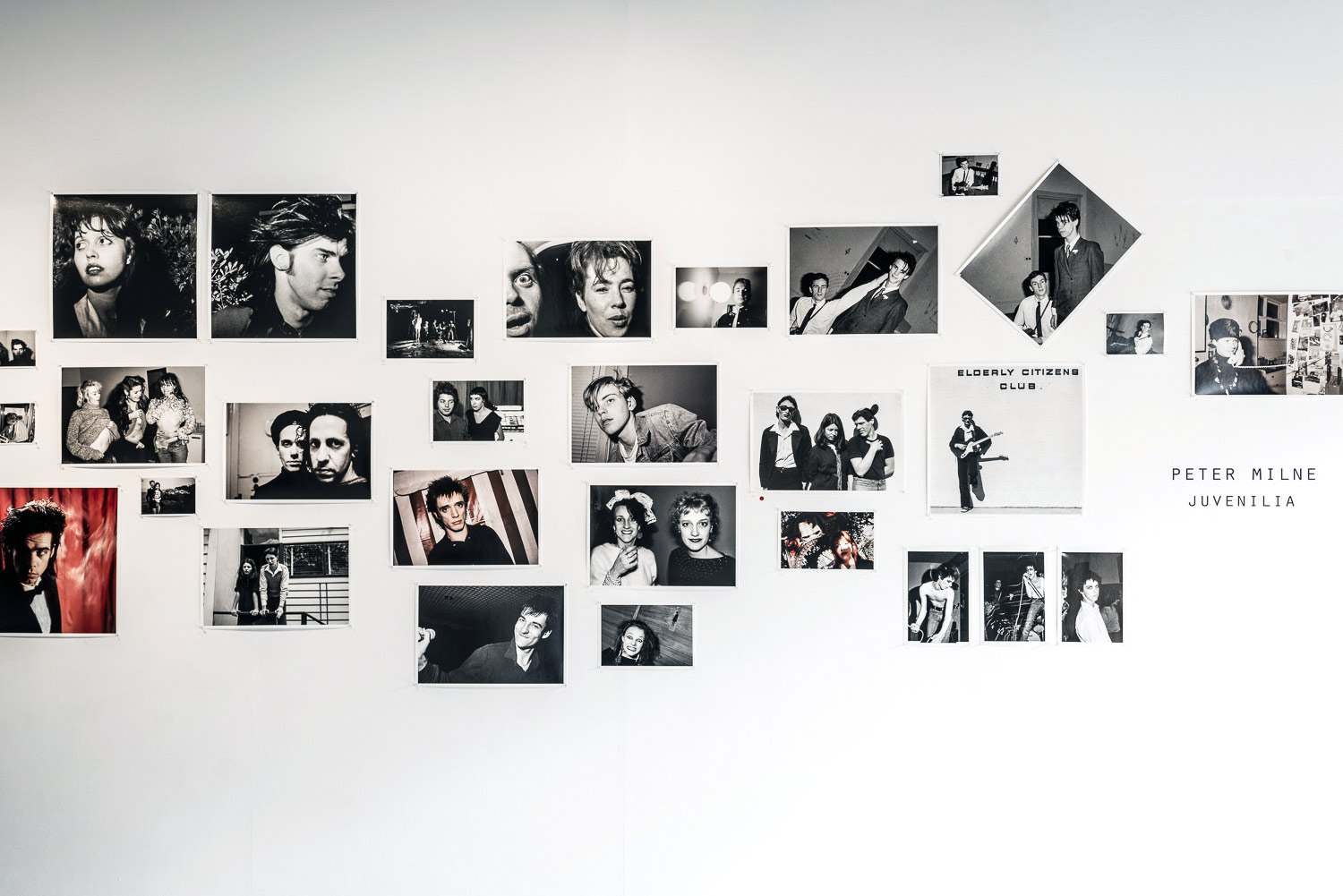
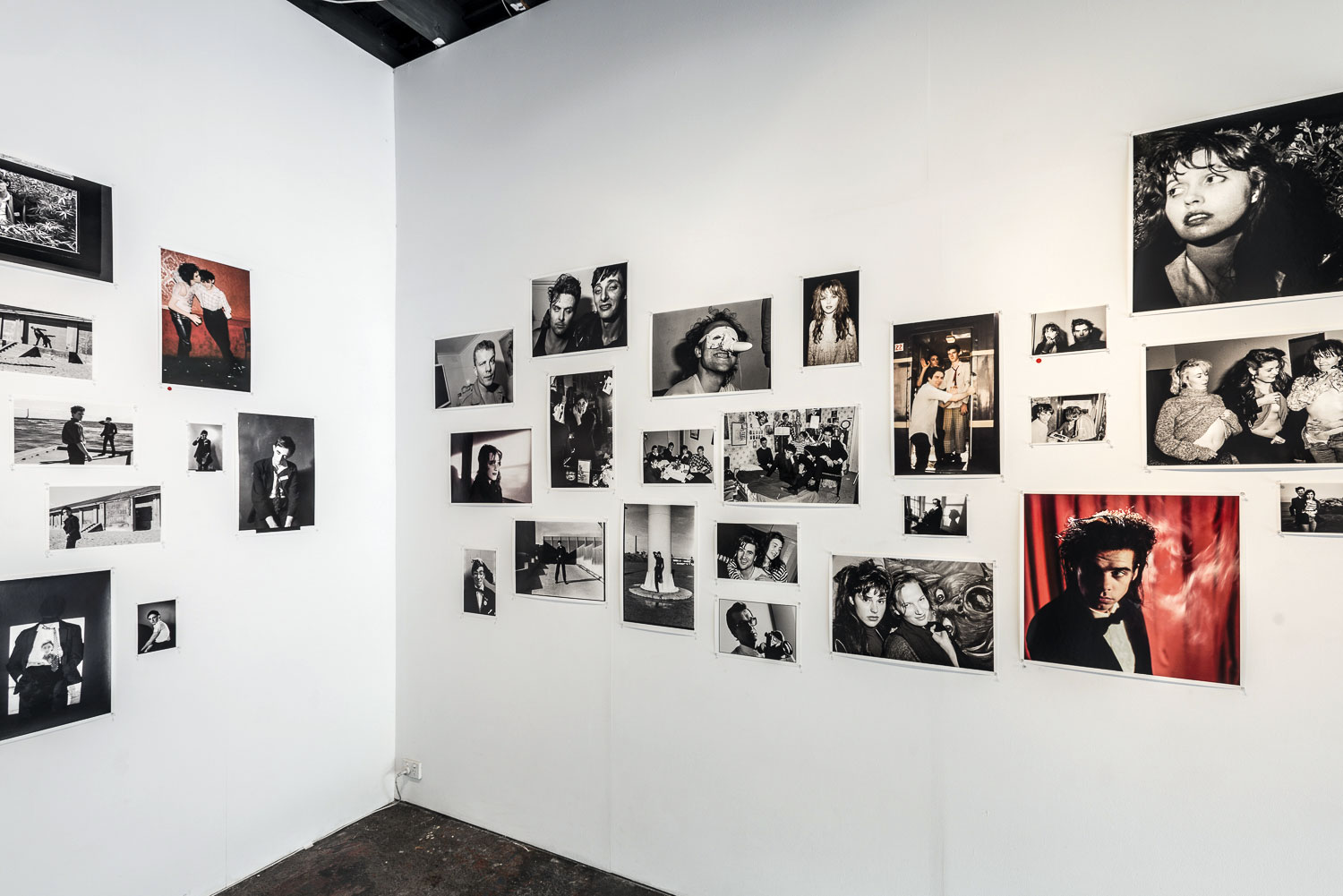

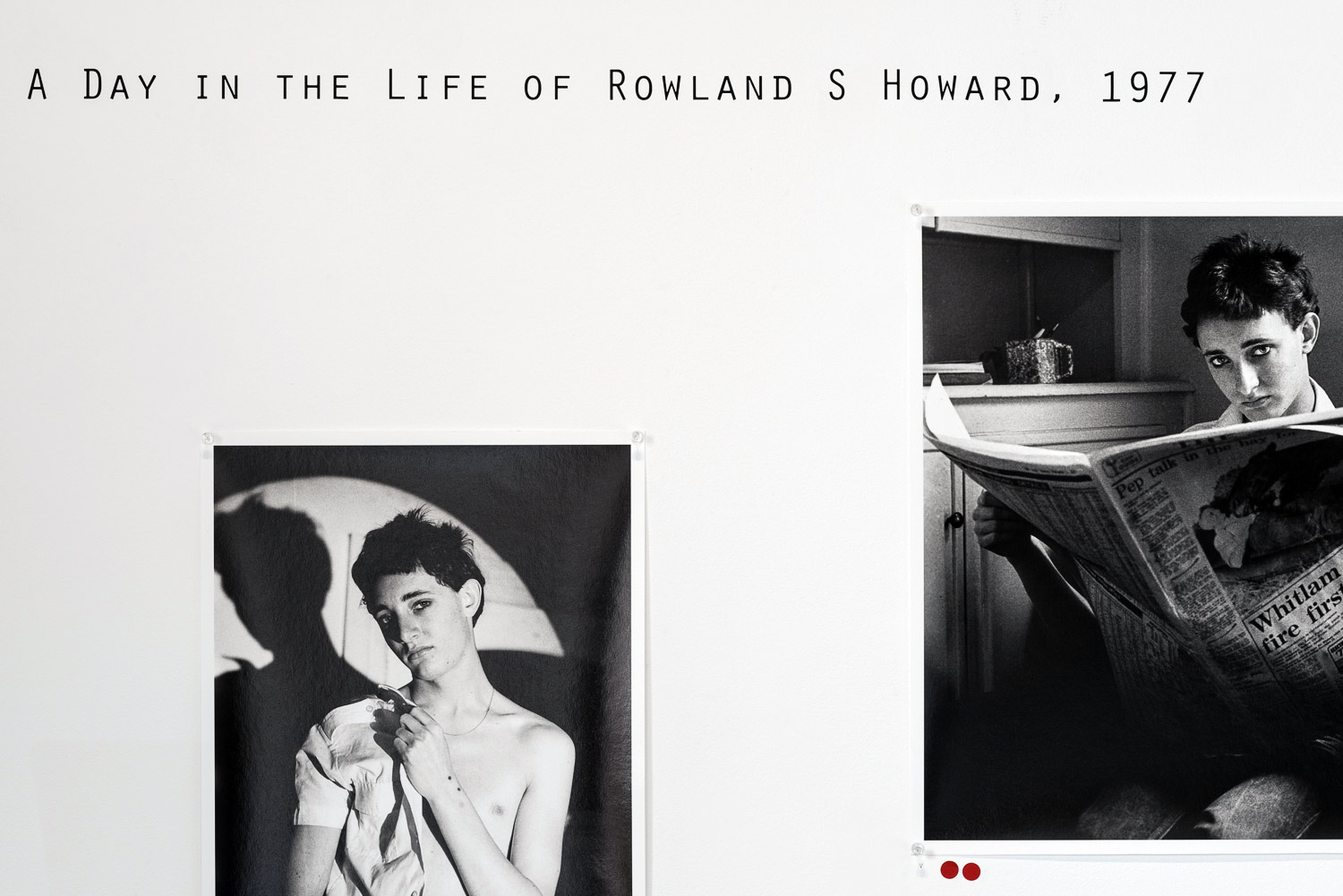
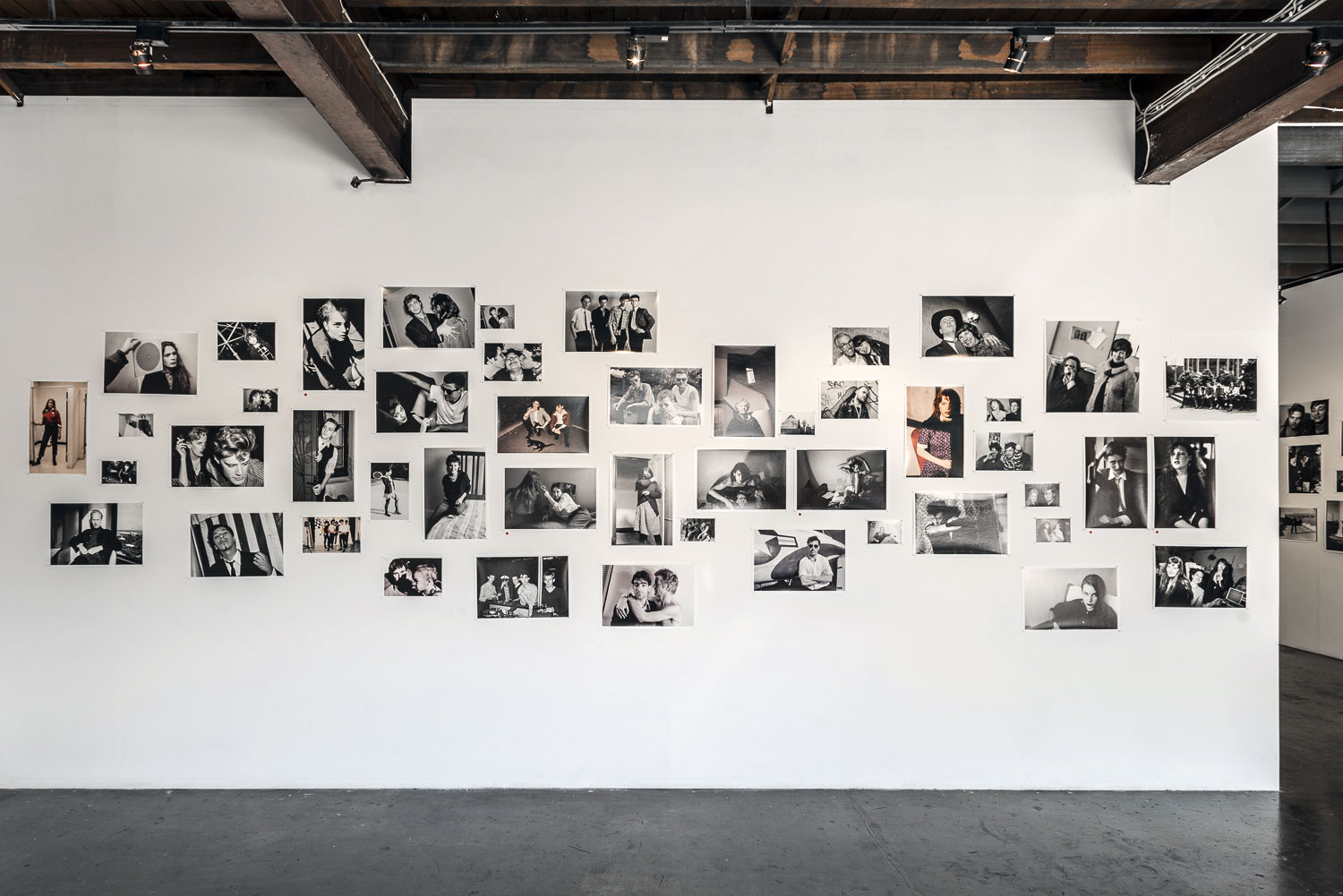

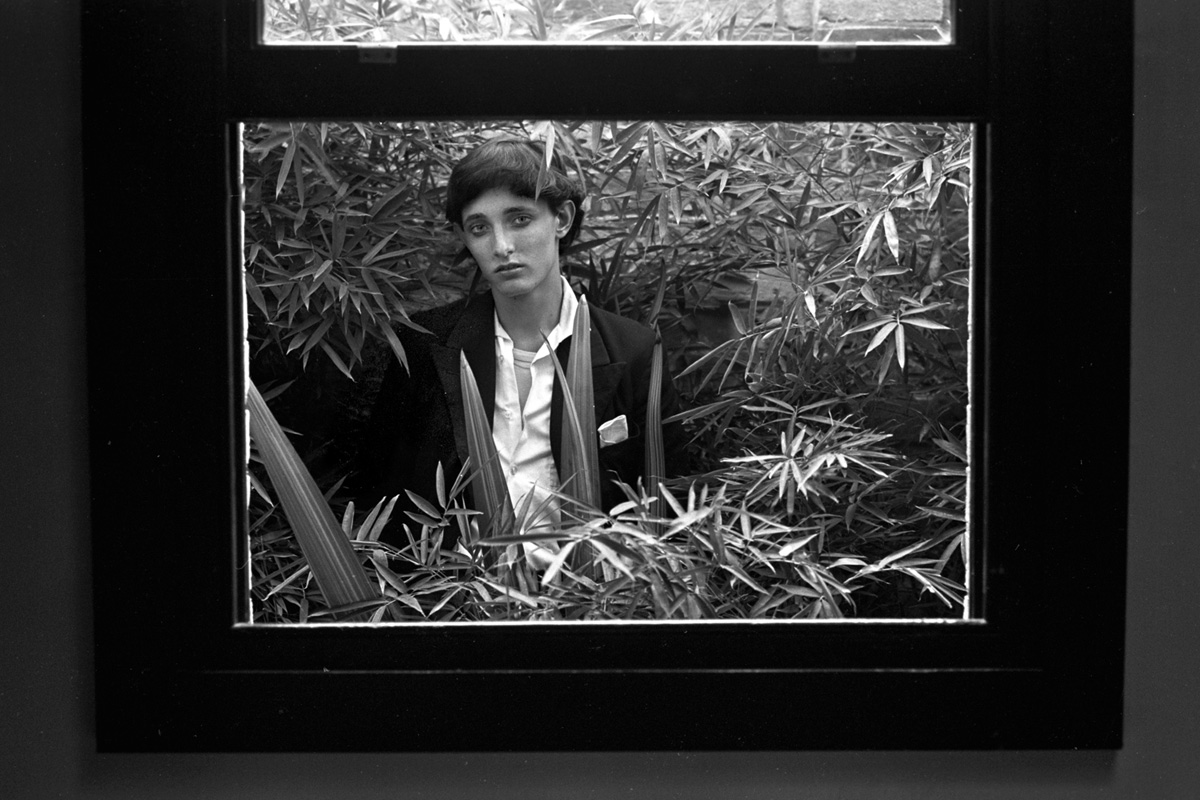

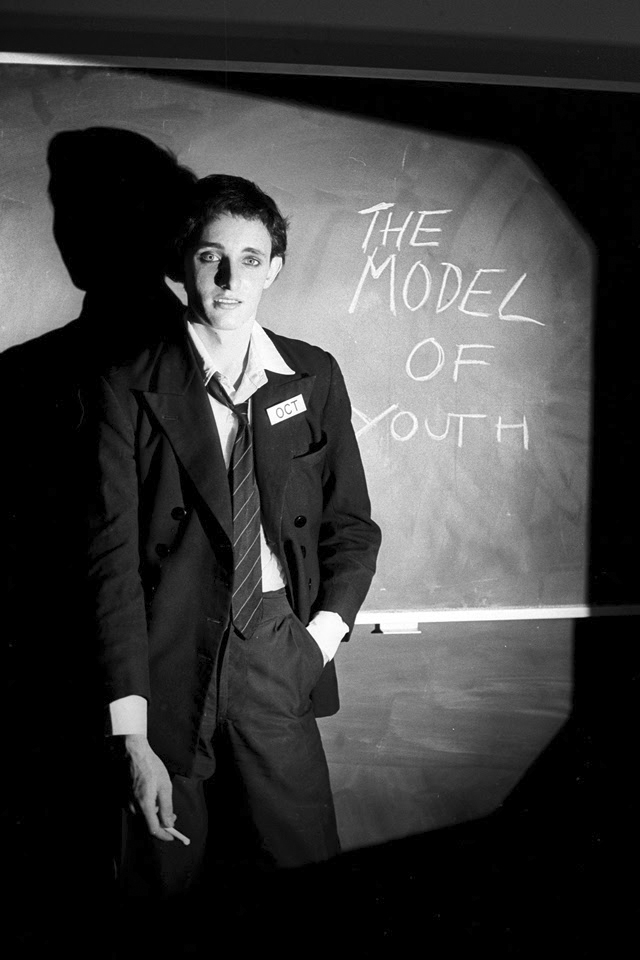

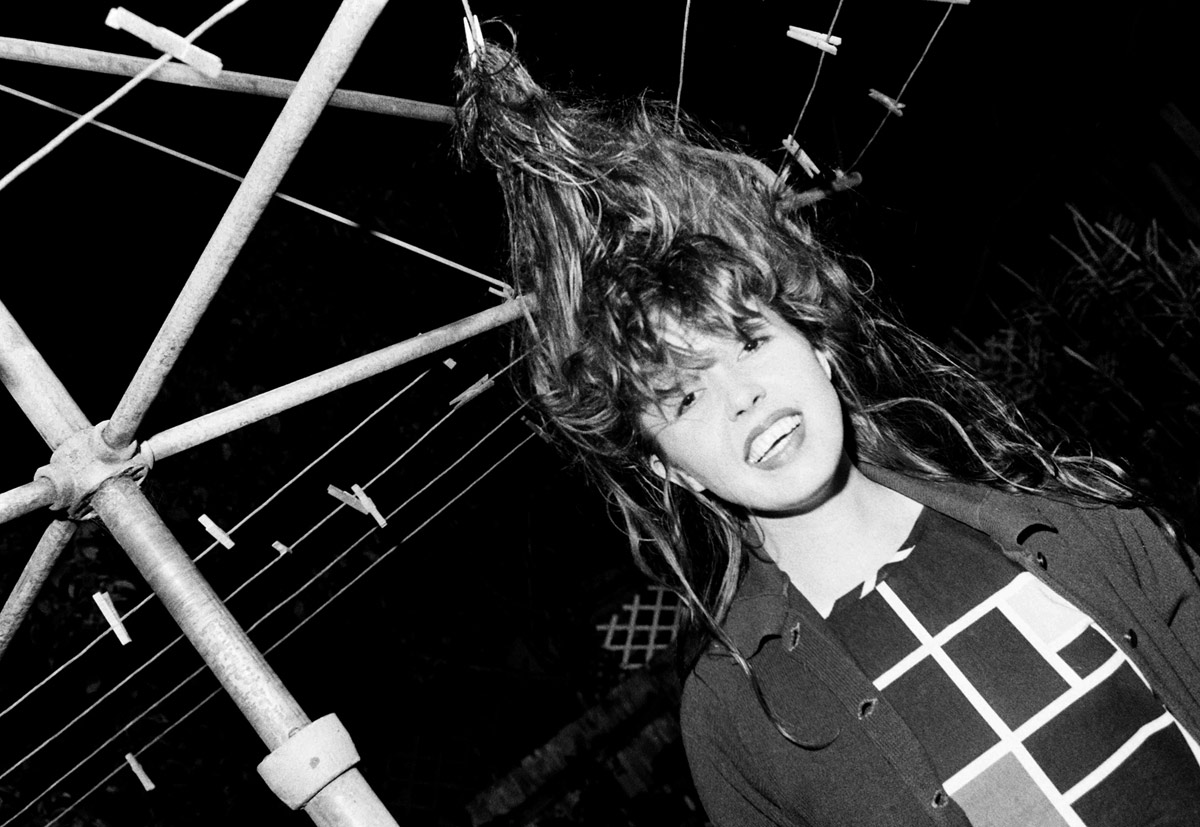

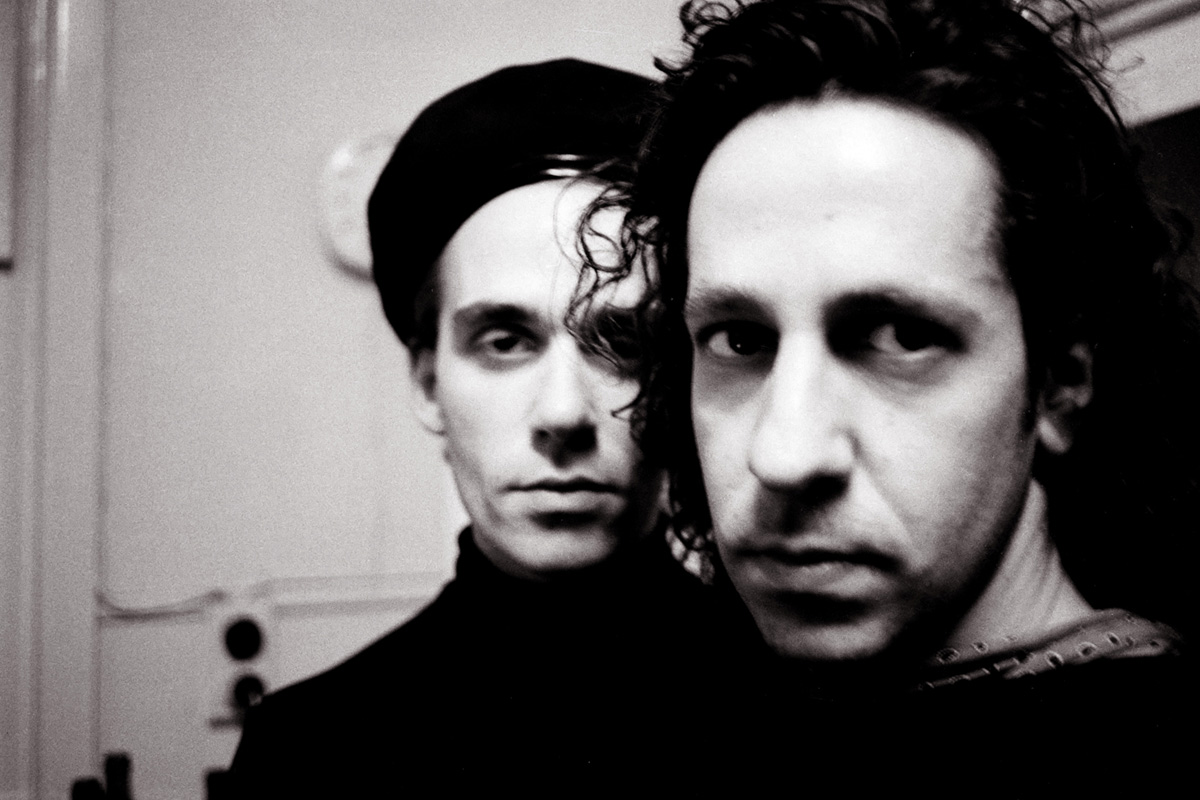

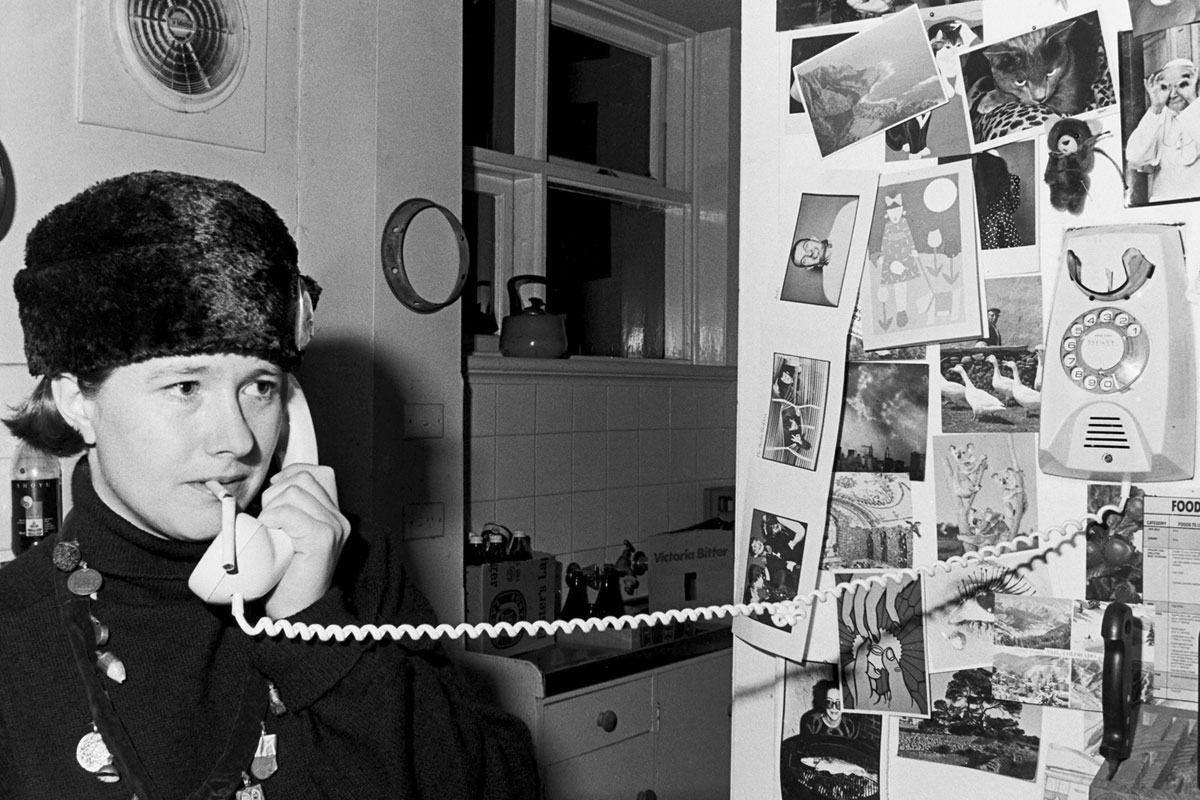
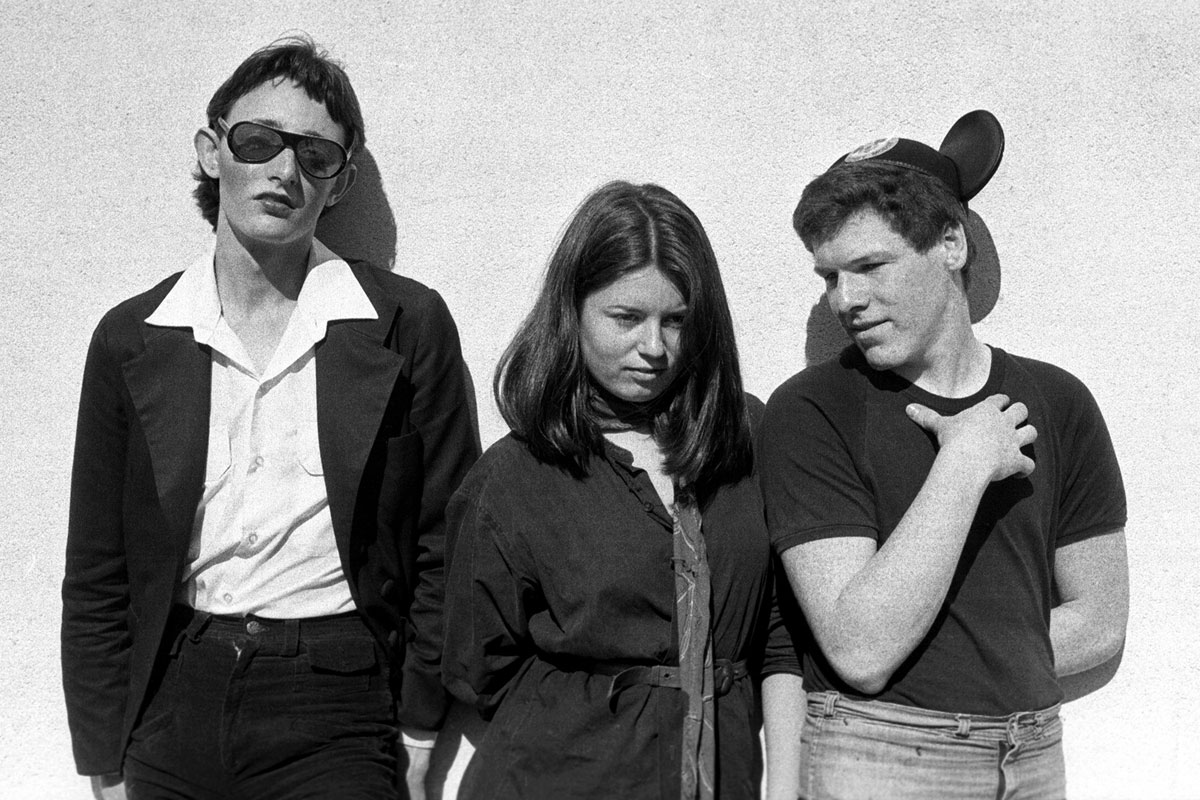


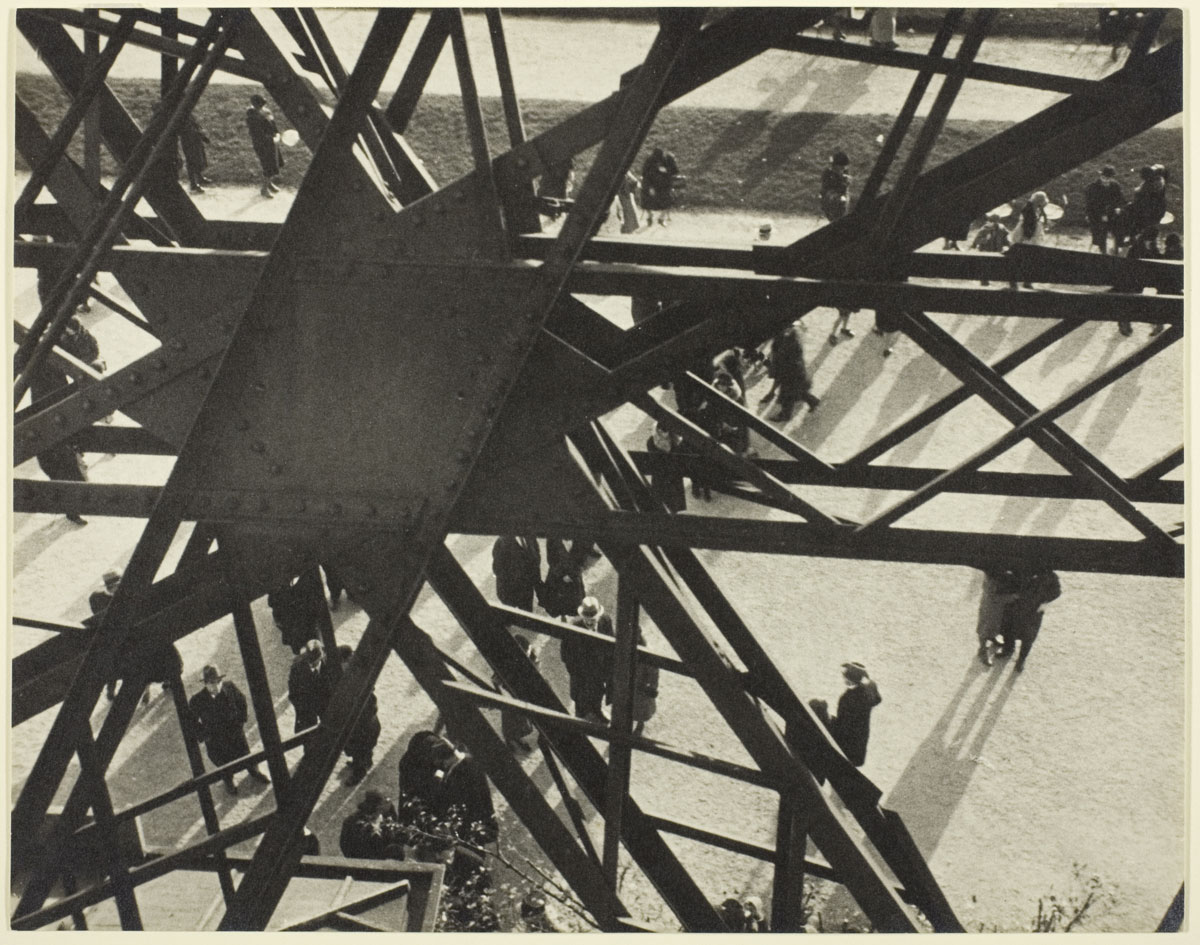
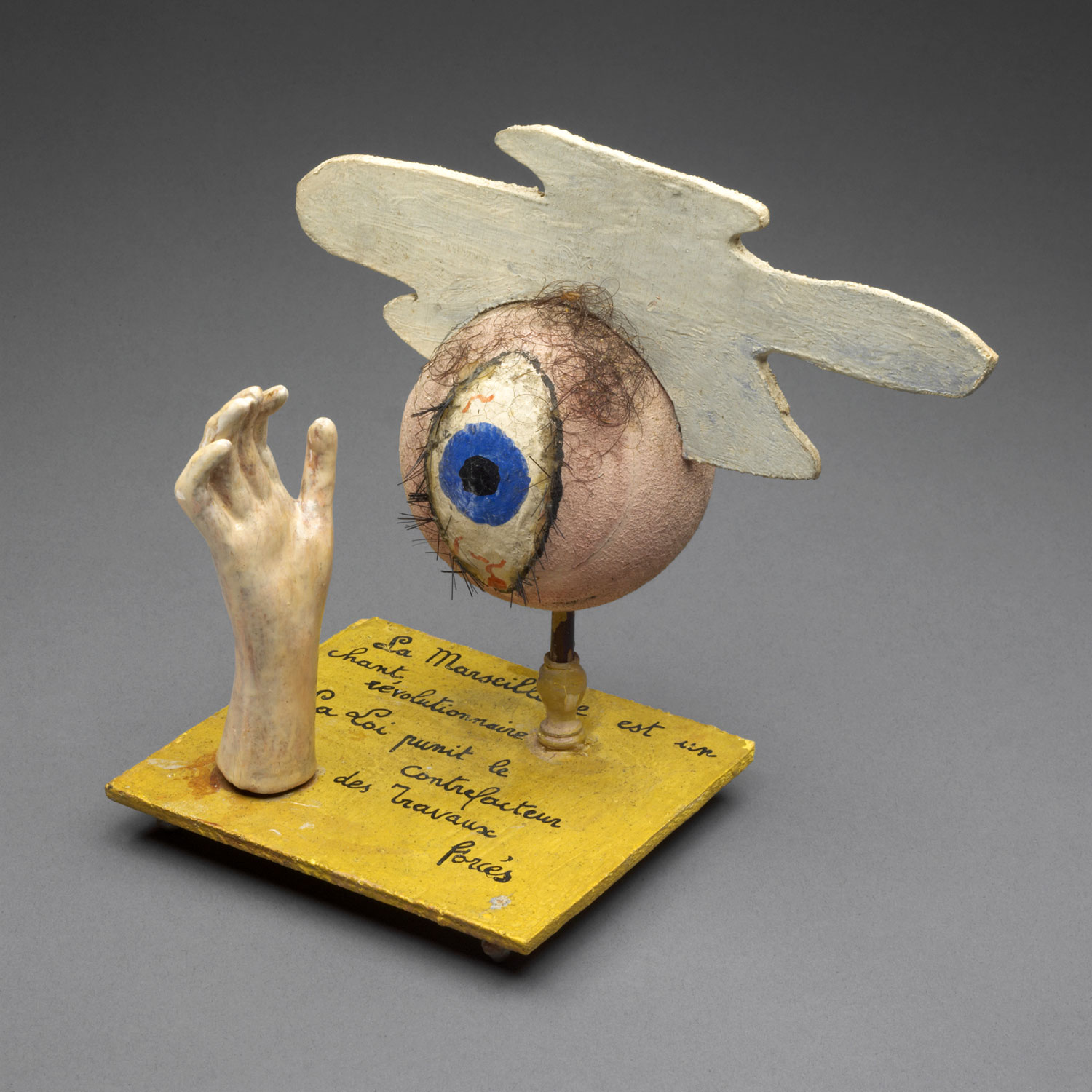


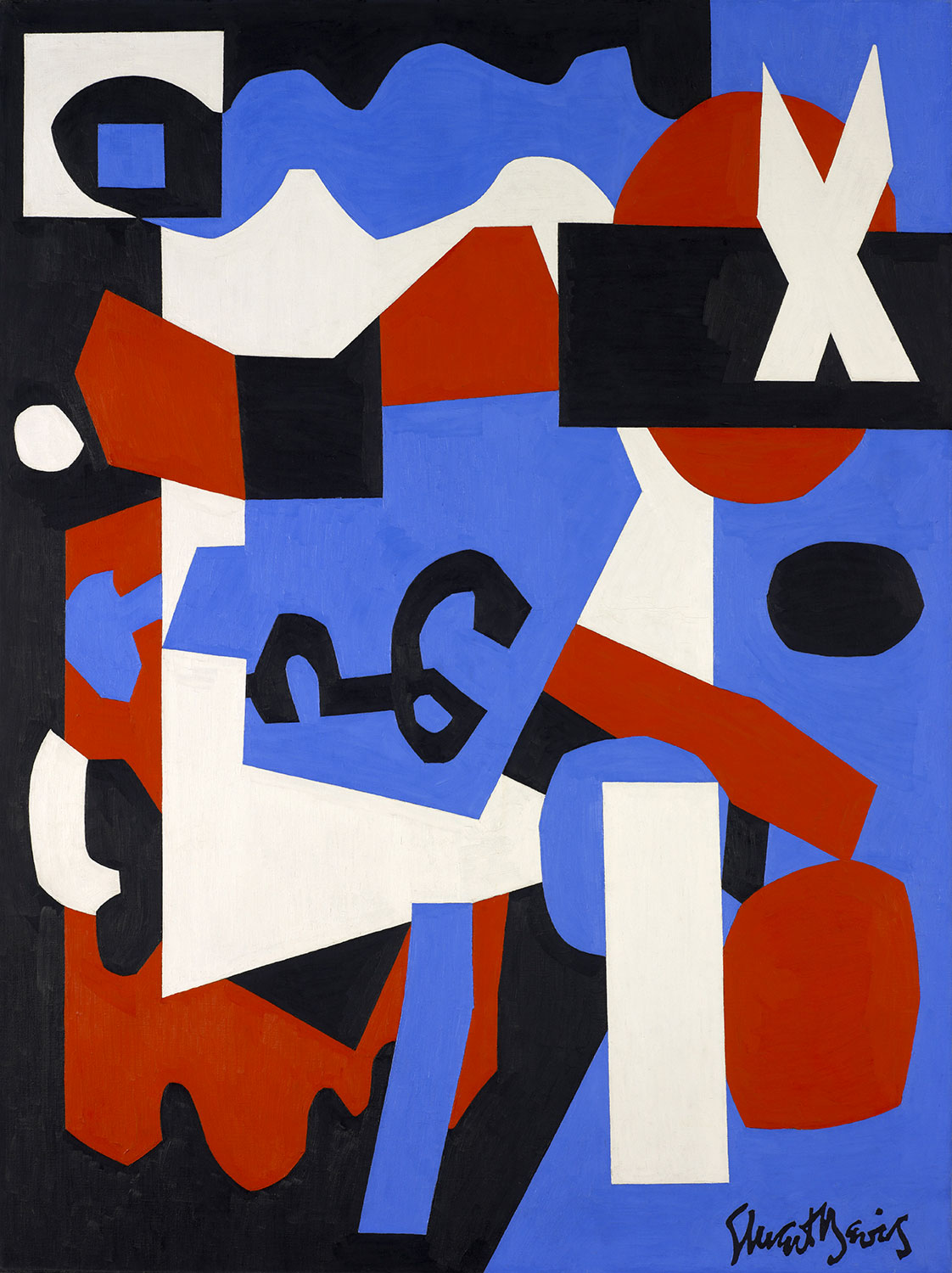


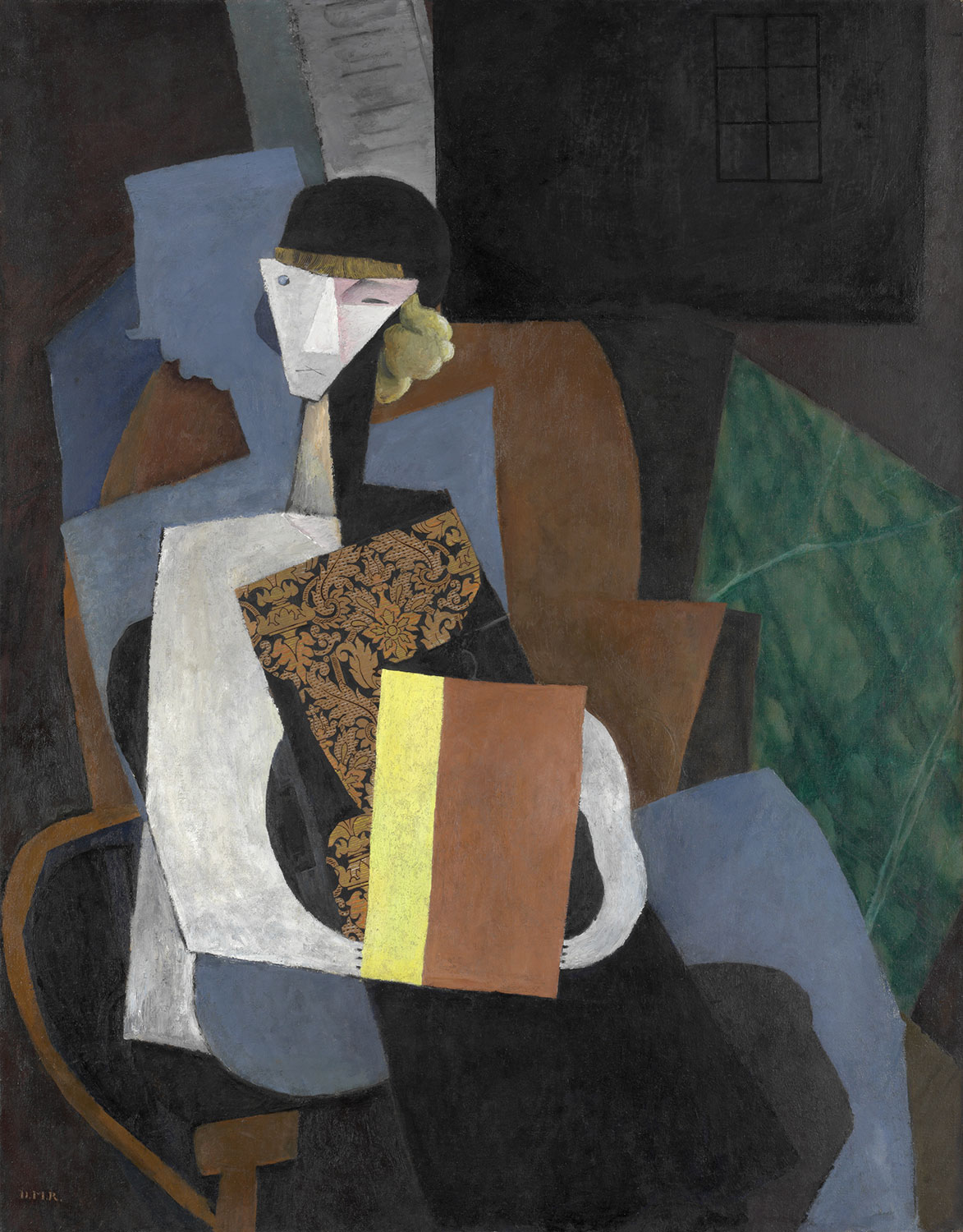
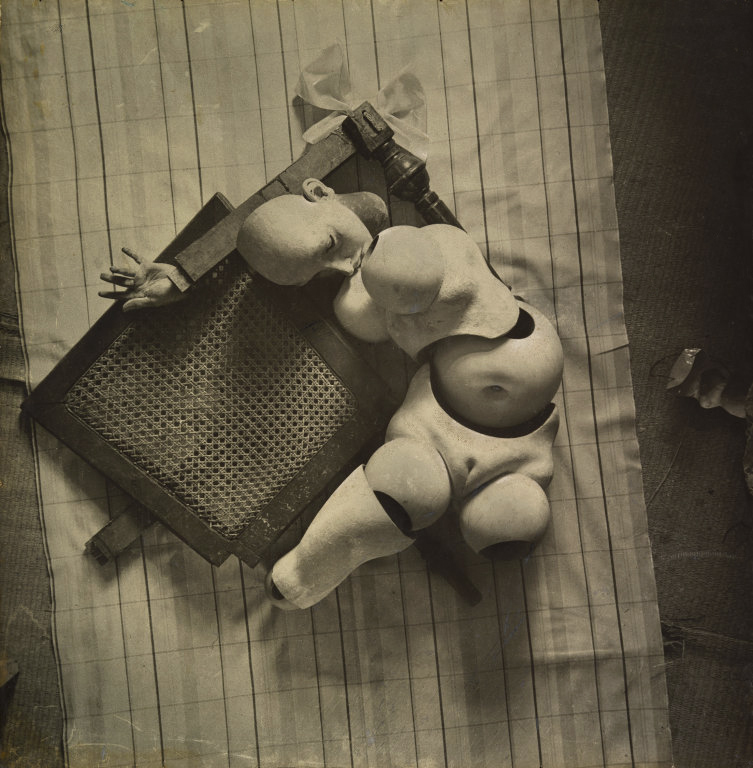

![Stanisław Ignacy Witkiewicz (Polish, 1885-1939) 'Self-Portrait, Zakopane [Broken Glass]' 1910](https://artblart.com/wp-content/uploads/2015/03/witkiewicz_self-portrait-zakopane-web.jpg "Stanisław Ignacy Witkiewicz (Polish, 1885-1939) 'Self-Portrait, Zakopane [Broken Glass]' 1910")
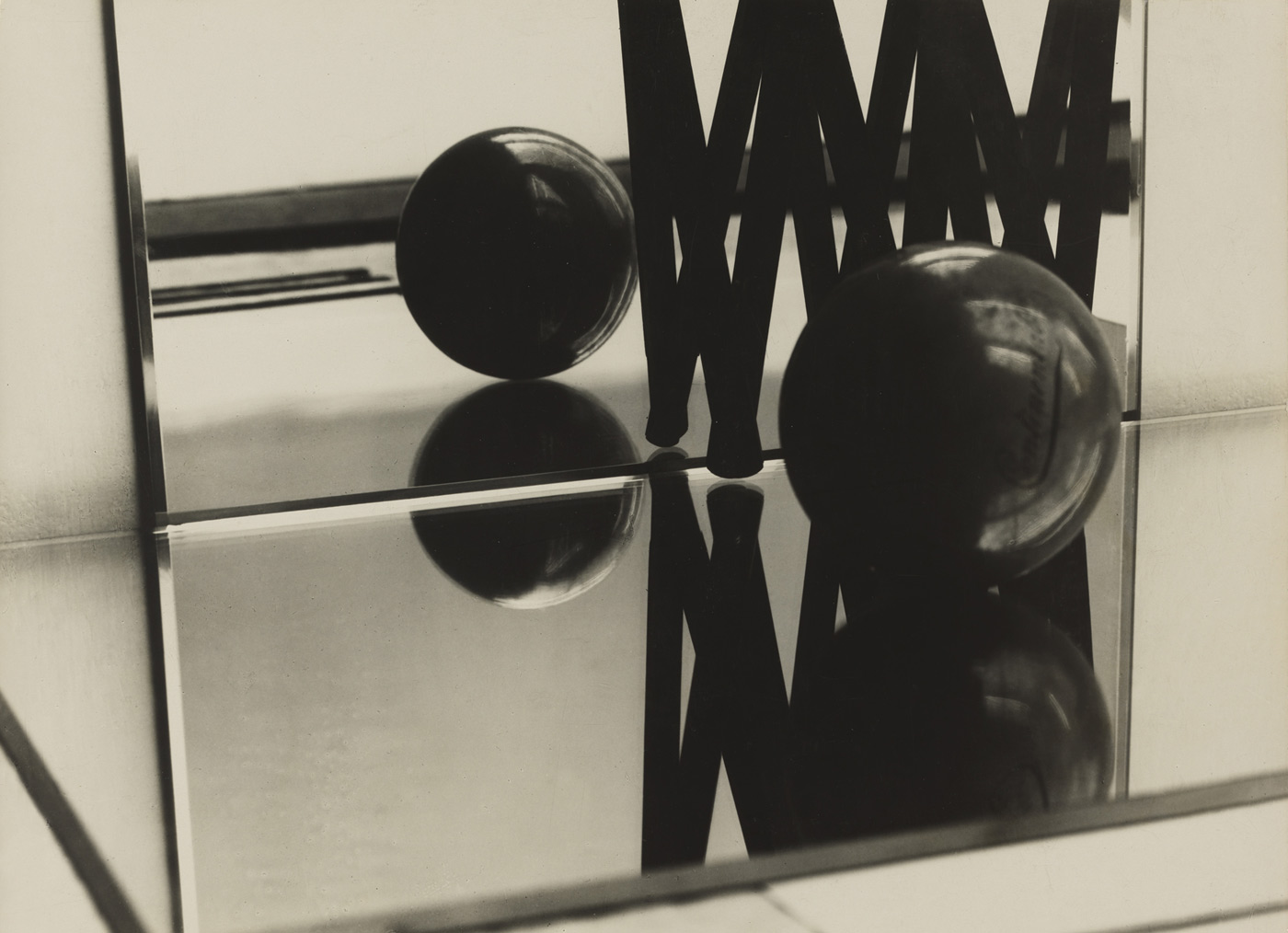

![Florence Henri (New York 1893 - Compiègne 1982) 'Composition abstraite [Still-life composition]' 1929](https://artblart.com/wp-content/uploads/2015/03/florencehenri_08_compositionabstraite-web.jpg "Florence Henri (New York 1893 - Compiègne 1982) 'Composition abstraite [Still-life composition]' 1929")

![Florence Henri (New York 1893 - Compiègne 1982) 'Mannequin de tailleur [Tailor's mannequin]' 1930-1931](https://artblart.com/wp-content/uploads/2015/03/florencehenri_05__mannequindetailleur-web.jpg "Florence Henri (New York 1893 - Compiègne 1982) 'Mannequin de tailleur [Tailor's mannequin]' 1930-1931")
![Florence Henri (New York 1893 - Compiègne 1982) 'Composition Nature morte [Still-life composition]' 1931](https://artblart.com/wp-content/uploads/2015/03/florencehenri_10_compositionnaturemorte-web.jpg "Florence Henri (New York 1893 - Compiègne 1982) 'Composition Nature morte [Still-life composition]' 1931")
![Florence Henri (New York 1893 - Compiègne 1982) 'Pont [Bridge]' 1930-1935](https://artblart.com/wp-content/uploads/2015/03/florencehenri_21_pont-web.jpg "Florence Henri (New York 1893 - Compiègne 1982) 'Pont [Bridge]' 1930-1935")


![Florence Henri (New York 1893 - Compiègne 1982) 'Autoportrait [Self-portrait]' 1928](https://artblart.com/wp-content/uploads/2015/03/florencehenri_01_autoportrait-web.jpg "Florence Henri (New York 1893 - Compiègne 1982) 'Autoportrait [Self-portrait]' 1928")
![Florence Henri (New York 1893 - Compiègne 1982) 'Femme aux cartes [Woman with cards]' 1930](https://artblart.com/wp-content/uploads/2015/03/florencehenri_11_femmeauxcartes-web.jpg "Florence Henri (New York 1893 - Compiègne 1982) 'Femme aux cartes [Woman with cards]' 1930")
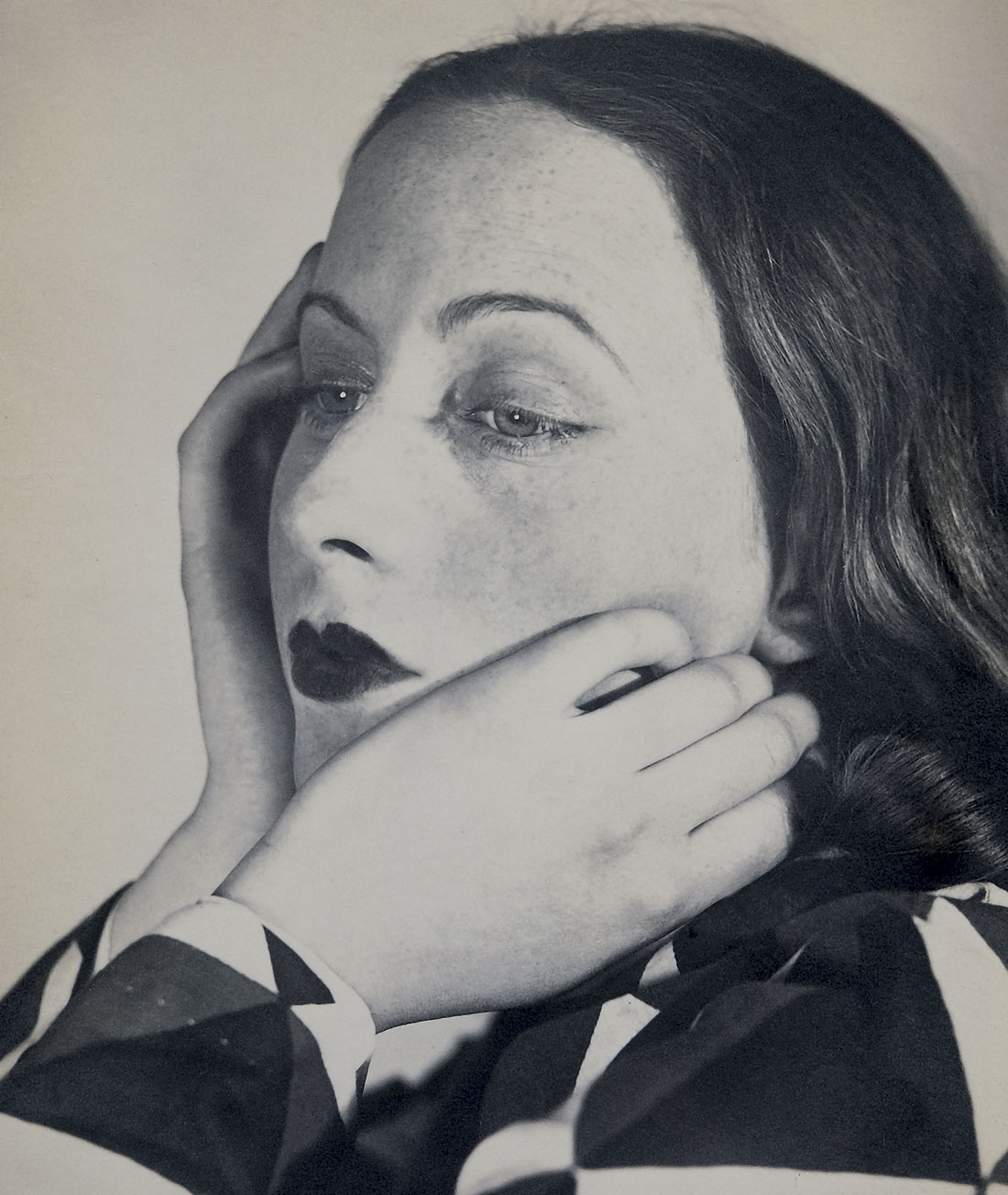

![Florence Henri (New York 1893 - Compiègne 1982) 'Fenêtre [Window]' 1929](https://artblart.com/wp-content/uploads/2015/03/florencehenri_06_fenetre-web.jpg "Florence Henri (New York 1893 - Compiègne 1982) 'Fenêtre [Window]' 1929")
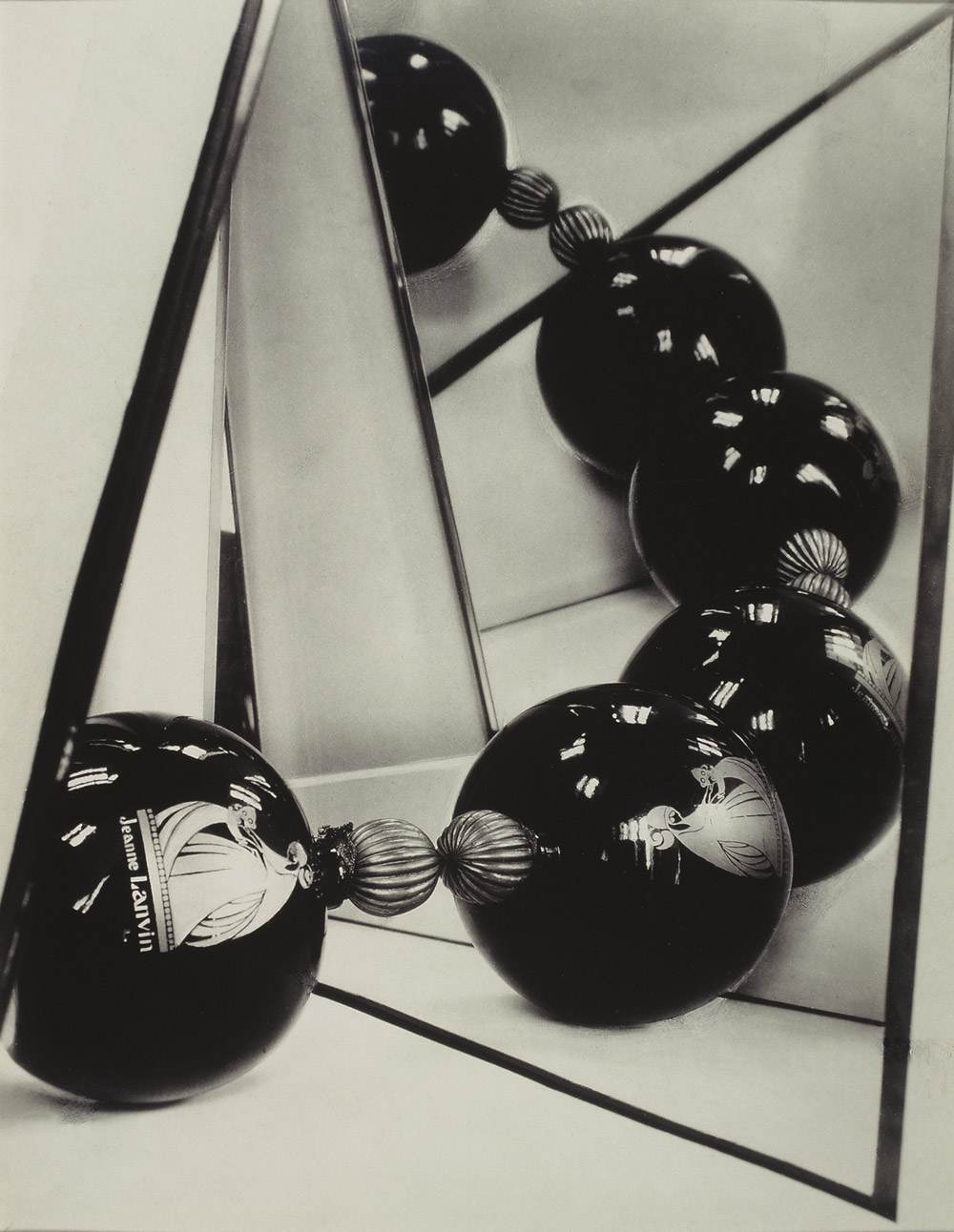
![Florence Henri (New York 1893 - Compiègne 1982) 'Composition Nature morte [Still-life composition]' 1931](https://artblart.com/wp-content/uploads/2015/03/florencehenri_09_compositionnaturemorte-web.jpg "Florence Henri (New York 1893 - Compiègne 1982) 'Composition Nature morte [Still-life composition]' 1931")
![Florence Henri (New York 1893 - Compiègne 1982) 'Composition Nature morte [Still-life composition]' c. 1933](https://artblart.com/wp-content/uploads/2015/03/florencehenri_17_compositionnaturemorte-web.jpg "Florence Henri (New York 1893 - Compiègne 1982) 'Composition Nature morte [Still-life composition]' c. 1933")

![Florence Henri (New York 1893 - Compiègne 1982) 'Robert Delaunay' c. 1935 'Bretagne [Brittany]' 1937-1940](https://artblart.com/wp-content/uploads/2015/03/florencehenri_19_bretagne-web.jpg "Florence Henri (New York 1893 - Compiègne 1982) 'Robert Delaunay' c. 1935 'Bretagne [Brittany]' 1937-1940")
![Florence Henri (New York 1893 - Compiègne 1982) 'Structure (intérieur du Palais de l'Air, Paris, Exposition Universelle) [Structure (Interior of the Palais de l'Air, Paris, World's Fair)]' 1937](https://artblart.com/wp-content/uploads/2015/03/florencehenri_20_structure-web.jpg "Florence Henri (New York 1893 - Compiègne 1982) 'Structure (intérieur du Palais de l'Air, Paris, Exposition Universelle) [Structure (Interior of the Palais de l'Air, Paris, World's Fair)]' 1937")
![Florence Henri (New York 1893 - Compiègne 1982) 'Autoportrait [Self-portrait]' 1938](https://artblart.com/wp-content/uploads/2015/03/florencehenri_18_autoportrait-web.jpg "Florence Henri (New York 1893 - Compiègne 1982) 'Autoportrait [Self-portrait]' 1938")
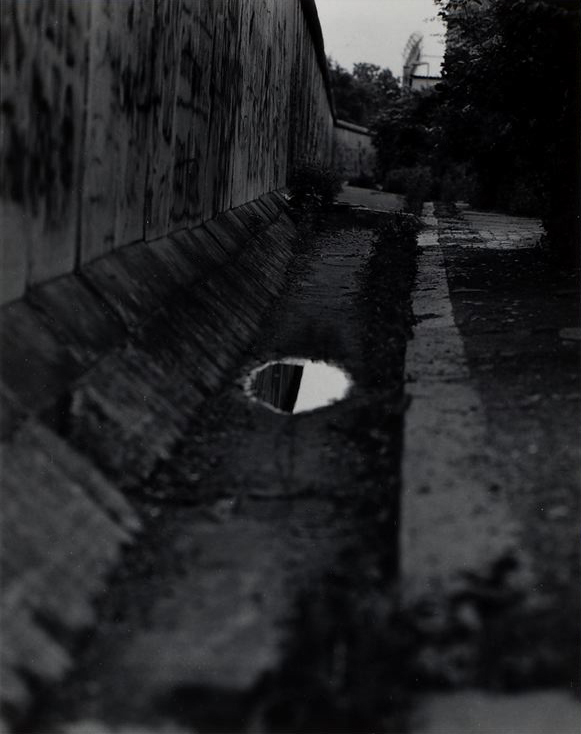
![Jim Iska. 'Untitled [Installation view of the exhibition John Gossage: Three Routines at The Art Institute of Chicago]' 2015](https://artblart.com/wp-content/uploads/2015/03/installation-b-web.jpg "Jim Iska. 'Untitled [Installation view of the exhibition John Gossage: Three Routines at The Art Institute of Chicago]' 2015")
![Jim Iska. 'Untitled [Installation view of the exhibition John Gossage: Three Routines at The Art Institute of Chicago]' 2015](https://artblart.com/wp-content/uploads/2015/03/installation-a-web.jpg "Jim Iska. 'Untitled [Installation view of the exhibition John Gossage: Three Routines at The Art Institute of Chicago]' 2015")
![Jim Iska. 'Untitled [Installation view of the exhibition John Gossage: Three Routines at The Art Institute of Chicago]' 2015](https://artblart.com/wp-content/uploads/2015/03/installation-c-web.jpg "Jim Iska. 'Untitled [Installation view of the exhibition John Gossage: Three Routines at The Art Institute of Chicago]' 2015")
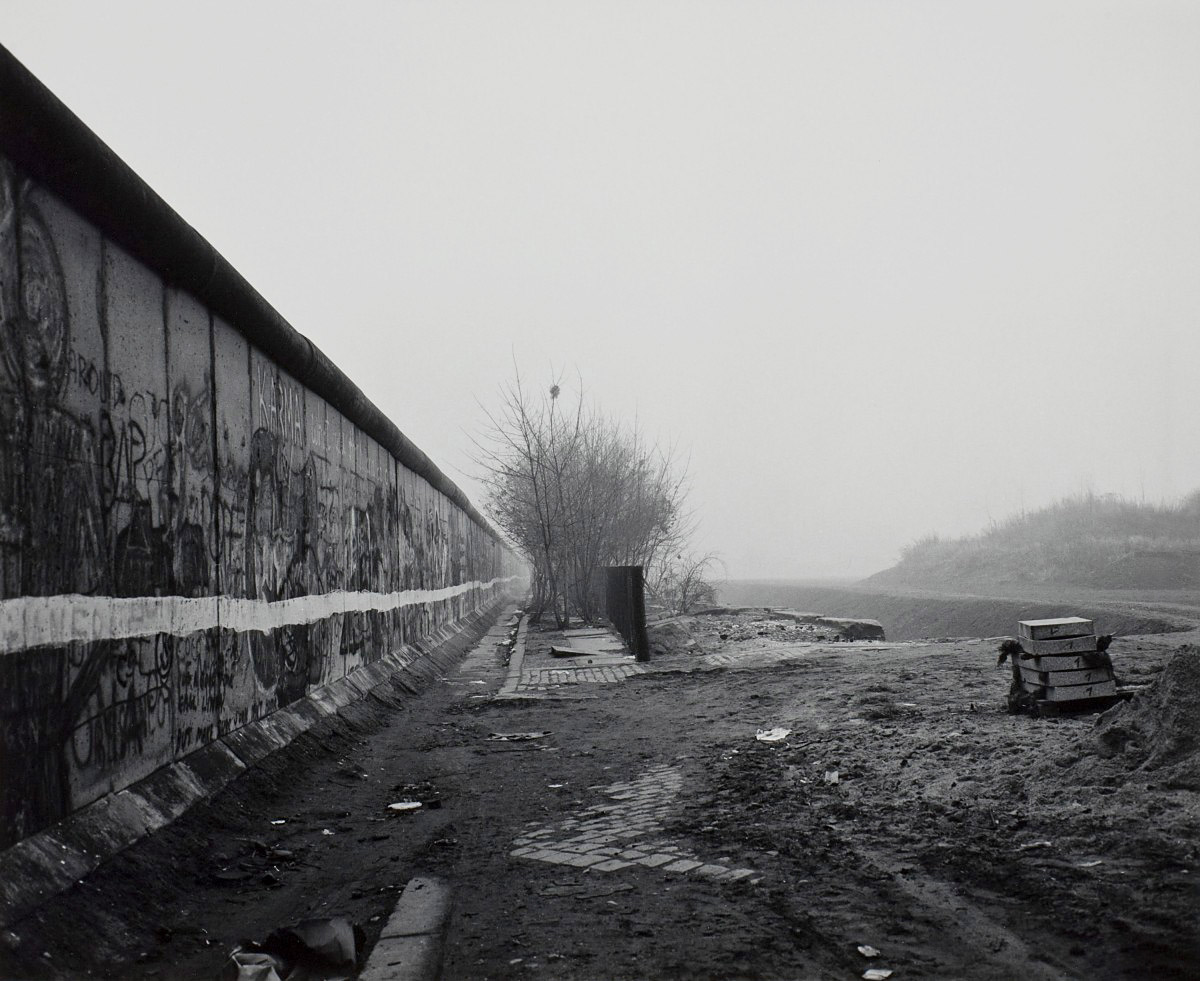
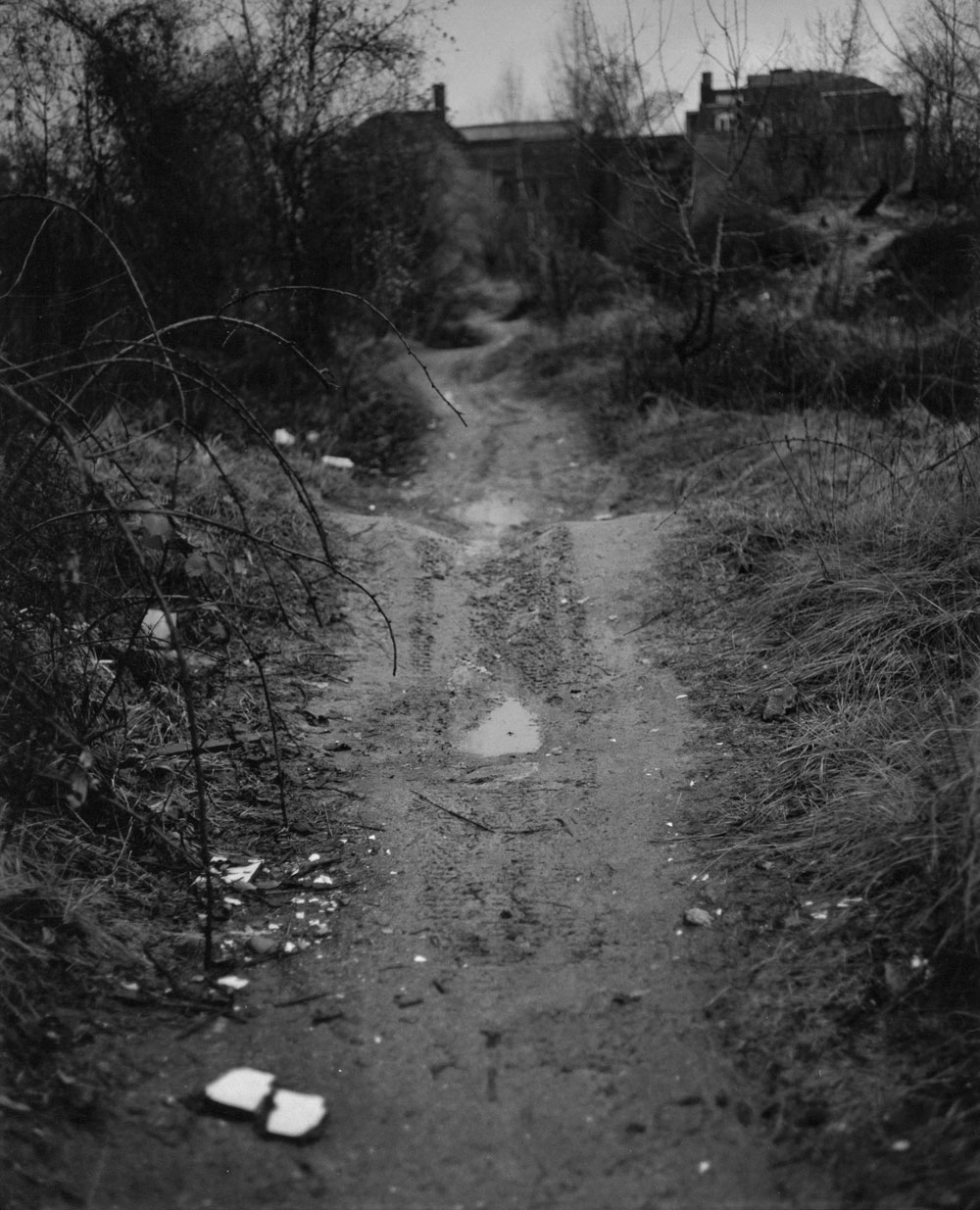
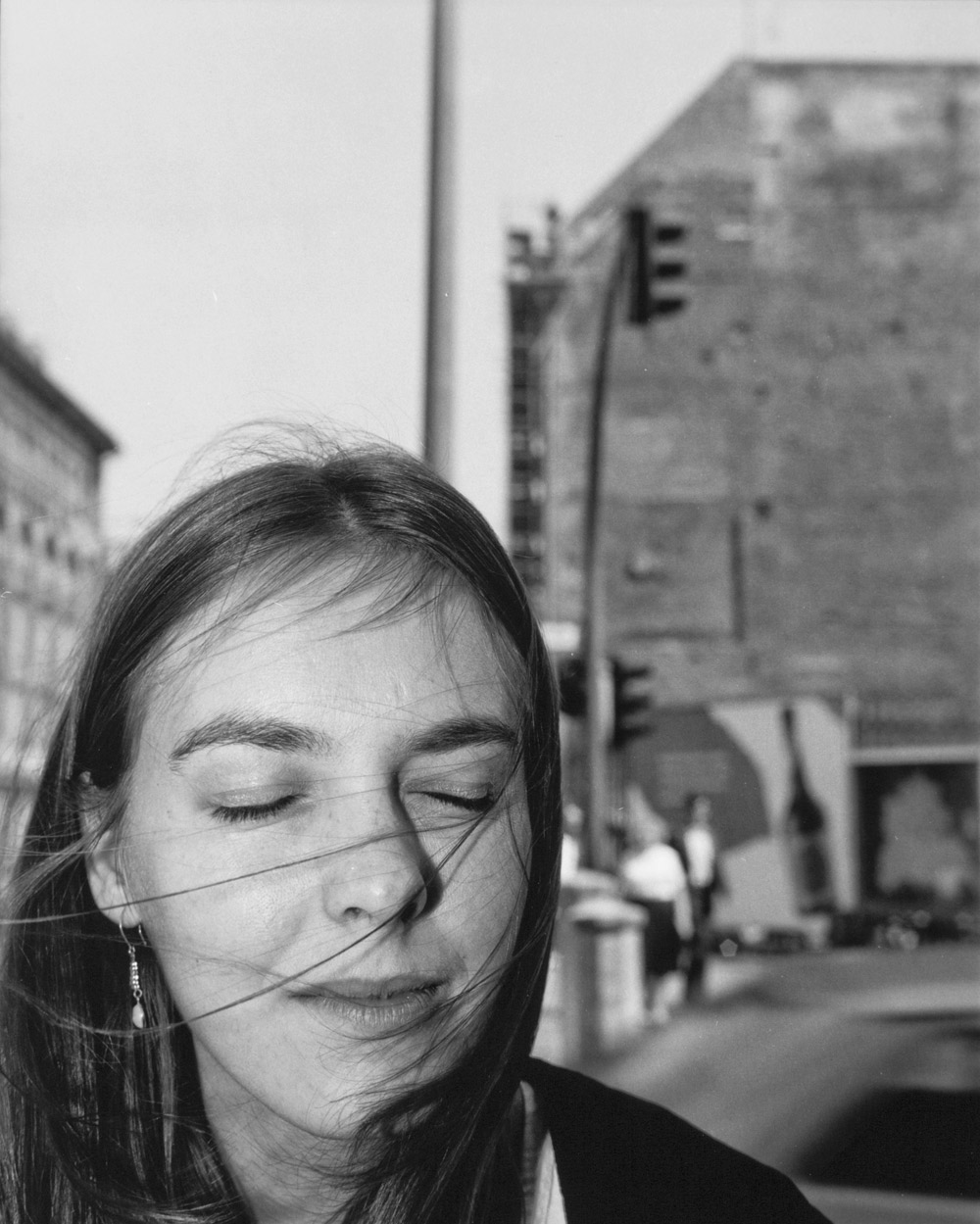
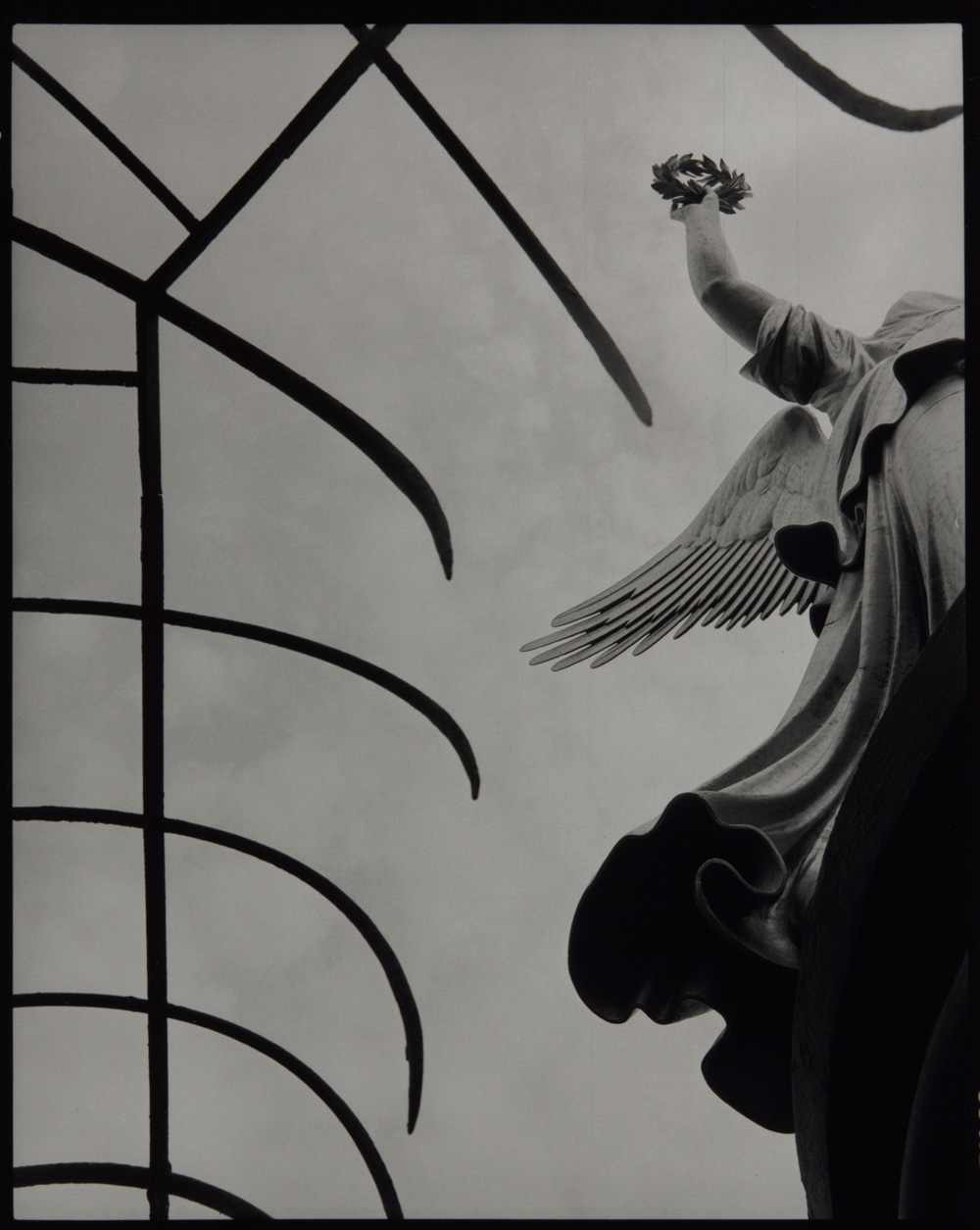
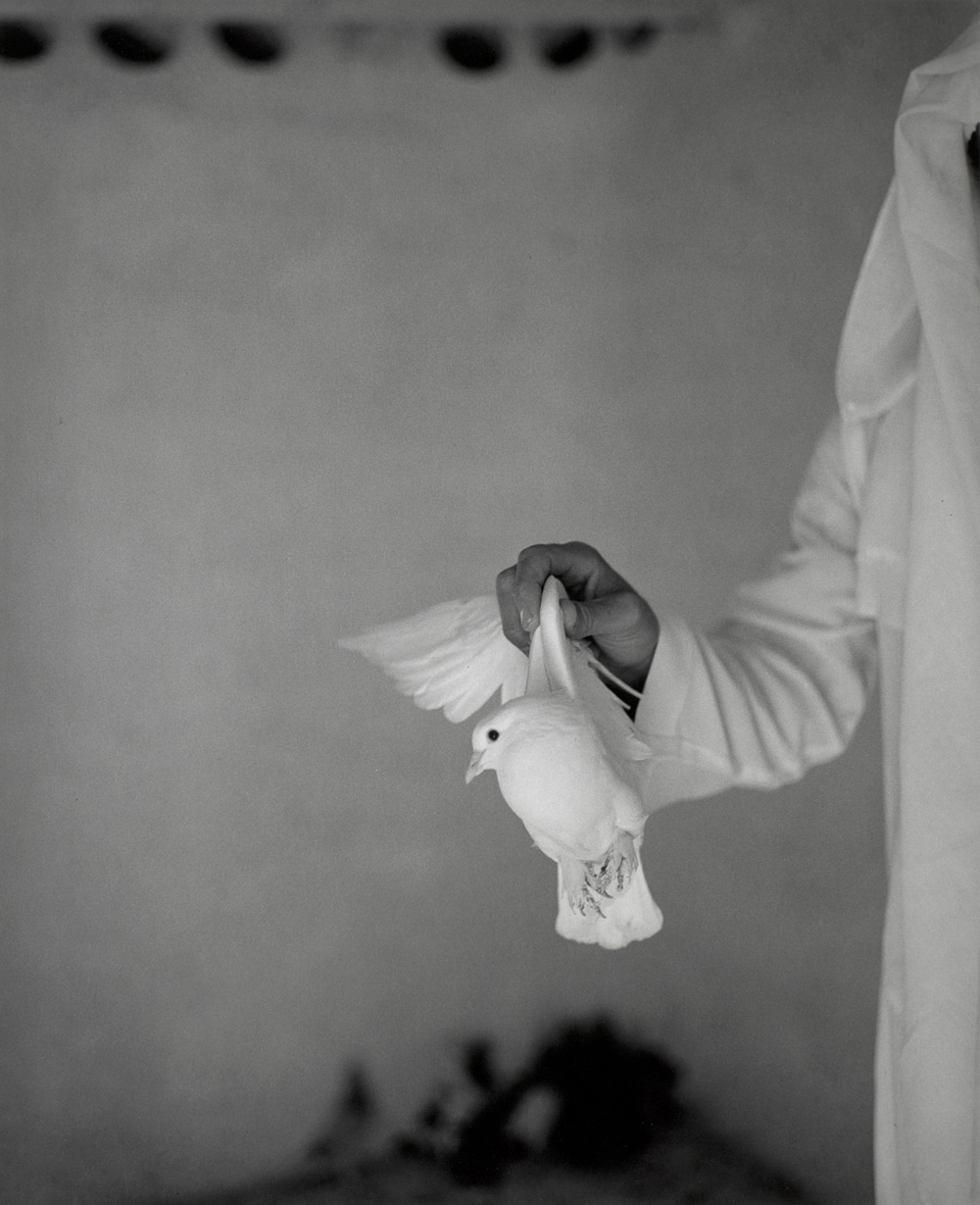
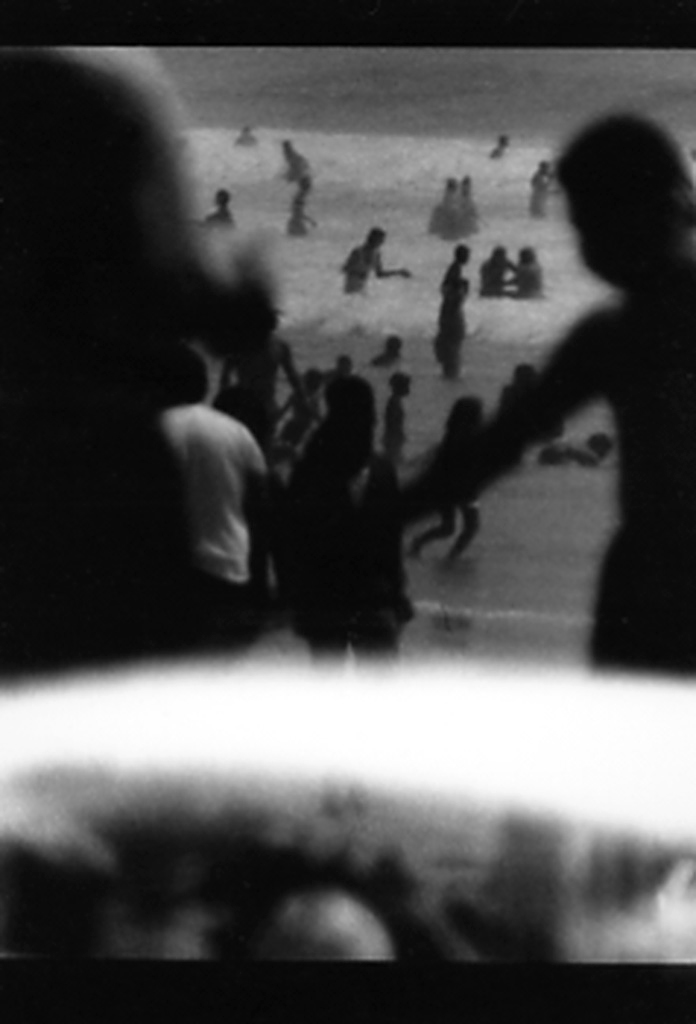
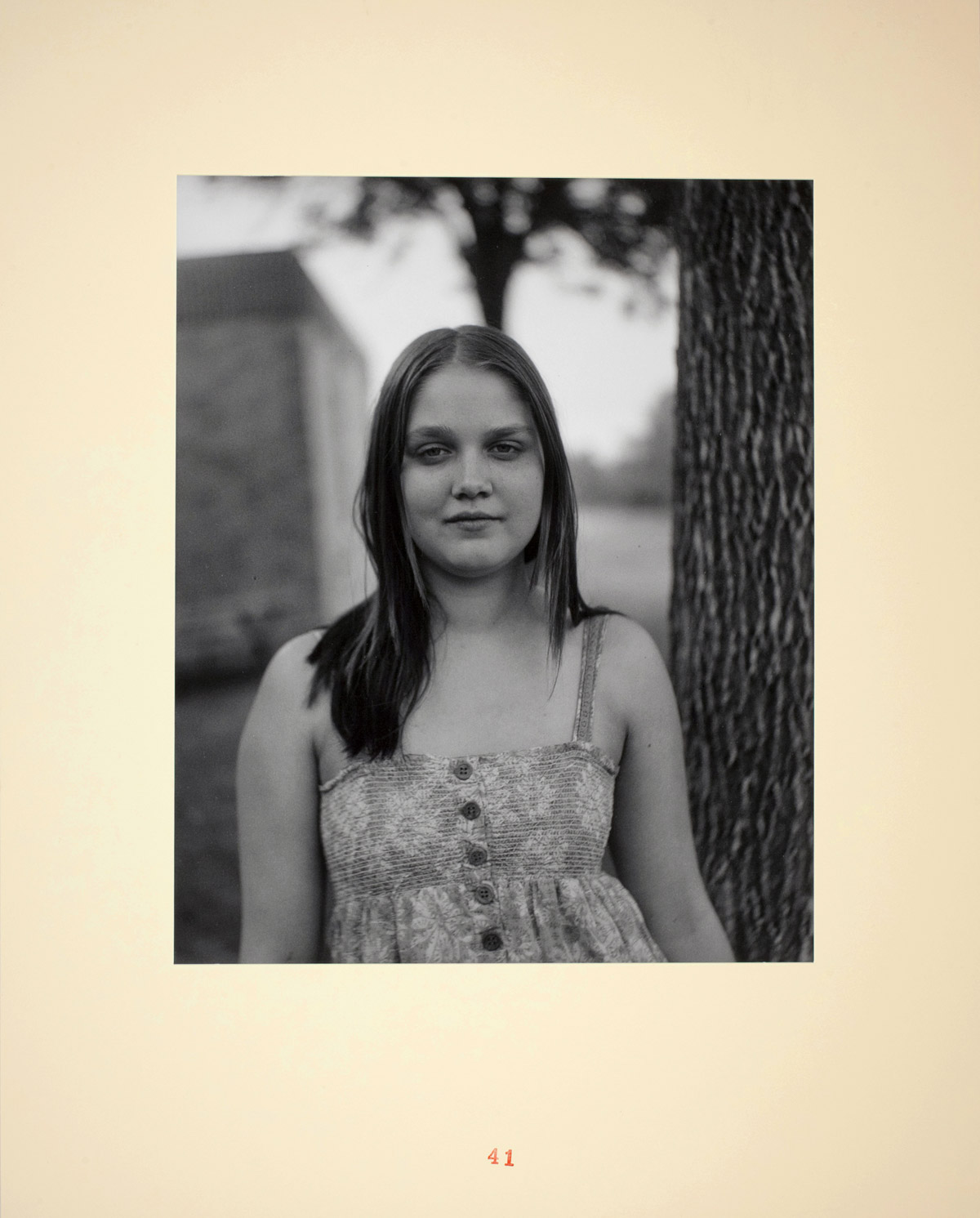
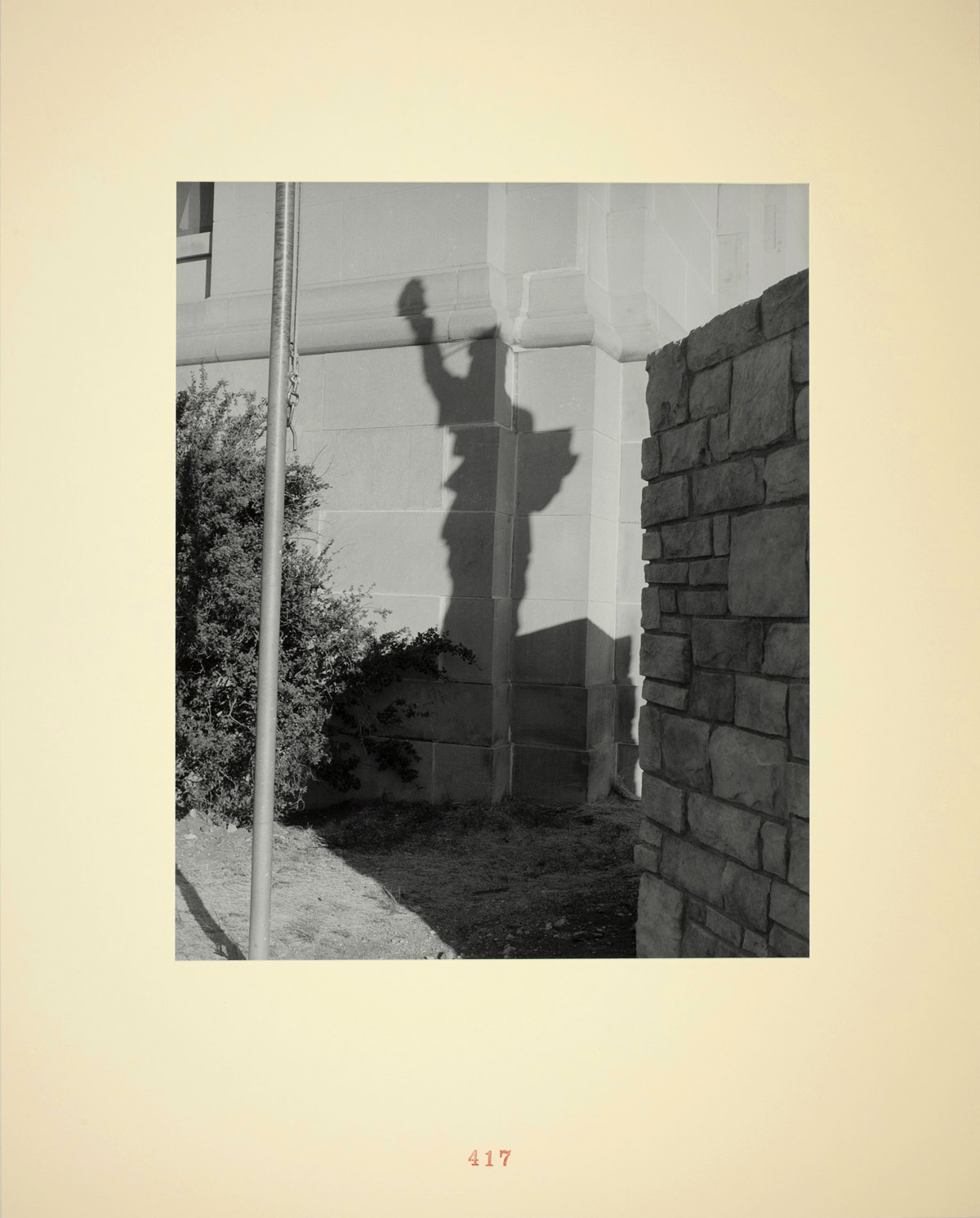

![Platt D. Babbitt (American, 1823-1879, active Niagara Falls, New York 1853-1870) '[Scene at Niagara Falls]' c. 1855 from the exhibition 'In Focus: Play' at the J. Paul Getty Museum at the Getty Center, Los Angeles, December 2014 - May 2015](https://artblart.com/wp-content/uploads/2015/03/platt_d_babbitt_scene_at_niagara_falls-web.jpg "Platt D. Babbitt (American, 1823-1879, active Niagara Falls, New York 1853-1870) '[Scene at Niagara Falls]' c. 1855 from the exhibition 'In Focus: Play' at the J. Paul Getty Museum at the Getty Center, Los Angeles, December 2014 - May 2015")

![Camille Silvy (French, 1834-1910, active in London) 'Group of their Royal Highnesses the Princess Clementine de Saxe Cobourg Gotha, her Sons and Daughter, the Duke d'Aumale, the Count d'Eu, the Duke d'Alencon, and the Duke de Penthievre [in England]' 1864](https://artblart.com/wp-content/uploads/2015/03/camille-silvy-group-of-their-royal-web.jpg "Camille Silvy (French, 1834-1910, active in London) 'Group of their Royal Highnesses the Princess Clementine de Saxe Cobourg Gotha, her Sons and Daughter, the Duke d'Aumale, the Count d'Eu, the Duke d'Alencon, and the Duke de Penthievre [in England]' 1864")
![Camille Silvy (French, 1834-1910, active in London) 'Group of their Royal Highnesses the Princess Clementine de Saxe Cobourg Gotha, her Sons and Daughter, the Duke d'Aumale, the Count d'Eu, the Duke d'Alencon, and the Duke de Penthievre [in England]' 1864 (detail)](https://artblart.com/wp-content/uploads/2015/03/camille-silvy-group-of-their-royal-detail.jpg "Camille Silvy (French, 1834-1910, active in London) 'Group of their Royal Highnesses the Princess Clementine de Saxe Cobourg Gotha, her Sons and Daughter, the Duke d'Aumale, the Count d'Eu, the Duke d'Alencon, and the Duke de Penthievre [in England]' 1864 (detail)")
![Man Ray (American, 1890-1976) '[Marcel Duchamp and Raoul de Roussy de Sales Playing Chess]' 1925](https://artblart.com/wp-content/uploads/2015/03/gm_05332701-web.jpg "Man Ray (American, 1890-1976) '[Marcel Duchamp and Raoul de Roussy de Sales Playing Chess]' 1925")
![Weegee (Arthur Fellig) (American born Austria, 1899-1968) '[Summer, The Lower East Side, New York City]' Summer 1937](https://artblart.com/wp-content/uploads/2015/03/gm_04304601-web.jpg "Weegee (Arthur Fellig) (American born Austria, 1899-1968) '[Summer, The Lower East Side, New York City]' Summer 1937")
![André Kertész (American born Hungary, 1894-1985) '[Underwater Swimmer]' Negative 1917; print 1970s](https://artblart.com/wp-content/uploads/2015/03/gm_06225401-web.jpg "André Kertész (American born Hungary, 1894-1985) '[Underwater Swimmer]' Negative 1917; print 1970s")
![Unknown photographer. '[Barnum and Bailey Circus Tent in Paris, France]' 1901-1902](https://artblart.com/wp-content/uploads/2015/03/gm_05045201-web.jpg "Unknown photographer. '[Barnum and Bailey Circus Tent in Paris, France]' 1901-1902")
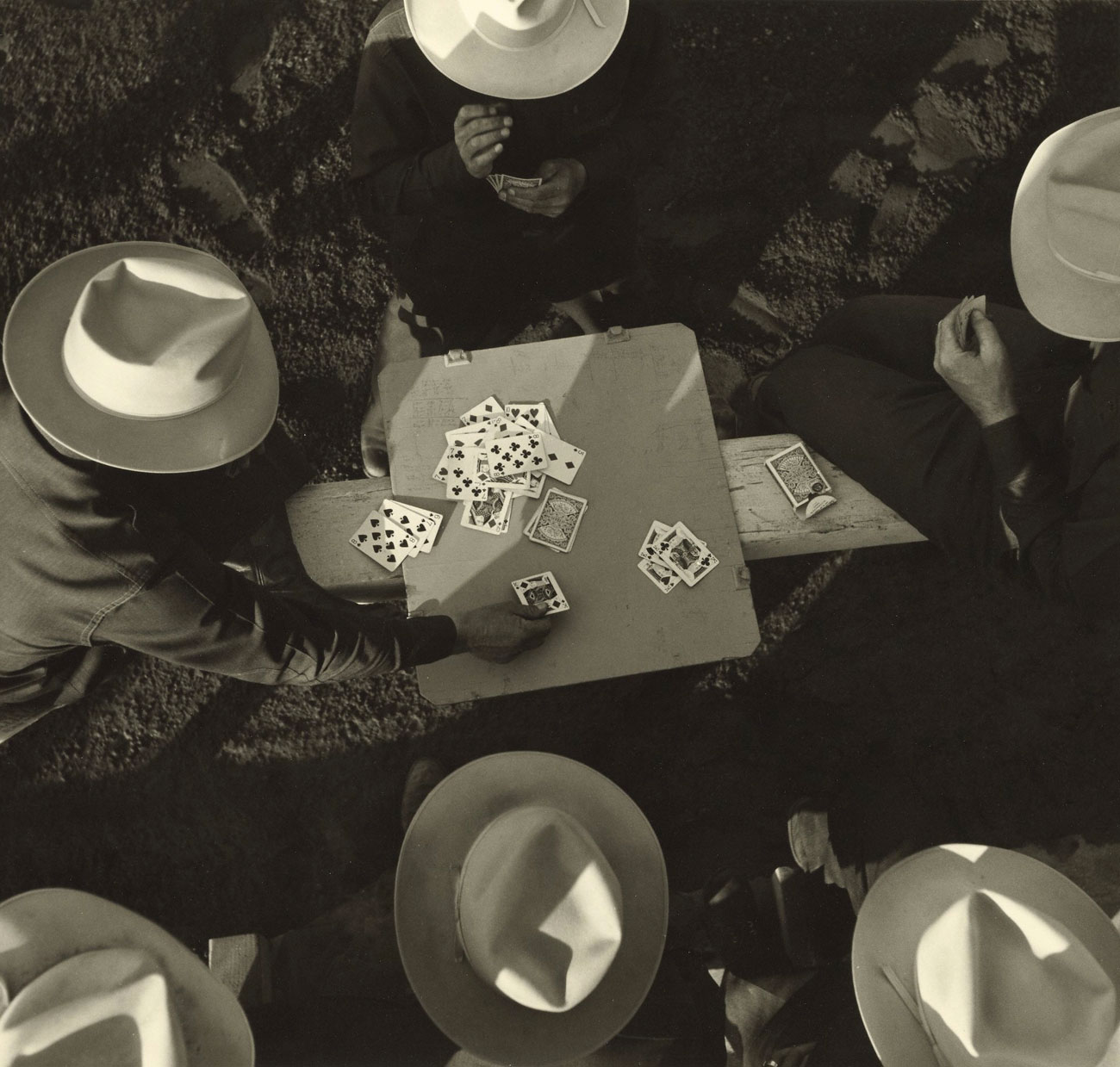
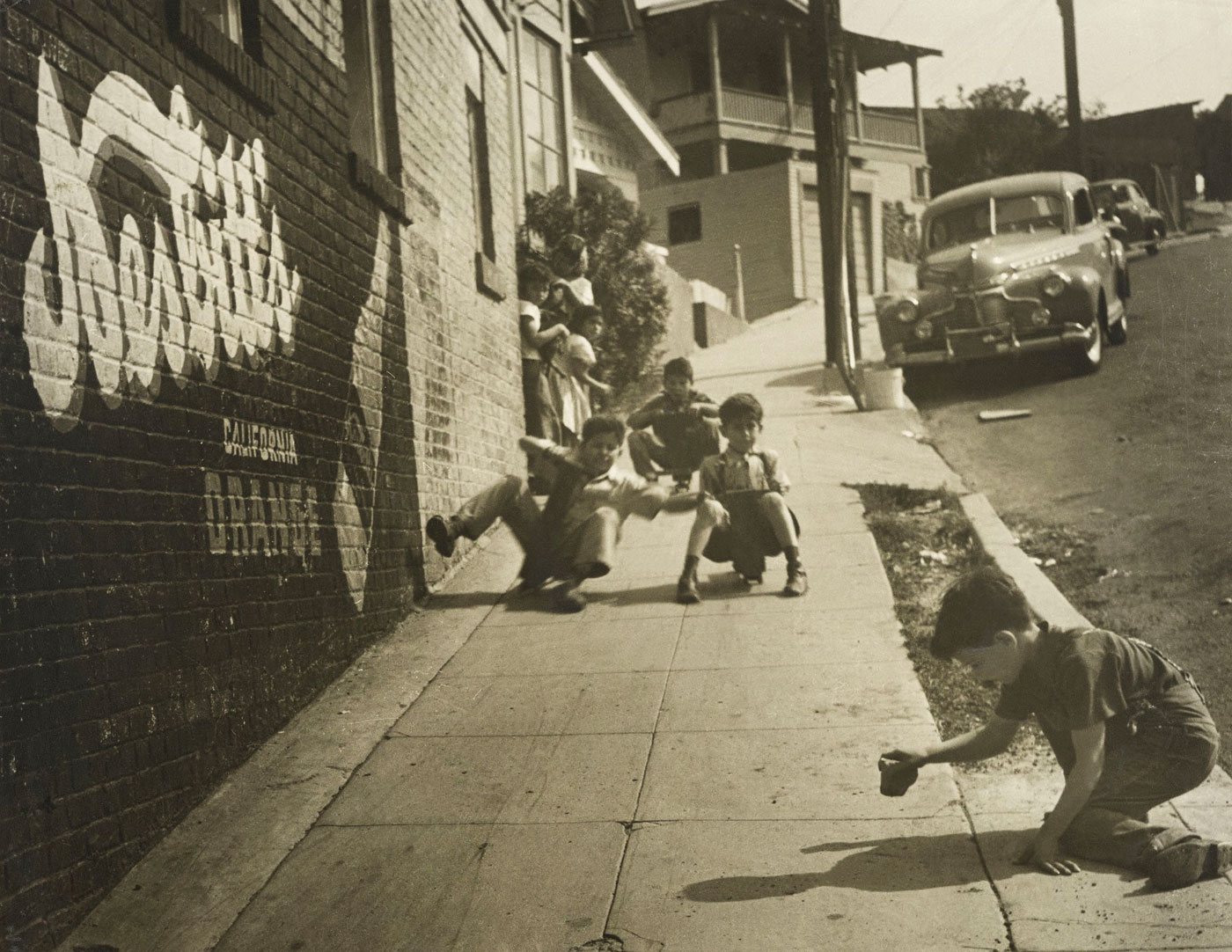
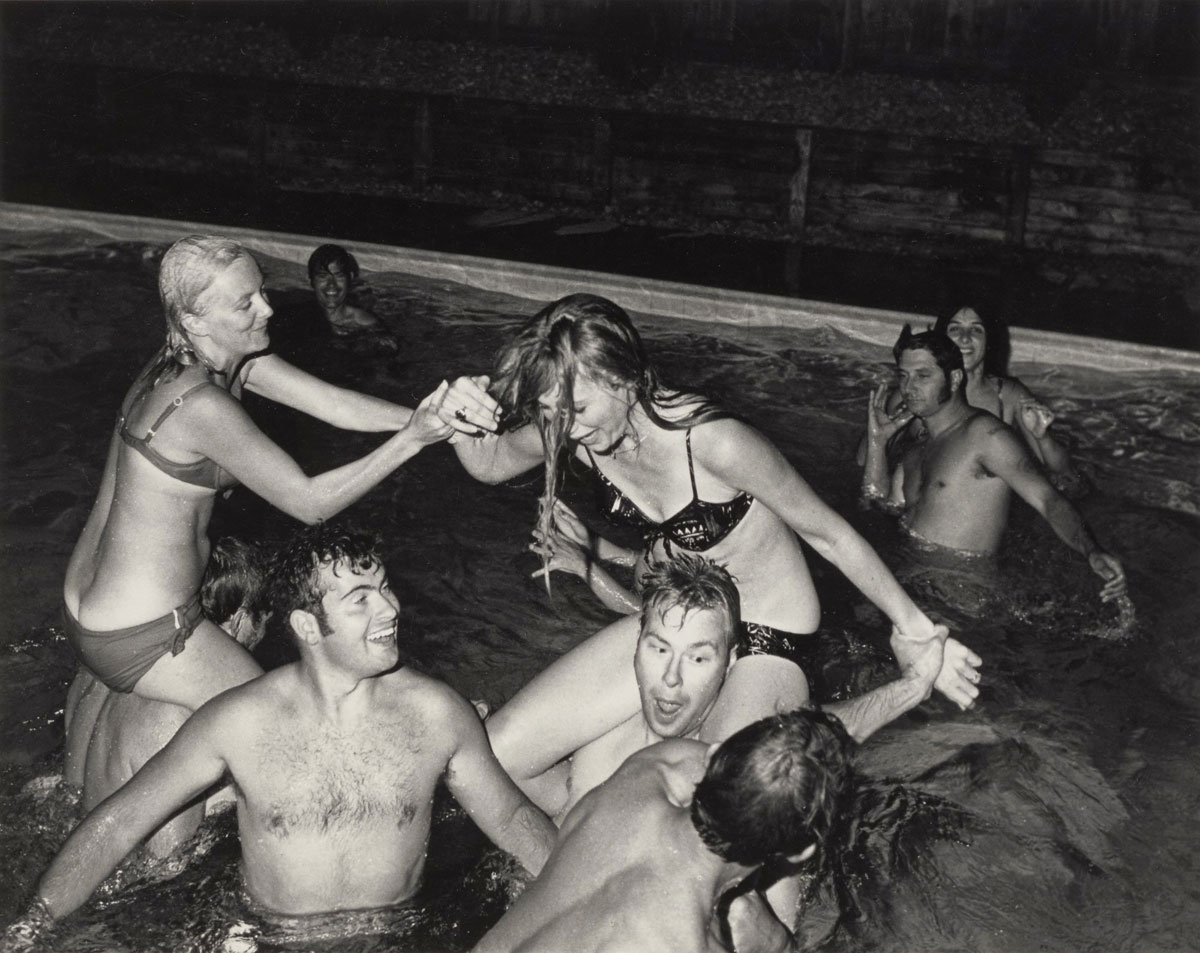

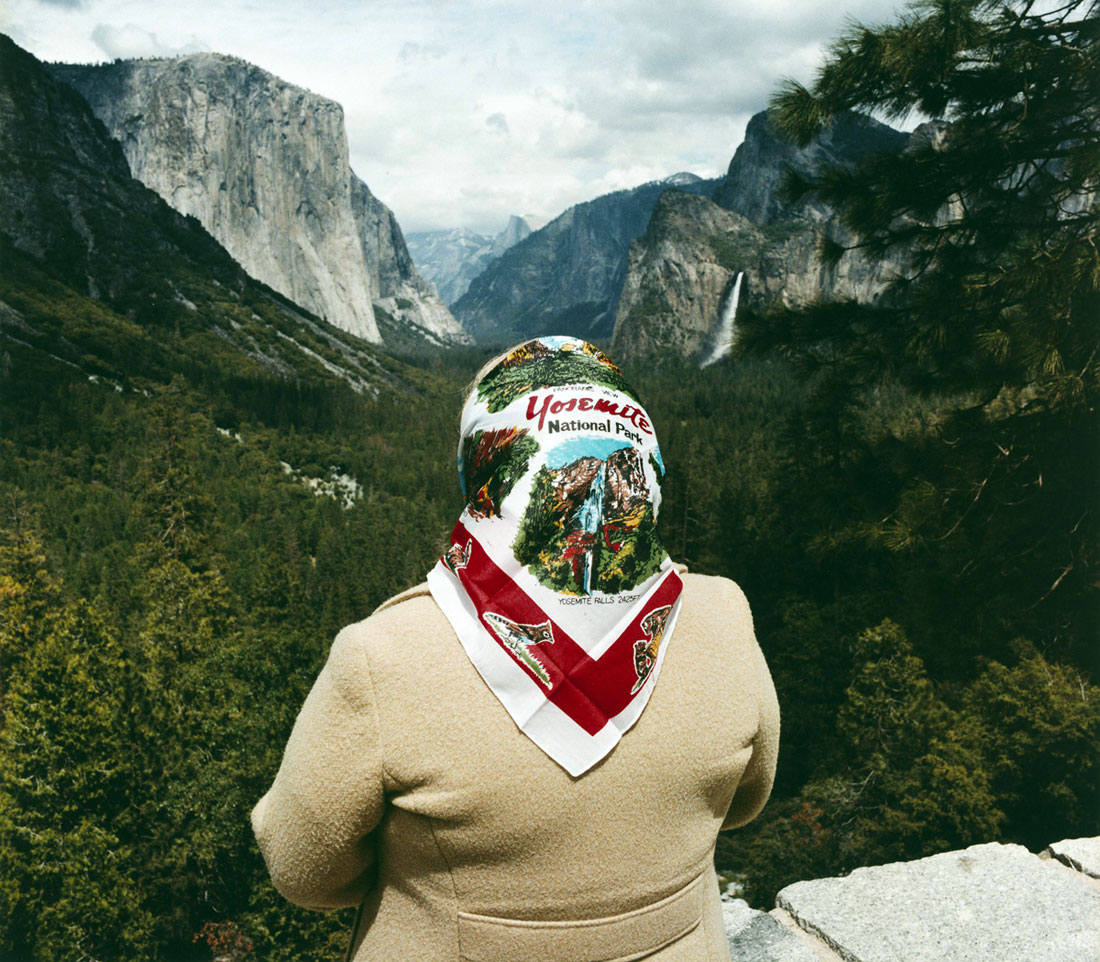

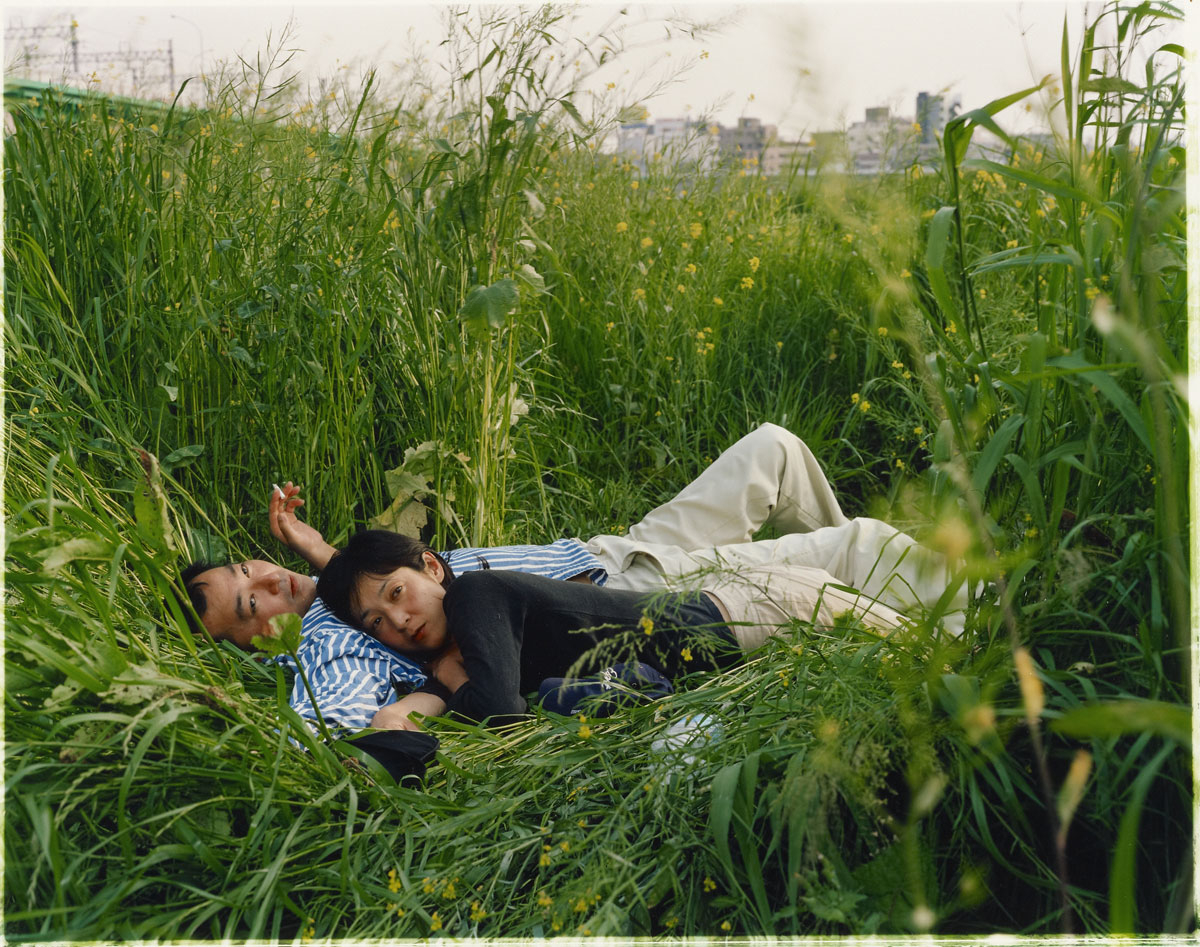
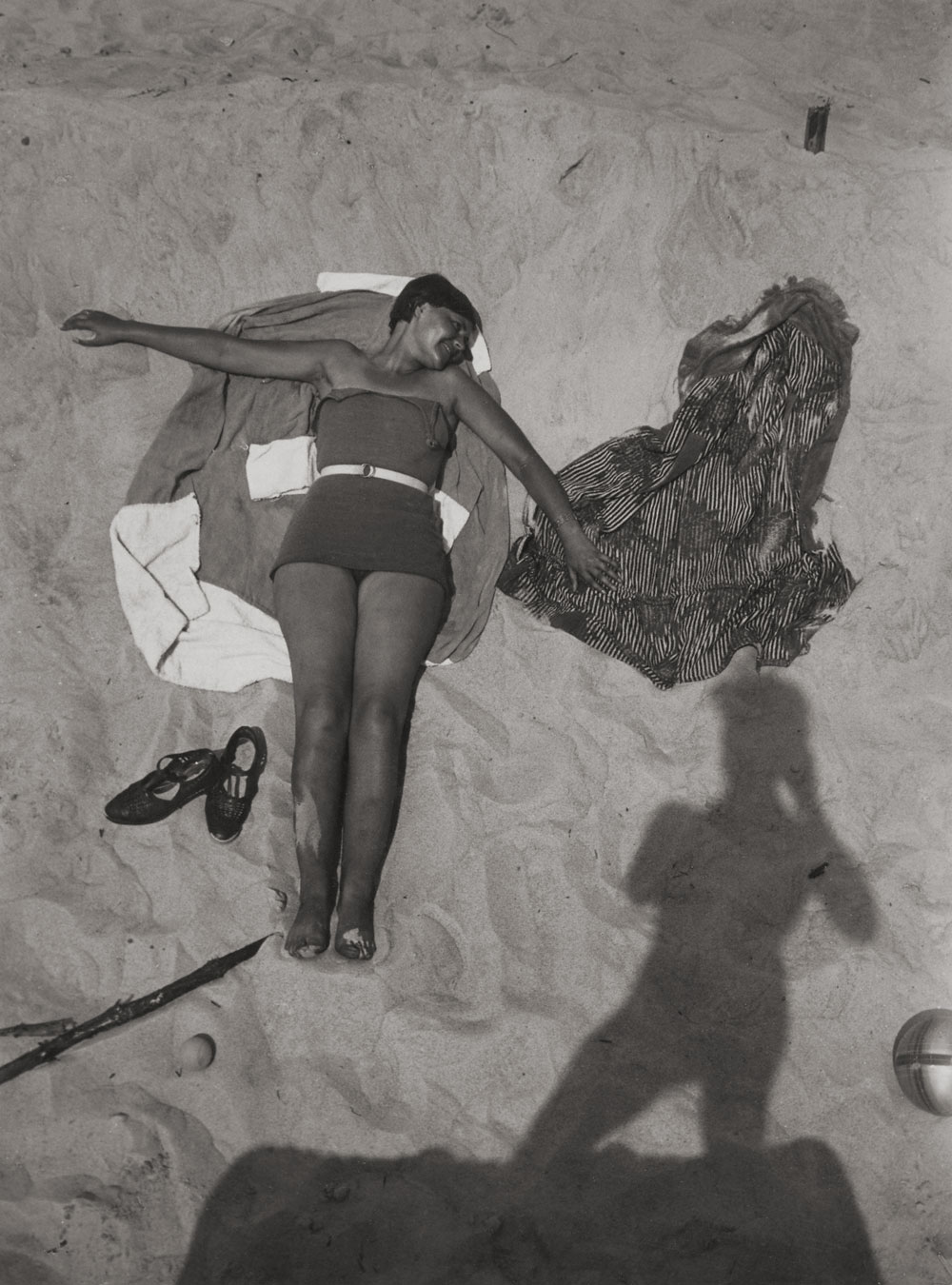


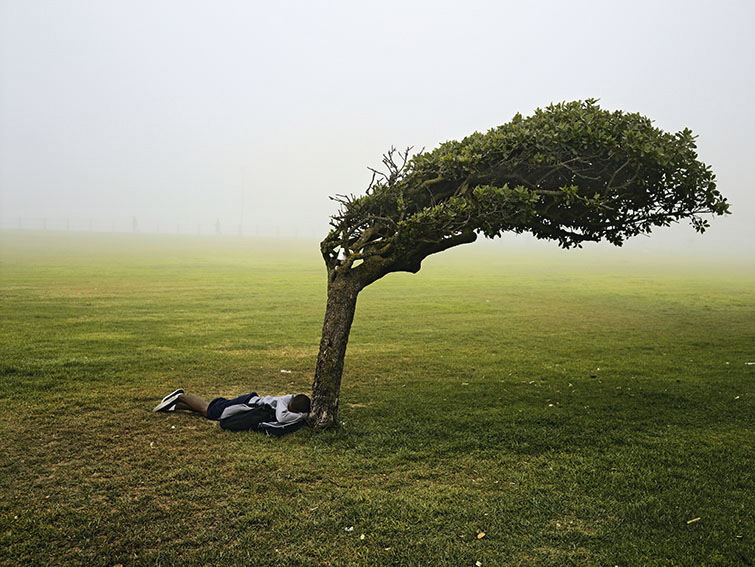
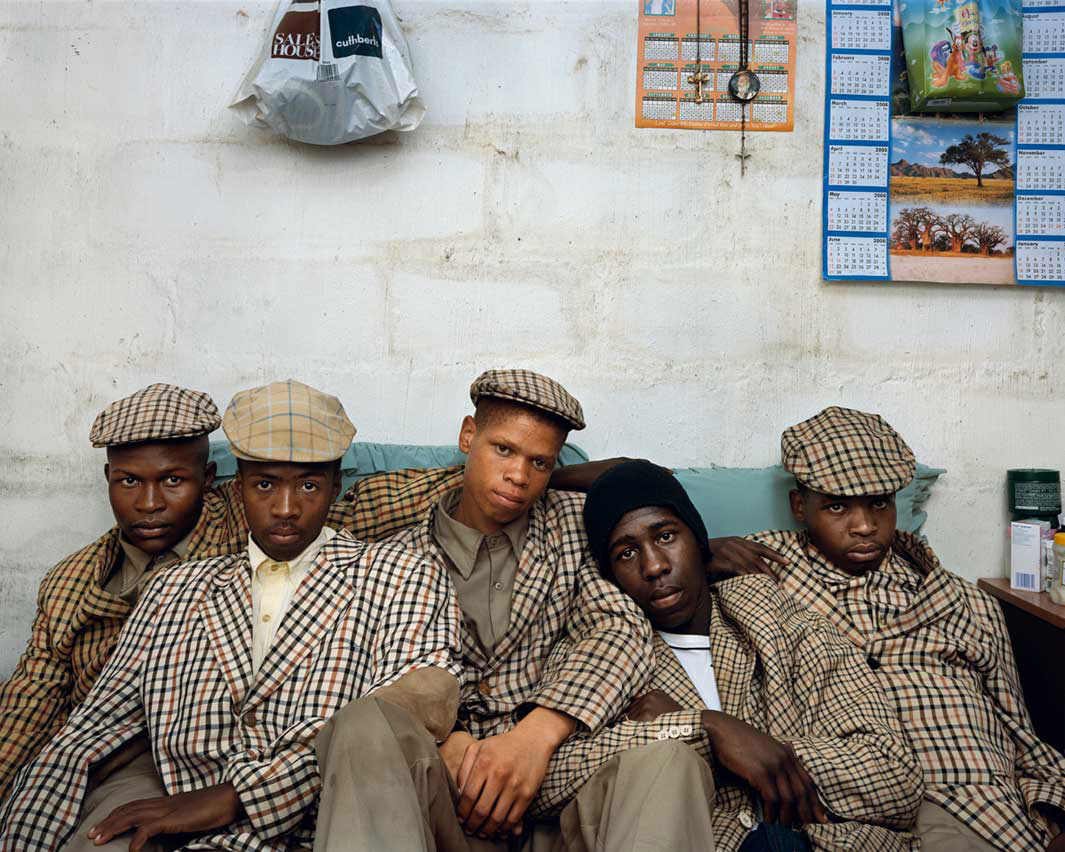
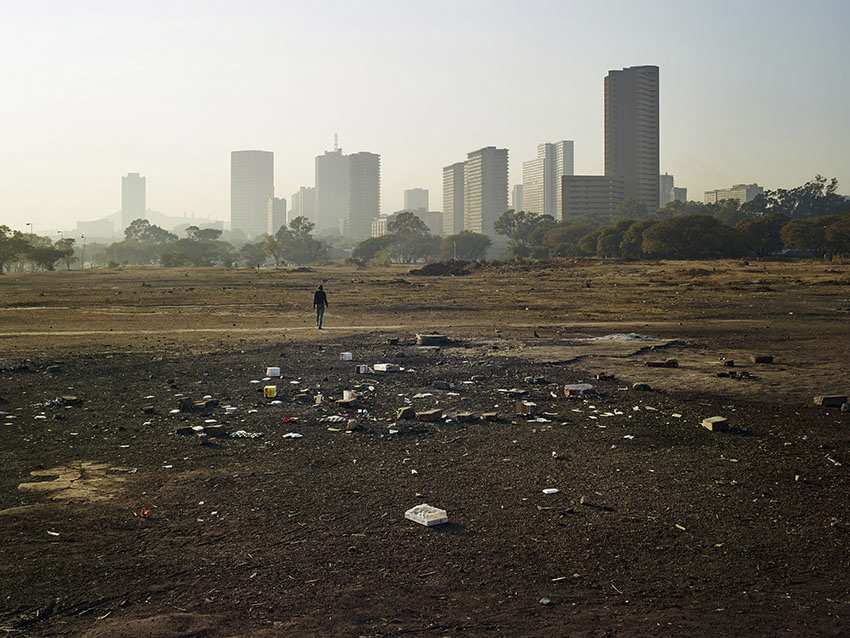
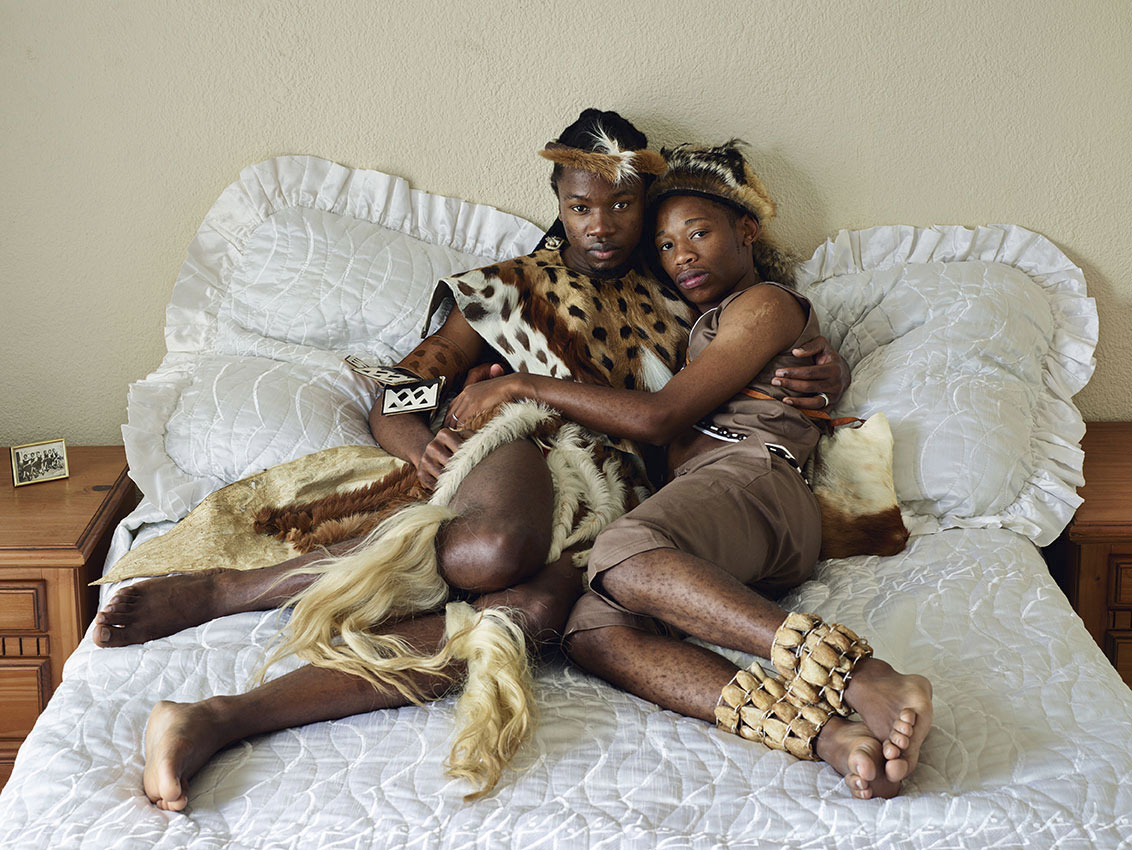
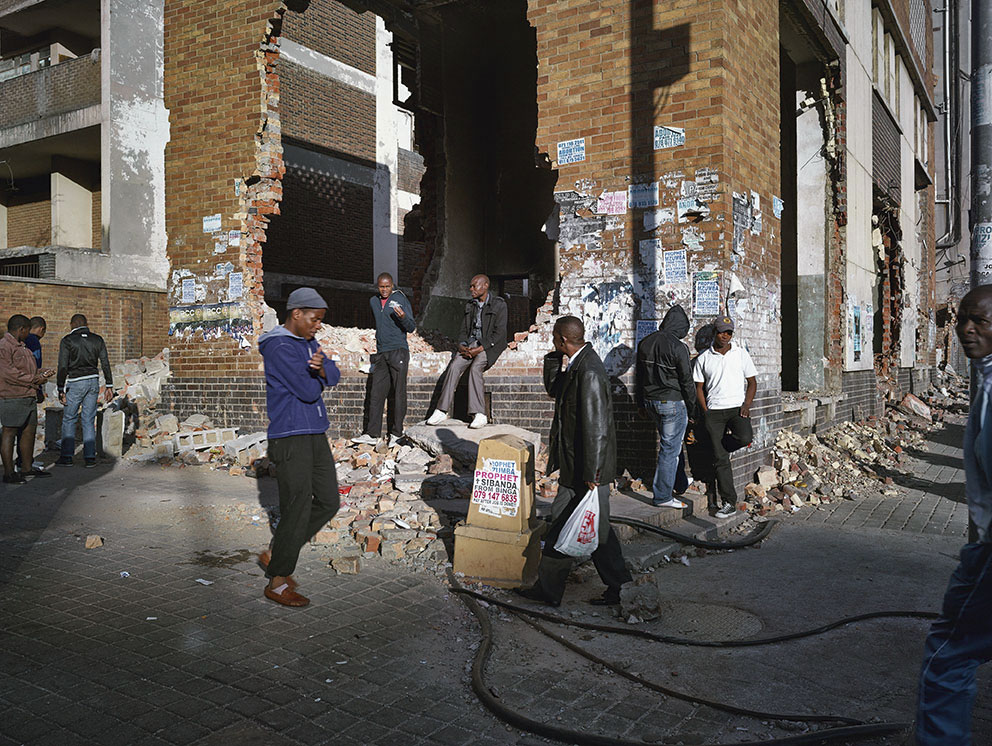
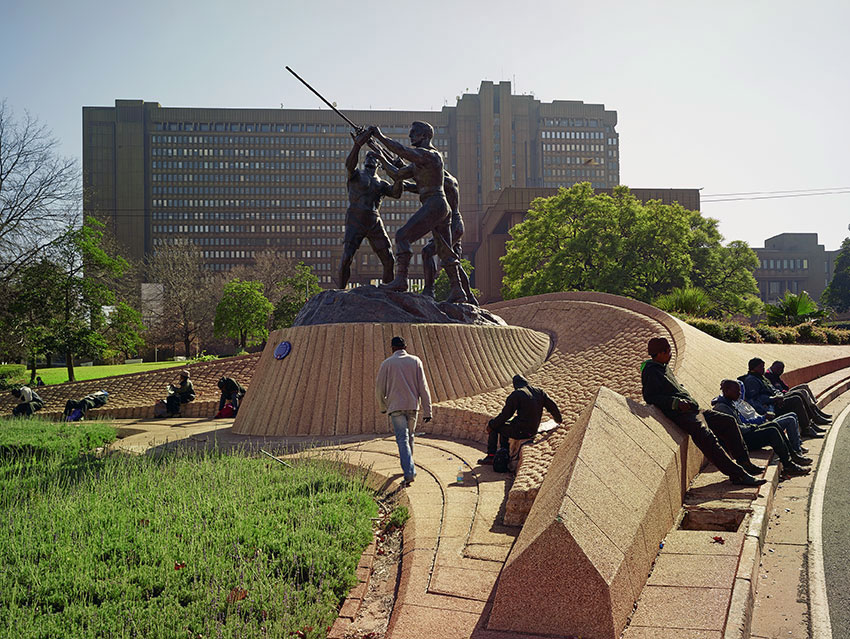
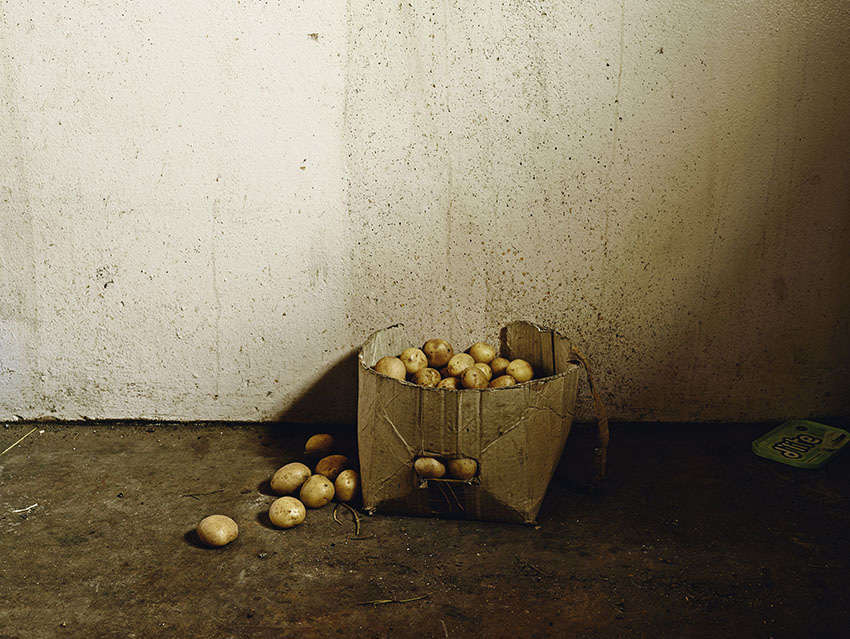
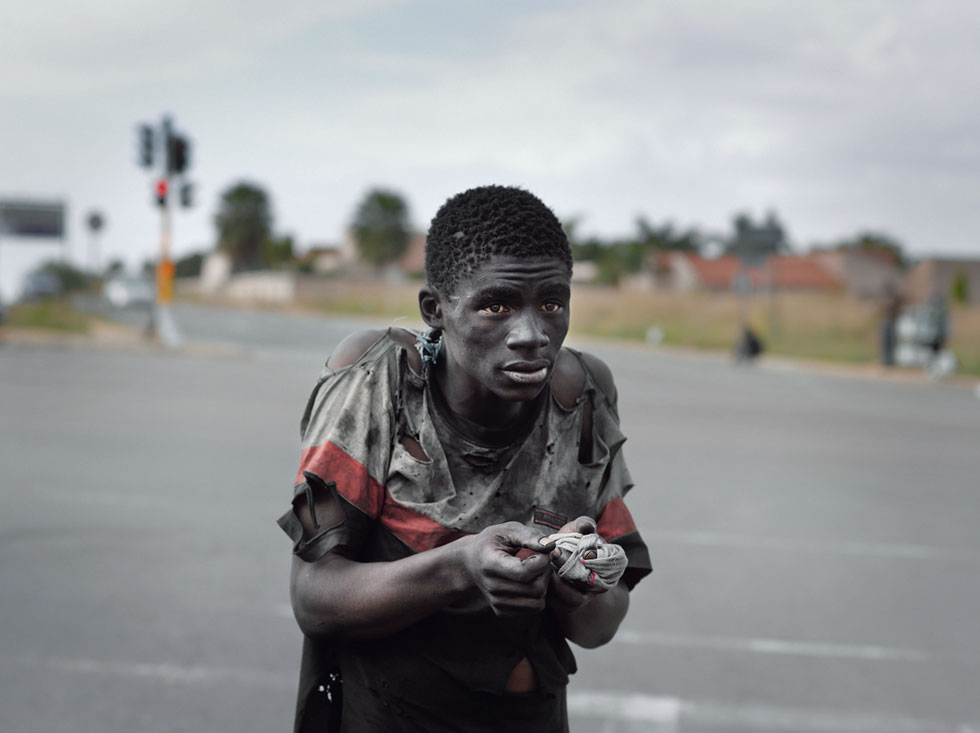
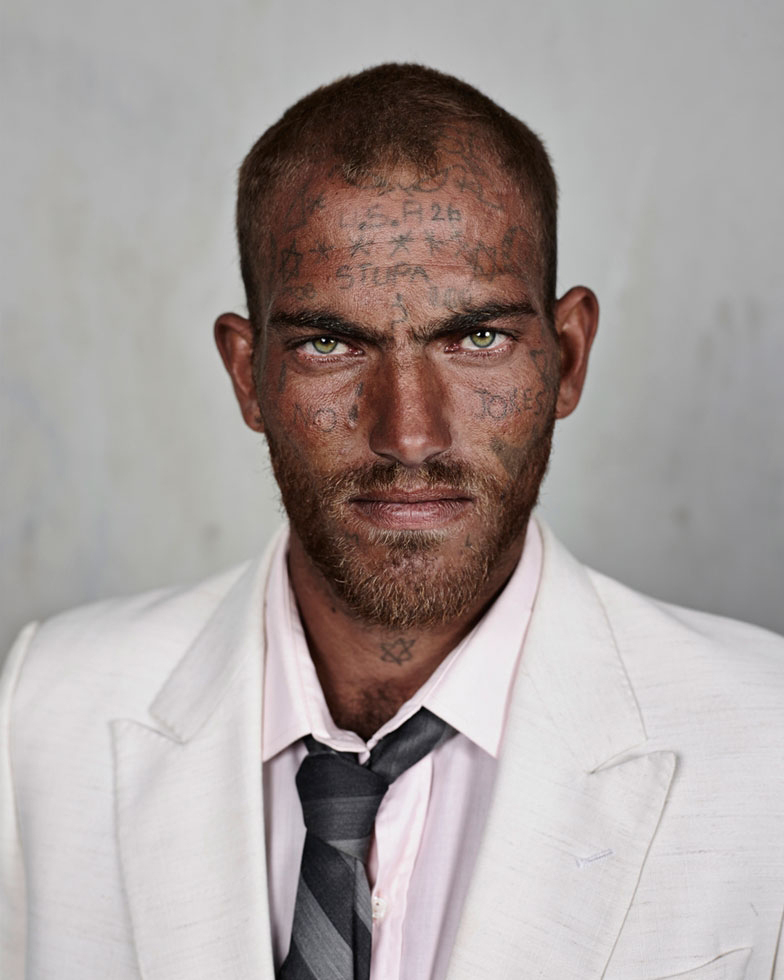
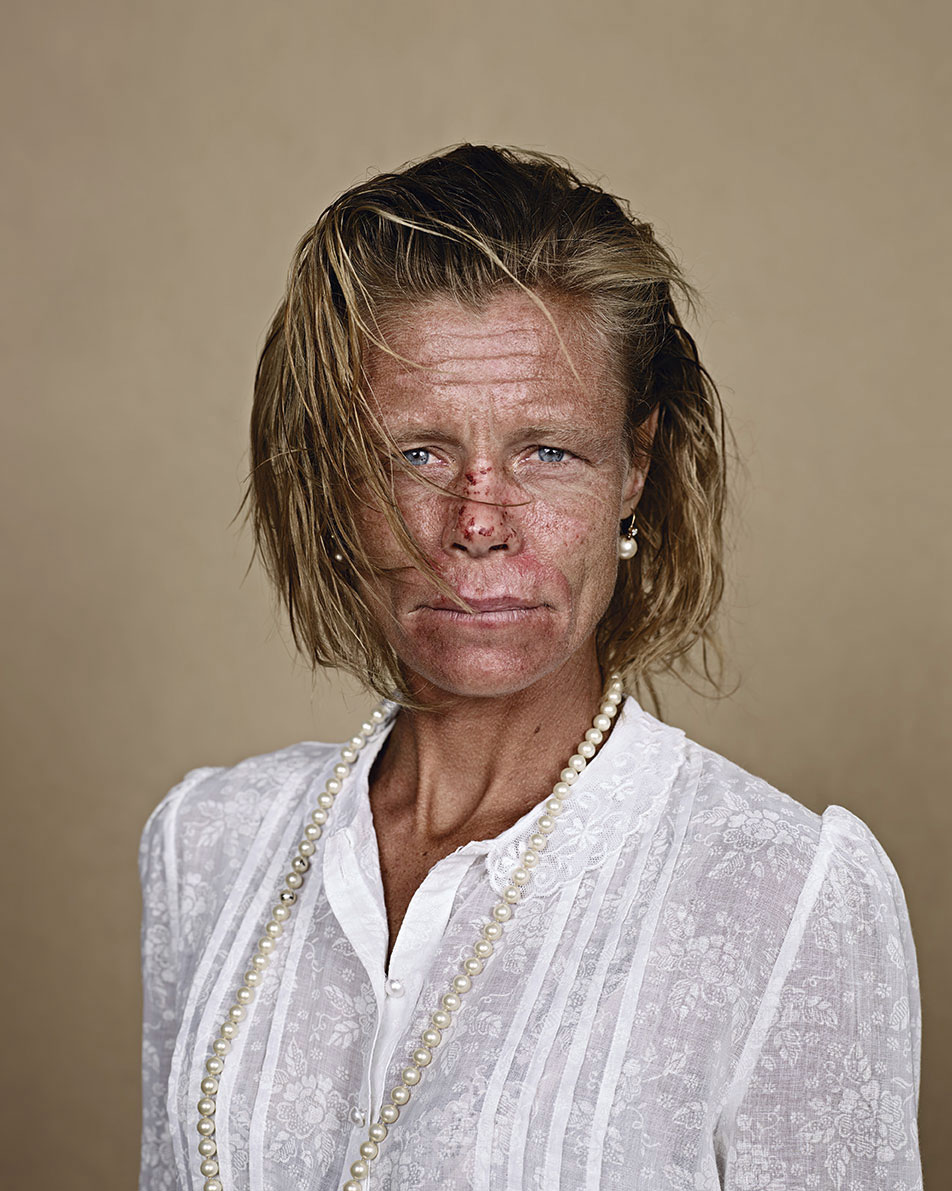
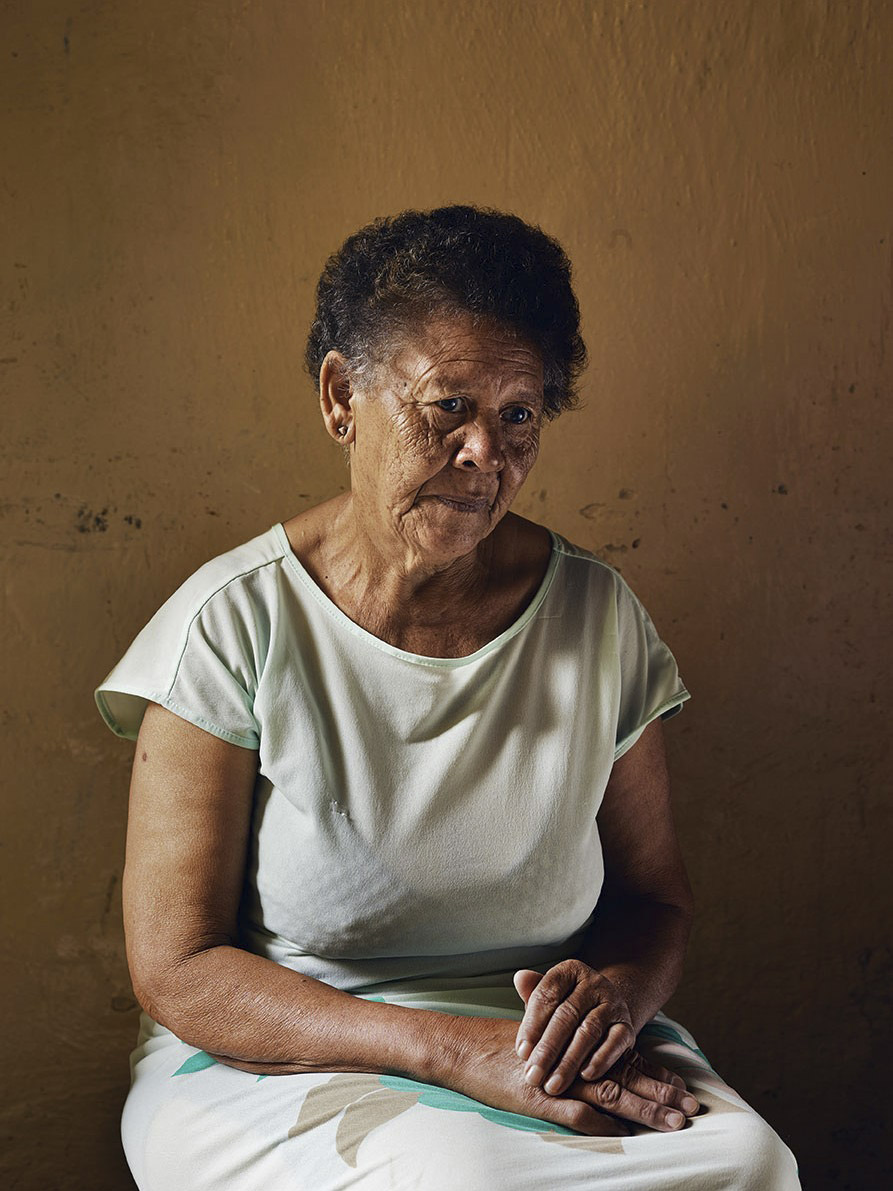
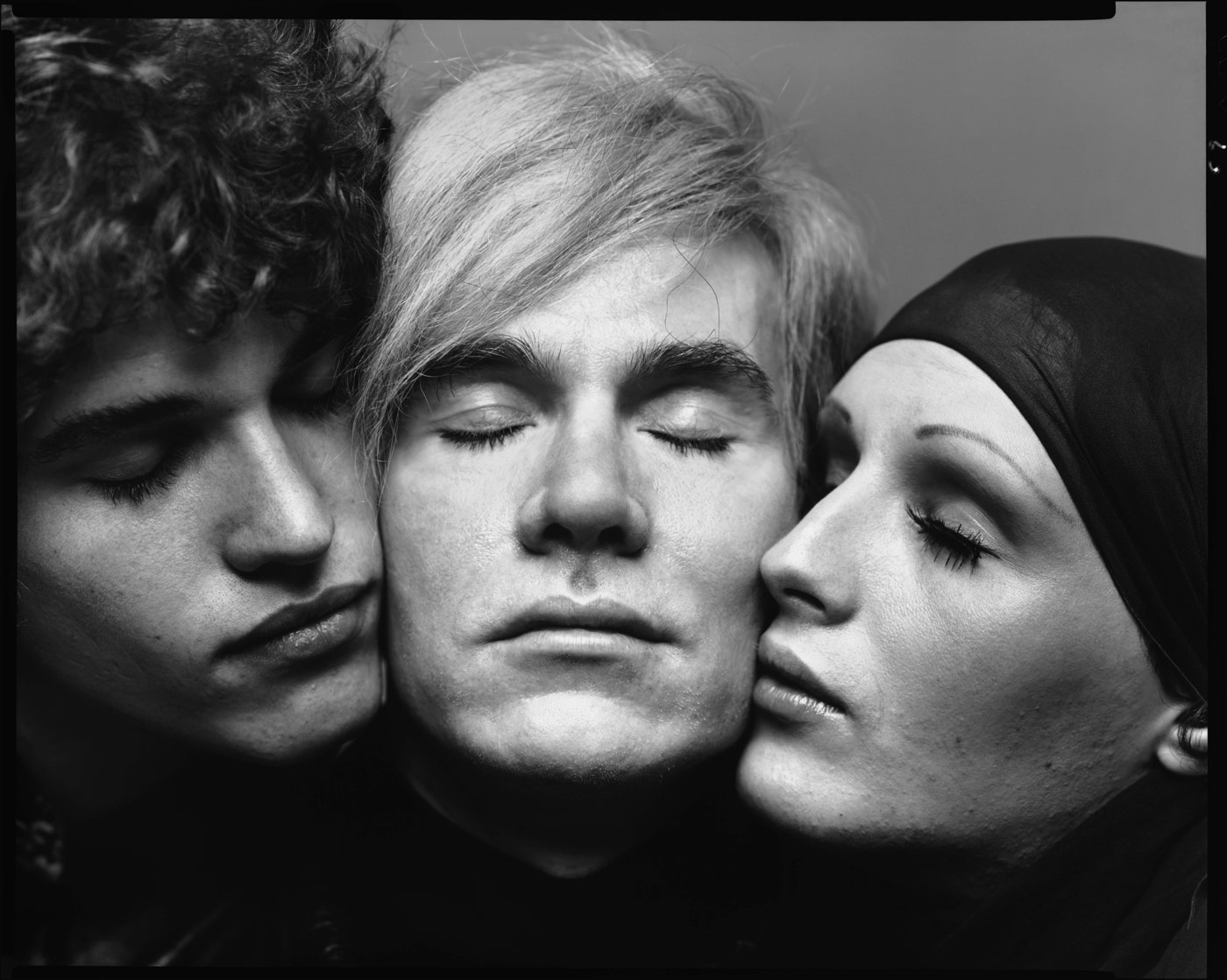


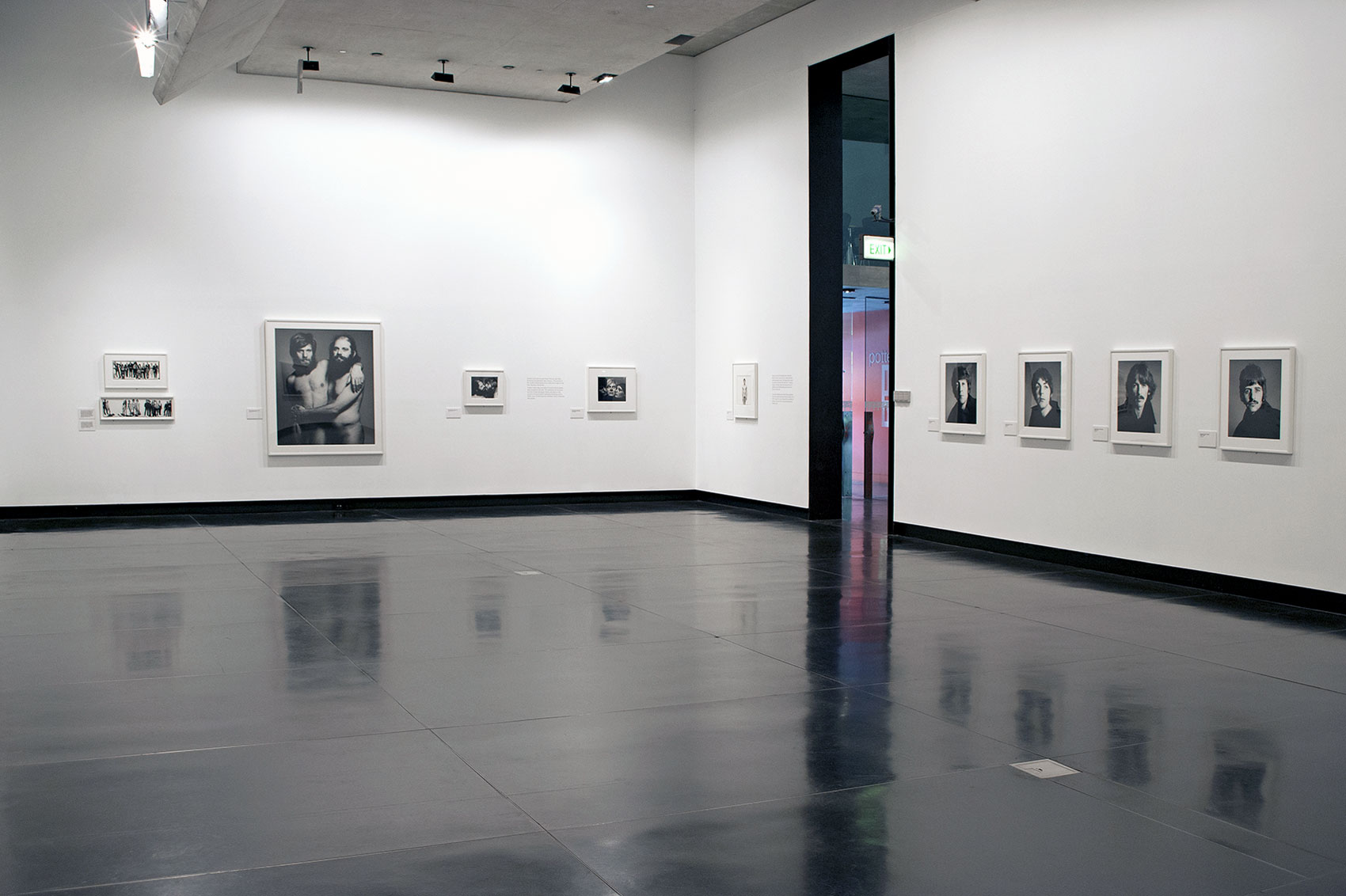


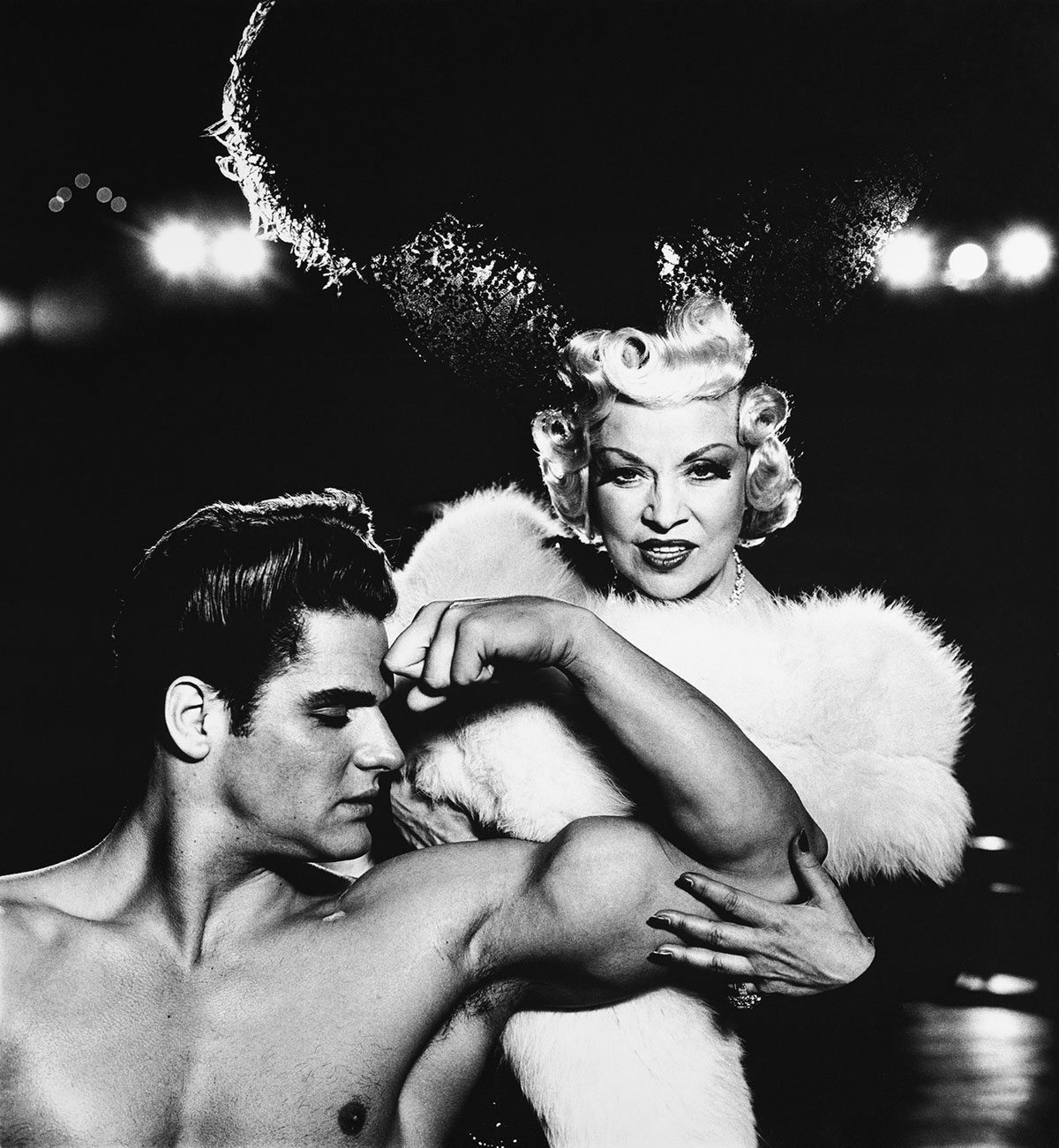

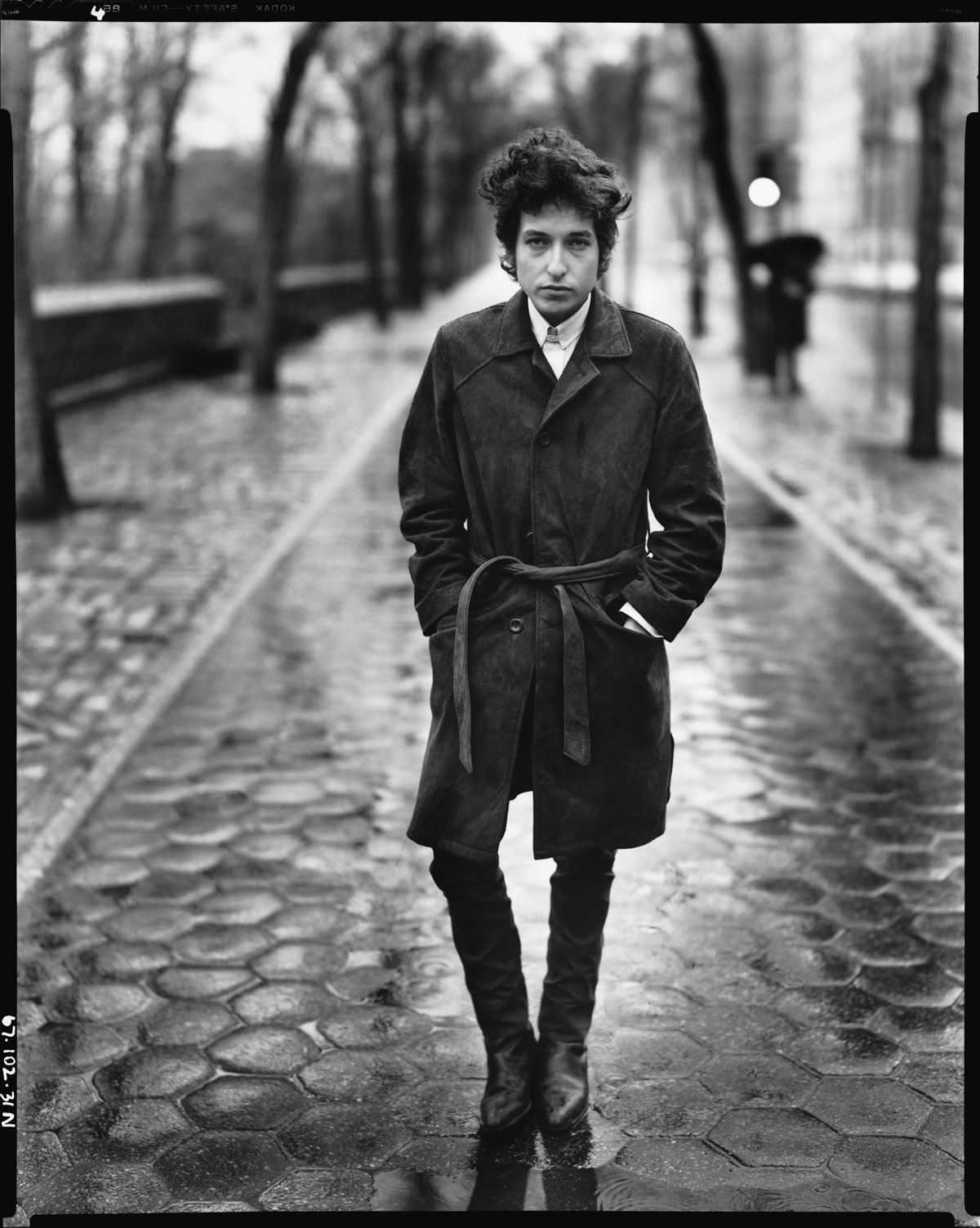
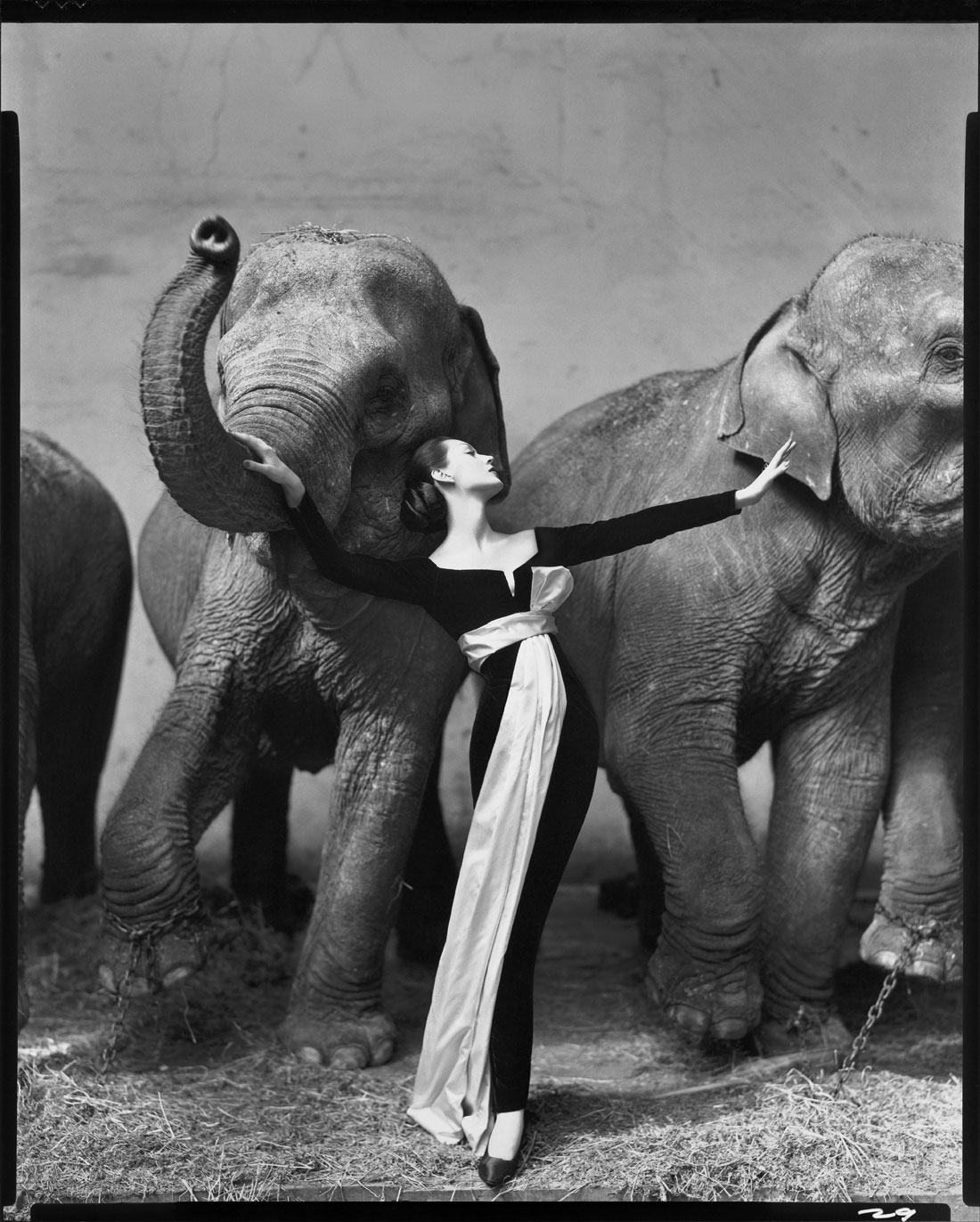
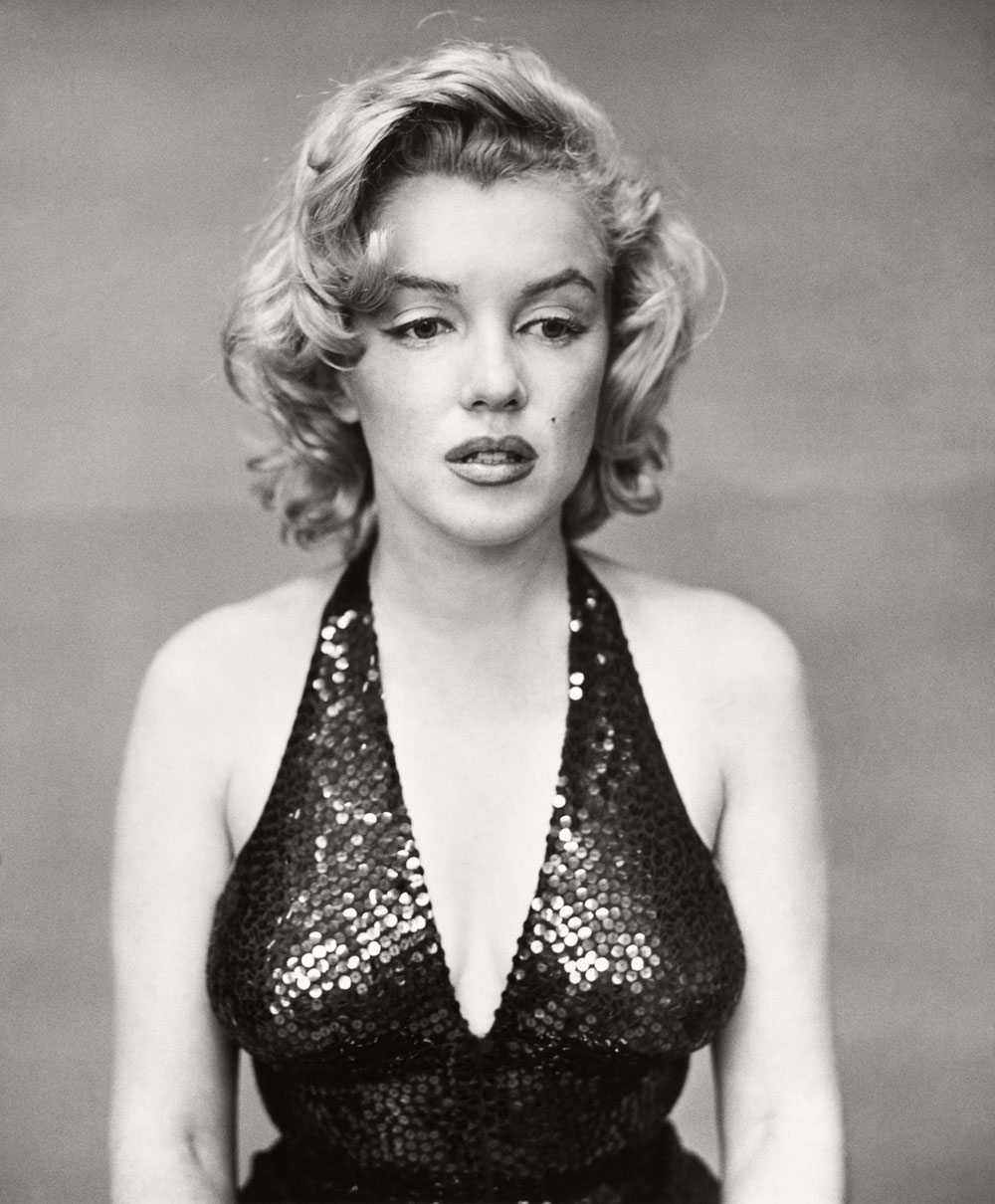
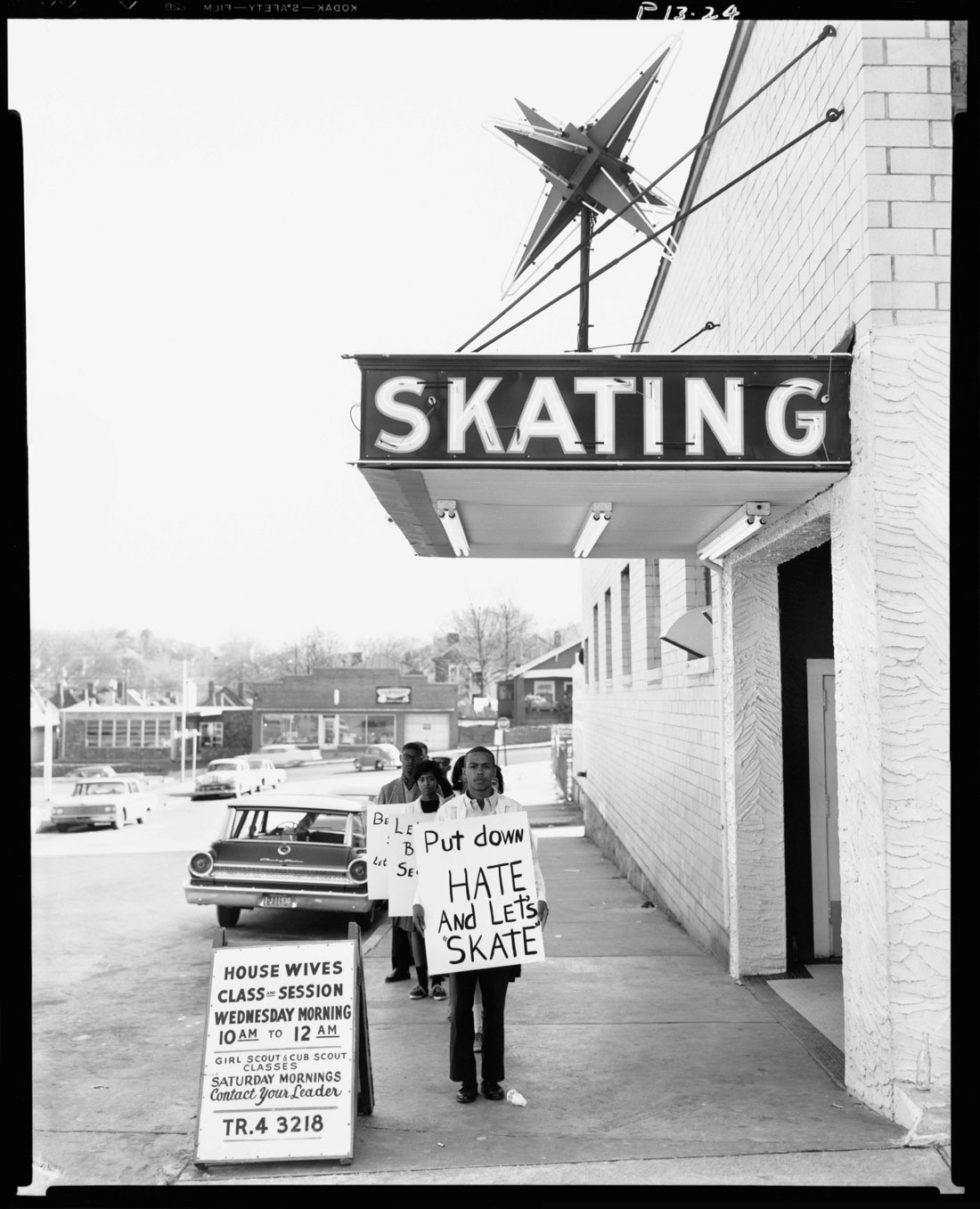


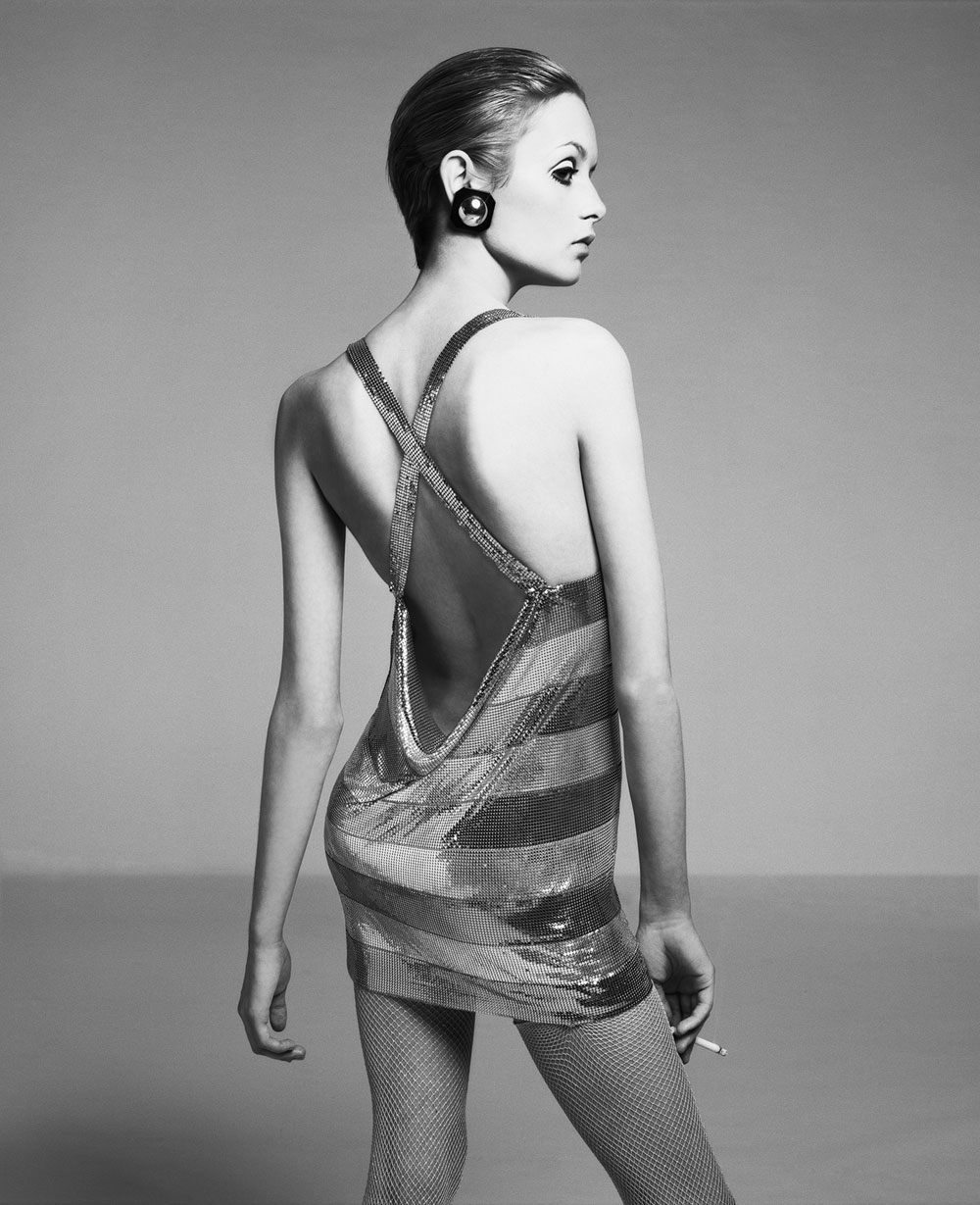
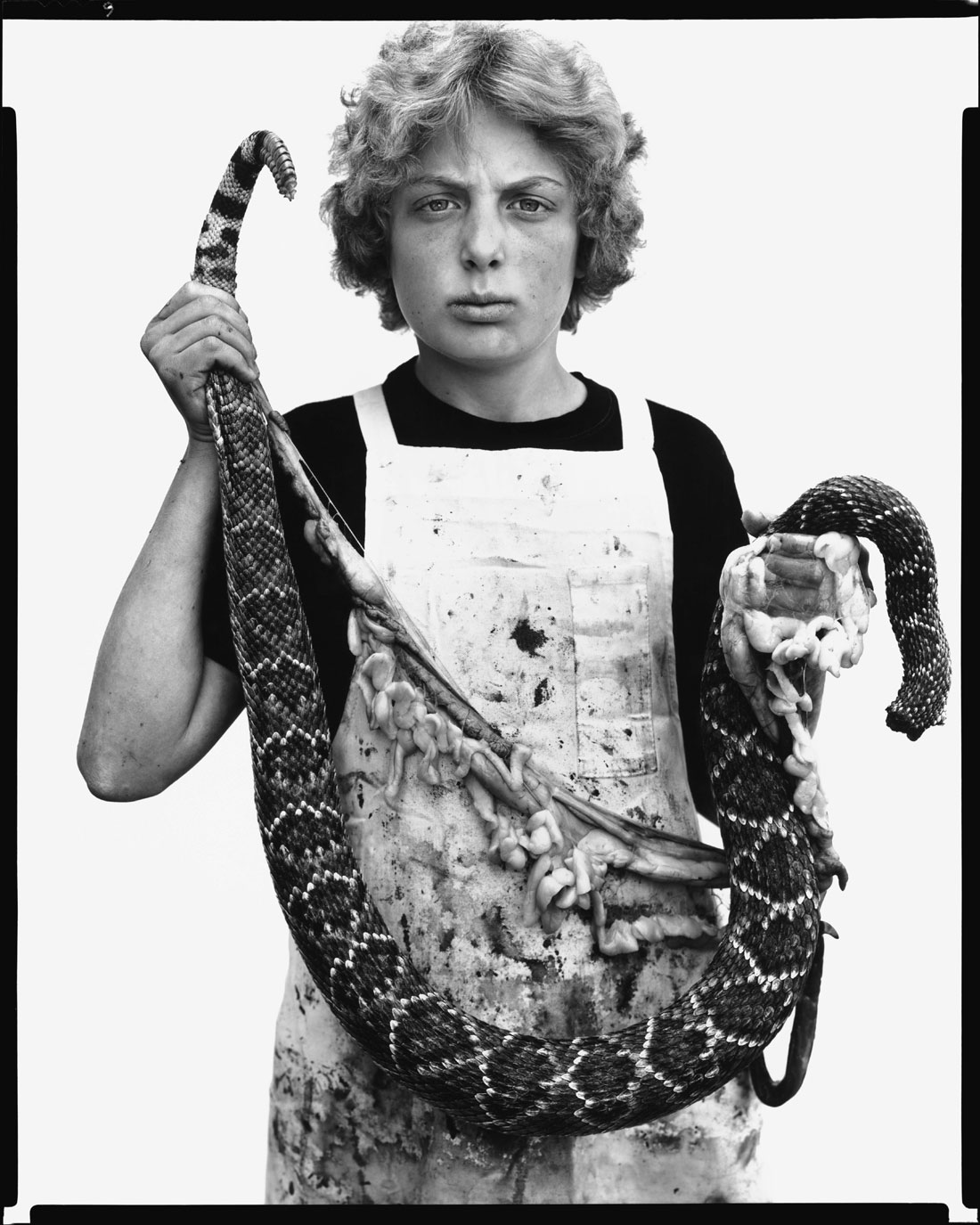


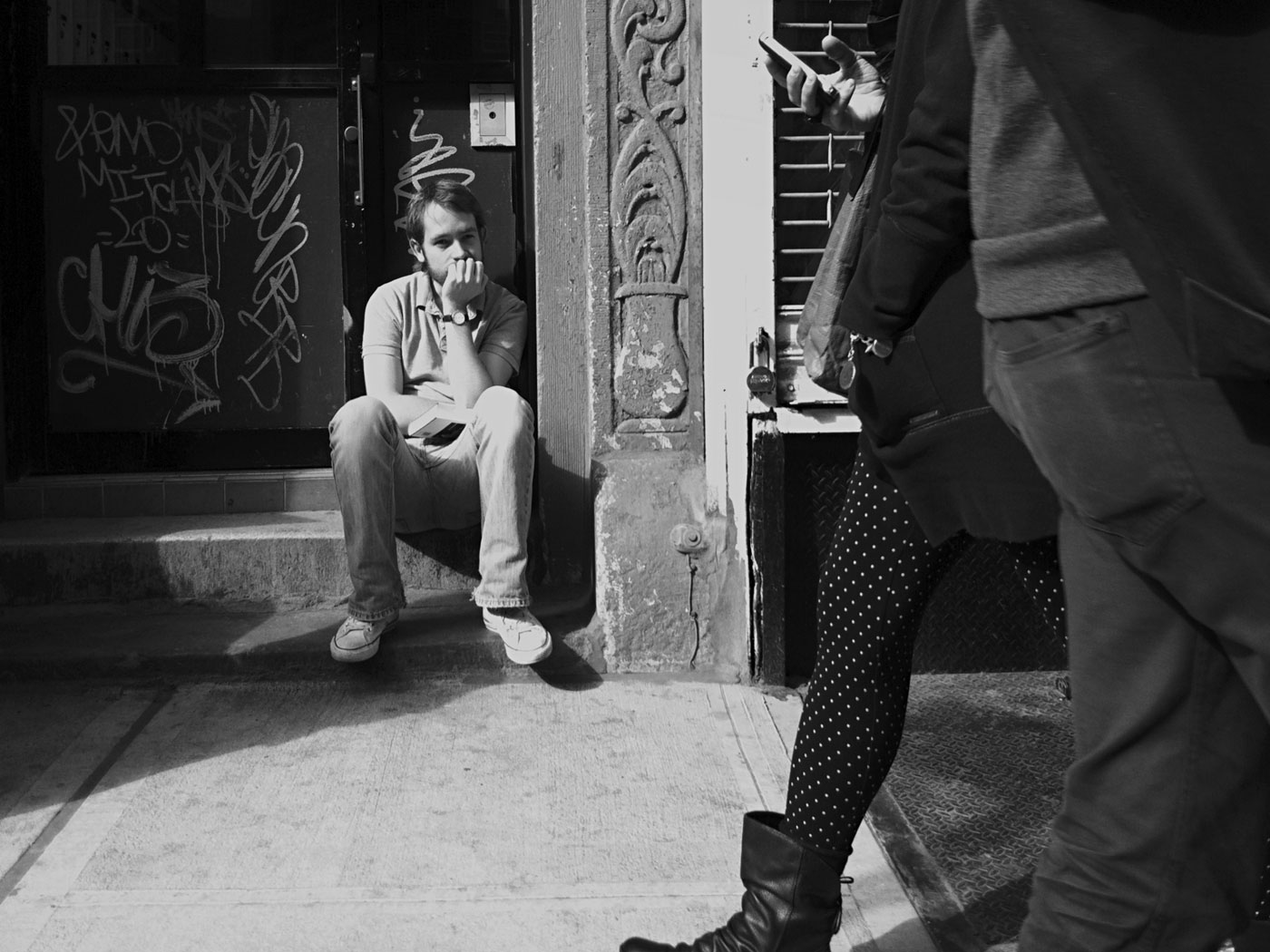


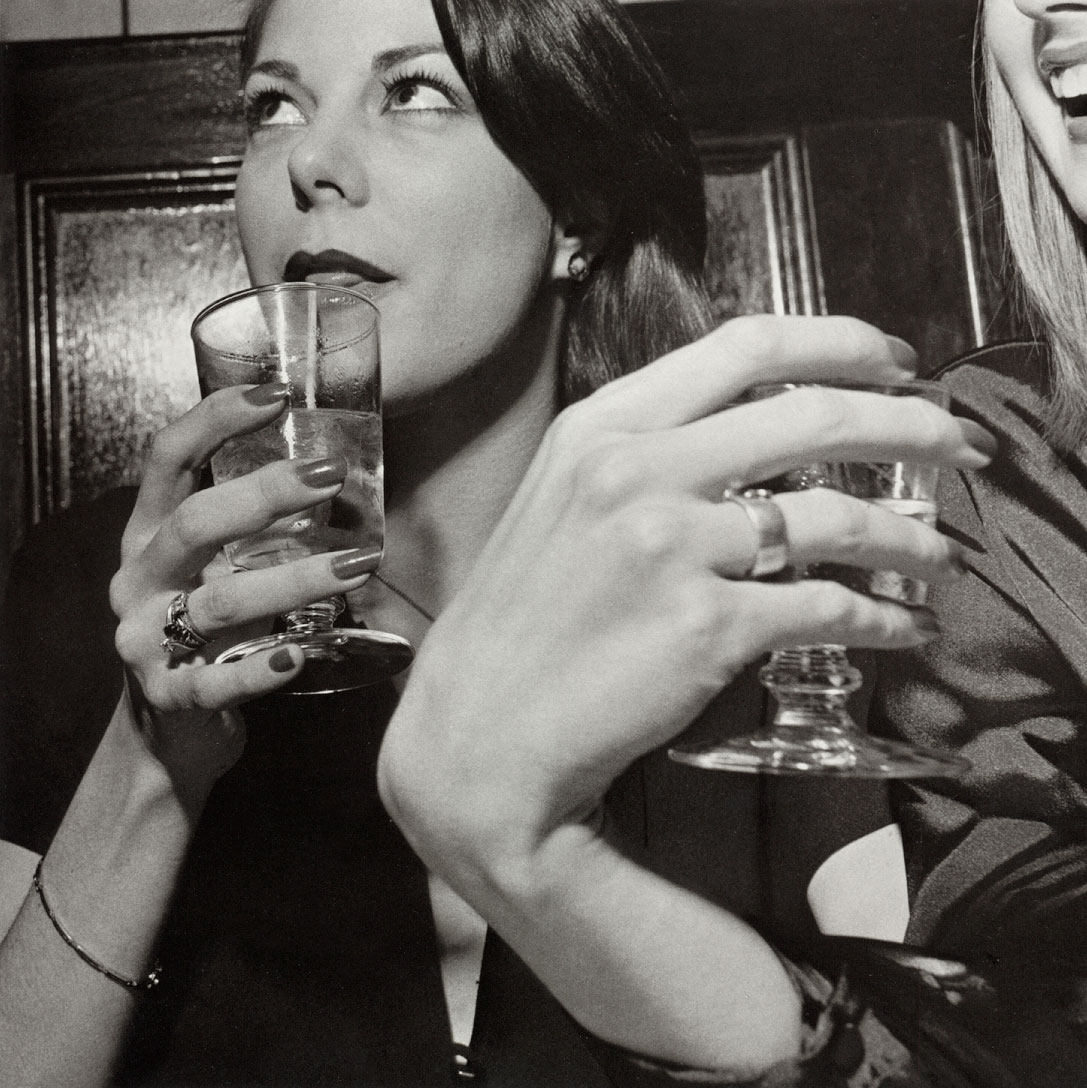


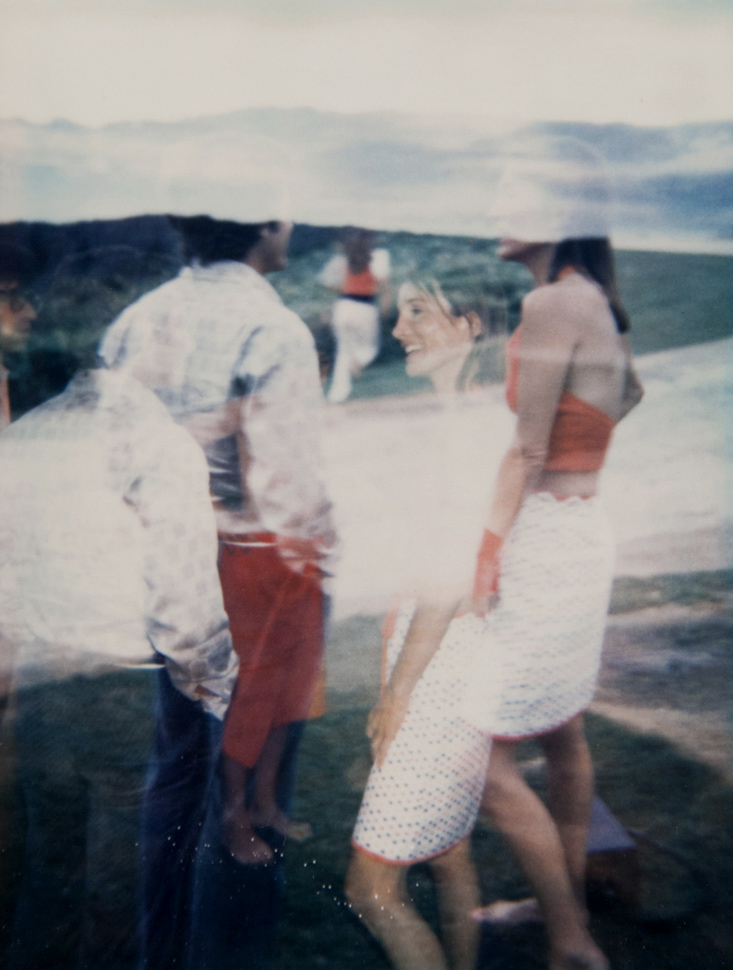
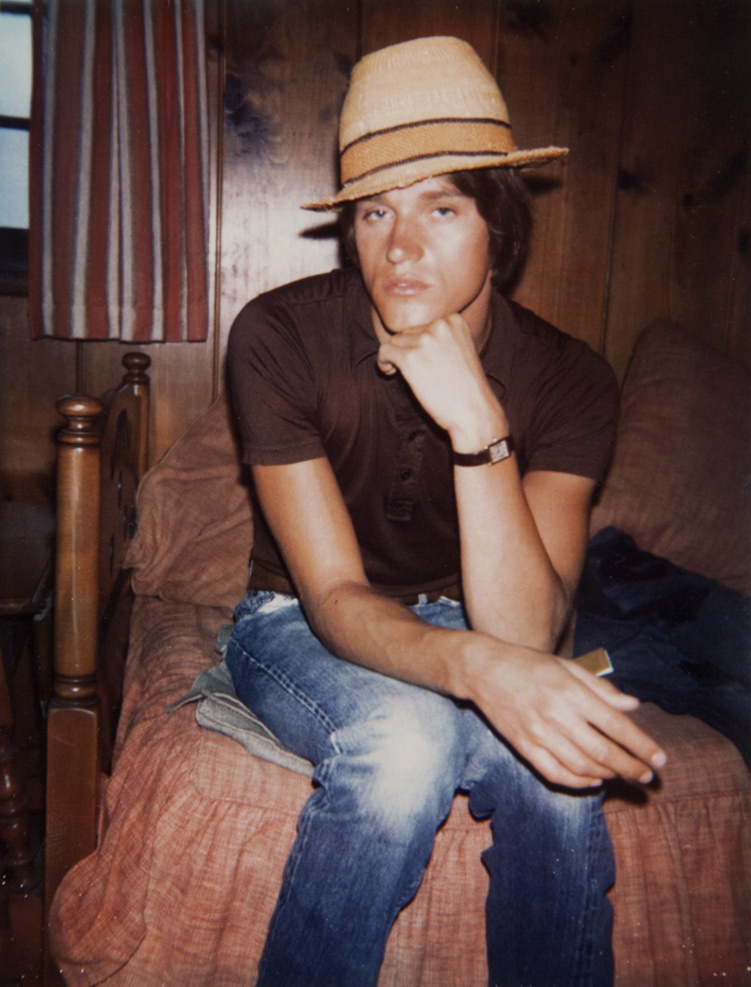

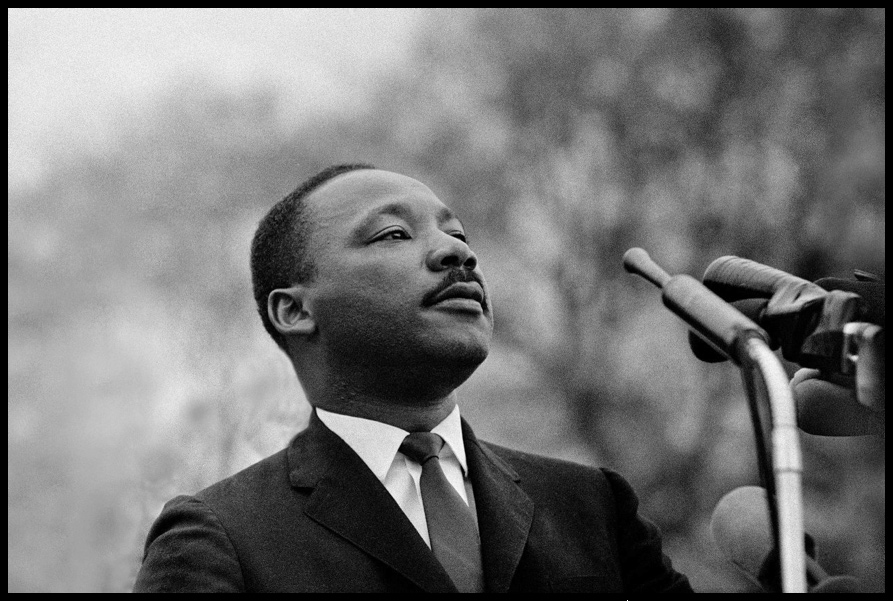
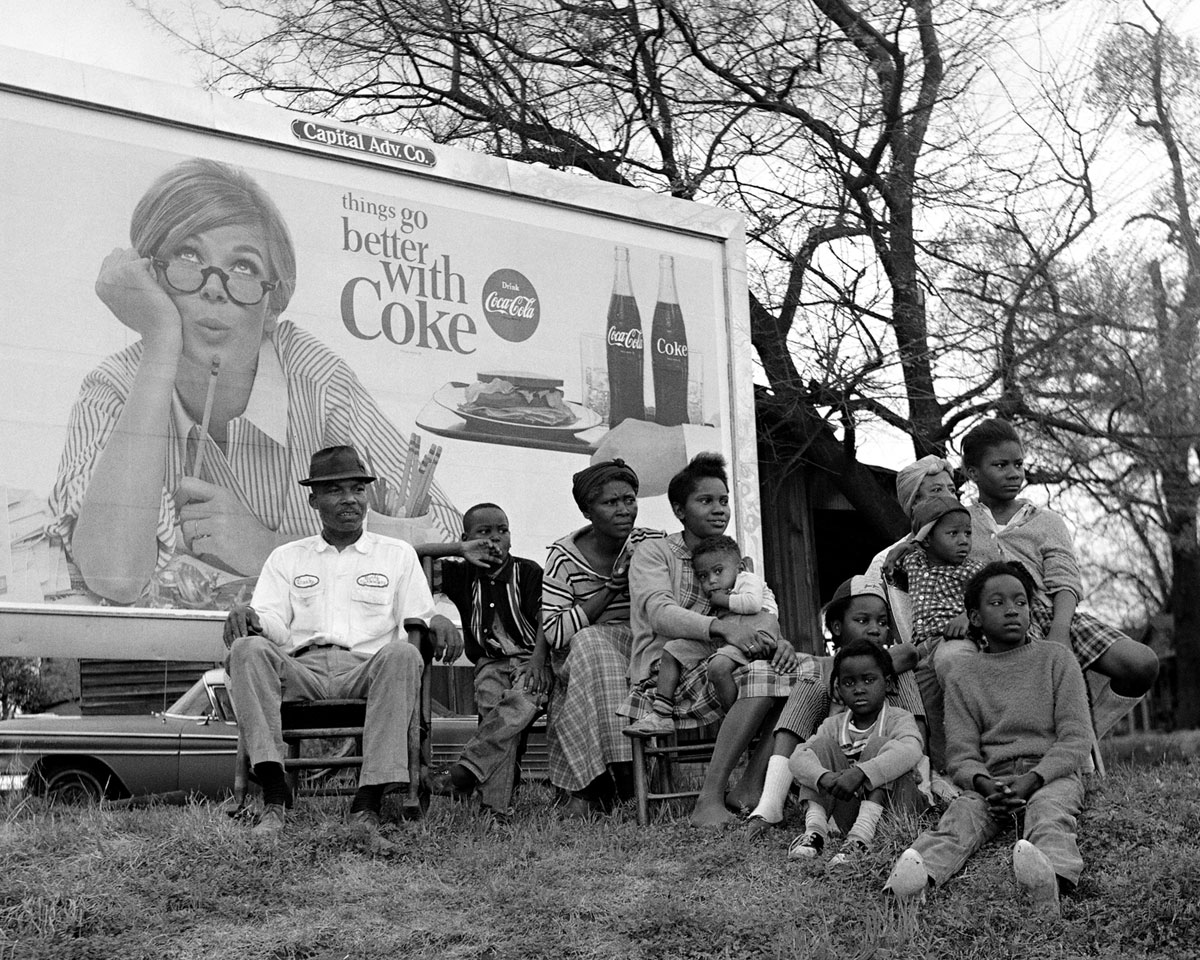
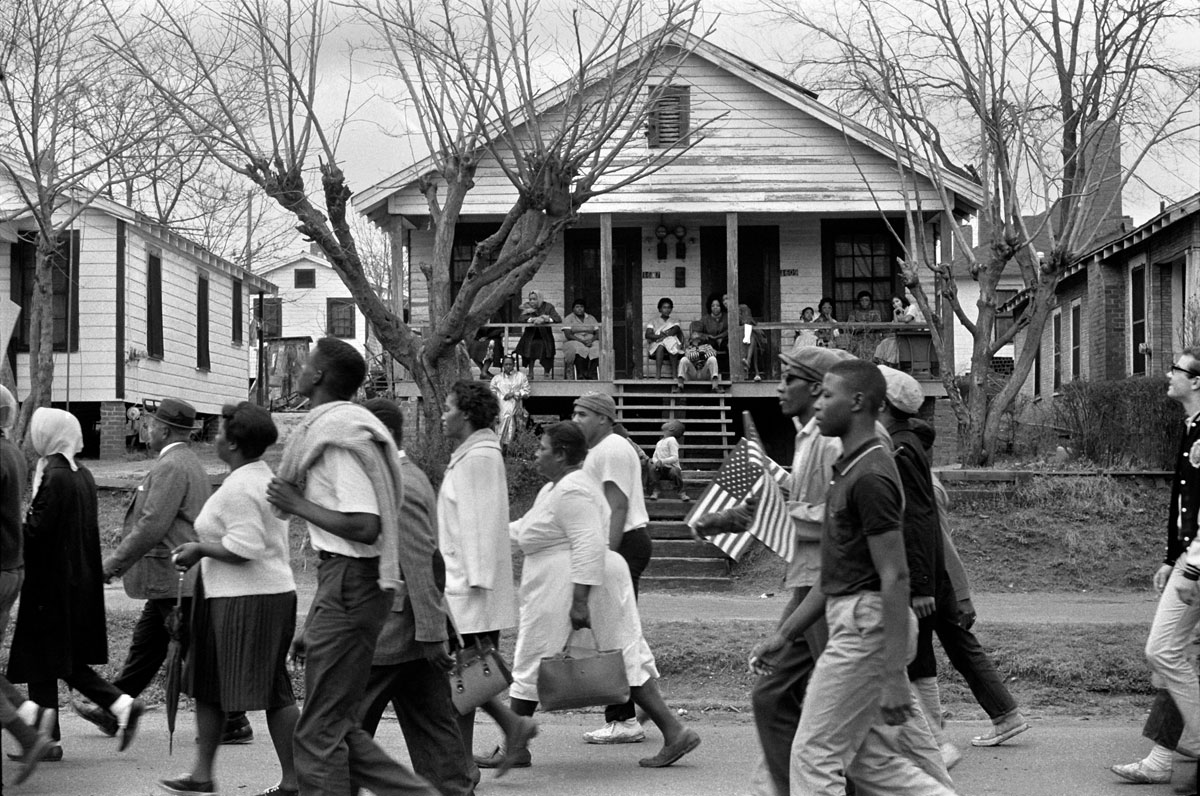
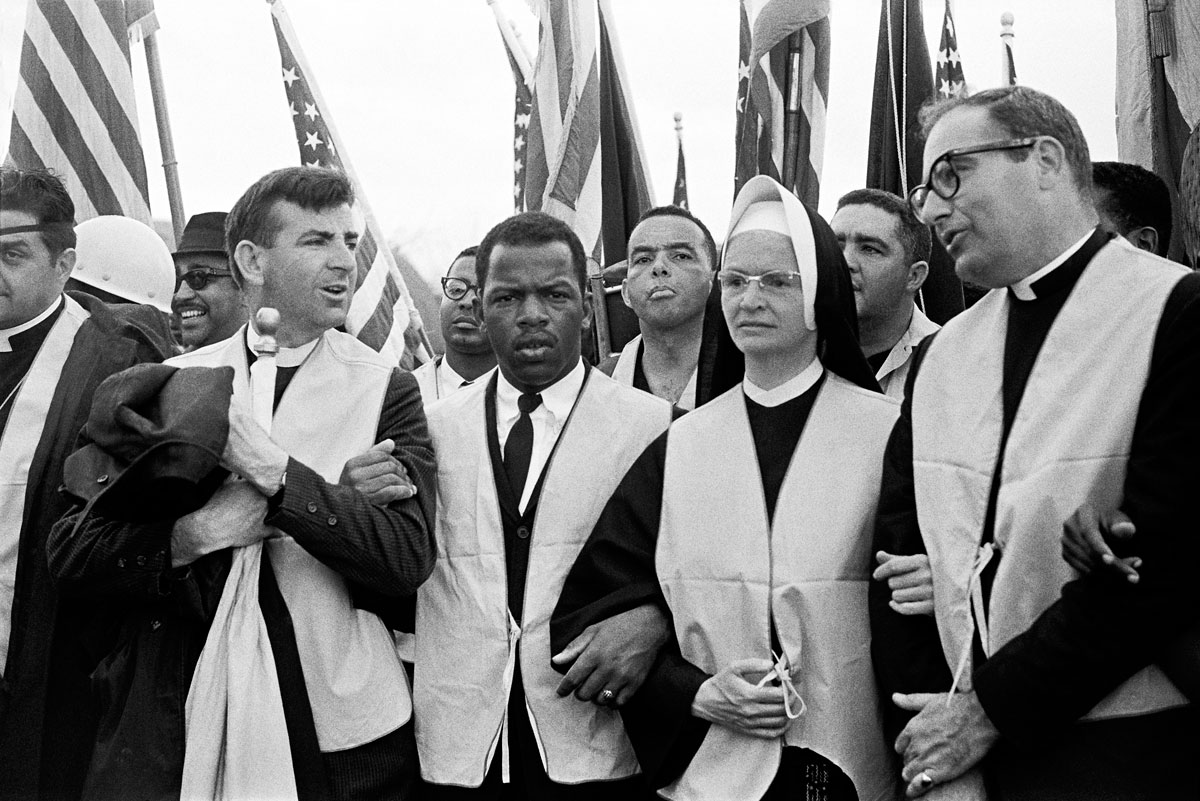

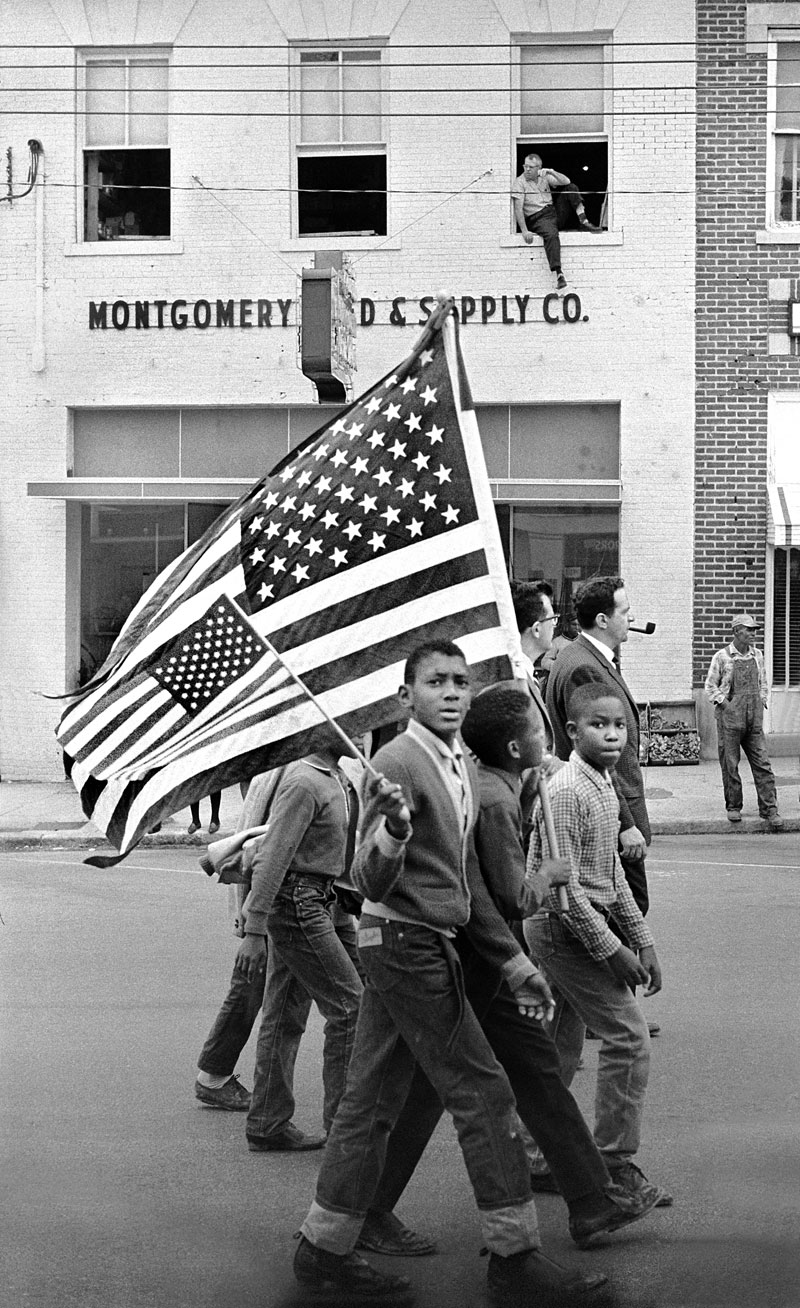
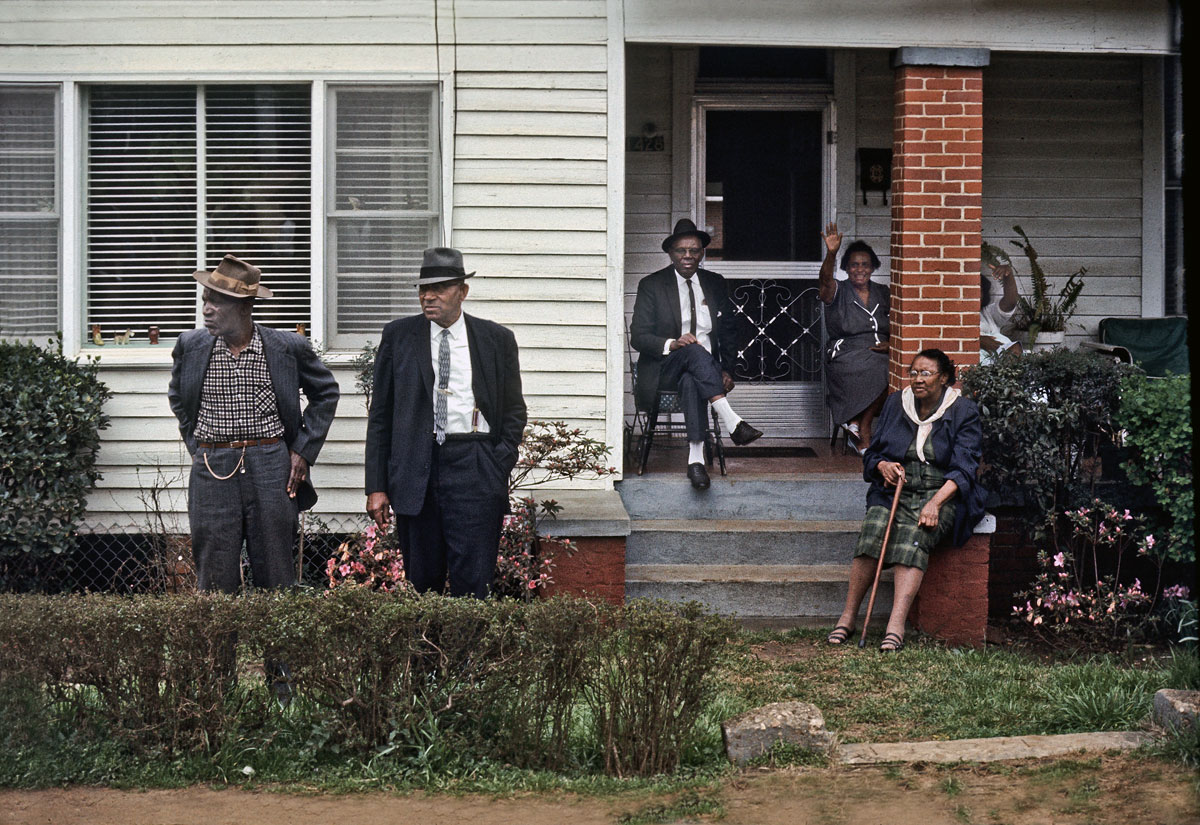
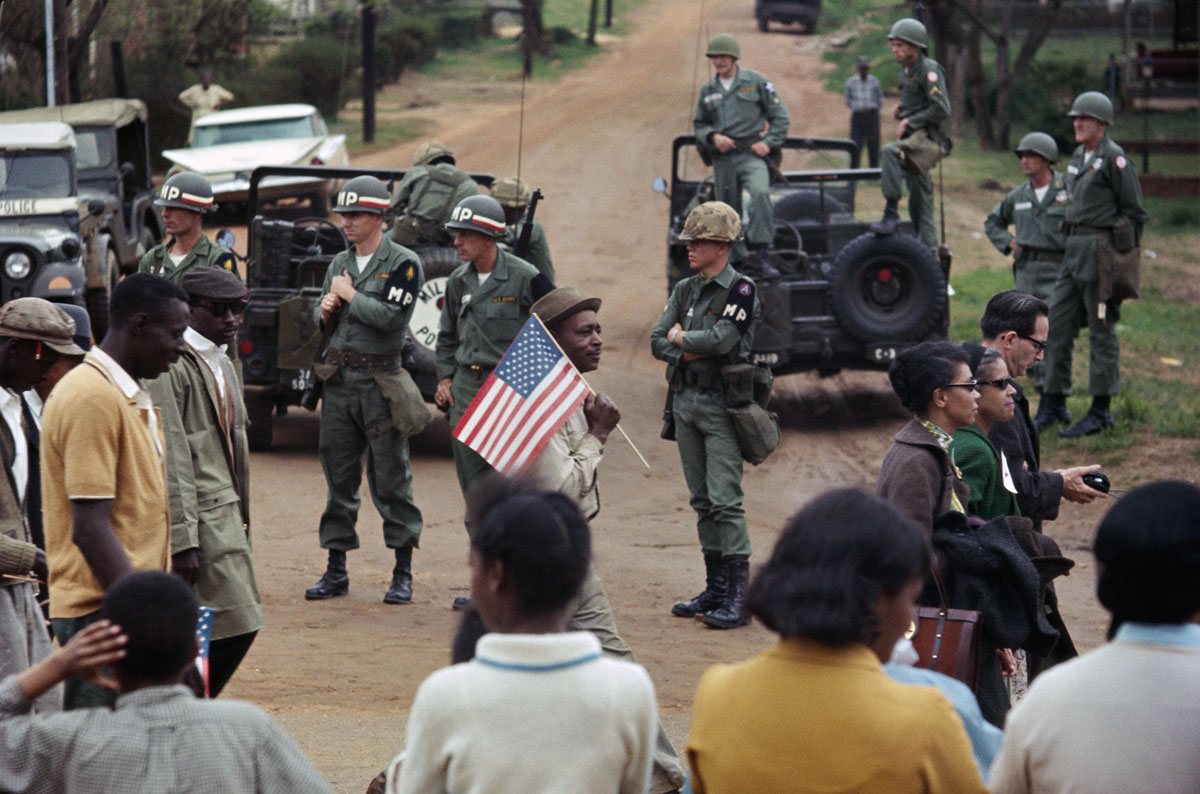
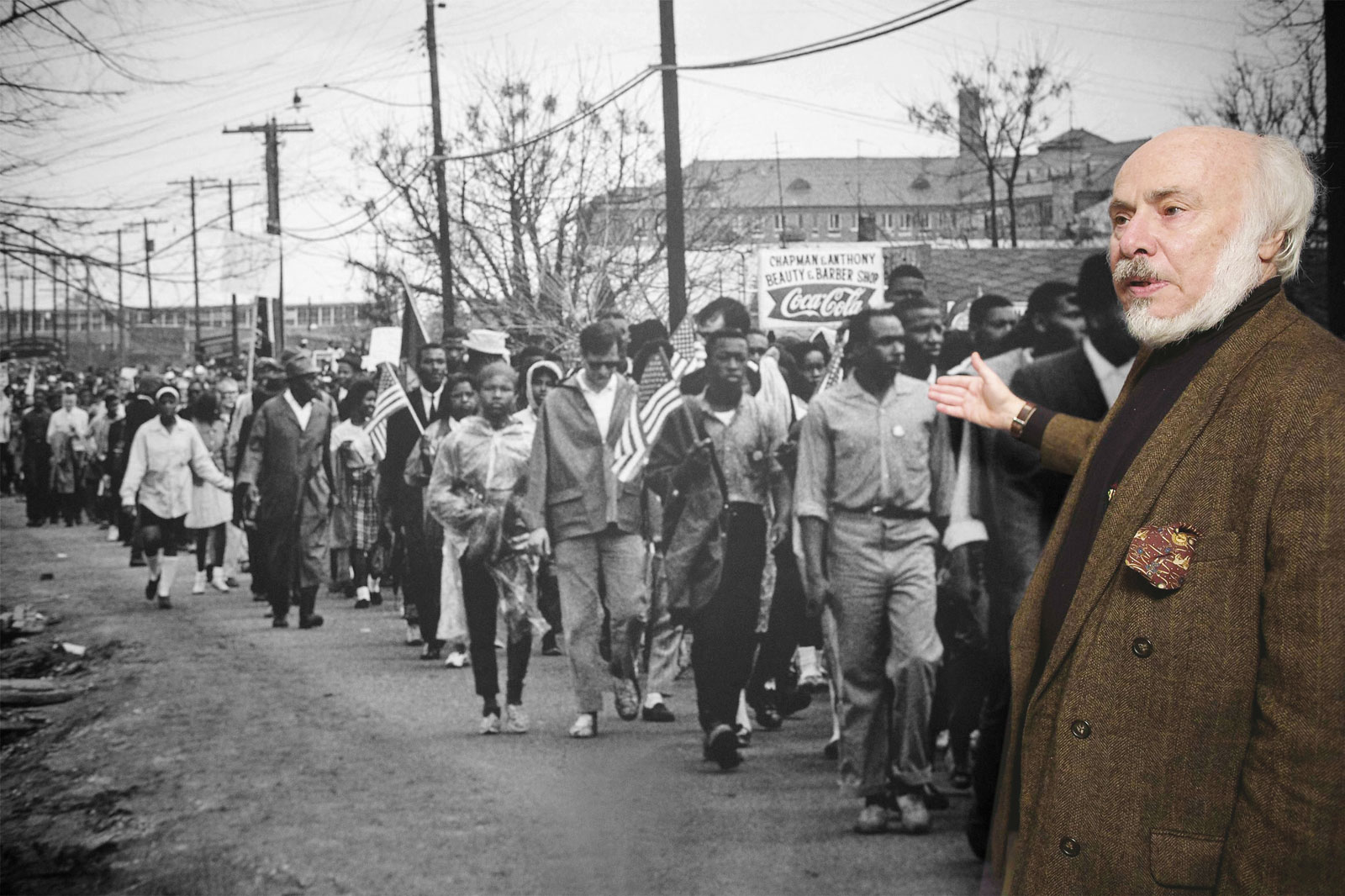


 Art Blart _ art and cultural memory archive
You must be logged in to post a comment.