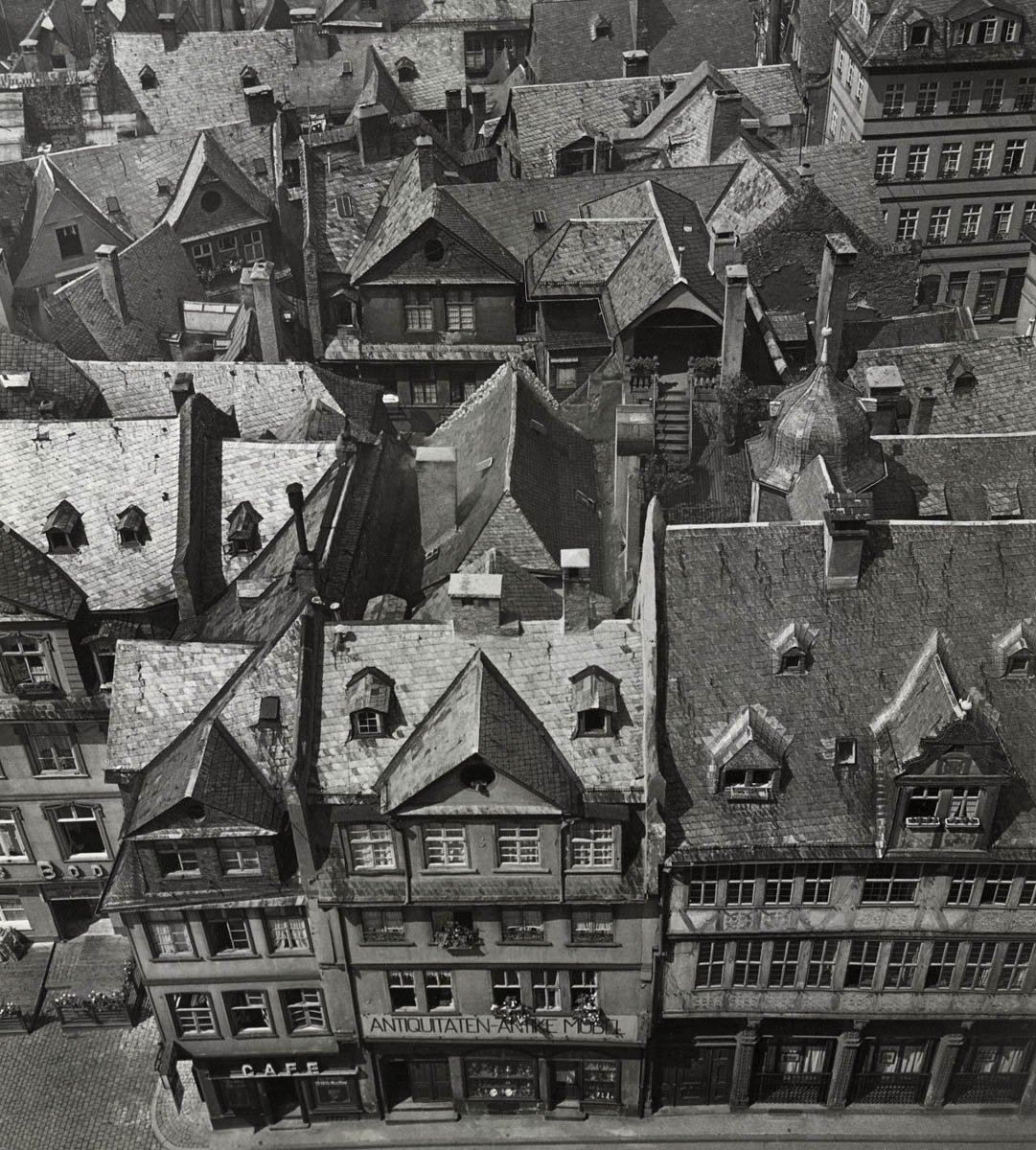
Exhibition: ‘True Stories: American Photography from the Sammlung Moderne Kunst’ at Pinakothek der Moderne, Munich

Exhibition dates: 2nd March – 20th September 2012


Lewis Baltz (American, 1945-2014) 'Greenbrae' 1968


Lewis Baltz (American, 1945-2014)
Greenbrae
1968
from the series The Prototype Works
Vintage gelatin silver print
13.1 x 21.4cm
Sammlung Moderne Kunst in the Pinakothek der Moderne Munich, Acquired in 2011 by PIN. Freunde der Pinakothek der Moderne e.V.
© Lewis Baltz


You can’t get much better than this to start a posting: Baltz, Friedlander, Winogrand, Nixon, Baldessari, Eggleston and Shore. I recall seeing my first vintage Stephen Shore at the American Dreams exhibition at the Bendigo Art Gallery last year. What a revelation. At the time I said,

“Two Stephen Shore chromogenic colour prints from 1976 where the colours are still true and have not faded. This was incredible – seeing vintage prints from one of the early masters of colour photography; noticing that they are not full of contrast like a lot of today’s colour photographs – more like a subtle Panavision or Technicolor film from the early 1960s. Rich, subtle, beautiful hues.”

You can get an idea of those colours in the image posted here. Like an early Panavision or Technicolor feature film.

Perhaps there is something to this analogue photography that digital will never be able to capture, let alone reproduce…

Dr Marcus Bunyan


Many thankx to Pinakothek der Moderne for allowing me to publish the photographs in the posting. Please click on the photographs for a larger version of the image.
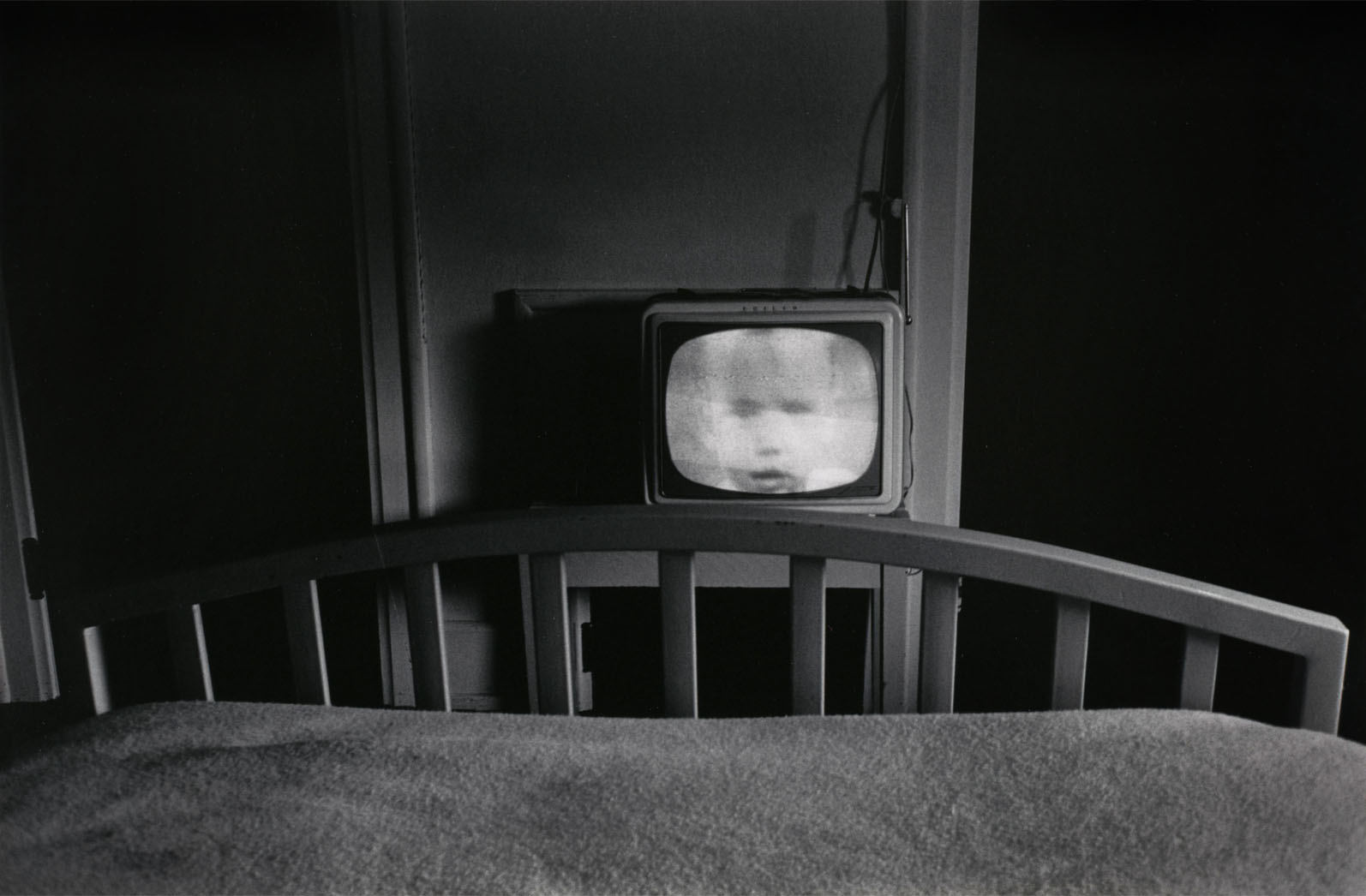


Lee Friedlander (American, b. 1934) 'T.V. in hotel room – Galax, Virginia' 1962


Lee Friedlander (American, b. 1934)
T.V. in hotel room – Galax, Virginia
1962
From the portfolio 15 Photographs
Gelatin silver print
© Lee Friedlander


Lee Friedlander (American, b. 1934) 'Untitled (Self-Portrait Reflected in Window, New Orleans)' c. 1965


Lee Friedlander (American, b. 1934)
Untitled (Self-Portrait Reflected in Window, New Orleans)
c. 1965
Gelatin silver print
© Lee Friedlander
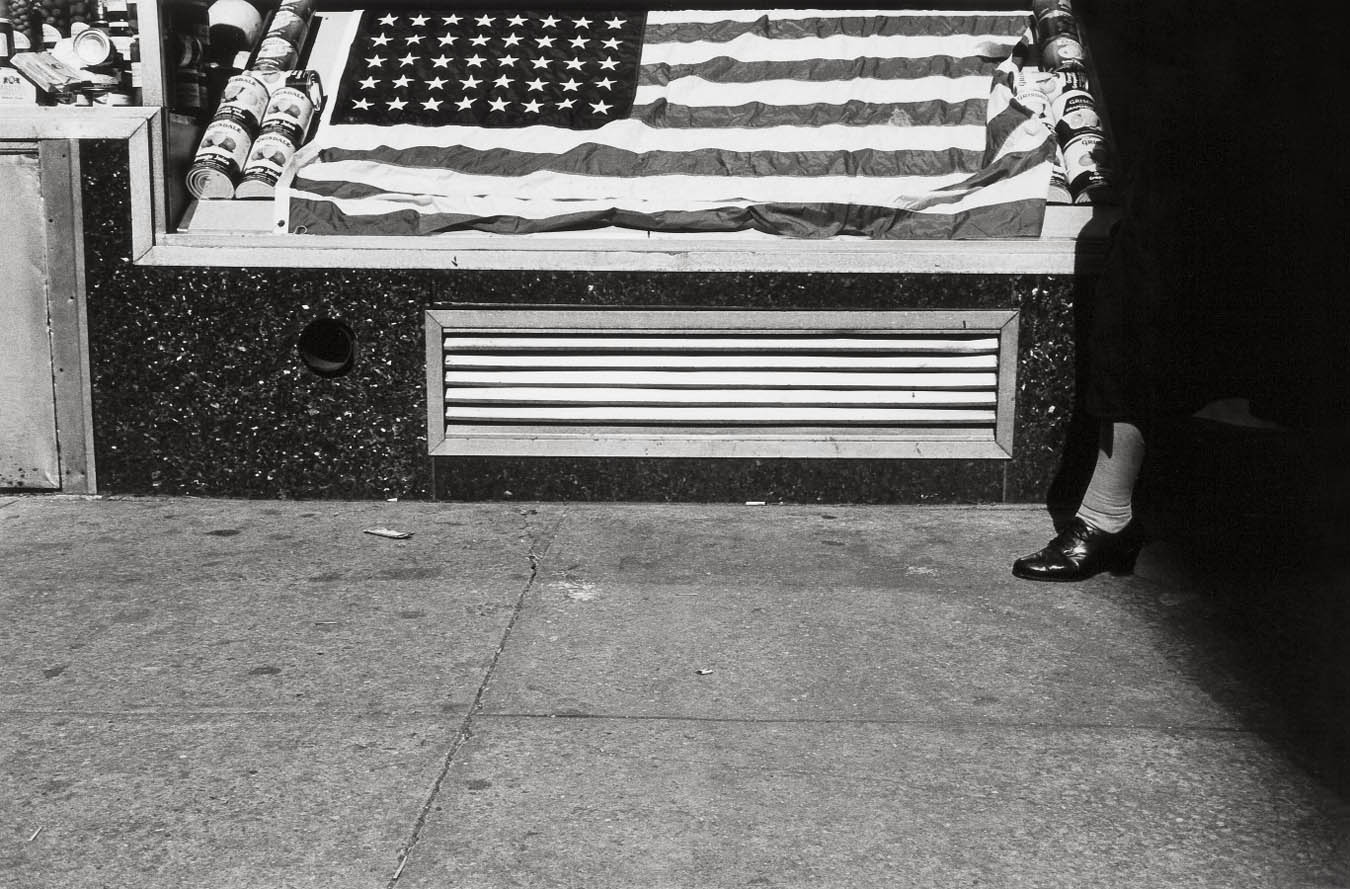
 

Lee Friedlander (American, b. 1934) 'Flag, New York City' 1965


Lee Friedlander (American, b. 1934)
Flag, New York City
1965
Gelatin silver print
© Lee Friedlander


Lee Friedlander (American, b. 1934) 'New York City' 1966


Lee Friedlander (American, b. 1934)
New York City
1966
Gelatin silver print
Baryt paper (card)
21.9 x 32.8cm
On permanent loan from Siemens AG, Munich, to the Sammlung Moderne Kunst since 2003
© Lee Friedlander


Lee Friedlander (American, b. 1934) 'Provincetown, Massachusetts' 1968


Lee Friedlander (American, b. 1934)
Provincetown, Massachusetts
1968
Gelatin silver print
© Lee Friedlander


Lee Friedlander (American, b. 1934) 'Route 9W, New York' 1969


Lee Friedlander (American, b. 1934)
Route 9W, New York
1969
Gelatin silver print, Baryt paper (card)
20.4 x 30.5cm
On permanent loan from Siemens AG, Munich, to the Sammlung Moderne Kunst since 2003
© Lee Friedlander
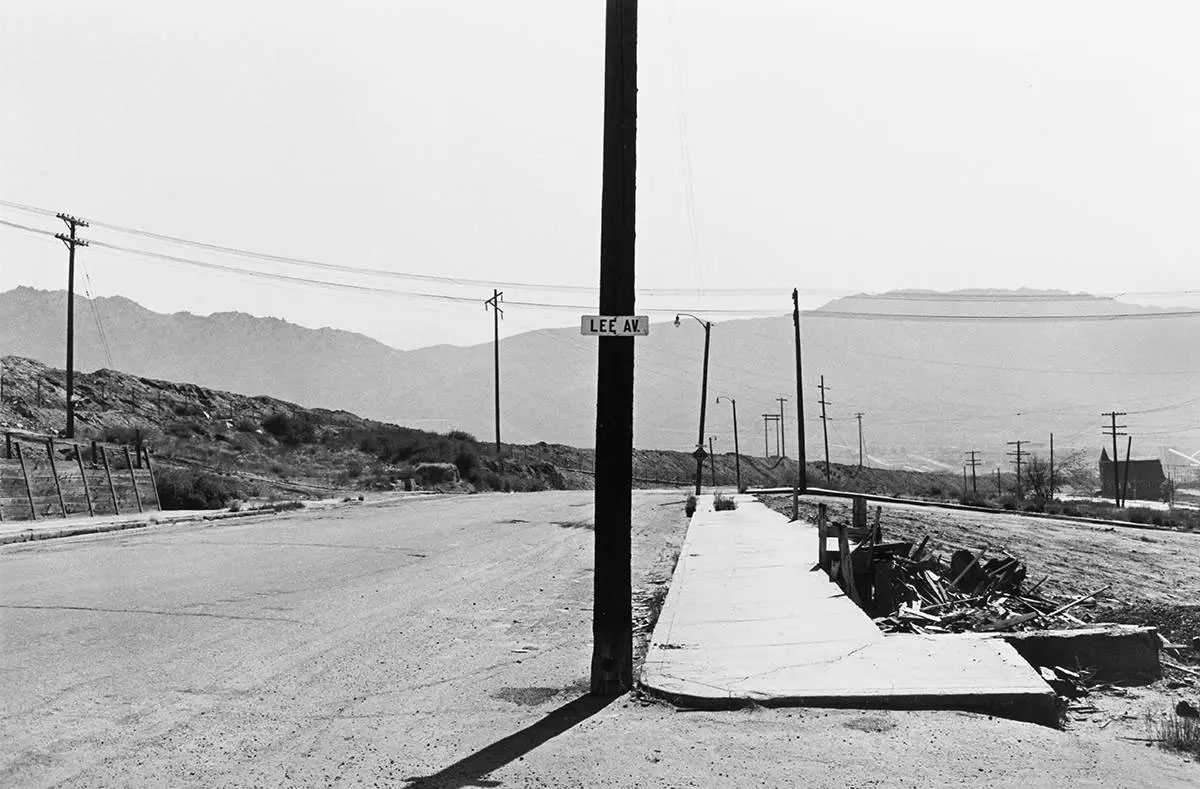
 

Lee Friedlander (American, b. 1934) 'Lee Ave., Butte, Montana' 1970


Lee Friedlander (American, b. 1934)
Lee Ave., Butte, Montana
1970
Gelatin silver print on baryta paper
© Lee Friedlander


Garry Winogrand (American, 1928-1984) 'New York World's Fair' 1964


Garry Winogrand (American, 1928-1984)
New York World’s Fair
1964
Gelatin silver print
© Estate of Garry Winogrand


Garry Winogrand (American, 1928-1984) 'Los Angeles, California' 1969


Garry Winogrand (American, 1928-1984)
Los Angeles, California
1969
Gelatin silver print (pre 1984)
21.8 x 32.8cm
On permanent loan from Siemens AG, Munich, to the Sammlung Moderne Kunst since 2003
© Estate of Garry Winogrand


Garry Winogrand (American, 1928-1984) 'New York City' 1969


Garry Winogrand (American, 1928-1984)
New York City
1969
Gelatin silver print
© Estate of Garry Winogrand
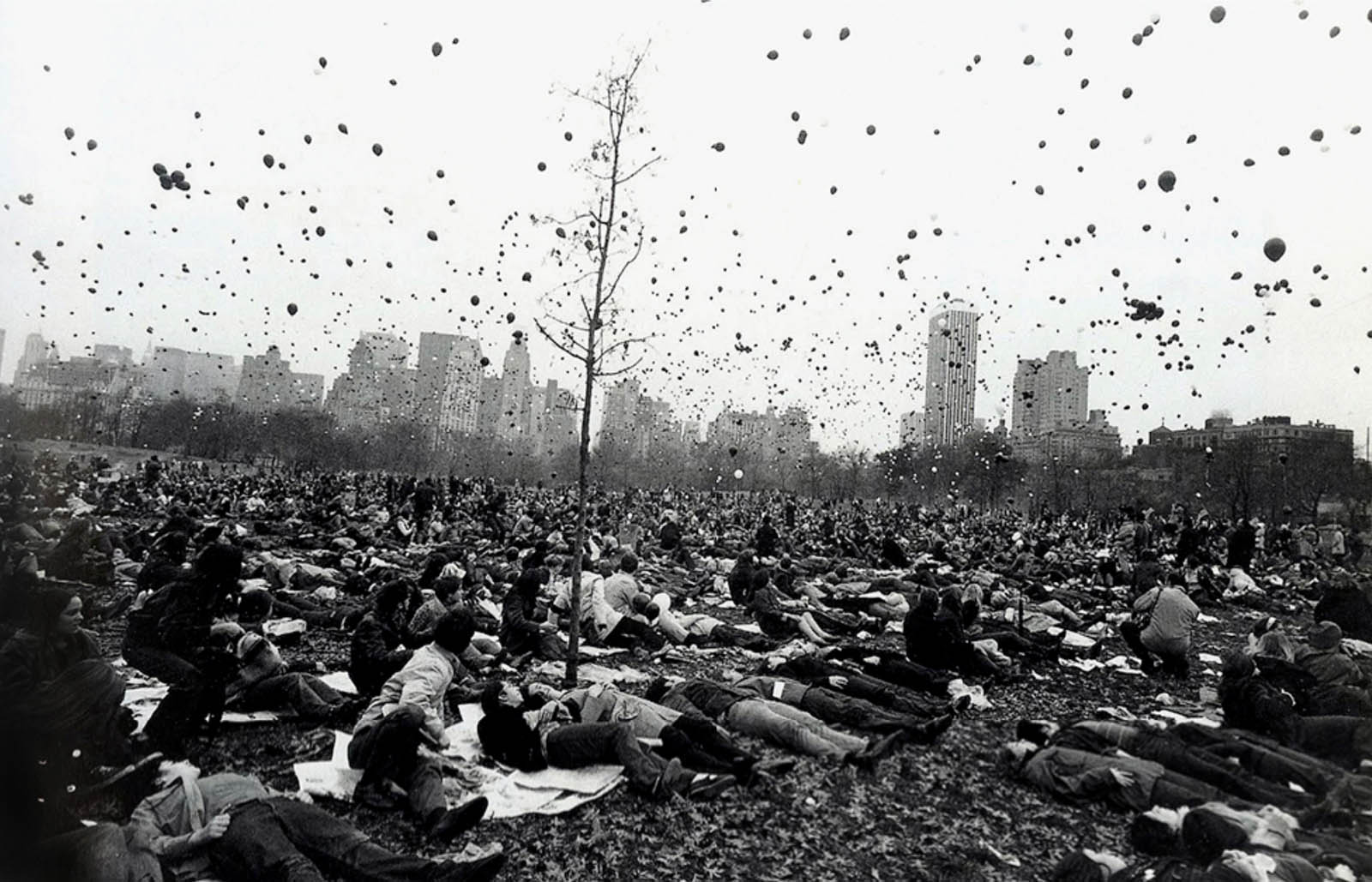
 

Garry Winogrand (American, 1928-1984) 'Peace Demonstration, Central Park, New York' 1970


Garry Winogrand (American, 1928-1984)
Peace Demonstration, Central Park, New York
1970
Gelatin silver print
© Estate of Garry Winogrand


Nicholas Nixon (American, b. 1947) 'Buildings on Tremont Street, Boston' 1975


Nicholas Nixon (American, b. 1947)
Buildings on Tremont Street, Boston
1975
From the series Boston Views 1974-1976
Gelatin silver print, Baryt paper (card)
© Nicholas Nixon
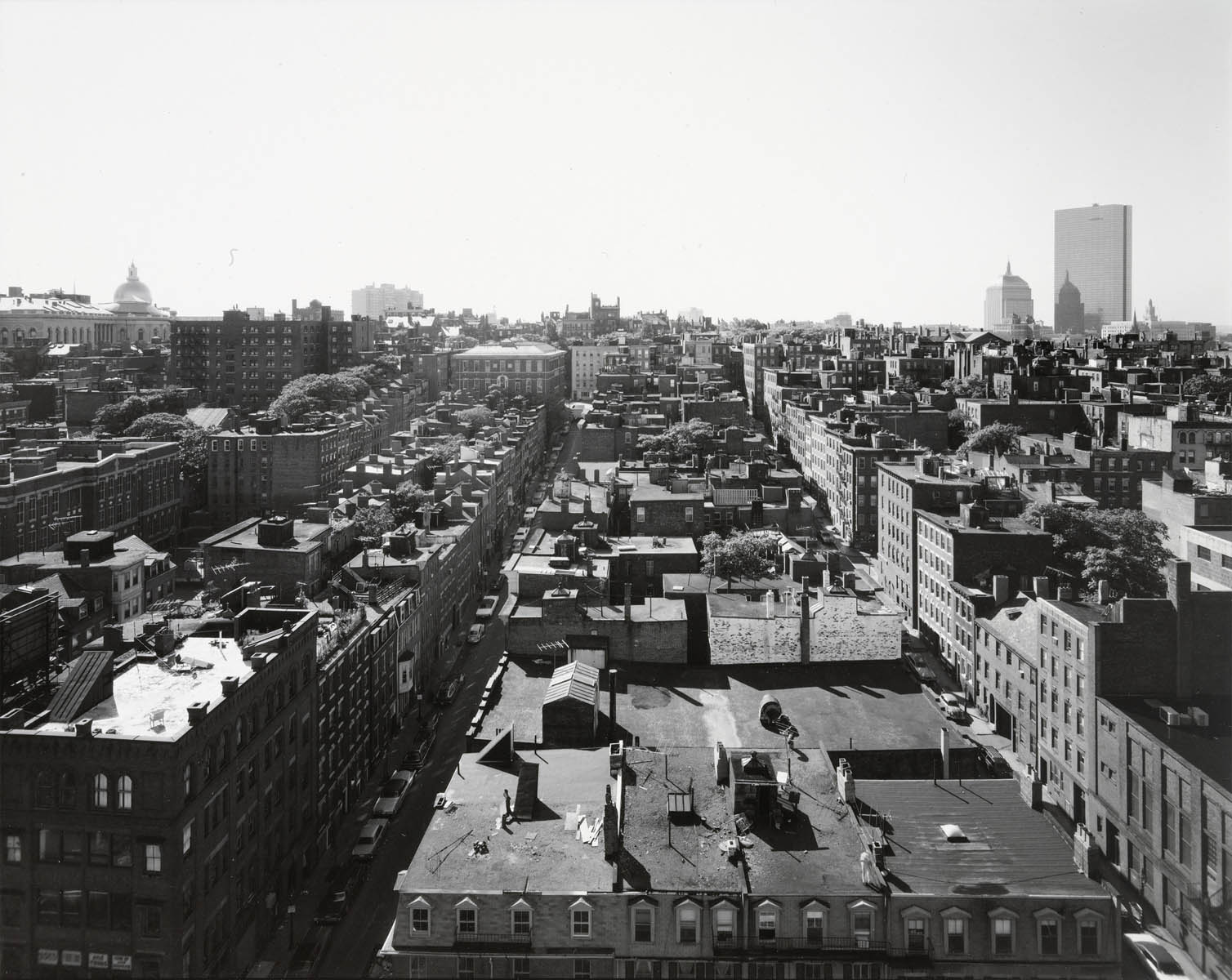
 

Nicholas Nixon (American, b. 1947) 'View of Beacon Hill, Boston' 1975


Nicholas Nixon (American, b. 1947)
View of Beacon Hill, Boston
1975
From the series Boston Views 1974-1976
Gelatin silver print, Baryt paper (card)
© Nicholas Nixon


Nicholas Nixon (American, b. 1947) 'View of State Street, Boston' 1976


Nicholas Nixon (American, b. 1947)
View of State Street, Boston
1976
From the series Boston Views 1974-1976
Gelatin silver print, Baryt paper (card)
20.3 x 25.2cm
On permanent loan from Siemens AG, Munich, to the Sammlung Moderne Kunst since 2003
© Nicholas Nixon
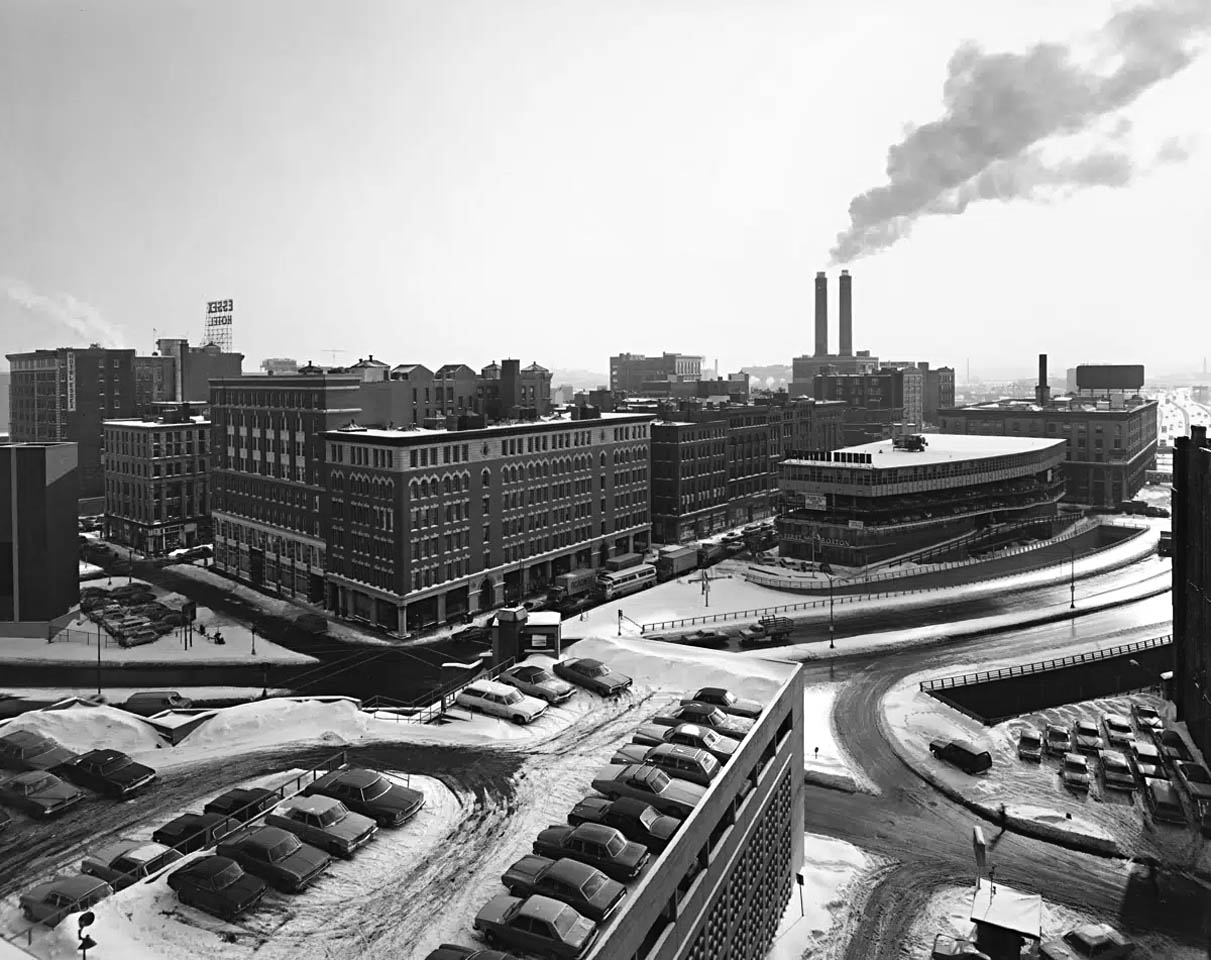
 

Nicholas Nixon (American, b. 1947) 'View of Essex Street and Downtown Entrance to the Massachusetts Turnpike, Boston' 1976


Nicholas Nixon (American, b. 1947)
View of Essex Street and Downtown Entrance to the Massachusetts Turnpike, Boston
1976
From the series Boston Views 1974-1976
Gelatin silver print, Baryt paper (card)
© Nicholas Nixon
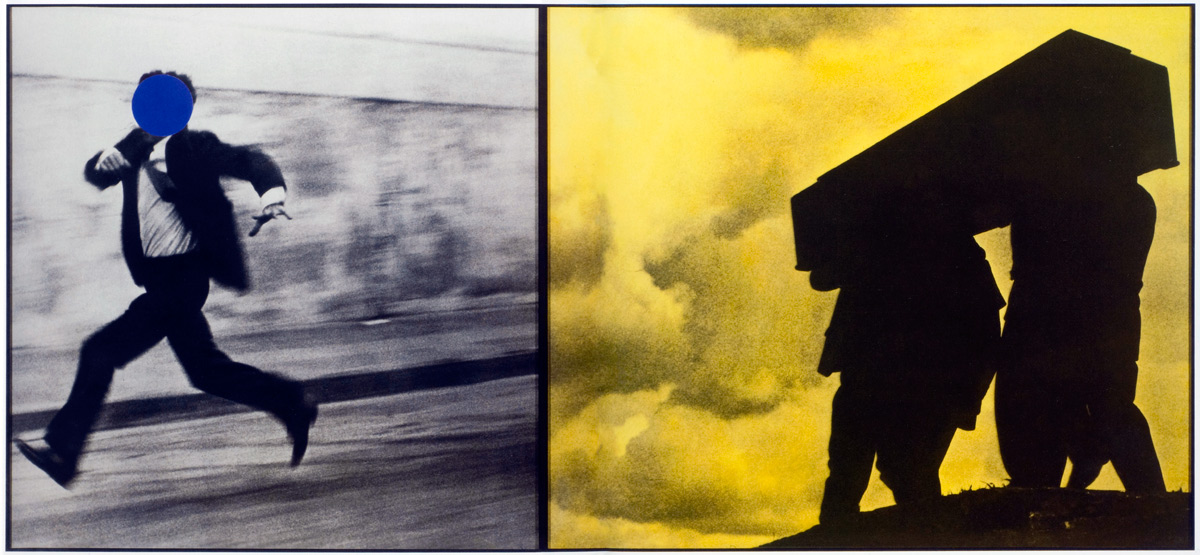
 

John Baldessari (American, 1931-2020) 'Man Running/Men Carrying Box' 1988-1990


John Baldessari (American, 1931-2020)
Man Running/Men Carrying Box
1988-1990
Gelatin silver prints, vinyl paint and shading in oil
Part 1: 121.3 x 118.6cm; Part 2: 121.3 x 146.6cm
On permanent loan from Siemens AG, Munich, to the Sammlung Moderne Kunst since 2003
© John Baldessari
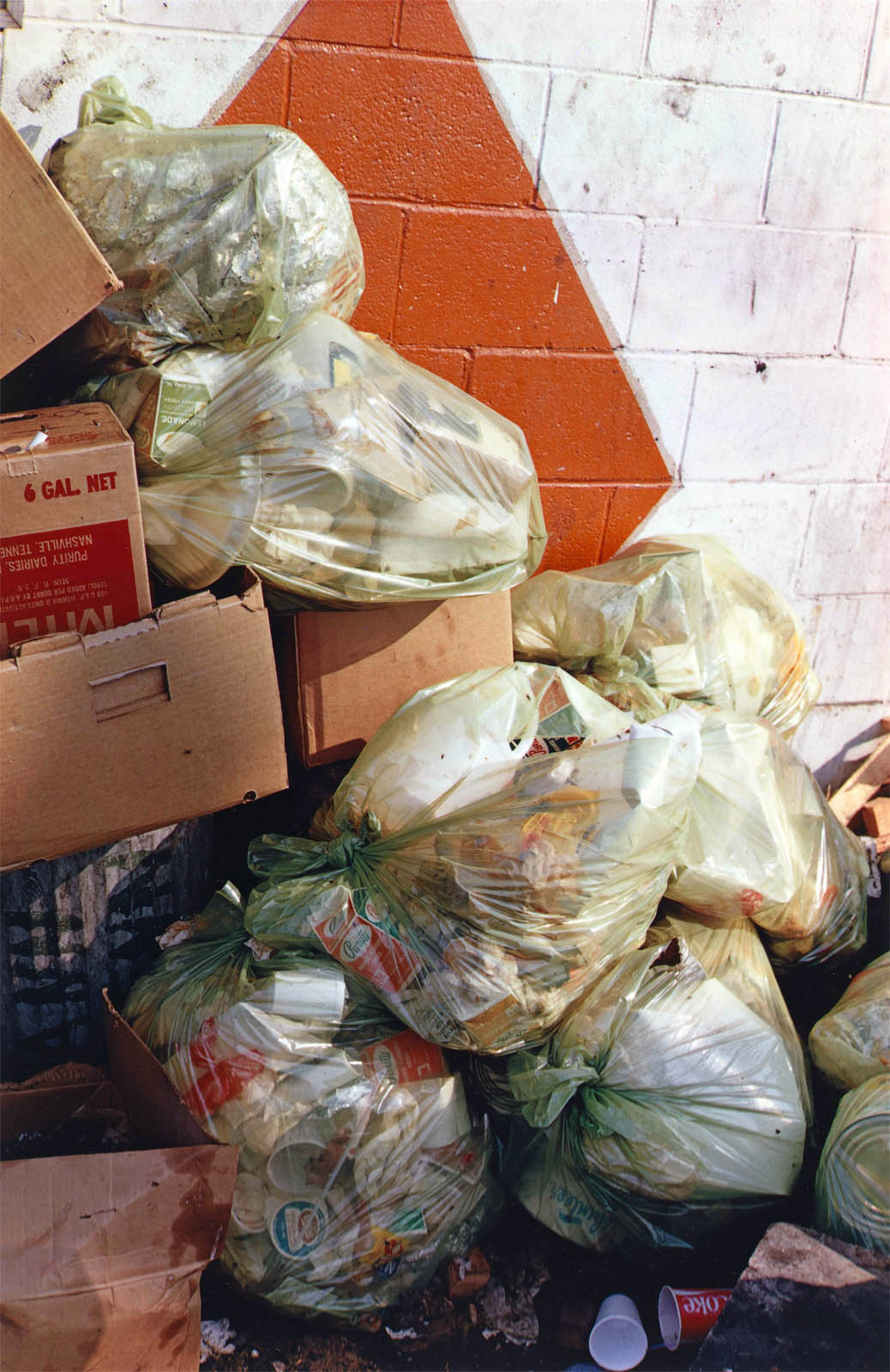
 

William Eggleston (American, b. 1939) 'Untitled' 1970-1973 From the portfolio 'Troubled Waters'


William Eggleston (American, b. 1939)
Untitled
1970-1973
From the portfolio Troubled Waters 1980
© Eggleston Artistic Trust


William Eggleston (American, b. 1939) 'Untitled' 1980 From the portfolio 'Troubled Waters' 1980


William Eggleston (American, b. 1939)
Untitled
1980
From the portfolio Troubled Waters 1980
© Eggleston Artistic Trust
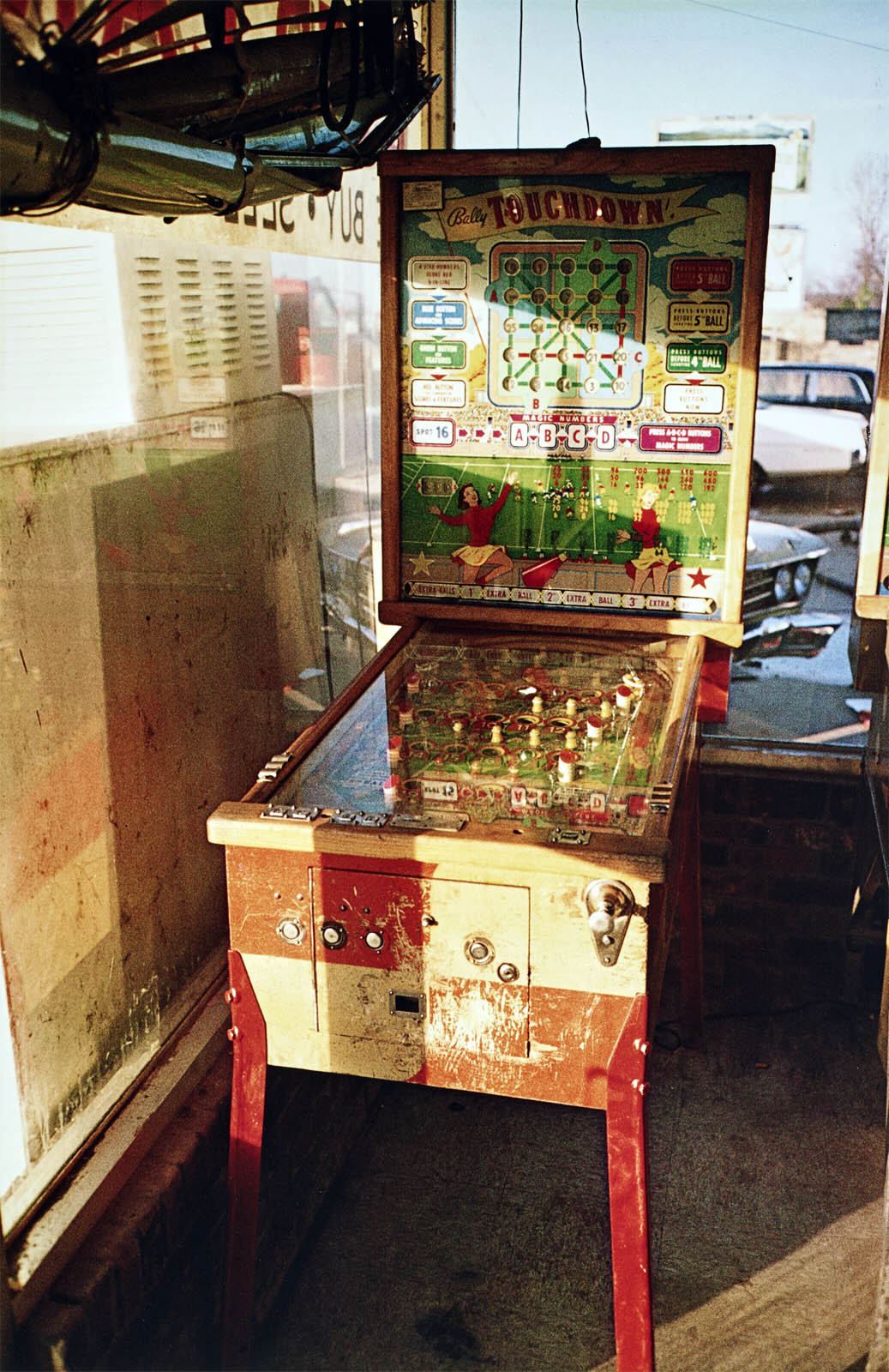
 

William Eggleston (American, b. 1939) 'Untitled' 1970-1973 From the portfolio 'Troubled Waters' 1980


William Eggleston (American, b. 1939)
Untitled
1970-1973
From the portfolio Troubled Waters 1980
© Eggleston Artistic Trust


William Eggleston (American, b. 1939) 'Untitled' 1980


William Eggleston (American, b. 1939)
Untitled
1980
The first of 15 works from the portfolio Troubled Waters
Dye transfer print
29 x 44cm
On permanent loan from Siemens AG, Munich, to the Sammlung Moderne Kunst since 2003
© Eggleston Artistic Trust


William Eggleston (American, b. 1939) 'Tennessee (Gulf Sign)' 1971


William Eggleston (American, b. 1939)
Tennessee (Gulf Sign)
1971
Dye transfer print
© Eggleston Artistic Trust


William Eggleston (American, b. 1939) from 'Southern Suite' (10-part series) 1981


William Eggleston (American, b. 1939)
from Southern Suite (10-part series)
1981
Dye transfer print
25.0 x 38.2cm
Sammlung Moderne Kunst in the Pinakothek der Moderne Munich. Acquired in 2006 through PIN. Freunde der Pinakothek der Moderne e.V.
© Eggleston Artistic Trust


American photography forms an extensive and simultaneously top-quality focal point in the collection, of which a selected overview is now being exhibited for the first time. The main interest of young photographers, who have been examining changes in political, social and ecological aspects of everyday American life since the late 1960s, has been the American social landscape. They have developed new pictorial styles that define stylistic devices perceived as genuinely American while at the same time being internationally recognised. Whereas Lee Friedlander, Garry Winogrand, Robert Adams, Lewis Baltz and Larry Clark, who are now considered classical modern photographers, have remained true to black-and-white photography, William Eggleston and Stephen Shore in particular have established colour photography as an artistically independent form of expression. The exhibition brings together around 100 works that, thanks to the Siemens Photography Collection and through acquisitions, bequests and donations, are now part of the museum’s holdings. True stories covers a spectrum from the street photography of the late 1960s to New Topographics and pictures by the New York photographer Zoe Leonard, taken just a few years ago.

“A new generation of photographers has directed the documentary approach toward more personal ends. Their work betrays a sympathy for the imperfection and frailties of society. Their aim has been not to reform life but to know it.” With the exhibition New Documents in spring 1967, John Szarkowski, the influential curator of photography at the Museum of Modern Art in New York, rang in a new era in American photography. Those photographers represented, including Lee Friedlander and Garry Winogrand in addition to Diane Arbus, stood for a change in attitude within documentary photography that was conditioned exclusively by the subjective viewpoint of an individual’s reality. The object of photographic interest lay in the American social landscape and its conditions. It was less concerned with the natural landscape and its increasingly cultural reshaping than with the urban or urbanised space and how people move within it. In so doing, the New Documentarians rejected any obviously explanatory impetus, turning instead to the everyday and commonplace.

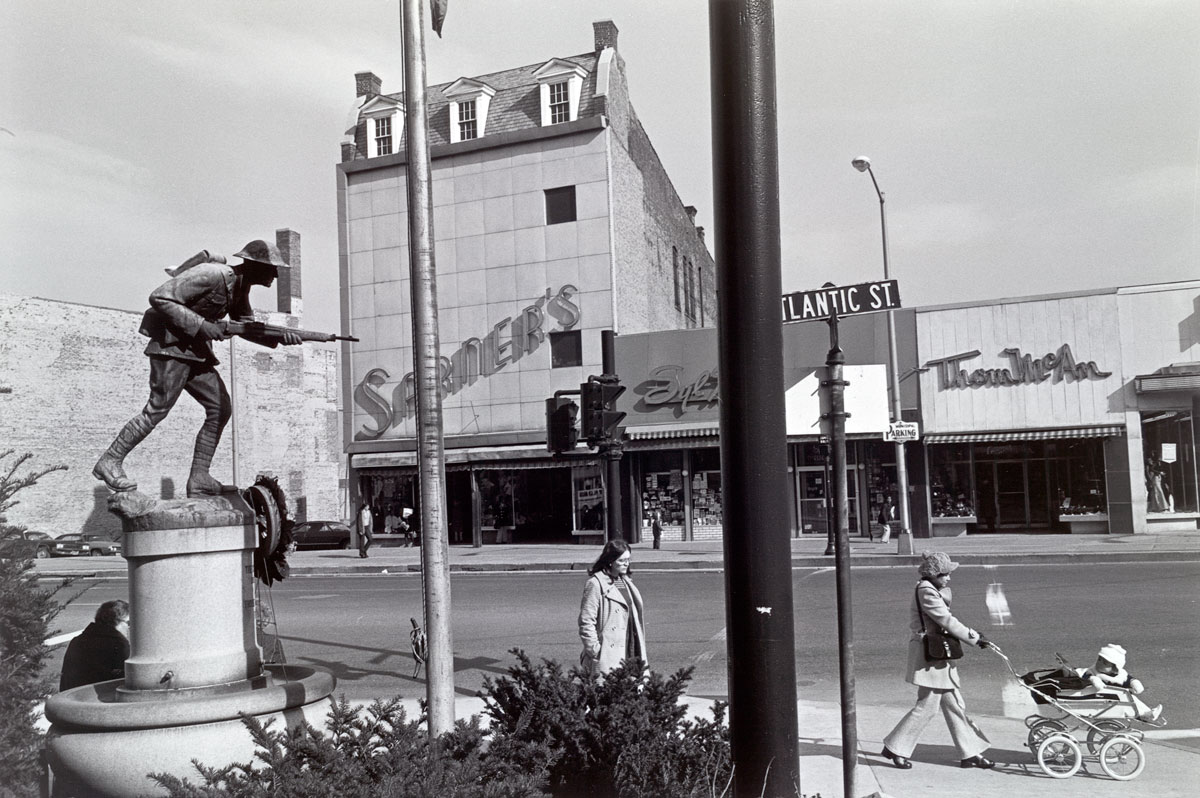
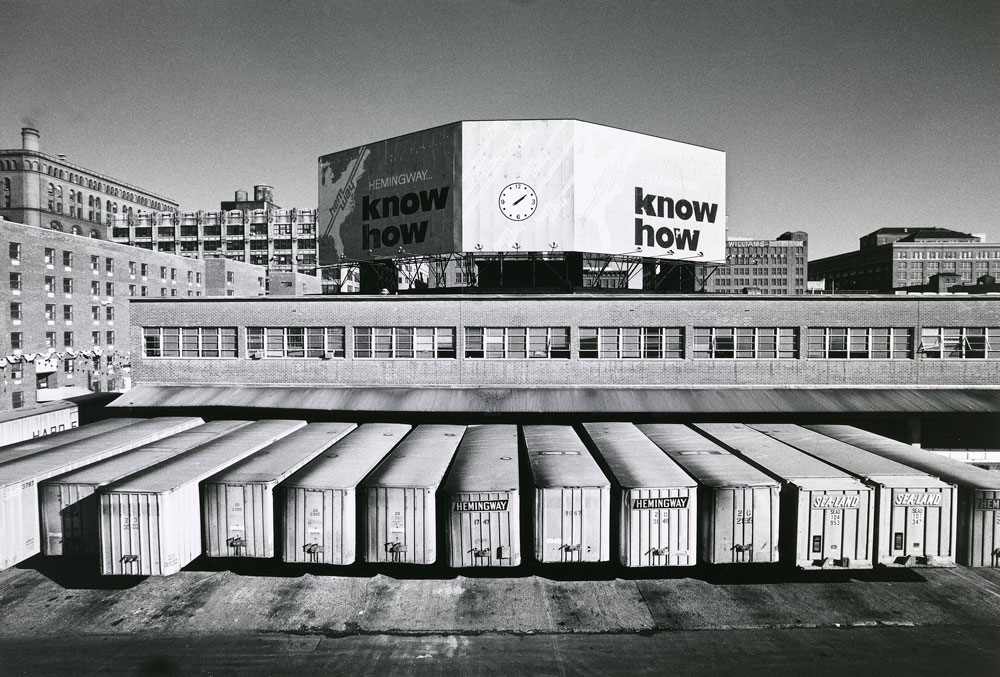
The exhibition New Topographics: Photographs of a Man-Altered Landscape that was staged in the mid 1970s at the International Museum of Photography in Rochester, represented a countermovement to this subjective form of expression. Their protagonists, including Robert Adams, Lewis Baltz, Nicholas Nixon and Stephen Shore, also pleaded for a documentary approach and were influenced by figures such as Walker Evans und Robert Frank, but considered themselves rooted in the tradition of 19th-century topographical photography in particular. The prime initiator of this working method, that was expressly not governed by style, is the Los Angeles-based artist Ed Ruscha. Their central aim is a distanced and seemingly analytical depicition, free of judgement; their topic, the landscape altered by mankind. It is the image of the American West in particular, so much conditioned by myths and dreams but long since brought back to reality as a result of commercial and ecological exploitation, that is visible in their works.

The decisive quantum leap to establishing the position of colour photography was made by the Southerner William Eggleston in his exhibition in 1976, also held at the Museum of Modern Art in New York, and the publication of the William Eggleston’s Guide. The harsh public criticism of his pictures was not to do with his use of colour but the fact that Eggleston photographed things and everyday situations – on the spur of the moment and in a seemingly careless manner – that, until then, had not been considered worthy of being photographed turning them into exquisite prints using the expensive and complicated dye-transfer process. In Eggleston’s cosmos of images that is strongly influenced by motifs and the light of the Mississippi Delta, colour constitutes the picture. The “rush of colour” championed by this exhibition led to the comprehensive implementation of colour photography in the field of artistic photography in the years that followed, starting in the USA and then in Europe – and especially in Germany.

An artistic attitude became established at the end of the 1970s that, with recourse to existing picture material from art, film, advertising and the mass media, formulated new pictorial concepts and, in the same breath, opened up traditional artistic and art-historical categories such as authorship, originality, uniqueness, intellectual property and authenticity to discussion. Appropriation Art owes its decisive influences to the artist John Baldessari, who lives and teaches in California. One of its most famous representatives is Richard Prince, who became famous in particular as a result of his artistic adaptation of advertising images. Concept art in the 1960s and ’70s similarly makes use of photography, both as part of an artistic practice using the most varied of materials and as a unique medium for documenting campaigns, happenings and performances. As works by Dan Graham and Zoe Leonard clearly show, the previously precisely delineated boundaries between photography that alludes to its own intrinsically, media-related history and the use of photography as an artistic strategy, have become more fluid.

Press release from the Pinakothek der Moderne website
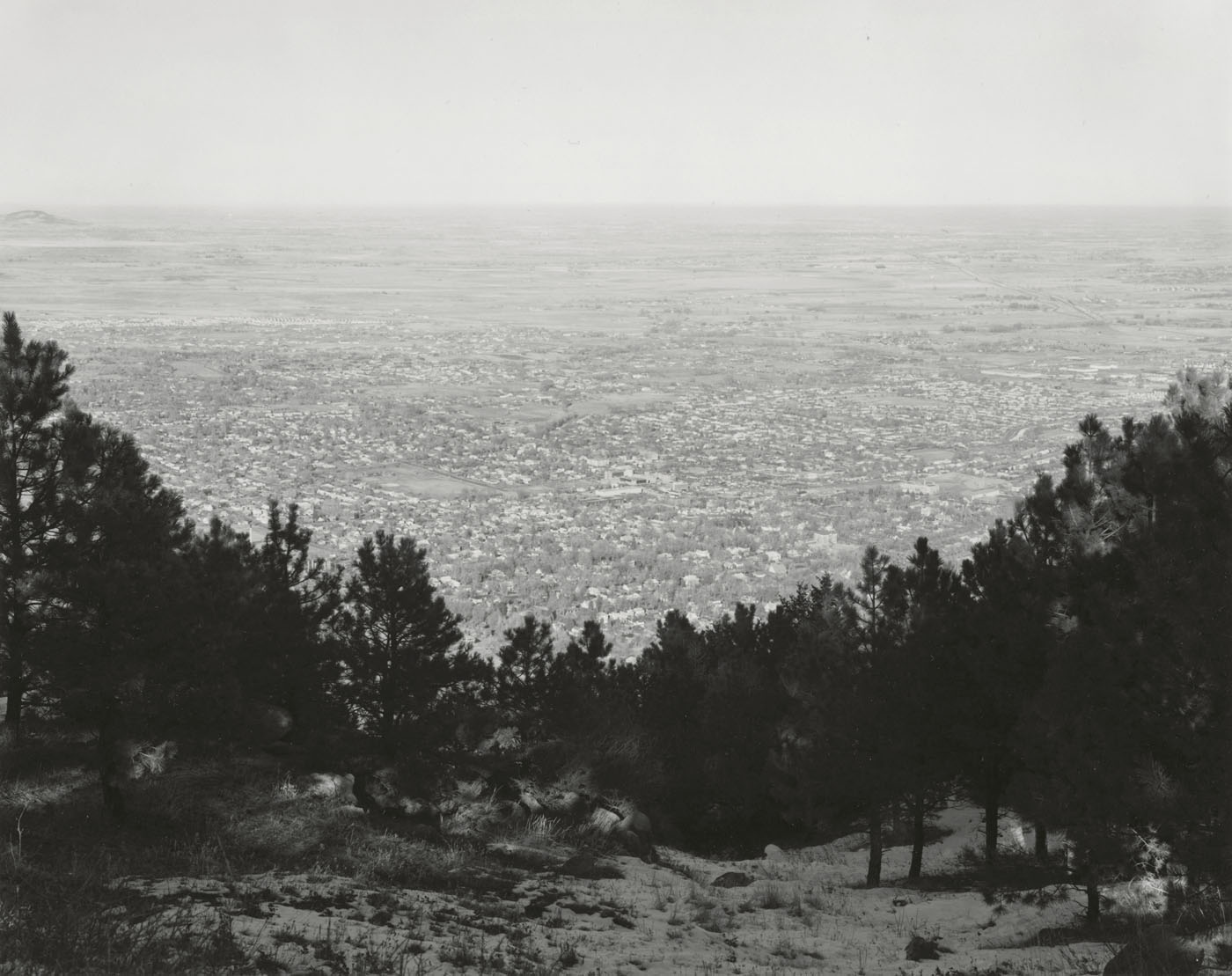
 

Robert Adams (American, b. 1937) 'East from Flagstaff Mountain, Boulder County, Colorado' 1975


Robert Adams (American, b. 1937)
East from Flagstaff Mountain, Boulder County, Colorado
1975
Gelatin silver print
Courtesy Fraenkel Gallery, San Francisco
© Robert Adams
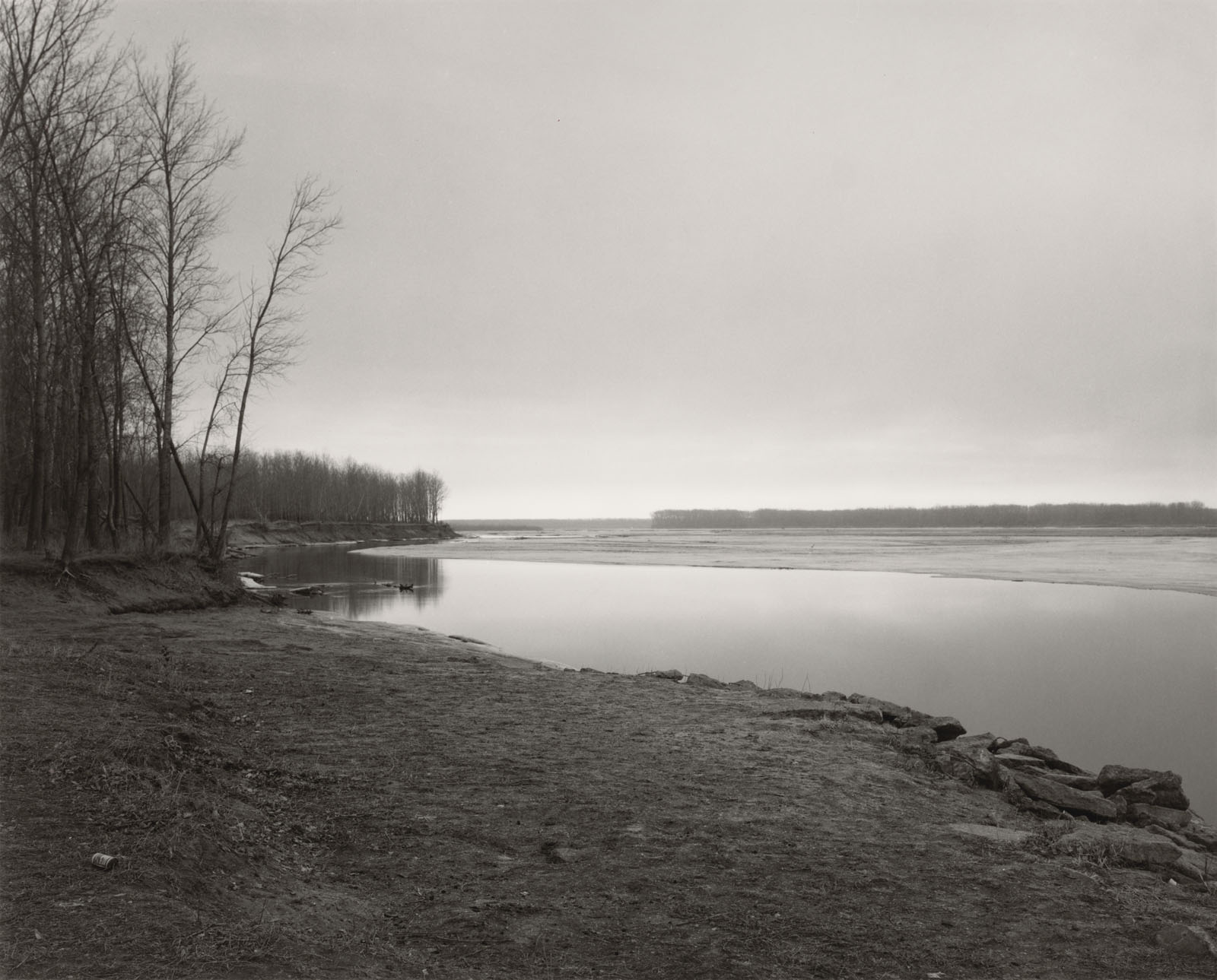
 

Robert Adams (American, b. 1937) 'Missouri River, Clay County, South Dakota' 1977


Robert Adams (American, b. 1937)
Missouri River, Clay County, South Dakota
1977
Gelatin silver print
Courtesy Fraenkel Gallery, San Francisco
© Robert Adams
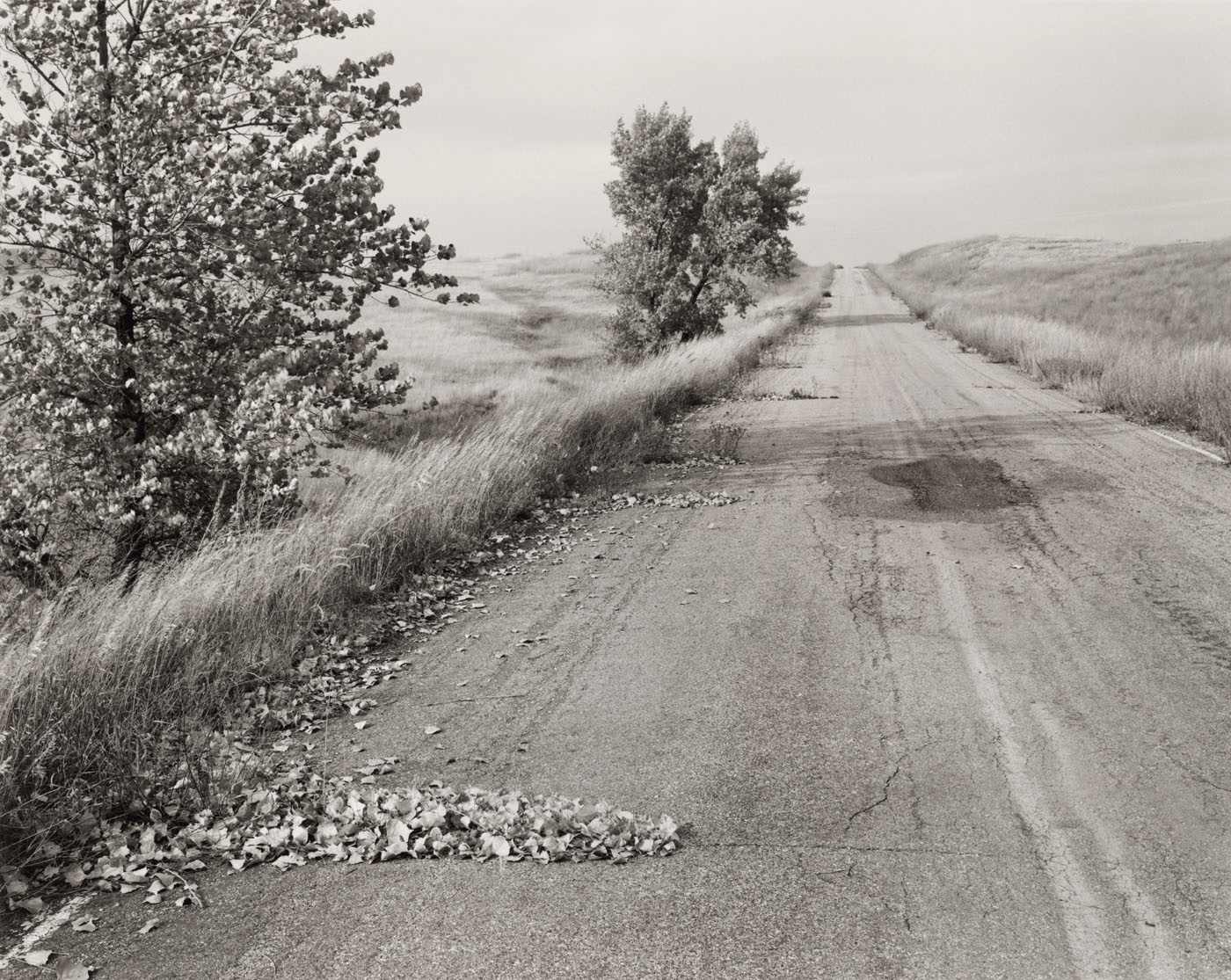
 

Robert Adams (American, b. 1937) 'Nebraska State Highway 2, Box Butte County, Nebraska' 1978, printed 1991


Robert Adams (American, b. 1937)
Nebraska State Highway 2, Box Butte County, Nebraska
1978, printed 1991
Gelatin silver print
Courtesy Fraenkel Gallery, San Francisco
© Robert Adams
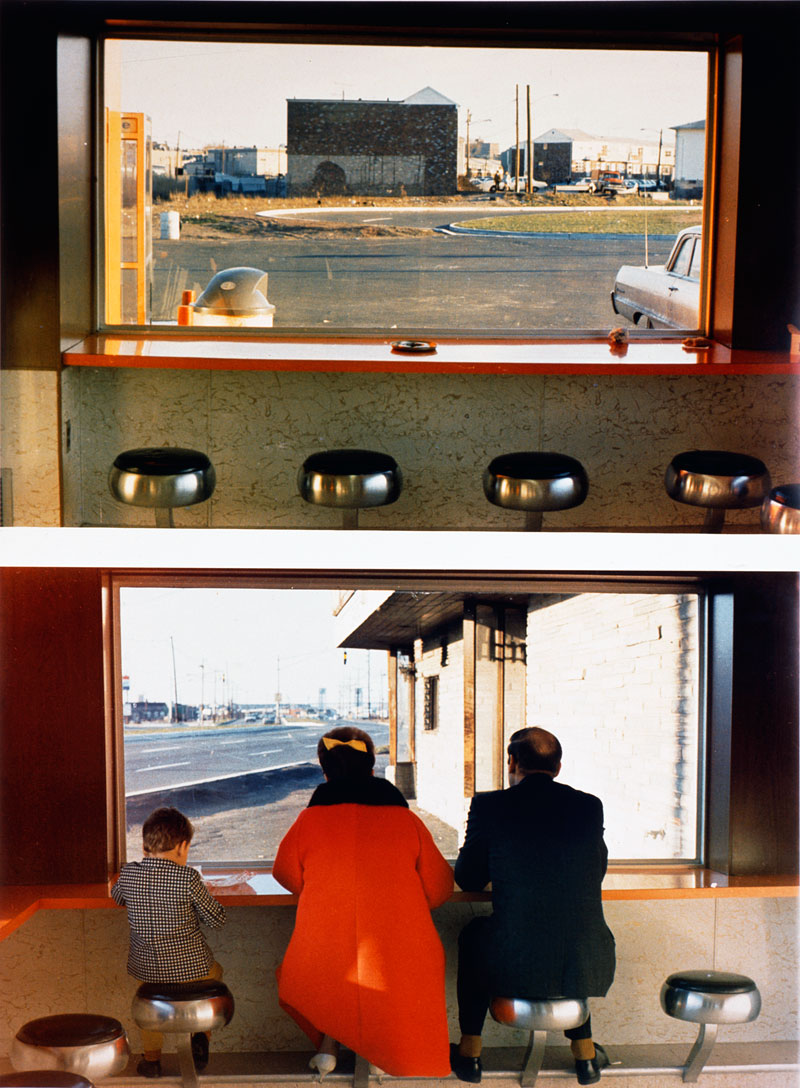
 

Dan Graham (American, b. 1942) 'View Interior, New Highway Restaurant, Jersey City, N.J.,' 1967 (detail)


Dan Graham (American, b. 1942)
View Interior, New Highway Restaurant, Jersey City, N.J., (detail)
1967 (printed 1996)
C-prints
Each 50.6 x 76.2cm
On permanent loan from Siemens AG, Munich, to the Sammlung Moderne Kunst since 2003
© Dan Graham
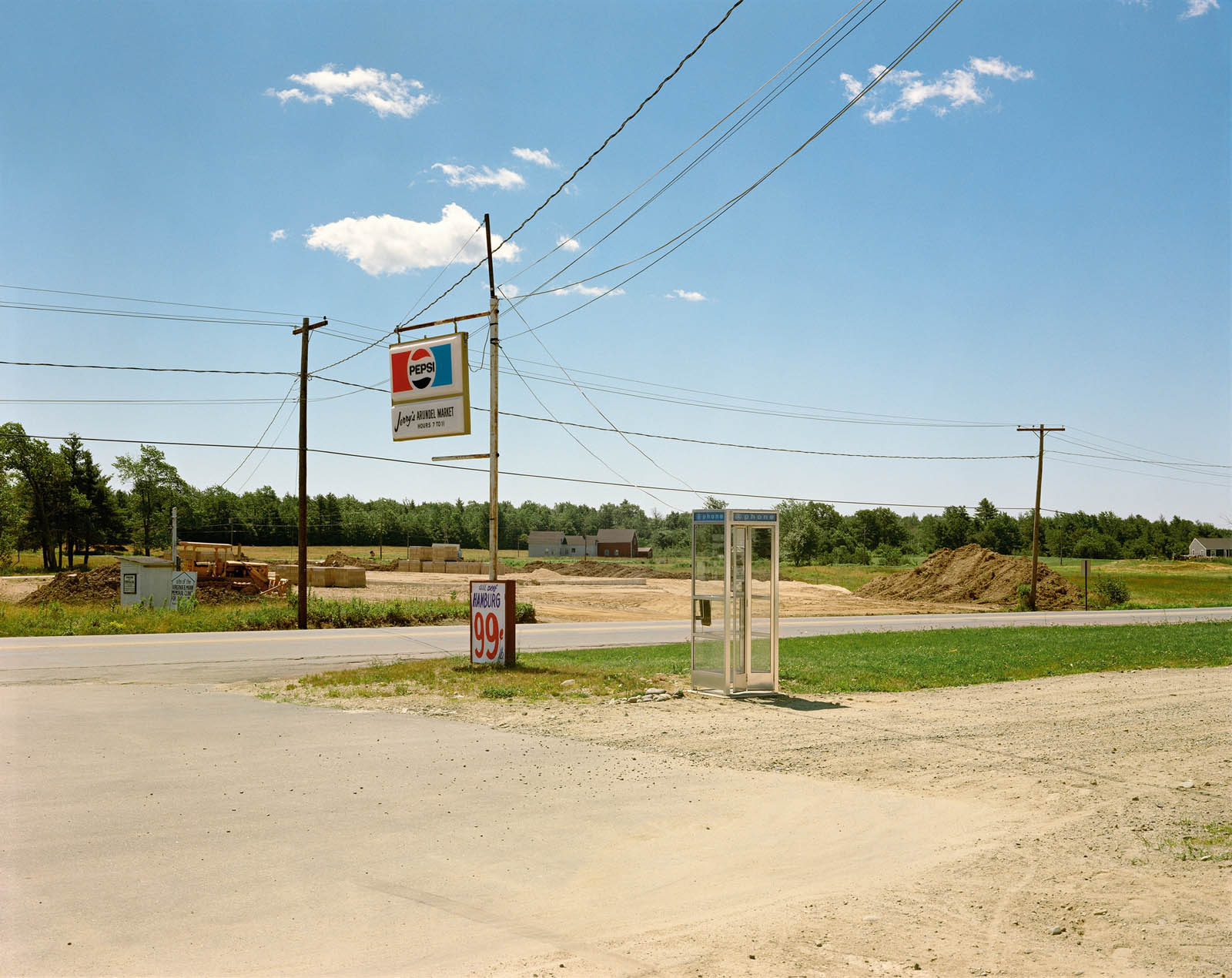
 

Stephen Shore (American, b. 1947) 'U.S. 1, Arundel, ME.' 1974


Stephen Shore (American, b. 1947)
U.S. 1, Arundel, ME.
1974
Chromogenic print
© Stephen Shore


Stephen Shore (American, b. 1947) 'Wilde Street and Colonization Avenue, Dryden, Ontario' 1974


Stephen Shore (American, b. 1947)
Wilde Street and Colonization Avenue, Dryden, Ontario
1974
Chromogenic print
© Stephen Shore
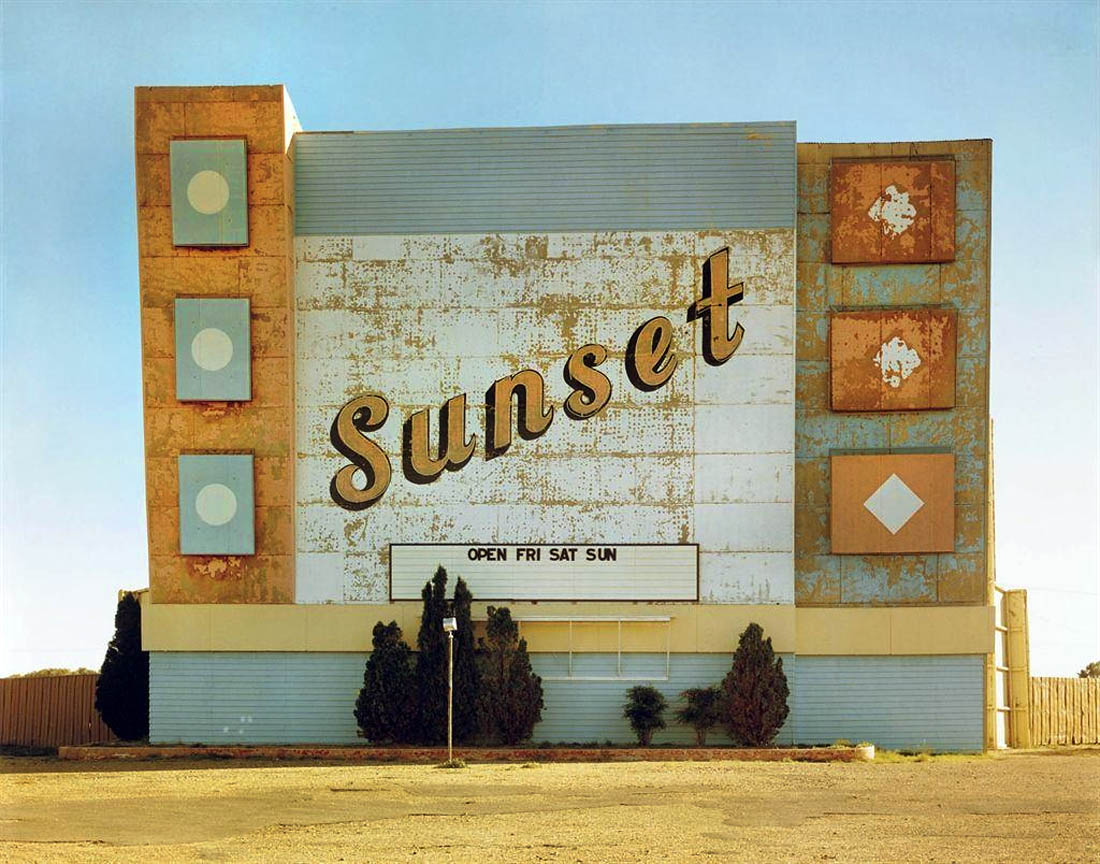
 

Stephen Shore (American, b. 1947) 'West 9th Avenue, Amarillo, Texas' 1974


Stephen Shore (American, b. 1947)
West 9th Avenue, Amarillo, Texas
1974
Dye coupler print
© Stephen Shore


Shore was a consummate New York City boy who dropped out of high school when he was 17 and instead spent his time watching and making films and photographing Andy Warhol and his compatriots at his studio, the Factory. But a 1969 trip to Amarillo, Texas, to visit the family of his friend Michael Marsh set him on a new path, spurring a decade of road trips exploring the United States. His itineraries usually included Amarillo, and its people and buildings appear throughout his photographs from the time. “I loved Amarillo, not just what it looked like but the way people hung out – the pace of the life, the car culture, the barbecue joints,” he said. This stark, frontal portrait of the Sunset drive-in conveys the withering Texas heat that has peeled the facade’s paint, as well as a sense of forlornness and neglect that proved prescient when the drive-in closed two years later.

Text taken from the Carter Handbook (2023) on the American Carter Museum of American Art website


Stephen Shore (American, b. 1947) 'La Brea Avenue & Beverly Boulevard, Los Angeles, California' 1975


Stephen Shore (American, b. 1947)
La Brea Avenue & Beverly Boulevard, Los Angeles, California
1975
Chromogenic print, Kodak professional paper (1998)
20.4 x 25.5cm
On permanent loan from Siemens AG, Munich, to the Sammlung Moderne Kunst since 2003
© Stephen Shore
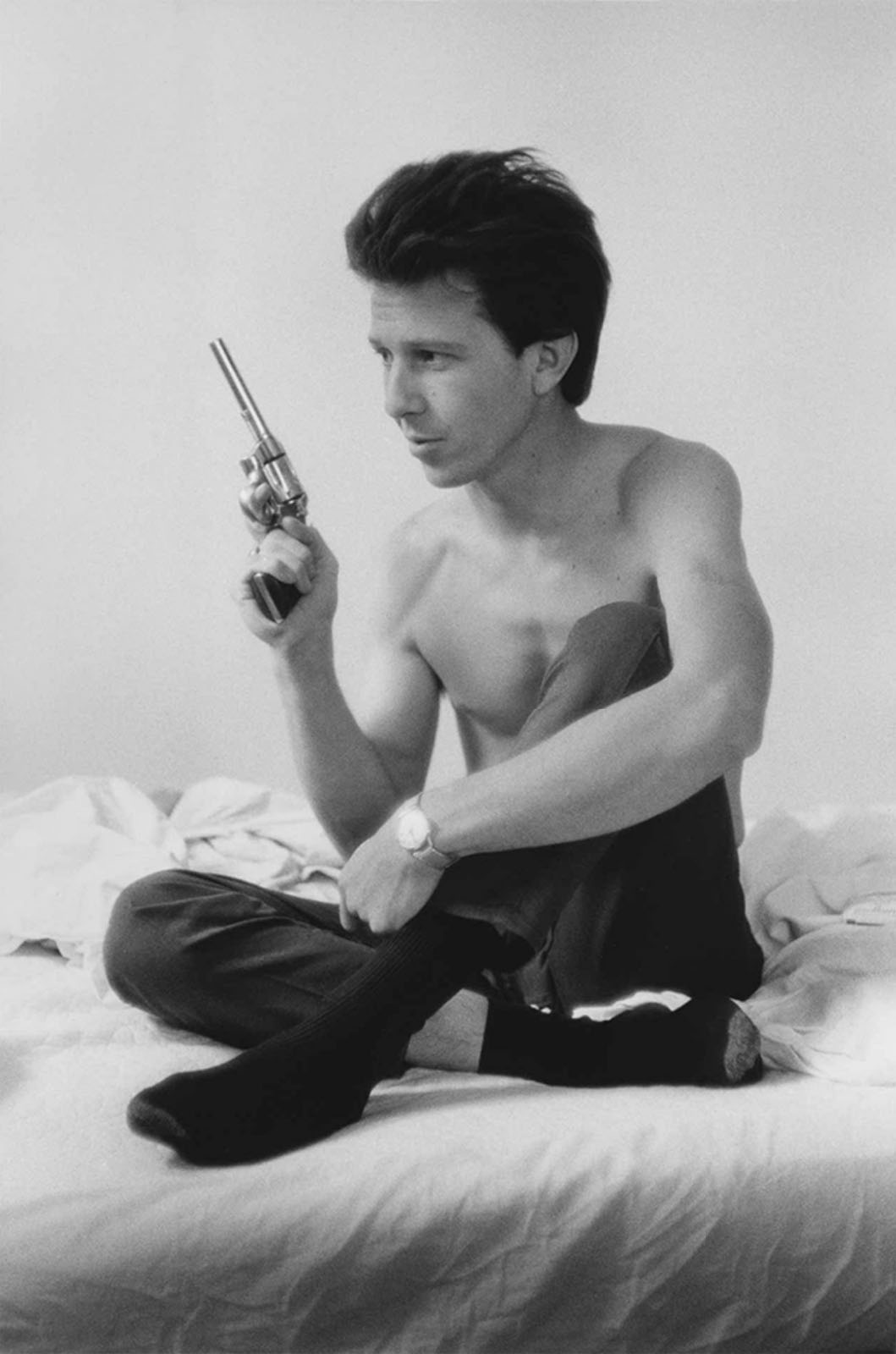
 

Larry Clark (American, b. 1943) 'Billy Mann Dead 1970' 1968


Larry Clark (American, b. 1943)
Billy Mann Dead 1970
1968
From the series Tulsa
Gelatin silver print
© Larry Clark


Larry Clark (American, b. 1943) 'Tulsa' 1972


Larry Clark (American, b. 1943)
Tulsa
1972
Gelatin silver print
20.3 x 25.4cm (sheet)
Sammlung Moderne Kunst in the Pinakothek der Moderne Munich. Acquired in 2003 by PIN. Freunde der Pinakothek der Moderne
© Larry Clark
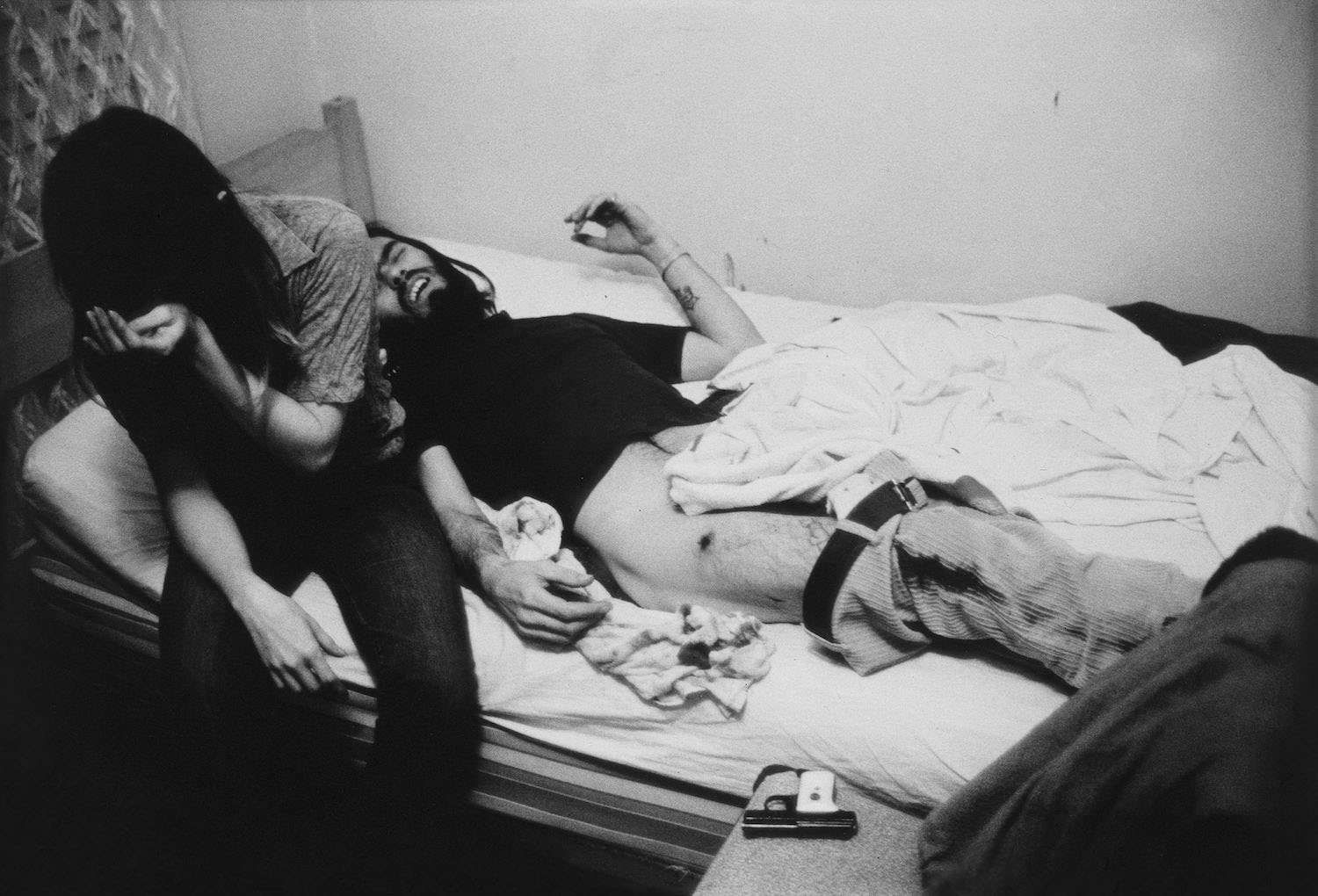
 

Larry Clark (American, b. 1943) 'Accidental Gunshot Wound' 1971


Larry Clark (American, b. 1943)
Accidental Gunshot Wound
1971
Gelatin silver print
© Larry Clark


Judith Joy Ross (American, b. 1946) 'Untitled' 1984 from the series 'Portraits at the Vietnam Veterans Memorial, Washington, D.C.'


Judith Joy Ross (American, b. 1946)
Untitled
1984, printed 1996
From the series Portraits at the Vietnam Veterans Memorial, Washington, D.C. 1983-1984
Gelatin silver print on daylight printing-out paper, shading in gold
25.2 x 20.2cm
On permanent loan from Siemens AG, Munich, to the Sammlung Moderne Kunst since 2003
© Judith Joy Ross


Judith Joy Ross (American, b. 1946) 'Untitled' 1984, printed 1996 From the series 'Portraits at the Vietnam Veterans Memorial, Washington, D.C.'


Judith Joy Ross (American, b. 1946)
Untitled
1984, printed 1996
From the series Portraits at the Vietnam Veterans Memorial, Washington, D.C. 1983-1984
Gelatin silver print on daylight printing-out paper
© Judith Joy Ross
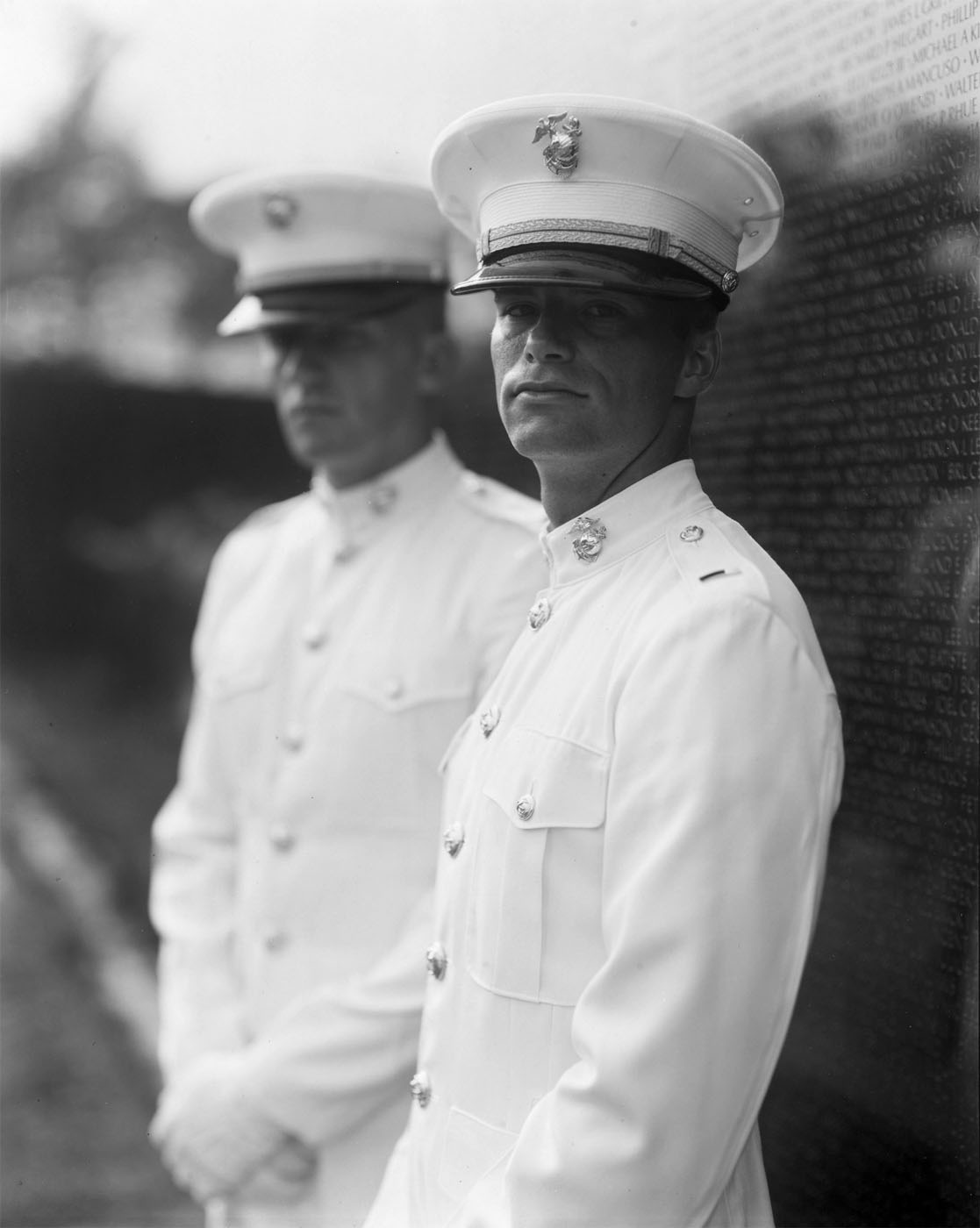
 

Judith Joy Ross (American, b. 1946) 'Untitled' 1984, printed 1996 From the series 'Portraits at the Vietnam Veterans Memorial, Washington, D.C.'


Judith Joy Ross (American, b. 1946)
Untitled
1984, printed 1996
From the series Portraits at the Vietnam Veterans Memorial, Washington, D.C. 1983-1984
Gelatin silver print on daylight printing-out paper
© Judith Joy Ross
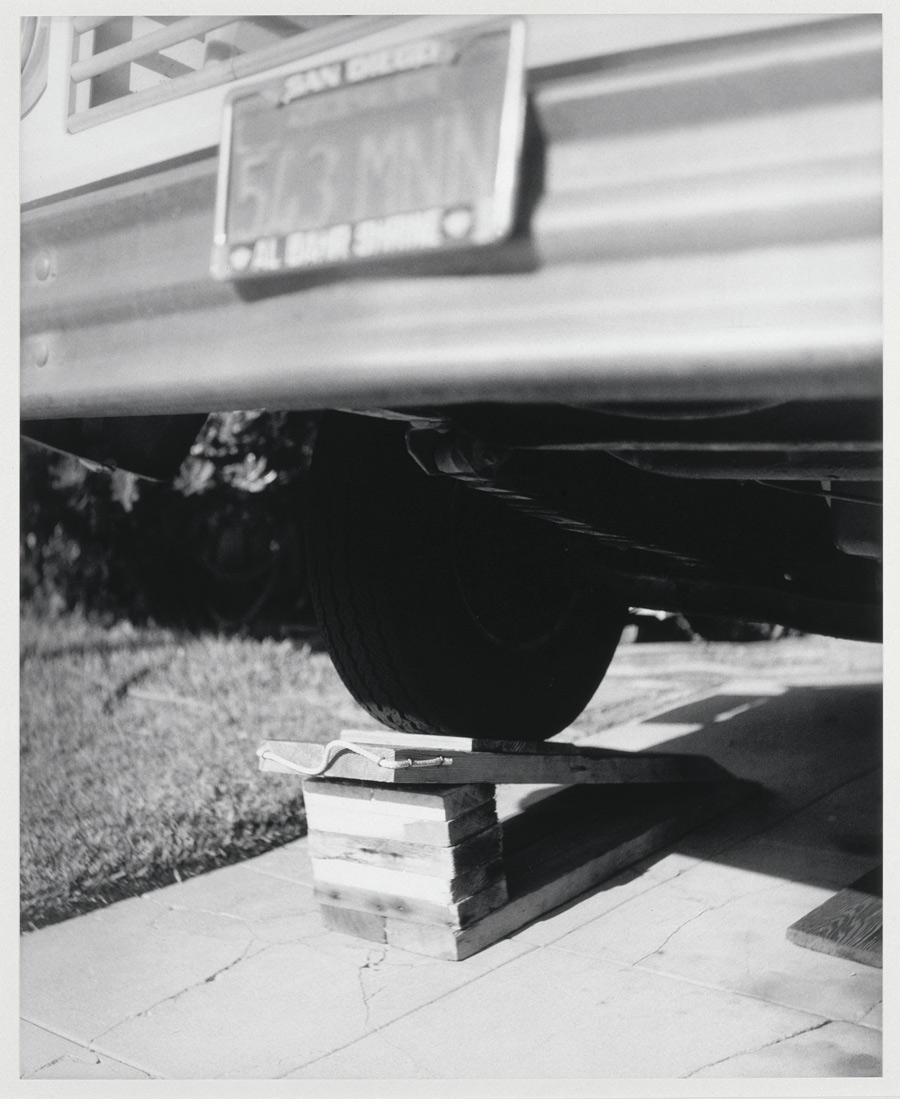
 

John Gossage (American, b. 1946) 'EL NEGRITO' 1997


John Gossage (American, b. 1946)
EL NEGRITO
1997
From the series There and Gone
Gelatin silver print, Baryt paper, screen print on photo mount card
55.4 x 45.0 cm
On permanent loan from Siemens AG, Munich, to the Sammlung Moderne Kunst since 2003
© John Gossage


Pinakothek Der Moderne
Barer Strasse 40
Munich

Opening hours:
Daily except Monday 10am – 6pm
Thursday 10am – 8pm
Pinakothek der Moderne website

LIKE ART BLART ON FACEBOOK

Back to top

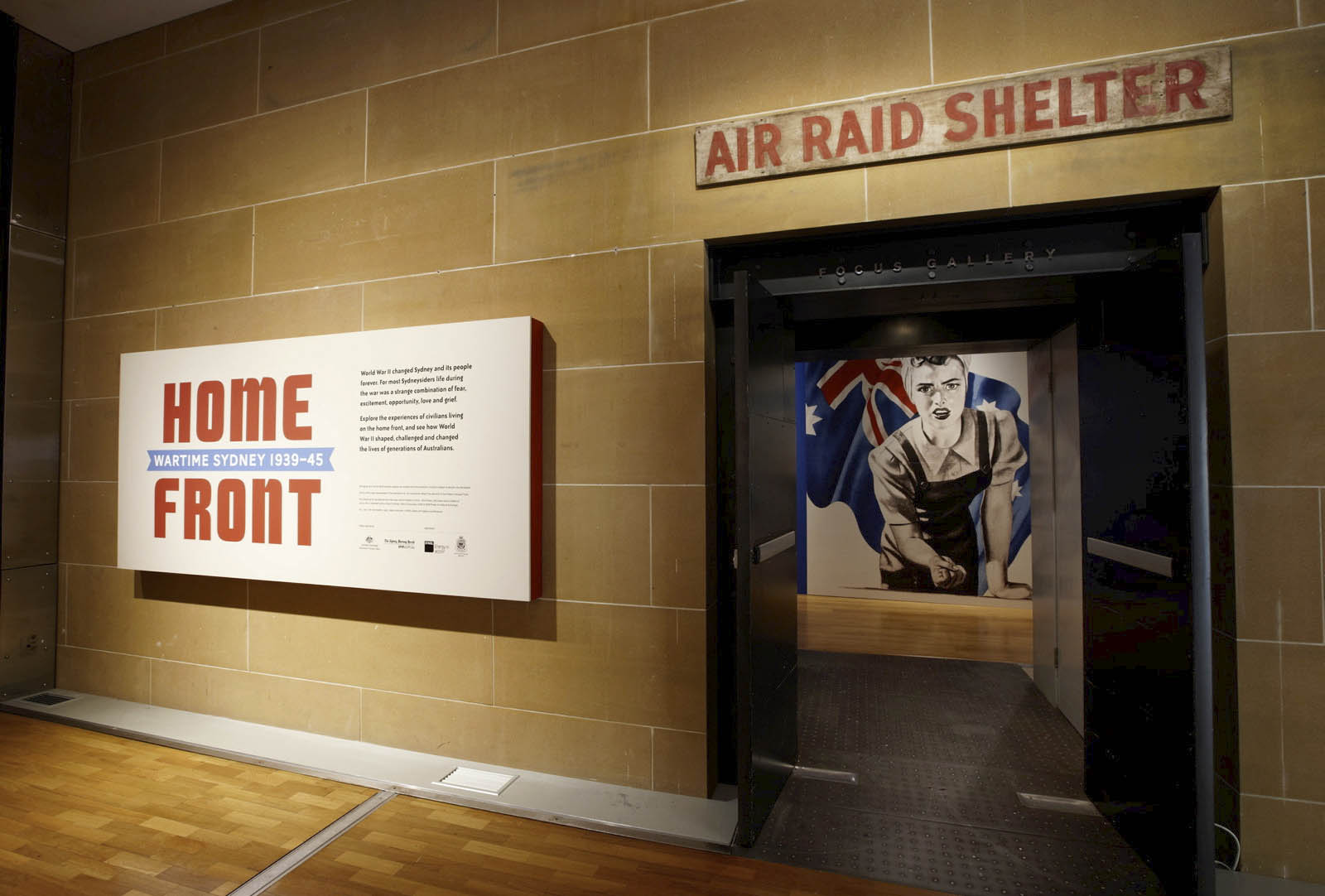
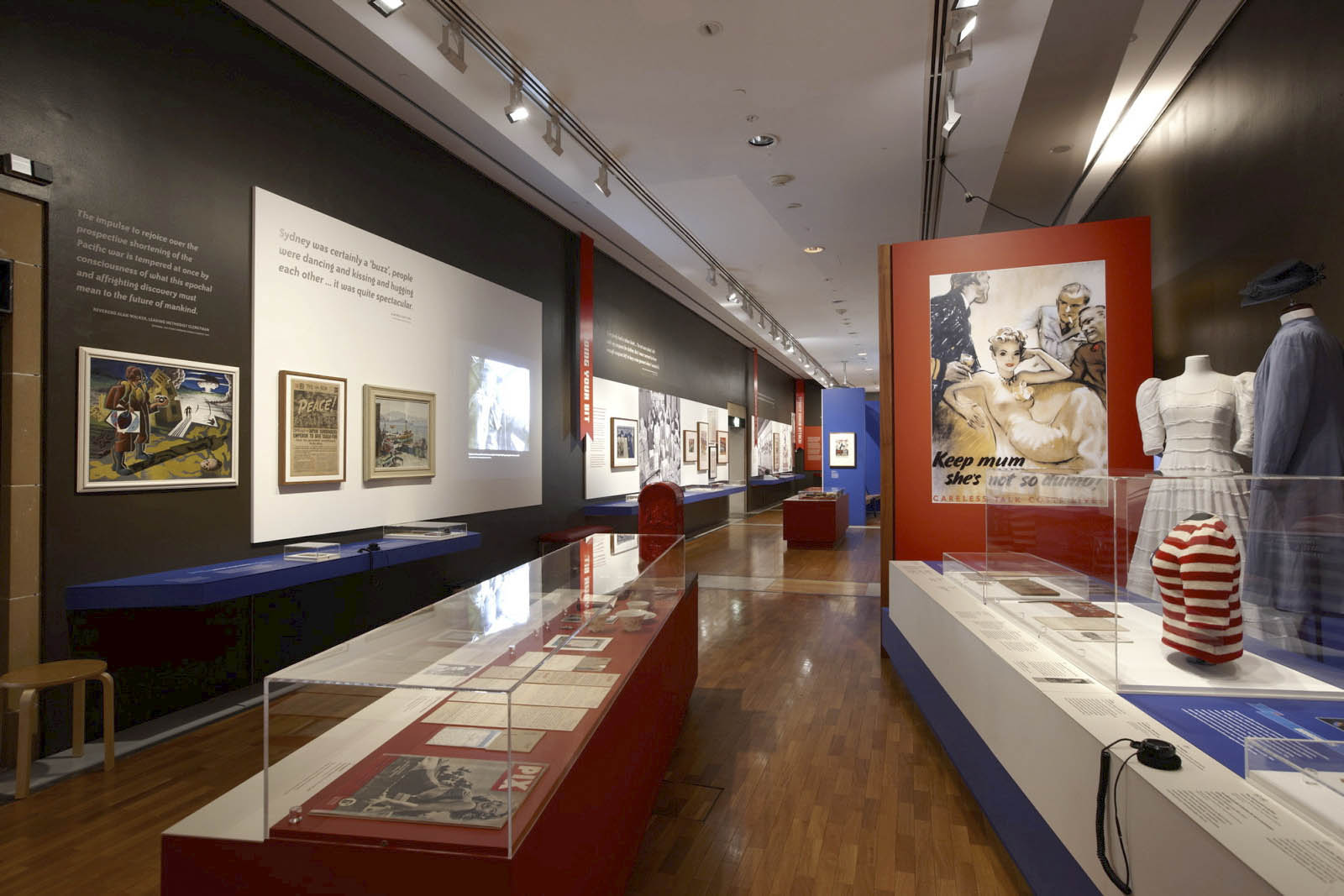
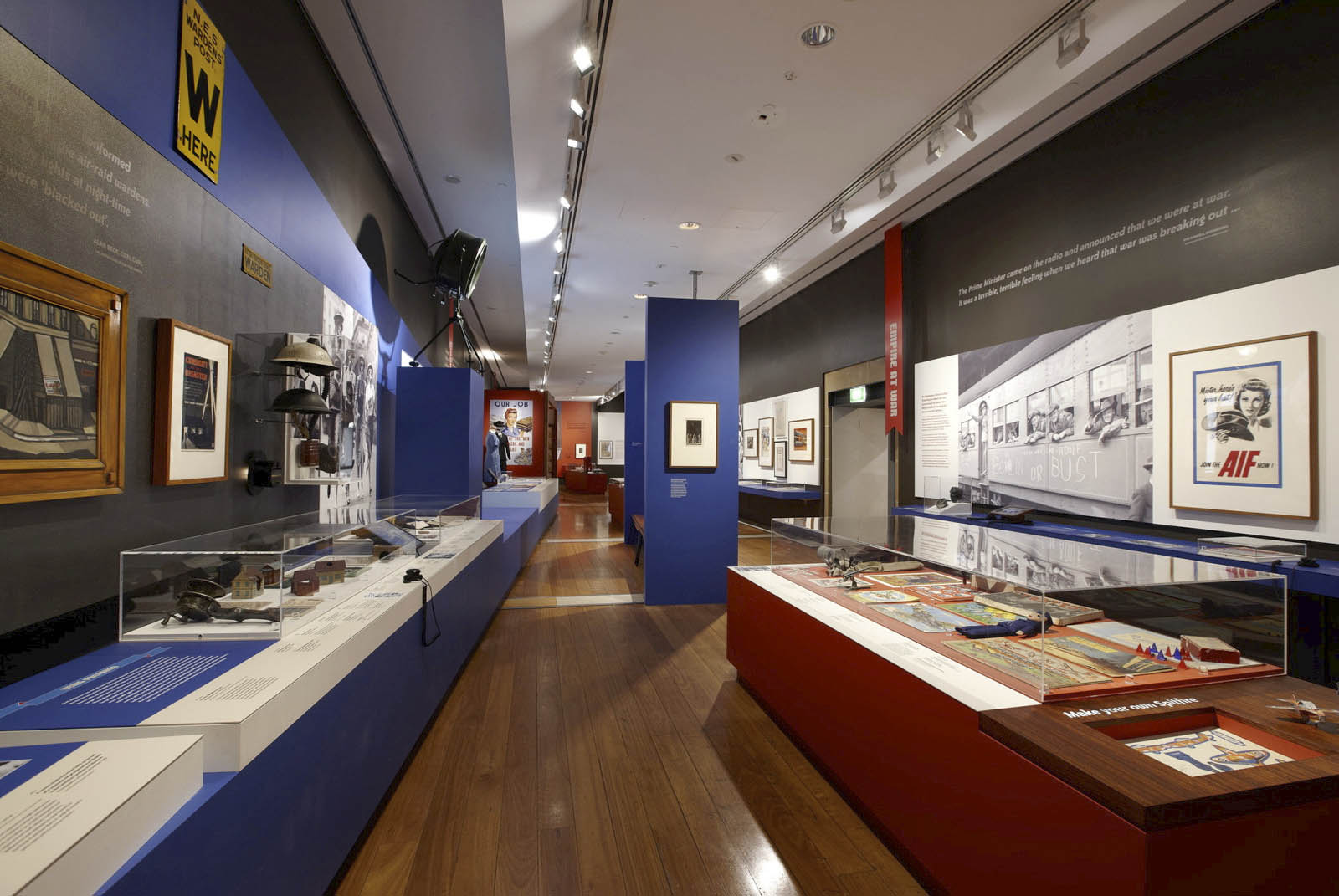
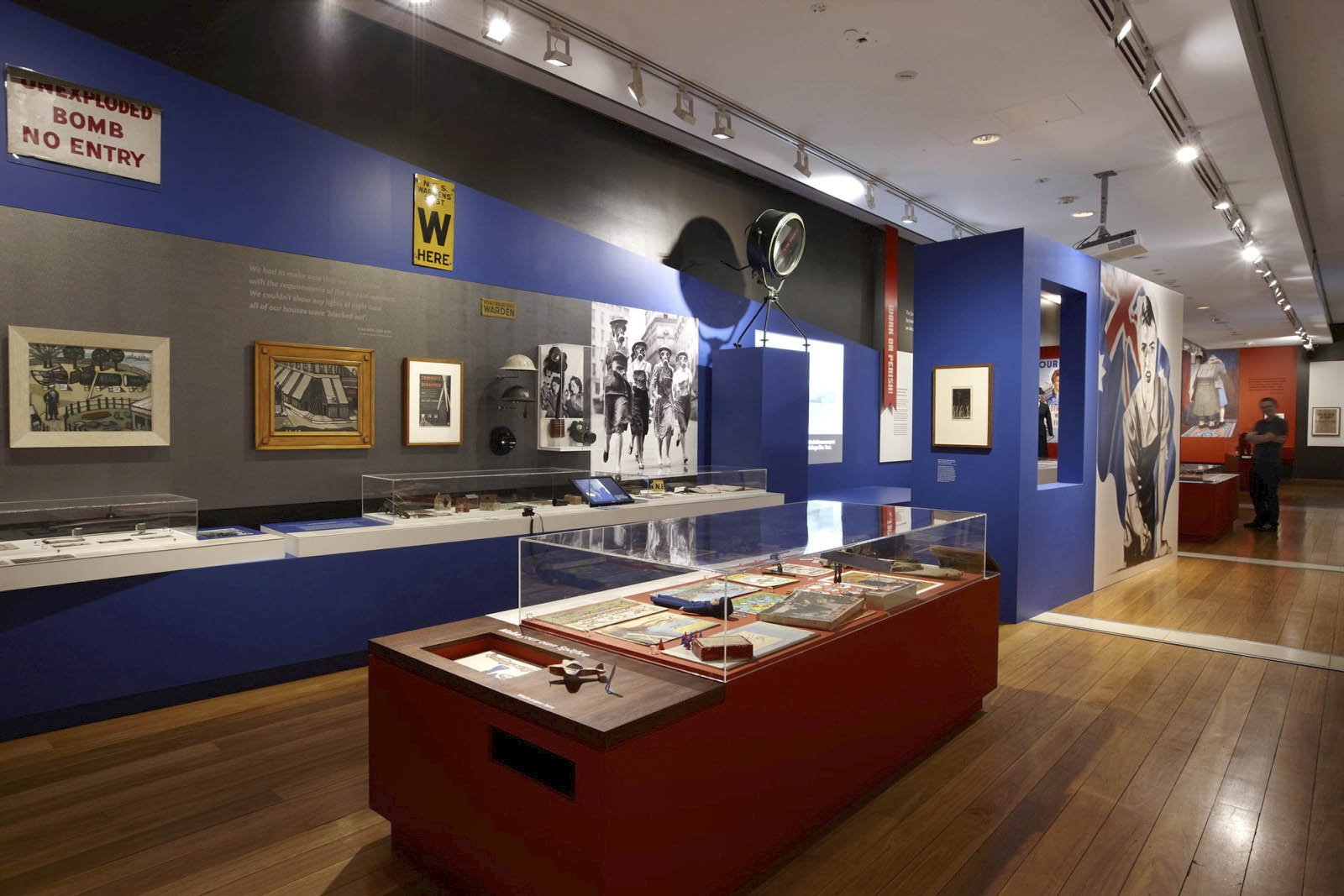
Exhibition: ‘Home Front: Wartime Sydney 1939-45’ at the Museum of Sydney

Exhibition dates: 31st March – 9th September 2012


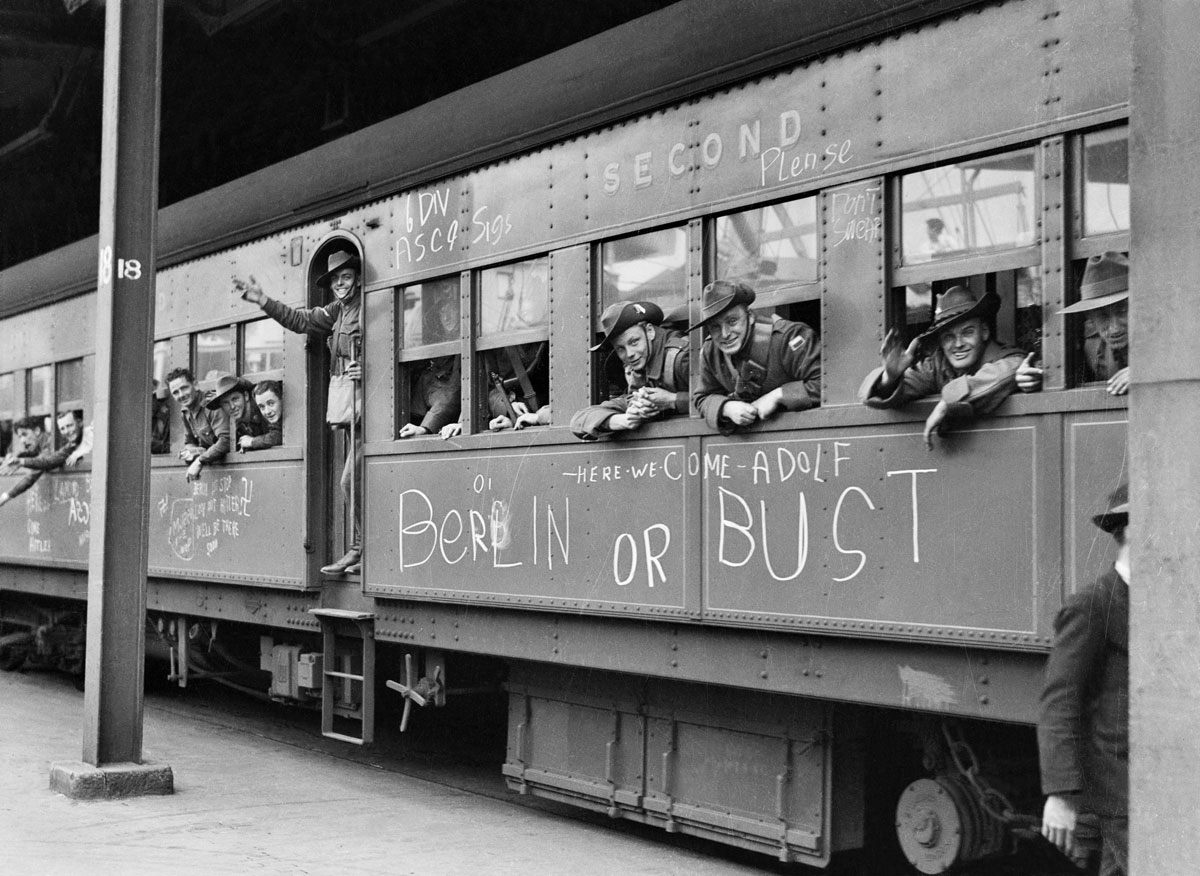
Sam Hood (Australian, 1872-1953) '6th division AIF troops waving from troop-train carriage, 13 September 1940' 1940


Sam Hood (Australian, 1872-1953)
6th division AIF troops waving from troop-train carriage, 13 September 1940
1940
© Australian War Memorial


Some poignant photographs in this posting of young Australian men setting off to fight in the early stages of the Second World War. The message scrawled in chalk on the side of the train (below, at left) reads, “Berlin first stop. Look out Hitler, we’ll be there soon.” Little did they know it would be five long, hard years of fighting and countless deaths before that aphorism would come true. The 6th division AIF troops first fought in North Africa against the Italians at Tobruk and was then sent to Greece to fight the German advance. About 39 per cent of the Australian troops in Greece on 6 April 1941 were either killed, wounded or became prisoners of war. The division then fought in the Pacific War on the Kokoda Trail campaign in the New Guinea theatre until the end of the war.

I wonder how many of the men, smiling and leaning out of the train carriage or departing on a troop ship, returned to these shores?

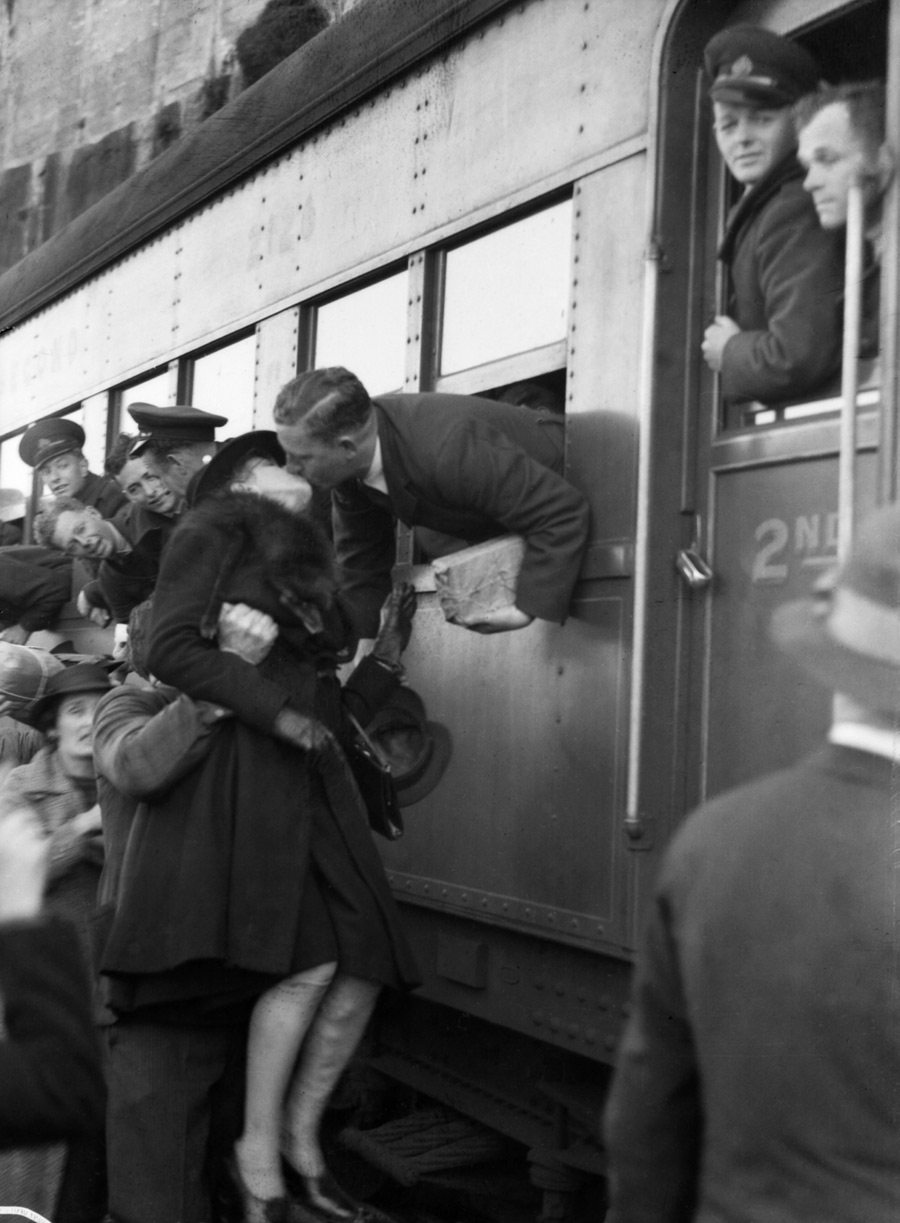
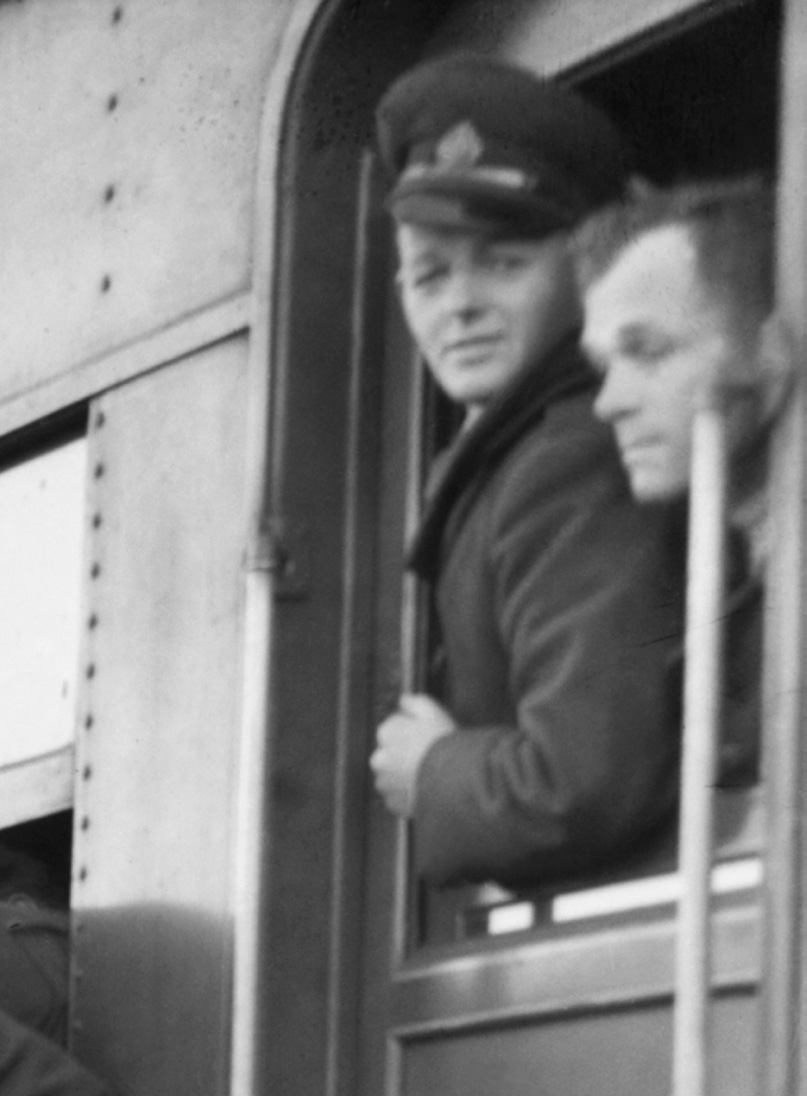
The last photograph in the posting is so very eloquent it actually moved me to tears. The women being hoisted aloft to kiss her loved one last time – clutching her handbag, complete with rumpled, lumpy stockings. To the right (and this is what caught my eye), a man looks straight at the camera while another right next to him has this distant melancholy look on his face as though he is not actually there. A portent of things to come. Brave men, fighting in the only war that Australians have had to fight for their own freedom, not at the whim of a colonial power or overseas ally in some far of distant land. Brave men and women – we wouldn’t be here without them.

Dr Marcus Bunyan


Many thankx to the Museum of Sydney for allowing me to publish the photographs in the posting. Please click on the photographs for a larger version of the image.


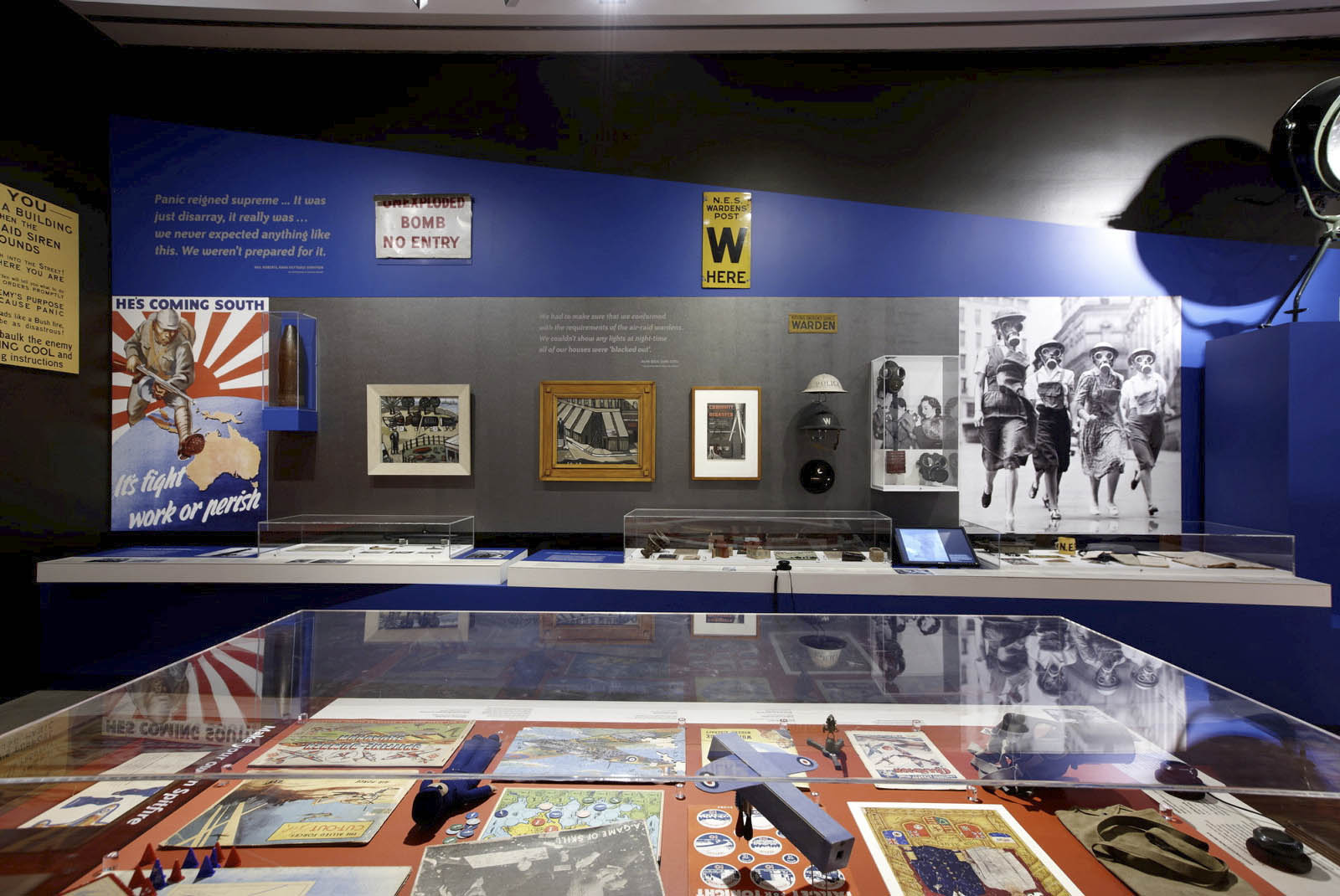
Installation view of the exhibition 'Home Front: Wartime Sydney 1939-45' at the Museum of Sydney 

Installation view of the exhibition 'Home Front: Wartime Sydney 1939-45' at the Museum of Sydney 

Installation view of the exhibition 'Home Front: Wartime Sydney 1939-45' at the Museum of Sydney 

Installation view of the exhibition 'Home Front: Wartime Sydney 1939-45' at the Museum of Sydney

Installation view of the exhibition 'Home Front: Wartime Sydney 1939-45' at the Museum of Sydney


Installation view of the exhibition Home Front: Wartime Sydney 1939-45 at the Museum of Sydney
Historic Houses Trust of NSW
Photos: Jenni Carter


Anonymous photographer. 'Troops of the 6th Division wave goodbye, Sydney 1940' 1940


Anonymous photographer
Troops of the 6th Division wave goodbye, Sydney 1940
1940
© Australian War Memorial


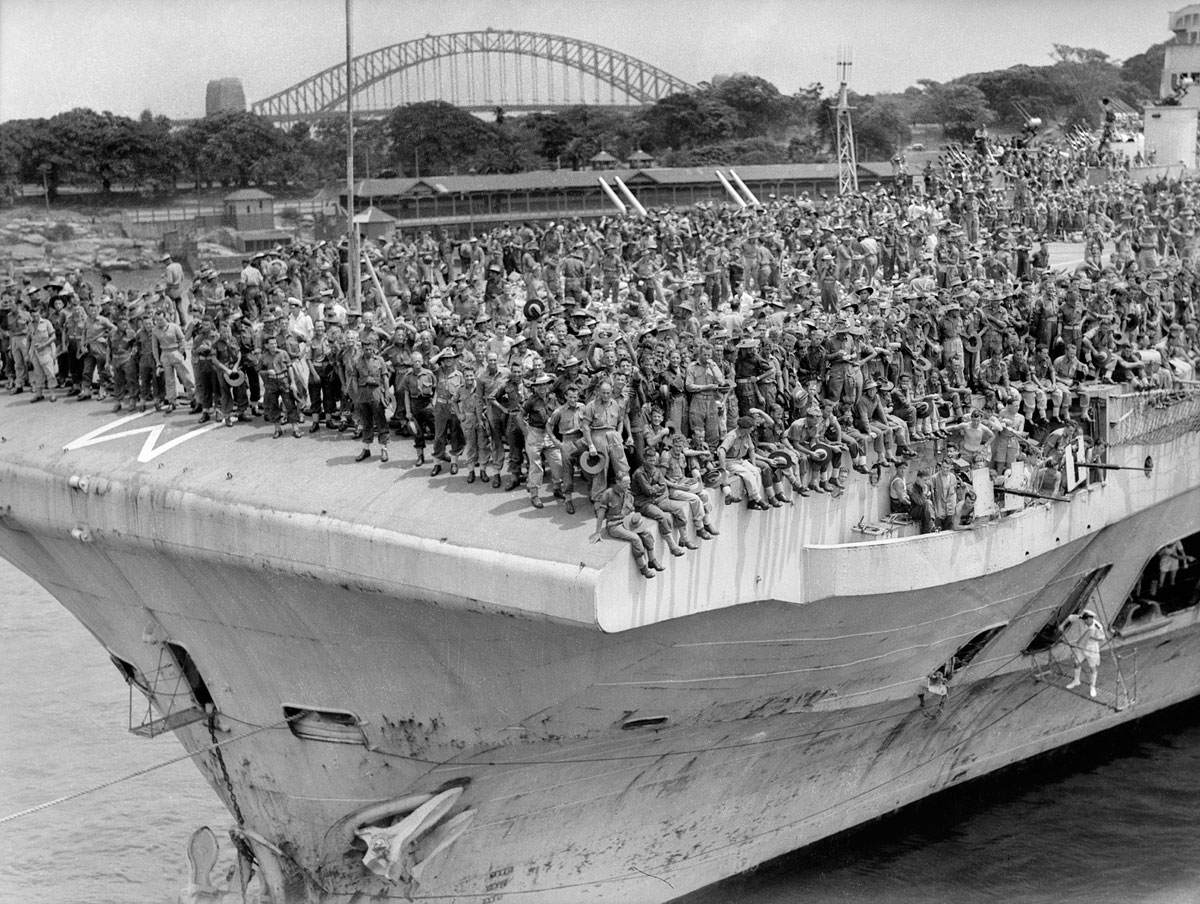
Anonymous photographer. 'Men of the 6th Division returning from Wewak crowd the deck of HMS Implacable, 18 Dec 1945' 1945


Anonymous photographer
Men of the 6th Division returning from Wewak crowd the deck of HMS Implacable, 18 Dec 1945
1945
© Australian War Memorial


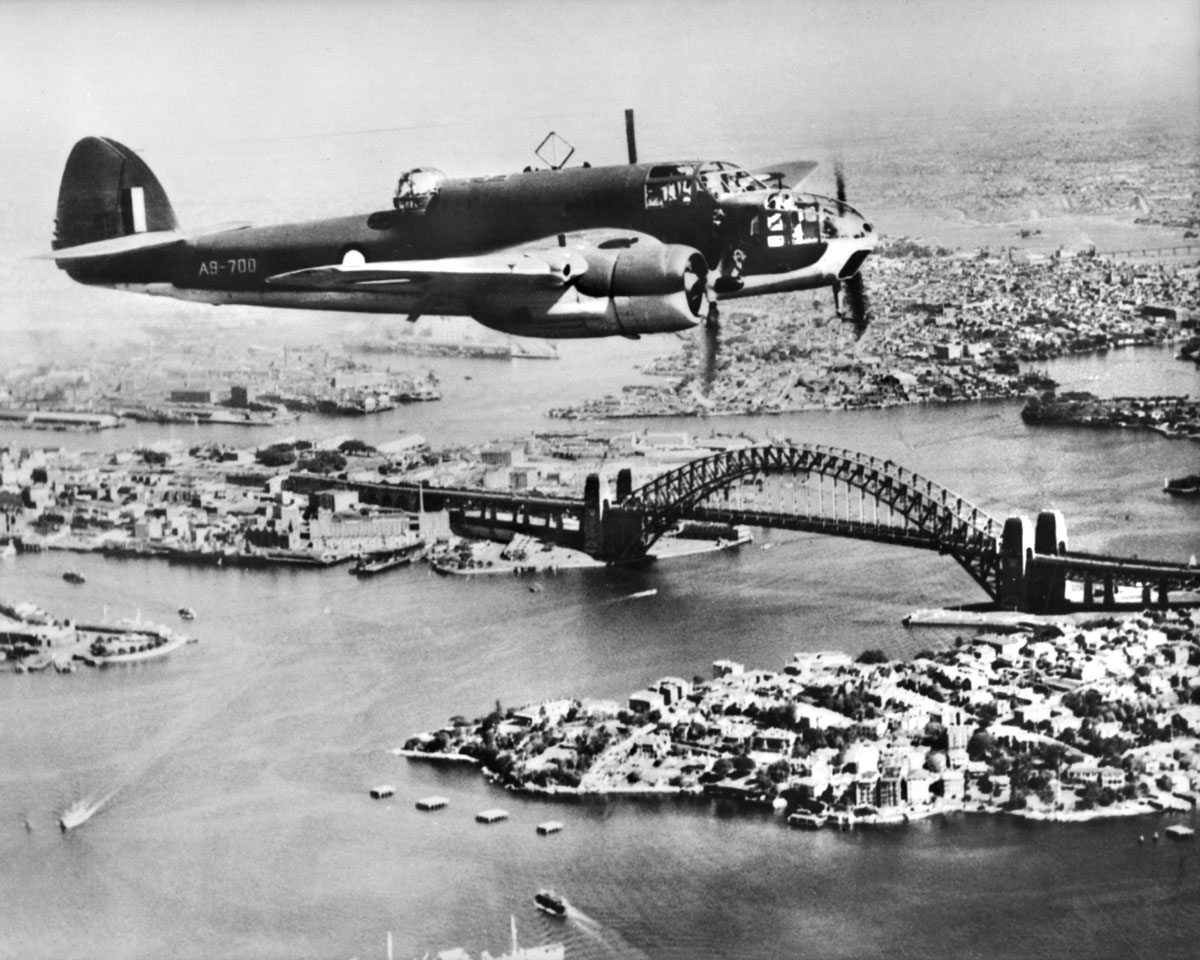
Anonymous photographer. 'An Australian built DAP Bristol Beaufort VIII aircraft, serial no A9-700, in flight over Sydney Harbour near the Bridge' c. 1944


Anonymous photographer
An Australian built DAP Bristol Beaufort VIII aircraft, serial no A9-700, in flight over Sydney Harbour near the Bridge
c. 1944
© Australian War Memorial


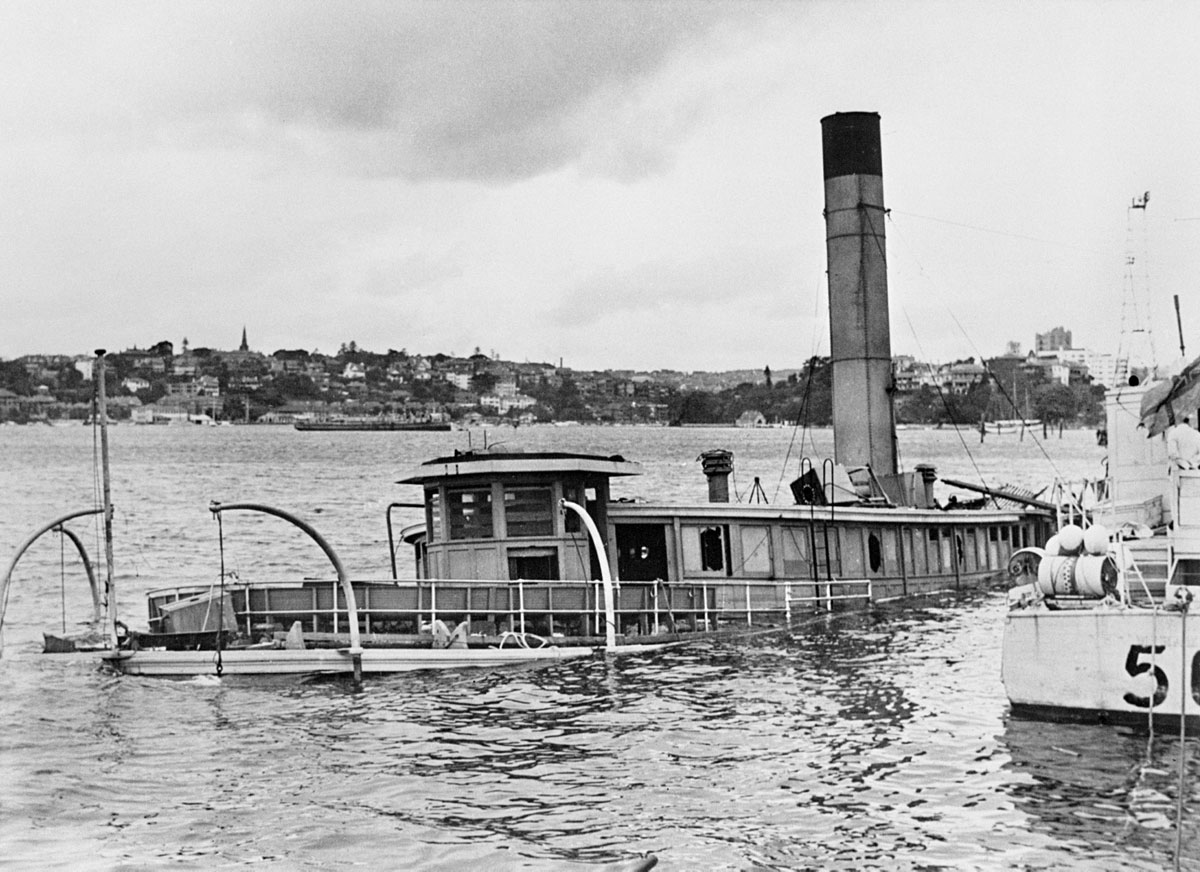
Anonymous photographer. 'Partly submerged RAN accommodation ship damaged during the unsuccessful Japanese midget submarine attack 1 June 1942' 1942


Anonymous photographer
Partly submerged RAN accommodation ship damaged during the unsuccessful Japanese midget submarine attack 1 June 1942
1942
© Australian War Memorial


Anonymous photographer. 'Two women donning gas masks as part of an air raid drill' Nd


Anonymous photographer
Two women donning gas masks as part of an air raid drill
Nd
© Argus Newspaper Collection of Photographs, State Library of Victoria


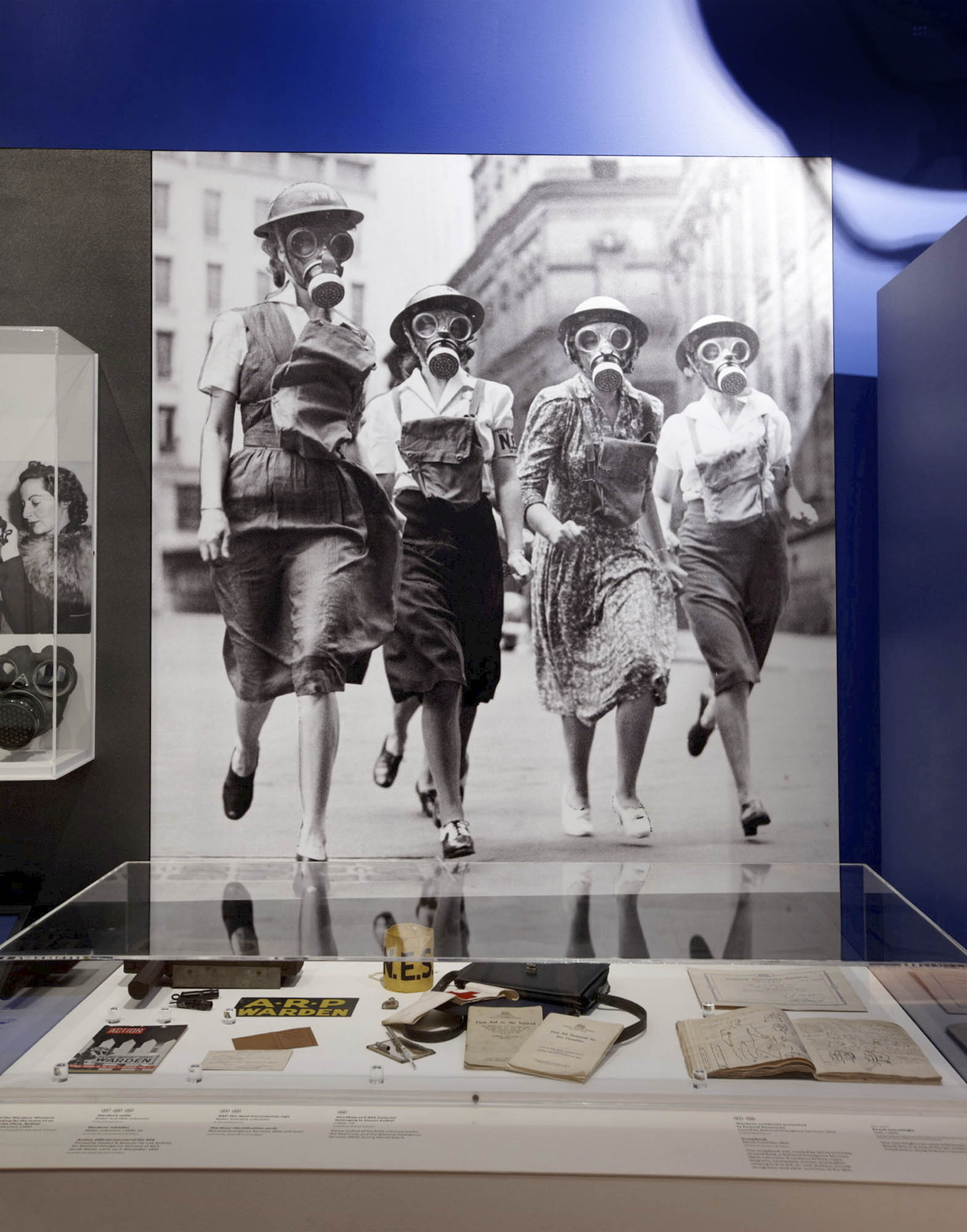
Installation view of the exhibition 'Home Front: Wartime Sydney 1939-45' at the Museum of Sydney showing at centre, a detail of 'Members of the Wardens' Women's Auxiliary making for the scene of an incident' (c. 1943) by an anonymous photographer


Installation view of the exhibition Home Front: Wartime Sydney 1939-45 at the Museum of Sydney showing at centre, a detail of Members of the Wardens’ Women’s Auxiliary making for the scene of an incident (c. 1943, below) by an anonymous photographer
Historic Houses Trust of NSW
Photo: Jenni Carter


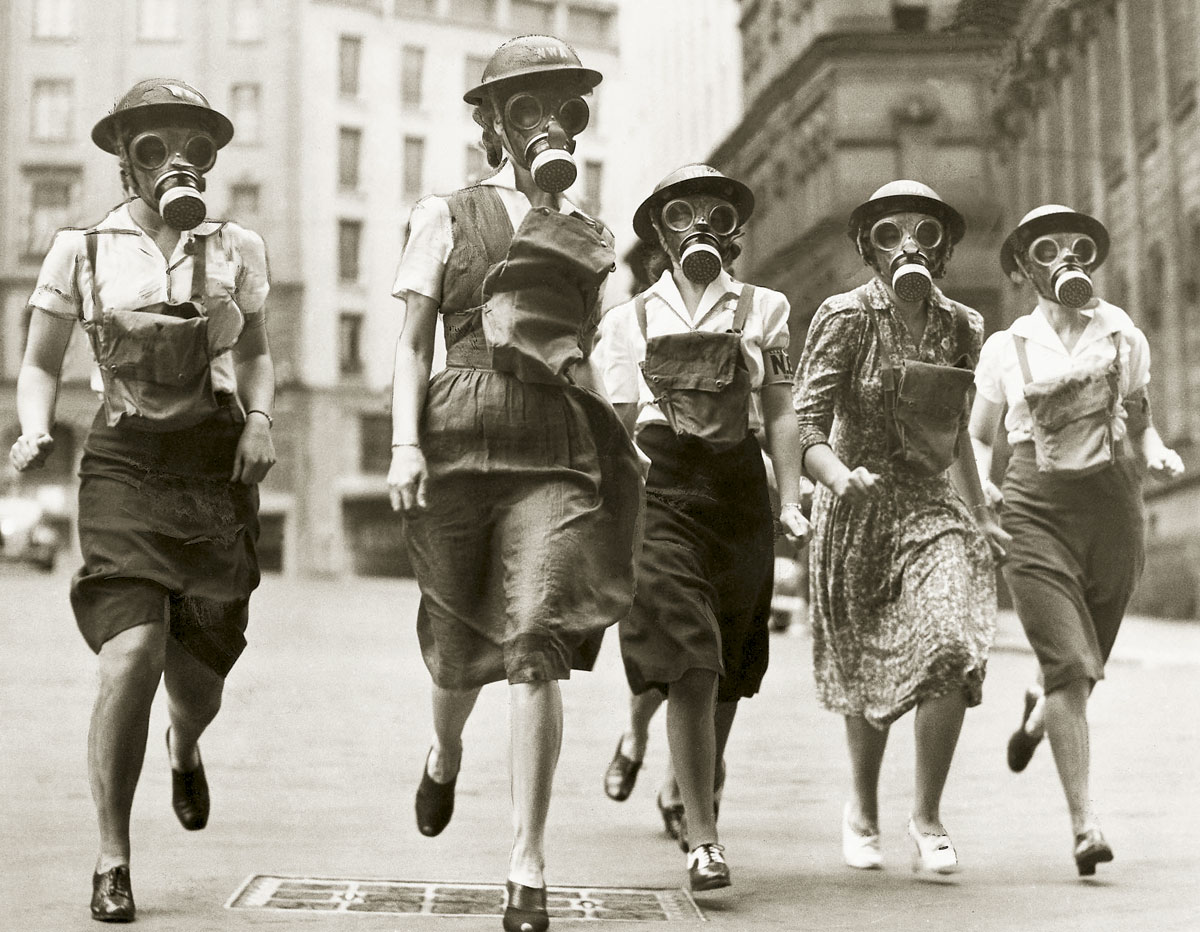
Anonymous photographer. 'Members of the Wardens' Women's Auxiliary making for the scene of an incident' c. 1943


Anonymous photographer
Members of the Wardens’ Women’s Auxiliary making for the scene of an incident
c. 1943
© Argus Newspaper Collection of Photographs, State Library of Victoria


In May 1942 three Japanese midget submarines entered Sydney Harbour in an attempt to sink allied ships, bringing the once far away war to the shores of the harbourside city and shaking the country to its core. Coinciding with the 70th anniversary of the Japanese attack on Sydney Harbour, Home Front: Wartime Sydney 1939-45 a new exhibition opening 31 March at the Museum of Sydney, explores the experience of the women, men and children who rallied together to support the war effort from home.

Unprepared for another world war, Australians initially referred to the conflict as ‘the phoney war’, however it wasn’t long before propaganda posters were plastered around Sydney, censorship and food rationing became the norm, and tank traps and barbed wire replaced bronzed bodies on Sydney beaches. For six long years the world seemed to come to Sydney as soldiers, sailors and airmen from many nations called Sydney home, making wartime an exciting and thrilling period for some, while for others it was a long and lonely time interrupted by the occasional letter from a loved one serving overseas.

Almost 40,000 Australians lost their lives with the war leaving a lasting impact at home and transforming the lives of generations of Australians, in particular the lives of women, says Curator Annie Campbell. “As well as having to cope with war related anxieties and stress, many women were ‘manpowered’ to work in wartime industries such as ammunitions factories and aircraft construction. Everyone had to make sacrifices on the home front, however despite wartime shortages and rationing, women were expected and actively encouraged to look smart, which often involved some innovative thinking. One of my favourite objects in the exhibition is a wedding dress made out of parachute silk and mosquito net for a war bride, later worn by her sister and two girlfriends on their special days.

While the troops were busy on the battlefields, Sydneysiders prepared for the possibility of an enemy invasion on home soil. An anti-submarine boom net was installed across Sydney Harbour to keep out attacking forces, bomb shelters were constructed in Hyde Park and protective timbers were placed around landmark buildings. In 1942 blackout restrictions were introduced to limit the effectiveness of air raids, all Sydney lights were switched off and car, train and tram headlights were masked, giving the city a sinister feel. But it wasn’t all doom and gloom, large numbers of people were ready to have fun in Sydney and the Trocadero on George Street became a mecca for white American servicemen, while the Booker T Washington Club in Albion Street Surry Hills serviced the African-American GI’s,” says Campbell.

Highlights of the exhibition include the microphone used by Prime Minister Robert Menzies to announce that Australia was at war, remnants of the Japanese midget submarines that attacked Sydney, over 100 photographs and artworks depicting wartime Sydney, and a short documentary featuring historic footage. Over 200 wartime Sydney mementoes will also feature in the exhibition including propaganda posters, warden’s memorabilia, letters from soldiers serving overseas and a selection of wartime fashions.

Press release from the Museum of Sydney website


Anonymous photographer. 'Sydney kindergarten children wearing air raid headgear designed to muffle sounds and prevent them from biting tongues' Nd


Anonymous photographer
Sydney kindergarten children wearing air raid headgear designed to muffle sounds and prevent them from biting tongues
Nd
© Mitchell Library, State Library of NSW


Anonymous photographer. 'Eve Holliman, Hilda Jamieson and Vera Thurlow converting a car into an ambulance' Nd


Anonymous photographer
Eve Holliman, Hilda Jamieson and Vera Thurlow converting a car into an ambulance
Nd
© Argus Newspaper Collection of Photographs, State Library of Victoria


Anonymous photographer. 'Woman war worker' 1944


Anonymous photographer
Woman war worker
1944
© Mitchell Library, State Library of NSW


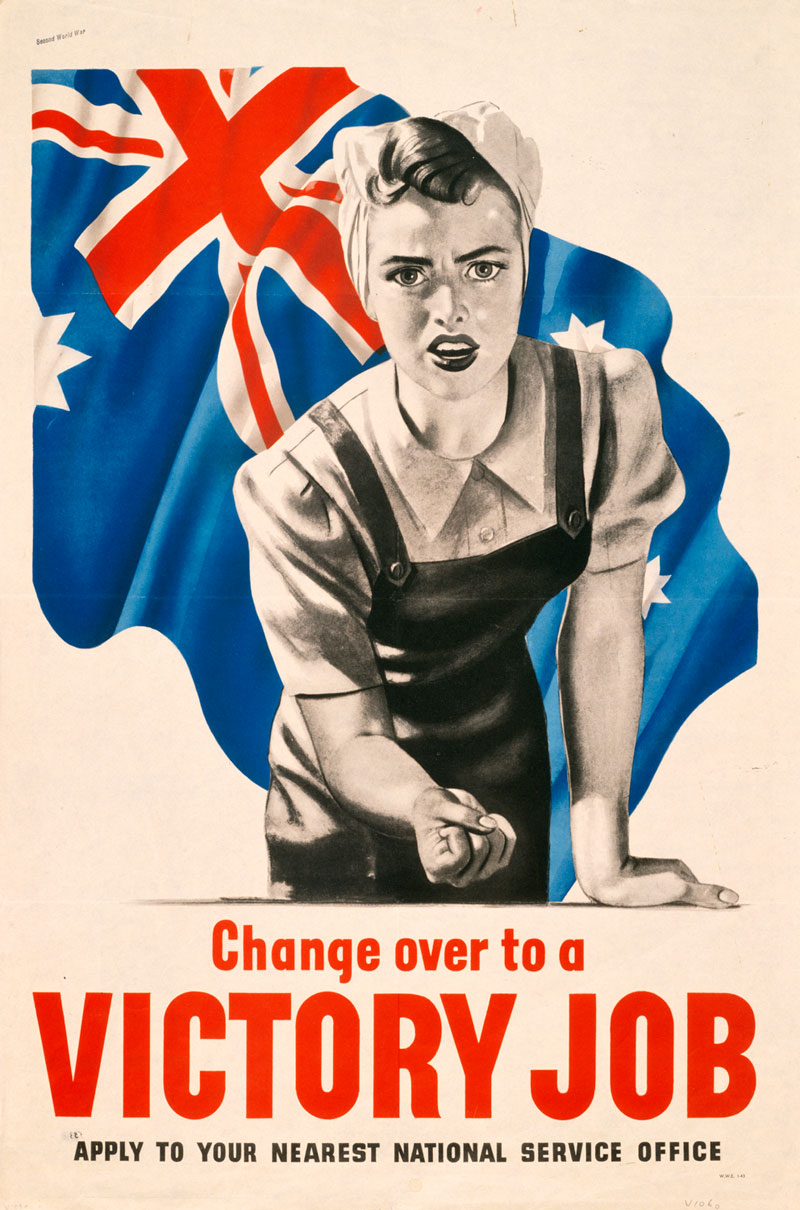
Anonymous designer and photographer. 'Change Over to a Victory Job propaganda poster' Nd


Anonymous designer and photographer
Change Over to a Victory Job propaganda poster
Nd
© Australian War Memorial


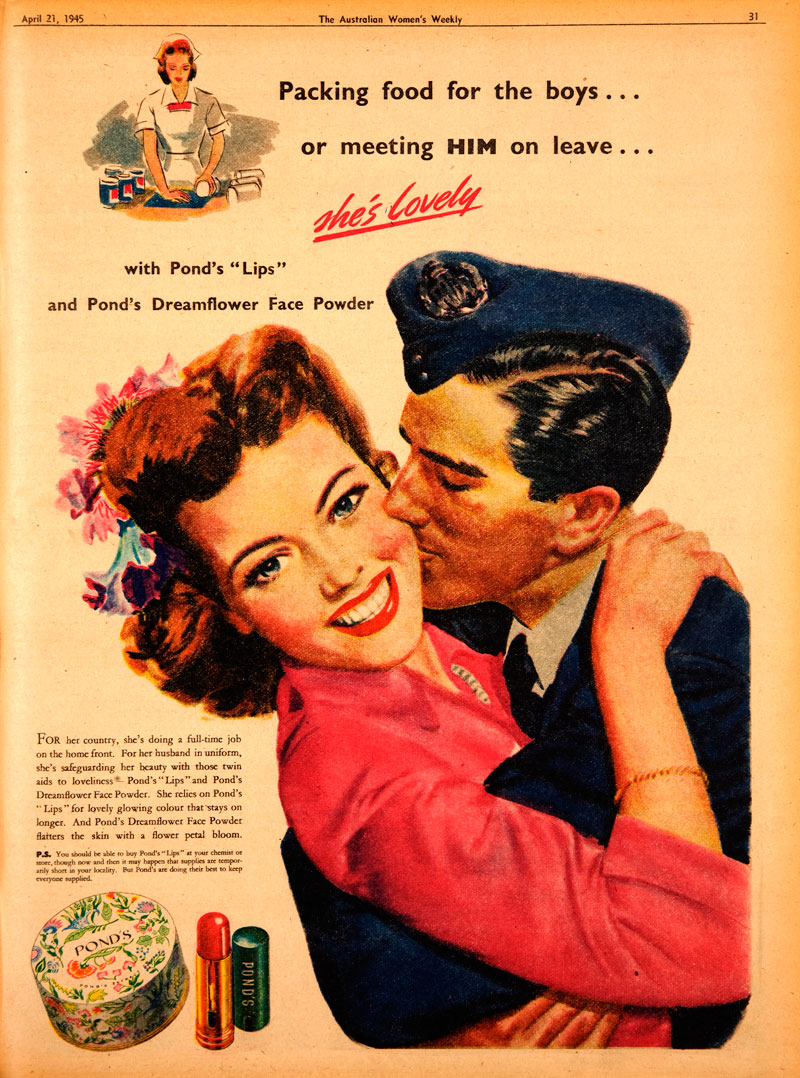
Anonymous designer and photographer. 'Advertisement for Ponds' 1945


Anonymous designer and photographer
Advertisement for Ponds
1945
© National Library of Australia


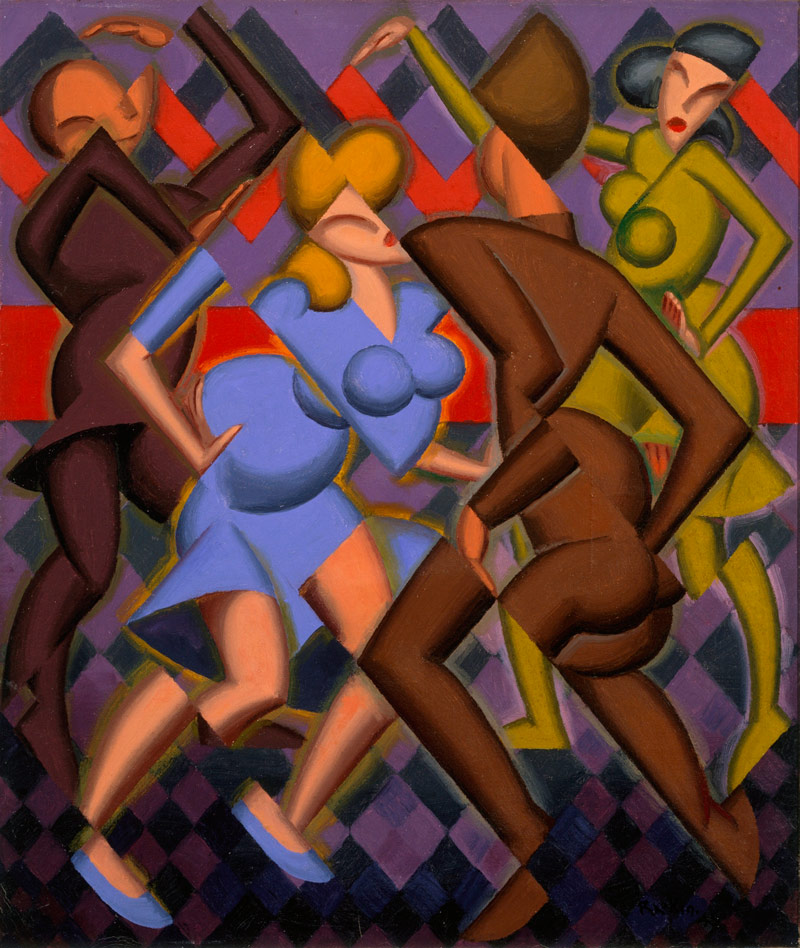
Weaver Hawkins (English, 1893-1977) 'Jitterbugs' 1945


Weaver Hawkins (English, 1893-1977)
Jitterbugs
1945
Oil on canvas, Art Gallery of New South Wales
© Estate of H F Weaver Hawkins
Photograph Jenni Carter


Sam Hood (Australian, 1872-1953) 'Sydney embarkation, 13 September 1940' 1940


Sam Hood (Australian, 1872-1953)
Sydney embarkation, 13 September 1940
1940
© Australian War Memorial


Sam Hood (Australian, 1872-1953) 'Sydney embarkation, 13 September 1940' 1940 (detail)


Sam Hood (Australian, 1872-1953)
Sydney embarkation, 13 September 1940 (detail)
1940
© Australian War Memorial


Museum of Sydney
Cnr Bridge and Phillip Streets
Sydney, NSW 2000
Phone: (02) 9251 5988

Opening hours:
Daily 10am – 5pm
Closed Good Friday and Christmas Day

Museum of Sydney website

LIKE ART BLART ON FACEBOOK

Back to top

Exhibition: ‘Light Sensitive: Photo Art from the Collection’ at Aargauer Kunsthaus, Aarau, Switzerland

Exhibition dates: 12th May – 12th August 2012


Many thankx to the Aargauer Kunsthaus for allowing me to publish the photographs in the posting. Please click on the photographs for a larger version of the image.


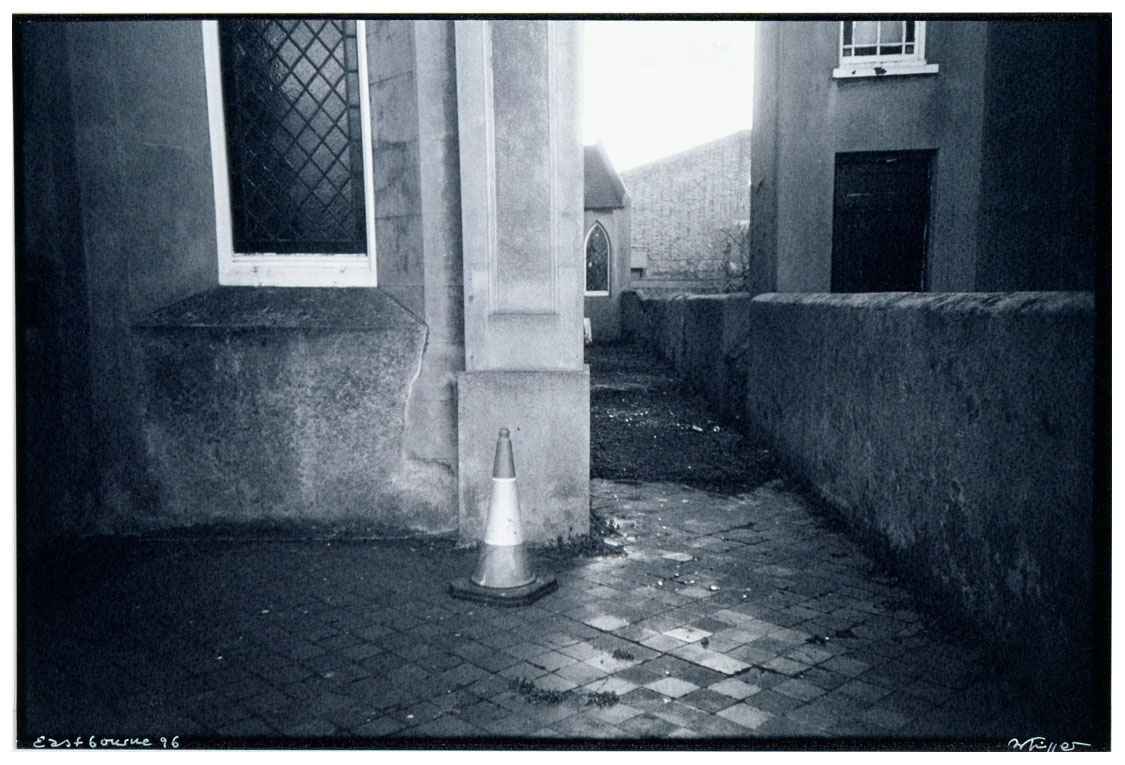
Art Ringger
 (Swiss, b. 1946) 'Eastbourne' 1996


Art Ringger
 (Swiss, b. 1946)
Eastbourne
1996
Black-and-white photograph on aluminium, embossed
20.3 x 30.3cm
Aargauer Kunsthaus Aarau / deposited by the Andreas Züst Collection


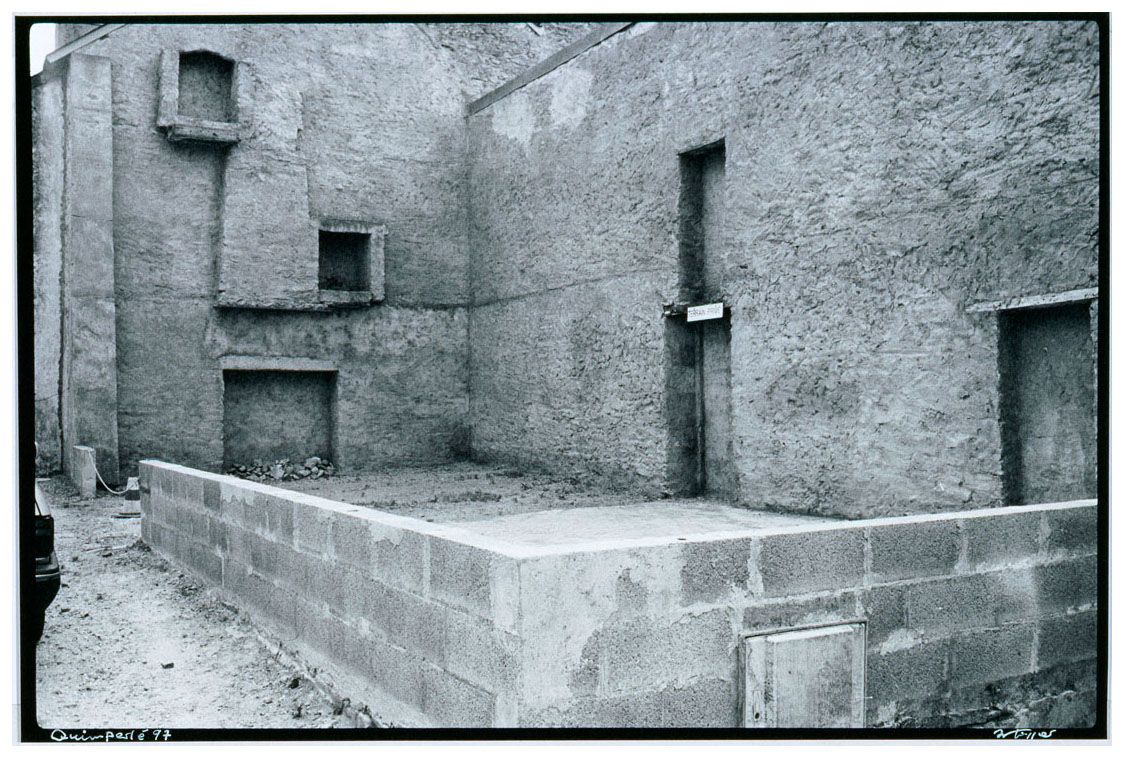
Art Ringger
 (Swiss, b. 1946) 'Quimperlé' 1997


Art Ringger
 (Swiss, b. 1946)
Quimperlé
1997
Black-and-white photograph on aluminium, embossed
19.9 x 29.7cm
Aargauer Kunsthaus Aarau / deposited by the Andreas Züst Collection


Hannah Villiger
 (Swiss, 1951-1997) 'Arbeit' 1979


Hannah Villiger
 (Swiss, 1951-1997)
Arbeit
1979
Black-and-white photograph on baryte paper, matt
125 x 189.5cm
Aargauer Kunsthaus Aarau / deposited by a private collection


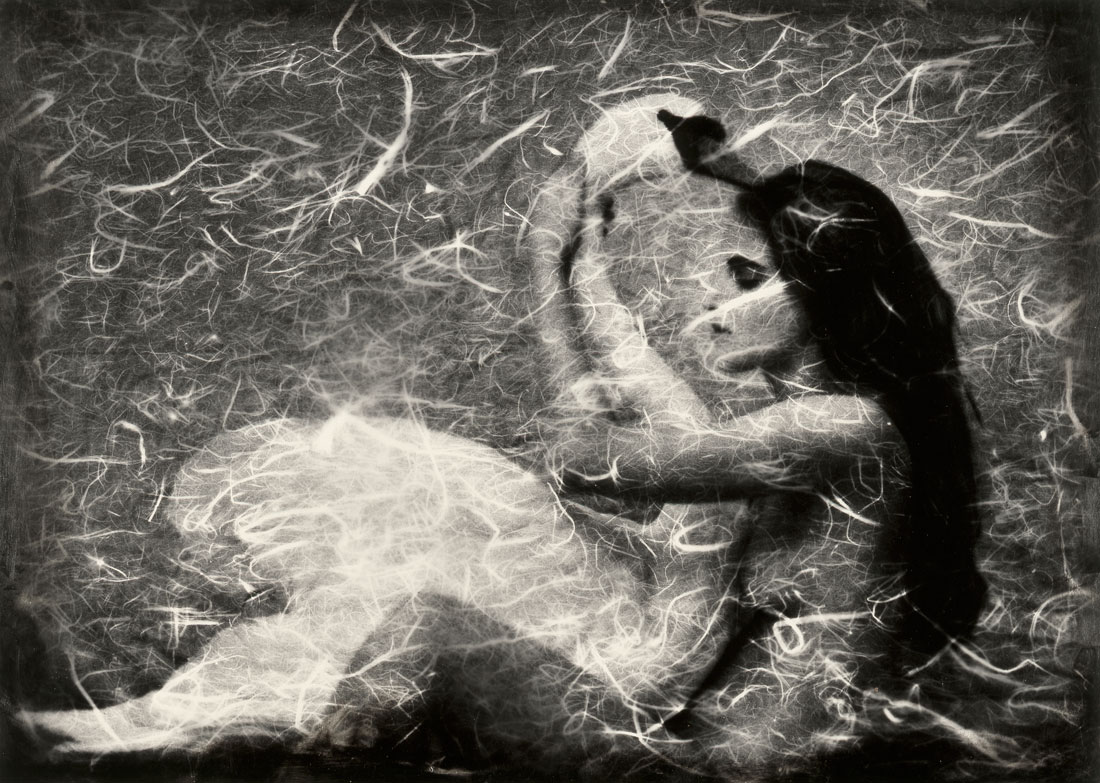
Claudia Böhm.
 'Leda' 1991


Claudia Böhm

Leda
1991
Black-and-white photograph with retouching colour on paper
40 x 56cm
Aargauer Kunsthaus Aarau / deposited by the Andreas Züst Collection


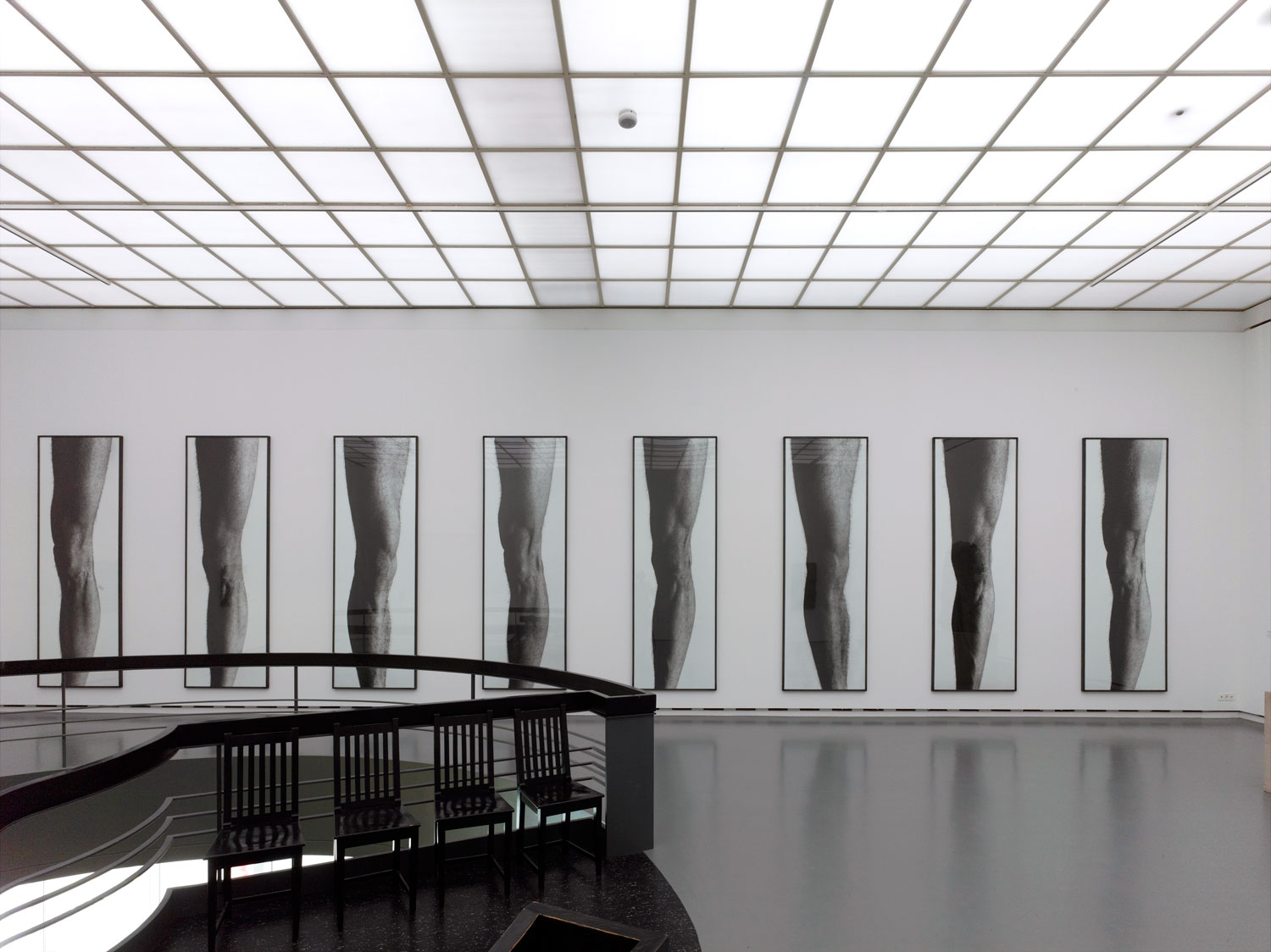
Installation view of the exhibition 
'Light Sensitive – Photo Art from the Collection' at Aargauer Kunsthaus showing photographs from Balthasar Burkhard's work 'Das Knie' (The Knee) 1983


Installation view of the exhibition 
Light Sensitive – Photo Art from the Collection at Aargauer Kunsthaus showing photographs from Balthasar Burkhard’s work Das Knie (The Knee) 1983
Photo: Dominic Büttner, Zurich


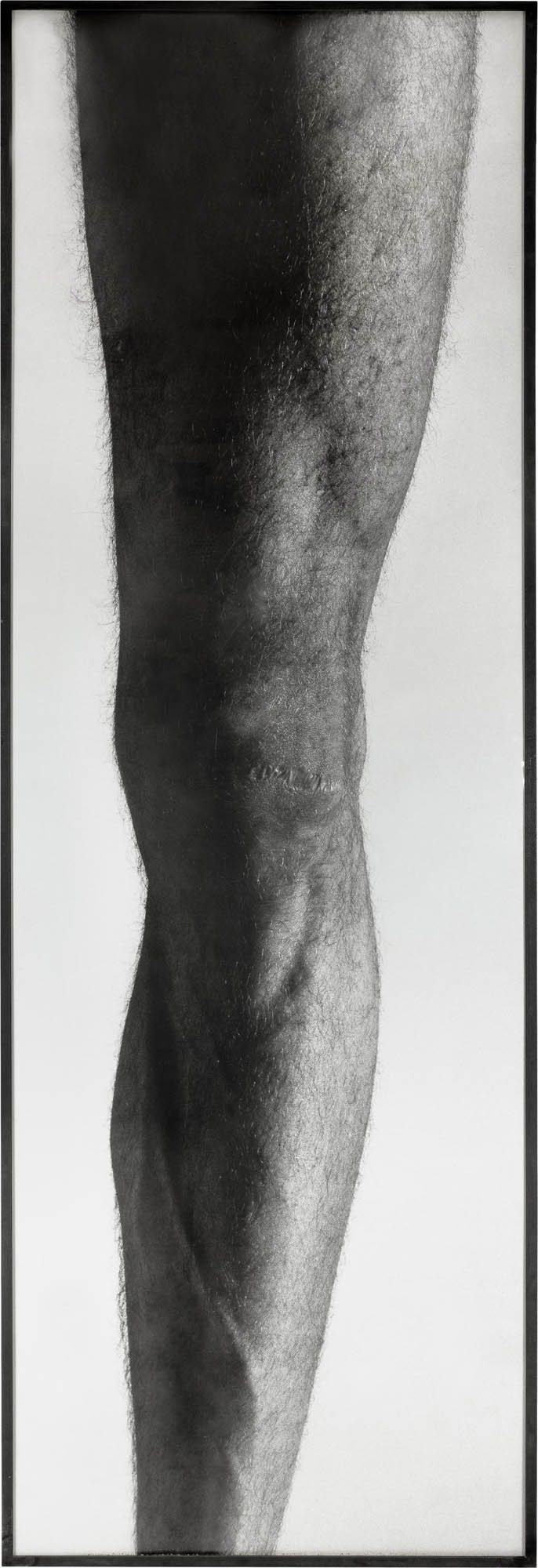
Balthasar Burkhard (Swiss, 1944-2010) 'Das Knie' (The Knee) 1983 (detail)


Balthasar Burkhard (Swiss, 1944-2010)
Das Knie (The Knee) (detail)
1983
Photography on baryta paper in original iron frame and on colour canvas
270 x 91cm, photography; 150.3 x 50.3cm, colour canvas


The exhibition Light Sensitive presents works from the rich photography holdings of the Aargauer Kunsthaus. In addition, it shows photographs of urban spaces by Andreas Tschersich and works by Bianca Dugaro.

Light Sensitive is a presentation of works from the collection of the Aargauer Kunsthaus that focuses on the medium of photography. The exhibition delves into the museum’s rich and quite substantial holdings of over 800 photographic works, sounding out core themes. In the process, two thematic focus areas come to the fore: on the one hand an exploration of the human body and on the other an examination of abstract, architectural or public space.

The 20th century has seen a major shift in the status of photography as an artistic medium, a change reflected by the holdings of the Aargauer Kunsthaus. Starting out with rather small-scale works of a documentary nature, photography graduated to photo art and today naturally takes its place among the wide range of artistic media. The exhibition Light Sensitive takes us on a journey of discovery through the collection, contrasting big names with unexpected work. A series of large-scale cityscapes by Berlin-based Swiss artist Andreas Tschersich as well as works by Swiss artist Bianca Dugaro complement the presentation.

Included in the exhibition are works by, among others Claudia Böhm, Balthasar Burkhard, Marie-Antoinette Chiarenza / Daniel Hauser, Hans Danuser, Silvie Defraoui, Achim Duchow, Olivia Etter, Nicolas Faure, Marc-Antoine Fehr, Peter Fischli / David Weiss, Katrin Freisager, Max Grüter / Patrick Rohner, Simone Hopferwieser, Markus Käch, Heiner Kielholz, Fred Knecht Engelbert, Rudolf Lichtsteiner, Urs Lüthi, Max Matter, Billy Eduard Albert Meier, Claudio Moser, Marianne Müller, Anita Niesz, Guido Nussbaum, Sigmar Polke, Markus Raetz, Ursina Rösch, Annelies Štrba, Beat Streuli, Hannah Villiger.

Press release from the Aargauer Kunsthaus website


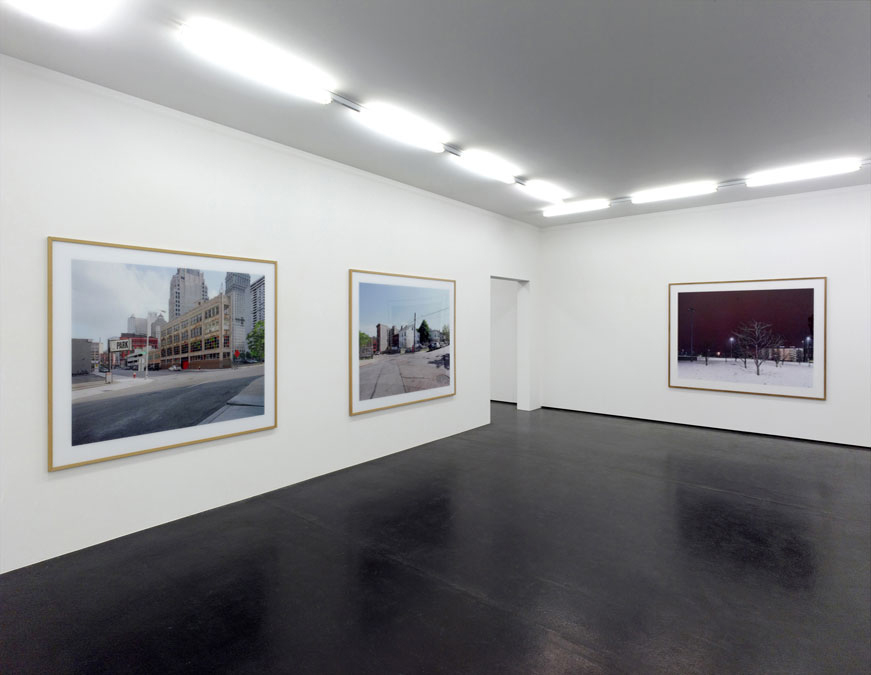
Installation view of the exhibition 'Light Sensitive: Photo Art from the Collection' at Aargauer Kunsthaus showing the work of Andreas Tschersich


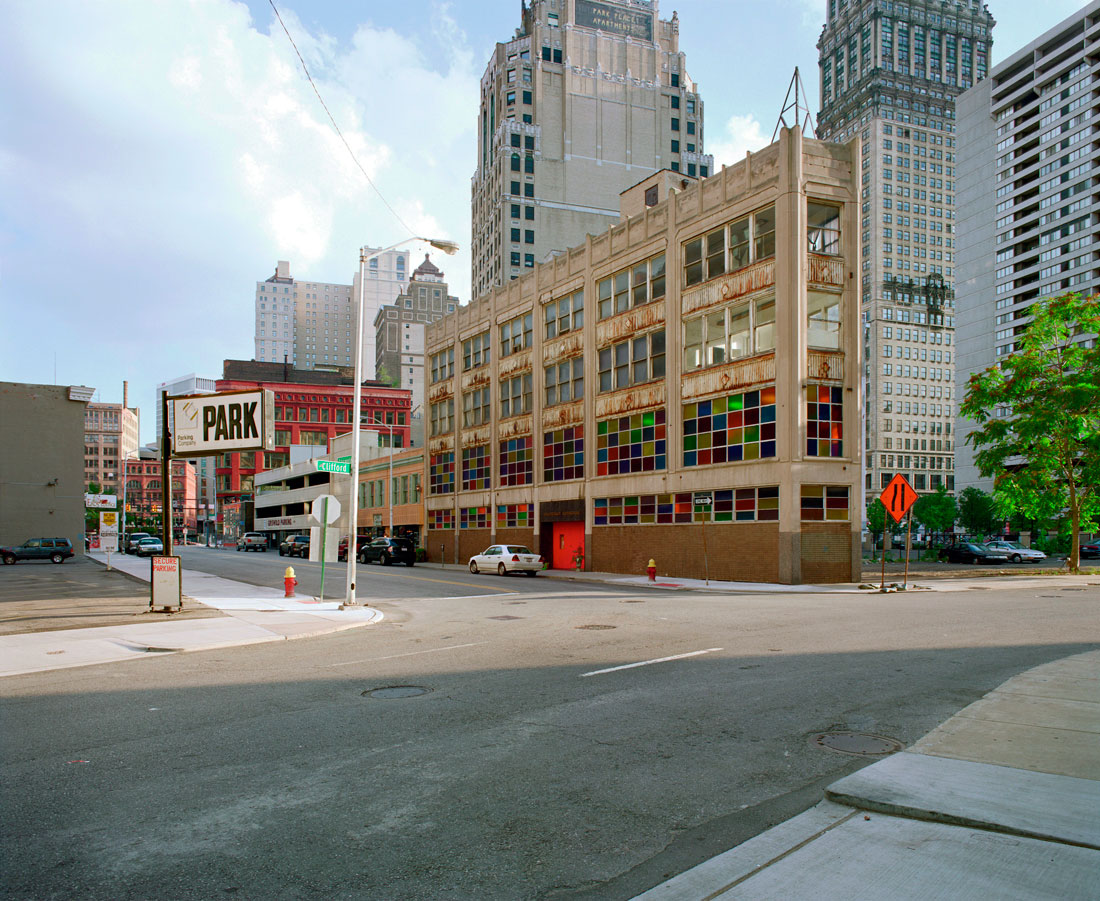
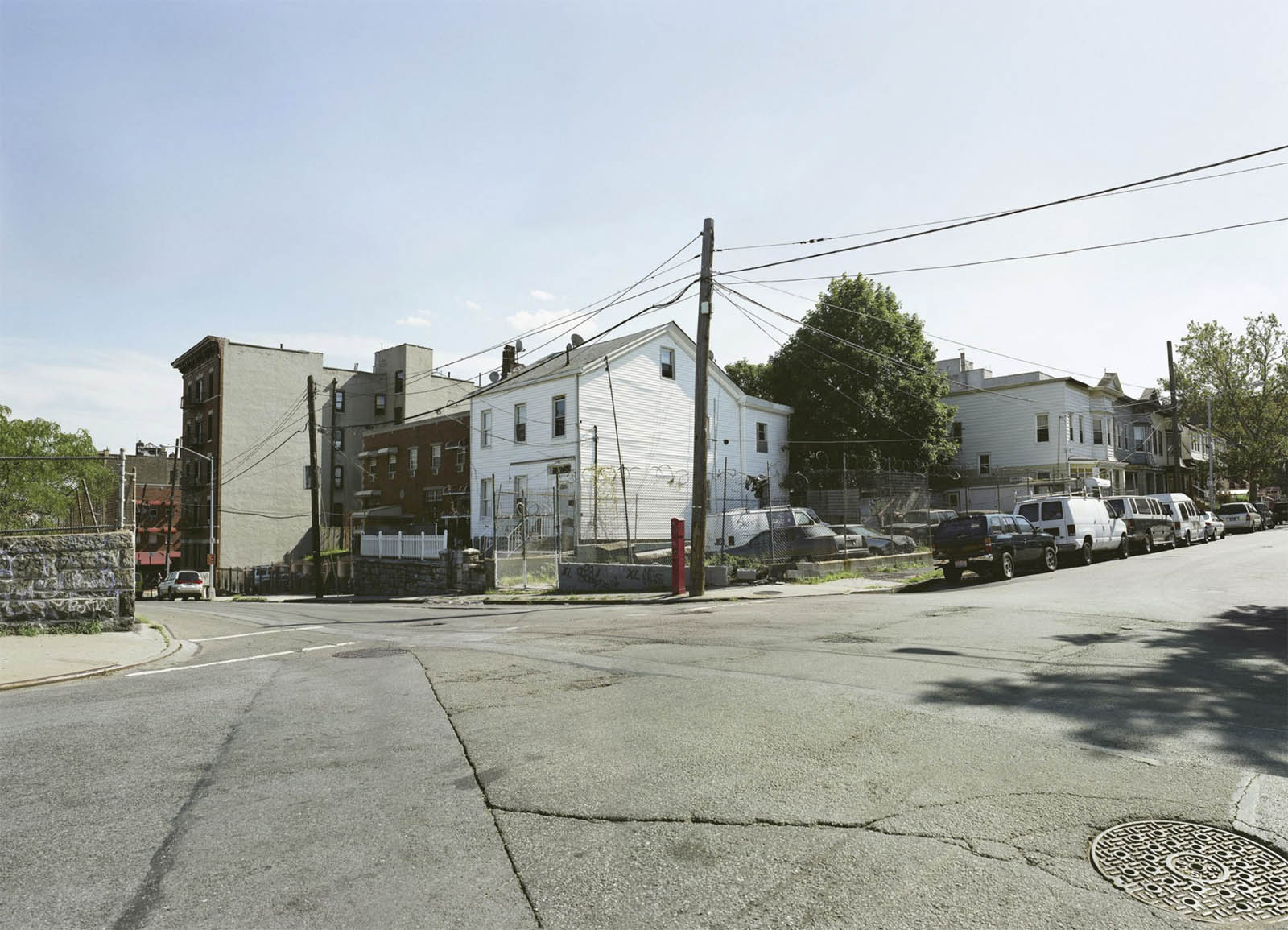
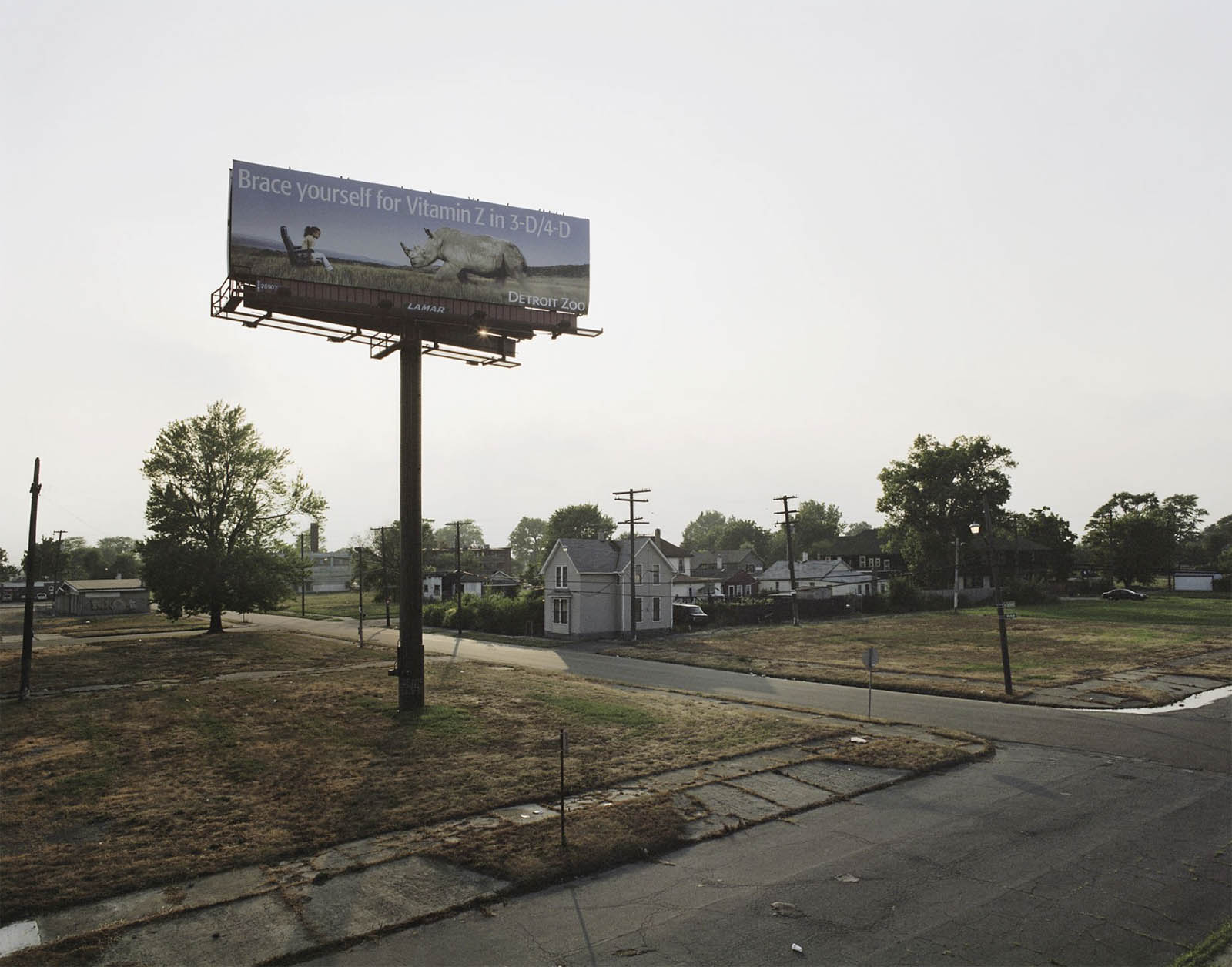
Installation view of the exhibition Light Sensitive: Photo Art from the Collection at Aargauer Kunsthaus showing the work of Andreas Tschersich including at left, Peripher 1903 (Detroit) 2011 (below); and at second left, Peripher 1337 (New York City) Nd (below)
Photo: Dominic Büttner, Zurich


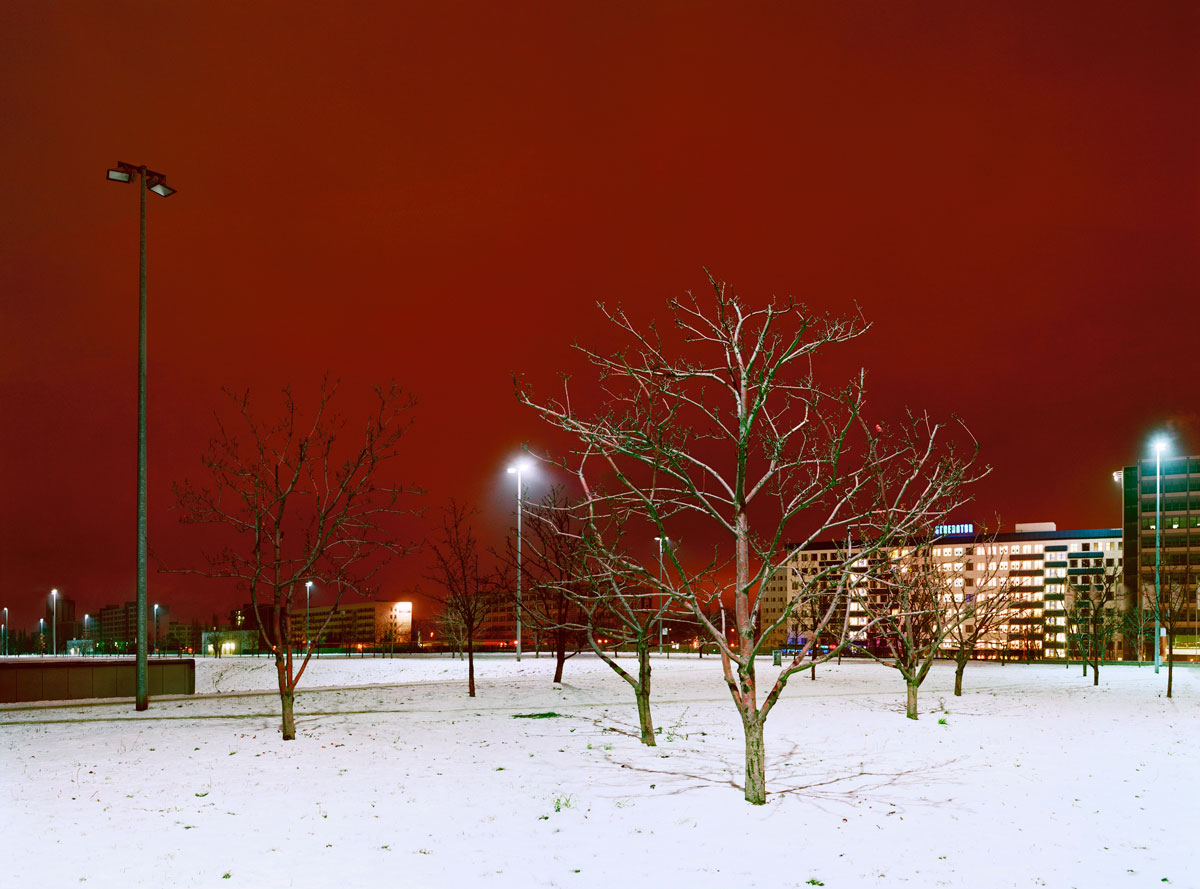
Andreas Tschersich
 (Swiss, b. 1971) 'Peripher 1903 (Detroit)' 2011


Andreas Tschersich
 (Swiss, b. 1971)
Peripher 1903 (Detroit)
2011
C-Print / Diasec
198 x 167cm


Andreas Tschersich
 (Swiss, b. 1971) 'Peripher 1337 (New York City)' Nd


Andreas Tschersich
 (Swiss, b. 1971)
Peripher 1337 (New York City)
Nd
C-Print / acrylic glass


Andreas Tschersich
 (Swiss, b. 1971) 'Peripher 1827 (Detroit)' Nd


Andreas Tschersich
 (Swiss, b. 1971)
Peripher 1827 (Detroit)
Nd
C-Print / acrylic glass


“This engagement with the place makes it become a part of me. They have kind of grown on me. This is the reason I try, whenever possible, to revisit them to see how they are going. Normally the places have become worse or are completely gone. I seem to have the right touch for disappearing places…”


~ Andreas Tschersich


Andreas Tschersich
 (Swiss, b. 1971) 'Peripher 130 (Berlin)' 2004


Andreas Tschersich
 (Swiss, b. 1971)
Peripher 130 (Berlin)
2004
C-Print / acrylic glass
219 x 170cm


Billy Eduard Albert Meier
 (Swiss, b. 1937) 'Ohne Titel' 1975


Billy Eduard Albert Meier
 (Swiss, b. 1937)
Ohne Titel
1975
Photograph on paper, 8 parts
18 x 26.5cm
Aargauer Kunsthaus Aarau / deposited by the Andreas Züst Collection


Nicolas Faure
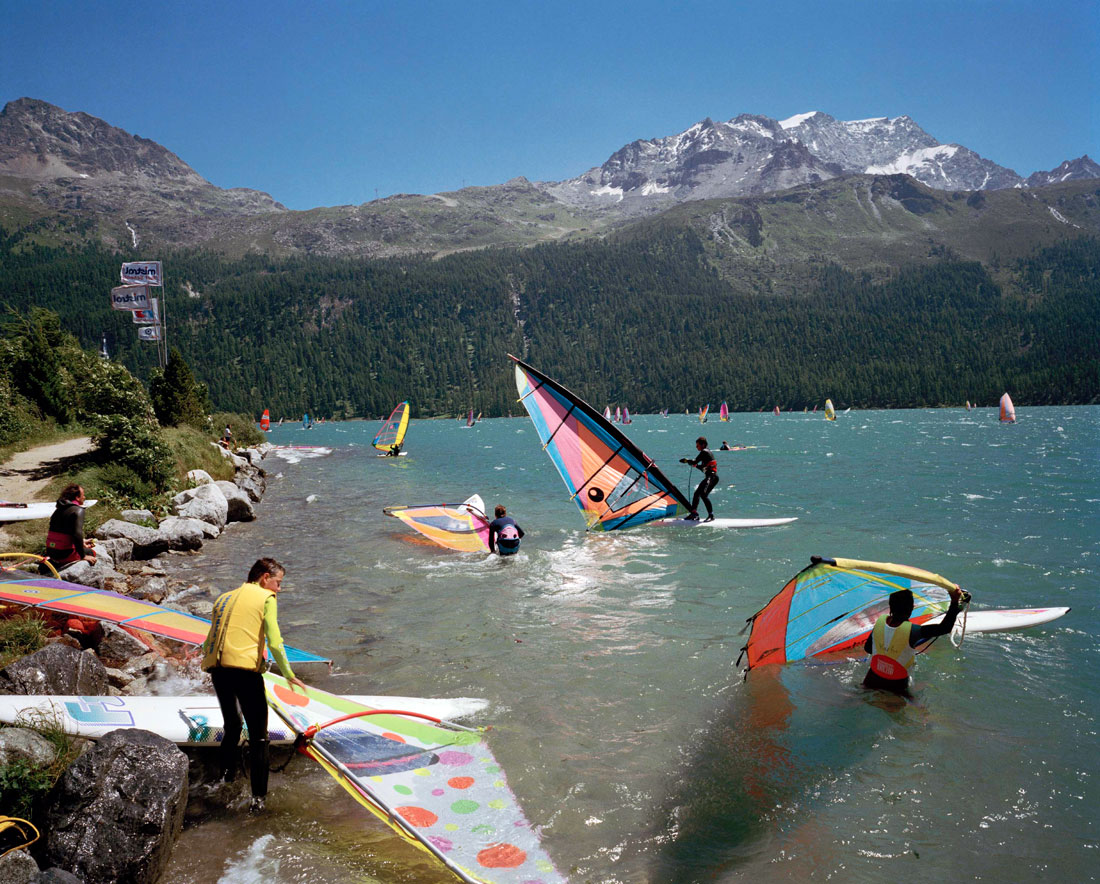
 (Swiss, b. 1949) 'Silvaplana (GR), Juli' 1988


Nicolas Faure
 (Swiss, b. 1949)
Silvaplana (GR), Juli
1988
Colour photograph on aluminium
63 x 80cm
Aargauer Kunsthaus Aarau


Nicolas Faure
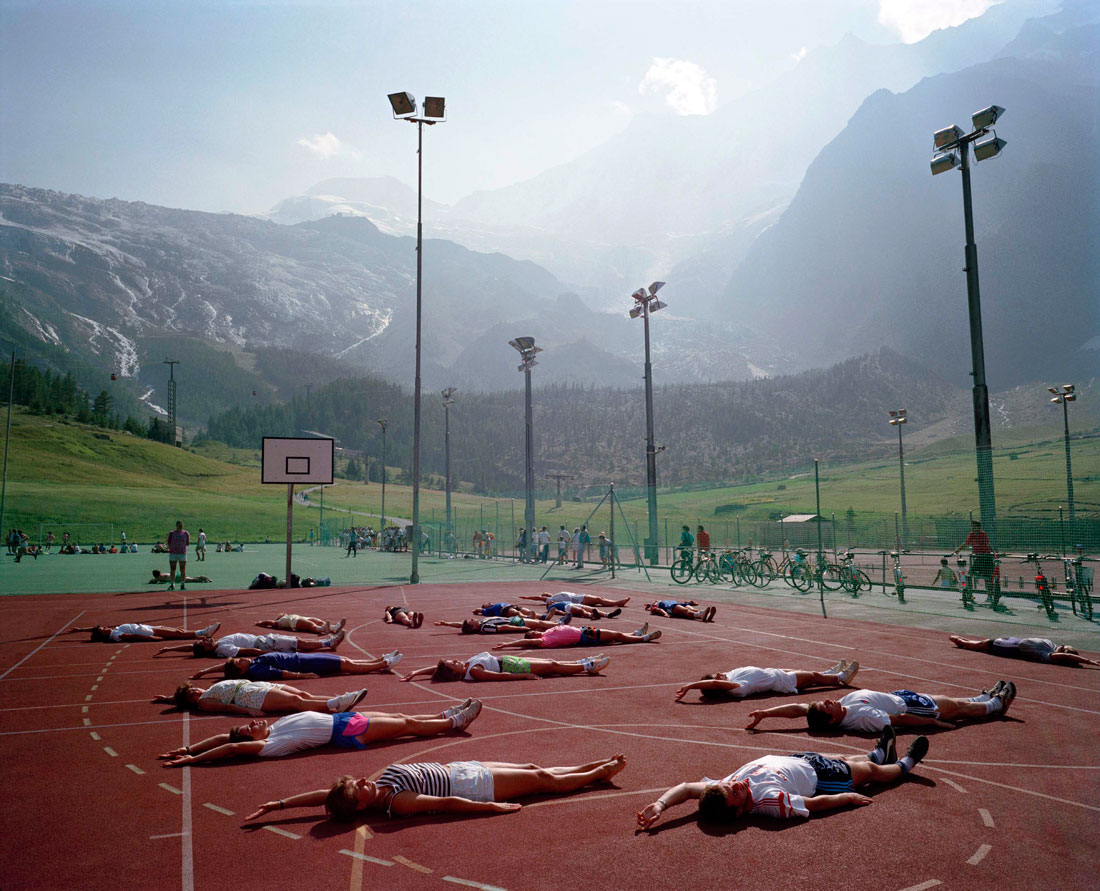
 (Swiss, b. 1949) 'Saas-Fee (VS), Juli' 1989


Nicolas Faure
 (Swiss, b. 1949)
Saas-Fee (VS), Juli
1989
Colour photograph on aluminium
63 x 80cm
Aargauer Kunsthaus Aarau


Nicolas Faure
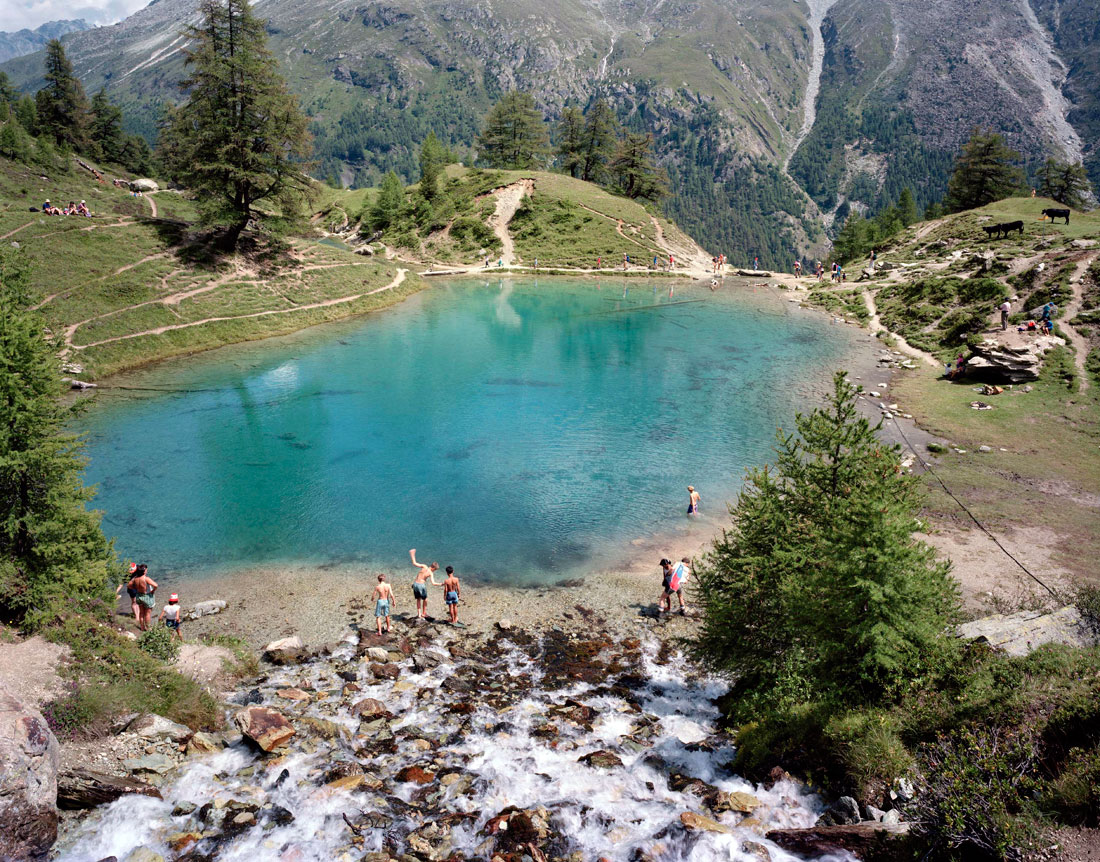
 (Swiss, b. 1949) 'Le Lac Bleu. Val d’Arolla (VS), August' 1997


Nicolas Faure
 (Swiss, b. 1949)
Le Lac Bleu. Val d’Arolla (VS), August
1997
Colour photograph on aluminium
63 x 80cm
Aargauer Kunsthaus Aarau


Born in Geneva in 1949, Nicolas Faure left his native city in 1976 to settle in New York and learn the technique of photography. Self-taught, he acquired his training by working in a lab and shooting documentary photos for publications like Time Life Books and GEO. After taking part in the 1978 group project American Vision, Faure returned to Switzerland in 1982.

Through group and individual portraits, he observed the relationship the Swiss have with clothing and popular forms of leisure (tennis, swimming pools, bicycles, etc.). In the early 1990s his art began to take shape around Swiss landscapes that had been refashioned by human beings and their activities. His body of photographic work now developed in three successive series, Pierres fétiches (fetish stones), Schweizer Autobahnen (Swiss motorways) and Paysage A (landscape A).

Text from the Collection Pictet website


Nicolas Faure
 (Swiss, b. 1949)
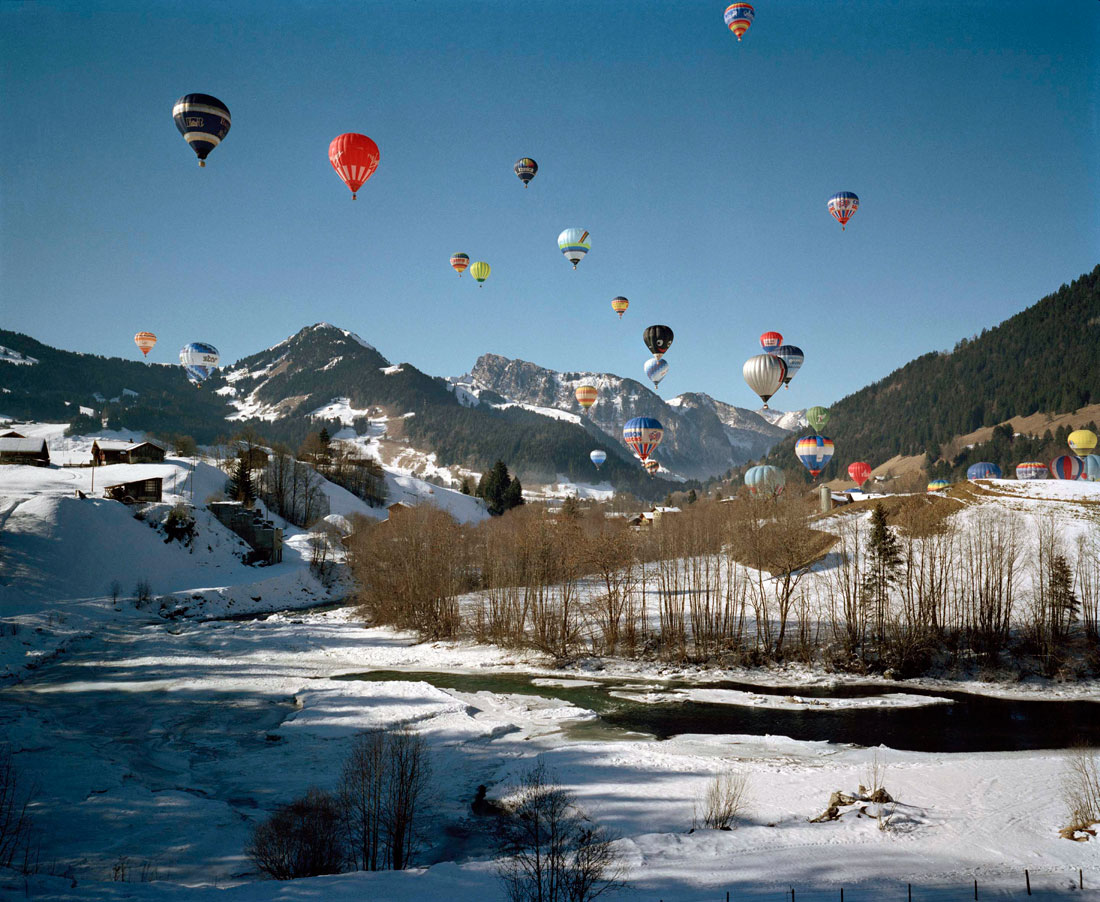
 'Château d’Oex (VD), Januar' 1989


Nicolas Faure
 (Swiss, b. 1949)
Château d’Oex (VD), Januar
1989
Colour photograph on aluminium
63 x 80cm
Aargauer Kunsthaus Aarau


Aargauer Kunsthaus
Aargauerplatz
CH-5001 Aarau
Switzerland
Phone: +41 (0) 62 835 23 30

Opening hours:
Tuesday – Sunday 10am – 5pm
Thursday 10am – 8pm
Closed Mondays

Aargauer Kunsthaus website

LIKE ART BLART ON FACEBOOK

Back to top

Exhibition: ‘Arthur Tress: San Francisco 1964’ at the de Young Museum, San Francisco

Exhibition dates:  3rd March – 3rd June 2012


Arthur Tress (American, b. 1940) 'Untitled (Van Ness at Geary Boulevard)' 1964


Arthur Tress (American, b. 1940)
Untitled (Van Ness at Geary Boulevard)
1964, printed 2010-2011
Selenium-toned silver gelatin print
Fine Arts Museums of San Francisco
© 2012 Arthur Tress


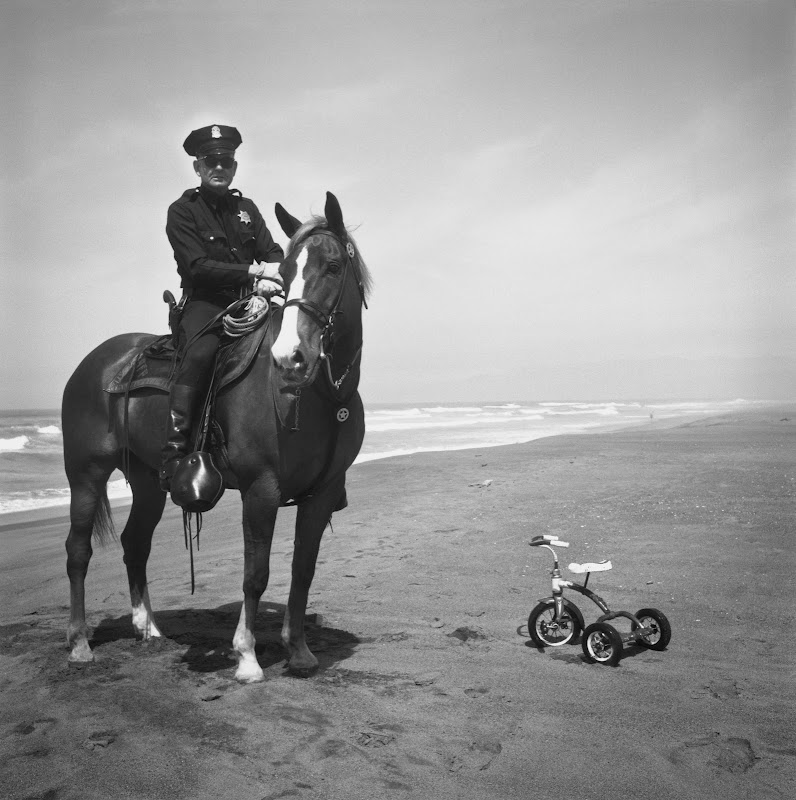
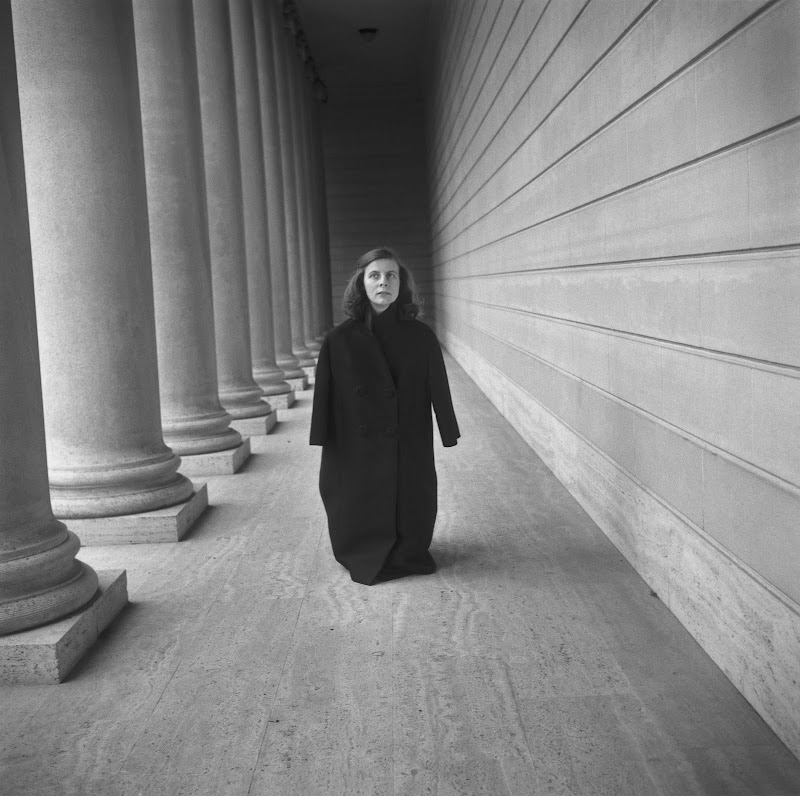
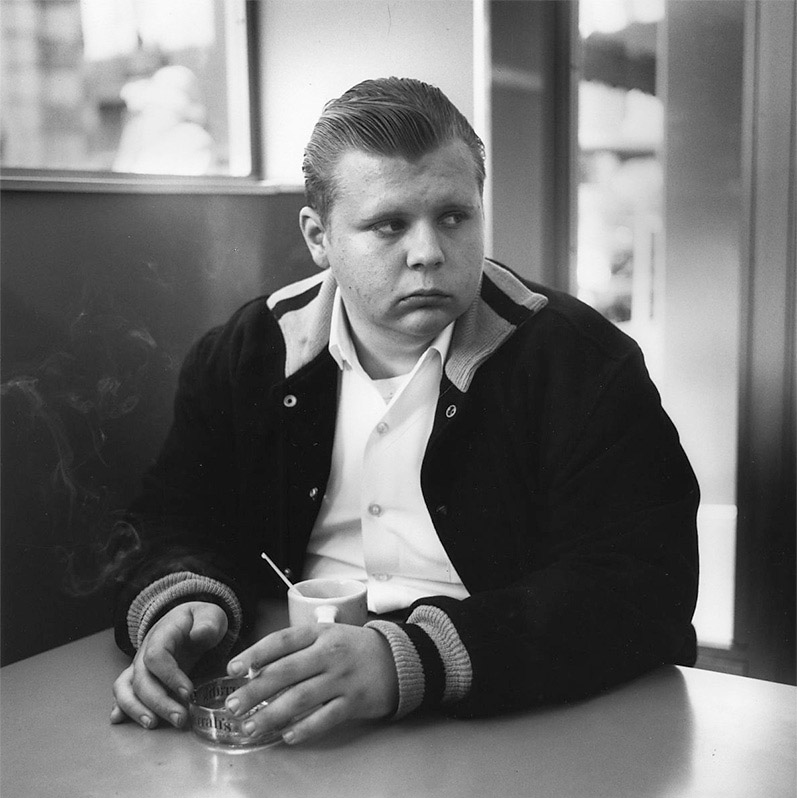
These early figurative urbanscapes by Arthur Tress show the beginnings of his later Surrealist pictorial style (do a Google images search on Tress to see what I mean). From the Eggleston-esque tricycle in Untitled (Ocean Beach), the three spooky faces in Untitled (Coit Tower)* to the most prescient, the photograph Untitled (Legion of Honor Museum), there is a direct thematic link to the later, more famous 1970s work. What a beautiful and disturbing photograph Legion of Honor Museum is.

Dr Marcus Bunyan

*Notice the low vantage point of the camera at knee level (as the photographer crouched down) that imparts a monumental, robo-human feel to the sculptures.

Many thankx to the de Young Museum for allowing me to publish the photographs in the posting. Please click on the photographs for a larger version of the image.


Arthur Tress (American, b. 1940) 'Untitled (City Hall)' 1964


Arthur Tress (American, b. 1940)
Untitled (City Hall)
1964, printed 2010-2011
Selenium-toned silver gelatin print
Fine Arts Museums of San Francisco
© 2012 Arthur Tress


Arthur Tress (American, b. 1940) 'Untitled (Coit Tower)' 1964


Arthur Tress (American, b. 1940)
Untitled (Coit Tower)
1964, printed 2010-2011
Selenium-toned silver gelatin print
Fine Arts Museums of San Francisco
© 2012 Arthur Tress


Arthur Tress (American, b. 1940) 'Untitled (Ocean Beach)' 1964


Arthur Tress (American, b. 1940)
Untitled (Ocean Beach)
1964, printed 2010-2011
Selenium-toned silver gelatin print
Fine Arts Museums of San Francisco
© 2012 Arthur Tress


Arthur Tress (American, b. 1940) 'Untitled (Fisherman's Wharf)' 1964


Arthur Tress (American, b. 1940)
Untitled (Fisherman’s Wharf)
1964, printed 2010-2011
Selenium-toned silver gelatin print
Fine Arts Museums of San Francisco
© 2012 Arthur Tress


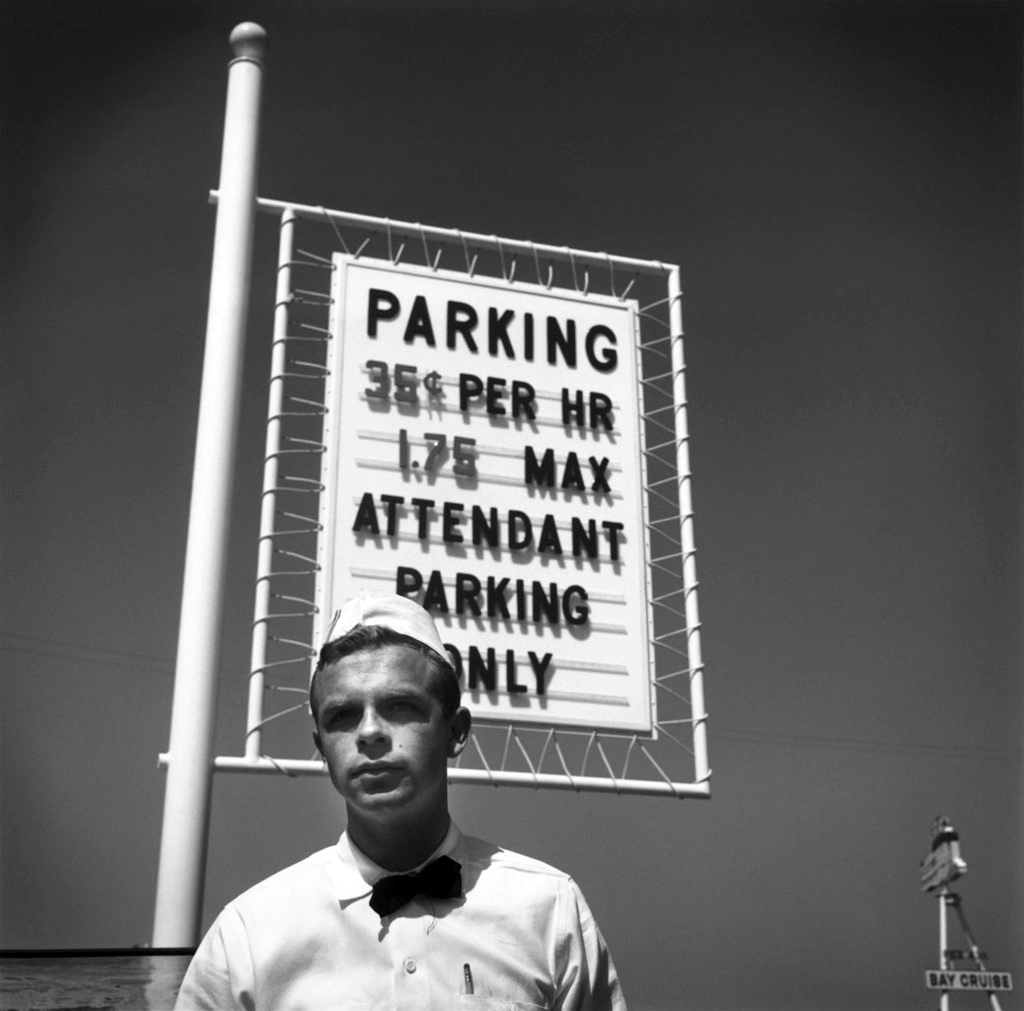
In the summer of 1964, San Francisco was ground zero for a historic culture clash as the site of both the 28th Republican National Convention (the “Goldwater Convention”) and the launch of the Beatles’ first North American tour. The young photographer Arthur Tress arrived at this opportune moment in the city’s history and found himself in the midst of large-scale civil rights demonstrations and chaotic political pageantry. With a unique sensibility perfectly attuned to this quirky metropolis, he set about to capture the odd spectacle of San Francisco.

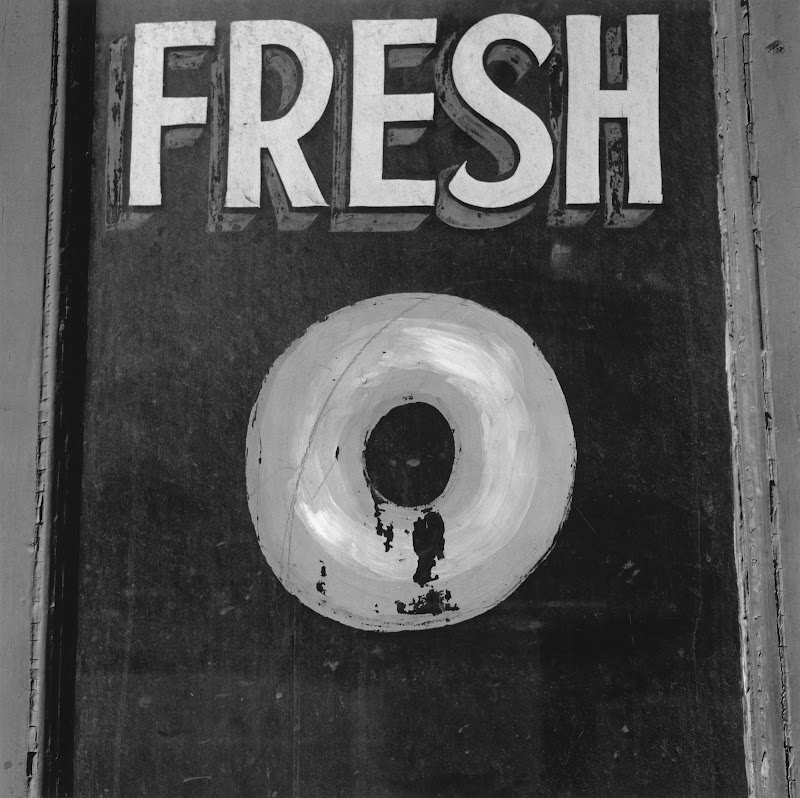
Over 70 photographs included in Arthur Tress: San Francisco 1964 range from public gatherings to impromptu street portraits, views of the peculiar contents of shop windows and commercial signs. This is the first museum exhibition of a virtually unknown body of Tress’s early work. Curator James Ganz explains, “This exhibition offers an evocative time capsule of the City by the Bay and makes a fascinating contribution to the region’s rich photographic legacy.” The exhibition runs March 3 to June 3, 2012 at the de Young Museum.

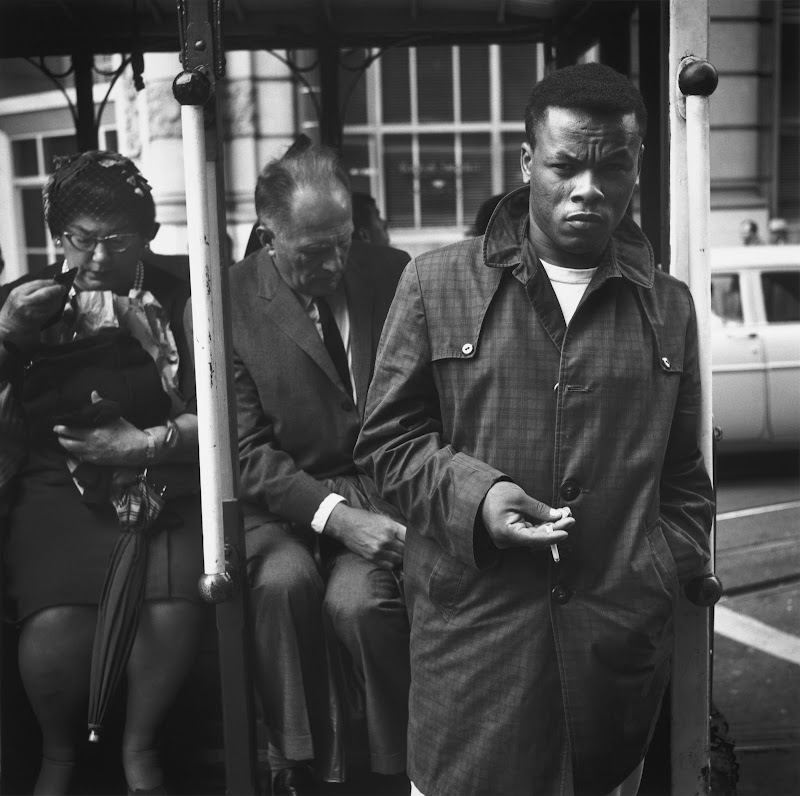
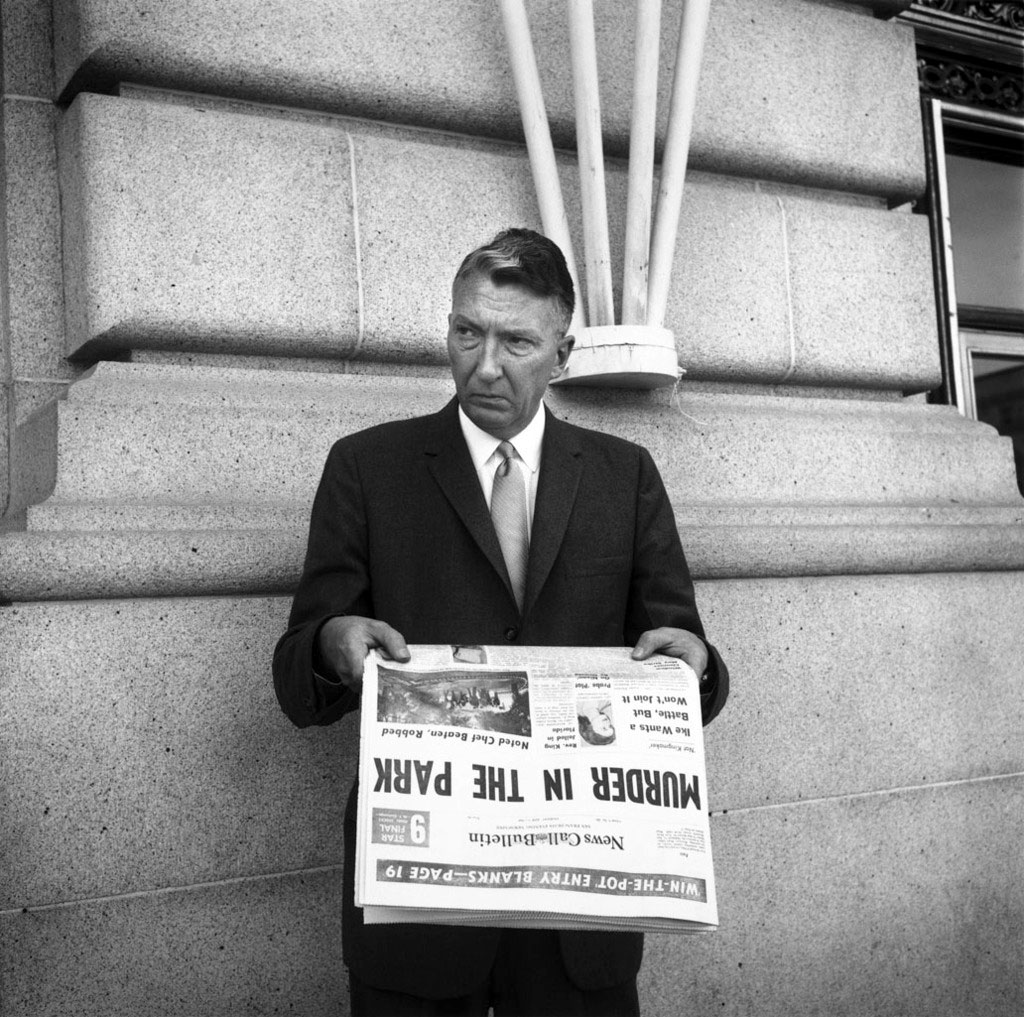
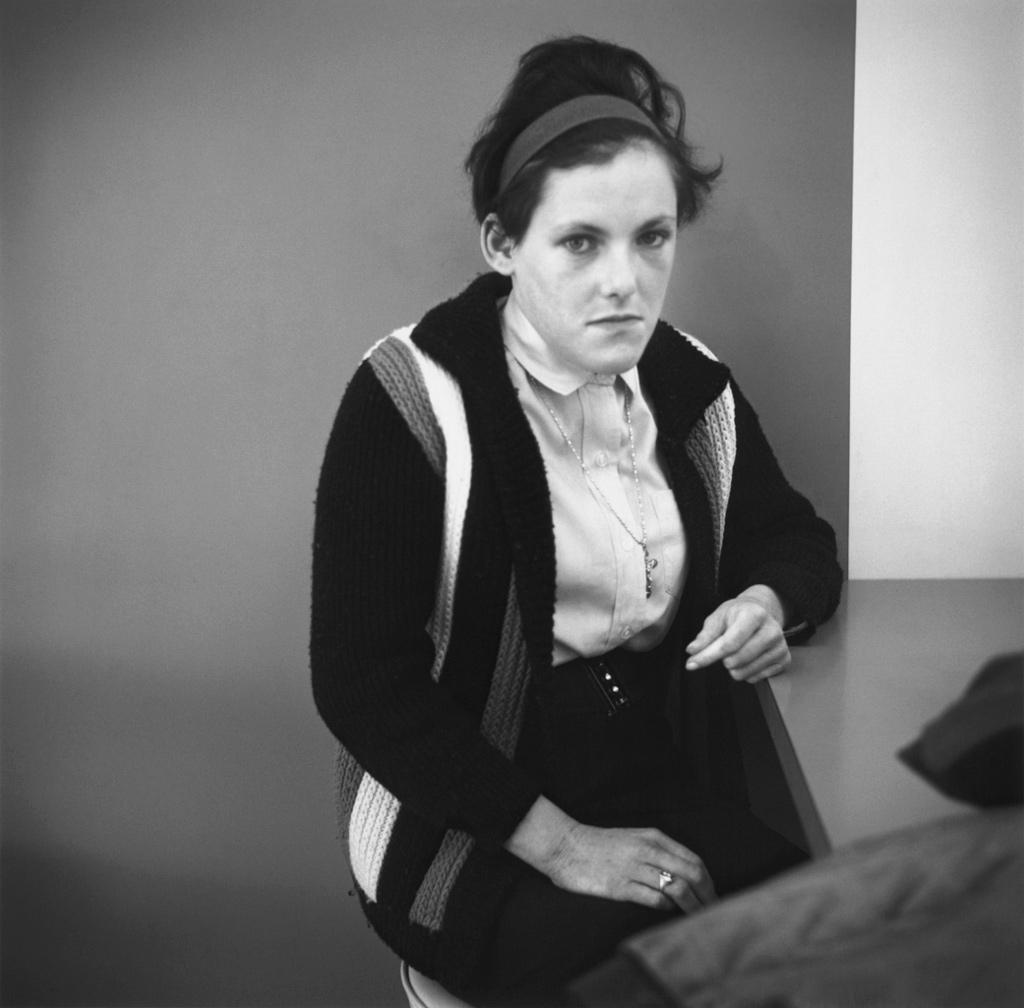
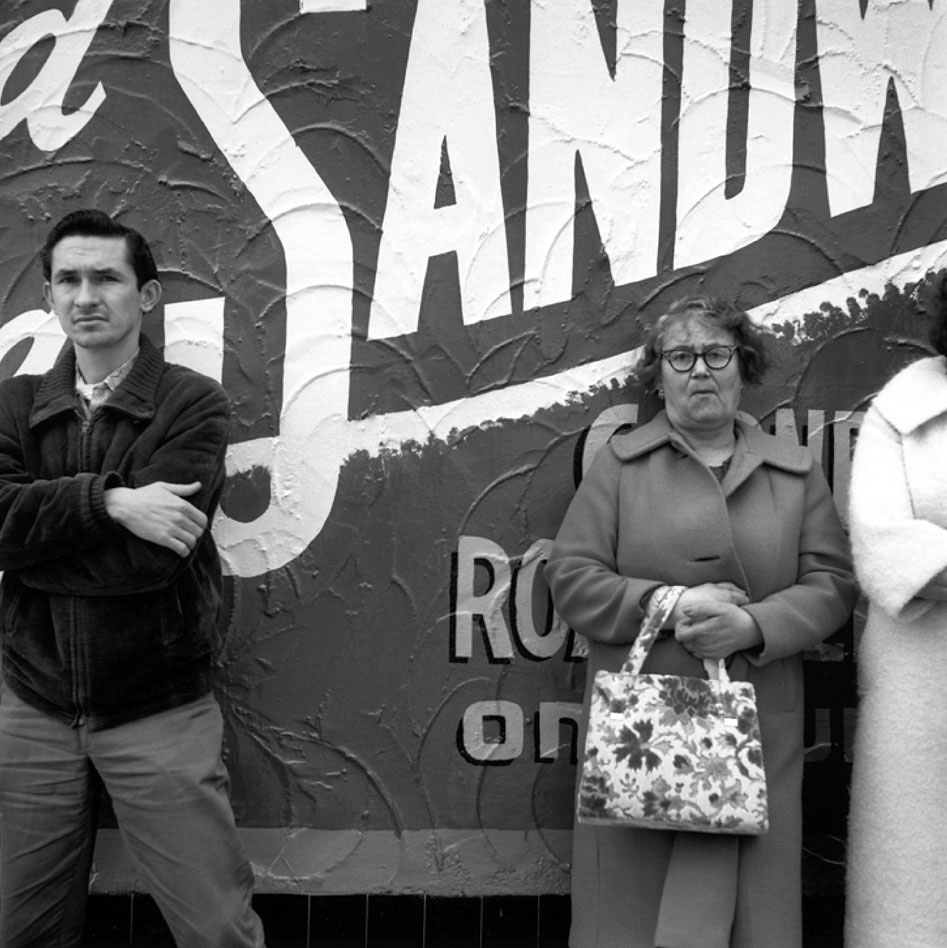
The subject matter of Arthur Tress: San Francisco 1964 breaks down into three broad categories: public gatherings, including civil rights and political rallies; portrait studies of San Franciscans; and views of shop windows, commercial signs and architectural fragments. Often these categories overlap. In photographing events such as the Auto Row demonstrations, Tress was interested in recording passive bystanders, as well as active participants. His candid images of spectators lining the streets of San Francisco, whether isolated or in groups, capture the distinctive fashions, expressions and body language of the era. The frequent incursions of commercial logos and signage add to the contemporary flavour of the photographs, effectively fixing time and place. The exhibition captures the flavour of San Francisco without featuring its most familiar monuments. Tress’s approach to the city was idiosyncratic, generally avoiding popular tourist sites such as the Golden Gate Bridge and Chinatown, while favouring mundane locales like laundromats and coffee shops. Ganz observes, “Tress is a photographer of people rather than landmarks. Given the option of pointing his lens at an attraction like Coit Tower or at a tourist observing the monument, he will always favour the human element over the architectural setting.”

Brief biography

Born in 1940, Arthur Tress was raised in Brooklyn and started experimenting with photography in his teens. After graduating from Bard College in 1962, Tress traveled internationally for four years as an ethnographic and documentary photographer. It was during this international tour that he spent the summer of 1964 in San Francisco focusing his lens on city life. Tress developed his San Francisco negatives in a communal darkroom in the Castro District and mounted two small exhibitions in North Bay galleries that summer. He went on to pursue a long and accomplished career in photography that continues to this day.

Press release from the de Young Museum website


Arthur Tress (American, b. 1940) 'Untitled (Legion of Honor Museum)' 1964


Arthur Tress (American, b. 1940)
Untitled (Legion of Honor Museum)
1964, printed 2010-2011
Selenium-toned silver gelatin print
Fine Arts Museums of San Francisco
© 2012 Arthur Tress


Arthur Tress (American, b. 1940) 'Untitled (Powell Street)' 1964


Arthur Tress (American, b. 1940)
Untitled (Powell Street)
1964, printed 2010-2011
Selenium-toned silver gelatin print
Fine Arts Museums of San Francisco
© 2012 Arthur Tress


Arthur Tress (American, b. 1940) 'Untitled (Union Square)' 1964


Arthur Tress (American, b. 1940)
Untitled (Union Square)
1964, printed 2010-2011
Selenium-toned silver gelatin print
Fine Arts Museums of San Francisco
© 2012 Arthur Tress


Shooting with a large Rolleiflex camera, Tress set out to make a mosaic of the city. He photographed civil rights demonstrations and surreal shop-window displays, Beatles fans and Barry Goldwater supporters, matrons in mink, bikers in black leather, Felliniesque crowd scenes (replete with clowns), signs for doughnuts and foot-long hot dogs.

“Even though I didn’t know it, these were prescient of my later dream images,” says Tress, 71, a small, soft-spoken gent with white hair and amused blue eyes. “You can arrange spaces and tones and textures so they become theatrical in a way, and it becomes a moment that leaps out of the quotidian flow of time.” …

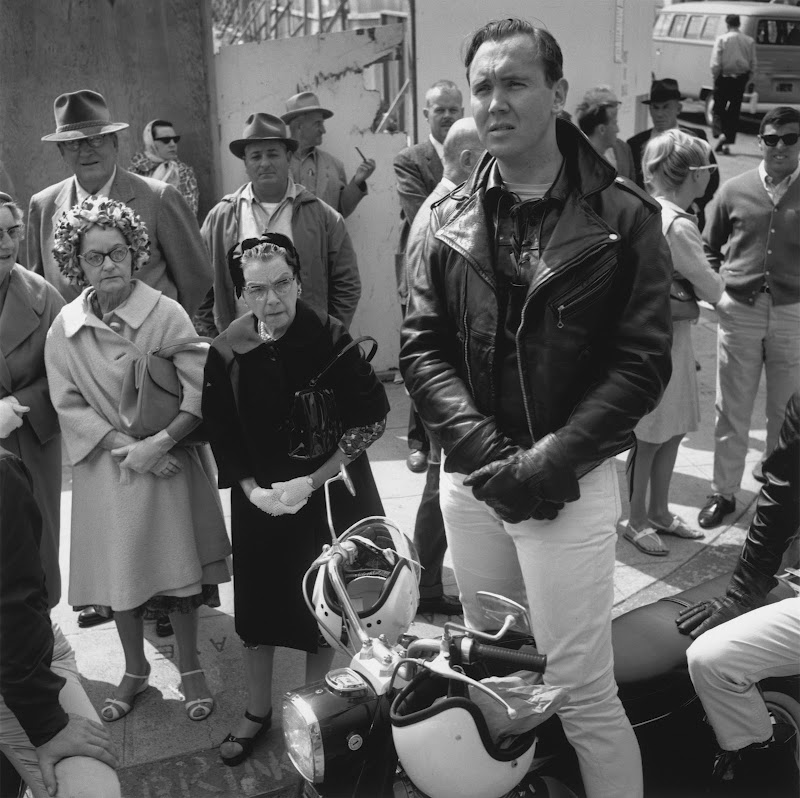
One picture shows a pair of old ladies, wearing hats, glasses and white gloves, casting disdainful glances at a guy on a motorcycle in a Brando-like leather jacket, tight white jeans and black gloves. His hands are crossed just like theirs, repeating the rhythm.

“This is very much within the tradition of street photography, where you contrast different classes and types of people,” Tress says.

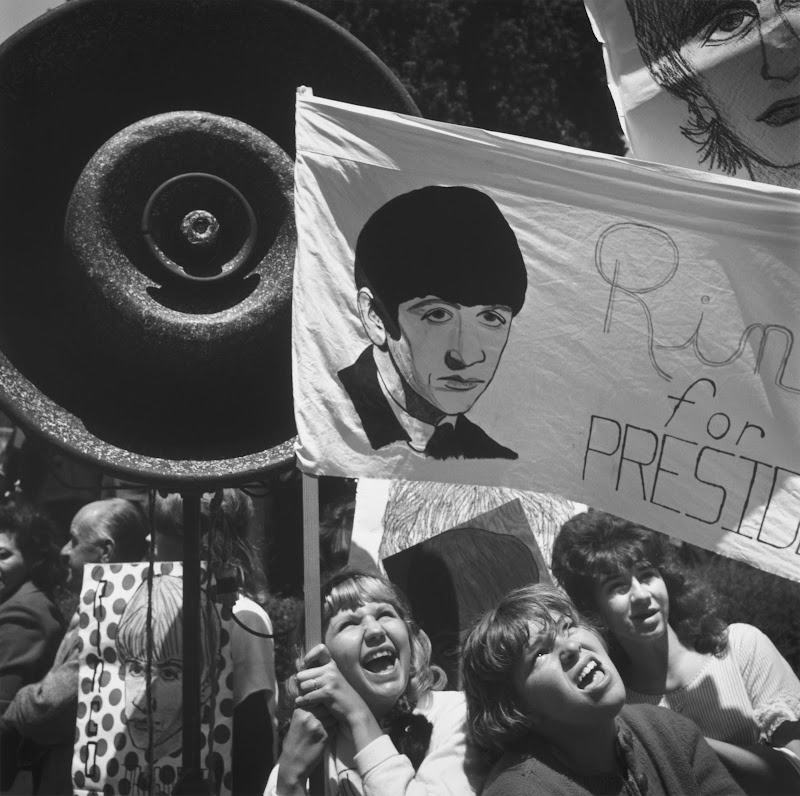
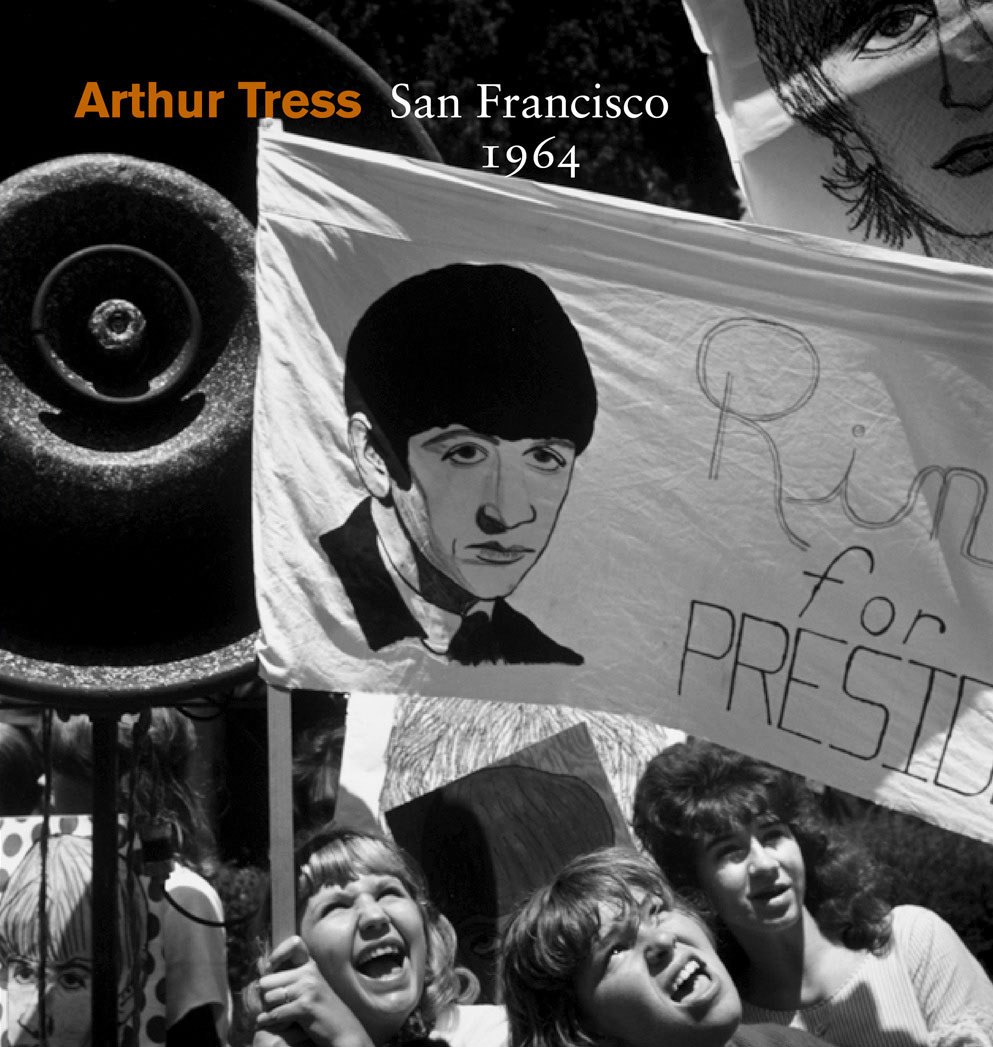
That’s what he did in July of ’64, when the Republican National Convention was held at the Cow Palace, a month before the Beatles began their first American tour there. A crowd supporting William Scranton – the Pennsylvania governor drafted as a moderate alternative to Goldwater – held a rally in Union Square. It was disrupted by an unexpected mob of teenage girls carrying “Ringo for President” signs. Tress captured the cultural dissonance, the press of Ringo fans and plume-hatted marching band musicians. …

Like most of these images, it had never been printed or shown. Tress had all but forgotten them until he found them in some boxes in his sister’s home after she died in 2009.

“I realized there was something good here. They were really strong images,” says Tress, who had shown about 25 of them at the old Tides bookstore in Sausalito. “I think these photographs have aged well, because of their formal, slightly dreamlike quality. They transcend their time.”

He took the prints and negatives to Ganz, the curator of the Fine Arts Museums’ Achenbach Foundation for Graphic Arts, which owns a couple of Tress’ better-known surrealist pictures. Ganz was jazzed by what he saw. Tress had new contact sheets made from the negatives, and he and Ganz picked the images that were printed for the show and the accompanying book.

Jesse Hamlin. “‘Arthur Tress: San Francisco 1964’ at the de Young,” on the SFGate website March 22, 2012 [Online] Cited 07/10/2024


Arthur Tress (American, b. 1940) 'Untitled (City Hall)' 1964


Arthur Tress (American, b. 1940)
Untitled (City Hall)
1964, printed 2010-2011
Selenium-toned silver gelatin print
Fine Arts Museums of San Francisco
© 2012 Arthur Tress


Arthur Tress (American, b. 1940) 'Untitled (5th and Market)' 1964


Arthur Tress (American, b. 1940)
Untitled (5th and Market)
1964, printed 2010-2011
Selenium-toned silver gelatin print
Fine Arts Museums of San Francisco
© 2012 Arthur Tress


Arthur Tress (American, b. 1940) 'Untitled' 1964


Arthur Tress (American, b. 1940)
Untitled
1964, printed 2010-2011
Selenium-toned silver gelatin print
Fine Arts Museums of San Francisco
© 2012 Arthur Tress


Arthur Tress (American, b. 1940) 'San Francisco' 1964


Arthur Tress (American, b. 1940)
San Francisco
1964
Selenium-toned silver gelatin print
Fine Arts Museums of San Francisco
© 2012 Arthur Tress


Arthur Tress (American, b. 1940) 'San Francisco' 1964


Arthur Tress (American, b. 1940)
San Francisco
1964
Selenium-toned silver gelatin print
Fine Arts Museums of San Francisco
© 2012 Arthur Tress


Arthur Tress (American, b. 1940) 'San Francisco' 1964


Arthur Tress (American, b. 1940)
San Francisco
1964
Selenium-toned silver gelatin print
Fine Arts Museums of San Francisco
© 2012 Arthur Tress


Arthur Tress (American, b. 1940) 'San Francisco' 1964


Arthur Tress (American, b. 1940)
San Francisco
1964
Selenium-toned silver gelatin print
Fine Arts Museums of San Francisco
© 2012 Arthur Tress


Arthur Tress (American, b. 1940) 'San Francisco' 1964


Arthur Tress (American, b. 1940)
San Francisco
1964
Selenium-toned silver gelatin print
Fine Arts Museums of San Francisco
© 2012 Arthur Tress


Cover of the exhibition catalogue 'Arthur Tress: San Francisco 1964'


Cover of the exhibition catalogue Arthur Tress: San Francisco 1964


Back cover of the exhibition catalogue 'Arthur Tress: San Francisco 1964'


Back cover of the exhibition catalogue Arthur Tress: San Francisco 1964


The de Young Museum
50 Hagiwara Tea Garden Drive
Golden Gate Park
San Francisco

Opening hours:
Tuesday – Sunday 9.30am – 5.15pm
Monday Closed

The de Young Museum website

LIKE ART BLART ON FACEBOOK

Back to top

Exhibition: ‘Berenice Abbott (1898-1991), Photographs’ at Jeu de Paume, Paris

Exhibition dates: 21st February – 29th April 2012

Curator: Gaëlle Morel


Berenice Abbott (American, 1898-1991) 'New York Stock Exchange, New York City' 1933


Berenice Abbott (American, 1898-1991)
New York Stock Exchange, New York City
1933
Gelatin silver print
24 x 19cm
Ronald Kurtz / Commerce Graphics
© Berenice Abbott / Commerce Graphics Ltd, Inc.


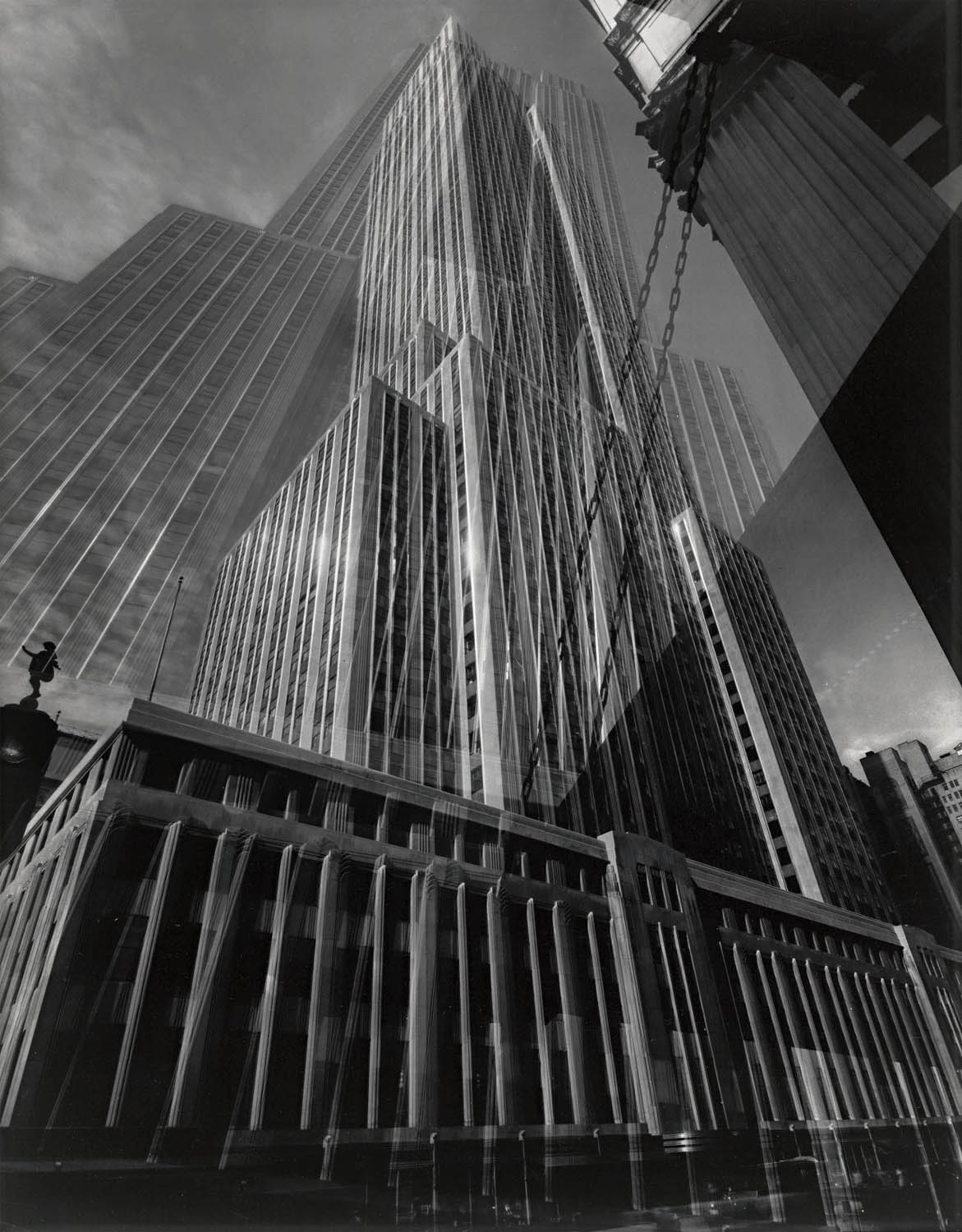
It is not her portraits or the road trip photographs, nor her scientific work for which Berenice Abbott will be remembered. Firstly, she will always be remembered as the person who photographed Eugene Atget in 1927 just before he died and who bought the remainder of his negatives (after the French government had bought over 2,000 in 1920 and another 2,000 had been sold after his death). She then tirelessly promoted Atget’s work helping him gain international recognition until her sale of the archive to the Museum of Modern Art in 1968. Secondly, she is remembered for her magnificent photographs of New York City and its urban environs, photographs that show the influence of Atget in their attention to detail and understanding of the placement of the camera, and imaging of old and new parts of the city (much as Atget had photographed old Paris before it was destroyed). However, these photographs are uniquely her own, with their modernist New Vision aesthetic, bold perspectives and use of deep chiaroscuro to enhance form within the photograph. Abbott’s best known project, Changing New York (1935-1939) eventually consisted of 305 photographs that document the buildings of Manhattan, some of which are now destroyed. As the text on Wikipedia insightfully notes:

“Abbott’s project was primarily a sociological study imbedded within modernist aesthetic practices. She sought to create a broadly inclusive collection of photographs that together suggest a vital interaction between three aspects of urban life: the diverse people of the city; the places they live, work and play; and their daily activities. It was intended to empower people by making them realise that their environment was a consequence of their collective behaviour (and vice versa). Moreover, she avoided the merely pretty in favour of what she described as “fantastic” contrasts between the old and the new, and chose her camera angles and lenses to create compositions that either stabilised a subject (if she approved of it), or destabilised it (if she scorned it).”


In the text below Gaëlle Morel observes, “Rather than the kind of nostalgic approach often brought to bear on a city’s landmarks and typical sites, this ensemble offers an exploration of the nature of modernity and focuses on the ways in which the past and future are temporarily linked together. Seeking to reinvent the forms and functions of photography in relation to the practice of documentary, Abbott sets out to capture the “disappearance of the moment” by juxtaposing motifs from a city subject to an unprecedented process of demolition and reconstruction.”

While Abbott’s photographs are definitely modernist in nature I believe that today they can also be seen as deeply nostalgic, emerging as they do in the period after the Great Depression when the economy was on the move again, a peaceful time before the oncoming armageddon of the Second World War, closely followed by the fear of nuclear annihilation and the threat of communist indoctrination. They are timeless portraits of a de/reconstructed city. The images seem to float in the air, breathe in the shadows. This is the disappearance of the moment into the enigma of past, present, future – where the photograph becomes eternal, where the best work of both Atget and Abbott resides.

Dr Marcus Bunyan


Many thankx to Jeu de Paume for allowing me to publish the photographs in the posting. Please click on the photographs for a larger version of the image.


Berenice Abbott (American, 1898-1991) 'Treasury Building, New York City' 1933


Berenice Abbott (American, 1898-1991)
Treasury Building, New York City
1933
Gelatin silver print
51 x 40.5cm
Ronald Kurtz / Commerce Graphics
© Berenice Abbott / Commerce Graphics Ltd, Inc.


Architecture

“The tempo of the city is not that of eternity, nor that of time, but that of the ephemeral. That is why recording it is so important, in both documentary and artistic terms.”

“All the photographs of New York took a long time to make, because the camera had to be carefully positioned. There is nothing fortuitous about these photographs.”


The exhibition features a substantial collection from Abbott’s best known project, Changing New York (1935-1939). Commissioned by the Roosevelt administration as part of its response to the nationwide economic crisis, Abbott saw this piece of work as both a way of documenting the City and as a personal work of art. Eighty of the 305 photographs taken by Abbott are on show here, along with various documents providing insight into the background of this major photographic undertaking, including posters and views of the exhibition organised by the Museum of the City of New York in 1937, sketches and historical notes made by the team of journalists working with Abbott on the project, and proofs and dummies of the layout made by the photographer before she started work.

Abbott homes in on the contrasts between old and new elements in the City’s structure. Her images alternate between a New Vision aesthetic, characterised by an emphasis on details and bold perspectives, and a more documentary style that is frontal and neutral. Rather than the kind of nostalgic approach often brought to bear on a city’s landmarks and typical sites, this ensemble offers an exploration of the nature of modernity and focuses on the ways in which the past and future are temporarily linked together. Seeking to reinvent the forms and functions of photography in relation to the practice of documentary, Abbott sets out to capture the “disappearance of the moment” by juxtaposing motifs from a city subject to an unprecedented process of demolition and reconstruction.

In 1938, hoping to take advantage of the fifty million visitors expected at the New York World’s Fair of 1939, the publisher, E.P. Dutton, offered to bring out a selection of one hundred images from the project accompanied by a text by the renowned art critic Elizabeth McCausland, who also happened to be Abbott’s companion and staunch supporter. Going against the women’s original ideas for an art book, Dutton produced a more standard tourist guide, breaking the City down into a series of tours, from south to north and from the centre outwards. The text, too, was shorn of its poetic and pedagogical dimensions, leaving only informative entries about the buildings in the pictures.

In the exhibition, this set of architectural photographs is rounded out by a selection of pictures of vernacular architecture taken by Abbott during a journey in the southern states of the US in the 1930s and when she was travelling along Route 1 in the 1950s. Here, portraits of farmers and wooden houses alternate with pictures of streets and local events.

Berenice Abbott Petit Journal

With over 120 photographs, plus a selection of books and documents never shown before, this is the first exhibition in France to cover the many different facets of the American photographer Berenice Abbott (1898-1991), who is also famous for her international advocacy of Eugène Atget. She came to Paris in 1921 where she learnt her craft from Man Ray before opening her own studio and embarking on a successful career as a portraitist. Returning to New York City in 1929, she conceived what remains her best‑known project, Changing New York (1935-1939). This was financed by the Works Progress Administration as part of its response to the economic crisis sweeping the country. The photographs she took in 1954 when travelling along the US East Coast on Route 1 (the exhibition presents a previously unseen selection of these images) reflect her ambition to represent the whole of what she called the “American scene.” Furthermore, in the 1950s, she also worked on a set of images for the Massachusetts Institute of Technology (MIT) designed to illustrate the principles of mechanics and light for educational purposes.

A committed member of the avant‑garde from the early 1920s, and a staunch opponent of Pictorialism and the school of Alfred Stieglitz, Abbott spent the whole of her career exploring the limits and nature of documentary photography and photographic realism. This exhibition shows the rich array of her interests and conveys both the unity and diversity of her work.

Portraits

Berenice Abbott moved to New York City in the early 1920s and went about becoming a sculptor. Mixing in the bohemian circles of Greenwich Village, she met writers and artists such as Djuna Barnes, Sadakichi Hartmann and Marcel Duchamp. She also posed for Man Ray. Economic hardship at home and the allure of what then seemed the cultural Eldorado of Europe impelled several of these artists to try their luck in Paris, and Abbott herself joined this group of American expatriates in 1921.

In 1923 she became the assistant of Man Ray, who had opened a portrait studio shortly after his arrival in France in 1921. While a fair portion of the studio’s clients were American tourists, Abbott found herself at the heart of the avant-garde scene – especially that of the Surrealists. Between 1923 and 1926 she thus learnt about darkroom techniques and portrait photography while at the same time picking up a broader intellectual and artistic education. She produced her portraits in Man Ray’s studio before opening her own in 1926. Success soon followed. Her clientele was a mixture of French cultural figures and American expatriates, of bourgeois, bohemians and literary types. Her portraits were on occasion manifestly influenced by Surrealism, and more generally show an interest in masquerade, play and disguise, but sometimes even in their use of overprinting and distortion.

The female models express a kind of sexual ambiguity, notably by their masculine haircut or clothes, deliberately exuding a sense of uncertainty with regard to their identity. In composing her portraits, Abbott developed a distinctive aesthetic, far removed from the usual commercial conventions. The absence of a set, with the background usually no more than a plain wall, helped to focus on the sitter and their posture, the position of their body and their facial expression. The use of a tripod and long-focus lenses placed at eye-height allowed her to avoid distortions and thus heighten the physical presence of the models. In early 1929 Abbott left Paris for New York City. Back in America she continued with the same activities, opening a new portrait studio and taking part in exhibitions of modernist photography, while also promoting the work of Eugène Atget, having bought part of his estate in 1928.

New York City

In the early 1930s, Abbott set about her project for a great documentary portrait of the City of New York, but had no luck when she approached institutions such as the Museum of the City of New York and the New York Historical Society for funding. She assembled her first efforts in an album (eight pages of which are exhibited here) in order to convey the scale of her ambitious undertaking, and in 1934 exhibited her photographs of the City at the Museum of the City of New York in the hope of attracting sponsors. In 1935, support was at last forthcoming from the Federal Art Project, a programme set up to aid artists by the Works Progress Administration as part of the New Deal; she now had the support of a team of researchers who produced an information pack with text and drawings to accompany each image. Entitled Changing New York, she conceived this commission as both a vast documentary record of the City and a personal work of art. Eighty of the 305 photographs constituting this project have been selected for the exhibition. These are accompanied by documents – a poster, exhibition views, sketches and historical notes, proofs, pages from the preparatory album and original editions – that help to convey the concerns and ambitions behind this major photographic undertaking.

Abbott focused on the contrasts and links between old and new in the City’s structure. Her images alternate between a New Vision aesthetic, characterised by an emphasis on details and bold perspectives, and a more documentary style that is frontal and neutral. Rather than the kind of nostalgic approach often brought to bear on a city’s landmarks and typical sites, this ensemble offers an exploration of the nature of modernity and focuses on the ways in which the past and future are temporarily linked together. Seeking to reinvent the forms and functions of photography in relation to the practice of documentary, Abbott sets out to capture the “vanishing instant” by juxtaposing motifs from a city subject to an unprecedented process of demolition and reconstruction.

The upshot of all this work was the publication of a book, Changing New York, in 1939. But there was considerable tension between the publisher, whose concerns were commercial, and the photographer, with her artistic ambitions. In 1938, hoping to take advantage of the fifty million visitors expected at the New York World’s Fair of 1939, the publishing house E.P. Dutton proposed to bring out a selection of one hundred images from the project accompanied by a text from the renowned art critic Elizabeth McCausland, who also happened to be Abbott’s companion and unfailing supporter. Straying far from the project originally envisaged by the two women, Dutton changed the presentation of the photographs and produced what was a standard tourist guide, breaking the City down into a series of tours, from south to north and from the centre outwards. The text, too, was shorn of its poetic and pedagogical dimensions, leaving only information about the buildings in the pictures.

The “American scene”

This set of architectural images is completed by a selection of vernacular photographs. In the summer of 1935, Berenice Abbott went on a road trip down to the Southern US in order to create a portrait of a rural world in crisis. Choosing the kind of documentary style that would be the hallmark of the photographic survey launched by the Farm Security Administration (FSA) that same year, she focused on the modest wooden houses and the farmers. Driving around these states with Elizabeth McCausland, Abbott took some two hundred photographs which the two women saw as part of an ambitious photographic portrait of America in book form, although in the end this was never published. A similar fate befell Abbott’s piece on the small towns and villages along Route 1, which she travelled in 1954. Covering approximately 6,500  kilometres as she followed this road along the East Coast of the US, she took some 2,400 photographs, taking in stalls, shops, portraits of farmers, diners and bars and dance halls. Her photography alternated between the documentary aesthetic and Street Photography. With Route 1, Abbott continued to pursue her ambition of representing the whole of the “American scene.”

Science

Abbott started photographing scientific phenomena in 1939. In 1944 she was recruited by the journal Science Illustrated, where she published some of her own pictures, as head of its photography department. Abbott took a committed, pedagogical approach, seeing her images as a vital bridge between modern science and the general public. In 1957, as a result of the anxiety about national science stirred by the Soviet launch of the Sputnik into outer space, at the height of the Cold War, the National Science Foundation set up a Physical Science Study Committee at Massachusetts Institute of Technology. Its role was to develop new textbooks for the teaching of science in schools and to use innovative photographs to illustrate the principles of quantum mechanics. Abbott was hired by MIT to produce photographs for the popularisation and teaching of the sciences. Using abstract forms to visually express complex mechanical concepts and invisible mechanical laws, she used black grounds to reveal principles such as gravity and light waves. The exhibition features a score of Abbott’s scientific and experimental images, as well as some of the books for which they were used. Harking back to the experiments of the avant-gardes, and in particular the Rayogram technique, she was able to produce visually attractive and surprising images that were also rich in discovery, thus combining documentary information with a sense of wonder.”

Text by Gaëlle Morel, curator of the exhibition, on the Jeu de Paume website


Presentation of the exhibition Berenice Abbott

The exhibition “Berenice Abbott (1898-1991), photographies” reveals for the first time in France the different stages of the career of this American photographer. This retrospective offers more than 120 photographs, original works and a series of unpublished documents. By presenting portraits, architectural photographs and scientific shots, the exhibition shows the multiple facets of a work often reduced to a few images.


Berenice Abbott (American, 1898-1991) 'Triborough Bridge, East 125th Street Approach, New York City, June 29, 1937'


Berenice Abbott (American, 1898-1991)
Triborough Bridge, East 125th Street Approach, New York City, June 29, 1937
1937
Gelatin silver print
24.5 x 19cm
Museum of the City of New York. Gift of the Metropolitan Museum of Art
© Berenice Abbott / Commerce Graphics Ltd, Inc.


Berenice Abbott (American, 1898-1991) 'Broadway to the Battery, New York City, May 4, 1938' 1938


Berenice Abbott (American, 1898-1991)
Broadway to the Battery, New York City, May 4, 1938
1938 
Gelatin silver print
17.5 x 24cm
Museum of the City of New York
Museum Purchase with funds from the Mrs. Elon Hooker Acquisition Fund
© Berenice Abbott / Commerce Graphics Ltd, Inc.


Berenice Abbott (American, 1898-1991) 'Flat Iron Building, Broadway and Fifth Avenue, New York City' 1938


Berenice Abbott (American, 1898-1991)
Flat Iron Building, Broadway and Fifth Avenue, New York City
1938
Gelatin silver print
101.5 x 76cm
Ronald Kurtz / Commerce Graphics
© Berenice Abbott / Commerce Graphics Ltd, Inc.


Berenice Abbott (American, 1898-1991) 'Blossom Restaurant, 103 Bowery, New York City, October 24, 1935' 1935


Berenice Abbott (American, 1898-1991)
Blossom Restaurant, 103 Bowery, New York City, October 24, 1935
1935
Gelatin silver print
19 x 24.5cm
Museum of the City of New York
Gift of the Metropolitan Museum of Art
© Berenice Abbott / Commerce Graphics Ltd, Inc.


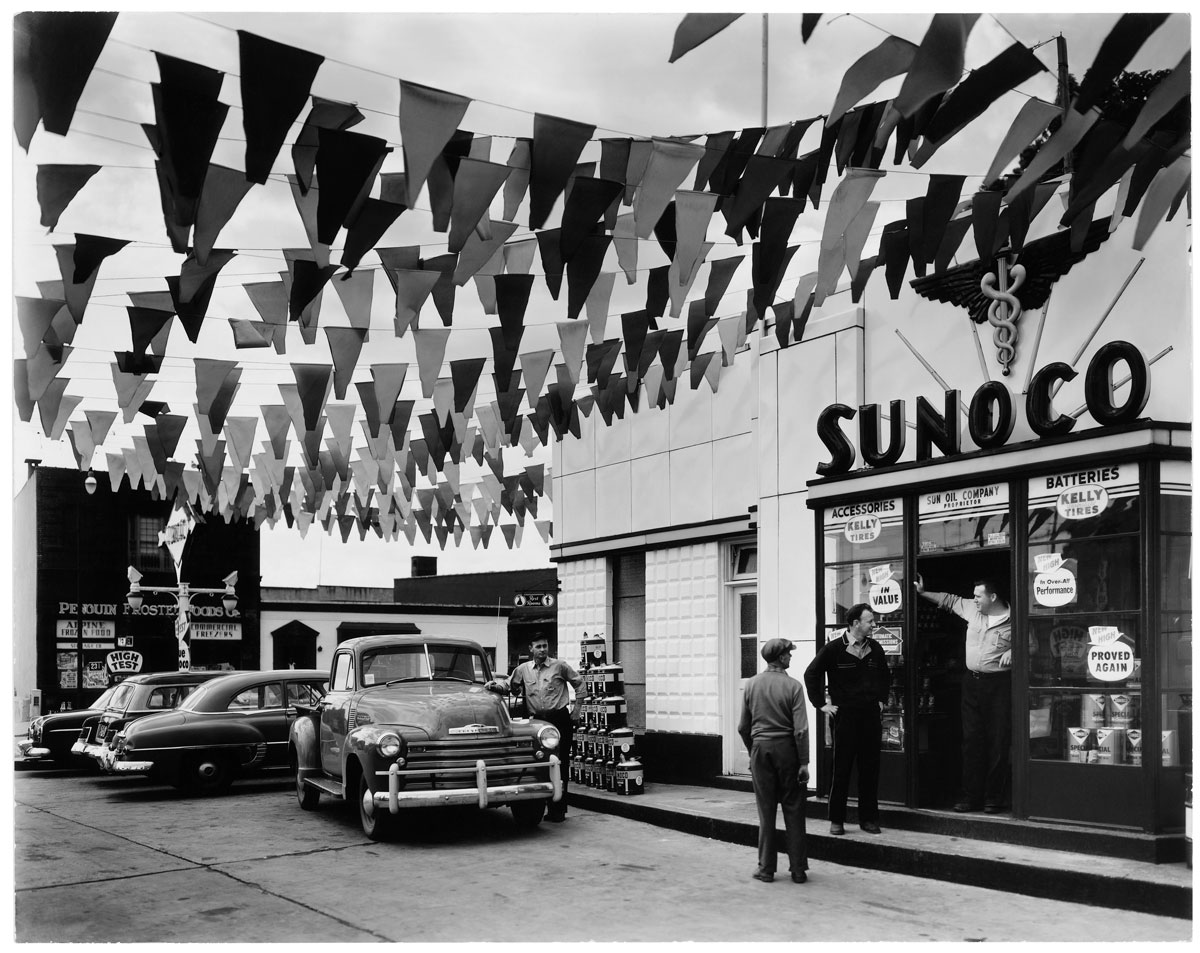
Berenice Abbott (American, 1898-1991) 'Sunoco Station, Trenton, New Jersey' 1954


Berenice Abbott (American, 1898-1991)
Sunoco Station, Trenton, New Jersey
1954
Gelatin silver print
19 x 24.5cm
Ronald Kurtz / Commerce Graphics
© Berenice Abbott / Commerce Graphics Ltd, Inc.


Berenice Abbott (American, 1898-1991) 'Park Avenue and 39th Street, New York' 1936


Berenice Abbott (American, 1898-1991)
Park Avenue and 39th Street, New York
1936
Gelatin silver print
19 x 24.5cm
© Berenice Abbott / Commerce Graphics Ltd, Inc.


Berenice Abbott (American, 1898-1991) 'Gunsmith and Police Department Headquarters, 6 Centre Market Place and 240 Centre Street, New York City, February 4, 1937' 1937


Berenice Abbott (American, 1898-1991)
Gunsmith and Police Department Headquarters, 6 Centre Market Place and 240 Centre Street, New York City, February 4, 1937
1937 
Gelatin silver print
19 x 24.5cm
Museum of the City of New York
Gift of the Metropolitan Museum of Art
© Berenice Abbott / Commerce Graphics Ltd, Inc.


Berenice Abbott (American, 1898-1991) 'Happy's Refreshment Stand, Daytona Beach, Florida' 1954


Berenice Abbott (American, 1898-1991)
Happy’s Refreshment Stand, Daytona Beach, Florida
1954
Gelatin silver print
29.5 x 28cm
Ronald Kurtz / Commerce Graphics
© Berenice Abbott / Commerce Graphics Ltd, Inc.


Berenice Abbott. 'Miner, Greenview, West Virginia' 1935


Berenice Abbott (American, 1898-1991)
Miner, Greenview, West Virginia
1935
Gelatin silver print
25 x 19cm
Ronald Kurtz / Commerce Graphics
© Berenice Abbott / Commerce Graphics Ltd, Inc.


Berenice Abbott (American, 1898-1991) 'Jean Cocteau with a revolver' 1926


Berenice Abbott (American, 1898-1991)
Jean Cocteau with a revolver
1926
Gelatin silver print
35.5 x 28cm
Ronald Kurtz / Commerce Graphics.
© Berenice Abbott / Commerce Graphics Ltd, Inc.


Berenice Abbott (American, 1898-1991) 'Eugène Atget' 1927


Berenice Abbott (American, 1898-1991)
Eugène Atget
Paris, 1927
Gelatin silver print
© Berenice Abbott/Commerce Graphics.


Jeu de Paume
1, place de la Concorde
75008 Paris
métro Concorde
Phone: 01 47 03 12 50

Opening hours:
Tuesday – Friday: 12am – 8pm
Saturday and Sunday: 11am – 7pm
Closed Monday

Jeu de Paume website

LIKE ART BLART ON FACEBOOK

Back to top

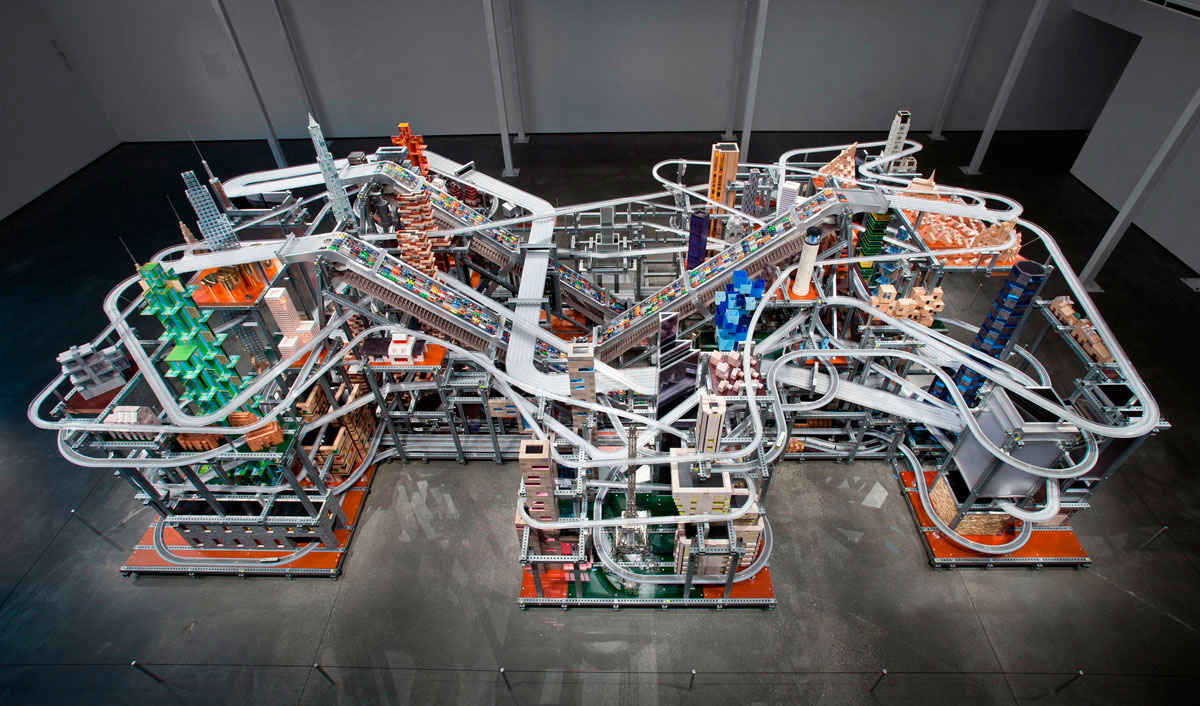
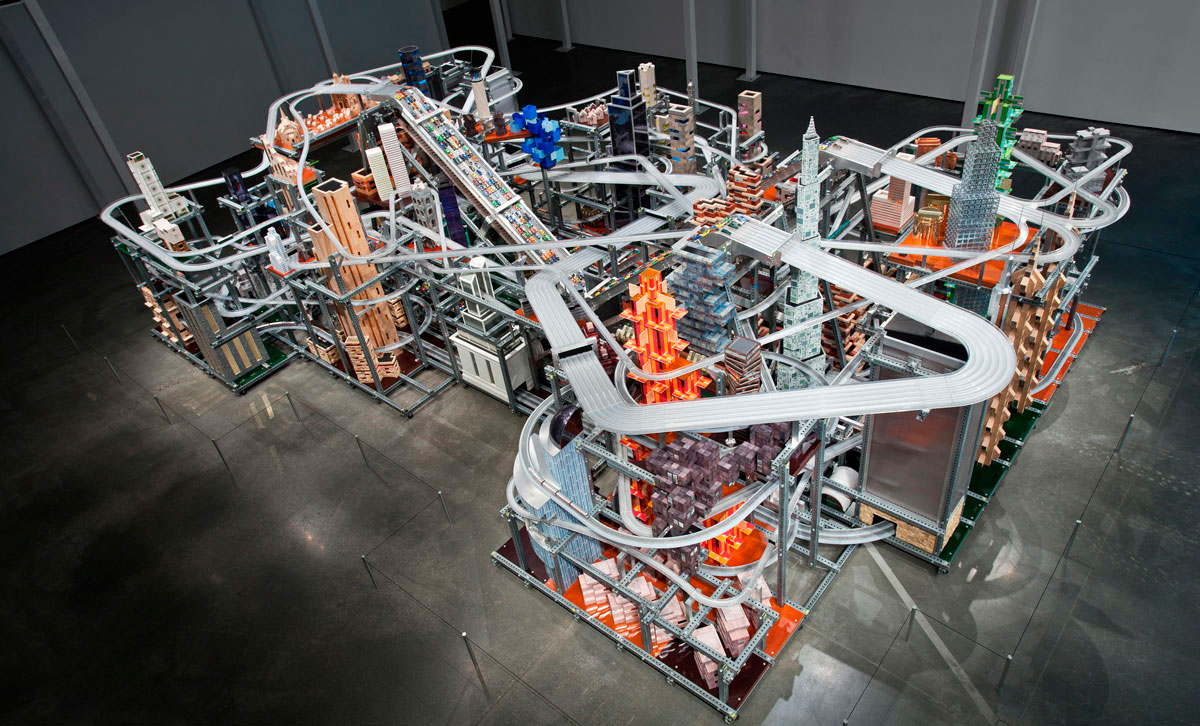
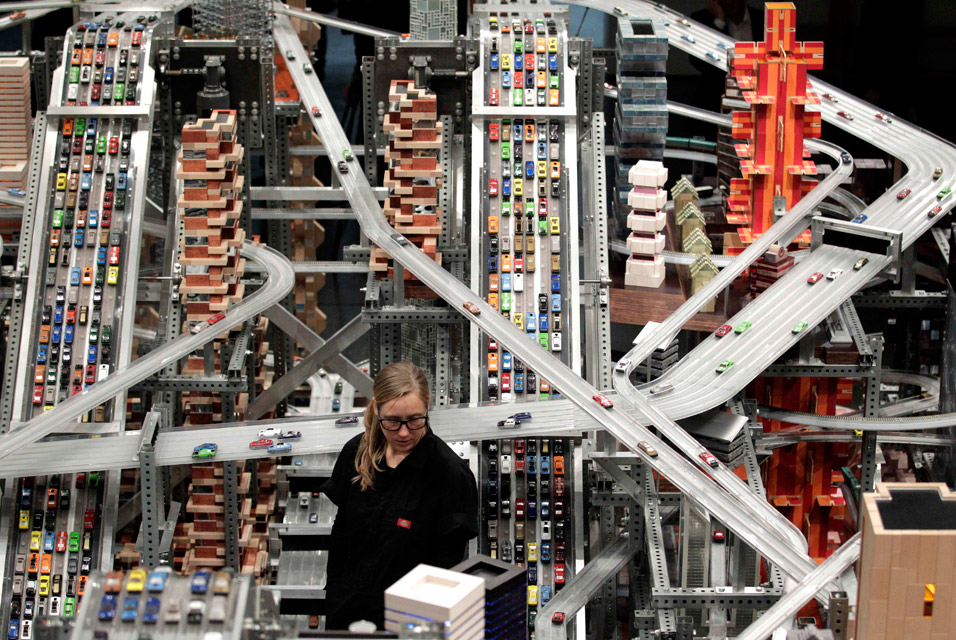
Sculpture: ‘Metropolis II’ (2010) by Chris Burden at LACMA, Los Angeles

Installation dates: 14th January 2012 –


Chris Burden (American, 1946-2015)
Metropolis II
2010
Courtesy of the Nicolas Berggruen Charitable Foundation
© Chris Burden

Dimensions: 9’9″ (H) x 28’3” (W) x 19’2” (D) (297 cm x 862 cm x 584 cm)

Media: 
3 1/2 hp DC motors with motor controllers
1,100 custom-manufactured die-cast cars
13 HO-scale train sets with controllers and tracks
Steel, aluminium, shielded copper wire, copper sheet, brass, various plastics, assorted woods and manufactured wood products, Legos, Lincoln Logs, Dado Cubes, glass, ceramic and natural stone tiles, acrylic and oil-based paints, rubber, sundry adhesives


Poetic, historic, amazing, fantastic, incredible, indescribable (the words of an eight year old, comment on the website). Great video as well. Take your ear plugs!

Dr Marcus Bunyan


Many thankx to LACMA for allowing me to publish the video and the photographs in the posting. Please click on the photographs for a larger version of the image.


Chris Burden (American, 1946-2015) 'Metropolis II' 2010


Chris Burden (American, 1946-2015)
Metropolis II
2010
Courtesy of the Nicolas Berggruen Charitable Foundation
© Chris Burden


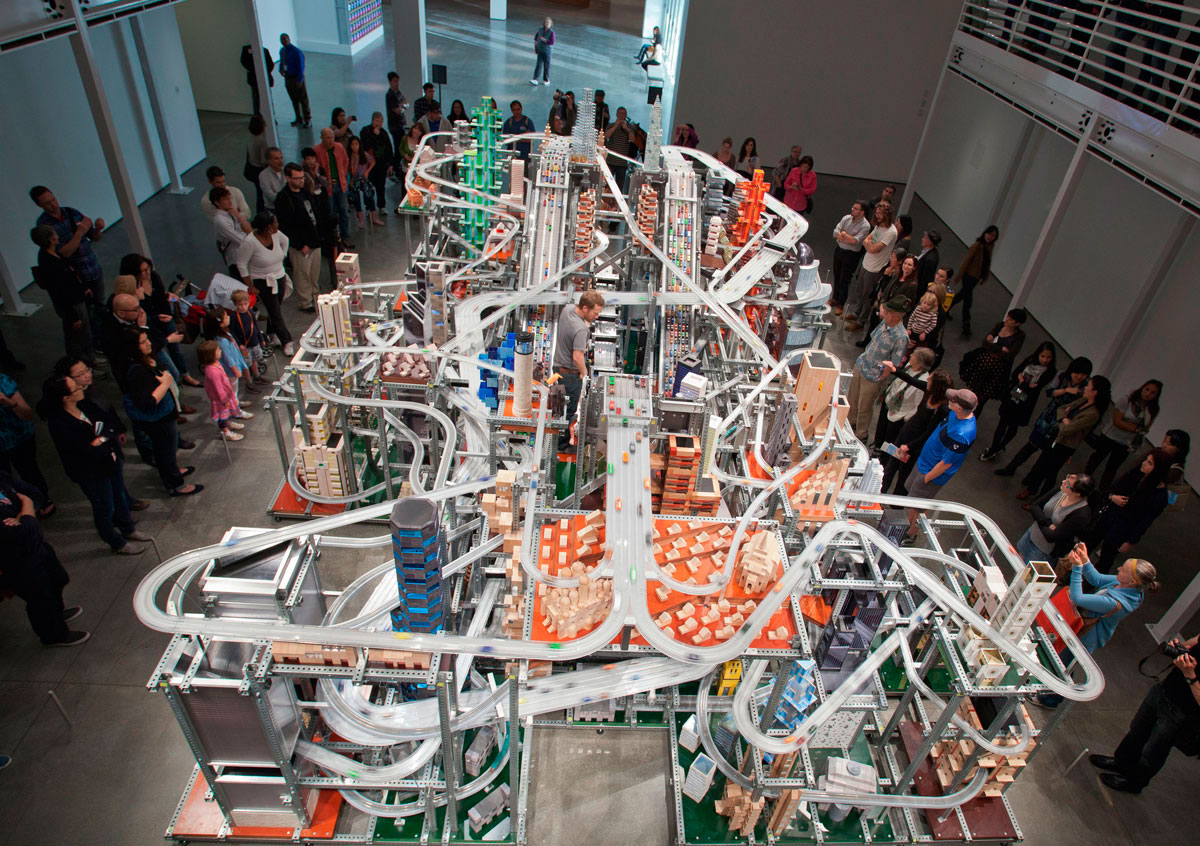
Created by artist Chris Burden, Metropolis II (2010) is a complex, large-scale kinetic sculpture modelled after a fast-paced modern city. The armature of the piece is constructed of steel beams, forming an eclectic grid interwoven with an elaborate system of eighteen roadways, including a six-lane freeway, train tracks, and hundreds of buildings. 1,100 miniature toy cars speed through the city at 240 scale miles per hour on the specially designed plastic roadways. Every hour, the equivalent of approximately 100,000 cars circulates through the sculpture. “The noise, the continuous flow of the trains, and the speeding toy cars, produces in the viewer the stress of living in a dynamic, active and bustling 21st Century city.”

Situated in the centre of the grid are three electrically powered conveyor belts, each studded with magnets at regular intervals. The magnets on the conveyor belt and those on the toy cars attract, enabling the cars to travel to the top of the sculpture without physical contact between the belt and cars. At the top, the cars are released one at a time and race down the roadways, weaving in and out of the structure, simulating rapid traffic and congestion.

Metropolis II is on long-term loan to LACMA, thanks to the generosity of LACMA Trustee Nicolas Berggruen. Beginning January 14, 2012, the work will be on view on the first floor of the Broad Contemporary Art Museum (BCAM) and run on weekends during the scheduled times below.

~ The cars are attached by a small magnet to the conveyor belt that brings them to the crest
~ The only motorisation of the cars is the conveyor belt to the top
~ Once the cars cross over the crest and head downward, their entire movement is by gravity
~ They travel at a scale speed of 240 mph, plus or minus
~ The tracks they take are Teflon coated to reduce friction
~ The tracks are beveled at 7 degrees to give added torque for speed when they come through corners and curves


Beginning Saturday, January 14, to see Metropolis II in action, please visit the gallery at these times:
Fridays: 12.30 – 2pm; 3 – 4.30pm; 5 – 6.30pm; 7 – 8.30pm
Weekends: 11.30 – 1.00pm; 2 – 3.30pm; 4 – 5.30pm; 6 – 7.30pm
Weekdays: not operational”

Press release from LACMA


Chris Burden (American, 1946-2015) 'Metropolis II' 2010

Chris Burden (American, 1946-2015) 'Metropolis II' 2010


Chris Burden (American, 1946-2015)
Metropolis II
2010
Courtesy of the Nicolas Berggruen Charitable Foundation
© Chris Burden


Chris Burden (American, 1946-2015) 'Metropolis II' 2010 (detail)


Chris Burden (American, 1946-2015)
Metropolis II (detail)
2010
Courtesy of the Nicolas Berggruen Charitable Foundation
© Chris Burden


Operator Alison Walker watches miniature cars move along the roads in Chris Burden’s latest kinetic sculpture, Metropolis II, at the Los Angeles County Museum of Art (LACMA) in Los Angeles, Wednesday, Jan. 11, 2012. The sculpture does more than just imitate life. The colorful display of roads, cars, trains and buildings is art imitating what the artist foresees life being like in five or 10 years.


Los Angeles County Museum of Art (LACMA)
5905 Wilshire Boulevard (at Fairfax Avenue)
Los Angeles, CA, 90036
Phone: 323 857-6000

Opening hours:
Monday, Tuesday, Thursday: 11am – 5pm
Friday: 11am – 8pm
Saturday, Sunday: 10am – 7pm
Closed Wednesday

LACMA website

LIKE ART BLART ON FACEBOOK

Back to top

Review: ‘Selina Ou: New York’ at Sophie Gannon Gallery, Richmond

Exhibition dates: 25th October – 19th November 2011


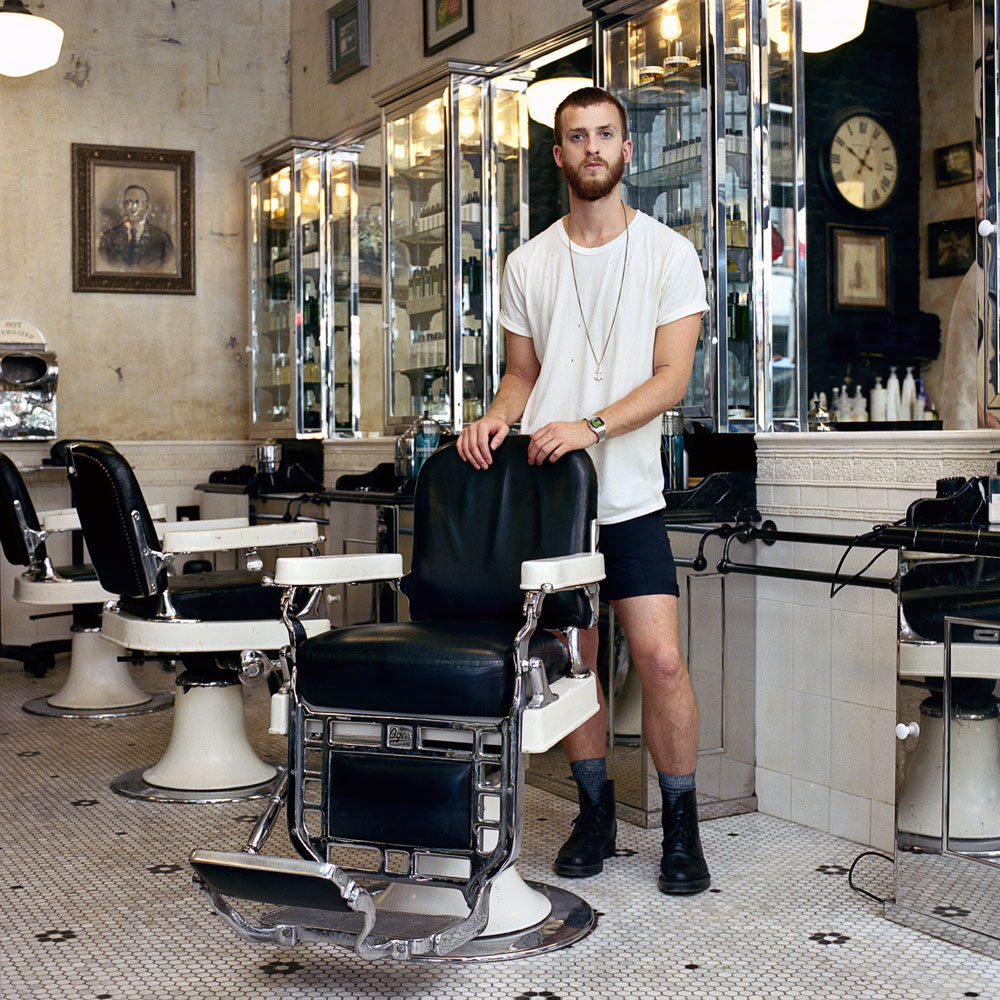
Selina Ou (Australian born Malaysia, b. 1977) 'Tim, Hair Stylist, Lower East Side, New York' 2011


Selina Ou (Australian born Malaysia, b. 1977)
Tim, Hair Stylist, Lower East Side, New York
2011
C-type print
100 x 100cm


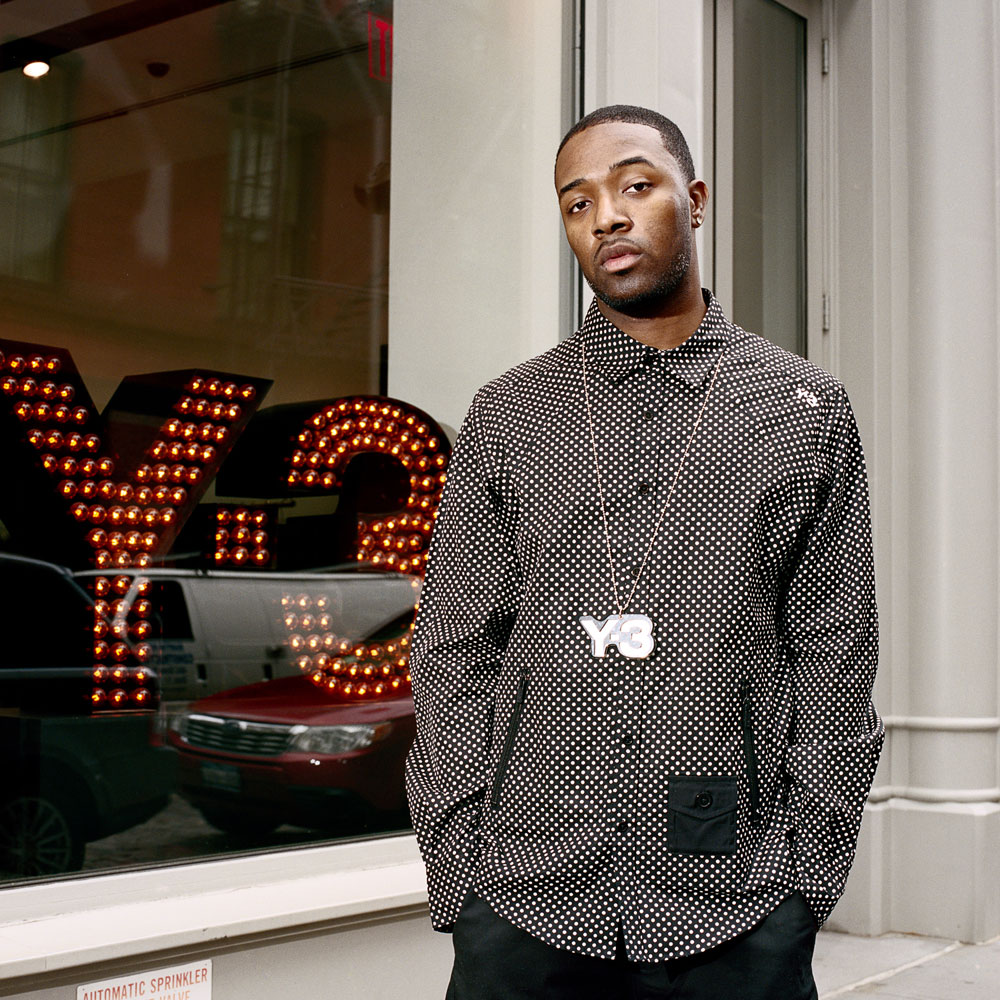
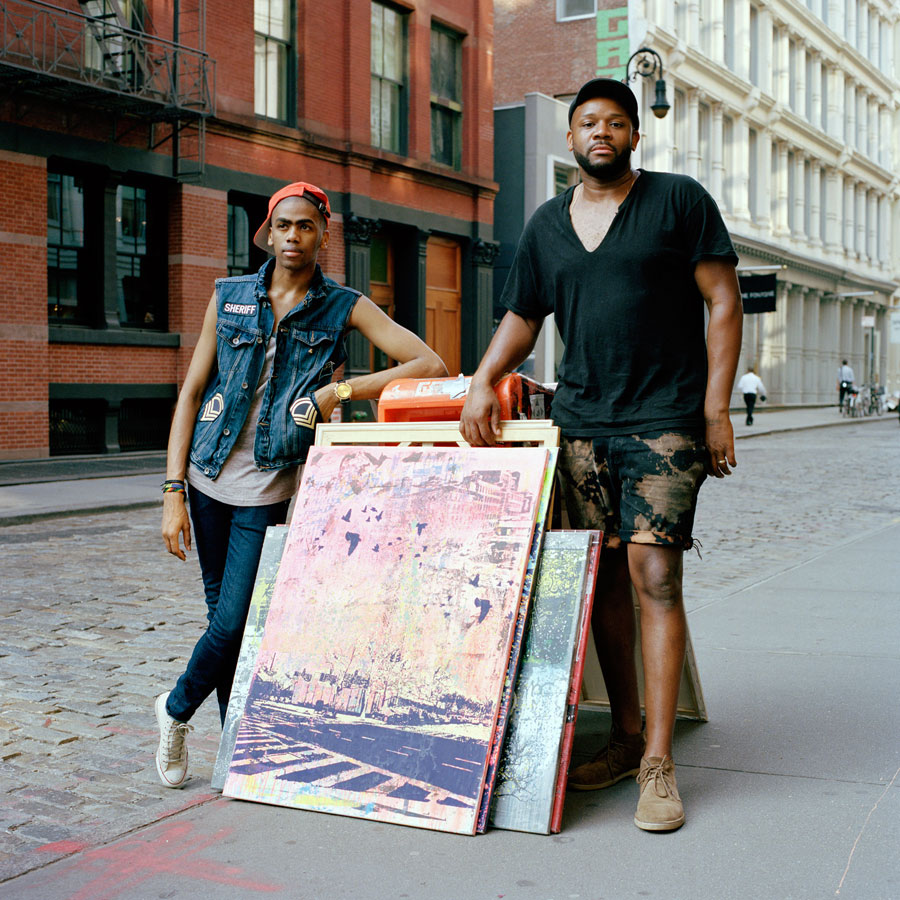
A strong, nuanced body of work by Selina Au at Sophie Gannon Gallery in Richmond. In the flesh these large colour photographs have a wonderful, polyvocal presence. The solo portraits are stronger in terms of composition and intertextuality than the double portraits.

Derived from the Latin intertexto, meaning to intermingle while weaving, intertextuality is a term first introduced by French semiotician Julia Kristeva in the late sixties.1 Intertextuality “is always an iteration which is also a re-iteration, a re-writing which foregrounds the trace of the various texts it both knowingly and unknowingly places and dis-places.”2 Intertexuality is how a text is constituted. It fragments singular readings. The reader’s own previous readings, experiences and position within the cultural formation influences these re-inscriptions.

Reminding me of a contemporary redefinition of the work of Diane Arbus, Ou’s reconceptualisations of space “produce a plurality of meanings and signifying / interpretive gestures that escape the reduction of knowledge to fixed, monological re-presentations, or presences.”3 Through a process of materialisation, using the technique of assemblage, Ou weaves a lack of fixity into her photographs. She creates a kind of tapestry in the surfaces of her images, a play of pattern / randomness that redefines the significations of the body in the fold of inscription.

Take the first three portraits in this posting, for example. The photograph Tim, Hair Stylist, Lower East Side, New York weaves space, time and memory within the pictorial frame. The physical space between the portrait on the wall at rear, Tim and the clock at right is crucial to a reading of this photograph, as is the disjuncture between the appearance of the man in the framed photograph (in jacket and tie) and the casual attire of Tim. Just as important is the memorialisation of both men within the same space (where both presumably work/ed), the collapsing of past and present into a fluid space that is neither here nor there (the past of the man in the framed photograph, the moment of passing of Tim when the photograph was ‘taken’ and the present of the photograph being looked at). There is no fixed, monological representation here: the reading of this photograph hovers between past and present, between memory and reality and haunts the body of the subject, Tim.

Similarly, Raquel, Waitress and Fashion Designer, Nolita, New York and Jerome, Retail Assistant and Fashion Designer, Soho, New York offer radical re-iterations of space, this time with less temporal associations. In Raquel, two red chevrons at top left and right frame the face of the subject, playing off the colour-changing hair of the waitress/fashion designer, the title of the photograph an ironic comment on the intertextual nature of contemporary life: a waitress (low paid, menial labourer) and a fashion designer (famous, highly visible entrepreneur). The nonchalantly limp-wristed, ringed hand and over large glasses, coupled with the bedraggled threads of the black shorts – echoing the tousled nature of the subjects hair – also belies the statement “fashion designer.” The word Cervesas (beer) offers a dichotomy with the coloured bottles of flavoured water that surround the lower half of the subject while the reflection in the window behind Raquel provides a metaphorical vista into this distorted world view.

In Jerome, the same problem in a person’s relationship with self and others is evident: the context of Jerome as both a retail assistant (low paid, menial labourer) and a fashion designer (famous, highly visible entrepreneur). The narcissistic, self-importance of Jerome is beautifully portrayed by Ou as she balances the context of his body in space – his polka-dot shirt reflecting the dotted neon of the shops name, his logo emblazoned necklace doing the same, while the reflections in the shop window again hint at outside forces (the car and consumerism) and other worlds. The defiant, could not give a shit gaze of the subject into the camera lens hints at years of subjugation and unrequited ambition for this is not his shop, these are not his clothes despite the label “fashion designer.” He is just a retail assistant, the subject of his own con(text).

The strength of these photographs is that they blur the outlines of the fixed image dispersing an image of totality, “into an unbounded, illimitable tissue of connections and associations, paraphrases and fragments, texts and con-texts.”4 In this sense the solo portraits are much more successful than the rest of the work as Ou magically weaves the tapestry of life into her compositions, ready for the reader to bring their own experiences to these re-inscriptions. In a word these photographs are, literally, breath-taking.

Dr Marcus Bunyan


Many thankx to Sophie Gannon Gallery for allowing me to publish the photographs in the posting. Please click on the photographs for a larger version of the image.


Endnotes

1/ Keep, Christopher, McLaughlin, Tim and Parmar, Robin. “Intertextuality,” on The Electronic Labyrinth website [Online] Cited 13/11/2011. No longer available online

2/ Ibid.,

3/ Thumlert, Kurt. Intervisuality, Visual Culture, and Education. [Online] Cited 10/08/2006. No longer available online

4/ Keep Op cit.,


Selina Ou (Australian born Malaysia, b. 1977) 'Raquel, Waitress and Fashion Designer, Nolita, New York' 2011


Selina Ou (Australian born Malaysia, b. 1977)
Raquel, Waitress and Fashion Designer, Nolita, New York
2011
C-type print
100 x 100cm


Selina Ou (Australian born Malaysia, b. 1977) 'Jerome, Retail Assistant and Fashion Designer, Soho, New York' 2011


Selina Ou (Australian born Malaysia, b. 1977)
Jerome, Retail Assistant and Fashion Designer, Soho, New York
2011
C-type print
100 x 100cm


Selina Ou (Australian born Malaysia, b. 1977) 'Darren, Model and Carlito, Artist, Soho, New York' 2011


Selina Ou (Australian born Malaysia, b. 1977)
Darren, Model and Carlito, Artist, Soho, New York
2011
C-type print
100 x 100cm


Selina Ou (Australian born Malaysia, b. 1977) 'Carolyn and Jane, Lolitas, Brooklyn Botanical Garden, New York' 2011


Selina Ou (Australian born Malaysia, b. 1977)
Carolyn and Jane, Lolitas, Brooklyn Botanical Garden, New York
2011
C-type print
100 x 100cm


Selina Ou (Australian born Malaysia, b. 1977) 'Issa and Lamine, Taxi Mechanics, Upper West Side, New York' 2011


Selina Ou (Australian born Malaysia, b. 1977)
Issa and Lamine, Taxi Mechanics, Upper West Side, New York
2011
C-type print
100 x 100cm


Selina Ou (Australian born Malaysia, b. 1977) 'Clementine, Liz and Billy Bob, Mercer-Houston Dog Run, Greenwich Village, New York' 2011


Selina Ou (Australian born Malaysia, b. 1977)
Clementine, Liz and Billy Bob, Mercer-Houston Dog Run, Greenwich Village, New York
2011
C-type print
100 x 100cm


Selina Ou (Australian born Malaysia, b. 1977) 'Derek, Student, Chrystie st, New York' 2011


Selina Ou (Australian born Malaysia, b. 1977)
Derek, Student, Chrystie st, New York
2011
Chromogenic photograph
100 x 100cm


Sophie Gannon Gallery
2, Albert Street
Richmond, Melbourne

Opening hours:
Tues – Saturday 11am – 5pm

Sophie Gannon Gallery website

LIKE ART BLART ON FACEBOOK

Back to top

Exhibition: ‘Raphaël Dallaporta: Observation’ at Foam, Amsterdam

Exhibition dates: 2nd September – 26th October 2011

Foam Paul Huf Award 2011


Raphaël Dallaporta (French, b. 1980) 'Fragile, Blood 1' 2010


Raphaël Dallaporta (French, b. 1980)
Fragile, Blood 1
2010
© Raphaël Dallaporta


Antipersonnel. The positive pleasure of inflicting cruelty at an ambiguous physical and ethical distance. Use limited only by the imagination of the user. Detonated remotely using a laptop computer. 10 million times. US$3 each.

Dr Marcus Bunyan


Many thankx to Foam for allowing me to publish the photographs in the posting. Please click on the photographs for a larger version of the image.


Raphaël Dallaporta (French, b. 1980) 'Domestic Slavery, Angha' 2006


Raphaël Dallaporta (French, b. 1980)
Domestic Slavery, Angha
2006
© Raphaël Dallaporta


Domestic Slavery, 2006

Cold, distant images of building facades are associated with text. The narratives are written by Ondine Millot to describe the events that took place at the exact address of the buildings in the photographs. The spectator comes to understand that the series deals with an often undocumented consequence of human trafficking: modern slavery.

The images force us to come to terms with the upsetting reality that is hidden behind the ordinary facades. Raphaël Dallaporta denounces unbearable situations where one human being reduces another to the status of thing, and gives it depth through the distance of the photographs and his refusal to sensationalise.

Text from the Musée Nicéphore Niépce website [Online] Cited 29/03/2020


Raphaël Dallaporta (French, b. 1980) 'Domestic Slavery, Henriette' 2006


Raphaël Dallaporta (French, b. 1980)
Domestic Slavery, Henriette
2006
© Raphaël Dallaporta


Raphaël Dallaporta (French, b. 1980) 'Ruins (Season 1), The Balkh-AB gorges, Afghanistan' 2011


Raphaël Dallaporta (French, b. 1980)
Ruins (Season 1), The Balkh-AB gorges, Afghanistan
2011
© Raphaël Dallaporta


Ruin, Season 1, 2011

In the autumn of 2010, Raphaël Dallaporta took part in an archaeological mission in the Bactriane region in Afghanistan, scene of Alexander the Great’s mythical conquest. Using a drone he designed himself, he took aerial photographs of endangered or heretofore unknown archaeological sites in a country at war. The remote controlled device was timed to take photos of unrivalled precision every five seconds. The way the images are put together with their voluntarily asymmetrical contours depict these inaccessible monuments and places at their best. The most cutting-edge technology reveals the artist’s themes – destruction, the precariousness of things. It brings to light that which was and is no longer. Is this not the very definition of all photography?

Text from the Musée Nicéphore Niépce website [Online] Cited 29/03/2020


Raphaël Dallaporta (French, b. 1980) 'Fragile, "Four Moods", Black Bile'  2010


Raphaël Dallaporta (French, b. 1980)
Fragile, “Four Moods”, Black Bile 
2010
© Raphaël Dallaporta


Fragile, 2010

Raphaël Dallaporta photographs organs, like the encyclopaedic colour plates for an anatomy class. The legend, again, explains the origins of these silent images. The organ represented is not the issue; the reason for its presence on the slab is the issue. The apparent neutrality of the shot, according to a strict protocol (frontal shot, on a black background enabling the strong lighting of the “subject”), isolates each fragment of the body as a clue that enables to determine the cause of death. These relics of flesh and bone have a real role to play. But the way they are shot lends them a metaphysical and philosophical dimension that reminds us of life’s ephemeral nature and human vulnerability.

Text from the Musée Nicéphore Niépce website [Online] Cited 29/03/2020


Raphaël Dallaporta (French, b. 1980) 'Fragile, Cardiopulmonary system' 2010


Raphaël Dallaporta (French, b. 1980)
Fragile, Cardiopulmonary system
2010
© Raphaël Dallaporta


Undetermined circumstances

The body of the subject whose presumed identity is …, aged 92, was found in a ditch around 10.05am by a walker whose attention had been attracted by his dog.

The autopsy that we carried out on the body showed the presence of a state of extremely advanced putrefaction with partial skeletonisation, consistent with a death dating back one month in an outdoor environment; it is not possible to be more precise. There is no immediately detectable cause of death. No lesions suggesting recent detectable violence were observed. As for identification, the deceased is an adult male, wearing a pacemaker and an old surgical scar on the abdominal wall.


Raphaël Dallaporta (French, b. 1980) 'Fragile, Pacemaker' 2010


Raphaël Dallaporta (French, b. 1980)
Fragile, Pacemaker
2010
© Raphaël Dallaporta


French photographer Raphaël Dallaporta (b. 1980) received the Foam Paul Huf Award earlier this year from an international jury. The prize is organised by Foam and is awarded annually to up and coming international photographers below the age of 35. A major aspect of the award is an exhibition. Observation appears at Foam from 2 September to 26 October. Characteristic of the show’s four series is the clinical, perceptive style of photography. Dallaporta’s photos possess an inner tension that stems from the beauty of the object and the serious tone of the subject. The photographer works intensively with specialists in fields relating to his series. Jury chair François Hébel (director of Les Rencontres d’Arles international photography festival) comments on Dallaporta’s work that ‘He combines involvement with a highly analytical approach to social perversities. His uncompromising, conceptual and extremely creative approach mark him as an authentic artist who stands out in the young generation of photographers.’

The landmines in the Antipersonnel series have an exquisite beauty: small, with pleasant colours and an attractive form. Elegantly photographed, simply framed and persuasively presented, their aesthetic quality is what first attracts attention. Until we realise the full purpose of their existence: pure cruelty.

Fragile features frontal and objective shots of organs and limbs taken from corpses. Dallaporta worked with a team of forensic surgeons for this series. While the physicians were looking for causes of death, Dallaporta recorded the body parts they examined and the instruments they used. The power of this work comes from the combination of apparently neutral images and texts relating to human pain.

Dallaporta also worked with experts when making Ruins. He travelled with a team of French archaeologists to Afghanistan. Using a drone – a small remote-controlled helicopter – he took numerous photos of the war-ravaged landscape. In combination, these form a single large aerial picture that also shows traces of ancient civilisations. Past and present come together in this series of almost scientific photos.

In Domestic Slavery, Dallaporta (pictures) and Ondine Millot (text) tackle the tragic reality of this phenomenon: people, many unregistered migrants, held against their will in places where their voice cannot be heard. While their names have been altered, the stories are true. Dallaporta’s clinical, unsentimental pictures of the buildings in which these modern-day slaves are kept testify to the banality of day-to-day inhumanity.

Text from the Foam website


Antipersonnel, 2004

Unknown objects seem to emerge from the darkness. The legend quickly informs us that they are anti-personnel mines. Raphaël Dallaporta deals with the object reproduced to scale and lets us imagine the consequences of its existence. There are no bloody reportage images to illustrate the mutilations caused by these devices. The photographer presents us with contemporary still life that appear inoffensive but that tend to be aestheticised by photographic techniques all the better to erase the actual use of the object.

Text from the Musée Nicéphore Niépce website [Online] Cited 29/03/2020


Raphaël Dallaporta (French, b. 1980) 'Antipersonnel, Blast Mine Type 72B China' 2004


Raphaël Dallaporta (French, b. 1980)
Antipersonnel, Blast Mine Type 72B China
2004
© Raphaël Dallaporta


Type 72 blast mines are said to make up 100 million of China’s 110 million antipersonnel landmine stockpiles (Chinese officials claim this figure is exaggerated). Manufactured by China North Industries Corporation (NORINCO), Type-72s are reportedly priced at US$3 each. The Type-72B includes an anti-handling mechanism that makes it impossible to neutralise – if the mine is moved more than 8º from the horizontal, it will explode, amputating the limb that activated it.


Raphaël Dallaporta (French, b. 1980) 'Antipersonnel, Submunition BLU-­3/B USA' 2004


Raphaël Dallaporta (French, b. 1980)
Antipersonnel, Submunition BLU-­3/B USA
2004
© Raphaël Dallaporta


On release from a CBU-2C.A bomb this 785 g submunition – known as the “Pineapple” – is stabilised and slowed in its descent by six fins. Each CBU-2C/A contains 409 BLU-3/Bs, of which nearly 25 percent do not explode on impact. d: 73mm W: 785g


Raphaël Dallaporta (French, b. 1980) 'Antipersonnel, Bounding Fragmentation Mine M-16, USA' 2004


Raphaël Dallaporta (French, b. 1980)
Antipersonnel, Bounding Fragmentation Mine M-16, USA
2004
© Raphaël Dallaporta


When detonated the M-16 antipersonnel bounding fragmentation mine is shot up approximately 1.5m in the air and explodes within 0.5 seconds, creating a lethal radius of 10m. Nicknamed the “Bouncing Betty,” each mine is supplied with four tripwires (two olive-green, two sand-coloured) and a wrench. In September 2002 (the most recent statistics available) the USA had 465,330 M16s in stock.


Raphaël Dallaporta (French, b. 1980) 'Antipersonnel, Directional Fragmentation Mine M-18/A1, USA' 2004


Raphaël Dallaporta (French, b. 1980)
Antipersonnel, Directional Fragmentation Mine M-18/A1, USA
2004
© Raphaël Dallaporta


A “Claymore” directional fragmentation mine releases 700 steel balls when detonated by a hand-turned dynamo, a tripwire or, when used with the “Matrix” system, remotely using a laptop computer. (Multiple Claymores can also be linked together using a detonator cord.) A 1996 Department of the Army filed manual states that, “the number of ways in which the Claymore may be employed is limited only by the imagination of the user.” In September 2002 (the most recent available statistics), Claymores made up 403,096 of the 10,404,148 landmines stockpiled by the USA.


Raphaël Dallaporta (French, b. 1980) 'Antipersonnel Bounding Fragmentation Mine, V-69, Italy' 2004


Raphaël Dallaporta (French, b. 1980)
Antipersonnel Bounding Fragmentation Mine, V-69, Italy
2004
© Raphaël Dallaporta


Antipersonnel Bounding Fragmentation Mine, V-69, Italy. The V-69 can be set off by footfall pressure or through a tripwire. When detonated the fuse sets off propellant gases that fire the mine’s inner body 45cm above the ground. This explodes sending out more than 1,000 pieces of chopped steel. Between 1982 and 1985, its manufacturer Valsella sold around 9 million V-69s to Iraq. The mine was given a nickname by Iraqi minelayers: the “Broom”. 120mm, 3.2kg.


Foam
Keizersgracht 609
1017 DS Amsterdam
The Netherlands
Phone: + 31 20 5516500

Opening hours:
Mon – Wed 10am – 6pm
Thu & Fri 10am – 9pm
Sat & Sun 10am – 6pm

Foam website

LIKE ART BLACK ON FACEBOOK

Back to top

Review: ‘American Dreams: 20th century photography from George Eastman House’ at Bendigo Art Gallery, Victoria

Exhibition dates: 16th April – 10th July 2011


Gertrude Käsebier (American, 1852-1934) 'The Sketch (Beatrice Baxter)' 1903


Gertrude Käsebier (American, 1852-1934)
The Sketch (Beatrice Baxter)
1903
Platinum print
Gift of Hermine Turner
Collection of George Eastman House, International Museum of Photography and Film


This is a fabulous survey exhibition of the great artists of 20th century American photography, a rare chance in Australia to see such a large selection of vintage prints from some of the masters of photography. If you have a real interest in the history of photography you must see this exhibition, showing as it is just a short hour and a half drive (or train ride) from Melbourne at Bendigo Art Gallery.

I talked with the curator, Tansy Curtin, and asked her about the exhibition’s gestation. This is the first time an exhibition from the George Eastman House has come to Australia and the exhibition was 3-4 years in the making. Tansy went to George Eastman House in March last year to select the prints; this was achieved by going through solander box after solander box of vintage prints and seeing what was there, what was available and then making work sheets for the exhibition – what a glorious experience this would have been, undoing box after box to reveal these magical prints!

The themes for the exhibition were already in the history of photography and Tansy has chosen almost exclusively vintage prints that tell a narrative story, that make that story accessible to people who know little of the history of photography. With that information in mind the exhibition is divided into the following sections:

Photography becomes art; The photograph as social document; Photographing America’s monuments; Abstraction and experimentation; Photojournalism and war photography; Fashion and celebrity portraiture; Capturing the everyday; Photography in colour; Social and environmental conscience; and The contemporary narrative.


There are some impressive, jewel-like contact prints in the exhibition. One must remember that, for most of the photographers working after 1940, exposure, developing and printing using Ansel Adams Zone System (where the tonal range of the negative and print can be divided into 11 different ‘zones’ from 0 for absolute black and to 10 for absolute white) was the height of technical sophistication and aesthetic choice, equal to the best gaming graphics from today’s age. It was a system that I used in my black and white film development and printing. Film development using a Pyrogallol staining developer (the infamous ‘pyro’, a developer I tried to master without success in a few trial batches of film) was also technically difficult but the ability of this developer to obtain a greater dynamic range of zones in the film itself was outstanding.

“The Zone System provides photographers with a systematic method of precisely defining the relationship between the way they visualise the photographic subject and the final results… An expressive image involves the arrangement and rendering of various scene elements according to photographer’s desire. Achieving the desired image involves image management (placement of the camera, choice of lens, and possibly the use of camera movements) and control of image values. The Zone System is concerned with control of image values, ensuring that light and dark values are rendered as desired. Anticipation of the final result before making the exposure is known as visualisation.”1

Previsualisation, the ability of the photographer to see ‘in the mind’s eye’ the outcome of the photograph (the final print) before even looking through the camera lens to take the photograph, was an important skill for most of these photographers. This skill has important implications for today’s photographers, should they choose to develop this aspect of looking: not as a mechanistic system but as a meditation on the possibilities of each part of the process, the outcome being an expressive print.


A selection of the best photographs in the exhibition could include,

1/ An original 1923 Alfred Steiglitz Equivalent contact print – small (approx. 9cm x 12cm, see below), intense, the opaque brown blacks really strong, the sun shining brightly through the velvety clouds. In the Equivalents series the photograph was purely abstract, standing as a metaphor for another state of being, in this case music. A wonderful melding of the technical and the aesthetic the Equivalents “are generally recognised as the first photographs intended to free the subject matter from literal interpretation, and, as such, are some of the first completely abstract photographic works of art.”2

2/ Paul Strand Blind (1915, printed 1945) – printed so dark that you cannot see the creases in the coat of the blind woman with a Zone 3 dark skin tone.

3/ Lewis Hine [Powerhouse mechanic] see below, vintage 1920 print full of subtle tones. Usually when viewing reproductions of this image it is either cropped or the emphasis is on the body of the mechanic; in this print his skin tones are translucent, silvery and the emphasis is on the man in unison with the machine. The light is from the top right of the print and falls not on him directly, but on the machinery at upper right = this is the emotional heart of this image!

4/ Three tiny vintage Tina Modotti prints from c. 1929 – so small, such intense visions. I have never seen one original Modotti before so to see three was just sensational.

5/ Walker Evans View of Morgantown, West Virginia vintage 1935 print – a cubist dissection of space and the image plane with two-point perspective of telegraph pole with lines.

6/ An Edward S. Curtis photogravure Washo Baskets (1924, from the portfolio The North American Indian) – such a sumptuous composition and the tones…

7/ Ansel Adams 8″ x 10″ contact print of Winter Storm (1944, printed 1959, see above) where the blackness of the mountain on the left hand side of the print was almost impenetrable and, because of the large format negative, the snow on the rock in mid-distance was like a sprinkling of icing sugar on a cake it was that sharp.

8/ A most splendid print of the Chrysler Building (vintage 1930 print, approx. 48 x 34cm) by Margaret Bourke-White – tonally rich browns, smoky, hazy city at top; almost like a platinum print rather than a silver gelatin photograph. The bottom left of the print was SO dark but you could still see into the shadows just to see the buildings.

9/ An original Robert Capa 1944 photograph from the Omaha Beach D Day landings!

10/ Frontline soldier with canteen, Saipan (1944, vintage print) by W Eugene Smith where the faces of the soldiers were almost Zone 2-3 and there was nothing in the print above zone 5 (mid-grey) – no physical and metaphoric light.

11/ One of the absolute highlights: two vintage Edward Weston side by side, the form of one echoing the form of the other; Nude from the 50th Anniversary Portfolio 1902-1952 (1936, printed 1951), an 8″ x 10″ contact print side by side with an 8″ x 10″ contact print of Pepper No. 30 (vintage 1930 print). Nothing over zone 7 in the skin tones of the nude, no specular highlights; the sensuality in the pepper just stunning – one of my favourite prints of the day – look at the tones, look at the light!

12/ Three vintage Aaron Siskind (one of my favourite photographers) including two early prints from 1938 – wow. Absolutely stunning.

13/ Harry Callahan. That oh so famous image of Eleanor and Barbara, Chicago (vintage 1953 print) that reminds me of the work of Jeffrey Smart (or is it the other way around). The wonderful space around the figures, the beautiful composition, the cobblestones and the light – just ravishing.

14/ The absolute highlight: Three vintage Diane Arbus prints in a row – including a 15″ square image from the last series of work Untitled (6) (vintage 1971 print, see above) – the year in which she committed suicide. This had to be the moment of the day for me. This has always been one of my favourite photographs ever and it did not disappoint; there was a darkness to the trees behind the three figures and much darker grass (zone 3-4) than I had ever imagined with a luminous central figure. The joyousness of the figures was incredible. The present on the ground at the right hand side was a revelation – usually lost in reproductions this stood out from the grass like you wouldn’t believe in the print. Being an emotional person I am not afraid to admit it, I burst into tears…

15/ And finally another special… Two vintage Stephen Shore chromogenic colour prints from 1976 where the colours are still true and have not faded. This was incredible – seeing vintage prints from one of the early masters of colour photography; noticing that they are not full of contrast like a lot of today’s colour photographs – more like a subtle Panavision or Technicolor film from the early 1960s. Rich, subtle, beautiful hues. For a contemporary colour photographer the trip to Bendigo just to see these two prints would be worth the time and the car trip/rail ticket alone!


Not everything is sweetness and light. The print by Dorothea Lange Migrant Mother, Nipomo, California is a contemporary print from 2003, the vintage print having just been out on loan; the contemporary section, ‘The contemporary narrative’, is very light on, due mainly to the nature of the holdings of George Eastman House; and there are some major photographers missing from the line up including Minor White, Fredrick Sommer, Paul Caponigro, Wynn Bullock and William Clift to name just a few.

Of more concern are the reproductions in the catalogue, the images for reproduction supplied by George Eastman House and the catalogue signed off by them. The reproduction of Margaret Bourke-White’s Chrysler Building (1930, see below) bears no relationship to the print in the exhibition and really is a denigration to the work of that wonderful photographer. Other reproductions are massively oversized, including the Alfred Stieglitz Equivalent, Lewis Hine’s Powerhouse mechanic (see below) and Tina Modotti’s Woman Carrying Child (c. 1929). In Walter Benjamin’s terms (The Work of Art in the Age of Mechanical Reproduction) the aura of the original has been lost and these reproductions further erode the authenticity of the original in their infinite reproducability. Conversely, it could be argued that the reproduction auraticizes the original:

“The original artwork has become a device to sell its multiply-reproduced derivatives; reproductability turned into a ploy to auraticize the original after the decay of aura…”3

In other words, after having seen so many reproductions when you actually see the original – it is like a bolt of lightning, the aura that emanates from the original. This is so true of this exhibition but it still begs the question: why reproduce in the catalogue at a totally inappropriate size? Personally, I believe that the signification of the reproduction (in terms of size and intensity of visualisation) is so widely at variance with the original one must question the decision to reproduce at this size knowing that this variance is a misrepresentation of the artistic interpretation of the author.

In conclusion, this is a sublime exhibition well worthy of the time and energy to journey up to Bendigo to see it. A true lover of classical American black and white and colour photography would be a fool to miss it!

Dr Marcus Bunyan


1/ Anon. “Zone System,” on Wikipedia [Online] Cited 13/06/2011
2/ Anon. “Equivalents,” on Wikipedia [Online] Cited 13/06/2011
3/ Huyssen, Andreas. Twilight Memories: Marking Time in a Culture of Amnesia. London: Routledge, 1995, pp. 23-24


Many thankx to Tansy Curtin, Senior Curator, Programs and Access at Bendigo Art Gallery for her time and knowledge when I visited the gallery; and to Bendigo Art Gallery for allowing me to publish the text and photographs in the posting. Please click on the photographs for a larger version of the image.


Alfred Stieglitz (American, 1864-1946) 'Equivalent' 1923


Actual size of print: 9.2 x 11.8 cm
Size of print in catalogue: 18.5 x 13.9 cm

These two photographs represent a proportionate relation between the two sizes as they appear in print and catalogue but because of monitor resolutions are not the actual size of the two prints.


Alfred Stieglitz (American, 1864-1946) 'Equivalent' 1923


Alfred Stieglitz (American, 1864-1946)
Equivalent
1923
Gelatin silver print
Collection of George Eastman House, International Museum of Photography and Film 


Lewis Hine (American, 1874-1940) '[Powerhouse mechanic]' 1920 catalogue size


Actual size of print: 16.9 x 11.8cm
Size of print in catalogue: 23.2 x 15.8cm

These two photographs represent a proportionate relation between the two sizes as they appear in print and catalogue but because of monitor resolutions are not the actual size of the two prints.


Lewis Hine (American, 1874-1940) '[Powerhouse mechanic]' 1920 catalogue size


Lewis Hine (American, 1874-1940)
[Powerhouse mechanic]
1920
Gelatin silver print
Transfer from the Photo League Lewis Hine Memorial Committee, ex-collection Corydon Hine
Collection of George Eastman House, International Museum of Photography and Film


Margaret Bourke-White (American, 1904-1971) 'Chrysler Building' New York City, 1930


As it approximately appears in the exhibition (above, from my notes, memory and comparing the print in the exhibition with the catalogue reproduction)

Below, as the reproduction appears in the catalogue (scanned)


Margaret Bourke-White (American, 1904-1971) 'Chrysler Building' New York City, 1930


Margaret Bourke-White (American, 1904-1971)
Chrysler Building
New York City
1930
Silver gelatin photograph


An exhibition of treasures from arguably the world’s most important photographic museum, George Eastman House, has been developed by Bendigo Art Gallery. The exhibition American Dreams will bring, for the first time, eighty of some of the most iconic photographic images from the 20th Century to Australia.

The choice of works highlights the trailblazing role these American artists had on the world stage in developing and shaping the medium, and the impact these widely published images had on the greater community.

Curator Tansy Curtin, who worked closely with George Eastman House developing the exhibition commented, “Through these images we can recognise the extraordinary ability of these artists, and their pivotal role influencing the evolution of photography. Their far-reaching images helped shape American culture, and impacted on the fundamental role photography has in communications today. Even more than this we can see through these artists the burgeoning love of photography that engaged a nation.”

Through these images we can see not only the development of photography, but also as some of the most powerful social documentary photography of last century, we see extraordinary moments captured in the lives of a wide range of Americans. The works distil the dramatic transformation that affected people during the 20th century – the affluence, degradation, loss, hope and change – both personally and throughout society.

The role of photography in nation building is exemplified in Ansel Adams’ majestic portraits of Yosemite national park, Bourke-White’s Chrysler building and images of migrants and farm workers during the Depression. Tansy Curtin added, “We see the United States ‘growing up’ through photography. We see hopes raised and crushed and the inevitable striving for the American Dream.” Director of Bendigo Art Gallery Karen Quinlan said, “We are thrilled to have been given this unprecedented opportunity to work with this unrivalled photographic archive. The resulting exhibition American Dreams, represents one of the most important and comprehensive collections of American 20th Century photography to come to Australia.”

George Eastman House holds over 400,000 images from the invention of photography to the present day. George Eastman, one time owner of the home in which the archives are housed, founded Kodak and revolutionised and democratised photography around the world. Eastman is considered the grandfather of snapshot photography.

American Dreams is one of the first exhibitions from this important collection to have been curated by an outside institution. It will be the first time Australian audiences have been given the opportunity to engage with this vast archive.

Press release from the Bendigo Art Gallery


Paul Strand (American, 1890-1976) 'Photograph - New York' Negative 1916; print June 1917


Paul Strand (American 1890-1976)
Blind woman, New York
1916
Platinum print
Collection of George Eastman House, International Museum of Photography and Film


Edward S. Curtis (American, 1868-1952) 'Washo Baskets' 1924


Edward S. Curtis (American, 1868-1952)
Washo Baskets
1924
From the portfolio The North American Indian
Photogravure
Collection of George Eastman House, International Museum of Photography and Film


Tina Modotti (Italian / American / Mexican, 1896-1942) 'Woman Carrying Child' c. 1929


Tina Modotti (Italian / American / Mexican, 1896-1942)
Woman Carrying Child
c. 1929
Gelatin silver print
Collection of George Eastman House, International Museum of Photography and Film


Edward Weston (American, 1886-1958) 'Pepper No. 30' 1930


Edward Weston (American, 1886-1958)
Pepper No. 30
1930
Vintage silver gelatin print
Collection of George Eastman House, International Museum of Photography and Film


Walker Evans (American, 1903-1975) 'Torn Poster, Truro, Massachusetts' 1930


Walker Evans (American, 1903-1975)
Torn Poster, Truro, Massachusetts
1930
Gelatin silver contact print
Purchased with funds from National Endowment for the Arts
Collection of George Eastman House, International Museum of Photography and Film


Alfred Steiglitz (American, 1864-1946) '[Georgia O'Keefe hand on back tire of Ford V8]' 1933


Alfred Steiglitz (American, 1864-1946)
[Georgia O’Keefe hand on back tire of Ford V8]
1933
gelatin silver print
Part purchase and part gift from Georgia O’Keefe
Collection of George Eastman House, International Museum of Photography and Film


Walker Evans (American, 1903-1975) 'View of Morgantown, West Virginia' June, 1935


Walker Evans (American, 1903-1975)
View of Morgantown, West Virginia
June, 1935
Gelatin silver print
Collection of George Eastman House, International Museum of Photography and Film


Dorothea Lange (American, 1895-1965) 'Migrant Mother, Nipomo, California' 1936, printed c. 2003


Dorothea Lange (American, 1895-1965)
Migrant Mother, Nipomo, California
1936, printed c. 2003
Photogravure print
Gift of Sean Corcoran
Collection of George Eastman House, International Museum of Photography and Film


Edward Weston (American, 1886-1958) 'Nude' 1936


Edward Weston (American, 1886-1958)
Nude
1936, printed 1951
From the Fiftieth Anniversary Portfolio: 1902-1952, c. 1952
Vintage silver gelatin print
Collection of George Eastman House, International Museum of Photography and Film


Dorothea Lange (American, 1895-1965) 'Kern County California' 1938


Dorothea Lange (American, 1895-1965)
Kern County California
1938
Gelatin silver print
Exchange with Roy Stryker
Collection of George Eastman House, International Museum of Photography and Film


Ansel Adams (American, 1902-1984) 'Clearing Winter Storm, Yosemite National Park' c. 1938


Ansel Adams (American, 1902-1984)
Clearing Winter Storm, Yosemite National Park
c. 1938
Gelatin silver print
Collection of George Eastman House, International Museum of Photography and Film


W. Eugene Smith (American, 1918-1978) '[Frontline Soldier with Canteen at Saipan]' June 1944


W. Eugene Smith (American, 1918-1978)
[Frontline Soldier with Canteen at Saipan]
June 1944
Gelatin silver print
41.1 × 32.4cm
Collection of George Eastman House, International Museum of Photography and Film


Harry Callahan (American, 1912-1999) 'Eleanor and Barbara, Chicago' 1953


Harry Callahan (American, 1912-1999)
Eleanor and Barbara, Chicago
1953
Vintage gelatin silver print
Collection of George Eastman House, International Museum of Photography and Film


Diane Arbus (American, 1923-1971) 'Untitled (6)' 1971


Diane Arbus (American, 1923-1971)
Untitled (6)
1971
Gelatin silver print
Collection of George Eastman House, International Museum of Photography and Film


Bendigo Art Gallery
42 View Street Bendigo
Victoria Australia 3550
Phone: 03 5434 6088

Opening hours:
Bendigo Art Gallery is open daily 10 am – 5 pm

Bendigo Art Gallery website

LIKE ART BLART ON FACEBOOK

Back to top

Review: ‘Luminous Cities: Photographs of the Built Environment’ at NGV International, Melbourne

Exhibition dates: 22nd October 2010 – 13th March 2011


Eugène Atget (French, 1857-1927) 'Coin de la rue Valette et Pantheon, 5e arrondissement, matinee de mars' 1925, printed 1978  from the exhibition 'Luminous Cities: Photographs of the Built Environment' at NGV International


Eugène Atget (French, 1857-1927)
Coin de la rue Valette et Pantheon, 5e arrondissement, matinee de mars
1925, printed 1978
Gelatin silver photograph
17.8 x 23.7cm
National Gallery of Victoria, Melbourne
Purchased, 1980


A delightful exhibition of photographs of the built environment at the National Gallery of Victoria, Melbourne. The exhibition contains some interesting photographs from the collection including the outstanding Coin de la rue Valette et Pantheon, 5e arrondissement, matinee de mars by Eugene Atget taken two years before his death (1925, printed 1978, see below) that simply takes your breath away.

Atget was my hero when I started to study photography in the late 1980s and he remains my favourite photographer. His use of light coupled with his understanding of how to organise space within the pictorial frame is exemplary (note the darkness of the right-hand wall as it supports the integrity of the rest of the image, as it leads your eye to that wonderful space between the buildings, the shaft of light falling on the ground, the blank wall topped by an arrow leading the eye upwards to the misty dome!). The ability to place his large format camera and tripod in just the right position, the perfect height and angle, to allow the subject to reveal itself it all it’s glory is magical: “Atget’s interest in the variable play between nature and art through minute changes in the camera’s angle, or as functions of the effects of light and time of day, is underscored in his notations of the exact month and sometimes even the hour when the pictures were taken.”1 Two other immense works in the exhibition are New York at Night by Berenice Abbott (1932, printed c. 1975 below) and the incredible multiple exposure The Maypole, Empire State Building, New York by Edward Steichen (1932, below).

The only disappointment to the exhibition is the lack of vintage prints, a fair portion of the exhibition including the three prints mentioned above being later prints made from the original negatives. I wonder what vintage prints of these images would look like?

The purchasing of non-vintage prints was the paradigm for the collection of international photographs early in the history of the Department of Photography at the National Gallery of Victoria and was seen as quite acceptable at the time. The paradigm was set by Athol Shmith in 1973 on his visit to Paris and London.

“Typically for the times, Shmith did not choose to acquire vintage prints, that is, photographs made shortly after the negative was taken. While vintage prints are most favoured by collectors today, in the 1970s vintage prints supervised by the artists were considered perfectly acceptable and are still regarded as a viable, if less impressive option now.”2

Some museums including the NGV preferred to acquire portfolios of modern reprints as a speedy way of establishing a group of key images. As noted in the catalogue essay to 2nd Sight: Australian Photography at the National Gallery of Victoria by Dr Isobel Crombie, Senior Curator of Photography at the National Gallery of Victoria, the reason for preferring the vintage over the modern print “is evident when confronted with modern and original prints: differences in paper, scale and printing styles make the original preferable.”3 The text also notes that this sensibility, the consciousness of these differences slowly evolved in the photographic world and, for most, the distinctions were not a matter of concern even though the quality of the original photograph was not always maintained.

This is stating the case too strongly. Appreciation of the qualities of vintage prints was already high in the period of the mid-1970s – early 1980s most notably at institutions such as The Museum of Modern Art, a collection visited by photography curators of the NGV. Size and scale of the vintage prints tend to be much smaller than later prints making them closer to the artists original intentions, while the paper the prints are made on, the contrast and colour of the prints also varies remarkably. Other mundane but vitally important questions may include these: who printed the non-vintage photograph, who authorised the printing and how many non-vintage copies of the original negative were made, none of which are answered when the prints are displayed.

I vividly remember seeing a retrospective of Henri Cartier-Bresson’s work in Edinburgh at the Dean Gallery, National Gallery of Scotland in 2005, the largest retrospective of Cartier-Bresson’s work ever staged in Britain with over 200 photographs. Three large rooms were later 1970s reprints of some of his photographs, about 20″ x 24″ in size, on cold, blue photographic paper. One room, however, was full of his original prints from the 1920s and 30s. The contrast could not have been different: the vintage prints were very small, intense, subtle, printed on brown toned paper, everything that you would want those jewel-like images to be, the vision of the artist intensified; the larger prints diluted that vision until the images seemed to almost waste away despite their size.

Although never stated openly I believe that one of the reasons for the purchase of non-vintage prints was the matter of cost, the Department of Photography never being given the budget to buy the prints that it wanted to in the 1970s – early 1980s, the collection of photography not being a priority for the NGV at that time. In other words by buying non-vintage prints in the 1970s you got more “bang for your buck” even when the cost of vintage prints was relatively low. Unfortunately the price of vintage prints then skyrocketed in the 1980s putting them well outside the budget of the Department. While Dr Crombie acknowledges the preponderance of American works in the collection over European and Asian works she also notes that major 20th century photographers that you would expect to be in the collection are not and blames this lack “on the massive increases in prices for international photography that began in the 1980s and which largely excluded the NGV from the market at this critical time.”4

The policy of purchasing non-vintage prints has now ceased at the National Gallery of Victoria.

The purchasing of non-vintage prints and the paucity of purchasing vintage prints by master photographers during the formative decade of the collection of international photographs in the Department of Photography (1970-1980) is understandable in hindsight but today seems like a golden opportunity missed. While the collection contains many fine photographs due to the diligence of early photographic curators (notably Jennie Boddington), the minuscule nature of the budget of the department in those early years when vintage prints were relatively cheap and affordable (a Paul Caponigro print could be purchased for $200-300 for example) did not allow them to purchase the photographs that the collection desperately needed. With one vintage print by a master of photography now fetching many thousands of dollars the ability to fill gaps in the collection in the future is negligible (according to Dr Crombie) – so we must celebrate and enjoy the photographs that are in the collection such as those in Luminous Cities: Photographs of the Built Environment.

Dr Marcus Bunyan


2/ Crombie, Isobel. “Creating a Collection: International Photography at the National Gallery of Victoria,” in Re_View: 170 years of Photography. Melbourne: National Gallery of Victoria, 2009, p. 9

3/ Crombie, Isobel. Second sight: Australian photography in the National Gallery of Victoria. Melbourne: National Gallery of Victoria, 2002, p. 10

4/ Op.cit. p. 10


Many thankx to Jemma Altmeier for her help and to the National Gallery of Victoria for allowing me to publish the photographs in the posting. Please click on the photographs for a larger version of the image.


Stephen Thompson (active throughout Europe, 1850s-1880s) 'Grande Canale, Venice' c. 1868 from the exhibition 'Luminous Cities: Photographs of the Built Environment' at NGV International


Stephen Thompson (active throughout Europe, 1850s-1880s)
Grande Canale, Venice
c. 1868
Albumen silver photograph
21.2 x 29.2cm
National Gallery of Victoria, Melbourne
Purchased from Admission Funds, 1988


England (active in England 1860s) 'Houses of Parliament, London' 1860s from the exhibition 'Luminous Cities: Photographs of the Built Environment' at NGV International


England (active in England 1860s)
Houses of Parliament, London
1860s
Albumen silver photograph
18.5 x 24.1cm
National Gallery of Victoria, Melbourne
Purchased from Admission funds, 1988


On 22 October the National Gallery of Victoria will open Luminous Cities, a fascinating exhibition that examines the various ways photographers have viewed cities as historical sites, bustling modern hubs and architectural utopias since the nineteenth century.

The great cities of the world are vibrant creative centres in which the built environment is often as inspirational as the activities of its citizens, and, since the nineteenth century photographers have creatively explored the idea of the city.

This exhibition, drawn from the collection of the NGV, considers various ways in which photographers in the 19th and 20th centuries have viewed cities as historical sites, bustling modern metropolises and architectural utopias. These lyrical images describe the physical attributes of cities, offer insights into the creative imaginations of architects and photographers and embody the zeitgeist of their times.

Frances Lindsay, Deputy Director, NGV said: “Through the work of a range of photographers Luminous Cities will take viewers on a fascinating journey around the world, into the streets, buildings and former lives of great international cities.

“Drawn from the NGV collection, Luminous Cities includes works by renowned photographers Eugene Atget, Alfred Stieglitz, Edward Steichen, Berenice Abbott, Laszlo Moholy-Nagy, Bill Brandt, Lee Freidlander and Grant Mudford amongst many others.

The exhibition will also extend into our contemporary gallery space where an outstanding selection of works by celebrated contemporary artists such as Bill Henson, Andreas Gursky and Jon Cattapan will be on display,” said Ms Lindsay.

Through examples from the mid 19th century, Luminous Cities explores the relationship between photographer, architect and archaeologist with photos of Athens, Rome and Pompeii. This was also a time when great cities such as London and Paris underwent unprecedented renewal and expansion, photography served to document new constructions and also presented heroic, inspirational visions of new cities emerging from old.

Susan van Wyk, Curator, Photography, NGV said: “The works on display in Luminous Cities describe the physical attributes of cities, offer insights into the creative imaginations of architects and photographers, and embody the zeitgeist of their times.”

New York, one of the great 20th century cities, was a captivating subject for generations of photographers. Through the work of architects and the images photographers made of the city, New York became synonymous with its skyline. The images of renowned photographers including Alfred Stieglitz, Edward Steichen, Paul Strand and Berenice Abbott show the pictorial possibilities of the modern city in photographs that embody the dynamism of the city that never sleeps.

The contemporary art works included in Luminous Cities explore the creative ways in which artists imagine and represent the cityscape. Vast glittering panoramas taken from bustling urban communities, sprawling architectural structures and fictitious landscapes all combine to reveal fascinating insights into both physical and psychological geographies.

Ms van Wyk said: “At the end of the 20th century a much cooler, more abstracted strain of photography emerged. Photographs in the exhibition from this period range from the formalism of the 1970s to more recent cinematic visions of the nocturnal city.”

Press release from the National Gallery of Victoria website


Lee Freidlander (American, b. 1934) 'Stamford, Connecticut' 1973, printed c. 1977 from the exhibition 'Luminous Cities: Photographs of the Built Environment' at NGV International


Lee Freidlander (American, b. 1934)
Stamford, Connecticut
1973, printed c. 1977
Gelatin silver photograph
18.9 x 28.3cm
National Gallery of Victoria, Melbourne
Purchased, 1977
© Lee Friedlander


In the decades following the Second World War the idea of ‘the city’, notably in work of American, European and Australian photographers, came to symbolise the modern condition, the best and worst of contemporary life. This ambiguous stance on the city is exemplified in the work of American photographer Lee Friedlander whose photographs of seemingly ordinary urban scenes are at once amusing and slightly disturbing. In his 1973 photograph Stamford, Connecticut, the banal vernacular architecture of suburban shopping street forms the backdrop to a peculiar scene where shoppers are ‘stalked’ by a statue of first world war sniper. Despite its witty elements, this image has a somewhat despairing tone. The women walking along this rather bleak street are isolated and anonymous, ciphers for the worst aspects of contemporary city life.


Grant Mudford (b. Australia 1944, lived United States 1977- ) 'New York' 1975 from the exhibition 'Luminous Cities: Photographs of the Built Environment' at NGV International


Grant Mudford (b. Australia 1944, lived United States 1977- )
New York
1975
Gelatin silver photograph
33.8 x 49.8cm
National Gallery of Victoria, Melbourne
Purchased, 1977
© Grant Mudford


A more neutral view of the contemporary city can be seen in the work of Australian photographer Grant Mudford. After moving to the US in 1970s, Mudford continued to photograph the built environment. Familiar with the work of Lee Friedlander, and citing Walker Evans as an influence, Mudford’s photographs continue a tradition of photographing the city as an empty backdrop devoid of the bustle of human activity. In his 1975 Untitled photograph of a truck depot in New York, Mudford simplifies what could be a chaotic scene to the verge of abstraction.


Berenice Abbott (american, 1898-1991) 'New York at Night' 1932 from the exhibition 'Luminous Cities: Photographs of the Built Environment' at NGV International Review: 'Luminous Cities: Photographs of the Built Environment' at NGV International, Melbourne


Berenice Abbott (American, 1898-1991)
New York at Night
1932
Gelatin silver print
34.1 × 26.1cm (image and sheet)
National Gallery of Victoria, Melbourne
Gift of an anonymous donor in memory of Rosa Zerfas (1896-1983), 1985
©Artist estate through the Howard Greenberg Gallery, New York


Edward Steichen (American, 1879-1973) 'The maypole' 1932 from the exhibition 'Luminous Cities: Photographs of the Built Environment' at NGV International Review: 'Luminous Cities: Photographs of the Built Environment' at NGV International, Melbourne


Edward Steichen (American, 1879-1973)
The maypole
1932
Gelatin silver photograph
35.1 × 27.1cm
National Gallery of Victoria, Melbourne
Presented by Maxwell Photo-Optics Pty Ltd, 1973
© Edward Steichen. ARS/Copyright Agency, 2023


Wolfgang Sievers (Australian born Germany, 1913-2007) 'Old Frankfurt before its total destruction in World War II, Germany' 1933, printed 1986 from the exhibition 'Luminous Cities: Photographs of the Built Environment' at NGV International, Melbourne


Wolfgang Sievers (Australian born Germany, 1913-2007)
Old Frankfurt before its total destruction in World War II, Germany
1933, printed 1986
gelatin silver photograph
28.9 x 26.2 cm
National Gallery of Victoria, Melbourne
Purchased, 1986


Bill Henson (Australian, b. 1955)
'Untitled' 1987-1988 From the 'Untitled 1987/88' series 1987-1988 from the exhibition 'Luminous Cities: Photographs of the Built Environment' at NGV International, Melbourne


Bill Henson (Australian, b. 1955)
Untitled
1987-1988
From the Untitled 1987/88 series 1987-1988
Type C photograph
183.5 x 125.6cm
National Gallery of Victoria, Melbourne
Purchased through The Art Foundation of Victoria with the assistance of the Moët & Chandon Art Acquisition Fund, Fellow, 1989
© The artist and Robert Miller Gallery, New York


NGV International
180 St Kilda Road

Opening hours
Daily 10am – 5pm

National Gallery of Victoria website

LIKE ART BLART ON FACEBOOK

Back to top