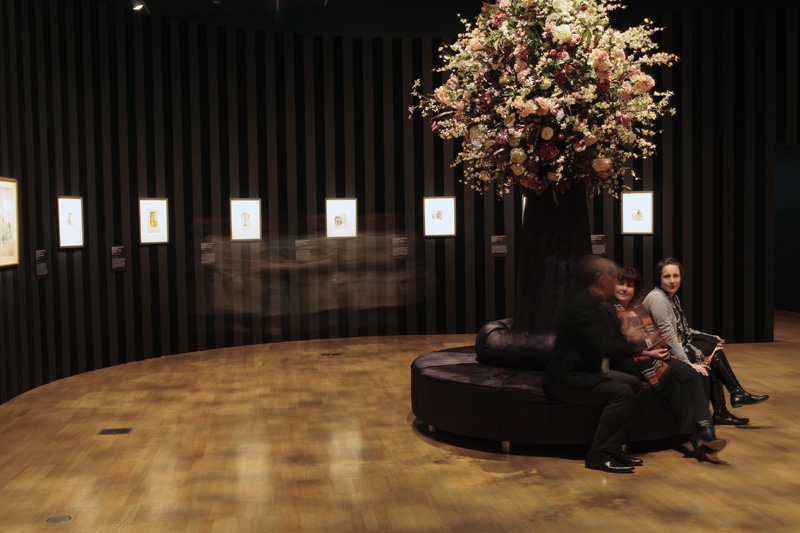
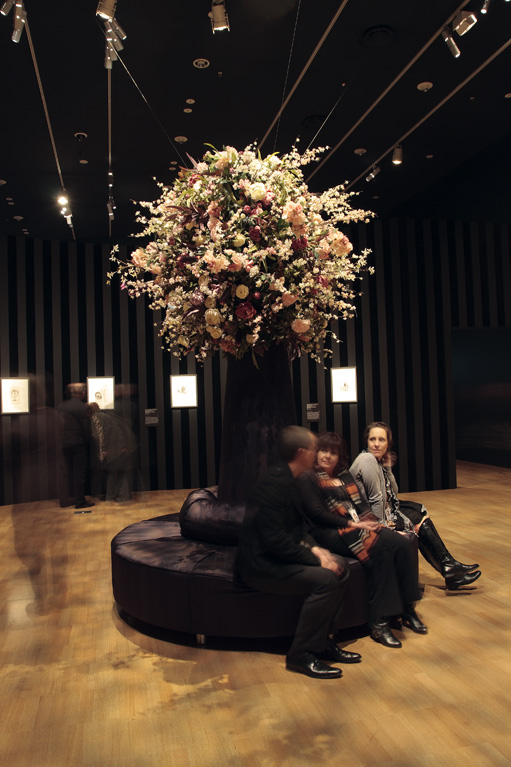
Exhibition: ‘Shatter Rupture Break’ at the Art Institute of Chicago

Exhibition dates: 15th February – 3rd May, 2015

Co-curators: Elizabeth Siegel, Associate Curator of Photography, and Sarah Kelly Oehler, Gilda and Henry Buchbinder Associate Curator of American Art at the Art institute of Chicago


Ivan Albright (American, 1897-1983) 'Medical Sketchbook' 1918 from the exhibition 'Shatter Rupture Break' at the Art Institute of Chicago, February - May, 2025


Ivan Albright (American, 1897-1983)
Medical Sketchbook
1918
The Art Institute of Chicago
Gift of Philip V. Festoso
© The Art Institute of Chicago


Again, I am drawn to these impressive avant-garde works of art. I’d have any of them residing in my flat, thank you very much. The Dalí, Delaunay and Léger in painting and drawing for me, and in photography, the muscular Ilse Bing, the divine Umbo and the mesmeric, disturbing can’t take your eyes off it, Witkiewicz self-portrait.

Dr Marcus Bunyan


Many thankx to the Art Institute of Chicago for allowing me to publish the art works in the posting. Please click on the photographs for a larger version of the image.


“Everything had broken down in any case, and new things had to be made out of the fragments.”


Kurt Schwitters, 1930


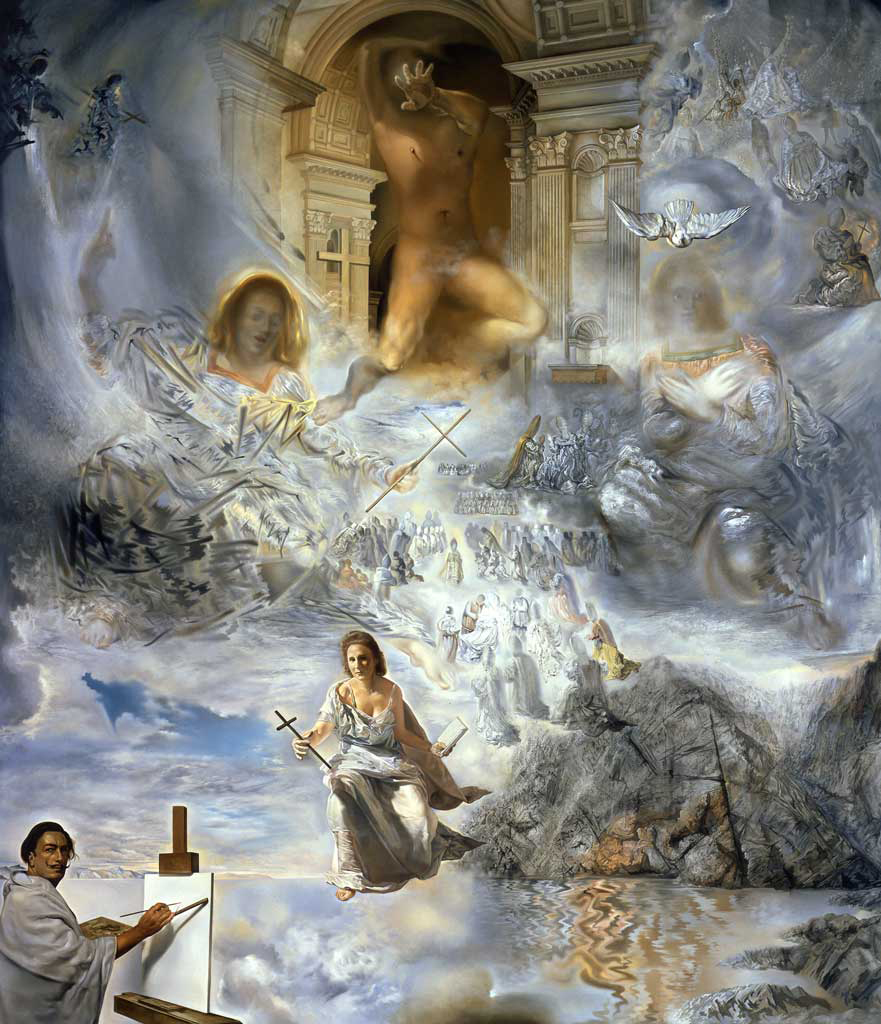
Salvador Dalí (Spanish, 1904-1989) 'City of Drawers' 1936 from the exhibition 'Shatter Rupture Break' at the Art Institute of Chicago, February - May, 2025


Salvador Dalí (Spanish, 1904-1989)
City of Drawers
1936
The Art Institute of Chicago
Gift of Frank B. Hubachek
© Salvador Dalí, Fundació Gala-Salvador Dalí / Artists Rights Society (ARS), New York, 2014
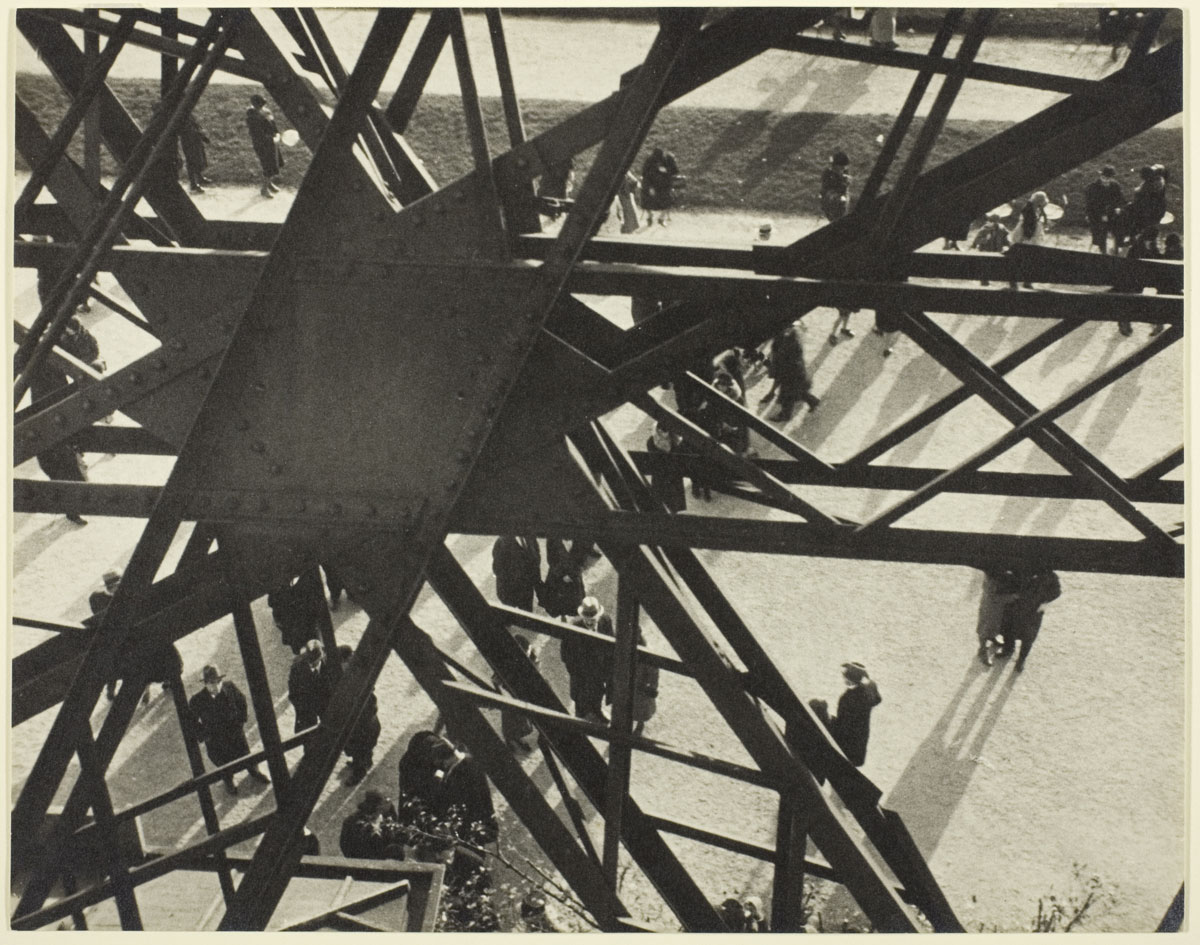
 

Ilse Bing (German, 1899-1998) 'Eiffel Tower, Paris, 1931' 1931


Ilse Bing (German, 1899-1998)
Eiffel Tower, Paris, 1931
1931
Julien Levy Collection, Gift of Jean and Julien Levy
© Estate of Ilse Bing


Luis Buñuel (Spanish, 1900-1983) and Salvador Dalí (Spanish, 1904-1989)
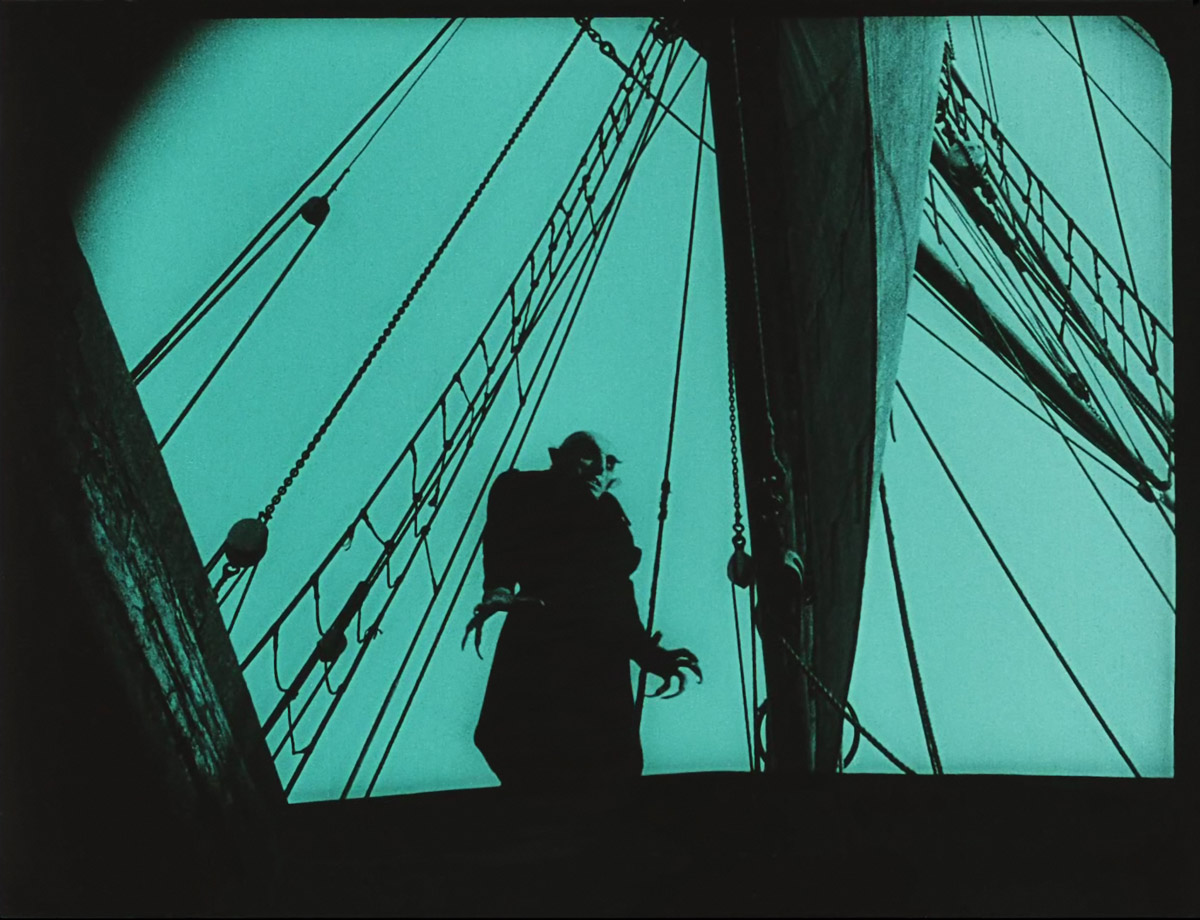
Un Chien Andalou
1929

Director – Luis Buñuel
Writers – Salvador Dali, Luis Buñuel
Cast – Simone Mareuil, Pierre Batcheff


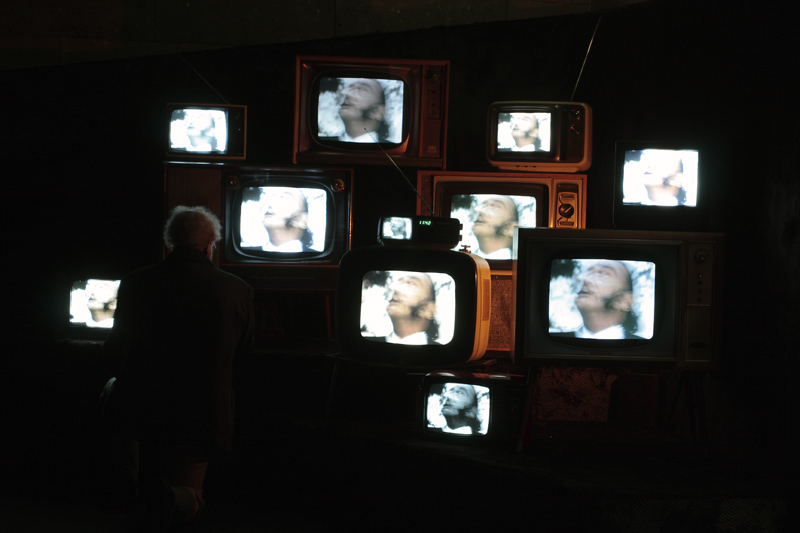
Un Chien Andalou (An Andalusian Dog) is a 1929 Franco-Spanish silent surrealist short film by Spanish director Luis Buñuel and artist Salvador Dalí. Buñuel’s first film, it was initially released in a limited capacity at Studio des Ursulines in Paris, but became popular and ran for eight months.

Un Chien Andalou has no plot in the conventional sense of the word. With disjointed chronology, jumping from the initial “once upon a time” to “eight years later” without events or characters changing, it uses dream logic in narrative flow that can be described in terms of the then-popular Freudian free association, presenting a series of tenuously related scenes.


Fernand Léger (French, 1881-1955) and Dudley Murphy (American, 1897-1968)
Ballet Mécanique
1924


Ballet Mécanique (1923-1924) is a Dadaist post-Cubist art film conceived, written, and co-directed by the artist Fernand Léger in collaboration with the filmmaker Dudley Murphy (with cinematographic input from Man Ray). It has a musical score by the American composer George Antheil. However, the film premiered in silent version on 24 September 1924 at the Internationale Ausstellung neuer Theatertechnik (International Exposition for New Theater Technique) in Vienna presented by Frederick Kiesler. It is considered one of the masterpieces of early experimental filmmaking.


Ballet mécanique (1924) | MoMA

Ballet mécanique, conceived by painter Fernand Léger and photographed by filmmaker Dudley Murphy (possibly with some involvement from Man Ray), is a rhythmic interplay between human and object. Affected by his experience of fighting in World War I, and in particular by the mustard gas attack that left him hospitalised for a year, Léger became fascinated with mechanical technology, which would feature heavily in his post-1917 art. Ballet mécanique, his only film, is an example of this juxtaposition of man and machine: gears and pendulums vs. eyes and mouths, pistons pumping vs. a woman’s endless climb up the stairs, clocks vs. legs. A kaleidoscopic combination of faces and kitchen utensils, Ballet mécanique was completely unlike contemporary commercial movies, and would pave the way for other revolutionary films like Metropolis and Limite.

If you were to see Ballet mécanique installed in one of our galleries or projected in one of our theaters, it would look a little different than it does here – the frameline would be stabilised and the edges of the picture would either be cropped or camouflaged with masking around the screen. However, we are presenting this version the way a scholar visiting the Film Study Center would see it on a flatbed viewing machine, with a slight bounce to the image and the sprocket holes visible, and without live musical accompaniment. (The score, composed by George Antheil and usually performed as a separate concert piece, was finished several years after Ballet mécanique premiered and is significantly longer than the film.)

MoMA text from the YouTube website
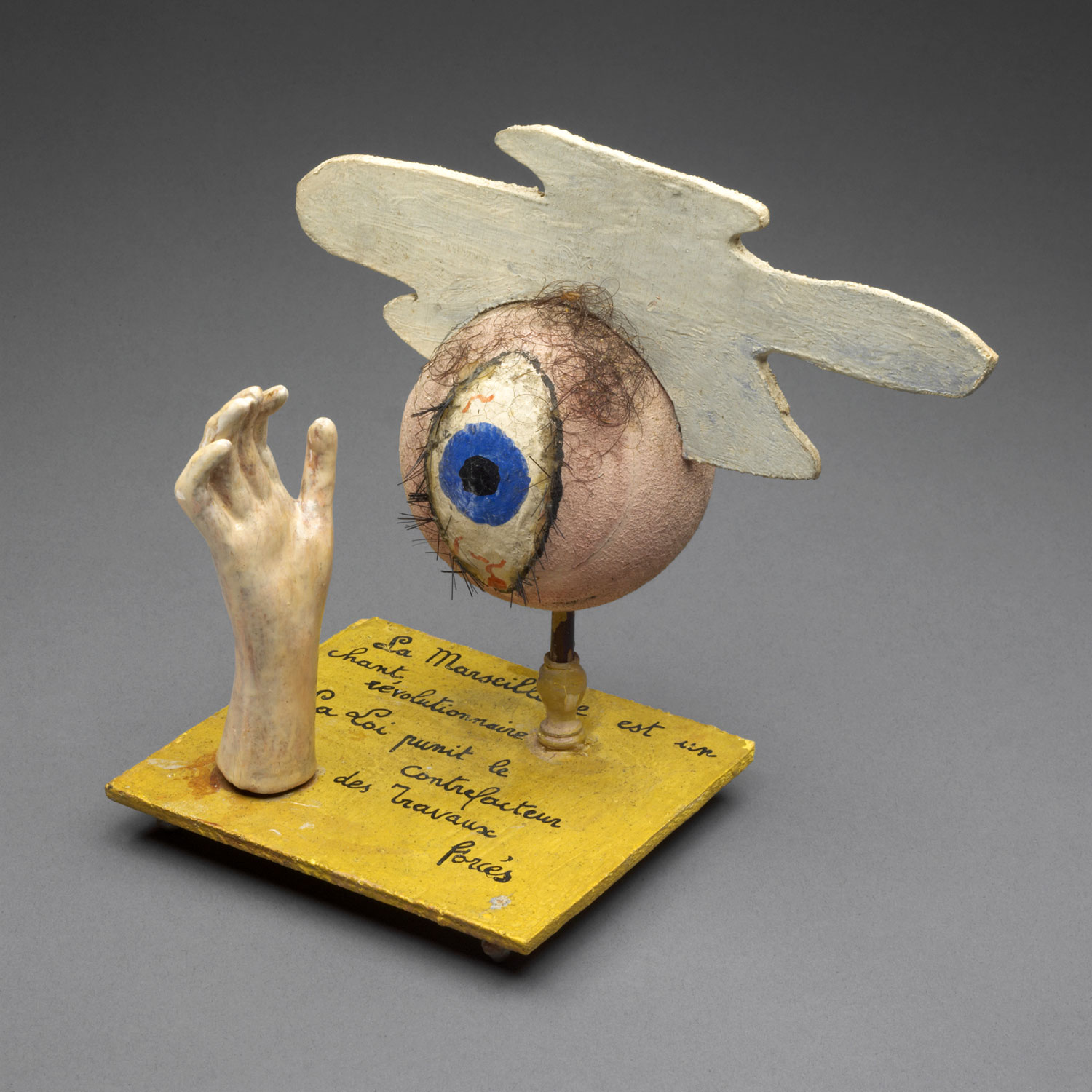
 

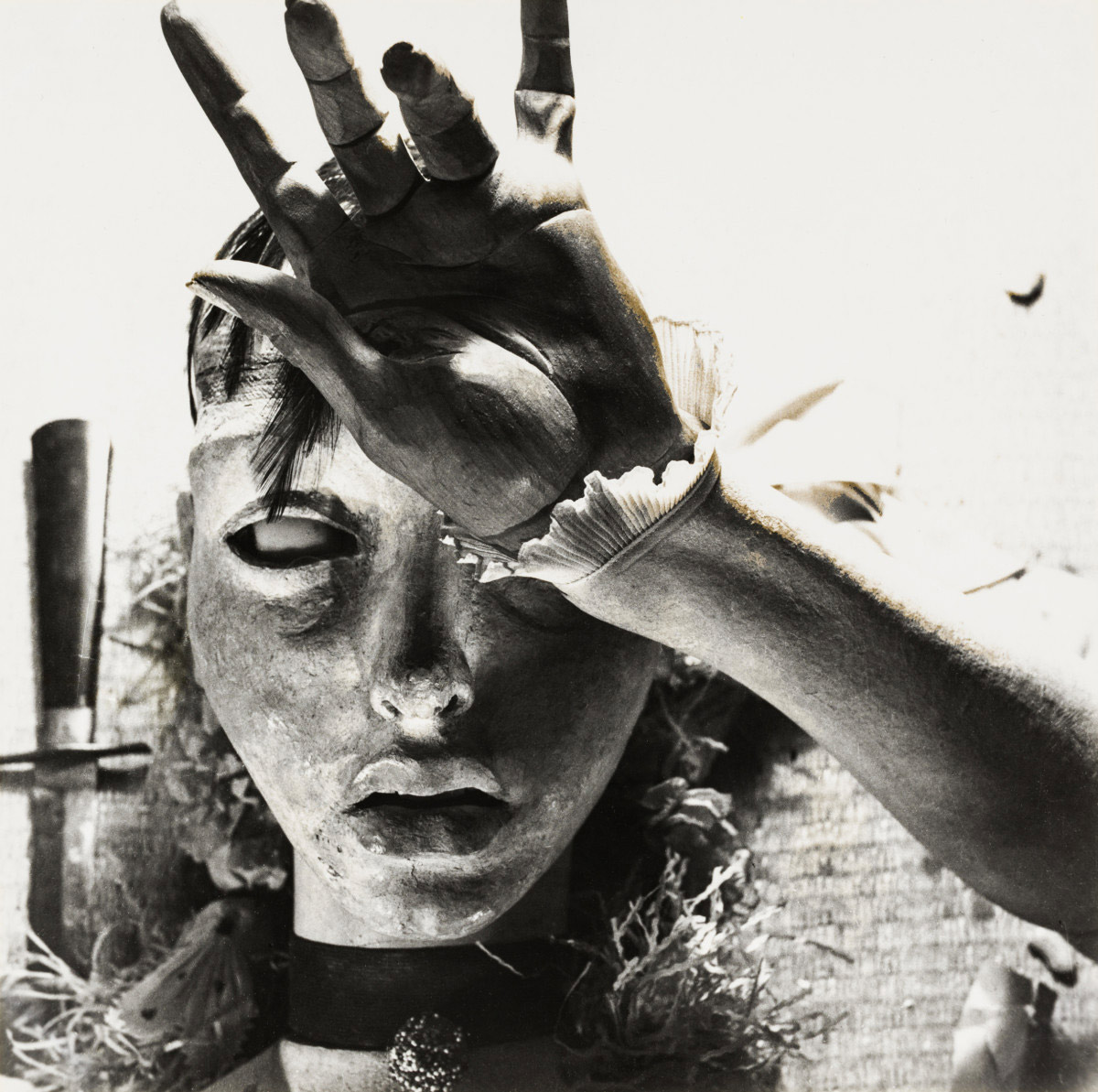
Claude Cahun (French, 1894-1954) 'Object' 1936


Claude Cahun (French, 1894-1954)
Object
1936
The Art Institute of Chciago
Through prior gift of Mrs. Gilbert W. Chapman


A century ago, society and life were changing as rapidly and radically as they are in today’s digital age. Quicker communication, faster production, and wider circulation of people, goods, and ideas – in addition to the outbreak of World War I – produced a profoundly new understanding of the world, and artists in the early years of the 20th century responded to these issues with both exhilaration and anxiety. Freeing themselves from the restraints of tradition, modern artists developed groundbreaking pictorial strategies that reflect this new shift in perception.

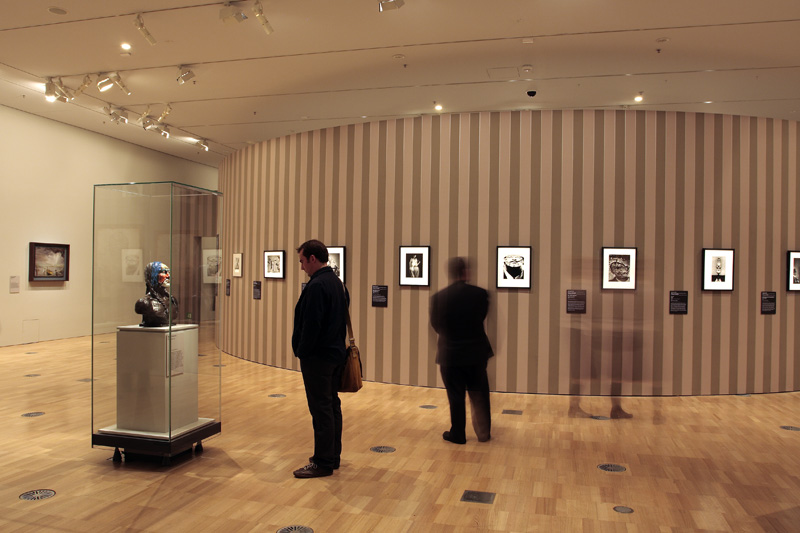
Shatter Rupture Break, the first exhibition in The Modern Series, explores the manifold ways that ideas of fragmentation and rupture, which permeated both the United States and Europe, became central conceptual and visual themes in art of the modern age. Responding to the new forms and pace of the metropolis, artists such as Robert Delaunay and Gino Severini disrupted traditional conventions of depth and illusionism, presenting vision as something fractured. Kurt Schwitters and George Grosz explored collage, using trash and bits and pieces of printed material in compositions to reflect social and political upheaval and produce something whole out of fragments. In the wake of new theories of the mind as well as the literal tearing apart of bodies in war, artists such as Hans Bellmer, Salvador Dalí, and Stanisław Witkiewicz produced photographs and objects revealing the fractured self or erotic dismemberment. The theme of fragmentation was ubiquitous as inspiration for both the formal and conceptual revolutions in art making in the modern age.

Shatter Rupture Break unites diverse objects from across the entire holdings of the Art Institute – paintings, sculpture, works on paper, photographs, decorative arts and designed objects, textiles, books, and films – to present a rich cacophony that exemplifies the radical and generative ruptures of modern art.

The Modern Series

A quintessentially modern city, Chicago has been known as a place for modern art for over a century, and the Art Institute of Chicago has been central to this history. The Modern Series exhibitions are designed to bring together the museum’s acclaimed holdings of modern art across all media, display them in fresh and innovative ways within new intellectual contexts, and demonstrate the continued vitality and relevance of modern art for today.

Text from the Art Institute of Chicago website


Robert Delaunay (French, 1885-1941) 'Champs de Mars: The Red Tower' 1911/1923


Robert Delaunay (French, 1885-1941)
Champs de Mars: The Red Tower
1911/1923
The Art Institute of Chicago
Joseph Winterbotham Collection


Fernand Léger (French, 1881-1955) 'Composition in Blue' 1921-1927


Fernand Léger (French, 1881-1955)
Composition in Blue
1921-1927
The Art Institute of Chicago
Charles H. and Mary F. S. Worcester Collection
© 2014 Artists Rights Society (ARS), New York / ADAGP, Paris
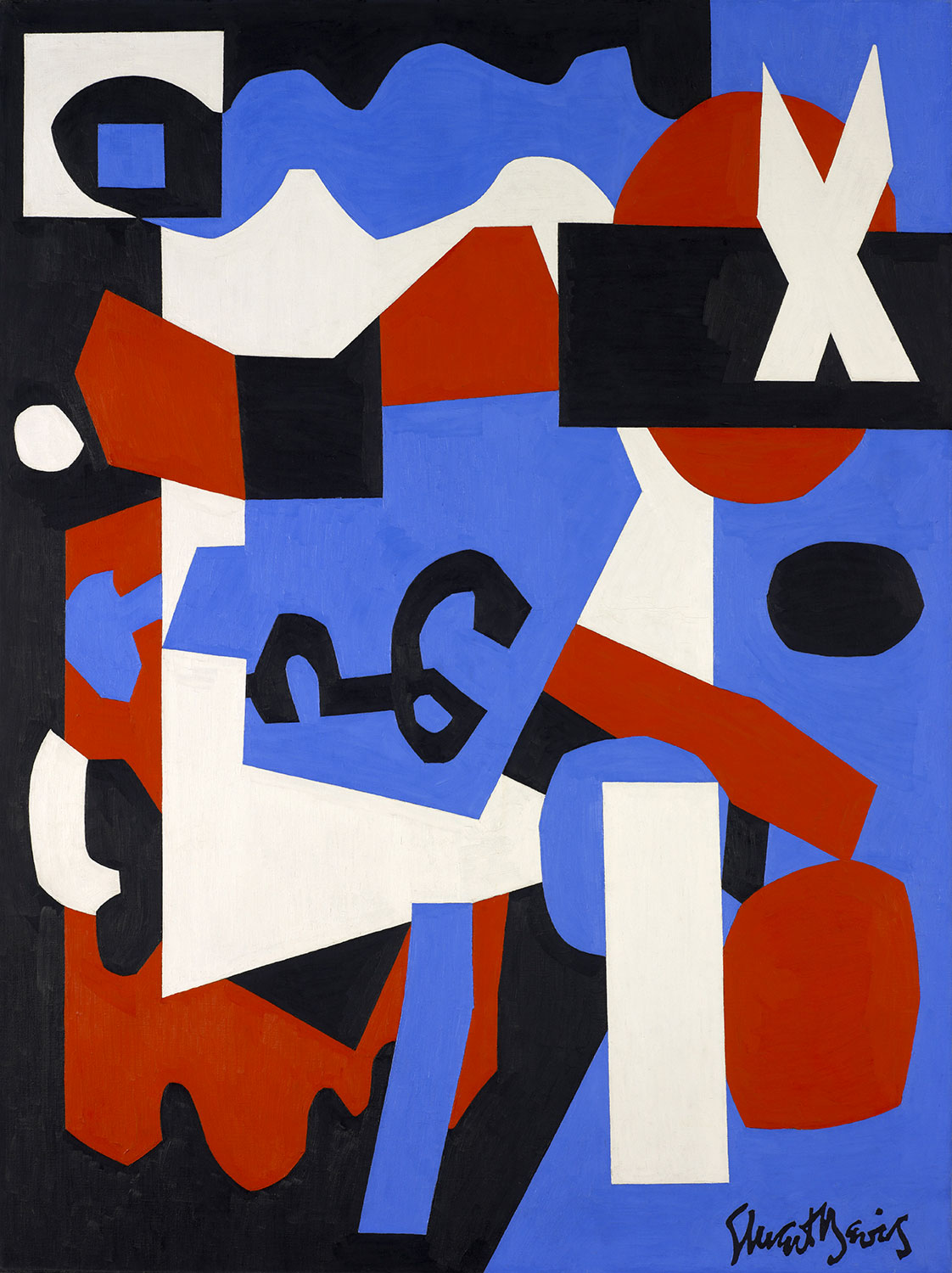
 

Stuart Davis (American, 1892-1964) 'Ready-to-Wear' 1955


Stuart Davis (American, 1892-1964)
Ready-to-Wear
1955
The Art Institute of Chicago
Restricted gift of Mr. and Mrs. Sigmund W. Kunstadter; Goodman Endowment


Designed by Ruben Haley, Made by Consolidated Lamp and Glass Company. "Ruba Rombic" Vase, 1928/1932


Designed by Ruben Haley
Made by Consolidated Lamp and Glass Company
“Ruba Rombic” Vase
1928/1932
Art Institute of Chicago
Raymond W. Garbe Fund in honor of Carl A. Erikson; Shirley and Anthony Sallas Fund


Kurt Schwitters (German, 1887-1948) 'Mz 13 Call' 1919


Kurt Schwitters (German, 1887-1948)
Mz 13 Call
1919
The Art Institute of Chicago
Gift of Mr. and Mrs. Maurice E. Culberg
© 2014 Artists Rights Society (ARS), New York / VG Bild-Kunst, Bonn
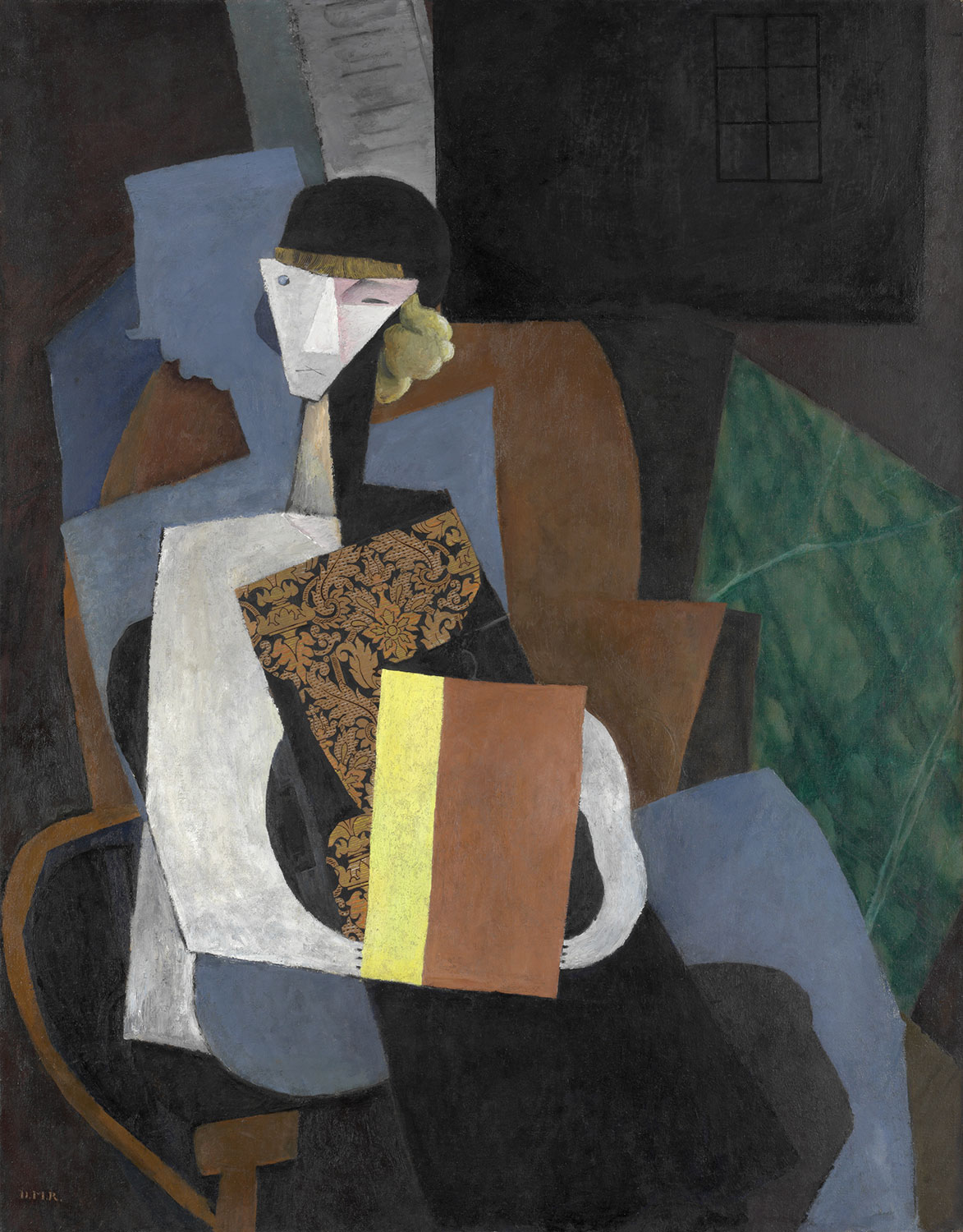
 

Diego Rivera (Mexican, 1886-1957) 'Portrait of Marevna' c. 1915


Diego Rivera (Mexican, 1886-1957)
Portrait of Marevna
c. 1915
The Art Institute of Chicago
Alfred Stieglitz Collection, gift of Georgia O’Keeffe
© 2014 Banco de México Diego Rivera Frida Kahlo Museums Trust, Mexico, D.F. / Artists Rights Society (ARS), New York


The Art Institute of Chicago is introducing an innovative new series of exhibitions that presents works from the museum’s acclaimed collection of modern art in reimagined ways that demonstrate the continued vitality and significance these works have today.

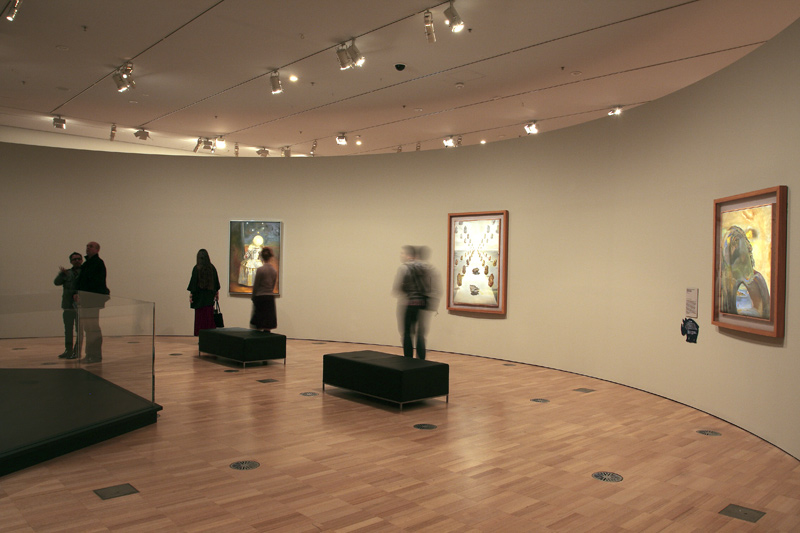
The Modern Series debuts with Shatter Rupture Break, opening Sunday, February 15, in Galleries 182 and 184 of the museum’s Modern Wing. The exhibition unites such diverse objects as paintings, sculpture, works on paper, photographs, decorative arts and designed objects, textiles, books, and films.

“We wanted to explore how the idea of rupture permeated modern life in Europe and the Americas,” said Elizabeth Siegel, Associate Curator of Photography, who, with Sarah Kelly Oehler, the Gilda and Henry Buchbinder Associate Curator of American Art, took the lead in organising the first exhibition. “It served as an inspiration for revolutionary formal and conceptual developments in art making that remain relevant today.”

A century ago, society was changing as rapidly and radically as it is in today’s digital age. Quicker communication, faster production, and wider circulation of people, goods, and ideas – in addition to the outbreak of World War I – produced a profoundly new understanding of the world, and artists responded with both anxiety and exhilaration. Freeing themselves from the restraints of tradition, modern artists developed groundbreaking pictorial strategies that reflected this new shift in perception.

Responding to the new forms and pace of cities, artists such as Robert Delaunay (French, 1885-1941) and Gino Severini (Italian, 1883-1966) disrupted traditional conventions of depth and illusionism, presenting vision as something fractured. Delaunay’s Champs de Mars: The Red Tower fragments the iconic form of the Eiffel Tower, exemplifying how modern life – particularly in an accelerated urban environment – encouraged new and often fractured ways of seeing. Picturesque vistas no longer adequately conveyed the fast pace of the modern metropolis.

The human body as well could no longer be seen as intact and whole. A devastating and mechanised world war had returned men from the front with unimaginable wounds, and the fragmented body became emblematic of a new way of understanding a fractured world. Surrealists such as Hans Bellmer (German, 1902-1975), Claude Cahun (French, 1894-1954) and Salvador Dalí (Spanish, 1904-1989) fetishised body parts in images, separating out eyes, hands, and legs in suggestive renderings. A more literal representation of the shattered body comes from Chicago’s own Ivan Albright, who was a medical draftsman in World War I. In his rarely shown Medical Sketchbook, he created fascinatingly gruesome watercolours that documented injured soldiers and the x-rays of their wounds.

Just as with the body, the mind in the modern era also came to be seen as fragmented. Stanislaw Witkiewicz (Polish, 1885-1939) produced a series of self-portraits as an act of psychological exploration. His work culminated in one stunning photograph made by shattering a glass negative, which he then reassembled and printed, thus conveying an evocative sense of a shattered psyche. The artistic expression of dreams and mental imagery perhaps reached a pinnacle not in a painting or a sculpture, but in a film. Luis Buñuel and Salvador Dalí’s film Un chien andalou (An Andalusian Dog) mystified viewers with its dreamlike narrative, dissolves from human to animal forms, dismembered body parts, and shockingly violent acts in an attempt to translate the unconscious mind onto a celluloid strip.

Kurt Schwitters (German, 1887-1948) and George Grosz (German, 1893-1959) explored collage, which took on new importance for avant-garde artists thanks to the aesthetic appeal and widespread availability of mass-produced media. Schwitters used the ephemera of German society to create what he called Merz, an invented term signifying an artistic practice that included collage, assemblage, painting, poems, and performance. The Art Institute owns a significant group of these collages by Schwitters, and six will appear in the exhibition. The use of thrown-away, ripped up, and scissored-out pieces of paper, divorced from their original meaning and reassembled with nails and glue into new objects, was an act that exposed the social and political disruptions of a German society that seemed broken and on the edge of collapse in the aftermath of World War I.

Shatter Rupture Break is unusual in that it unites objects from across the entire museum – from seven curatorial departments as well as the library. This multiplicity is significant because modern artists did not confine themselves to one medium, but explored different visual effects across a variety of media. As well, the show prominently features the voices of artists, writers, scientists, and other intellectuals of the period. The goal is to create a dynamic space that evokes the electrifying, disruptive, and cacophonous nature of modern art at the time.

“We hope to excite interest in the modern period as a crucial precursor to the changes of our own time, to show how what might seem old now was shockingly fresh then,” said Oehler.

Considered one of the finest and most comprehensive in the world, the Art Institute’s collection of modern art includes nearly 1,000 works by artists from Europe and the Americas. The museum was an early champion of modern artists, from its presentation of the Armory Show in 1913 to its early history of acquiring major masterpieces. This show highlights some recent acquisitions of modern art, but also includes some long-held works that have formed the core of the modern collection for decades. Shatter Rupture Break celebrates this history by bringing together works that visitors may know well, but have never seen in this context or with this diverse array of objects.”

Press release from the Art Institute of Chicago
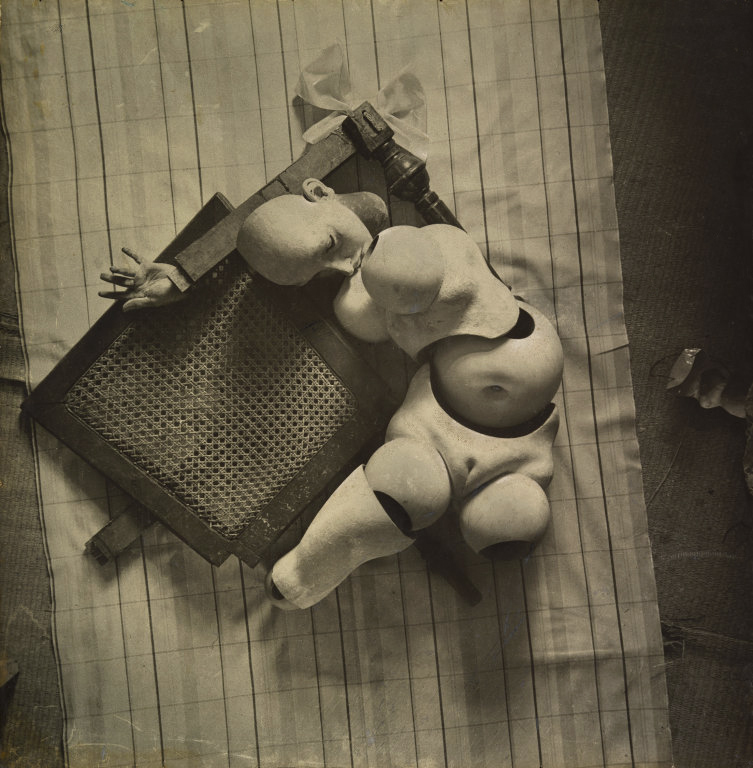
 

Hans Bellmer (German born Poland, 1902-1975) 'The Doll (La Poupée)' 1935


Hans Bellmer (German born Poland, 1902-1975)
The Doll (La Poupée)
1935
Gelatin silver print overpainted with white gouache
65.6 x 64cm
Anonymous restricted gift; Special Photography Acquisition Fund; through prior gifts of Boardroom, Inc., David C. and Sarajean Ruttenberg, Sherry and Alan Koppel, the Sandor Family Collection, Robert Wayne, Simon Levin, Michael and Allison Delman, Charles Levin, and Peter and Suzann Matthews; restricted gift of Lynn Hauser and Neil Ross
© 2015 Artists Rights Society (ARS), New York / ADAGP, Paris


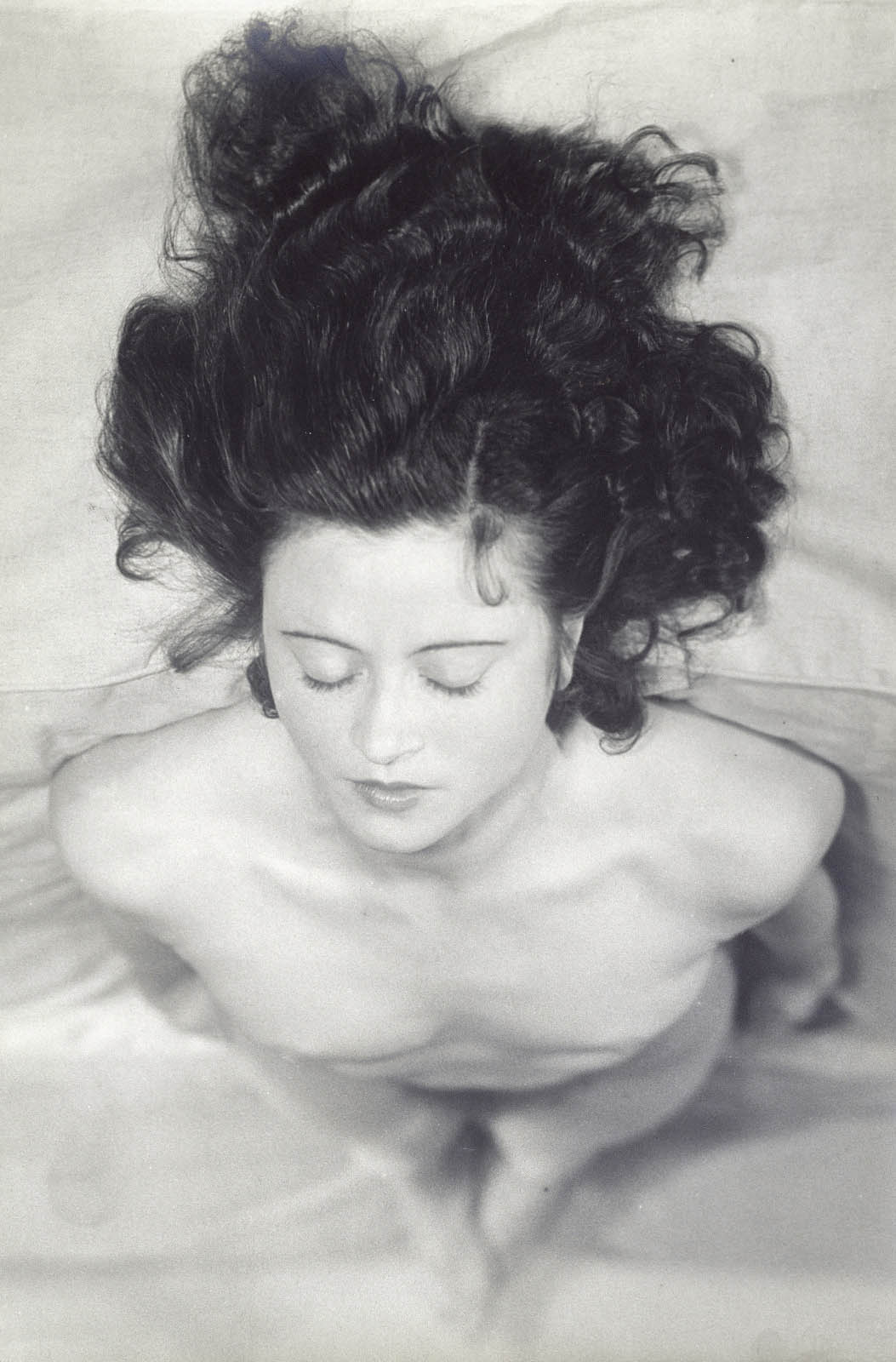
Umbo (Otto Umber) (German, 1902-1980) 'Untitled' 1928


Umbo (Otto Umber) (German, 1902-1980)
Untitled
1928
Julien Levy Collection, Gift of Jean and Julien Levy
© 2014 Phyllis Umbehr/Galerie Kicken Berlin/ Artists Rights Society (ARS), New York


Stanisław Ignacy Witkiewicz (Polish, 1885-1939) 'Self-Portrait, Zakopane [Broken Glass]' 1910


Stanisław Ignacy Witkiewicz (Polish, 1885-1939)
Self-Portrait, Zakopane [Broken Glass]
1910
Promised Gift of a Private Collection


The Art Institute of Chicago
111 South Michigan Avenue
Chicago, Illinois 60603-6404
Phone: (312) 443-3600

Opening hours:
Thursday – Monday 11am – 5pm
Closed Tuesday and Wednesday
The museum is closed Thanksgiving, Christmas, and New Year’s days.

The Art Institute of Chicago website

LIKE ART BLART ON FACEBOOK

Back to top

Exhibition: ‘Horst: Photographer of Style’ at the Victoria & Albert Museum, London

Exhibition dates: 6th September 2014 – 4th January 2015

Curator: Susanna Brown, Curator of Photographs at the V&A


Installation image of 'Horst - Photographer of Style' at the V&A


Installation image of Horst – Photographer of Style at the V&A
© Victoria and Albert Museum, London


Steichen, Penn, Avedon, Newman – and then there is Horst, master of them all. Style, elegance, lighting, framing, colour but above all panache – the guts and talent to push it just that little bit further.

Marcus


Many thankx to the Victoria & Albert Museum for allowing me to publish the photographs in the posting. Please click on the photographs for a larger version of the image.


“Fashion is an expression of the times. Elegance is something else again.”


Horst, 1984


Installation image of 'Horst - Photographer of Style' at the V&A

Installation image of 'Horst - Photographer of Style' at the V&A

Installation image of 'Horst - Photographer of Style' at the V&A

Installation image of 'Horst - Photographer of Style' at the V&A

Installation image of 'Horst - Photographer of Style' at the V&A


Installation images of Horst – Photographer of Style at the V&A
© Victoria and Albert Museum, London


This autumn, the V&A will present the definitive retrospective exhibition of the work of master photographer Horst P. Horst (1906-1999) – one of the leading photographers of the 20th century. In his illustrious 60-year career, German-born Horst worked predominantly in Paris and New York and creatively traversed the worlds of photography, art, fashion, design, theatre and high society.
Horst: Photographer of Style will display 250 photographs, alongside haute couture garments, magazines, film footage and ephemera. The exhibition explores Horst’s collaborations and friendships with leading couturiers such as Coco Chanel and Elsa Schiaparelli in Paris; stars including Marlene Dietrich and Noël Coward; and artists and designers such as Salvador Dalí and Jean-Michel Frank. Highlights of the exhibition include photographs recently donated to the V&A by Gert Elfering, art collector and owner of the Horst Estate, previously unpublished vintage prints, and more than 90 Vogue covers by Horst.

The exhibition will also reveal lesser-known aspects of Horst’s work: nude studies, travel photographs from the Middle East and patterns created from natural forms. The creative process behind some of his most famous photographs, such as the Mainbocher Corset, will be revealed through the inclusion of original contact sheets, sketches and cameras. The many sources that influenced Horst – from ancient Classical art to Bauhaus ideals of modern design and Surrealism in 1930s Paris – will be explored.

Martin Roth, Director of the V&A said: “Horst was one of the greatest photographers of fashion and society and produced some of the most famous and evocative images of the 20th century. This exhibition will shine a light on all aspects of his long and distinguished career. Horst’s legacy and influence, which has been seen in work by artists, designers and performers including Herb Ritts, Robert Mapplethorpe, Bruce Weber and Madonna, continues today.”

Horst’s career straddled the opulence of pre-war Parisian haute couture and the rise of ready-to-wear in post-war New York and his style developed from lavish studio set-ups to a more austere approach in the latter half of the 20th century. The exhibition will begin in the 1930s with Horst’s move to Paris and his early experiments in the Vogue studio. Among his first models and muses were Lisa Fonssagrives, Helen Bennett and Lyla Zelensky. Vintage black and white photographs from the archive of Paris Vogue will be displayed alongside garments in shades of black, white, silver and gold by Parisian couturiers such as Chanel, Lanvin, Molyneux and Vionnet.

The exhibition will then focus on Horst’s Surreal-inspired studies and collaborations with Salvador Dalí and Elsa Schiaparelli. Fashion photographs will be shown with trompe l’oeil portraits and haunting still life. Horst excelled at portraiture and in the 1930s he captured some of Hollywood’s brightest stars: Rita Hayworth, Bette Davis, Vivien Leigh, Noël Coward, Ginger Rogers, Marlene Dietrich and Joan Crawford, to name a few.

Horst travelled widely throughout the 1940s and 1950s to Israel, Iran, Syria, Italy and Morocco. An escape from the world of fashion and city environs, his little-known travel photographs reveal a fascination for ancient cultures, landscapes and architecture. On display will be works taken in Iran such as the Persepolis Bull, Horst’s powerful image of a vast sculpture head amidst the ruins of a once magnificent palace, and images documenting the annual migration of the nomadic Qashqai clan.

Detailed studies of natural forms such as flowers, minerals, shells and butterfly wings from the project Patterns From Nature, will be shown alongside a series of kaleidoscopic collages made by arranging photographs in simple repeat; his intention was that these dynamic patterns could be used as designs for textiles, wallpaper, carpets, plastics and glass.

Horst was admired for his dramatic lighting and became one of the first photographers to perfect the new colour techniques of the 1930s. A short film of him at work in the Vogue studios during the 1940s will be shown with an introduction to his peers including Lee Miller, Cecil Beaton and Irving Penn. The advent of colour enabled a fresh approach and Horst went on to create more than 90 Vogue covers and countless pages in vivid colour. A selection of 25 large colour photographs, newly printed from the original transparencies from the Condé Nast Archive, will demonstrate Horst’s exceptional skill as a colourist. These prints feature Horst’s favourite models from the 1940s and 50s, such as Carmen Dell’Orefice, Muriel Maxwell and Dorian Leigh, and will be shown together with preparatory sketches, which have never previously been exhibited.

In the early 1950s, Horst created a series of male nudes for an exhibition in Paris for which the models were carefully posed and dramatically lit to accentuate their musculature. The series evokes the classical sculpture that Horst so admired throughout his career. During the 1960s and 1970s, Horst photographed some of the world’s most beautiful and luxurious homes for House and Garden and Vogue under the editorship of his friend Diana Vreeland. A three-sided projection and interactive screens will present these colourful studies. Among the most memorable are the Art Deco apartment of Karl Lagerfeld, the three lavish dwellings of Yves Saint Laurent and the Roman palazzo of artist Cy Twombly.

In the latter years of Horst’s life, his early aesthetic experienced a renaissance. The period also witnessed a flurry of new books, exhibitions, and television documentaries celebrating his work. Horst produced new, lavish prints in platinum-palladium for museums and the collector’s market, selecting emblematic works from every decade of his career, which will be showcased as the finale to the exhibition.

Press release from the V&A


Horst P. Horst (German-American, 1906-1999) 'Chanel, Vogue France' 1935


Horst P. Horst (German-American, 1906-1999)
Chanel, Vogue France
1935
© Condé Nast/Horst Estate


A fore-runner of the timeless look of Chanel, here in brown and white check rayon with collar, cuffs and lapels in white piquè that matches the buttoned top.


Horst P. Horst (German-American, 1906-1999) 'Hat and coat-dress by Bergdorf Goodman, modelled by Estrella Boissevain' 1938


Horst P. Horst (German-American, 1906-1999)
Hat and coat-dress by Bergdorf Goodman, modelled by Estrella Boissevain
1938
© Conde Nast / Horst Estate


Horst P. Horst (German-American, 1906-1999) 'Corset by Detolle for Mainbocher' 1939


Horst P. Horst (German-American, 1906-1999)
Corset by Detolle for Mainbocher
1939
© Conde Nast / Horst Estate


Horst P. Horst (German-American, 1906-1999) 'Lisa with Turban, New York' 1940


Horst P. Horst (German-American, 1906-1999)
Lisa with Turban, New York
1940
© Conde Nast / Horst Estate


Horst P. Horst (German-American, 1906-1999) 'Gertrude Stein at Balmain Fashion Show' 1946


Horst P. Horst (German-American, 1906-1999)
Gertrude Stein at Balmain Fashion Show
1946
© Conde Nast / Horst Estate


Horst P. Horst (German-American, 1906-1999) 'Birthday Gloves, New York' 1947


Horst P. Horst (German-American, 1906-1999)
Birthday Gloves, New York
1947
© Condé Nast/Horst Estate


Horst P. Horst (German-American, 1906-1999) 'Lillian Marcuson in Dior's belted two-piece suit in black rustic wool, called 'Milieu du Siècle'' 1949


Horst P. Horst (German-American, 1906-1999)
Lillian Marcuson in Dior’s belted two-piece suit in black rustic wool, called ‘Milieu du Siècle’
1949
© Condé Nast/Horst Estate


Horst P. Horst (German-American, 1906-1999) 'Nina de Voe' 1951


Horst P. Horst (German-American, 1906-1999)
Nina de Voe
1951
© Condé Nast/Horst Estate


Horst P. Horst (German-American, 1906-1999) 'Lillian Marcuson, New York' 1950


Horst P. Horst (German-American, 1906-1999)
Lillian Marcuson, New York
1950
© Condé Nast/Horst Estate


Horst P. Horst (German-American, 1906-1999) 'Outfit by Tina Leser' Vogue, April 1950


Horst P. Horst (German-American, 1906-1999)
Outfit by Tina Leser
Vogue, April 1950
© Condé Nast/Horst Estate


Horst P. Horst (German-American, 1906-1999) 'Bombay Bathing Fashion' 1950


Horst P. Horst (German-American, 1906-1999)
Bombay Bathing Fashion
1950
© Condé Nast/Horst Estate


Model (unidentified) and Dorian Leigh (r) in bathing suit and sleeveless shirt cover-up by Carolyn Schnurer 1951 Vogue


Haute Couture

When Horst joined Vogue in 1931, Paris was still the world’s undisputed centre of high fashion. Photography had begun to eclipse graphic illustration in fashion magazines and the publisher Condé Montrose Nast devoted large sums to improving the quality of image reproduction. He insisted that Vogue photographers work with a large format camera, which produced richly detailed negatives measuring ten by eight inches.

The creation of a Horst photograph was a collaborative process, involving the talents of the photographer and model, the art director, fashion editor, studio assistants and set technicians. The modelling profession was still in its infancy in the 1930s and many of those who posed under the hot studio lights were stylish friends of the magazine’s staff, often actresses or aristocrats.

By the mid 1930s, Horst had superseded his mentor George Hoyningen-Huene as Paris Vogue‘s primary photographer. His images frequently appeared in the French, British and American editions of the magazine. Many of the photographs on display in the exhibition are vintage prints from the company’s archive.


Horst P. Horst (German-American, 1906-1999) 'Dress by Hattie Carnegie' 1939


Horst P. Horst (German-American, 1906-1999)
Dress by Hattie Carnegie
1939
© Conde Nast / Horst Estate


Horst P. Horst (German-American, 1906-1999) 'Dress by Hattie Carnegie' 1939


Horst P. Horst (German-American, 1906-1999)
Dress by Hattie Carnegie
1939
© Conde Nast / Horst Estate


Horst P. Horst (German-American, 1906-1999) 'Muriel Maxwell, American Vogue' 1939


Horst P. Horst (German-American, 1906-1999)
Muriel Maxwell, American Vogue
1939
© Conde Nast / Horst Estate


Horst P. Horst (German-American, 1906-1999) 'Summer Fashions, American Vogue cover' 1941


Horst P. Horst (German-American, 1906-1999)
Summer Fashions, American Vogue cover
1941
© Conde Nast / Horst Estate


Horst P. Horst (German-American, 1906-1999) 'Dinner suit and headdress by Schiaparelli' 1947


Horst P. Horst (German-American, 1906-1999)
Dinner suit and headdress by Schiaparelli
1947
© Conde Nast / Horst Estate


Horst P. Horst (German-American, 1906-1999) 'Dinner suit and headdress by Schiaparelli' 1947 'Millicent Rogers in a Charles James gown and a gold necklace of her own design' Vogue, February 1, 1949


Horst P. Horst (German-American, 1906-1999)
Millicent Rogers in a Charles James gown and a gold necklace of her own design
Vogue,
February 1, 1949
© Conde Nast / Horst Estate


Horst in Colour from Victoria and Albert Museum


This film reveals the process of creating new colour prints for the exhibition Horst: Photographer of Style. Horst was quick to master new colour processes, introduced in the late 1930s, and he created hundreds of vibrant fashion photographs for Vogue.

The V&A team worked closely with specialists at the Condé Nast Archive and expert printer Ken Allen to select and print from Horst’s early transparencies, which date from the 1930s to the 1950s. The film includes insights into Horst’s dynamic approach from model Carmen Dell’Orefice and Vogue‘s International Editor at Large, Hamish Bowles.​


Fashion in Colour

The 1930s ushered in huge technical advancements in colour photography. Horst adapted quickly to a new visual vocabulary, creating some of Vogue‘s most dazzling colour images. In 1935 he photographed the Russian Princess Nadejda Sherbatow in a red velveteen jacket for the first of his many Vogue cover pictures.

The occupation of Paris transformed the world of fashion. The majority of French ateliers closed and many couturiers and buyers left the country. Remaining businesses struggled with extreme shortages of cloth and other supplies. The scarcity of French fashions in America, however, enabled American designers to come into their own.

Horst’s colour photographs are rarely exhibited because few vintage prints exist. Colour capture took place on a transparency which could be reproduced on the magazine page without the need to create a photographic print. The size of the new prints displayed in this room of the exhibition echoes the large scale of a group of Horst images printed in 1938 at the Condé Nast press.


Horst P. Horst (German-American, 1906-1999) 'Marlene Dietrich, New York' 1942


Horst P. Horst (German-American, 1906-1999)
Marlene Dietrich, New York
1942
© Conde Nast / Horst Estate


Horst P. Horst (German-American, 1906-1999) 'Gloria Vanderbilt age 17 wearing a dress by Howard Greer, New York' 1941


Horst P. Horst (German-American, 1906-1999)
Gloria Vanderbilt age 17 wearing a dress by Howard Greer, New York
1941
© Conde Nast / Horst Estate


At 17, in Beverly Hills wearing a tabletop dress by Howard Greer. Tabletop dresses looked good from the waist up when stars were photographed sitting in restaurants and nightclub


Stage and Screen

Horst’s portraits spanned a wide cross-section of subjects, from artists and writers to presidents and royalty. In the 1930s, he became aware of a new focus for his work. As he later noted in his book Salute to the Thirties (1971), glamorous Hollywood movie stars were imperceptibly assuming the place left vacant by Europe’s vanishing royal families. With the approach of the Second World War, the escapism offered by theatre and cinema gained in popularity. Horst began to photograph these new, classless celebrities, both in costume and as themselves.

The first well-known star Horst photographed was the English performer Gertrude Lawrence, then appearing in Ronald Jeans’ play Can the Leopard…? at the Theatre Royal, Haymarket. Horst’s first portrait of a Hollywood actress, Bette Davis, appeared in Vogue‘s sister magazine Vanity Fair in 1932.


Horst P. Horst (German-American, 1906-1999) 'Round the Clock, New York' 1987


Horst P. Horst (German-American, 1906-1999)
Round the Clock, New York
1987
© Conde Nast / Horst Estate


Platinum

The 1980s witnessed a flurry of new books, exhibitions and television documentaries about Horst. He produced new prints for museums and the collector’s market, selecting emblematic works from every decade of his career to be reprinted in platinum-palladium, sometimes with new titles. This was a complex and expensive technique, employing metals more expensive than gold. Failing eyesight finally forced him to stop working in 1992.

Horst’s platinum-palladium prints are treasured for their nuanced tones, surface quality and permanence. His style had experienced a renaissance in 1978 when Francine Crescent, French Vogue‘s editor in chief, had invited him to photograph the Paris collections. Horst’s work for her echoed his atmospheric, spot-lit studies of the 1930s. His use of the platinum process for creating new and reproducing early works ensured his mastery of light, mood and composition would be enjoyed by a new audience.


Horst P. Horst (German-American, 1906-1999) 'Male Nude #3' 1952, printed 1980s


Horst P. Horst (German-American, 1906-1999)
Male Nude #3
1952, printed 1980s
© Conde Nast / Horst Estate


Horst P. Horst (German-American, 1906-1999) 'Still Life' Nd


Horst P. Horst (German-American, 1906-1999)
Still Life
Nd
© Conde Nast / Horst Estate


Horst P. Horst (German-American, 1906-1999) 'Male Nude' 1952


Horst P. Horst (German-American, 1906-1999)
Male Nude
1952
© Conde Nast / Horst Estate


Male Nudes

In the early 1950s Horst produced a set of distinctive photographs unlike much of his previous output. These male figure studies were exhibited for the first time in Paris in 1953 and reprinted using the platinum-palladium process in the 1980s. The studies exemplify Horst’s sense of form. All emphasis is on the idealised human body, expressive light and shadow. Monumental and anonymous nudes resemble classical sculptures. As Mehemed Agha (1929-78), art director of American Vogue, commented:

“Horst takes the inert clay of human flesh and models it into the decorative shapes of his own devising. Every gesture of his models is planned, every line controlled and coordinated to the whole of the picture. Some gestures look natural and careless, because carefully rehearsed; the others, like Voltaire’s god, were invented by the artist because they did not exist.”


Horst P. Horst (German-American, 1906-1999) 'Salvador Dali's costumes for Leonid Massine's ballet 'Bacchanale'' 1939


Horst P. Horst (German-American, 1906-1999)
Salvador Dali’s costumes for Leonid Massine’s ballet Bacchanale
1939
© Conde Nast / Horst Estate


Horst P. Horst (German-American, 1906-1999) 'Lisa Fonssagrives hands, New York' 1941


Horst P. Horst (German-American, 1906-1999)
Lisa Fonssagrives hands, New York
1941
© Conde Nast / Horst Estate


Horst P. Horst (German-American, 1906-1999) 'Odalisque I' 1943


Horst P. Horst (German-American, 1906-1999)
Odalisque I
1943
© Conde Nast / Horst Estate


Horst P. Horst (German-American, 1906-1999) 'Bunny Hartley' Vogue, 1938


Horst P. Horst (German-American, 1906-1999)
Bunny Hartley
Vogue,
1938
© Conde Nast / Horst Estate


Horst P. Horst (German-American, 1906-1999) 'Lisa Fonssagrives "I Love You"' 1937


Horst P. Horst (German-American, 1906-1999)
Lisa Fonssagrives “I Love You”
1937
© Conde Nast / Horst Estate


Surrealism

The Surrealist art movement explored unique ways of interpreting the world, turning to dreams and the unconscious for inspiration. During the 1930s Surrealism escaped its radical avant-garde roots and transformed design, fashion, advertising, theatre and film. Horst’s photographs of this period feature mysterious, whimsical and surreal elements combined with his classical aesthetic. He created trompe l’oeil still life, photographed the surreal-infused dress designs of his friend Elsa Schiaparelli and collaborated with the artist Salvador Dalí. He shared with the Surrealists a fascination with the representation of the female body, often fragmenting and eroticising the human form in his images.

His most celebrated photograph of the era is Mainbocher Corset (1939). Decades after the photograph was made, Main Bocher himself expressed his admiration for Horst’s virtuosity, writing,

“Your photographs are sheer genius and delight my soul … each one is perfect by itself.”


Horst P. Horst (German-American, 1906-1999) 'Patterns from Nature Photographic Collage' 1945


Horst P. Horst (German-American, 1906-1999)
Patterns from Nature Photographic Collage
1945
© Conde Nast / Horst Estate


Patterns from Nature

Horst’s second book, Patterns from Nature (1946), and the photographs from which it originated, are a surprising diversion from the high glamour of his fashion and celebrity photographs. These close-up, black and white images of plants, shells and minerals were taken in New York’s Botanical Gardens, in the forests of New England, in Mexico, and along the Atlantic and Pacific coasts.

This personal project was partly inspired by photographs of plants by Karl Blossfeldt (1865-1932). Horst was struck by “their revelation of the similarity of vegetable forms to art forms like wrought iron and Gothic architecture.” Horst’s interest was also linked to the technical purity of ‘photographic seeing’, a philosophy associated with the New Objectivity movement of the 1920s and ’30s. Practitioners took natural forms out of their contexts and examined them with such close attention that they became unfamiliar and revelatory.


Horst P. Horst (German-American, 1906-1999) 'View of ruins at the palace of Persepolis, Persia' 1949


Horst P. Horst (German-American, 1906-1999)
View of ruins at the palace of Persepolis, Persia
1949
© Conde Nast / Horst Estate


Travel

In the summer of 1949, Horst journeyed to the Middle East with his partner Valentine Lawford, then political counsellor at the British Embassy in Tehran. They travelled by road from Beirut to Persepolis, where Horst was able to photograph parts of the ancient Persian city that had only recently been uncovered. Afterwards, Horst visited the newly established State of Israel on a photographic assignment for Vogue.

The trip left a strong impression on Horst and he returned in the spring of 1950. He spent a week with Lawford at the relatively remote south-eastern shore of the Caspian Sea, before documenting the annual migration of the Qashqa’i clan. Horst and Lawford were invited by Malik Mansur Khan Qashqa’i to spend ten days with his tribe as they travelled by camel and horse, in search of vegetation for their flocks.


Horst P. Horst (German-American, 1906-1999) 'Yves Saint Laurent poses in the apartment's grand salon for a November 1971 'Vogue' photo spread' 1971


Horst P. Horst (German-American, 1906-1999)
Yves Saint Laurent poses in the apartment’s grand salon for a November 1971 ‘Vogue’ photo spread
1971
© Conde Nast / Horst Estate


Living in Style

In 1947 Horst acquired five acres of land in Oyster Bay Cove, Long Island, part of the estate once owned by the designer Louis Comfort Tiffany. On the land he described as ‘everything I had ever dreamed of’, Horst built a unique house and landscaped garden. British diplomat Valentine Lawford visited for the first time in 1947, with Noël Coward, Christopher Isherwood, and Greta Garbo. It was the beginning of a relationship with Horst that would last until Lawford’s death in 1991.

They welcomed many friends and visitors to Long Island, including the dynamic editor Diana Vreeland. She left Harper’s Bazaar for Vogue in 1962 and soon put the couple to work on Vogue‘s ‘Fashions in Living’ pages. The homes and tastes of everyone from Jackie Onassis to the Duke and Duchess of Windsor, Andy Warhol and Karl Lagerfeld featured in their articles. Horst’s creative chemistry with Vreeland brought him a new lease of life.


Roy Stevens (American, b. 1916) 'Horst directing fashion shoot with Lisa Fonssagrives' 15 May 1941


Roy Stevens (American, b. 1916)
Horst directing fashion shoot with Lisa Fonssagrives
15 May 1941
© Time & Life Pictures / Getty Images


In the Studio

During the 1940s Horst worked primarily in the Condé Nast studio on the 19th floor of the Graybar Building, an Art Deco skyscraper on Manhattan’s Lexington Avenue. The busy studio was well equipped with a variety of lights and props and Horst worked closely with talented art director Alexander Liberman. Like Horst, he had found refuge in the artistic circles of Paris and New York, and enjoyed a long career with Condé Nast.

By 1946 dressing the American woman had become one of the country’s largest industries, grossing over six billion dollars a year. The staff of Vogue expanded accordingly. In 1951 Horst found a studio of his own, the former penthouse apartment of artist Pavel Tchelitchew, with high ceilings and a spectacular view over the river. Horst developed a new approach to photography in response to the abundance of daylight and for a time his famous atmospheric shadows disappeared.


Victoria and Albert Museum
Cromwell Road, London SW7 2RL

Opening hours:
The V&A is open daily from 10.00 to 17.45 and until 22.00 on Fridays

Victoria and Albert Museum website

Horst: Photographer of Style web page

LIKE ART BLART ON FACEBOOK

Back to top

Exhibition: ‘Philippe Halsman, Astonish Me!’ at The Musée de l’Elysée, Lausanne

Exhibition dates: 29th January – 11th May 2014


Philippe Halsman (American, 1906-1979) 'The Versatile Jean Cocteau' 1949


Philippe Halsman (American, 1906-1979)
The Versatile Jean Cocteau
1949
Musée de l’Elysée
© 2013 Philippe Halsman Archive / Magnum Photos


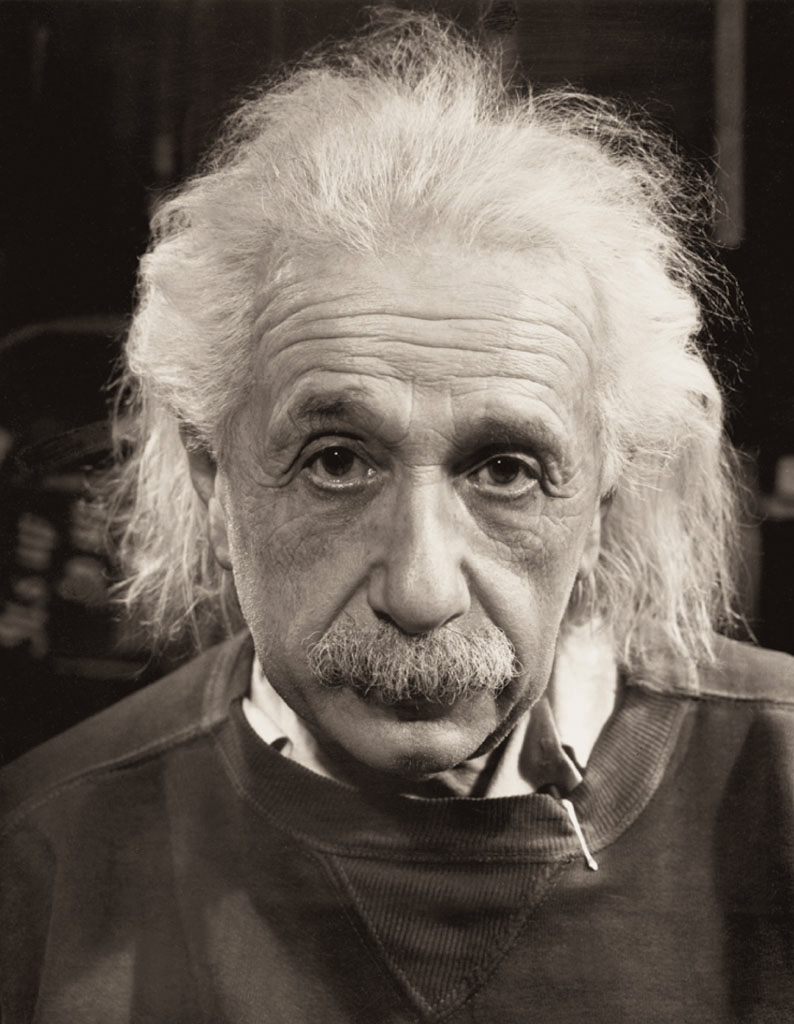
He “photographed a little bit of everything: animals, Paris, the homeless, underwater, nudes, advertising, fashion and, above all, celebrities portraits, from Ali, Einstein, Churchill, Hepburn, Warhol, Hitchcock and, of course, Marilyn Monroe.”

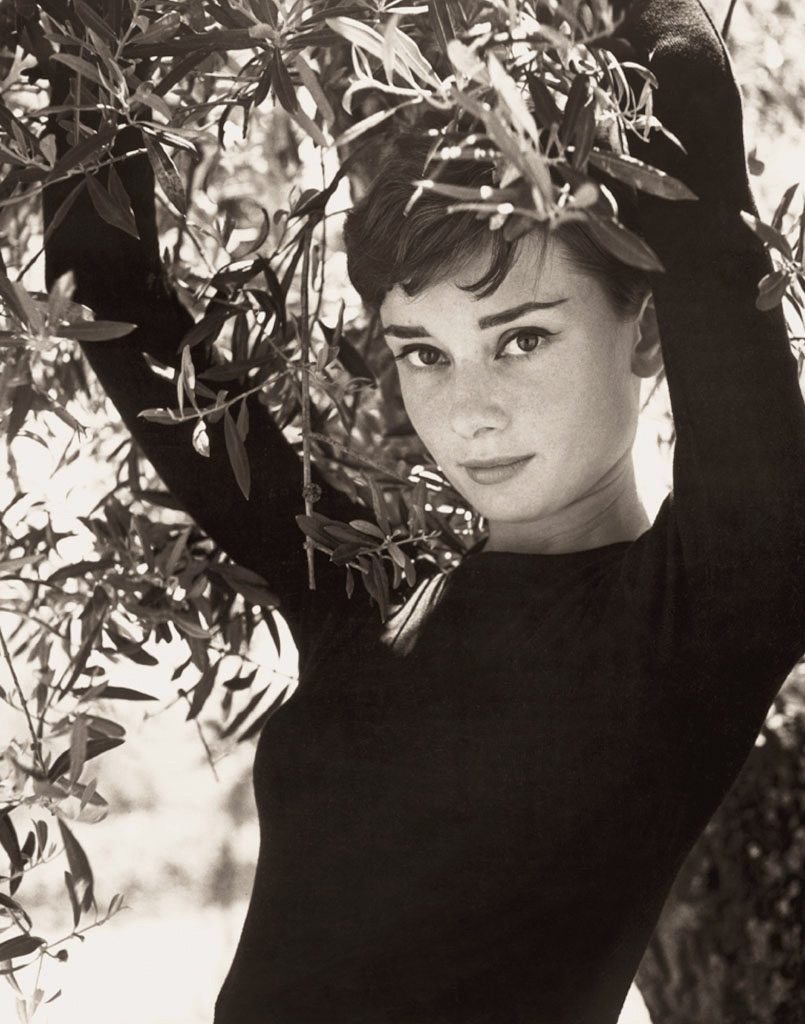
You could say that he was a versatile photographer, doing everything to pay the bills and anything to make interesting images. He never stopped experimenting with the image, but it is the “straight” portraits that I find are his strongest work. Not the “jump” photos, Monroe, or the surreal experiments with Dalí, much as they delight, but the portraits of Hepburn, Einstein and Churchill for example.

Look at the photograph of Winston Churchill (1951, below). What a way to portray the great man. The bulk of the overcoat, the slope of the shoulders (evincing a certain weariness), the famous Homburg hat pulled down on the head, the leader staring into the tranquil landscape. But what makes the image is the seam down the back of the overcoat which speaks to history itself – the backbone of the country, the never say die spirit, stiff upper lip, the rock of the British empire which Nazism could not defeat – epitomising the British bulldog spirit. Cometh the hour, cometh the man. Solid. Immovable. What a glorious photograph to capture that essence.

Dr Marcus Bunyan


Many thankx to the Elysée Lausanne for allowing me to publish the photographs in the posting. Please click on the photographs for a larger version of the image.


“Shortly before World War I, the greatest sensation in Paris was the Russian Imperial Ballet under Serge Diaghilev. The divine Nijinsky and Pavlova were dancing for him, Stravinsky composed, Picasso, Bakst, and Chagall were painting scenery for him. To work for Diaghilev was the highest accolade for an artist. Jean Cocteau approached Diaghilev and asked: ‘What can I do for you?’ Diaghilev looked at him and answered: ‘Etonne-moi!’ (‘Astonish me!’) These two words can be considered as a motto, as a slogan for the development of the modern art which followed.”


Philippe Halsman


“Photography is a separate form of expression since it falls between two art forms… It’s not only trying to give us a visual impression of reality, like painting and graphic arts, but also to communicate and inform us the way writing does. No writer should be blamed for writing about subjects that exist only in his imagination. And no photographer should be blamed when, instead of capturing reality, he tries to show things that he has only seen in his imagination.”


Philippe Halsman


Philippe Halsman (American, 1906-1979) 'Folle Iseult' 1944


Philippe Halsman (American, 1906-1979)
Folle Iseult
1944
Musée de l’Elysée
© 2013 Philippe Halsman Archive / Magnum Photos


“In my serious work I am striving for the essence of things and for goals which are possibly unobtainable. On the other hand, everything humorous has great attraction for me, and a childish streak leads me into all kinds of frivolous endeavour.”

Photographer Philippe Halsman had an exemplary career. Over a forty-year period, in Paris during the 1930s and in New York from 1940 on, he developed a broad range of activities (portraits, fashion, reportage, advertisements, personal projects, commissions from individuals and institutions). The Musée de l’Elysée presents the first study dedicated to his entire body of work, with a selection of over 300 pieces.

This project, produced in collaboration with the Philippe Halsman Archive, includes many exclusive unseen elements of the photographer’s work (contact sheets, annotated contact prints, preliminary proofs, original photomontages and mock-ups). The exhibition shows Philippe Halsman’s creative process and reveals a unique approach to photography: a means of expression to explore.

Born in 1906 in Riga, Latvia, Halsman studied engineering in Dresden before moving to Paris, where he opened a photographic studio in 1932. His years in Paris already heralded the approach he was to develop throughout his long career. A studio and reportage photographer, Halsman took inspiration from the contemporary art scene and participated in promoting it. Though he specialised in portraiture, he also branched out into advertising and publishing, which were thriving at the time. In 1940, the German invasion brought Halsman’s prosperous career to a halt, leading him to flee with his family to New York. Though initially unknown, he succeeded in establishing himself on the American market in under a year, and his studio soon became successful. Halsman stood out for his “psychological” approach to portraiture.

He distinguished himself in this area with his vast portrait gallery of celebrities (actors, industrialists, politicians, scientists, writers). Some of these images, such as Audrey Hepburn, Marilyn Monroe, Winston Churchill or Albert Einstein, became icons. He produced the largest number of covers (101) for Life magazine, the first weekly magazine to be illustrated only by photographs.

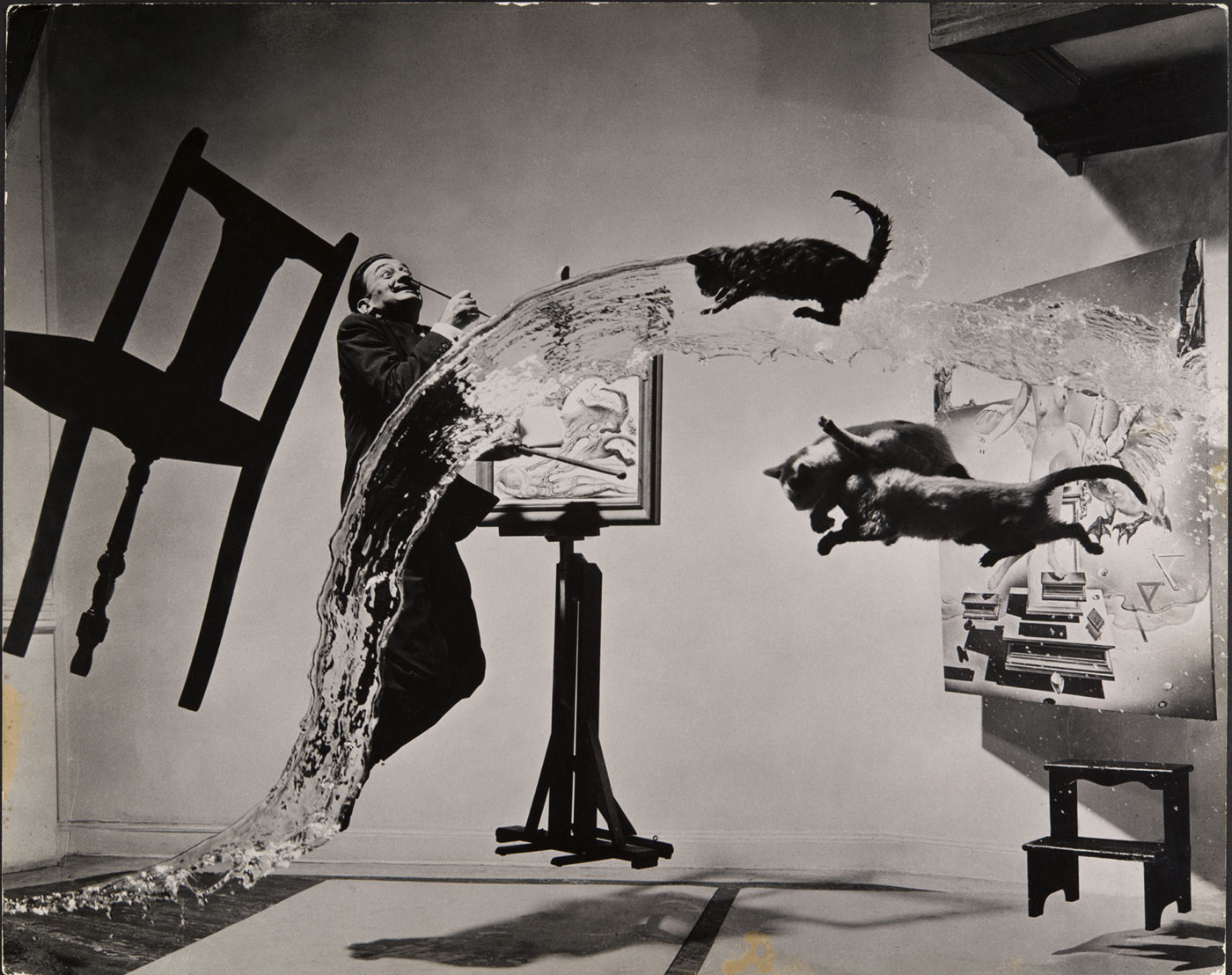
Halsman’s photography is characterised by a direct approach, masterful technique and a particular attention to detail. His work testifies to his constant research and his interest in all forms of technical and aesthetic experimentation, which he applied to a wide variety of subjects. For Halsman, photography was an excellent way of giving his imagination free reign. He was especially interested in mises en scène – in the form of single images or fictional series. He met Salvador Dalí in 1941 and the artist turned out to be the ideal accomplice. Their fruitful collaboration lasted 37 years. Philippe Halsman also introduced innovations through more personal creations such as the “photo-interview book” or ‘jumpology’.

Press release from the Musée de l’Elysée Lausanne website


Philippe Halsman (American, 1906-1979) 'Winston Churchill' 1951


Philippe Halsman (American, 1906-1979)
Winston Churchill
1951
Musée de l’Elysée
© 2013 Philippe Halsman Archive / Magnum Photos


Philippe Halsman (American, 1906-1979) 'Albert Einstein' 1947


Philippe Halsman (American, 1906-1979)
Albert Einstein
1947
Musée de l’Elysée
© 2013 Philippe Halsman Archive / Magnum Photos


Philippe Halsman (American, 1906-1979) 'Audrey Hepburn' 1955


Philippe Halsman (American, 1906-1979)
Audrey Hepburn
1955
Musée de l’Elysée
© 2013 Philippe Halsman Archive / Magnum Photos


Philippe Halsman (American, 1906-1979) 'Sammy Davis Jr' 1965


Philippe Halsman (American, 1906-1979)
Sammy Davis Jr
1965
Musée de l’Elysée
© 2013 Philippe Halsman Archive / Magnum Photos


Presentation of the exhibition

In 1921, Philippe Halsman found his father’s old camera, and spoke of a “miracle” when he developed his first glass plates in the family’s bathroom sink. He was 15 years old, and this was the first encounter with photography of someone who was to become one of the leading photographers of the 20th century. This exhibition, produced by the Musée de l’Elysée in collaboration with the Philippe Halsman Archive, showcases the American photographer’s entire career for the first time, from his beginnings in Paris in the 1930s to the tremendous success of his New York studio between 1940 and 1970.

Halsman was able to go to Paris thanks to the support of French minister Paul Painlevé – whose son Jean, a scientific filmmaker, gave him one of the best cameras of the time upon his arrival. He remained in Paris for ten years, until 1940. Over that period, he collaborated with the magazines Vogue, Vu and Voilà and created portraits of numerous celebrities like Marc Chagall, Le Corbusier and André Malraux. He exhibited his work several times at the avant-garde Pléiade gallery, alongside photographers like Laure Albin Guillot, whose work was exhibited at Musée de l’Elysée in 2013.

Fleeing Nazism, he left Paris in 1940 and moved to New York. There, he worked for many American magazines including Life, which brought him into contact with the century’s top celebrities – Marilyn Monroe, Rita Hayworth, Duke Ellington, the Duke and Duchess of Windsor, Richard Nixon, Albert Einstein to name only a few. Halsman shot 101 covers for Life magazine. Far from restricting himself to photographing celebrities, throughout his whole life Halsman never stopped experimenting and pushing the limits of his medium. He collaborated with Salvador Dalí for over thirty years and invented ‘jumpology’, which consisted in photographing personalities in the middle of jumping, offering a more natural, spontaneous portrait of his subjects.

The exhibition Philippe Halsman, Astonish me! is divided into four sections illustrating memorable periods, collaborations and themes in the photographer’s work and life.


Philippe Halsman (American, 1906-1979) 'Expérimentation pour un portrait de femme (Experimentation for a portrait of a woman)' 1931-1940


Philippe Halsman (American, 1906-1979)
Expérimentation pour un portrait de femme (Experimentation for a portrait of a woman)
1931-1940
Musée de l’Elysée
© 2013 Philippe Halsman Archive / Magnum Photos


Philippe Halsman (American, 1906-1979) 'Affiche exposition Pleiade (Poster for exhibition at La Pléiade gallery)' 1936


Philippe Halsman (American, 1906-1979)
Affiche exposition Pleiade (Poster for exhibition at La Pléiade gallery)
1936
Musée de l’Elysée
© 2013 Philippe Halsman Archive / Magnum Photos


“When I arrived in America in 1940 I had to adapt to the American style, that is to say, produce photographs that were technically perfect, clear, precise and properly modelled by the light without being distorted. Once, to accentuate the coldness of a rainy landscape I added a blue gelatin to my transparent film. Wilson Hicks took this gelatin off saying: ‘You’re cheating, Philippe’. Any hint of artifice was considered dishonest.”


Philippe Halsman


Paris in the 1930s

Philippe Halsman was born in Riga, Latvia in 1906. When he was 22, his father died in a hiking accident in Austrian Tyrol, and Philippe Halsman was wrongly convicted of his murder in a highly anti-Semitic climate. He was freed thanks to his sister’s support; she organised the support of prominent European intellectuals, who endorsed his innocence.

He went to Paris, where he began his career as a photographer, quickly distinguishing himself through his portrait technique. He explored various genres, such as views of Paris, nudes and fashion. His work was exhibited three times at the La Pléiade gallery, a famous avant-garde gallery where artists like Man Ray, André Kertész and Brassaï presented their works.

Focus on La Pléiade gallery

Founded by publisher Jacques Schiffrin in the spring of 1931 and located in the heart of the Latin Quarter, this art gallery was one of the first to present photographic exhibitions, and it started specialising in this field in April 1933 under directorship of Rose Sévèk. Dedicated to contemporary photography, the program incorporated its new practices and applications. It was one of the places where New Photography was promoted in the form of solo, group or thematic exhibitions.

It was probably through his friend Jean Painlevé that Halsman entered in contact with La Pléiade gallery. He was given a first solo exhibition, Portraits and Nudes, which ran from March 28 to April 30, 1936. The following year, his name became associated with the New Vision movement in the context of two group exhibitions: Portraits of Writers (April 17 to May 14, 1937) which included Emmanuel Sougez, Rogi André, Roger Parry and others; La Parisienne de 1900… à 1937 (June 4-30, 1937), which included photographs by Florence Henri and Maurice Tabard. It was one of the last exhibitions at the gallery, which was sold a few months later in October, to Paul Magné.

Having initially been unable to flee wartime Paris, Halsman finally received an emergency visa in 1940 thanks to a letter from Albert Einstein to Eleanor Roosevelt, making it possible for him to join his family, who had left six months earlier.


Philippe Halsman (American, 1906-1979) 'Marilyn Monroe jump' 1959


Philippe Halsman (American, 1906-1979)
Marilyn Monroe jump
1959
Musée de l’Elysée
© 2013 Philippe Halsman Archive / Magnum Photos


Philippe Halsman (American, 1906-1979) 'Marilyn Monroe jump' 1959


Philippe Halsman (American, 1906-1979)
Marilyn Monroe jump
1959
Musée de l’Elysée
© 2013 Philippe Halsman Archive / Magnum Photos


“Of the group of starlets only Marilyn emerged. Still photographers discovered her natural talent for flirting with the camera lens, and her blond looks of instant availability made her America’s most popular pin-up girl. Marilyn felt that the lens was not just a glass eye, but the symbol of the eyes of millions of men. She knew how to woo this lens better than any actress I ever photographed.”


Philippe Halsman


Portraits

Champion of the direct approach, Philippe Halsman also experimented with a wide range of techniques in order to capture the essence of his subjects and express their individuality. Many portraits became iconic images such as his 101 Life magazine covers.

Focus on Marilyn Monroe

Philippe Halsman photographed Marilyn Monroe on several occasions between 1949 and 1959. This important corpus traces the actress’s career and reveals the photographer’s varied approach during this period. In the autumn of 1949, Halsman was sent to Hollywood by Life magazine to do a report on eight young models embarking on acting careers. Halsman photographed them in four scenes he imposed (the approach of a monster, embracing a lover, reacting to a funny story and drinking a favourite drink). He quickly noticed the talents of the young Marilyn Monroe.

This opinion was confirmed three years later when Life commissioned him to do a feature on the actress entitled “The Talk of Hollywood”. These shots, some in colour and some in black and white, illustrated the actresses’s everyday life and talents. She acted out a series of scenes, humorously presenting the different stages of the strategy she used when being interviewed for roles. Most importantly, Halsman created several emblematic images of the actress and helped promote her by giving her a chance to have her first Life magazine cover.

In 1954, Halsman welcomed Marilyn Monroe to his New York studio. Halsman’s photographs reflect the ‘sex symbol’ image she cultivated. However, he managed to shoot a more natural portrait of the actress by asking her to jump in the air. There was only a few images of this type because when Halsman explained his ‘jumpology’ concept, Marilyn Monroe, frightened by the idea of revealing her personality, refused to repeat the experiment.

It took five years before she agreed to go along with ‘jumpology’. Marilyn Monroe had become a star by the time Life magazine offered to feature her on its cover in 1959 to illustrate a major article on Philippe Halsman’s ‘jumpology’. She treated it as a request for a performance. Over the course of three hours, the actress jumped over 200 times in front of Halsman’s lens, in order to achieve the “perfect jump”.

Several times Halsman suggested to Marilyn Monroe that they continue this collaboration, but without success. The actress was then at a turning point in her life that was foreshadowing her decline. However, Halsman continued his photographic work on the actress by creating new images, or more precisely variations of portraits he had previously shot. These compositions – montages of prints cut out and rephotographed together expressing the idea of movement, or reworked images transposed in negative format are characteristic of Halsman’s approach in the 1960s. Ten years later, he created a portrait of Marilyn Monroe as Chairman Mao, as requested by Salvador Dalí during his guest editorship of the French edition of Vogue magazine (December 1971 – January 1972).


Philippe Halsman (American, 1906-1979) 'Alfred Hitchcock for the promotion of the film 'The Birds'' 1962


Philippe Halsman (American, 1906-1979)
Alfred Hitchcock for the promotion of the film ‘The Birds’
1962
Musée de l’Elysée
© 2013 Philippe Halsman Archive / Magnum Photos


Cover of 'Life' magazine with a portrait of Marilyn Monroe jumping by Philippe Halsman, November 9, 1959


Cover of Life magazine with a portrait of Marilyn Monroe jumping by Philippe Halsman, November 9, 1959
Musée de l’Elysée
© 2013 Philippe Halsman Archive / Magnum Photos


Mises en scène

Halsman was often commissioned to photograph the contemporary art scene for magazines including dance, cinema and theatre. Collaborations with artists were important in Halsman’s career and inspired performances resulting in picture stories or striking individual images.

Focus on ‘Jumpology’

In 1950, Halsman invented ‘jumpology’, a new way of creating spontaneous, authentic portraits: “When you ask a person to jump, his attention is mostly directed toward the act of jumping and the mask falls so that the real person appears”. Over a period of ten years, Halsman created an extraordinary gallery of portraits of American society.

Containing over 170 portraits, Philippe Halsman’s Jump Book illustrated a new “psychological portrait” approach developed by Philippe Halsman in the 1950s. His method was systematic. During commissioned work, at the end of shooting sessions Halsman would ask his subjects if they would agree to take part in his personal project, and then the jumps were done on the spot. In this way he managed to photograph hundreds of jumps. Producing these shots was in fact simple: his equipment was limited to a Rolleiflex camera and an electronic flash, and as he pointed out, the only constraint was the height of the ceiling.

Although these portraits are characterised by their lightheartedness, Halsman viewed ‘jumpology’ as a new scientific tool for psychology. While the subject was concentrating on his jump, “the mask” fell, and it was this moment that the photographer needed to capture. Over the time that he was conducting this experiment, Halsman noticed the great diversity of the various participants’ postures, and discerned in these gestures – leg positions, arm positions, facial expressions and other details revealing signs of their character, expressed unwillingly.

The arrangement of the portraits in Philippe Halsman’s Jump Book illustrated these views. Halsman made a distinction in the form of two corpuses. First he presented influential personalities from different fields (political, industrial, scientific, theological, literary, etc…) resulting in a gallery of unexpected portraits that contrasted with their official image. For this project, Halsman also enjoyed the collaboration of actors, singers, dancers, etc… Conscious of the special character of their performances, Halsman assembled their images in a second part, categorised by discipline. This organisation was punctuated by various themes like American flamboyance, British reserve, and the eloquence of actresses’ legwork. The layout played with different photograph formats and assemblages.

Although it only presented well-known personalities, the publication nevertheless encouraged the democratisation of this practice: it ended with a photograph of Philippe Halsman jumping on a beach, with a caption asking: “How do you jump?”


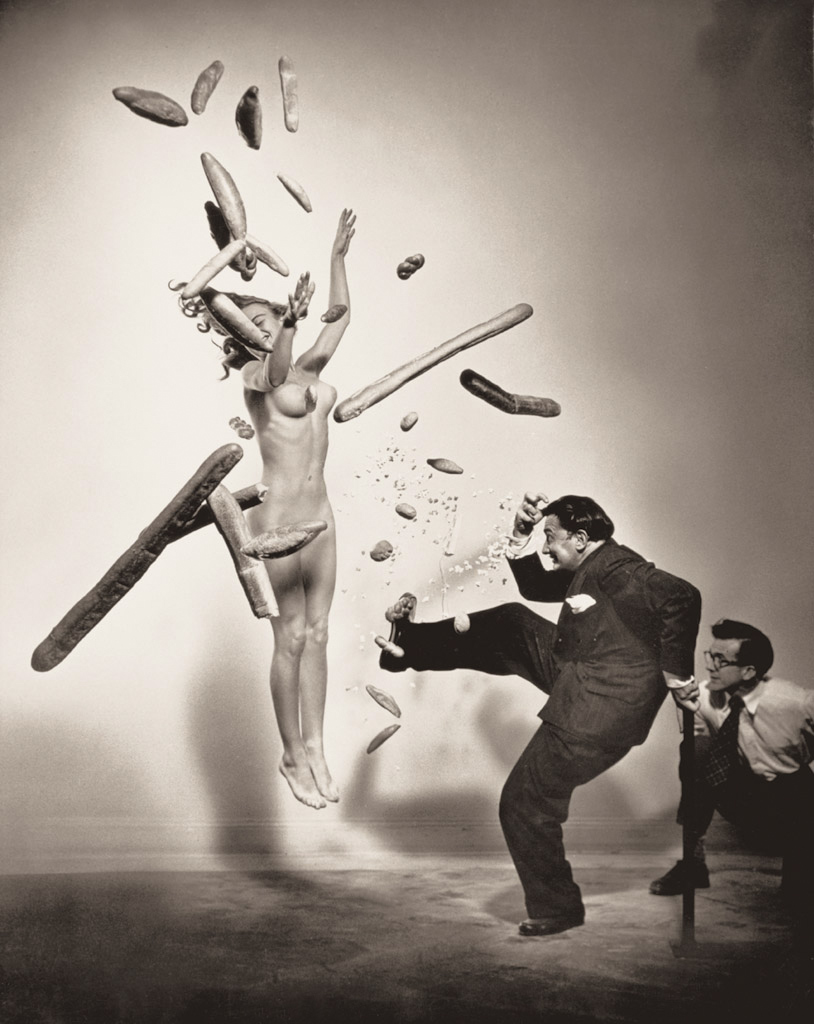
Philippe Halsman (American, 1906-1979) 'Nu au pop-corn (Popcorn nude)' 1949


Philippe Halsman (American, 1906-1979)
Nu au pop-corn (Popcorn nude)
1949
Musée de l’Elysée
© 2013 Philippe Halsman Archive / Magnum Photos


Philippe Halsman (American, 1906-1979) 'Dalí Atomicus' 1948 contact sheet


Philippe Halsman (American, 1906-1979)
Dalí Atomicus
1948
Contact sheet
Musée de l’Elysée
© 2013 Philippe Halsman Archive / Magnum Photos
Exclusive rights for images of Salvador Dalí: Fundació Gala-Salvador Dalí, Figueres, 2014


Philippe Halsman (American, 1906-1979) 'Dalí Atomicus' 1948


Philippe Halsman (American, 1906-1979)
Dalí Atomicus
1948
Musée de l’Elysée
© 2013 Philippe Halsman Archive / Magnum Photos
Exclusive rights for images of Salvador Dalí: Fundació Gala-Salvador Dalí, Figueres, 2014


Philippe Halsman (American, 1906-1979) 'Épreuve préparatoire pour "Certainement. Je m'adonne personnellement à des explosions atomiques," Dalí's Mustache (Test event for "Certainly. I personally engaged in atomic explosions," Dalí's Mustache)' 1953-1954


Philippe Halsman (American, 1906-1979)
Épreuve préparatoire pour “Certainement. Je m’adonne personnellement à des explosions atomiques,” Dalí’s Mustache
(Test event for “Certainly. I personally engaged in atomic explosions,” Dalí’s Mustache)
1953-1954
Musée de l’Elysée
© 2013 Philippe Halsman Archive / Magnum Photos


Philippe Halsman (American, 1906-1979) 'Portrait de Salvador Dalí avec casque de footballeur américain (Portrait of Salvador Dalí with American football helmet)' 1964


Philippe Halsman (American, 1906-1979)
Portrait de Salvador Dalí avec casque de footballeur américain (Portrait of Salvador Dalí with American football helmet)
1964
Musée de l’Elysée
© 2013 Philippe Halsman Archive / Magnum Photos


Philippe Halsman (American, 1906-1979) 'Dalí Cyclops' 1949


Philippe Halsman (American, 1906-1979)
Dalí Cyclops
1949
Musée de l’Elysée
© 2013 Philippe Halsman Archive / Magnum Photos


“In the thirty years of our friendship I have made countless photographs showing the surrealist painter in the most incredible situations. Whenever I needed a striking or famous protagonist for one of my wild ideas, Dalí would graciously oblige. Whenever Dalí thought of a photograph so strange that it seemed impossible to produce, I tried to find a solution. ‘Can you make me look like Mona Lisa?… Can you make a man one half of whom would look like Dalí and the other half like Picasso?’ I could and I did.”


Philippe Halsman


Halsman/Dalí

One of Halsman’s favourite subjects was Salvador Dalí with whom he shared a unique collaboration that spanned 37 years. Their 47 sittings, combining Dalí’s talent for performance and Halsman’s technical skill and inventiveness, resulting in an impressive repertoire of “photographic ideas”.

Focus on Dalí’s Mustache

As Halsman explains, Dalí’s Mustache is the fruit of this marriage of the minds. They conceived this book entirely dedicated to Dalí’s moustache, and created over thirty portraits of the painter absurdly answering Halsman’s questions. In 1953 Halsman realised that Salvador Dalí’s expanding moustache gave him the “chance to fulfil one his most ambitious dreams yet and create an extraordinarily eccentric work”. Dalí was enormously fond of his own person and of his mustache in particular, which he saw as a symbol of the power of his imagination, and was immediately thrilled at the idea. To create a “picture book” containing an interview with Salvador Dalí, Halsman reused an editorial concept he had introduced five years earlier with French actor Fernandel: a question asked of the artist was printed on one page, and the answer appeared on the following page in the form of a captioned photograph.

For this project, it was no longer just a matter of photographic expression, but of genuine mise en scène, combining Dalí’s theatrical character with Halsman’s impressive inventiveness and technical skill. Halsman presented the book as a genuine collaboration between two artists, representing their mutual understanding.

Halsman photographed Dalí with his 4×5 camera and his electronic flash through many sessions over a period of two years. Most of the plates in the book are portraits of the artist posing in a variety of positions, playing with his moustache in various ways, accentuated by light and framing effects. Dalí was ready to go along with any whim to create the scenes: he styles his precious moustache with the help of Hungarian wax, and agrees to take part in incongruous mises en scène, pressing his head behind a round of cheese to put the ends of his moustache through its holes, or plunging his head into a water-filled aquarium, his mouth full of milk.

As for Halsman, he put a lot of his effort into the post-production work in order to give concrete expression to their ideas. It sometimes took a laborious process to achieve images like the Mona Lisa portrait, inner conflicts, surrealism or the essence of Dalí, which not only required work on the print or negative (cutting, enlargement, deformation, double exposure) but also a montage and a new shot to create a negative of the final image. For the portrait of the artist in the form of a “soft watch”, Halsman worked around one hundred hours. He photographed Dali close up, then tacked a wet print of the image onto the edge of a table and re-photographed it at an angle that matched the angle of the original painting. He then cut it out, made a collage, and re-photographed it again – creating an image of Dali’s melted face. For the photographer, it was a genuine technical challenge, which he seized with patience and success.


Philippe Halsman (American, 1906-1979) 'Like Two Erect Sentries, My Mustache Defends the Entrance to My Real Self, Dalí’s Mustache' 1954


Philippe Halsman (American, 1906-1979)
Like Two Erect Sentries, My Mustache Defends the Entrance to My Real Self, Dalí’s Mustache
1954
Philippe Halsman Archive
© 2013 Philippe Halsman Archive / Magnum Photos
Exclusive rights for images of Salvador Dalí: Fundació Gala-Salvador Dalí, Figueres, 2014


The Musée de l’Elysée
18, avenue de l’Elysée
CH - 1014 Lausanne
Phone: + 41 21 316 99 11

Opening hours:
Wednesday – Monday 10am – 6pm
Closed Tuesday

The Musée de l’Elysée website

LIKE ART BLART ON FACEBOOK

Back to top

Exhibition: ‘Flesh and Metal: Body and Machine in Early 20th­-Century Art’ at the Cantor Arts Center at Stanford University

Exhibition dates: 13th November 2013 – 16th March 2014

Featured artists include Margaret Bourke-White, Constantin Brancusi, Giorgio de Chirico, Salvador Dalí, Marcel Duchamp, Germaine Krull, Fernand Léger, Wyndham Lewis, László Moholy-Nagy, Piet Mondrian, Man Ray, Alexander Rodchenko, and Charles Sheeler, among others.


Many thankx to the San Francisco Museum of Modern Art (SFMOMA) and the Cantor Arts Center at Stanford University for allowing me to publish the art work in the posting. Please click on the art work for a larger version of the image.


Man Ray (American, 1890-1976) 'Untitled (Rayograph)' 1922


Man Ray (American, 1890-1976)
Untitled (Rayograph)
1922
Gelatin silver print
11 15/16 x 9 3/8 in. (30.32 x 23.81cm)
Collection SFMOMA, purchase
© Man Ray Trust / Artists Rights Society (ARS), New York / ADAGP, Paris


“I am young, I am twenty years old; yet I know nothing of life but despair, death, fear, and fatuous superficiality cast over an abyss of sorrow. I see how peoples are set against one another, and in silence, unknowingly, foolishly, obediently, innocently slay one another. I see that the keenest brains of the world invent weapons and words to make it yet more refined and enduring. And all men of my age, here and over there, throughout the whole world see these things; all my generation is experiencing these things with me. What would our fathers do if we suddenly stood up and came before them and proffered our account? What do they expect of us if a time ever comes when the war is over? Through the years our business has been killing; – it was our first calling in life. Our knowledge of life is limited to death. What will happen afterwards? And what shall come out of us?”

Erich Maria Remarque. All Quiet on the Western Front, 1929


Germaine Krull (European, 1897-1985) 'Portrait of Joris Ivens, Amsterdam' c. 1928


Germaine Krull (European, 1897-1985)
Portrait of Joris Ivens, Amsterdam
c. 1928
Gelatin silver print
7 3/8 x 6 1/4 in. (18.77 x 15.88cm)
Collection SFMOMA, gift of Simon Lowinsky
© Germaine Krull Estate


Germaine Krull (29 November 1897 – 31 July 1985), was a photographer, political activist, and hotel owner. Her nationality has been categorised as German, Polish, French, and Dutch, but she spent years in Brazil, Republic of the Congo, Thailand, and India. Described as “an especially outspoken example” of a group of early 20th-century female photographers who “could lead lives free from convention”, she is best known for photographically-illustrated books such as her 1928 portfolio Métal...

Having met Dutch filmmaker and communist Joris Ivens in 1923, she moved to Amsterdam in 1925. After Krull returned to Paris in 1926, Ivens and Krull entered into a marriage of convenience between 1927 and 1943 so that Krull could hold a Dutch passport and could have a “veneer of married respectability without sacrificing her autonomy.”

In Paris between 1926 and 1928, Krull became friends with Sonia Delaunay, Robert DelaunayEli LotarAndré MalrauxColetteJean CocteauAndré Gide and others; her commercial work consisted of fashion photography, nudes, and portraits. During this period she published the portfolio Métal (1928) which concerned “the essentially masculine subject of the industrial landscape.” Krull shot the portfolio’s 64 black-and-white photographs in Paris, Marseille, and Holland during approximately the same period as Ivens was creating his film De Brug (“The Bridge”) in Rotterdam, and the two artists may have influenced each other. The portfolio’s subjects range from bridges, buildings and ships to bicycle wheels; it can be read as either a celebration of machines or a criticism of them. Many of the photographs were taken from dramatic angles, and overall the work has been compared to that of László Moholy-Nagy and Alexander Rodchenko. In 1999-2004 the portfolio was selected as one of the most important photobooks in history.

By 1928 Krull was considered one of the best photographers in Paris, along with André Kertész and Man Ray. Between 1928 and 1933, her photographic work consisted primarily of photojournalism, such as her photographs for Vu, a French magazine. Also in the early 1930s, she also made a pioneering study of employment black spots in Britain for Weekly Illustrated (most of her ground-breaking reportage work from this period remains immured in press archives and she has never received the credit which is her due for this work). Her book Études de Nu (“Studies of Nudes”) published in 1930 is still well-known today.

Text from the Wikipedia website


El Lissitzky (Russian, 1890-1941) 'Untitled' c. 1923


El Lissitzky (Russian, 1890-1941)
Untitled
c. 1923
Gelatin silver print
9 1/2 x 7 1/4 in. (24.13 x 18.42cm)
Collection SFMOMA, gift of anonymous donors
© Estate of El Lissitzky / Artists Rights Society (ARS), New York / VG Bild-Kunst, Bonn


Lazar Markovich Lissitzky (November 23, 1890 – December 30, 1941), better known as El Lissitzky, was a Russian artist, designer, photographer, typographer, polemicist and architect. He was an important figure of the Russian avant garde, helping develop suprematism with his mentor, Kazimir Malevich, and designing numerous exhibition displays and propaganda works for the Soviet Union. His work greatly influenced the Bauhaus and constructivist movements, and he experimented with production techniques and stylistic devices that would go on to dominate 20th-century graphic design.

Lissitzky’s entire career was laced with the belief that the artist could be an agent for change, later summarised with his edict, “das zielbewußte Schaffen” (goal-oriented creation). Lissitzky, of Jewish origin, began his career illustrating Yiddish children’s books in an effort to promote Jewish culture in Russia, a country that was undergoing massive change at the time and that had just repealed its antisemitic laws. When only 15 he started teaching; a duty he would stay with for most of his life. Over the years, he taught in a variety of positions, schools, and artistic media, spreading and exchanging ideas. He took this ethic with him when he worked with Malevich in heading the suprematist art groupUNOVIS, when he developed a variant suprematist series of his own, Proun, and further still in 1921, when he took up a job as the Russian cultural ambassador to Weimar Germany, working with and influencing important figures of the Bauhaus and De Stijl movements during his stay. In his remaining years he brought significant innovation and change to typography, exhibition design, photomontage, and book design, producing critically respected works and winning international acclaim for his exhibition design. This continued until his deathbed, where in 1941 he produced one of his last works – a Soviet propaganda poster rallying the people to construct more tanks for the fight against Nazi Germany. In 2014, the heirs of the artist, in collaboration with Van abbemuseum and the leading worldwide scholars, the Lissitzky foundation was established, to preserve the artist’s legacy and prepare a catalogue raisonné of the artists oeuvre.

Text from the Wikipedia website


Alexander Rodchenko (Russian, 1891-1956) 'Pozharnaia lestnitsa' from the series 'Dom na Miasnitskoi' (Fire Escape, from the series House Building on Miasnitskaia Street) 1925


Alexander Rodchenko (Russian, 1891-1956)
Pozharnaia lestnitsa from the series Dom na Miasnitskoi (Fire Escape, from the series House Building on Miasnitskaia Street)
1925
Gelatin silver print
9 x 6 in. (22.86 x 15.24cm)
Collection SFMOMA, Accessions Committee Fund: gift of Frances and John Bowes, Evelyn Haas, Mimi and Peter Haas, Pam and Dick Kramlich, and Judy and John Webb
© Estate of Alexander Rodchenko / RAO, Moscow / VAGA, New York


Raoul Ubac (French, 1910-1985) 'Penthésilée' 1937


Raoul Ubac (French, 1910-1985)
Penthésilée
1937
Gelatin silver print
15 1/2 x 11 1/4 in. (39.37 x 28.58cm)
Collection SFMOMA, gift of Robert Miller
© Artists Rights Society (ARS), New York / ADAGP, Paris


Raoul Ubac (31 August 1910, Cologne – 24 March 1985, Dieudonne, Oise) was a French painter, sculptor, photographer and engraver. Ubac’s mother’s family ran a tannery and his father was a magistrate. In his early years he traveled through some parts of Europe on foot. He originally intended to become a waterways and forestry inspector. His interest in art was aroused when he made his first visit to Paris in 1928 and met several artists, including Otto Freundlich.

After returning to Malmédy he read the Manifeste du Surréalisme (1924) by André Breton. He met that document’s author André Breton and other leading Surrealists in 1930, and dedicated himself to capturing the movement’s dream aesthetic in photography after settling in Paris, attending the first showing of Luis Buñuel’s film L’Age d’or (1931). He attended the Faculté des Lettres of the Sorbonne briefly but soon left to frequent the studios of Montparnasse. About 1933-34 he attended the Ecole des Arts Appliqués for more than a year, studying mainly drawing and photography. In the course of a visit to Austria and the Dalmatian coast in 1933, he visited the island of Hvar where he made some assemblages of stones, which he drew and photographed, for example Dalmatian Stone (1933). Disillusioned with Surrealism, Ubac abandoned photography after the Second World War in favour of painting and sculpture, and died in France in 1985.

Text from various sources


Co-organised by the San Francisco Museum of Modern Art (SFMOMA) and the Cantor Arts Center at Stanford University, Flesh and Metal: Body and Machine in Early 20th­-Century Art presents more than 70 artworks that explore a central dynamic of art making in Europe and the Americas between the 1910s and the early 1950s. On view from November 13, 2013 to March 16, 2014 at the Cantor Arts Center, the exhibition includes a rich group of paintings, sculptures, photographs, drawings, prints, and illustrated books from the collection of SFMOMA. Taken together, the works offer a fresh view of how artists negotiated the terrain between the mechanical and the bodily – two oppositional yet inextricably bound forces – to produce a wide range of imagery responding to the complexity of modern experience.

The exhibition is part of the collaborative museum shows and extensive off-site programming presented by SFMOMA while its building is temporarily closed for expansion construction. From the summer of 2013 to early 2016, SFMOMA is on the go, presenting a dynamic slate of jointly organised and traveling exhibitions, public art displays and site-specific installations, and newly created education programs throughout the Bay Area.

“We are thrilled to pair SFMOMA’s world-class collection with Stanford’s renowned academic resources,” said Connie Wolf, the John and Jill Freidenrich Director of the Cantor Arts Center. “Cantor curators and the distinguished chair of the Department of Art and Art History guided seminars specifically for this exhibition, with students examining art of the period, investigating themes, studying design and display issues, and developing writing skills. The students gained immeasurably by this amazing experience and added new research and fresh perspectives to the artwork and to the exhibition. We are proud of the results and delighted to present a unique and invaluable partnership that will enrich the Stanford community, our museum members, and our visitors.”

SFMOMA’s Curator of Photography Corey Keller concurred: “The opportunity to work with our colleagues at Stanford has been a remarkable experience both in the galleries and in the classroom. We couldn’t be prouder of the exhibition’s unique perspective on a particularly rich area of SFMOMA’s collection that resulted from our collaboration.”

Exhibition overview

The exhibition is organised into four thematic sections dealing with the human figure, the imagination, the urban landscape, and the object, which together reveal a range of artists’ responses to the conditions of modernity. At the beginning of the 20th century, many hailed the machine as a symbol of progress. “Speed” and “efficiency” entered the vocabularies of art movements such as Futurism (in Italy), Purism (in France), Vorticism (in England), and Constructivism (in Russia), all of which adapted the subject matter and formal characteristics of the machine. Factories and labourers were presented positively as emblems of modernity, and mechanisation became synonymous with mobility and the possibility of social improvement. Countering this utopian position were proponents of the Dada and Surrealist movements (based largely in Germany and France), who found mechanical production problematic. For many of these artists who had lived through the chaos and destruction of World War I, the machine was perceived as a threat not only to the body, but to the uniquely human qualities of the mind as well. These artists embraced chance, accident, dream, and desire as new paths to freedom and creativity, in contrast to their counterparts who maintained their faith in an industrially enhanced future.

Though art from the first half of the 20th century is often viewed as representing an opposition between the rational, impersonal world of the machine and the uncontrollable, often troubling realm of the human psyche, the work in this exhibition suggests a more nuanced tension. In fact, artists regularly perceived these polarities in tandem. The codes of the bodily and the industrial coalesce in Fernand Léger’s machine aesthetic, on view in his 1927 painting Two Women on a Blue Backgound and an untitled collage from 1925. For his “rayographs,” Man Ray made use of mass-produced objects, but deployed them in a lyrical and imaginative manner – placing them on photosensitised paper and exposing it to light. Constantin Brancusi’s The Blond Negress (1927) and Jacques Lipchitz’s Draped Woman (1919) update the tradition of the cast bronze figure by introducing impersonal geometries. And even the seemingly formulaic surfaces of Piet Mondrian’s abstract paintings eventually reveal the artist’s sensitive hand.”

Press release from SFMOMA and the Cantor Arts Center


Hans Bellmer (German, 1902-1975) 'La mitrailleuse en état de grâce' (The Machine Gun[neress] in a State of Grace) 1937


Hans Bellmer (German, 1902-1975)
La mitrailleuse en état de grâce (The Machine Gun[neress] in a State of Grace)
1937
Gelatin silver print with oil and watercolour
26 x 26 in. (66.04 x 66.04cm)
Collection SFMOMA, gift of Foto Forum
© Artists Rights Society (ARS), New York / ADAGP, Paris


Hans Bellmer (13 March 1902 – 23 February 1975) was a German artist, best known for the life sized pubescent female dolls he produced in the mid-1930s. Historians of art and photography also consider him a Surrealist photographer.

Bellmer was born in the city of Kattowitz, then part of the German Empire (now Katowice, Poland). Up until 1926, he’d been working as a draftsman for his own advertising company. He initiated his doll project to oppose the fascism of the Nazi Party by declaring that he would make no work that would support the new German state. Represented by mutated forms and unconventional poses, his dolls were directed specifically at the cult of the perfect body then prominent in Germany. Bellmer was influenced in his choice of art form by reading the published letters of Oskar Kokoschka (Der Fetisch, 1925).

Bellmer’s doll project is also said to have been catalysed by a series of events in his personal life. Hans Bellmer takes credit for provoking a physical crisis in his father and brings his own artistic creativity into association with childhood insubordination and resentment toward a severe and humourless paternal authority. Perhaps this is one reason for the nearly universal, unquestioning acceptance in the literature of Bellmer’s promotion of his art as a struggle against his father, the police, and ultimately, fascism and the state. Events of his personal life also including meeting a beautiful teenage cousin in 1932 (and perhaps other unattainable beauties), attending a performance of Jacques Offenbach’s Tales of Hoffmann (in which a man falls tragically in love with an automaton), and receiving a box of his old toys. After these events, he began to actually construct his first dolls. In his works, Bellmer explicitly sexualised the doll as a young girl. The dolls incorporated the principle of “ball joint”, which was inspired by a pair of sixteenth-century articulated wooden dolls in the Kaiser Friedrich Museum.

Bellmer produced the first doll in Berlin in 1933. Long since lost, the assemblage can nevertheless be correctly described thanks to approximately two dozen photographs Bellmer took at the time of its construction. Standing about fifty-six inches tall, the doll consisted of a modelled torso made of flax fibre, glue, and plaster; a mask-like head of the same material with glass eyes and a long, unkempt wig; and a pair of legs made from broomsticks or dowel rods. One of these legs terminated in a wooden, club-like foot; the other was encased in a more naturalistic plaster shell, jointed at the knee and ankle. As the project progressed, Bellmer made a second set of hollow plaster legs, with wooden ball joints for the doll’s hips and knees. There were no arms to the first sculpture, but Bellmer did fashion or find a single wooden hand, which appears among the assortment of doll parts the artist documented in an untitled photograph of 1934, as well as in several photographs of later work.

Bellmer’s 1934 anonymous book, The Doll (Die Puppe), produced and published privately in Germany, contains 10 black-and-white photographs of Bellmer’s first doll arranged in a series of “tableaux vivants” (living pictures). The book was not credited to him, as he worked in isolation, and his photographs remained almost unknown in Germany. Yet Bellmer’s work was eventually declared “degenerate” by the Nazi Party, and he was forced to flee Germany to France in 1938. Bellmer’s work was welcomed in the Parisian art culture of the time, especially the Surrealists around André Breton, because of the references to female beauty and the sexualization of the youthful form. His photographs were published in the Surrealist journal Minotaure, 5 December 1934 under the title “Poupée, variations sur le montage d’une mineure articulée” (The Doll, Variations on the Assemblage of an Articulated Minor).

He aided the French Resistance during the war by making fake passports. He was imprisoned in the Camp des Milles prison at Aix-en-Provence, a brickworks camp for German nationals, from September 1939 until the end of the Phoney War in May 1940. After the war, Bellmer lived the rest of his life in Paris. Bellmer gave up doll-making and spent the following decades creating erotic drawings, etchings, sexually explicit photographs, paintings, and prints of pubescent girls… Of his own work, Bellmer said, “What is at stake here is a totally new unity of form, meaning and feeling: language-images that cannot simply be thought up or written up … They constitute new, multifaceted objects, resembling polyplanes made of mirrors … As if the illogical was relaxation, as if laughter was permitted while thinking, as if error was a way and chance, a proof of eternity.

Text from the Wikipedia website


Salvador Dalí (Spanish, 1904-1989) 'Objet Surréaliste à fonctionnement symbolique - le soulier de Gala' (Surrealist object that functions symbolically - Gala's Shoe) 1932/1975


Salvador Dalí (Spanish, 1904-1989)
Objet Surréaliste à fonctionnement symbolique – le soulier de Gala (Surrealist object that functions symbolically – Gala’s Shoe)
1932/1975
Shoe, marble, photographs, clay, and mixed media
48 x 28 x 14 in. (121.92 x 71.12 x 35.56 cm)
Collection SFMOMA, purchase, by exchange, through a gift of Norah and Norman Stone
© Salvador Dalí, Gala-Salvador Dalí Foundation / Artists Rights Society (ARS), New York


Marcel Jean (French, 1900-1993) 'Le Spectre du Gardenia' (The Specter of the Gardenia) 1936/1972


Marcel Jean (French, 1900-1993)
Le Spectre du Gardenia (The Specter of the Gardenia)
1936/1972
Wool powder over plaster, zippers, celluloid film, and suede over wood
13 1/2 x 7 x 9 in. (34.29 x 17.78 x 22.86 cm)
Collection SFMOMA
Purchase through a gift of Dr. and Mrs. Allan Roos
© Artists Rights Society (ARS), New York / ADAGP, Paris


With zippers for eyes and a filmstrip collar around its neck, this figure composes an anxious portrait, but its tactile surface of black cloth, faded red velvet, and zippers is charged with the eroticism of imagined touch. Jean originally called this work Secret of the Gardenia after an old movie reel he discovered, along with the velvet stand, at a Paris flea market. As the artist later recalled, Surrealism’s leader André Breton “always pressed his friends to center their interest on Surrealist objects,” and “he made a certain number himself.” Chance discoveries like the movie reel and velvet stand that inspired this work provided a trove of uncanny items for Surrealists to include, combine, and transform in their works.

Text from the MoMA website [Online] Cited 01/03/2014


Max Ernst (German, 1891-1976) 'La famille nombreuse' (The Numerous Family) 1926


Max Ernst (German, 1891-1976)
La famille nombreuse (The Numerous Family)
1926
Oil on canvas
32 1/8 x 25 5/8 in. (81.61 x 65.1cm)
Collection SFMOMA, gift of Peggy Guggenheim
© Artists Rights Society (ARS), New York / ADAGP, Paris


Giorgio de Chirico (Italian, 1888-1978) 'Les contrariétés du penseur' (The Vexations of the Thinker) 1915


Giorgio de Chirico (Italian, 1888-1978)
Les contrariétés du penseur (The Vexations of the Thinker)
1915
Oil on canvas
18 1/4 x 15 in. (46.36 x 38.1cm)
Collection SFMOMA, Templeton Crocker Fund purchase
© 2013 Artists Rights Society (ARS), New York / SIAE, Rome


Fernand Léger (French, 1881-1955) 'Deux femmes sur fond bleu' (Two Women on a Blue Background) 1927


Fernand Léger (French, 1881-1955)
Deux femmes sur fond bleu (Two Women on a Blue Background)
1927
Oil on canvas
36 1/2 x 23 5/8 in. (92.71 x 59.94cm)
Collection SFMOMA, fractional gift of Helen and Charles Schwab
© Artists Rights Society (ARS), New York / ADAGP, Paris


Constantin Brancusi (Romanian, 1876-1957) 'La Négresse blonde' (The Blond Negress) 1926


Constantin Brancusi (Romanian, 1876-1957)
La Négresse blonde (The Blond Negress)
1926
Bronze with marble and limestone base
70 3/4 x 10 3/4 x 10 3/4 in. (179.71 x 27.31 x 27.31 cm)
Collection SFMOMA, gift of Agnes E. Meyer and Elise S. Haas
© Artists Rights Society (ARS), New York / ADAGP, Paris


Cantor Arts Center at Stanford University
328 Lomita Drive at Museum Way
Stanford, CA 94305-5060
Phone: 650-723-4177

Opening hours:
Wednesday – Sunday 11am – 5pm
Closed Monday and Tuesday

Cantor Arts Center at Stanford University website

LIKE ART BLART ON FACEBOOK

Back to top

Exhibition: ‘Dark Romanticism. From Goya to Max Ernst’ at the Städel Museum, Frankfurt

Exhibition dates: 26th September 2012 – 20th January, 2013


Many thankx to the Städel Museum for allowing me to publish the reproductions of the artwork in the posting. Please click on the photographs for a larger version of the image.


This slideshow requires JavaScript.


Installation photographs of the exhibition Dark Romanticism. From Goya to Max Ernst at the Städel Museum, Frankfurt
Photos: Norbert Miguletz


Installation view of the exhibition 'Dark Romanticism. From Goya to Max Ernst' at the Städel Museum, Frankfurt

Installation view of the exhibition 'Dark Romanticism. From Goya to Max Ernst' at the Städel Museum, Frankfurt showing at left, Thomas Cole's 'Expulsion: Moon and Firelight '(c. 1828); at centre, Johann Henry Fuseli's 'The Nightmare (The Incubus)' (1781-1782); at second right, Samuel Colman's 'The Edge of Doom' (1836-1838); and at right, William Blake's 'The Great Red Dragon and the Woman Clothed with the Sun' (c. 1803-1805)


Installation views of the exhibition Dark Romanticism. From Goya to Max Ernst at the Städel Museum, Frankfurt showing at left in the bottom image, Thomas Cole’s Expulsion: Moon and Firelight (c. 1828, below); at centre, Johann Henry Fuseli’s The Nightmare (The Incubus) (1781-1782, below); at second right, Samuel Colman’s The Edge of Doom (1836-1838, below); and at right, William Blake’s The Great Red Dragon and the Woman Clothed with the Sun (c. 1803-1805, below)
Photos: Norbert Miguletz


Thomas Cole (American born England, 1801-1848) 'Expulsion: Moon and Firelight' c. 1828


Thomas Cole (American born England, 1801-1848)
Expulsion: Moon and Firelight
c. 1828
Oil on canvas
91.4 by 122cm (36.0 in × 48.0 in)
Thyssen-Bornemisza Museum, Madrid


Johann Henry Fuseli (Swiss, 1741-1825) 'The Nightmare (The Incubus)' 1781-1782


Johann Henry Fuseli (Swiss, 1741-1825)
The Nightmare (The Incubus)
1781-1782
Oil on canvas
77cm (30.3 in) x 64cm (25.1 in)
Goethehaus (Frankfurt) collection


Samuel Colman (British, 1780-1845) 'The Edge of Doom' 1836-1838


Samuel Colman (British, 1780-1845)
The Edge of Doom
1836-1838
Oil on canvas
54 x 78 1/2 in. (137.2 x 199.4cm)
Brooklyn Museum


William Blake (British, 1757-1827) 'The Great Red Dragon and the Woman Clothed with the Sun' c.1803-1805


William Blake (British, 1757-1827)
The Great Red Dragon and the Woman Clothed with the Sun
c. 1803-1805
Watercolour, graphite and incised lines
43.7 x 34.8cm
Brooklyn Museum, Gift of William Augustus White


Johann Henry Fuseli (Swiss, 1741-1825) 'The Nightmare' 1781


Johann Henry Fuseli (Swiss, 1741-1825)
The Nightmare
1781
Oil on canvas
101.6 × 126.7cm
Detroit Institute of Arts, Founders Society
© Bridgeman Art Library


Johann Henry Fuseli (Swiss, 1741-1825) 'Die wahnsinnige Kate'(La folie de Kate) (Mad Kate) 1806-1807


Johann Henry Fuseli (Swiss, 1741-1825)
Die wahnsinnige Kate (La folie de Kate) (Mad Kate)
1806-1807
Oil on canvas
92cm (36.2 in) x 72.3cm (28.4 in)
Francfort-sur-le-Main, Frankfurter Goethe-Haus
Freies Deutsches Hochstift, inv.1955-007
© Ursula Edelmann/ARTOTHEK


Installation view of the exhibition 'Dark Romanticism. From Goya to Max Ernst' at the Städel Museum, Frankfurt showing Paul Delaroche's 'The Wife of the Artist, Louise Vernet, on her Death Bed' (1845)


Installation view of the exhibition Dark Romanticism. From Goya to Max Ernst at the Städel Museum, Frankfurt showing Paul Delaroche’s The Wife of the Artist, Louise Vernet, on her Death Bed (1845, below)
Photo: Norbert Miguletz


Paul Hippolyte Delaroche (French, 1797-1856) 'Louise Vernet, the artist's wife, on her Deathbed' 1845-46


Paul Hippolyte Delaroche (French, 1797-1856)
Louise Vernet, the artist’s wife, on her Deathbed
1845-1846
Oil on canvas
62 x 74.5cm
Musée des Beaux-Arts de Nantes
© Musée des Beaux-Arts de Nantes


Installation view of the exhibition 'Dark Romanticism. From Goya to Max Ernst' at the Städel Museum, Frankfurt showing Gabriel von Max's 'The White Woman' (1900)


Installation view of the exhibition Dark Romanticism. From Goya to Max Ernst at the Städel Museum, Frankfurt showing Gabriel von Max’s The White Woman (1900, below)
Photo: Norbert Miguletz


Gabriel von Max (Austrian, 1840-1915) 'The White Woman' 1900


Gabriel von Max (Austrian, 1840-1915)
The White Woman
1900
Oil on canvas
100 x 72cm
Private Collection


Johann Henry Fuseli (Swiss, 1741-1825) 'Sin Pursued by Death' 1794-1796


Johann Henry Fuseli (Swiss, 1741-1825)
Sin Pursued by Death
1794-1796
Oil on canvas
Kunsthaus, Zürich


Théodore Géricault (French, 1791–1824) Cuirassier blessé quittant le feu / The Wounded Cuirassier 1814


Théodore Géricault (French, 1791–1824)
Cuirassier blessé quittant le feu / The Wounded Cuirassier
1814
Oil on canvas
358cm (11.7 ft) x 294cm (115.7 in)
Louvre Museum


The Wounded Cuirassier (French: Le Cuirassier blessé quittant le feu) is an oil painting of a single anonymous soldier descending a slope with his nervous horse by the French Romantic painter and lithographer Théodore Géricault (1791–1824). In this 1814 Salon entry, Géricault decided to turn away from scenes of heroism in favour of a subject that is on the losing side of the battle. On display in the aftermath of France’s disastrous military campaign in Russia, this life-size painting captured the feeling of a nation in defeat. There are no visible wounds on the figure, and the title has sometimes been interpreted to refer to soldier’s injured pride. The painting stood in stark contrast with Géricault’s Charging Chasseur, as it didn’t focus on glory or the spectacle of battle. Only his Signboard of a Hoofsmith, which is currently in a private collection, bears any resemblance in form or function to this painting.

The final salon version of The Wounded Cuirassier is at the Musée du Louvre and the smaller, study version, is located at the Brooklyn Museum.

Text from the Wikipedia website


Caspar David Friedrich (German, 1774-1840) 'Kügelgen's Tomb' 1821-1822


Caspar David Friedrich (German, 1774-1840)
Kügelgen’s Tomb
1821-1822
Oil on canvas
41.5 x 55.5cm
Die Lübecker Museen, Museum Behnhaus Drägerhaus, on loan from private collection


Ernst Ferdinand Oehme (German, 1797-1855) 'Procession in the Fog' 1828


Ernst Ferdinand Oehme (German, 1797-1855)
Procession in the Fog
1828
Oil on canvas
81.5 x 105.5cm
Galerie Neue Meister, Staatliche Kunstsammlungen Dresden


Caspar David Friedrich (German, 1774-1840) Rivage avec la lune cachée par des nuages (Clair de lune sur la mer) / Mond hinter Wolken über dem Meeresufer (Meeresküste bei Mondschein) / Moon behind clouds over the seashore (seashore by moonlight) 1836


Caspar David Friedrich (German, 1774-1840)
Rivage avec la lune cachée par des nuages (Clair de lune sur la mer) / Mond hinter Wolken über dem Meeresufer (Meeresküste bei Mondschein) / Moon behind clouds over the seashore (seashore by moonlight)
1836
Hambourg, Hamburger Kunsthalle
© BPK, Berlin, dist. RMN-Grand Palais / Elke Walford


Samuel Colman (American, 1780-1845) 'The Edge of Doom' 1836-1838


Samuel Colman (American, 1780-1845)
The Edge of Doom
1836-1838
Oil on canvas
137.2 x 199.4cm
Brooklyn Museum, Bequest of Laura L. Barnes


William-Adolphe Bouguereau (French, 1825-1905) 'Dante And Virgil In Hell' 1850


William-Adolphe Bouguereau (French, 1825-1905)
Dante And Virgil In Hell
1850
Oil on canvas
280.5cm (110.4 in) x 225.3cm (88.7 in)
Musée d’Orsay
© Musée d’Orsay, Dist. RMN-Grand Palais / Patrice Schmidt


Arnold Böcklin (Swiss, 1827-1901) 'Villa by the Sea' 1871-1874


Arnold Böcklin (Swiss, 1827-1901)
Villa by the Sea
1871-1874
Oil on canvas
108 x 154cm
Städel Museum, Frankfurt am Main


Serafino Macchiati (Italian, 1860-1916) 'Le Visionnaire' (The Visionary) 1904


Serafino Macchiati (Italian, 1860-1916)
Le Visionnaire (The Visionary)
1904
Oil on canvas
55.0 x 38.5cm
Don Serafino Macchiati, 1916
© Musée d’Orsay, Dist. RMN-Grand Palais / Patrice Schmidt


Pierre Bonnard (French, 1867-1945) 'Femme assoupie sur un lit' (Woman sleeping on a bed) 1899


Pierre Bonnard (French, 1867-1945)
Femme assoupie sur un lit (Woman sleeping on a bed)
1899
huile sur toile
96.4 x 105.2cm
Achat en vente publique, 1948
© Musée d’Orsay, Dist. RMN-Grand Palais / Patrice Schmidt


Pierre Bonnard (1867-1947)

A veritable hymn to voluptuousness, The Indolent Woman is a painting which relies on contrasts: the title already clashes with the young woman’s posture. Her body with its tense muscles – the left foot is literally hooked on to the right thigh – belies any idea of rest or laziness. Similarly, the modest gesture of the arm across the breasts is contradicted by the spread thighs. Sinuous lines run throughout the composition, materialised by the dark shadows on the sheets still bearing the undulating line of the bodies and the heavy jumble of the bedclothes. The electric blue “smoke” drifting across the woman’s thigh and ankle and the sumptuous dark hair spread across the bed accentuate the painting’s erotic charge.

This woman spread out for all to see after lovemaking is the epitome of unveiled intimacy, violent, passionate and sombre and, in the end, very “fin de siècle”. We are also struck by the modernity of the composition seen from above, with its monumental bed which seems to tip towards the viewer. The woman’s body, gnawed by shadows, has a tonic vibrant texture which gives it a strong timeless presence.

This is a crucial work in Bonnard’s career because it is one of the first nudes he painted, previously showing little interest in the theme. It can be compared with two other canvases from the same period: Blue Nude from the Kaganovitch collection and Man and Woman.

After seeing this painting, the famous art dealer and publisher Ambroise Vollard asked Bonnard to illustrate a collection of Paul Verlaine’s poetry, Parallèlement, which was published in 1900.

Text from the Musée d’Orsay website


Salvador Dalí (Spanish, 1904-1989) 'Dream caused by the Flight of a Bee around a Pomegranate a Second before Awakening' 1944


Salvador Dalí (Spanish, 1904-1989)
Dream caused by the Flight of a Bee around a Pomegranate a Second before Awakening
1944
Oil on wood
51 x 41cm
Museo Thyssen-Bornemisza, Madrid
© VG Bild-Kunst, Bonn 2012


The Städel Museum’s major special exhibition Dark Romanticism. From Goya to Max Ernst will be on view from September 26th, 2012 until January 20th, 2013. It is the first German exhibition to focus on the dark aspect of Romanticism and its legacy, mainly evident in Symbolism and Surrealism. In the museum’s exhibition house this important exhibition, comprising over 200 paintings, sculptures, graphic works, photographs and films, will present the fascination that many artists felt for the gloomy, the secretive and the evil. Using outstanding works in the museum’s collection on the subject by Francisco de Goya, Eugène Delacroix, Franz von Stuck or Max Ernst as a starting point, the exhibition is also presenting important loans from internationally renowned collections, such as the Musée d’Orsay, the Musée du Louvre, both in Paris, the Museo del Prado in Madrid and the Art Institute of Chicago. The works on display by Goya, Johann Heinrich Fuseli and William Blake, Théodore Géricault and Delacroix, as well as Caspar David Friedrich, convey a Romantic spirit which by the end of the 18th century had taken hold all over Europe. In the 20th century artists such as Salvador Dalí, René Magritte or Paul Klee and Max Ernst continued to think in this vein. The art works speak of loneliness and melancholy, passion and death, of the fascination with horror and the irrationality of dreams. After Frankfurt the exhibition, conceived by the Städel Museum, will travel to the Musée d’Orsay in Paris.

The exhibition’s take on the subject is geographically and chronologically comprehensive, thereby shedding light on the links between different centres of Romanticism, and thus retracing complex iconographic developments of the time. It is conceived to stimulate interest in the sombre aspects of Romanticism and to expand understanding of this movement. Many of the artistic developments and positions presented here emerge from a shattered trust in enlightened and progressive thought, which took hold soon after the French Revolution – initially celebrated as the dawn of a new age – at the end of the 18th century. Bloodstained terror and war brought suffering and eventually caused the social order in large parts of Europe to break down. The disillusionment was as great as the original enthusiasm when the dark aspects of the Enlightenment were revealed in all their harshness. Young literary figures and artists turned to the reverse side of Reason. The horrific, the miraculous and the grotesque challenged the supremacy of the beautiful and the immaculate. The appeal of legends and fairy tales and the fascination with the Middle Ages competed with the ideal of Antiquity. The local countryside became increasingly attractive and was a favoured subject for artists. The bright light of day encountered the fog and mysterious darkness of the night.

The exhibition is divided into seven chapters. It begins with a group of outstanding works by Johann Heinrich Fuseli. The artist had initially studied to be an evangelical preacher in Switzerland. With his painting The Nightmare (Frankfurt Goethe-Museum) he created an icon of dark Romanticism. This work opens the presentation, which extends over two levels of the temporary exhibition space. Fuseli’s contemporaries were deeply disturbed by the presence of the incubus (daemon) and the lecherous horse – elements of popular superstition – enriching a scene set in the present. In addition, the erotic-compulsive and daemonic content, as well as the depressed atmosphere, catered to the needs of the voyeur. The other six works by Fuseli – loans from the Kunsthaus Zürich, the Royal Academy London and the Staatsgalerie Stuttgart – represent the characteristics of his art: the competition between good and evil, suffering and lust, light and darkness. Fuseli’s innovative pictorial language influenced a number of artists – among them William Blake, whose famous water colour The Great Red Dragon from the Brooklyn Museum will be on view in Europe for the first time in ten years.

The second room of the exhibition is dedicated to the Spanish artist Francisco de Goya. The Städel will display six of his works – including masterpieces such as The Witches’ Flight from the Prado in Madrid and the representations of cannibals from Besançon. A large group of works on paper from the Städel’s own collection will be shown, too. The Spaniard blurs the distinction between the real and the imaginary. Perpetrator and victim repeatedly exchange roles. Good and evil, sense and nonsense – much remains enigmatic. Goya’s cryptic pictorial worlds influenced numerous artists in France and Belgium, including Delacroix, Géricault, Victor Hugo and Antoine Wiertz, whose works will be presented in the following room. Atmosphere and passion were more important to these artists than anatomical accuracy.

Among the German artists – who are the focus of the next section of the exhibition – it is Carl Blechen who is especially close to Goya and Delacroix. His paintings are a testimony to his lust for gloom. His soft spot for the controversial author E. T. A. Hoffmann – also known as “Ghost-Hoffmann” in Germany – led Blechen to paint works such as Pater Medardus (Alte Nationalgalerie, Berlin) – a portrait of the mad protagonist in The Devil’s Elixirs. The artist was not alone in Germany when it came to a penchant for dark and disturbing subjects. Caspar David Friedrich’s works, too, contain gruesome elements: cemeteries, open graves, abandoned ruins, ships steered by an invisible hand, lonely gorges and forests are pervasive in his oeuvre. One does not only need to look at the scenes of mourning in the sketchbook at the Kunsthalle Mannheim for the omnipresent theme of death. Friedrich is prominently represented in the exhibition with his paintings Moon Behind Clouds above the Seashore from the Hamburger Kunsthalle and Kügelgen’s Grave from the Lübecker Museums, as well as with one of his last privately owned works, Ship at Deep Sea with full Sails.

Friedrich’s paintings are steeped in oppressive silence. This uncompromising attitude anticipates the ideas of Symbolism, which will be considered in the next chapter of the exhibition. These ‘Neo-Romantics’ stylised speechlessness as the ideal mode of human communication, which would lead to fundamental and seminal insights. Odilon Redon’s masterpiece Closed Eyes, a loan from the Musée d’Orsay in Paris, impressively encapsulates this notion. Paintings by Arnold Böcklin, James Ensor, Fernand Khnopff or Edvard Munch also embody this idea. However, as with the Romantics, these restrained works are face to face with works where anxiety and repressed passions are brought unrestrainedly to the surface; works that are unsettling in their radicalism even today. While Gustave Moreau, Max Klinger, Franz von Stuck and Alfred Kubin belong to the art historical canon, here the exhibition presents artists who are still to be discovered in Germany: Jean-Joseph Carriès, Paul Dardé, Jean Delville, Julien-Adolphe Duvocelle, Léon Frédéric, Eugène Laermans and Lucien Lévy-Dhurmer.

The presentation concludes with the Surrealist movement, founded by André Breton. He inspired artists such as Ernst, Brassaϊ or Dalí, to create their wondrous pictorial realms from the reservoir of the subconscious and celebrated them as fantasy’s victory over the “factual world”. Max Ernst vehemently called for “the borders between the so-called inner and outer world” to be blurred. He demonstrated this most clearly in his forest paintings, four of which have been assembled for this exhibition, one of them the major work Vision Provoked by the Nocturnal Aspect of the Porte Saint-Denis (private collection). The art historian Carl Einstein considered the Surrealists to be the Romantics’ successors and coined the phrase ‘the Romantic generation’. In spite of this historical link the Surrealists were far from retrospective. On the contrary: no other movement was so open to new media; photography and film were seen as equal to traditional media. Alongside literature, film established itself as the main arena for dark Romanticism in the 20th century. This is where evil, the thrill of fear and the lust for horror and gloom found a new home. In cooperation with the Deutsches Filmmuseum the Städel will for the first time present extracts from classics such as Frankenstein (1931), Dracula (1931), Faust (1926), Vampyr (1931-32) and The Phantom Carriage (1921) within an exhibition.

The exhibition, which presents the Romantic as a mindset that prevailed throughout Europe and remained influential beyond the 19th century, is accompanied by a substantial catalogue. As is true for any designation of an epoch, Romanticism too is nothing more than an auxiliary construction, defined less by the exterior characteristics of an artwork than by the inner sentiment of the artist. The term “dark Romanticism” cannot be traced to its origins, but – as is also valid for Romanticism per se – comes from literary studies. The German term is closely linked to the professor of English Studies Mario Praz and his publication La carne, la morte e il diavolo nella letteratura romantica of 1930, which was published in German in 1963 as Liebe, Tod und Teufel. Die schwarze Romantik (literally: Love, Death and Devil. Dark Romanticism).

Press release from the Städel Museum website


Francisco de Goya (Spanish, 1746-1828) 'Witches in the Air' 1797-1798


Francisco de Goya (Spanish, 1746-1828)
Witches in the Air
1797-1798
Oil on canvas
43.5 × 30.5cm (17 1/8 in × 12 in)
Madrid, Museo Nacional del Prado
© Museo Nacional del Prado


Witches’ Flight (Spanish: Vuelo de Brujas, also known as Witches in Flight or Witches in the Air) is an oil-on-canvas painting completed in 1798 by the Spanish painter Francisco Goya. It was part of a series of six paintings related to witchcraft acquired by the Duke and Duchess of Osuna in 1798. It has been described as “the most beautiful and powerful of Goya’s Osuna witch paintings.” …

At center point are three semi-nude witches wearing penitential coroza bearing aloft a writhing nude figure, their mouths close to their victim, as if to devour him or suck his blood. Below, two figures in peasants’ garb recoil from the spectacle: one has thrown himself to the ground covering his ears, the other attempts to escape by covering himself with a blanket, making the fig hand gesture to ward off the evil eye. Finally, a donkey emerges on the right, seemingly oblivious to the rest of the scene.

The general scholarly consensus is that the painting represents a rationalist critique of superstition and ignorance, particularly in religious matters: the witches’ corozas are not only emblematic of the violence of the Spanish Inquisition (the upward flames indicate that they have been condemned as unrepentant heretics and will be burned at the stake), but are also reminiscent of episcopal mitres, bearing the characteristic double points. The accusations of religious tribunals are thus reflected back on themselves, whose actions are implicitly equated with superstition and ritualised sacrifice. The bystanders can then be understood either as appalled but unable to do anything or wilfully ignorant and unwilling to intervene.

The donkey, finally, is the traditional symbol of ignorance.

Text from the Wikipedia website


Eugène Delacroix (French, 1798-1863) 'Mephistopheles in the air, illustration from Goethe's Faust' 1828


Eugène Delacroix (French, 1798-1863)
Mephistopheles in the air, illustration for from Goethe’s Faust
1828
Lithograph
Frankfurt am Main, Städel Museum
© All rights reserved


Francisco de Goya (Spanish, 1746-1828) 'Flying Folly (Disparate Volante)' 1816-1819


Francisco de Goya (Spanish, 1746-1828)
Flying Folly (Disparate Volante)
from “The proverbs (Los proverbios)”, plate 5, 1816-1819, 1
Edition, 1864
Etching and aquatint
21.7 x 32.6cm
Städel Museum, Frankfurt am Main


“I am not afraid of witches, goblins, apparitions, boastful giants, evil spirits, leprechauns, etc., nor of any other kind of creatures except human beings.”


Francisco Goya


An enthusiastic champion of Enlightenment values, Goya was also on close terms with the progressive nobility, but his doubts and disillusionment increased as the French Revolution was succeeded by the Terror, and Europe was torn apart by warring armies.

The deceptively clear distinction between enlightenment and obscurantism was now supplanted by the vision of a new, grey, frightening and uncertain world, in which no sharp line could be drawn between good and evil, reality and fantasy, reason and absurdity, the beliefs of the past and the revolutionary fervour of the present.

But instead of living in the past or doing nothing, Goya swapped his court painter’s brush for the etcher’s unsparing needle. Black in all its shades was the keynote of the many series of engravings he now produced on freely chosen themes, with only the Inquisition’s censors to contend with.

The Caprices, a series produced at the end of the 18th century, reflects his amazement and exasperation at the imaginative wealth of Spanish popular culture, steeped in the superstition, fanaticism and ignorance promoted by the Jesuits.

Ten years later, the atrocities which marked the war against Napoleon inspired The Disasters of War – a cry of outrage and horror at the barbaric excesses of the “Grande Nation” and the terrifying emptiness of a world with no God or morality.

Anonymous. “The Angel of the Odd. Dark Romanticism from Goya to Max Ernst,” on the Musée D’Orsay website Nd [Online] Cited 12/08/2024


Louis Candide Boulanger (French, 1806-1867) 'Les Fantômes' 1829


Louis Candide Boulanger (French, 1806-1867)
Les Fantômes
1829
Oil on canvas
Maison de Victor Hugo


Carl Blechen (German, 1798-1840) 'Scaffold in Storm' 1834


Carl Blechen (German, 1798-1840)
Scaffold in Storm
1834
Oil on canvas and on board
29.5cm (11.6 in) x 46cm (18.1 in)
Galerie Neue Meister


Carl Eduard Ferdinand Blechen (29 July 1798 – 23 July 1840) was a German landscape painter and a professor at the Academy of Arts, Berlin. His distinctive style was characteristic of the Romantic ideals of natural beauty.


Eugène Delacroix (French, 1798-1863) 'Hamlet and Horatio in the Graveyard' 1839


Eugène Delacroix (French, 1798-1863)
Hamlet and Horatio in the Graveyard
1839
Oil on canvas
29.5cm (11.6 in) x 36cm (14.1 in)
Louvre Museum


Gustave Moreau (French, 1826-1898) 'Galatea' c. 1880


Gustave Moreau (French, 1826-1898)
Galatea
c. 1880
Oil on panel
85.5cm (33.6 in) x 66cm (25.9 in)
Musée d’Orsay


Paul Gauguin (French, 1848-1903) 'Madame la Mort' 1890-1891


Paul Gauguin (French, 1848-1903)
Madame la Mort
1890-1891
Charcoal on paper with wash highlights
33,5 x 23cm
Don de la société des Amis du musée d’Orsay, 1991
© RMN-Grand Palais (Musée d’Orsay) / Gérard Blot


Jean Delville (Belgium, 1867-1953) 'L'Idole de la Perversité' (The Idol of Perversity) 1891


Jean Delville (Belgium, 1867-1953)
L’Idole de la Perversité (The Idol of Perversity)
1891
81.5 x 48.5cm
Museum Wiesbaden, Collection Ferdinand Wolfgang Neess


Eugène Grasset (French, 1845-1917) 'Trois Femmes et Trois Loups' 1892


Eugène Grasset (French, 1845-1917)
Trois Femmes et Trois Loups
1892
Pencil, watercolour, Indian ink and gold highlights on paper
35.3 x 27.3cm
Musée des Arts Décoratifs, Paris


Franz von Stuck (German, 1863-1928) 'Le Péché' (Die Sünde) (The Sin) 1893


Franz von Stuck (German, 1863-1928)
Le Péché (Die Sünde) (The Sin)
1893
Zurich, galerie Katharina Büttiker
© Galerie Katharina Büttiker, Zürich


Franz Stuck (German, 1863-1928) 'The Kiss of the Sphinx' (Le Baiser du Sphinx) (Der Kuss der Sphinx) 1895


Franz Stuck (German, 1863-1928)
The Kiss of the Sphinx (Le Baiser du Sphinx) (Der Kuss der Sphinx)
1895
Collection particulière
© Droits réservés


Franz Ritter von Stuck (February 23, 1863 – August 30, 1928), born Franz Stuck, was a German painter, sculptor, printmaker, and architect. Stuck was best known for his paintings of ancient mythology, receiving substantial critical acclaim with The Sin in 1892. In 1906, Stuck was awarded the Order of Merit of the Bavarian Crown and was henceforth known as Ritter von Stuck.


Odilon Redon (French, 1840-1916) 'La Mort: C'est moi qui te rends sérieuse: Enlaçons-nous' (Death: It is I who Makes You Serious; Let Us Embrace) 1896


Odilon Redon (French, 1840-1916)
La Mort: C’est moi qui te rends sérieuse: Enlaçons-nous (Death: It is I who Makes You Serious; Let Us Embrace)
1896
Plate 20 from the series “La Tentation de Saint-Antoine” (The Temptation of Saint Anthony)
Lithograph
Sheet: 17 1/8 in. x 13 in. (43.5 x 33cm)


La Mort: C’est moi qui te rends sérieuse: Enlaçons-nous is one of twenty-four prints by the French artist Odilon Redon (1840-1916) that illustrated Flaubert’s play Temptation of Saint Anthony, a lesser-known work of the literary giant but one that Flaubert laboured on painstakingly throughout his life. A contemporary to Flaubert, Redon had worked in lithography for about two decades when the final version of Temptation of Saint Anthony was published. Already working with a repertoire of dark and absurd subjects, Redon was drawn to the grotesque characters described by Flaubert and wrote fondly of the play, calling it “a literary marvel and a mine for me.”

La Mort depicts a scene in the play where Death and Lust, disguised respectively as an emaciated old woman and a fair young one, reveal their real likenesses after failed attempts to seduce Saint Anthony:

The winding-sheet flies open, and reveals the skeleton of Death. The robe bursts open, and presents to view the entire body of Lust, which has a slender figure, with an enormous development behind, and great, undulating masses of hair, disappearing towards the end.

Death tries to lead Saint Anthony to step into the abyss under the cliff and take his own life, thereby ending all pain. “It is I who make you serious, let us embrace each other,” she says, telling Saint Anthony that, by destroying himself, a work of God, he will become God’s equal.

Redon’s accomplished use of chiaroscuro, the sharp contrast between light and dark, underscores the dramatic nature of this moment. Death’s winding-sheet is enveloped by the dazzling rays of light radiating from the voluptuous body of Lust, and Lust’s hair vanishes into the darkness that seeps through Death;s skeletal body. Although the appearance of Lust differs greatly from that of Death, the overlap of their bodies suggests that they are but different phantoms created by the Devil.

Ningyi Xi. “Odilon Redon,” on the Davis Museum website 2017 [Online] Cited 11/08/2024


Arnold Böcklin (Swiss, 1827-1901) 'Shield with Gorgon's head' (Bouclier avec le visage de Méduse) 1897


Arnold Böcklin (Swiss, 1827-1901)
Shield with Gorgon’s head (Bouclier avec le visage de Méduse)
1897
Papier-mâché
610 x 610cm
© RMN (Musée d’Orsay) / Hervé Lewandowski


Carlos Schwabe (Swiss, 1866-1926) 'La Mort et le fossoyeur' (Death and the Gravedigger) 1900


Carlos Schwabe (Swiss, 1866-1926)
La Mort et le fossoyeur (Death and the Gravedigger)
1900
Paris, musée d’Orsay, conservé au département des Arts Graphiques du musée du Louvre
Legs Michonis, 1902
© RMN (Musée d’Orsay) / Jean-Gilles Berizzi / Patrice Schmidt


Julien Adolphe Duvocelle (French, 1873-1961) 'Crâne aux yeux exorbités et mains agrippées à un mur' (Skull with bulging eyes and hands gripping a wall) 1902


Julien Adolphe Duvocelle (French, 1873-1961)
Crâne aux yeux exorbités et mains agrippées à un mur (Skull with bulging eyes and hands gripping a wall)
1902
Pencil and charcoal mounted on a sheet blackened with charcoal
Paris, musée d’Orsay, conservé au département des Arts Graphiques du musée du Louvre
Don de Mme Fourier en souvenir de son fils, 1995
© DR – RMN-Grand Palais (Musée d’Orsay) / Jean-Gilles Berizzi


Anonymous photographer. 'Photographie spirite (médium et spectres)' / Spiritual photography (medium and ghosts) c. 1910


Anonymous photographer
Photographie spirite (médium et spectres) / Spiritual photography (medium and ghosts)
c. 1910
Musée d’Orsay
© RMN-Grand Palais (Musée d’Orsay) / Hervé Lewandowski / DR


Paul Dardé (French, 1888-1963) 'Eternelle douleur' (Eternal Pain)
1913


Paul Dardé (French, 1888-1963)
Eternelle douleur (Eternal Pain)
1913
Plaster, direct carving
50cm
Musée de Lodève


Paul Dardé created Eternal Pain at 25, even though he had only just finished his year of training. Having gone through the Paris National School of Beaux-Arts and Rodin’s workshop, it is probably his journey to Italy and his mythological reading which fixed the theme of the Medusa in the mind of the artist. Carved from a block of plaster gleaned on the heights of Lodève, the piece would be exhibited seven years later side by side with the great Faun, at the Salon of French artists in 1920.

Text from the Musée de Lodève website


Edvard Munch (Norwegian, 1863-1944) 'Vampire' 1916-1918


Edvard Munch (Norwegian, 1863-1944)
Vampire
1916-1918
Oil on canvas
85 x 110cm
Collection Würth
Photo: Archiv Würth
© VG Bild-Kunst, Bonn 2012


Friedrich Wilhelm Murnau (German, 1888-1931) 'Nosferatu – A Symphony of Horror' Germany 1922


Friedrich Wilhelm Murnau (German, 1888-1931)
Nosferatu – A Symphony of Horror
Germany 1922
Filmstill
Silent film
© Friedrich-Wilhelm-Murnau-Stiftung


Roger Parry (French, 1905-1977) 'Untitled' 1929


Roger Parry (French, 1905-1977)
Untitled
1929
Illustration from Léon-Paul Fargue’s “Banalité” (Paris 1930)
Gelatin silver print
21.8 x 16.5cm
Collection Dietmar Siegert
© VG Bild-Kunst, Bonn 2012


Jacques-André Boiffard (French, 1902-1961) 'Renée Jacobi' 1930


Jacques-André Boiffard (French, 1902-1961)
Renée Jacobi
1930
Paris, Centre Pompidou, musée national d’Art moderne, Centre de création industrielle
© Centre Pompidou, MNAM-CCI, dist. RMN-Grand Palais
Image: Centre Pompidou MNAM-CCI © Mme Denise Boiffard


Hans Bellmer. 'La Poupée (tête et couteau)' / The Doll (head and knife) 1935


Hans Bellmer (German, 1902-1975)
La Poupée (tête et couteau) / The Doll (head and knife)
1935
Collection Dietmar Siegert
© ADAGP, Paris


René Magritte (Belgian, 1898-1967) 'Sentimental Conversation' 1945


René Magritte (Belgian, 1898-1967)
Sentimental Conversation
1945
Oil on canvas
54 x 65cm
Private Collection
© VG Bild-Kunst, Bonn 2012


Städelsches Kunstinstitut und Städtische Galerie
Schaumainkai 63, 60596 Frankfurt
Phone: +49(0)69-605098-170

Opening hours:
Tuesday – Wednesday, Friday – Sunday 10 – 18 h
Thursday 10 – 21 h
Monday closed

Städel Museum website

LIKE ART BLART ON FACEBOOK

Back to top

Exhibition: ‘Ladies and Gentlemen: The Camera as a Mirror’ at the Moderna Museet, Malmö, Sweden

Exhibition dates: 18th February 2012 – 22nd April 2012

Curator: Magnus af Petersens

Many thankx to the Moderna Museet for allowing me to publish the photographs in the posting. Please click on the photographs for a larger version of the image.


Cindy Sherman (American, b. 1954) 'Untitled Film Still #56' 1980


Cindy Sherman (American, b. 1954)
Untitled Film Still #56
1980
© Cindy Sherman. Courtesy of the Artist and Metro Pictures


Tracey Moffatt (Australian, b. 1960) 'Something More #1' 1997


Tracey Moffatt (Australian, b. 1960)
Something More #1
1997
Cibachrome print
© Tracey Moffatt/BUS 2012


Samuel Fosso (Cameroon, b. 1962) 'Sans titre. De la série Années 70' 1970-1980


Samuel Fosso (Cameroon, b. 1962)
Sans titre. De la série Années 70
1970-1980
Gelatin silver print
© Samuel Fosso, Courtesy JM Patras/Paris


Robert Mapplethorpe (American, 1946-1989) 'Patti Smith' 1979


Robert Mapplethorpe (American, 1946-1989)
Patti Smith
1979
Gelatin silver print
© Robert Mapplethorpe Foundation


Robert Mapplethorpe (American, 1946-1989) 'Self Portrait' 1980


Robert Mapplethorpe (American, 1946-1989)
Self Portrait
1980
Gelatin silver print
© Robert Mapplethorpe Foundation


Malick Sidibé (Malian, 1936-2016) 'Danser le Twist' (Dance the Twist) 1965 


Malick Sidibé (Malian, 1936-2016)
Danser le Twist (Dance the Twist)
1965
Gelatin silver print


Seydou Keïta (Mali, 1921-2001) 'Untitled #419' 1950-1952


Seydou Keïta (Mali, 1921-2001)
Untitled #419
1950-1952
Gelatin silver print
© Seydou Keïta / SKPEAC


Seydou Keïta (Mali, 1921-2001) 'Untitled #420' 1950-1952


Seydou Keïta (Mali, 1921-2001)
Untitled #420
1950-1952
© Seydou Keïta / SKPEAC


This spring we will be showing more than forty photographs from the period 1950-90 taken by leading artists such as Andy Warhol, Cindy Sherman, Robert Mapplethorpe, Samuel Fosso, Tracey Moffatt, and Elina Brotherus. The exhibition focuses on the art of portrait photography and how the artist in his or her studio creates images that depict people not just as they actually are, but also as they would like to appear.

Moderna Museet’s collection of photography is among the foremost in Europe, it includes some of the most prominent figures in the history of photography. Andy Warhol, Cindy Sherman, and Robert Mapplethorpe are all big names in photography, artists whose work often revolves around concepts of identity, sexuality, and performativity. The photography studio is a place for masquerades and manipulations, a stage where various identities and roles can be tested. It therefore problematises the idea that a portrait is meant to convey some truth about the subject’s inner life. How do we distinguish a staged scene from reality? Is it even possible to make such a distinction? How free are we to form our own identity? If it’s a matter of choosing a role, what roles are available to us?

Andy Warhol’s Polaroid pictures, whose title, Ladies and Gentlemen, has also provided the name for the exhibition, are examples of his interest in – or rather his obsession with – celebrities. From industrial magnates to movie stars, from rock musicians to the “superstar” friends who hung out around the Factory, his fabled studio. In the world of pop art and popular culture, surface is everything. Robert Mapplethorpe’s photographs are instead classically composed – stylised and aesthetically formed. In the controlled environment and lighting of the photo studio, he strives not for realism but for beauty. Here role-play becomes a part of the picture’s constructed character.

In Cindy Sherman’s suite of images called Untitled Film Stills (1977-1980), she plays with film clichés. The scenes and characters in her photographs seem familiar, but in fact it’s always Sherman herself we see in the leading role. Using the camera as a mirror, she takes on and explores various roles. It’s a game of trying on identities that is familiar to teenagers in particular the world over, a game we play in an attempt to find ourselves, or rather to construct an individual identity. One of the many ways in which Sherman’s pictures have been interpreted is as a feminist critique of the limited number of roles available to women.

This exhibition also presents several works by Seydou Keïta, Malick Sidibé, and Samuel Fosso, studio photographers who work primarily with portrait photography. Keïta’s studio was next-door to a movie theater in Bamako, the capitol city of Mali. Sidibé takes pictures not just in his studio but also at weddings and other parties. His photographs from Bamako in the 1960s reflect the great hope that came with liberation from French colonial power. Fosso opened his studio in Bangui, in the Central African Republic, when he was still a teenager. He is best known for a series of self-portraits in which he dons a variety of outfits to assume different roles.

Press release from the Moderna Museet website


Elina Brotherus (Finnish, b. 1972) 'Honeymoon' 1997 (detail)


Elina Brotherus (Finnish, b. 1972)
Honeymoon (detail)
1997
© Elina Brotherus


Francesco Vezzoli (Italian, b. 1971) 'Portrait of H.R.H The Princess of Hanover (Before & After Salvador Dalí)' 2009


Francesco Vezzoli (Italian, b. 1971)
Portrait of H.R.H The Princess of Hanover (Before & After Salvador Dalí)
2009
© Francesco Vezzoli/BUS 2012


Andy Warhol (American, 1928-1987) 'Gianni Agnelli' 1972


Andy Warhol (American, 1928-1987)
Gianni Agnelli
1972
© Andy Warhol/BUS 2012


Andy Warhol (American, 1928-1987) 'John Chamberlain and Lorraine' 1978


Andy Warhol (American, 1928-1987)
John Chamberlain and Lorraine
1978
© Andy Warhol/BUS2012


Andy Warhol (American, 1928-1987) 'Ladies and Gentlemen (Wilhelmina Ross)' 1974


Andy Warhol (American, 1928-1987)
Ladies and Gentlemen (Wilhelmina Ross)
1974
© Andy Warhol/BUS 2012


Cindy Sherman. 'Untitled' 2008


Cindy Sherman (American, b. 1954)
Untitled
2008
© Cindy Sherman. Courtesy the Artist and Metro Pictures


Moderna Museet Malmö
Gasverksgatan 22 in Malmö

Moderna Museet Malmö is located in the city centre of Malmö. Ten minutes walk from the Central station, five minutes walk from Gustav Adolfs torg and Stortorget.

Opening hours:
Tuesday – Sunday 11 – 17
Mondays closed

Moderna Museet Malmö website

LIKE ART BLART ON FACEBOOK

Back to top

Exhibition photographs: ‘Salvador Dalí: Liquid Desire’ Melbourne Winter Masterpieces at the National Gallery of Victoria, Melbourne

Exhibition dates: 13th June – 4th October, 2009


Installation view of the interior forecourt of the National Gallery of Victoria showing banners for the exhibition Salvador Dalí: Liquid Desire


Installation view of the interior forecourt of the National Gallery of Victoria showing banners for the exhibition Salvador Dalí: Liquid Desire
Photo: Marcus Bunyan


Installation photographs from the latest Winter Masterpieces blockbuster Salvador Dalí: Liquid Desire from the media preview on the day the exhibition opened at NGV International, Melbourne. Thank you to Jemma Altmeier, Media and Public Affairs Administrator at the NGV for the invitation. Photographs were taken using a digital camera, tripod and available light.

Fantastic to see my friend and curator of the exhibition, Dr Ted Gott, at the opening. Congratulations on a wonderful show!

Dr Marcus Bunyan


© All photographs copyright Dr Marcus Bunyan 2009 and the National Gallery of Victoria. All rights reserved. Photographs may not be reproduced without permission.

Photographs proceed from the beginning to the end of the exhibition in chronological order.


Many thankx to the National Gallery of Victoria for allowing me to publish the photographs in the posting. Please click on the photographs for a larger version of the image.


Entrance to the 'Salvador Dali: Liquid Desire' Winter Masterpieces exhibition at NGV International, Melbourne


Entrance to the Salvador Dalí: Liquid Desire Winter Masterpieces exhibition at the National Gallery of Victoria, Melbourne
Photo: Marcus Bunyan


3 panel video installation of the Catalan countryside around where Salvador Dali lived from the exhibition 'Salvador Dalí: Liquid Desire Winter Masterpieces' at the National Gallery of Victoria, Melbourne


3 panel video installation of the Catalan countryside where Salvador Dali lived. 13 minutes duration from the exhibition Salvador Dalí: Liquid Desire Winter Masterpieces at the National Gallery of Victoria, Melbourne
Photo: Marcus Bunyan


Early work from the 'Salvador Dali: Liquid Desire' Winter Masterpieces exhibition at NGV International, Melbourne


Early work from the Salvador Dalí: Liquid Desire Winter Masterpieces exhibition at the National Gallery of Victoria, Melbourne
Photo: Marcus Bunyan


'Salvador Dali: Liquid Desire' Winter Masterpieces exhibition at NGV International, Melbourne

To the left 'View of the Cadaques from the Creus Tower' 1923; to the right 'Table in front of the Sea. Homage to Eric Satie' 1926 from the 'Salvador Dalí: Liquid Desire' Winter Masterpieces exhibition at the National Gallery of Victoria, Melbourne


To the left View of the Cadaques from the Creus Tower 1923; to the right Table in front of the Sea. Homage to Eric Satie 1926 from the Salvador Dalí: Liquid Desire Winter Masterpieces exhibition at the National Gallery of Victoria, Melbourne
Photos: Marcus Bunyan


In the centre 'The First Days of Spring' 1929; to the right 'Surrealist composition' 1928 from the 'Salvador Dalí: Liquid Desire' Winter Masterpieces exhibition at the National Gallery of Victoria, Melbourne


In the centre The First Days of Spring 1929; to the right Surrealist composition 1928 from the Salvador Dalí: Liquid Desire Winter Masterpieces exhibition at the National Gallery of Victoria, Melbourne
Photo: Marcus Bunyan


Salvador Dalí (Spanish 1904-1989, worked in United States 1940-1948) 'The First Days of Spring' 1929


Salvador Dalí (Spanish 1904-1989, worked in United States 1940-1948)
The First Days of Spring
1929
Oil on canvas
The Salvador Dalí Museum, St Petersburg, Florida
Worldwide Rights: © Salvador Dalí, Fundació Gala-Salvador Dalí, VISCOPY, 2009
In the USA: © Salvador Dalí Museum Inc., St. Petersburg, FL, 2009


Installation view with 'The Age' art critic Associate Professor Robert Nelson at centre right and 'The hand. The remorse of conscience' 1930 at far right, from the 'Salvador Dalí: Liquid Desire' Winter Masterpieces exhibition at the National Gallery of Victoria, Melbourne


Installation view with The Age art critic Associate Professor Robert Nelson at centre right and The hand. The remorse of conscience 1930 at far right, from the Salvador Dalí: Liquid Desire Winter Masterpieces exhibition at the National Gallery of Victoria, Melbourne
Photo: Marcus Bunyan


Salvador Dalí (Spanish 1904-1989, worked in United States 1940-1948) 'Daddy Longlegs of the evening - Hope!' 1940


Salvador Dalí (Spanish 1904-1989, worked in United States 1940-1948)
Daddy Longlegs of the evening – Hope!
1940
Oil on canvas
40.6 x 50.8cm
The Salvador Dalí Museum, St Petersburg, Florida
Worldwide Rights: © Salvador Dalí, Fundació Gala-Salvador Dalí, VISCOPY, 2009
In the USA: © Salvador Dalí Museum Inc., St. Petersburg, FL, 2009


Salvador Dalí (Spanish 1904-1989, worked in United States 1940-1948) 'The disintegration of The persistence of memory' 1952-1954


Salvador Dalí (Spanish 1904-1989, worked in United States 1940-1948)
The disintegration of The persistence of memory
1952-54
Oil on canvas
25.4 x 33.0cm
The Salvador Dalí Museum, St Petersburg, Florida
Worldwide Rights: © Salvador Dalí, Fundació Gala-Salvador Dalí, VISCOPY, 2009.
In the USA: © Salvador Dalí Museum Inc., St. Petersburg, FL, 2009


Salvador Dalí (Spanish 1904-1989, worked in United States 1940-1948) 'Soft self-portrait with grilled bacon' 1941


Salvador Dalí (Spanish 1904-1989, worked in United States 1940-1948)
Soft self-portrait with grilled bacon
1941
Oil on canvas
61.0 x 51.0cm
Fundació Gala-Salvador Dalí, Figueres (0043)
© Salvador Dalí, Fundació Gala- Salvador Dalí, VISCOPY, 2009


Salvador Dalí (Spanish 1904-89, worked in United States 1940-48) 'Memory of the child-woman' 1932


Salvador Dalí (Spanish 1904-1989, worked in United States 1940-1948)
Memory of the child-woman
1932
Oil on canvas
99.1 x 120.0cm
The Salvador Dalí Museum, St Petersburg, Florida
Worldwide Rights: © Salvador Dalí, Fundació Gala-Salvador Dalí, VISCOPY, 2009
In the USA: © Salvador Dalí Museum Inc., St. Petersburg, FL, 2009


Installation view with 'Memory of the child-woman' 1932 at right from the 'Salvador Dalí: Liquid Desire' Winter Masterpieces exhibition at the National Gallery of Victoria, Melbourne


Installation view with Memory of the child-woman 1932 at right from the Salvador Dalí: Liquid Desire Winter Masterpieces exhibition at the National Gallery of Victoria, Melbourne
Photo: Marcus Bunyan


Salvador Dalí (Spanish 1904-1989, worked in United States 1940-1948) 'Lobster Telephone' 1936 (installation view)


Salvador Dalí (Spanish 1904-1989, worked in United States 1940-1948)
Lobster Telephone (installation view)
1936
Photo: Marcus Bunyan


Installation view of the exhibition 'Salvador Dali: Liquid Desire' Winter Masterpieces exhibition at NGV International, Melbourne

Installation view of the exhibition 'Salvador Dali: Liquid Desire' Winter Masterpieces exhibition at NGV International, Melbourne


Jewellery gallery at the 'Salvador Dalí: Liquid Desire' Winter Masterpieces exhibition at the National Gallery of Victoria, Melbourne


Jewellery gallery at the Salvador Dalí: Liquid Desire Winter Masterpieces exhibition at the National Gallery of Victoria, Melbourne
Photos: Marcus Bunyan


Salvador Dalí (Spanish 1904-89, worked in United States 1940-48)Alemany and Ertman Incorporated (New York, manufacturer United States late 1940s) 'Bleeding world, pendant' 1953


Salvador Dalí (Spanish 1904-1989, worked in United States 1940-1948)
Alemany and Ertman Incorporated (New York, manufacturer United States late 1940s)
Bleeding world, pendant
1953
Gold, rubies, pearls, diamonds
The Salvador Dalí Museum, St Petersburg, Florida
Worldwide Rights: © Salvador Dalí, Fundació Gala-Salvador Dalí, VISCOPY, 2009
In the USA: © Salvador Dalí Museum Inc., St. Petersburg, FL, 2009


Television with film installation at 'Salvador Dali: Liquid Desire' Winter Masterpieces exhibition at NGV International, Melbourne


Televisions with film installation from the Salvador Dalí: Liquid Desire Winter Masterpieces exhibition at the National Gallery of Victoria, Melbourne
Photo: Marcus Bunyan


Salvador Dalí (Spanish 1904-89, worked in United States 1940-48) Philippe Halsman (Latvian / American 1906-79, worked in France 1931-40) 'Dalí Atomicus' 1948, printed 1981


Salvador Dalí (Spanish 1904-1989, worked in United States 1940-1948)
Philippe Halsman (Latvian/American 1906-1979, worked in France 1931-1940)
Dalí Atomicus
1948, printed 1981
Gelatin silver photograph
26.7 x 34.3cm
Image rights of Salvador Dalí reserved. Fundació Gala-Salvador Dalí, Figueres, 2009
© Philippe Halsman / Magnum


Installation of black and white photography from the exhibition 'Salvador Dalí: Liquid Desire' Winter Masterpieces exhibition at the National Gallery of Victoria, Melbourne with Dr Ted Gott, curator of the exhibition, with back to camera at centre


Installation of black and white photography from the exhibition Salvador Dalí: Liquid Desire Winter Masterpieces exhibition at the National Gallery of Victoria, Melbourne with Dr Ted Gott, curator of the exhibition, with back to camera at centre
Photo: Marcus Bunyan


Reproduction of 'Gala foot. Stereoscopic paintings' 1975-1976 in an installation using mirrors that would have been originally used to obtain the stereoscopic effect


Reproduction of Gala foot. Stereoscopic paintings 1975-1976 in an installation using mirrors that would have been originally used to obtain the stereoscopic effect
Photo: Marcus Bunyan


Final exhibition space from the 'Salvador Dalí: Liquid Desire' Winter Masterpieces exhibition at the National Gallery of Victoria, Melbourne


Final exhibition space from the Salvador Dalí: Liquid Desire Winter Masterpieces exhibition at the National Gallery of Victoria, Melbourne
Photo: Marcus Bunyan


Salvador Dalí (Spanish 1904-1989, worked in United States 1940-1948) 'The Ecumenical Council' 1960


Salvador Dalí (Spanish 1904-1989, worked in United States 1940-1948)
The Ecumenical Council
1960
Oil on canvas
299.7 x 254.0cm
The Salvador Dalí Museum, St Petersburg, Florida
Worldwide Rights: © Salvador Dalí, Fundació Gala-Salvador Dalí, VISCOPY, 2009
In the USA: © Salvador Dalí Museum Inc., St. Petersburg, FL, 2009


Final gallery space from the 'Salvador Dalí: Liquid Desire' Winter Masterpieces exhibition at the National Gallery of Victoria, Melbourne featuring 'The Ecumenical Council' 1960

Final gallery space from the 'Salvador Dalí: Liquid Desire' Winter Masterpieces exhibition at the National Gallery of Victoria, Melbourne featuring 'The Ecumenical Council' 1960


Final gallery space from the Salvador Dalí: Liquid Desire Winter Masterpieces exhibition at the National Gallery of Victoria, Melbourne featuring The Ecumenical Council 1960
Photos: Marcus Bunyan


National Gallery of Victoria (International)
180 St Kilda Road, Melbourne

Opening hours: Salvador Dalí: Liquid Desire is open 7 days a week and until 9pm every Wednesday from 17 June

Tickets
Adult: $23
Concession: $18
Child: $11 (ages 5-15)
Family (2 adults + 3 children): $60
NGV Member Adult: $16
NGV Member Family: $40

Unlimited entry tickets
Adult: $55
Concession: $45
NGV Member Adult: $40

National Gallery of Victoria Dali website

LIKE ART BLART ON FACEBOOK

Back to top