Exhibition: ‘Hiroshi Sugimoto: Time Machine’ at the Hayward Gallery, London

Exhibition dates: 11th October 2023 -⁠ 7th January 2024

Curators: Hiroshi Sugimoto: Time Machine is curated by Hayward Gallery Director Ralph Rugoff with Assistant Curators Thomas Sutton and Gilly Fox, and Curatorial Assistant Suzanna Petot.


Rachael Smith. 'Hiroshi Sugimoto in the Hayward Gallery with his 'Seascapes' series' 2023 from the exhibition 'Hiroshi Sugimoto: Time Machine' at the Hayward Gallery, London, Oct 2023 - Jan 2024


Rachael Smith
Hiroshi Sugimoto in the Hayward Gallery with his ‘Seascapes’ series
2023


The world is a reality,
not because of the way it is,
but because
of the possibilities it presents


Frederick Sommer


Almost real

I have an ambivalent relationship with the work of Hiroshi Sugimoto.

On the one hand I truly admire the beauty and presence of Sugimoto’s photographs; how his images “contradict the medium’s conventional tasks – to record reality as precisely as possible”; and how his work, through an investigation of “fundamental questions of space and time, past and present, art and science, imagination and reality” push at the boundaries of what a photograph is and can be through an exploration of the very nature of photography.

Through this erudite, conceptual, scientific and creative investigation, Sugimoto’s staged images proffer a reorientation of the referent – of the world, in the world – unsettling the certainty of the truth of the photograph as a visual record of the world.

In my favourite series – such as the movie in a moment Theaters (1976 – ), the stuffed animal Dioramas (1974 – ), some of the wax works dead pan Portraits (1999 -) (particularly Oscar Wilde, Queen Victoria and Princess Diana), and the Seascapes (1980 -) – I feel released from the bounds of reality as we perceive it. The artist takes me out of myself and into a new plane of existence. He has reanimated the in/animate through an alchemical process, a mystery of mysteries, to create new life – a transubstantiation of the elements earth, air, water, fire.

On the other hand I am less impressed with bodies of work that simply do not work for me… that leave me feeling cold, lifeless. Series such as Revolution (1990/2012), Lightning Fields (2009), Photogenic Drawings (2009), Architecture (1997 – below) and the recent Opticks (2018 – below), while not derivative, owe a great debt to other artists that have already strode that golden path… and have done it better.

As I have observed in another review of Sugimoto’s work: “I’m not saying Sugimoto is derivative but because of these other works, they don’t have much room to move. Indeed, they hardly move at all. They are so frozen in attitude that all the daring transcendence of light, the light! of space time travel, the transition from one state to another, has been lost. The Flame of Recognition (Edward Weston) – has gone.”

Taking his work as a whole, we observe in Sugimoto’s work a slightly malevolent aura – follow my argument here – not in the sense of the work “showing a wish to do evil to others” but through the photographs unsettling ability to confound the reality of others. The artist’s work is very male/volent, very masculine and in the Latin etymology of the word “volent” (present participle of velle to will, wish) very much (reality) constructed at the will and wish of the artist.

While Sugimoto’s volition (from Latin volo ‘I wish’) creates beautiful and subversive images of true presence and power, it is the artist’s ability to will into existence images that engage with mystical forces beyond the apparent and the factual but which live as completely real and part of the total world of man and nature … that is his most impressive attribute as an artist. Through his photographs he brings to consciousness things only a small portion of which most of us experience directly.1

Dr Marcus Bunyan


1/ Adapted from Ansel Adams’ essay for The Flame of Recognition 1964 in “Edward Weston’s The Flame of Recognition” on the Aperture website August 12, 2015 [Online] Cited 22/12/2023


Many thankx to the Hayward Gallery for allowing me to publish the photographs in the posting. Please click on the photographs for a larger version of the image.


“All my life I have made a habit of never believing my eyes.”


Hiroshi Sugimoto


“Sugimoto’s unique accomplishments in his genre contradict the medium’s conventional tasks – to record reality as precisely as possible. In Sugimoto’s work, one is confronted with the formal reduction of conceptual images, in which he addresses fundamental questions of space and time, past and present, art and science, imagination and reality. “I was concerned,” noted the artist in 2002, “with revealing an ancient stage of human memory through the medium of photography. Whether it is individual memory or the cultural memory of mankind itself, my work is about returning to the past and remembering where we came from and how we came about.” His pictures, which leave a lasting impression through their beauty and their auratic effect, interweave Japanese traditions with Western ideas. This East-West dialogue remains characteristic of his work today, which is captivating in its exceptional craftsmanship and strong aesthetic presence, and can exercise an almost magical effect on viewers.”


Anonymous. “Hiroshi Sugimoto. Revolution,” on the Museum Brandhorst website February 8, 2013


Hiroshi Sugimoto | curator tour with Ralph Rugoff | Hayward Gallery


Hiroshi Sugimoto: ‘My camera works as a time machine’ | Hayward Gallery


‘A camera can be able to stop the world, in that we stop the world and then investigate what is there, carefully.’

~ Hiroshi Sugimoto


Ahead of the opening of Hiroshi Sugimoto: Time Machine at the Hayward Gallery – the largest survey to date of the Sugimoto’s works – we travelled to meet the photographer at the Enoura Observatory in Japan. Situated against the outer rim of the country’s Hakone Mountains, the observatory was designed by Sugimoto as a forum for disseminating art and culture.

In this short video interview Sugimoto considers the impact of the invention of the camera – with this new ability to pause the world around us – and explains how his own photography, such as his Seascapes series, draws on this idea of the camera’s ability to distort linear time.


Dioramas (1974 – )
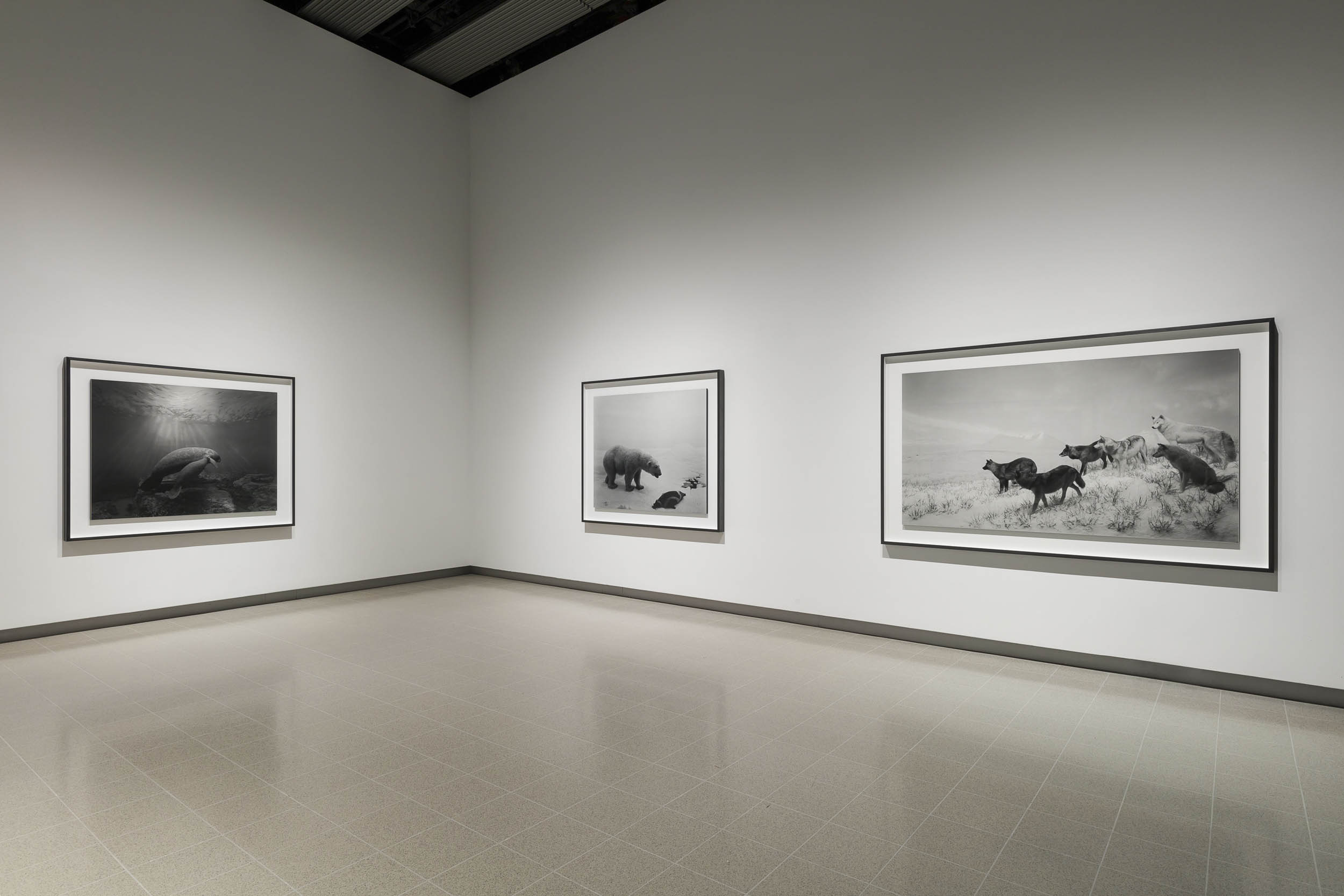
 

Installation view of Hiroshi Sugimoto, 'Dioramas' (1974) from the exhibition 'Hiroshi Sugimoto: Time Machine' at the Hayward Gallery, London, Oct 2023 - Jan 2024


Installation view of Hiroshi Sugimoto, Dioramas (1974 – ) Silver gelatin prints
Photo: Mark Blower. Courtesy the artist and the Hayward Gallery


‘My life as an artist began the moment I saw that I had succeeded in bringing the bear back to life on film,’ said Sugimoto about his 1976 work Polar Bear. The image is of an Arctic diorama in the American Museum of Natural History in New York, but through clever use of framing and exposure, Sugimoto was able to make the scene appear real. As well as revisiting the museum, and others across the US, to expand his Dioramas series, Sugimoto later took a similar approach to the waxworks of Madame Tussauds in his Portraits. By removing the figures from their staged displays, and photographing them against a black backdrop with sympathetic lighting, the artist gave the impression that these famous faces had themselves modelled for his portraiture.

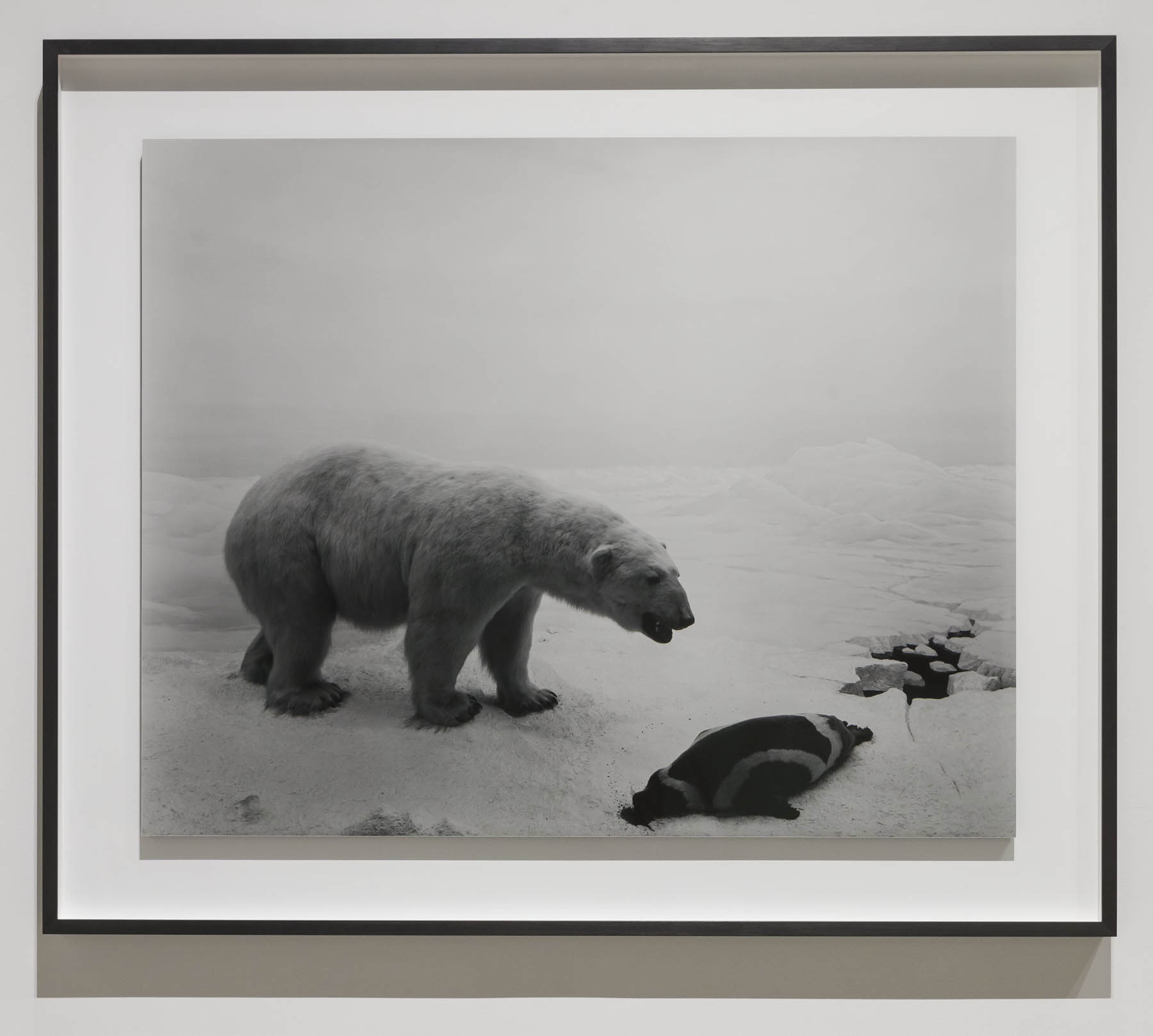
 

Installation view of Hiroshi Sugimoto, 'Polar Bear', 1976 from the 'Dioramas' series (1974 - ) from the exhibition 'Hiroshi Sugimoto: Time Machine' at the Hayward Gallery, London, Oct 2023 - Jan 2024

Installation view of Hiroshi Sugimoto, 'Polar Bear', 1976 from the 'Dioramas' series (1974 - ) from the exhibition 'Hiroshi Sugimoto: Time Machine' at the Hayward Gallery, London, Oct 2023 - Jan 2024


Installation view of Hiroshi Sugimoto, Polar Bear, 1976. Silver gelatin print
Photo: Mark Blower. Courtesy the artist and the Hayward Gallery
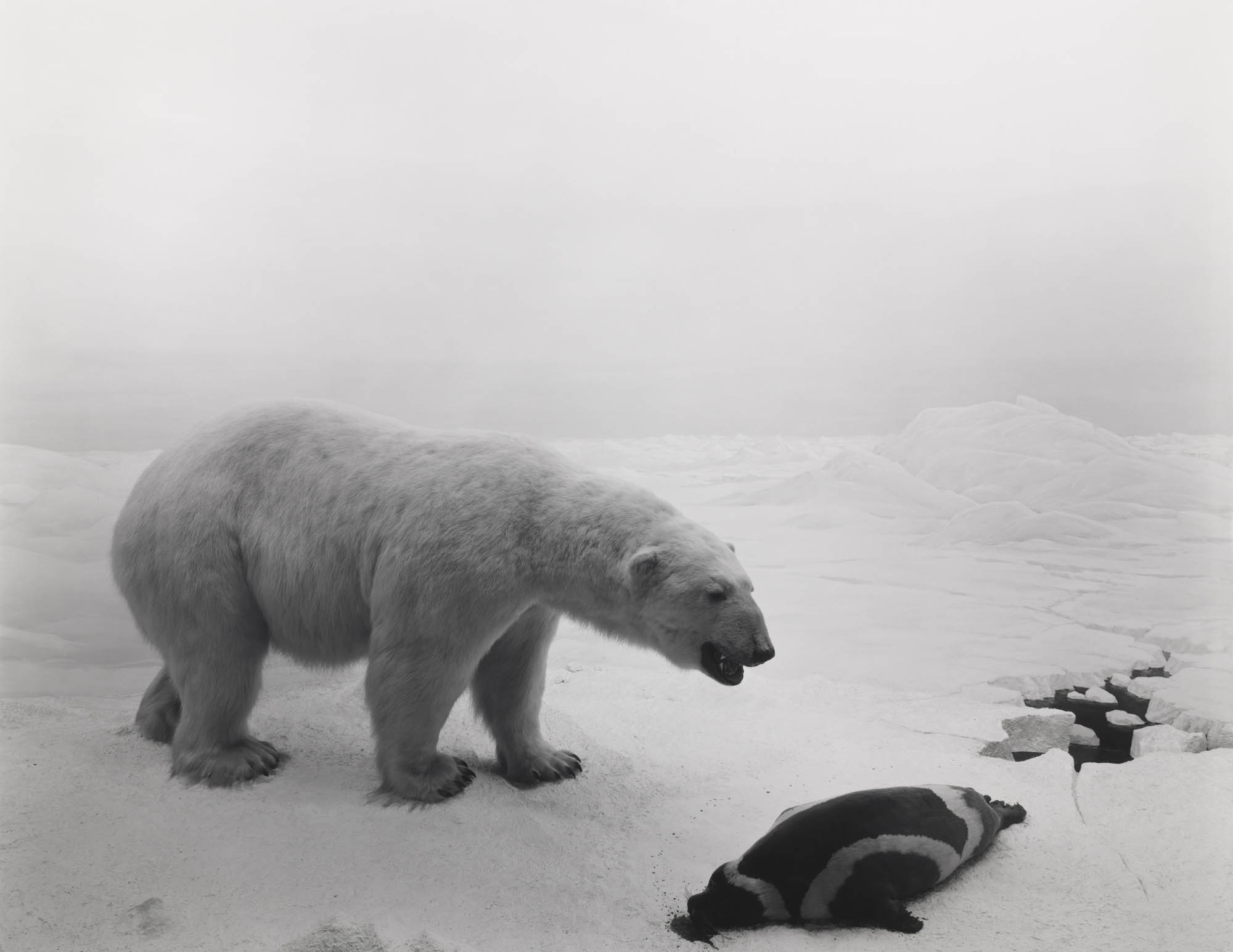
 

Hiroshi Sugimoto (Japanese, b. 1948) 'Polar Bear' 1976 from the exhibition 'Hiroshi Sugimoto: Time Machine' at the Hayward Gallery, London, Oct 2023 - Jan 2024


Hiroshi Sugimoto (Japanese, b. 1948)
Polar Bear
1976
From the Dioramas series
Gelatin silver print
© Hiroshi Sugimoto, courtesy of the artist


“Polar Bear” (1976) shows the majestic white animal roaring over a fresh kill: the bloodied body of a seal whose inert form is bulky and dark against an Arctic white background that stretches into the distance. Look closely and behind the bear – with its luscious coat of fur, its big paws so heavy in the snow you can almost hear it crunch – the line between two and three dimensions is just visible: a jagged crevasse in the ice floe beneath the two animals merges almost seamlessly with a painted backdrop of receding icy peaks.

The eye judders between these realities. The dead bear, momentarily brought to life by the vividness of the photograph, dies again, and is preserved again, a copy of a copy, frozen between past and present. Similar fates await a pair of ostriches defending their new hatchlings against a family of wart hogs (“Ostrich-Wart Hog,” 1980) and a placidly floating mother manatee and her calf (“Manatee,” 1994).

Emily LaBarge. “What Is Photography? (No Need to Answer That),” on the New York Times website Nov. 21, 2023 [Online] Cited 23/11/2023
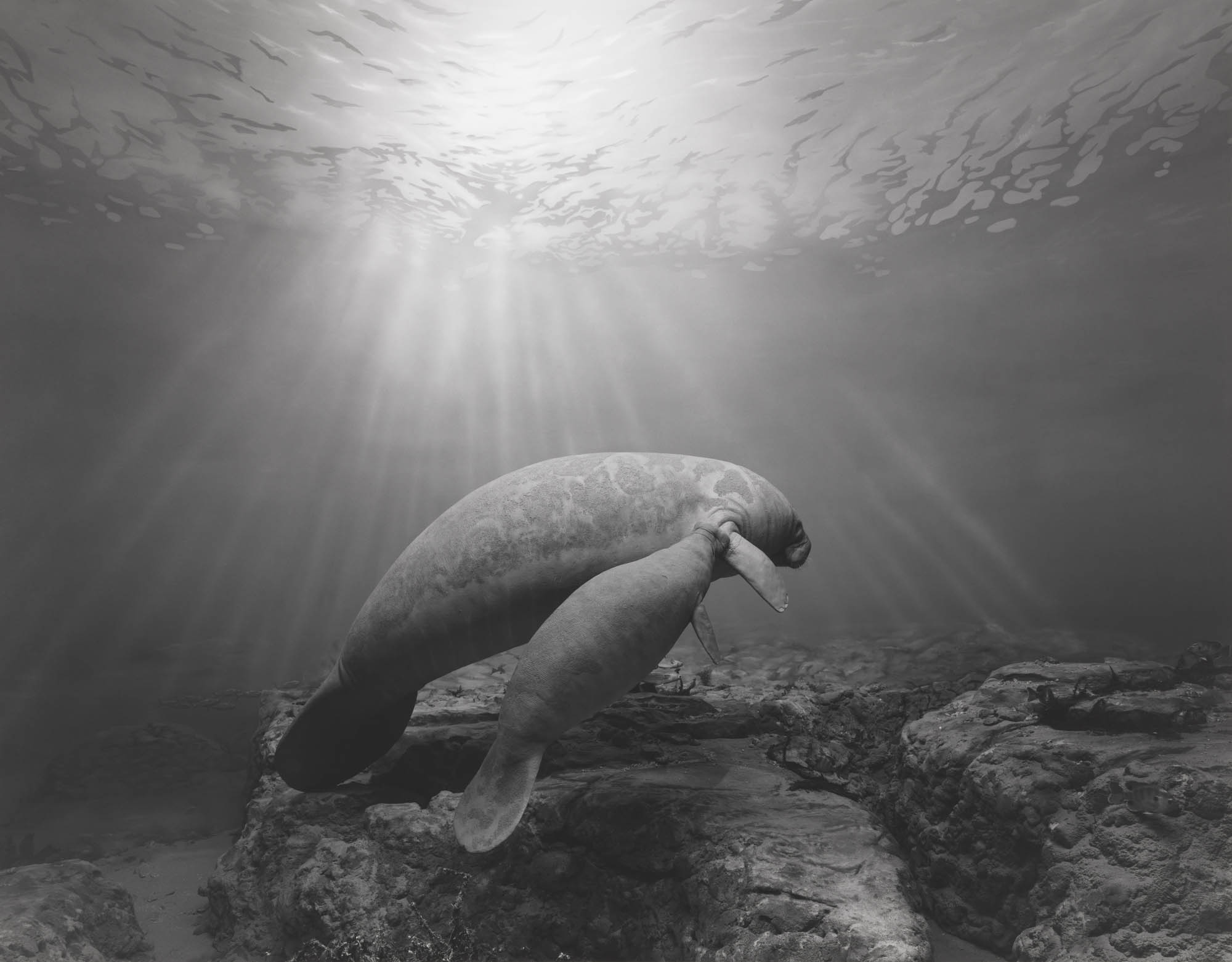
 

Hiroshi Sugimoto (Japanese, b. 1948) 'Manatee' 1994 from the exhibition 'Hiroshi Sugimoto: Time Machine' at the Hayward Gallery, London, Oct 2023 - Jan 2024


Hiroshi Sugimoto (Japanese, b. 1948)
Manatee
1994
From the Dioramas series
Gelatin silver print
© Hiroshi Sugimoto, courtesy of the artist


Hiroshi Sugimoto (Japanese, b. 1948) 'Earliest Human Relatives' 1994 from the exhibition 'Hiroshi Sugimoto: Time Machine' at the Hayward Gallery, London, Oct 2023 - Jan 2024


Hiroshi Sugimoto (Japanese, b. 1948)
Earliest Human Relatives
1994
From the Dioramas series
Gelatin silver print
© Hiroshi Sugimoto, courtesy of Marian Goodman Gallery


Theaters (1976 – ) and Abandoned Theaters (2015 – )


Hiroshi Sugimoto (Japanese, b. 1948) 'UA Playhouse, New York' 1978


Hiroshi Sugimoto (Japanese, b. 1948)
UA Playhouse, New York
1978
Gelatin silver print
© Hiroshi Sugimoto, courtesy of the artist
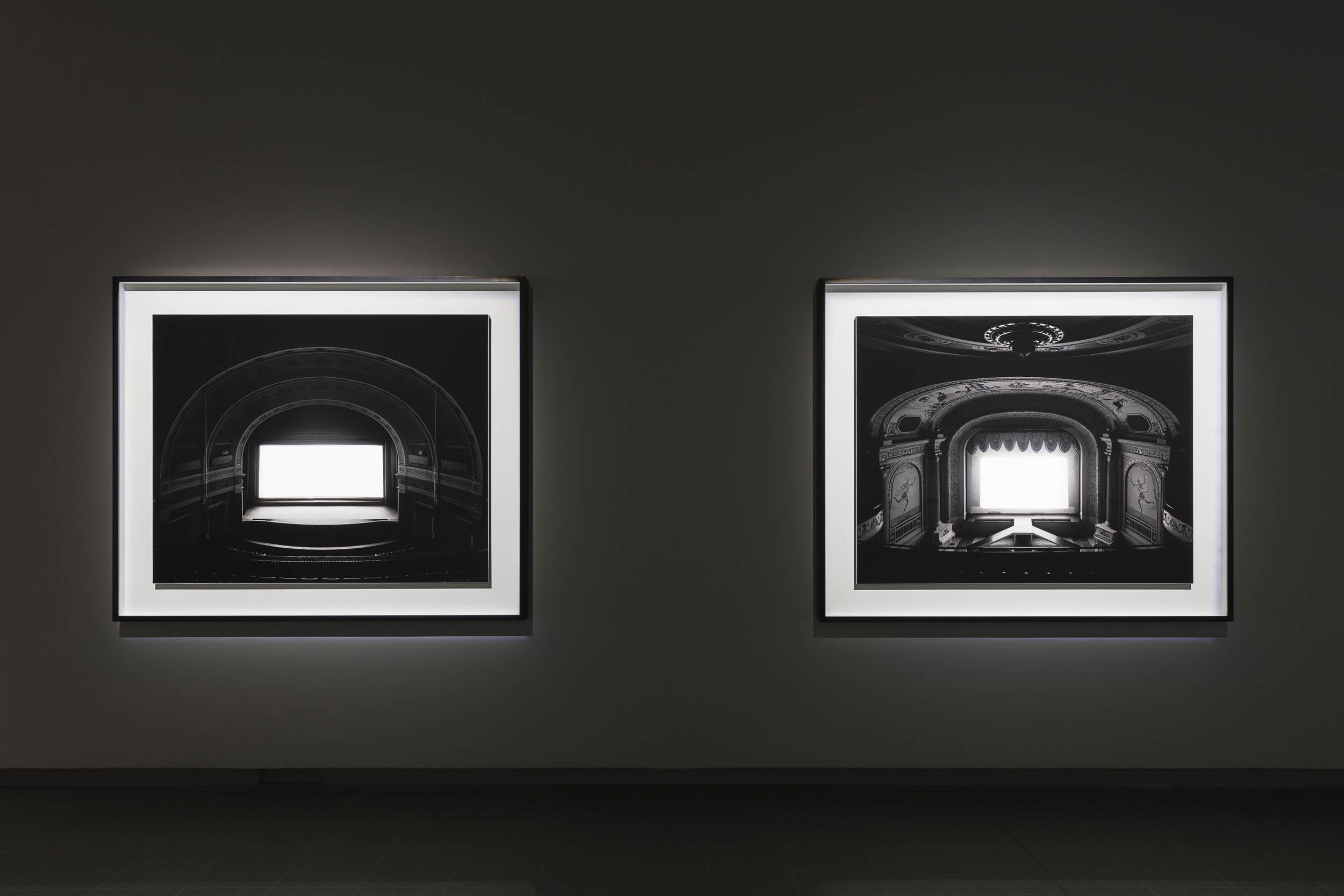
 

Installation view of Hiroshi Sugimoto, 'Theaters' series (1976 - )


Installation view of Hiroshi Sugimoto, Theaters series (1976 – ) Gelatin silver prints
Photo: Mark Blower. Courtesy the artist and the Hayward Gallery
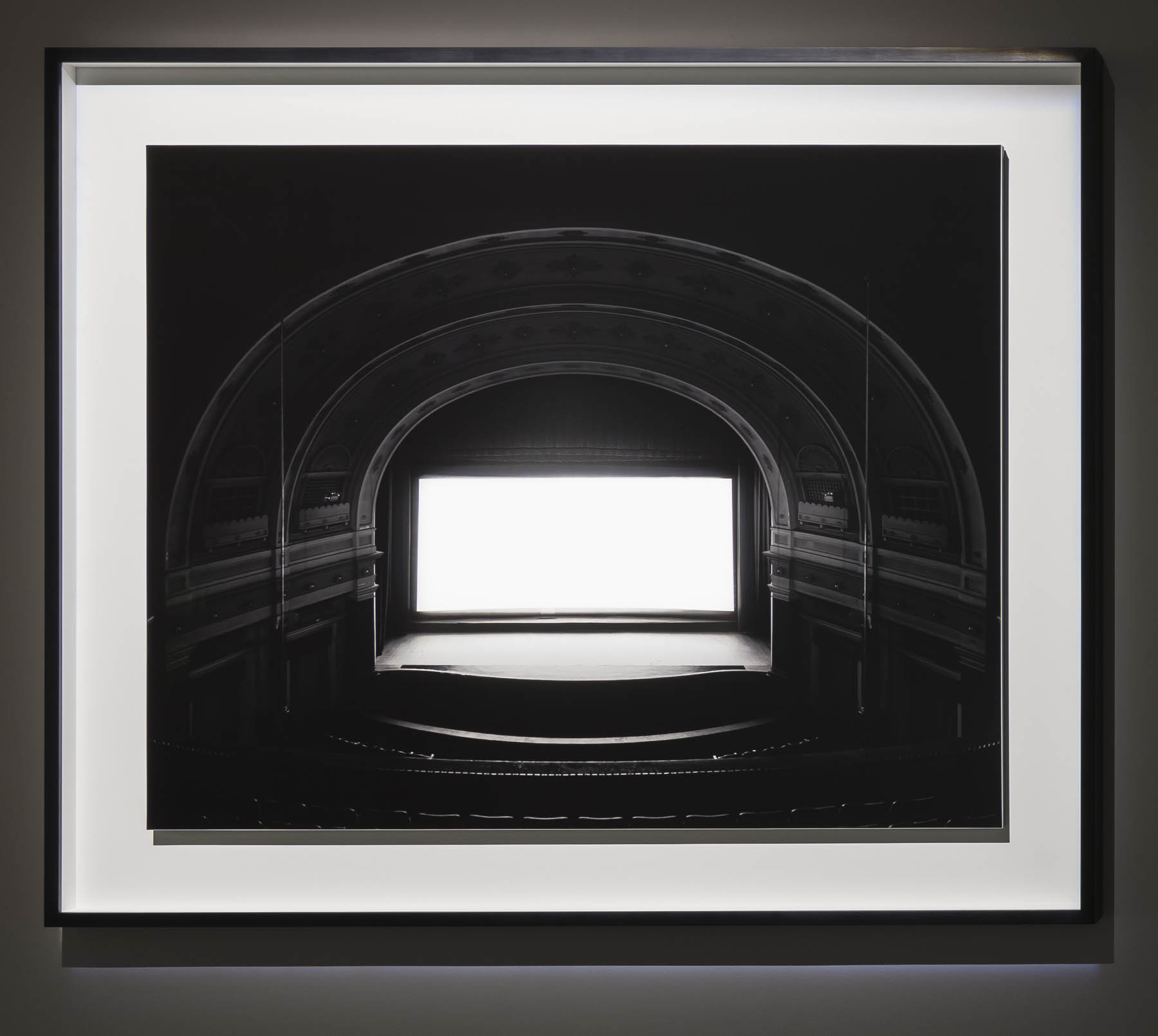
 

Installation view of Hiroshi Sugimoto, 'Goshen Indiana' 1980. Gelatin silver print


Installation view of Hiroshi Sugimoto, Goshen Indiana, 1980. Gelatin silver print
Photo: Mark Blower. Courtesy the artist and the Hayward Gallery


Installation view of Hiroshi Sugimoto, 'Cabot Street Cinema, Beverly, Massachusetts' 1978


Installation view of Hiroshi Sugimoto, Cabot Street Cinema, Beverly, Massachusetts 1978. Gelatin silver print


Installation view of Hiroshi Sugimoto, 'Abandoned Theaters' series (2015 - )


Installation view of Hiroshi Sugimoto, Abandoned Theaters series (2015 – ). Gelatin silver prints
Photo: Mark Blower. Courtesy the artist and the Hayward Gallery


Hiroshi Sugimoto (Japanese, b. 1948) 'Kenosha Theater, Kenosha' 2015


Hiroshi Sugimoto (Japanese, b. 1948)
Kenosha Theater, Kenosha
2015
Gelatin silver print
© Hiroshi Sugimoto, courtesy of the artist
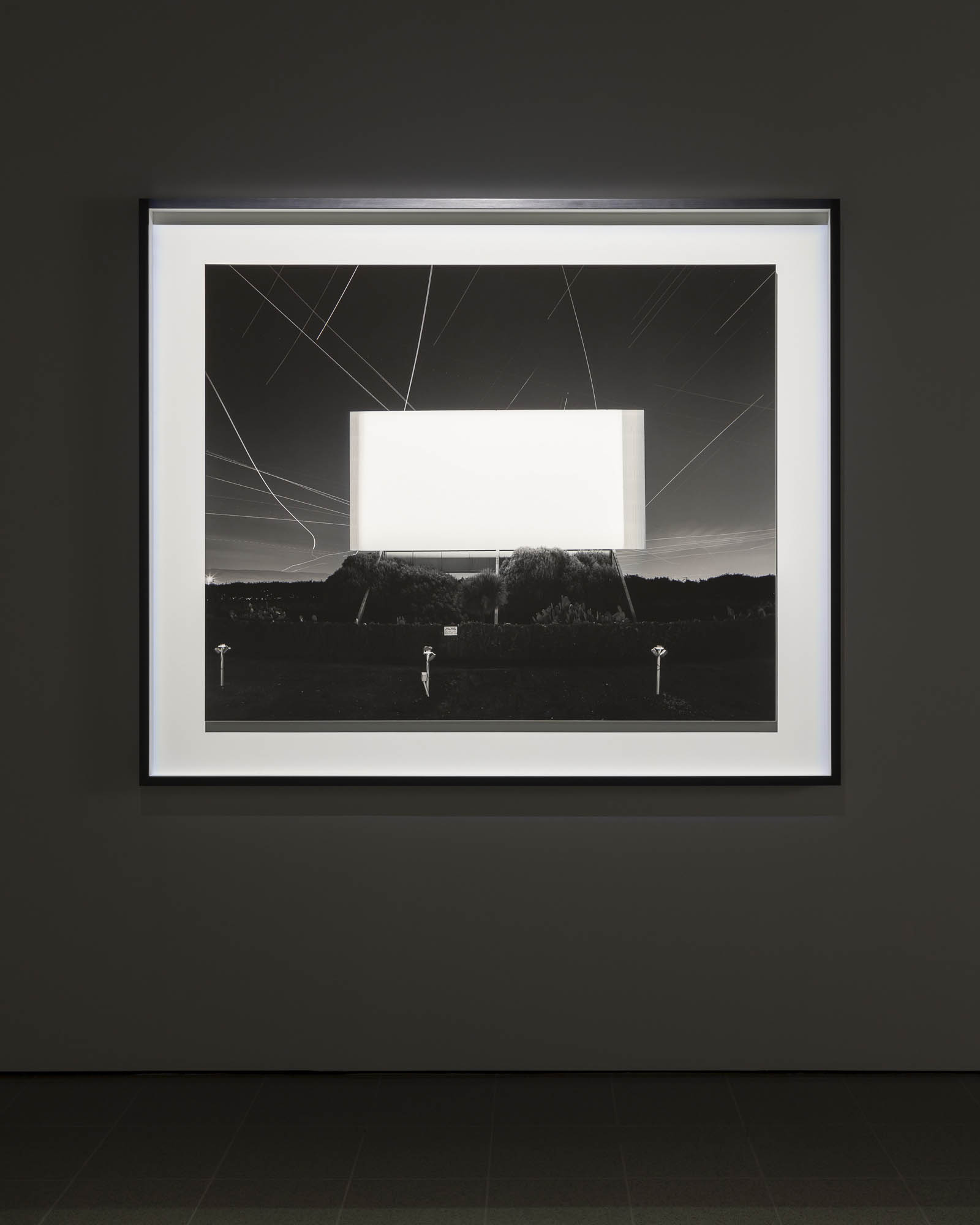
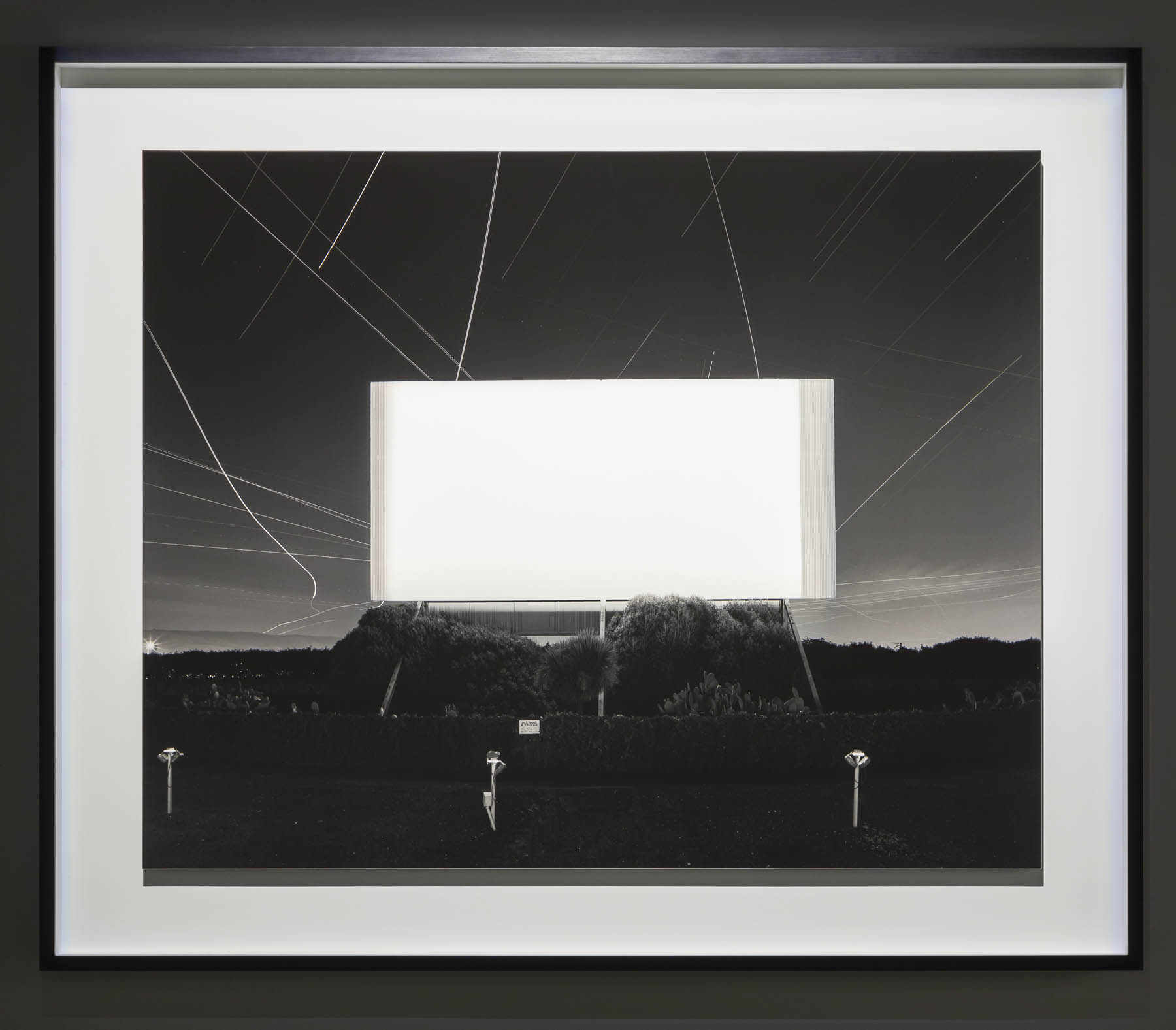
 

Installation view of Hiroshi Sugimoto, 'Union City Drive-in, Union City' 1993

Installation view of Hiroshi Sugimoto, 'Union City Drive-in, Union City' 1993


Installation view of Hiroshi Sugimoto, Union City Drive-in, Union City, 1993. Gelatin silver print
Photo: Mark Blower. Courtesy the artist and the Hayward Gallery
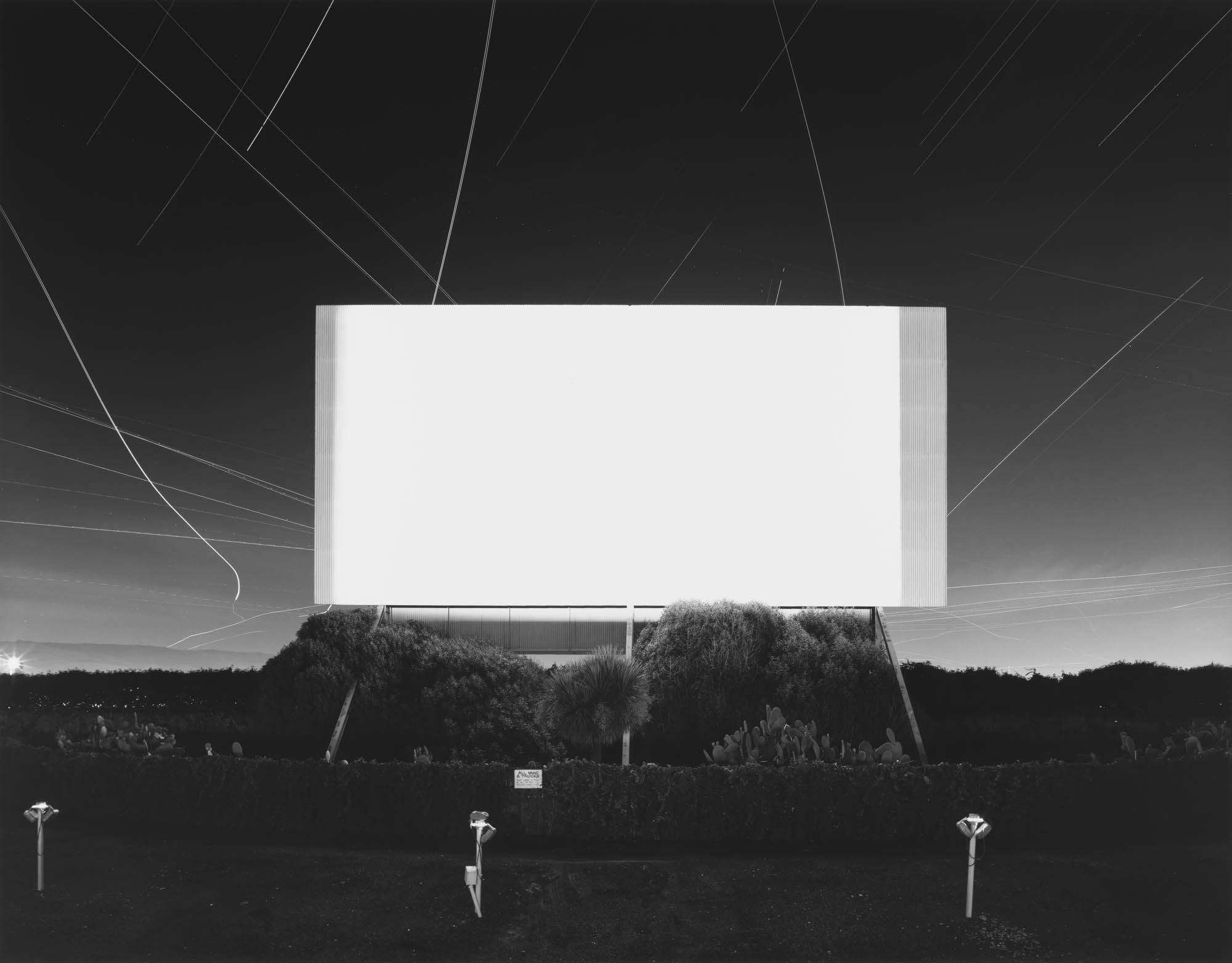
 

Hiroshi Sugimoto (Japanese, b. 1948) 'Union City Drive-in, Union City' 1993


Hiroshi Sugimoto (Japanese, b. 1948)
Union City Drive-in, Union City
1993
Gelatin silver print
© Hiroshi Sugimoto, courtesy of the artist


The largest survey to date of Hiroshi Sugimoto, an artist renowned for creating some of the most alluringly enigmatic photographs of our time. Over the past 50 years, Sugimoto has created pictures which are meticulously crafted, deeply thought-provoking and quietly subversive.

Featuring key works from all of the artist’s major photographic series, this survey highlights Sugimoto’s philosophical yet playful inquiry into our understanding of time and memory, and photography’s ability to both document and invent.

The exhibition also includes lesser-known works that reveal the artist’s interest in the history of photography, as well as in mathematics and optical sciences.

Often employing a large-format wooden camera and mixing his own darkroom chemicals, Sugimoto has repeatedly re-explored ideas and practices from 19th century photography while capturing subjects including dioramas, wax figures and architecture. His work has stretched and rearranged concepts of time, space and light that are integral to the medium.

Born and raised in Tokyo, Japan, Hiroshi Sugimoto divides his time between Tokyo and New York City. Over the past five decades, his photographs have received international acclaim and have been presented in major institutions across the globe.

While best known as a photographer, Sugimoto has more recently added architecture and sculpture to his multidisciplinary practice, as well as being artistic director on performing arts productions.

Text from the Hayward Gallery website


Seascapes (1980 -)


Installation view of Hiroshi Sugimoto, 'Seascapes' series


Installation view of Hiroshi Sugimoto, Seascapes series. Gelatin silver prints
Photo: Mark Blower. Courtesy the artist and the Hayward Gallery


Installation view of Hiroshi Sugimoto, 'Seascapes' series


Installation view of Hiroshi Sugimoto, Seascapes series. Gelatin silver prints
Photo: Mark Blower. Courtesy the artist and the Hayward Gallery


Hiroshi Sugimoto (Japanese, b. 1948) 'Bay of Sagami, Atami' 1997


Hiroshi Sugimoto (Japanese, b. 1948)
Bay of Sagami, Atami
1997
From the Seascapes series
Gelatin silver print
© Hiroshi Sugimoto, courtesy of the artist


Architecture (1997 – )


Installation view of Hiroshi Sugimoto, 'Chrysler Building' 1997


Installation view of Hiroshi Sugimoto, Chrysler Building 1997. Gelatin silver print
Photo: Mark Blower. Courtesy the artist and the Hayward Gallery


Installation view of Hiroshi Sugimoto, 'Chrysler Building' 1997


Installation view of Hiroshi Sugimoto, Chrysler Building 1997. Gelatin silver print
Photo: Mark Blower. Courtesy the artist and the Hayward Gallery
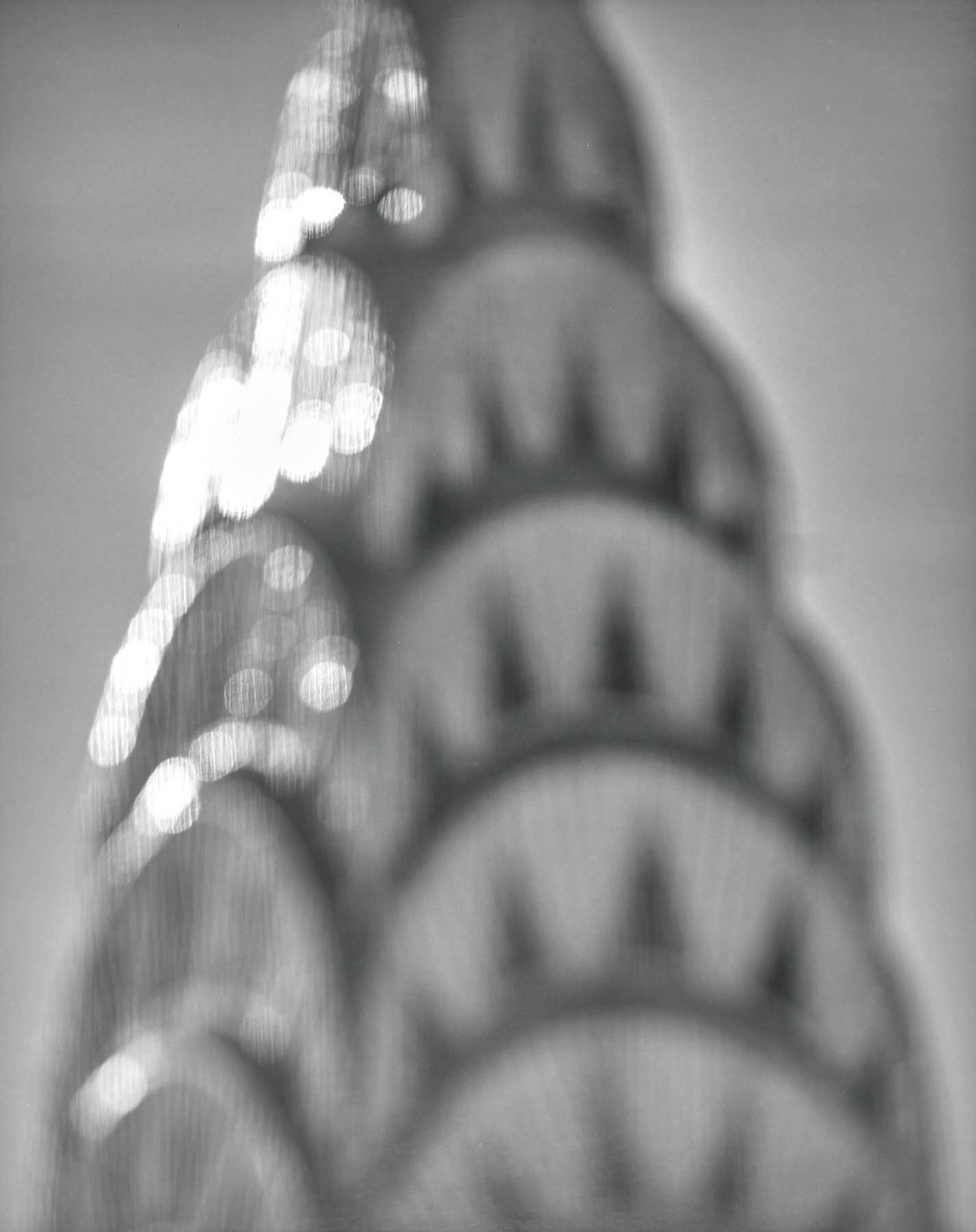
 

Hiroshi Sugimoto (Japanese, b. 1948) 'Chrysler Building' 1997


Hiroshi Sugimoto (Japanese, b. 1948)
Chrysler Building
1997
Gelatin silver print
© Hiroshi Sugimoto, courtesy of the artist


Hiroshi Sugimoto (Japanese, b. 1948) 'World Trade Center' 1997


Hiroshi Sugimoto (Japanese, b. 1948)
World Trade Center
1997
Gelatin silver print
© Hiroshi Sugimoto, courtesy of the artist
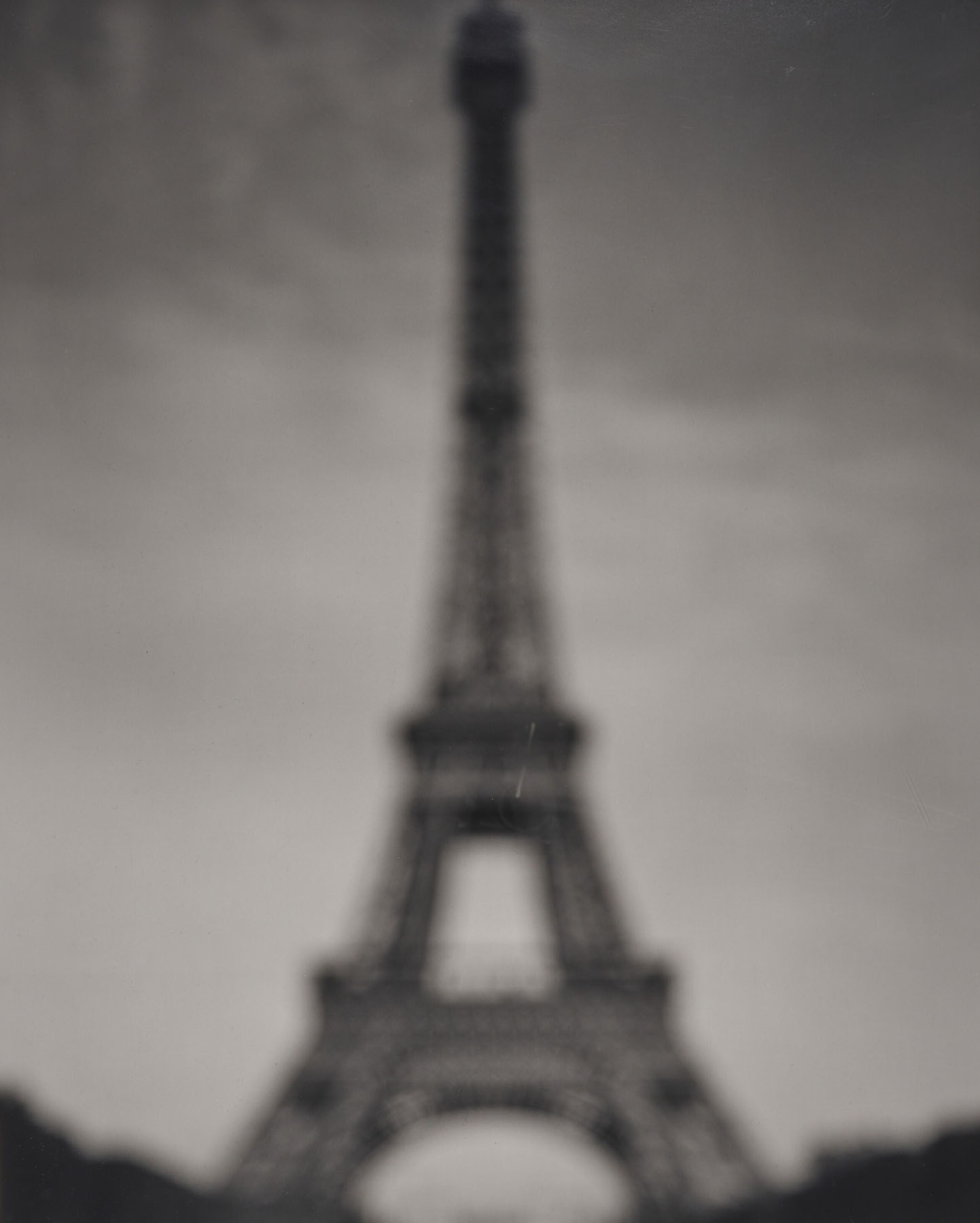
 

Hiroshi Sugimoto (Japanese, b. 1948) 'Eiffel Tower' 1998


Hiroshi Sugimoto (Japanese, b. 1948)
Eiffel Tower
1998
Gelatin silver print
© Hiroshi Sugimoto, courtesy of the artist


Over the past 50 years, Hiroshi Sugimoto has created some of the most alluringly enigmatic photographs of our time: pictures that are precisely crafted and deeply thought-provoking, familiar yet tantalisingly ambiguous. Featuring key works from all of the artist’s major photographic series, this survey highlights the artist’s philosophical yet playful inquiry into our understanding of time and memory, and the ambiguous character of photography as a medium suited to both documentation and invention.

The exhibition also includes lesser-known works that illuminate the artist’s interest in the history of photography as well as in mathematics and optical sciences. Often employing a large-format wooden camera, mixing his own darkroom chemicals and developing his black-and-white prints by hand, Sugimoto has repeatedly re-explored ideas and practices from 19th century photography, including subjects such as dioramas, wax figures and architecture. In the process, his work has stretched and rearranged concepts of time, space and light that are integral to the medium.

Hiroshi Sugimoto says: “The camera is a time machine capable of representing the sense of time… The camera can capture more than a single moment, it can capture history, geological time, the concept of eternity, the essence of time itself… The more I think about that sense of time, the more I think this is probably one of the key factors of how humans became humans.”

Ralph Rugoff, Director of the Hayward Gallery, says: “Hiroshi Sugimoto is a brilliant visual poet of paradox, a polymath postmodern who embraces meticulous old school craftsmanship to produce exquisite, uncanny pictures that reference science and maths as well as abstract art and Renaissance portraits. Juggling different conceptions of time, and evoking visions ranging from primordial prehistory to the end of civilisation, his photographs ingeniously recalibrate our basic assumptions about the medium, and alter our sense of history, time and existence itself. Amidst all his peers, his work stands apart for its depth and striking originality of thought.”

Time Machine commences with a selection of Sugimoto’s black-and-white photographs of natural history dioramas, a series he began in the mid-1970s. The Dioramas photos draw attention less to the natural world than to its theatrical representation in museums, whilst at the same time conjuring what the artist has called the ‘fragility of existence’.

The subject of time is also explored in two subsequent bodies of work featured in the exhibition: shot in movie palaces as well as drive-ins, Sugimoto’s Theaters (1976 – ) capture entire films with a single long exposure, thus compressing all the dramatic action that appeared on screen into a single image of radiant whiteness. His renowned Seascapes (1980 -), which depict evenly divided expanses of sea and sky unmarked by any trace of human existence, are equally beguiling in their temporal reference, evoking the immediacy of abstract painting even as they speak to Sugimoto’s interest in focusing on vistas that, as he remarks, “are before human beings and after human beings.”

For Architecture (1997 – ), a series of deliberately out-of-focus studies of iconic modernist buildings – ranging from the Eiffel Tower to the Twin Towers – Sugimoto displays the expansive ambiguity that informs his art, at the same time conveying a sense of the visual germ of an idea in an architect’s imagination, as well as fashioning ghostly images of what he has described as “architecture after the end of the world.” For his subsequent Portraits (1999) series, meanwhile, the artist focused his camera on wax models of famous historical figures from Madame Tussauds; rendered more life-like in black-and-white, figures ranging from Queen Elizabeth II to Oscar Wilde and Salvador Dali take on a disarmingly lively appearance, underscoring the camera’s potential for altering our perception. As the artist has noted, “However fake the subject, once photographed, it’s as good as real.”

A final section of Hiroshi Sugimoto: Time Machine focuses on photographs that evoke different notions of timelessness, including his Sea of Buddha (1995) series, which portrays an installation in a 12th century Kyoto temple featuring 1001 gilded wooden statues of Buddha; and Lightning Fields (2006 – ), spectacular camera-less photographs created by exposing sensitised paper to electrical impulses produced by a Van der Graaf generator.

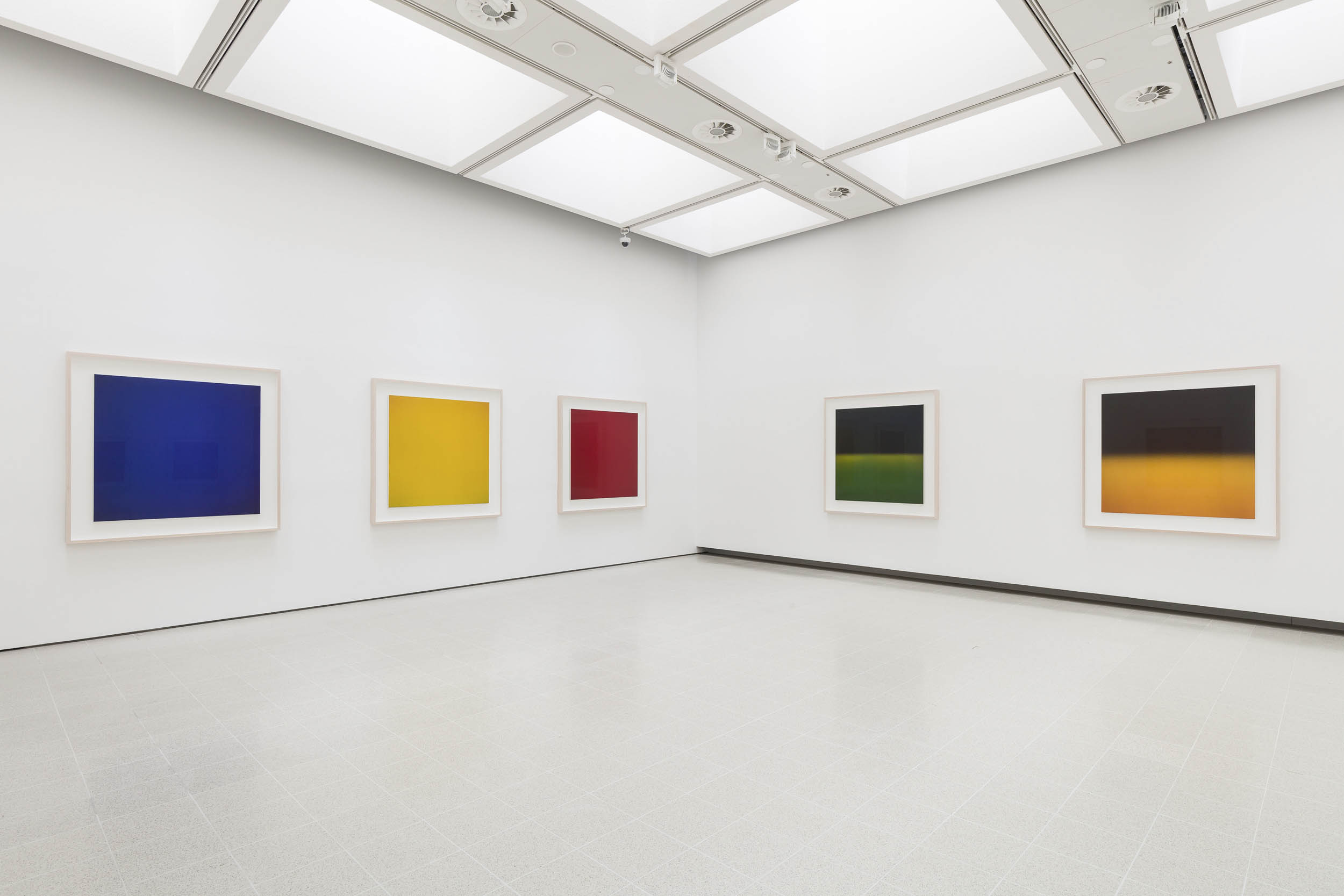
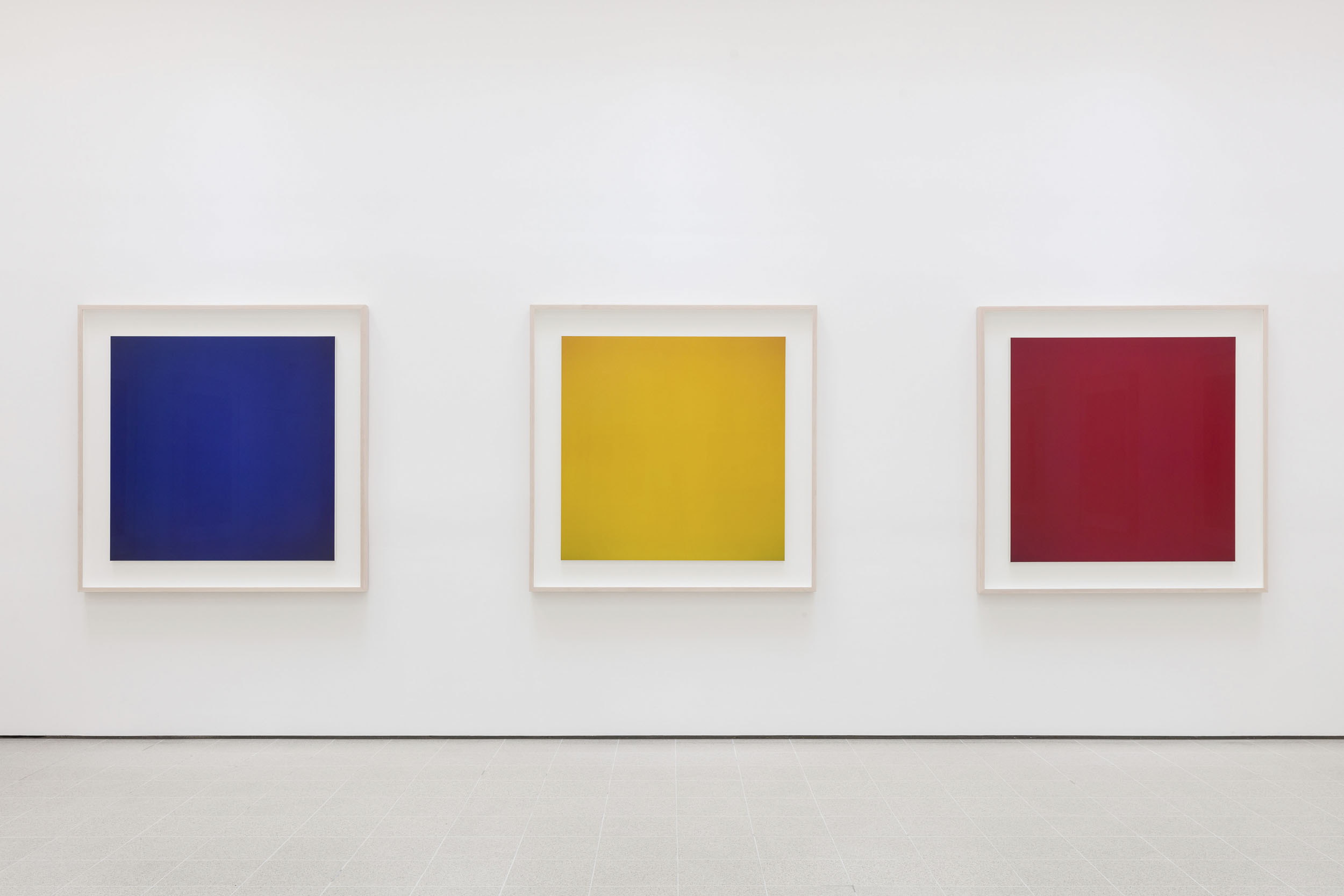
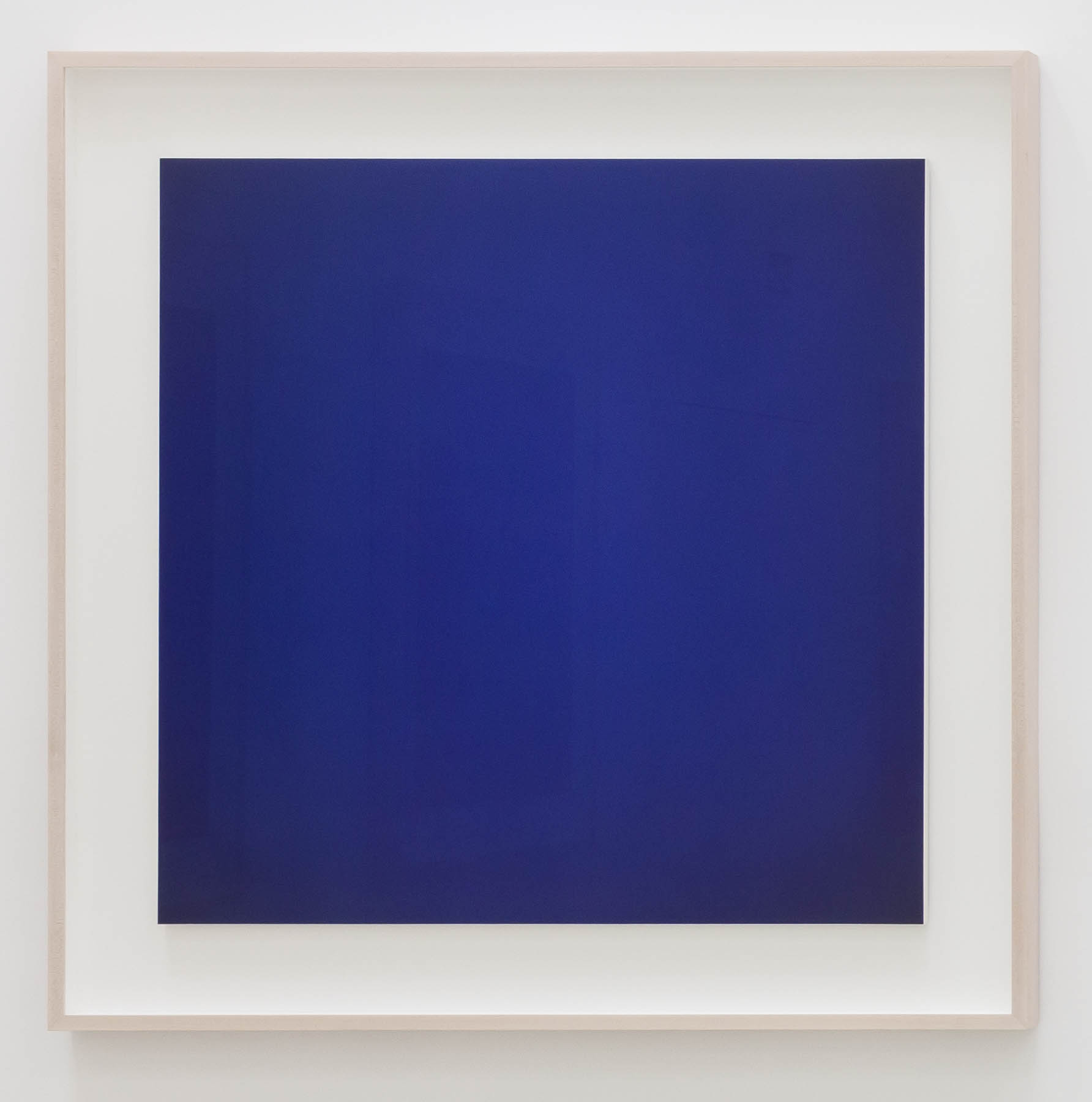
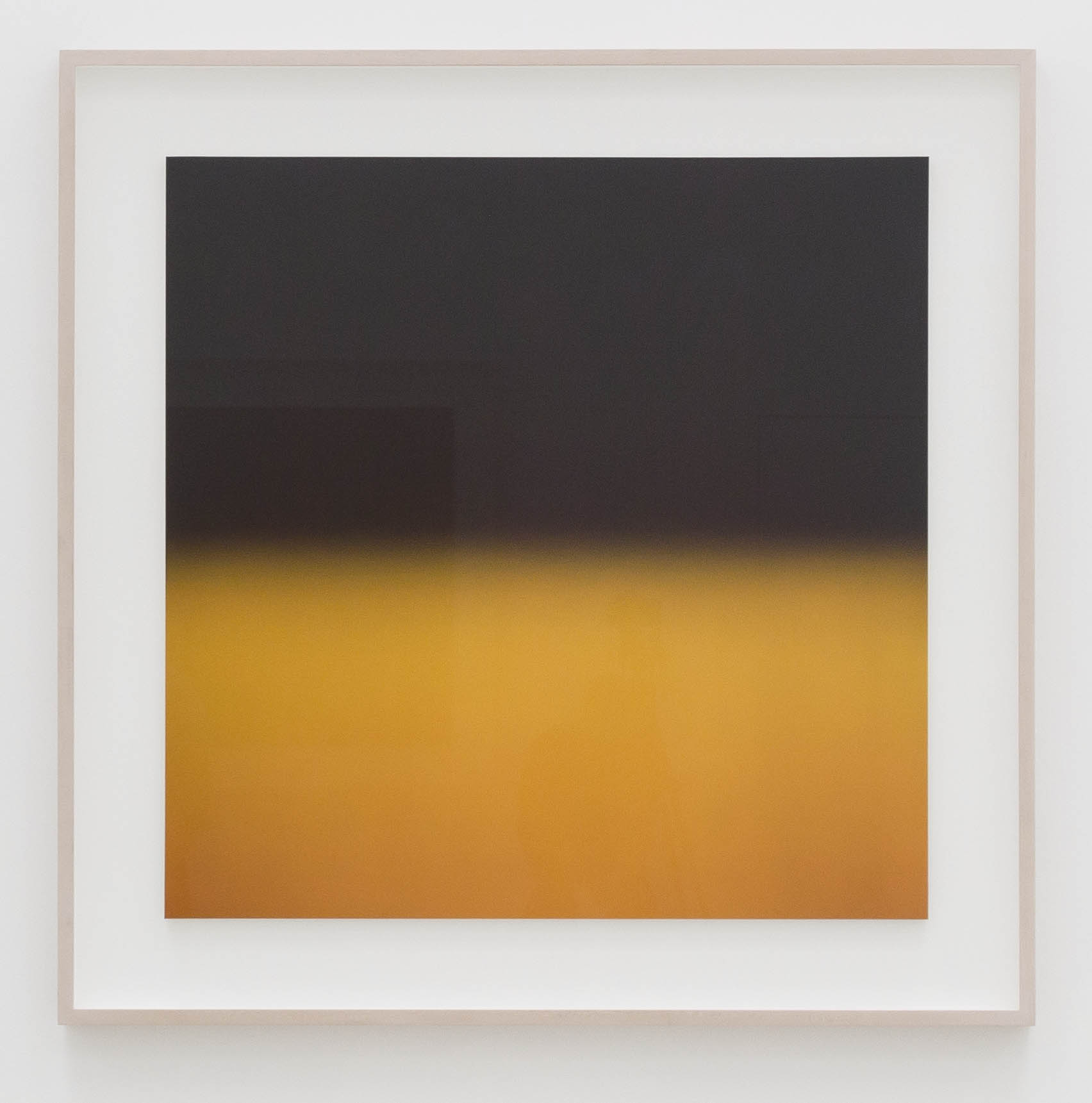
The exhibition comes to a stunning conclusion with a gallery dedicated to Sugimoto’s Opticks (2018 – ), intensely coloured photographs of prism-refracted light. Taking inspiration from Newton’s research into the properties of light whilst calling to mind colour field painting and artists like Mark Rothko, Opticks presents deeply immersive fields of subtly varying hues.

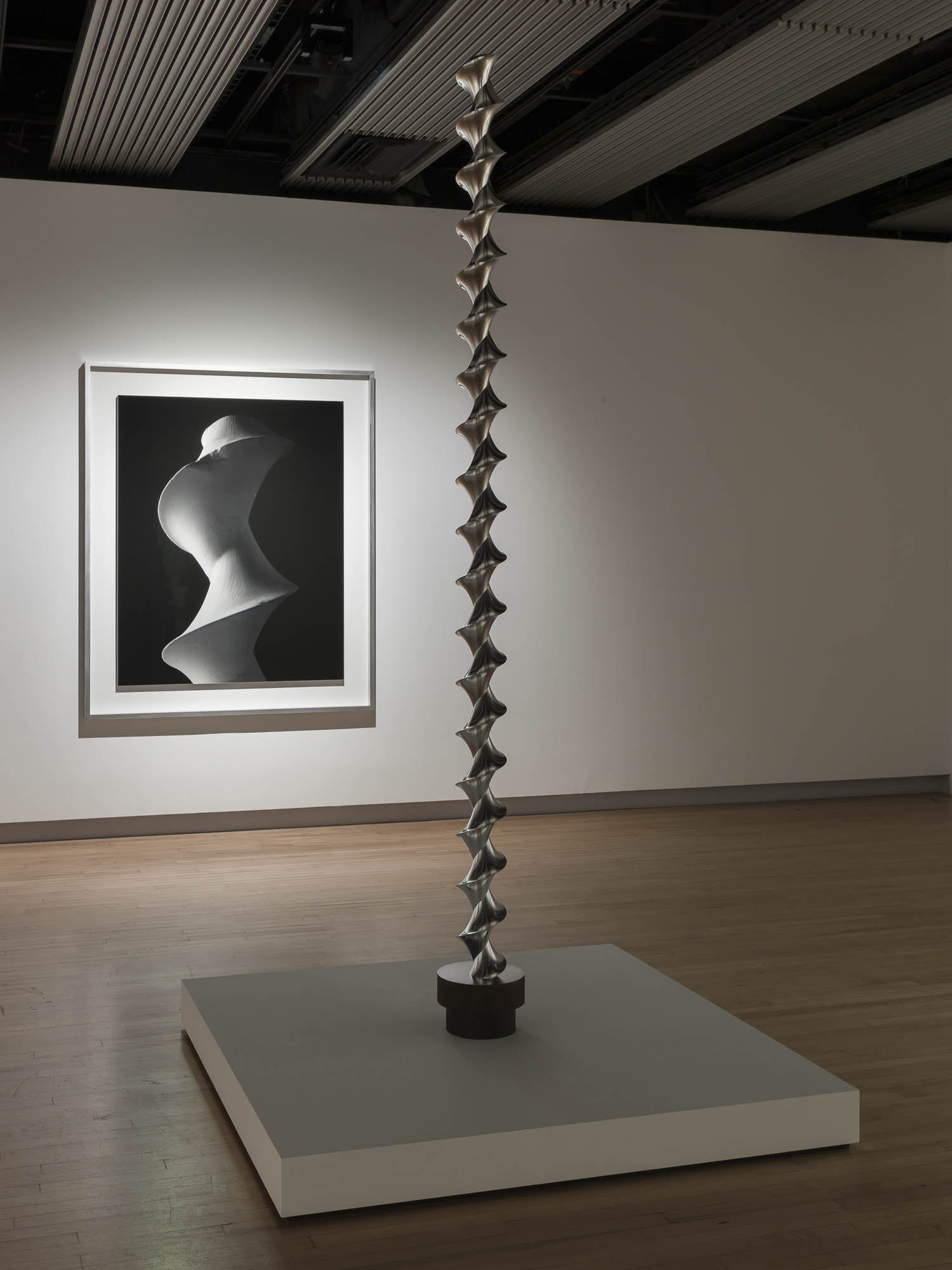
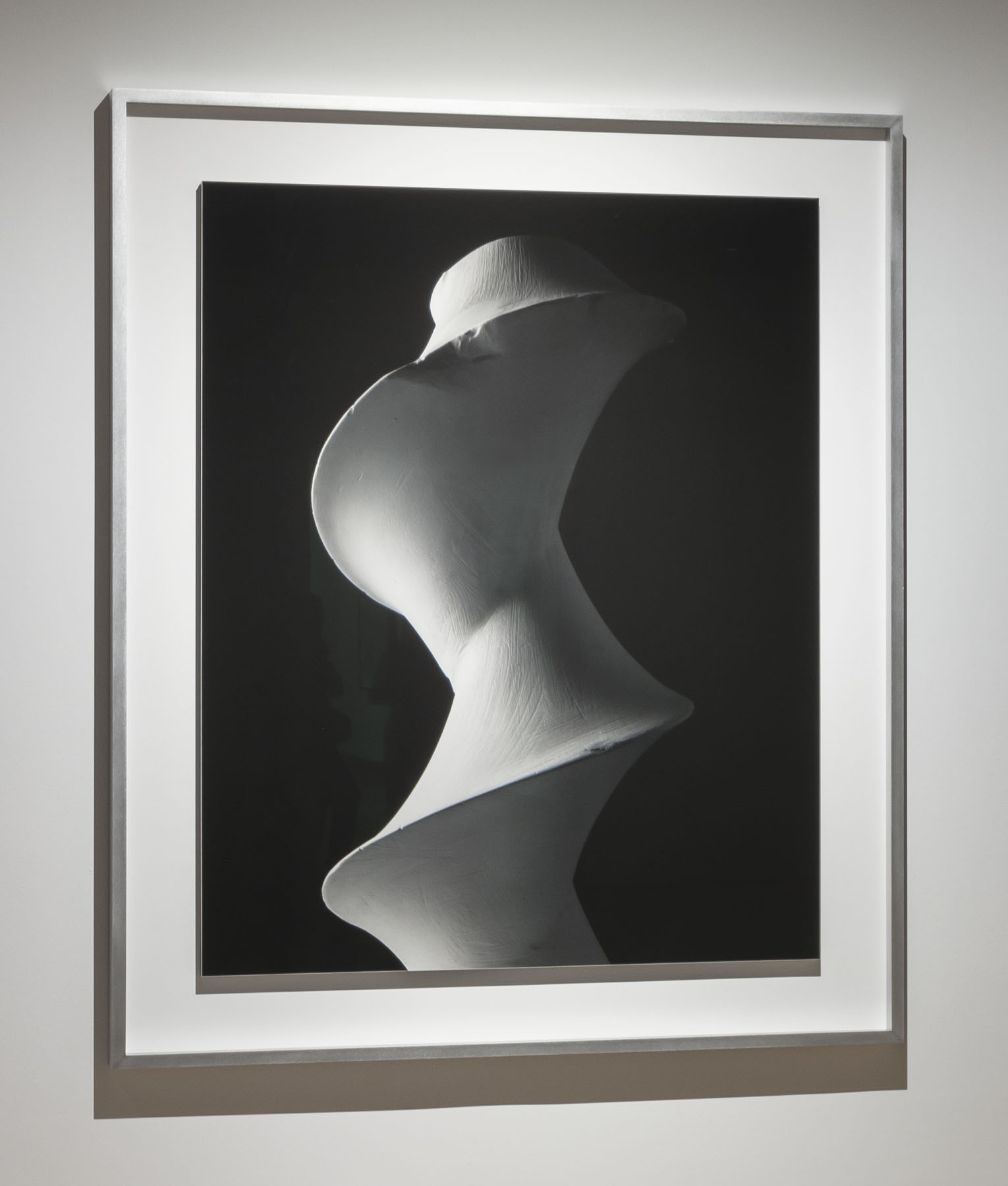
Alongside his photographs, two of Sugimoto’s elegantly contoured and polished aluminium sculptural models are presented, alluding to both mathematical equations and the abstract forms favoured by modernists such as Constantin Brâncuși.

The exhibition is accompanied by a fully-illustrated, 216pp catalogue with newly commissioned essays and an illustrated chronology, co-published with Hatje Cantz. Texts by Ralph Rugoff (on Dioramas), James Attlee (on Theaters), Mami Kataoka (on Seascapes), Lara Strongman (on Portraits), Geoffrey Batchen (on Lightning Fields), Edmund de Waal (on Sea of Buddha), Margaret Wertheim (on Conceptual Forms), Allie Biswas (on Opticks) and David Chipperfield (in conversation, on Architecture).

The show is set to tour internationally in 2024, at the UCCA Center for Contemporary Art (23 March – 23 June 2024) and The Museum of Contemporary Art Australia (2 August – 27 October 2024).

Press release from the Hayward Gallery


Sea of Buddha (1995)


Installation view of Hiroshi Sugimoto, 'Sea of Buddha' series

Installation view of Hiroshi Sugimoto, 'Sea of Buddha' series

Installation views of Hiroshi Sugimoto, Sea of Buddha series. Gelatin silver prints
Photo: Mark Blower. Courtesy the artist and the Hayward Gallery
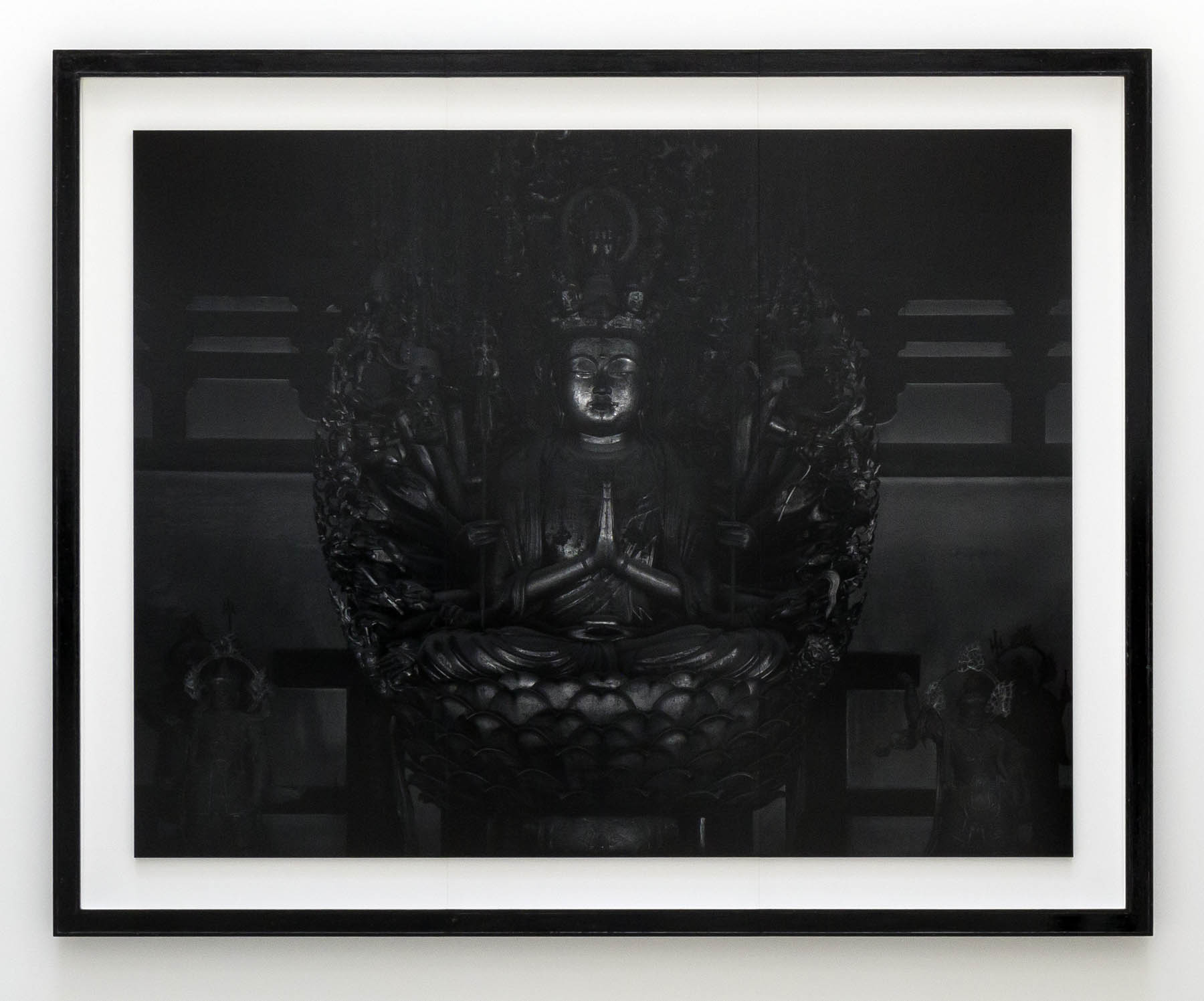
 

Installation view of Hiroshi Sugimoto, 'Sea of Buddha 049 (Triptych)' 1995


Installation view of Hiroshi Sugimoto, Sea of Buddha 049 (Triptych) 1995. Gelatin silver print
Photo: Mark Blower. Courtesy the artist and the Hayward Gallery
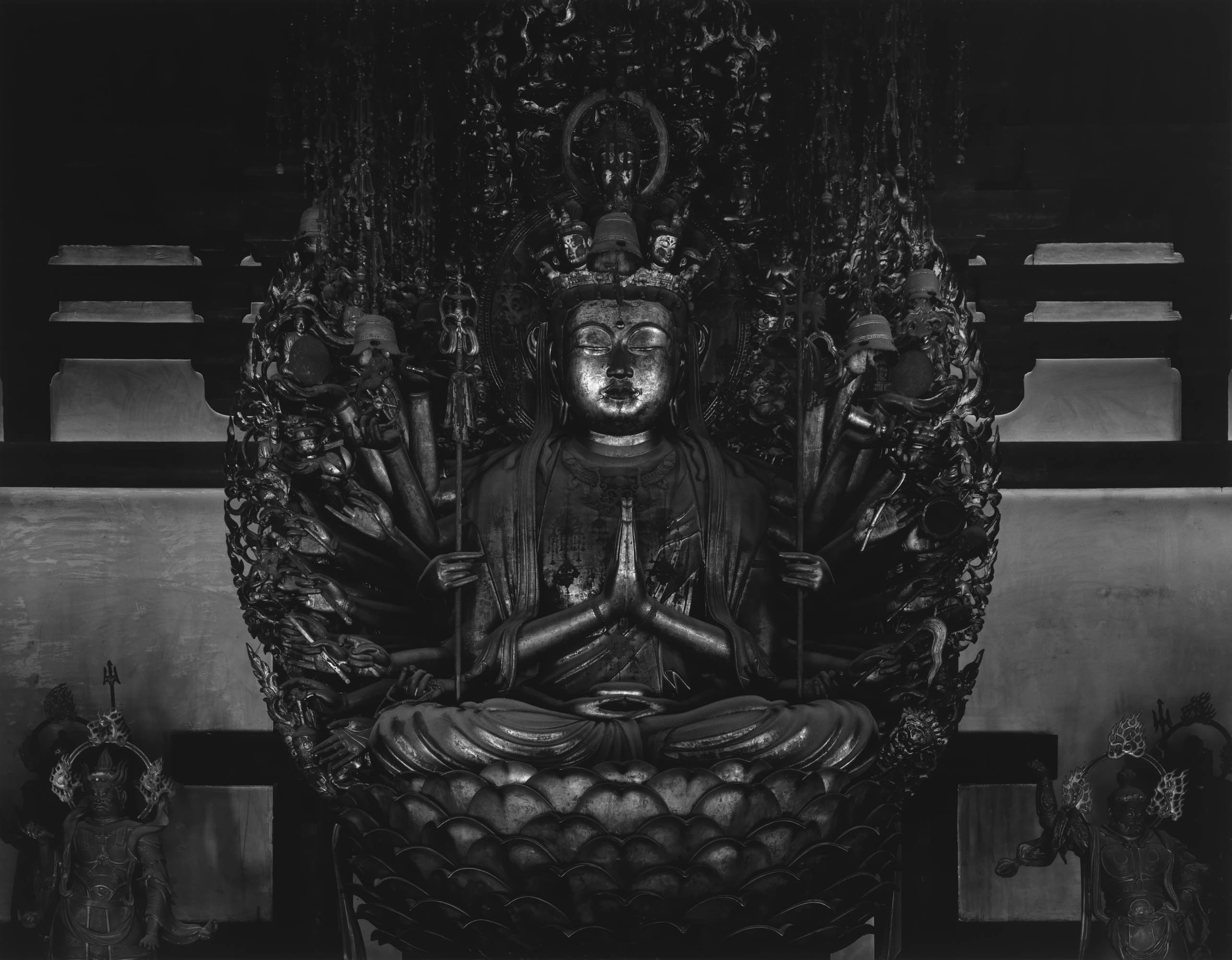
 

Hiroshi Sugimoto (Japanese, b. 1948) 'Sea of Buddha 049 (Triptych)' 1995


Hiroshi Sugimoto (Japanese, b. 1948)
Sea of Buddha 049 (Triptych)
1995
Gelatin silver print
© Hiroshi Sugimoto, courtesy of the artist


Chamber of Horrors (1994 – ) and Portraits (1999 -)
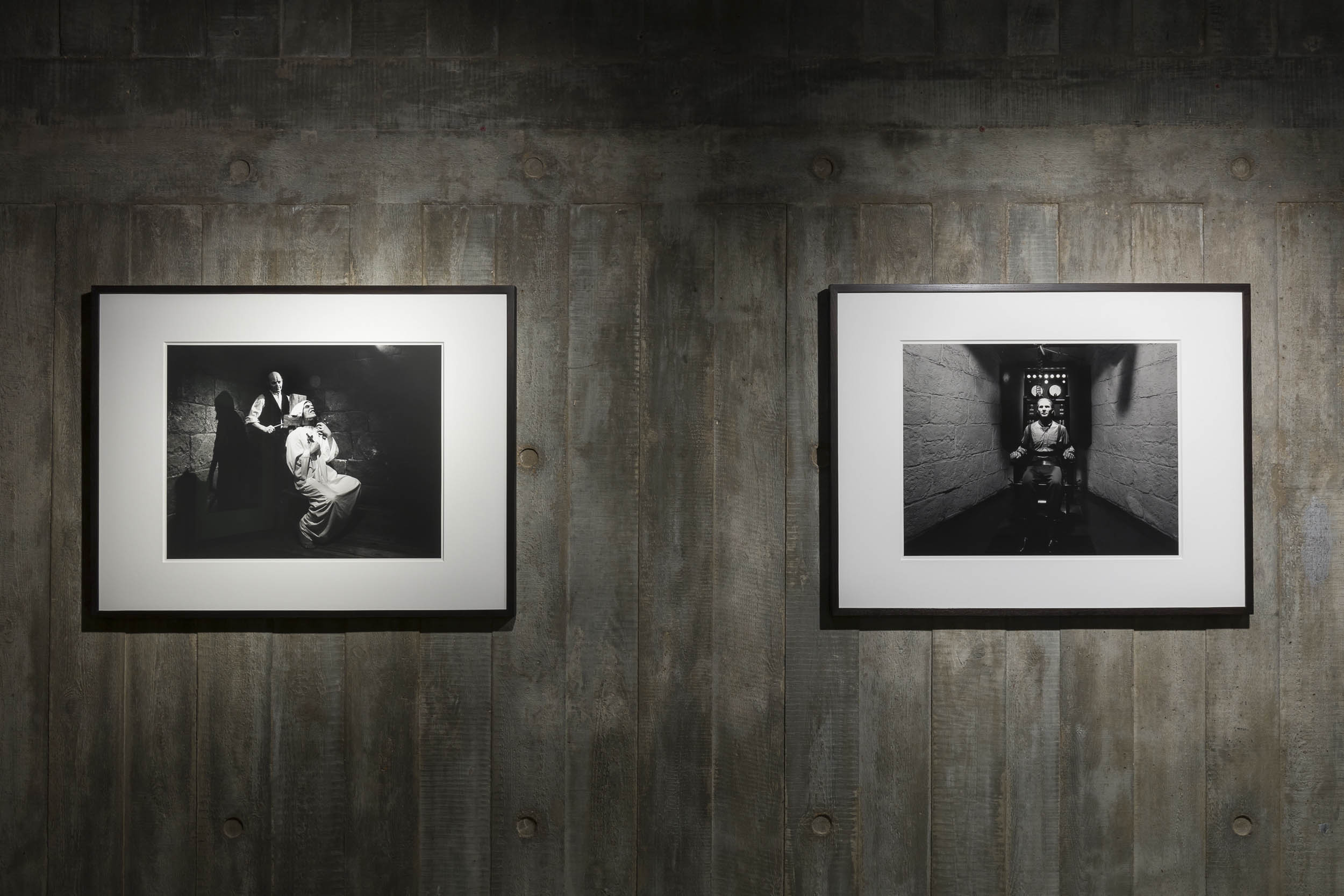
 

Installation view of Hiroshi Sugimoto, 'Chamber of Horrors' series


Installation view of Hiroshi Sugimoto, Chamber of Horrors series. Gelatin silver prints
Photo: Mark Blower. Courtesy the artist and the Hayward Gallery


Installation view of Hiroshi Sugimoto, 'The Garrote' 1994


Installation view of Hiroshi Sugimoto, The Garrote 1994. Gelatin silver print
Photo: Mark Blower. Courtesy the artist and the Hayward Gallery
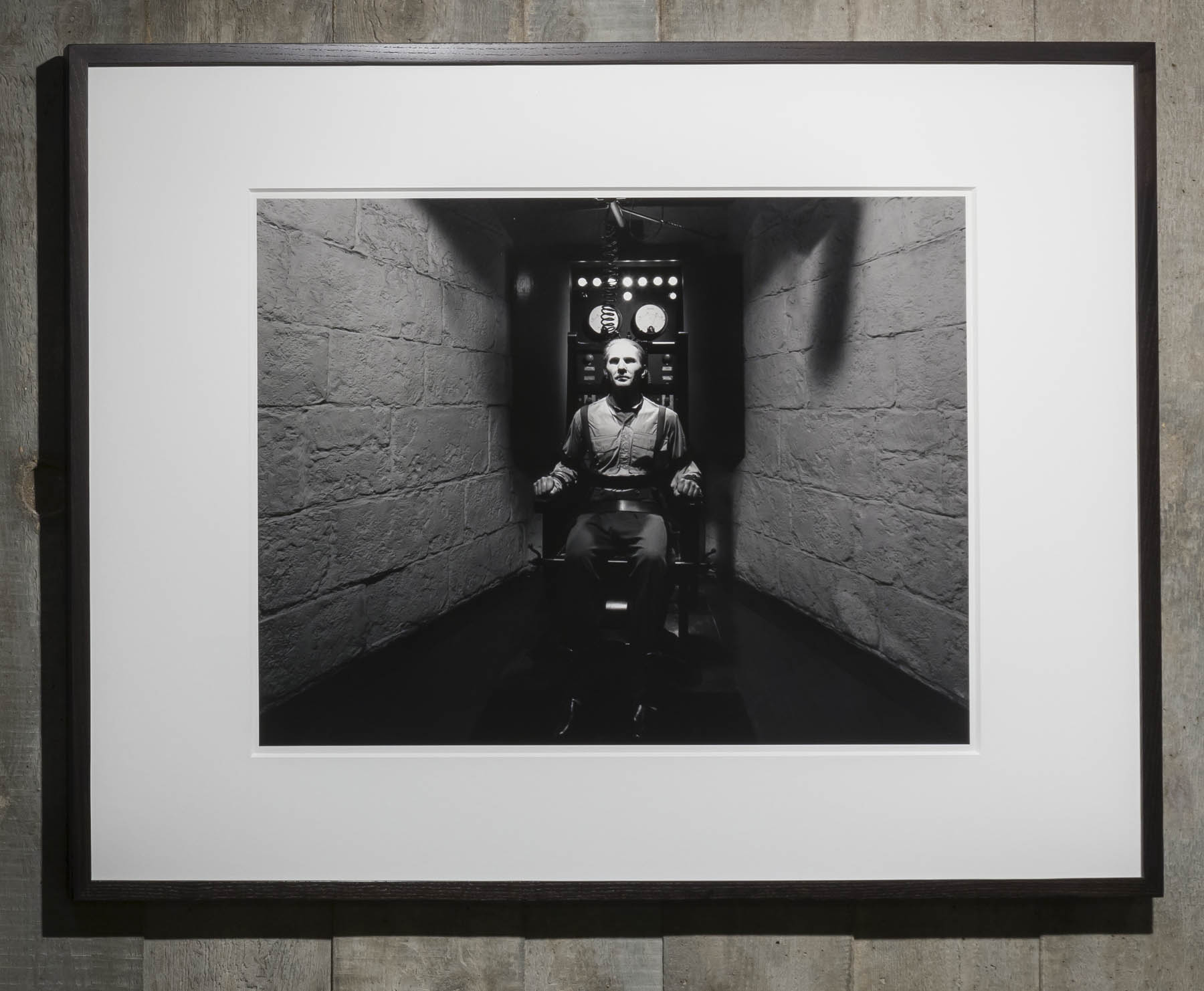
 

Installation view of Hiroshi Sugimoto, 'The Electric Chair' 1994


Installation view of Hiroshi Sugimoto, The Electric Chair 1994. Gelatin silver print
Photo: Mark Blower. Courtesy the artist and the Hayward Gallery


Hiroshi Sugimoto (Japanese, b. 1948) 'The Electric Chair' 1994


Hiroshi Sugimoto (Japanese, b. 1948)
The Electric Chair
1994
From the series The Chamber of Horrors
Gelatin silver print
© Hiroshi Sugimoto, courtesy of the artist


Installation view of Hiroshi Sugimoto, 'The Plague' 1994


Installation view of Hiroshi Sugimoto, The Plague, 1994. Gelatin silver print
Photo: Mark Blower. Courtesy the artist and the Hayward Gallery
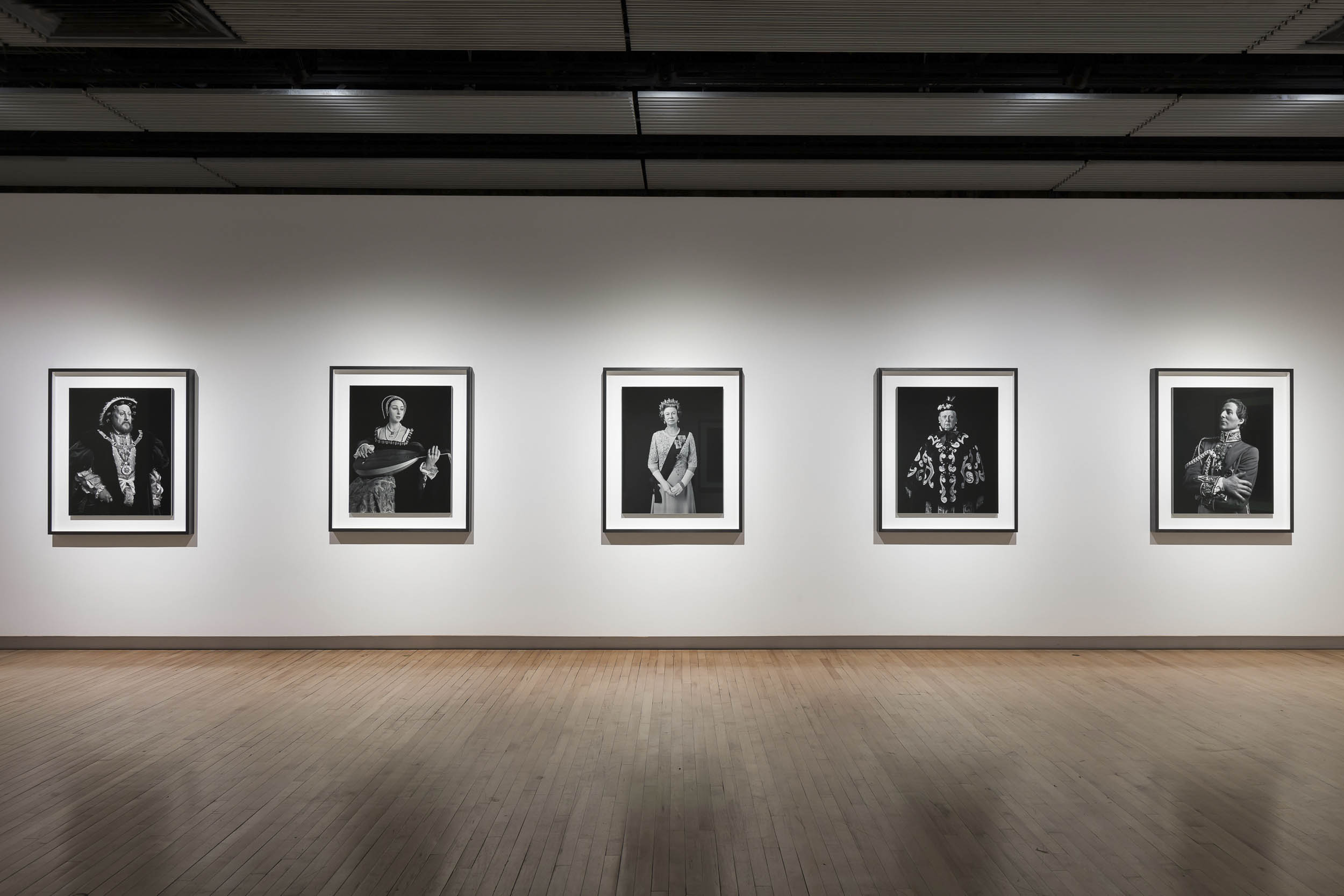
 

Installation view of Hiroshi Sugimoto, 'Portraits' series


Installation view of Hiroshi Sugimoto, Portraits series. Gelatin silver prints
Photo: Mark Blower. Courtesy the artist and the Hayward Gallery


Installation view of Hiroshi Sugimoto, 'Anne Boleyn' 1999


Installation view of Hiroshi Sugimoto, Anne Boleyn 1999. Gelatin silver print
Photo: Mark Blower. Courtesy the artist and the Hayward Gallery
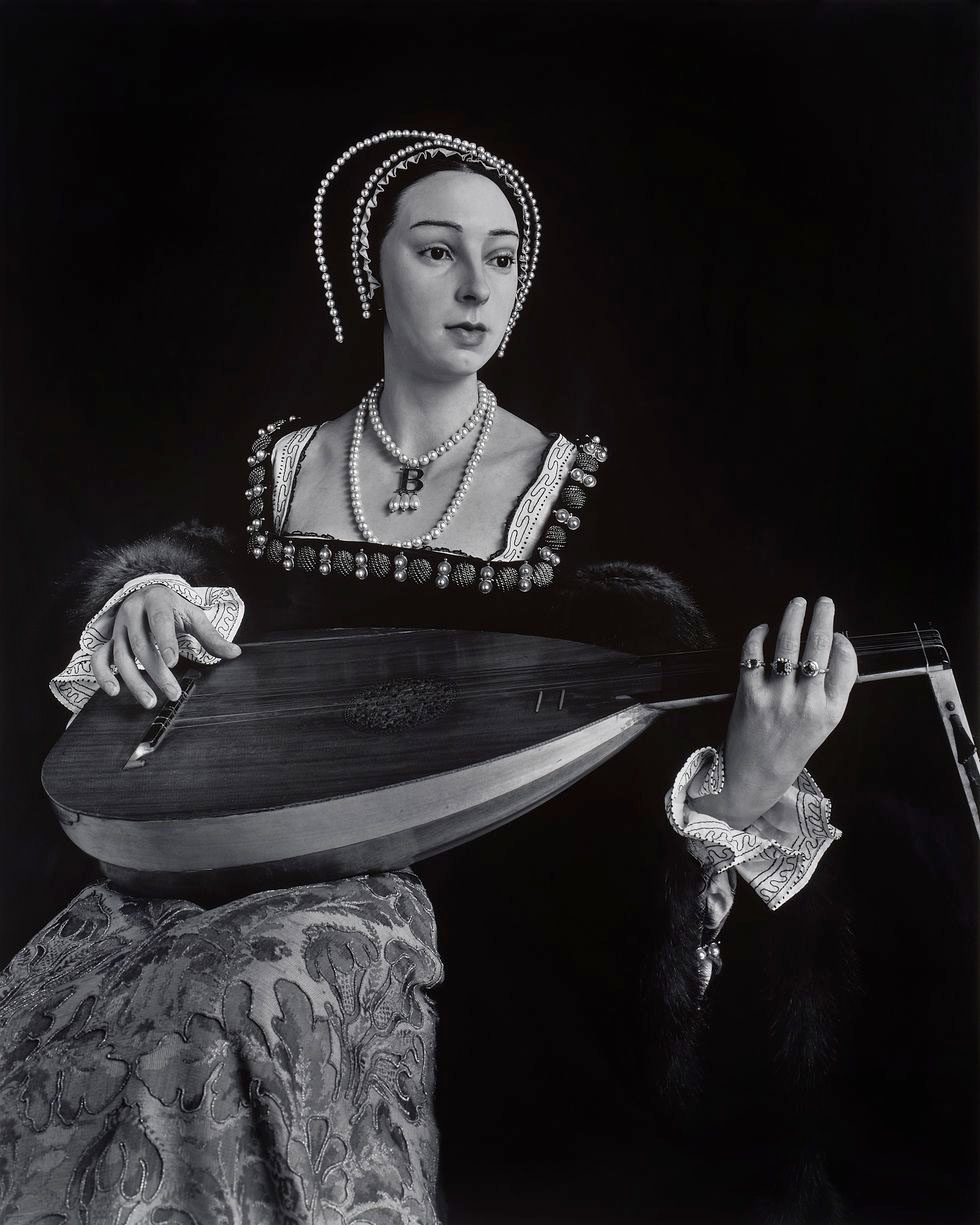
 

Hiroshi Sugimoto (Japanese, b. 1948) 'Anne Boleyn' 1999


Hiroshi Sugimoto (Japanese, b. 1948)
Anne Boleyn
1999
Gelatin silver print
© Hiroshi Sugimoto, courtesy of the artist


Installation view of Hiroshi Sugimoto, 'Queen Victoria' 1999


Installation view of Hiroshi Sugimoto, Queen Victoria 1999. Gelatin silver print
Photo: Mark Blower. Courtesy the artist and the Hayward Gallery
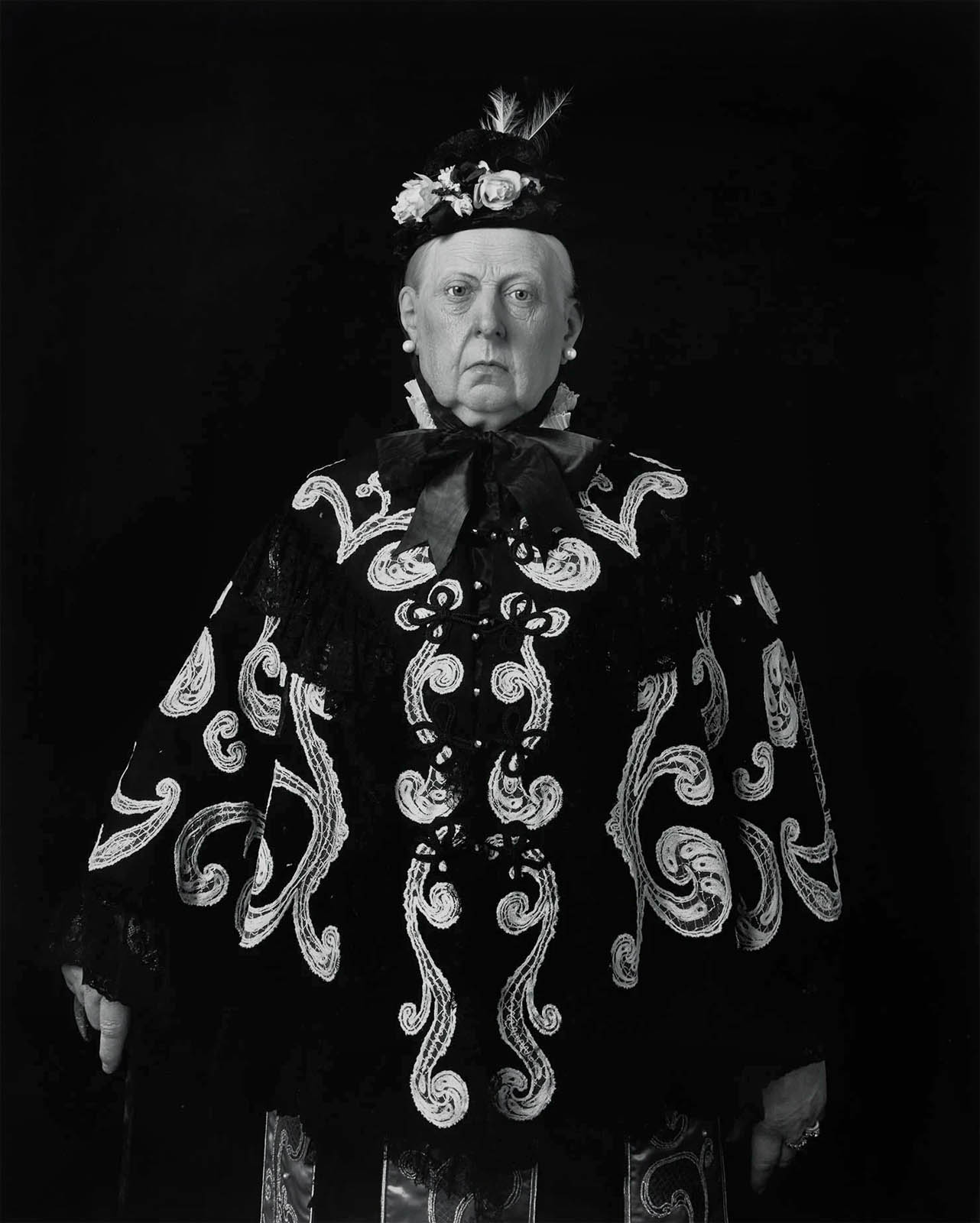
 

Hiroshi Sugimoto (Japanese, b. 1948) 'Queen Victoria' 1999


Hiroshi Sugimoto (Japanese, b. 1948)
Queen Victoria
1999
Gelatin silver print
© Hiroshi Sugimoto, courtesy of the artist


Hiroshi Sugimoto (Japanese, b. 1948) 'Salvador Dali' 1999


Hiroshi Sugimoto (Japanese, b. 1948)
Salvador Dali
1999
Gelatin silver print
© Hiroshi Sugimoto, courtesy of the artist


Hiroshi Sugimoto (Japanese, b. 1948) 'Oscar Wilde' 1999


Hiroshi Sugimoto (Japanese, b. 1948)
Oscar Wilde
1999
Gelatin silver print
© Hiroshi Sugimoto, courtesy of the artist
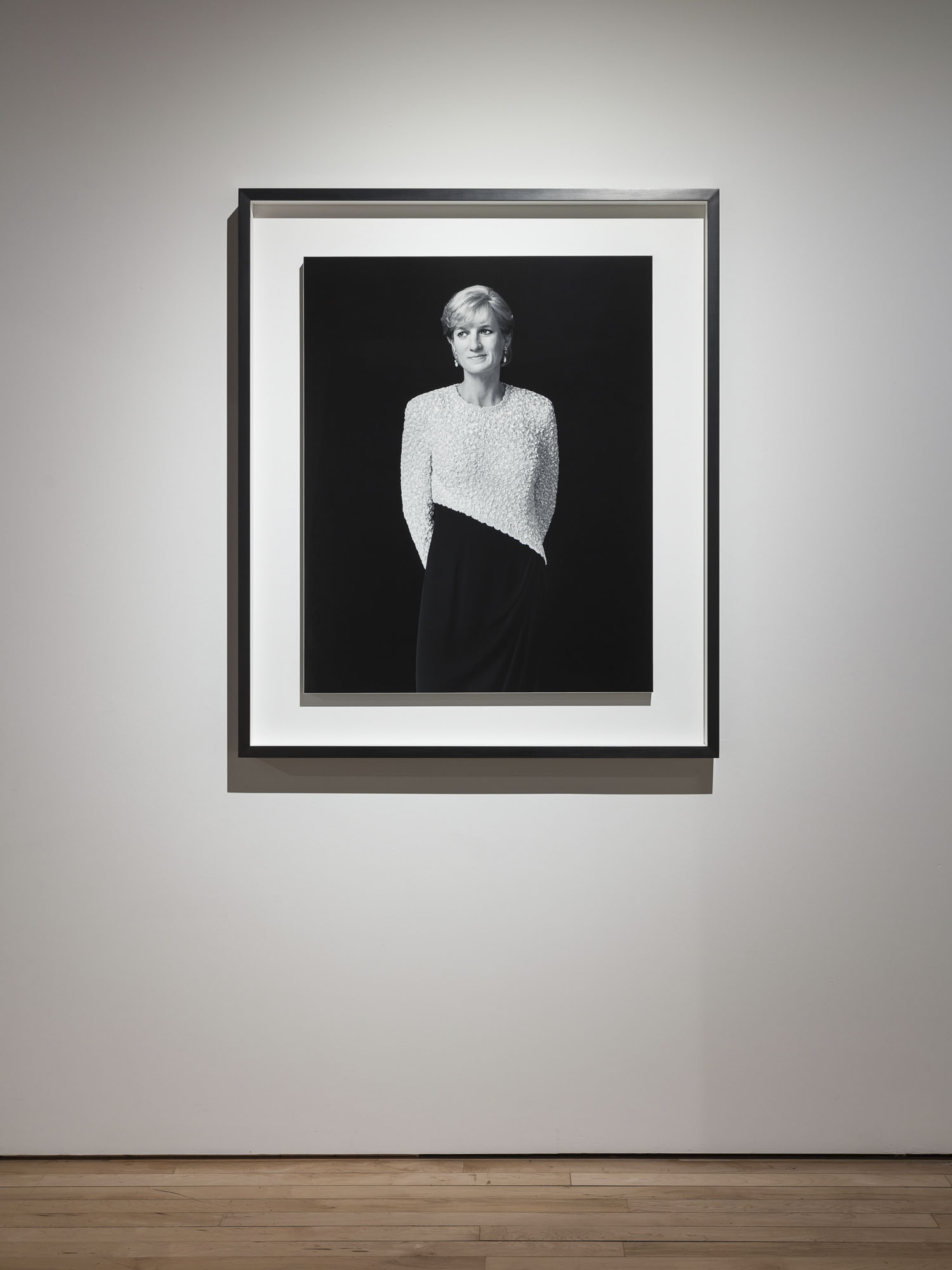
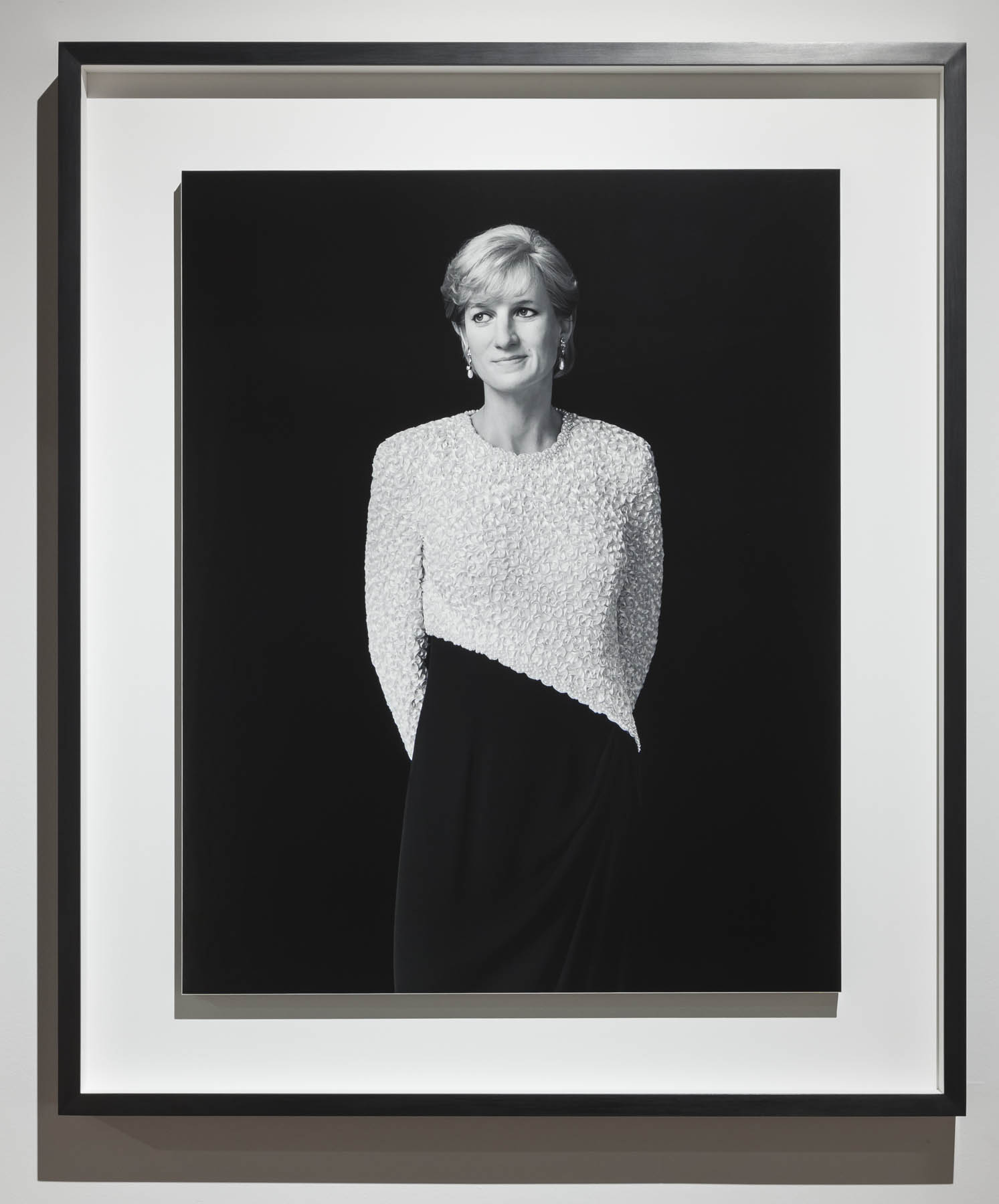
 

Installation view of Hiroshi Sugimoto, 'Diana, Princess of Wales' 1999

Installation view of Hiroshi Sugimoto, 'Diana, Princess of Wales' 1999


Installation views of Hiroshi Sugimoto, Diana, Princess of Wales 1999. Gelatin silver print
Photo: Mark Blower. Courtesy the artist and the Hayward Gallery
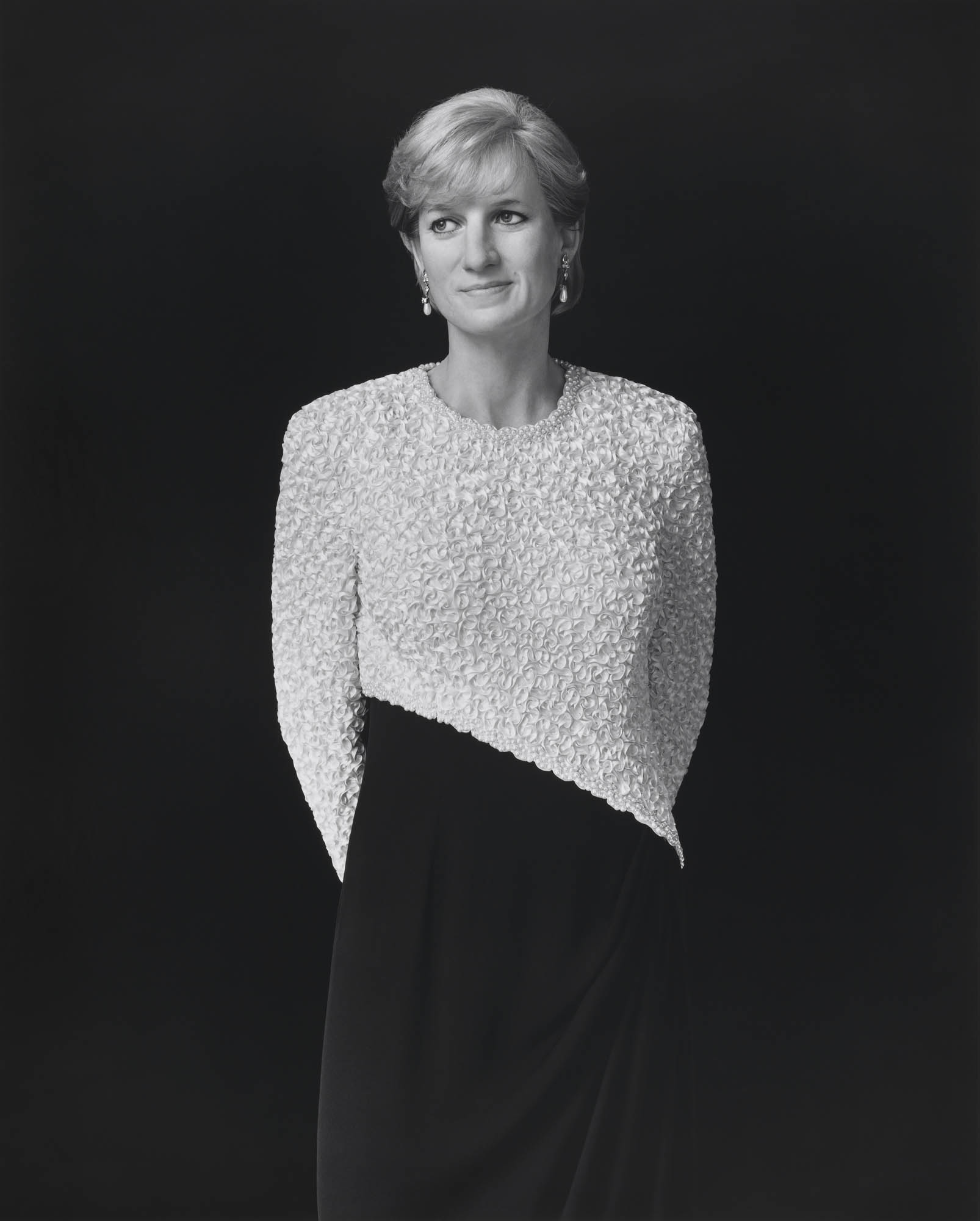
 

Hiroshi Sugimoto (Japanese, b. 1948) 'Diana, Princess of Wales' 1999


Hiroshi Sugimoto (Japanese, b. 1948)
Diana, Princess of Wales
1999
Gelatin silver print
© Hiroshi Sugimoto, courtesy of the artist


Lightning Fields (2006 – )
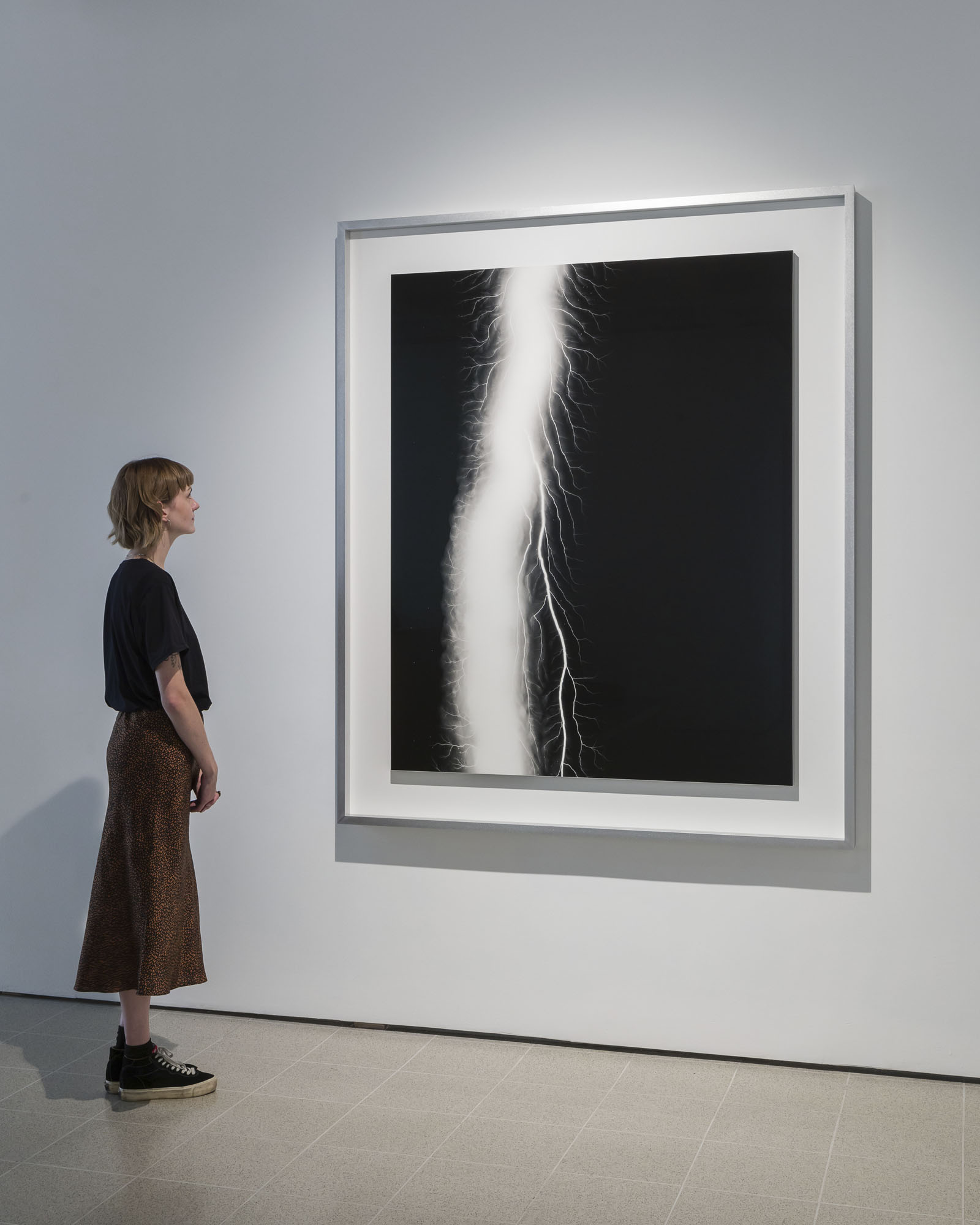
 

Installation view of Hiroshi Sugimoto, 'Lightning Fields 163' 2009


Installation view of Hiroshi Sugimoto, Lightning Fields 163 2009. Gelatin silver print
Photo: Mark Blower. Courtesy the artist and the Hayward Gallery
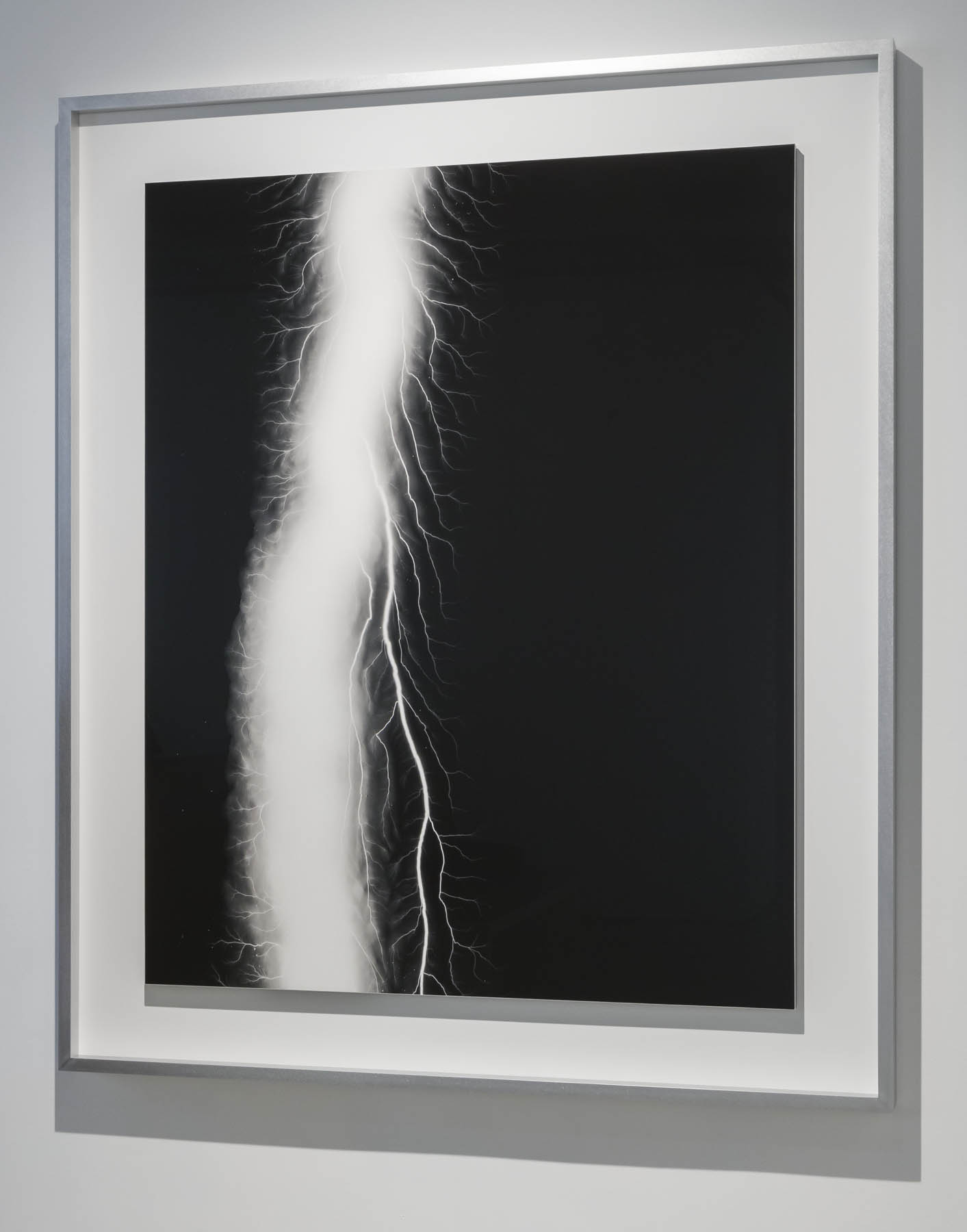
 

Installation view of Hiroshi Sugimoto, 'Lightning Fields 163' 2009


Installation view of Hiroshi Sugimoto, Lightning Fields 163 2009. Gelatin silver print
Photo: Mark Blower. Courtesy the artist and the Hayward Gallery


Hiroshi Sugimoto (Japanese, b. 1948) 'Lightning Fields 225' 2009


Hiroshi Sugimoto (Japanese, b. 1948)
Lightning Fields 225
2009
Gelatin silver print
© Hiroshi Sugimoto, courtesy of the artist


Hiroshi Sugimoto: formative years and significant works

For five decades the work of photographer Hiroshi Sugimoto has received international acclaim, whilst being presented in major galleries and institutions the world over.

Sugimoto’s photographs are meticulously crafted, often stretching and rearranging the concept of time, and our understanding of the world around us, and he has often re-explored ideas and practices from photography’s earliest exponents. Over the past 50 years, he has often revisited and expanded upon his own ideas, and series, which we take a closer look at, along with the artist’s formative years, here.

Hiroshi Sugimito: early years

Hiroshi Sugimoto was born in Tokyo in 1948 to a family of merchants. Among the young Sugimoto’s interests were trains, electronics, carpentry and photography, with his early fascination with the latter further enhanced by one of his elementary school science teachers, who showed Sugimoto and his classmates how to use photosensitive paper to make photograms. ‘He used spoons and forks and other items and he exposed the paper under the light for five or six minutes.’ explained Sugimoto, looking back. ‘When he removed it, the shapes of the spoons and forks remained on the paper. It was an amazing experience for me that left a lasting impression’.

At the age of 12 Sugimoto was given his first camera, a Mamiya 6 medium-format, by his father, which he would use to take photographs of trains and gather reference material for model-making. When he moved on to high school, Sugimoto joined the photography club and also began developing an interest in the cinema, which he would visit regularly. It wasn’t long before his love of film and photography combined, as he recalls, ‘Audrey Hepburn was beautiful and I fell in love with her on the screen. I wanted her portrait so I brought my Minolta SR7 camera into a movie theatre, and I studied how to stop the image on the screen. I found that one-fifteenth and one-thirteenth of a second stops the image’.

In 1970, after graduating in Economics from Tokyo’s Rikkyo University, Sugimoto backpacked across Russia and Europe. Influenced by communist ideology, and the writings of Karl Marx and Friedrich Engels as a student, he had wanted to experience Russian society, but disillusioned by what he found, he duly continued on to Europe. ‘I kept moving westwards. I stayed in Moscow for a few weeks and took another train to Poland, and then to Czechoslovakia, Bulgaria and other Eastern European countries. After several weeks I arrived in Vienna for my first taste of Western civilization’.

Hiroshi Sugimoto in America

Later in 1970 Sugimoto would get another taste of Western civilisation as he travelled to the US, and California. Here he studied at Los Angeles’ ArtCentre College of Design, specialising in photography. Speaking of his studies here, Sugimoto has said ‘ArtCenter College was more like a training school for technicians: car design and advertising. For photography you trained to be a commercial photographer, which is what I wanted. I wasn’t interested in academic study at all’.

After completing his study in Los Angeles Sugimoto moved to New York in 1974 in order to pursue a full-time career in photography. Here, Sugimoto soon became part of the city’s hippy counter-culture. ‘I got serious about using photography as a tool in my art after I moved to New York’, says Sugimoto. ‘I saw many good shows, mainly minimalist shows: Sol LeWitt, Dan Flavin, Donald Judd. When I moved to the East Coast I found so many interesting people that I decided to stay. I’d just finished my photographic studies and was hungry to work. Since photography was considered a second-class citizen in the art world then why not use photography? It was more interesting for me to start with something a step down and bring it up’.

Dioramas

In 1974, Sugimoto made his first visit to the American Museum of Natural History in New York, it was a visit that would inspire his first major breakthrough in photography. ‘I made a curious discovery while at the exhibition of animal dioramas,’ the artist explains. ‘The stuffed animals positioned before painted backdrops looked utterly fake, yet by taking a quick peek with one eye closed, all perspective vanished, and suddenly they looked very real. I had found a way to see the world as a camera does. However fake the subject, once photographed, it’s as good as real’.

Inspired by these taxidermy dioramas, he went on to commence his Dioramas series, which among its initial works included Polar Bear (1976) and Hyena – Jackal – Vulture (1976). Sugimoto would return to this idea two decades on, adding more works to Dioramas in the 1990s including 1994’s Earliest Human Relatives. In 1978 Polar Bear was acquired by The Museum of Modern Art, representing Sugimoto’s first photographic sale. The work was also exhibited in the museum’s Recent Acquisitions show, that same year.

Theaters

It was whilst working on his Dioramas series, that Sugimoto also found the inspiration for his next series, Theaters, as he would later detail. ‘I am a habitual self-interlocutor. One evening while taking photographs at the American Museum of Natural History, I had a near-hallucinatory vision. My internal question-and-answer session leading up to this vision went something like this: ‘Suppose you shoot a whole movie in a single frame?’ The answer: ‘You get a shining screen.’ Immediately I began experimenting in order to realise this vision’.

He began this series in 1976, by photographing St. Marks Cinema in Manhattan’s East Village, and the first group of works would also see Sugimoto capture other movie theatres and cinemas in the Northeast and Midwest of the US. It was an approach that the photographer has returned to again and again over the course of his career, firstly in 1993 when he broadened the Theaters series to include depictions of Drive-Ins across the US. The photographer later travelled to Europe, primarily Italy, to replicate the approach with Opera Houses in 2014, and then in 2015 began photographing Abandoned Theaters.

Seascapes

The seeds for Sugimoto’s Seascapes series were sown in 1980. ‘One New York night, during another of my internal question-and-answer sessions I pictured two great mountains’, the photographer has explained. ‘One, today’s Mount Fuji, and the other, Mount Hakone in the days before its summit collapsed, creating the Ashinoko crater lake. When hiking up from the foothills of Hakone, one would see a second freestanding peak as tall as Mount Fuji. Two rivals in height – what a magnificent sight that must have been! Unfortunately, the topography has changed. Although the land is forever changing its form, the sea, I thought, is immutable. Thus began my travels back through time to the ancient seas of the world’.

Sugimoto began the series that same year with a photograph of the Caribbean Sea, taken from a bluff in Jamaica while on a family holiday to the island. Seascapes would subsequently lead Sugimoto across the globe, photographing bodies of water from the Ligurian Sea viewed from Italy to the North Pacific Ocean viewed from Japan.

Chamber of Horrors and Portraits

In 1994 Sugimoto made his first visit to Madame Tussaud’s in London, where he photographed his Chamber of Horrors series on location. ‘I saw the blade that guillotined Louis XVI and Marie Antoinette, and the electric chair that executed the Lindbergh baby’s kidnapper, among other exhibits. They all looked very real to me’, Sugimoto said. ‘To corroborate these various murderous instruments invented by civilised men, I took the requisite eye-witness photographs: thus did people in times past face death head on’.

Sugimoto would return to the wax museum five years later to photograph his Portraits series, for which he was given special permission to remove selected figures from the display to photograph individually, among them Diana, Princess of Wales (1999), Fidel Castro (1999) and Anne of Cleeves (1999). However, he found that the exhibits he had previously captured for Chamber of Horrors had now been removed from the museum. ‘When I asked why,’ he said ‘I was told they’d been removed in a gesture to political correctness. Must we moderns be so sheltered from death?’

Opticks

In 2018 Sugimoto began printing his Opticks series, which was inspired by an 1704 work of the same name by Isaac Newton, in which Newton, through his experiments with prisms presented proof that natural light was not purely white. Drawing on Newton’s approach, Sugimoto used a batch of Polaroid film he had been gifted – one of the last batches of film Polaroid ever produced – along with a glass prism and a mirror to create condensed vivid compositions of pure colour. Sugimoto then enlarged these works into chromogenic prints. Opticks was presented for the first time in 2020 at the Kyoto City KYOCERA Museum of Art in Japan, and received its first UK presentation here at the Hayward Gallery.

Anonymous. “Hiroshi Sugimoto: formative years and significant works,” on the Hayward Gallery website Fri Nov 17, 2023 [Online] Cited 19/11/2023


Opticks (2018 – )
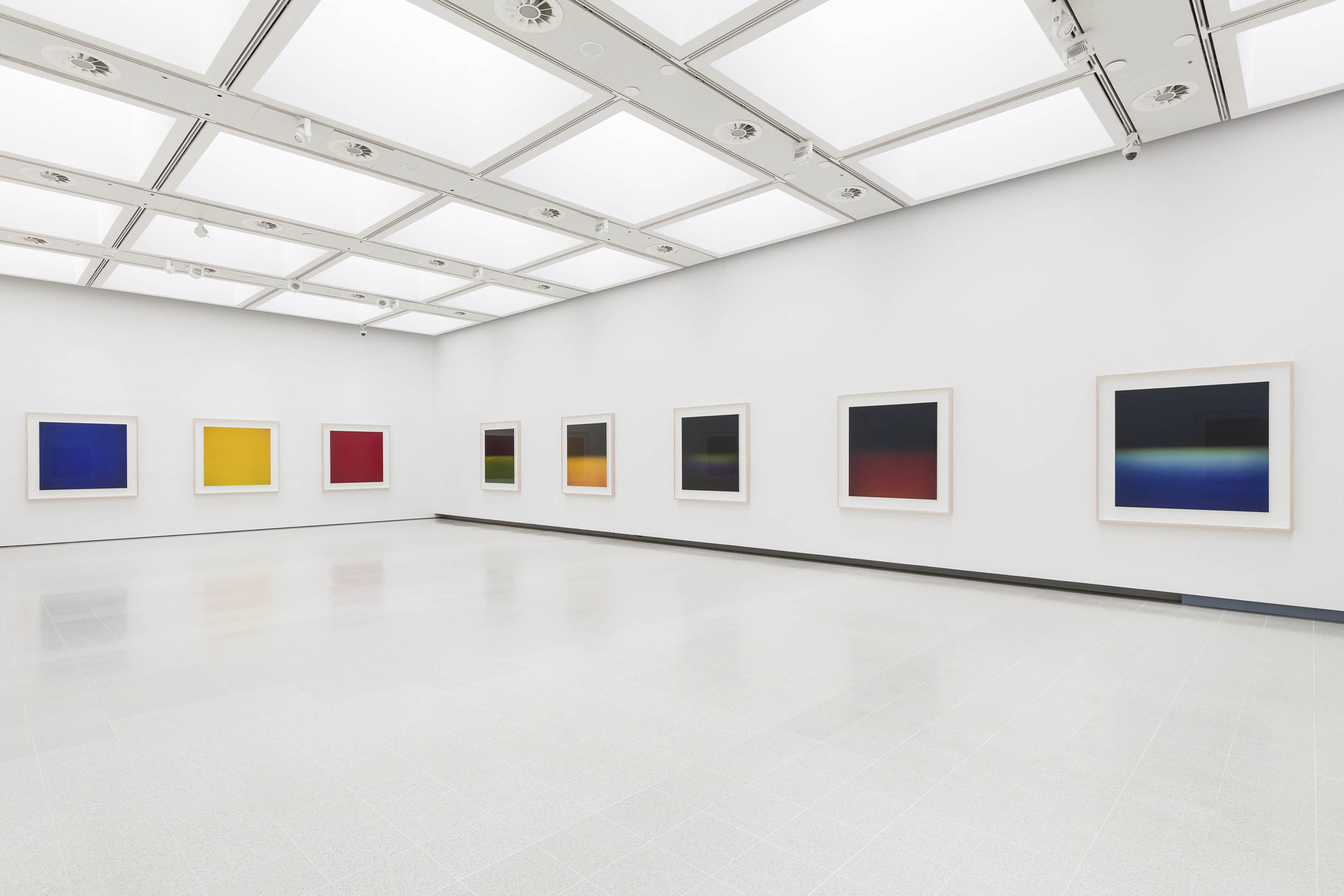
 

Installation view of Hiroshi Sugimoto, 'Opticks' series

Installation view of Hiroshi Sugimoto, 'Opticks' series

Installation view of Hiroshi Sugimoto, 'Opticks' series

Installation view of Hiroshi Sugimoto, 'Opticks' series


Installation views of Hiroshi Sugimoto, Opticks series. Chromogenic prints
Photo: Mark Blower. Courtesy the artist and the Hayward Gallery


Opticks isn’t the only series in which Sugimoto has experimented with historic techniques. In his 2006 series Lightning Fields, informed by the work of 19th century photography pioneer Henry Fox Talbot, Sugimoto captured the lightning-like shapes of electrical currents as they passed across a negatively-charged metal plate.

In his commitment to historic approaches the artist had initially attempted to supply the current to the plates using a hand-operated 18th century Wimshurst Electrostatic Machine, before switching to a more consistent Van de Graaff Generator.

In 2009, Sugimoto was gifted a batch of colour Polaroid film to see how a photographer who worked primarily in black and white might use it. This proved to be one of the last batches of the film ever produced (Polaroid went out of business in that same year) and would eventually find use in Sugimoto’s 2018 series, Opticks.

The images in Opticks – Sugimoto’s newest series, which has yet to be featured in any surveys of the artist’s work – are inspired by Isaac Newton’s seminal 1704 work of the same name, in which he presented proof that natural light was not purely white. Taking his cue from Newton’s experiments with prisms, Sugimoto used the Polaroid, along with glass and a mirror, to create condensed yet vivid compositions of colour in its purest form, before later enlarging these works into chromogenic prints.
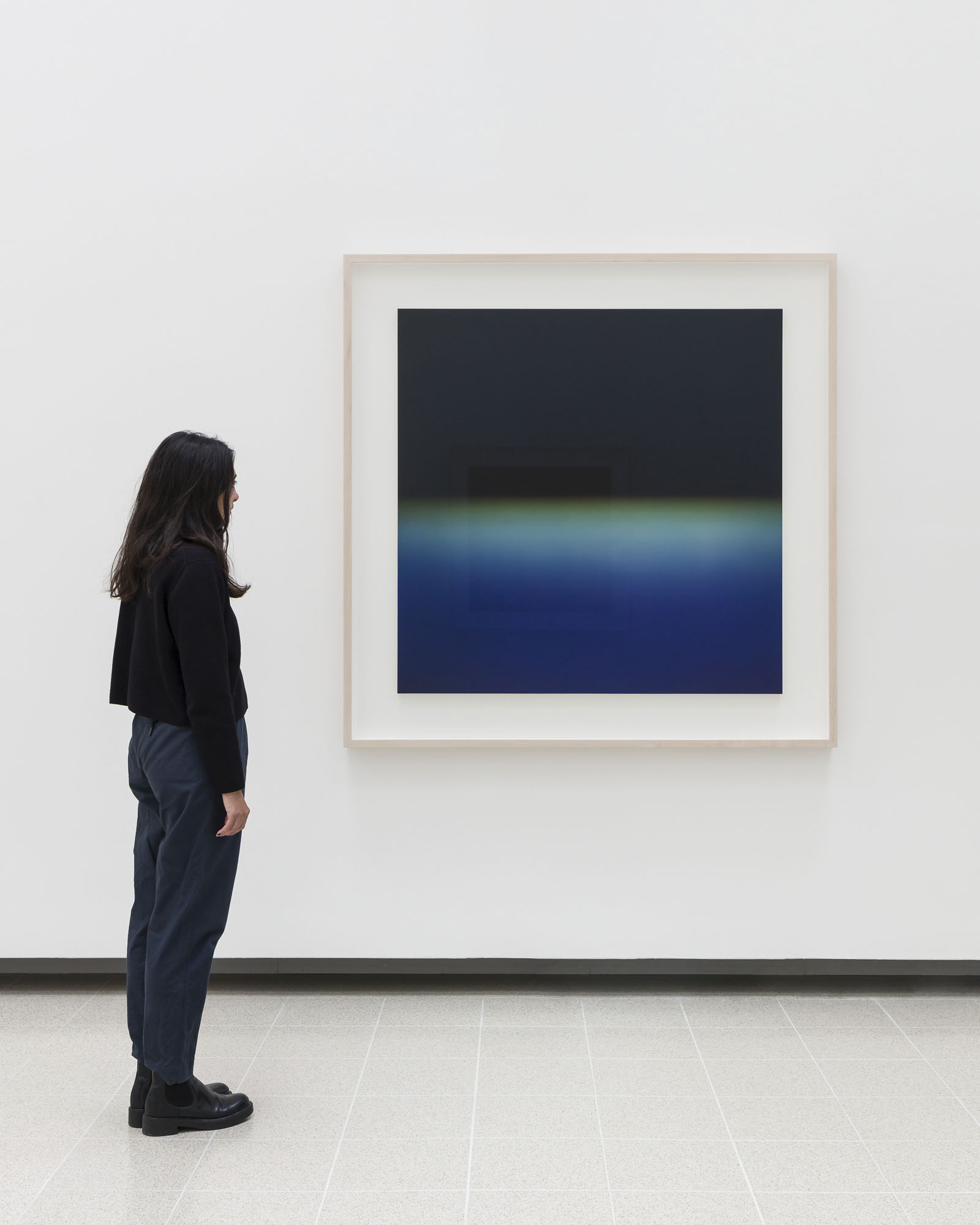
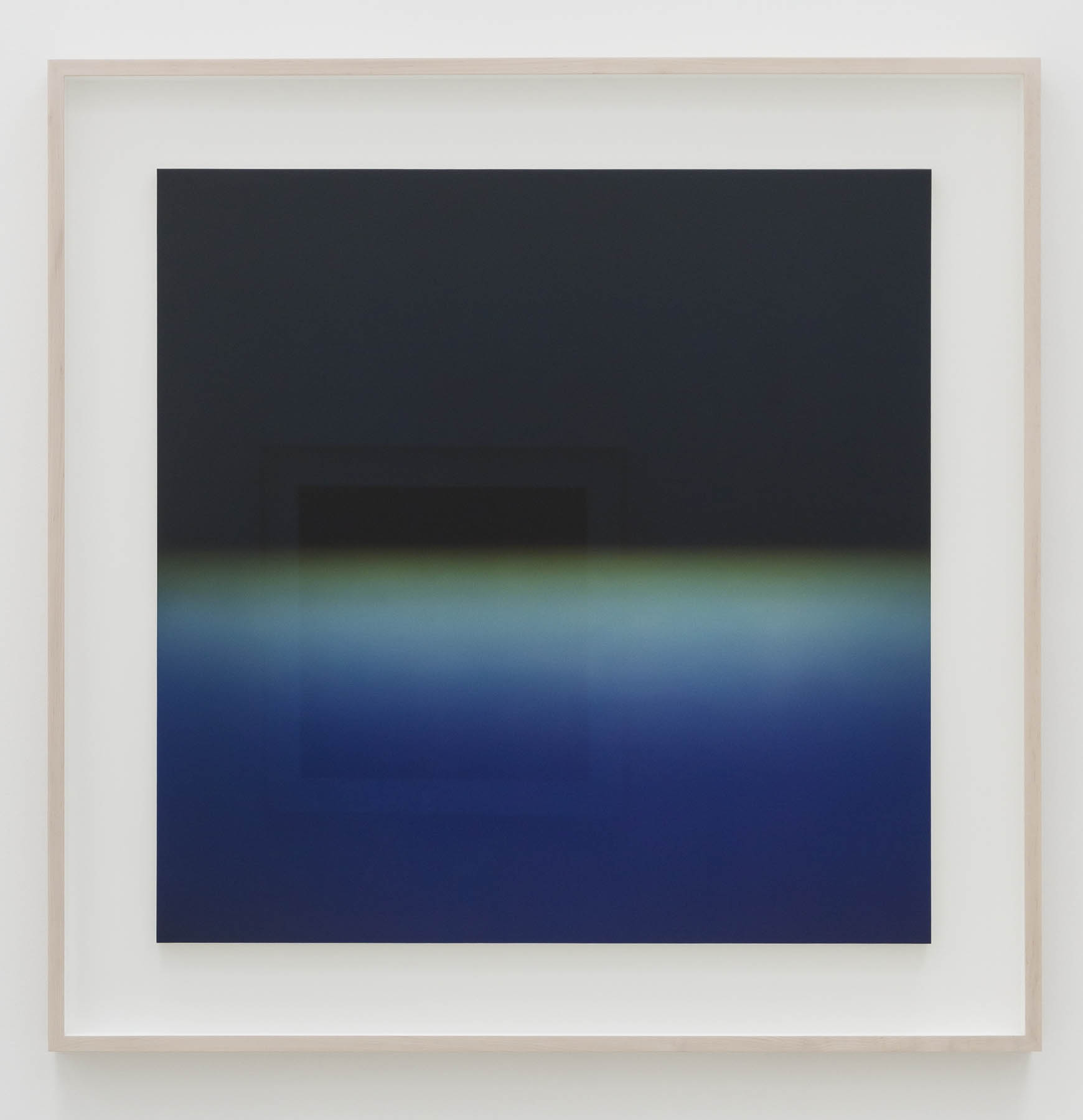
 

Installation view of Hiroshi Sugimoto, 'Opticks' series

Installation view of Hiroshi Sugimoto, 'Opticks' series


Installation views of Hiroshi Sugimoto, Opticks series. Chromogenic print
Photo: Mark Blower. Courtesy the artist and the Hayward Gallery
 

Installation view of Hiroshi Sugimoto, 'Opticks' series

Installation view of Hiroshi Sugimoto, 'Opticks' series


Installation views of Hiroshi Sugimoto, Opticks series. Chromogenic print
Photo: Mark Blower. Courtesy the artist and the Hayward Gallery


Installation view of Hiroshi Sugimoto, 'Opticks' series


Installation view of Hiroshi Sugimoto, Opticks series. Chromogenic print
Photo: Mark Blower. Courtesy the artist and the Hayward Gallery

 

Installation view of Hiroshi Sugimoto, 'Opticks' series

Installation view of Hiroshi Sugimoto, 'Opticks' series


Installation view of Hiroshi Sugimoto, Opticks series. Chromogenic print
Photo: Mark Blower. Courtesy the artist and the Hayward Gallery


Rachael Smith. 'Hiroshi Sugimoto in the Hayward Gallery with his 'Opticks' series' 2023


Rachael Smith
Hiroshi Sugimoto in the Hayward Gallery with his ‘Opticks’ series
2023
 

Installation view of Hiroshi Sugimoto, 'Conceptual Forms 0003 and Mathematical Model 002'


Installation view of Hiroshi Sugimoto, Conceptual Forms 0003 and Mathematical Model 002. Gelatin silver print, aluminium and steel
Photo: Mark Blower. Courtesy the artist and the Hayward Gallery
 

Installation view of Hiroshi Sugimoto, 'Conceptual Forms 0003' 2004


Installation view of Hiroshi Sugimoto, Conceptual Forms 0003 2004. Gelatin silver print
Photo: Mark Blower. Courtesy the artist and the Hayward Gallery
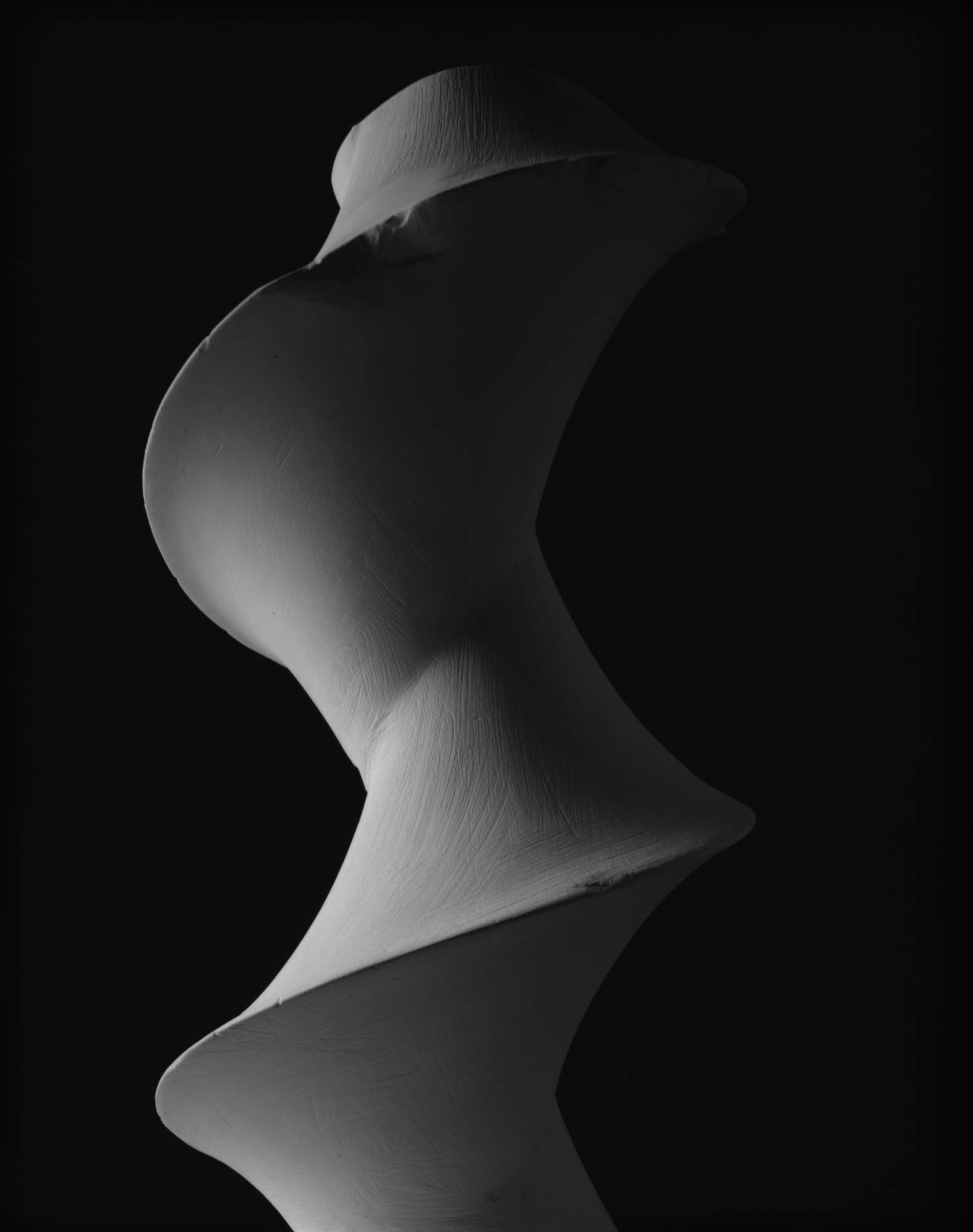
 

Hiroshi Sugimoto, 'Conceptual Forms 0003 Dini’s surface – a surface of constant negative curvature obtained by twisting a pseudosphere' 2004


Hiroshi Sugimoto (Japanese, b. 1948)
Conceptual Forms 0003 Dini’s surface – a surface of constant negative curvature obtained by twisting a pseudosphere
2004
Gelatin silver print
© Hiroshi Sugimoto, courtesy of the artist
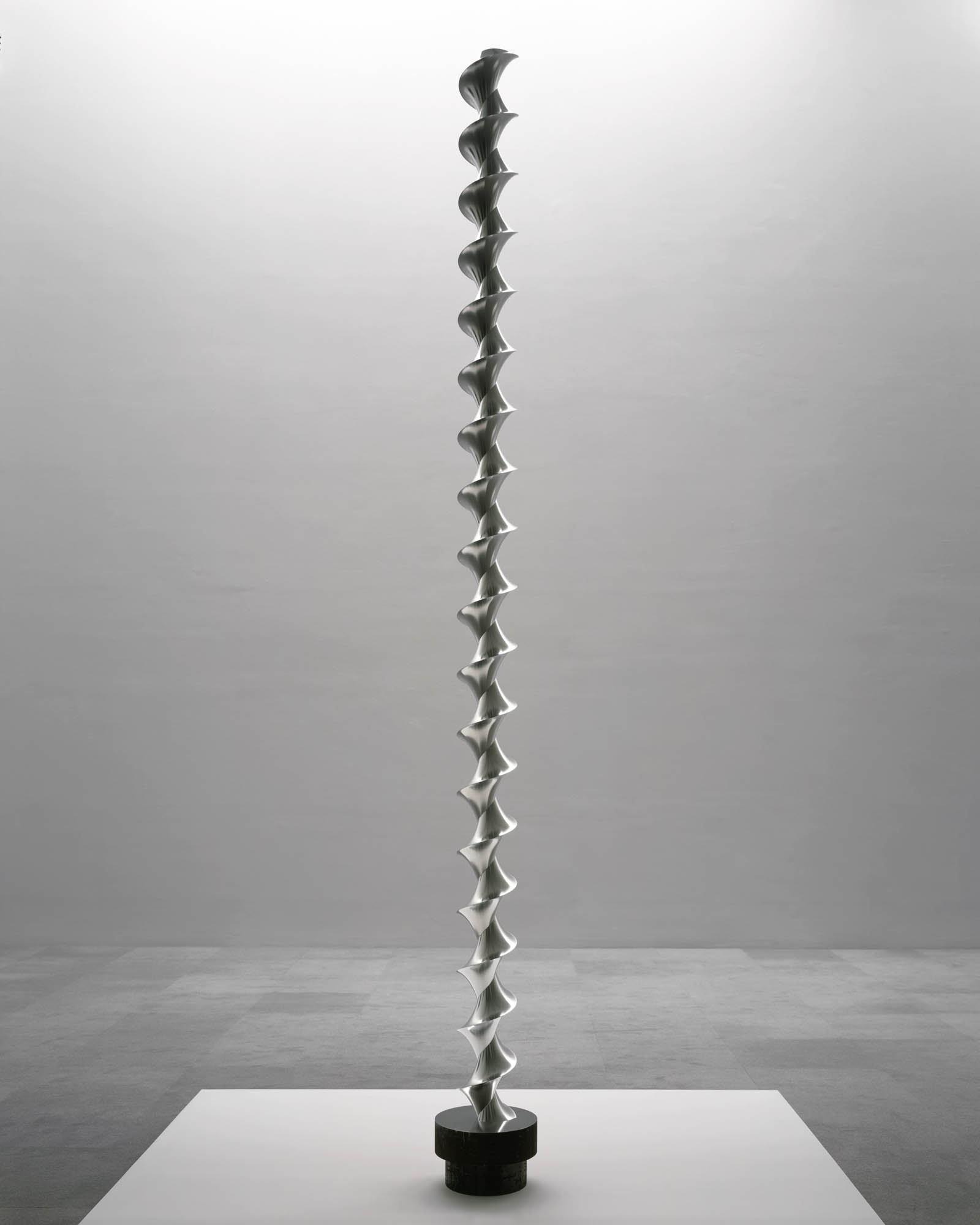
 

Hiroshi Sugimoto (Japanese, b. 1948) 'Mathematical Model 002 Dini's Surface' 2005


Hiroshi Sugimoto (Japanese, b. 1948)
Mathematical Model 002 Dini’s Surface
2005
Aluminium and steel
© Hiroshi Sugimoto, courtesy of the artist


Installation view of Hiroshi Sugimoto, 'Conceptual Forms and Mathematical Model 006'


Installation view of Hiroshi Sugimoto, Conceptual Forms and Mathematical Model 006. Gelatin silver print, aluminium and steel
Photo: Mark Blower. Courtesy the artist and the Hayward Gallery


Installation view of Hiroshi Sugimoto, 'Conceptual Form Surface 0001 Helicoid: Minimal Surface' 2004


Installation view of Hiroshi Sugimoto, Conceptual Form Surface 0001 Helicoid: Minimal Surface 2004. Gelatin silver print
Photo: Mark Blower. Courtesy the artist and the Hayward Gallery
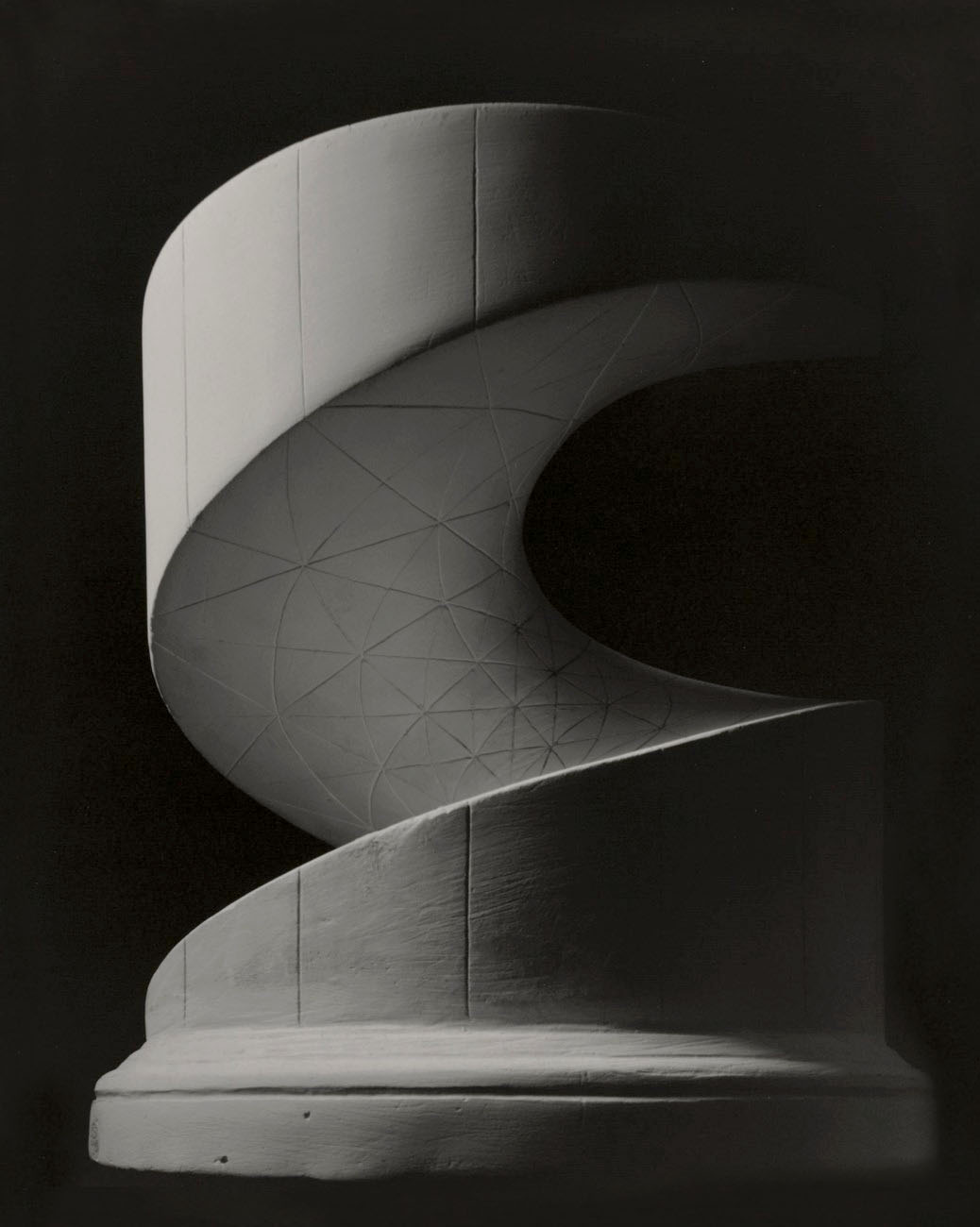
 

Hiroshi Sugimoto (Japanese, b. 1948) 'Conceptual Form Surface 0001 Helicoid: Minimal Surface' 2004


Hiroshi Sugimoto (Japanese, b. 1948)
Conceptual Form Surface 0001 Helicoid: Minimal Surface
2004
Gelatin silver print
© Hiroshi Sugimoto, courtesy of the artist
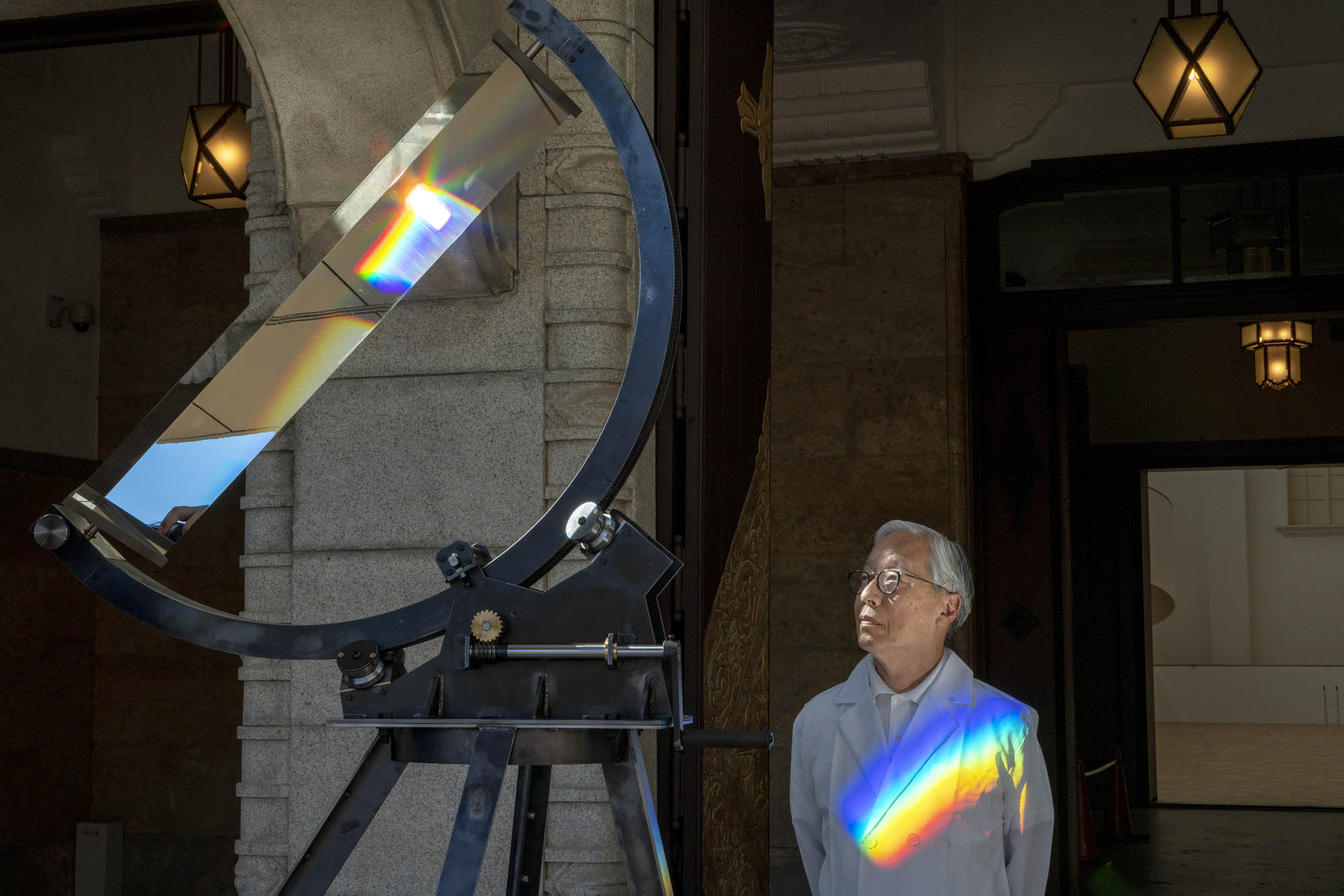
 

Hiroshi Sugimoto. Photo credit: Sugimoto Studio


Hiroshi Sugimoto
Photo credit: Sugimoto Studio


Hayward Gallery
Southbank Centre, Belvedere Road,
London SE1 8XX

Wed – Fri 10am – 6pm
Sat 10am – 8pm
Sun 10am – 6pm
Closed Monday and Tuesday

Southbank Centre website

LIKE ART BLART ON FACEBOOK

Back to top

Exhibition: ‘The Radical Eye: Modernist Photography from the Sir Elton John Collection’ at Tate Modern, London

Exhibition dates: 10th November, 2016 – 7th May, 2017

Curators: Shoair Mavlian with Simon Baker and Newell Harbin, Director of The Sir Elton John Photography Collection


Paul Strand (American, 1890-1976) 'Wall Street, New York' 1915 from the exhibition 'The Radical Eye: Modernist Photography from the Sir Elton John Collection' at Tate Modern, London, Nov 2016 - May 2017


Paul Strand (American, 1890-1976)
Wall Street, New York
1915
Silver gelatin print
The Sir Elton John Photographic Collection


Many thankx to Tate Modern for allowing me to publish the photographs in the posting. Please click on the photographs for a larger version of the image.

“This is a once-in-a-lifetime chance to see one of the world’s greatest private collections of photography, drawn from the classic modernist period of the 1920s-50s. An incredible group of Man Ray portraits are exhibited together for the first time, having been brought together by Sir Elton John over the past twenty-five years, including portraits of Matisse, Picasso, and Breton. With over 70 artists and nearly 150 rare vintage prints on show from seminal figures including Brassai, Imogen Cunningham, André Kertész, Dorothea Lange, Tina Modotti, and Aleksandr Rodchenko, this is a chance to take a peek inside Elton John’s home and delight in seeing such masterpieces of photography.”

Text from the Tate Modern website


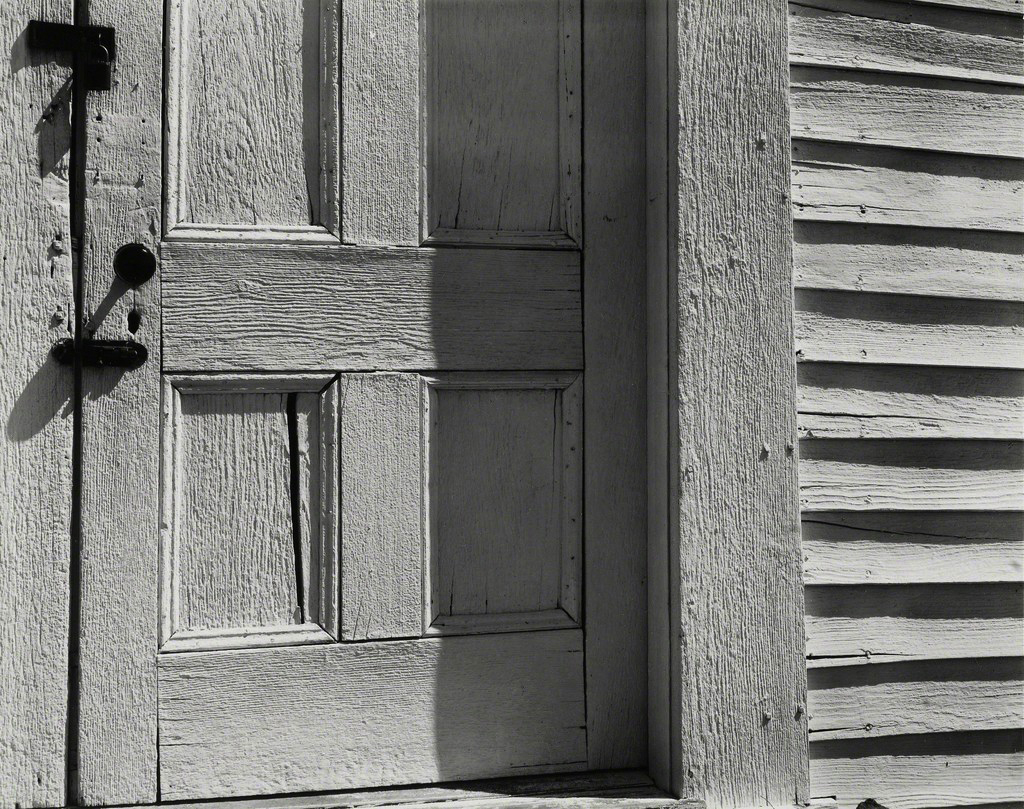
Edward Weston (American, 1886-1958) 'White Door, Hornitos, California' 1940 from the exhibition 'The Radical Eye: Modernist Photography from the Sir Elton John Collection' at Tate Modern, London, Nov 2016 - May 2017


Edward Weston (American, 1886-1958)
White Door, Hornitos, California
1940
Silver gelatin print
The Sir Elton John Photographic Collection


Tate Modern presents a major new exhibition, The Radical Eye: Modernist Photography from the Sir Elton John Collection, drawn from one of the world’s greatest private collections of photography. This unrivalled selection of classic modernist images from the 1920s to the 1950s features almost 200 works from more than 60 artists, including seminal figures such as Berenice Abbott, André Kertész, Man Ray, Alexandr Rodchenko and Edward Steichen among many others. The exhibition consists entirely of rare vintage prints, all created by the artists themselves, offering a unique opportunity to see remarkable works up close. The quality and depth of the collection allows the exhibition to tell the story of modernist photography in this way for the first time in the UK. It also marks the beginning of a long term relationship between Tate and The Sir Elton John Collection, as part of which Sir Elton and David Furnish have agreed to give important works to the nation.

The Radical Eye introduces a crucial moment in the history of photography – an exciting rupture often referred to as the ‘coming of age’ of the medium, when artists used photography as a tool through which they could redefine and transform visions of the modern world. Technological advancements gave artists the freedom to experiment and test the limits of the medium and present the world through a new, distinctly modern visual language. This exhibition reveals how the timeless genres of the portrait, nude and still life were reimagined through the camera during this period, also exploring photography’s unique ability to capture street life and architecture from a new perspective.

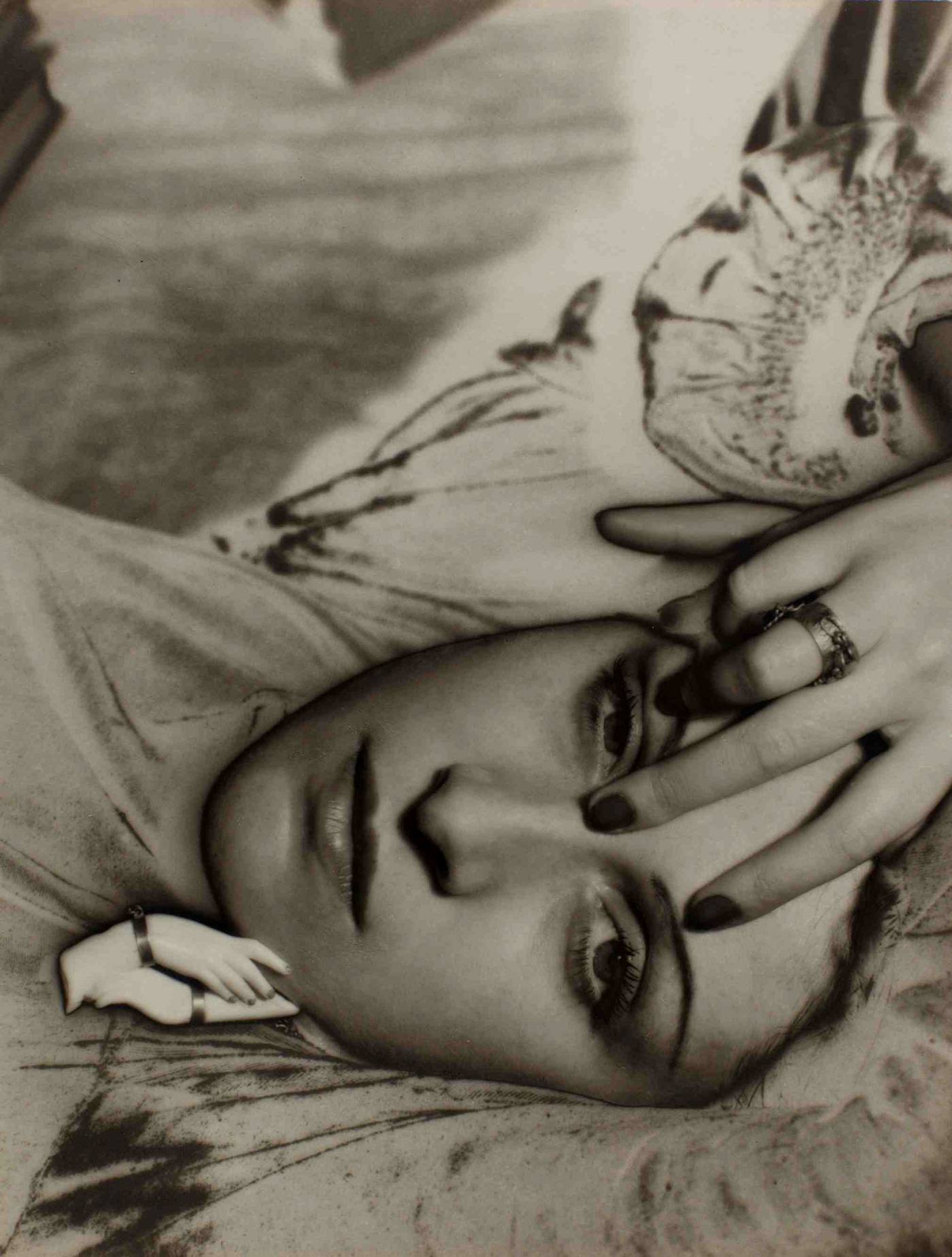
Featuring portraits of great cultural figures of the 20th century, including Georgia O’Keeffe by Alfred Stieglitz, Edward Weston by Tina Modotti, Jean Cocteau by Berenice Abbott and Igor Stravinsky by Edward Weston, the exhibition gives insight into the relationships and inner circles of the avant-garde. An incredible group of Man Ray portraits are exhibited together for the first time, having been brought together by Sir Elton John over the past twenty-five years, depicting key surrealist figures such as Andre Breton and Max Ernst alongside artists including Henri Matisse, Pablo Picasso and Dora Maar. Ground-breaking experimentation both in the darkroom and on the surface of the print, such as Herbert Bayer’s photomontage and Maurice Tabard’s solarisation, examine how artists pushed the accepted conventions of portraiture.

As life underwent rapid changes in the 20th century, photography offered a new means to communicate and represent the world. Alexandr Rodchenko, László Moholy-Nagy and Margaret Bourke-White employed the ‘worm’s eye’ and ‘bird’s eye’ views to create new perspectives of the modern metropolis – techniques associated with constructivism and the Bauhaus. The move towards abstraction is also explored, from isolated architectural elements to camera-less photography such as Man Ray’s rayographs and Harry Callahan’s light abstractions.

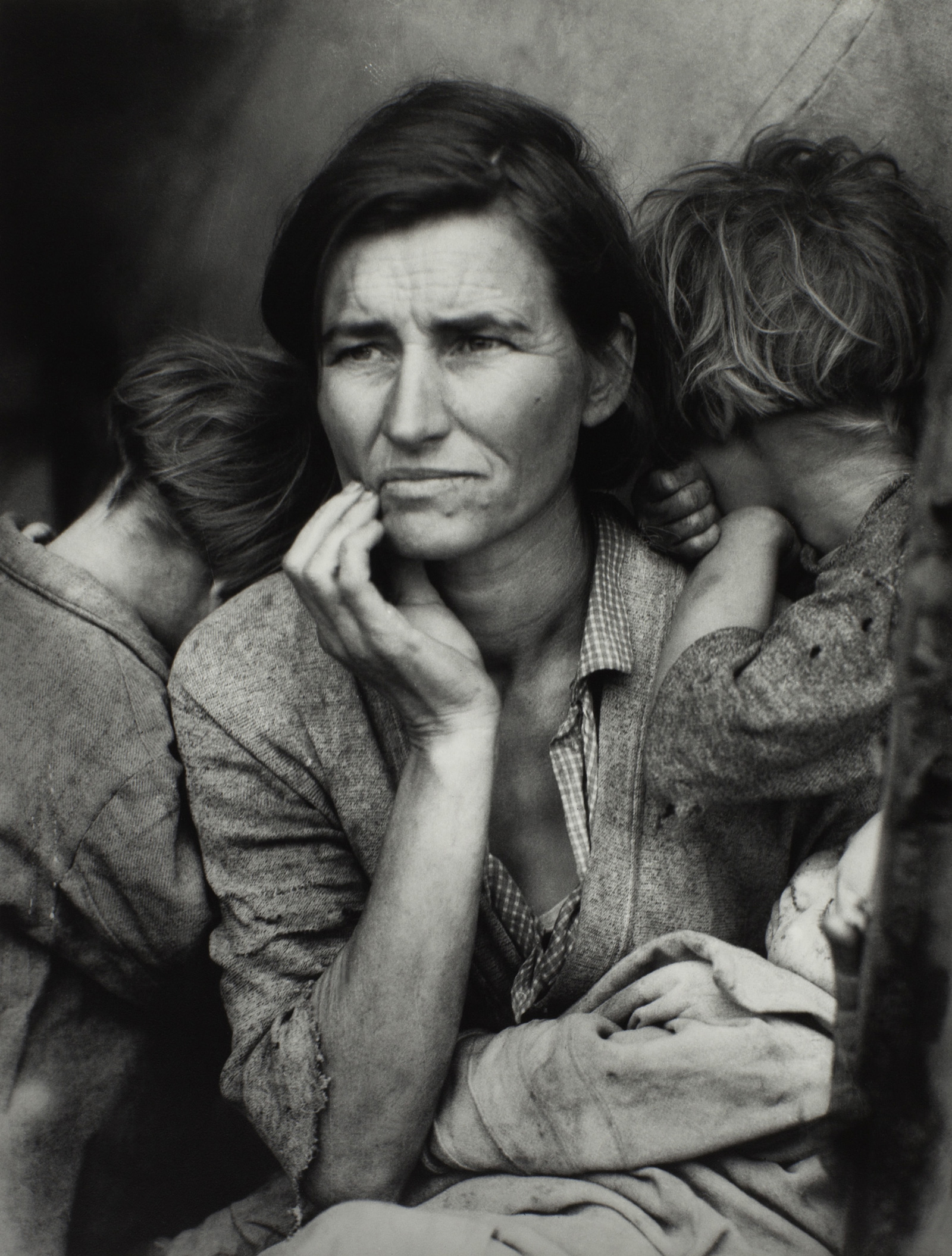
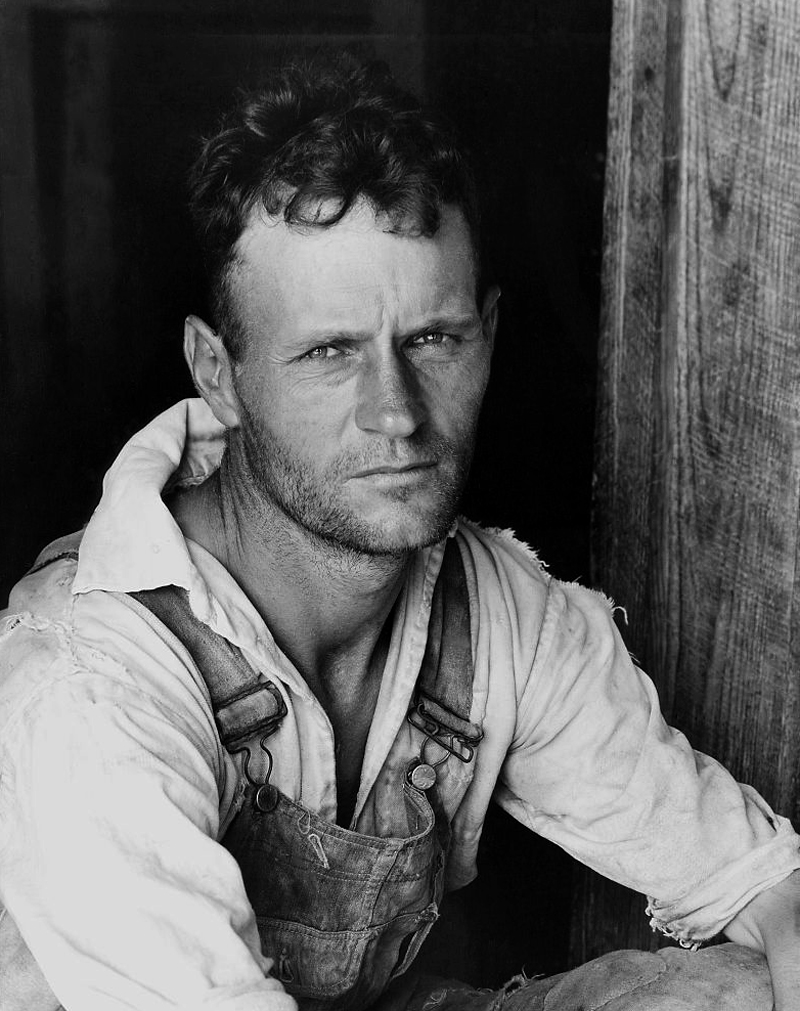
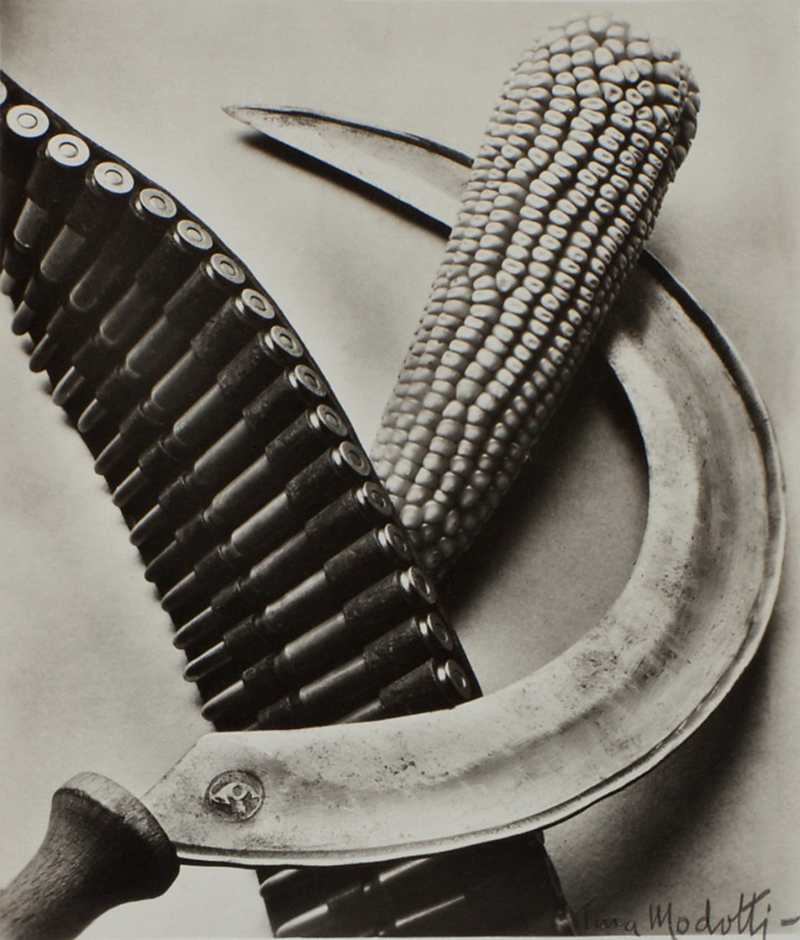
A dedicated section of the exhibition looks at the new approaches that emerged in capturing the human form, highlighted in rare masterpieces such as André Kertész’s Underwater Swimmer, Hungary 1917, while Imogen Cunningham’s Magnolia Blossom, Tower of Jewels 1925 and Tina Modotti’s Bandelier, Corn and Sickle 1927 feature in a large presentation dedicated to the Still Life. The important role of documentary photography as a tool of mass communication is demonstrated in Dorothea Lange’s Migrant Mother 1936 and Walker Evans’ Floyde Burroughs, Hale County, Alabama 1936, from the Farm Security Administration project.

The Radical Eye: Modernist Photography from the Sir Elton John Collection is at Tate Modern from 10 November 2016 until 7 May 2017. It is curated by Shoair Mavlian with Simon Baker and Newell Harbin, Director of The Sir Elton John Photography Collection. The exhibition is accompanied by an exclusive audio tour of the exhibition featuring commentary from Sir Elton John, and a major new catalogue from Tate Publishing including an interview with Sir Elton John by Jane Jackson.

Press release from Tate Modern


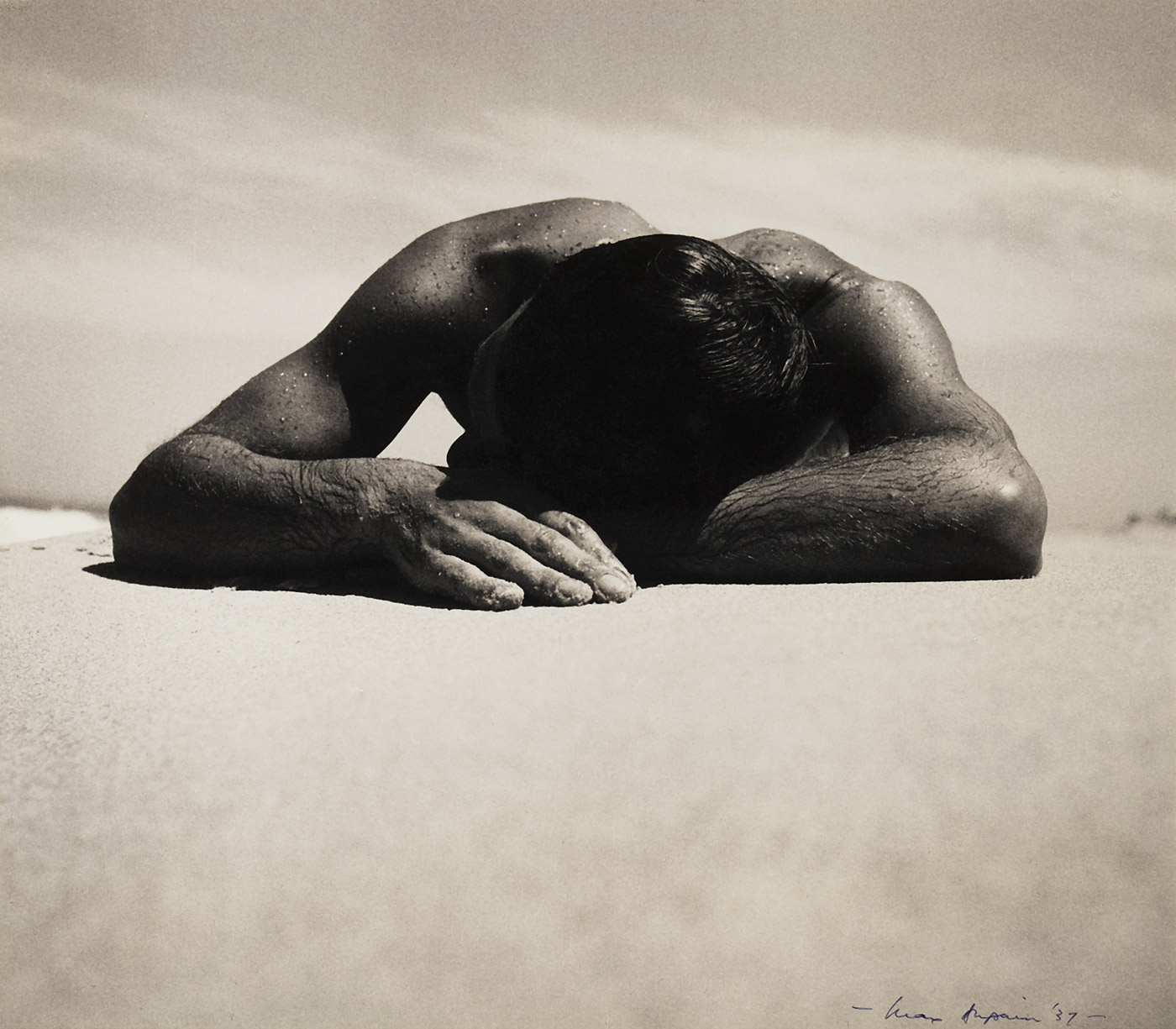
Max Dupain (Australian, 1911-1992) 'Sunbaker' 1937


Max Dupain (Australian, 1911-1992)
Sunbaker
1937
Silver gelatin print
The Sir Elton John Photographic Collection


“We possess an extraordinary instrument for reproduction. But photography is much more than that. Today it is … bringing something entirely new into the world.”


László Moholy-Nagy, 1932


Artists in the modernist period explored what the camera could do that the human eye alone could not, and how this could be harnessed to present a new modern perspective on the world. Artist and theorist László Moholy-Nagy proclaimed that photography could radically change not just what, but how we see. He called this the ‘new vision’. Rather than emulating other art forms, photography began to embrace qualities unique to itself, from its ability to reproduce the world in sharp detail to its capacity to create new realities through the manipulation of light, chemicals and paper.

This re-evaluation of photography coincided with a period of upheaval. War, revolution and economic depression led to mass movements of people and great social change. The idea of the avant-garde took hold and dada and surrealism emerged, challenging both the art and social norms that had come before. At the same time, new art schools such as the Bauhaus in Germany and Vkhutemas in Russia fostered the role of the professional artist and challenged divisions between art and design.

The Radical Eye is arranged thematically and charts a changing emphasis from the subject of an image to the visual qualities of the photograph itself, irrespective of what it represents. The many vintage prints in this exhibition – made soon after the photographs were taken – give a rare insight into the artists’ processes and creative decisions, and foreground the photograph as a physical object. All works are shown in the frames in which they are displayed in the home of Sir Elton John and David Furnish.

Together, the works in this exhibition show how photography pushed the boundaries of the possible, changing the world through the ways in which it was seen and understood. ‘Knowledge of photography is just as important as that of the alphabet. The illiterates of the future will be ignorant of the use of camera and pen alike,’ wrote Moholy-Nagy in 1927, foreseeing the cultural dominance of the photographic image. This extraordinary period still impacts how we, the photo-literate future, read and create images today.


Alfred Stieglitz (American, 1864-1946) 'Georgia O'Keeffe' 1922


Alfred Stieglitz (American, 1864-1946)
Georgia O’Keeffe
1922
Silver gelatin print
The Sir Elton John Photographic Collection


“They collect themselves. Carefully, as if tying a cravat, they compose their features. Insolent, serious and conscious of their looks they turn around to face the world.”

From ‘Men before the Mirror’, published alongside portraits by Man Ray, 1934


Portraits

Modernist portraiture harnessed photography’s capacity to render an accurate likeness in clear, sharp focus and detail. But at the same time, artists and sitters pushed the conventions of portraiture with innovations in pose, composition and cropping.

Many of the portraits in this room are of artists, writers and musicians, giving a cross section of key cultural players of the time. Issues of control and collaboration arise particularly when the subject is an artist, raising the question of who is responsible for conveying the sitter’s persona. The modernist period also saw a boom of the illustrated press. Magazines reproduced photographic portraits of well-known figures which were instrumental in shaping their public images.


Man Ray (American, 1890-1976) 'Nusch Éluard' 1928


Man Ray (American, 1890-1976)
Nusch Éluard
1928
Silver gelatin print
The Sir Elton John Photography Collection
Photograph: Man Ray Trust/ADAGP, Paris and DACS, London 2016


Nusch Éluard (born Maria Benz; June 21, 1906 – November 28, 1946) was a French performer, model and surrealist artist…

Nusch arrived in France as a stage performer, variously described as a small-time actress, a traveling acrobat, and a “hypnotist’s stooge”. She met Paul Éluard in 1930 working as a model, married him in 1934, produced surrealist photomontage and other work, and is the subject of “Facile,” a collection of Éluard’s poetry published as a photogravure book, illustrated with Man Ray’s nude photographs of her.

She was also the subject of several cubist portraits and sketches by Pablo Picasso in the late 1930s, and is said to have had an affair with him. Nusch worked for the French Resistance during the Nazi occupation of France during World War II. She died in 1946 in Paris, collapsing in the street due to a massive stroke.

Text from the Wikipedia website


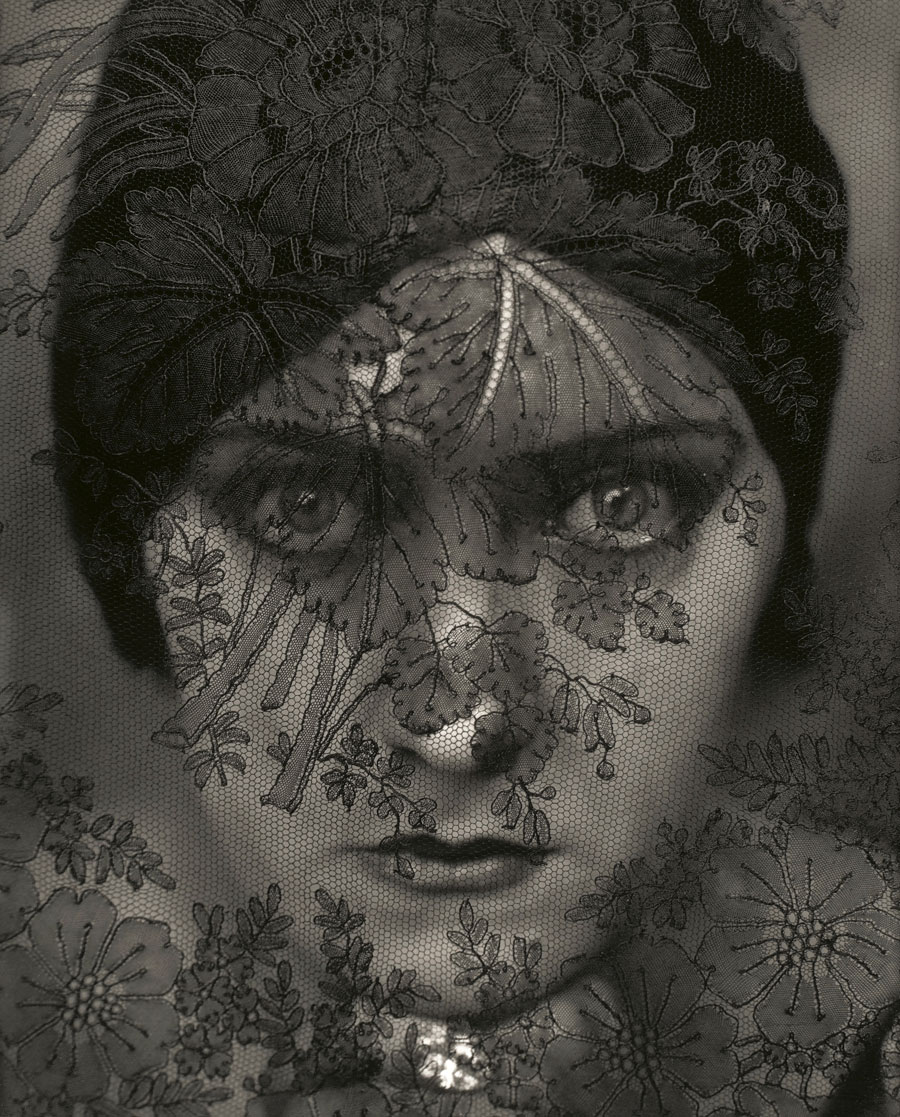
Edward Steichen (American 1879-1973, emigrated to United States 1881, worked in France 1906-23) 'Actress Gloria Swanson' 1924


Edward Steichen (American 1879-1973, emigrated to United States 1881, worked in France 1906-1923)
Actress Gloria Swanson
1924
Silver gelatin print
The Sir Elton John Photography Collection
© 1924 Condé Nast Publications


Adolph de Meyer (European / American, 1868-1946) 'For Elizabeth Arden (The Wax Head)' 1931


Adolph de Meyer (European / American, 1868-1946)
For Elizabeth Arden (The Wax Head)
1931
Silver gelatin print
The Sir Elton John Photography Collection


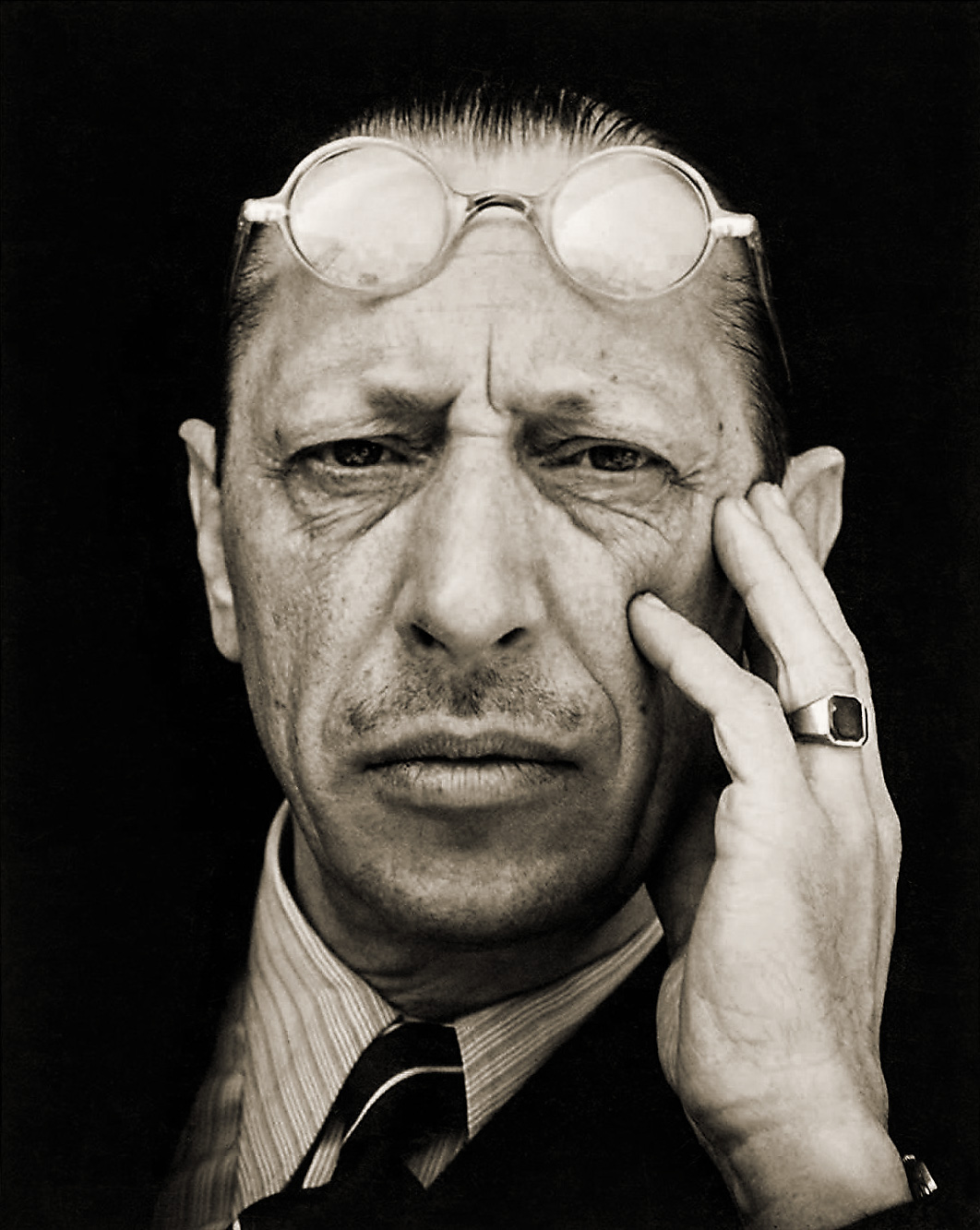
Edward Weston (American, 1886-1958) 'Igor Stravinsky' 1935


Edward Weston (American, 1886-1958)
Igor Stravinsky
1935
Silver gelatin print
© 1981 Center for Creative Photography


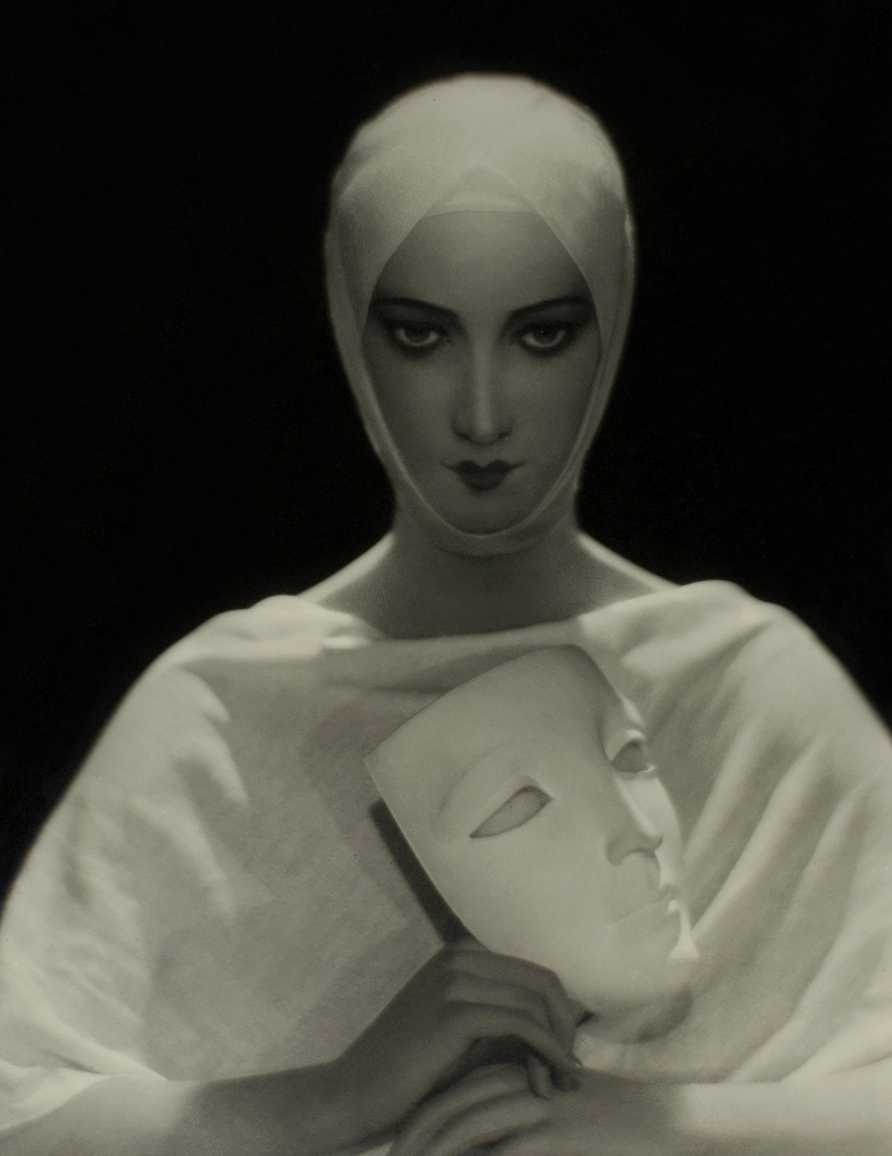
George Platt Lynes (American, 1907-1955) 'A Forgotten Model' c. 1937


George Platt Lynes (American, 1907-1955)
A Forgotten Model
c. 1937
Silver gelatin print
The Sir Elton John Photography Collection


Man Ray (American, 1890-1976) 'Juliet and Margaret Nieman in Papier-Mâché Masks' c. 1945


Man Ray (American, 1890-1976)
Juliet and Margaret Nieman in Papier-Mâché Masks
c. 1945
Gelatin silver print
The Sir Elton John Photography Collection
Photograph: © Man Ray Trust/ADAGP, Paris and DACS, London 2016


Irving Penn (American, 1917-2009) 'Salvador Dali in New York' 1947


Irving Penn (American, 1917-2009)
Salvador Dali in New York
1947
Silver gelatin print
The Sir Elton John Photography Collection
Photograph: The Irving Penn Foundation


“The enemy of photography is convention, the fixed rules ‘how to do’. The salvation of photography comes from the experiment.”


László Moholy-Nagy, c. 1940


Experiments

This was not a period of discovery but of rediscovery. Artists were rewriting the preceding century’s rules of photographic technique, harnessing ‘mistakes’ such as distortions and double exposures, or physically manipulating the printed image, cutting, marking and recombining photographs. These interventions could occur at any point in the process, from taking the image to the final print.

Used in portraiture, such experiments allowed for more psychologically charged representations. However, the transformative power of a particular technique often becomes much more important than the particular subject of the image. Above all, the rich creative possibilities of the photographic process come to the fore. While artists were seriously investigating the medium, the results are often surprising and playful.


Herbert Bayer (American born Austria, 1900-1985) 'Self-Portrait' 1932


Herbert Bayer (American born Austria, 1900-1985)
Self-Portrait
1932
Silver gelatin print
The Sir Elton John Photographic Collection
© DACS 2016


Otto Umbehr (German, 1902-1980) "Katz" – Cat 1927


Otto Umbehr (German, 1902-1980)
“Katz” – Cat
1927
Silver gelatin print
The Sir Elton John Photographic Collection
© Phyllis Umbehr/Galerie Kicken Berlin/DACS 2016


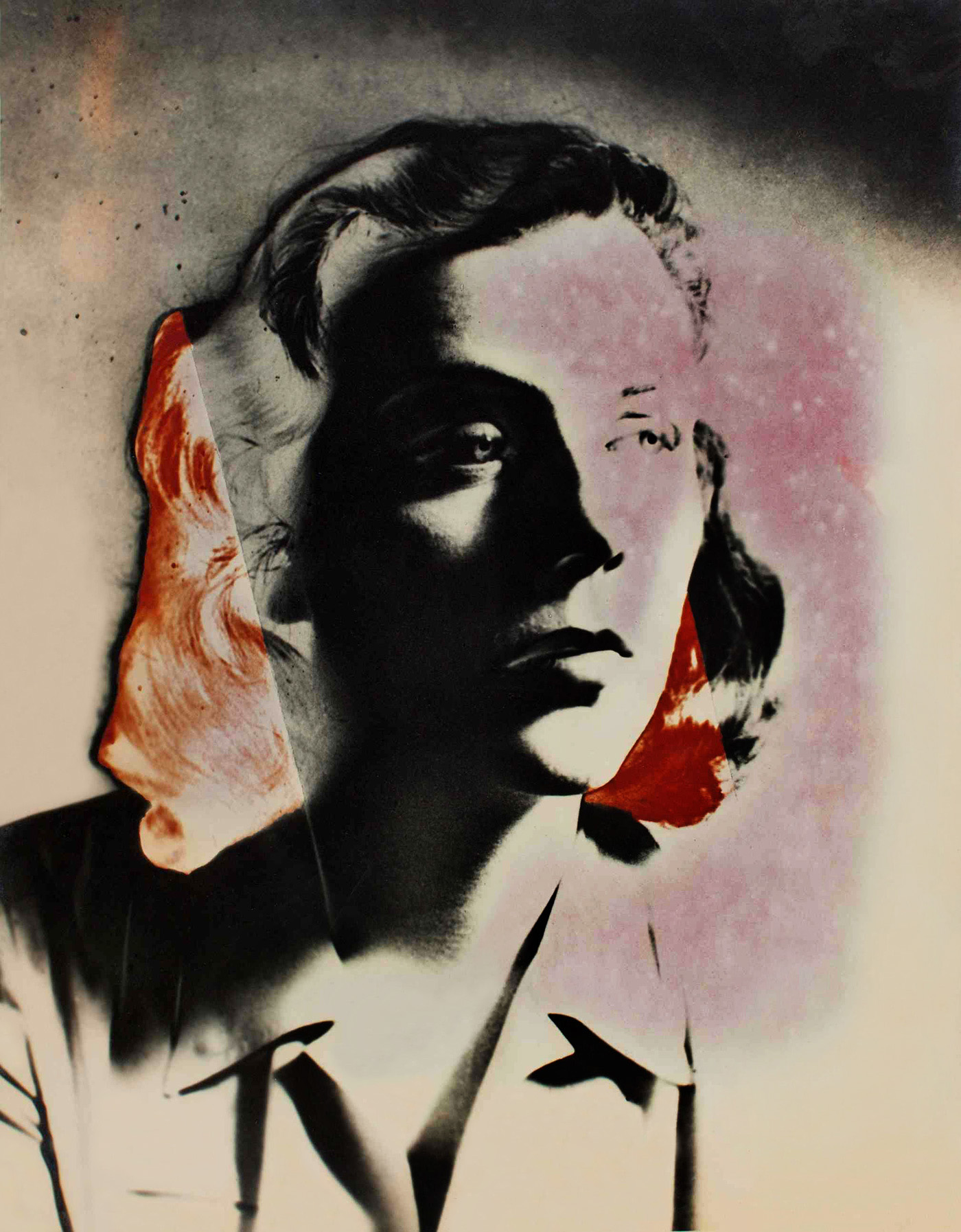
Josef Breitenbach (German, 1896-1984) 'Patricia, New York' c. 1942


Josef Breitenbach (German, 1896-1984)
Patricia, New York
c. 1942
Silver gelatin print
The Sir Elton John Photography Collection
Photograph: Josef and Yaye Breitenbach Charitable Foundation, Courtesy Gitterman Gallery


“The camera should be used for a recording of life, for rendering the very substance and quintessence of the thing itself, whether it be polished steel or palpitating flesh.”


Edward Weston, 1924


Bodies

Experimental approaches to shooting, cropping and framing could transform the human body into something unfamiliar. Photographers started to focus on individual parts of the body, their unconventional crops drawing attention to shape and form, accentuating curves and angles. Fragmented limbs and flesh were depersonalised and could be treated like a landscape or still life, dissolving distinctions between different genres. Thanks to faster shutter speeds and new celluloid roll film, photographers could also freeze the body in motion outside of the studio for the first time, capturing dancers and swimmers with a clarity impossible for the naked eye.


André Kertész (Hungarian, 1894-1985) 'Underwater Swimmer, Esztergom, Hungary, 30 June 1917' 1917


André Kertész (Hungarian, 1894-1985)
Underwater Swimmer, Esztergom, Hungary, 30 June 1917
1917
The Sir Elton John Photography Collection
© Estate of André Kertész/Higher Pictures


Rudolph Koppitz (Austrian, 1884-1936) 'Movement Study' 1925


Rudolph Koppitz (Austrian, 1884-1936)
Movement Study
1925
Gelatin silver print
The Sir Elton John Photography Collection
Photograph: ADAGP, Paris and DACS London 2016


Man Ray (American, 1890-1976) 'Noire et Blanche' 1926


Man Ray (American, 1890-1976)
Noire et Blanche
1926
Silver gelatin print
The Sir Elton John Photography Collection
Photograph: Man Ray Trust/ADAGP, Paris and DACS, London 2016


Man Ray (American, 1890-1976) 'Glass Tears (Les Larmes)' 1932


Man Ray (American, 1890-1976)
Glass Tears (Les Larmes)
1932
Gelatin silver print on paper
229 x 298 mm
Collection Elton John
© Man Ray Trust/ADAGP, Paris and DACS, London 2016


Edward Weston (American, 1886-1958) 'Nude' 1936


Edward Weston (American, 1886-1958)
Nude
1936
Silver gelatin print
The Sir Elton John Photography Collection
Photograph: 1981 Center for Creative Photography, Arizona Board of Regents


Man Ray (American, 1890-1976) 'Dora Maar' 1936


Man Ray (American, 1890-1976)
Dora Maar
1936
Silver gelatin print
The Sir Elton John Photography Collection
Photograph: Man Ray Trust/ADAGP, Paris and DACS, London 2016


Nino Migliori (Italian, b. 1926) 'Il Tuffatore' (The Diver) 1951


Nino Migliori (Italian, b. 1926)
Il Tuffatore (The Diver)
1951
Silver gelatin print
The Sir Elton John Photography Collection


“The documentary photographer is trying to speak to you in terms of everyone’s experience.”


Dorothea Lange, 1934


Documents

During the 1930s, photographers refined the formula for what we now know as social documentary. To compel the public to look at less palatable aspects of contemporary society they married creative manipulation with an appeal to viewers’ trust in the photograph as an objective visual record. This combination proved itself uniquely capable of eliciting empathy but is fraught with artistic and ethical complexity. These works highlight the vexed position of documentary photographs: historical evidence, instruments of propaganda and, latterly, works of art.

The development of new technology – particularly the portable camera and roll film – allowed photographers to capture spontaneous moments unfolding in the everyday world. Taking viewers into neighbourhoods where they might never set foot, street photography and documentary opened up new perspectives socially as much as visually.


Dorothea Lange (American, 1895-1965) 'Migrant Mother' 1936


Dorothea Lange (American, 1895-1965)
Migrant Mother
1936
Silver gelatin print
The Sir Elton John Photographic Collection


Walker Evans (American, 1903-1975) 'Floyde Burroughs, a cotton sharecropper, Hale County, Alabama' 1936


Walker Evans (American, 1903-1975)
Floyde Burroughs, a cotton sharecropper, Hale County, Alabama
1936
Silver gelatin print
The Sir Elton John Photography Collection


Dorothea Lange (American, 1895-1965) 'A young girl living in a shack town near Oklahoma City, Oklahoma' 1936


Dorothea Lange (American, 1895-1965)
A young girl living in a shack town near Oklahoma City, Oklahoma
1936
Silver gelatin print
The Sir Elton John Photography Collection


Walker Evans (American, 1903-1975) 'Christ or Chaos?' 1946


Walker Evans (American, 1903-1975)
Christ or Chaos?
1946
Gelatin silver print
The Sir Elton John Photography Collection
Photograph: Walker Evans Archives, The Metropolitan Museum of Art


“Contradictions of perspective. Contrasts of light. Contrasts of form. Points of view impossible to achieve in drawing and painting.”


Aleksandr Rodchenko, 1920s


Objects, Perspectives, Abstractions

The subjects and approaches of modernist photography vary widely, but are united by a fascination with the medium itself. Every image asks what photography is capable of and how it can be pushed further. This final room brings together three interlinked approaches. It shows the still life genre reimagined by photographers who used the technical capabilities of the camera to reveal the beauty of everyday things. Objects captured at unconventional angles or extreme close-up become strange, even unrecognisable.

A similar effect of defamiliarisation was accomplished by taking photographs from radically new perspectives, positioning a camera at the point of view of the ‘worm’s eye’ or ‘bird’s eye’. This created extreme foreshortening that transformed photographs from descriptive images of things into energetic compositions hovering between abstraction and representation.

Abstraction pushes against photography’s innate ability to record objectively. Radical techniques such as cameraless image-making simplified the medium to the point of capturing the play of light on photosensitive paper. By stripping it back to its most basic components, artists celebrated photography, not as a tool for reproduction, but as a creative medium capable of producing new imagery.


Alexander Rodchenko (Russian, 1891-1956) 'Shukov Tower' 1920


Alexander Rodchenko (Russian, 1891-1956)
Shukov Tower
1920
Silver gelatin print
The Sir Elton John Photographic Collection
© A. Rodchenko & V. Stepanova Archive, DACS, RAO 2016


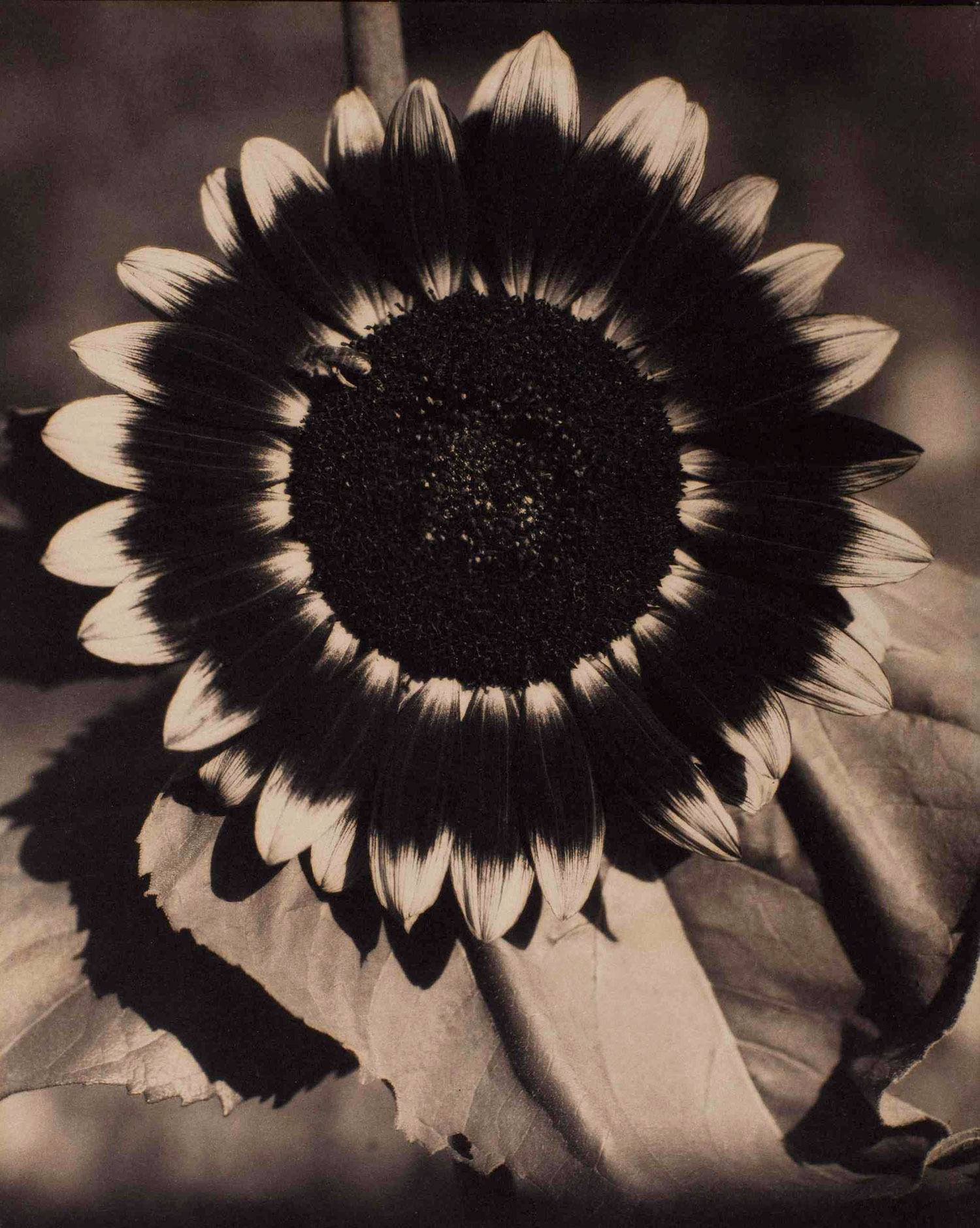
Edward Steichen (American, 1879-1973) 'A Bee on a Sunflower' c. 1920


Edward Steichen (American, 1879-1973)
A Bee on a Sunflower
c. 1920
Gelatin silver print
The Sir Elton John Photography Collection


Man Ray (American, 1890-1976) "Rayograph" 1923


Man Ray (American, 1890-1976)
“Rayograph”
1923
Silver gelatin print
The Sir Elton John Photography Collection
Photograph: Man Ray Trust/ADAGP, Paris and DACS, London 2016


André Kertész (Hungarian, 1894-1985) 'Mondrian's Glasses and Pipe' 1926


André Kertész (Hungarian, 1894-1985)
Mondrian’s Glasses and Pipe
1926
Gelatin silver print
The Sir Elton John Photography Collection
© Estate of André Kertész/Higher Pictures


Tina Modotti (Italian American, 1896-1942) 'Bandelier, Corn and Sickle' 1927


Tina Modotti (Italian American, 1896-1942)
Bandelier, Corn and Sickle
1927
Silver gelatin print
The Sir Elton John Photographic Collection


Werner Mantz. 'Staircase Ursuliner Lyzeum Cologne 1928'


Werner Mantz (German, 1901-1983)
Staircase Ursuliner Lyzeum Cologne 1928
1928
Silver gelatin print
The Sir Elton John Photography Collection


Margaret Bourke-White (American, 1904-1971) 'George Washington Bridge' 1933


Margaret Bourke-White (American, 1904-1971)
George Washington Bridge
1933
Silver gelatin print
The Sir Elton John Photography Collection


László Moholy-Nagy (Hungarian, 1895-1946) 'View from the Berlin tower' 1928


László Moholy-Nagy (Hungarian, 1895-1946)
View from the Berlin tower
1928
Silver gelatin print
The Sir Elton John Photographic Collection


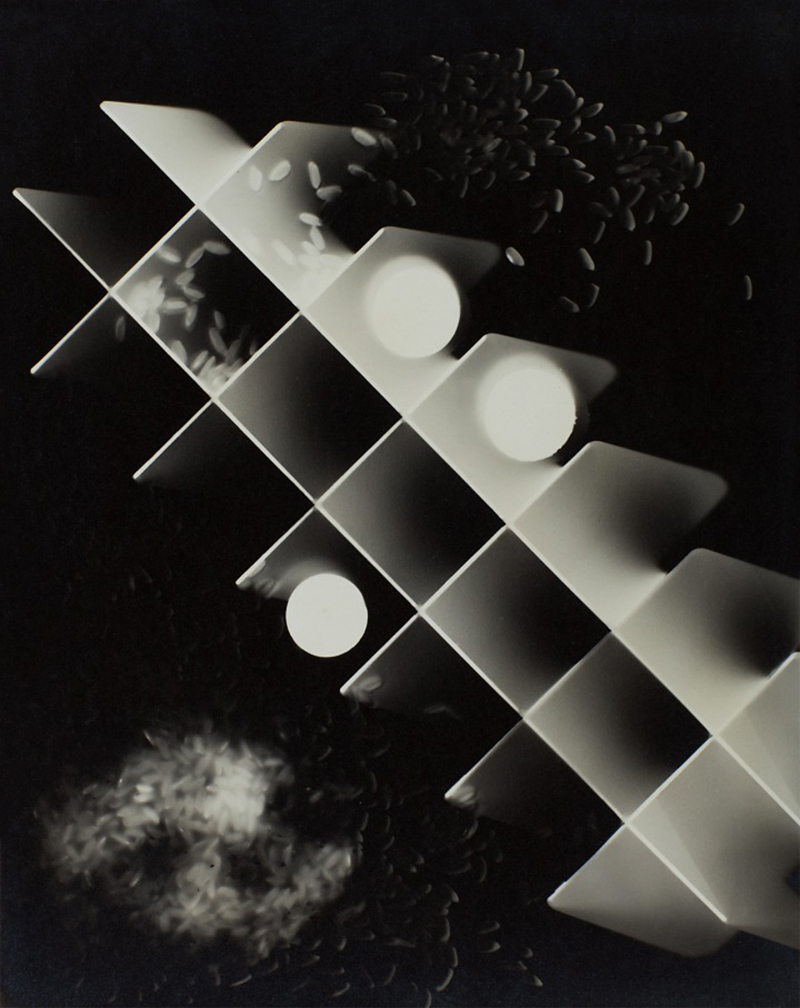
Margaret de Patta (American, 1903-1964) 'Ice Cube Tray with Marbles and Rice' 1939


Margaret de Patta (American, 1903-1964)
Ice Cube Tray with Marbles and Rice
1939
The Sir Elton John Photographic Collection
© Estate of Margaret de Patta


Tate Modern
Bankside
London SE1 9TG
United Kingdom

Opening hours:
Sunday – Thursday 10.00 – 18.00
Friday – Saturday 10.00 – 22.00

Tate Modern website

LIKE ART BLART ON FACEBOOK

Back to top

Exhibition: ‘Surreal Encounters: Collecting the Marvellous: Works from the Collections of Roland Penrose, Edward James, Gabrielle Keiller and Ulla and Heiner Pietzsch’ at the Scottish National Gallery of Modern Art, Edinburgh

Exhibition dates: 4th June – 11th September, 2016

Curator: Keith Hartley


Marcus Bunyan (Australian, b. 1958) 'Self-portrait with gryphon and Joan Miro (Head of a Catalan Peasant) tattoo' 1998


Marcus Bunyan (Australian, b. 1958)
Self-portrait with gryphon and Joan Miró (Head of a Catalan Peasant) tattoo, both by Alex Binnie, London
1998


I have the five elements in tattoos. In the Head of a Catalan Peasant by Joan Miró featured in the posting, the red hat – in the form of a triangle – signifies ‘fire’ in Western occult mythology.


“Surrealism is not a movement. It is a latent state of mind perceivable through the powers of dream and nightmare.”

~ Salvador Dalí

 
“As beautiful as the chance encounter of a sewing machine and an umbrella on an operating table.”

~ Comte de Lautréamont

 
“A constant human error: to believe in an end to one’s fantasies. Our daydreams are the measure of our unreachable truth. The secret of all things lies in the emptiness of the formula that guard them.”

~ Floriano Martins


Many thankx to the Scottish National Gallery of Modern Art for allowing me to publish the art work in the posting. Please click on the photographs for a larger version of the image.


Joan Miró (Spanish, 1893-1983) 'Tête de Paysan Catalan' [Head of a Catalan Peasant] 1925 from the exhibition 'Surreal Encounters: Collecting the Marvellous: Works from the Collections of Roland Penrose, Edward James, Gabrielle Keiller and Ulla and Heiner Pietzsch' at the Scottish National Gallery of Modern Art, Edinburgh, June-  Sept, 2016


Joan Miró (Spanish, 1893-1983)
Tête de Paysan Catalan [Head of a Catalan Peasant]
1925
Oil on canvas
92.4 x 73cm
Collection: Scottish National Gallery of Modern Art
Purchased jointly with Tate, with the assistance of the Art Fund 1999


Francis Picabia (French, 1879-1953) 'Fille née sans mère' [Girl Born without a Mother] c. 1916-1917 from the Collections of Roland Penrose, Edward James, Gabrielle Keiller and Ulla and Heiner Pietzsch' at the Scottish National Gallery of Modern Art, Edinburgh, June-  Sept, 2016


Francis Picabia (French, 1879-1953)
Fille née sans mère [Girl Born without a Mother]
c. 1916-1917
Gouache and metallic paint on printed paper
50 x 65cm
Collection: Scottish National Gallery of Modern Art, purchased 1990


René Magritte (Belgian, 1898-1967) 'Au seuil de la liberté' (On the Threshold of Liberty) 1930


René Magritte (Belgian, 1898-1967)
Au seuil de la liberté (On the Threshold of Liberty)
1930
Oil on canvas
114 x 146cm
Collection: Museum Boijmans Van Beuningen, Rotterdam (Formerly collection of E. James), purchased 1966


André Masson (French, 1896-1987) 'Massacre' 1931


André Masson (French, 1896-1987)
Massacre
1931
Oil on canvas
Collection: Hamburger Kunsthalle, Hamburg/ Pietzsche Collection


Max Ernst (German, 1891-1976) 'La Joie de vivre' [The Joy of Life] 1936


Max Ernst (German, 1891-1976)
La Joie de vivre [The Joy of Life]
1936
Oil on canvas
73.5 x 92.5cm
Collection: National Galleries of Scotland
Purchased with the assistance of the Heritage Lottery Fund and the Art Fund 1995


Max Ernst (German, 1891-1976) 'The Fireside Angel' (The Triumph of Surrealism) 1937


Max Ernst (German, 1891-1976)
The Fireside Angel (The Triumph of Surrealism)
L’ange du foyer (Le triomphe du surréalisme)
1937
Oil on canvas
114 cm x 146cm


Dorothea Tanning (American, 1910-2012) 'Eine Kleine Nachtmusik' [A Little Night Music] 1943


Dorothea Tanning (American, 1910-2012)
Eine Kleine Nachtmusik [A Little Night Music]
1943
Oil on canvas
40.7 x 61cm
Collection: Tate (formerly collection of R. Penrose)
Purchased with assistance from the Art Fund and the American Fund for the Tate Gallery 1997


Apart from three weeks she spent at the Chicago Academy of Fine Art in 1930, Tanning was a self-taught artist. The surreal imagery of her paintings from the 1940s and her close friendships with artists and writers of the Surrealist Movement have led many to regard Tanning as a Surrealist painter, yet she developed her own individual style over the course of an artistic career that spanned six decades.

Tanning’s early works – paintings such as Birthday and Eine kleine Nachtmusik (1943, Tate Modern, London) – were precise figurative renderings of dream-like situations. Like other Surrealist painters, she was meticulous in her attention to details and in building up surfaces with carefully muted brushstrokes. Through the late 1940s, she continued to paint depictions of unreal scenes, some of which combined erotic subjects with enigmatic symbols and desolate space. During this period she formed enduring friendships with, among others, Marcel Duchamp, Joseph Cornell, and John Cage; designed sets and costumes for several of George Balanchine’s ballets, including The Night Shadow (1945) at the Metropolitan Opera House; and appeared in two of Hans Richter’s avant-garde films.

Over the next decade, Tanning’s painting evolved, becoming less explicit and more suggestive. Now working in Paris and Huismes, France, she began to move away from Surrealism and develop her own style. During the mid-1950s, her work radically changed and her images became increasingly fragmented and prismatic, exemplified in works such as Insomnias (1957, Moderna Museet, Stockholm). As she explains, “Around 1955 my canvases literally splintered… I broke the mirror, you might say.”

Text from the Wikipedia website


Marcel Duchamp (French, 1887-1968) 'La Boîte-en-valise (Box in a Suitcase) 1935-1941


Marcel Duchamp (French, 1887-1968)
La Boîte-en-valise (Box in a Suitcase)
1935-1941
Sculpture, leather-covered case containing miniature replicas and photographs of Duchamp’s works
10 x 38 x 40.5cm
Collection: Scottish National Gallery of Modern Art, presented anonymously 1989


Paul Delvaux (Belgian, 1897-1994) 'L'Appel de la Nuit (The Call of the Night)' 1938


Paul Delvaux (Belgian, 1897-1994)
L’Appel de la Nuit (The Call of the Night)
1938
Oil on canvas
110 x 145cm
Collection: Scottish National Gallery of Modern Art
Purchased with the support of the Heritage Lottery Fund and the Art Fund 1995


Delvaux’s paintings of the late 1920s and early 1930s, which feature nudes in landscapes, are strongly influenced by such Flemish Expressionists as Constant Permeke and Gustave De Smet. A change of style around 1933 reflects the influence of the metaphysical art of Giorgio de Chirico, which he had first encountered in 1926 or 1927. In the early 1930s Delvaux found further inspiration in visits to the Brussels Fair, where the Spitzner Museum, a museum of medical curiosities, maintained a booth in which skeletons and a mechanical Venus figure were displayed in a window with red velvet curtains. This spectacle captivated Delvaux, supplying him with motifs that would appear throughout his subsequent work. In the mid-1930s he also began to adopt some of the motifs of his fellow Belgian René Magritte, as well as that painter’s deadpan style in rendering the most unexpected juxtapositions of otherwise ordinary objects.

Delvaux acknowledged his influences, saying of de Chirico, “with him I realised what was possible, the climate that had to be developed, the climate of silent streets with shadows of people who can’t be seen, I’ve never asked myself if it’s surrealist or not.” Although Delvaux associated for a period with the Belgian surrealist group, he did not consider himself “a Surrealist in the scholastic sense of the word.” As Marc Rombaut has written of the artist: “Delvaux … always maintained an intimate and privileged relationship to his childhood, which is the underlying motivation for his work and always manages to surface there. This ‘childhood,’ existing within him, led him to the poetic dimension in art.”

The paintings Delvaux became famous for usually feature numbers of nude women who stare as if hypnotised, gesturing mysteriously, sometimes reclining incongruously in a train station or wandering through classical buildings. Sometimes they are accompanied by skeletons, men in bowler hats, or puzzled scientists drawn from the stories of Jules Verne. Delvaux would repeat variations on these themes for the rest of his long life…

Text from the Wikipedia website


Photograph album: International Surrealist Exhibition, London 1936, made 1936-1939 Images taken by Chancery. Images titled by Roland Penrose

Photograph album: International Surrealist Exhibition, London 1936, made 1936-1939 Images taken by Chancery. Images titled by Roland Penrose


Photograph album: International Surrealist Exhibition, London 1936
Made 1936-1939
Images taken by Chancery. Images titled by Roland Penrose
32.00 x 26.00cm
Collection: Scottish National Gallery of Modern Art
Photo: Antonio Reeve


Salvador Dalí (Spanish, 1904-1989) 'Mae West Lips Sofa' 1937-1938


Salvador Dalí (Spanish, 1904-1989)
Mae West Lips Sofa
1937-1938
Wood, wool
92 x 215 x 66cm
Museum Boijmans Van Beuningen, Rotterdam © Fundacion Gala – Salvador Dalí, Beeldrecht Amsterdam 2007.
© Salvador Dali, Fundació Gala-Salvador Dalí, DACS, 2015


Salvador Dalí (Spanish, 1904-1989) 'Couple aux têtes pleines de nuages' [Couple with their Heads Full of Clouds] 1936


Salvador Dalí (Spanish, 1904-1989)
Couple aux têtes pleines de nuages [Couple with their Heads Full of Clouds]
1936
Oil on canvas
Left figure: 82.5 x 62.5cm; right figure: 92.5 x 69.5cm
Collection: Museum Boijmans Van Beuningen, Rotterdam (Formerly collection of E. James)
Purchased with the support of The Rembrandt Association (Vereniging Rembrandt) 1979
© Salvador Dali, Fundació Gala-Salvador Dalí, DACS, 2015


Salvador Dalí (Spanish, 1904-1989) 'Impressions d'Afrique' (Impressions of Africa) 1938


Salvador Dalí (Spanish, 1904-1989)
Impressions d’Afrique (Impressions of Africa)
1938
Oil on canvas
91.5 x 117.5cm
Collection: Museum Boijmans Van Beuningen, Rotterdam (Formerly collection of E. James)
Purchased with the support of The Rembrandt Association (Vereniging Rembrandt), Prins Bernhard Fonds, Erasmusstichting, Stichting Bevordering van Volkskracht Rotterdam and Stichting Museum Boijmans Van Beuningen 1979
© Salvador Dali, Fundació Gala-Salvador Dalí, DACS, 2015


Leonora Carrington (Mexican born Britain, 1917-2011) 'The House Opposite' 1945


Leonora Carrington (Mexican born Britain, 1917-2011)
The House Opposite
1945
Tempera on board
33 x 82cm
West Dean College, part of the Edward James Foundation


“I painted for myself… I never believed anyone would exhibit or buy my work.”

Leonora Carrington was not interested in the writings of Sigmund Freud, as were other Surrealists in the movement. She instead focused on magical realism and alchemy and used autobiographical detail and symbolism as the subjects of her paintings. Carrington was interested in presenting female sexuality as she experienced it, rather than as that of male surrealists’ characterisation of female sexuality. Carrington’s work of the 1940s is focused on the underlying theme of women’s role in the creative process.

Text from the Wikipedia website


Masterpieces from four of the finest collections of Dada and Surrealist art ever assembled will be brought together in this summer’s major exhibition at the Scottish National Gallery of Modern Art (SNGMA). Surreal Encounters: Collecting the Marvellous will explore the passions and obsessions that led to the creation of four very different collections, which are bound together by a web of fascinating links and connections, and united by the extraordinary quality of the works they comprise.

Surrealism was one of the most radical movements of the twentieth century, which challenged conventions through the exploration of the subconscious mind, the world of dreams and the laws of chance. Emerging from the chaotic creativity of Dada (itself a powerful rejection of traditional values triggered by the horrors of the First World War) its influence on our wider culture remains potent almost a century after it first appeared in Paris in the 1920s. World-famous works by Salvador Dalí, Joan Miró, René Magritte, Leonora Carrington, Giorgio de Chirico, André Breton, Man Ray, Pablo Picasso, Max Ernst, Dorothea Tanning, Yves Tanguy, Leonor Fini, Marcel Duchamp and Paul Delvaux will be among the 400 paintings, sculptures, prints, drawings, artist books and archival materials, to feature in Surreal Encounters. The exhibition has been jointly organised by the SNGMA, the Museum Boijmans Van Beuningen, Rotterdam and the Hamburger Kunsthalle, where it will be shown following its only UK showing in Edinburgh.

Dalí’s The Great Paranoiac (1936), Lobster Telephone (1938) and Impressions of Africa (1938); de Chirico’s Two Sisters (1915); Ernst’s Pietà or Revolution by Night (1923) and Dark Forest and Bird (1927), and Magritte’s The Magician’s Accomplice (1926) and Not to be Reproduced (1937) will be among the highlights of this exceptional overview of Surrealist art. The exhibition will also tell the personal stories of the fascinating individuals who pursued these works with such dedication and discernment.

The first of these – the poet, publisher and patron of the arts, Edward James (1907-84) and the artist, biographer and exhibition organiser, Roland Penrose (1900-84) – acquired the majority of the works in their collections while the Surrealist movement was at its height in the interwar years, their choices informed by close associations and friendships with many of the artists. James was an important supporter of Salvador Dalí and René Magritte in particular, while Penrose was first introduced to Surrealism through a friendship with Max Ernst. The stories behind James’s commissioning of works such as Dalí’s famous Mae West Lips Sofa (1938) and Magritte’s The Red Model III (1937) and the role of Penrose in the production of Ernst’s seminal collage novel Une Semaine de Bonté (1934) will demonstrate how significant these relationships were for both the artists and the collectors. Other celebrated works on show that formed part of these two profoundly important collections include Tanning’s Eine Kleine Nachtmusik (1943); Magritte’s On the Threshold of Liberty (1937); Miró’s Head of a Catalan Peasant (1925); and The House Opposite (c. 1945) by Leonora Carrington

While the Penrose and James collections are now largely dispersed, the extraordinary collection of Dada and Surrealist art put together by Gabrielle Keiller (1908-95), was bequeathed in its entirety to the SNGMA on her death in 1995, the largest benefaction in the institution’s history. Keiller devoted herself to this area following a visit to the Venice home of the celebrated American art lover Peggy Guggenheim in 1960, which proved to be a pivotal moment in her life. She went on to acquire outstanding works such as Marcel Duchamp’s La Boîte-en-Valise (1935-41), Alberto Giacometti’s Disagreeable Object, to be Thrown Away (1931) and Girl Born without a Mother (c. 1916-17) by Francis Picabia. Recognizing the fundamental significance of Surrealism’s literary aspect, Keiller also worked assiduously to create a magnificent library and archive, full of rare books, periodicals, manifestos and manuscripts, which makes the SNGMA one of the world’s foremost centres for the study of the movement.

The exhibition will be brought up to date by the inclusion of works from the collection of Ulla and Heiner Pietzsch, who have spent more than 40 years in their quest to build up an historically balanced collection of Surrealism, which they have recently presented to the city of Berlin, where they still live. The collection features many outstanding paintings by Francis Picabia, Pablo Picasso, André Masson, Leonor Fini, Ernst, Tanguy, Magritte and Miró; sculptures by Hans Arp and Hans Bellmer; and works by André Breton, the leader of the Surrealists. Highlights include Masson’s Massacre (1931), Ernst’s Head of ‘The Fireside Angel’ (c. 1937), Picasso’s Arabesques Woman (1931) and Arp’s sculpture Assis (Seated) (1937).

The exhibition’s curator in Edinburgh, Keith Hartley, who is Deputy Director of the SNGMA, has said, “Surrealist art has captured the public imagination like perhaps no other movement of modern art. The very word ‘surreal’ has become a by-word to describe anything that is wonderfully strange, akin to what André Breton, the chief theorist of Surrealism, called ‘the marvellous’. This exhibition offers an exceptional opportunity to enjoy art that is full of ‘the marvellous’. It brings together many important works which have rarely been seen in public, by a wide range of Surrealist artists, and creates some very exciting new juxtapositions.”

Press release from SNGMA


Pablo Picasso (Spanish, 1881-1973) 'Tête' [Head] 1913


Pablo Picasso (Spanish, 1881-1973)
Tête [Head]
1913
Drawing, papiers collés with black chalk on card
43.5 x 33cm
Collection: Scottish National Gallery of Modern Art
Purchased with assistance from the Heritage Lottery Fund and the Art Fund 1995
Photo: Antonia Reeve
© DACS / Estate of Pablo Picasso


Max Ernst (German, 1891-1976) 'Pieta or Revolution by Night' 1923


Max Ernst (German, 1891-1976)
Pieta or Revolution by Night
1923
Oil on canvas


René Magritte (Belgian, 1898-1967) 'The Magician's Accomplice' 1926


René Magritte (Belgian, 1898-1967)
The Magician’s Accomplice
1926
Oil on canvas


René Magritte (Belgian, 1898-1967) 'L’Esprit comique (The Comic Spirit)' 1928


René Magritte (Belgian, 1898-1967)
L’Esprit comique (The Comic Spirit)
1928
Oil on canvas
75 x 60cm
Collection: Hamburger Kunsthalle, Hamburg/ Pietzsche Collection


Pablo Picasso (Spanish, 1881-1973) 'Femme aux arabesques (Arabesque Woman)' 1931


Pablo Picasso (Spanish, 1881-1973)
Femme aux arabesques (Arabesque Woman)
1931
Oil on canvas, 100 x 81cm
Hamburger Kunsthalle, Hamburg/ Pietzsche Collection


Max Ernst (German, 1891-1976) 'Jeune homme intrigué par le vol d’une mouche non-euclidienne' [Young Man Intrigued by the Flight of a Non-Euclidean Fly] 1942–1947


Max Ernst (German, 1891-1976)
Jeune homme intrigué par le vol d’une mouche non-euclidienne [Young Man Intrigued by the Flight of a Non-Euclidean Fly]
1942-1947
Oil and paint on canvas
82 x 66cm
Collection: Hamburger Kunsthalle, Hamburg/ Pietzsche Collection


Max Ernst (German, 1891-1976) 'Une semaine de bonté' [A Week of Kindness] 1934

Max Ernst (German, 1891-1976) 'Une semaine de bonté' [A Week of Kindness] 1934


Max Ernst (German, 1891-1976)
Une semaine de bonté [A Week of Kindness]
1934
Collage graphic novel


Une semaine de bonté [A Week of Kindness] is a graphic novel and artist’s book by Max Ernst, first published in 1934. It comprises 182 images created by cutting up and re-organising illustrations from Victorian encyclopaedias and novels.

The 184 collages of Une semaine de bonté [A Week of Kindness] were created during the summer of 1933 while Max Ernst was staying at Vigoleno, in northern Italy. The artist took his inspiration from wood engravings, published in popular illustrated novels, natural science journals or 19th century sales catalogues. With infinite care, he cut out the images that interested him and assembled them with such precision as to bring his collage technique to a level of incomparable perfection. Without seeing the original illustrations, it is difficult to work out where Max Ernst intervened. In the end, each collage forms a series of interlinked images to produce extraordinary creatures which evolve in fascinating scenarios and create visionary worlds defying comprehension and any sense of reality.

After La Femme 100 têtes [The Woman with one Hundred Heads] (1929) and Rêve d’une petite fille qui voulut entrer au Carmel [A Little Girl dreams of taking the Veil] (1930), Une semaine de bonté was Max Ernst’s third collage-novel. Ernst had originally intended to publish it in seven volumes associating each book with a day of the week. Moreover, the title referred to the seven days in Genesis. Yet it was also an allusion to the mutual aid association ‘La semaine de la bonté’ [The Week of Kindness], founded in 1927 to promote social welfare. Paris was flooded with posters from the organisation seeking support from everyone. Like the elements making up the collages, the title was also “borrowed” by Max Ernst.

The first four publication deliveries did not, however, achieve the success that had been anticipated. The three remaining ‘days’ were therefore put together into a fifth and final book. The books came out between April and December 1934, each having been bound in a different colour: purple, green, red, blue and yellow. In the final version, two works were taken out. The edition therefore consists of only 182 collages.

Anonymous text from the Musée D’Orsay website [Online] Cited 07/09/2016. No longer available online


Yves Tanguy (French, 1900-1955) 'Sans titre, ou Composition surréaliste' (Untitled, or Surrealist Composition) 1927


Yves Tanguy (French, 1900-1955)
Sans titre, ou Composition surréaliste (Untitled, or Surrealist Composition)
1927
Oil on canvas
54.5 x 38cm
Hamburger Kunsthalle, Hamburg/ Pietzsche Collection


Tanguy’s paintings have a unique, immediately recognisable style of nonrepresentational surrealism. They show vast, abstract landscapes, mostly in a tightly limited palette of colours, only occasionally showing flashes of contrasting colour accents. Typically, these alien landscapes are populated with various abstract shapes, sometimes angular and sharp as shards of glass, sometimes with an intriguingly organic look to them, like giant amoebae suddenly turned to stone.

Text from the Wikipedia website


Dorothea Tanning (American, 1910-2012) 'Voltage' 1942


Dorothea Tanning (American, 1910-2012)
Voltage
1942
Oil on canvas
29 x 30.9cm
Collection: Hamburger Kunsthalle, Hamburg/ Pietzsche Collection


Alberto Giacometti (Italian, 1901-1966) 'Objet désagréable, à jeter' [Disagreeable Object, to be Thrown away] 1931


Alberto Giacometti (Italian, 1901-1966)
Objet désagréable, à jeter [Disagreeable Object, to be Thrown away]
1931
Wood
19.6 x 31 x 29 cm
Collection: Scottish National Gallery of Modern Art, purchased 1990
© Bridgeman Art Library


Jean (Hans) Arp (French-German, 1886-1996) 'Assis' (Seated) 1937


Jean (Hans) Arp (French-German, 1886-1996)
Assis (Seated)
1937
Limestone
29.5 x 44.5 x 16cm
Collection: Hamburger Kunsthalle, Hamburg/ Pietzsche Collection


Joan Miró (Spanish, 1893-1983) 'Peinture' (Painting) 1925


Joan Miró (Spanish, 1893-1983)
Peinture (Painting)
1925
Oil on canvas
130 x 97cm
Hamburger Kunsthalle, Hamburg/ Pietzsche Collection


Joan Miró (Spanish, 1893-1983) 'Peinture' 1927


Joan Miró (Spanish, 1893-1983)
Peinture [Painting]
1927
Oil on canvas
33 x 24.1 cm
Collection: National Galleries of Scotland
Bequeathed by Gabrielle Keiller 1995


René Magritte (Belgian, 1898-1967) 'Le Modèle rouge III' (The Red Model III) 1937


René Magritte (Belgian, 1898-1967)
Le Modèle rouge III (The Red Model III)
1937
Oil on canvas
206 x 158 x 5cm
Collection: Museum Boijmans Van Beuningen, Rotterdam (Formerly collection of E. James)
Purchased with the support of The Rembrandt Association (Vereniging Rembrandt), Prins Bernhard Fonds, Erasmusstichting, Stichting Bevordering van Volkskracht Rotterdam Museum Boymans-van Beuningen Foundation 1979


René Magritte (Belgian, 1898-1967) 'La reproduction interdite' (Not to be Reproduced) 1937


René Magritte (Belgian, 1898-1967)
La reproduction interdite (Not to be Reproduced)
1937
Museum Boijmans Van Beuningen, Rotterdam
© Beeldrecht Amsterdam 2007
Photographer: Studio Tromp, Rotterdam
© ADAGP, Paris and DACS, London 2015


Scottish National Gallery of Modern Art
75 Belford Road
Edinburgh EH4 3DR
Phone: 0131 624 6200

Opening hours:
Daily 10am – 6pm

Scottish National Gallery of Modern Art website

LIKE ART BLART ON FACEBOOK

Back to top

Exhibition: ‘Artist’s jewels. From Modernisme to the avant-garde’ at Museu Nacional d’Art de Catalunya, Barcelona

Exhibition dates: 27th October 2010 – 13th February 2011


Alexander Calder (American, 1898-1976) 'Still life' Various dates


Alexander Calder (American, 1898-1976)
Still life
© Calder Foundation New York/ VEGAP, Barcelona, 2010


Anyone who reads this archive regularly will know of my love of exceptional jewellery. This posting satiates my desire!

The Calder pieces are just outstanding.

Marcus


Many thankx to the Museu Nacional d’Art de Catalunya for allowing me to publish the photographs in the posting. Please click on the photographs to see a larger version of the image.


Hector Guimard (French, 1867-1942) 'Brooch' 1909


Hector Guimard (French, 1867-1942)
Brooch
1909
© 2010 Digital image, The Museum of Modern Art, New York/Scala, Florence


Jewellery by US artist Alexander Calder from the Metropolitan Museum of Art in New York, USA


Alexander Calder (American, 1898-1976)
Jewellery by US artist Alexander Calder from the Metropolitan Museum of Art in New York, USA
The Metropolitan Museum of Art, New York
© Calder Foundation New York/ VEGAP, Barcelona, 2010


Calder possessed an uncanny ability to synthesise a variety of influences from the world around him to create often simple, always meaningful, and ultimately modern jewellery. In the early 20th century, many avant-garde artists began to collect African tribal art and to reference it in their paintings and sculptures. Likewise, Calder’s brooches, tiaras, and necklaces have more in common with the pectorals, collars, diadems, and neckpieces made by ancient cultures than traditional western European jewellery. For example, Calder repeatedly incorporated the spiral – a typical motif in late Bronze Age artefacts – into his jewellery, as well as his wire figures, drawings, paintings, and other decorative arts. The artist’s personal collections, which included objects from African, Oceanic, and Precolumbian cultures, substantiate his eclectic taste.

Calder’s exploration of jewellery in the 1930s also coincided with his burgeoning interest in Surrealism. As his largest and most dramatic ornaments are unwieldy to wear, Calder’s jewellery may be seen as a Surrealistic strategy to entrap the wearer into participating in an art performance or being metamorphosed by the object. Among those who wore his jewellery were sophisticated art aficionados and artists, such as Peggy Guggenheim, Mary Rockefeller, French actress Jeanne Moreau, and Georgia O’Keeffe.

His sculptural art, regardless of category, has less to do with solidity than with lightness, air, motion, and graceful formal relationships. Calder’s sense of economy, balance, and adaptability, so characteristic of the artist’s much larger and more familiar mobiles and stabiles, extends to his jewellery. While Calder’s more diminutive avant-garde creations converged closely with the aesthetics of the modern age, they remain unmistakably Calder.

 Anon. “Metropolitan Museum of Art features Alexander Calder – Inventive Jewelry” on Art Knowledge News website Nd. [Online] Cited 11/01/2011 no longer available online


Salvador Dalí (Spanish, 1904-1989) 'Time's Eye' Nd


Salvador Dalí (Spanish, 1904-1989)
Time’s Eye
Nd
© Salvador Dali, Fundació Gala-Salvador Dali, VEGAP, Barcelona, 2010


Salvador Dalí (Spanish, 1904-1989) 'Ruby's lips' 1949


Salvador Dalí (Spanish, 1904-1989)
Ruby’s lips
1949
© Salvador Dali, Fundació Gala-Salvador Dali, VEGAP, Barcelona, 2010


Artist’s jewels. From Modernisme to the avant-garde explores the approach to the world of jewellery by leading artists of the main art movements in the first decades of the fertile 20th century. The exhibition gathers almost 350 works, chiefly jewels, that strike a dialogue with paintings, sculptures, photographs, fabrics and objets d’art, showing how jewellery made up the little universe of great artists.

Artist’s jewels. From Modernisme to the avant-garde reveals the relations between jewellery and the work of art. This exhibition, the first on this subject to be held in our country, shows the less well-known side of Auguste Rodin, Hector Guimard, Josef Hoffmann, Josep Llimona, Serrurier-Bovy, Henri Van de Velde, Manolo Hugué, Paco Durrio, Pau Gargallo, Max Ernst, Salvador Dalí, Georges Braque, Alexander Calder, Charlotte Perriand, Hans Arp, Pablo Picasso, Juli González, Henri Laurens and many others.

Painters and sculptors, since earliest times, have transferred their artistic forms to the world of jewellery, but it was not until the end of the 20th century, under the powerful influence of Art Nouveau, that artists approached this discipline more openly: ‘Carrying out a large work’, according to Otto Wagner, ‘means expressing beauty without distinguishing between large and small’.

The merger of arts that was a feature of Modernisme and the subsequent elimination of borders between the arts reached a crescendo in the 1920s and 1930s and crystallised in the numerous interesting incursions into the world of jewellery by the painters, sculptors and architects of the historic avant-garde. In producing these small-format objects (‘micro-sculptures’ or ‘painted jewels’), artists channelled their artistic thinking from different perspectives.

The exhibition opens with a selection of items produced by jeweller artists, who very often also cultivated multiple skills and who incorporated into their creations the offerings of the artistic movements of the time.

The high point of the first section of the exhibition are the jewels by René Lalique, which were purchased at the time of their production by European museums, rich amateurs and collectors. This is the case of the pendant purchased by the director of the Hamburg Museum at the Universal Exhibition in Paris in 1900, the jewels purchased by Calouste Gulbenkian and the unique pendant Antoni Amatller bought in Paris for his daughter Teresa. In a dialogue with these works are the ones with rich enamelling and varied ranges of colour made by the Barcelona jeweller Lluís Masriera, who played a key role in introducing the new style to Barcelona.

Making up the core of the exhibition are the jewels conceived by artists who were not jewellers, such as Hector Guimard, Paco Durrio, Manolo Hugué, Herich Heckel, Pau Gargallo, Juli González, Joaquim Gomis, Ramón Teixé, Anni Albers, Charlotte Perriand, Alexander Calder, Henri Laurens, Hans Arp, Pablo Picasso, Georges Braque and Salvador Dalí. This second section shows these artists’ production in relation to their usual work of painting, sculpture, photography and other creations, establishing parallels with the artistic disciplines they worked at and revealing the affinities and echoes between them.

The legacy of the Arts and Crafts movement and the Bauhaus, which were committed to integration between all the arts, can clearly be seen in the work of these artists, who opened the way to experimentation in the arts, questioning the very nature of jewellery, and who incorporated new materials into their production that were foreign to the tradition of precious metals. Examples of this are Ramon Teixé’s unusual creations in iron, glass, enamel and string and the jewellery by the sculptor Josep de Creeft made with bits of scrap metal from his motor car, not forgetting the jewellery by the architect and designer Charlotte Perriand or the ones produced by the photographer Joan Gomis in collaboration with Manuel Capdevila, which make use of shells and pebbles like real objets trouvées.

Alongside these hand-made items of jewellery that are often produced with non-precious materials, we are exhibiting the ones designed by Braque and Dalí and manufactured by professional jewellers using noble materials like rubies, sapphires or diamonds.

A third section of the exhibition explores the relationship between jewels and the body and shows a selection of clothes, mainly loaned by the Museo del Traje in Madrid, and photographs from the 1930s by Man Ray, Edward Steichen, George Hoyningen-Huené and Horst P. Horst.

The works presented in this exhibition come from public institutions and museums all over the world, such as the Metropolitan Museum of Art, The Museum of Modern Art, Whitney Museum of American Art in New York, the Victoria and Albert Museum in London, the Musée des Arts Décoratifs, the Musée d’Orsay and the Musée Rodin in Paris, the Museo Nacional Centro de Arte Reina Sofía in Madrid, the Institut d’Art Modern (IVAM) in Valencia, the Museo de Bellas Artes in Bilbao and the Fundació Gala-Salvador Dalí in Figueres, who have generously made an exception in lending some of the most emblematic jewels in their collections, as well as from the MNAC itself and from numerous European and American private collections.”

Press release from the Museu Nacional d’Art de Catalunya website


Alexander Calder (American, 1898-1976) 'The jealous husband' c.1940


Alexander Calder (American, 1898-1976)
The jealous husband
c. 1940
Necklace
Brass wire
14″ x 16″
The Metropolitan Museum of Art, New York
© Calder Foundation New York/ VEGAP, Barcelona, 2010


Manuel Capdevila / Ramon Sarsanedas. 'Spain falled back' Broooch Nd


Manuel Capdevila / Ramon Sarsanedas
Spain falled back
Nd
Brooch
Museu Nacional d’Art de Catalunya – MNAC


Erich Heckel (German, 1883-1970) 'Drei Badende' (Three bathers) 1912


Erich Heckel (German, 1883-1970)
Drei Badende (Three bathers)
1912
Museum für Kunst und Gewerbe, Hamburg
© Erich Heckel, VEGAP, Barcelona, 2010


Boucheron, Paris (design by Lucien Hirtz) 'Corsage ornament' 1925


Boucheron, Paris (design by Lucien Hirtz)
Corsage ornament
1925
© Boucheron, Paris


Museu Nacional d’Art de Catalunya
Palau Nacional
Parc de Montjuïc
08038 Barcelona

Opening hours:
Tues – Sat 10am – 7pm
Sunday and public holidays: 10am – 2.30pm

Museu Nacional d’Art de Catalunya website

LIKE ART BLART ON FACEBOOK

Back to top