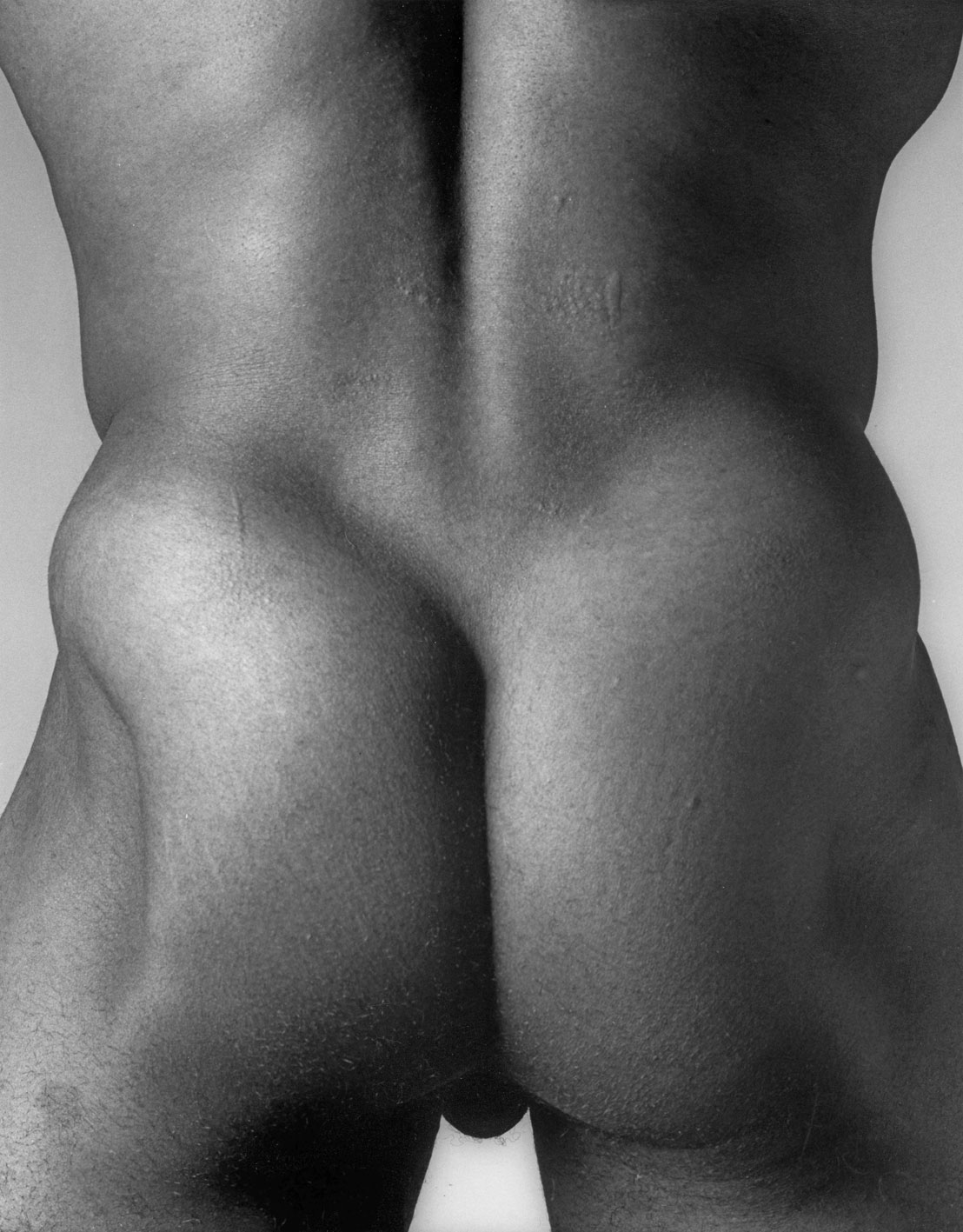
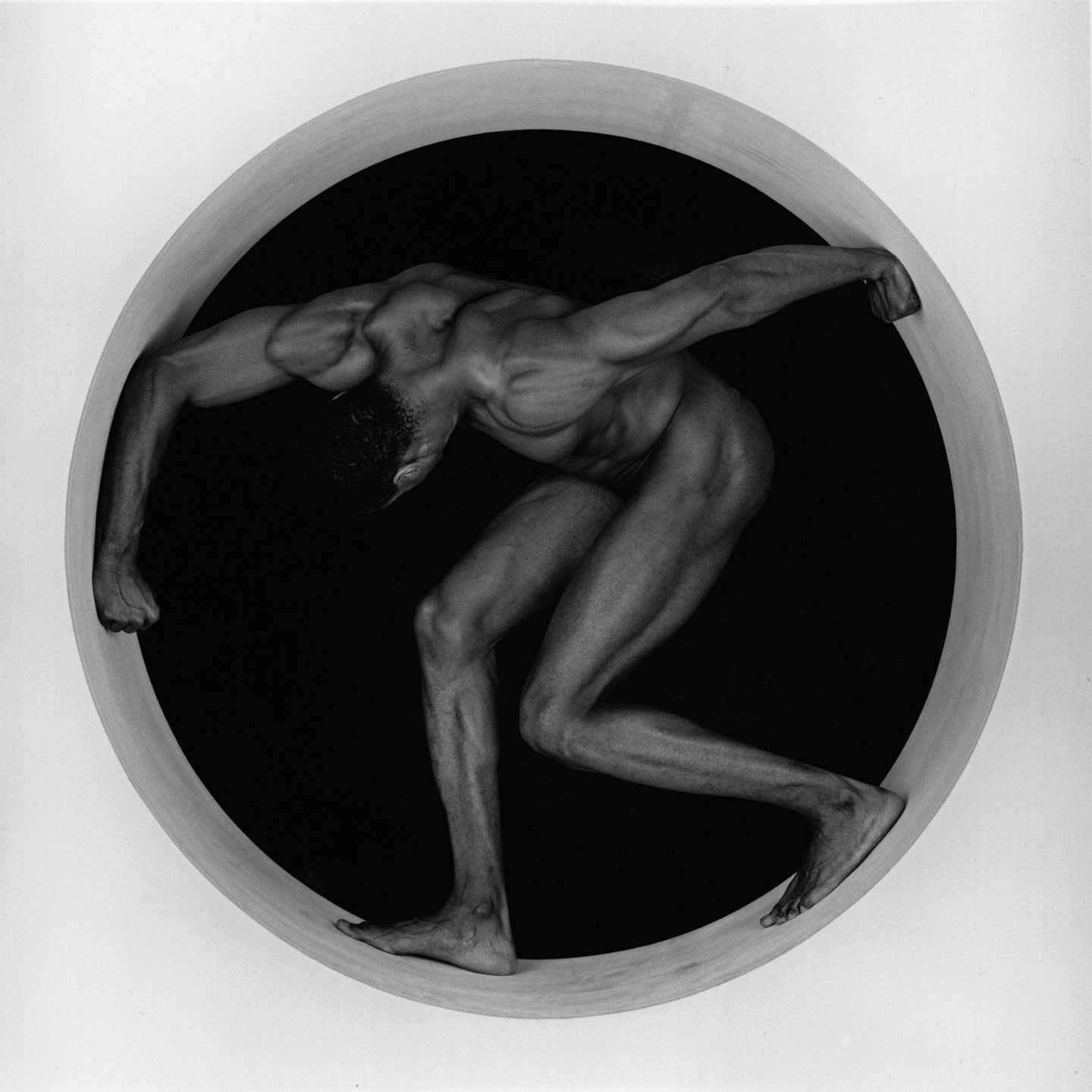
Exhibition: ‘Robert Mapplethorpe: XYZ’ at The Los Angeles County Museum of Art (LACMA)

Exhibition dates: 21st October 2012 – 24th March 2013


Robert Mapplethorpe (American, 1946-1989) 'Y Portfolio' 1978


Robert Mapplethorpe (American, 1946-1989)
Y Portfolio
1978
37.7 x 35.5 x 4.9cm closed
The J. Paul Getty Museum, Los Angeles, jointly acquired by the J. Paul Getty Trust and the Los Angeles County Museum of Art. Partial Gift of the Robert Mapplethorpe Foundation; partial purchase with funds provided by the David Geffen Foundation and the J. Paul Getty Trust
© Robert Mapplethorpe Foundation


“The X Portfolio centers on men engaged in gay sex, including hard-core sadomasochism. The subject wasn’t entirely new. In Greek vase decorations, Indian miniatures and pagan temple sculptures, candid and highly refined sex pictures, heterosexual and homosexual, have been around since before Alexander the Great and the Mahabharata.”


Christopher Knight, Los Angeles Times Art Critic


Robert Mapplethorpe made photographs of hard-core sadomasochistic gay sex. Robert Mapplethorpe made photographs of hard-core sadomasochistic gay sex. Robert Mapplethorpe made photographs of hard-core sadomasochistic gay sex. Robert Mapplethorpe made photographs of hard-core sadomasochistic gay sex.

A fist up an arse, a finger down the penis, a dildo up the bum. These photographs are seminal images in the work of the artist and yet we never get to see them online. Would it be too shocking for the sensibilities of the gallery or the Robert Mapplethorpe Foundation that these cause célèbre images, five of which were used as evidence in the obscenity trial of Director Dennis Barrie and the Cincinnati Contemporary Arts Center in 1990, were actually seen?

Instead we have two tame representations from the X Portfolio in the posting.

If you go to the slick Robert Mapplethorpe Foundation website, what do you find in the portfolio section: tasteful self portraits, male nudes, female nudes, flowers, portraits, statuary. Nothing to suggest that Mapplethorpe was one of the most transgressive artists of the twentieth century, an artist who documented an essential element of gay culture AS ART, who famously said that there was nothing shown in his photographs that he hadn’t done himself. Not an inkling, not a whisper, not a bull whip up the arse to be found. This is the sanitised vision of the artist – the desire, the pleasure, the release of living, re-shackled under the commercialisation of brand Mapplethorpe.

It’s like the Foundation is afraid of the artist’s shadow. On their website they state that the Foundation was set up by Mapplethorpe in part to protect his work and advance his creative vision. The X Portfolio and his early work are part of that vision, deserving to be seen by everyone – online!

Dr Marcus Bunyan


Many thankx to The Los Angeles County Museum of Art (LACMA) for allowing me to publish some of the photographs in the posting. Please click on the photographs for a a larger version of the image.


Robert Mapplethorpe (American, 1946-1989) 'Cedric, N.Y.C. (X Portfolio)' 1978


Robert Mapplethorpe (American, 1946-1989)
Cedric, N.Y.C. (X Portfolio)
1978
19.5 x 19.5cm
The J. Paul Getty Museum, Los Angeles, jointly acquired by the J. Paul Getty Trust and the Los Angeles County Museum of Art. Partial Gift of the Robert Mapplethorpe Foundation; partial purchase with funds provided by the David Geffen Foundation and the J. Paul Getty Trust
© Robert Mapplethorpe Foundation


Robert Mapplethorpe (American, 1946-1989) 'Irises, N.Y.C. (Y Portfolio)' 1977


Robert Mapplethorpe (American, 1946-1989)
Irises, N.Y.C. (Y Portfolio)
1977
19.5 x 19.5cm
The J. Paul Getty Museum, Los Angeles, jointly acquired by the J. Paul Getty Trust and the Los Angeles County Museum of Art. Partial Gift of the Robert Mapplethorpe Foundation; partial purchase with funds provided by the David Geffen Foundation and the J. Paul Getty Trust
© Robert Mapplethorpe Foundation


Robert Mapplethorpe (American, 1946-1989) 'Jim, Sausalito (X Portfolio)' 1977


Robert Mapplethorpe (American, 1946-1989)
Jim, Sausalito (X Portfolio)
1977
19.5 x 19.5cm
The J. Paul Getty Museum, Los Angeles, jointly acquired by the J. Paul Getty Trust and the Los Angeles County Museum of Art. Partial Gift of the Robert Mapplethorpe Foundation; partial purchase with funds provided by the David Geffen Foundation and the J. Paul Getty Trust
© Robert Mapplethorpe Foundation
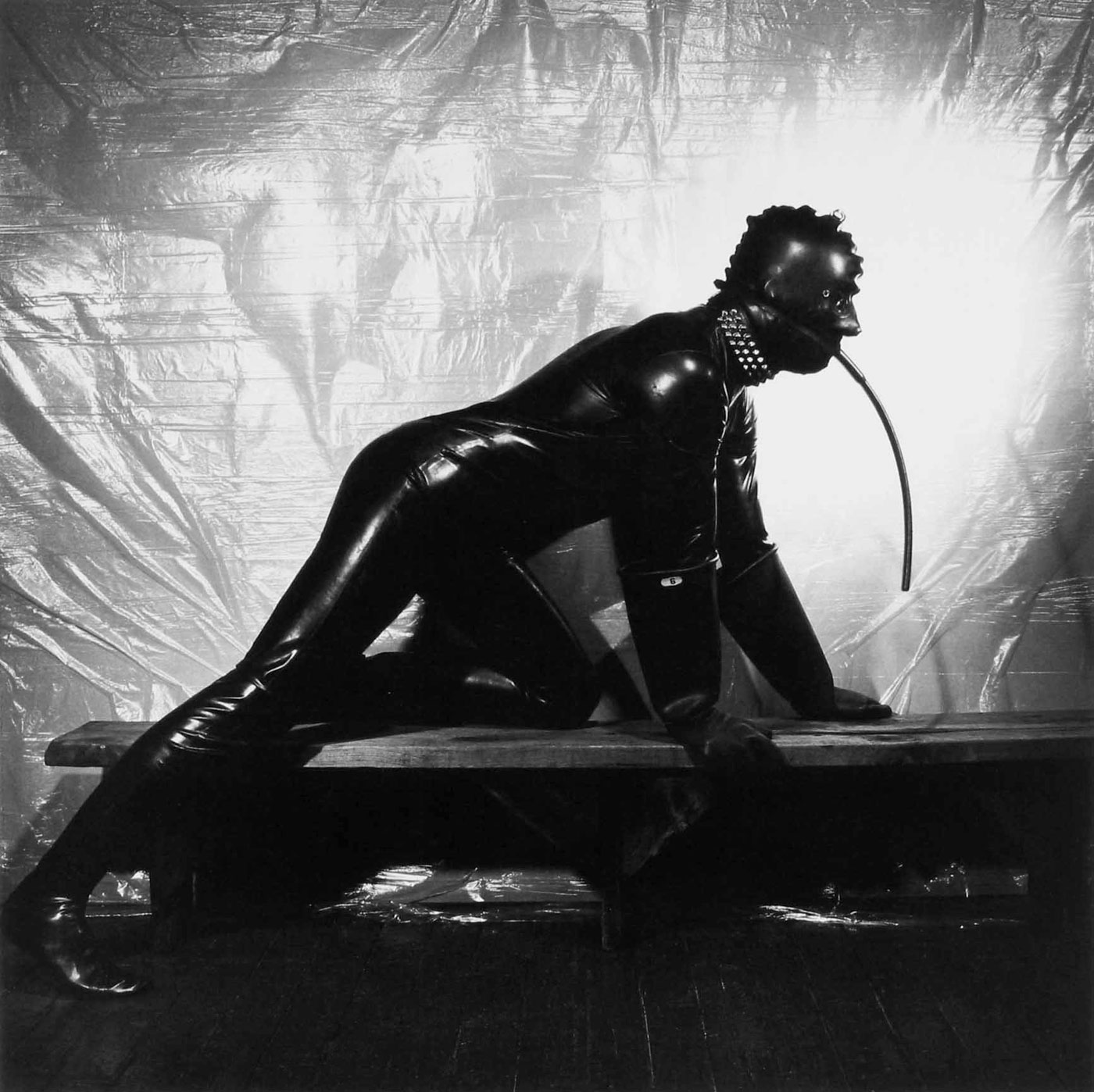
 

Robert Mapplethorpe (1946-1989) 'Joe' 1978


Robert Mapplethorpe (American, 1946-1989)
Joe, N.Y.C
1978
Gelatin silver print
7 11/16 × 7 11/16 in
Los Angeles County Museum of Art
Jointly acquired by the Los Angeles County Museum of Art and The J. Paul Getty Trust; Partial gift of The Robert Mapplethorpe Foundation; partial purchase with funds provided by The David Geffen Foundation and The J. Paul Getty Trust
© Robert Mapplethorpe Foundation


Robert Mapplethorpe (American, 1946-1989) 'Patrice, N.Y.C.' 1977


Robert Mapplethorpe (American, 1946-1989)
Patrice, N.Y.C.
1977
Gelatin silver print
7 11/16 × 7 11/16 in.
Jointly acquired by the Los Angeles County Museum of Art and The J. Paul Getty Trust; Partial gift of The Robert Mapplethorpe Foundation; partial purchase with funds provided by The David Geffen Foundation and The J. Paul Getty Trust
© Robert Mapplethorpe Foundation


Robert Mapplethorpe (American, 1946-1989) 'Helmut, N.Y.C.' 1978


Robert Mapplethorpe (American, 1946-1989)
Helmut, N.Y.C.
1978
Gelatin silver print
7 3/4 × 7 11/16 in.
Jointly acquired by the Los Angeles County Museum of Art and The J. Paul Getty Trust; Partial gift of The Robert Mapplethorpe Foundation; partial purchase with funds provided by The David Geffen Foundation and The J. Paul Getty Trust
© Robert Mapplethorpe Foundation


The Los Angeles County Museum of Art (LACMA) presents three portfolios created by American photographer Robert Mapplethorpe (1946-1989). The exhibition, Robert Mapplethorpe: XYZ, features a total of thirty-nine black-and-white photographs, exploring three subject matters: homosexual sadomasochistic imagery (X, published in 1978); flower still lifes (Y, 1978); and nude portraits of African American men (Z, 1981). LACMA’s presentation will showcase the works in three rows – X above, Y in the middle, and Z along the bottom – an idea which was suggested by Mapplethorpe in 1989.

“Robert Mapplethorpe is among the most important photographic artists of the twentieth century,” comments Britt Salvesen, Department Head and Curator of the Wallis Annenberg Photography Department at LACMA. “The X, Y, and Z portfolios not only defined the artist’s career, but also played a role in an important moment of American cultural politics that is still pertinent to us today.”

This is the first presentation of Mapplethorpe’s work since last year’s widely publicised joint acquisition by LACMA, The J. Paul Getty Museum, and The Getty Research Institute of Mapplethorpe’s art and archives – including over 1,900 editioned prints and over 1,000 non-editioned prints, 200 unique mixed-media objects, over 160 Polaroids, 120,000 negatives, and extensive working materials, ephemera, and documents. The majority of the acquisition originated as a generous gift from the Robert Mapplethorpe Foundation, and the remainder of the funds provided by the David Geffen Foundation and the J. Paul Getty Trust.

Concurrent with the LACMA exhibition, The J. Paul Getty Museum presents In Focus: Robert Mapplethorpe, on view October 23, 2012 – March 24, 2013. This single-gallery exhibition reviews the artist’s work from the early 1970s to the late 1980s, and features editioned prints, rarely seen mixed-media objects, and Polaroids that depict a wide range of subject matter including self-portraits, nudes, and still lifes. A larger Mapplethorpe retrospective, jointly organised by LACMA and the Getty, is planned for 2016.

About the artist

Born in 1946, Robert Mapplethorpe grew up in the suburban area of Floral Park, Queens. As a student at the Pratt Institute in New York, he studied drawing, painting, and sculpture and experimented with various materials in mixed-media collages. When Mapplethorpe acquired a Polaroid camera in 1970, he began incorporating his own photos into his constructions. His first solo gallery exhibition, Polaroids, took place at Light Gallery in New York City in 1973.

Two years later he transitioned from the Polaroid to a Hasselblad medium format camera and began shooting his circle of friends and acquaintances. His subjects – artists, musicians, socialites, pornographic film stars, and members of the S & M underground – came from a variety of backgrounds. Mapplethorpe’s interest in documenting the New York S&M scene was strongest in the late 1970s, when he produced photographs with shocking content but remarkable technique and formal mastery. In 1978, the Robert Miller Gallery in New York City became his exclusive dealer. Throughout the 1980s, Mapplethorpe produced images that challenged and adhered to classical aesthetic standards including stylised compositions of male and female nudes, delicate flower still lifes, and studio portraits of artists and celebrities. He explored and refined different techniques and formats – including colour 20″ x 24″ Polaroids, photogravures, platinum prints on paper and linen, Cibachrome and dye transfer colour processes – but gelatin silver printing remained his primary medium.

In 1986, Robert Mapplethorpe was diagnosed with AIDS. Despite his illness, he accelerated his creative efforts, broadened the scope of his photographic inquiry, and accepted numerous commissions. The Whitney Museum of American Art mounted his first major American museum retrospective in 1988, one year before his death in 1989. Beyond the art historical and social significance of his work, his legacy lives on through the work of Robert Mapplethorpe Foundation, which he established in 1988 to promote photography, support museums that exhibit photographic art, and to find medical research in the fight against AIDS and HIV related infection.

Exhibition history

Mapplethorpe’s work has historically provoked strong reactions, most notably during the so-called Culture Wars of the 1980s, a period of conflict between conservative and liberal factions. The traveling retrospective, The Perfect Moment, opened at the Institute of Contemporary Art in Philadelphia in 1988. Among the 150 photographs and objects in the show were the sadomasochistic imagery of Mapplethorpe’s X portfolio, as well as the Y and Z portfolios; the show appeared in two venues without any incident. When it was due to open at the Corcoran Gallery of Art in Washington, D.C., during the summer of 1989, politicians who opposed federal funding for the arts became alarmed. The Corcoran canceled the exhibition, resulting in a protest against the gallery’s withdrawal of the show. Controversy ensued further at a subsequent venue, the Contemporary Arts Center in Cincinnati, where charges of obscenity were brought against director David Barrie. In this high-profile trial, five images from the X portfolio were used as evidence. Barrie was acquitted, and Mapplethorpe has been linked to debates about censorship ever since.

Press release from The Los Angeles County Museum of Art (LACMA) website


Robert Mapplethorpe (American, 1946-1989) 'Carnation, N.Y.C. (Y Portfolio)' 1978


Robert Mapplethorpe (American, 1946-1989)
Carnation, N.Y.C. (Y Portfolio)
1978
19.5 x 19.5cm
The J. Paul Getty Museum, Los Angeles, jointly acquired by the J. Paul Getty Trust and the Los Angeles County Museum of Art. Partial Gift of the Robert Mapplethorpe Foundation; partial purchase with funds provided by the David Geffen Foundation and the J. Paul Getty Trust
© Robert Mapplethorpe Foundation
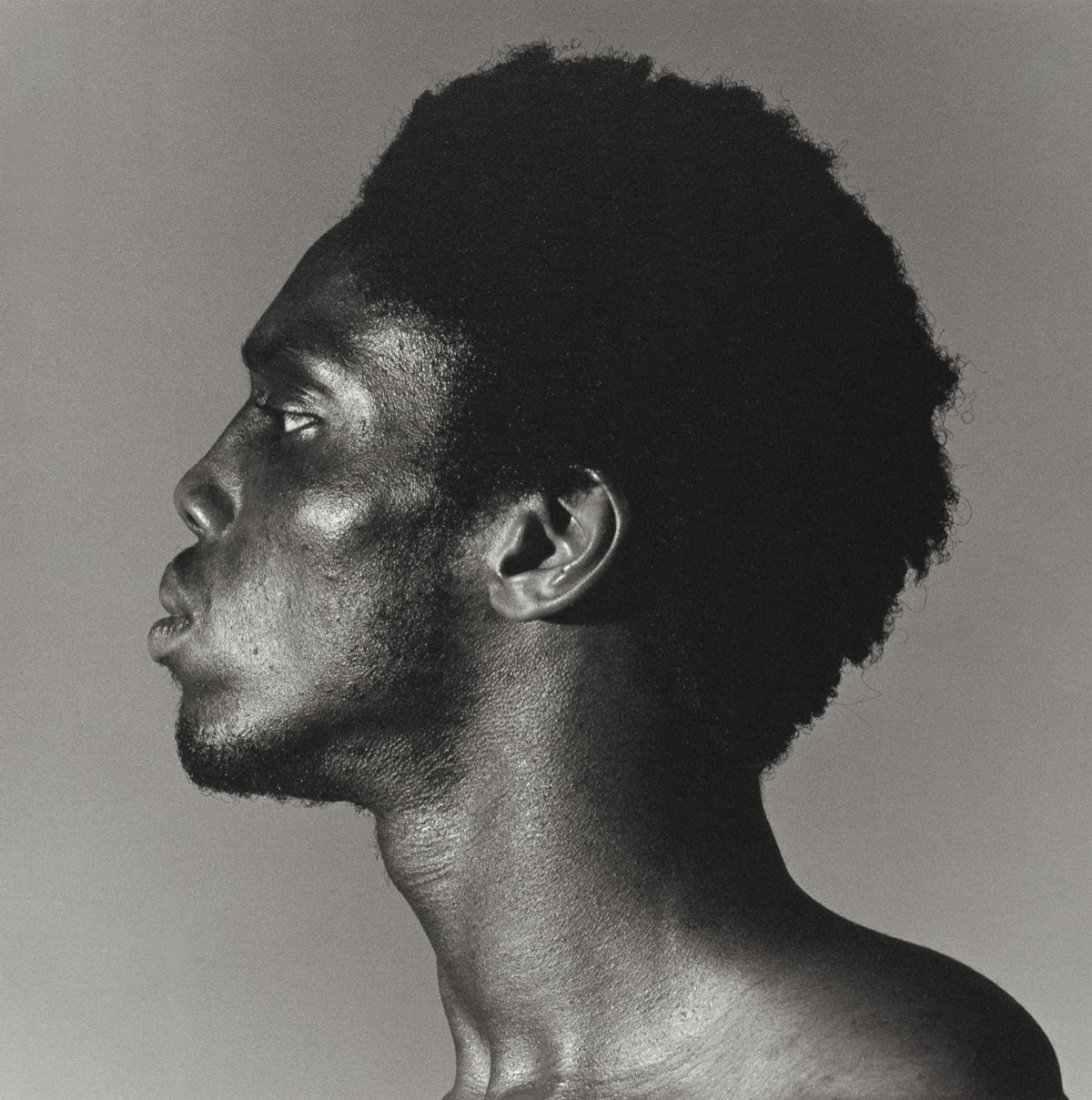
 

Robert Mapplethorpe (American, 1946-1989) 'Alistair Butler, N.Y.C. (Z Portfolio)' 1980


Robert Mapplethorpe (American, 1946-1989)
Alistair Butler, N.Y.C. (Z Portfolio)
1980
Gelatin Silver Print
19.5 x 19.5cm
The J. Paul Getty Museum, Los Angeles, jointly acquired by the J. Paul Getty Trust and the Los Angeles County Museum of Art. Partial Gift of the Robert Mapplethorpe Foundation; partial purchase with funds provided by the David Geffen Foundation and the J. Paul Getty Trust
© Robert Mapplethorpe Foundation
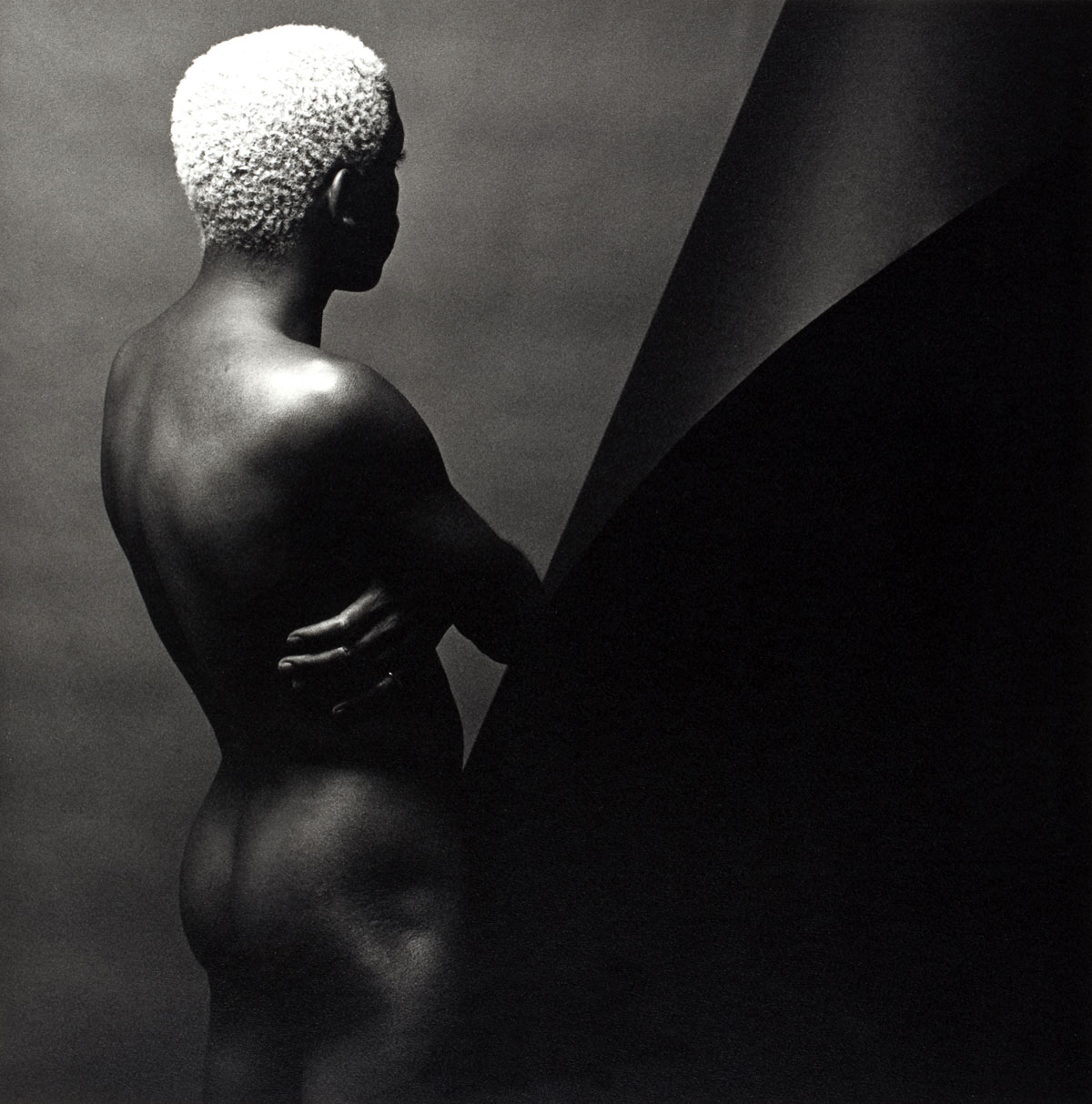
 

Robert Mapplethorpe (American, 1946-1989) 'Leigh Lee, N.Y.C. (Z Portfolio)' 1980


Robert Mapplethorpe (American, 1946-1989)
Leigh Lee, N.Y.C. (Z Portfolio)
1980
Gelatin Silver Print
19.5 x 19.5cm
The J. Paul Getty Museum, Los Angeles, jointly acquired by the J. Paul Getty Trust and the Los Angeles County Museum of Art. Partial Gift of the Robert Mapplethorpe Foundation; partial purchase with funds provided by the David Geffen Foundation and the J. Paul Getty Trust
© Robert Mapplethorpe Foundation


Robert Mapplethorpe (American, 1946-1989) 'Philip Prioleau, N.Y.C.' 1979


Robert Mapplethorpe (American, 1946-1989)
Philip Prioleau, N.Y.C.
1979
Gelatin silver print
7 1/2 × 7 7/16 in. (19.05 × 18.89cm)
Jointly acquired by the Los Angeles County Museum of Art and The J. Paul Getty Trust; Partial gift of The Robert Mapplethorpe Foundation; partial purchase with funds provided by The David Geffen Foundation and The J. Paul Getty Trust
© Robert Mapplethorpe Foundation


Robert Mapplethorpe (American, 1946-1989) 'Rose, N.Y.C. (Y Portfolio)' 1977


Robert Mapplethorpe (American, 1946-1989)
Rose, N.Y.C. (Y Portfolio)
1977
Gelatin silver print
Image 19.5 x 19.5cm
The J. Paul Getty Museum, Los Angeles, jointly acquired by the J. Paul Getty Trust and the Los Angeles County Museum of Art. Partial Gift of the Robert Mapplethorpe Foundation; partial purchase with funds provided by the David Geffen Foundation and the J. Paul Getty Trust
© Robert Mapplethorpe Foundation
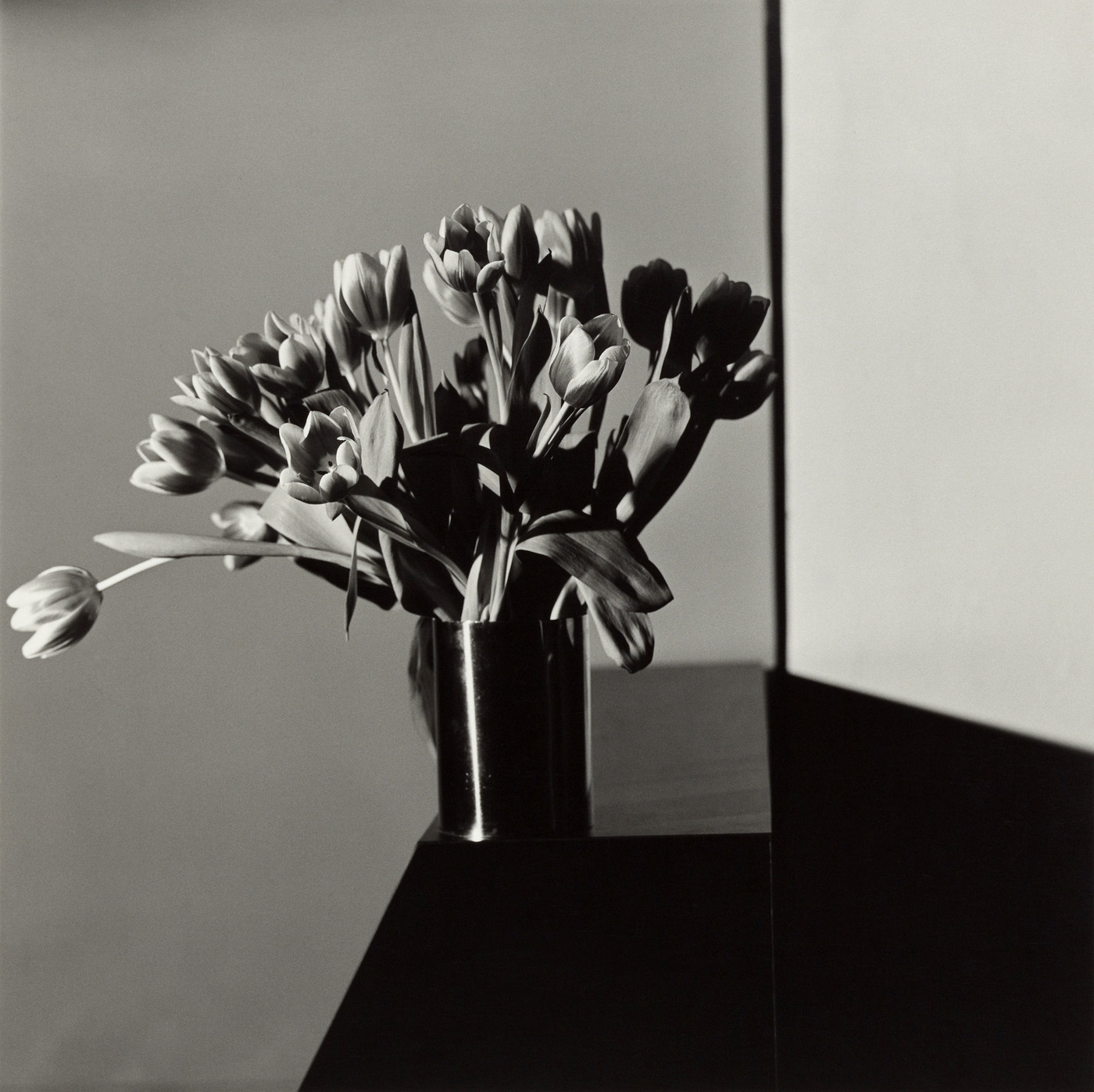
 

Robert Mapplethorpe (American, 1946-1989) 'Tulips' 1978


Robert Mapplethorpe (American, 1946-1989)
Tulips
1978
Gelatin silver print
7 11/16 × 7 3/4 in. (19.53 × 19.69cm)
Jointly acquired by the Los Angeles County Museum of Art and The J. Paul Getty Trust; Partial gift of The Robert Mapplethorpe Foundation; partial purchase with funds provided by The David Geffen Foundation and The J. Paul Getty Trust
© Robert Mapplethorpe Foundation
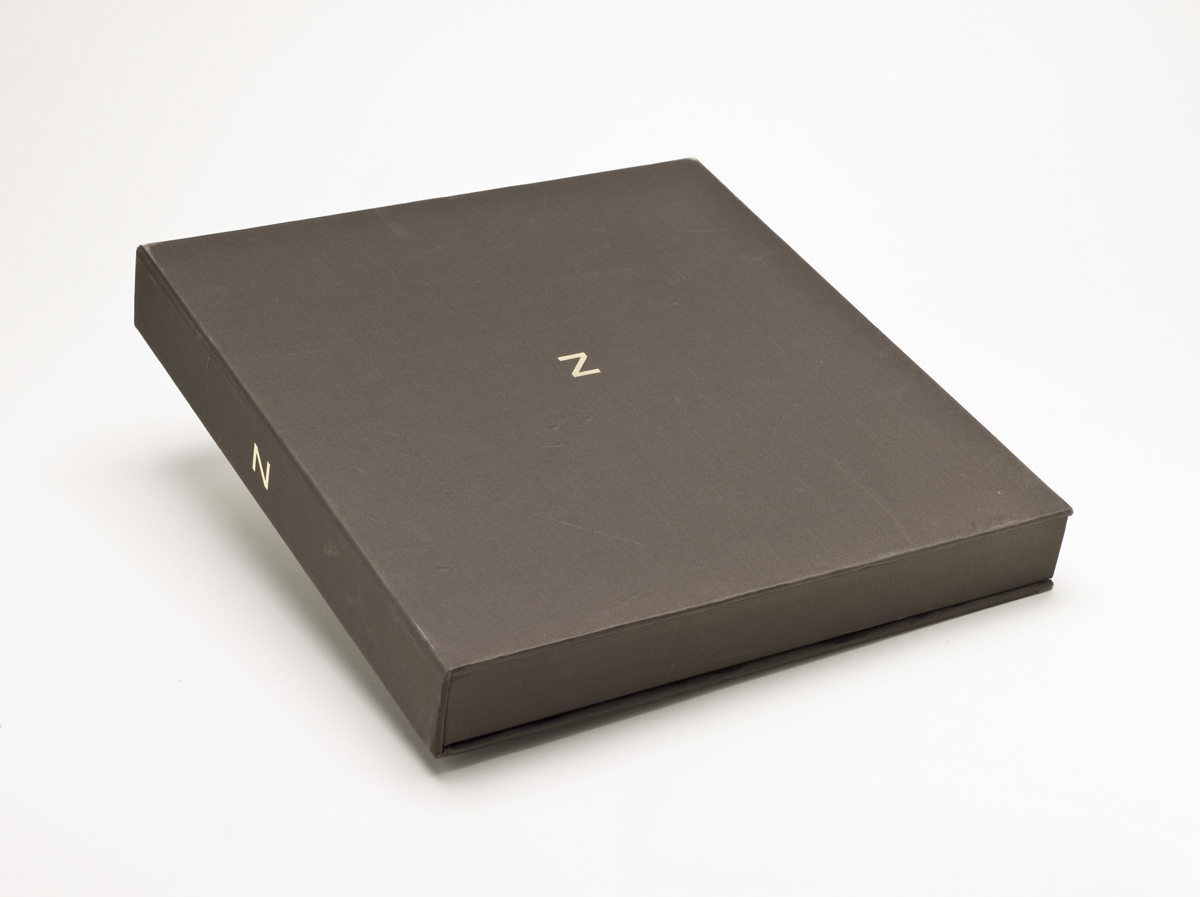
 

Robert Mapplethorpe (American, 1946-1989) 'Z Portfolio' 1978


Robert Mapplethorpe (American, 1946-1989)
Z Portfolio
1978
37.7 x 35.5 x 4.9 cm closed
The J. Paul Getty Museum, Los Angeles, jointly acquired by the J. Paul Getty Trust and the Los Angeles County Museum of Art. Partial Gift of the Robert Mapplethorpe Foundation; partial purchase with funds provided by the David Geffen Foundation and the J. Paul Getty Trust
© Robert Mapplethorpe Foundation


Los Angeles County Museum of Art (LACMA)
5905 Wilshire Boulevard (at Fairfax Avenue)
Los Angeles, CA, 90036
Phone: 323 857-6000

Opening hours:
Monday, Tuesday, Thursday: 11am – 5pm
Friday: 11am – 8pm
Saturday, Sunday: 10am – 7pm
Closed Wednesday
LACMA website

LIKE ART BLART ON FACEBOOK

Back to top

Exhibition: ‘The Body as Protest’ at the Albertina, Vienna

Exhibition dates: 5th September – 2nd December 2012


Ishiuchi Miyako (Japanese, b. 1947) '1906#38' Nd


Ishiuchi Miyako (Japanese, b. 1947)
1906#38
Nd
Courtesy by The Third Gallery Aya


“The past neglect of the body in social theory was a product of Western mind-body dualism that divided human experience into bodily and cognitive realms. The knowledge-body distinction identifies knowledge, culture, and reason with masculinity and identifies body, nature, and emotion with femininity. Viewing human reason as the principal source of progress and emancipation, it perceives “the rational” as separate from, and exalted over, the corporeal. In other words, consciousness was grasped as separate from and preceding the body (Bordo 1993; Davis 1997). Following feminist thinking about women’s bodies in patriarchal societies, contemporary social theories shifted focus from cognitive dimensions of identity construction to embodiment in the constitution of identities (Davis 1997). Social construction theories do not view the body as a biological given but as constituted in the intersection of discourse, social institutions, and the corporeality of the body. Body practices, therefore, reflect the basic values and themes of the society, and an analysis of the body can expose the intersubjective meaning common to society. At the same time, discourse and social institutions are produced and reproduced only through bodies and their techniques (Frank 1991, 91). Thus, social analysis has expanded from studying the body as an object of social control and discipline “in order to legitimate different regimes of domination” (Bordo 1993; Foucault 1975, 1978, 1980) to perceiving it as a subject that creates meaning and performs social action (Butler 1990). The body is understood as a means for self-expression, an important feature in a person’s identity project (Giddens 1991), and a site for social subversiveness and self-empowerment (Davis 1997).”


Orna Sasson-Levy and Tamar Rapoport. “Body, Gender, and Knowledge in Protest Movements: The Israeli Case,” in ‘Gender & Society’ 17, 2003, p. 381. No longer available online


Despite my great admiration for John Coplans’ photographs of his body, on the evidence of these press photographs and the attached video, this exhibition seems a beautiful if rather tame affair considering the subject matter. Of course these photographs of the body can be understood as a means for self-expression and self-empowerment but there seems little social subversiveness in the choice of work on display.

The two Mapplethorpe’s are stylised instead of stonkingly subversive. The exhibition could have been taken photographs from his ‘X’ portfolio (the self portrait of him with a bull whip up his arse would have been particularly pleasing to see in this context). The exhibition could also have included some of the many artists using the body as protest during the AIDS crisis (perhaps some photographs by David Wojnarowicz or William Yang’s Sadness), the famous Burning Monk – The Self-Immolation (1963) by Malcolm Browne, photographs by Stellarc, Arthur Tress, Duane Michals, Nan Goldin, Diane Arbus, Francesca Woodman, Sally Mann, Cindy Sherman to name but a few; even the Farm Security Administration photographs of share cropper families by Walker Evans and Dorothea Lange would have had more impact than some of the photographs on display here.

Having not seen the entire exhibition it is hard to give an overall reading, but on the selection presented here it would seem that this was a missed opportunity, an exhibition where the body did not protest enough.

Dr Marcus Bunyan


Many thankx to the Albertina, Vienna for allowing me to publish the photographs in the posting. Please click on the photographs for a larger version of the image.


theartVIEw – The Body as Protest at ALBERTINA


Bruce Nauman (American, b. 1941) 'Studies for Holograms' Siebdruck, 1970


Bruce Nauman (American, b. 1941)
Studies for Holograms
Siebdruck, 1970
© VBK, Wien 2012
Foto: © Rheinisches Bildarchiv Köln


Ketty La Rocca (Italian, 1938-1976) 'Le mie parole e tu' 1974


Ketty La Rocca (Italian, 1938-1976)
Le mie parole e tu
1974
Courtesy Private Collection, Austria


Robert Mapplethorpe (American, 1946-1989) 'Vincent' 1981


Robert Mapplethorpe (American, 1946-1989)
Vincent
1981
Silbergelatinepapier
© Robert Mapplethorpe Foundation


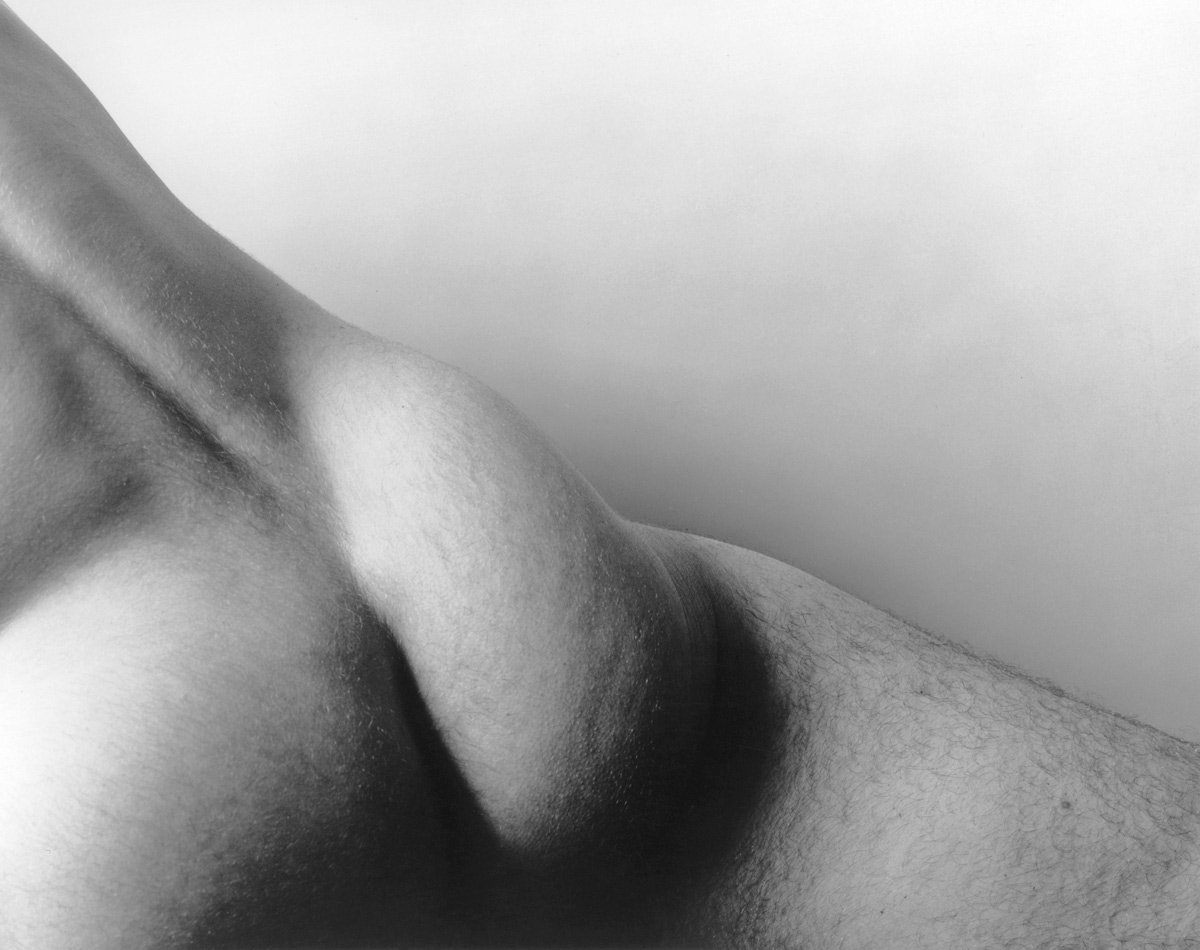
Hannah Villiger (Swiss, b. 1974) 'Block XXX' 1993-1994


Hannah Villiger (Swiss, b. 1974)
Block XXX
1993-1994
© The Estate of Hannah Villiger


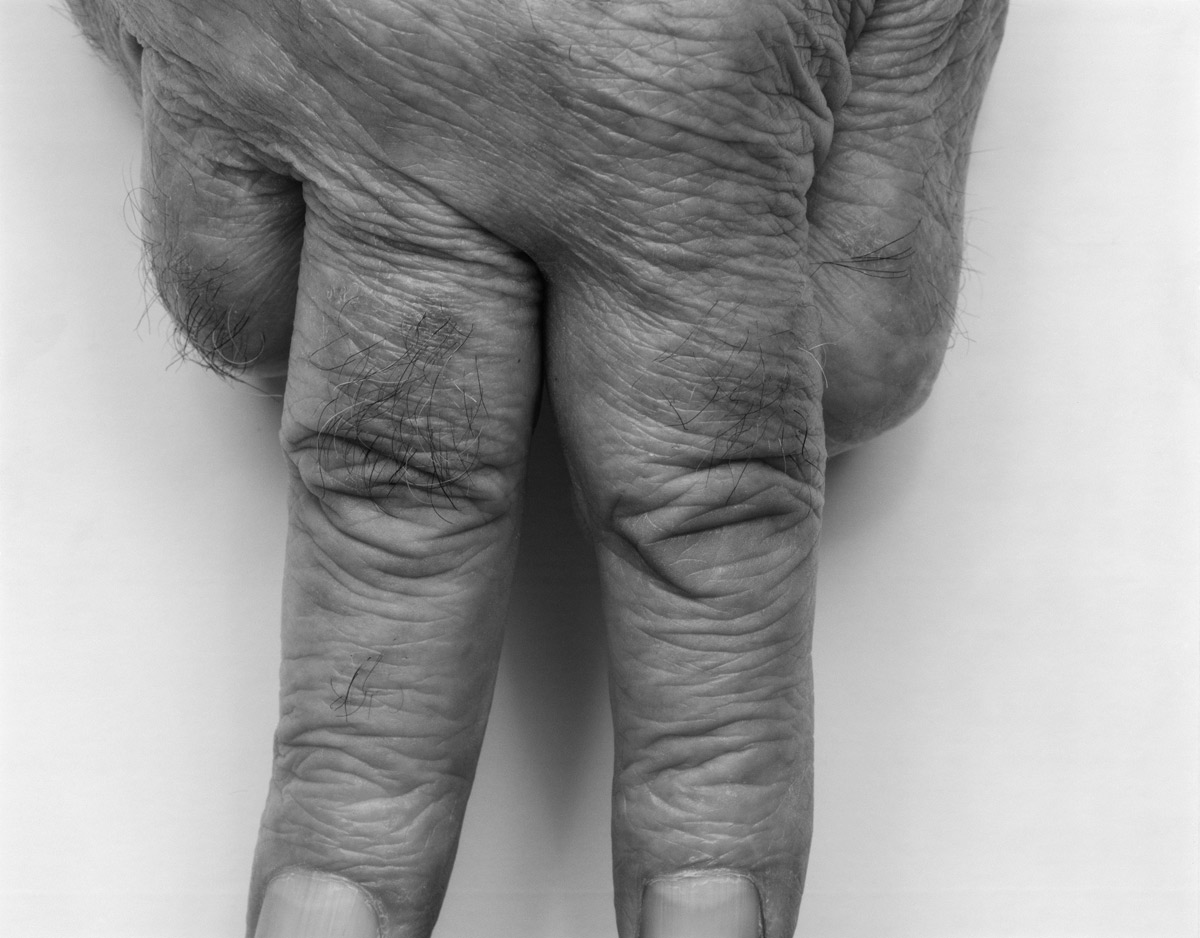
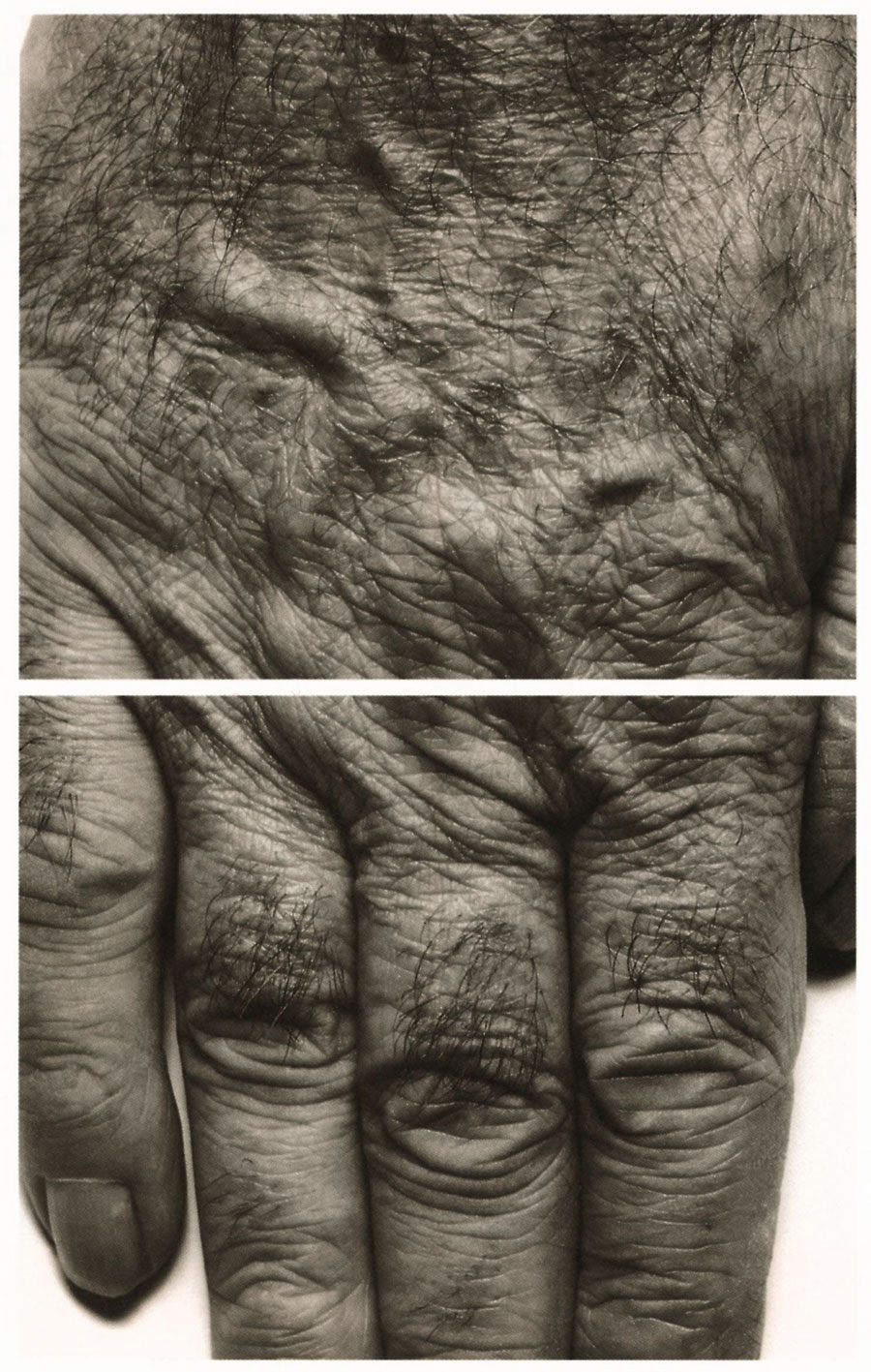
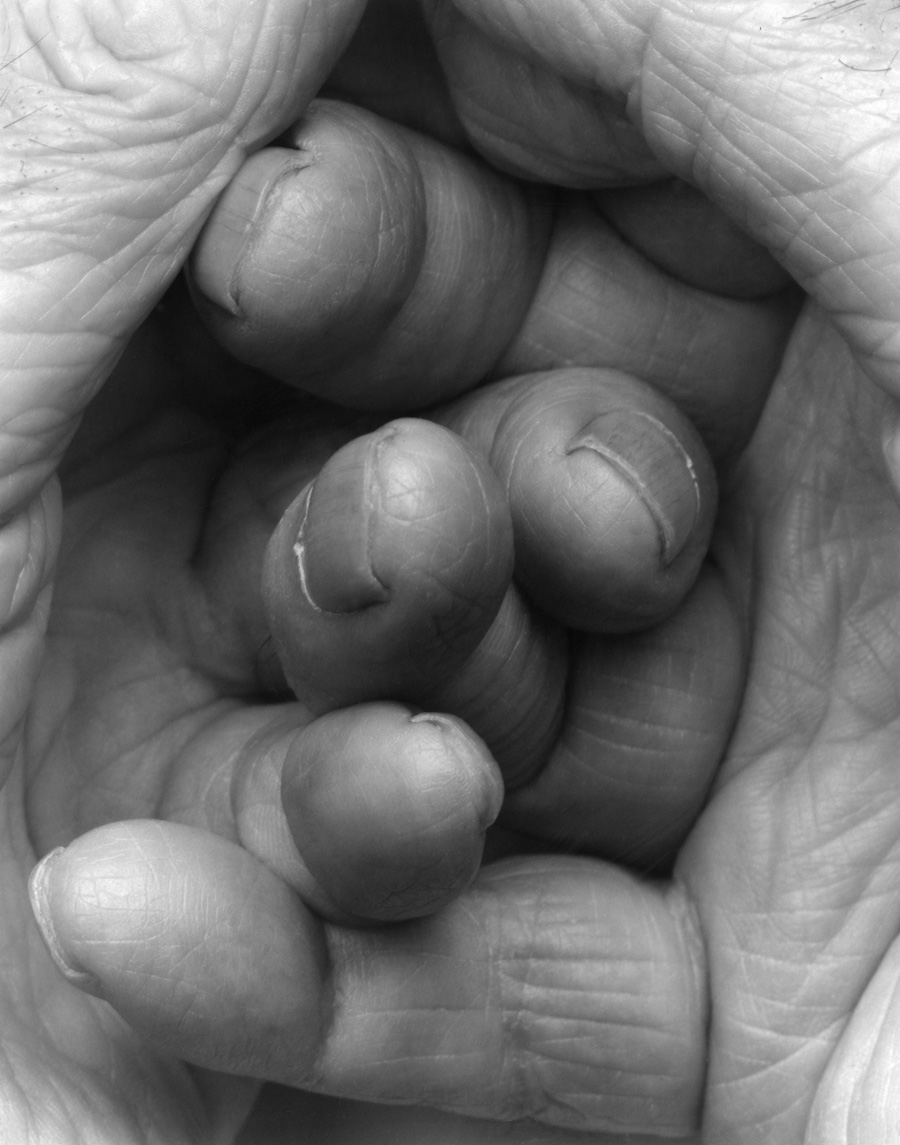
John Coplans (British, 1920-2003) 'Self Portrait Interlocking Fingers No 6' 1999


John Coplans (British, 1920-2003)
Self Portrait Interlocking Fingers No 6
1999
Silbergelatinepapier
Albertina, Wien


The exhibition The Body as Protest highlights the photographic representation of the human body – a motif that has provided a wide variety of photographers with an often radical means of expression for their visual protest against social, political, but also aesthetic norms.

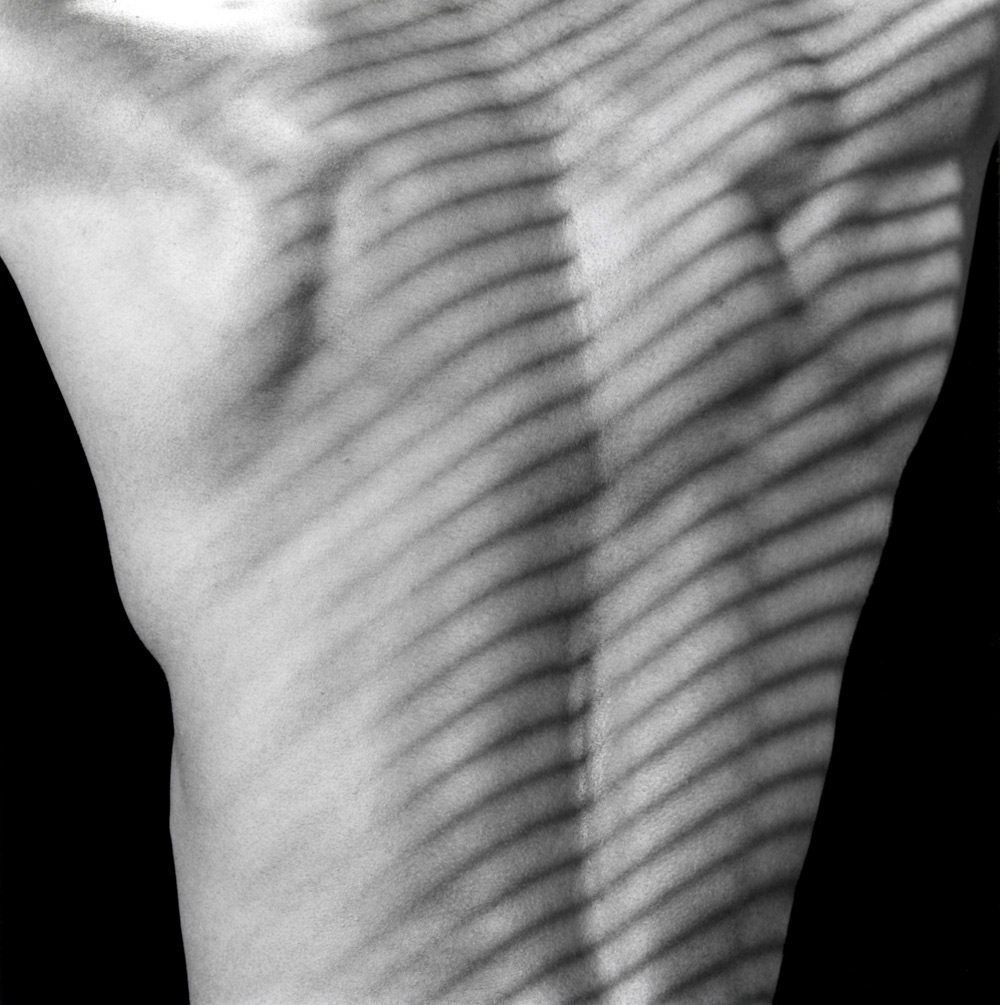
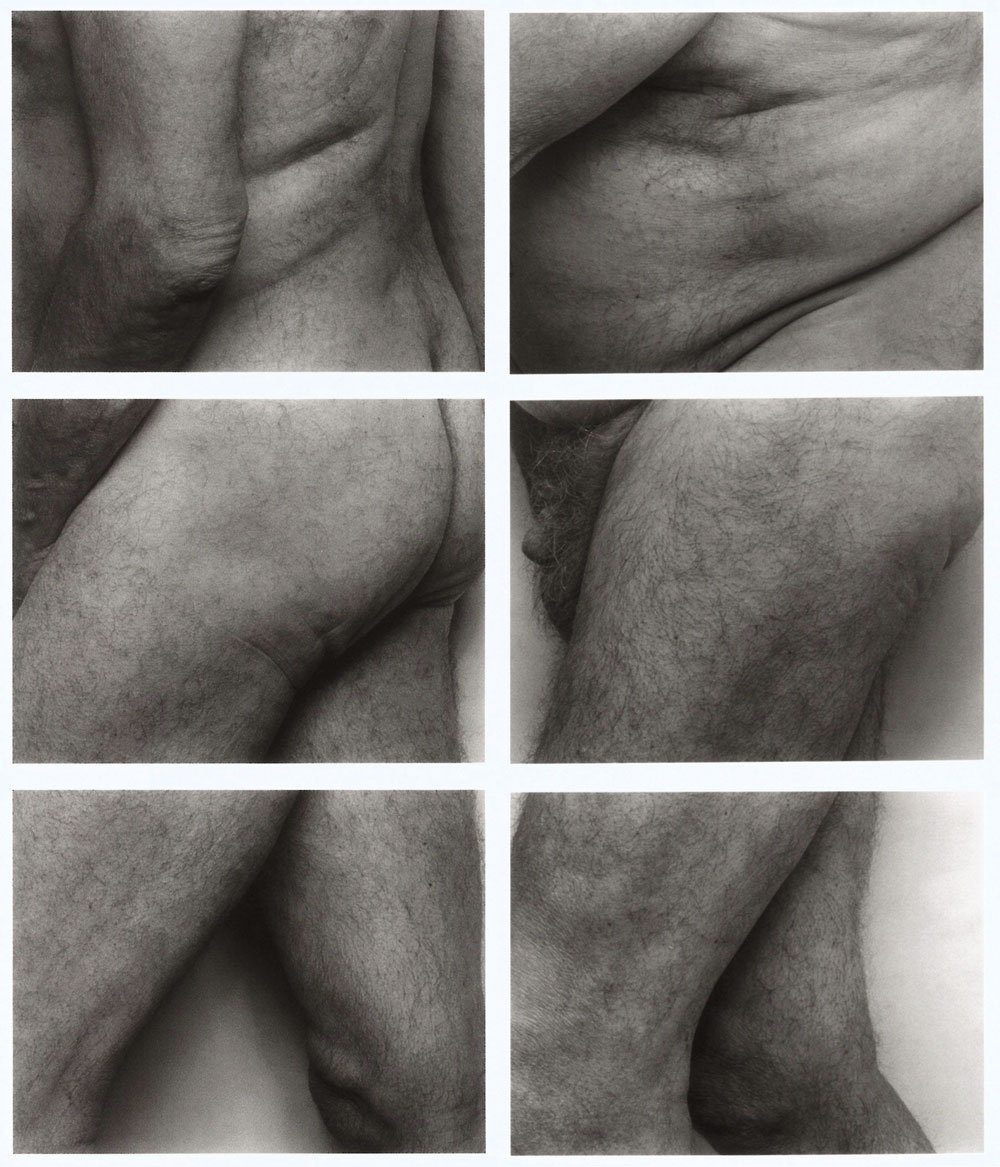
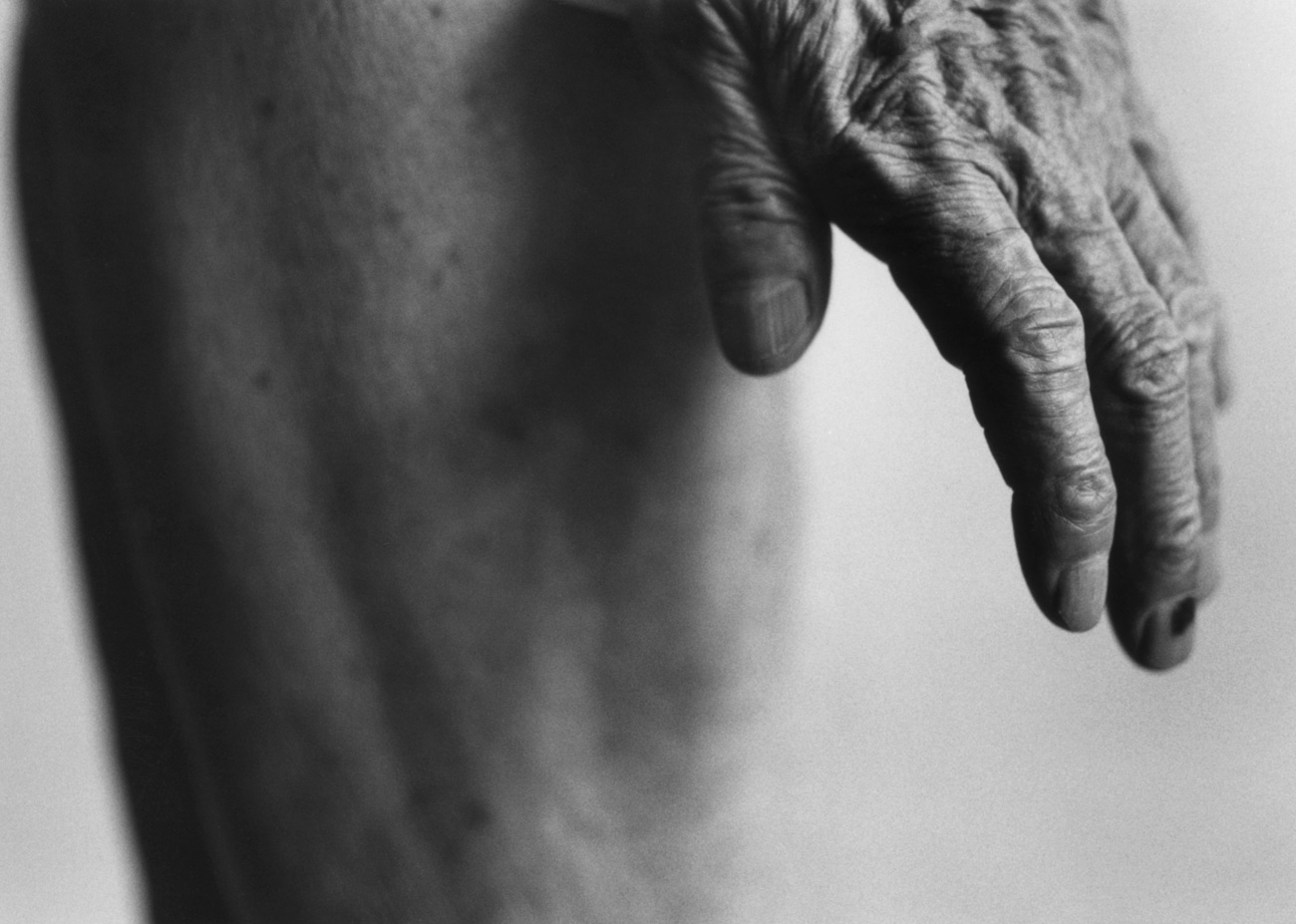
The show centres on an outstanding group of works by the artist John Coplans from the holdings of the Albertina. In his serially conceived large-format pictures, the photographer focused on the rendering of his own nude body, which he defamiliarised through fragmentation far from current forms of idealisation. Relying on extremely sophisticated lighting, he presented himself in a monumental and sculptural manner over many years. His photographs can be understood as amalgamations of theoretical and artistic ideas, which in the show are accentuated through selective juxtapositions with works by other important exponents of body-related art.

The body also features prominently in the work of other artists such as Hannah Wilke, Ketty La Rocca, Hannah Villiger, Vito Acconci, Bruce Nauman, Robert Mapplethorpe, and Miyako Ishiuchi. By means of these positions, such diverse themes as self-dramatisation, conceptual photography, feminism, body language, and even transience are analysed within an expanded artistic range. Moreover, the exhibition offers a differentiated view of the critical depiction of the human body as it has been practiced since 1970.

Text from the Albertina website


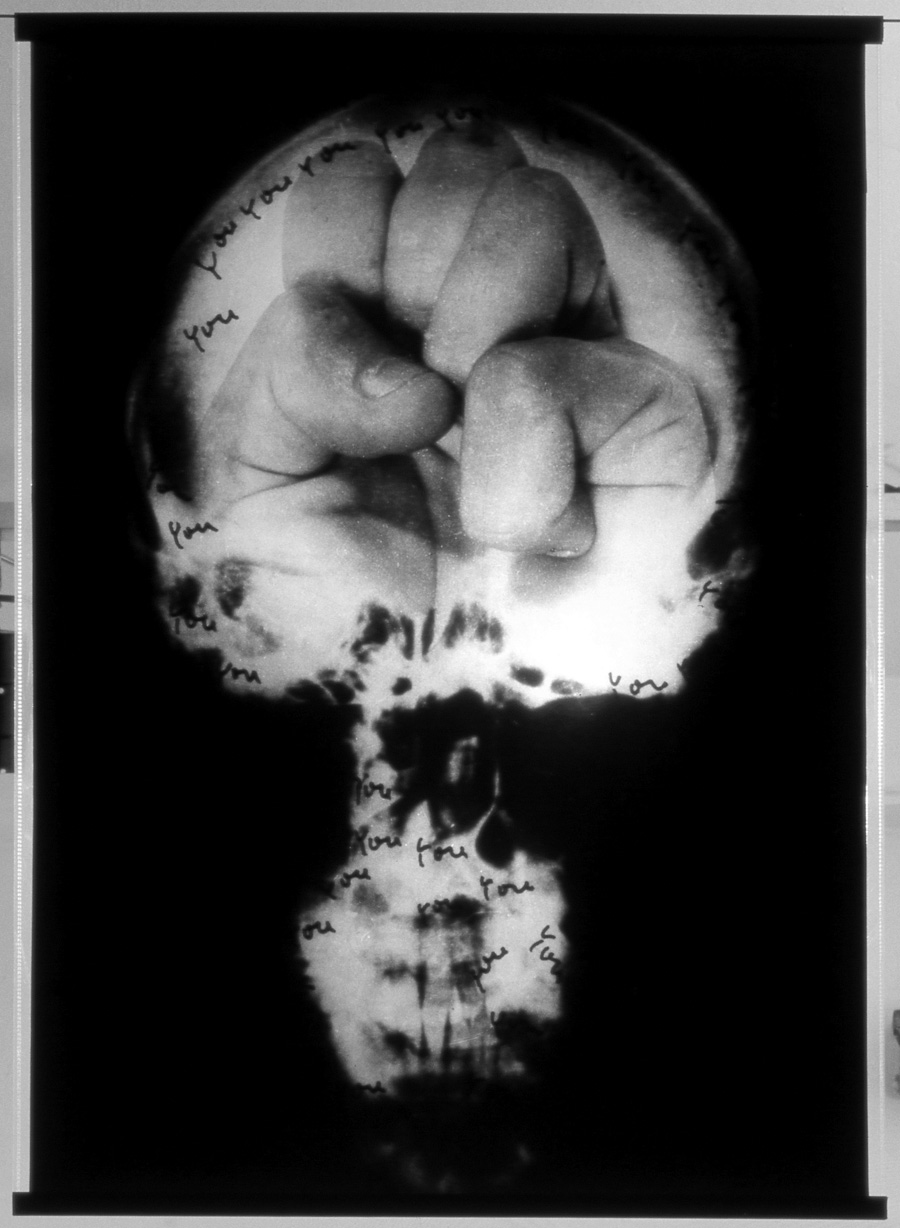
Ketty La Rocca (Italian, 1938-1976) 'Craniologia' 1973


Ketty La Rocca (Italian, 1938-1976)
Craniologia
1973
Radiografie mit überblendeter Fotografie
SAMMLUNG VERBUND


Hannah Wilke (American, 1940-1993) 'Gestures' 1974-1976 (stills)


Hannah Wilke (American, 1940-1993)
Gestures (stills)
1974-1976
Basierend auf der gleichnamigen
Video Performance von 1974
(35:30 min, b&w, sound)
Silbergelatinepapier
12 Blatt je 12,7x 17,8 cm
© Marsie, Emanuelle, Damon and Andrew Scharlatt, The Hannah Wilke Collection & Archive, L.A./ VBK, Wien 2012


Robert Mapplethorpe (American, 1946-1989) 'Thomas' 1986


Robert Mapplethorpe (American, 1946-1989)
Thomas
1986
Silbergelatinepapier
© Robert Mapplethorpe Foundation


John Coplans (British, 1920-2003) 'Back with Arms Above' 1984


John Coplans (British, 1920-2003)
Back with Arms Above
1984
Silbergelatinepapier
© The John Coplans Trust


John Coplans (British, 1920-2003) 'Self Portrait (Hands)' 1988


John Coplans (British, 1920-2003)
Self Portrait (Hands)
1988
Silbergelatinepapier
Albertina, Wien


John Coplans (British, 1920-2003) 'Frieze No. 6' 1994


John Coplans (British, 1920-2003)
Frieze No. 6
1994
Silbergelatinepapier
Albertina, Wien


John Coplans (British, 1920-2003) 'Self Portrait Interlocking Fingers No 17' 2000


John Coplans (British, 1920-2003)
Self Portrait Interlocking Fingers No 17
2000
Silbergelatinepapier
Albertina, Wien


Albertina
Albertinaplatz 1
1010 Vienna, Austria
Phone: +43 (0)1 534 83-0

Opening hours:
Daily 10am – 6pm
Wednesday 10am – 9pm
Albertina website

LIKE ART BLART ON FACEBOOK

Back to top

Text: ‘The defining of Apollonian and Dionysian ideals in images of the male body’ Dr Marcus Bunyan / Exhibition: ‘Robert Mapplethorpe’ at the Ludwig Museum of Contemporary Art, Budapest

Exhibition dates: 25th May – 30th September 2012


F. Holland Day (American, 1864-1933) 'The Vision (Orpheus Scene)' 1907


F. Holland Day (American, 1864-1933)
The Vision (Orpheus Scene)
1907
Platinum print
24.4 x 18.4cm (9 5/8 x 7 1/4 in.)


“Perfection means you don’t question anything about the photograph. There are certain pictures I’ve taken in which you really can’t move that leaf or that hand. It’s where it should be, and you can’t say it could have been there. There is nothing to question as in a great painting. I often have trouble with contemporary art because I find it’s not perfect. It doesn’t have to be anatomically correct to be perfect either. A Picasso portrait is perfect. It’s just not questionable. In the best of my pictures, there’s nothing to question – it’s just there.”


Robert Mapplethorpe


Written in 1996 (but never published until now), this is one of my earliest pieces of research and writing. While it is somewhat idealistic in many ways, hopefully this piece still has some relevance for the reader for there are important ideas contained within the text. It examines the Apollonian and Dionysian ideals in images of the male body by 4 gay photographers: Baron Wilhelm von Gloeden, F. Holland Day, Minor White, and Robert Mapplethorpe.


The defining of Apollonian and Dionysian ideals in images of the male body

Photography has portrayed the Apollonian and Dionysian ideals of the body throughout its history, but has never fully explored the theoretical implications and consequences of this pairing. Our presentation of the body says precise things about the society in which we live, the degree of our integration within that society and the controls which society exerts over the innerman.1 My research concentrated on how images of the male body, as a representation of the Self / Other split, have been affected by these ideals.

We can clearly define the Apollonian (beauty, perfection, obsession, narcissism, voyeurism, idols, fascism, frigid, constraint, oppression, the defined, the personalised, an aggression of the eye linked to greed and desire) and Dionysian (ecstasy, eroticism, hysteria, energy, anarchy, promiscuity, death, emotion, bodily substances and the universal). In reality the boundaries between these ideals are more ambiguous.

For example, in the work of the American photographer Fred Holland Day we see allegorical myths portrayed by beautiful youths, many of which to modern eyes have a powerful homoerotic quality.

“In close proximity to eroticism associated with homosocial bonding and sexuality, these pictures were infused with desire and anxiety, repulsion and attraction … Day’s male nudes possess the aesthetic trappings of refined art and high culture … but also contain a frisson of impending sexual release and bodily pleasure, to say nothing of their sado-erotic inflection and paedophilic associations.”2


According to some critics,3 societies acceptance of photographs of Apollonian or Orphic (Dionysian) youths [see 2 different critical views]4 in that era (the fin de siecle of the nineteenth century and the early years of the twentieth century), was based on what was seen as their chaste, idyllic nature. They represented ‘ephebes’ – males who were between boy and man – who posed no threat to the patriarchal status quo. To other critics5 these ‘ephebes’ present a challenge to the construction of heterosexual / homosexual identity along gender lines, echoing Foucault’s thoughts on the imprisoning nature of categories of sexual identity.6

For Day, physical beauty was the testimony of a transcendent spirit.7 His portraits tried to uncover the true spirit of his subjects, revealing what was hidden behind the mask of e(x)ternal beauty. But what was being revealed? Was it the subject’s own spiritual integrity, his true self, or a false self as directed by the photographer whose instructions he was enacting? Was it F. Holland Day’s erotic fantasies the subject was acting out, or was it a perception of his own identity or a combination of both? These works show Day as both director and collaborator, his idols equally unattainable and available, resilient and vulnerable. In portraying this beauty, was Day embracing a seductive utopia in which this Apollonian beauty leads away from the very Dionysian spirit he was trying to engage with?

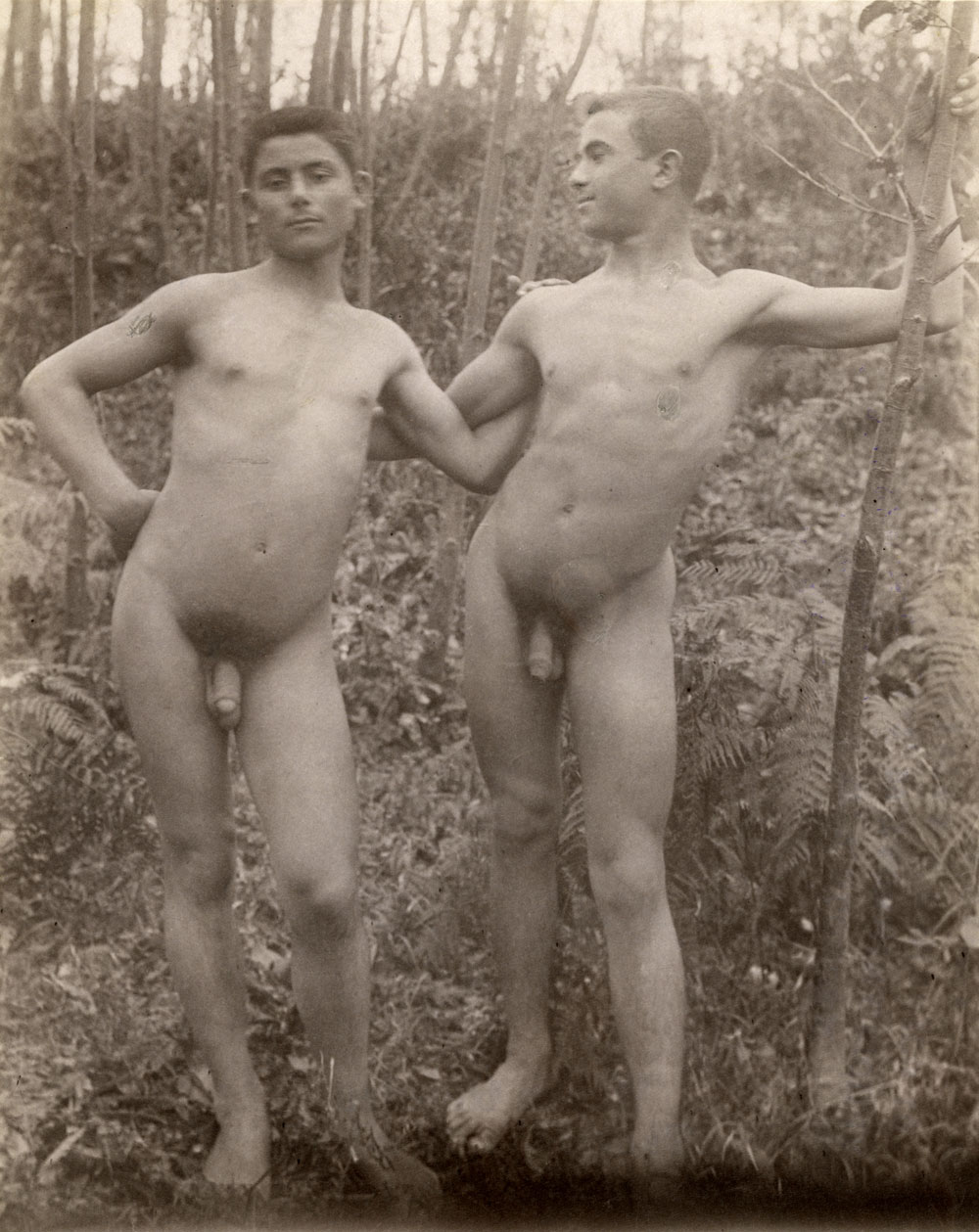
At around the same time a Prussian named Baron Wilhelm von Gloeden was also taking photographs of scantily clad local peasant youths, based on Arcadian themes. “In von Gloeden’s perception of the world human figures are not in themselves merely erotic, but become aesthetic objects … a setting in which beautiful things are the content of the image.”8

While this may be true, the focus of the images is always on what Von Gloeden desired, his full frontal nudes drawing our eyes to the locus of sexual desire, the penis. Von Gloeden’s “transformation of ordinary working class boys into the very image of antique legend,”9 the conjunction of the Apollonian and the Dionysian, blurs the distinctions between the two. Both Day and Von Gloeden were wealthy, educated, influential men who had a desire for working class boys. Did they help create an erotic tension across class lines and effect a particular Camp taste when society at that time (the first decade of the 20th century) was beginning to define areas of sexual categorisation that would label gay men perverts and degenerates? Even today, comparing contemporary critical analysis of Von Gloeden’s photographs can produce vastly differing conceptualisations as to the evidence of sexual overtones:

“The distinction between form and sexual attractiveness is tenuously maintained and the expression of the subjects’ face suggests a lofty remoteness rather than sexual availability or provocativeness.”10

“Von Gloeden’s pictures are fairly specific in depicting erotically based encounters between Mediterranean males. In many of them, the gazes shared between young men or the suggestive relationships of figure to figure hint at activities that might take place beyond the cameras range.”11


For Day and Von Gloeden the need to possess something beautiful, something that was taboo, compensated both photographers for something they had lost – their youth. This transfers their death onto the object of their possession; the beautiful youths ‘captured’ in their photographs. Georges Bataille links eroticism to the inner life of man, the true self, and the eroticism of these photographs opens the way to a viewing of death and allows the photographer the power to look death in the face. According to Bataille, possession of something beautiful negates our need to die because we have objectified our need in someone else.12

What we know and understand about the world is partially built on images that are recorded, interpreted and imprinted in our brains as the result of the experiences we encounter throughout our lives. Our memory is forever fragmenting our remembered reality. It provides us with a point of view of the reality of the world in which we live and on which our identities are formed. When we look at a photograph we (sub)consciously bring all of our social encultration, our hates, our desires and our spirit to bear on the definition of that photograph at the time of viewing (an each viewing can be different!). Inherently embedded in any photograph then, are all these Dionysian stirrings – of desire, of eroticism, of death and of memory. Even if the photograph is entirely Apollonian in content the definition of that photograph can be open to any possibility, by any body.

One photographer who sought to access, and have connection to, fundamental truths was the American photographer Minor White. Studying Zen Buddhism, Gurdjieff and astrology, White believed in the photographs’ connection to the subject he was photographing and the subject’s connection back via the camera to the photographer forming a holistic circle.13 When, in meditation, this connection was open he would then expose the negative in the camera hopeful of a “revelation” of spirit in the subsequent photograph. White feared public exposure as a homosexual and struggled for years to resist the shame and disgust he felt over his sexual desires. Very few of his male portraits were exhibited during his lifetime, his Dionysian urgings difficult to reconcile with or assimilate into his images of peace and serenity, images that urged unity of self and spirit, of yin and yang. In the East yin / yang is both / and, being transformable and interpenetrating whilst in the West black / white is either/or not both, being exclusive and non-interactive. But who is to say what is ugly or what is beautiful? What is black or what is white?

In the work of the American photographer Robert Mapplethorpe, we can see the formalised classical aesthetic of beauty combined with content which many people are repelled by (pornography, sexuality, violence, power) creating work which is both Apollonian and Dionysian.14 Peoples’ disgust at the content of some of Mapplethorpe’s images is an Apollonian response, an aesthetic judgement, a backing away from a connection to ‘nature’, meaning ‘that which is born’. Mapplethorpe said, “I’ve done everything I show in my photographs,”15 revealing a connection to an inner self, regardless of whether he intended to shock. Those seeking suppression of Mapplethorpe’s photographs, mainly conservative elements of society, cite the denigration of moral values as the main reason for their attacks. However Mapplethorpe’s S&M photographs sought to re-present the identity of a small subculture of the gay community that exists within the general community and by naming this subculture he sought to document and validate its existence. The photograph can and does lie but here was the ‘truth’ of these Dionysian experiences, which conservative bigots could not deny – that they exist.

In the NEA/Cincinnati Contemporary Arts Center controversy surrounding Mapplethorpe16 his work was defended on aesthetic grounds, not on the grounds of homoerotic content, of freedom of expression or artistic freedom. The classical Apollonian form of his images was emphasised. As one juror put it, “Going in, I would never have said the pictures have artistic value. Learning as we did about art, I and everyone else thought they did have some value. We are learning about something ugly and harsh in society.”17 Ugly and harsh. To some people in the world S&M scenes are perfectly natural and beautiful and can lead to the most transcendent experience that a human being can ever have in their life. Who is to decide for the individual his or her freedom to choose?

This Apollonian fear of the Dionysian ‘Other’, the emotional chaotic self, was found to involve fear of that which is potentially the ‘same as’ – two sides of the same coin. This fear of ‘the same’, or of the proximity of the same, or of the threat of the same, can lead to violence, homophobia, racism and bigotry. Mapping out sexual identities’ toleration of difference, which is ‘the same as’, recognises that there are many different ways of being, and many truths in the world.


In conclusion I have determined that the definition of Apollonian and Dionysian ideals in images of the male body are at best ambiguous and open to redefinition and reinterpretation. The multiplicity of readings that can be attached to images of the male body, in different eras, by different people illustrates the very problematic theoretical area these images inhabit. As we seek to ‘name’, to categorise, to nullify the ‘Other’ as a Dionysian connection to earth and nature, it may cause an alienated ‘Self’ to revolt against Apollonian powers of control in order to break down the lived distance that divides people. This creates situations / encounters / experiences that are regarded as transgressive and a threat to the hegemonic fabric of society.

But do these experiences offer an alternative path for the evolution of the human race? Not the replacing of one patriarchal, capitalist system with another based on ecstatic spiritual consciousness but perhaps a more level playing field, one based on a horizontal consciousness (a balance between Apollonian and Dionysian), a ‘knowing’ and understanding, a respect for our self and others. My claim as an’Other’ is that these perceived transgressions, not just the binary either / or, may ultimately free human beings and allow them to experience life and grow. Where nothing is named, everything is possible.

Marcus Bunyan 1996


1/ Blain, Robert. The Decorated Body. London: Thames & Hudson, 1979, p. 5, Introduction
2/ Crump, James. F. Holland Day – Suffering the Ideal. Santa Fe: Twin Palms, 1995, p. 11
3/ Foster, Alasdair. Behold The Man – The Male Nude In Photography. Edinburgh: Stills, 1989, p. 9
4/ Jussim, Estelle. Slave To Beauty – The Eccentric Life And Controversial Career of F. Holland Day, Photographer, Publisher, Aesthete. Boston: Godine, 1981, pp. 175-176; Ellenzweig, Allan. The Homoerotic Photograph. New York: Columbia University, 1992, p. 59
5/ Ellenzweig, p. 59
6/ Weeks, Jeffrey. Against Nature:  Essays on history, sexuality and identity. London: Rivers Osram Press, 1991, p. 164
7/ Day, F. Holland. “Is Photography An Art?” p. 8, quoted in Crump, James. F. Holland Day – Suffering The Ideal. Santa Fe: Twin Palms, 1995, p. 20
8/ Ellenzweig, p. 39
9/ Leslie, Charles. Wilhelm von Gloeden, Photographer. New York: Soho Photographic, 1997, p. 86
10/ Dutton, Kenneth R. The Perfectible Body. London: Cassell, 1995, p. 95
11/ Ellenzweig, p. 43
12/ Bataille, Georges. Death And Sensuality. New York: Walker And Company, 1962, p. 24
13/ Bateson, Gregory. Steps To An Ecology Of Mind – Collected Essays On Anthropology, Psychiatry, Evolution And Epistemology. St. Albans: Paladin, 1973
14/ Danto, Arthur C. Mapplethorpe – Playing With The Edge. Essay. London: Jonathon Cape, 1992, p. 331
15/ Interview with Robert Mapplethorpe quoted in Cooper, Emmanuel. The Sexual Perspective. London: Routledge, 1986, p. 286
16/ Ellenzweig, p. 205, Footnote 1
17/ Cembalest, Robin. “The Obscenity Trial: How They Voted To Acquit,” in Art News December 1990 89 (10), p. 141 quoted in Ellenzweig, p. 208


Many thankx to the Ludwig Museum of Contemporary Art for allowing me to publish the photographs in the posting. Please click on the photographs for a larger version of the image.


Baron Wilhelm von Gloeden (German, 1856-1931) 'Two nude men standing in a forest' Taormina, Sicily, 1899


Baron Wilhelm von Gloeden (German, 1856-1931)
Two nude men standing in a forest
Taormina, Sicily, 1899
Albumen print


Minor White (American, 1908-1976) 'Arches of the Dodd Building (Southwest Front Avenue and Ankeny Street)' 1938


Minor White (American, 1908-1976)
Arches of the Dodd Building (Southwest Front Avenue and Ankeny Street)
1938
Gelatin silver print


Minor White (American, 1908-1976) 'Tom Murphy (San Francisco)' 1948


Minor White (American, 1908-1976)
Tom Murphy (San Francisco)
1948
Gelatin silver print


Robert Mapplethorpe (American, 1946-1989) 'Self Portrait' 1975


Robert Mapplethorpe (American, 1946-1989)
Self Portrait
1975
Gelatin silver print
© Robert Mapplethorpe Foundation. Used with permission


Robert Mapplethorpe (American, 1946-1989) 'Derrick Cross' 1983


Robert Mapplethorpe (American, 1946-1989)
Derrick Cross
1983
Gelatin silver print
© Robert Mapplethorpe Foundation. Used with permission


Robert Mapplethorpe (American, 1946-1989) 'Thomas' 1987


Robert Mapplethorpe (American, 1946-1989)
Thomas
1987
Gelatin silver print
© Robert Mapplethorpe Foundation. Used with permission


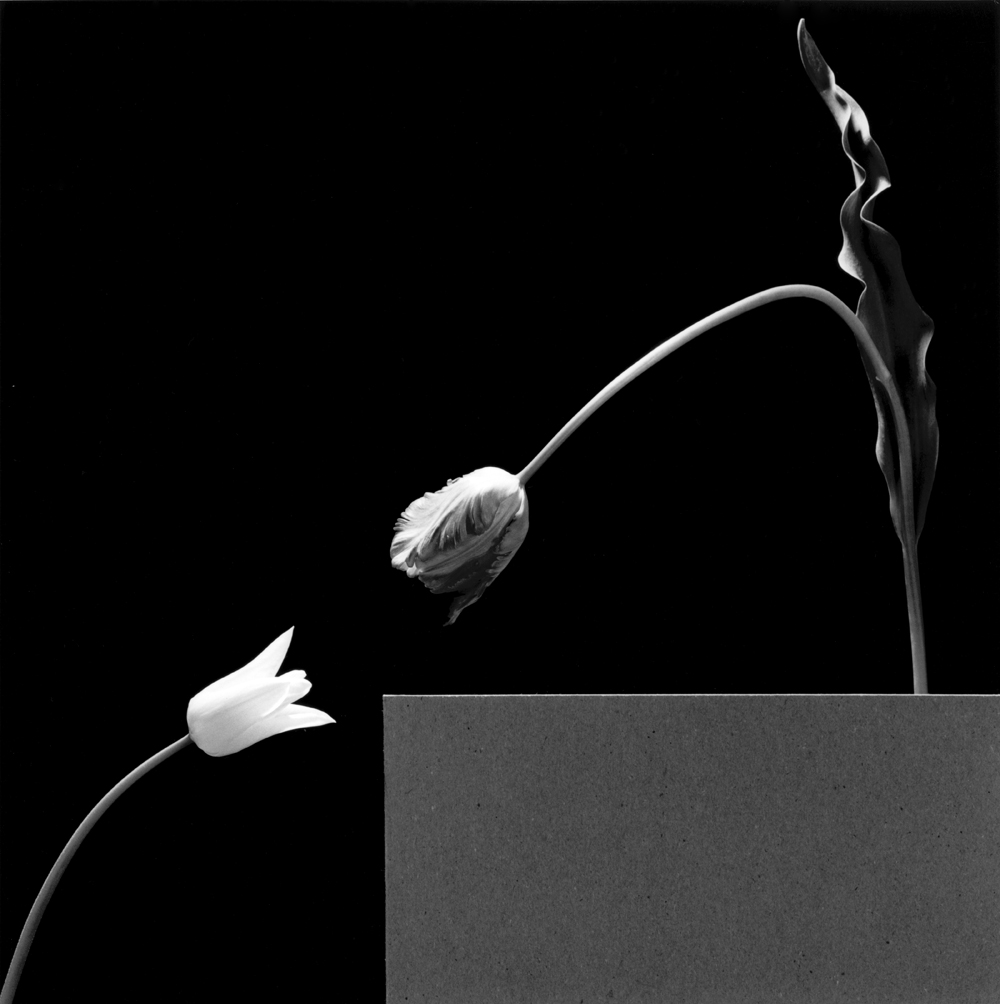
Robert Mapplethorpe (American, 1946-1989) 'Two Tulips' 1984


Robert Mapplethorpe (American, 1946-1989)
Two Tulips
1984
Gelatin silver print
© Robert Mapplethorpe Foundation. Used with permission


A renowned figure of contemporary photography, Robert Mapplethorpe (1946-1989) was in his element in a domain defined by conventions and revolt, classicism and non-conformist cultures, where each picture serves as a document of hard-fought identities, as well as inciting and recording social and artistic debates. The Ludwig Museum Budapest features nearly two hundred works by Robert Mapplethorpe, from his early Polaroid photos to pieces from his final years. Realised in collaboration with the Robert Mapplethorpe Foundation New York, this large-scale exhibition is presented to a Hungarian audience for the first time.

Initially, Mapplethorpe had no intention of becoming a photographer. His early collages and altar-like installations incorporated found elements including photos from magazines. Seeking to give these works a more personal and perfect touch, he decided to shoot the photos himself. His major subjects were his immediate environment and personal desires: the alternative circles of the New York art scene, his identity as a homosexual, non-traditional forms of sexuality, and the communities organised around them. The New York of the seventies was a great melting pot of contiguous subcultures, sexual freedom, post-Pop and rock’n’roll. Mapplethorpe’s environment included Andy Warhol and his entourage from the Factory, the superstars of his films as well as the inhabitants of the legendary Chelsea Hotel, who inspired his art and became part of his audience.

His portraits of famous individuals and those longing for fame also positioned their photographer within their circle. He was a renowned artist seeking to establish relationships with people who stand out, one way or another, from the rest of society, without submitting himself to them. Posing for his camera were film stars, musicians, writers and visual artists, the celebrities and central figures of New York in the seventies and eighties, including pornographic film stars and body builders. He made engaging and elegant portraits attesting to his intense attention, humour, and ambition toward a sense of the monumental.

Mapplethorpe developed an increasingly committed and professional attitude to photography. His quest for the perfect image led him to classical compositions and subjects. While precision of forms and a quality of reserve were combined in his works, his intense attention to his models remained unchanged; he photographed torsos and floral still-lifes with the same cool professionalism. His nudes evoke classical Greek statues and Renaissance masterpieces, with their arrangement and sculptural approach to the body dating back to traditions that have existed for several hundred years. Such an incarnation of classical formalism, however, was juxtaposed with shocking new subjects and stark sexual fetishes, resulting in radical re-creations of the approach to tradition.

The perfect image called for the perfect body: his shots of black men, female body-builders and austere flowers seem to articulate his one and only vision, again and again. He almost always worked in the studio, most often in black and white, using increasingly defined tones. With unified backgrounds and balance of forms, his photos remove the subjects from their own realities to relocate them in the timeless, frozen space of the photograph. In terms of their statue-like beauty and rigorous composition of every detail, his pictures continue and renew the classical photographic tradition all at once. Such classical virtues, however, did not make these photos exempt from criticism: both his subject matter and their manner of presentation sparked controversy. Their sexual themes aroused unease, and criticism of the work failed to make a distinction between the statue-like beauty of body parts and torsos, the sexual stereotypes associated with black male bodies, and the objectification of the bodies.

Mapplethorpe’s works created a place for homosexual and S&M identities in the domain of high art, subverting conventions, transgressing unspoken social agreements and revealing prejudices, in line with the artist’s personal desires and self-definition. In the United States, during the eighties, in the first moments of horror in the face of AIDS, the condemnation of homosexuality and the undefined dread of the disease became entwined. Such developments stirred up the already intense controversies around Mapplethorpe’s photos, adding a new overtone to the voice of conservative protesters. (Mapplethorpe was diagnosed with AIDS in 1986, and he died in the spring of 1989 due to complications related to the disease).

The cultural-political debates of the so-called Culture Wars in the late 1980s and 1990s in the United States, fuelled the decision of the Corcoran Gallery of Art in Washington, D.C., to cancel its leg of the travelling exhibition “The Perfect Moment,” which included several thought-provoking photos that the conservative right-wing had denounced as obscene and arrogant assaults on public taste. A long and heated debate was to follow, including both hysterical and absurd commentaries, triggering police actions and a trial against a subsequent venue, the Contemporary Arts Center in Cincinnati as well as its director. Though the museum and its director were eventually cleared of all charges, the case continued to shape the cultural-political landscape in the US, which partly concluded in a revision of the public funding of artworks and is still referred to today as an outstanding example of the methodology of censorship.

Press release from the Ludwig Museum of Contemporary Art website


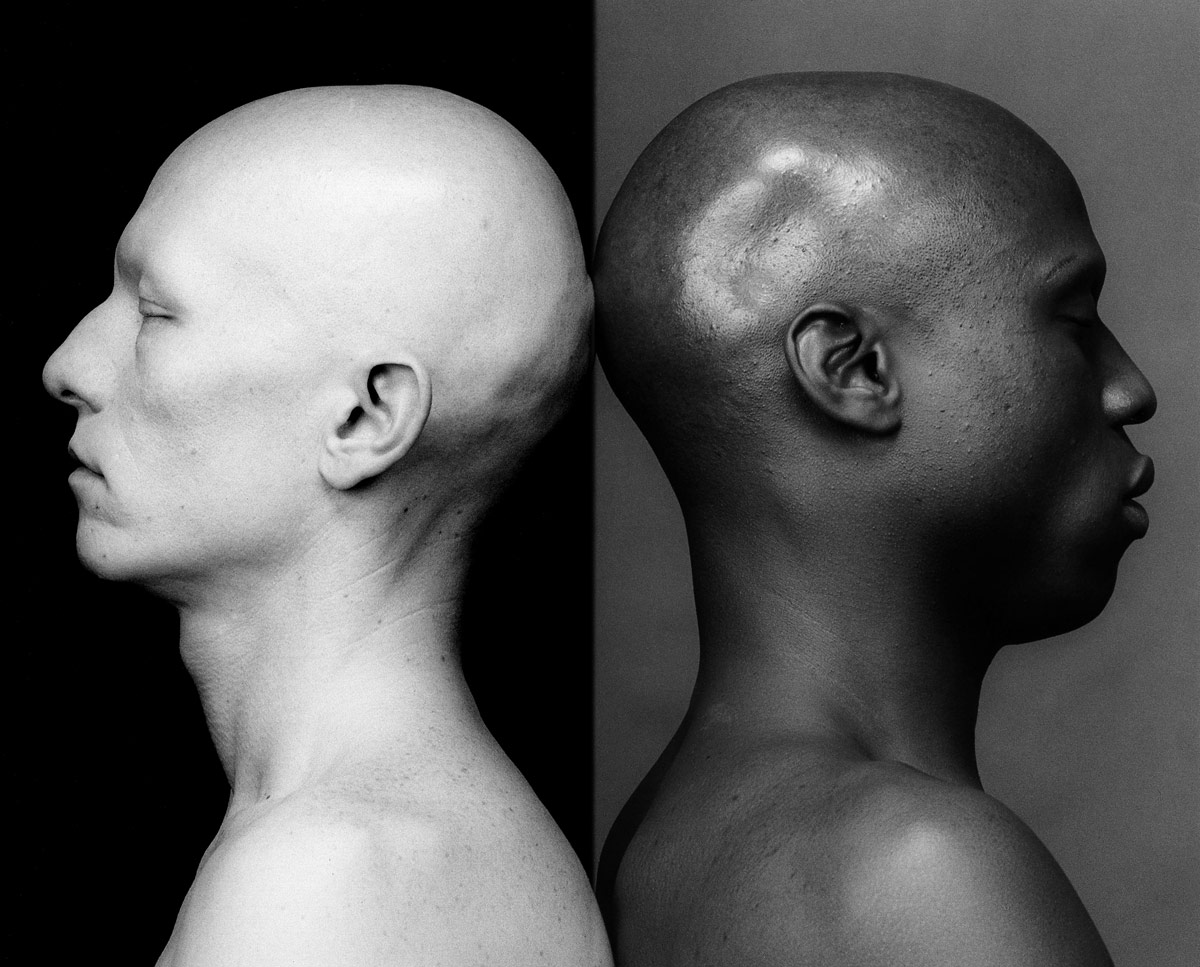
Robert Mapplethorpe (American, 1946-1989) 'Ken Moody and Robert Sherman' 1984


Robert Mapplethorpe (American, 1946-1989)
Ken Moody and Robert Sherman
1984
Gelatin silver print
© Robert Mapplethorpe Foundation. Used with permission


Robert Mapplethorpe (American, 1946-1989) 'Untitled' c. 1973


Robert Mapplethorpe (American, 1946-1989)
Untitled
c. 1973
Gelatin silver print
© Robert Mapplethorpe Foundation. Used with permission


Robert Mapplethorpe (American, 1946-1989) 'Lisa Lyon' 1982


Robert Mapplethorpe (American, 1946-1989)
Lisa Lyon
1982
Gelatin silver print
© Robert Mapplethorpe Foundation. Used with permission


Robert Mapplethorpe (American, 1946-1989) 'Ajitto' 1981


Robert Mapplethorpe (American, 1946-1989)
Ajitto
1981
Gelatin silver print
© Robert Mapplethorpe Foundation. Used with permission


Robert Mapplethorpe (American, 1946-1989) 'Self Portrait' 1988


Robert Mapplethorpe (American, 1946-1989)
Self Portrait
1988
© Robert Mapplethorpe Foundation. Used with permission


Ludwig Museum of Contemporary Art
1095 Budapest  Komor Marcell Street 1
Hungary 06 1 555-3444

Opening hours:
Tuesday – Sunday 10.00 – 20.00
Closed on Mondays

Ludwig Museum of Contemporary Art website

LIKE ART BLART ON FACEBOOK

Back to top

Exhibition: ‘Ladies and Gentlemen: The Camera as a Mirror’ at the Moderna Museet, Malmö, Sweden

Exhibition dates: 18th February 2012 – 22nd April 2012

Curator: Magnus af Petersens

Many thankx to the Moderna Museet for allowing me to publish the photographs in the posting. Please click on the photographs for a larger version of the image.


Cindy Sherman (American, b. 1954) 'Untitled Film Still #56' 1980


Cindy Sherman (American, b. 1954)
Untitled Film Still #56
1980
© Cindy Sherman. Courtesy of the Artist and Metro Pictures


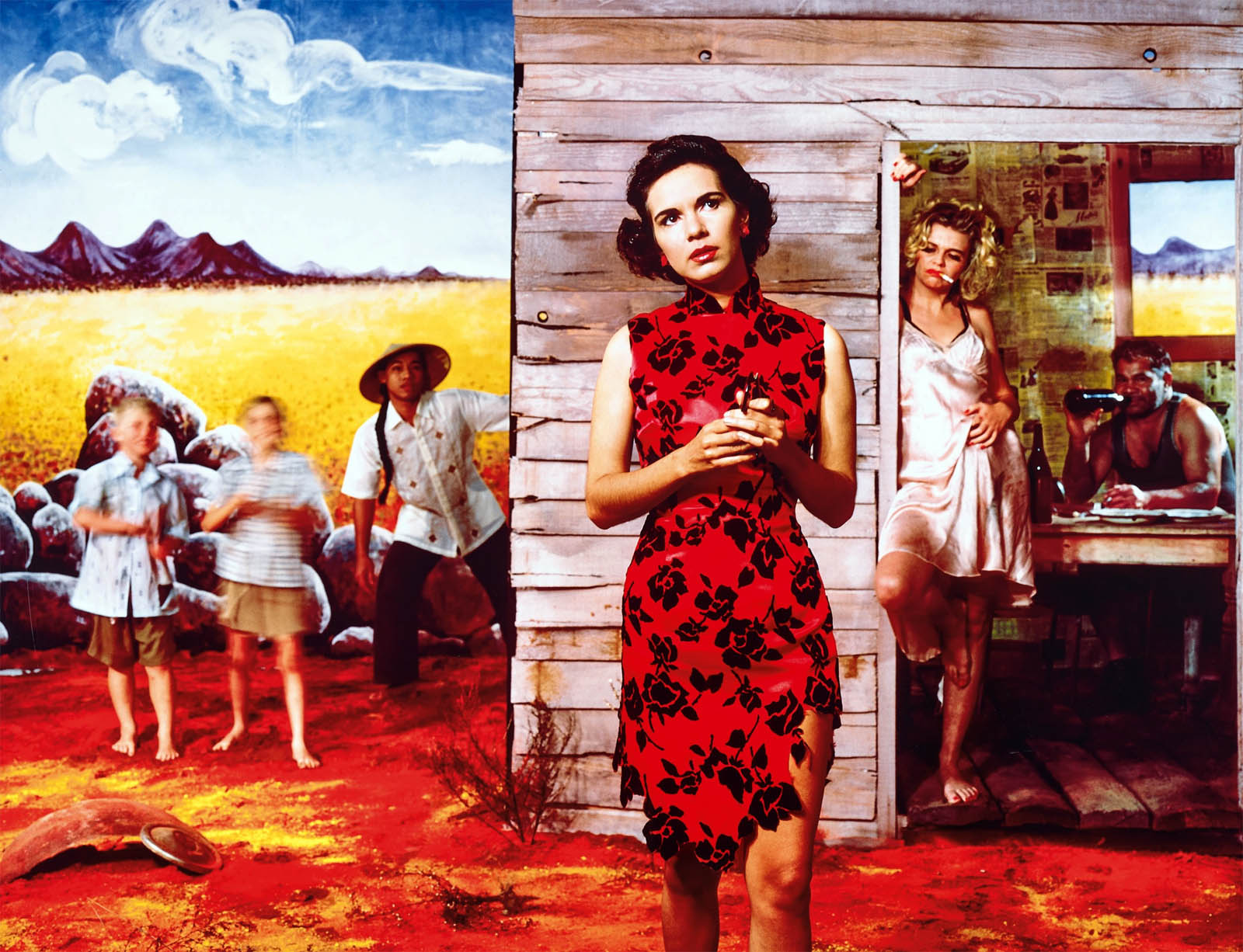
Tracey Moffatt (Australian, b. 1960) 'Something More #1' 1997


Tracey Moffatt (Australian, b. 1960)
Something More #1
1997
Cibachrome print
© Tracey Moffatt/BUS 2012


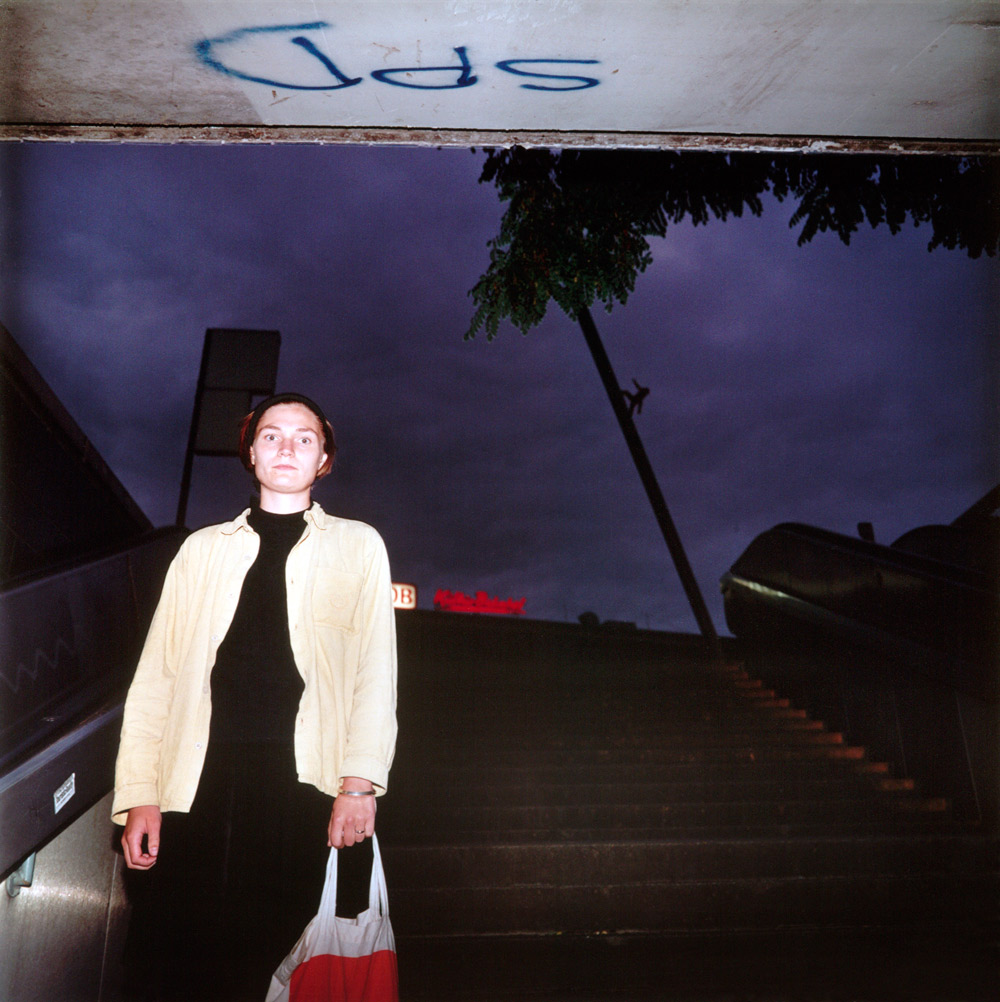
Samuel Fosso (Cameroon, b. 1962) 'Sans titre. De la série Années 70' 1970-1980


Samuel Fosso (Cameroon, b. 1962)
Sans titre. De la série Années 70
1970-1980
Gelatin silver print
© Samuel Fosso, Courtesy JM Patras/Paris


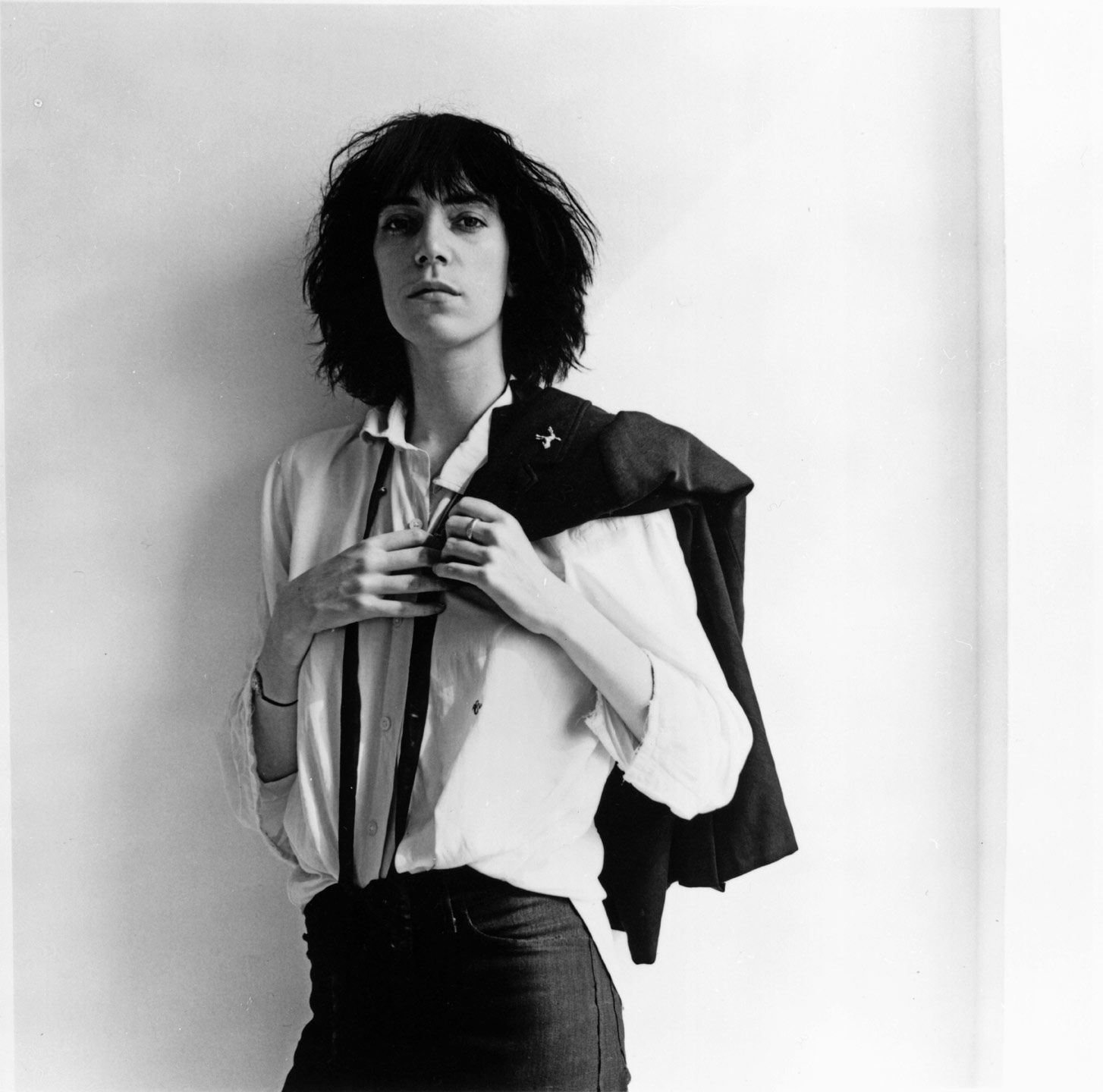
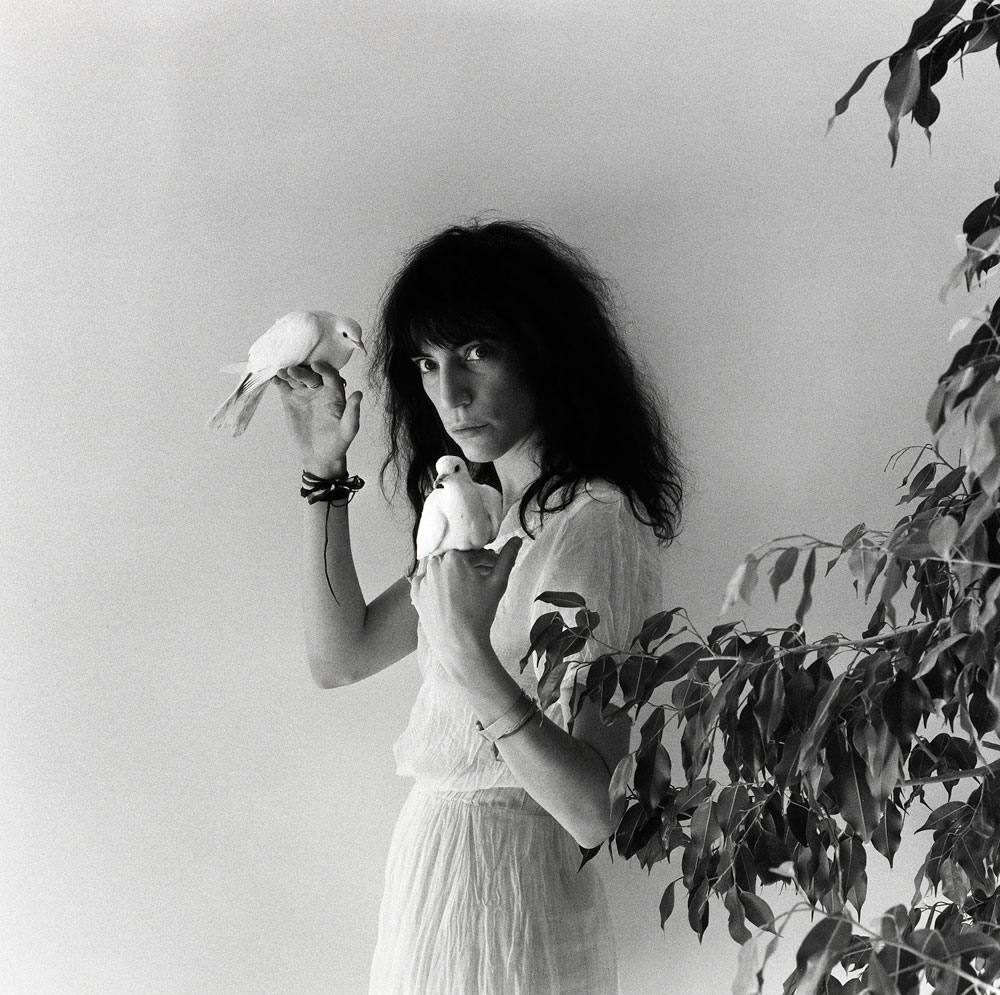
Robert Mapplethorpe (American, 1946-1989) 'Patti Smith' 1979


Robert Mapplethorpe (American, 1946-1989)
Patti Smith
1979
Gelatin silver print
© Robert Mapplethorpe Foundation


Robert Mapplethorpe (American, 1946-1989) 'Self Portrait' 1980


Robert Mapplethorpe (American, 1946-1989)
Self Portrait
1980
Gelatin silver print
© Robert Mapplethorpe Foundation


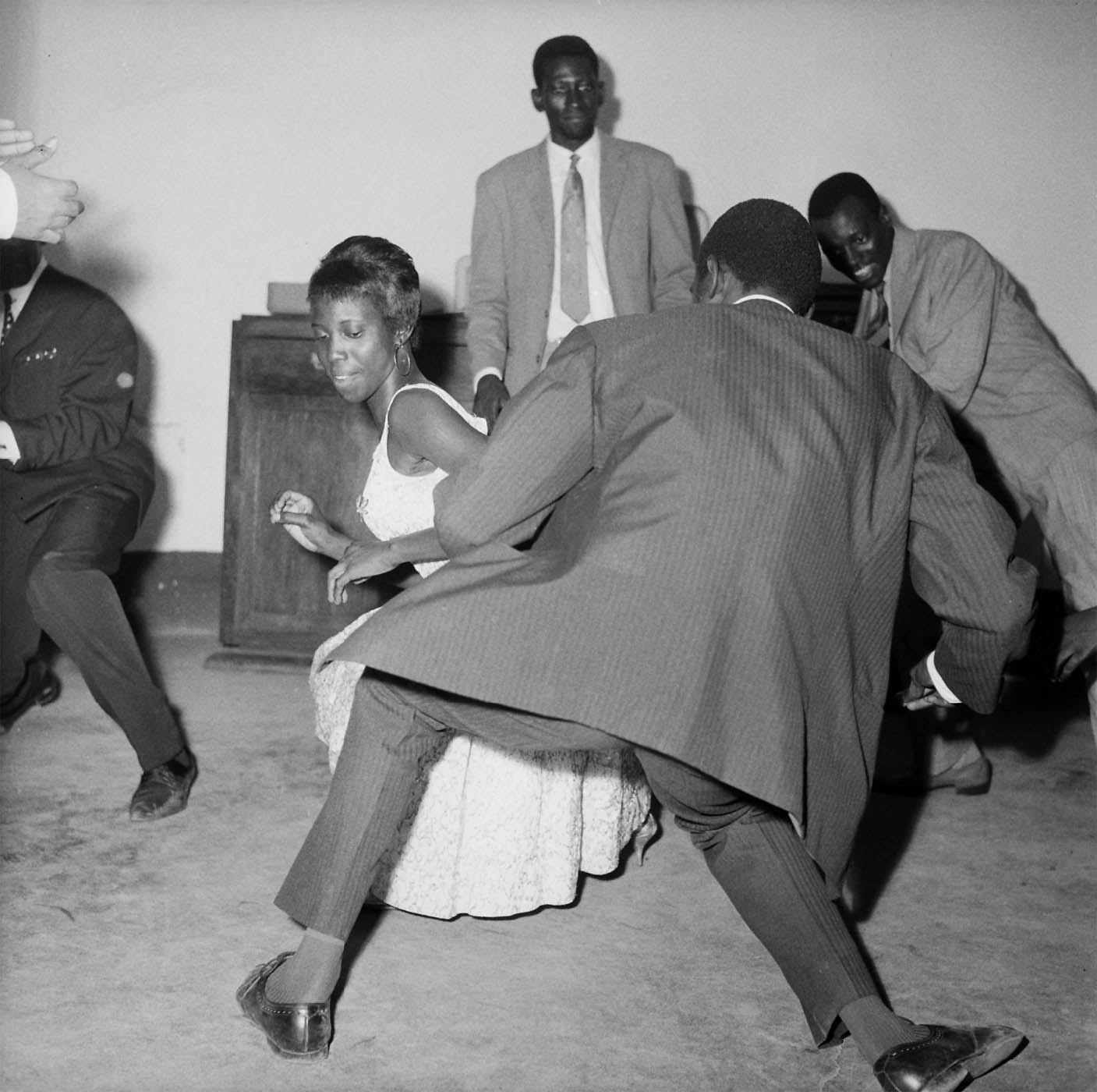
Malick Sidibé (Malian, 1936-2016) 'Danser le Twist' (Dance the Twist) 1965 


Malick Sidibé (Malian, 1936-2016)
Danser le Twist (Dance the Twist)
1965
Gelatin silver print


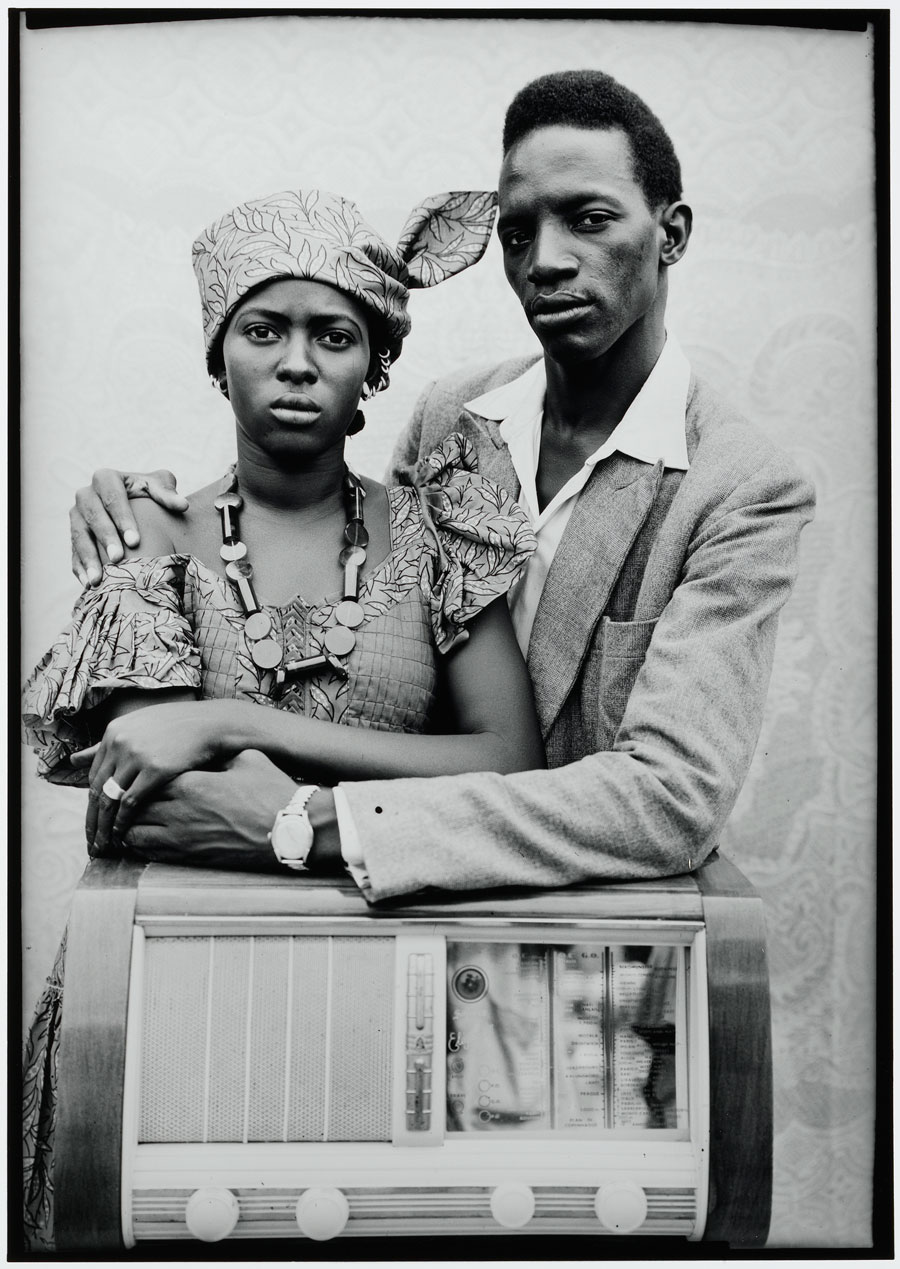
Seydou Keïta (Mali, 1921-2001) 'Untitled #419' 1950-1952


Seydou Keïta (Mali, 1921-2001)
Untitled #419
1950-1952
Gelatin silver print
© Seydou Keïta / SKPEAC


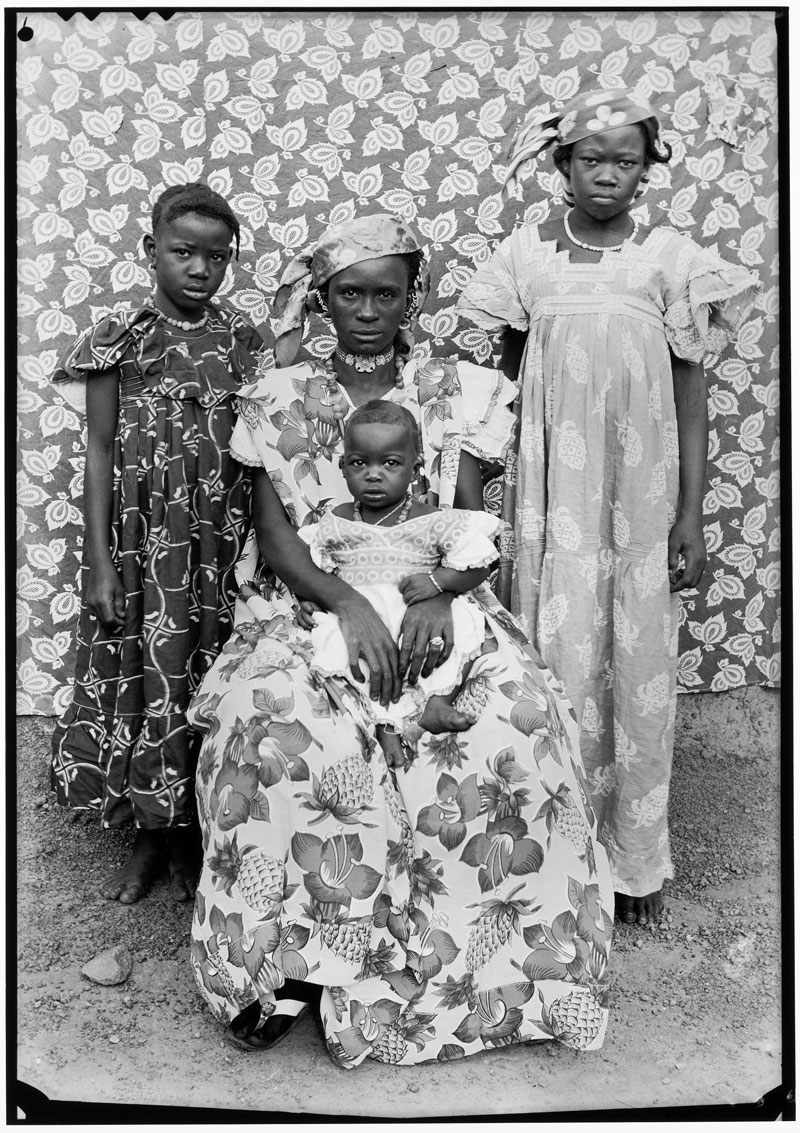
Seydou Keïta (Mali, 1921-2001) 'Untitled #420' 1950-1952


Seydou Keïta (Mali, 1921-2001)
Untitled #420
1950-1952
© Seydou Keïta / SKPEAC


This spring we will be showing more than forty photographs from the period 1950-90 taken by leading artists such as Andy Warhol, Cindy Sherman, Robert Mapplethorpe, Samuel Fosso, Tracey Moffatt, and Elina Brotherus. The exhibition focuses on the art of portrait photography and how the artist in his or her studio creates images that depict people not just as they actually are, but also as they would like to appear.

Moderna Museet’s collection of photography is among the foremost in Europe, it includes some of the most prominent figures in the history of photography. Andy Warhol, Cindy Sherman, and Robert Mapplethorpe are all big names in photography, artists whose work often revolves around concepts of identity, sexuality, and performativity. The photography studio is a place for masquerades and manipulations, a stage where various identities and roles can be tested. It therefore problematises the idea that a portrait is meant to convey some truth about the subject’s inner life. How do we distinguish a staged scene from reality? Is it even possible to make such a distinction? How free are we to form our own identity? If it’s a matter of choosing a role, what roles are available to us?

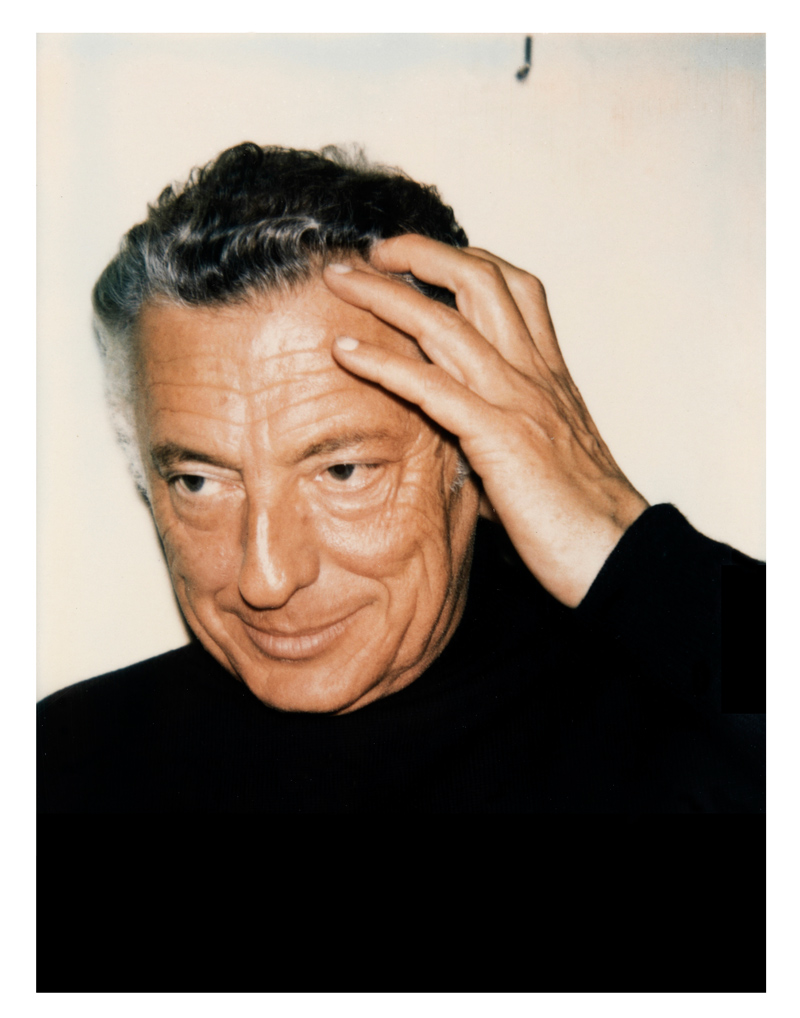
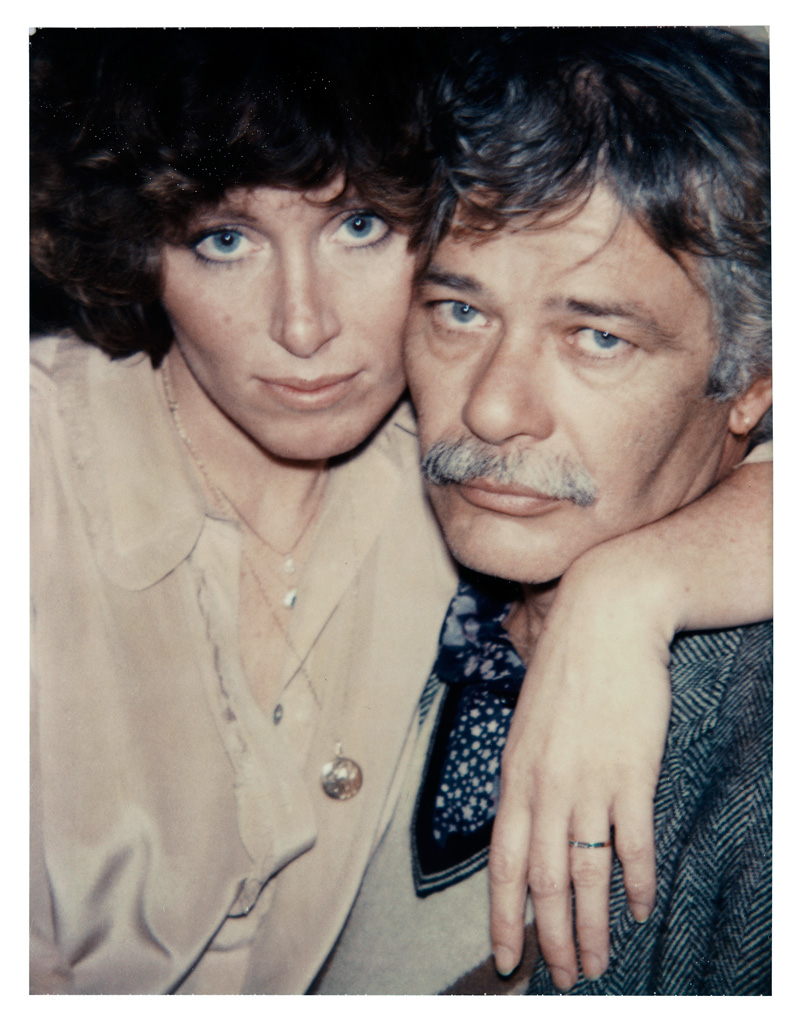
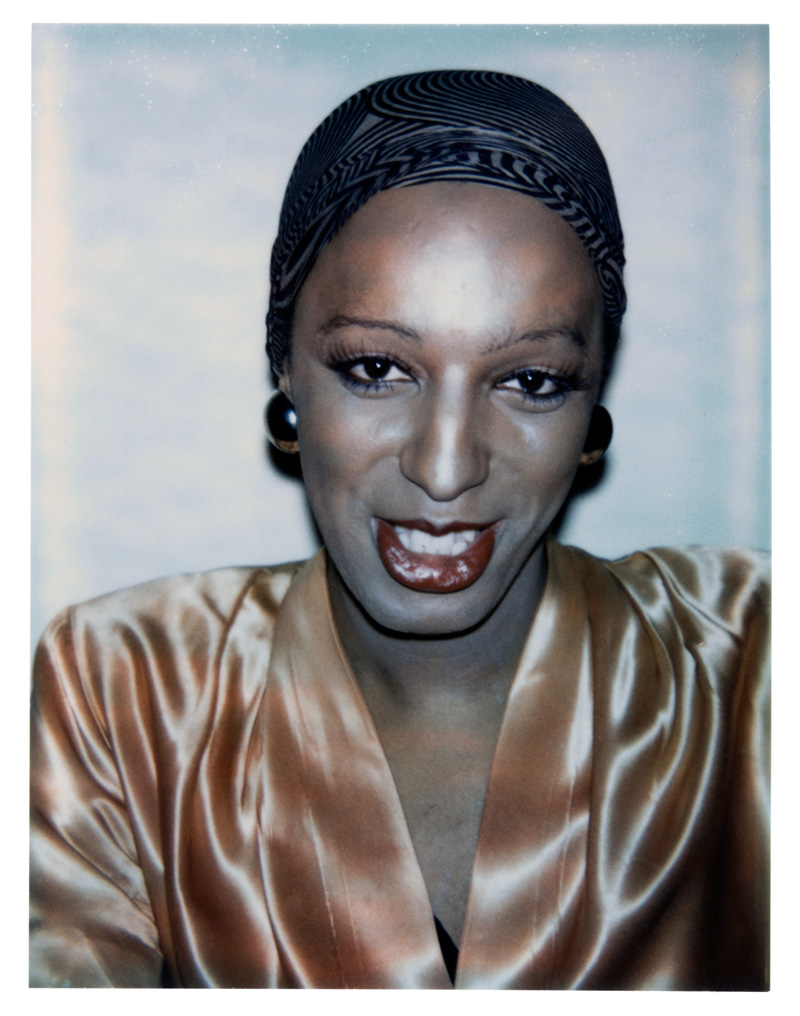
Andy Warhol’s Polaroid pictures, whose title, Ladies and Gentlemen, has also provided the name for the exhibition, are examples of his interest in – or rather his obsession with – celebrities. From industrial magnates to movie stars, from rock musicians to the “superstar” friends who hung out around the Factory, his fabled studio. In the world of pop art and popular culture, surface is everything. Robert Mapplethorpe’s photographs are instead classically composed – stylised and aesthetically formed. In the controlled environment and lighting of the photo studio, he strives not for realism but for beauty. Here role-play becomes a part of the picture’s constructed character.

In Cindy Sherman’s suite of images called Untitled Film Stills (1977-1980), she plays with film clichés. The scenes and characters in her photographs seem familiar, but in fact it’s always Sherman herself we see in the leading role. Using the camera as a mirror, she takes on and explores various roles. It’s a game of trying on identities that is familiar to teenagers in particular the world over, a game we play in an attempt to find ourselves, or rather to construct an individual identity. One of the many ways in which Sherman’s pictures have been interpreted is as a feminist critique of the limited number of roles available to women.

This exhibition also presents several works by Seydou Keïta, Malick Sidibé, and Samuel Fosso, studio photographers who work primarily with portrait photography. Keïta’s studio was next-door to a movie theater in Bamako, the capitol city of Mali. Sidibé takes pictures not just in his studio but also at weddings and other parties. His photographs from Bamako in the 1960s reflect the great hope that came with liberation from French colonial power. Fosso opened his studio in Bangui, in the Central African Republic, when he was still a teenager. He is best known for a series of self-portraits in which he dons a variety of outfits to assume different roles.

Press release from the Moderna Museet website


Elina Brotherus (Finnish, b. 1972) 'Honeymoon' 1997 (detail)


Elina Brotherus (Finnish, b. 1972)
Honeymoon (detail)
1997
© Elina Brotherus


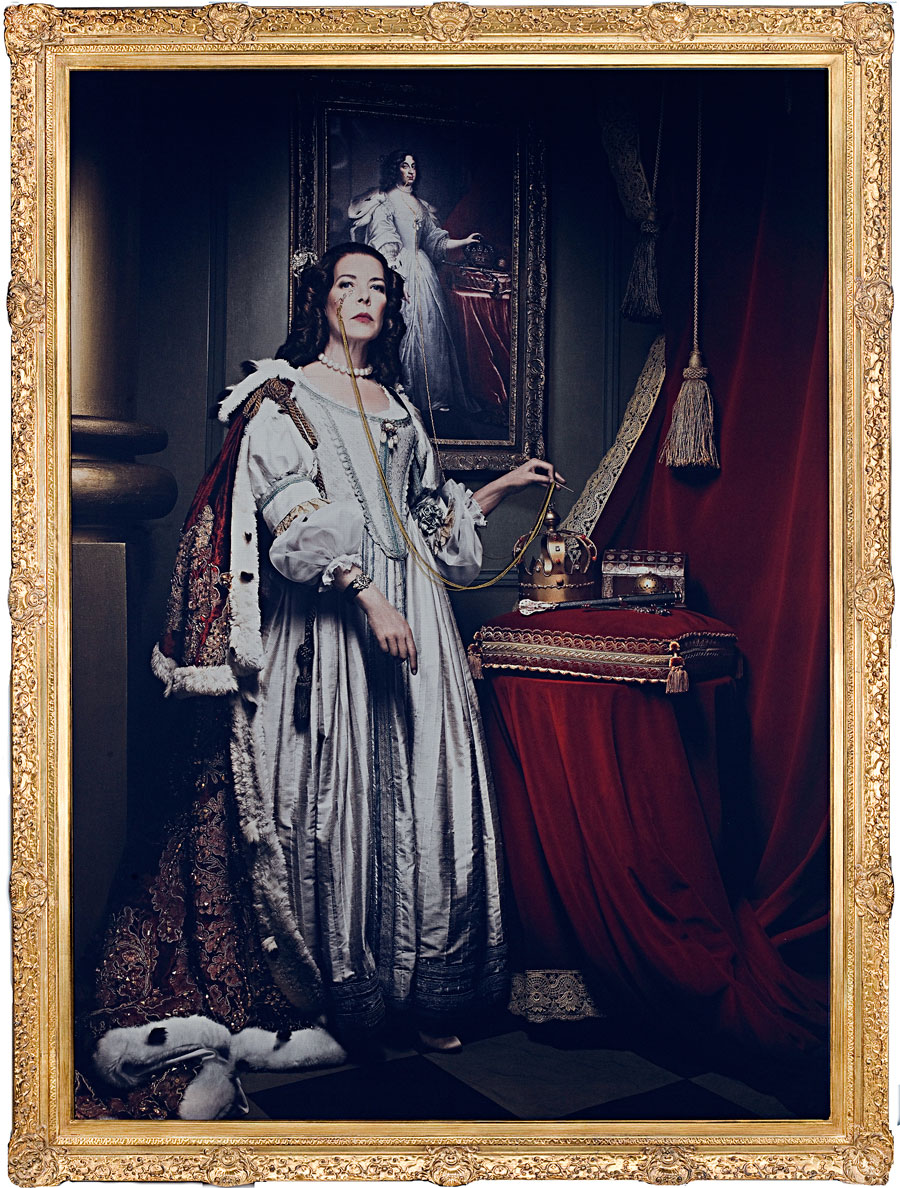
Francesco Vezzoli (Italian, b. 1971) 'Portrait of H.R.H The Princess of Hanover (Before & After Salvador Dalí)' 2009


Francesco Vezzoli (Italian, b. 1971)
Portrait of H.R.H The Princess of Hanover (Before & After Salvador Dalí)
2009
© Francesco Vezzoli/BUS 2012


Andy Warhol (American, 1928-1987) 'Gianni Agnelli' 1972


Andy Warhol (American, 1928-1987)
Gianni Agnelli
1972
© Andy Warhol/BUS 2012


Andy Warhol (American, 1928-1987) 'John Chamberlain and Lorraine' 1978


Andy Warhol (American, 1928-1987)
John Chamberlain and Lorraine
1978
© Andy Warhol/BUS2012


Andy Warhol (American, 1928-1987) 'Ladies and Gentlemen (Wilhelmina Ross)' 1974


Andy Warhol (American, 1928-1987)
Ladies and Gentlemen (Wilhelmina Ross)
1974
© Andy Warhol/BUS 2012


Cindy Sherman. 'Untitled' 2008


Cindy Sherman (American, b. 1954)
Untitled
2008
© Cindy Sherman. Courtesy the Artist and Metro Pictures


Moderna Museet Malmö
Gasverksgatan 22 in Malmö

Moderna Museet Malmö is located in the city centre of Malmö. Ten minutes walk from the Central station, five minutes walk from Gustav Adolfs torg and Stortorget.

Opening hours:
Tuesday – Sunday 11 – 17
Mondays closed

Moderna Museet Malmö website

LIKE ART BLART ON FACEBOOK

Back to top

Exhibition: ‘Robert Mapplethorpe’ at NRW-Forum Dusseldorf

Exhibition dates: 6th February – 15th August, 2010


Robert Mapplethorpe (American, 1946-1989) 'Phillip Prioleau' 1980 from the exhibition 'Robert Mapplethorpe' at NRW-Forum Dusseldorf, Feb - August, 2010


Robert Mapplethorpe (American, 1946-1989)
Phillip Prioleau
1980
© Robert Mapplethorpe Foundation
Used by permission


Robert Mapplethorpe was a classical photographer with a great eye for form and beauty, an artist who explored the worlds he knew and lived (homosexuality, sadomasochistic practices, desire for black men) with keen observations into the manifestations of their existence, insights that are only shocking to those who have never been exposed to these worlds. If we observe that our history is written as a series of interpretive shifts then perhaps we can further articulate that the development of an artist’s career is a series of interpretations, an “investigation into the events that have led us to constitute ourselves and to recognise ourselves as subjects of what we are doing, thinking, saying.”1 Mapplethorpe was such an artist.

The early work is gritty and raw, exposing audiences to sexuality and the body as catalyst for social change, photographs the “general public” had never seen before. Early photographs such as the sequence of photographs Charles and Jim (1974) feature ‘natural’ bodies – hairy, scrawny, thin – in close physical proximity with each other, engaged in gay sex. There is a tenderness and affection to the sequence as the couple undress, suck, kiss and embrace.
At the same time that Mapplethorpe was photographing the first of his black nudes (Mapplethorpe’s photographs of black men come from a lineage that can be traced back to Fred Holland Day who also photographed black men), he was also portraying acts of sexual progressiveness in his photographs of the gay S/M scene. In these photographs the bodies are usually shielded from scrutiny by leather and rubber but are revealing of the intentions and personalities of the people depicted in them, perhaps because Mapplethorpe was taking part in these activities himself as well as depicting them. There is a sense of connection with the people and the situations that occur before his lens in the S/M photographs.
As time progresses the work becomes more about surfaces and form, about the polished perfection of the body, about that exquisite corpse, the form of the flower. Later work is usually staged against a contextless background (see photographs below) as though the artefacts have no grounding in reality, only desire. Bodies are dissected, cut-up into manageable pieces – the objectified body. Mapplethorpe liked to view the body cut up into different libidinal zones much as in the reclaimed artefacts of classical sculpture. The viewer is seduced by the sensuous nature of the bodies surfaces, the body objectified for the viewers pleasure. The photographs reveal very little of the inner self of the person being photographed. The named body is placed on a pedestal (see photograph of Phillip Prioleau (1980) below) much as a trophy or a vase of flowers. I believe this isolation, this objectivity is one of the major criticisms of most of Mapplethorpe’s later photographs of the body – they reveal very little of the sitter only the clarity of perfect formalised beauty and aesthetic design.

While this criticism is pertinent it still does not deny the power of these images. Anyone who saw the retrospective of his work at the Museum of Contemporary Art in Sydney in 1995 can attest to the overwhelming presence of his work when seen in the flesh (so to speak!). Mapplethorpe’s body of work hangs from a single thread: an inquisitive mind undertaking an investigation in the condition of the world’s becoming. His last works, when he knew he was dying, are as moving for any gay man who has lost friends over the years to HIV/AIDS as anything on record, are as moving for any human being that faces the evidence of their own mortality. Fearless to the last, never afraid to express who he was, how he felt and what he saw, Mapplethorpe will long be remembered in the annals of visual art.

Dr Marcus Bunyan


1/ Foucault, Michel. “What is Enlightenment?,” trans. C. Porter in Rabinow, Paul (ed.,). The Essential Works of Michel Foucualt, 1954-1984. Vol.1. New York: New Press, 1997, p. 315.


    Many thankx to NRW-Forum Dusseldorf for allowing me to publish the photographs in the posting. Please click on the photographs for a larger version of the image.


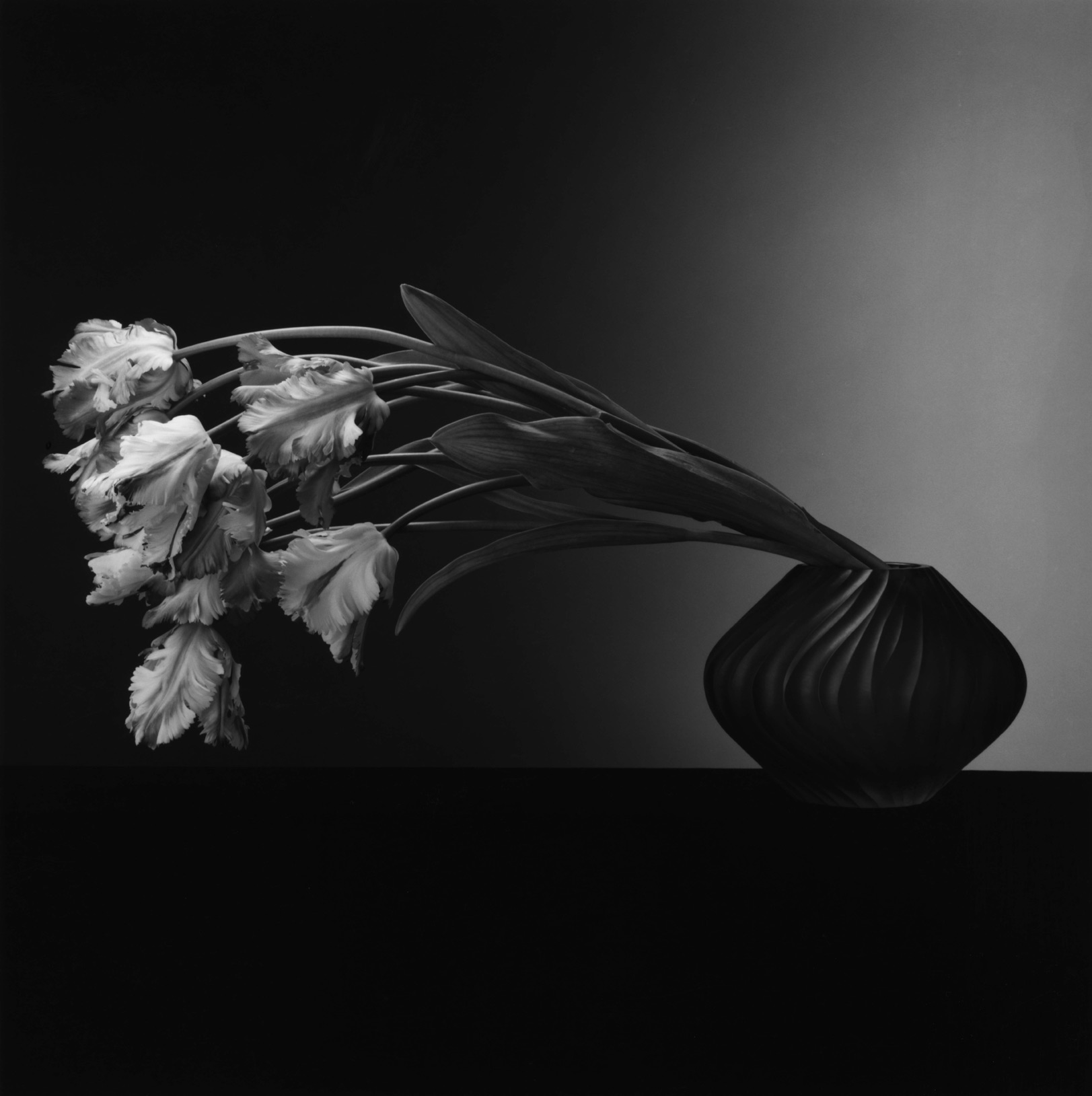
    Robert Mapplethorpe. 'Parrot Tulips' 1988 from the exhibition 'Robert Mapplethorpe' at NRW-Forum Dusseldorf, Feb - August, 2010


    Robert Mapplethorpe (American, 1946-1989)
    Parrot Tulips
    1988
    © Robert Mapplethorpe Foundation
    Used by permission


    Robert Mapplethorpe (American, 1946-1989) 'Ajitto' 1981 from the exhibition 'Robert Mapplethorpe' at NRW-Forum Dusseldorf, Feb - August, 2010


    Robert Mapplethorpe (American, 1946-1989)
    Ajitto
    1981
    © Robert Mapplethorpe Foundation
    Used by permission


    Robert Mapplethorpe (American, 1946-1989) 'David Hockney' 1976 © Robert Mapplethorpe Foundation. Used by permission


    Robert Mapplethorpe (American, 1946-1989)
    David Hockney
    1976
    © Robert Mapplethorpe Foundation
    Used by permission


    Robert Mapplethorpe, who was born in 1946 and passed away in 1989, is one of the few artists who truly deserve to be known far beyond the borders of the art world. Mapplethorpe dominated photography in the late twentieth century and paved the way for the recognition of photography as an art form in its own right; he firmly anchored the subject of homosexuality in mass culture and created a classic photographic image, mostly of male bodies, which found its way into commercial photography.

    In 2010, the NRW-Forum in Düsseldorf will organise a major retrospective of Robert Mapplethorpe’s photographs. His work was first shown in Germany in 1977 as part of documenta 6 in Kassel and then in a European solo exhibition in 1981 with German venues in Frankfurt, Hamburg and Munich. In addition to various museum and gallery exhibitions the largest museum exhibition in Germany of Mapplethorpe’s work took place in 1997 when the worldwide Mapplethorpe retrospective, which opened at the Louisiana Museum of Modern Art in Denmark, traveled to the Staatsgalerie in Stuttgart. The last time Robert Mapplethorpe’s works were shown in Düsseldorf was in the exhibition ‘Mapplethorpe versus Rodin’ at the Kunsthalle in 1992.

    Both during his life and since his death, Mapplethorpe’s work has been the subject of much controversial debate, particularly in the USA. Right up until the end of the twentieth century, exhibitions of his photographs were sometimes boycotted, censured, or in one case cancelled. His radical portrayals of nudity and sexual acts were always controversial; his photos of sadomasochistic practices in particular caused a stir and frequently resulted in protests outside exhibitions and in one instance, a lawsuits was brought against a museum director.

    In 2008, the Supreme Court in Japan ruled that Mapplethorpe’s erotic images did not contravene the country’s ban on pornography and released a volume of his photographs that had been seized and held for over eight years. As far as the American critic Arthur C. Danto was concerned, Mapplethorpe created ‘some of the most shocking and indeed some of the most dangerous images in modern photography, or even in the history of art.’

    In Germany, on the other hand, Mapplethorpe’s photographs were part of the ‘aesthetic socialisation’ of the generations that grew up in the 1980s and early 1990s. Lisa Ortgioes, the presenter of the German women’s television programme frau tv, notes that during this time, Mapplethorpe’s photos were sold as posters; his ‘black’ portraits in particular being a regular feature on the walls of student bedrooms at the time.

    The curator of the exhibition, Werner Lippert, is quick to point out that ‘this exhibition needs no justification. Mapplethorpe was quite simply and unquestionably one of the most important photographers of the twentieth century. It is an artistic necessity.’

    The exhibition in the NRW-Forum covers all areas of Mapplethorpe’s work, from portraits and self-portraits, homosexuality, nudes, flowers and the quintessence of his oeuvre the photographic images of sculptures, including early Polaroids. The photographs are arranged according to themes such as ‘self portraits’, which includes the infamous shot of him with a bullwhip inserted in his anus, as well as his almost poetic portraits of his muse, Patti Smith, the photographs of black men versus white women, the body builder Lisa Lyon, the juxtaposition of penises and flowers (which Mapplethorpe himself commented on in an interview: ‘… I’ve tried to juxtapose a flower, then a picture of a cock, then a portrait, so that you could see they were the same’), and finally those images of classical beauty based on renaissance sculptures, and impressive portraits of children and celebrities of the day.

    Despite the obvious references to the Renaissance idea of what constitutes ideal beauty and the history of photography from Wilhelm von Gloeden to Man Ray, this exhibition shows Robert Mapplethorpe as an artist who is firmly anchored is his era; his contemporaries are Andy Warhol and Brice Marden; Polaroids were the medium of choice in the 1970s, and the focus on the body and sexuality was, at the time, for many artists like Vito Acconci or Bruce Nauman a theme that was key to social change. Above all, Robert Mapplethorpe developed his own photographic style that paid homage to the ideals of perfection and form. ‘I look for the perfection of form. I do this in portraits, in photographs of penises, in photographs of flowers.’ The fact that the photographs are displayed on snow-white walls underpins this view of his work and consciously moves away from the coy Boudoir-style presentation of his photographs on lilac and purple walls a dominant feature of exhibitions of Mapplethorpe’s work for many years and opens up the work to a more concept-based, minimalist view of things.

    The selection of over 150 photographs covers early Polaroids from 1973 to his final self-portraits from the year 1988, which show how marked he was by illness and hint at his impending death, and also includes both many well-known, almost iconic images as well as some never-before seen or rarely shown works. The curators delved deep into the collection of the New York-based Robert Mapplethorpe Foundation to create this retrospective.

    Press release from the NRW-Forum Dusseldorf website [Online] Cited 02/08/2010 no longer available online


    Robert Mapplethorpe (American, 1946-1989) 'Greg Cauley-Cock' 1980 © Robert Mapplethorpe Foundation. Used by permission


    Robert Mapplethorpe (American, 1946-1989)
    Greg Cauley-Cock
    1980
    © Robert Mapplethorpe Foundation
    Used by permission


    Robert Mapplethorpe (American, 1946-1989) 'Patti Smith' 1975 © Robert Mapplethorpe Foundation. Used by permission


    Robert Mapplethorpe (American, 1946-1989)
    Patti Smith
    1975
    © Robert Mapplethorpe Foundation
    Used by permission


    Robert Mapplethorpe (American, 1946-1989) 'Self Portrait' 1988 © Robert Mapplethorpe Foundation. Used by permission


    Robert Mapplethorpe (American, 1946-1989)
    Self Portrait
    1988
    © Robert Mapplethorpe Foundation
    Used by permission


    Robert Mapplethorpe (American, 1946-1989) 'Lowell Smith' 1981 © Robert Mapplethorpe Foundation. Used by permission


    Robert Mapplethorpe (American, 1946-1989)
    Lowell Smith
    1981
    © Robert Mapplethorpe Foundation
    Used by permission


    Robert Mapplethorpe (American, 1946-1989) 'Thomas' 1987 © Robert Mapplethorpe Foundation. Used by permission


    Robert Mapplethorpe (American, 1946-1989)
    Thomas
    1987
    © Robert Mapplethorpe Foundation
    Used by permission


    NRW-Forum Kultur und Wirtschaft
    Ehrenhof 2, 40479 Düsseldorf
    Phone: +49 (0)211 – 89 266 90

    Opening hours:
    Tuesday – Sunday 11.00 am – 6.00 pm
    Closed Mondays

    NRW-Forum Dusseldorf website

    LIKE ART BLART ON FACEBOOK

    Back to top