Paper: ‘Traversing the unknown’ by Dr Marcus Bunyan, Faculty of Arts, The University of Melbourne presented at the ‘Travel Ideals’ international conference, July 2012

International conference: Travel Ideals: Engaging with Spaces of Mobility, Faculty of Arts at the University of Melbourne, 18th – 20th July 2012


All cdv and cabinet cards © Joyce Evans collection © Marcus Bunyan.

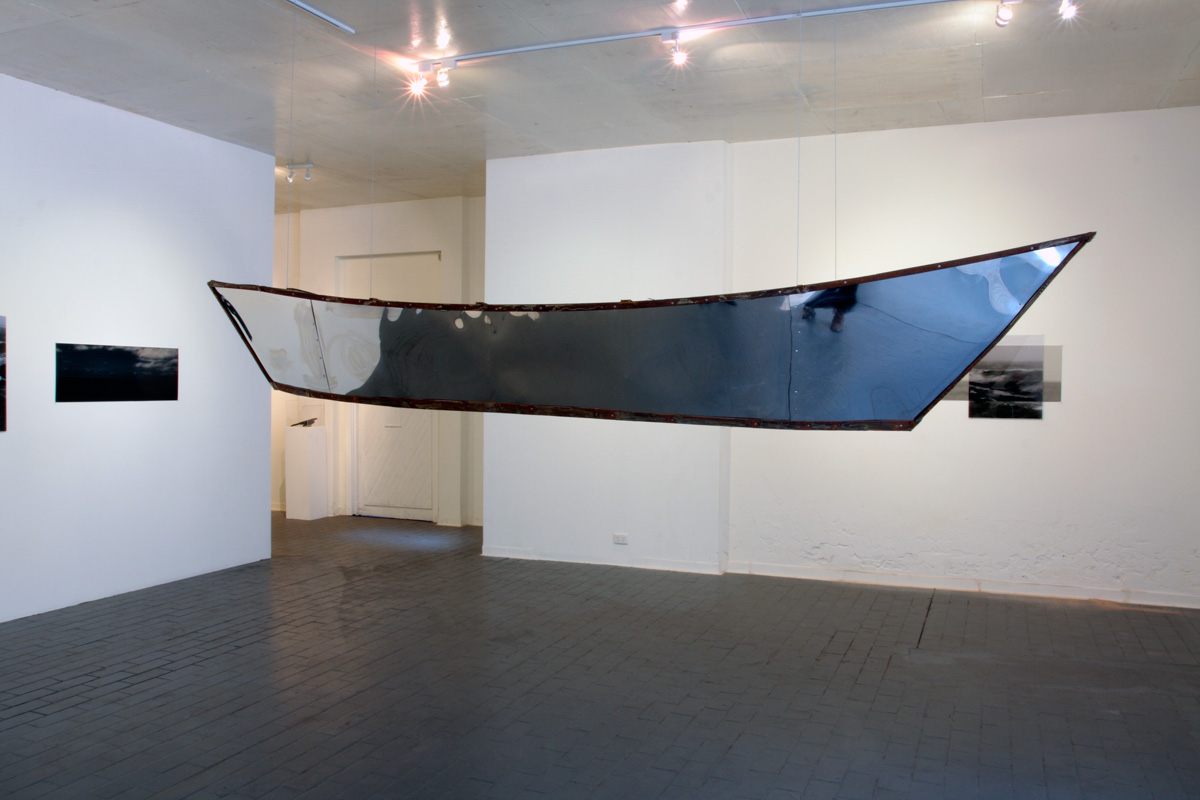
Installation photographs of the exhibition Traverse by Kim Percy at Stockroom, Kyneton, 10th March – 8th April 2012.

Please click on the photographs for a larger version of the image.

Keywords: refugees, asylum seekers, boat people, spaces of mobility, travel, early colonial photography, cartes de visite, cabinet cards, Second Fleet, John Dell, aborigine, Australia, white Australia, immigration, photography, early Australian photography, Foucault, non-place, Panopticon, inverted Panopticon, (in)visibility, visual parentheses, axis of visibility, symbolic capital, context of reason.


Installation of 'Traverse' by Kim Percy at Stockroom, Kyneton

Installation of 'Traverse' by Kim Percy at Stockroom, Kyneton

Installation of 'Traverse' by Kim Percy at Stockroom, Kyneton


Installation of Traverse by Kim Percy at Stockroom, Kyneton
Installation photographs by Marcus Bunyan
© Kim Percy and Marcus Bunyan


Traversing the unknown

Dr Marcus Bunyan July 2012

What I am about to say, my musings if you like, are inspired by Kim Percy’s exhibition which took place at Stockroom gallery in Kyenton in March – April 2012. The work is the basis of my inquiry. The images that illustrate the paper are installation shots from the exhibition and Victorian cartes de visite, photographic portraits of an emerging nation taken from the 1850s-1890s. Unlike the business cards of today (where identity is represented by the name of the business owner and the printer of the card remains anonymous), in cartes de visite the name of the people or place being photographed is usually unknown and the name of the photographer is (sometimes) recorded. In other words the inverse of contemporary practice. Another point to note is that most of the photographers were immigrants to this country. I use these cards to illustrate the point that the construction of national identity has always been multifarious and, in terms of the representation of identity, unknown and unknowable.


I would like to take you on a journey, at first personal and then physical, metaphorical and maybe even philosophical. I want to asks questions of the world, questions about the journey we all take as human beings. I would like to tell you two personal things.

First, I have nearly drowned three times in my life. Once, aged 12 years, my mother dove into the swimming pool and pulled my out as I was going under for the third time. The second time was in Australia at Squeaky Beach on Wilsons Prom and the third up at Byron Bay. All three times there was shear blind panic as the water tried to consume me, as my feet scrabbled to touch the bottom, seeking any purchase, the minutest toe hold so that I could pull myself to safety, so that I could save myself. Panic. Fear. Nothingness.

Second, I still vividly remember being dumped by my parents at boarding school in England at the age of twelve years. I watched disconsolately as they drove away and promptly burst into tears, terrified of being alone in an alien environment, with a different accent than everyone else (having grown up on a rural farm) and being different from other boys (just discovering that I was gay). Those were horrible years, suffering from depression that crept up on me, isolated with few friends and struggling with my nascent sexuality. Thoughts of suicide and self-harm were constant companions. Fast forward, arriving in Australia in 1986, again with no friends, living in a foreign culture. Even though I was white I felt alienated, isolated, alone. I hated my first years in Australia. Now imagine being an asylum seeker arriving here.


Anonymous photographer. 'Untitled [Borough of Clunes Notice Strike ..rm Rate]' Nd


Anonymous photographer (Australian)
Untitled [Borough of Clunes Notice Strike ..rm Rate]
Nd
Cabinet card
Albumen print
16.5cm x 10.7cm
Blank verso
© Joyce Evans collection


Anonymous photographer. 'Mrs Dean, Dean & Co, Hay, Corn & Produce Merchants, Rea St, North Fitzroy' Nd


Anonymous photographer (Australian)
Mrs Dean, Dean & Co, Hay, Corn & Produce Merchants, Rea St, North Fitzroy
Nd
Cartes de visite
Albumen print
10.4cm x 6.3cm
Blank verso
© Joyce Evans collection


National Photo Company. 'Untitled [Group of bricklayers holding their tools and a baby]' Nd


National Photo Company
Untitled [Group of bricklayers holding their tools and a baby]
Nd
140 Queen Street,
Woollahra,
Sydney
Cartes de visite
Albumen print
10.4cm x 6.3cm
© Joyce Evans collection


Imagine being an asylum seeker living in an (in)between space, living in a refugee camp over there. Marc Augé coined the phrase “non-place” to refer to places of transience that do not hold enough significance to be regarded as “places”.1 These camps are such places. Put yourself in that predicament, seeking a better life, seeking to escape persecution, war, prejudice and death, deliberately placing yourself and your family in a fragile boat, like a seed pod floating upon the waters, taking the dangerous journey to reach Australia. Imagine the emotional and intellectual turmoil that must surround such a decision, the decision to place your life in the hands of the ocean. Important decisions affecting the entire course of one’s life are rarely made without some form of mental distress.

Nurtured in water, some baptised in it, water is the life-blood of the world and the asylum seeker must trust to its benevolence. Marc Auge “argues that we are in transit through non-place for more and more of our time, as if between immense parentheses.”2 This is the journey that the asylum seeker takes over water, a journey through an interstitial space that has no beginning and no end caught between a set of parentheses [insert life here / or not]. And now let us move our line of sight. What about a visual parentheses?

Asylum seekers are almost invisible from Australia living over there. They are over the horizon, out of sight and out of mind. When they journey across the sea – an open ended journey passing through a liminal space, a forgotten space – they suddenly appear as if by magic washed up on the shore, unseen despite surveillance planes, ships and other forms of tracking and reconnaissance. Think, for example, of the sudden and surprising arrival of the boat SIEV-221 when it was washed onto the rocks of Christmas Island in December 2010. The invisible made visible caught in a non-place.

This (in)visibility can be evidenced in other ways. The specks of humanity waving from the deck of the Tampa, the asylum seekers being escorted from arriving boats, seen for a few brief seconds on the evening news and then disappearing from view, almost like being sucked into the depths of the sea. Here and not here; here and there. Halfway between nothingness and being: they walk between one state and another, forward and backward, backward and forward.

Displacement
Diaspora
Disruption


There is much discussion in political circles in relation to the retrieval, processing and housing of detainees, that is, the control of the artefact within space (of Australia) and, consequently, the impact on the citizens of Australia and that of public sentiment. The axis of visibility3 that operates in relation to subject, object, and space is not interrogated as to the representations that are constructed. This is what I am interested in here.

The spectacle of the asylum seekers is despectacularised by and for the viewer. We remove ourselves from the emotion of these people, the presence of these images. They become ordinary as if seen from far away – glimpsed every so often as though viewing the world of another. They become Other. The movement of the ship, the movement of the sky, the movement of vision is a constant decentering through a push/pull with something else – some other order of the world. The journey into the unknown is a journey to submit to the ordering of another: the socially constructed system of classification: “refugee,” “asylum seeker.”

These vital, alive human beings come from one taxonomic system (of ordered death, persecution, injustice), become visible from a brief instance, and are then fed into another taxonomic system of order – that of the detention centre. Through the journey and in the detention centres there is an effacement of specific religious, political or personal symbolic features as the refugees become part of a disciplinary system whereby they can be viewed as symbolic capital (both political and economic tools). This process of effacement and simultaneous self-negation, this neutralisation of original context and content is hidden in the forgotten spaces, of the sea and of the processing centres.

And then the seekers are naturalised, becoming one with the body of Australia, as though they were unnatural before.
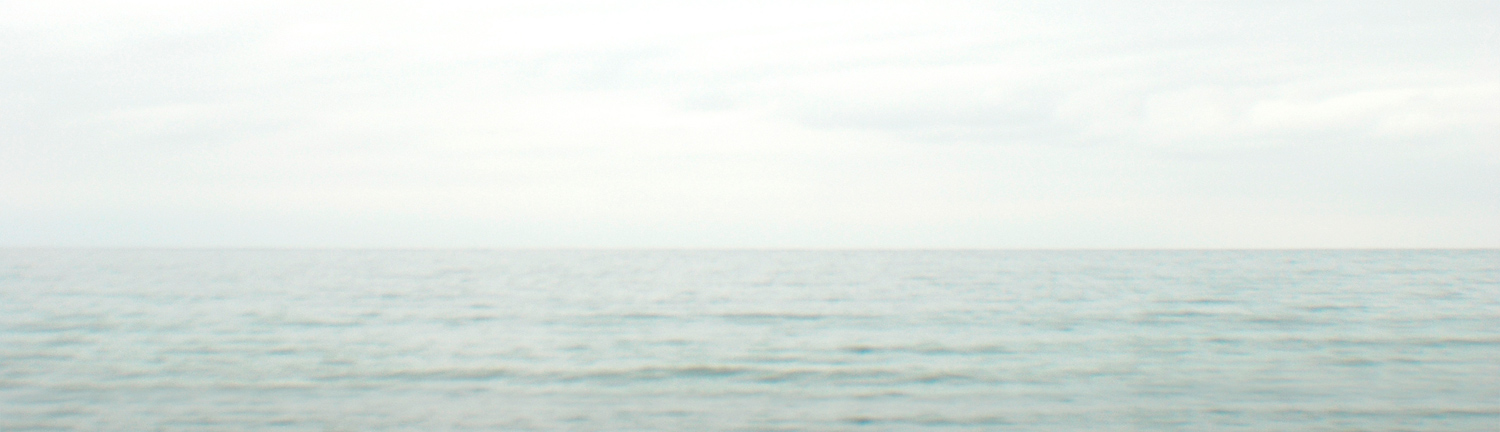
 

Kim Percy (Australian) 'Pale Sea' 2012


Kim Percy (Australian)
Pale Sea
2012
Digital photograph
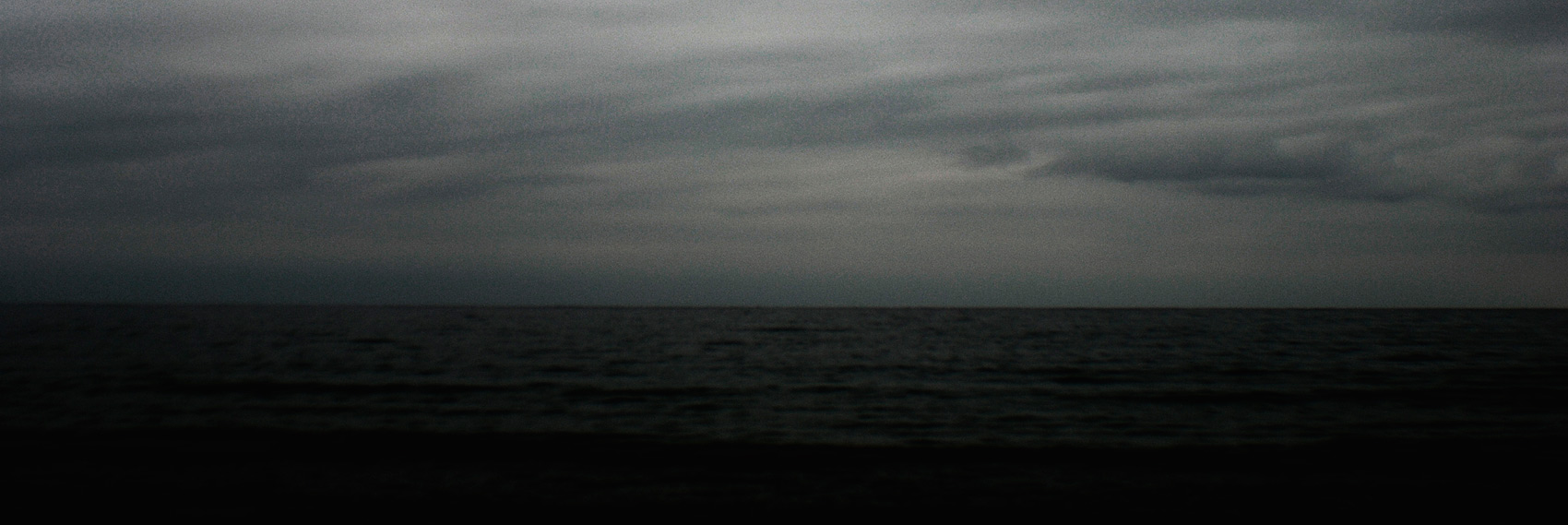
 

Kim Percy (Australian) 'Where' 2012


Kim Percy (Australian)
Where
2012
Digital photograph


Kim Percy (Australian) 'Rough Water' 2012 Digital photograph


Kim Percy (Australian)
Rough Water
2012
Digital photograph
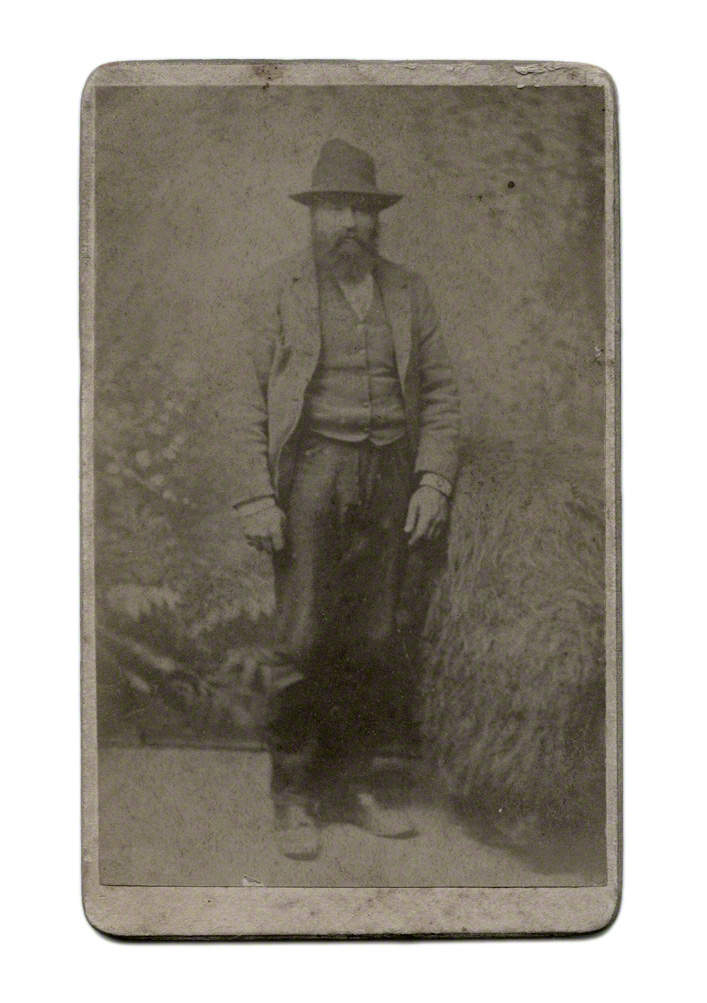
 

Anon. 'Untitled' Nd


Anonymous photographer
Untitled
Nd
Cartes de visite
Albumen print
6.3cm x 10.4cm
Blank verso
© Joyce Evans collection


E. B. Pike. 'Untitled [Older man with moustache and parted beard]' Nd


E. B. Pike
Untitled [Older man with moustache and parted beard]
Nd
Cartes de visite
Verso of card
6.3cm x 10.4cm
© Joyce Evans collection


Otto von Hartitzsch (Australian born Germany. 1838-1910) 'Untitled [Man with quaffed hair and very thin tie]' 1867-1883


Otto von Hartitzsch (Australian born Germany. 1838-1910)
Artist & Photographer
Untitled [Man with quaffed hair and very thin tie]
1867-1883
Verso of card
Established 1867, 127 Rundle Street, Adelaide, South Australia
Cartes de visite
6.3cm x 10.4cm
© Joyce Evans collection
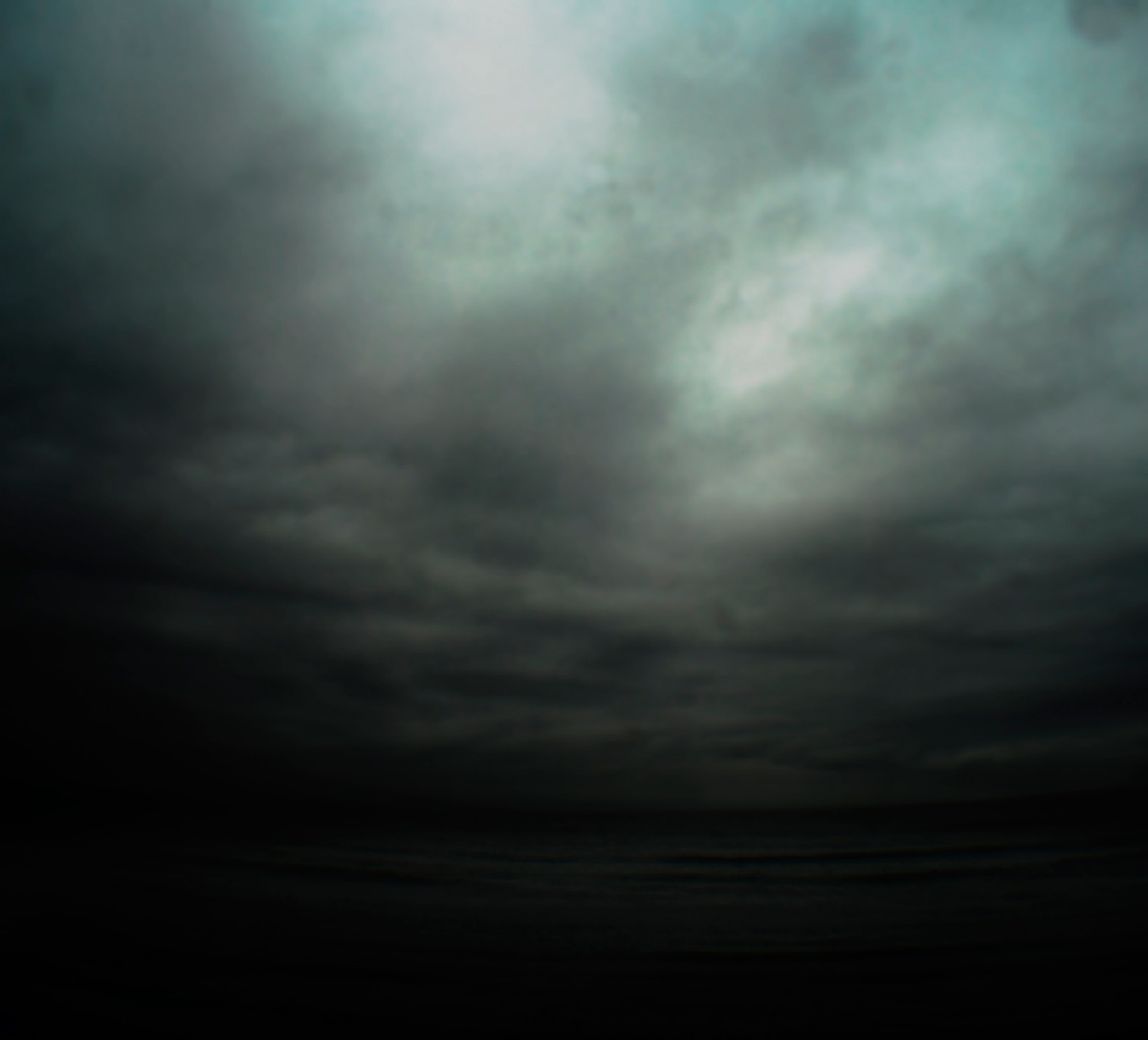
 

Kim Percy (Australian) 'Traverse' 2012 Digital photograph


Kim Percy  (Australian)
Traverse
2012
Digital photograph
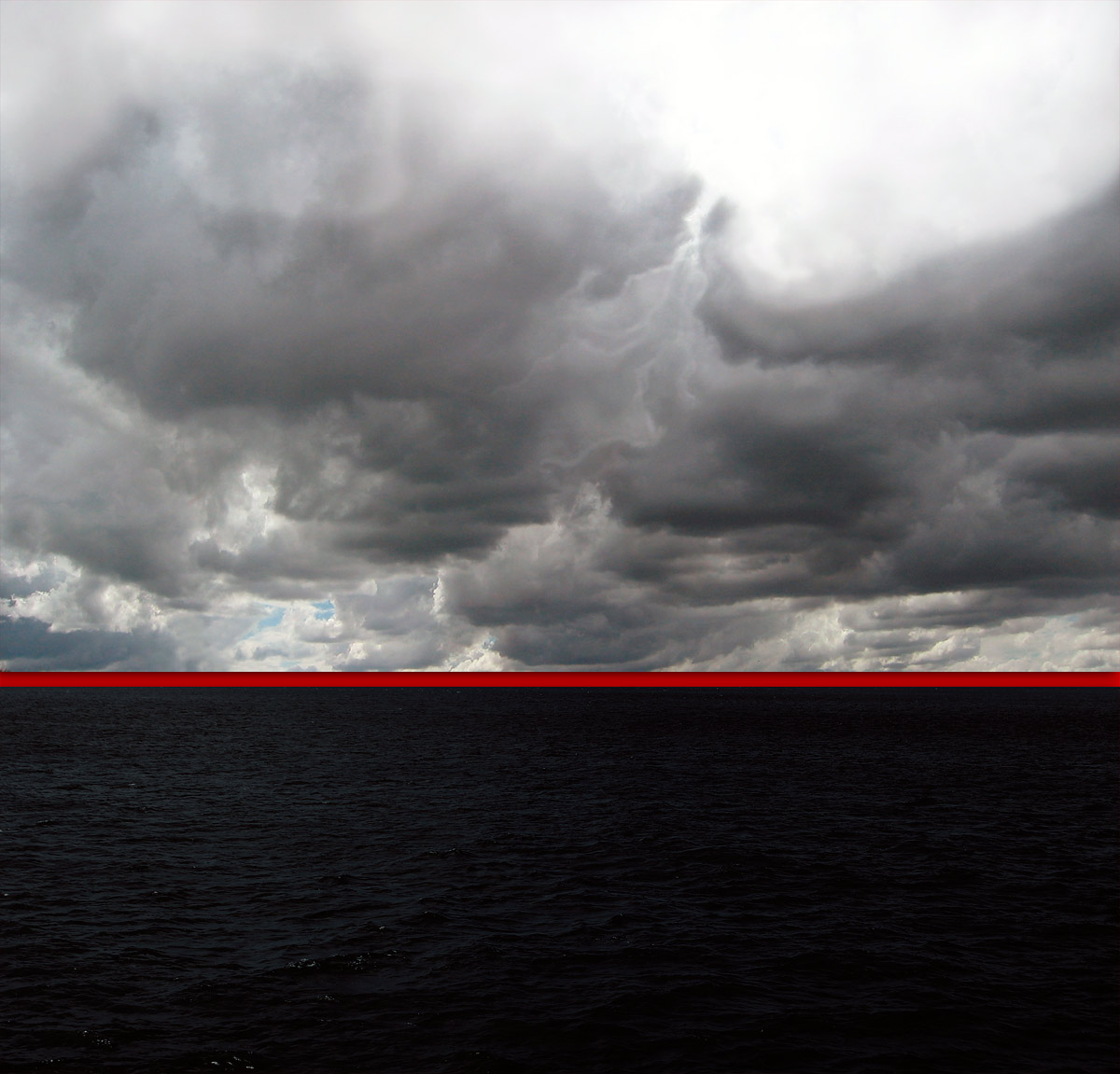
 

Kim Percy (Australian) 'Red Horizon No.1' 2012 Digital photograph


Kim Percy (Australian)
Red Horizon No.1
2012
Digital photograph
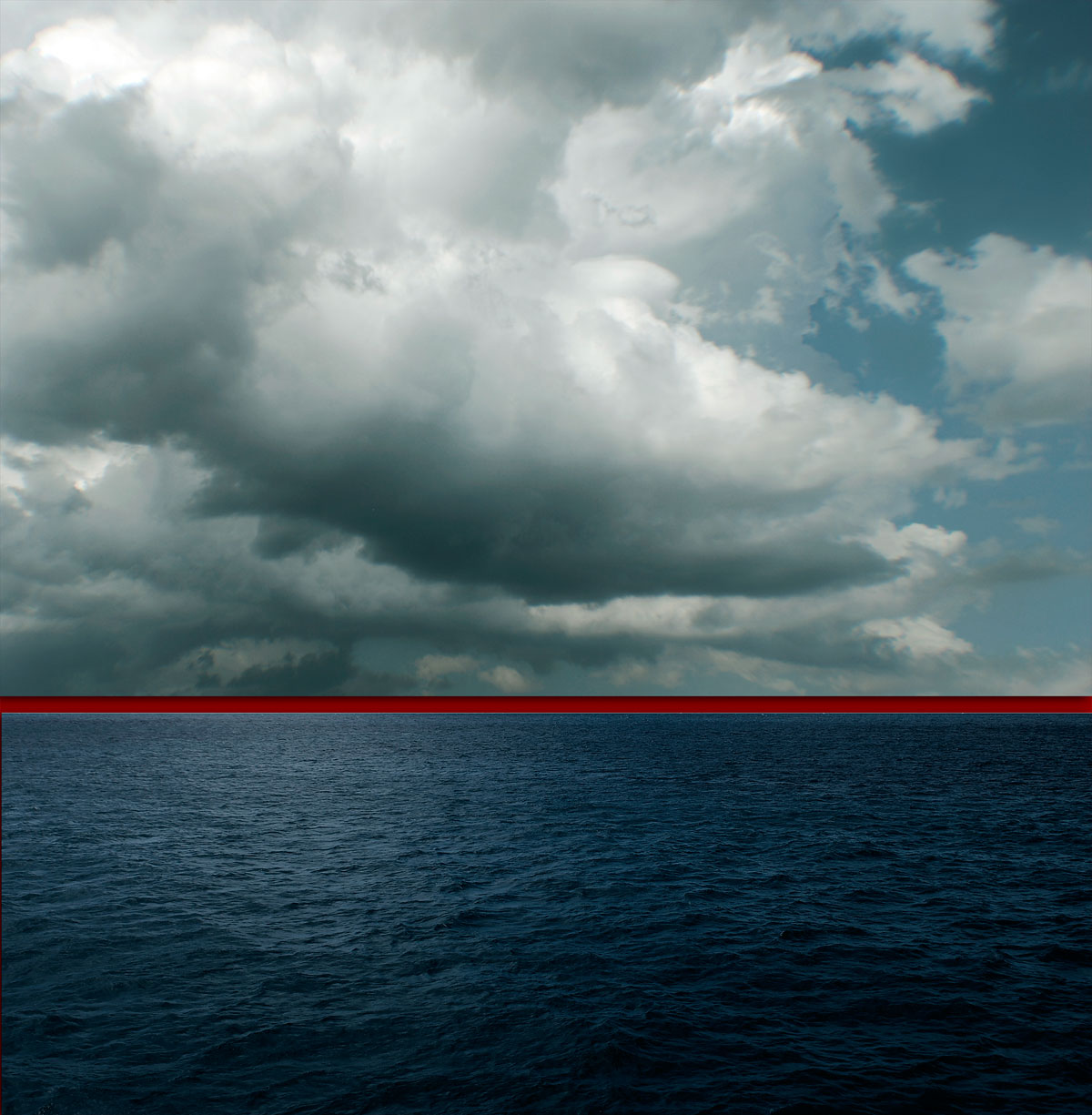
 

Kim Percy (Australian) 'Red Horizon No.2' 2012 Digital photograph


Kim Percy (Australian)
Red Horizon No.2
2012
Digital photograph


Taking the metaphor of the horizon line further, I would argue that the detention centres are like that of an inverted Panopticon. The Panopticon is a type of institutional building, a prison, designed by English philosopher and social theorist Jeremy Bentham in the late eighteenth century. The concept of the design is to allow an observer to observe all inmates of an institution without them being able to tell whether or not they are being watched.4 The guard sits in a central tower and can observe and inspect all prisoners on the outer 360 degree circle, while the prisoners cannot see the guard and can only presume he is there (an omnipresent God) and hence they behave. Let us invert this concept. Now the asylum seekers sit in the tower looking outwards, seeing the promised land but unable to touch it and the guards (prison officers, government, the Australian people) are all around but most are blind. They look inwards but cannot see / they look outwards and most go about their daily business. The perimeter fence of the detention centre becomes the horizon line of the sea. Over the horizon is out of sight and out of mind.

This regime of acceptability, the common-sense world within which we all live and usually take for granted, this form of rationality has a historical specificity. Think convict for example: such branding appeared at a time of historic specificity. What we take to be rational, the bearer of truth, is rooted in domination and subjugation, and is constituted by the relationship of forces and powers. But, as Foucault observes “what counts as a rational act at one time will not so count at another time, and this is dependent on the context of reason that prevails.”5

Hence no more convicts, in the future one hopes no more refugees.


Profesor Hawkins (Australian, active 1861-1875) 'Untitled [Chinese women with handkerchief]' c. 1858-1875


Profesor Hawkins (Australian, active 1861-1875)
Photographic Artist
Untitled [Chinese women with handkerchief]
c. 1858-1875
20, Queensbury St Et. near Dight’s Mills, Melbourne
Cartes de visite
Albumen print
6.3cm x 10.4cm
© Joyce Evans collection


Jeffrey Hawkins was a professional photographer based in Melbourne.


J. R. Tanner (Australian, active 1866-1899) 'Untitled [Two woman wearing elaborate hats]' 1875


J. R. Tanner (Australian, active 1866-1899)
Untitled [Two woman wearing elaborate hats]
1875
96 Elizabeth Street
“Truth in a Pleasing Form”
Photographer and Photo-Enameler
“Permanent Pictures in Carbon”
“Imperishable Portrais on Enamel”
Cartes de visite
Albumen print
6.3cm x 10.4cm
© Joyce Evans collection


What Kim’s eloquent, minimal, brooding installation does is hold our attention and ask certain questions of us as human beings. If photography is a mode of visually addressing a certain order in the world – be it horror, war, peace, human tragedy, public, private – and then destabilising it, then Kim’s images destabilise the binary sea/sky through fragmentation and isolation. She redlines our experience and asks us to inhabit the non-space, the non-place of the gallery, allowing us to hover between boat and image, between sea and sky, between seeing and sky. Through her work she asks us to become more aware. She asks us to see things more clearly. Above all she asks us to have faith in the compassion of human beings. The asylum seekers have faith: faith to get into a fragile boat to venture upon the sea in search of a better life.

I will finish with a quote from Jeff Brown

“Sometimes we have to surrender to the not knowing. At other times, it is helpful to adventure outward and explore new possibilities. Like swashbucklers of the spirit, we bravely seek out any experience that might inform our path. When we are afraid of something, we live it fully and see what floats to the surface in the doing. We participate in our own revealing. We have faith in the shaping of what we cannot see.”6


The seekers surrender to the not knowing and have faith in the shaping of what they cannot see. These risk takers are the strong ones that are going to make a difference in a new society by the very fact of their strength and determination to survive and live in a free society, for the very fact of the risks undertaken. This exhibition and this paper informs their path as it informs our path. Be aware of the doing, be bold and forthright in the being.

Dr Marcus Bunyan, July 2012


Endnotes

1/ Augé, Marc (trans. John Howe). Non-Places: Introduction to an Anthropology of Supermodernity. London: Verso, 1995

2/ Ibid.,

3/ Hooper-Grenhill, Eilean. Museums and the Shaping of Knowledge. London: Routledge, 2000, p. 7

4/ Anon. “Panopticon,” on Wikipedia. [Online] Cited 09/03/2012 en.wikipedia.org/wiki/Panopticon

5/ Hooper-Grenhill Op cit., p. 8

6/ Brown, Jeff quoted on Stroud, Jeff. The reluctant blogger website. [Online] Cited 09/03/2012 jeffstroud.wordpress.com/2012/02/11/884/


Please click on the photographs for a larger version of the image.


~ ~ ~ ~ ~ ~ ~ ~ ~ ~ ~ ~ ~ ~ ~ ~ ~ ~ ~ ~ ~ ~ ~ ~ ~ ~ ~ ~ ~ ~ ~ ~ ~ ~ ~ ~ ~ ~ ~ ~ ~

Addendum – Australia from settlement to subjugation

The cartes de visite below is one of the most important cards that I have ever held.

Private John Dell (1763-1866) of the The New South Wales Corps. (Rum Corps.) “Renamed 1st /102nd Regiment of Foot” arrived on the ship Surprize of the Second Fleet on the 26 June 1790 (not, as stated in pencil on the verso of the card, in 1788). The Second Fleet has been regarded as being the three convict ships which arrived together at Sydney Cove in June 1790: these ships were the Surprize , Neptune, and Scarborough.

The Surprize weighed 400 tons, she was the smallest ship of the fleet, she proved an unsuitable vessel as for her size and she was a wet vessel even in clam waters. Sailing from England on January 19th 1790 with 254 male convicts. Her master was Nicholas Antis, formerly chief mate on the Lady Penrhyn in the First Fleet. The surgeon was William Waters. 36 convicts died on the voyage. Soldiers of the New South Wales Corps on board may have stayed. Some where convicts who later enlisted.

Private John Dell served in 102nd Foot Regiment. He was discharged aged 42 after 21 years 10 months of service. Covering dates give year of enlistment to year of discharge: 1789-1811. He enlisted on 3rd July 1789 and was discharged in May 1810. He married three times and had numerous children, dying in Tasmania on the 2nd March 1866. He was born on 5th of November 1763 so this would make him over the age of 87 when this photograph could have first been taken or, if later, between the age of 96-103. We can date this photograph from the time that W. Paul Dowling worked in Launceston (1851-1852 / 1859-1866).

We are looking at one of the first English migrants to ever settle in Australia during the invasion of the supposed terra nullius. This is an important photograph. The photographer obviously thought it was important to document the appearance of this person, present in the first two years of colonial settlement and later injured by an aborigine spear. For us, the photograph traverses the history of white Australia, from settlement to subjugation, from 1790 to 1866. One can only imagine the agony, the death and destruction that occurred during this man’s lifetime.


THE LATE MR. JOHN DELL (From the Melbourne Spectator)

The following reminiscences of the olden times were furnished to us by a gentleman who took them down as they fell from the lips of John Dell, the Greenwich pensioner, a few months before his, death, which happened at Launceston, in the early part of the present year: He was born, he said, at Reading, in Berkshire, on the 5th of November, 1763. He was one of a family of twenty four children. He remembered the excitement occasioned by the Gordon riots, and how the people gathered round the London coach which brought down the tidings of the tumult, incendiarism, and bloodshed. He was apprenticed with another Reading lad, to a veneer cutter in London; and as he and his fellow-apprentice were one day staring in at a shop window in Fleet-street, and observing to each other that there was nothing like that in Reading, they were accosted by a respectably dressed man, who said his wife was from Reading, and would so like to have a chat with them about the dear old place; would they go home to tea with him? They cheerfully assented; and were taken to a house in an obscure neighbourhood, at the back of the Fleet Prison…

“THE LATE MR. JOHN DELL,” in Launceston Examiner (Tas.: 1842-1899), 25 July 1866, p. 2. [Online] Cited 15 July, 2012 on the Trove website. nla.gov.au/nla.news-article36636642

DEATH OF MR JOHN DELL (From the The Cornwall Chronicle)

It is with feelings of sincere regret that we record tbe death of Mr. John Dell, at the patriarchal age of 102 years and four months. He had been ailing but a very short time, and had the use of his faculties to the last hour of his life. He was reading as usual without the use of spectacles, and out of bed on Thursday night, but be breathed his last yesterday, at the residence of his son-in-law, Mr. William Brean, of Brisbane Street, and his remains are to be interred on Monday.

Mr. Dell was born at Reading, in Berkshire, in 1763, and arrived in New South Wales with the 102nd Regiment of Foot, in 1790, in the ship ‘Surprize,’ the first of the fleet which brought convicts to Botany Bay, and he was present in Sydney during the whole of the period of the government of Governor Phillip, and at the arrest of Governor Bligh, who it will be remembered by those who have read the early history of New South Wales, was arrested by Colonel Johnson, the Colonel of the regiment in which Dell served, the 102nd. This corps was raised specially for service in New South Wales, and Mr. Dell returned with in 1808, and on board the vessel in which Governor Bligh died on the passage to England. He was pensioned in 1815, and has been in life receipt of a pension for more than half a century.

He arrived in this colony in 1818, and was for some time Chief Constable of Launceston, but retired many years ago from office, to a large farm at Norfolk Plains. Mr. Dell was the owner of very valuable property in this colony, though be did not die wealthy, the Court House Square belonged to him at one time, and he fenced it in, but subsequently he returned it to the Government in exchange for a grant of six hundred and forty acres of land in the country. Mr. Dell was a temperate man but not a teetotaller. It is strange that throughout his eventful career, be never learned to smoke, but this may account for the steadiness of his nerves to the latest day of his long life. He had encountered great hardships in New South Wales, having been in the bush there for three day disabled by a spear wound inflicted by an aborigine. He was in a very exhausted state when discovered, but his iron constitution enabled him to rally, and he was soon in as sound a state of health as ever.

For some years past his sight keener and his hair of a darker colour than they had been twenty years previous. He was rather eccentric of late, but no one from his hale appearance would suppose him to be much above seventy years of age. His voice was a good strong firm bass without a quaver in it. Very few men have ever been blessed with such a long period of interrupted sound health as Mr Dell. He will be missed and his death lamented by a wide circle of relatives and friends.

“DEATH OF MR JOHN DELL,” in The Cornwall Chronicle (Launceston, Tas.: 1835-1880) Saturday 3rd March 1866. [Online] Cited 15 July, 2012 on the Trove website. trove.nla.gov.au/ndp/del/article/72358170

See the Rootsweb website for more information on John Dell.


W. Paul Dowling (Australian, 1824-1877) Photographer. 'John Dell' 1851-1852 / 1859-1866


W. Paul Dowling (Australian, 1824-1877)
Photographer
John Dell
1851-1852 / 1859-1866
Launceston, Tasmania
Cartes de visite
Albumen print
6.3cm x 10.4cm
© Joyce Evans collection

John Dell
Born at Reading, Berkshire
5 Nov 1763
came out with his regiment (the 102nd) to Sydney in 1788
Nov 5th 1763

In pencil on verso


William Paul Dowling was a painter, engraver and photographer. In 1849 he was transported to Hobart Town as a political prisoner. Dowling worked in partnership with his photographer brother, Matthew Patrick Dowling until the latter accused William of selling his photographs as his own.
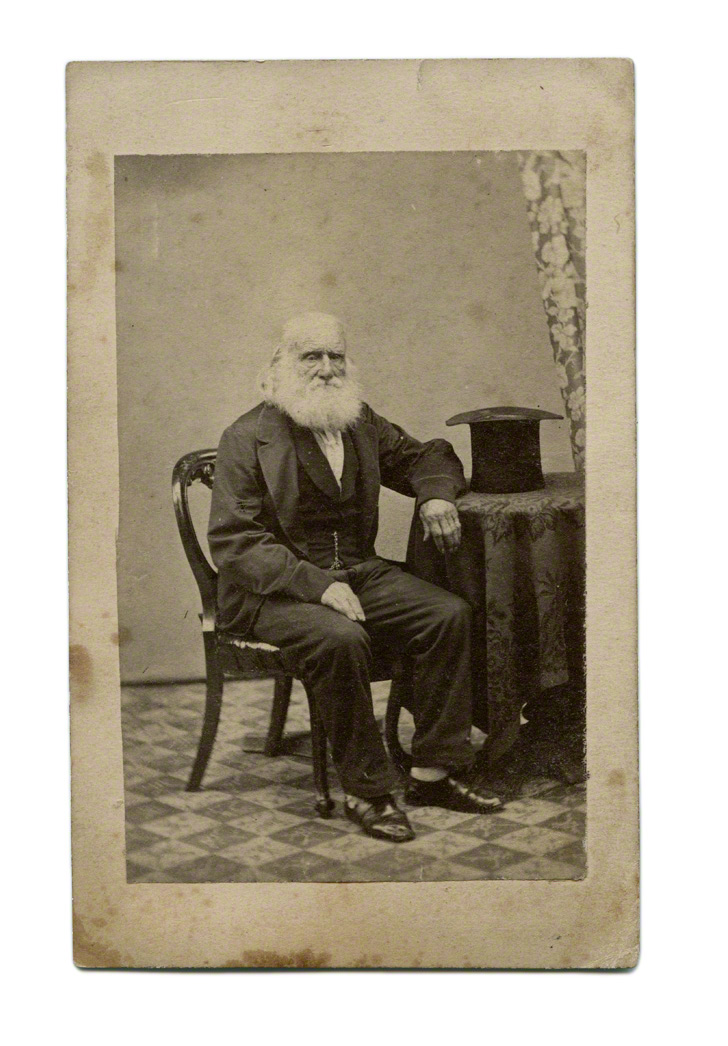
 

W. Paul Dowling (Australian, 1824-1877) Photographer. 'John Dell' 1851-1852 / 1859-1866


W. Paul Dowling (Australian, 1824-1877)
Photographer
John Dell
1851-1852 / 1859-1866
Launceston, Tasmania
Cartes de visite
Albumen print
6.3cm x 10.4cm
© Joyce Evans collection


LIKE ART BLART ON FACEBOOK

Back to top

Exhibition: ‘Christer Strömholm: Les Amies de Place Blanche’ at the International Centre of Photography (ICP), New York

Exhibition dates: 18th May – 2nd September 2012

Curator: Pauline Vermare, ICP Curatorial Assistant


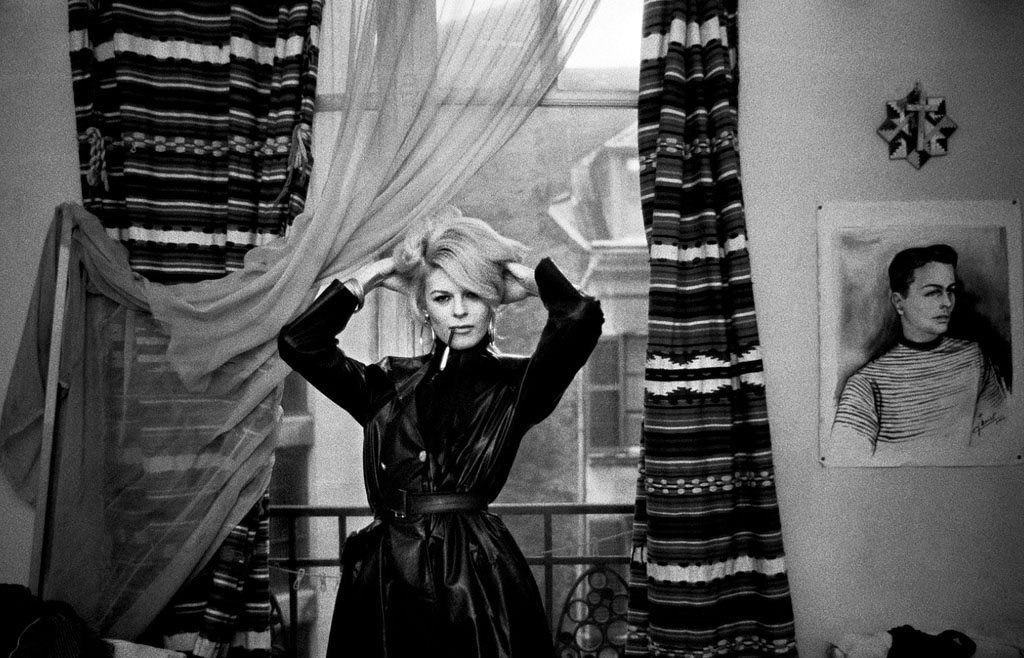
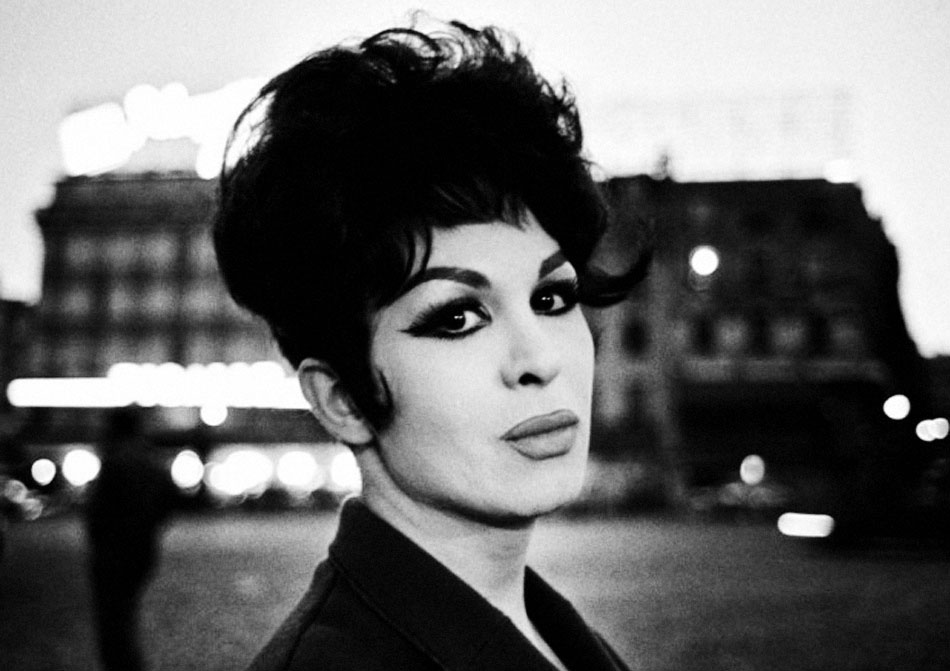
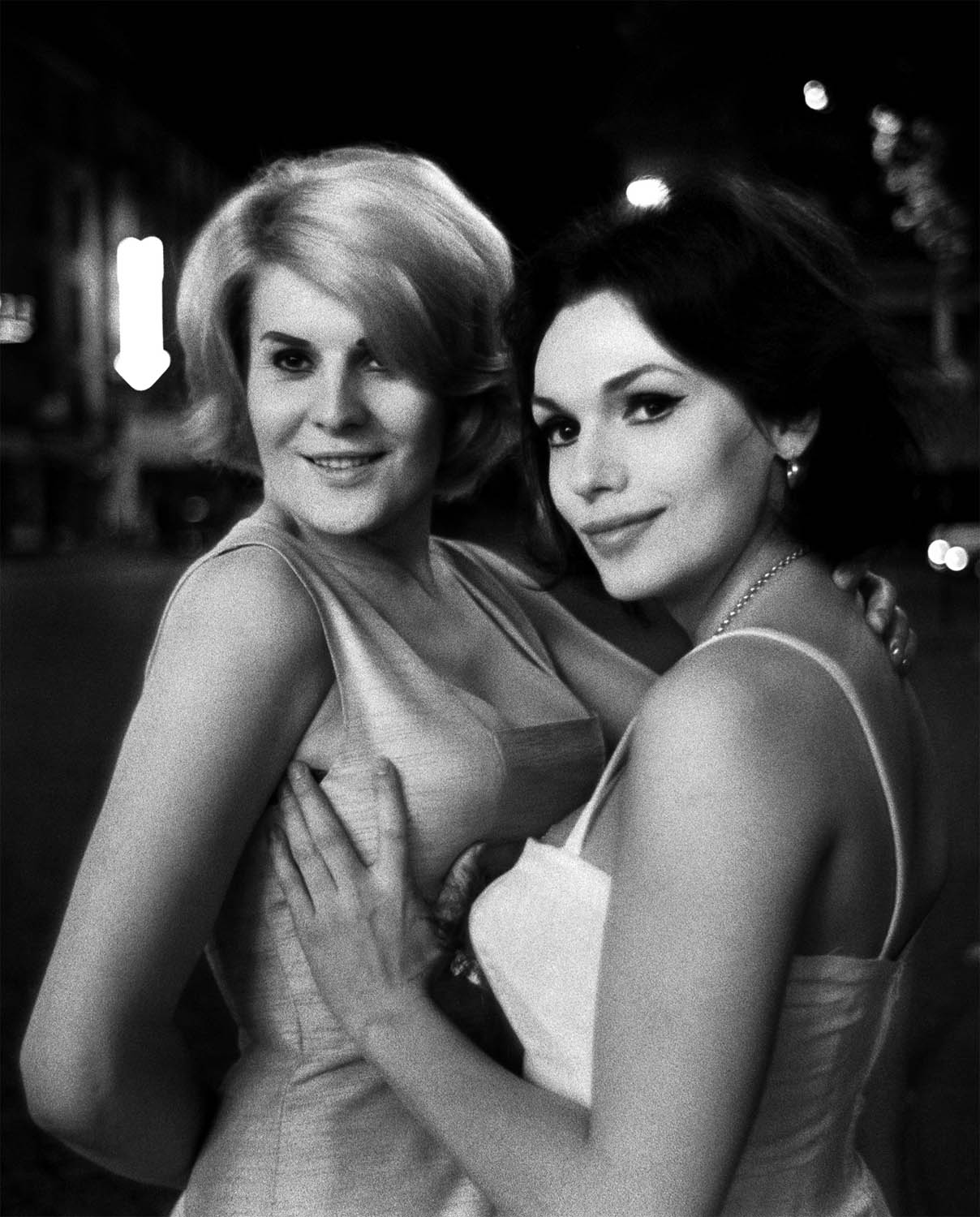
Christer Strömholm (Swedish, 1918-2002) 'Pepita' 1963


Christer Strömholm (Swedish, 1918-2002)
Pepita
1963
Gelatin silver print
© Christer Strömholm/Strömholm Estate


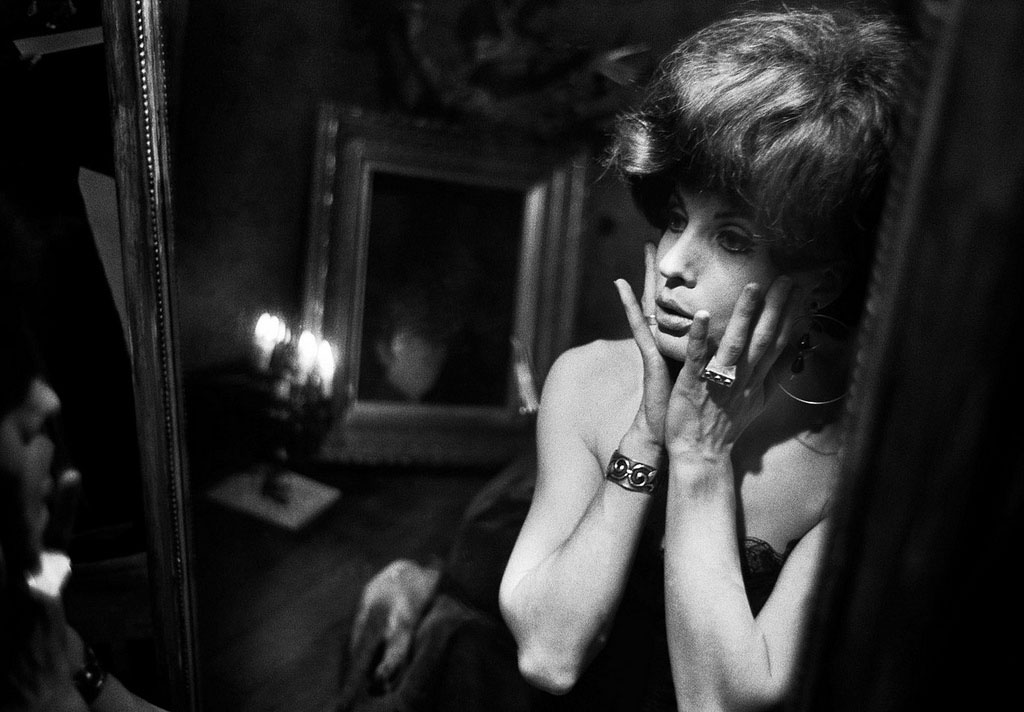
I am myself

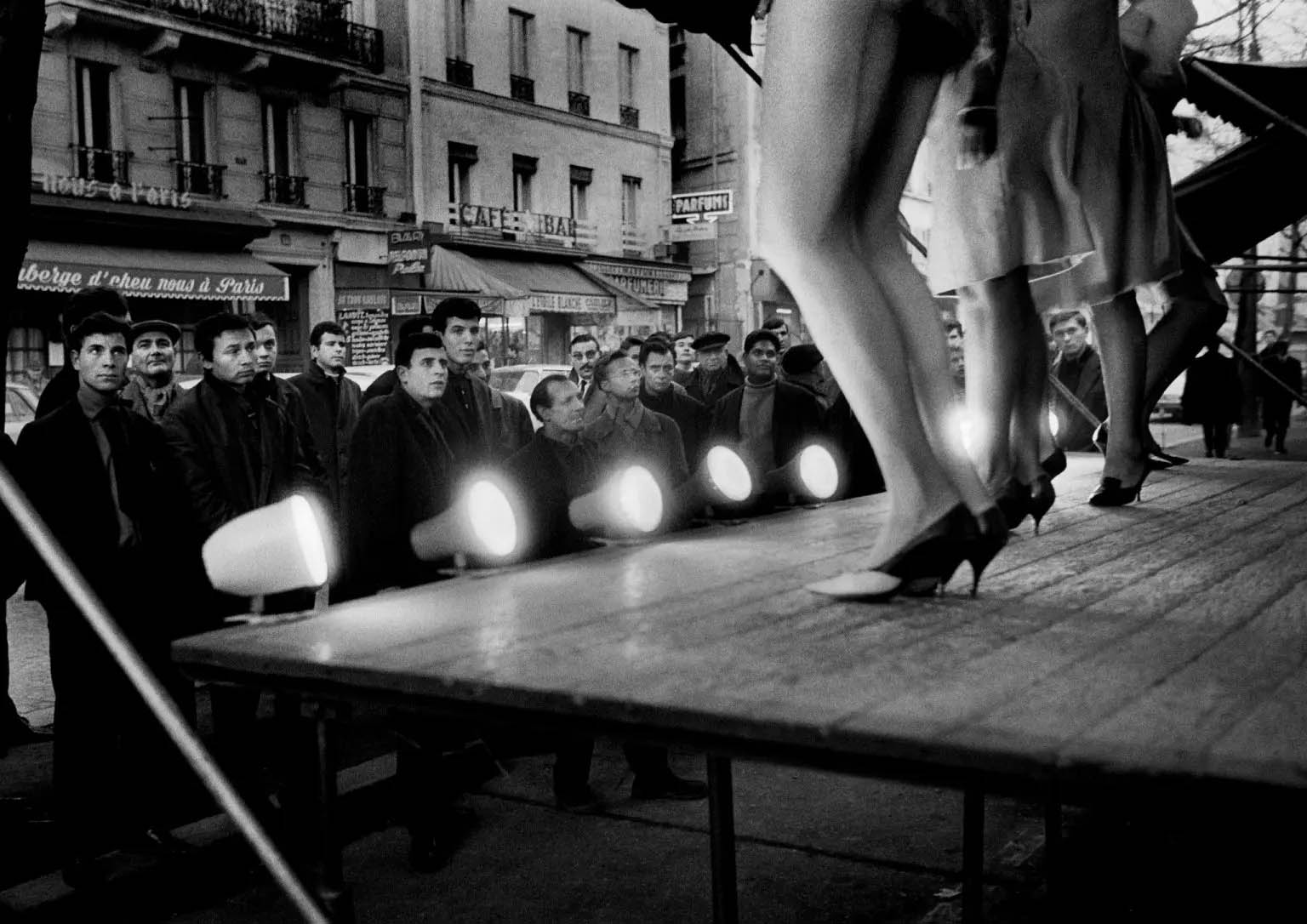
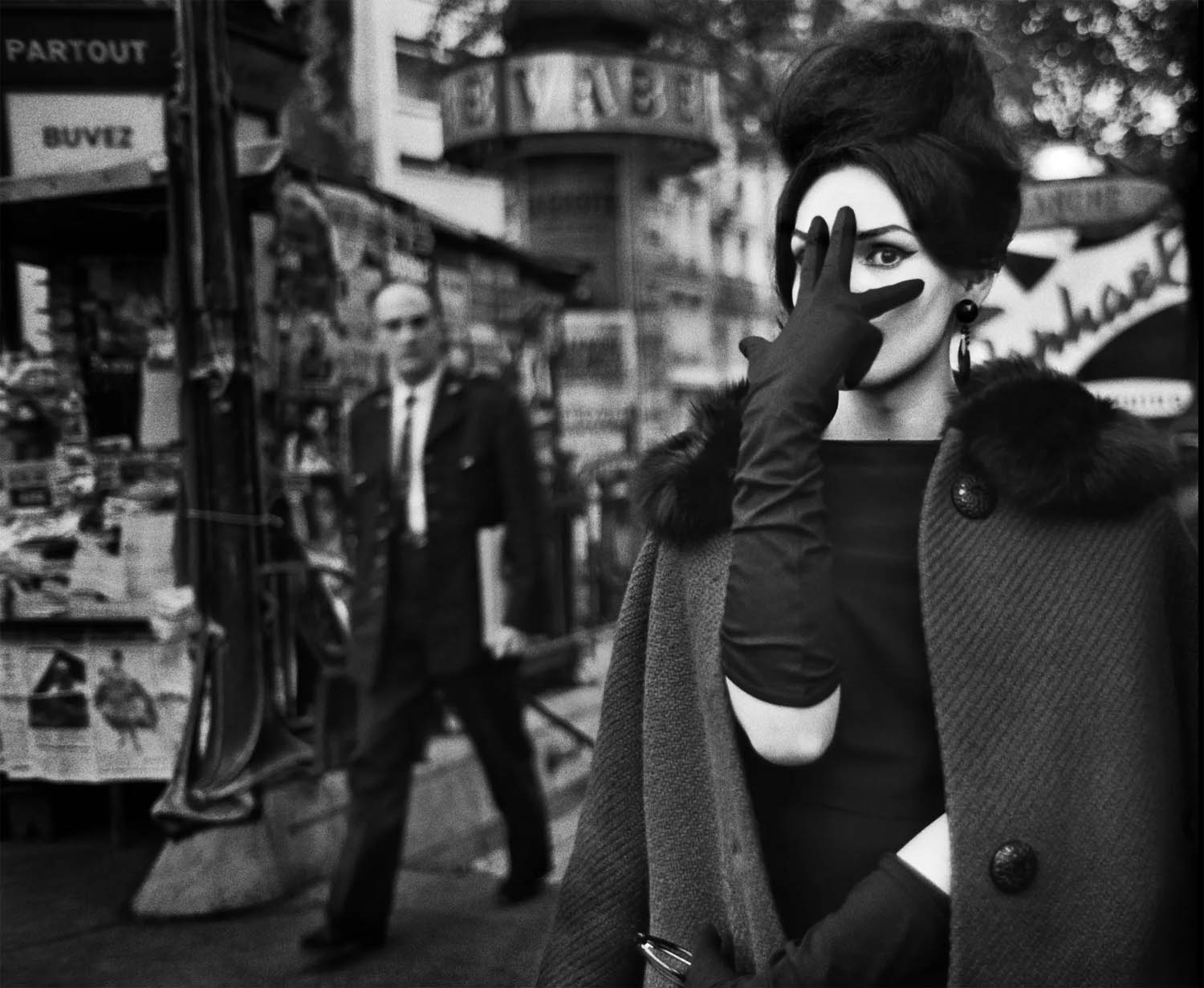
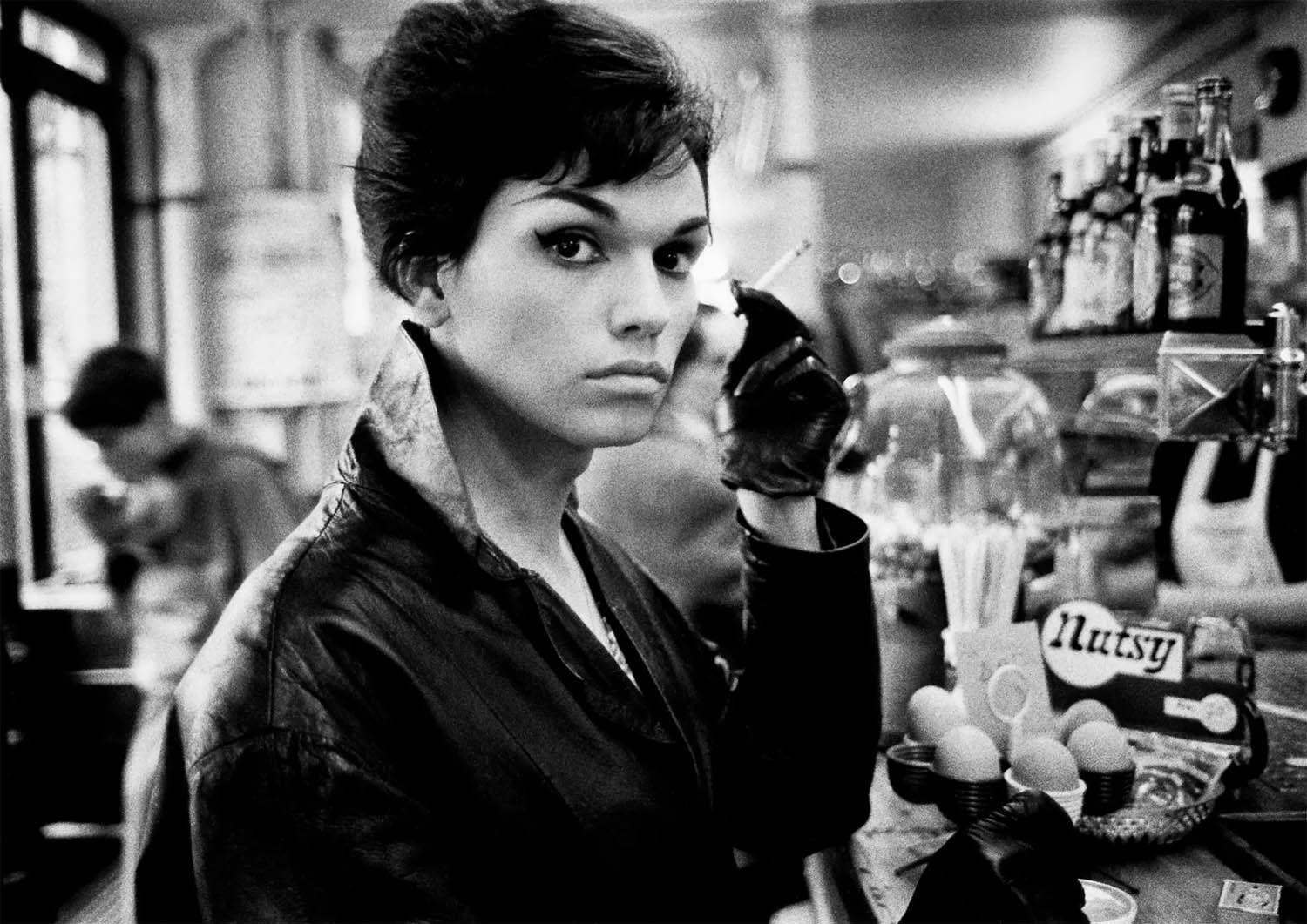
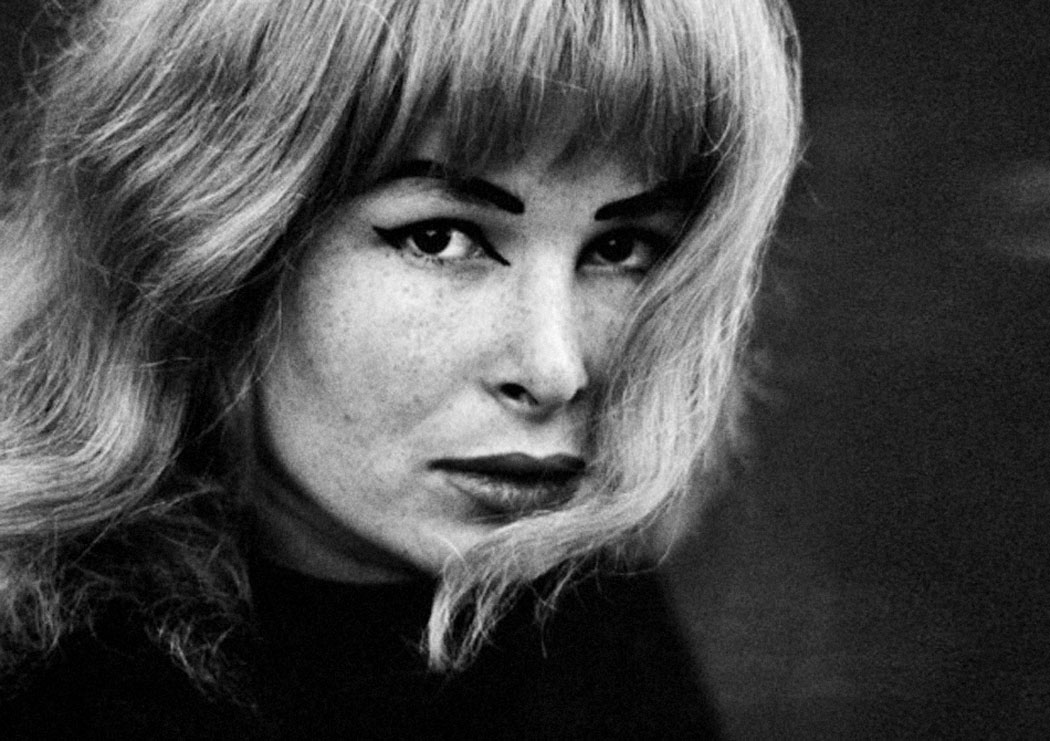
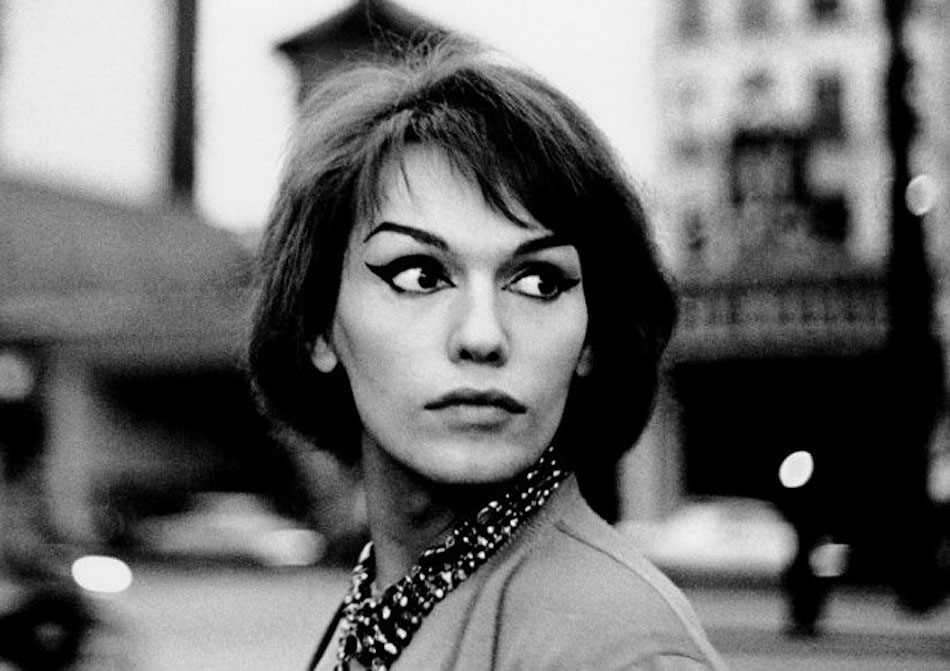
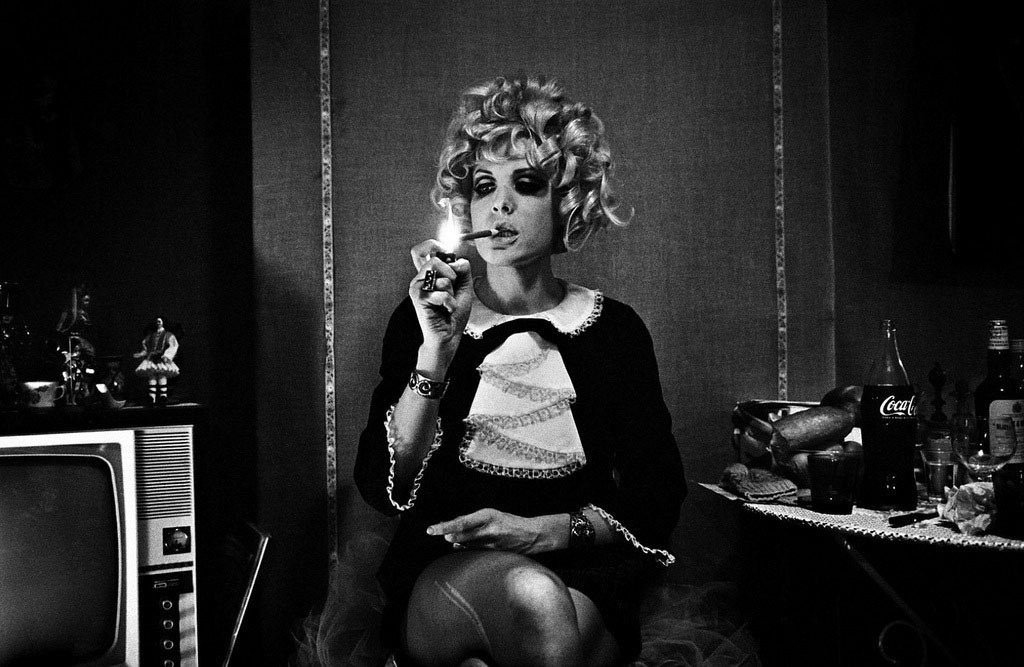
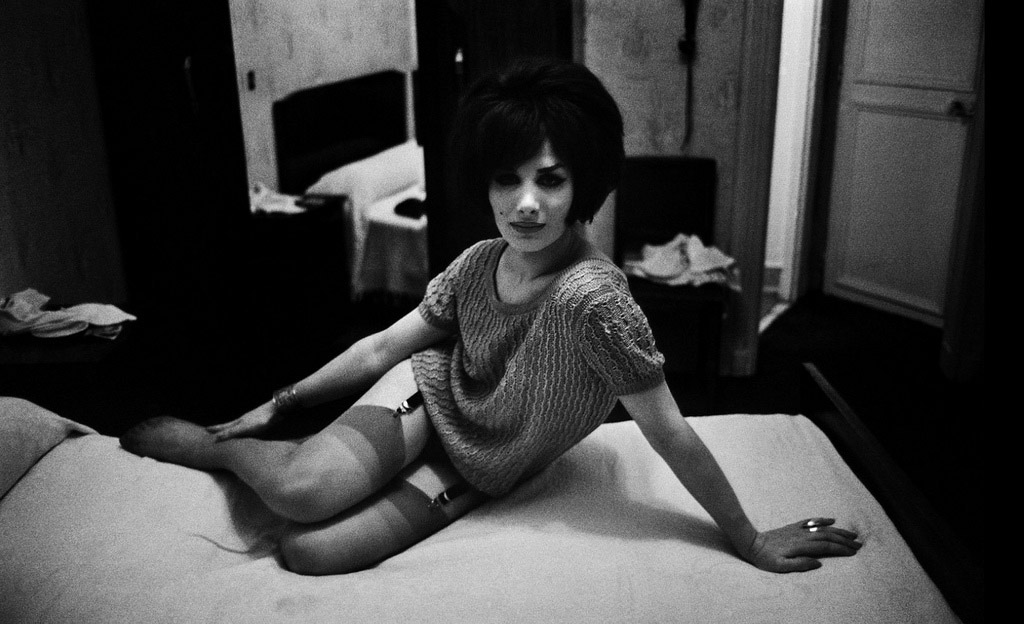
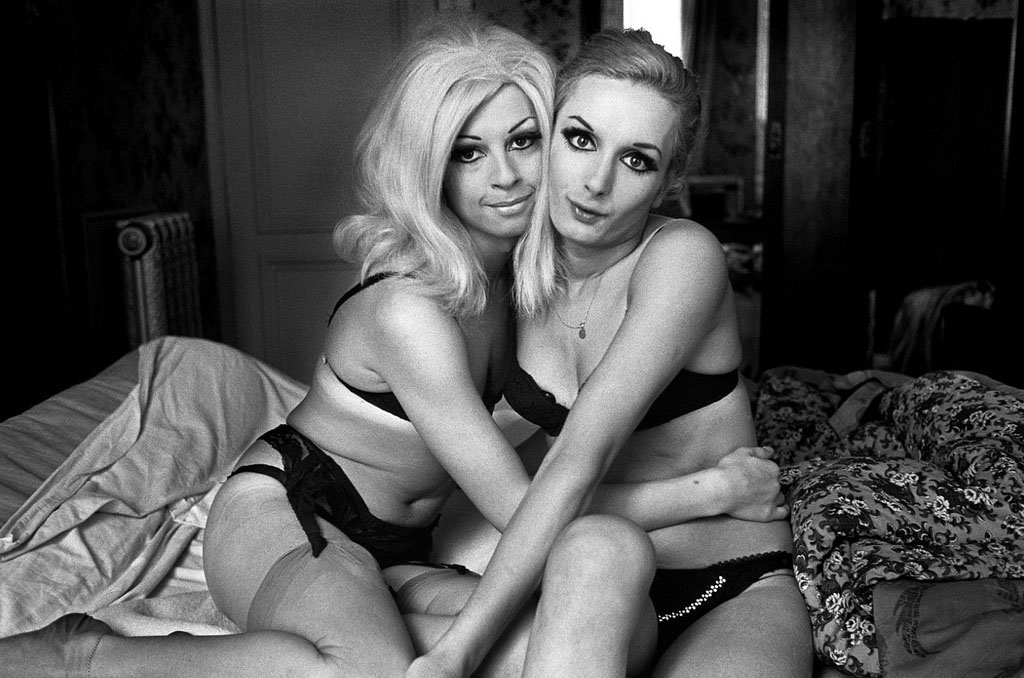
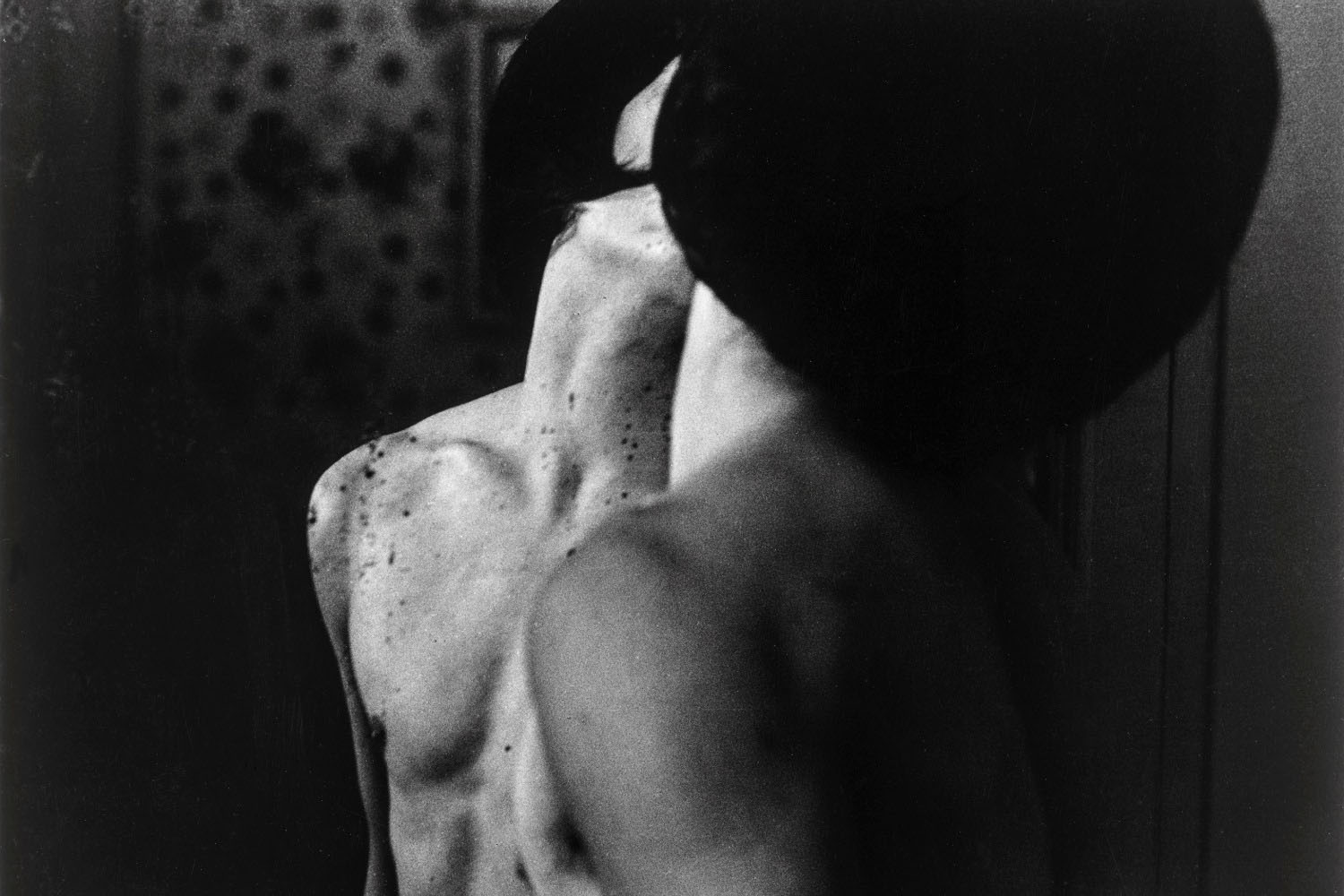
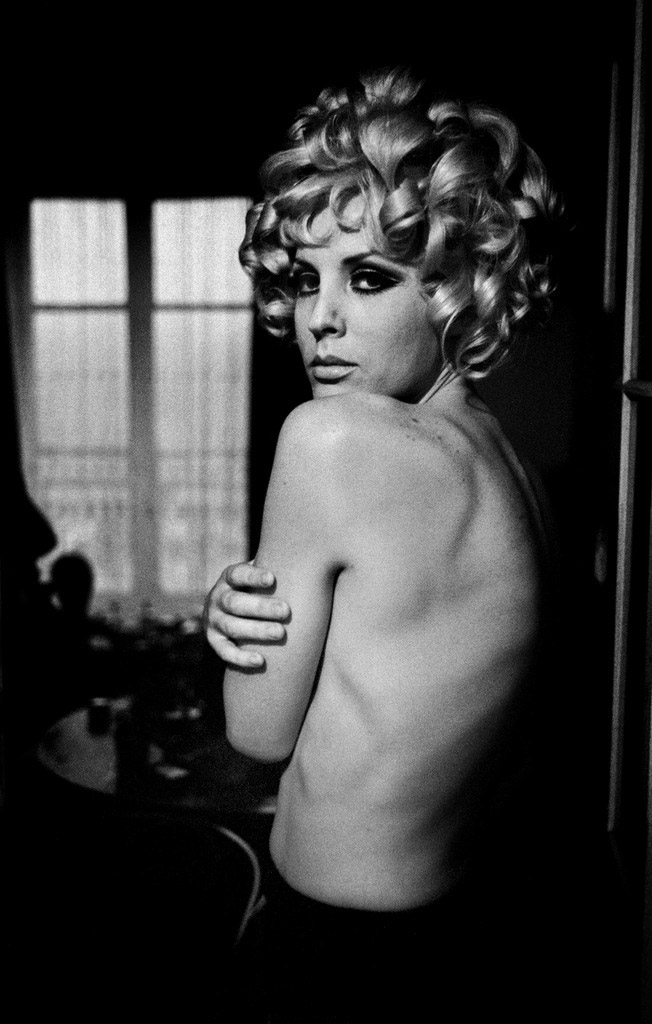
These are stunning photographs; they glow with an inner light and energy. With perfect composition and use of chiaroscuro the artist let’s the women speak for themselves – confident, self assured and happy in the life they are leading. Having come out as a gay man myself in 1975, six short years after the Stonewall Riots in New York, I can attest to how difficult and how much prejudice there was against gay men in the early 1970s. Imagine then, being a transexual living in Paris in the early to mid 1960s and the issues that these woman had to deal with.

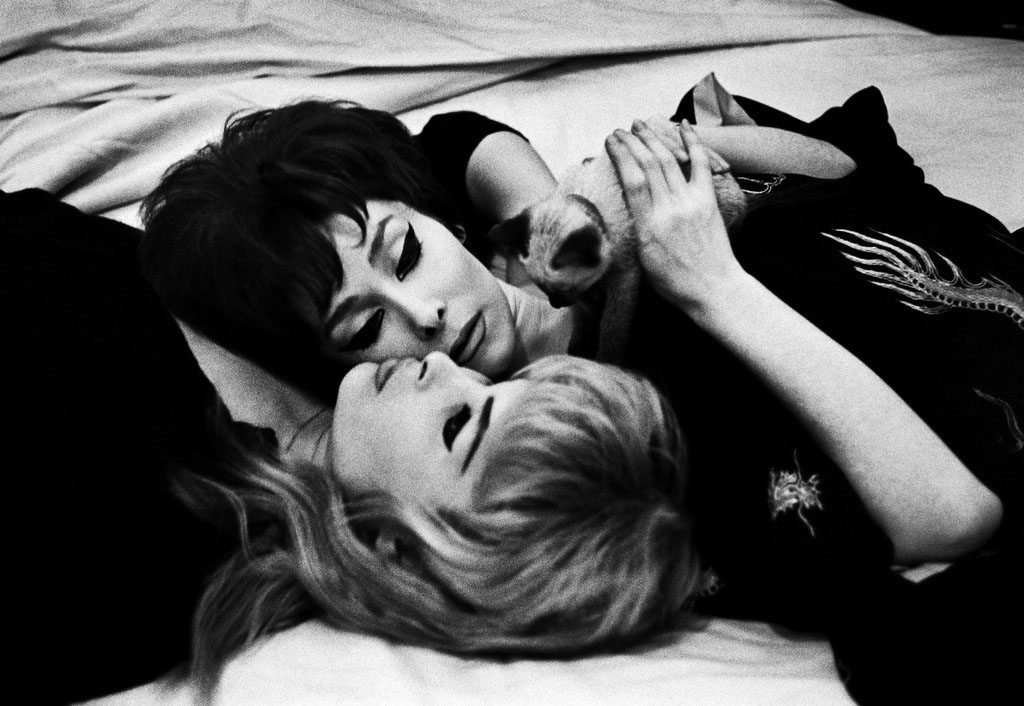
And yet there is a joyous quality to these photographs, an intimate relationship between people (not just artist and subject), a sense of fondness, friendship and fraternity. There is an intimacy here that transcends documentation. The last photograph in the posting (Gina, 1963, below) is just this wonderful, happy photograph where you just can’t help smiling yourself. There is a lightness here that is at variance with Brassai’s heavy set Parisian nights, that is more sensitive to the subject than Diane Arbus’ thrusting camera and her depiction of transexuals.

As good as the quote by Strömholm is (below), it is not just the freedom to choose one’s own life and identity, it is the ability to make that choice an informed choice, where you can select from a variety of things, where your preference indicates that your choice is based on one’s values or predilections. Without being informed the decision you may make is not free; if you are uninformed you may be unaware. An informed choice is based upon a clear appreciation and understanding of the facts, implications, and future consequences of any action.

Despite the prejudice and pain these woman would have suffered living an everyday life in the 1960s they have made an informed choice. These are strong, courageous woman and their friend has captured their resolve beautifully.

Dr Marcus Bunyan


Many thankx to the International Centre of Photography for allowing me to publish the photographs in the posting. Please click on the photographs for a larger version of the image.


“It was then – and still is – about obtaining the freedom to choose one’s own life and identity.”


“It was because I didn’t understand it myself… as soon as you ask yourself why their lives are the way they are, it becomes difficult not to take pictures.”


“This is a book [Les Amies de Place Blanche] about insecurity. A portrayal of those living a different life in the big city of Paris, of people who endured the roughness of the streets. … This is a book about the quest for self-identity, about the right to live, about the right to own and control one’s own body.”


Christer Strömholm


Christer Strömholm: Les Amies de Place Blanche @ ICP

Christer Strömholm (1918-2002) was one of the great photographers of the 20th century, but he is little known outside of his native Sweden. This exhibition presents his most powerful and acclaimed body of work: Les Amies de Place Blanche, a documentation of transsexual “ladies of the night” in Paris in the 1960s. Arriving in Paris in the late 1950s, Strömholm settled in Place Blanche in the heart of the city’s red-light district. There, he befriended and photographed young transsexuals struggling to live as women and to raise money for sex-change operations. Strömholm’s surprisingly intimate portraits and lush Brassaï-like night scenes form a magnificent, dark, and at times quite moving photo album, a vibrant tribute to these girls, the “girlfriends of Place Blanche.” The photographs were first published in Sweden in 1983, and the book quickly sold out, becoming a cult classic; it is being reissued in French and English this year. Strömholm’s photo-essay raises profound issues about sexuality and gender; as he wrote in 1983, “It was then – and still is – about obtaining the freedom to choose one’s own life and identity.” This exhibition, the first presentation of Strömholm’s work in an American museum, is organised by ICP Curatorial Assistant Pauline Vermare


Christer Strömholm (Swedish, 1918-2002) 'At a fun fair, Paris' 1954-1955


Christer Strömholm (Swedish, 1918-2002)
At a fun fair, Paris
1954-1955
Gelatin silver print
© Christer Strömholm/Strömholm Estate


Christer Strömholm (Swedish, 1918-2002) '"Lady Leopard" at a fair, Paris' 1954-1955


Christer Strömholm (Swedish, 1918-2002)
“Lady Leopard” at a fair, Paris
1954-1955
Gelatin silver print
© Christer Strömholm/Strömholm Estate


Christer Strömholm (Swedish, 1918-2002) "Little Christer" 1955


Christer Strömholm (Swedish, 1918-2002)
“Little Christer”
1955
Gelatin silver print
© Christer Strömholm/Strömholm Estate


Christer Strömholm (Swedish, 1918-2002) 'Nana, Paris' 1959


Christer Strömholm (Swedish, 1918-2002)
Nana, Paris
1959
Gelatin silver print
© Christer Strömholm/Strömholm Estate


Christer Strömholm (Swedish, 1918-2002) 'Nana, Paris' 1959


Christer Strömholm (Swedish, 1918-2002)
Nana, Paris
1959
Gelatin silver print
© Christer Strömholm/Strömholm Estate


Christer Strömholm (Swedish, 1918-2002) 'Jacky' 1959


Christer Strömholm (Swedish, 1918-2002)
Jacky
1959
Gelatin silver print
© Christer Strömholm/Strömholm Estate


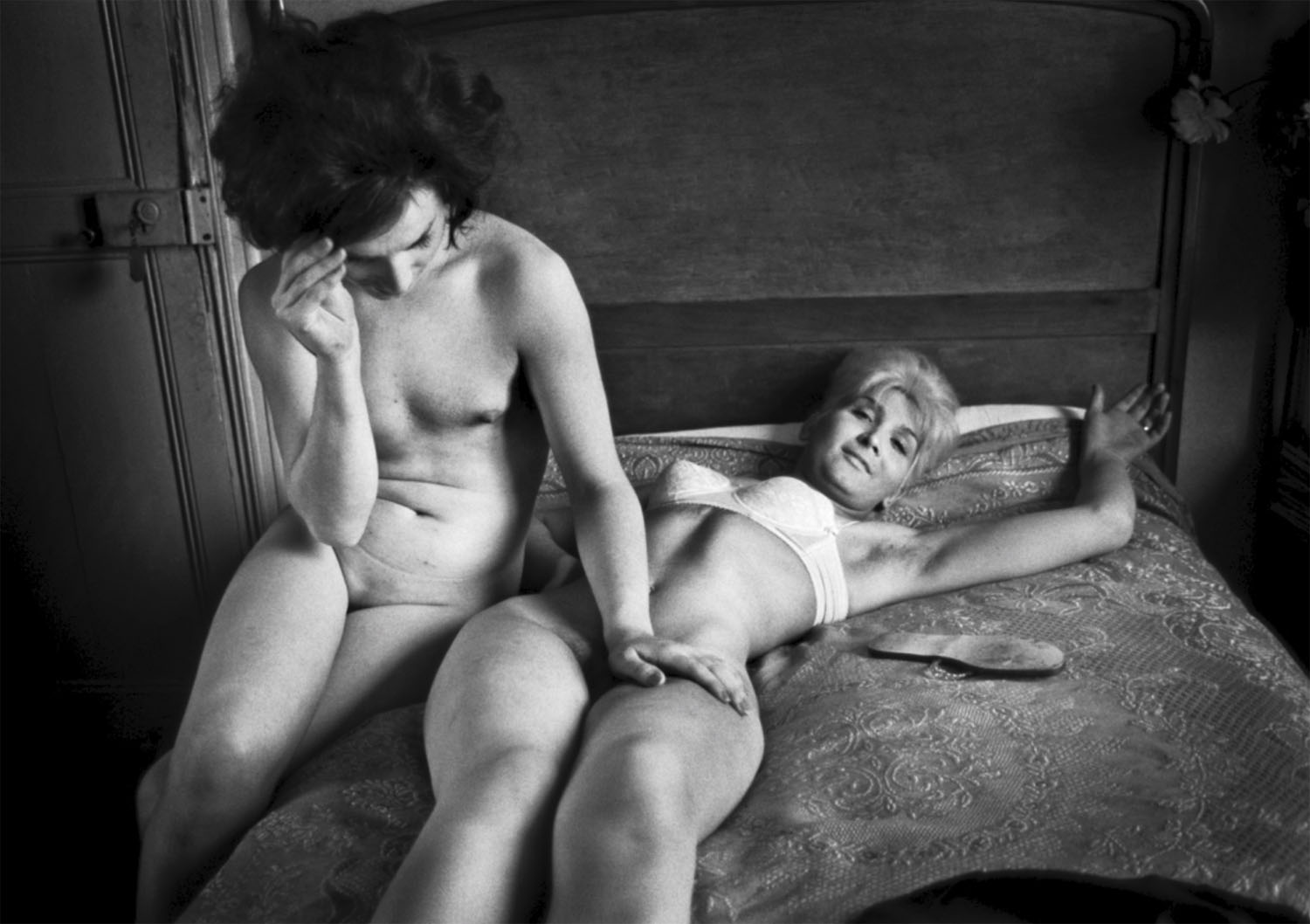
Christer Strömholm (Swedish, 1918-2002) 'Agnès Caprice' 1960s


Christer Strömholm (Swedish, 1918-2002)
Agnès Caprice
1960s
Gelatin silver print
© Christer Strömholm/Strömholm Estate


Agnès Caprice, showgirl of trans cabaret Le Carrousel and frequent subject of photo series Les Amies de La Place Blanche. She later partnered and had a child with an actress and performer of a butch lesbian cabaret. Caprice would pass at a young age due to addiction, after the devastating loss of 7 of her fellow Le Carrousel performers in a 1966 plane crash.

Text from the Genderoutlaws website


Christer Strömholm (Swedish, 1918-2002) 'Cobra and Caprice' 1961


Christer Strömholm (Swedish, 1918-2002)
Cobra and Caprice
1961
Gelatin silver print
© Christer Strömholm/Strömholm Estate


Christer Strömholm (Swedish, 1918-2002) 'Nana' 1963


Christer Strömholm (Swedish, 1918-2002)
Nana
1963
Gelatin silver print
© Christer Strömholm/Strömholm Estate


Christer Strömholm (Swedish, 1918-2002) 'Carmen, Pigalle, Paris' 1962


Christer Strömholm (Swedish, 1918-2002)
Carmen, Pigalle, Paris
1962
Gelatin silver print
© Christer Strömholm/Strömholm Estate


Christer Strömholm (Swedish, 1918-2002) 'Belinda' 1967


Christer Strömholm (Swedish, 1918-2002)
Belinda
1967
Gelatin silver print
© Christer Strömholm/Strömholm Estate


Christer Strömholm (Swedish, 1918-2002) 'Sabrina' 1967


Christer Strömholm (Swedish, 1918-2002)
Sabrina
1967
Gelatin silver print
© Christer Strömholm/Strömholm Estate


Christer Strömholm (Swedish, 1918-2002) 'Suzannah, Hôtel Pierrots' 1962


Christer Strömholm (Swedish, 1918-2002)
Suzannah, Hôtel Pierrots
1962
Gelatin silver print
© Christer Strömholm/Strömholm Estate


Christer Strömholm (Swedish, 1918-2002) 'Soraya and Sonia' 1962


Christer Strömholm (Swedish, 1918-2002)
Soraya and Sonia
1962
Gelatin silver print
© Christer Strömholm/Strömholm Estate


Christer Strömholm (Swedish, 1918-2002) 'Jacky' 1961


Christer Strömholm (Swedish, 1918-2002)
Jacky
1961
Gelatin silver print
© Christer Strömholm/Strömholm Estate


Christer Strömholm (Swedish, 1918-2002) 'Themis' 1963


Christer Strömholm (Swedish, 1918-2002)
Themis
1963
Gelatin silver print
© Christer Strömholm/Strömholm Estate


Christer Strömholm (Swedish, 1918-2002) 'Giulia and Carol' 1964


Christer Strömholm (Swedish, 1918-2002)
Giulia and Carol
1964
Gelatin silver print
© Christer Strömholm/Strömholm Estate


Christer Strömholm (Swedish, 1918-2002) 'Giulia and Carol, Pigalle, Paris' 1964


Christer Strömholm (Swedish, 1918-2002)
Giulia and Carol, Pigalle, Paris
1964
Gelatin silver print
© Christer Strömholm/Strömholm Estate


Christer Strömholm (Swedish, 1918-2002) 'Sabrina' 1967


Christer Strömholm (Swedish, 1918-2002)
Sabrina
1967
Gelatin silver print
© Christer Strömholm/Strömholm Estate


Christer Strömholm (Swedish, 1918-2002) 'Narcissus' 1968


Christer Strömholm (Swedish, 1918-2002)
Narcissus
1968
Gelatin silver print
© Christer Strömholm/Strömholm Estate


Raising profound issues about identity, sexuality, and gender, Christer Strömholm: Les Amies de Place Blanche, on view at the International Center of Photography (1133 Avenue of the Americas at 43rd Street) May 18 – September 2, 2012, presents 40 photographs, historical publications, and ephemera documenting young transgender males in the heart of Paris’ red-light district in the 1960s.

Arriving in Paris in the late 1950s, Christer Strömholm (Stockholm, 1918-2002) settled in Place Blanche, home of the famous Moulin Rouge. There, he befriended and photographed young transsexuals – “ladies of the night” – struggling to live as women and to raise money for sex-change operations. In General Charles de Gaulle’s ultra-conservative France, transvestites were outlaws, regularly abused and arrested by the police for being “men dressed as women outside the period of carnival.” Some of these women had tragic fates. Others, like “Nana” and “Jacky,” eventually fulfilled their destiny and led happy lives as women. Living alongside them for 10 years, Strömholm photographed his subjects in their hotel rooms, in bars, and in the streets of Paris.

“These intimate portraits and Brassaï-like lush night scenes form a magnificent, dark, and moving photo album, a vibrant tribute to these girls,” said ICP Curatorial Assistant Pauline Vermare, who organised the exhibition. These photographs were first published in Sweden in 1983, and the book Vännerna frÃ¥n Place Blanche (“The Girlfriends of Place Blanche”) – which will be reissued this year in French and English – quickly sold out, becoming a cult classic and solidifying Strömholm as one of the great photographers of the 20th century. The work for this exhibition is provided by the Strömholm Estate in Stockholm, the Marvelli Gallery in New York, and from the collection of Alice Zimet.

As Strömholm wrote in 1983: “These are images of people whose lives I shared and whom I think I understood. These are images of women – biologically born as men – that we call ‘transsexuals.’ As for me, I call them ‘my friends of Place Blanche.’ It was then – and still is – about obtaining the freedom to choose one’s own life and identity.”

Christer Strömholm is a lesser known artist, but may well be the father figure of Scandinavian photography. A prominent artist and winner of the prestigious Hasselblad Award in 1997, he was also an influential teacher and the mentor to some of today’s leading Swedish photographers including J.H. Engström, Anders Petersen, and Lars Tunbjörk. Highly revered in his native Sweden since the 1980s, he is still little known outside of Europe. This exhibition is the first presentation of Strömholm’s work in an American museum, and features his most powerful and acclaimed body of work.

Press release from the International Centre of Photography website


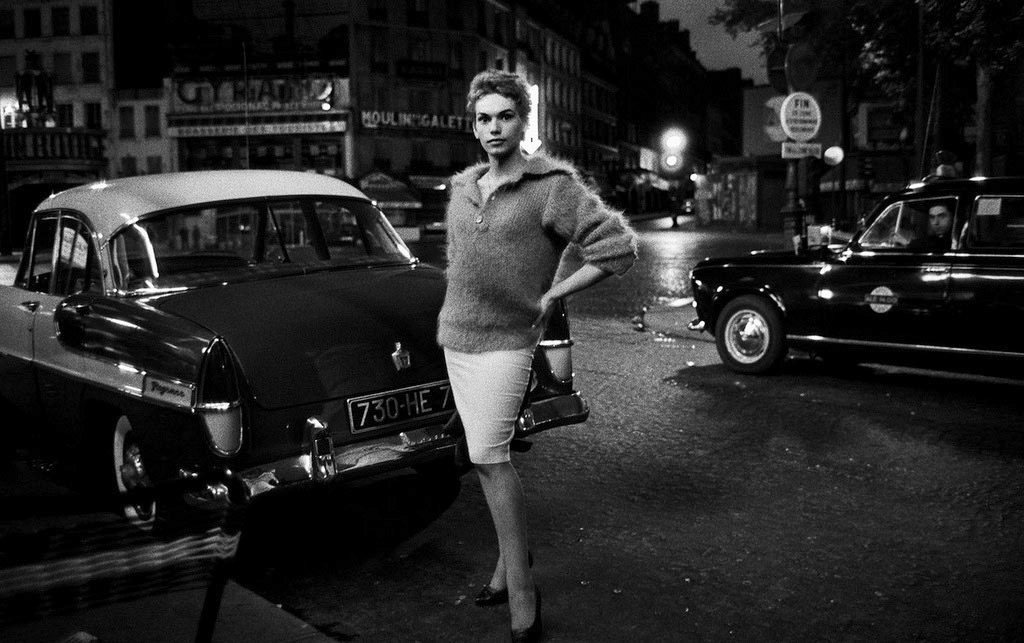
Christer Strömholm (Swedish, 1918-2002) 'Nana with cars' 1959


Christer Strömholm (Swedish, 1918-2002)
Nana with cars
1959
Gelatin silver print
© Christer Strömholm/Strömholm Estate


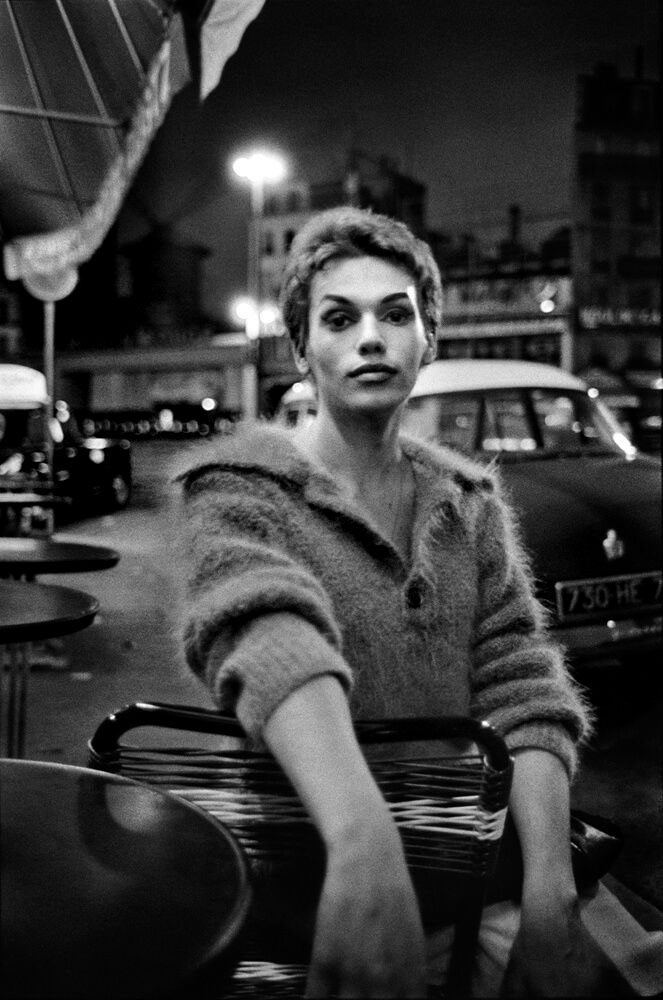
Christer Strömholm (Swedish, 1918-2002) 'Nana' 1959


Christer Strömholm (Swedish, 1918-2002)
Nana
1959
Gelatin silver print
© Christer Strömholm/Strömholm Estate


Christer Strömholm (Swedish, 1918-2002) 'Nana' 1959


Christer Strömholm (Swedish, 1918-2002)
Nana
1959
Gelatin silver print
© Christer Strömholm/Strömholm Estate


Christer Strömholm (Swedish, 1918-2002) 'Gina and Nana' 1960


Christer Strömholm (Swedish, 1918-2002)
Gina and Nana
1960
Gelatin silver print
© Christer Strömholm/Strömholm Estate


Christer Strömholm (Swedish, 1918-2002) 'Carole and Nana' 1960


Christer Strömholm (Swedish, 1918-2002)
Carole and Nana
1960
Gelatin silver print
© Christer Strömholm/Strömholm Estate


Christer Strömholm (Swedish, 1918-2002) 'Suzannah and Sylvia' 1962


Christer Strömholm (Swedish, 1918-2002)
Suzannah and Sylvia
1962
Gelatin silver print
© Christer Strömholm/Strömholm Estate


Christer Strömholm (Swedish, 1918-2002) 'Suzannah and Sylvia' 1962


Christer Strömholm (Swedish, 1918-2002)
Suzannah and Sylvia
1962
Gelatin silver print
© Christer Strömholm/Strömholm Estate


Under the strict Catholic social regime of Charles de Gaulle, transsexuals in Paris at this time were forced to confine their identities to within their hotel rooms, fearing the brutality of the police and imprisonment. Against this political backdrop Strömholm delved into the harsh world of sex work; Strömholm pervades this intimate and world of prostitution and deconstructs the division between private and public. The image of Susannah and Mimosa pictured below provides an insight into their private lives; the playful depiction of the women contrasts heavily with our contextual understanding of the photograph, of the hard life transsexuals endured in Paris. Strömholm reveals a dynamic sense of sorority between Suzanne and Mimosa in this portrait, personal interactions emerge which portrays the women as vibrant characters, a contrast against the grim reality of prostitution in Paris. Strömholm reveals a close bond between the women which goes beyond simplistic definitions of the women solely as exploited sex workers. Whilst Strömholm’s work can be viewed as a social commentary of the transgender women of Paris and the struggles they faced in daily life, there is a rather more emotive and delicate edge to Strömholm’s work which is a stark departure from the work of social documentary photographers.

Anonymous. “Christer Strömholm Exhibition Review: ‘Les Amies de Place Blanche’,” on the Camera History website 23rd January 2013 [Online] Cited 19/09/2024


Christer Strömholm (Swedish, 1918-2002) 'Sonia, Hôtel Pierrots' 1962


Christer Strömholm (Swedish, 1918-2002)
Sonia, Hôtel Pierrots
1962
Gelatin silver print
© Christer Strömholm/Strömholm Estate


“This is a book about the quest for self-identity, about the right to live, about the right to own and control one’s body. These are images of people whose lives I shared and whom I think I understood. This is where I arrived in 1959. This is where I settled and started to tell of the life I shared with the transsexuals. They soon became ‘the friends of Place Blanche’. …

After the sun had set, the air cooled down. At the time when shadows stretched, we could catch glimpses of prostitutes walking out of alleys. Big and beautiful women. Some of them exceeded in height their hope-swollen clients. Surrounded by circuses, freaks and snakes, the prostitutes stood there in the buildings’ shadows, keeping a constant eye on the boulevard, the shows and the clients.

Midway through January, when the fairground people set off again, the boulevard went back to normal – the party was over. On the boulevard and in the alleys surrounding place Pigalle and place Blanche, the prostitutes – both male and female, lesbians, transsexuals, transvestites or in other words: the usual group – took back their old spots.

Prostitution was as active as it used to be at the end of the 19th century. Organised prostitution happened all year long. A desperate fight, both to earn the daily bread and, for transsexuals, to see their identitarian dreams come true.

These beautiful ladies dreamt of travelling to Casablanca to undergo surgery. The outcome of a transformation started a long time ago. These women were biologically born as men. They lived here, in the place Blanche neighbourhood. They worked in cabarets, sang, did stripteases. They were outspoken and they answered back immediately to the public, it was a typical Parisian tradition. A cocky and saucy sense of humour.

They earned 60 French francs a day, enough to pay for the food and the hotel room but not enough to afford the 40,000 francs surgery. The streets were their only solution. Some of them had loyal customers, others stood in the same place on the street. Here, prostitution was part of the neighbourhood life. A way to survive.

At the time of the Commune, there already were transvestites on the place Blanche. But it was in the late 50s that the word ‘transsexual’ began to be used. It was also at that time that it became possible for a man to physically become a woman thanks to hormones and surgery. But hormone therapy has also been the cause of tragedies. Often they were denied the help of a doctor. So they had to fend for themselves.

My friends lived together in a world apart, a world of shadows and loneliness, anxiety, hopelessness and alienation. The only thing they demanded was to have the right to be themselves, not to be forced to deny or repress their feelings, to have the right to live their own lives, to be responsible, to be at ease with themselves.

Nothing more. It was then – and still is – about attaining the right to own one’s own life and identity.

Christer Strömholm from his 1983 book Les Amies de Place Blanche


Christer Strömholm (Swedish, 1918-2002) 'Sabrina' 1967


Christer Strömholm (Swedish, 1918-2002)
Sabrina
1967
Gelatin silver print
© Christer Strömholm/Strömholm Estate


Christer Strömholm (Swedish, 1918-2002) 'Gina' 1963


Christer Strömholm (Swedish, 1918-2002)
Gina
1963
Gelatin silver print
© Christer Strömholm/Strömholm Estate


International Center of Photography
1133 Avenue of the Americas at 43rd Street
New York NY 10036
Phone: 212 857 0045

Opening hours:
Wednesday – Monday 11am – 7pm
Closed Tuesdays

International Center of Photography website

LIKE ART BLART ON FACEBOOK

Back to top

Preview: ‘Night’s Ocean Shore’ by Andrew Follows from ‘Through the Looking Glass Dimly’ at The Old Ambulance Depot, Edinburgh

Exhibition dates: 4th August – 18th August 2012


Andrew Follows (Australian, d. 2019) 'Untitled' from the sequence 'Night's Ocean Shore' 2012


Andrew Follows (Australian, d. 2019)
Untitled
2012
From the sequence Night’s Ocean Shore
Digital inkjet print


This sequence is part of a joint exhibition by blind photographers Andrew Follows and Rosita McKenzie titled Through the Looking Glass Dimly to be held at The Old Ambulance Depot, Edinburgh in August 2012. The exhibition is part of the Edinburgh Art Festival. On his first trip overseas Follows is travelling to Scotland with his trusty companion Eamon, his guide dog. The words below are an analysis of Andrew’s work, a photographer who only has 15% vision in one eye and is legally blind. This is the first time anyone has written about Andrew’s work in any depth. It has been great fun to work with Andrew on this project and it is a privilege to write some hopefully insightful words about his art practice.

The exhibition by Follows and McKenzie takes a twofold path. Firstly, work from both photographers will investigate the resilience of bush-fire prone landscapes in both Scotland and Australia. Secondly, work will portray the fluid spaces of the urban and natural landscape at night in both the Southern and Northern hemispheres. The exhibition is curated by Kate Martin from the Contemporary Art Exchange.

This is a beautiful, well resolved sequence that has a very intimate narrative, a journey of discovery from the stars in the night sky to our own star, the sun and on to the illumination of the earth at night. Under any circumstances, Follows’ vision is outstanding.

Dr Marcus Bunyan


Andrew Follows (Australian, d. 2019) 'Night's Ocean Shore' sequence 2012


Andrew Follows Night’s Ocean Shore sequence 2012


The Eye that sees the Sun: Andrew Follows and his Tabula rasa


“‘The world is my representation’: this is a truth valid with reference to every living and knowing being, although man alone can bring it into reflective, abstract consciousness. If he really does so, philosophical discernment has dawned on him. It then becomes clear and certain to him that he does not know a sun and an earth, but only an eye that sees a sun, a hand that feels the earth; that the world around him is there only as representation, i.e. only in reference to another, the representer, which is he himself.”


Arthur Schopenhauer. The World as Will and Representation 1818


Please close your left eye and place your left hand over it; now make a circle with the thumb and forefinger of your right hand and curl the rest of your fingers to make a tunnel; now place this hand to your right eye and close the aperture until you can only see a small amount of the world. Imagine, seeing the world through this one eye with only fifteen percent vision. This is the field of vision, the line of sight of artist Andrew Follows.

The artist’s visual acuity (the capacity of the eye to see fine detail, measured by determining the finest detail that can just be detected) has been with him since birth. He has always seen the world this way and does not regard it as a disability. In fact, his highly refined sense of “sight” enables spaces of poss/ability (not dis/ability) within his artistic practice. The development of an abnormal keen-sightedness helps him record his impression of the world via the medium of photography.

His is not the vision of im(pair)ment as the rest of us see the world, through two eyes, but the holistic vision of a monocular eye that becomes the root of his photography. The lens of the camera becomes an extension of Self, the shutter his very existence and the digital screen on the back of the camera his tabula rasa, a “blank slate” upon which he writes his experience and perception, his knowledge of the world. His experience of vision and the evidence of his photographs become both the beginning and the end of the work, a place in which his fundamental nature resides.

In today’s polyvocal world, with the proliferation of visual protheses (such as smart phones and digital cameras) we are now seeing the encoding of increasingly mental images of the material world. Follows’ photographs are an amalgamation of these mental images and what he can physically see on the screen, for when taking a photograph he cannot see details in the image he is taking. Follows takes the ‘I can see’ of sight, located within his field of vision, and through his organisation of the spatio-temporal field of vision and perception, he offers the viewer a unique ‘take’ on the world. His point of view is a collection of objects to which the eye is directed and on which it rests within a certain distance.

From a visual point of view this resting facilitates in Follows’ work a particular serenity and beauty. His skill as an artist is to combine his imagination with what he sees through the screens of camera and computer to create ‘other’ worlds. These other worlds are evidenced in Follows’ love of night time photography, as though his view of the environment, the spaces and places that surround him, is enhanced through a doubling of perception: of light, at night, through tunnel vision. Our eyes rest upon the effervescent lights of an oil refinery on the outskirts of Melbourne; the star trails blazing across the night sky; the reflections in water at Corio Bay, Geelong. Most importantly, it is the quality of light that imbues Follows’ work that enhances the narrative, the journey on which the artist takes us.

Follows’ shows us his world, and our world, as we have never seen it before. What is important in the work is that he asks us to embrace his vision and incorporate his photographs into our collective memory. The world is his representation, a truth valid with reference to every living and knowing being, brought by us into reflective, abstract consciousness. We the viewer become his eye, his only eye that sees Schopenhauer’s sun.

Dr Marcus Bunyan
May 2012


Andrew Follows (Australian, d. 2019) 'Untitled' from the sequence 'Night's Ocean Shore' 2012


Andrew Follows (Australian, d. 2019) 'Untitled' from the sequence 'Night's Ocean Shore' 2012


Andrew Follows (Australian, d. 2019) 'Untitled' from the sequence 'Night's Ocean Shore' 2012


Andrew Follows (Australian, d. 2019) 'Untitled' from the sequence 'Night's Ocean Shore' 2012


Andrew Follows (Australian, d. 2019) 'Untitled' from the sequence 'Night's Ocean Shore' 2012


Andrew Follows (Australian, d. 2019) 'Untitled' from the sequence 'Night's Ocean Shore' 2012


Andrew Follows (Australian, d. 2019) 'Untitled' from the sequence 'Night's Ocean Shore' 2012


Andrew Follows (Australian, d. 2019) 'Untitled' from the sequence 'Night's Ocean Shore' 2012


Andrew Follows (Australian, d. 2019)
Untitled
From the sequence Night’s Ocean Shore
2012
Digital inkjet prints


Contemporary Art Exchange presents Through the Looking Glass Dimly a unique collaboration and exchange project between Australian and Scottish photographers Andrew Follows (Melbourne) and Rosita McKenzie (Edinburgh). Drawn together by their shared passion for photography, their experiences of visual impairment, and a desire to share their knowledge and skills globally, Andrew and Rosita have embarked on an ambitious visual arts project to raise awareness about visual impairment issues, celebrate recent artistic achievements and create the first international network for visually impaired artists.

Digital photography is an excellent medium for reflecting and exploring blind or vision impaired artists’ life experiences. For Rosita it provides ‘a voice’ and dispels the myth that totally blind people cannot possess vision and artistic imagination or participate fully in the visual arts. For Andrew, who has Retinitis Pigmentosa – a degenerative eye condition leaving him blind in one eye and with only fifteen percent vision in the other – it is a tool that enables him to see small glimpses of his fading world.

Andrew and Rosita have been collaborating to develop an exhibition of previous and new work. Since 2009, Andrew has documented the effects of, and resilience to, the devastating Black Saturday bushfires in the Victorian Highlands. Rosita, although having never ‘seen’ Andrew’s work, has responded to it by embarking on her own documentation of the effects of and regrowth after the unusual forest fires in the Scottish Highlands earlier this year. Andrew has also been experimenting with night photography and has developed a number of photographs capturing the Southern Hemisphere by night. In response, Rosita will develop a new body of work capturing the night sky from a Northern Hemisphere perspective. Both artists will also showcase examples from their wide range of photographs dealing with similar themes from natural and urban settings.

The project will be registered with the 2012 Edinburgh Art Festival and the Year of Creative Scotland. Through the Looking Glass Dimly will also coincide with other major international events taking place in Edinburgh during August such as the first International Cultural Summit, the Edinburgh International Festival, the Edinburgh Fringe Festival and the Festival of Politics at The Scottish Parliament.”

Text from the Contemporary Art Exchange


The Old Ambulance Depot
77 Brunswick Street
Edinburgh
EH7 5HS

Only open to the public during exhibitions and events

Andrew Follows Photography website

Edinburgh Art Festival website

The Old Ambulance Depot website

Contemporary Art Exchange website

LIKE ART BLART ON FACEBOOK

Back to top

Exhibition: ‘Cindy Sherman’ at the Museum of Modern Art (MoMA), New York

Exhibition dates: 26th February – 11th June 2012


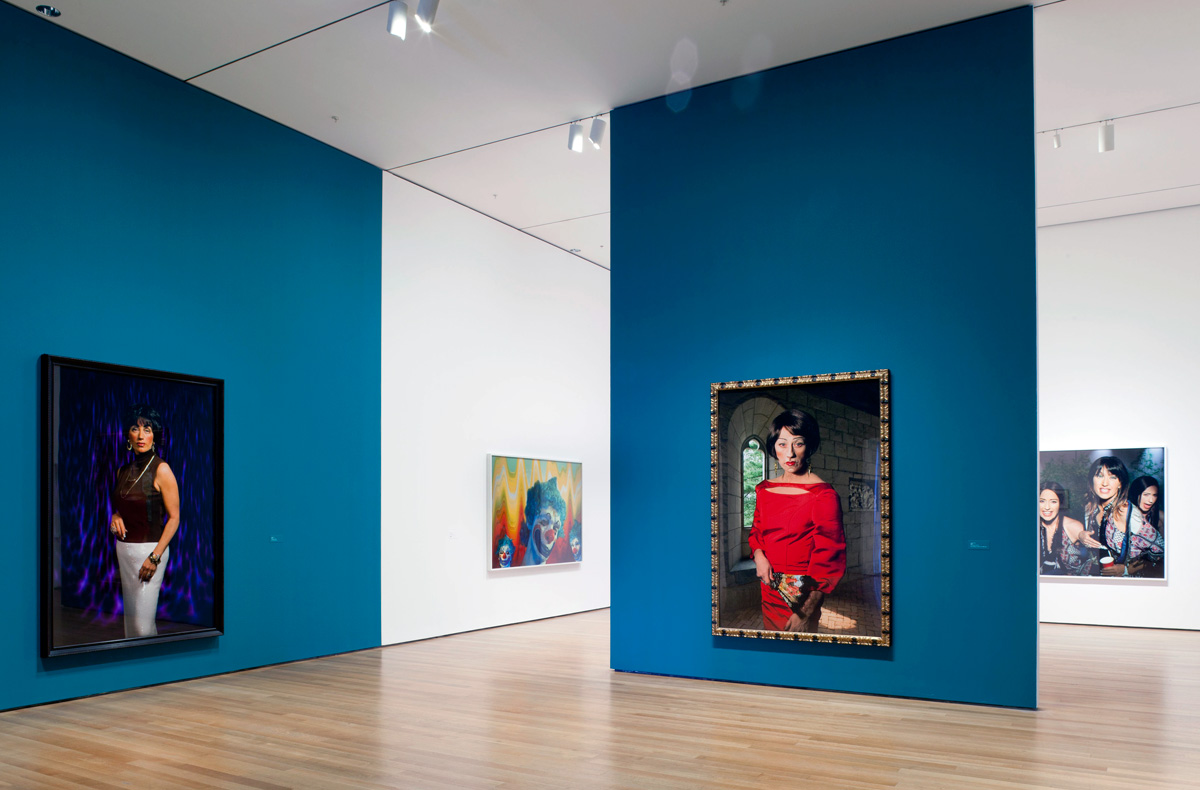
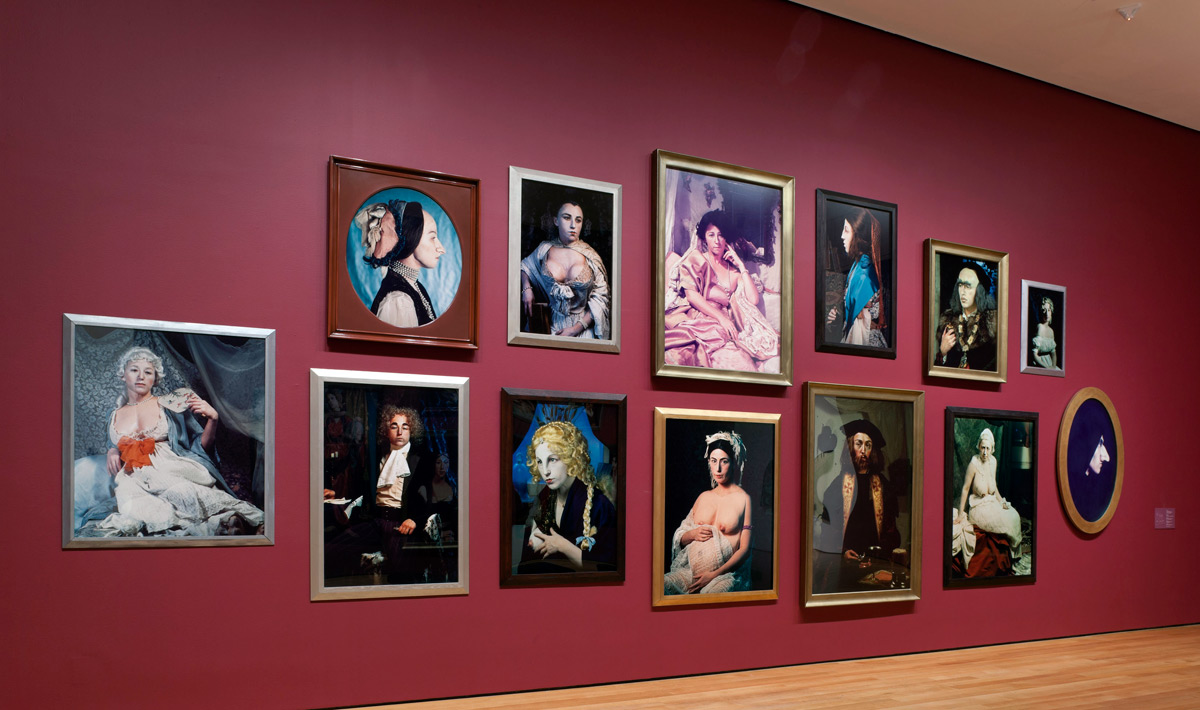
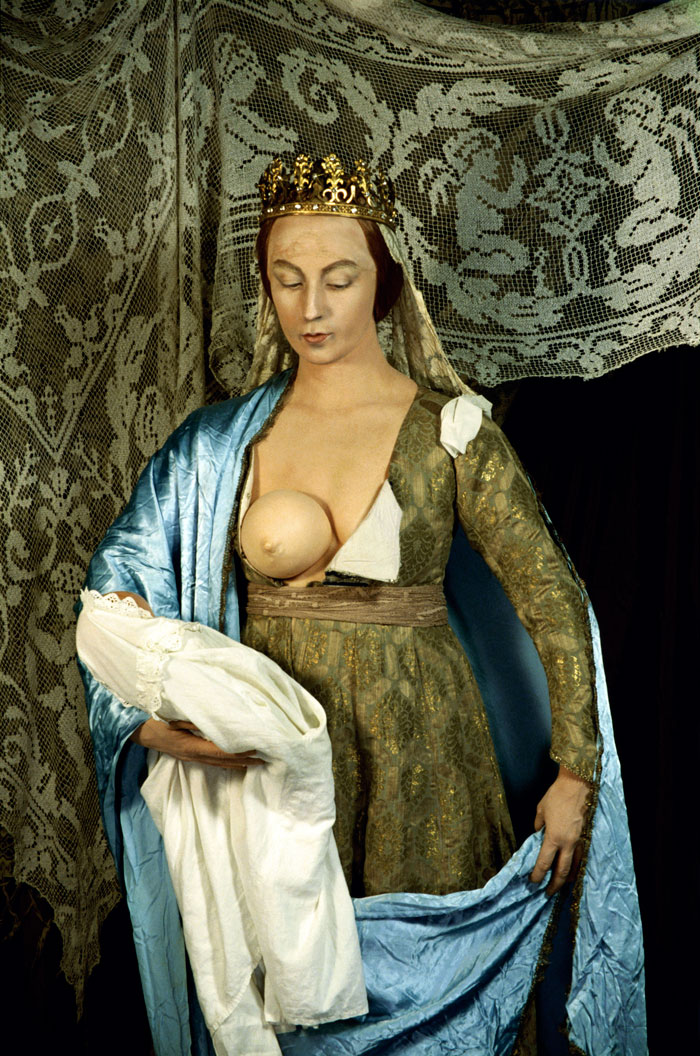
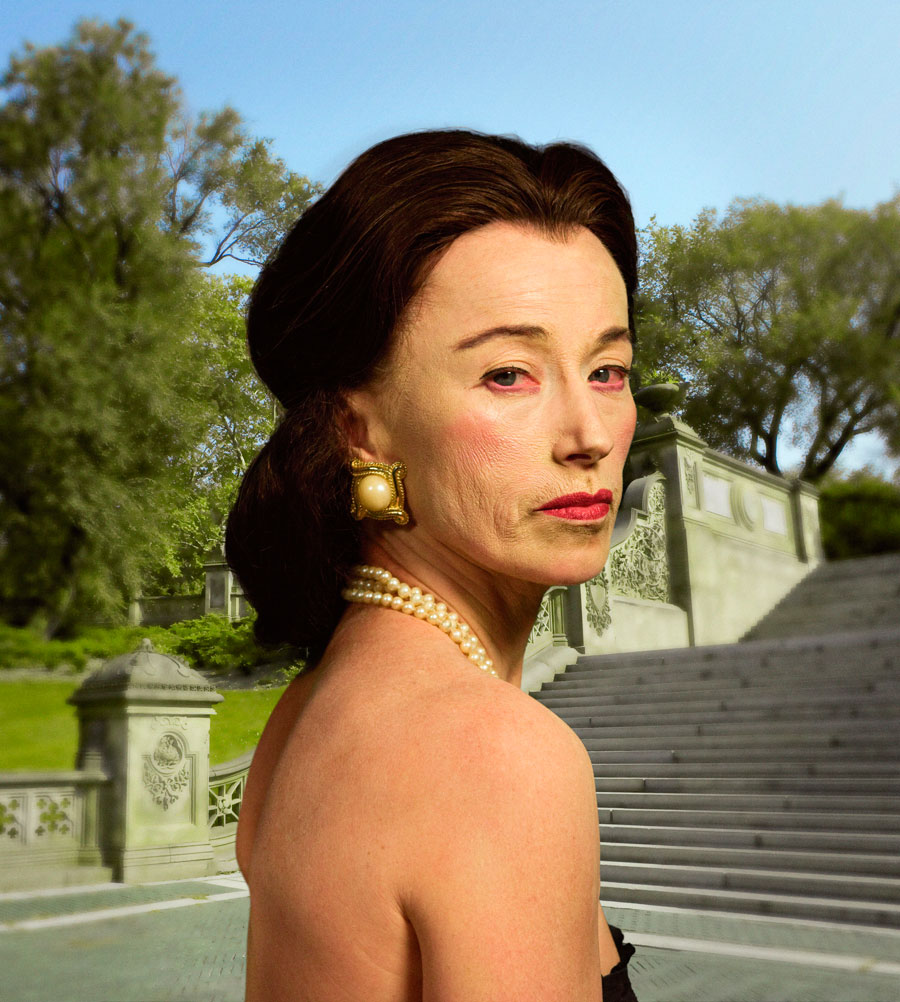
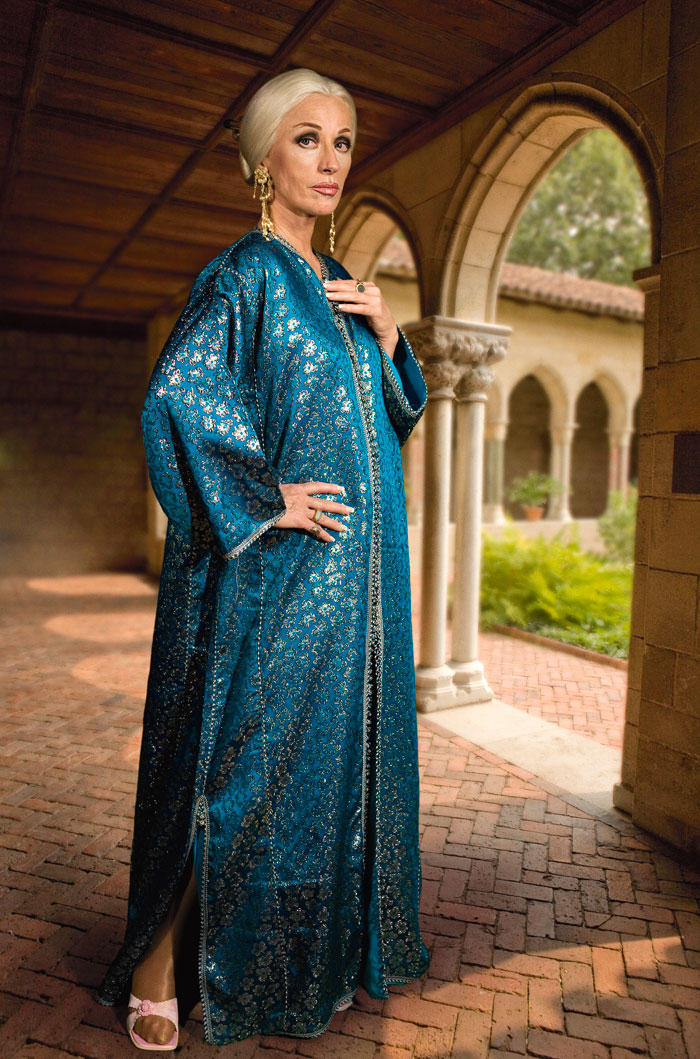
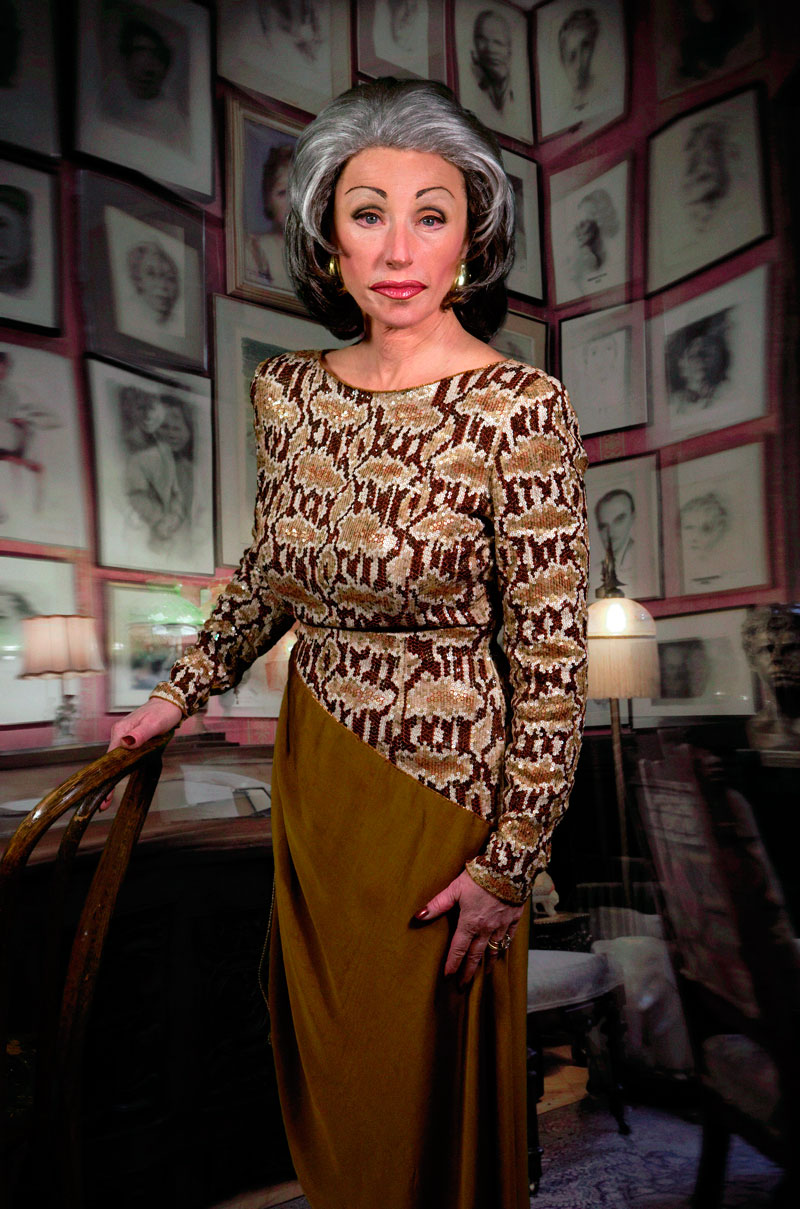
Installation view of the exhibition 'Cindy Sherman' at MoMA, New York showing at left and centre, 'Cindy Sherman society portraits' (2008)


Installation view of the exhibition Cindy Sherman at MoMA, New York showing at left and centre, Cindy Sherman society portraits (2008)


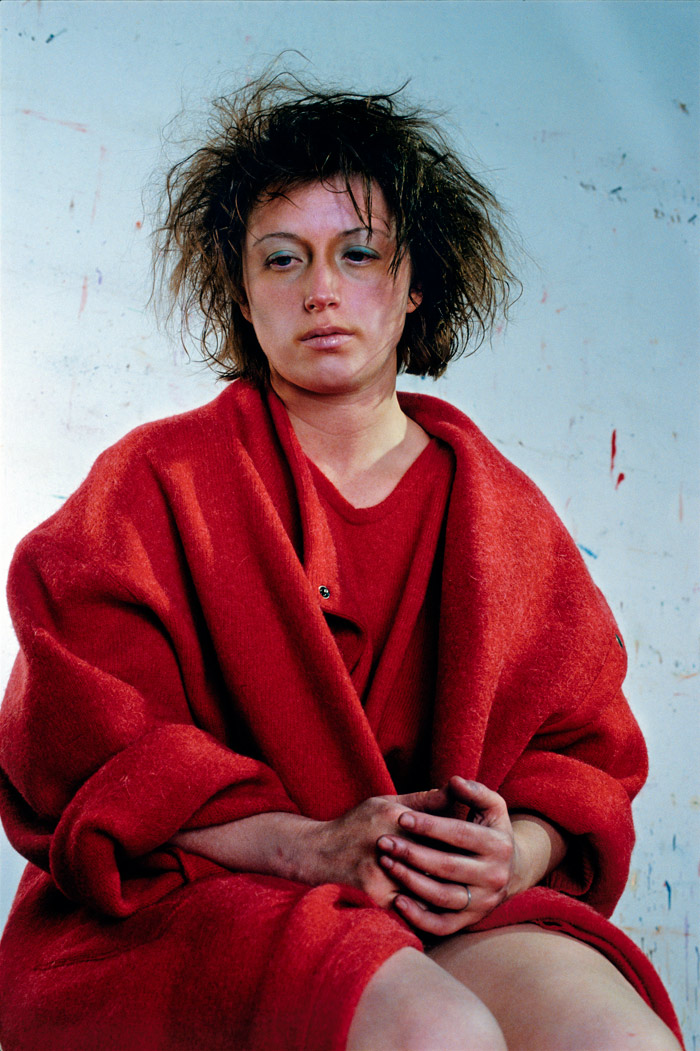
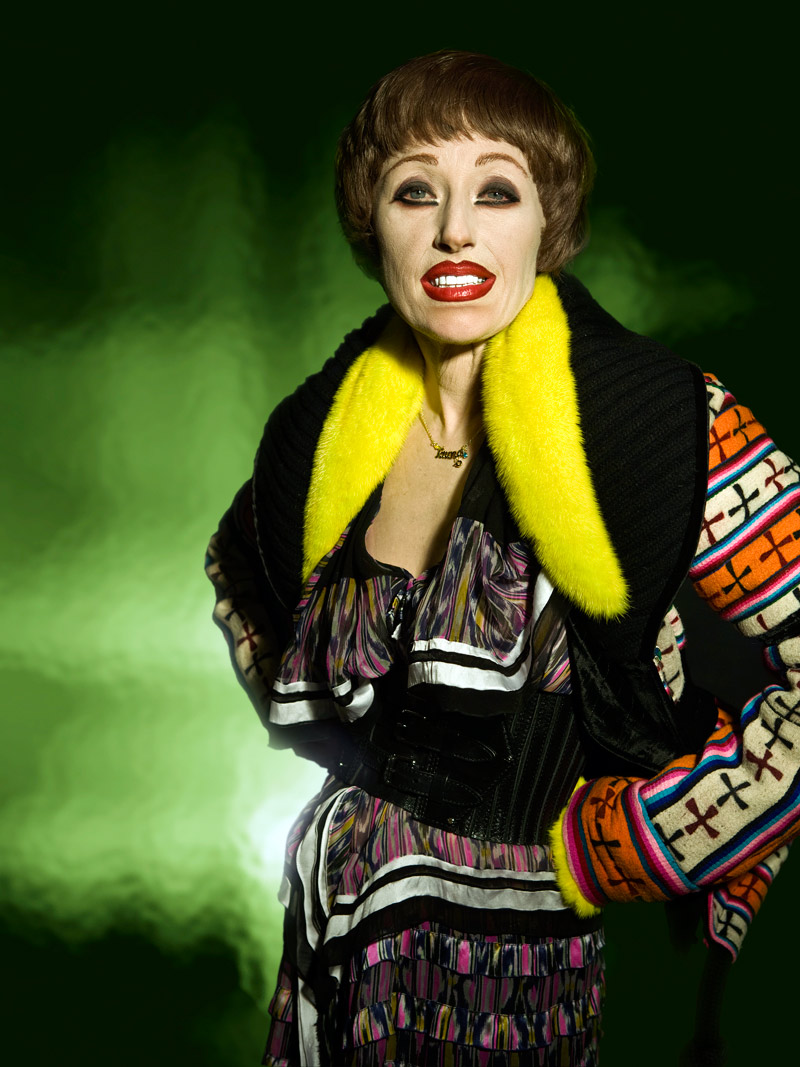
Ceaselessly inventive, the bodies (literally) of work of Cindy Sherman are a wonder to behold. From film stills to head shots, from history portrait to society portraits, Sherman constantly reinvents herself, her variations of identity exploring “the complexity of representation in a world saturated with images,” her iterations into the construction of femininity and masculinity constantly “provocative, disparaging, empathetic, and mysterious.”

Where to next? Her recent series of digitally altered landscapes and portraits (Cindy Sherman at Metro Pictures, New York, April – June 2012) seem less resolved than her earlier work, becoming almost a pastiche of themselves. Despite their massive size they seem to lack resolution, the great female impersonator of our time relying for effect on Self as feminine earth (m)Other, tricked up in dubious, quasi-ethnic regalia. Sherman is almost sacrosanct with regard to criticism but it’s about time someone said it: these images are pretty awful.

After so many simulacra, so many layerings and expositions of identity isn’t it about time Sherman got back to basics and ditched these grandiose notions of identity sublime. The sublimation (an unconscious defence mechanism by which consciously unacceptable instinctual drives are expressed in personally and socially acceptable channels) of her/Self, her actual body, the energy of her (non) presence is finally starting to wear thin. Will the real Cindy Sherman (if ever there is such a thing) please stand up and tell us: what do you really stand for, where as a human being, is your spirit really at?

Dr Marcus Bunyan


Many thankx to MoMA for allowing me to publish the photographs in the posting. Please click on the photographs for a larger version of the image.


Installation view of the exhibition 'Cindy Sherman' at MoMA, New York showing 'Cindy Sherman history portraits' (1988-1990)


Installation view of the exhibition Cindy Sherman at MoMA, New York showing Cindy Sherman history portraits (1988-1990)


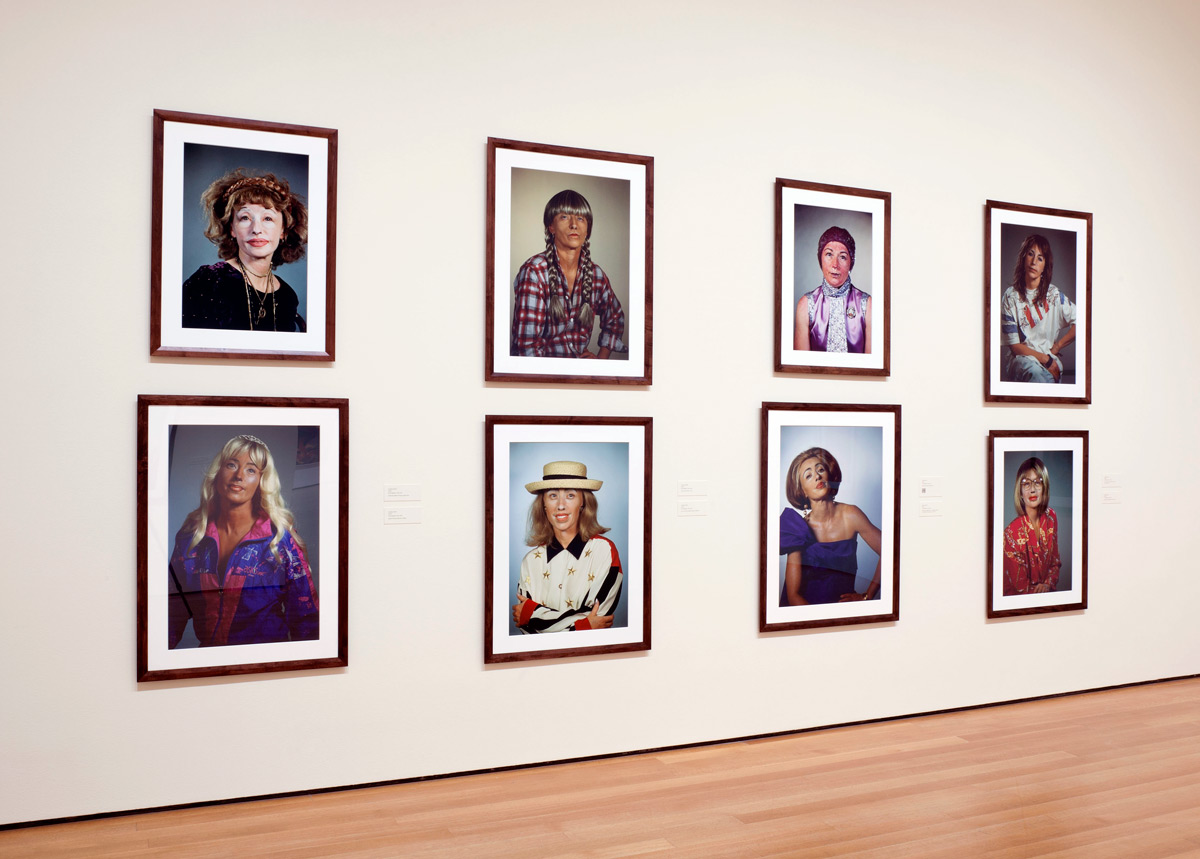
Installation view of the exhibition 'Cindy Sherman' at MoMA, New York showing 'Cindy Sherman headshots' (2000-2002)


Installation view of the exhibition Cindy Sherman at MoMA, New York showing Cindy Sherman headshots (2000-2002)


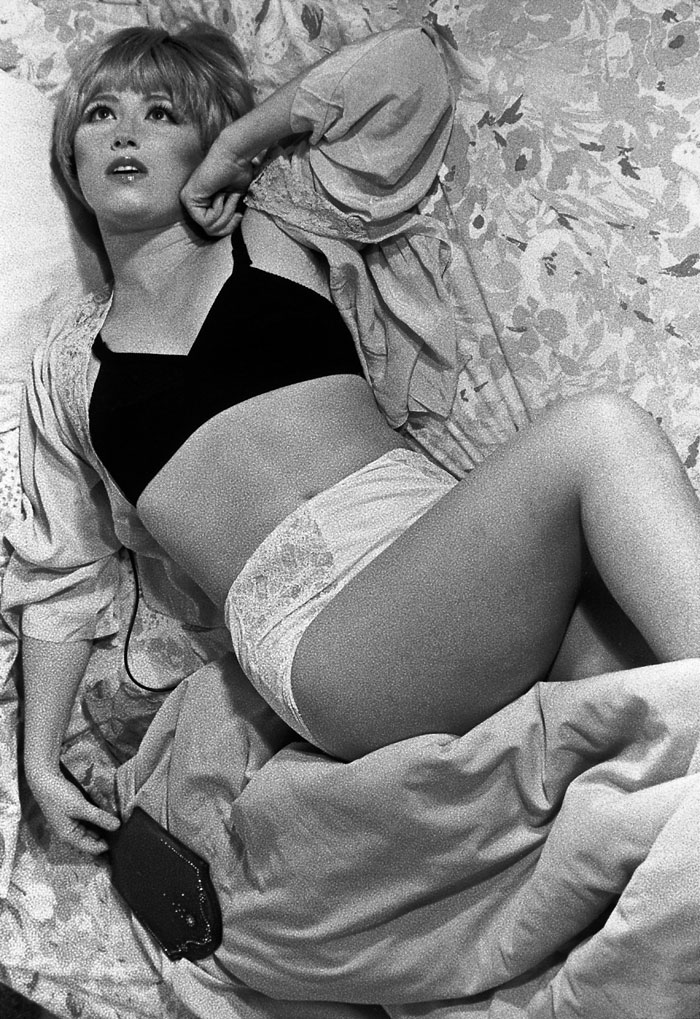
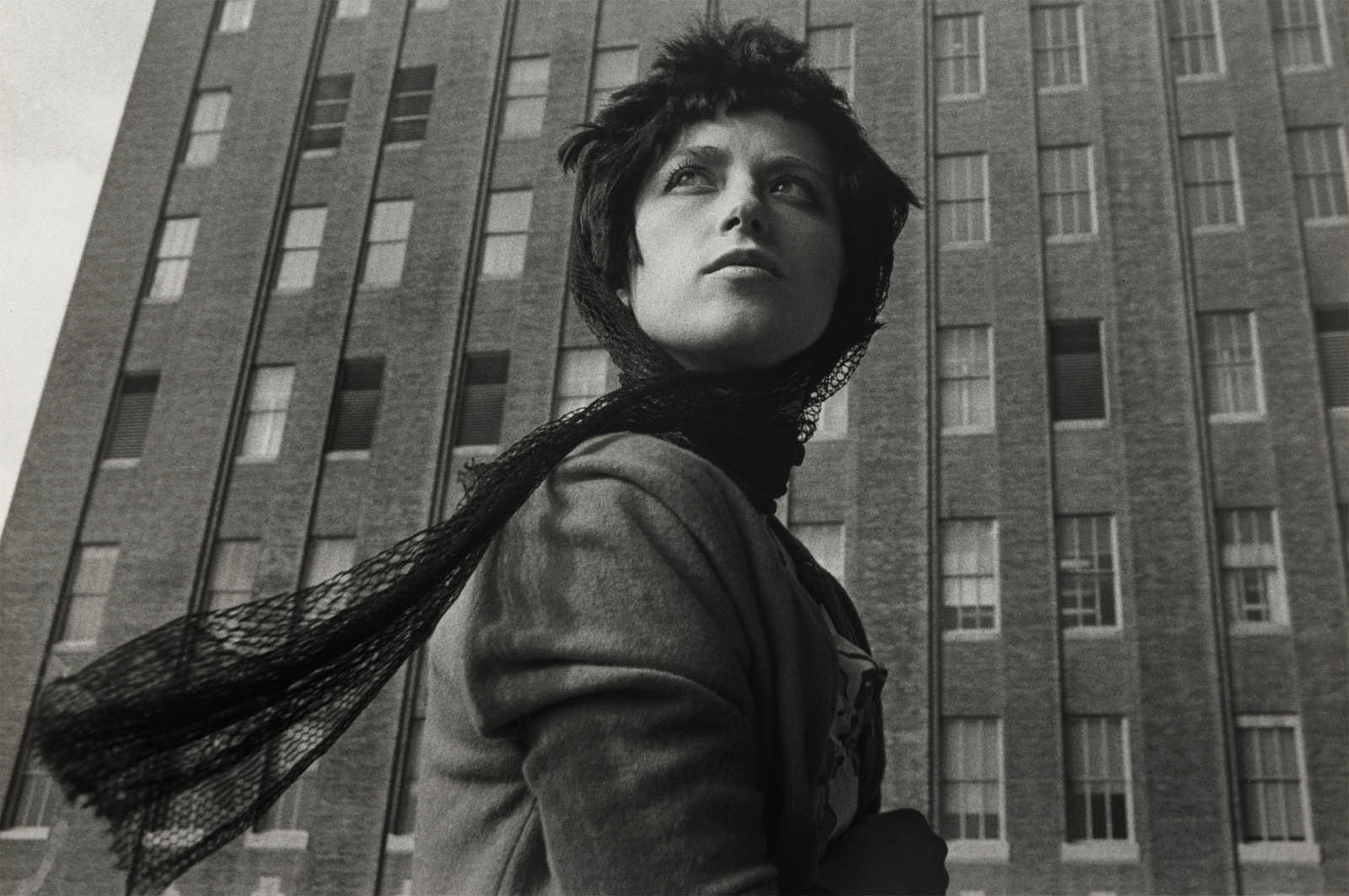
Cindy Sherman (American, b. 1954) 'Untitled Film Still #21' 1978


Cindy Sherman (American, b. 1954)
Untitled Film Still #21 
1978
Gelatin silver print
7 1/2 x 9 1/2″ (19.1 x 24.1cm)
The Museum of Modern Art, New York. Horace W. Goldsmith Fund through Robert B. Menschel


Cindy Sherman (American, b. 1954) 'Untitled Film Still #6' 1977


Cindy Sherman (American, b. 1954)
Untitled Film Still #6 
1977
Gelatin silver print
9 7/16 x 6 1/2″ (24 x 16.5cm)
The Museum of Modern Art, New York
Acquired through the generosity of Jo Carole and Ronald S. Lauder in memory of Eugene M. Schwartz


Cindy Sherman (American, b. 1954) 'Untitled Film Still #56' 1980


Cindy Sherman (American, b. 1954)
Untitled Film Still #56 
1980
Gelatin silver print
6 3/8 x 9 7/16″ (16.2 x 24cm)
The Museum of Modern Art, New York
Acquired through the generosity of Jo Carole and Ronald S. Lauder in memory of Mrs. John D. Rockefeller 3rd


Gallery 2

In fall 1977, Sherman began making pictures that would eventually become her groundbreaking Untitled Film Stills. Over three years, the series (presented here in its entirety) grew to comprise a total of seventy black-and-white photographs. Taken as a whole, the Untitled Film Stills – resembling publicity pictures made on movie sets – read like an encyclopaedic roster of stereotypical female roles inspired by 1950s and 1960s Hollywood, film noir, B movies, and European art-house films. But while the characters and scenarios may seem familiar, Sherman’s Stills are entirely fictitious; they represent clichés (career girl, bombshell, girl on the run, vamp, housewife, and so on) that are deeply embedded in the cultural imagination. While the pictures can be appreciated individually, much of their significance comes in the endless variation of identities from one photograph to the next. As a group they explore the complexity of representation in a world saturated with images, and refer to the cultural filter of images (moving and still) through which we see the world.

Wall text from the exhibition


Cindy Sherman (American, b. 1954) 'Untitled #137' 1984


Cindy Sherman (American, b. 1954)
Untitled #137 
1984
Chromogenic colour print
70 1/2 x 47 3/4″ (179.1 x 121.3cm)
Philadelphia Museum of Art
Purchased with the Alice Newton Osborn Fund, 1985


Cindy Sherman (American, b. 1954) 'Untitled #458' 2007-2008


Cindy Sherman (American, b. 1954)
Untitled #458 
2007-08
Chromogenic colour print
6′ 5 3/8″ x 58 1/4″ (196.5 x 148cm)
Glenstone


Gallery 3

Fashion – a daily form of masquerade that communicates culture, gender, and class – has been a constant source of inspiration for Sherman and a leading ingredient in the creation of her work. Throughout her career the artist has completed a number of commissions for fashion designers and magazines, and this gallery gathers many of these works. Sherman’s fashion pictures challenge the industry’s conventions of beauty and grace. Her first such commission, made in 1983, parodies typical fashion photography. Rather than projecting glamour, sex, or wealth, the pictures feature characters that are far from desirable – whether goofy, hysterical, angry, or slightly mad. Later commissions resulted in more extreme images of characters with bloodshot eyes, bruises, and scars. These exaggerated figures reached ostentatious heights in a 2007-08 commission, in which fashion victims – including steely fashion editors, PR mavens, assistant buyers, and wannabe fashionistas – wear clothing designed by Balenciaga and ham it up for the camera. Sherman’s interest in the construction of femininity and the mass circulation of images informs much of her work; the projects that take fashion as their subject illustrate the artist’s fascination with fashion images but also her critique of what they represent.

Wall text from the exhibition


Cindy Sherman (American, b. 1954) 'Untitled #424' 2004


Cindy Sherman (American, b. 1954)
Untitled #424 
2004
Chromogenic colour print
53 3/4 x 54 3/4″ (136.5 x 139.1cm)
Holzer Family Collection


Gallery 5

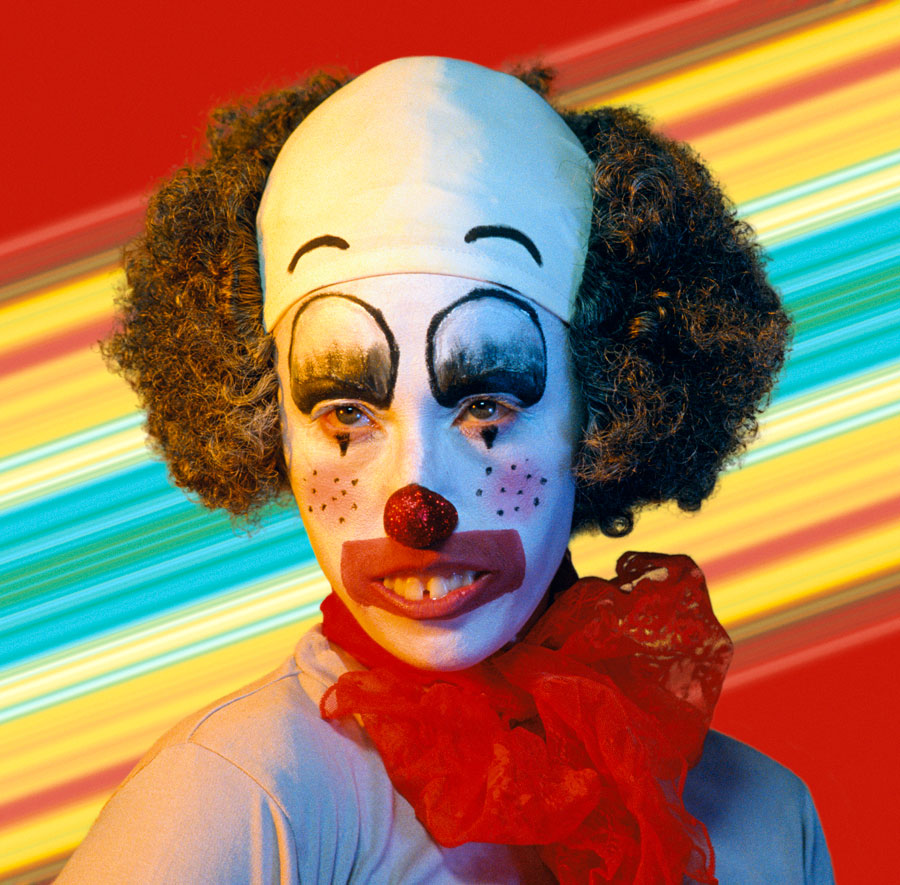
Sherman, who photographs alone in her studio, has used a variety of techniques to suggest different locations and imaginary (sometimes impossible) spaces, extending the narrative possibilities of her images. In her first foray into colour, in 1980, the artist photographed herself in front of rear-screen projections of various cityscapes and landscapes, evoking films from the 1950s and 1960s that used similar techniques to create the illusion of a change in location. In later series, such as the head shots (2000-2002), clowns (2003-04), and society portraits (2008), the artist used digital tools to create a variety of environments. The garish fluorescent colours in a clown picture contribute to the disturbing quality of the portrait, while a fairy tale forest provides a dreamy backdrop for a well-to-do lady.

Wall text from the exhibition


The Museum of Modern Art presents the exhibition Cindy Sherman, a retrospective tracing the groundbreaking artist’s career from the mid-1970s to the present, from February 26 to June 11, 2012. The exhibition brings together 171 key photographs from the artist’s significant series – including the complete Untitled Film Stills (1977-80), the critically acclaimed centerfolds (1981), and the celebrated history portraits (1988-90) – plus examples from all of her most important bodies of work, ranging from her fashion photography of the early 1980s to the breakthrough sex pictures of 1992 to her 2003-04 clowns and monumental society portraits from 2008. In addition, the exhibition features the American premiere of her 2010 photographic mural. An exhibition of films drawn from MoMA’s collection selected by Sherman will also be presented in the Museum’s theatres in April. Cindy Sherman is organised by Eva Respini, Associate Curator, with Lucy Gallun, Curatorial Assistant, Department of Photography, The Museum of Modern Art.

Cindy Sherman is widely considered to be one of the most important and influential artists of our time and her work is the unchallenged cornerstone of post-modern photography. Masquerading as a myriad of characters in front of her own camera, Sherman creates invented personas and tableaus that examine the construction of identity, the nature of representation, and the artifice of photography. Her works speak to an increasingly image-saturated world, drawing on the unlimited supply of visual material provided by movies, television, magazines, the Internet, and art history.

Ms. Respini says, “To create her photographs, Sherman works unassisted in her studio and assumes multiple roles as photographer, model, art director, make-up artist, hairdresser, and stylist. Whether portraying a career girl or a blond bombshell, a fashion victim or a clown, a French aristocrat or a society lady of a certain age, for over 35 years this relentlessly adventurous artist has created an eloquent and provocative body of work that resonates deeply with our visual culture.”

The American premiere of Sherman’s recent photographic mural (2010) will be installed outside the galleries on the sixth floor. The mural represents the artist’s first foray into transforming space through site-specific fictive environments. In the mural Sherman transforms her face via digital means, exaggerating her features through Photoshop by elongating her nose, narrowing her eyes, or creating smaller lips. The characters, who sport an odd mix of costumes and are taken from daily life, are elevated to larger-than-life status and tower over the viewer. Set against a decorative toile backdrop, her characters seem like protagonists from their own carnivalesque worlds, where fantasy and reality merge. The emphasis on new work presents an opportunity for reassessment in light of the latest developments in Sherman’s oeuvre.

Entering the galleries, the exhibition strays from a chronological narrative typical of retrospectives, and groups photographs thematically to create new and surprising juxtapositions and to suggest common threads across several series. A gallery devoted to her work made for the fashion industry brings together commissions from 1983 to 2011. Sherman’s interest in the construction of femininity and mass circulation of images informs much of the work that takes fashion as its subject, illustrating not only a fascination with fashion images but also a critical stance against what they represent. A gallery exploring themes of the grotesque focuses on bodies of work from the mid-1980s through the mid-1990s, including disasters (1986-89) and sex pictures (1992). Sherman’s investigation of macabre narratives followed a trajectory of the physical disintegration of the body, and features prosthetic parts as a stand-in for the human body. A gallery devoted to Sherman’s exploration of myth, carnival, and fairy tales pairs works from her 2003 clowns with her 1985 fairy tales series. These theatrical pictures revel in their own artificiality, with menacing characters and fantastical narratives.

Galleries devoted to single bodies of work are interspersed among the thematic rooms. Sherman’s seminal series the Untitled Film Stills, comprising 70 black-and-white photographs made between 1977 and 1980, are presented in their entirety (the complete series is in MoMA’s collection). Made to look like publicity pictures taken on movie sets, the Untitled Film Stills read like an encyclopaedic roster of female roles inspired by 1950s and 1960s Hollywood, film noir, B movies, and European art-house films. While the characters and scenarios may seem familiar, Sherman’s Stills are entirely fictitious. Her characters represent deeply embedded clichés (career girl, bombshell, girl on the run, housewife, and so on) and rely on the persistence of recognisable manufactured stereotypes that loom large in the cultural imagination.

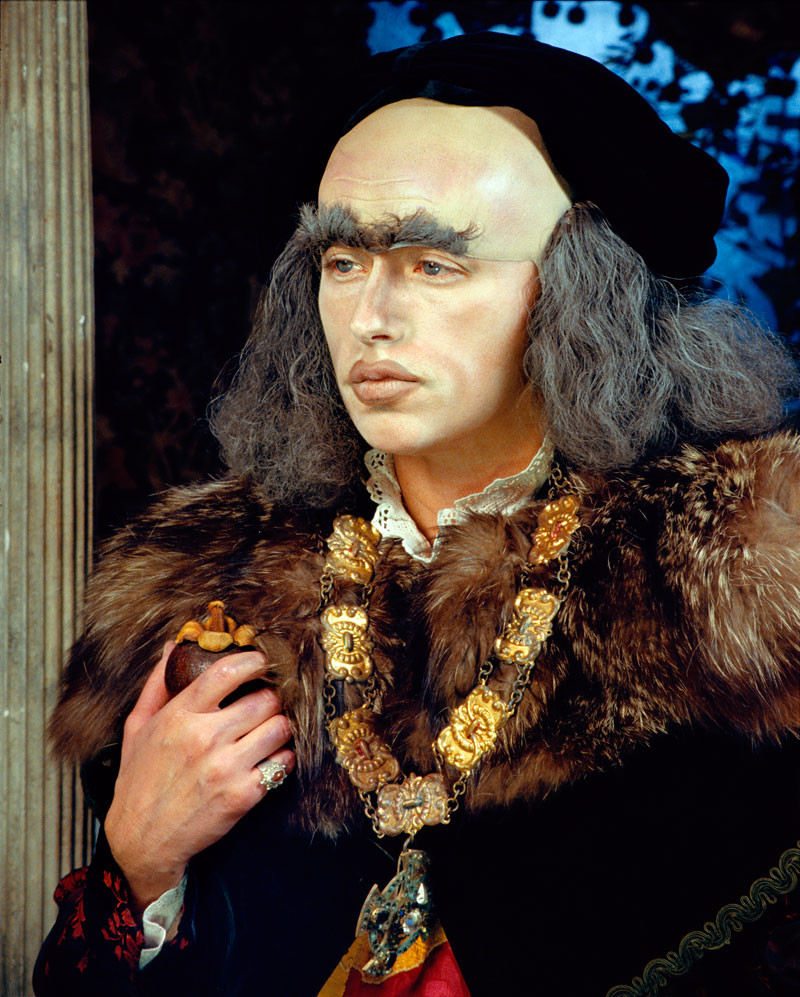
Other series presented in depth include Sherman’s 1981 series of 12-colour photographs known as the centerfolds. Originally commissioned by Artforum magazine, these send-ups of men’s erotic magazine centerfolds depict characters in a variety of emotional states, ranging from terrified to heartbroken to melancholic. With this series, Sherman plays into the male conditioning of looking at photographs of exposed women, but she turns this on its head by taking on the roles of both (assumed) male photographer and female pinup. The history portraits investigate the relationships between painter and model, and are featured in depth in the exhibition. These theatrical portraits borrow from a number of art historical periods, from Renaissance, Baroque, Rococo, and Neoclassical. This free-association sampling creates an illusion of familiarity, but not with any one specific era or style (just as the Untitled Film Stills evoke generic types, not particular films). The subjects (for the first time, many are men) include aristocrats, Madonna and child, clergymen, women of leisure, and milkmaids, who pose with props, elaborate costumes, and obvious prostheses.

Sherman has explored the experience of ageing in a youth- and status-obsessed society with several bodies of work made since 2000. For her headshots from 2000-2002 (sometimes called Hollywood / Hamptons), the artist conceived a cast of characters of would-be or has-been actors (in reality secretaries, housewives, or gardeners) posing for head shots to get an acting job. With this series, Sherman underscores the transformative qualities of makeup, hair, expression, and pose, and the recognition of certain stereotypes as powerful transmitters of cultural clichés. Her monumental 2008 society portraits feature women “of a certain age” from the top echelons of society who struggle with today’s impossible standards of beauty. The psychological weight of these pictures comes through in the unrelenting honesty of the description of ageing and the small details that belie the attempt to project a certain appearance. In the infinite possibilities of the mutability of identity, these pictures stand out for their ability to be at once provocative, disparaging, empathetic, and mysterious.

Press release from the MoMA website


Cindy Sherman (American, b. 1954) 'Untitled #193' 1989


Cindy Sherman (American, b. 1954)
Untitled #193 
1989
Chromogenic colour print
48 7/8 x 41 15/16″ (124.1 x 106.5cm)
The Doris and Donald Fisher Collection


Cindy Sherman (American, b. 1954) 'Untitled #213' 1989


Cindy Sherman (American, b. 1954)
Untitled #213 
1989
Chromogenic colour print
41 1/2 x 33″ (105.4 x 83.8cm)
Courtesy the artist and Metro Pictures, New York


Cindy Sherman (American, b. 1954) 'Untitled #216' 1989


Cindy Sherman (American, b. 1954)
Untitled #216 
1989
Chromogenic colour print
7′ 3 1/8″ x 56 1/8″ (221.3 x 142.5cm)
The Museum of Modern Art, New York. Gift of Werner and Elaine Dannheisser


Gallery 7

Sherman’s history portraits (1988-90) investigate modes of representation in art history and the relationship between painter and model. These classically composed portraits borrow from a number of art-historical periods – Renaissance, baroque, rococo, Neoclassical – and make allusions to paintings by Raphael, Caravaggio, Fragonard, and Ingres (who, like all the Old Masters, were men). This free-association sampling creates a sense of familiarity, but not of any one specific era or style. The subjects (for the first time for Sherman, many are men) include aristocrats, Madonnas with child, clergymen, women of leisure, and milk-maids, who pose with props, costumes, and obvious prostheses. Theatrical and artificial – full of large noses, bulging bellies, squirting breasts, warts, and unibrows – the history portraits are poised between humorous parody and grotesque caricature.

A handful of Sherman’s portraits were inspired by actual paintings. Untitled #224 was made after Caravaggio’s Sick Bacchus (c. 1593), which is commonly believed to be a self-portrait of the artist as the Roman god of wine. In Sherman’s reinterpretation, the numerous layers of representation – a female artist impersonating a male artist impersonating a pagan divinity – create a sense of remove, pastiche, and criticality. Even where Sherman’s pictures offer a gleam of art-historical recognition, she has inserted her own interpretation of the canonised paintings, creating contemporary artefacts of a bygone era.

Wall text from the exhibition


Cindy Sherman (American, b. 1954) 'Untitled #359' 2000


Cindy Sherman (American, b. 1954)
Untitled #359 
2000
Chromogenic color print
30 x 20″ (76.2 x 50.8cm)
Collection Metro Pictures, New York


Gallery 8

After almost a decade of staging still lifes with dolls and props, in her 2000-2002 head-shots series Sherman returned to a more intimate scale and to using herself as a model. The format recalls ID pictures, head shots, or vanity portraits made in garden-variety portrait studios by professional photographers. First exhibited in Beverly Hills, the series explores the cycle of desire and failed ambition that permeates Hollywood. Sherman conceived a cast of would-be or has-been female actors posing for head shots in order to get acting jobs; later, for an exhibition in New York, she added East Coast types. Whichever part of the country they’re from, we’ve seen these women before – on reality television, in soap operas, or at a PTA meeting. With these pictures, Sherman underscores the transformative qualities of makeup, hair, expression, and pose, and the power of stereotypes as transmitters of cultural clichés. She projects well-drawn personas: the enormous pouting lips of the woman in Untitled #360 suggest a yearning for youth, while the glittery makeup and purple iridescent dress worn by the character in Untitled #400 indicate an aspiration to reach a certain social status. In her role as both sitter and photographer, Sherman has disrupted the usual power dynamic between model and photographer and created new avenues through which to explore the very apparatus of portrait photography itself.


Cindy Sherman (American, b. 1954) 'Untitled #465' 2008


Cindy Sherman (American, b. 1954)
Untitled #465 
2008
Chromogenic colour print
63 3/4 x 57 1/4″ (161.9 x 145.4cm)
Whitney Museum of American Art, New York
Purchase, with funds from the Painting and Sculpture Committee and the Photography Committee, 2009


Cindy Sherman (American, b. 1954) 'Untitled #466' 2008


Cindy Sherman (American, b. 1954)
Untitled #466
2008
Chromogenic colour print


Cindy Sherman (American, b. 1954) 'Untitled #474' 2008


Cindy Sherman (American, b. 1954)
Untitled #474 
2008
Chromogenic colour print
7′ 7″ x 60 1/4″ (231.1 x 153cm)
The Museum of Modern Art, New York
Acquired through the generosity of an anonymous donor, Michael Lynne, Charles Heilbronn, and the Carol and David Appel Family Fund


Gallery 10

Set against opulent backdrops and presented in ornate frames, the characters in Sherman’s 2008 society portraits seem at once tragic and vulgar. The figures are not based on specific women, but the artist has made them look entirely familiar in their struggle with the impossible standards of beauty that prevail in a youth – and status – obsessed culture. At this large scale, it is easy to decipher the characters’ vulnerability behind the makeup, clothes, and jewellery. The psychological weight of these pictures comes through the unrelenting honesty of their description of ageing, the tell-tale signs of cosmetic alteration, and the small details that belie the characters’ attempts to project a polished and elegant appearance. Upon careful viewing, they reveal a dark reality lurking beneath the glossy surface of perfection. As with much of her work, in her society portraits Sherman has demonstrated a remarkable capacity to channel the zeitgeist. These well-heeled divas presaged the financial collapse of 2008, the end of an era of opulence – the size of the photographs alone seems a commentary on an age of excess. Among the numerous iterations of contemporary identity, these pictures stand out as at once provocative, disparaging, empathetic, and mysterious.

Wall text from the exhibition


Cindy Sherman (American, b. 1954) 'Untitled #475' 2008


Cindy Sherman (American, b. 1954)
Untitled #475 
2008
Chromogenic colour print
7′ 2 3/8″ x 71 1/2″ (219.4 x 181.6cm)
The Broad Art Foundation, Santa Monica


Gallery 11

Because the majority of Sherman’s pictures feature the artist as model, they showcase a single character. In the 1970s Sherman experimented with cutouts of multiple figures, in her whimsical 1975 stop-motion animated short film Doll Clothes and her rarely seen 1976 collages, which were achieved through a labor-intensive process of cutting and pasting multiple photographs. When Sherman began working digitally in the early 2000s, she was able to more easily incorporate multiple figures in one frame, allowing for a variety of new narrative possibilities. Where the early works chart the movements and gestures of a single character through space, the multiple figures in recent works interact with one another to create tableaus.

Wall text from the exhibition


The Museum of Modern Art
11 West 53 Street
New York, NY 10019
Phone: (212) 708-9400

Opening hours:
10.30am – 5.30pm
Open seven days a week

MoMA website

LIKE ART BLART ON FACEBOOK

Back to top

Exhibition: ‘Haunted: Contemporary Photography / Video / Performance’ at Solomon R. Guggenheim Museum, New York

Exhibition dates: 26th March – 6th September, 2010


Looks like a great exhibition – wish I was there to see it!


Many thankx to Claire Laporte and the Solomon R. Guggenheim Museum for allowing me to publish the photographs in the posting. Please click on the photographs for a larger version of the image.


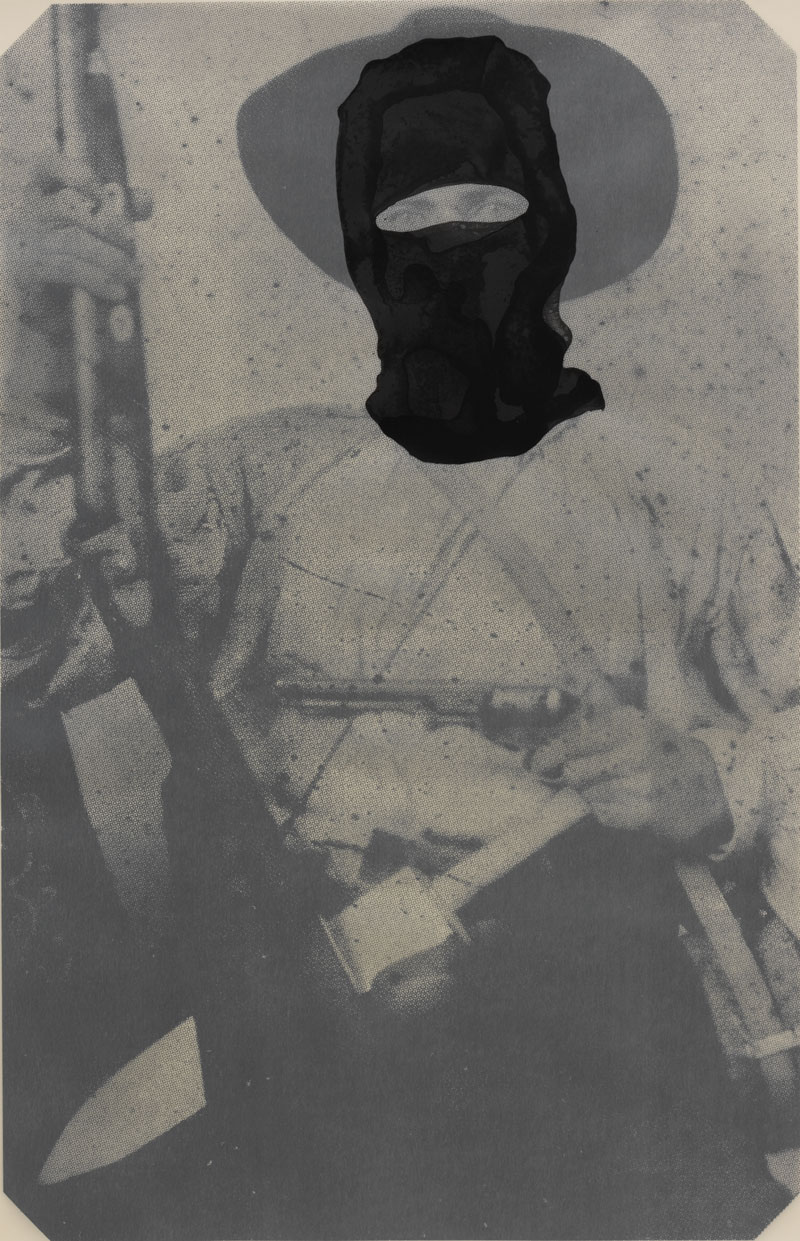
Adam Helms (American, b. 1974) 'Untitled Portrait (Santa Fe Trail)' 2007 from the exhibition 'Haunted: Contemporary Photography / Video / Performance' Guggenheim Museum, March - Sept, 2010


Adam Helms (American, b. 1974)
Untitled Portrait (Santa Fe Trail)
2007
Double-sided screenprint on paper vellum edition 2/2
101.3 x 65.7cm
Solomon R. Guggenheim Museum, New York, Purchased with funds contributed by the Photography Committee 2007.131


Idris Khan (British, b. 1978) 'Homage to Bernd Becher' 2007 from the exhibition 'Haunted: Contemporary Photography / Video / Performance' Guggenheim Museum, March - Sept, 2010


Idris Khan (British, b. 1978)
Homage to Bernd Becher
2007
Bromide print edition 1/6
49.8 x 39.7cm
Solomon R. Guggenheim Museum, New York, Purchased with funds contributed by the Photography Committee


Bernd Becher (German, 1931-2007) and Hilla Becher (German, 1934-2015) 'Water Towers' 1980 from the exhibition 'Haunted: Contemporary Photography / Video / Performance' Guggenheim Museum, March - Sept, 2010


Bernd Becher (German, 1931-2007) and Hilla Becher (German, 1934-2015)
Water Towers
1980
Nine gelatin silver prints
155.6 x 125.1cm
Solomon R. Guggenheim Museum, New York, Purchased with funds contributed by Mr. and Mrs. Donald Jonas


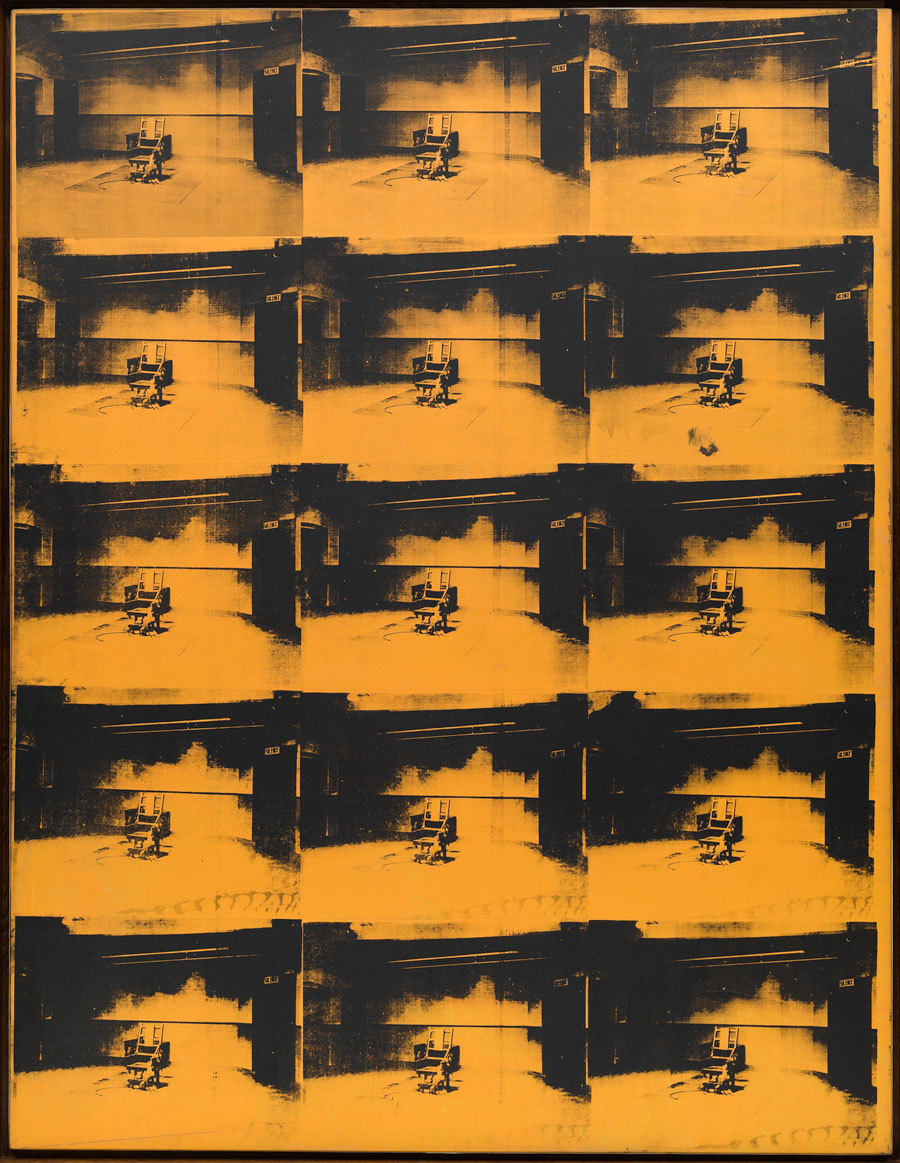
Andy Warhol (American, 1928-1987) 'Orange Disaster #5' 1963


Andy Warhol (American, 1928-1987)
Orange Disaster #5
1963
Acrylic and silkscreen enamel on canvas
269.2 x 207cm
Solomon R. Guggenheim Museum, New York, Gift, Harry N. Abrams Family Collection 74.2118


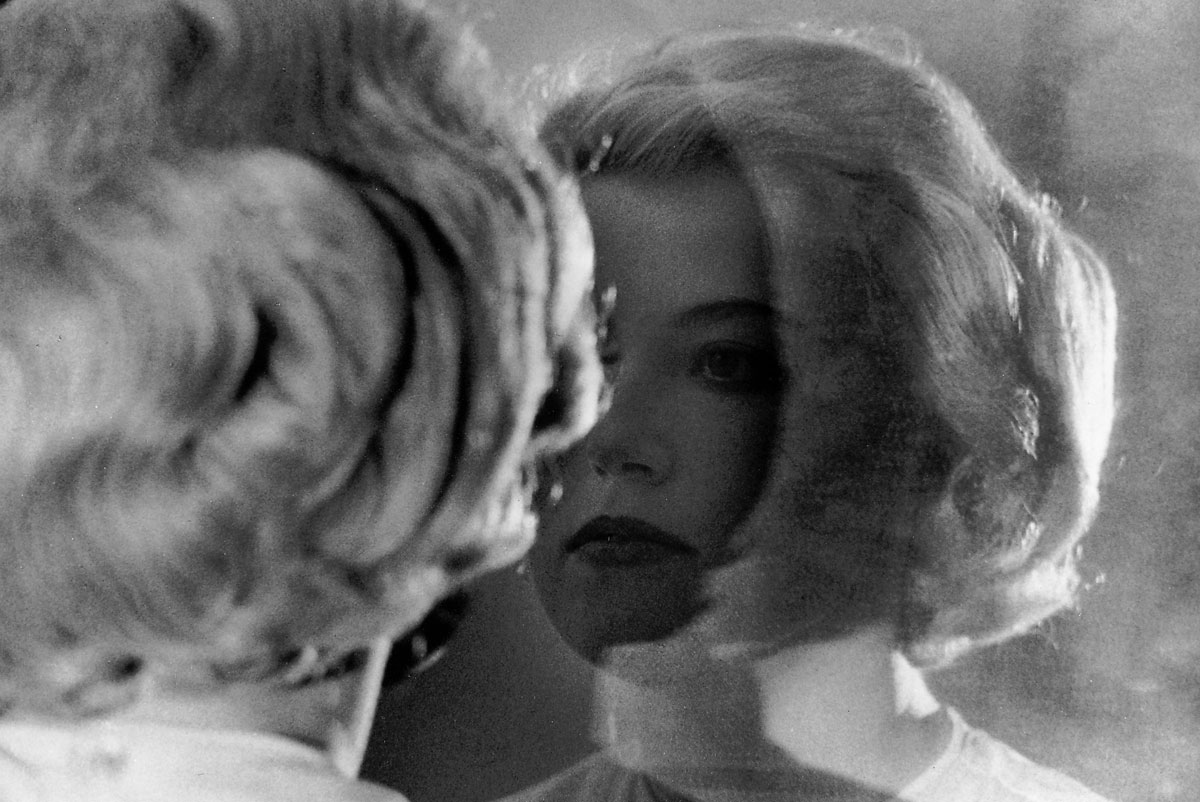
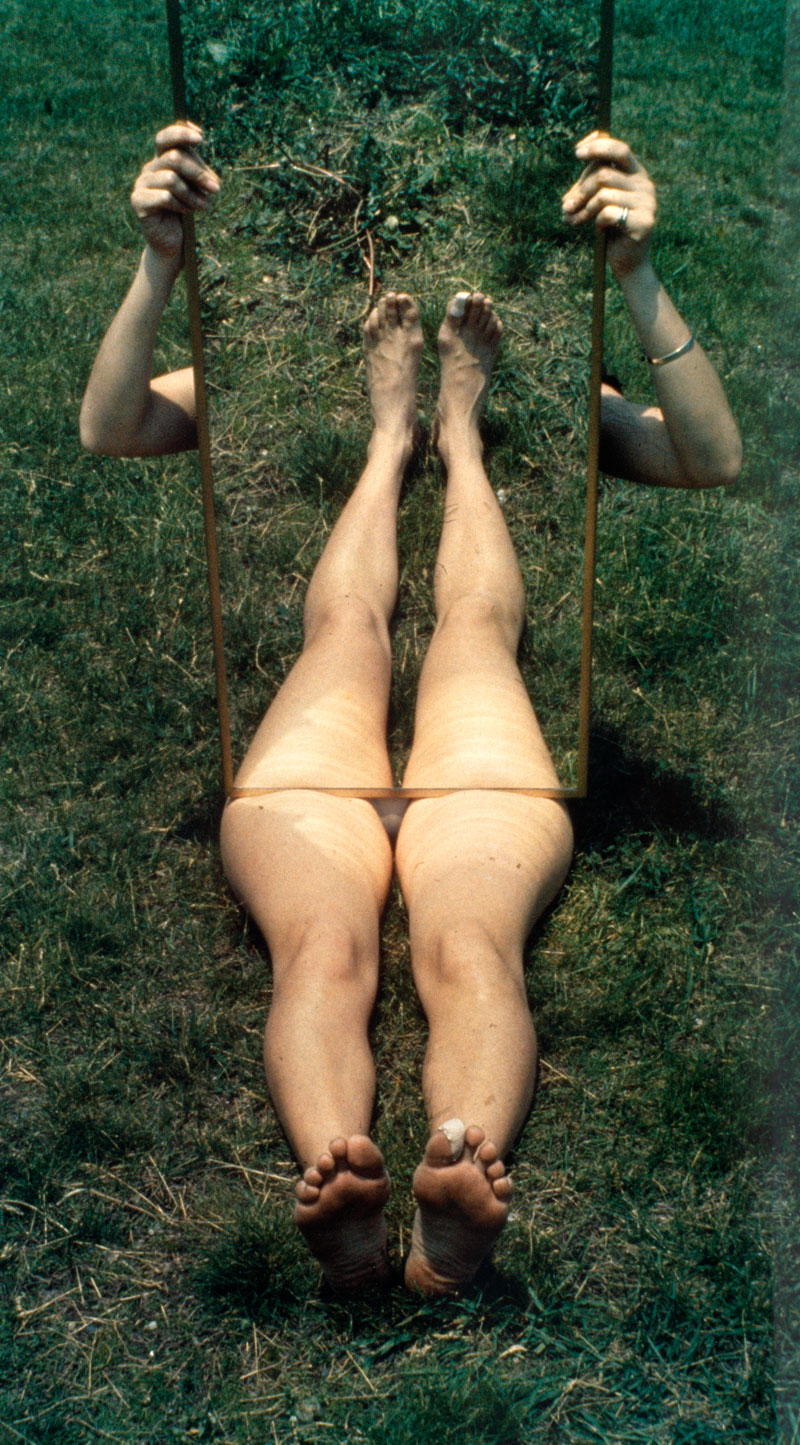
Joan Jonas (American, b. 1936) 'Mirror Piece I' 1969


Joan Jonas (American, b. 1936)
Mirror Piece I
1969
Chromogenic print
101 x 55.6cm
Solomon R. Guggenheim Museum, New York, Purchased with funds contributed by the Photography Committee


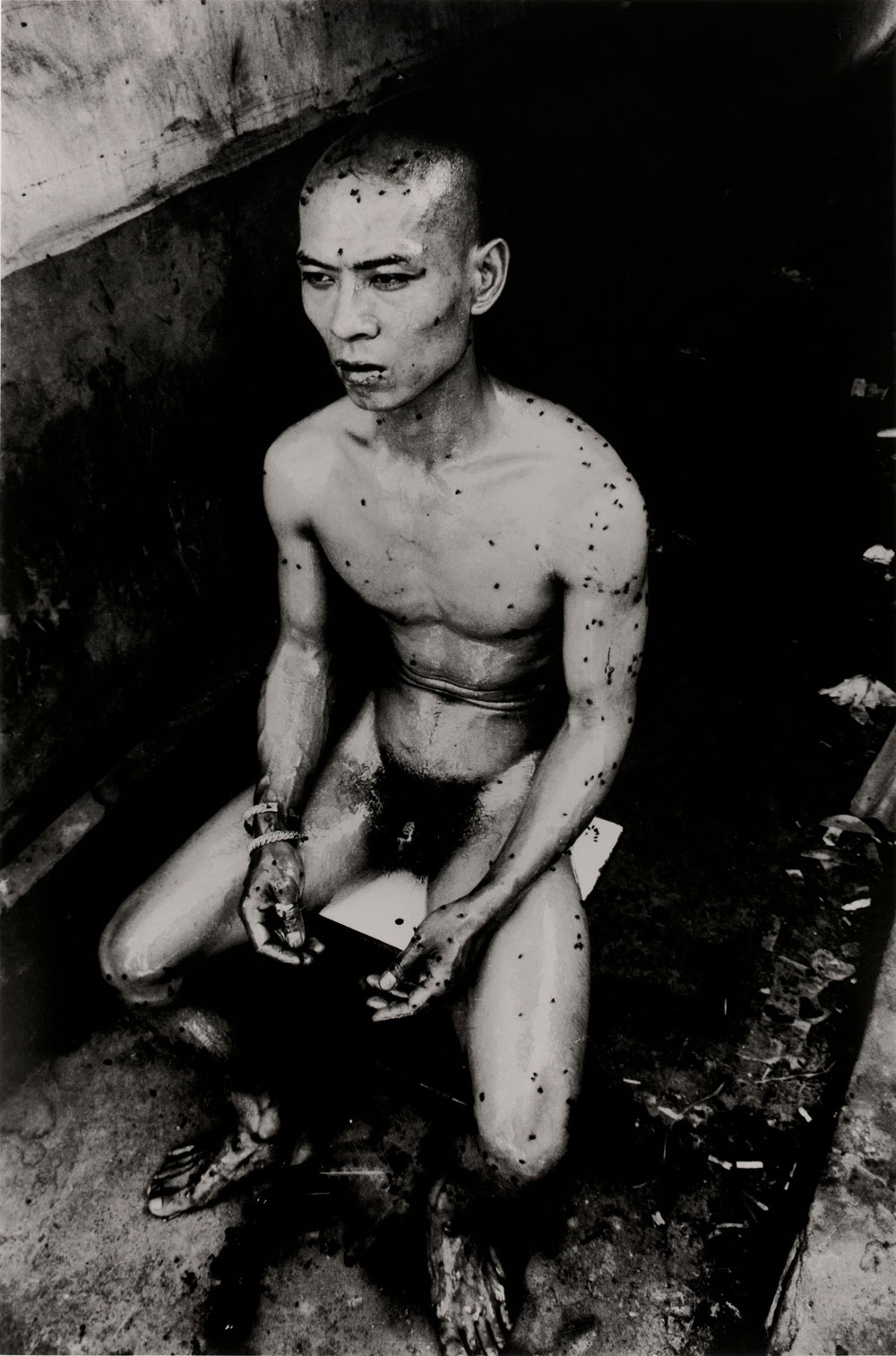
Zhang Huan (Chinese, b. 1965) '12 Square Meters' 1994


Zhang Huan (Chinese, b. 1965)
12 Square Meters
1994
Chromogenic print A.P. 3/5, edition of 15
149.9 x 99.7cm
Solomon R. Guggenheim Museum, New York, Purchased with funds contributed by Manuel de Santaren and Jennifer and David Stockman


Much of contemporary photography and video seems haunted by the past, by the history of art, by apparitions that are reanimated in reproductive mediums, live performance, and the virtual world. By using dated, passé, or quasi-extinct stylistic devices, subject matter, and technologies, such art embodies a longing for an otherwise unrecuperable past.

From March 26 to September 6, 2010, the Solomon R. Guggenheim Museum presents Haunted: Contemporary Photography / Video / Performance, an exhibition that documents this obsession, examining myriad ways photographic imagery is incorporated into recent practice. Drawn largely from the Guggenheim’s extensive photography and video collections, Haunted features some 100 works by nearly 60 artists, including many recent acquisitions that will be on view at the museum for the first time. The exhibition is installed throughout the rotunda and its spiralling ramps, with two additional galleries on view from June 4 to September 1, featuring works by two pairs of artists to complete Haunted’s presentation.

The works in Haunted: Contemporary Photography / Video / Performance range from individual photographs and photographic series to sculptures and paintings that incorporate photographic elements; projected videos; films; performances; and site-specific installations, including a new sound work created by Susan Philips for the museum’s rotunda. While the show traces the extensive incorporation of photography into contemporary art since the 1960s, a significant part of the exhibition will be dedicated to work created since 2001 by younger artists.

Haunted is organised around a series of formal and conceptual threads that weave themselves through the artworks on view:

Appropriation and the Archive

In the early 1960s, Robert Rauschenberg and Andy Warhol began to incorporate photographic images into their paintings, establishing a new mode of visual production that relied not on the then-dominant tradition of gestural abstraction but rather on mechanical processes such as screenprinting. In so doing, they challenged the notion of art as the expression of a singular, heroic author, recasting their works as repositories for autobiographical, cultural, and historical information. This archival impulse revolutionised art production over the ensuing decades, paving the way for a conceptually driven use of photography as a means of absorbing the world at large into a new aesthetic realm. Since then, a number of artists, including Bernd and Hilla Becher, Sarah Charlesworth, Douglas Gordon, Luis Jacob, Sherrie Levine, Richard Prince, Cindy Sherman, and Sara VanDerBeek, have pursued this archival impulse, amassing fragments of reality either by creating new photographs or by appropriating existing ones.
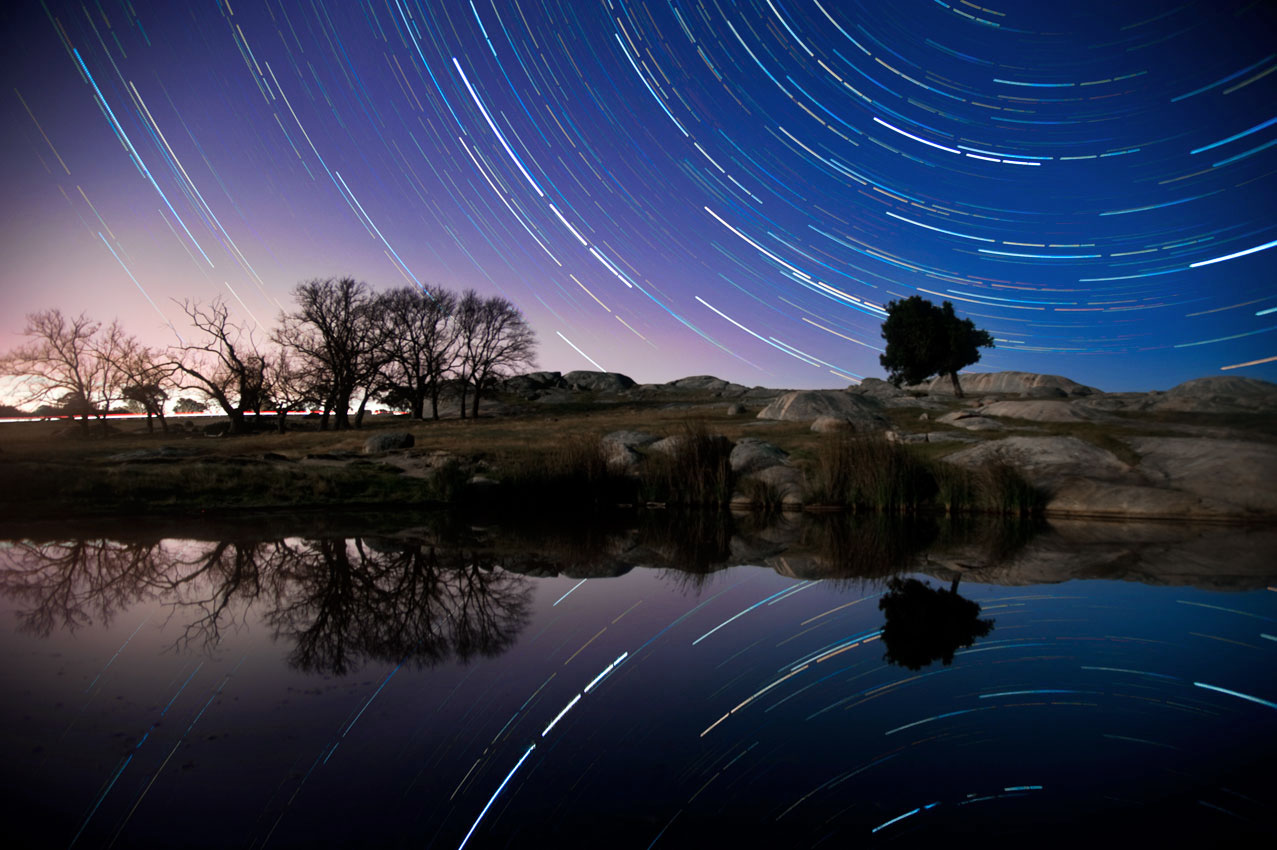
 

Cindy Sherman (American, b. 1954)
'Untitled Film Still #58' 1980


Cindy Sherman (American, b. 1954)
Untitled Film Still #58
1980
Gelatin silver print
20.3 x 25.4cm
Solomon R. Guggenheim Museum, Gift, Ginny Williams


“I’ve always played with make-up to transform myself, but everything, including the lighting, was self taught. I just learned things as I needed to use them. I absorbed my ideas for the women in these photos from every cultural source that I’ve ever had access to, including film, TV, advertisements, magazines, as well as any adult role models from my youth.”1

Cindy Sherman (b. 1954, Glen Ridge, N.J.) emerged onto the New York art scene in the early 1980s as part of a new generation of artists concerned with the codes of representation in a media-saturated era. Along with many artists working in the 1980s, Sherman explored photography as a way to reveal and examine the cultural constructions we designate as truth. Confronting the belief that photographs are truthful documents, Sherman’s fictional narratives suggested that photographs, like all forms of representation, are ideologically motivated. She is aware that the camera is not a neutral device but rather a tool that frames a particular viewpoint.

Sherman’s reputation was established early on with her Untitled Film Stills, a series of 69 black-and-white photographs that she began making in 1977, when she was twenty-three. In this series, the artist depicted herself dressed in the various melodramatic guises of clichéd B-movie heroines presented in 8 x 10 publicity stills from the 1950s and 1960s. In photograph after photograph, Sherman both acts in and documents her own productions. Although Sherman is both model and photographer, these images are not autobiographical. Rather, they memorialise absence and leave us searching for a narrative and clues to what may exist beyond the frame of the camera.

By the time Sherman made the Untitled Film Stills, black-and-white photography was already recognised as belonging to the past, and the styles she replicated were taken not from her own generation but from that of her mother’s. Sherman used wigs and makeup as well as vintage clothing to create a range of female characters. She sets her photos in a variety of locations, including rural landscapes, cities, and her own apartment. Although many of the pictures are taken by Sherman herself using an extended shutter release, for others she required help, sometimes enlisting friends and family. The characters she created include an ingénue finding her way in the big city, a party girl, a housewife, a woman in distress, a dancer, and an actress. In 1980 she completed the series and has said that she stopped when she ran out of clichés to depict. Unlike the media images they refer to, Sherman’s stills have a deliberate artifice that is heightened by the often-visible camera cord, slightly eccentric props, unusual camera angles, and by the fact that each image includes the artist rather than a recognisable actress or model. Sherman remains an important figure, with works in major collections around the globe, and continues to create striking, imaginative art.

Text from the Teacher’s Guide to the exhibition

1/ Cindy Sherman, quoted in Monique Beudert and Sean Rainbird, eds., Contemporary Art: The Janet Wolfson de Botton Gift, p. 99.


Landscape, Architecture, and the Passage of Time

Historically, one of photography’s primary functions has been to document sites where significant, often traumatic events have taken place. During the Civil War, which erupted not long after the medium was invented, a new generation of reporters sought to photograph battles, but due to the long exposure times required by early cameras, they could only capture the aftermath of the conflicts. These landscapes, strewn with the dead, now seem doubly arresting, for they capture past spaces where something has already occurred. Their state of anteriority, witnessed at such an early stage in the medium’s development, speaks to the very nature of a photograph, which possesses physical and chemical bonds to a past that disappears as soon as it is taken. As viewers, we are left with only traces from which we hope to reconstruct the absent occurrences in the fields, forests, homes, and offices depicted in the works in the exhibition. With this condition in mind, many artists, among them James Casebere, Spencer Finch, Ori Gersht, Roni Horn, Luisa Lambri, An-My Lê, Sally Mann, and Hiroshi Sugimoto, have turned to empty spaces in landscape and architecture, creating poetic reflections on time’s inexorable passing and insisting on the importance of remembrance and memorialisation.


Christian Boltanski (French, 1944-2021) 'Autel de Lycée Chases' 1986-1987


Christian Boltanski (French, 1944-2021)
Autel de Lycée Chases
1986-1987
Six photographs, six desk lamps, and twenty-two tin boxes
170.2 x 214.6 x 24.1cm
Rubell Family Collection, Miami
© 2010 Artists Rights Society (ARS), New York/ADAGP, Paris


“A good work of art can never be read in one way. My work is full of contradictions. An artwork is open – it is the spectators looking at the work who make the piece, using their own background. A lamp in my work might make you think of a police interrogation, but it’s also religious, like a candle. At the same time it alludes to a precious painting, with a single light shining on it. There are many way of looking at the work. It has to be ‘unfocused’ somehow so that everyone can recognize something of their own self when viewing it.”1

The power of photography to recall the past has inspired many contemporary artists to use photographs to revisit the experience of historical events. In so doing, artists reconsider the photograph itself as an object imbued with history. They became aware that using the medium of photography would lend the elements of specificity and truth to their work.

Since the late 1960s, Christian Boltanski (b. 1944, Paris) has worked with photographs collected from ordinary and often ephemeral sources, endowing the commonplace with significance. Rather than taking original photographs to use in his installations, he often finds and rephotographs everyday documents – passport photographs, school portraits, newspaper pictures, and family albums – to memorialise everyday people. Boltanski seeks to create an art that is indistinguishable from life and has said, “The fascinating moment for me is when the spectator hasn’t registered the art connection, and the longer I can delay this association the better.”2 By appropriating mementos of other people’s lives and placing them in an art context, Boltanski explores the power of photography to transcend individual identity and to function instead as a witness to collective rituals and shared cultural memories.

In Boltanski’s 1986-1987 work Autel de Lycée Chases (which means “Altar to the Chases High School”) enlarged photographs of children are hung over a platform constructed from stacked tin biscuit boxes, which are rusted as if they have been ravaged by time. The black-and-white photographs look like artefacts from another era. An electric light illuminates each face while at the same time obscuring it. The arrangement gives no way to identify or connect the unnamed individuals.

The photos used in Autel de Lycée Chases were taken from a real-world source, the school photograph of the graduating class of 1931 from a Viennese high school for Jewish students. These students were coming of age in a world dominated by war and persecution, and it is likely that many perished over the next decade.

At once personal and universal in reference, Boltanski’s work serves as a monument to the dead, hinting at the Holocaust without naming it. Within this haunting environment, Boltanski intermingles emotion and history, sentimentality and profundity.

Text from the Teacher’s Guide to the exhibition

1/ Christian Boltanski, “Tamar Garb in conversation with Christian Boltanski,” in Christian Boltanski (London: Phaidon Press, 1997), p. 24.
2/ “Christian Boltanski: Lessons of Darkness”


Documentation and Reiteration

Since at least the early 1970s, photographic documentation, including film and video, has served as an important complement to the art of live performance, often setting the conditions by which performances are staged and sometimes obviating the need for a live audience altogether. Through an ironic reversal, artworks that revolved around singular moments in time have often come to rely on the permanence of images to transmit their meaning and sometimes even the very fact of their existence. For many artists, these documents take on the function of relics-objects whose meaning is deeply bound to an experience that is always already lost in the past. Works by artists such as Marina Abramović, Christian Boltanski, Sophie Calle, Tacita Dean, Joan Jonas, Christian Marclay, Robert Mapplethorpe, Ana Mendieta, and Gina Pane examine various aesthetic approaches inspired by the reiterative power of the photograph. Using photography not only to restage their own (and others’) performances but to revisit the bodily experience of past events, these artists have reconsidered the document itself as an object embedded in time, closely attending to its material specificity in their works.


James Casebere (American, b. 1953) 'Garage' 2003


James Casebere (American, b. 1953)
Garage
2003
Chromogenic print, face-mounted to acrylic
181.6 x 223.5cm
Solomon R. Guggenheim Museum, New York
Anonymous gift


“Black and white had more to do with memory and the past. Color was too much about the present, I associated it with color TV, which was not a part of my past. I wanted the images to be related to a sense of history, let’s say, whether personal or social. And I think black and white adds a certain level of abstraction.”1

Since the mid-1970s James Casebere (b. 1953, Lansing, Michigan) has been carefully constructing architectural models and photographing them, yielding images somewhere between realism and obvious fabrication. His photographs are stripped of color and detail to evoke a sense of emotional place rather than the physicality of a place’s forms. Casebere is interested in the memories and feelings that are brought to mind by the architectural spaces he represents. The resulting works are dramatic, surreal, and remarkably true to life, embracing qualities of photography, architecture, and sculpture.

His tabletop models imitate the appearance of architectural institutions (home, school, library, prison) or common sites (tunnel, corridor, archway), representing the structures that occupy our everyday world. These models, made from such featureless materials as Foamcore, museum board, plaster, and Styrofoam, remain empty of detail and human figures. It is only when Casebere casts light on their bland surfaces and spartan interiors that the models are transformed. By eliminating the details, and taking advantage of dramatic lighting effects and the camera’s ability to flatten space, Casebere is able to transform familiar domestic spaces to find the extraordinary in the everyday. He asks viewers to rely on their memory to fill in the gaps and to create a context in which to understand his images.

Casebere stages his photographs to construct realities inspired by contemporary American visual culture that blur the line between fiction and fact. In this way, his images suggest psychologically charged spaces and have an otherworldly quality. The notion that these may be actual places seems plausible, but the lack of human presence leads us to wonder what has happened here. The viewer may imagine a human story within the abandoned spaces. Without people or colour, the photographs are about our own associations with these spaces and what they may represent.

Text from the Teacher’s Guide to the exhibition

1/ Roberto Juarez, “James Casebere,” Bomb 77 (Fall 2001)


Trauma and the Uncanny

When Andy Warhol created his silkscreen paintings of Marilyn Monroe in the wake of her death, he touched on the darker side of a burgeoning media culture that, during the Vietnam War, became an integral part of everyday life. Today, with vastly expanded channels for the propagation of images, events as varied as the terrorist attack on the World Trade Center and the deaths of celebrities such as Princess Diana and Michael Jackson have the ability to become traumatic on a global scale. Many artists, including Adam Helms, Nate Lowman, Adam McEwen, Cady Noland, and Anri Sala, have reexamined the strategy of image appropriation Warhol pioneered, attending closely to the ways political conflict can take on global significance. At the same time, photography has altered, or as some theorists argue, completely reconfigured our sense of personal memory. From birth to death, all aspects of our lives are reconstituted as images alongside our own experience of them. This repetition, which is mirrored in the very technology of the photographic medium, effectively produces an alternate reality in representation that, especially when coping with traumatic events, can take on the force of the uncanny. Artists such as Stan Douglas, Anthony Goicolea, Sarah Anne Johnson, Jeff Wall, and Gillian Wearing exploit this effect, constructing fictional scenarios in which the pains and pleasures of personal experience return with eerie and foreboding qualities.

Press release from the Solomon R. Guggenheim Museum website [Online] Cited 22/08/2010 no longer available online


Gillian Wearing (British, b. 1963) 'Self-Portrait at Three Years Old' 2004


Gillian Wearing (British, b. 1963)
Self-Portrait at Three Years Old
2004
Chromogenic print
182 x 122cm
Solomon R. Guggenheim Museum, New York
Purchased with funds contributed by the International Directors Council and Executive Committee Members: Ruth Baum, Edythe Broad, Elaine Terner Cooper, Dimitris Daskalopoulos, Harry David, Gail May Engelberg, Shirley Fiterman, Nicki Harris, Dakis Joannou, Rachel Lehmann, Linda Macklowe, Peter Norton, Tonino Perna, Elizabeth Richebourg Rea, Mortim


“I taught myself to use a camera – it’s not very difficult to use a camera, but I never bothered looking at any textbooks on how to make a picture. I had a much more casual relation to it. For me at the time it was much more about the process rather than the results.”1

Photography has not only profoundly impacted our understanding of historical events, it has also changed the way we remember our personal histories. Beginning at birth, all aspects of our lives are recorded as images alongside our own experiences of them. These parallel recording devices, the camera and personal memory, produce alternate realities that may sometimes be synchronised but at other times are askew.

Gillian Wearing (b. 1963, Birmingham, England) uses masks as a central theme in her videos and photographs. The masks, which range from literal disguises to voice dubbing, conceal the identities of her subjects and free them to reveal intimate secrets. For her 2003 series of photographs Album, Wearing used this strategy to create an autobiographical work. Donning silicon prosthetics, she carefully reconstructed old family snapshots, transforming herself into her mother, father, uncle, and brother as young adults or adolescents. In one of the works, Wearing recreated her own self-portrait as a teenager – and in fact the artist considers all the photographs in this series as self-portraits. She explains: “I was interested in the idea of being genetically connected to someone but being very different. There is something of me, literally, in all those people – we are connected, but we are each very different.”2

To make the Album series, Wearing collaborated with a talented team (some of whom have worked for Madame Tussaud’s wax works) who sculpted, cast, painted, and applied hair to create the masks, wigs, and body suits used in these photographs. The elaborate disguises the artist wears, when combined with the snapshot “realism” of the original images on which they are based, create an eerie fascination that serves to reveal aspects of her identity rather than conceal it.

Self-Portrait at Three Years Old (2004) carries this role-playing further back in time. Confronting the viewer with her adult gaze through the eyeholes of the toddler’s mask, Wearing plays on the rift between interior and exterior and raises a multitude of provocative questions about identity, memory, and the truthfulness of the photographic medium. Wearing says, “What I love about photographs is that they give you a lot and also they withhold a lot.”3

Text from the Teacher’s Guide to the exhibition

1/ “Gillian Wearing,” interview by Leo Edelstein, Journal of Contemporary Art
2/ Quoted in Jennifer Bayles, “Acquisitions: Gillian Wearing,” Albright-Knox Art Gallery, Buffalo, NY (accessed January 25, 2010)
3/ Sebastian Smee, “Gillian Wearing: The art of the matter,” The Independent (London), October 18, 2003


Sophie Calle (French, b. 1953) 'Father Mother (The Graves, #17)' 1990


Sophie Calle (French, b. 1953)
Father Mother (The Graves, #17)
1990
Two gelatin silver prints in artist’s frames edition 2/2
181.0 x 111.1cm each
Solomon R. Guggenheim Museum, New York, Gift, The Bohen Foundation


Ana Mendieta (Cuban American, 1948-1985) 'Untitled (Silueta Series)' 1978


Ana Mendieta (Cuban American, 1948-1985)
Untitled (Silueta series)
1978
Gelatin silver print
20.3 x 25.4cm
Solomon R. Guggenheim Museum, New York, Purchased with funds contributed by the Photography Committee


Anne Collier (American, b. 1970) 'Crying' 2005


Anne Collier (American, b. 1970)
Crying
2005
Chromogenic print edition 1/5
99.1 x 134 x 0.6cm
Solomon R. Guggenheim Museum, New York, Purchased with funds contributed by Mr. and Mrs. Aaron M. Tighe


Miranda Lichtenstein (American, b. 1969) 'Floater' 2004


Miranda Lichtenstein (American, b. 1969)
Floater
2004
Chromogenic print edition 5/5
104.1 x 127cm
Solomon R. Guggenheim Museum, New York, Purchased with funds contributed by the Photography Committee


Sarah Anne Johnson (Canadian, b. 1976) 'Morning Meeting (from Tree Planting)' 2003


Sarah Anne Johnson (Canadian, b. 1976)
Morning Meeting (from Tree Planting)
2003
Chromogenic print edition
73.7 x 79.7cm
Solomon R. Guggenheim Museum, New York, Purchased with funds contributed by Pamela and Arthur Sanders; the Harriett Ames
Charitable Trust; Henry Buhl; the Heather and Tony Podesta Collection; Ann and Mel Schaffer; Shelley Harrison; and the Photography Committee


Sally Mann (American, b. 1951) 'Virginia' from the 'Mother Land' series 1992


Sally Mann (American, b. 1951)
Virginia from the Mother Land series
1992
Gelatin silver print
76.2 x 96.5cm
Solomon R. Guggenheim Museum, New York, Gift, The Bohen Foundation


Solomon R. Guggenheim Museum
1071 5th Avenue (at 89th Street)
New York

Opening hours:
Sunday – Monday, 11am – 6pm
Closed Tuesday
Wednesday – Friday 11am – 6pm
Saturday 11am – 8pm

Solomon R. Guggenheim Museum website

LIKE ART BLART ON FACEBOOK

Back to top

Review: ‘Climbing the Walls and Other Actions’ by Clare Rae at the Centre for Contemporary Photography, Fitzroy, Melbourne

Exhibition dates: 7th August – 27th September, 2009


Clare Rae (Australian, b. 1981) 'Untitled' from the series 'Climbing the Walls and Other Actions' 2009 from the exhibition 'Climbing the Walls and Other Actions' by Clare Rae at the Centre for Contemporary Photography, Fitzroy, Melbourne, August - Sept, 2009


Clare Rae (Australian, b. 1981)
Untitled
2009
From the series Climbing the Walls and Other Actions
Pigment print on Museo Crane Silver Rag
50 x 50cm


“To withdraw into one’s corner is undoubtedly a meager expression. But despite its meagerness, it has numerous images, some, perhaps, of great antiquity, images that are psychologically primitive. At times, the simpler the image, the vaster the dreams.”


Gaston Bachelard.1


Usually I am not a great fan of ‘faceless’ photography as I call it but this series of work, Climbing the Walls and Other Actions (2009) by the artist Clare Rae is even better than the series by Tracey Moffatt in the previous review.

Exploring activities of the female body in closed domestic spaces these psychologically intense photographs push the physical boundaries of play through the navigation of space. As a child has little awareness about the inherent dangers of a seemingly benign environment so Rae’s self-portraits turn the lens on her conceptualisation of the inner child at play and the activating of the body in and through space. As the artist herself says, “the way children negotiate their surroundings and respond with an unharnessed spatial awareness, which I find really interesting when applied to the adult body.”2

Continuing the themes from the last review, that of spaces of intimacy and reverberation, these photographs offer us fragmentary dialectics that subvert the unity of the archetype, the unity of the body in space. Here the (in)action of the photographic freeze balances the tenuous positions of the body: a re-balancing of both interior and exterior space.

As Noel Arnaud writes, “Je suis l’espace ou je suis” (I am the space where I am). Further, Bachelard notes “… by changing space, by leaving the space of one’s usual sensibilities, one enters into communication with a space that is psychically innovating.”3

In these photographs action is opposed with stillness, danger opposed with suspension; the boundaries of space, both of the body and the environment, the interior and the exterior, memory and dream, are changed.

Space seems to open up and grow with these actions to become poetic space – and the simplicity of the images aids and abets the vastness of our dreams. This change of concrete space does not change our place, but our nature. Here the mapping of self in space, our existence, our exist-stance (to have being in a specified place whether material or spiritual), is challenged in the most beautiful way by these walls and actions, by these creatures, ambiguities, photographs.

Henri Lefebvre insightfully observes, “… each living body is space and has space: it produces itself in space and it also produces that space.”4

I am the (sublime) space where I am, that surrounds me with countless presences.

Dr Marcus Bunyan


1/ Bachelard, Gaston. The Poetics of Space. Boston: Beacon Press, 1969, p. 137

2/ Email from the artist 7th September, 2009

3/ Bachelard, Gaston. The Poetics of Space. Boston: Beacon Press, 1969, p. 206

4/ Lefebvre, Henri. The Production of Space. Oxford: Basil Blackwell, 1974, p. 170


    All images by Clare Rae from the series Climbing the Walls and Other Actions 2009. Many thankx to Clare for allowing me to publish them.


    Clare Rae (Australian, b. 1981) 'Untitled' from the series 'Climbing the Walls and Other Actions' 2009 from the exhibition 'Climbing the Walls and Other Actions' by Clare Rae at the Centre for Contemporary Photography, Fitzroy, Melbourne, August - Sept, 2009


    Clare Rae (Australian, b. 1981)
    Untitled
    2009
    From the series Climbing the Walls and Other Actions
    Pigment print on Museo Crane Silver Rag
    50 x 50cm


    Clare Rae (Australian, b. 1981) 'Untitled' from the series 'Climbing the Walls and Other Actions' 2009 from the exhibition 'Climbing the Walls and Other Actions' by Clare Rae at the Centre for Contemporary Photography, Fitzroy, Melbourne, August - Sept, 2009


    Clare Rae (Australian, b. 1981)
    Untitled
    2009
    From the series Climbing the Walls and Other Actions
    Pigment print on Museo Crane Silver Rag
    50 x 50cm


    Clare Rae (Australian, b. 1981) 'Untitled' from the series 'Climbing the Walls and Other Actions' 2009


    Clare Rae (Australian, b. 1981)
    Untitled
    2009
    From the series Climbing the Walls and Other Actions
    Pigment print on Museo Crane Silver Rag
    50 x 50cm


    Climbing the Walls and Other Actions is primarily concerned with visually representing my experience of femininity, whilst also exploring aspects of representation that relate to feminism. The project considers the relationship between the body and space by including formal elements within each frame such as windows and corners. Through a sequence of precarious poses I explore my relationship with femininity, an approach born of frustration. I use the body to promote ideas of discomfort and awkwardness, resisting the passivity inherent in traditional representations of femininity. The images attempt to de-stabilise the figure, drawing tension from the potential dangers the body faces in these positions. Whilst the actions taking place are not in themselves particularly dangerous, the work demonstrates a gentle testing of physical boundaries and limitations via a child-like exploration of the physical environment.

    Text from the Centre for Contemporary Photography website [Online] Cited 15/09/2009. No longer available online


    Clare Rae (Australian, b. 1981) 'Untitled' from the series 'Climbing the Walls and Other Actions' 2009


    Clare Rae (Australian, b. 1981)
    Untitled
    2009
    From the series Climbing the Walls and Other Actions
    Pigment print on Museo Crane Silver Rag
    50 x 50cm


    Clare Rae (Australian, b. 1981) 'Untitled' from the series 'Climbing the Walls and Other Actions' 2009


    Clare Rae (Australian, b. 1981)
    Untitled
    2009
    From the series Climbing the Walls and Other Actions
    Pigment print on Museo Crane Silver Rag
    50 x 50cm


    Centre for Contemporary Photography
    Level 2, Perry St Building
    Collingwood Yards, Collingwood
    Victoria 3066

    Opening hours:
    Wednesday – Saturday 11am – 5pm

    Clare Rae website

    Centre for Contemporary Photography website

    LIKE ART BLART ON FACEBOOK

    Back to top