Exhibition: ‘Hannah Villiger: Amaze Me’ at Museum Susch, Switzerland

Exhibition dates: 7th January – 2nd July 2023

Curated by Madeleine Schuppli and Yasmin Afschar
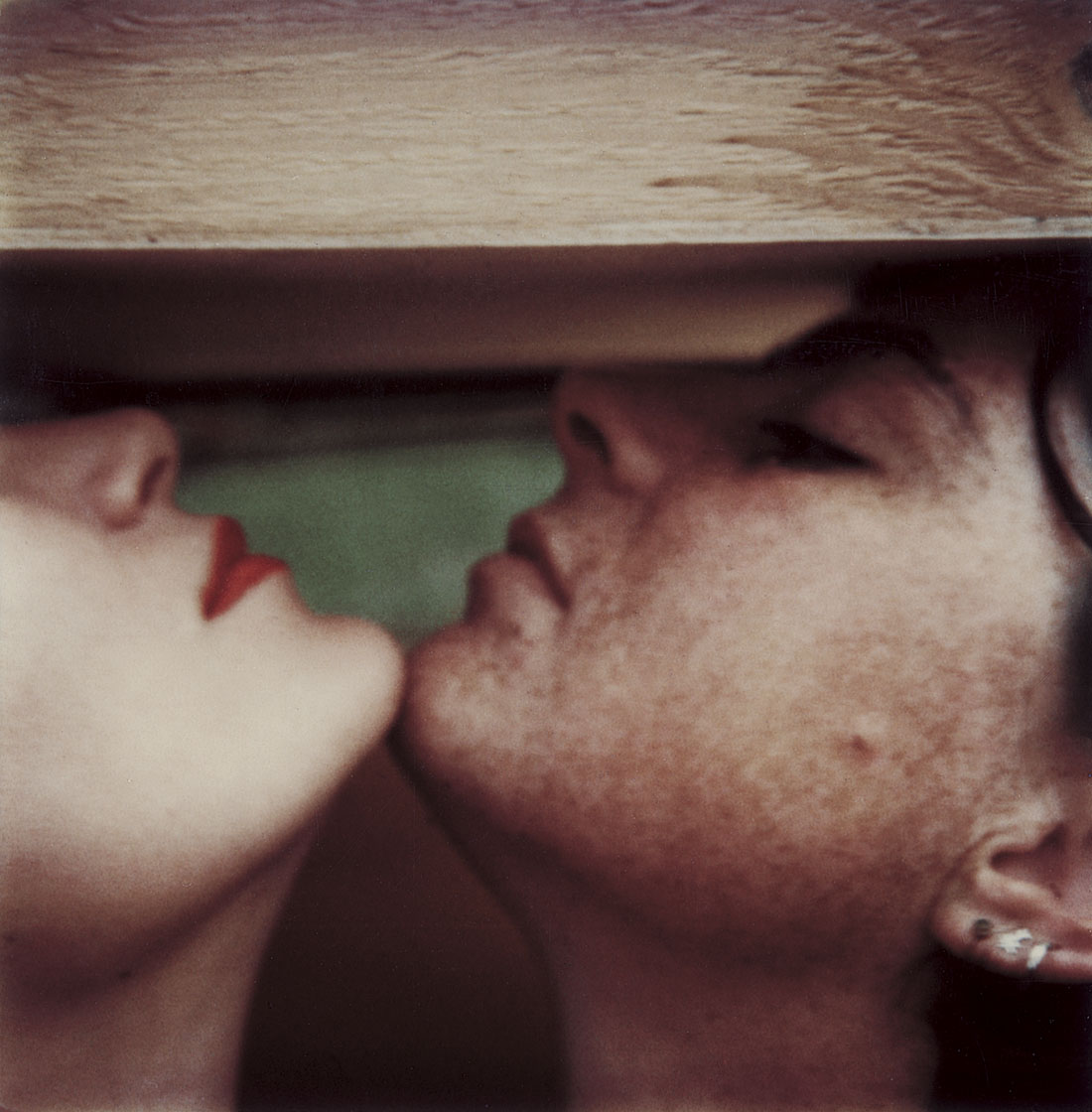
 

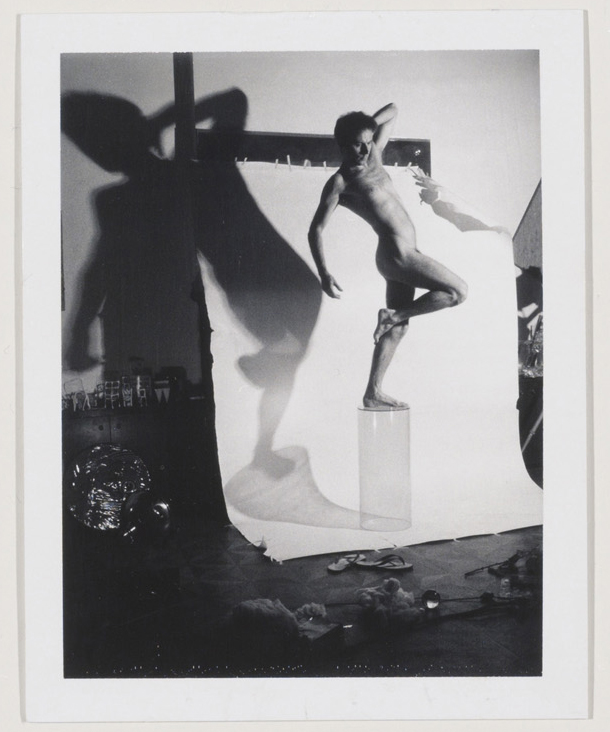
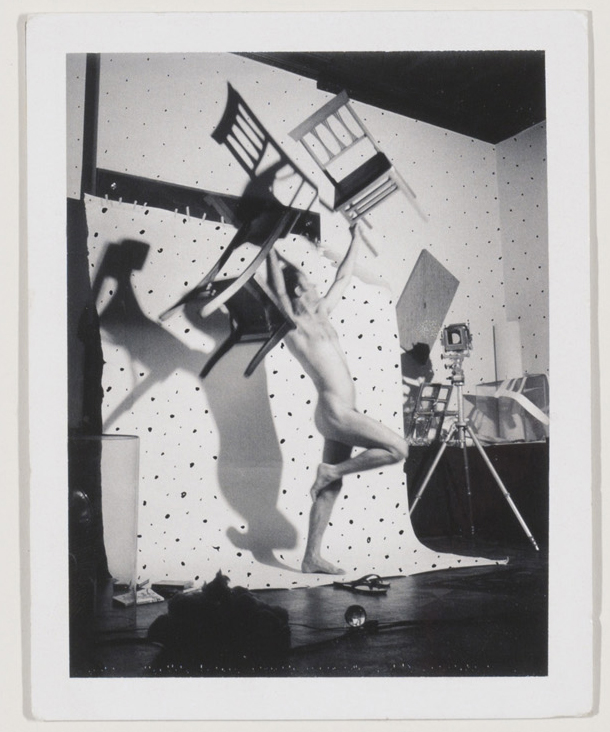
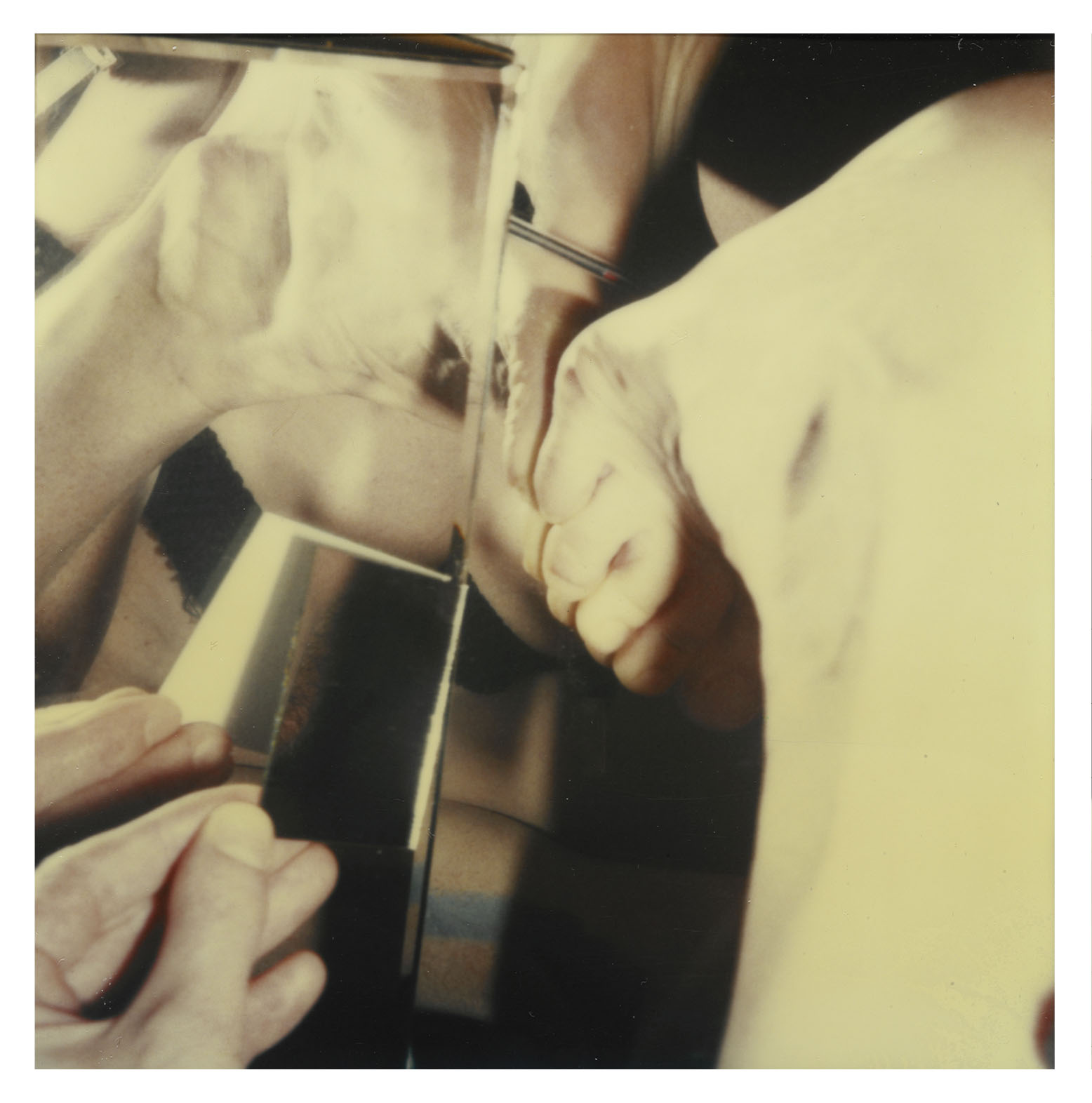
Hannah Villiger (Swiss, 1951-1997) 'Work' 1980 from the exhibition Exhibition: 'Hannah Villiger: Amaze Me' at Museum Susch, Switzerland, Jan - July 2023


Hannah Villiger (Swiss, 1951-1997)
Work
1980
C-print of a polaroid, mounted on aluminium
100 x 100cm
© Foundation The Estate of Hannah Villiger


who am I who I am

I love artists who push the boundaries of seeing / being, body / Self, self / spirit.

Artists who see and feel the world in unique and tantalising – excites the senses or desires of (someone) – ways.

Hannah Villiger is one such artist.

Her fragmentary, space-related assemblages (Works or Blocks) investigate the representation of the female body, “its classification in the media, questions of surface, space and body, and the objectification of the body. In Villiger’s work, the skin – where humans enter a dialogue with their environment – is a setting for highly topical questions of gender and ethnicity, as well as vulnerability and healing. The body was the artist’s primary working material. We encounter it abstracted or deconstructed; it can be human, but also of plant or artificial origin.” (Exhibition text)

But more than that, it is the conceived ‘idea in the mind’ strangeness of Villiger’s out of body gridded experiences… that promote in the viewer an acknowledgement of the physicality, touch, and emotion of actually living and feeling in the human body and beyond. Touch your skin, run your hands over the shape of your mouth, feel your ears, raise your foot, look at your reflection. Marvel at the bodies distortion, energy, spirit. For there is only one you. “I listen to my naked, bare body, the outside of it, the inside of it, traversing it.”

You are unique. An individual, unique, sentient animal. A human – being.

Dr Marcus Bunyan


Many thankx to Museum Susch for allowing me to publish the photographs in the posting. Please click on the photographs for a larger version of the image.


“With my Polaroid camera I listen to my naked, bare body, the outside of it, the inside of it, traversing it. Thus I create images that I can correct immediately.”


Hannah Villiger


“The longest distance between the camera and any body part is between raised arm and my toes. I always trigger the camera myself, sometimes without looking through the viewfinder. I tilt the camera to an angle of 90, 180, 270 degrees. I turn myself – literally – upside down.”


Hannah Villiger. On My Book Envy


Hannah Villiger (1951-1997) was an extraordinary voice in the late 20th-century contemporary art, but her work came to an abrupt end with her untimely death. She became known above all for her photographic works based on the body.

Muzeum Susch is hosting the largest presentation of Hannah Villiger’s oeuvre in fifteen years. Hannah Villiger: Amaze Me offers new perspectives on the work of this important Swiss artist. Villiger’s large-format works based on Polaroid photographs make a lasting contribution to the genre of the self-image within art history. At the same time, her explorations of the body can be discussed against the background of numerous contemporary themes. Her oeuvre spans from the drawings she made in the 1970s to the black-and-white photographs and works with the Polaroid camera that she created from the 1980s onwards. These fragmentary close-ups of her own body, greatly enlarged via an internegative and mounted on aluminium, are presented individually or assembled into space-related ensembles. The results are unlimited possibilities of at times spectacular views of the body. The exhibition expands the view of Villiger to include contemporary themes and issues. The focus is on the representation of the female body, one’s own perspective, as well as that of others, on the human physique, its classification in the media, questions of surface, space and body, and the objectification of the body. In Villiger’s work, the skin – where humans enter a dialogue with their environment – is a setting for highly topical questions of gender and ethnicity, as well as vulnerability and healing. The body was the artist’s primary working material. We encounter it abstracted or deconstructed; it can be human, but also of plant or artificial origin. Although Villiger’s early death brought her oeuvre to an abrupt end, her works point unwaveringly to the present.

Text from the Museum Susch website
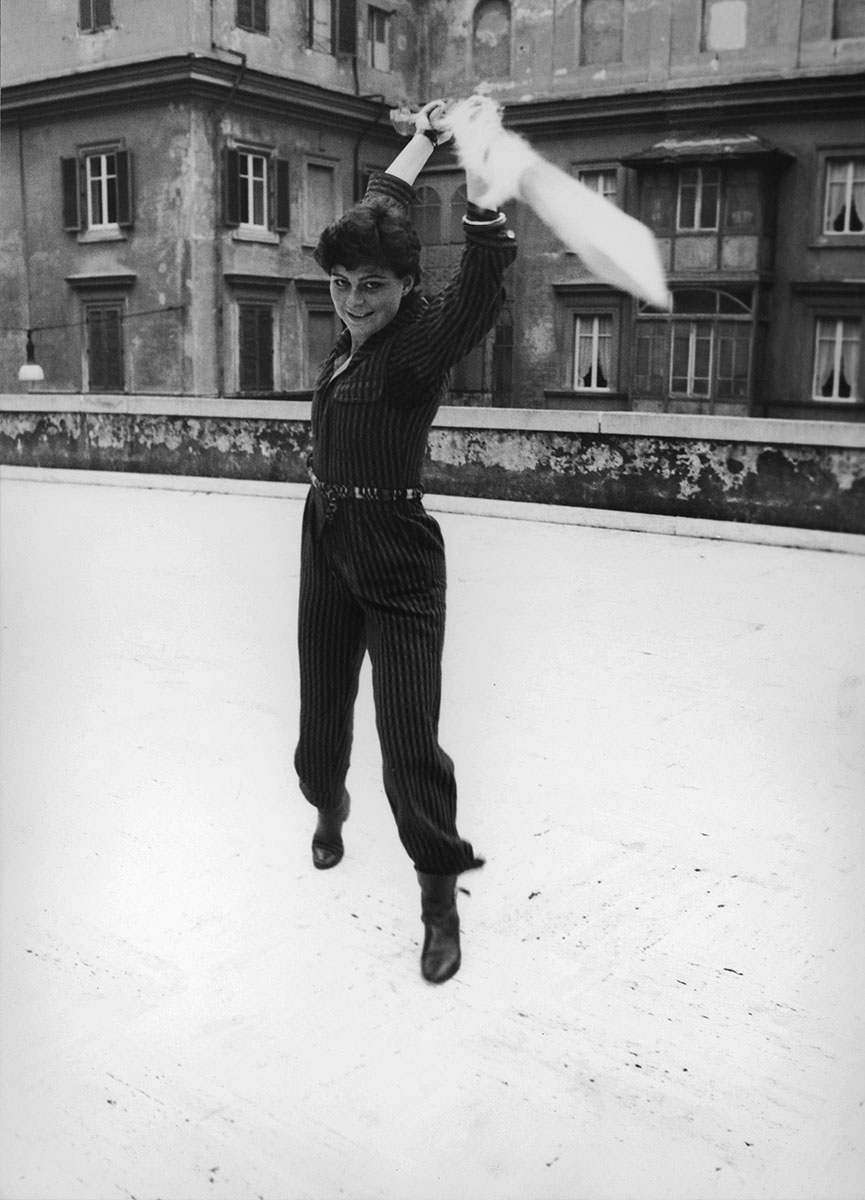
 

Trix Wetter. 'Portrait of Hannah Villiger' 1976, Rome from the exhibition Exhibition: 'Hannah Villiger: Amaze Me' at Museum Susch, Switzerland, Jan - July 2023


Trix Wetter
Portrait of Hannah Villiger
1976, Rome
© Foundation The Estate of Hannah Villiger


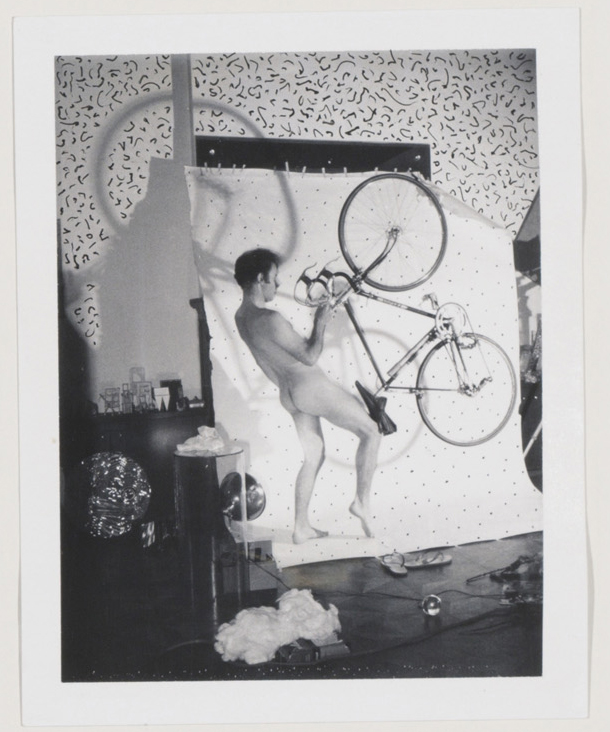
Hannah Villiger (Swiss, 1951-1997) 'Work' 1976 from the exhibition Exhibition: 'Hannah Villiger: Amaze Me' at Museum Susch, Switzerland, Jan - July 2023


Hannah Villiger (Swiss, 1951-1997)
Work
1976
Four black and white photographs
61 x 51cm / 40.5 x 33.5cm each
© Foundation The Estate of Hannah Villiger


Hannah Villiger (Swiss, 1951-1997) 'Work' 1976


Hannah Villiger (Swiss, 1951-1997)
Work
1976
black and white photograph
70 x 100cm
© Foundation The Estate of Hannah Villiger


Hannah Villiger (Swiss, 1951-1997) 'Work' 1976


Hannah Villiger (Swiss, 1951-1997)
Work
1976
68 x 97cm
© Foundation The Estate of Hannah Villiger


Hannah Villiger (Swiss, 1951-1997) 'Work' 1980


Hannah Villiger (Swiss, 1951-1997)
Work
1980
C-print of a polaroid, mounted on aluminium
99.5 x 99.5cm
© Foundation The Estate of Hannah Villiger


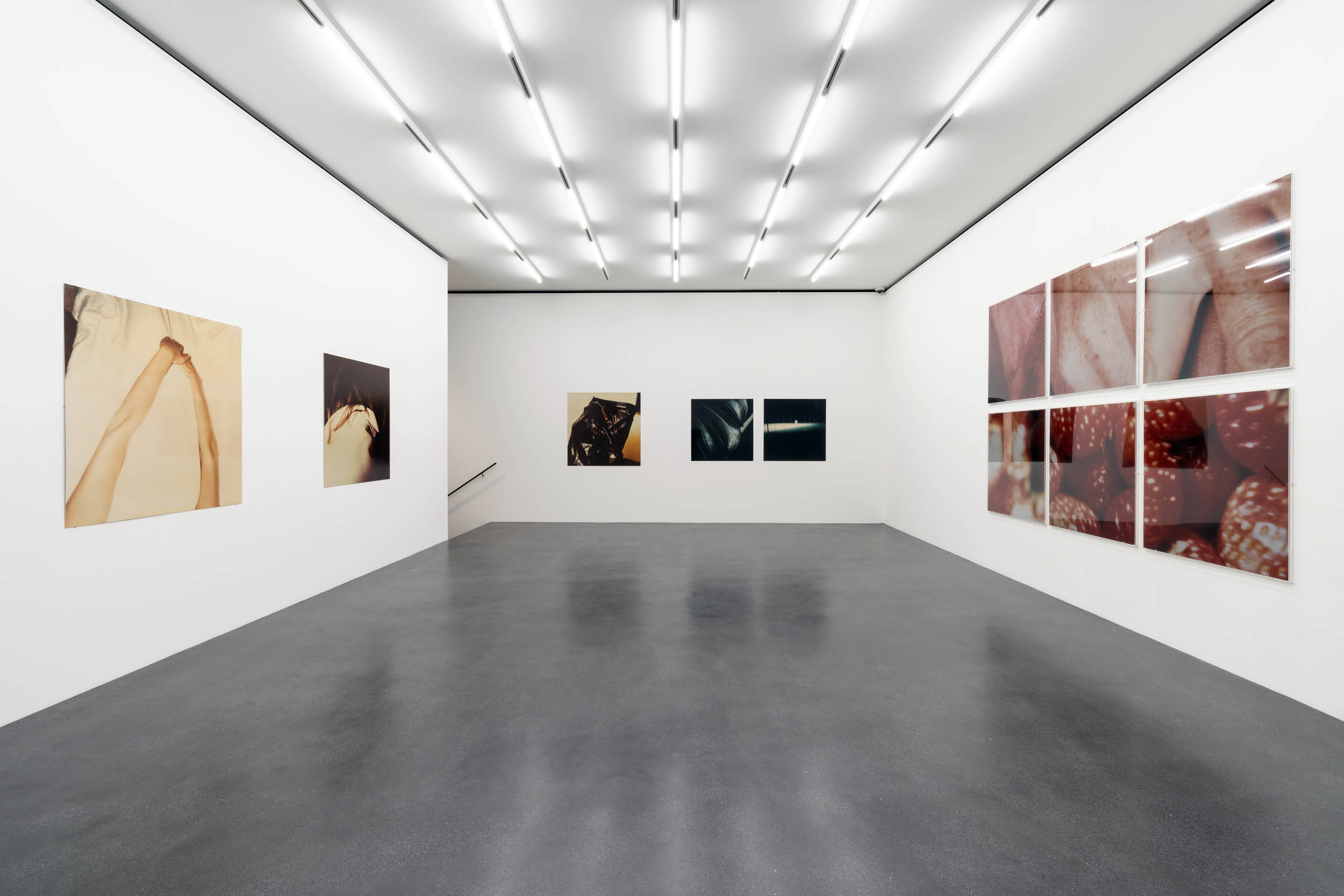
Installation view of 'Hannah Villiger: Amaze Me' at Muzeum Susch showing at left Hannah Villager's 'Block' (1997); and at right, 'Work' (1980-1981)


Installation view of Hannah Villiger: Amaze Me at Muzeum Susch showing at left Hannah Villager’s Block (1997); and at right, Work (1980-1981, below)
Courtesy: © Muzeum Susch / Art Stations Foundation
Photograph: Federico Sette
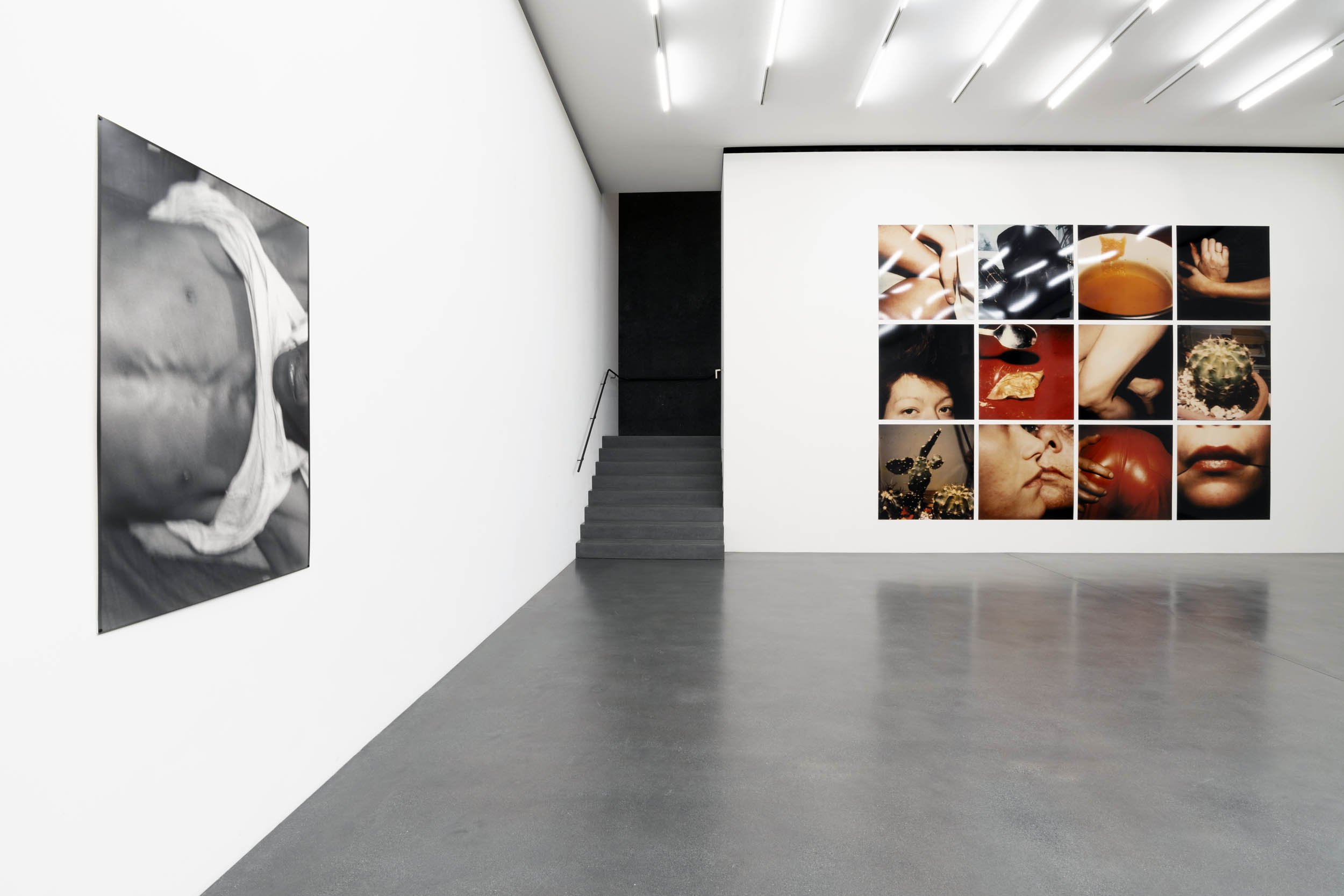
 

Installation view of 'Hannah Villiger: Amaze Me at Muzeum Susch' showing at left Hannah Villiger's 'Work' (1987); and at right, 'Work' (1980-1981)


Installation view of Hannah Villiger: Amaze Me at Muzeum Susch showing at left Hannah Villiger’s Work (1987, below); and at right, Work (1980-1981, below)
Courtesy: © Muzeum Susch / Art Stations Foundation
Photograph: Federico Sette


Hannah Villiger (Swiss, 1951-1997) 'Work' 1987


Hannah Villiger (Swiss, 1951-1997)
Work
1987
Black and white photograph
127.5 x 86.5cm
© Foundation The Estate of Hannah Villiger


Hannah Villiger (Swiss, 1951-1997) 'Work' 1980-1981


Hannah Villiger (Swiss, 1951-1997)
Work
1980-1981
C-prints of polaroids, mounted on aluminium (12 pieces)
355 x 475cm
© Foundation The Estate of Hannah Villiger


Installation view of 'Hannah Villiger: Amaze Me' at Muzeum Susch showing at left Hannah Villiger's 'Work' (1981); and at right, 'Work' (1982)


Installation view of Hannah Villiger: Amaze Me at Muzeum Susch showing at left Hannah Villiger’s Work (1981, below); and at right, Work (1982, below)
Courtesy: © Muzeum Susch / Art Stations Foundation
Photograph: Federico Sette


Hannah Villiger (Swiss, 1951-1997) 'Work' 1981


Hannah Villiger (Swiss, 1951-1997)
Work
1981
Two C-prints of polaroids, mounted on aluminium
Each 38 x 38cm
© Foundation The Estate of Hannah Villiger


Running from 4 January to 2 July 2023, Muzeum Susch presents Hannah Villiger: Amaze Me, a comprehensive survey dedicated to the Swiss artist Hannah Villiger (1951-1997) with contributions from contemporary artists Alexandra Bachzetsis, Lou Masduraud (b. 1990) and Manon Wertenbroek (b. 1991).

The exhibition Hannah Villiger: Amaze Me offers new perspectives on the work of this important Swiss artist. Hannah Villiger’s (1951-1997) large-format works based on Polaroid photographs make a lasting contribution to the genre of the self-image within art history. At the same time, her explorations of the body can be discussed against the background of numerous contemporary themes.

Muzeum Susch is hosting the largest presentation of Hannah Villiger’s work in fifteen years. The exhibition spans her oeuvre, from the drawings she made in the 1970s to the black-and-white photographs and works with the Polaroid camera that she created from the 1980s onwards. These fragmentary close-ups of her own body, greatly enlarged via an internegative and mounted on aluminium, are presented individually or assembled into space-related ensembles. The results are unlimited possibilities of at times spectacular views of the body. On display are vintage prints, existing though often still unknown individual works, as well as so-called blocks, large-format assemblages of up to fifteen square picture panels. Some of these will be shown for the first time in the exhibition in Susch.

The exhibition expands the view of Villiger to include contemporary themes and issues. The focus is on the representation of the female body, one’s own perspective, as well as that of others, on the human physique, its classification in the media, questions of surface, space and body, and the objectification of the body. In Villiger’s work, the skin – where humans enter a dialogue with their environment – is a setting for highly topical questions of gender and ethnicity, as well as vulnerability and healing. The body was the artist’s primary working material. We encounter it abstracted or deconstructed; it can be human, but also of plant or artificial origin. Although Villiger’s early death brought her oeuvre to an abrupt end, her works point unwaveringly to the present.

The undiminished relevance of Villiger’s work is underscored by the inclusion of works by the contemporary artists Alexandra Bachzetsis, Lou Masduraud and Manon Wertenbroek. These younger women artists present thematically related works – distributed throughout the entire exhibition – in dialogue with Villiger and at the same time represent strong contemporary positions. The artists have been selected based on their exploration of similar themes to those of Villiger. Bachzetsis in collaboration with Julia Born presents This Side Up, a video installation of the artist moving in all directions in a confined space, much like the way Villiger writhes, turns and shapes her own body under the eye of her Polaroid camera. Masduraud presents Petrifying basin (kisses with the nymphs), a sculptural installation and small wall objects that playfully and sensually rethink organic life and anchors mythological traditions in the present day. And finally, Wertenbroek presents a selection of objects addressing the boundaries between the skin and surrounding world and reflects on themes such as unveiling and veiling.

On the exhibition and Hannah Villiger, Muzeum Susch’s found Grazyna Kulczyk says, “Female artists are no longer afraid to document their bodies being destructed due to illness or ageing – often the artworks become projects showing chronicles of pain. Observing and recording their own bodies has become a form of manifesto for female artists, reclaiming the subjectivity of the body. Female artists have painted, photographed and sculpted themselves. In this way, the shame of nakedness or imperfection has often become a point of pride. Hannah Villiger, through photographs of her body, become the body’s conscious sculptor.”

The exhibition is accompanied by a monograph on the latest research on Hannah Villiger’s practice and influence. Villiger is often likened to an artist’s artist, which has inspired the editors to invite artists who knew her to contribute texts, including Katja Schenker, Beat Streuli, and Claudia and Julia Müller. The book, part of a series of monographs by Muzeum Susch and Skira, will be published in March 2023.

Hannah Villiger (1951-1997) grew up as the fourth of five children in Cham (CH). After completing her studies at the School of Applied Arts in Lucerne, Villiger spent a period travelling and living between Toronto, Rome, Montefalco and Switzerland until she finally settled in Basel in 1977. In Basel, she produced her first black-and-white photographs as well as wood and Plexiglas objects. In 1980 Villiger fell ill with open tuberculosis and spent a month isolated in the Basel Cantonal Hospital, followed by a stay in a sanatorium in Davos. Despite her poor health, Villiger continued to create and exhibit her work. From 1981 to 1982 she undertook a world road-trip with Susan Wyss, with whom she had been in a relationship since 1975. In the early 1980s, Villiger began to use Polaroid cameras primarily to explore her body, serving as a working material, and increasingly moved away from the classic black-and-white and colour photographs. In 1988 in Paris, she met Mouhamadou Mansour (“Joe”) Kébé, with whom she had a son with in 1991. Between 1992 and 1997, Villiger taught at the Basel School of Art and Design. She died of heart failure in 1997.

Text from the Museum Susch website


Installation view of 'Hannah Villiger: Amaze Me' at Muzeum Susch

Installation view of 'Hannah Villiger: Amaze Me' at Muzeum Susch showing at left in the bottom image, Hannah Villiger's 'Work' (1982); and at right, 'Sculpting' (1983)


Installation views of Hannah Villiger: Amaze Me at Muzeum Susch showing at left in the bottom image, Hannah Villiger’s Work (1982, below); and at right, Sculpting (1983, below)
Courtesy: © Muzeum Susch / Art Stations Foundation
Photograph: Federico Sette
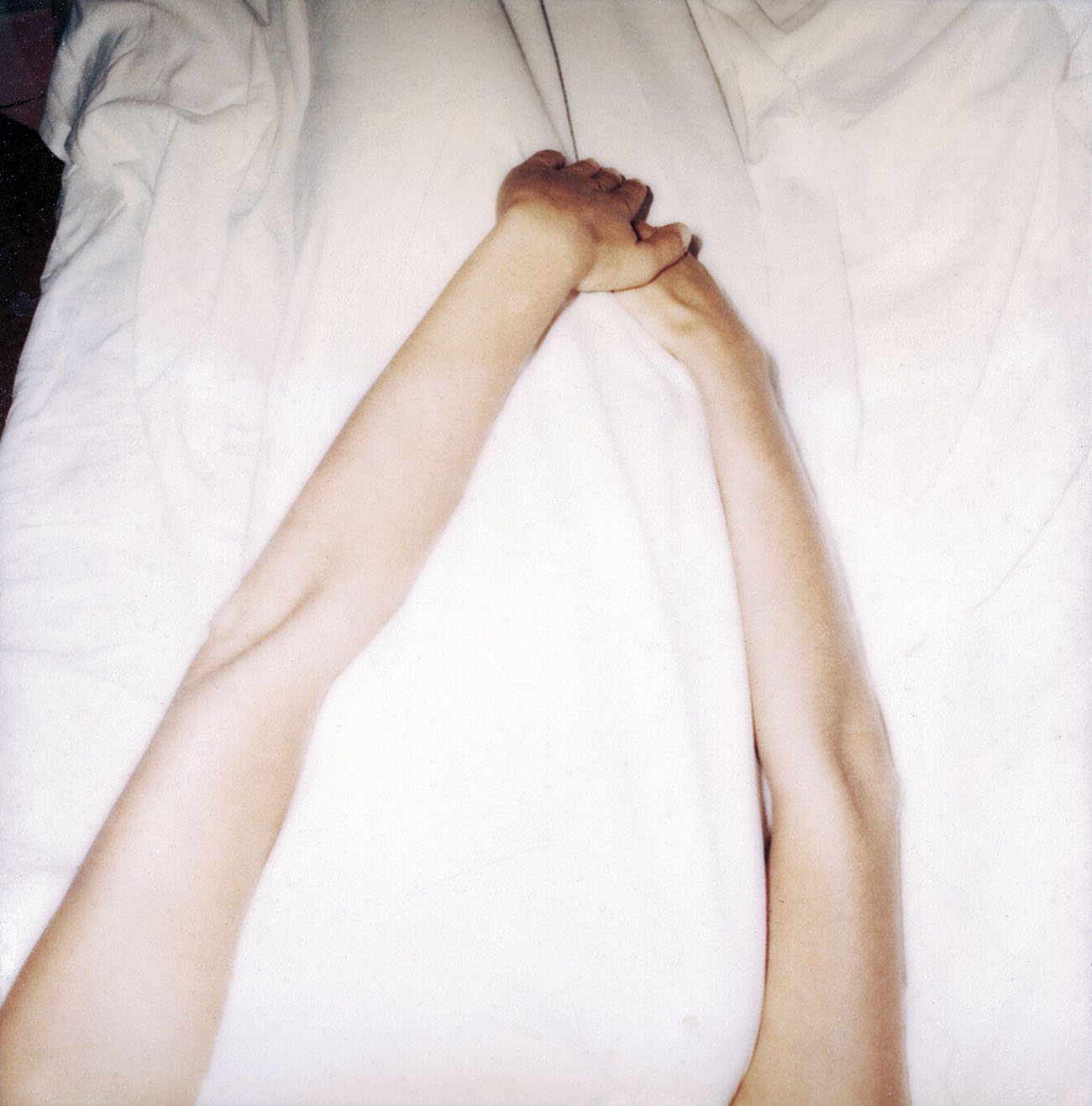
 

Hannah Villiger (Swiss, 1951-1997) 'Work' 1982


Hannah Villiger (Swiss, 1951-1997)
Work
1982
C-print of a polaroid, mounted on aluminium
125 x 123cm
© Foundation The Estate of Hannah Villiger


Hannah Villiger (Swiss, 1951-1997) 'Sculpting' 1983


Hannah Villiger (Swiss, 1951-1997)
Sculpting
1983
Six C-prints of polaroids, mounted on aluminium
222 x 322cm
© Foundation The Estate of Hannah Villiger
Courtesy of Collection Pictet


Installation view of 'Hannah Villiger: Amaze Me' at Muzeum Susch

Installation view of 'Hannah Villiger: Amaze Me' at Muzeum Susch showing in the bottom image at left, 'Sculptural' (1984-1985); at centre, 'Sculptural' (1984-1985); and at right, 'Sculptural' (1984-1985)


Installation views of Hannah Villiger: Amaze Me at Muzeum Susch showing in the bottom image at left, Sculptural (1984-85, below); at centre, Sculptural (1984-85, below); and at right, Sculptural (1984-85, below)
Courtesy: © Muzeum Susch / Art Stations Foundation
Photograph: Federico Sette


Hannah Villiger (Swiss, 1951-1997) 'Sculptural' 1984-1985


Hannah Villiger (Swiss, 1951-1997)
Sculptural
1984-85
C-print of a polaroid, mounted on aluminium
© Foundation The Estate of Hannah Villiger
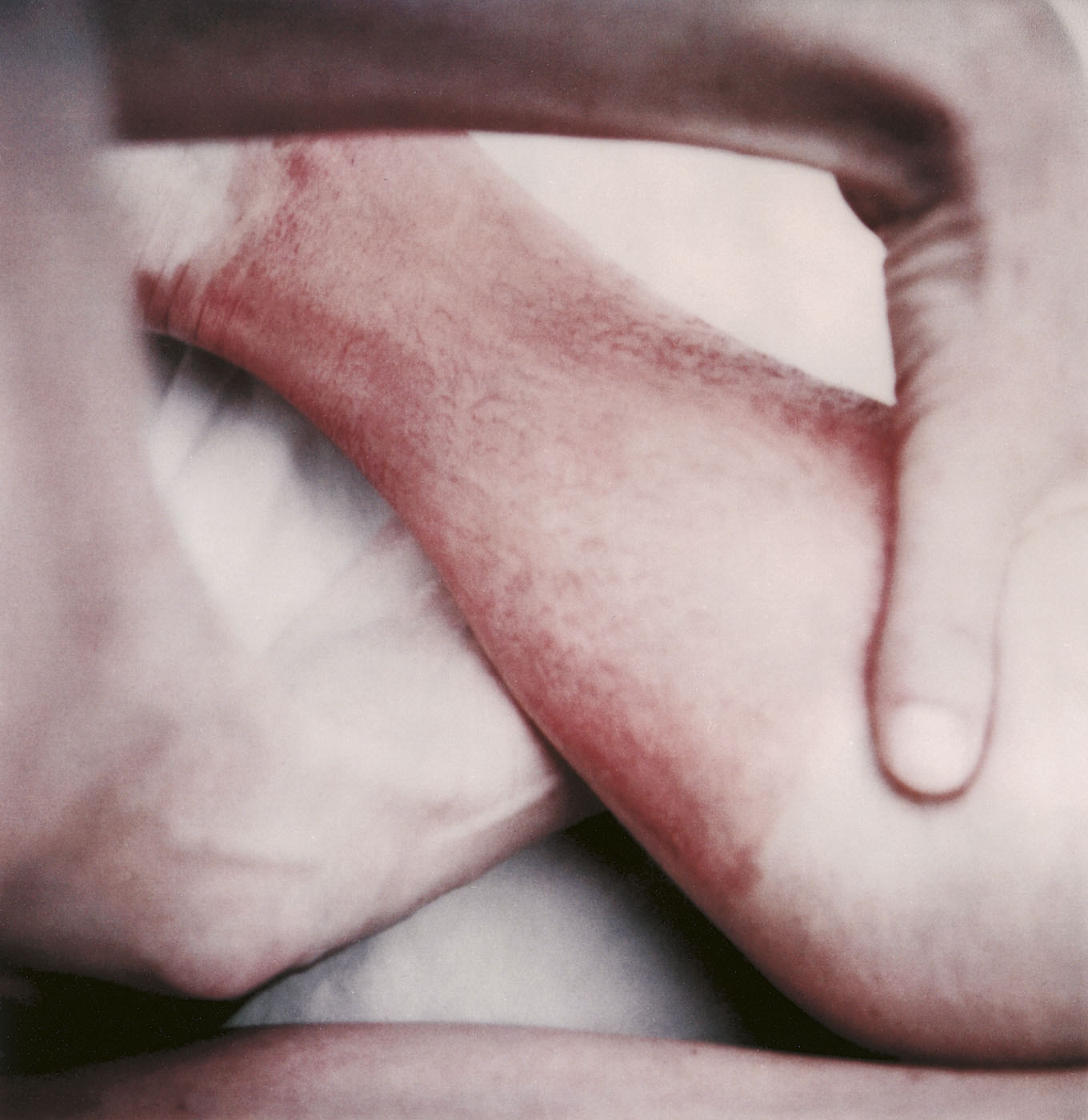
 

Hannah Villiger (Swiss, 1951-1997) 'Sculptural' 1984-1985


Hannah Villiger (Swiss, 1951-1997)
Sculptural
1984-85
C-print of a polaroid, mounted on aluminium
© Foundation The Estate of Hannah Villiger
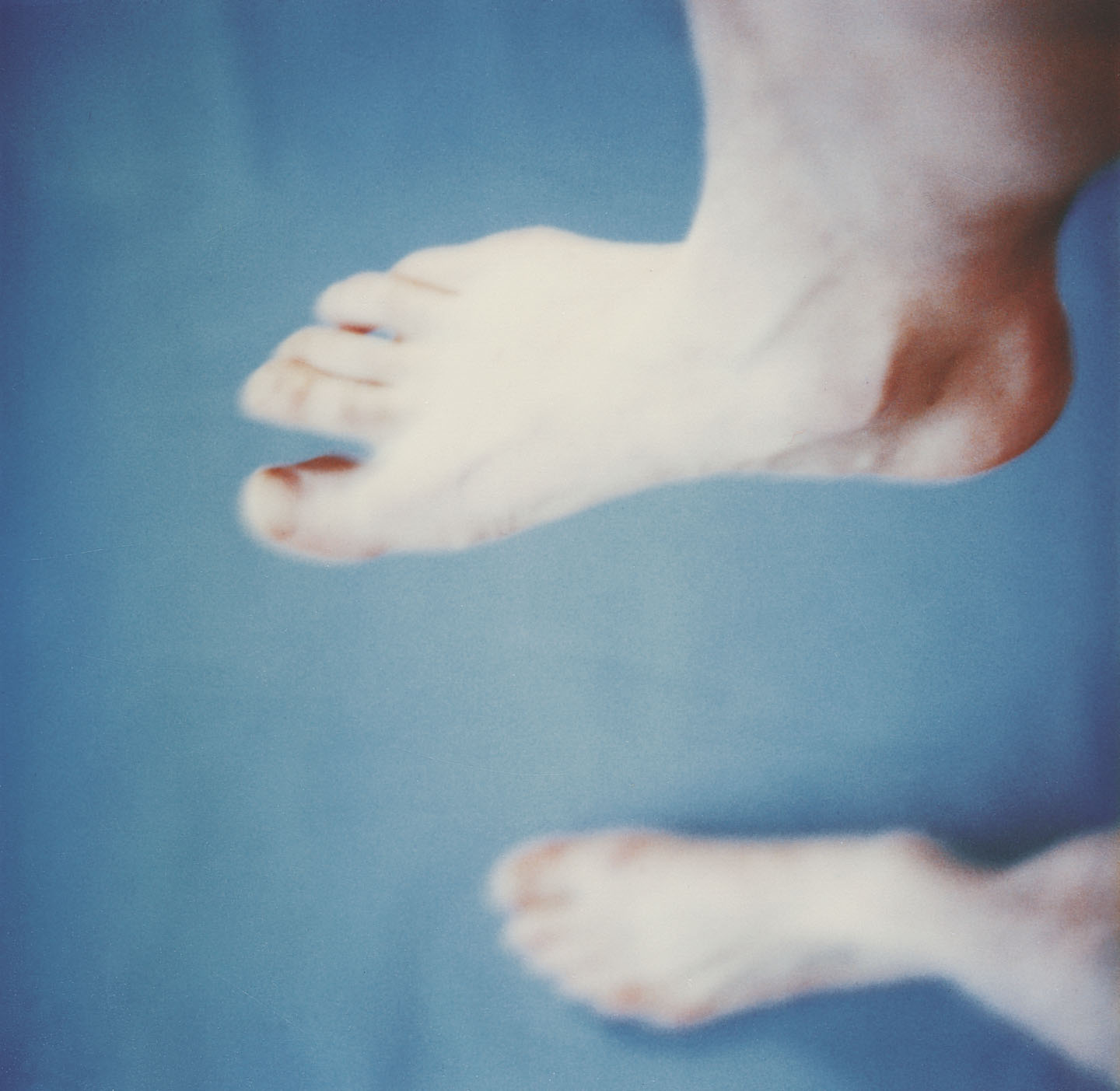
 

Hannah Villiger (Swiss, 1951-1997) 'Sculptural' 1984-1985


Hannah Villiger (Swiss, 1951-1997)
Sculptural
1984-85
C-print of a polaroid, mounted on aluminium
© Foundation The Estate of Hannah Villiger
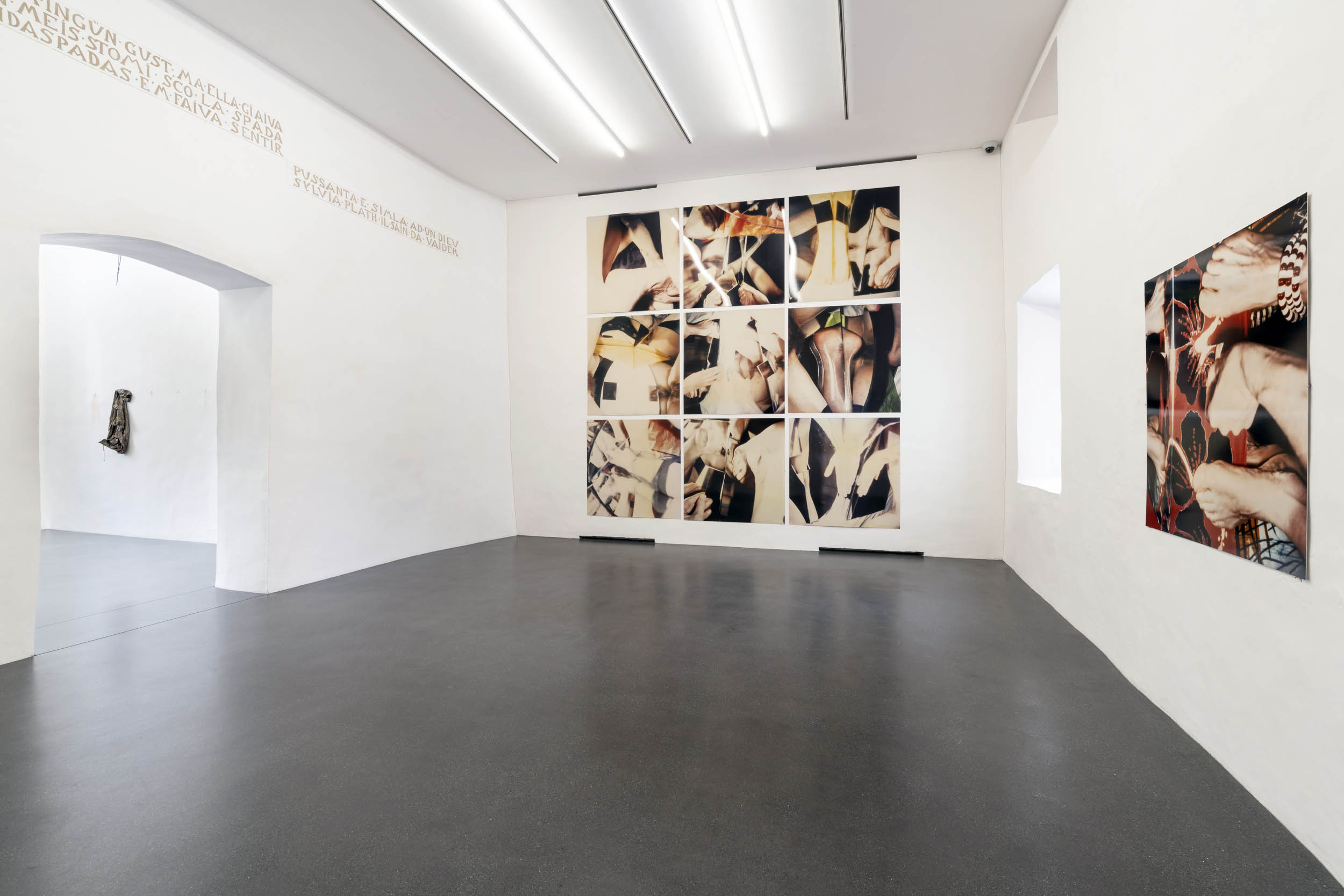
 

Installation view of 'Hannah Villiger: Amaze Me' at Muzeum Susch showing at centre, 'Block XVI' (1989); and at right, 'Sculptural' (1988-1989)


Installation views of Hannah Villiger: Amaze Me at Muzeum Susch showing at centre, Block XVI (1989, below); and at right, Sculptural (1988-89, below)
Courtesy: © Muzeum Susch / Art Stations Foundation
Photograph: Federico Sette


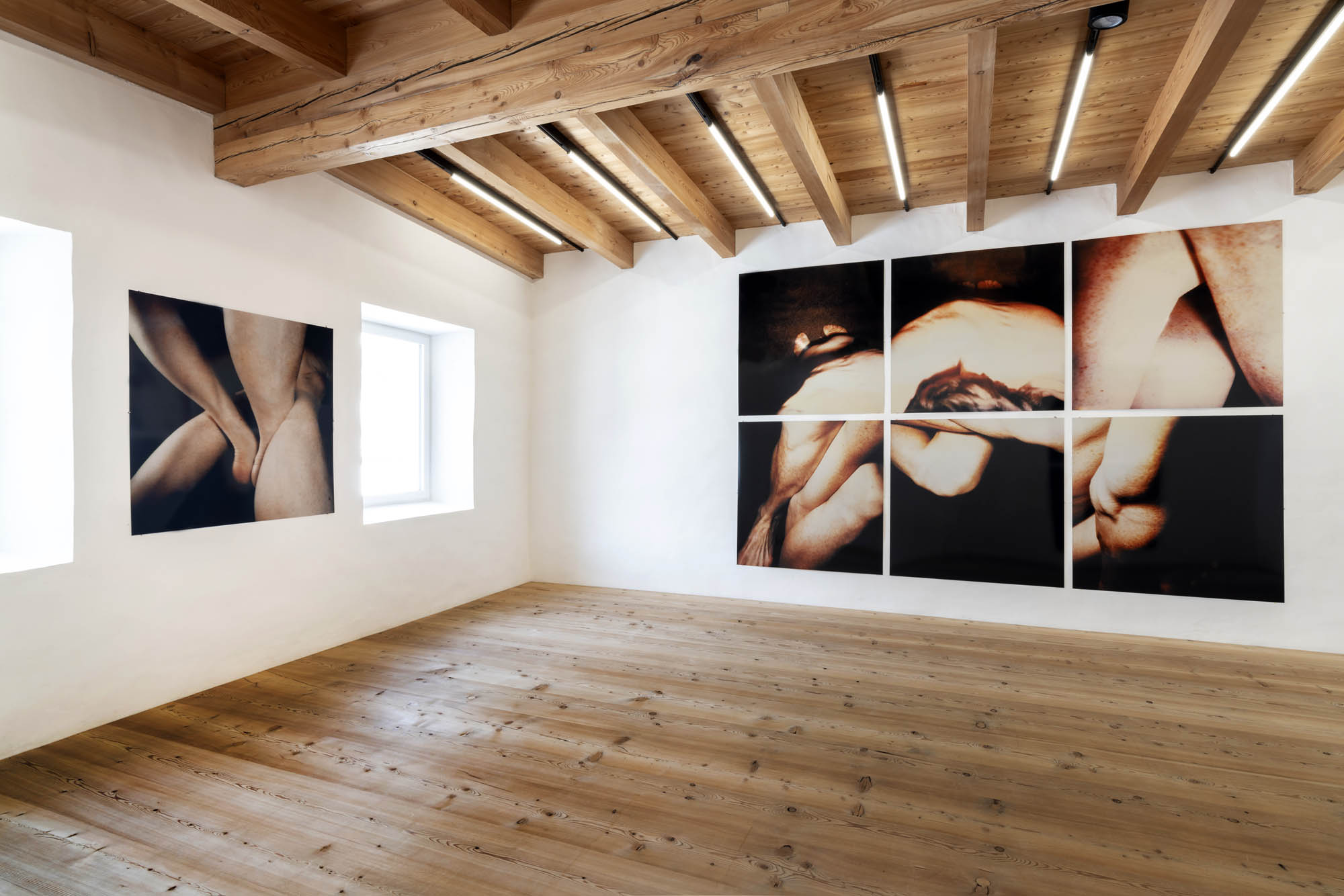
Hannah Villiger (Swiss, 1951-1997) 'Block XVI' 1989


Hannah Villiger (Swiss, 1951-1997)
Block XVI
1989
Nine C-prints of polaroids, mounted on aluminium
© Foundation The Estate of Hannah Villiger
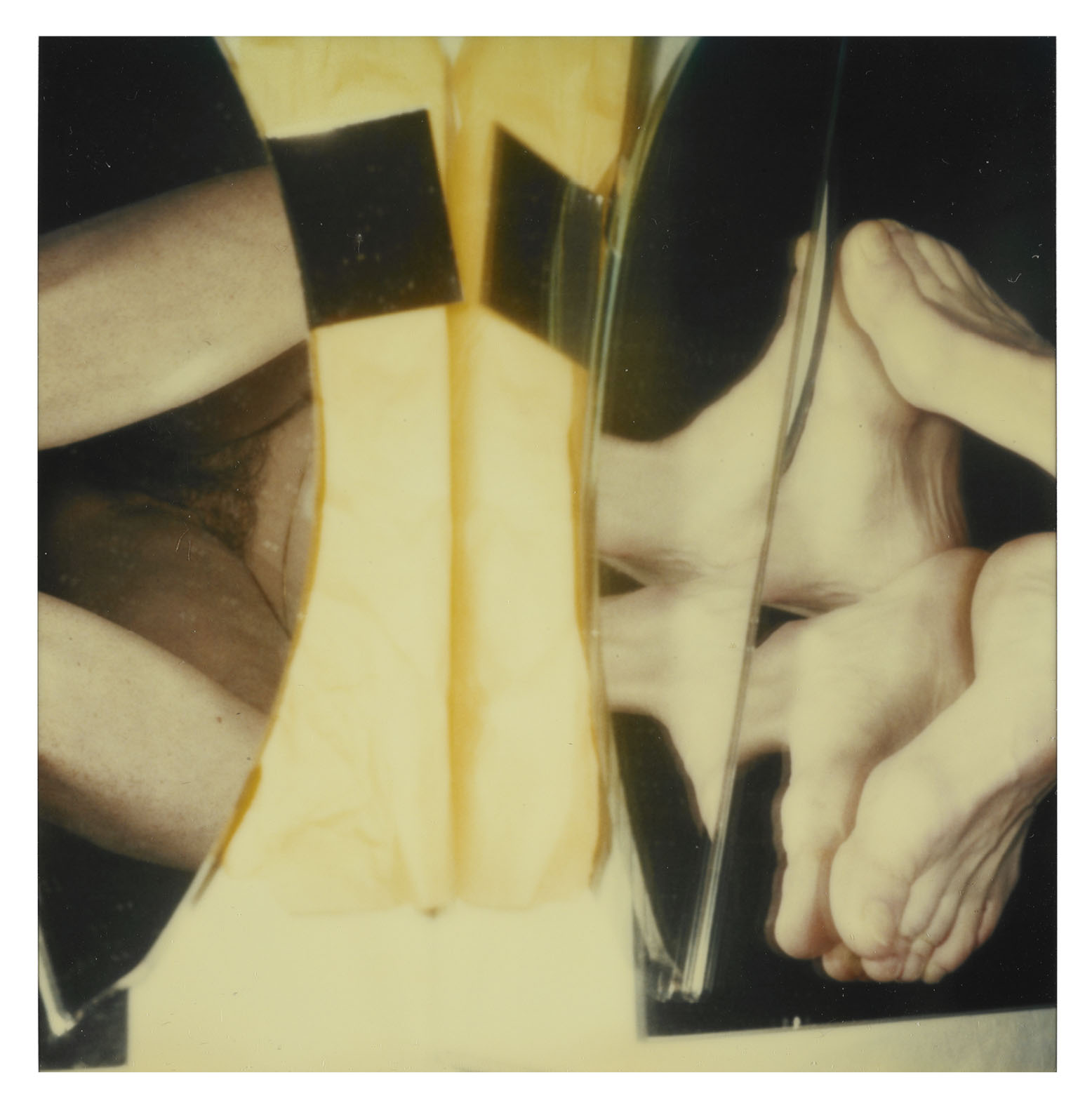
 

Hannah Villiger (Swiss, 1951-1997) 'Block XVI' 1989 (detail)

Hannah Villiger (Swiss, 1951-1997) 'Block XVI' 1989 (detail)

Hannah Villiger (Swiss, 1951-1997) 'Block XVI' 1989 (detail)


Hannah Villiger (Swiss, 1951-1997)
Block XVI (details)
1989
Nine C-prints of polaroids, mounted on aluminium
© Foundation The Estate of Hannah Villiger


Hannah Villiger (Swiss, 1951-1997) 'Sculptural' 1988-1989


Hannah Villiger (Swiss, 1951-1997)
Sculptural
1988-89
C-print of a polaroid, mounted on aluminium
© Foundation The Estate of Hannah Villiger


Hannah Villiger (Swiss, 1951-1997) 'Sculptural' 1988-1989


Hannah Villiger (Swiss, 1951-1997)
Sculptural
1988-89
C-print of a polaroid, mounted on aluminium
© Foundation The Estate of Hannah Villiger


Installation view of 'Hannah Villiger: Amaze Me' at Muzeum Susch

Installation view of 'Hannah Villiger: Amaze Me' at Muzeum Susch


Installation views of Hannah Villiger: Amaze Me at Muzeum Susch
Courtesy: © Muzeum Susch / Art Stations Foundation
Photograph: Federico Sette


Installation view of 'Hannah Villiger: Amaze Me' at Muzeum Susch showing at left 'Block XIII' (1989)


Installation view of Hannah Villiger: Amaze Me at Muzeum Susch showing at left Block XIII (1989, below)
Courtesy: © Muzeum Susch / Art Stations Foundation
Photograph: Federico Sette


Installation view of 'Hannah Villiger: Amaze Me' at Muzeum Susch showing 'Block XIII' (1989)


Installation view of Hannah Villiger: Amaze Me at Muzeum Susch showing Block XIII (1989, below)
Courtesy: © Muzeum Susch / Art Stations Foundation
Photograph: Federico Sette


Hannah Villiger (Swiss, 1951-1997) 'Block XIII' 1989


Hannah Villiger (Swiss, 1951-1997)
Block XIII
1989
Fifteen C-prints of polaroids, mounted on aluminium
© Foundation The Estate of Hannah Villiger
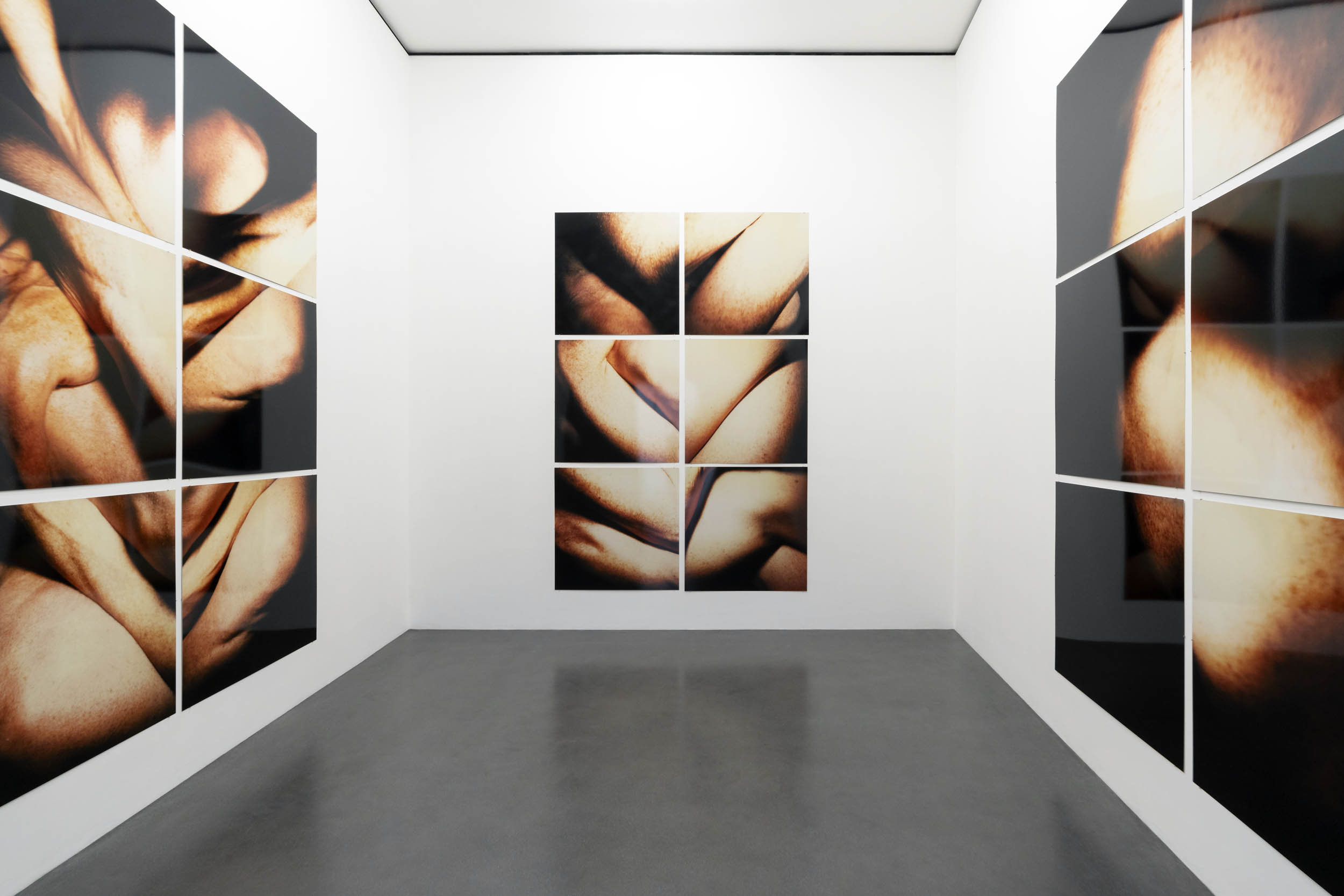
 

Hannah Villiger (Swiss, 1951-1997) 'Block XIII' 1989 (detail)

Hannah Villiger (Swiss, 1951-1997) 'Block XIII' 1989 (detail)

Hannah Villiger (Swiss, 1951-1997) 'Block XIII' 1989 (detail)


Hannah Villiger (Swiss, 1951-1997)
Block XIII (details)
1989
Fifteen C-prints of polaroids, mounted on aluminium
© Foundation The Estate of Hannah Villiger


Installation view of 'Hannah Villiger: Amaze Me' at Muzeum Susch showing at left, 'Sculptural' (1990-91); and at right, 'Block XXX' (1993-1994)


Installation view of Hannah Villiger: Amaze Me at Muzeum Susch showing at left, Sculptural (1990-91, below); and at right, Block XXX (1993-1994)
Courtesy: © Muzeum Susch / Art Stations Foundation
Photograph: Federico Sette


Hannah Villiger (Swiss, 1951-1997) 'Sculptural' 1990-1991


Hannah Villiger (Swiss, 1951-1997)
Sculptural
1990-91
C-print of a polaroid, mounted on aluminium
© Foundation The Estate of Hannah Villiger


Hannah Villiger (Swiss, 1951-1997) 'Block XXX' 1993-1994


Hannah Villiger (Swiss, 1951-1997)
Block XXX
1993-94
Six C-prints of polaroids, mounted on aluminium
Jacques Herzog und Pierre de Meuron Kabinett, Basel
© Foundation The Estate of Hannah Villiger


Installation view of 'Hannah Villiger: Amaze Me' at Muzeum Susch showing at left, 'Block XXXV' (1994); and at right, 'Place' (1985)


Installation view of Hannah Villiger: Amaze Me at Muzeum Susch showing at left, Block XXXV (1994, below); and at right, Place (1985, below)
Courtesy: © Muzeum Susch / Art Stations Foundation
Photograph: Federico Sette


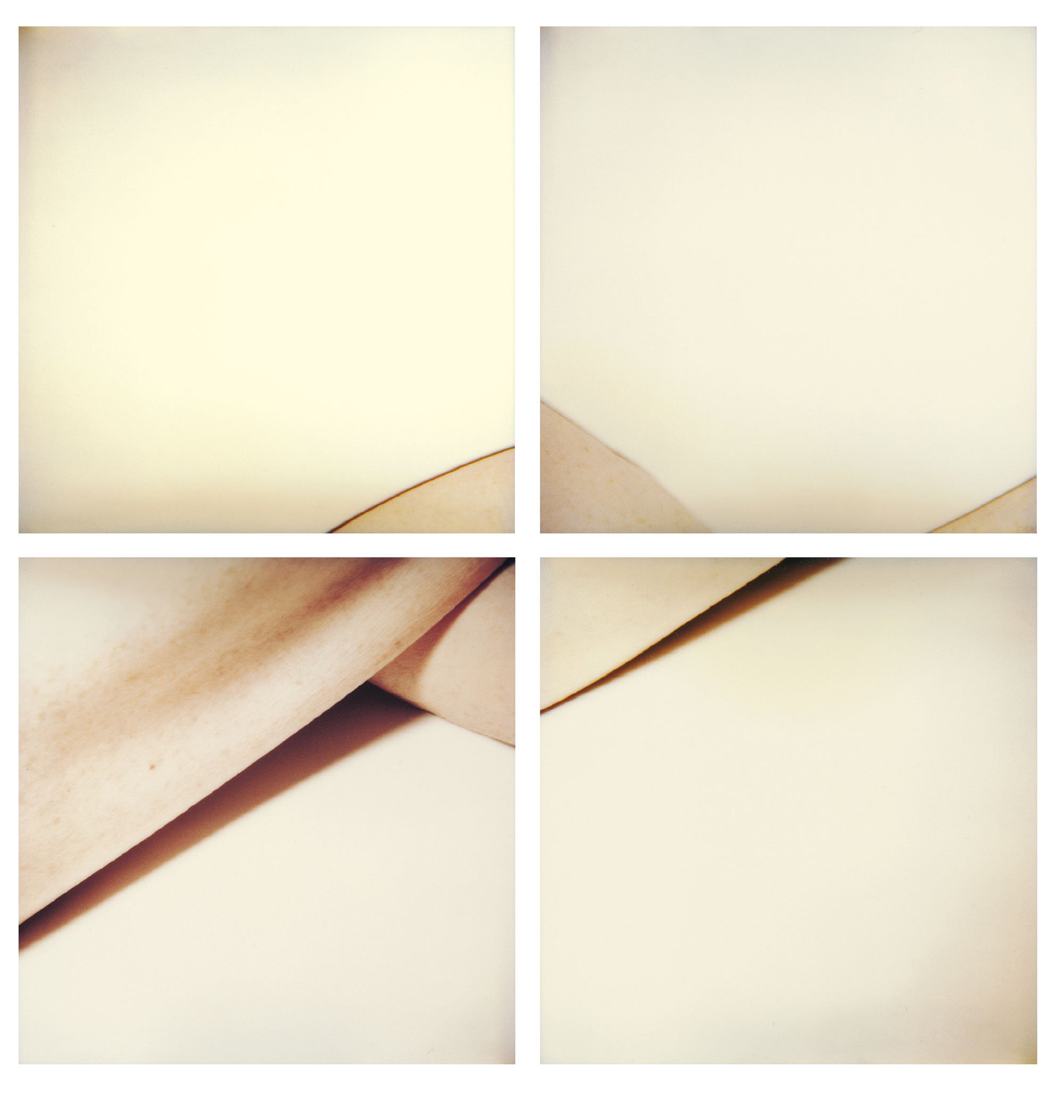
Hannah Villiger (Swiss, 1951-1997) 'Block XXXV' 1994


Hannah Villiger (Swiss, 1951-1997)
Block XXXV
1994
Four C-prints of polaroids, mounted on aluminium
© Foundation The Estate of Hannah Villiger


Hannah Villiger (Swiss, 1951-1997) 'Place' 1985


Hannah Villiger (Swiss, 1951-1997)
Place
1985
C-print of a polaroid, mounted on aluminium
© Foundation The Estate of Hannah Villiger


Hannah Villiger (Swiss, 1951-1997) 'Sculptural' 1995


Hannah Villiger (Swiss, 1951-1997)
Sculptural
1995
Six C-prints of polaroids, mounted on aluminium
© Foundation The Estate of Hannah Villiger


Installation view of 'Hannah Villiger: Amaze Me' at Muzeum Susch showing the work 'Block' (1996)


Installation view of Hannah Villiger: Amaze Me at Muzeum Susch showing the work Block (1996, below)
Courtesy: © Muzeum Susch / Art Stations Foundation
Photograph: Federico Sette


Hannah Villiger (Swiss, 1951-1997) 'Block' 1996


Hannah Villiger (Swiss, 1951-1997)
Block
1996
Six C-prints of polaroids, mounted on aluminium
© Foundation The Estate of Hannah Villiger


Hannah Villiger (Swiss, 1951-1997) 'Block' 1997


Hannah Villiger (Swiss, 1951-1997)
Block
1997
Nine C-prints of polaroids, mounted on aluminium
© Foundation The Estate of Hannah Villiger


Hannah Villiger (Swiss, 1951-1997) 'Block' 1997 (detail)

Hannah Villiger (Swiss, 1951-1997) 'Block' 1997 (detail)


Hannah Villiger (Swiss, 1951-1997)
Block (details)
1997
Nine C-prints of polaroids, mounted on aluminium
© Foundation The Estate of Hannah Villiger


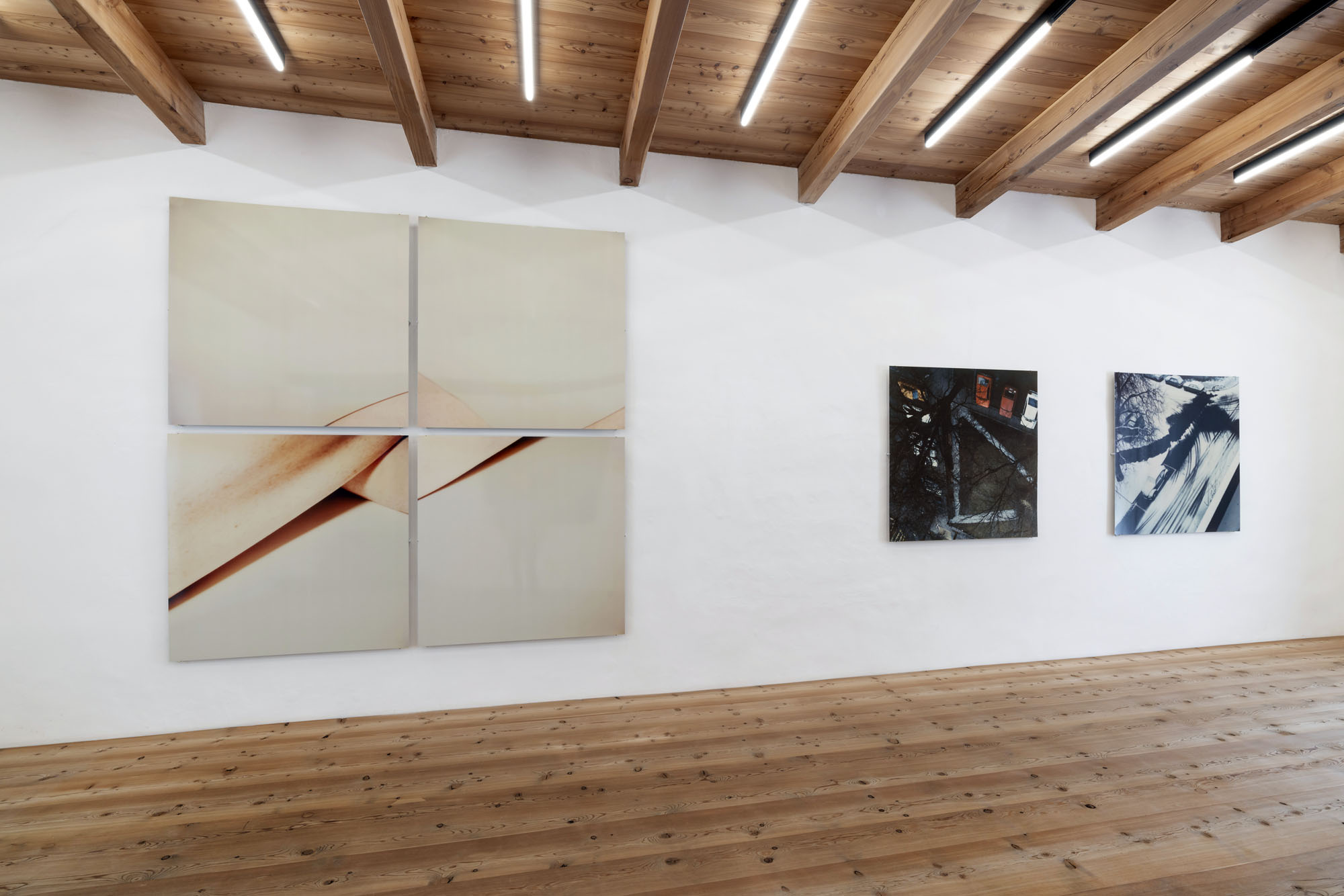
Installation view of 'Hannah Villiger: Amaze Me' at Muzeum Susch showing at left, 'City' (1997)


Installation view of Hannah Villiger: Amaze Me at Muzeum Susch showing at left, City (1997, below)
Courtesy: © Muzeum Susch / Art Stations Foundation
Photograph: Federico Sette


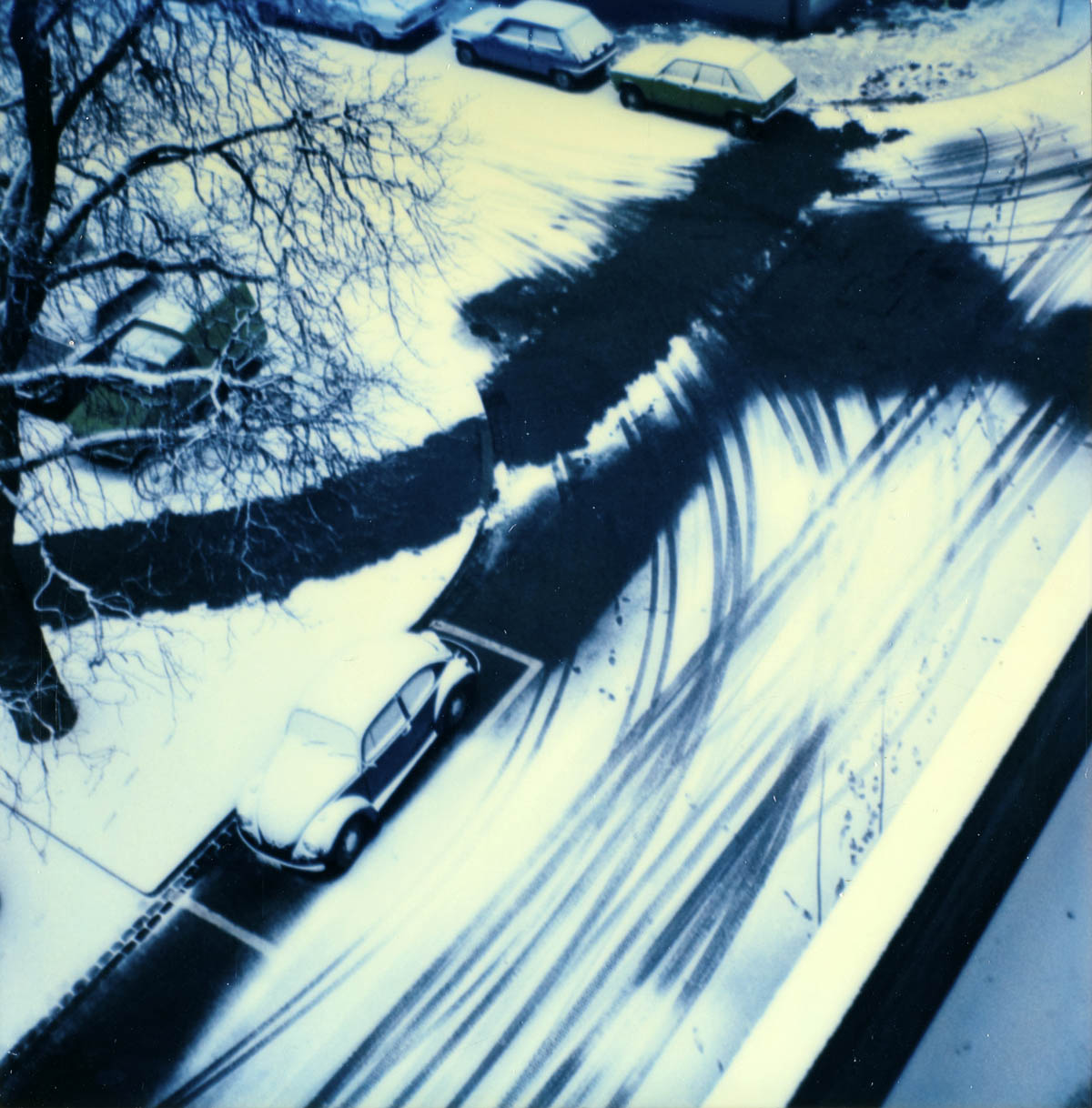
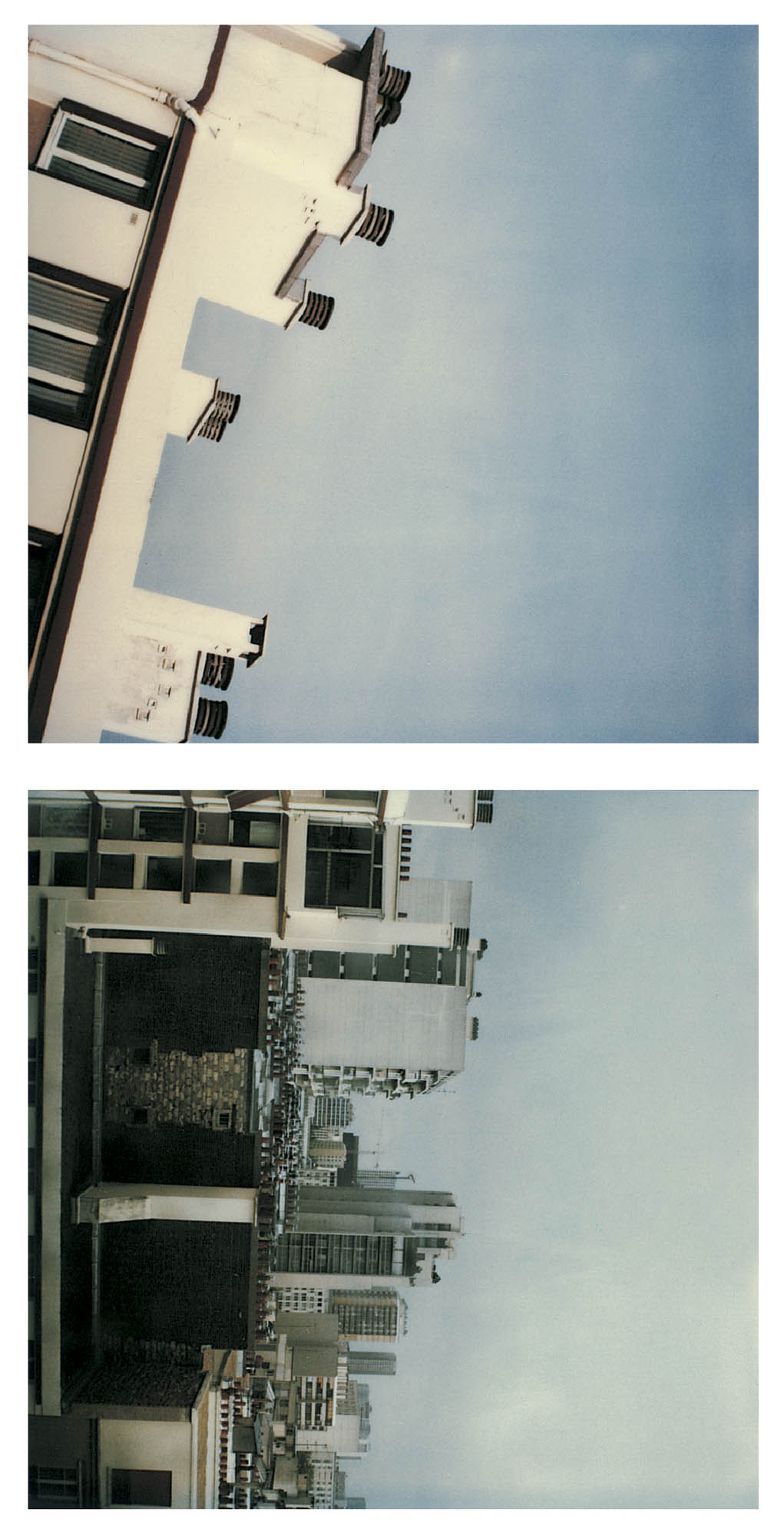
Hannah Villiger (Swiss, 1951-1997) 'City' 1997


Hannah Villiger (Swiss, 1951-1997)
City
1997
Two C-prints of polaroids, mounted on aluminium
© Foundation The Estate of Hannah Villiger


Museum Susch
Surpunt 78
CH – 7542 Susch, Switzerland

Opening hours:
Wednesday: 11.00 – 17.00
Thursday: 11.00 – 17.00
Friday: 11.00 – 17.00
Saturday: 11.00 – 17.00
Sunday: 11.00 – 17.00

Museum Susch website

LIKE ART BLART ON FACEBOOK

Back to top

Exhibition: ‘The Polaroid Project’ at the Museum für Kunst und Gewerbe Hamburg

Exhibition dates: 16th March – 17th June, 2018


Anna Reynolds. 'Marcus / Mutilation of the Soul' October 1992


Anna Reynolds
Marcus / Mutilation of the soul
October 1992
Phillip Institute, Melbourne
Polaroid


I love Polaroid photography. As “instant” photography it can have immediacy, but it can also be used for conceptual work as can be see in this posting. You can manipulate the image while it is still developing, and you can also later reclaim the negative from the Polaroid itself, providing a useful scannable or printable negative for further experimentation.

The idea of “instant” photography bemuses me. Nothing is ever “instant”. For example, in the Polaroid image of me above (and in all of the images below), there was thought, an idea, a process, and imagination going on well before the photograph was taken, and during its development (the manipulation of the Polaroid around the figure). Even a simple, vernacular photograph of a family scene contains the fact that the person behind the camera made a conscious decision to capture something that they saw, and press the shutter at a particular moment. It is never a “snapshot” for the process of taking a photograph is always a sub / conscious, imaginative, exclamation of choice.

So there is this space and time of in/decision; there is also the space and time of waiting (and manipulating if so desired) for the Polaroid to develop. That is the magical part for me… to see the image develop not in the drip tray of the darkroom, but holding the image in your hand, watching it emerge from the ether right in front of your eyes. Instant no, unforgettable, yes.

Dr Marcus Bunyan


Many thankx to the Museum für Kunst und Gewerbe Hamburg for allowing me to publish the photographs in the posting. Please click on the photographs for a larger version of the image.


The Polaroid Project will shed light on the broad aesthetic spectrum made possible by the groundbreaking technology of instant photography, showcasing around 220 works by over 100 artists. Polaroid – a brand that has long since become a legend – revolutionised photography in a way that can still be felt today and which lives on in photo apps and on Instagram. The exhibition was developed by the Foundation for the Exhibition of Photography, Minneapolis / New York / Paris / Lausanne, the MIT Museum in Cambridge (Massachusetts), and WestLicht. Schauplatz für Fotografie (Vienna), in cooperation with MKG, and will be shown at numerous international museums.


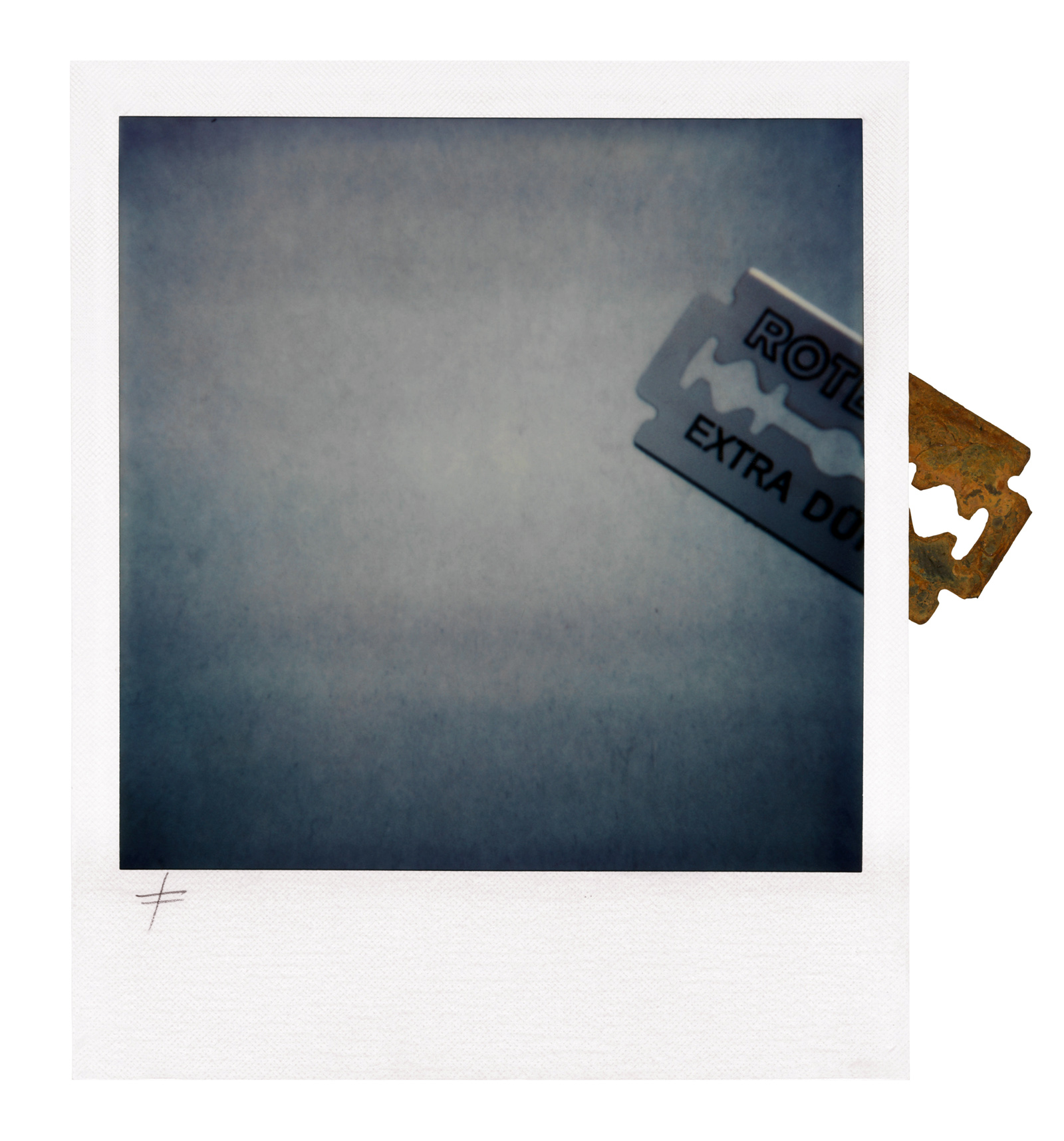
James Nitsch. 'Razor Blade' 1976 from the exhibition 'The Polaroid Project' at the Museum für Kunst und Gewerbe Hamburg, March - June, 2017


James Nitsch
Razor Blade
1976
Polaroid SX-70 assemblage with razor blade
10.7 x 8.8cm
© James Nitsch


Guy Bourdin (French, 1928-1991) 'Charles Jourdan' 1978 from the exhibition 'The Polaroid Project' at the Museum für Kunst und Gewerbe Hamburg, March - June, 2017


Guy Bourdin (French, 1928-1991)
Charles Jourdan 1978
1978
C-Print
88.9 x 116.8cm
© The Guy Bourdin Estate 2017 / Courtesy of Louise Alexander Gallery


André Kertész (Hungarian, 1894-1985) 'August 13' 1979


André Kertész (Hungarian, 1894-1985)
August 13, 1979
1979
Polaroid SX-70
10.7 x 8.8cm
© The Estate of André Kertész, courtesy Stephen Bulger Gallery


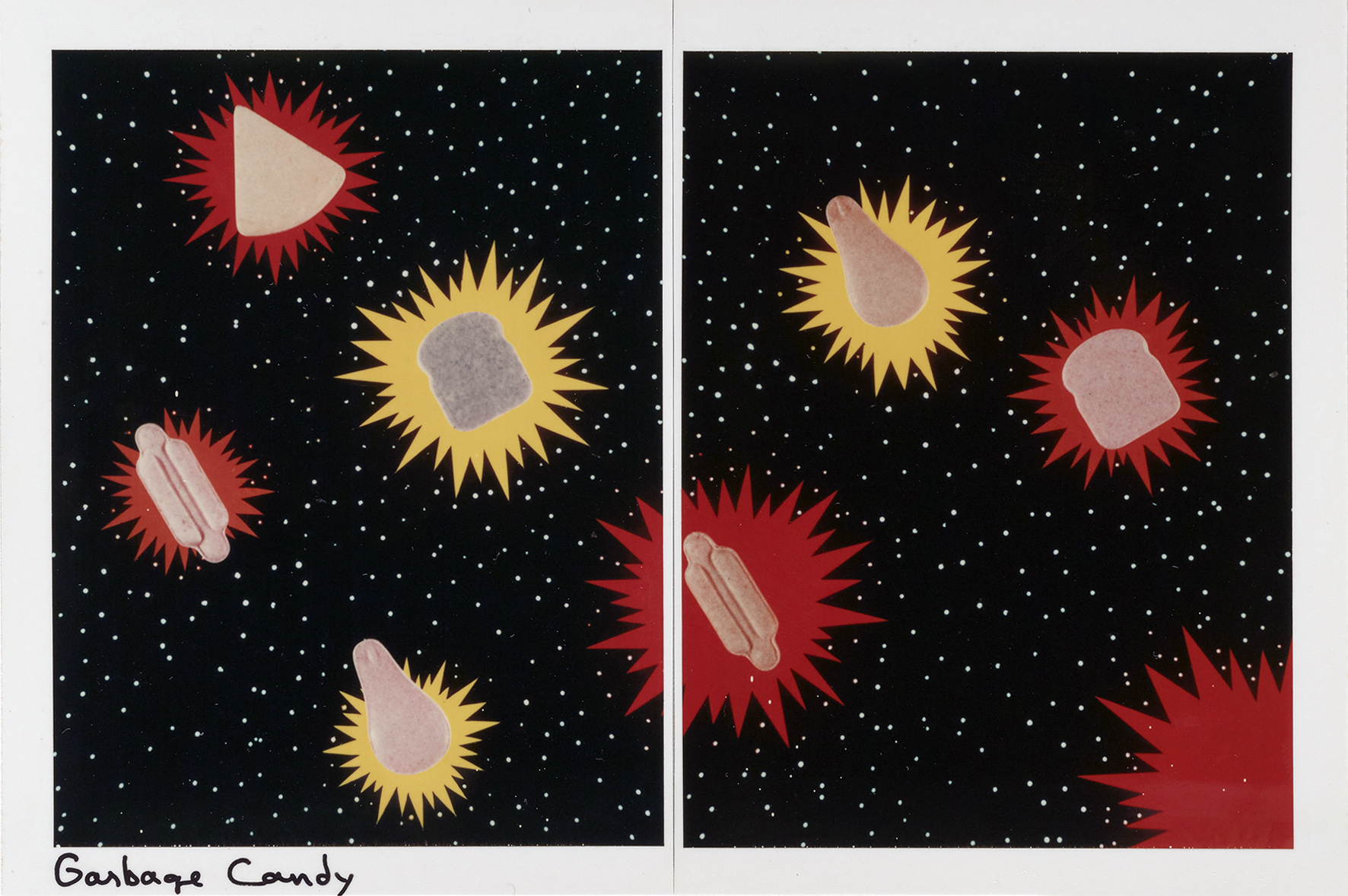
Victor Landweber (American, b. 1943) 'Garbage Candy' 1979


Victor Landweber (American, b. 1943)
Garbage Candy
1979
Polaroid Polacolor Type 669 composite, bound in a book
10.8 x 16.1cm
© Victor Landweber, Collection Center for Creative Photography, The University of Arizona


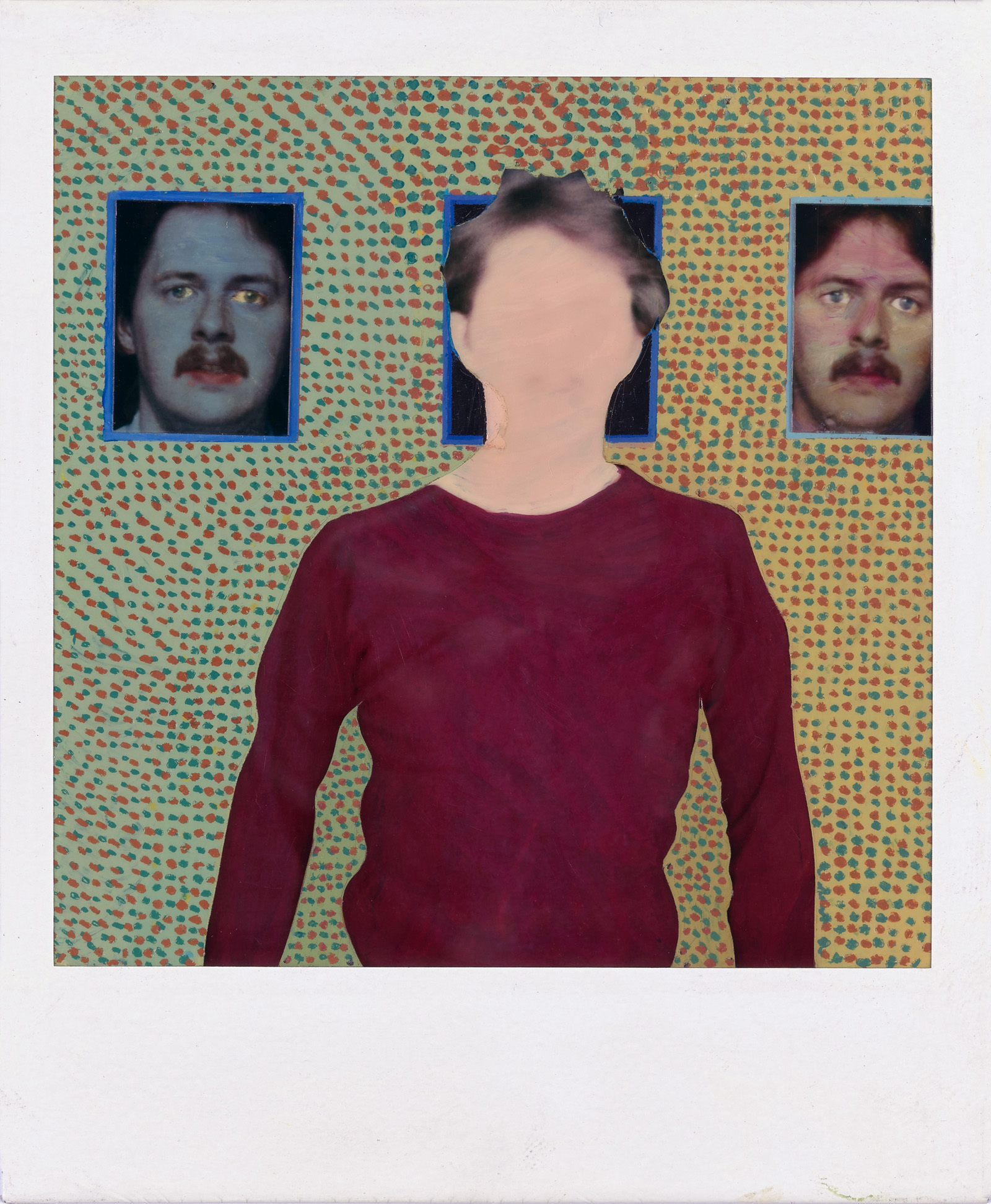
Bruce Charlesworth (American, b. 1950) 'Untitled' 1979


Bruce Charlesworth (American, b. 1950)
Untitled
1979
Hand-painted Polaroid SX-70
10.7 x 8.8cm
© Bruce Charlesworth 1979


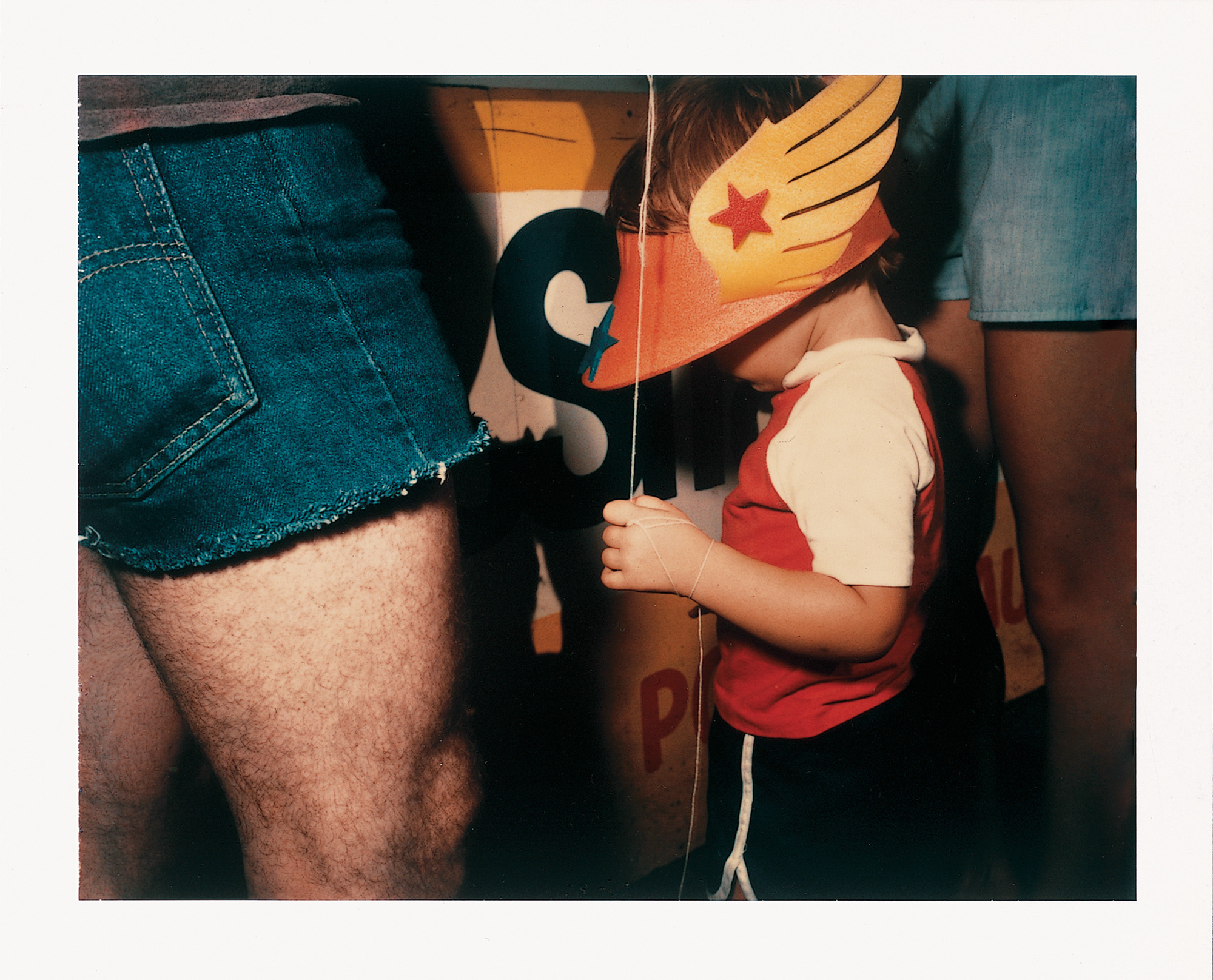
Barbara Crane (American, 1928-2019) 'Private Views' 1981


Barbara Crane (American, 1928-2019)
Private Views
1981
Polaroid Polacolor 4×5 Type 58
10.2 x 12.7cm
© Barbara Crane


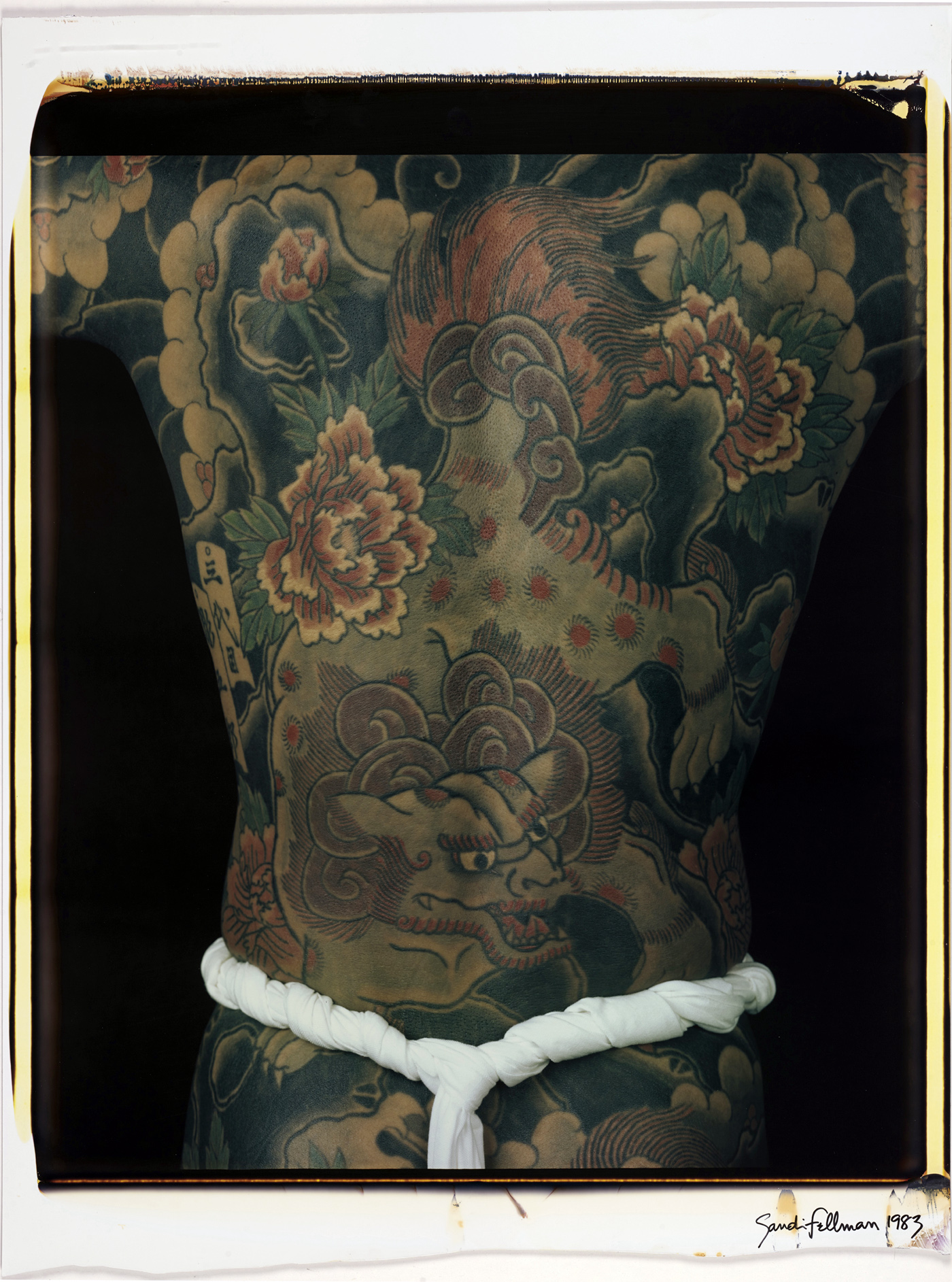
Sandi Fellman (American, b. 1952) 'Grey Lion, Tokyo, Japan' 1983


Sandi Fellman (American, b. 1952)
Grey Lion, Tokyo, Japan
1983
Polaroid 20 x 24 Polacolor
73.7 x 56cm
© Sandi Fellman


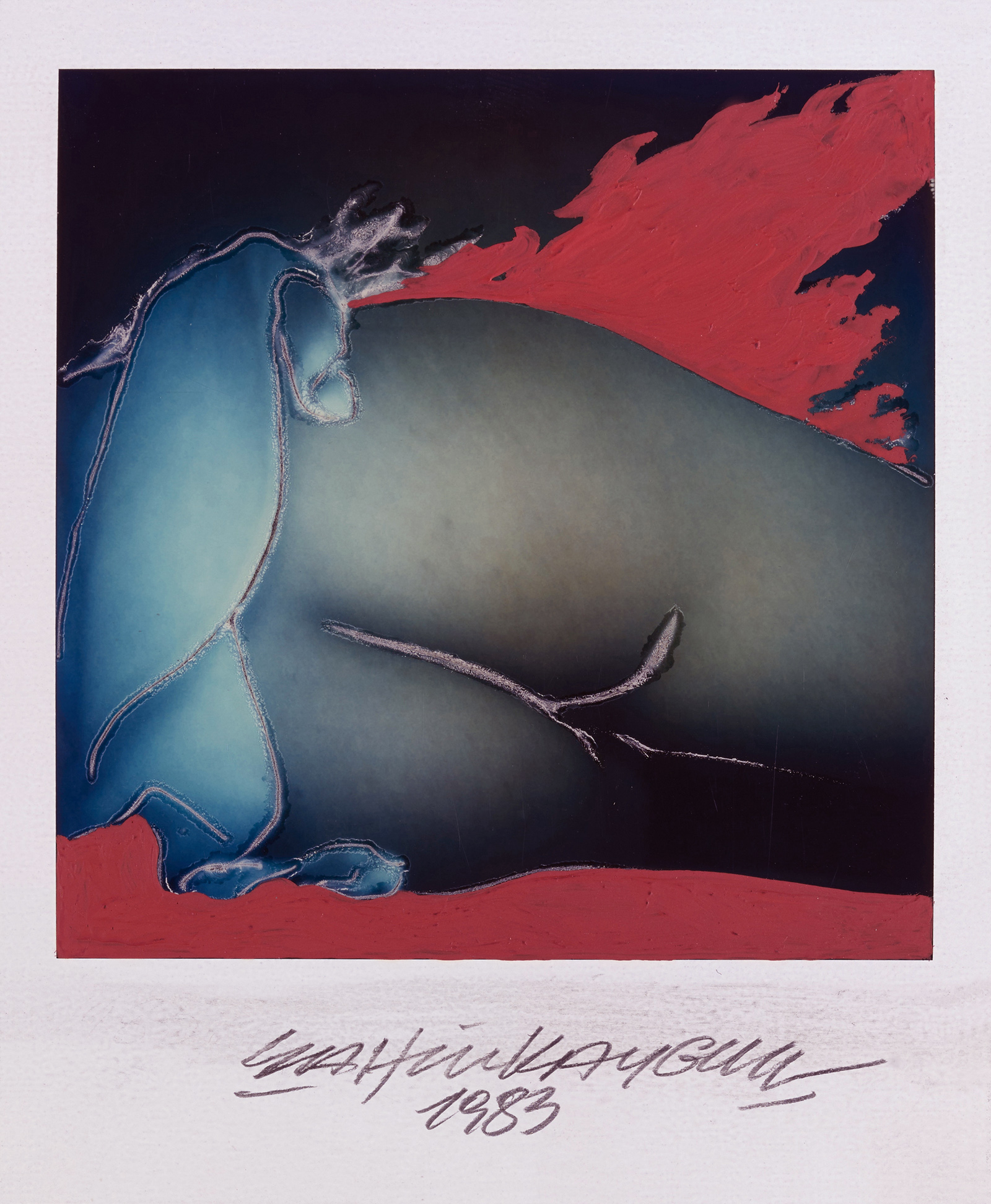
Şahin Kaygun (Turkish, 1951-1992) 'Buttock' 1983


Şahin Kaygun (Turkish, 1951-1992)
Buttock
1983
Hand coloured, manipulated Polaroid Type 600 High Speed
10.7 x 8.8cm
© Şahin Kaygun


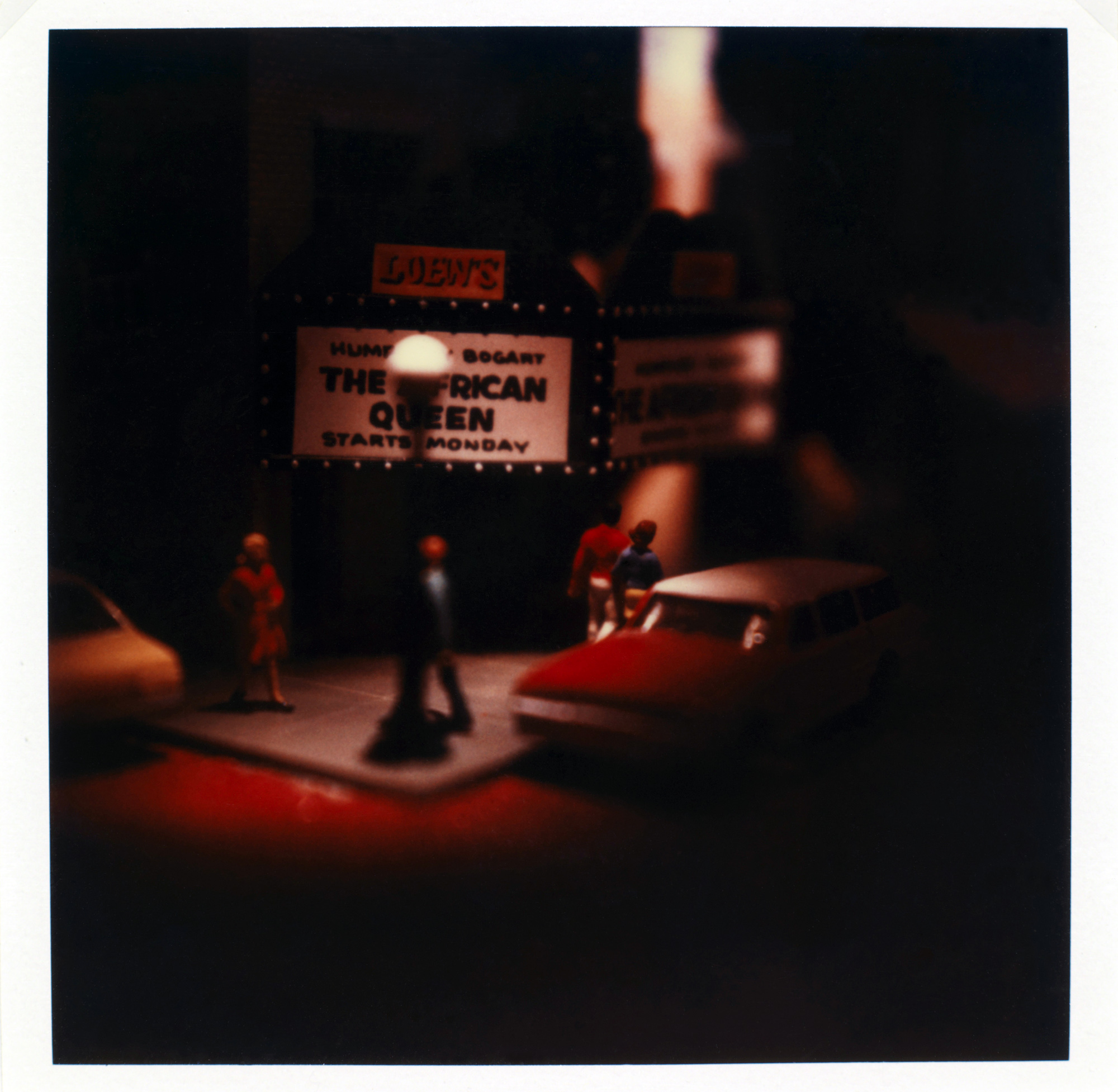
David Levinthal (American, b. 1949) 'Untitled' 1983-1985


David Levinthal (American, b. 1949)
Untitled from the series Modern Romance
1983-1985
Polaroid SX-70
10.7 x 8.8cm
© David Levinthal, ARS, NY and DACS, London 2017


In the exhibition The Polaroid Project, the Museum für Kunst und Gewerbe Hamburg presents for the first time the full scope of the phenomenon of the Polaroid photograph. Based on some 220 photos by over 100 artists, as well as 90 camera models and prototypes, the show sheds light on the whole aesthetic spectrum of instant photography and on the innovative technology that made this visual revolution possible. Polaroid stands for a technology, an industry, a company, and its products. Presented to the public for the first time in 1947 by Edwin Land in New York, instant camera film made the photo lab superfluous. As if by magic, the picture gradually appears before the eyes of the photographer and subject. Polaroid – a brand that has long since attained legendary status – thus transformed our handling of photography in a way that is still pervasive today, living on in photo apps and Instagram. In the heyday of the company in the mid-20th century, Polaroid sold its cameras and film to millions of amateurs and professionals. The technical and aesthetic qualities of the new medium, and above all the immediacy and spontaneity of the photos, made it an exciting field of experimentation for artists as well.

Polaroid itself has worked closely with photographers from the start. One of the earliest advisors to Edwin Land, inventor and founder of the Polaroid Corporation, was Ansel Adams, the godfather of American landscape photography. In its Artist Support Program, the company provides film and cameras to both established figures and nascent talents in the art and photography scene. In return, it receives not only feedback on its products but also selected works for the company collection. For artists, the inventions from Land’s company offer a playground for their own discoveries, one that provides fresh inspiration for their photography. It thus came about that the exponents of Pop Art – chief among them Andy Warhol – raised the status of the Polaroid photo to a whole new level with their excessive use of the medium, securing for it a place in the artistic sphere.

Press release from the Museum für Kunst und Gewerbe Hamburg


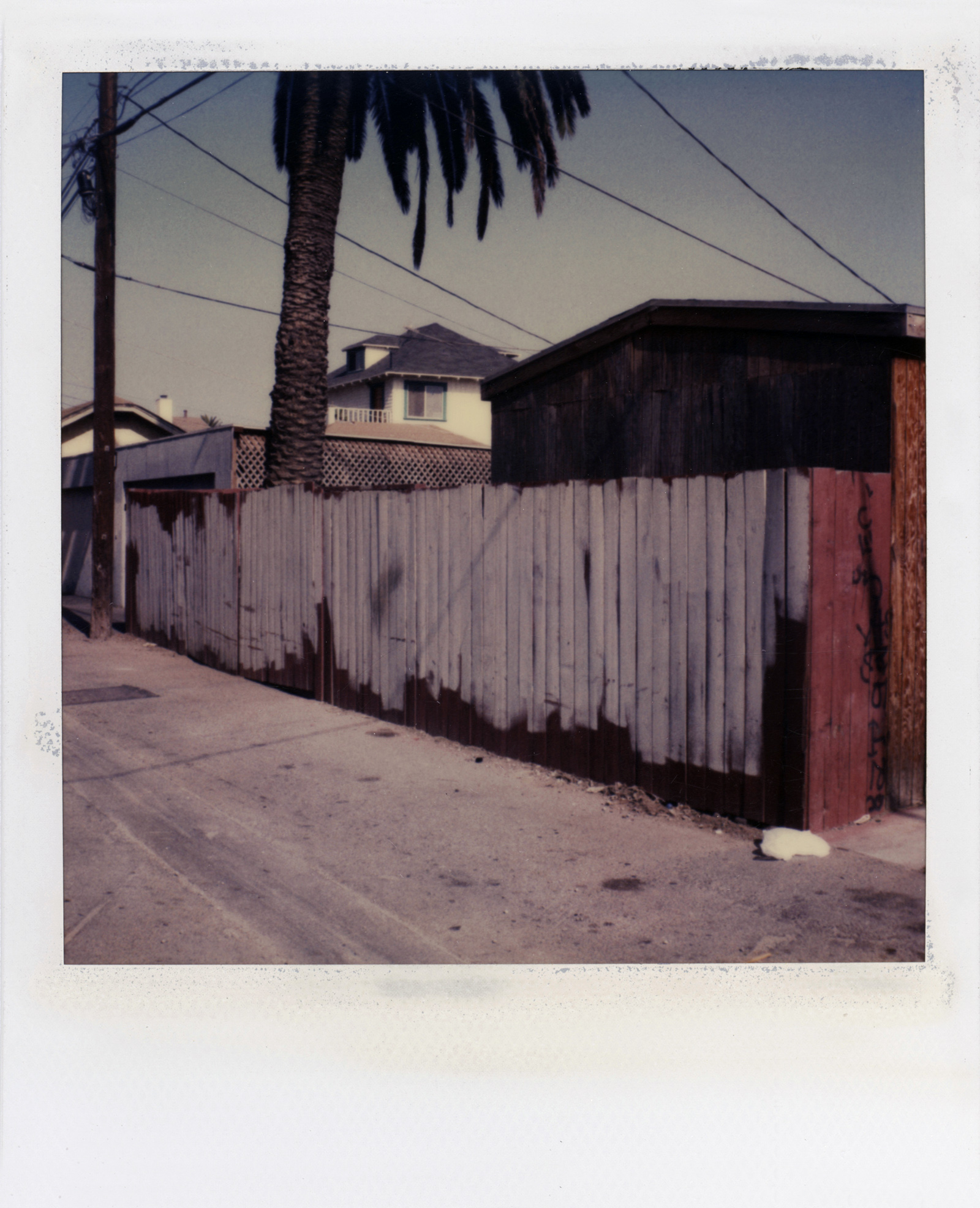
Dennis Hopper (American, 1936-2010) 'Los Angeles, Back Alley' 1987


Dennis Hopper (American, 1936-2010)
Los Angeles, Back Alley
1987
Polaroid SX-70
10.7 x 8.8cm
© Dennis Hopper, Courtesy of The Hopper Art Trust


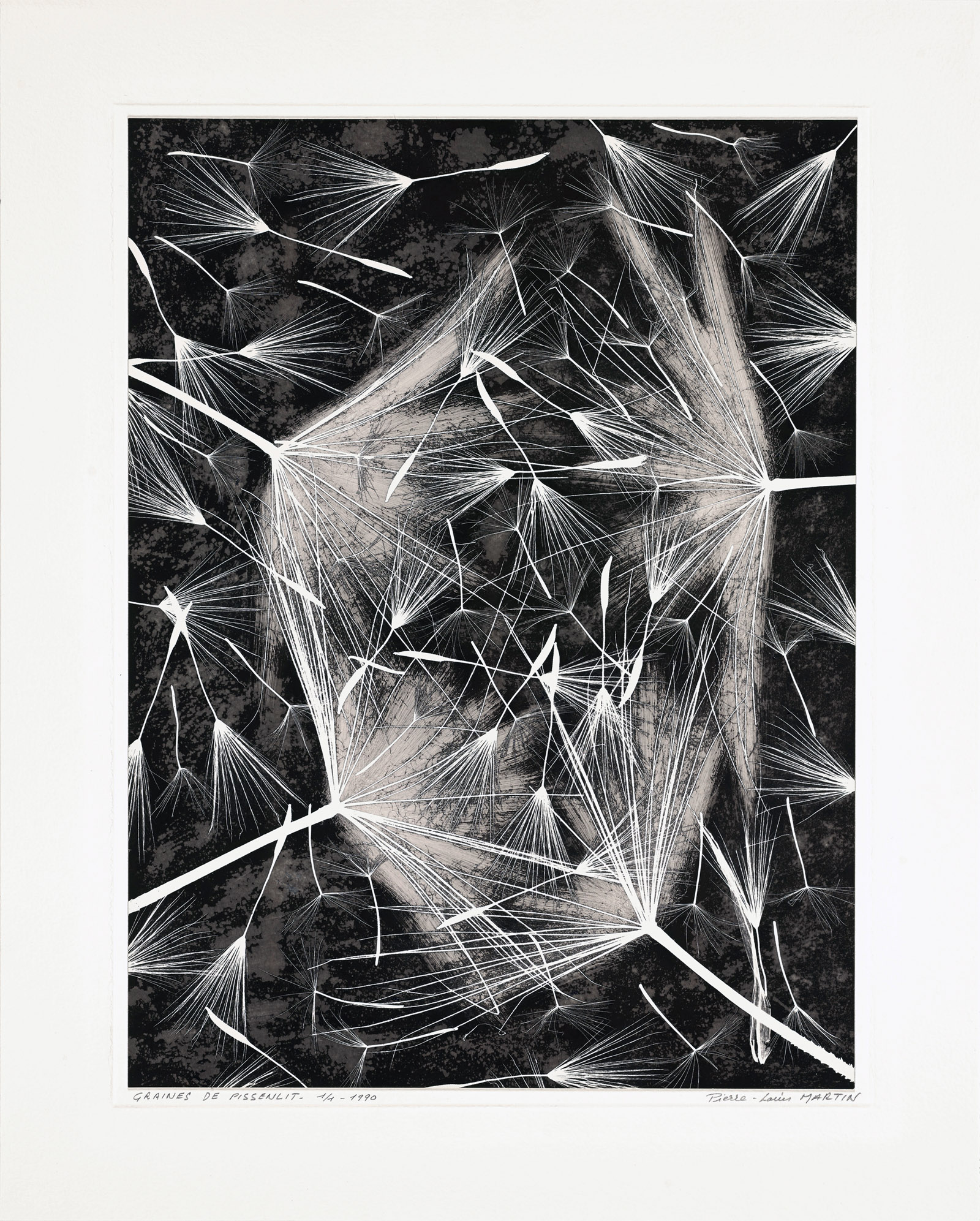
Pierre-Louis Martin. 'Graines de Pissenlit' 1990


Pierre-Louis Martin
Graines de Pissenlit
1990
Gelatin silver print from Polaroid-Film Type 55
48.9 x 40cm
© Pierre-Louis Martin


Shelby Lee Adams (American, b. 1950) 'Esther and Bee Jay' 1991


Shelby Lee Adams (American, b. 1950)
Esther and Bee Jay
1991
Polaroid Polapan 4×5 Type 52
12.7 x 10.2cm
© Shelby Lee Adams


Kunihiro Shinohara (Japanese, b. 1948) 'Cosmic #9' 1993-2000


Kunihiro Shinohara (Japanese, b. 1948)
Cosmic #9
1993-2000
Inkjet print from Polaroid-Film Type 55
29.8 x 22.3cm
© Kunihiro Shinohara


Mark Klett (American, b. 1952) 'Contemplating the View at Muley Point, Utah' 1994


Mark Klett (American, b. 1952)
Contemplating the View at Muley Point, Utah
1994
Gelatin silver print from Polaroid-Film Type 55
40.6 x 50.8cm
© Mark Klett


Ellen Carey (American, b. 1952) 'Pulls (CMY)' 1997


Ellen Carey (American, b. 1952)
Pulls (CMY)
1997
Polaroid 20 x 24 Polacolor-Montage
210.8 x 167.6cm
© Ellen Carey, Jayne H. Baum Gallery, NYC, NY and M+B Gallery, LA, CA


Timothy White (American, b. 1956) 'Untitled' 1998


Timothy White (American, b. 1956)
Untitled
1998
Inkjet print from Polaroid-Film Type 665
50.8 x 40.6cm
© Timothy White


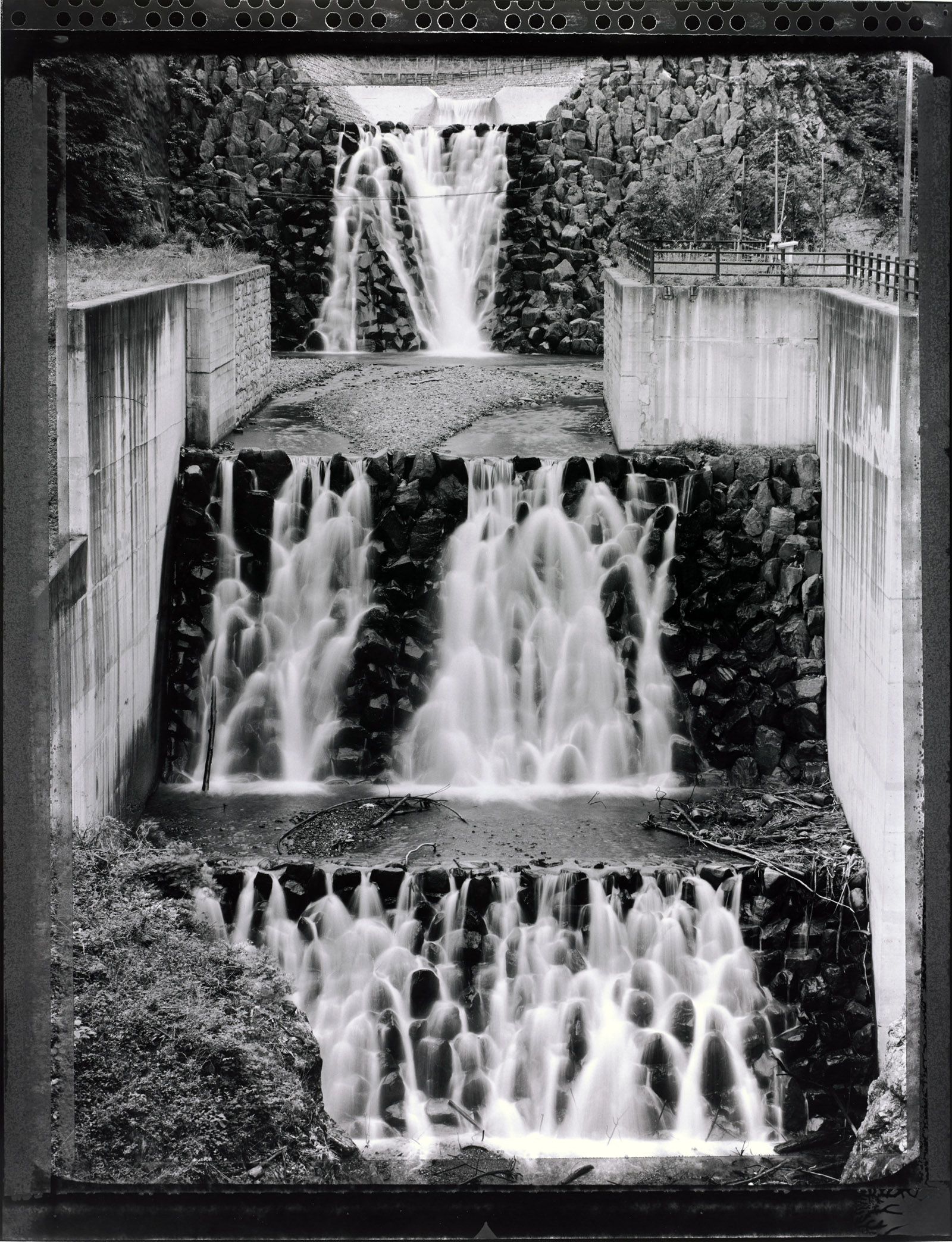
Toshio Shibata (Japanese, b. 1949) 'Untitled (# 228)' 2003


Toshio Shibata (Japanese, b. 1949)
Untitled (#228)
2003
Gelatin silver print from Polaroid-Film, Type 55
61 x 50.8cm
© Toshio Shibata


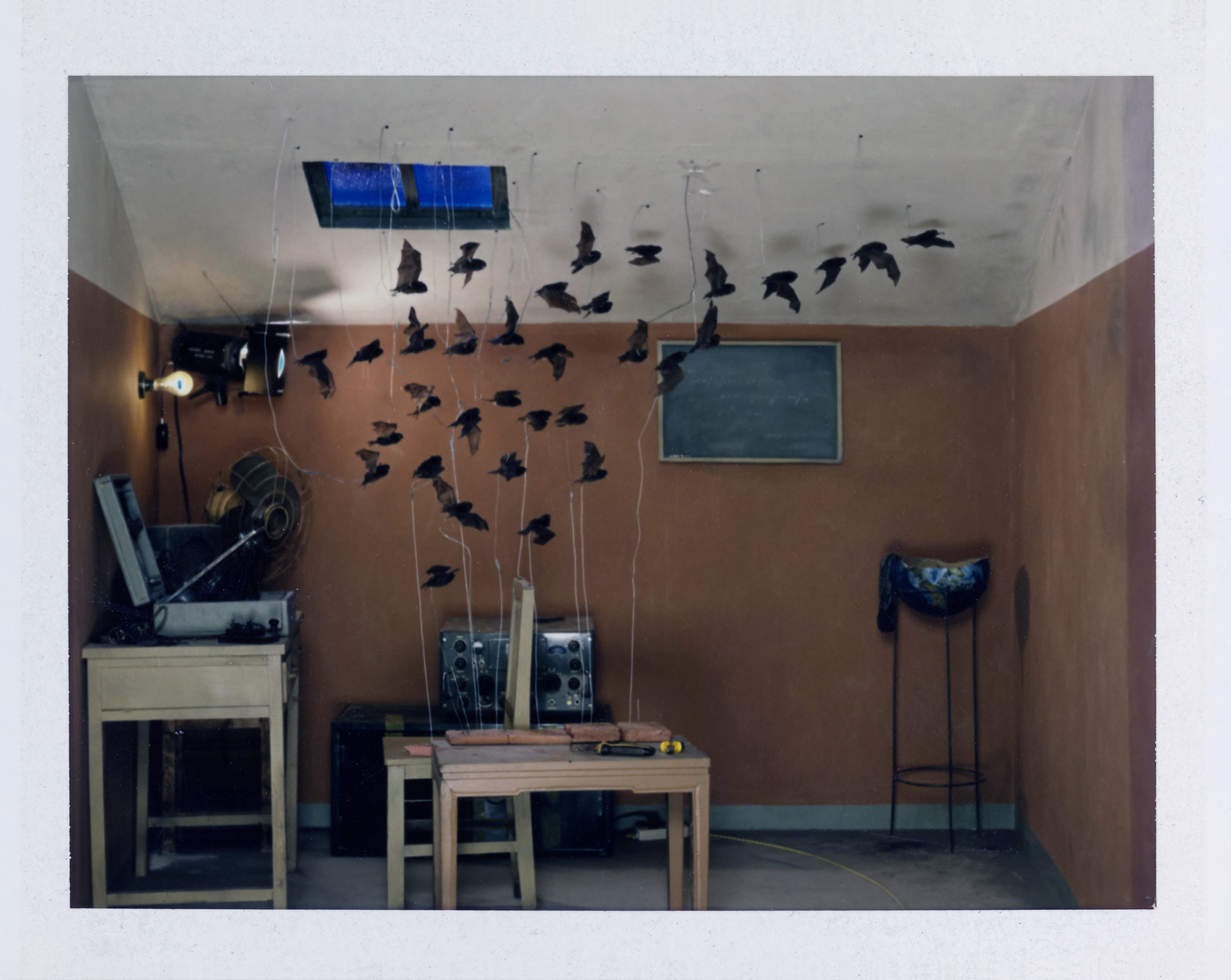
Chen Wei (Chinese, b. 1980) 'Everlasting Radio Wave-Test #5' 2008


Chen Wei (Chinese, b. 1980)
Everlasting Radio Wave-Test #5
2008
Fujifilm FP-100C
8.5 x 10.8cm
© Chen Wei


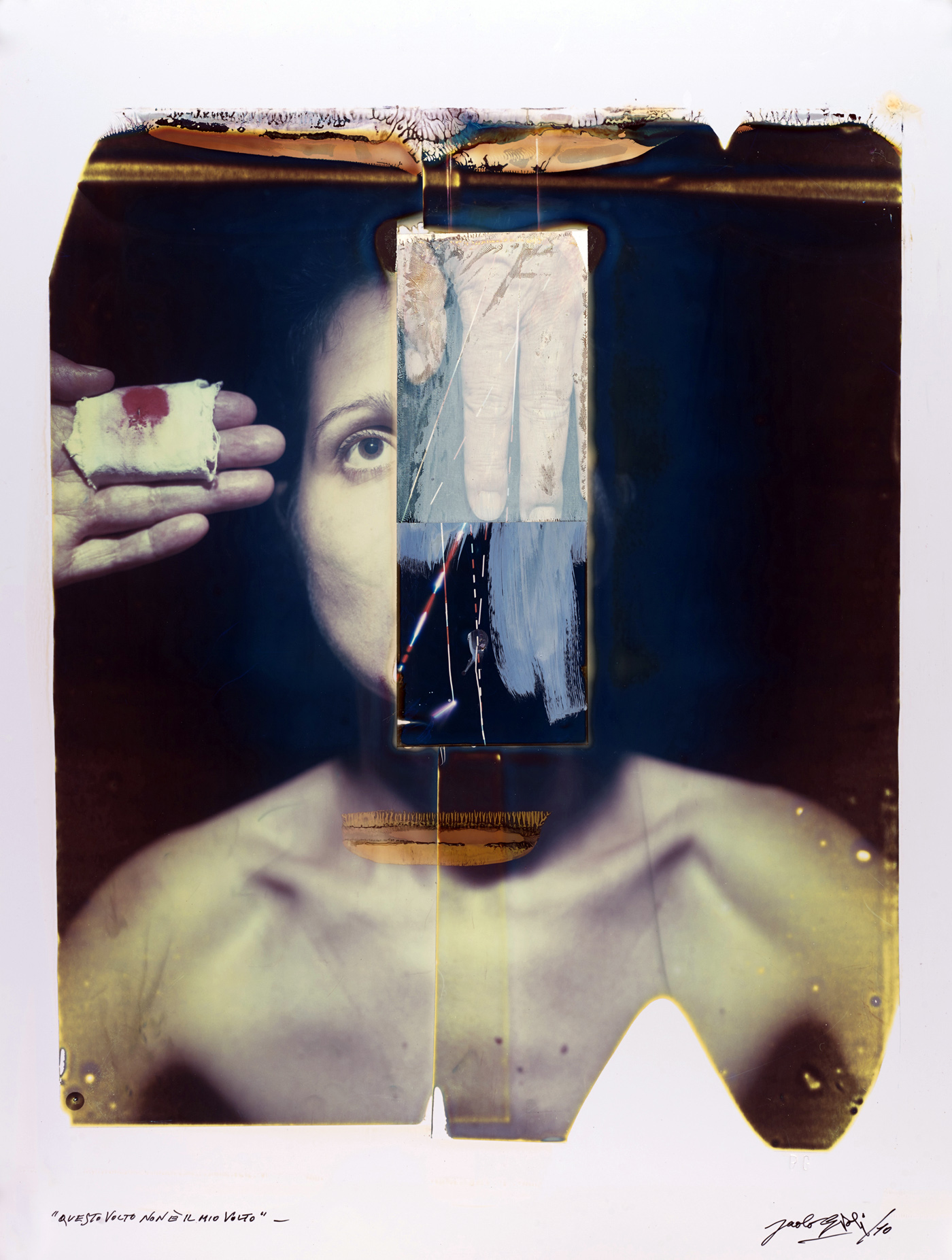
Paolo Gioli (Italian, 1942-2022) 'This Is Not My Face' 2010


Paolo Gioli (Italian, 1942-2022)
Questo volto non è il mio volto (This Face Is Not My Face)
2010
Polaroid 20 x 24 Polacolor and Polacolor transfer on acrylic
71 x 55cm
© Paolo Gioli


Museum für Kunst und Gewerbe Hamburg
Steintorplatz, 20099 Hamburg

Opening hours:
Tuesday to Sunday 10am – 6pm
Thursday 10am – 9pm
Closed Mondays

Museum fur Kunst und Gewerbe Hamburg website

LIKE ART BLART ON FACEBOOK

Back to top

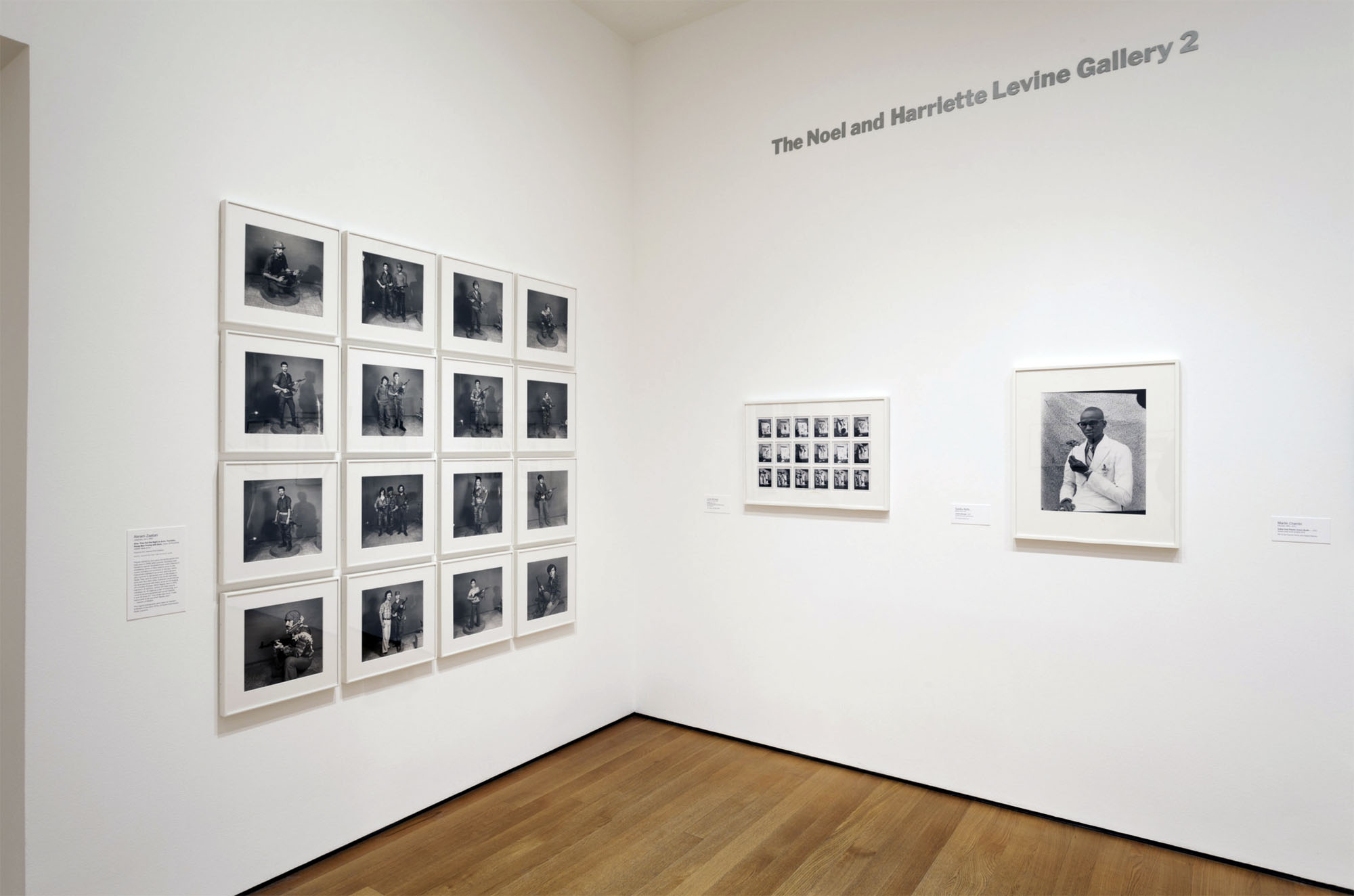
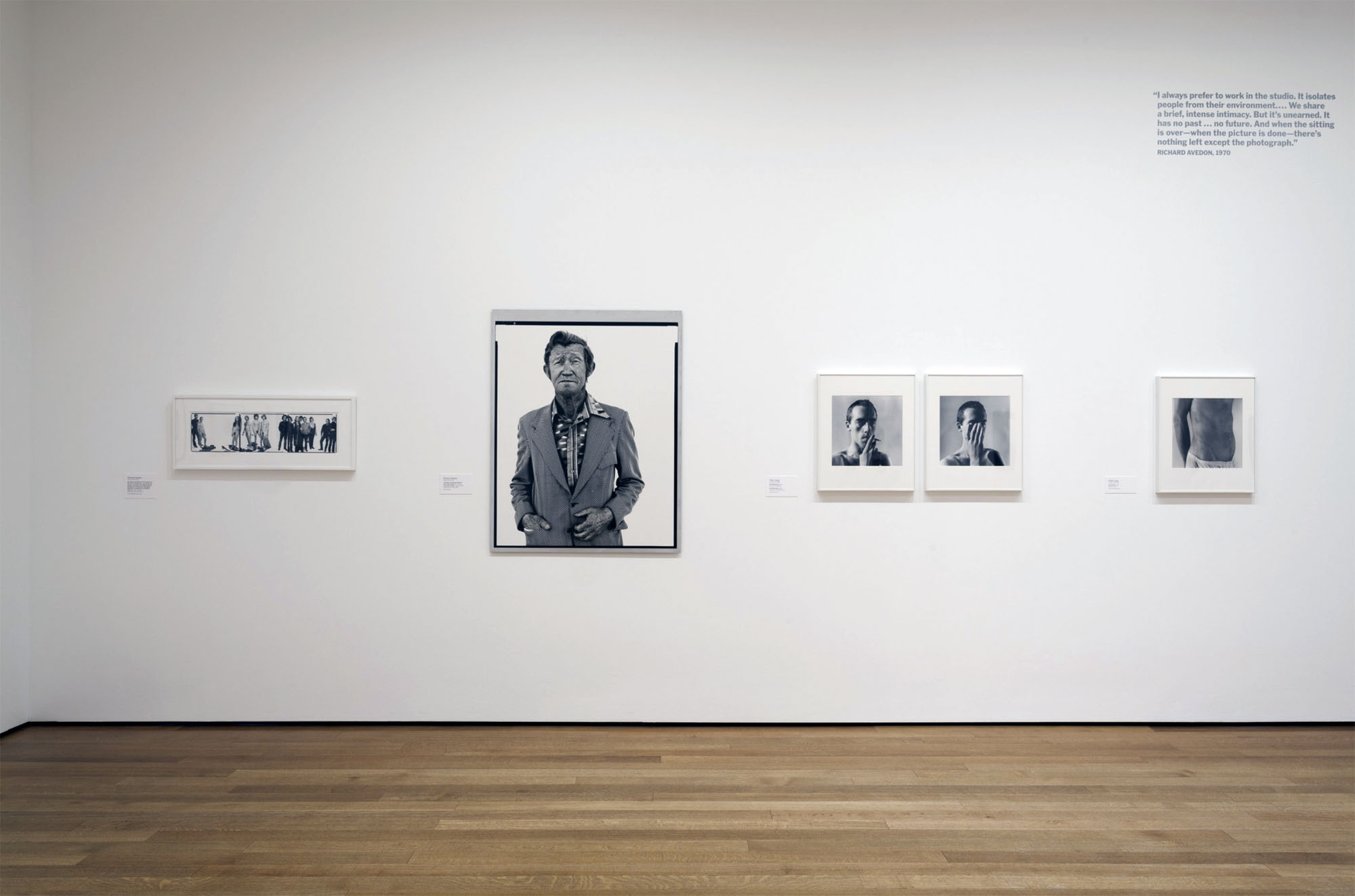
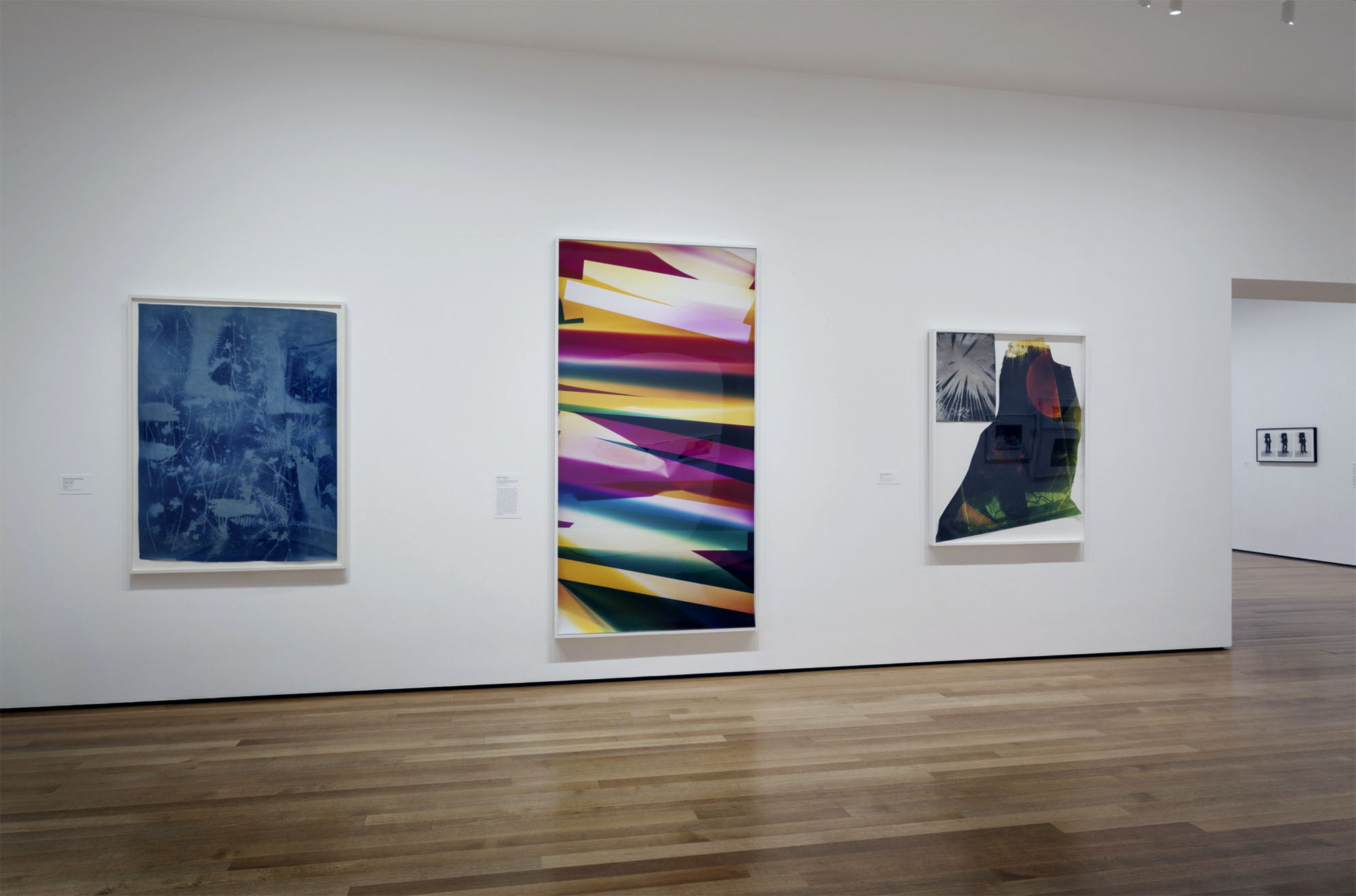
Exhibition: ‘A World of Its Own: Photographic Practices in the Studio’ at the Museum of Modern Art (MoMA), New York Part 1

Exhibition dates: 8th February – 2nd November 2014

The Edward Steichen Photography Galleries, third floor

Curators: Organised by Quentin Bajac, The Joel and Anne Ehrenkranz Chief Curator, with Lucy Gallun, Assistant Curator, Department of Photography


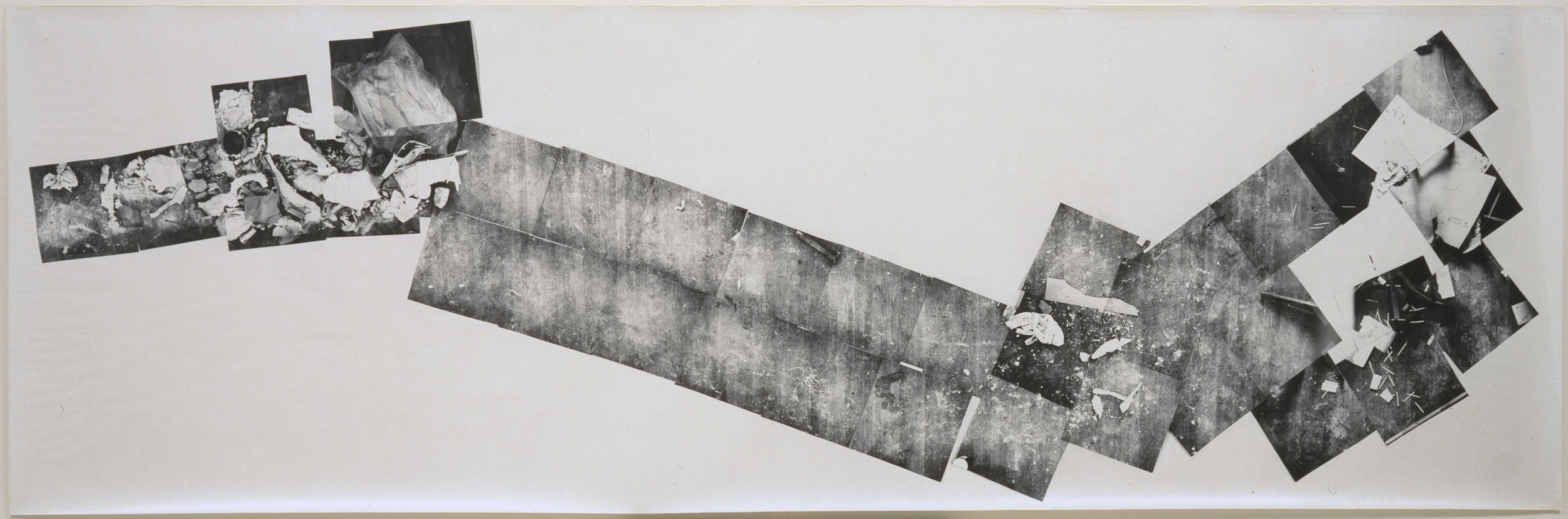
Bruce Nauman (American, b. 1941) 'Composite Photo of Two Messes on the Studio Floor' 1967


Bruce Nauman (American, b. 1941)
Composite Photo of Two Messes on the Studio Floor 
1967
Gelatin silver print
40 1/2″ x 10′ 3″ (102.9 x 312.4cm)
Gift of Philip Johnson
Museum of Modern Art Collection


A bumper two part posting on this fascinating, multi-dimensional subject: photographic practices in the studio, which may be a stage, a laboratory, or a playground. The exhibition occupies all MoMA’s six photography galleries, each gallery with its own sub theme, namely, Surveying the Studio, The Studio as Stage, The Studio as Set, A Neutral Space, Virtual Spaces and The Studio, from Laboratory to Playground.

The review of this exhibition “When a Form Is Given Its Room to Play” by Roberta Smith on the New York Times website (6th February 2014) damns with faint praise. The show is a “fabulous yet irritating survey” which “dazzles but often seems slow and repetitive.” Smith then goes on to list the usual suspects: “And so we get professional portraitists, commercial photographers, lovers of still life, darkroom experimenters, artists documenting performances and a few generations of postmodernists, dead and alive, known and not so, exploring the ways and means of the medium. This adds up to plenty to see: around 180 images from the 1850s to the present by some 90 photographers and artists. The usual suspects here range from Julia Margaret Cameron to Thomas Ruff, with Laszlo Moholy-Nagy, Lucas Samaras, John Divola and Barbara Kasten in between.” There are a few less familiar and postmodern artists thrown in for good measure, but all is “dominated by black-and-white images in an age when colour reigns.” The reviewer then rightly notes the paucity of “postmodern photography of the 1980s, much of it made by women, that did a lot to reorient contemporary photo artists to the studio. It is a little startling for an exhibition that includes so many younger artists dealing with the artifice of the photograph (Ms. Belin, for example) to represent the Pictures Generation artists with only Cindy Sherman, James Casebere and (in collaboration with Allan McCollum) Laurie Simmons” before finishing on a positive note (I think!), noting that the curators “had aimed for a satisfying viewing experience, which, these days, is something to be grateful for.”


SOMETHING TO BE GRATEFUL FOR… OH, TO BE SO LUCKY IN AUSTRALIA!

Just to have the opportunity to view an exhibition of this quality, depth and breadth of concept would be an amazing thing. Even a third of the number of photographs (say 60 works) that address this subject at any one of the major institutions around Australia would be fantastic but, of that, there is not a hope in hell.

Think Marcus, think… when was the last major exhibition, I mean LARGE exhibition, at a public institution in Australia that actually addressed specific ISSUES and CONCEPTS in photography (such as this), not just putting on monocular exhibitions about an artists work or exhibitions about a regions photographs? Ah, well… you know, I can’t really remember. Perhaps the American Dreams exhibition at Bendigo Art Gallery, but that was a GENERAL exhibition about 20th century photography with no strong investigative conceptual theme and it was imported from George Eastman House.

Here in Australia, all we can do is look from afar, purchase the catalogue and wonder wistfully what the exhibition actually looks like and what we are missing out on. MoMA sent me just 10 images media images. I have spent hours scouring the Internet for other images to fill the void of knowledge and vision (and then cleaning those sometimes degraded images), so that those of us not privileged enough to be able to visit New York may gain a more comprehensive understanding of what this exhibition, and this multi-faceted dimension of photography, is all about. It’s a pity that our venerable institutions and the photography curators in them seem to have had a paucity of ideas when it comes to expounding interesting critiques of the medium over the last twenty years or so. What a missed opportunity.

Dr Marcus Bunyan


Many thankx to MoMA for allowing me to publish six of the photographs in the posting. The rest of the images were sourced from the Internet. Please click on the photographs for a larger version of the image.


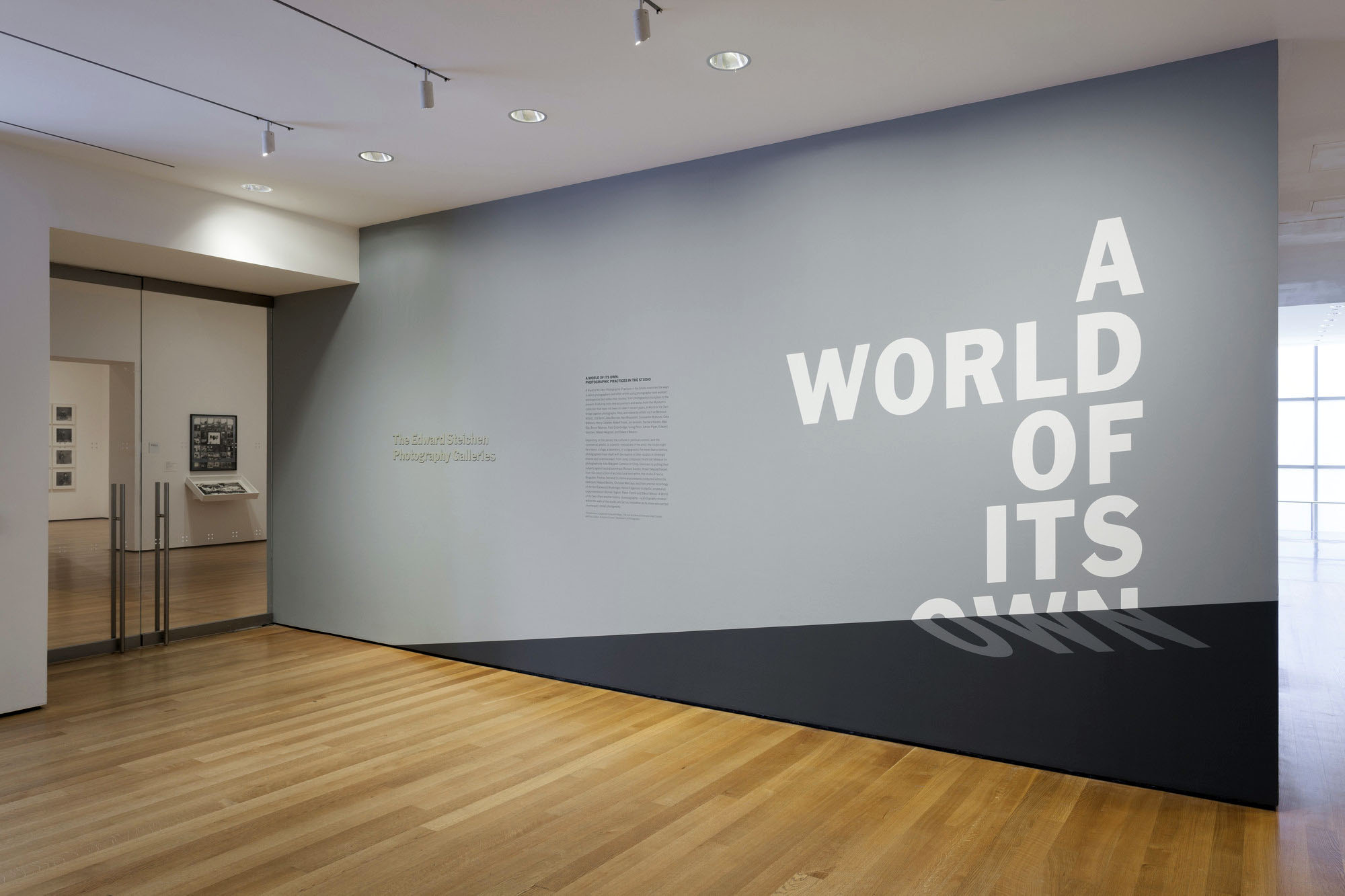
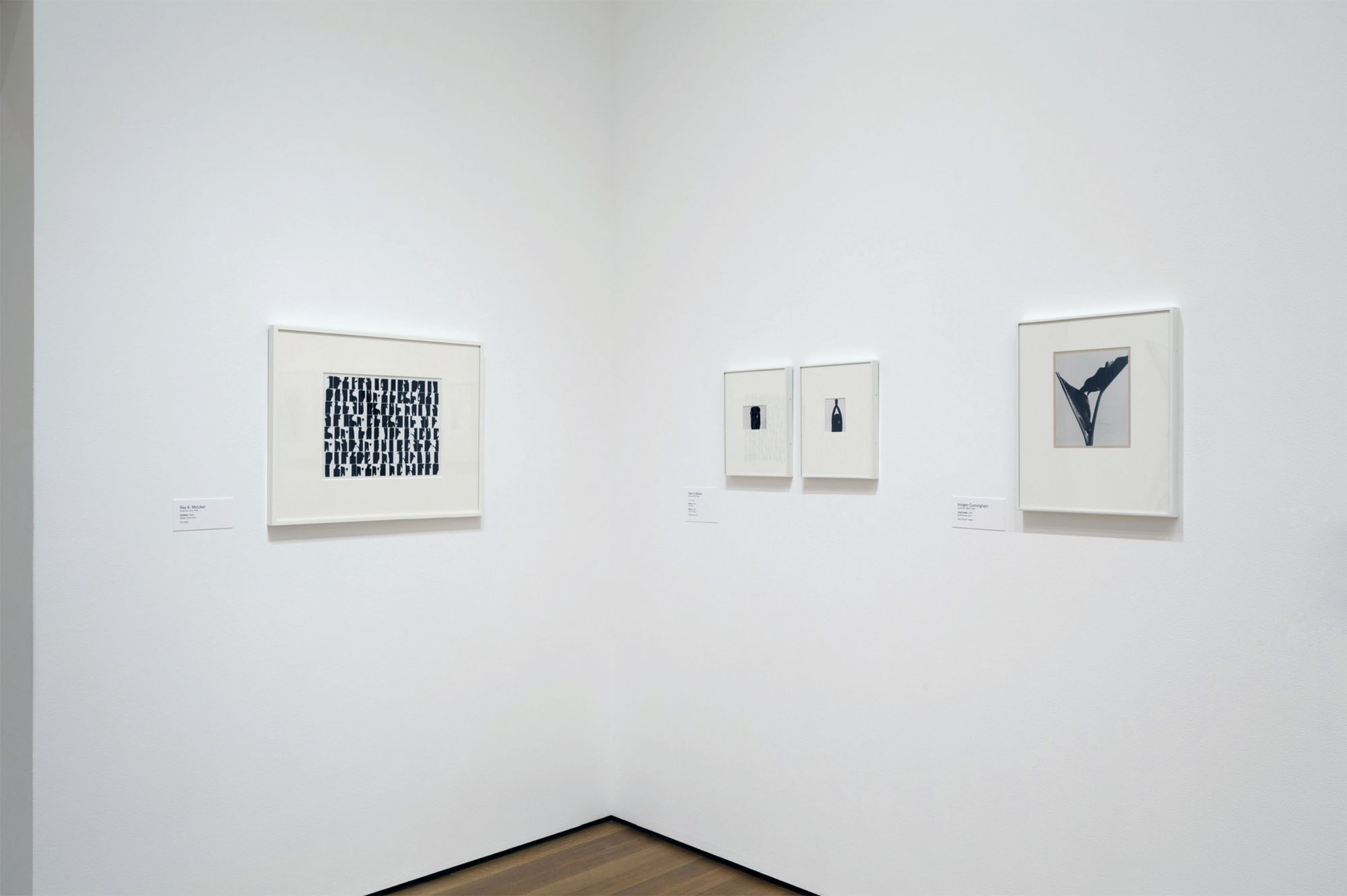
Installation view of the exhibition 'A World of Its Own: Photographic Practices in the Studio' at the Museum of Modern Art (MoMA), New York


Installation view of the exhibition A World of Its Own: Photographic Practices in the Studio at the Museum of Modern Art (MoMA), New York


Surveying the Studio


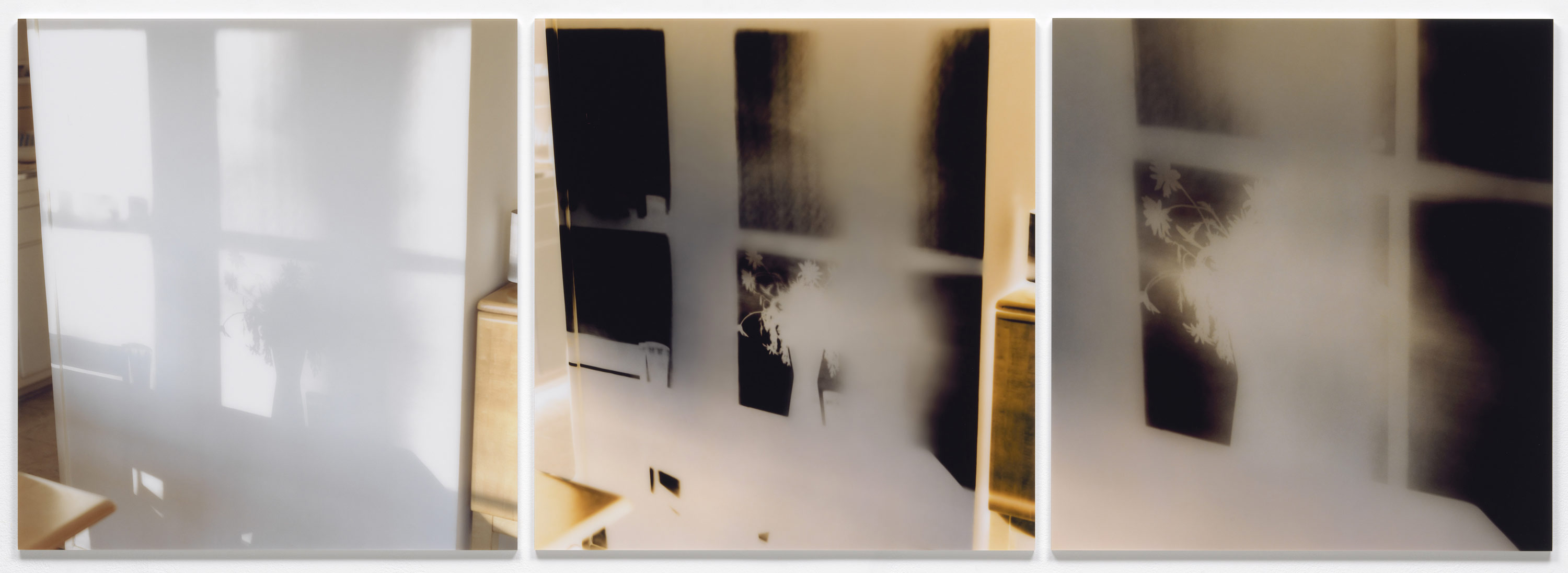
Uta Barth (American, b. 1958) 'Sundial (07.13)' 2007


Uta Barth (American, b. 1958)
Sundial (07.13)
2007
Chromogenic colour prints
each 30 x 28 1/4″ (76.2 x 71.8cm)
The Photography Council Fund
Museum of Modern Art Collection


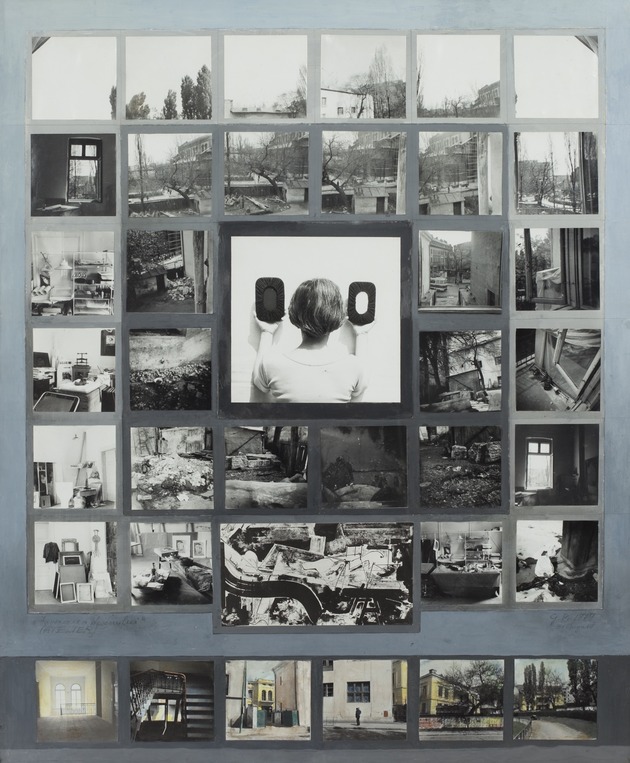
Geta Brâtescu (Romanian, 1926-2018) 'The Studio. Invocation of the Drawing' (L'Atelier. Invocarea desenului) 1979


Geta Brâtescu (Romanian, 1926-2018)
The Studio. Invocation of the Drawing (L’Atelier. Invocarea desenului)
1979
Gelatin silver prints with tempera on paper
33 1/16 x 27 9/16″ (84 x 70cm)
Modern Women’s Fund
Museum of Modern Art Collection


Geta Brătescu was a Romanian visual artist with works in drawing, collage, photography, performance, illustration and film. In 2008, Brătescu received an honorary doctorate from the Bucharest National University of Arts for “her outstanding contributions to the development of contemporary Romanian art”. Brătescu was artistic director of literature and art magazine Secolul 21. A major retrospective of her work was held at the National Museum of Art of Romania in December 1999. In 2015 Brătescu’s first UK solo exhibition was held at the Tate Liverpool. In 2017, she was selected to represent Romania at the 57th Venice Biennale.


Man Ray (American, 1890-1976) 'Laboratory of the Future' 1935


Man Ray (American, 1890-1976)
Laboratory of the Future
1935
Gelatin silver print
9 1/16 x 7″ (23.1 x 17.8cm)
Gift of James Johnson Sweeney
Museum of Modern Art Collection


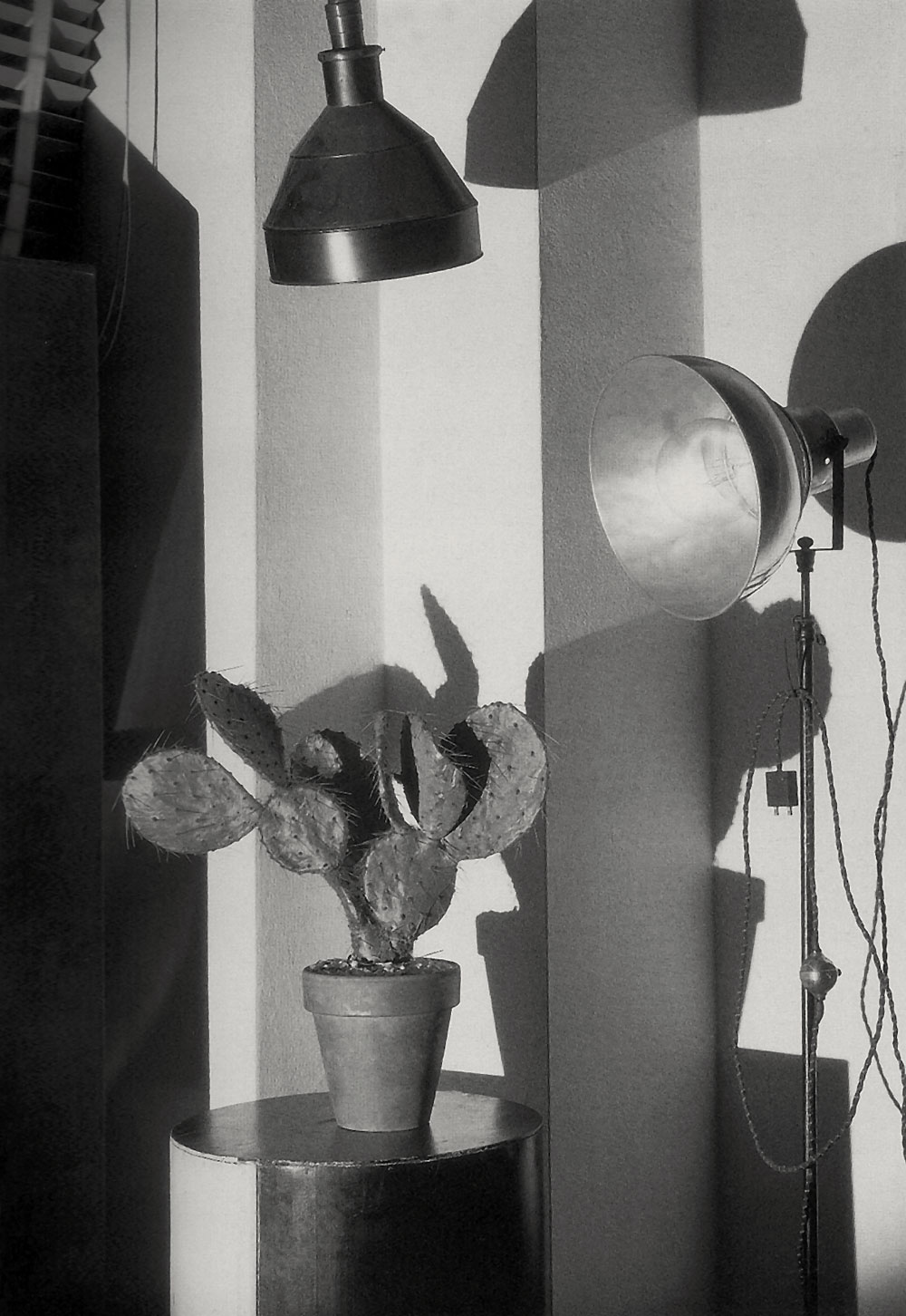
Charles Sheeler (American, 1883-1965) 'Cactus and Photographer's Lamp, New York' 1931


Charles Sheeler (American, 1883-1965)
Cactus and Photographer’s Lamp, New York
1931
Gelatin silver print
9 1/2 x 6 5/8″ (23.5 x 16.6cm)
Gift of Samuel M. Kootz
Museum of Modern Art Collection


Bringing together photographs, films, videos, and works in other mediums, A World of Its Own: Photographic Practices in the Studio examines the ways in which photographers and artists using photography have worked and experimented within the four walls of the studio space, from photography’s inception to today. Featuring both new acquisitions and works from the Museum’s collection that have not been on view in recent years, A World of Its Own includes approximately 180 works, by approximately 90 artists, such as Berenice Abbott, Uta Barth, Zeke Berman, Karl Blossfeldt, Constantin Brancusi, Geta Brătescu, Harry Callahan, Robert Frank, Jan Groover, Barbara Kasten, Man Ray, Bruce Nauman, Paul Outerbridge, Irving Penn, Adrian Piper, Edward Steichen, William Wegman, and Edward Weston.

The exhibition considers the various roles played by the photographer’s studio as an autonomous space; depending on the time period, context, and the individual motivations (commercial, artistic, scientific) and sensibilities of the photographer, the studio may be a stage, a laboratory, or a playground. Organised thematically, the display unfolds in multiple chapters. Throughout the 20th century, artists have explored their studio spaces using photography, from the use of composed theatrical tableaux (in photographs by Julia Margaret Cameron or Cindy Sherman) to neutral, blank backdrops (Richard Avedon, Robert Mapplethorpe); from the construction of architectural sets within the studio space (Francis Bruguière, Thomas Demand) to chemical procedures conducted within the darkroom (Walead Beshty, Christian Marclay); and from precise recordings of time and motion (Eadweard Muybridge, Dr. Harold E. Edgerton) to amateurish or playful experimentation (Roman Signer, Peter Fischli / David Weiss). A World of Its Own offers another history of photography, a photography created within the walls of the studio, and yet as groundbreaking and inventive as its seemingly more extroverted counterpart, street photography.”

Text from the MoMA website


The exhibition is divided into 6 themes each with its own gallery space:

1/ Surveying the Studio
2/ The Studio as Stage
3/ The Studio as Set
4/ A Neutral Space
5/ Virtual Spaces
6/ The Studio, from Laboratory to Playground


The Studio as Stage


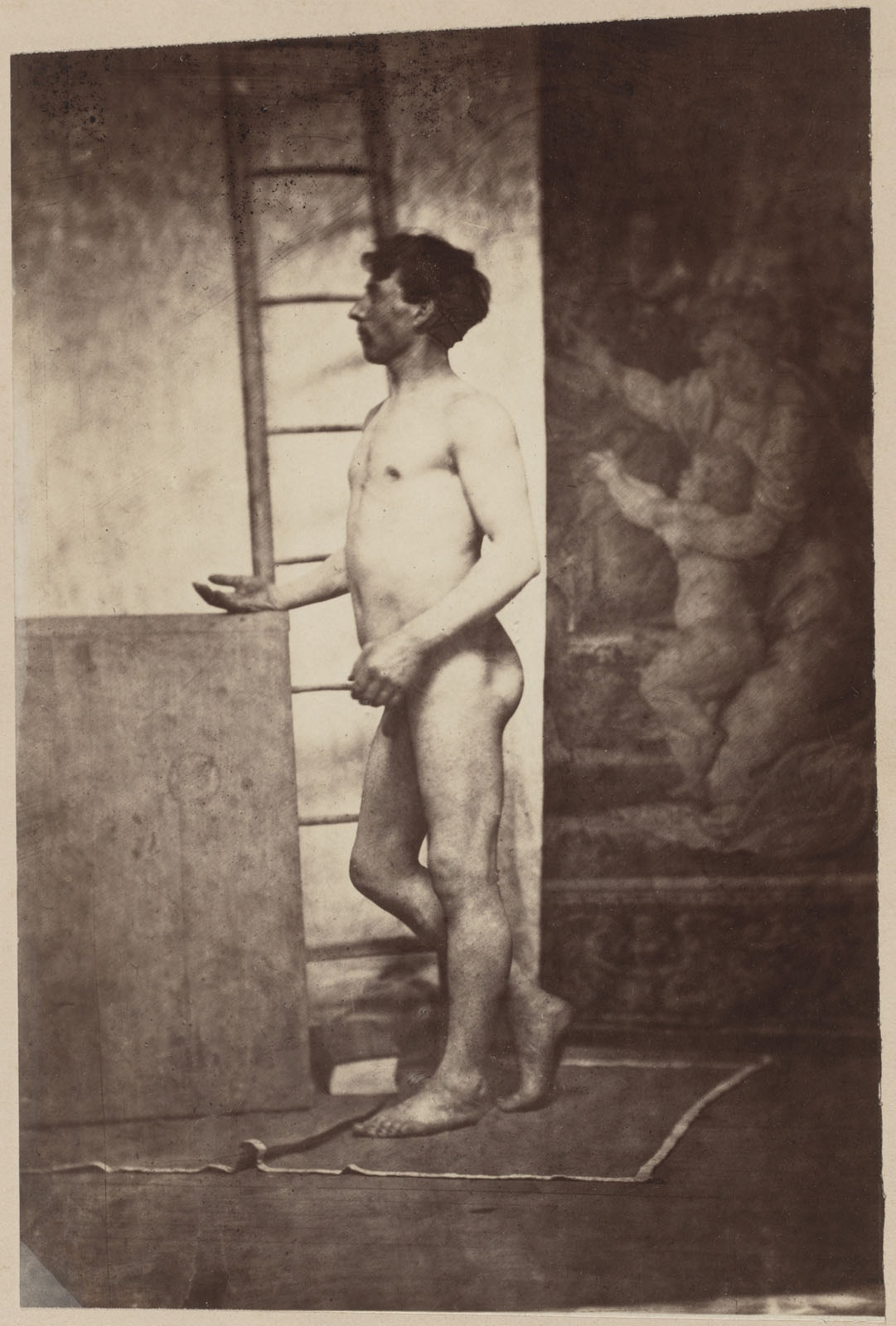
Unidentified photographer (French?) 'Untitled' c. 1855


Unidentified photographer (French?)
Untitled
c. 1855
Albumen silver print from a wet-collodion glass negative
9 3/16 × 6 1/8″ (23.4 × 15.5cm)
Gift of Paul F. Walter
Museum of Modern Art Collection


Cecil Beaton (British, 1904-1980) 'Edith Sitwell' 1927


Cecil Beaton (British, 1904-1980)
Edith Sitwell
1927
Gelatin silver print
11 1/2 × 9 5/8″ (29.3 × 24.5 cm)
Gift of Paul F. Walter
Museum of Modern Art Collection
© 2022 Estate of Cecil Beaton


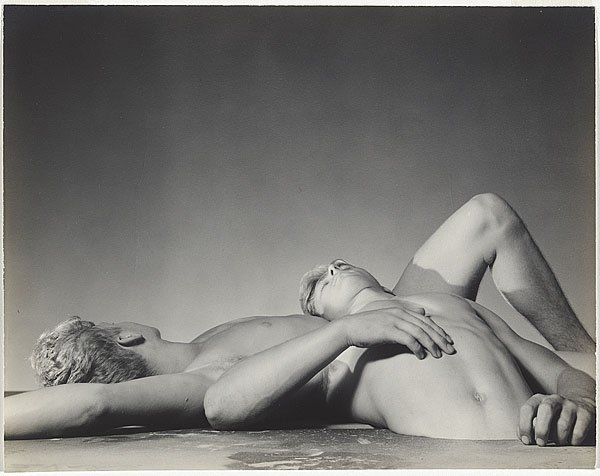
George Platt Lynes (American, 1907-1955) 'Untitled' 1941


George Platt Lynes (American, 1907-1955)
Untitled
1941
Gelatin silver print
7 5/8 x 9 5/8″ (19.2 x 24.4cm)
Anonymous gift
Museum of Modern Art Collection


Lucas Samaras (American, 1936-2024) 'Auto Polaroid' 1969-1971


Lucas Samaras (American born Greece, 1936-2024)
Auto Polaroid
1969-1971
Eighteen black-and-white instant prints (Polapan), with hand-applied ink
Each 3 3/4 x 2 15/16″ (9.5 x 7.4cm)
Overall 14 5/8 x 24″ (37.2 x 61cm)
Gift of Robert and Gayle Greenhill
Museum of Modern Art Collection


Working in the digital realm long before it was associated with fine art, Samaras pioneered radical new modes of image making throughout his storied career, pushing and redefining the boundaries of portraiture and self-portraiture over the course of seven decades. Centering on the body and the psyche, Samaras’s autobiographical work across photography, painting, installation, assemblage, drawing, textile, and sculpture often meditates on the malleable, shapeshifting nature of selfhood. “I like remaking myself in photography,” the artist once said. …

In the late 1960s, Samaras began working with a Polaroid 360 camera, creating his iconic Auto Polaroids by altering hundreds of images, mostly self-portraits, with applications of ink by his own hand. In 1973, using a Polaroid SX-70, he took this collagist approach further by manipulating the wet emulsion of the film with a stylus or his fingertip before the chemicals set. The resulting distortions in his Photo-Transformations series took on abstract, otherworldly effects, which he would continue exploring amid the rise of other image making technologies in the following decades.

Anonymous. “Remembering Lucas Samaras,” on the Pace Gallery website Mar 7, 2024 [Online] Cited 06/06/2024


Lucas Samaras (American, 1936-2024) 'Auto Polaroid' 1969-1971 (detail)

Lucas Samaras (American, 1936-2024) 'Auto Polaroid' 1969-1971 (detail)

Lucas Samaras (American, 1936-2024) 'Auto Polaroid' 1969-1971 (detail)


Lucas Samaras (American, 1936-2024)
Auto Polaroid (details)
1969-1971
Eighteen black-and-white instant prints (Polapan), with hand-applied ink
Each 3 3/4 x 2 15/16″ (9.5 x 7.4cm)
Overall 14 5/8 x 24″ (37.2 x 61cm)
Gift of Robert and Gayle Greenhill
Museum of Modern Art Collection


Julia Margaret Cameron (British, 1815-1879) 'Madonna with Children' 1864


Julia Margaret Cameron (British, 1815-1879)
Madonna with Children
1864
Albumen silver print
10 1/2 x 8 5/8″ (26.7 x 21.9cm)
Gift of Shirley C. Burden
Museum of Modern Art Collection


Julia Margaret Cameron (British, 1815-1879) 'Untitled (Mary Ryan?)' c. 1867


Julia Margaret Cameron (British, 1815-1879)
Untitled (Mary Ryan?)
c. 1867
Albumen silver print
13 3/16 x 11″ (33.5 x 27.9cm)
Gift of Shirley C. Burden
Museum of Modern Art Collection


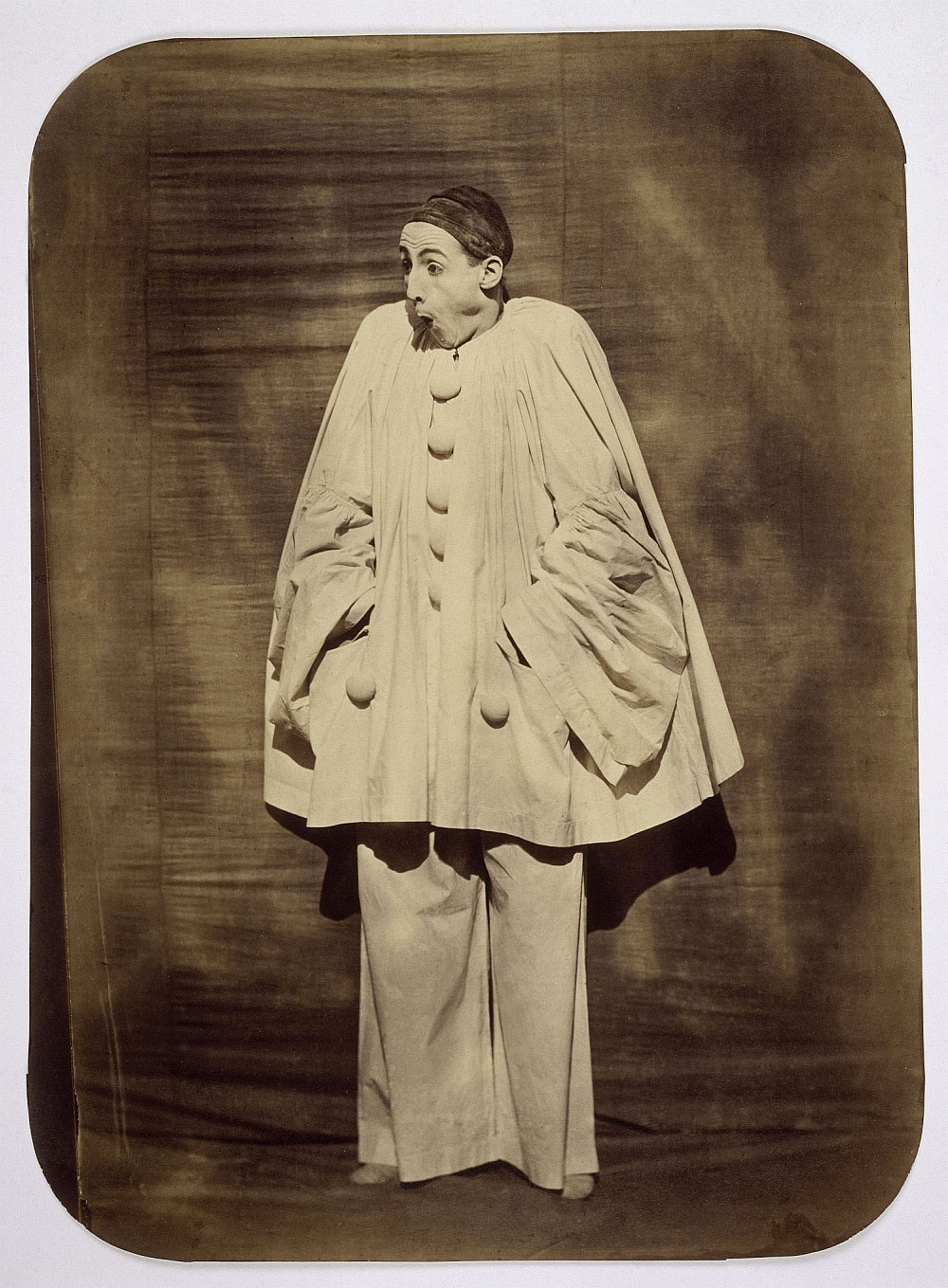
Nadar (Gaspard-Félix Tournachon) (French, 1820-1910) Adrien Tournachon (French, 1825-1903) 'Pierrot Surprised' 1854-1855


Nadar (Gaspard-Félix Tournachon) (French, 1820-1910)
Adrien Tournachon (French, 1825-1903)
Pierrot Surprised
1854-1855
Albumen silver print
11 1/4 x 8 3/16″ (28.6 x 20.8cm)
Suzanne Winsberg Collection. Gift of Suzanne Winsberg
Museum of Modern Art Collection


Maurice Tabard (French, 1897-1984) 'Untitled' 1929


Maurice Tabard (French, 1897-1984)
Untitled
1929
Gelatin silver print
6 9/16 x 6 1/2″ (16.7 x 16.5cm)
Gift of Robert Shapazian
Museum of Modern Art Collection


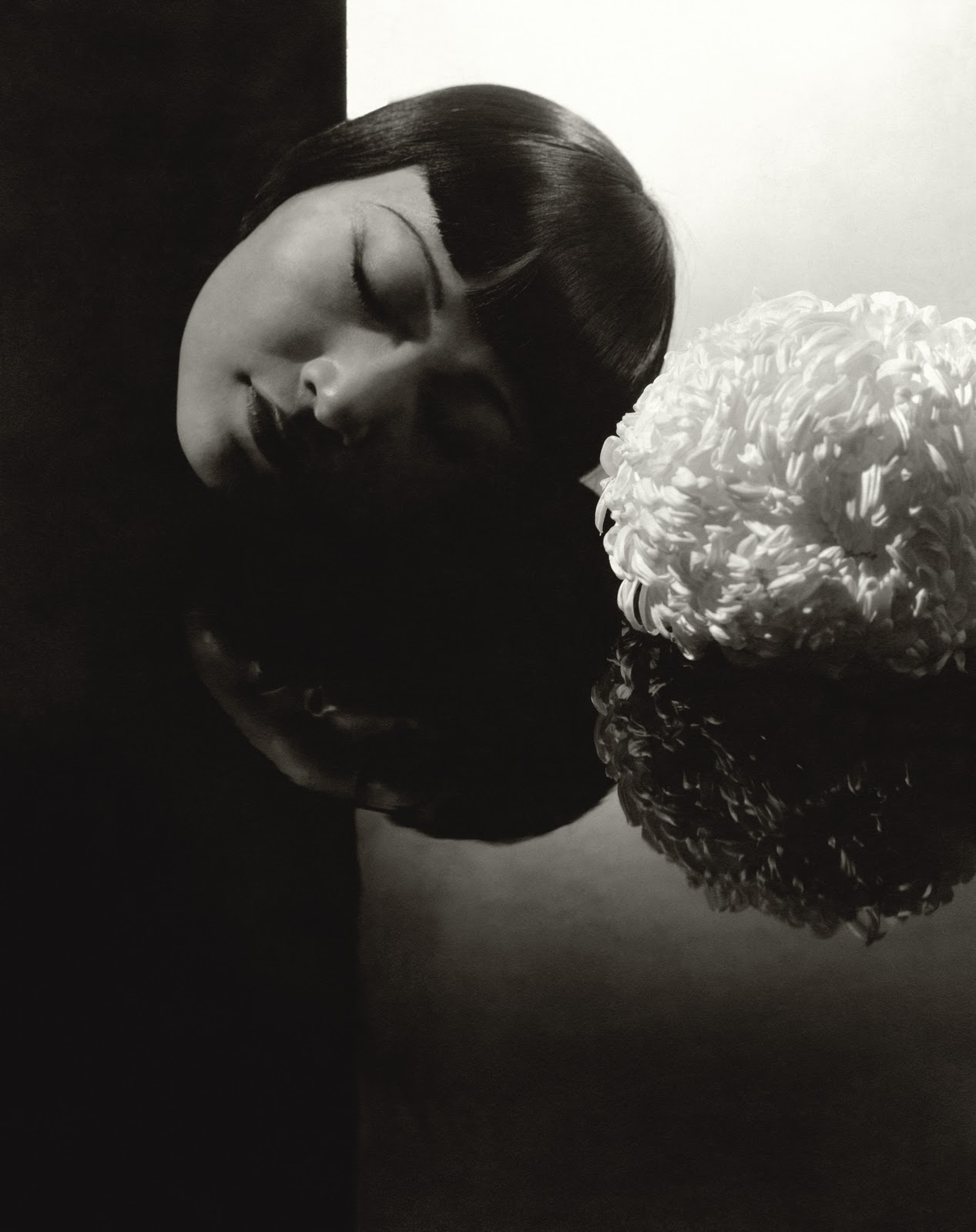
Edward Steichen (American born Luxembourg, 1879-1973) 'Anna May Wong' 1930


Edward Steichen (American born Luxembourg, 1879-1973)
Anna May Wong
1930
Gelatin silver print
16 9/16 x 13 7/16″ (42.1 x 34.1cm)
Gift of the artist
Museum of Modern Art Collection


“Taking people away from their natural circumstances and putting them into the studio in front of a camera did not simply isolate them, it transformed them. Sometimes the change was subtle; sometimes it was great enough to be almost shocking. But always there was transformation.”

~ Irving Penn 1974


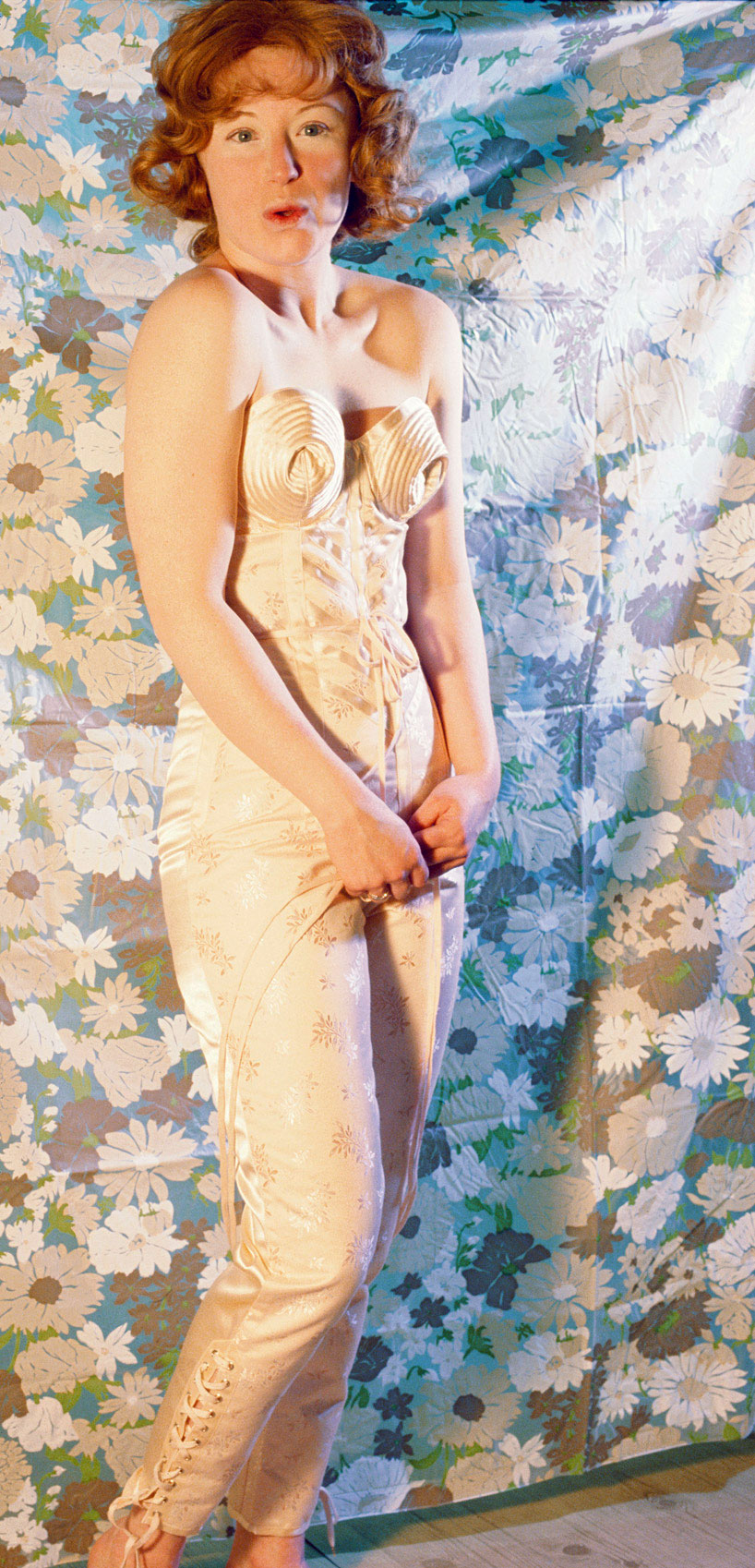
Cindy Sherman (American, b. 1954) 'Untitled #131' 1983


Cindy Sherman (American, b. 1954)
Untitled #131
1983
Chromogenic colour print
35 x 16 1/2″ (89 x 41.9cm)
Joel and Anne Ehrenkranz Fund
Museum of Modern Art Collection


The Studio as Set


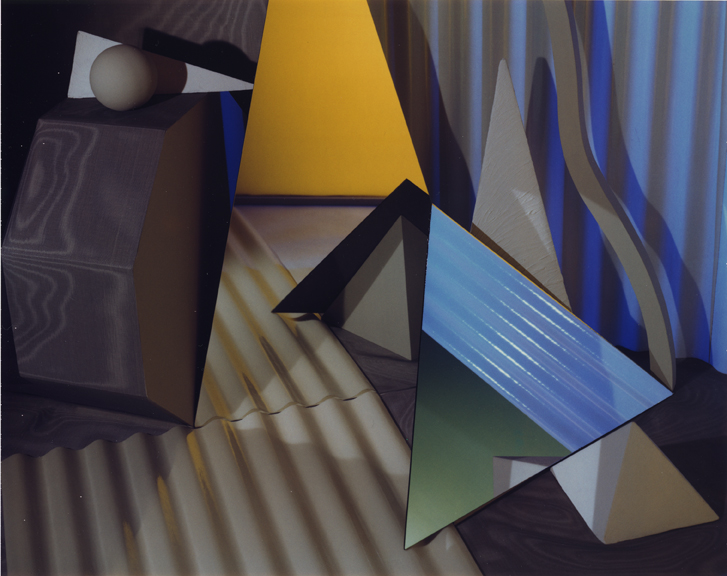
Barbara Kasten (American, b. 1936) 'Construct I-F' 1979


Barbara Kasten (American, b. 1936)
Construct I-F
1979
Colour instant print (Polaroid Polacolor)
9 1/2 x 7 1/2″ (24.0 x 19.0cm)
Acquired through the generosity of Wendy Larsen
Museum of Modern Art Collection


Barbara Kasten (American, b. 1936) 'Construct NYC 17' 1984


Barbara Kasten (American, b. 1936)
Construct NYC 17
1984
Silver dye bleach print
29 3/8 x 37 1/16″ (74.7 x 94.1cm)
Gift of Foster Goldstrom
Museum of Modern Art Collection


James Casebere (American, b. 1953) 'Subdivision with Spotlight' 1982


James Casebere (American, b. 1953)
Subdivision with Spotlight
1982
Gelatin silver print
14 13/16 x 18 15/16″ (37.6 x 48.1cm)
Purchase
Museum of Modern Art Collection


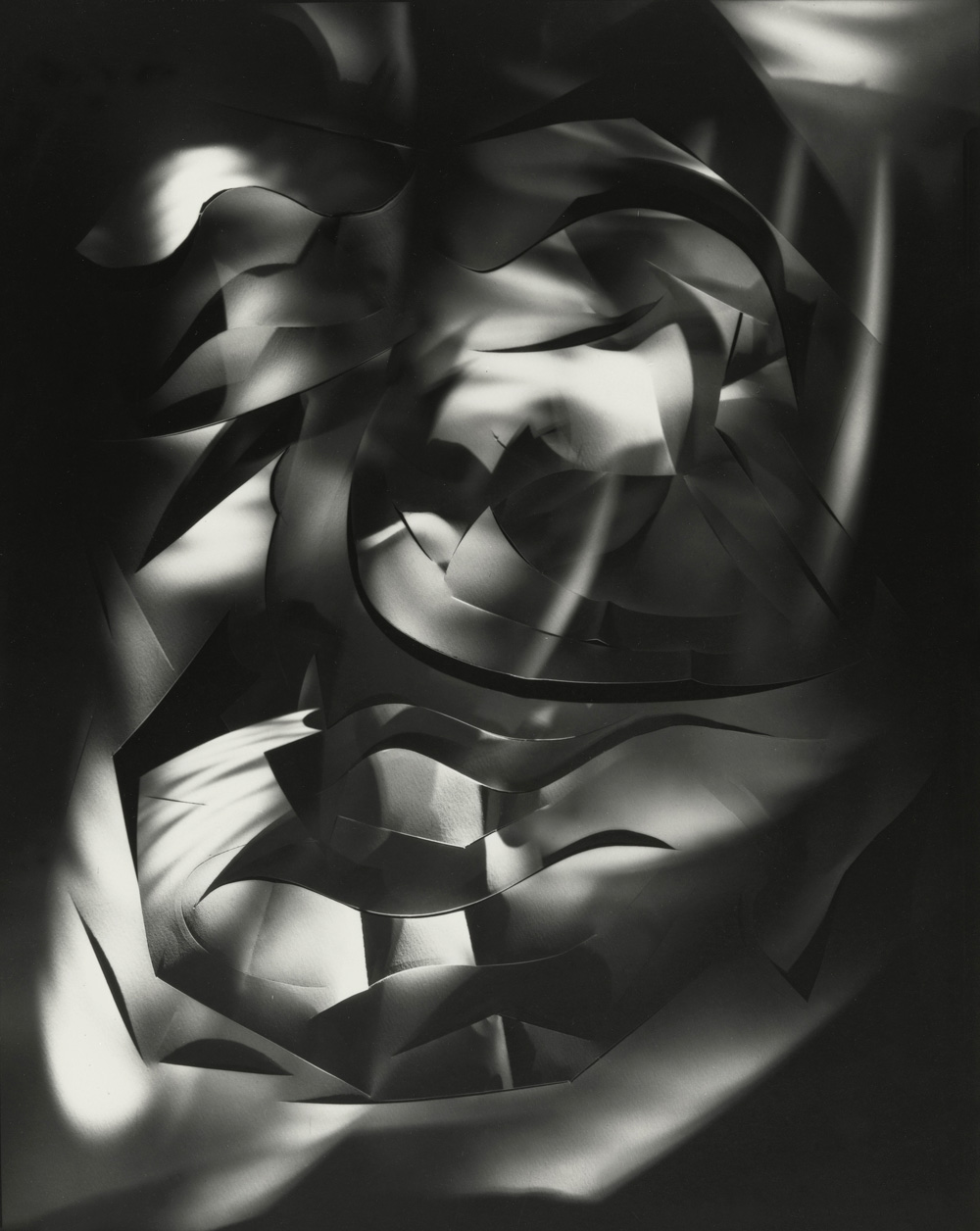
Francis Bruguière (American, 1879-1945) 'Light Abstraction' c. 1925


Francis Bruguière (American, 1879-1945)
Light Abstraction
c. 1925
Gelatin silver print
9 15/16 x 7 15/16″ (25.2 x 20.2cm)
Gift of Arnold Newman
Museum of Modern Art Collection


Francis Joseph Bruguière (15 October 1879 – 8 May 1945) was an American photographer.

Francis Bruguière was born in San Francisco, California, to Emile Antoine Bruguière (1849-1900) and Josephine Frederikke (Sather) Bruguière (1845-1915). He was the youngest of four sons born into a wealthy banking family and was privately educated. His brothers were painter and physician Peder Sather Bruguière (1874-1967), Emile Antoine Bruguiere Jr. (1877-1935), and Louis Sather Bruguière (1882-1954), who married wealthy heiress Margaret Post Van Alen. He was also a grandson of banker Peder Sather. His mother died in the 1915 sinking of the British ocean liner SS Arabic by a German submarine.

In 1905, having studied painting in Europe, Bruguière became acquainted with photographer and modern art promoter Alfred Stieglitz (who accepted him as a Fellow of the Photo-secession), and set up a studio in San Francisco, recording in a Pictorialist style images of the city after the earthquake and fire; some of them were reproduced in a book called San Francisco in 1918. He co-curated the photographic exhibition at the 1915 Panama-California Exposition in San Diego, and nine of his photographs were included in The Evanescent City (1916) by George Sterling.

In 1918, following the decline of the family fortune, he moved to New York City where he made his living by photographing for Vanity Fair, Vogue, and Harper’s Bazaar. Soon he was appointed the official photographer of the New York Theatre Guild. In this role he photographed the British stage actress Rosalinde Fuller, who was debuting in What’s in a Name? (1920), and she partnered him for the rest of his life.

Throughout his life, Bruguière experimented with multiple-exposure, solarization (years ahead of Man Ray), original processes, abstracts, photograms, and the response of commercially available film to light of various wavelengths. Until his one-man show at the Art Centre of New York in 1927, he showed this work only to friends. In the mid-1920s, he planned to make a film called The Way, depicting stages in a man’s life, to be played by Sebastian Droste with Rosalinde doing all the female parts. To obtain funding, Bruguière took photographs of projected scenes, but Droste died before filming started; so we are left with only the still pictures.

In 1927 they moved to London, where Bruguière co-created the first British abstract film, Light Rhythms, with Oswell Blakeston. Long thought to have been lost, it has now been recovered. During World War II, he returned to painting.

Text from the Wikipedia website


Jaromír Funke (Czech, 1896-1945) 'Composition' c. 1925


Jaromír Funke (Czech, 1896-1945)
Composition
c. 1925
Gelatin silver print
9 1/4 × 11 9/16″ (23.4 × 29.3cm)
Acquired through the generosity of Blanchette Hooker Rockefeller
Museum of Modern Art Collection
© 2022 Miloslava Rupešová


Jaromír Funke (1 August 1896 – 22 March 1945) was a leading Czech photographer during the 1920s and 1930s.

Funke was recognised for his “photographic games” using mirrors, lights, and insignificant objects, such as plates, bottles, or glasses, to create unique works. In his still life imagery he created abstracts of forms and shadows reminiscent of photograms. His work was regarded as logical, original and expressive in nature. A typical feature of Funke’s work would be the “dynamic diagonal.”

Text from the Wikipedia website


Paul Outerbridge (American, 1896-1958) 'Images de Deauville' 1936


Paul Outerbridge (American, 1896-1958)
Images de Deauville
1936
Tri-colour carbro print
15 3/4 x 12 1/4″ (40 x 31.1cm)
Gift of Mrs. Ralph Seward Allen
Museum of Modern Art Collection


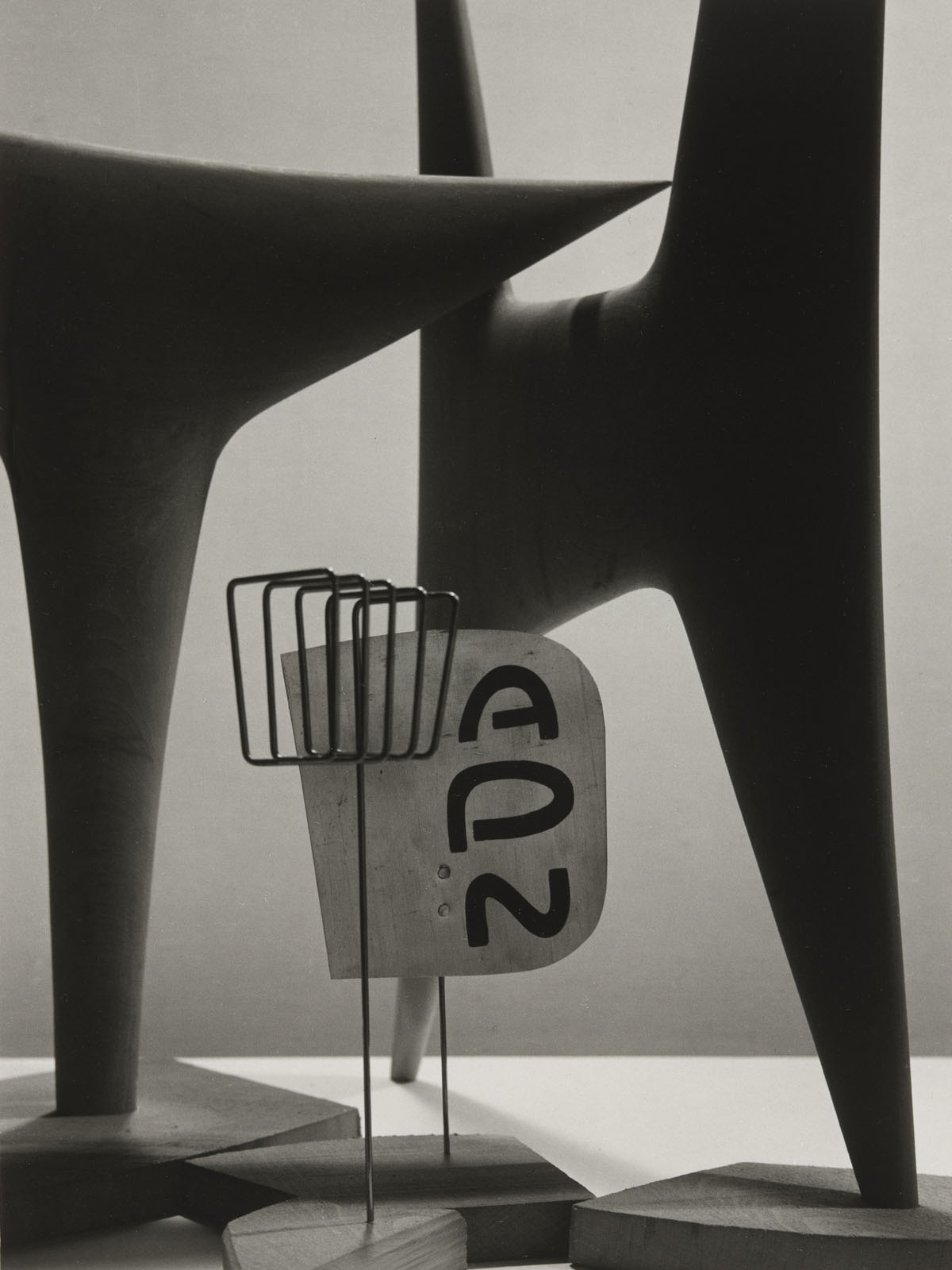
Shozo Kitadai, Kiyoji Otsuji. 'Untitled' from the portfolio 'APN (Asahi Picture News)' 1953-1954


Shozo Kitadai, Kiyoji Otsuji
Untitled from the portfolio APN (Asahi Picture News)
1953-1954
Gelatin silver print, printed 2003
7 1/2 × 5 9/16″ (19 × 14.2cm)
Gift of Shigeru Yokota
Museum of Modern Art Collection
© 2022 Seiko Otsuji


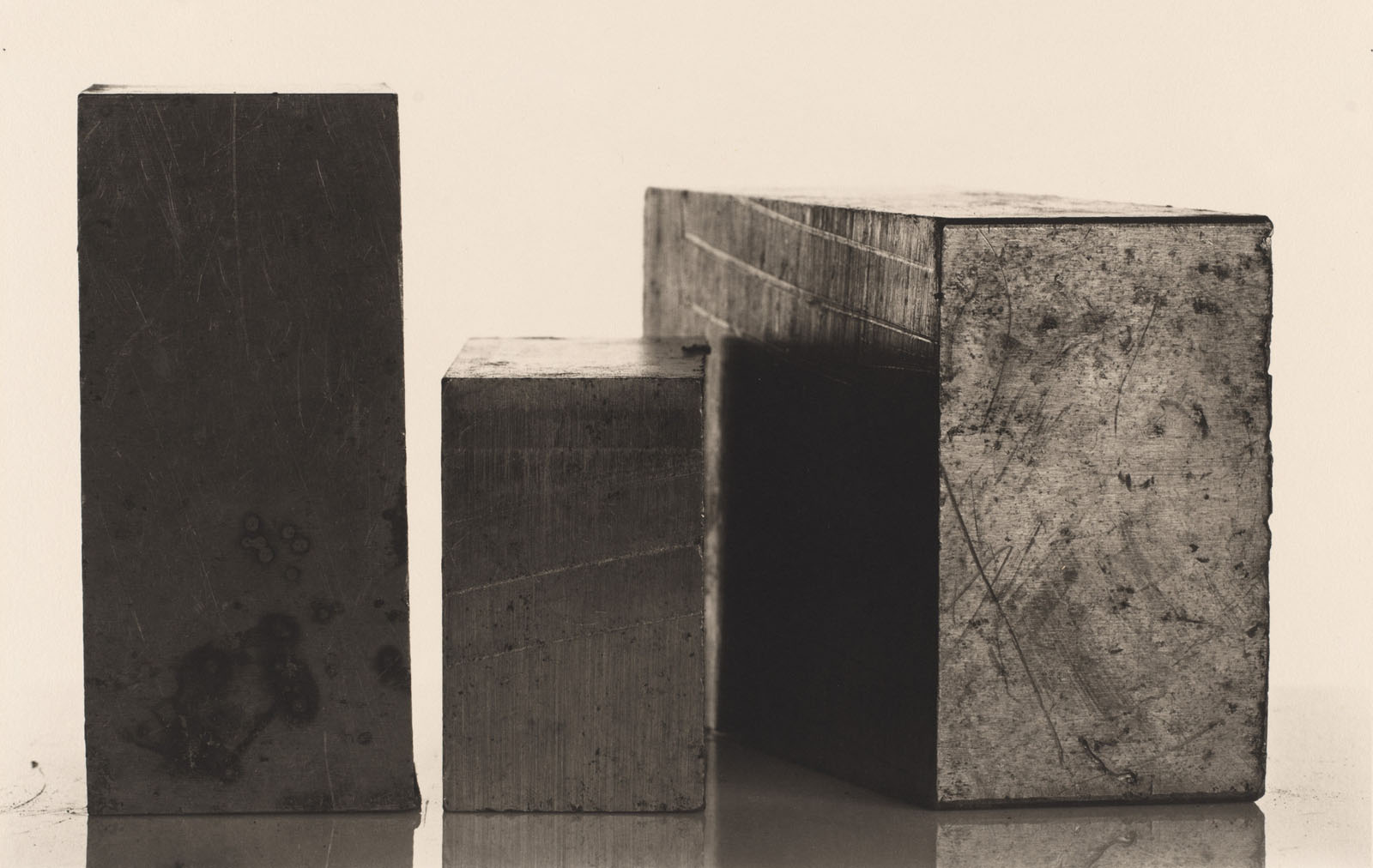
Irving Penn (American, 1917-2009) 'Three Steel Blocks, New York' 1980


Irving Penn (American, 1917-2009)
Three Steel Blocks, New York
1980
Platinum/palladium print
13 1/4 × 20 11/16″ (33.6 × 52.5cm)
Acquired through the generosity of Lily Auchincloss
Museum of Modern Art Collection
© The Irving Penn Foundation


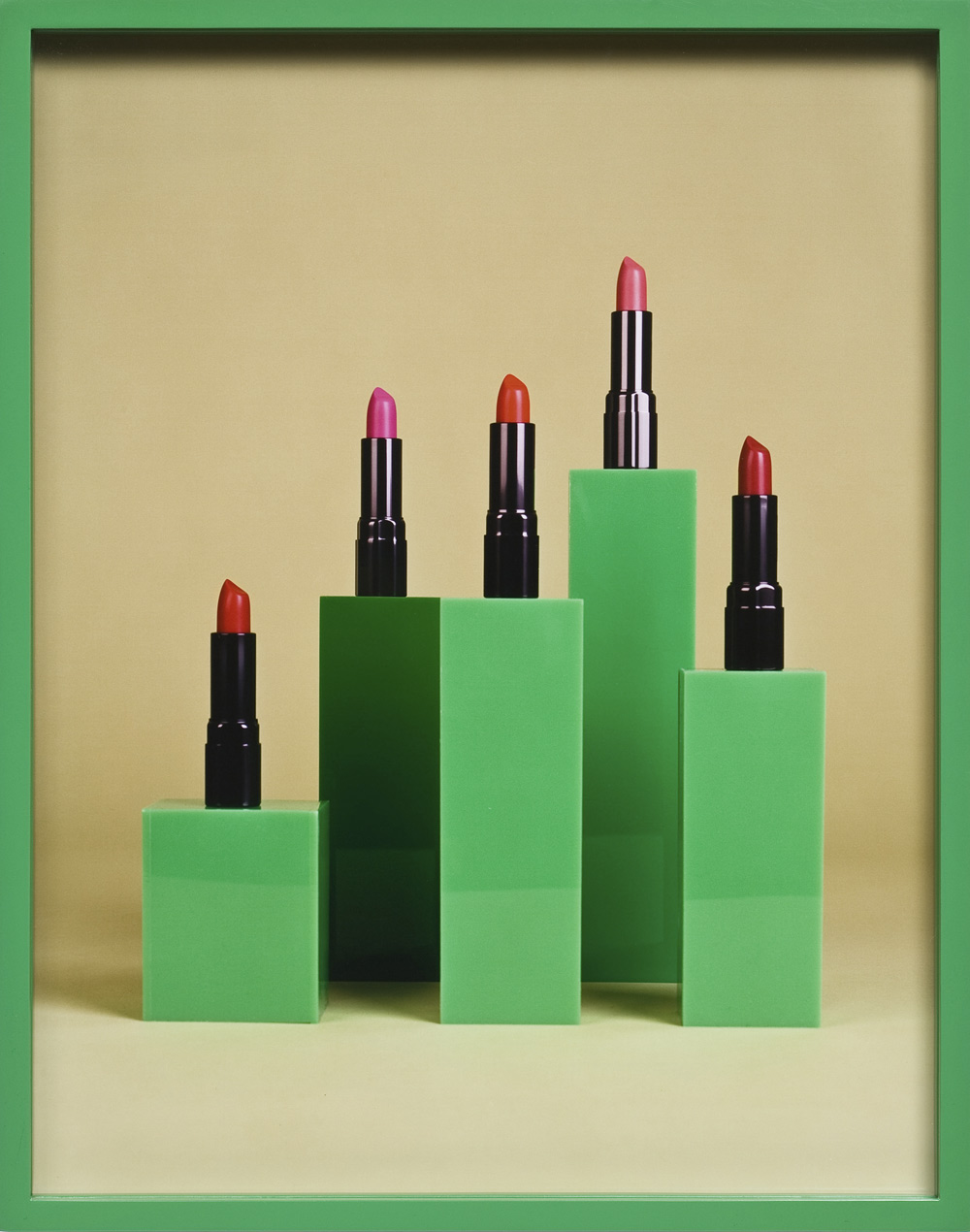
Elad Lassry (Israeli, b. 1977) 'Nailpolish' 2009


Elad Lassry (Israeli, b. 1977)
Nailpolish
2009
Chromogenic colour print
14 1/2 x 11 1/2″ (36.8 x 29.2cm)
Fund for the Twenty-First Century
Museum of Modern Art Collection


The Museum of Modern Art
11 West 53 Street
New York, NY 10019
Phone: (212) 708-9400

Opening hours:
10.30am – 5.30pm
Open seven days a week

MoMA website

LIKE ART BLART ON FACEBOOK

Back to top

Exhibition: ‘William Klein + Daido Moriyama’ at the Tate Modern, London

Exhibition dates: 10th October 2012 – 20th January 2013


William Klein (French born America, 1926-2022) 'Candy Store, New York' 1955


William Klein (French born America, 1926-2022)
Candy Store, New York
1955
Gelatin silver print
© William Klein


More Daido Moriyama photographs can be found on my 2012 posting Fracture: Daido Moriyama at the Los Angeles County Museum of Art (LACMA) and 2009 posting Daido Moriyama: Tokyo Photographs at Philadelphia Museum of Art.

Dr Marcus Bunyan


Many thankx to the Tate Modern for allowing me to publish the photographs in the posting. Please click on the photographs for a larger version of the image.


William Klein (French born America, 1926-2022) 'Pray + Sin, New York' 1954


William Klein (French born America, 1926-2022)
Pray + Sin, New York
1954
Gelatin silver print
© William Klein


Explore modern urban life in New York and Tokyo through the photographs of William Klein and Daido Moriyama. This is the first exhibition to look at the relationship between the work of influential photographer and filmmaker Klein, and that of Moriyama, the most celebrated photographer to emerge from the Japanese Provoke movement of the 1960s.

With work from the 1950s to the present day, the exhibition demonstrates the visual affinity between their urgent, blurred and grainy style of photography and also their shared desire to convey street life and political protest, from anti-war demonstrations and gay pride marches to the effects of globalisation and urban deprivation.

The exhibition also considers the medium and dissemination of photography itself, exploring the central role of the photo-book in avant-garde photography and the pioneering use of graphic design within these publications. As well the issues of Provoke magazine in which Moriyama and his contemporaries showcased their work, the exhibition will include fashion photography from Klein’s work with Vogue and installations relating to his satirical films Mister Freedom and Who Are You Polly Maggoo?

Text from the Tate Modern website


William Klein (French born America, 1926-2022) 'Bikini, Moscow' 1959


William Klein (French born America, 1926-2022)
Bikini, Moscow
1959
Gelatin silver print
© William Klein


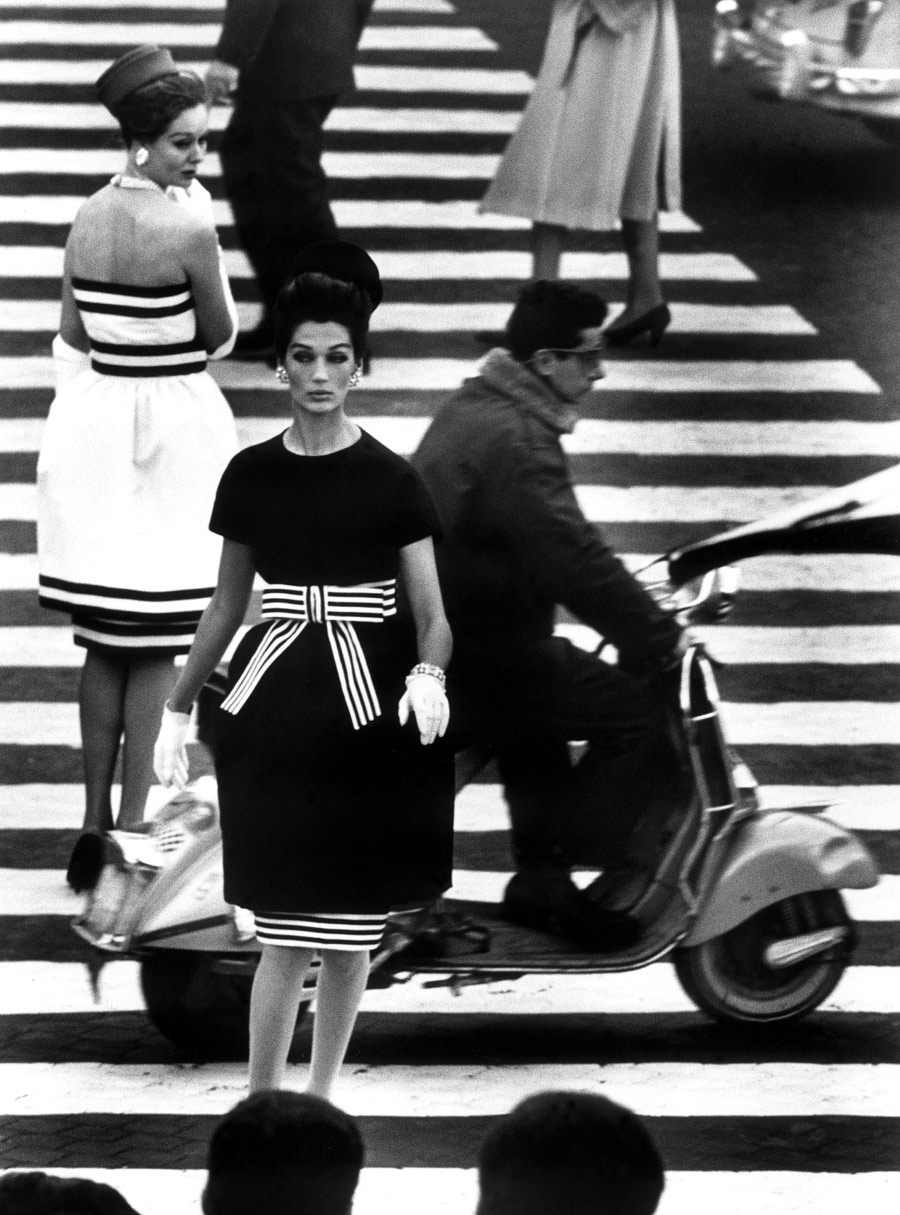
William Klein (French born America, 1926-2022) 'Piazza di Spagna, Rome' 1960


William Klein (French born America, 1926-2022)
Piazza di Spagna, Rome
1960
Gelatin silver print
© William Klein


William Klein (French born America, 1926-2022) 'Gun 1, New York' 1955


William Klein (French born America, 1926-2022)
Gun 1, New York
1955
Gelatin silver print
© William Klein


William Klein (French born America, 1926-2022) 'lsa Maxwell's Toy ball, Waldorf Hotel, New York' 1955


William Klein (French born America, 1926-2022)
lsa Maxwell’s Toy ball, Waldorf Hotel, New York
1955
Gelatin silver print
© William Klein


William Klein (French born America, 1926-2022) 'Kiev railway station, Moscow' 1959


William Klein (French born America, 1926-2022)
Kiev railway station, Moscow
1959
Gelatin silver print
© William Klein


William Klein (French born America, 1926-2022) 'School out, Dakar' 1963


William Klein (French born America, 1926-2022)
School out, Dakar
1963
Gelatin silver print
© William Klein


William Klein (French born America, 1926-2022) 'Dance Happening in Ginza, Tokyo' 1961


William Klein (French born America, b. 1928)
Dance Happening in Ginza, Tokyo
1961
Gelatin silver print
© William Klein


William Klein + Daidō Moriyama Exhibition Tate Modern, London

Slideshow of images from the press view at the William Klein / Daido Moriyama Exhibition at Tate Modern, London


Explore modern urban life in New York and Tokyo through the photographs of William Klein and Daido Moriyama. This is the first exhibition to look at the relationship between the work of influential photographer and filmmaker Klein, and that of Moriyama, the most celebrated photographer to emerge from the Japanese Provoke movement of the 1960s. With work from the 1950s to the present day, the exhibition demonstrates the visual affinity between their urgent, blurred and grainy style of photography and also their shared desire to convey street life and political protest, from anti-war demonstrations and gay pride marches to the effects of globalisation and urban deprivation. Taking as its central theme the cities of New York and Tokyo, William Klein + Daido Moriyama explores both artists’ celebrated depictions of modern urban life.

The exhibition is formed of two retrospectives side by side, bringing together over 300 works, including vintage prints, contact sheets, film stills, photographic installations and archival material. The influence of Klein’s seminal 1956 publication Life is Good & Good for You in New York, Trance Witness Revels, as well as his later books Tokyo 1964 and Rome: The City and Its People 1959, is traced through Moriyama’s radical depictions of post-war Tokyo in Sayonara Photography and The Hunter 1972. The juxtaposition of these artists not only demonstrates the visual affinity between their urgent, blurred and grainy style of photography, but also their shared desire to convey street life and political protest, from anti-war demonstrations and student protests to the effects of globalisation and urban deprivation.

This exhibition also considers the medium and dissemination of photography itself, exploring the central role of the photo-book in avant-garde photography and the pioneering use of graphic design within these publications. As well the issues of Provoke magazine in which Moriyama and his contemporaries showcased their work, the exhibition includes fashion photography from Klein’s work with Vogue and installations relating to his satirical films Mister Freedom and Who Are You Polly Maggoo? New ways of presenting photography are also demonstrated by Moriyama’s installation Polaroid/Polaroid 1997, which recreates his studio interior through a meticulous arrangement of Polaroid images.

Press release from the Tate Modern website


'William Klein + Daido Moriyama' exhibition banner


William Klein + Daido Moriyama exhibition banner


Daidō Moriyama (Japanese, b. 1938) 'Misawa' 1971


Daidō Moriyama (Japanese, b. 1938)
Misawa
1971
Gelatin silver print
© Daido Moriyama


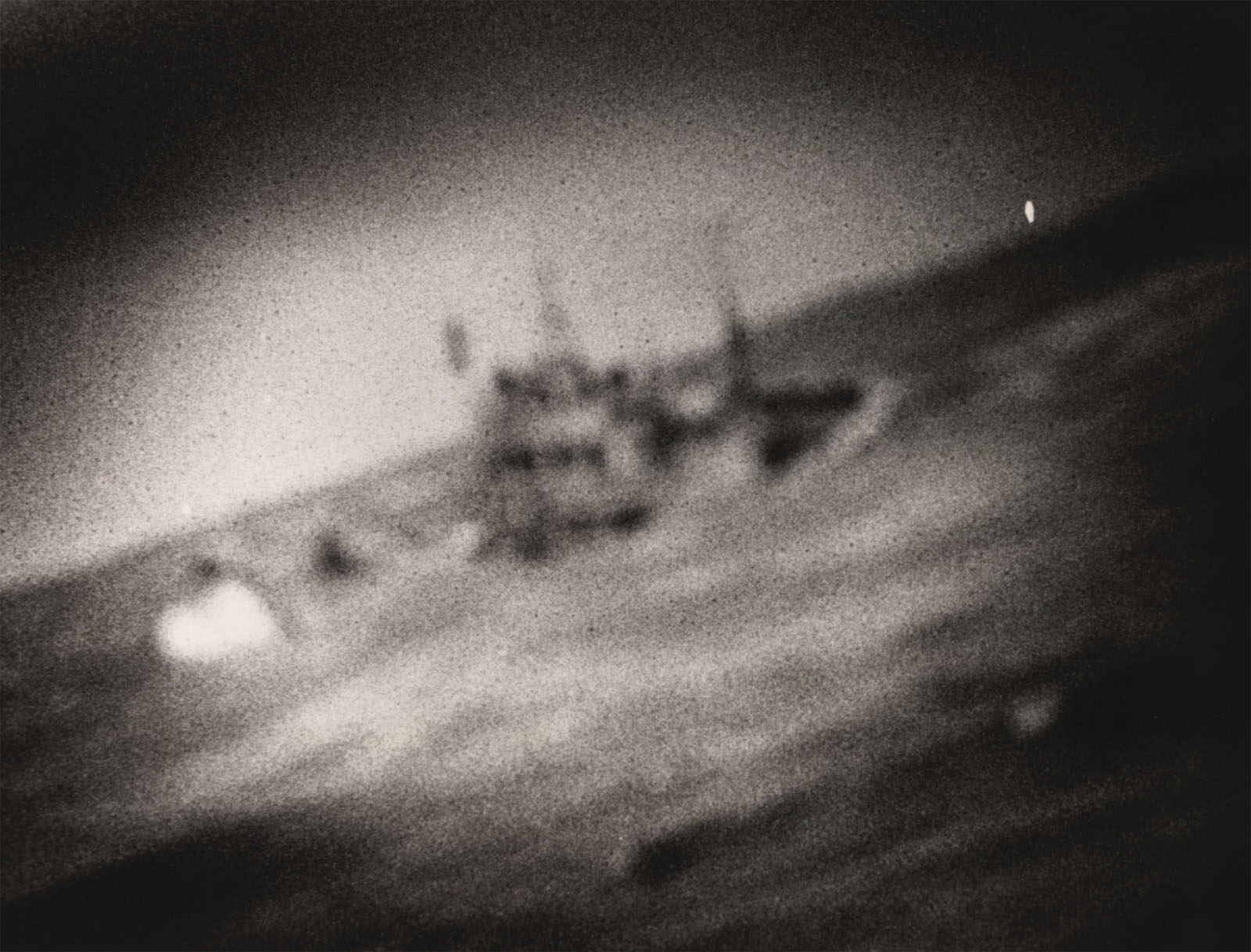
Daido Moriyama (Japanese, b. 1938) 'Marine Accident (Premeditated or not 5)' 1969


Daidō Moriyama (Japanese, b. 1938)
Marine Accident (Premeditated or not 5)
1969
Gelatin silver print
© Daido Moriyama


William Klein + Daido Moriyama is the first exhibition to examine the relationship between the work of William Klein (born 1928), one of the twentieth century’s most important photographers and film-makers, and that of Daido Moriyama (born 1938), the most celebrated photographer to emerge from the Japanese Provoke movement. Taking as its central theme the cities of New York and Tokyo, William Klein + Daido Moriyama explores both artists’ celebrated depictions of modern urban life.

The exhibition is formed of two retrospectives side by side, bringing together over 300 works, including vintage prints, contact sheets, film stills, photographic installations and archival material. The influence of Klein’s seminal 1956 publication Life is Good & Good for You in New York, Trance Witness Revels, as well as his later books Tokyo 1964 and Rome: The City and Its People 1959, is traced through Moriyama’s radical depictions of post-war Tokyo in Sayonara Photography and The Hunter 1972. The juxtaposition of these artists not only demonstrates the visual affinity between their urgent, blurred and grainy style of photography, but also their shared desire to convey street life and political protest, from anti-war demonstrations and student protests to the effects of globalisation and urban deprivation.

This exhibition also considers the medium and dissemination of photography itself, exploring the central role of the photo-book in avant-garde photography and the pioneering use of graphic design within these publications. As well the issues of Provoke magazine in which Moriyama and his contemporaries showcased their work, the exhibition includes fashion photography from Klein’s work with Vogue and installations relating to his satirical films Mister Freedom and Who Are You Polly Maggoo? New ways of presenting photography are also demonstrated by Moriyama’s installation Polaroid/Polaroid 1997, which recreates his studio interior through a meticulous arrangement of Polaroid images.

William Klein was born in New York, USA in 1928 and now lives and works in Paris, France. Solo exhibitions of his work have been held at the Centre Pompidou, Paris and the Scottish National Gallery, Edinburgh and he received the Outstanding Contribution to Photography Award at the 2012 Sony World Photography Awards.

Daido Moriyama was born in Osaka, Japan in 1938 and moved to Tokyo in 1961, where he continues to live and work. He was recently given a Lifetime Achievement Award by the International Centre of Photography and his work has been the subject of solo exhibitions at the San Francisco Museum of Modern Art; The Cartier Foundation, Paris; and The National Museum of Art, Osaka.

William Klein + Daido Moriyama is co-curated by Simon Baker, Curator of Photography and International Art, Tate, and Juliet Bingham, Curator, Tate Modern, with Kasia Redzisz, Assistant Curator, Tate Modern. The exhibition is accompanied by new books about both photographers from Tate Publishing. A season of film screenings at Tate Modern is also being held to coincide with the exhibition, showing Klein’s feature films and documentaries.

Press release from the Tate Modern website


Daidō Moriyama (Japanese, b. 1938) 'Memory of Dog 2' 1981


Daidō Moriyama (Japanese, born 1938)
Memory of Dog 2
1981
Gelatin silver print
© Daido Moriyama


Daidō Moriyama (Japanese, b. 1938) 'Tokyo color' 2008-2015


Daidō Moriyama (Japanese, born 1938)
Tokyo color
2008-2015
© Daido Moriyama


Daidō Moriyama (Japanese, b. 1938) 'Tokyo' 2011


Daidō Moriyama (Japanese, b. 1938)
Tokyo
2011
Gelatin silver print
Courtesy Daido Moriyama Photo Foundation
© Daido Moriyama


After reading Jack Kerouac’s classic beat novel On The Road, Moriyama began photographing the roads leading into and out of Japanese towns. Instead of places people live in and feel comfortable with, he portrays cities primarily as destinations to be visited and left behind. The resulting book, Hunter (1972), is described as a “road map of images from all over Japan through a moving car window. Routes and roads are the hunting field for me as a photographer.”

Occasionally he finds beauty – in snowflakes falling, a train speeding past, or the patterning of fishnet tights or perforated steel – but ramping up the contrast of his black and white prints, Moriyama more often portrays the world as a dangerous place engulfed in existential darkness.

In all this chaos, his studio appears like a beacon of calm and stability. Recorded in a grid of polaroid shots, the room is recreated as an installation that offers a rare glimpse of clarity and colour in what can otherwise feel like a miasma – the world as seen through a dark fog.

While Klein undoubtedly influenced Moriyama’s love of grainy, out-of-focus shots taken from odd angles, to pair him with the American tells only half the story. Warhol was equally important as the inspiration behind his Accident series, which includes car crashes, shipping disasters, executions and a health scare linked to overcrowded beaches. Moriyama’s use of found images (the car crashes come from posters), his fascination with serialisation (banks of tins on supermarket shelves) and with juxtaposing unrelated images on a page were also inspired by Warhol. So pairing him with Klein is interesting, but doesn’t do him justice. Moriyama deserves to be seen as a law unto himself, rather than an acolyte of a more familiar western photographer.

Sarah Kent. “William Klein + Daido Moriyama, Tate Modern,” on The Arts Desk website Thursday, 11 October 2012 [Online] Cited 05/09/2022


Daidō Moriyama (Japanese, b. 1938) 'Setagaya-ku, Tokyo, Midnight 1986'


Daidō Moriyama (Japanese, b. 1938)
Setagaya-ku, Tokyo, Midnight
1986
Gelatin silver print
Courtesy Daido Moriyama Photo Foundation
© Daido Moriyama


Daidō Moriyama (Japanese, b. 1938) 'Another Country in New York' 1971


Daidō Moriyama (Japanese, b. 1938)
Another Country in New York
1971
Gelatin silver print
Tokyo Polytechnic University
© Daido Moriyama


Tate Modern
Bankside
London SE1 9TG

Opening hours:
Monday to Sunday 10.00 – 18.00
Tate Modern website

LIKE ART BLART ON FACEBOOK

Back to top

Exhibition: ‘Andy Warhol: Polaroids / MATRIX 240’ at Berkeley Art Museum and Pacific Film Archive, University of California

Exhibition dates: 27th January – 20th May 2012

PLEASE NOTE: This posting contains nude photographs. If you do not like please do not look!


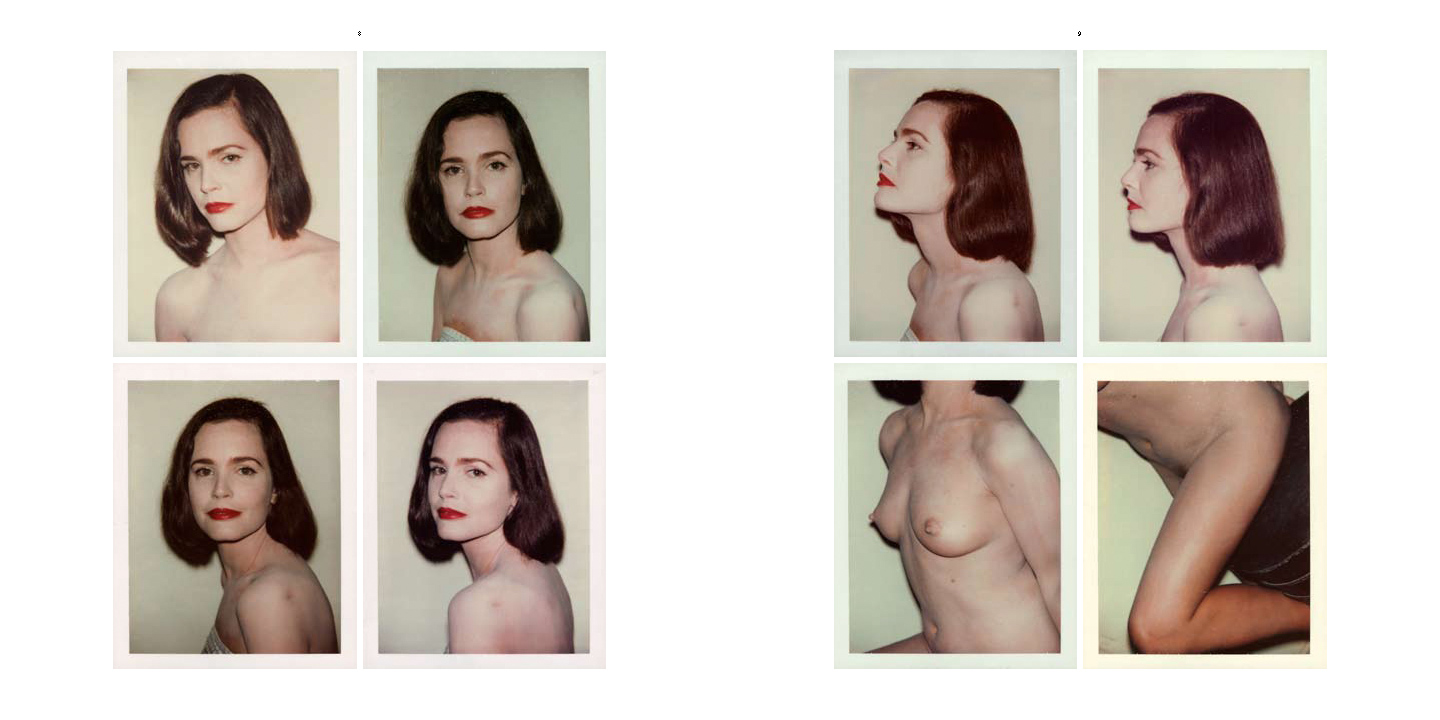
Andy Warhol (American, 1928-1987) 'Untitled' Pages 8 and 9 of The Andy Warhol Photographic Legacy Program, Vol. III


Andy Warhol (American, 1928-1987)
Untitled
Pages 8 and 9 of The Andy Warhol Photographic Legacy Program, Vol. III
of The Andy Warhol Foundation for the Visual Arts Twenty-Year Report, 1987–2007


ONE PERSON has found one of the images below offensive; so just for them please note that his posting has a PENIS and A-RRRRRR-SE rating. For all others, enjoy another spectacular Andy posting!

Marcus


Many thankx to BAM/PFA for allowing me to publish the photographs in the posting. Please click on the photographs for a larger version of the image (especially the two images directly below). View the complete The Andy Warhol Photographic Legacy Program Vol. III as a pdf (3.7Mb pdf)


“I’ve never met a person I couldn’t call a beauty.”


Andy Warhol


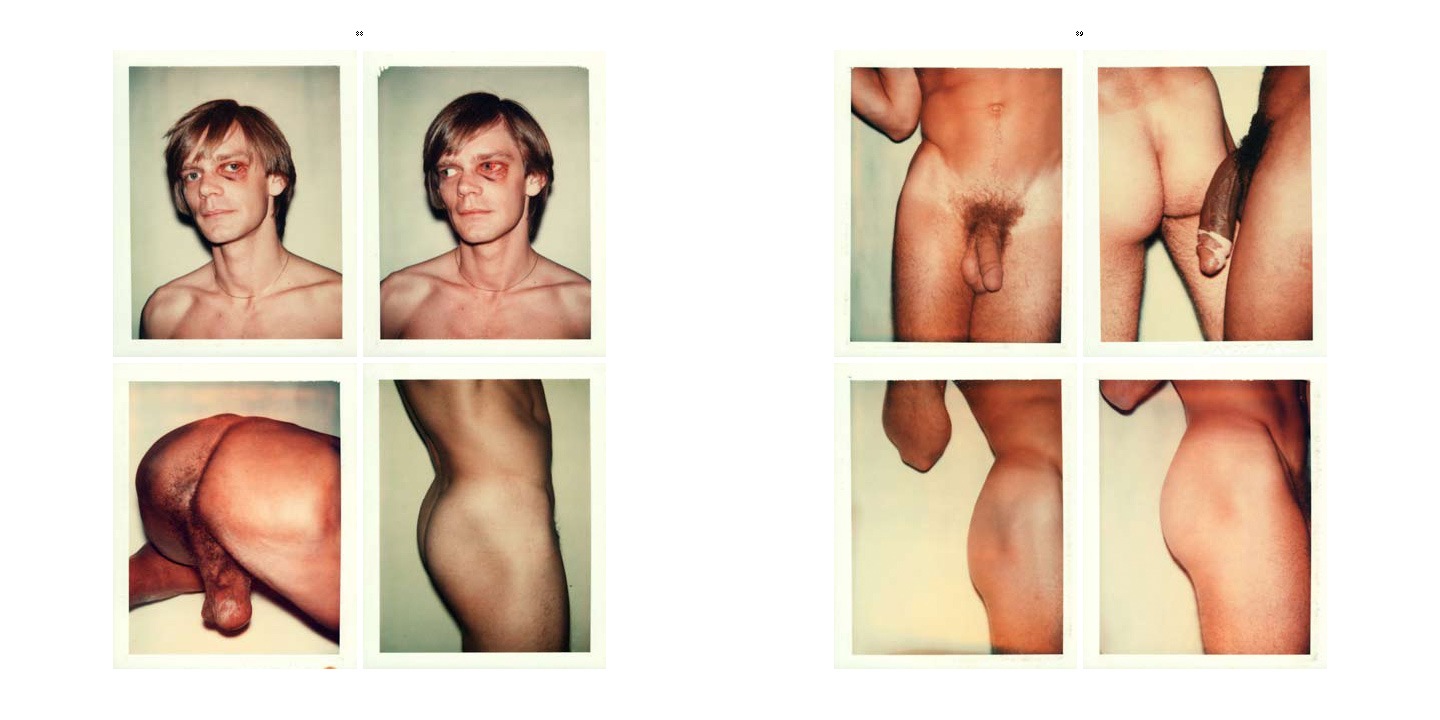
Andy Warhol (American, 1928-1987) 'Untitled' Pages 38 and 39 of The Andy Warhol Photographic Legacy Program, Vol. III


Andy Warhol (American, 1928-1987)
Untitled
Pages 38 and 39 of The Andy Warhol Photographic Legacy Program, Vol. III
of The Andy Warhol Foundation for the Visual Arts Twenty-Year Report, 1987–2007


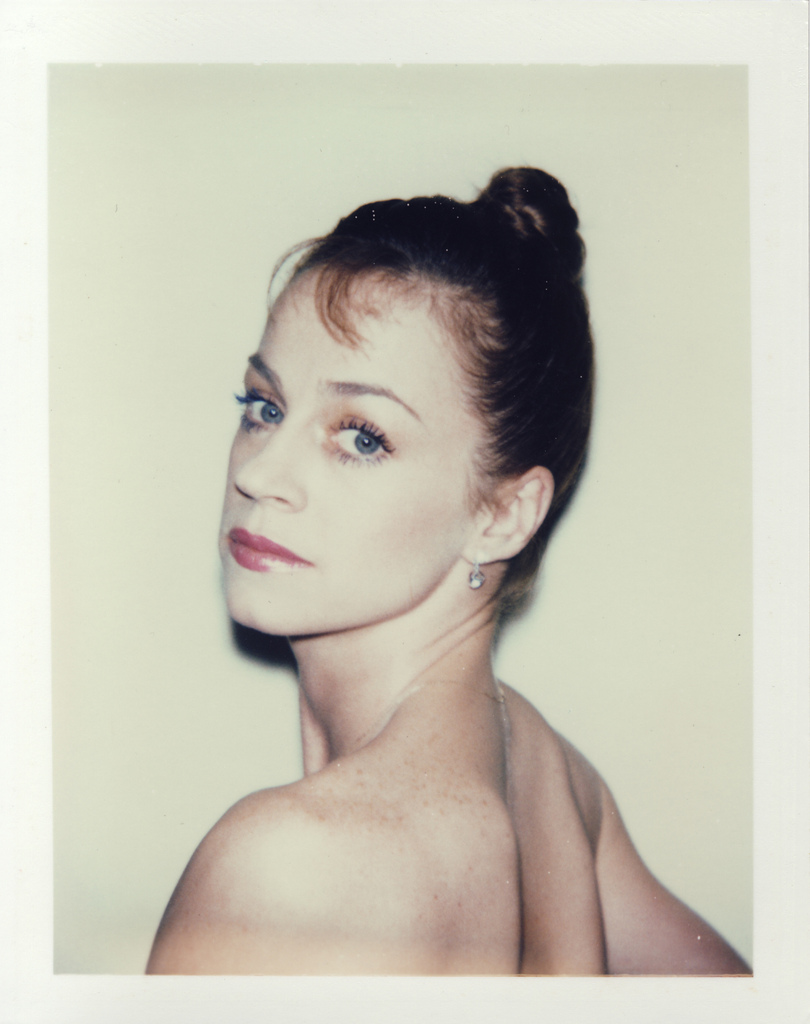
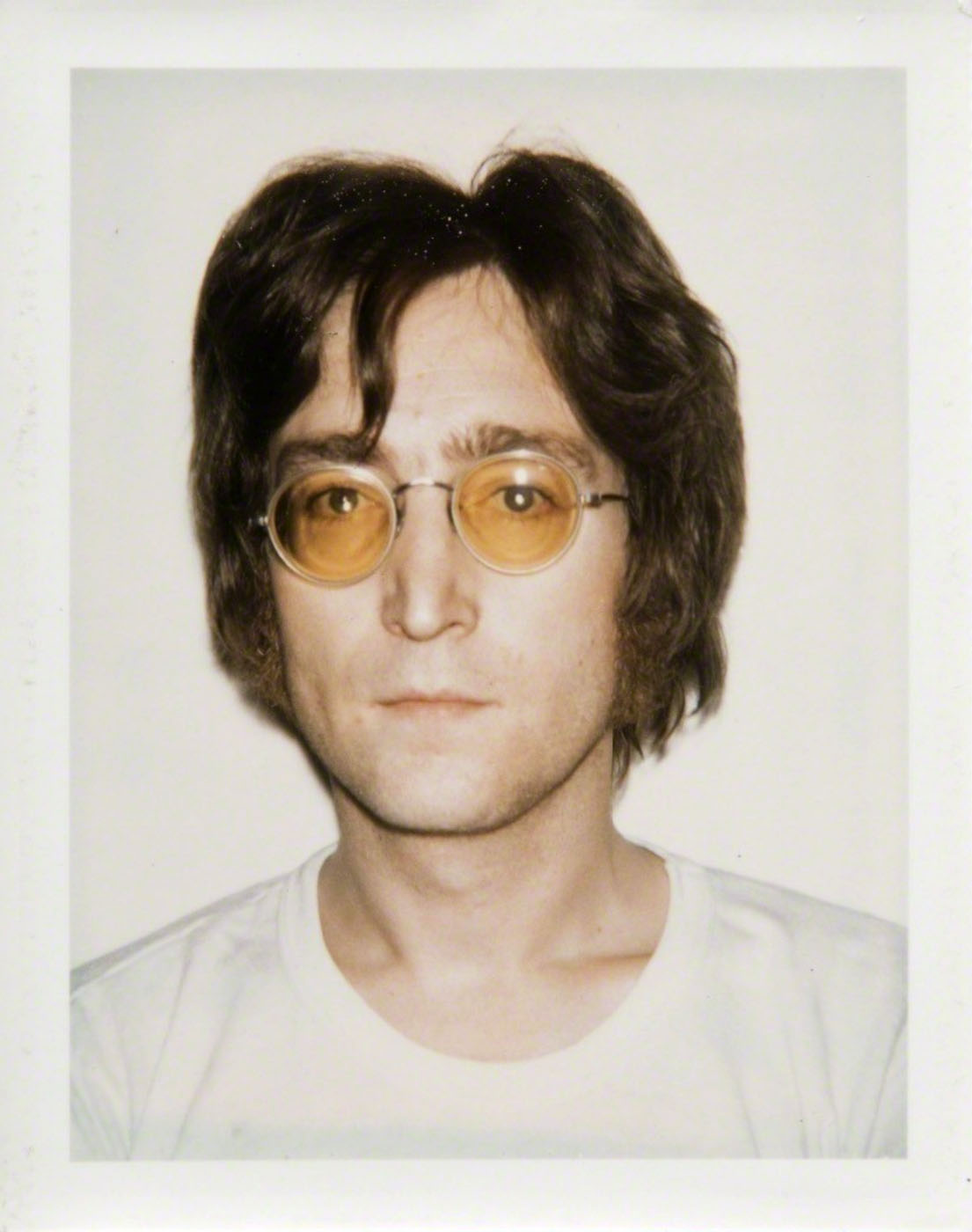
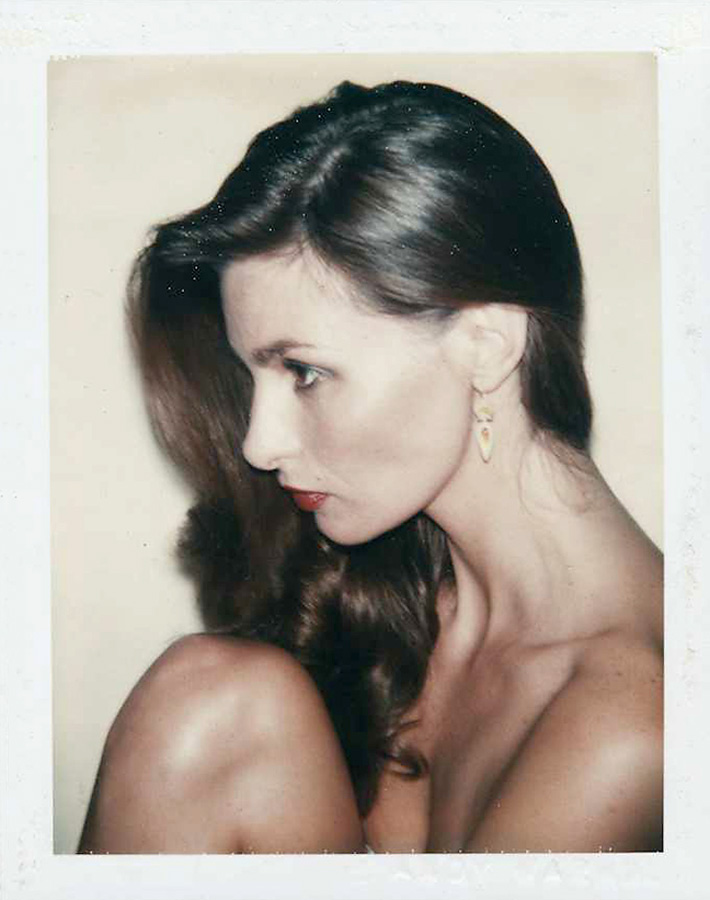
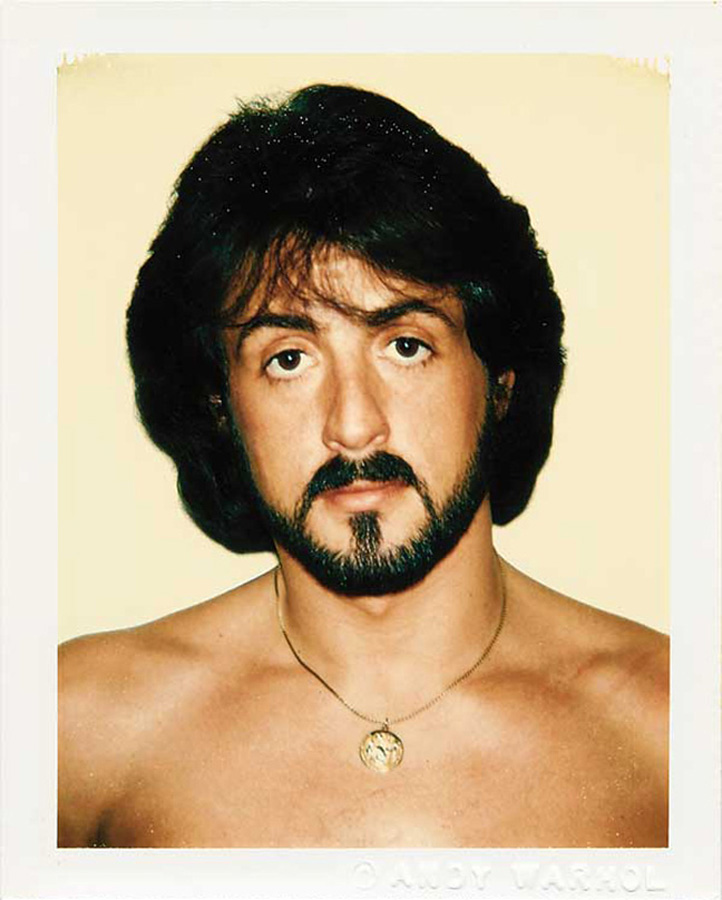
The University of California, Berkeley Art Museum and Pacific Film Archive presents Andy Warhol: Polaroids / MATRIX 240. The exhibition features a selection of Warhol’s Polaroid portraits drawn from an extraordinary gift of The Andy Warhol Foundation for the Visual Arts to the museum. From 1970 to 1987, Warhol, armed with his Polaroid Big Shot camera, captured a wide range of individuals – the royalty, rock stars, executives, artists, patrons of the arts, and athletes who epitomised seventies and eighties high society, but also as many unknown subjects. From January 27 through May 20, 2012, BAM/PFA will feature a group of approximately forty of these photographs, including portraits of Caroline, Princess of Monaco; Diane von Furstenberg; and O.J. Simpson.

Famous for his contributions to Pop Art, Warhol used photography as a central part of his art-making process. Before turning to fine art, Warhol worked in advertising and commercial art, experiences that informed his approach to portraiture. In 1962, he debuted his first silkscreen paintings of celebrities, serialising pictures he pulled from magazines and press photos. In addition to using found images, Warhol eventually incorporated his own photography into his practice. In 1969 he launched inter/View magazine, which featured his photos of celebrities. By the 1970s and 1980s, portrait commissions were a major source of his income, and many of his Polaroids would serve as the basis for these works.

While each of the images in Andy Warhol: Polaroids is unique, the consistency of composition, poses, and plain white backdrop equalises the superstars and lesser-known subjects. To Warhol, they were all beautiful people. But even within this uniform staging, we see the artist finding numerous ways to create memorable, varied, and iconic compositions. Though these photos may be small in size, together the Warhol Polaroids provide a glimpse into the artistic process of one of the twentieth century’s most important artists.

From 1970 to 1987 Andy Warhol took scores of Polaroid and black-and-white photographs, the vast majority of which were never seen by the public. These images often served as the basis for his commissioned portraits, silk-screen paintings, drawings, and prints. In 2007, to commemorate its twentieth anniversary, the Andy Warhol Foundation for the Visual Arts launched the Andy Warhol Photographic Legacy Program. Designed to give a broad public greater access to Warhol’s photographs, the program donated over 28,500 of Warhol’s original Polaroids and gelatin silver prints to more than 180 college and university museums and galleries across the country. Each institution received a curated selection of over one hundred Polaroids and fifty black-and-white prints.

The number of images he took at each session varied as greatly as the figures he photographed. Repetition, a recurring motif in Warhol’s paintings, plays both a conceptual and practical role in his photography. By making several Polaroids, he had more material from which to work. By shooting at length, more about the sitter was exposed. Seen all together, the Polaroids destabilise the iconic status that a Warhol image assumes when displayed singly. On its own, a Polaroid image is fully identified with the artwork that ultimately grew out of it; the face depicted becomes a kind of signifier for larger cultural concepts of beauty, power, and worth.

Text adapted from “Andy Warhol’s Photographic Legacy,” in The Andy Warhol Photographic Legacy Program, Vol. III of The Andy Warhol Foundation for the Visual Arts Twenty-Year Report, 1987-2007 (New York: The Andy Warhol Foundation for the Visual Arts, Inc, 2007), 4-5.

View the complete Vol. III as a pdf (3.7Mb pdf)

Text and press release from the BAM/PFA website


Andy Warhol (American, 1928-1987) 'Billy Squier' 1982


Andy Warhol (American, 1928-1987)
Billy Squier
1982
Polacolor 2
4 1/4 x 3 3/8 in
Gift of the The Andy Warhol Center for the Visual Arts
© The Andy Warhol Center for the Visual Arts


Andy Warhol (American, 1928-1987) 'Daryl Lillie' 11/1978


Andy Warhol (American, 1928-1987)
Daryl Lillie
11/1978
Polacolor 2
4 14 x 3 3/8 in
© The Andy Warhol Center for the Visual Arts


Andy Warhol (American, 1928-1987) 'Heather Watts' after June 1986


Andy Warhol (American, 1928-1987)
Heather Watts
after June 1986
Polacolor ER
4 1/4 x 3 3/8 in
© The Andy Warhol Center for the Visual Arts


From 1970 to 1987 Andy Warhol took thousands of Polaroid pictures, the vast majority of which were never seen by the public. These images often served as the basis for his commissioned portraits, silkscreen paintings, drawings, and prints. Warhol captured a wide range of individuals with his Polaroid Big Shot camera. The royalty, rock stars, industrialists, artists, patrons of the arts, and athletes who epitomised 1970s and 1980s high society, as well as unknown sitters, are represented with a sense of dignity and verve. Warhol was interested in a new definition of “Society” that emerged in this period. In the introduction to the 1979 publication Andy Warhol’s Exposures, the artist wrote:

“Now it doesn’t matter if you came over on the Mayflower, so long as you can get into Studio 54. Anyone rich, powerful, beautiful, or famous can get into Society. If you’re a few of those things you can really get to the top.”1

Warhol’s images not only documented, but participated in, the creation of this new social world, satisfying both the need of his subjects to be seen and the desire of the viewer to gain access to this milieu through the act of looking. Warhol worked in advertising and commercial art before turning to fine art, experiences that informed his approach to portraiture. In 1962, he debuted his first silk-screen paintings of celebrities, serialising pictures appropriated from magazines or press photos of the time. In addition to employing found images, Warhol eventually incorporated photography into his practice and, in 1969, started a magazine (originally called inter/VIEW) that often featured his own photographs of celebrities. By the 1970s and 1980s, portrait commissions became a main source of his income.

Warhol’s Polaroids are strikingly intimate, an effect achieved in part by his personal relationship with the sitters and in part by formal aspects of the images. The artist often provided a luncheon in advance of the photo session, establishing a bond with his subject and a tone for the shoot. In the resulting Polaroids, the sitter is in direct eye contact with Warhol and the camera. The strong sense of immediacy created by the sitter’s open gaze is enhanced by the tight compositions in which the subject, pressed up close to the picture plane, is isolated from any context. A feeling of vulnerability appears in some of the portraits (as suggested by the bared shoulders of Unidentified woman (blond with bangs), for example), indicating a willingness to be exposed as well as the seductive nature of the artist and the photo shoot itself. The closeness forged between photographer and sitter and captured by the camera offers an illusion of sharing these private moments and of entering into Warhol’s circle of beautiful people and their glamorous lives.

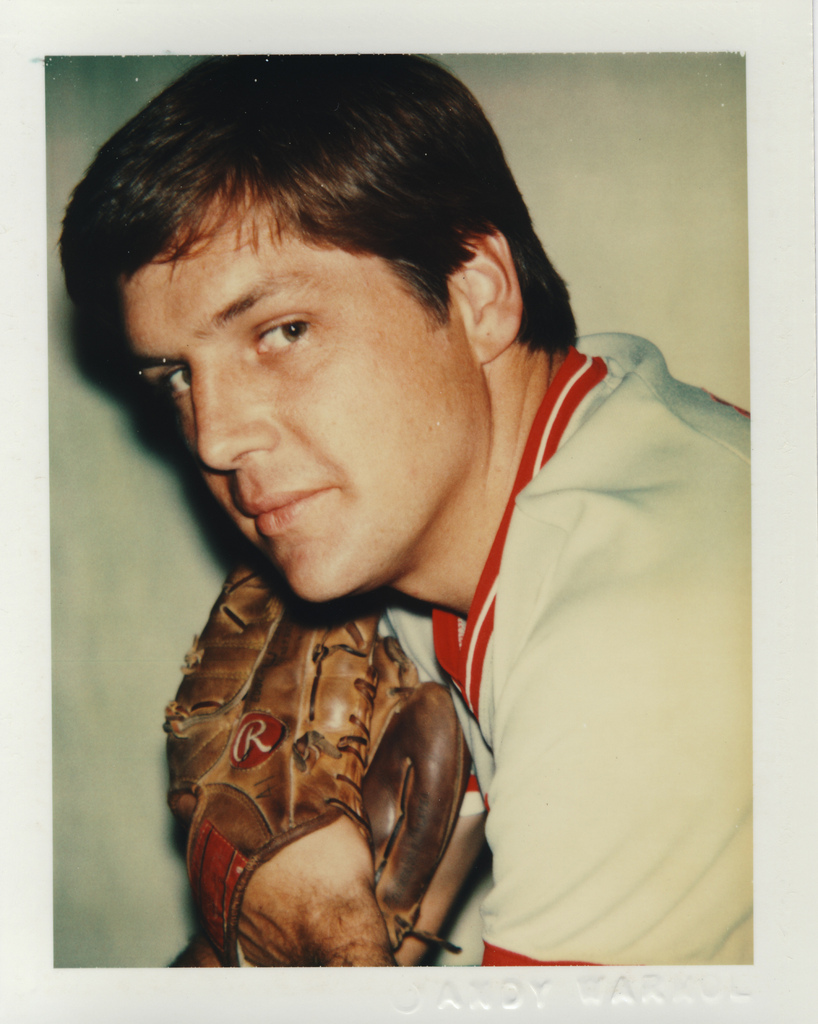
While each image is unique, the consistency of composition, poses, and plain white backdrop equalises the celebrities and the unknown subjects of Warhol’s Polaroids. After all, to Warhol, they were all beautiful people. Polaroids of individuals who are not immediately recognisable pique our curiosity. Who is the enigmatic Frau Buch? Like many of Warhol’s subjects, she is photographed with a prop. The small dog that she hugs may not identify her, but it suggests a dimension of her personality. In other Polaroids, Warhol used props as identifying elements like the attributes in Renaissance portraiture – major-league baseball pitcher Tom Seaver is shown with his mitt and NFL legend O.J. Simpson clutches a football. The teddy bear in the arms of the subject of Unidentified girl (blue t-shirt with teddy bear) represents an aspect childhood that everyone can relate to, although the girl is actually a scion of the new high society: Jade, the daughter of Mick and Bianca Jagger.

Warhol’s Polaroids were designed to be source material for his canvases. He would direct the sitter in a series of poses, which gave the artist ample material from which to create the subsequent silkscreen portraits. Subjects such as fashion designer Diane Von Furstenberg and patron of the arts Daryl Lillie are photographed wearing thick white makeup, black eyeliner, and bright red lipstick that evoke the stage or a high-fashion photo shoot; however, the makeup also served to flatten the images for a smooth effect in the screen-print transfer. The Polaroid Big Shot’s strong flash overexposes many images and increases the contrast, an effect Warhol deployed in the subsequent silkscreens; the flash also seems to catch each sitter – celebrities and unknowns alike – in the sudden glare of a paparazzo’s camera.

Warhol’s Polaroids borrow from paparazzi and high-fashion photography and at the same time elevate an inexpensive, everyday medium to the realm of high art. Warhol embossed his name in capital letters in the lower right-hand border of most of the Polaroids, marking them as a painter would sign a canvas. For Warhol, coming from the world of advertising, this was also a kind of branding. He wrote of Jade Jagger: “She never calls me Andy always Andywarhol, as if it were one word – or a brand name, which I wish it were.”2 Warhol’s portraits confuse the boundaries of advertising and art, high and low, celebrity portraiture and the depiction of everyday people, and even photography and painting. His subjects are perpetually illuminated by the afterimage of a flashbulb, their faces immortalised by Warhol’s style

Fabian Leyva-Barragan, Curatorial Intern
Stephanie Cannizzo, Assistant Curator


1/ Warhol, Andy and Colacello, Bob . Andy Warhol’s Exposures (New York: Andy Warhol Books / Grosset & Dunlop, Inc., 1979), p. 19

2/ Ibid., pp. 28-29


Andy Warhol (American, 1928-1987) 'John Lennon' 1971


Andy Warhol (American, 1928-1987)
John Lennon
1971
Polacolor ER
4 1/4 x 3 3/8 in
Gift of the The Andy Warhol Center for the Visual Arts
© The Andy Warhol Center for the Visual Arts


Andy Warhol (American, 1928-1987) 'Apollonia Von Ravenstein' c. 1979


Andy Warhol (American, 1928-1987)
Apollonia Von Ravenstein
c. 1979
Polacolor ER
4 1/4 x 3 3/8 in
Gift of the The Andy Warhol Center for the Visual Arts
© The Andy Warhol Center for the Visual Arts


Andy Warhol (American, 1928-1987) 'Sylvester Stallone' 2/1980


Andy Warhol (American, 1928-1987)
Sylvester Stallone
2/1980
Polacolor ER
4 1/4 x 3 3/8 in
Gift of the The Andy Warhol Center for the Visual Arts
© The Andy Warhol Center for the Visual Arts


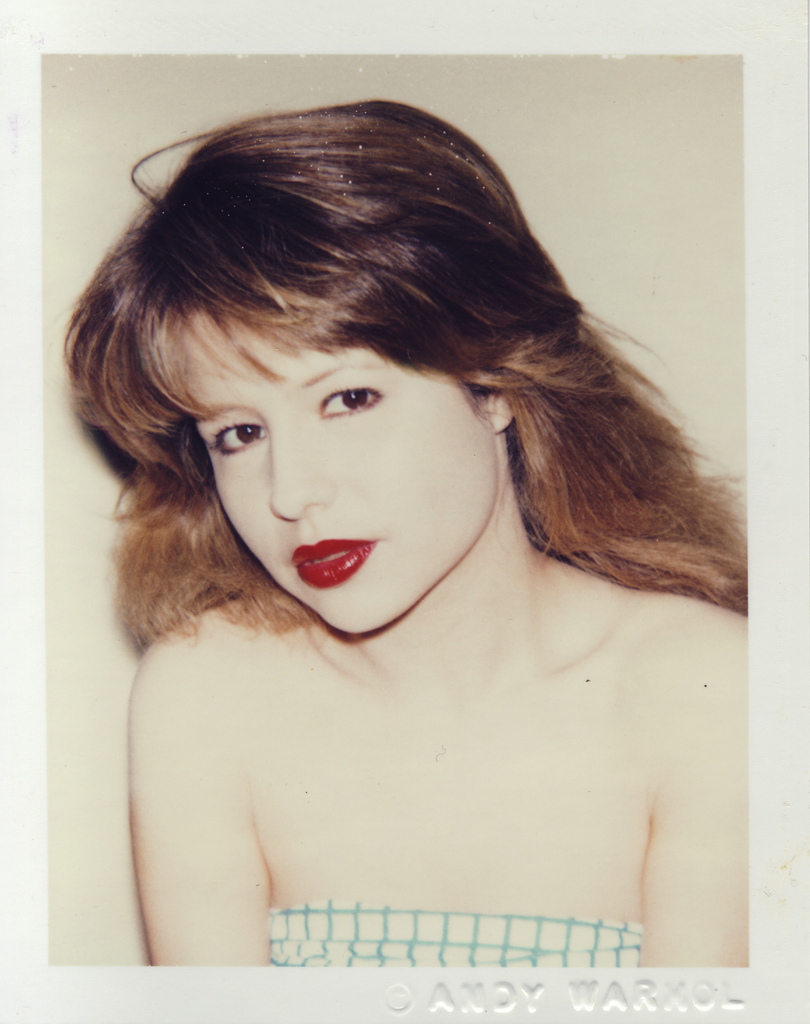
Andy Warhol (American, 1928-1987) 'Pia Zadora' 1983


Andy Warhol (American, 1928-1987)
Pia Zadora
1983
Polacolor ER
4 1/4 x 3 3/8 in
Gift of the The Andy Warhol Center for the Visual Arts
© The Andy Warhol Center for the Visual Arts


Andy Warhol (American, 1928-1987) 'Tom Seaver' 1977


Andy Warhol (American, 1928-1987)
Tom Seaver
1977
Polacolor Type 108
4 14 x 3 3/8 in
Gift of the The Andy Warhol Center for the Visual Arts
© The Andy Warhol Center for the Visual Arts


Andy Warhol (American, 1928-1987) 'R.C. Gorman' 1979


Andy Warhol (American, 1928-1987)
R.C. Gorman
1979
Polacolor Type 108
4 1/4 x 3 3/8 in
© The Andy Warhol Center for the Visual Arts


Berkeley Art Museum and Pacific Film Archive

BAMPFA is located at 2155 Center Street
between Oxford Street and Shattuck Avenue, in downtown Berkeley
Phone: (510) 642-0808

Opening hours:
Wednesday – Sunday, 11am – 7pm
Closed Mondays and Tuesdays

Berkeley Art Museum and Pacific Film Archive website

LIKE ART BLART ON FACEBOOK

Back to top

Exhibition: ‘Cy Twombly: Photographs 1951-2010’ at the Centre for Fine Arts, Brussels

Exhibition dates: 1st February – 29th April 2012


Cy Twombly (American, 1928-2011) 'Foundry, Rome' 2000


Cy Twombly (American, 1928-2011)
Foundry, Rome
2000
Dryprint on cardboard
43.1 x 27.9cm
© Schirmer/Mosel Verlag – Nicola Del Roscio Foundation


“In a certain sense, Twombly operates like the Pictorialists: his photographs look almost like paintings in which light is captured in brushstrokes.”

Text from the press release


Many thankx to the Centre for Fine Arts, Brussels for allowing me to publish the photographs in the posting. Please click on the photographs for a larger version of the image.


Cy Twombly (American, 1928-2011) 'Untitled (Rome)' 1966


Cy Twombly (American, 1928-2011)
Untitled (Rome)
1966
Oil, wall paint, grease crayon on canvas
190 x 200cm
Sammlung Lambrecht-Schadeberg / Rubenspreisträger der Stadt Siegen im Museum für Gegenwartskunst


Cy Twombly (American, 1928-2011) 'Yard Sale, Lexington' 2008


Cy Twombly (American, 1928-2011)
Yard Sale, Lexington
2008
Dryprint on cardboard
43.1 x 27.9cm
© Schirmer/Mosel Verlag – Nicola Del Roscio Foundation


Cy Twombly (American, 1928-2011) 'Untitled, Lexington' 2008


Cy Twombly (American, 1928-2011)
Untitled, Lexington
2008
Dryprint on cardboard
43.1 x 27.9cm
© Schirmer/Mosel Verlag – Fondazione Nicola del Roscio


Cy Twombly (American, 1928-2011) 'The Artist's Shoes, Lexington' 2005


Cy Twombly (American, 1928-2011)
The Artist’s Shoes, Lexington
2005
Dryprint on cardboard
43.1 x 27.9cm
© Schirmer/Mosel Verlag – Nicola Del Roscio


As a tribute to the recently deceased artist, the Centre for Fine Arts is turning the spotlight on a less familiar aspect of his oeuvre. The exhibition includes more than 100 dryprint Polaroid photographs (selected by Twombly himself), along with a selection of other works by Twombly and a film portrait by Tacita Dean.

Cy Twombly (who was born in Lexington in 1928 and died in Rome in 2011) was one of the most important US artists of his generation. He made his name with large-scale abstract paintings whose free form and spontaneous dynamism recall calligraphy and graffiti. In his work Twombly often referred to the myths of Classical Greek and Roman Antiquity, to literature and to art history.

The exhibition focuses on a less familiar aspect of Twombly’s oeuvre: his photographic work. The photographs are an addition to the artist’s creative world and throw new light on it. At the request of the publishers Schirmer / Mosel, Twombly selected more than 100 never previously published Polaroid photographs for a catalogue that was published just before his death on 5 July 2011. This selection is the subject of a travelling exhibition that has already been seen in Germany at the Museum Brandhorst (in Munich) and the Museum für Gegenwartskunst (in Siegen). At the Centre for Fine Arts the exhibition is being expanded, in collaboration with Dr. Hubertus von Amelunxen, who wrote an essay for the Twombly catalogue and who has made a selection for BOZAR of drawings and paintings by Twombly that reveal in greater depth the interplay of lines and light in his work. In addition, the exhibition is complemented by the screening of Tacita Dean’s intimate film portrait “Edwin Parker” (which takes its name from Twombly’s official given names).

Twombly and photography

Twombly took up photography back in his student days in the 1950s and continued to take photographs throughout his career. It was only in the 1990s, however, that he went public with his photographic work in gallery exhibitions and publications.

All the photographs in the exhibition were taken with a Polaroid camera, enlarged, printed using a special kind of dryprint, and reproduced in limited editions. This procedure, developed by Twombly himself, gives the photographs a hazy glow and a coarse grain. Twombly further reinforced this impression of blurring by playing with light and shade, by overexposure and sophisticated colour saturation, and by employing extreme close-ups. The lack of definition gives his photographs a certain indefinable quality and a poetic dimension. Our attention is no longer drawn to the subject, but to the texture of the picture. In a certain sense, Twombly operates like the Pictorialists: his photographs look almost like paintings in which light is captured in brushstrokes.

The subjects of his Polaroid photographs are extremely diverse. There are traditional still lifes with tulips, lemon leaves, and angel trumpets, alongside photographs of temples and atmospheric landscapes. Twombly surprises the viewer with intimate images of everyday objects such as his slippers, a detail from a painting, his brushes, a snapshot of his studio, etc.

The photographs are fascinating because they throw new light on Twombly’s creative spirit and visual language. These intangible, fragile images are permeated by the same themes that inspired the artist’s paintings, drawings, sculptures, and graphic art. The atmospheric colours and diffuse motifs of his photographs are an unexpected addition to his creative universe. Twombly’s oeuvre, moreover, is all about light – and is photography not the medium of light par excellence?

Tacita Dean

In the course of the exhibition circuit visitors can see an intimate film portrait of Twombly, Edwin Parker by the British artist Tacita Dean. The film takes its title from Twombly’s official given names (“Cy” is a traditional nickname in his family). The publicity-shy Twombly had become a mythical figure in the world of contemporary art. Dean’s film offers a rare insight into the artist’s life. The camera follows Twombly as he looks at his pictures in his studio, reads letters, looks through the louvres at the traffic in the city of his birth, or sits around a table with old friends and orders a meal. Tacita Dean is a British contemporary artist, known above all for her films. Her latest work to date is FILM, a 35 mm film continuously projected on a 13-metre-high monolith, which can be seen in the Turbine Hall at Tate Modern until 11 March 2012.

Press release from the Centre for Fine Arts website


Cy Twombly (American, 1928-2011) 'Brushes, Lexington' 2005


Cy Twombly (American, 1928-2011)
Brushes, Lexington
2005
Dryprint on cardboard
43.1 x 27.9cm
© Schirmer/Mosel Verlag – Nicola Del Roscio Foundation


Cy Twombly (American, 1928-2011) 'Tulips, Rome' 1985


Cy Twombly (American, 1928-2011)
Tulips, Rome
1985
Dryprint on cardboard
43.1 x 27.9cm
© Schirmer/Mosel Verlag – Nicola Del Roscio Foundation


Cy Twombly (American, 1928-2011) 'Cabbages, Gaeta' 1998


Cy Twombly (American, 1928-2011)
Cabbages, Gaeta
1998
Dryprint on cardboard
43.1 x 27.9cm
© Schirmer/Mosel Verlag – Nicola Del Roscio Foundation


Cy Twombly (American, 1928-2011) 'Painting detail of Roses, Gaeta' 2009


Cy Twombly (American, 1928-2011)
Painting detail of Roses, Gaeta
2009
Dryprint on cardboard
43.1 x 27.9cm
© Schirmer/Mosel Verlag – Fondazione Nicola del Roscio


Cy Twombly (American, 1928-2011) 'Sunset, Gaeta' 2009


Cy Twombly (American, 1928-2011)
Sunset, Gaeta
2009
Dryprint on cardboard
43.1 x 27.9cm
© Schirmer/Mosel Verlag – Nicola Del Roscio Foundation


Cy Twombly (American, 1928-2011) 'Painting Detail and "By the Ionian Sea" Sculpture, Bassano in Teverina' 1992


Cy Twombly (American, 1928-2011)
Painting Detail and “By the Ionian Sea” Sculpture, Bassano in Teverina
1992
Dryprint on cardboard
43.1 x 27.9cm
© Schirmer/Mosel Verlag – Nicola Del Roscio Foundation


Cy Twombly (American, 1928-2011) 'Interior, Rome' 1980


Cy Twombly (American, 1928-2011)
Interior, Rome
1980
Dryprint on cardboard
43.1 x 27.9cm
© Schirmer/Mosel Verlag – Fondazione Nicola del Roscio


Centre for Fine Arts
Rue Ravenstein 23
1000 Bruxelles
Info and Tickets 02 507 82 00

Opening hours:
Tuesday – Sunday 10am – 6pm
Closed Mondays

BOZAR website

LIKE ART BLART ON FACEBOOK

Back to top

Exhibition: ‘Walker Evans’ retrospective at Fotomuseum Winterthur, Zurich

Exhibition dates: 30th May – 23rd August, 2009

Curators: Jeff L. Rosenheim and Carlos Gollonet


Walker Evans (American, 1903-1975) 'West Virginia Living Room' 1935 from the exhibition 'Walker Evans' retrospective at Fotomuseum Winterthur, Zurich, May - Aug, 2009


Walker Evans (American, 1903-1975)
West Virginia Living Room
1935
Gelatin silver print
© Walker Evans archive


Many thankx to the Fotomuseum Winterthur for allowing me to publish the photographs in the posting. Please click on the photographs for a larger version of the image.


With this retrospective of the work of Walker Evans (1903-1975) Fotomuseum Winterthur presents one of the twentieth century’s pre-eminent photographers. His lucid and detailed portrayals of American life, especially his images of rural poverty during the Great Depression, made photographic history and went on to influence countless photographers. Walker Evans took an extremely innovative approach, capturing the very essence of the American way of life.

The exhibition, featuring some 120 works (the majority of which are from the most important private collection of Walker Evans’ works) represents every phase of his career: his early street photographs of the 1920s, his poignant documentation of 1930s America and pre-revolutionary Cuba, his landscapes and architectural photography, his subway portraits, storefronts, signage, the later colour Polaroids and more besides. As early as the 1930s, Walker Evans, in a departure from conventional notions of art and style, sought a new direct approach to reality. It is this that makes him a truly modern photographer.

The exhibition was curated by Jeff L. Rosenheim and Carlos Gollonet. Realisation in Winterthur: Urs Stahel. A cooperation with the Fundación MAPFRE, Madrid.

Text from the Fotomuseum Winterthur website


Walker Evans (American, 1903-1975) 'Negro Barbershop Interior, Atlanta' 1936 from the exhibition 'Walker Evans' retrospective at Fotomuseum Winterthur, Zurich, May - Aug, 2009


Walker Evans (American, 1903-1975)
Negro Barbershop Interior, Atlanta
1936
Gelatin silver print
7 7/16 x 9 1/8″ (18.9 x 23.2cm)
© Walker Evans archive


With this major retrospective of the work of Walker Evans (1903-1975) Fotomuseum Winterthur pays homage to one of the twentieth century’s pre-eminent photographers. His insightful and detailed portrayals of American life, especially his images of rural poverty during the Great Depression, made photographic history and went on to influence countless photographers. The 130 works in this retrospective exhibition represent every phase of his career: his early street photographs of the 1920s, his poignant documentation of 1930s America and pre-revolutionary Cuba, his landscapes and architectural photography, his subway portraits, storefronts, signage, and more besides.

On his return from France, where he had tried unsuccessfully to launch a literary career inspired by his love of Flaubert and Baudelaire, Walker Evans turned to photography. From the very start, with his keen eye for street life and the visual freshness of his unexpected slant on what he saw, his work spoke the language of European Modernism. But it was not long before Evans found his true voice – and it was at once profoundly personal and unequivocally American.

Some years before, the direct, undistorted and innovative gaze of Eugène Atget (1857-1927), whose work Evans knew and admired, had quietly paved the way for the split between documentary auteur photography and the purely descriptive photographic tradition. Atget’s unconventional angles, his de-centralised view and his focus on the seemingly trivial all had a major impact on Evans.

Walker Evans’ work is a far remove from what had, until then, been accepted as art photography. He was not interested in superficial beauty, but in a new objectivity. He subscribed to a style that observed undistorted facts and sought to capture things precisely as they were, seemingly without intervention, emotion or idealisation. For the first time in art photography, there were such unusual subjects as a pair of old boots or a subway passenger lost in thought. The artistic quality was based solely on the clarity, intelligence and authenticity of the photographer’s gaze. In this, Walker Evans’ oeuvre represents both a high point and a turning point in the formal and visual evolution of photography.

As the creator of this new, direct style, often referred to as straight photography, which drew upon scenes of sometimes blatant banality and rolled back the boundaries between the ‘important’ and the ‘trivial’, Walker Evans introduced the aesthetics of Modernism into American photography. This seemingly cold detachment spawned a style rich in expressive substance that was not only capable of embracing the lyricism and complexity of the American tradition, but of doing so without a trace of false romanticism, sentimentality or nostalgia. At long last, there was a forward-looking and enduring alternative to the traditional conventions of photography.

Press release from the Fotomuseum Winterthur website [Online] Cited 05/06/2009. No longer available online


Walker Evans (American, 1903-1975) 'Traffic Arrow' between 1973-1974


Walker Evans (American, 1903-1975)
Traffic Arrow
between 1973-1974
Polaroid
7.9 x 7.9cm (3 1/8 x 3 1/8 in.)
© Walker Evans archive


Walker Evans (American, 1903-1975) '[Detail of Stencilled Lettering on Yellow Railroad Car: "DO NOT HUMP"]' September 16, 1974


Walker Evans (American, 1903-1975)
[Detail of Stencilled Lettering on Yellow Railroad Car: “DO NOT HUMP”]
September 16, 1974
Polaroid
7.9 x 7.9cm (3 1/8 x 3 1/8 in.)
© Walker Evans archive


Installation view of the exhibition 'Walker Evans' at Fotomuseum Winterthur, Zurich showing some of his Polaroid photographs


Installation view of the exhibition Walker Evans at Fotomuseum Winterthur, Zurich showing some of his Polaroid photographs


Installation view of the exhibition 'Walker Evans' at Fotomuseum Winterthur, Zurich

Installation view of the exhibition Walker Evans at Fotomuseum Winterthur, Zurich

Installation view of the exhibition Walker Evans at Fotomuseum Winterthur, Zurich

Installation view of the exhibition Walker Evans at Fotomuseum Winterthur, Zurich


Installation views of the exhibition Walker Evans at Fotomuseum Winterthur, Zurich


Walker Evans (1903-1975) 'Penny Picture Display, Savannah' 1936


Walker Evans (American, 1903-1975)
Penny Picture Display, Savannah
1936
Gelatin silver print
© Walker Evans archive


Walker Evans (American, 1903-1975) 'Subway Passengers, New York' 1938


Walker Evans (American, 1903-1975)
Subway Passengers, New York
1938
Gelatin silver print
© Walker Evans archive


Walker Evans (American, 1903-1975) 'Truck and Sign' 1928-1930


Walker Evans (American, 1903-1975)
Truck and Sign
1928-1930
Gelatin silver print
© Walker Evans archive


Walker Evans (American, 1903-1975) 'Excavation for Lincoln Building, East 42nd Street and Park Avenue' 1929


Walker Evans (American, 1903-1975)
Excavation for Lincoln Building, East 42nd Street and Park Avenue
1929
Gelatin silver print
© Walker Evans archive


Walker Evans (American, 1903-1975) '[Fireplace in Floyd Burrroughs's Bedroom with Bedpost in Foreground, Hale County, Alabama]' 1936


Walker Evans (American, 1903-1975)
[Fireplace in Floyd Burrroughs’s Bedroom with Bedpost in Foreground, Hale County, Alabama]
1936
Gelatin silver print
8 x 10 in.
© Walker Evans archive


Walker Evans (American, 1903-1975) 'Main Street, Saratoga Springs, New York' 1931


Walker Evans (American, 1903-1975)
Main Street, Saratoga Springs, New York
1931
Gelatin silver print
© Walker Evans archive


Walker Evans (American, 1903-1975) 'Floyde Burroughs, a cotton sharecropper, Hale County, Alabama' 1936


Walker Evans (American, 1903-1975)
Floyde Burroughs, a cotton sharecropper, Hale County, Alabama
1936
Gelatin silver print
© Walker Evans archive


Walker Evans (American, 1903-1975) 'Allie Mae Burroughs, Hale County, Alabama' 1936


Walker Evans (American, 1903-1975)
Allie Mae Burroughs, Hale County, Alabama
1936
Gelatin silver print
© Walker Evans archive


Fotomuseum Winterthur
Grüzenstrasse 44 + 45
CH-8400
Winterthur (Zürich)
Phone: +41 52 234 10 60

Opening hours:
Tuesday – Sunday 11.00 – 18.00
Wednesday 11.00 – 20.00
Monday closed

Fotomuseum Winterthur website

LIKE ART BLART ON FACEBOOK

Back to top