There is nothing that I need to add about the themes, re-sources and beauty of the photographs in this exhibition, than has not been commented on in Christopher Allen’s erudite piece of writing “Bill Henson images reflect the dark past at NGV” posted on The Australian website. It is all there for the reader:
“Figurative works like these, which invite an intense engagement because of our imaginative and affective response to beauty, are punctuated with landscapes that offer intervals of another kind of contemplation, a distant rather than close focus, an impersonal rather than a personal response, a meditation on time and space. …
Henson’s pictorial world is an intensely, almost hypnotically imaginative one, whose secret lies in a unique combination of closeness and distance. He draws on the deep affective power of physical beauty, and particularly the sexually ambiguous, often almost androgynous beauty of the young body, filled with a kind of potential energy, but not yet fully actualised. Yet these bodies are distanced and abstracted by their sculptural, nearly monochrome treatment, and transformed by a kind of alchemical synthesis with the ideal, poetic bodies of art. …
The figures are bewitching but withdraw like mirages, disembodied at the sensual level, only to be merged with the images of memory, the echoes of great works of the past, and to be reborn from the imagination as if some ancient sculpture were arising from darkness into the light of a new life.”
What I can add are some further observations. Henson is not so serious as to miss sharing a joke with his audience, as when the elbow of the classical statue in Untitled 2008/09 is mimicked in the background by the elbow of a figure. Henson is also a masterful storyteller, something that is rarely mentioned in comment upon his work. When you physically see this exhibition – the flow of the images, the juxtaposition of landscape and figurative works, the lighting of the work as the photographs emerge out of the darkness – all this produces such a sensation in the viewer that you are taken upon a journey into your soul. I was intensely moved by this work, by the bruised and battered bodies so much in love, that they almost took my breath away.
Another point of interest is the relationship between the philanthropist, the artist and the gallery. Due to the extraordinary generosity of Bill Bowness, whose gift of twenty-one photographs by Henson makes the NGV’s collection of his work the most significant of any public institution, the gallery was able to stage this exhibition. This is how art philanthropy should work: a private collector passionate about an artist’s work donating to an important institution to benefit both the artist, the institution and the art viewing public.
But then all this good work is undone in the promotion of the exhibition. I was supplied with the media images: five landscape images supplemented by five installation images of the same photographs. Despite requests for images of the figurative works they were not forthcoming. So I took my own.
We all know of the sensitivity around the work of Henson after his brush with the law in 2008, but if you are going to welcome 21 photographs into your collection, and stage a major exhibition of the donated work… then please have the courage of your convictions and provide media images of the ALL the work for people to see. For fear of offending the prurient right, the obsequiousness of the gallery belittles the whole enterprise.
If this artist was living in New York, London or Paris he would be having major retrospectives of his work, for I believe that Bill Henson is one of the greatest living photographers of his generation.
Dr Marcus Bunyan in front of Bill Henson’s Untitled 2009/10 which features Rembrandt’s The return of the prodigal son c. 1662 which is in the Hermitage, St. Petersburg Photo: Jeff Whitehead
The solo exhibition, Bill Henson, will showcase recent works by the Australian photographer, who is celebrated for his powerful images that sensitively explore the complexities of the human condition.
The exhibition brings together twenty-three photographs selected by the artist, traversing the key themes in the artist’s oeuvre, including sublime landscapes, portraiture, as well as classical sculpture captured in museum settings.
Inviting contemplation, Henson’s works present open-ended narratives and capture an intriguing sense of the transitory. Henson’s portraits show his subjects as introspective, focused on internal thoughts and dreams; his landscapes are photographed during the transitional moment of twilight; and the images shot on location inside museums juxtapose graceful marble statues against the transfixed visitors observing them.
Henson’s work is renowned for creating a powerful sense of mystery and ambiguity through the use of velvet-like blackness in the shadows. This is achieved through the striking use of chiaroscuro, an effect of contrasting light and shadow, which is used to selectively obscure and reveal the form of the human body, sculptures and the landscape itself.
“Henson’s photographs have a palpable sense of the cinematic and together they form a powerful and enigmatic visual statement,” said Tony Ellwood, Director, NGV. “The NGV mounted Bill Henson’s first solo exhibition in 1975 when Henson was only 19. Over forty years later, audiences to the NGV will be captivated by the beauty of Henson’s images once more,” said Ellwood.
On display at the National Gallery of Victoria as part of the inaugural NGV Festival of Photography, the exhibition has been made possible by the extraordinary generosity of Bill Bowness, whose gift of twenty-one photographs by Henson makes the NGV’s collection of his work the most significant of any public institution.
Press release from the National Gallery of Victoria
Installation view of the exhibition Bill Henson at the National Gallery of Victoria. Presented as part of the NGV Festival of Photography Photo: Sean Fennessy
Installation view of the exhibition Bill Henson at the National Gallery of Victoria. Presented as part of the NGV Festival of Photography Photo: Wayne Taylor
Installation view of the exhibition Bill Henson at the National Gallery of Victoria. Presented as part of the NGV Festival of Photography Photo: Sean Fennessy
This is a magnificent exhibition, well paced and beautifully hung in the gallery spaces. It is gratifying to see a “blockbuster” at the National Gallery of Victoria that does not rely on papered walls or patterned floors, that just allows the work to speak for itself. There is an excellent chronological trajectory to the work, showcasing the holistic development of the artist in one interweaving arc: from the early history paintings, where Degas is educating himself not only in the history of art but also in the practicalities of the history of painting (how actually to paint) … through to the late, bravura pastels.
Pastel is Degas’s strongest medium and it was incredible to observe close up how he could make pastel look like oil paint and vice versa. My favourite was Femme à la toilette [Woman at her toilette] (c. 1894, below) were the flattened perspectival image disintegrates before your eyes: “As well as reflecting the artist’s love of Japanese woodblock prints with their frequently intimate subject matter, in this late drawing Degas applied his vivid pigments with an almost sculptural intensity, building them up as though modelling form with his fingers.” Abstraction eat your heart out.
His “impressions” of reality rely on a keen eye, a wonderful understanding of space and the refractions of light, and the use of depth of field. The paintings I like best were not of the ballet, but rather the everyday “observational” paintings of the theatre box, a conversation and, particularly, The laundress ironing (c. 1882-86, below) with its simplified planar colour fields that run in different directions. These “punctures” of reality, or punctum to use a photographic term, elevate mundane everyday occurrences into a revelatory state – as though these encounters were taken from the flow of space and time, one frame out of a non-linear narrative.
The paintings of women at the toilettes are not voyeuristic but show a love and passion for an intimacy with women which he perhaps never achieved in real life, brought forth in observations of the female form “that challenged conventional notions of feminine beauty in their depiction of non-idealised jolie-laide (unconventionally beautiful) models”. Melbourne arts blogger Natalie Thomas observes that, “”Women and girls are everywhere in this show, but strangely absent too,” writes Thomas. Despite the fact the majority of Degas’ work explores femininity and the female body, the show, she says, fails to provide a female perspective.” (Natalie Thomas quoted in Shad D’Souza, “Gender and the NGV: ‘More white male artists than you can shake a stick at’,” on The Guardian website 15 September 2016 Cited 16/09/2016).
While I agree with Natalie Thomas that these paintings fail to provide a contemporaryfemale perspective, that is not all that these paintings are about. Of course, they are a privileged white male gaze looking upon the body of a female and we must accept and acknowledge that is what they are. But that is just one element of their narrative. It’s all very well critiquing the work from the present day and saying there is no female perspective, but in the era in which these “sensational” paintings emerged – it was an epoch where the privileged, powerful male gaze could look upon the female body. Yes, please look at the paintings from a contemporary perspective while understanding the conditions under which they were created, and then try to say something more interesting about them: the perspective, the colours, the form, the position of the painter, the framing of the scene, the possible disappearance of the artist to the sitter, as though the camera (his eyes) had disappeared: where someone is so used to the other being there, that they are natural (do not act or perform), unselfconscious in front of them. Then, and only then, do the paintings perhaps become something else – about women, their lives and habits / habitats. A different perspective from trotting out the usual “we are objectified / subjugated / defiled” trope.
The sculptures are the revelation of the exhibition. Again, the male gaze pushing and prodding at the female form… except, these sculptures seem to erupt from within – like bubbling hot mud that seems to emanate from deep within the artist, erupting into the glorious form of the female body. Dark and mysterious, I would have loved to have seen one of the wax models, just one, to see the colour and feel the fragility of that form, over the robustness of the bronze.
And finally to the last room, the late works. There is an essentialness to the late work, the form stripped bare, heavily applied pastel in layers, dark heavy outlines with the frame filled with an “orgy of colours” – he “developed an expressive use of colour and line that may have arisen due to his deteriorating vision.” But he could still feel what he was doing and we can feel it too: the working of the medium, the working of the theme to its final resolution.
While I didn’t know much about the work of Degas other than the ballet pictures before this exhibition – after three visits, perhaps I know just a little more.
Edgar Degas was born in 1834 into a wealthy banking family. Unlike many of his contemporaries, his family were supportive of his artistic talent and desire to become an artist.
Degas resisted being labelled an ‘Impressionist’ yet was at the core of the movement’s most important manifestations. Classically trained, Degas initially aspired to be a painter of historical narratives. As he matured, however, he made the depiction of daily life the central focus of his art. He was drawn primarily to the human figure engaged in movement and work, sketching on the spot then working up his finished compositions indoors in his studio. Degas’ obsession with the theatre and ballet in particular enabled him to explore his fascination with artificial light, which set him apart from the other Impressionists who preferred to work out-of-doors capturing the transient effects of natural daylight.
Degas absorbed many diverse influences, from Japanese prints to Italian Mannerism, and reinterpreted them in innovative ways. Degas obsessively revisited and experimented with his favourite themes which saw him fashion varied and unusual vantage points and asymmetrical framing. His depictions of ballet dancers alone number in the hundreds. Such endeavours helped him to achieve the innovative and distinctive style which is explored in Degas: A New Vision.
Degas served in the Franco-Prussian War of 1870-71 and began to experience eyesight deterioration by the late 1880s. He increasingly took up sculpture as his eyesight weakened. In his later years, he was preoccupied with the subject of women bathing unselfconsciously and developed an expressive use of colour and line that may have arisen due to his deteriorating vision.
Degas continued working to as late as 1912. He died five years later in 1917, at the age of eighty-three.
[Dancers (Fan, design)] belongs to a group of fans made in the late 1870s that reflect Degas’s fascination at this time with Japanese art. Highly aestheticised, these fans show how Degas took advantage of this unusual format to explore new compositional possibilities. Here, for example, the balletic action taking place on stage competes for the viewer’s attention with the theatre’s screening machinery, as well as with the group of black-clad abonnés (subscribers with back stage passes) gathered in the wings in the middle distance.
In contrast with his numerous ballet works, Degas produced relatively few studies of the spectators at the Opera and other theatrical venues. Theatre box is one of his most captivating studies of the magical effects created by artificial stage lighting. Its contrast between the shadowy reality of the viewer in her dimmer theatre box and the vividly illuminated fantasy being performed before her onstage is as compelling as it is radical.
When exhibited at the fifth ‘impressionist’ group exhibition in Paris in 1880, this pastel attracted the attention of the critic Charles Ephrussi, who wrote glowingly of how it shoed ‘a profound knowledge of the relations between tones, producing the most unexpected and curious effects: the wine-coloured draperies of the spectator’s box and the yellowish glow of the footlights are projected onto the face of a diminutive theatre-goer, who thus finds herself illuminated by violet and brilliant yellow; the impression is strange, but captured with perfect reality’.
Wall text from the exhibition
Edgar Degas (French, 1834-1917) Theatre box 1880 Pastel and oil on cardboard on canvas 66.0 x 53.0cm The Lewis Collection
The time that Degas spent overseas in New Orleans made him surprisingly nostalgic for everything he had left behind in Paris. The simple reason he gave was that ‘One loves and gives art only to the things to which one is accustomed’. Although delighted by the new sights and sensations he experienced in New Orleans, he felt that ‘ new things capture your face and bore you by turns’. With these words, Degas expressed what would become his credo for the rest of his career.
After this time, Degas refused invitations to travel to exotic locales and put aside the search for new subjects, focusing instead on the same themes: dancers, rockets, women in the bath. The novelty of what he had discovered in America also led him soon afterwards to retreat into himself. seeing inspiration in introspection. For Degas the exotic could be found perfectly well at home, especially in the new evening venues of 1870s Paris, the café-concerts. He delighted in exploring the tension and psychological preparation that lay behind the surface glamour of stage performances conducted within an artificial other-reality.
Wall text from the exhibition
All that gesture in theatre summon, or that the agile and mendacious tongue of ballet speaks to those who comprehend the silent eloquence of limbs in motion.
Edgar Degas (French, 1834-1917) The dance rehearsal c. 1870-1872 Oil on canvas 40.6 x 54.6cm The Phillips Collection, Washington D.C. Gift of anonymous donor, initiated 2001, completed 2006
While the friendships he established in the 1860s with musicians such as Désiré Dihau, a bassoon player with the Paris Opéra, brought Degas into the orbit of ballet performances in the French capital, the full extent of his access to this world prior to the mid-1880s remains unknown. This may explain why his many depictions of dancers practising backstage in rehearsal rooms in the 1870s were his own studio inventions rather than accurate depictions of the Opéra’s foyers de la danse.
Degas’ favourite theatrical venues – the Opéra in the rue le Peletier that was destroyed by fire in October 1873 and its replacement, the Palais Garnier, which opened in 1875 – were both located in the 9th arrondissement, close to his studio. Degas exhibited ballet compositions at the ‘impressionist’ group exhibitions from 1874 onwards, all the while resisting the label, arguing that his own art was Realist and meticulously crafted in the studio instead of spontaneously created before nature. When the Galeries Durand-Ruel began acquiring Degas’ paintings in 1872, the artist’s first sales at this time were of ballet subjects. Unlike the romantic perspective through which these scenes are viewed today, Degas’ contemporaries recognised in them a rejection of the surface glamour of ballet’s front of house in favour of a serious study of the gritty reality of life backstage. There, junior impoverished dancers jostled for attention from their trainers, all too frequently prostituting themselves on the side so they could afford to stay in competition for coveted stardom.
While The rehearsal and other similar depictions such as The dance class, c. 1873, are ostensibly based on direct observations of dance rehearsals at the Paris Opéra in the rue Le Peletier, their different treatments of architecture hint at the degree to which Degas constructed their compositions from memory. This painting shows a radical cropping of the spiral staircase at left connecting the stage level to the rehearsal room, down which the disembodied limbs of young ballerinas descend. In the background to the right the celebrated dance instructor Jules Perrot can be seen.
Edgar Degas (French, 1834-1917) Dancers on the stage (detail) c. 1899 Oil on canvas 76.0 x 82.0cm Musée des Beaux-Arts de Lyon Legs Jacqueline Delubac, 1997
Dancers on the stage looks back to the experiments with pictorial space and repoussoir compositional staging that had so characterised Degas’s ballet works of the 1870s and early 1880s. Repoussoir was a favourite technique for Degas, a technique in which an object place prominently in the foreground of a work serves to emphasise the recession of physical space in the rest of the composition. In an unusual choice for the artist, Degas shows here a dress rehearsal on stage. The attention of the dancers is focused upon the diminutive figure of the dave master in the far left background whose presence ignites a diagonal magnetism that animates the whole painting.
Edgar Degas (French, 1834-1917) Dancer with bouquets c. 1895-1900 Oil on canvas 180.3 x 152.4cm Chrysler Museum of Art, Norfolk, Virginia Gift of Walter P. Chrysler, Jr, in memory of Della Viola Forker Chrysler
Sculptures
Although Degas exhibited only one sculpture during his lifetime, The little fourteen-year old dancer, he worked in this medium in privacy in his studio from the 1860s until the 1910s. His primary subjects were thoroughbred racehorses, female dances and women at the toilette, and he modelled his sculptures in wax, over steel wire and cork armatures. Never satisfied, he made, destroyed and remade them repeatedly. As Degas’s eyesight deteriorated in his later years, making three-dimensional figures fulfilled a physical and emotional need that transcended any desire to perfect a finished object; he allegedly side that sculpture was ‘a blind man’s trade’.
After Degas’s death in 1917, some 150 wax sculptures were found in his studio, some broken but many intact. His heirs subsequently authorised the casting in bronze of seventy-four of the most intact of Degas’s sculptures. While many of Degas’s original wax sculptures still survive, they are too fragile to travel. These bronzes allow wider audiences today to engage with some of the most beautiful sculptures of the nineteenth century.
Edgar Degas (French, 1834-1917) The tub 1888-89, cast 1919-32 Bronze 22.5 x 45.0 x 42.0cm Czestochowski/Pingeot 26 (cast S) Museu de Arte de São Paulo, Assis Chateaubriand Donated by Alberto José Alves, Alberto Alves Filho and Alcino Ribeiro de Lima
Edgar Degas (French, 1834-1917) The masseuse c. 1896-1911, cast 1919-32 Bronze 43 x 38 x 30cm Czestochowski/Pingeot 55 (cast S) Museu de Arte de São Paulo, Assis Chateaubriand Donated by Alberto José Alves, Alberto Alves Filho and Alcino Ribeiro de Lima
Edgar Degas (French, 1834-1917) Seated woman wiping her left side c. 1901-11, cast 1919-32 Bronze 35 x 30.5 x 30.4cm Czestochowski/Pingeot 46 (cast S) Museu de Arte de São Paulo, Assis Chateaubriand Donated by Alberto José Alves, Alberto Alves Filho and Alcino Ribeiro de Lima
Edgar Degas (French, 1834-1917) Dancer adjusting the shoulder strap of her bodice 1882-95, cast 1919-32 Bronze 35.2 x 15.9 x 11.8cm Czestochowski/Pingeot 64 (cast S) Museu de Arte de São Paulo, Assis Chateaubriand Donated by Alberto José Alves, Alberto Alves Filho and Alcino Ribeiro de Lima
Edgar Degas (French, 1834-1917) Dancer looking at the sole of her right foot (Second study) c. 1900-1910, cast 1919-1937 or later Bronze 47.3 x 24.3 x 20.8cm Czestochowski/Pingeot 59 (cast T) National Gallery of Victoria, Melbourne Purchased with funds donated by Leigh Clifford AO and Sue Clifford, 2016
Walter Sickert recalled Degas speaking of his obsession with observing women at their most private moments. He wanted to look at their private activities through keyholes, according to Sickert: ‘He said that painters too much made of women formal portraits, whereas their hundred and one gestures, their chatteries, &c., should inspire an infinite variety of design’. The Conversation reflects the artist’s love of Japanese woodblock prints and their frequently intimate subject matter. The specifics of setting are only alluded to in this exquisite pastel, the emphasis being placed instead upon the close relationship between these two elegant Parisiennes.
In 1875 pastel became one of Degas’s favourite techniques. Gustave Moreau had introduced him to this medium during their time together in Italy during the late 1850s, and the increasing interest in pastel in artistic circles during the 1870s influenced Degas’s choice to explore its potential. At the eighth and last ‘impressionist’ group exhibition in 1886 Degas exhibited a suite of pastel studies of women bathing that challenged conventional notions of feminine beauty in their depiction of non-idealised jolie-laide (unconventionally beautiful) models. George Moore wrote tellingly of these nudes: ‘The effect is prodigious. Degas has done what Baudelaire did – he has invented un frisson nouveau (a new sensation)’.
Because intimate access to female ablutions was rarely experience by husbands in bourgeois married life at the time, it was assumed by critics and audiences that Degas’s female nudes were performing their toilettes in a brothel setting. The close observation of undressed women engaged in private acts of washing and drying themselves led Degas’s ongoing status as a bachelor to become a topic of speculation in both the art world and wider social circles.
The repetitive work involved in a woman’s daily maintenance of her hair appealed greatly to Degas. As early as 187 he asked whether he could observe Geneviève Halévy, a cousin of his old school friend Ludovic, performing this private tasks. Woman at her toilette is a fascinating study of a woman’s labour-intensive morning routine, drawn with a sense of pathos and human frailty. As well as reflecting the artist’s love of Japanese woodblock prints with their frequently intimate subject matter, in this late drawing Degas applied his vivid pigments with an almost sculptural intensity, building them up as though modelling form with his fingers.
Broken staccato heralds its approach, strong, steaming breath, as early as the dawn, kept to its straining pace by stable lad, the fine colt gallops throwing up the dew.
Edgar Degas
Racecourses: 1860s
Horse racing was Degas’s first recurrent modern subject, and preceded his dance classes and opera scenes. In 1861 Degas visited Ménil-Hubert in the Normandy countryside, the family estate of his old school friend Paul Valpinçon, situated near to the Haras-le-Pin stud and the Argentan racecourse. The recreational sports of horse racing and the steeplechase now offered him scope for exploring contemporary narrative painting. In pre-mechanised Europe, horses were as ubiquitous as the car is today. They were an essential part of life, whether for work or pleasure, and Degas was accordingly fascinated by these magnificent creatures. They feature in his earliest sketchbooks when he carefully copied equestrian subjects after the Parthenon frieze sculptures and the Italian Old Masters Paolo Uccello and Benozzo Gozzoli; and he continuously drew, painted and sculpted horses until his death.
Degas’s approach to depicting horses embodies his lifelong methodology. He studied and copied how they were represented by specialist animalier artists, as well as by the Old Masters, and he spent many hours observing and examining them. How he portrayed horses changed over time and his earliest works reveal a slightly tentative and clichéd manner as he struggled for perfection. As his art evolved, his images of horses became more innovative and remarkable: he attained great precision in their appearance yet the rendering remained tactile and lively. He also perfectly captured the physical relationship between rider and horse through all the different poses they struck, whether at rest or in full flight. Few artists have reproduced the grace, power and elegance of horses as well as Degas.
Wall text from the exhibition
Edgar Degas (French, 1834-1917) Out of the paddock (Racehorses) c. 1871-1872, reworked c. 1874-1878 Oil on wood panel 32.5 x 40.5cm Private collection
Edgar Degas (French, 1834-1917) Before the race c. 1883-1990 Pastel 49 x 62cm (sheet) Private collection
Photography
By the time he began making photographs in 1895, Degas was 61 years old and the eighth and final Impressionist exhibition was a decade behind him. Daniel Halévy, son of his old friends Ludovic and Louise Halévy, introduced Degas to photography, prompting the artist to acquire a camera that required glass plates and a tripod. In a burst of creative energy that lasted less than five years, he made a body of photographs of which fewer than 50 survive…
Exactly why Degas took up photography remains unknown. Clearly, photography provided a new pair of eyes during the period when his eyesight was failing. The illness and death of his sister, Marguerite, in 1895 and his brother Achille in 1893 may also have played a role. Photographs were for Degas a powerful tool of memory to recall his loved ones, and the activity of photographing bound him closely to an extended family-the Halévys-that embraced him in his time of grief…
Degas often illuminated his subjects with a single bright light source. The figures seem to emerge from darkness. In a series of individual portraits he made of Daniel and Louise Halévy in the autumn of 1895, each sitter is pictured in the same armchair in their home, under this Rembrandtesque light. They are seen in original contact prints (about 3 x 4 inches) and in enlargements. Altogether, these images show the artist’s picture-making process and reveal Degas’ manipulations of space, scale, focus, and emotional effect. In Louise Halévy Reading to Degas (J. Paul Getty Museum), another enlargement from a contact print done about the same time, Degas conveys unusual intimacy. It shows a vulnerable man’s dependence upon a friend in reading the newspaper at a time when his eyesight was failing.
Text from the J. Paul Getty Museum website. No longer available online
“These days, Degas abandons himself entirely to his new passion for photography,” wrote an artist friend in autumn 1895, the moment of the great Impressionist painter’s most intense exploration of photography. Degas’s major surviving photographs little known even among devotees of the artist’s paintings and pastels, are insightfully analysed and richly reproduced for the first time in this volume, which accompanies an exhibition at The Metropolitan Museum of Art, The J. Paul Getty Museum, and the Bibliothéque Nationale de France.
Degas’s photographic figure studies, portraits of friends and family, and self-portraits – especially those in which lamp-lit figures emerge from darkness – are imbued with a Symbolist spirit evocative of realms more psychological than physical. Most were made in the evenings, when Degas transformed dinner parties into photographic soirees, requisitioning the living rooms of his friends, arranging oil lamps, and directing the poses of dinner guests enlisted as models. “He went back and forth … running from one end of the room to the other with an expression of infinite happiness,” wrote Daniel Halévy, the son of Degas’s close friends Ludovic and Louise Halévy, describing one such evening. “At half-past eleven everybody left; Degas, surrounded by three laughing girls, carried his camera as proudly as a child carrying a rifle.”
Edgar Degas (French, 1834-1917) Self-portrait with Zoé Closier Probably Autumn 1895 Gelatin silver print 18.2 x 24.2cm (image and sheet) Bibliothèque Nationale de France
Pastel entitled Les Jupes Rouges, depicting three ballet dancers in red skirts – in posing practice.
Throughout his career Degas produced more than 700 works in pastel. In the 1870s he often worked ‘wet’, employing pastel à l’eau (crushing pastel sticks to powder which, mixed with water, could be applied with a brush) to create smooth, seamless textures. By the mid 1890s he worked increasingly with layers of pastel cement together over applications of fixative. This created shimmering optical effects that celebrated the crumbly texture of the pastel medium.
A magnificent exhibition of the work of Edgar Degas at NGV International. So nice to see a blockbuster without papered walls or patterned floors, an exhibition that just allows the work to speak for itself.
“Il y a quelque chose plus terrible encore que le bourgeois – c’est l’homme qui nous singe [There’s something even more awful than the bourgeois – it’s the man who apes us]”
Edgar Degas as noted down by Oscar Wilde when he met him in 1883.
At the start of the 1860s Degas’s family still acted as his primary models for portraiture. In early 1863 he painted this engagement portrait of his sister Thérèse. He shows her as a young woman all dressed up to go out; in fact, to go abroad. Timidly she show off her engagement ring before a view of Naples, her face serene, the sky blue with future happiness. She was to move to Naples after her marriage in Paris on 11 April 1863 to her first cousin Edmondo Morbilli, the son of Rose Morbilli, the sister of Degas’s father.
While studying in Rome as a young man degas became increasingly interested in printmaking and also in the portraits of Rembrandt, which he first saw in publication by the French art writer Charles Blanc. The effects of light and shadow in Rembrandt’s portraits inspired Degas to undertake a series of self-portraits including this, his only self-portrait etching, which he produced in four separate states. He experimented with altering the appearance of these etchings through leaving varying amounts of ink on the plate before printing. Degas was very pleased with this exercise, and gave away examples of these trials to his friends.
Traces of Ingres’s influence on the young Degas are clearly visible here in the clean, firm contours delineating the face of his hen fifteen-year-old sister Thérèse De Gas. Offsetting the crisp edge drawn along her cheek is a subtle modelling of the chin and cheeks produced with smudged pencil, recalling the sfumato (soft or blurred) effects of Leonardo da Vinci.
Degas’s family members were his principal models in the early years of his career. His first art lessons were undertaken with Louis Lamothe, a loyal follower of the Neoclassical master Jean-Auguste-Dominique Ingres. This portrait of his younger brother René, the family darling, betrays Degas’s resolve to follow in the footsteps of his mentor Ingres, whose work was exhibited at the Exposition Universelle in September 1854. Degas visited the elderly master of Neoclassical portraiture in 1855, the year the he undertook this portrait. Preparatory drawings show that degas radically simplified his composition, eliminating a complex interior setting in favour of a dramatic dark background reminiscent of the Mannerist Old Master, Angolo Bronzino.
This work is both a portrait and a genre scene, but it leans towards the former in that there is little trace of narrative, local colour or exotic reference. Degas details the marks of old age, fatigue and poverty – wrinkled skin, gnarled hands, the motley garments of a pauper – along with the faded colours that he recorded in a contemporary notebook: ‘figure of an old woman / very tanned skin, white veil / cloak thrown over / shoulder faded brown / faded free dress / a little like the back wall / of my room / yellow apron’
In 1858-1859, during an Italian sojourn, Degas stayed in Florence for nine months with his aunt Laure and her husband, Baron Gennaro Bellelli. There he embarked on the largest painting he would ever create – a monumental portrait of Laure, Gennaro and their daughters, Giovanna and Giulia. A study of marital discontent presented on the scale of a history painting, Family portrait, also called The Bellelli family, reflected Degas’ recent study of the dignified sitters in the Flemish master Anthony van Dyck’s early seventeenth-century portraits, which he had seen in Genoa. He worked on this painting continuously after his return to Paris, completing a final version of it for the Paris Salon of 1867. Alive to the unhappy marital dynamics between Laure and her husband, a political exile from Naples, Degas showed his morose relatives in their rented apartment, physically separated from one another by items of furniture and Giovanna (on the left) and Giulia. Although expecting her third child, Laure Bellelli (la Baronne) stands proud and aloof, in full mourning for her recently deceased father (Degas’ grandfather) Hilaire Degas, whose portrait hangs on the wall behind her. Meanwhile, her husband, conspicuously not in mourning, sits in comfort by the fire. Adults and children are compressed into a shallow plane, an airless, static vacuum. The uneasy ambience is accentuated by Giulia’s absent leg and the family dog, shown without its head, in the right foreground.
In this portrait of Monsieur Ruelle, Degas shows his father’s former bank cashier as a man of seriousness and restrained sophistication, dressed in a dinner suit and black bow tie as if preparing to go the opera. In its combination of informality and masculine severity the portrait conforms to a convention among nineteenth-century Realist artists of portraying each other and their friends as modern men of leisure and the metropolis.
On returning to Paris from Italy in 1860 Degas began work on scenes from the Bible and ancient history, including this preparatory oil sketch for a vignette from an ancient greek subject. In the foreground two groups of adolescents are seen confronting each other on the plains of Sparta, watched over by the white-haired law-giver Lycurgus and the teenagers’ mothers. The subject has conventionally been read as the exercises traditionally undertaken by Spartans in preparation for war, but it has also been suggested that it represents Spartan courtship rites. In the Life of Lycurgus it was noted that display of physical prowess by girls assisted young men in choosing strong mothers, who would produce strong children.
An exhibition of one of the world’s most beloved artists, Edgar Degas, opens to the public from tomorrow at NGV International showcasing significant works never-before-seen in Australia.
In its world premiere, Degas: A New Vision presents the largest display of Degas’ works to ever come to Australia, and forms the most comprehensive retrospective of the artist’s oeuvre in decades. Featuring more than 200 works, Degas: A New Vision reveals Degas’ talent in a new light; not only as a great master of painting, but also as a master of drawing, printmaking, sculpture and photography. The works travel to Melbourne from 65 lenders in more than 40 cities across the globe.
The Premier of Victoria, the Hon. Daniel Andrews MP, said, “Degas: A New Vision is a coup for the NGV and for Victoria. Local audiences will be the first in the world to experience this incredible exhibition – another example of how we are leading the way as the creative state. Part of the Melbourne Winter Masterpieces series, this exhibition continues the tradition of creating drawcard cultural events for locals and visitors and bringing must-see art to our city each year.”
Some of Degas’ most famous masterworks are presented including the bronze sculpture The little fourteen-year-old dancer, 1879-1881, and In a café (The Absinthe drinker), c. 1875-1876. World-renowned paintings, never-before-seen in Australia, are also exhibited such as the celebrated ballet paintings The rehearsal, c. 1874, and Finishing the arabesque, 1877, and Degas’ monumental portrait The Bellelli family, 1867.
Tony Ellwood, Director, NGV, said, “Presenting Edgar Degas’ magnificent oeuvre in a fresh and reinvigorated light showcases him as one of the defining artists of the nineteenth and twentieth centuries. Considered one of the world’s most celebrated and significant artists, his influence upon modern and contemporary art is undeniable. Degas: A New Vision provides audiences with a rare experience to truly be immersed in the creativity and originality of his art, giving visitors a deeper and richer understanding of his brilliance.”
Degas: A New Vision is presented thematically, grouping together the subjects which Degas continually returned to throughout his career, including not only his famous ballet scenes but also arresting portraits, the nude, horse-racing, the social world of Parisian nightlife, and women at work and leisure. The exhibition also explores the great technical, conceptual and expressive freedoms that Degas achieved in his later years, and reveals his experiments with a range of mediums including sculpture and photography. This approach emphasises Degas’ obsessive and highly creative working methods, and allows visitors to enjoy the development of Degas’ art from its beginnings.
Degas was fascinated by aspects of modern life – voraciously painting Paris’ dance halls and cabarets, cafés, racetracks, opera and ballet stages. He also studied the simple, everyday gestures of working women: milliners, dressmakers and laundresses. He was drawn to explore movement that was precise and disciplined, such as that of racehorses and ballet dancers, and absorbed a diverse range of influences from Japanese prints to Italian Mannerism.
The National Gallery of Victoria is pleased to be working with the world’s pre-eminent expert on Edgar Degas, Henri Loyrette, former Director of the Musée du Louvre (2001-2013) and Musée d’Orsay (1994-2001), who is principal curator of the exhibition. The National Gallery of Victoria and the Museum of Fine Arts, Houston, are both staging this major retrospective, which has been developed by both institutions in association with Art Exhibitions Australia. Degas: A New Vision travels to the Museum of Fine Arts, Houston, in October 2016.
Press release from the National Gallery of Victoria
Edgar Degas (French, 1834-1917) Portrait of Mademoiselle Eugénie Fiocre in the ballet The Spring 1867-1868 Oil on canvas 130.8 x 145.1cm Brooklyn Museum, New York Gift of James H. Post, A. Augustus Healy, and John T. Underwood, 1921
Among Degas’s circle of Realist painters were some outstanding practitioners of still life, a genre that enjoyed a resurgence of popularity following the revival of interest in the French eighteenth-century painter Jean-Baptiste Siméon Chardin. The identity of the man in this portrait is unknown, although he seems to be a still-life artist. He is depicted by Degas in his studio, informal seated with hands clasped, surrounded by the standard props of his trade: hunks of meat, white cloths, glassware and sketches of past still lives displayed on a wall as aides-mémoire – a masculine counterpart to the portrait of Victoria Dubourg that is also displayed here.
Wall text from the exhibition
Edgar Degas (French, 1834-1917) Victoria Dubourg c. 1868-1869 Oil on canvas 81.3 x 64.8cm Toledo Museum of Art, Toledo, Ohio Gift of Mr. and Mrs. William E. Levis
Berthe Marie Jeantaud was the wife of Charles Jeantaud, with whom Degas served in the artillery company under the command of Henri Rouart in 1870-1871, during the chaos of the Franco-Prussian War and Paris Commune. Following Berthe Marie’s marriage to Jeantaud in 1872, Degas produced this as well as a second portrait of her. Her cousin was Vicomte Ludovic Lepic, a landscape painter and etcher who taught degas methods of manipulating plate tones in his monotypes. In this remarkable candid and economical oil sketch, Degas depicts Madame Jeantaud at home with her two small dogs at 24 rue de Téhéran.
So cordial were Degas’s relations with Henri Rouart and his brother Alexis, who was also an art collector, that he dined with Alexis on Tuesdays and Henri on Fridays. In 1906 Degas wrote to his sister Thérèse that the Rouarts were his only remaining family in France. This portrait of Henri with his daughter Hélène was the first of many portraits. Henri is seen here as a paterfamilias, head of his household (a role that Degas esteemed) and in front of one of his landscapes, which degas also admired enough to invite Henri to exhibit with the ‘impressionists’.
While his colleagues exhibition plein-air landscapes as ‘Impressionists’, degas adhered to his position as a ‘Realist’ during the 1860s and 70s, with at times awkward results. Dead fox in the undergrowth displays the powerful sense of physical presence that can be achieved by studying a dead fox in the studio under artificial light, and by using a brush to render the fox’s luscious pelt. Less convincing is the forest setting, which is invited and only roughly blocked out. Here Degas applied thin slashes of green and brown paint to suggest trees and forest floor, emulating, some have suggested, the Realist technique of Gustave Courbet.
Edgar Degas (French, 1834-1917) The little fourteen-year-old dancer 1879-1881, cast 1922-1937 Bronze with cotton skirt and satin ribbon 99.0 x 35.2 x 24.5cm Czestochowski/Pingeot 73 (cast unlettered) Museu de Arte de São Paulo, Assis Chateaubriand Donated by Alberto José Alves, Alberto Alves Filho and Alcino Ribeiro de Lima
At the 1881 ‘impressionist’ group exhibition Degas unveiled a large wax sculpture of an immature ballerina (of which this is a bronze version), which he provocatively clad in real clothing. Critics were scandalised, accusing him of having dredged ‘the lower depths of dance’, choosing his dancer from among the ‘most hatefully ugly’. Degas’ model, ballet student Marie Van Goethem, the daughter of a tailor and a laundress and part-time prostitute, was later to abandon her dance studies and disappear into Paris’ underworld.
Degas produced sculptures in his studio from the 1860s until the 1910s. He modelled them in wax, over steel wire and cork armatures. Never satisfied, he made, destroyed and remade them repeatedly, his primary subjects being thoroughbred racehorses, female dancers and women at their toilette. As Degas’ eyesight deteriorated in his later years, making three-dimensional figures fulfilled a physical and emotional need that transcended any desire to perfect a finished object; he allegedly said that sculpture was ‘a blind man’s trade’.
After Degas’ death in 1917, some 150 wax sculptures were found in his studio, some broken but many intact. His heirs subsequently authorised the casting in bronze, by the Adrien-A. Hébrard Foundry, Paris, and their Milanese master craftsman Albino Palazzolo, of seventy four of the most intact of Degas’ sculptures. While many of Degas’ original wax sculptures still survive, they are too fragile to travel. These bronzes allow wider audiences today to engage with some of the most beautiful sculptures of the nineteenth century.
Wall text from the exhibition
Edgar Degas (French, 1834-1917) The song rehearsal c. 1872-1873 Oil on canvas 81.0 x 64.9cm House Collection, Dumbarton Oaks, Washington D.C.
In October 1872 Degas travelled to New Orleans in the United States, where he stayed for five months with his late mother’s brother Michel Musson and the extended Musson family. The artist’s younger brothers René and Achille had already relocated there, and had opened a wine import business financed by the Parisian Degas family bank. During his stay in Louisiana, Degas painted A cotton office in New Orleans, 1873, which reflected his observations of the industry that was central to that city. This now celebrated painting, which became the first work by Degas to enter a public collection when acquired by Pau’s Musée des Beaux-Arts in 1878, depicts Michel Musson in the foreground sampling cotton fibre in the office of his cotton export business.
René and Achille De Gas appear as relaxed visitors – René reading a newspaper and Achille casually observing the other men at work – in this complex group portrait of fourteen men, which has echoes of the artist’s love of seventeenth-century Dutch guild portraits. A cotton office in New Orleans was the prototype for many of Degas’ works of the 1870s and 1880s: framing that cuts to the heart of the subject and slices through men and objects alike; a de-centred composition viewed from slightly overhead, with a steep, diagonal perspective; a depth of field that creates close-ups while miniaturising anything farther off; and contrasts provided by light sources and, more particularly, by the frequently reproduced backlighting effect.
The partially finished state of Courtyard of a house (New Orleans, sketch) reflects Degas’s experiences in the city, as he struggled to fulfil social obligations with his American relatives. The view here looking out from a shaded interior also indicates that Degas was already experiencing problems with his eyesight, which was affected by the harsh Louisiana sunlight.
The young girl being attended to by a chiropodist in this painting is believed to be Joe Balfour, daughter of Degas’s widowed cousin Estelle Musson, whose husband had been killed in 1862 during the American Civil War. Degas here uses a technique he invented, peinture à l’essence (which entailed using oil pigments with most of the oil blotted away, thinned out with turpentine). Applied like watercolour, it dried with a soft matt finish that Degas preferred to the glossy sheen of traditional oil paintings.
Degas ironically referred to this painting as ‘my genre picture’, by which he understated the gravitas of this domestic scene. This drama of seeming violation perpetrated on a young working-class woman b a man displaying the clothing and posture of a young bourgeois acquired in Degas’s hands the breadth and intensity of history painting. The muted colours and dim light accentuate the unspoken violence, anguish and simmering tension between the two people. The open box on the round table at the centre of the painting is a telling symbol of lost virginity. The rosy interior of the gaping jewel-case is brutally expired by the lamp standing next to it.
Exhibition dates: 11th December, 2015 – 24th April, 2016
Curator: Max Delany, Senior Curator of Contemporary Art at the NGV
Marcus photographing the exhibition Andy Warhol | Ai Weiwei at the National Gallery of Victoria Photo: Nick Henderson
A monster posting of installation images of the exhibition Andy Warhol | Ai Weiwei at the National Gallery of Victoria, in chronological order. Thoughts to follow. See my review of the exhibition.
The assembly and replication of readymade bicycles in Ai’s Forever Bicycles series, ongoing since 2003, promotes an intensely spectacular effect. ‘Forever’ is a popular brand of mass-produced bicycles manufactured in China since the 1940s and desired by Ai as a child. Composed from almost 1500 bicycles, this installation suggests both the individual and the multitude, with the collective energy of social progress signalled in the assemblage and perspectival rush of multiple forms.
Forever Bicycles disconnects the bicycles from their everyday function – reconfiguring them as an immense labyrinth-like network. The multi-tiered installation also achieves an architectural presence, much like a traditional arch or gateway to the exhibition.
In Ai’s series of Coloured Vases, ongoing since 2006, Neolithic and Han dynasty urns are plunged into tubs of industrial paint to create an uneasy confrontation between tradition and modernity. In what might be considered an iconoclastic form of action painting, Ai gives ancient vessels a new glaze and painterly glow, appealing to new beginnings and cultural change through transformative acts of obliteration, renovation and renewal.
Ai’s photographic triptych Dropping a Han Dynasty Urn, 1995, which shows the artist holding, releasing and smashing a Han dynasty vase, is one of the artist’s most iconic works and demonstrates his critical engagement with China’s violent cultural tradition. Drawing attention to the desecration of cultural heritage, the artist’s performative action is presented matter-of-factly, with the viewer left to contemplate the event and what might be salvaged from the destruction. Ai has recreated the image here in children’s building blocks, in pixelated form, attesting to the distribution of images by digital technologies.
Bringing together a readymade cultural artefact (after Marcel Duchamp) and pop-cultural imagery (after Andy Warhol), Ai’s painted Neolithic vase presents a rich albeit uneasy confrontation of elements. The Coca-Cola logo – emblem of American capitalism and brand identity – adorns an ancient, revered Chinese artefact. In branding a unique handcrafted object with a product of mass-consumption, Ai delivers a nuanced cultural comment, candidly invoking the conflicted contemporary identity of Chinese cultural heritage, socialist government and capitalist economics.
Installation views of second room including at centre, Ai Weiwei’s Pillar through Round Table (2004-2005) with Ai’s black and white photographs behind
Pillar through Round Table is constructed from a pair of elmwood half-tables bisected horizontally by an ironwood pillar. It is one of an extensive body of works by Ai composed of furniture and architectural fragments from the Qing dynasty period (1644-1911) which have been dismantled and painstakingly reassembled with the assistance of highly skilled carpenters to create new and often confounding arrangements. Ai’s reinvention of historical forms serves to enliven traditional crafts and skills, while his disavowal of modern industrial production processes also acts as a counterpoint to contemporary models of productivity and efficiency in Chinese industrial production.
Ai Weiwei (Chinese, b. 1957) Tonne of Tea 2006 Compressed pu’er tea, wood base Ai Weiwei Studio, Beijing
Ai’s Tonne of Tea is a readymade object redolent of the artist’s cultural context and heritage. Ai’s compressed cube of Pu’er tea – a staple of Chinese life, trade and custom – recalls not only the commercial aesthetics of Warhol’s Brillo Soap Pads Box but also the minimalist sculpture of postwar American artists such as Donald Judd, while introducing a specifically Chinese historical reference and cultural narrative into the readymade tradition.
Andy Warhol (American, 1928-1987) Brillo Soap Pads Box 1964 Silkscreen ink and house paint on plywood The Andy Warhol Museum, Pittsburgh Founding Collection, Contribution The Andy Warhol Foundation for the Visual Arts, Inc.
First created in late 1963, Warhol’s Brillo Soap Pads Box recasts the Duchampian readymade through the lens of American popular culture. Warhol produced approximately 100 of these boxes for his exhibition at Stable Gallery, New York, in March 1964, where they were tightly packed and piled high in a display reminiscent of a grocery warehouse. Unlike Duchamp’s use of real objects as readymade works of art, Warhol’s Brillo Soap Pads Boxes are carefully painted and silkscreened to resemble everyday consumer items. For philosopher Arthur C. Danto, Warhol’s Brillo boxes marked the end of an art-historical epoch and represented a new model of how art could be produced, displayed and perceived.
Andy Warhol (American, 1928-1987) You’re in 1967 Spray paint, glass bottles, printed wooden crate The Andy Warhol Museum, Pittsburgh Founding Collection, Contribution The Andy Warhol Foundation for the Visual Arts, Inc.
Warhol was interested in the democratic cultural significance of mass-produced consumer goods. Popular grocery items distributed in vast quantities worldwide, at an affordable price, represented the best and brightest of American consumer society. Warhol’s first paintings of Coke bottles appeared in 1961. Here the artist turned to readymade objects as source material, coating the actual softdrink bottles with silver paint. Three years later Warhol went a step further by filling 100 silver bottles with a perfume he rakishly labelled ‘You’re In’ / ‘Eau d’Andy’. Not surprisingly, the Coca-Cola Company responded with a cease and desist letter.
A major international exhibition featuring two of the most significant artists of the twentieth and twenty-first centuries – Andy Warhol and Ai Weiwei – opened at the National Gallery of Victoria, Melbourne, on 11 December 2015.
Andy Warhol | Ai Weiwei, developed by the NGV and The Warhol, with the participation of Ai Weiwei, explores the significant influence of these two exemplary artists on modern art and contemporary life, focussing on the parallels, intersections and points of difference between the two artists’ practices. Surveying the scope of both artists’ careers, the exhibition at the NGV presents over 300 works, including major new commissions, immersive installations and a wide representation of paintings, sculpture, film, photography, publishing and social media.
The exhibition explores modern and contemporary art, life and cultural politics through the activities of two exemplary figures – one of whom represents twentieth century modernity and the ‘American century’; and the other contemporary life in the twenty-first century and what has been heralded as the ‘Chinese century’ to come. Ai Weiwei commented, “I believe this is a very interesting and important exhibition and an honour for me to have the opportunity to be exhibited alongside Andy Warhol. This is a great privilege for me as an artist.”
Andy Warhol | Ai Weiwei premieres a suite of major new commissions from Ai Weiwei, including an installation from the Forever bicycles series, composed from nearly 1500 bicycles; a major five metre-tall work from Ai’s Chandelier series of crystal and light; Blossom 2015, a spectacular installation in the form of a large bed of thousands of delicate, intricately designed white porcelain flowers; and a room-scale installation featuring portraits of Australian advocates for human rights and freedom of speech and information.
Ai Weiwei lived in the United States from 1981 until 1993, where he experienced the works of Marcel Duchamp, Andy Warhol and Jasper Johns, among others. The Philosophy of Andy Warhol (From A to B & Back Again) was the first book that Ai Weiwei purchased in New York, and was a significant influence upon his conceptual approach. Ai Weiwei’s relationship to Warhol is explicitly apparent in a photographic self-portrait, taken in New York in 1987, in which Ai Weiwei poses in front of Warhol’s multiple self-portrait, adopting the same gesture.
Each artist is also recognised for his unique approach to notions of artistic value and studio production. Warhol’s Factory was legendary for its bringing together of artists and poets, film-makers and musicians, bohemians and intellectuals, ‘drag queens’, ‘superstars’ and socialites, and for the serial-production of silkscreen paintings, films, television, music and publishing.
The studio of Ai Weiwei is renowned for its interdisciplinary approach, post-industrial modes of production, engagement with teams of assistants and collaborators, and strategic use of communications technology and social media. Both artists have been equally critical in redefining the role of ‘the artist’ – as impresario, cultural producer, activist and brand – and both are known for their keen observation and documentation of contemporary society and everyday life.
Blossom is a new installation in the form of a garden bed, comprising thousands of flowers made from fine white porcelain. In response to the Flowers for Freedom movement which grew out of the artist’s With Flowers project, Blossom serves as a memorial to people who live in restricted conditions because of their fight for freedom of speech or human rights. The work was fabricated in collaboration with the finest craftspeople from Jingdezhen, whose predecessors once produced the highest quality porcelain for emperors of the past. Because of its size, the technical aspect of manufacturing this work was highly complex.
By reassembling Qing Dynasty furniture, which was constructed by traditional joinery techniques without glue or nails, Ai transforms the meaning and function of these cultural artefacts. Here he reconfigures a collection of wooden stools into a group resembling an organically formed cluster of grapes. The arrangement serves as a metaphor for the relationship between the individual and the collective, signifying the deferral of personal interests to those of the community and state characteristic of China’s socialist history. The linked structure of Grapes also recalls the idea of networks and communication, which are recurrent motifs in the Ai work. Manufactured by skilled craftsmen, this type of three-legged stool was used for centuries in China by all kinds of people – the rich and the poor, in towns and in the country. Every family had one, and they were passed on through many generations.
In 2011 Ai was detained by Chinese authorities for eighty-one days without being charged. Upon his release, Ai’s passport was revoked and his studio placed under constant surveillance. With Flowers saw the artist place a fresh bunch of flowers in the basket of a bicycle outside his studio on a daily basis in a poetic protest against restriction on his right to travel. Images of the flowers were posted to Ai’s social media feeds, and an internet movement called Flowers for Freedom emerged. The project concluded upon the return of Ai’s passport in July 2015.
Composed of more than three million plastic building blocks, Ai Weiwei’s Letgo room is a new installation featuring portraits of Australian activists and champions of human rights and freedom of speech. Ai has chosen people who represent grassroots community activism and advocacy within the fields of international law and academia, social welfare and the rights of Indigenous people, asylum seekers, sex workers and the gender nonspecific, among other cultural contexts. Each subject was asked to provide a one-line statement reflecting their philosophy and views to accompany his or her portrait.
The work attests to Ai’s longstanding commitment to liberty, manifested in his work as an artist, social commentator, activist and public intellectual. Letgo room was intended to be constructed from LEGO blocks; however, the LEGO company declined to provide a bulk order of their product due to the purported ‘political’ nature of the proposed work. Instead, the installation is composed of building blocks manufactured in China, continuing the artist’s exploration of the copy and fake.
Andy Warhol (American, 1928-1987) Mao 1972 Colour silkscreens on paper, ed. 162/250 National Gallery of Australia, Canberra Purchased, 1973
The source image for Warhol’s numerous portraits of Mao Zedong is the frontispiece to the Chairman’s famous Little Red Book of quotations. Mao’s image was in the media spotlight in 1972, the year US President Richard Nixon travelled to China, and his official portrait could be seen on the walls of homes, businesses and government buildings throughout the country. It was also extremely popular among literary and intellectual circles in the West. Warhol’s repetition of the image as pop-cultural icon underlines the cult of celebrity surrounding Mao, and the ways in which the proliferation of images in media and advertising promotes consumer desire and identification.
These maquettes are sculptural models for Ai’s major installation S.A.C.R.E.D., a series of architecturally scaled dioramas depicting scenes from the detention cell where he was held without charge by the Chinese government for eighty-one days in 2011. The work consists of six parts to which its acronymic title refers: Supper, Accusers, Cleansing, Ritual, Entropy and Doubt. The maquettes serve as archaeological evidence of the denial of personal freedom and dignity that Ai and many other dissidents have experienced, and cast him in the dual roles of rebel and victim of oppression.
Ai Weiwei (Chinese, b. 1957) Feet 2005 Set of 13 fragments of sculpture from the Northern Wei dynasty CE 386-535 and North Qi dynasty CE 550-77 on a table stone, wood Queensland Art Gallery/Gallery of Modern Art, Brisbane Purchased, 2006
Ai Weiwei is a connoisseur of Chinese antiquity and Feet is an example of his practice of giving new life to found cultural artefacts. These stone feet are the remains of looted Buddhist statues dating from the Northern Wei (386-535 CE) and Northern Qi (550-577 CE) dynasties. Much destruction took place during periods of dynastic change in China as new regimes attempted to destroy the cultural and aesthetic achievements of former rulers. These fragments gathered by Ai demonstrate that the past cannot be erased that easily.
Ai Weiwei (Chinese, b. 1957) Handcuffs 2015 Jade Ai Weiwei Studio, Beijing
This pair of handcuffs sculpted in jade – the most precious stones in Chinese culture – replicate those worn by Ai during his imprisonment in 2011. Historically, the wearing of jade was reserved for high-ranking members of the imperial family, and today wearing jade jewellery is still believed to bestow good health and protection upon the wearer. Here Ai recasts this material and its historical cultural connotations in relation to the containment of dissident political expression in contemporary China.
Ai Weiwei’s Circle of Animals is based on twelve zodiac animal heads which functioned as a water clock-fountain in the European-style gardens of Yuanmingyuan palace, Beijing, designed in the eighteenth century by two European Jesuits for the Qing dynasty Emperor Qianlong. In 1860 Yuanmingyuan was ransacked by French and British troops and the heads were pillaged. In reinterpreting these objects, Ai focuses attention on the ethics of looting and repatriation, the role of the fake and the copy and power relations between China and the West.
Curator: Dr. Mikhail Dedinkin, curator from the State Hermitage Museum supported by NGV Director Tony Ellwood and Dr. Ted Gott, Senior Curator of International Art at the NGV
Hermitage Museum, the Winter Palace in Winter, St Petersburg Photo: Pavel Demidov
Some beauty to cheer me up from my sickbed.
These are the official press photographs for the exhibition Masterpieces from the Hermitage: The Legacy of Catherine the Great. To see my installation photographs of the exhibition go to this posting.
The paintings look as fresh today as when they were first painted, some of them in the early 1500s. To see the thumbs up gesture in Diego Velázquez’s Luncheon (c. 1617-1618, below) echoing down the centuries, is worth the price of admission alone.
We cannot imagine what life would have been like back then… no medication, rampant disease and malnutrition, little law enforcement with danger lurking around each turn (see Matthew Beaumont. Night Walking: A Nocturnal History of London, Chaucer to Dickens. London and New York: Verso, 2015).
And yet these talented artists, supported by the elite, produced work which still touches us today.
Dr Marcus Bunyan
Many thankx to the National Gallery of Victoria for allowing me to publish the art works in the posting. Please click on the photographs for a larger version of the art works. See Part 1 of the posting.
Chinese Cup early 17th century Silver, enamel 4 x 3 x 7cm The State Hermitage Museum, St Petersburg (Inv. no. ЛС-133, ВВс-250) Acquired before 1789
Chinese Teapot with lid 17th century Silver, enamel 18.0 x 5.5cm The State Hermitage Museum, St Petersburg (Inv. no. ЛС-80 а, б, ВВс-219) Acquired before 1789
Sèvres Porcelain Factory Sèvres (manufacturer) France est. 1756 Cameo Service 1778-1779 Porcelain (soft-paste), gilt The State Hermitage Museum, St Petersburg Commissioned by Catherine ll as a gift for Prince Grigory Potemkin in 1777; Potemkin’s Taurida Palace, St Petersburg from 1779; transferred to the Hofmarshal’s Office of the Winter Palace after his death; 1922 transferred to the State Hermitage Museum
Grand Duchess Maria Fyodorovna (Russian, 1795-1828) (engraver) Russia (manufacturer) Catherine the Great as Minerva 1789 Cameo Jasper, gold 6.5 x 4.7cm The State Hermitage Museum, St Petersburg (Inv. no. К 1077) Acquired 1789
James Tassie, London (England, 1735-1799) (workshop of) Head of Medusa 1780s Coloured glass, gilded paper 7.6 x 9.2cm The State Hermitage Museum, St Petersburg (Inv. no. R-T, 3296 a) Purchased from James Tassie 1783-88
Chinese Toilet service early 18th century Glass, mercury amalgam, paper, silver, filigree, parcel-gilt, wood, velvet, peacock and king-fisher feathers, mother-of-pearl, crystals The State Hermitage Museum, St Petersburg (Inv. no. ЛС-472/ 1,2, ВВс-373)
Chinese Table decoration in the form of a pair of birds 1740s-50s Silver, enamel, silver-gilt 26.0 x 26.0 x 15.0cm The State Hermitage Museum, St Petersburg (Inv. no. ЛС-26, ВВс-189)
Chinese Crab-shaped box on a leaf tray 1740s-50s Silver, enamel, silver-gilt (a) 4.0 x 14.0 x 13.0cm (box) (b) 3.0 x 22.0 x 17.0cm (stand) The State Hermitage Museum, St Petersburg (Inv. no. ЛС-9 а,б, ВВс-186)
Marie-Anne Collot (French, 1748-1821) Voltaire 1770s Marble 49 x 30 x 28cm The State Hermitage Museum, St Petersburg (Inv. no. Н.ск. 3) Acquired from the artist, 1778
Jean-Antoine Houdon (French, 1741-1828) Catherine II 1773 Marble 90 x 50 x 32cm The State Hermitage Museum, St Petersburg (Inv. no. Н.ск. 1676) Transferred from the Stroganov Palace, Leningrad, 1928
Jean-Baptiste Greuze (French, 1725-1805) Head of an old man. Study for The paralytic 1760s Red and black chalk 49.3 x 40cm (sheet) The State Hermitage Museum, St Petersburg (Inv. no. ОР-14727) Acquired from the artist in 1769 for the Museum of the Academy of Arts. Transferred to the Hermitage in 1924
François Boucher (French, 1703-1770) Study of a female nude 1740 Red, black and white chalk on brown paper 26.2 x 34.6cm The State Hermitage Museum, St Petersburg (Inv. no. ОР-382) Acquired from the collection of Count Cobenzl, Brussels, 1768
Charles-Louis Clérisseau (French, 1721-1820) Design for the paintings in the cell of Father Lesueur in the Monastery of Santissima Trinità dei Monti in Rome 1766-1768 Pen and black and brown ink, brown and grey wash 36.9 x 53cm (sheet) The State Hermitage Museum, St Petersburg (Inv. no. ОР-2597) Acquired from the artist by Catherine II on 5 May 1780, Provenance: before 1797
Carlo Galli-Bibiena (Austrian, 1728-1787) Design for the interior decoration of a library 1770s Pen and ink, grey wash and watercolour over pencil 32 х 44cm (sheet) The State Hermitage Museum, St Petersburg (Inv. no. ОР-231) Acquired before 1797
Giacomo Quarenghi (Italian, 1744-1817) Façade of the Hermitage Theatre 1780s Pen and ink, watercolour 33 х 47cm (sheet) The State Hermitage Museum, St Petersburg (Inv. no. ОР-9626) Acquired from Giulio Quarenghi in 1818
Konstantin Ukhtomsky (Russian, 1818-1881) The Raphael Loggia 1860 Watercolour 42 х 25cm The State Hermitage Museum, St Petersburg (Inv. no. ОР-11741) Acquired from the artist, 1860
Over 500 works from the personal collection of Catherine the Great will travel to Australia in July. Gathered over a 34-year period, the exhibition represents the foundation of the Hermitage’s collection and includes outstanding works from artists such as Rembrandt, Velasquez, Rubens and Titian. Exemplary works from Van Dyck, Snyders, Teniers and Hals will also travel, collectively offering some of the finest Dutch and Flemish art to come to Australia. The exhibition, presented by the Hermitage Museum, National Gallery of Victoria and Art Exhibitions Australia, is exclusive to Melbourne as part of the Melbourne Winter Masterpieces series.
The Premier of Victoria, the Hon. Daniel Andrews MP said: “Masterpieces from the Hermitage: The Legacy of Catherine the Great will showcase treasures from one of the largest, oldest and most visited museums in the world. Another major event for Melbourne, this exhibition will provide visitors with a once-in-a-lifetime opportunity to see first-hand the extraordinary personal collection of Catherine the Great, drawn from the Hermitage Museum, St Petersburg.”
NGV Director, Tony Ellwood said, “This exhibition celebrates the tenacity and vision of a true innovator in the arts. Catherine the Great’s inexhaustible passion for the arts, education and culture heralded a renaissance, leading to the formation of one of the world’s great museums, the Hermitage.”
“We are delighted that we have the good fortune of bringing one of the world’s most important collections to Australian audiences. The exhibition is a rare opportunity to be immersed in the world of Catherine the Great and her magnificent collection of art,” Tony Ellwood said.
Catherine the Great’s reign from 1762 to 1796 was known as the golden age and is remembered for her exceptional patronage of the arts, literature and education. Of German heritage, Catherine the Great was well connected in European art and literature circles. She saw herself as a reine-philosophe (Philosopher Queen), a new kind of ruler in the Age of Enlightenment. Guided by Europe’s leading intellectuals, such as the French philosophers Voltaire and Diderot, she sought to modernise Russia’s economy, industry and government, drawing inspiration both from classical antiquity and contemporary cultural and political developments in Western Europe.
A prolific acquirer of art of the period, Catherine the Great’s collection reflects the finest contemporary art of the 18th century as well as the world’s best old masters of the time, with great works by French, German, Chinese, British, Dutch and Flemish artists. Notable in this exhibition are entire groups of works acquired from renowned collections from France, Germany and England representing the best collections offered for sale at the time. The exhibition will feature four Rembrandts, including the notable Young woman with earrings, known as one of most intimate images Rembrandt ever created. The exhibition will also include 80 particularly fine drawings by artists including Poussin, Rubens, Clouet and Greuze.
Exquisite decorative arts will be brought to Australia for this exhibition, including 60 items from the Cameo Service of striking enamel-painted porcelain made by the Sèvres Porcelain Manufactory in Paris. Commissioned by Catherine the Great for her former lover and military commander, Prince Grigory Potemkin, the dinner service features carved and painted imitation cameos, miniature works of art, based on motifs from the French Royal collection.
Director of the Hermitage Museum, Mikhail Piotrovsky said, “These outstanding works from the personal collection of Catherine the Great represent the crown jewels of the Museum. It was through the collection of these works and Catherine the Great’s exceptional vision that the Hermitage was founded. Today it is one of the most visited museums in the world. We are very pleased to be able to share these precious works with Australian audiences at the 250-year anniversary of this important institution.”
Catherine the Great’s love of education, art and culture inspired a period of enlightenment and architectural renaissance that saw the construction of the Hermitage complex. This construction includes six historic buildings along the Palace Embankment as well as the spectacular Winter Palace, a former residence of Russian emperors. On view in the exhibition will be remarkable drawings by the Hermitage’s first architects Georg Velten and Giacomo Quarenghi, complemented by excellent painted views of the new Hermitage by Benjamin Patersen. These, along with Alexander Roslin’s majestic life-size portrait of Catherine, set the scene for a truly spectacular exhibition.
Visitors to the exhibition will be able to immerse themselves in Catherine the Great’s world evoking a sensory experience of a visit to the Hermitage Museum in St Petersburg. The exhibition design will have rich treatments of architectural details, interior furnishings, wallpapers and a colour palette directly inspired by the Hermitage’s gallery spaces. Enveloping multimedia elements will give visitors a sense of being inside the Hermitage, evoking the lush and opulent interiors.
The Hermitage Museum was founded in 1764 by Catherine the Great and has been open to the public since 1852. With 3 million items in its holdings, the Hermitage is often regarded as having the finest collection of paintings in the world today. In 2014, The Hermitage celebrated its 250-year anniversary and opened a new wing of the museum with 800 rooms dedicated to art from the 19th to 21st centuries. The exhibition is organised by The Hermitage Museum, St Petersburg in association with the National Gallery of Victoria and Art Exhibitions Australia.
Masterpieces from the Hermitage: The Legacy of Catherine the Great will be at NGV International from 31 July – 8 November 2015 and will be presented alongside the David Bowie is exhibition at the Australian Centre for the Moving Image as part of the 2015 Melbourne Winter Masterpieces series.
Press release from the National Gallery of Victoria
Jean-Baptiste Santerre (French, 1651-1717) Two actresses 1699 Oil on canvas 146 х 114cm The State Hermitage Museum, St Petersburg (Inv. no. ГЭ-1284) Acquired 1768
Anthony van Dyck (Flemish, 1599-1641) Portrait of Philadelphia and Elizabeth Wharton 1640 Oil on canvas 162 х 130cm The State Hermitage Museum, St Petersburg (Inv. no. ГЭ-533) Acquired from the collection of Sir Robert Walpole, Houghton Hall, 1779
Jean Louis Voille (French, 1744-1804) Portrait of Olga Zherebtsova 1790s Oil on canvas 73.5 х 58cm The State Hermitage Museum, St Petersburg (Inv. no. ГЭ-5654) Acquired from the collection of E. P. Oliv, Petrograd, 1923
Peter Paul Rubens and workshop (Flemish, 1577-1640) The Apostle Paul c. 1615 Oil on wood panel 105.6 х 74cm The State Hermitage Museum, St Petersburg (Inv. no. ГЭ-489) Acquired before 1774
Leonardo Da Vinci (school of) Female nude (Donna Nuda) Early 16th century Oil on canvas 86.5 х 66.5cm The State Hermitage Museum, St Petersburg (Inv. no. ГЭ-110) Acquired from the collection of Sir Robert Walpole, Houghton Hall, 1779
Rembrandt Harmensz. van Rijn (Dutch, 1606-1669) Portrait of a scholar 1631 Oil on canvas 104.5 х 92cm The State Hermitage Museum, St Petersburg (Inv. no. ГЭ-744) Acquired from the collection of Count Heinrich von Brühl, Dresden, 1769
Jean-Baptiste Perronneau (French, 1715-1783) Portrait of a boy with a book 1740s Oil on canvas 63.0 х 52cm The State Hermitage Museum, St Petersburg (Inv. no. ГЭ-1270) Acquired from the collection of A. G. Teplov, St Petersburg, 1781
Domenico Capriolo (Italian, c. 1494-1528) Portrait of a young man 1512 Oil on canvas 117 х 85cm The State Hermitage Museum, St Petersburg (Inv. no. ГЭ-21) Acquired from the collection of Baron Louis-Antoine Crozat de Thiers, Paris, 1772
Alexander Roslin (Swedish, 1718-1793) Portrait of Catherine II 1776-1777 Oil on canvas 271 х 189.5cm The State Hermitage Museum, St Petersburg (Inv. no. ГЭ-1316) Acquired from the artist, 1777
Titian (Italian, 1485-1490 – 1576) Portrait of a young woman c. 1536 Oil on canvas 96 х 75cm The State Hermitage Museum, St Petersburg (Inv. no. ГЭ-71) Acquired from the collection of Baron Louis-Antoine Crozat de Thiers, Paris, 1772
Rembrandt Harmensz. van Rijn (Dutch, 1606-1669) Young woman trying on earrings 1657 Oil on wood panel 39.5 х 32.5cm The State Hermitage Museum, St Petersburg (Inv. no. ГЭ-784) Acquired from the collection of the Comte de Baudouin, Paris, 1781
Francois Clouet (French, c. 1516-1572) Portrait of Charles IX 1566 Black and red chalk 33.1 x 22.5cm (sheet) The State Hermitage Museum, St Petersburg (Inv. no. OР-2893) Acquired from the collection of Count Cobenzl, Brussels, 1768
David Teniers II (Flemish, 1610-1690) Kitchen 1646 Oil on canvas 171 х 237cm The State Hermitage Museum, St Petersburg (Inv. no. ГЭ-586) Acquired from the collection of Sir Robert Walpole, Houghton Hall, 1779
Cornelis de Vos (Dutch/Flemish, c. 1584-1651) Self-portrait of the artist with his wife Suzanne Cock and their children c. 1634 Oil on canvas 185.5 х 221cm The State Hermitage Museum, St Petersburg (Inv. no. ГЭ-623) Donated by Prince G. A. Potemkin, 1780s
Anthony van Dyck (Flemish, 1599-1641) Family portrait c. 1619 Oil on canvas 113.5 х 93.5cm The State Hermitage Museum, St Petersburg (Inv. no. ГЭ-534) Acquired from a private collection, Brussels, 1774
Charles Vanloo (French, 1705-1765) Sultan’s wife drinking coffee 1750s Oil on canvas 120 х 127cm The State Hermitage Museum, St Petersburg (Inv. no. ГЭ-7489) Acquired from the collection of Madame Marie-Thérèse Geoffrin, Paris, 1772
Peter Paul Rubens and workshop (Flemish, 1577-1640) The Adoration of the Magi c. 1620 Oil on canvas 235 х 277.5cm The State Hermitage Museum, St Petersburg (Inv. № ГЭ-494) Acquired from the collection of Dufresne, Amsterdam, 1770
Diego Velázquez (Spanish, 1599-1660) Luncheon c. 1617-1618 Oil on canvas 108.5 х 102cm The State Hermitage Museum, St Petersburg (Inv. no. ГЭ-389) Acquired 1763-1774
Melchior d’Hondecoeter (Dutch, 1636-1695) Birds in a park 1686 Oil on canvas 136 х 164cm The State Hermitage Museum, St Petersburg (Inv. no. ГЭ-1042) Acquired from the collection of Jacques Aved, Paris, 1766
Frans Snyders (Flemish, 1579-1657) Concert of birds 1630-1640 Oil on canvas 136.5 х 240cm The State Hermitage Museum, St Petersburg (Inv. no. ГЭ-607) Acquired from the collection of Sir Robert Walpole, Houghton Hall, 1779
Curators: Dr Mikhail Dedinkin, Deputy Head of the Western European Art Department at the Hermitage, working Dr Ted Gott, Senior Curator of International Art at the National Gallery of Victoria
Installation view of room 1 of the exhibition Masterpieces from the Hermitage: The Legacy of Catherine the Great at NGV International, Melbourne featuring Alexander Roslin (Swedish 1718-93) Portrait of Catherine II 1776-77 Photo: Marcus Bunyan
A scintillating exhibition at NGV International which showcases one of the world’s greatest art collections. Exhibition design is outstanding (particularly the floor tiling), as are the Da Vinci, Titian, Rembrandt, van Dyck, Rubens and Flemish still life. Among my favourites is a small Watteau Savoyard with a Marmot (1716) which is absolutely still, delicate and exquisite: I thought of the photographs of Atget, his street sellers, when I saw this painting; and Frans Snyders’ tour-de-force Concert of birds (1630-40) which has such presence.
Well done to the curators, the Hermitage Museum and the NGV for staging such a magnificent exhibition.
Masterpieces from the Hermitage: The Legacy of Catherine the Great showcases one of the world’s greatest art collections. Featuring works by artists including Rembrandt, Rubens, Velázquez and Van Dyck, the exhibition offers a dazzling array of works including the finest group of Dutch and Flemish art to come to Australia.
This exclusive Melbourne exhibition will also highlight the innovation and vision of Catherine the Great, whose inexhaustible passion for education, the arts and culture heralded a period of enlightenment in the region. The extraordinary works sourced and commissioned by Catherine during her thirty-four year reign, created the foundations for the Hermitage today – considered to be one of the world’s greatest treasure houses of art and decorative arts. The exhibition will offer audiences an immersive experience, recreating the rich atmosphere of the Hermitage to showcase these exquisite works.
German-born Catherine the Great (Catherine II) came to power in 1762, aged thirty-three, and ruled Russia for the next thirty-four years, until her death in 1796. She saw herself as a Philosopher Queen, a new kind of ruler in the Age of Enlightenment. Guided by Europe’s leading intellectuals, she modernised Russia’s economy, industry and government, drawing inspiration both from Antiquity and contemporary cultural and political developments in Western Europe. A fluent speaker of Russian, French and German, Catherine was largely self-educated, independent, idealistic and visionary.
While her reign was not always peaceful, Catherine sought to bring order, stability and prosperity to the vast Russian Empire. Her ideals of abolishing serfdom and ensuring the equality of all citizens under the law were ahead of her time, and strongly resisted by the nobility of the day; however, she achieved numerous other reforms, including the introduction of paper money and modernisation of Russia’s education system. French philosopher Denis Diderot, who visited St Petersburg in 1773, described an audience with Catherine as being ‘more like study than anything else: she is a stranger to no subject; there is no man in the Empire who knows her nation as well as she’.
Room 1 Catherine the collector
Between 1762 and 1796, the years of her reign, Catherine the Great oversaw a period of cultural renaissance in Russia. The world of ideas in which she was deeply involved from an early age found tangible expression in the material world the Empress later created around herself. The great complexes of imperial buildings Catherine constructed reflected her informed interest in both Classical and Chinese culture.
Catherine not only assembled a collection of Old Master paintings equal in scale and quality to leading European collections, but also paid considerable attention to the acquisition of contemporary art. While the richness and technical perfection of her diverse collections of decorative arts aimed to dazzle and please, they also had the more practical purpose of raising standards of artistic production in Russia. The fact that more than 400 exemplary works of art from her personal collection, including paintings, sculptures, drawings, porcelain, silver and precious gems, are seen here for the first time in Australia is cause for celebration.
Installation views of room 1 of the exhibition Masterpieces from the Hermitage: The Legacy of Catherine the Great at NGV International, Melbourne featuring Alexander Roslin (Swedish 1718-1793) Portrait of Catherine II 1776-1777 Photos: Marcus Bunyan
Installation views of room 1 of the exhibition Masterpieces from the Hermitage: The Legacy of Catherine the Great at NGV International, Melbourne featuring in the last three photographs, the Sèvres Cameo Service. Cameo Service 1778-1779. Sevres Porcelain Factory (manufacturer) France, est. 1756. The State Hermitage Museum, St. Petersburg. Photos: Marcus Bunyan
Sèvres Cameo Service
The Sèvres Cameo Service (1778-1779) relates to Catherine’s great passion for collecting engraved gemstones. Comprising 797 individual pieces designed to serve dinner, dessert and coffee to sixty people, the Cameo Service was commissioned from the celebrated Sèvres porcelain manufactory outside Paris as a present for Catherine’s court ‘favourite’, Prince Grigory Potemkin. The Empress’s monogram, ‘E II’ (the Russian version of her name being Ekaterina), woven from garlands of flowers and surmounted by a crown, adorned almost every object in the service.
Production of the service was both time consuming and labour-intensive. The exquisite blue element alone – made from separate layers of copper enamel that gradually seeped into the porcelain and set the pure colour – required five firings. In addition to the hundreds of porcelain objects decorated with painted and sculpted cameos and related silverware, the service also included grand central table decorations fashioned from biscuit, or unglazed cream-coloured porcelain, by the sculptor Louis-Simon Boizot. These decorations illustrated tales from Greek mythology, and were presided over by a grand biscuit statue of Catherine the Great as Minerva, the Roman goddess of wisdom and the arts.
Installation views of room 1 of the exhibition Masterpieces from the Hermitage: The Legacy of Catherine the Great at NGV International, Melbourne Photos: Marcus Bunyan
Exhibition passageway
Installation view of passageway video of the exhibition Masterpieces from the Hermitage: The Legacy of Catherine the Great at NGV International, Melbourne Photo: Marcus Bunyan
Room 2 Italian art
When Catherine the Great began collecting European art, opportunities to acquire fine Italian Old Master paintings were already severely limited. Demand from wealthy collectors was high and the marketplace was saturated with misattributed works, some of which inevitably made their way to the Hermitage and other great collections.
Despite this, Catherine achieved great success collecting sixteenth and seventeenth century paintings, particularly from Venice, including great paintings by Titian, Paris Bordone and the enigmatic Lorenzo Lotto. These are complemented by fine examples of Roman and Florentine paintings, such as the famous Female nude (Donna nuda), by an artist very close to Leonardo da Vinci. This select group of paintings beautifully illustrate developments in figurative art, portraiture and religious art in Italy from the sixteenth to the eighteenth century.
In the early years of her reign, Catherine the Great acquired en masse several large collections of drawings representing all the main European schools. This set the foundations for the current Hermitage Museum’s outstanding Cabinet of Drawings. In terms of quality, Catherine’s acquisitions of Italian drawings were of the highest standard. The majority of these date from the mid sixteenth to late eighteenth centuries and include many rare and precious works.
Installation view of room 2 of the exhibition Masterpieces from the Hermitage: The Legacy of Catherine the Great at NGV International, Melbourne showing at centre, Domenico Fetti (Italian 1589-1623) Portrait of an actor 1620s Photo: Marcus Bunyan
Domenico Fetti (Italian, 1589-1623) Portrait of an actor (installation view) 1620s Oil on canvas The State Hermitage Museum, St. Petersburg Photo: Marcus Bunyan
Domenico Fetti was court painter to Gerdinand II Gonzaga, Duke of Mantua, when he made this striking portrait of an actor. It is though to be Tristano Martinelli who made his fame working in the commedia dell’arte tradition. It is believe that Marinelli created and popularised the standard roll of the Harlequin in theatre. Fetti himself was involved with the theatre in both Mantua and Venice.
Installation view of room 2 of the exhibition Masterpieces from the Hermitage: The Legacy of Catherine the Great at NGV International, Melbourne featuring at centre, Paris Bordone (Italian 1500-1571) Portrait of a lady with a boy Mid 1530s Photo: Marcus Bunyan
Paris Bordone (Italian, 1500-1571) Portrait of a lady with a boy (installation view) Mid 1530s Oil on canvas 97cm (38.1 in) x 77cm (30.3 in) The State Hermitage Museum, St. Petersburg Photo: Marcus Bunyan
This work by Venetian artist Paris Bordone is a typical example of formal Renaissance portraiture. Bordone’s main aim was to show the high social standing of the sitters, so he painted their luxurious costumes in great detail. He draws our attention to the sumptuous sleeves of this woman’s dress, the headgear resembling a turban, as well as her opulent jewellery. Bordone was one of Titian’s most talented pupils whose work is characterised by a level of precision not often present in his master’s work. This painting entered the Hermitage as a work by Giorgione.
Paris Bordone (Italian 1500-1571) Portrait of a lady with a boy Mid 1530s Oil on canvas 97cm (38.1 in) x 77cm (30.3 in) The State Hermitage Museum, St. Petersburg Public domain
Installation view of room 2 of the exhibition Masterpieces from the Hermitage: The Legacy of Catherine the Great at NGV International, Melbourne showing at left in the bottom image, Domenico Capriolo (Italian c. 1494-1528) Portrait of a young man 1512 and to the right, Lorenzo Lotto (Italian c. 1480-1556) The Rest on the Flight into Egypt with Saint Justine 1529-1530 Photos: Marcus Bunyan
Portrait of a young man by the Venetian master Domenico Capriolo captures the intellectual values of Renaissance art. Everything that surrounds this youth speaks of his interests, such as the church that indicates his piety; the statue of Venus that reveals his passion for Antiquity; and the folder (containing verses or drawings) that illustrates the richness of his inner world. The painting is dated 1512 and the artist’s name symbolised by a medallion containing a Capreolus, or deer, which is a play on his name. Such allusions were common in Renaissance art and would have been readily understood by his contemporaries.
Lorenzo Lotto (Italian c. 1480-1556) The Rest on the Flight into Egypt with Saint Justine (installation views) 1529-1530 Oil on canvas 82cm (32.2 in) x 133cm (52.3 in) The State Hermitage Museum, St. Petersburg Photos: Marcus Bunyan
Lorenzo Lotto is a much admired sixteenth-century Venetian artist. The Rest on the Flight into Egypt with Saint Justine has the typical dynamism of Lotto’s work, achieved not only through the poses, gestures and movement of the foliage, but also through his intense colour palette and the juxtaposition of resonant blues with red and yellow tones. Here, the Holy Family has been joined by Saint Justine of Padua, martyred in 304 AD, identifiable through her attribute of a sword piercing her breast. Justine was a very popular subject for artists of Northern Italy.
Lorenzo Lotto (Italian c. 1480-1556) The Rest on the Flight into Egypt with Saint Justine 1529-1530 Oil on canvas 82cm (32.2 in) x 133cm (52.3 in) The State Hermitage Museum, St. Petersburg Public domain
Installation view of room 2 of the exhibition Masterpieces from the Hermitage: The Legacy of Catherine the Great at NGV International, Melbourne showing Leonardo da Vinci (school of) Female nude (Donna Nuda) Early 16th century Photo: Marcus Bunyan
Leonardo da Vinci (school of) Female nude (Donna Nuda) (installation view) Early 16th century Oil on canvas 86.5cm (34 in) x 66.5cm (26.1 in) The State Hermitage Museum, St. Petersburg Photo: Marcus Bunyan
This painting entered the Hermitage collection as a work by Leonardo da Vinci, but is now widely accepted to be by one of his close followers, possibly his pupil Salai. Perhaps more important is that it may be a close copy of a lost painting by Leonardo. Female nude (Donna Nuda) also shares some of the qualities of the famous Mona Lisa c. 1503-1519, in the Louvre Museum, Paris; namely the repetition of the pose, the position of the hands and the landscape setting seen behind a stone ledge in front of which the figure is set. This is the most refined of numerous variants of this composition in existence.
Leonardo da Vinci (school of) Female nude (Donna Nuda) Early 16th century Oil on canvas 86.5cm (34 in) x 66.5cm (26.1 in) The State Hermitage Museum, St. Petersburg Public domain
Room 3 Flemish art
In the seventeenth century, Flanders comprised the Catholic-dominated Southern Netherlands or ‘Spanish’ Austrian Netherlands, an area larger than modern Belgium. Thanks in large part to the talents of artist Peter Paul Rubens, the Flanders or ‘Flemish’ school in this era became very prestigious. While chiefly a painter, Rubens had far-reaching stylistic influence on many visual art forms, from prints to silverware and architecture. Every leading artist of seventeenth-century Flanders studied in, passed through or was connected with Rubens’s studio.
A diplomat and court insider, Rubens operated on an international stage. His art was correspondingly monumental; characterised by large forms modelled with loose brushstrokes in glowing, brilliant colours. Rubens’s pupil Anthony van Dyck and collaborator Cornelis de Vos led the way in bringing new naturalism to portraiture. While they catered to different markets (van Dyck to the nobility and de Vos to a rich merchant class) their mutual influence is apparent.
Flanders was a nation built on trade, and Flemish artists travelled widely, especially to Italy. From Italy they brought back new pictorial trends, such as the theatrical naturalism of Caravaggio. Flemish artists excelled in naturalistic effects, which they applied even to traditionally humble subjects, such as still lifes and animal pictures, seen to brilliant effect in the art of Frans Snyders and David Teniers II.
Installation views of room 3 of the exhibition Masterpieces from the Hermitage: The Legacy of Catherine the Great at NGV International, Melbourne showing in the centre in the bottom photograph, Peter Paul Rubens and workshop (Flemish 1577-1640) The Adoration of the Magi, c. 1620 at centre Photos: Marcus Bunyan
Rubens painted the subject of the Adoration of the Magi (Matthew 2:1) more often than any other episode from Christ’s life. Rendered at life-sized scale, this painting combines the humility of Christ’s birth with splendid, worldly pageantry. Three Kings from the East are shown crowding into Christ’s stable (portrayed as a cave, in an allusion to Christ’s later interment) wearing gold- embroidered silks and satins, and offering gifts. The eldest king, Caspar, kneels before Christ with gold; behind him is Melchior, with frankincense; and Balthazar with myrrh, used for embalming. With the help of his studio, Rubens produced more than sixty altarpieces during his career.
Installation views of room 3 of the exhibition Masterpieces from the Hermitage: The Legacy of Catherine the Great at NGV International, Melbourne Photos: Marcus Bunyan
Peter Paul Rubens (Flemish 1577-1640) Roman Charity (Cimon and Pero) (installation view) c. 1612 Oil on canvas 141cm (55.5 in) x 180cm (70.8 in) The State Hermitage Museum, St Petersburg Acquired from the collection of Count Cobenzl, Brussels, 1768 Photo: Marcus Bunyan
Roman Charity (Cimon and Pero) depicts a story told by the Roman historian Valerius Maximus in his Factorum ac dictorum memorabilium libri IX (Nine Books of Memorable Deeds and Sayings), written around 30 AD. The story involves Cimon, an old man awaiting execution in prison who was not given food. Cimon’s daughter Pero visited him, and suckled him at her breast like a child. Pero’s nourishing of Cimon was considered an outstanding example of paying honour to one’s parents.
Peter Paul Rubens (Flemish 1577-1640) Roman Charity (Cimon and Pero) c. 1612 Oil on canvas 141cm (55.5 in) x 180cm (70.8 in) The State Hermitage Museum, St Petersburg Acquired from the collection of Count Cobenzl, Brussels, 1768 Public domain
Room 4 Dutch art
The Hermitage holds the finest collection of Dutch art outside the Netherlands. While Peter the Great (1672-1725) had a passion for Dutch art and acquired some notable masterpieces, Catherine the Great established the depth and breadth of this extraordinary collection, beginning in 1764 with her first acquisitions. In that year Catherine purchased 317 paintings that had been assembled for Frederick II of Prussia by the German merchant Johann Ernst Gotzkowsky. Among this substantial group were more than 100 Dutch paintings by the most notable masters.
In 1769 Catherine purchased the collection of Count Heinrich von Brühl, which included spectacular landscapes by Jacob van Ruisdael, Isaack Jansz. van Ostade and Aert van der Neer, as well as four Rembrandt portraits, including the wonderful Portrait of a scholar, 1631. For the rest of her life Catherine continued to add outstanding Dutch works to her rich collection.Although the paintings and drawings from the Dutch school included here are only a fragment of the extensive and diverse collection assembled by Catherine the Great, they reveal her artistic preferences and taste.
Installation views of room 4 of the exhibition Masterpieces from the Hermitage: The Legacy of Catherine the Great at NGV International, Melbourne with Rembrandt Harmensz van Rijn (Dutch 1606-1669) Portrait of a scholar 1631 at centre Photos: Marcus Bunyan
Rembrandt painted Portrait of a scholar shortly after moving from his native Leiden to Amsterdam in 1630. He had already established a growing reputation in Leiden and was enticed to the capital by the art dealer Hendrick van Uylenburgh, father of his future wife Saskia. Once completing the move, Rembrandt rapidly became the city’s leading artist, mainly on account of dazzling portraits such as this early masterpiece. He then secured the most prestigious commissions from wealthy and powerful citizens of Amsterdam.
Room 5 French taste
The Russian aristocracy spoke French and modelled their manners and style on those of the French Court. Catherine followed the vast intellectual strides of the French philosophes with passionate interest. She also embraced the arts, luring French artists, architects and craftsmen to St Petersburg.
Catherine relied on agents and advisors in France and Germany to identify and acquire works of art on her behalf. In this way she acquired the collection of Paris banker Louis Antoine Crozat, Baron de Thiers and other important bodies of work in France. Her holdings of French art came to encompass works by Renaissance masters as well as seventeenth-century landscapes and history paintings.
Catherine also acquired examples of work of her own century by Rococo artists such as Antoine Watteau. The playful, erotic and at times wistful art of Watteau’s generation gave rise to the intimate and worldly art of François Boucher, whose pictures Catherine also purchased. The Empress collected modern masterpieces created in reaction to French courtly and decadent styles. Her paintings by Jean-Baptiste Siméon Chardin are premier examples of a new, moralising directness in ambitious French art.
Catherine’s buying in France was not limited to French art. Also in this room are paintings by great German, Spanish and Italian masters that were acquired in Paris from prestigious collections under the direction of Catherine’s French advisors.
Installation views of room 5 of the exhibition Masterpieces from the Hermitage: The Legacy of Catherine the Great at NGV International, Melbourne Photos: Marcus Bunyan
Room 6 Catherine and the world
For Catherine the Great, collecting art was part of a wider economic and diplomatic program designed to stimulate economic and cultural activity at home and abroad. At a meeting in December 1762 with the Moscow Senate, Catherine suggested that consuls be stationed in Spain, Holland and England not only to promote maritime trade but also to source luxury goods and works of art as examples for Russian artists and manufacturers to aspire to.
Through Catherine’s consuls and agents, such items began to flow into St Petersburg, steadily elevating that city into a vibrant centre of European culture. While her cultural sympathies were French, Catherine was also very curious about Britain – the economic success story of the age. She informed herself about Britain’s trade, commerce, manufacturing, philosophy and political system, and purchased works by modern British neoclassical masters, such as Joseph Wright of Derby and Joshua Reynolds. Examples of Spanish, Italian and German art were often not sourced in their own countries of origin but acquired as a part of larger collections.
Installation views of room 6 of the exhibition Masterpieces from the Hermitage: The Legacy of Catherine the Great at NGV International, Melbourne with the 1773 sculpture Catherine II by Jean-Antoine Houdon (French 1741-1826) at centre Photos: Marcus Bunyan
Room 7 The Walpole collection
In 1779 Catherine the Great acquired 198 paintings from a celebrated collection formed by Sir Robert Walpole, 1st Earl of Orford, Britain’s first prime minister. They were bought from the family estate, Houghton Hall, and sold by Walpole’s grandson, George Walpole, 3rd Earl of Orford, who approached the Russian ambassador to Britain directly about the sale. At more than £40,000, the price was high, but the transaction was concluded in only two months. Attempts were made to keep this famous collection in Britain, to no avail.
The Walpole collection was outstanding in quality, and significantly enhanced the Hermitage’s range of Flemish and Italian works. The Russian ambassador to Great Britain, Alexey Musin-Pushkin, who organised the valuable purchase, wrote to Catherine the Great: ‘The greater part of the nobility here are displaying general dissatisfaction and regret that these paintings are being allowed out of this country, and are setting in train various projects to keep them here … No little assistance comes from Lord Orford’s zealous desire to unite [the collection for] the gallery of Your Imperial Majesty, rather than to sell it to parliament itself or, least of all, to divide it through sale to different individuals’.
Installation views of room 7 of the exhibition Masterpieces from the Hermitage: The Legacy of Catherine the Great at NGV International, Melbourne showing in the bottom image, Frans Snyders (Flemish 1579-1657) Concert of birds, 1630-1640 at right and Frans Snyders (Flemish 1579-1657) Cook at a kitchen table with dead game, c. 1636-1637 at second left Photos: Marcus Bunyan
Frans Snyders (Flemish 1579-1657) Concert of birds (installation view) 1630-1640 Oil on canvas 137cm (53.9 in) x 240cm (94.4 in) The State Hermitage Museum, St Petersburg Acquired from the collection of Sir Robert Walpole, Houghton Hall, 1779 Photo: Marcus Bunyan
An important place in Flemish seventeenth-century painting is occupied by two specific genres: animal painting and the still life. One of the most important animal and still-life painters was Frans Snyders, a very close collaborator of Peter Paul Rubens who often painted still-life details and animals on the master’s canvases. Snyders’s superb skill as a painter of animals is revealed by Concert of birds, based on a subject from Aesop’s Fables. It shows a gathering of feathered creatures screeching and singing under the direction of an owl seated on a dried branch in front of an open music score.
Frans Snyders (Flemish 1579-1657) Concert of birds 1630-1640 Oil on canvas 137cm (53.9 in) x 240cm (94.4 in) The State Hermitage Museum, St Petersburg Acquired from the collection of Sir Robert Walpole, Houghton Hall, 1779 Public domain
Frans Snyders (Flemish 1579-1657) Concert of birds (installation view detail) 1630-1640 Oil on canvas 137cm (53.9 in) x 240cm (94.4 in) The State Hermitage Museum, St Petersburg Acquired from the collection of Sir Robert Walpole, Houghton Hall, 1779 Photo: Marcus Bunyan
Frans Snyders (Flemish 1579-1657) Cook at a kitchen table with dead game (installation view detail) c. 1636-1637 Oil on canvas The State Hermitage Museum, St. Petersburg Photo: Marcus Bunyan
Frans Snyders was the son of the owner of one of Antwerp’s largest wine and eating houses. His dramatically realistic still lifes celebrate the exotic variety of rare fowls available at Antwerp’s markets. Images of dead animals being prepared for a banquet were understood in Snyder’s time as lessons in Christian morality. Many Dutch and Flemish still lifes featuring the sacrifice of an animal for the table functioned as allusions to Christ’s Passion and the transience of the flesh.
Frans Snyders (Flemish 1579-1657) Cook at a kitchen table with dead game c. 1636-1637 Oil on canvas 171cm (67.3 in) x 173cm (68.1 in) The State Hermitage Museum, St. Petersburg Public domain
Installation views of room 7 of the exhibition Masterpieces from the Hermitage: The Legacy of Catherine the Great at NGV International, Melbourne showing at left in the bottom image, Anthony van Dyck (Flemish 1599-1641) Portrait of Philadelphia and Elizabeth Wharton, 1640 Photos: Marcus Bunyan
This is one of the most charming portraits of children paint by van Dyck, who had particular talent for such works. It is one of a group of family portraits commissioned from can Dyck by Philip, Lord Wharton in the late 1630s. Van Dyck worked in England for approximately ten ears and brought a new standard of elegance and style to English portraiture. He largely conveyed this through his flair for painting lavish costumes and sumptuous fabrics, a sensibility he carried through to his portraits of children.
Anthony van Dyck (Flemish 1599-1641) Portrait of Philadelphia and Elizabeth Wharton 1640 Oil on canvas 162cm (63.7 in) x 130cm (51.1 in) Hermitage Museum Public domain
Room 8 China
Eighteenth-century Enlightenment fascination with the East, particularly China, is reflected by Catherine the Great’s architectural and landscaping works completed in St Petersburg and at her summer and winter palaces, as well as by her collecting of Oriental curiosities and philosophical texts. Russian interest in China can be traced to the reign of the Romanov tsars in the seventeenth century, when several missions brought back Chinese treasures and goods to the Russian Court. Importantly, in 1689 the first treaty between Russia and China was signed at Nerchinsk, outlining the border between the countries and rules about caravan trade.
Like many educated people of her time, Catherine was fascinated by the concept of the enlightened ruler thought to be found in China, such as the Kangxi Emperor (reigned 1662-1722), Yongzhèng Emperor (reigned 1723-35), and Qianlong Emperor (reigned 1736-95). One of her regular and most influential correspondents was French philosopher Voltaire, who praised the Celestial Kingdom, its monarchs and men of wisdom; only in China, he thought, was a man’s life, honour and property truly protected by law. Such a clear link between Catherine’s desire for justice and order in Russia and general perceptions of good Chinese government, combined with the Enlightenment fashion for curiosities of all kinds, led to great Russian interest in China in the second half of the eighteenth century.
Installation views of room 8 of the exhibition Masterpieces from the Hermitage: The Legacy of Catherine the Great at NGV International, Melbourne Photos: Marcus Bunyan
This is the first of a two-part posting on the huge Melbourne Now exhibition at the National Gallery of Victoria, Melbourne. The photographs in this posting are from the NGV International venue in St Kilda Road. The second part of the posting features photographs of work at NGV Australia: The Ian Potter Centre at Federation Square. Melbourne Now celebrates the latest art, architecture, design, performance and cultural practice to reflect the complex cultural landscape of creative Melbourne.
Keywords
Place, memory, anxiety, democracy, death, cultural identity, spatial relationships.
The best
Daniel Crooks An embroidery of voids 2013 video.
Highlights
Patricia Piccinini The Carrier 2012 sculpture; Mark Hilton dontworry 2013 sculpture.
Honourable mentions
Stephen Benwell Statues various dates sculpture; Rick Amor mobile call 2012 painting; Destiny Deacon and Virginia Fraser Melbourne Noir 2013 installation.
Disappointing
The weakness of the photography. With a couple of notable exceptions, I can hardly recall a memorable photographic image. Some of it was Year 12 standard.
Low points
~ The lack of visually interesting and beautiful art work – it was mostly all so ho hum in terms of pleasure for the eye
~ The preponderance of installation / design / architectural projects that took up huge areas of space with innumerable objects
~ The balance between craft, form and concept
~ Too much low-fi art
~ Too much collective art
~ Little glass art
~ Weak third floor at NGV International
~ Two terrible installations on the ground floor of NGVA
Verdict
As with any group exhibition there are highs and lows, successes and failures. Totally over this fad for participatory art spread throughout the galleries. Too much deconstructed / performance / collective design art that takes the viewer nowhere. Good effort by the NGV but the curators were, in some cases, far too clever for their own (and the exhibitions), good. 7/10
Please note: All text below the images is from the guide book.
“Although the word “new” recurs like an incantation in the catalogue essays many exhibits are variations on well-worn themes. The trump cards of Melbourne Now are bulk and variety… It’s astonishing that curators still seem to assume that art which proclaims its own radicality must be intrinsically superior to more personal expressions. Yet mediocrity recognises no such distinctions. Most of this show’s avant-garde gestures are no better than clichés.”
John Macdonald. “Review of Melbourne Now,” in the Sydney Morning Herald, Saturday 11 January, 2014 [Online] Cited 03/10/2022
“A rich, inspiring critical context prevails within Melbourne’s contemporary art community, reflecting the complexity of multiple situations and the engaging reality of a culture that is always in the process of becoming. Local knowledge is of course specific and resists generalisation – communities are protean things, which elide neat definition and representation. Notwithstanding the inevitable sampling and partial account which large-scale survey exhibitions unavoidably present, we hope that Melbourne Now retains a sense of semantic density, sensory intensity and conceptual complexity, harnessing the vision and energy that lie within our midst. Perhaps most importantly, the contributors to Melbourne Now highlight the countless ways in which art is able to change, alter and invigorate the senses, adding new perspectives and modes of perceiving the world in which we live.”
Max Delany. “Metro-cosmo-polis: Melbourne now” 2013
With 10,000 paper planes – aftermath (1), 2011, Coulter encountered Melbourne’s intellectual heart, the State Library of Victoria (SLV). Being awarded the Georges Mora Foundation Fellowship in 2010 allowed Coulter to realise a concept he had been developing since he worked at the SLV in the late 1990s. The result is a playful intervention into what is usually a serious place of contemplation. Coulter’s paper planes, launched by 165 volunteers into the volume of the Latrobe Reading Room, give physical form to the notion of ideas flying through the building and the mind. This astute work investigates the striking contrast between the strict discipline of the library space and its categorisation system and the free flow of creativity that its holdings inspire in the visitor.
The drawings OK and KO, both 2013, which decorate the horizontal surfaces of two table-tennis tables and contain four large self-portraits portraying unease and concern, are more restrained. The hirsute beards of McGregor’s earlier works have evolved into all enveloping geometric grids, their hand-drawn asymmetry creating a subtle sense of distortion that contradicts the inherently flat surface of the tables.
Best known for his brooding urban landscapes, Amor’s work in Melbourne Now, Mobile call, 2012, stays true to this theme. The painting speaks to the heart of urban living in its depiction of a darkened city alleyway, with dim, foreboding lighting. A security camera on the wall surveys the scene, a lone, austere figure just within its watch. The camera represents the omnipresent surveillance of our modern lives, and an uneasy air of suspicion permeates the painting’s subdued, grey landscape. Amor’s reflections on the urban landscape are solemn, restrained and often melancholic. Quietly powerful, his work alludes to a mystery in the banality of daily existence. Mobile call is a realistic portrayal of a metropolitan landscape that opens our eyes to a strange and complex world.
Cloaked combat, 2013, is a visual exploration of the material and technological conflicts between cultures, and how these differences enable one culture to assert dominance over another. Five Aboriginal bark shields, customarily used in combat to deflect spears, repel psychedelic arrows shot from a foreign weapon. Fired by an unseen intruder cloaked in contemporary European camouflage, the psychedelic arrows rupture the bark shields and their diamond designs of identity and place, violating Aboriginal nationhood and traditional culture. The jarring clash of weapons not only illustrates a material conflict between these two cultures, but also suggests a deeper struggle between old and new. In its juxtaposition of prehistoric and modern technologies, Cloaked combat highlights an uneven match between Indigenous and European cultures and discloses the brutality of Australia’s colonisation.
Anchored around a dynamic tapestry of data by Melbourne data artist Greg More, this exhibit offers a window into the ‘system of systems’ that makes up the modern city, peeling back the layers to reveal a sea of information beneath us. Data ebbs and flows, creating patterns normally inaccessible to the naked eye. Set against this morphing data field, an analogue human survey asks the audience to guide the future design of Melbourne through choice and opinion. ZOOM proposes that every citizen influences the future of the city, and that the city in turn influences everyone within it. Accepting this co-dependent relationship empowers us all to imagine the city we want to create together.
For Melbourne Now Campbell presents DUNNO (T. Towels), 2012, a work that continues his fascination with the vernacular culture of suburban Australia. Comprising eighty-five tea towels, some in their original condition and others that Campbell has modified through the addition of ‘choice’ snippets of Australian slang and cultural signifiers, this seemingly quotidian assortment of kitsch ‘kitchenalia’ is transformed into a mock heroic frieze in which we can discover the values and dramas of our present age.
Initiation, 2013, a mural-scale, multi-panelled hoarding that subverts the negative stereotyping of Indigenous people living in contemporary Australian cities. This declarative, renegade installation work is a psychedelic farrago of street art, native flora and fauna, Kamilaroi patterns, X-ray images and text that addresses what it means to be an urban Aboriginal person. By yoking together contrary elements of graffiti, advertising, bling, street slogans and Kamilaroi diamond geometry, Rennie creates a monumental spectacle of resistance.
Installation view of Reko RennieInitiation, 2013 Photo: Marcus Bunyan
Shields from Papua New Guinea held in the National Gallery of Victoria’s collection provided an aesthetic catalyst for the artists to develop an open-ended series of their own ‘shields’. The Belief includes shields made by Burchill and McCamley between 2004 and 2013. In part, this installation meditates on the form and function of shields from the perspective of a type of reverse ethnography. As the artists explain:
“The shield is an emblematic form ghosted by the functions of attack and defence and characterised by the aggressive display of insignia … We treat the shield as a perverse type of modular unit. While working with repetition, each shield acts as a carrier or container for different types and registers of content, motifs, emblems and aesthetic strategies. The series as a whole, then, becomes a large sculptural collage which allows us to incorporate a wide range of responses to making art and being alive now.”
Melbourne Now is an exhibition unlike any other we have mounted at the National Gallery of Victoria. It takes as its premise the idea that a city is significantly shaped by the artists, designers, architects, choreographers, intellectuals and community groups that live and work in its midst. With this in mind, we have set out to explore how Melbourne’s visual artists and creative practitioners contribute to the dynamic cultural identity of this city. The result is an exhibition that celebrates what is unique about Melbourne’s art, design and architecture communities.
When we began the process of creating Melbourne Now we envisaged using several gallery spaces within The Ian Potter Centre: NGV Australia; soon, however, we recognised that the number of outstanding Melbourne practitioners required us to greatly expand our commitment. Now spreading over both The Ian Potter Centre: NGV Australia and NGV International, Melbourne Now encompasses more than 8000 square metres of exhibition space, making it the largest single show ever presented by the Gallery.
Melbourne Now represents a new way of working for the NGV. We have adopted a collaborative curatorial approach which has seen twenty of our curators work closely with both external design curators and many other members of the NGV team. Committing to this degree of research and development has provided a great opportunity to meet with artists in their studios and to engage with colleagues across the city as a platform not only for this exhibition, but also for long-term engagement.
A primary aim throughout the planning process has been to create an exhibition that offers dynamic engagement with our audiences. From the minute visitors enter NGV International they are invited to participate through the exhibition’s Community Hall project, which offers a diverse program of performances and displays that showcase a broad concept of creativity across all art forms, from egg decorating to choral performances. Entering the galleries, visitors discover that Melbourne Now includes ambitious and exciting contemporary art and design commissions in a wide range of media by emerging and established artists. We are especially proud of the design and architectural components of this exhibition which, for the first time, place these important areas of practice in the context of a wider survey of contemporary art. We have designed the exhibition in terms of a series of curated, interconnected installations and ‘exhibitions within the exhibition’ to offer an immersive, inclusive and sometimes participatory experience.
Viewers will find many new art commissions featured as keynote projects of Melbourne Now. One special element is a series of commissions developed specifically for children and young audiences – these works encourage participatory learning for kids and families. Artistic commissions extend from the visual arts to architecture, dance and choreography to reflect Melbourne’s diverse artistic expression. Many of the new visual arts and design commissions will be acquired for the Gallery’s permanent collections, leaving the people of Victoria a lasting legacy of Melbourne Now.
The intention of this exhibition is to encourage and inspire everyone to discover some of the best of Melbourne’s culture. To help achieve this, family-friendly activities, dance and music performances, inspiring talks from creative practitioners, city walks and ephemeral installations and events make up our public programs. Whatever your creative interests, there will be a lot to learn and enjoy in Melbourne Now. Melbourne Now is a major project for the NGV which we hope will have a profound and lasting impact on our audiences, our engagement with the art communities in our city and on the NGV collection. We invite you to join us in enjoying some of the best of Melbourne’s creative art, design and architecture in this landmark exhibition.
Tony Ellwood
Director, National Gallery of Victoria
Foreword from the Melbourne Now exhibition guide book
Adapting the quotidian formats of snapshot photography, home videos, community TV and performance modes drawn from vaudeville and minstrel shows, Deacon’s artistic practice is marked by a wicked yet melancholy comedic and satirical disposition. In decidedly lo-fi vignettes, friends, family and members of Melbourne’s Indigenous community appear in mischievous narratives that amplify and deconstruct stereotypes of Indigenous identity and national history. For Melbourne Now, Deacon and Fraser present a trailer for a film noir that does not exist, a suite of photographs and a carnivalesque diorama. The pair’s playful political critiques underscore a prevailing sense of postcolonial unease, while connecting their work to wider global discourses concerned with racial struggle and cultural identity.
For Melbourne Now Sylvester presents For you, 2013, an illuminated dance floor utilising the current palette of colours of an international make-up brand. By tapping into commonly felt fears of embarrassment and the desire to show off in front of others, For you provides a gentle push onto a dance floor flush in colours already proven by market research to appear flattering on the widest cross-section of people. It is a work that plays on viewers’ vanity while acting as their support. In Sylvester’s own words, this work ‘will make you look good whilst enjoying it. It is for you’.
Assembling over 250 outstanding commissions, acquired and loaned works and installations, Melbourne Now explores the idea that a city is significantly shaped by the artists, designers and architects who live and work in its midst. It reflects the complexity of Melbourne and its unique and dynamic cultural identity, considering a diverse range of creative practice as well as the cross-disciplinary work occurring in Melbourne today.
Melbourne Now is an ambitious project that represents a new direction for the National Gallery of Victoria in terms of its scope and its relationship with audiences. Drawing on the talents of more than 400 artists and designers from across a wide variety of art forms, Melbourne Now will offer an experience unprecedented in this city; from video, sound and light installations, to interactive community exhibitions and artworks, to gallery spaces housing working design and architectural practices. The exhibition will be an immersive, inclusive and participatory exhibition experience, providing a rich and compelling insight into Melbourne’s art, design and cultural practice at this moment. Melbourne Now aims to engage and reflect the inspiring range of activities that drive contemporary art and creative practice in Melbourne, and is the first of many steps to activate new models of art and interdisciplinary exhibition practice and participatory modes of audience engagement at the NGV.
The collaborative curatorial structure of Melbourne Now has seen more than twenty NGV curators working across disciplinary and departmental areas in collaboration with exhibition designers, public programs and education departments, among others. The project also involves a number of guest curators contributing to specific contexts, including architecture and design, performance and sound, as well as artist-curators invited to create ‘exhibitions within the exhibition’, develop off-site projects and to work with the NGV’s collection. Examples of these include Sampling the City: Architecture in Melbourne Now, curated by Fleur Watson; Drawing Now, curated by artist John Nixon, bringing together the work of forty-two artists; ZOOM, an immersive data visualisation of cultural demographics related to the future of the city, convened by Ewan McEoin; Melbourne Design Now, which explores creative intelligence in the fields of industrial, product, furniture and object design, curated by Simone LeAmon; and un Retrospective, curated by un Magazine. Other special projects present recent developments in jewellery design, choreography and sound.
Numerous special projects have been developed by NGV curators, including Designer Thinking, focusing on the culture of bespoke fashion design studios in Melbourne, and a suite of new commissions and works by Indigenous artists from across Victoria which reflect upon the history and legacies of colonial and postcolonial Melbourne. The NGV collection is also the subject of artistic reflection, reinterpretation and repositioning, with artists Arlo Mountford, Patrick Pound and The Telepathy Project and design practice MaterialByProduct bringing new insights to it through a suite of exhibitions, videos and performative installations.
In our Community Hall we will be hosting 600 events over the four months of Melbourne Now offering a daily rotating program of free workshops, talks, catwalks and show’n’tells run by leaders in their fields. And over summer, the NGV will present a range of programs and events, including a Children’s Festival, dance program, late-night music events and unique food and beverage offerings.
The exhibition covers 8000 square metres of space, covering much of the two campuses of the National Gallery of Victoria, and moves into the streets of Melbourne with initiatives such as the Flags for Melbourne project, ALLOURWALLS at Hosier Lane, walking and bike tours, open studios and other programs that will help to connect the wider community with the creative riches that Melbourne has to offer.
A camera’s ability to act as an extension of our eyes and to capture and preserve images renders it a potent instrument. In the case of Constable, this power has particular resonance and added poignancy. The artist lives with profound vision impairment and his compelling, hand-modelled ceramic reinterpretations of the camera – itself sometimes referred to as the ‘invented eye’ – possess an altogether more moving presence. For Melbourne Now, Constable has created a special group of his very personal cameras.
Marrinon’s art lingers romantically somewhere between the past and present. Her figures engage with notions of formal classical sculpture, with references to Hellenistic and Roman periods, yet remain quietly contemporary in their poise, scale, adornments and subject matter. Each work has a sophisticated and nonchalant air of awareness, as if posing for the audience. Informed by feminism and a keen sense of humour, Marrinon’s work is anti-heroic and anti-monumental. The figures featured in Melbourne Now range from two young siblings, Twins with skipping rope, New York, 1973, 2013, and a young woman, Debutante, 2009, to a soldier, Patriot in uniform, 2013, presented as a pantheon of unlikely types.
Andrew’s Vox: Beyond Tasmania, 2013, renders palpable as contemporary art a central preoccupation of his humanist practice – the legacy of historical trauma on the present. Inspired by a rare volume of drawings of fifty-two Tasmanian Aboriginal crania, Andrew has created a vast wunderkammer containing a severed human skeleton, anthropological literature and artefacts. The focal point of this assemblage of decontextualised exotica is a skull, which lays bare the practice of desecrating sacred burial sites in order to snatch Aboriginal skeletal remains as scientific trophies, amassed as specimens to be studied in support of taxonomic theories of evolution and eugenics. Andrew’s profound and humbling memorial to genocide was supported in its first presentation by fifty-two portraits and a commissioned requiem by composer Stéphanie Kabanyana Kanyandekwe.
Commissioned for Melbourne Now, Crooks’s most recent video work focuses his ‘time-slice’ treatment on the city’s famous laneways. As the camera traces a direct, Hamiltonian pathway through these lanes, familiar surroundings are captured in seamless temporal shifts. Cobblestones, signs, concrete, street art, shadows and people gracefully pan, stretch and distort across our vision, swept up in what the artist describes as a ‘dance of energy’. Exposing the underlying kinetic rhythm of all we see, Crooks’s work highlights each moment once, gloriously, before moving on, always forward, transforming Melbourne’s gritty and often inhospitable laneways into hypnotic and alluring sites.
Senbergs’s significance as a contemporary artist and his understanding of the places he depicts and their meanings make his contribution to Melbourne Now essential. Drawing inspiration from Scottish poet Edwin Muir’s collection The labyrinth (1949), Senbergs’s Extended Melbourne labyrinth, 2013, takes us on a journey through the myriad streets and topography that make up our sprawling city. His characteristic graphic style and closely cropped rendering of the city’s urban thoroughfares is at once enthralling and unsettling. While the artist neither overtly celebrates nor condemns his subject, there is a strong sense of Muir’s ‘roads that run and run and never reach an end’.
For Melbourne Now Pound has created The gallery of air, 2013, a contemporary wunderkammer of works of art and objects from across the range of the NGV collection. There are Old Master paintings depicting the effect of the wind, and everything from an exquisite painted fan to an ancient flute and photographs of a woman sighing. When taken as a group these disparate objects hold the idea of air. Added to works from the Gallery’s collection is an intriguing array of objects and pictures from Pound’s personal collection. On entering his installation, visitors will be drawn into a game of thinking and rethinking about the significance of the objects and how they might be activated by air. Some are obvious, some are obscure, but all are interesting.
For Melbourne Now, Fusinato presents Aetheric plexus (Broken X), 2013, a dispersed sculpture comprising deconstructed stage equipment that is activated by the presence of the viewer, triggering a sensory onslaught with a resonating orphic haze. The work responds to the wider context of galleries, in the artist’s words, ‘changing from places of reflection to palaces of entertainment’ by turning the engulfed audience member into a spectacle.
In her most recent project, Jacobs fabricates a rudimentary version of the material Hemacite (also known as Bois Durci) – made from the blood of slaughtered animals and wood flour – which originated in the late nineteenth century and was moulded with hydraulic pressure and heat to form everyday objects, such as handles, buttons and small domestic and decorative items. The attempt to re-create this outmoded material highlights philosophical, economic and ethical implications of manufacturing and considers how elemental materials are reconstituted. Wood flour for pig iron (vessel for mixing metaphors), 2013, included in Melbourne Now, explores properties, physical forces and processes disparately linked across various periods of history.
dontworry, 2013, included in Melbourne Now, is the most ambitious and personal work Hilton has made to date. A dark representation of events the artist witnessed growing up in suburban Melbourne, this wall-based installation presents an unnerving picture of adolescent mayhem and bad behaviour. Extending across nine intricately detailed panels, each corresponding to a formative event in the artist’s life, dontworry can be understood as a deeply personal memoir that explores the transition from childhood to adulthood, and all the complications of this experience. Detailing moments of violence committed by groups or mobs of people, the installation revolves around Hilton’s continuing fascination with the often indistinguishable divide between truth and myth.
Exhibition dates: 18th October 2013 – 2nd March 2014
Installation photograph of the exhibition Edward Steichen & Art Deco Fashion at NGV International Photo: Marcus Bunyan
You saw it here first on Art Blart!
What a gorgeous exhibition. It’s about time Melbourne had a bit of style put back into the National Gallery of Victoria, and this exhibition hits it out of the park. Not only are the photographs absolutely fabulous but the frocks are absolutely frocking as well. Well done to the NGV for teaming the photographs with the fashion and for a great install (makes a change to see 2D and 3D done so well together). Elegant, sophisticated and oozing quality, this is a sure fire winner…. Review of the photographs to follow.
Installation photographs of the exhibition Edward Steichen & Art Deco Fashion at NGV International Photos: Marcus Bunyan
(L-R) Vogue March First 1926; Vogue November 15, 1925; and Vanity Fair June 1926 Photo: Marcus Bunyan
Installation photographs of the exhibition Edward Steichen & Art Deco Fashion at NGV International Photos: Marcus Bunyan
The National Gallery of Victoria will showcase the glamour and modernity of the Art Deco period through the work of fashion’s most influential photographer, Edward Steichen, and stunning Art Deco fashion garments and accessories. The exhibition Edward Steichen & Art Deco Fashion is the first Australian survey of Steichen, widely considered to have created the first modern fashion photo. The exhibition features almost 200 of Steichen’s original vintage photographs, drawn from the vast archives of Condé Nast where he was chief photographer for their most prestigious magazines Vanity Fair and Vogue during the 1920s and 30s, alongside more than forty exquisite Art Deco fashion items from the NGV Collection and select private collections.
Tony Ellwood, Director, NGV, said that Edward Steichen & Art Deco Fashion is the first major Australian retrospective dedicated to Steichen’s iconic Condé Nast work.
“Steichen’s evocative images are regarded as among the most striking in early-to-mid-20th century photography and his fashion work in particular revolutionised the genre of fashion photography. This exhibition provides a rare opportunity to view such a large body of his work and to see up close the intricate details of outstanding Art Deco fashion items that highlight the interplay between fashion and photography,” said Mr Ellwood.
The exhibition presents Steichen’s pioneering modernist fashion photography and celebrity portraiture, produced during his fifteen year career as chief photographer for esteemed Condé Nast publications Vanity Fair and Vogue. During this period he put his exceptional talents and prodigious energy to work, creating a legacy of unequalled brilliance as he photographed the world of high fashion and stars of contemporary popular culture including Marlene Dietrich, Joan Crawford, Charlie Chaplin, Katherine Hepburn, Clara Bow, Louise Brooks, Greta Garbo, Gary Cooper, Winston Churchill and George Gershwin. Steichen’s images transformed fashion photography and influenced generations of photographers, capturing the sophistication of the newly liberated ‘modern woman’ and encapsulating the chic beauty and avant-garde style of the Art Deco movement. Renowned as an innovator and master of lighting, his practice bridged the transition from photography’s early soft-focus, pictorialist style to clean, crisp modernism.
Echoing the aesthetics of Steichen’s photographs, this exhibition will also celebrate the fashion borne of the period with over forty exquisite Art Deco garments and accessories by leading designers of the day including Chanel, Lanvin, Madeleine Vionnet, Madame Paquin and Callot Soeurs. The elegance of old Hollywood glamour and high end fashion will be seen through a range of pieces – including swimsuits, coats, evening gowns, beach pyjamas, dresses, hats, bags and shoes, as well as an early example of Chanel’s little black dress. Art Deco style developed in response to changing lifestyles and ideals following the First World War. Typically characterised by sleek, geometric lines, rich colours and luxurious adornments, these new forms represented a shift away from traditional values; in fashion, hemlines rose and hairstyles became shorter, culminating in the infamous mid-twenties flapper style.
Edward Steichen & Art Deco Fashion also displays rare copies of Vogue and Vanity Fair that demonstrate the way Steichen’s photographs appeared on the magazine page. Two catalogues accompany the exhibition: Art Deco Fashion, a magazine-style volume that charts the development of the modern silhouette and highlights some of the leading designers of the period, and Edward Steichen: In High Fashion – The Condé Nast Years, 1923-1937, a lavishly illustrated 288 page publication that focuses on Steichen’s legendary Vogue and Vanity Fair work.
Press release from the National Gallery of Victoria
Room Two
Callot Souers, Paris
Couture house (1925-1937) Marie Callot Gerber designer
France c. 1870-1927 Dress
c. 1925
Silk, glass beads, metallic thread
Installation photographs of the exhibition Edward Steichen & Art Deco Fashion at NGV International Photos: Marcus Bunyan
This is an intimate and stimulating photographic exhibition at the NGV International featuring the work of artists Mike and Doug Starn, David Stephenson, Hiroshi Sugimoto, Bill Henson, Adam Fuss, Simone Douglas, Park Hong-Chun, Eugenia Raskopoulos, Sam Shmith, Christoph Dahlhausen and Patrick Bailly-Maitre-Grand. It is fantastic to see an exhibition of solely contemporary photographs at the National Gallery of Victoria taken from their collection (with nary a vintage silver gelatin photograph in sight!), one which examines the orchestration of lightfrom which all photography emanates – used by different photographers in the creation, and there is the key word, of their work. Collectively, the works seem to ooze a mysterious inner light, a facing towards the transcendent divine – both comforting, astonishing and terrifying in part measure.
Works included range from photograms (camera-less images), large scale installations and photographs produced using digital light-based technologies. Every one of the fifteen works on display is worthy of inclusion, worthy of study at significant length so that the viewer may obtain insight into this element and its capture (by the camera, or not) on photographic paper, orthographic film and by the retina of the eye. What afterimage does this light leave, in the mind’s eye, in our subconscious thought?
The two Bill Henson photographs are evocative of the Romantic ideals of the nineteenth century where twilight possesses a luminescence that reveals shifting forms and meaning only through contemplation. As with all Henson the “mood” of the photographs is constructed as much by the artist as the thing being photographed. It is his understanding of the reflection of light from that object and the meaning of that reflection that creates the narrative “reality,” that allows the viewer the space for contemplation. In Sam Shmith’s photograph Untitled (In spates 2) (2011, below), Shimth turns day into night, creating his own reality by digitally compositing “30-40 photographs per pictorial narrative” taken during the day and then digitally darkened to form one single photographic instance. As a spectral ‘body’ the photograph works to create a new form of hallucination, one that haunts and perturbs the mind, like a disturbing psychological thriller. The viewer is (not really) flying, (not really) floating above the clouds contemplating the narrative, creating a visual memory of things. Spectral luminescences, not-quite-right perspectives, the photograph as temporal / temporary hallucination. The image takes me to other spaces and memories, opening up new vistas in my imagination (see more of my thoughts on Shmith’s work and the digital punctum).
Beginning in 1988, Adam Fuss began to explore studies of abstracted light and colour which “involved placing the paper in a tray of water and recording the concentric circles caused by disturbing the water or dripping droplets of water into the trays. These pieces, done between 1988-1990, have an eerie, spatial quality. Infused with bright, vibrant colours and blinding white light, they resemble some hitherto unknown solar system. [Here] Fuss is concerned with the metaphorical qualities of light.
In an interview with Ross Bleckner conducted in 1992, Fuss explained the role of light in his imagery: “Light is a physical sensation. If you look at it with purely scientific eyes, its a particle that behaves like a wave or a wave that behaves like a particle. No one knows exactly what it is. It travels very fast. It has something to do with our perception of time… When one works with the idea of light, one’s working with a metaphor that’s endless and huge and unspecific. because you’re talking about something that’s almost just an idea, we can think about it but we can never grasp it. The light of the sun represents life on Earth. Light represents the fuel that is behind our existence… It’s a mystery.”1
Another beautiful photograph is Eugenia Raskopoulos’ elegiac requiem to the dis/appearance of language and the body, Diglossia #8 (2009, below). Diglossic is defined as a situation in which two languages (or two varieties of the same language) are used under different conditions within a community, often by the same speakers, with one variety of speech being more prestigious or formal and the other more suited to informal conversation or taken as a mark of lower social status or less education. As Victoria Lynn states of the series, “Each of these images carries within it a letter from the Greek alphabet. There is a word in there somewhere, but the order has been disrupted. This word, or name, has been cut, and its pieces are now before us as fragments that refuse to re-collect themselves into meaning. As such, the relationship between the letters also becomes temporal, fluid, and heterogeneous opening up the question of translation between one language to another, and one culture to another.
The images have been created using the gesture of a hand writing on a steamed up mirror. The photograph is taken very quickly, before the image, the letter and the mark of the artist disappears. We have to ask, what is disappearing here? Is it the language, the name, the aura of the photograph (in the Benjaminian sense) or indeed the body? For behind each letter we can detect a human presence – the artists’ naked body as she makes the photograph. The apparatus of photography is revealed, undressed and made naked.”2
Sol Invictus (1992, below) by the Starn Twins overwhelms in the brute force of the installation, something that cannot really be captured in the two-dimensional representation posted here (go and see the real thing!). The layering and curving of orthographic film relates to the curvature of the sun, the film held in place by screw clamps as though the artist’s were trying to contain, to fix, to regulate the radiation of the sun. Sol Invictus (here is the paradox, it means “unconquered sun” even as the Starn Twins seek to tie it down) explores the metaphorical, scientific and religious properties that gives life to this Earth. A very powerful installation that had me transfixed. Hiroshi Sugimoto’s famous series Theaters is represented in the exhibition by the work Winnetka Drive-In, Paramount (1993, below) where Sugimoto “photographs auditoriums of American movie theaters, and drive-in movies, during showings. The exposure time used for the photograph corresponds with the projection time of the film. This allows him to save the duration of the entire film in a single shot. What remains visible of the film’s time-compressed, individual images is the bright screen of the movie theater, which illuminates the architecture of the space. That its content retreats into the background makes the actual film a piece of information, manifesting itself in the (movie theater) space. As a result, instead of a content-related event, film presents itself here as the relationship between time and spatial perception.”3
If we think of the camera lens as being fully open, like an eye without blinking, for the duration of the length of the film then the shutter of the lens has to be set on “B” for Bulb which allows for long exposure times under the direct control of the photographer. “The term bulb is a reference to old-style pneumatically actuated shutters; squeezing an air bulb would open the shutter and releasing the bulb would close it… It appears that when instantaneous shutters were introduced, they included a B setting so that the familiar bulb behaviour could be duplicated with a cable release.”4 In other words light waves, reflecting from the surface of objects, are controlled by the photographer over an indefinite period (not the short “snap” of the freeze frame / the decisive moment), accumulating light from thousands of years in the past through the lens of the camera onto the focal plane, coalescing into a single image, controlled and constructed by the photographer.
My favourite works in the exhibition are David Stephenson’s two Star Drawings (1996, below) which use the same Bulb technique to capture star trails travelling across the night sky. Stephenson says that drawing the stars at night by long time exposures, “are a contemporary expression of the sublime – a transcendental experience of awe with the vast space and time of existence” (DS, 1998). The photographs map our position and help us understand our space in the world, that we are all made of stars, every last one of us. As far as being expressions of the sublime, these almost Abstract Expressionist, geometric light drawings are only achieved through the tilting of the camera at certain points doing the exposure and the opening and closing of the shutter, to make the intricate patterns. Man and stars combine to create a spiritual force that emanates from everything and everyone. Stephenson tilts the axis of meaning. When we look at these photographs the light that has emanated from these stars may no longer exist. It had travelled thousands of light years from the past to the present to be embedded in the film at the time of exposure and is then projected into the future so that the viewer may acknowledge it a hundred years from now.
In a truly inspired piece of writing, artist and author Pablo Helguera muses on the nature of light falling on a landscape in his piece How to Understand the light on a Landscape (2005). In the text he examines qualities of light such as experiential light, home light, ghost light, the light of the deathbed (think Emmet Gowin’s photograph of Rennie Booher in her casket, “dead now and committed to mystery,” as Gowin puts it), rain light, protective light, artificial light, the light of the truly blind, the light of adolescence, sunday light, hotel light, used light, narrated light, transparent light, the light of the last day and after light.
“The conjunction of a random site, the accumulated data in the body’s memory that is linked to emotion, and the general behaviour of light form experience. Experience is triggered by light, but not exclusively by the visible light of the electromagnetic spectrum. What the human eye is incapable to perceive is absorbed by other sensory parts of the body, which contribute to the perception that light causes an effect that goes beyond the merely visual.”5
This is the crux of the “matter.” As much as photography is a dialogue between the natural and the unnatural, it is also an invocation to the gods (inside each of us and all around us). It is the breaking down of subjective and objective truths so that the myth of origin becomes fluid in this light. It is the light of creation that goes beyond the merely visual, that is an expression of an individualism that rises above the threshold of visibility – to stimulate sensory experience; to prick the imagination and memory; to make us aware and recognise the WAVELENGTH of creation. It is the LIGHT OF EXPERIENCE.
Helguera concludes, “The intersection of our body with the light and the landscape and the coded form of language that we have to construct by ourselves and explain to ourselves is our daily ordeal, and we are free to choose to ignore and live without it, because there is nothing we can do with this language other than talking to ourselves. There is no point in trying to explain it to others because it is not designed to be this way, other than remaining a remote, if equivalent, language.
Some for that reason prefer to construct empty spaces with nondescript imagery, and thus be free of the seductive and nostalgic indecipherability of the landscape and the light. Or we may choose to openly embrace the darkness of light, and thus let ourselves through the great gates of placehood, where we can finally accept the unexplainable concreteness of our moments for what they are.”6
I believe this is the role of artists, to embrace the darkness of light and the trace of experience and to show it to people that may not recognise it or have turned away from the light of experience. So many people walk through life as if in a dream, neither recognising their energy nor the good or bad that emanates from that light. As Helguera notes it causes us to create our own coded form of language to explain the LIGHT OF LIFE to ourselves. We can choose to ignore it (at out peril!) but we can also embrace light in an act of recognition, awareness, forgiveness. We can banish the empty spaces and nondescript imagery in our own lives and make connection to others so that they make gain insight into their own existence and being.
Dr Marcus Bunyan
1/ Halpert, Peter. “Adam Fuss: Light and Darkness,” in Art Press International, July/August 1993 on the Peter Hay Halpert Fine Art website. Nd. [Online] Cited 08/09/2012 No longer available online
2/ Lynn, Victoria. “Writing Towards Disappearance,” on the Eugenia Raskopoulos website. Nd. [Online] Cited 08/09/2012 No longer available online
3/ Kellein, Thomas Sugimoto, Hiroshi. Time Exposed. Thames & Hudson, First edition, 1995, p. 91, quoted in Heike Helfert. “Hiroshi Sugimoto “Theaters”,” on the the Media Art Net website Nd [Online] Cited 08/09/2012.
4/ Anon. “Bulb (photography),” on the Wikipedia website. Nd. [Online] Cited 08/09/2012
5/ Helguera, Pablo. How to Understand the Light on a Landscape (video, 15 min., 2005) is a work that simulates a scientific documentary about light to discuss the experiential aspects of light as triggered by memory. The images and text, taken from the video, are part of the book by Patt,Lise (ed.). Searching for Sebald: Photography After W.G. Sebald. Institute of Cultural Inquiry, 2007, pp. 110-119
6/ Ibid.,
Many thankx to the National Gallery of Victoria for allowing me to publish the photographs in the posting. Please click on the photographs for a larger version of the image.
“Light is a scientific fact, a metaphorical construct and even a spiritual force. It is considered an agent of truth, authenticity and revelation just as the absence of light signals mystery, danger and disorder. Light is also fundamental in the creation of photographs.”
Dr Isobel Crombie, Senior Curator, Photography NGV, 2012
“Light is a metaphor: where you have a dark place, and where that place becomes illuminated; where darkness becomes visible and one can see. The darkness is me, is my being. Why am I here? What am I here for? What is this experience I’m having? This is darkness. Light produces understanding.”
On March 23, the National Gallery of Victoria will open Light Works, a contemporary photography exhibition that explores various artists’ approaches to light – a fundamental element in the creation of photography. Drawn from the NGV’s Collection, the fifteen works on display show how photographers have exploited the creative potentials of natural and artificial light in their artworks.
Dr Isobel Crombie, Senior Curator, Photography NGV said: “Light is a scientific fact, a metaphorical construct and even a spiritual force. It is considered an agent of truth, authenticity and revelation just as the absence of light signals mystery, danger and disorder. Through a careful selection of works by international and Australian artists the emotive potential and scientific capacities of light are explored.”
Dr Gerard Vaughan, Director, NGV said: “Light Works is an exhibition that has broad appeal as it will intrigue those who are artistically, spiritually, technologically or scientifically minded. The works on display demonstrate the diverse and limitless depiction of this vital element. This exhibition also provides visitors with an opportunity to see works by some of the most important contemporary global and local photography artists – a must-see exhibition for 2012.”
Works included range from photograms (camera-less images), large scale installations and photographs produced using digital light-based technologies highlighting the depth of the NGV’s remarkable photography collection. On display are works by Mike and Doug Starn, David Stephenson, Hiroshi Sugimoto, Bill Henson, Adam Fuss, Simone Douglas, Park Hong-Chun, Eugenia Raskopoulos, Sam Shmith, Christoph Dahlhausen and Patrick Bailly-Maitre-Grand.
Installation photograph of the exhibition Unexpected Pleasures at the National Gallery of Victoria Photo: Dr Marcus Bunyan
An elegant, refined exhibition of contemporary jewellery at the National Gallery of Victoria’s newly redeveloped Contemporary Exhibitions space. The most striking and beautiful pieces are the neck ornaments, although I am a very much over some relatively unstructured jewellery made out of found objects. It really has been done to death. Trying to take photographs of jewellery in cases with reflections and extraneous light is very difficult but I hope my photographs below give you an idea of the design, installation and some specific pieces in the exhibition.
Susanne Klemm (Swiss, b. 1965) Frozen (installation view)
2007
Polyolefin
Courtesy of Anna Schwartz Gallery Photo: Dr Marcus Bunyan
Lisa Walker (New Zealand, b. 1967) Necklace (installation view)
2009
Plastic, thread Photo: Dr Marcus Bunyan
Beverley Price Nespresso Collier (installation view)
2012
Anodised aluminium, plastic coated wire, fine gold Photo: Dr Marcus Bunyan
Gijs Bakker (Dutch, b. 1942) Shoulder piece (installation view)
1967
Anodised aluminium Photo: Dr Marcus Bunyan
Unexpected Pleasures: The Art and Design of Contemporary Jewellery displays over 200 works by important Australian and international contemporary jewellers who have pushed conceptual and material boundaries within their practices. This Design Museum, London exhibition is curated by Guest Curator and Melbourne jeweller Susan Cohn, and is complemented by a selection of NGV Collection works and private loans.
Unexpected Pleasures looks at what we mean by jewellery from a number of different perspectives. Taking as its starting point the radical experiments of the Contemporary Jewellery Movement that challenged a conventional understanding of the language of personal adornment, and looking instead at the essential meanings of jewellery, the exhibition brings together important work from around the world, and looks at it from the point of view of the wearer as well as the maker. Contemporary Jewellery in this sense is at the intersection of art and design.
Dr Gerard Vaughan, Director, NGV said: “This is a remarkable and exciting exhibition, brilliantly installed in the Gallery’s newly redeveloped Contemporary Exhibitions space at NGV International.”
The exhibition explores the essential meanings of jewellery, bypassing traditional perceptions and instead tracing the radical experiments of contemporary jewellers who have challenged the conventions of jewellery design. The exhibition is curated through a number of themes: Worn Out – celebrating the experience of wearing jewellery; Linking Links – looking at the ways in which ‘meaning’ and narratives are invested and expressed through sub-themes such as Social Expressions and Creative Systems, and; A Fine Line – offering insight into the origins of contemporary jewellery today, highlighting key instigators of the Contemporary Jewellery Movement that started in the late 1970s.
Each theme within the exhibition provides an outline of current thinking and offers a unique view on how people use and interact with objects, through which design and production processes come to light. Photography in this context becomes a vital instrument for expressing the ‘wearability’ and the performative aspects of jewellery, and a selection of photographic works are also included in the exhibition.
New techniques and experimentation continue to question the relevance of preciousness, highlighting the shifting values from material worth to the personal associations that jewellery holds. The exhibition celebrates jewellery from the point of view of both the maker and the wearer. It considers the pleasures of wearing jewellery and the many meanings associated with jewellery which are at times unpredictable and, in turn, unexpected.
Press release from the NGV website
Otto Künzli (German, b. 1948) Wallpaper brooches (installation view)
1982
Wallpaper, synthetic polymer core, steel Photo: Dr Marcus Bunyan



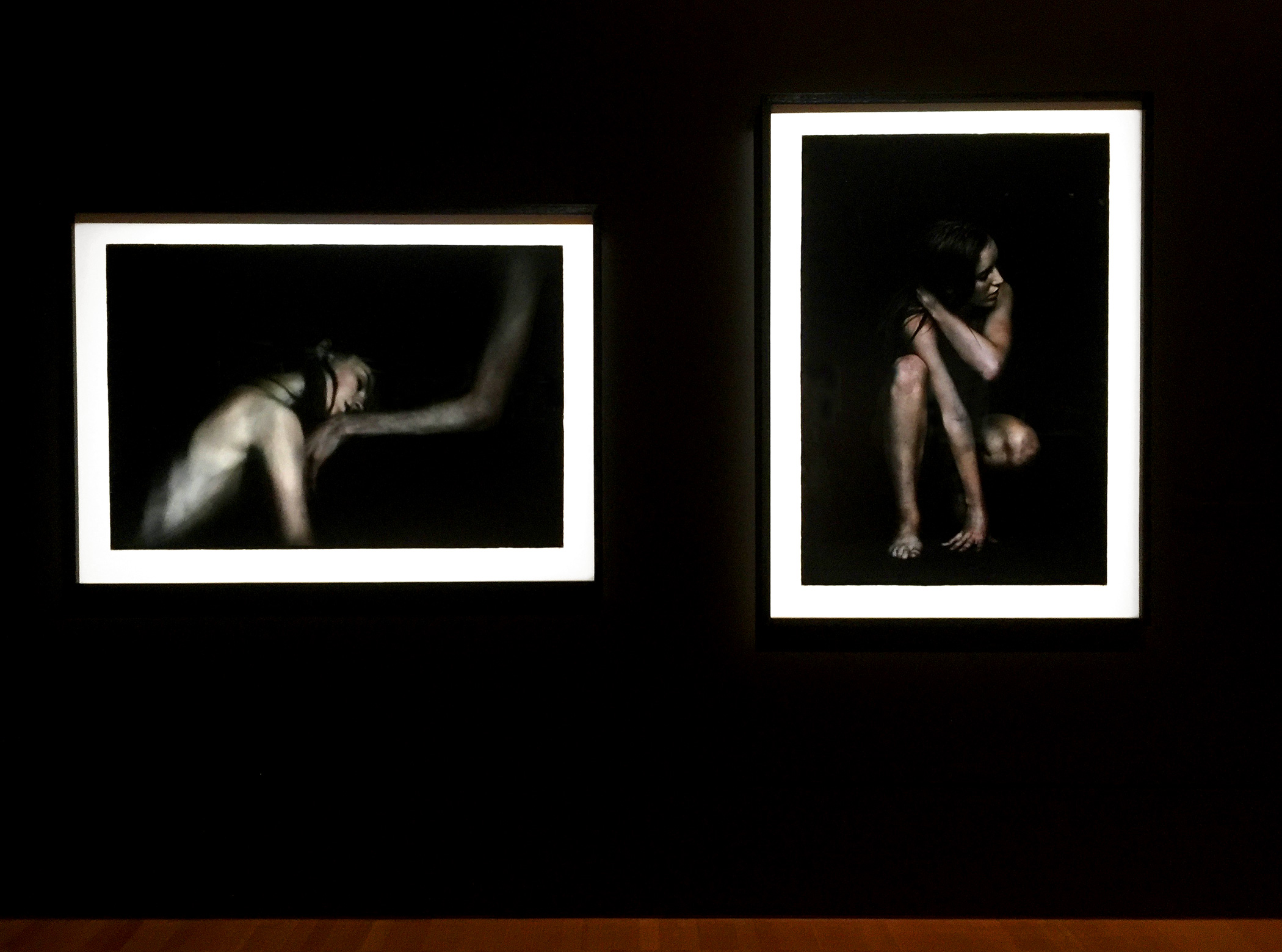
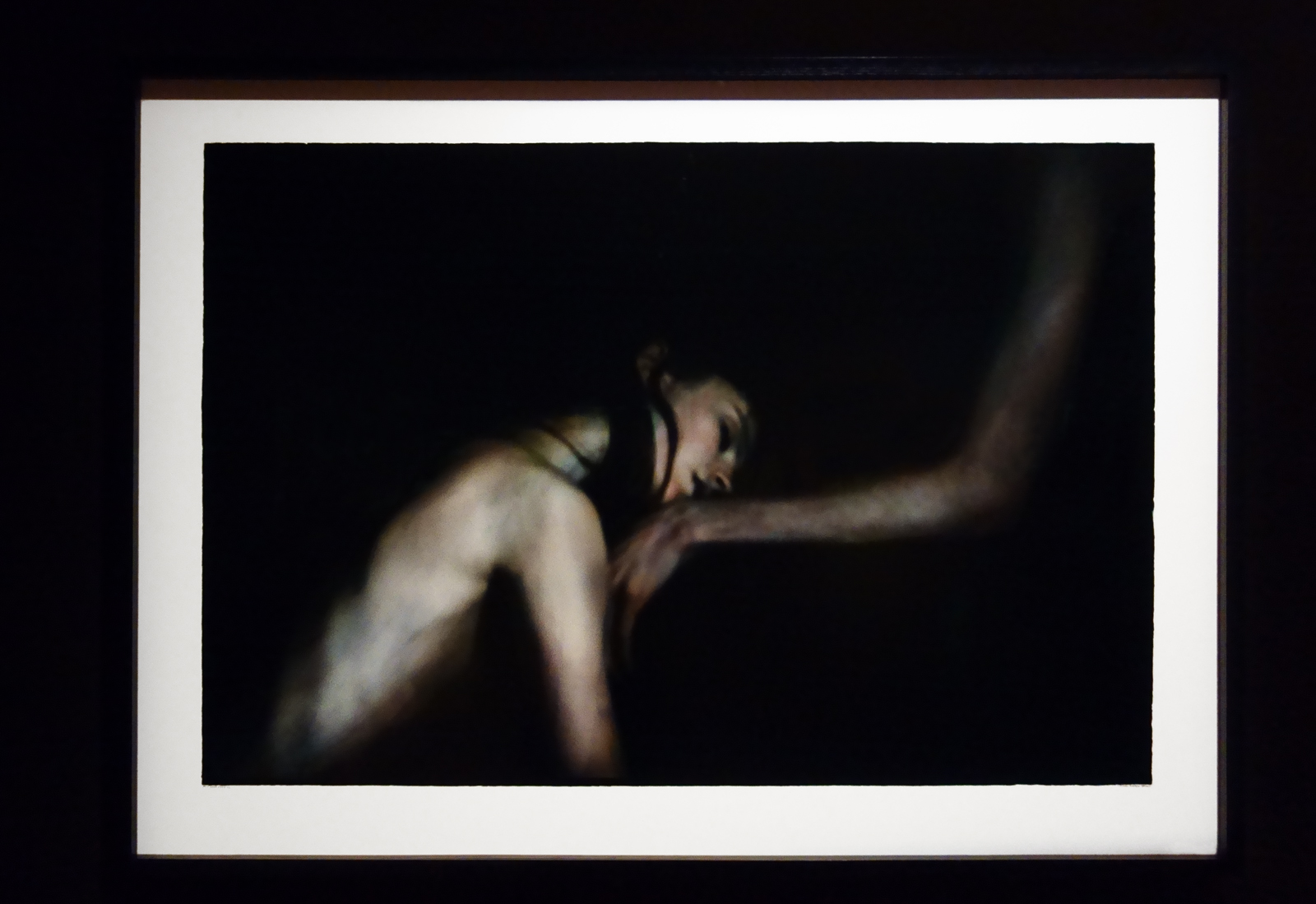
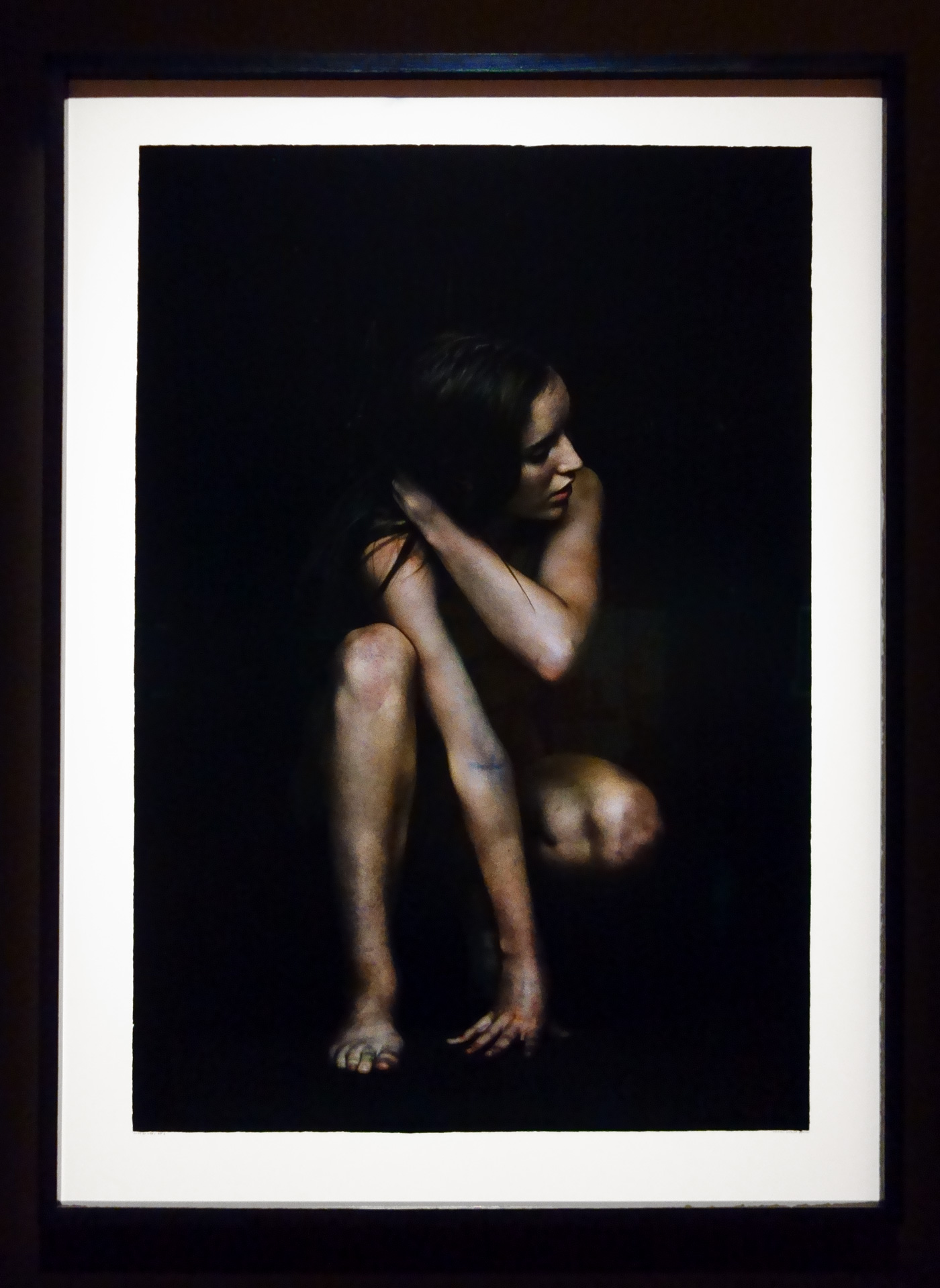
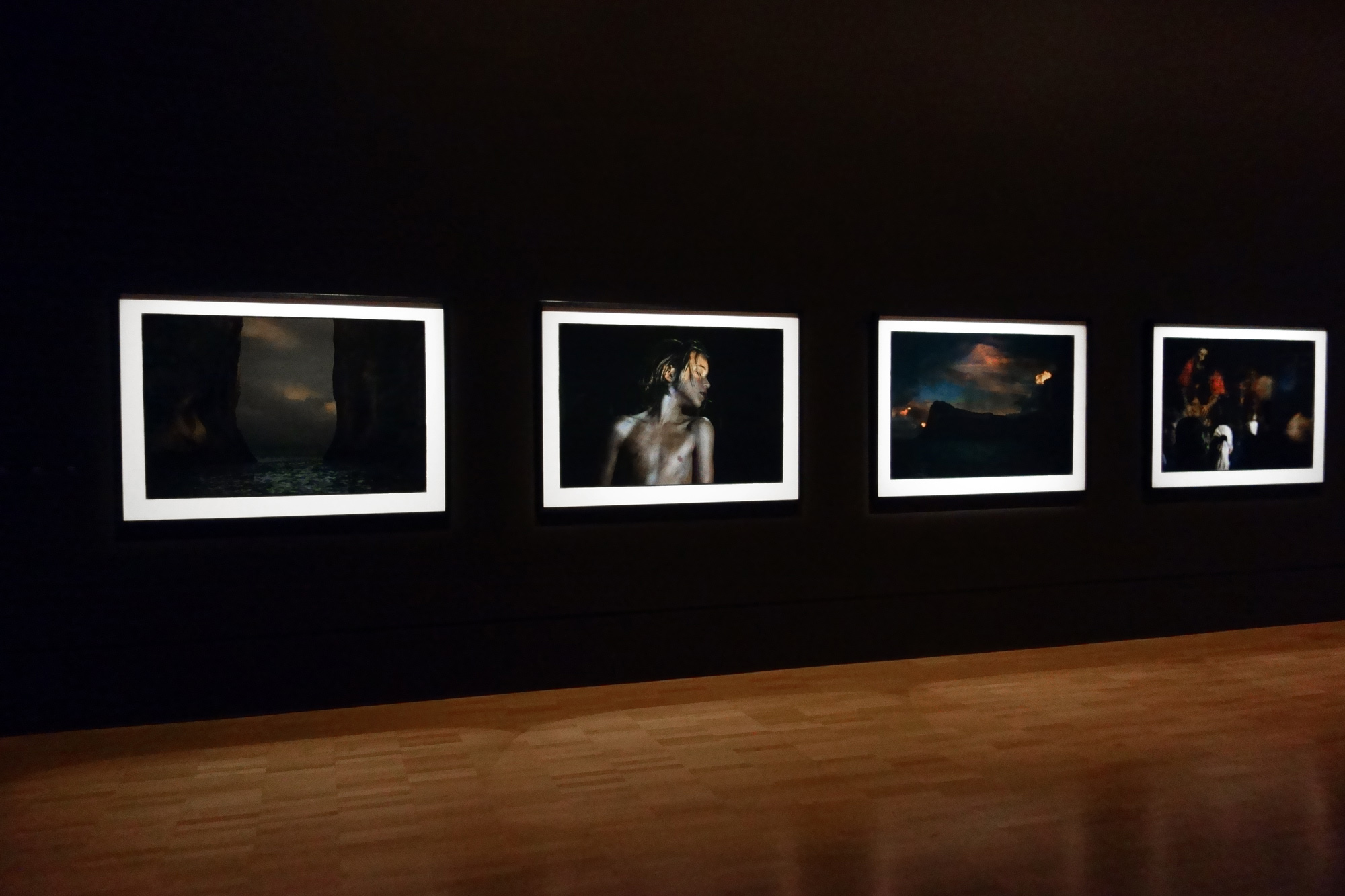
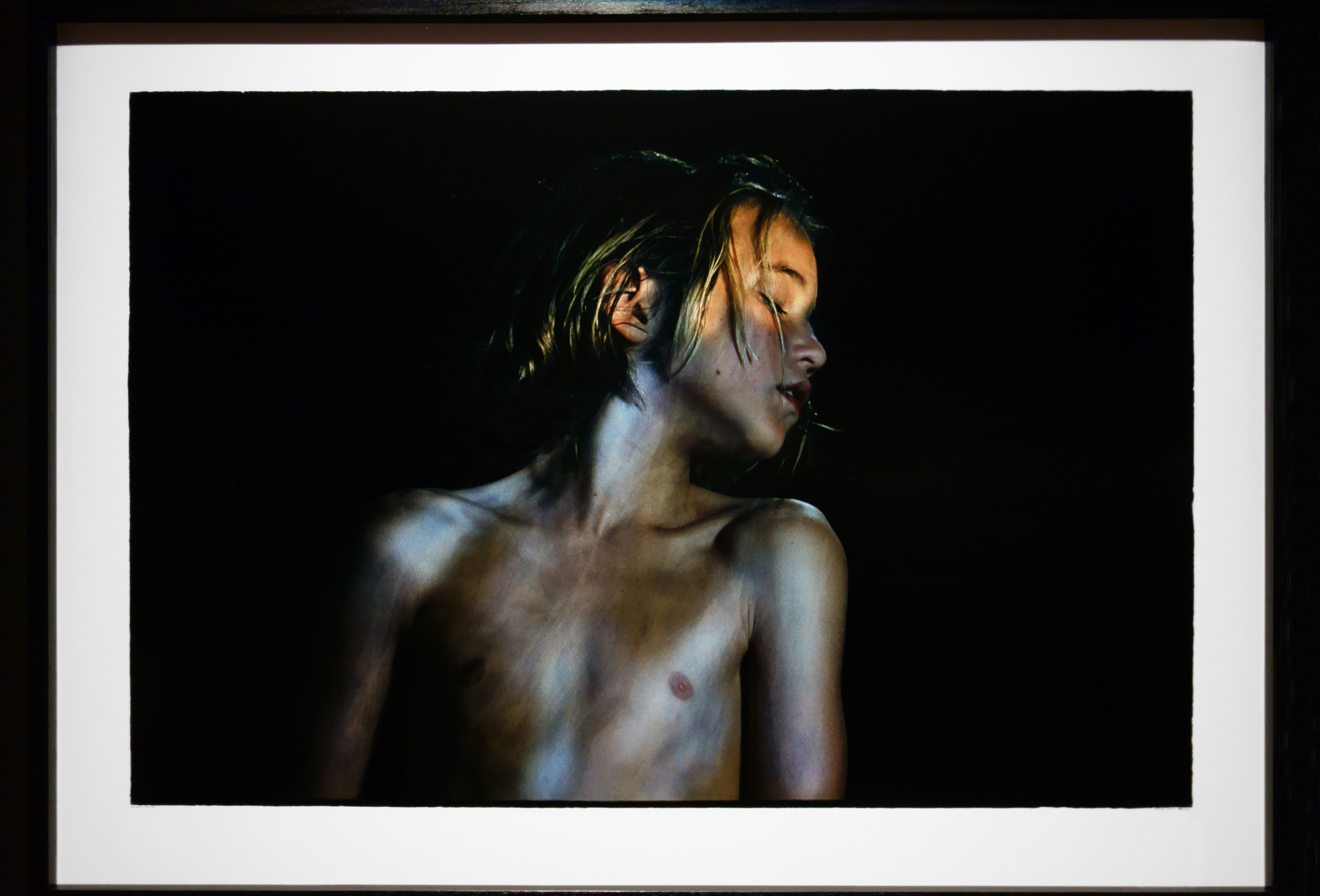

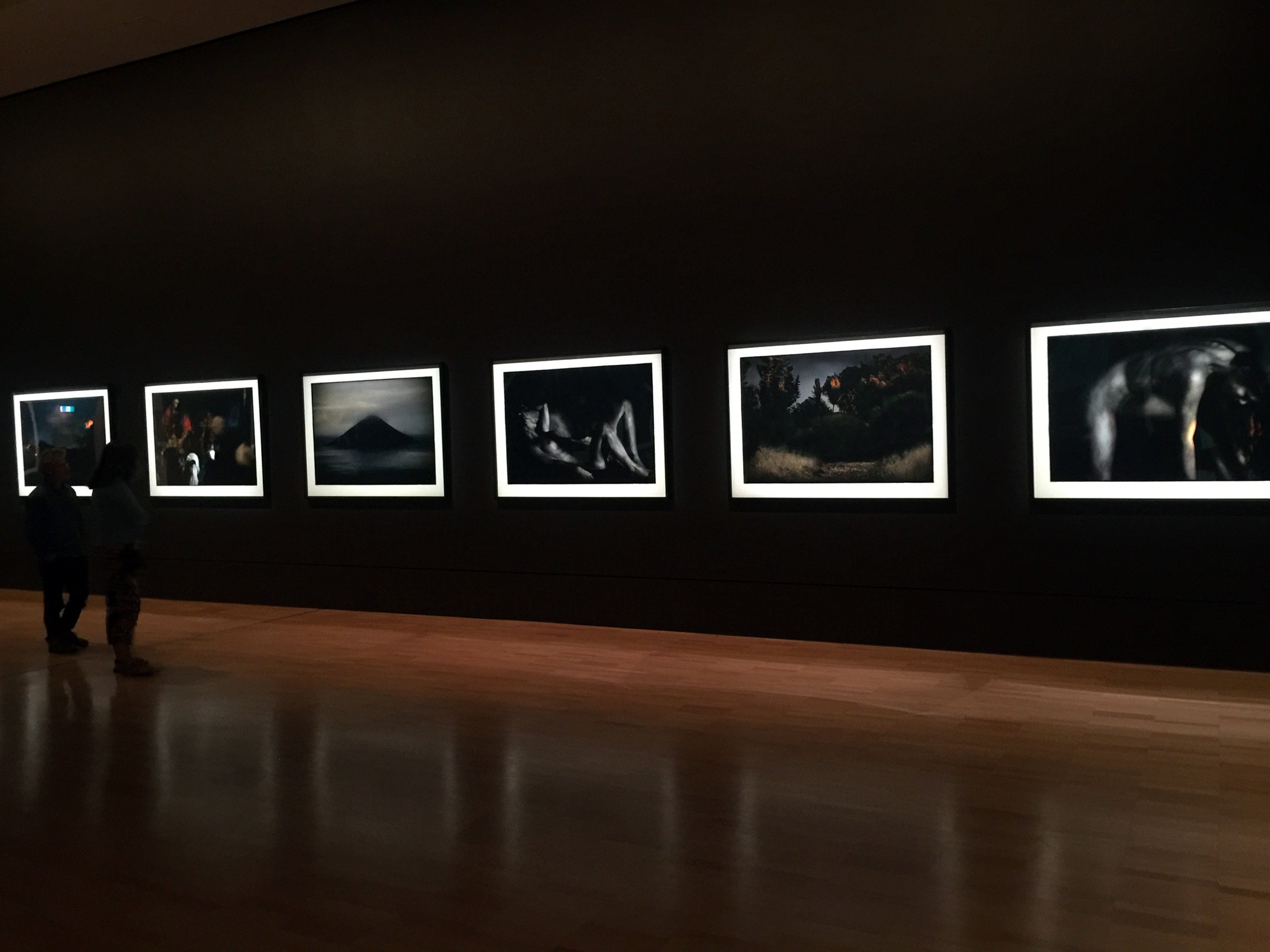

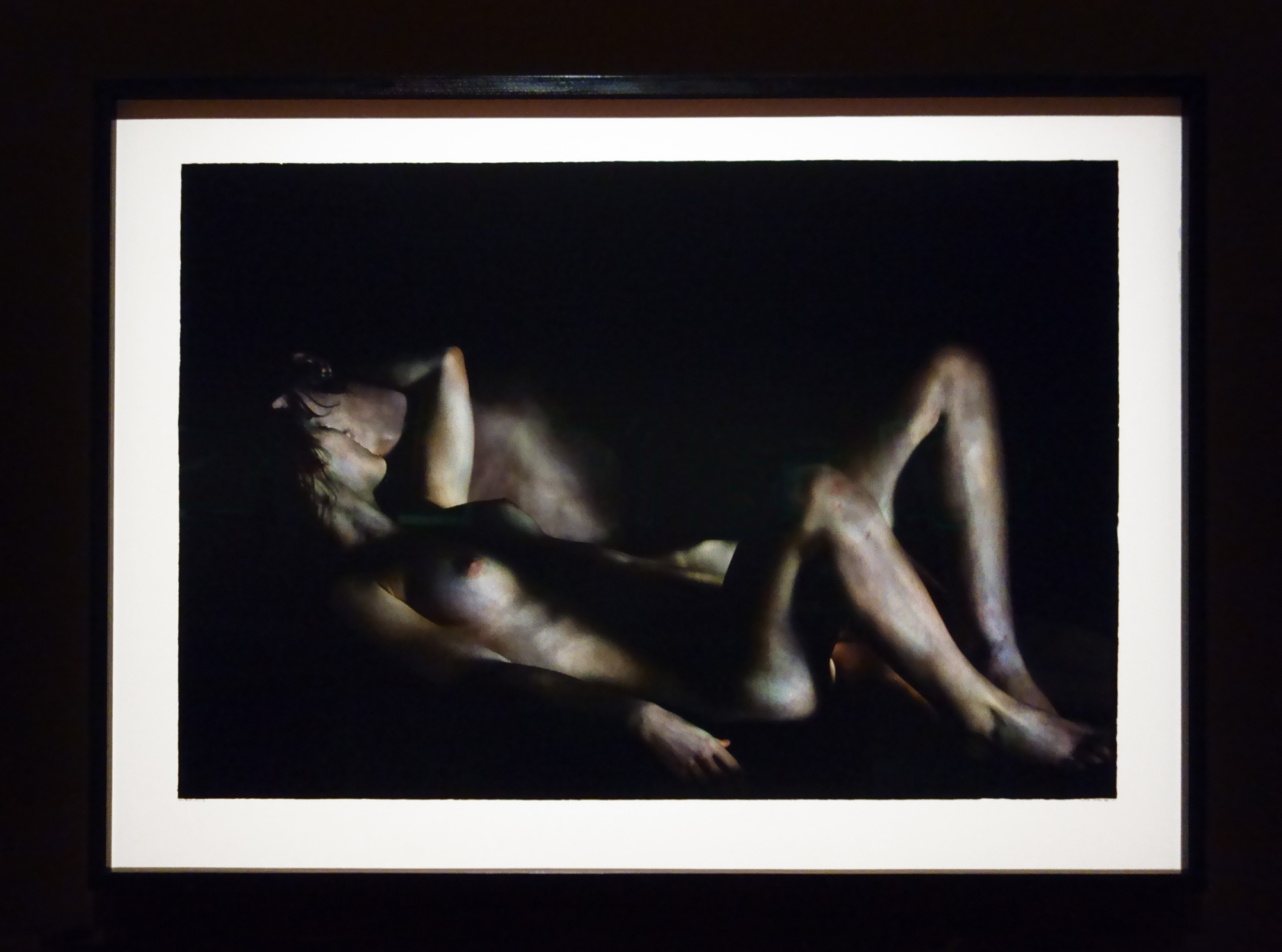
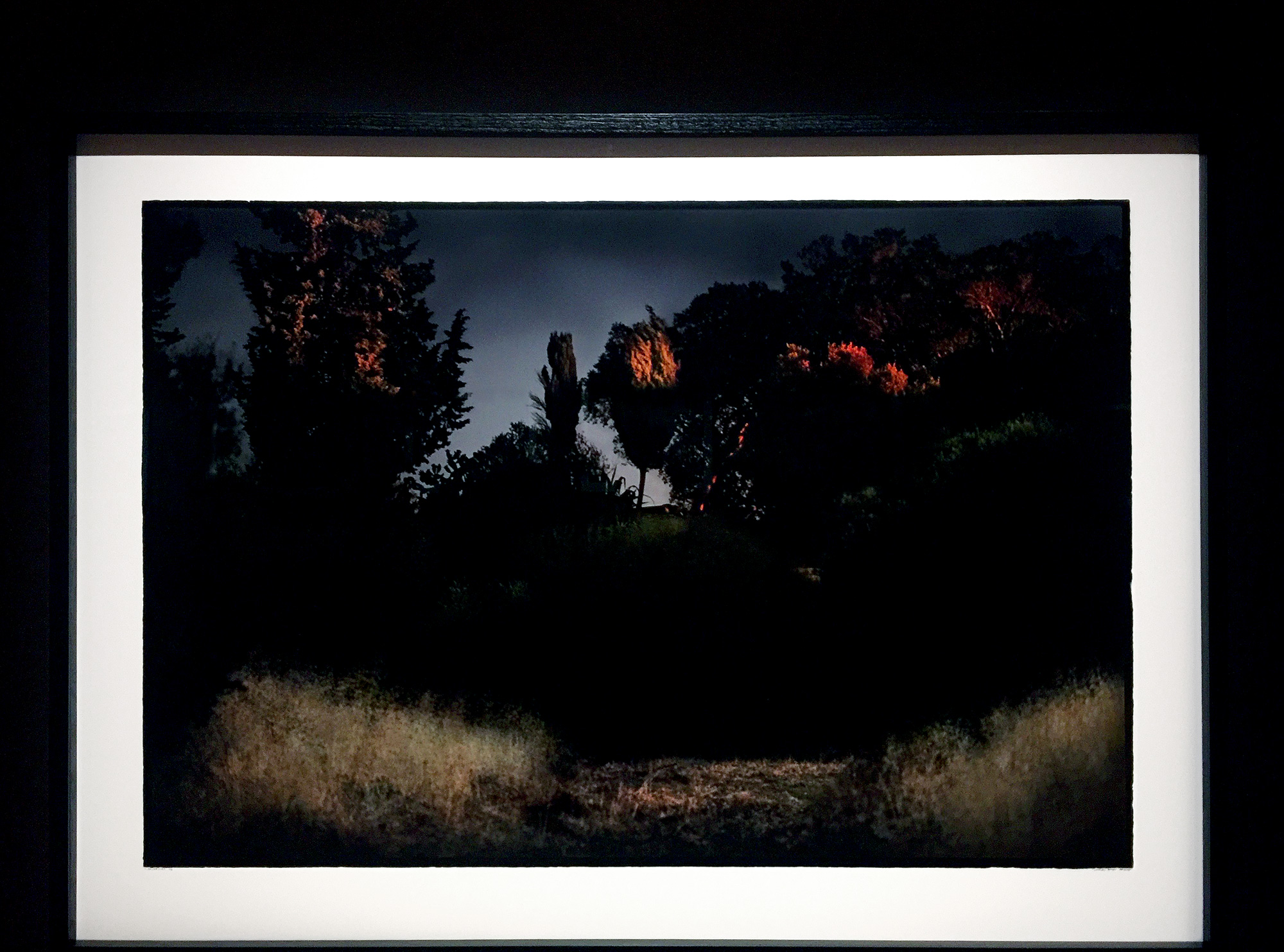


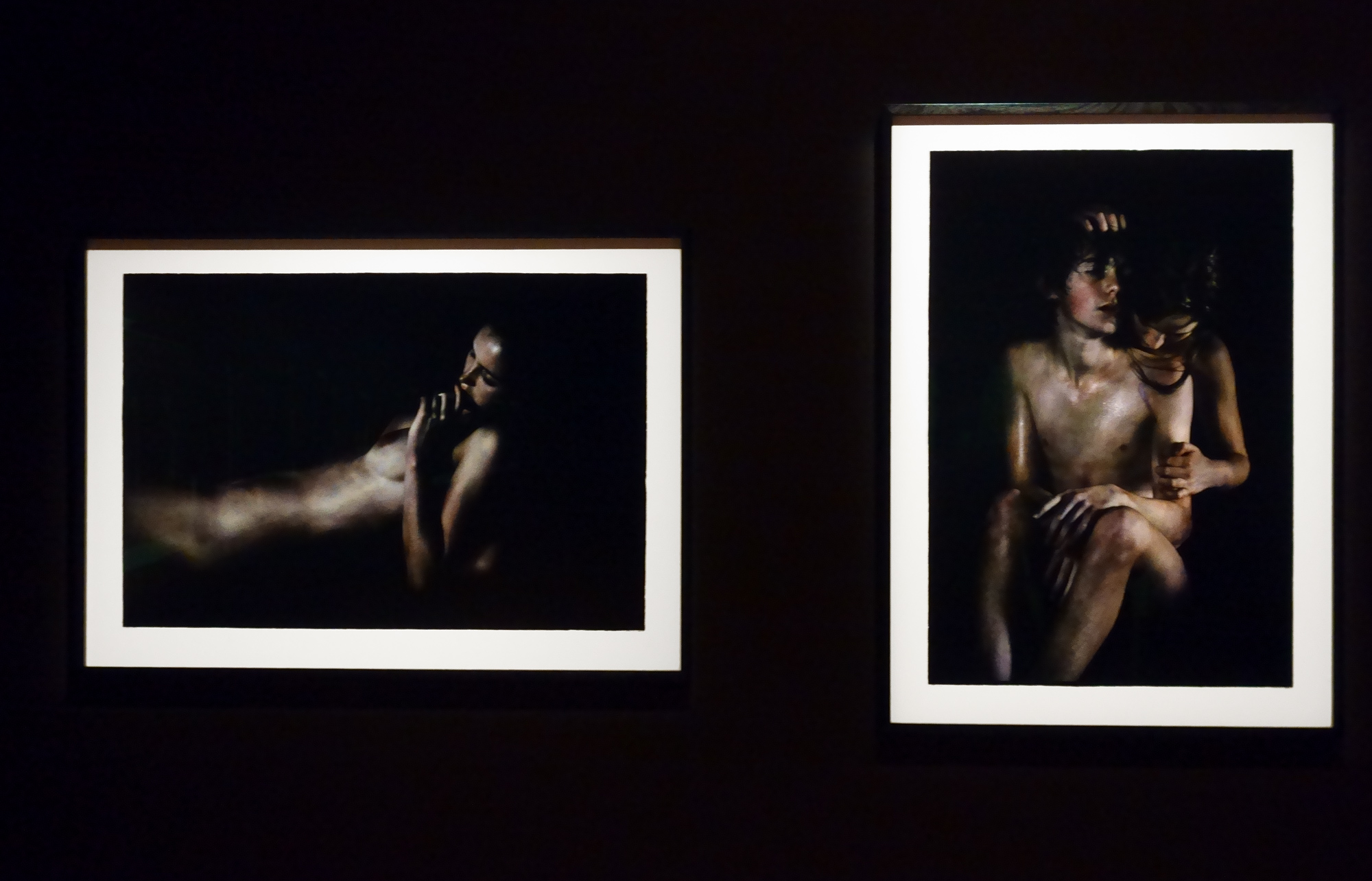
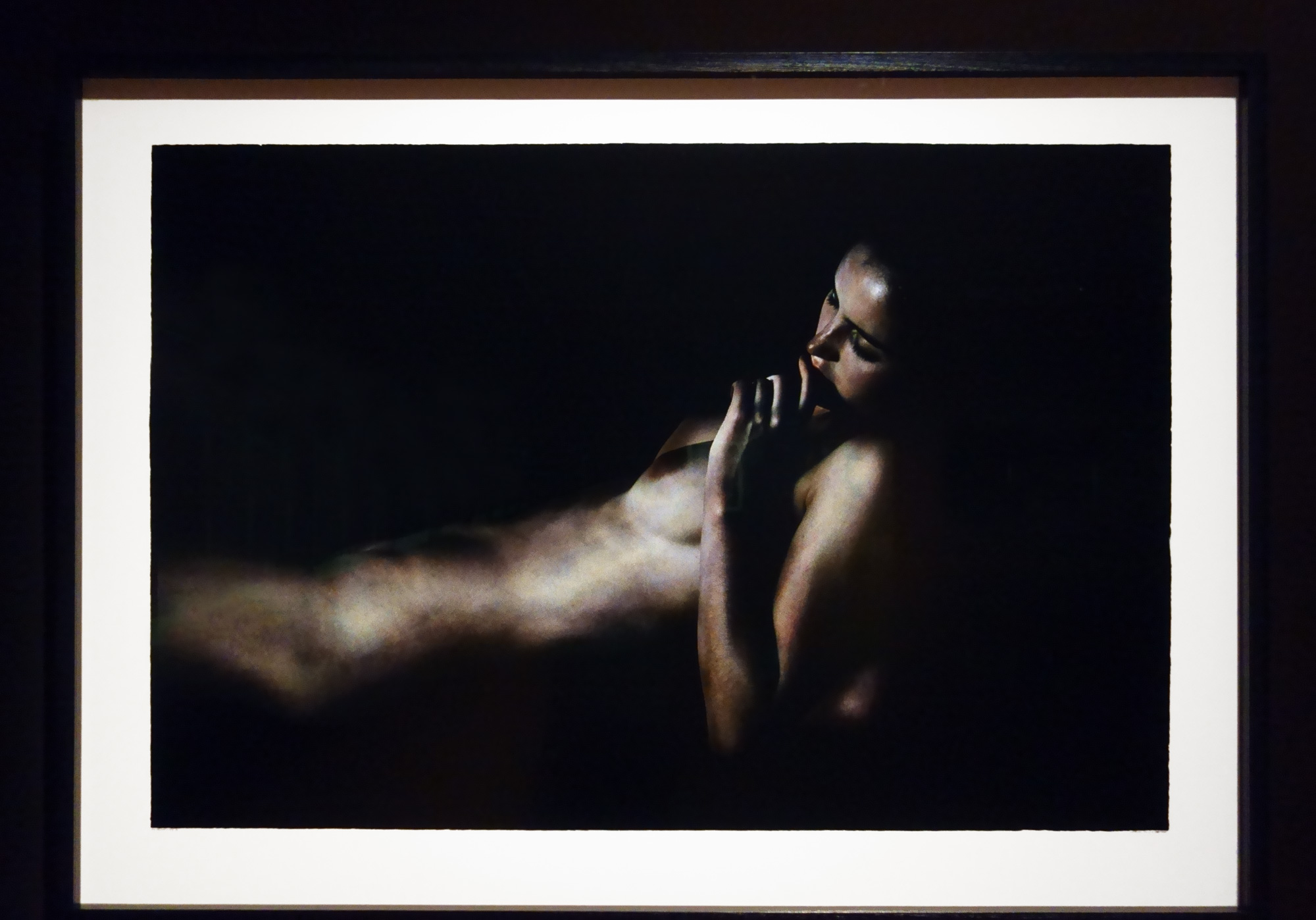
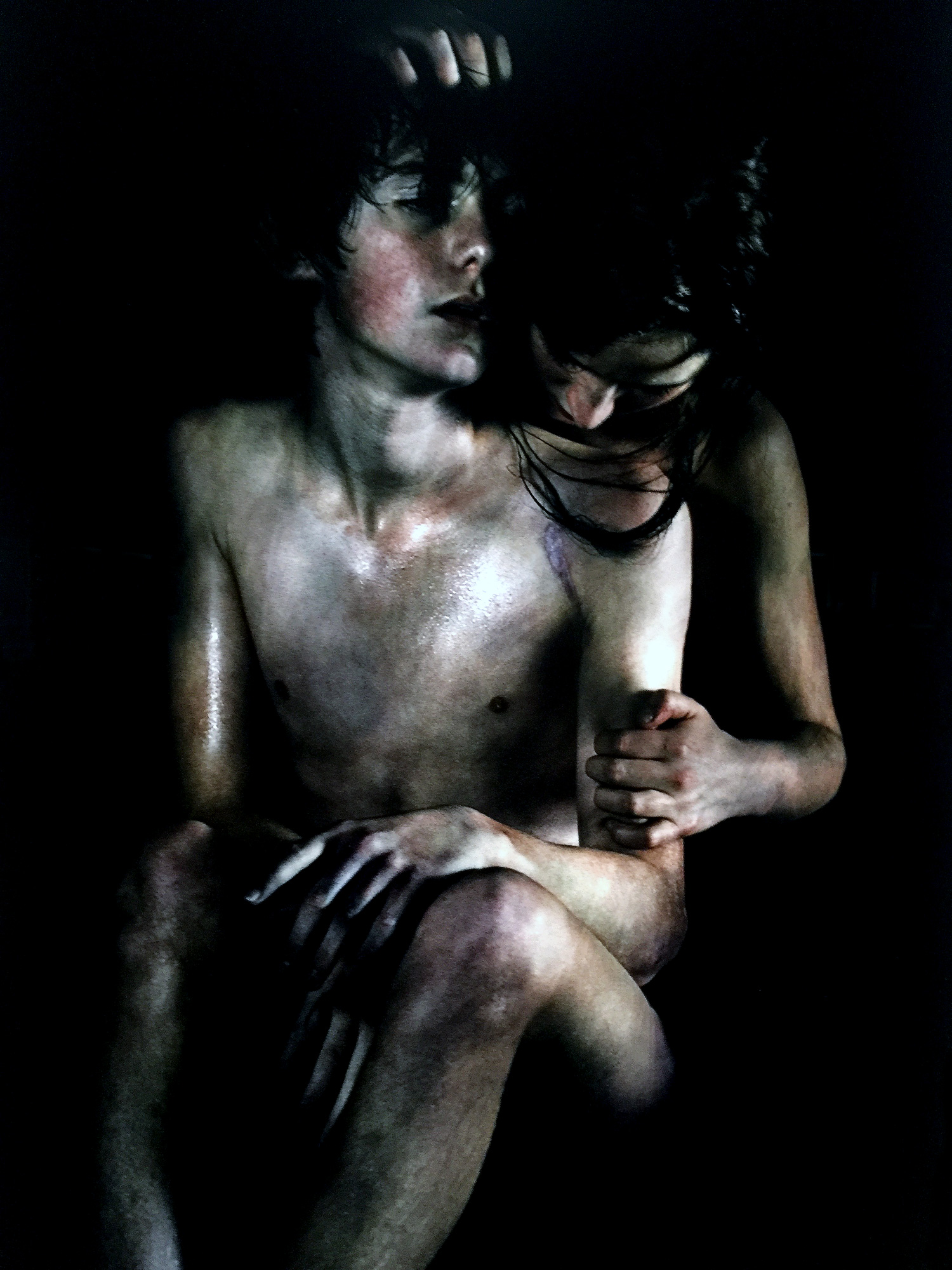

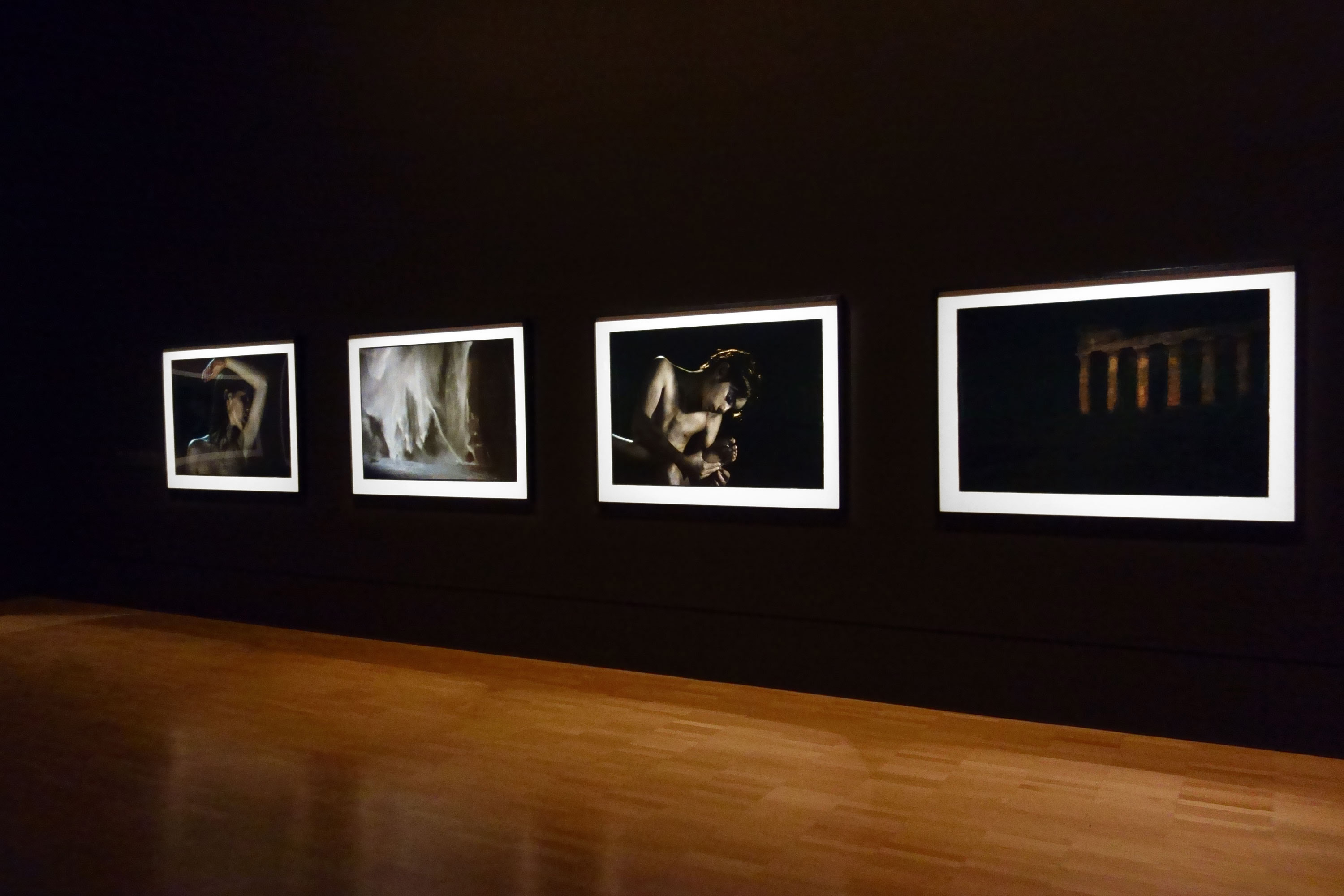
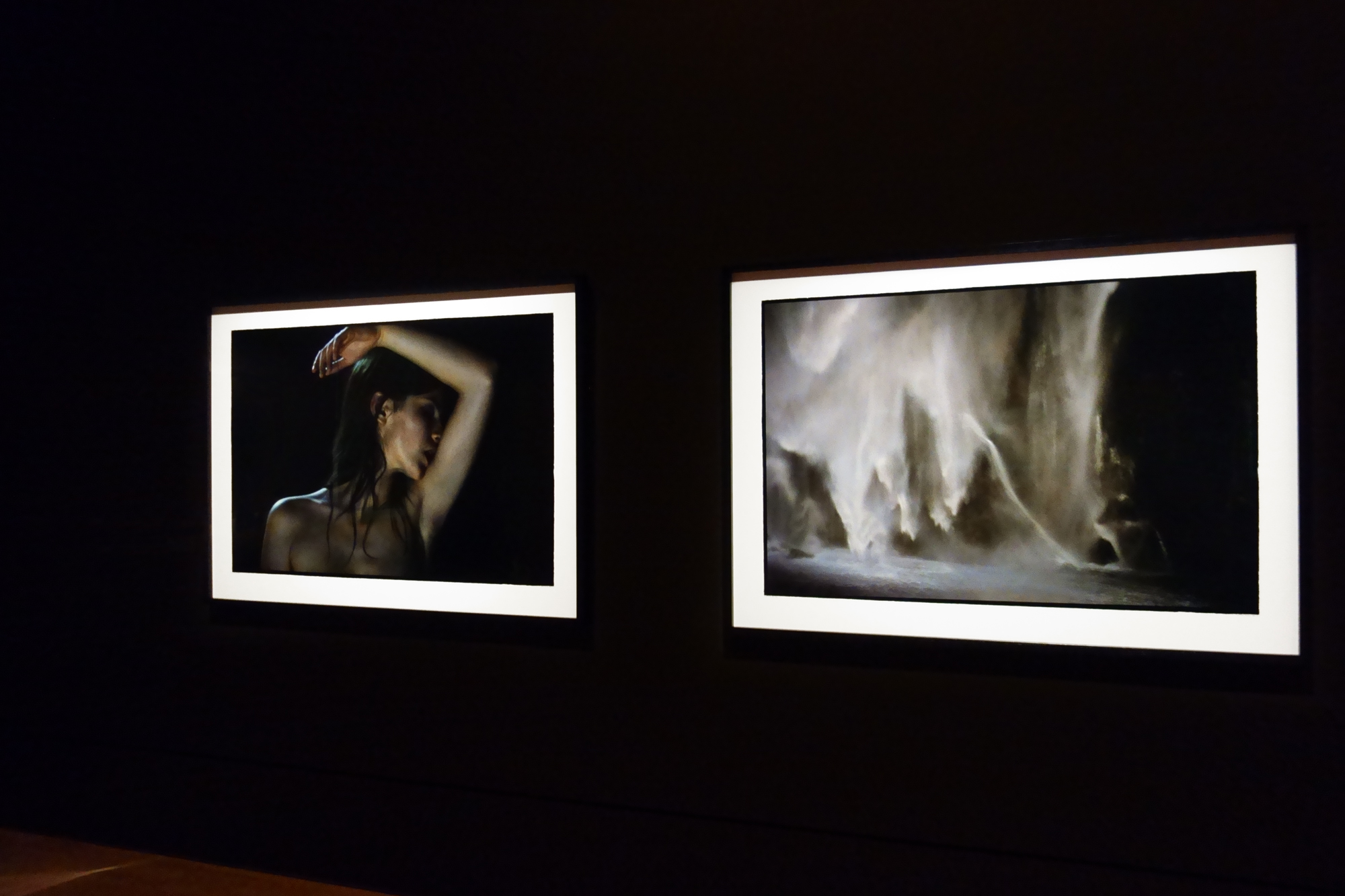


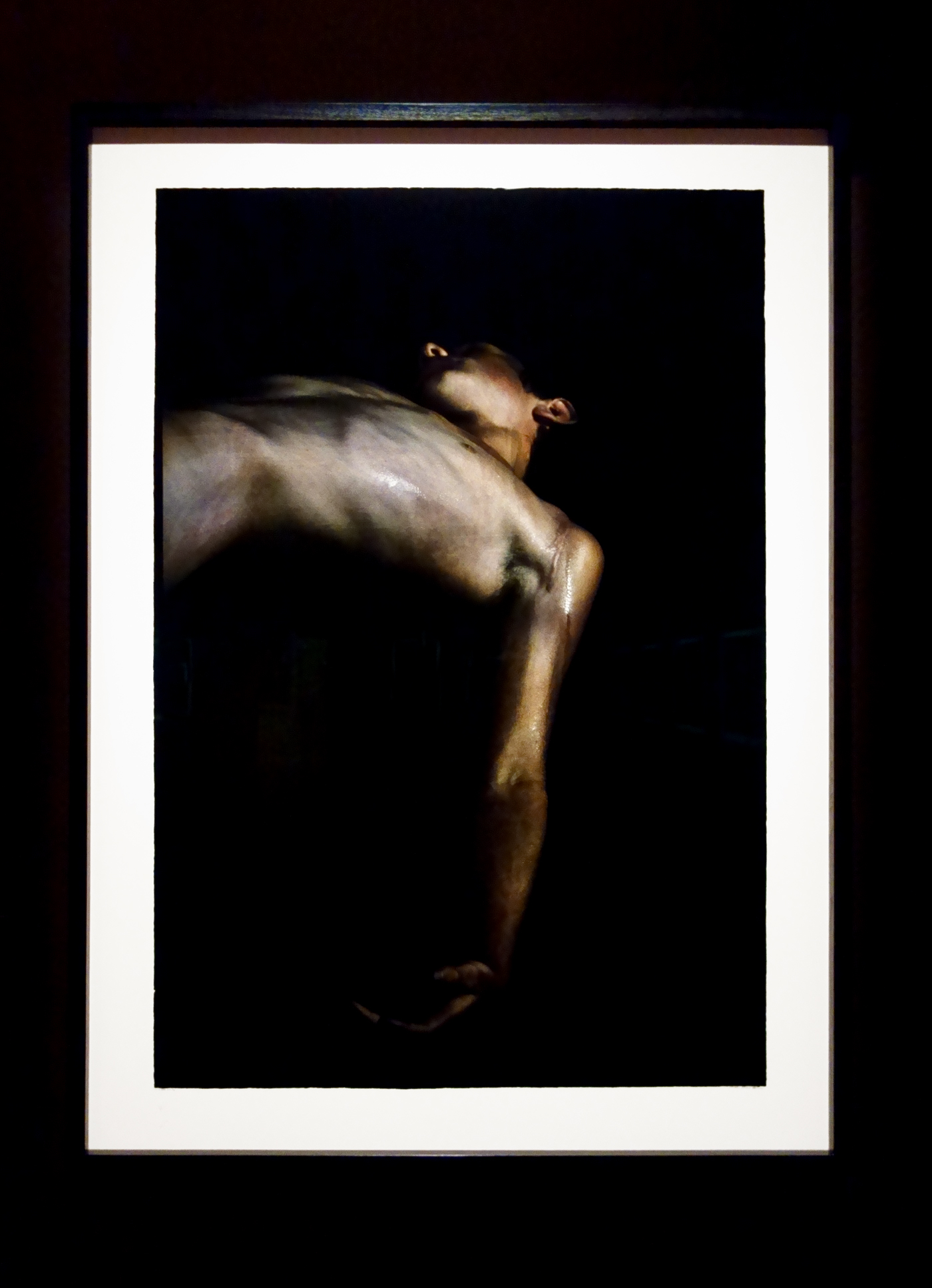


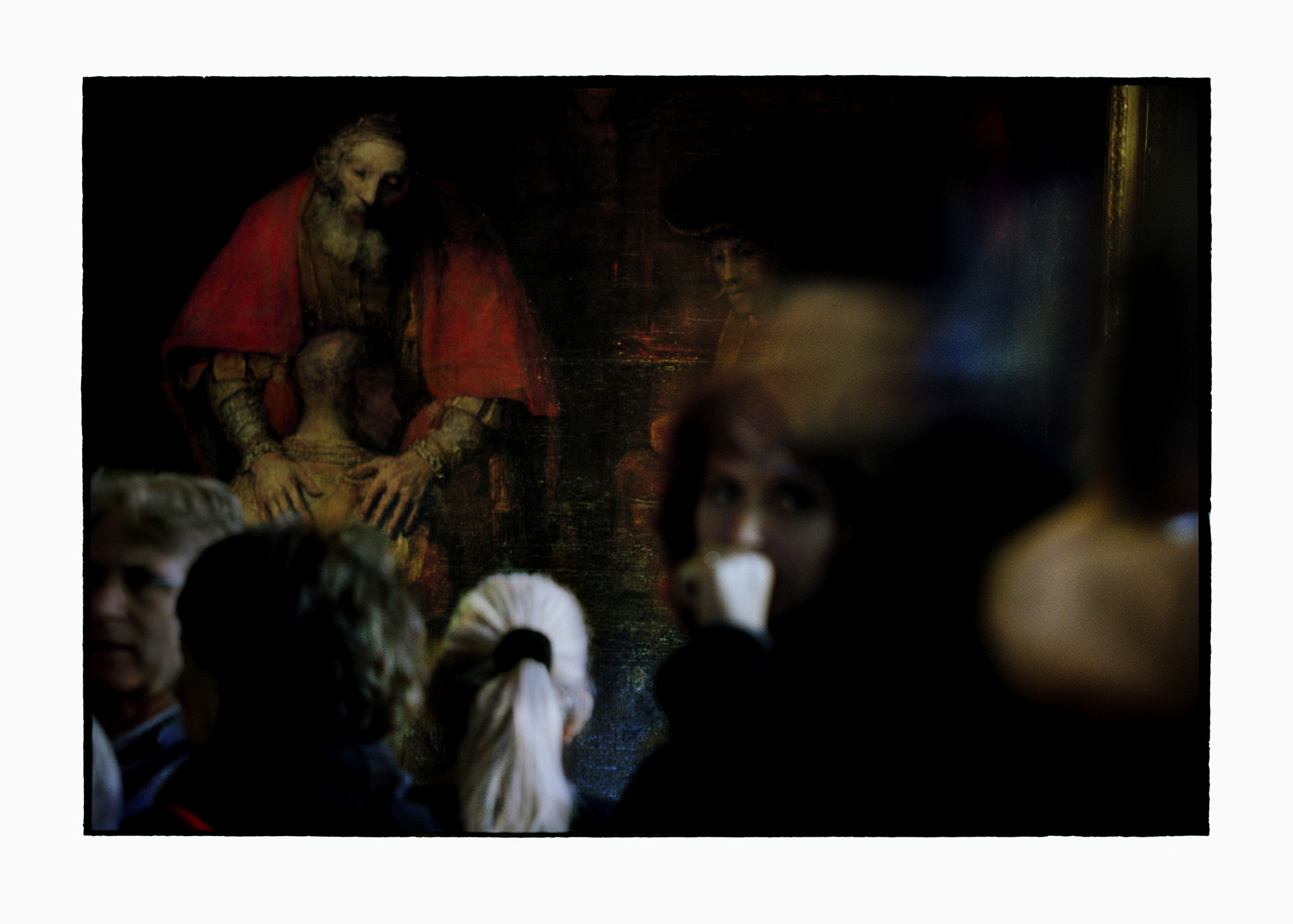
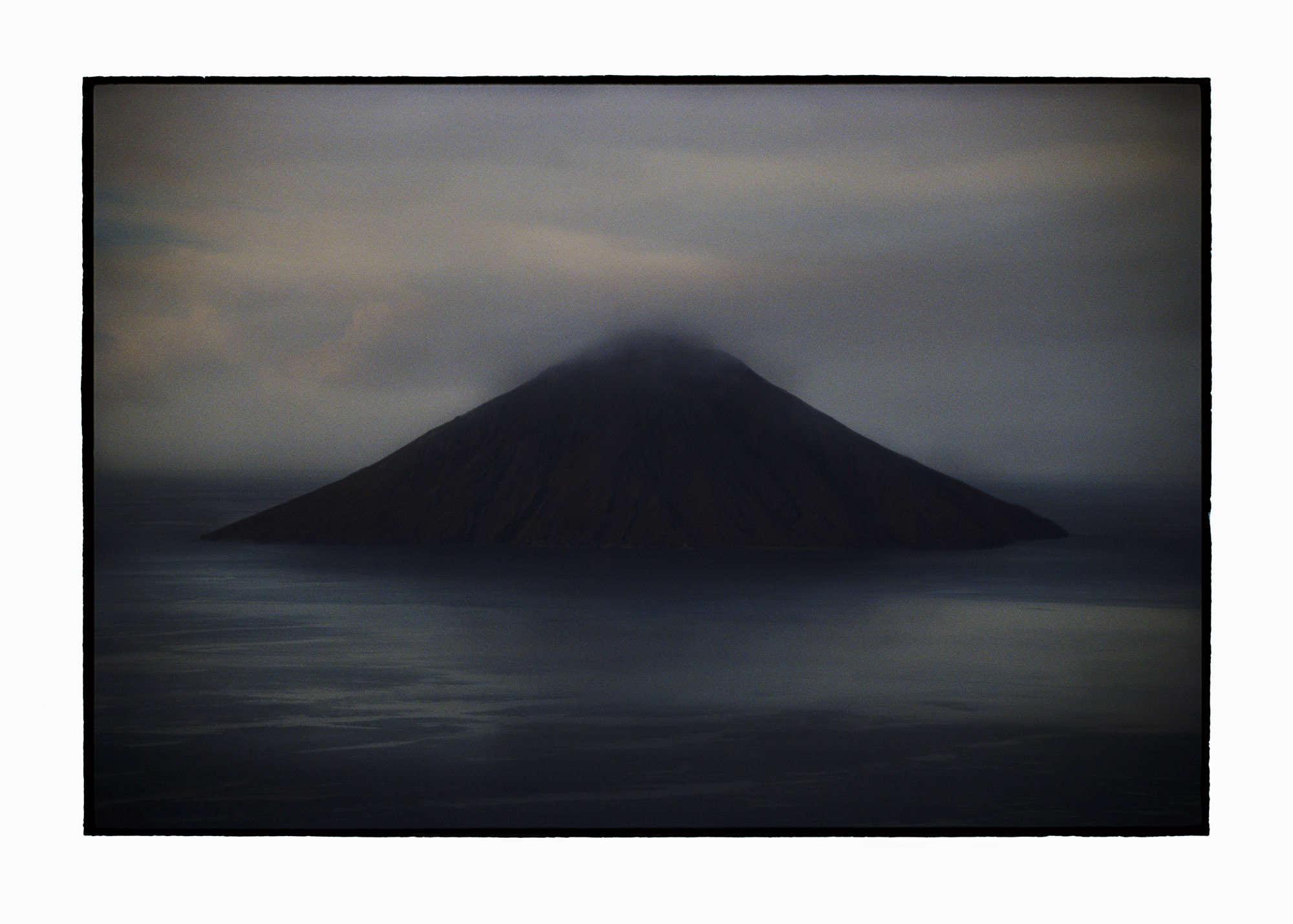


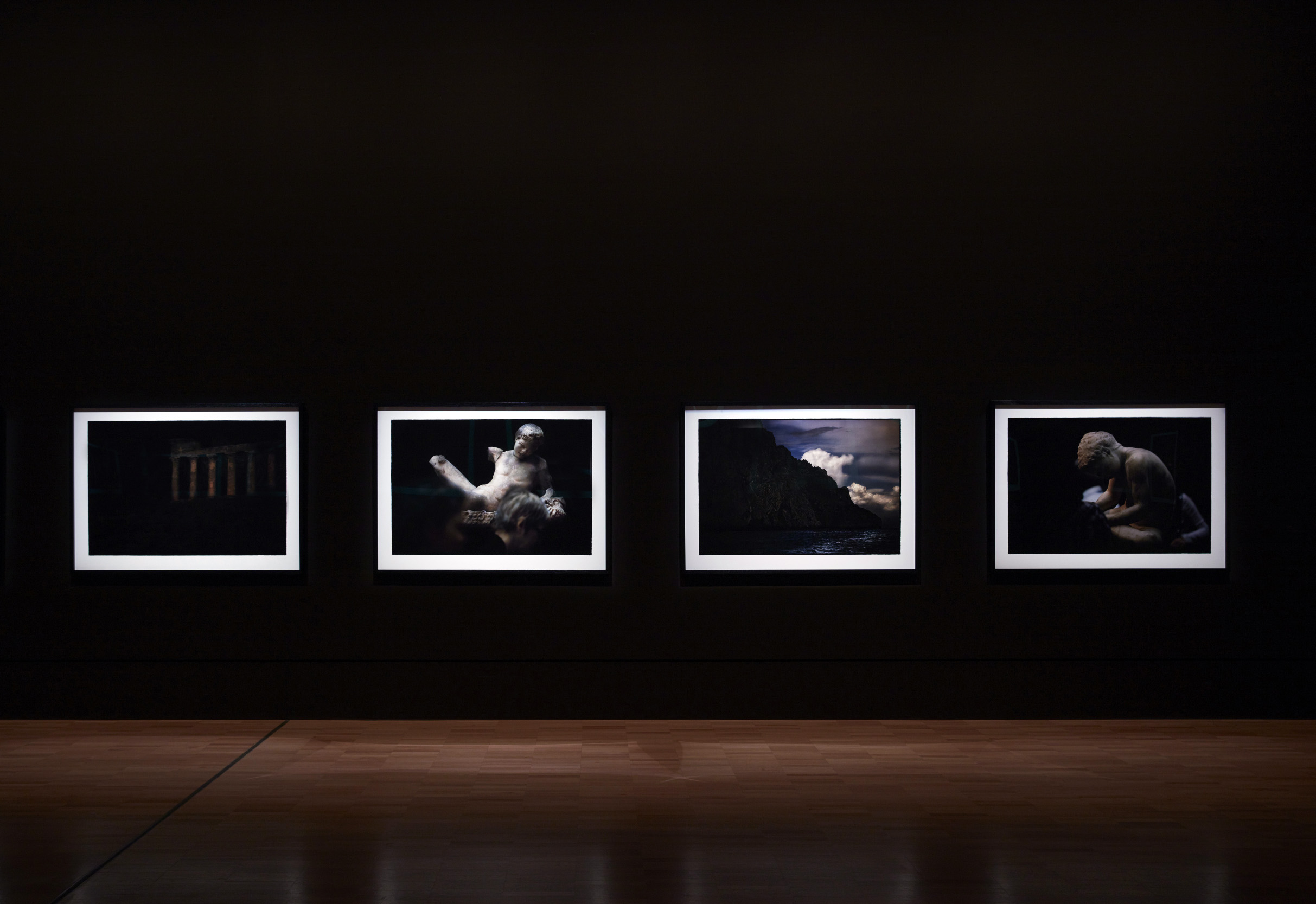

![Edgar Degas (French, 1834-1917) 'Danseuses, éventail [Dancers (Fan, design)]' 1879 (installation view)](https://artblart.com/wp-content/uploads/2016/08/installation-al.jpg "Edgar Degas (French, 1834-1917) 'Danseuses, éventail [Dancers (Fan, design)]' 1879 (installation view)")

![Edgar Degas (French, 1834-1917 'La Loge [Theatre box]' 1885 (installation view)](https://artblart.com/wp-content/uploads/2016/09/installation-am.jpg "Edgar Degas (French, 1834-1917 'La Loge [Theatre box]' 1885 (installation view)")
![Edgar Degas (French, 1834-1917) 'La Loge [Theatre box]' 1880 (installation view)](https://artblart.com/wp-content/uploads/2016/09/installation-an.jpg "Edgar Degas (French, 1834-1917) 'La Loge [Theatre box]' 1880 (installation view)")


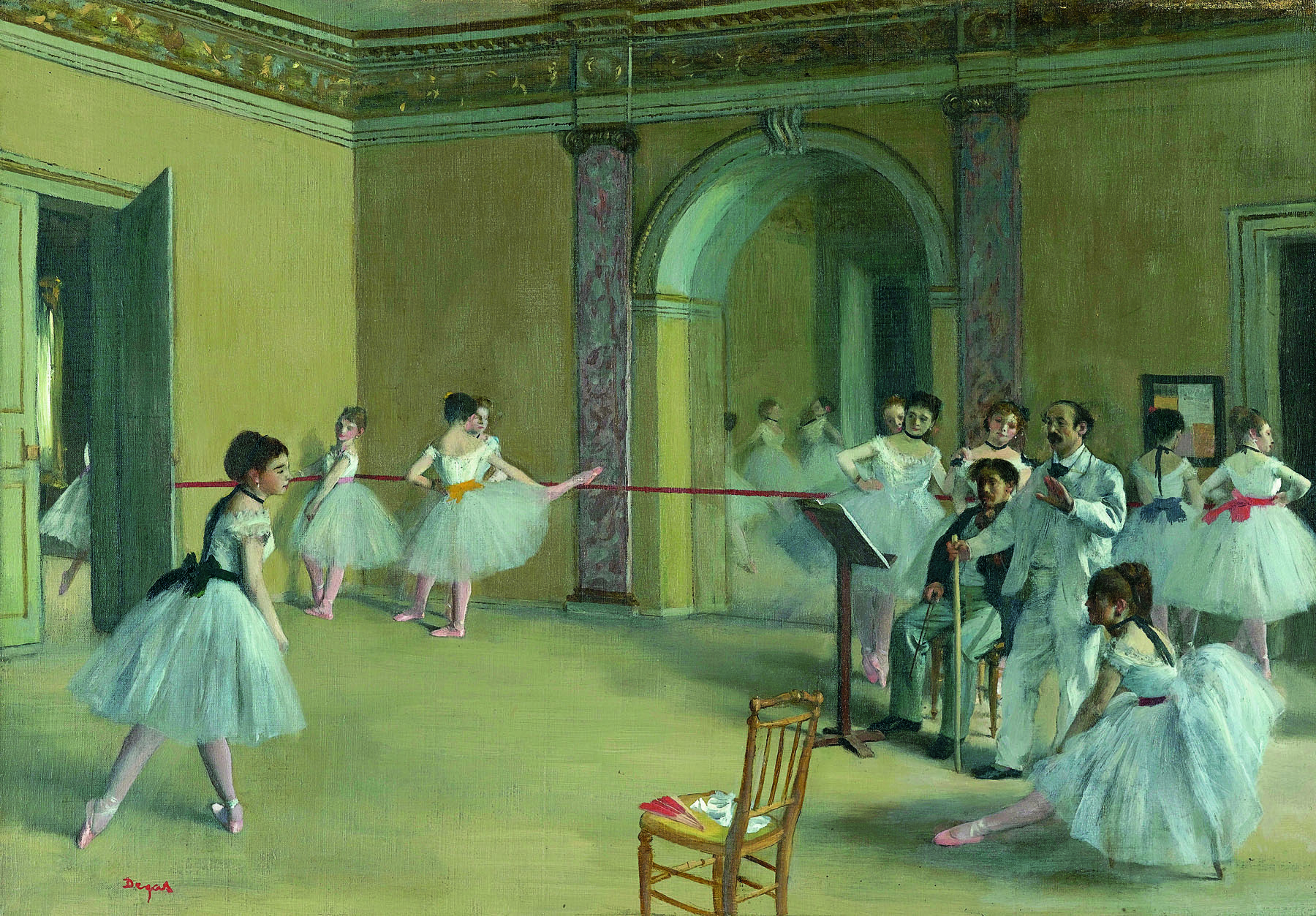

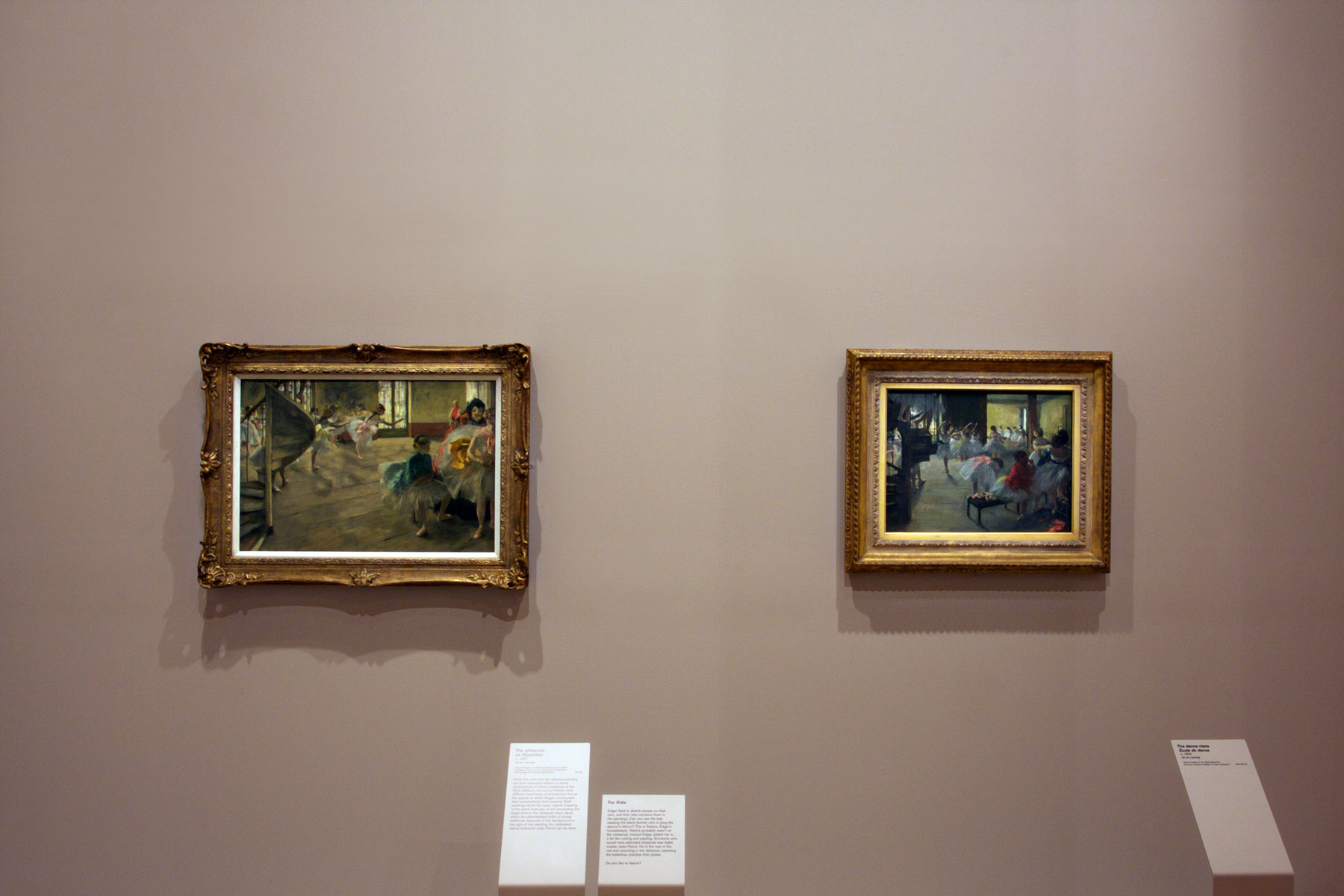


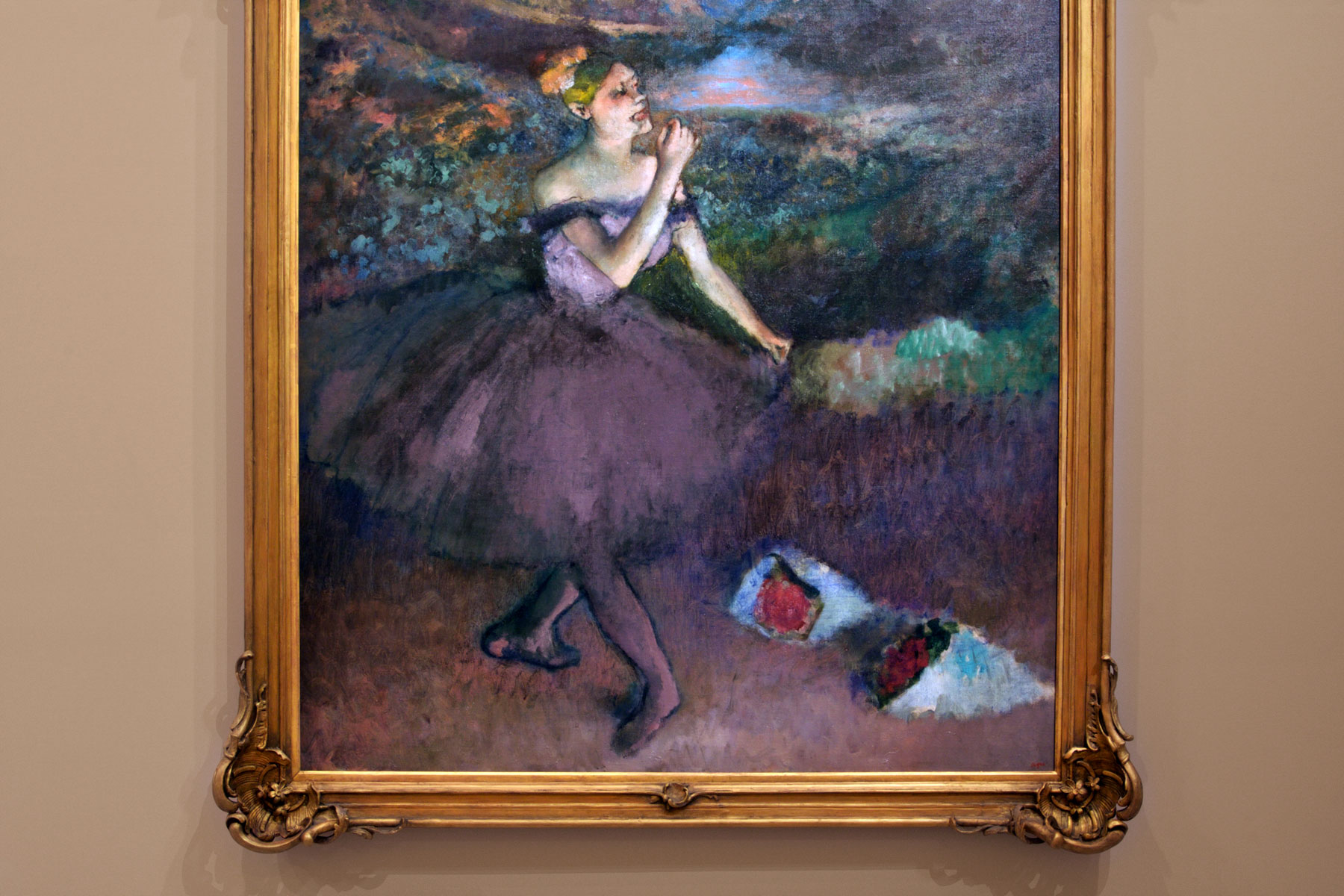
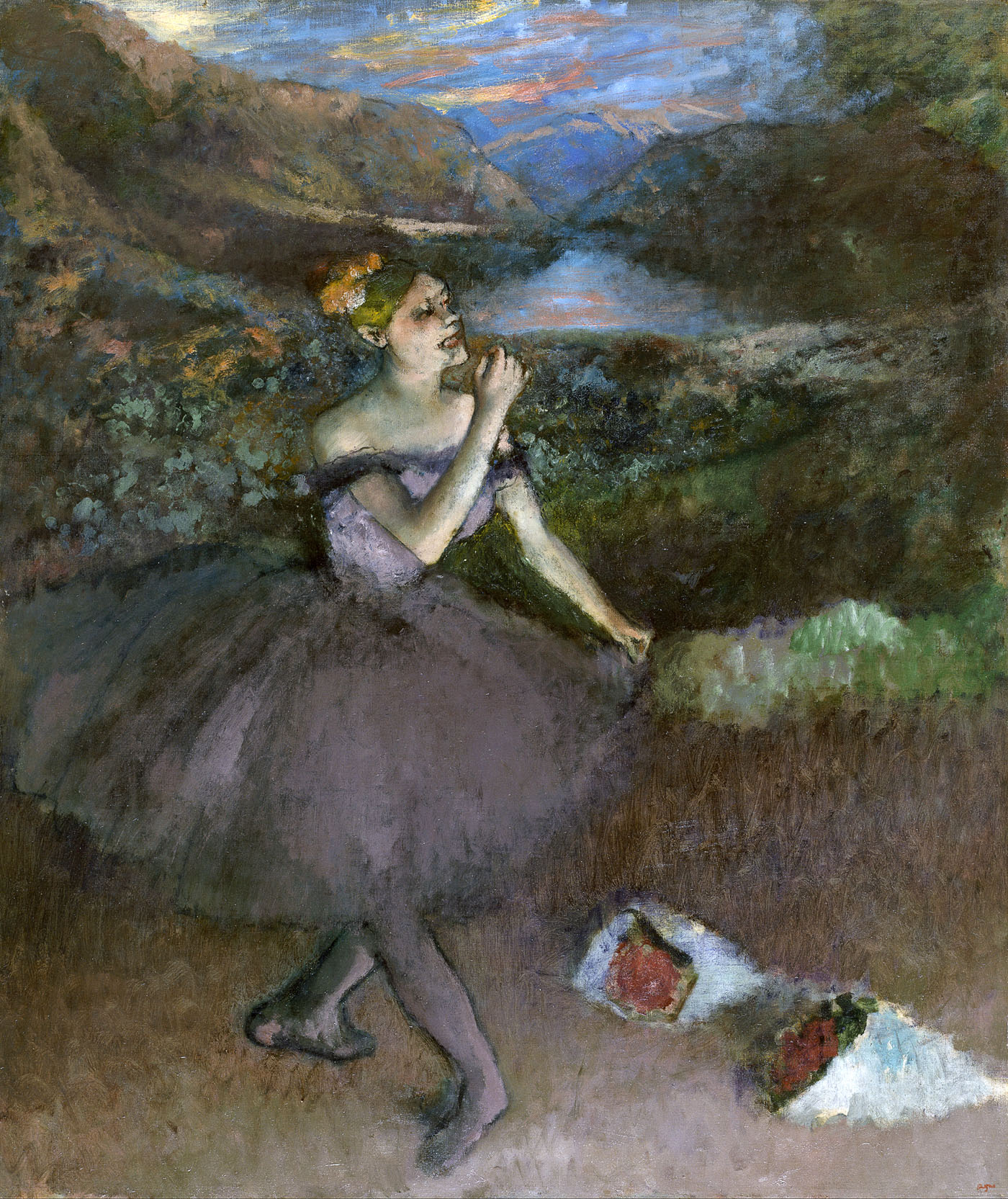

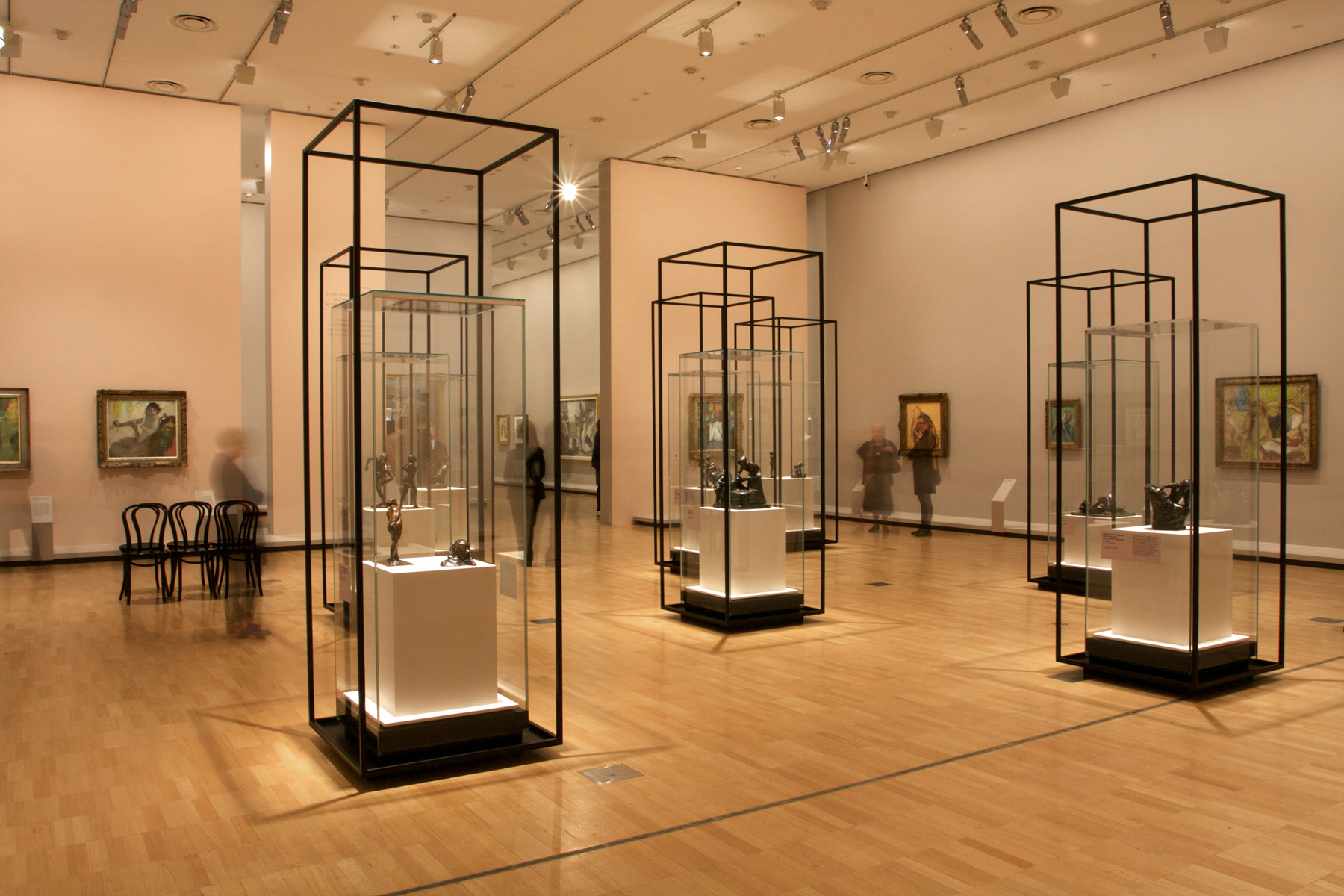


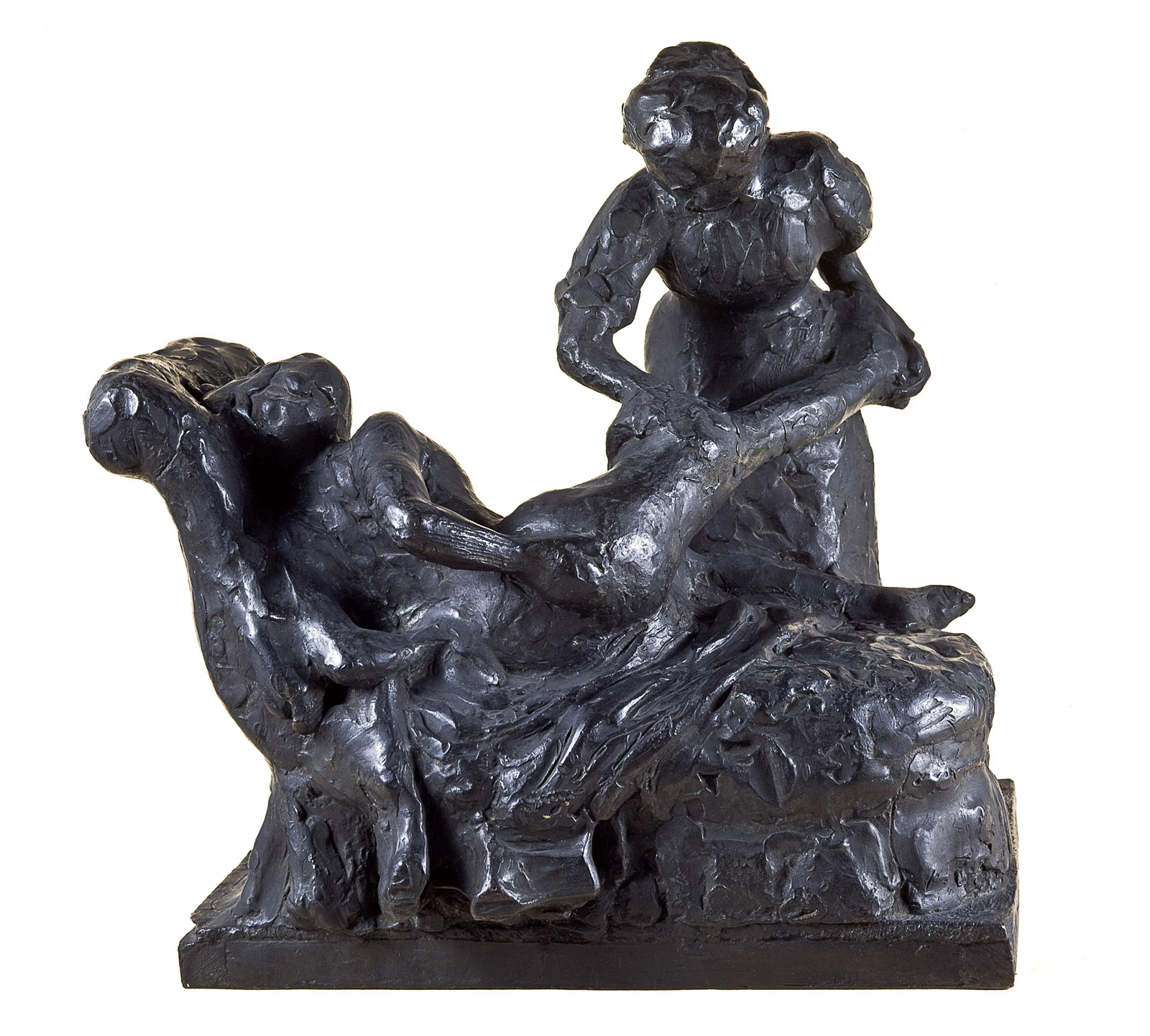


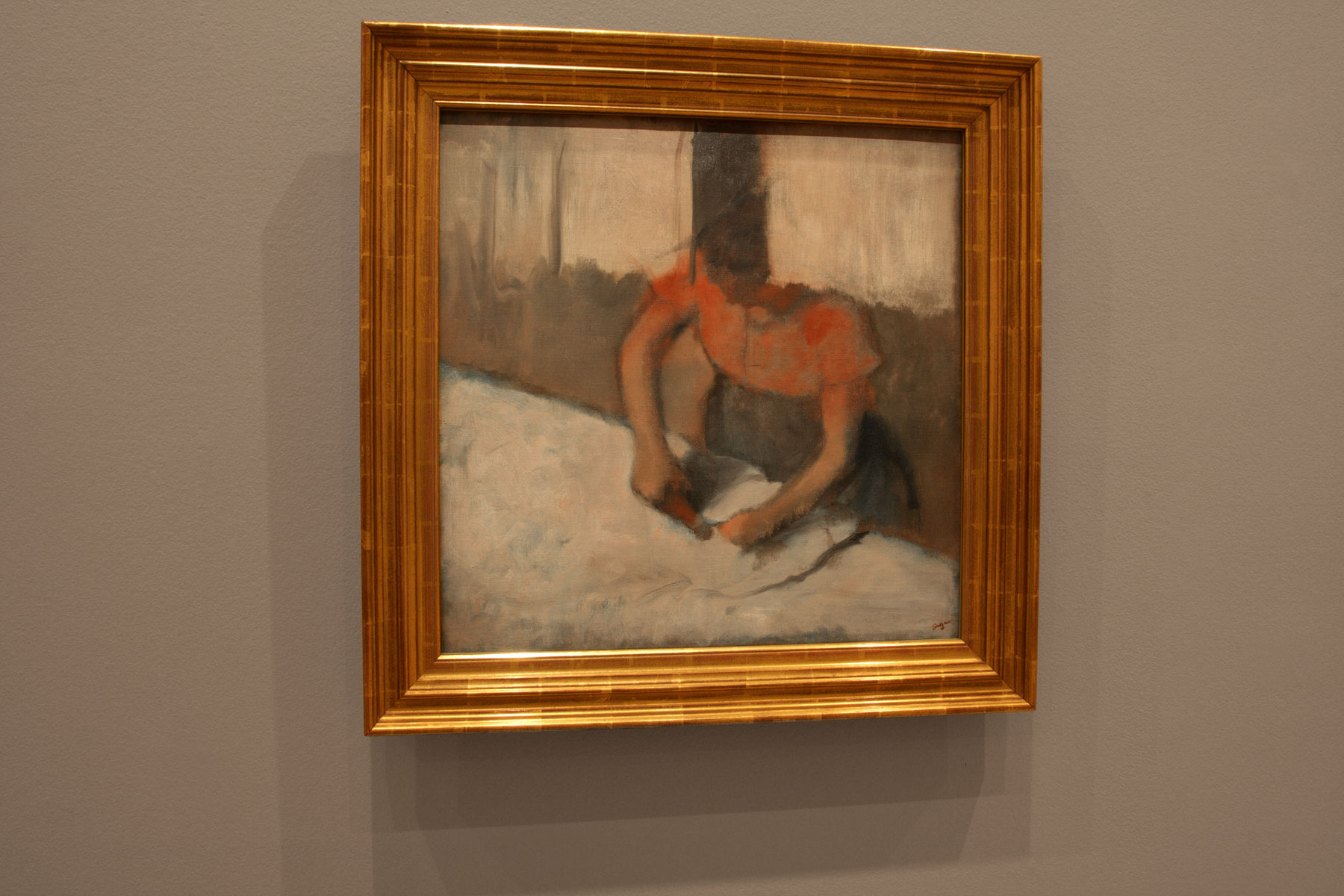
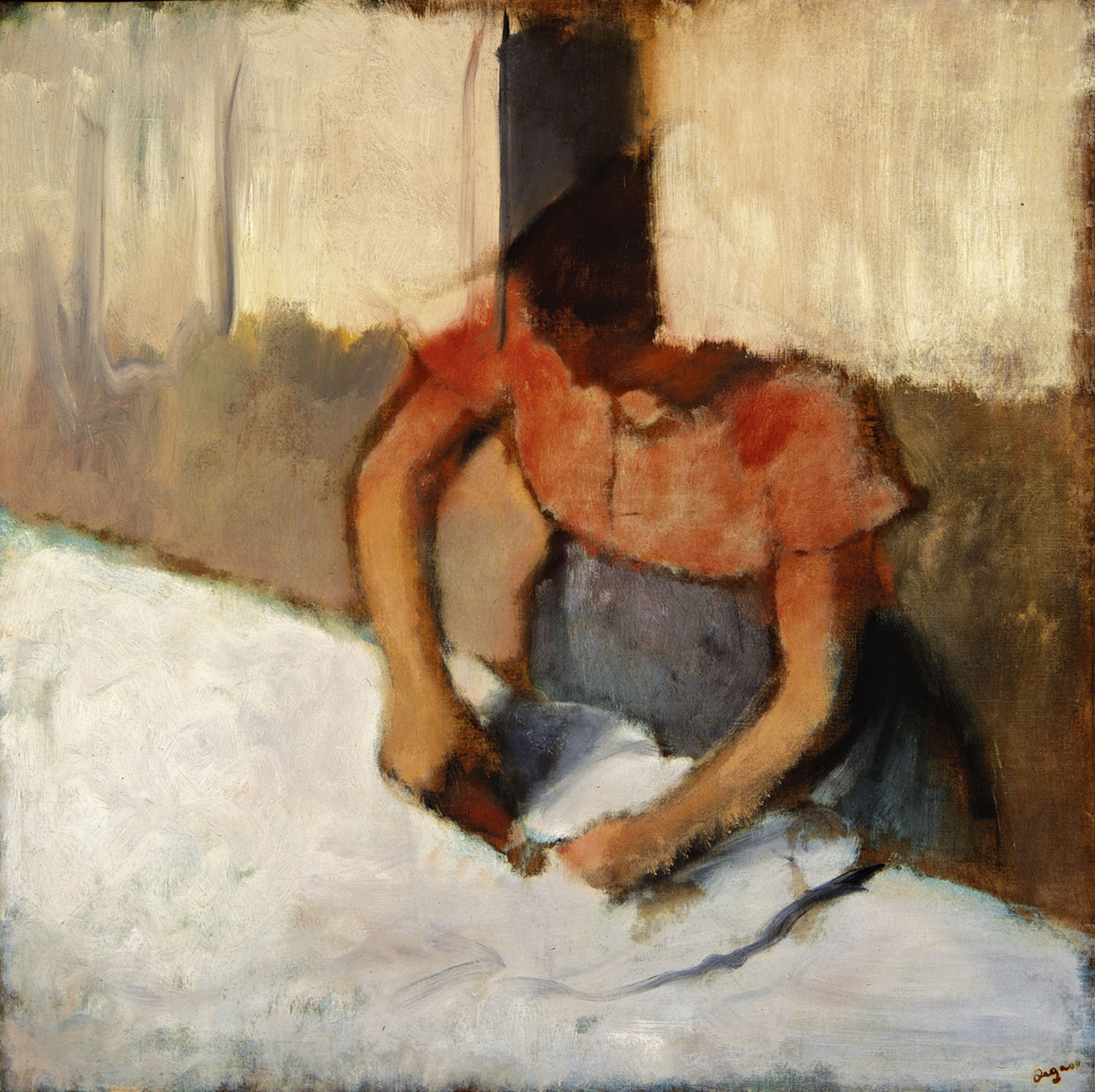

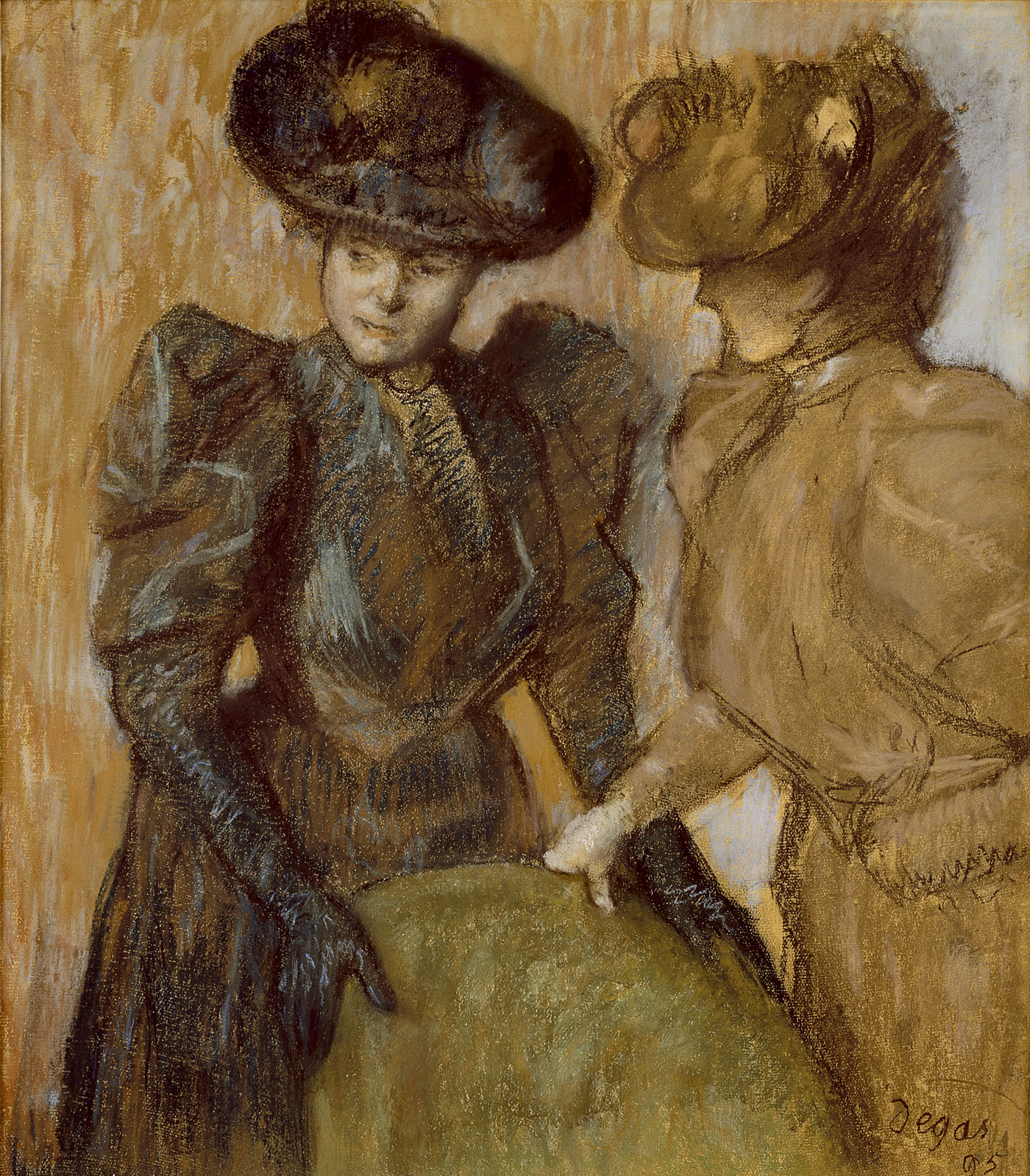
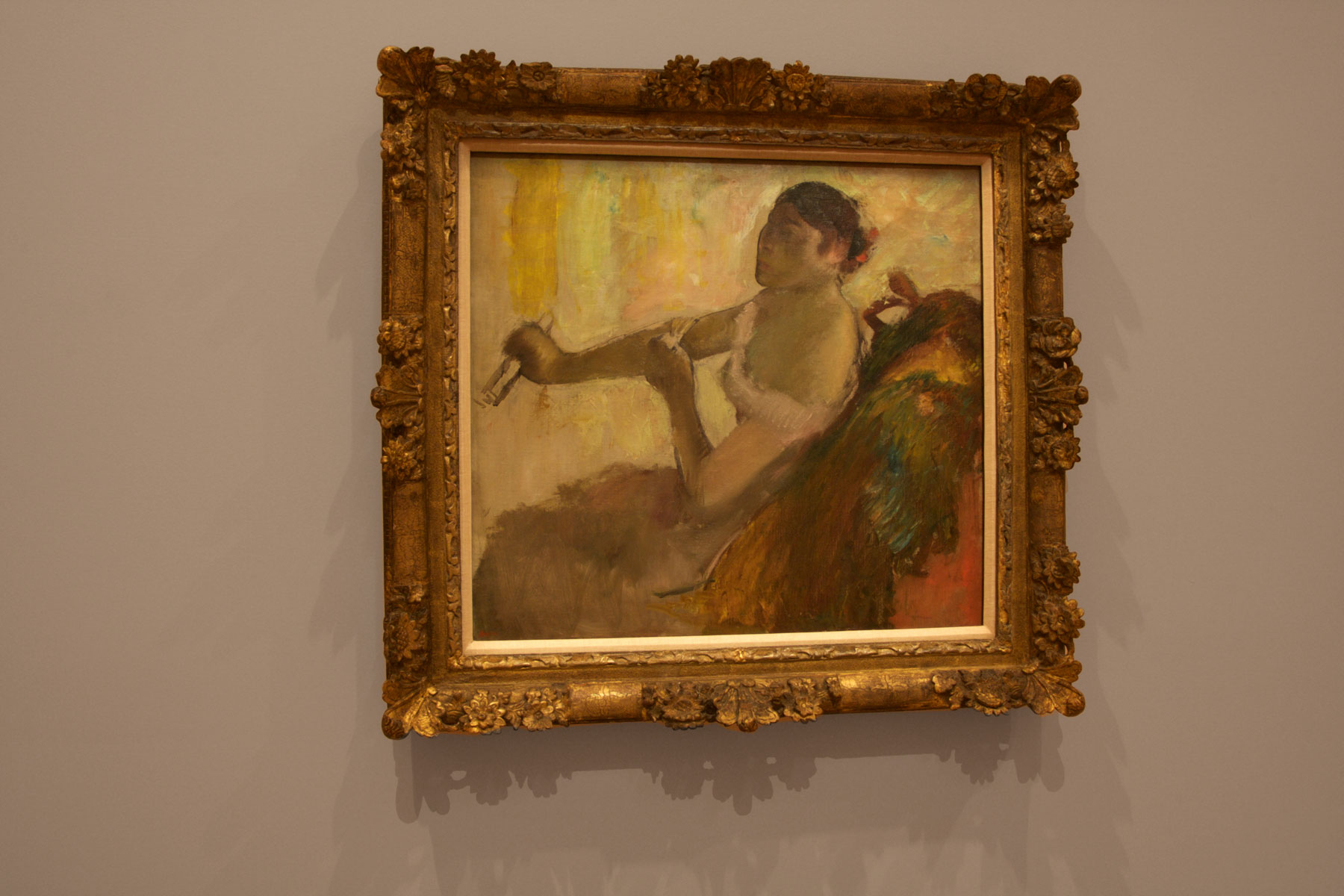
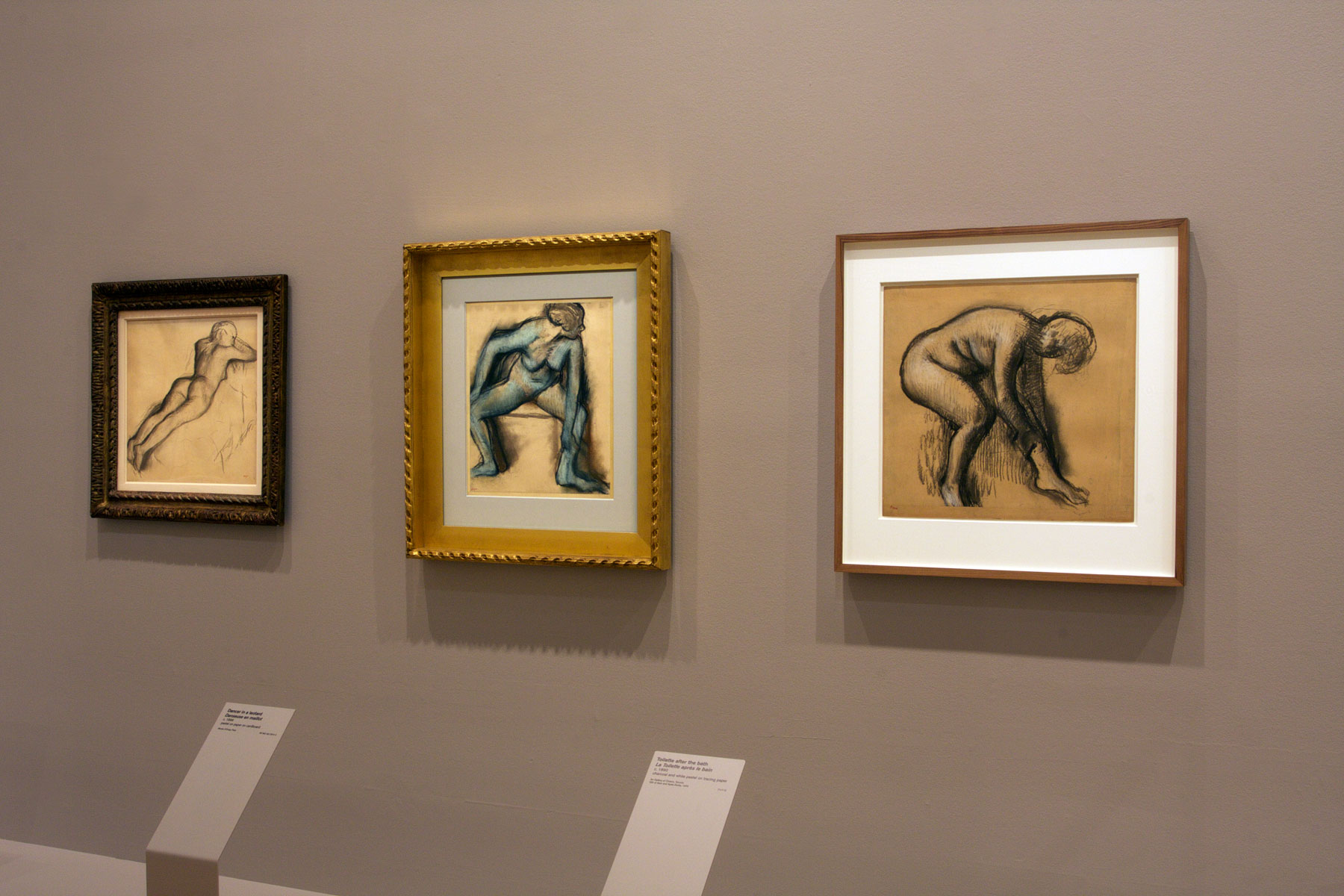
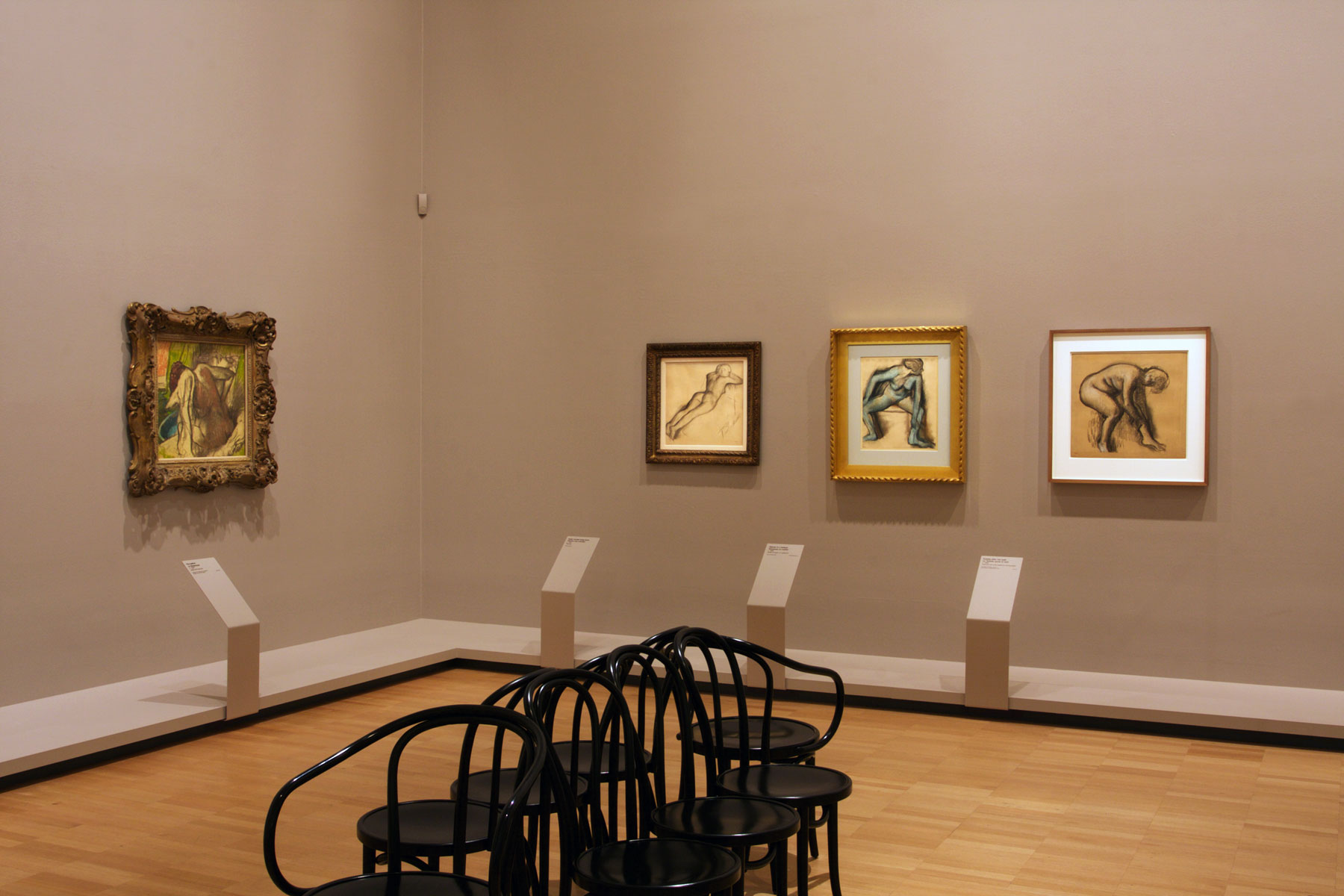

![Edgar Degas (French, 1834-1917) 'La Baigneuse [The bather]' c. 1895](https://artblart.com/wp-content/uploads/2016/09/installation-bp.jpg "Edgar Degas (French, 1834-1917) 'La Baigneuse [The bather]' c. 1895")
![Edgar Degas (French, 1834-1917) 'Femme a la toilette [Woman at he toilette] c. 1895-1900 (installation view)](https://artblart.com/wp-content/uploads/2016/09/installation-bd.jpg "Edgar Degas (French, 1834-1917) 'Femme a la toilette [Woman at he toilette] c. 1895-1900 (installation view)")
![Edgar Degas (French, 1834-1917) 'Femme a la toilette [Woman at her toilette] c. 1894 (installation view)](https://artblart.com/wp-content/uploads/2016/09/installation-be.jpg "Edgar Degas (French, 1834-1917) 'Femme a la toilette [Woman at her toilette] c. 1894 (installation view)")
![Edgar Degas (French, 1834-1917) 'Femme a la toilette [Woman at her toilette] c. 1894](https://artblart.com/wp-content/uploads/2016/08/exhi036044-web.jpg "Edgar Degas (French, 1834-1917) 'Femme a la toilette [Woman at her toilette] c. 1894")


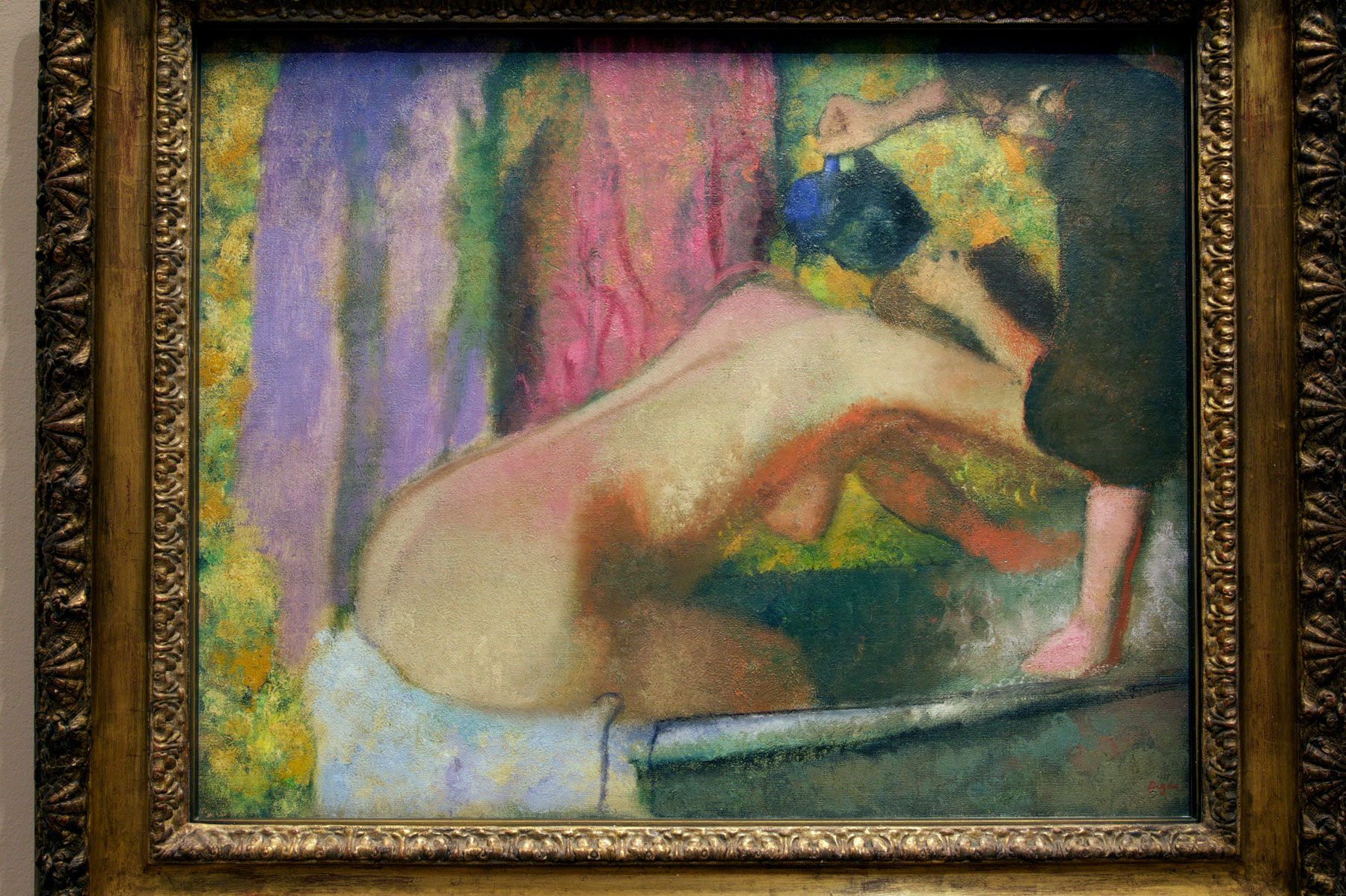
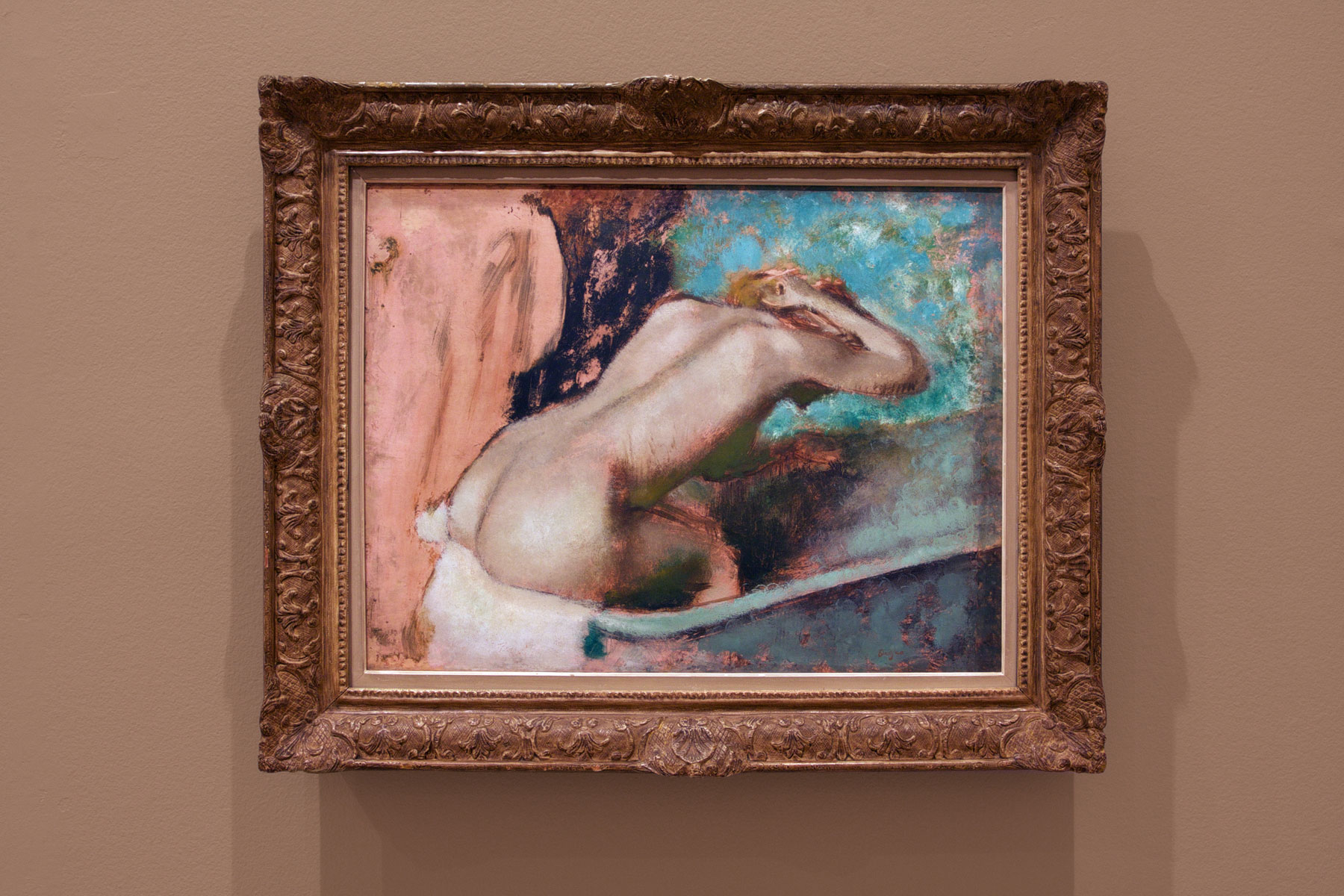

![Installation view of the exhibition 'Degas: A New Vision' at the National Gallery of Victoria International, Melbourne showing at right, 'Femme au Tub' [Nude woman drying herself] c. 1884-1886](https://artblart.com/wp-content/uploads/2016/09/installation-bh.jpg "Installation view of the exhibition 'Degas: A New Vision' at the National Gallery of Victoria International, Melbourne showing at right, 'Femme au Tub' [Nude woman drying herself] c. 1884-1886")
![Edgar Degas. 'Femme au Tub [Nude woman drying herself]' c. 1884-1886 (installation view)](https://artblart.com/wp-content/uploads/2016/09/installation-bi.jpg "Edgar Degas. 'Femme au Tub [Nude woman drying herself]' c. 1884-1886 (installation view)")

![Edgar Degas (French, 1834-1917) 'Chevaux de courses [Racehorses]' c. 1895-1899 (installation view)](https://artblart.com/wp-content/uploads/2016/09/installation-bf.jpg "Edgar Degas (French, 1834-1917) 'Chevaux de courses [Racehorses]' c. 1895-1899 (installation view)")
![Edgar Degas (French, 1834-1917) 'Chevaux de courses [Racehorses]' c. 1895-1899](https://artblart.com/wp-content/uploads/2016/08/exhi039831_web.jpg "Edgar Degas (French, 1834-1917) 'Chevaux de courses [Racehorses]' c. 1895-1899")
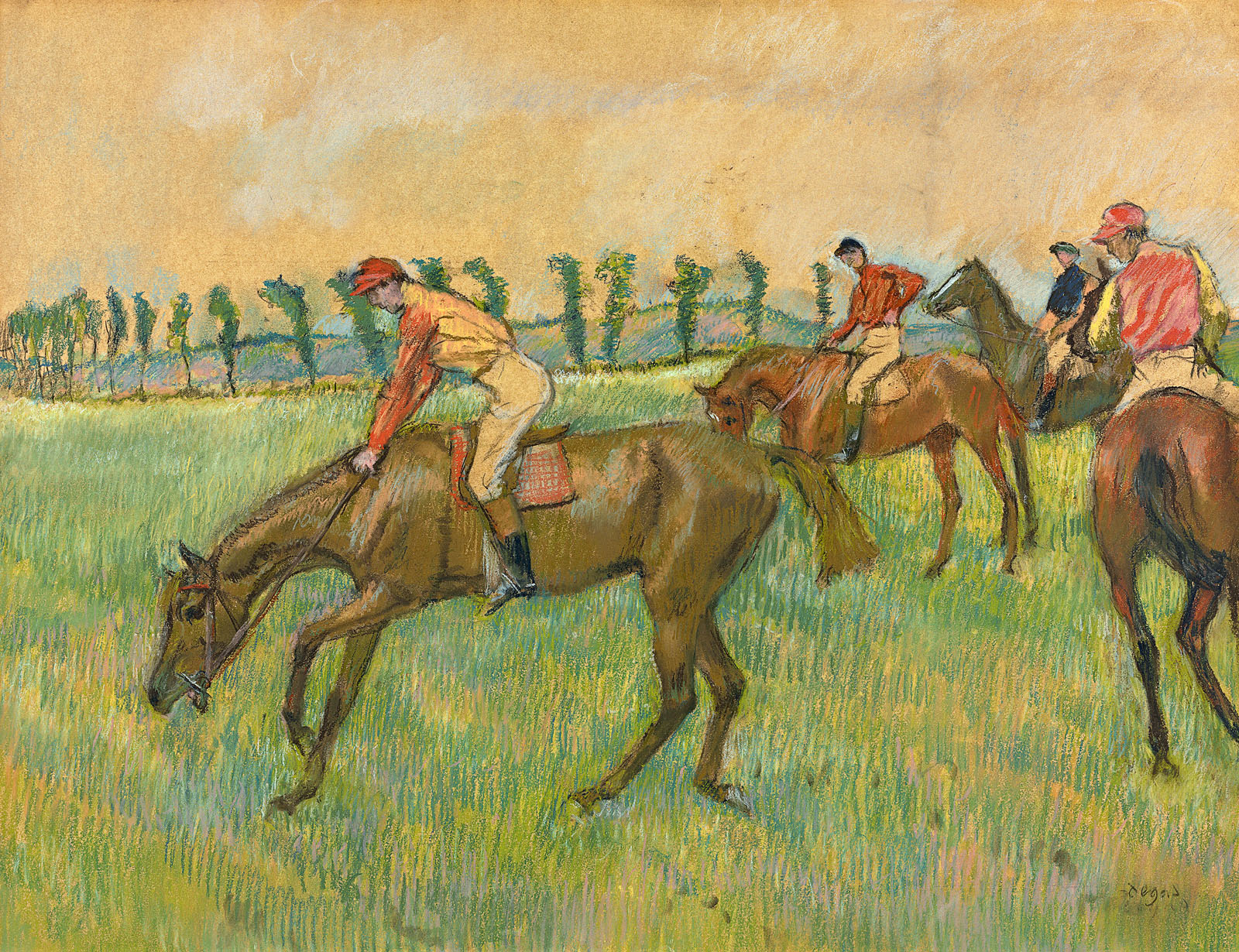


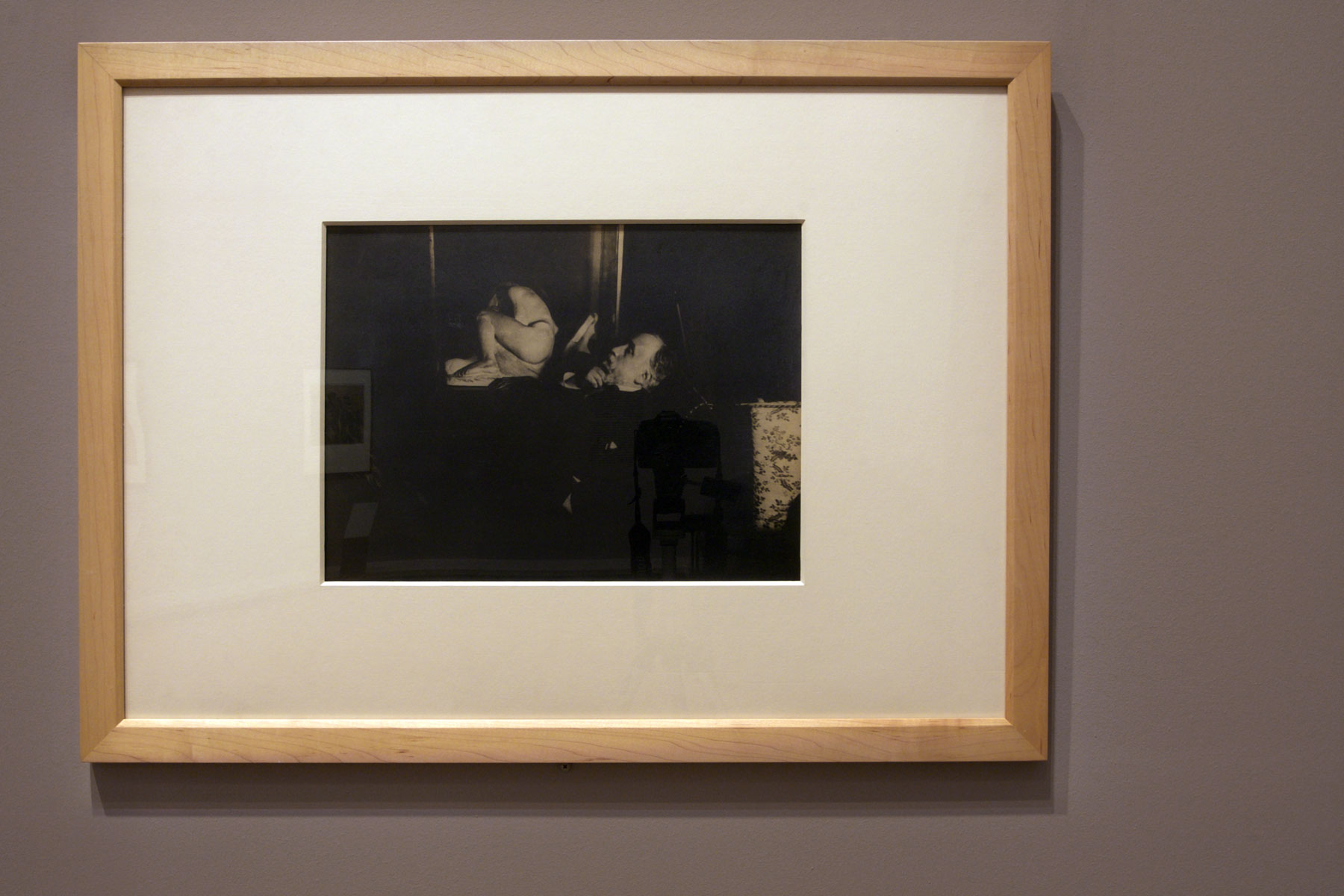

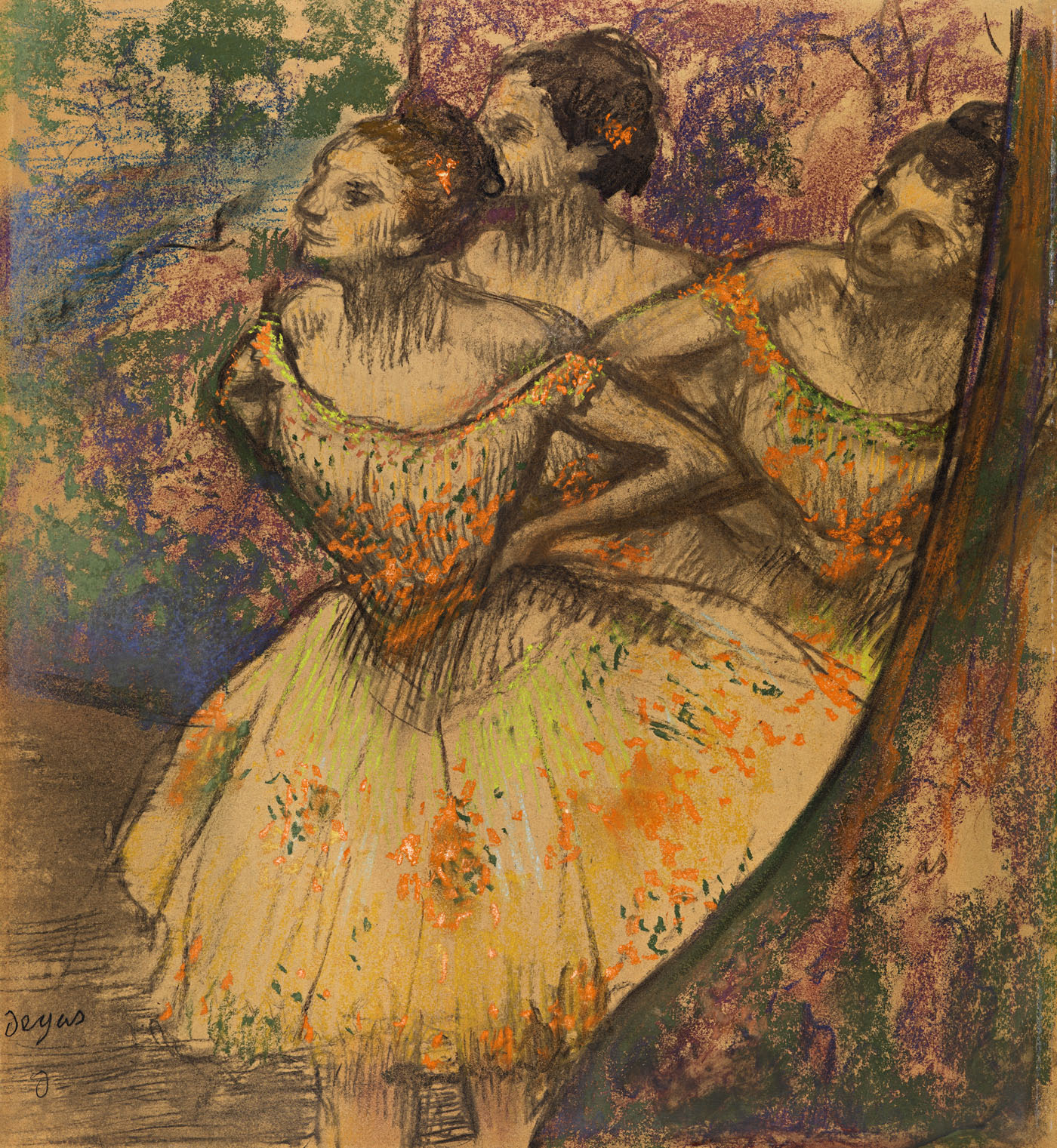
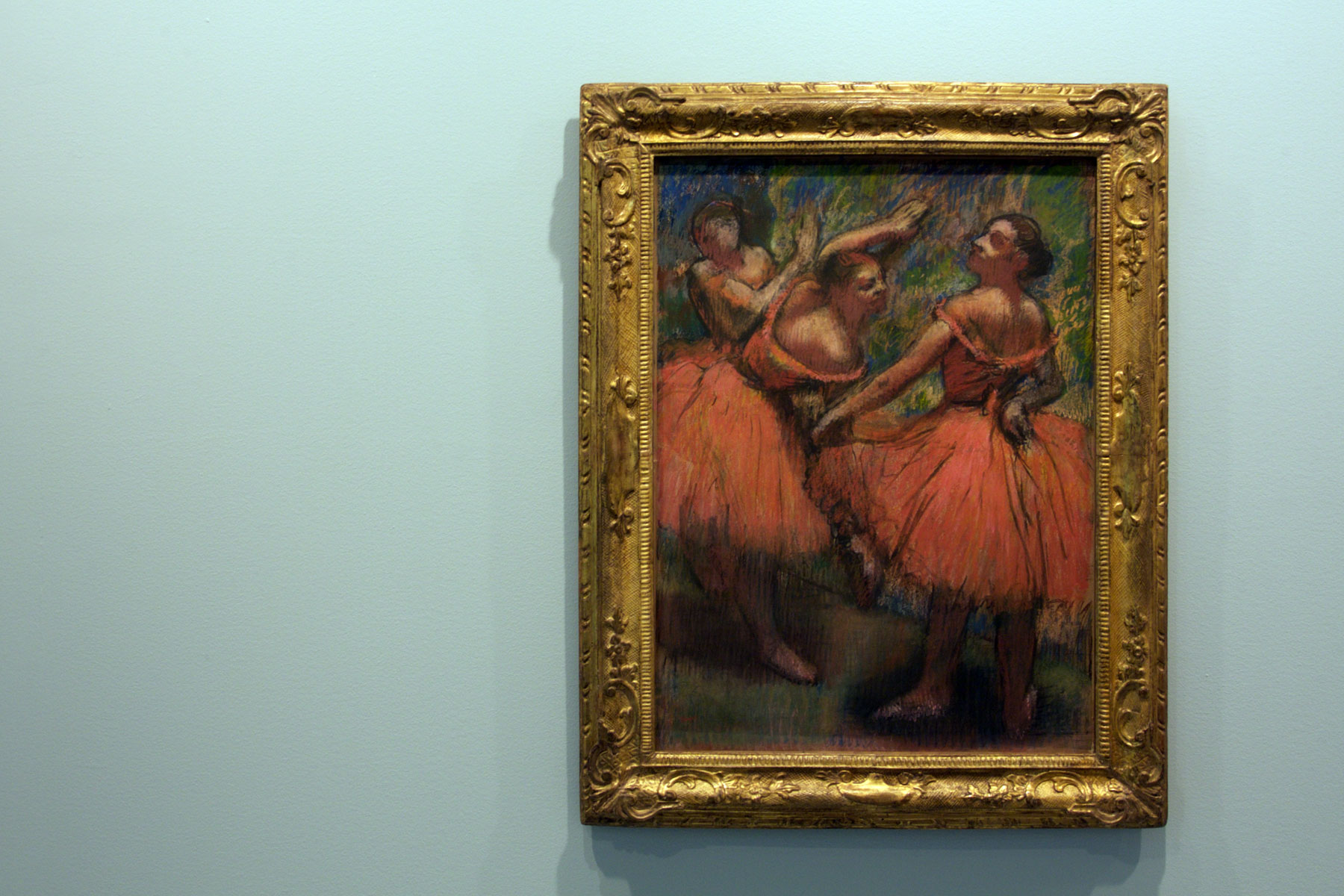
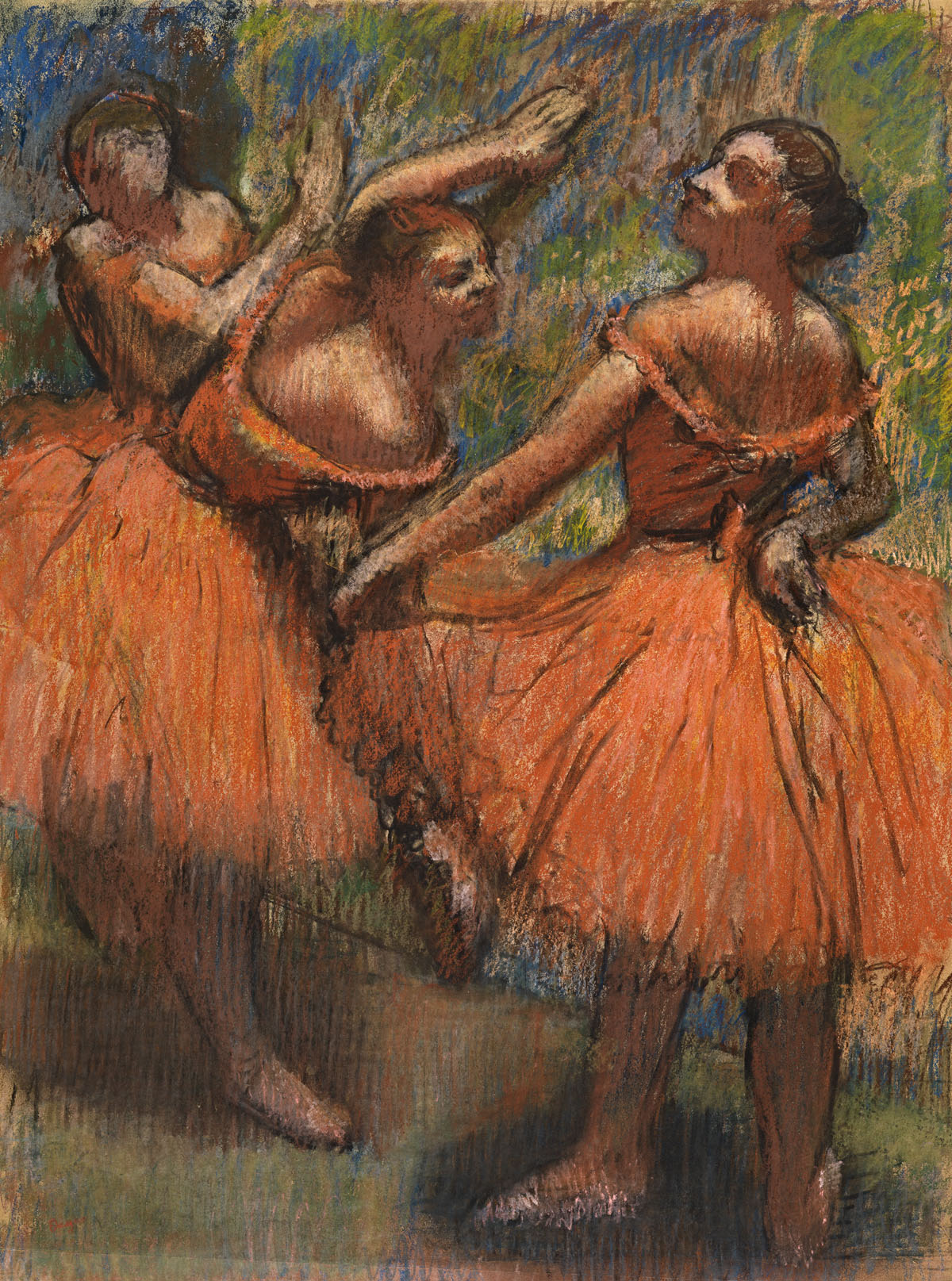


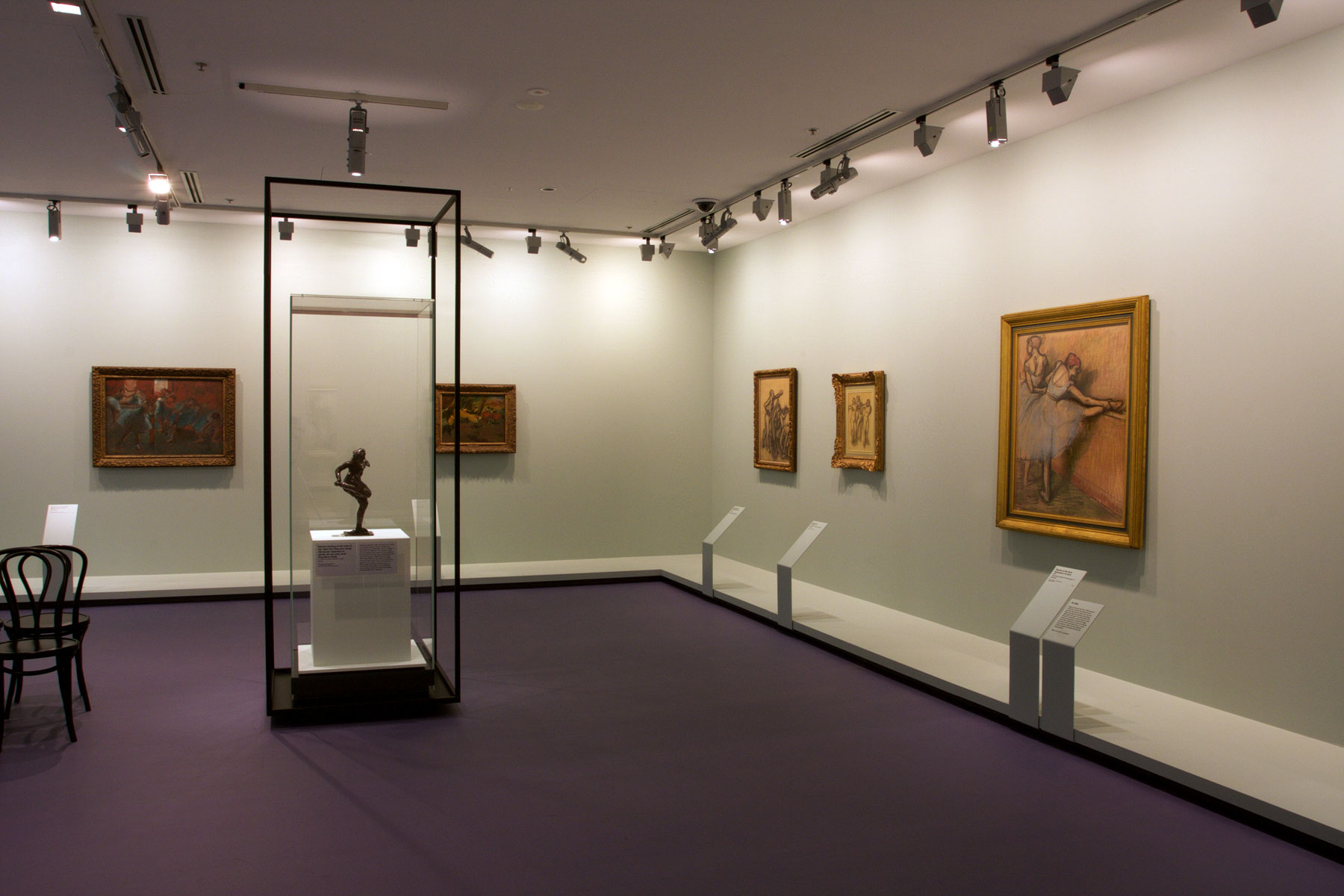
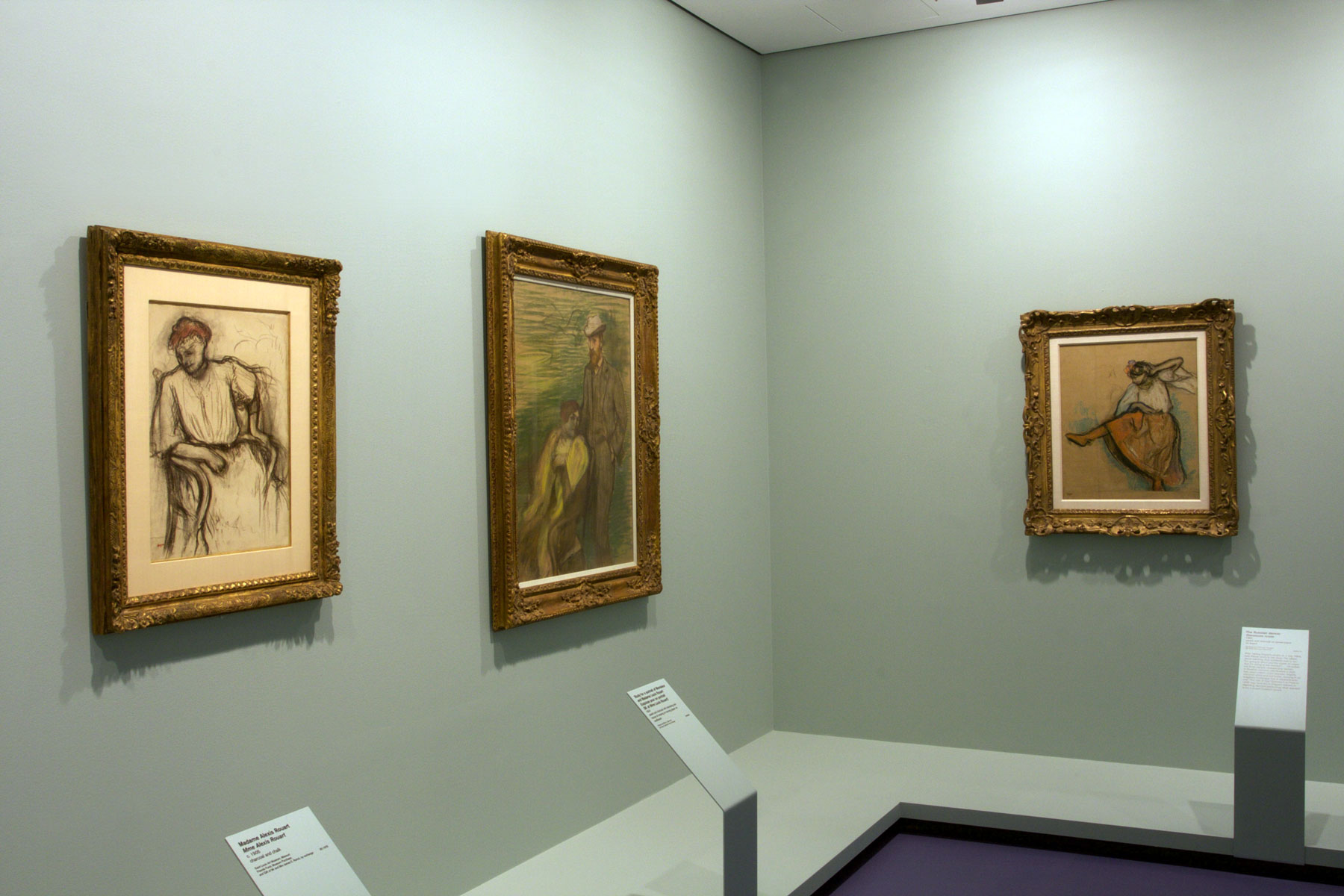

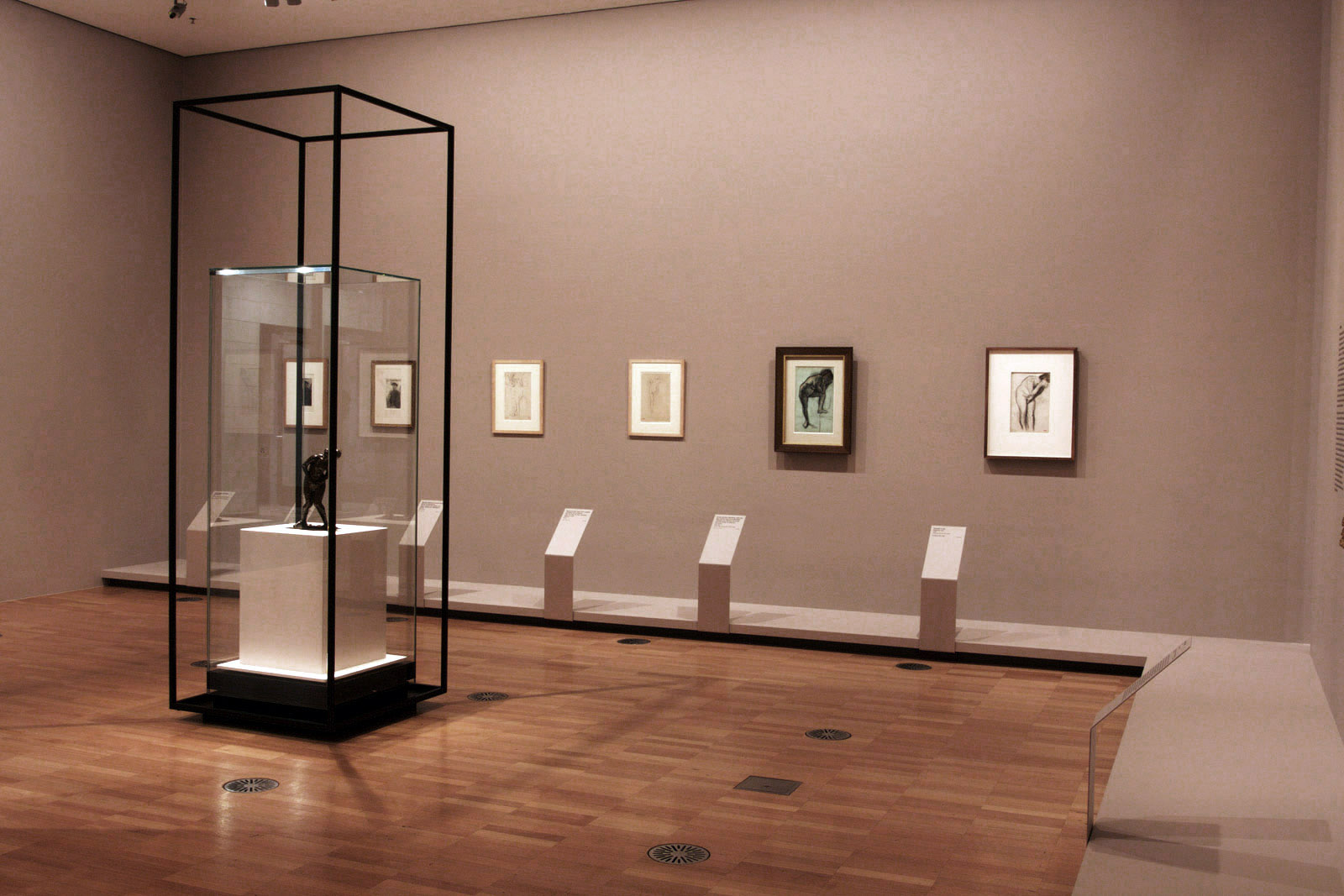


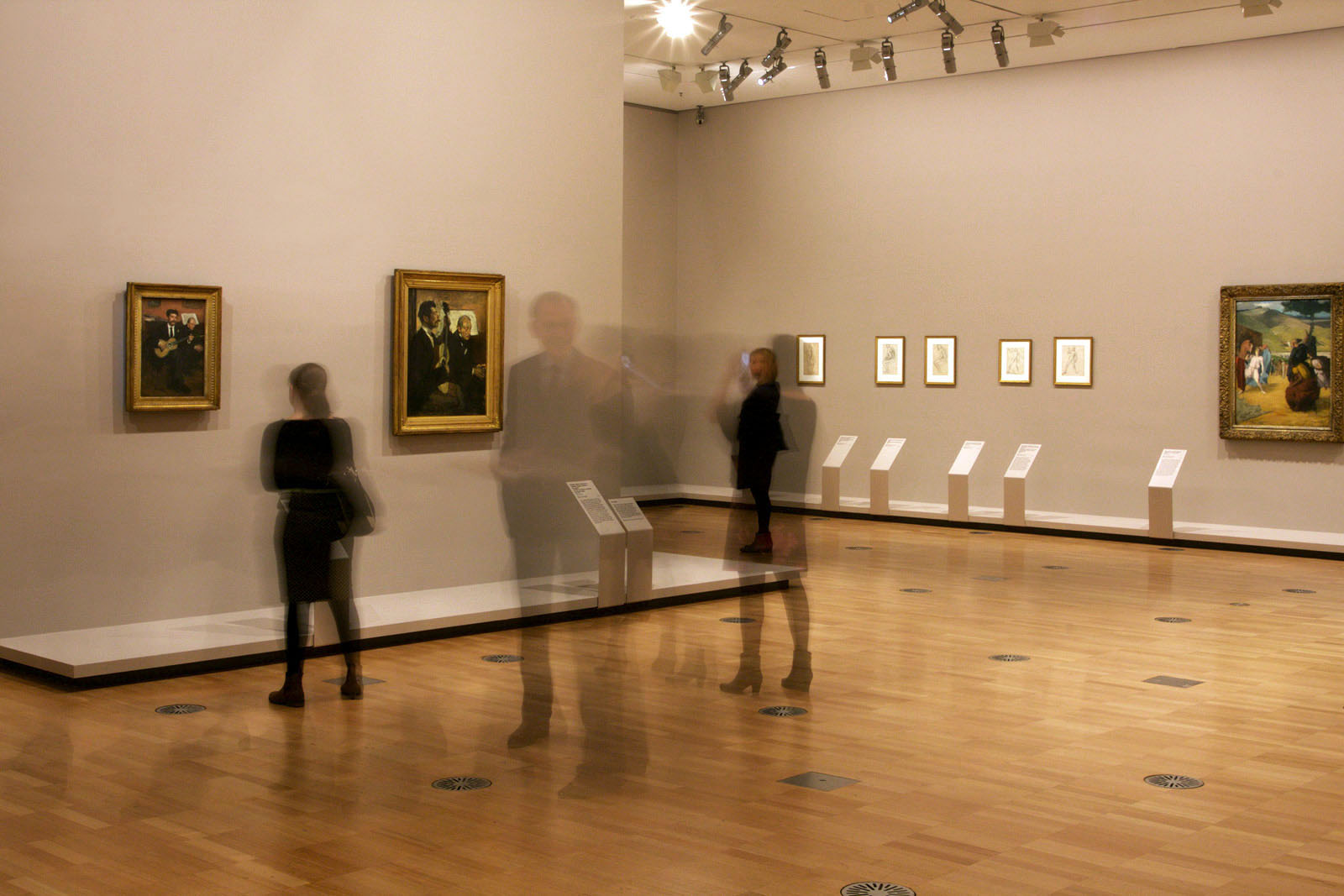


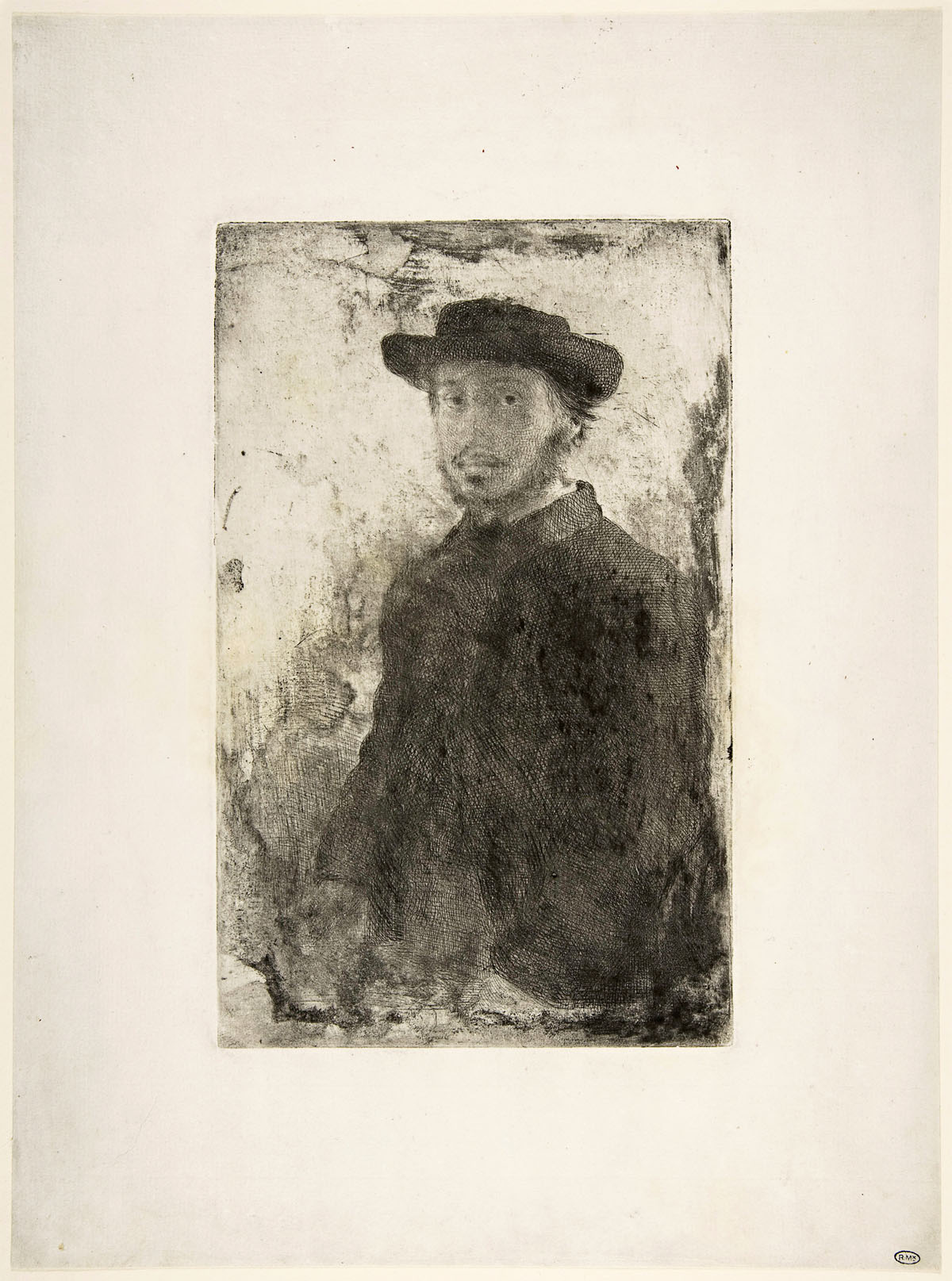

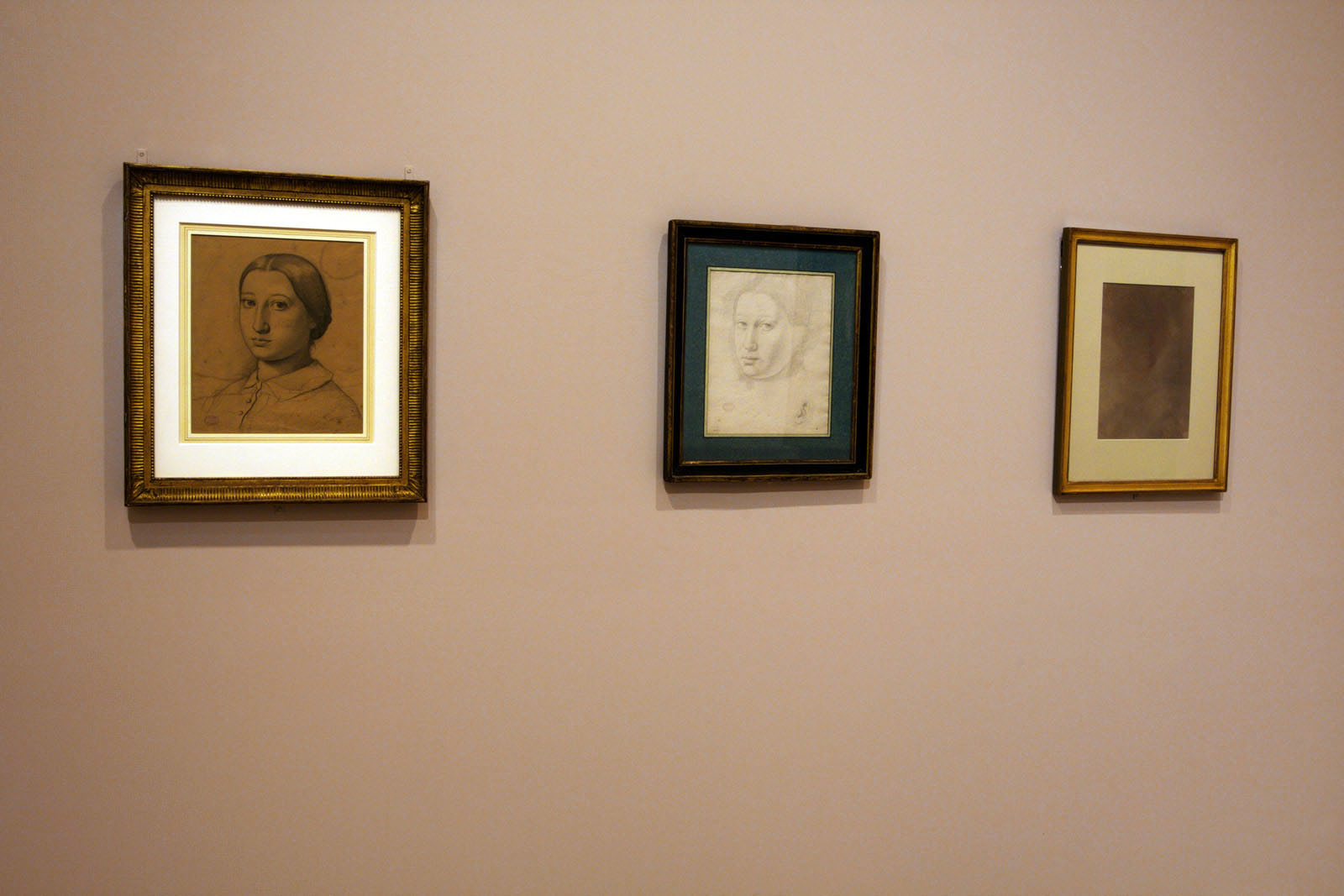
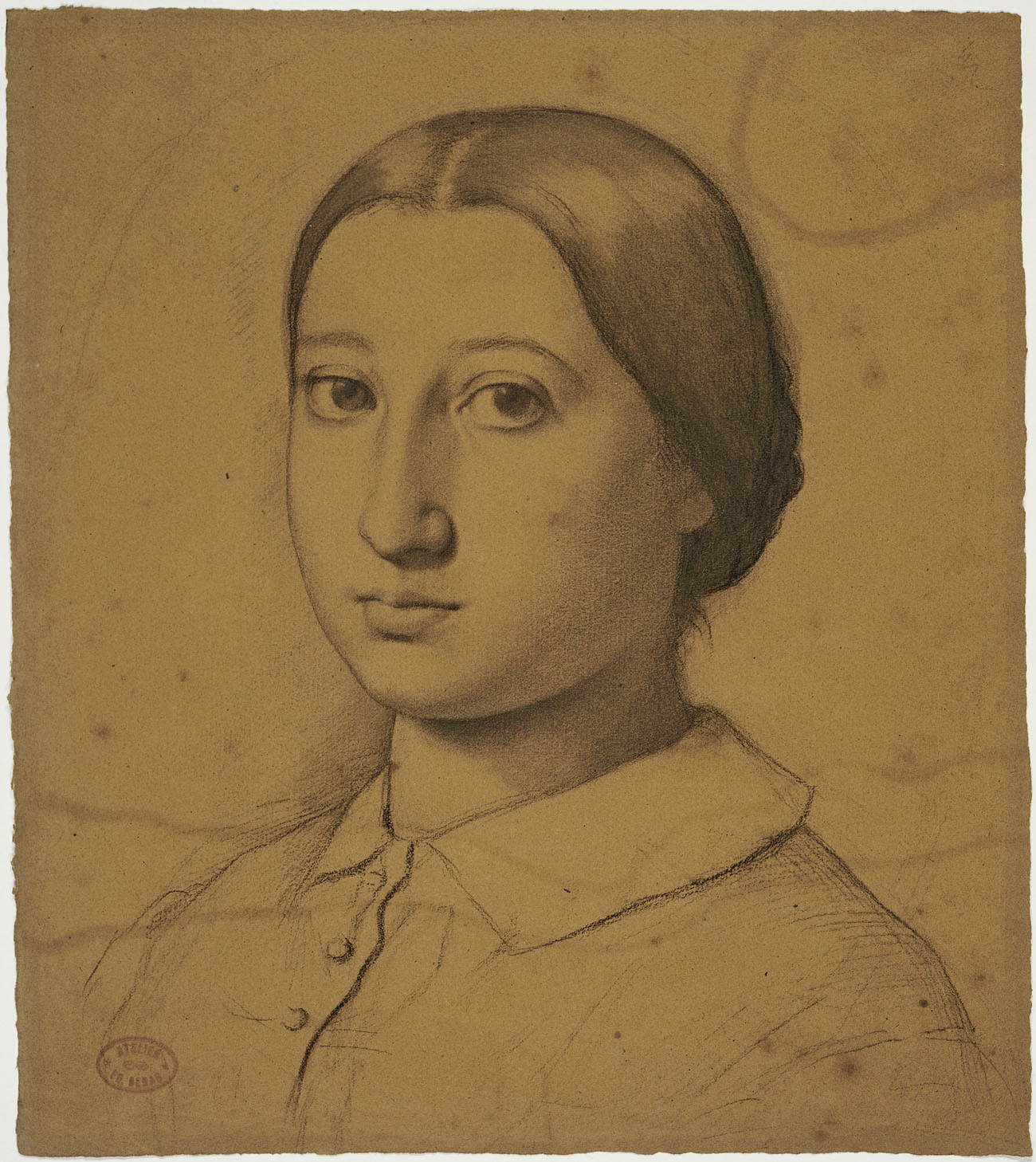


![Installation view of the exhibition 'Degas: A New Vision' at the National Gallery of Victoria International, Melbourne showing at left, 'Mendiante romaine' [Roman beggar women] (1857)](https://artblart.com/wp-content/uploads/2016/08/installation-l.jpg "Installation view of the exhibition 'Degas: A New Vision' at the National Gallery of Victoria International, Melbourne showing at left, 'Mendiante romaine' [Roman beggar women] (1857)")
![Edgar Degas (French, 1834-1917) 'Mendiante romaine' [Roman beggar women] 1857 (installation view)](https://artblart.com/wp-content/uploads/2016/08/installation-m.jpg "Edgar Degas (French, 1834-1917) 'Mendiante romaine' [Roman beggar women] 1857 (installation view)")

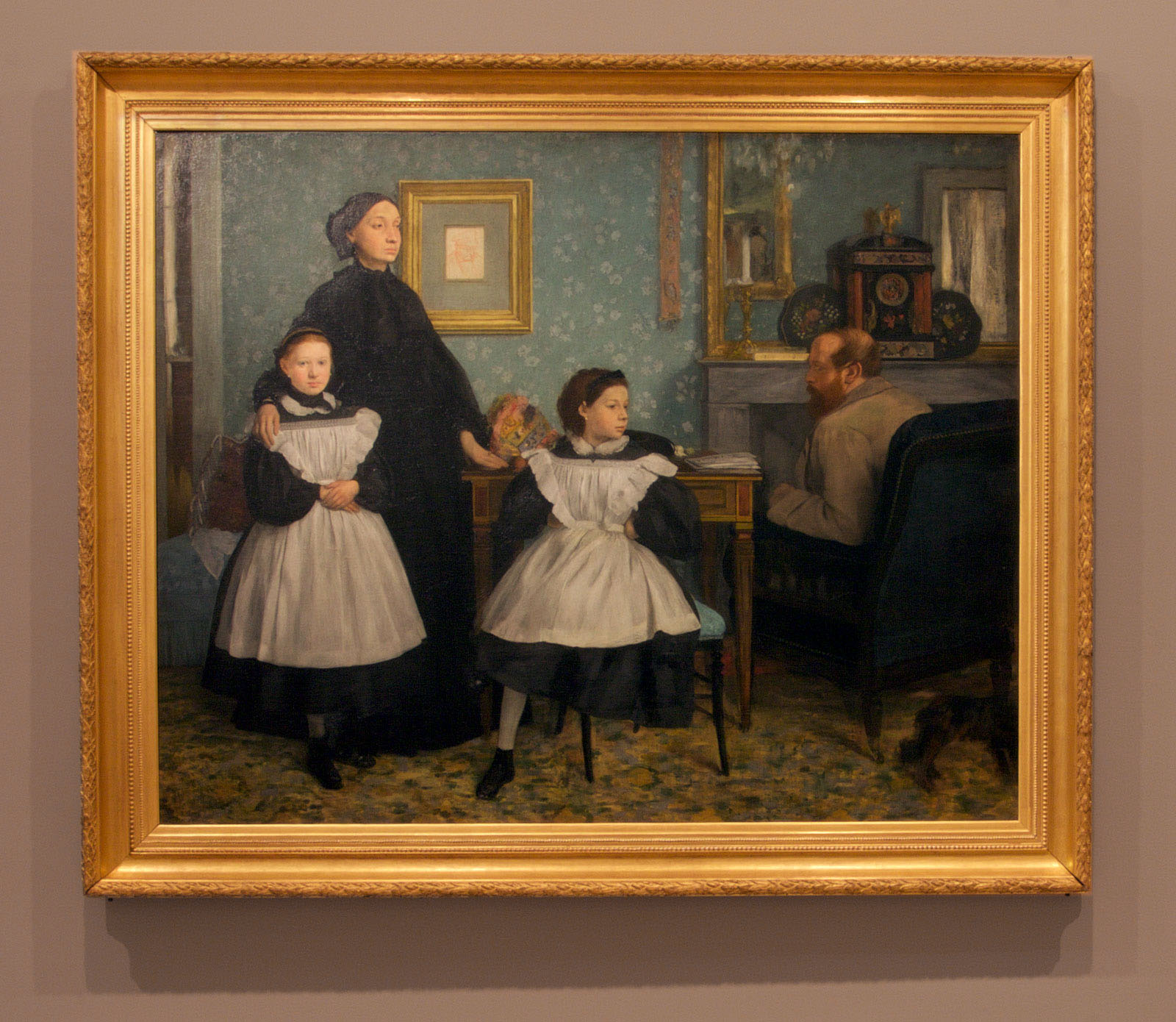
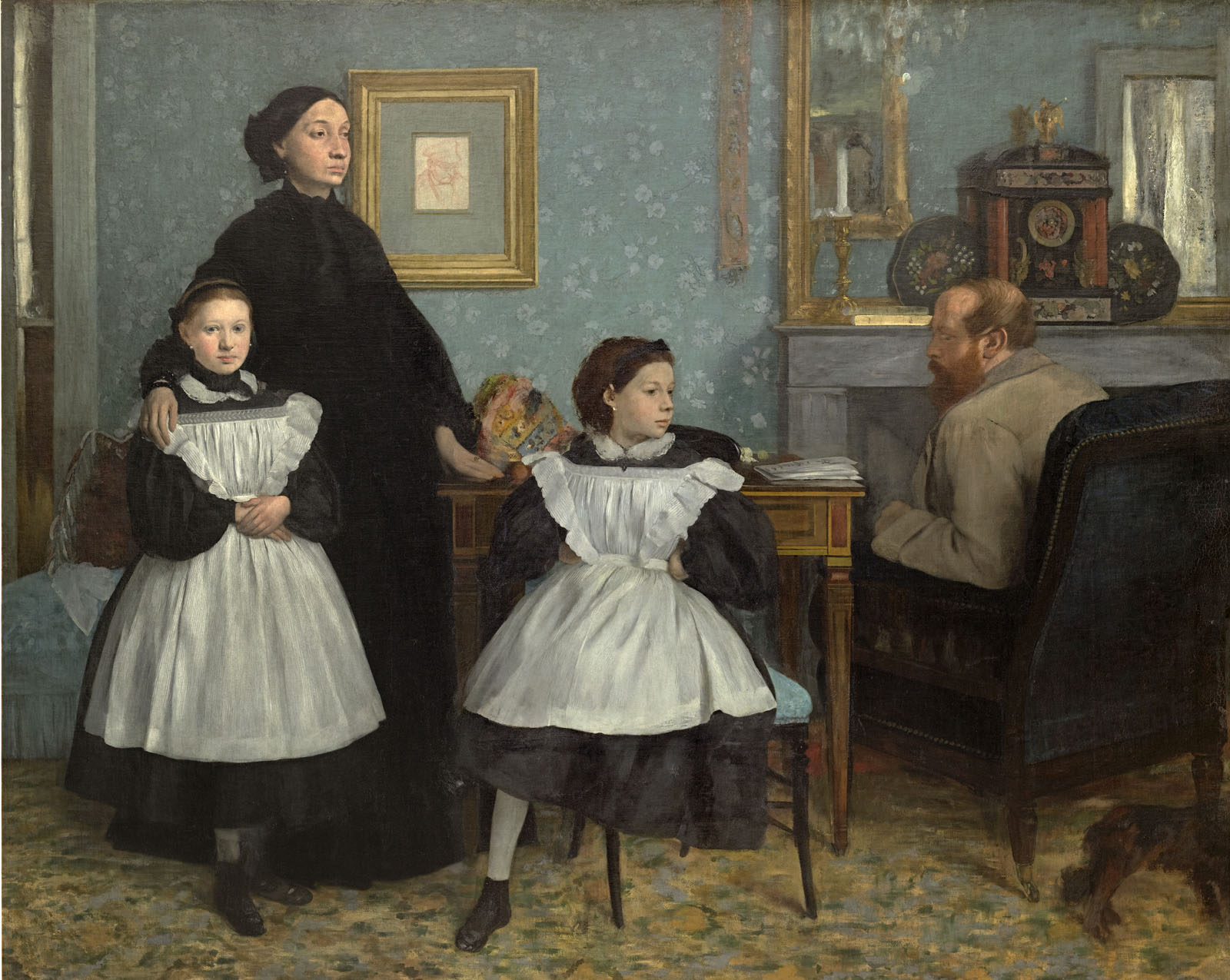
![Installation view of the exhibition 'Degas: A New Vision' at the National Gallery of Victoria International, Melbourne showing at left, 'Monsieur Reulle' (1861); and at right, 'Portrait de jeune femme' [Portrait of a young woman] (1867)](https://artblart.com/wp-content/uploads/2016/08/installation-q.jpg "Installation view of the exhibition 'Degas: A New Vision' at the National Gallery of Victoria International, Melbourne showing at left, 'Monsieur Reulle' (1861); and at right, 'Portrait de jeune femme' [Portrait of a young woman] (1867)")
![Edgar Degas (French, 1834-1917) 'Étude pour Jeunes Spartiates s'exerçant à la lutte' [Study for The young Spartans exercising] c. 1860-1861 (installation view)](https://artblart.com/wp-content/uploads/2016/08/installation-o.jpg "Edgar Degas (French, 1834-1917) 'Étude pour Jeunes Spartiates s'exerçant à la lutte' [Study for The young Spartans exercising] c. 1860-1861 (installation view)")
![Edgar Degas (French, 1834-1917) 'Petites filles spartiates provoquant des garçons' [Young Spartan girls challenging boys] c. 1860 (installation view)](https://artblart.com/wp-content/uploads/2016/08/installation-n.jpg "Edgar Degas (French, 1834-1917) 'Petites filles spartiates provoquant des garçons' [Young Spartan girls challenging boys] c. 1860 (installation view)")
![Edgar Degas (French, 1834-1917) 'Petites filles spartiates provoquant des garçons' [Young Spartan girls challenging boys] c. 1860 (installation view)](https://artblart.com/wp-content/uploads/2016/08/installation-p.jpg "Edgar Degas (French, 1834-1917) 'Petites filles spartiates provoquant des garçons' [Young Spartan girls challenging boys] c. 1860 (installation view)")
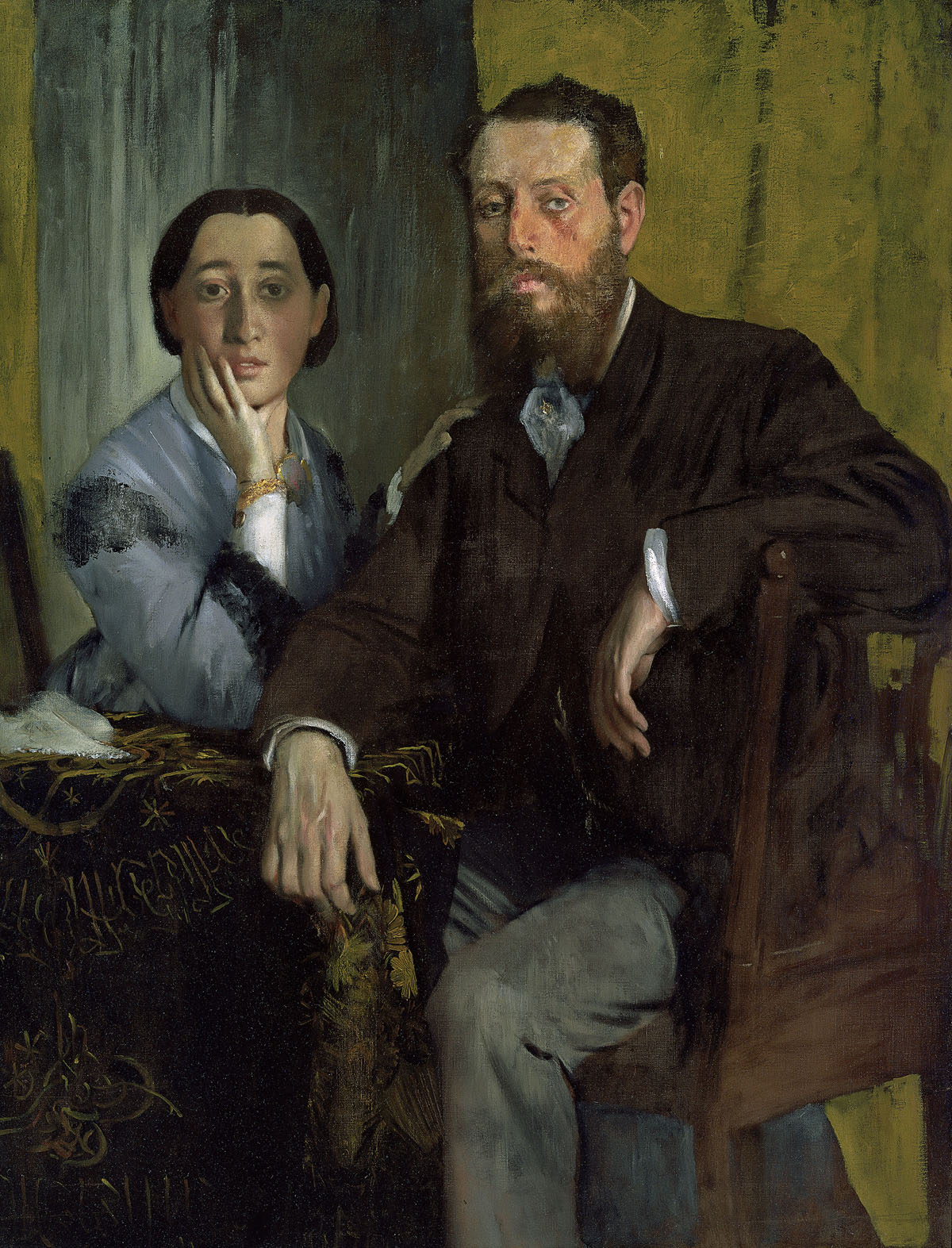


![Edgar Degas (French, 1834-1917) 'Etude de nus: Mlle Fiocre dans le ballet La Source' [Nude study: Mademoiselle Fiocre in the ballet 'The Spring'] 1867-1868 (installation view)](https://artblart.com/wp-content/uploads/2016/08/installation-aa.jpg "Edgar Degas (French, 1834-1917) 'Etude de nus: Mlle Fiocre dans le ballet La Source' [Nude study: Mademoiselle Fiocre in the ballet 'The Spring'] 1867-1868 (installation view)")
![Installation view of the exhibition 'Degas: A New Vision' at the National Gallery of Victoria International, Melbourne showing at left, 'Portrait d'homme' [Portrait of a man] (c. 1866) and at right, 'Victoria Dubourg' (1868-1869)](https://artblart.com/wp-content/uploads/2016/08/installation-z.jpg "Installation view of the exhibition 'Degas: A New Vision' at the National Gallery of Victoria International, Melbourne showing at left, 'Portrait d'homme' [Portrait of a man] (c. 1866) and at right, 'Victoria Dubourg' (1868-1869)")
![Installation view of the exhibition 'Degas: A New Vision' at the National Gallery of Victoria International, Melbourne Installation view of the exhibition 'Degas: A New Vision' at the National Gallery of Victoria International, Melbourne showing at left, 'Portrait d'homme' [Portrait of a man] (c. 1866) and at right, 'Victoria Dubourg' (1868-1869)](https://artblart.com/wp-content/uploads/2016/08/installation-v.jpg "Installation view of the exhibition 'Degas: A New Vision' at the National Gallery of Victoria International, Melbourne Installation view of the exhibition 'Degas: A New Vision' at the National Gallery of Victoria International, Melbourne showing at left, 'Portrait d'homme' [Portrait of a man] (c. 1866) and at right, 'Victoria Dubourg' (1868-1869)")

![Edgar Degas (French, 1834-1917) 'Mme Jeantaud sur sa chaise longue, avec deux chiens' [Madame Jeantaud on her chaise longue, with two dogs] 1877 (installation view)](https://artblart.com/wp-content/uploads/2016/08/installation-x.jpg "Edgar Degas (French, 1834-1917) 'Mme Jeantaud sur sa chaise longue, avec deux chiens' [Madame Jeantaud on her chaise longue, with two dogs] 1877 (installation view)")
![Edgar Degas (French, 1834-1917) 'Mme Jeantaud sur sa chaise longue, avec deux chiens' [Madame Jeantaud on her chaise longue, with two dogs] 1877 (installation view detail)](https://artblart.com/wp-content/uploads/2016/08/installation-x-detail.jpg "Edgar Degas (French, 1834-1917) 'Mme Jeantaud sur sa chaise longue, avec deux chiens' [Madame Jeantaud on her chaise longue, with two dogs] 1877 (installation view detail)")


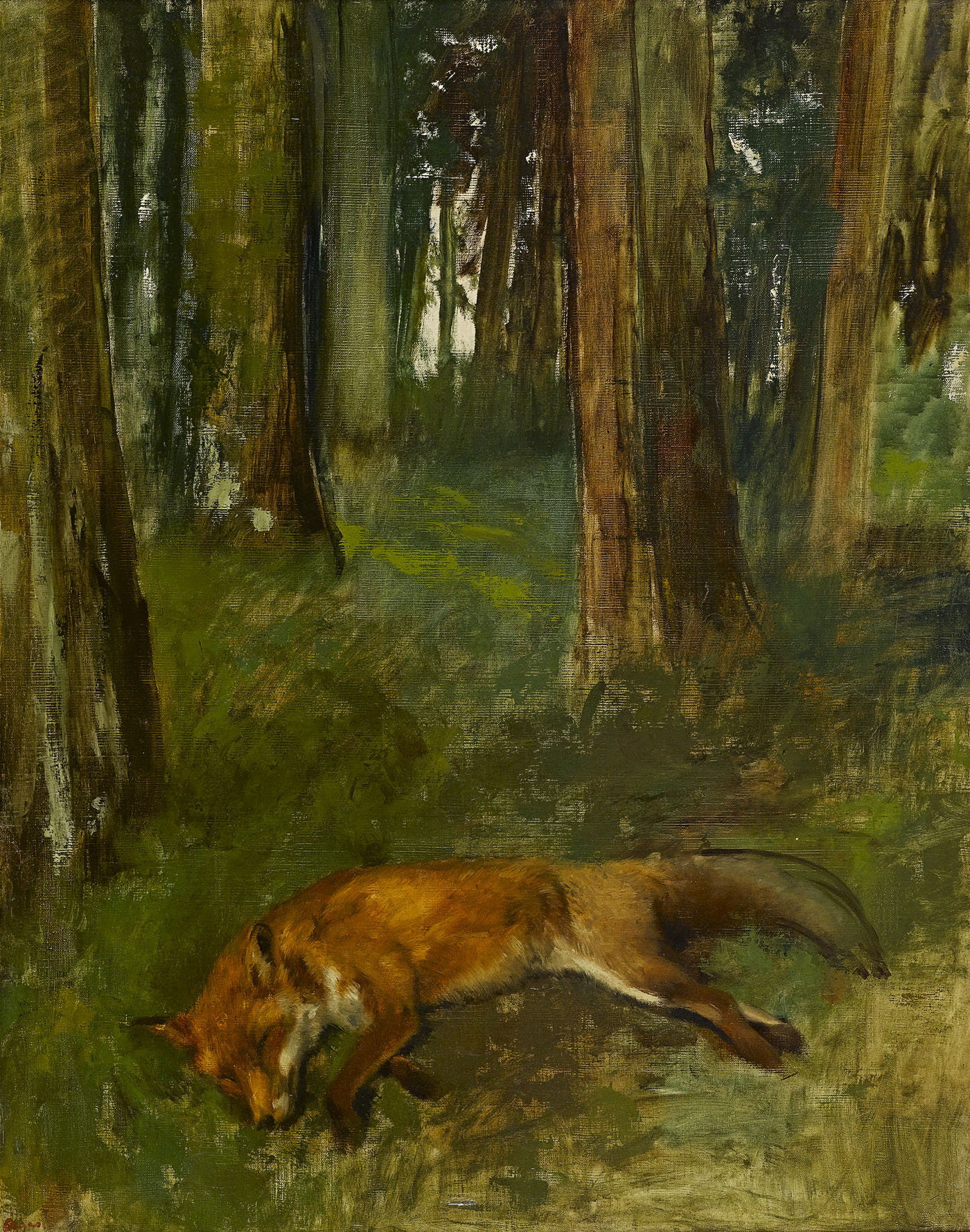
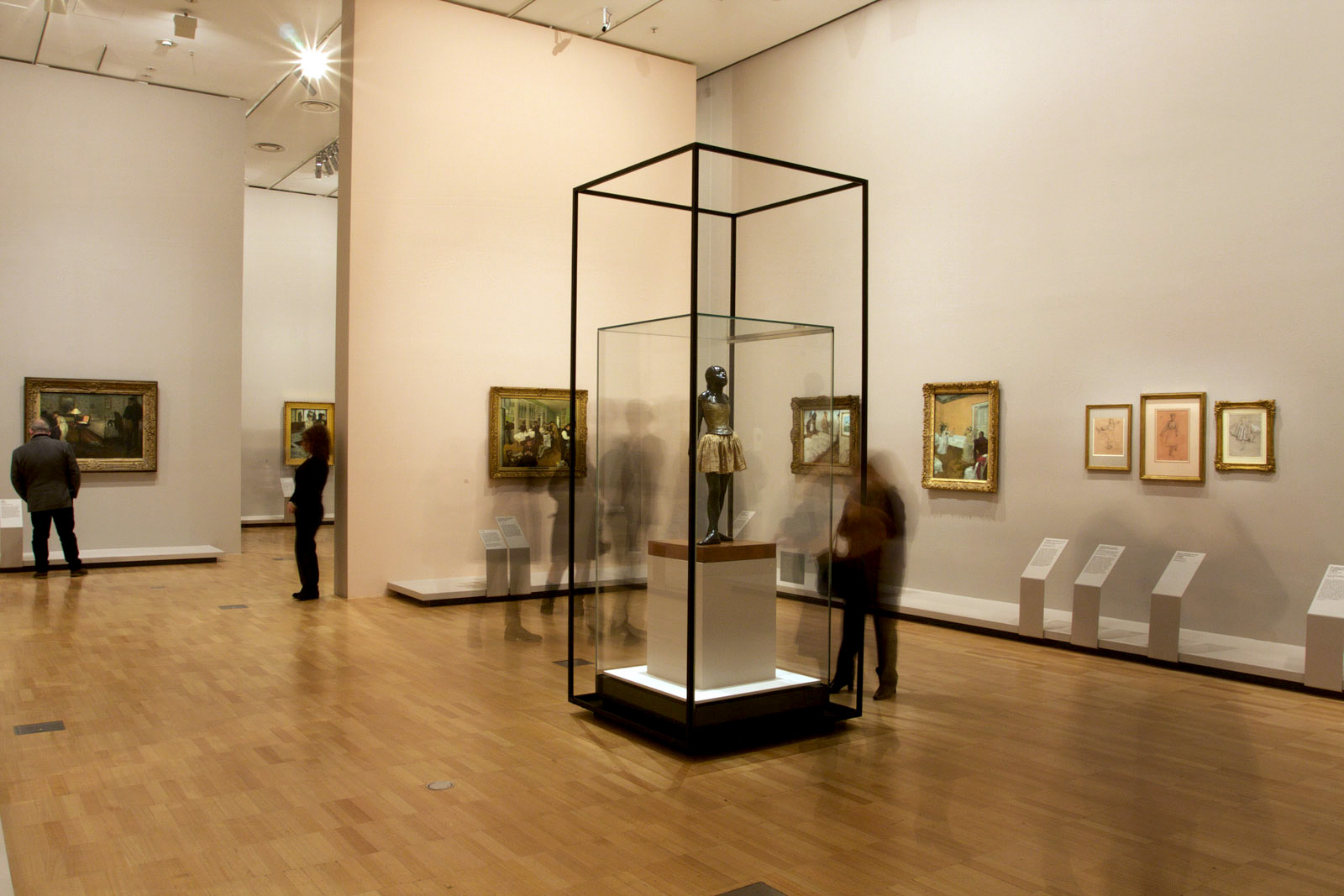


![Edgar Degas (French, 1834-1917) 'Un bureau de coton à la Nouvelle-Orléans' [A cotton office in New Orleans] 1873 (installation view)](https://artblart.com/wp-content/uploads/2016/08/installation-af.jpg "Edgar Degas (French, 1834-1917) 'Un bureau de coton à la Nouvelle-Orléans' [A cotton office in New Orleans] 1873 (installation view)")
![Edgar Degas (French, 1834-1917) 'Un bureau de coton à la Nouvelle-Orléans' [A cotton office in New Orleans] 1873 (installation view)](https://artblart.com/wp-content/uploads/2016/08/exhi040021_web.jpg "Edgar Degas (French, 1834-1917) 'Un bureau de coton à la Nouvelle-Orléans' [A cotton office in New Orleans] 1873 (installation view)")


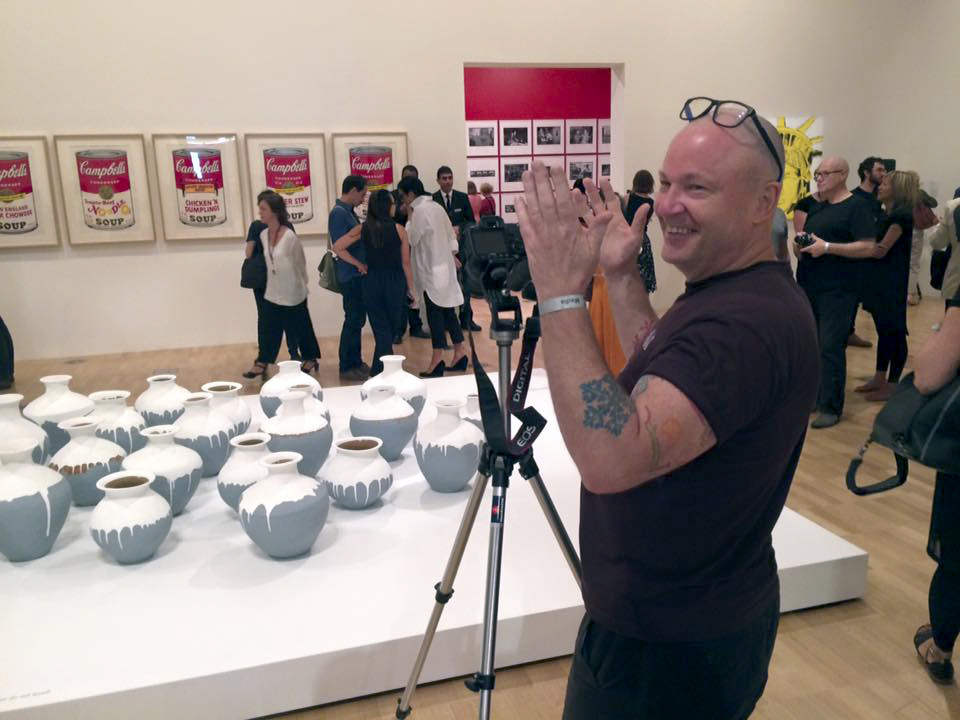
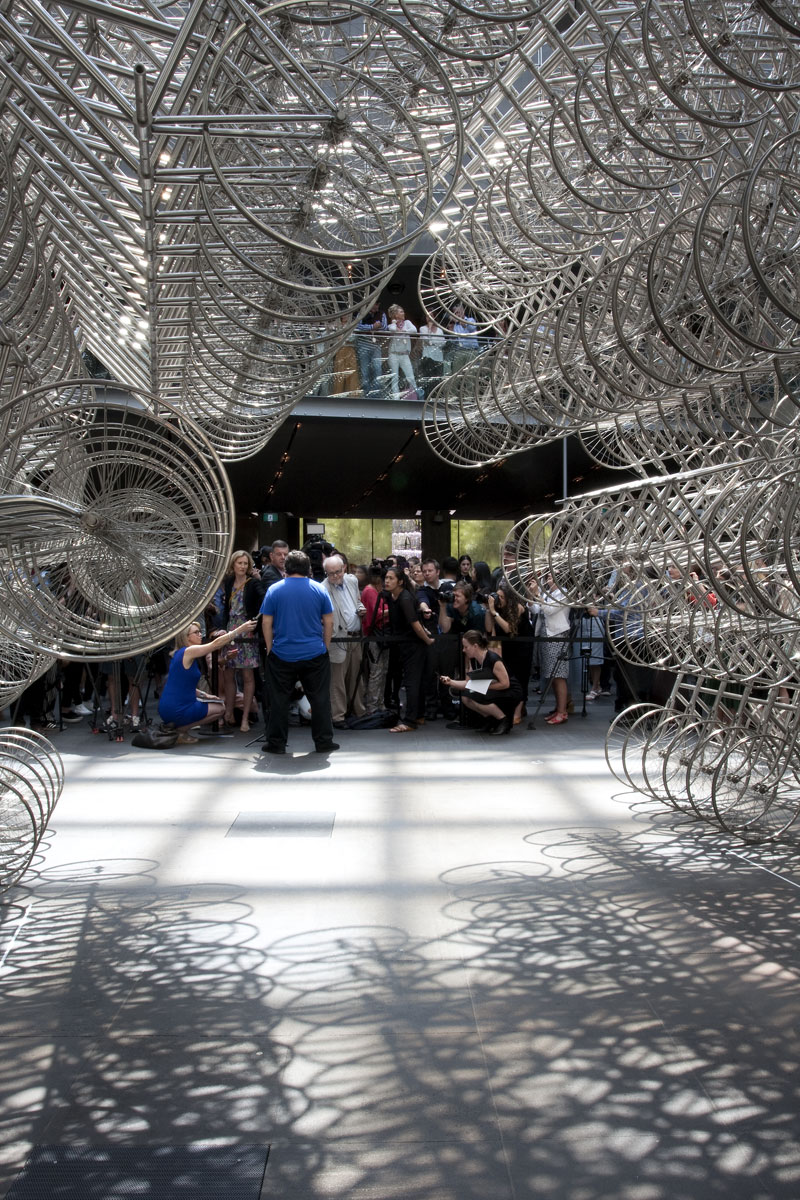
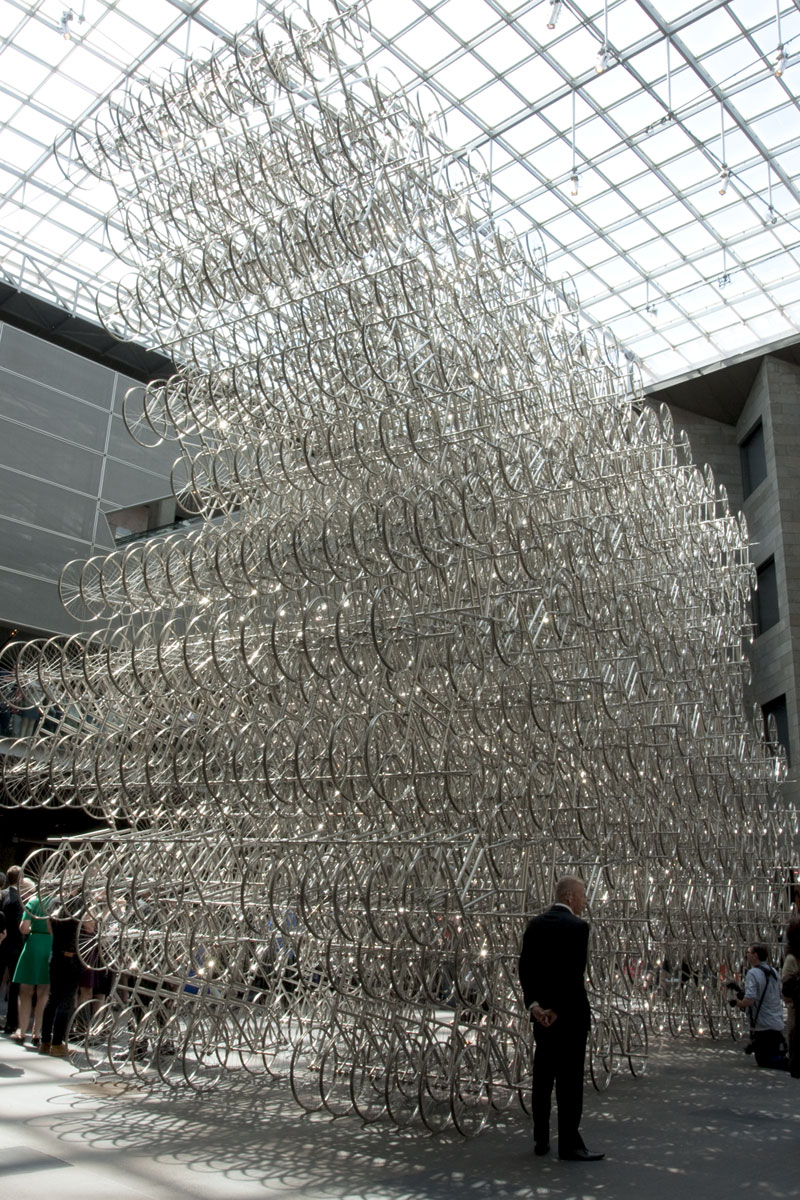
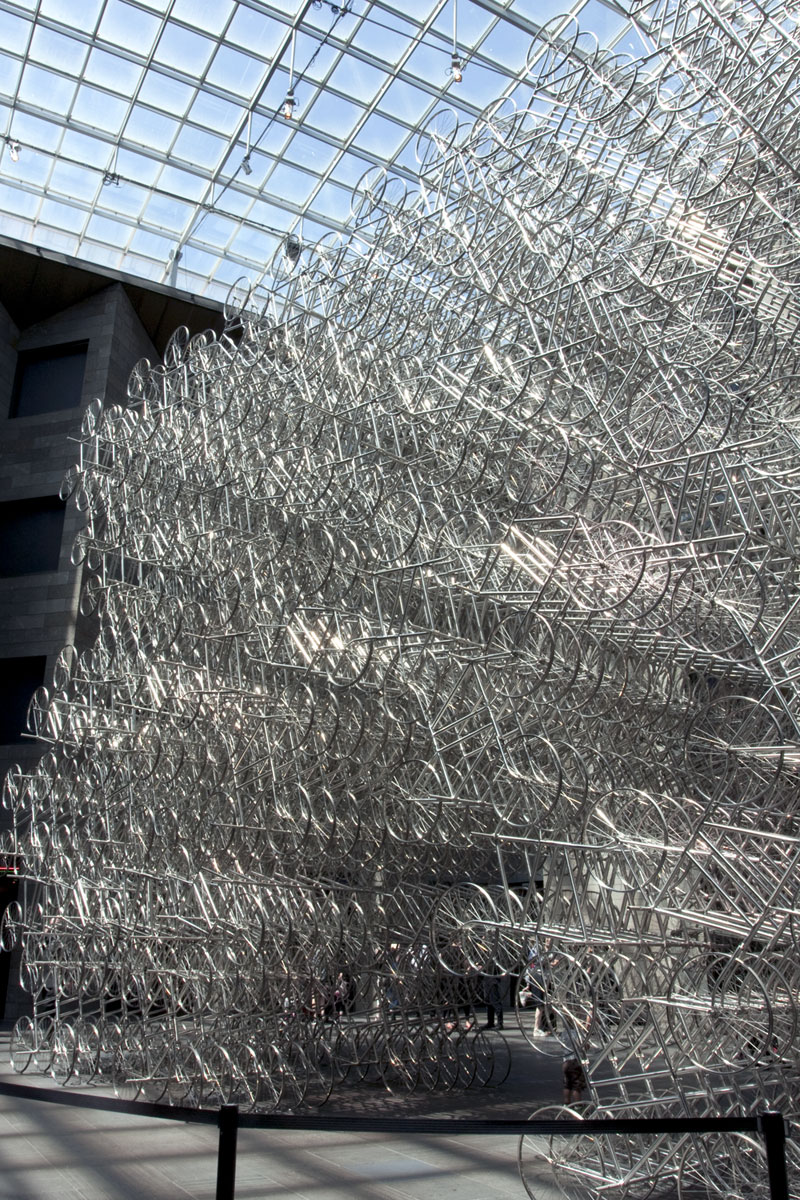
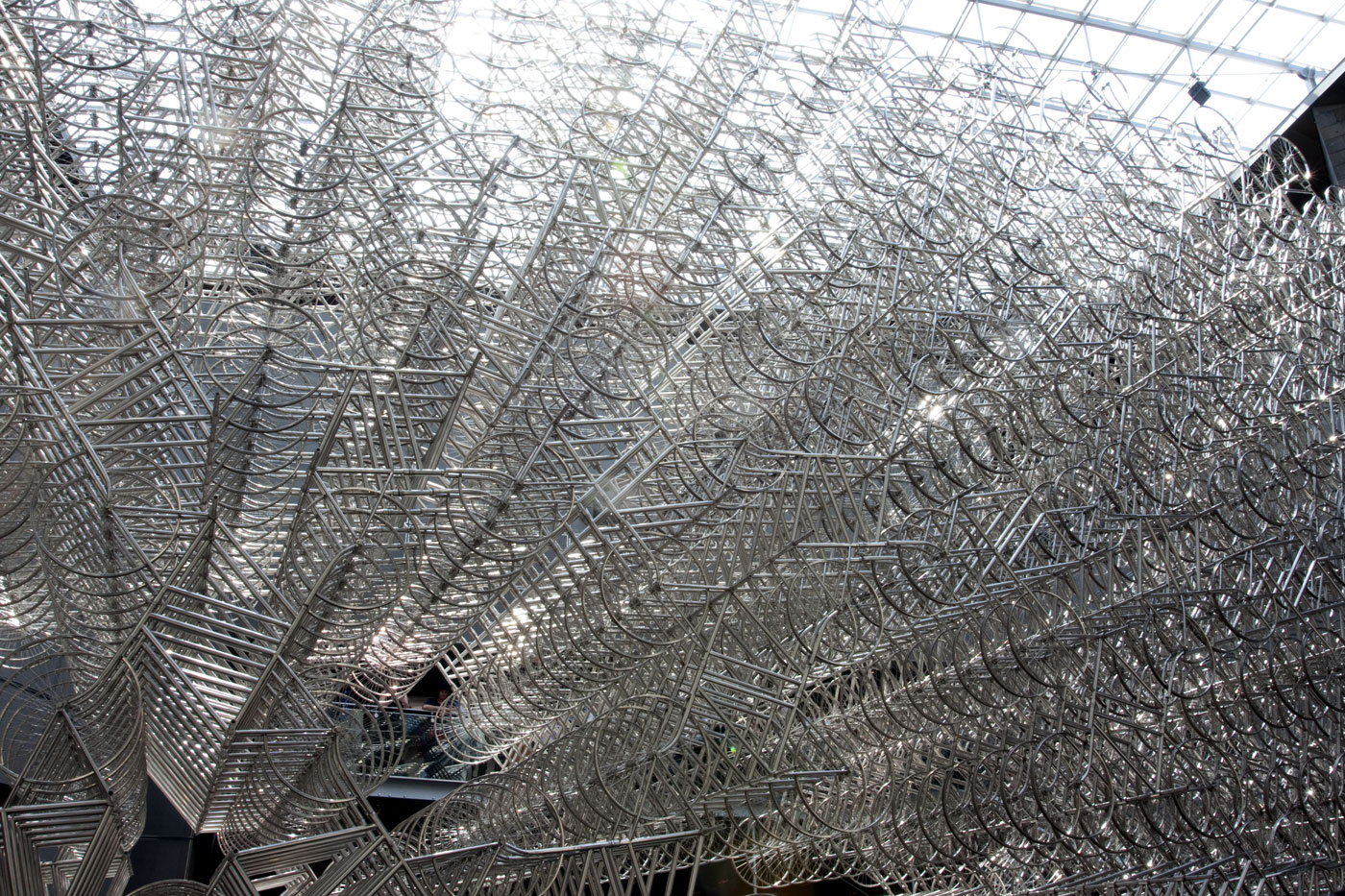
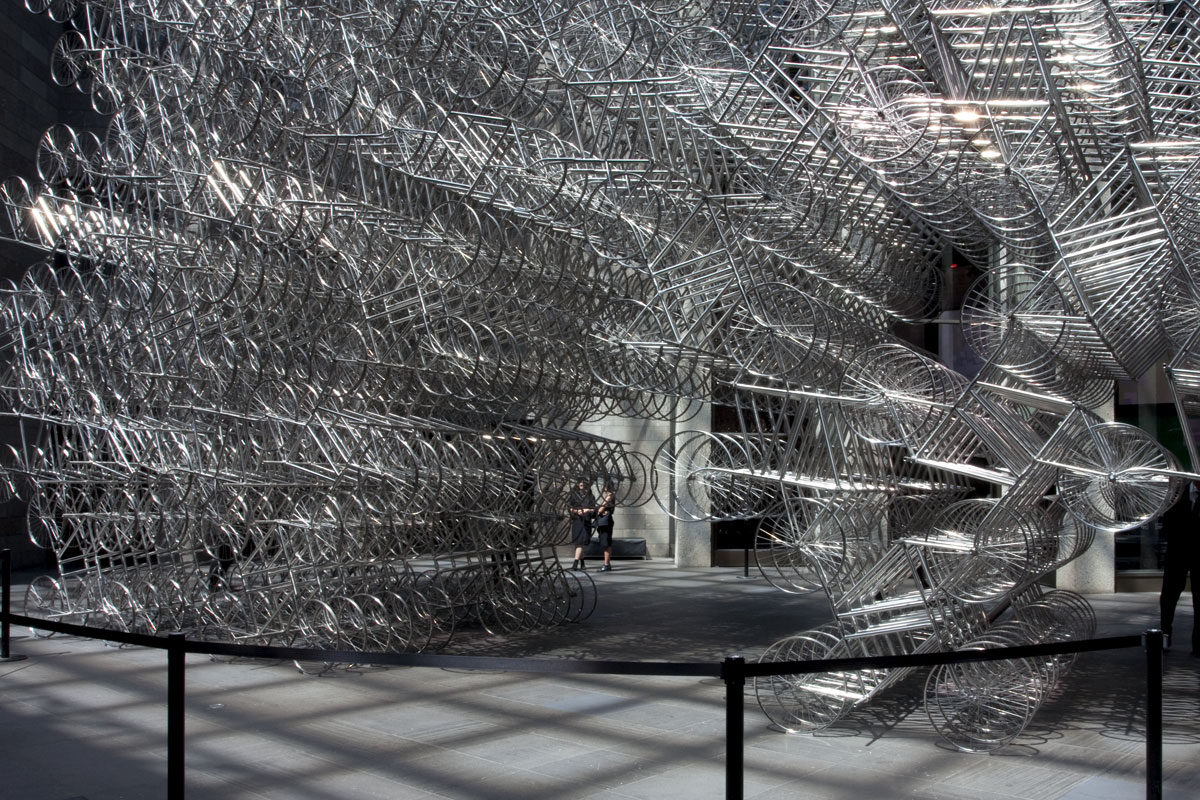
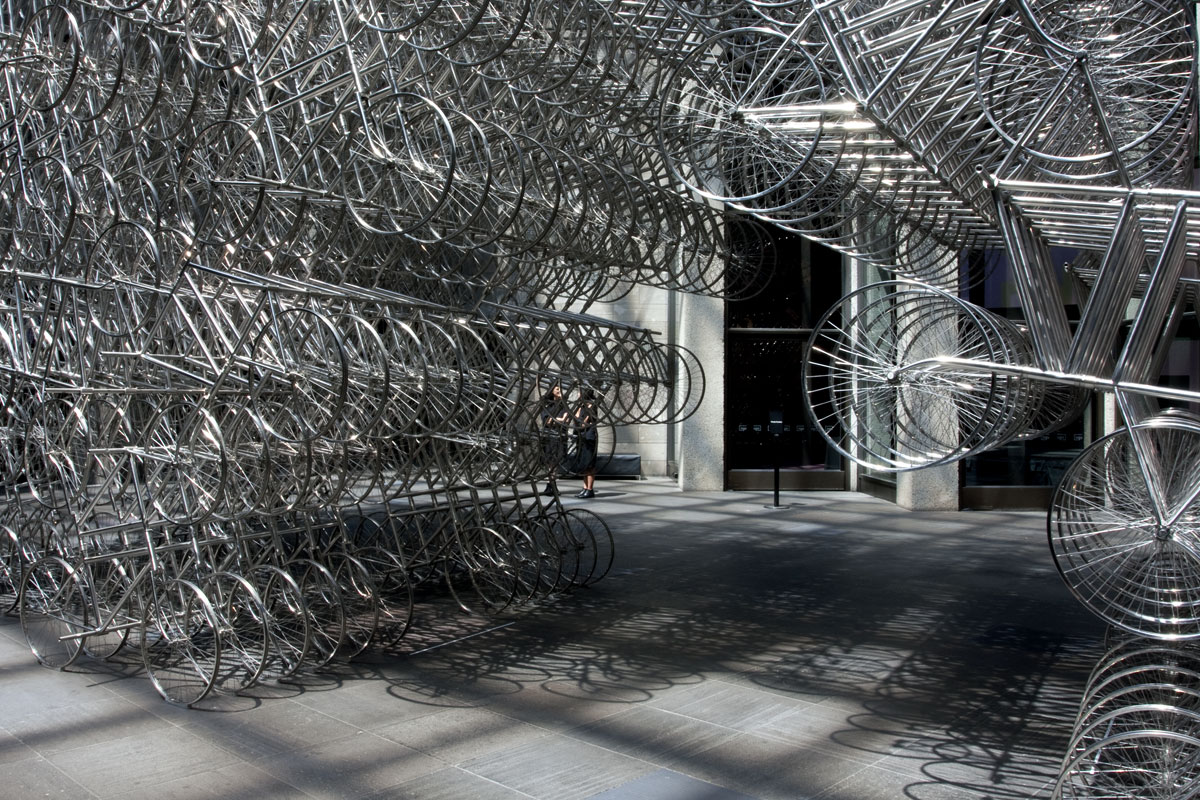
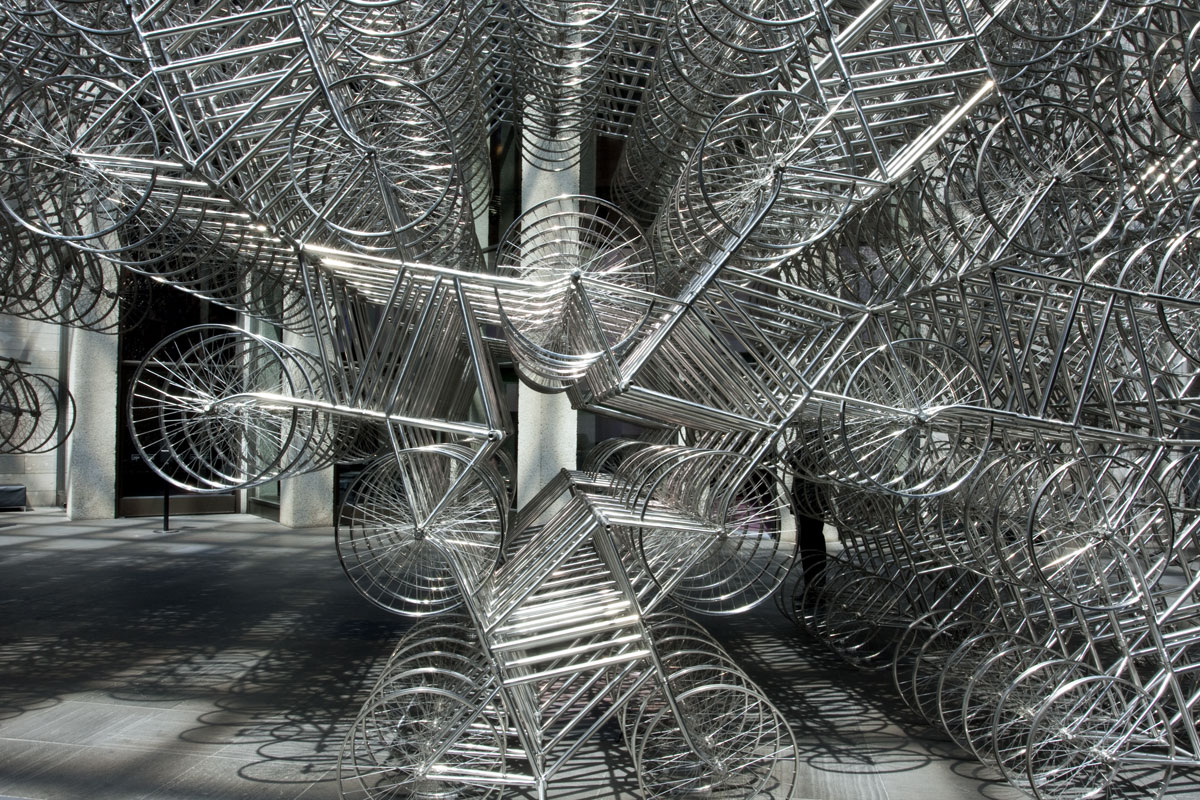
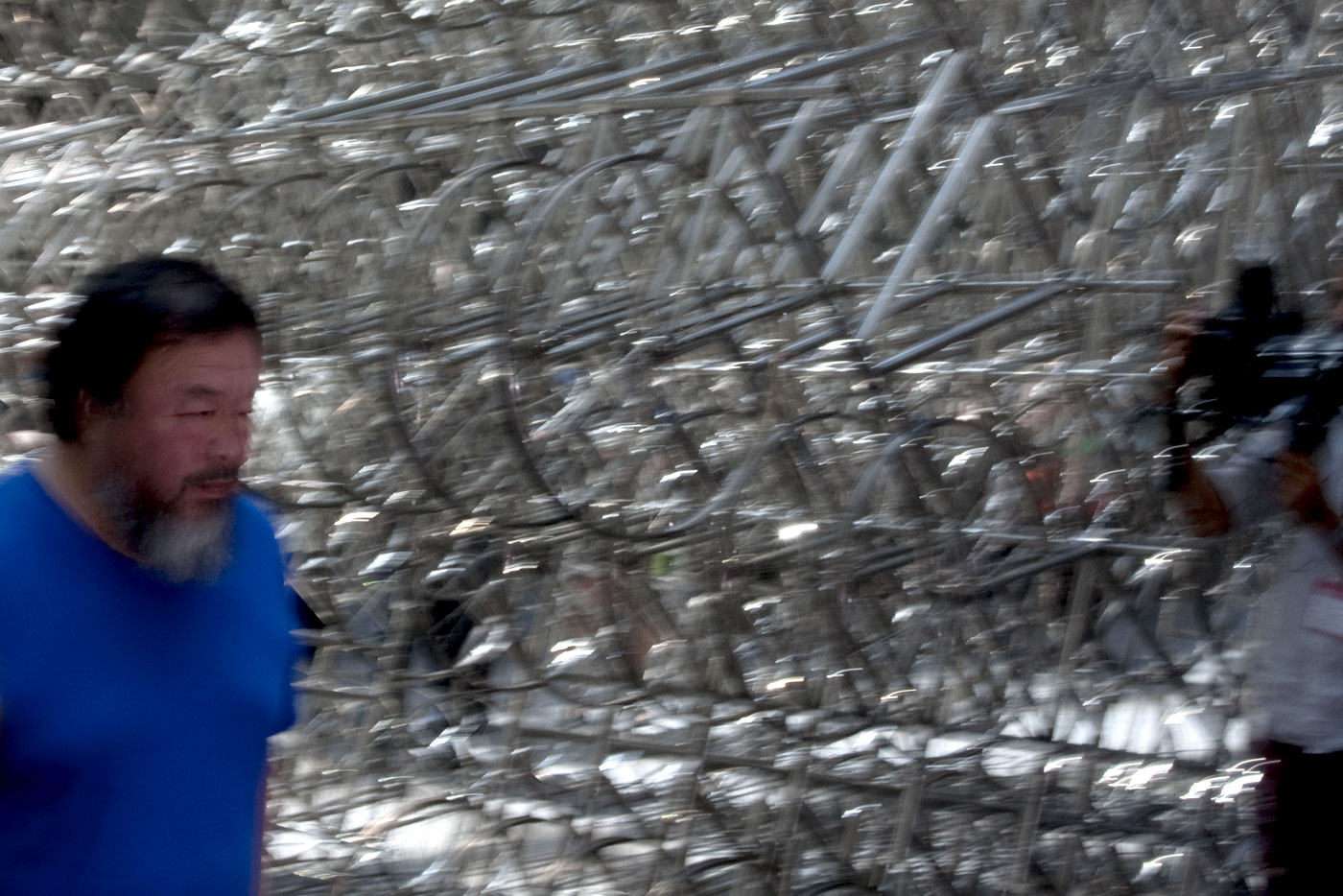
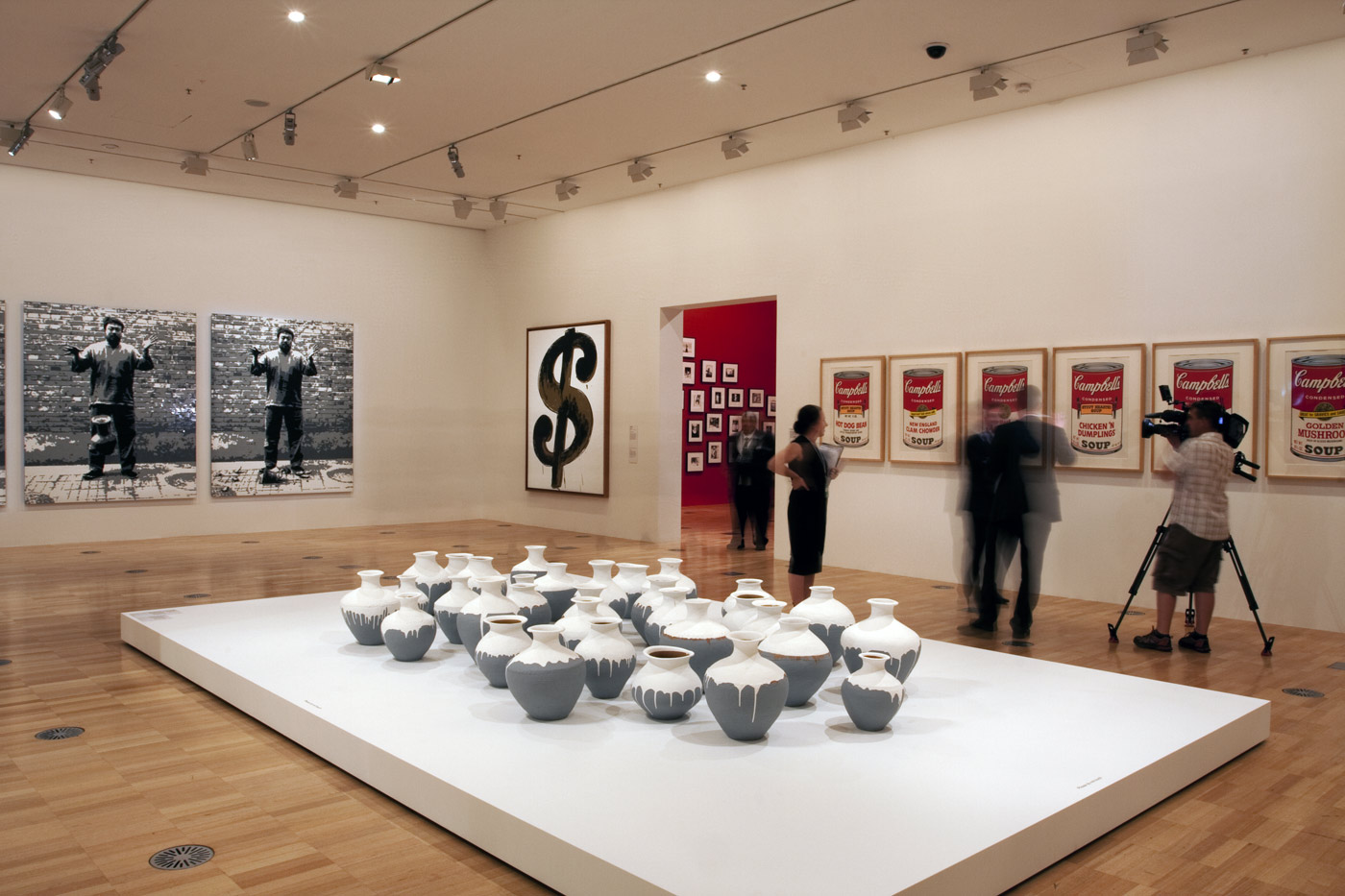
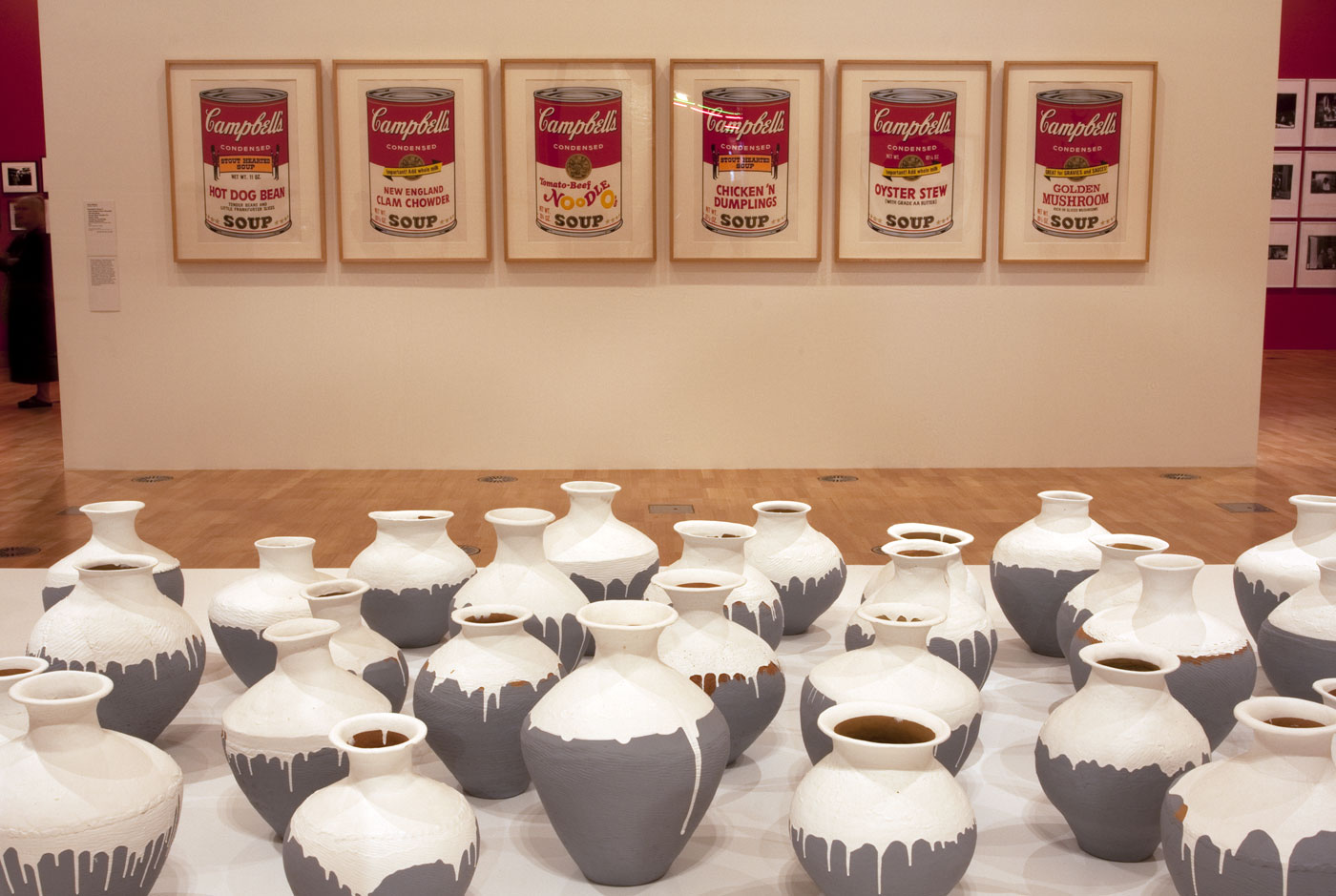
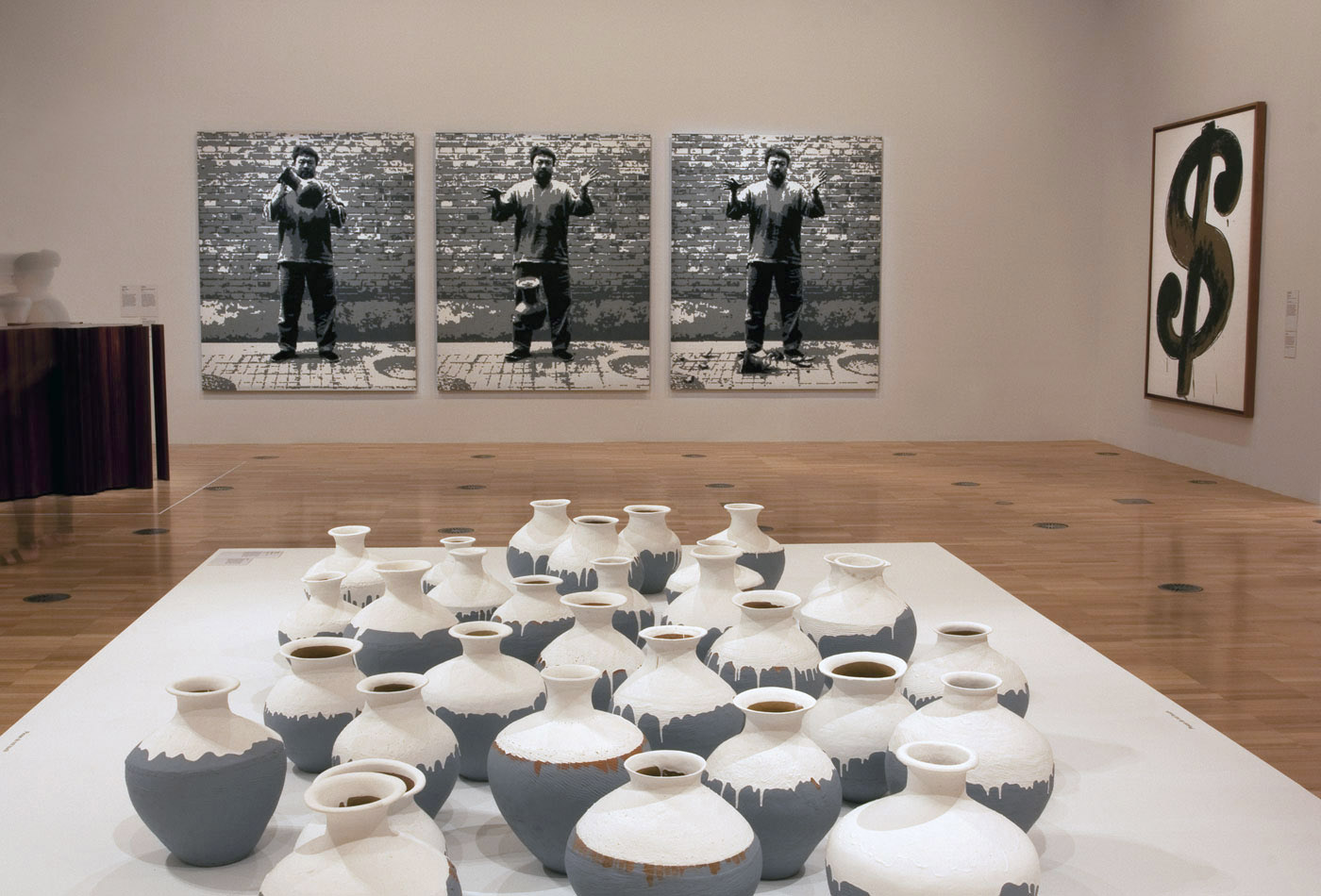
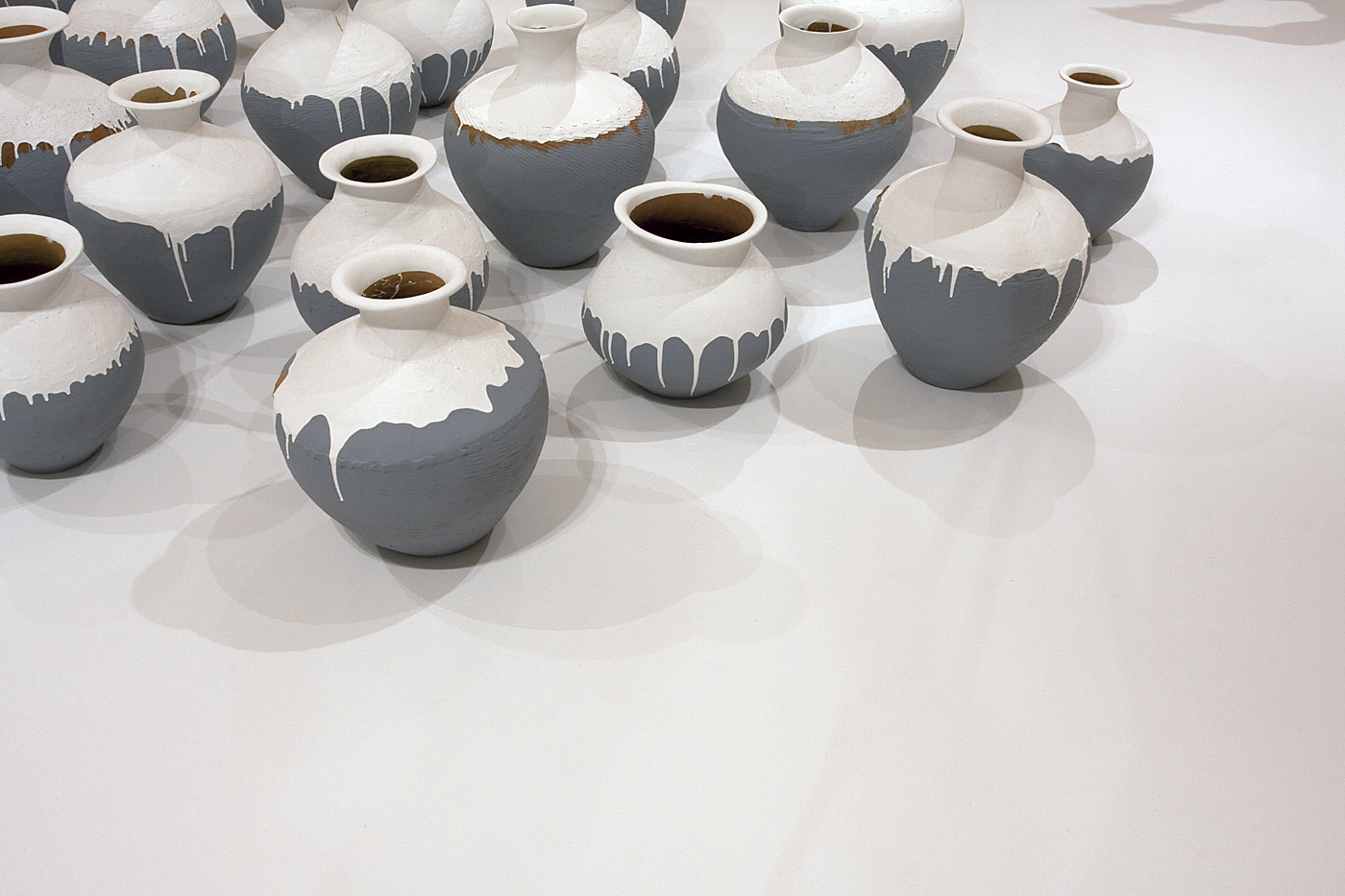
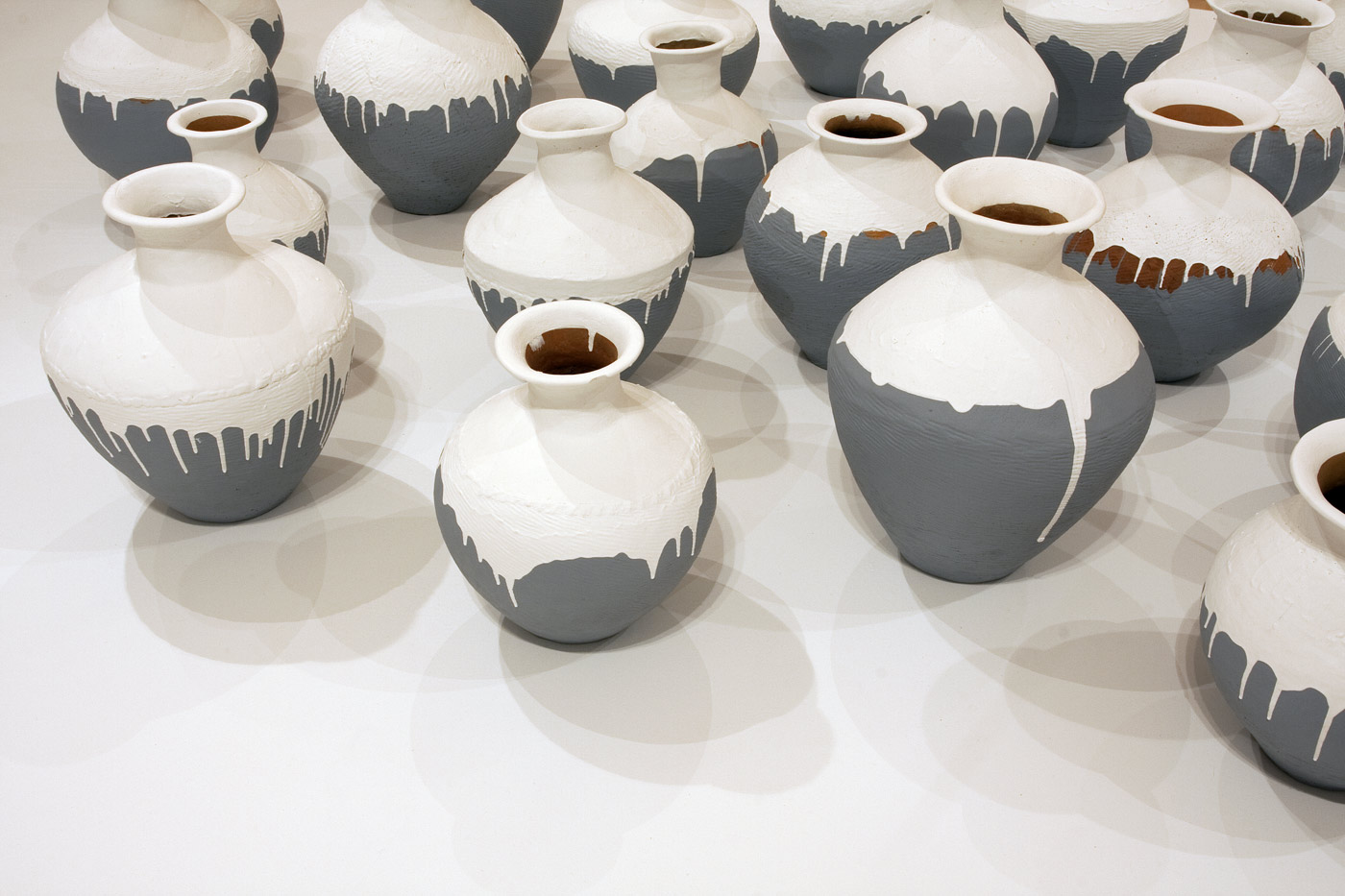
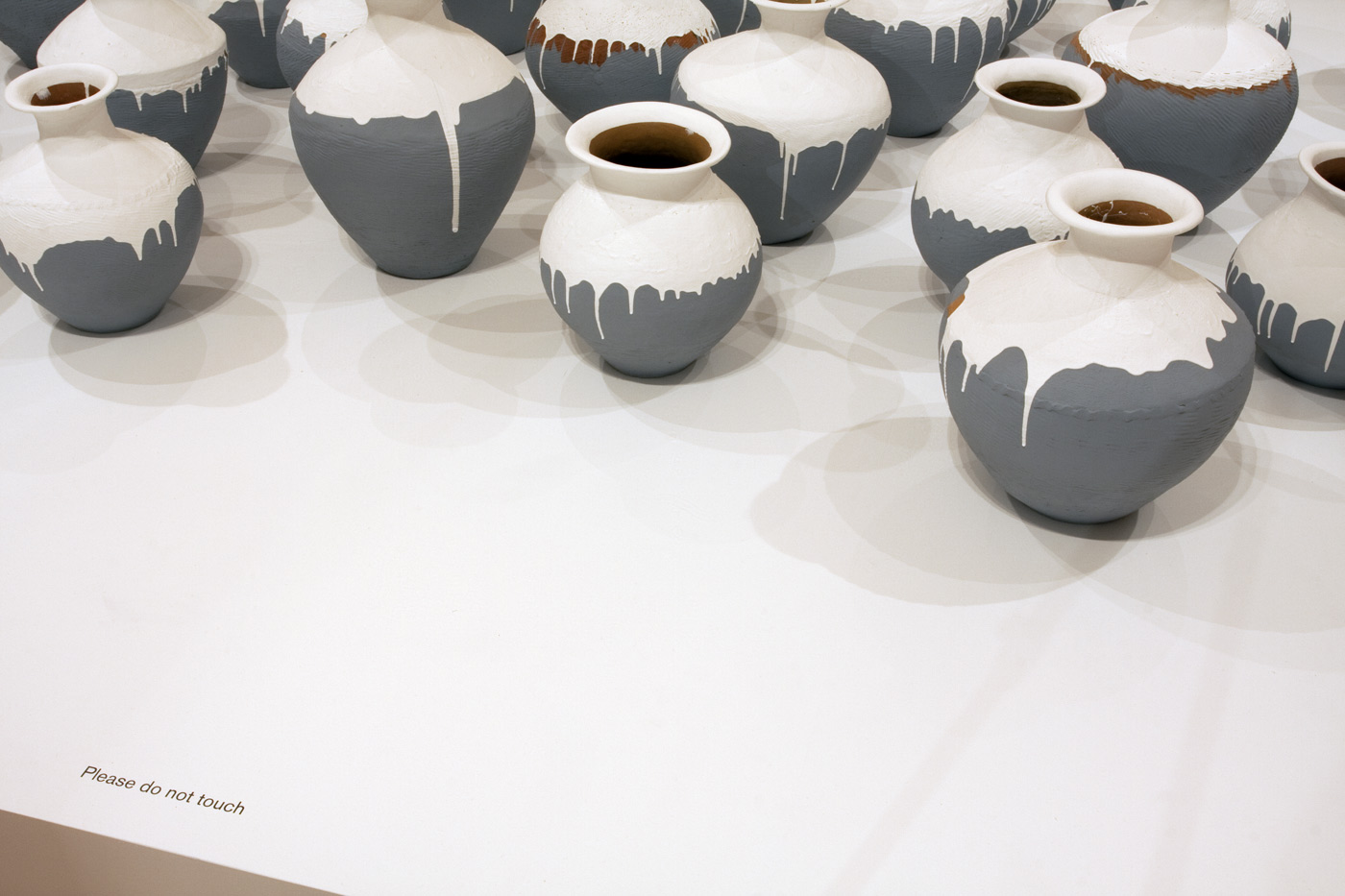
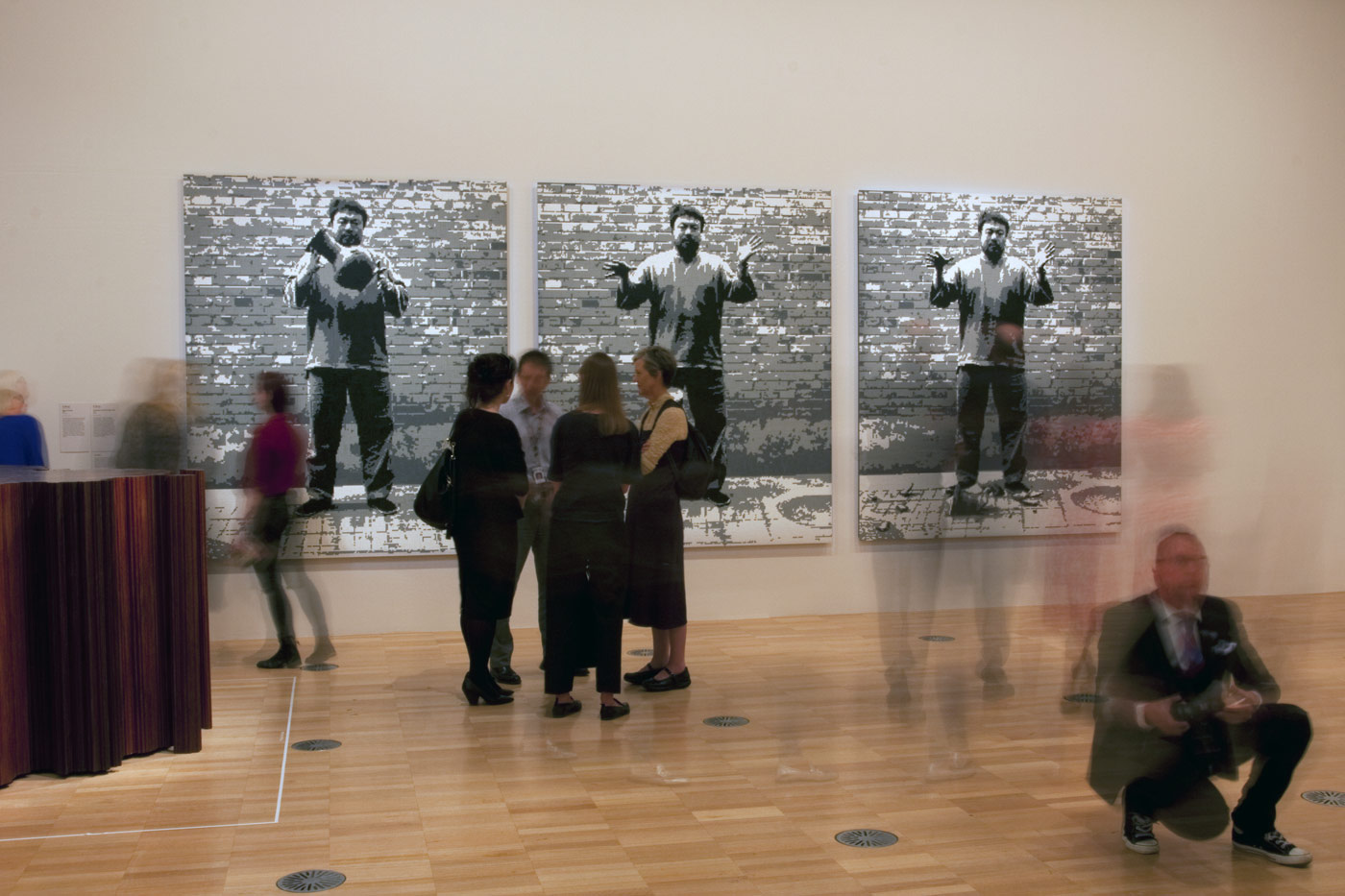
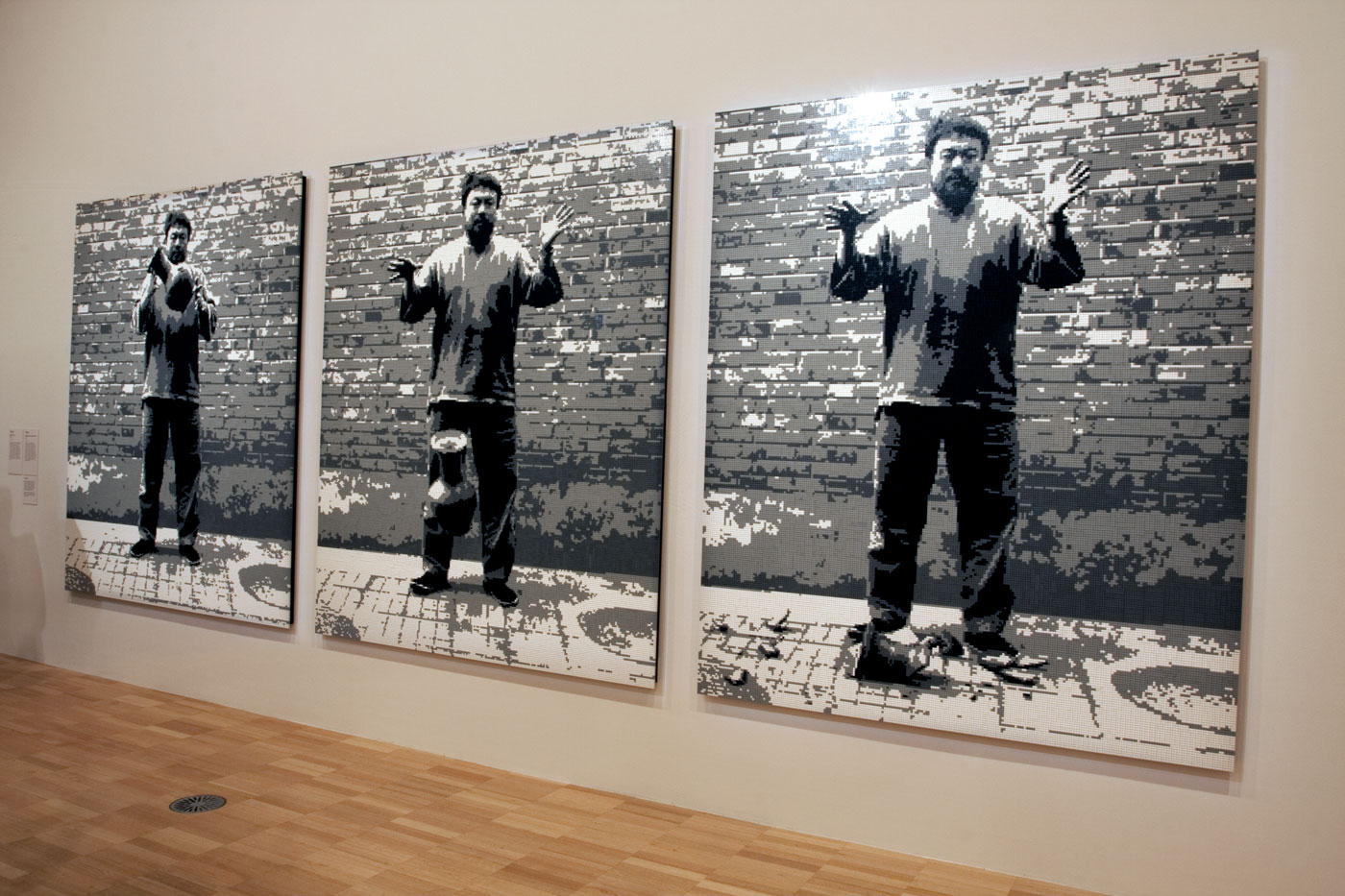
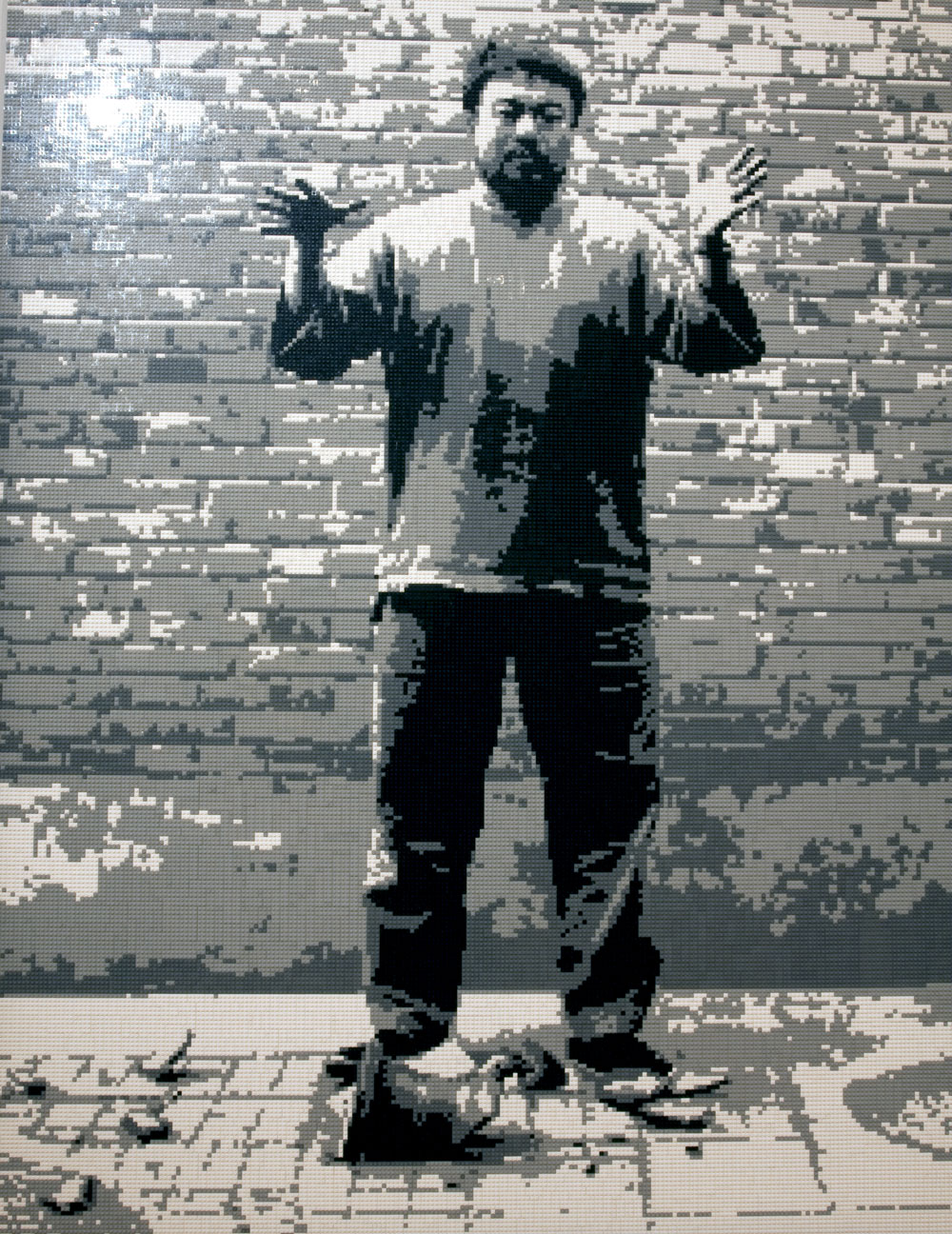
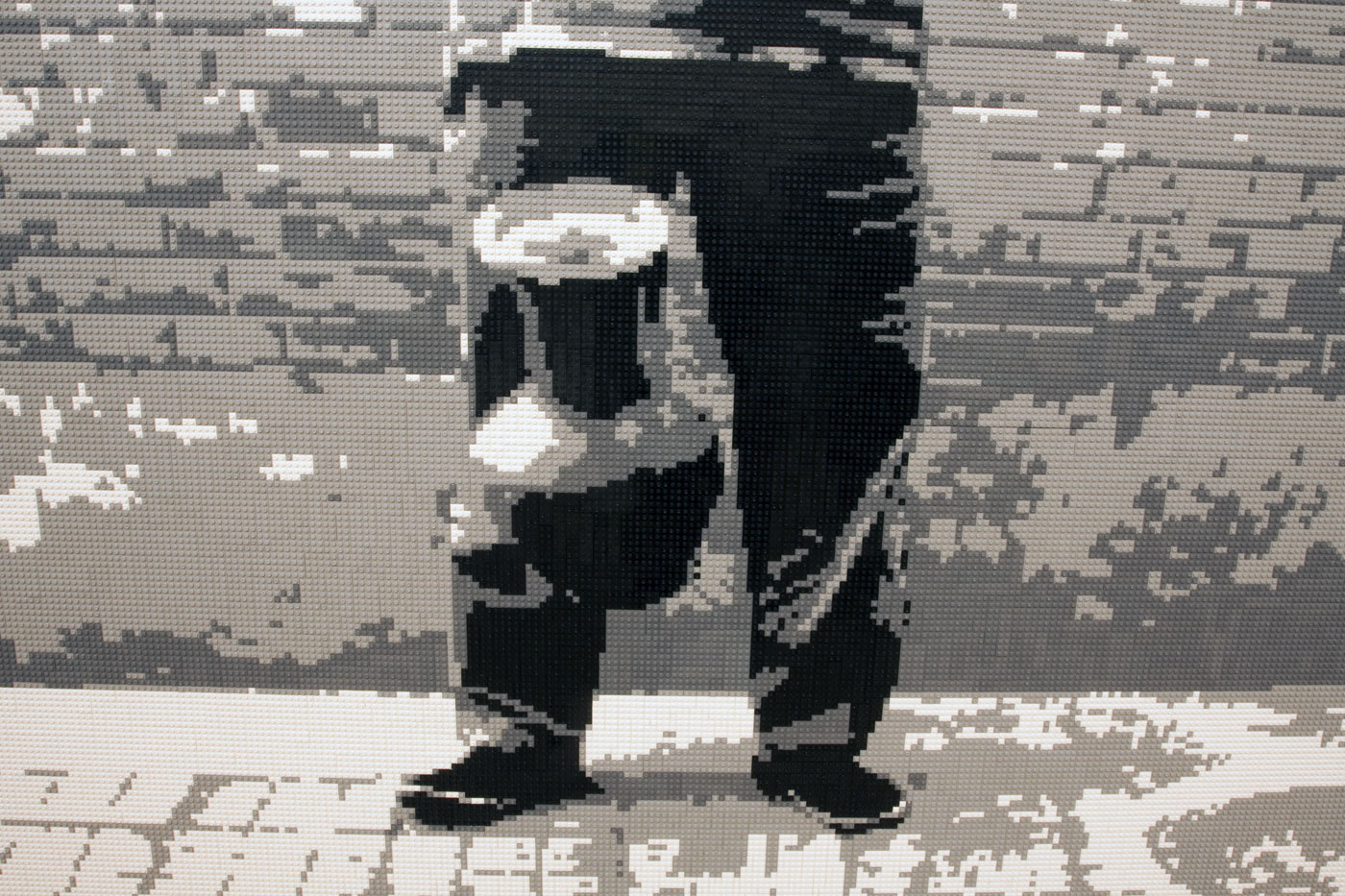
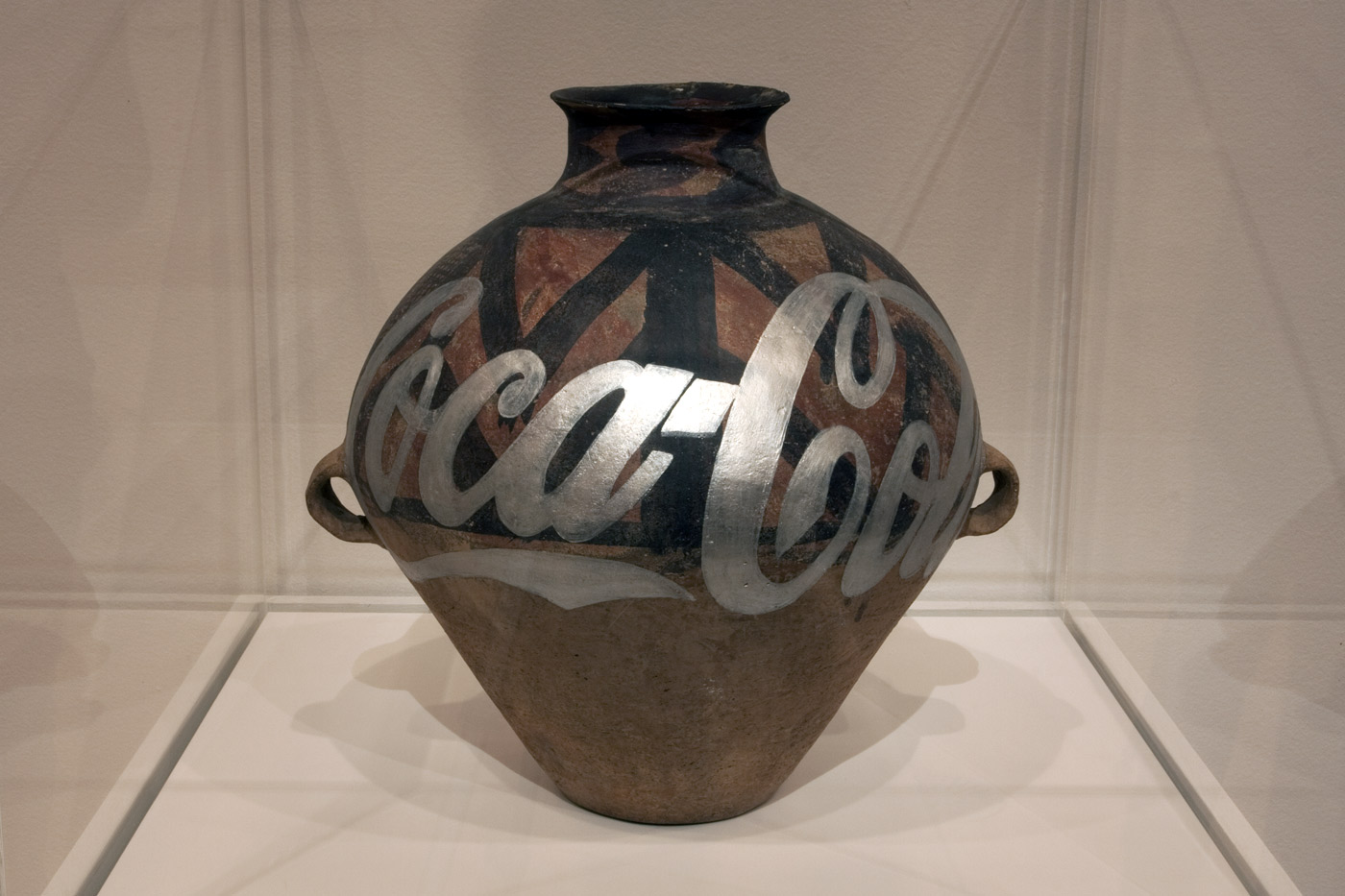
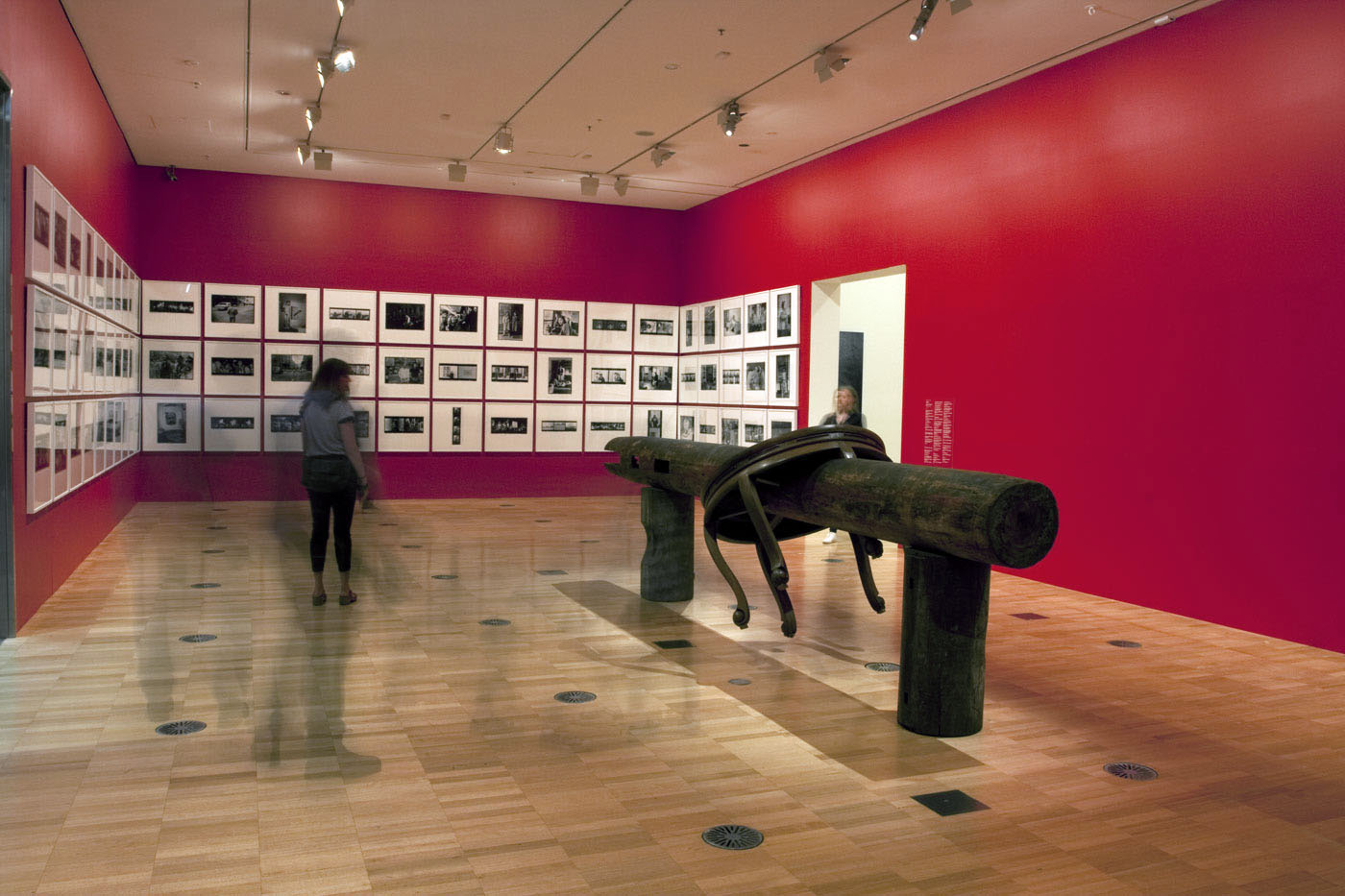
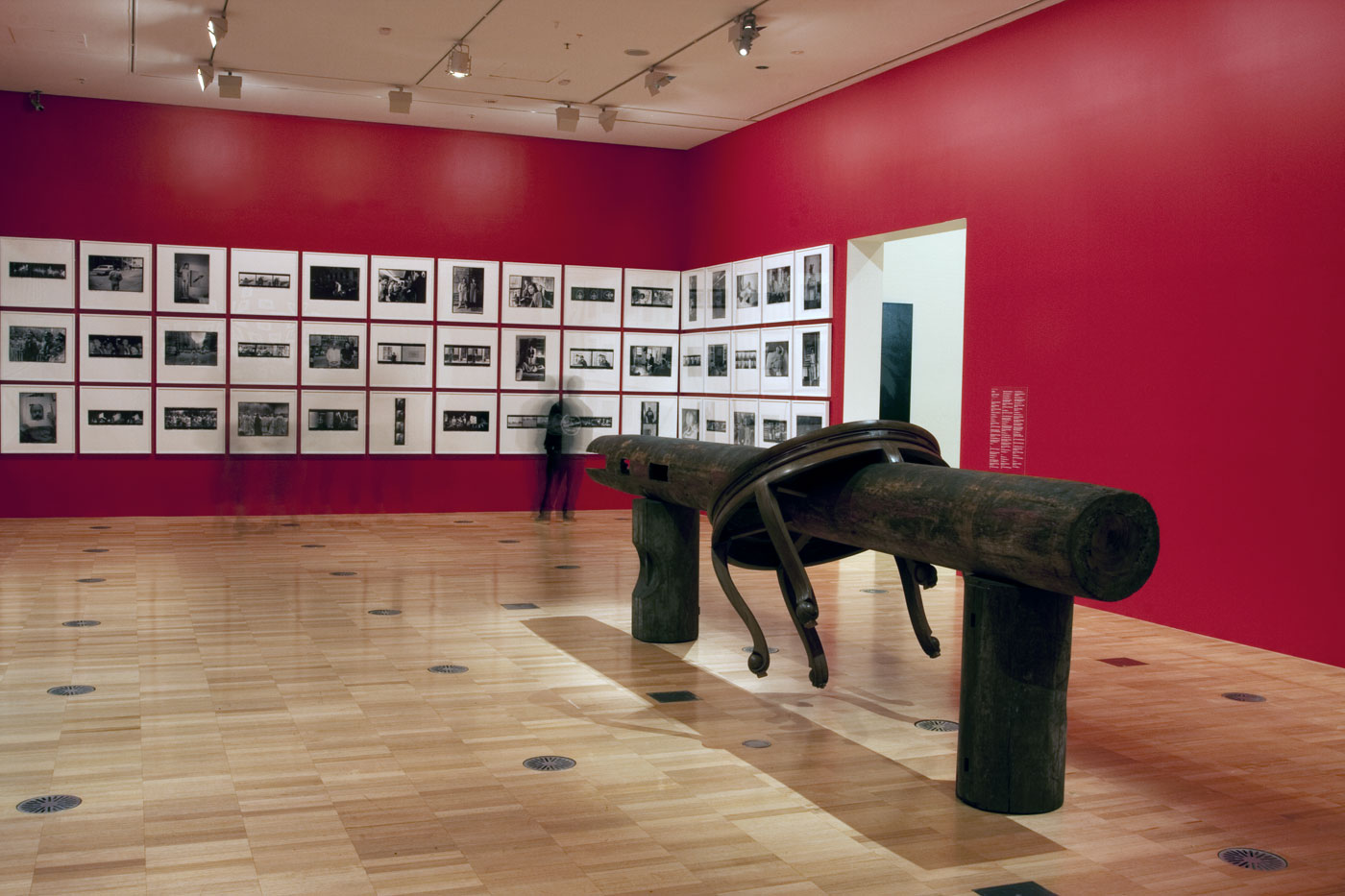
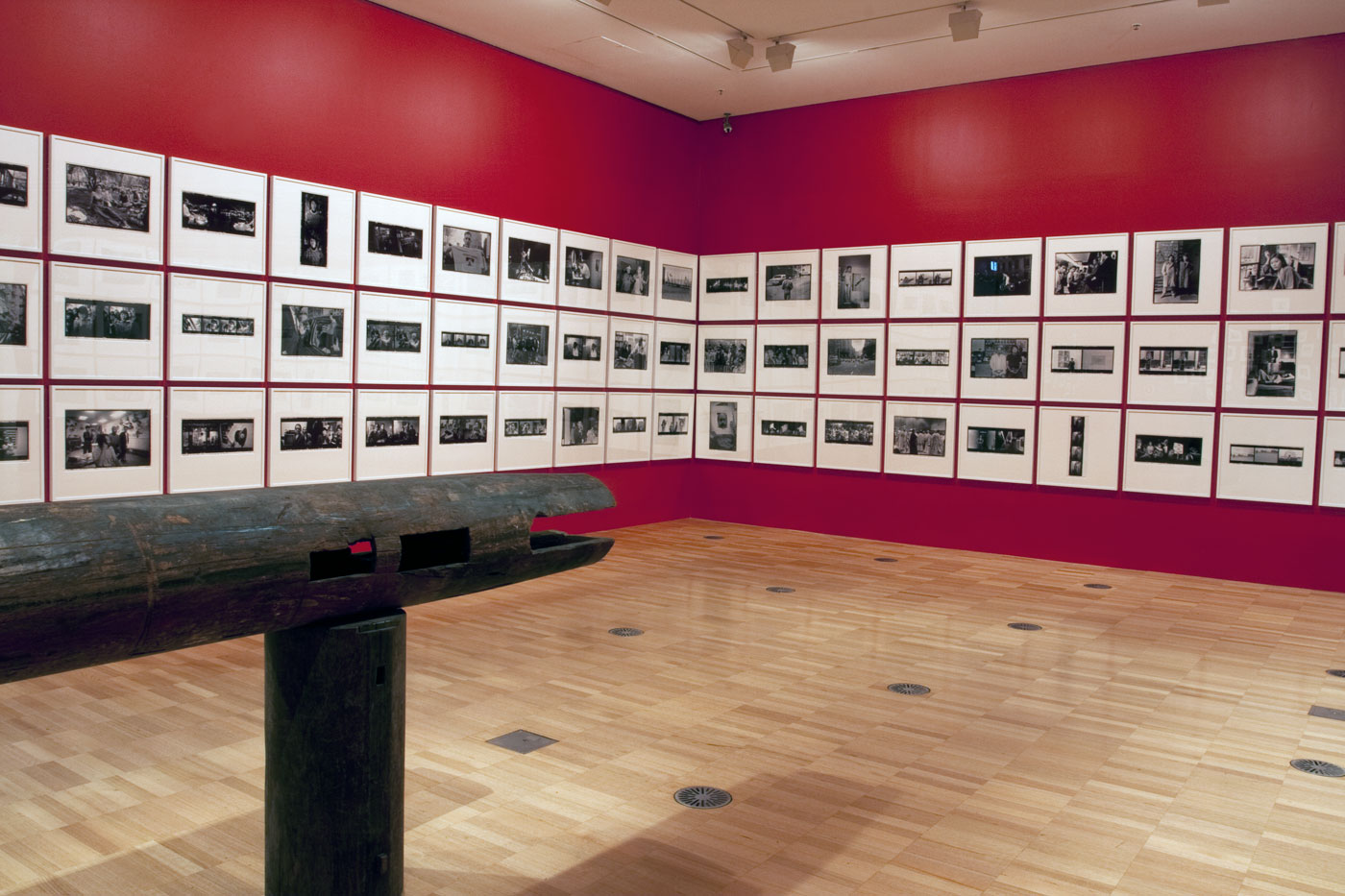
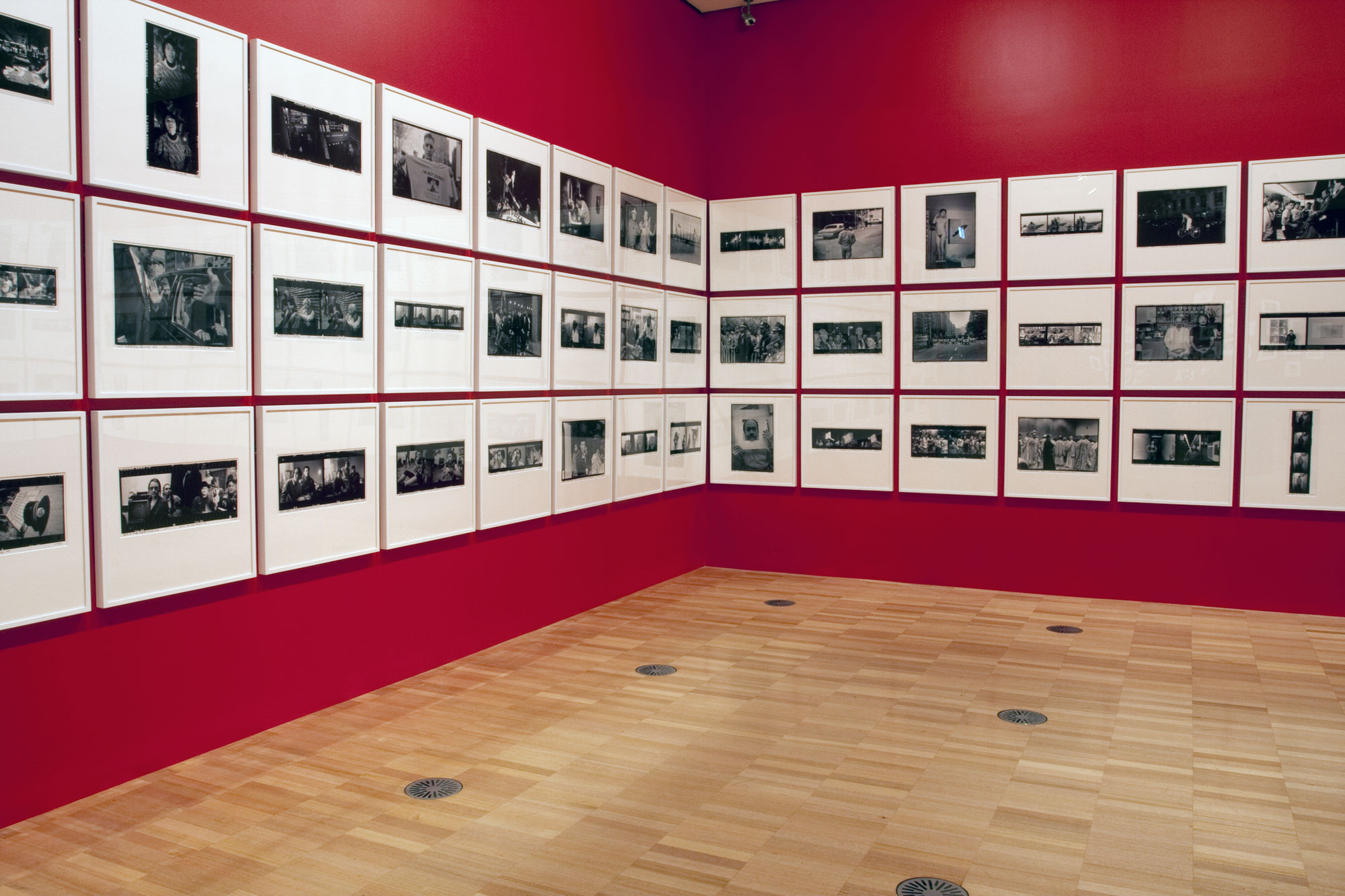
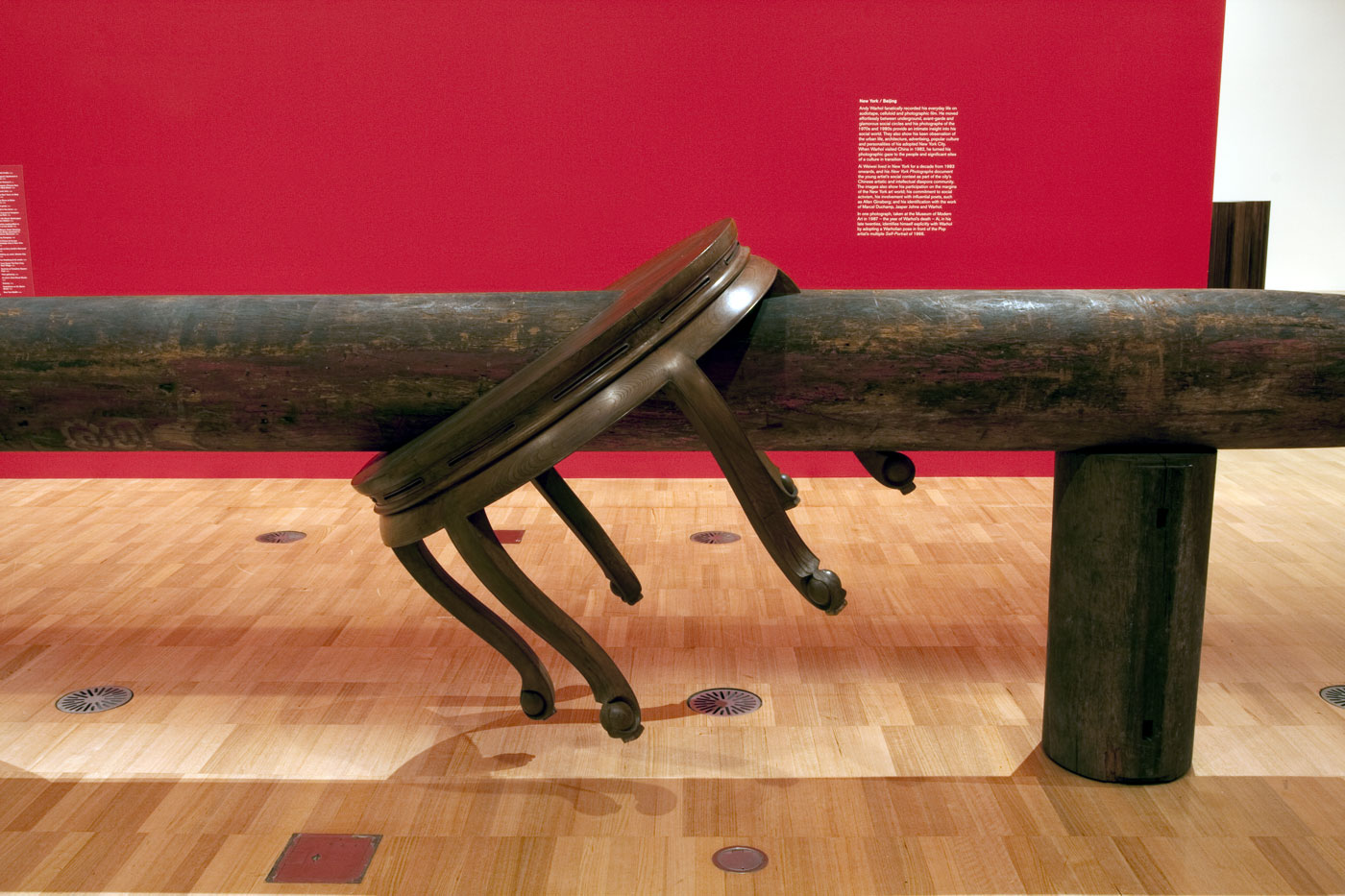
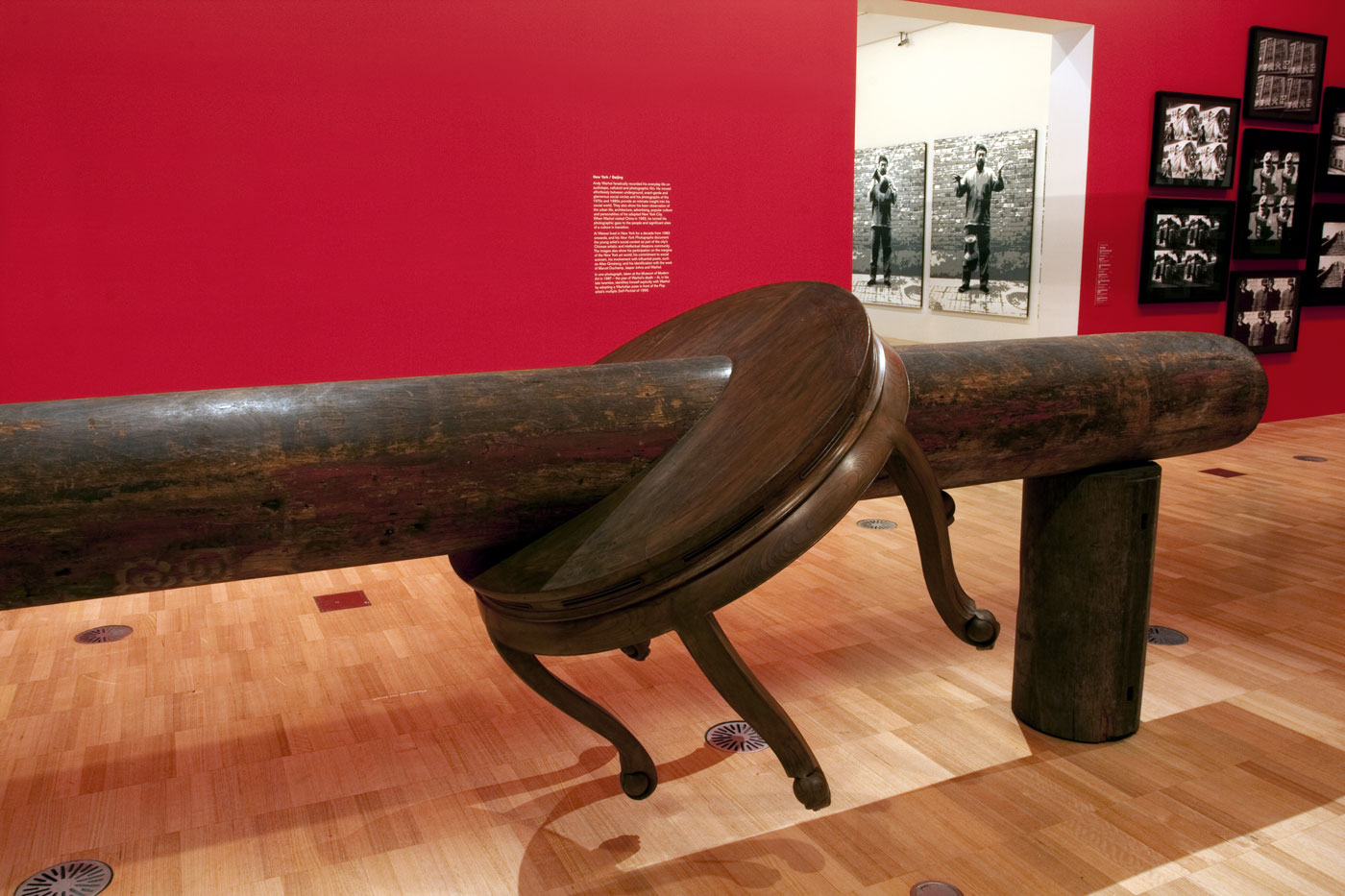
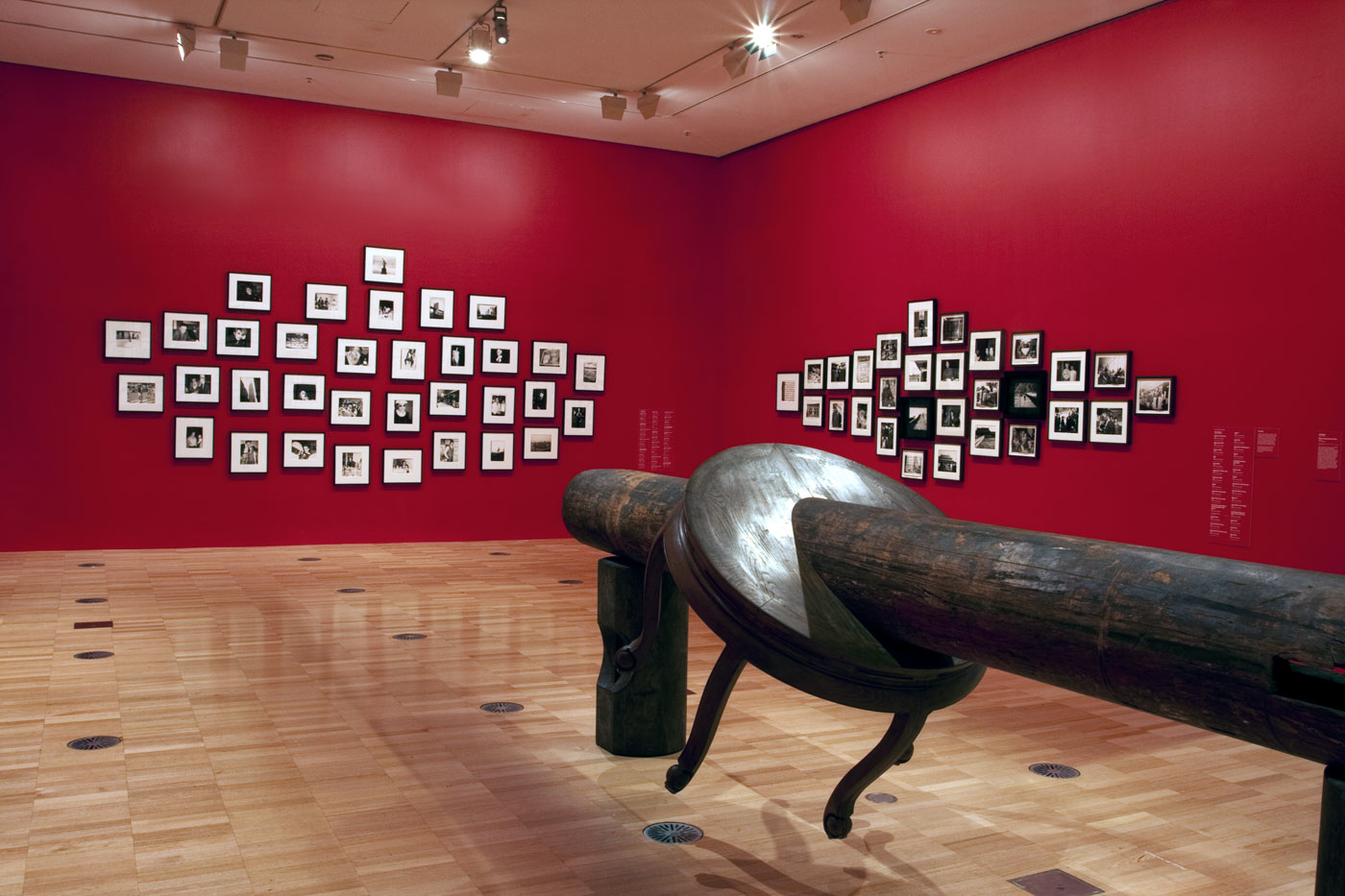
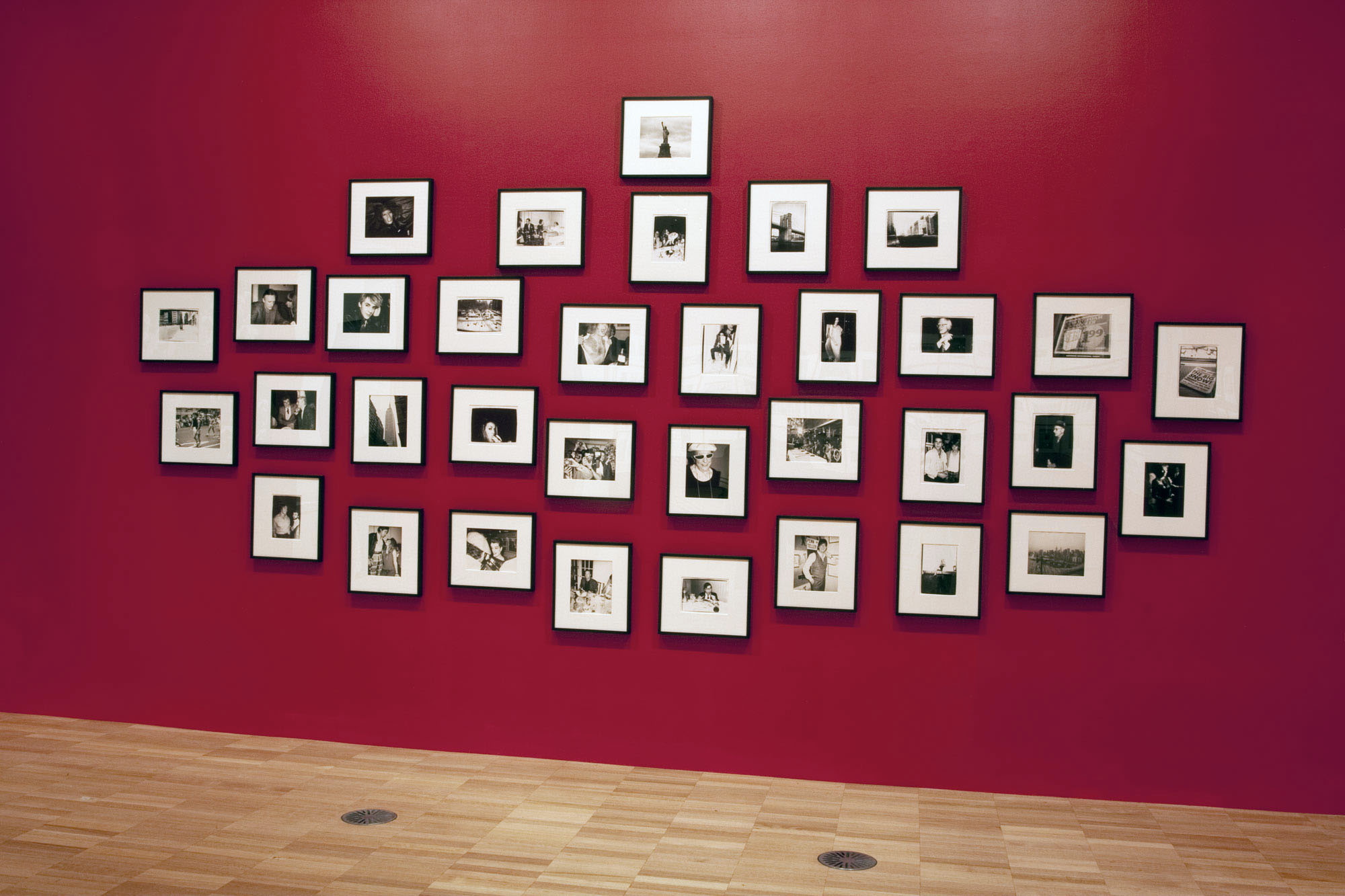
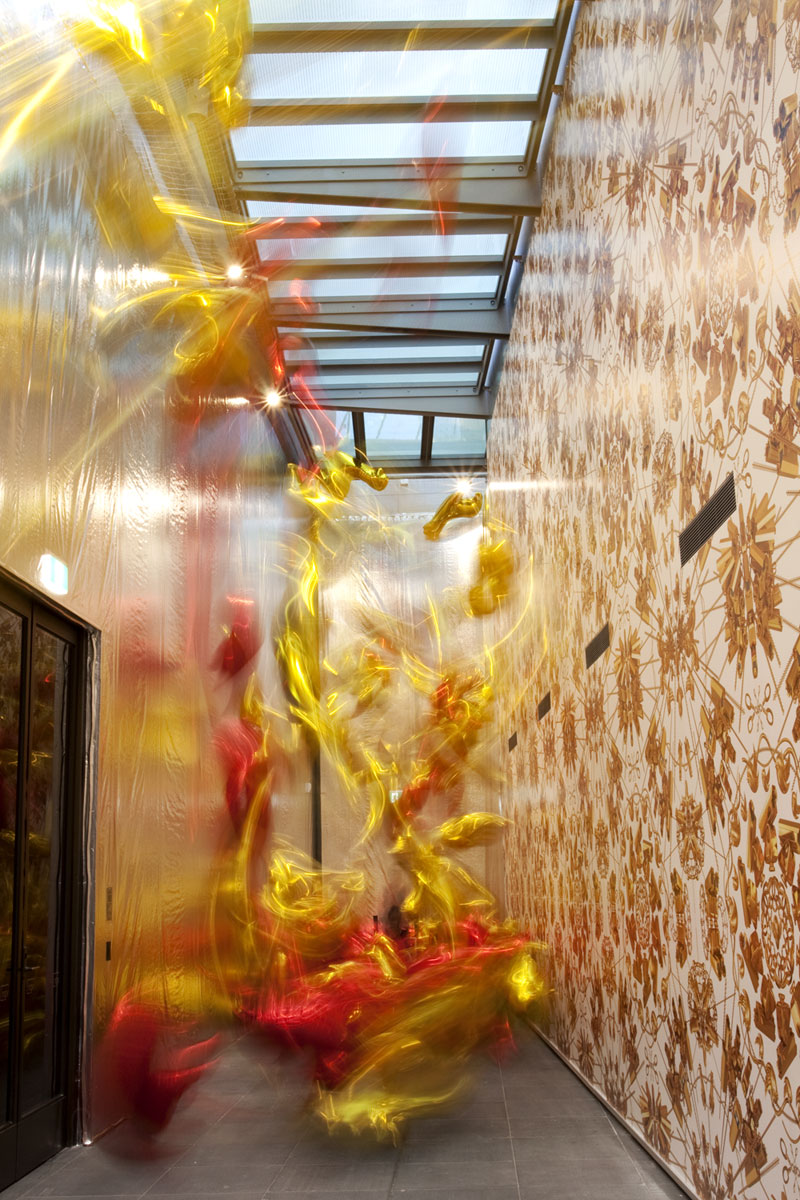
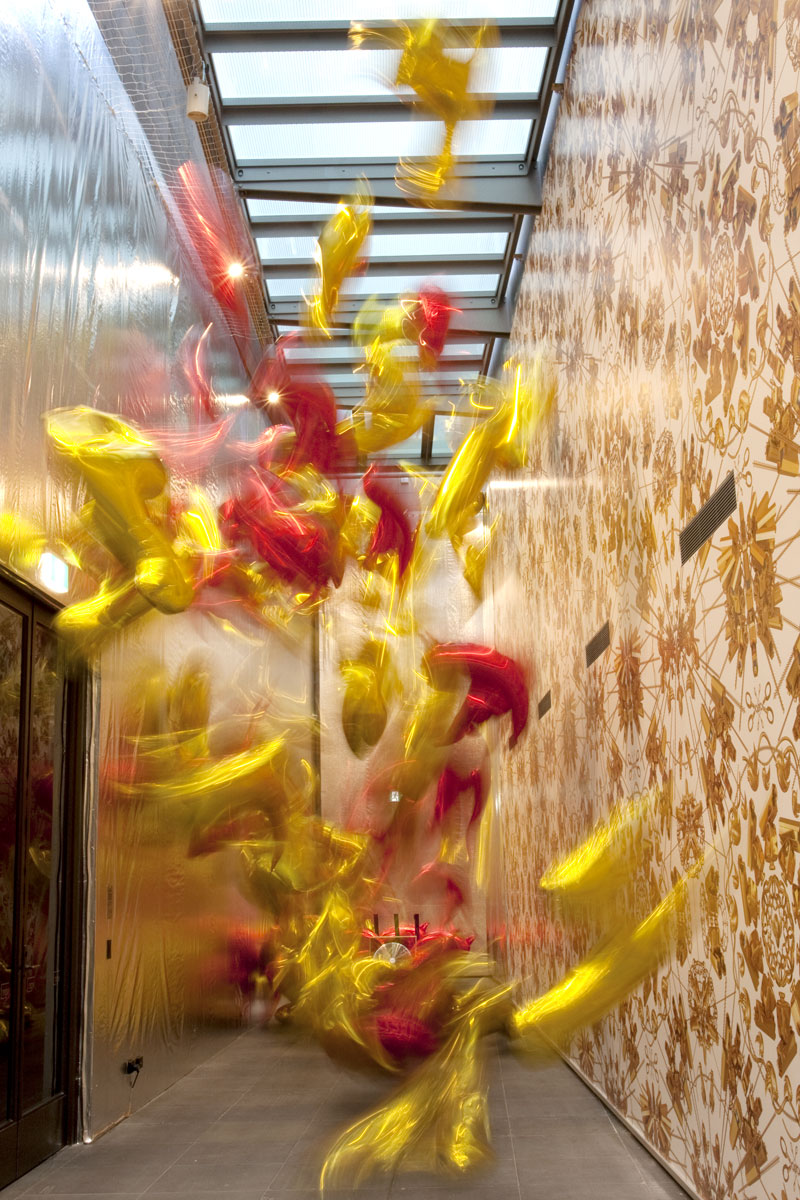
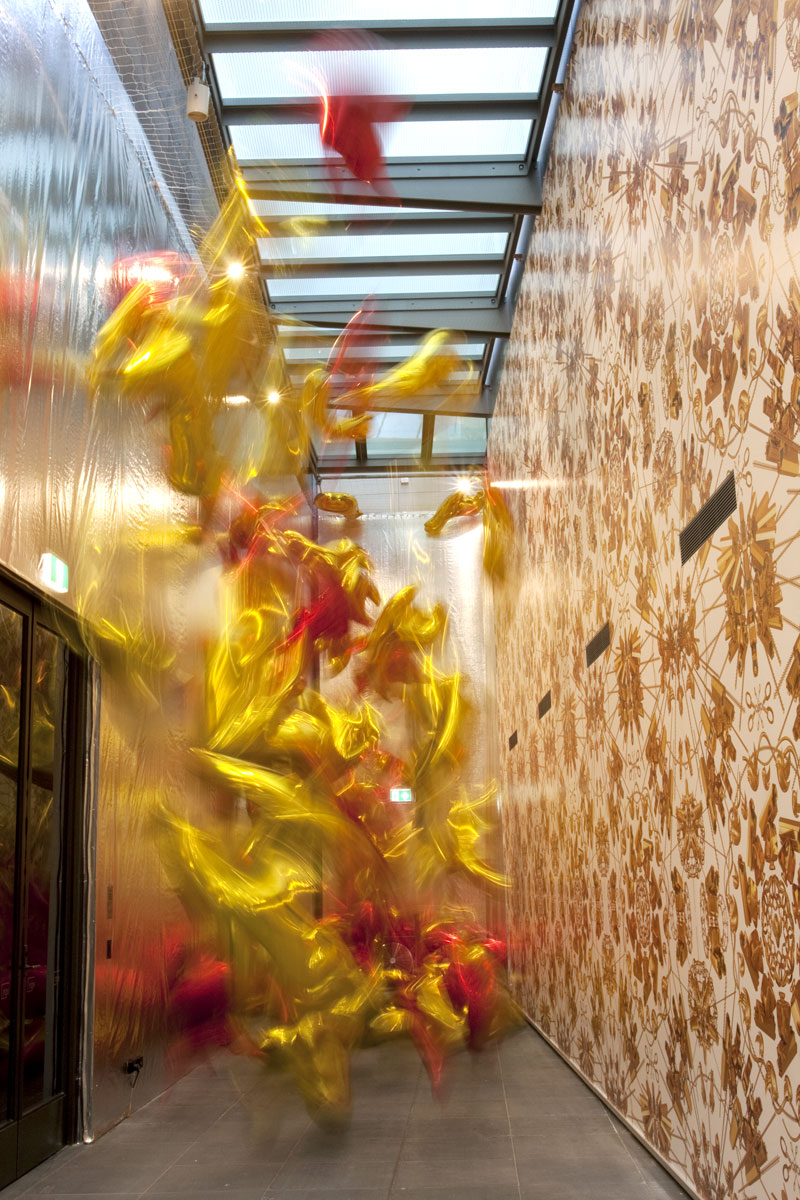
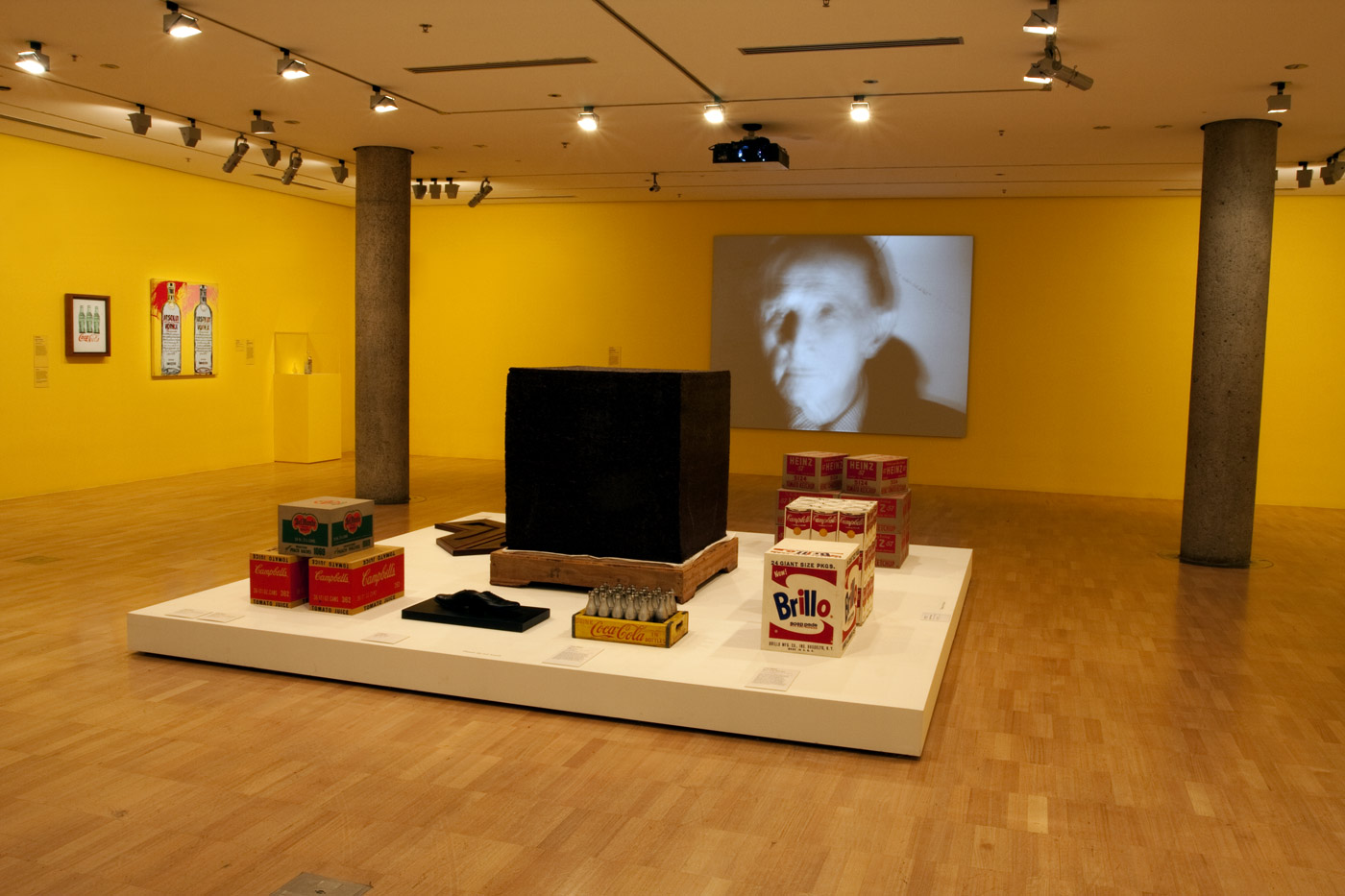
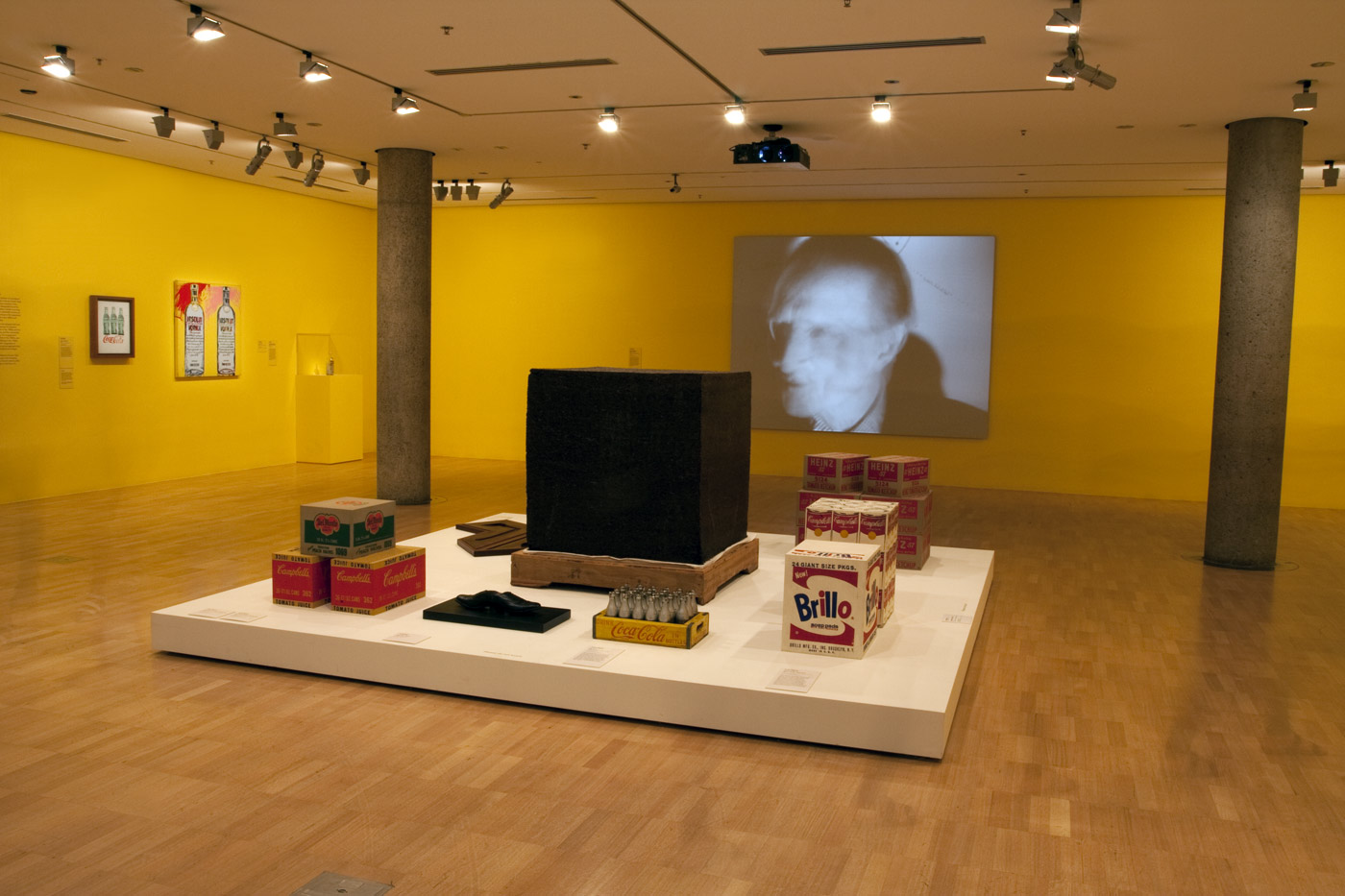
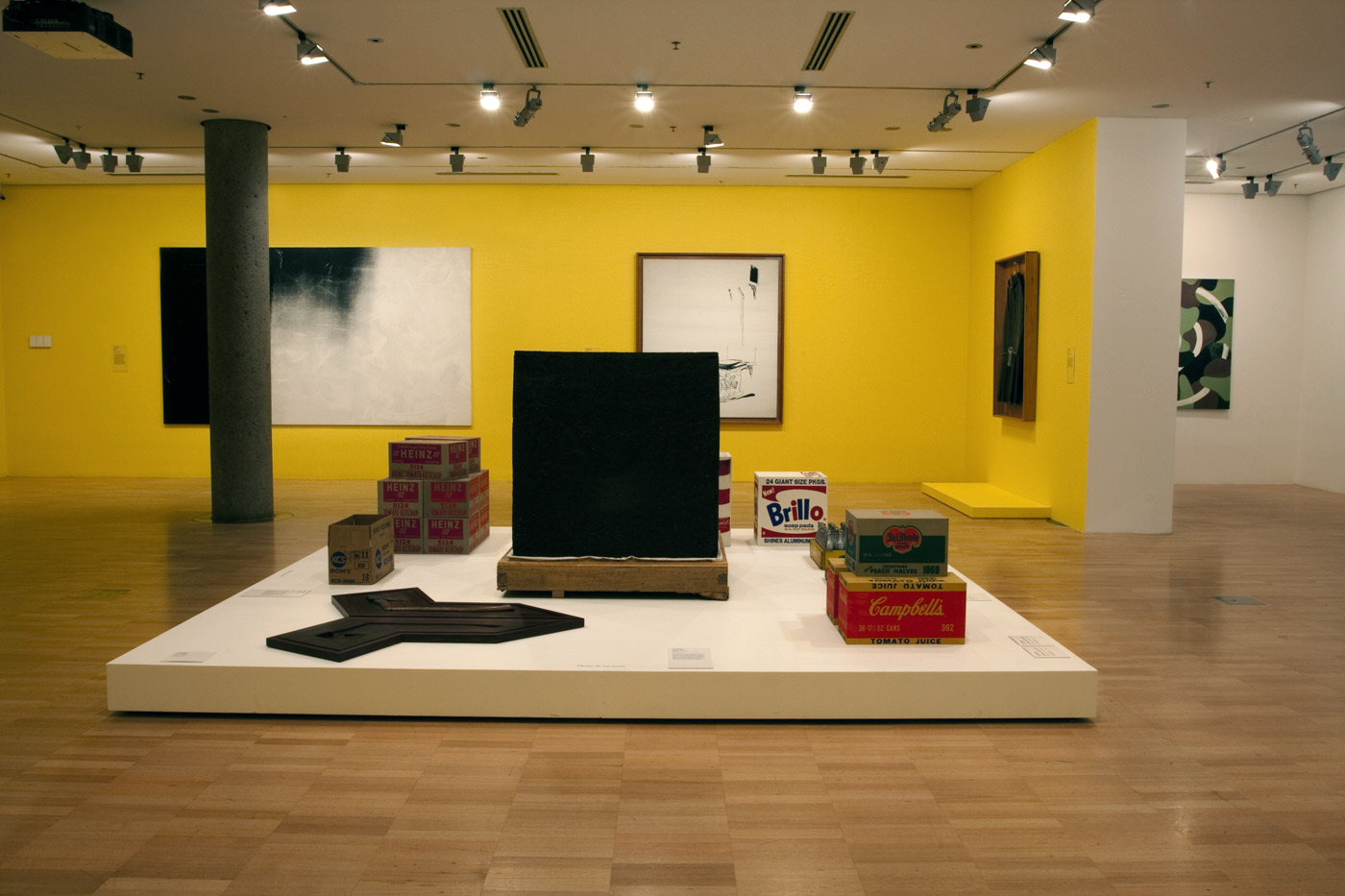
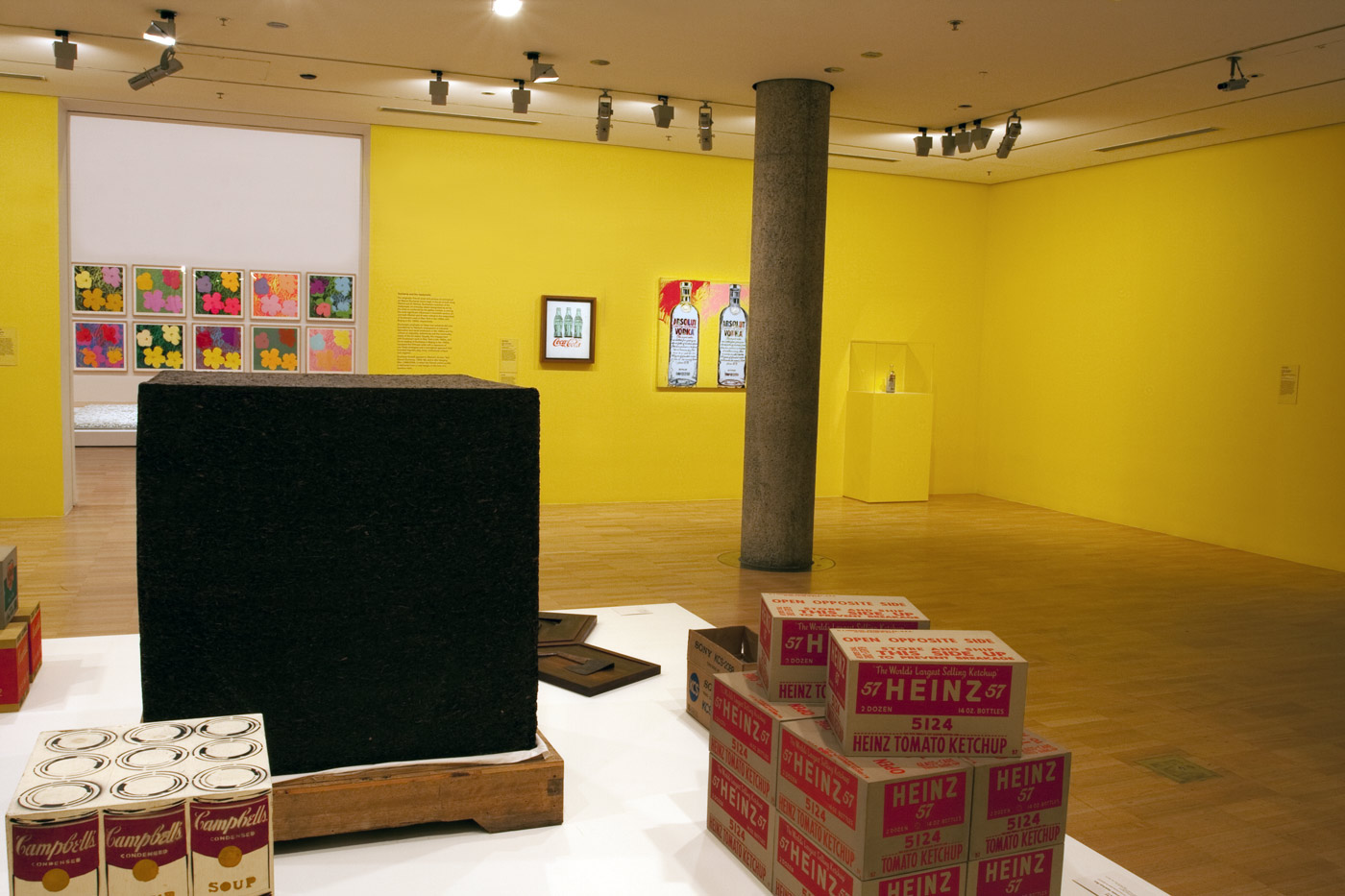
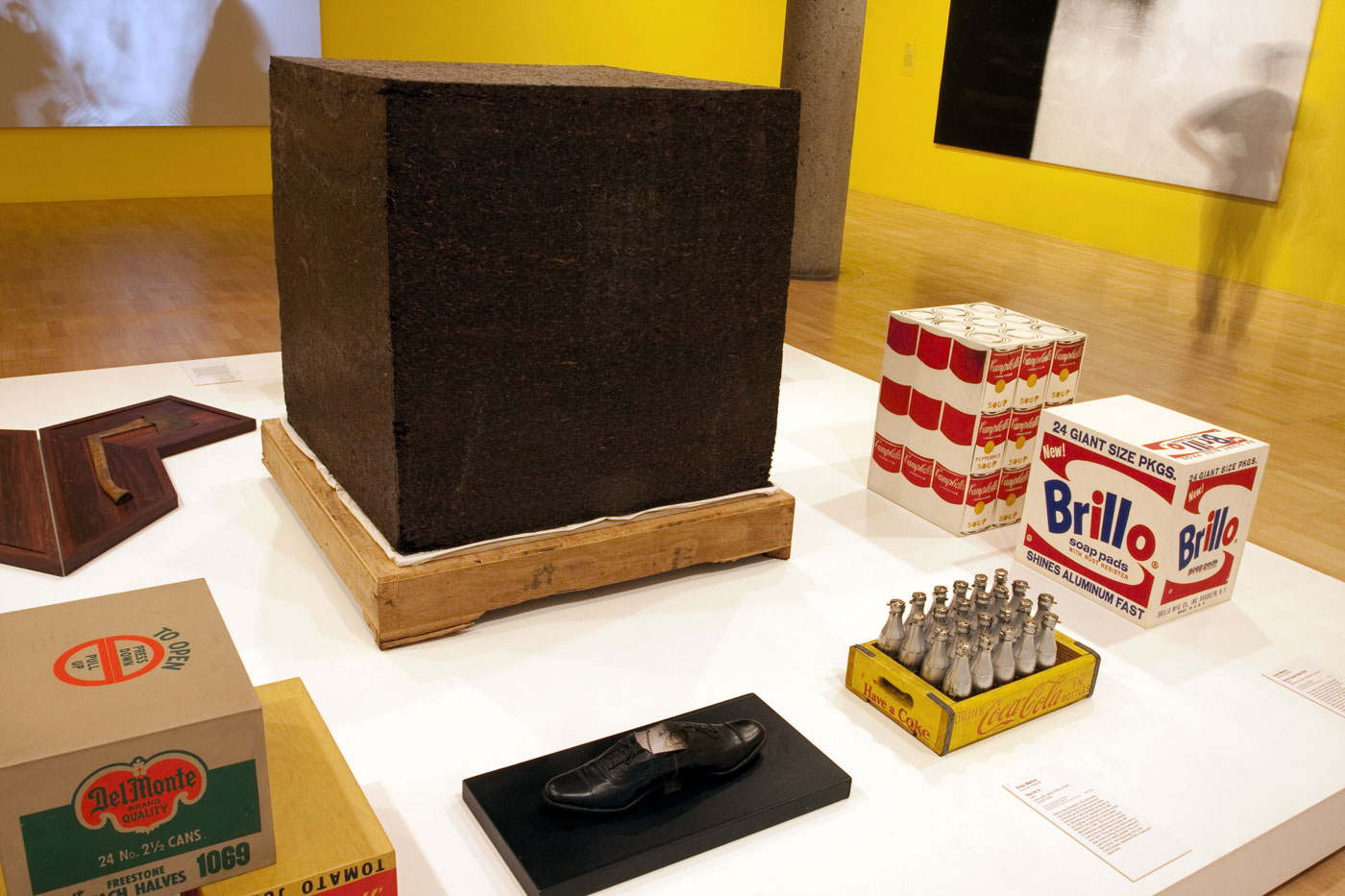
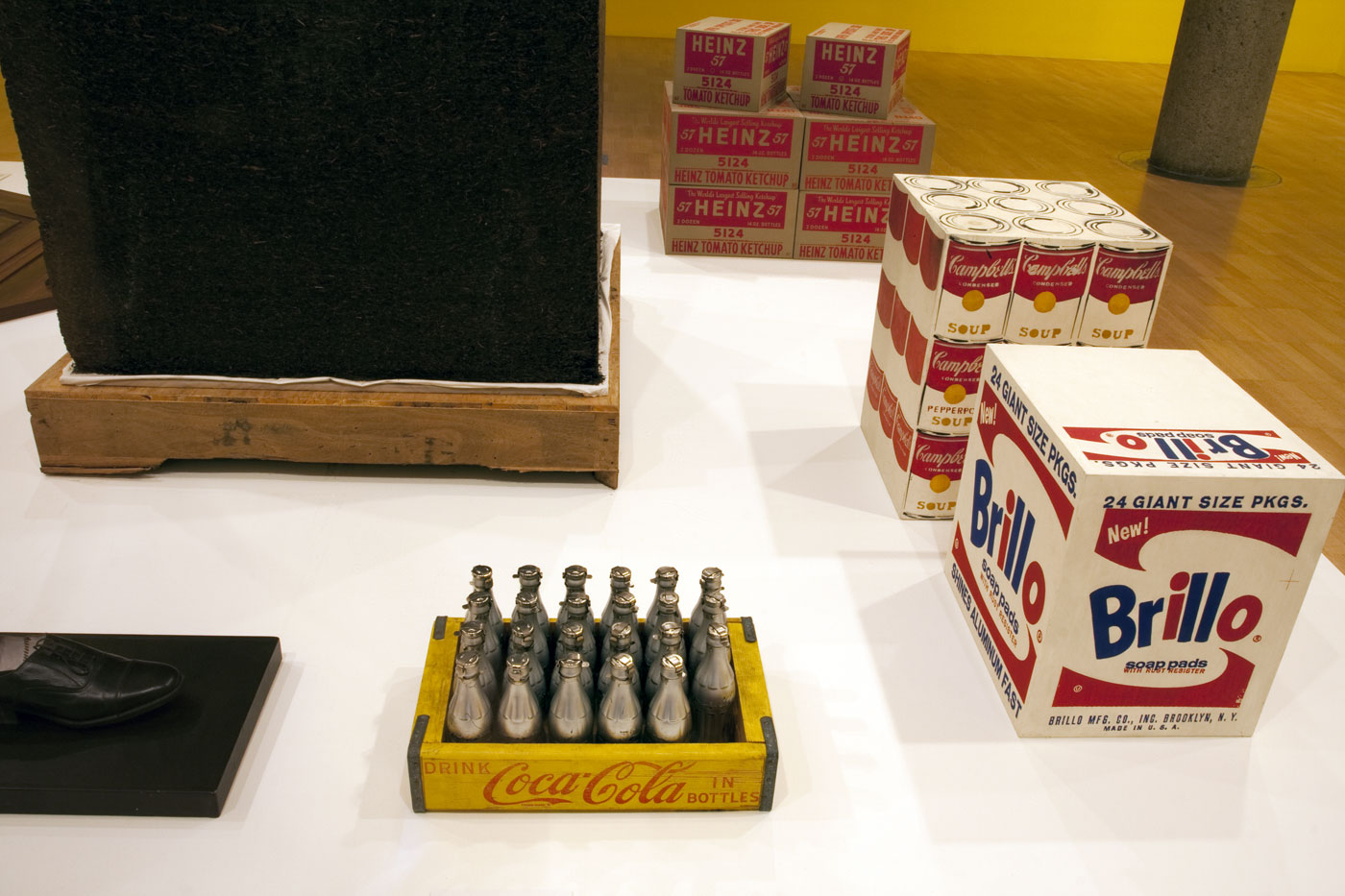
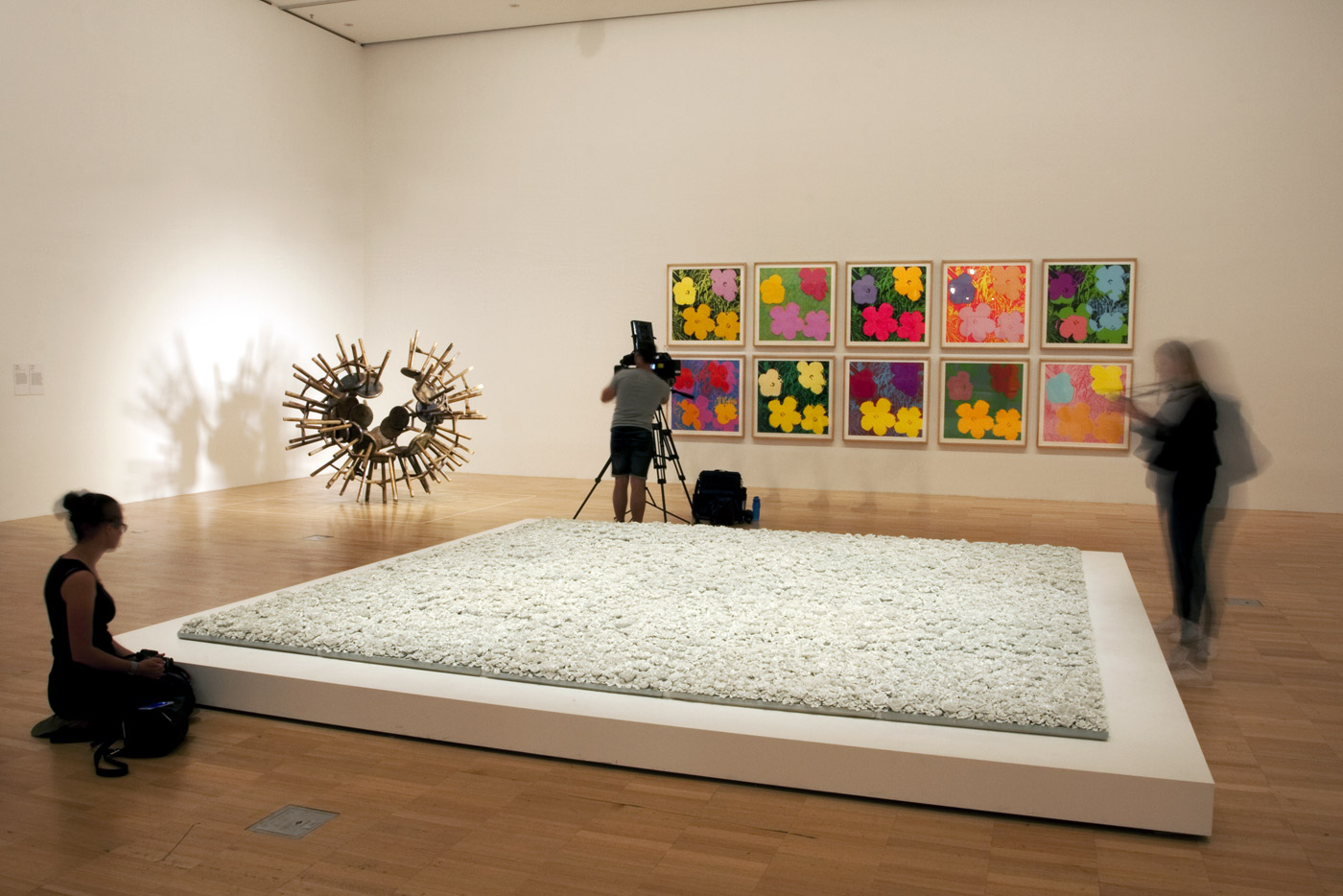
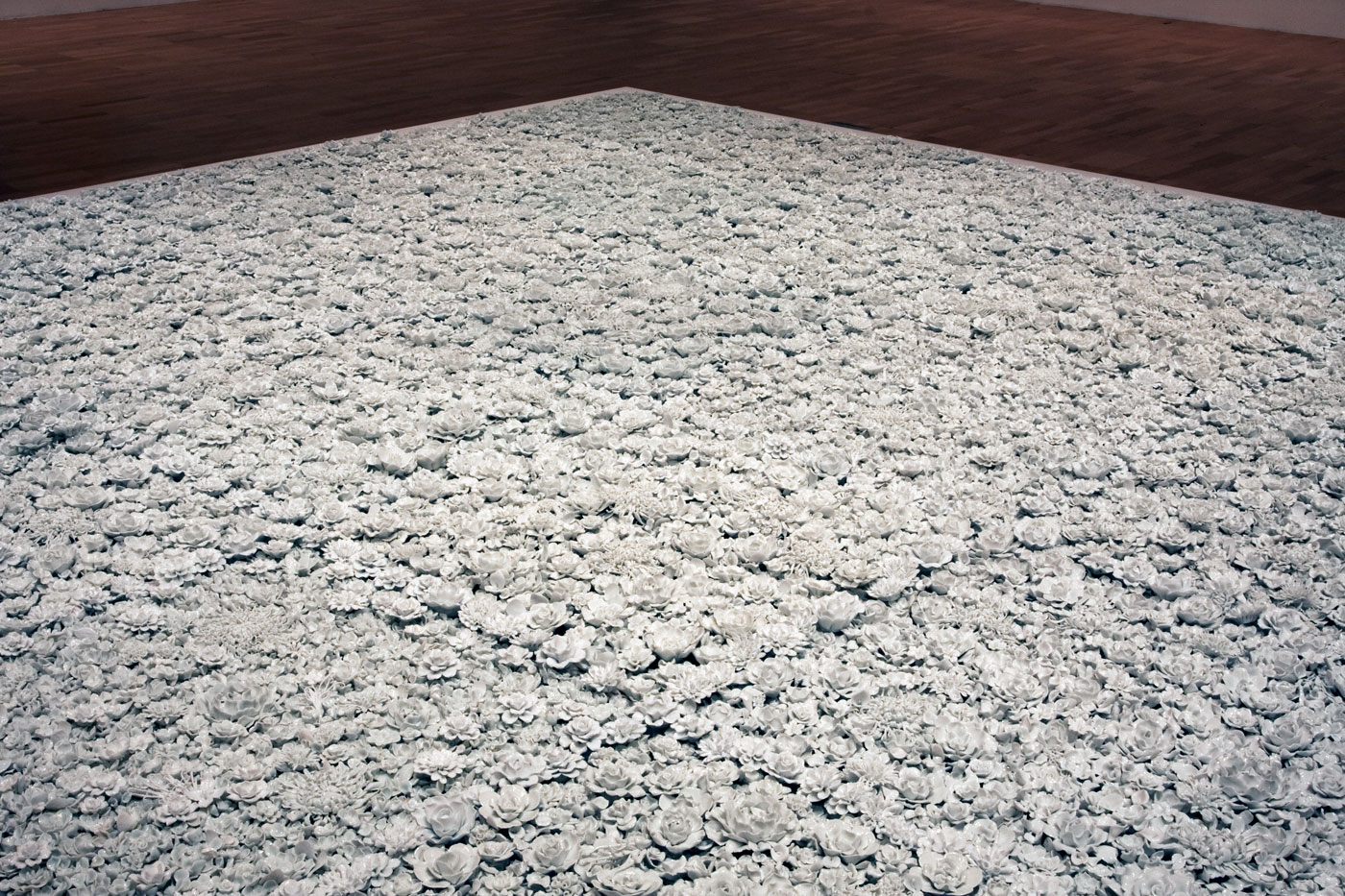
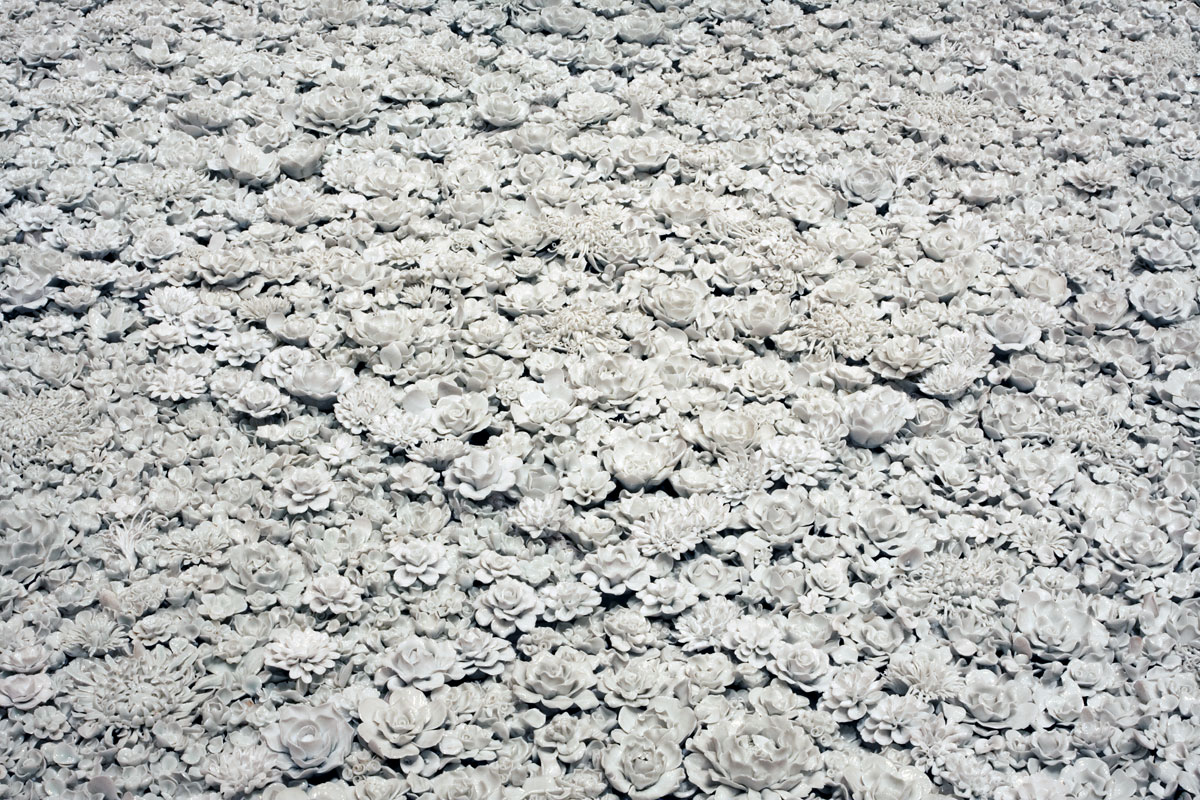
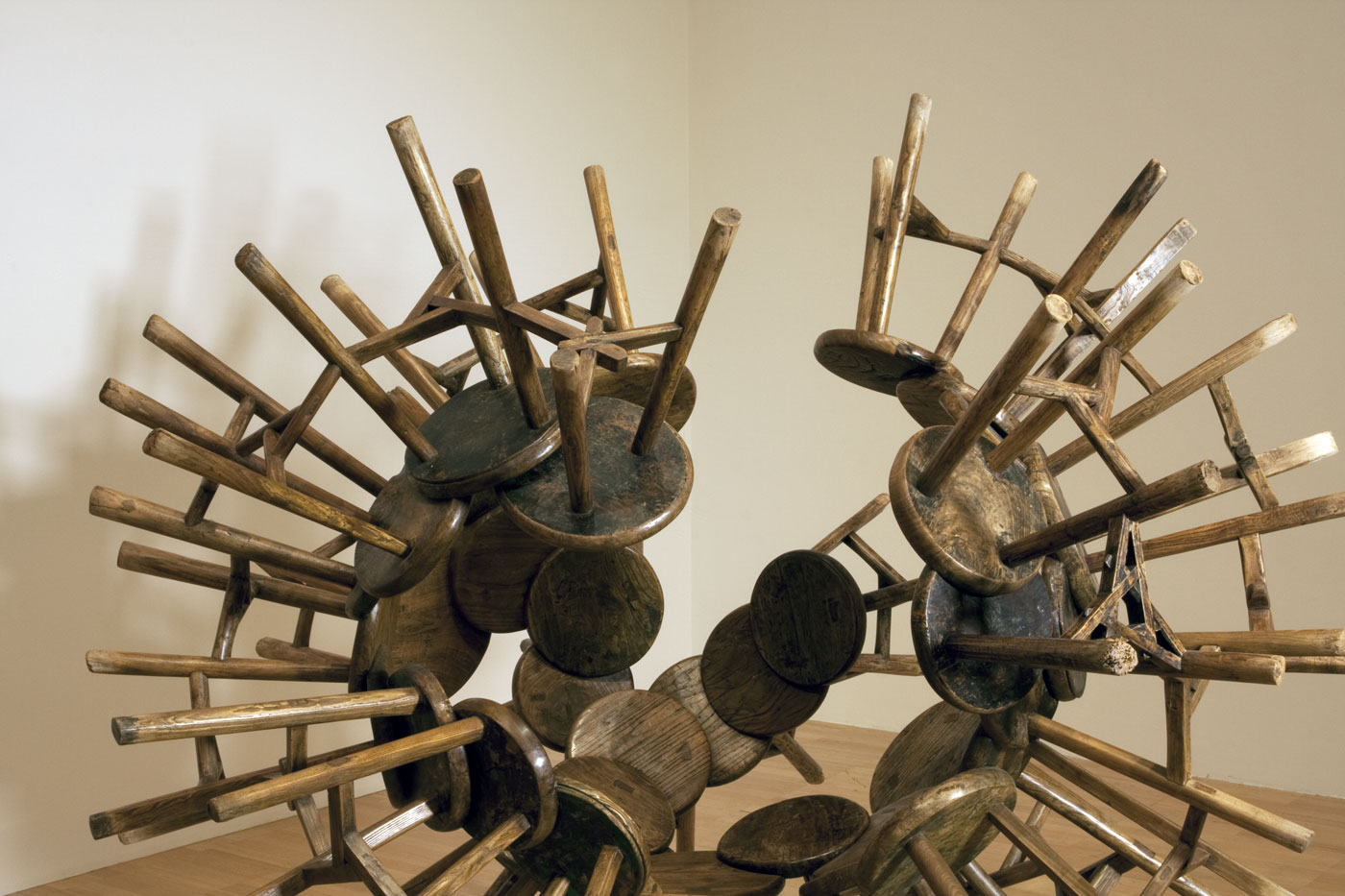
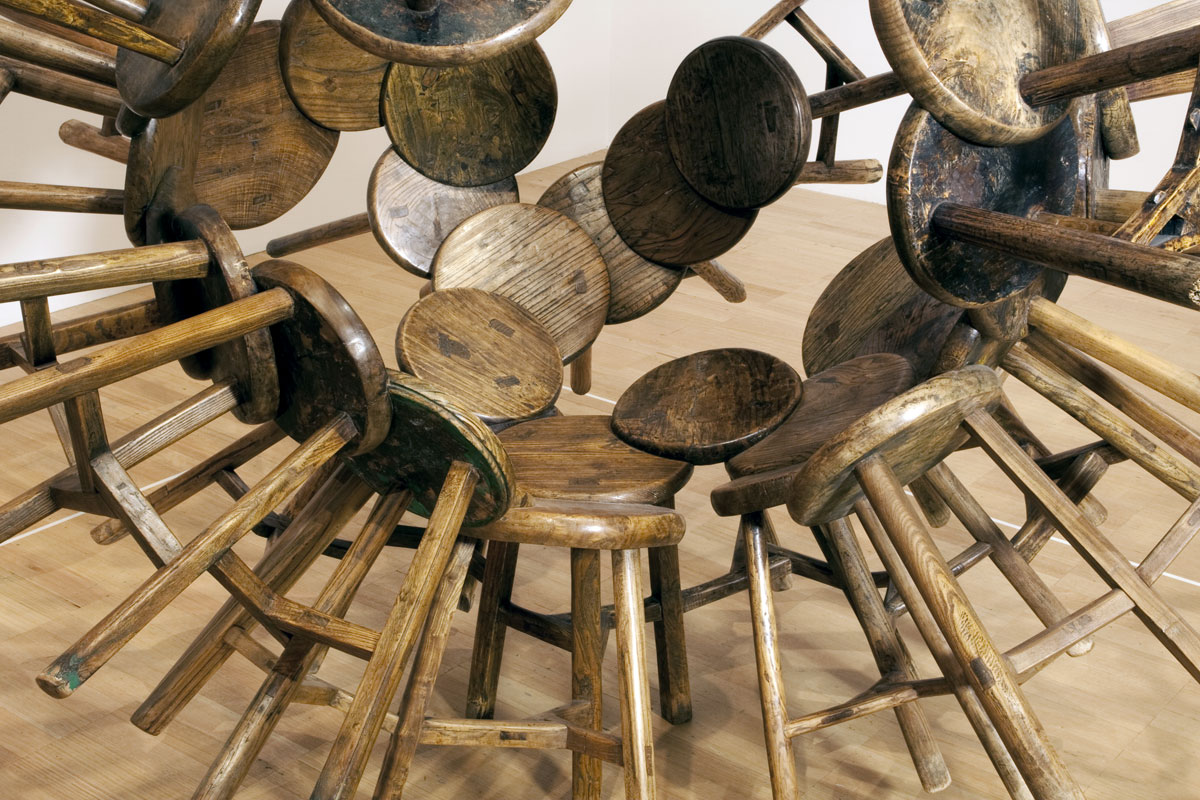
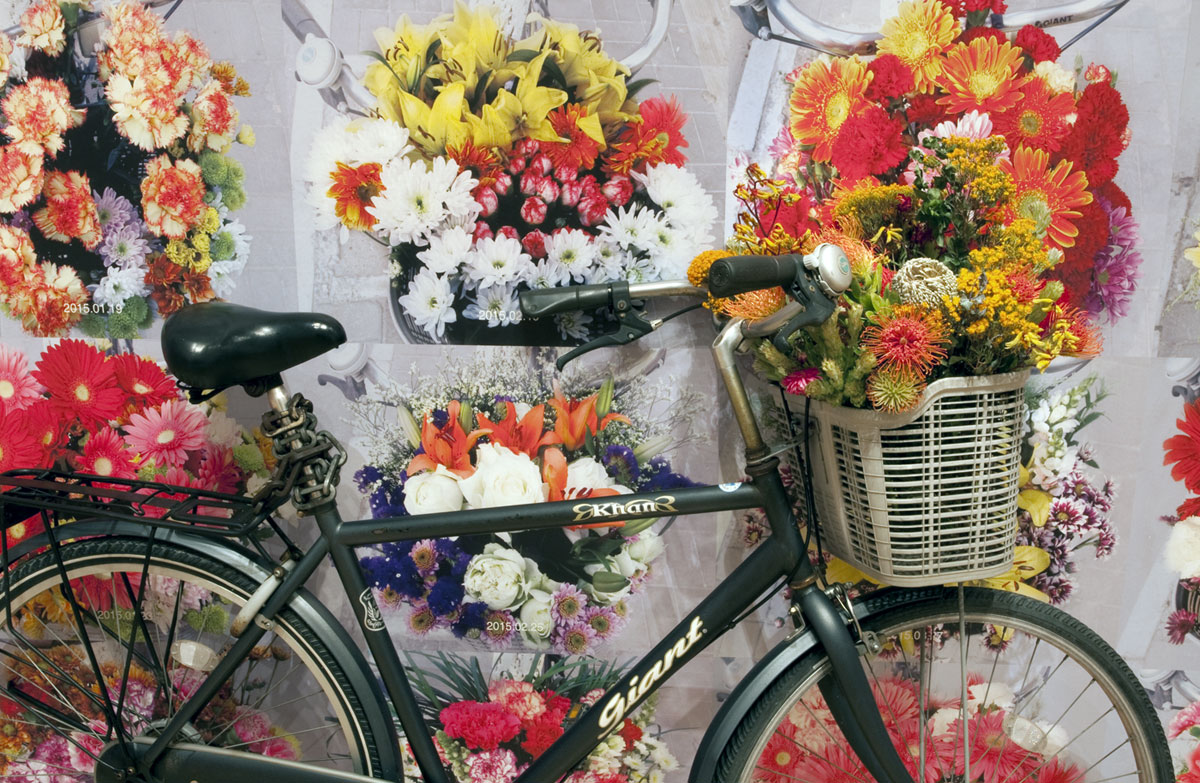
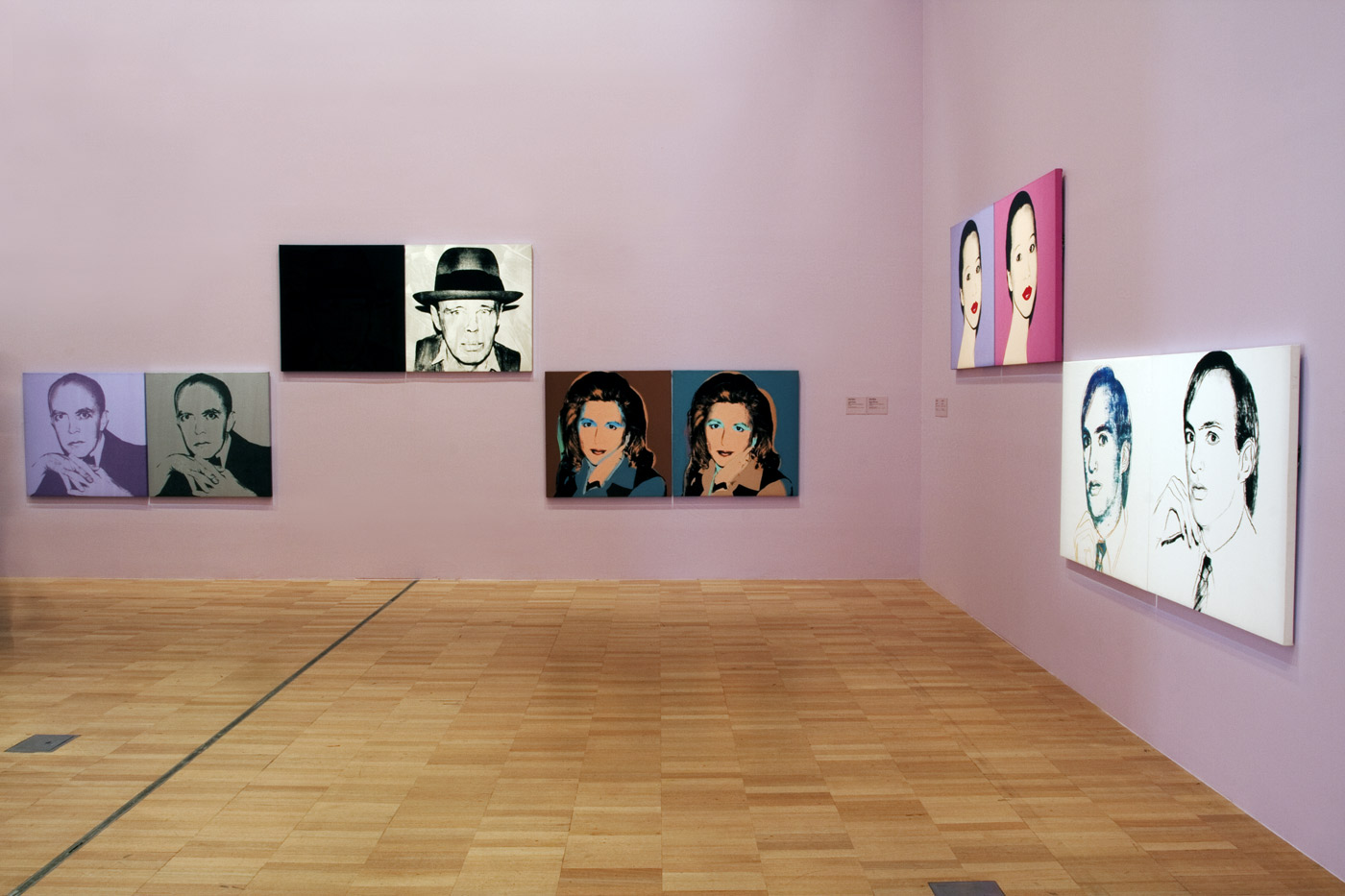
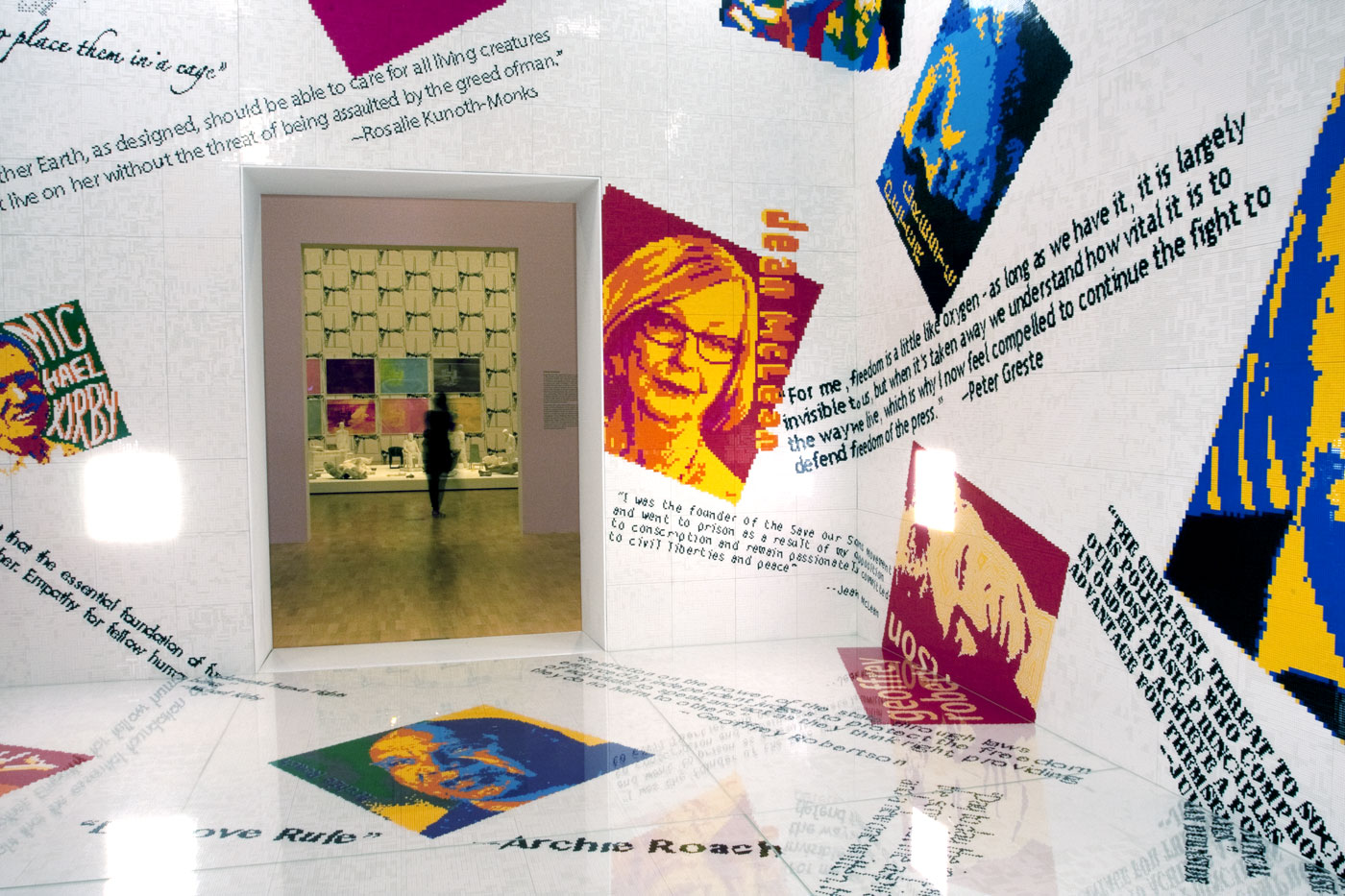
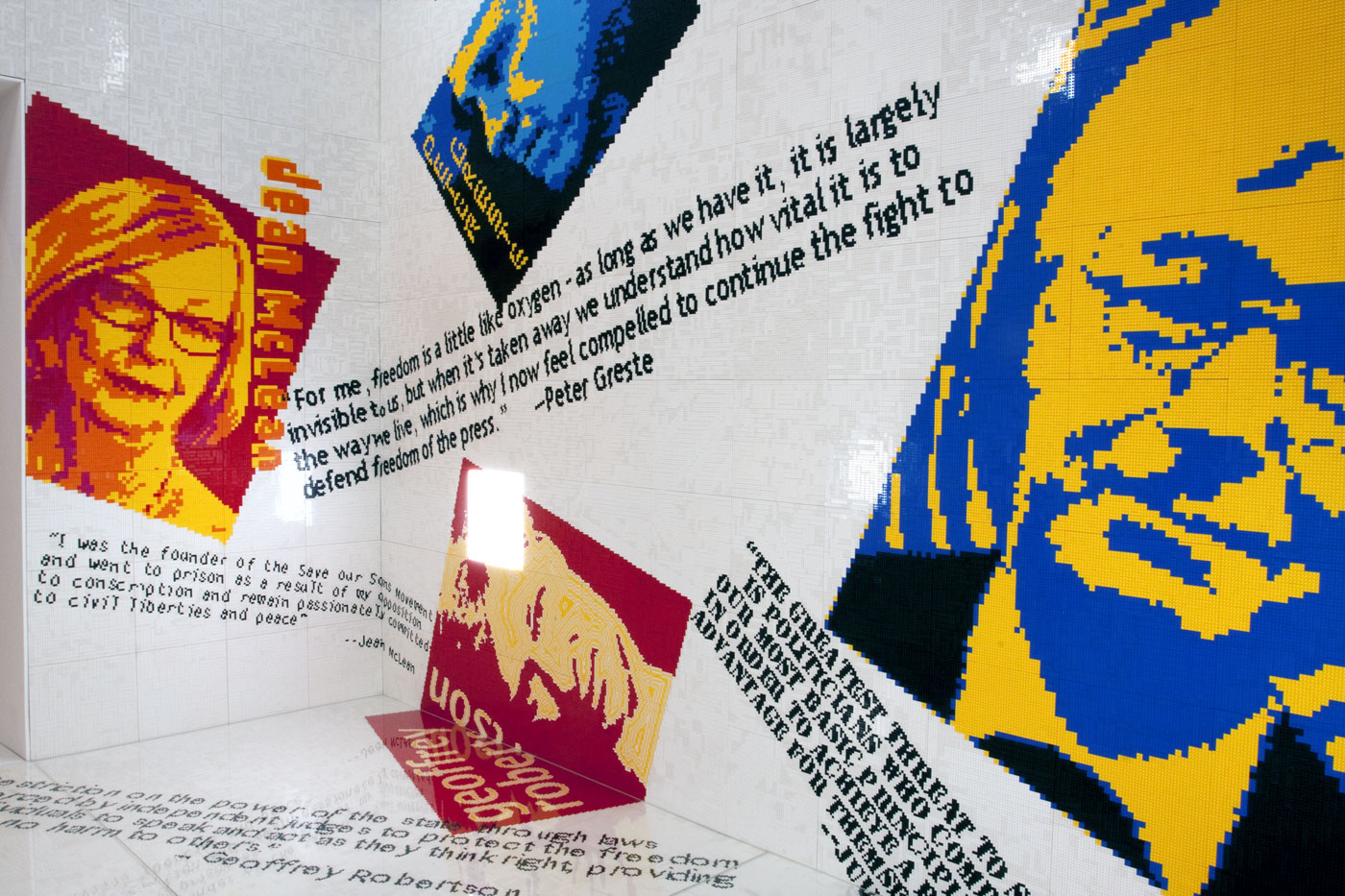
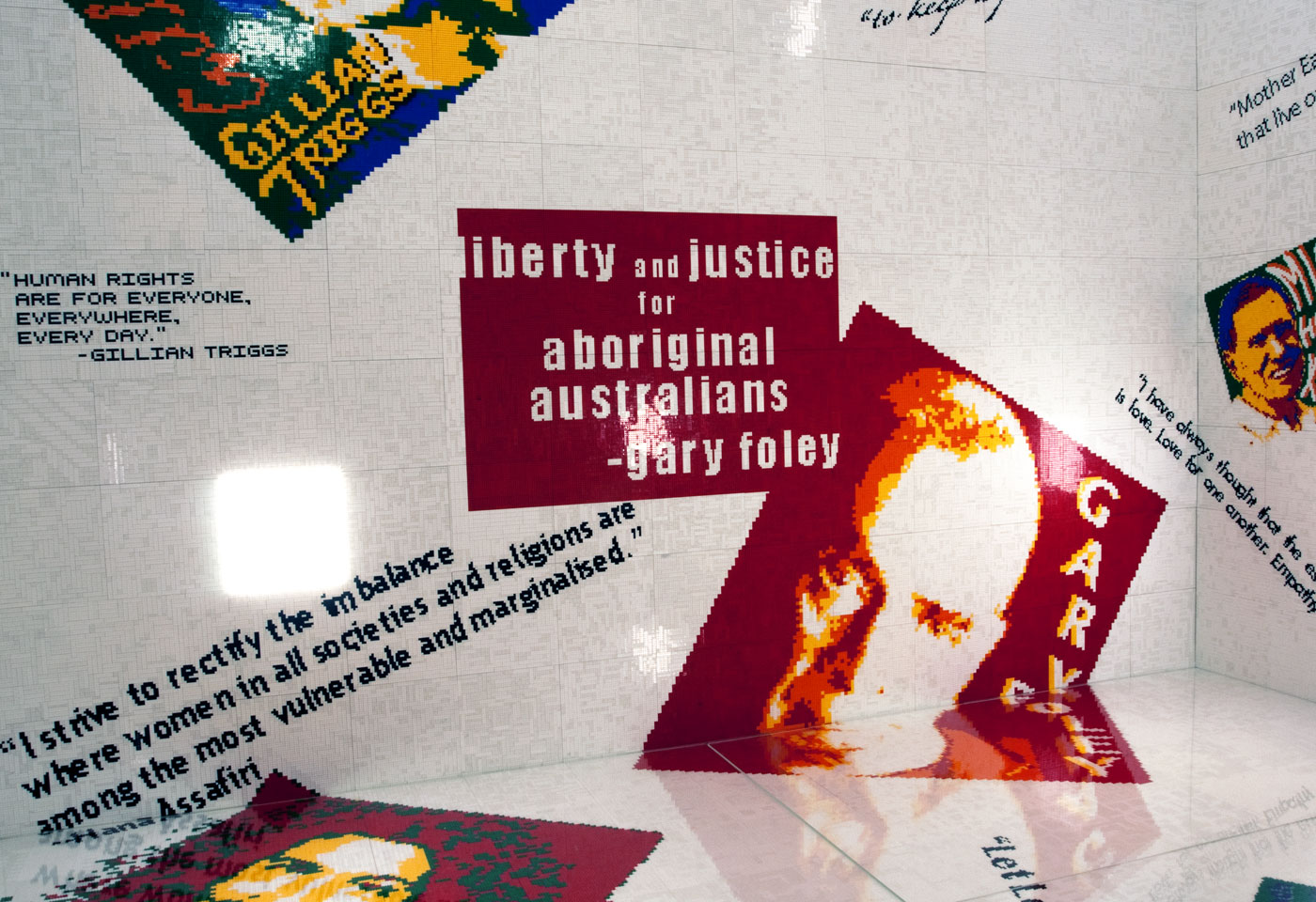
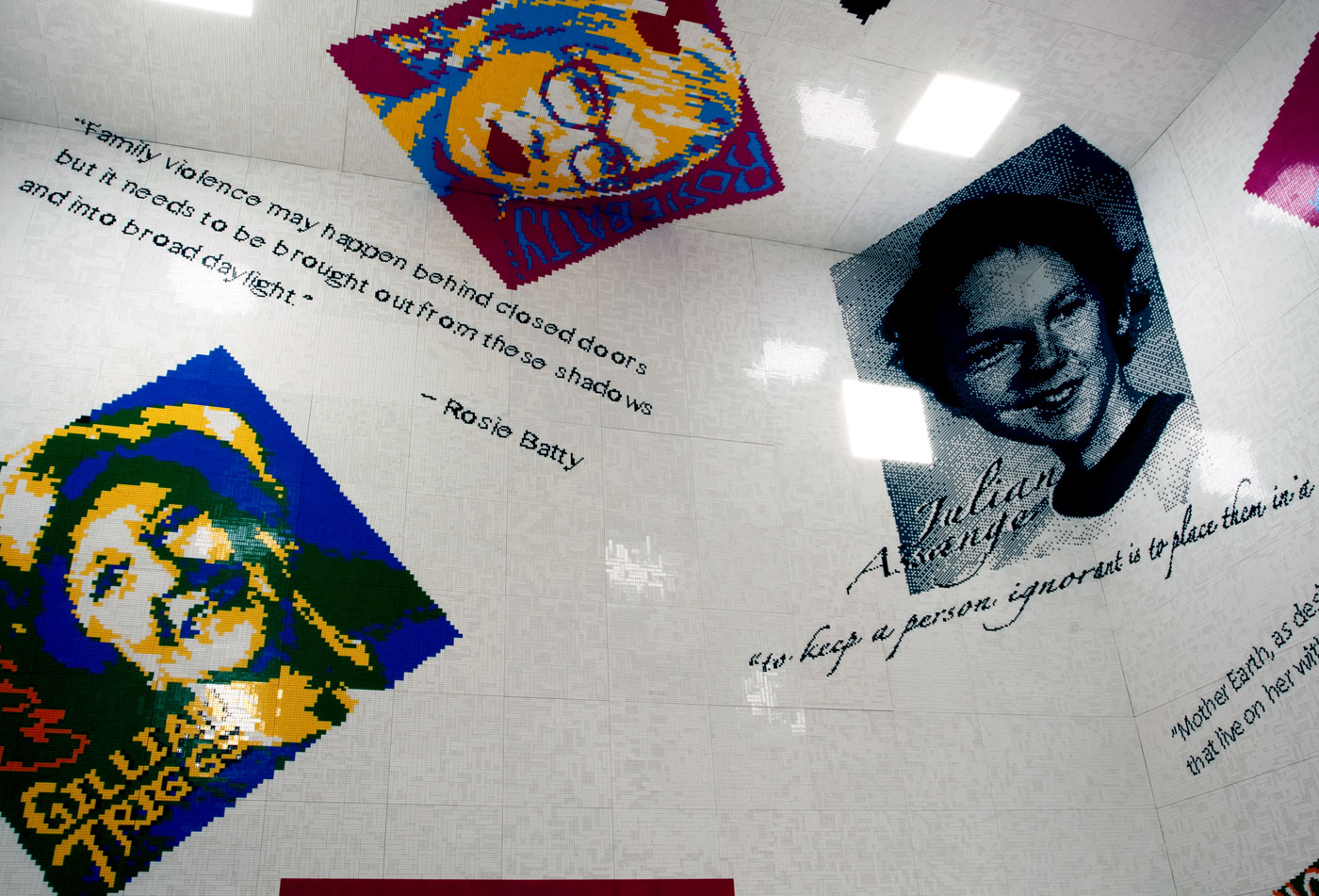
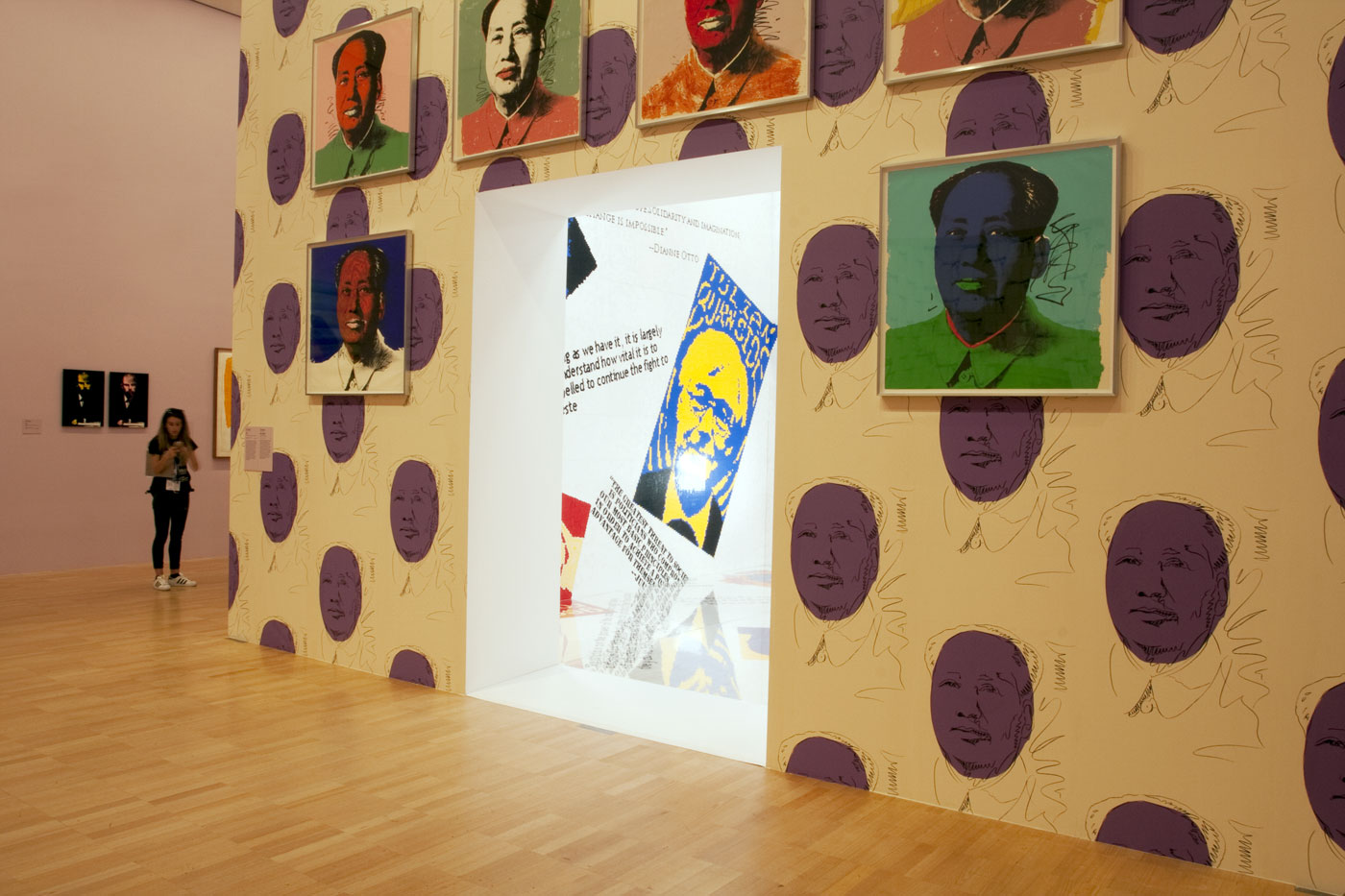
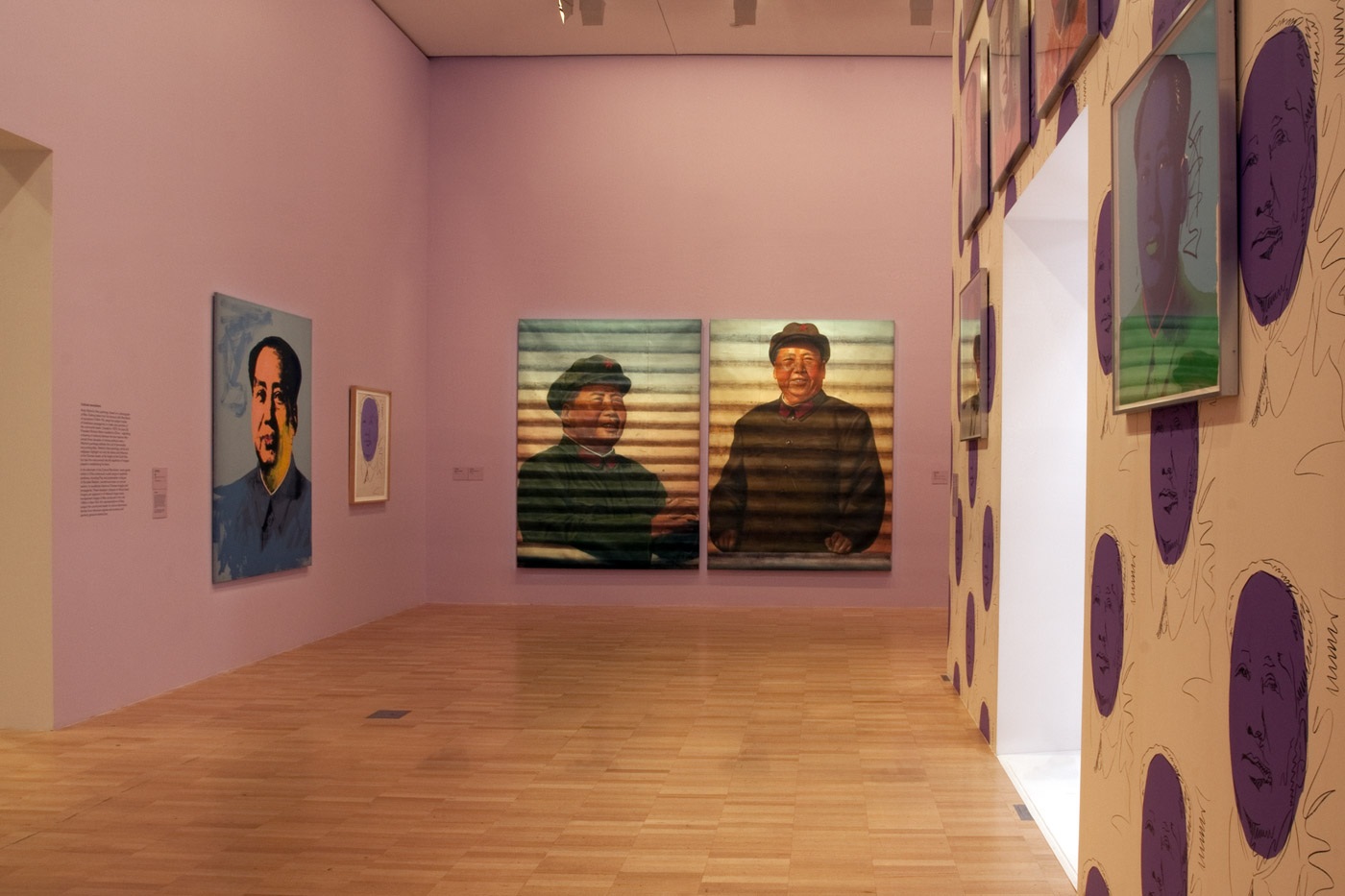
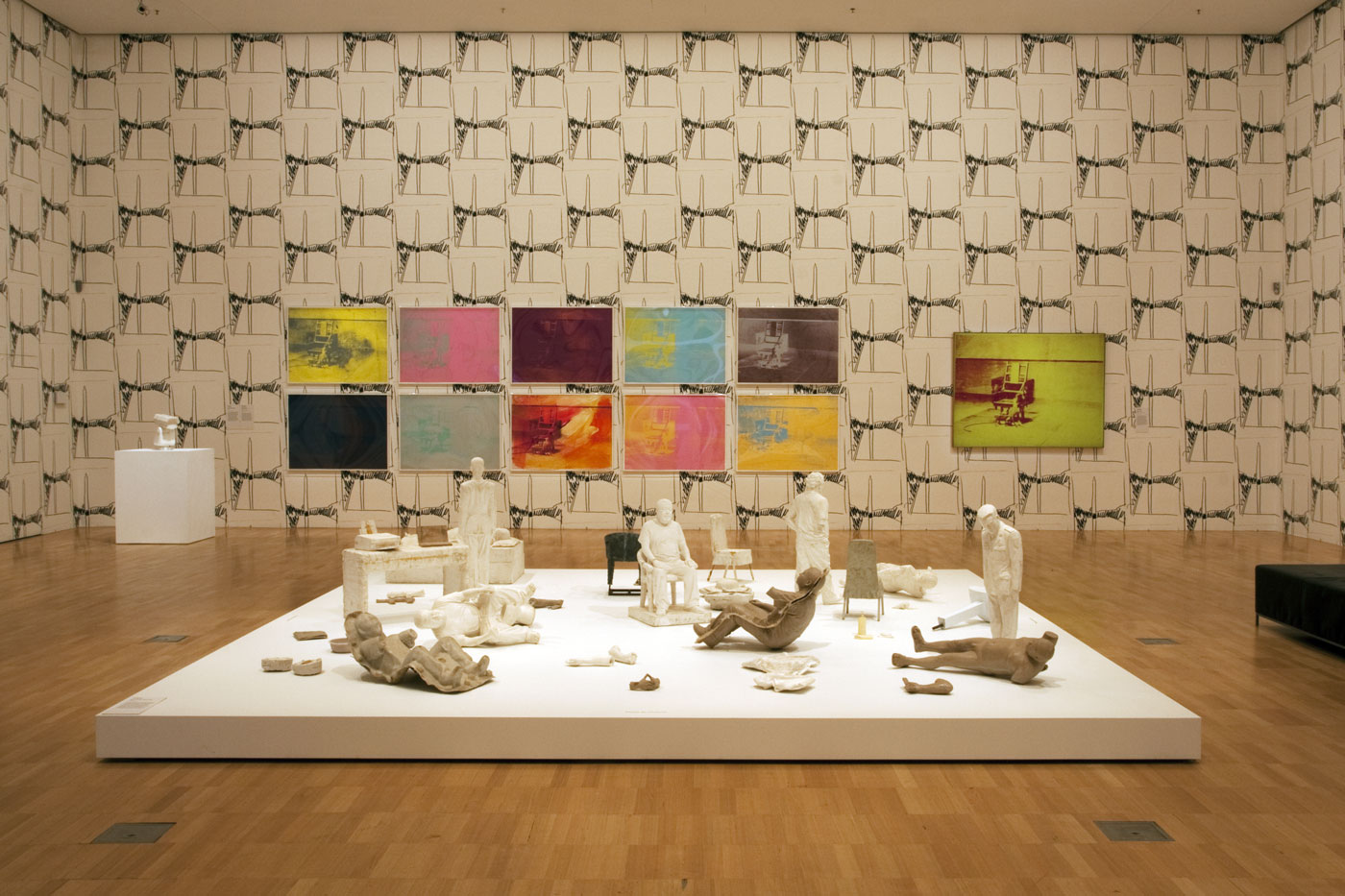
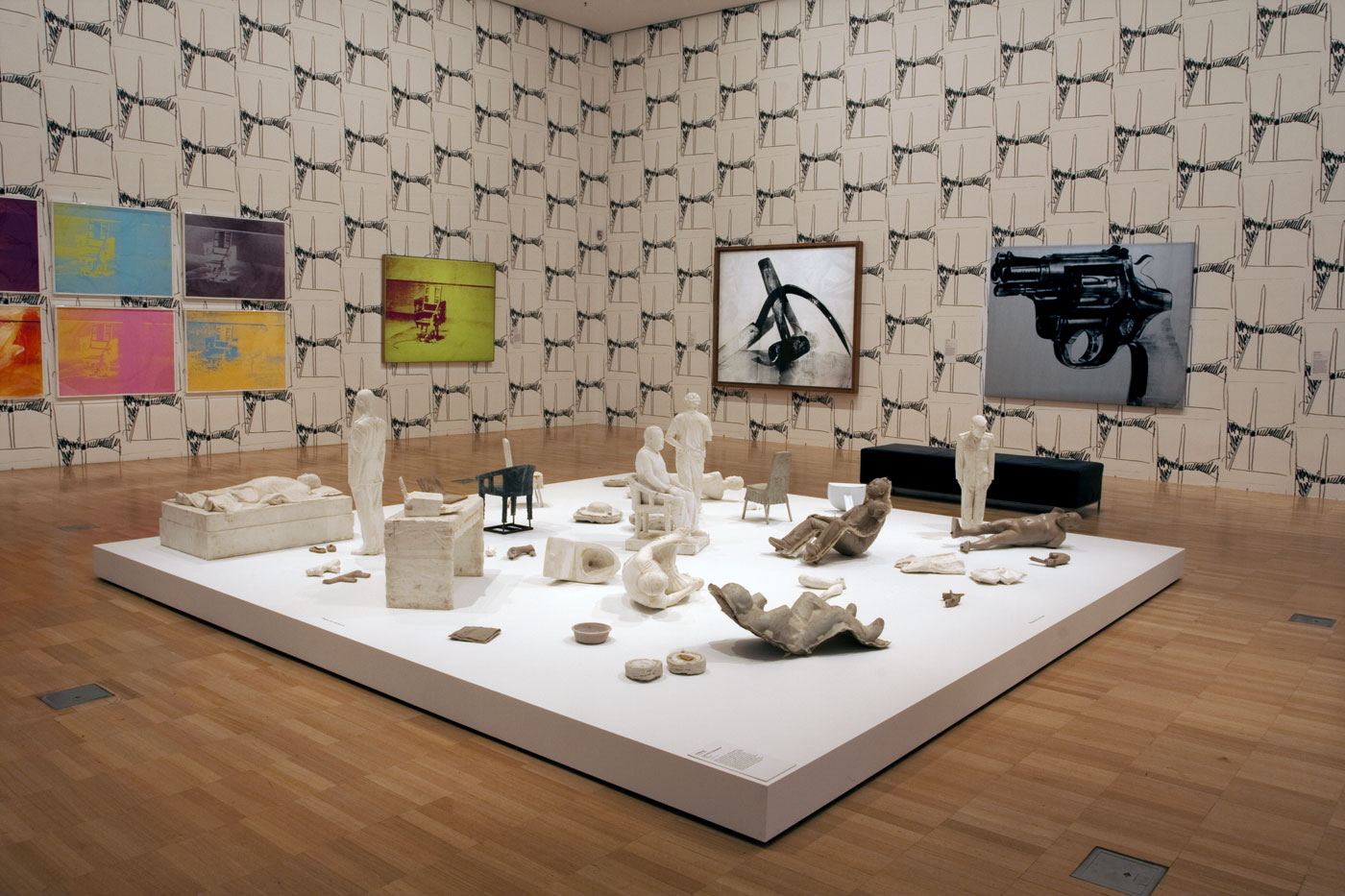
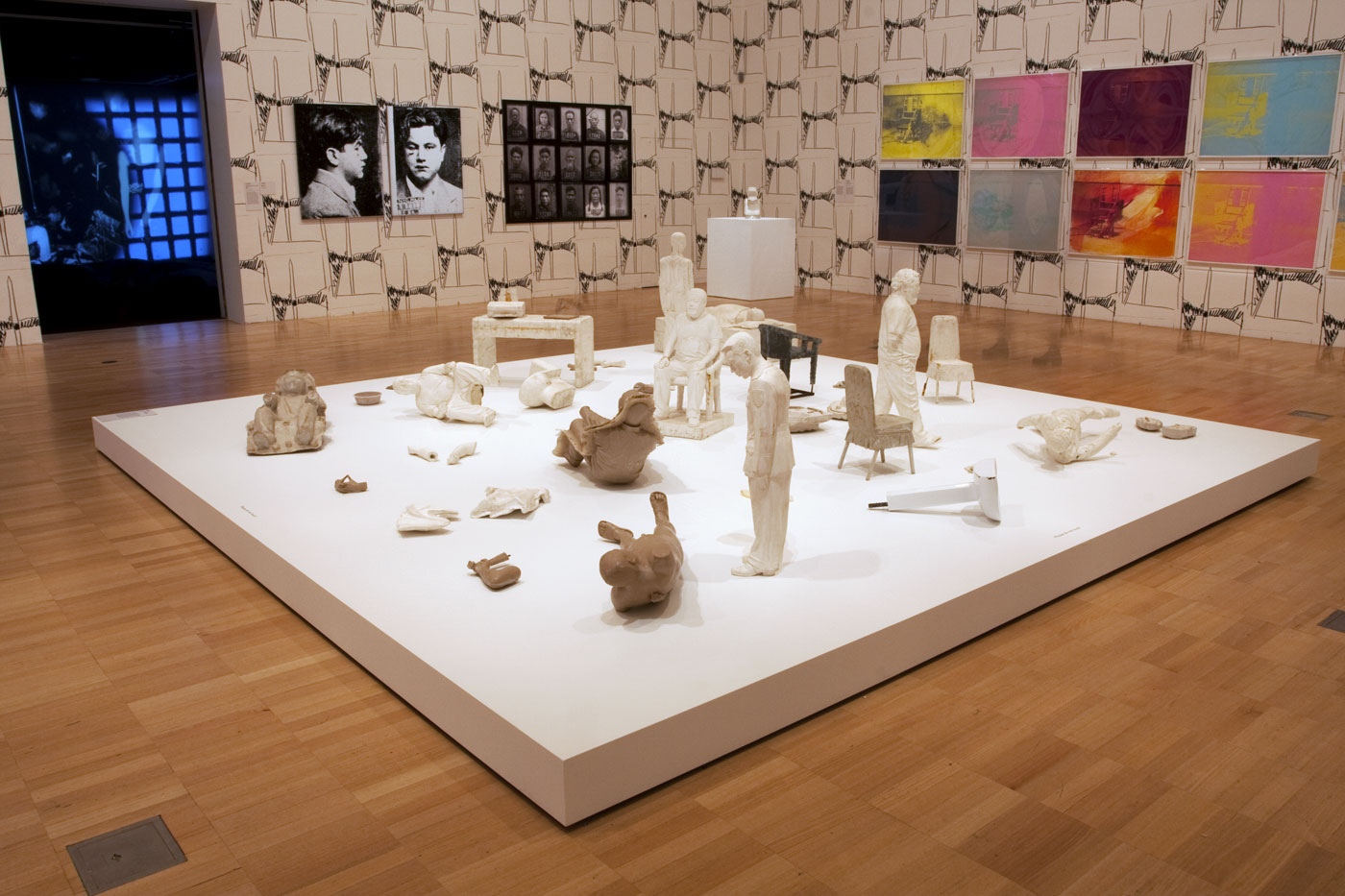
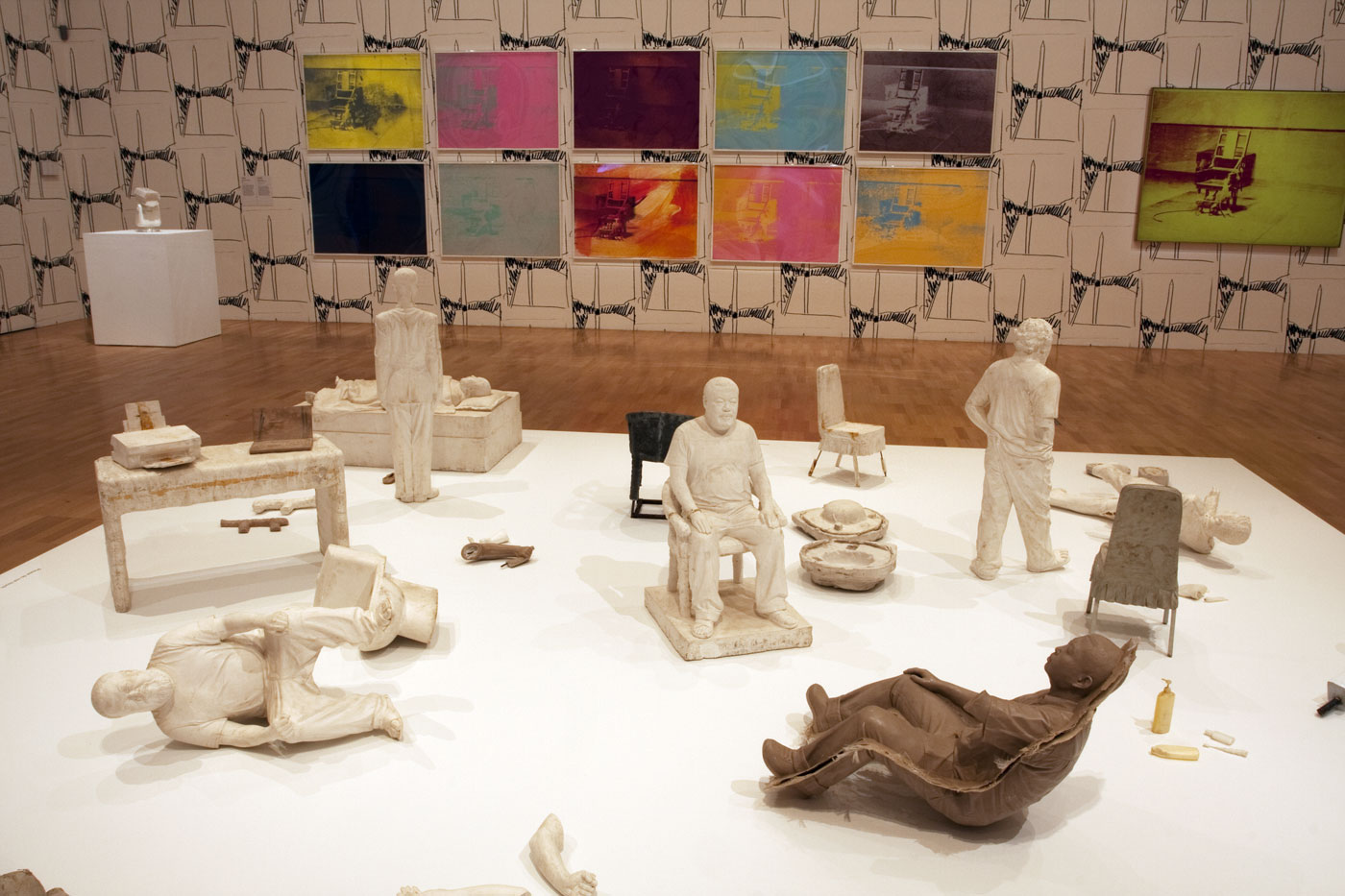
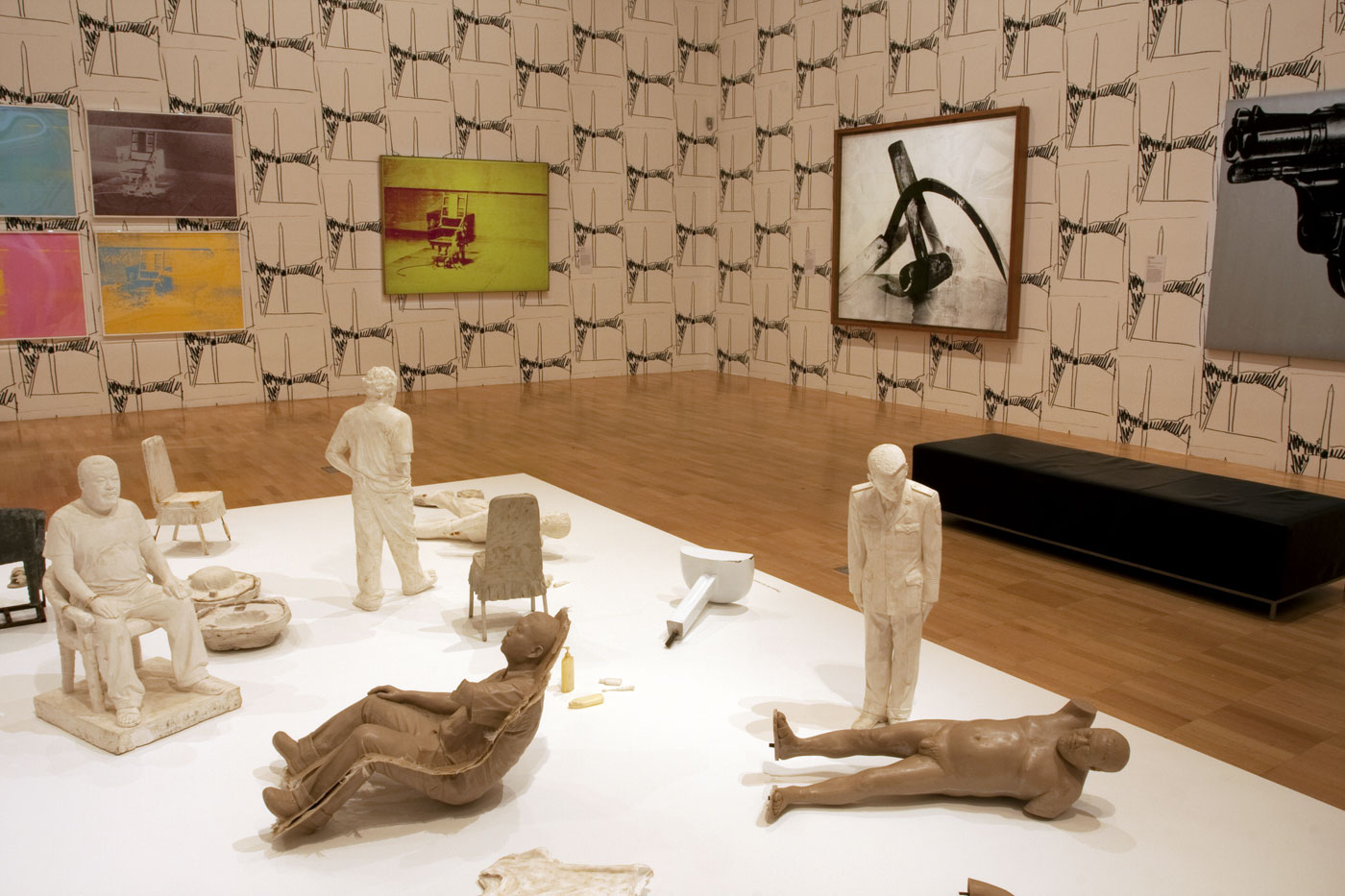
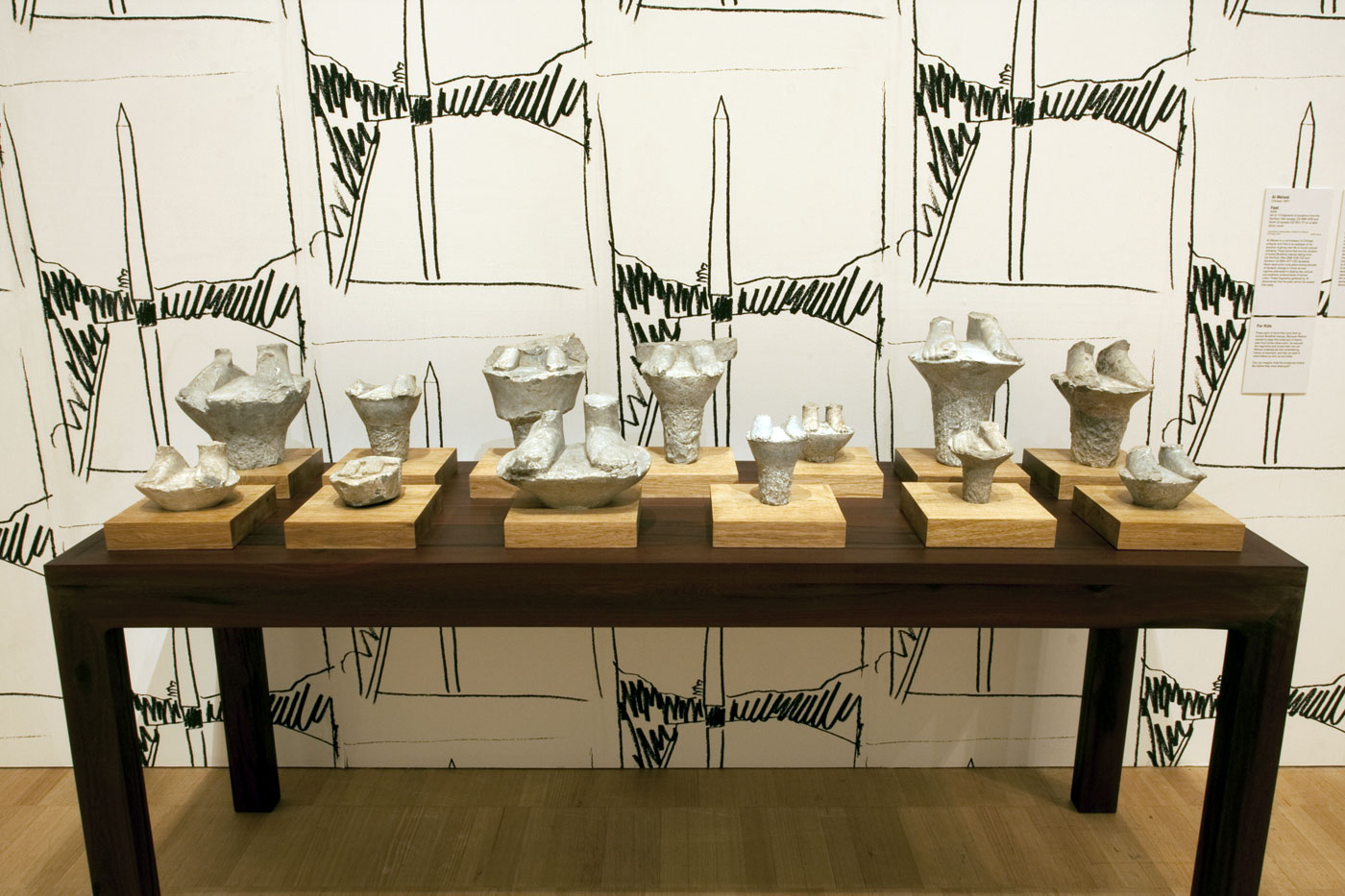
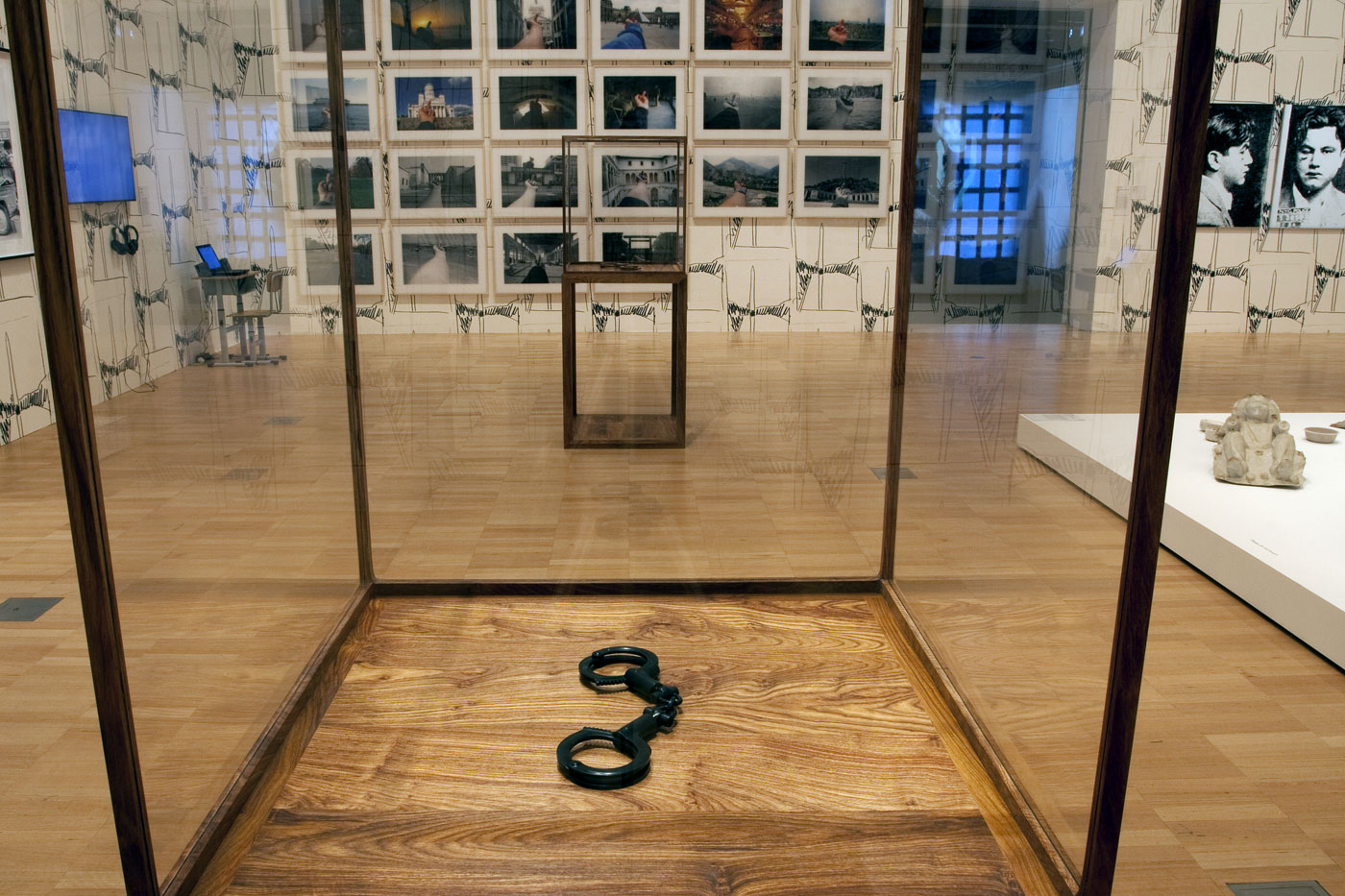
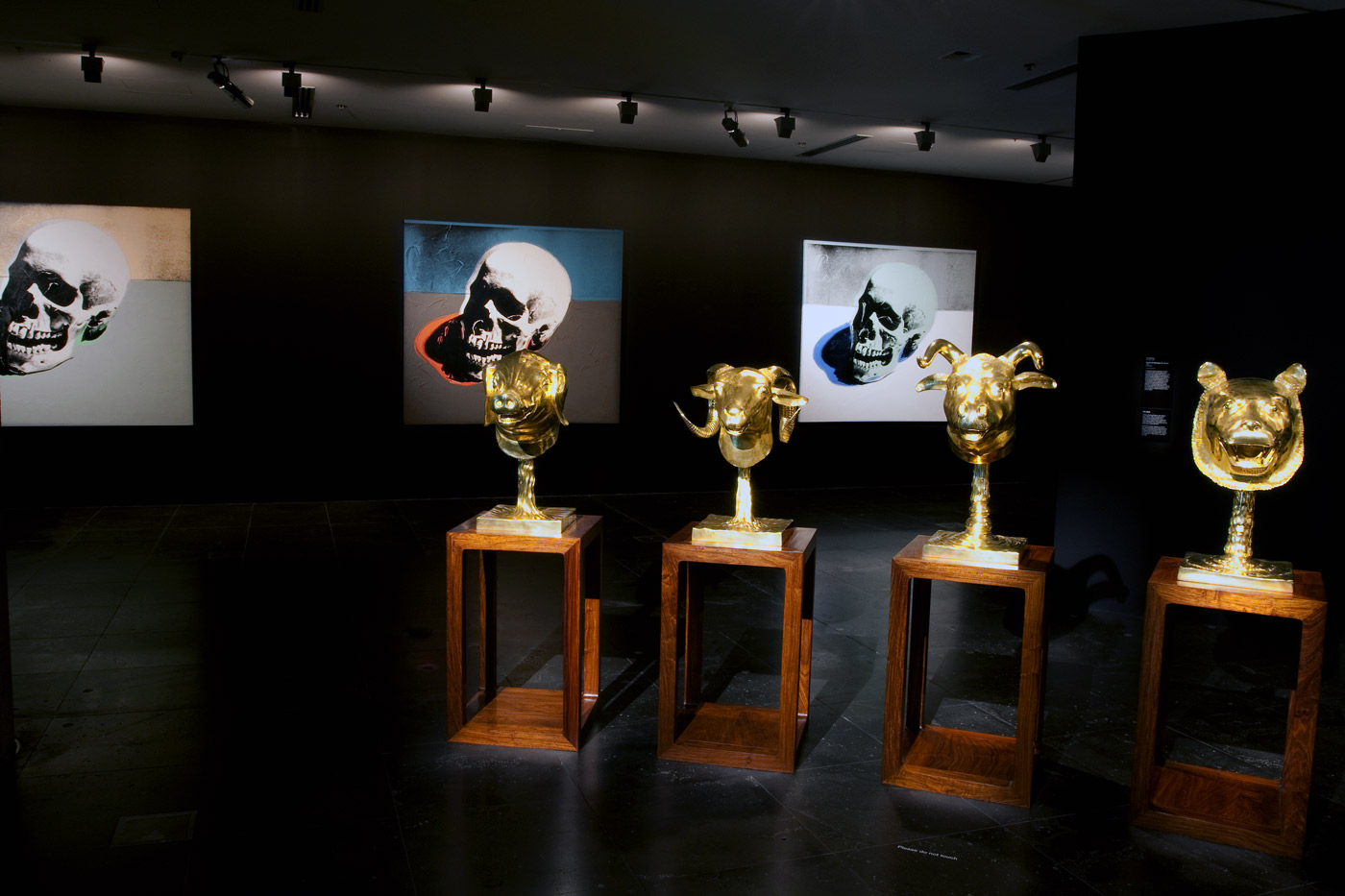
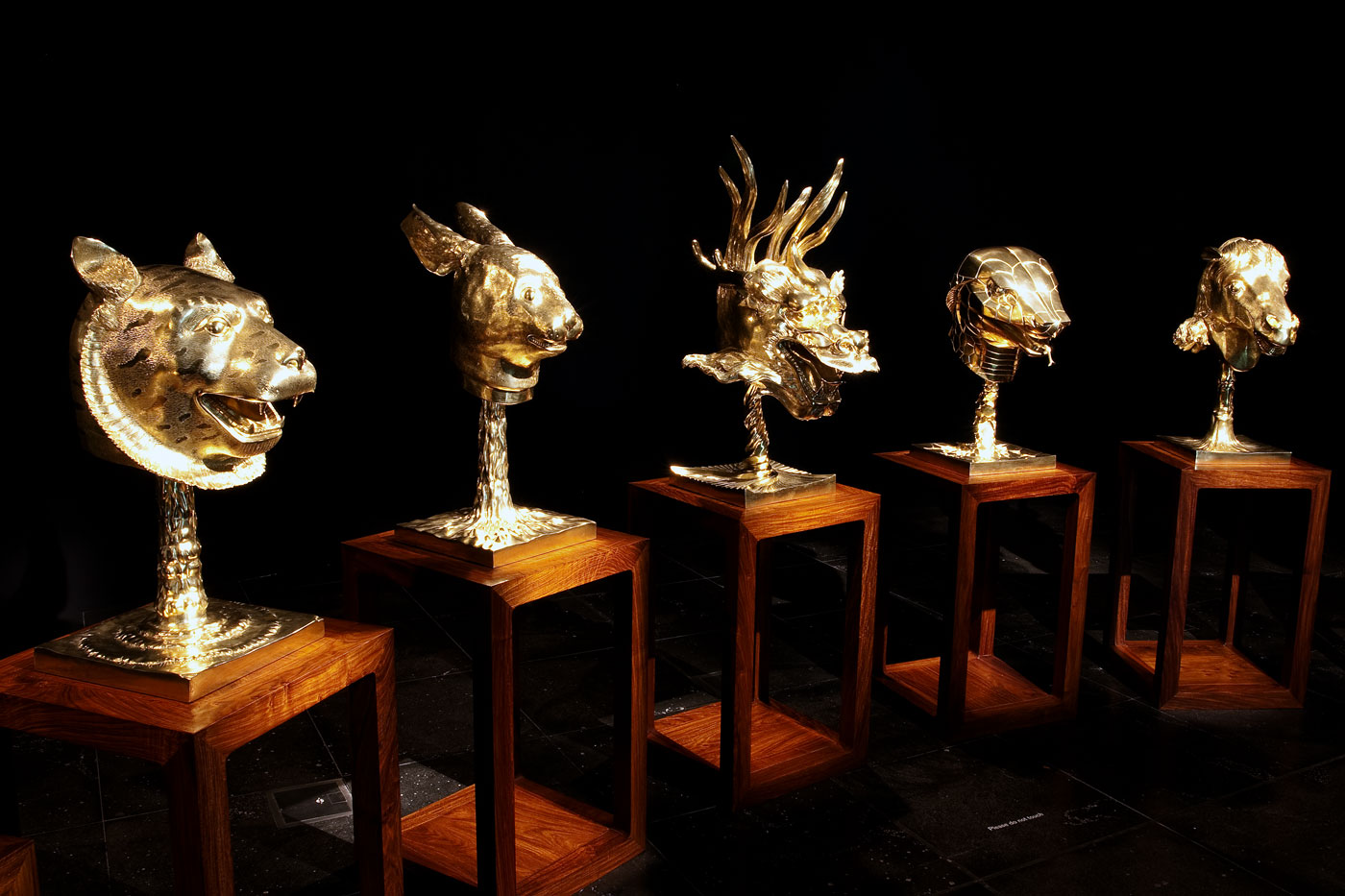
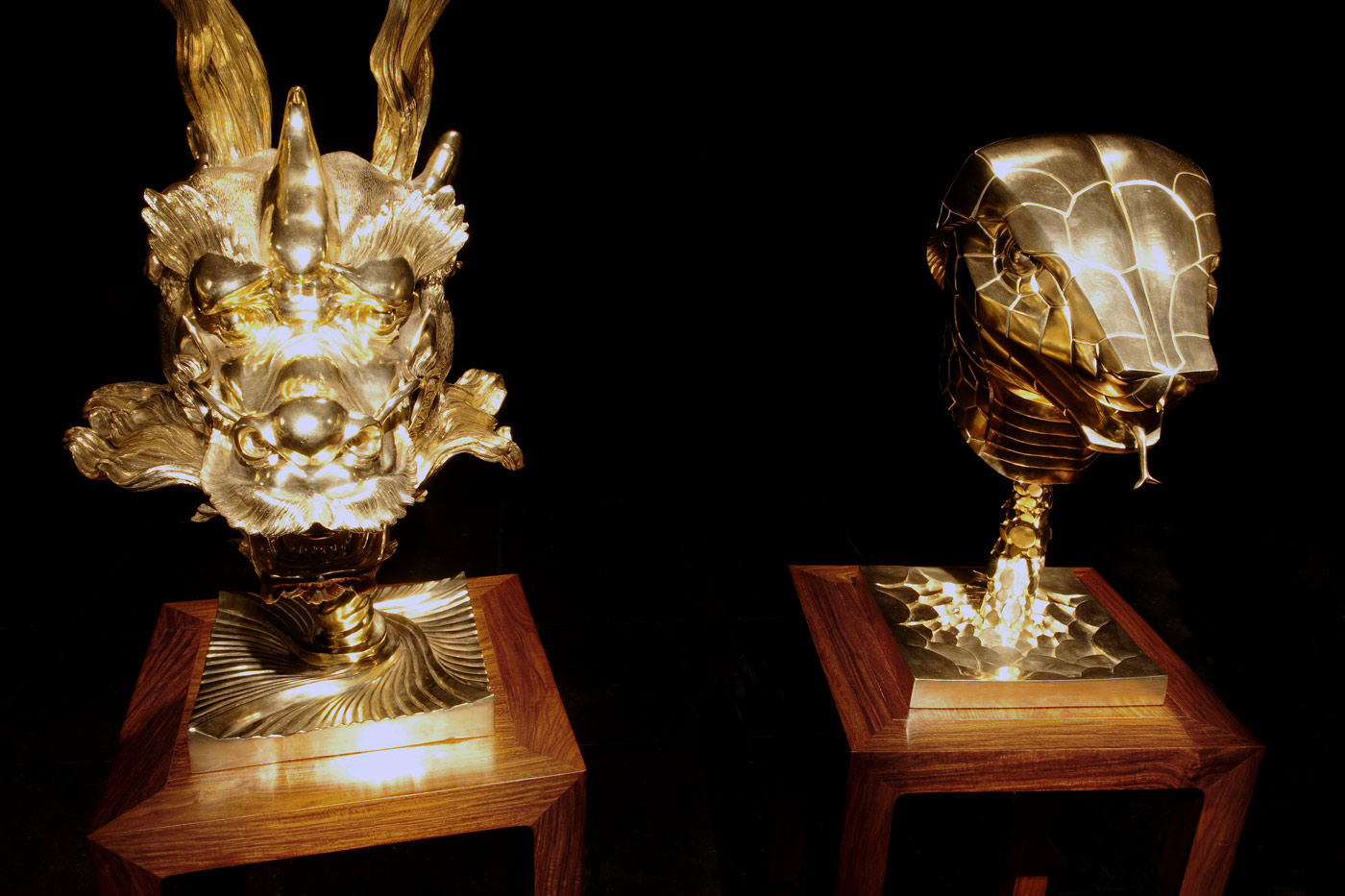
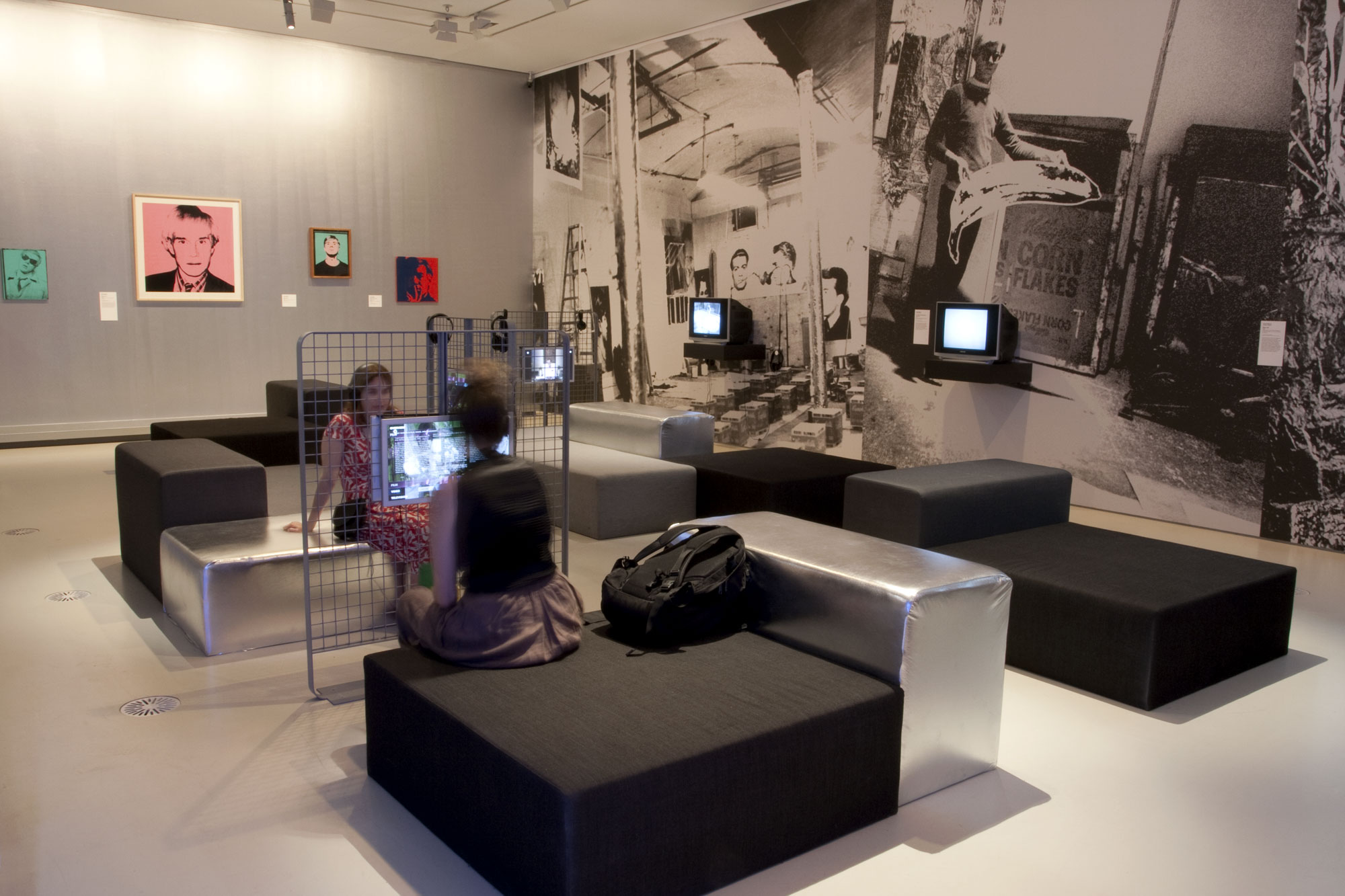
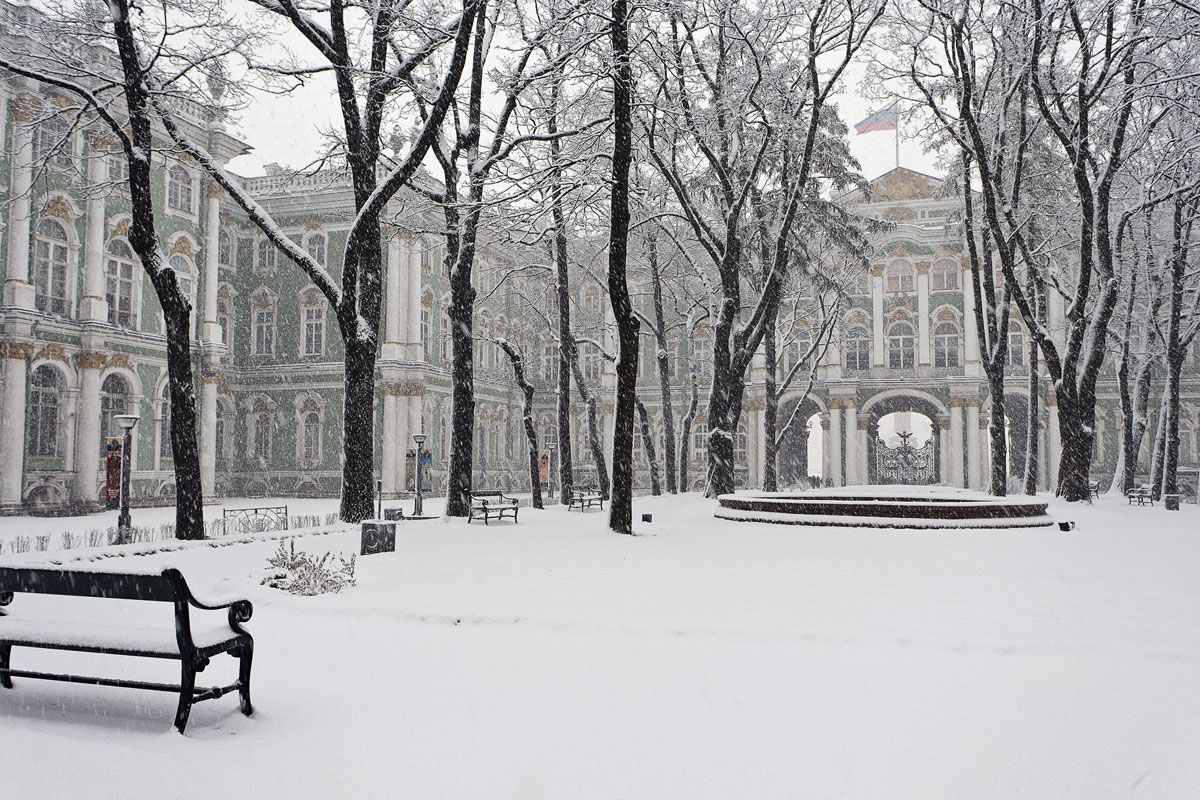
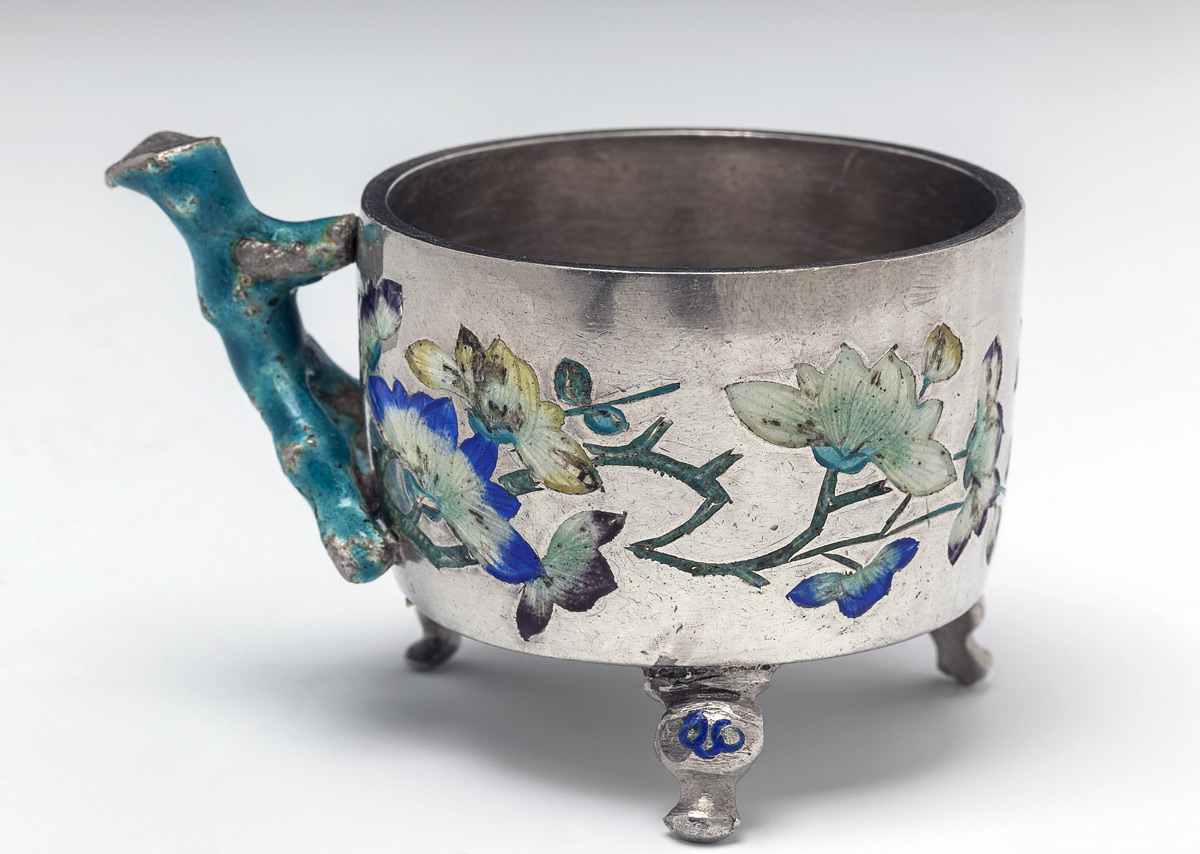


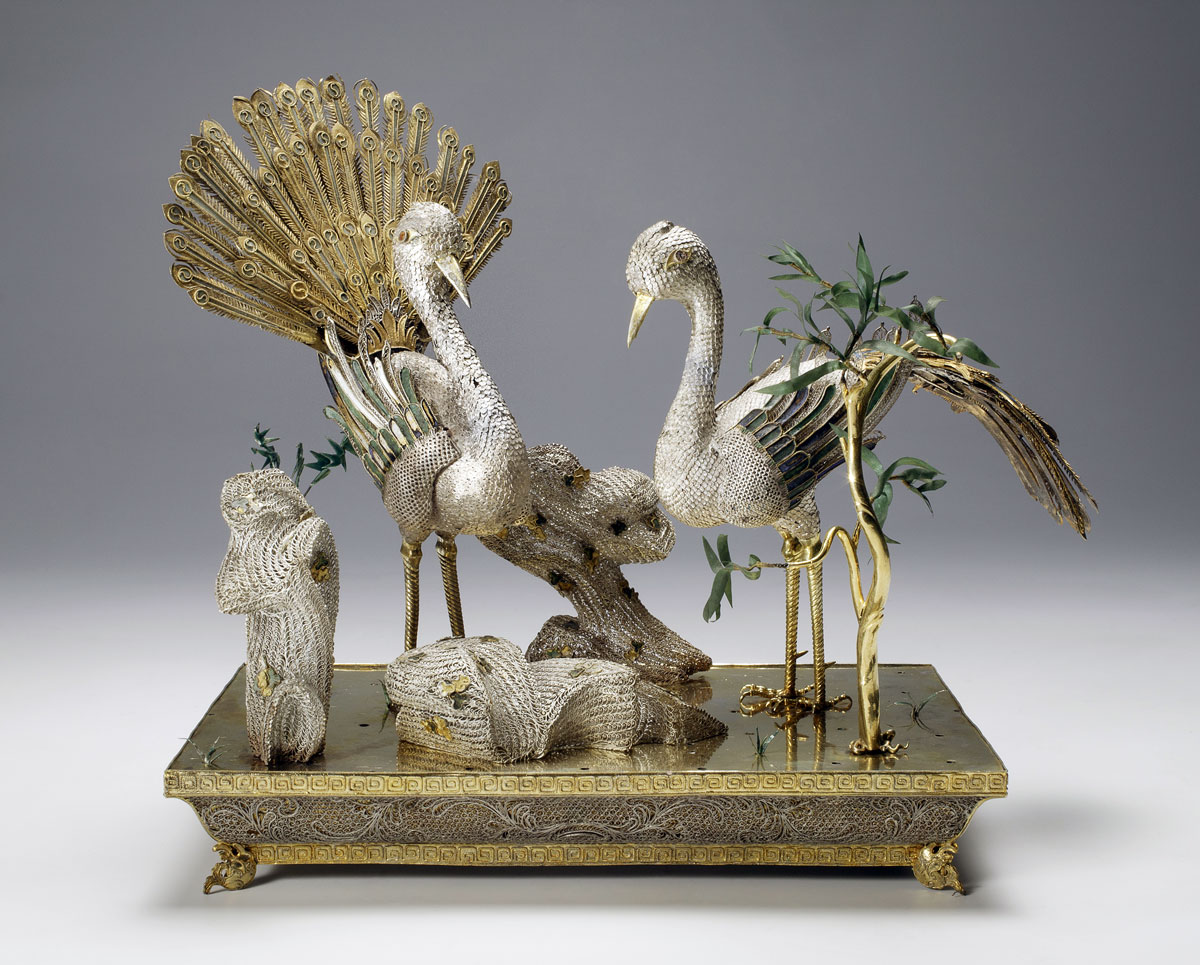
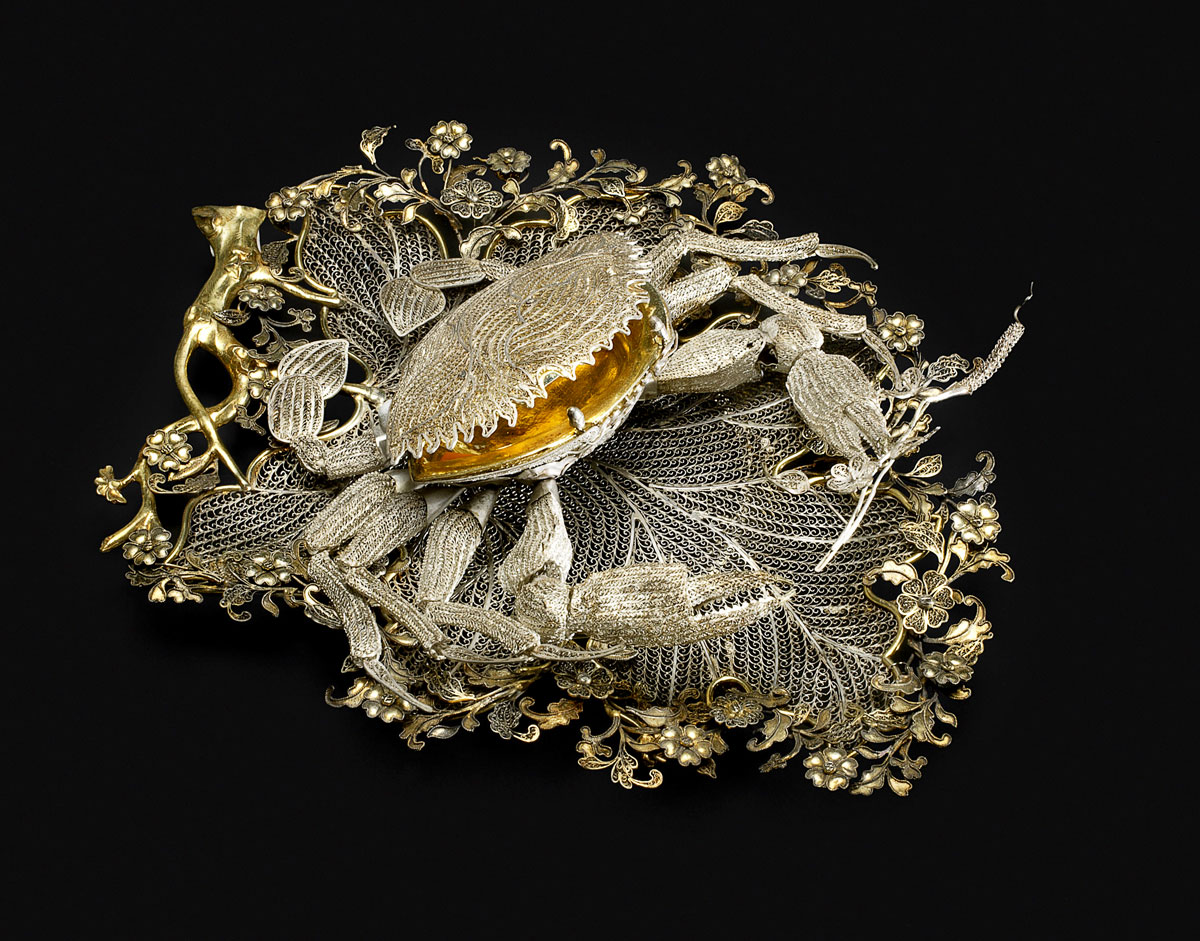


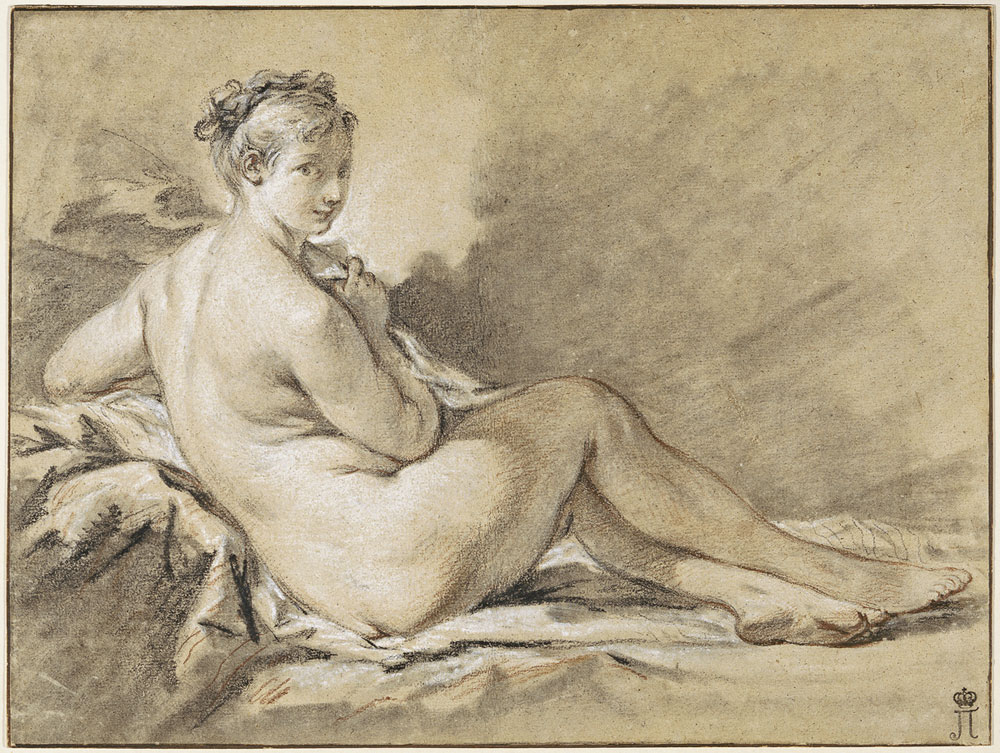


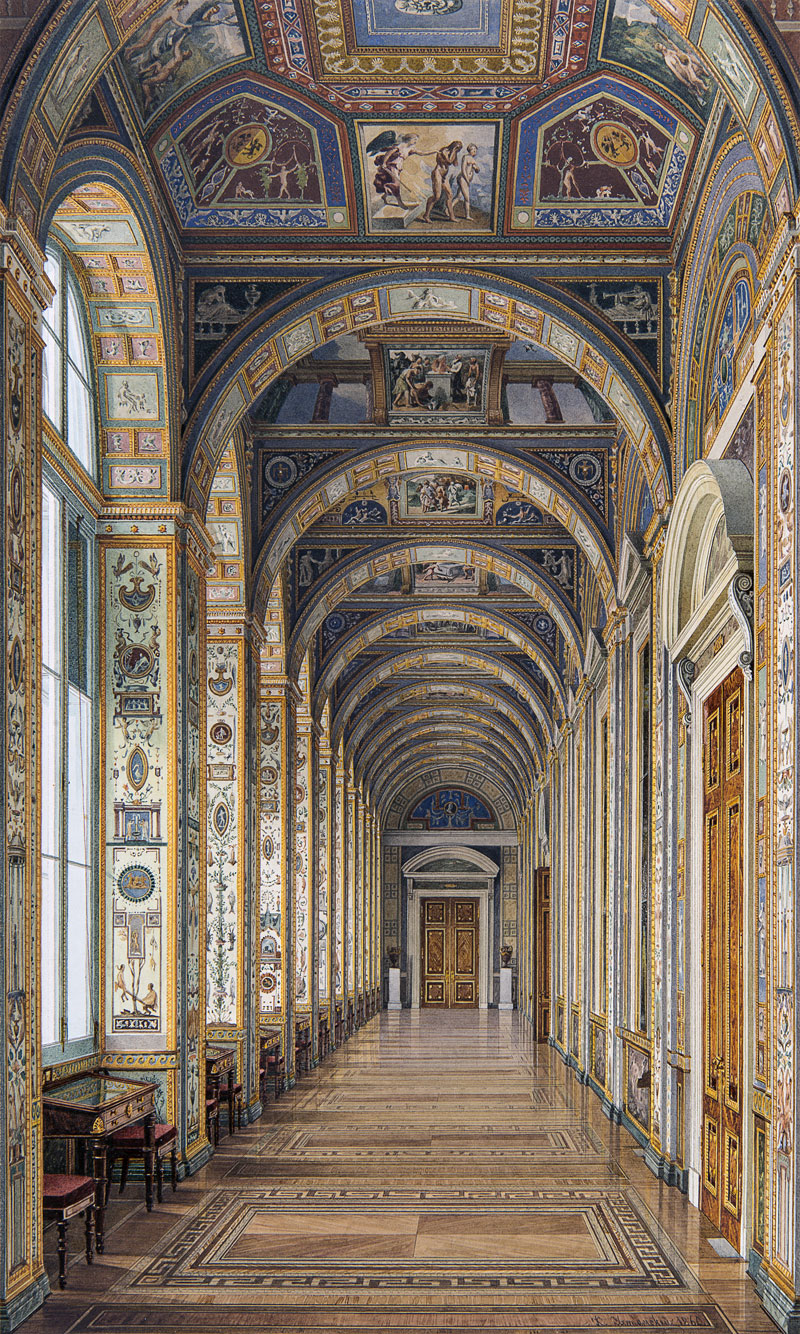
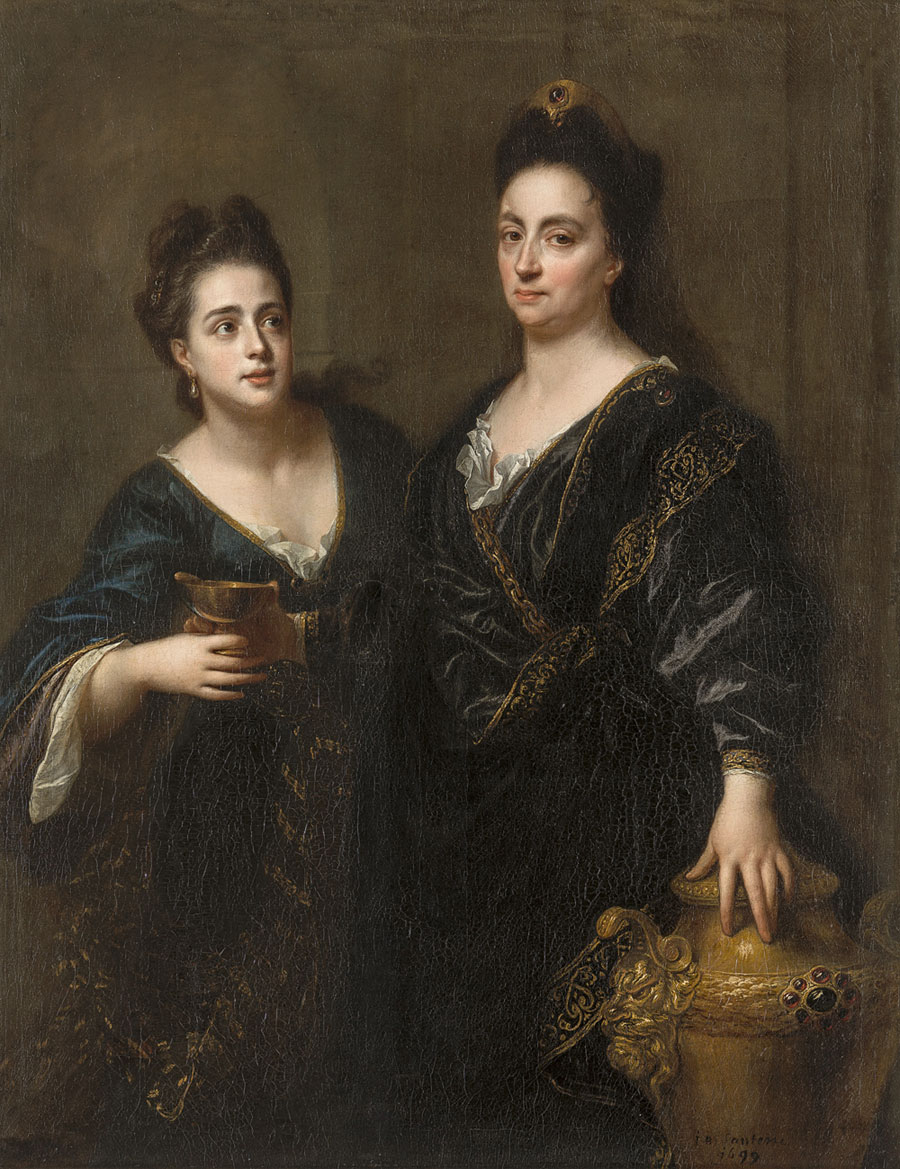

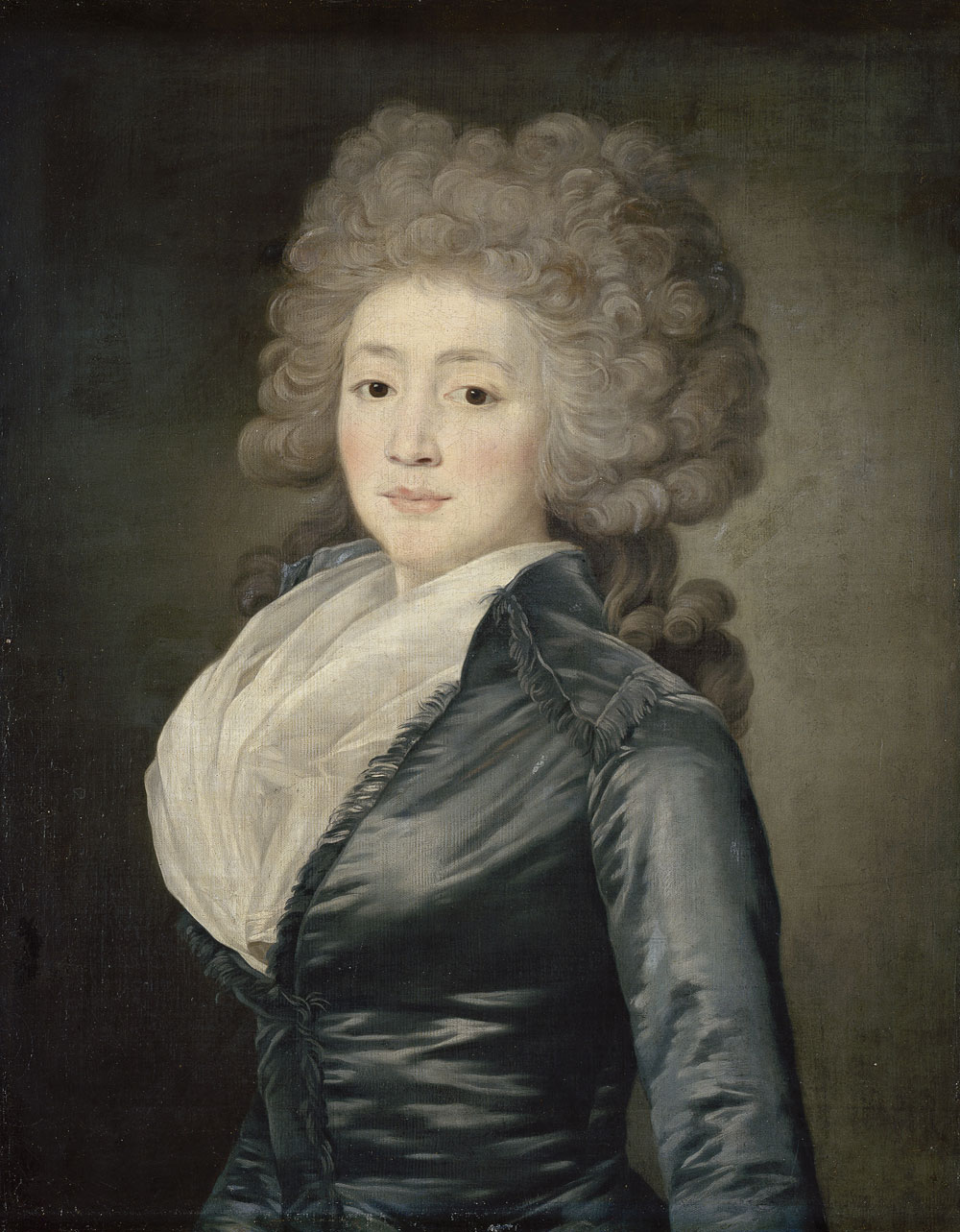
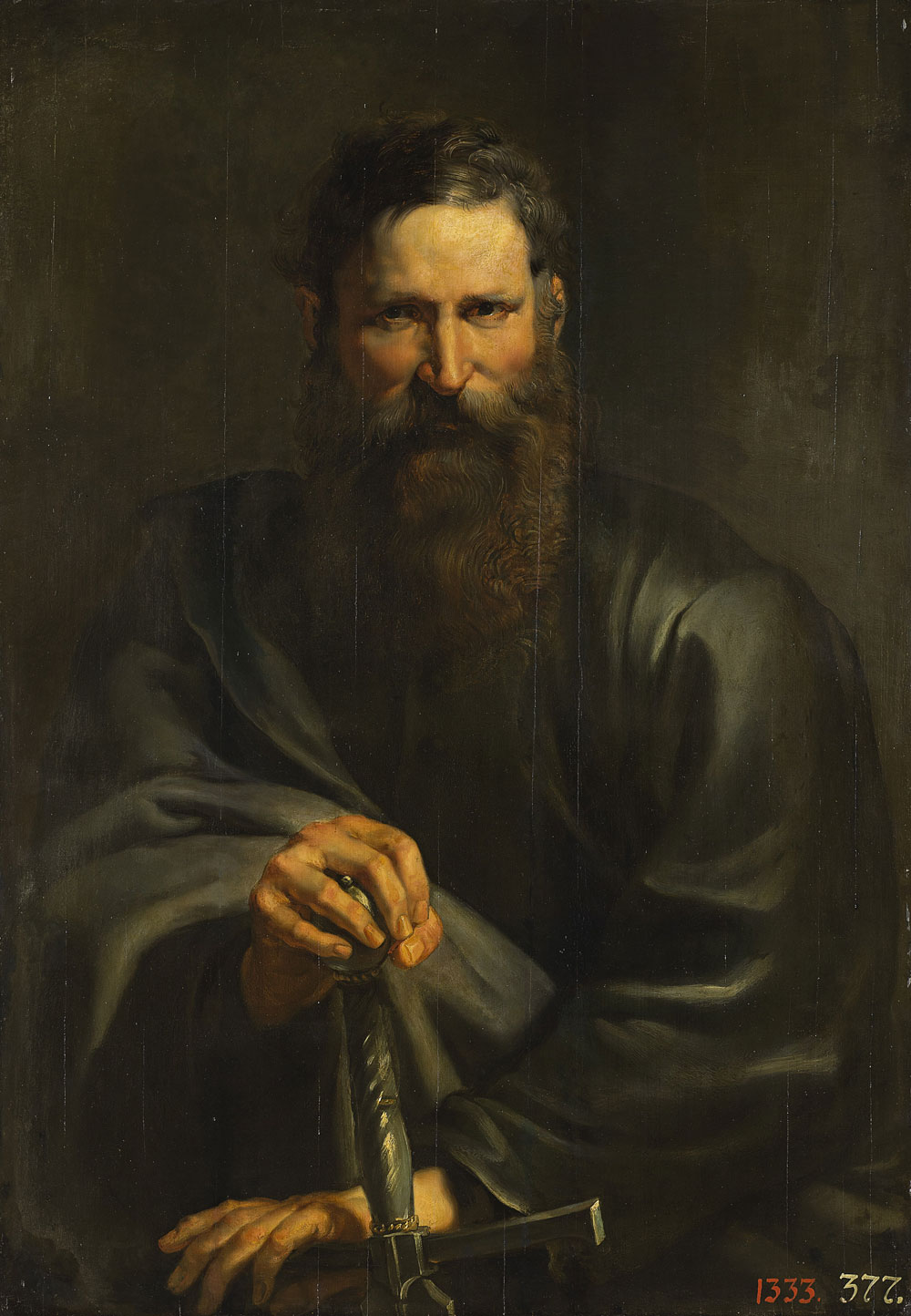

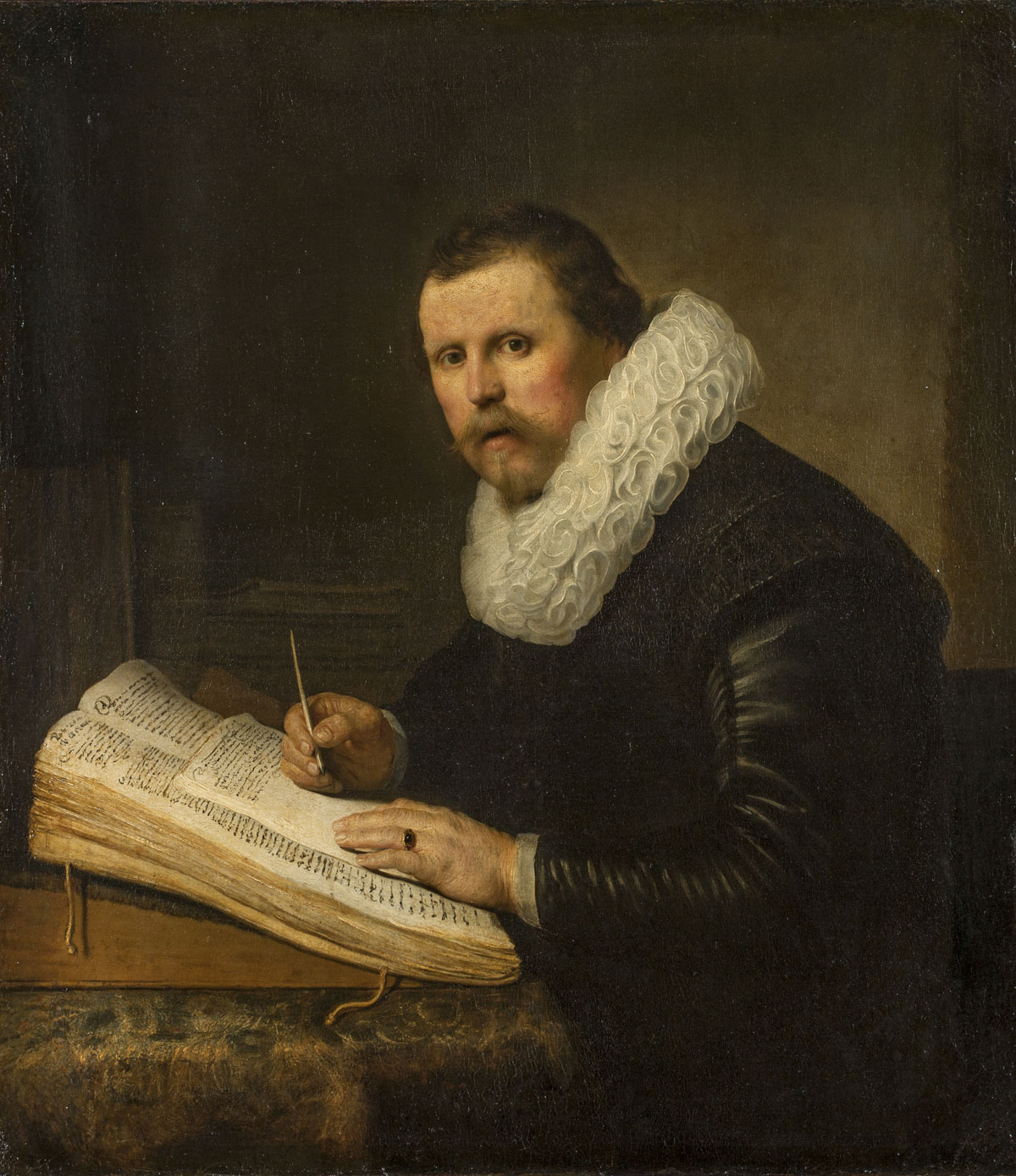

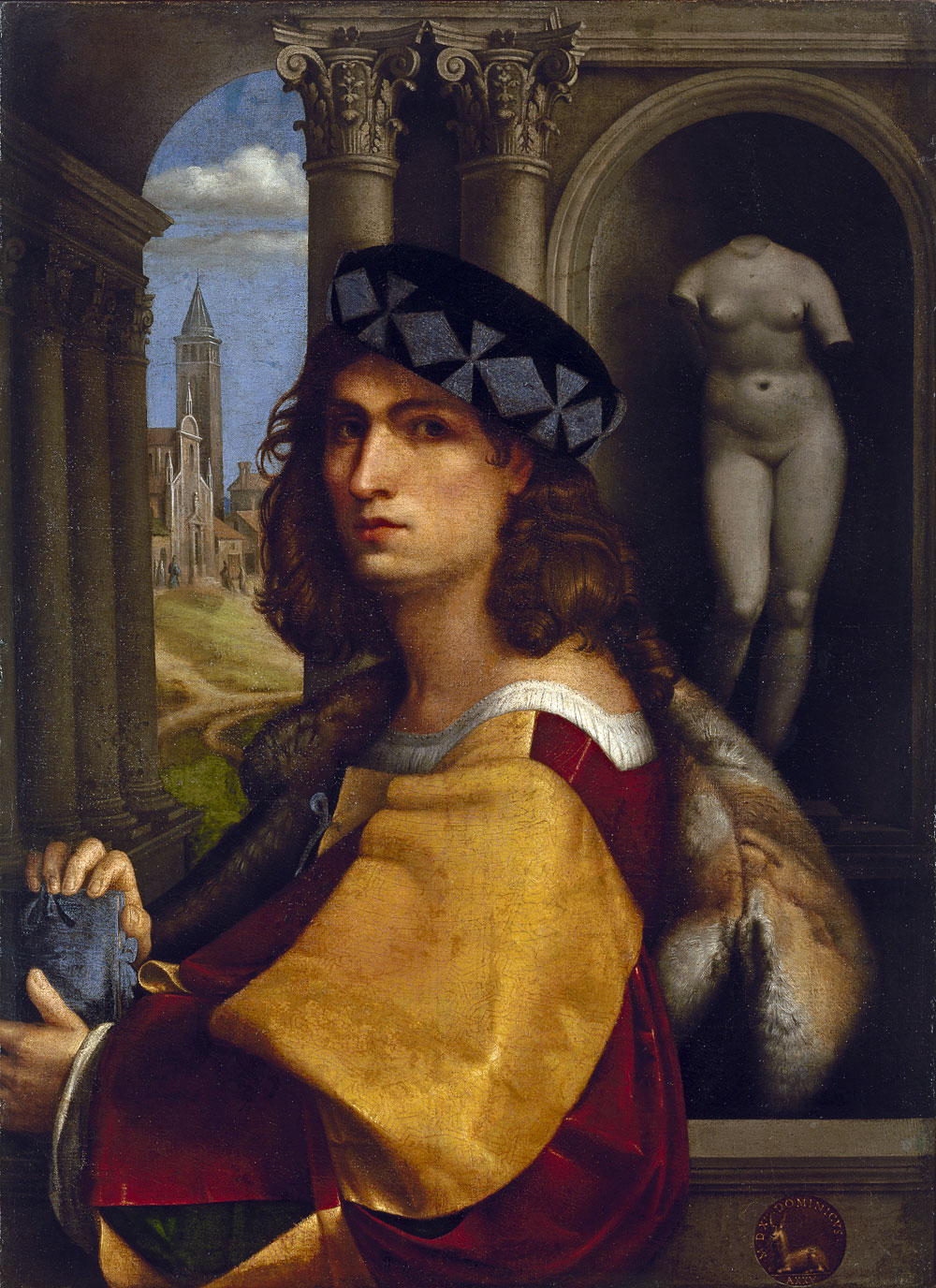

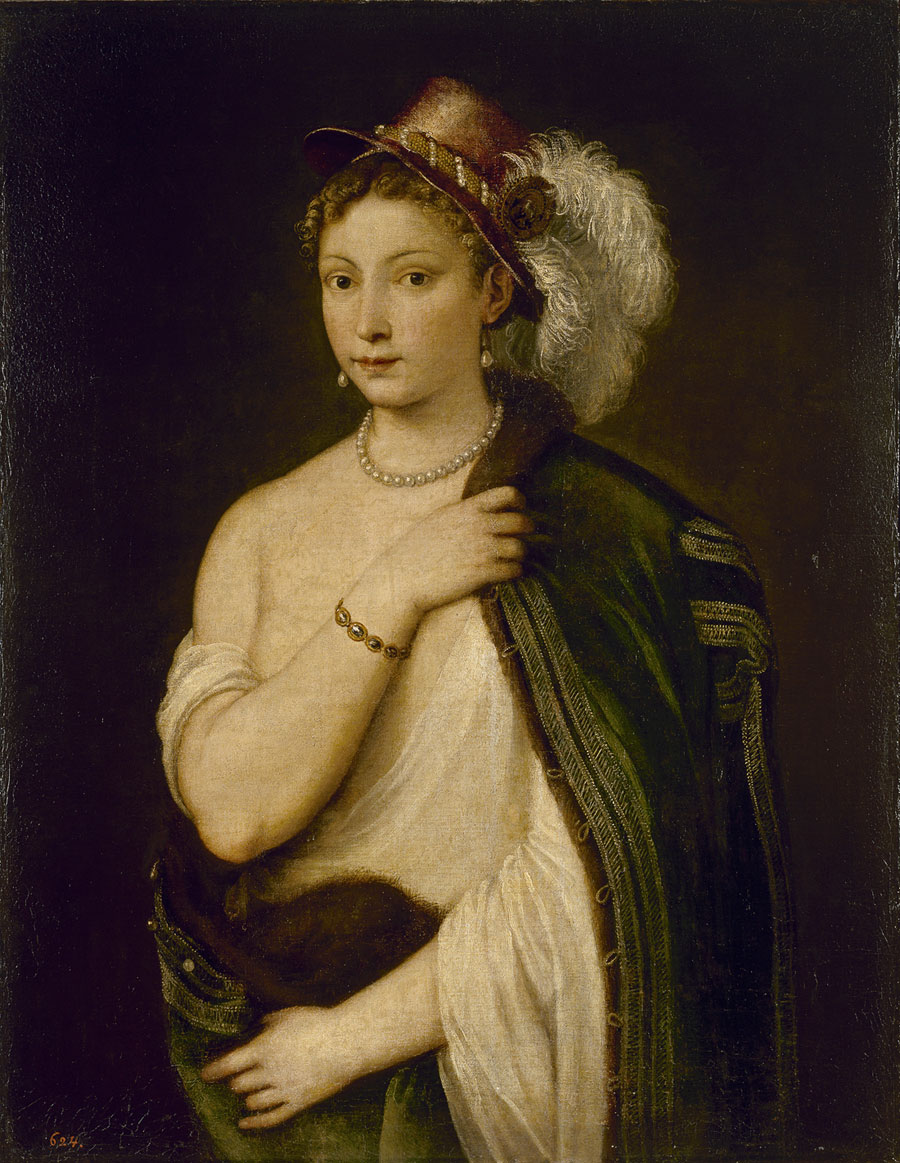


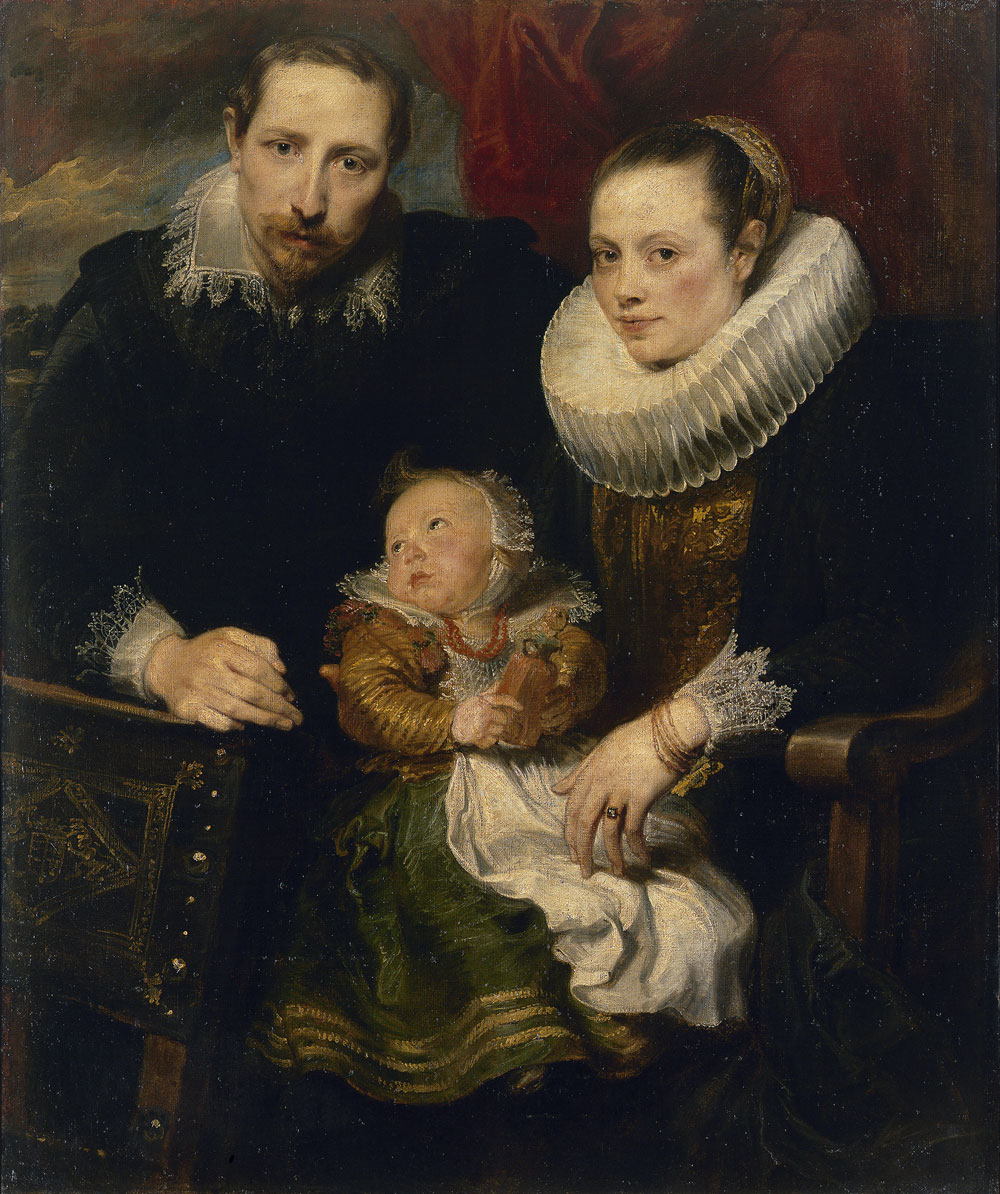


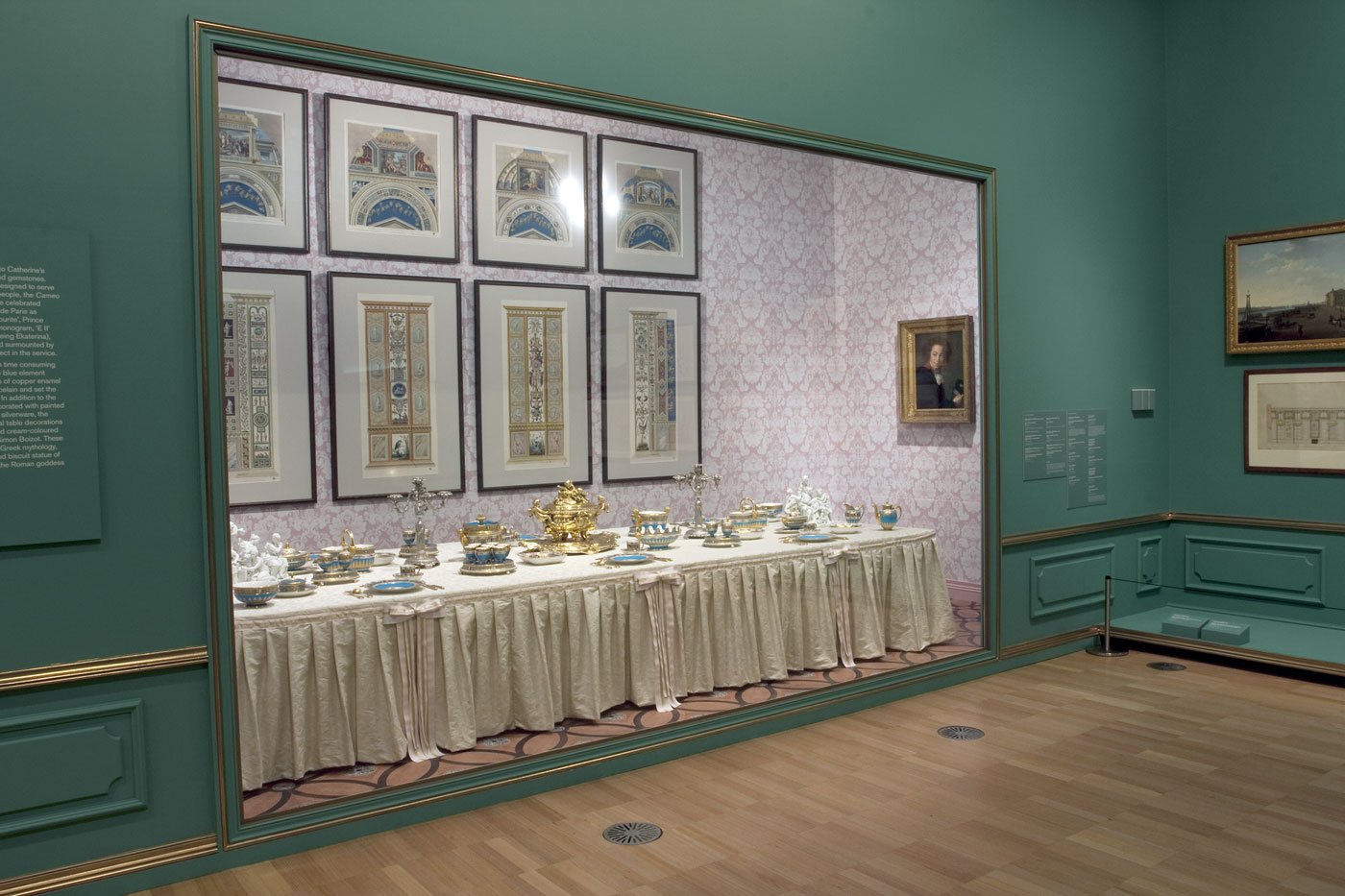


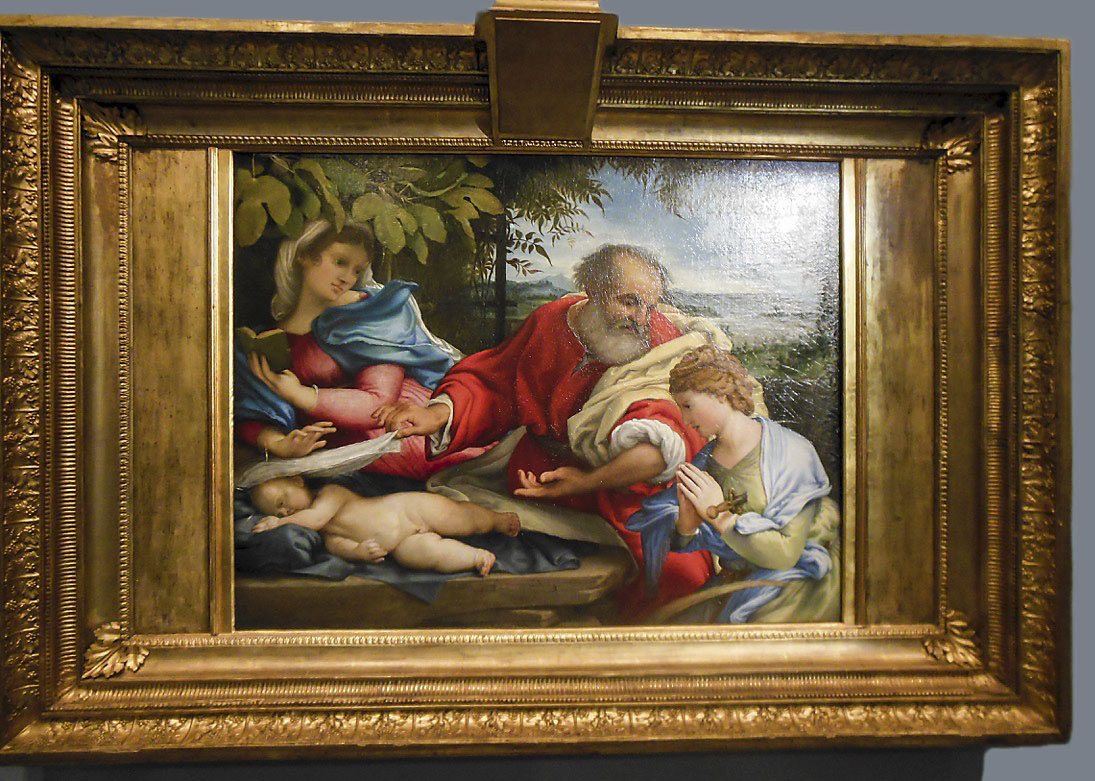


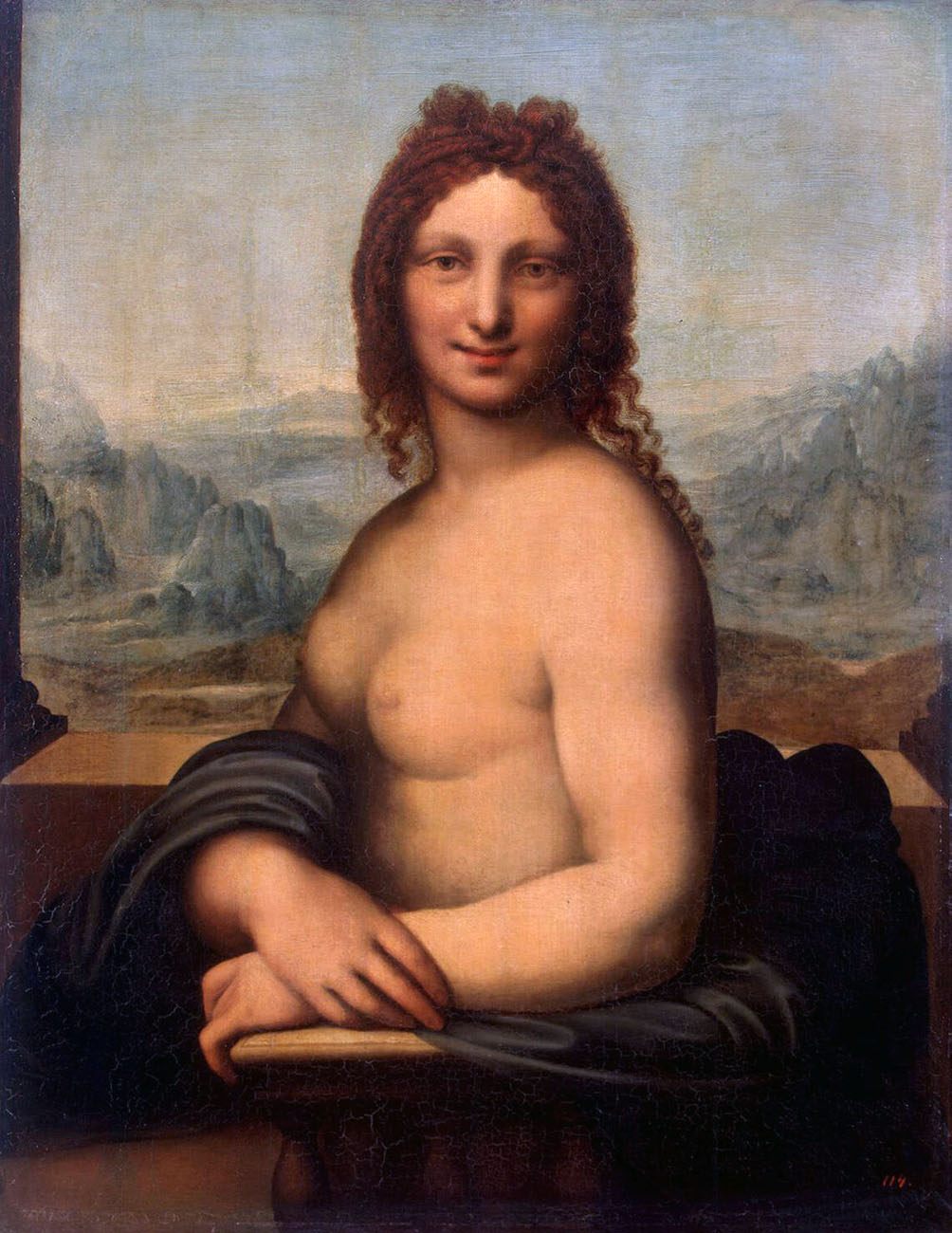


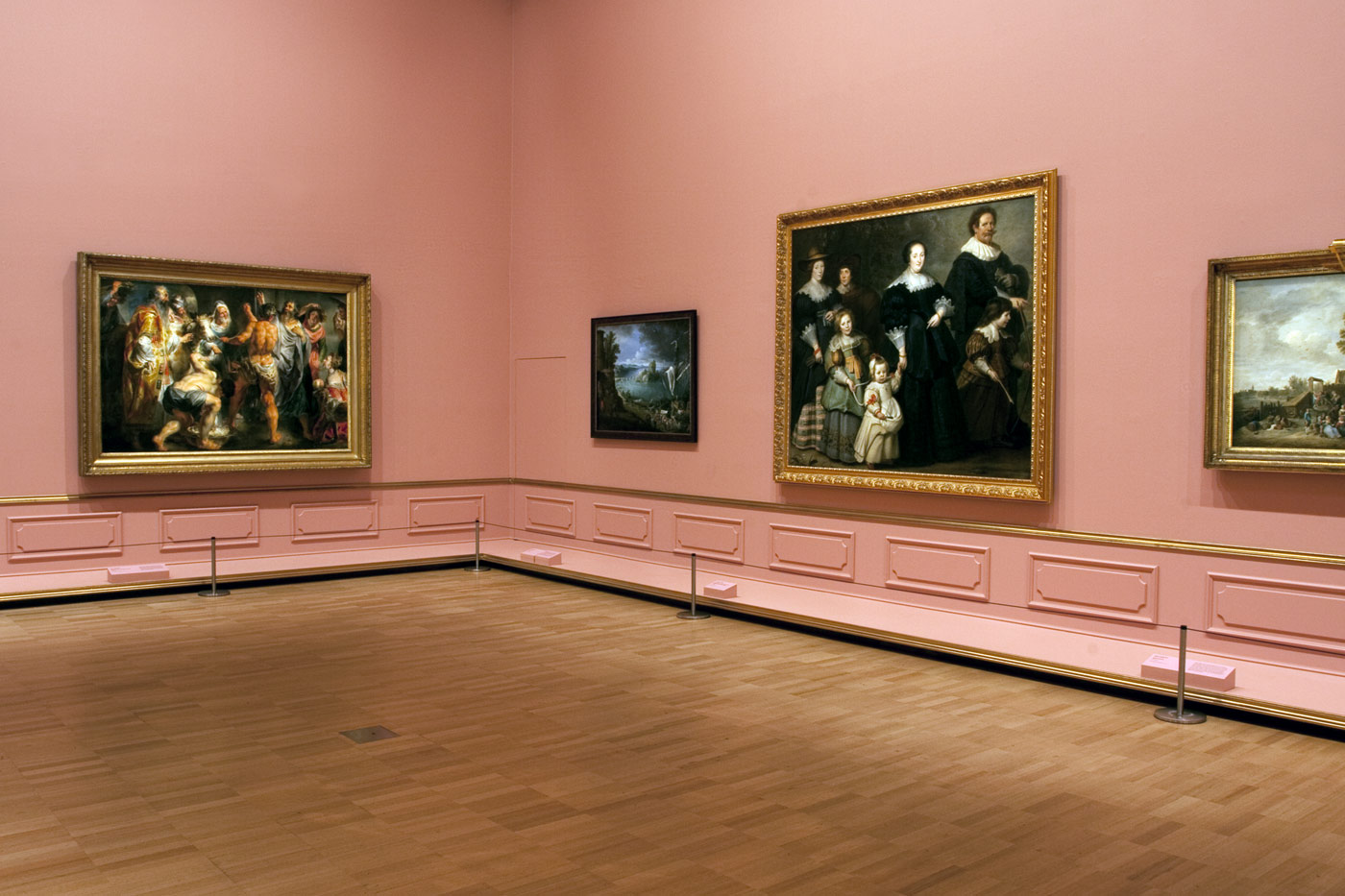


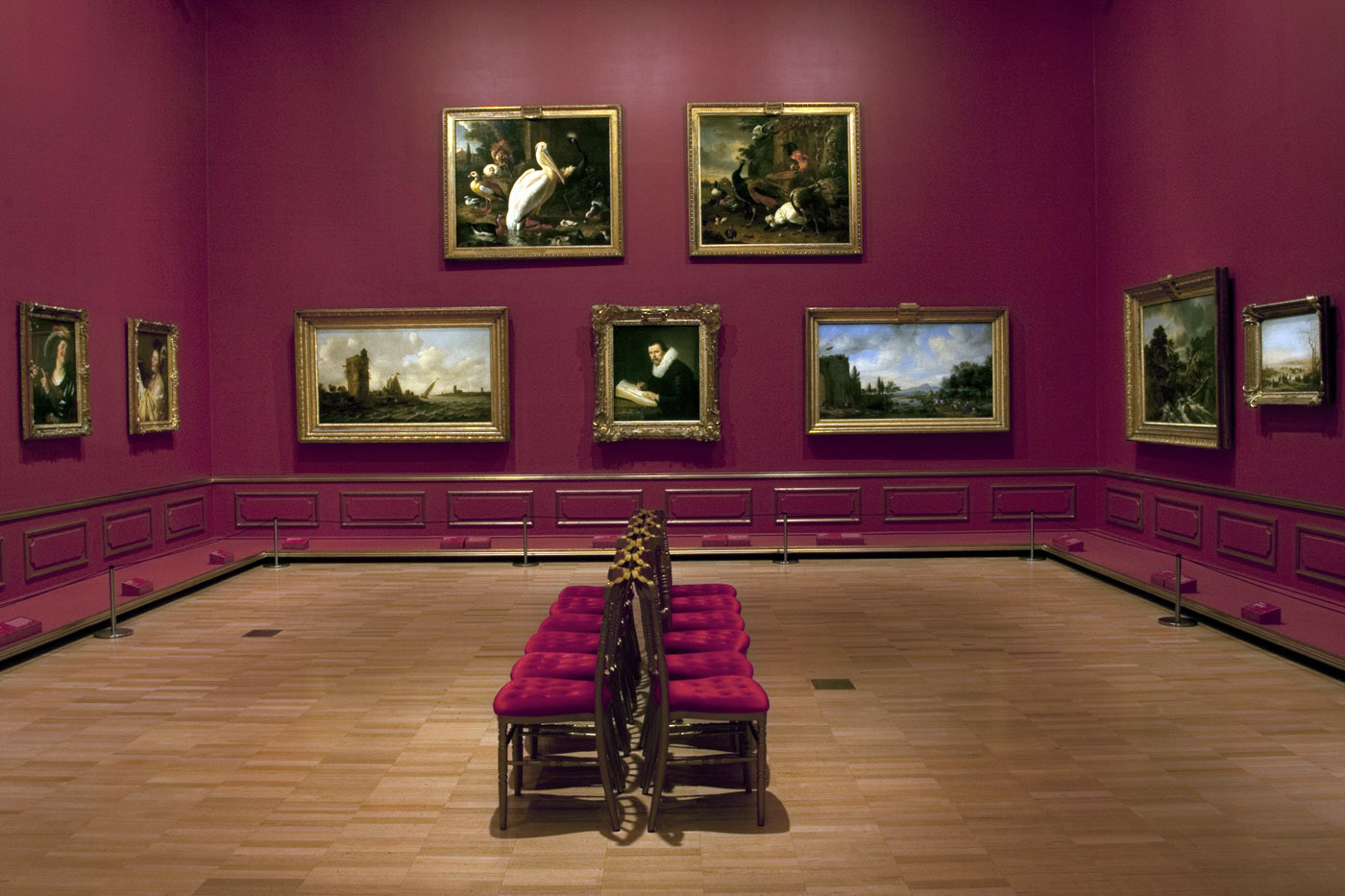
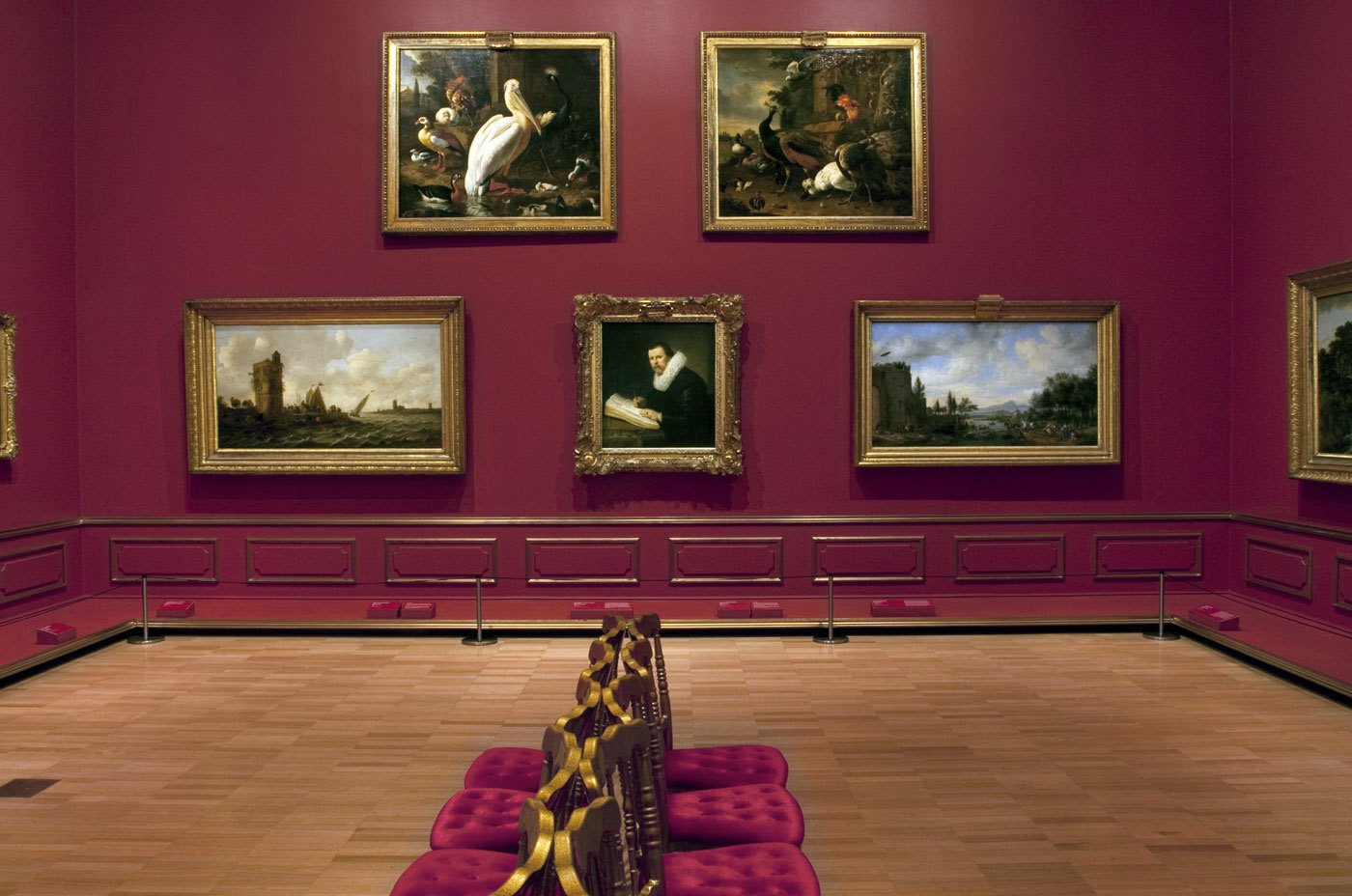


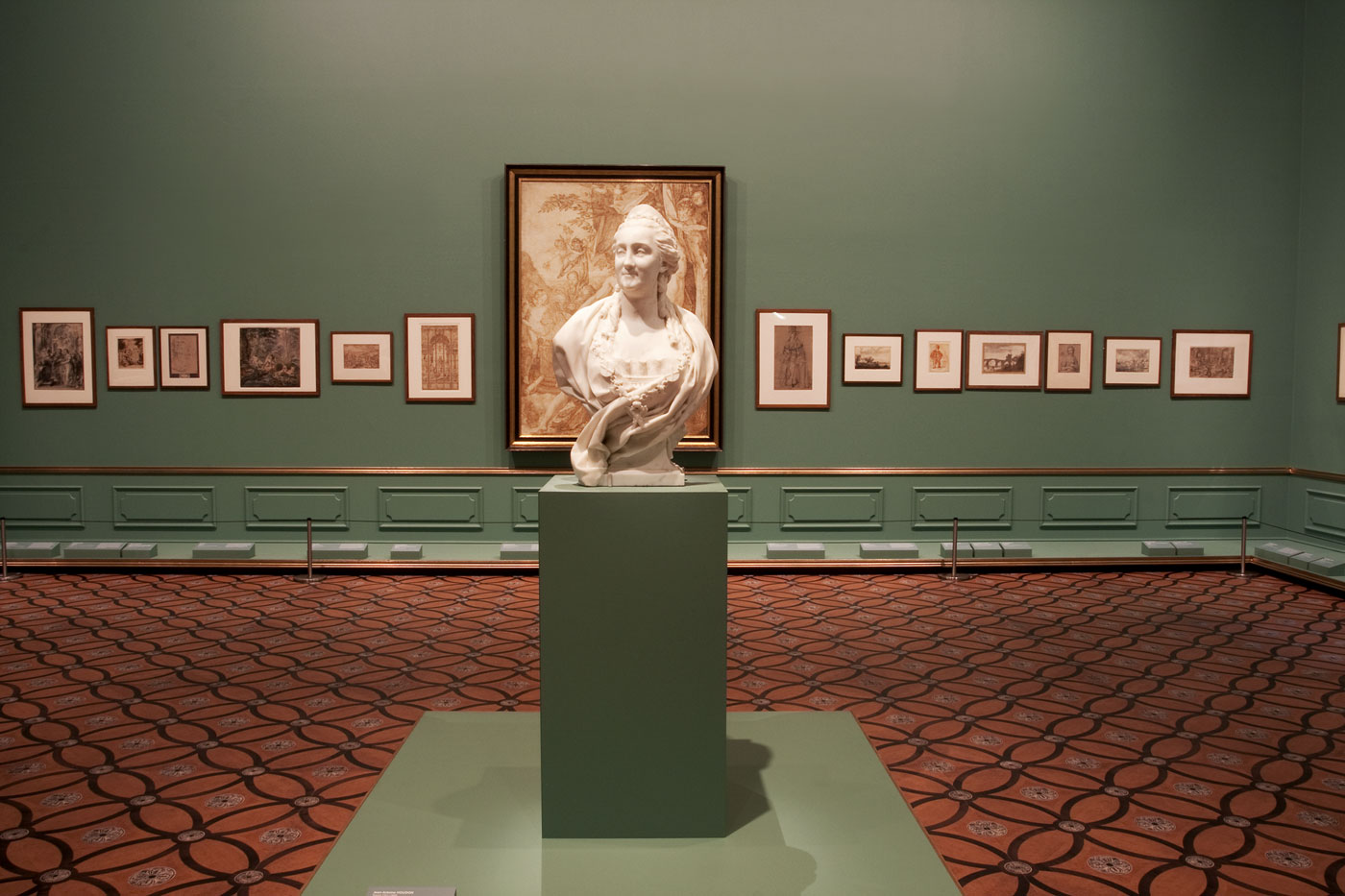


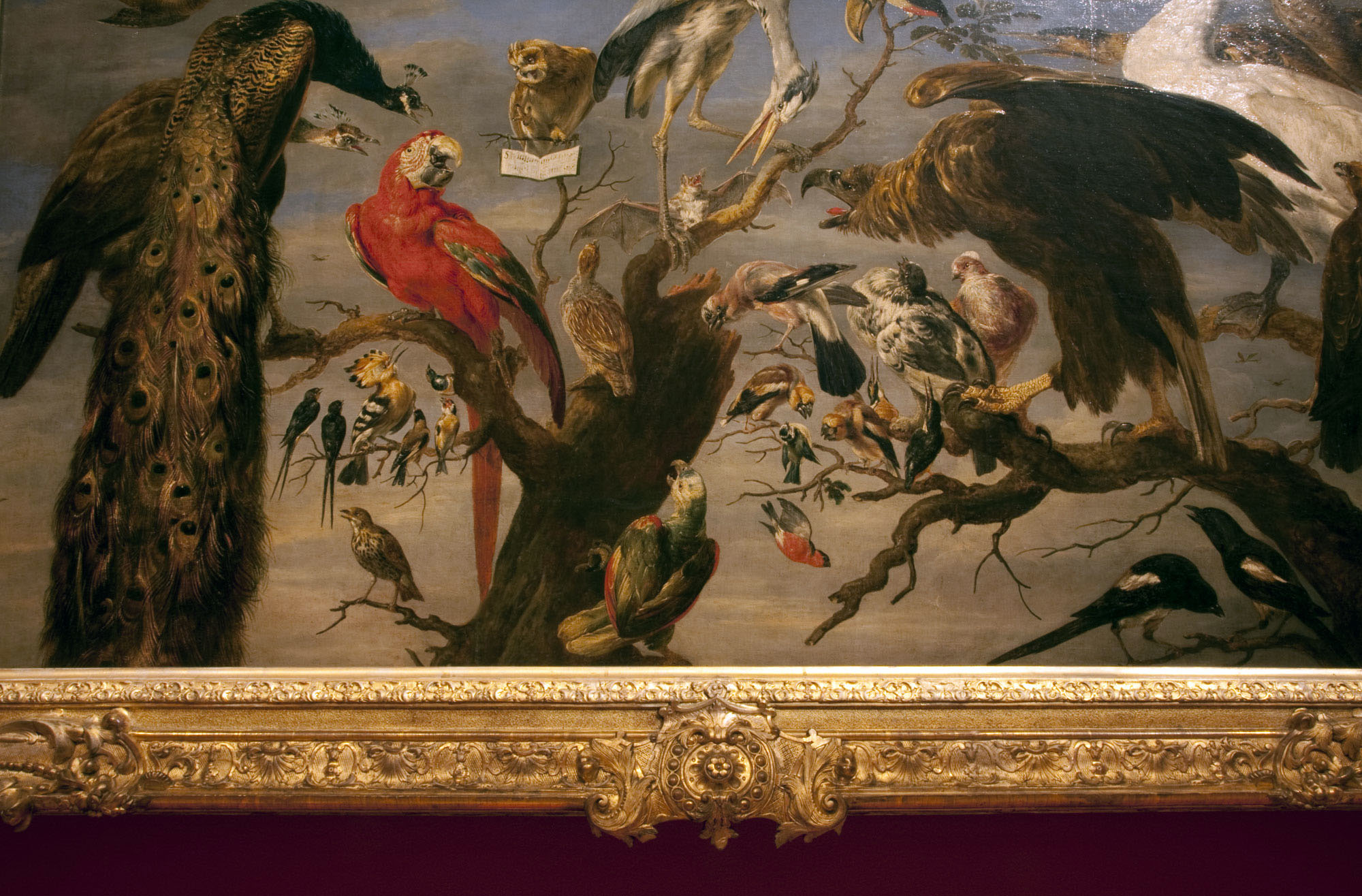


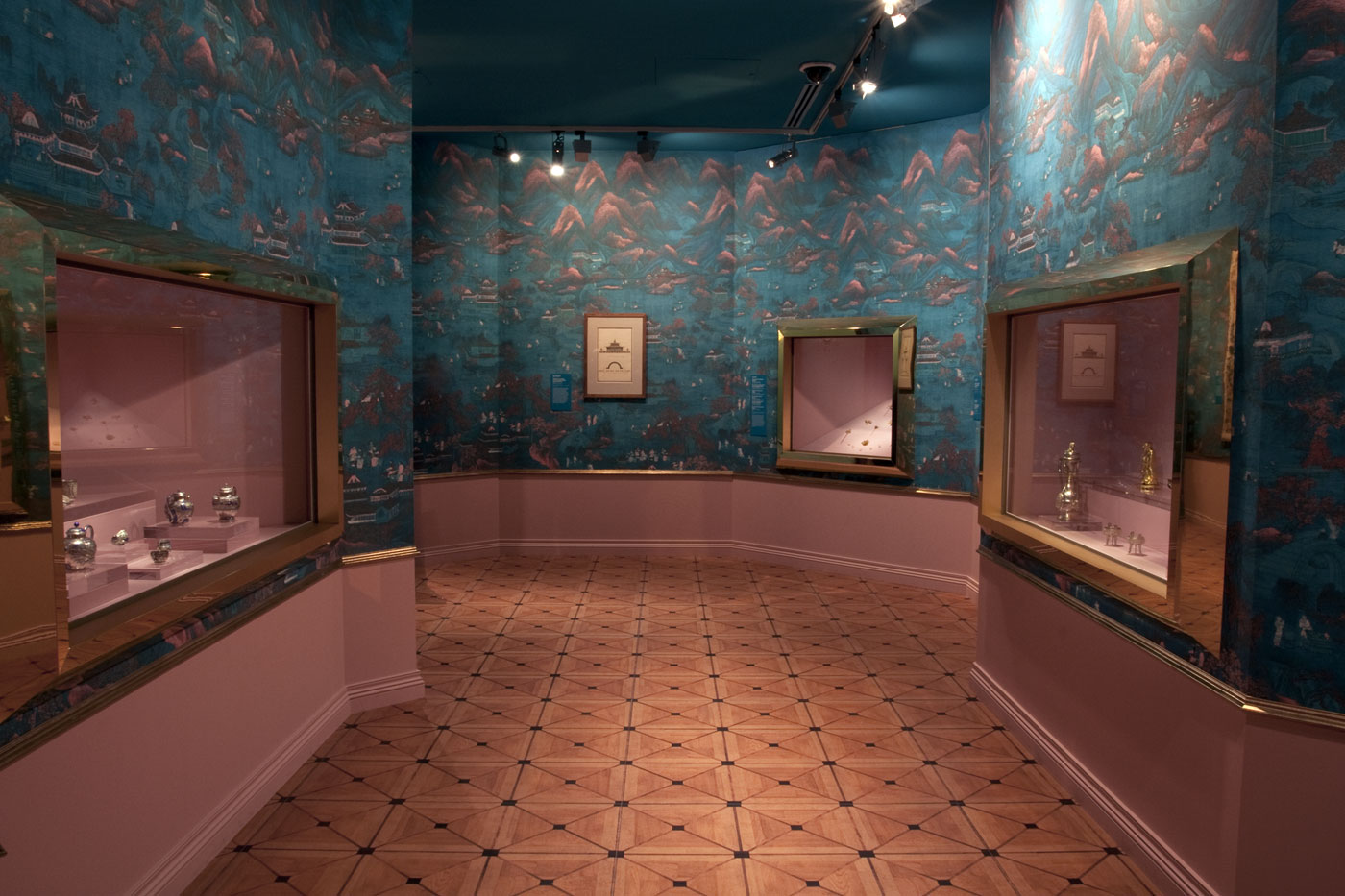


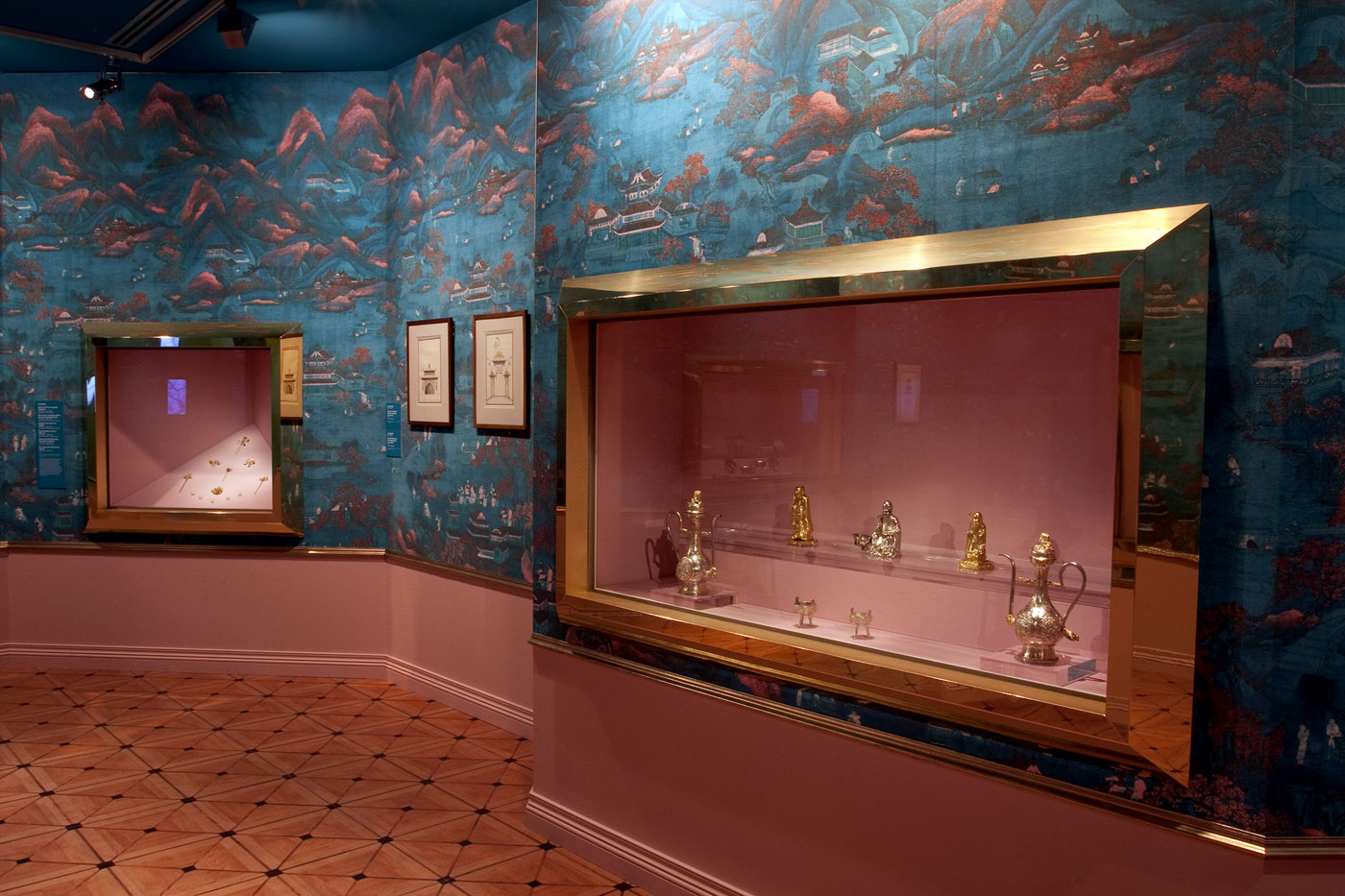

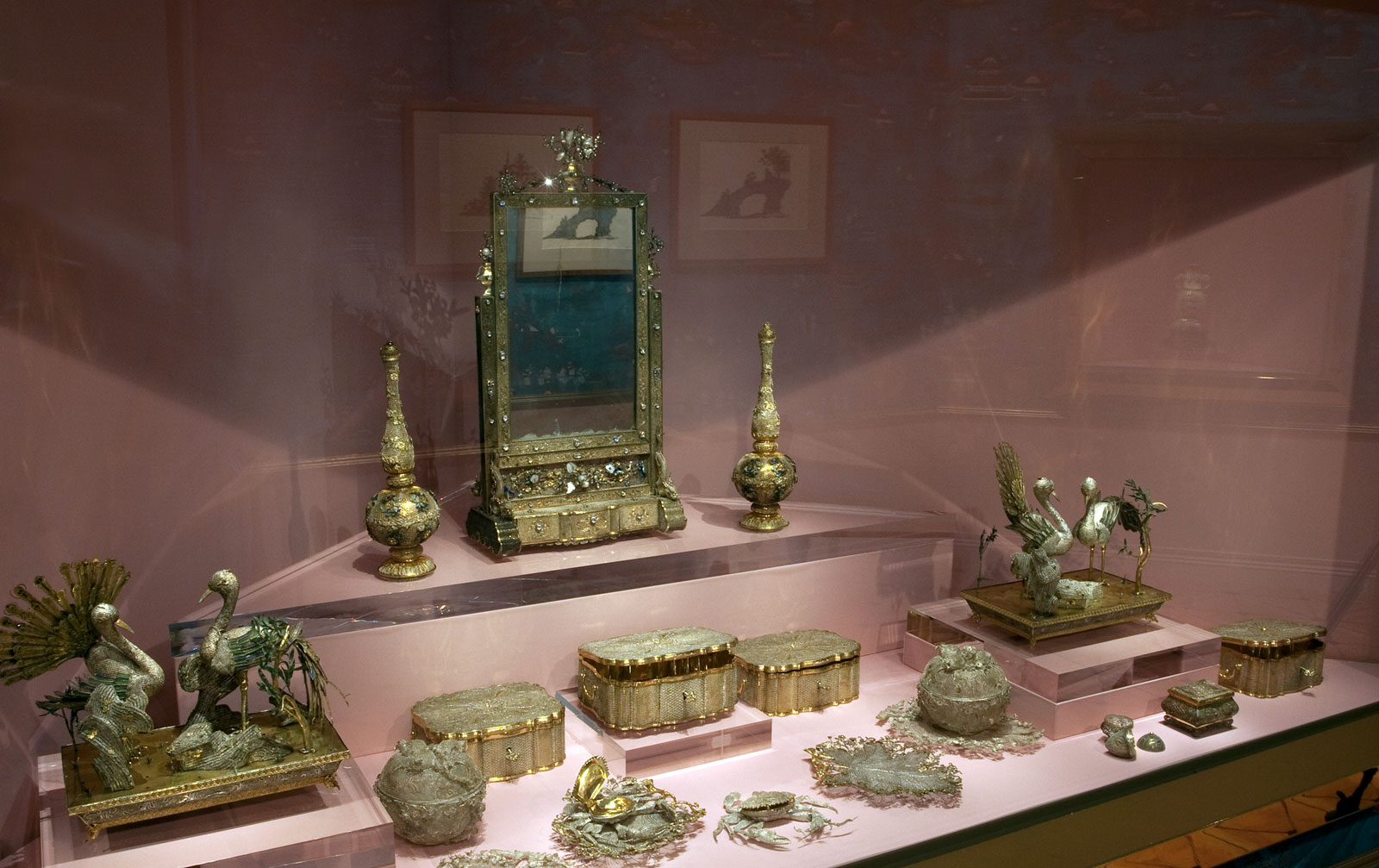
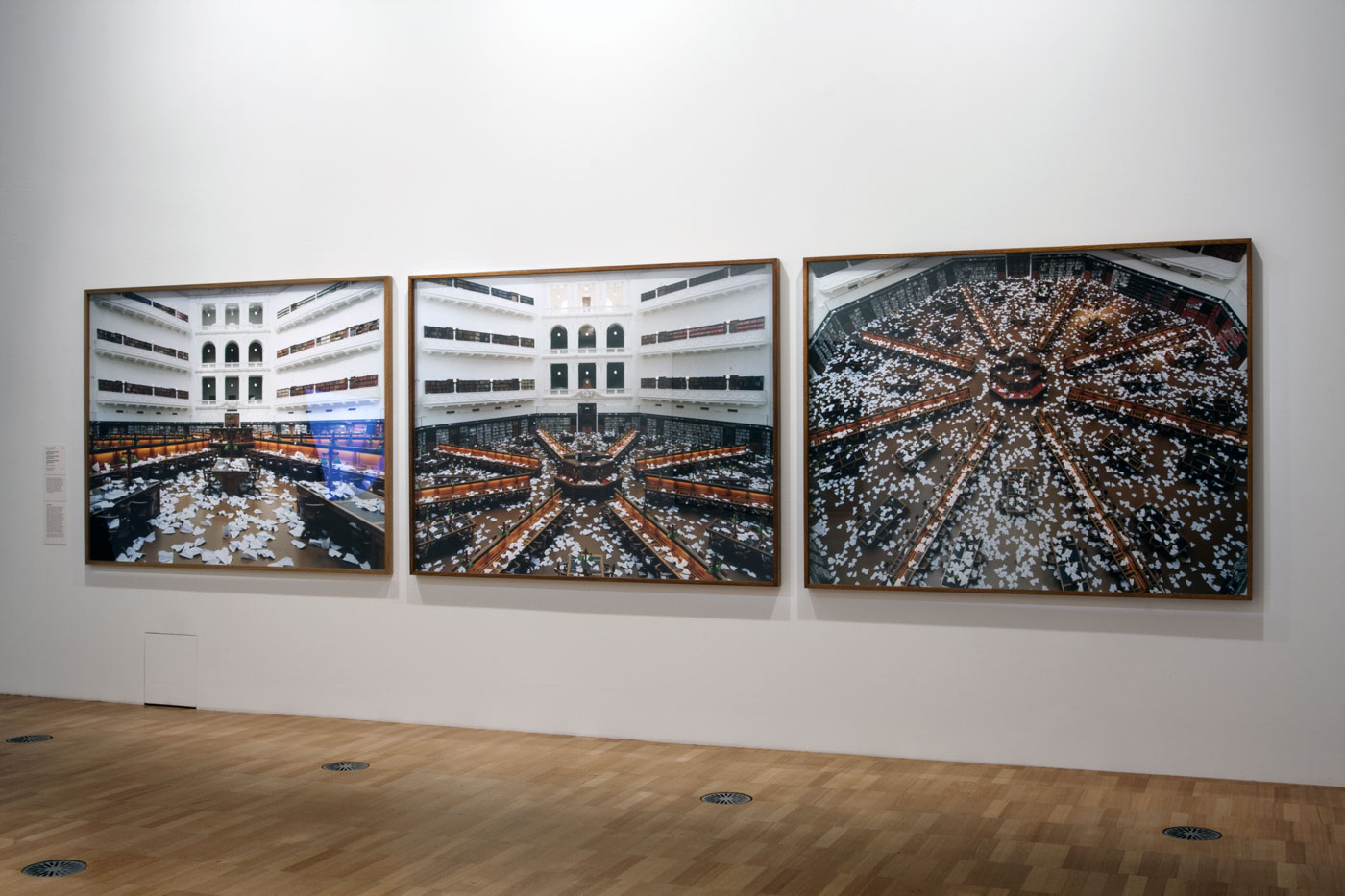
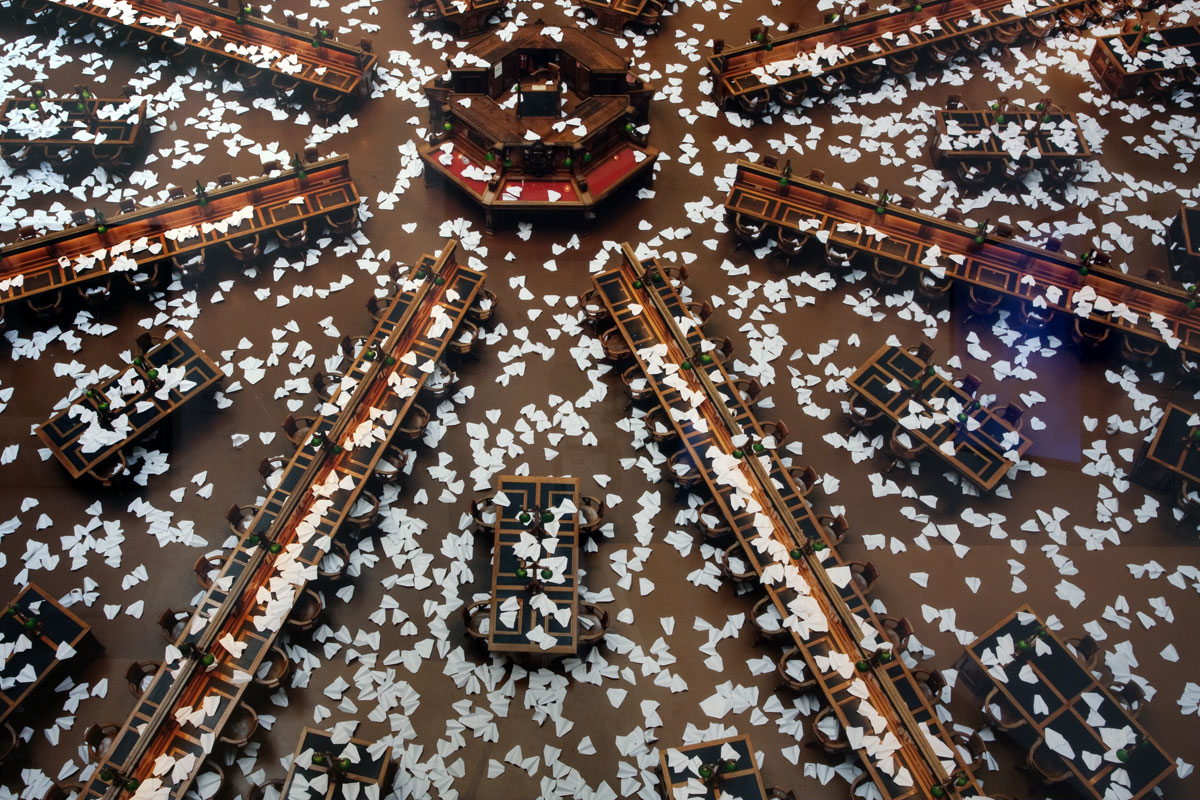
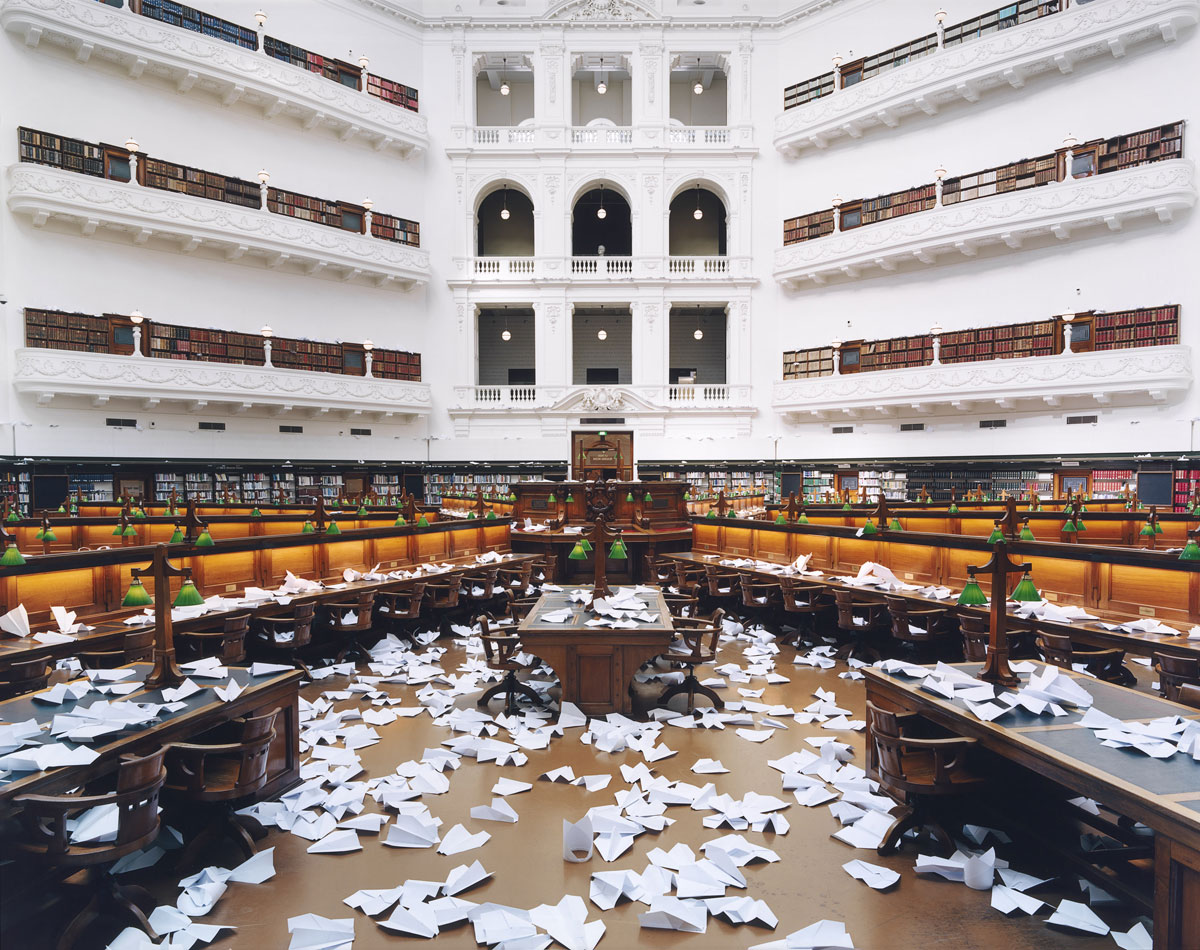


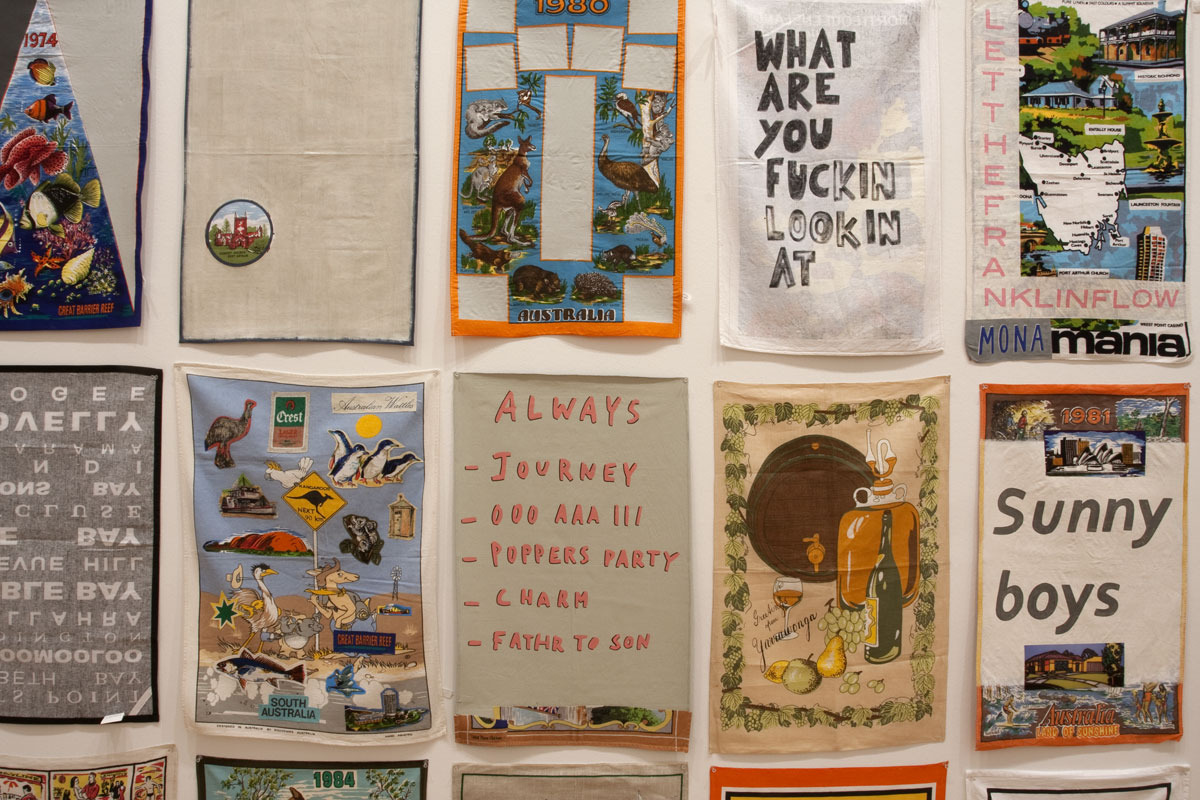


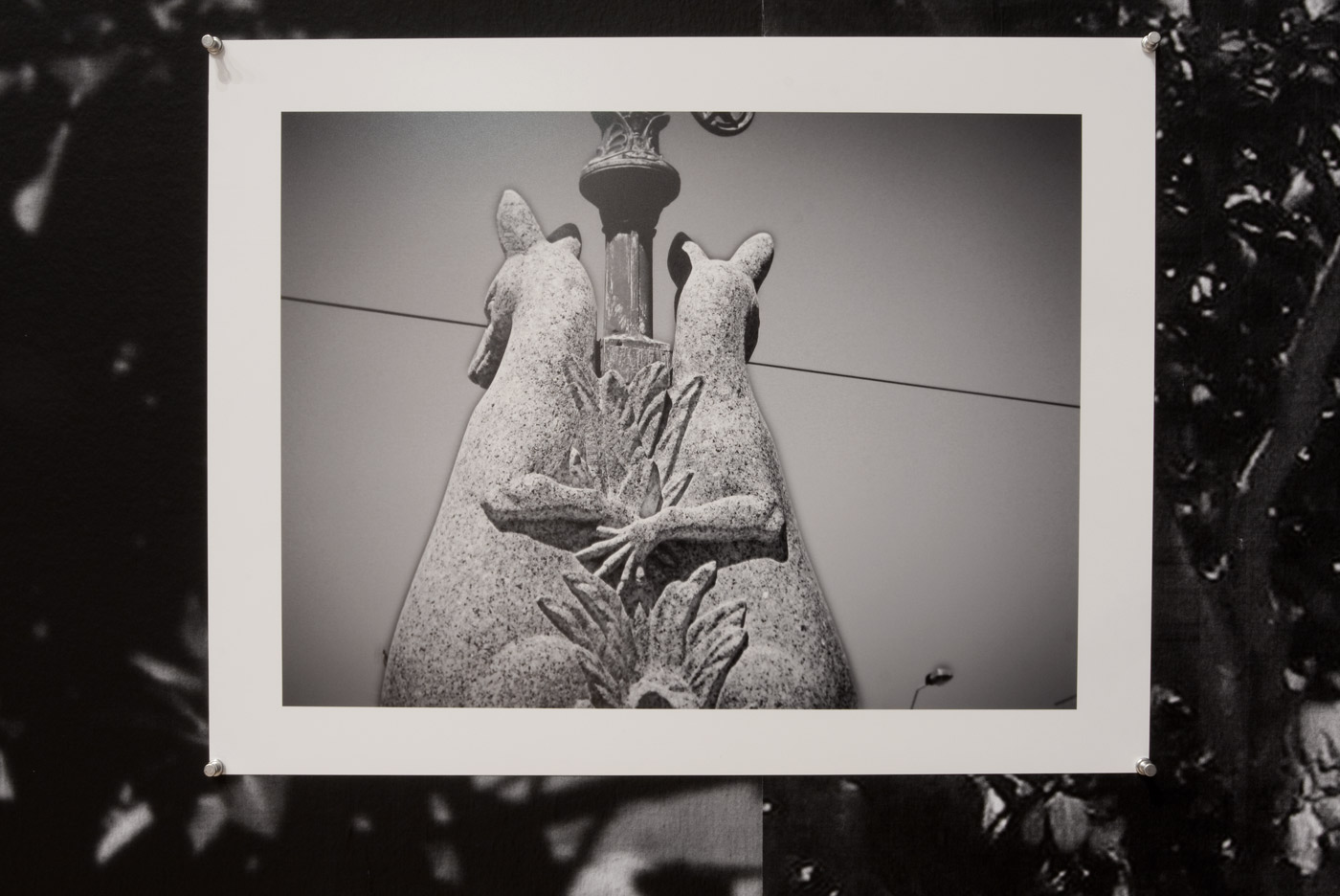


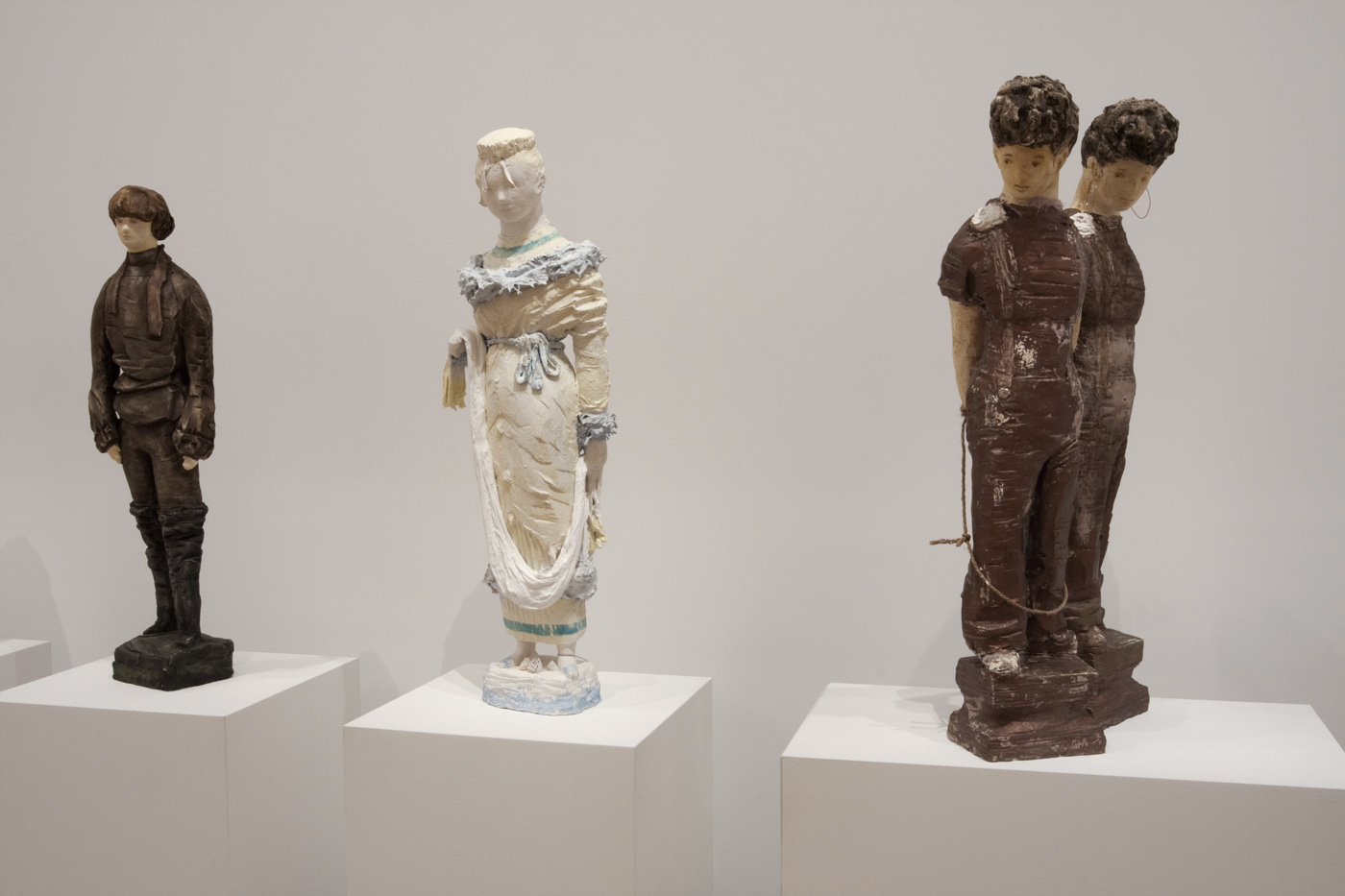

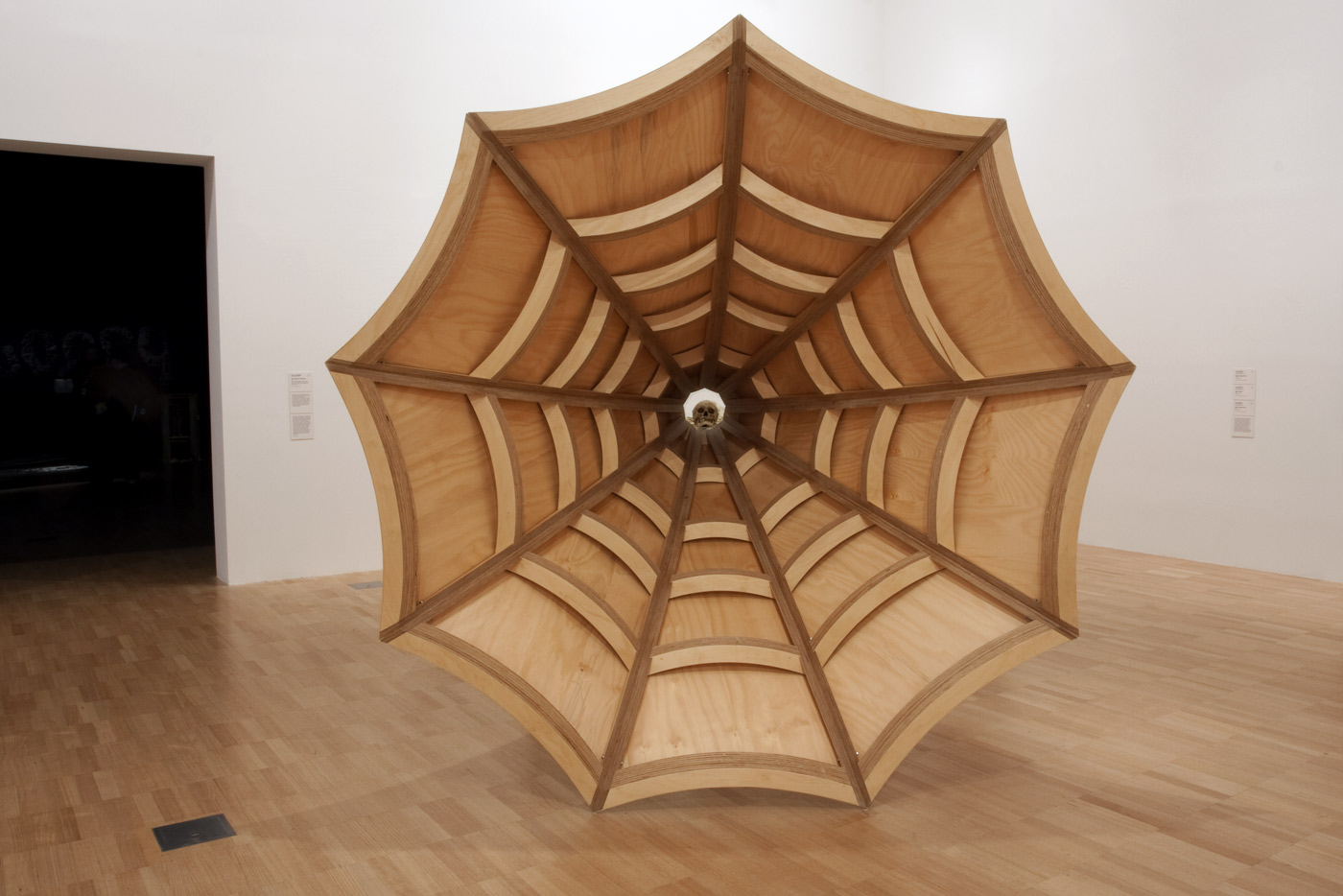


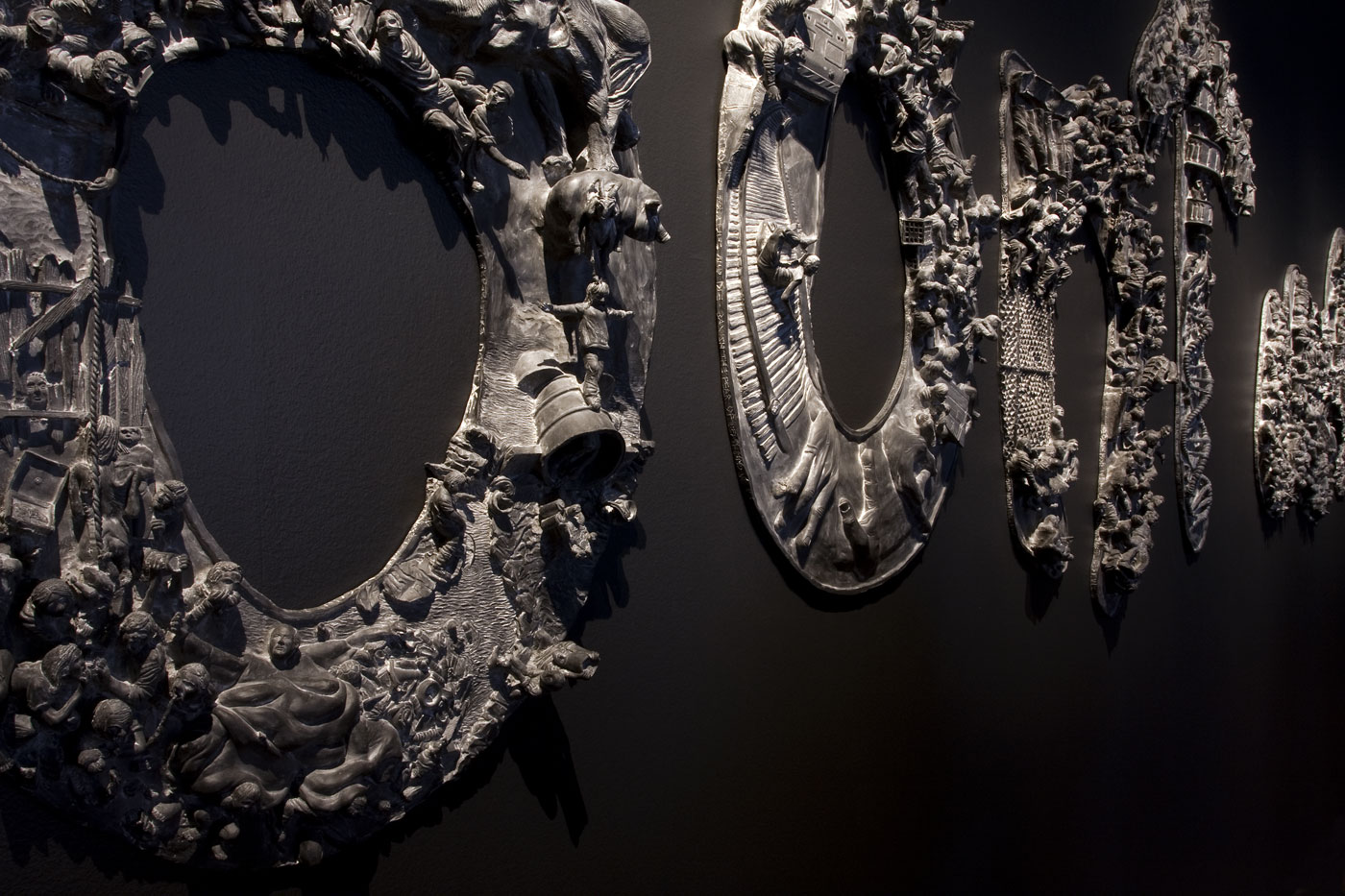


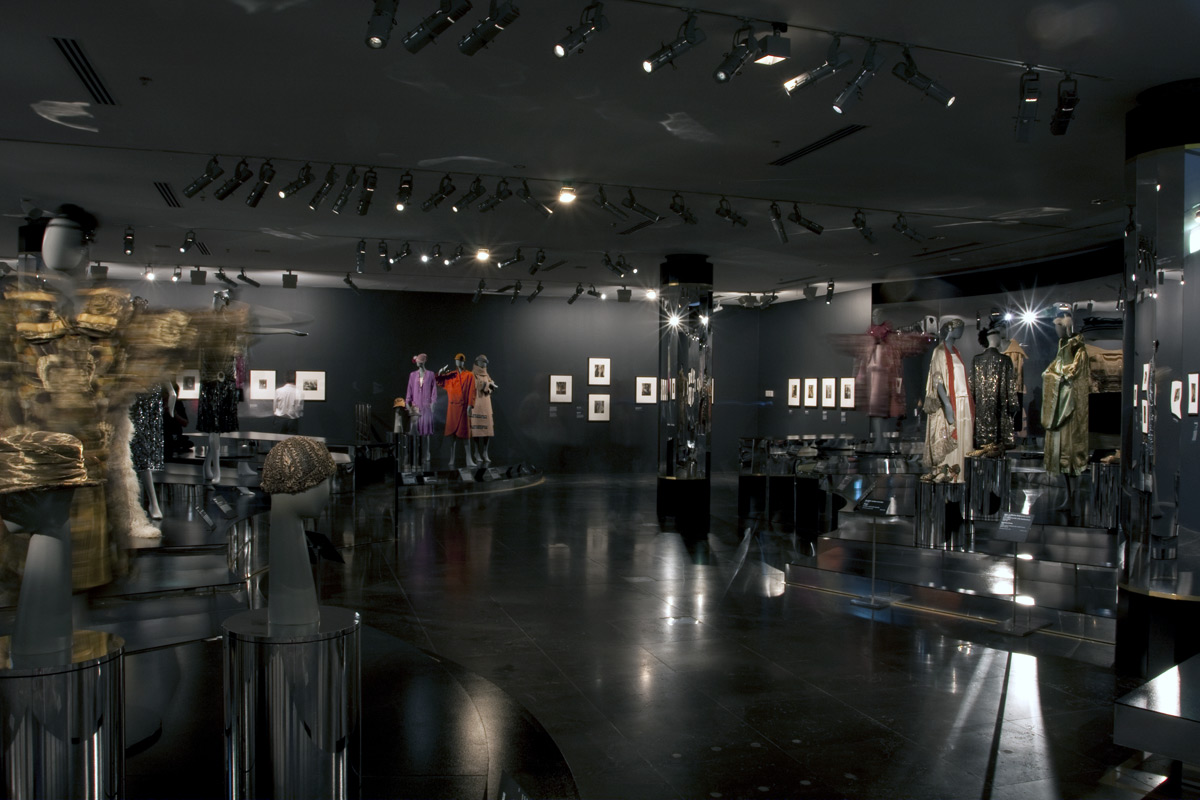
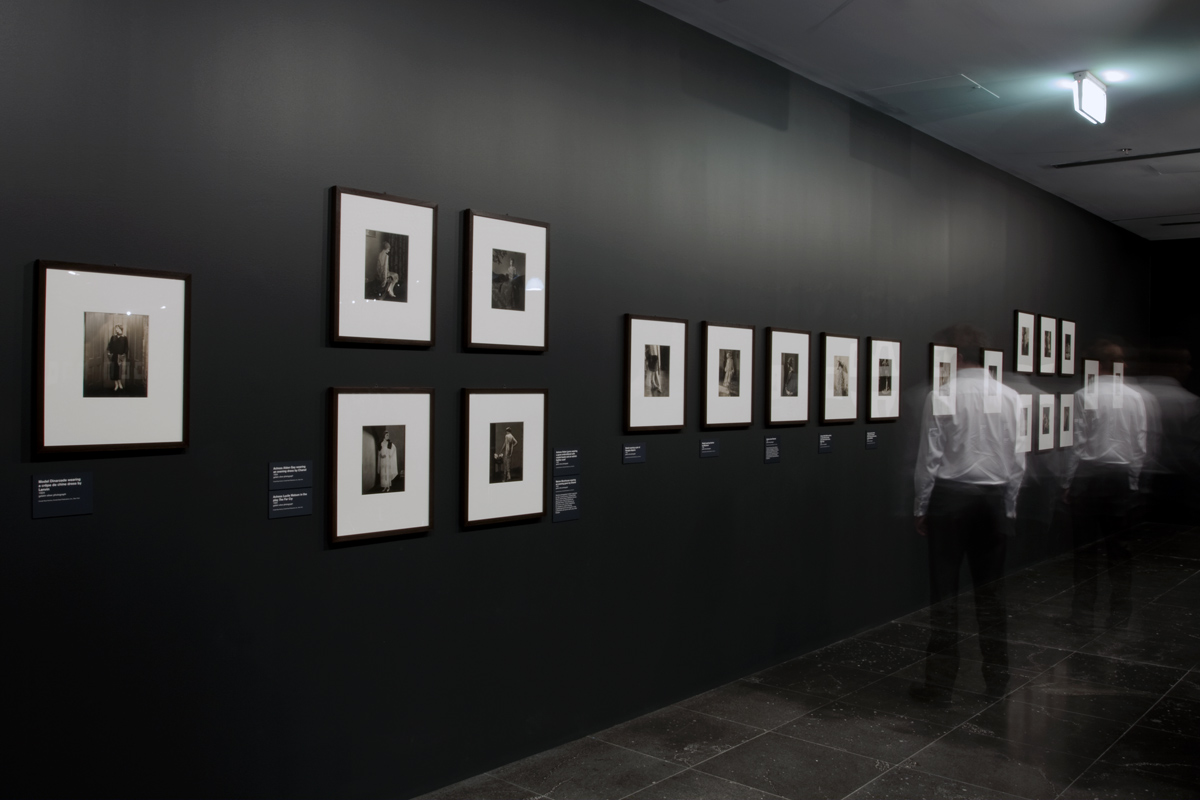


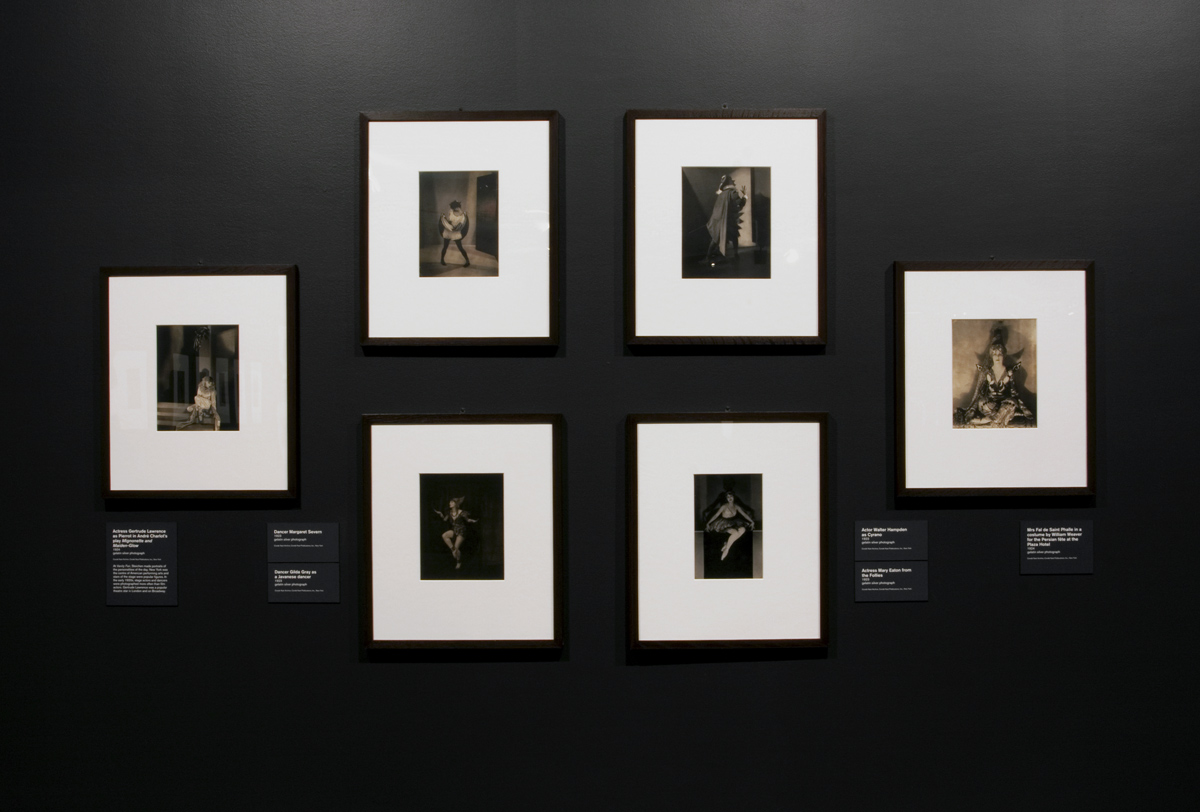
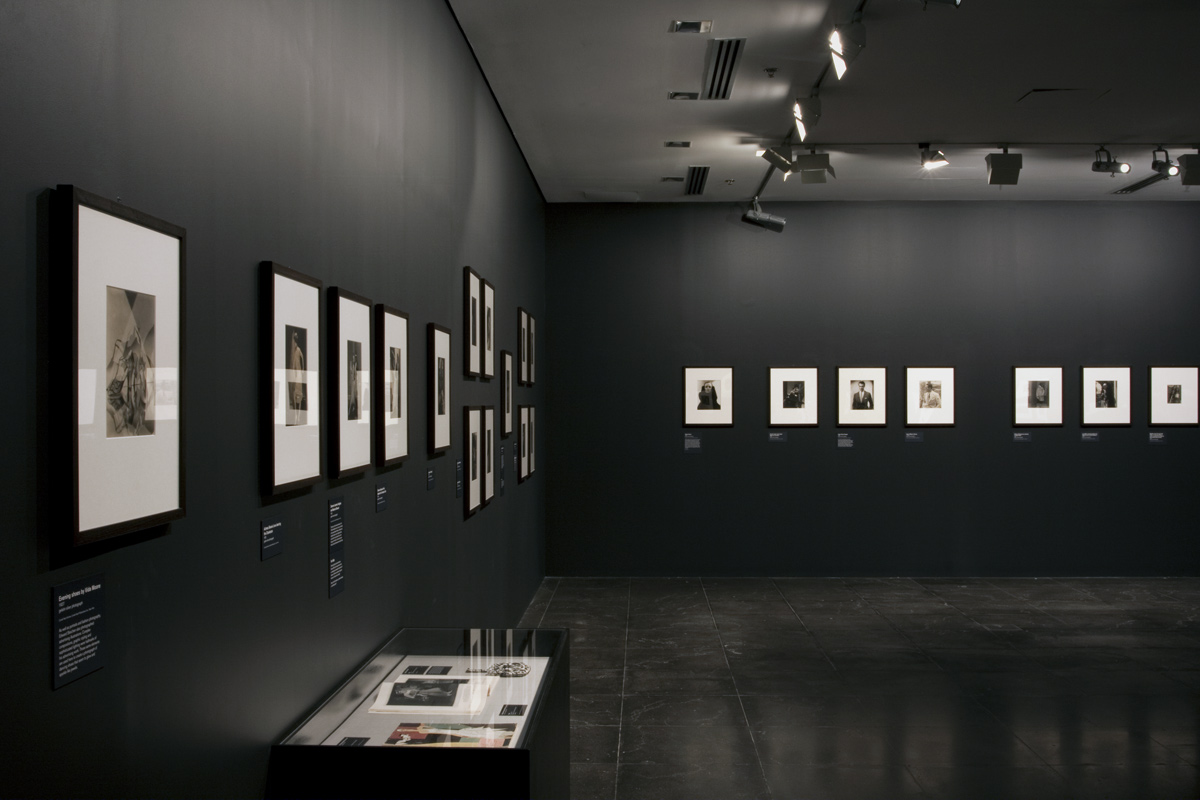
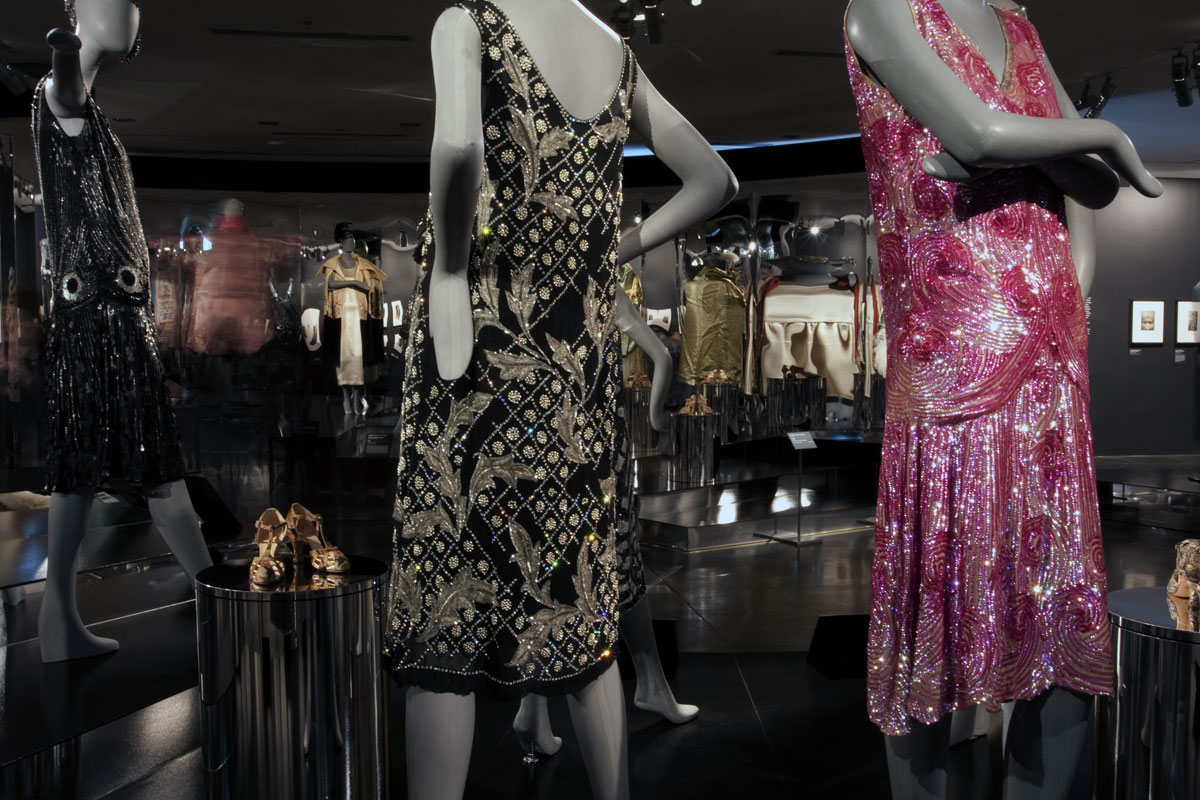
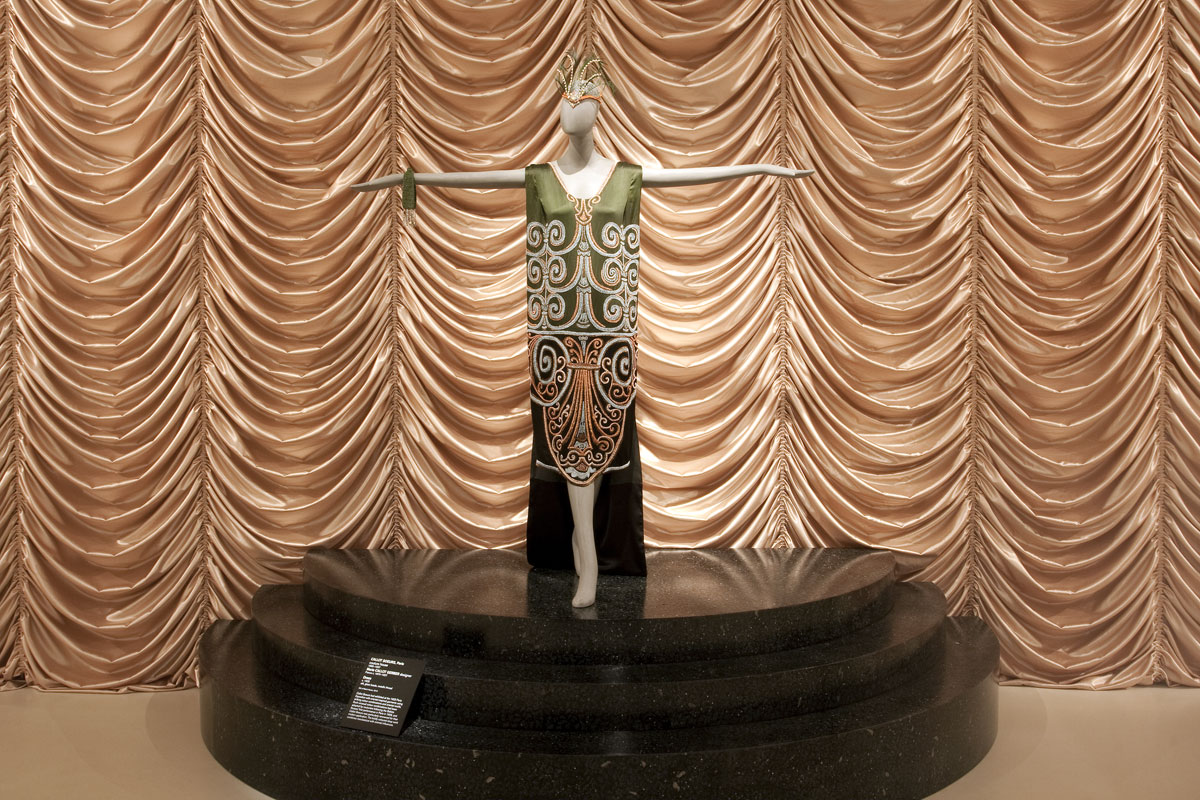

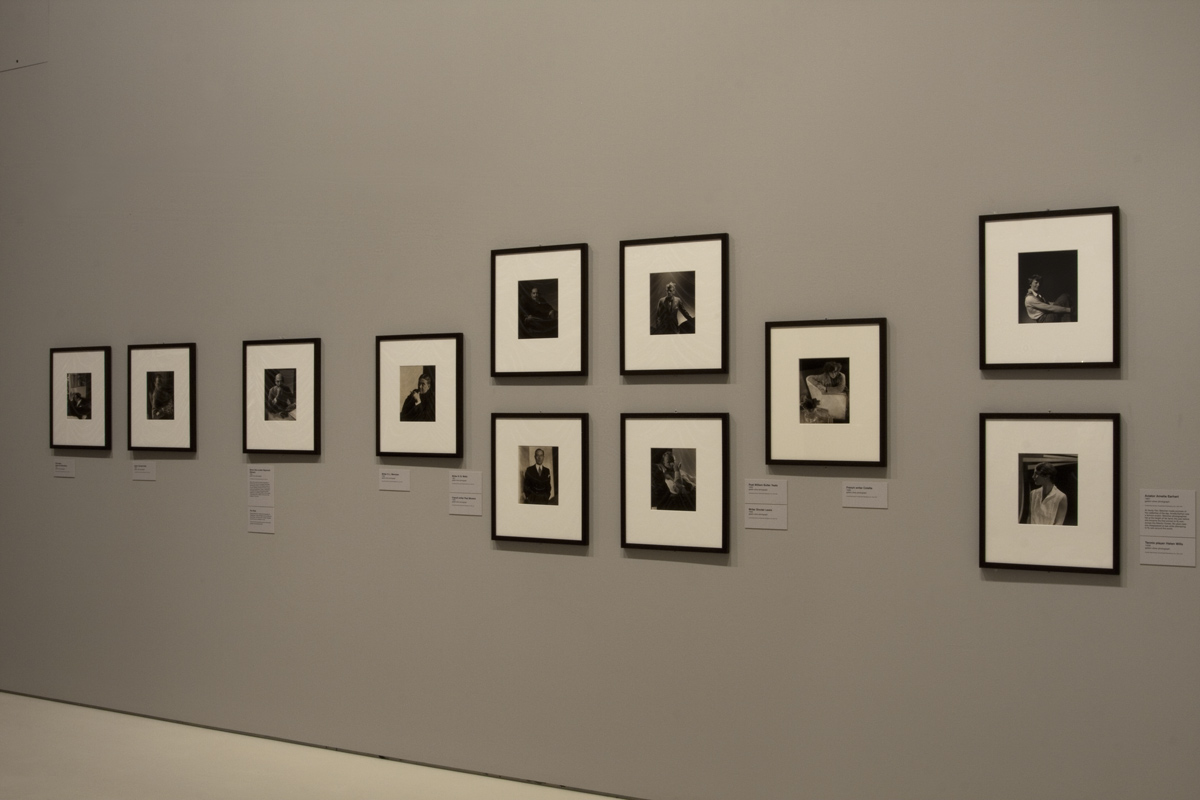
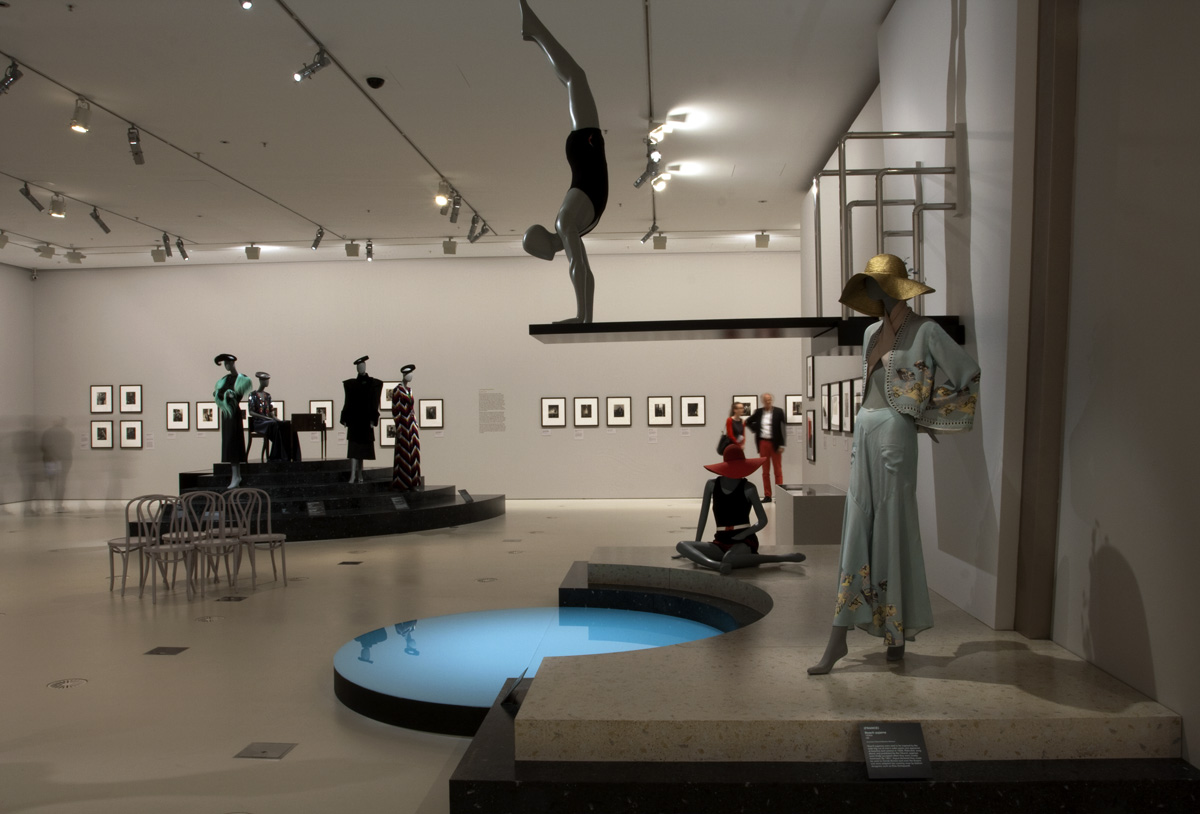
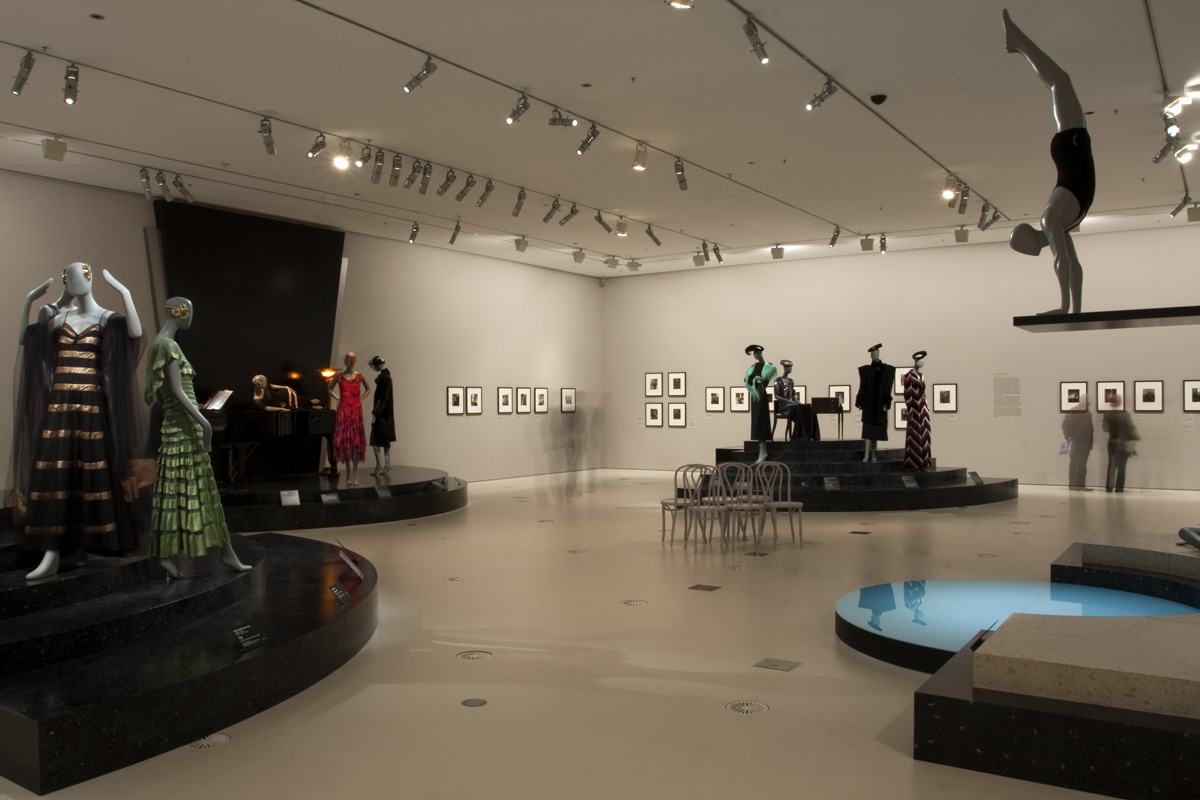
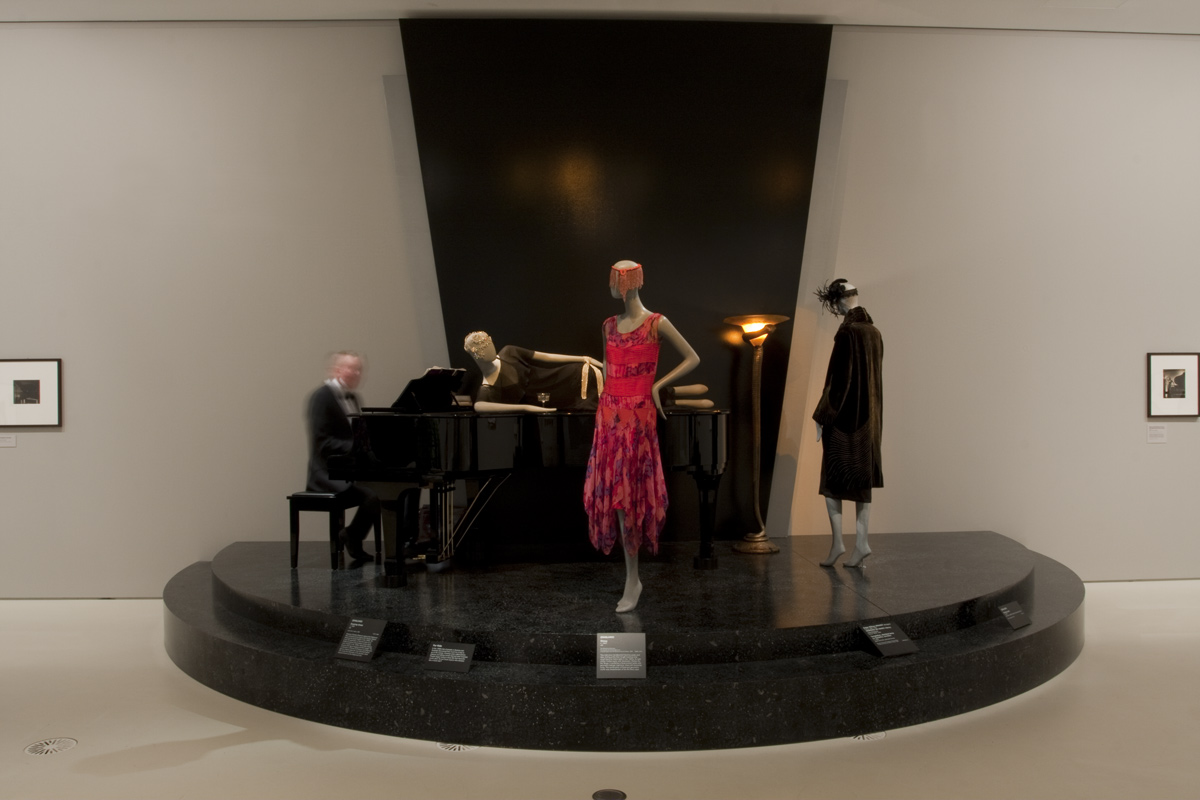

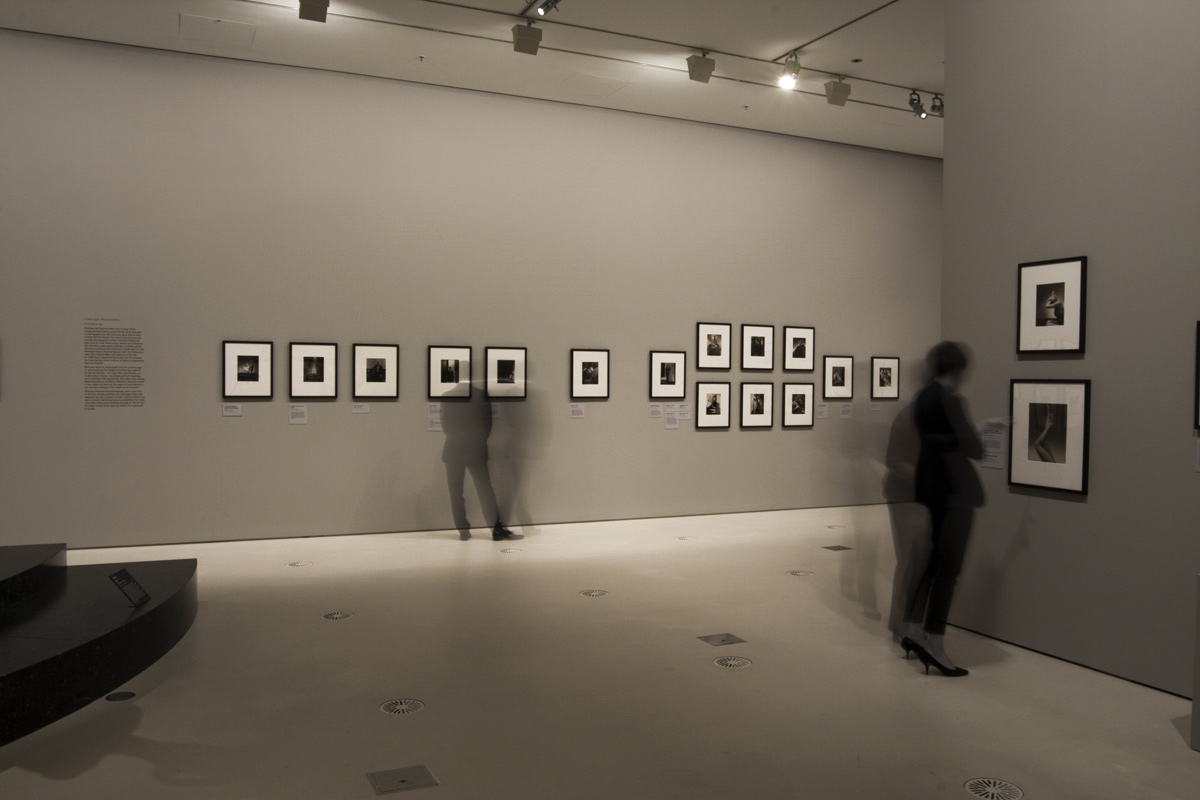
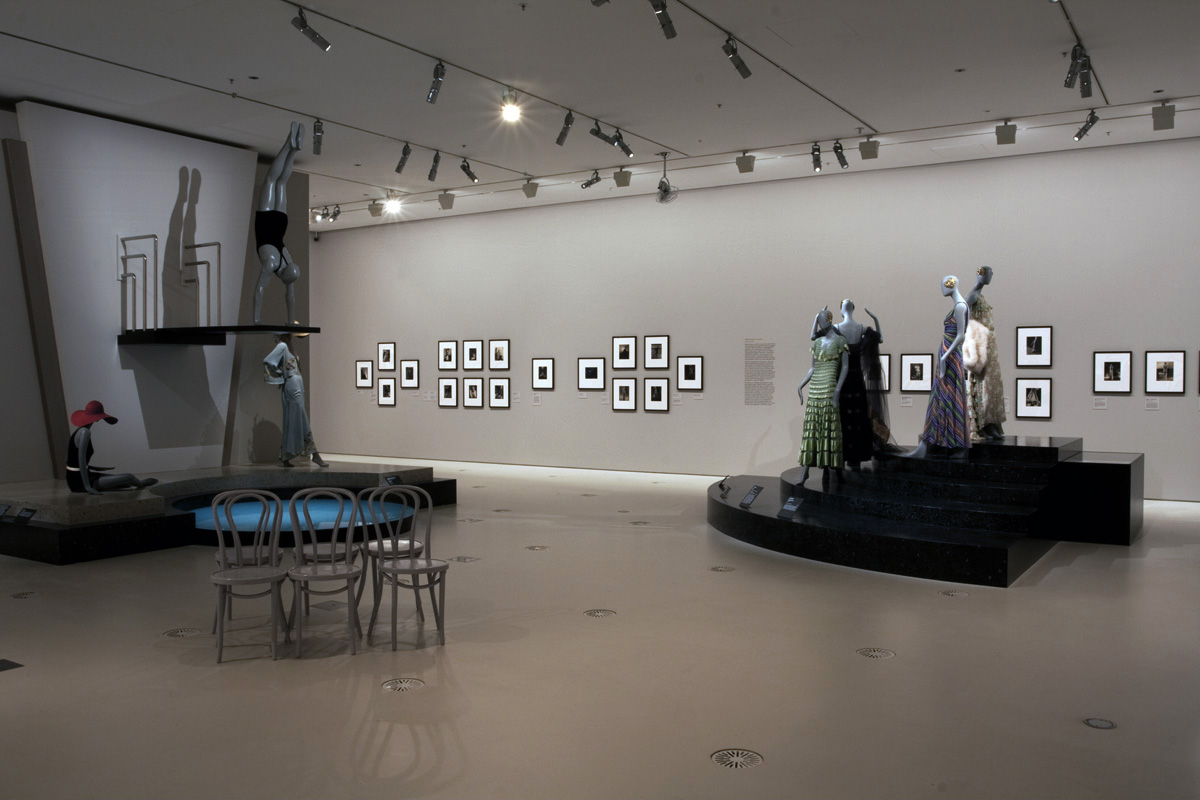
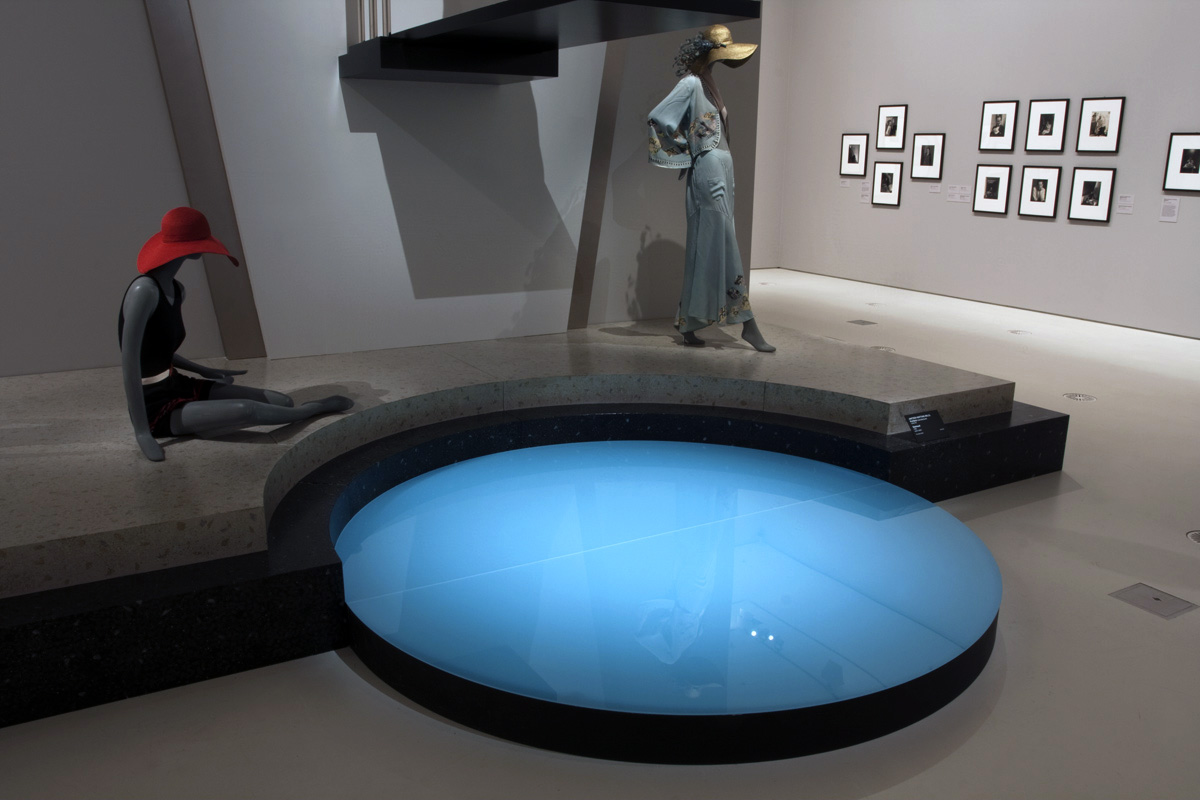
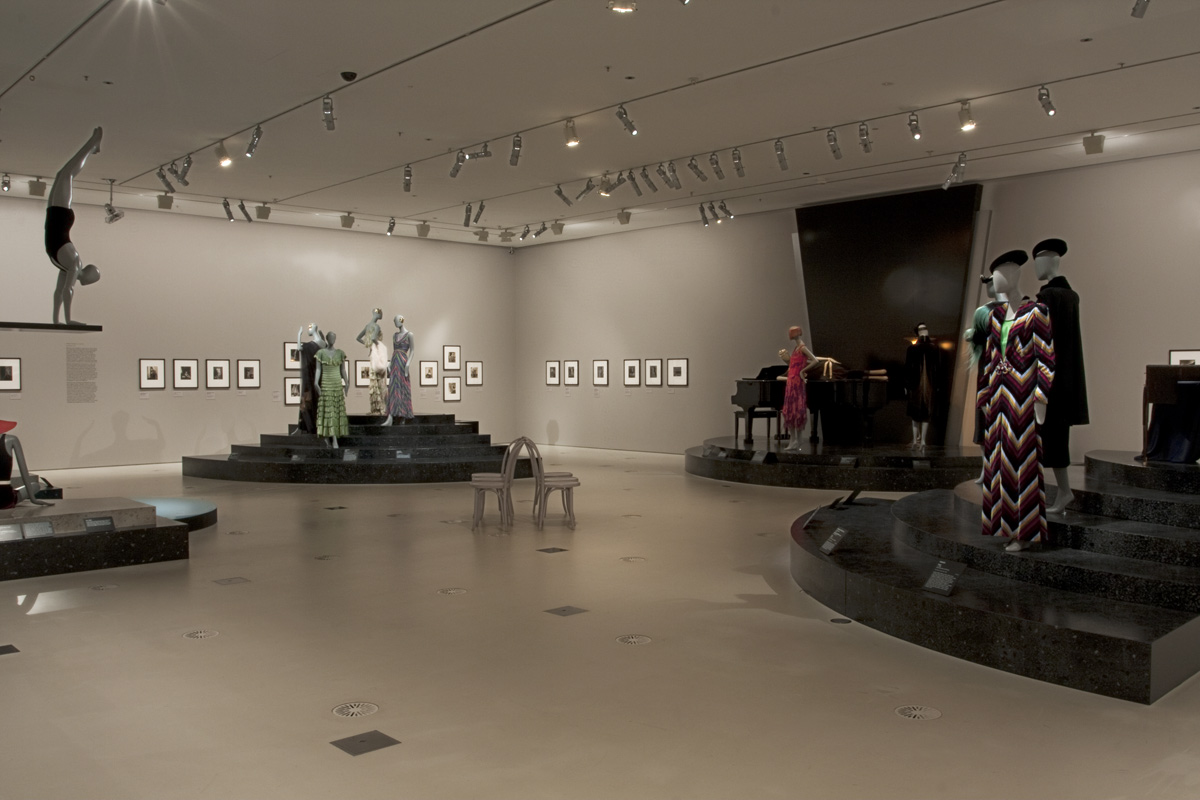
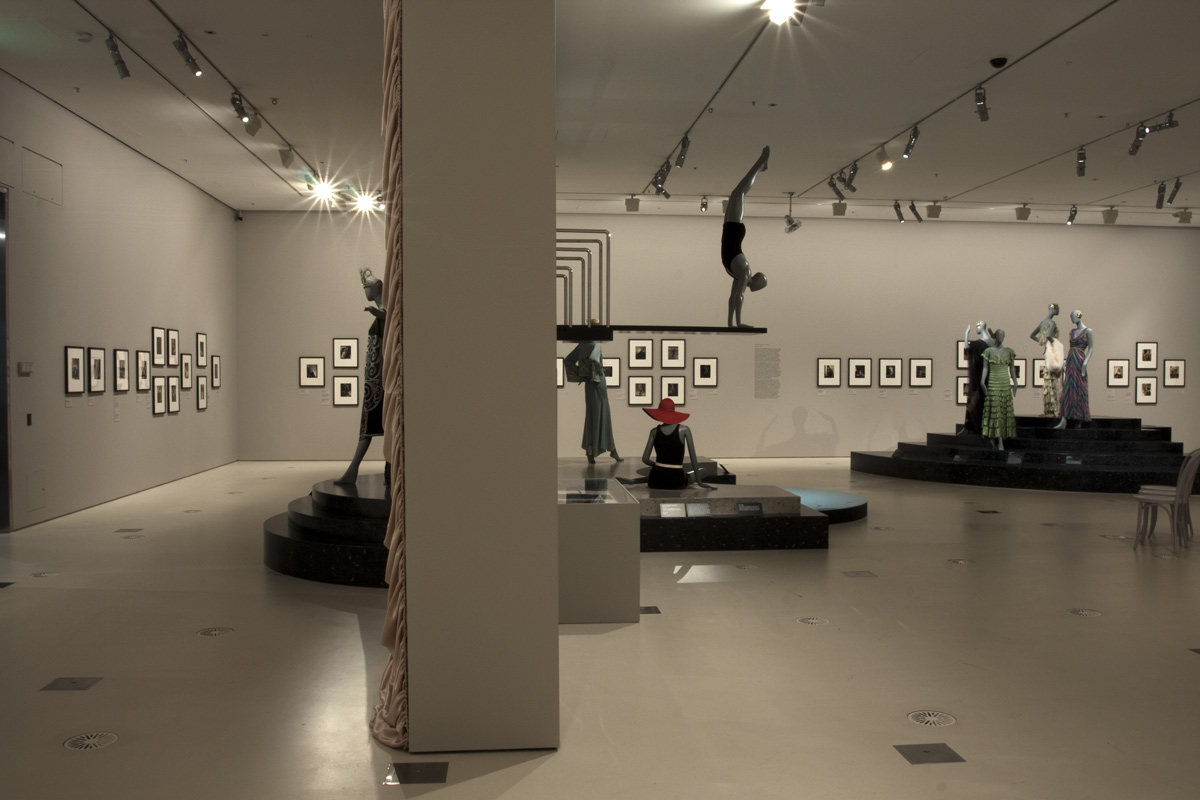








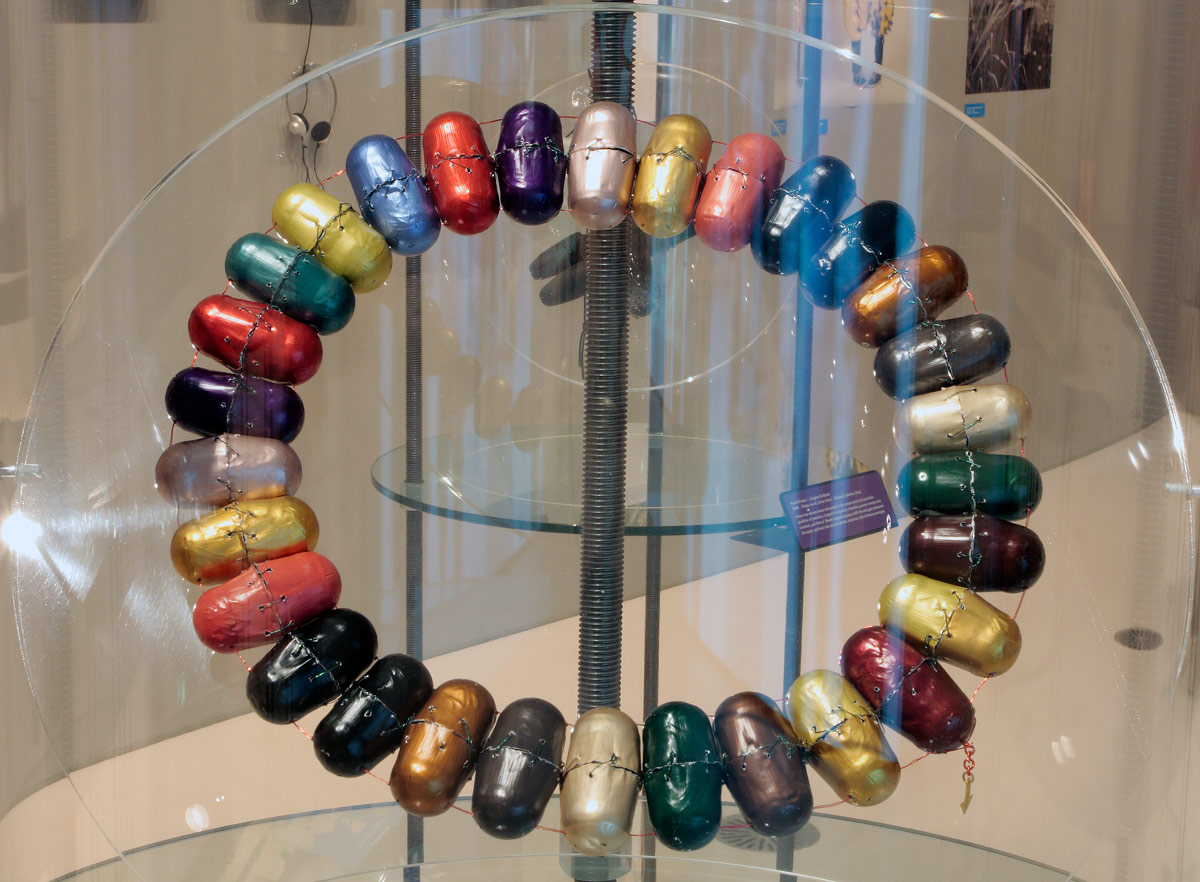


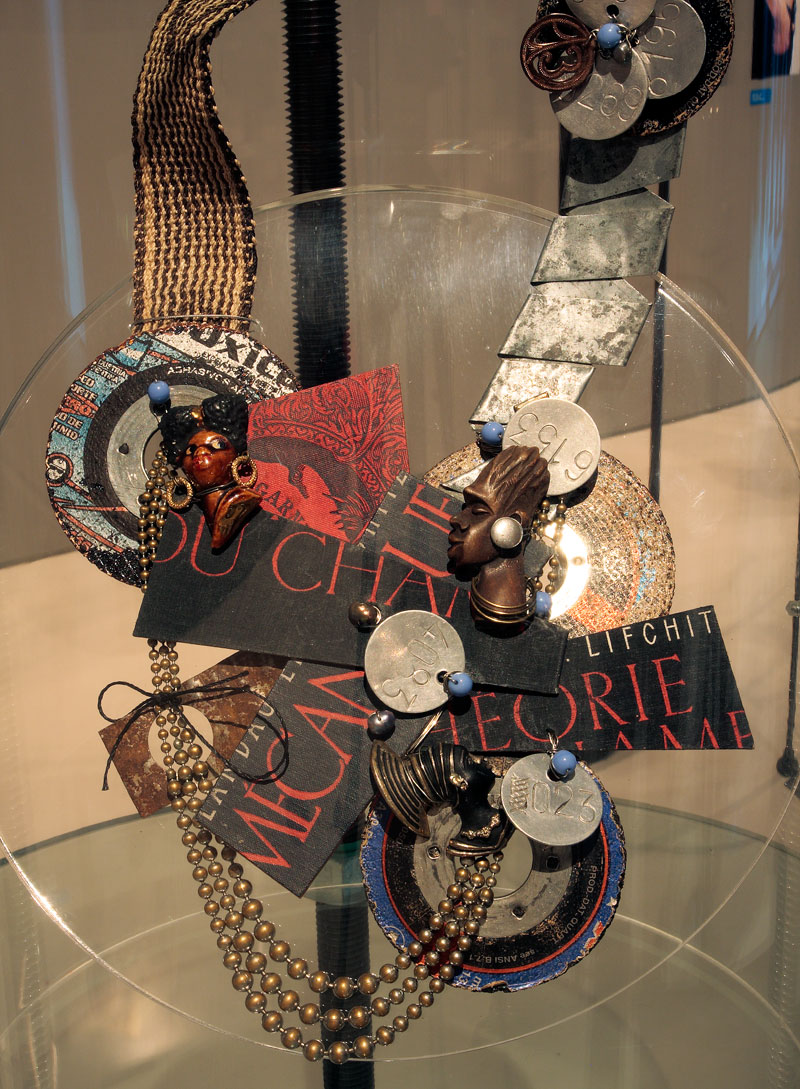
 Art Blart _ art and cultural memory archive
You must be logged in to post a comment.