Exhibition: ‘Man Ray: When Objects Dream’ at The Metropolitan Museum of Art, New York

Exhibition dates: 14th September, 2025 – 1st February, 2026

Curators: Stephanie D’Alessandro, Leonard A. Lauder Curator of Modern Art and Senior Research Coordinator in Modern and Contemporary Art at The Met, and Stephen C. Pinson, Curator in the Department of Photographs at The Met, with the assistance of Micayla Bransfield, Research Associate, Modern and Contemporary Art. 


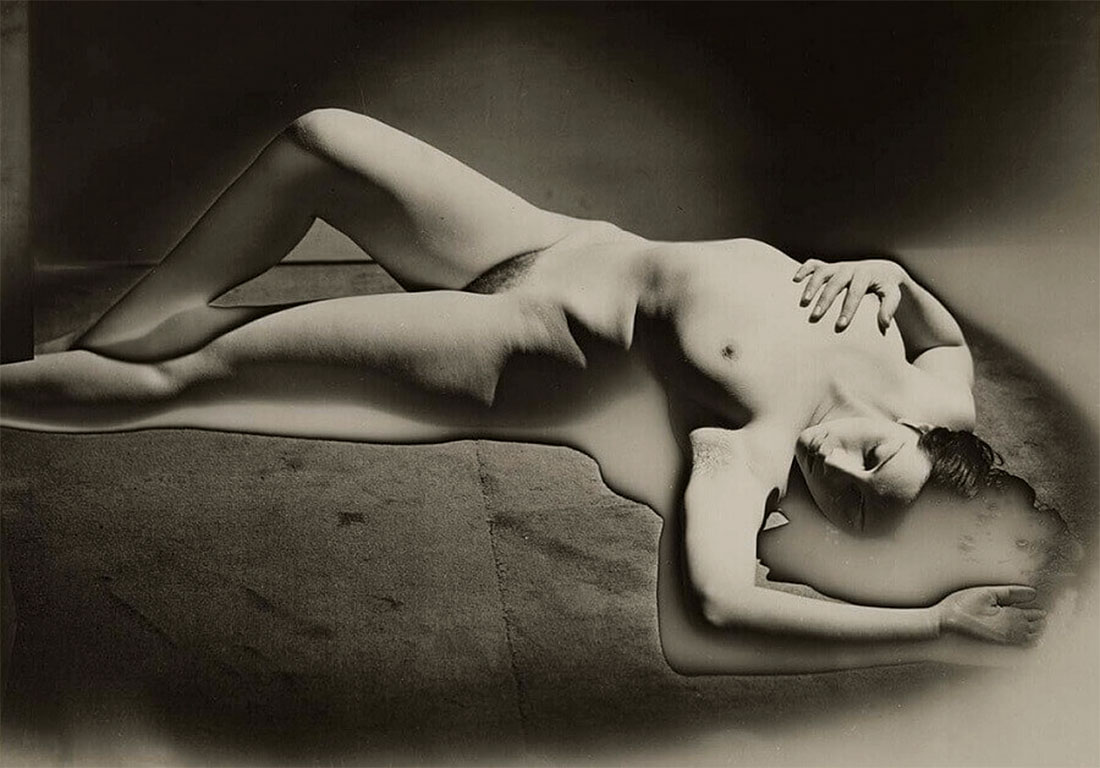
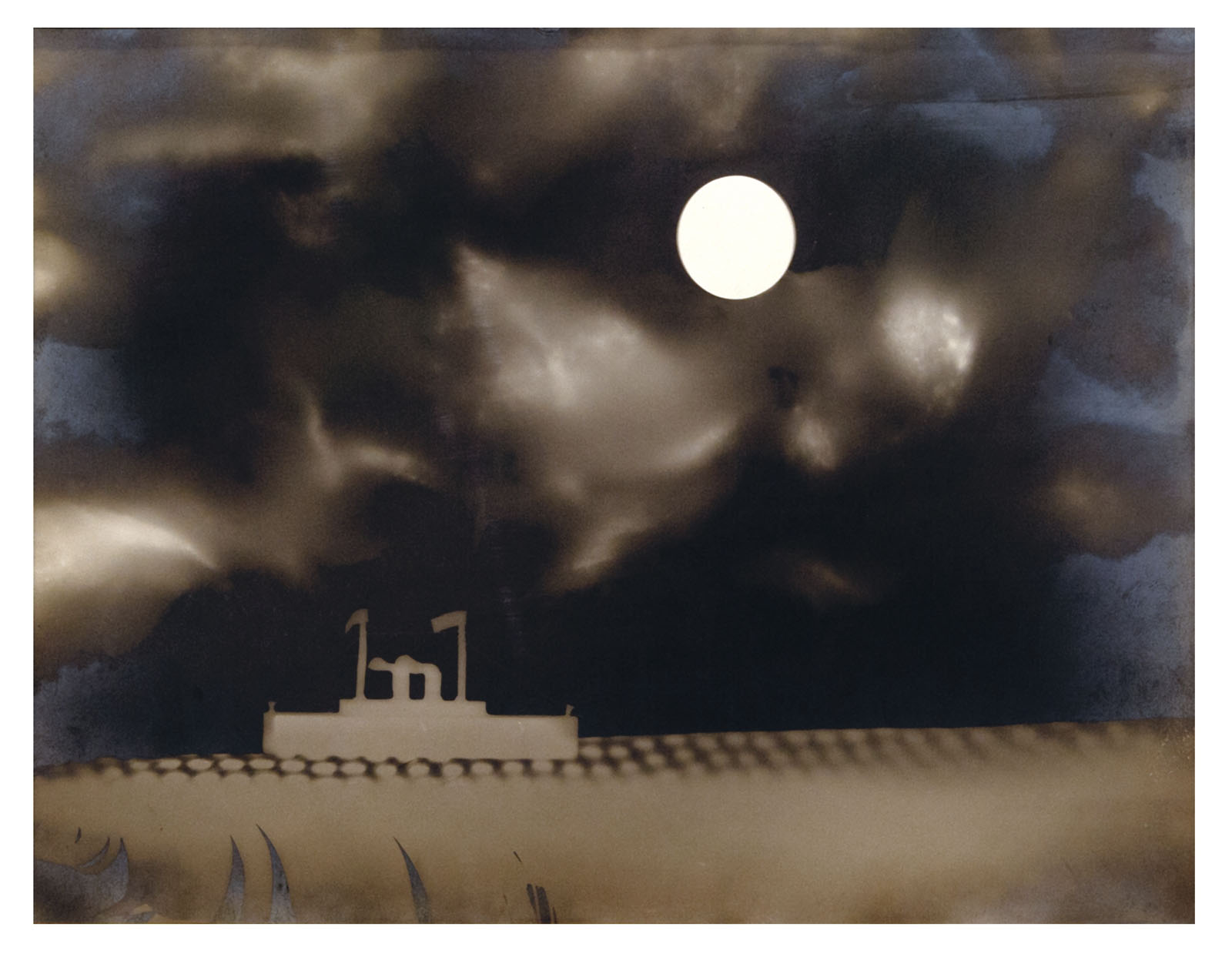
Man Ray (American, 1890-1976) 'Marine' c. 1925


Man Ray (American, 1890-1976) 
Marine 
c. 1925 
Gelatin silver print 
8 3/4 × 11 9/16 in. (22.2 × 29.3cm) 
Private collection; courtesy Galerie 1900-2000, Paris-New York 
© Man Ray 2015 Trust / Artists Rights Society (ARS), NY / ADAGP, Paris 2025 


“Like the undisturbed ashes of an object consumed by flames these images are oxidized residues fixed by light and chemical elements of an experience, an adventure, not an experiment. They are the result of curiosity, inspiration, and these words do not pretend to convey any information.”


Man Ray1


The rayographs

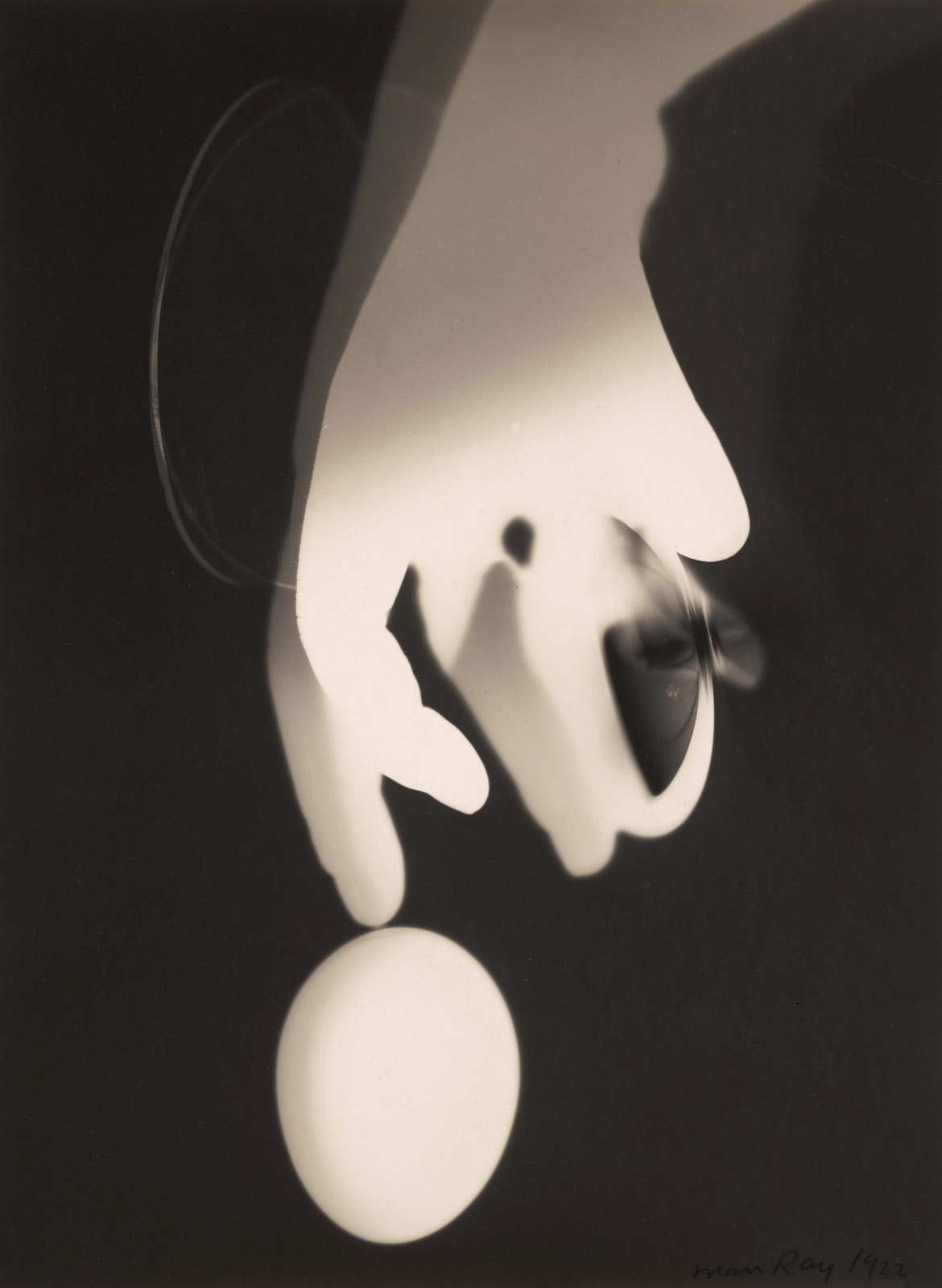
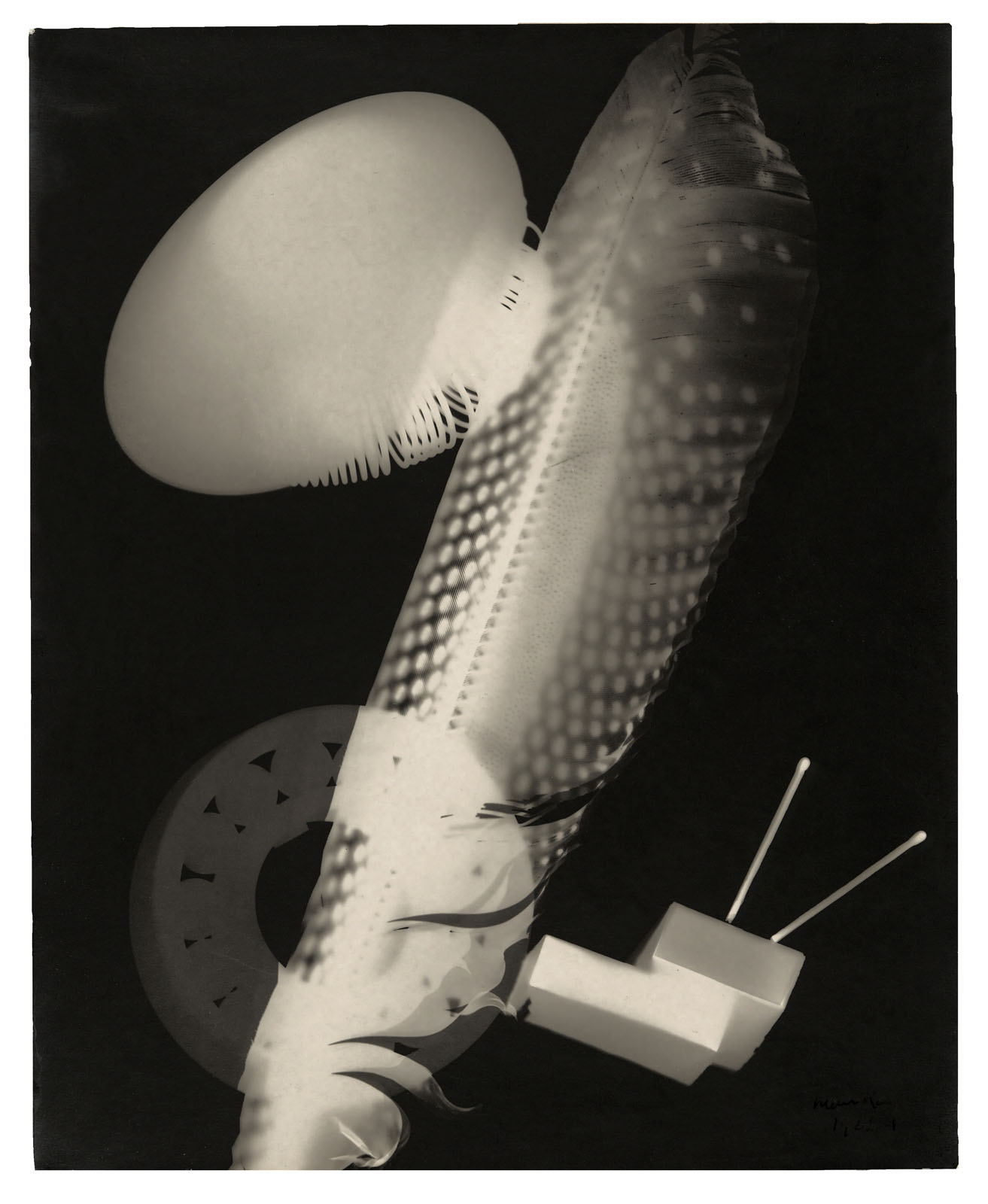
Although not the inventor of the photogram, a photograph made without the use of a camera by placing objects directly onto sensitised photographic paper and then exposing the paper to light, Man Ray’s rayographs have become the most recognisable and famous form that photograms have taken. This is because of their inventiveness, their subliminal connection to the psyche, and the use of “objects from the real world to make ambiguous dreamscapes.”7

It is interesting that Man Ray called his images rayographs, for a graph implies a topographical mapping, a laying out of statistics, whereas Lucia Moholy and László Moholy-Nagy’s photograms imply in the title of their technique the transmission of some form of message, like a telegram. The paradox is that, as the quotation above states, Man Ray always insisted that his rayographs imparted no information at all; perhaps they are only dreams made (un)stable. Contrary to this the other two artists believed that, “photographic images – cameraless and other – should not deal with conventional sentiments or personal feelings but should be concerned with light and form,”8 quite the reverse of the title of their technique.

After his arrival in Paris Man Ray started experimenting in his darkroom and discovered the technique for his rayographs by accident. With the help of his friend the Surrealist poet Tristan Tzara, he published a portfolio of twelve Rayographs in 1922 called Les champs délicieux (The delicious fields). “This title is a reference to ‘Les champs magnétiques’, a collection of writings by André Breton and Philippe Soupault composed from purportedly random thought fragments recorded by the two authors.”9 The rayographs are visual representations of random thought fragments, “photographic equivalents for the Surrealist sensibility that glorified randomness and disjunction.”10

Man Ray, “denied the camera its simplest joy: the ability to capture everything, all the distant details, all the ephemeral lights and shadows of the world”11 but, paradoxically, the rayographs are the most ephemeral of creatures, only being able to be created once, the result not being known until after the photographic paper has been developed. In fact, for Man Ray to create his portfolio Les champs délicieux (The delicious fields), he had to rephotograph the rayographs in order to make multiple copies.12

Man Ray “insisted in nearly every interview that the rayograph was not a photogram in the traditional sense. He did something that a photogram didn’t; he introduced depth into the images,”13 which denied the images their photographic objectivity by depicting an internal landscape rather than an external one.14 What the rayographs do not deny, however, is the subjectivity of the artist, his skill at placing the objects on the photographic paper, expressed in their dream-like nature, both a subjective ephemerality (because they could only be produced once) and an ephemeral subjectivity (because they were expressions of Man Ray’s fantasies, and therefore had little substance).

Through an alchemical process the latent images emerge from the photographic paper, representations of Man Ray’s fantasies as embodied in the ‘presence’ of the objects themselves, in the surface of the paper. Perhaps these objects offer, in Heidegger’s terms, ‘a releasement towards things’,15 “a coexistence between a conscious and unconscious way of perceiving which sustains the mystery of the object confusing the distinction between real time and sensual time, between inside and outside, input and output becoming neither here nor there.”16

Finally, within their depth of field the rayographs can be seen as both dangerous and delicious, for somehow they are both beautiful and unsettling at one and the same time. As Surrealism revels in randomness and chance these images enact the titles of other Man Ray photographs: Danger-Dancer, Anxiety, Dust Raising, Distorted House. The rayographs revel in chance and risk; Man Ray brings his fantasies to the surface, an interior landscape represented externally that can be (re)produced only once – those dangerous delicious fields.

Extract from Marcus Bunyan. “The Delicious Fields: Exploring Man Ray’s ‘Rayographs’ in a Digital Future,” published in The University of Queensland Vanguard magazine ‘Man Ray: Life, Work & Themes’, 2004


Footnotes

1/ Man Ray quoted in Janus (trans. Murtha Baca). Man Ray: The Photographic Image. London: Gordon Fraser, 1980, p. 213

7/ Mark Greenberg (ed.,). In Focus: Man Ray: Photographs from the J. Paul Getty Museum. Los Angeles, The J. Paul Getty Museum, 1998, p. 38

8/ Naomi Rosenblum. A World History of Photography. New York: Abbeville Press, 1997, 394

9/ Greenberg, op. cit., p. 28

10/ Jed Perl (ed.,). Man Ray: Aperture Masters of Photography. New York: Aperture, 1997 pp. 11-12

11/ Perl, op. cit., pp. 5-6

12/ Greenberg, op. cit., p. 28

13/ Greenberg, op. cit., p. 112

14/ Greenberg, op. cit., p. 28

15/ “We stand at once within the realm of that which hides itself from us, and hides itself just in approaching us. That which shows itself and at the same time withdraws is the essential trait of what we call the mystery … Releasement towards things and openness to the mystery belong together. They grant us the possibility of dwelling in the world in a totally different way…”

Martin Heidegger. Discourse on Thinking. New York: Harper & Row, 1966, pp. 55-56 quoted in Mauro Baracco. “Completed Yet Unconcluded: The Poetic Resistance of Some Melbourne Architecture,” in Leon van Schaik (ed.,). Architectural Design Vol. 72. No. 2 (‘Poetics in Architecture’). London: John Wiley and Sons, 2002, 74, Footnote 6.

16/ Marcus Bunyan. Spaces That Matter: Awareness and Entropia in the Imaging of Place (2002) [Online] Cited 07/07/2004.


Many thankx to The Metropolitan Museum of Art for allowing me to publish the photographs in the posting. Please click on the photographs for a larger version of the image.


“Stepping into the exhibition Man Ray: When Objects Dream at The Metropolitan Museum of Art feels like entering the bellows of an old camera. Through a rectangular frame cut into the entry, the darkened walls unfold, accordion-like, to reveal a visual feast of the artist’s work, as Man Ray’s earliest film, “Retour à la raison (Return to Reason)” (1923), flickers across the screen opposite. Although the exhibition brings together approximately 160 works from an impressive array of lenders, it reveals itself gradually, taking the viewer through several turns before one can grasp its sheer enormity. When Objects Dream proves, thrillingly, that anyone left feeling jaded from the many, many recent exhibitions surrounding Surrealism’s centennial in 2024 can still see the movement’s key photographer with a fresh set of eyes.”


Julia Curl. “Man Ray Was So Much More Than a Photographer,” on the Hyperallergic website September 16, 2025 [Online] Cited 05/12/2025


“Objects to touch, to eat, to crunch, to apply to the eye, to the skin, to press, to lick, to break, to grind, objects to lie, to flee from, to honor, things cold or hot, feminine or masculine, objects of day or night which absorb through your pores the greater part of our life. … These are the projections surprised in transparence, by the light of tenderness, of objects that dream and talk in their sleep.” 

.
Tristan Tzara, “When Objects Dream,” 1934


“One sheet of paper got into the developing tray – a sheet unexposed that had been mixed with those already exposed under the negatives. … Regretting the waste of paper, I mechanically placed a small glass funnel, the graduate, and the thermometer in the tray on the wetted paper. I turned on the light; before my eyes an image began to form, not quite a simple silhouette of the objects as in a straight photograph, but distorted and refracted by the glass more or less in contact with the paper and standing out against a black background. … I remembered when I was a boy, placing fern leaves in a printing frame with proof paper, exposing it to sunlight, and obtaining a white negative of the leaves. This was the same idea, but with an added three-dimensional quality and tone graduation. I made a few more prints … taking whatever came to hand; my hotel-room key, a handkerchief, some pencils, a brush, a candle, a piece of twine … excitedly, enjoying myself immensely. In the morning I examined the results. … They looked startlingly new and mysterious.”


Man Ray 


Man Ray (American, 1890-1976) 'Rayograph' 1922


Man Ray (American, 1890-1976) 
Rayograph
1922 
Gelatin silver print 
9 1/2 × 7 in. (24.1 × 17.8cm) 
The Metropolitan Museum of Art, New York, Bluff Collection, Promised Gift of John A. Pritzker 
© Man Ray 2015 Trust / Artists Rights Society (ARS), NY / ADAGP, Paris 2025
Photo by Ben Blackwell 


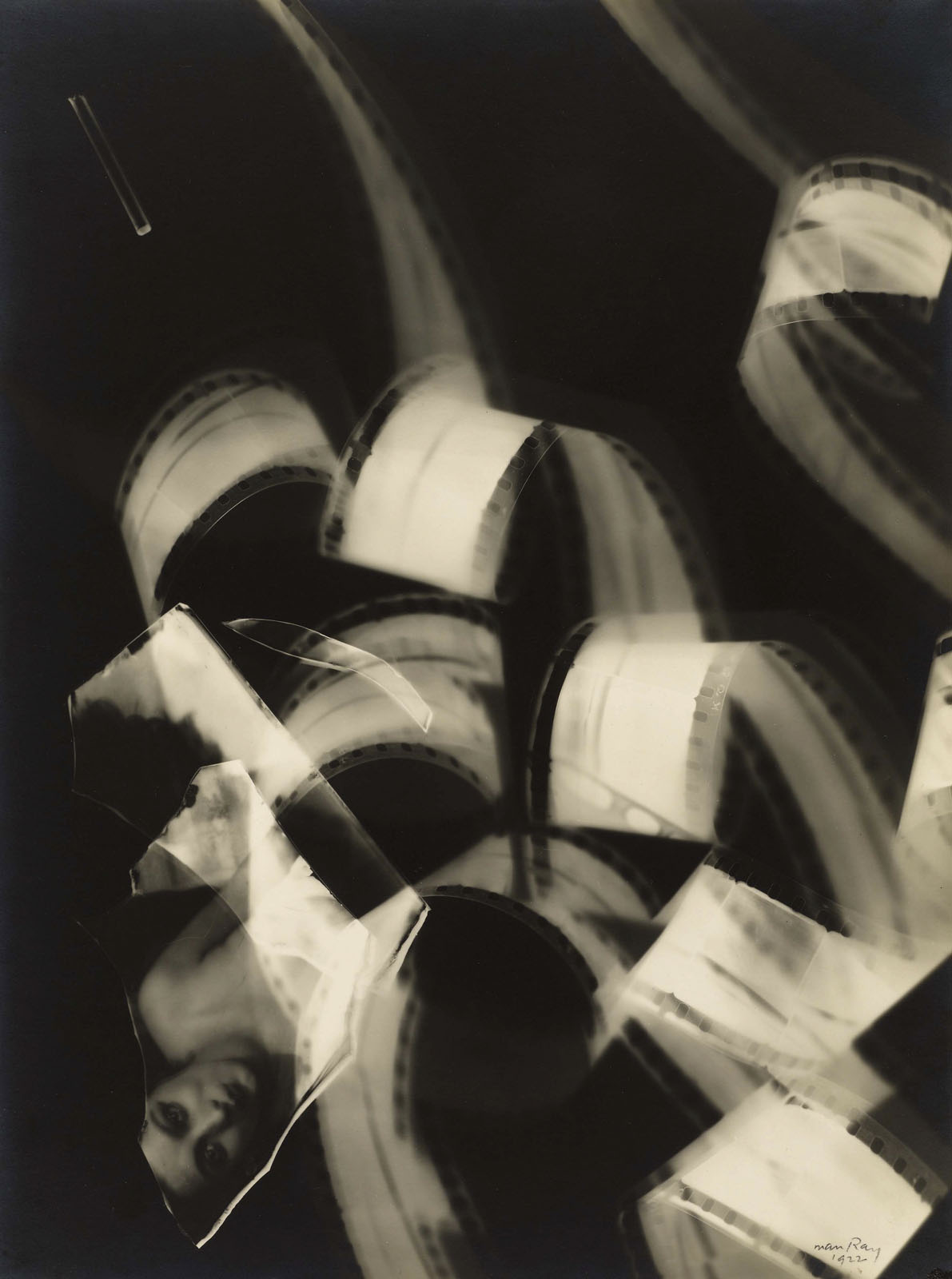
Man Ray (American, 1890-1976) 'Rayograph' 1922


Man Ray (American, 1890-1976) 
Rayograph
1922 
Gelatin silver print 
9 3/8 × 7 in. (23.8 × 17.8cm) 
The J. Paul Getty Museum, Los Angeles
Courtesy The J. Paul Getty Museum, Los Angeles 
© Man Ray 2015 Trust / Artists Rights Society (ARS), NY / ADAGP, Paris 2025


Man Ray (American, 1890-1976) 'Rayograph' 1922


Man Ray (American, 1890-1976) 
Rayograph
1922
Gelatin silver print
9 3/8 x 7 in. (23.8 x 17.8cm)
Private collection
© Man Ray 2015 Trust / Artists Rights Society (ARS), NY / ADAGP, Paris 2025


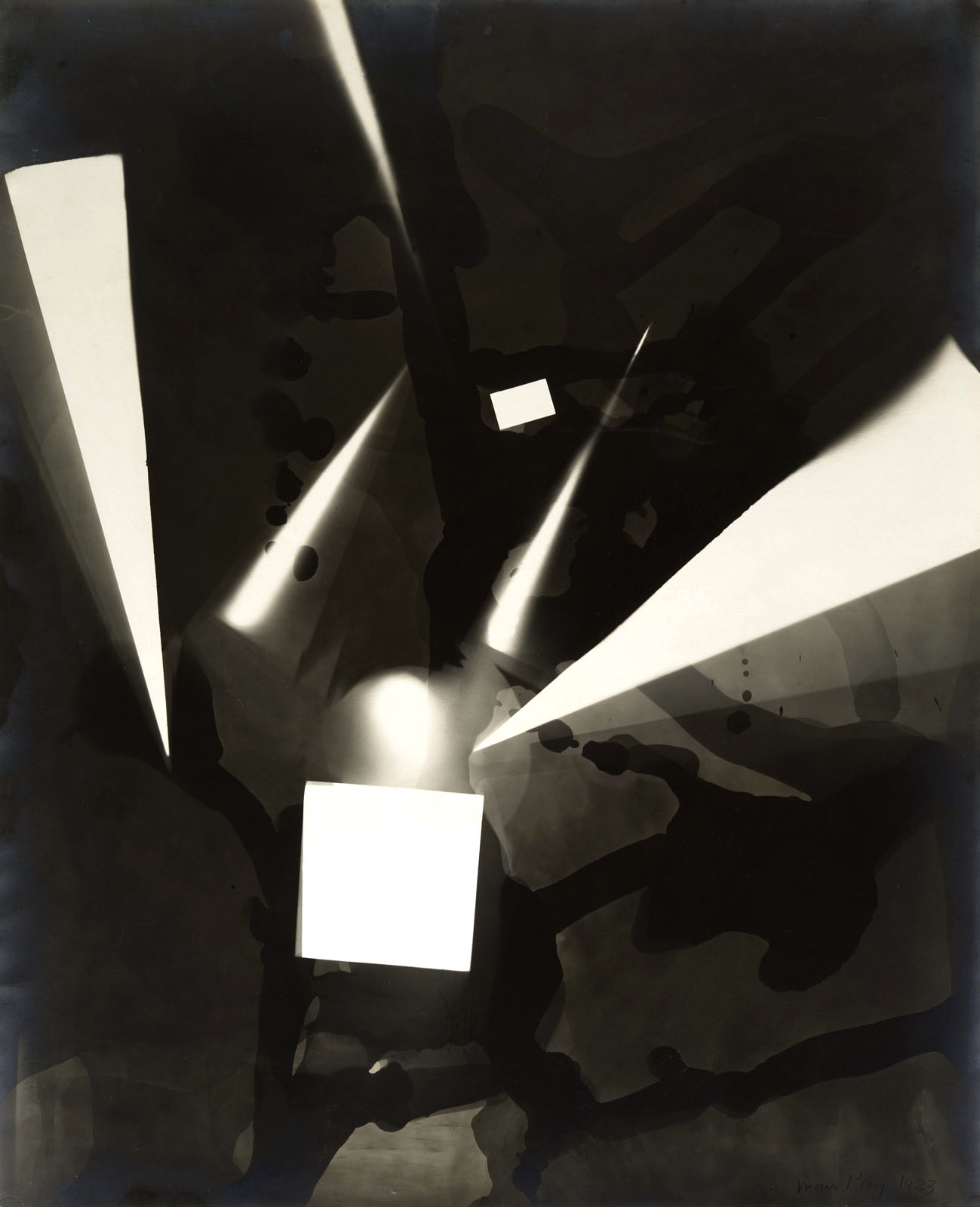
Man Ray (American, 1890-1976) 'Rayograph' 1923


Man Ray (American, 1890-1976) 
Rayograph 
1923 
Gelatin silver print 
11 1/2 × 9 5/16 in. (29.2 × 23.7cm) 
Yale University Art Gallery, New Haven, Gift of the Estate of Katherine S. Dreier 
© Man Ray 2015 Trust / Artists Rights Society (ARS), NY / ADAGP, Paris 2025
Photo: Yale University Art Gallery, Gift of Collection Société Anonyme 


Man Ray (American, 1890-1976) 'Rayograph' 1923-1928


Man Ray (American, 1890-1976) 
Rayograph
1923-1928 
Gelatin silver print 
19 5/16 x 15 11/16 in. (49 x 39.8cm) 
The Metropolitan Museum of Art, New York, Gilman Collection, Purchase, The Horace W. Goldsmith Foundation Gift, through Joyce and Robert Menschel, 2005
Image © The Metropolitan Museum of Art, photo by Mark Morosse 
© Man Ray 2015 Trust / Artists Rights Society (ARS), NY / ADAGP, Paris 2025 


Man Ray (American, 1890-1976) 'Rayography' 1925


Man Ray (American, 1890-1976) 
Rayograph 
1925 
Gelatin silver print 
19 15/16 × 15 13/16 in. (50.6 × 40.2cm) 
MAH Musée d’art et d’histoire, City of Geneva. Purchase, 1968
© Man Ray 2015 Trust / Artists Rights Society (ARS), NY / ADAGP, Paris 2025
Photo © Musée d’art et d’histoire, Ville de Genève, photo by André Longchamp


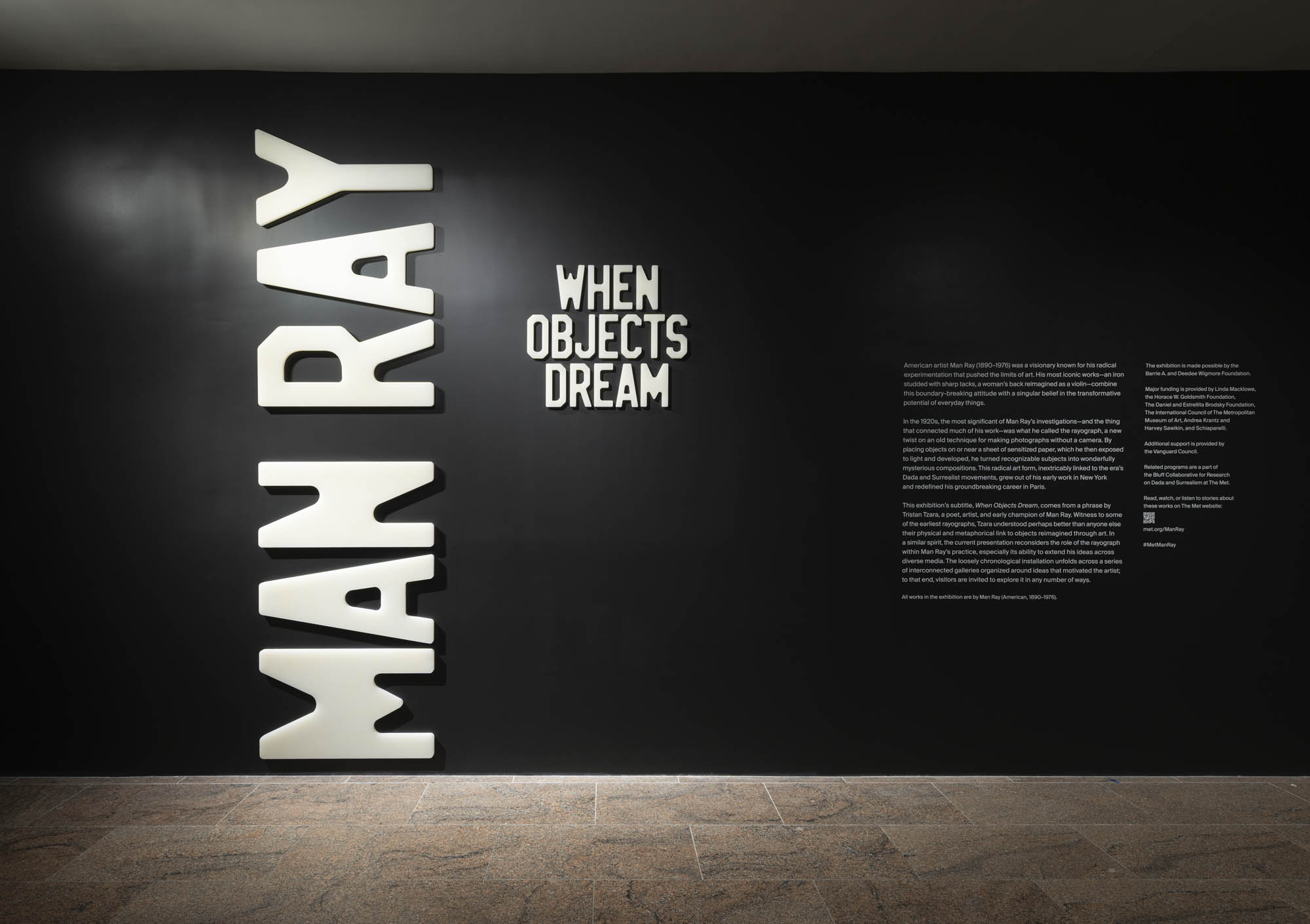
American artist Man Ray (1890-1976) was a visionary known for his radical experiments that pushed the limits of photography, painting, sculpture, and film. In the winter of 1921, he pioneered the rayograph, a new twist on a technique used to make photographs without a camera. By placing objects on or near a sheet of light-sensitive paper, which he exposed to light and developed, Man Ray turned recognisable subjects into wonderfully mysterious compositions. Introduced in the period between Dada and Surrealism, the rayographs’ transformative, magical qualities led the poet Tristan Tzara to describe them as capturing the moments “when objects dream.”

The exhibition will be the first to situate this signature accomplishment in relation to Man Ray’s larger body of work of the 1910s and 1920s. Drawing from the collections of The Met and more than 50 U.S. and international lenders, the exhibition will feature approximately 60 rayographs and 100 paintings, objects, prints, drawings, films, and photographs – including some of the artist’s most iconic works – to highlight the central role of the rayograph in Man Ray’s boundary-breaking practice.

“Before my eyes an image began to form, not quite a simple silhouette of the objects as in a straight photograph, but distorted and refracted … In the morning I examined the results, pinning a couple of the rayographs – as I decided to call them – on the wall. They looked startlingly new and mysterious.” ~ Man Ray

Text from The Metropolitan Museum of Art website


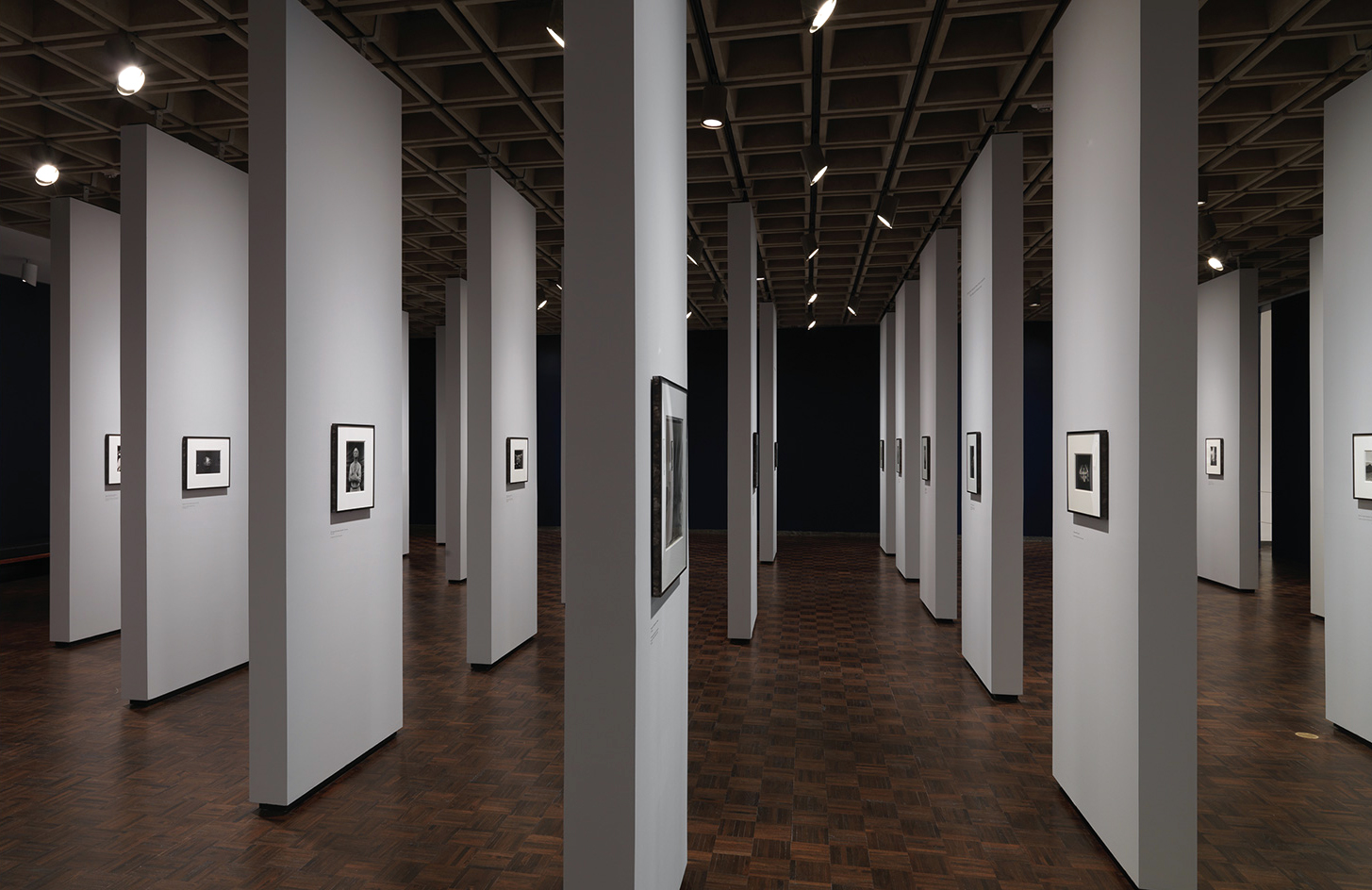
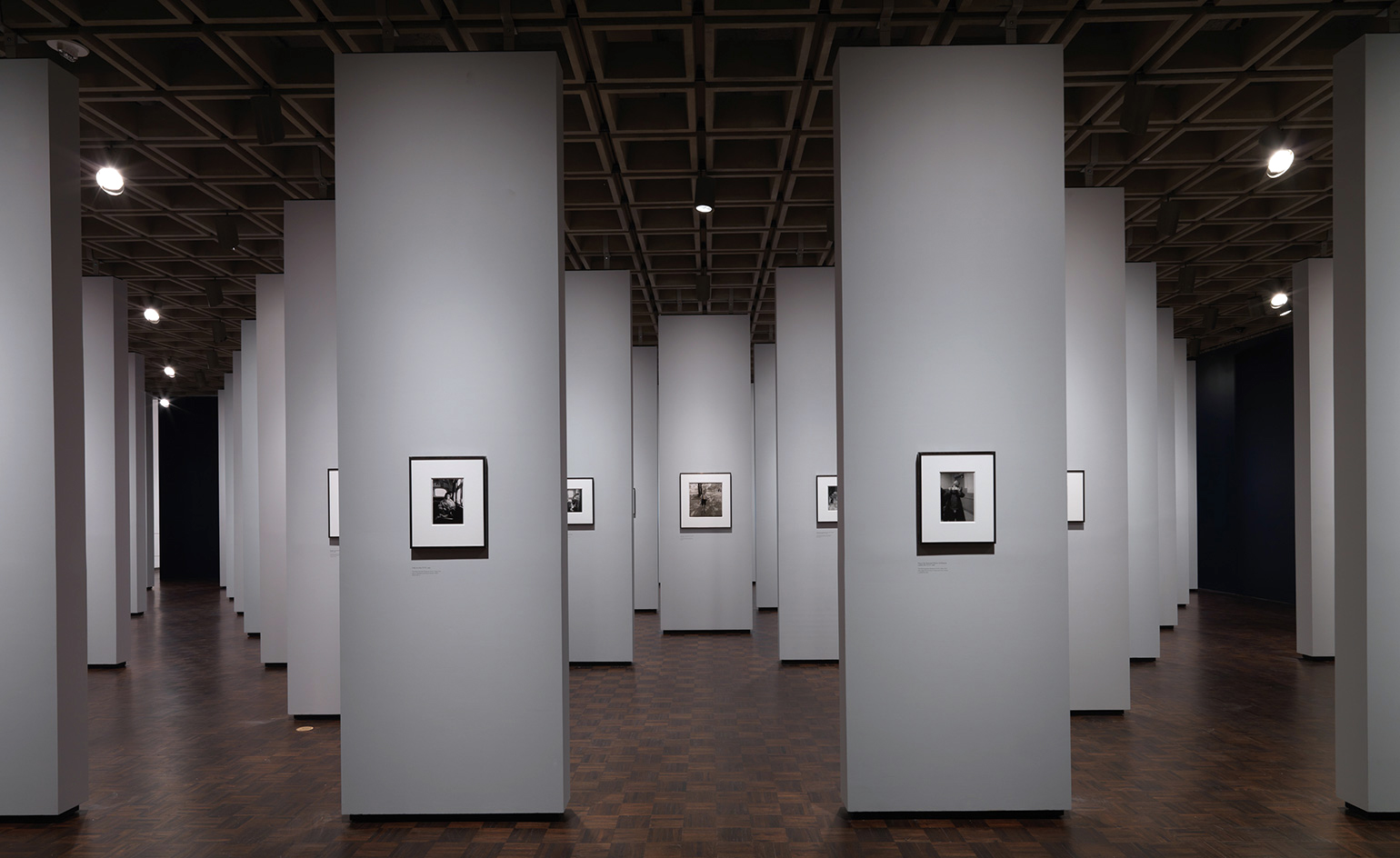
Installation view of the exhibition 'Man Ray: When Objects Dream' at The Metropolitan Museum of Art, New York, September 2025 - February 2026


Installation views of the exhibition Man Ray: When Objects Dream at The Metropolitan Museum of Art, New York, September 2025 – February 2026


Man Ray (American, 1890-1976)
'Torse (Retour à la raison)' (Torso [Return to Reason]) 1923, printed c. 1935


Man Ray (American, 1890-1976)
Torse (Retour à la raison) (Torso [Return to Reason])
1923, printed c. 1935
Gelatin silver print
8 1/4 × 6 3/8 in. (21 × 16.2cm)
Private collection
© Man Ray 2015 Trust / Artists Rights Society (ARS), NY / ADAGP, Paris 2025


In the 1923 silent short of the same title, Man Ray filmed barely discernible scenes of Paris at night along with his own enigmatic photograms and conglomerations of spiraling or gyrating objects. The resulting sequence of near-total abstractions seems devoid of sense or purpose. The “return to reason” in the film comes finally in the form of a woman’s torso – modelled by cabaret personality Kiki de Montparnasse – turning to and fro beside a rain-covered windowpane. Man Ray reproduced the seductive finale, as well as other moments from the film, as photographs, singly and in strips. A still from Man Ray’s film, this particular photograph appeared on its own in the first issue of the key avant-garde journal La Révolution surréaliste, in 1924.

Text from the Art Institute of Chicago website


Le retour à la raison (Return to Reason), Man Ray, 1923


Emak-Bakia (1926) – directed by Man Ray

Emak-Bakia (Basque for Leave me alone) is a 1926 film directed by Man Ray. Subtitled as a cinépoéme, it features many techniques Man Ray used in his still photography (for which he is better known), including rayographs, double exposure, soft focus and ambiguous features.

Emak-Bakia shows elements of fluid mechanical motion in parts, rotating artifacts showing his ideas of everyday objects being extended and rendered useless. Kiki of Montparnasse (Alice Prin) is shown driving a car in a scene through a town. Towards the middle of the film Jacques Rigaut appears dressed in female clothing and make-up. Later in the film a caption appears: “La raison de cette extravagance” (the reason for this extravagance). The film then cuts to a car arriving and a passenger leaving with briefcase entering a building, opening the case revealing men’s shirt collars which he proceeds to tear in half. The collars are then used as a focus for the film, rotating through double exposures.

The film features sculptures by Pablo Picasso, and some of Man Ray’s mathematical objects both still and animated using a stop motion technique.

Originally a silent film, recent copies have been dubbed using music taken from Man Ray’s personal record collection of the time. The musical reconstruction was by Jacques Guillot.

When the film was first exhibited, a man in the audience stood up to complain it was giving him a headache and hurting his eyes. Another man told him to shut up, and they both started to fight. The theatre turned into a frenzy, the fighting ended up out in the street, and the police were called in to stop the riot.

Emak bakia can also mean “give peace” (“emak” is the imperative form of the verb “eman”, which means “give”) in Basque.

Text from the YouTube website


L’étoile de mer, Man Ray, 1928

The film was based on Robert Desnon’s surrealist poem L’Étoile de mer.


The Met Presents First Major Exhibition on Man Ray’s Radical Reinvention of Art through the rayograph 

Featuring 160 rayographs, paintings, objects, prints, drawings, films, and photographs, Man Ray: When Objects Dream highlights the principal place of the rayograph – a type of cameraless photograph – within the context of many of the artist’s most important works 

This exhibition includes thirty-five works by Man Ray which are part of the major promised gift of nearly 200 works of Dada and Surrealist art from Trustee John Pritkzer 

Man Ray: When Objects Dream at The Metropolitan Museum of Art is the first major exhibition to examine the radical experimentation of American artist Man Ray (1890-1976) through one of his most significant bodies of work, the rayograph. Man Ray coined the term rayograph to name his version of the 19th-century technique of making photographs without a camera. He created them by placing objects on or near a sheet of light-sensitive paper, which he then exposed to light and developed. These photograms – as they are also called – appear as reversed silhouettes, or negative versions, of their subjects. They often feature recognisable items that become wonderfully mysterious in the artist’s hands. Their transformative nature led the Dada poet Tristan Tzara to describe rayographs as capturing the moments “when objects dream.” While Man Ray acknowledged the photographic origins of his new works, he did not think of them as strictly bound by medium. Taking Man Ray’s lead, this presentation is the first – more than a century since he introduced the rayograph – to situate this signature accomplishment in relation to his larger artistic output. The exhibition is on view September 14, 2025, through February 1, 2026. 

“As one of the most fascinating and multi-faceted artists in the avant-garde movements of the early 20th century, Man Ray challenged traditional narratives of modernism through his daring experimentation with diverse artistic mediums,” said Max Hollein, The Met’s Marina Kellen French Director and Chief Executive Officer. “Anchored by Man Ray’s innovative and mesmerising rayographs along with new research and discoveries, this exhibition invites visitors to explore his ground-breaking manipulation of objects, light, and media, which profoundly reframed his artistic practice and impacted countless other artists. We’re so thrilled to include thirty-five works by Man Ray in this exhibition as part of John’s incredible promised gift.” 

Drawing from the collections of The Met and more than 50 U.S. and international lenders, the presentation includes more than 60 rayographs, many of which were featured in important publications and exhibitions at the time of their making, and 100 paintings, objects, prints, drawings, collages, films, and photographs to highlight the central role of the rayograph in Man Ray’s boundary-breaking practice. The exhibition marks a collaboration with the recently closed Lens Media Lab, Yale University, under the direction of Paul Messier, and with photography conservators and curators at various lending institutions, to study more than fifty rayographs. 

In the winter of 1921, while working late in his Paris darkroom, Man Ray inadvertently produced a photogram by placing some of his glass equipment on top of an unexposed sheet of photographic paper he found among the prints in his developing tray. As he wrote in his 1963 autobiography, “Before my eyes an image began to form, not quite a simple silhouette of the objects as in a straight photograph, but distorted and refracted … In the morning I examined the results, pinning a couple of the rayographs – as I decided to call them – on the wall. They looked startlingly new and mysterious.” This supposed accident, now the stuff of legend, has obscured the fact that rayographs might be seen as the culmination of Man Ray’s work up to 1921 as well as the frame through which he would redefine his work thereafter. They harnessed his interests in working between dimensions, media, and artistic traditions, fittingly at the moment between Dada and Surrealism, which writer Louis Aragon once called the mouvement flou (flou means “hazy, blurry, or out of focus” in French). 

Unfolding in a series of spaces that intersect with a central, dramatic presentation of rayographs, the exhibition illuminates their connections with Man Ray’s work in other media, including assemblage, painting, photography, and film. In approaching the rayograph in this expansive way, the exhibition also offers a reappraisal of the most productive and creatively significant period of his long career, beginning in New York around 1915 with his ambitious paintings and concluding in Paris in 1929 with his fine-tuning of the solarization process with Lee Miller. A critical factor across the exhibition is the central role of objects for Man Ray’s career, both in the creation of many of the rayographs and in his work more generally.

At its core, Man Ray: When Objects Dream focuses new attention on some of the artist’s most recognised, but little-studied, works, most particularly the rayograph. The exhibition opens with Champs délicieux (Delicious Fields) (1922), a portfolio of 12 rayographs which marks the first time Man Ray presented his photograms to the public. Critics hailed them for putting photography on the same plane as original pictorial works. The presentation concludes with the working copy of Champs délicieux, which the artist canceled and dedicated to his friend, Dada artist Tristan Tzara, in 1959. 

Between these two works, twelve thematic sections of the exhibition explore such concepts as the silhouette, the dream, the body, the object, and the game, which are inspired by Man Ray’s experimentation with the rayograph. Other groupings will focus on specific media and techniques, and the artist’s studio, as well as watershed moments in the artist’s production, such as the years of 1923 and 1929, when Man Ray unexpectedly returned to painting. Three of his newly restored films, Retour à la raison (Return to Reason) (1923), Emak Bakia (1926), and L’étoile de mer (The Starfish) (1928), will be screened within the exhibition. 

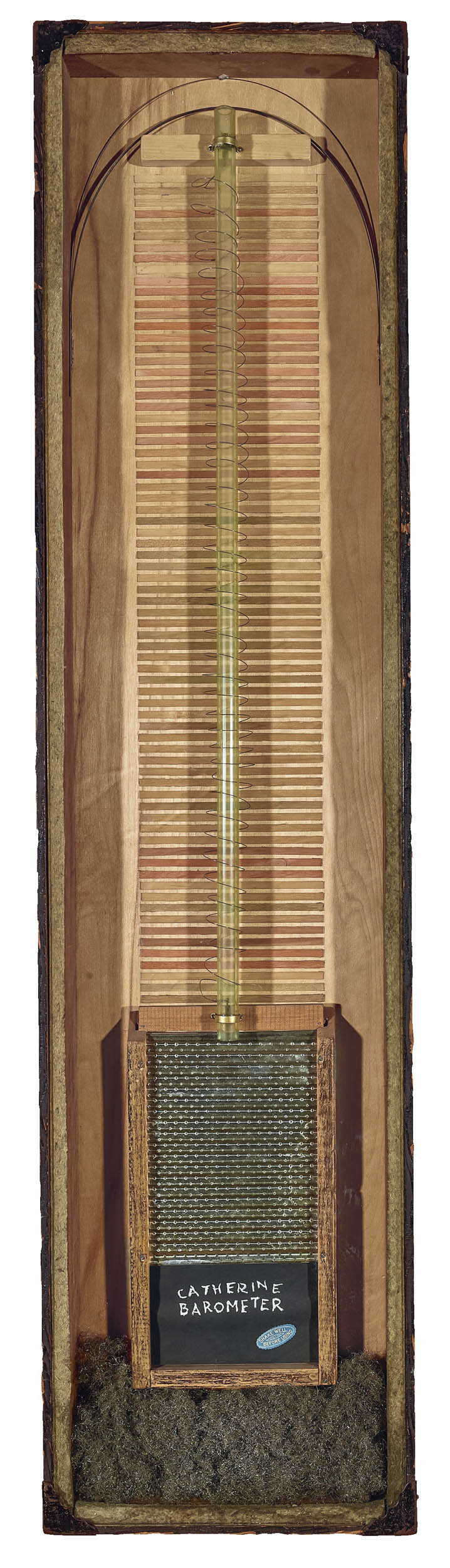
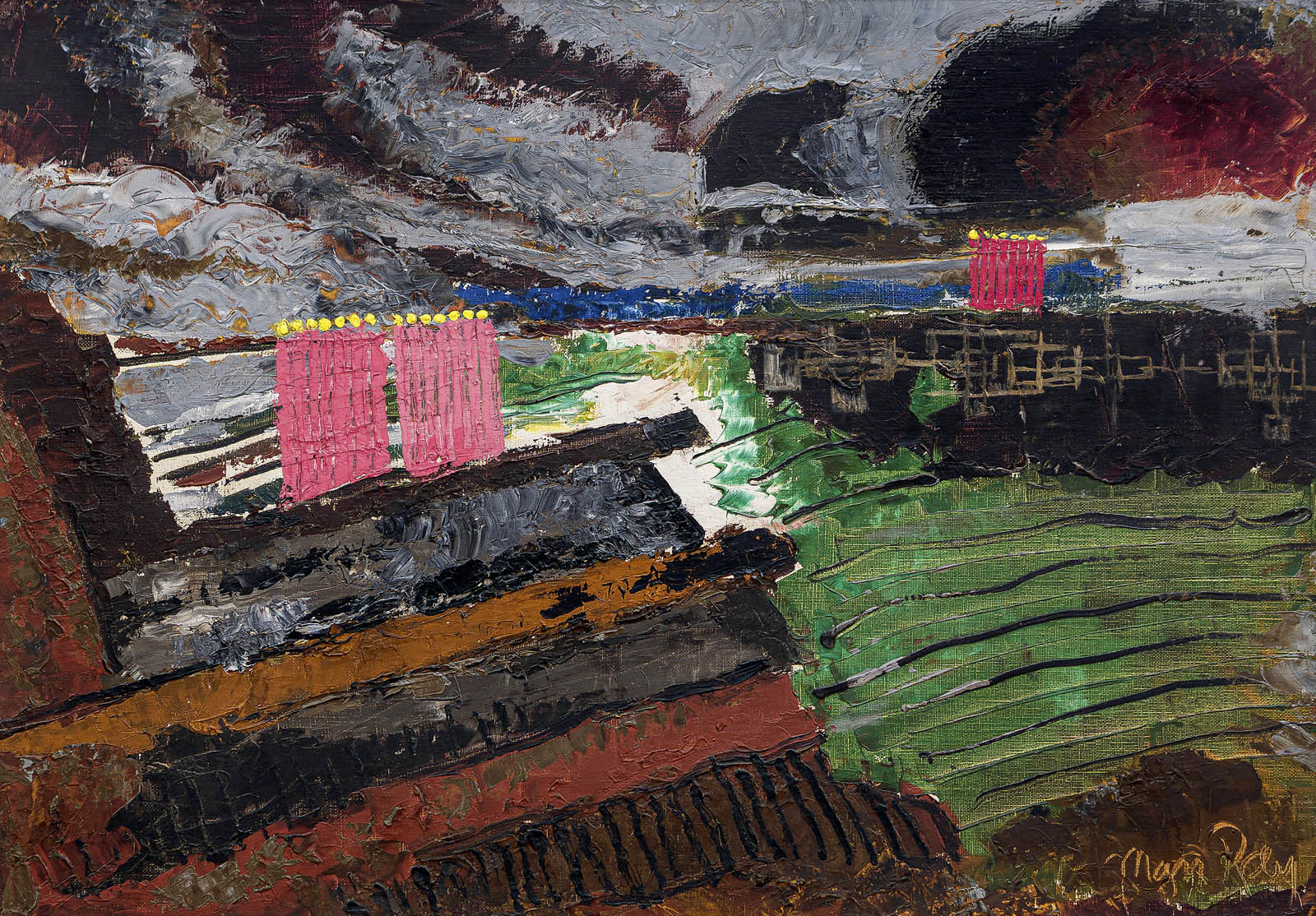
Highlights include such iconic objects like Man Ray’s iron studded with tacks, known as Cadeau (Gift) (1921), and his metronome, Object to be Destroyed (1923), that keeps time with the swinging eye of his companion, the photographer Lee Miller. Celebrated photographs, including his landmark Le violon d’Ingres (1924), in which the torso of the artist and performer Kiki de Montparnasse (Alice Prin) is depicted as a musical instrument, are also featured. The exhibition brings together some of his boldest but most refined experimental works – compositions like Aerograph (1919), a painting made with an airbrush and pigment sprayed through and around items from his studio. For Man Ray, objects could function as metaphors for the body, as demonstrated in works such as Catherine Barometer (1920) and L’homme (Man). Rarely seen paintings in the exhibition, including Paysage suédois (Swedish Landscape) (1926) record the artist’s great experimentation, working paint without a brush and in an almost sculptural way, building up and scraping down the surface that reflects his experiments in the darkroom.

Man Ray: When Objects Dream is curated by Stephanie D’Alessandro, Leonard A. Lauder Curator of Modern Art and Senior Research Coordinator in Modern and Contemporary Art at The Met, and Stephen C. Pinson, Curator in the Department of Photographs at The Met, with the assistance of Micayla Bransfield, Research Associate, Modern and Contemporary Art.
Press release from The Metropolitan Museum of Art


Man Ray (American, 1890-1976) 'La Femme (Woman)' c. 1918-1920


Man Ray (American, 1890-1976) 
La Femme (Woman)
c. 1918-1920
Gelatin silver print
43.7 x 33.5cm (17 3/16 x 13 3/16in.)
Gilman Collection, Gift of The Howard Gilman Foundation, 2005
© 2016 Man Ray Trust/Artists Rights Society (ARS), New York/ADAGP, Paris


Man Ray (American, 1890-1976) 'L'homme (Man)' 1918-1920


Man Ray (American, 1890-1976) 
L’homme (Man
1918-1920 
Gelatin silver print 
19 × 14 1/2 in. (48.3 × 36.8cm) 
The Metropolitan Museum of Art, New York, Bluff Collection, Promised Gift of John A. Pritzker
© Man Ray 2015 Trust / Artists Rights Society (ARS), NY / ADAGP, Paris 2025
Photo credit: Courtesy of The Bluff Collection, photo by Ben Blackwell


Man Ray (American, 1890-1976) 
'Élevage de poussière (Dust Breeding)' 1920


Man Ray (American, 1890-1976) 
Élevage de poussière (Dust Breeding)
1920
Gelatin silver print
2 13/16 × 4 5/16 in. (7.1 × 11 cm)
Private collection
© Man Ray 2015 Trust / Artists Rights Society (ARS), NY / ADAGP, Paris 2025
 

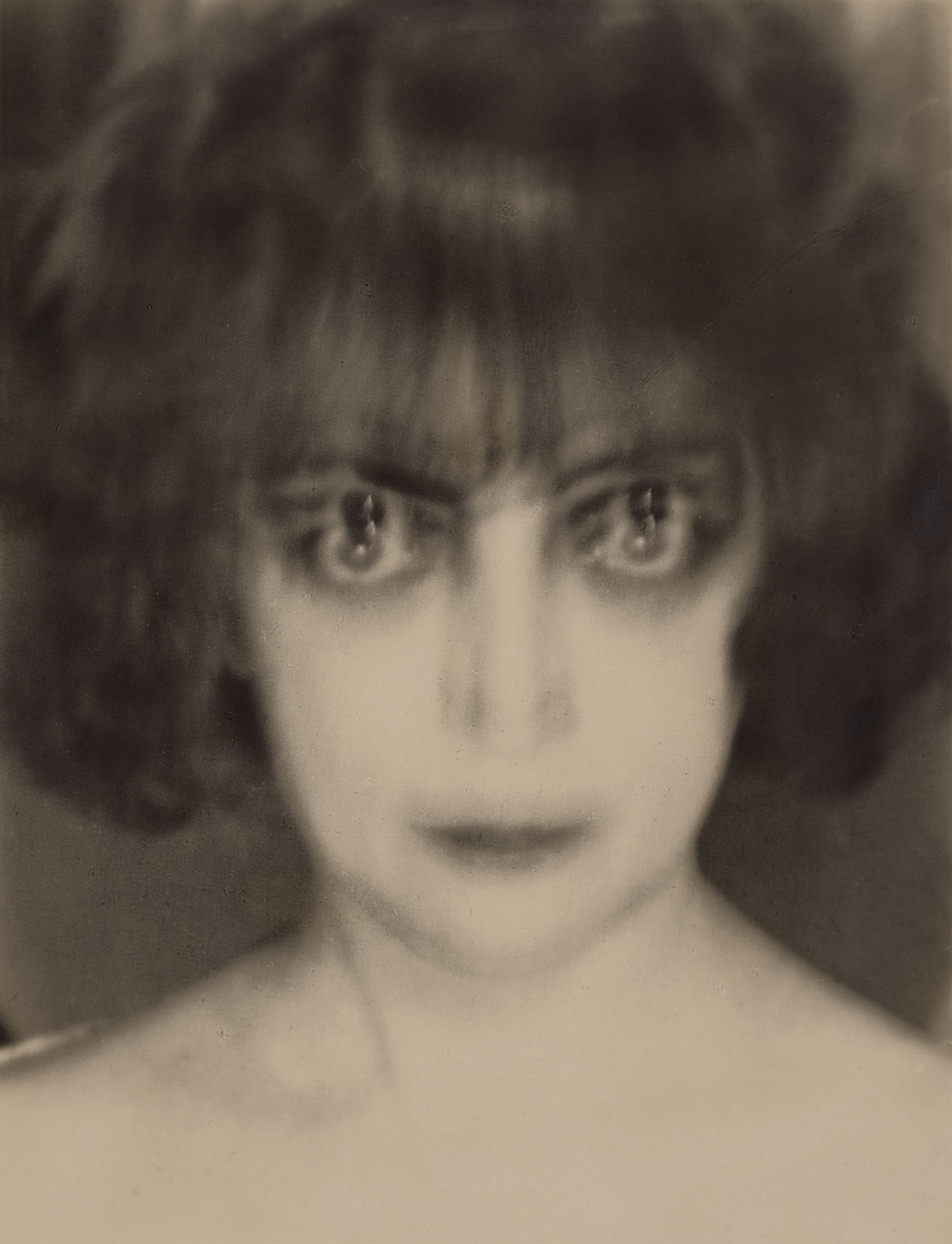
Man Ray (American, 1890-1976) 'Marchesa Luisa Casati' 1922


Man Ray (American, 1890-1976) 
Marchesa Luisa Casati 
1922 
Gelatin silver print 
8 1/2 × 6 9/16 in. (21.6 × 16.7 cm) 
Philadelphia Museum of Art: Gift of Carl Van Vechten
© Man Ray 2015 Trust / Artists Rights Society (ARS), NY / ADAGP, Paris 2025
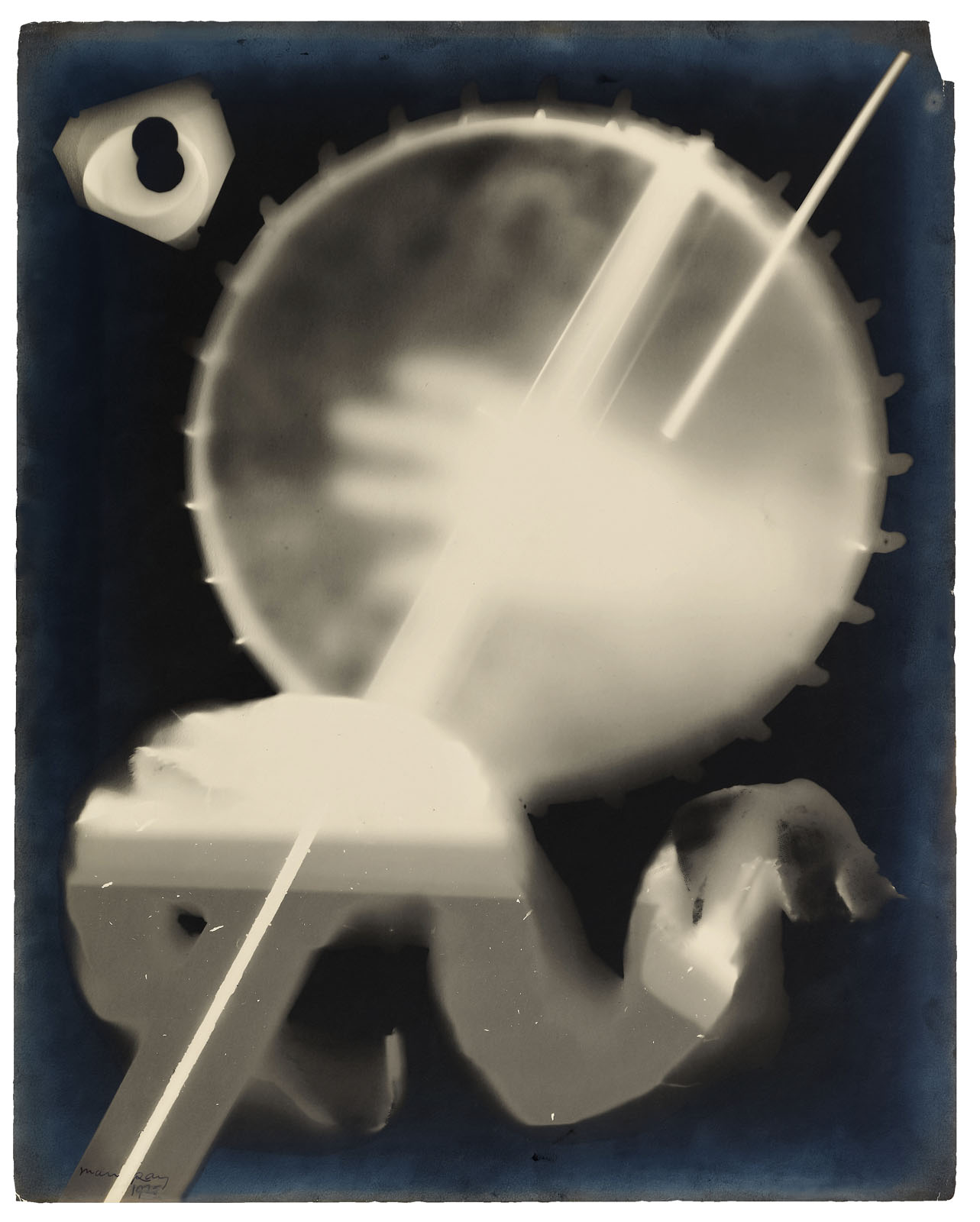
Photo courtesy of the Philadelphia Museum of Art


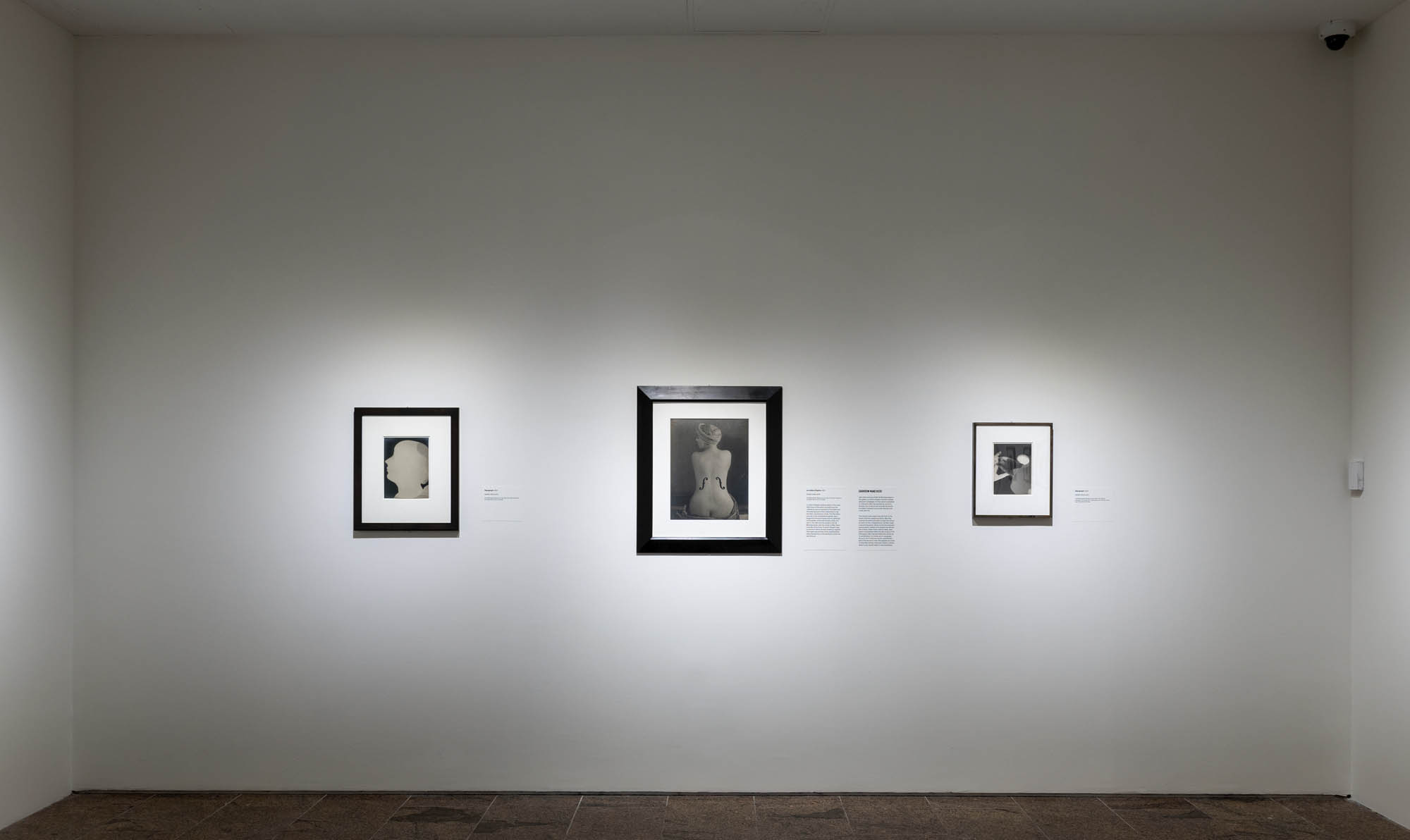
Installation view of the exhibition 'Man Ray: When Objects Dream' at The Metropolitan Museum of Art, New York, September 2025 - February 2026 showing at centre, Man Ray's photograph 'Le violon d'Ingres' 1924


Installation view of the exhibition Man Ray: When Objects Dream at The Metropolitan Museum of Art, New York, September 2025 – February 2026 showing at centre, Man Ray’s photograph Le violon d’Ingres 1924 (below)


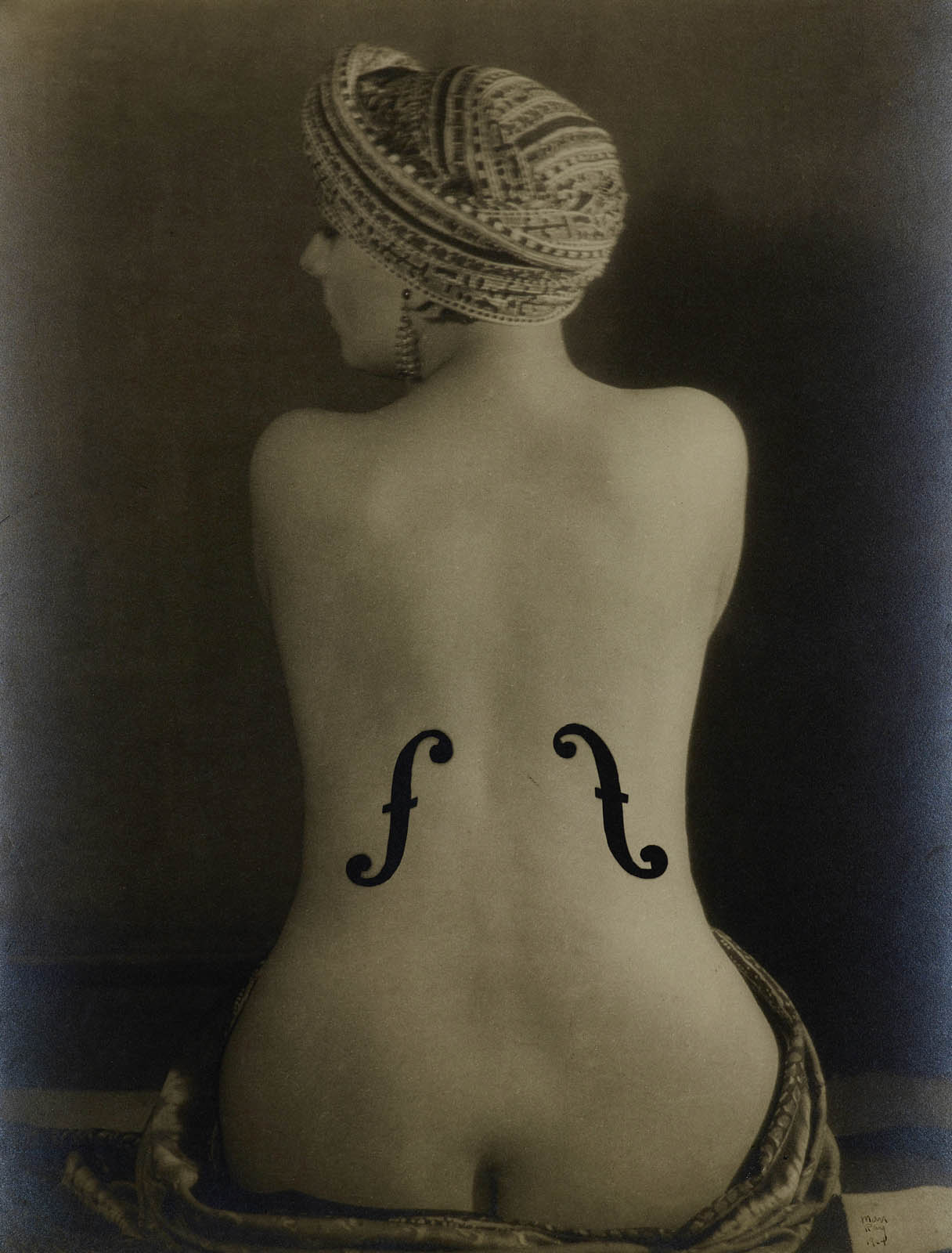
Man Ray (American, 1890-1976) 'Le violon d’Ingres' 1924


Man Ray (American, 1890-1976) 
Le violon d’Ingres
1924 
Gelatin silver print 
19 1/8 × 14 3/4 in. (48.5 × 37.5cm)
The Metropolitan Museum of Art, New York, Bluff Collection, Promised Gift of John A. Pritzker
© Man Ray 2015 Trust / Artists Rights Society (ARS), NY / ADAGP, Paris 2025
Photo by Ian Reeves


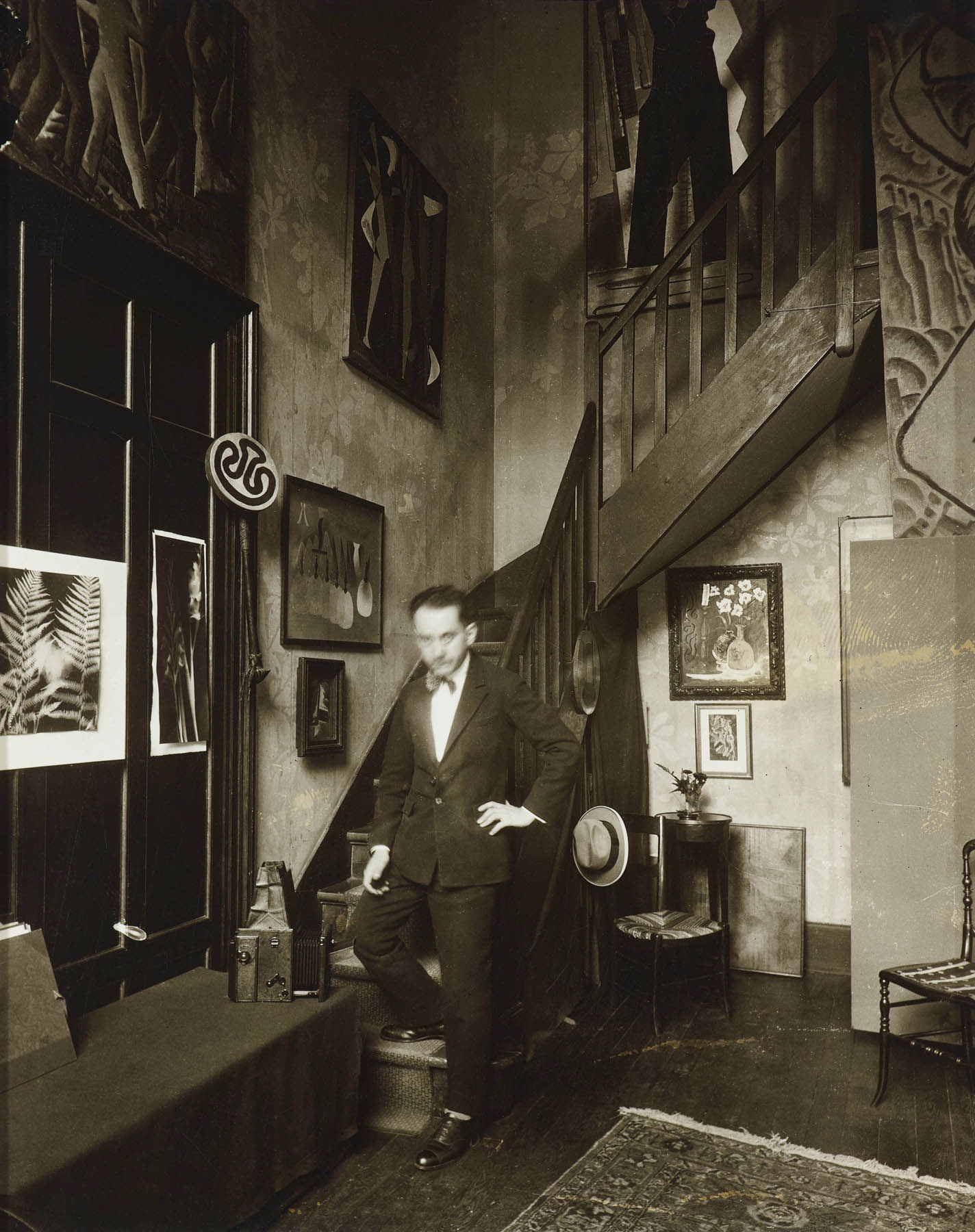
Man Ray (American, 1890-1976) 'Self-Portrait in 31 bis rue Campagne-Premiere Studio' 1925


Man Ray (American, 1890-1976) 
Self-Portrait in 31 bis rue Campagne-Première Studio
1925 
Gelatin silver print 
6 1/8 × 4 1/2 in. (15.6 × 11.4cm) 
The Metropolitan Museum of Art, New York, Bluff Collection, Promised Gift of John A. Pritzker
© Man Ray 2015 Trust / Artists Rights Society (ARS), NY / ADAGP, Paris 2025
Photo by Ian Reeves


Man Ray (American, 1890-1976) 'Noire et blanche' 1926


Man Ray (American, 1890-1976)
Noire et blanche
1926
Gelatin silver print
8 1/16 x 11 11/16 in. (20.5 x 29.7cm)
Private collection
© Man Ray 2015 Trust / Artists Rights Society (ARS), NY / ADAGP, Paris 2025


Man Ray (American, 1890-1976) 'Primat de la matière sur la pensée' (Primacy of Matter over Thought) 1929


Man Ray (American, 1890-1976)
Primat de la matière sur la pensée (Primacy of Matter over Thought)
1929
Gelatin silver print
10 1/2 x 14 7/8 in. (26.7 x 37.8cm)
Private collection, San Francisco
© Man Ray 2015 Trust / Artists Rights Society (ARS), NY / ADAGP, Paris 2025


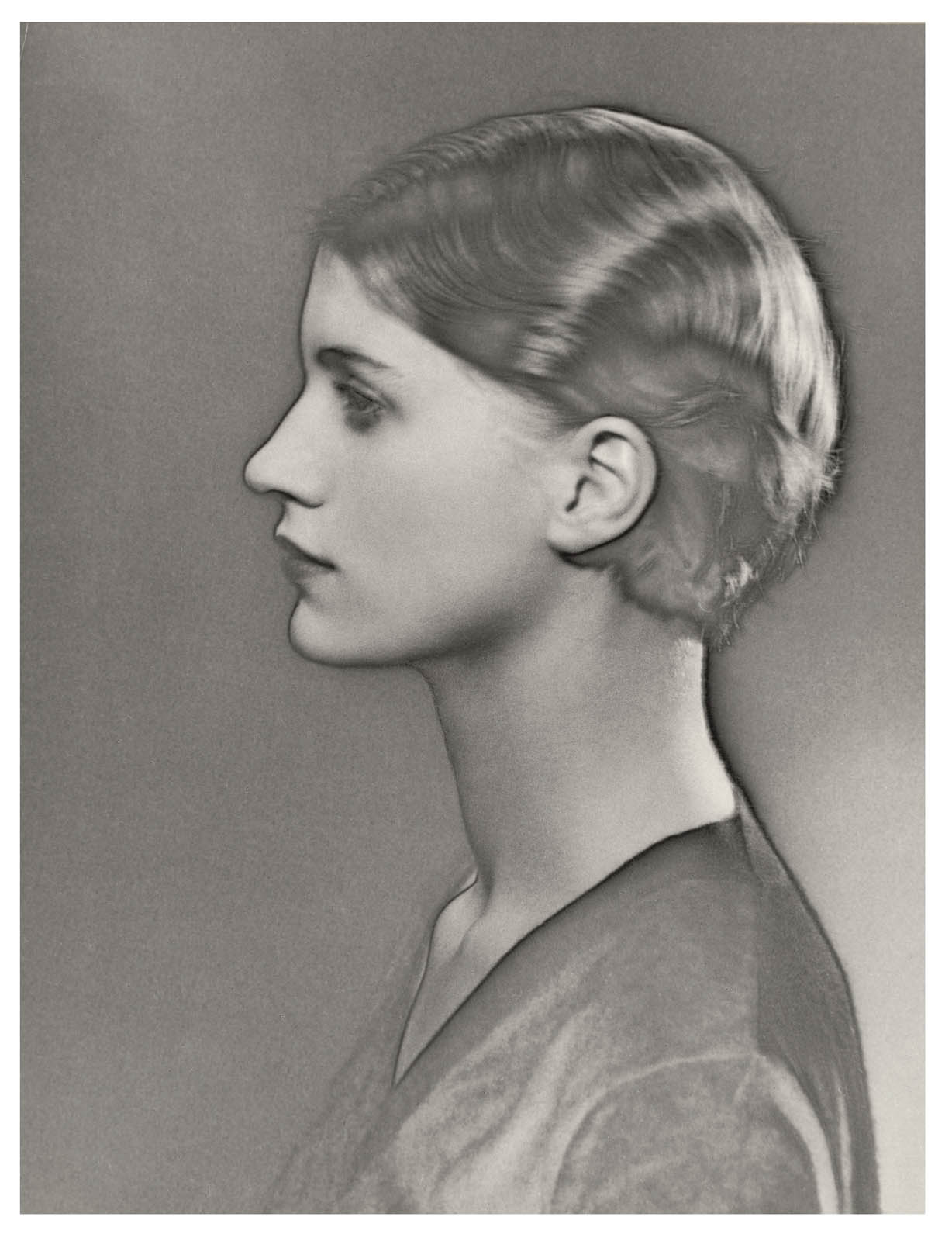
Man Ray (American, 1890-1976) 'Lee Miller' 1929


Man Ray (American, 1890–1976) 
Lee Miller 
1929 
Gelatin silver print 
10 1/2 × 8 1/8 in. (26.7 × 20.6cm) 
The Museum of Modern Art, New York, Gift of James Thrall Soby 
© Man Ray 2015 Trust / Artists Rights Society (ARS), NY / ADAGP, Paris 2025


Man Ray (American, 1890-1976) 'Self-Portrait with Camera' 1930


Man Ray (American, 1890-1976)
Self-Portrait with Camera
1930
Gelatin silver print
4 3/4 x 3 1/2 in. (12.1 x 8.9cm)
The Jewish Museum, New York
Purchase: Photography Acquisitions Committee Fund, Horace W. Goldsmith Fund, and Gift of Judith and Jack Stern
© Man Ray 2015 Trust / Artists Rights Society (ARS), NY / ADAGP, Paris 2025


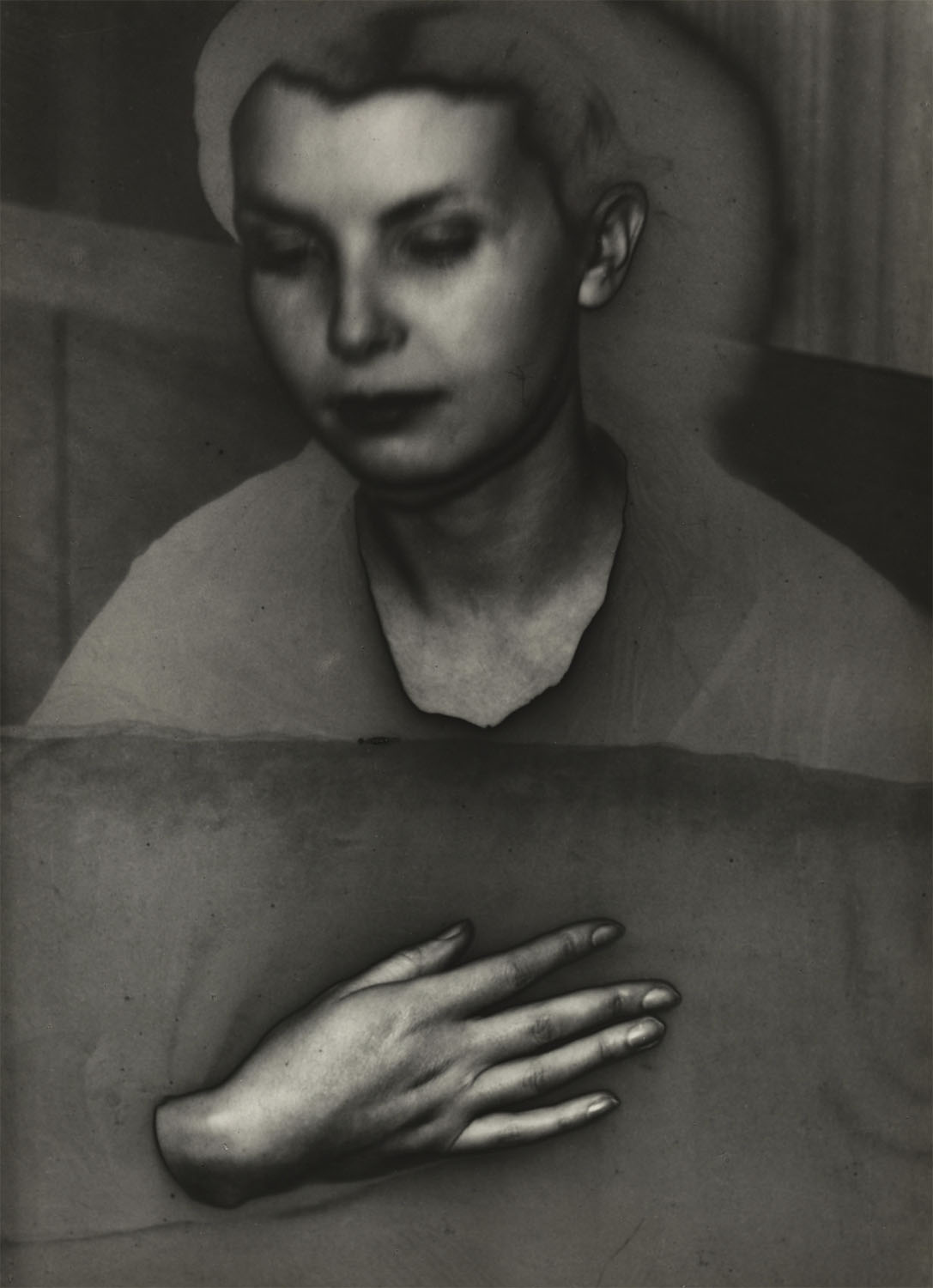
Man Ray (American, 1890-1976) 'Mary Gill' 1930


Man Ray (American, 1890-1976)
Mary Gill
1930
Gelatin silver print
11 1/2 x 8 1/2 in. (29.2 x 21.6cm)
Harvard Art Museums/Fogg Museum, Robert M. Sedgwick II Fund
© Man Ray 2015 Trust / Artists Rights Society (ARS), NY / ADAGP, Paris 2025


Man Ray (American, 1890-1976)
'Untitled (Glass Tears)' c. 1930-1933, printed 1935 or later


Man Ray (American, 1890-1976)
Untitled (Glass Tears)
c. 1930-1933, printed 1935 or later
Gelatin silver print
8 7/8 x 11 1/4 in. (22.5 x 28.6cm)
Private collection
© Man Ray 2015 Trust / Artists Rights Society (ARS), NY / ADAGP, Paris 2025


Man Ray: When Objects Dream

American artist Man Ray (1890-1976) was a visionary known for his radical experimentation that pushed the limits of art. His most iconic works – an iron studded with sharp tacks, a woman’s back reimagined as a violin – combine this boundary-breaking attitude with a singular belief in the transformative potential of everyday things. 

In the 1920s, the most significant of Man Ray’s investigations – and the thing that connected much of his work – was what he called the rayograph, a new twist on an old technique for making photographs without a camera. By placing objects on or near a sheet of sensitised paper, which he then exposed to light and developed, he turned recognisable subjects into wonderfully mysterious compositions. This radical art form, inextricably linked to the era’s Dada and Surrealist movements, grew out of his early work in New York and redefined his groundbreaking career in Paris.

Introduction

This exhibition’s subtitle, When Objects Dream, comes from a phrase by Tristan Tzara, a poet, artist, and early champion of Man Ray. Witness to some of the earliest rayographs, Tzara understood perhaps better than anyone else their physical and metaphorical link to objects reimagined through art. In a similar spirit, the current presentation reconsiders the role of the rayograph within Man Ray’s practice, especially its ability to extend his ideas across diverse media. The loosely chronological installation unfolds across a series of interconnected galleries organized around ideas that motivated the artist; to that end, visitors are invited to explore it in any number of ways.

All works in the exhibition are by Man Ray (American, 1890-1976).

Champs délicieux

In April 1922, readers of a French literary journal discovered a curious announcement for an album titled Champs délicieux (Delicious Fields). Its twelve “original photographs” by Man Ray feature objects from his studio – tongs, a comb, string, a hotel room key – composed in groupings. The images are ordered without clear logic or narrative. Instead, as advertised, they mark a “state of mind,” the artist’s free play, alone at night and without work obligations, in his studio darkroom. 

Man Ray introduced Champs délicieux in the period between two revolutionary movements that arose in the wake of World War I: Dada and Surrealism. Both challenged conventional art and society by upending traditional subjects, techniques, and expectations. Inspired in part by a collection of unconsciously driven, automatic writings by poets André Breton and Philippe Soupault, Man Ray sought to render everyday objects unfamiliar. As early subscriptions attest, the album found an enthusiastic audience who appreciated the language of the rayograph and its ability to open up a new visual world.

A New Art

Before Man Ray first picked up a camera in 1915, he was focused on painting. He set out to stake his claim in the exhilarating avant-garde scene, his interest fueled by cutting-edge exhibitions at Alfred Stieglitz’s gallery, 291, and thrilling examples of Cubism, Expressionism, Fauvism, and Futurism at the modern art presentation known as The Armory Show in 1913. Unexpectedly, photography offered Man Ray a path forward. Noting the way a camera lens could compress and flatten space, he determined to endow art with a similar “concentration of life” while simultaneously freeing it from the burden of illusionism. “The creative force and the expressiveness of painting,” he wrote at the time, “reside materially in the colour and texture of pigment, in the possibilities of form invention and organisation, and in the flat plane on which these elements are brought to play.” He made paintings using palette knives and other tools instead of brushes and employed patterns, cutouts, and collage to create a self-proclaimed “new art of two dimensions.”

Objects At Hand

NOT RESPONSIBLE FOR GOODS LEFT OVER THIRTY DAYS. So reads a sign in a photo, displayed nearby, of Man Ray’s West Eighth Street studio in New York. It was one of several items the artist discovered in the trash heap at his apartment building and brought up to his top-floor space. He considered retooling the sign to read LEFT OVER GOODS NOT RESPONSIBLE FOR THIRTY DAYS but decided it was perfect as is. This act – of elevating junk to art – is a familiar one in histories of the avant-garde, especially for the Dada movement. Art did not have to be painted or modelled or made with traditional materials and tools; it could be found in the everyday world and appreciated for the idea that it introduced, not for its beauty. 

As Man Ray developed his “new art,” he came to see the latent potential of all the objects within his studio. This spurred further investigations that likewise tested the limits of two and three dimensions and blurred the boundaries between media. At the same time, he continued to explore how the camera could be used not only to document his work but to open new perspectives onto ordinary objects and their creative possibilities.

Clichés-verre

While the rayograph is often described as Man Ray’s first experiment with cameraless photography, that moment occurred years earlier. Around 1917 he explored several photographically based techniques, including the cliché-verre, or “glass-plate” print. A nineteenth-century reproductive process that incorporates both photography and printmaking, a cliché-verre is traditionally made by covering a plate of glass with a darkened medium and drawing into it to produce clear lines. When set onto sensitised paper and exposed to a light source, the plate transmits the scratched away areas as dark lines. Man Ray chose to incise directly into the emulsion of an exposed photographic plate, which he then subjected to light again with paper below it to make a contact print. 

Photography

Man Ray first picked up a camera in 1915, to document his art. Through this experience, he discovered that the works acquired new qualities when reproduced in black and white. He made photographic portraits, too, which in Paris would become a dependable source of income. Revelling in the camera’s transformative optical abilities, Man Ray soon used it as a tool to facilitate his self-appointed role as a “marvellous explorer of those aspects that our retinas will never record.” He sought to reveal the creative potential of objects in his studio and in 1918 began a series of photographs using specifically arranged everyday items.

Aerographs

Still grappling with how to paint without a brush, Man Ray found inspiration at his day job working for an advertising agency, where he was introduced to an airbrush. He later brought the equipment back to his attic studio and began to experiment. Using an air compressor, the artist directed pigment through stencils and around masked areas and objects, which he rested on the composition board and repositioned as he worked. “It was thrilling,” he would later recount, “to paint a picture, hardly touching the surface – a purely cerebral act.” These works, which he termed “aerographs” were made, in effect, before they hit the paper. Objects were carved, shaped, and modeled in the air. Voids register as substance, and what we see on the paper is residue fused to the surface. “I tried above all,” Man Ray explained, “to create three-dimensional paintings on two-dimensional surfaces.”

Flou

Man Ray introduced his rayographs during a transitional period between the Dada and Surrealism movements that the French writer Louis Aragon called the mouvement flou – flou translating to “blurry” or “out of focus.” The term also suits these works, which viewers initially deemed curious and captivating but difficult to pin down. Rayographs, as cameraless photographs, exist in an indistinct place between photography and painting, the mechanical and the handmade, documentation and dream. 

During the 1920s Man Ray also explored blurriness in his camera images. Even as technical improvements facilitated increased focus and detail, and the preference for sharp photographs grew, he generally pursued a flattering, soft-focus technique in his growing business of portrait commissions. At other times, he sought more radical effects, which the director Claude Heymann described as “strange, troubling blurs” produced “through distortions, prolonged poses or special focusing techniques.” The anomalies in the resulting photographs are visible signs of the effort and time Man Ray spent to realise the images – even if he later called them unplanned or accidental.

A New Field of Gravity

In his preface introducing the album Champs délicieux (Delicious Fields), Tristan Tzara remarked that rayographs “present to space an image that exceeds it, and the air, with its clenched fists and superior intelligence, seizes it and holds it next to its heart.” Indeed, objects in Man Ray’s images beckon us in but keep us thrillingly at the edge – or put another way, they test our senses of proximity and location. His experiments in New York expanded the bounds of the photograph, object, painting, and installation, and he developed a novel relationship between object and viewer. These works demonstrate in their construction what the French writer Georges Ribemont-Dessaignes would identify in the artist’s rayographs as a “new field of gravity.”

The rayograph

The term rayograph designates Man Ray’s version of a technique for making photographs without a camera: by setting objects on or near sensitised paper and exposing it to light. In his autobiography, the artist described happening upon the process by chance, late one night, while developing prints in his makeshift darkroom. For subjects, he looked no further than the things in his studio. When exposed to a directed flash of light, they appear as reversed silhouettes – but in Man Ray’s hands they also gained new life. The nature of the image depended on the items’ translucency, reflectivity, density, placement, and distance from the sheet, as well as the source and location of the illumination and the number of exposures. Surfaces could cast unexpected reflections or eclipse elements in darkness. Forms might multiply or transform. Sometimes Man Ray’s objects and the space between them acquired an insistent, compressed volume that registered on the paper. The resulting works present what writer Pierre Migennes described as a “metamorphosis of the most vulgar utensils.” Everyday things became wonderfully unfamiliar as Man Ray wielded light in the darkroom like a brush in paint.

As he prepared to launch his rayographs in Champs délicieux, Man Ray also considered how to disseminate them for reproduction in magazines. On November 1, 1922, he wrote to Harold Loeb, editor of Broom: “Each print is an original, no plate or duplicate exists, as the process is manipulated directly on the paper, like a drawing. If you could assure me that the … originals would be safely handled and returned, I shall gladly send them on [to Berlin]. If, however, you cannot guarantee their safe return, I can re-photograph them … which, while not having the intensity and contrast of the originals, would nevertheless reproduce well.” Loeb offered to transport them personally and published these four in Broom the following March.

Man Ray transformed and energised ordinary objects in his rayographs by tapping their powers of translucency or reflectance. Bodies and their proxies, however, remain stubbornly recognisable. Hands reach out, hold things, and interact with objects; heads turn to kiss and drink, even if the action might be staged. The artist’s rayographs tie the body to a kind of specificity that his objects do not experience; this might explain why there are fewer of these works with bodies than without. As Tristan Tzara explained in his appreciation of the rayographs in 1934, Man Ray approached objects in a manner that allowed them to be free “to dream.”

Dangerous Games

Reactions to Man Ray’s cameraless photographs consistently identified them with the realm of play. The first to comment on the rayograph was French poet Jean Cocteau, who wrote in an open letter, “You, my dear Man Ray, will nourish our minds with those dangerous games it craves.” He was soon joined by Tristan Tzara, who likened the rayograph to a “game of chess with the sun.” 

Man Ray had a strong sense of the game as a strategy for producing art. For him, play was a state of readiness to engage. This comes through in the provocative humour of his objects and collages and in the invitation to chance embedded in the rayograph process – the “discovery” of which, he recounted, entailed real amusement. Marcel Duchamp once playfully defined his friend as synonymous with the joy of the game: “MAN RAY, n.m. synon. de joie, jouer, jouir” (joy, to play, to enjoy).

Chemical Paintings

In April 1922, the same month that the Champs délicieux album was announced, Man Ray proudly reported to friends and patrons that he had freed himself “from the sticky medium of paint.” His rayographs claimed a rebellious position aimed at the traditional hierarchy of fine art – and particularly its apex, painting. Critics asserted they had equal status, and New York’s Little Review even called them “chemical paintings.”

Just a year later, however, while his rayograph production remained steady, Man Ray quietly returned to painting. The works here show how his practice had changed. Abstract and relatively small, they were made on commercially available boards, wood, sandpaper, or metal supports. With their overlapping pictorial elements and dramatic contrasts of luminosity and shadow, angled and geometric forms, the compositions emulate aspects of rayographs. Each is a thorough exploration of depth on a flat surface and a bid to make paint reflect its own material reality.

Objects and Bodies

Man Ray’s experience of making rayographs informed his consideration of the human body, which he handled, at times, like an object, devoid of personhood and open for manipulation. Writing about the artist’s portraits and rayographs, André Breton noted that Man Ray considered the bodies of women in his work no different from the objects at hand in his darkroom: 

The very elegant, very beautiful women who expose their tresses night and day to the fierce lights in Man Ray’s studios are certainly not aware that they are taking part in any kind of demonstration. How astonished they would be if I told them that they are participating for exactly the same reasons as a quartz gun, a bunch of keys, hoar-frost or fern!

For Man Ray, a body could function as a kind of concentrated equivalence, like the essence represented by an object. This attitude is visible in some of the most iconic works of his career, in which his presentation of female models such as the artist and performer Kiki de Montparnasse (Alice Prin) also involved darkroom manipulation. While his approach to men’s bodies was notably less sexualised, they too were posed and set up like the objects in his rayographs.

Darkroom Manoeuvres 

Like other pictures of Kiki de Montparnasse in this gallery, Le violon d’Ingres involved multiple darkroom campaigns. For the version published in Littérature, Man Ray worked on a print to sharpen the contours and smooth the forms; he added f-shaped sound holes directly onto it with dark ink. 

The version here, larger than the first, is the result of further experimentation. Man Ray covered the entire print with a mask from which he hand cut two f-shaped forms. He then made a second exposure, which turned the exposed spaces black. Instead of ink shapes that disrupt the surface, these marks read as deep, dark space compressed within the flat surface of the photograph. Man Ray described this version as “a combination of a photo and a rayograph.” As such, the f-holes are eerily – seamlessly – part of the woman’s body. She appears as a kind of dreamlike human-instrument hybrid, a whole object to be visually taken in and possessed.

Dreams

Even before the Surrealist manifesto of 1924 claimed the fertile ground of the unconscious, many poets and artists in Man Ray’s circle focused on dreams. The same group, two years earlier, had followed André Breton’s experiments with hypnosis and trance states. They practiced séances and so‑called sleeping fits, writing down or drawing what came to them in order to reveal hidden desires. The poet Louis Aragon wrote of these slumberous escapades: “Dreams, dreams, dreams, the domain of dreams expands with every step.” 

Apart from photographing the sleep sessions, Man Ray remained an independent supporter of the group, explaining, “It has never been my object to record my dreams, just the determination to realise them.” Even so, Aragon included him in his multipage inventory of dreamers, with a nod to the rayographs: “Man Ray … dreams in his own way with knife rests and salt cellars: he gives meaning to light, which now knows how to speak.” The artist found great support among the Surrealist circle in Paris, whose members acquired his work and included him in exhibitions and publications.

Dream Objects 

Man Ray’s dreamlike rayographs have counterparts in the new kinds of hybrid objects he began to make at the same time. These mysterious works seize upon unexpected transformations: a fragile soap bubble rendered solid; the taut strings on a musical instrument’s neck turned loose and sensuous; or a budding plant metamorphosed into a pudgy hand. 

The strange bundle wrapped with string has long been associated with the power of objects to stir the unconscious. In 1920 Man Ray assembled, photographed, and deconstructed the original object. The Untitled photograph appeared in the first issue of La revolution surréaliste, in 1924, with the text “Surrealism opens the door of the dream to all those for whom night is miserly.” Over the next decade, the image came to embody another phrase popular among the Paris Surrealist group, by the poet Isidore Ducasse: “as beautiful … as the chance encounter of a sewing machine and an umbrella on a dissecting table.” 

“Objects to touch, to eat, to crunch, to apply to the eye, to the skin, to press, to lick, to break, to grind, objects to lie, to flee from, to honor, things cold or hot, feminine or masculine, objects of day or night which absorb through your pores the greater part of our life. … These are the projections surprised in transparence, by the light of tenderness, of objects that dream and talk in their sleep.” (Tristan Tzara, “When Objects Dream,” 1934)

Returns

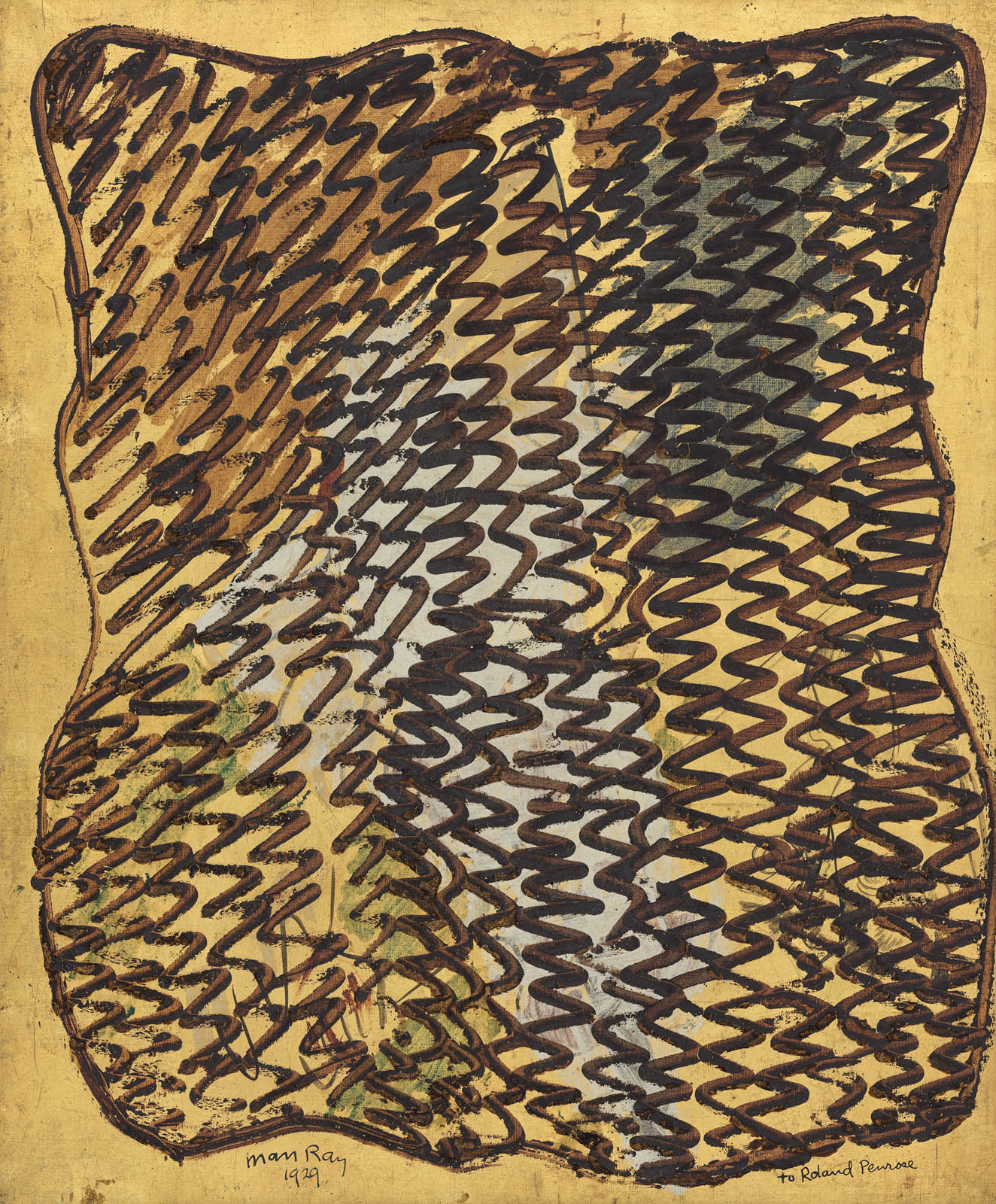
In 1929 Man Ray found himself “longing to touch paint again.” By the fall, he had taken a second Paris studio, near the Luxembourg Gardens, where he painted in the mornings before returning home to oversee photographic portraits and magazine work. In his new compositions, he let paint drip across a canvas from a poured line and squeezed pigment directly from the tube onto a support in a loose, calligraphic manner. Trading on narratives of chance and automatism, he later called these paintings “unpremeditated.” 

Another return accompanied the arrival in Paris of Lee Miller, who became Man Ray’s apprentice in photography and then his personal and professional partner. As a result, he again embraced the camera as his primary tool of photographic experimentation, after years of making rayographs without one. Together, Miller and Man Ray discovered a creative synergy that led to their joint development of the solarization process. The same year signalled the near culmination of Man Ray’s exploration of the rayograph: by some accounts, he made one hundred in 1922, but just one in 1929.

Solarization 

Together with Lee Miller, Man Ray developed a darkroom technique that complemented his return to painting. Like the rayograph, solarization was not entirely new, and both he and Miller claimed that it similarly resulted from an accident. The process involves exposing a negative a second time during development, which causes a reversal of the expected tonalities. Honed by Miller and Man Ray and applied to their portraits and nudes beginning in fall 1929, the process often endowed subjects with subtly glowing black contours that Miller called “halos.” This feature became so well-known – largely through reproductions of the solarized portrait of Miller shown nearby – that a 1932 article called it both “the beacon and despair of experimenters.” Like the drips and skeins in Man Ray’s 1929 paintings, these lines create a friction between the subject and surface of the image – a noted departure from the artist’s earlier approach to the flat plane.

Revisiting Champs délicieux 

Man Ray completed his Champs délicieux project nearly forty years after its debut. A handwritten inscription to Tristan Tzara in the final copy (number 41, displayed here) refers to the sparks set off by their initial exploration of the rayograph; he added an almost identical inscription in his 1922 working copy. This suggests a Dada game between the two artists: the announcement laid out the rules and the inscriptions signified its end. 

As promised in the 1922 first announcement of the album, the last copy features the canceled proofs (a practice meant to show that no further prints can be made from the originals). A canceled print edition is not unusual. In this case, however, a purposeful ambiguity was in play from the beginning of the project – when it was presented as an album of “original photographs” copied from unique rayographs – to the end. Only the negatives used to produce the album were canceled, meaning that the primary rayographs might still exist. Ever the prankster, Man Ray ensured that the game continues.

Text from The Metropolitan Museum of Art


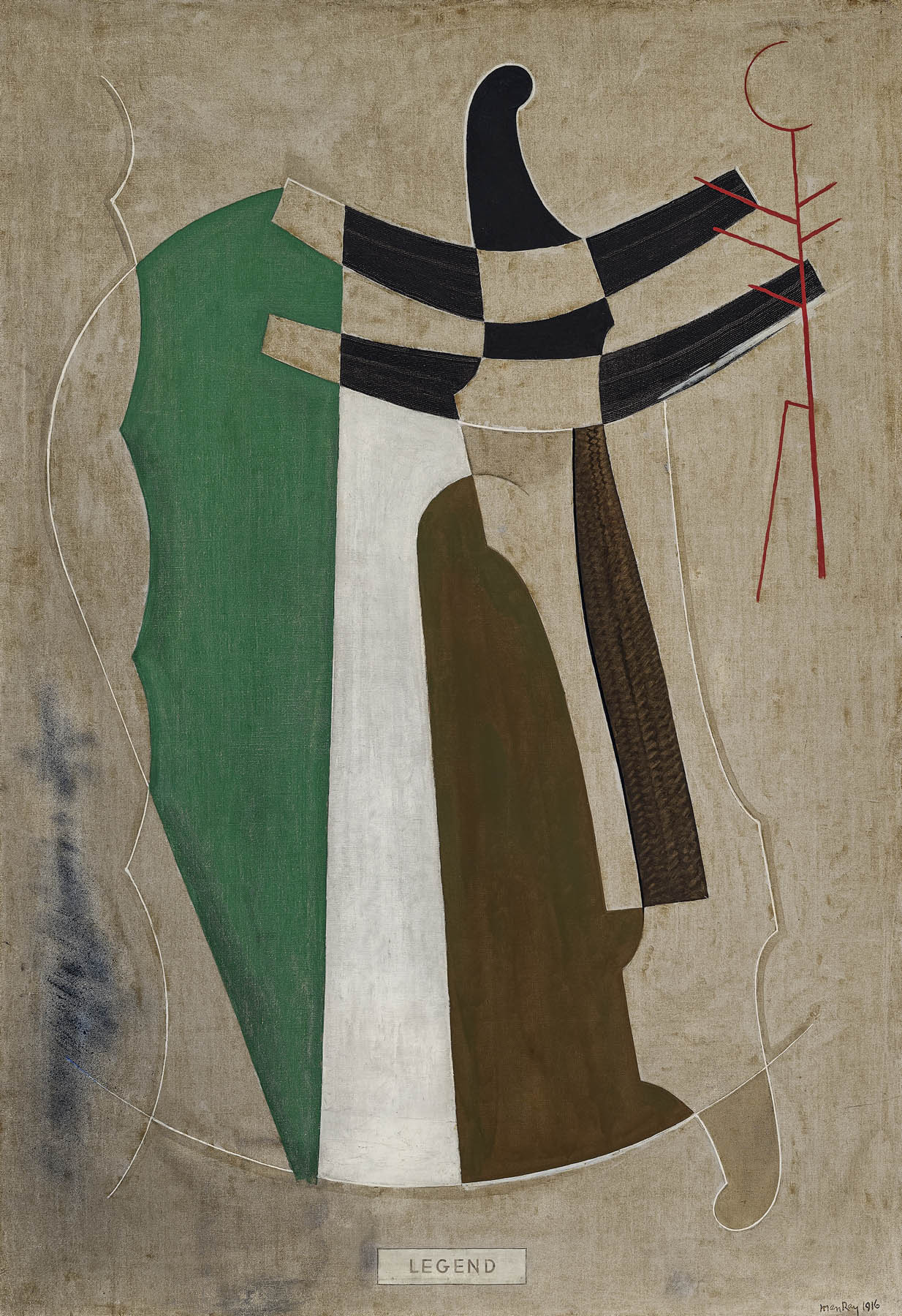
Man Ray (American, 1890-1976) 'Legend' 1916


Man Ray (American, 1890-1976) 
Legend 
1916 
Oil on canvas 
52 × 36 in. (132.1 × 91.4 cm) 
Collection of Deborah and Edward Shein
© Man Ray 2015 Trust / Artists Rights Society (ARS), NY / ADAGP, Paris 2025
Photo by Stephen Petegorsky


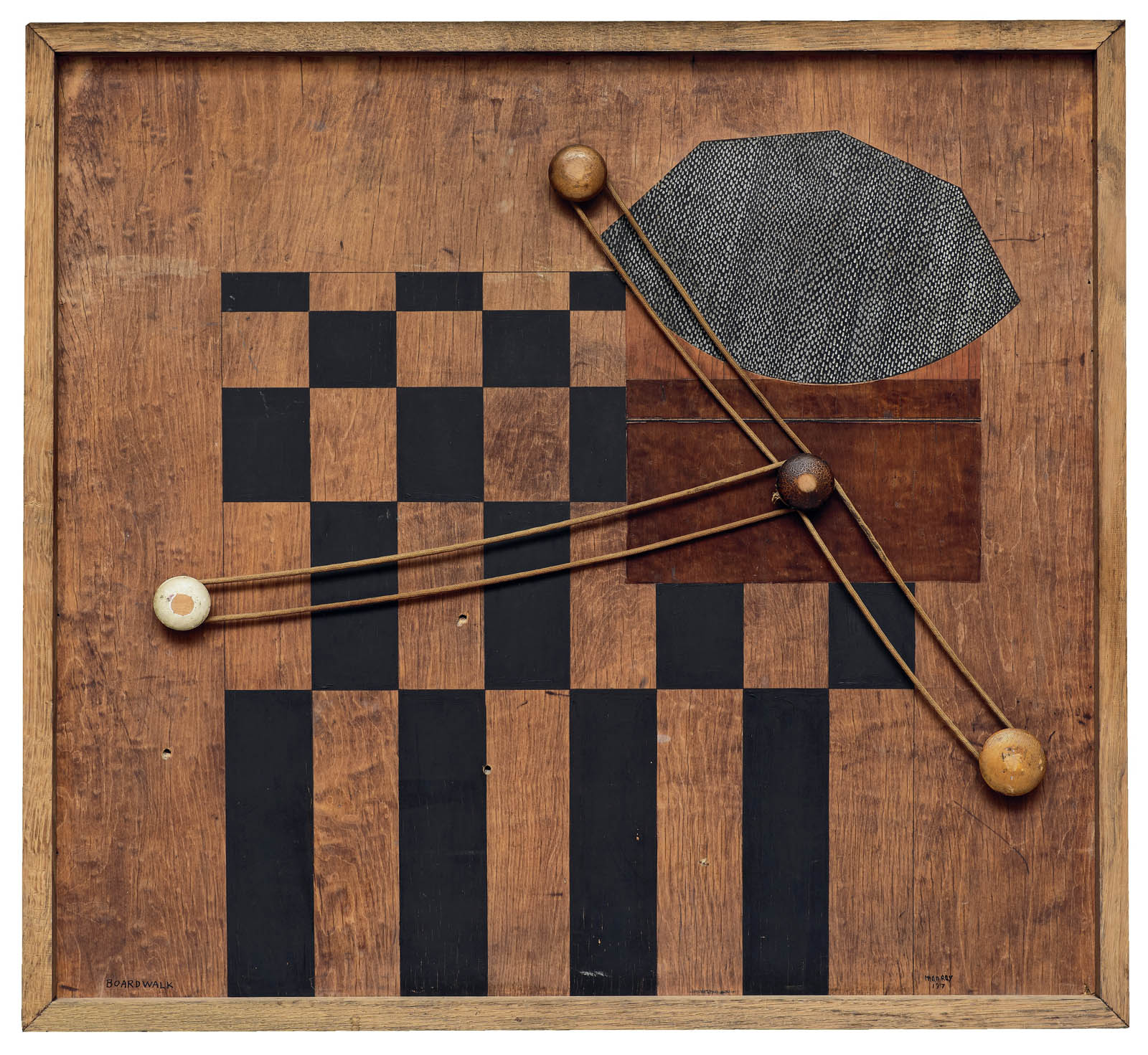
Man Ray (American, 1890-1976) 'Boardwalk' 1917


Man Ray (American, 1890-1976) 
Boardwalk 
1917 
Oil, wood handles, and yarn on wood 
26 9/16 × 29 × 15/16 in. (67.4 × 73.6 × 2.4cm) 
Staatsgalerie Stuttgart, acquired 1973 with Lotto Funds
© Man Ray 2015 Trust / Artists Rights Society (ARS), NY / ADAGP, Paris 2025


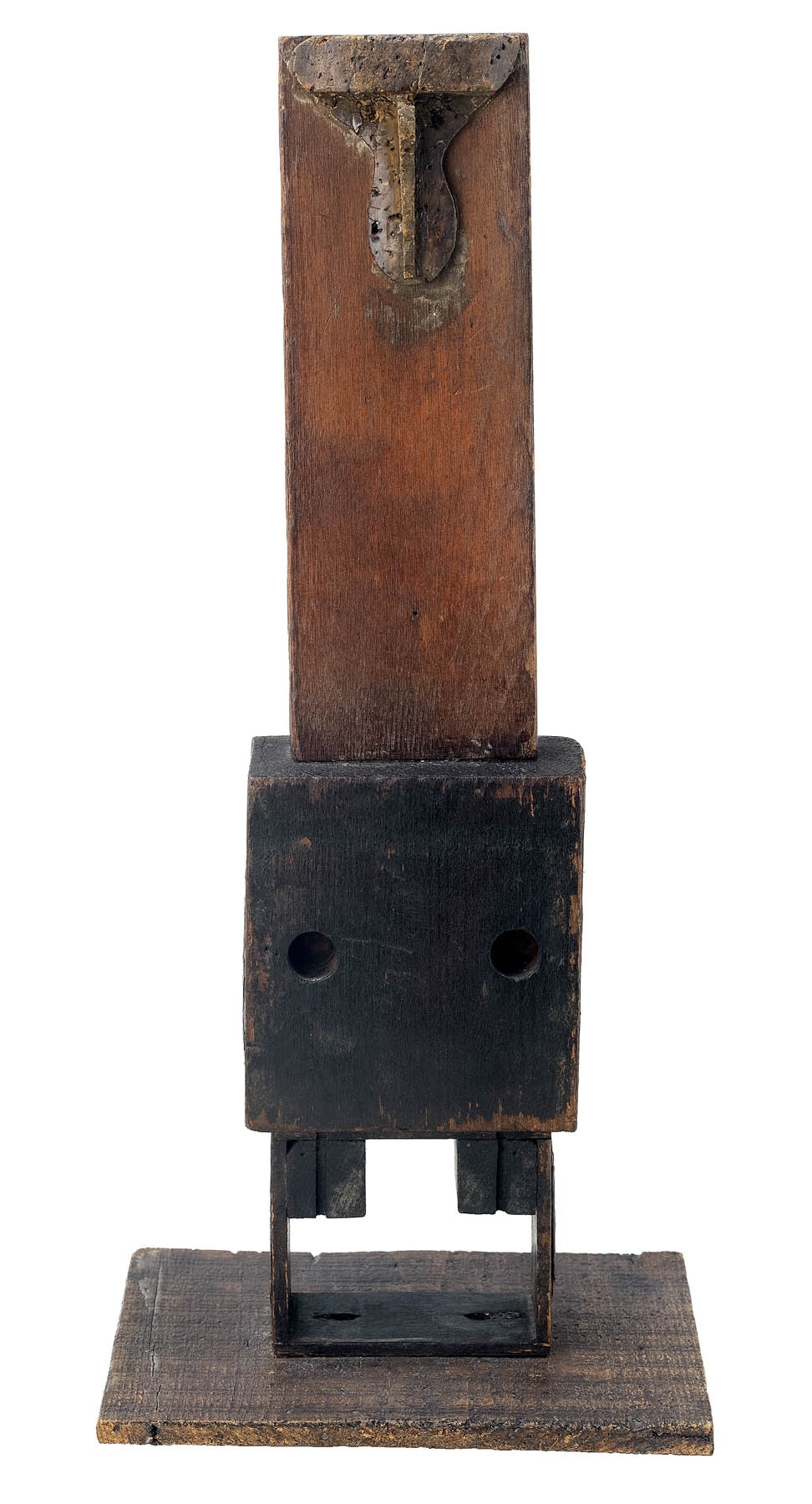
Man Ray (American, 1890-1976) 'By Itself I' 1918


Man Ray (American, 1890-1976) 
By Itself I 
1918 
Wood, iron, and cork 
17 1/4 × 7 11/16 × 7 5/16 in. (43.8 × 19.5 × 18.6cm) 
LWL–Museum für Kunst und Kultur, Münster, Germany 
© Man Ray 2015 Trust / Artists Rights Society (ARS), NY / ADAGP, Paris 2025 


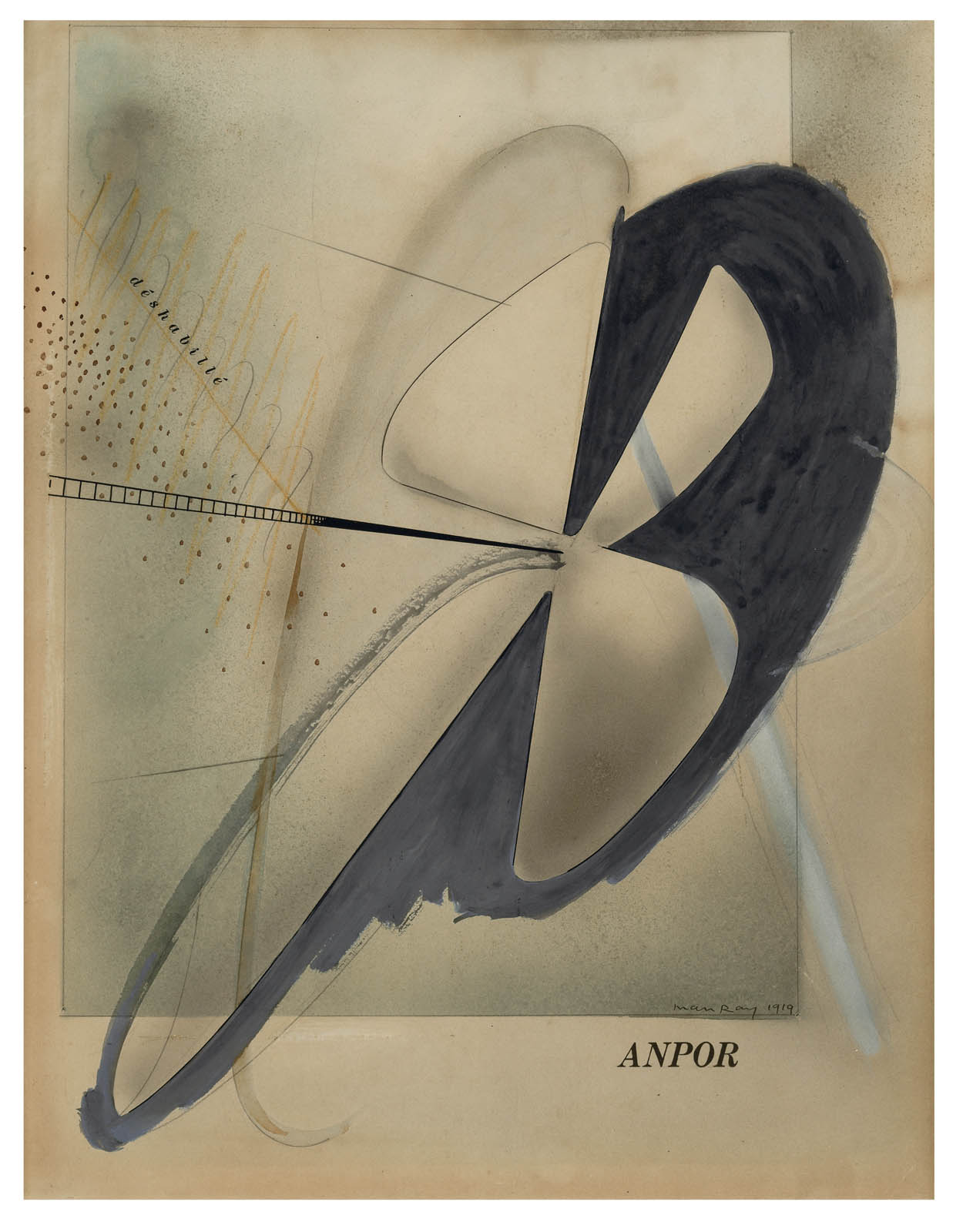
Man Ray (American, 1890-1976) 'ANPOR' 1919


Man Ray (American, 1890-1976) 
ANPOR 
1919 
Gouache, ink, and colored pencils on paper 
15 1/2 × 11 1/2 in. (39.4 × 29.2cm) 
Collection of Gale and Ira Drukier
© Man Ray 2015 Trust / Artists Rights Society (ARS), NY / ADAGP, Paris 2025 
Image © The Metropolitan Museum of Art, photo by Bruce Schwarz


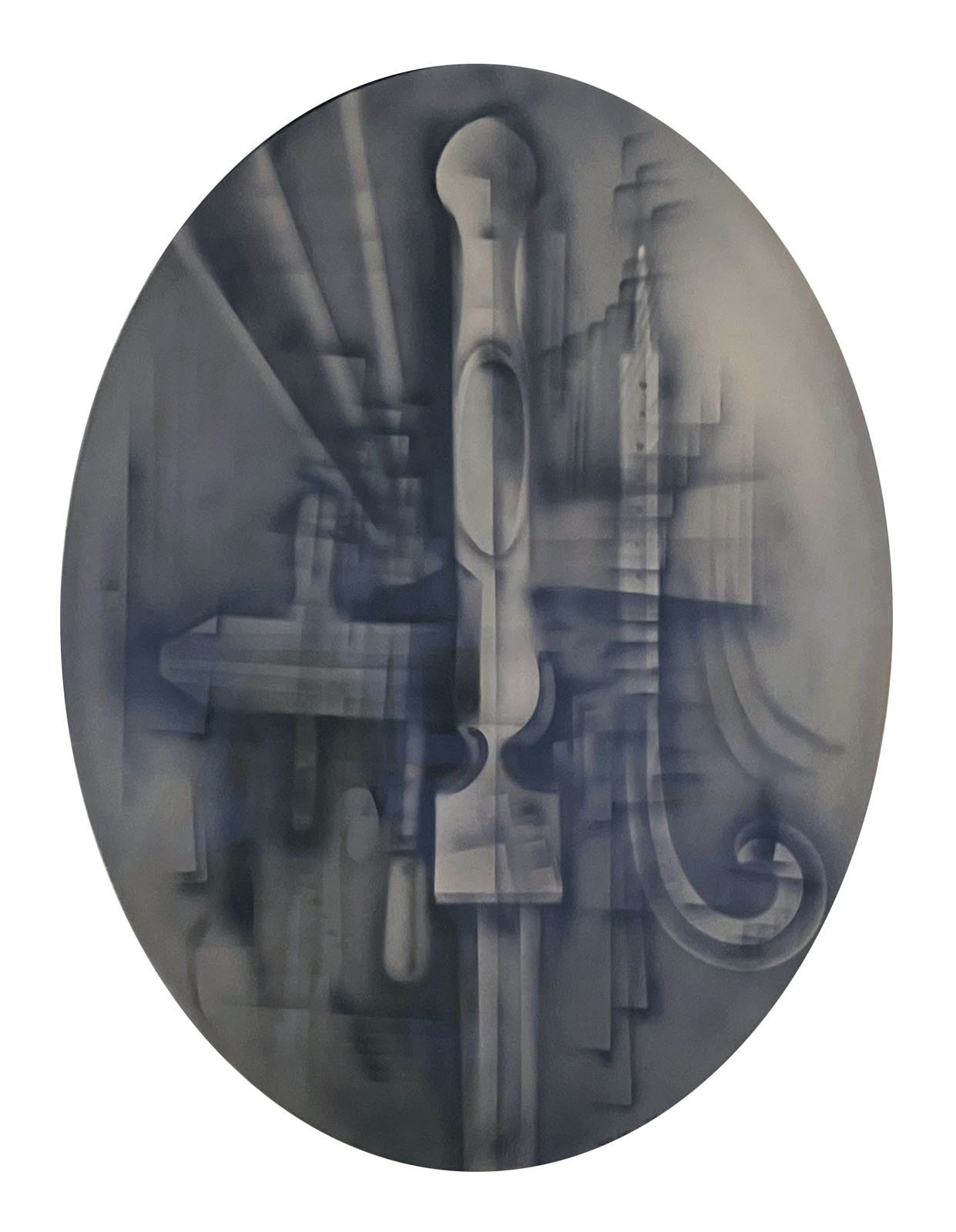
Man Ray (American, 1890-1976) 'Aerograph' 1919


Man Ray (American, 1890-1976)
Aerograph
1919
Gouache on paperboard
26 3/8 x 19 11/16 in. (67 x 50cm)
Staatsgalerie Stuttgart, Graphische Sammlung, acquired 1987
© Man Ray 2015 Trust / Artists Rights Society (ARS), NY / ADAGP, Paris 2025


Man Ray (American, 1890-1976) 'Catherine Barometer' 1920


Man Ray (American, 1890-1976) 
Catherine Barometer 
1920 
Glass, metal, felt, washboard, tube, wire, wood, steel wool, gouache on paper, and paper stamp 
48 1/8 × 12 × 2 1/8 in. (122.2 × 30.5 × 5.4cm) 
The Metropolitan Museum of Art, New York, Bluff Collection, Promised Gift of John A. Pritzker 
Photo courtesy of The Bluff Collection, photo by Ian Reeves


Man Ray (American, 1890-1976) 'Cadeau (Gift)' 1921 reconstructed 1970 (installation view)


Man Ray (American, 1890-1976)
Cadeau (Gift) (installation view)
1921 reconstructed 1970
Iron with brass tacks and wooden base
Overall: 19.0 x 14.9 x 14.9cm; iron & base: 17.9 x 14.9 x 14.9cm; glass cover: 19.0cm (h.)
Photo: © Marcus Bunyan

An example of this art work, not the actual one in the exhibition


Man Ray (American, 1890-1976) 'Paysage suedois' (Swedish Landscape) 1926


Man Ray (American, 1890-1976) 
Paysage suédois (Swedish Landscape
1926 
Oil on canvas 
18 × 25 1/2 in. (45.7 × 64.8 cm) 
The Mayor Gallery, London
© Man Ray 2015 Trust / Artists Rights Society (ARS), NY / ADAGP, Paris 2025
Photo courtesy of The Mayor Gallery, London


Man Ray (American, 1890-1976) 'Torso' 1929


Man Ray (American, 1890-1976) 
Torso 
1929 
Oil and gouache on gold foil paper on canvas 
18 1/16 × 14 15/16 in. (45.9 × 38 cm) 
The Penrose Collection
© Man Ray 2015 Trust / Artists Rights Society (ARS), NY / ADAGP, Paris 2025
Image © The Metropolitan Museum of Art, photo by Mark Morosse 


The Metropolitan Museum of Art
1000 Fifth Avenue at 82nd Street
New York, New York 10028-0198
Phone: 212-535-7710

Opening hours:
Thursday – Tuesday 10am – 5pm
Closed Wednesday

The Metropolitan Museum of Art website
LIKE ART BLART ON FACEBOOK

Back to top

Exhibition: ‘Collecting Inspiration: Edward C. Moore at Tiffany & Co.’ at The Metropolitan Museum of Art, New York

Exhibition dates: 9th June – 20th October, 2024


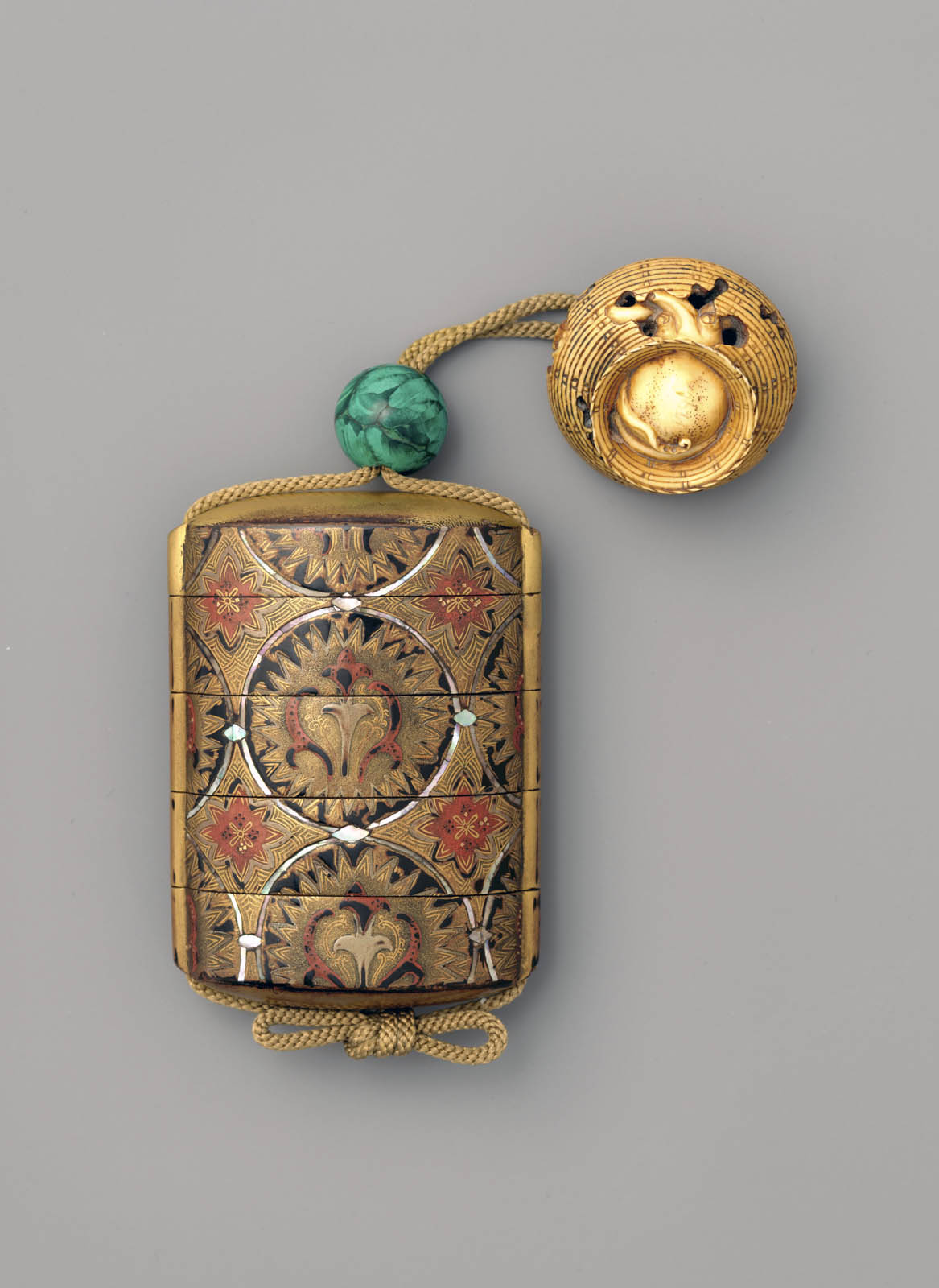
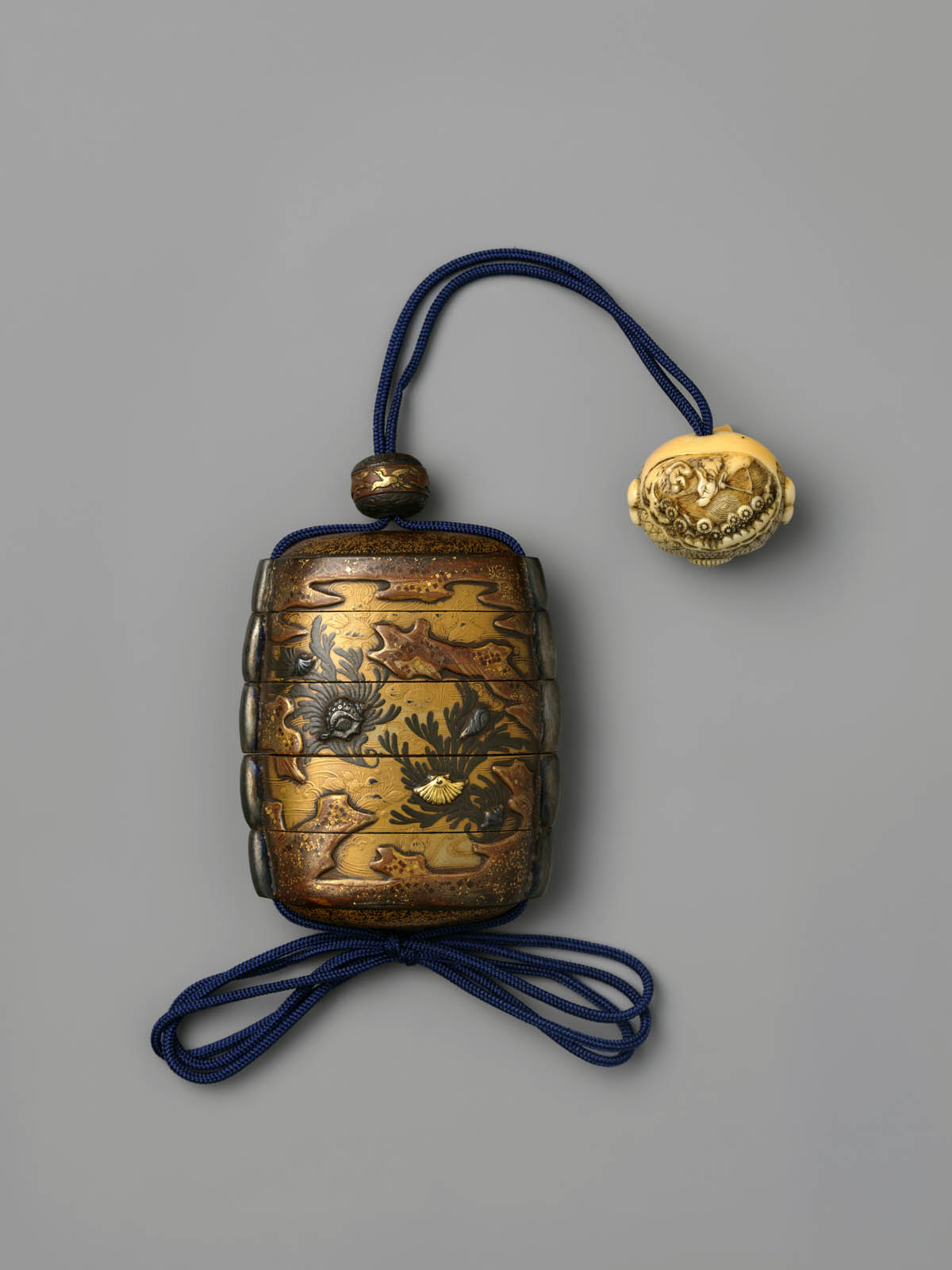
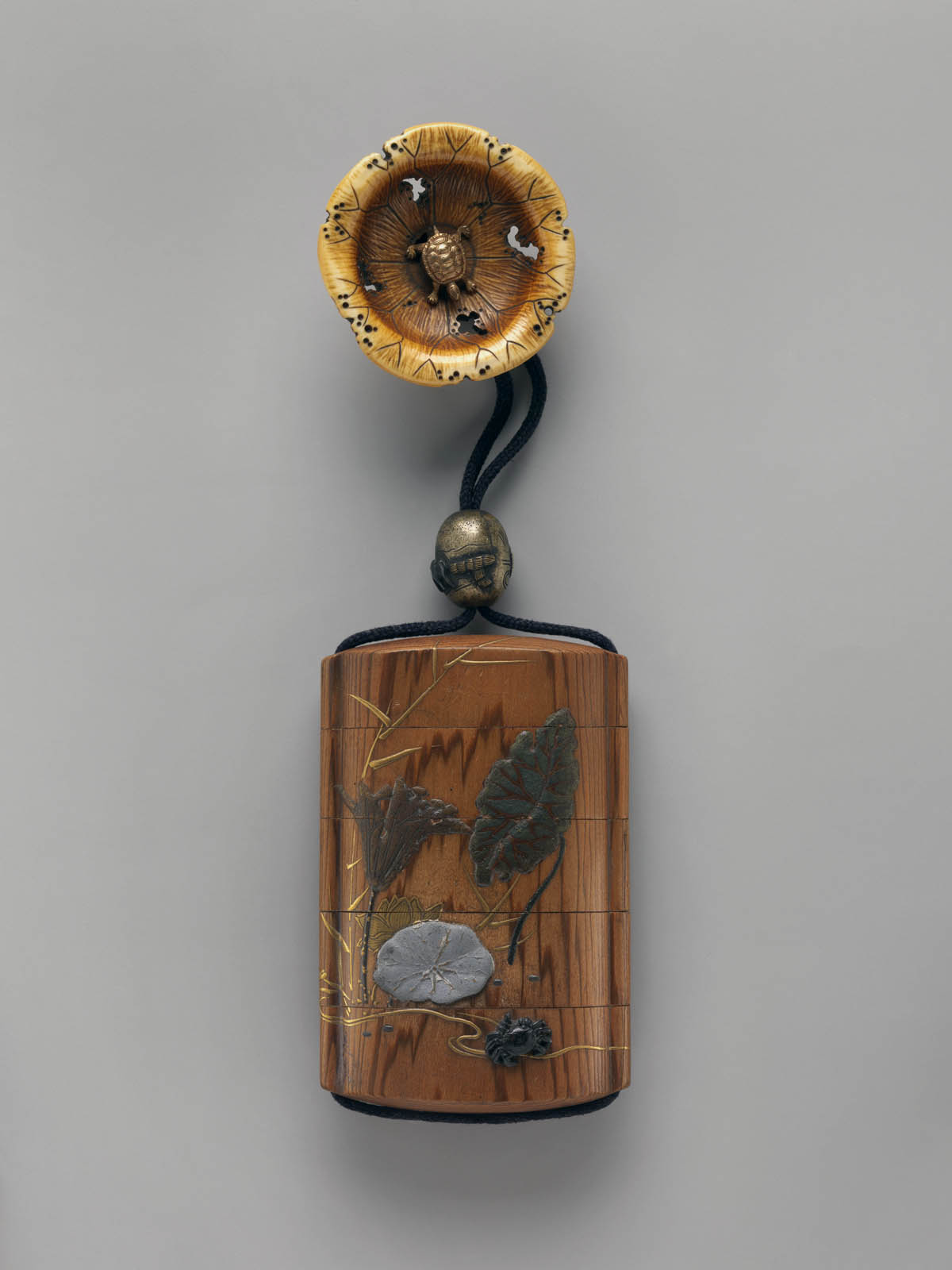
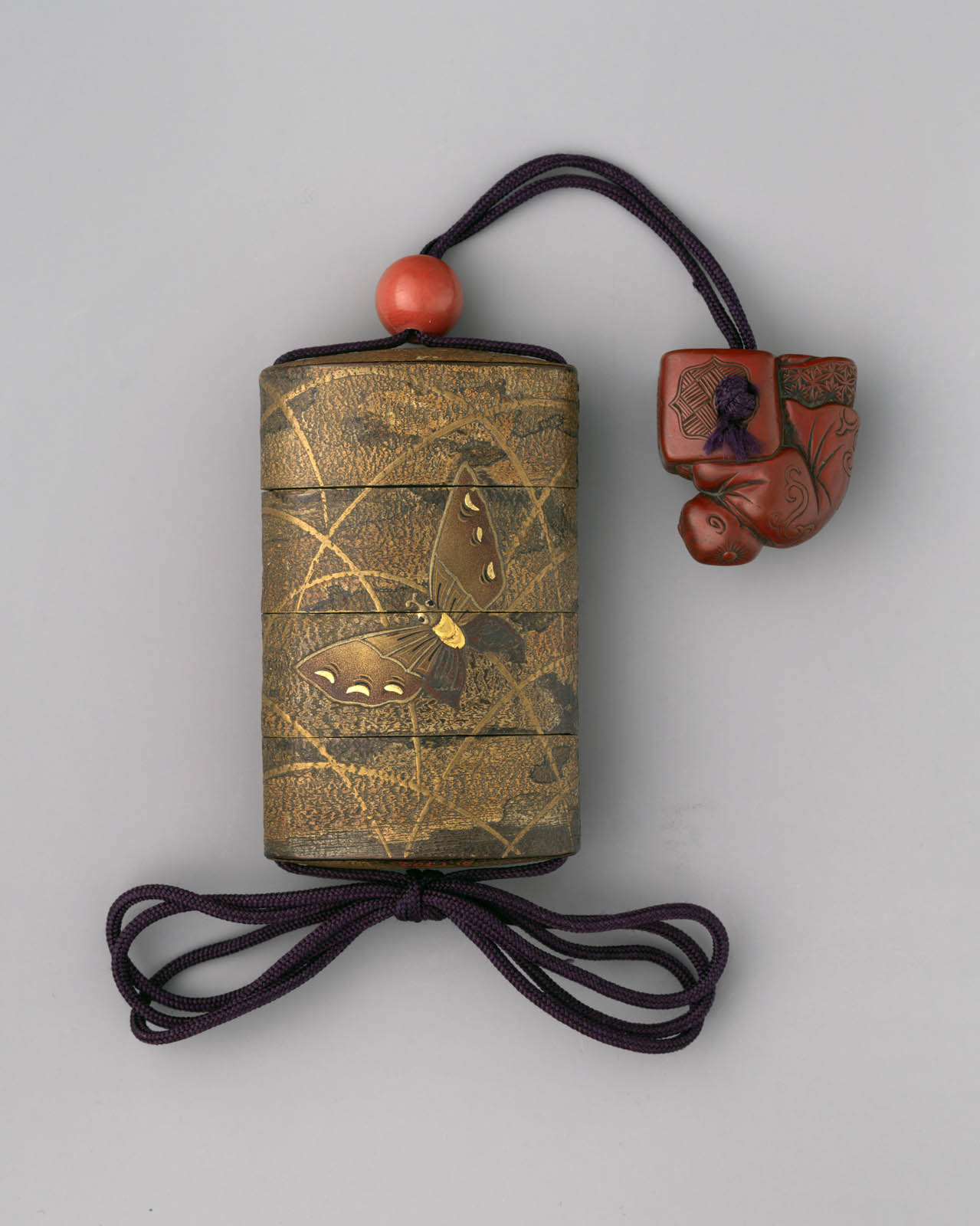
Edo period (1615-1868) 'Group of Inrō' 18th century from the exhibition 'Collecting Inspiration: Edward C. Moore at Tiffany & Co.' at The Metropolitan Museum of Art, New York, June - Oct 2024


Edo period (1615-1868)
Group of Inrō
18th century
Metropolitan Museum of Art, New York
Edward C. Moore Collection, Bequest of Edward C. Moore, 1891
Public domain


Inrō are small, light, tightly nested boxes worn hanging from a man’s obi sash, as a Japanese kimono had no pockets. The term’s literal meaning, “seal basket,” probably refers to an early function, but later they held small amounts of medicine. Once they became fashion items, inrō were carefully selected according to the season or occasion and coordinated with the attached ojime (sliding bead) and netsuke (toggle) as well as with the kimono and obi. Moore and his team surely studied the rich motifs and sophisticated production methods of the inrō he collected.


A change of pace this weekend.

Just because… I love beautiful things; I am a collector of antiques and object d’art; and I have a wonderful standing Tiffany picture frame at home.

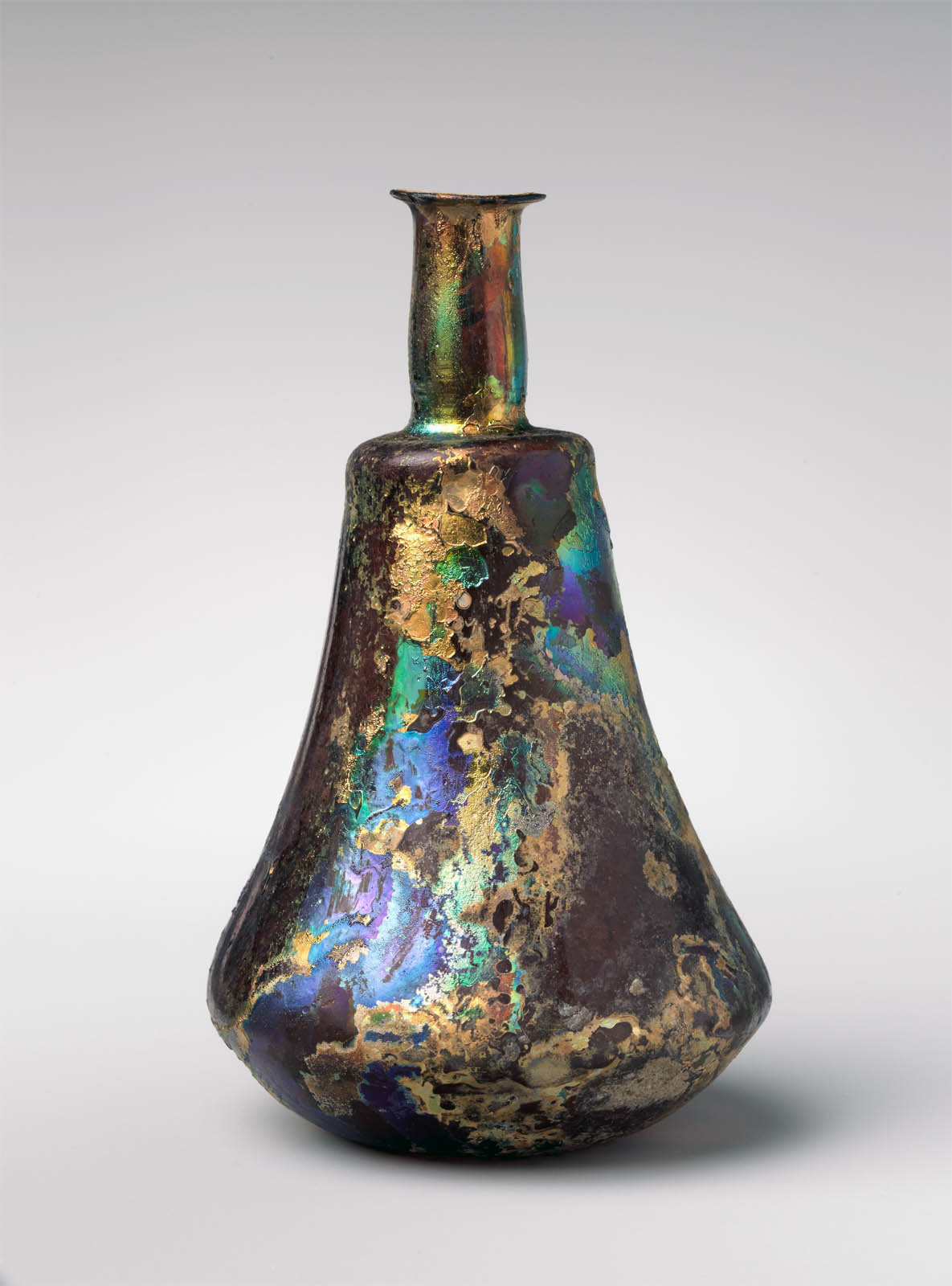
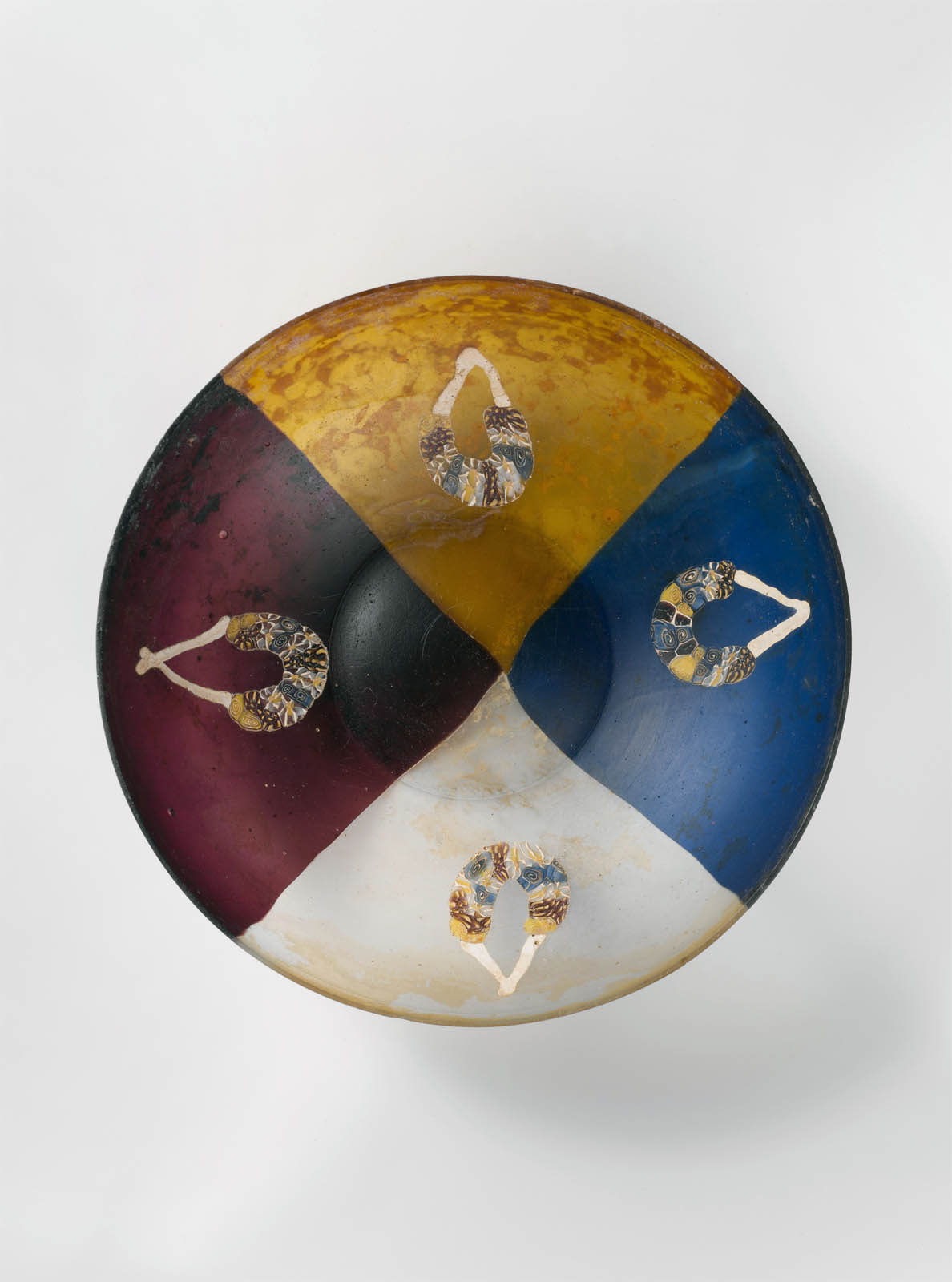
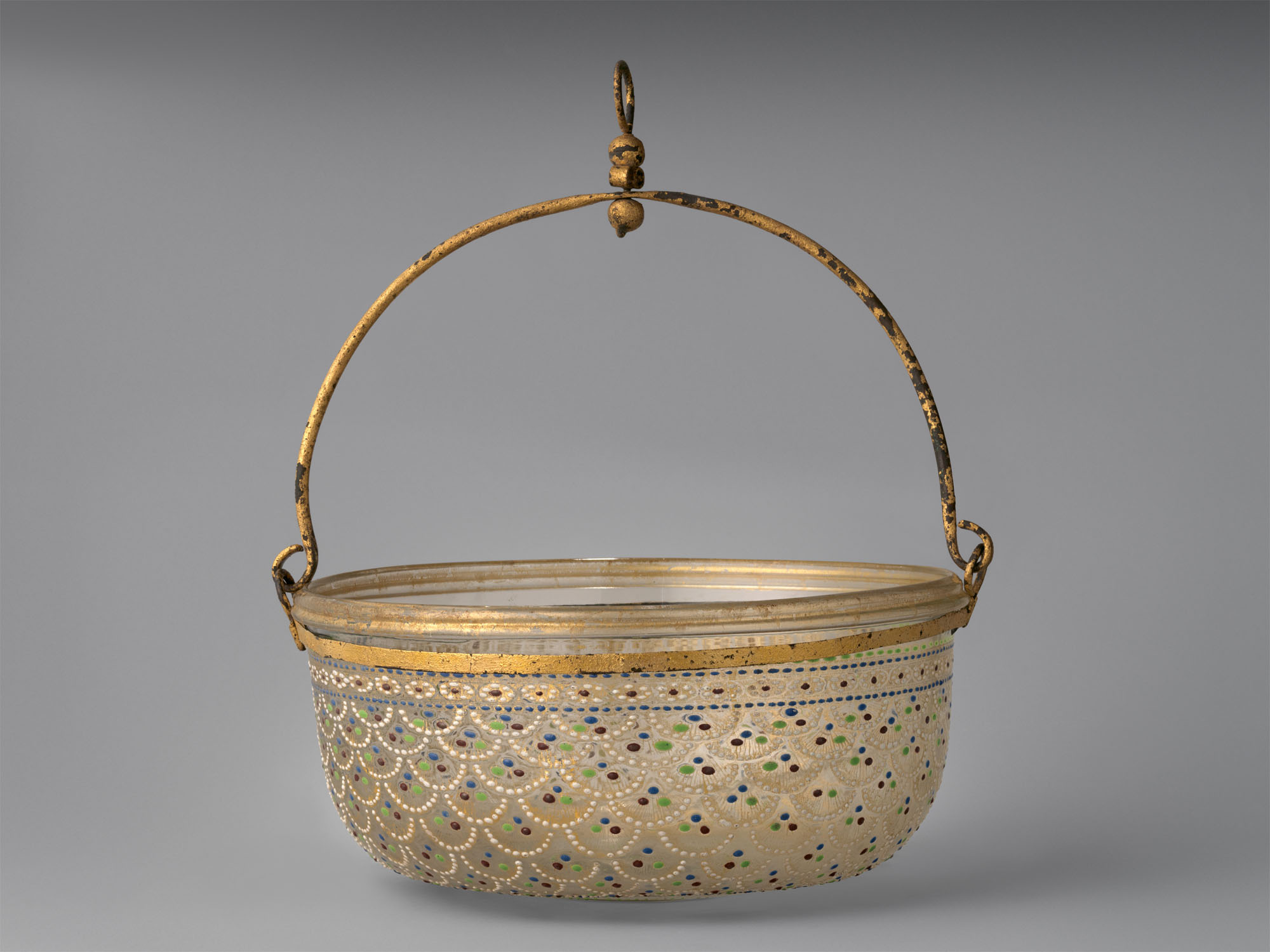
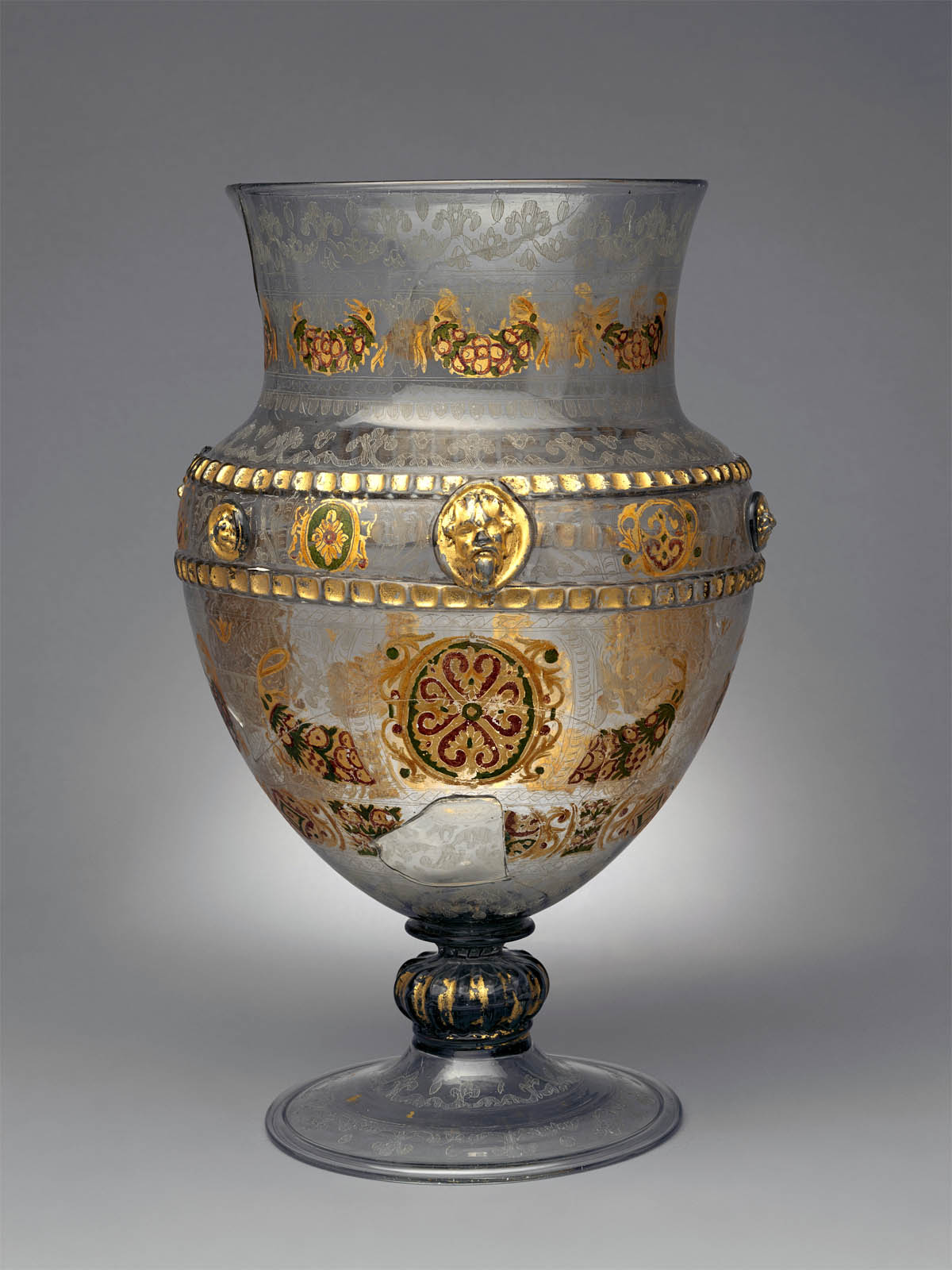
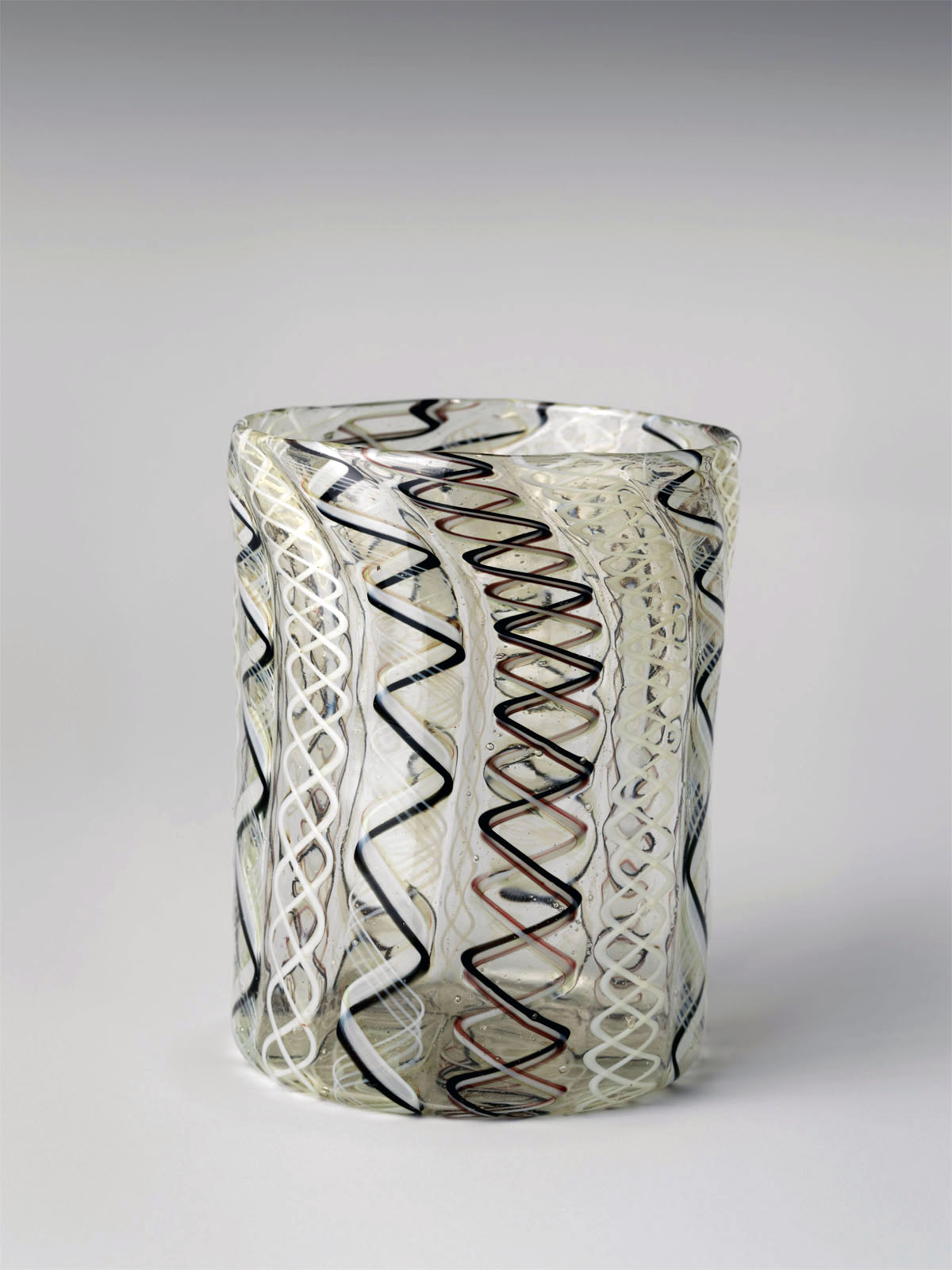
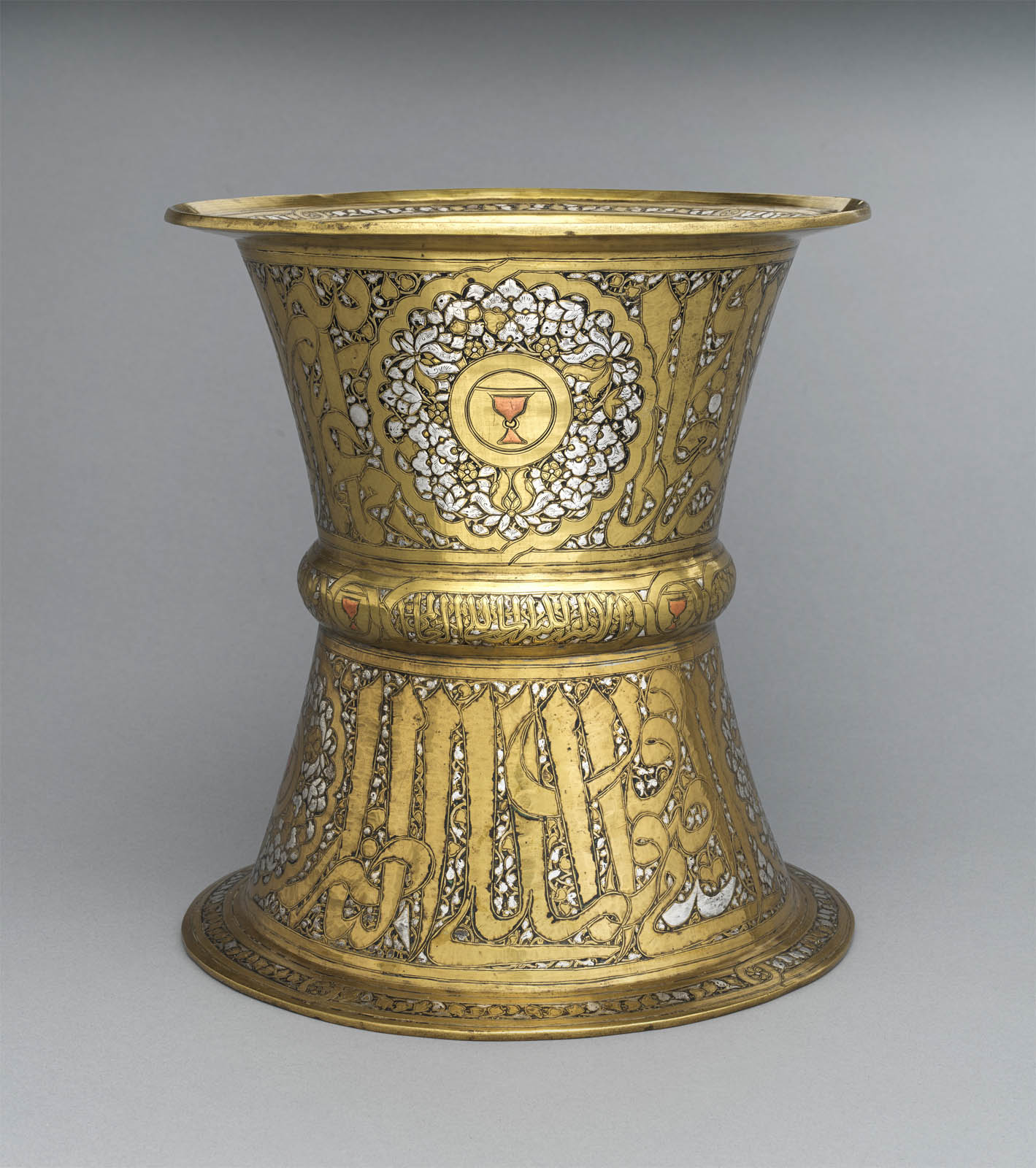
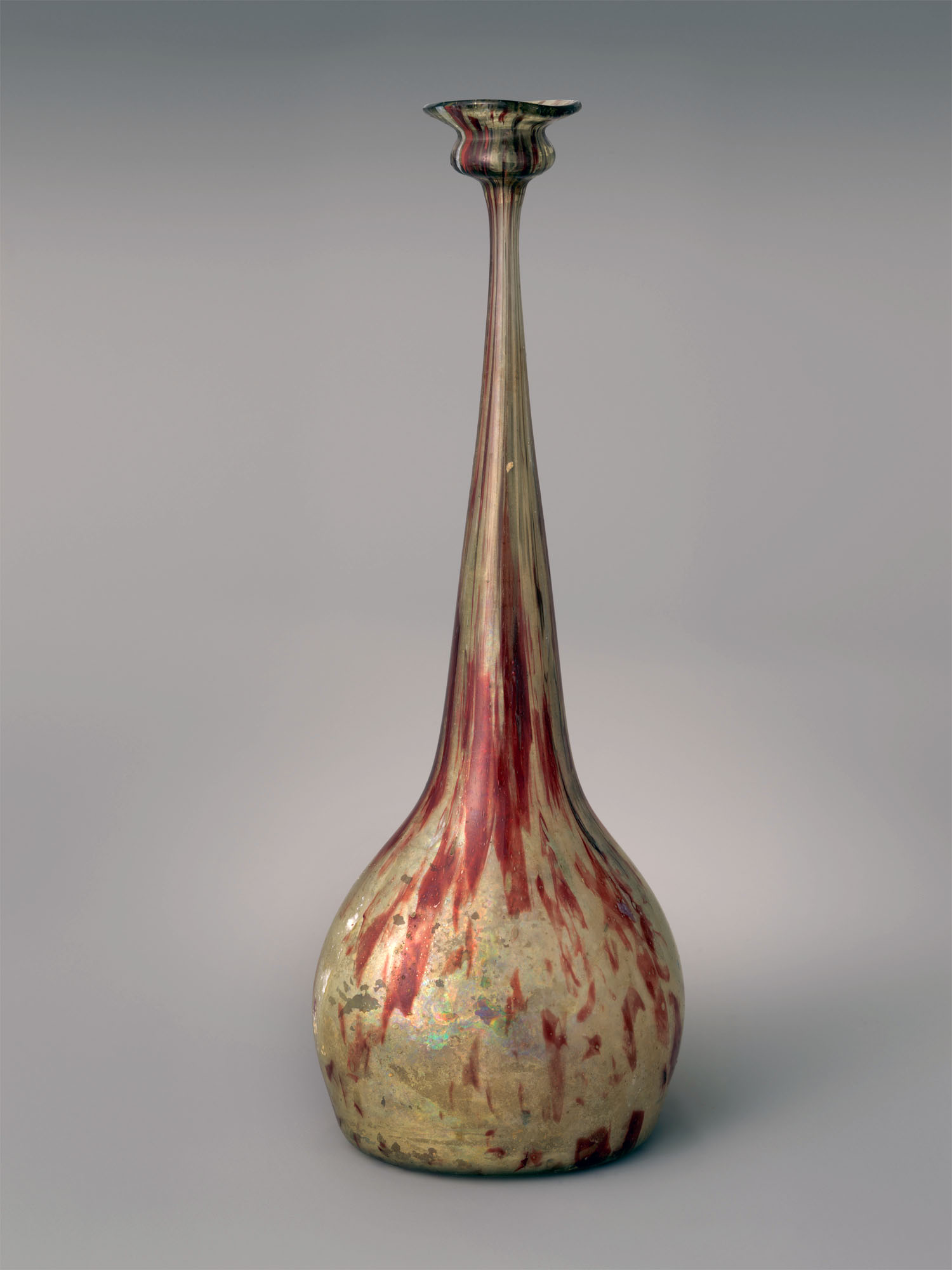
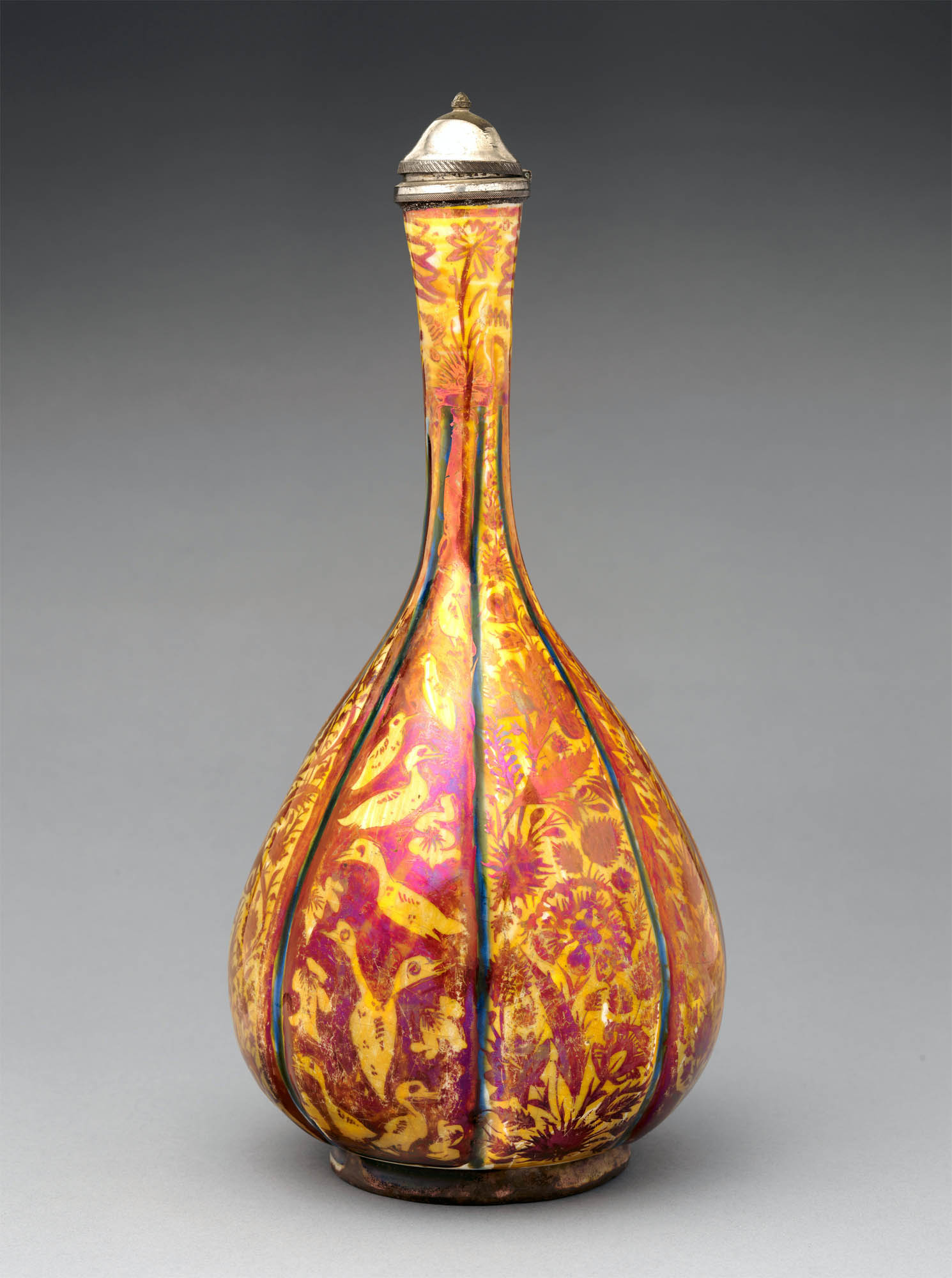
Roman glass, Italian Murano glass, Austrian and German glass, Arabic and Persian metalwork, glass and earthenware, Japanese lacquer, wicker, metalware and pottery, Chinese glass and porcelain. All used as inspiration by Edward C. Moore, “the creative force who led Tiffany & Co. to unparalleled originality and success during the second half of the 19th century.”

Enjoy!

Dr Marcus Bunyan


Many thankx to The Metropolitan Museum of Art for allowing me to publish the photographs in the posting. All the text in the posting is from the Metropolitan Museum of Art website. Please click on the photographs for a larger version of the image.


Exhibition Tour – Collecting Inspiration: Edward C. Moore at Tiffany & Co. | Met Exhibitions

Edward C. Moore (1827-1891) – the creative force who led Tiffany & Co. to unparalleled originality and success during the second half of the 19th century – amassed a vast collection of decorative arts of exceptional quality and in various media, from Greek and Roman glass and Japanese baskets to metalwork from the Islamic world. These objects were a source of inspiration for Moore, a noted silversmith in his own right, and the designers he supervised. The exhibition Collecting Inspiration: Edward C. Moore at Tiffany & Co. will feature more than 180 extraordinary examples from Moore’s personal collection, which was donated to the Museum, alongside 70 magnificent silver objects designed and created at Tiffany & Co. under his direction.


Overview

Edward C. Moore (1827-1891) – the creative force who led Tiffany & Co. to unparalleled originality and success during the second half of the 19th century – amassed a vast collection of decorative arts of exceptional quality and in various media, from Greek and Roman glass and Japanese baskets to metalwork from the Islamic world. These objects were a source of inspiration for Moore, a noted silversmith in his own right, and the designers he supervised. The exhibition Collecting Inspiration: Edward C. Moore at Tiffany & Co. will feature more than 180 extraordinary examples from Moore’s personal collection, which was donated to the Museum, alongside 70 magnificent silver objects designed and created at Tiffany & Co. under his direction. Drawn primarily from the holdings of The Met, the display will also include seldom seen examples from a dozen private and public lenders. A defining figure in the history of American silver, Moore played a pivotal role in shaping the legendary Tiffany design aesthetic and the evolution of The Met’s collection.

Text from The Metropolitan Museum of Art website


Edward C. Moore (American, New York 1827 - 1891 New York) 'Cup' 1853 from the exhibition 'Collecting Inspiration: Edward C. Moore at Tiffany & Co.' at The Metropolitan Museum of Art, New York, June - Oct 2024


Edward C. Moore (American, New York 1827 – 1891 New York)
Cup
1853
Silver and silver-gilt
3 3/4 x 3 1/4 x 4 3/4 in. (9.5 x 8.3 x 12.1cm); 6 oz. 14 dwt. (208.2 g)
Metropolitan Museum of Art, New York
Gift of Jerome B. Dwight, in memory of Charles Noyes de Forest and Henry Wheeler de Forest Jr., 2005
Public domain


This cup is an early example of Moore’s sophisticated design sensibilities and technical skills. While it was first thought to be the work of his father, a recently discovered sketch signed “E. C. M.” confirms the twenty-six-year-old Edward as its designer. Characteristic of his inventive eye and hand are the fluidity of the fuchsia vine and the dynamic play between the high-relief flowers and smooth, undecorated ground, which lend it a compositional coherence and show his understanding of the power of negative space. Engraved as a baby gift for Julia Brasher de Forest, sister of artist Lockwood de Forest, and marked “Moore,” the cup appears to have been a commission he considered a personal project.


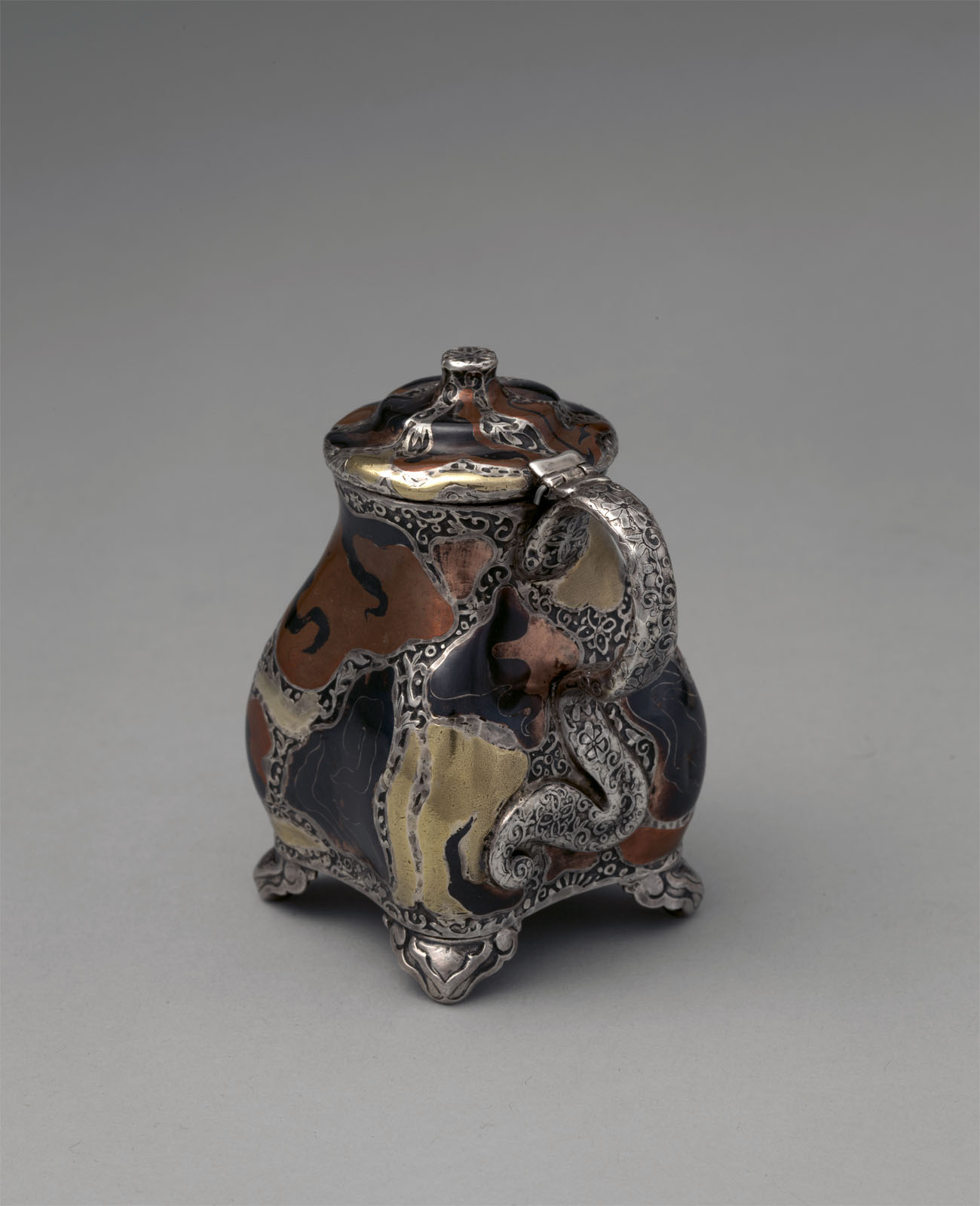
Tiffany & Co. (1837-present) 'Mustard Pot' c. 1879

Tiffany & Co. (1837-present) 'Mustard Pot' c. 1879


Tiffany & Co. (1837-present)
Mustard Pot
c. 1879
Silver, copper, gold, patinated copper-gold alloy, patinated copper-platinum-iron alloy, and niello
3 3/16 × 2 1/2 × 2 in. (8.1 × 6.4 × 5.1cm)
Metropolitan Museum of Art, New York
Purchase, Friends of the American Wing Fund and Emma and Jay A. Lewis Gift, 2016
Public domain


Following the opening of Japan to the West in the 1850s and the subsequent display of Japanese art at international expositions, the Japanese taste began to captivate American consumers. In response, designers such as Edward C. Moore at New York’s Tiffany & Co. introduced a range of objects inspired by Japanese art works, including ceramics, metalwork, textiles, prints, lacquerware, and netsuke. The decoration on this mustard pot is particularly unusual and innovative. Its baluster form is completely transformed by the asymmetrical inset panels of mixed metal alloys – one of patinated copper and gold (a direct attempt to imitate Japanese Shakudō), and another of patinated copper, platinum, and iron – enclosed by scrolled “Snake Skin” borders. The mottled, multicoloured surface also evokes the swirling array of colours observed in Moore’s collection of ancient mosaic and core-formed glass. Labeled in the Tiffany & Co. Archives as “Mustard to go with Pepper 5493,” this is one of only six decorated versions produced. The Tiffany Archives also retains the Hammering & Inlaying Design drawings for this particular version (#853), which at a cost of $35 was the most expensive iteration.


Tiffany & Co. (1837-present) 'Cup and saucer' c. 1881


Tiffany & Co. (1837-present)
Cup and saucer
c. 1881
Silver, patinated copper, patinated copper-platinum-iron alloy, and gold
Cup: 2 1/8 × 2 1/2 × 1 7/8 in. (5.4 × 6.4 × 4.8cm)
Saucer: 1/2 × 4 in. (1.3 × 10.2 cm)
Metropolitan Museum of Art, New York
Purchase, Friends of the American Wing Fund and Emma and Jay A. Lewis Gift, 2016
Public domain


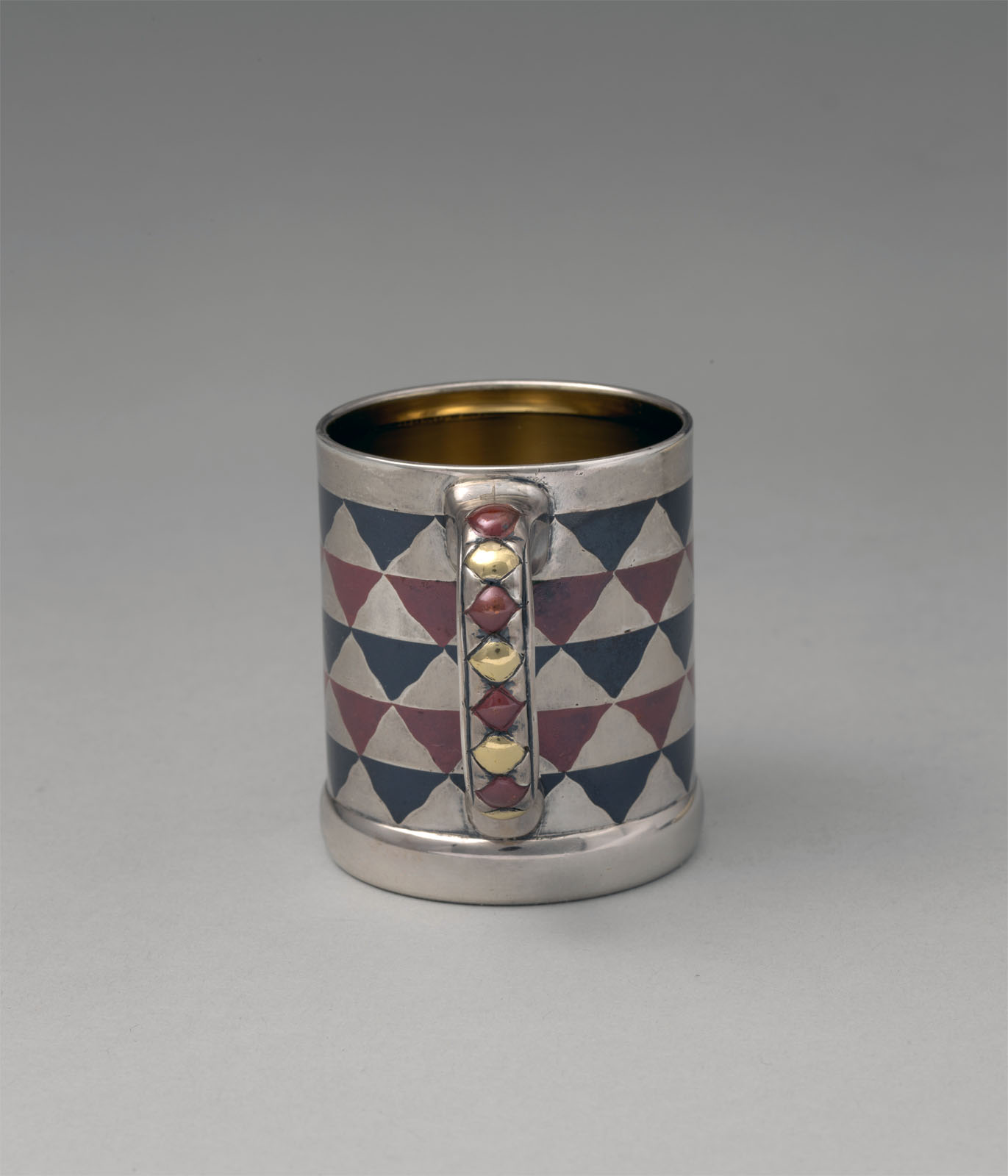
This cup and saucer represent a rare aspect of Tiffany & Co.’s production. As early as 1845 Tiffany & Co. was selling items they promoted as “Indian Goods,” including pipes, belts, pouches, moccasins, and “various fancy articles, made of Birch Bark.” Native American imagery and decorative vocabulary also appeared in Tiffany silver designs, particularly in works conceived by Eugene Soligny (1832-1901) and Paulding Farnham (1859-1927), two of the firm’s leading designers. Here the pattern of alternating red and black triangles is reminiscent of Navajo blankets. During the later decades of the nineteenth century, Tiffany & Co. designers drew inspiration from a diverse array of sources. They had access to the vast collection of books and objects from around the world assembled by the head of the silver division, Edward C. Moore. The decorative pattern on this cup and saucer bears striking similarity to a rendering of floor patterns in one of Moore’s books, The Basilica of San Marco in Venice. Whether referencing Navajo blankets, Venetian floors, or both, the cup and saucer are testaments to the fertile environment in which Tiffany & Co. designers and craftsmen created their innovative work.


Tiffany & Co. (1837-present) 'Cup and saucer' c. 1881


Tiffany & Co. (1837-present)
Cup and saucer
c. 1881
Silver, patinated copper, patinated copper-platinum-iron alloy, and gold
Cup: 2 1/8 × 2 1/2 × 1 7/8 in. (5.4 × 6.4 × 4.8cm)
Saucer: 1/2 × 4 in. (1.3 × 10.2 cm)
Metropolitan Museum of Art, New York
Purchase, Friends of the American Wing Fund and Emma and Jay A. Lewis Gift, 2016
Public domain


Camillo Boito (editor) Ferdinando Ongania (1842-1911) (publisher) 'La Basilica di San Marco in Venezia illustrata nella storia e nell'arte da scrittori veneziani: [volume 3]' 1881


Camillo Boito (editor)
Ferdinando Ongania (1842-1911) (publisher)
La Basilica di San Marco in Venezia illustrata nella storia e nell’arte da scrittori veneziani: [volume 3]
1881
41.3 x 34.1 x 3cm
Metropolitan Museum of Art, New York
Public domain


Moore assembled an extensive library, which includes a rare, lavish fourteen-volume publication on the Basilica of San Marco in Venice. Produced between 1881 and 1888 under the direction of Italian restoration architect and art historian Camillo Boito, it documents in text and chromolithograph illustrations virtually every detail of the centuries-old basilica. The volume on view here is devoted to the mosaic floors. The image replicates multicoloured geometric patterns from borders that frame some of the floors’ rectangular fields. Their variety and rhythmic energy would have resonated with Moore’s aesthetic sensibilities. Figure IX, in the lower right, bears striking similarities to the Tiffany cup and saucer displayed nearby.


Tiffany & Co. (1837-present) 'Two cups and saucers from the Mackay Service' 1878


Tiffany & Co. (1837-present)
Two cups and saucers from the Mackay Service
1878
Silver-gilt and enamel
2 1/4 × 2 × 2 3/4 in. (5.7 × 5.1 × 7cm)
Metropolitan Museum of Art, New York
Purchase, Cranshaw Corporation Gift, 2017
Public domain


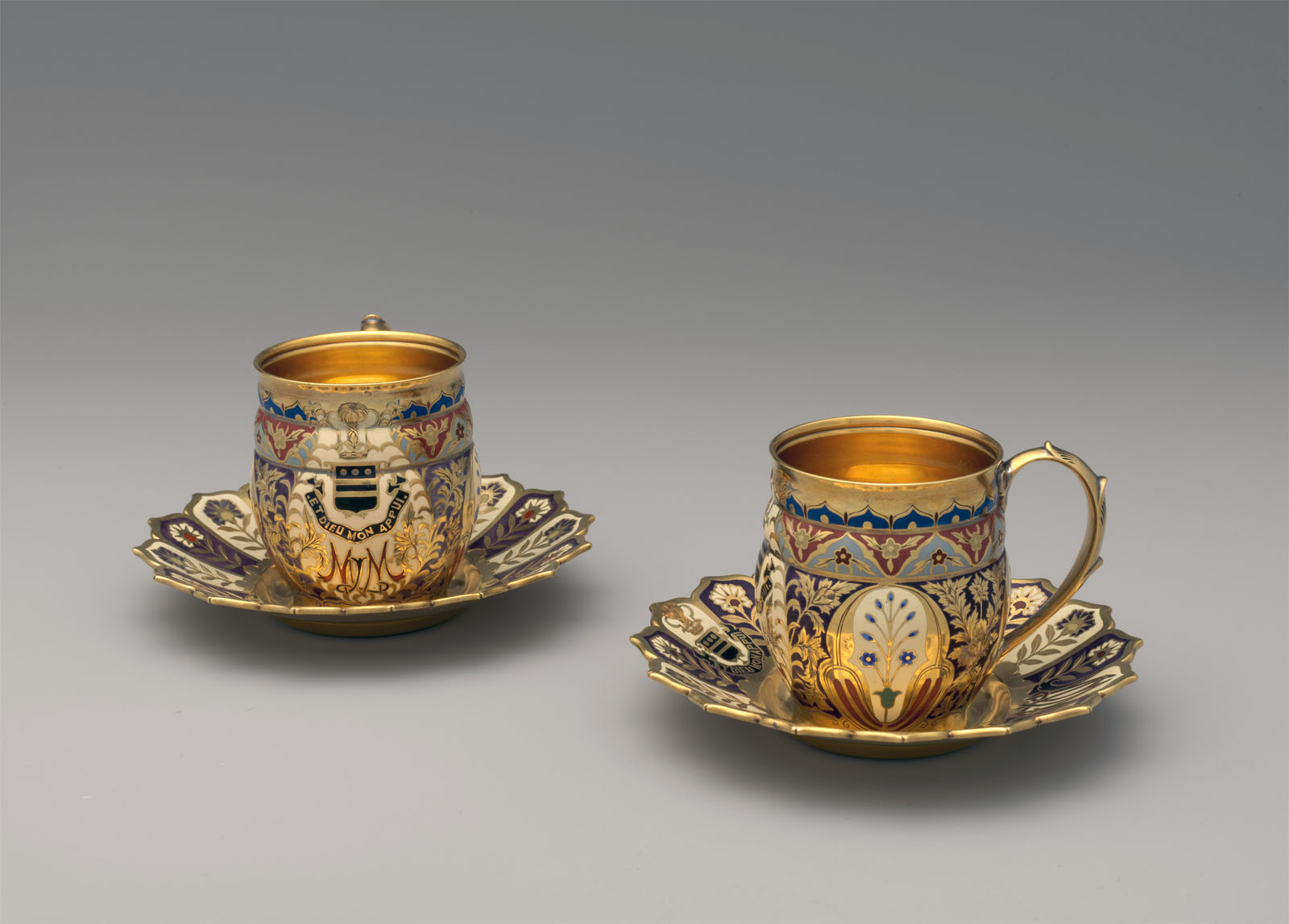
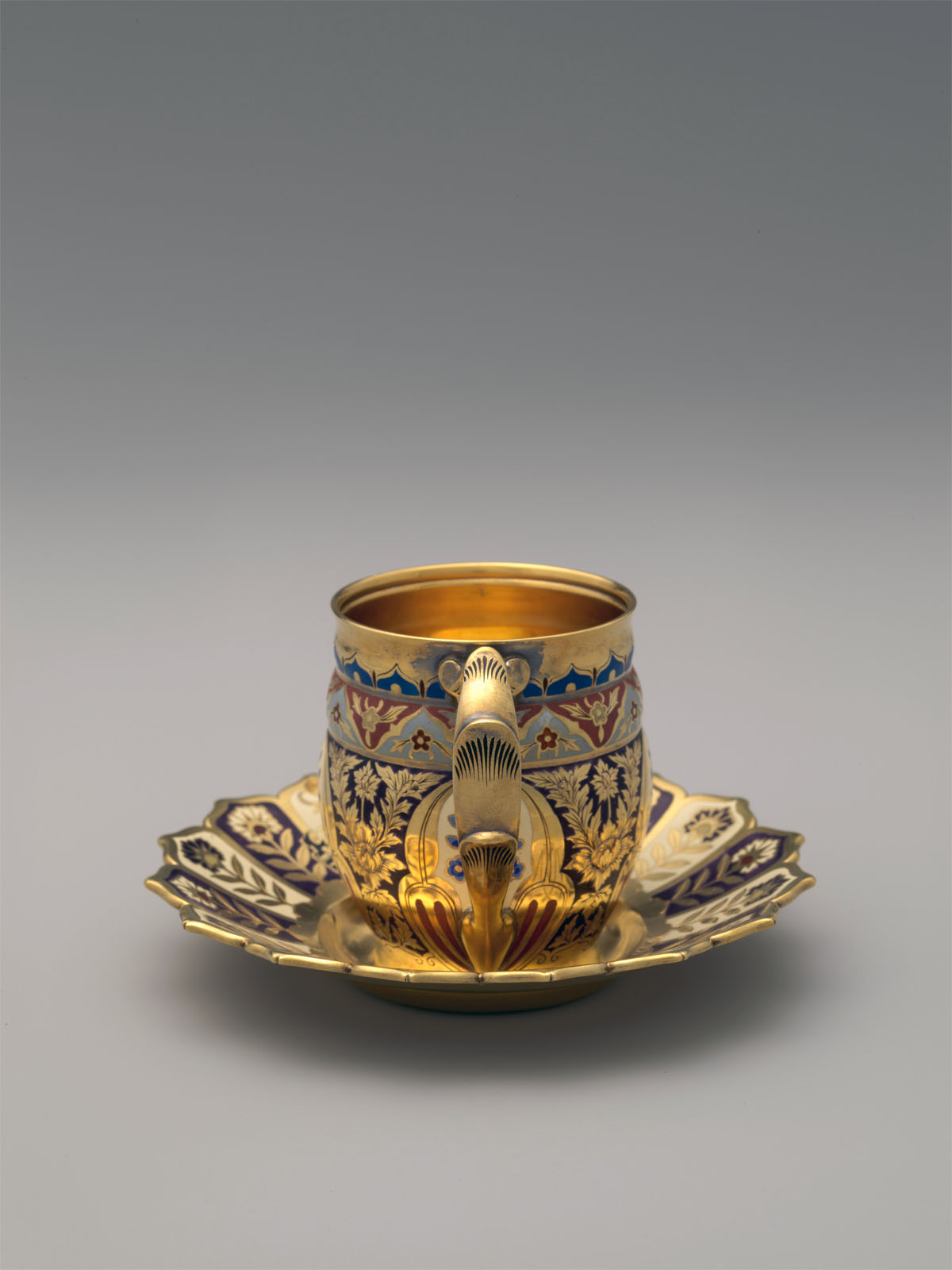
These gilded and enamelled cups and saucers are part of one of the most renowned and lavish dinner services ever created in America.

Commissioned in 1877 by John W. (1831-1902) and Marie Louise Hungerford (1843-1928) Mackay, the dinner service for twenty-four consisted of over 1,250 pieces. A poor Irish immigrant with little education, John W. Mackay became one of the wealthiest men in America when he and three partners, James Fair, James Flood, and William O’Brien, struck a silver deposit known as “The Big Bonanza” at Nevada’s Comstock Lode in 1873. During a visit to the mine, Marie Louise asked her husband for a silver dinner service “made by the finest silversmith in the country.” Her husband responded, “You shall have it. I like the notion of eating off silver brought straight from the Comstock.” He proceeded to have a half ton of silver delivered from the mine to Tiffany & Co., where two hundred men worked for almost two years to complete the commission. After being snubbed by New York City society, the Mackays established themselves in Paris. In 1878 the service was sent to be featured in Tiffany’s award-winning display at the Paris Exposition Universelle before being delivered to the Mackay’s home at 9 Rue de Tilsitt near the Arc de Triomphe. In an era of extravagant social affairs, Mrs. Mackay’s dinners and balls were legendary. The Mackay dinner service would have been at the centre of banquets that included royalty, aristocracy, President and Mrs. Ulysses S. Grant, and one of the most prominent celebrities of the day, Buffalo Bill. Identified in firm records as “Indian” in style, the Mackay service reflects the sophisticated and innovative design sensibilities of Edward C. Moore, the head of Tiffany’s silver division, and the team of designers, chasers, and craftsmen who conceived and realised this commission. The exquisite cloisonné enamelled decoration on these cups embodies Gilded Age extravagance and would have offered a dazzling finale to a meal served on a sea of elaborately chased silver wares in an “exotic” Indian and Near Eastern taste.


Tiffany & Co. (1837-present) 'Two cups and saucers from the Mackay Service' 1878


Tiffany & Co. (1837-present)
Two cups and saucers from the Mackay Service
1878
Silver-gilt and enamel
2 1/4 × 2 × 2 3/4 in. (5.7 × 5.1 × 7cm)
Metropolitan Museum of Art, New York
Purchase, Cranshaw Corporation Gift, 2017
Public domain


Tiffany & Co. (1837-present) 'Ice Cream Dish from Mackay Service' 1878


Tiffany & Co. (1837-present)
Ice Cream Dish from Mackay Service
1878
Silver, silver gilt
6 × 15 3/8 in. (15.2 × 39.1cm)
Metropolitan Museum of Art, New York
Purchase, Anonymous Gift, 2023
Public domain


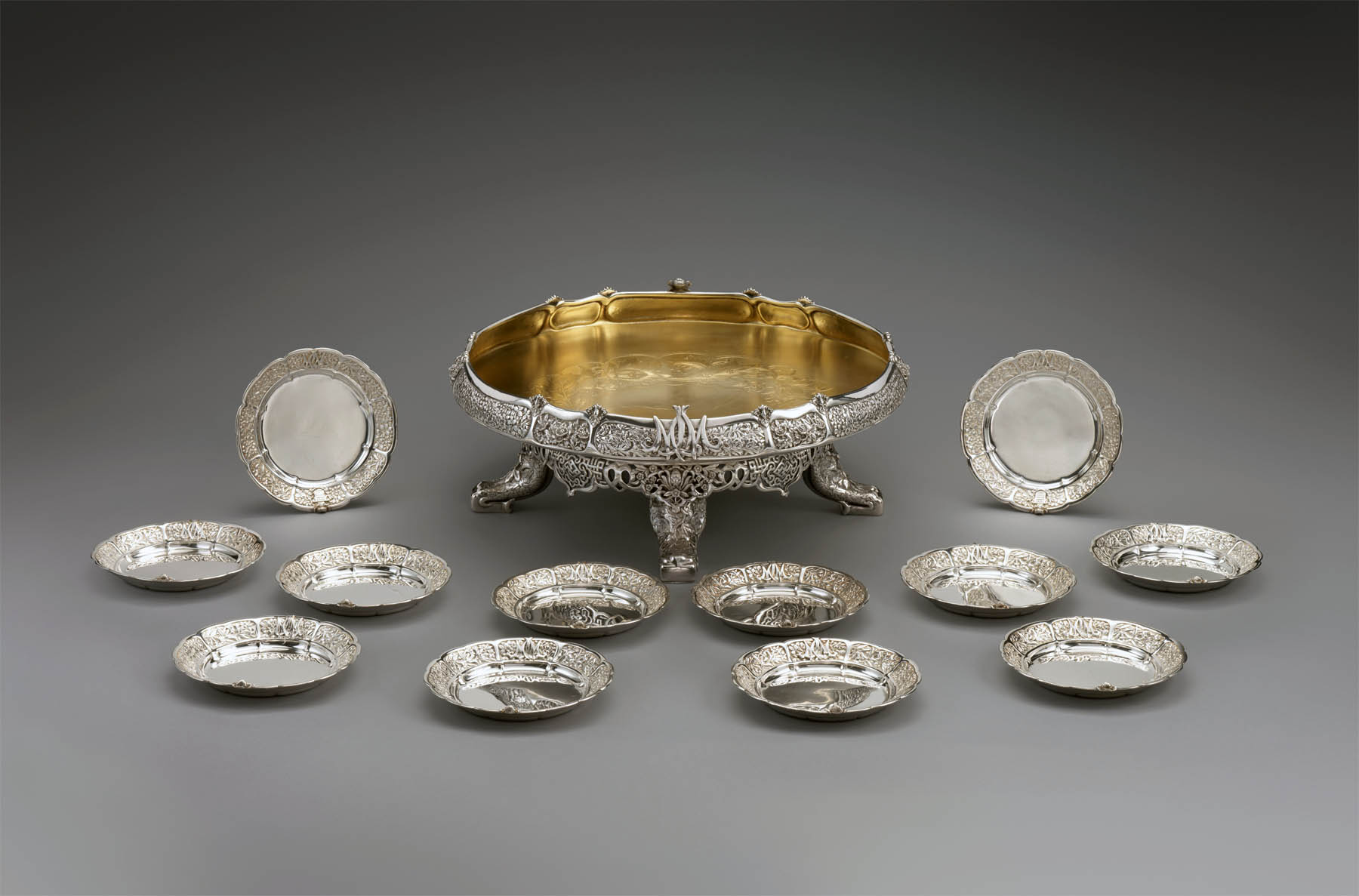
This silver ice cream dish and accompanying plates are part of one of the most renowned and lavish dinner services ever created in America. Commissioned in 1877 by John W. (1831-1902) and Marie Louise Hungerford (1843-1928) Mackay, the dinner service for twenty-four consisted of over 1,250 pieces.


Tiffany & Co. (1837-present) 'Ice Cream Dish from Mackay Service' 1878


Tiffany & Co. (1837-present)
Ice Cream Dish from Mackay Service
1878
Silver, silver gilt
6 × 15 3/8 in. (15.2 × 39.1cm)
Metropolitan Museum of Art, New York
Purchase, Anonymous Gift, 2023
Public domain


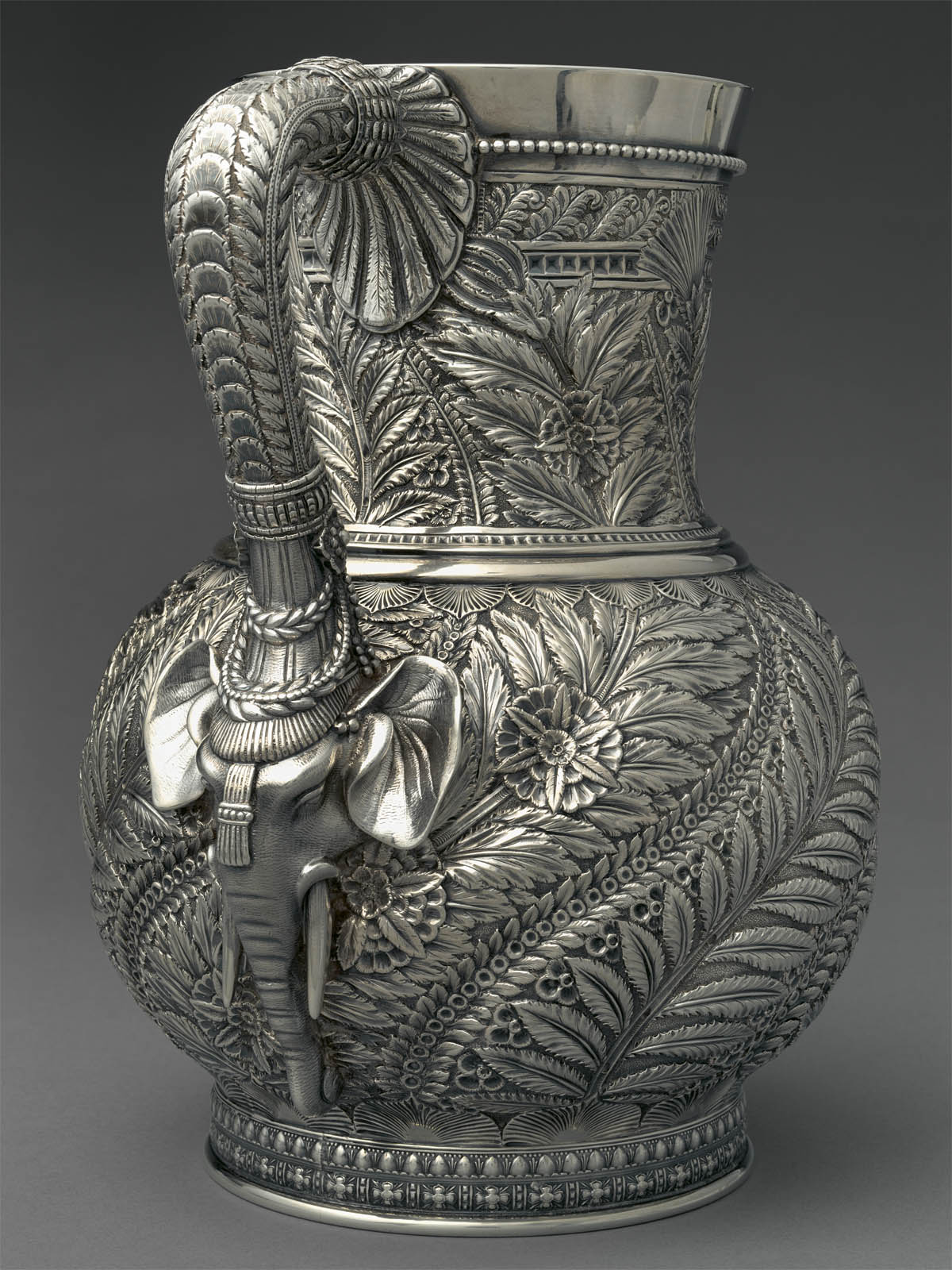
Tiffany & Co. (1837-present) 'Pitcher' 1874-1875


Tiffany & Co. (1837-present)
Pitcher
1874-1875
Silver
9 3/8 × 7 × 8 3/8 in. (23.8 × 17.8 × 21.3cm)
Metropolitan Museum of Art, New York
Sansbury-Mills Fund, 2018
Public domain


This pitcher exemplifies the technical virtuosity and creativity that characterised Tiffany & Co.’s finest silver during the 1870s and 1880s. Under the direction of Edward C. Moore (1827-1891), the silver division at Tiffany & Co. produced a diverse array of exquisitely wrought and highly original work. Created in 1874 or 1875, this pitcher is an early example of Tiffany & Co.’s engagement with Near Eastern and Indian works of art. Edward C. Moore was a passionate and discerning collector of metalwork, glass, ceramics, and textiles from the Islamic world and the Indian subcontinent, and these objects had a profound impact on his creative vision and deigns. The elephant head draped with garlands and the surrounding panels of dahlias, lotus flowers, and other exotic vegetation reflect careful study of Indian and Near Eastern sources and attest to the masterful chasing skills of Eugene Soligny (1832-1901). Together with a matching pitcher that was made several years later, this pitcher was presented in 1883 by Julia Rhinelander (d. 1890) to her niece Mary Rhinelander Stewart (1859-1949) on the occasion of her wedding to Frank Spencer Witherbee (1852-1917).

This pitcher is an especially dynamic and successful example of Tiffany’s engagement with works of art from the Islamic world and the Indian subcontinent. The firm produced numerous versions of this form, most of which feature dahlias and other “Persian” motifs like those seen here. The exquisitely rendered details, particularly the elephant head, attest to the skills of Eugene Soligny, one of Tiffany’s most accomplished chasers. They also reflect ideals promoted by the silver workshop supervisor, Charles Grosjean, who urged careful consideration of the relationship between form and decoration: the pitcher’s curves define the swirling panels of ornament, and the scale and shape of the floral motifs have been carefully calibrated to complement and conform to the undulations.


Tiffany & Co. (1837-present) 'Pitcher' 1874-1875 (detail)


Tiffany & Co. (1837-present)
Pitcher (detail)
1874-1875
Silver
9 3/8 × 7 × 8 3/8 in. (23.8 × 17.8 × 21.3cm)
Metropolitan Museum of Art, New York
Sansbury-Mills Fund, 2018
Public domain


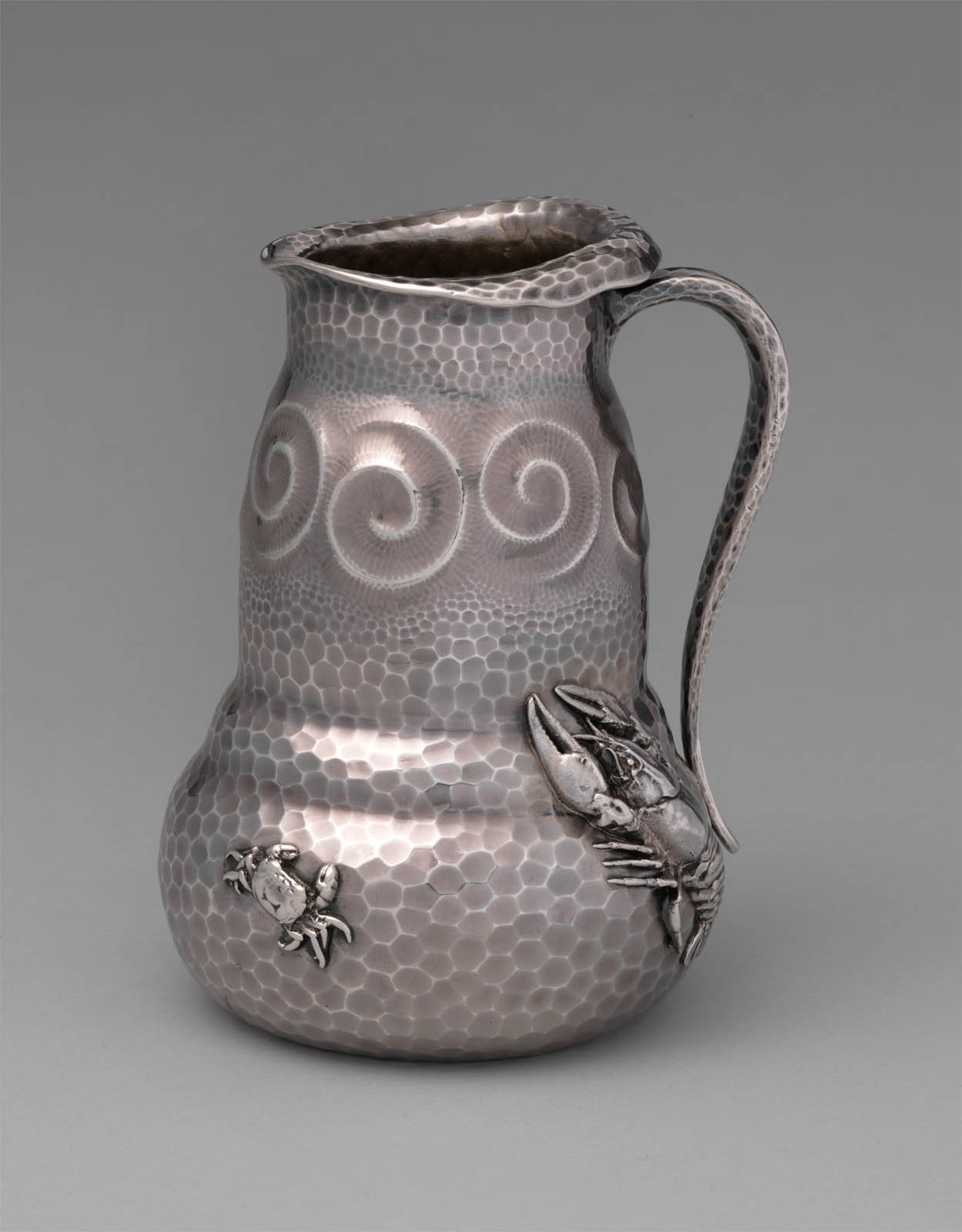
Tiffany & Co. (1837-present) Charles Osborne (1847-1920) (designer) 'Pitcher' c. 1880


Tiffany & Co. (1837-present)
Charles Osborne (1847-1920) (designer)
Pitcher
c. 1880
Silver
6 × 4 5/8 × 4 1/4 in. (15.2 × 11.7 × 10.8cm)
Metropolitan Museum of Art, New York
Purchase, Friends of the American Wing Fund and Emma and Jay A. Lewis Gift, 2016
Public domain


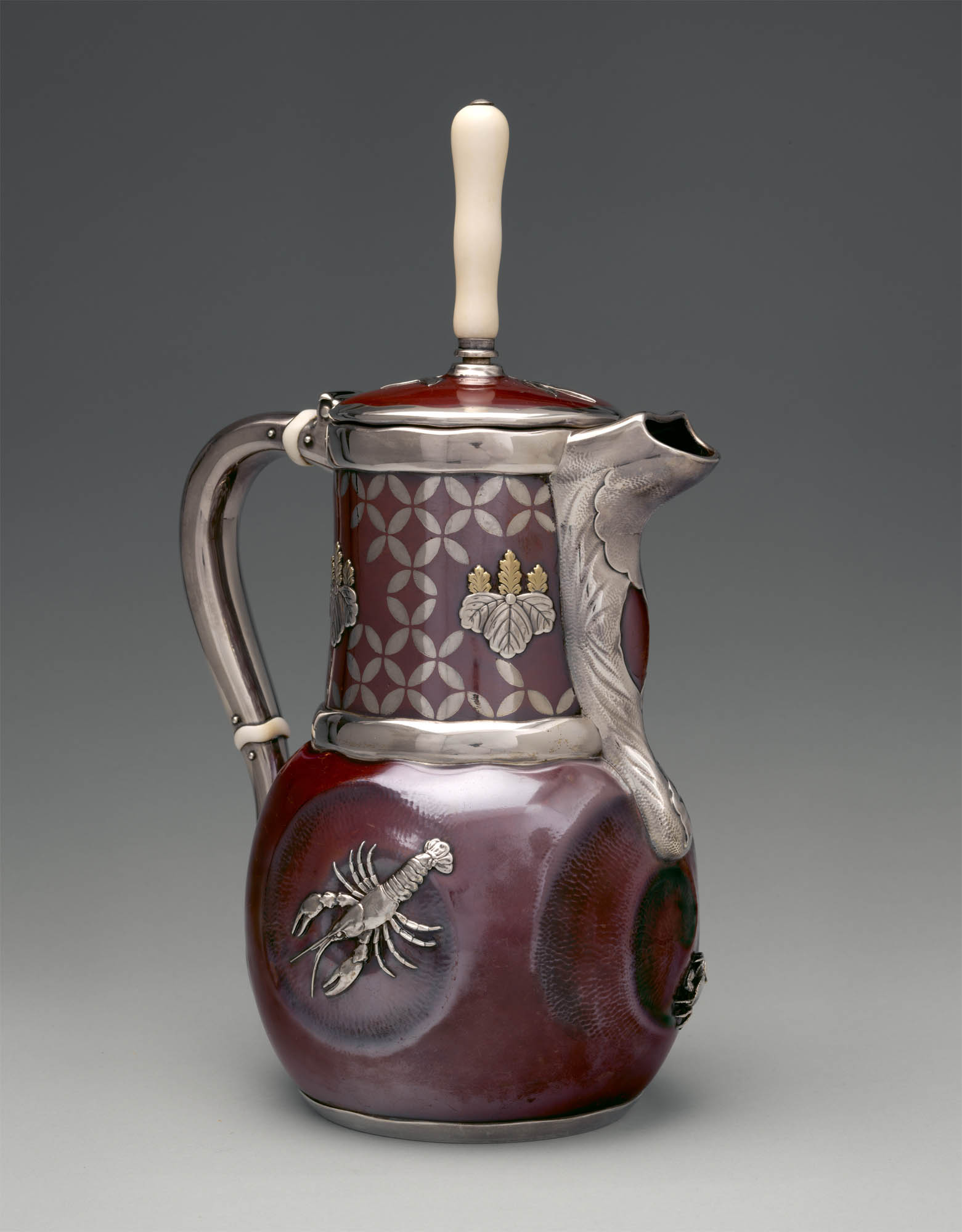
Ceramic vessels may have inspired the organic form of this pitcher, which was described in company records as “Pitcher Top thrown over.” Between 1878 and 1889, Tiffany offered variations of it in at least three decorative schemes. The crabs and crayfish scuttling across this version likely owe their lifelike detail to the designers’ careful study of living creatures alongside Japanese objects and books such as Katsushika Hokusai’s Manga. The silversmith Charles Osborne joined Tiffany around the time this pitcher was made, and similar animal forms and spirals appear on many of the designs produced during his collaboration with Moore: see, for example, the chocolate pot on view nearby, which features spirals and identical crayfish castings.

Tiffany & Co. began retailing and producing silver early in its history, quickly establishing itself as the preeminent silversmithing firm in the United States. This pitcher exemplifies the unprecedented innovation and creativity that characterised Tiffany & Co.’s work during the 1870s and 1880s. Under the direction of Edward C. Moore (1827-1891), the silver division at Tiffany & Co. produced a diverse array of exquisitely wrought and highly original silver, which in turn attracted many of the finest craftsmen and designers to the firm. Indeed, Charles Osborne (1847-1920), who is credited with designing this pitcher, left his position as the chief designer at one of Tiffany’s competitors, the Whiting Manufacturing Company, in order to learn from and work with Moore at Tiffany & Co. The silver that resulted from this mentorship and collaboration is among the finest produced during the second half of the nineteenth century.


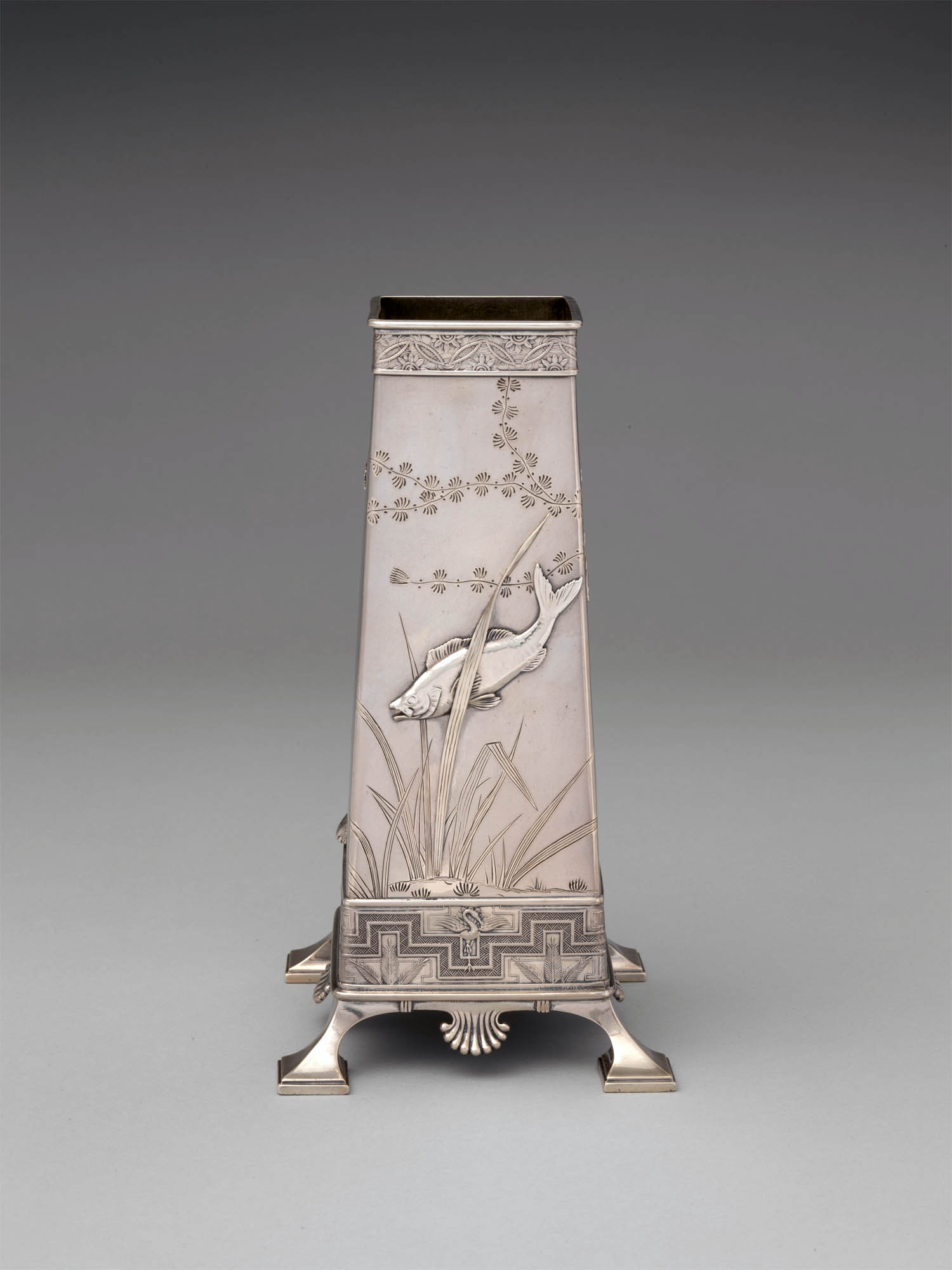
Tiffany & Co. (1837-present) 'Vase' 1877

Tiffany & Co. (1837-present) 'Vase' 1877


Tiffany & Co. (1837-present)
Vase
1877
Made in New York, New York, United States
Silver
8 1/8 x 4 1/4 x 4 1/4 in. (20.6 x 10.8 x 10.8cm); 14 oz. 19 dwt. (464.5 g)
Metropolitan Museum of Art, New York
Purchase, Mr. and Mrs. H. O. H. Frelinghuysen Gift, 1982
Public domain


Although largely inspired by Japanese art, this group of objects demonstrates that Tiffany’s designers looked to a variety of sources when creating innovative designs. Manufacturing ledgers describe the creamer and sugar bowl as having “Persian Pierced Handles,” while the splayed feet on the vase mimic those seen on a thirteenth-century Iranian brass casket in Moore’s collection. The firm’s staff also devoted significant time to studying the natural world. The silver workshop supervisor, Charles Grosjean, recorded in his diary that he visited the city’s aquarium and also purchased fish from the Fulton Market, which he then had a colleague sketch. This dedication to close observation resulted in the highly accurate depictions of sunfish, pickerel, and yellow perch on the creamer and sugar bowl and Chinese Brama fish on the vase.

The opening of Japan to the West in the 1850s and subsequent displays of Japanese art at world’s fairs inspired great demand for Japanese-style objects in the United States. Edward C. Moore, the director of Tiffany’s silver department, was an early proponent and collector of Japanese art. The decorative motifs on this vase and their asymmetrical arrangement were clearly inspired by Japanese design. Originally, the vase had a lightly pebbled ground and oxidised accents that emulated Japanese metalwork.


Tiffany & Co. (1837-present) 'Tray' 1879-1880


Tiffany & Co. (1837-present)
Tray
1879-1880
Silver, copper, brass, gold-copper alloy, and copper-platinum-iron alloy
9 1/8 × 7/8 in., 544.3g (23.2 × 2.2cm, 17.5 oz.)
Metropolitan Museum of Art, New York
Rogers Fund, 1966
Public domain


Buoyed by the phenomenal success of their Japanese-inspired wares at the 1878 Paris Exposition, Tiffany continued producing innovative designs featuring experimental mixed-metal techniques. A note on the meticulously annotated design drawing for this tray describes the sun or moon as “inlaid red gold, not coloured,” which according to the firm’s technical manual is a combination of “American Gold” and “Fine Copper.” Analysis of the metals reveals that each detail corresponds precisely with the formulas and techniques specified in the drawing. Moore had a particular penchant for objects depicting frogs. Reportedly frogs were kept in an aquarium at the studio for designers to study, so the one leaping and catching mosquitoes here may have been modelled from life.

This lively scene, featuring a frog leaping from the water to catch a mosquito in its open mouth, was part of a series of objects created by Tiffany & Co. in a distinctive Japanese style. The imagery both engraved and rendered in relief was derived from European print sources depicting the arts of Japan and art objects made in Japan collected by Edward C. Moore, head of the silver division and creative director at Tiffany. For example, the swarm of insects depicted on this tray mirrors a small mosquito printed as a page filler in L’Art Japonais, written by Louis Gonse and published in 1883 in Paris. The copy of this publication held in the Thomas J. Watson Library at the Met was Moore’s personal copy, donated in 1891.

Along with his copy of L’Art Japonais, Moore gave his collection of more than five hundred books and two thousand objects, collected from around the world, to The Metropolitan Museum of Art in 1891. His collection offers ample evidence of his interest in animal imagery, particularly frogs. Indeed, it included many objects depicting frogs and toads, including several small Japanese netsuke. Furthermore, live frogs were kept in the silver studio at Tiffany for designers to study. Rendering this frog from life rather than from a print source likely led to its dynamic pose and sense of movement.

The use of multiple metals and mixed-metal alloys to animate both the frog and rising sun were inspired by Japanese metalwork and Moore’s passion for innovative metalworking techniques and virtuosic craftsmanship. Looking closely at the body of the jumping frog, yellow, pink, and silver coloured metals have been used together to give the appearance of a lifelike, textured amphibian body. XRF (x-ray fluorescence) analysis was used to identify the metals and exact composition of the alloys used on this tray. This analysis, together with Tiffany’s design drawing for this tray and a surviving technical manual – allows for an understanding of what alloys Tiffany used to render certain colours and the shorthand for these mixtures. The rising sun was to be inlaid with “red gold,” determined to be a copper-gold alloy, the frog’s body was to be cast in “Y.M.;” (yellow metal), identified as an alloy of copper and zinc. The designer did not indicate what metal would comprise the pink coloured spots along the frog’s body and legs, but analysis revealed them to be an alloy of copper, platinum, and iron, which is similar to “Metal no, 47,” which the technical manual also describes as Japanese Gold #2 and “Shakado.”


Tiffany & Co. (1837-present) Charles Osborne (1847-1920) (designer) 'Chocolate Pot' 1879


Tiffany & Co. (1837-present)
Charles Osborne (1847-1920) (designer)
Chocolate Pot
1879
Silver, patinated copper, gold, and ivory
11 5/8 × 7 × 5 1/2 in. (29.5 × 17.8 × 14cm)
Metropolitan Museum of Art, New York
Purchase, Louis and Virginia Clemente Foundation Inc. and Emma and Jay A. Lewis Gifts, 2017
Public domain


The luminous red surface of this vessel, evoking Asian lacquer and ceramic glazes, established a new paradigm for silverwares. Tiffany records indicate that “Chocolate Pot Big Belly” was offered in two versions, the one seen here and another in silver with copper, gold, and “yellow metal” decoration. With a wholesale cost of $175, the copper version was more than twice as expensive to produce. The firm’s technical manual documents the painstaking experimentation undertaken to achieve red surfaces. References to Japanese sources include the inlaid silver pattern on the neck, which resembles the auspicious shippō pattern, as seen in a seventeenth-century incense box earlier in this exhibition, and the applied silver and gold kirimon (paulownia-tree crest), the emblem of the Japanese government.

This chocolate pot exemplifies the unprecedented innovation and creativity that characterised Tiffany & Co.’s work during the 1870s and 80s. Under the direction of Edward C. Moore (1827-1891), Tiffany’s produced exquisitely wrought and highly original silver, which in turn attracted many of the finest craftsmen and designers to the firm. Indeed, Charles Osborne (1847-1920), who is credited with designing this chocolate pot, left his position as chief designer at one of Tiffany’s competitors, the Whiting Manufacturing Company, in order to learn from and work with Moore at Tiffany’s. The silver that resulted from this mentorship and collaboration is among the finest produced during the second half of the nineteenth century. The spiral motifs accenting the pot’s body together with the masterfully chased leaves wrapping the spout are signatures of Osborne’s work. The lifelike cast ornaments of crawfish and crabs further demonstrate technical virtuosity and inventive aesthetic sensibilities, as does the rich red colour, the result of painstaking experimentation and innovative use of electrolytic technology to achieve new surface tones and effects. Moore and Osborne were inspired by Japanese objects; however, their work is in no way imitative. This striking chocolate pot makes clear why The Connoisseur celebrates Tiffany & Co. in an 1885 article entitled “Artistic Silverware” for having “raised the making of artistic silver to a height never reached to my knowledge by silversmiths in preceding ages.”


Tiffany & Co. (1837-present) 'Vase' 1879


Tiffany & Co. (1837-present)
Vase
1879
Silver, copper, gold, and silver-copper-zinc alloy
11 1/2 × 6 3/8 in. (29.2 × 16.2cm)
Metropolitan Museum of Art, New York
Sansbury-Mills Fund, 2019
Public domain


An accomplished manifestation of Tiffany’s mastery of techniques to redden copper, this bold vase presents an imaginative take on East Asian art and sensibilities. Surviving design drawings reveal that each detail was carefully planned. The seemingly random splatters on the body are all meticulously noted, with an indication that they should be made with fine silver. The trompe-l’oeil effect of cascading liquid spilling over the lip of the vase and down the body references Asian bronzes in Moore’s collection. Charles Grosjean, the workshop supervisor, recorded in his diary, “E. C. M. showed me … a Bronze with ‘drip’ ornament,” which could well be the vase surrounded by waves displayed nearby. Thereafter, Grosjean proudly declared the firm’s designs with drip motifs to be great successes.

This vase exemplifies the creativity and innovation that characterised Tiffany & Co.’s work during the 1870s and 1880s. Under the direction of Edward C. Moore (1827-1891), the silver division at Tiffany & Co. produced a diverse array of exquisitely wrought and highly original work, and this vase is a bold example of their experimentation with novel techniques and Asian-inspired designs. First conceived and created in 1879, this vase was produced both in copper with silver drips, as seen here, and in silver with copper drips. Surviving drawings for the vase reveal that the seemingly random splotches on the red surface and the layered, cascading drips were meticulously planned. Notes on the drawings also specify that the fine gold was to be “inlaid by chasers,” while the copper and green gold ornament was to be “inlaid by battery,” evidence of Tiffany’s progressive engagement with innovative electrolytic processes. Inspired by the colours in Asian ceramics as well as glass and ceramics from the ancient and Islamic worlds that Moore collected and made available to his staff, Tiffany’s craftsmen worked tirelessly to produce coloured surfaces. As one of very few extant examples of Tiffany’s work with red surface treatments and the only significant object currently known that employs drip ornament inspired by Japanese works of art in Moore’s collection (see Japanese bronze vase amid waves), this vase is a rare and important illustration of the firm’s imaginative and technically sophisticated responses to Asian art.


Tiffany & Co. (1837–present) 'Pair of Candelabra' 1884


Tiffany & Co. (1837–present)
Pair of Candelabra
1884
Silver
70 1/4 × 22 1/2 in. (178.4 × 57.2cm)
Metropolitan Museum of Art, New York
Purchase, Lila Acheson Wallace Gift, 2024
Public domain


Ideas inspired by the full range of Moore’s collections inform the design of these monumental candelabra. Tiffany records describe the form as “Roman,” and the female figures, paw feet, and baluster-shaped stand all evoke ancient Roman art. Yet the decorative scheme is also manifestly non-Western – the dense floral and vegetal composition enlivening the surface draws on East and West Asian sources as well as close study of natural specimens. Commissioned by Mary J. Morgan, one of Tiffany’s most avid and progressive patrons, these candelabra are the grandest works produced during Moore’s tenure.

These dazzling, monumental candelabra are the most ambitious and virtuosic examples of nineteenth-century American silver known. Created at Tiffany & Co. under the direction of Edward C. Moore (1827-1891), they exemplify the technical and artistic preeminence the firm had achieved by the late nineteenth century. The dynamic decoration that enlivens the almost six-foot high forms incorporates masterfully executed sinuous floral and vegetal ornament, informed by Moore’s extensive collection of works of art from Ancient Greece and Rome, Europe, East Asia, and the Islamic world that Moore’s heirs donated to The Met in 1891. The candelabra were commissioned by one of Tiffany & Co.’s most enthusiastic and progressive patrons, Mary Jane (Sexton) Morgan (1823-1885), wife of railroad, steamship, and iron magnate Charles Morgan (1795-1878). Like Moore, Morgan was an avid collector, and they appear to have been kindred spirits with respect to their passion for Asian art and innovative silver design. Upon her husband’s death, Morgan was reported to have a net worth of over five million dollars, and she set about assembling a significant collection of fine and decorative arts that ranged from paintings by Delacroix to Tiffany silver, European ceramics, and East Asian bronzes, ceramics, lacquerwares, and jades. In an era dominated by men, Morgan was a rare, pioneering collector. The Tiffany silver made for her is among the firm’s most technically and artistically innovative work, suggesting she was a sophisticated connoisseur of silver with an eye for avant-garde designs. Surviving ledger books in the Tiffany & Co. archives indicate 3050 ounces of silver were used to create these candelabra and that the cost associated with producing them was far more than any other works Tiffany had created. After Morgan’s death in 1885, her collection was sold at an auction attended by thousands. At the time, The New York Times reported: “The more the collection is viewed the greater one’s regret that she should have been taken before willing her treasures in a block to some established museum or to one to be established.”


Manufactured by Tiffany & Co. (1837-present) Designer: Designed by James Horton Whitehouse (1833-1902) Decorator: Chased by Eugene J. Soligny (1832-1901) Designer: Medallions by Augustus Saint-Gaudens (American, Dublin 1848–1907 Cornish, New Hampshire) 'The Bryant Vase' 1876


Tiffany & Co. (1837-present)
Designer: Designed by James Horton Whitehouse (1833-1902)
Decorator: Chased by Eugene J. Soligny (1832-1901)
Designer: Medallions by Augustus Saint-Gaudens (American, Dublin 1848–1907 Cornish, New Hampshire)
The Bryant Vase
1876
Silver and gold
33 1/2 x 14 x 11 5/16 in. (85.1 x 35.6 x 28.7cm); Diam. 11 5/16 in. (28.7cm); 452 oz. 16 dwt. (14084.2 g)
Metropolitan Museum of Art, New York
Gift of William Cullen Bryant, 1877
Public domain


To honour the poet and newspaper editor William Cullen Bryant (1794-1878) on his eightieth birthday, a group of his friends commissioned “a commemorative Vase of original design and choice workmanship” that would “embody … the lessons of [his] literary and civic career.” Its design, which combines Renaissance Revival sensibilities with those of the Aesthetic movement, consists of a Greek vase form ornamented with symbolic imagery and motifs. The fretwork of American flora covering the body of the vase, including apple branches and blossoms, represents the beauty and wholesome quality of Bryant’s poetry, while the scenes in the oval medallions allude to his life and works. From the moment the commission was announced until well after its completion, the vase was widely publicised and celebrated. After it was presented to Bryant in 1876, Tiffany & Co. displayed it at the Centennial Exhibition in Philadelphia. The following year, the vase was presented to the Metropolitan Museum, making it the first acquisition of American silver to enter the Museum’s collection.


Manufactured by Tiffany & Co. (1837-present) Designer: Designed by James Horton Whitehouse (1833-1902) Decorator: Chased by Eugene J. Soligny (1832-1901) Designer: Medallions by Augustus Saint-Gaudens (American, Dublin 1848–1907 Cornish, New Hampshire) 'The Bryant Vase' 1876 (detail)


Manufactured by Tiffany & Co. (1837-present)
Designer: Designed by James Horton Whitehouse (1833-1902)
Decorator: Chased by Eugene J. Soligny (1832-1901)
Designer: Medallions by Augustus Saint-Gaudens (American, Dublin 1848–1907 Cornish, New Hampshire)
The Bryant Vase (detail)
1876
Silver and gold
33 1/2 x 14 x 11 5/16 in. (85.1 x 35.6 x 28.7cm); Diam. 11 5/16 in. (28.7cm); 452 oz. 16 dwt. (14084.2 g)
Metropolitan Museum of Art, New York
Gift of William Cullen Bryant, 1877
Public domain


Tiffany & Co. (1837-present) (manufacturer) 'The Magnolia Vase' 1893


Tiffany & Co. (1837-present) (manufacturer)
The Magnolia Vase
1893
Silver, enamel, gold, and opals
Overall: 30 7/8 x 19 1/2 in. (78.4 x 49.5cm); 838 oz. 11 dwt. (26081.6 g)
Foot Diameter: 13 1/2 in. (34.3cm)
Metropolitan Museum of Art, New York
Gift of Mrs. Winthrop Atwill, 1899
Public domain


A triumph of enamelling that reflects Moore’s enduring legacy, this commanding vase presided over Tiffany’s celebrated display at the 1893 Chicago World’s Fair. In keeping with the event’s theme, the anniversary of Columbus’s voyage, Tiffany touted the work’s “American” materials and design. Pueblo pottery was cited as inspiration for the shape, and Toltec or Aztec objects for the handles. The decoration references different regions – pinecones and needles symbolise the North and East, magnolias the South and West, and cacti the Southwest, while the ubiquitous goldenrod unifies the composition. The enamelled blossoms captivated visitors, and one critic declared Tiffany’s display “the greatest exhibit in point of artistic beauty and intrinsic value that any individual firm has ever shown.”

The Magnolia Vase was the centrepiece of Tiffany & Co.’s display at the 1893 World’s Columbian Exposition in Chicago – a display Godey’s Magazine described as “the greatest exhibit in point of artistic beauty and intrinsic value, that any individual firm has ever shown.” The design of the vase was a self-conscious expression of national pride. Pueblo pottery inspired the form, while Toltec motifs embellish the handles. The vegetal ornament refers to various regions of the United States: pinecones and needles symbolise the North and East; magnolias, the South and West; and cacti, the Southwest. Representing the country as a whole is the ubiquitous goldenrod, fashioned from gold mined in the United States. The exceptional craftsmanship and innovative techniques manifested in the vase – particularly the naturalism of the enamelled magnolias – were much discussed in the contemporary press. Indeed, the work was heralded by the editor of the New York Sun as “one of the most remarkable specimens of the silversmith … art that has ever been produced anywhere.”


Tiffany & Co. (1837-present) (manufacturer) 'The Magnolia Vase' 1893 (detail)


Tiffany & Co. (1837-present) (manufacturer)
The Magnolia Vase (detail)
1893
Silver, enamel, gold, and opals
Overall: 30 7/8 x 19 1/2 in. (78.4 x 49.5cm); 838 oz. 11 dwt. (26081.6 g)
Foot Diameter: 13 1/2 in. (34.3cm)
Metropolitan Museum of Art, New York
Gift of Mrs. Winthrop Atwill, 1899
Public domain


Tiffany & Co. (1837-present) John T. Curran (1859-1933) (designer) '"Umbrella" Magnolia' 1891


Tiffany & Co. (1837-present)
John T. Curran (1859-1933) (designer)
“Umbrella” Magnolia
1891
Opaque and transparent watercolour, and graphite on paper
Overall: 13 7/8 x 8 5/8 in. (35.2 x 21.9cm)
Design: 13 7/8 x 8 5/8 in. (35.2 x 21.9cm)
Matted: 19 1/4 x 14 1/4 in. (48.9 x 36.2cm)
Metropolitan Museum of Art, New York
Gift of Tiffany & Co., 1985
Public domain


Introduction

Edward C. Moore was the creative force behind the magnificent and inventive silver produced at Tiffany & Co. during the second half of the nineteenth century. His is a tale of phenomenal artistry, ambition, innovation, and vision. In his drive to study and create beauty, Moore sought inspiration in diverse cultures and geographies. He amassed a vast collection of artworks from ancient Greece and Rome, Asia, Europe, and the Islamic world with the aim of educating and sparking creativity among artists and artisans in the United States, particularly those at Tiffany. He believed American design could be transformed through engagement with historical and international exemplars, and his collection not only revolutionised Tiffany’s silver but also came to influence generations of artists and craftspeople.

Moore’s commitment to education led him to designate that his collection be bequeathed to a museum. Upon his death in 1891, his family donated his more than two thousand objects and five hundred books to The Met so that they would continue to be available to all. The Museum displayed the works together in a dedicated gallery until 1942, after which they were dispersed to specialised departments that had developed in the intervening decades.

This exhibition reunites more than 180 works from Moore’s collection, presenting them alongside Tiffany silver created under his direction. The juxtapositions reveal that Moore and his team engaged with these objects in dynamic ways, producing hybrid designs with experimental techniques that endowed silver with new colours, textures, decorative vocabularies, and aesthetic sensibilities.

Early Years

Throughout his career, Edward C. Moore guided the design and manufacture of silver bearing the Tiffany mark. Trained in his family’s New York City silversmithing shop, he proved to be a gifted designer and silversmith at an early age, and in 1849 he joined his father in the partnership John C. Moore and Son. Two years later, Tiffany, Young & Ellis, the firm that would later become Tiffany & Co., secured an agreement to be the sole retail outlet for Moore silver. Edward soon took charge of the family business and served as Tiffany’s exclusive supplier; later, in 1868, his silver manufactory was transferred to Tiffany & Co. in exchange for cash and shares in the newly incorporated company.

Moore’s position afforded him opportunities to travel and access to social and artistic circles that informed his collecting. His holdings became integral to the training and working methods of Tiffany designers and silversmiths; he set up a design room where a vast array of objects and an extensive library were made available to apprentices and staff. He created a collaborative work environment, and each exquisite piece reflects the contributions of many individuals. Their work soon attracted international attention, receiving awards and accolades at world’s fairs and enjoying avid patronage in the United States and around the globe.

Tiffany silver and Greek and Roman Art

Throughout the nineteenth century, Western collectors were captivated by the art of ancient Greece and Rome. Moore amassed an impressive assemblage of Greek and Roman glass vessels and fragments as well as terracotta vases, jugs, and lamps. Much of the silver produced under his direction reflects classical sources, as seen in the symmetrical forms, figural compositions inspired by black- and red-figure Greek vases, and distinctive decorative vocabulary such as helmets, shields, and stylised plant motifs.

Moore embraced the trend of collecting ancient glass; of the approximately 650 classical objects he left to The Met, 618 of them are glass. Spanning a range of manufacturing techniques from the late sixth century BCE through the sixth century CE, the exceptional collection features core-formed, cast, blown, and mold-blown vessels and fragments. Their lustrous surfaces and rich colours fuelled Moore’s experiments with mixed metal compositions and surface treatments for silver. Although Moore and his team were on the vanguard of looking beyond the canon that had defined Euro-American art for centuries – exploring more progressive and non-Western styles – Greek and Roman art remained foundational for Tiffany designers, and classically inspired silver continued to be a mainstay of the company’s production.

Tiffany silver and European Glass

Moore had a particular passion for glass. While his collection features a broad range of art forms, the modern European works are primarily glass. The selection on view here, drawn from the larger group of 116, conveys Moore’s fascination with the variety of colours and forms that could be realised through different glass working techniques.

Ranging in date from the 1500s to the mid-nineteenth century, Moore’s European glass collection is particularly strong in Venetian and façon de Venise (Venetian style) objects. The revival of the Venetian glass industry in the 1860s aligned with his own interest in invigorating contemporary design and artistic practice. He was clearly drawn to the dynamic hot-working techniques that exploited glass’s molten state to create new forms, integrate colours, and shape energetic decorative details. While some direct parallels in vessel shape and decoration exist between the glass and the silver produced at Tiffany, this part of the collection appears to have offered inspiration on a more abstract, visceral level, encouraging Moore and his designers to transcend silver’s traditionally monochromatic palette with the use of enamels, mixed metals, and tonal surface treatments.

Tiffany silver and Arts of the Islamic World

A pioneering American collector of art from the Islamic world, Moore created designs inspired by Islamic sources from his earliest days at Tiffany. He began acquiring outstanding examples of Islamic ceramics, glass, textiles, jewellery, and metalwork at a time when there was neither a U.S. market for this art nor notable domestic interest in it. His bequest of approximately four hundred works from Islamic lands remains the largest and most comprehensive collection of material of this type to have entered The Met.

This gallery reflects the quality and diversity of the objects he collected, marked by a chronological and geographic scope that ranges from the 1100s to the 1800s and from Spain to the Middle East and India. Sinuous forms, brilliant colours, and interlaced motifs appealed to Moore and reinvigorated Tiffany’s designs with new sensibilities and artistic vocabularies. The mixed-metal wares in Moore’s collection inspired experiments with what Tiffany called “chromatically decorated” silver, inlaid with reddish copper and black niello, while the firm’s success with enamelling techniques recalls the colourful enamelled glassware and Iznik ceramics. Inventive designs identified in company records as “Moresque,” “Persian,” and “Saracenic” brought Tiffany new patrons and critical acclaim.

Tiffany silver and Arts of East Asia

The decorative arts of East Asia captured Moore’s imagination and inspired inventive flights of fancy from Tiffany designers and craftspeople. About eight hundred Japanese works of art that he collected are now at The Met, including metalwork, textiles, lacquerware, ceramics, bamboo basketry, and sword fittings, and he gave an equally varied group of more than one hundred Chinese works. A fashion for Japanese art, or “Japanism,” swept through Europe and the United States following the 1854 opening of several ports in Japan for trade with the West, and many regarded Japanese artistic practices as an exemplar for avant-garde design reform. Guided by his desire to spark creativity and innovation, Moore acquired a range of exceptional objects and relatively inexpensive collectibles from the Edo (1615-1868) and Meiji (1868-1912) periods.

Moore and his team carefully studied materials, techniques, decorative vocabularies, and compositions in East Asian art. The related silver designs incorporate novel methods for creating multicoloured alloys and mixed-metal laminates, as well as fresh combinations of imagery – and they made Tiffany an international sensation. One critic wrote in 1878 that the artists’ study of “Japanese forms and styles … has led not to imitation of those models, but to adaptations that have resulted in the creation of a new order of production.”

Legacy

Moore’s legacy of creativity and innovation endured well beyond his death in 1891, as exemplified by the famed Magnolia Vase. Toward the end of his life, he was deeply engaged in planning for the 1893 Chicago World’s Fair. One of his last designs would be the centrepiece of the Tiffany & Co. exhibit, a grand vase embellished with exquisitely rendered enamelled magnolia blossoms.

A newspaper account heralding the vase and Moore’s role in its design reported, “It is a triumph of the goldsmith’s art to have overcome the difficulty of representing a dull surface by means of enamel.” Moore had long been passionate about perfecting and advancing the art of enamelling, experimenting especially with ways to achieve naturalistic effects with matte enamels. After much trial and error, his staff succeeded in replicating the velvety texture of magnolia petals through the controlled use of fluoric acid fumes. In a remarkable technical feat, they managed to adhere the enamels to an undulating, convex metal surface, while enlivening the design with subtle tonal shifts in the blossoms. Guided by Moore’s protégé and successor John Curran, more than fifteen different craftspeople, including lead enamelist Godfrey Swamby, worked for nearly two years to create a tour de force that fulfilled Moore’s ambitious vision.

Text from The Metropolitan Museum of Art website
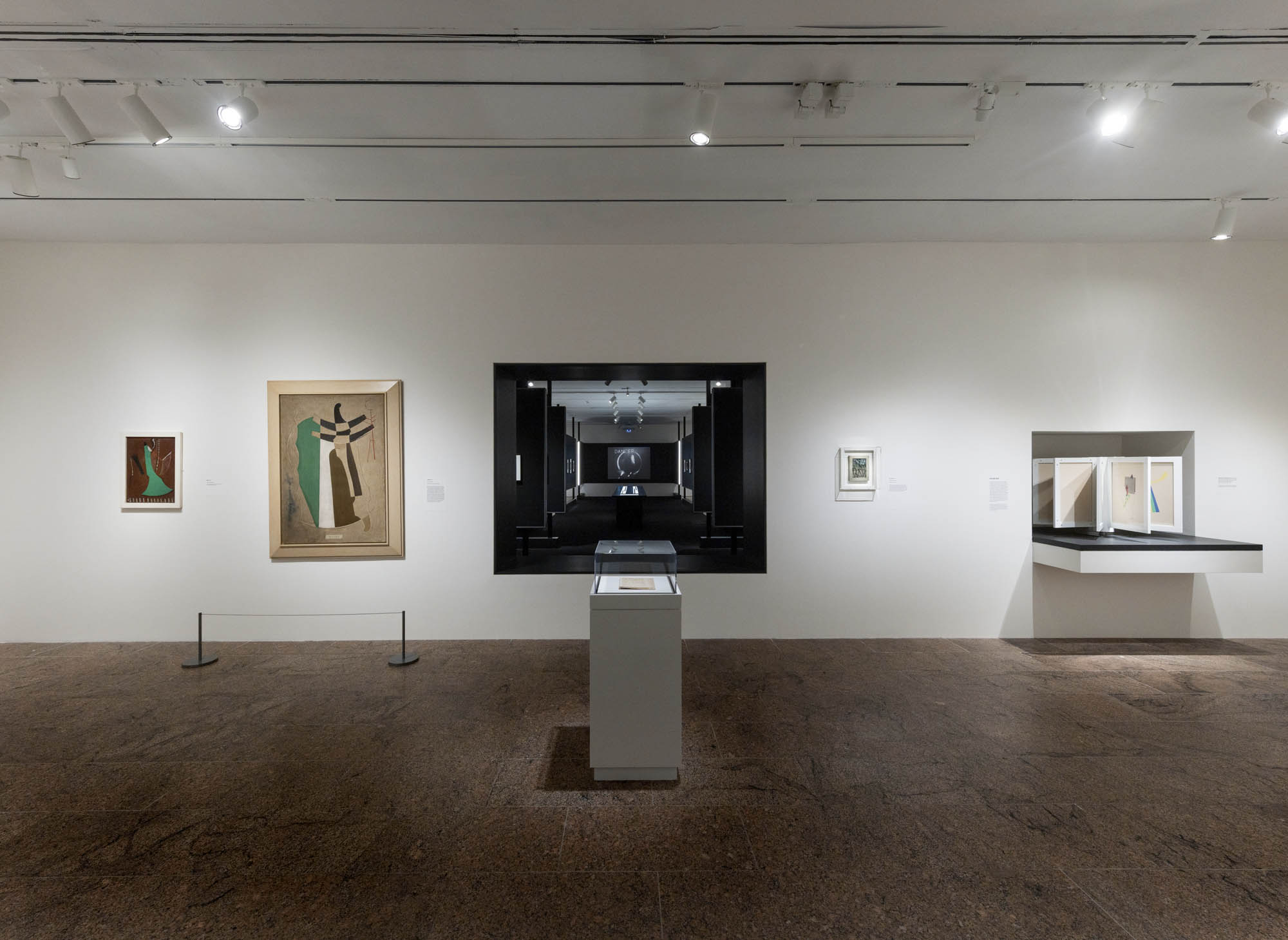
 

Roman. 'Fragments of ancient glass' Late 1st century BCE - early 1st century CE


Roman
Fragments of ancient glass
Late 1st century BCE – early 1st century CE


In addition to collecting intact glass vessels, Moore acquired 410 fragments of ancient glass. These fifteen pieces from cast mosaic bowls display a delightful variety of colours, shapes, and techniques. Moore recognised the differences, though he was more likely enticed by the bright patterns and diverse hues than by their technical features. While many of the pieces are small, almost all were repolished to bring out the vibrant colours and motifs.


'Glass mosaic ribbed bowl fragment' Period: Early Imperial Late 1st century BCE - early 1st century CE


Glass mosaic ribbed bowl fragment
Period: Early Imperial
Late 1st century BCE – early 1st century CE
Culture: Roman
Glass; cast and tooled
1 15/16 x 1 3/16 in. (4.9 x 3cm)
Metropolitan Museum of Art, New York
Edward C. Moore Collection, Bequest of Edward C. Moore, 1891
Public domain


Body fragment. Translucent cobalt blue, purple, and opaque white. Convex curving side tapering downward. Marbled mosaic pattern formed from sections of a single cane in blue ground with irregular white and purple threads and streaks; on exterior, vertical rib, tapering and becoming deeper with rounded outer edge. Polished exterior and edge along rib; pitting of surface bubbles on interior; pitting and dulling on interior; some weathering on jagged edges.


'Glass mosaic ribbed bowl fragment' Period: Early Imperial Late 1st century BCE - early 1st century CE


Glass mosaic ribbed bowl fragment
Period: Early Imperial
Late 1st century BCE – early 1st century CE
Culture: Roman
Glass; cast and tooled
2 3/8 x 1 7/16 in. (6.1 x 3.7cm)
Metropolitan Museum of Art, New York
Credit Line: Edward C. Moore Collection, Bequest of Edward C. Moore, 1891
Public domain


Body fragment. Translucent honey brown, cobalt blue, and opaque white. Slightly outsplayed neck; straight side tapering downward and curving in at bottom. Ribbon mosaic pattern formed from sections of a single cane in brown ground with irregular wavy white and blue threads in parallel lines; on exterior, two broad vertical ribs, fairly widely spaced, with flattened tops and rounded outer edges. Polished interior; pitting of surface bubbles on interior; dulling and patches of creamy iridescent weathering on exterior; some weathering and chipping of jagged edges.


'Glass striped mosaic bowl fragment' Period: Early Imperial Late 1st century BCE - early 1st century CE


Glass striped mosaic bowl fragment
Period: Early Imperial
Late 1st century BCE – early 1st century CE
Culture: Roman
Glass; cast
1 9/16 x 1 1/4 in. (4 x 3.2cm)
Metropolitan Museum of Art, New York
Edward C. Moore Collection, Bequest of Edward C. Moore, 1891
Public domain


Rim fragment. Translucent blue, turquoise blue, purple appearing opaque brick red, yellow, and white, with colourless glass. Applied coil rim with rounded, vertical lip; slightly convex side, curving inward at bottom. Rim in blue with white spiral thread; body decorated with bands slanting slightly from top right to bottom left, forming a pattern: yellow, colourless, yellow, blue with single spiral white thread, blue layered with white, blue, red, yellow, red, blue, blue layered with white, colourless with double spiral yellow threads, turquoise, colourless, and turquoise. Pinprick bubbles; exterior polished, with pitting of surface bubbles; creamy weathering on interior and some iridescent weathering on edges.


'Glass mosaic ribbed bowl fragment' Period: Early Imperial Late 1st century BCE - early 1st century CE


Glass mosaic ribbed bowl fragment
Period: Early Imperial
Late 1st century BCE – early 1st century CE
Culture: Roman
Glass; cast and tooled
1 11/16 x 2 3/16 in. (4.2 x 5.5cm)
Metropolitan Museum of Art, New York
Edward C. Moore Collection, Bequest of Edward C. Moore, 1891
Public domain


Body fragment. Translucent cobalt blue, purple, and opaque white. Slightly outsplayed neck; deep, slightly convex curving side, tapering downward. Composite mosaic pattern formed from polygonal sections of a single cane in a blue ground with a circle of white rods around a white circle surrounding a purple ground with a central white rod; on exterior, two broad vertical ribs, fairly widely spaced, with flattened tops and rounded outer edges, tapering downward. Polished interior; pitting of surface bubbles and iridescent weathering in one chip on interior; dulling and iridescent weathering on exterior and jagged edges.


'Glass network mosaic fragment' Period: Early Imperial Late 1st century BCE - early 1st century CE


Glass network mosaic fragment
Period: Early Imperial
late 1st century BCE – early 1st century CE
Culture: Roman
Glass; cast
15/16 x 1 1/16 in. (2.4 x 2.7cm)
Metropolitan Museum of Art, New York
Edward C. Moore Collection, Bequest of Edward C. Moore, 1891
Public domain


Rim fragment. Translucent blue, opaque yellow, and colourless. Applied coil rim with vertical rounded lip; slightly tapering side. Rim in blue with white spiral thread; body decorated with ten colourless vertical narrow canes, decorated with double spiral yellow threads. Pinprick bubbles; exterior polished, with slight pitting of surface bubbles; dulling and creamy iridescence weathering on interior; jagged, weathered edges.


'Glass ribbed bowl and Glass ribbed bottle' 1st century CE


Glass ribbed bowl and Glass ribbed bottle
1st century CE
Culture: Roman
Metropolitan Museum of Art, New York
Edward C. Moore Collection, Bequest of Edward C. Moore, 1891
Public domain


'Glass ribbed bowl' Period: Early Imperial Mid-1st century CE


Glass ribbed bowl
Period: Early Imperial
Mid-1st century CE
Culture: Roman
Glass; blown, trailed, and tooled
Height: 2 9/16 in. (6.5cm)
Diameter: 3 5/8 in. (9.2cm)
Metropolitan Museum of Art, New York
Edward C. Moore Collection, Bequest of Edward C. Moore, 1891
Public domain


Translucent deep purple; trail in opaque white. Outsplayed rim, with cracked off and ground lip; short concave neck; broad, globular body curving in to slightly convex and thicker bottom. Thick trail applied on bottom and wound spirally eleven times up side to neck, ending in a large blob; side tooled into fourteen widely-spaced, vertical ribs. Intact, except for one chip in rim, and short sections of trail on body missing through weathering; pinprick bubbles and one glassy inclusion on interior of bottom; some pitting, dulling, and iridescence, with creamy weathering covering most of trail on exterior, little weathering on interior.

Examples of this type of glass bowl are known from many sites across the Roman Empire. Those found in the eastern provinces are generally in pale, almost colourless, transparent glass, but those found in the West are made in rich, deep colours and usually have an opaque white trail decoration.

The ribs on these blown-glass vessels appear on earlier cast-glass versions and were likely added for decorative effect. Ribbed bowls and bottles reveal how shapes and styles of blown glass quickly spread throughout the Roman Empire in the first century CE, as a result of the invention of blowing and demand for glass vessels. The bowl is typical of examples found in Italy and the western provinces, while the rarer bottle has parallels from Cyprus.


'Glass ribbed bottle' Period: Early Imperial 1st century CE


Glass ribbed bottle
Period: Early Imperial
1st century CE
Culture: Roman
Glass; blown and tooled
Height: 3 1/2 in. (8.9cm)
Diameter: 3 1/4 in. (8.3cm)
Metropolitan Museum of Art, New York
Edward C. Moore Collection, Bequest of Edward C. Moore, 1891
Public domain


Translucent blue. Everted rim, folded over and in; cylindrical neck, expanding downwards; pushed-in shoulder; squat, globular body; thick, slightly concave bottom. Twelve, regularly-spaced vertical ribs extending from rim down neck and body, ending above bottom, and forming projecting solid fins on side of body. Intact; pinprick bubbles; pitting, dulling, iridescence, and patches of limy encrustation and brownish weathering.


'Glass perfume bottle' Period: Early Imperial 1st century CE


Glass perfume bottle
Period: Early Imperial
1st century CE
Culture: Roman
Glass; blown
Height: 4 1/4 in. (10.8cm)
Diameter: 2 1/2 in. (6.4cm)
Metropolitan Museum of Art, New York
Edward C. Moore Collection, Bequest of Edward C. Moore, 1891
Public domain


Translucent purple. Thin, everted rim; slender cylindrical neck, with slightly bulging profile and tooled indent around base; horizontal shoulder, with rounded edge; carinated body, with side to long, upper body tapering downward and lower side curving in sharply; concave bottom. Body intact, but half of rim missing, with weathered edges; some bubbles; severe pitting and brilliant iridescence.

The free-blowing technique developed by the Romans made glass bottles relatively simple and quick to produce. Moore collected some unusual examples of this common type. The brightly striped container, made by fusing together slices of various colours before the bottle was shaped by blowing, resembles cast mosaic glass. The dark iridescent vessel imitates the shape of expensive cast bottles that incorporated gold leaf.


'Glass garland bowl' Period: Early Imperial, Augustan Late 1st century BCE


Glass garland bowl
Period: Early Imperial, Augustan
Late 1st century BCE
Culture: Roman
Glass; cast and cut
Height: 1 13/16 in. (4.6cm)
Diameter: 7 1/8 in. (18.1cm)
Metropolitan Museum of Art, New York
Edward C. Moore Collection, Bequest of Edward C. Moore, 1891
Public domain


Colourless, translucent purple, translucent honey yellow, translucent cobalt blue, opaque yellow, and opaque white. Vertical, angular rim; convex curving side, tapering downwards; base ring and concave bottom.

Four large segments of colourless, purple, yellow, and blue, and applied to the interior of the bowl at the centre of each segment a hanging garland, comprising an inverted V-shaped white string above a U-shaped swag made up of a mosaic pattern formed from polgonal or circular sections of four different composite canes: one in a yellow ground with a white spiral, a second in a purple ground with yellow rods, the third in a colourless ground with white lines radiating from a central yellow rod, and the fourth in a blue ground a white spiral. The four different canes are arranged in pairs side by side but the order in which they are placed differs in each swag. On interior, a single narrow horizontal groove below rim.

Intact, except for one small chip in rim; pinprick and larger bubbles; dulling, pitting of surface bubbles, faint iridescence on interior, and creamy iridescent weathering on exterior.

This cast glass bowl is a tour-de-force of ancient glass production. It comprises four separate slices of translucent glass – purple, yellow, blue, and colourless – of roughly equal size that were pressed together in an open casting mold. Each segment was then decorated with an added strip of millefiori glass representing a garland hanging from an opaque white cord. Very few vessels made of large sections or bands of differently coloured glass are known from antiquity, and this bowl is the only example that combines the technique with millefiori decoration. As such it represents the peak of the glass worker’s skill at producing cast vessels.

With its exceptional workmanship and design, this cast bowl is the most important ancient glass vessel in Moore’s collection. Few vessels with large sections of coloured glass survive from antiquity, and this is the only intact example that combines the technique with mosaic-inlay decoration. Four separate pieces of translucent glass – purple, yellow, blue, and colourless – of roughly equal size were pressed together in an open casting mold. Each segment was then embellished with mosaic glass representing a garland hanging from a white cord. Glass canes (rods) of four different colour combinations arranged in pairs form the individual swags. Bowls decorated with garlands have been found in Italy, Cyprus, and Egypt.


'Situla' Early 16th century


Situla
Early 16th century
Culture: Italian, Venice (Murano)
Glass, enamelled and gilt
Dimensions: confirmed, glass bowl only: 3 13/16 × 8 × 8 in. (9.7 × 20.3 × 20.3cm)
Confirmed, as mounted, handle raised: 10 5/16 × 8 3/4 × 8 in. (26.2 × 22.2 × 20.3cm)
Metropolitan Museum of Art, New York
Edward C. Moore Collection, Bequest of Edward C. Moore, 1891
Public domain


Influenced by Islamic craftsmen, Venetian glassblowers began making gilt and enamelled vessels as early as the fifteenth century. The decorative scales on this situla resulted from a multi-step process, which entailed reheating the piece a second time after the vessel was blown. The crudely finished handle is most likely not original.

Moore collected several examples of colourful enamelled glass from both the Islamic and Venetian worlds, seeking decorative inspiration for his silver production. Influenced by craftspeople from Islamic lands, Venetian glassblowers started making gilt and enamelled vessels as early as the fifteenth century. The decoration on this situla is the result of a multistep process, which entailed reheating the piece a second time in the furnace. The crudely finished handle is most likely not original.


'Footed vase (Vasenpokal)' c. 1570-1590


Footed vase (Vasenpokal)
c. 1570-1590
Culture: Austrian, Innsbruck
Glass; blown, applied mold-blown, impressed, and milled decoration, engraved, cold-painted, and gilded
12 3/4 × 8 1/2 in. (32.4 × 21.6cm)
Metropolitan Museum of Art, New York
Edward C. Moore Collection, Bequest of Edward C. Moore, 1891
Public domain


This vase is ambitiously ornamented in the Venetian style with engraved decoration and gold, red, and green cold painting. It also shows key characteristics of pieces from the glassworks that served the Innsbruck court in the late sixteenth century. Archduke Ferdinand II of Austria secured skilled glassworkers and raw materials from Venice, famed for its thin and clear glass known as cristallo. Glass was valued for the technical artistry that transformed humble sand, soda ash, and lime into a nearly weightless, translucent object precious enough to be adorned with gold.

Glassware made outside of Venice but in the same style is known as façon de Venise. This incredibly ambitious Austrian example of a footed vase with engraved decoration and gold, red, and green cold-painting likely came from the Innsbruck court glasshouse of Archduke Ferdinand II. At the time Moore purchased this piece, it had several missing pieces and cracks, which are now restored. The cold-painting is extremely well preserved considering the inherently fragile nature of the technique.


'Tankard' 1716


Tankard
1716
Culture: probably South German
Glass; blown, applied and marvered decoration; pewter mount
7 9/16 × 5 1/2 × 4 5/8 in. (19.2 × 14 × 11.7cm)
Metropolitan Museum of Art, New York
Edward C. Moore Collection, Bequest of Edward C. Moore, 1891
Public domain


The shape of this tankard, with its bulbous bottom and flared foot, is typical of German pewter and stoneware vessels. The lid features a crudely engraved symbol of what appears to be carpenter’s tools, suggesting that the piece served as a guild vessel, possibly for a carpenters’ association. Its charm derives from the striking contrast between the rough-hewn pewter mounts and the calligraphic trails of white glass decorating the transparent purple glass body.


'Beaker' Mid-19th century


Beaker
Mid-19th century
Culture: Italian, Venice (Murano)
3 3/8 × 2 5/8 in. (8.6 × 6.7cm)
Metropolitan Museum of Art, New York
Edward C. Moore Collection, Bequest of Edward C. Moore, 1891
Public domain


One of the great Venetian innovations in glassblowing is filigrana. Drawn-out canes of colourless, white, and coloured glass were fused together to create the patterned structure of the vessel. Moore had several examples in his collection. This small beaker of more complex canes with multiple spiralling threads, referred to as filigrana a retorti, was made in Venice.


'Tray Stand' Mid-14th century (after 1342)


Tray Stand
Mid-14th century (after 1342)
Attributed to Egypt or Syria
Brass; hammered, turned, and chased, inlaid with silver, copper, and black compound
Height: 10 1/4 in. (26 cm)
Diameter: 9 5/8 in. (24.4 cm)
Metropolitan Museum of Art, New York
Edward C. Moore Collection, Bequest of Edward C. Moore, 1891
Public domain


Similar stands were widely employed in the Mamluk period to host large rounded metal trays, on which fruits and other food were displayed.

The cup motif inlaid with copper stands out among the richly decoration of this tray. It was a blazon of the cupbearer, one of the differentiated offices of the court of the Mamluk sultans. The inscription reads Husain, son of Qawsun, who was cupbearer to Muhammad b. Qalawun (al-Malik al-Nasir) (1294-1340/41). Despite having been ousted after the sultan’s death, Qawsun’s prestige must have endured, as his sons continued to use his emblem of the ringed cup set within a divided shield.

This work consists of two truncated cones soldered together with a central ring and a flared foot and rim. It belongs to a group of medieval inlaid brass works from the Islamic world that are commonly identified as tray stands, and which supported circular metal platters that displayed and served food. French collectors introduced treasures like this one to the art market in Paris beginning in the 1860-1870s. Moore was likely drawn to them for the visual effects of the inlaid mixed metalwork.


'Tray Stand' Mid-14th century (after 1342) (detail)


Tray Stand (detail)
Mid-14th century (after 1342)
Brass; hammered, turned, and chased, inlaid with silver, copper, and black compound
Height: 10 1/4 in. (26 cm)
Diameter: 9 5/8 in. (24.4 cm)
Metropolitan Museum of Art, New York
Edward C. Moore Collection, Bequest of Edward C. Moore, 1891
Public domain


'Umar ibn al-Hajji Jaldak (maker) 'Ewer with Inscription, Horsemen, and Vegetal Decoration' Dated 623 AH/1226 CE


‘Umar ibn al-Hajji Jaldak (maker)
Ewer with Inscription, Horsemen, and Vegetal Decoration
Dated 623 AH/1226 CE
Brass; inlaid with silver and black compound
Height: 14 1/2 in. (36.8 cm)
Width: 12 1/16 in. (30.6 cm)
Diameter: 8 3/8 in. (21.3 cm)
Metropolitan Museum of Art, New York
Edward C. Moore Collection, Bequest of Edward C. Moore, 1891
Public domain


This lavishly decorated object is inscribed around the neck: “Made by ‘Umar ibn al-Hajji Jaldak, the apprentice of Ahmad al-Dhaki al-Naqqash al-Mawsili in the year 623 [1226 A.D.].” Ahmad al-Mawsili, originally from Mosul in Upper Mesopotamia, was a famous metalworker who had a number of pupils.

Moore was particularly interested in lavish works made by mixing and inlaying metals, techniques that artists in the Middle East had developed to a high art centuries earlier for the upper echelons of society. Blending complex geometric and vegetal compositions with fine calligraphy or expressive imagery, they created polychromatic effects comparable to those achieved in painting. The objects here hail from three different Islamic regions around 1100-1400, when the art form flourished.

The ewer is among the earliest dated examples of a prominent school of inlaid metalwork known as “al-Mawsili” (from Mosul) that thrived during the thirteenth and fourteenth centuries, first in Mosul and later in centres such as Cairo and Damascus. Their work often features thin foils of precious metals inlaid on a gleaming brass body. This example includes detailed scenes of the courtly activities of an ideal ruler and interlacing medallions.


'Umar ibn al-Hajji Jaldak (maker) 'Ewer with Inscription, Horsemen, and Vegetal Decoration' Dated 623 AH/1226 CE (detail)


‘Umar ibn al-Hajji Jaldak (maker)
Ewer with Inscription, Horsemen, and Vegetal Decoration (detail)
Dated 623 AH/1226 CE
Brass; inlaid with silver and black compound
Height: 14 1/2 in. (36.8 cm)
Width: 12 1/16 in. (30.6 cm)
Diameter: 8 3/8 in. (21.3 cm)
Metropolitan Museum of Art, New York
Edward C. Moore Collection, Bequest of Edward C. Moore, 1891
Public domain


'Inscribed Pen Box' Made in early - late 14th century; altered shortly before mid-15th century

'Inscribed Pen Box' Made in early - late 14th century; altered shortly before mid-15th century


Inscribed Pen Box
Made in early – late 14th century; altered shortly before mid-15th century
Probably originally from Northern Iraq or Western Iran. Attributed to Afghanistan, probably Herat
Brass; engraved and inlaid with silver, gold, and black compound
Length: 11 1/2 in. (29.2cm)
Height: 2 3/8 in. (6cm)
Width: 2 1/2 in. (6.4cm)
Metropolitan Museum of Art, New York
Edward C. Moore Collection, Bequest of Edward C. Moore, 1891
Public domain


Luxurious writing tools inlaid with precious metals reflected the literary culture of the upper classes from Cairo to Herat, including a respect for the transmission of knowledge. This pen box with its combination of techniques – filigree in relief on the lid and classical inlay on the body – made a fitting acquisition for a collector with a passion for inlaid metal.

This brass pen box was made in the late fourteenth century but significantly altered by the mid-fifteenth century. The interior decoration of a small-scale pattern of roundels with flying birds and running motifs provides a glimpse into the original decoration of the box. After the exterior surface was burnished to remove this original decoration, new patterns, including a series of interlocking medallions and cartouches and incised lotus blossoms, were set against a cross-hatched background. The inkwell and surrounding insert were added at a yet later date. The inscriptions in thuluth and naskh scripts include poetic verses and good wishes to the owner.


'Inscribed Pen Box' Made in early - late 14th century; altered shortly before mid-15th century

'Inscribed Pen Box' Made in early - late 14th century; altered shortly before mid-15th century


Inscribed Pen Box
Made in early – late 14th century; altered shortly before mid-15th century
Probably originally from Northern Iraq or Western Iran. Attributed to Afghanistan, probably Herat
Brass; engraved and inlaid with silver, gold, and black compound
Length: 11 1/2 in. (29.2cm)
Height: 2 3/8 in. (6cm)
Width: 2 1/2 in. (6.4cm)
Metropolitan Museum of Art, New York
Edward C. Moore Collection, Bequest of Edward C. Moore, 1891
Public domain


'Plate with Vegetal Decoration in a Seven-pointed Star' c. 1655-1680


Plate with Vegetal Decoration in a Seven-pointed Star
c. 1655-1680
Made in Iran, Kirman
Stonepaste; polychrome-painted under transparent glaze
H. 2 1/2 in. (6.4 cm)
Diam. 18 1/4 in. (46.4cm)
Metropolitan Museum of Art, New York
Edward C. Moore Collection, Bequest of Edward C. Moore, 1891
Public domain


Moore collected ceramics from Iran, which during the 1870s and 1880s were shipped in great quantities to London, as well as a few pieces from the Ottoman lands (Iznik), Egypt, Syria, and Spain. The large platter from seventeenth-century Kirman, Iran, combines a central star with densely applied Chinese-inspired motifs and colours, features that Moore favoured and incorporated into his own designs.


'Dish' c. 1500


Dish
c. 1500
Spanish, Valencia
Tin-glazed and luster-painted earthenware
Irregular diameter: 3 1/8 × 18 7/8 in. (7.9 × 47.9cm)
Metropolitan Museum of Art, New York
Edward C. Moore Collection, Bequest of Edward C. Moore, 1891
Public domain


Moore clearly appreciated lusterware, with its distinctive shiny metallic surfaces. He owned a number of pieces; this dish and other examples from Spain are among the first works he collected. Braseros typically feature radial designs filled with dense patterns, and often present a heraldic emblem – here, a rising eagle, symbol of power and royalty across the Mediterranean.

Tin-glazed earthenware, of which lusterware is one type, was developed in the Middle East in the ninth and tenth centuries to imitate the porcelains produced in China. The opaque white glaze concealed the clay body, which could range from pale buff to brick red, allowing for brilliant effects created by painting the white surface with metal oxides that fired to a range of colours. This technique, as well as the use of metallic luster – an iridescent, coppery painted glaze – spread throughout the Muslim world, arriving among the potters of Valencia in the thirteenth century. The so-called Hispano-Moresque lusterware, with its fusion of Islamic and Gothic styles and motifs, often in shaped imitating those of metal vessels, was treasured by the elite in Spain during the fifteenth century and exported to the courts of Europe. The Valencian industry declined in the late sixteenth century, as colourful Italian Renaissance maiolica gained in popularity among the fashionable and as Spanish centres were founded to produce versions of its pictorial forms. Adding to this decline was the expulsion from Valencia in 1609 of all the remaining Moriscos (Muslims converted to Christianity), though Christian potters reestablished the industry shortly thereafter.

On the front of the dish, Manises lusterware braseros were decorated with radial designs and filled with dense, regularised vegetal motifs and other patterns, all organised around a central device. On the back, they were also luster-painted, usually with larger-scale designs and often with more exuberance. Puncture holes in the rims indicate that such dishes were sometimes displayed on walls when not in use.


'Footed Bowl with Eagle Emblem' Mid-13th century


Footed Bowl with Eagle Emblem
Mid-13th century
Attributed to probably Syria
Glass; dip-moulded, blown, enamelled, and gilded
Height: 7 3/16 in. (18.3cm)
Maximum Diameter: 8 in. (20.3cm)
Diameter of Base: 5 in. (12.7cm)
Metropolitan Museum of Art, New York
Edward C. Moore Collection, Bequest of Edward C. Moore, 1891
Public domain


Along with gilded examples, the most treasured glass objects in the Islamic world were enamelled ones. Developed during the thirteenth and fourteenth centuries in Syria and Egypt under the Ayyubids and Mamluks, they were rediscovered in the 1800s and copied extensively by Western manufactories. When Moore was collecting, this vessel was already celebrated among collectors, dealers, and artists. It was displayed at the 1867 Paris Exposition together with a glass copy by renowned French glassmaker Philippe Joseph Brocard. Moore acquired it from a leading French collector and scholar of Islamic glass, Charles Schefer. After it entered The Met, the bowl was lauded as “the gem of the collection” and “the most beautiful as well as valuable” example of enamelled glass.

Vessels of this characteristic shape, a rounded bowl with a pronounced, tall foot, were sometimes called tazze and were thought to evoke Christian chalices. They became popular in the Islamic eastern Mediterranean during the twelfth and thirteenth centuries, a period of active exchange between the Islamic and Christian worlds. This piece is among the earliest known examples of enamelled glass. Its ornament and iconography is part of the “courtly cycle” referring to the lifestyle of the rulers and elites of medieval Islamic societies from Egypt to Anatolia.

The design features four circular medallions with a bird of prey. While no particular ruler or officer can be associated with the emblem, such birds of prey were common symbols of power, kingship, and to a certain extent, protection in both Muslim and Christian contexts. Flanking the inscription band and on the foot, rows of dogs chasing hares evoke the hunt, while a frieze of seated musicians and feasting figures replaces part of the inscription. Both the hunt and the feast pertain to the courtly cycle and evoke ideals of kingship.


'Footed Bowl with Eagle Emblem' Mid-13th century (detail)


Footed Bowl with Eagle Emblem (detail)
Mid-13th century
Attributed to probably Syria
Glass; dip-moulded, blown, enamelled, and gilded
Height: 7 3/16 in. (18.3cm)
Maximum Diameter: 8 in. (20.3cm)
Diameter of Base: 5 in. (12.7cm)
Metropolitan Museum of Art, New York
Edward C. Moore Collection, Bequest of Edward C. Moore, 1891
Public domain


'Mosque Lamp' 14th century


Mosque Lamp
14th century
Probably from Egypt (Cairo) or Syria
Glass; blown, enamelled, and gilded
Height: 12 1/2 in. (31.8cm)
Maximum Diameter: 8 13/16 in. (22.4cm)
Diameter with handles: 9 1/8 in. (23.2 cm)
Metropolitan Museum of Art, New York
Edward C. Moore Collection, Bequest of Edward C. Moore, 1891
Public domain


Enamelled and gilded glass objects from Syria and Egypt are among the most sophisticated crafts created during the Middle Ages. This example has a characteristic shape that was used for portable lamps from Iran to Egypt. During Mamluk rule, enamelled “mosque lamps” were commissioned for many mosques, madrasas (public schools), tombs, and other buildings in the capital city of Cairo. In the nineteenth century, French individuals established in Cairo introduced treasures like these to the European market. Moore was likely intrigued by the lamp’s colours, sheen, and detailed ornamentation.

One of the conventions of Mamluk mosque lamp decoration was to execute one inscription band in blue and the other in reserve against a blue ground. On this lamp, the neck and foot repeat the phrase al‑’alim (“The Wise”), punctuated by an as yet unassigned emblem, while the body bears a formulaic dedicatory inscription but no name.


'Swan-Neck Bottle (Ashkdan)' Probably 19th century


Swan-Neck Bottle (Ashkdan)
Probably 19th century
Attributed to Iran
Glass; mold-blown, tooled
Height: 15 1/8 in. (38.4 cm)
Maximum Diameter: 4 7/16 in. (11.2cm)
Metropolitan Museum of Art, New York
Edward C. Moore Collection, Bequest of Edward C. Moore, 1891
Public domain


During Moore’s lifetime, European and American collectors were particularly drawn to glass made fairly recently in Iran or by the Ottomans at Beykoz in Istanbul. Moore and other collectors purchased many of these readily available and affordable wares and donated them to European and American museums. Moore’s eagerness to explore new shapes is evident in his later glass holdings. He often collected multiple examples of the same type, such as rosewater sprinklers, in different shapes and colours. Many were available for study at his Prince Street manufactory and a few directly inspired his designs.

The variety of forms and colours featured in this selection show the eclectic approach of Iranian glassmakers and their tendency to look both locally and globally for inspiration. The Qajar vessels’ shapes either follow Iranian metal and ceramic models or echo Venetian glass. For instance, the swan-neck bottle mimics Venetian glass, while the gulabpash and the ewer likely inherited their forms from long-standing design traditions in different media.


'Two Rosewater Sprinklers' Late 18th - 19th century


Two Rosewater Sprinklers
Late 18th – 19th century
Probably from Turkey, Beykoz, Istanbul
Glass; blown
Metropolitan Museum of Art, New York
Edward C. Moore Collection, Bequest of Edward C. Moore, 1891
Public domain


'Rosewater Sprinkler' Late 18th - 19th century


Rosewater Sprinkler
Late 18th – 19th century
Probably from Turkey, Beykoz, Istanbul
Glass; blown
Height: 8 3/4 in. (22.2cm)
Width: 3 3/8 in. (8.5cm)
Diameter: 2 3/8 in. (6cm)
Metropolitan Museum of Art, New York
Edward C. Moore Collection, Bequest of Edward C. Moore, 1891
Public domain


This bottle is typical of the objects that were displayed in open niches in reception rooms of Ottoman-period upper-class Syrian homes.

During Moore’s lifetime, European and American collectors were particularly drawn to glass made fairly recently in Iran or by the Ottomans at Beykoz in Istanbul. Moore and other collectors purchased many of these readily available and affordable wares and donated them to European and American museums. Moore’s eagerness to explore new shapes is evident in his later glass holdings. He often collected multiple examples of the same type, such as rosewater sprinklers, in different shapes and colours. Many were available for study at his Prince Street manufactory and a few directly inspired his designs.

These two marbled Ottoman sprinklers reveal Moore’s keen eye for nuances in glassmaking techniques and patterns. In one, a mixture of red and brown opaque glass served as the base material, and the spiral marbling was created as the body was blown and turned into its distinctive onion-like form with cylindrical neck. In the other, a hot gather of greenish iridescent glass was rolled in crushed red glass and then blown into the final shape. This led to the patchy marbled pattern on the body that develops into alternating lines on the elongated neck.


'Rosewater Sprinkler' Late 18th - 19th century


Rosewater Sprinkler
Late 18th – 19th century
Probably from Turkey, Beykoz, Istanbul
Glass; blown
Height: 7 3/16 in. (18.2cm)
Maximum Diameter: in. 2 13/16in. (7.2cm)
Metropolitan Museum of Art, New York
Edward C. Moore Collection, Bequest of Edward C. Moore, 1891
Public domain


'Jar' 14th century


Jar
14th century
Attributed to Syria
Stonepaste; polychrome-painted under transparent glaze
Height: 13 1/4 in. (33.7cm)
Maximum Diameter: 9 1/4 in. (23.5cm)
Metropolitan Museum of Art, New York
Edward C. Moore Collection, Bequest of Edward C. Moore, 1891
Public domain


This pear-shaped jar is characteristic of medieval ceramics from the eastern Mediterranean. The body is dominated by a cursive inscription wishing “Lasting glory, abundant power, and good fortune.” Messages on utilitarian vessels were intended to protect the owner as well as the contents. The blue-and-white colour palette derives from Chinese porcelain, which Mamluk rulers in Egypt and Syria collected for use during festive and ceremonial occasions or for diplomatic gifts. This jar thus reflects the taste of the elite, adjusted for a broader middle-class market.

Underglaze painting in blue and black on a white stonepaste body is characteristic of Mamluk production in Syria. The main decoration on this jar is the large inscription in thuluth: “Lasting glory, increasing prosperity, and good fortune.”


'Vase in the Form of a Double Gourd' Second half of the 17th century


Vase in the Form of a Double Gourd
Second half of the 17th century
Attributed to Iran
Stonepaste; painted under transparent glaze
Height: 5 1/2 in. (14cm)
Diameter: 2 3/4 in. (7cm)
Metropolitan Museum of Art, New York
Edward C. Moore Collection, Bequest of Edward C. Moore, 1891
Public domain


In the seventeenth century, as the Ming dynasty declined in China, Iranian potters in Kirman and Nishapur increased the production of blue-and-white stonepaste ceramics for domestic use and export. Some of these wares closely follow Chinese prototypes, while others, such as this small gourd-shaped vase, show ideas developed by Chinese potters used as a catalyst for distinctive creations. One side of the vase depicts a sketchily drawn walking crane in a Chinese style, while on the other side decorative rock forms, vegetation, and other floating elements follow Iranian tradition. The result resonates with Moore’s diverse collecting interests and the hybrid designs they inspired.


'Bottle' Late 17th century


Bottle
Late 17th century
Made in Iran
Stonepaste; luster-painted on opaque blue glaze, with silver fitting
Height: 11 in. (27.9cm)
Maximum Diameter: 6 1/2 in. (16.5cm)
Metropolitan Museum of Art, New York
Edward C. Moore Collection, Bequest of Edward C. Moore, 1891
Public domain


An invention of the Islamic world, lusterware ceramics have distinctive shiny metallic surfaces that particularly appealed to Moore. An early inventory of the Moore collection suggests that the bottle may have been acquired from the Castellani Collection, evidence of Moore’s engagement with networks of European collectors. To compensate for breakage, a silver mount and lid with embossed decoration and niello were added to this piece at some point. While decorated in an “Islamic” style, the mount was most likely made in the West, in either Europe or North America.

Very few pieces of Iranian lusterware survive from the fifteenth and sixteenth centuries, but this technique was revived in the seventeenth century. During this period, lusterware was produced in a relatively limited range of shapes, including elegant bottles, such as the one here, as well as dishes, bowls, cups, ewers and sand-shakers. This bottle may have been used for wine, and has a molded, pear-shaped body with a long neck, and is covered with a silver fitting and sealed with a silver top.


'Bottle' Late 17th century


Bottle
Late 17th century
Attributed to Iran
Stonepaste; luster-painted on yellow glaze ground with cobalt blue glaze
Height: 15 in. (38.1cm)
Maximum Diameter: 5 1/4 in. (13.3cm)
Metropolitan Museum of Art, New York
Edward C. Moore Collection, Bequest of Edward C. Moore, 1891
Public domain


This colourful lusterware bottle in yellow, ruby, and blue tones depicts myriad motifs, such as trees, flowering plants growing out of a grassy ground, birds, and lush vegetation with sinuous vines, poppy flowers, and a large iris. The combination of colours, sheen, and dense decoration aligns with Moore’s design sensibilities.


Edo period (1615-1868) 'Inrō with Stylised Flower Patterns in Interconnected Roundels' 18th century


Edo period (1615-1868)
Inrō with Stylised Flower Patterns in Interconnected Roundels
18th century
Culture: Japan
Inrō; four cases; lacquered wood with gold, silver, yellow, and red togidashimaki-e, mother-of-pearl inlay on black lacquer ground; ojime: malachite bead; netsuke: openwork (ryūsa); ivory
Height: 2 7/8 in. (7.3cm)
Width: 2 1/16 in. (5.2cm)
Depth: 7/8 in. (2.2cm)
Metropolitan Museum of Art, New York
Edward C. Moore Collection, Bequest of Edward C. Moore, 1891
Public domain


The rare, early example in tortoiseshell was made at the beginning of the Edo period, when inrō were first developed.


Edo period (1615-1868) 'Inrō with Shells and Seaweeds amid Rocks and Waves' 17th-18th century


Edo period (1615-1868)
Inrō with Shells and Seaweeds amid Rocks and Waves
17th-18th century
Culture: Japan
Inrō; four cases; lacquered wood, gold and silver takamaki-e, hiramaki-e, togidashimaki-e, cutout gold foil application, silver inlay on gold ground; metal cord runners; ojime: copper with mixed-metal inlay and gilded details; netsuke: carved ivory
Height: 3 1/16 in. (7.8cm)
Width: 2 1/2 in. (6.3cm)
Depth: 1 in. (2.5cm)
Metropolitan Museum of Art, New York
Edward C. Moore Collection, Bequest of Edward C. Moore, 1891
Public domain


Meiji period (1868-1912) 'Inrō with Lotus and Crab (obverse); Lotus and Tadpole (reverse)' Second half 19th century


Meiji period (1868-1912)
Inrō with Lotus and Crab (obverse); Lotus and Tadpole (reverse)
Second half 19th century
Culture: Japan
Inrō; four cases; wood with gold and silver takamaki-e, hiramaki-e, lead, mixed-metal inlay; ojime: tadpoles in a stream; copper alloy with mixed-metal inlays; netsuke: turtle in a lotus leaf; carved ivory with gilded copper
Height: 3 1/16 in. (7.7cm)
Width: 1 15/16 in. (5cm)
Depth: 1 in. (2.5cm)
Metropolitan Museum of Art, New York
Edward C. Moore Collection, Bequest of Edward C. Moore, 1891
Public domain


Edo period (1615-1868) 'Inrō with Butterflies and Pampas Grass' Mid-19th century


Edo period (1615-1868)
Inrō with Butterflies and Pampas Grass
Mid-19th century
Culture: Japan
Inrō; three cases; lacquered wood with cherry bark, gold and silver hiramaki-e, gold and silver foil application; ojime: semiprecious stone bead; netsuke: Chinese boy (karako) with covered brazier; carved wood with red lacquer
Height: 3 3/16 in. (8.1cm)
Width: 1 15/16 in. (5cm)
Depth: 1 in. (2.5cm)
Metropolitan Museum of Art, New York
Edward C. Moore Collection, Bequest of Edward C. Moore, 1891
Public domain


Some inrō likely served as inspiration for Tiffany design elements: the butterflies here are similar to those populating a colourful silver tray nearby, while the wisteria pattern could have inspired the silver vase embellished with the same motif.


Meiji period (1868-1912) 'Sake Bottle (Tokkuri)' Mid-19th century


Meiji period (1868-1912)
Sake Bottle (Tokkuri)
Mid-19th century
Porcelain with overglaze enamel, gold and silver hiramaki-e (Kyoto ware)
Height: 6 in. (15.2cm)
Diameter: 2 3/4 in. (15.2 × 7cm)
Diameter of rim: 7/8 in. (2.2cm)
Diameter of base: 2 in. (5.1cm)
Metropolitan Museum of Art, New York
Edward C. Moore Collection, Bequest of Edward C. Moore, 1891
Public domain


The small porcelain sake bottle appears to be made of wood covered in lacquer. Its dark brown glaze, mimicking a black lacquer surface, is embellished with a gold and silver “sprinkled picture” (maki-e) bird-and-flower composition. The design may be based on a traditional pattern showing a warbler on a plum tree, an auspicious symbol of the new year that refers to the “First Song of Spring” (Hatsune) chapter of The Tale of Genji. Moore and his team designed a tea and coffee set around 1870-1875, on view nearby, that incorporates a similar composition.


Meiji period (1868-1912) 'Tea Caddy (Natsume)' Second half 19th century


Meiji period (1868-1912)
Tea Caddy (Natsume)
Second half 19th century
Culture: Japan
Stoneware with polychrome overglaze enamels and gold
Height: 3 in. (7.6cm)
Diameter: 3 in. (7.6cm)
Metropolitan Museum of Art, New York
Edward C. Moore Collection, Bequest of Edward C. Moore, 1891
Public domain


The surface of the unusual ceramic tea caddy shows fish and crabs behind a fishing net. The net pattern may have been inspired by lacquer tea caddies. Both the technique and the playful design bear resemblances to compositions by Makuzu Kōzan, one of the master potters of the period. Fish, crabs, and lobsters often appear on Moore’s silverwares. Examples include a creamer and sugar bowl designed in 1876 and a rectangular vase made in 1877 – both featuring a scene with fish and seaweed – and a chocolate pot from 1879 decorated with a lobster.


Meiji period (1868-1912) 'Brush Holder (Fude-zutsu)' Early 1870s


Meiji period (1868-1912)
Brush Holder (Fude-zutsu)
Early 1870s
Culture: Japan
Cast iron with relief inlay in silver, gold and shibuichi
Height: 6 3/4 in. (17.1cm)
Diameter of rim: 3 3/8 in. (8.6cm)
Diameter of foot: 4 in. (10.2cm)
Metropolitan Museum of Art, New York
Edward C. Moore Collection, Bequest of Edward C. Moore, 1891
Public domain


On the patinated cast-iron surface of this vessel, various metal alloys are inlaid in relief to create effects of light and colour. Moonlight seems to glisten on the web executed in shibuichi (an alloy of roughly three parts copper and one part silver) that fans out over the cylindrical form. A spider, in patinated shibuichi, scurries toward the outer edge of the web, where a dragonfly of inlaid copper alloy and silver with gilt copper eyes is caught on the other side. A Tiffany vase displayed nearby closely replicates this decorative scheme. In response to sociocultural changes in the 1870s, Japanese craftspeople began to produce fine ornamental wares like this one with a focus on the Western market.


Edo period (1615–1868) 'Buddhist Altar Cloth (Uchishiki)' First half 19th century


Edo period (1615–1868)
Buddhist Altar Cloth (Uchishiki)
First half 19th century
Culture: Japan
Twill-weave silk with supplementary weft patterning
28 x 27 in. (71.12 x 68.58cm)
Metropolitan Museum of Art, New York
Edward C. Moore Collection, Bequest of Edward C. Moore, 1891
Public domain


The Buddhist altar cloth (uchishiki) serves to cover the tops of tables and altars, especially the one placed in front of the temple’s main icon. This example here is decorated with lotus flowers in a roundel surrounded by large geometric patterns (hakogata) on a dark blue ground. Lotus flowers are revered in Japan for their ability to rise from muddy waters to become beautiful blossoms, and they are commonly associated with purity and the Buddhist achievement of enlightenment.


Edo period (1615–1868) 'Fragment' 18th century


Edo period (1615–1868)
Fragment
18th century
Culture: Japan
Twill-weave silk with brocading in silk and supplementary weft patterning in silk (karaori)
Dimensions: Overall (a): 12 1/4 x 11 1/4 in. (31.1 x 28.6cm)
Overall (b): 11 x 9 1/4 in. (27.9 x 23.5cm)
Overall (c): 11 x 8 1/4 in. (27.9 x 21cm)
Overall (d): 11 1/2 x 2 1/4 in. (29.2 x 5.7cm)
Overall (f): 31 x 11 in. (78.7 x 27.9cm)
Metropolitan Museum of Art, New York
Edward C. Moore Collection, Bequest of Edward C. Moore, 1891
Public domain


This textile fragment features a pattern with a stylised fence or lattice and moonflowers (yūgao; literally, “evening faces”) of various colours against a white ground. Originally, it may have been part of a Noh theater costume. The moonflower plays a role in chapter 4 of The Tale of Genji, “The Lady of the Evening Faces.” Collecting textile samples as a kind of visual dictionary of motifs and a resource for technical analysis was common among Western collectors in Moore’s era.


Yuan dynasty (1271-1368) 'Incense Box' 14th century

Yuan dynasty (1271-1368) 'Incense Box' 14th century


Yuan dynasty (1271-1368)
Incense Box
14th century
Culture: China
Carved lacquer
Height: 1 1/4 in. (3.2cm)
Diameter: 3 3/8 in. (8.6cm)
Metropolitan Museum of Art, New York
Edward C. Moore Collection, Bequest of Edward C. Moore, 1891
Public domain


This box exemplifies a sophisticated type of Chinese carved lacquer known as tixi, a term referring to the marbled appearance of its layers. The elegant design and skilful carving distinguish the box as the work of a master, and the signature of the fourteenth-century master Yang Mao is incised on the underside. Moore’s small but carefully selected collection of Chinese lacquer reflects the designer’s refined taste for the art form.


Meiji period (1868-1912) 'Plate' Mid-19th century


Meiji period (1868-1912)
Plate
Mid-19th century
Culture: Japan
Copper
Height: 7/8 in. (2.2cm)
Diameter: 12 in. (30.5cm)
Metropolitan Museum of Art, New York
Edward C. Moore Collection, Bequest of Edward C. Moore, 1891
Public domain


During the Edo and Meiji periods, several Japanese artists experimented with trompe l’oeil effects by simulating the appearance of one material with another. This plate’s copper body is covered with enamels to create a rich, shiny surface recalling the texture of ceramics. The eggplant motif is executed in gold and silver maki-e, a lacquer technique. In addition to its unusual combination of materials, the vessel has a shape that resembles that of a Western plate. A similar inquisitiveness and interest in bringing together East and West can also be found in Moore’s methods.


Edo (1615-1868) or Meiji period (1868-1912) 'Basketwork Box with Ivy' Mid-19th century


Edo (1615-1868) or Meiji period (1868-1912)
Basketwork Box with Ivy
Mid-19th century
Culture: Japan
Bamboo, and lacquer, with gold and silver hiramaki-e with red lacquer accents
Height: 1 1/2 in. (3.8cm)
Width: 5 1/2 in. (14cm)
Length: 3 7/8 in. (9.8cm)
Metropolitan Museum of Art, New York
Edward C. Moore Collection, Bequest of Edward C. Moore, 1891
Public domain


The lid of this document box features fine strips of bamboo covered in lacquer and then decorated with a stylised autumn ivy vine design. A similar ivy motif appears on a silver Tiffany teapot (combined with a dragonfly) made about 1878; an early inventory suggests that Moore may have acquired this box that year at the Paris Exposition. A box like this is also mentioned in discussions of the colours Tiffany aspired to create in the Conglomerate Vase on view nearby.


Edo (1615-1868) or Meiji period (1868-1912) 'Basketwork Box with Ivy' Mid-19th century


Edo (1615-1868) or Meiji period (1868-1912)
Basketwork Box with Ivy
Mid-19th century
Culture: Japan
Bamboo, and lacquer, with gold and silver hiramaki-e with red lacquer accents
Height: 1 1/2 in. (3.8cm)
Width: 5 1/2 in. (14cm)
Length: 3 7/8 in. (9.8cm)
Metropolitan Museum of Art, New York
Edward C. Moore Collection, Bequest of Edward C. Moore, 1891
Public domain


'Knife Handle (Kozuka) With Lotus Motif' (蓮図小柄) 19th century


Knife Handle (Kozuka) With Lotus Motif (蓮図小柄)
19th century
Culture: Japanese
Copper, copper-silver alloy (shibuichi), gold
Length: 3 7/8 in. (9.8cm)
Width: 9/16 in. (1.4cm)
Thickness: 1/4 in. (0.6cm); Wt. 1 oz. (28.3 g)
Metropolitan Museum of Art, New York
Edward C. Moore Collection, Bequest of Edward C. Moore, 1891
Public domain


Moore amassed a study collection of nearly 150 Japanese sword fittings along with complete mounts and blades for Tiffany’s designers to consult. A selection of the sword guards (tsuba) and utility knife handles (kozuka) is presented here. Regarded as autonomous works of art, the component parts of Japanese sword mounts were often signed by makers. Embellished with a wide range of decorative techniques, they typically feature representations of the natural world as well as depictions of social customs, scenes from popular stories, and religious symbols. They served as sources of inspiration for many of Tiffany’s Japanesque mixed-metal wares, as seen throughout this gallery.

The upper plate of this kozuka is of copper and carved in high relief, representing lotus, whose leaves and seeds are highlighted in gold. The reverse is of shibuichi, polished, and decorated with file marks (yasurime).

A kozuka is a handle of a by-knife that is part of a sword mounting. It is kept in a slot on the reverse of a katana scabbard, often with a matching kōgai (hairdressing tool).


Minzan (artist) Edo (1615-1868) or Meiji period (1868-1912) 'Mosquito Smoker (Katori)' First half 19th century


Minzan (artist)
Edo (1615-1868) or Meiji period (1868-1912)
Mosquito Smoker (Katori)
First half 19th century
Culture: Japan
Earthenware with white lead glaze and polychrome overglaze enamels (Sanuki ware)
Height: 11 1/8 in. (28.3cm)
Diameter: 3 in. (7.6cm)
Width of base: 4 1/4 in. (7.6cm)
Metropolitan Museum of Art, New York
Edward C. Moore Collection, Bequest of Edward C. Moore, 1891
Public domain


Mosquito smokers were filled with plant material that was burned and then doused with water to produce insect-repelling smoke. The iris, a symbol of early summer in Japan, also refers to an episode in a famed tenth-century literary work The Tales of Ise. An inscription on the underside indicates that Moore purchased the smoker from his son William, an early dealer of Asian decorative arts.


Makuzu Kōzan I (Miyagawa Toranosuke) (Japanese, 1842-1916) Meiji period (1868–1912) 'Jar (Mizusashi)' 1870-1880s


Makuzu Kōzan I (Miyagawa Toranosuke) (Japanese, 1842-1916)
Meiji period (1868–1912)
Jar (Mizusashi)
1870-1880s
Culture: Japan
Stoneware with polychrome overglaze enamels and gold, wood lid, ivory knob (Makuzu ware)
Height: 5 5/8 in. (14.3cm)
Diameter: 6 1/4 in. (5.9cm)
Height (with cover and finial): 7 1/2 in. (19.1cm)
Metropolitan Museum of Art, New York
Edward C. Moore Collection, Bequest of Edward C. Moore, 1891
Public domain


A star of the Moore ceramic collection, this freshwater jar features a whimsical composition with a procession of grasshoppers and a few wasps. The grasshoppers, carrying flowers as weapons or insignia, accompany an insect cage that echoes the palanquin of a high-ranking lady in a wedding procession or feudal lord’s procession. Inspired by paintings of the same subject, the theme must have appealed to Moore, who gravitated to anthropomorphic insects and animals. The Makuzu workshop exhibited a wide range of ceramics at the Philadelphia Centennial Exhibition of 1876.


Makuzu Kōzan I (Miyagawa Toranosuke) (Japanese, 1842-1916) Meiji period (1868–1912) 'Jar (Mizusashi)' 1870-1880s (detail)


Makuzu Kōzan I (Miyagawa Toranosuke) (Japanese, 1842-1916)
Meiji period (1868–1912)
Jar (Mizusashi) (detail)
1870-1880s
Culture: Japan
Stoneware with polychrome overglaze enamels and gold, wood lid, ivory knob (Makuzu ware)
Height: 5 5/8 in. (14.3cm)
Diameter: 6 1/4 in. (5.9cm)
Height (with cover and finial): 7 1/2 in. (19.1cm)
Metropolitan Museum of Art, New York
Edward C. Moore Collection, Bequest of Edward C. Moore, 1891
Public domain


Meiji period (1868-1912) 'Vase' Second half 19th century


Meiji period (1868-1912)
Vase
Second half 19th century
Culture: Japan
Copper alloy with inlaid silver and gold
Height: 11 in. (27.9cm)
Width (at handles): 7 1/4 in. (18.4cm)
Depth: 6 in. (15.2cm)
Metropolitan Museum of Art, New York
Edward C. Moore Collection, Bequest of Edward C. Moore, 1891
Public domain


After their goods began to appear at world’s fairs, metal smiths in Japan must have realised that Westerners appreciated not only their traditional, stylised motifs but also their more naturalistic designs. At the same time, decorative patterns of flowers, plants, birds, and insects proved to suit the Victorian taste. The resulting “hybrid” sensibility of the period is well represented by this vase imitating a bamboo basket, decorated with climbing vines and gourds as well as butterflies with fine inlaid patterns.


Hayakawa Shōkosai I (Japanese, 1815–1897) Meiji period (1868–1912) 'Karamono-Style Flower Basket (Hanakago)' c. 1870s-1880s


Hayakawa Shōkosai I (Japanese, 1815–1897)
Meiji period (1868–1912)
Karamono-Style Flower Basket (Hanakago)
c. 1870s-1880s
Culture: Japan
Timber bamboo and rattan
Height: 19 3/4 in. (50.2cm)
Diameter: 16 in. (40.6cm)
Metropolitan Museum of Art, New York
Edward C. Moore Collection, Bequest of Edward C. Moore, 1891
Public domain


Shōkosai is believed to be the first master basket craftsman to sign his name to his compositions. This would also have verified that his Chinese-inspired (karamono) works were made by a Japanese individual. He concentrated mainly on tea utensils, reflecting the needs of participants in the period’s thriving sencha tea culture. Of the varied bamboo works Moore collected, most were made in the Osaka-Kyoto region around 1870-1890, in the Chinese style, and relate to the sencha tea tradition or ikebana flower arranging.


Meiji period (1868-1912) 'Flower Basket in the Shape of a Cicada' Mid-19th century


Meiji period (1868-1912)
Flower Basket in the Shape of a Cicada
Mid-19th century
Culture: Japan
Bamboo, rattan
Height: 9 3/4 in. (24.8cm)
Width: 7 1/2 in. (19.1cm)
Metropolitan Museum of Art, New York
Edward C. Moore Collection, Bequest of Edward C. Moore, 1891
Public domain


In Japan, the cicada represents summer. Since, depending on the species, this insect may take as long as seventeen years to develop underground before it emerges as a nymph, it has come to represent concepts such as hope for rebirth and immortality. Displayed on the pillar of the tokonoma (alcove) in the tearoom, this hanging flower basket would recall a cicada on a tree – a summer scene expressing the seasonal setting of the tea gathering.


Qing dynasty (1644-1911), Qianlong mark and period (1736-1795) 'Vase' Mid-18th century


Qing dynasty (1644-1911), Qianlong mark and period (1736-1795)
Vase
Mid-18th century
Culture: China
Glass, blown and ground
Height: 5 3/4 in. (14.6cm)
Diameter: 3 in. (7.6cm)
Diameter of foot: 1 3/4 in. (4.4cm)
Metropolitan Museum of Art, New York
Edward C. Moore Collection, Bequest of Edward C. Moore, 1891
Public domain


Glass works made in the Qing imperial workshops in Beijing reflect both the royal taste for a substance not local to China and the dynamic technical exchange between that country and Europe. Under the direction of Jesuit missionaries, imperial glass production peaked between 1740 and 1760. The sleek octagonal shape and uniform blue tone of this vase exemplify this short but exciting era of Chinese glass production. This vessel enriched Moore’s extensive glass holdings.


Qing dynasty (1644–1911), Kangxi mark and period (1662–1722) 'Water coupe' Late 17th century


Qing dynasty (1644–1911), Kangxi mark and period (1662–1722)
Water coupe
Late 17th century
Culture: China
Porcelain (Jingdezhen ware)
Height: 3 1/4 in. (8.3cm)
Diameter: 5 in. (12.7cm)
Metropolitan Museum of Art, New York
Edward C. Moore Collection, Bequest of Edward C. Moore, 1891
Public domain


The lush, pinkish-red glaze on this writing desk accessory is known as “peach bloom.” Works decorated in this way are arguably the most cherished type of imperial porcelain from the Kangxi period. In addition to being highly prized in China, peach-bloom porcelain enjoyed popularity among collectors in the United States during the late nineteenth and early twentieth centuries. Its presence in Moore’s collection reflects this collecting trend.


The Metropolitan Museum of Art
1000 Fifth Avenue at 82nd Street
New York, New York 10028-0198
Phone: 212-535-7710

Opening hours:
Thursday – Tuesday 10am – 5pm
Closed Wednesday

The Metropolitan Museum of Art website
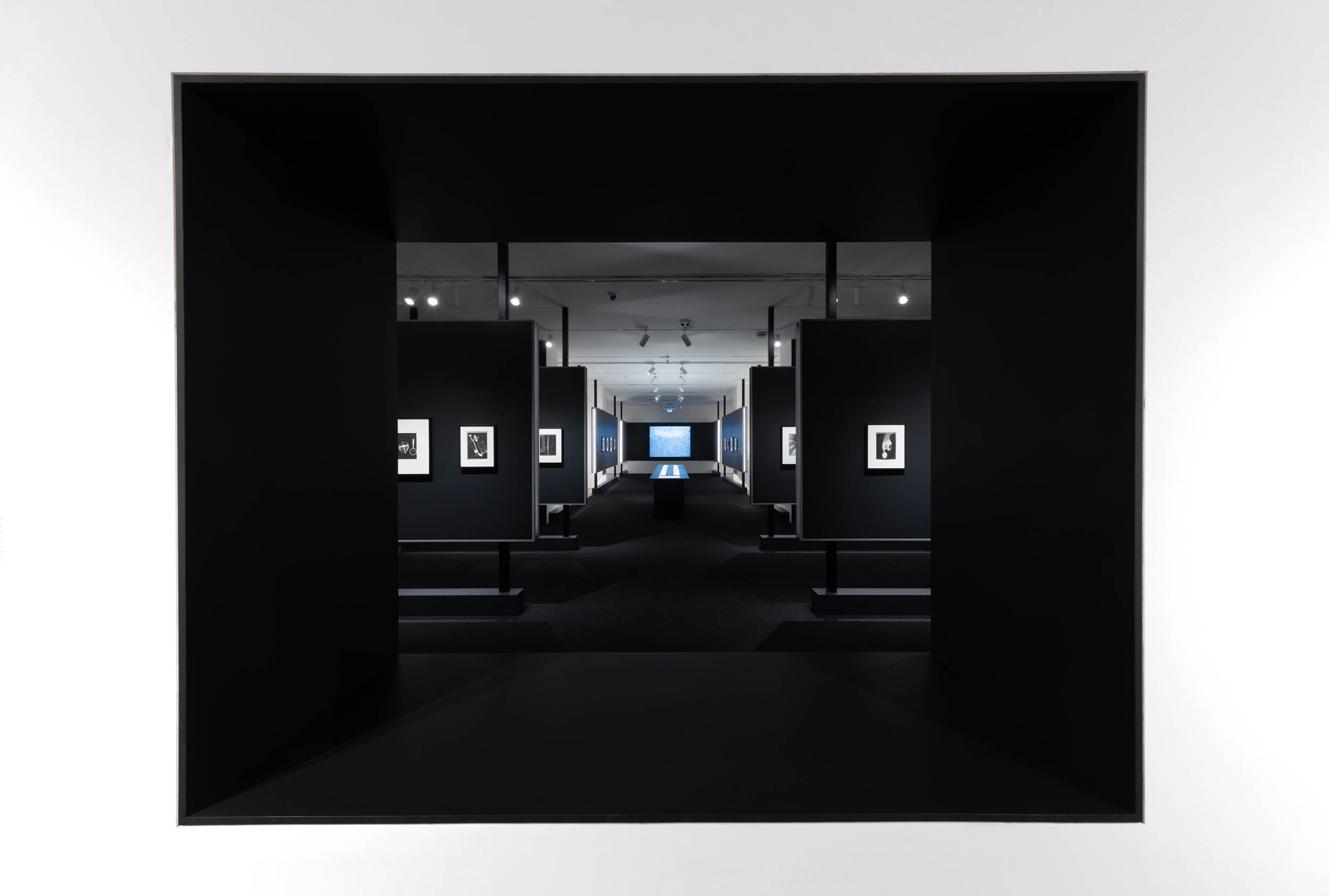
LIKE ART BLART ON FACEBOOK

Back to top

Exhibition: ‘The Real Thing: Unpackaging Product Photography’ at the Metropolitan Museum of Art, New York

Exhibition dates: 11th March – 4th August 2024

Curator: Virgina McBride, Research Associate in the Department of Photographs at The Met


Anton Bruehl (American born Australia, 1900-1982) 'Four Roses Whiskey: Worth Reaching For' 1949


Anton Bruehl (American born Australia, 1900-1982)
Four Roses Whiskey: Worth Reaching For
1949
Laminated photomechanical printer’s proof
26.1 x 27.4cm (10 1/4 x 10 13/16 in.)
The Metropolitan Museum of Art, New York
Ford Motor Company Collection, Gift of Ford Motor Company and John C. Waddell, 1987
© Estate of Anton Bruehl


Meticulously staged by the pioneering colour photographer Anton Bruehl, this work was part of a series showing the whiskey in many exciting scenarios: the glass appeared to travel by train and cruise liner, as well as hot air balloon. Bruehl’s pictures ran as ads in LIFE and Newsweek, conjuring worldly associations for his client, the Kentucky distiller Four Roses.

Against all odds, these eye-catching scenes were not darkroom fabrications – Bruehl arranged them by hand, with the help of miniaturists, set dressers, and a celebrity florist.

Testing appetites for novelty, illusion, and abundance against the limits of good taste, he wagered that this crisp construction would quench your thirst, then melt into hot air.

Text from the Metropolitan Museum of Art Instagram page

Anton Bruehl was born in 1900 of German émigré parents in the small town of Hawker, Australia. By 1919, when he moved to the United States to work as an electrical engineer, he was a skilled amateur photographer. A show of student work from the Clarence H. White School of Photography at the Art Center, New York, in 1923 convinced Bruehl to quit his engineering job to become a photographer. White taught Bruehl privately for six months and then asked him to teach at his school, including its summer sessions in Maine. White’s sudden death, in 1925, prompted Bruehl to open a studio, at first partnering with photographer Ralph Steiner and then with his older brother, Martin Bruehl; it was immediately successful. Specializing in elaborately designed and lit tableaux, Bruehl won top advertising awards throughout the late 1920s and early 1930s. A favourite of Condé Nast Publications, he developed the Bruehl-Bourges colour process with colour specialist Fernand Bourges, which gave Condé Nast a monopoly on colour magazine reproduction from 1932 to 1935.

Text from the MoMA Object: Photo website


What a thoughtful, stimulating and well presented exhibition which contains some absolutely beautiful product photographs. These photographs awaken in the consumer a desire to possess the object of the camera’s attention, the aesthetisication of the object as a form of “readymade” available for immediate consumption.

It’s such a pity that for some of sections – such as “The Array”, “The Montage”, and “The Ideal user” – I only have one or two media image to illustrate the theme.

I have included in the posting a wonderful photograph from my own collection – a postcard with a real photograph on the front by an unknown photographer, showing a proprietor standing by the front door of his shop advertising the wares for “Howard, Watchmaker & Jeweller”, no date – probably British from 1890s-1910s due to his attire, the typeface on the front of the shop, and how “jewellery” is spelt. In the window there is an effusive display of clocks, watches, rings and Prince Albert watch chains.

My favourite photographs in the posting are the portrait of The Silver Merchants (c. 1850, below); the photograph of a tombstone from the Vermont Marble Tombstone Catalogue (1880s, below); the hand-coloured photograph by the Schadde Brothers of High Grade Jelly Eggs, from a Brandle & Smith Co. Catalogue (c. 1915, below); and the sublime Edward G. Budd Manufacturing Co. photograph Automotive Component (February 22, 1927, below)

Through these product photographs we begin to understand how, “The conventions of the past inform these norms and explain the advertisements that we see in our daily lives.” And how we have lost that spark of creativity, use of colour and form and appreciation of beauty in product photography that was the essence of what has gone before.

For those that are interested, I have included some expressive quotations on the complexity of the relationship between the construction of the self, commodities and consumer culture at the bottom of the posting.

Dr Marcus Bunyan


Many thankx to the Metropolitan Museum of Art for allowing me to publish the photographs in the posting. Please click on the photographs for a larger version of the image.


“Consumer capitalism, with its efforts to standardise consumption and to shape tastes through advertising, plays a basic role in furthering narcissism. The idea of generating an educated and discerning public has long since succumbed to the pervasiveness of consumerism, which is a ‘society dominated by appearances’. Consumption addresses the alienated qualities of modern social life and claims to be their solution: it promises the very things the narcissist desires – attractiveness, beauty and personal popularity – through the consumption of the ‘right’ kinds of goods and services. Hence all of us, in modern social conditions, live as though surrounded by mirrors; in these we search for the appearance of an unblemished, socially valued self.”


Anthony Giddens. Modernity and Self-Identity: Self and Society in the Late Modern Age. California: Stanford University Press, 1991, p. 172.


Unknown photographer (British?) 'Howard – Watchmaker and Jeweller' 1890s-1910s?

Unknown photographer (British?) 'Howard – Watchmaker and Jeweller' 1890s-1910s? (verso)


Unknown photographer (Brtish?)
Howard – Watchmaker and Jeweller (front and verso)
1890s-1910s?
Silver gelatin photograph on postcard
Collection of Marcus Bunyan

This photograph is not in the exhibition


“”Product photography is, now, completely inescapable – it follows you around and stalks you on social media – and that condition is very interesting,” said [curator] McBride. The conventions of the past inform these norms and explain the advertisements that we see in our daily lives…

When I visited the exhibition, I was lucky enough to meet Drew, an advertisement photographer who spoke to me about her impressions of The Real Thing: Unpackaging Product Photography. “As someone who works in advertising photography, I find it quite interesting how I think we’ve lost some of the creativity that I see here in this imagery, as far back as the 1920s. It makes me wonder about how I could implement or think about new ways of composition or exploring basic objects in a more exciting way. I’m curious about how these objects were received as advertisements back then. Now, I think we see them more as fine art, so it is interesting to think about what our advertising images could look like twenty years from now.” Drew was strong in her belief that much of the beauty and wonder of advertisement photography has been lost over the decades.

In the 1920s, rising industrial output and consumer demand led executives to seek ways to make their products stand out in a crowded market. Applied psychology shifted managers’ focus to the consumer’s mind, emphasizing the need to persuade consumers that they could find individuality and personal meaning in standardized goods. Consumers “believe what the camera tells them because they know that nothing tells the truth so well.” …

The Real Thing: Unpackaging Product Photography exposes the truth in an entirely new way. It exposes the secrets of photography and how the truth shifted through years of capitalism and consumerism, demanding different sales strategies from producers… [By the 1950s] As the American capitalist market demanded printed ads and mass consumption increased, photographers lost their creative control, with advertisement directors taking up the mantle. There is a straightforward appeal and very little left to the imagination.”


Ayana Chari. “A Review of the Met Museum’s ‘The Real Thing: Unpackaging Product Photography’,” on The Science Survey website July 10, 2024 [Online] Cited 26/07/2024


The photographs in this exhibition do not depict rare or special things. They show toothpaste, tombstones, and hats. But these familiar trappings of everyday life will be, at times, unrecognisable – so altered by the camera as to constitute something entirely new. Enticing consumers with increasingly experimental approaches to the still life genre, the photographs featured transform everyday objects into covetable commodities. The camera abstracts them from functional use, at times distorting them through dizzying perspectives and modulations of scale. Spanning the first century of photographic advertising, the exhibition will illustrate how commercial camerawork contributed to the visual language of modernism, suggesting new links between the promotional strategies of vernacular studios and the tactics of the interwar avant-garde. Corporate commissions by celebrated innovators, including Paul Outerbridge, August Sander, and Piet Zwart, will appear alongside obscure catalogues and trade publications, united by a common cause: to snatch the ordinary out of context, and sell it back at full price.

The exhibition is made possible by The Robert Mapplethorpe Foundation, Inc.

Text from the Metropolitan Museum of Art website


Installation view of the exhibition 'The Real Thing: Unpackaging Product Photography' at the Metropolitan Museum of Art, New York 

Installation view of the exhibition 'The Real Thing: Unpackaging Product Photography' at the Metropolitan Museum of Art, New York showing at right, introductory wall text to the exhibition (below) and F. D. Hampson's Panama Hats, from a Sloan-Force Co. Catalogue c. 1916 (below)


Installation views of the exhibition The Real Thing: Unpackaging Product Photography at the Metropolitan Museum of Art, New York showing at right in the bottom image, introductory wall text to the exhibition (below) and F. D. Hampson’s Panama Hats, from a Sloan-Force Co. Catalogue (c. 1916, below)


Introduction to the exhibition

The photographs in this exhibition do not depict rare or special things. They show toothpaste, tombstones, and hats. But here these familiar trappings of everyday life are, at times, unrecognisable – so altered by the camera as to constitute something entirely new. The Real Thing charts these tactics across the first century of photographic advertising.

If functional objects can be difficult to see, the camera is uniquely equipped to bring them into focus. Excised from mundane contexts and ushered into the studio, they assume new allure, independent of their value or means of production. For early retailers and ad agencies, photography bolstered consumer confidence; the medium offered unprecedented realism, and better still, an aura of truth. Beginning in the late 1850s, new demand for manufactured goods subsidised commercial photography, and the industry grew quickly, spurred by evolving technologies of image reproduction. In the decades that followed, photographers’ increasingly experimental still lives adapted modernism for the mass market.

In the spirit of early photo manuals and how-to guides, the exhibition unfolds thematically, exploring a range of approaches to what is today termed product photography. Pictures from across the commercial section – made in storerooms, corporate studios, and avant-garde ateliers – entice buyers and invent needs, transforming everyday objects into covetable commodities. Works by celebrated innovators appear here alongside obscure catalogues and trade publications, united by a common cause to snatch the ordinary out of context and sell it back at full price.

Wall text from the exhibition


Installation view of the exhibition 'The Real Thing: Unpackaging Product Photography' at the Metropolitan Museum of Art, New York 


Installation views of the exhibition The Real Thing: Unpackaging Product Photography at the Metropolitan Museum of Art, New York showing at right, Irving Penn’s Theatre Accident, New York (1947)


The Inventory

Installation view of the exhibition 'The Real Thing: Unpackaging Product Photography' at the Metropolitan Museum of Art, New York showing the section 'The Inventory' including at second left, 'Fashions 1837-1887, by William Charles Brown' (1888); and at third right, 'Vermont Marble Tombstone Catalogue' (1880s)


Installation view of the exhibition The Real Thing: Unpackaging Product Photography at the Metropolitan Museum of Art, New York showing the section The Inventory including at second left, Fashions 1837-1887, by William Charles Brown (1888, below); and at third right, Vermont Marble Tombstone Catalogue (1880s, below)


William Henry Fox Talbot (English, 1800-1877) 'Articles of Glass' before June 1844


William Henry Fox Talbot (English, 1800-1877)
Articles of Glass
before June 1844
Salted paper print from paper negative
Image: 13.2 x 15.1 cm. (5 3/16 x 5 15/16 in.)
Frame: 14 3/4 x 14 3/4 in.
Metropolitan Museum of Art
Purchase, The Horace W. Goldsmith Foundation Gift, through Joyce and Robert Menschel, and Harrison D. Horblit Gift, 1988
Public domain


Talbot’s negative-positive photographic process, first made public in 1839, would change the dissemination of knowledge as had no other invention since movable type. To demonstrate the paper photograph’s potential for widespread distribution – its chief advantage over the contemporaneous French daguerreotype – Talbot produced The Pencil of Nature, the first commercially published book illustrated with photographs. With extraordinary prescience, Talbot’s images and brief texts proposed a wide array of applications for the medium, including portraiture, reproduction of paintings, sculptures, and manuscripts, travel views, visual inventories, scientific records, and essays in art.

This photograph and the plate preceding it, “Articles of China,” were offered as examples of photography’s usefulness as a tool for creating visual inventories of unprecedented accuracy. Talbot wrote: “The articles presented on this plate are numerous: but, however numerous the objects – however complicated the arrangement – the Camera depicts them all at once.”

Text from the Metropolitan Museum of Art website
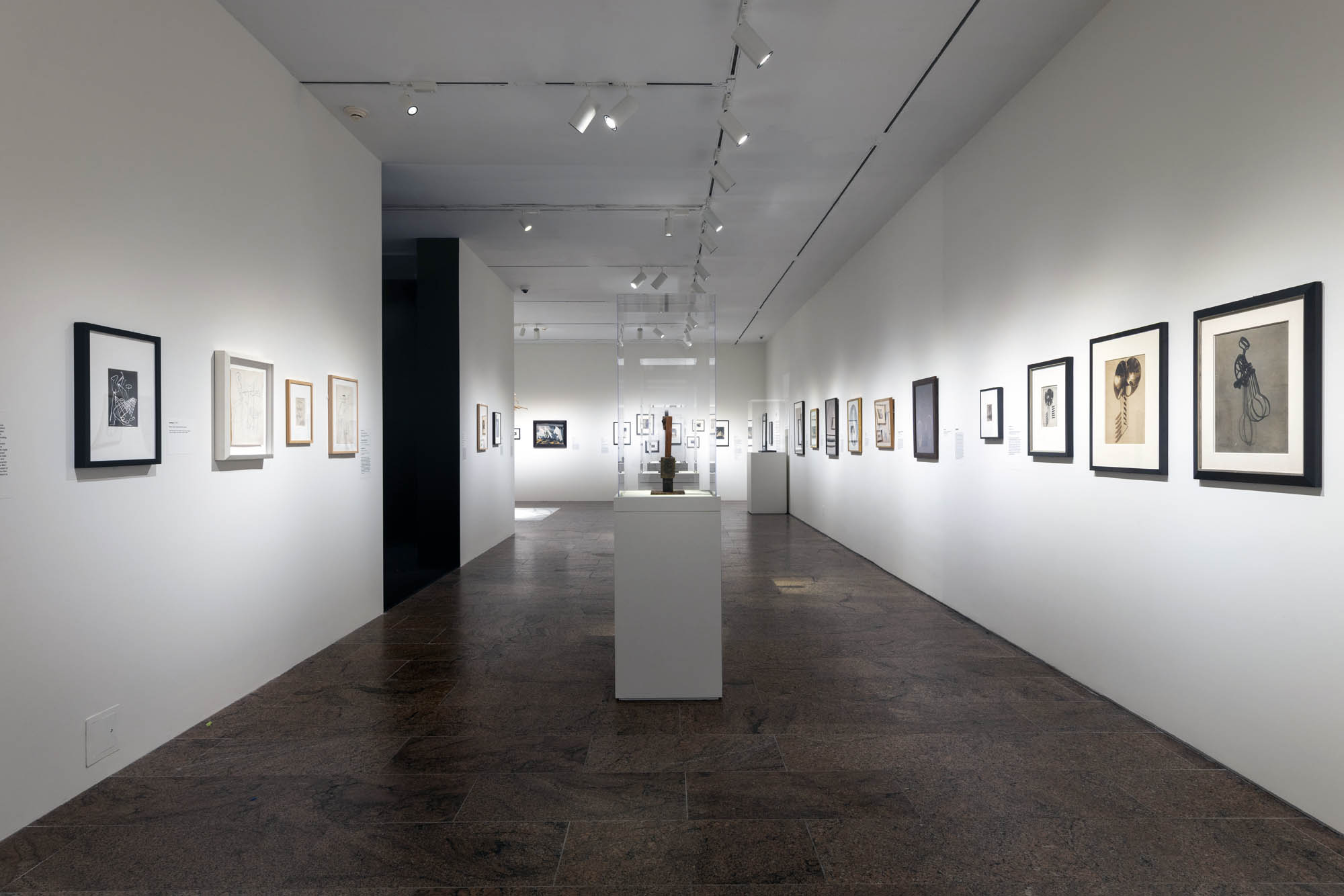
 

Unknown photographer (American) Case manufactured by Hiram Studley (American, active 1840s) 'The Silver Merchants' c. 1850


Unknown photographer (American)
Case manufactured by Hiram Studley (American, active 1840s)
The Silver Merchants
c. 1850
Daguerreotype
Image: 2 3/16 × 2 3/4 in. (5.5 × 7cm)
Case: 3 1/8 × 3 11/16 × 9/16 in. (8 × 9.3 × 1.5cm)
Approx. 6 1/2 x 3 1/2 in. open
The Metropolitan Museum of Art
Purchase, Joyce F. Menschel Gift, 2017
Public domain


The first product photographs doubled as portraits. Posing with their wares, peddlers demonstrated a standard of work and an assurance of quality. The daguerreotype, a direct-positive image on silver-plated copper, offered all manner of workers an increasingly affordable likeness. Here, silver dealers make the most of the medium, modelling careful attention to their inventory. They examine pocket watches, pendants, and fobs splayed in a sales case. Plying their trade before the camera, they mirror the work of the era’s newest silver merchants: photographers themselves.

Text from the Metropolitan Museum of Art website
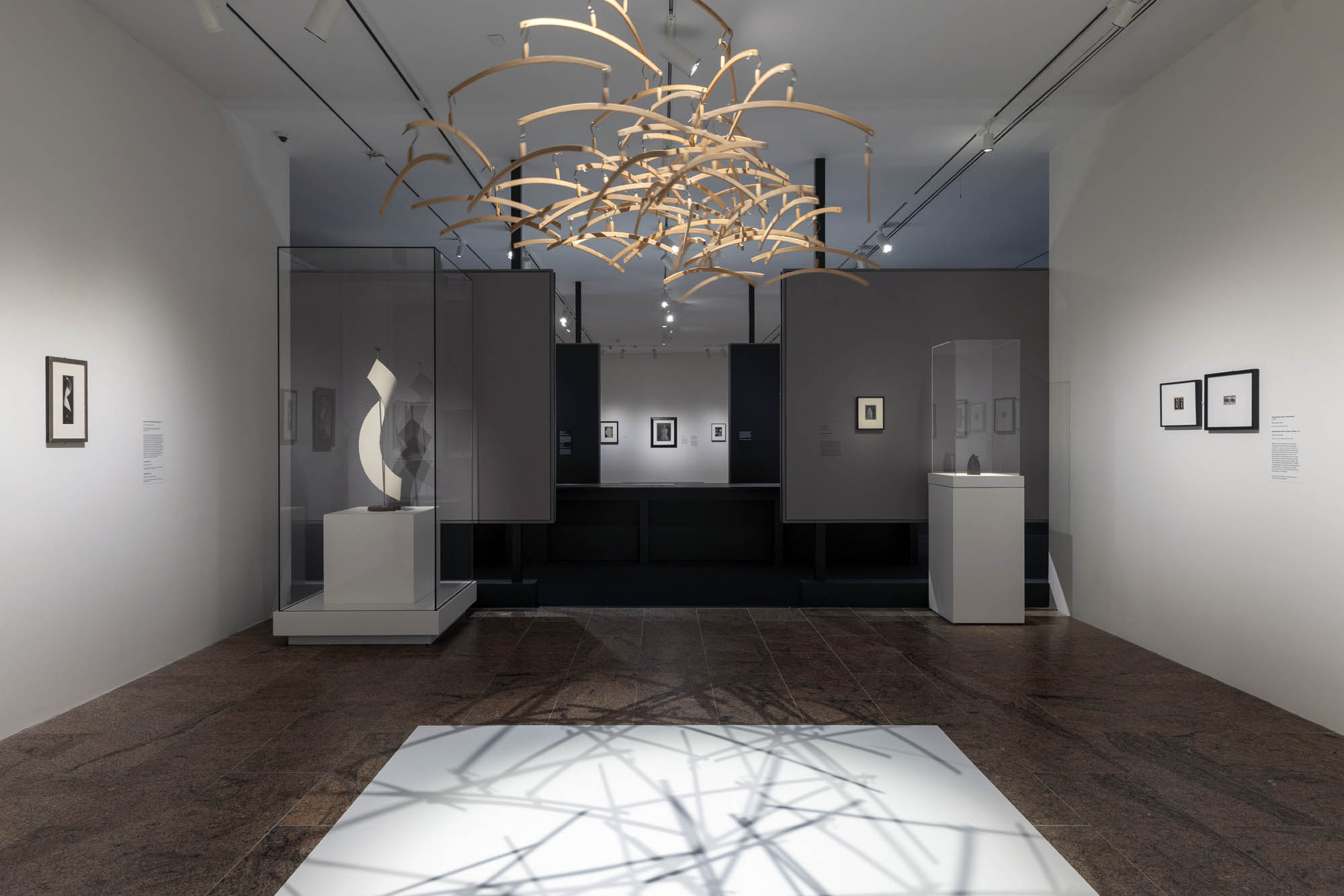
 

Ludwig Belitski (German, 1830-1902) 'Pitcher and Two Glasses, Venetian, 15th Century' 1854


Ludwig Belitski (German, 1830-1902)
Pitcher and Two Glasses, Venetian, 15th Century
1854
Salted paper print from glass negative
8 3/4 × 6 15/16 in. (22.2 × 17.7cm)
The Metropolitan Museum of Art
The Horace W. Goldsmith Foundation Fund, through Joyce and Robert Menschel, 2016
Public domain


Charles Nègre (French, 1820-1880) '[Plaster Casts of Bishops' Miters, South Porch, Chartres]' c. 1855


Charles Nègre (French, 1820-1880)
[Plaster Casts of Bishops’ Miters, South Porch, Chartres]
c. 1855
Salted paper print from paper negative
Image: 22 x 32.5cm (8 11/16 x 12 13/16 in.)
Frame: 18 1/2 x 22 1/2 in.
Metropolitan Museum of Art
Gilman Collection, Purchase, The Howard Gilman Foundation Gift, 2002
Public domain


When early photographers turned to the material world of things, it was often to document property or record cultural heritage. Their efforts reveal the camera’s remarkable capacity to abstract and transform the objects before its lens. In 1855, Charles Nègre accepted a commission to make architectural studies of Chartres Cathedral as part of a larger initiative to preserve and promote French patrimony. A complement to his sweeping views of sculpted facades, this still life monumentalises the site’s smaller details. It shows plaster replicas of ecclesiastical headgear, taken from the cathedral exterior. These are simulacra of simulacra, yet Nègre recasts them anew, registering their textured surfaces in a splendid study of shadow and mass.

Text from the Metropolitan Museum of Art website
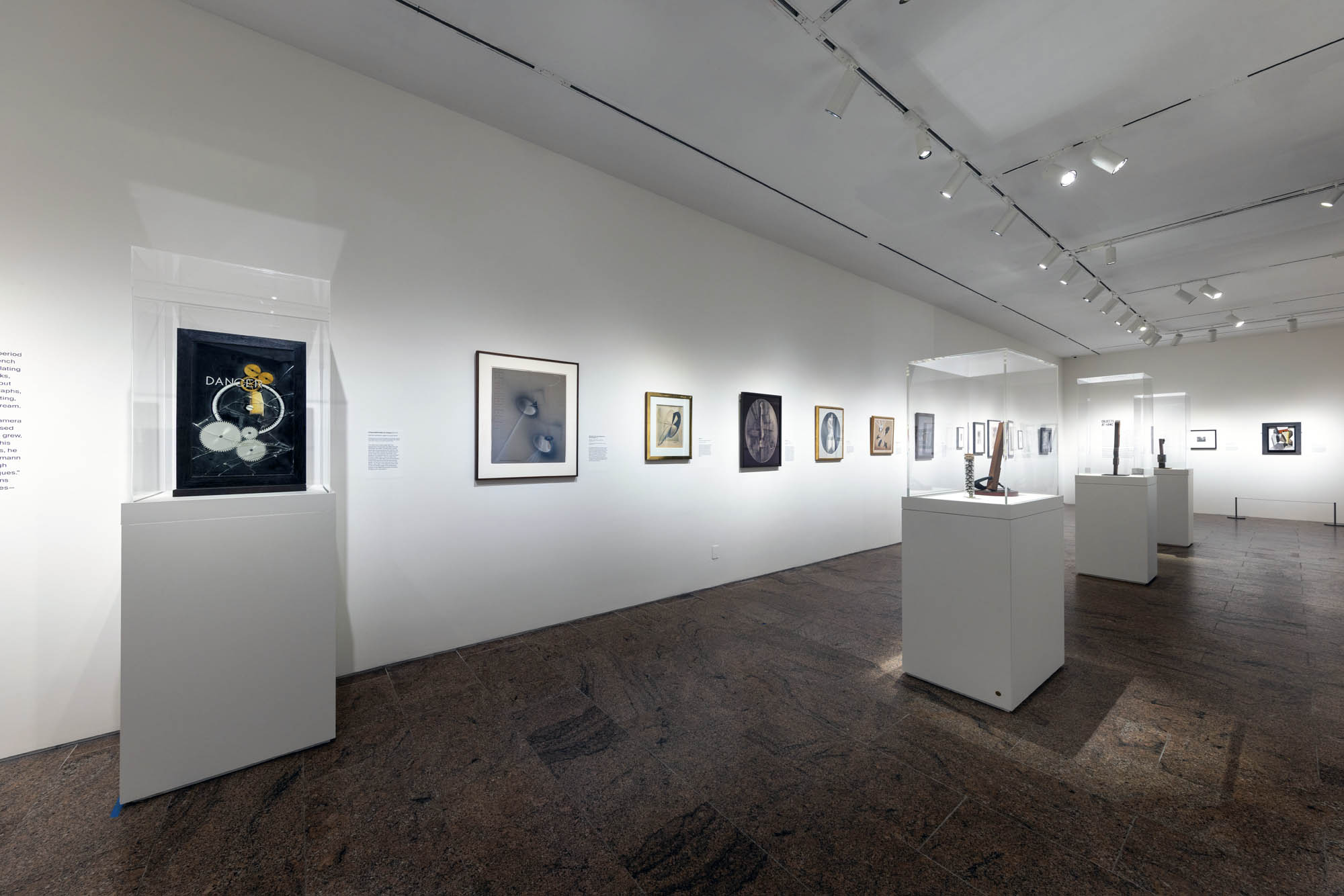
 

Unknown maker (American) 'Man Demonstrating Patent Model for Sash Window' Late 1850s-1860s


Unknown maker (American)
Man Demonstrating Patent Model for Sash Window
Late 1850s-1860s
Tintype with applied colour
4.8 x 3.6cm (1 7/8 x 1 7/16 in.)
Metropolitan Museum of Art
Bequest of Herbert Mitchell, 2008
Public domain


Pine & Bell (photographic studio) (American, active 1860s, Troy, New York) William H. Bell (American born England, Liverpool 1831-1910 Philadelphia, Pennsylvania) George W. Pine (American, active 1860s, Troy, New York) '[Display of Hats and Accessories of 1868]' 1868


Pine & Bell (photographic studio) (American, active 1860s, Troy, New York)
William H. Bell (American born England, Liverpool 1831-1910 Philadelphia, Pennsylvania)
George W. Pine (American, active 1860s, Troy, New York)
[Display of Hats and Accessories of 1868]
1868
Albumen silver print from glass negative
Image: 3 9/16 × 2 1/8 in. (9 × 5.4 cm)
Mount: 3 11/16 in. × 2 3/8 in. (9.3 × 6 cm)
The Metropolitan Museum of Art
William L. Schaeffer Collection, Promised Gift of Jennifer and Philip Maritz, in celebration of the Museum’s 150th Anniversary


Unknown photographer. '[E. Adkins Gun Merchant]' c. 1874


Unknown photographer
[E. Adkins Gun Merchant]
c. 1874
Ambrotype
6.3 x 7.5cm (2 1/2 x 2 15/16 in.) visible
The Metropolitan Museum of Art
Gift of Charles Wilkinson, 1965
Public domain


Unknown maker (American) 'Rock Island Stove Company Catalogue' 1878-1883


Unknown maker (American)
Rock Island Stove Company Catalogue
1878-1883
Albumen silver prints
The Metropolitan Museum of Art
Joyce F. Menschel Photography Library Fund, 2003
Public domain


Unknown maker (British) 'Fashions 1837-1887 by William Charles Brown (British, active late 19th century)' 1888


Unknown maker (British)
Fashions 1837-1887 by William Charles Brown (British, active late 19th century)
1888
Woodburytypes
22.5 x 17cm (8 7/8 x 6 11/16 in.)
Approx. 9 x 14 in. open
The Metropolitan Museum of Art
Joyce F. Menschel Photography Library Fund, 2011


In the back of this catalogue from Queen Victoria’s milliner, a disclaimer confirms that no British songbirds were sacrificed for its production. Nevertheless, a flock of hats in fine feather fills this page spread, flaunting designs fit for the royal family. The deluxe volume is illustrated with woodburytypes, an early photomechanical process with a rich tonal range to register varied velvets, silks, straws, and plumes. Hatstands and supports have been edited out of these images to suspend the specimens midair. Surreal to modern eyes, the effect accentuates the hats’ commodity status and implies inventory soaring out of stock.

Text from the Metropolitan Museum of Art website


Frank M. Sutcliffe (British, 1853-1941) '[Display of Whitby Seascape Photographs]' c. 1888


Frank M. Sutcliffe (British, 1853-1941)
[Display of Whitby Seascape Photographs]
c. 1888
Albumen silver print
Image: 4 1/4 × 5 1/2 in. (10.8 × 14 cm)
Sheet: 6 15/16 × 9 1/2 in. (17.7 × 24.1 cm)
Frame: 11 x 14 in.
Metropolitan Museum of Art
Purchase, Anonymous Gift, 2023
Public domain


“Choose one subject, anything will do,” Frank Sutcliffe advised aspiring photographers. If his career-spanning preoccupation with the British seaside town of Whitby seemed myopic to some peers, it allowed him to cultivate a distinctive brand. This typology of seascapes testifies to his years of work along the town harbour, where he weathered storms and punishing wind in pursuit of the perfect view. Pinned up for purchase at an exhibition, his photographs here become products. This rudimentary style of display seems to have served him well; at one such showcase, he counted the Prince of Wales among his customers.

Text from the Metropolitan Museum of Art website


Unknown (American) '[Vermont Marble Tombstone Catalogue]' 1880s


Unknown (American)
[Vermont Marble Tombstone Catalogue]
1880s
Albumen silver prints
Approx. 17 1/4 x 4 in. open
The Metropolitan Museum of Art
Jefferson R. Burdick Bequest, 1972
Public domain


“When you are met with a flood of tears, the best thing to do is politely say that you will call again,” advised one traveling salesman in the tombstone trade. For Cyrus Creigh, a thirty-something Virginian who sold stones from this annotated catalogue, such considerations were part of the job. In each new town, he might solicit names of bereaved families from undertakers and local cemetery staff. Slipped from a suit pocket and proffered door-to-door, his book of bluntly descriptive photographs sold surviving relatives a modicum of consolation. The stones, posed in a corporate studio and silhouetted in darkness, assume a solemn universality, as if any of their blank faces might soon bear a familiar name.

Text from the Metropolitan Museum of Art website
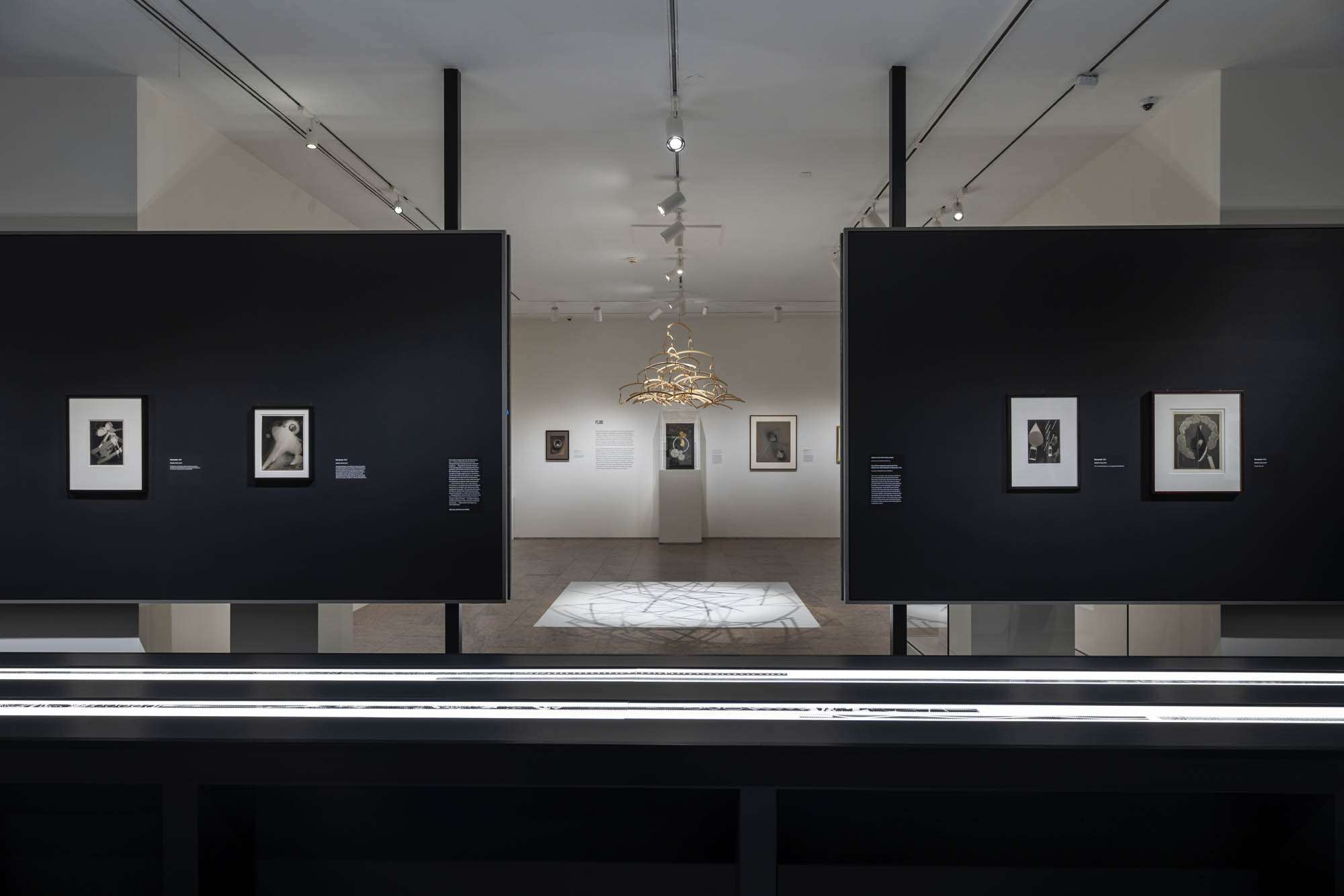
 

Schadde Brothers (American, active Minneapolis, 1890s-1910s) Alvin J. Schadde (American, 1872-1937) Herman T. Schadde (American, 1874-1937) '[High Grade Jelly Eggs, from a Brandle & Smith Co. Catalogue]' c. 1915


Schadde Brothers (American, active Minneapolis, 1890s-1910s)
Alvin J. Schadde (American, 1872-1937)
Herman T. Schadde (American, 1874-1937)
[High Grade Jelly Eggs, from a Brandle & Smith Co. Catalogue]
c. 1915
Gelatin silver print with applied colour
Image: 8 1/4 × 9 3/4 in. (21 × 24.8cm)
Frame: 18 x 20 in.
Metropolitan Museum of Art
Twentieth-Century Photography Fund, 2013


Schadde Brothers (American, active Minneapolis, 1890s-1910s) Alvin J. Schadde (American, 1872-1937) Herman T. Schadde (American, 1874-1937) '[Satinettes, Filled Confections and Ye Old Style Stick Candy, from a Brandle & Smith Co. Catalogue]' c. 1915


Schadde Brothers (American, active Minneapolis, 1890s-1910s)
Alvin J. Schadde (American, 1872-1937)
Herman T. Schadde (American, 1874-1937)
[Satinettes, Filled Confections and Ye Old Style Stick Candy, from a Brandle & Smith Co. Catalogue]
c. 1915
Gelatin silver print with applied colour
Image: 8 1/2 × 10 5/8 in. (21.6 × 27cm)
Frame: 18 x 20 in.
Metropolitan Museum of Art
Twentieth-Century Photography Fund, 2013


This trade catalogue tricks the eye to tempt the tongue. An artisan has coloured its black-and-white prints, illustrating each sugar stripe and speckled bean. Philadelphia confectioner Brandle & Smith understood that their candy was its own best advertisement, and at one point even induced a museum to accession it for display. Wider distribution was achieved by the salesmen who carried catalogues across the country, taking bulk orders from local shops. Here, the limitations of hand-colouring work to their advantage. Because sweets in jars proved too tricky to tint, the satinettes and candy sticks seem to burst into brilliant colour as they spill from their packaging, satiating the viewer and assisting the sale.

Text from the Metropolitan Museum of Art website
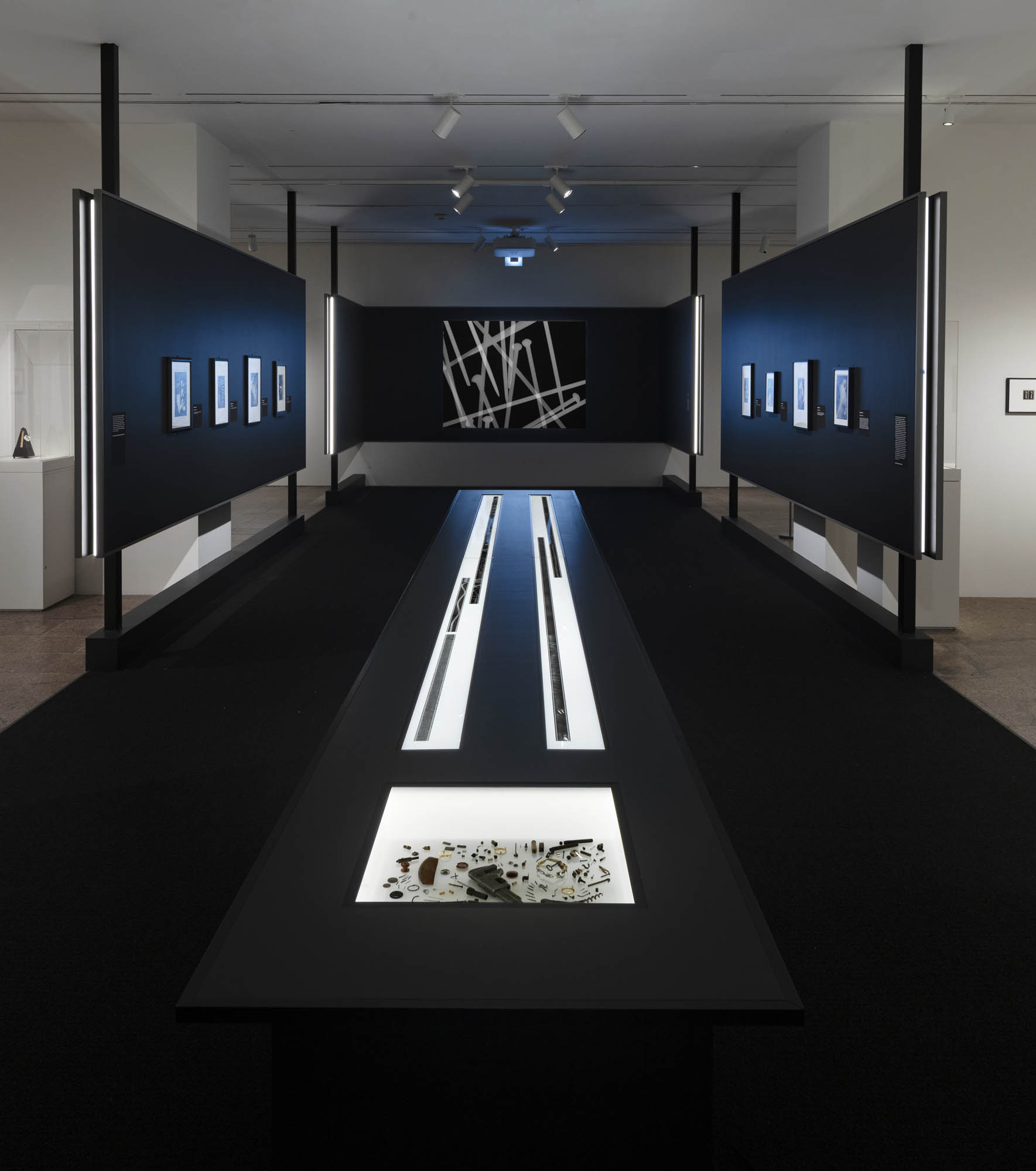
 

F. D. Hampson (American, 1871-1947) 'Panama Hats, from a Sloan-Force Co. Catalogue' c. 1916


F. D. Hampson (American, 1871-1947)
Panama Hats, from a Sloan-Force Co. Catalogue
c. 1916
Gelatin silver print
Image: 18.5 x 23.4 cm (7 5/16 x 9 3/16 in. )
Frame: 16 x 20 in.
Metropolitan Museum of Art
Purchase, The Horace W. Goldsmith Foundation Gift, through Joyce and Robert Menschel, 2001


Like satellites, these straw hats hover in a void. Their absence of context invites imaginative projection: how easy to envision this or that model touching down on one’s head. Popularised by association with the new Panama Canal, the hats were photographed for a St. Louis sales catalogue. Their spare, surreal configuration anticipates an avant-garde approach; in the coming years, disembodied hats would pop up in works by Max Ernst and Hans Richter, evoking the callous consumer – a bourgeois icon ripe for critique. Here, such premonitions of modernism serve practical ends. Suspended together, their varied brims and bands elicit comparison, demanding scrutiny. In an era of exponentially increasing consumer choice, such photographic displays could make anyone into a connoisseur.

Text from the Metropolitan Museum of Art website


Ralph Bartholomew Jr. (American, 1907-1985) '[Soap Packaging]' 1936


Ralph Bartholomew Jr. (American, 1907-1985)
[Soap Packaging]
1936
Carbro print
32.8 x 25.7cm (12 15/16 x 10 1/8 in.)
The Metropolitan Museum of Art
Ford Motor Company Collection, Gift of Ford Motor Company and John C. Waddell, 1987
© Estate of Ralph Bartholomew, Courtesy Keith de Lellis Gallery, NY


If mouthwatering soap seems a contradiction in terms, commercial photographer Ralph Bartholomew Jr. confounds the senses with eye candy to rival the confections nearby. Photographed two decades later, this work did not depend on paint for its delectable palette. It is an example of the early carbro process – a complex tricolor printing technique that gained popularity in the 1930s, as art directors courted Depression-era audiences. Brilliant colour is essential here, in a photograph likely commissioned to sell not the soap but its packaging. Marketed to producers in an array of trade publications (including Modern Packaging, and the industry-specific standby Soap), fine paper wrappers were a booming industry unto themselves. Here, Bartholomew parades his bedecked bars across a page of newsprint showing stock prices to suggest that in this market, even cleanliness was a commodity.

Bartholomew was a successful commercial photographer best known for his innovative use of stop-action and multiple exposure techniques in advertising and editorial work. He made this photograph while he was a student at the Clarence H. White School of Photography.

Text from the Metropolitan Museum of Art website


The Array

Margaret Bourke-White (American, 1904-1971) 'RCA Speakers' 1933


Margaret Bourke-White (American, 1904-1971)
RCA Speakers
1933
Gelatin silver print
Image: 33.3 x 23.3 cm (13 1/8 x 9 3/16 in.)
Frame: 22 1/2 x 18 1/2 in.
The Metropolitan Museum of Art
Warner Communications Inc. Purchase Fund, 1976


In a single voice, the assembled speakers broadcast the scope and influence of American radio. Commissioned by audio manufacturer RCA Victor, this photograph is one component of a monumental photomural for the NBC rotunda at Rockefeller Center. Amplified to a height of ten feet, this and other views of radio technology comprised a work of corporate propaganda to rival those public projects Margaret Bourke-White had recently seen on tours of the Soviet Union. She completed the mural at breakneck speed, often working through the night to photograph equipment at regional stations (lest she risk electrocution during daytime transmission hours). Seeking a visual analogue to audio, she captured the speakers in staccato sequence, their scalloped shapes reverberating beyond the frame.

Text from the Metropolitan Museum of Art website


On March 11, 2024, The Metropolitan Museum of Art opened The Real Thing: Unpackaging Product Photography, an exhibition exploring how commercial camerawork contributed to the visual language of modernism. The photographs featured depict the familiar trappings of everyday life – from toothpaste to tombstones to hats – but at times these subjects will be unrecognisable, so altered by the camera as to constitute an entirely new view.

Spanning the first century of photographic advertising, The Real Thing unites more than 60 works from across the commercial sector. In these photographs, artists – some famous, some forgotten – transform common objects into covetable commodities. Corporate commissions by celebrated innovators, such as Paul Outerbridge, August Sander, and Piet Zwart, appear alongside obscure catalogues and trade publications. Bringing these photographs together, the exhibition reveals links between the promotional strategies of vernacular studios and the radical tactics of the interwar avant-garde.

“This dynamic exhibition looks anew at the commercial history of photographs in the Museum’s collection,” said Max Hollein, The Met’s Marina Kellen French Director and Chief Executive Officer. “By embracing this discerning lens, we gain a renewed appreciation of the intricacies and aesthetics of our everyday surroundings.”

“Not many of the photographers in this exhibition would have identified as fine artists, but their inventive commercial work harnesses the artistic potential of the camera to persuade and enchant,” added the show’s curator, Virginia McBride, Research Associate in the Department of Photographs. “Now that photography’s place in museums no longer needs defending, The Real Thing considers how working photographers, in corporate studios and industrial storerooms, advanced modern art’s visual revolution.”

The first advertising photographs were published in albums and used to peddle products door to door. For early retailers and ad agencies, photography offered unprecedented realism and, better still, an aura of truth; the medium’s perceived objectivity bolstered consumer confidence. Beginning in the late 1850s, new demand for manufactured goods subsidised commercial photography, spurred by evolving technologies of image reproduction. In the decades that followed, increasingly inventive approaches to the still life, from dizzying perspectives to extreme modulations of scale, adapted modernism for the mass market. Historically framed as avant-garde experimentation, this work is rarely acknowledged in its original context of commercial enterprise. This exhibition resituates such innovation within the realm of advertising and investigate its unlikely origins.

Drawn entirely from The Met collection and featuring many photographs from The Ford Motor Company Collection of modernist European and American photography, the exhibition brings together a wide range of photographic media. Included are proof prints, tear sheets, and sample books used by travelling merchants, along with photomontages and rare examples of early colour printing. Such masterworks as André Kertész’s elegant study of a fork and Grete Stern and Ellen Auerbach’s surrealist-inflected advertisements for hair dye and gloves are presented together with the projects of overlooked studios and anonymous makers. Debuting dozens of objects from the Department of Photographs that have never before been shown, and introducing timely new acquisitions, the exhibition considers photography in an expanded field of commercial practice.

The Real Thing: Unpackaging Product Photography is organised by Virgina McBride, Research Associate in the Department of Photographs at The Met.

Press release from the Metropolitan Museum of Art


Grit Kallin-Fischer (German, 1897-1973) 'KPM Ceramics' 1930


Grit Kallin-Fischer (German, 1897-1973)
KPM Ceramics
1930
Gelatin silver print
6 5/8 × 4 3/16 in. (16.8 × 10.7cm)
The Metropolitan Museum of Art
Funds from various donors, 2023


The Isolated Object

Paul Outerbridge Jr. (American, 1896-1959) 'Ide Collar' 1922


Paul Outerbridge Jr. (American, 1896-1959)
Ide Collar
1922
Platinum print
Image: 11.8 x 9.3 cm (4 5/8 x 3 11/16 in.)
Frame: approx. 14 x 17 in.
The Metropolitan Museum of Art
Ford Motor Company Collection, Gift of Ford Motor Company and John C. Waddell, 1987


“I have attempted to interpret the beauty of the simplest and humblest of objects,” Paul Outerbridge Jr. wrote in 1922. Inspired by his teacher Clarence H. White’s artistic vision for applied photography, Outerbridge regarded the aperture as a kind of canvas in which to arrange compositions with absolute balance. In this, his first commercial assignment, he achieved such equilibrium by custom-cutting a grid of linoleum squares to the scale of his subject. When published as an ad in Vanity Fair, the photograph was ensnared in a scrollwork frame. Such a Victorian flourish seems incongruous today, but at the time, a picture as stark as this seemed to need dressing up. Nevertheless, Marcel Duchamp was said to have clipped the ad and pinned it to his studio wall, apprehending the mass-market collar’s readymade style.

Text from the Metropolitan Museum of Art website


Edward G. Budd Manufacturing Co. (American) 'Automotive Component' February 22, 1927


Edward G. Budd Manufacturing Co. (American)
Automotive Component
February 22, 1927
Gelatin silver print
7 1/2 × 9 1/2 in. (19 × 24.1 cm)
The Metropolitan Museum of Art
Purchase, David Hunter McAlpin Fund, by exchange, 2024


Fay Sturtevant Lincoln (American, 1894-1975) 'Pass & Seymour Switch Plate' c. 1949


Fay Sturtevant Lincoln (American, 1894-1975)
Pass & Seymour Switch Plate
c. 1949
Gelatin silver print
Image: 23.8 x 17.9 cm (9 3/8 x 7 1/16 in.)
Frame: approx. 20 x 16 in.
The Metropolitan Museum of Art
Ford Motor Company Collection, Gift of Ford Motor Company and John C. Waddell, 1987


Please resist the urge to flip this light switch. Photographed at close range, the switch plate is so crisply articulated that it tempts touch. Fay Sturtevant Lincoln captures the sculptural quality of this mundane fixture, revealing a keen eye for the texture and detail of domestic life. Now coveted for their retro cachet, molded Bakelite furnishings like this one were ubiquitous in the late 1940s. Though Lincoln was better known for views of glamorous art deco interiors, his attention to the vernacular architecture of homes and offices offers an intimate view of everyday design.

Text from the Metropolitan Museum of Art website


Murray Duitz (American, 1917-2010) 'A.S. Beck "Executive" Shoe' 1957


Murray Duitz (American, 1917-2010)
A.S. Beck “Executive” Shoe
1957
Gelatin silver print
Image: 12 1/2 x 9 1/2 in. (31.8 x 22.9cm)
Frame: 20 x 16 in.
The Metropolitan Museum of Art
Gift of the artist, 1975
© Estate of Murray Duitz


The Unfamiliar Thing

Installation view of the exhibition 'The Real Thing: Unpackaging Product Photography' at the Metropolitan Museum of Art, New York showing the section 'The Unfamiliar Thing' including at third left, August Sander's 'Osram Light Bulbs' (c. 1930); and at third right, H. Raymond Ball's 'Pocket Comb' (1930s)


Installation view of the exhibition ‘The Real Thing: Unpackaging Product Photography’ at the Metropolitan Museum of Art, New York showing the section The Unfamiliar Thing including at third left, August Sander’s Osram Light Bulbs (c. 1930, below); and at third right, H. Raymond Ball’s Pocket Comb (1930s, below)


Edward J. Steichen (American born Luxembourg, Bivange 1879 - 1973 West Redding, Connecticut) '["Sugar Lumps" Pattern Design for Stehli Silks]' 1927


Edward J. Steichen (American born Luxembourg, Bivange 1879 – 1973 West Redding, Connecticut)
[“Sugar Lumps” Pattern Design for Stehli Silks]
1927
Gelatin silver print
25.3 x 20.3cm (9 15/16 x 8 in.)
The Metropolitan Museum of Art
Ford Motor Company Collection, Gift of Ford Motor Company and John C. Waddell, 1987
© 2024 Artists Rights Society (ARS), New York


For a project promoting not sugar but silk, Edward Steichen devised textile patterns from photographs of everyday objects. His arrangements of sugar cubes, matches, and mothballs were printed onto Stehli’s “Americana” line of dress fabrics. The success of these designs speaks to the proliferation and popularity of object photography – a genre so culturally ingrained that, by the late 1920s, it could become a fashion phenomenon. Steichen helped shape these conditions in his influential role as chief photographer for Condé Nast. The Stehli project reflected his populist vision for commercial photography, at least insofar as these chic silks ever reached the mainstream.

Text from the Metropolitan Museum of Art website


August Sander (German, 1876-1964) '[Osram Light Bulbs]' c. 1930


August Sander (German, 1876-1964)
[Osram Light Bulbs]
c. 1930
Gelatin silver print
Image: 29.5 x 22.9 cm (11 5/8 x 9 in.)
Frame: 22 1/2 x 18 1/2 in.
The Metropolitan Museum of Art
Ford Motor Company Collection, Gift of Ford Motor Company and John C. Waddell, 1987
© 2024 Artists Rights Society (ARS), New York


Photography itself makes the case for artificial light in this commission for the German manufacturer Osram. Leveraging the camera’s codependence on their products, the lightbulb company sought out experimental practitioners, including August Sander, to promote the transformative potential of illumination. Sander is best known as the great portraitist of German society between the wars, but the commercial projects that supported his studio remain obscure. With a simple shift in perspective, he radically reorients viewer and subject, abstracting a spiral staircase into a swirl of pearls. His hypnotic image reveals how the shock and pleasure of modernist aesthetics – of looking for its own sake – could seamlessly convey the joys of consumption.

Text from the Metropolitan Museum of Art website


H. Raymond Ball (American, 1903-1983) 'Pocket Comb' 1930s


H. Raymond Ball (American, 1903-1983)
Pocket Comb
1930s
Gelatin silver print
Image: 25.2 x 19.8 cm (9 15/16 x 7 13/16 in.)
Frame: 20 x 16 in.
The Metropolitan Museum of Art
Ford Motor Company Collection, Gift of Ford Motor Company and John C. Waddell, 1987


The Montage

César Domela (Dutch, 1900-1992) '[Ruthsspiecher Tanks]' 1928


César Domela (Dutch, 1900-1992)
[Ruthsspiecher Tanks]
1928
Gelatin silver print
Image: 19.3 x 16.6 cm (7 5/8 x 6 9/16 in.)
Frame: 17 x 14 in.
The Metropolitan Museum of Art
Ford Motor Company Collection, Gift of Ford Motor Company and John C. Waddell, 1987
© 2024 Artists Rights Society (ARS), New York


Unknown (American) '[Montage for Packard Super Eight]' c. 1940


Unknown (American)
[Montage for Packard Super Eight]
c. 1940
Gelatin silver print
Image: 22.9 x 18.6 cm (9 x 7 5/16 in.)
Frame: 17 x 14 in.
The Metropolitan Museum of Art
Ford Motor Company Collection, Gift of Ford Motor Company and John C. Waddell, 1987


The Tableau

Installation view of the exhibition 'The Real Thing: Unpackaging Product Photography' at the Metropolitan Museum of Art, New York showing photographs from the section 'The Tableau' including at left, André Kertész's 'Fork' (1928); and at second and third right, ringl + pit's 'Dents' (c. 1934) and 'Komol' (1931)


Installation view of the exhibition The Real Thing: Unpackaging Product Photography at the Metropolitan Museum of Art, New York showing photographs from the section The Tableau including at left, André Kertész’s Fork (1928, below); and at second and third right, ringl + pit’s Dents (c. 1934) and Komol (1931, below)


André Kertész (American born Hungary, 1894-1985) 'Fork' 1928


André Kertész (American born Hungary, 1894-1985)
Fork
1928
Gelatin silver print
7.5 x 9.2cm (2 15/16 x 3 5/8 in.)
The Metropolitan Museum of Art
Ford Motor Company Collection, Gift of Ford Motor Company and John C. Waddell, 1987
© The Estate of André Kertész / Higher Pictures


As a dinner party wound down in his friend Fernand Léger’s Paris studio, André Kertész found an unlikely tableau left on the table. In this chance encounter between fork and plate, he locates an incidental elegance. The photograph was never intended as an ad – Kertész instead chose it to represent his work in a series of European photography shows. On the exhibition circuit, it came to exemplify a strain of New Vision photography characterised by its clear-eyed reassessment of ordinary things. Only after this did Kertész grant permission for its use in a German silverware campaign. In the ad layout, the photograph was credited and uncropped – atypically presented as a true work of art. The truth of the ad was another question: despite its German rebranding, this fork remained a French department-store product.

Text from the Metropolitan Museum of Art website


ringl+pit (German active 1930-1933) Grete Stern (German, 1904-1999) Ellen Auerbach (German 1906-2004) 'Komol' 1931


ringl + pit (German active 1930-1933)
Grete Stern (German, 1904-1999)
Ellen Auerbach (German 1906-2004)
Komol
1931
Gelatin silver print
Image: 35.9 x 24.4 cm (14 1/8 x 9 5/8 in.)
Frame: 20 x 15 5/8
The Metropolitan Museum of Art
Ford Motor Company Collection, Gift of Ford Motor Company and John C. Waddell, 1987
© ringl+pit, Courtesy Robert Mann Gallery


Grancel Fitz (American, 1894-1963) 'Ipana Toothpaste' c. 1937


Grancel Fitz (American, 1894-1963)
Ipana Toothpaste
c. 1937
Gelatin silver print
Image: 12.9 x 32.5cm (5 1/16 x 12 13/16 in.)
Frame: approx. 12 x 20 in.
The Metropolitan Museum of Art
Ford Motor Company Collection, Gift of Ford Motor Company and John C. Waddell, 1987


The Ideal User

Paul Outerbridge Jr. (American, 1896-1959) 'The Coffee Drinkers' 1940


Paul Outerbridge Jr. (American, 1896-1959)
The Coffee Drinkers
1940
Carbro print
Image (overall): 27 x 38 cm (10 5/8 x 14 15/16 in.)
Mount: 40.7 x 50.7cm (16 x 19 15/16in.)
Frame: 18 1/2 x 22 1/2 in.
The Metropolitan Museum of Art
Ford Motor Company Collection, Gift of Ford Motor Company and John C. Waddell, 1987


With a background in staging and an unwavering belief in the power of images to inspire a better life, Paul Outerbridge Jr. was well suited to the directorial tasks of advertising photography. For A&P Grocery’s Eight O’Clock Coffee, he orchestrated this scene in the display kitchen of a department store, painstakingly diagramming the setup in advance.

“How’d you learn to make such swell coffee, Dick?” the copy teased, when the ad ran in LIFE magazine. Such work exceeds the sum of its parts, selling more than just a jolt of caffeine. The after-dinner air of repose courts camp, conjuring an intimate blend of leisure and power. With it, Outerbridge offers the consumer the chance to be a man among men, all for the price of a can of coffee.

Text from the Metropolitan Museum of Art website


Some expressive quotations about the construction of the self, commodities and consumer culture


“Although the value of commodities is materially embodied in them, it is not visible in the objects themselves as a physical property. The illusion that value resides in objects rather than in the social relations between individuals and objects Marx calls commodity fetishism. When the commodity is fetishized, the labour that has gone into its production is rendered invisible.”

Rosemary Hennessey. “Queer Visibility in Commodity Culture,” Chapter 6 in Nicholson, Linda and Seidman, Steven (eds.,). Social Postmodernism – Beyond Identity Politics. Cambridge: Cambridge University Press, 1995, pp. 161-162.


“When the commodity is dealt with merely as a matter of signification, meaning, or identities, only one of the elements of its production – the process of image making it relies on – is made visible. The exploitation of human labour on which the commodities appearance as an object depends remains out of sight.”

Rosemary Hennessey. “Queer Visibility in Commodity Culture,” Chapter 6 in Nicholson, Linda and Seidman, Steven (eds.,). Social Postmodernism – Beyond Identity Politics. Cambridge: Cambridge University Press, 1995, p. 162.


“The processes of capitalist relationships reproduce themselves in the consciousness of man and, in turn, reproduce a society that reflects an image of man as the seller and buyer of work, talent, aspiration and fantasies.”

Frankl, G. The Failure of the Sexual Revolution. Hove: Kahn and Averill, 1974, p. 26 quoted in Evans, David. Sexual Citizenship, The Material Construction of Sexualities. London: Routledge, 1993, p. 47.


“What was achieved was unprecedented scientific and technical progress and, eventually, the subordination of all other values to those of a world market which treats everything, including people and their labour and their lives and their deaths, as a commodity.”

John Berger and Jean Mohr. Another Way of Telling. New York: Pantheon Books, 1982, p. 99.


“Consumption produces production … because a product becomes a real product only by being consumed. For example, a garment becomes a real garment only in the act of being worn; a house were no one lives is in fact not a real house; thus the product, unlike a mere natural object, proves itself to be, becomes, a product only through consumption. Only by decomposing the product does consumption give the product the finishing touch.”

Karl Marx and Frederick Engels. On Literature and Art. New York: International General, 1973, p. 91 quoted in Wolff, Janet. The Social Production of Art. Basingstoke: Macmillan, 1993, p. 95.


“… the propaganda of consumption turns alienation itself into a commodity. It addresses itself to the spiritual desolation of modern life and proposes consumption as the cure. It not only promises to palliate all the old unhappiness to which flesh is heir; it creates or exacerbates new forms of unhappiness – personal insecurity, status anxiety …”

Christopher Lasch. The Culture of Narcissism. New York: W.W.Norton and Company, 1978, p.73.


“Consumer culture is notoriously awash with signs, images, publicity. Most obviously, it involves an aestheticization of commodities and their environment …

Firstly, problems of status and identity … promote a new flexibility in the relations between consumption, communication and meaning. It is not so much that goods and acts of consumption become more important in signalling status (they were always crucial) but that both the structure of status and the structure of meaning become unstable, flexible, and highly negotiable. Appearance becomes a privileged site of strategic action in unprecedented ways.

Secondly, the nature of market exchange seems intrinsically bound up with aestheticization. As indicated above, commodities circulate through impersonal and anonymous networks: the split between producer and consumer extends beyond simple commissioning (where a personal relationship still exists) to the production for an anonymous general public … Haug (1986) theorizes this in the notion of ‘commodity aesthetics’: the producer must create an image of use value in which potential buyers can recognize themselves. All aspects of the product’s meaning and all channels through which its meaning can be constructed and represented become subject to intense and radical calculation.

This gives rise to some of the central issues of sociological debate on consumer culture. On the one hand, the eminently modern notion of the social subject as a self-creating, self-defining individual is bound up with self-creation through consumption: it is partly through the use of goods and services that we formulate ourselves as social identities and display these identities. This renders consumption as the privileged site of autonomy, meaning, subjectivity, privacy and freedom. On the other hand, all these meanings around social identity and consumption become objects of strategic action by dominating institutions. The sense of autonomy and identity in consumption is placed constantly under threat.”

Don Slater. Consumer Culture and Modernity. London: Polity Press, 1997, p. 31.


The Metropolitan Museum of Art
1000 Fifth Avenue at 82nd Street
New York, New York 10028-0198
Phone: 212-535-7710

Opening hours:
Thursday – Tuesday 10am – 5pm
Closed Wednesday

The Metropolitan Museum of Art website

LIKE ART BLART ON FACEBOOK

Back to top

Exhibition: ‘Berenice Abbott’s New York Album, 1929’ at the Metropolitan Museum of Art, New York

Exhibition dates: 2nd March – 4th September 2023


Walker Evans (American, 1903-1975) [Berenice Abbott] 1929-1930 from the exhibition 'Berenice Abbott's New York Album, 1929' at the Metropolitan Museum of Art, New York, March - Sept 2023


Walker Evans (American, 1903-1975)
[Berenice Abbott]
1929-1930
Gelatin silver print
16.9 x 11.8cm (6 5/8 x 4 5/8 in.)
Metropolitan Museum of Art
Purchase, The Horace W. Goldsmith Foundation Gift, through Joyce and Robert Menschel, 1997
© Walker Evans Archive, The Metropolitan Museum of Art


Abbott appraises the camera with cool assurance in this portrait, made just after her return from Paris to New York. Her gamine-short hair and bare face affect a chic nonchalance that intrigued Evans. Describing her to a friend after their first meeting, he wrote: “You would like Berenice Abbott, with her hair brushed forward and her woozy eyes.” Her work likewise impressed the young photographer, then finding his footing in the field. Evans’s picture betrays admiration for his new acquaintance, whose burgeoning career offered a model for his own.


American visionary

What a wonderful photographer Berenice Abbott developed into and what a debt of gratitude we owe her for saving the archive of French photographer Eugène Atget whose photographs initially influenced her urban(e) style.

“Abbott felt the changing city [New York] needed an equivalent to the French photographer Eugène Atget (1857-1927), who had documented Paris during a critical period of transition in the late 19th and early 20th centuries with what Abbott called “the shock of realism unadorned.””

It is interesting to analyse Abbott’s New York photographs in relation to Atget. In photographs such as the grouping on Album Page 9: Fulton Street Fish Market and Lower East Side, Manhattan (1929, below) there is an almost symbiotic relationship between Atget’s photographs of street Petits Métiers (trades and professions) and those of Abbott. “The subjects were not sensational, but nevertheless shocking in their very familiarity,” she said of seeing Atget’s photographs in Man Ray’s studio in 1926. Similarly, we can recognise in Abbott’s grouping in Album Page: City Hall Park and Brooklyn Bridge Vicinity, Manhattan (1929, below) and Pingpank Barbershop, 413 Bleecker Street, Manhattan (1938, below) an affinity with Atget’s photographs of architectural details of door handles and the front of shops.

A step away from Atget’s aesthetic are Abbott’s photographs such as Brooklyn Bridge, With Pier 21, Pennsylvania R.R. (1937, below), West Street (1936, below) and Henry Street from Market, Looking West, Manhattan (1935, below) where the foreground of each photograph mimics Atget’s photographs of Old Paris whilst the soaring background of skyscrapers and bridges is all modernist New York, the near / far of the picture plane becoming old / new. Abbott chronicled “the changing aspect of the world’s great metropolis. … Its hurrying tempo, its congested streets, the past jostling the present.”

Still further away from Atget’s aesthetic are Abbott’s photographs grouped in Album Page 1: Financial District, Broadway and Wall Street Vicinity, Manhattan (1929, below) where the artist uses with the chiaroscuro (the treatment of light and shade) within the canyons of skyscraper New York – and modernist almost constructivist photographs such as Canyon, Broadway and Exchange Place (1936, below) and Manhattan Bridge, Looking Up (1936, below) where the artist plays with pictorial perspective by pointing her camera skywards.

Finally, there are Abbott’s photographs that bear no relation to those of Atget, where Abbott as an artist has stepped out of the older artist’s shadow and developed her own artistic signature. Those wonderfully abstract and enigmatic photographs at lower left and right in Album Page 5: Pier 17, South Street Seaport, Manhattan push the boundaries of 1930s photographic language. In other glorious photographs such as The El at Columbus and Broadway (1929, below) and The El, 2nd and 3rd Avenue Lines, Bowery and Division Street, Manhattan (1936, below) Abbott captured the random disorder of urban activity with a focused intensity of vision that produces magical images… and by that I mean, images that transport you into other spaces, other states of being. Her dadaist poet Tristan Tzara put it this way: “We leave with those leaving arrive with those arriving / leave with those arriving arrive when the others leave.”

Dr Marcus Bunyan


Many thankx to the Metropolitan Museum of Art for allowing me to publish the photographs in the posting. Please click on the photographs for a larger version of the image.


In January 1929, after eight years in Europe, the American photographer Berenice Abbott (1898-1991) boarded an ocean liner to New York City for what was meant to be a short visit. Upon arrival, she found the city transformed and ripe with photographic potential. “When I saw New York again, and stood in the dirty slush, I felt that here was the thing I had been wanting to do all my life,” she recalled. With a handheld camera, Abbott traversed the city, photographing its skyscrapers, bridges, elevated trains, and neighbourhood street life. She pasted these “tiny photographic notes” into a standard black-page album, arranging them by subject and locale.

Consisting of 266 small black-and-white prints arranged on thirty-two pages, Abbott’s New York album marks a key turning point in her career – from her portrait work in Paris to the urban documentation that culminated in her federally funded project, Changing New York (1935-1939). Berenice Abbott’s New York Album, 1929 presents a selection of unbound pages from this unique album, shedding new light on the creative process of one of the great photographic artists of the twentieth century. For context, the exhibition also features views of Paris by Eugène Atget (French, 1857-1927), whose extensive photographic archive Abbott purchased and publicised; views of New York City by her contemporaries Walker Evans, Paul Grotz, and Margaret Bourke-White; and photographs from Changing New York. The exhibition is made possible by The Robert Mapplethorpe Foundation, Inc.

Text from the Metropolitan Museum of Art website


MAP


This map charts some of the locations across Manhattan that Berenice Abbott photographed in her New York Album (1929). As the album bears almost no notations, identifying the exact sites depicted in the photographs had to be done through visual recognition of streets, buildings, and other urban landmarks.

Some of the iconic places Abbott photographed, such as the main branch of the New York Public Library and Trinity Church on Wall Street, haven’t changed much since 1929. Others, such as the city’s four elevated train lines and Harlem’s famed Lafayette Theater, have vanished completely. Several sites have gone through multiple transformations within the past century. The National Winter Garden Theater on Houston Street and Second Avenue opened in 1912 as a cinema and vaudeville theatre. By the time Abbott photographed it in 1929, it had been converted to a burlesque house; today, it’s a Whole Foods. The map is an invitation to explore Abbott’s photographs beyond the confines of the Museum’s galleries, and, like the artist herself, to cherish New York as a vibrant metropolis that is, and always has been, defined by change.

For their invaluable help with the historical research, The Met is grateful to the Jones Family Research Collective: former Manhattan Borough Historian Celedonia “Cal” Jones; his daughter, Diane Jones Randall; and his son, Kenneth Jones. Explore Abbott’s 1929 images of New York here with images of each album page.


Berenice Abbott (American, 1898-1991) 'Eugène Atget' 1927


Berenice Abbott (American, 1898-1991)
Eugène Atget
1927
Gelatin silver print
4 3/8 × 3 5/16 in. (11.1 × 8.4cm)
Metropolitan Museum of Art
Gift of Maria Morris Hambourg, in honour of John Szarkowski, 2020
© Berenice Abbott / Commerce Graphics Ltd. Inc.


Born in Ohio, Berenice Abbott moved to Paris and in 1923 became Man Ray’s darkroom assistant. In 1927 she made this photograph of Atget, the renowned documentarian of the streets of Paris and an unwitting hero of the surrealists; when she returned to his apartment to deliver a print of her portrait, Abbott learned of the elderly artist’s death. The unfortunate circumstance put in motion a process that led to Abbott’s purchase of Atget’s archive of five thousand photographs and one thousand negatives, the first (1930) monograph on Atget (edited by Abbott), and the collection’s eventual acquisition by MoMA in 1968.

In the spring of 1927, Abbott invited Atget to sit for a portrait in her Paris studio. She made only three exposures that day: a standing pose, a frontal view, and this profile view. Unfortunately, Atget never saw the photographs. When Abbott arrived at his apartment a few months later to deliver the proofs, she found that the elderly photographer had died suddenly. This portrait was used as the frontispiece in the first book devoted to his work, Atget, Photographe de Paris (1930), displayed in the case nearby.


Berenice Abbott (American, 1898-1991) 'James Joyce' 1926 from the exhibition 'Berenice Abbott's New York Album, 1929' at the Metropolitan Museum of Art, New York, March - Sept 2023


Berenice Abbott (American, 1898-1991)
James Joyce
1926
Gelatin silver print
23.3 x 17.4cm (9 3/16 x 6 7/8in.)
Metropolitan Museum of Art
Gilman Collection, Purchase, Ann Tenenbaum and Thomas H. Lee Gift, 2005
© Berenice Abbott / Commerce Graphics Ltd. Inc.


Berenice Abbott opened a photographic portrait studio in Paris in 1926 after having worked for three years as an assistant to Man Ray, whom she had met in New York. Although her Paris portraits are indebted stylistically to Man Ray’s, she brought to them a sympathetic eye that was very much her own. Her portraits of women are notable for their empathic understanding of her subjects, but she reached a depth of expression in her photographs of James Joyce (1882-1941). Abbott photographed Joyce on two occasions, the first in 1926 at his home, the second in 1928 at her studio, as was her more customary practice. In spite of Abbott’s annotation on the back of the print, this portrait belongs to the earlier session, when Joyce was photographed both with and without the patch over his eye, worn because of his sadly degenerating sight. For this particular exposure Joyce removed the patch and held it, with his glasses, in his right hand; his forehead still bears the diagonal impression of the ribbon. This intimate portrait, with its softly diffused lighting, suggests the complex, introverted character of Joyce’s imagination. It is with good reason that Abbott’s are considered the definitive portraits of the author of “Ulysses” and “Finnegan’s Wake.”


Berenice Abbott (American, 1898-1991) 'Djuna Barnes' 1925 from the exhibition 'Berenice Abbott's New York Album, 1929' at the Metropolitan Museum of Art, New York, March - Sept 2023


Berenice Abbott (American, 1898-1991)
Djuna Barnes
1925
Gelatin silver print
22.6 x 17.1cm (8 7/8 x 6 3/4 in.)
Purchase, Joyce and Robert Menschel Gift, 1987


Abbott lived with the American writer Djuna Barnes when she moved from Ohio to Greenwich Village in 1918, and the two women remained friends, and occasional romantic rivals, throughout their lives. In this portrait, made in Man Ray’s Paris studio, Barnes is elegantly attired and addresses the camera with a smouldering gaze above a slight smile. A decade later, Barnes would publish Nightwood (1936), a classic of lesbian fiction inspired by her tormented affair with the American artist Thelma Wood (1901-1970), who also had a brief relationship with Abbott.


Berenice Abbott (American, 1898-1991) 'Buddy Gilmore, Paris' 1926-1927 from the exhibition 'Berenice Abbott's New York Album, 1929' at the Metropolitan Museum of Art, New York, March - Sept 2023


Berenice Abbott (American, 1898-1991)
Buddy Gilmore, Paris
1926-1927
Gelatin silver print
23.1 x 17.2cm (9 1/8 x 6 3/4 in.)
Purchase
Gift of the Polaroid Corporation and matching funds from the National Endowment for the Arts, 1981


Gilmore was an American jazz drummer known for his acrobatic dexterity and energetic solos. After seeing him perform at Zelli’s, a nightclub in Paris, Abbott invited him to her studio to pose for this action portrait with his drum set. “I was simply crazy about his playing,” she recalled.


Berenice Abbott (American, 1898-1991) 'Fifth Avenue, Nos. 4, 6, 8, Manhattan' March 20, 1936 from the exhibition 'Berenice Abbott's New York Album, 1929' at the Metropolitan Museum of Art, New York, March - Sept 2023


Berenice Abbott (American, 1898-1991)
Fifth Avenue, Nos. 4, 6, 8
1936
Gelatin silver print
19.2 x 24.4cm (7 9/16 x 9 5/8 in.)
Metropolitan Museum of Art
Ford Motor Company Collection, Gift of Ford Motor Company and John C. Waddell, 1987
© Berenice Abbott / Commerce Graphics Ltd. Inc.


In 1929, after eight years in Paris, Abbott returned to America, bringing with her an immense collection of photographs by Eugène Atget and the ideas of European modernist photographers. Her first pictures of New York show the modernist influence in the sharply angled viewpoints and tendency toward abstraction. By the mid-1930s, however, Atget emerged as the stronger influence, as Abbott’s style became more straightforward and documentary.

In 1935 Abbott embarked on a series documenting New York funded by the Federal Art Project, and during the next four years she made hundreds of images of the city’s monuments and architecture. Ninety-seven of these, including “Fifth Avenue, Nos. 4, 6, 8,” were published in “Changing New York” (1939). The caption for this picture informs us that “No. 8 was once the home of the art collection which formed a part of the original Metropolitan Museum of Art.” It was built in 1856 for John Taylor Johnston, president of the Central Railroad of New Jersey. A leading collector of American art, Johnston was a founder of The Met and was elected its first president in 1870.

The New York Album

Abbott sailed for New York in January 1929, hoping to find an American publisher for a proposed book of Atget’s photographs and to promote her own portrait work. She brought with her a new handheld Curt Bentzin camera, thinking she might make some views of the city to sell to publishers in Europe. Inspired by the towering skyscrapers that had reshaped the American metropolis in the 1920s, Abbott pointed her camera up, down, and at skewed angles, creating dynamic compositions with sharp contrasts of light and shadow. She wandered all over Manhattan, photographing storefronts in Harlem, construction sites in midtown, and street vendors and tenement buildings in Chinatown and on the Lower East Side. She paid special attention to the city’s transportation infrastructure: bridges, elevated train lines, railroad terminals, ships docked on the waterfront.

Without access to a darkroom, Abbott had her negatives processed and printed at local drug stores and commercial labs. She pasted the little prints onto the pages of a standard photo album, creating a kind of sketchbook of subjects and themes. When The Met acquired it between 1978 and 1984, the album had already been disbound. Abbott reconstructed the sequence of the first eleven pages displayed here for a publication in 2013; the order of the remaining pages is unknown.

Changing New York

Abbott’s New York album laid the groundwork for her ambitious documentary project Changing New York (1935-1939). Comprising more than 300 negatives and a wealth of research, the project was funded by the Federal Art Project of the Works Progress Administration, a government program dedicated to supporting unemployed artists during the Great Depression. Aided by a team of researchers, field assistants, and darkroom technicians, Abbott chronicled “the changing aspect of the world’s great metropolis. … Its hurrying tempo, its congested streets, the past jostling the present.” She returned to many of the locations she visited in 1929, but the new photographs, made with a large-format view camera like the one Atget used, are more straightforward and less influenced by the jazzy, sharp-angled style of European modernism. The project culminated in a book, published in 1939, featuring ninety-seven photographs with captions by Abbott’s companion, the art critic Elizabeth McCausland. The photographs were widely exhibited and complete sets of the final images were distributed to high schools, libraries, and other public institutions throughout the New York area.


Berenice Abbott (American, 1898-1991) [Album Page 1: Financial District, Broadway and Wall Street Vicinity, Manhattan] 1929


Berenice Abbott (American, 1898-1991)
[Album Page 1: Financial District, Broadway and Wall Street Vicinity, Manhattan]
1929
Gelatin silver prints
Images: approx. 2 1/4 × 3 1/4 in. (5.7 × 8.2cm), and the reverse
Album Page: 10 × 13 in. (25.4 × 33cm), irregular
Metropolitan Museum of Art
© Berenice Abbott / Commerce Graphics Ltd. Inc.
Gift of Emanuel Gerard, 1984


Berenice Abbott (American, 1898-1991) [Album Page 1: Financial District, Broadway and Wall Street Vicinity, Manhattan] 1929 (detail)


Berenice Abbott (American, 1898-1991)
[Album Page 1: Financial District, Broadway and Wall Street Vicinity, Manhattan] (detail)
1929
Gelatin silver prints
Images: approx. 2 1/4 × 3 1/4 in. (5.7 × 8.2cm), and the reverse
Album Page: 10 × 13 in. (25.4 × 33cm), irregular
Metropolitan Museum of Art
© Berenice Abbott / Commerce Graphics Ltd. Inc.
Gift of Emanuel Gerard, 1984


Berenice Abbott (American, 1898-1991) 'Page from New York Album' 1929-1930 (detail)

Berenice Abbott (American, 1898-1991) 'Page from New York Album' 1929-1930 (detail)

Berenice Abbott (American, 1898-1991) 'Page from New York Album' 1929-1930 (detail)

Berenice Abbott (American, 1898-1991) 'Page from New York Album' 1929-1930 (detail)

Berenice Abbott (American, 1898-1991) 'Page from New York Album' 1929-1930 (detail)


Berenice Abbott (American, 1898-1991)
[Album Page 1: Financial District, Broadway and Wall Street Vicinity, Manhattan] (details)
1929
Gelatin silver prints
Images: approx. 2 1/4 × 3 1/4 in. (5.7 × 8.2cm), and the reverse
Album Page: 10 × 13 in. (25.4 × 33cm), irregular
Metropolitan Museum of Art
© Berenice Abbott / Commerce Graphics Ltd. Inc.
Gift of Emanuel Gerard, 1984


If you were an American artist or writer in the 1920s, Paris was where you wanted to be. Springfield, Ohio-born photographer Berenice Abbott (1898-1991) arrived there in 1921 by way of New York, and by early 1929 she had managed to establish herself in the French capital’s flourishing interwar avant-garde scene – first working as an assistant to Man Ray and later taking her own celebrated portraits of luminaries such as James Joyce and Djuna Barnes. She even changed the spelling of her name from “Bernice” to the more Gallic “Berenice.”

Yet somehow this magnet for culturally minded expatriates lost its hold on Abbott the moment she set foot in Lower Manhattan – on a messy January day, no less – at the beginning of what was supposed to be a short trip back to the United States. She had lived in New York once, just eight years before, but in her absence the city had been scaled up: new skyscrapers were rising, the population was exploding, and every block, it seemed, was abuzz with commerce and construction. (The market crash of October 1929 was still many months away). Suddenly, Paris was passe. “When I saw New York again, and stood in the dirty slush,” she later recalled, “I felt that here was the thing I had been wanting to do all my life.”

“Berenice Abbott’s New York Album, 1929,” a small but inspiring show at the Metropolitan Museum, channels the exhilaration Abbott felt upon arriving in the city. The exhibition’s focus is a disbound scrapbook with seven to nine photographs per page, all taken over the course of that year, as Abbott paced the streets (and piers, bridges and train platforms) with a hand-held camera and a compulsion to capture New York’s unruly, cutthroat modernity.

With its 32 pages of small contact prints processed at drugstores and commercial labs (or as Abbott called them, “tiny photographic notes”), the album can be seen as a rough draft of her well-known Works Progress Administration project of the 1930s, “Changing New York.” (Several examples from this later series are in the Met show, including a disconcertingly ethereal view of Seventh Avenue taken from the top of a 46-story building in the garment district.) But Abbott’s “New York Album” is a fascinating artwork in its own right, an adrenalized and ambitious alignment of artist and subject.

Abbott felt the changing city needed an equivalent to the French photographer Eugène Atget (1857-1927), who had documented Paris during a critical period of transition in the late 19th and early 20th centuries with what Abbott called “the shock of realism unadorned.” She had come to New York as part of an impassioned effort to promote Atget’s oeuvre, one that included purchasing the photographer’s archive after his death and making her own prints from his glass-plate negatives; in the “New York Album” she goes further, becoming, in effect, his heir.

The Met’s exhibition incorporates several Atget photographs from the museum’s collection, including one that Abbott was known to admire; it shows an early automobile garage in the Fifth Arrondissement, with a Renault parked in a cobblestoned courtyard. A similar appreciation for the collision of the newfangled with the outmoded can be seen throughout Abbott’s “New York Album,” in shots of skyscrapers looming over rows of tenements and, in one more subtle and almost surreal case, an overhead view of an equine statue photographed from the Ninth Avenue El.

Although the album is not strictly organized by location, it has a distinct cartography. Abbott gravitated to certain neighborhoods that, for her, showed the face of the new city emerging. Many of them were in lower Manhattan; multiple pages are devoted to the Lower East Side, where she was drawn to storefronts and their simultaneously poetic and transactional signage, and the Financial District, where she often pointed her camera skyward to exaggerate the intimidating height of new corporate towers.

Unlike peers such as Walker Evans, she did not take much of an interest in the human subject – or, at least, in individuals. To her, the city was a human construction and humanity was implicit in every part of it. “You’re photographing people when you’re photographing a city,” she explained in a documentary film about her life. “You don’t have to have a person in it.”

As Abbott’s biographer has noted, she was influenced by the French literary movement of Unanimism, which emphasized collective consciousness and expression. You can sense this especially in her shots of the city’s elevated train system, which revel in the formal modernism of all that interlaced steel and cast iron without losing sight of its function of moving millions of people.

As an extension of the exhibition, the Met has created a helpful digital map that identifies some of the subjects in Abbott’s album and updates them with present-day photographs (a collaboration between the Met curator of photography who organized the exhibition, Mia Fineman, and the Jones Family Research Collective, led by the Manhattan borough historian emeritus, Celedonia Jones, until his death last April). It reveals, for example, that the site of a burlesque theater on Houston Street photographed by Abbott is now a Whole Foods.

Visitors to the exhibition can spend a lot of time testing their own knowledge of the city’s geography, but the pleasures of the show have more to do with the drive and dynamism behind the pictures. “Berenice Abbott’s New York Album, 1929” takes us back to an invigorating moment in the history of the metropolis, captured on the fly by an emergent modern artist.

During her upbringing in Ohio, Abbott had planned to be a journalist – she attended Ohio State University’s School of Journalism before turning to art – and it’s clear from her photography that she never lost that instinct for wanting to be where the story was. In those early months of 1929 she recognized that New York was the big story; looking at her “New York Album” gives us hope that it could be again.

Karen Rosenberg. “Berenice Abbott Captured Manhattan in the Throes of Heady Change,” on the New York Times website August 16, 2023 [Online] Cited 21/08/2023


Unanimism

Unanimism (French: Unanimisme) is a movement in French literature begun by Jules Romains in the early 1900s, with his first book, La vie unanime, published in 1904. It can be dated to a sudden conception Romains had in October 1903 of a ‘communal spirit’ or joint ‘psychic life’ in groups of people. It is based on ideas of collective consciousness and collective emotion, and on crowd behaviour, where members of a group do or think something simultaneously. Unanimism is about an artistic merger with these group phenomena, which transcend the consciousness of the individual. Harry Bergholz writes that “grossly generalising, one might describe its aim as the art of the psychology of human groups”. Because of this collective emphasis, common themes of unanimist writing include politics and friendship.

Text from the Wikipedia website


Berenice Abbott (American, 1898-1991) [Album Page: Madison Square Park, Third Avenue and Ninth Avenue Elevated Train Lines, Manhattan] 1929


Berenice Abbott (American, 1898-1991)
[Album Page: Madison Square Park, Third Avenue and Ninth Avenue Elevated Train Lines, Manhattan]
1929
Gelatin silver prints
Images: 5.3 x 7.8cm (2 1/16 x 3 1/16 in.)
Sheet: 6.4 x 8.7cm (2 1/2 x 3 7/16 in.)
Album Page: 25.4 x 30.3cm (10 x 11 15/16in.)
Metropolitan Museum of Art
© Berenice Abbott / Commerce Graphics Ltd. Inc.
Gift of Emanuel Gerard, 1978


In 1921 Ohio-native Abbott left New York to study in Paris. Returning to the city in 1929, she found it transformed and ripe with photographic potential. Following the model of the French photographer Eugène Atget, whose street views of Paris she admired, Abbott ventured around New York photographing seemingly incidental, but often profound, scenes that captured the city’s changing character. This page of small-scale photographs is one example of many of similar album pages in the Metropolitan’s collection. Assembled by Abbott, the album from which they derive comprised a kind of photographer’s sketchbook for subjects and themes.


Berenice Abbott (American, 1898-1991) [Album Page: City Hall Park and Brooklyn Bridge Vicinity, Manhattan] 1929


Berenice Abbott (American, 1898-1991)
[Album Page: City Hall Park and Brooklyn Bridge Vicinity, Manhattan]
1929
Gelatin silver print
Album Page: 25.4 x 33.2 cm (10 x 13 1/16 in.), irregular
Metropolitan Museum of Art
© Berenice Abbott / Commerce Graphics Ltd. Inc.
Gift of Emanuel Gerard, 1981


Berenice Abbott (American, 1898-1991) [Album Page 5: Pier 17, South Street Seaport, Manhattan] 1929


Berenice Abbott (American, 1898-1991)
[Album Page 5: Pier 17, South Street Seaport, Manhattan]
1929
Gelatin silver prints
Images: approx. 5.6 x 8.2cm (2 1/4 x 3 1/4 in.), and the reverse
Album Page: 25.3 x 30.5cm (9 15/16 x 12 in.), irregular
Metropolitan Museum of Art
© Berenice Abbott / Commerce Graphics Ltd. Inc.
Gift of Emanuel Gerard, 1982


Berenice Abbott (American, 1898-1991) [Album Page 9: Fulton Street Fish Market and Lower East Side, Manhattan] 1929


Berenice Abbott (American, 1898-1991)
[Album Page 9: Fulton Street Fish Market and Lower East Side, Manhattan]
1929
Gelatin silver print
Images: approx. 5.6 x 8.2cm (2 1/4 x 3 1/4 in.), and the reverse
Album Page: 25.3 x 30.5 cm (9 15/16 x 12 in.), irregular
Metropolitan Museum of Art
© Berenice Abbott / Commerce Graphics Ltd. Inc.
Gift of Emanuel Gerard, 1981


Berenice Abbott (American, 1898-1991) [Sumner Healy Antique Shop, 942 3rd Avenue near 57th Street, Manhattan] 1930s, printed 1936


Berenice Abbott (American, 1898-1991)
[Sumner Healy Antique Shop, 942 3rd Avenue near 57th Street, Manhattan]
1930s, printed 1936
Gelatin silver print
8 1/8 × 9 15/16 in. (20.6 × 25.2cm)
Metropolitan Museum of Art
Gift of Phyllis D. Massar, 1971
© Berenice Abbott / Commerce Graphics Ltd. Inc.


In 1935 Abbott embarked on a series of photographs documenting New York City. Funded by the Federal Art Project, during the next four years she made hundreds of images of the city’s monuments and architecture, including this one of Sumner Healey’s shop. Attracted to the “extraordinary montage of antiques” – anchored by a ten-foot-tall figurehead of Mars from an eighteenth-century battleship – Abbott also captured the owner’s cat, seemingly trapped on either side by the decorative dogs flanking the store’s entrance. Healey died soon after Abbott made this photograph, and the shop closed two years later.


Berenice Abbott (American, 1898-1991) 'Pingpank Barbershop, 413 Bleecker Street, Manhattan' 1938


Berenice Abbott (American, 1898-1991)
Pingpank Barbershop, 413 Bleecker Street, Manhattan
1938
Gelatin silver print
24.5 × 19.7cm (9 5/8 × 7 3/4 in.)
Twentieth Century Photography Fund, 2013


With its subtle interplay of reflection and interior, this slightly oblique view of a barbershop window reveals the influence of Atget’s photographs of Parisian storefronts. When Abbott made this image, August Pingpank was eighty-seven and was said to be the oldest barber in New York City. He lamented to Federal Art Project researchers that he would soon have to retire due to the invention of the safety razor: “It’s different now with men shaving themselves every morning at home.”


Berenice Abbott’s New York Album, 1929 presents selections from a unique unbound album of photographs of New York City created by American photographer Berenice Abbott (1898-1991), shedding light on the creative process of one of the great artists of the 20th century. Consisting of 266 small black-and-white prints arranged on 32 pages, the album is a kind of photographic sketchbook that offers a rare glimpse of an artist’s mind at work. In addition to some 25 framed album pages, the exhibition features photographs from The Met collection of Paris streets by Eugène Atget, whose archive Abbott purchased and promoted; views of New York by her contemporaries Walker Evans and Margaret Bourke-White; and selections from Abbott’s grand documentary project, Changing New York (1935-1939).

“Berenice Abbott’s groundbreaking work in photography continues to inspire and captivate audiences today, nearly a century after she first began documenting the world around her,” said Max Hollein, Marina Kellen French Director of The Met. “Abbott’s insightful and powerful images provide a window into the New York of the past, while also reminding us of the city’s enduring vitality and resilience.”

Born in Ohio, Abbott moved to New York City in 1918 and to Paris in 1921. She learned photography as a darkroom assistant in Man Ray’s studio and soon established herself as a prominent portraitist of the Parisian avant-garde. Through Man Ray, Abbott met the ageing French photographer Eugène Atget, whose documentation of Paris and its environs struck her as a model of modern photographic art. Following Atget’s sudden death in 1927, she purchased his archive of some 8,000 prints and 1,500 glass negatives and set about promoting his work through exhibitions and publications.

In January 1929, after eight years in Europe, Abbott boarded an ocean liner to New York City for what was intended to be a short visit. Upon arrival, she found the city transformed and ripe with photographic potential. “When I saw New York again, and stood in the dirty slush, I felt that here was the thing I had been wanting to do all my life,” she recalled. Inspired by Atget, Abbott traversed the city with a handheld camera, photographing its skyscrapers, storefronts, bridges, elevated trains, and neighbourhood street life. She pasted these “notes” into a standard black-page album, arranging them by subject and locale. As the immediate precursor to her 1930s WPA project, Changing New York, Abbott’s New York album marks a key moment of transition in her career: from Europe to America and from studio portraiture to urban documentation. The exhibition will be accompanied by an online feature that identifies, for the first time, the locations of many of the photographs in the album.

Berenice Abbott’s New York Album, 1929 is organised by Mia Fineman, Curator in the Department of Photographs, with assistance from Virginia McBride, Research Assistant in the Department of Photographs, both at The Met.

Press release from the Metropolitan Museum of Art


Berenice Abbott (American, 1898-1991) 'The El at Columbus and Broadway' 1929


Berenice Abbott (American, 1898-1991)
The El at Columbus and Broadway
1929
15.0 x 20.3cm (5 15/16 x 8 in.)
Metropolitan Museum of Art
Ford Motor Company Collection, Gift of Ford Motor Company and John C. Waddell, 1987
© Berenice Abbott / Commerce Graphics Ltd. Inc.


Following her eight years of expatriate life in Paris, Abbott saw New York with European eyes. In this view, made shortly after her return, she captured the random disorder of urban activity as handily as her friend the dadaist poet Tristan Tzara, who put it this way: “We leave with those leaving arrive with those arriving / leave with those arriving arrive when the others leave.”


Berenice Abbott (American, 1898-1991) [The El, 2nd and 3rd Avenue Lines, Bowery and Division Street, Manhattan] 1936


Berenice Abbott (American, 1898-1991)
[The El, 2nd and 3rd Avenue Lines, Bowery and Division Street, Manhattan]
1936
Gelatin silver print
Image: 9 11/16 × 7 5/8 in. (24.6 × 19.3cm)
Sheet: 9 7/8 × 7 15/16 in. (25.1 × 20.1cm)
Metropolitan Museum of Art
© Berenice Abbott / Commerce Graphics Ltd. Inc.
Gift of Phyllis D. Massar, 1971


Manhattan’s elevated (El) train lines fascinated Abbott when she first photographed the city in 1929. Seven years later, she used her large-format camera to capture this shadowed vista beneath the El in Chinatown. “I was right in the middle of the street on a little island,” she recalled. “This was one of the occasions when it was downright dangerous to document New York, with traffic whizzing by on both sides, but it was very important to get in exactly the right position to make the photograph work.”


Berenice Abbott (American, 1898-1991) [Manhattan Bridge] 1936


Berenice Abbott (American, 1898-1991)
[Manhattan Bridge]
1936
Gelatin silver print
Metropolitan Museum of Art
Gift of Phyllis D. Massar, 1971
© Berenice Abbott / Commerce Graphics Ltd. Inc.


The Brooklyn Bridge was New York’s first and most famous, but Abbott favoured the all-steel Manhattan Bridge, completed in 1909. She made this photograph on the southern pedestrian walkway; the vibrations of the suspension bridge required a fast shutter speed to avoid blur. “I seem to veer toward waterfronts,” she later said. “As Melville wrote in Moby Dick, the heart of a port city is around its waterfront, and by nature I seem to head right there. Perhaps I should have been a sailor – boats and bridges have always fascinated me.”


Berenice Abbott (American, 1898-1991) [Seventh Avenue Looking South from Thirty-fifth Street, New York] 1935


Berenice Abbott (American, 1898-1991)
[Seventh Avenue Looking South from Thirty-fifth Street, New York]
1935
Gelatin silver print
Metropolitan Museum of Art
Gift of Phyllis D. Massar, 1971
© Berenice Abbott / Commerce Graphics Ltd. Inc.


Abbott made this overhead view of skyscrapers in the garment district from atop the forty-six-story Nelson Tower on Seventh Avenue. The roof of the original Pennsylvania Station, demolished in 1962, can be seen in the lower right corner.


Berenice Abbott (American, 1898-1991) 'Canyon, Broadway and Exchange Place' 1936


Berenice Abbott (American, 1898-1991)
Canyon, Broadway and Exchange Place
1936
Gelatin silver print
23.8 x 19.3cm (9 3/8 x 7 5/8 in.)
Metropolitan Museum of Art
Gift of Joyce and Robert Menschel, 1991
© Berenice Abbott / Commerce Graphics Ltd. Inc.


Berenice Abbott (American, 1898-1991) 'Manhattan Bridge, Looking Up' 1936


Berenice Abbott (American, 1898-1991)
Manhattan Bridge, Looking Up
1936
Gelatin silver print
24.5 x 19.4cm (9 5/8 x 7 5/8 in.)
Metropolitan Museum of Art
Gift of Phyllis D. Massar, 1971
© Berenice Abbott / Commerce Graphics Ltd. Inc.


Berenice Abbott (American, 1898-1991) 'Brooklyn Bridge, With Pier 21, Pennsylvania R.R.' 1937


Berenice Abbott (American, 1898-1991)
Brooklyn Bridge, With Pier 21, Pennsylvania R.R.
1937
Gelatin silver print
19.4 x 24.4cm (7 5/8 x 9 5/8 in.)
Metropolitan Museum of Art
Gift of Joyce and Robert Menschel, 1991
© Berenice Abbott / Commerce Graphics Ltd. Inc.


Berenice Abbott (American, 1898-1991) 'West Street' 1936


Berenice Abbott (American, 1898-1991)
West Street
1936
Gelatin silver print
19.1 x 24cm (7 1/2 x 9 7/16 in. )
Metropolitan Museum of Art
Gift of Jane and Mark Ciabattari, 2000
© Berenice Abbott / Commerce Graphics Ltd. Inc.


Berenice Abbott (American, 1898-1991) 'Henry Street from Market, Looking West, Manhattan' 1935


Berenice Abbott (American, 1898-1991)
Henry Street from Market, Looking West, Manhattan
1935
Gelatin silver print
19.2 x 24.2cm (7 9/16 x 9 1/2 in.)
Metropolitan Museum of Art
Gift of Joyce F. Menschel, 2012
© Berenice Abbott / Commerce Graphics Ltd. Inc.


Berenice Abbott (American, 1898-1991) 'Automat, 977 Eighth Avenue, Manhattan' 1936


Berenice Abbott (American, 1898-1991)
Automat, 977 Eighth Avenue, Manhattan
1936
Gelatin silver print
Image: 19.4 x 24.6cm (7 5/8 x 9 11/16 in.)
Sheet: 22 x 25.3cm (8 11/16 x 9 15/16 in.)
Metropolitan Museum of Art
Gift of Joyce F. Menschel, 2011
© Berenice Abbott / Commerce Graphics Ltd. Inc.


During the Depression, Horn & Hardart’s chain of “waiterless restaurants” served as many as eight hundred thousand freshly prepared meals a day to customers in New York and Philadelphia. With its clean lines, polished chrome details, and mechanical efficiency, the Automat struck Abbott as “an extremely American artefact.” New York’s first Automat opened in Times Square in 1912, but Abbott chose to document the branch at Columbus Circle, popular as a nighttime gathering spot for musicians and cabaret patrons.


Eugène Atget (French, 1857-1927)


Eugène Atget (French, 1857-1927) Printer: Berenice Abbott (American, 1898-1991) 'Street Musicians' 1898-1999, printed 1956


Eugène Atget (French, 1857-1927)
Printer: Berenice Abbott (American, 1898-1991)
Street Musicians
1898-1999, printed 1956
Title page from the portfolio 20 Photographs by Eugène Atget (1856-1927), 1956
Published by Berenice Abbott, New York Gelatin silver print from glass negatives David Hunter McAlpin Fund, 1956


In 1956 Abbott produced a portfolio of twenty new prints from Atget’s glass-plate negatives and offered it by subscription to museums, libraries, and private collectors. This photograph of an organ grinder and exuberant female singer belongs to a series of photographs devoted to the rapidly vanishing street trades, or petits métiers, of Paris.


Eugène Atget (French, 1857-1927) [Atget's Work Room with Contact Printing Frames] c. 1910


Eugène Atget (French, 1857-1927)
[Atget’s Work Room with Contact Printing Frames]
c. 1910
Albumen silver print from glass negative
20.9 x 17.3cm (8 1/4 x 6 13/16 in.)
Metropolitan Museum of Art
Purchase, The Horace W. Goldsmith Foundation Gift, through Joyce and Robert Menschel, 1990


This straightforward study by Atget of his own work room offers a rare glimpse of the inner sanctum of an auteur éditeur, as he described his profession. On the table are the wooden frames the photographer used to contact print his glass negatives; at right are several bins of negatives stacked vertically; below the table are his chemical trays; on the shelves above are stacks of paper albums – a shelf label reads escaliers et grilles (staircases and grills). Atget used these homemade albums to organise his vast picture collection from which he sold views of old Paris to clients.


Eugène Atget (French, 1857-1927) '15, rue Maître-Albert' 1912


Eugène Atget (French, 1857-1927)
15, rue Maître-Albert
1912
Gelatin silver print from glass negative
23.2 x 17.6 cm (9 1/8 x 6 15/16 in.)
Metropolitan Museum of Art
Rogers Fund, 1991
Creative Commons CC0 1.0


Eloquent testimony to Atget’s keen regard for the expressions of common folk, this photograph was part of a self-assigned survey of storefronts and commercial signs. Atget ennobled the little grocery with its modest façade and rudimentary display (covered for lunch hour against the midday heat) and framed it simply, thus withdrawing it from the predictable realm of the picturesque.


Eugène Atget (French, 1857-1927) 'Courtyard, 7 Rue de Valence, 5th arr.' June 1922


Eugène Atget (French, 1857-1927)
Courtyard, 7 Rue de Valence, 5th arr.
1922
Gelatin silver print from glass negative
Image: 17.2 x 22.7cm (6 3/4 x 8 15/16 in.)
Mount: 36.7 x 28.7cm (14 7/16 x 11 5/16 in.)
Metropolitan Museum of Art
Gilman Collection, Purchase, Ann Tenenbaum and Thomas H. Lee Gift, 2005


Atget found his vocation in photography in 1897, at the age of forty, after having been a merchant seaman, an itinerant actor, and a painter. He became obsessed with making what he termed “documents” of Paris and its environs, and with compiling a visual compendium of the architecture, landscape, and artefacts that distinguish French culture and its history. By the end of his life, Atget had amassed an archive of over 8,000 negatives that he had organised into such categories as Parisian Interiors, Petits Métiers (trades and professions), and Vehicles in Paris.

The subject of this photograph is an early automobile garage occupying a timeworn courtyard near the intersection of rue Mouffetard and rue Monge in the fifth arrondissement. Although Atget’s interest was primarily in the texture of old Paris – not the city’s new promenades and modern monuments – he did make a few studies of automobiles, signs of modern times, beginning in 1922. Beside a pair of motorcycles rests an early-model Renault touring car, probably dating from 1908. It, too, may be a relic: its four-cylinder engine lies beside it.


Eugène Atget (French, 1857-1927) Printer: Berenice Abbott (American, 1898-1991) 'Fête du Trône' 1925, printed c. 1929


Eugène Atget (French, 1857-1927)
Printer: Berenice Abbott (American, 1898-1991)
Fête du Trône
1925, printed c. 1929
Matte gelatin silver print from glass negative
23.4 x 17cm (9 3/16 x 6 11/16 in.)
Metropolitan Museum of Art
Purchase, The Horace W. Goldsmith Foundation Gift, through Joyce and Robert Menschel, 1999


Abbott made new contact prints from Atget’s glass-plate negatives, experimenting with various photographic papers and processes to try to approximate the clarity and detail of Atget’s own prints. Sometime early in 1930, Walker Evans visited Abbott’s studio in New York’s Hotel des Artistes, where she stored her vast Atget archive. Deeply affected by the French photographer’s work, Evans left that day with four of Abbott’s Atget prints: this one, Boutique, Marché aux Halles (displayed to the right), and two others. Although Atget’s work was never exhibited during his lifetime, his soulful documentation of Paris had a profound impact on both Abbott and Evans, and contributed to the emergence of a documentary style in twentieth-century American art photography.

Learning from Atget

When Abbott met Eugène Atget in 1926, he had been photographing Paris for thirty years. Working with a large wooden-view camera, Atget made what he modestly called “documents” of the city, compiling a vast visual archive of Parisian streets, courtyards, gardens, shop windows, architectural details, apartment interiors, and tradespeople. Atget’s studio was on the same street in Montparnasse as that of Man Ray, who purchased several dozen of his photographs, publishing four of them in the journal La Révolution surréaliste. Abbott was instantly captivated by Atget’s photographs when she encountered them in Man Ray’s studio. “Their impact was immediate and tremendous,” she recalled. “There was a sudden flash of recognition – the shock of realism unadorned. The subjects were not sensational, but nevertheless shocking in their very familiarity.” In 1927 Abbott persuaded Atget to sit for a portrait in her own studio on the rue du Bac. Months later, following his sudden death at age seventy, she purchased his archive of some 8,000 prints and 1,500 glass negatives and set about promoting his work through exhibitions, publications, and sales of the prints, a selection of which are on display here. When she moved to New York in 1929, Abbott brought the archive with her, and eventually sold it to the Museum of Modern Art in 1968.


Eugène Atget (French, 1857-1927) Printer: Berenice Abbott (American, 1898-1991) 'Boutique, Marché aux Halles, Paris' 1925, printed c. 1929


Eugène Atget (French, 1857-1927)
Printer: Berenice Abbott (American, 1898-1991)
Boutique, Marché aux Halles, Paris
1925, printed c. 1929
Matte gelatin silver print from glass negative
23.1 x 17cm (9 1/8 x 6 11/16 in. )
Metropolitan Museum of Art
Purchase, The Horace W. Goldsmith Foundation Gift, through Joyce and Robert Menschel, 1999
Creative Commons CC0 1.0


Eugène Atget (French, 1857-1927) 'Rue Laplace and Rue Valette, Paris' 1926


Eugène Atget (French, 1857-1927)
Rue Laplace and Rue Valette, Paris
1926
Gelatin silver print from glass negative
Image: 22 x 17.6cm (8 11/16 x 6 15/16 in.)
Metropolitan Museum of Art
The Elisha Whittelsey Collection, The Elisha Whittelsey Fund, by exchange, 1970
Creative Commons CC0 1.0


Eugène Atget (French, 1857–1927) 'Avenue des Gobelins' 1927


Eugène Atget (French, 1857-1927)
Avenue des Gobelins
1927
Gelatin silver print from glass negative
36.8 x 28.6cm (14 1/2 x 11 1/4 in.)
Metropolitan Museum of Art
Purchase, Rogers Fund, and Joyce and Robert Menschel and Harriette and Noel Levine Gifts, 1994


In this headless mannequin, clothed in a simple white uniform, Atget recognised a modern version of the commedia dell’arte clown Gilles, depicted by the eighteenth-century painter Jean Antoine Watteau, for example. It was for the type of transforming vision seen in this picture, which is among the very last in Atget’s lifelong exploration of Paris, that the artist’s work was so enthusiastically embraced by the Surrealists.


The Metropolitan Museum of Art
1000 Fifth Avenue at 82nd Street
New York, New York 10028-0198
Phone: 212-535-7710

Opening hours:
Thursday – Tuesday 10am – 5pm
Closed Wednesday

The Metropolitan Museum of Art website

LIKE ART BLART ON FACEBOOK

Back to top

Exhibition: ‘The New Woman Behind the Camera’ at the Metropolitan Museum of Art, New York

Exhibition dates: 2nd July – 3rd October, 2021

Curators: The New Woman Behind the Camera is curated by Andrea Nelson, Associate Curator in the Department of Photographs, National Gallery of Art, Washington, D.C. The Met’s presentation is organised by Mia Fineman, Curator, with Virginia McBride, Research Assistant, both in the Department of Photographs.


Marion Post Wolcott (American, 1910-1990) '[Haircutting in Front of General Store and Post Office on Marcella Plantation, Mileston, Mississippi]' 1939 from the exhibition 'The New Woman Behind the Camera' at the Metropolitan Museum of Art, New York, July - Oct, 2021


Marion Post Wolcott (American, 1910-1990)
[Haircutting in Front of General Store and Post Office on Marcella Plantation, Mileston, Mississippi]
1939
Gelatin silver print
9 13/16 × 12 11/16 in. (25 × 32.2cm)
Ford Motor Company Collection, Gift of Ford Motor Company and John C. Waddell, 1987
Metropolitan Museum of Art
Public domain


This is the first of two postings on this exhibition, this first one when it is taking place at the Metropolitan Museum of Art, New York. The second posting will be its iteration at the National Gallery of Art, Washington starting on 31st October, with many more images. I will write more about the exhibition in the second posting.

The only thing you really need to know is… I bought the catalogue. Rarely do I buy catalogues, but that’s how important I think this exhibition is.

My favourite photographs in this posting are two atmospheric self-portraits: Gertrud Arndt’s Masked Self-Portrait (No. 16) (1930, below) and Marta Astfalck-Vietz’s Self-Portrait (nude with lace) (c. 1927, below). The most disturbing but uplifting are Margaret Bourke-White’s photographs of the liberation of Buchenwald concentration camp: after all that he had gone through, how the young man can smile at the flash of the camera is miraculous.

But really, there is not a dud photograph in this posting. They are all strong, intelligent, creative images. I admire them all.

Dr Marcus Bunyan


Many thankx to the Metropolitan Museum of Art for allowing me to publish the photographs in the posting. Please click on the photographs for a larger version of the image.


The New Woman of the 1920s was a powerful expression of modernity, a global phenomenon that embodied an ideal of female empowerment based on real women making revolutionary changes in life and art. Featuring more than 120 photographers from over 20 countries, this groundbreaking exhibition explores the work of the diverse “new” women who embraced photography as a mode of professional and artistic expression from the 1920s through the 1950s. During this tumultuous period shaped by two world wars, women stood at the forefront of experimentation with the camera and produced invaluable visual testimony that reflects both their personal experiences and the extraordinary social and political transformations of the era.

The exhibition is the first to take an international approach to the subject, highlighting female photographers’ innovative work in studio portraiture, fashion and advertising, artistic experimentation, street photography, ethnography, and photojournalism. Among the photographers featured are Berenice Abbott, Ilse Bing, Lola Álvarez Bravo, Florestine Perrault Collins, Imogen Cunningham, Madame d’Ora, Florence Henri, Elizaveta Ignatovich, Consuelo Kanaga, Germaine Krull, Dorothea Lange, Dora Maar, Tina Modotti, Niu Weiyu, Tsuneko Sasamoto, Gerda Taro, and Homai Vyarawalla. Inspired by the global phenomenon of the New Woman, the exhibition seeks to reevaluate the history of photography and advance new and more inclusive conversations on the contributions of female photographers.


The New Woman Behind the Camera Virtual Opening

The New Woman of the 1920s through the 1950s was a powerful expression of modernity, a global phenomenon that embodied an ideal of female empowerment based on real women making revolutionary changes in life and art. During this tumultuous period shaped by two world wars, women stood at the forefront of experimentation with the camera and produced invaluable visual testimony that reflects both their personal experiences and the extraordinary social and political transformations of the era.

Join Mia Fineman, Curator in the Department of Photographs, for a tour of The New Woman Behind the Camera, a groundbreaking exhibition, which features more than 120 photographers from over 20 countries and explores the work of the diverse “new” women who embraced photography as a mode of professional and artistic expression.


New Woman Behind the Camera

The New Woman of the 1920s was a powerful expression of modernity, a global phenomenon that embodied an ideal of female empowerment based on real women making revolutionary changes in life and art. Featuring more than 120 photographers from over 20 countries, this groundbreaking exhibition explores the work of the diverse “new” women who embraced photography as a mode of professional and artistic expression from the 1920s through the 1950s. During this tumultuous period shaped by two world wars, women stood at the forefront of experimentation with the camera and produced invaluable visual testimony that reflects both their personal experiences and the extraordinary social and political transformations of the era.


Consuelo Kanaga (American, 1894-1978) 'Annie Mae Merriweather' 1935 from the exhibition 'The New Woman Behind the Camera' at the Metropolitan Museum of Art, New York, July - Oct, 2021


Consuelo Kanaga (American, 1894-1978)
Annie Mae Merriweather
1935
Gelatin silver print
32.9 × 24.8cm (12 15/16 × 9 3/4 in.)
Purchase, Dorothy Levitt Beskind Gift, 1974
Metropolitan Museum of Art


Consuelo Kanaga photographed Annie Mae Merriweather for the October 22, 1935 issue of New Masses (vol. 17, no. 4). This portrait accompanies a Merriweather’s account of a lynch mob in Lowndes County, Alabama. In response to a strike of the Sharecropper’s Union, members of the mob terrorised demonstrators, attacking Merriweather and murdering her husband.

The artist created this portrait of Annie Mae Meriwether for New Masses magazine, an Marxist periodical published in the United States from 1926 to 1948. The picture was commissioned to accompany an account of Meriwether’s escape from the lynch mob that had murdered her husband as retribution for his involvement with an Alabama sharecroppers’ union.


Consuelo Kanaga (American, 1894-1978)

Born in Astoria, Oregon, Consuelo Kanaga came from a family that valued ideals of social justice. After completing high school, she began writing for the San Francisco Chronicle in 1915. Within three years, she had learned darkroom technique from the paper’s photographers and become a staff photographer. She met Imogen Cunningham, Edward Weston, and Dorothea Lange through the California Camera Club, and was interested in the fine-art photography in Alfred Stieglitz’s Camera Work. A series of three marriages and one canceled engagement precipitated Kanaga’s periodic relocations between New York and San Francisco, where she established a portrait studio in 1930. While not an official member of the f/64 group, her images were exhibited in its first exhibition at San Francisco’s M. H. de Young Memorial Museum in 1932. Kanaga was involved in West Coast liberal politics, and when she returned to New York in 1935, she was associated with the leftist Photo League; she lectured there in 1938 with Aaron Siskind, then occupied with his Harlem Document. Her photography was championed by Edward Steichen, who included her in ‘The Family of Man’ exhibition in 1955. Kanaga’s work was featured in the 1979 ICP exhibition “Recollections: Ten Women of Photography,” and she was the subject of a retrospective at the Brooklyn Museum of Art in 1992.

In terms of photographic technique and depiction of subjects, romantic instincts characterise Kanaga’s work. An advocate for the rights of African-Americans and other people of colour, Kanaga distinguished her portraits from the documentary images of the Farm Security Administration by conveying her subject’s physical comfort and personal pride. The tactile sense of volume in her work is reinforced by strong contrasts in printing light and dark forms.

Meredith Fisher in Handy et al. Reflections in a Glass Eye: Works from the International Center of Photography Collection, New York: Bulfinch Press in association with the International Center of Photography, 1999, p. 219 published on the International Center of Photography website [Online] Cited 16/07/2021.


Barbara Morgan (American, 1900-1992) 'Martha Graham – Lamentation' 1935


Barbara Morgan (American, 1900-1992)
Martha Graham – Lamentation
1935
Gelatin silver print
12 5/16 × 10 9/16 in. (31.2 × 26.9cm)
Purchase, Dorothy Levitt Beskind Gift, 1974
Metropolitan Museum of Art


Barbara Morgan (American, 1900-1992)

Barbara Morgan (July 8, 1900 – August 17, 1992) was an American photographer best known for her depictions of modern dancers. She was a co-founder of the photography magazine Aperture.

Morgan is known in the visual art and dance worlds for her penetrating studies of American modern dancers Martha Graham, Merce Cunningham, Erick Hawkins, José Limón, Doris Humphrey, Charles Weidman and others. Morgan’s drawings, prints, watercolours and paintings were exhibited widely in California in the 1920s, and in New York and Philadelphia in the 1930s. …

In 1935 Barbara attended a performance of the young Martha Graham Dance Company. She was immediately struck with the historical and social importance of the emerging American Modern Dance movement:

“The photographers and painters who dealt with the Depression, often, it seemed to me, only added to defeatism without giving courage or hope. Yet the galvanising protest danced by Martha Graham, Humphrey-Weidman, Tamiris and others was heartening. Often nearly starving, they never gave up, but forged life affirming dance statements of American society in stress and strain. In this role, their dance reminded me of Indian ceremonial dances which invigorate the tribe in drought and difficulty.”


Morgan conceived of her 1941 book project Martha Graham: Sixteen Dances in Photographs – the year she met Graham. From 1935 through the 1945 she photographed more than 40 established dancers and choreographers, and she described her process:

“To epitomise… a dance with camera, stage performances are inadequate, because in that situation one can only fortuitously record. For my interpretation it was necessary to redirect, relight, and photographically synthesise what I felt to be the core of the total dance.”


Many of the dancers Morgan photographed are now regarded as the pioneers of modern dance, and her photographs the definitive images of their art. These included Valerie Bettis, Merce Cunningham, Jane Dudley, Erick Hawkins, Hanya Holm, Doris Humphrey, José Limón, Sophie Maslow, May O’Donnell, Pearl Primus, Anna Sokolow, Helen Tamiris, and Charles Weidman. Critics Clive Barnes, John Martin, Elizabeth McCausland, and Beaumont Newhall have all noted the importance of Morgan’s work.

Graham and Morgan developed a relationship that would last some 60 years. Their correspondence attests to their mutual affection, trust and respect. In 1980, Graham stated:

“It is rare that even an inspired photographer possesses the demonic eye which can capture the instant of dance and transform it into timeless gesture. In Barbara Morgan I found that person. In looking at these photographs today, I feel, as I felt when I first saw them, privileged to have been a part of this collaboration. For to me, Barbara Morgan through her art reveals the inner landscape that is a dancer’s world.”

Text from the Wikipedia website


Lucia Moholy (British born Austria-Hungary, 1894-1989) 'László Moholy-Nagy' 1925-1926


Lucia Moholy (British born Austria-Hungary, 1894-1989)
László Moholy-Nagy
1925-1926
10 3/16 × 7 15/16 in. (25.8 × 20.1cm)
Ford Motor Company Collection, Gift of Ford Motor Company and John C. Waddell, 1987
Metropolitan Museum of Art
© 2021 Artists Rights Society (ARS), New York


Lucia Moholy (British born Austria-Hungary, 1894-1989)

Lucia Moholy was one of the most prolific photographers at the Bauhaus between 1923 and 1928, while her husband, László Moholy-Nagy, was an instructor there. For both, photography was not simply a transparent window onto objective reality but a specific technology to be systematically explored in the modern spirit of exuberant experimentation. Here, illustrating the effect of selective focus, Moholy imprints his hand against the invisible picture plane that separates viewer and subject-a playful, disorienting gesture that collapses illusionistic depth into the concrete reality of the photographic image.

Lucia Moholy’s 1925-26 image of her celebrated photographer husband, László Moholy-Nagy, extending his hand in front of the camera was long assumed to be his own self-portrait, but research has led scholars to conclude that his wife shot the image. A wall label calls it “a striking example of the tendency to attribute the work of women artists to their male partners”.

Text from Nancy Kenney. “Triumphant in their time, yet largely erased later: a Met exhibition explores ‘The New Woman Behind the Camera’,” on The Art Newspaper website 1st July 2021 [Online] Cited 22/07/2021


Ringl and Pit (German, active 1930-1933) Grete Stern (Argentinian born Germany, 1904-1999) Ellen Auerbach (German, 1906-2004) 'Pétrole Hahn' 1931


Ringl and Pit (German, active 1930-1933)
Grete Stern (Argentinian born Germany, 1904-1999)
Ellen Auerbach (German, 1906-2004)
Pétrole Hahn
1931
Gelatin silver print
9 7/16 × 11 1/8 in. (23.9 × 28.2cm)
Ford Motor Company Collection, Gift of Ford Motor Company and John C. Waddell, 1987
Metropolitan Museum of Art
© 2021 VG Bild-Kunst, Bonn / Artists Rights Society (ARS), New York


Wanda Wulz. 'Io + gatto (Cat + I)' 1932


Wanda Wulz (Italian, 1903-1984)
Io + gatto (Cat + I)
1932
Gelatin silver print
11 9/16 × 9 1/8 in. (29.4 × 23.2cm)
Ford Motor Company Collection, Gift of Ford Motor Company and John C. Waddell, 1987
Metropolitan Museum of Art


Wulz, a portrait photographer loosely associated with the Italian Futurist movement, created this striking composite by printing two negatives – one of her face, the other of the family cat – on a single sheet of photographic paper, evoking by technical means the seamless conflation of identities that occurs so effortlessly in the world of dreams.


Lucy Ashjian (American, 1907-1993) '[Savoy Dancers]' 1935-1943


Lucy Ashjian (American, 1907-1993)
[Savoy Dancers]
1935-1943
Gelatin silver print
24 × 18.8cm (9 7/16 × 7 3/8 in.)
Gift of Gregor Ashjian Preston, 2004
Metropolitan Museum of Art
© Lucy Ashjian Estate


Lucy Ashjian (1907-1993) was an American photographer best known as a member of the New York Photo League. Her work is included in the collections of the Metropolitan Museum of Art, New York, the Center for Creative Photography in Tucson, Arizona and the Museum of the City of New York.


Groundbreaking Exhibition to Explore How Women Photographers Worldwide Shaped the Medium from the 1920s to the 1950s

The New Woman of the 1920s was a powerful expression of modernity, a global phenomenon that embodied an ideal of female empowerment based on real women making revolutionary changes in life and art. Opening July 2, 2021 at The Metropolitan Museum of Art, The New Woman Behind the Camera will feature 185 photographs, photo books, and illustrated magazines by 120 photographers from over 20 countries. This groundbreaking exhibition will highlight the work of the diverse “new” women who made significant advances in modern photography from the 1920s to the 1950s. During this tumultuous period shaped by two world wars, women stood at the forefront of experimentation with the camera and produced invaluable visual testimony that reflects both their personal experiences and the extraordinary social and political transformations of the era.

The exhibition is made possible in part by the Horace W. Goldsmith Foundation, The Daniel and Estrellita Brodsky Foundation, and the National Endowment for the Arts. It is organised by the National Gallery of Art, Washington, in association with The Metropolitan Museum of Art, New York.

Max Hollein, Marina Kellen French Director of The Met, commented, “The international scope of this project is unprecedented. Though the New Woman is often regarded as a Western phenomenon, this exhibition proves otherwise by bringing together rarely seen photographs from around the world and presenting a nuanced, global history of photography. The women featured are responsible for shifting the direction of modern photography, and it is exhilarating to witness the accomplishments of these extraordinary practitioners.”

The first exhibition to take an international approach to the subject, The New Woman Behind the Camera will examine women’s pioneering work in a number of genres, from avant-garde experimentation and commercial studio practice to social documentary, photojournalism, ethnography, and sports, dance, and fashion photography. It will highlight the work of photographers such as Ilse Bing, Lola Álvarez Bravo, Claude Cahun, Florestine Perrault Collins, Elizaveta Ignatovich, Dorothea Lange, Lee Miller, Niu Weiyu, Tsuneko Sasamoto, Gerda Taro, and Homai Vyarawalla, among many others.

About the exhibition

Known by different names, from nouvelle femme and neue Frau to modan gāru and xin nüxing, the New Woman of the 1920s was easy to recognise but hard to define. Her image – a woman with bobbed hair, stylish dress, and a confident stride – was everywhere, splashed across the pages of magazines and projected on the silver screen. A symbol that broke down conventional ideas of gender, the New Woman was inspiring for some and controversial for others, embraced and resisted to varying degrees from country to country.

For many of these daring women, the camera was a means to assert their self-determination and artistic expression. The exhibition begins with a selection of compelling self-portraits, often featuring the photographer with her camera. Highlights include innovative self-portraits by Florence Henri, Annemarie Heinrich, and Alma Lavenson.

For many women, commercial studios were an important entry point into the field of photography, allowing them to forge professional careers and earn their own income. From running successful businesses in Berlin, Buenos Aires, and Vienna to earning recognition as one of the first female photographers in their respective country, women around the world, including Karimeh Abbud, Steffi Brandl, Trude Fleischmann, Annemarie Heinrich, Eiko Yamazawa, and Madame Yevonde, reinvigorated studio practice. Photography studios run by Black American women, such as Florestine Perrault Collins, not only preserved likenesses but also countered racist images then circulating in the mass media.

The availability of smaller, lightweight cameras spurred a number of women photographers to explore the city and the diversity of urban experience outside the studio. The exhibition features stunning street scenes and architectural views by Alice Brill, Rebecca Lepkoff, Helen Levitt, Lisette Model, Genevieve Naylor, and Tazue Satō Matsunaga, among others. Creative formal approaches – such as photomontage, photograms, unconventional cropping, and dizzying camera angles – came to define photography during this period. On view are experimental works by such artists as Valentina Kulagina, Dora Maar, Tina Modotti, Lucia Moholy, Toshiko Okanoue, and Grete Stern, all of whom pushed the boundaries of the medium.

During this period, many women traveled extensively for the first time and took photographs documenting their experiences abroad in Africa, China, Afghanistan, and elsewhere. Others, including Marjorie Content, Eslanda Goode Robeson, and Anna Riwkin, engaged in more formal ethnographic projects. This period also gave rise to new ideas about health and sexuality and to changing attitudes about movement and dress. Women photographers such as Lotte Jacobi, Jeanne Mandello, and Germaine Krull produced images of liberated modern bodies, from pioneering photographs of the nude to exuberant pictures of sport and dance.

The unprecedented demand for fashion and advertising pictures between the world wars provided new employment opportunities for many female photographers, including Lillian Bassman, Louise Dahl-Wolfe, Toni Frissell, Frances McLaughlin-Gill, Margaret Watkins, Caroline Whiting Fellows, and Yva. Fashion magazines such as Vogue and Harper’s Bazaar visually defined the tastes and aspirations of the New Woman and offered a space in which women could experiment with pictures intended for a predominantly female readership.

The rise of the picture press also established photojournalism and social documentary photography as dominant forms of visual expression. Galvanised by the effects of a global economic crisis and growing political unrest, many women photographers, including Lucy Ashjian, Margaret Bourke-White, Kati Horna, Dorothea Lange, and Hansel Mieth, created powerful images that exposed injustice and swayed public opinion. While women photojournalists often received so-called “soft assignments” on the home front, others risked their lives on the battlefield. The exhibition features combat photographs by Thérèse Bonney, Galina Sanko, and Gerda Taro, as well as unsparing views of the liberation of Nazi concentration camps by Lee Miller. Views of Hiroshima by Tsuneko Sasamoto and photographs of the newly formed People’s Republic of China by Hou Bo and Niu Weiyu underscore the global complexities of the postwar era.

Credits

The New Woman Behind the Camera is curated by Andrea Nelson, Associate Curator in the Department of Photographs, National Gallery of Art, Washington, D.C. The Met’s presentation is organised by Mia Fineman, Curator, with Virginia McBride, Research Assistant, both in the Department of Photographs.

Following its presentation at The Metropolitan Museum of Art, the exhibition will travel to the National Gallery of Art, Washington, D.C., where it will be on view from October 31, 2021 through January 30, 2022. The exhibition is accompanied by a fully illustrated catalogue, published by the National Gallery of Art, Washington, D.C., and distributed by DelMonico Books.

Press release from The Metropolitan Museum of Art
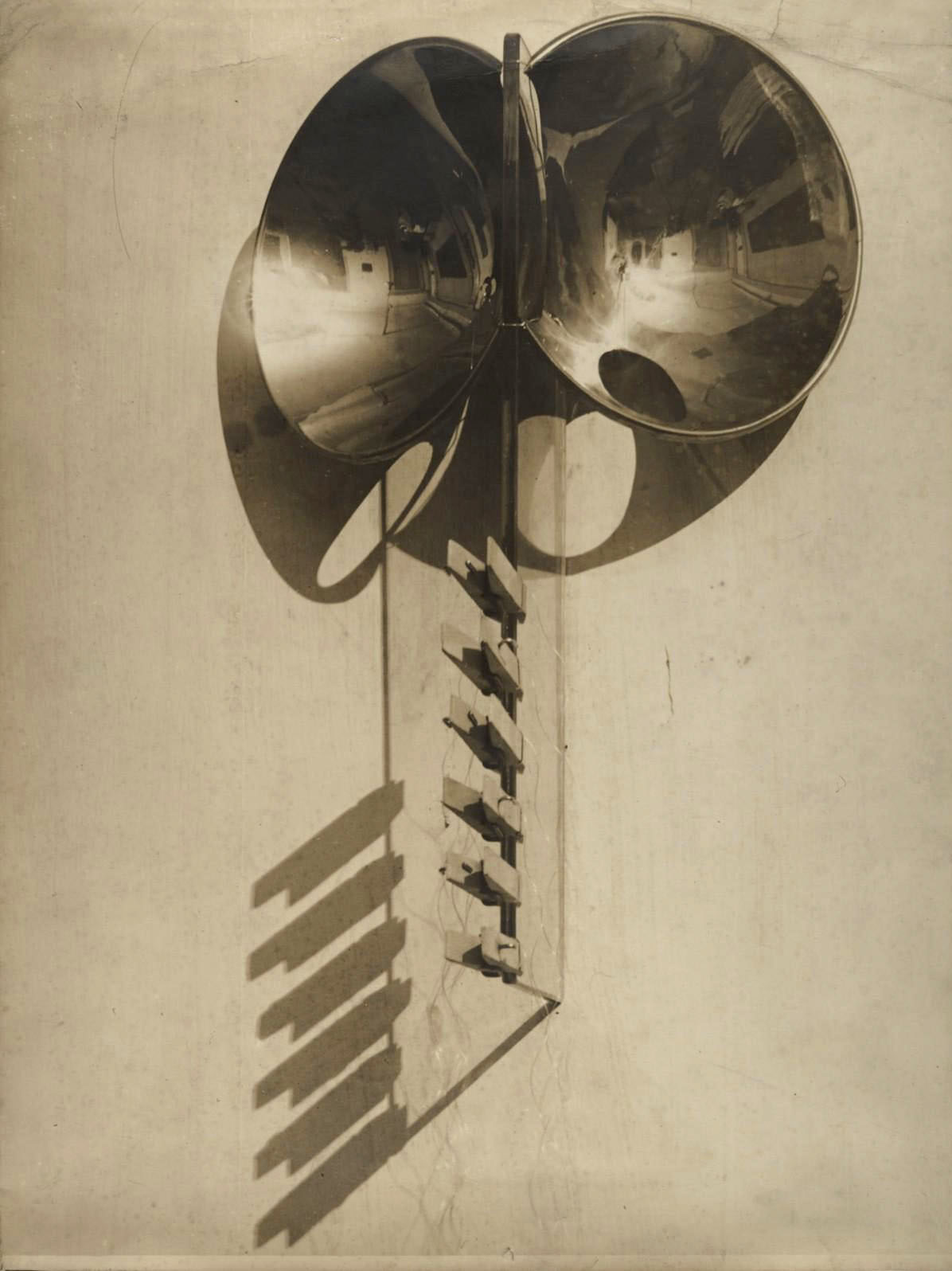
 

Elizabeth Buehrmann (American, 1886-1965) 'Advertisement for Robert Burns Cigar' c. 1920


Elizabeth Buehrmann (American, 1886-1965)
Advertisement for Robert Burns Cigar
c. 1920
Gelatin silver print mounted in press book
Image: 19.69 x 18.42cm (7 3/4 x 7 1/4 in.)
The Miriam and Ira D. Wallach Division of Art, Prints and Photographs: Photography Collection, The New York Public Library


Elizabeth Buehrmann (1886-1965)

Elizabeth “Bessie” Buehrmann (1886-1965) was born June 13, 1886, in Cape Girardeau, Missouri. Elizabeth was an American photographer and artist who was one of the pioneers of taking formal portraits of people in their own homes rather than in a studio. …

At about the age of 15 she enrolled in painting and drawing classes at the Art Institute of Chicago. While she was still a teenager she began assisting Eva Watson-Schütze in her photography studio on West 57th Street, and it was there that she learned both the technical and aesthetic aspects of photography. She made such progress that by the time she was just 18 years old she was accepted as an Associate Member in Alfred Stieglitz’s important Photo-Secession.

Buehrmann specialised in taking portraits of clients in their homes, and she never used artificial scenery or props. She said “I have never had a studio at home but take my pictures in houses. A person is always much more apt to be natural, and then I can get different background effects.” She also did not pose her subjects; instead she would “spend several hours getting acquainted with her subjects before attempting to reproduce the character found in an interesting face.” Leading businessmen and diplomats commissioned her as well as prominent society women, and she was well known for both her artistry and her ability to capture “some of the soul along with the physical features of her sitters.”

In 1906-1907 she spent a year living in London and Paris in order to learn the latest techniques and styles of European photographers. As another sign of her prominence, she was invited to join the Photo-Club de Paris, where she worked for several months.

When she returned, the Art Institute of Chicago gave her a large exhibition of 61 prints, including portraits, landscapes and still lifes. Included among her portraits were photographs of Alvin Langdon Coburn, Robert Demachy, Russell Thorndike, Fannie Zeisler, Sydney Greenstreet and Helena Modjeska.

In 1909 Stieglitz included three of her prints in the prominent National Arts Club exhibition which he organised. Another photographer, Robert Demachy, insisted her prints be included in an important show he was organising in Paris the next year. She is shown as still living with her parents, in Chicago, in the 1910 census. She continued doing portraiture until the late 1910s when she began exploring the then relatively new market for advertising photography. She spent the next decade working on a variety of advertising commissions. Her last known commercial photography took place in the early 1930s.

Text from the Wikipedia website


Charlotte Rudolph (German, 1896-1983) 'Gret Palucca' 1925


Charlotte Rudolph (German, 1896-1983)
Gret Palucca
1925
Gelatin silver print
8 13/16 × 6 9/16 in. (22.4 × 16.6cm)
National Gallery of Art, Washington, DC, Alfred H. Moses and Fern M. Schad Fund


Charlotte Rudolph (German, 1896-1983)

Charlotte Rudolph (1896-1983) was a German photographer. After training with Hugo Erfurth, Charlotte Rudolph opened a photo studio in Dresden in 1924 and concentrated on portrait and dance photography. In particular, Rudolph became known through her photographs of dancers such as Gret Palucca, with whom she was friends, Mary Wigman , Vera Skoronel and countless Wigman students such as Chinita Ullmann.

Her photos of the avant-garde German dancers of the 1920s and 1930s are among the most important documents of expressive dance today. In contrast to other photographers, Charlotte Rudolph did not take the dancers in a pose, but in action. Her pictures of Gret Palucca’s jumps made a major contribution to Palucca’s international fame in 1924 and were also Charlotte Rudolph’s breakthrough. As a result, many women went to their studio because they were hoping for such jump pictures from Rudolph.

Charlotte Rudolph continued to work in Germany during the Nazi era, and temporarily also in the USA after the Second World War. Her archives and her studio in Dresden, which she took over in 1938 after the death of Genja Jonas, were destroyed in the Second World War when Dresden was bombed on February 13, 1945.

Text from the German Wikipedia website


Gret Palucca, born Margarethe Paluka (8 January 1902 – 22 March 1993), was a German dancer and dance teacher, notable for her dance school, the Palucca School of Dance, founded in Dresden in 1925.


Yvonne Chevalier (French, 1899-1982) 'Nu' (Nude) 1929


Yvonne Chevalier (French, 1899-1982)
Nu (Nude)
1929
Gelatin silver print
15 3/8 × 10 1/8 in. (39 × 25.7cm)
© National Gallery of Art, Washington, Alfred H. Moses and Fern M. Schad Fund


Yvonne Chevalier (French, 1899-1982)

Yvonne Chevalier (French, 1899-1982). Coming from a well-to-do background, Yvonne Chevalier went to study drawing and painting after high school. Her first photographs of seascapes and cliffs date back to 1909. She married a doctor in 1920, with whom she had a daughter the following year. She and her husband welcomed and socialised with many artists and writers, including her friends Colette (1873-1954), Adrienne Monnier (1892-1955) and Mariette Lydis (1887-1990), whom she photographed. In 1929 she devoted herself entirely to her art and in 1930 she opened a portrait studio which was a great success. She became the official photographer of painter Georges Rouault. In 1936 she joined the association of French illustrator and advertising photographers, Le Rectangle, founded by Emmanuel Sougez, René Servant and Pierre Adam, which demanded a return to classicism.

The artist exhibited her photos of nudes, architecture and landscapes during two solo exhibitions, in 1935 and 1937. She explored portraiture and photojournalism (Algeria and Southern France, 1937), worked on sculpture (Rodin, 1935), architecture (Thoronet Abbey, 1936) and objects, particularly musical instruments. She tightly framed images – hands, for example – and used high- and low-angle shots, close-ups, shadow and light effects. In 1932 her portrait of Colette submerged in almost total darkness left only the writer’s eye fully illuminated. Included in many group exhibitions, she also regularly published in various magazines, such as Arts et métiers graphiquesCinégraph and Musica. Following the bombings of of the Second World War, the majority of her works disappeared in a fire.

In 1946 she became one of the founding members of the group XV, which wanted photography to be recognised as an art in and of itself. She exhibited with this group on several occasions. Together with the writer Marcelle Auclair, in 1949 she made a long report on the Spanish Carmelites to commemorate the foundation of the order by Teresa of Avila. She continued working extensively as a book illustrator, but stopped taking photographs in 1970. In 1980 the artist sorted and destroyed a large number of her prints.

Catherine Gonnard

Translated from French by Katia Porro.
From the Dictionnaire universel des créatrices
© 2013 Des femmes – Antoinette Fouque
© Archives of Women Artists, Research and Exhibitions

Catherine Gonnard. “Yvonne Chevalier,” on the AWARE: Archives of Women Artists, Research and Exhibitions website [Online] Cited 24/08/2021


Karimeh Abbud (Palestinian, 1893-1940) 'Three Women' 1930s


Karimeh Abbud (Palestinian, 1893-1940)
Three Women
1930s
Gelatin silver print
3 1/2 × 5 1/2 in. (8.9 × 14 cm)
Issam Nassar


Gertrud Arndt (German born Poland, 1903-2000) 'Masked Self-Portrait (No. 16)' 1930


Gertrud Arndt (German born Poland, 1903-2000)
Masked Self-Portrait (No. 16)
1930
Gelatin silver print
8 15/16 × 6 15/16 in. (22.7 × 17.6cm)
Museum Folkwang, Essen


Costuming played a central role at the Bauhaus. From the very beginning, masquerade balls were celebrated regularly under a wide variety of mottoes. And the Bauhaus people rushed over, sometimes preparing for weeks in the workshops and privately the Bauhaus festivals that were popular beyond the walls of the school: Decorations, demonstrations, but above all their costumes – made of simple materials – transformed the Bauhaus people into miraculous figures, incarnate objects and masked beings. Gertrud Arndt’s mask photographs (a series of 43 self-portraits) derive directly from these Bauhaus festivals. …

Arndt’s mask photos are private photographs and were never intended for the public. The mask photographs were taken, rather, independently of viewers, as an experimental excursion into the possibilities and limits of one’s own face – and into the many different characters Arndt transformed herself into in her pictures. They are the record of an intimate conversation conducted between Arndt and her camera. The special thing about Gertrud Arndt’s mask photos is that they were taken in a comprehensive series. Within the 43 photos in the series, smaller picture series can be recognized. In her mask photos, Gertrud Arndt developed a kind of external image of herself, a “visual identity.”12 Arndt only rarely photographed herself once in the same costume. She often made two, three or four pictures in the same costume (or with minor changes). Here the pose, facial expression or picture detail change. In a series of three pictures within the series, Arndt shows herself in a high-necked top with a frill collar and hat, frontally with her eyes closed, then looking directly into the camera in a half-profile, and finally posing in a larger frame with a surprised facial expression. In another mini-series consisting of two photos, Arndt once photographed herself with her eyes closed, her head raised high, and in the next picture, squinting at her nose. The true woman behind the façade is not visible to the viewer. The pictures can illustrate the conflict women faced during the Weimar Republic: faced by entrenched, conservative notions of femininity on the one hand while opposed models for how a modern emancipated woman might act were also present, if to a lesser degree. The contradictory models available within society may be one source behind Arndt’s decision to use her mask photographs as a means to observe herself from the outside, as it were, and to investigate to what degree the many women into whom she transformed herself were actually part of her own feminine persona. At the same time, perhaps unconsciously, she may have also used her portrait project in the service of the traditionally feminine image expected of her, which also did not necessarily correspond to reality. Stereotypical ideas of womanhood with broad social currency circulating during the Weimar Republic included conservative images of women – such as the wife and mother, the widow and the naïve young girl – and these clichés are present in Arndt’s photographs. Or was it that she deliberately exaggerated these role models because she herself felt like a “non-doer” at the Bauhaus, was uncomfortable in this role and felt herself degraded by being thought thusly when her own self-image was that of an emancipated a modern woman? And then again, perhaps Gertrud Arndt’s mask photos are actually merely the result of her “boredom,” which she was desperately trying to alleviate, with role plays.

Extract from Anja Guttenberger. “Festive and Theatrical: The Mask Photos of Gertrud Arndt and Josef Albers as an Expression of Festival Culture,” on the Bauhaus Imaginista Journal website Nd [Online] Cited 16/09/2021


Edith Tudor-Hart (Austrian-British, 1908–1973) 'Man Selling Lemons, Vienna' c. 1932, printed later


Edith Tudor-Hart (Austrian-British, 1908–1973)
Man Selling Lemons, Vienna
c. 1932, printed later
Gelatin silver print
9 1/16 × 9 7/16 in. (23 × 24cm)
Collection of Peter Suschitzky. Julia Donat and Misha Donat


Edith Tudor-Hart (née Suschitzky; 28 August 1908 – 12 May 1973) was an Austrian-British photographer and spy for the Soviet Union. Brought up in a family of socialists, she trained in photography at Walter Gropius’s Bauhaus in Dessau, and carried her political ideals through her art. Through her connections with Arnold Deutsch, Tudor-Hart was instrumental in the recruiting of the Cambridge Spy ring which damaged British intelligence from World War II until the security services discovered all their identities by the mid-1960s. She recommended Litzi Friedmann and Kim Philby for recruitment by the KGB and acted as an intermediary for Anthony Blunt and Bob Stewart when the rezidentura at the Soviet Embassy in London suspended its operations in February 1940.

Text from the Wikipedia website


Ilse Bing (German, 1899-1998) 'Ballet "L'Errante", Paris' 1933


Ilse Bing (German, 1899-1998)
Ballet “L’Errante”, Paris
1933
Gelatin silver print
Image: 28.3 x 22.2 cm (11 1/8 x 8 3/4 in.)
National Gallery of Art, Washington, Alfred H. Moses and Fern M. Schad Fund


Andrea Nelson, an associate curator in the department of photographs at the National Gallery of Art (NGA) in Washington, DC who conceived and organised the exhibition, says the idea for it arose after she was hired in 2010 and was ruminating about generating shows drawn from the NGA’s permanent collection. She was struck by a trove of 90 images by the interwar photographer Ilse Bing that were variously donated by the artist or left by her estate after Bing died in 1998. “She was actually one of the few women photographers that the National Gallery had collected in depth,” Nelson said in an interview. (The show, which was originally scheduled to open first at the NGA last September but was then deferred because of the coronavirus pandemic, travels there this autumn.)

Born into a Jewish family in Frankfurt, Bing became interested in photography while creating architectural illustrations for her art history dissertation there, and eventually gave up her academic studies to pursue a career with the camera. She bought a Leica 35mm model in 1929 and moved the following year to Paris, where she met leading lights in avant-garde photography including Brassaï and André Kertész. Bing began experimenting compositionally and with light effects in self-portraits, images of Parisian streets and photographs of quotidian objects, followed by a striking series of pictures of dancers at the Moulin Rouge and other performers as well as commercial and fashion work in the burgeoning German and French magazine industry.

Known to the cognoscenti as “the Queen of the Leica”, she became a firmament in the constellation of Modernist photographers, included in important exhibitions in Paris and New York. Then the Second World War intervened, and Bing and her husband were both interned with other Jews in the south of France before fleeing to New York in 1941. Her photographic career gradually diminished after that, and she gave it up altogether in 1959.

Yet what she achieved from 1930 to 1940 remains a wonder to behold. “To me, she represents the established narrative of the interwar photographer,” says Nelson. “And as I began to dive deeper, I started to think about this larger community of women photographers who were entering the field, particularly in Germany and France. Did they have the same experiences as Bing, different experiences? But then I just started asking, wait a minute, was that true elsewhere [in the world]? What I really wanted to do was hopefully move beyond the Euro-American narrative that has really structured the history of photography.”

“I just felt that there wasn’t a look at the greater diversity of practitioners during the Modern period. So I took off down that road.”

Extract from Nancy Kenney. “Triumphant in their time, yet largely erased later: a Met exhibition explores ‘The New Woman Behind the Camera’,” on The Art Newspaper website 1st July 2021 [Online] Cited 22/07/2021


Germaine Krull. 'La Tour Eiffel' (The Eiffel Tower) c. 1928


Germaine Krull (German, French, and Dutch (born Poland) 1897-1985 Wetzlar, Germany)
La Tour Eiffel (The Eiffel Tower)
c. 1928
Gelatin silver print
8 7/8 in. × 6 in. (22.5 × 15.2cm)
Museum Folkwang, Essen


Elfriede Stegemeyer (German, 1908-1988) 'Glühbirne, Spiralfeder, Quadrate und Kreise' (Light Bulb, Spring, Squares, and Circles) 1934


Elfriede Stegemeyer (German, 1908-1988)
Glühbirne, Spiralfeder, Quadrate und Kreise (Light Bulb, Spring, Squares, and Circles)
1934
Gelatin silver photogram
Image: 23.5 x 17.1cm (9 1/4 x 6 3/4 in.)
The Sir Elton John Photography Collection


From 1929 to 1932, Stegemeyer (German, 1908-1988) studied art in Berlin and Cologne. In Cologne she was involved in the activities of the Cologne Progressive art association together with Raoul Ubac, Heinrich Hoerle and others. From 1932 to 1938 Stegemeyer concentrated on photographic experiments such as cameraless photography, multiple exposure, photomontage and object studies. Meeting Raoul Hausmann in his Ibiza exile in 1935 nourished her photographic studies of landscape and rural architecture (also during travels in Eastern Europe in the late 1930s). Stegemeyer took part in underground political resistance activities in Nazi Germany, which led to her imprisonment in 1941. Her archive was destroyed during air raids in Berlin in 1943. After the war, Stegemeyer’s work shifted towards drawing, painting, writing and prize-winning animation. In her late work in the 1980s, the artist turned to montage work of different materials.

Text from the Kicken Berlin website [Online] Cited 16/09/2021


Dora Maar (French, 1907-1997) '[Boy with a Cat]' 1934


Dora Maar (French, 1907-1997)
[Boy with a Cat]
1934
Gelatin silver print
16 5/16 × 11 7/16 in. (41.4 × 29cm)
Purchase, Twentieth-Century Photography Fund and Kurtz Family Foundation Gift, 2015
Metropolitan Museum of Art
© 2021 Artists Rights Society (ARS), New York


From 1930 to 1934 Maar turned her camera to the inhabitants of the streets of Paris and London, blending documentary and Surrealist modes. Her photographs often focus on socially marginal figures such as the poor or disabled, revealing her own political engagement. In this striking image, an adolescent with rumpled hair protectively grasps a cat to his chest, his gaze challenging Maar’s camera. The boy’s expression and posture imbue this chance encounter – and the composition – with an arresting psychological dimension.


Marjorie Content (American, 1895-1984) 'Adam Trujillo and His Son Pat, Taos' Summer 1933


Marjorie Content (American, 1895-1984)
Adam Trujillo and His Son Pat, Taos
Summer 1933
Gelatin silver print
4 1/2 × 5 9/16 in. (11.5 × 14.2 cm)
National Gallery of Art, Washington, DC, Purchased as the Gift of the Gallery Girls


Marjorie Content (1895-1984) was an American photographer from New York City active in modernist social and artistic circles. Her photographs were rarely published and never exhibited in her lifetime. Since the late 20th century, collectors and art historians have taken renewed interest in her work. Her photographs have been collected by the Metropolitan Museum of Art and the Chrysler Museum of Art; her work has been the subject of several solo exhibitions.


Margaret Bourke-White (American, 1904-1971) 'Fort Peck Dam, Montana' 1936


Margaret Bourke-White (American, 1904-1971)
Fort Peck Dam, Montana
1936
Gelatin silver print
12 15/16 × 10 13/16 in. (32.9 × 27.4cm)
National Gallery of Art, Washington, DC, Patrons’ Permanent Fund


Margaret Bourke-White (American, 1904-1971) 'World's Highest Standard of Living' 1937


Margaret Bourke-White (American, 1904-1971)
World’s Highest Standard of Living
1937
Gelatin silver print


Kati Horna (Mexican born Hungary, 1912-2000) 'Stairway to the Cathedral, Spain' 1938


Kati Horna (Mexican born Hungary, 1912-2000)
Stairway to the Cathedral, Spain
1938
Gelatin silver print
9 1/2 × 7 1/16 in. (24.1 × 17.9cm)
National Gallery of Art, Washington, DC, Alfred H. Moses and Fern M. Schad Fund


Kati Horna (Mexican born Hungary, 1912-2000) 'Sin titulo (Milicianos en una trinchera / Militiamen in a trench) '1937-1938


Kati Horna (Mexican born Hungary, 1912-2000)
Sin titulo (Milicianos en una trinchera/Militiamen in a trench)
1937-1938
Gelatin silver print
7 1/2 × 7 1/2 in. (19 × 19cm)
National Gallery of Art, Washington, DC, R. K. Mellon Family Foundation


Kati Horna (Mexican born Hungary, 1912-2000)

Kati Horna (May 19, 1912 – October 19, 2000), born Katalin Deutsch, was a Hungarian-born Mexican photojournalist, surrealist photographer and teacher. She was born in Budapest and lived in France, Berlin, Spain, and later was naturalised Mexican. Most of her work was lost during the Spanish Civil War. She was also one of the most influential women artists/photographers of her time. Through her photographs she was able to change the way that people viewed war. One way that Horna was able to do this was through the utilisation of a strategy called “gendered witnessing”. Gendered witnessing consisted of putting a more “feminine” view on the notion that war was a predominantly masculine thing. Horna became a legendary photographer after taking on a woman’s perspective of the war, she was able to focus on the behind the scenes, which led her to portraying the impact the war had on women and children. One of her most striking images is the Tête de poupée. Horna worked for various magazines including Mujeres and S.NOB, in which she published a series of Fétiches; but even her more commercial commissions often contained surreal touches. …

In 1937, during the Spanish Civil War, she moved to Barcelona, commissioned by the Spanish Republican government and the Confédération Générale du Travail, to document the war as well as record the everyday life of communities on the front lines, such as Aragón, Valencia, Madrid, and Lérida. She photographed elderly women, young children, babies and mothers, and was considered visionary for her choice of subject matter. She was editor of the magazine Umbral (where she me José Horna). Kati Horna collaborated with other magazines, most of which were anarchic, such as Tiempos Nuevos, Libre-Studio, Mujeres Libres and Tierra y Libertad. Her images of scenes from the civil war not only revealed her Republican sympathies but also gained her almost legendary status. Some of her photos were used as posters for the Republican cause.

Text from the Wikipedia website


Lisette Model (American born Austria, 1901-1983) 'Blind Man Walking, Paris' 1933-1938


Lisette Model (American born Austria, 1901-1983)
Blind Man Walking, Paris
1933-1938
Gelatin silver print on newspaper mount
11 3/16 × 8 3/4 in. (28.4 × 22.3cm)
National Gallery of Art, Washington, DC, Pepita Milmore Memorial Fund


Dorothea Lange (American, 1895-1965) 'Japanese-American owned grocery store in Oakland, California March' 1942


Dorothea Lange (American, 1895-1965)
Japanese-American owned grocery store in Oakland, California
March 1942
Gelatin silver print
National Gallery of Art, Washington, DC, Gift of Daniel Greenberg and Susan Steinhauser


Dorothea Lange (American, 1895-1965) 'One Nation Indivisible, San Francisco' 1942


Dorothea Lange (American, 1895-1965)
Children of the Weill Public School shown in a flag pledge ceremony, San Francisco, California
April 1942, printed c. 1965
Gelatin silver print
9 1/4 × 6 7/8 in. (23.5 × 17.4cm)
National Gallery of Art, Washington, DC, Gift of Daniel Greenberg and Susan Steinhauser


Hansel Mieth (German, 1909-1998) 'March of Dimes Dance' 1943


Hansel Mieth (German, 1909-1998)
March of Dimes Dance
1943
Gelatin silver print
Collection of Ron Perisho


Homai Vyarawalla (Indian, 1913-2012) 'The Victoria Terminus, Bombay' early 1940s, printed later


Homai Vyarawalla (Indian, 1913-2012)
The Victoria Terminus, Bombay
early 1940s, printed later
Inkjet print
11 9/16 × 11 13/16 in. (29.3 × 30cm)
Homai Vyarawalla Archive / The Alkazi Collection of Photography


Homai Vyarawalla (Indian, 1913-2012)

Homai Vyarawalla (9 December 1913 – 15 January 2012), commonly known by her pseudonym Dalda 13, was India’s first woman photojournalist. She began work in the late 1930s and retired in the early 1970s. In 2011, she was awarded Padma Vibhushan, the second highest civilian award of the Republic of India. She was amongst the first women in India to join a mainstream publication when she joined The Illustrated Weekly of India. …

Vyarawalla started her career in the 1930s. At the onset of World War II, she started working on assignments for Mumbai-based The Illustrated Weekly of India magazine which published many of her most admired black-and-white images. In the early years of her career, since Vyarawalla was unknown and a woman, her photographs were published under her husband’s name. Vyarawalla stated that because women were not taken seriously as journalists she was able to take high-quality, revealing photographs of her subjects without interference:

People were rather orthodox. They didn’t want the women folk to be moving around all over the place and when they saw me in a sari with the camera, hanging around, they thought it was a very strange sight. And in the beginning they thought I was just fooling around with the camera, just showing off or something and they didn’t take me seriously. But that was to my advantage because I could go to the sensitive areas also to take pictures and nobody will stop me. So I was able to take the best of pictures and get them published. It was only when the pictures got published that people realised how seriously I was working for the place.

~  Homai Vyarawalla in Dalda 13: A Portrait of Homai Vyarawalla (1995)


Eventually her photography received notice at the national level, particularly after moving to Delhi in 1942 to join the British Information Services. As a press photographer, she recorded many political and national leaders in the period leading up to independence, including Mohandas Gandhi, Jawaharlal Nehru, Muhammad Ali Jinnah, Indira Gandhi and the Nehru-Gandhi family.

The Dalai Lama in ceremonial dress enters India through Nathu La in Sikkim on 24 November 1956, photographed by Homai Vyarawalla. In 1956, she photographed for Life Magazine the 14th Dalai Lama when he entered Sikkim in India for the first time via the Nathu La.

Most of her photographs were published under the pseudonym “Dalda 13”. The reasons behind her choice of this name were that her birth year was 1913, she met her husband at the age of 13 and her first car’s number plate read “DLD 13”.

Text from the Wikipedia website


Margaret Bourke-White (American, 1904-1971) 'Buchenwald Prison' 13th April 1945


Margaret Bourke-White (American, 1904-1971)
Buchenwald Prison
13th April 1945
Gelatin silver print


Margaret Bourke-White (American, 1904-1971) 'The Liberation of Buchenwald' April 1945


Margaret Bourke-White (American, 1904-1971)
The Liberation of Buchenwald
April 1945
Gelatin silver print


Caption from LIFE. “Deformed by malnutrition, a Buchenwald prisoner leans against his bunk after trying to walk. Like other imprisoned slave labourers, he worked in a Nazi factory until too feeble.”


Margaret Bourke-White (American, 1904-1971) 'Self-Portrait with Camera' c. 1933


Margaret Bourke-White (American, 1904-1971)
Self-Portrait with Camera
c. 1933
Gelatin-silver print, toned
13 1/4 × 9 1/8 in. (33.66 × 23.18cm)


Lee Miller (American, 1907-1977) 'Dead SS Prison Guard Floating in Canal, Dachau, Germany' 1945


Lee Miller (American, 1907-1977)
Dead SS Prison Guard Floating in Canal, Dachau, Germany
1945
Gelatin silver print
6 1/4 in. × 6 in. (15.9 × 15.2cm)
Lee Miller Archives
© Lee Miller Archives, England 2021


Sometime in the 1930s, Hungarian photographer Anna Barna shot “Onlooker,” a picture of a boy standing on a chair seen from behind as he peers over a palisade.

As his shadow stretches out across the planks blocking his way, it takes the shape of a bearded profile that reads as a second “onlooker” in the shot. A bit further off stands yet a third “looker” who, though quite invisible in the image, was very much present in the mind of any prewar viewer who saw the shot’s photo credit: That looker is Anna Barna, a woman who has dared to pick up the camera that would normally have been held by a man. Like all the camera-wielding women of her era, Barna made a bold move that gave her a powerful cultural presence.

That presence is on display in “The New Woman Behind the Camera,” an inspired and inspiring exhibition at the Metropolitan Museum of Art through Oct. 3. In late October, it moves on to the National Gallery of Art in Washington. Curated by Andrea Nelson of the NGA, the show has been installed at the Met by Mia Fineman.

The more than 200 pictures on view, taken from the 1920s through the ’50s, let us watch as women everywhere become photo pros. I guess some of their shots could have been snapped by men, but female authorship shaped what these images meant to their contemporaries. It shapes what we need to make of them now, as we grasp the challenges their makers faced.

The Met shows women photographing everything from factories to battles to the oppressed, but also gowns and children and other traditionally “feminine” subjects. Sometimes the goal is straight documentation: Figures like Dorothea Lange in the United States and Galina Sanko in the Soviet Union recorded the worlds they moved through, often at the request of their governments. But many of their sisters prefer the aggressive viewpoints and radical lightings of what was then called the New Vision, as developed at the Bauhaus and other hot spots of modern style. It was to sight what jazz was to sound.

That made the New Vision a perfect fit for the New Woman, a term that went global early in the 20th century to describe all the many women who took on roles and responsibilities – new personas and even new powers – they’d rarely had before. When a New Woman took up photography, she often turned her New Vision on herself, as one of the modern world’s most striking creations.

A self-portrait by American photographer Alma Lavenson leaves out everything but her hands and the camera they’re holding; the only thing we need to know is that Lavenson is in control of this machine, and therefore of the vision it captures.

German photographer Ilse Bing shoots into the hinged mirrors on a vanity, giving us both profile and head-on views of her face and of the Leica that almost hides it. Since antiquity, the mirror had been a symbol of woman and her vanities; Bing claims that old symbol for herself, making it yield a new image.

The mirror deployed by the German Argentine photographer Annemarie Heinrich is a silvered sphere; capturing herself and her sister in it, she depicts the fun-house pleasures, and distortions, of being a woman made New.

Heinrich’s European peers sometimes go further in disturbing their self-presentation. In “Masked Self-Portrait (No. 16),” Gertrud Arndt double- or maybe triple-exposes her face, as though to convey the troubled identity she’s taken on as a woman who dares to photograph. (Multiple exposure is almost a hallmark of New Woman photographers; maybe that shouldn’t surprise us.) In a collage titled “I.O.U. (Self-Pride),” French photographer Claude Cahun presents herself as 11 different masked faces, surrounded by the words “Under this mask, another mask. I’ll never be done lifting off all these faces.”

It’s as though the act of getting behind a camera turns any New Woman into an ancestor and avatar of Cindy Sherman, trying on all sorts of models for gender.

If there’s one problem with this show, it’s that it mostly gives us women who succeeded in achieving the highest levels of excellence, barely hinting at the much greater number of women who were prevented from reaching their creative goals by the rampant sexism of their era: talented women whose places in a photo school were given to men instead, or who were streamed into the lowest or most “feminine” tiers of the profession – retouching, or cheap kiddie portraits – or who were never promoted above studio assistant.

It’s a problem that bedevils all attempts at recovering the lost art of the disadvantaged: By telling the same stories of success that you do with white males, you risk making it look as though others were given the same chance to rise.

A quite straight shot of Chinese photojournalist Niu Weiyu may best capture what it really meant for the New Woman to start taking pictures. As snapped by her colleague Shu Ye, Niu stands perched with her camera at the edge of a cliff. Every female photographer adopted this daredevil pose, at least in cultural terms, just by clicking a shutter.

Several of the women featured at the Met actually took over studios originally headed by husbands or fathers. In the Middle East and Asia, this gave them access to a reality that men could not document: Taken in 1930s Palestine, a photo by an entrepreneur who styled herself as “Karimeh Abbud, Lady Photographer” shows three women standing before the camera with complete self-confidence – the youngest smiles broadly into the lens – in a relaxed shot that a man would have been unlikely to capture.

Gender was almost as powerfully in play for women in the West. If taking up a camera was billed as “mannish,” many a New Woman in Europe was happy to go with that billing: Again and again, they portray themselves coiffed with the shortest of bobs, sometimes so short they read as male styles. Cahun, who at times was almost buzz-cut, once wrote “Masculine? Feminine? It depends on the situation. Neuter is the only gender that always suits me.”

Margaret Bourke-White, an American photographer who achieved true celebrity, shoots herself in a bob long enough to just about cover her ears, but this almost girlish style is more than offset by manly wool slacks. (In the 1850s, Rosa Bonheur had to get a police license to wear pants when she went to draw the horse-breakers of Paris. As late as 1972, my grandmother, born into the age of the New Woman, boasted of the courage she’d recently mustered to start wearing pants to work.)

A New Woman clicking the shutter might seem almost as much on display as any subject before her lens. Bourke-White’s photo of the Fort Peck dam graced the cover of Life magazine’s first modern issue, in 1936, and it got that play in part because it had been shot by her: The editors go on about that “surprising” fact as they introduce their new magazine, and how they were “unable to prevent Bourke-White from running away with their first nine pages.”

When a subject is in fact another woman, shooter and sitter can collapse into one. Lola Álvarez Bravo, the great Mexican photographer, once took a picture of a woman with shadows crisscrossing her face, titling it “In Her Own Prison.” As a photographic Everywoman, Álvarez Bravo comes off as in that same jail.

To capture the predicament of women in Catholic Spain, Kati Horna double-exposed a girl’s face onto the barred windows beside a cathedral; it’s hard not to see the huge eye that looks out at us from behind those bars as belonging to Horna herself, peering through the viewfinder.

For centuries before they went New, women had been objectified and observed as few men were likely to be. Picking up the camera didn’t pull eyes away from a New Woman; it could put her all the more clearly on view. But thanks to photography, she could begin to look back, with power, at the world around her.

Blake Gopnik. “Women Who Shaped Modern Photography,” on The New York Times website July 11, 2021 [Online] Cited 16/07/2021


Bernice Kolko (American born Poland, 1905-1970) 'Photogram' c. 1944


Bernice Kolko (American born Poland, 1905-1970)
Photogram
c. 1944
Gelatin silver print
9 3/4 × 11 1/2 in. (24.8 × 29.2cm)
National Gallery of Art, Washington, DC, Alfred H. Moses and Fern M. Schad Fund


Bernice Kolko (American born Poland, 1905-1970)

Bernice Kolko (1905-1970) was a Polish-American photographer. During World War II, she joined the Women’s Army Corps as a photographer. In 1953 she became friends with Diego Rivera and Frida Kahlo, who she had met when they visited Chicago. They invited her to Mexico, where she travelled, taking pictures of the women of Mexico. She and Kahlo travelled frequently, with Kolko taking photos of Kahlo in the two years before Kahlo’s death. In 1955 she became the first woman to exhibit at the Palacio de Bellas Artes.

Text from the Wikipedia website


Rebecca Lepkoff (American, 1916–2014) '14th Street, New York City' 1947-1948


Rebecca Lepkoff (American, 1916–2014)
14th Street, New York City
1947-48
Gelatin silver print
10 5/8 × 12 9/16 in. (27 × 31.9cm)
Purchase, Phillip and Edith Leonian Foundation Gift, 2012
Metropolitan Museum of Art


Rebecca Lepkoff (American, 1916-2014)

Rebecca Lepkoff (born Rebecca Brody; 1916-2014) was an American photographer. She is best known for her images depicting daily life in the Lower East Side neighbourhood of New York City in the 1940s. …

Fascinated by the area where she lived, she first photographed Essex and Hester Street which, she recalls, “were full of pushcarts.” They no longer exist today but then “everyone was outside: the mothers with their baby carriages, and the men just hanging out.” Her photographs captured people in the streets, especially children, as well as the buildings and the signs on store fronts.

In 1950, she also photographed people at work and play in Vermont. The images were used to illustrate the book Almost Utopia: The Residents and Radicals of Pikes Falls, Vermont, 1950, published by the Vermont Historical Society. They present the area before its character was changed with paved roads and vacationers. In the 1970s, she photographed the next generation of inhabitants in a series she called Vermont Hippies.

Rebecca Lepkoff was an active member of the Photo League from 1947 until 1951 when it was dissolved as a “communist organisation” in the McCarthy era.

Text from the Wikipedia website


Grete Stern (Argentinian, born Germany, 1904-1999) 'Sueño No. 1: "Articulos eléctricos para el hogar" (Dream No. 1: "Electrical Household items")' c. 1949


Grete Stern (Argentinian born Germany, 1904-1999)
Sueño No. 1: “Articulos eléctricos para el hogar” (Dream No. 1: “Electrical Household items”)
1949
Gelatin silver print
18 1/4 × 15 11/16 in. (46.4 × 39.8cm)
Twentieth-Century Photography Fund, 2012
Metropolitan Museum of Art


In 1948 the Argentine women’s magazine Idilio introduced a weekly column called “Psychoanalysis Will Help You,” which invited readers to submit their dreams for analysis. Each week, one dream was illustrated with a photomontage by Stern, a Bauhaus-trained photographer and graphic designer who fled Berlin for Buenos Aires when the Nazis came to power. Over three years, Stern created 140 photomontages for the magazine, translating the unconscious fears and desires of its predominantly female readership into clever, compelling images. Here, a masculine hand swoops in to “turn on” a lamp whose base is a tiny, elegantly dressed woman. Rarely has female objectification been so erotically and electrically charged.


Alice Brill (Brazilian born Cologne, 1920-2013) 'Street Vendor at the Chá Viaduct, São Paulo' c. 1953


Alice Brill (Brazilian born Cologne, 1920-2013)
Street Vendor at the Chá Viaduct, São Paulo
c. 1953
Gelatin silver print
32 × 32cm (12 5/8 × 12 5/8 in.)
Instituto Moreira Salles


Alice Brill (Brazilian born Germany, 1920-2013)

Alice Brill (December 13, 1920 – June 29, 2013) was a German-born Brazilian photographer, painter, and art critic.

Alice Brill Czapski was born in Cologne, Germany, in 1920. She was Jewish, the daughter of the painter Erich Brill [de] and the journalist Martha Brill [de]. In 1934 she and her parents left Germany to escape the National Socialist (Nazi) regime; her mother, long divorced from Erich Brill, emigrated to Brazil, and in 1935 Alice Brill and her father also emigrated there. Influenced by a schoolteacher, she recorded in a diary the trips made during exile, with a photographic camera given to her by her father. She passed through Spain, Italy and the Netherlands before landing in Brazil. Her father returned alone to Germany in 1936. He was subsequently imprisoned and died, a Holocaust victim, in 1942 at the Jungfernhof concentration camp.

At age 16 she studied with the painter Paulo Rossi Osir, who influenced her production of photographs and batik paintings. She participated in the Santa Helena Group, an informal association of painters from São Paulo, maintaining contact with artists such as Mario Zanini and Alfredo Volpi. In 1946, she won a Hillel Foundation scholarship to study at the University of New Mexico and the Art Students League of New York where she studied photography, painting, sculpture, engraving, art history, philosophy and literature.

After returning to Brazil in 1948, she worked as a photographer for Habitat magazine, coordinated by architect Lina Bo Bardi. She documented architecture, fine arts and made portraits of artists, as well as recording works and exhibitions of the São Paulo Art Museum and Sao Paulo Museum of Modern Art He also participated in an expedition in Corumbá organised by the Central Brazil Foundation, photographing the Carajás people. In 1950, she performed the essay at the Psychiatric Hospital of Juqueri at the invitation of the plastic artist Maria Leontina da Costa, registering the wing of the Free Art Workshop. In the same year, Pietro Maria Bardi commissioned an essay on São Paulo for the city’s fourth centennial. It portrayed the process of modernisation of the city between 1953 and 1954, but the publication project was not completed.

In addition to being a photographer, she worked as a painter, participating in the I and IX Bienal de São Paulo (1951 and 1967 respectively), as well as several individual and collective exhibitions. Her subjects involved urban landscapes and abstractionism, performing watercolours and batik paintings. She graduated in philosophy from PUC-SP in 1976, graduating in 1982 and a doctorate in 1994 and worked as an art critic, writing articles for the culture section of the newspaper O Estado de S. Paulo, which were later collected in the book “Da arte e da linguagem” (Perspectiva, 1988).

Text from the Wikipedia website


Frieda Gertrud Riess (German, 1890-1957) 'The Sculptor Renée Sintenis' 1925, printed 1925-1935


Frieda Gertrud Riess (German, 1890-1957)
The Sculptor Renée Sintenis
1925, printed 1925-1935
Gelatin silver print
8 7/8 × 6 13/16 in. (22.6 × 17.3 cm)
The Museum of Modern Art, New York. Thomas Walther Collection. Bequest of Gertrude Palmer, by exchange


Frieda Gertrud Riess (German, 1890-1957)

Frieda Gertrud Riess (1890 – c. 1955) was a German portrait photographer in the 1920s with a studio in central Berlin.

In 1918, she opened a business on the Kurfürstendamm in Berlin; it became one of the most popular studios in the city. Partly as a result of her marriage to the journalist Rudolf Leonhard in the early 1920s, she extended her clientele to celebrities such as playwright Walter Hasenclever, novelist Gerhart Hauptmann and actors and actresses including Tilla Durieux, Asta Nielsen and Emil Jannings. This group extended to include dancers, music-hall stars and fine artists: Anna Pavlova, Mistinguett, Lil Dagover, Renée Sintenis, Max Liebermann and Xenia Boguslawskaja. Other clients included representatives of the old aristocracy, diplomats, politicians and bankers. Boxers (and nudes thereof) were a notable group in which she specialised, including Erich Brandl, Hermann Herse, Max Schmeling, Ensor Fiermonte.

Such was her renown that she became known simply as Die Reiss. While on a trip to Italy in 1929, she was invited to photograph Benito Mussolini. In addition, she contributed to the journals and magazines of the day including Die Dame, Berliner Illustrierte Zeitung, Der Weltspiegel, Querschnit and Koralle. In 1932, after falling in love with Pierre de Margerie, the French ambassador in Berlin (1922-1931). She moved to Paris with him, and he died in 1942. She disappeared from the public eye during the Occupation. Even the date of her death cannot be clearly established and her place of burial remains unknown.

Text from the Wikipedia website


Renée Sintenis (German, 1888-1965)

Renée Sintenis, née Renate Alice Sintenis (March 20, 1888, Glatz – April 22, 1965, West Berlin), was a German sculptor, medalist and graphic artist who worked in Berlin. She created mainly small-sized animal sculptures, female nudes, portraits (drawings and sculptures) and sports statuettes. …

In 1928 Sintenis won the bronze medal in the sculpture section of the art competition for the Summer Olympics in Amsterdam; she is thought to be the first LGBTQ+ Olympic medallist. Renée Sintenis took part in the 1929 exhibition of the German Association of Artists in the Cologne State House, with five small-format animal sculptures. In 1930 she met the French sculptor Aristide Maillol in Berlin. In 1931 she was appointed as the first sculptor, and second woman after Käthe Kollwitz, together with 13 other artists, to join the Berlin Academy of the Arts – Fine Arts section, although the National Socialists forced her to leave in 1934.

Due to her body size, slim figure, charisma, her self-confident, fashionable demeanor and androgynous beauty, she was often portrayed by artists like her husband, Emil Rudolf Weiß and Georg Kolbe, and by photographers, like Hugo Erfurth, Fritz Eschen and Frieda Riess. She embodied perfectly the type of the ‘new woman’ of the 1920s, even if she appeared rather reserved.

Text from the Wikipedia website


Renée Sintenis’ work was included in the Schwules Museum’s exhibition LESBIAN VISIONS – Artistic positions from Berlin, May – August 2018.

The exhibition conceptualised a utopian and melancholic gallery that follows the tracks of lesbian forms of pleasure and experience as well as lesbian identity constructions and lifestyles. In this context, the exhibition understood and recognised the term “lesbian” in its broadest sense, which is to say that desire and gender can be fluid.


Yevonde Cumbers Middleton (British, 1893–1975) 'Lady Bridget Poulett as 'Arethusa'' 1935


Yevonde Cumbers Middleton (British, 1893–1975)
Lady Bridget Poulett as ‘Arethusa’
1935
Vivex colour print
14 3/4 × 10 3/4 in. (37.5 × 27.3cm)
National Portrait Gallery, London, Given by Madame Yevonde, 1971


Yevonde Philone Middleton (English, 1893-1975)

Yevonde Philone Middleton (English, 1893-1975) was an English photographer, who pioneered the use of colour in portrait photography. She used the professional name Madame Yevonde. …

Cumbers sought, and was given, a three-year apprenticeship with the portrait photographer Lallie Charles. With the technical grounding she received from working with Charles, and a gift of £250 from her father, at the age of 21 Yevonde set up her own studio at 92 Victoria Street, London, and began to make a name for herself by inviting well-known figures to sit for free. Before long her pictures were appearing in society magazines such as the Tatler and The Sketch. Her style quickly moved away from the stiff “pouter pigeon” look of Lallie Charles, toward a still formal, but more creative, style. Her subjects were often pictured looking away from the camera, and she began using props to creative effect.

By 1921 Madame Yevonde had become a well-known and respected portrait photographer, and moved to larger premises at 100 Victoria Street. Here she began taking advertising commissions and also photographed many of the leading personalities of the day, including A.A. Milne, Barbara Cartland, Diana Mitford, Louis Mountbatten and Noël Coward.

In the early 1930s, Yevonde began experimenting with colour photography, using the new Vivex colour process from Colour Photography Limited of Willesden. The introduction of colour photography was not universally popular; indeed photographers and the public alike were so used to black-and-white pictures that early reactions to the new process tended toward the hostile. Yevonde, however, was hugely enthusiastic about it and spent countless hours in her studio experimenting with how to get the best results. Her dedication paid huge dividends. In 1932 she put on an exhibition of portrait work at the Albany Gallery, half monochrome and half colour, to enthusiastic reviews.

In 1933, Madame Yevonde moved once again, this time to 28 Berkeley Square. She began using colour in her advertising work as well as her portraits, and took on other commissions too. In 1936, she was commissioned by Fortune magazine to photograph the last stages in the fitting out of the new Cunard liner, the Queen Mary. This was very different from Yevonde’s usual work, but the shoot was a success. People printed twelve plates, and pictures were exhibited in London and New York City. One of the portraits was of artist Doris Zinkeisen who was commissioned together with her sister Anna to paint several murals for the Queen Mary. Another major coup was being invited to take portraits of leading peers to mark the coronation of King George VI and Queen Elizabeth. She joined the Royal Photographic Society in 1933, and became a Fellow in 1940. The RPS Collection holds examples of her work.

Yevonde’s most famous work was inspired by a theme party held on 5 March 1935, where guests dressed as Roman and Greek gods and goddesses. Yevonde subsequently took studio portraits of many of the participants (and others), in appropriate costume and surrounded by appropriate objects. This series of prints showed Yevonde at her most creative, using colour, costume and props to build an otherworldly air around her subjects. She went on to produce further series based on the signs of the zodiac and the months of the year. Partly influenced by surrealist artists, particularly Man Ray, Yevonde used surprising juxtapositions of objects which displayed her sense of humour.

This highly creative period of Yevonde’s career would only last a few years. At the end of 1939, Colour Photographs Ltd closed, and the Vivex process was no more. It was the second major blow to Yevonde that year – her husband, the playwright Edgar Middleton, had died in April. Yevonde returned to working in black and white, and produced many notable portraits. She continued working up until her death, just two weeks short of her 83rd birthday, but is chiefly remembered for her work of the 1930s, which did much to make colour photography respectable.

Text from the Wikipedia website


Lady Bridget Elizabeth Felicia Henrietta Augusta Poulett (English, 1912-1975), was an English socialite, sometime model of Cecil Beaton.


Tina Modotti (Italian, 1896-1942) 'La técnica [or, Mella's Typewriter]' 1928


Tina Modotti (Italian, 1896-1942)
La técnica [or, Mella’s Typewriter]
1928
Gelatin silver print
24 × 19.2cm (9 7/16 × 7 9/16 in.)
The Museum of Modern Art, New York, Anonymous gift


Irene Bayer-Hecht (American, 1898-1991) 'Female Student with Beach Ball' c. 1925


Irene Bayer-Hecht (American, 1898-1991)
Female Student with Beach Ball
c. 1925
Gelatin silver print
4 1/8 × 3 1/16 in. (10.5 × 7.8cm)
The J. Paul Getty Museum, Los Angeles


Irene Bayer-Hecht (1898-1991) was an American born photographer involved in the Bauhaus movement. Her photographs “feature experimental approaches and candid views of life at the Bauhaus.”


Berenice Abbott (American, 1898-1991) 'Jean Cocteau with Gun, Paris' c. 1926


Berenice Abbott (American, 1898-1991)
Jean Cocteau with Gun, Paris
c. 1926
From Faces of the 20’s
Gelatin silver print
34 x 25.5cm (13.4 x 10 in.)


Berenice Abbott in an undated photo. Photographer and source unknown 1930s


Berenice Abbott in an undated photo. Photographer and source unknown 1930s
Public domain


Annelise Kretschmer (German, 1903–1987) 'Young Woman' 1928


Annelise Kretschmer (German, 1903–1987)
Young Woman
1928
Gelatin silver print
18 3/8 × 15 11/16 in. (46.7 × 39.8cm)
Museum Folkwang, Essen
© Museum Folkwang Essen – ARTOTHEK


Annelise Kretschmer (1903-1987) was a German portrait photographer. Kretschmer is best known for her depictions of women in Germany in the early 20th century and is credited with helping construct the ‘Neue Frau’ or New Woman image of modern femininity.


Claude Cahun (French, 1894-1954) 'I.O.U. (Self-Pride) in Aveux non avenus' 1930


Claude Cahun (French, 1894-1954)
I.O.U. (Self-Pride) in Aveux non avenus
1930
Book
Open: 8 3/4 × 12 1/2 in. (22.2 × 31.8cm)
Closed: 8 3/4 × 6 3/4 in. (22.2 × 17.2cm)
National Gallery of Art Library, Washington, DC,


Claude Cahun (French, 1894-1954) 'Self-portrait (reflected image in mirror with chequered jacket)' 1927


Claude Cahun (French, 1894-1954)
Self-portrait (reflected image in mirror with chequered jacket)
1927
Silver gelatin print


Ruth Harriet Louise (American, 1906-1944) 'Carmel Myers' 1925-1930


Ruth Harriet Louise (American, 1906-1944)
Carmel Myers
1925-1930
Gelatin silver print
12 7/16 × 9 1/4 in. (31.6 × 23.5cm)
The Marjorie and Leonard Vernon Collection, gift of The Annenberg Foundation, acquired from Carol Vernon and Robert Turbin


Ruth Harriet Louise (American, 1906-1944)

Ruth Harriet Louise (born Ruth Goldstein, January 13, 1903 – October 12, 1940) was an American photographer. She was the first woman photographer active in Hollywood, and she ran Metro-Goldwyn-Mayer’s portrait studio from 1925 to 1930.

Ruth Harriet Louise was born Ruth Goldstein in New York City and raised in New Brunswick, New Jersey. She was the daughter of Klara Jacobson Sandrich Goldstein, who was born in Rajec, Hungary (present-day Slovakia) and Jacob Goldstein, who was a rabbi originally from England. Her brother was director Mark Sandrich, and she was a cousin of silent film actress Carmel Myers.

Louise began working as a portrait photographer in 1922, working out of a music store down the block from the New Brunswick temple at which her father was a rabbi. Most of her photographs from this period are of family members and members of her father’s temple congregation.

In 1925 she moved to Los Angeles and set up a small photo studio on Hollywood and Vine. Louise’s first published Hollywood photo was of Vilma Banky in costume for Dark Angel, and appeared in Photoplay magazine in September 1925. When Louise was hired by MGM as chief portrait photographer, she was twenty-two years old, and the only woman working as a portrait photographer for the Hollywood studios. In a career that lasted only five years, Louise photographed all the stars, contract players, and many of the hopefuls who passed through the studio’s front gates, including Greta Garbo (Louise was one of only seven photographers permitted to make portraits of her), Lon Chaney, John Gilbert, Joan Crawford, Marion Davies, Anna May Wong, Nina Mae McKinney, and Norma Shearer. It is estimated that she took more than 100,000 photos during her tenure at MGM. Today she is considered an equal with George Hurrell Sr. and other renowned glamour photographers of the era.

In addition to paying close attention to costume and setting for studio photographs, Louise also incorporated aspects of modernist movements such as Cubism, futurism, and German expressionism into her studio portraits.

Text from the Wikipedia website


Carmel Myers (American, 1899-1980)

Carmel Myers (American, 1899-1980) was an American actress who achieved her greatest successes in silent film.

Myers left for New York City, where she acted mainly in theatre for the next two years. She was signed by Universal, where she emerged as a popular actress in vamp roles. Her most popular film from this period – which does not feature her in a vamp role – is probably the romantic comedy All Night, opposite Rudolph Valentino, who was then a little-known actor. She also worked with him in A Society Sensation. By 1924, she was working for Metro-Goldwyn-Mayer, making such films as Broadway After Dark, which also starred Adolphe Menjou, Norma Shearer, and Anna Q. Nilsson.

In 1925, she appeared in arguably her most famous role, that of the Egyptian vamp Iras in Ben-Hur, who tries to seduce both Messala (Francis X. Bushman) and Ben-Hur himself (Ramón Novarro). This film was a boost to her career, and she appeared in major roles throughout the 1920s, including Tell It to the Marines in 1926 with Lon Chaney, Sr., William Haines, and Eleanor Boardman. Myers appeared in Four Walls and Dream of Love, both with Joan Crawford in 1928; and in The Show of Shows (1929), a showcase of popular contemporary film actors.

Myers had a fairly successful sound career, mostly in supporting roles, perhaps due to her image as a vamp rather than as a sympathetic heroine. Subsequently, she began giving more attention to her private life following the birth of her son in May 1932. Amongst her popular sound films are Svengali (1931) and The Mad Genius (1931), both with John Barrymore and Marian Marsh, and a small role in 1944’s The Conspirators, which featured Paul Henreid, Peter Lorre, and Sydney Greenstreet.

Text from the Wikipedia website


Hildegard Rosenthal (Brazilian born Zürich, 1913-1990) 'Street Scene, São Paulo' c. 1940, printed later


Hildegard Rosenthal (Brazilian born Switzerland, 1913-1990)
Street Scene, São Paulo
c. 1940, printed later
Gelatin silver print
24 × 36cm (9 7/16 × 14 3/16 in.)
Instituto Moreira Salles


Hildegard Rosenthal (Brazilian born Switzerland, 1913-1990)

Hildegard Baum Rosenthal (March 25, 1913 – September 16, 1990) was a Swiss-born Brazilian photographer, the first woman photojournalist in Brazil. She was part of the generation of European photographers who emigrated during World War II and, acting in the local press, contributed to the photographic aesthetic renovation of Brazilian newspapers.

Rosenthal was born in Zurich, Switzerland. Until her adolescence, she lived in Frankfurt (Germany), where she studied pedagogy from 1929 until 1933. She lived in Paris between 1934 and 1935. Upon her return to Frankfurt, she studied photography for about 18 months in a program led by Paul Wolff [de]. Wolff emphasised small, portable cameras that used 35 mm film. These were a recent innovation at the time, and could be used unobtrusively for street photography. She also studied photographic laboratory techniques at the Gaedel Institute.

In this same period, she had entered a relationship with Walter Rosenthal. Rosenthal was Jewish, and Jews were increasingly persecuted in Germany in the 1930s under the National Socialist (Nazi) regime that took power in 1933. Walter Rosenthal emigrated to Brazil in 1936. Hildegard joined him in São Paulo in 1937. That same year she began working as a laboratory supervisor at the Kosmos photographic materials and services company. A few months later, the agency Press Information hired her as a photojournalist and she did news reports for national and international newspapers. During this period, she took photographs of the city of São Paulo and the state countryside of Rio de Janeiro and other cities in southern Brazil, as well as portraying several personalities from the São Paulo cultural scene, such as the painter Lasar Segall, the writers Guilherme de Almeida and Jorge Amado, the humorist Aparicio Torelly (Barão de Itararé) and the cartoonist Belmonte. Her images sought to capture the artist at his moment of creation, in obvious connection with his spirit of reporter. She interrupted her professional activity in 1948, after the birth of her first daughter. And in 1959, after her husband died, she took over the management of her family’s company.

Her photographs remained little known until 1974, when art historian Walter Zanini [pt] held a retrospective of her work at the Museum of Contemporary Art of the University of São Paulo. The following year the Museum of Image and Sound of São Paulo (MIS) was opened with the exhibition Memória Paulistana, by Rosenthal. In 1996 the Instituto Moreira Salles acquired more than 3,000 of her negatives, in which urban scenes of São Paulo from the 1930s and 1940s stood out, during which time the city underwent a vertiginous growth, both material and cultural. Other negatives were donated by her during her life to the Lasar Segall Museum.

“Photography without people does not interest me,” she said at the Museum of Image and Sound of São Paulo in 1981.

Text from the Wikipedia website


Marta Astfalck-Vietz (German, 1901-1994) 'Ohne Titel (Marta Vietz, Akt mit Spitze)' c. 1927


Marta Astfalck-Vietz (German, 1901-1994)
Self-Portrait (Marta Vietz, Akt mit Spitze)
c. 1927
Gelatin silver print
Berlinische Galerie – Landesmuseum für Moderne Kunst, Fotografie und Architektur
© 2021 Artists Rights Society (ARS), New York


Marta Astfalck-Vietz (German, 1901-1994)

Astfalck-Vietz‘s works offer a “range of her personal responses to the social, sexual and political transformations that shaped the German metropolis after World War One. Inspired by film and dance, they are all mediated realities in which human figures imply the figurative: a black dancer embraces a white woman, stirring Germany’s fears and fascinations about blackness and the primitive; a woman’s decapitated head conjures gutter-press reports of the grisly stigmata borne by victims of Berlin’s seedy underworld. Comprising mostly self-portraits, this show is a rich microcosm of creative registers: courage, black humour and sexual passion. In Astfalck-Vietz’s erotic images, domestic objects take on a powerful fantasy life – with a piece of lace she becomes a high society lady, a remote goddess, a masked seductress. The erotic atmosphere in these photographs encompasses dream and loneliness, joie de vivre and the mourning of lost love. Berlin, oft mythologised as a mercurial woman, is reflected in this romantic, bittersweet array of female fortunes; through it, Marta Astfalck-Vietz makes the city her own.

Almost all of her archive was lost when her Berlin home was bombed in 1943. What remains was discovered by the curator Janos Frecot in 1989 and is now housed at the Berlinische Galerie in Berlin. Sadly, her original photographs are in bad condition and rarely travel. This show, however, is a precious opportunity to see reproduction prints. These works are a valuable addition to the history of Berlin’s avant-garde, but they have wider significance. They add a new facet to the practice of female self-portraiture in photography. Like Lady Hawarden before her and Cindy Sherman after, Marta Astfalck-Vietz is model, stylist and creative director in images that provocatively examine the construction of identity. As she once put it:Only when your self is no longer visible, may you be as you are.

Anonymous text from The Glasgow School of Art website 2012 [Online] Cited 22/07/2021.


Dorothy Wilding (English, 1893-1976) 'Diana Wynyard' 1937


Dorothy Wilding (English, 1893-1976)
Diana Wynyard
1937


Dorothy Frances Edith Wilding (10 January 1893 – 9 February 1976) was an English professional portrait photographer from Gloucester, who established successful studios in both London and New York. She is known for her portraits of the British Royal Family, some of which were used to illustrate postage stamps, and in particular for her studies of actors and celebrities which fused glamour with modernist elegance. The historian Val Williams noted Wilding’s combination of business savvy and deep understanding of aesthetic impact: ‘nobody knew better than Dorothy Wilding the power of the photograph to create or destroy the desired image’.

Diana Wynyard, CBE (born Dorothy Isobel Cox, 16 January 1906 – 13 May 1964) was an English stage and film actress.


Yva (Else Ernestine Neuländer-Simon) (German, 1900-1944) 'Fashion Photograph' c. 1930


Yva (Else Ernestine Neuländer-Simon) (German, 1900-1944)
Fashion Photograph
c. 1930
National Gallery of Art, Washington, Corcoran Collection


Yva (26 January 1900 – 31 December 1944) was the professional pseudonym of Else Ernestine Neuländer-Simon who was a German Jewish photographer renowned for her dreamlike, multiple exposed images. She became a leading photographer in Berlin during the Weimar Republic.

When the Nazi Party came to power, she was forced into working as a radiographer. She was deported by the Gestapo in 1942 and murdered, probably in the Majdanek concentration camp during World War II.


Marianne Breslauer (German, 1909-2001) 'Circus, Berlin' 1931


Marianne Breslauer (German, 1909-2001)
Circus, Berlin
1931


Marianne Breslauer (German, 1909-2001)

Marianne Breslauer (married surname Feilchenfeldt, 20 November 1909 – 7 February 2001) was a German photographer, photojournalist and pioneer of street photography during the Weimar Republic.

Marianne was born in Berlin, the daughter of the architect Alfred Breslauer (1866-1954) and Dorothea Lessing (the daughter of art historian Julius Lessing). She took lessons in photography in Berlin from 1927 to 1929, and she admired the work of the then well-known portrait photographer Frieda Riess and later of the Hungarian André Kertész.

In 1929 she travelled to Paris, where she briefly became a pupil of Man Ray, whom she met through Helen Hessel, a fashion correspondent for the Frankfurter Zeitung and family friend. Man Ray encouraged Breslauer to “go her own way without his help.” A year later she started work for the Ullstein photo studio in Berlin, headed up by Elsbeth Heddenhausen, where she mastered the skills of developing photos in the dark-room. Until 1934 her photos were published in many leading magazines such as the Frankfurter Illustrierten, Der Querschnitt, Die Dame, Zürcher Illustrierten, Der Uhu and Das Magazin.

In the early 1930s, Breslauer travelled to Palestine and Alexandria, before traveling with her close friend, the Swiss writer, journalist, and photographer Annemarie Schwarzenbach, whom she met through Ruth Landshoff and whom she photographed many times. She described Schwarzenbach as: “Neither a woman nor a man, but an angel, an archangel.” In 1933 they travelled together to the Pyrenees to carry out a photographic assignment for the Berlin photographic agency Academia. This led to Marianne’s confrontation with the anti-Semitic practices then coming into play in Germany. Her employers wanted her to publish her photos under a pseudonym, to hide the fact that she was Jewish. She refused to do so and left Germany. However her photo Schoolgirls won the “Photo of the Year” award at the “Salon international d’art photographique” in Paris in 1934.

She emigrated in 1936 to Amsterdam where she married the art dealer Walter Feilchenfeldt [de] – he had previously left Germany after seeing Nazis break up an auction of modern art. Her first child, Walter, was born here. Family life and work as an art dealer hindered her work in photography, which she gave up to concentrate on her other activities. In 1939 the family fled to Zurich where her second son, Konrad, was born.

After the war, in 1948, the couple set up an art business specialising in French paintings and 19th-century art. When her husband died in 1953 she took over the business, which she ran with her son Walter from 1966 to 1990. She died in Zollikon, near Zurich.

Breslauer’s work demonstrates an interest in overlooked or marginalised subjects. Her earlier work in Paris, encouraged by the surrealist photographer Man Ray, focused on the homeless along the river Seine.

Her portraits show influence from the photographic experiments of Bauhaus students and the contemporary style Neues Sehen. Nonetheless, her photography conveys a strong personal interest in and approach to capturing dynamic motion, conveyed partially through her selection of bustling urban settings.

Breslauer ended work in her photographic career in 1936 due to the rise of Nazism.

Text from the Wikipedia website


Ruth Orkin (American, 1921-1985) 'Ethel Waters, Carson McCullers, and Julie Harris at the Opening Night Party for "The Member of The Wedding," New York City' 1950


Ruth Orkin (American, 1921-1985)
Ethel Waters, Carson McCullers, and Julie Harris at the Opening Night Party for “The Member of The Wedding,” New York City
1950
Gelatin silver print
39.7 × 49.5cm (15 5/8 × 19 1/2 in.)
Purchase, Dorothy Levitt Beskind Gift, 1980
Metropolitan Museum of Art
© Ruth Orkin


Sandra Weiner (American, 1921-2014) 'Boy Smoking' c. 1948


Sandra Weiner (Polish-American, 1921-2014)
Boy Smoking
c. 1948
Gelatin silver print
6 1/4 x 9 3/8in (16.58 x 24.7cm)


Sandra Weiner (née Smith; 1921-2014) was a Polish-American street photographer and children’s book author.

Weiner was born in Drohiczan, Poland, and emigrated to the United States in 1928. She joined the Photo League in 1942. There, she first studied under photographers Paul Strand, and Dan Weiner whom she would later marry. Following the dissolution of the Photo League in 1951, she was a commercial photographer in the 1950s and later wrote four published children’s books.


Lola Álvarez Bravo (Mexican, 1903-1993) 'The Freeloaders' c. 1955


Lola Álvarez Bravo (Mexican, 1903-1993)
The Freeloaders
c. 1955
Gelatin silver print
9 5/8 × 11 3/4 in. (24.4 × 29.8cm)
Collection of Daniel Greenberg and Susan Steinhauser


The Metropolitan Museum of Art
1000 Fifth Avenue at 82nd Street
New York, New York 10028-0198
Phone: 212-535-7710

Opening hours:
Thursday – Tuesday 10am – 5pm
Closed Wednesday

The Metropolitan Museum of Art website

LIKE ART BLART ON FACEBOOK

Back to top

Exhibition: ‘2020 Vision: Photographs, 1840s-1860s’ at the Metropolitan Museum of Art, New York

Exhibition dates: 3rd December, 2019 – 13th December, 2020


Likely by Antoine-François-Jean Claudet (French, Lyon 1797 - 1867 London) Possibly by Nicolaas Henneman (Dutch, Heemskerk 1813 - 1898 London) ‘The Chess Players’ c. 1845 (detail) from the exhibition '2020 Vision: Photographs, 1840s-1860s' at the Metropolitan Museum of Art, New York, Dec 2019 - Dec 2020


Likely by Antoine-François-Jean Claudet (French, Lyon 1797 – 1867 London)
Possibly by Nicolaas Henneman (Dutch, Heemskerk 1813 – 1898 London)
The Chess Players (detail)
c. 1845
Salted paper print from paper negative
Sheet: 9 5/8 × 7 11/16 in. (24.5 × 19.6cm)
Image: 7 13/16 × 5 13/16 in. (19.8 × 14.7cm)
Bequest of Maurice B. Sendak, 2012
The Metropolitan Museum of Art
Public domain


An excellent selection of photographs in this posting. I particularly like the gender-bending, shape-shifting, age-distorting 1850s-60s Carte-de-visite Album of Collaged Portraits by an unknown artist. I’ve never seen anything like it before, especially from such an early date. Someone obviously took a lot of care, had a great sense of humour and definitely had a great deal of fun making the album.

Other fascinating details include the waiting horses and carriages in Fox Talbot’s View of the Boulevards of Paris (1843); the mannequin perched above the awning of the photographic studio in Dowe’s Photograph Rooms, Sycamore, Illinois (1860s); and the chthonic underworld erupting from the tilting ground in Carleton E. Watkins’ California Oak, Santa Clara Valley (c. 1863).

Dr Marcus Bunyan


Many thankx to the Metropolitan Museum of Art for allowing me to publish the photographs in the posting. Please click on the photographs for a larger version of the image.


When The Met first opened its doors in 1870, photography was still relatively new. Yet over the preceding three decades it had already developed into a complex pictorial language of documentation, social and scientific inquiry, self-expression, and artistic endeavour.

These initial years of photography’s history are the focus of this exhibition, which features new and recent gifts to the Museum, many offered in celebration of The Met’s 150th anniversary and presented here for the first time. The works on view, from examples of candid portraiture and picturesque landscape to pioneering travel photography and photojournalism, chart the varied interests and innovations of early practitioners.

The exhibition, which reveals photography as a dynamic medium through which to view the world, is the first of a two-part presentation that plays on the association of “2020” with clarity of vision while at the same time honouring farsighted and generous collectors and patrons. The second part will move forward a century, bringing together works from the 1940s through the 1960s.

Text from the Metropolitan Museum of Art website


Likely by Antoine-François-Jean Claudet (French, Lyon 1797 - 1867 London) Possibly by Nicolaas Henneman (Dutch, Heemskerk 1813 - 1898 London) ‘The Chess Players’ c. 1845 from the exhibition '2020 Vision: Photographs, 1840s-1860s' at the Metropolitan Museum of Art, New York, Dec 2019 - Dec 2020


Likely by Antoine-François-Jean Claudet (French, Lyon 1797 – 1867 London)
Possibly by Nicolaas Henneman (Dutch, Heemskerk 1813 – 1898 London)
The Chess Players
c. 1845
Salted paper print from paper negative
Sheet: 9 5/8 × 7 11/16 in. (24.5 × 19.6cm)
Image: 7 13/16 × 5 13/16 in. (19.8 × 14.7cm)
Bequest of Maurice B. Sendak, 2012
The Metropolitan Museum of Art
Public domain


Lewis Carroll (British, Daresbury, Cheshire 1832 - 1898 Guildford) '[Alice Liddell]' June 25, 1870 from the exhibition '2020 Vision: Photographs, 1840s-1860s' at the Metropolitan Museum of Art, New York, Dec 2019 - Dec 2020


Lewis Carroll (British, Daresbury, Cheshire 1832 – 1898 Guildford)
[Alice Liddell]
June 25, 1870
Albumen silver print from glass negative
Sheet: 6 1/4 × 5 9/16 in. (15.9 × 14.1cm)
Image: 5 7/8 × 4 15/16 in. (15 × 12.6cm)
Bequest of Maurice B. Sendak, 2012
The Metropolitan Museum of Art
Public domain


Eighteen-year-old Alice Liddell’s slumped pose, clasped hands, and sullen expression invite interpretation. A favoured model of Lewis Carroll, and the namesake of his novel Alice in Wonderland, Liddell had not seen the writer and photographer for seven years when this picture was made; her mother had abruptly ended all contact in 1863. The young woman poses with apparent unease in this portrait intended to announce her eligibility for marriage. The session closed a long and now controversial history with Carroll, whose portraits of children continue to provoke speculation. In what was to be her last sitting with the photographer, Liddell embodies the passing of childhood innocence that Carroll romanticised through the fictional Alice.


Unknown photographer (American) '[Surveyor]' c. 1854


Unknown photographer (American)
[Surveyor]
c. 1854
Daguerreotype
Case: 1.6 × 9.2 × 7.9cm (5/8 × 3 5/8 × 3 1/8 in.)
Gift of Charles Isaacs and Carol Nigro, in celebration of the Museum’s 150th Anniversary, 2019
The Metropolitan Museum of Art
Public domain


This portrait of a surveyor from an unknown daguerreotype studio was made during the heyday of the Daguerreian era in the United States, a time that coincided with an increased need for survey data and maps for the construction of railways, bridges, and roads. The unidentified surveyor, seated in a chair, grasps one leg of the tripod supporting his transit, a type of theodolite or surveying instrument that comprised a compass and rotating telescope. The carefully composed scene, in which the angle of the man’s skyward gaze is aligned with the telescope and echoed by one leg of the tripod, conflates its surveyor subject with an astronomer. As a result, the lands of young America are compared to the vast reaches of space, with both territories full of potential discovery.


Unknown photographer (American) '[Surveyor]' c. 1854


Unknown photographer (American)
[Surveyor]
c. 1854
Daguerreotype
Case: 1.6 × 9.2 × 7.9cm (5/8 × 3 5/8 × 3 1/8 in.)
Gift of Charles Isaacs and Carol Nigro, in celebration of the Museum’s 150th Anniversary, 2019
The Metropolitan Museum of Art
Public domain


Alphonse Delaunay (French, 1827-1906) 'Patio de los Arrayanes, Alhambra, Granada, Spain' 1854


Alphonse Delaunay (French, 1827-1906)
Patio de los Arrayanes, Alhambra, Granada, Spain
1854
Albumen silver print from paper negative
10 in. × 13 5/8 in. (25.4 × 34.6cm)
Gift of W. Bruce and Delaney H. Lundberg, 2017
The Metropolitan Museum of Art
Public domain


One of the most talented students of famed French photographer Gustave Le Gray, Delaunay was virtually unknown before a group of his photographs appeared at auction in 2007. Subsequent research led to the identification of several bodies of work, including the documentation of contemporary events through instantaneous views captured on glass negatives. Delaunay also was a particular devotee of the calotype (or paper negative) process, with which he created his best pictures – including this view of the Alhambra. Among a group of pictures he made between 1851 and 1854 in Spain and Algeria, this view of the Patio de los Arrayanes reveals the extent to which Delaunay was able to manipulate the peculiarities of the paper negative. He revels in the graininess of the image, purposefully not masking out the sky before printing the negative, so that the marble tower appears somehow carved out of the very atmosphere that surrounds it. In contrast, the reflecting pool remains almost impossibly limpid, its dark surface offering a cool counterpart to the harsh Spanish sky.


Hippolyte Bayard (French, 1801-1887) '[Classical Head]' probably 1839


Hippolyte Bayard (French, 1801-1887)
[Classical Head]
probably 1839
Salted paper print
6 1/2 × 5 7/8 in. (16.5 × 15cm)
Purchase, Horace W. Goldsmith Foundation Gift, 2019
The Metropolitan Museum of Art
Public domain


This luminous head seems to materialise before our very eyes, as if we are observing the moment in which the latent photographic image becomes visible. Nineteenth-century eyewitnesses to Hippolyte Bayard’s earliest photographs (direct positives on paper) described a similarly enchanting effect, in which hazy outlines coalesced with light and tone to form charmingly faithful, if indistinct, images. These works, which Bayard referred to as essais (tests or trials), often included statues and busts, which he frequently arranged in elaborate tableaux. In this case, he photographed the lone subject (an idealised classical head) from the front and side, as if it were a scientific specimen. The singular object emerges as a relic from photography’s origins and now distant past.


William Henry Fox Talbot (British, Dorset 1800 - 1877 Lacock) 'Group Taking Tea at Lacock Abbey' August 17, 1843


William Henry Fox Talbot (British, Dorset 1800 – 1877 Lacock)
Group Taking Tea at Lacock Abbey
August 17, 1843
Salted paper print from paper negative
Mount: 9 15/16 in. × 13 in. (25.3 × 33cm)
Sheet: 7 3/8 × 8 15/16 in. (18.7 × 22.7cm)
Image: 5 in. × 7 1/2 in. (12.7 × 19cm)
Bequest of Maurice B. Sendak, 2012
The Metropolitan Museum of Art
Public domain


Although Talbot’s groundbreaking calotype (paper negative) process allowed for more instantaneous image making, works such as this one nevertheless reflect the technical limitations of early photography. Here, he adapts painterly conventions to the new medium, staging a genre scene on his family estate. The stilted arrangement of figures – rigidly posed to produce a clear image – belies Talbot’s attempt to show action in progress. To achieve sufficient light exposure, he photographed the domestic tableau outdoors, arranging his subjects before a blank backdrop to create the illusion of interior space.


Unknown artist. '[Carte-de-visite Album of Collaged Portraits]' 1850s-1860s

Unknown artist. '[Carte-de-visite Album of Collaged Portraits]' 1850s-1860s

Unknown artist. '[Carte-de-visite Album of Collaged Portraits]' 1850s-1860s

Unknown artist. '[Carte-de-visite Album of Collaged Portraits]' 1850s-1860s

Unknown artist. '[Carte-de-visite Album of Collaged Portraits]' 1850s-1860s

Unknown artist. '[Carte-de-visite Album of Collaged Portraits]' 1850s-1860s

Unknown artist. '[Carte-de-visite Album of Collaged Portraits]' 1850s-1860s

Unknown artist. '[Carte-de-visite Album of Collaged Portraits]' 1850s-1860s


Unknown artist (American or Canadian)
[Carte-de-visite Album of Collaged Portraits]
1850s-1860s
Albumen silver prints
5 15/16 × 5 1/8 × 2 1/16 in. (15.1 × 13 × 5.3cm)
Bequest of Herbert Mitchell, 2008
The Metropolitan Museum of Art
Public domain


Beginning in the late 1850s, cartes de visite, or small photographic portrait cards, were produced on a scale that put photography in the hands of the masses. This unusual collection of collages is ahead of its time in spoofing the rigidity of the format. The images play with scale and gender by juxtaposing cutout heads and mismatched sitters, thereby highlighting the difference between social identity – which was communicated in part through the exchange of calling cards – and individuality.


Unknown artist (American) '[Studio Photographer at Work]' c. 1855


Unknown artist (American)
[Studio Photographer at Work]
c. 1855
Salted paper print
Image: 5 1/8 × 3 13/16 in. (13 × 9.7cm)
Sheet: 9 1/2 × 5 5/8 in. (24.1 × 14.3cm)
William L. Schaeffer Collection, Promised Gift of Jennifer and Philip Maritz, in celebration of the Museum’s 150th Anniversary
The Metropolitan Museum of Art


In this evocative image, picture making takes centre stage. Underneath a canopy of dark cloth, the photographer poses as if to adjust the bellows of a large format camera. The view reflected on its ground glass would appear reversed and upside down. Viewers’ expectations are similarly overturned, because the photographer’s subject remains unseen.


Unknown artist (American) '[Boy Holding a Daguerreotype]' 1850s


Unknown artist (American)
[Boy Holding a Daguerreotype]
1850s
Daguerreotype with applied colour
Image: 3 1/4 × 2 3/4 in. (8.3 × 7cm)
William L. Schaeffer Collection, Promised Gift of Jennifer and Philip Maritz, in celebration of the Museum’s 150th Anniversary
The Metropolitan Museum of Art


The boy in this picture clutches a cased image to his chest, as if to illustrate his affection for the subject depicted within. Daguerreotypes were a novel form of handheld picture, portable enough to slip into a pocket or palm. Portraits exchanged between friends and family could be kept close – a practice often mimed by sitters, who would pose for one daguerreotype while holding another.


James Fitzallen Ryder (American, 1826-1904) 'Locomotive James McHenry (58), Atlantic and Great Western Railway' 1862


James Fitzallen Ryder (American, 1826-1904)
Locomotive James McHenry (58), Atlantic and Great Western Railway
1862
Albumen silver print
Image: 7 3/8 × 9 1/4 in. (18.7 × 23.5cm)
Mount: 10 × 13 in. (25.4 × 33cm)
William L. Schaeffer Collection, Promised Gift of Jennifer and Philip Maritz, in celebration of the Museum’s 150th Anniversary
The Metropolitan Museum of Art


In spring 1862, the chief engineer in charge of building the Atlantic and Great Western Railway – which ran from Salamanca, New York, to Akron, Ohio, and from Meadville to Oil City, Pennsylvania – engaged James Ryder to make photographs that would convince shareholders of the worthiness of the project. Ryder’s assignment was “to photograph all the important points of the work, such as excavations, cuts, bridges, trestles, stations, buildings and general character of the country through which the road ran, the rugged and the picturesque.” In a converted railroad car kitted out with a darkroom, water tank, and developing sink, he processed photographs that make up one of the earliest rail surveys.


Attributed to Josiah Johnson Hawes (American, Wayland, Massachusetts 1808 - 1901 Crawford Notch, New Hampshire) Winter on the Common, Boston' 1850s


Attributed to Josiah Johnson Hawes (American, Wayland, Massachusetts 1808 – 1901 Crawford Notch, New Hampshire)
Winter on the Common, Boston
1850s
Salted paper print
Window: 6 15/16 × 8 15/16 in. (17.6 × 22.7cm)
Mat: 16 × 20 in. (40.6 × 50.8cm)
William L. Schaeffer Collection, Promised Gift of Jennifer and Philip Maritz, in celebration of the Museum’s 150th Anniversary
The Metropolitan Museum of Art


Having originally set his sights on a career as a painter, Josiah Hawes gave up his brushes for a camera upon first seeing a daguerreotype in 1841. Two years later, he joined Albert Sands Southworth in Boston to form the celebrated photographic studio Southworth & Hawes. Turning to paper-based photography in the early 1850s, Hawes frequently depicted local scenery. This surprising picture, which presents Boston Common through a veil of snow-laden branches, shows that Hawes brought his creative ambitions to the nascent art of photography.


Carleton E. Watkins (American, 1829-1916) '[California Oak, Santa Clara Valley]' c. 1863


Carleton E. Watkins (American, 1829-1916)
[California Oak, Santa Clara Valley]
c. 1863
Albumen silver print
Image: 12 in. × 9 5/8 in. (30.5 × 24.5cm)
Mount: 21 1/4 in. × 17 5/8 in. (54 × 44.8cm)
William L. Schaeffer Collection, Promised Gift of Jennifer and Philip Maritz, in celebration of the Museum’s 150th Anniversary
The Metropolitan Museum of Art


For viewers today, the crown of this majestic oak tree, with its complex network of branches, might evoke the allover paintings of Abstract Expressionism with their layers of dripped paint. As photographed by Carleton Watkins, the dark, flattened silhouette of the tree feathers out across the camera’s field of view. The sloped horizon line, uncommon in Watkins’s output, both echoes the ridge in the distance and grounds the energy of the tree canopy, ably demonstrating his masterful command of pictorial composition.


George Wilson Bridges (British, 1788-1864) 'Garden of Selvia, Syracuse, Sicily' 1846


George Wilson Bridges (British, 1788-1864)
Garden of Selvia, Syracuse, Sicily
1846
Salted paper print from paper negative
Image: 6 15/16 × 8 9/16 in. (17.7 × 21.7cm)
Sheet: 7 5/16 × 8 13/16 in. (18.5 × 22.4cm)
Bequest of Maurice B. Sendak, 2012
The Metropolitan Museum of Art
Public domain


The monk’s gesture of prayer in this image by George Wilson Bridges is a touchstone of stillness against the impressive landscape and vegetation that rise up behind him. Bridges was an Anglican reverend and friend of William Henry Fox Talbot, the inventor of the calotype (paper negative), who instructed him on the method before it was patented. Bridges was also one of the earliest photographers to embark upon a tour of the Mediterranean region; he wrote to Talbot that he conceived of the excursion both as a technical mission to advance photography and as a pilgrimage to collect imagery of religious sites.


Pietro Dovizielli (Italian, 1804-1885) '[Spanish Steps, Rome]' c. 1855


Pietro Dovizielli (Italian, 1804-1885)
[Spanish Steps, Rome]
c. 1855
Albumen silver print from glass negative
Image: 14 11/16 × 11 5/16 in. (37.3 × 28.8cm)
Sheet: 24 7/16 × 18 7/8 in. (62 × 48cm)
Gift of W. Bruce and Delaney H. Lundberg, in celebration of the Museum’s 150th Anniversary, 2019
The Metropolitan Museum of Art
Public domain


Made in late afternoon light, Pietro Dovizielli’s picture shows a long shadow cast onto Rome’s Piazza di Spagna that almost obscures one of the market stalls flanking the base of the famed Spanish Steps. Rising above the sea of stairs is the church of Trinità dei Monti, its facade neatly bisected by the Sallustiano obelisk. In the piazza, a lone figure – the only visible inhabitant of this eerily empty public square – rests against the railing of the Barcaccia fountain. Keenly composed pictures like this led reviewers of Dovizielli’s photographs to proclaim them “the very paragons of architectural photography.”


Edouard Baldus (French (born Prussia), 1813-1889) '[Amphitheater, Nîmes]' c. 1853


Edouard Baldus (French (born Prussia), 1813-1889)
[Amphitheater, Nîmes]
c. 1853
Salted paper print from paper negative
Overall: 12 3/8 × 15 3/16 in. (31.5 × 38.5cm)
Gift of Joyce F. Menschel, in celebration of the Museum’s 150th Anniversary, 2019
The Metropolitan Museum of Art


Instead of photographing the entire arena in Nîmes, as he had two years earlier, Baldus focusses here on a section of the façade, playing the superimposed arches against the vertical, shadowed pylons in the foreground. The resulting composition manages to isolate and monumentalise the architecture, while creating a rhythmic play of light and dark that energises the picture. The photograph was part of a massive, four-year project, Villes de France photographiées, in which the views from the south of France were said to surpass all of the photographer’s previous work in the region.


William Henry Fox Talbot (British, Dorset 1800-1877 Lacock) 'View of the Boulevards of Paris' 1843


William Henry Fox Talbot (British, Dorset 1800 – 1877 Lacock)
View of the Boulevards of Paris
1843
Salted paper print from paper negative
Mount: 9 in. × 10 1/16 in. (22.8 × 25.6cm)
Sheet: 7 3/8 × 10 1/8 in. (18.7 × 25.7cm)
Image: 6 5/16 × 8 1/2 in. (16.1 × 21.6cm)
Bequest of Maurice B. Sendak, 2012
The Metropolitan Museum of Art
Public domain


In May 1843 Talbot traveled to Paris to negotiate a licensing agreement for the French rights to his patented calotype process. His invention used a negative-positive system and a paper base – not a copper support as in a daguerreotype. Although his negotiations were not fruitful, Talbot’s views of the elegant new boulevards of the French capital were highly successful.

Filled with the incidental details of urban life, architectural ornamentation, and the play of spring light, this photograph appears as the second plate in Talbot’s groundbreaking publication The Pencil of Nature (1844). The chimney posts on the roofline of the rue de la Paix, the waiting horses and carriages, and the characteristically French shuttered windows evoke as vivid a notion of mid-nineteenth-century Paris now as they must have 170 years ago.


Lewis Dowe (American, active 1860s-1880s) '[Dowe's Photograph Rooms, Sycamore, Illinois]' 1860s


Lewis Dowe (American, active 1860s-1880s)
[Dowe’s Photograph Rooms, Sycamore, Illinois]
1860s
Albumen silver print
Image: 5 7/8 × 7 5/8 in. (14.9 × 19.3cm)
Mount: 8 × 10 in. (20.3 × 25.4cm)
William L. Schaeffer Collection, Promised Gift of Jennifer and Philip Maritz, in celebration of the Museum’s 150th Anniversary
The Metropolitan Museum of Art


Above a bustling thoroughfare in Sycamore, Illinois, boldface lettering advertises the services of photographer Lewis Dowe, a portraitist who also published postcards and stereoviews. Easier to miss in the image is a mannequin perched above the awning to promote the studio. The flurry of activity below Dowe’s storefront and the prime location of the outfit, poised between a tailor and a saloon, speak to the important role of photography in town life.


E. & H. T. Anthony (American) '[Specimens of New York Bill Posting]' 1863


E. & H. T. Anthony (American)
[Specimens of New York Bill Posting]
1863
Albumen silver prints
Mount: 3 1/4 in. × 6 3/4 in. (8.3 × 17.1cm)
Image: 2 15/16 in. × 6 in. (7.5 × 15.3cm)
William L. Schaeffer Collection, Promised Gift of Jennifer and Philip Maritz, in celebration of the Museum’s 150th Anniversary
The Metropolitan Museum of Art


Benefit concerts, minstrel shows, lectures, and horse races all clamour for attention in this graphic field of broadsides posted in the Bowery neighbourhood of Manhattan. The stereograph format lends added depth and dimensionality to the layered fragments of text, transporting viewers to a hectic city sidewalk. Published for a national market, the scene indexes a precise moment in the summer of 1863, offering armchair tourists an inadvertent trend report on downtown cultural life.


Roger Fenton (British, 1819-1869) 'The Diamond and Wasp, Balaklava Harbour' March, 1855


Roger Fenton (British, 1819-1869)
The Diamond and Wasp, Balaklava Harbour
March, 1855
Albumen silver print from glass negative
Image: 8 in. × 10 1/8 in. (20.3 × 25.7cm)
Mount: 19 5/16 × 24 3/4 in. (49 × 62.9cm)
Gift of Thomas Walther Collection, in celebration of the Museum’s 150th Anniversary, 2019
The Metropolitan Museum of Art


Fenton’s view of the Black Sea port of Balaklava, which the British used as a landing point for their siege of Sevastopol during the Crimean War, shows a busy but orderly operation. The British naval ships, HMS Diamond and HMS Wasp, oversaw the management of transports into and out of the harbour, which explains the presence of ships and rowboats, as well as the large stack of crates near the rail track in the foreground. Against claims of “rough-and-tumble” mismanagement of Balaklava in the British press, Fenton (commissioned by a Manchester publisher to record the theatre of war) offers documentation of a well-functioning port.


Roger Fenton (British, 1819-1869) 'The Mamelon and Malakoff from front of Mortar Battery' April, 1855


Roger Fenton (British, 1819-1869)
The Mamelon and Malakoff from front of Mortar Battery
April, 1855
Salted paper print from glass negative
Image: 9 1/8 × 13 1/2 in. (23.1 × 34.3cm)
Sheet: 14 3/4 × 17 13/16 in. (37.5 × 45.3cm)
Gift of Joyce F. Menschel, in celebration of the Museum’s 150th Anniversary, 2019
The Metropolitan Museum of Art


Fenton’s extensive documentation of the Crimean War – the first use of photography for that purpose – was a commercial endeavour that did not include pictures of battle, the wounded, or the dead. His unprepossessing view of a vast rocky valley instead discloses, in the distance, a site of crucial strategic importance. Fort Malakoff, the general designation of Russian fortifications on two hills (Mamelon and Malakoff) is just perceptible at the horizon line. Malakoff’s capture by the French in September 1855, five months after Fenton made this photograph, ended the eleven-month siege of Sevastopol and was the final episode of the war.


Felice Beato (British (born Italy), Venice 1832-1909 Luxor) and James Robertson (British, 1813-1881) [Dome of the Rock, Jerusalem] 1856-1857


Felice Beato (British (born Italy), Venice 1832-1909 Luxor) and James Robertson (British, 1813-1881)
[Dome of the Rock, Jerusalem]
1856-1857
Albumen silver print
Image: 9 in. × 11 1/4 in. (22.9 × 28.6cm)
Mount: 17 5/8 in. × 22 1/2 in. (44.8 × 57.2cm)
Gift of Joyce F. Menschel, 2013
The Metropolitan Museum of Art


This detailed print showing the Dome of the Rock in Jerusalem provides a sense of the structure’s natural and architectural surroundings. Felice Beato depicted the religious site from a pilgrim’s point of view – walls and roads are given visual priority and stand between the viewer and the shrine. Holy sites such as this were the earliest and most common subjects of travel photography. Beato made multiple journeys to the Mediterranean and North Africa, and he is perhaps best known for photographing East Asia in the 1880s.


R.C. Montgomery (American, active 1850s) '[Self-Portrait (?)]' 1850s


R.C. Montgomery (American, active 1850s)
[Self-Portrait (?)]
1850s
Daguerreotype with applied colour
Image: 3 1/4 × 4 1/4 in. (8.3 × 10.8cm)
William L. Schaeffer Collection, Promised Gift of Jennifer and Philip Maritz, in celebration of the Museum’s 150th Anniversary
The Metropolitan Museum of Art


The insouciant subject here may be the daguerreotypist himself, posing in bed for a promotional picture or a private joke. His rumpled suit and haphazard hairstyle affect intimacy, perhaps in an effort to showcase an informal portrait style. Because they required long exposure times, daguerreotypes often captured sitters at their most stilted. With this surprising picture, the maker might have hoped to attract clients who were in search of a more novel or natural likeness.


The Metropolitan Museum of Art
1000 Fifth Avenue at 82nd Street
New York, New York 10028-0198
Phone: 212-535-7710

Opening hours:
Thursday – Tuesday 10am – 5pm
Closed Wednesday
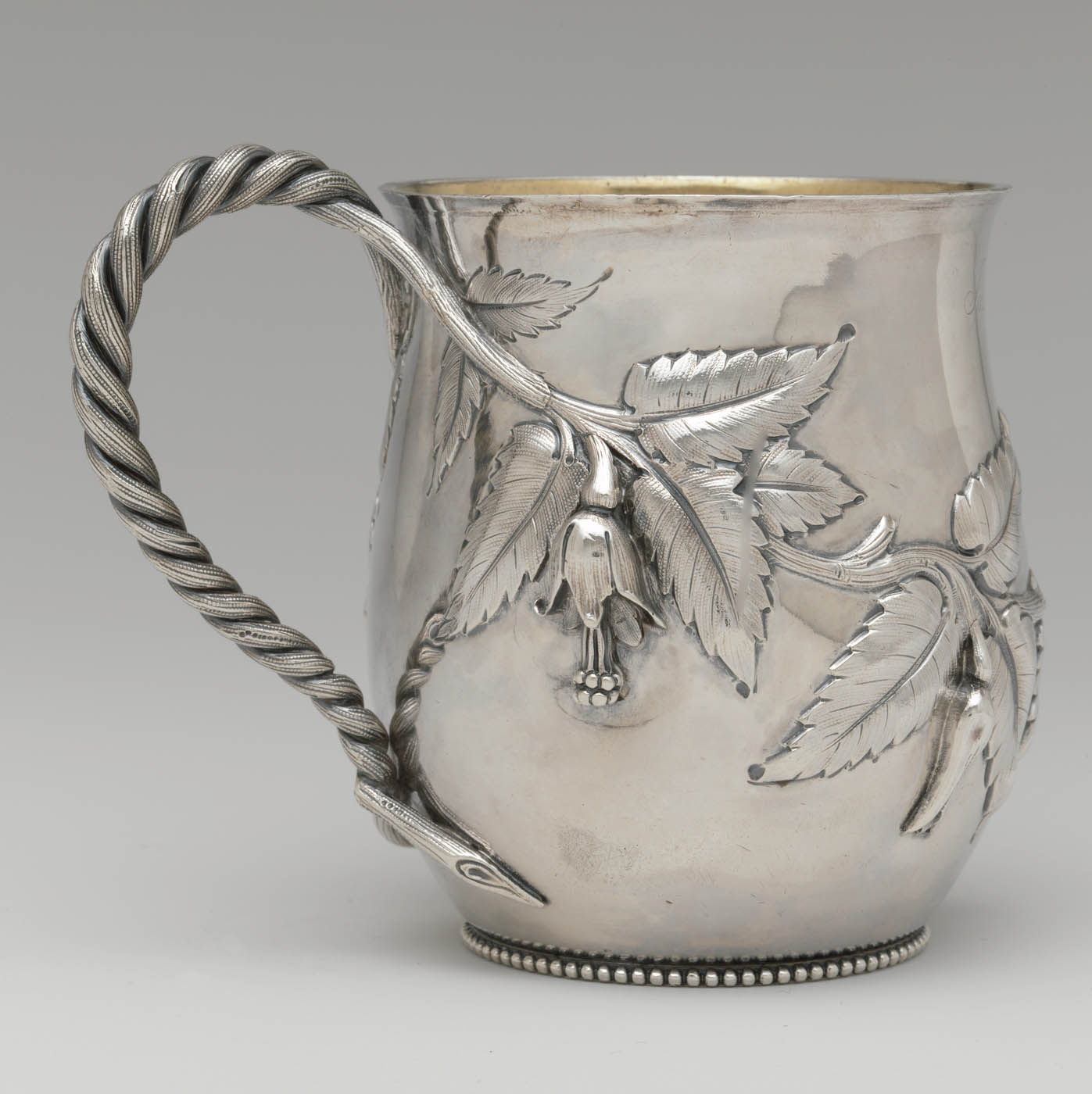
The Metropolitan Museum of Art website

LIKE ART BLART ON FACEBOOK

Back to top

Exhibition: ‘African American Portraits: Photographs from the 1940s and 1950s’ at the Metropolitan Museum of Art, New York Part 2

Exhibition dates: 26th June – 8th October, 2018

Curator: Jeff L. Rosenheim, Joyce Frank Menschel Curator in Charge of the Department of Photographs at The Met


Unknown American photographer. 'Studio Portrait' 1940s-1950s from the exhibition 'African American Portraits: Photographs from the 1940s and 1950s' at the Metropolitan Museum of Art, New York, June - Oct, 2018


Unknown American photographer
Studio Portrait
1940s-1950s
Gelatin silver print
The Metropolitan Museum of Art, New York, Twentieth-Century Photography Fund, 2015, 2017
Image courtesy The Metropolitan Museum of Art


“To the eye and spirit, pictures are just what poetry and music are to the ear and heart.”

“With the clear perception of things as they are, must stand the faithful rendering of things as they seem. The dead fact is nothing without the living expression.”


Frederick Douglass. “Pictures and Progress”


“True art, when it happens to us, challenges the ‘I’ that we are.”


Jeanette Winterson. “Art Objects,” in Art Objects: Essays on Ecstasy and Effrontery, 1996


Without worry … here ‘I am’

Part 2 of this glorious posting: mainly 1940s, African American “studio” portrait photography. Lets see what we can garner about these “studio” spaces by looking at the photographs. View Part 1 of the posting.

Firstly, they are very small, usually with bare floorboards, carpet or linoleum on the floor. Some (such as the photography of the man holding his child) are literally just big enough to pose and light the subject. As can be seen in the photograph of the lady holding a large handbag, the painted backdrops can be changed in and out, in this instance the scrim placed in front of another painted background. Notice also the worn lino in this photograph, where so many people have walked in an posed in this studio, in this very spot. Historically, painted backdrops have been used since the earliest days of photography, appearing in ambrotypes and tintypes of American Civil War soldiers. It would not surprise me is some of the studios from that time were still going in the 1940s.

Secondly, we can observe the lighting and depth of field. The lighting seems to be either by one or two lights (probably not moved between clients) that sit on axis, meaning there is a horizontal line between the light, the camera and the subject – a nearly horizontal light source. The depth of field is low, the camera probably pre-focused on the table, chair or pedestal within the studio space. Because of the small studio space, the subject placed up tight against the painted backdrop, and the low depth of field… there is a consequent flattening of the subject within the image plane. The photographs are either full figure standing, sitting or cropped closer at the waist.

While the idyllic painted backdrops add context to these studio portraits, it is the pose of the sitters that is so mesmerising in the photographs. These people were living in anxious, dangerous times – the Second World War, the Cold War, and the ever present racism against African Americans were some of the issues that they had to deal with – and yet they pose quite confidently for the camera, seemingly with no hidden agenda or deception. They are choosing to pose for their own reasons. As Jeff Rosenheim, the Met’s photography curator observes, “In these pictures, we see them in reflection of where they are and what their conditions are.”

I think there are a few things happening at once here. These studios give the impression that they are really joyous places. Is it the staff, or the need to document an important occasion like the birth of a child, a marriage, a graduation, or sisters, or is it something more intangible? The studios seem a great place to be. There is this JOY that seems to radiate off of the sitters and then there is a pride that is not referencing being accepted in a white community, but has layers of self containment / their own self, their friends, and something else.  

“You live the life you’ve got.” So says a character from one of my favourite British TV series Vera. And that is what these photographs picture – the life they are living, the life they have got. In these photographs there is a direct vision, direct seeing… and looking, which is what makes them so powerful and effective. Unlike contemporary popular portraits, blasted over the airwaves on Instagram, Snapchat, Facebook, etc. there is a direct connection to the lives of these people. While they lived in anxious times, their representation by the camera is clear and focused. Today our anxiety is more prescient, more at the forefront of out consciousness, our identity formation, the way we interact with the world. Who is looking and who is watching, and what is our image. Selfies on sticks or images in front of mirrors step to the front.

When looking at these photographs I have to ask, is there something here that is gone? Something we can remember yet has been sneakily stolen from us?

In contemporary portrait photography what has been stolen from us is the sense of joy, happiness, and intimacy in our own self, and how devolved we have become from the essence of our own being. The “dead pan” looks on people’s faces, the anxiety to get the right shot, the hands in the air with mobile phones to capture anything that is seen as worthwhile (just because you can) has become ubiquitous the world over. We have gone through a recent period of devolution and may need to regain lost ground, for what makes these photographs special – magical in the truest sense sense of the word – is that they just are. No ego from subject or photographer, no prejudice encroaching from the outside world, these people and their photographic trace just capture the essence of their being. Without worry… here ‘I am’.

Dr Marcus Bunyan


Many thankx to the Metropolitan Museum of Art for allowing me to publish the photographs in the posting. Please click on the photographs for a larger version of the image.


This exhibition will present more than one hundred and fifty studio portraits of African Americans from the mid-twentieth century, part of an important recent acquisition by The Met. Produced by mostly unidentified makers, the photographs are a poignant, collective self portrait of the African American experience during the 1940s and 1950s – a time of war, middle-class growth, and seismic cultural change.


Charles "Teenie" Harris (American, 1908-1998) 'John Davis after being beaten by police officer Dan McTague, in his home at 1303 Wylie Avenue, Hill District, August 1951' 1951 from the exhibition 'African American Portraits: Photographs from the 1940s and 1950s' at the Metropolitan Museum of Art, New York, June - Oct, 2018


Charles “Teenie” Harris (American, 1908-1998)
John Davis after being beaten by police officer Dan McTague, in his home at 1303 Wylie Avenue, Hill District, August 1951
1951
Gelatin silver print


Charles "Teenie" Harris (American, 1908-1998) 'Mary Reid holding threatening notes with swastikas and American Nazi Party propaganda, in July 1964' 1964


Charles “Teenie” Harris (American, 1908-1998)
Mary Reid holding threatening notes with swastikas and American Nazi Party propaganda, in July 1964
1964
Gelatin silver print


Unknown American photographer. 'Studio Portrait' 1940s-1950s


Unknown American photographer
Studio Portrait
1940s-1950s
Gelatin silver print
The Metropolitan Museum of Art, New York, Twentieth-Century Photography Fund, 2015, 2017
Image courtesy The Metropolitan Museum of Art


Unknown American photographer. 'Studio Portrait' 1940s-1950s


Unknown American photographer
Studio Portrait
1940s-1950s
Gelatin silver print
The Metropolitan Museum of Art, New York, Twentieth-Century Photography Fund, 2015, 2017
Image courtesy The Metropolitan Museum of Art


Unknown American photographer. 'Studio Portrait' 1940s-1950s


Unknown American photographer
Studio Portrait
1940s-1950s
Gelatin silver print
The Metropolitan Museum of Art, New York, Twentieth-Century Photography Fund, 2015, 2017
Image courtesy The Metropolitan Museum of Art


Unknown American photographer. 'Studio Portrait' 1940s-1950s


Unknown American photographer
Studio Portrait
1940s-1950s
Gelatin silver print
The Metropolitan Museum of Art, New York, Twentieth-Century Photography Fund, 2015, 2017
Image courtesy The Metropolitan Museum of Art


Unknown American photographer. 'Studio Portrait' 1940s-1950s


Unknown American photographer
Studio Portrait
1940s-1950s
Gelatin silver print
The Metropolitan Museum of Art, New York, Twentieth-Century Photography Fund, 2015, 2017
Image courtesy The Metropolitan Museum of Art


Unknown American photographer. 'Studio Portrait' 1940s-1950s


Unknown American photographer
Studio Portrait
1940s-1950s
Gelatin silver print
The Metropolitan Museum of Art, New York, Twentieth-Century Photography Fund, 2015, 2017
Image courtesy The Metropolitan Museum of Art


Unknown American photographer. 'Studio Portrait' 1940s-1950s


Unknown American photographer
Studio Portrait
1940s-1950s
Gelatin silver print
The Metropolitan Museum of Art, New York, Twentieth-Century Photography Fund, 2015, 2017
Image courtesy The Metropolitan Museum of Art


Unknown American photographer. 'Studio Portrait' 1940s-1950s


Unknown American photographer
Studio Portrait
1940s-1950s
Gelatin silver print
The Metropolitan Museum of Art, New York, Twentieth-Century Photography Fund, 2015, 2017
Image courtesy The Metropolitan Museum of Art


Unknown American photographer. 'Studio Portrait' 1940s-1950s


Unknown American photographer
Studio Portrait
1940s-1950s
Gelatin silver print
The Metropolitan Museum of Art, New York, Twentieth-Century Photography Fund, 2015, 2017
Image courtesy The Metropolitan Museum of Art


Unknown American photographer. 'Studio Portrait' 1940s-1950s


Unknown American photographer
Studio Portrait
1940s-1950s
Gelatin silver print
The Metropolitan Museum of Art, New York, Twentieth-Century Photography Fund, 2015, 2017
Image courtesy The Metropolitan Museum of Art


Unknown American photographer. 'Studio Portrait' 1940s-1950s


Unknown American photographer
Studio Portrait
1940s-1950s
Gelatin silver print
The Metropolitan Museum of Art, New York, Twentieth-Century Photography Fund, 2015, 2017
Image courtesy The Metropolitan Museum of Art


African American Portraits: Photographs from the 1940s and 1950s, on view June 26 through October 8, 2018, will present more than 150 studio portraits from the mid-20th century. The exhibition offers a seldom seen view of the African American experience in the United States during World War II and the following decade – a time of war, middle-class growth, and seismic cultural change. Part of an important acquisition made by The Met in 2015 and 2017, these photographs build on and expand the Museum’s strong holdings in portraiture from the beginning of photography in the 1840s to the present. The exhibition is made possible by the Alfred Stieglitz Society.

The portraits on view generally feature sitters in a frontal pose against a painted backdrop – soldiers and sailors model their uniforms, graduates wear their caps and gowns, lovers embrace, and new parents cradle their infants. Both photographers and subjects remain mostly unidentified.

In the wartime economy, photographic studios became hubs of activity for local and regional communities. Some studios were small and transient, others more established and identifiable, such as the Daisy Studio in Memphis, Tennessee. Using waterproof direct positive paper rather than film, the studios were able to offer their clientele high quality, inexpensive portraits in a matter of minutes. The poignancy of these small photographs lies in the essential respect the camera offers its subjects, who sit for their portraits as an act of self-expression.

African American Portraits: Photographs from the 1940s and 1950s is organised by Jeff L. Rosenheim, Joyce Frank Menschel Curator in Charge of the Department of Photographs at The Met.

Press release from the Metropolitan Museum of Art


SAME STUDIO AND PERSON


Unknown American photographer. 'Studio Portrait' 1940s-1950s


Unknown American photographer
Studio Portrait
1940s-1950s
Gelatin silver print
The Metropolitan Museum of Art, New York, Twentieth-Century Photography Fund, 2015, 2017
Image courtesy The Metropolitan Museum of Art


Unknown American photographer. 'Studio Portrait' 1940s-1950s


Unknown American photographer
Studio Portrait
1940s-1950s
Gelatin silver print
The Metropolitan Museum of Art, New York, Twentieth-Century Photography Fund, 2015, 2017
Image courtesy The Metropolitan Museum of Art


SAME STUDIO, SAME AND DIFFERENT BACKDROPS

You can tell by the legs of the seat.


Unknown American photographer. 'Studio Portrait' 1940s-1950s


Unknown American photographer
Studio Portrait
1940s-1950s
Gelatin silver print
The Metropolitan Museum of Art, New York, Twentieth-Century Photography Fund, 2015, 2017
Image courtesy The Metropolitan Museum of Art


Unknown American photographer. 'Studio Portrait' 1940s-1950s


Unknown American photographer
Studio Portrait
1940s-1950s
Gelatin silver print
The Metropolitan Museum of Art, New York, Twentieth-Century Photography Fund, 2015, 2017
Image courtesy The Metropolitan Museum of Art


Unknown American photographer. 'Studio Portrait' 1940s-1950s


Unknown American photographer
Studio Portrait
1940s-1950s
Gelatin silver print
The Metropolitan Museum of Art, New York, Twentieth-Century Photography Fund, 2015, 2017
Image courtesy The Metropolitan Museum of Art


Unknown American photographer. 'Studio Portrait' 1940s-1950s


Unknown American photographer
Studio Portrait
1940s-1950s
Gelatin silver print
The Metropolitan Museum of Art, New York, Twentieth-Century Photography Fund, 2015, 2017
Image courtesy The Metropolitan Museum of Art


Unknown American photographer. 'Studio Portrait' 1940s-1950s


Unknown American photographer
Studio Portrait
1940s-1950s
Gelatin silver print
The Metropolitan Museum of Art, New York, Twentieth-Century Photography Fund, 2015, 2017
Image courtesy The Metropolitan Museum of Art


SAME STUDIO DIFFERENT BACKDROP

You can tell by the curtain at right, and the pedestal.


Unknown American photographer. 'Studio Portrait' 1940s-1950s


Unknown American photographer
Studio Portrait
1940s-1950s
Gelatin silver print
The Metropolitan Museum of Art, New York, Twentieth-Century Photography Fund, 2015, 2017
Image courtesy The Metropolitan Museum of Art


Unknown American photographer. 'Studio Portrait' 1940s-1950s


Unknown American photographer
Studio Portrait
1940s-1950s
Gelatin silver print with hand colouring
The Metropolitan Museum of Art, New York, Twentieth-Century Photography Fund, 2015, 2017
Image courtesy The Metropolitan Museum of Art


SAME STUDIO DIFFERENT BACKDROP

You can tell by the style of the painting, the positioning of the flowers, and the decoration on the carpet of the stairs.


Unknown American photographer. 'Studio Portrait' 1940s-1950s


Unknown American photographer
Studio Portrait
1940s-1950s
Gelatin silver print
The Metropolitan Museum of Art, New York, Twentieth-Century Photography Fund, 2015, 2017
Image courtesy The Metropolitan Museum of Art


Unknown American photographer. 'Studio Portrait' 1940s-1950s


Unknown American photographer
Studio Portrait
1940s-1950s
Gelatin silver print with hand colouring
The Metropolitan Museum of Art, New York, Twentieth-Century Photography Fund, 2015, 2017
Image courtesy The Metropolitan Museum of Art


DAISY STUDIO


Daisy Studio (American, active 1940s) 'Studio Portrait' 1940s-1950s from the exhibition 'African American Portraits: Photographs from the 1940s and 1950s' at the Metropolitan Museum of Art, New York, June - Oct, 2018


Daisy Studio (American, active 1940s)
Studio Portrait
1940s-1950s
Gelatin silver print
The Metropolitan Museum of Art, New York, Twentieth-Century Photography Fund, 2015, 2017
Image courtesy The Metropolitan Museum of Art


Daisy Studio (American, active 1940s) 'Studio Portrait' 1940s-1950s


Daisy Studio (American, active 1940s)
Studio Portrait
1940s-1950s
Gelatin silver print
The Metropolitan Museum of Art, New York, Twentieth-Century Photography Fund, 2015, 2017
Image courtesy The Metropolitan Museum of Art


Daisy Studio (American, active 1940s) 'Studio Portrait' 1940s-1950s


Daisy Studio (American, active 1940s)
Studio Portrait
1940s-1950s
Gelatin silver print
The Metropolitan Museum of Art, New York, Twentieth-Century Photography Fund, 2015, 2017
Image courtesy The Metropolitan Museum of Art


Daisy Studio (American, active 1940s) 'Studio Portrait' 1940s-1950s


Daisy Studio (American, active 1940s)
Studio Portrait
1940s-1950s
Gelatin silver print
The Metropolitan Museum of Art, New York, Twentieth-Century Photography Fund, 2015, 2017
Image courtesy The Metropolitan Museum of Art


The Metropolitan Museum of Art
1000 Fifth Avenue at 82nd Street
New York, New York 10028-0198
Phone: 212-535-7710

Opening hours:
Sunday – Tuesday and Thursday: 10am – 5pm
Friday and Saturday: 10am – 9pm
Closed Wednesday

The Metropolitan Museum of Art website

LIKE ART BLART ON FACEBOOK

Back to top

Exhibition: ‘African American Portraits: Photographs from the 1940s and 1950s’ at the Metropolitan Museum of Art, New York Part 1

Exhibition dates: 26th June – 8th October, 2018

 Curator: Jeff L. Rosenheim, Joyce Frank Menschel Curator in Charge of the Department of Photographs at The Met


Unknown American photographers and Daisy Studio (American, active 1940s) 'Studio Portraits' 1940s-1950s from the exhibition 'African American Portraits: Photographs from the 1940s and 1950s' at the Metropolitan Museum of Art, New York, June - Oct, 2018


Unknown American photographers and Daisy Studio (American, active 1940s)
Studio Portraits
1940s-1950s
Gelatin silver prints
The Metropolitan Museum of Art, New York, Twentieth-Century Photography Fund, 2015, 2017


First of a two-part posting on these mostly 1940s living expressions of past but present people and the African American experience.

In one photograph, I just love the hearts on the pockets of the jeans of one of the young men. Wonderful style and a touching intimacy are evident in many of the images.

“The poignancy of these small photographs lies in the essential respect the camera offers its subjects, who sit for their portraits as an act of self-expression.”

More comment in Part 2 of the posting.

Dr Marcus Bunyan


Many thankx to the Metropolitan Museum of Art for allowing me to publish the photographs in the posting. Please click on the photographs for a larger version of the image.


“To the eye and spirit, pictures are just what poetry and music are to the ear and heart.”

“With the clear perception of things as they are, must stand the faithful rendering of things as they seem. The dead fact is nothing without the living expression.”


Frederick Douglass. “Pictures and Progress”


“True art, when it happens to us, challenges the ‘I’ that we are.”


Jeanette Winterson. “Art Objects,” in Art Objects: Essays on Ecstasy and Effrontery, 1996


This exhibition will present more than one hundred and fifty studio portraits of African Americans from the mid-twentieth century, part of an important recent acquisition by The Met. Produced by mostly unidentified makers, the photographs are a poignant, collective self portrait of the African American experience during the 1940s and 1950s – a time of war, middle-class growth, and seismic cultural change.


Unknown American photographer. 'Studio Portrait' 1940s-1950s from the exhibition 'African American Portraits: Photographs from the 1940s and 1950s' at the Metropolitan Museum of Art, New York, June - Oct, 2018


Unknown American photographer
Studio Portrait
1940s-1950s
Gelatin silver print with hand colouring
The Metropolitan Museum of Art, New York, Twentieth-Century Photography Fund, 2015, 2017
Image courtesy The Metropolitan Museum of Art


Unknown American photographer. 'Studio Portrait' 1940s-1950s


Unknown American maker
Studio Portrait
1940s-1950s
Gelatin silver print
The Metropolitan Museum of Art, New York, Twentieth-Century Photography Fund, 2015, 2017
Image courtesy The Metropolitan Museum of Art


Unknown American photographer. 'Studio Portrait' 1940s-1950s


Unknown American photographer
Studio Portrait
1940s-1950s
Gelatin silver print
The Metropolitan Museum of Art, New York, Twentieth-Century Photography Fund, 2015, 2017
Image courtesy The Metropolitan Museum of Art


Unknown American photographer. 'Studio Portrait' 1940s-1950s


Unknown American photographer
Studio Portrait
1940s-1950s
Gelatin silver print with hand colouring
The Metropolitan Museum of Art, New York, Twentieth-Century Photography Fund, 2015, 2017
Image courtesy The Metropolitan Museum of Art


Unknown American photographer. 'Studio Portrait' 1940s-1950s


Unknown American photographer
Studio Portrait
1940s-1950s
Gelatin silver print with hand colouring
The Metropolitan Museum of Art, New York, Twentieth-Century Photography Fund, 2015, 2017
Image courtesy The Metropolitan Museum of Art


Unknown American photographer. 'Studio Portrait' 1940s-1950s


Unknown American photographer
Studio Portrait
1940s-1950s
Gelatin silver print
The Metropolitan Museum of Art, New York, Twentieth-Century Photography Fund, 2015, 2017
Image courtesy The Metropolitan Museum of Art


Unknown American photographer. 'Studio Portrait' 1940s-1950s


Unknown American photographer
Studio Portrait
1940s-1950s
Gelatin silver print
The Metropolitan Museum of Art, New York, Twentieth-Century Photography Fund, 2015, 2017
Image courtesy The Metropolitan Museum of Art


Unknown American photographer. 'Studio Portrait' 1940s-1950s


Unknown American photographer
Studio Portrait
1940s-1950s
Gelatin silver print
The Metropolitan Museum of Art, New York, Twentieth-Century Photography Fund, 2015, 2017
Image courtesy The Metropolitan Museum of Art


Unknown American photographer. 'Studio Portrait' 1940s-1950s


Unknown American photographer
Studio Portrait
1940s-1950s
Gelatin silver print
The Metropolitan Museum of Art, New York, Twentieth-Century Photography Fund, 2015, 2017
Image courtesy The Metropolitan Museum of Art


Unknown American photographer. 'Studio Portrait' 1940s-1950s


Unknown American photographer
Studio Portrait
1940s-1950s
Gelatin silver print
The Metropolitan Museum of Art, New York, Twentieth-Century Photography Fund, 2015, 2017
Image courtesy The Metropolitan Museum of Art


Unknown American photographer. 'Studio Portrait' 1940s-1950s


Unknown American photographer
Studio Portrait
1940s-1950s
Gelatin silver print
The Metropolitan Museum of Art, New York, Twentieth-Century Photography Fund, 2015, 2017
Image courtesy The Metropolitan Museum of Art


Unknown American photographer. 'Studio Portrait' 1940s-1950s


Unknown American photographer
Studio Portrait
1940s-1950s
Gelatin silver print
The Metropolitan Museum of Art, New York, Twentieth-Century Photography Fund, 2015, 2017
Image courtesy The Metropolitan Museum of Art


African American Portraits: Photographs from the 1940s and 1950s, on view June 26 through October 8, 2018, will present more than 150 studio portraits from the mid-20th century. The exhibition offers a seldom seen view of the African American experience in the United States during World War II and the following decade – a time of war, middle-class growth, and seismic cultural change. Part of an important acquisition made by The Met in 2015 and 2017, these photographs build on and expand the Museum’s strong holdings in portraiture from the beginning of photography in the 1840s to the present. The exhibition is made possible by the Alfred Stieglitz Society.

The portraits on view generally feature sitters in a frontal pose against a painted backdrop – soldiers and sailors model their uniforms, graduates wear their caps and gowns, lovers embrace, and new parents cradle their infants. Both photographers and subjects remain mostly unidentified.

In the wartime economy, photographic studios became hubs of activity for local and regional communities. Some studios were small and transient, others more established and identifiable, such as the Daisy Studio in Memphis, Tennessee. Using waterproof direct positive paper rather than film, the studios were able to offer their clientele high quality, inexpensive portraits in a matter of minutes. The poignancy of these small photographs lies in the essential respect the camera offers its subjects, who sit for their portraits as an act of self-expression.

African American Portraits: Photographs from the 1940s and 1950s is organised by Jeff L. Rosenheim, Joyce Frank Menschel Curator in Charge of the Department of Photographs at The Met.

Press release from the Metropolitan Museum of Art


'The Billboard' December 4 , 1948 p. 72


The Billboard December 4 , 1948 p. 72


'Popular Photography' May 1948 p. 99


Popular Photography May 1948 p. 99


Direct positive paper is primarily suited for use in pinhole cameras where exposure and processing in conventional black and white photo chemistry achieves a unique positive print – without the need for a film negative or inter-negative. The paper can also be successfully used in other applications such as direct exposure in large format cameras or by cutting small sheets for exposure in LOMO type cameras.


Unknown American photographer. 'Studio Portrait' 1940s-1950s


Unknown American photographer
Studio Portrait
1940s-1950s
Gelatin silver print
The Metropolitan Museum of Art, New York, Twentieth-Century Photography Fund, 2015, 2017
Image courtesy The Metropolitan Museum of Art


Unknown American photographer. 'Studio Portrait' 1940s-1950s


Unknown American photographer
Studio Portrait
1940s-1950s
Gelatin silver print
The Metropolitan Museum of Art, New York, Twentieth-Century Photography Fund, 2015, 2017
Image courtesy The Metropolitan Museum of Art


Unknown American photographer. 'Studio Portrait' 1940s-1950s


Unknown American photographer
Studio Portrait
1940s-1950s
Gelatin silver print with hand colouring
The Metropolitan Museum of Art, New York, Twentieth-Century Photography Fund, 2015, 2017
Image courtesy The Metropolitan Museum of Art


Unknown American photographer. 'Studio Portrait' 1940s-1950s


Unknown American photographer
Studio Portrait
1940s-1950s
Gelatin silver print
The Metropolitan Museum of Art, New York, Twentieth-Century Photography Fund, 2015, 2017
Image courtesy The Metropolitan Museum of Art


Unknown American photographer. 'Studio Portrait' 1940s-1950s


Unknown American photographer
Studio Portrait
1940s-1950s
Gelatin silver print
The Metropolitan Museum of Art, New York, Twentieth-Century Photography Fund, 2015, 2017
Image courtesy The Metropolitan Museum of Art


Unknown American photographer. 'Studio Portrait' 1940s-1950s


Unknown American photographer
Studio Portrait
1940s-1950s
Gelatin silver print
The Metropolitan Museum of Art, New York, Twentieth-Century Photography Fund, 2015, 2017
Image courtesy The Metropolitan Museum of Art


Unknown American photographer. 'Studio Portrait' 1940s-1950s


Unknown American photographer
Studio Portrait
1940s-1950s
Gelatin silver print
The Metropolitan Museum of Art, New York, Twentieth-Century Photography Fund, 2015, 2017
Image courtesy The Metropolitan Museum of Art


Unknown American photographer. 'Studio Portrait' 1940s-1950s


Unknown American photographer
Studio Portrait
1940s-1950s
Gelatin silver print
The Metropolitan Museum of Art, New York, Twentieth-Century Photography Fund, 2015, 2017
Image courtesy The Metropolitan Museum of Art


Unknown American photographer. 'Studio Portrait' 1940s-1950s


Unknown American photographer
Studio Portrait
1940s-1950s
Gelatin silver print
The Metropolitan Museum of Art, New York, Twentieth-Century Photography Fund, 2015, 2017
Image courtesy The Metropolitan Museum of Art


Unknown American photographer. 'Studio Portrait' 1940s-1950s


Unknown American photographer
Studio Portrait
1940s-1950s
Gelatin silver print
The Metropolitan Museum of Art, New York, Twentieth-Century Photography Fund, 2015, 2017
Image courtesy The Metropolitan Museum of Art


The Metropolitan Museum of Art
1000 Fifth Avenue at 82nd Street
New York, New York 10028-0198
Phone: 212-535-7710

Opening hours:
Sunday – Tuesday and Thursday: 10am – 5pm
Friday and Saturday: 10am – 9pm
Closed Wednesday

The Metropolitan Museum of Art website

LIKE ART BLART ON FACEBOOK

Back to top

Exhibition: ‘Irving Penn: Centennial’ at the Metropolitan Museum of Art, New York Part 2

Exhibition dates: 24th April – 30th July, 2017

Curators: Jeff Rosenheim, Curator in Charge, Photographs, The Metropolitan Museum of Art and Maria Morris Hambourg, Independent Curator and Former Curator in Charge, Photographs, The Metropolitan Museum of Art


'Irving Penn: Centennial' at the Metropolitan Museum of Art


Irving Penn. The high priest of high modernist photography.

I know a lot of people adore his photography but I am not an acolyte quietly accepting his elevation to sainthood in the high temple of art museums.

I find Penn’s aesthetic aesthetic, his performing photography if you like, unappealing. To me his work is more about the photographer than it is about the subject. His photographs, in whatever style – portraiture, nude, still life – seem cold and lifeless. Like a dead fish. There is little pleasure to be gained from looking at his photographs or the people in them. I find little celebration of photography in his work, as in, this is what the camera does at its best, a dialogue between photographer and subject.

Penn was a commercial photographer who had aspirations of being an artist. As Mark L. Power observes, “One of the characteristics of the Penn style was the expressive silhouette or outline around the figure, a sculptural delineation of form, at once beautiful and austere, whether his subject was a still life, a fashion model or a portrait.” My god did he love silhouette and shadow, usually played off against a plain backdrop.

There is that key word, play. There is no sense of spontaneity in his photographs, no sense of fun, no sense of an understanding of the aura of the subject.

I think of the portraits of August Sander or Richard Avedon’s series In the American West (the latter using a plain backdrop), both with their depth of vision and feeling for the people they were photographing … and then I look at the Cuzco portraits of Penn. I get nothing back about the lives of these people in Penn’s photographs. I think of the distorted nudes of Bill Brandt with their sensuality and sublime angles … and then I look at the nudes of Penn. They just don’t stack up, they feel clumsy, trite. I look at his colour still life, and I imagine the colour work of Paul Outerbridge, the absolute intensity of feeling that I can recall from Outerbridge’s still life in my mind’s eye. No such feeling exists in Penn’s still life.

If you watch the video of Penn at work in Morocco in 1971 (below), everything is controlled to within an inch of its life. A tilt of the head here, a raise of the chin there. This is a commercial studio photographer at work. As I said earlier, the work is not a celebration of photography but about the control of the photographer through the pose of the subject. Jammed into a wedge of scenery the sitters perform for his camera – Schiaparelli, Capote, Charles James et al – flaccid characters, almost caricatures in their positioning. Other than variants such as the intense eye of Pablo Picasso, or the blindness of Ingmar Bergman, I don’t believe that Penn was ever, will ever be, a great portraitist. He has no feeling for his sitters.

Of course, there is “the relationship of content to form – a relationship that underpins all art” at which Penn excels, but he is no Atget, Evans or Eggleston, where we are constantly surprised at where the photographer places the camera, how they place the frame, how they “form the starting point of the image’s visual structure,” how we wonder at the results, how we day dream the narrative. As Victor Burgin observes, “… what the world ‘is’ depends extensively upon how it is described: in a culture where the expression ‘old bag’ is in circulation to describe an ageing woman that is precisely what she is in perpetual danger of ‘being’.”

In Penn’s work the photograph and its representation is never in any danger of “becoming”, it already is. Penn’s “old bag” never changes. By repeating the same trope over and over – the formalist aesthetic, the silhouette, the plain back drop, the controlled pose – his work never evolves, never moves with an illusive quality to a place that the viewer does not feel they already know. The world of murky imperfection, uncertainty and ephemeral juxtapositions to which our mortal senses have access is replaced by a world of perfection and light in which everything has its predestined place.

Perhaps I just long for the fundamental contradictions of life in art, antinomies, options for now and the future.

Dr Marcus Bunyan

See Part 1 of the posting


Many thankx to the Metropolitan Museum of Art for allowing me to publish the photographs in the posting. Please click on the photographs for a larger version of the image.


Irving Penn on Location in Morocco, 1971

This 8mm film footage, shot by Lisa Fonssagrives-Penn in 1971, shows Irving Penn at work in his portable studio on location in Morocco. Presented in conjunction with the exhibition “Irving Penn: Centennial,” on view at The Met Fifth Avenue from April 24 through July 30, 2017.


Irving Penn Centennial

A preview of the exhibition Irving Penn Centennial April 24 – July 30, 2017 at The Met, featuring Jeff Rosenheim, Curator in Charge, Photographs, The Metropolitan Museum of Art and Maria Morris Hambourg, Independent Curator and Former Curator in Charge, Photographs, The Metropolitan Museum of Art.


“As a way of beginning, one might compare the art of photography to the act of pointing. All of us, even the best-mannered of us, occasionally point, and it must be true that some of us point to more interesting facts, events, circumstances, and configurations than others. It is not difficult to imagine a person – a mute Virgil of the corporeal world – who might elevate the act of pointing to a creative plane, a person who would lead us through the fields and streets and indicate a sequence of phenomena and aspects that would be beautiful, humorous, morally instructive, cleverly ordered, mysterious, or astonishing, once brought to our attention, but that had been unseen before, or seen dumbly, without comprehension. This talented practitioner of the new discipline (the discipline a cross between theater and criticism) would perform with a special grace, sense of timing, narrative sweep, and wit, thus endowing the act not merely with intelligence, but with that quality of formal rigor that identifies a work of art, so that we would be uncertain, when remembering the adventure of the tour, how much of our pleasure and sense of enlargement had come from the things pointed to and how much from a pattern created by the pointer.”


John Szarkowski. “Atget, Pointing”


“The word classic is often used about Penn’s work; it entails a certain gravitas characterised by rigour almost to the point of aloofness, an awareness of beauty throughout many genres, a graphic elegance of line and contour that is uniquely his, and a relationship of his work to artists of the past, usually painters rather than photographers. Although it could be said his photography was an advertisement for a haut monde world, his work was sometimes a subtle and somewhat sly subversion of the values of that lifestyle.”


Mark L. Power. “Irving Penn: Beyond Beauty,” at the Smithsonian Museum of American Art, Washington, DC.


The most comprehensive retrospective to date of the work of the great American photographer Irving Penn (1917-2009), this exhibition will mark the centennial of the artist’s birth. Over the course of his nearly 70-year career, Penn mastered a pared-down aesthetic of studio photography that is distinguished for its meticulous attention to composition, nuance, and detail.

The exhibition follows the 2015 announcement of the landmark promised gift from The Irving Penn Foundation to The Met of more than 150 photographs by Penn, representing every period of the artist’s dynamic career with the camera. The gift will form the core of the exhibition, which will feature more than 200 photographs by Penn, including iconic fashion studies of Lisa Fonssagrives-Penn, the artist’s wife; exquisite still lifes; Quechua children in Cuzco, Peru; portraits of urban labourers; female nudes; tribesmen in New Guinea; and colour flower studies. The artist’s beloved portraits of cultural figures from Truman Capote, Picasso, and Colette to Ingmar Bergman and Issey Miyake will also be featured. Rounding out the exhibition will be photographs by Penn that entered The Met collection prior to the promised gift.


Irving Penn (American, Plainfield, New Jersey 1917-2009 New York) 'Young Quechuan Man, Cuzco' December 1948, printed 1949 from the exhibition 'Irving Penn: Centennial' at the Metropolitan Museum of Art, New York Part 2, April - July, 2017


Irving Penn (American, Plainfield, New Jersey 1917-2009 New York)
Young Quechuan Man, Cuzco
December 1948, printed 1949
Gelatin silver print
7 15/16 x 7 3/16 in. (20.1 x 18.2cm)
Promised Gift of The Irving Penn Foundation
© The Irving Penn Foundation


In Cuzco, Penn photographed both residents and visitors who came to the city from nearby villages with goods to sell or barter at the Christmastime fiestas. Many arrived at the studio to sit for their annual family portraits. Penn later recalled that they “found me instead of him [the local photographer] waiting for them, and instead of paying me for the pictures it was I who paid them for posing.”


Irving Penn (American, Plainfield, New Jersey 1917-2009 New York) 'Cuzco Children' December 1948, printed 1968 from the exhibition 'Irving Penn: Centennial' at the Metropolitan Museum of Art, New York Part 2, April - July, 2017


Irving Penn (American, Plainfield, New Jersey 1917-2009 New York)
Cuzco Children
December 1948, printed 1968
Platinum-palladium print
19 1/2 x 19 7/8 in. (49.5 x 50.5cm)
Promised Gift of The Irving Penn Foundation
© Condé Nast


Irving Penn (American, Plainfield, New Jersey 1917-2009 New York) 'Two Men in White Masks, Cuzco' December 1948, printed 1984


Irving Penn (American, Plainfield, New Jersey 1917-2009 New York)
Two Men in White Masks, Cuzco
December 1948, printed 1984
Gelatin silver print
10 9/16 x 10 7/16 in. (26.8 x 26.5cm)
Promised Gift of The Irving Penn Foundation
© The Irving Penn Foundation


Irving Penn (American, Plainfield, New Jersey 1917-2009 New York) 'Cuzco Father and Son with Eggs' December 1948, printed January 1982


Irving Penn (American, Plainfield, New Jersey 1917-2009 New York)
Cuzco Father and Son with Eggs
December 1948, printed January 1982
Platinum-palladium print
11 3/4 x 11 5/16 in. (29.8 x 28.7cm)
Promised Gift of The Irving Penn Foundation
© Condé Nast


Irving Penn (American, Plainfield, New Jersey 1917-2009 New York) 'Nude No. 18' 1949-1950, printed 1949-1950


Irving Penn (American, Plainfield, New Jersey 1917-2009 New York)
Nude No. 18
1949-1950, printed 1949-1950
Gelatin silver print
41 x 38.4cm (16 1/8 x 15 1/8 in.)
Gift of the artist, 2002
© The Irving Penn Foundation


Irving Penn (American, Plainfield, New Jersey 1917-2009 New York) 'Nude No. 42' 1949-1950, printed 1949-1950


Irving Penn (American, Plainfield, New Jersey 1917-2009 New York)
Nude No. 42
1949-1950, printed 1949-1950
Gelatin silver print
39.1 x 37.5cm (15 3/8 x 14 3/4 in.)
Gift of the artist, 2002
© The Irving Penn Foundation


Irving Penn (American, Plainfield, New Jersey 1917-2009 New York) 'Nude No. 57' 1949-1950, printed 1949-1950


Irving Penn (American, Plainfield, New Jersey 1917-2009 New York)
Nude No. 57
1949-1950, printed 1949-1950
Gelatin silver print
39.4 x 37.5cm (15 1/2 x 14 3/4 in.)
Gift of the artist, 2002
© The Irving Penn Foundation


Irving Penn (American, Plainfield, New Jersey 1917-2009 New York) 'Nude No. 72' 1949-1950, printed 1949-1950


Irving Penn (American, Plainfield, New Jersey 1917-2009 New York)
Nude No. 72, New York
1949-1950, printed 1949-1950
Gelatin silver print
39.7 x 37.5cm (15 5/8 x 14 3/4 in.)
Gift of the artist, 2002
© The Irving Penn Foundation


Irving Penn (American, Plainfield, New Jersey 1917-2009 New York) 'Nude No. 130' 1949-1950, printed 1949-1950


Irving Penn (American, Plainfield, New Jersey 1917-2009 New York)
Nude No. 130
1949-1950, printed 1949-1950
Gelatin silver print
40 x 38.1cm (15 3/4 x 15 in.)
Gift of the artist, 2002
© The Irving Penn Foundation


Irving Penn (American, Plainfield, New Jersey 1917-2009 New York) 'Kerchief Glove (Dior), Paris' 1950, printed 1984


Irving Penn (American, Plainfield, New Jersey 1917-2009 New York)
Kerchief Glove (Dior), Paris
1950, printed 1984
Gelatin silver print
15 3/8 x 15 5/16 in. (39.1 x 38.9cm)
Promised Gift of The Irving Penn Foundation
© Condé Nast


Irving Penn (American, Plainfield, New Jersey 1917-2009 New York) 'Balenciaga Sleeve (Régine Debrise), Paris' 1950


Irving Penn (American, Plainfield, New Jersey 1917-2009 New York)
Balenciaga Sleeve (Régine Debrise), Paris
1950
Gelatin silver print
10 3/16 x 10 7/16 in. (25.9 x 26.5cm)
Promised Gift of The Irving Penn Foundation
© Condé Nast


In general, daughters from nice families were not encouraged to be in-house models. “Being a studio model was viewed as preferable,” said Régine Debrise, who posed for the photographers Irving Penn and Henry Clarke before becoming an editor at French Vogue, “because the hours were contained and the conditions were better. Being in-house meant sharing the cabine, often a cramped room, with 10 other girls, and it lacked any kind of privacy.”

Anonymous. “Cabine fever: inside Dior’s fitting room,” on The Telegraph website [Online] Cited 14/07/2017. No longer available online


Irving Penn (American, Plainfield, New Jersey 1917-2009 New York) 'Balenciaga Mantle Coat (Lisa Fonssagrives-Penn), Paris' 1950, printed 1988


Irving Penn (American, Plainfield, New Jersey 1917-2009 New York)
Balenciaga Mantle Coat (Lisa Fonssagrives-Penn), Paris
1950, printed 1988
Platinum-palladium print
21 15/16 x 17 5/8 in. (55.7 x 44.7cm)
Promised Gift of The Irving Penn Foundation
© Condé Nast


Lisa Fonssagrives (May 17, 1911 – February 4, 1992), born Lisa Birgitta Bernstone was a Swedish fashion model widely credited as the first supermodel.

Before Fonssagrives came to the United States in 1939, she was already a top model. Her image appeared on the cover of many magazines during the 1930s, 1940s and 1950s, including Town & Country, Life, Time, Vogue, and the original Vanity Fair. She was reported as “the highest paid, highest praised, high fashion model in the business”. Fonssagrives once described herself as a “good clothes hanger”.

She worked with fashion photographers including George Hoyningen-Huene, Man Ray, Horst, Erwin Blumenfeld, George Platt Lynes, Richard Avedon, and Edgar de Evia. She married Parisian photographer Fernand Fonssagrives in 1935; they divorced and she later married another photographer, Irving Penn, in 1950. She went on to become a sculptor in the 1960s and was represented by the Marlborough Gallery in Manhattan.

Text from the Wikipedia website


Irving Penn (American, Plainfield, New Jersey 1917-2009 New York) 'Woman with Roses (Lisa Fonssagrives-Penn in Lafaurie Dress), Paris' 1950, printed 1968


Irving Penn (American, Plainfield, New Jersey 1917-2009 New York)
Woman with Roses (Lisa Fonssagrives-Penn in Lafaurie Dress), Paris
1950, printed 1968
Platinum-palladium print
22 x 15 11/16 in. (55.9 x 39.9cm)
Promised Gift of The Irving Penn Foundation
© Condé Nast (Fr.)


Jeanne LaFaurie was a Paris couturiere working from 1925 until 1958. The house was known for dependable, if not spectacular, clothing and fine draping. Courreges worked there as a draftsman in 1947. Michel Goma became the house designer 1950-1958, when he bought the house and renamed it. It closed in 1963.

pastperfectvintage.com. “La Faurie, Jeanne,” on the Vintage Fashion Guild website Jul 17, 2010 [Online] Cited 21/12/2021


Irving Penn (American, Plainfield, New Jersey 1917-2009 New York) 'Rochas Mermaid Dress (Lisa Fonssagrives-Penn), Paris' 1950


Irving Penn (American, Plainfield, New Jersey 1917-2009 New York)
Rochas Mermaid Dress (Lisa Fonssagrives-Penn), Paris
1950
Platinum-palladium print
Image
19 7/8 x 19 11/16 in. (50.5 x 50cm)
Promised Gift of The Irving Penn Foundation
© Condé Nast


Rochas is a fashion, beauty, and perfume house founded in 1925 by French designer Marcel Rochas (born 1902, died 1955) the first designer of 2/3-length coats and skirts with pockets. “His designs could be seen as the polar opposite of Chanel’s simplicity. Dresses were proper gowns and came with the optimum amount of frills, with lace, wide shoulders and nipped-in waists.”


Irving Penn (American, Plainfield, New Jersey 1917-2009 New York) 'Large Sleeve (Sunny Harnett), New York' 1951, printed 1984


Irving Penn (American, Plainfield, New Jersey 1917-2009 New York)
Large Sleeve (Sunny Harnett), New York
1951, printed 1984
Gelatin silver print
14 3/4 x 14 3/4 in. (37.5 x 37.5cm)
Promised Gift of The Irving Penn Foundation
© Condé Nast


Annemarie Margot “Sunny” Harnett (1924 – May 1987) was an American model in the 1950s and actress. She can be found in fashion magazines throughout that era – including frequently on the cover of Vogue – and was often a model of choice by photographer Edgar de Evia. Harper’s Bazaar ranks her as one of the 26 greatest models of all time.


Irving Penn (American, Plainfield, New Jersey 1917-2009 New York) 'Marchand de Concombres [Cucumber Seller]' 1950, printed 1976


Irving Penn (American, Plainfield, New Jersey 1917-2009 New York)
Marchand de Concombres [Cucumber Seller]
1950, printed 1976
Platinum-palladium print
Purchase, The Lauder Foundation and The Irving Penn Foundation Gifts, 2014
© The Irving Penn Foundation


Irving Penn (American, Plainfield, New Jersey 1917-2009 New York) 'Marchande de Ballons, Paris' 1950, printed 1976


Irving Penn (American, Plainfield, New Jersey 1917-2009 New York)
Marchande de Ballons, Paris
1950, printed 1976
Platinum-palladium print
15 3/4 × 12 9/16 in. (40 × 31.9cm)
Purchase, The Lauder Foundation and The Irving Penn Foundation Gifts, 2014
© Les Editions Condé Nast S. A.


Irving Penn (American, Plainfield, New Jersey 1917-2009 New York) 'Window Washer' 1950, printed 1967


Irving Penn (American, Plainfield, New Jersey 1917-2009 New York)
Window Washer
1950, printed 1967
Platinum-palladium print
19 7/8 × 14 13/16 in. (50.5 × 37.6cm)
Purchase, The Lauder Foundation and The Irving Penn Foundation Gifts, 2014
© The Irving Penn Foundation


Irving Penn (American, Plainfield, New Jersey 1917-2009 New York) 'Fishmonger, London' 1950, printed 1976


Irving Penn (American, Plainfield, New Jersey 1917-2009 New York)
Fishmonger, London
1950, printed 1976
Platinum-palladium print
19 11/16 × 14 13/16 in. (50 × 37.6cm)
Purchase, The Lauder Foundation and The Irving Penn Foundation Gifts, 2014
© Condé Nast Publications Ltd.


Irving Penn (American, Plainfield, New Jersey 1917-2009 New York) 'Pablo Picasso at La Californie, Cannes' 1957, printed February 1985


Irving Penn (American, Plainfield, New Jersey 1917-2009 New York)
Pablo Picasso at La Californie, Cannes
1957, printed February 1985
Platinum-palladium print
18 5/8 x 18 5/8 in. (47.3 x 47.3cm)
Promised Gift of The Irving Penn Foundation
© The Irving Penn Foundation


When Penn arrived at Picasso’s house in the south of France, the artist pretended not to be home. But after Penn’s assistant climbed over the locked gate, Picasso granted the photographer ten minutes. Covering his sweat-shirt with a Spanish cape, Picasso tried to playfully deflect him. Variants of this image show how Penn patiently worked the pose, allowing the artist his costume play while progressively boring in to isolate the riveting gaze of his left eye.


Irving Penn (American, Plainfield, New Jersey 1917-2009 New York) 'Ingmar Bergman, Stockholm, 1964' 1964, printed 1992


Irving Penn (American, Plainfield, New Jersey 1917-2009 New York)
Ingmar Bergman, Stockholm, 1964
1964, printed 1992
Gelatin silver print
15 1/16 x 14 15/16 in. (38.3 x 37.9cm)
Promised Gift of The Irving Penn Foundation
© The Irving Penn Foundation


Irving Penn (American, Plainfield, New Jersey 1917-2009 New York) 'Single Oriental Poppy, New York' 1968, printed 1989


Irving Penn (American, Plainfield, New Jersey 1917-2009 New York)
Single Oriental Poppy, New York
1968, printed 1989
Dye transfer print
21 7/8 x 17 1/8 in. (55.5 x 43.5cm)
Promised Gift of The Irving Penn Foundation
© The Irving Penn Foundation


Irving Penn (American, Plainfield, New Jersey 1917-2009 New York) 'Naomi Sims in Scarf, New York, c. 1969' c. 1969, printed 1985


Irving Penn (American, Plainfield, New Jersey 1917-2009 New York)
Naomi Sims in Scarf, New York, c. 1969
c. 1969, printed 1985
Gelatin silver print
10 1/2 x 10 3/8 in. (26.6 x 26.3cm)
Promised Gift of The Irving Penn Foundation
© The Irving Penn Foundation


Naomi Ruth Sims (American, 1948-2009)

Naomi Ruth Sims (March 30, 1948 – August 1, 2009) was an American model, businesswoman and author. She was the first African-American model to appear on the cover of Ladies’ Home Journal, and is widely credited as being the first African-American supermodel. …

She became one of the first successful black models while still in her teens, and achieved worldwide recognition from the late 1960s into the early 1970s, appearing on the covers of prestigious fashion and popular magazines. The New York Times wrote that (her) “appearance as the first black model on the cover of Ladies’ Home Journal in November 1968 was a consummate moment of the Black is Beautiful movement”. She also appeared on the cover of the October 17, 1969 issue of Life magazine. This made her the first African-American model on the cover of the magazine. The images from the 1967 New York Times fashion magazine cover and the 1969 Life magazine cover were exhibited at the Metropolitan Museum of Art in an exhibition entitled The Model as Muse.

Irving Penn (American, Plainfield, New Jersey 1917-2009 New York) 'Ungaro Bride Body Sculpture (Marisa Berenson), Paris, 1969' 1969, printed 1985


Irving Penn (American, Plainfield, New Jersey 1917-2009 New York)
Ungaro Bride Body Sculpture (Marisa Berenson), Paris, 1969
1969, printed 1985
Gelatin silver print
11 15/16 x 9 5/16 in. (30.3 x 23.7cm)
Promised Gift of The Irving Penn Foundation
© Condé Nast


Emanuel (Maffeolit) Ungaro (1933-2019) was a French fashion designer, who founded the fashion house called the House of Emanuel Ungaro in 1965. At the age of 22, he moved to Paris. Three years later he began designing for the House of Cristobal Balenciaga for three years before quitting to work for Courrèges. Four years later, in 1965 with the assistance of Swiss artist Sonja Knapp and Elena Bruna Fassio, Emanuel Ungaro opened his own fashion house in Paris.

Vittoria Marisa Schiaparelli Berenson (born February 15, 1947) is an American actress and model. A fashion model who came to prominence in the 1960s – “I once was one of the highest paid models in the world”, she told The New York Times – Berenson appeared on the cover of the July 1970 issue of Vogue as well as the cover of Time on December 15, 1975. She appeared in numerous fashion layouts in Vogue in the early 1970s and her sister Berry was a photographer for the magazine as well. She was known as “The Queen of the Scene” for her frequent appearances at nightclubs and other social venues in her youth, and Yves Saint Laurent dubbed her “the girl of the Seventies”.

Eventually, she was cast in several prominent film roles, including Gustav von Aschenbach’s wife in Luchino Visconti’s 1971 film Death in Venice, the Jewish department store heiress Natalia Landauer in the 1972 film Cabaret, for which she received acclaim (including two Golden Globe nominations, a BAFTA nomination and an award from the National Board of Review), and the tragic beauty Lady Lyndon in the Stanley Kubrick film Barry Lyndon (1975).

Texts from the Wikipedia website


Irving Penn (American, Plainfield, New Jersey 1917-2009 New York) 'Three Asaro Mud Men, New Guinea, 1970' 1970, printed 1976


Irving Penn (American, Plainfield, New Jersey 1917-2009 New York)
Three Asaro Mud Men, New Guinea, 1970
1970, printed 1976
Platinum-palladium print
20 1/8 x 19 1/2 in. (51.1 x 49.6cm)
Promised Gift of The Irving Penn Foundation
© The Irving Penn Foundation


Irving Penn (American, Plainfield, New Jersey 1917-2009 New York) 'Three Dahomey Girls, One Reclining, 1967' 1967, printed 1980


Irving Penn (American, Plainfield, New Jersey 1917-2009 New York)
Three Dahomey Girls, One Reclining, 1967
1967, printed 1980
Platinum-palladium print
19 11/16 x 19 11/16 in. (50 x 50cm)
Promised Gift of The Irving Penn Foundation
© The Irving Penn Foundation


Irving Penn (American, Plainfield, New Jersey 1917-2009 New York) 'Tribesman with Nose Disc, New Guinea, 1970' 1970, printed 2002


Irving Penn (American, Plainfield, New Jersey 1917-2009 New York)
Tribesman with Nose Disc, New Guinea, 1970
1970, printed 2002
Gelatin silver print
Image: 15 1/2 x 15 3/8 in. (39.4 x 39.1 cm.)
Promised Gift of The Irving Penn Foundation
© The Irving Penn Foundation


Irving Penn (American, Plainfield, New Jersey 1917-2009 New York) 'Cigarette No. 52, New York' 1972, printed April 1974


Irving Penn (American, Plainfield, New Jersey 1917-2009 New York)
Cigarette No. 52, New York
1972, printed April 1974
Platinum-palladium print
23 1/2 x 18 1/2 in. (59.7 x 47cm)
Promised Gift of The Irving Penn Foundation
© The Irving Penn Foundation


Irving Penn (American, Plainfield, New Jersey 1917-2009 New York) 'Cigarette No. 85, New York' 1972, printed Fall 1975


Irving Penn (American, Plainfield, New Jersey 1917-2009 New York)
Cigarette No. 85, New York
1972, printed Fall 1975
Platinum-palladium print
18 1/8 x 23 1/16 in. (46.0 x 58.5cm)
Promised Gift of The Irving Penn Foundation
© The Irving Penn Foundation


Irving Penn (American, Plainfield, New Jersey 1917-2009 New York) 'Cigarette No. 98, New York' 1972, printed June 1974


Irving Penn (American, Plainfield, New Jersey 1917-2009 New York)
Cigarette No. 98, New York
1972, printed June 1974
Platinum-palladium print
23 3/16 x 17 1/16 in. (58.9 x 43.3cm)
Promised Gift of The Irving Penn Foundation
© The Irving Penn Foundation


Irving Penn (American, Plainfield, New Jersey 1917-2009 New York) 'Deli Package, New York' 1975, printed March 1976


Irving Penn (American, Plainfield, New Jersey 1917-2009 New York)
Deli Package, New York
1975, printed March 1976
Platinum-palladium print
15 7/8 x 20 11/16 in. (40.3 x 52.5cm)
Promised Gift of The Irving Penn Foundation
© The Irving Penn Foundation


Irving Penn (American, Plainfield, New Jersey 1917-2009 New York) 'Two Miyake Warriors, New York, 1998' June 3, 1998, printed January-February, 1999


Irving Penn (American, Plainfield, New Jersey 1917-2009 New York)
Two Miyake Warriors, New York, 1998
June 3, 1998, printed January-February, 1999
Platinum-palladium print
21 x 19 5/8 in. (53.4 x 49.8cm)
Promised Gift of The Irving Penn Foundation
© The Irving Penn Foundation


Issey Miyake (born 22 April 1938) is a Japanese fashion designer. He is known for his technology-driven clothing designs, exhibitions and fragrances…

In the late 1980s, he began to experiment with new methods of pleating that would allow both flexibility of movement for the wearer as well as ease of care and production. In which the garments are cut and sewn first, then sandwiched between layers of paper and fed into a heat press, where they are pleated. The fabric’s ‘memory’ holds the pleats and when the garments are liberated from their paper cocoon, they are ready-to wear. He did the costume for Ballett Frankfurt with pleats in a piece named “the Loss of Small Detail” choreographed by William Forsythe and also work on ballet “Garden in the setting”.

Text from the Wikipedia website


The Metropolitan Museum of Art
1000 Fifth Avenue at 82nd Street
New York, New York 10028-0198
Phone: 212-535-7710

Opening hours:
Thursday – Tuesday 10am – 5pm
Closed Wednesday
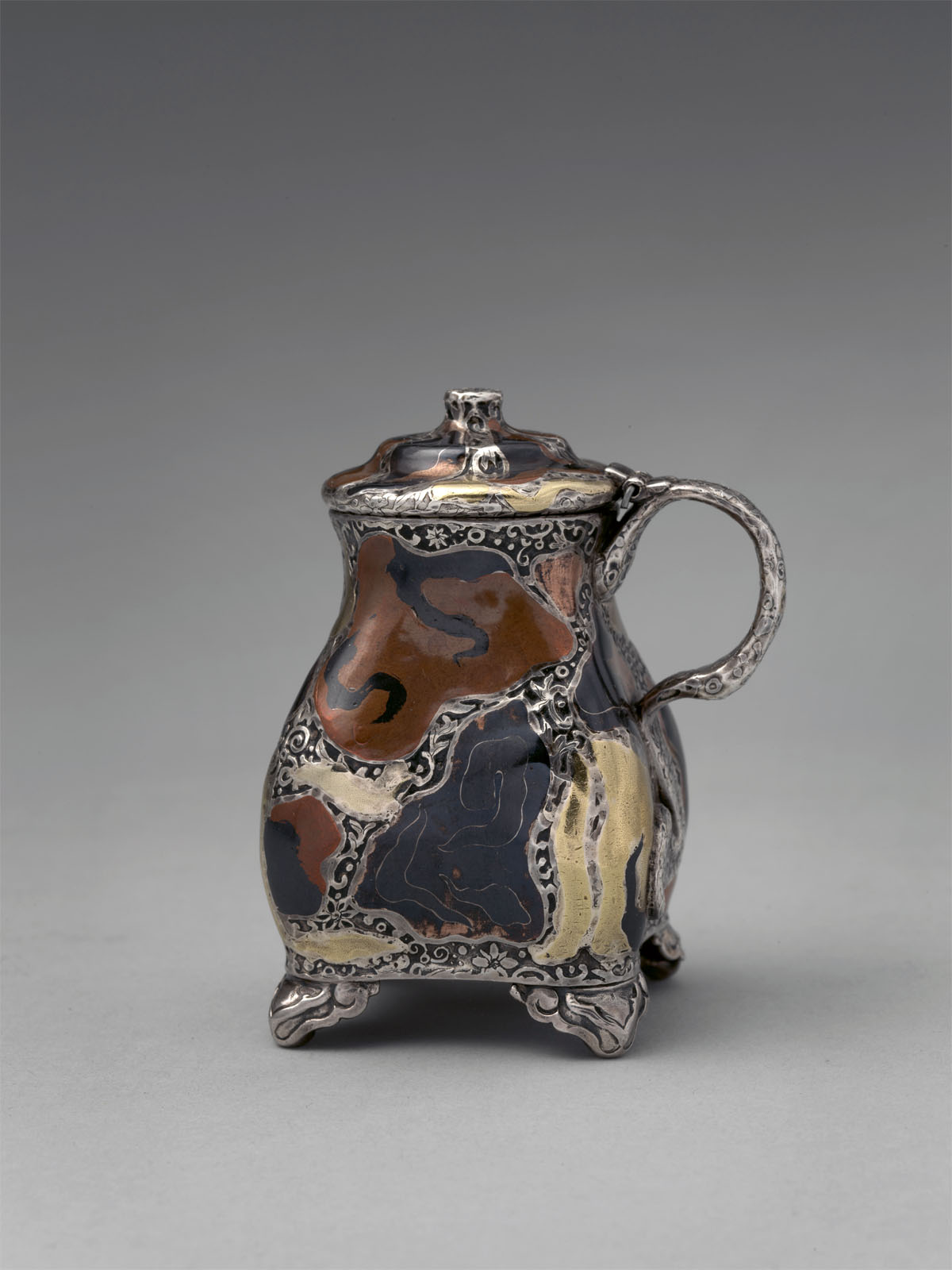
The Metropolitan Museum of Art website

LIKE ART BLART ON FACEBOOK

Back to top

Exhibition: ‘diane arbus: in the beginning’ at the Metropolitan Museum of Art, New York

Exhibition dates: 12th July – 27th November, 2016

Curator: Jeff L. Rosenheim, Curator in Charge of the Department of Photographs at The Met


Diane Arbus (American, 1923-1971) 'Taxicab driver at the wheel with two passengers, N.Y.C. 1956' 1956 from the exhibition 'diane arbus: in the beginning' at the Metropolitan Museum of Art, New York, July - Nov, 2025
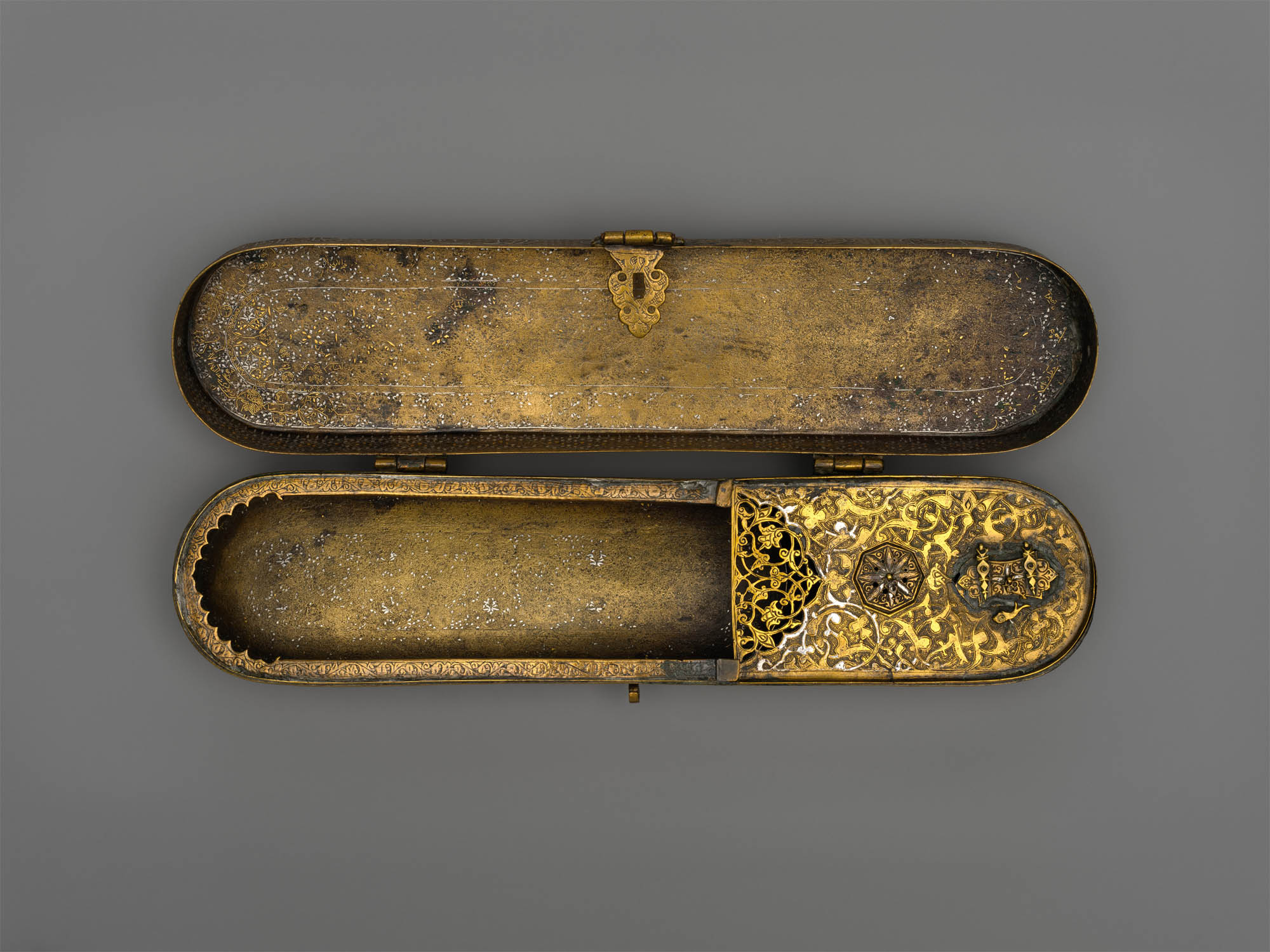
 

Diane Arbus (American, 1923-1971)
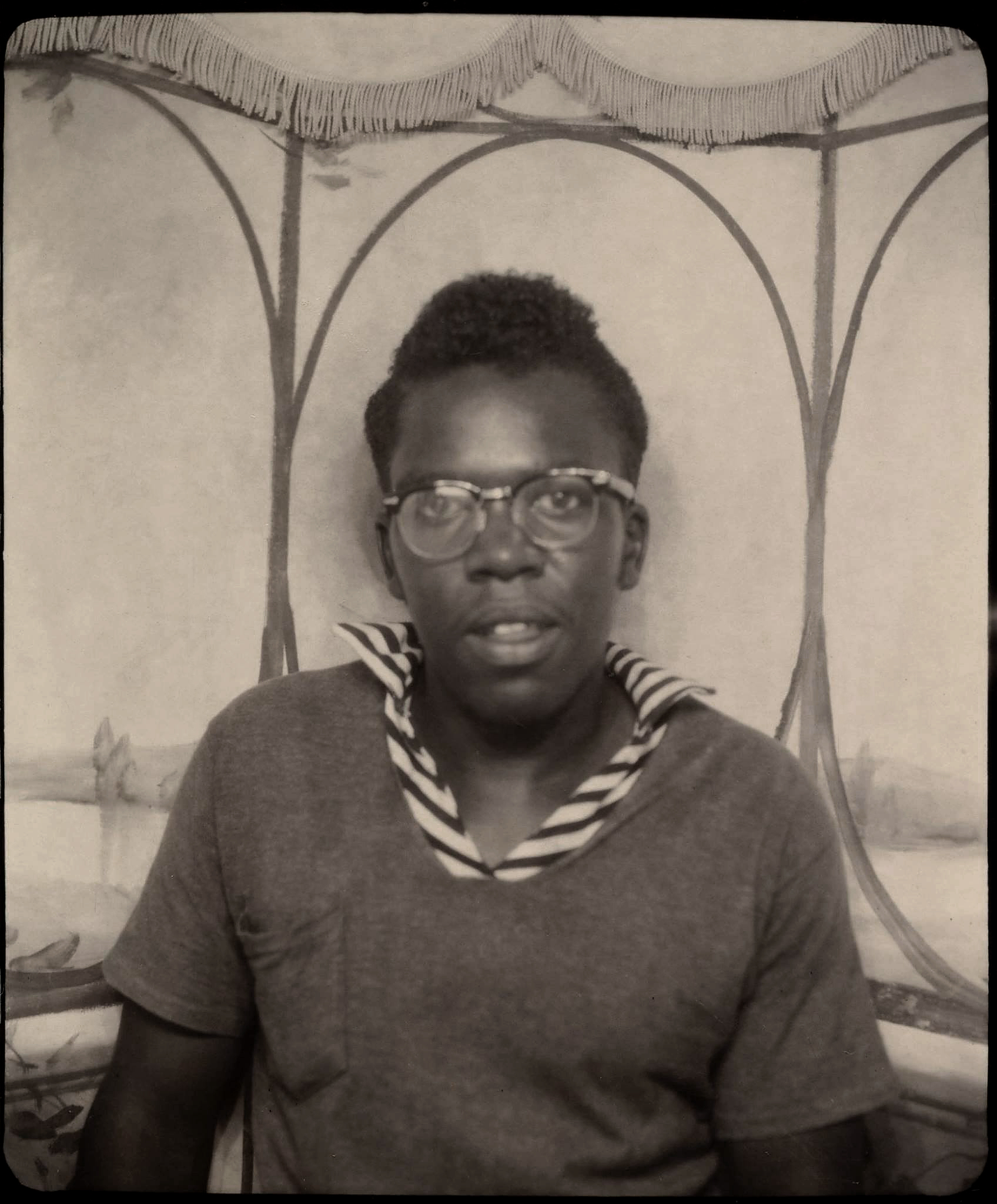
Taxicab driver at the wheel with two passengers, N.Y.C. 1956
1956
Silver gelatin print
© Diane Arbus/The Estate of Diane Arbus LLC


#1

This looks to be a fascinating exhibition, presenting as it does images from the first seven years of Arbus’ career as an independent artist. I wish I could see it.

What strikes one when viewing the 35mm photographs is how loose they are in terms of the framing and composition. Most of them could do with a good crop to tighten the image frame. Stripper with Bare Breasts Sitting in Her Dressing Room, Atlantic City, N.J. 1961 would have worked better if the focus had been tightened on the central figure. Similarly, Lady on a Bus, N.Y.C. 1957 works much better as a square image as seen in the feature image for the exhibition (below). Gone is the extraneous frontal detritus which adds nothing to the image. But just feel the intensity of the withering look of the women being projected out of the photograph – it’s as if she could bit your head off at any moment. She’s not a happy camper at being photographed.

This is Arbus experimenting, feeling out the medium and trying to find her signature voice as an artist. All the later, well known elements are there: keen observation; wonderful timing; a love of intimacy and a formal, visual relationship with the subject; strong central characters; a respect for outsiders; an understanding of the pain of others; and “the poignancy of a direct personal encounter … [and] a passionate interest in the individual.”

My favourite photographs in this posting are the two images Boy stepping off the curb, N.Y.C. 1957-58 and Girl with schoolbooks stepping onto the curb, N.Y.C., 1957. There is a marvellous insouciance about these photographs, “the divineness in ordinary things” embedded in the innocence of youth. We could be these people caught half-stride in their young lives, lightly stepping onto the pavement of the future. The reciprocal gaze makes us stare, and stare again… for even as those photographs are glimpses, glances of a life they become so much more, long lasting archetypes to which we can all relate. As Arthur Lubow observes citing John Szarkowski, a longtime director of photography at the Museum of Modern Art, “The reciprocal gaze that marks her early photographs would be furthered and intensified in the collaborative form of portraiture in her mature work, done with a medium-format camera. Szarkowski, for one, believed that the sharpness that larger film offered was in keeping with her aim to be both particular and mythic.”

Particular and mythic. How magical.

Not only did her work need the sharpness that medium format film offered, what a lot of people forget is that using a medium format camera like a Rollei is a totally different way of seeing the world. This is something that hardly anybody mentions. With a 35mm camera you bring the camera to your face and look through the viewfinder; with a medium format camera such as Arbus’ Rolleiflex or her Mamiya C330 (seen around her neck in a portrait of her in Central Park, below), the camera is held at waist level and you look down into the viewing prism of the camera… and everything is seen in reverse. I remember travelling around the world in 2000 and using a Mamiya C220 and thinking to myself, this is the most amazing experience staring down at the world, moving the camera left and right and the image moving the opposite way to what you think it will move, and then having to account for for parallax in the framing (where the image seen in the viewfinder is not framed the same as the image seen through the lens, because the viewfinder is in a slightly different position to the lens). Even with the one medium format image featured in this posting, I can just feel the different relationship of the camera and photographer to the world – in the format, in the cropping and in the previsualisation of the image. Looking down, back up to the subject, back down into the camera – instead of a horizontal perspective, both a horizontal, vertical and square perspective on the world. It’s all about feeling (in) her work. And you couldn’t really miss her if she wanted to take your photograph… look at all the equipment slung around her neck in her portrait in Central Park: twin lens hoods to stop glare, boom and large flash. She wanted you to know that she was there, to acknowledge her presence.
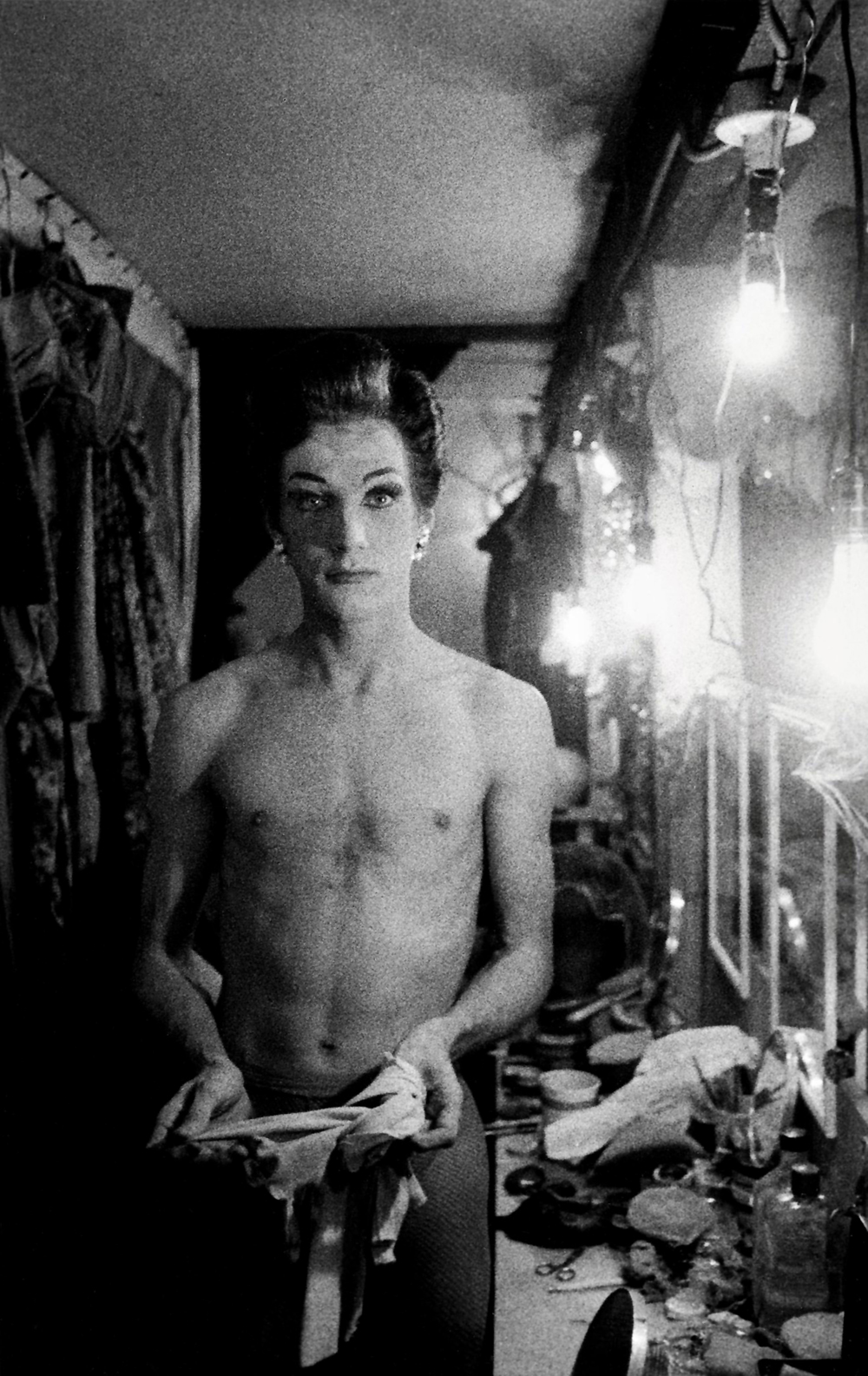
Arbus intuitively knew what she wanted – the presence of the person and the presence of the photographer acknowledged through a circular, two-way relationship. And we, the viewer, understand that process and acknowledge it. Hence, these photographs are not “apparently artless”, they are the very antithesis of that. They are both a thinking and feeling person’s photography. All of her photographs are intelligent investigations of the human condition which produce an empathic response in the viewer. They are a form of empathic vision in which the viewer is drawn into that magical and transcendent relationship. In my opinion, there has never been anyone like her, before or since: no devotees, followers or disciples (except, perhaps, Mary Ellen Mark). Arbus is one of a kind. She will always be my #1.

Dr Marcus Bunyan


Many thankx to the Metropolitan Museum of Art for allowing me to publish the photographs in the posting. Please click on the photographs for a larger version of the image.


The photographs from her early career reveal that the salient characteristics of her work – its centrality, boldness, intimacy and apparent artlessness – were present in her pictures since the very beginning. Arbus’s creative life in photography after 1962 is well documented and already the stuff of legend; now, for the first time, we can properly examine its origins.


'diane arbus: in the beginning' book cover


“The camera is cruel, so I try to be as good as I can to make things even.”

“I do feel I have some slight corner on something about the quality of things. I mean it’s very subtle and a little embarrassing to me but I really believe there are things which nobody would see unless I photographed them.”

“One thing that struck me early is that you don’t put into a photograph what’s going to come out. Or, vice versa, what comes out is not what you put in.”

“…I would never choose a subject for what it means to me. I choose a subject and then what I feel about it, what it means, begins to unfold.”


Diane Arbus


“I think Arbus was suggesting that just as people are looking at us and we’re looking at them every day, the pictures made us introspective as viewers. They forced us to confront our own identity. And that’s a really beautiful switch, that switcheroo. We’re looking at somebody else but we’re mindful of our voyeurism, and we’re mindful of how we ourselves are presenting. ‘How am I different? How did I become the person I am?’ That’s one of the qualifying elements of an Arbus photograph: that you feel something about you, often something that might not be comfortable.”

“Arbus’s early photographs are wonderfully rich in achievement and perhaps as quietly riveting and ultimately controversial as the iconic images for which she is so widely known. She brings us face-to-face with what she had first glimpsed at the age of 16 – “the divineness in ordinary things” – and through her photographs we begin to see it too.”


Exhibition curator Jeff L. Rosenheim


Installation view of the exhibition 'diane arbus: in the beginning' at the Metropolitan Museum of Art, New York

Installation view of the exhibition 'diane arbus: in the beginning' at the Metropolitan Museum of Art, New York

Installation view of the exhibition 'diane arbus: in the beginning' at the Metropolitan Museum of Art, New York


Installation views of the exhibition diane arbus: in the beginning at the Metropolitan Museum of Art, New York


This landmark exhibition features more than 100 photographs that together redefine Diane Arbus (American, 1923-1971), one of the most influential and provocative artists of the 20th century. It focuses on the first seven years of her career, from 1956 to 1962, the period in which she developed the idiosyncratic style and approach for which she has been recognised praised, criticised, and copied the world over.

Arbus made most of her photographs in New York City, where she lived and died, and where she worked in locations such as Times Square, the Lower East Side, and Coney Island. Her photographs of children and eccentrics, couples and circus performers, female impersonators and Fifth Avenue pedestrians are among the most intimate and surprising images of the era.

The majority of the photographs in the exhibition have never before been seen and are part of the Museum’s Diane Arbus Archive, acquired in 2007 by gift and promised gift from the artist’s daughters, Doon Arbus and Amy Arbus. It was only when the archive came to The Met that this remarkable early work came to be fully explored. Arbus’s creative life in photography after 1962 is well documented and already the stuff of legend; now, for the first time, we can properly examine its origins.


Diane Arbus (American, 1923-1971) 'Boy above a crowd, N.Y.C., 1957' 1957 from the exhibition 'diane arbus: in the beginning' at the Metropolitan Museum of Art, New York, July - Nov, 2025


Diane Arbus (American, 1923-1971)
Boy above a crowd, N.Y.C., 1957
1957
Silver gelatin print
© Diane Arbus/The Estate of Diane Arbus LLC


Diane Arbus (American, 1923-1971) 'Girl with a pointy hood and white schoolbag at the curb, N.Y.C. 1957' 1957


Diane Arbus (American, 1923-1971)
Girl with a pointy hood and white schoolbag at the curb, N.Y.C. 1957
1957
Silver gelatin print
© Diane Arbus/The Estate of Diane Arbus LLC


Diane Arbus (American, 1923-1971) 'Empty snack bar, N.Y.C., 1957' 1957


Diane Arbus (American, 1923-1971)
Empty snack bar, N.Y.C., 1957
1957
Silver gelatin print
© Diane Arbus/The Estate of Diane Arbus LLC


Diane Arbus (American, 1923-1971) 'Windblown headline on a dark pavement, N.Y.C., 1956' 1956


Diane Arbus (American, 1923-1971)
Windblown headline on a dark pavement, N.Y.C., 1956
1956
Silver gelatin print
© Diane Arbus/The Estate of Diane Arbus LLC


Diane Arbus (American, 1923-1971) 'Screaming woman with blood on her hands, 1961' 1961


Diane Arbus (American, 1923-1971)
Screaming woman with blood on her hands, 1961
1961
Silver gelatin print
© Diane Arbus/The Estate of Diane Arbus LLC


“This is a shot inside a theater, of a movie called ‘Horrors of the Black Museum.’ The woman is using binoculars and when she focuses, daggers come out and blind her.”


As part of the inaugural season at The Met Breuer, diane arbus: in the beginning will open on July 12, featuring more than 100 photographs that together will redefine one of the most influential and provocative artists of the 20th century. This landmark exhibition will highlight never-before-seen early work of Diane Arbus (1923-1971), focusing on the first seven years of her career, from 1956 to 1962 – the period in which she developed the idiosyncratic style and approach for which she has been recognised, praised, criticised, and copied the world over. The exhibition is made possible by the Alfred Stieglitz Society. Additional support is provided by The Horace W. Goldsmith Foundation and the Art Mentor Foundation Lucerne.

“It is a rare privilege to present an exhibition this revelatory, on an artist of Arbus’s stature. More than two-thirds of these works have never before been exhibited or published,” said Thomas P. Campbell, Director and CEO of The Met. “We sincerely thank the Estate of Diane Arbus for entrusting us to show an unknown aspect of this remarkable artist’s legacy with the camera.”

Jeff Rosenheim, Curator in Charge of the Department of Photographs, added, “Arbus’s early photographs are wonderfully rich in achievement and perhaps as quietly riveting and ultimately controversial as the iconic images for which she is so widely known. She brings us face-to-face with what she had first glimpsed at the age of 16 – ‘the divineness in ordinary things’ – and through her photographs we begin to see it too.”

diane arbus: in the beginning focuses on seven key years that represent a crucial period of the artist’s genesis, showing Arbus as she developed her style and honed her practice. Arbus was fascinated by photography even before she received a camera in 1941 at the age of 18 as a present from her husband, Allan, and made photographs intermittently for the next 15 years while working with him as a stylist in their fashion photography business. But in 1956 she numbered a roll of 35mm film #1, as if to claim to herself that this moment would be her definitive beginning. Through the course of the next seven years (the period in which she primarily used a 35mm camera), an evolution took place – from pictures of individuals that sprang out of fortuitous chance encounters to portraits in which the chosen subjects became engaged participants, with as much stake in the outcome as the photographer. This greatly distinguishes Arbus’s practice from that of her peers, from Walker Evans and Helen Levitt to Garry Winogrand and Lee Friedlander, who believed that the only legitimate record was one in which they, themselves, appear to play little or no role. In almost complete opposition, Arbus sought the poignancy of a direct personal encounter.

Arbus made most of her photographs in New York City, where she was born and died, and where she worked in locations such as Times Square, the Lower East Side, Coney Island, and other areas. Her photographs of children and eccentrics, couples and circus performers, female impersonators and Fifth Avenue pedestrians are among the most intimate and surprising images of the era. From the beginning, Arbus believed fully that she had something special to offer the world, a glimpse of its many secrets: “I do feel I have some slight corner on something about the quality of things. I mean it’s very subtle and a little embarrassing to me but I really believe there are things which nobody would see unless I photographed them.”

Nearly half of the photographs that Arbus printed during her lifetime were made between 1956 and 1962, the period covered by this exhibition. At the time of her death in 1971, much of this work was stored in boxes in an inaccessible corner of her basement darkroom at 29 Charles Street in Greenwich Village. These prints remained undiscovered for several years thereafter and were not even inventoried until a decade after her death. The majority of the photographs included in the exhibition are part of the Museum’s vast Diane Arbus Archive, acquired in 2007 by gift and promised gift from the artist’s daughters, Doon Arbus and Amy Arbus. It was only when the archive – a treasury of photographs, negatives, notebooks, appointment books, correspondence, and collections – came to The Metropolitan Museum of Art in 2007 that this seminal early work began to be fully explored.

Among the highlights in the exhibition are lesser-known published works such as Lady on a bus, N.Y.C. 1957, Boy stepping off the curb, N.Y.C. 1957-58, The Backwards Man in his hotel room, N.Y.C. 1961, and Jack Dracula at a bar, New London, Conn. 1961, as well as completely unknown additions to her oeuvre, such as Taxicab driver at the wheel with two passengers, N.Y.C. 1956, Woman with white gloves and a pocket book, N.Y.C. 1956, Female impersonator holding long gloves, Hempstead, L.I. 1959, and Man in hat, trunks, socks and shoes, Coney Island, N.Y. 1960. Included among the selection of six square-format photographs from 1962 is the iconic Child with a toy hand grenade in Central Park, N.Y.C. 1962, a photograph that signals the moment when Arbus turned away from the 35mm camera and started working with the 2 1/4 inch square format Rolleiflex camera, a format that remained a distinctive attribute of her work for the rest of her life. The photographs from her early career reveal that the salient characteristics of her work – its centrality, boldness, intimacy, and apparent artlessness – were present in her pictures since the very beginning. Arbus’s creative life in photography after 1962 is well documented and already the stuff of legend; now, for the first time, we can properly examine its origins.

diane arbus: in the beginning is curated by Jeff L. Rosenheim, Curator in Charge of the Department of Photographs at The Met.

Press release from the Metropolitan Museum of Art


Diane Arbus (American, 1923-1971) 'Child teasing another, N.Y.C., 1960' 1960


Diane Arbus (American, 1923-1971)
Child teasing another, N.Y.C., 1960
1960
Silver gelatin print
© Diane Arbus/The Estate of Diane Arbus LLC


Diane Arbus (American, 1923-1971) 'Boy at the pool hall, N.Y.C., 1959' 1959


Diane Arbus (American, 1923-1971)
Boy at the pool hall, N.Y.C., 1959
1959
Silver gelatin print
© Diane Arbus/The Estate of Diane Arbus LLC


Diane Arbus (American, 1923-1971) 'Child in a nightgown, Wellfleet, Mass., 1957' 1957


Diane Arbus (American, 1923-1971)
Child in a nightgown, Wellfleet, Mass., 1957
1957
Silver gelatin print
© Diane Arbus/The Estate of Diane Arbus LLC


Diane Arbus (American, 1923-1971) 'Woman wearing a mink stole and bow shoes, N.Y.C., 1956' 1956


Diane Arbus (American, 1923-1971)
Woman wearing a mink stole and bow shoes, N.Y.C., 1956
1956
Silver gelatin print
© Diane Arbus/The Estate of Diane Arbus LLC


Diane Arbus (American, 1923-1971) 'Woman with white gloves and a pocket book, N.Y.C. 1956' 1956


Diane Arbus (American, 1923-1971)
Woman with white gloves and a pocket book, N.Y.C. 1956
1956
Silver gelatin print
© Diane Arbus/The Estate of Diane Arbus LLC


“We’re in the isolationist ’50s, and here’s a glamorous woman on Fifth Avenue, wearing gloves, with her pocketbook, but with this anxiety on her face.”


Diane Arbus (American, 1923-1971) 'Lady on a Bus, N.Y.C. 1957' 1957


Diane Arbus (American, 1923-1971)
Lady on a Bus, N.Y.C. 1957
1957
Gelatin silver print
8 1/2 x 5 3/4 in. (21.6 x 14.6cm)
The Metropolitan Museum of Art, New York, Gift of Danielle and David Ganek, 2005
© Diane Arbus/The Estate of Diane Arbus LLC


Jeff L. Rosenheim curator: There are many pictures from her first 50 rolls of film in the show. And you can see for yourself that she is already isolating individuals, pedestrians on Fifth Avenue. She is approaching people, and in almost every instance, it’s one image and the subject is addressing the camera. Arbus did not want to do what almost every one of her peers was doing, which she was highly aware of – she was well versed in the history of the medium; she was taking classes from Lisette Model and she had studied with Berenice Abbott and Alexey Brodovitch. What she took away from that training was this feeling that she could find her subject and they could find her in equal measure. She allowed herself to be vulnerable enough. Helen Levitt used a right-angle viewfinder so her subjects couldn’t see what she was doing. Walker Evans used the folds of his coat to hide his camera on the subway. The style of documentary photography was that you wanted to see but you didn’t want to be seen, and Arbus had a completely different method. It was to use the camera as an expressive device that allows the viewer of the photograph to be implicated by the subject looking directly at the artist.

Randy Kennedy. “The Diane Arbus You’ve Never Seen,” on the New York Times website 26 May 2016 [Online] Cited 25/10/2021


“Arbus is not without her critics and, where some people praise her ability to celebrate the marginalized and glorify the unusual, others see her work as cruel and exploitative. Lubow, however, claims that both stances oversimplify the real complexity of her work, which is perhaps where both he and Jeff Rosenheim, the curator in charge of photography at the Met, take a stab at redefining Arbus, because if we define her solely by the people she photographed, we’re missing the point.

“I think both Jeff and I realized that from the beginning she wanted to capture a moment where she was seeing and being seen, she wanted a reciprocal look,” Lubow says. “Jeff is doing that formally, and showing you that she needed it as an artist, and I’ve tried to show that she needed it as a person. She was motivated to feel and to record the response of her subject to her. That was how she felt real, this was how she felt alive.””

Krystal Grow. “Diane Arbus and the Art of Exchange,” on the Popular Photography website July 15, 2016 [Online] Cited 25/10/2021


“From the very beginning of her career, she was taking photographs to obtain a vital proof – a corroboration of her own existence. The pattern was set early. When she was 15, she described to a friend how she would undress at night in her lit bathroom and watch an old man across the courtyard watch her (until his wife complained). She not only wanted to see, she needed to be seen. As a street photographer, she dressed at times in something attention-grabbing, like a fake leopard-skin coat. She didn’t blend into the background, she jumped out of it. And she fascinated her subjects. “People were interested in Diane, just as interested in her as she was in them,” John Szarkowski, a longtime director of photography at the Museum of Modern Art, once told me…

Diane had a talent for friendship, and she maintained long-term connections with all sorts of people – eccentrics in rooming houses, freaks in sideshows, socialites on Park Avenue. She needed those relationships. But she also relied on filmed verification of her impact on others. The reciprocal gaze that marks her early photographs would be furthered and intensified in the collaborative form of portraiture in her mature work, done with a medium-format camera. Szarkowski, for one, believed that the sharpness that larger film offered was in keeping with her aim to be both particular and mythic.”

Arthur Lubow. “How Diane Arbus Became ‘Arbus’,” on the New York Times website May 26, 2016 [Online] Cited 25/10/2021


Diane Arbus (American, 1923-1971) 'Boy stepping off the curb, N.Y.C. 1957-58' 1957-1958


Diane Arbus (American, 1923-1971)
Boy stepping off the curb, N.Y.C. 1957-58
1957-1958
Silver gelatin print
© Diane Arbus/The Estate of Diane Arbus LLC


Diane Arbus (American, 1923-1971) 'Girl with schoolbooks stepping onto the curb, N.Y.C., 1957' 1957


Diane Arbus (American, 1923-1971)
Girl with schoolbooks stepping onto the curb, N.Y.C., 1957
1957
Silver gelatin print
© Diane Arbus/The Estate of Diane Arbus LLC


Diane Arbus (American, 1923-1971) 'Kid in a hooded jacket aiming a gun, N.Y.C., 1957' 1957


Diane Arbus (American, 1923-1971)
Kid in a hooded jacket aiming a gun, N.Y.C., 1957
1957
Silver gelatin print
© Diane Arbus/The Estate of Diane Arbus LLC


Diane Arbus (American, 1923-1971) 'Man in hat, trunks, socks and shoes, Coney Island, N.Y. 1960' 1960


Diane Arbus (American, 1923-1971)
Man in hat, trunks, socks and shoes, Coney Island, N.Y. 1960
1960
Silver gelatin print
© Diane Arbus/The Estate of Diane Arbus LLC


Diane Arbus (American, 1923-1971) 'The Backwards Man in his hotel room, N.Y.C. 1961' 1961


Diane Arbus (American, 1923-1971)
The Backwards Man in his hotel room, N.Y.C. 1961
1961
Silver gelatin print
© Diane Arbus/The Estate of Diane Arbus LLC


Diane Arbus (American, 1923-1971) 'Stripper with Bare Breasts Sitting in Her Dressing Room, Atlantic City, N.J. 1961' 1961


Diane Arbus (American, 1923-1971)
Stripper with Bare Breasts Sitting in Her Dressing Room, Atlantic City, N.J. 1961
1961
Silver gelatin print
© Diane Arbus/The Estate of Diane Arbus LLC


Diane Arbus (American, 1923-1971) 'Female impersonator holding long gloves, Hempstead, L.I., 1959' 1959


Diane Arbus (American, 1923-1971)
Female impersonator holding long gloves, Hempstead, L.I., 1959
1959
Silver gelatin print
© Diane Arbus/The Estate of Diane Arbus LLC


Diane Arbus (American, 1923-1971) 'Jack Dracula at a bar, New London, Conn. 1961' 1961


Diane Arbus (American, 1923-1971)
Jack Dracula at a bar, New London, Conn. 1961
1961
Silver gelatin print
© Diane Arbus/The Estate of Diane Arbus LLC


I think Arbus was suggesting that just as people are looking at us and we’re looking at them every day, the pictures made us introspective as viewers. They forced us to confront our own identity. And that’s a really beautiful switch, that switcheroo. We’re looking at somebody else but we’re mindful of our voyeurism, and we’re mindful of how we ourselves are presenting. ‘How am I different? How did I become the person I am?’ That’s one of the qualifying elements of an Arbus photograph: that you feel something about you, often something that might not be comfortable.

Randy Kennedy. “The Diane Arbus You’ve Never Seen,” on the New York Times website 26 May 2016 [Online] Cited 25/10/2021


Diane Arbus (American, 1923-1971) 'Elderly Woman Whispering to Her Dinner Partner, Grand Opera Ball, N.Y.C. 1959' 1959


Diane Arbus (American, 1923-1971)
Elderly Woman Whispering to Her Dinner Partner, Grand Opera Ball, N.Y.C. 1959
1959
Silver gelatin print
© Diane Arbus/The Estate of Diane Arbus LLC


Diane Arbus (American, 1923-1971) 'Fire Eater at a Carnival, Palisades Park, N.J. 1957' 1957


Diane Arbus (American, 1923-1971)
Fire Eater at a Carnival, Palisades Park, N.J. 1957
1957
Silver gelatin print
© Diane Arbus/The Estate of Diane Arbus LLC


Diane Arbus (American, 1923-1971) 'Little man biting woman's breast, N.Y.C.' 1958


Diane Arbus (American, 1923-1971)
Little man biting woman’s breast, N.Y.C.
1958
Silver gelatin print
© Diane Arbus/The Estate of Diane Arbus LLC


Diane Arbus (American, 1923-1971) 'Old woman with hands raised in the ocean, Coney Island, N.Y.C.' 1960


Diane Arbus (American, 1923-1971)
Old woman with hands raised in the ocean, Coney Island, N.Y.C.
1960
Silver gelatin print
© Diane Arbus/The Estate of Diane Arbus LLC


Diane Arbus (American, 1923-1971) 'Blonde receptionist behind a picture window, N.Y.C.' 1962


Diane Arbus (American, 1923-1971)
Blonde receptionist behind a picture window, N.Y.C.
1962
Silver gelatin print
© Diane Arbus/The Estate of Diane Arbus LLC


“This is the transition year, when she changed to square format. The receptionist is in a kind of diorama, not one made by the woman but by the culture.”


Diane Arbus in Central Park with her Mamiya Camera in 1967


Diane Arbus in Central Park with her Mamiya Camera (330?) in 1967


Diane Arbus (American, 1923-1971) 'Child with a toy hand grenade in Central Park, N.Y.C. 1962'


Diane Arbus (American, 1923-1971)
Child with a toy hand grenade in Central Park, N.Y.C. 1962
1962
Silver gelatin print


The Metropolitan Museum of Art
1000 Fifth Avenue at 82nd Street
New York, New York 10028-0198
Phone: 212-535-7710

Opening hours:
Sunday – Tuesday and Thursday: 10am – 5pm
Friday and Saturday: 10am – 9pm
Closed Wednesday

The Metropolitan Museum of Art website

LIKE ART BLART ON FACEBOOK

Back to top