David Octavius Hill & Robert Adamson David Octavius Hill (Scottish, 1802-1870) Robert Adamson (Scottish, 1821-1848) Mr Finlay, deerstalker in the employ of Campbell of Islay [b] 1843-1847 Salted paper print 20.1 x 13.6cm Scottish National Gallery
This photograph shows Mr Finlay in Highland dress, possibly chosen by his employer. Although there is a rich history of tartan appearing in earlier portrait painting, Hill and Adamson were among the first to photograph this iconic Scottish fabric. The calotype process does not show colour, but it offered a means to capture the detail of the different styles of woven fabric. The differences in weave density and pattern between two tartans is clearly visible.
I have supplemented the meagre seven media images with other photographs from the Scottish National Gallery collection (public domain) which I have selected to further illustrate the fashion & textile theme of the exhibition.
Taken within the first few years of the invention of photography, Hill & Adamson had a profound understanding of how the spirit of a person could be captured by the camera, clothed in working class attire, the robes of respectable society, or fantastical creations of their imagination.
Dr Marcus Bunyan
Many thankx to the National Galleries of Scotland for allowing me to publish the photographs in the posting. Please click on the photographs for a larger version of the image.
David Octavius Hill & Robert Adamson David Octavius Hill (Scottish, 1802-1870) Robert Adamson (Scottish, 1821-1848) Sir George Harvey, 1806 – 1876. Artist [a] 1843-1847 Salted paper print 20 x 16cm Scottish National Gallery Elliot Collection, bequeathed 1950
George Harvey’s boldly patterned coat was likely selected to make this portrait of an artist appear exotic. In the final print this flamboyant garment draws our eye to the sitter, in contrast with the softly draping fabric background and the hard stone of the statue in the corner.
This small display highlights the remarkable skill of pioneering photographers Hill and Adamson in using this very new technology to showcase the fashions of the 1840s.
David Octavius Hill and Robert Adamson were working in Edinburgh when photography was in its infancy. They used the calotype process, where a paper negative prepared with a salt solution is used to print a positive photograph. It created a much softer image than later photographs made with glass negatives, making it harder to capture detail.
Hill and Adamson depicted many Edinburgh residents during their partnership, from working men to society ladies. They often focused on people’s clothing to demonstrate what was unique about their lives and posed their sitters to highlight particularly interesting details. They embraced the technical challenge of photographing the varied textiles and fashions of the day. Still experimenting with the calotype process, they successfully show us the delicate pattern on a pair of lace gloves, the rough wool of tartans and tweeds and the sheen of silk.
Text from the National Galleries of Scotland website
David Octavius Hill & Robert Adamson David Octavius Hill (Scottish, 1802-1870) Robert Adamson (Scottish, 1821-1848) Lady Mary Hamilton (Campbell) Ruthven, 1789 – 1885. Wife of James, Lord Ruthven [a] 1843-1847 Salted paper print 19.8 x 15.3cm Scottish National Gallery Gift of Mrs. Riddell in memory of Peter Fletcher Riddell, 1985
The subject of this photograph is Lady Ruthven but the focus is on her clothing. The pose, with her body angled diagonally away from the camera, allowed Hill and Adamson to capture how light fell on the different textures in her outfit. In both the negative and the final print, the intricate lace of her shawl is almost translucent draped over the delicate pattern of the dress below. This is one of the most technically accomplished photographs made by Hill and Adamson during their partnership.
David Octavius Hill & Robert Adamson David Octavius Hill (Scottish, 1802-1870) Robert Adamson (Scottish, 1821-1848) Mr Laing or Laine 1843 Salted paper print 19.6 x 14.3cm Scottish National Gallery
The identity of the smartly dressed tennis player in this staged scene is uncertain and yet this calotype has become a popular picture postcard. Hill and Adamson are best remembered for the subtlety and perceptiveness of their photographic portraits but at times they showed a keenness for the representation of movement. Here movement is easy to detect in the blur of the racket and the man’s forearm. The player’s intense gaze furthermore suggests that a tennis ball just just gone out of the picture frame.
David Octavius Hill & Robert Adamson David Octavius Hill (Scottish, 1802-1870) Robert Adamson (Scottish, 1821-1848) Misses Binney 1843-1847 Salted paper print 20.4 x 14.6cm Scottish National Gallery Given by Miss Janet Notman
These photographs of the aristocratic Misses Binney have been carefully staged to highlight the rich and varied textiles in their outfits. The positioning in this photograph of Miss Binney’s lace-gloved hand on the dark fabric of her sister’s shawl enhances the contrast between the delicate pattern and her pale skin. This image demonstrates Hill and Adamson’s skill in capturing the unique qualities of lace, silk and satin.
David Octavius Hill & Robert Adamson David Octavius Hill (Scottish, 1802-1870) Robert Adamson (Scottish, 1821-1848) Jimmy Miller. Son of Professor James Miller [c] 1843-1847 Salted paper print 20.5 x 14.3cm Scottish National Gallery Given by Miss Janet Notman
Jimmy Miller was the son of James Miller, a professor of surgery at the University of Edinburgh from 1842, and an advocate of the temperance movement. The family were supporters of and had taken part in the disruption of 1843 , where a group of 450 ministers broke away from the Church of Scotland to establish the Free Church of Scotland. Jimmy was one of the few children to appear in Hill’s painting commemorating the event. Hill referred to him as ‘The Young Savage’.
David Octavius Hill & Robert Adamson David Octavius Hill (Scottish, 1802-1870) Robert Adamson (Scottish, 1821-1848) Mr Lane [called John Lane, Dr Lane and Edward William Lane] [a] 1843-1847 Materials: Salted paper print 19.8 x 14.5cm Scottish National Gallery Elliot Collection, bequeathed 1950
Although this sitter is named as Mr Lane, his identity and connection to India are uncertain. During their partnership, Hill and Adamson made a small number of portraits of sitters in South Asian national dress. Mr Lane has been posed to show the layering of different patterns and textures. His position also allows us to see the shape of his headdress, and the way the beads around his neck interact with the ornate fabric of his robe and the pale undershirt below.
More Hill & Adamson photographs showing fashion not in the display
David Octavius Hill & Robert Adamson David Octavius Hill (Scottish, 1802-1870) Robert Adamson (Scottish, 1821-1848) Mrs Anne (Palgrave) Rigby 1777 – 1872 [f] 1843-1847 Salted paper print 19 x 14.4cm Scottish National Gallery Elliot Collection, bequeathed 1950
Anne Rigby was the widowed wife of a doctor and had fourteen children. While living in Edinburgh in the 1840s, she and her daughters were photographed on a number of occasions by Hill and Adamson. This photograph bears a striking resemblance to Whistler’s famous portrait of his mother, which is not at all surprising given that the two ladies were friends. Mrs Whistler may have owned a copy of this calotype of Mrs Rigby.
David Octavius Hill & Robert Adamson David Octavius Hill (Scottish, 1802-1870) Robert Adamson (Scottish, 1821-1848) Mrs Kinloch. Of Park; nee Napier [b] 1843-1846 Salted paper print 20.9 x 15.4cm Scottish National Gallery
David Octavius Hill & Robert Adamson David Octavius Hill (Scottish, 1802-1870) Robert Adamson (Scottish, 1821-1848) Lady Elizabeth (Rigby) Eastlake, 1809 – 1893. Writer [m] 1843-1847 Salted paper print 20.8 x 15.7cm Scottish National Gallery Gift of Mrs. Riddell in memory of Peter Fletcher Riddell, 1985
David Octavius Hill & Robert Adamson David Octavius Hill (Scottish, 1802-1870) Robert Adamson (Scottish, 1821-1848) Mrs Elizabeth (Johnstone) Hall [Newhaven] 1843 – 1847 Carbon print 19.80x 14.6cm Scottish National Gallery Edinburgh Photographic Society Collection, gifted 1987
David Octavius Hill & Robert Adamson David Octavius Hill (Scottish, 1802-1870) Robert Adamson (Scottish, 1821-1848) Miss Ellen and Miss Agnes Milne [Group 194] 1843-1847 Salted paper print 18.6 x 14cm Scottish National Gallery Edinburgh Photographic Society Collection, gifted 1987
David Octavius Hill & Robert Adamson David Octavius Hill (Scottish, 1802-1870) Robert Adamson (Scottish, 1821-1848) Rev. John Wilson, 1804 – 1875. Vice-Chancellor of the University of Bombay 1843-1847; printed later Salted paper print 22.8 x 16.1cm Scottish National Gallery The MacKinnon Collection. Acquired jointly with the National Library of Scotland with assistance from The National Lottery Heritage Fund, Scottish Government and Art Fund
David Octavius Hill & Robert Adamson David Octavius Hill (Scottish, 1802-1870) Robert Adamson (Scottish, 1821-1848) Willie Liston, ‘Redding [cleaning or preparing] the line’; Newhaven fisherman [Newhaven 3] 1843-1847 Salted paper print 20 x 14.1cm Scottish National Gallery Gift of Mrs. Riddell in memory of Peter Fletcher Riddell, 1985
David Octavius Hill & Robert Adamson David Octavius Hill (Scottish, 1802-1870) Robert Adamson (Scottish, 1821-1848) Dr George Bell. Founder of ‘Ragged Schools’ [c] 1843-1847 Carbon print 21.3 x 16cm Scottish National Gallery Elliot Collection, bequeathed 1950
David Octavius Hill & Robert Adamson David Octavius Hill (Scottish, 1802-1870) Robert Adamson (Scottish, 1821-1848) Rev. Peter Jones or Kahkewaquonaby, 1802 – 1856. Indian chief and missionary in Canada [c] 1843-1847 Salted paper print 20.2 x 14.6cm Scottish National Gallery Purchased from the estate of Sophia Finlay (Charles Finlay’s Trust), 1937
Born in Canada, Peter Jones’ father was a Welsh-born, American immigrant and his mother was of Ojibwa Indian ancestry. He grew up as a Native-American Indian with the name ‘Kahkewāquonāby’, meaning sacred waving feathers. Following his father’s wishes he was baptised by the Methodist church which led to his role as an Indian missionary. To fundraise he toured the United States and the United Kingdom, giving speeches and sermons to captivated audiences. He arrived in Edinburgh in July 1845 and this calotype is one of a series showing Jones in both Indian attire and western clothes. These are some of the oldest surviving photographs of a North American Indian.
David Octavius Hill & Robert Adamson David Octavius Hill (Scottish, 1802-1870) Robert Adamson (Scottish, 1821-1848) Lady Abercromby (or Hon Mrs Abercromby) 1843-1847 Carbon print 20.2 x 15.7cm (trimmed) Scottish National Gallery Elliot Collection, bequeathed 1950
David Octavius Hill & Robert Adamson David Octavius Hill (Scottish, 1802-1870) Robert Adamson (Scottish, 1821-1848) Lane and Lewis in oriental dress 1843-1847 Salted paper print 20 x 14.2cm Scottish National Gallery
David Octavius Hill & Robert Adamson David Octavius Hill (Scottish, 1802-1870) Robert Adamson (Scottish, 1821-1848) James Drummond, 1816 – 1877. History painter; curator of the National Gallery of Scotland [b] 1843-1847 Salted paper print 19.3 x 14.7cm
James Drummond was an accomplished artist and antiquarian, who specialised in history paintings. He studied at the Trustees’ Academy in Edinburgh and was elected to the Royal Scottish Academy in 1852. Between 1848 and 1859 Drummond produced a series of pencil and wash drawings of closes, streets and buildings in Edinburgh. They were later published as lithographs in a folio volume entitled ‘Old Edinburgh’. In 1868 Drummond became curator of the Scottish National Gallery, a position he held until his death in 1877. An admirer of the new medium of photography, he was a member of the Photographic Society of Scotland and owned two albums of Hill and Adamson’s calotypes.
National Galleries of Scotland The Mound, Edinburgh, EH2 2EL
Hill & Adamson (Scottish, active 1843-1847) Robert Adamson (Scottish, 1821-1848) David Octavius Hill (Scottish, 1802-1870) 100 Calotypes by D. O. Hill, R.S.A., and R. Adamson album front cover
1845
60.9 x 43.1cm
Hill & Adamson Photography Collection
Gernsheim Collection
Harry Ransom Center, The University of Texas at Austin
Public domain
Album of 109 salted paper prints from calotype negatives by Hill & Adamson (Scottish, active 1843-1847). Assembled and sold to marine painter Clarkson Stanfield (English, 1793-1867) in 1845. Six prints tipped in over other prints; these are likely the prints sent by Hill to Stanfield in January 1846.
The Clarkson Stanfield Album: an album of 109 salted paper prints from calotype negatives compiled by Hill & Adamson (Scottish, active 1843-1847), the photographs created by the painter (Hill) and photographer (Adamson) during a four year partnership that only ended with the untimely death of Robert Adamson at the age of 26 years. What a truly beautiful album full of the most meditative portrait photographs that you could ever lay your eyes on.
Reminiscent of the characteristics of Mannerism in the Renaissance, the figures and hands dance in convoluted poses of asymmetrical elegance. Witness the sway of body and sinuousness of hands in James Drummond, Artist, Edinburgh (1843-1845, below) with the oppositional direction of the hands, one pointing up and the other down. Or the directional composition of My Sister (1843-1845, below) where the sitter looks left in profile, the hand clutching a book (probably the bible) points in the other direction, whilst the other hand touches the earth. The use of chiaroscuro is magnificent. Other masterpieces of the photographic art are replete with the sensitivity of both artists: the double profile portrait of Jas & Thomas Duncan; A Study (1843-1844, below), both staring intently out of the pictorial frame, one brother clutching the other’s shoulder and arm along with his spectacles. Wonderfully intense and atmospheric.
“As artistic director, Hill composed each picture, placing his sitters as they might appear in the finished painting. Adamson operated the camera and carried out the chemical manipulations. Hill and Adamson were a perfect team. Hill, twenty years older than Adamson, was trained as a painter and had important connections in artistic and social circles in Edinburgh; he easily attracted a distinguished clientele to the team’s portrait studio at Adamson’s home, Rock House… Both men had a profound understanding of the way the world would translate into monochrome pictures.”1
Hill & Adamson also had a profound understanding of how the spirit of a person could be captured by the camera. The Newhaven portraits of fishermen and fishwives – “part of a social-documentary project, the first in photography, that the team carried out in Newhaven and other small but vital fishing towns near Edinburgh”2 – are still to this day some of the most engaging of the early portrait photographs in the history of photography. They capture the character of these people who after all this time still speak to us of their tough life and work through romantic photographs such as the barefooted boy “King Fisher” with his willow basket on a low table or Jeanie Wilson, Newhaven (1843-1845, below) dressed in traditional striped apron and woollen petticoat.
“Hill and Adamson presented Newhaven as a model community bound by tradition, honest labor, and mutual support – qualities emphasised by the careful posing of figures and by the graphic strength and gritty effect of the medium itself.”2
But as Fraser Linklater observes in his article, “‘They put a creel aroond my back and bid me call my haddies’: The Newhaven Fishwives, Preserving Lost Community History and Cultural Transmission Through Generations,” these were staged photographs: “the fact that the Newhaven fisherwomen were wearing ‘gala-dress’ in these pictures reveals it was not an accurate portrayal of them going about their daily work, but instead a picture of a romanticised and imagined community based on some form of semi-truth… Understanding these small details greatly assists us in, once again, grounding their experiences in reality, avoiding polishing their stories to an image that dissuades further thinking and investigation.”
“Nowadays, the village sits subsumed within it’s larger neighbours, Edinburgh and Leith, both in physicality but also, in the last half century culturally…”3
So all we have left of this culture, much like the romanticised photographs of the “Vanishing Race” of the North American Indian by Edward S. Curtis, or the gritty, realist photographs of Skinningrove by Cris Killip eighty or so years later, are these remembrances of times past.
During their brief but prolific partnership Hill & Adamson captured the spirit of these people living in an Industrial Age, photographs that don’t necessarily represent reality but are a performative view of their life and existence at that time (they were performing for the camera, dressed up in their best, posed for effect). But this romanticisation of the people in Hill & Amadson’s Newhaven portraits doesn’t make them any less valuable as representations of that time and place, for that is now all we have.
Indeed, their photographs “show us today some things that we may no longer have access to and give us a window into eyes of real human beings”4 as they go about their daily lives, however staged the photographs might be. Even as evolution would ultimately destroy that way of life forever, so the spirit of past times echoes down to us through these photographs, ripples in a pond caused by a pebble dropped into water.
Dr Marcus Bunyan
1/ Daniel, Malcolm. “David Octavius Hill (1802-1870) and Robert Adamson (1821-1848).” In Heilbrunn Timeline of Art History. New York: The Metropolitan Museum of Art, 2000–. http://www.metmuseum.org/toah/hd/hlad/hd_hlad.htm (October 2004)
2/ Anonymous. “Newhaven Fishwives,” on The Metropolitan Museum of Art website Nd [Online] Cited 31/05/2024
4/ Shannon Keller O’Loughlin (Choctaw) of the Association on American Indian Affairs (AAIA) in an email to the author, 1 June 2018
Many thankx to the Harry Ransom Center for allowing me to publish the photographs in the posting. Please click on the photographs for a larger version of the image. The photographs in the posting are in the order they appear in the album. You can view all 109 photographs on the Harry Ransom Center website.
PLEASE NOTE: the photographs in the posting are not necessarily the photographs in the exhibition. I have selected my favourite photographs from the online resources of the complete album which are free to download and are in the public domain.
Hill & Adamson (Scottish, active 1843-1847) Robert Adamson (Scottish, 1821-1848) David Octavius Hill (Scottish, 1802-1870) 100 Calotypes by D. O. Hill, R.S.A., and R. Adamson album endpaper
1845
60.9 x 43.1cm
Hill & Adamson Photography Collection
Gernsheim Collection
Harry Ransom Center, The University of Texas at Austin
Public domain
Hill & Adamson (Scottish, active 1843-1847) Robert Adamson (Scottish, 1821-1848) David Octavius Hill (Scottish, 1802-1870) Robert Adamson
1843-1844
Salted paper print
9 x 6.4cm (arched top)
Hill & Adamson Photography Collection
Gernsheim Collection
Harry Ransom Center, The University of Texas at Austin
Public domain
Robert Adamson (1821-1848), photography pioneer. Page inscribed with Clarkson Stanfield’s initials and date
Hill & Adamson (Scottish, active 1843-1847) Robert Adamson (Scottish, 1821-1848) David Octavius Hill (Scottish, 1802-1870) D. O. Hill, R.S.A.
1843
Salted paper print
19.8 x 14.1cm
Hill & Adamson Photography Collection
Gernsheim Collection
Harry Ransom Center, The University of Texas at Austin
Public domain
David Octavius Hill (1802-1870), artist and photography pioneer. Mounted on title page with lettering by Hill
Hill & Adamson (Scottish, active 1843-1847) Robert Adamson (Scottish, 1821-1848) David Octavius Hill (Scottish, 1802-1870) Rev Jas Julius Wood, Late of Greyfriars, Edinb.
1843
Salted paper print
20 x 14.4cm
Hill & Adamson Photography Collection
Gernsheim Collection
Harry Ransom Center, The University of Texas at Austin
Public domain
Rev. Dr James Julius Wood (1800-1877), Free Church minister. Secondary inscription by Helmut Gernsheim
Hill & Adamson (Scottish, active 1843-1847) Robert Adamson (Scottish, 1821-1848) David Octavius Hill (Scottish, 1802-1870) Rev Jas Julius Wood, Late of Greyfriars, Edinb. (detail)
1843
Salted paper print
20 x 14.4cm
Hill & Adamson Photography Collection
Gernsheim Collection
Harry Ransom Center, The University of Texas at Austin
Public domain
Hill & Adamson (Scottish, active 1843-1847) Robert Adamson (Scottish, 1821-1848) David Octavius Hill (Scottish, 1802-1870) Miss Rigby
1843-1845
20.3 x 14.4cm
Hill & Adamson Photography Collection
Gernsheim Collection
Harry Ransom Center, The University of Texas at Austin
Public domain
Jane Rigby (1806-1896), sister of Elizabeth, Lady Eastlake (née Rigby)
Don’t miss this unprecedented exhibition of the Clarkson Stanfield Album, a superb volume of early photographs by the celebrated Scottish partnership of Hill & Adamson. Launching their collaboration in Edinburgh in 1843, the established painter David Octavius Hill (1802-1870) and the young photographer Robert Adamson (1821-1848) combined their aesthetic sensitivity and technical brilliance to produce an unparalleled body of portraits, architectural and landscapes scenes, and pioneering social documents. Their work endures today as one of the earliest sustained explorations of photography as an artform.
In the fall of 1845 Hill & Adamson prepared an album of their finest work, arranging over 100 salted paper prints from their calotype negatives into a folio bound in rich purple leather with intricate gold tooling, and sold it to the prominent English marine painter Clarkson Frederick Stanfield (1793-1867). Now known as the Clarkson Stanfield Album, it is one of only a few such unique albums assembled in the years before Adamson’s death at age 26.
More than 175 years later the album is undergoing structural repair, providing the first opportunity since 1845 to view several sections at once before conservators return them to the original binding. The exhibition includes 39 salted paper prints from the Clarkson Stanfield Album, as well as examples of Adamson’s earliest photographic trials and two of Hill’s painted landscapes. The exhibition is drawn entirely from the Gernsheim Collection, acquired by the Ransom Center in 1963.
Text from the Harry Ransom Center website
Hill & Adamson (Scottish, active 1843-1847) Robert Adamson (Scottish, 1821-1848) David Octavius Hill (Scottish, 1802-1870) James Drummond, Artist, Edinburgh
1843-1845
Salted paper print
20 x 14.4cm
Hill & Adamson Photography Collection
Gernsheim Collection
Harry Ransom Center, The University of Texas at Austin
Public domain
James Drummond (1816-1877), history painter, Curator of the National Gallery of Scotland
Hill & Adamson (Scottish, active 1843-1847) Robert Adamson (Scottish, 1821-1848) David Octavius Hill (Scottish, 1802-1870) James Drummond, Artist, Edinburgh (detail)
1843-1845
Salted paper print
20 x 14.4cm
Hill & Adamson Photography Collection
Gernsheim Collection
Harry Ransom Center, The University of Texas at Austin
Public domain
Hill & Adamson (Scottish, active 1843-1847) Robert Adamson (Scottish, 1821-1848) David Octavius Hill (Scottish, 1802-1870) My Sister
1843-1845
21.1 x 14.8cm
Hill & Adamson Photography Collection
Gernsheim Collection
Harry Ransom Center, The University of Texas at Austin
Public domain
Mary Watson (née Hill), sister of David Octavius Hill. Secondary inscription by Helmut Gernsheim
Hill & Adamson (Scottish, active 1843-1847) Robert Adamson (Scottish, 1821-1848) David Octavius Hill (Scottish, 1802-1870) My Sister (detail)
1843-1845
21.1 x 14.8cm
Hill & Adamson Photography Collection
Gernsheim Collection
Harry Ransom Center, The University of Texas at Austin
Public domain
Hill & Adamson (Scottish, active 1843-1847) Robert Adamson (Scottish, 1821-1848) David Octavius Hill (Scottish, 1802-1870) Miss Parker
1844-1845
20 x 14.4cm
Hill & Adamson Photography Collection
Gernsheim Collection
Harry Ransom Center, The University of Texas at Austin
Public domain
Possibly Jane Sophia Barker (née Harden) (1807-1876)
Hill & Adamson (Scottish, active 1843-1847) Robert Adamson (Scottish, 1821-1848) David Octavius Hill (Scottish, 1802-1870) Jas & Thomas Duncan; A Study
1843-1844
11.5 x 14.9cm
Hill & Adamson Photography Collection
Gernsheim Collection
Harry Ransom Center, The University of Texas at Austin
Public domain
James Duncan; Thomas Duncan (1807-1845), artist
Hill & Adamson (Scottish, active 1843-1847) Robert Adamson (Scottish, 1821-1848) David Octavius Hill (Scottish, 1802-1870) Jas & Thomas Duncan; A Study (detail)
1843-1844
11.5 x 14.9cm
Hill & Adamson Photography Collection
Gernsheim Collection
Harry Ransom Center, The University of Texas at Austin
Public domain
“100 Calotypes by D. O. Hill, R.S.A., and R. Adamson,” commonly known as the Clarkson Stanfield Album, is a unique album assembled and sold to English marine painter Clarkson Stanfield (1793-1867) before October 1, 1845. The folio, bound in purple leather with gold tooling, contains a total of 109 salted paper prints from calotype negatives made between 1843 and 1845. As originally assembled, the album begins with portraits of Adamson and Hill, followed by 100 plates and a final photograph, perhaps serving as a visual epilogue or postscript. The major themes of Hill & Adamson’s work are represented: the 100 principal plates comprise, in this order, 44 portraits, including two presbytery groups; 10 scenes in Greyfriars churchyard; 2 scenes at Leith; 31 photographs of fisherfolk, mainly at Newhaven; 1 photograph at St. Andrews; and 11 views of monuments and architecture in and around Edinburgh. Titles of most plates are inscribed in Hill’s hand. Six additional salted paper prints were added later; these are likely the prints sent by Hill to Stanfield in January 1846, added to the album by Stanfield. Of these six prints, five are Newhaven photographs and one is a portrait. This is one of Hill & Adamson’s earliest albums, and one of only a few assembled in Adamson’s lifetime. It provides a view into their partnership at its midpoint, and into which images they understood to be some of their strongest thus far. As an object, the album offers a sense of what the partners may have envisioned for other deluxe volumes they announced but never realised. The album is part of the Gernsheim Collection, purchased in 1963.
While the title suggests there are 100 images contained in the album, there are actually 109 salted paper prints, most of which are accompanied by inscriptions provided by either Hill or Adamson. The images are of prominent men and women of the day, friends and acquaintances of Hill and Adamson, and scenes of Edinburgh, Newhaven and St. Andrews, and Scottish architecture and art. The nine additional images can explained in several ways. First, six images cover/originally covered other images. It appears that Hill and Adamson did not like their original choice of several images and later mounted different images over the originals. In most cases, the covered image is very similar to another image in the album (compare 964:0048:0044, a covered image, with 964:0048:0045). Second, the first two images in the book appear on the half-title and title page, and therefore may not have been counted as part of the “100” referred to on the title page. And, a third explanation may be that the cover for the album was printed before Hill and Adamson’s selection of images to be included.
Text from the Harry Ransom Center website
Hill & Adamson (Scottish, active 1843-1847) Robert Adamson (Scottish, 1821-1848) David Octavius Hill (Scottish, 1802-1870) Edinburgh Castle from the Greyfriars
1843-1845
11.6 x 15.9cm
Hill & Adamson Photography Collection
Gernsheim Collection
Harry Ransom Center, The University of Texas at Austin
Public domain
Greyfriars Churchyard; a group of monuments including the Chalmers and Jackson Monuments, with Edinburgh Castle in the background
Hill & Adamson (Scottish, active 1843-1847) Robert Adamson (Scottish, 1821-1848) David Octavius Hill (Scottish, 1802-1870) Edinburgh Castle from the Greyfriars (detail)
1843-1845
11.6 x 15.9cm
Hill & Adamson Photography Collection
Gernsheim Collection
Harry Ransom Center, The University of Texas at Austin
Public domain
Hill & Adamson (Scottish, active 1843-1847) Robert Adamson (Scottish, 1821-1848) David Octavius Hill (Scottish, 1802-1870) Newhaven Fisherman
1843-1845
20.1 x 14.7cm
Hill & Adamson Photography Collection
Gernsheim Collection
Harry Ransom Center, The University of Texas at Austin
Public domain
James or “Sandy” Linton
Hill & Adamson (Scottish, active 1843-1847) Robert Adamson (Scottish, 1821-1848) David Octavius Hill (Scottish, 1802-1870) Newhaven Fisherman (detail)
1843-1845
20.1 x 14.7cm
Hill & Adamson Photography Collection
Gernsheim Collection
Harry Ransom Center, The University of Texas at Austin
Public domain
Hill & Adamson (Scottish, active 1843-1847) Robert Adamson (Scottish, 1821-1848) David Octavius Hill (Scottish, 1802-1870) Jeanie Wilson & Annie Linton, Newhaven
1843-1845
19.2 x 14.7cm
Hill & Adamson Photography Collection
Gernsheim Collection
Harry Ransom Center, The University of Texas at Austin
Public domain
Hill & Adamson (Scottish, active 1843-1847) Robert Adamson (Scottish, 1821-1848) David Octavius Hill (Scottish, 1802-1870) Jeanie Wilson & Annie Linton, Newhaven (detail)
1843-1845
19.2 x 14.7cm
Hill & Adamson Photography Collection
Gernsheim Collection
Harry Ransom Center, The University of Texas at Austin
Public domain
David Octavius Hill (1802–1870) and Robert Adamson (1821-1848)
Malcolm Daniel
In the mid-1840s, the Scottish painter-photographer team of Hill and Adamson produced the first substantial body of self-consciously artistic work using the newly invented medium of photography. William Henry Fox Talbot’s patent restrictions on his “calotype” or “Talbotype” process did not apply in Scotland, and, in fact, Talbot encouraged its use there. Among the fellow scientists with whom he corresponded and to whom he sent examples of the new art, was the physicist Sir David Brewster, principal of the United Colleges of Saint Salvator and Saint Leonard at Saint Andrews University, just north of Edinburgh. By 1841, Brewster and his colleague John Adamson, curator of the College Museum and professor of chemistry, were experimenting with the calotype process, and the following year they instructed Adamson’s younger brother Robert in the techniques of paper photography. By May 1843, Robert Adamson, then just twenty-one years old, was prepared to move to Edinburgh and set up shop as the city’s first professional calotypist.
As important as Brewster’s introduction of Adamson to the calotype was, another introduction proved even more consequential. Just weeks after Adamson had established himself in Edinburgh, Brewster saw an opportunity to send business his way. On May 18, 1843, the Church of Scotland met in General Assembly amid great dispute over the role of the crown and landowners in appointing ministers. As the Assembly opened, the moderator, Rev. Dr. David Welsh, read an Act of Protest and led 155 ministers – more than one-third of those present – from the Assembly and through the streets of Edinburgh to Tanfield Hall, where in the days that followed they signed a Deed of Demission, resigning their positions and livelihoods, and established the Free Church of Scotland. Their act of conscience, at great personal risk and sacrifice, seemed heroic to many who were present, including Sir David Brewster and David Octavius Hill.
Hill was a locally prominent and well-connected painter of romantic landscapes and secretary of the Royal Scottish Academy of Fine Arts in Edinburgh. With the encouragement of the new Free Church, he resolved to paint a large historical painting of the signing of the Deed of Demission and, as was often the case for works of this nature, proposed to finance his painting through the sale of reproductive engravings of the finished work. In his advertisement for the engravings, issued within a week of the Disruption (as the upheaval was called), Hill wrote, “The Picture, the execution of which, it is expected will occupy the greater portion of two or three years, is intended to supply an authentic commemoration of this great event in the history of the Church … will contain Portraits, from actual sittings, in as far as these can be obtained, of the most venerable fathers, and others of the more eminent and distinguished ministers and elders.”
Brewster, sensing that Hill’s intention to sketch each of the several hundred ministers before they returned to the far corners of Scotland would be close to impossible, suggested that the painter use the services of the newly established Adamson to make photographic sketches instead. “I got hold of the artist,” Brewster wrote to Talbot in early June, “showed him the Calotype, & the eminent advantage he might derive from it in getting likenesses of all the principal characters before they were dispersed to their respective homes. He was at first incredulous, but went to Mr. Adamson, and arranged with him preliminaries for getting all the necessary portraits.” Within weeks Hill was completely won over, and the two were working seamlessly in partnership. As artistic director, Hill composed each picture, placing his sitters as they might appear in the finished painting.
Adamson operated the camera and carried out the chemical manipulations. Hill and Adamson were a perfect team. Hill, twenty years older than Adamson, was trained as a painter and had important connections in artistic and social circles in Edinburgh; he easily attracted a distinguished clientele to the team’s portrait studio at Adamson’s home, Rock House. Most of all, he possessed a geniality, a “suavity of manner and absence of all affectation,” that immediately set people at ease and permitted him to pose his sitters without losing their natural sense of posture and expression. Adamson was young but had learned his lessons well. He was a consummate technician, excelling in – and even improving upon – the various optical and chemical procedures developed by Talbot. Both men had a profound understanding of the way the world would translate into monochrome pictures.
If in May Hill had been incredulous, by June he was convinced; by July he was proud to exhibit the first photographs as “preliminary studies and sketches” for his picture, and by the end of the year he and his partner had photographed nearly all the figures who would have a place in his grand painting. Their hundreds of preparatory “sketches” ranged from single portraits to groups of as many as twenty-five ministers posed as Hill envisioned them in his ambitious composition. Some portraits, such as that of Thomas Chalmers, first moderator of the Free Church, were used as direct models for the finished work. However, at each sitting, Hill and Adamson made numerous photographs in various poses, and many photographs of the ministers have no direct correspondence with the painting. Still other portraits, of people who were not present for the signing of the Deed of Demission – but whom Hill apparently thought should have been – were used as models for the painting.
“The pictures produced are as Rembrandt’s but improved,” wrote the watercolorist John Harden on first seeing Hill and Adamson’s calotypes in November 1843, “so like his style & the oldest & finest masters that doubtless a great progress in Portrait painting & effect must be the consequence.” In actuality, though, it was so easy to make the portrait “sketches” by means of photography that Hill’s painting was ultimately overburdened by a surfeit of recognisable faces: 450 names appear on his key to the painting. The final composition – not completed for two decades and as dull a work as one can imagine – lacks not only the fiery dynamism of Hill’s first sketches of the event but also the immediacy and graphic power of the photographs that were meant to serve it.
By August 1844, Hill and Adamson clearly understood the value of their calotypes as works of art in their own right and decided to expand their collaboration far beyond the original mission, announcing a forthcoming series of volumes illustrated with photographs of subjects other than the ministers of the Free Church: The Fishermen and Women of the Firth of Forth; Highland Character and Costume; Architectural Structures of Edinburgh; Architectural Structures of Glasgow, &c.; Old Castles, Abbeys, &c. in Scotland; and Portraits of Distinguished Scotchmen. Although these titles were never issued as published volumes, photographs intended for each survive, and those made in the small fishing town of Newhaven are a particularly noteworthy group.
In a time as pervaded as ours is by photographic imagery, it is difficult to conceive that within the first few weeks of their collaboration, Hill and Adamson made more photographs than the two together had ever seen. In four-and-a-half years and nearly 3,000 images, they pioneered the aesthetic terrain of photography and created a body of work that still ranks among the highest achievements of photographic portraiture. Their collaboration ended not because of any artistic falling out between the partners but rather because Adamson, sickly from childhood, fell ill in late 1847 and returned to Saint Andrews to be cared for by his family. He died in January 1848.
Daniel, Malcolm. “David Octavius Hill (1802-1870) and Robert Adamson (1821-1848).” In Heilbrunn Timeline of Art History. New York: The Metropolitan Museum of Art, 2000–. http://www.metmuseum.org/toah/hd/hlad/hd_hlad.htm (October 2004)
Hill & Adamson (Scottish, active 1843-1847) Robert Adamson (Scottish, 1821-1848) David Octavius Hill (Scottish, 1802-1870) Newhaven
1843-1845
15.6 x 11.5cm
Hill & Adamson Photography Collection
Gernsheim Collection
Harry Ransom Center, The University of Texas at Austin
Public domain
David Young (left); unidentified man
Hill & Adamson (Scottish, active 1843-1847) Robert Adamson (Scottish, 1821-1848) David Octavius Hill (Scottish, 1802-1870) Newhaven (detail)
1843-1845
15.6 x 11.5cm
Hill & Adamson Photography Collection
Gernsheim Collection
Harry Ransom Center, The University of Texas at Austin
Public domain
Hill & Adamson (Scottish, active 1843-1847) Robert Adamson (Scottish, 1821-1848) David Octavius Hill (Scottish, 1802-1870) Jeanie Wilson, Newhaven
1843-1845
20.2 x 14.5cm
Hill & Adamson Photography Collection
Gernsheim Collection
Harry Ransom Center, The University of Texas at Austin
Public domain
Hill & Adamson (Scottish, active 1843-1847) Robert Adamson (Scottish, 1821-1848) David Octavius Hill (Scottish, 1802-1870) Newhaven
1843-1845
19.9 x 14.5cm
Hill & Adamson Photography Collection
Gernsheim Collection
Harry Ransom Center, The University of Texas at Austin
Public domain
Unidentified boy; has also been called “King Fisher” or “His Faither’s Breeks”
Hill & Adamson (Scottish, active 1843-1847) Robert Adamson (Scottish, 1821-1848) David Octavius Hill (Scottish, 1802-1870) Newhaven Fisherman
1843-1845
20.6 x 14.4cm
Hill & Adamson Photography Collection
Gernsheim Collection
Harry Ransom Center, The University of Texas at Austin
Public domain
Willie Liston
Hill & Adamson (Scottish, active 1843-1847) Robert Adamson (Scottish, 1821-1848) David Octavius Hill (Scottish, 1802-1870) Newhaven Fisherman (detail)
1843-1845
20.6 x 14.4cm
Hill & Adamson Photography Collection
Gernsheim Collection
Harry Ransom Center, The University of Texas at Austin
Public domain
Hill & Adamson (Scottish, active 1843-1847) Robert Adamson (Scottish, 1821-1848) David Octavius Hill (Scottish, 1802-1870) A Newhaven Pilot
1843-1845
20.3 x 14.6cm
Hill & Adamson Photography Collection
Gernsheim Collection
Harry Ransom Center, The University of Texas at Austin
Public domain
Hill & Adamson (Scottish, active 1843-1847) Robert Adamson (Scottish, 1821-1848) David Octavius Hill (Scottish, 1802-1870) Newhaven
1843-1845
14.7 x 20.1cm
Hill & Adamson Photography Collection
Gernsheim Collection
Harry Ransom Center, The University of Texas at Austin
Public domain
Group of unidentified women
Hill & Adamson (Scottish, active 1843-1847) Robert Adamson (Scottish, 1821-1848) David Octavius Hill (Scottish, 1802-1870) Newhaven (detail)
1843-1845
14.7 x 20.1cm
Hill & Adamson Photography Collection
Gernsheim Collection
Harry Ransom Center, The University of Texas at Austin
Public domain
Harry Ransom Center
300 West 21st Street
Austin, Texas 78712
Erich Salomon (German, 1886-1944) (Portrait of Madame Vacarescu, Romanian Author and Deputy to the League of Nations, Geneva) 1928 Gelatin silver print 29.7 × 39.7cm (11 11/16 × 15 5/8 in.) The J. Paul Getty Museum, Los Angeles
In 1928, pioneering photojournalist, Erich Salomon photographed global leaders and delegates to a conference at the League for the German picture magazine Berliner Illustrirte Zeitung. In a typically frank image, Salomon has shown Vacarescu with her head thrown back passionately pleading before the international assembly.
Elena Văcărescu or Hélène Vacaresco (September 21, 1864 in Bucharest – February 17, 1947 in Paris) was a Romanian-French aristocrat writer, twice a laureate of the Académie française. Văcărescu was the Substitute Delegate to the League of Nations from 1922 to 1924. She was a permanent delegate from 1925 to 1926. She was again a Substitute Delegate to the League of Nations from 1926 to 1938. She was the only woman to serve with the rank of ambassador (permanent delegate) in the history of the League of Nations.
For such an engaging subject, this presentation looks to be a bit of a lucky dip / ho hum / filler exhibition. You can’t make a definitive judgement from a few media images but looking at the exhibition checklist gives you a good idea of the overall organisation of the exhibition and its content. Even the press release seems unsure of itself, littered as it is with words like posits, probes, perhaps (3 times) and problematic.
Elements such as physiognomy are briefly mentioned (with no mention of its link to eugenics), as is the idea of the mask – but again no mention of how the pose is an affective mask, nor how the mask is linked to the carnivalesque. Or how photographs portray us as we would like to be seen (the ideal self) rather than the real self, and how this incongruence forms part of the formation of our identity as human beings.
The investigation could have been so deep in so many areas (for example the representation of women, children and others in a patriarchal social system through facial expression; the self-portrait as an expression of inner being; the photograph as evidence of the mirror stage of identity formation; and the photographs of “hysterical” women of the Pitié-Salpêtrière Hospital, Paris; and on and on…) but in 45 works, I think not. The subject deserved, even cried out for (as facial expressions go), a fuller, more in depth investigation.
For more reading please see my 2014 text Facile, Facies, Facticity which comments on the state of contemporary portrait photography and offers a possible way forward: a description of the states of the body and the air of the face through a subtle and constant art of the recovering of surfaces.
Dr Marcus Bunyan
Many thanks to the J. Paul Getty Museum for allowing me to publish the photographs in the posting. Please click on the photographs for a larger version of the image.
The human face has been the subject of fascination for photographers since the medium’s inception. This exhibition includes posed portraits, physiognomic studies, anonymous snapshots, and unsuspecting countenances caught by the camera’s eye, offering a close-up look at the range of human stories that facial expressions – and photographs – can tell.
Emmett Leo Kelly (December 9, 1898 – March 28, 1979) was an American circus performer, who created the memorable clown figure “Weary Willie”, based on the hobos of the Depression era.
Kelly began his career as a trapeze artist. By 1923, Emmett Kelly was working his trapeze act with John Robinson’s circus when he met and married Eva Moore, another circus trapeze artist. They later performed together as the “Aerial Kellys” with Emmett still performing occasionally as a whiteface clown.
He started working as a clown full-time in 1931, and it was only after years of attempting to persuade the management that he was able to switch from a white face clown to the hobo clown that he had sketched ten years earlier while working as a cartoonist.
“Weary Willie” was a tragic figure: a clown, who could usually be seen sweeping up the circus rings after the other performers. He tried but failed to sweep up the pool of light of a spotlight. His routine was revolutionary at the time: traditionally, clowns wore white face and performed slapstick stunts intended to make people laugh. Kelly did perform stunts too – one of his most famous acts was trying to crack a peanut with a sledgehammer – but as a tramp, he also appealed to the sympathy of his audience.
From 1942-1956 Kelly performed with the Ringling Brothers and Barnum & Bailey Circus, where he was a major attraction, though he took the 1956 season off to perform as the mascot for the Brooklyn Dodgers baseball team. He also landed a number of Broadway and film roles, including appearing as himself in his “Willie” persona in Cecil B. DeMille’s The Greatest Show on Earth (1952). He also appeared in the Bertram Mills Circus.
Hill & Adamson (David Octavius Hill, Scottish 1802-1870 and Robert Adamson, Scottish 1821-1848) (Scottish, active 1843-1848) Mrs Grace Ramsay and four unknown women 1843 Salter paper print from Calotype negative 15.2 x 20.3cm (6 x 8 in.) The J. Paul Getty Museum, Los Angeles
Lewis W. Hine (American, 1874-1940) Connecticut Newsgirls c. 1912-1913 Gelatin silver print 11.8 × 16.8cm (4 11/16 × 6 5/8 in.) The J. Paul Getty Museum, Los Angeles
Nadar (Gaspard Félix Tournachon) (French, 1820-1910) (Mme Ernestine Nadar) 1880-1883 Albumen silver print Image (irregular): 8.7 × 21cm (3 7/16 × 8 1/4 in.) The J. Paul Getty Museum, Los Angeles
Nadar (Gaspard Félix Tournachon) (French, 1820-1910) (Mme Ernestine Nadar) (detail) 1880-1883 Albumen silver print Image (irregular): 8.7 × 21cm (3 7/16 × 8 1/4 in.) The J. Paul Getty Museum, Los Angeles
Julia Margaret Cameron (British born India, 1815-1879) Ophelia Negative 1875; print, 1900 Carbon print 35.2 x 27.6cm (13 7/8 x 19 7/8 in.) The J. Paul Getty Museum, Los Angeles
Unknown maker (German) Close-up of Open Mouth of Male Student c. 1927 Gelatin silver print 5.7 x 8.4cm (2 1/4 x 3 5/16 in.) The J. Paul Getty Museum, Los Angeles
From Leonardo da Vinci’s Mona Lisa, to Edvard Munch’s The Scream, to Dorothea Lange’s Migrant Mother, the human face has been a crucial, if often enigmatic, element of portraiture. Featuring 45 works drawn from the Museum’s permanent collection, In Focus: Expressions, on view May 22 to October 7, 2018 at the J. Paul Getty Museum, addresses the enduring fascination with the human face and the range of countenances that photographers have captured from the birth of the medium to the present day.
The exhibition begins with the most universal and ubiquitous expression: the smile. Although today it is taken for granted that we should smile when posing for the camera, smiling was not the standard photographic expression until the 1880s with the availability of faster film and hand-held cameras. Smiling subjects began to appear more frequently as the advertising industry also reinforced the image of happy customers to an ever-widening audience who would purchase the products of a growing industrial economy. The smile became “the face of the brand,” gracing magazines, billboards, and today, digital and social platforms.
As is evident in the exhibition, the smile comes in all variations – the genuine, the smirk, the polite, the ironic – expressing a full spectrum of emotions that include benevolence, sarcasm, joy, malice, and sometimes even an intersection of two or more of these. In Milton Rogovin’s (American, 1909-2011) Storefront Churches, Buffalo (1958-1961), the expression of the preacher does not immediately register as a smile because the camera has captured a moment where his features – the opened mouth, exposed teeth, and raised face – could represent a number of activities: he could be in the middle of a song, preaching, or immersed in prayer. His corporeal gestures convey the message of his spirit, imbuing the black-and-white photograph with emotional colour. Like the other works included in this exhibition, this image posits the notion that facial expressions can elicit a myriad of sentiments and denote a range of inner emotions that transcend the capacity of words.
In Focus: Expressions also probes the role of the camera in capturing un-posed moments and expressions that would otherwise go unnoticed. In Alec Soth’s (American, born 1969) Mary, Milwaukee, WI (2014), a fleeting expression of laughter is materialised in such a way – head leaning back, mouth open – that could perhaps be misconstrued as a scream. The photograph provides a frank moment, one that confronts the viewer with its candidness and calls to mind today’s proliferation and brevity of memes, a contemporary, Internet-sustained visual phenomena in which images are deliberately parodied and altered at the same rate as they are spread.
Perhaps equally radical as the introduction of candid photography is the problematic association of photography with facial expression and its adoption of physiognomy, a concept that was introduced in the 19th century. Physiognomy, the study of the link between the face and human psyche, resulted in the belief that different types of people could be classified by their visage. The exhibition includes some of the earliest uses of photography to record facial expression, as in Duchenne de Boulogne’s (French, 1806-1875) Figure 44: The Muscle of Sadness (negative, 1850s). This also resonates in the 20th-century photographs by Walker Evans (American, 1903-1975) of Allie Mae Burroughs, Hale County Alabama (negative 1936) in that the subject’s expression could be deemed as suggestive of the current state of her mind. In this frame (in others she is viewed as smiling) she stares intently at the camera slightly biting her lip, perhaps alluding to uncertainty of what is to come for her and her family.
The subject of facial expression is also resonant with current developments in facial recognition technology. Nancy Burson (American, born 1948) created works such as Androgyny (6 Men + 6 Women) (1982), in which portraits of six men and six women were morphed together to convey the work’s title. Experimental and illustrative of the medium’s technological advancement, Burson’s photograph is pertinent to several features of today’s social media platforms, including the example in which a phone’s front camera scans a user’s face and facial filters are applied upon detection. Today, mobile phones and social media applications even support portrait mode options, offering an apprehension of the human face and highlighting its countenances with exceptional quality.
In addition to photography’s engagement with human expression, In Focus: Expressions examines the literal and figurative concept of the mask. Contrary to a candid photograph, the mask is the face we choose to present to the world. Weegee’s (Arthur Fellig’s) (American, born Austria, 1899-1968) Emmett Kelly, Ringling Brothers and Barnum & Bailey Circus (about 1950) demonstrates this concept, projecting the character of a sad clown in place of his real identity as Emmett Kelly.
The mask also suggests guises, obscurity, and the freedom to pick and create a separate identity. W. Canfield Ave., Detroit (1982) by Nicholas Nixon (American, born 1947) demonstrates this redirection. Aware that he is being photographed, the subject seizes the opportunity to create a hardened expression that conveys him as distant, challenging, and fortified, highlighted by the opposing sentiments of the men who flank him. In return, the audience could be led to believe that this devised pose is a façade behind which a concealed and genuine identity exists.
Press release from the J. Paul Getty Museum
Guillaume-Benjamin Duchenne (French, 1806-1875) Figure 44, The Muscle of Sadness Negative 1854-1856; print 1876 From the book Mecanisme de la Physionomie Humaine ou Analyse Electro-Physiologique de l’Expression des Passions Albumen silver print 11 x 9cm The J. Paul Getty Museum, Los Angeles
Duchenne de Boulogne (French, 1806-1875)
Guillaume-Benjamin-Amand Duchenne (de Boulogne) (September 17, 1806 in Boulogne-sur-Mer – September 15, 1875 in Paris) was a French neurologist who revived Galvani’s research and greatly advanced the science of electrophysiology. The era of modern neurology developed from Duchenne’s understanding of neural pathways and his diagnostic innovations including deep tissue biopsy, nerve conduction tests (NCS), and clinical photography. This extraordinary range of activities (mostly in the Salpêtrière) was achieved against the background of a troubled personal life and a generally indifferent medical and scientific establishment.
Neurology did not exist in France before Duchenne and although many medical historians regard Jean-Martin Charcot as the father of the discipline, Charcot owed much to Duchenne, often acknowledging him as “mon maître en neurologie” (my teacher in neurology). … Duchenne’s monograph, the Mécanisme de la physionomie humaine – also illustrated prominently by his photographs – was the first study on the physiology of emotion and was highly influential on Darwin’s work on human evolution and emotional expression.
In 1835, Duchenne began experimenting with therapeutic “électropuncture” (a technique recently invented by François Magendie and Jean-Baptiste Sarlandière by which electric shock was administered beneath the skin with sharp electrodes to stimulate the muscles). After a brief and unhappy second marriage, Duchenne returned to Paris in 1842 in order to continue his medical research. Here, he did not achieve a senior hospital appointment, but supported himself with a small private medical practice, while daily visiting a number of teaching hospitals, including the Salpêtrière psychiatric centre. He developed a non-invasive technique of muscle stimulation that used faradic shock on the surface of the skin, which he called “électrisation localisée” and he published these experiments in his work, On Localized Electrization and its Application to Pathology and Therapy, first published in 1855. A pictorial supplement to the second edition, Album of Pathological Photographs (Album de Photographies Pathologiques) was published in 1862. A few months later, the first edition of his now much-discussed work, The Mechanism of Human Physiognomy, was published. Were it not for this small, but remarkable, work, his next publication, the result of nearly 20 years of study, Duchenne’s Physiology of Movements, his most important contribution to medical science, might well have gone unnoticed.
The Mechanism of Human Facial Expression
Influenced by the fashionable beliefs of physiognomy of the 19th century, Duchenne wanted to determine how the muscles in the human face produce facial expressions which he believed to be directly linked to the soul of man. He is known, in particular, for the way he triggered muscular contractions with electrical probes, recording the resulting distorted and often grotesque expressions with the recently invented camera. He published his findings in 1862, together with extraordinary photographs of the induced expressions, in the book Mecanisme de la physionomie Humaine (The Mechanism of Human Facial Expression, also known as The Mechanism of Human Physiognomy).
Duchenne believed that the human face was a kind of map, the features of which could be codified into universal taxonomies of mental states; he was convinced that the expressions of the human face were a gateway to the soul of man. Unlike Lavater and other physiognomists of the era, Duchenne was skeptical of the face’s ability to express moral character; rather he was convinced that it was through a reading of the expressions alone (known as pathognomy) which could reveal an “accurate rendering of the soul’s emotions”. He believed that he could observe and capture an “idealized naturalism” in a similar (and even improved) way to that observed in Greek art. It is these notions that he sought conclusively and scientifically to chart by his experiments and photography and it led to the publishing of The Mechanism of Human Physiognomy in 1862 (also entitled, The Electro-Physiological Analysis of the Expression of the Passions, Applicable to the Practice of the Plastic Arts. in French: Mécanisme de la physionomie humaine, ou Analyse électro-physiologique de l’expression des passions applicable à la pratique des arts plastiques), now generally rendered as The Mechanism of Human Facial Expression. The work compromises a volume of text divided into three parts:
1/ General Considerations, 2/ A Scientific Section, and 3/ An Aesthetic Section.
These sections were accompanied by an atlas of photographic plates. …
Duchenne defines the fundamental expressive gestures of the human face and associates each with a specific facial muscle or muscle group. He identifies thirteen primary emotions the expression of which is controlled by one or two muscles. He also isolates the precise contractions that result in each expression and separates them into two categories: partial and combined. To stimulate the facial muscles and capture these “idealized” expressions of his patients, Duchenne applied faradic shock through electrified metal probes pressed upon the surface of the various muscles of the face.
Duchenne was convinced that the “truth” of his pathognomic experiments could only be effectively rendered by photography, the subject’s expressions being too fleeting to be drawn or painted. “Only photography,” he writes, “as truthful as a mirror, could attain such desirable perfection.” He worked with a talented, young photographer, Adrien Tournachon, (the brother of Felix Nadar), and also taught himself the art in order to document his experiments. From an art-historical point of view, the Mechanism of Human Physiognomy was the first publication on the expression of human emotions to be illustrated with actual photographs. Photography had only recently been invented, and there was a widespread belief that this was a medium that could capture the “truth” of any situation in a way that other mediums were unable to do.
Duchenne used six living models in the scientific section, all but one of whom were his patients. His primary model, however, was an “old toothless man, with a thin face, whose features, without being absolutely ugly, approached ordinary triviality.” Through his experiments, Duchenne sought to capture the very “conditions that aesthetically constitute beauty.” He reiterated this in the aesthetic section of the book where he spoke of his desire to portray the “conditions of beauty: beauty of form associated with the exactness of the facial expression, pose and gesture.” Duchenne referred to these facial expressions as the “gymnastics of the soul”. He replied to criticisms of his use of the old man by arguing that “every face could become spiritually beautiful through the accurate rendering of his or her emotions”, and furthermore said that because the patient was suffering from an anesthetic condition of the face, he could experiment upon the muscles of his face without causing him pain.
Guillaume-Benjamin Duchenne (French, 1806-1875) Figure 44, The Muscle of Sadness (detail) Negative 1854-1856; print 1876 From the book Mecanisme de la Physionomie Humaine ou Analyse Electro-Physiologique de l’Expression des Passions Albumen silver print 11 x 9cm The J. Paul Getty Museum, Los Angeles
Duchenne and his patient, an “old toothless man, with a thin face, whose features, without being absolutely ugly, approached ordinary triviality.” Duchenne faradize’s the mimetic muscles of “The Old Man.” The farad (symbol: F) is the SI derived unit of electrical capacitance, the ability of a body to store an electrical charge. It is named after the English physicist Michael Faraday
Guillaume-Benjamin Duchenne (French, 1806-1875) Figure 27, The Muscle of Pain Negative 1854-1856; print 1876 From the book Mecanisme de la Physionomie Humaine ou Analyse Electro-Physiologique de l’Expression des Passions Albumen silver print 11 x 9cm The J. Paul Getty Museum, Los Angeles
Guillaume-Benjamin Duchenne (French, 1806-1875) Figure 27, The Muscle of Pain (detail) Negative 1854-1856; print 1876 From the book Mecanisme de la Physionomie Humaine ou Analyse Electro-Physiologique de l’Expression des Passions Albumen silver print 11 x 9cm The J. Paul Getty Museum, Los Angeles
Walker Evans (American, 1903-1975) Allie Mae Burroughs, Hale County, Alabama Negative 1936; print 1950s Gelatin silver print 24.3 × 19.2cm (9 9/16 × 7 9/16 in.) The J. Paul Getty Museum, Los Angeles
Walker Evans (American, 1903-1975) Allie Mae Burroughs, Hale County, Alabama (detail) Negative 1936; print 1950s Gelatin silver print 24.3 × 19.2cm (9 9/16 × 7 9/16 in.) The J. Paul Getty Museum, Los Angeles
Depression-era photography
In 1935, Evans spent two months at first on a fixed-term photographic campaign for the Resettlement Administration (RA) in West Virginia and Pennsylvania. From October on, he continued to do photographic work for the RA and later the Farm Security Administration (FSA), primarily in the Southern United States.
In the summer of 1936, while on leave from the FSA, he and writer James Agee were sent by Fortune magazine on assignment to Hale County, Alabama, for a story the magazine subsequently opted not to run. In 1941, Evans’s photographs and Agee’s text detailing the duo’s stay with three white tenant families in southern Alabama during the Great Depression were published as the groundbreaking book Let Us Now Praise Famous Men. Its detailed account of three farming families paints a deeply moving portrait of rural poverty. The critic Janet Malcolm notes that as in the earlier Beals’ book there was a contradiction between a kind of anguished dissonance in Agee’s prose and the quiet, magisterial beauty of Evans’s photographs of sharecroppers.
The three families headed by Bud Fields, Floyd Burroughs and Frank Tingle, lived in the Hale County town of Akron, Alabama, and the owners of the land on which the families worked told them that Evans and Agee were “Soviet agents,” although Allie Mae Burroughs, Floyd’s wife, recalled during later interviews her discounting that information. Evans’s photographs of the families made them icons of Depression-Era misery and poverty. In September 2005, Fortune revisited Hale County and the descendants of the three families for its 75th anniversary issue. Charles Burroughs, who was four years old when Evans and Agee visited the family, was “still angry” at them for not even sending the family a copy of the book; the son of Floyd Burroughs was also reportedly angry because the family was “cast in a light that they couldn’t do any better, that they were doomed, ignorant.”
View of a group of woman with pained expressions on their faces with several holding handkerchiefs and one holding a card photograph of a young man.
Unknown maker (American) (Smiling Man) 1860 Ambrotype 8.9 x 6.5cm The J. Paul Getty Museum, Los Angeles
Baron Adolf de Meyer (American born France, 1868-1946) (Ruth St. Denis) c. 1918 Platinum print 23.3 × 18.7cm (9 3/16 × 7 3/8 in.) The J. Paul Getty Museum, Los Angeles
Woodbury & Page (British, active 1857-1908) (Javanese woman seated with legs crossed, basket at side) c. 1870 Albumen silver print 8.9 × 6cm (3 1/2 × 2 3/8 in.) The J. Paul Getty Museum, Los Angeles
Photography in Australia, the Far East, Java and London
In 1851 Woodbury, who had already become a professional photographer, went to Australia and soon found work in the engineering department of the Melbourne waterworks. He photographed the construction of ducts and other waterworks as well as various buildings in Melbourne. He received a medal for his photography in 1854.
At some point in the mid-1850s Woodbury met expatriate British photographer James Page. In 1857 the two left Melbourne and moved to Batavia (now Jakarta), Dutch East Indies, arriving 18 May 1857, and established the partnership of Woodbury & Page that same year.
During most of 1858 Woodbury & Page photographed in Central and East Java, producing large views of the ruined temples near Surakarta, amongst other subjects, before 1 September of that year. After their tour of Java, by 8 December 1858 Woodbury and Page had returned to Batavia.
In 1859 Woodbury returned to England to arrange a regular supplier of photographic materials for his photographic studio and he contracted the London firm Negretti and Zambra to market Woodbury & Page photographs in England.
Woodbury returned to Java in 1860 and during most of that year travelled with Page through Central and West Java along with Walter’s brother, Henry James Woodbury (born 1836 – died 1873), who had arrived in Batavia in April 1859.
On 18 March 1861 Woodbury & Page moved to new premises, also in Batavia, and the studio was renamed Photographisch Atelier van Walter Woodbury, also known as Atelier Woodbury. The firm sold portraits, views of Java, stereographs, cameras, lenses, photographic chemicals and other photographic supplies. These premises continued to be used until 1908, when the firm was dissolved.
In his career Woodbury produced topographic, ethnographic and especially portrait photographs. He photographed in Australia, Java, Sumatra, Borneo and London. Although individual photographers were rarely identified on Woodbury & Page photographs, between 1861 and 1862 Walter B. Woodbury occasionally stamped the mounts of his photographs: “Photographed by Walter Woodbury, Java.”
Weegee (Arthur Fellig) (American, 1899-1968) The Critic November 1943 Gelatin silver print 25.7 x 32.9cm (10 1/8 x 12 15/16 in.) The J. Paul Getty Museum, Los Angeles
“I go around wearing rose-colored glasses. In other words, we have beauty. We have ugliness. Everybody likes beauty. But there is an ugliness…” ~ Weegee, in a July 11, 1945 interview for WEAF radio, New York City
While Weegee’s work appeared in many American newspapers and magazines, his methods would sometimes be considered ethically questionable by today’s journalistic standards. In this image, a drunk woman confronts two High Society women who are attending the opera. Mrs. George Washington Kavanaugh and Lady Decies appear nonplussed to be in close proximity to the disheveled woman. Weegee’s flash illuminates their fur wraps and tiaras, drawing them into the foreground. The drunk woman emerges from the shadows on the right side, her mouth tense and open as if she were saying something, hair tousled, her face considerably less sharp than those of her rich counterparts.
The Critic is the second name Weegee gave this photograph. He originally called it, The Fashionable People. In an interview, Weegee’s assistant, Louie Liotta later revealed that the picture was entirely set up. Weegee had asked Liotta to bring a regular from a bar in the Bowery section of Manhattan to the season’s opening of the Metropolitan Opera. Liotta complied. After getting the woman drunk, they positioned her near the red carpet, where Weegee readied his camera to capture the moment seen here.
Anonymous text. “The Critic,” on the J. Paul Getty Museum website [Online] Cited 24/02/2022
Dorothea Lange made this portrait study not as a social document but rather as a Pictorialist experiment in light and shadow, transforming a character-filled face into an art-for-art’s-sake abstraction. This image bridges the two distinct phases of Lange’s work: her early, soft-focus portraiture and her better-known documentary work of the 1930s.
Paul Strand (American, 1890-1976) Photograph – New York Negative 1916; print June 1917 Photogravure 22.4 × 16.7cm (8 13/16 × 6 9/16 in.) The J. Paul Getty Museum, Los Angeles
“I remember coming across Paul Strand’s ‘Blind Woman’ when I was very young, and that really bowled me over … It’s a very powerful picture. I saw it in the New York Public Library file of Camera Work, and I remember going out of there over stimulated: That’s the stuff, that’s the thing to do. It charged me up.” ~ Walker Evans
The impact of seeing this striking image for the first time is evident in Walker Evans’s vivid recollection. At the time, most photographers were choosing “pretty” subjects and creating fanciful atmospheric effects in the style of the Impressionists. Paul Strand’s unconventional subject and direct approach challenged assumptions about the medium.
At once depicting misery and endurance, struggle and degradation, Strand’s portrait of a blind woman sets up a complex confrontation. “The whole concept of blindness,” as one historian has noted, “is aimed like a weapon at those whose privilege of sight permits them to experience the picture. …”
Anonymous text. “New York [Blind Woman],” on the J. Paul Getty Museum website [Online] Cited 24/02/2022
Camille Silvy (French, 1834-1910) (Madame Camille Silvy) c. 1863 Albumen silver print 8.9 × 6cm (3 1/2 × 2 3/8 in.) Gift in memory of Madame Camille Silvy born Alice Monnier from the Monnier Family The J. Paul Getty Museum, Los Angeles
Hill & Adamson (Scottish, active 1843-1848) [Lane and Peddie as Afghans] 1843 Salted paper print from a paper negative 20.6 × 14.3cm (8 1/8 × 5 5/8 in.) The J. Paul Getty Museum
The team of Hill and Adamson initially began making dramatic portrait photographs as studies for one of Hill’s composite paintings. They also produced costume studies, including this scene in which Arabic scholar Mr. Lane and Mr. (Peddie) Redding appear in foreign garb.
What a fabulous selection of photographs to illustrate a fascinating “scene”. I love staged, theatrical, constructed, conceptual, collaged, surreal, imaginary, narrative photography.
Dr Marcus Bunyan
Many thankx to the J. Paul Getty Museum for allowing me to publish the photographs in the posting. Please click on the photographs for a larger version of the image.
Unknown maker, French Woman Reading to a Girl c. 1845 Daguerreotype 9.1 × 7.1cm (3 9/16 × 2 13/16 in.) The J. Paul Getty Museum
Through a skilful manipulation, the light coming from above and behind the figures casts the faces of mother and child in a softly modulated half-shadow. Their close grouping and familiar, intimate gestures evoke tenderness. The reflected light on the woman’s pointing finger and on the glowing white pages of the open book forms a strong visual triangle, drawing the viewer’s eye and serving to integrate and balance the composition.
Oscar Gustave Rejlander (British born Sweden, 1813-1875) The Infant Photography Giving the Painter an Additional Brush c. 1856 Albumen silver print 6 × 7.1cm (2 3/8 × 2 13/16 in.) The J. Paul Getty Museum
Oscar Rejlander’s photograph could be read as a metaphor of his own career. The additional “brush” or image-making tool provided by photography to painters was evident from the beginnings of the medium. Many early practitioners arrived at photography from painting, as did Rejlander. Photographs were often thought of and used as sketching tools for painters. Although photographs never managed to signal the death of painting as initially predicted, they did frequently assume the function that drawing had traditionally held in relation to painting.
Compositionally, this is an unusual photograph. Rejlander employs a narrative device from painting: the use of figures, or parts of figures, as allegorical representations for ideas. A very young child represents the infant medium of photography. The Painter appears only as a hand extending into the frame at the upper left, although the traditional arts are also represented by the sculpture reproduction in the lower left corner. The Infant Photography, identified by the camera on which the child supports himself, faces away from the camera, his features totally obscured. The mirror behind the child gives a clear reflection of Rejlander at his camera, making this image.
Roger Fenton (English, 1819-1869) Contemplative Odalisque 1858 Albumen silver print 35.9 × 43.8cm (14 1/8 × 17 1/4 in.) The J. Paul Getty Museum Gift of Professors Joseph and Elaine Monsen
Three years after traveling in the Crimea, Roger Fenton made a series of Orientalist photographs in his London studio using props gathered during his travels and non-Eastern models. Orientalism refers to just such romanticised depictions of imagined scenes of Muslim culture in the Ottoman Empire and its territories in the Near East and North Africa.
Orientalist scenes were more often fiction than fact. Cultural biases and misunderstandings were laid down on paper or canvas and frequently became the only source of information on the subjects depicted. When a group of these Orientalist photographs was exhibited in 1858, one reviewer described them as “truly representing some phases in the life of this interesting people.”
But not everyone so easily accepted Fenton’s images at face value; a more astute critic called for “the necessity of having real national types as models.” The same model shown here also appears as “Nubian” and “Egyptian” in other photographs by Fenton. This photograph may have originally been exhibited with the title The Reverie. The odalisque, meaning a slave or concubine in a harem, poses upon her sofa. Barefoot, blouse open, her surroundings convey a sensual disarray that conforms to an Orientalising fantasy of the available woman.
Julia Margaret Cameron (British, born India, 1815-1879) The Rosebud Garden of Girls June 1868 Album silver print 29.4 × 26.7cm (11 9/16 × 10 1/2 in.) The J. Paul Getty Museum
As evolutionary science and increasing secularism transformed the way Victorians understood the world, Cameron remained a devout Christian. She photographed influential public figures of her day as well as the women of her household, casting them in allegories of literary and religious subjects. Like her artistic contemporaries, the Pre-Raphaelite painters, who modelled their work on medieval religious and mythological art, Cameron intended her photographs to evince a connection between the spiritual and the natural realms.
Julia Margaret Cameron (British, born India, 1815-1879) Venus Chiding Cupid and Removing His Wings 1872 Album silver print 32.4 × 27.3cm (12 3/4 × 10 3/4 in.) The J. Paul Getty Museum
Lewis Carroll (British, 1832-1898) Saint George and the Dragon June 26, 1875 Albumen silver print 12.2 × 16.2cm (4 13/16 × 6 3/8 in.) The J. Paul Getty Museum
Like Alice’s Adventures in Wonderland and his other books, Carroll’s photographs are fantasies starring the children of his friends. In this production, the Kitchin siblings enacted the romantic legend of Saint George, the patron saint of England, who slayed a child-eating dragon before it devoured a princess. George later married the rescued princess and converted her pagan town to Christianity. Using crude stagecraft to reference key plot points, Carroll condensed the entire legend into a single scene in which the princess appears as both damsel in distress and bride.
Baron Wilhelm von Gloeden (German, 1856-1931) Untitled [Two Male Youths Holding Palm Fronds] c. 1885-1905 Albumen silver print 23.3 × 17.5cm (9 3/16 × 6 7/8 in.) The J. Paul Getty Museum
Baron Wilhelm von Gloeden (German, 1856-1931) L’Offerta (The Offering) 1902 Albumen silver print 22.4 × 16.8cm (8 13/16 × 6 5/8 in.) The J. Paul Getty Museum
Von Gloeden left Germany and settled in a coastal town in Sicily, where he took up photography. His subjects were young native boys, whom he often photographed nude in classical compositions. Rather than reenact specific historical or literary scenes, von Gloeden mused nostalgically on the ancient Greek and Roman ancestry of his attractive models.
Guido Rey (Italian, 1861-1935) [The Letter] 1908 Platinum print 21.9 × 17cm (8 5/8 × 6 11/16 in.) The J. Paul Getty Museum
A deliberate homage to an earlier artistic style that Guido Rey admired, the composition derives from a painting made by Dutch artist Jan Vermeer in the 1600s. In this posed scene, a young suitor bearing flowers approaches a woman seated at her writing desk, with her pen poised in mid-air as she turns to greet him. A leaded glass window opens into her room, providing a natural light source for the photograph’s illumination. The mounted corner clock, decorative jar on the desk, and painting on the wall were Rey’s everyday household items or objects borrowed from friends, carefully chosen for period accuracy. Likewise, a seamstress who lived in the attic of Rey’s home in Turin created the costumes to his specifications.
Photography, although commonly associated with truthfulness, has been used to produce fiction since its introduction in 1839. The acceptance of staging, and the degree of its application, has varied greatly depending on the genre and the historical moment, but it has persisted as an artistic approach. The photographs in this exhibition, drawn exclusively from the J. Paul Getty Museum’s collection, make no pretence about presenting the world as it exists; instead, they are the productions of directors and actors who rely on stagecraft and occasional darkroom trickery to tell stories. Spanning photography’s history and expressing a range of sentiments, the images in this exhibition are inspired by art history, literature, religion, and mainstream media.
Like Alice’s Adventures in Wonderland and his other books, Lewis Carroll’s photographs are fantasies starring his friends’ children. In the image below, children enact the mythological story of Saint George, the patron saint of England, slaying a child-eating dragon before it could devour a princess.
Life Imitating Art
Well-represented in this exhibition are tableaux vivants (living pictures), inspired by the popular Victorian parlour game in which costumed participants posed to resemble famous works of art or literary scenes. The genre paintings of 17th-century Dutch masters Johannes Vermeer and Pieter de Hooch fascinated Guido Rey. Not self-conscious about being slavish to the past, he carefully studied the paintings and then arranged similar tableaux for his camera. His photographs captured equally serene domestic scenes and mimicked the minute architectural details of 17th-century interiors, such as the leaded-glass windowpanes and the checkerboard floor.
Playing Dress Up
The exhibition also includes costume studies of people posing as literary characters and self-portraits of artists pretending to be other people. American painter and photographer Man Ray and the French artist Marcel Duchamp met in New York in 1915, and they began a playful, iconoclastic collaboration that resulted in the photograph (above), among others. Influenced by Dadaism, a cultural movement that rejected reason and logic in favour of anarchy and the absurd, their work embraced games of chance, performance, and wordplay. Here an irreverent Duchamp appears in women’s clothing as his alter ego, Rrose Sélavy, a pun on the French pronunciation “Eros, c’est la vie” (Sex, that’s life).
Imaginary Subjects
A number of photographs in the exhibition explore the medium’s capacity to visualise subjects of the imagination by using darkroom trickery to manipulate prints. An optician and family man, Ralph Eugene Meatyard photographed his children, friends, and neighbours enacting dramas in suburban backyards and abandoned buildings near his Lexington, Kentucky, home. He often used experimental techniques, such as multiple exposures and blurred motion. Uncanny details imbue Meatyard’s otherwise ordinary vernacular scenes with the qualities of a dream or supernatural vision.
Theatricality as a Critical Strategy
In recent decades there has been renewed interest in theatricality among contemporary photographers whose highly artificial scenes critique mainstream media and representation. In her series Family Docudrama Eileen Cowin blurs the boundaries between truth and fiction, and private behaviour and public performance. Drawing equally from family snapshots and soap operas, Cowin presents staged domestic scenes in which she and members of her family, including her identical twin sister, perform as actors. In these ambiguous, open-ended narratives, dramatic moments are exaggerated, and the camera’s glare is ever present.”
When Man Ray moved to Paris, he was greeted by his friend and artistic compatriot Marcel Duchamp, who introduced him to members of the Dada circle of writers and artists. The two men had collaborated in a number of creative endeavours in New York, including the creation of a female alter-ego for Duchamp named Rrose Sélavy (a pun on the French pronunciation Eros, c’est la vie “Sex, that’s life”). Man Ray photographed Duchamp several times as Rrose Sélavy.
Judging from his inclusion of this image in other photographic compositions, Man Ray must have considered Tears one of his most successful photographs. A cropped version of it with a single eye also appears as the first plate in a 1934 book of his photographs.
Like the emotive expression of a silent screen star in a film still, the woman’s plaintive upward glance and mascara-encrusted lashes seem intended to invoke wonder at the cause of her distress. The face belongs to a fashion model who cries tears of glistening, round glass beads; the effect is to aestheticise the sentiment her tears would normally express. Man Ray made this photograph in Paris around the time of his breakup with his lover Lee Miller, and the woman’s false tears may relate to that event in the artist’s life.
In this picture Dora Maar constructed her own reality by joining together several images and rephotographing them. The seamlessness of the photographic surface makes this construction believable and leaves the viewer wondering about the strange world the figure inhabits. On closer examination, the viewer may notice that the floor is an upside-down ceiling vault, that the bricked-in windows are drawn in by hand, and that the figure was added separately. Despite these discoveries, the picture resists logical interpretation.
An optician and family man, Meatyard photographed his children, friends, and neighbours enacting dramas in the suburban backyards and abandoned buildings of Lexington, Kentucky. He often used experimental techniques, such as multiple exposures and blurred motion. Uncanny details imbue Meatyard’s otherwise ordinary vernacular scenes with the qualities of a dream or supernatural vision.
In this self-portrait, Lucas Samaras reaches out as if trapped in the photograph. In sharp contrast to the indistinct background of his upper body, his crisply defined fingers curl forward, as if he is searching for a way to transcend a two-dimensional world of his own creation. An overriding sense of claustrophobia defines this image, underscored by the small scale of the Polaroid print. Samaras, a hermit-like person, made many Polaroid self-portraits like this in the 1970s as a means of observing himself. The images are open to a wide range of interpretation. Here, Samaras may have tried to convey the sense of isolation he experiences as a reclusive person.
As if engaging in a tug-of-war with himself, Lucas Samaras confronts and struggles with his own reflection in this self-portrait. The leg-less reflection is incomplete, however, giving the impression of a deformed adversary. A monochromatic polka-dot background and a vibrant green and red border act as a stage for this dramatic struggle.
Samaras’s Photo-Transformations, which he made in the 1970s as a means to examine various facets of himself, could be understood as visual manifestations of internal conflict. They are complex psychological investigations that, according to at least one critic, illustrate one person’s efforts toward spiritual healing.
Submerged in narcissism, nothing remains… but “me and myself, I am my own audience, the other, contemplating my existence.”
Made in the 1970s as a means of studying himself, Lucas Samaras’s photographs illustrate the internal struggle that can occur between conflicting aspects of one personality. Bent over a captain’s chair, Samaras rests his head as if he is at the guillotine. Another blurry form hovers above, about to violently attack the submissive figure.
Samaras made his Photo-Transformations, a series of self-portraits, with SX-70 Polaroid film. Still wet, the film’s emulsions could be manipulated to alter the finished image. He used straight pins, rubber erasers, and other simple tools to “draw” into the developing surface. For this portrait, he created a diamond pattern over and around the dominant figure that underscores the frenzy of motion.
In her series Family Docudrama Cowin blurs the boundaries between truth and fiction, and private behaviour and public performance. Drawing equally from family snapshots and soap operas, she presents staged domestic scenes in which she and members of her family, including her identical twin sister, perform as actors. In these ambiguous, open-ended narratives, dramatic moments are exaggerated and the camera’s glare is ever present.
The J. Paul Getty Museum 1200 Getty Center Drive Los Angeles, California 90049

![David Octavius Hill & Robert Adamson. 'Mr Finlay, deerstalker in the employ of Campbell of Islay [b]' 1843-1847](https://artblart.com/wp-content/uploads/2025/04/hill-and-adamson-mr-finlay-deerstalker-in-the-employ-of-campbell-of-islay-b.jpg "David Octavius Hill & Robert Adamson. 'Mr Finlay, deerstalker in the employ of Campbell of Islay [b]' 1843-1847")
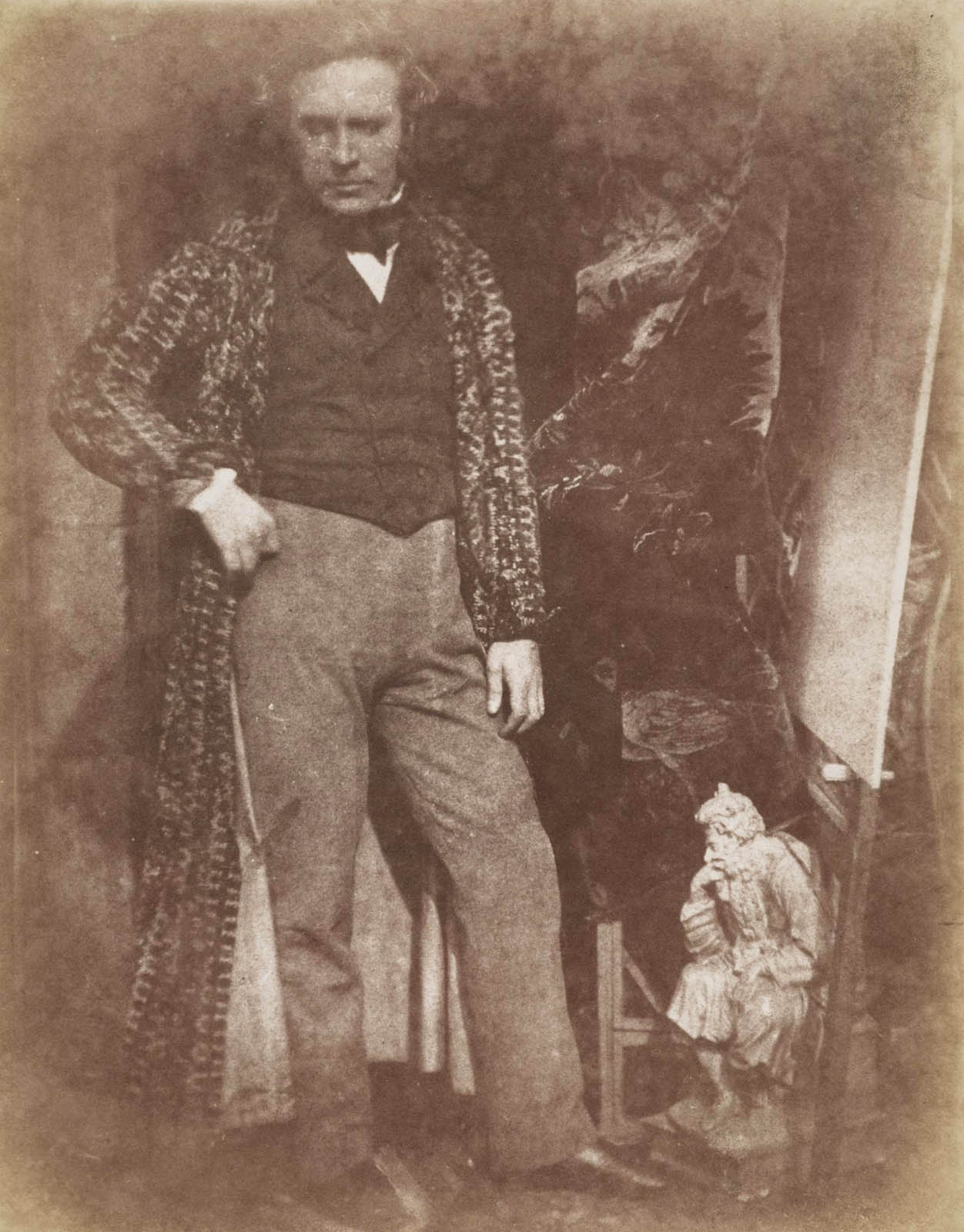
![David Octavius Hill & Robert Adamson. 'Lady Mary Hamilton (Campbell) Ruthven, 1789 - 1885. Wife of James, Lord Ruthven [a]' 1843-1847](https://artblart.com/wp-content/uploads/2025/04/hill-and-adamson-lady-mary-hamilton-campbell-ruthven-1789-1885.-wife-of-james-lord-ruthven-a.jpg "David Octavius Hill & Robert Adamson. 'Lady Mary Hamilton (Campbell) Ruthven, 1789 - 1885. Wife of James, Lord Ruthven [a]' 1843-1847")
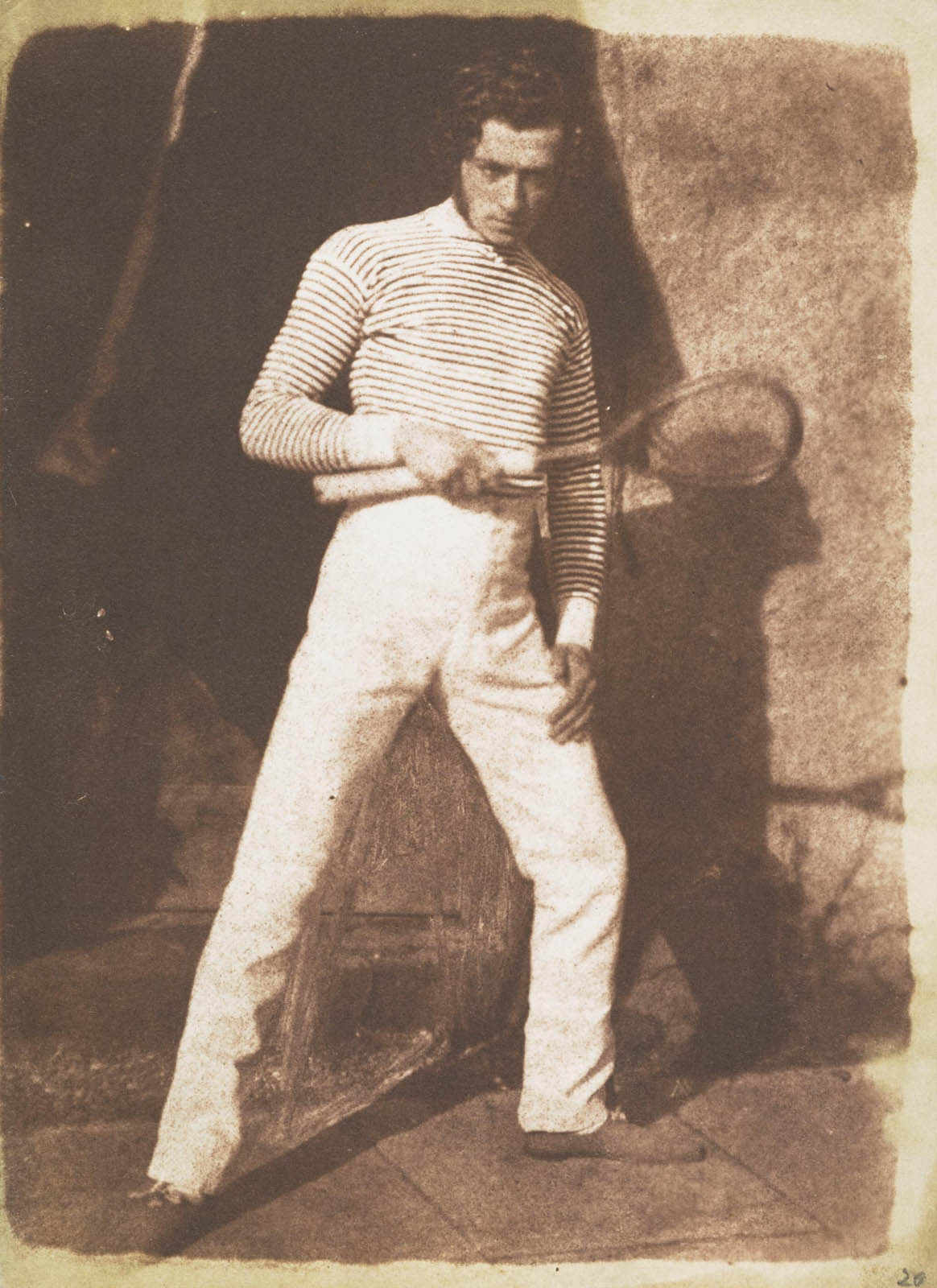

![David Octavius Hill & Robert Adamson. 'Jimmy Miller. Son of Professor James Miller [c]' 1843-1847](https://artblart.com/wp-content/uploads/2025/04/hill-and-adamson-jimmy-miller.-son-of-professor-james-miller-c.jpg "David Octavius Hill & Robert Adamson. 'Jimmy Miller. Son of Professor James Miller [c]' 1843-1847")
![David Octavius Hill & Robert Adamson. 'Mr Lane [called John Lane, Dr Lane and Edward William Lane] [a]' 1843-1847](https://artblart.com/wp-content/uploads/2025/04/hill-and-adamson-mr-lane-called-john-lane-dr-lane-and-edward-william-lane-a.jpg "David Octavius Hill & Robert Adamson. 'Mr Lane [called John Lane, Dr Lane and Edward William Lane] [a]' 1843-1847")
![David Octavius Hill & Robert Adamson. 'Mrs Anne (Palgrave) Rigby 1777 - 1872 [f]' 1843-1847](https://artblart.com/wp-content/uploads/2025/04/hill-and-adamson-mrs-anne-palgrave-rigby-1777-872.jpg "David Octavius Hill & Robert Adamson. 'Mrs Anne (Palgrave) Rigby 1777 - 1872 [f]' 1843-1847")
![David Octavius Hill & Robert Adamson. 'Mrs Kinloch. Of Park; nee Napier [b]' 1843-1846](https://artblart.com/wp-content/uploads/2025/04/hill-and-adamson-mrs-kinloch.-of-park-nee-napier-b.jpg "David Octavius Hill & Robert Adamson. 'Mrs Kinloch. Of Park; nee Napier [b]' 1843-1846")
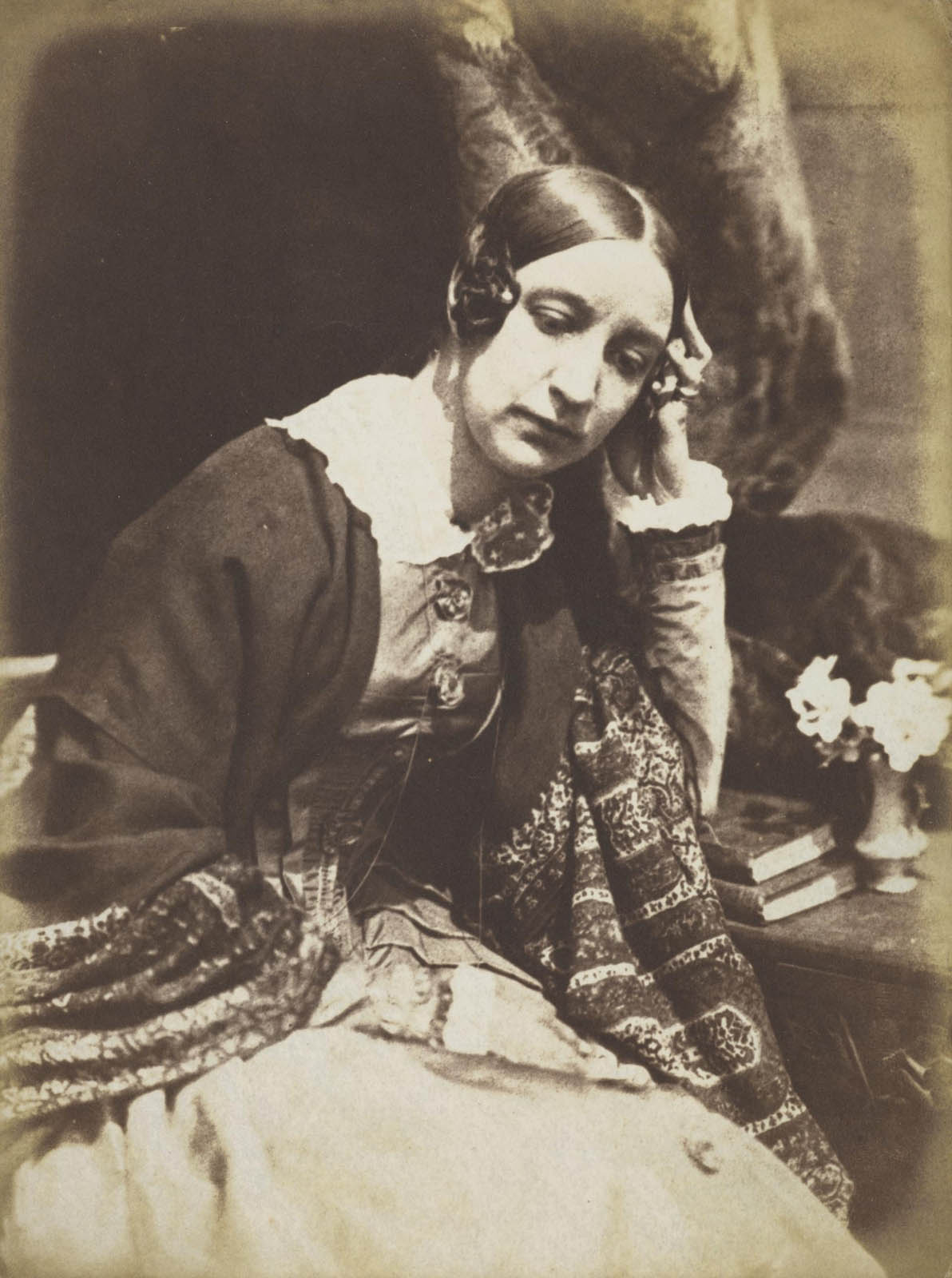
![David Octavius Hill & Robert Adamson. 'Mrs Elizabeth (Johnstone) Hall [Newhaven]' 1843-1847](https://artblart.com/wp-content/uploads/2025/04/hill-and-adamson-mrs-elizabeth-johnstone-hall-newhaven.jpg "David Octavius Hill & Robert Adamson. 'Mrs Elizabeth (Johnstone) Hall [Newhaven]' 1843-1847")
![David Octavius Hill & Robert Adamson. 'Miss Ellen and Miss Agnes Milne [Group 194]' 1843-1847](https://artblart.com/wp-content/uploads/2025/04/hill-and-adamson-miss-ellen-and-miss-agnes-milne-group-194.jpg "David Octavius Hill & Robert Adamson. 'Miss Ellen and Miss Agnes Milne [Group 194]' 1843-1847")
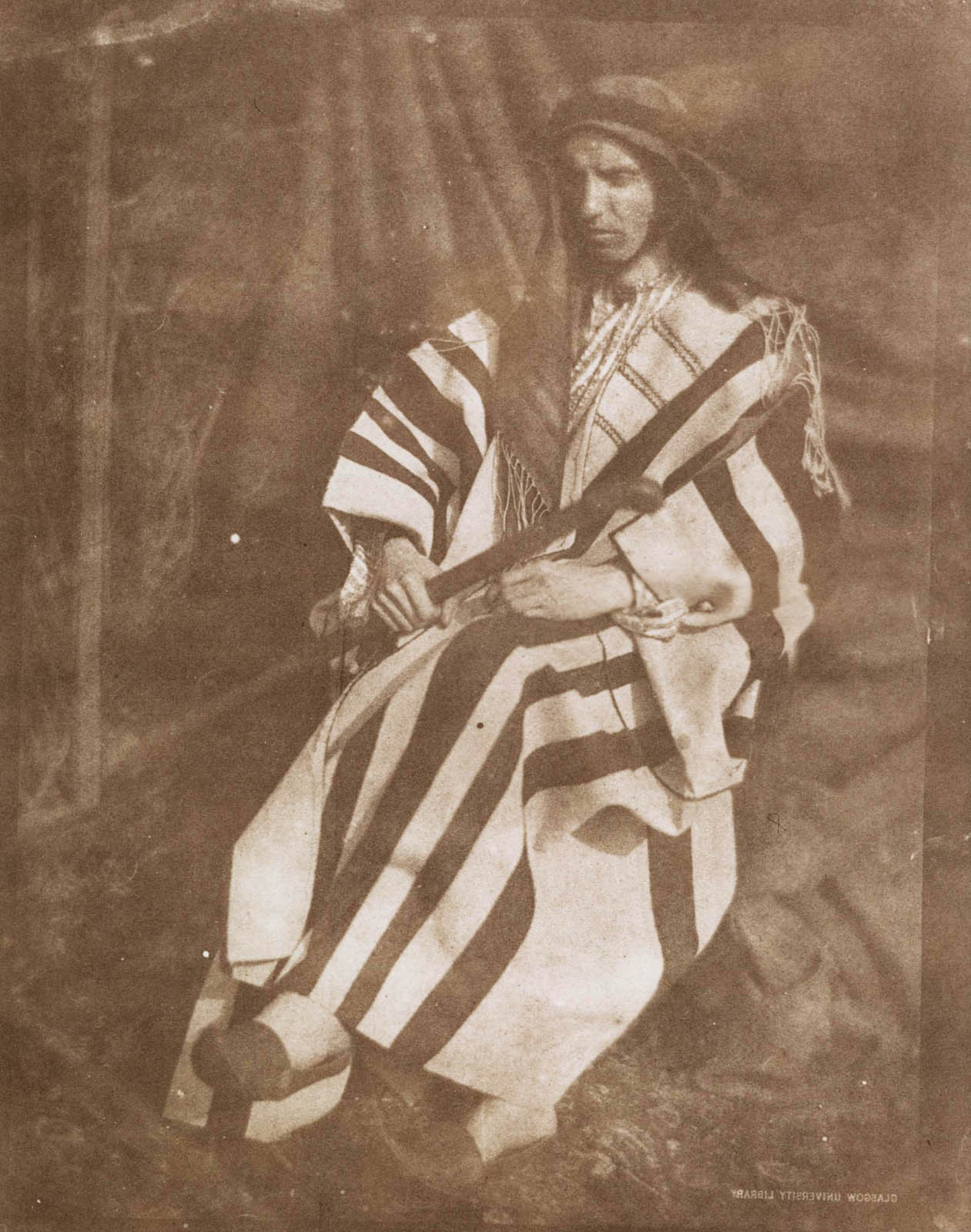
![David Octavius Hill & Robert Adamson. 'Willie Liston, 'Redding [cleaning or preparing] the line'; Newhaven fisherman [Newhaven 3]' 1843-1847](https://artblart.com/wp-content/uploads/2025/04/hill-and-adamson-willie-liston-redding-cleaning-or-preparing-the-line-newhaven-fisherman-newhaven-3.jpg "David Octavius Hill & Robert Adamson. 'Willie Liston, 'Redding [cleaning or preparing] the line'; Newhaven fisherman [Newhaven 3]' 1843-1847")
![David Octavius Hill & Robert Adamson. 'Dr George Bell. Founder of 'Ragged Schools' [c]' 1843-1847](https://artblart.com/wp-content/uploads/2025/04/hill-and-adamson-dr-george-bell.-founder-of-ragged-schools-c.jpg "v")
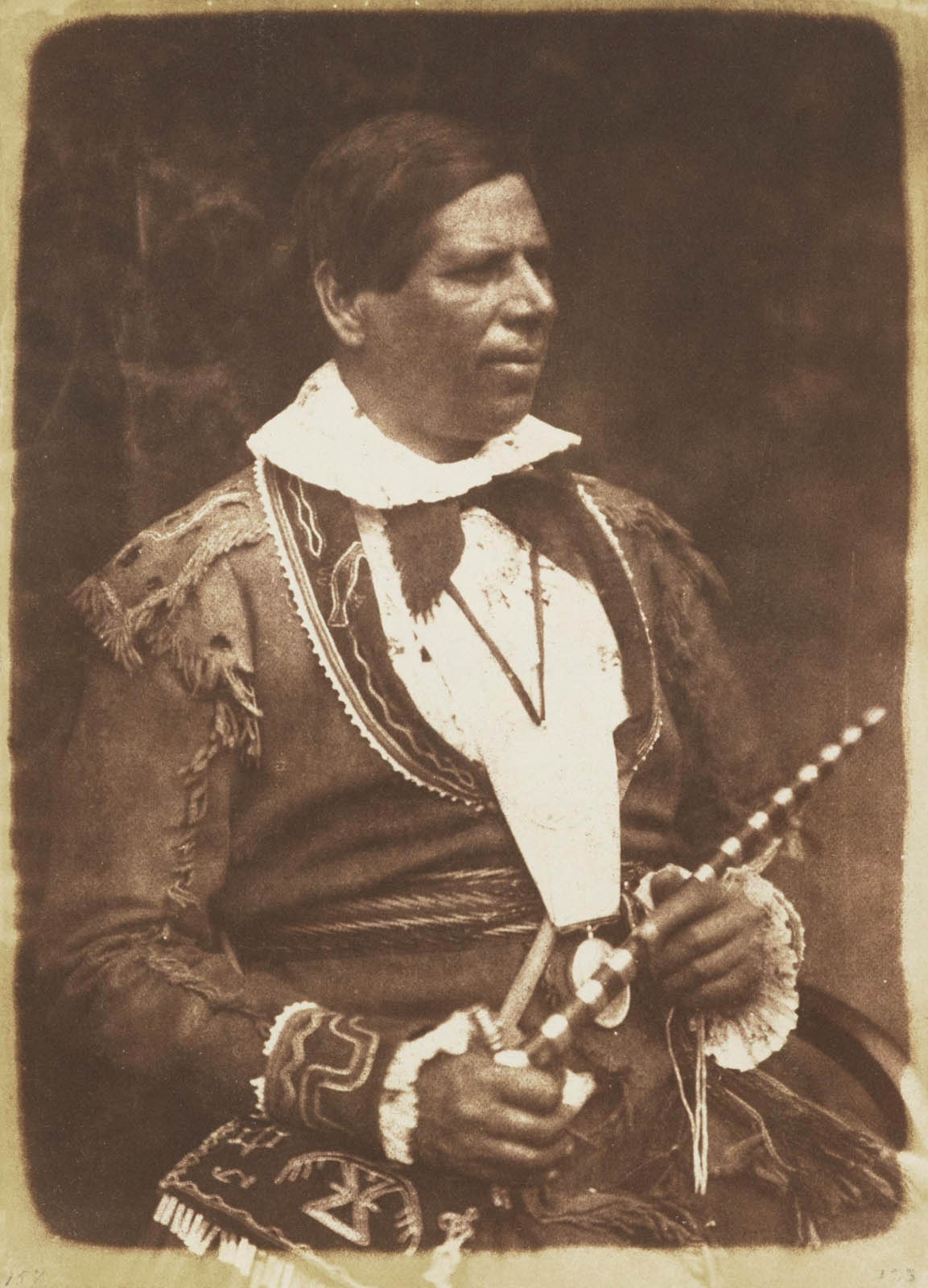
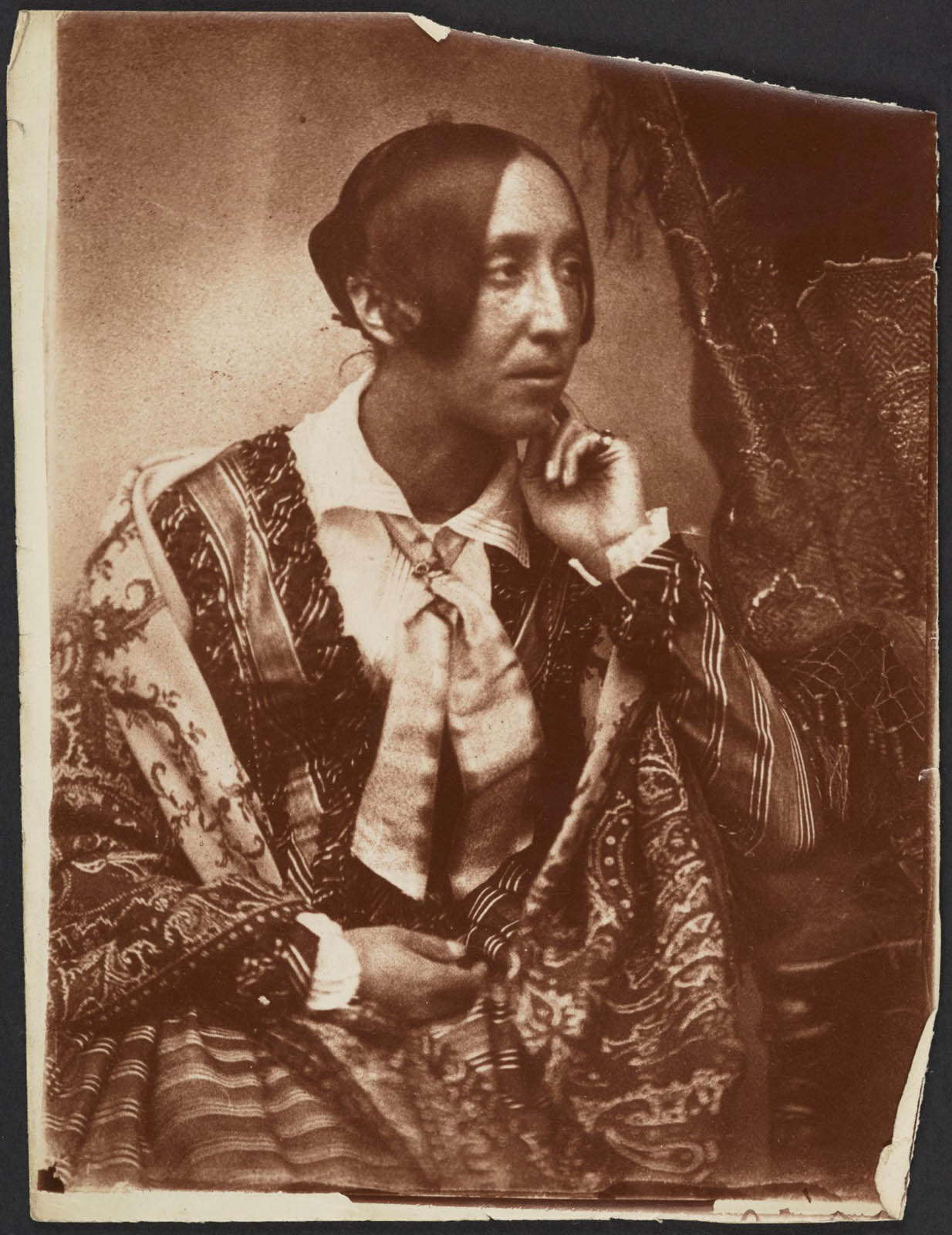
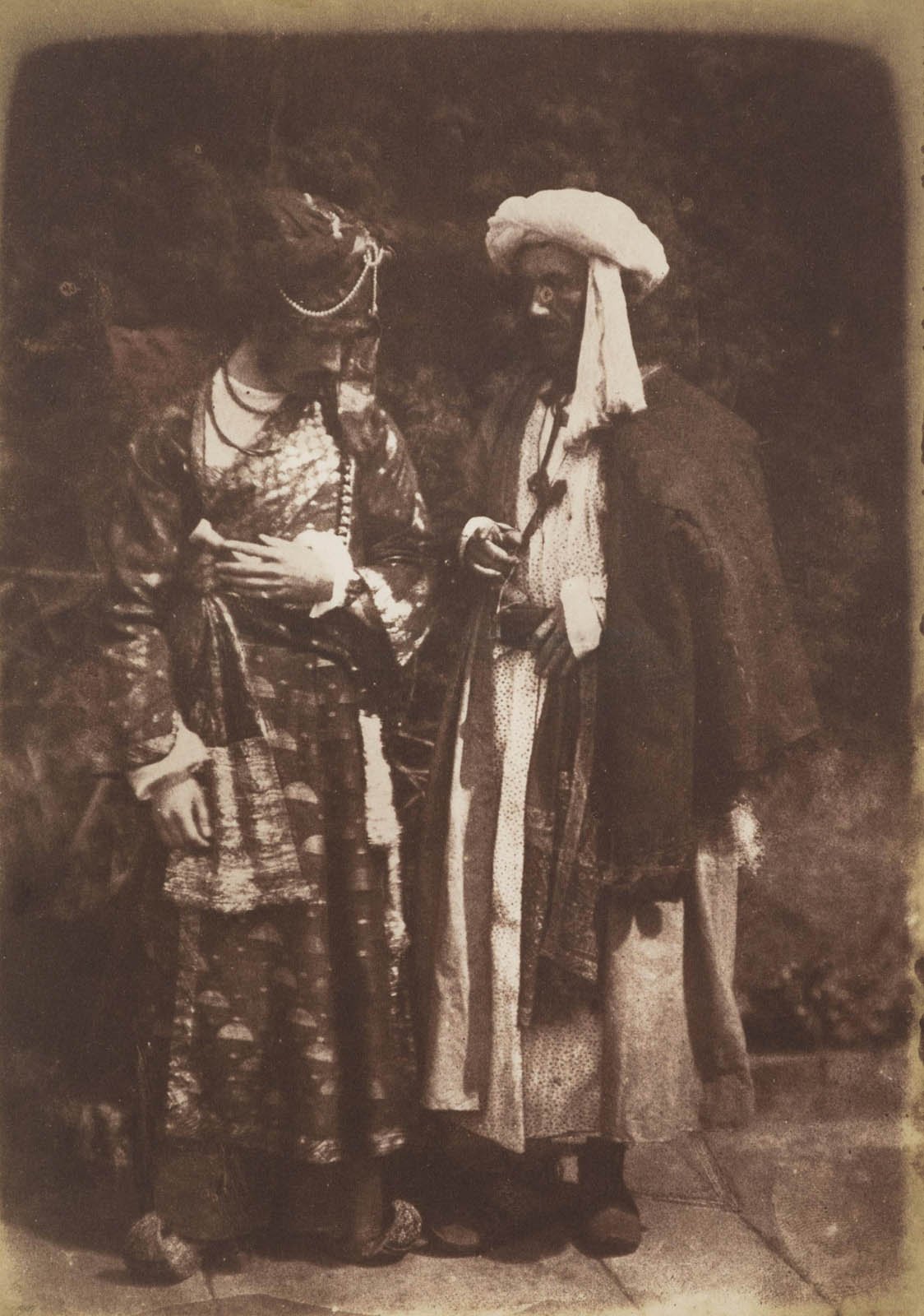
![David Octavius Hill & Robert Adamson. 'James Drummond, 1816 - 1877. History painter; curator of the National Gallery of Scotland [b]' 1843-1847](https://artblart.com/wp-content/uploads/2025/04/hill-and-adamson-james-drummond-1816-1877.-history-painter-curator-of-the-national-gallery-of-scotland-b.jpg "David Octavius Hill & Robert Adamson. 'James Drummond, 1816 - 1877. History painter; curator of the National Gallery of Scotland [b]' 1843-1847")
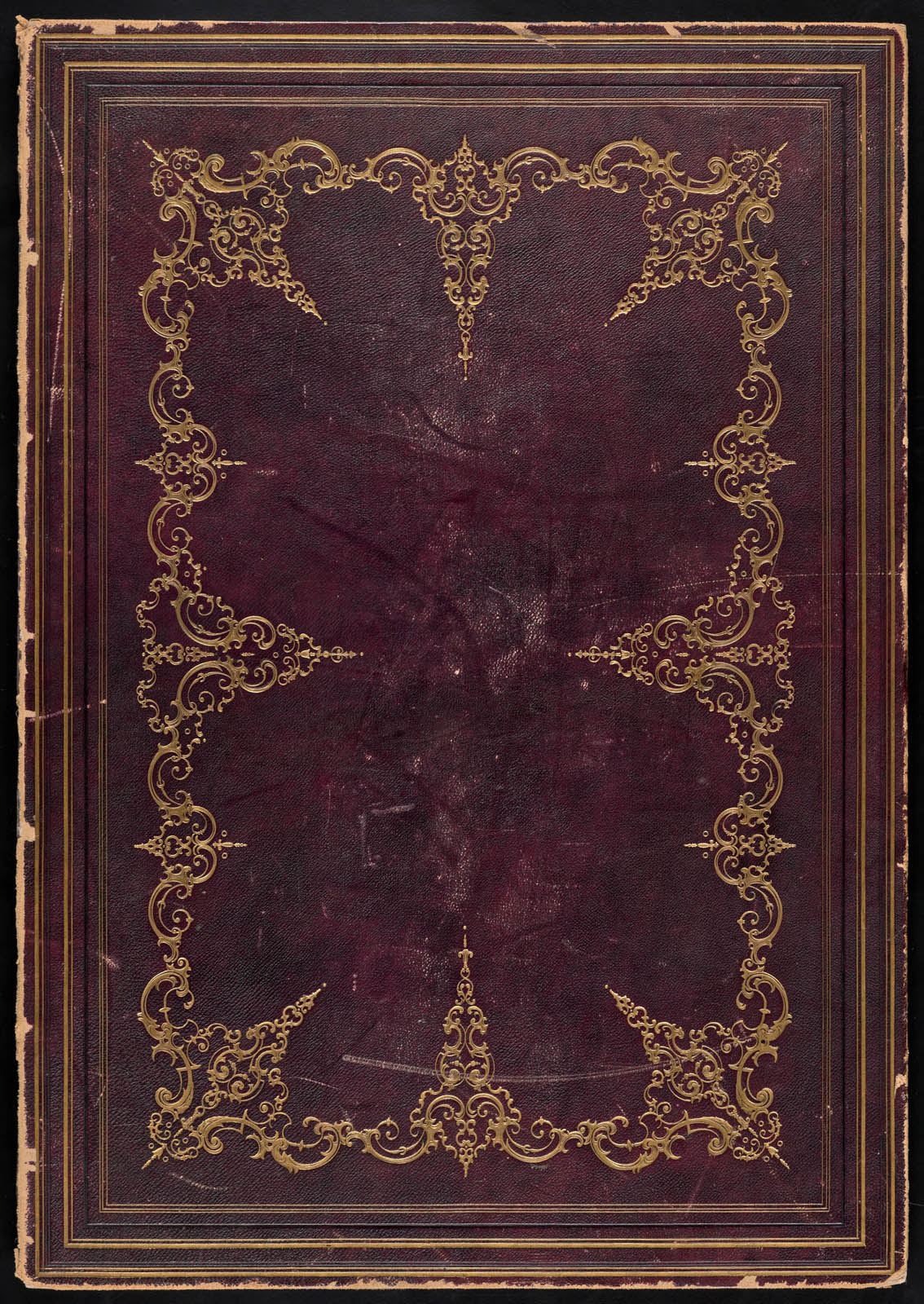
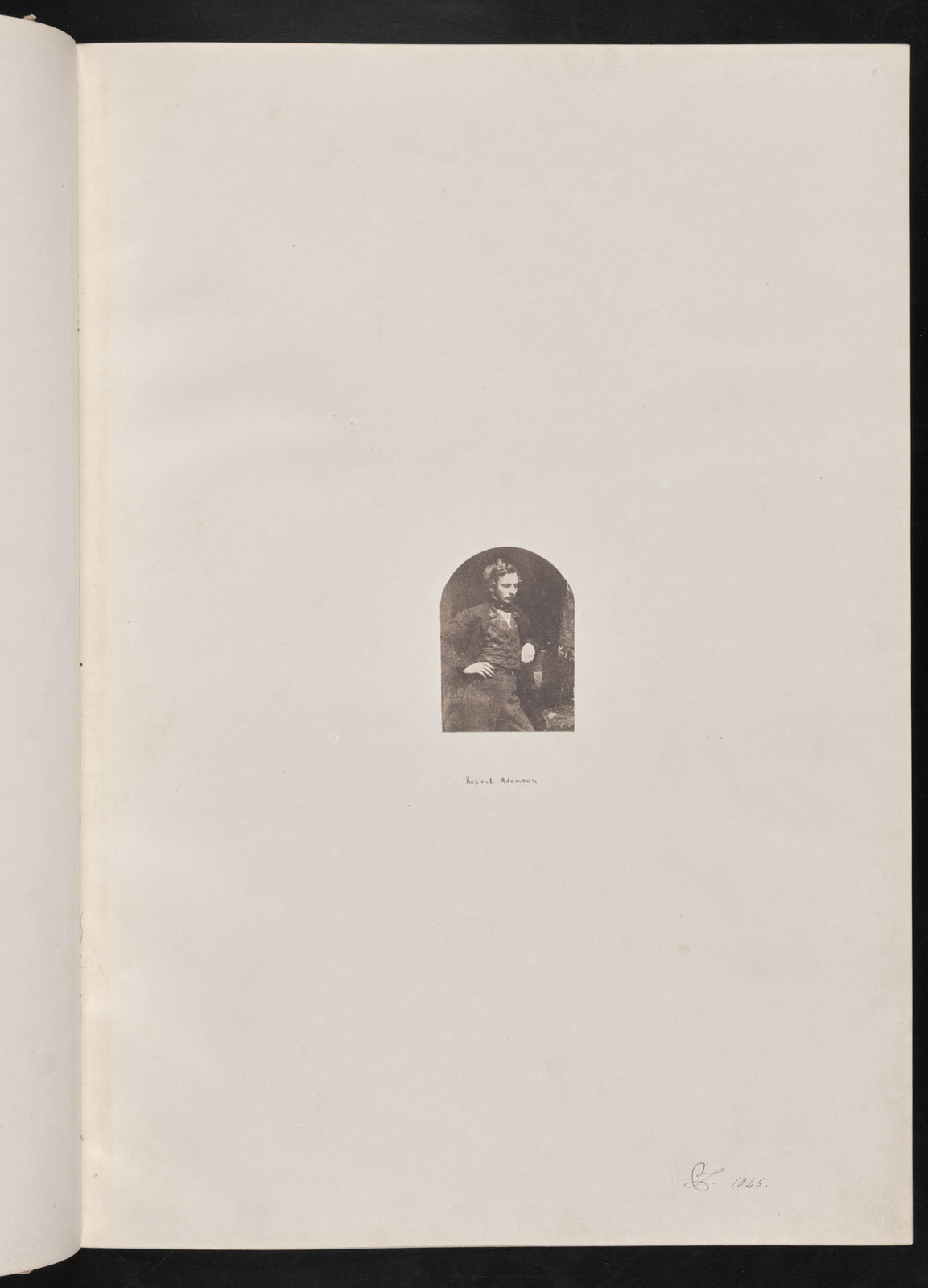
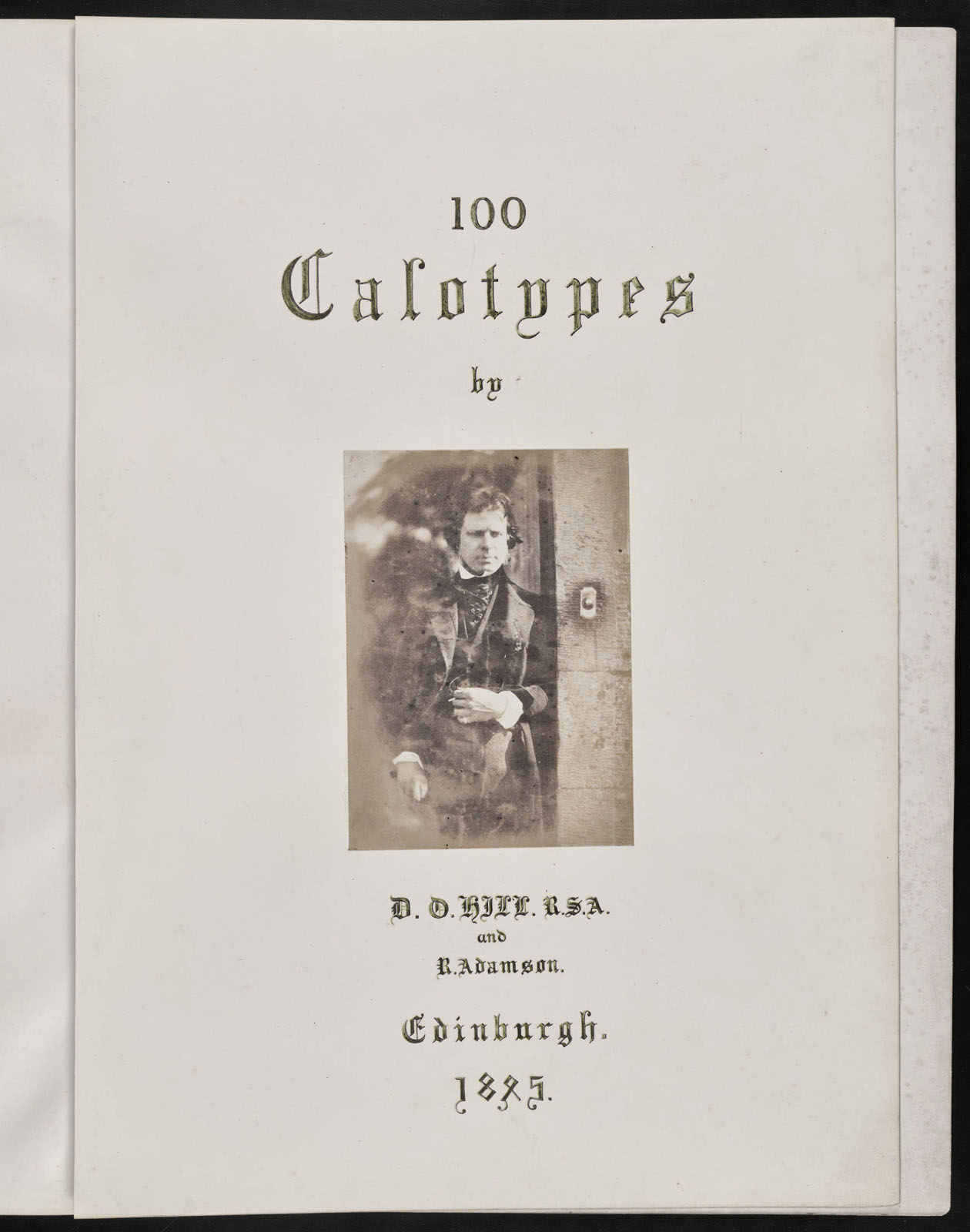
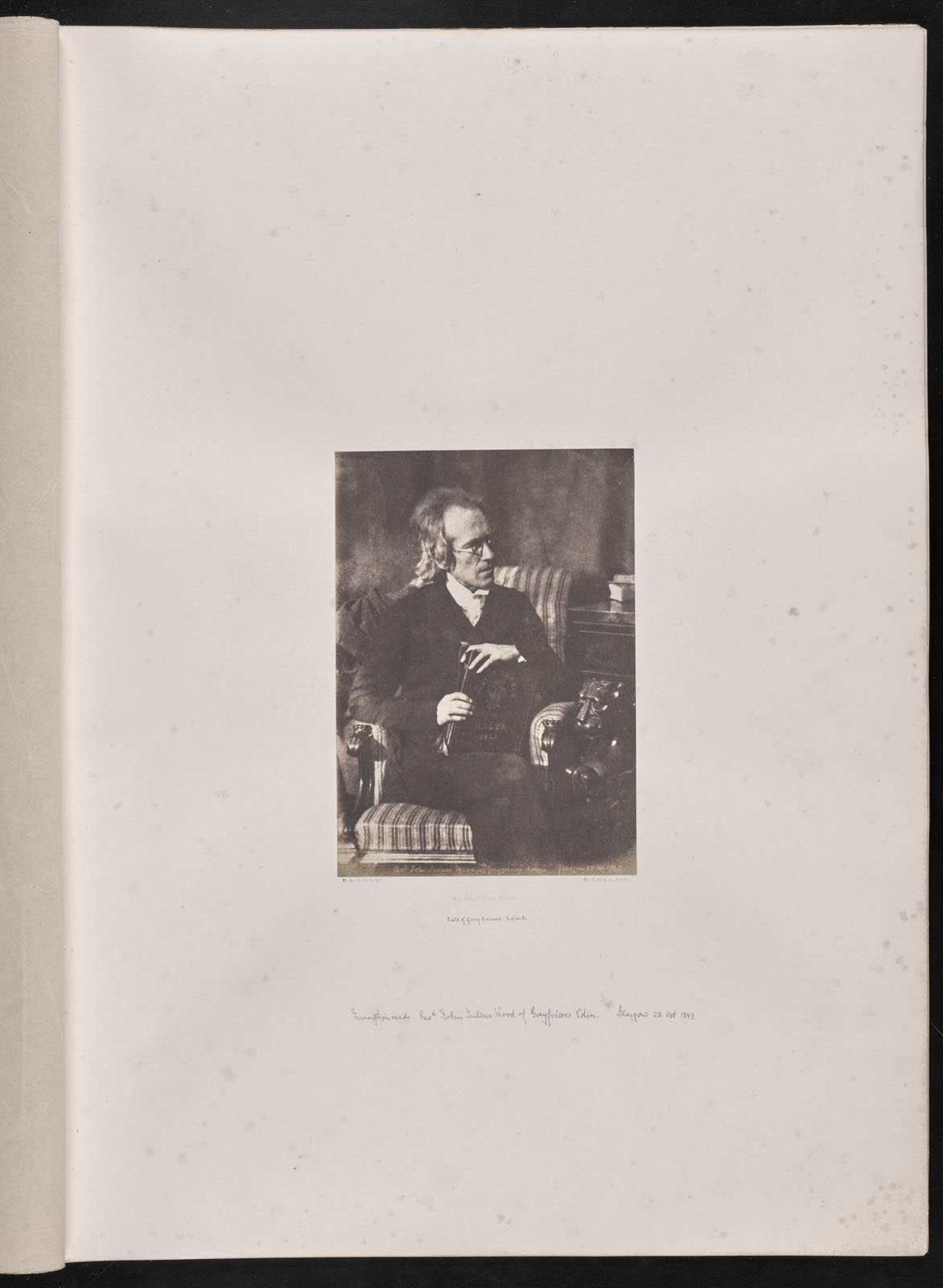
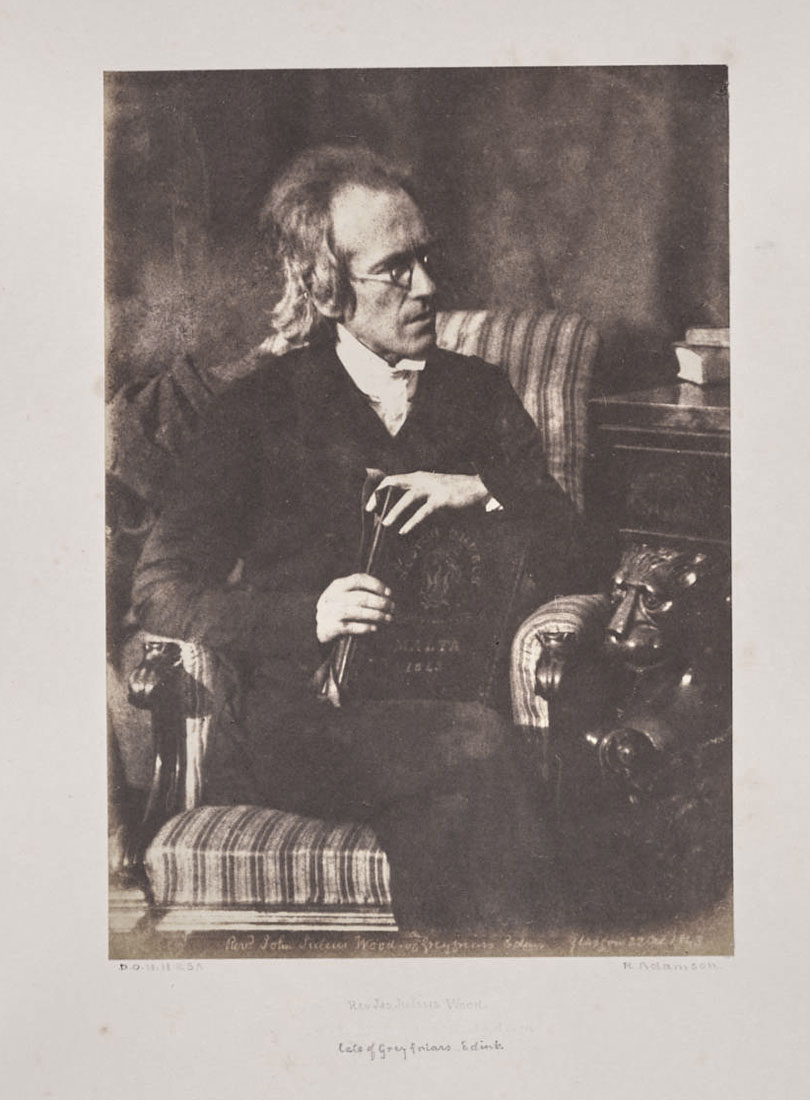
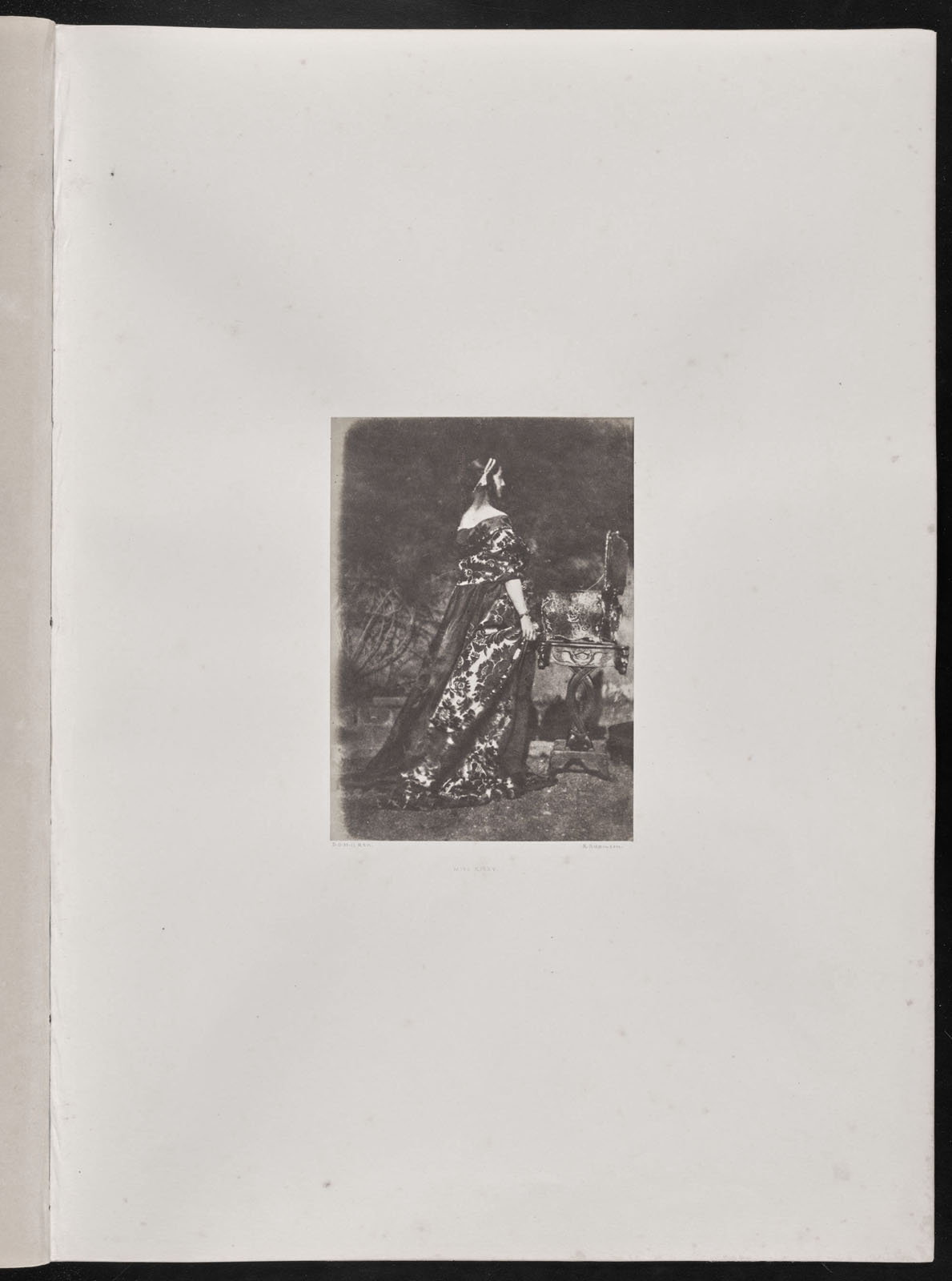
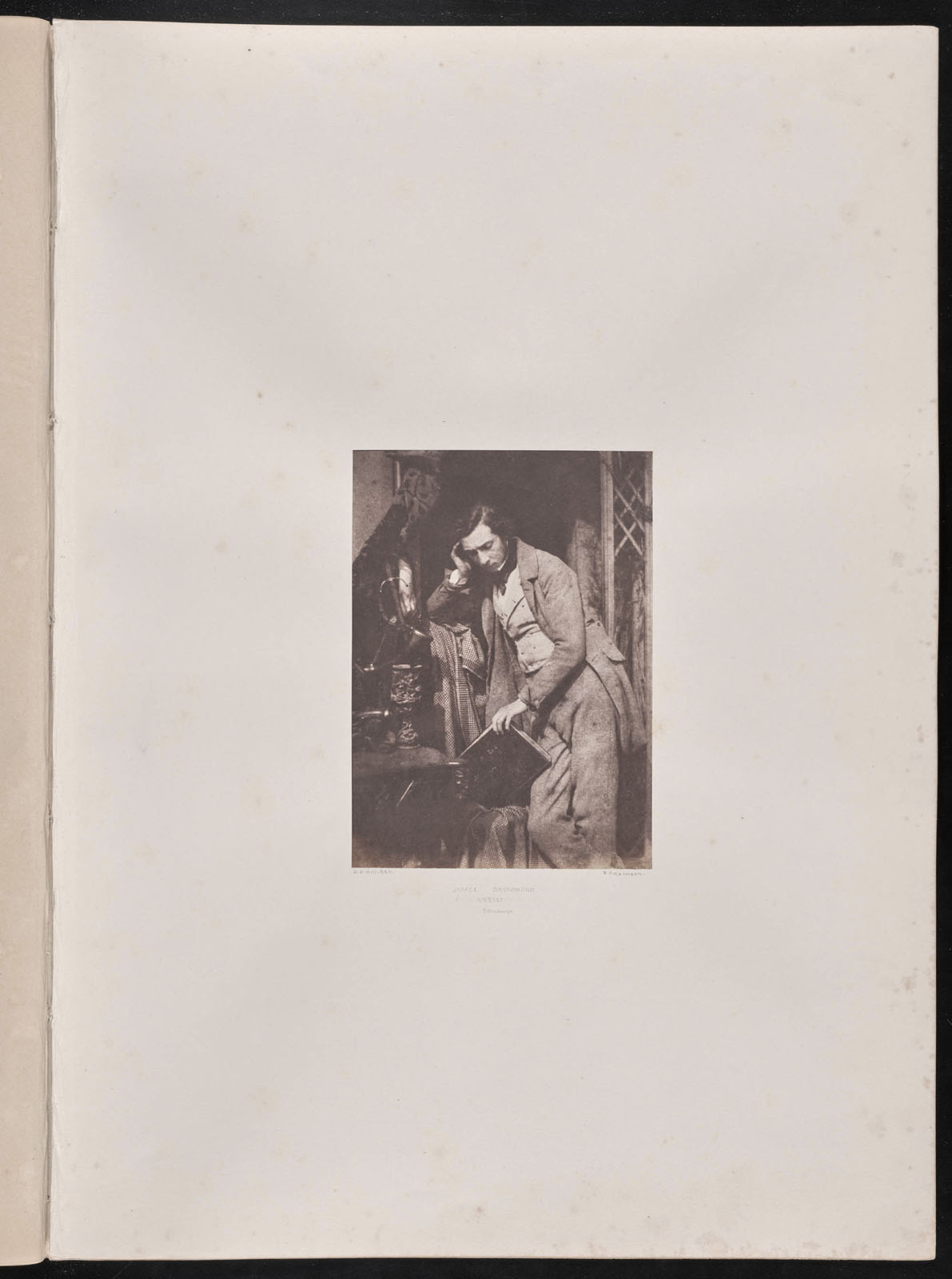
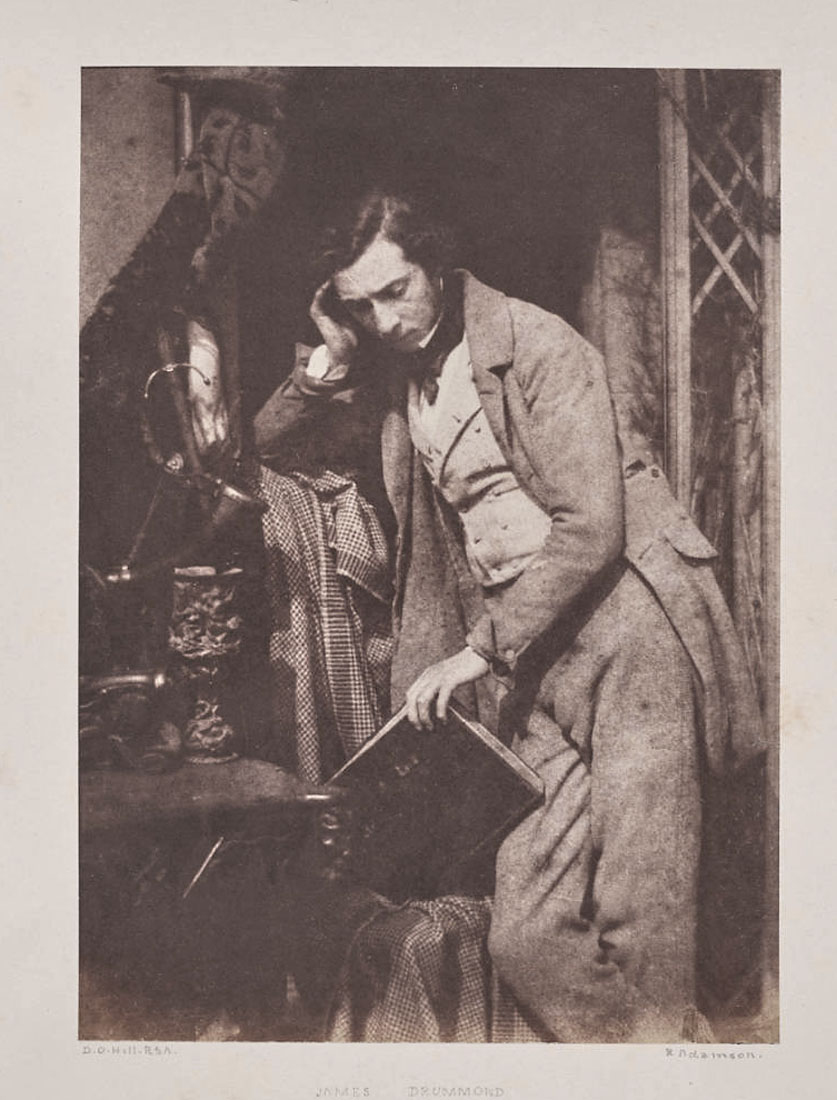
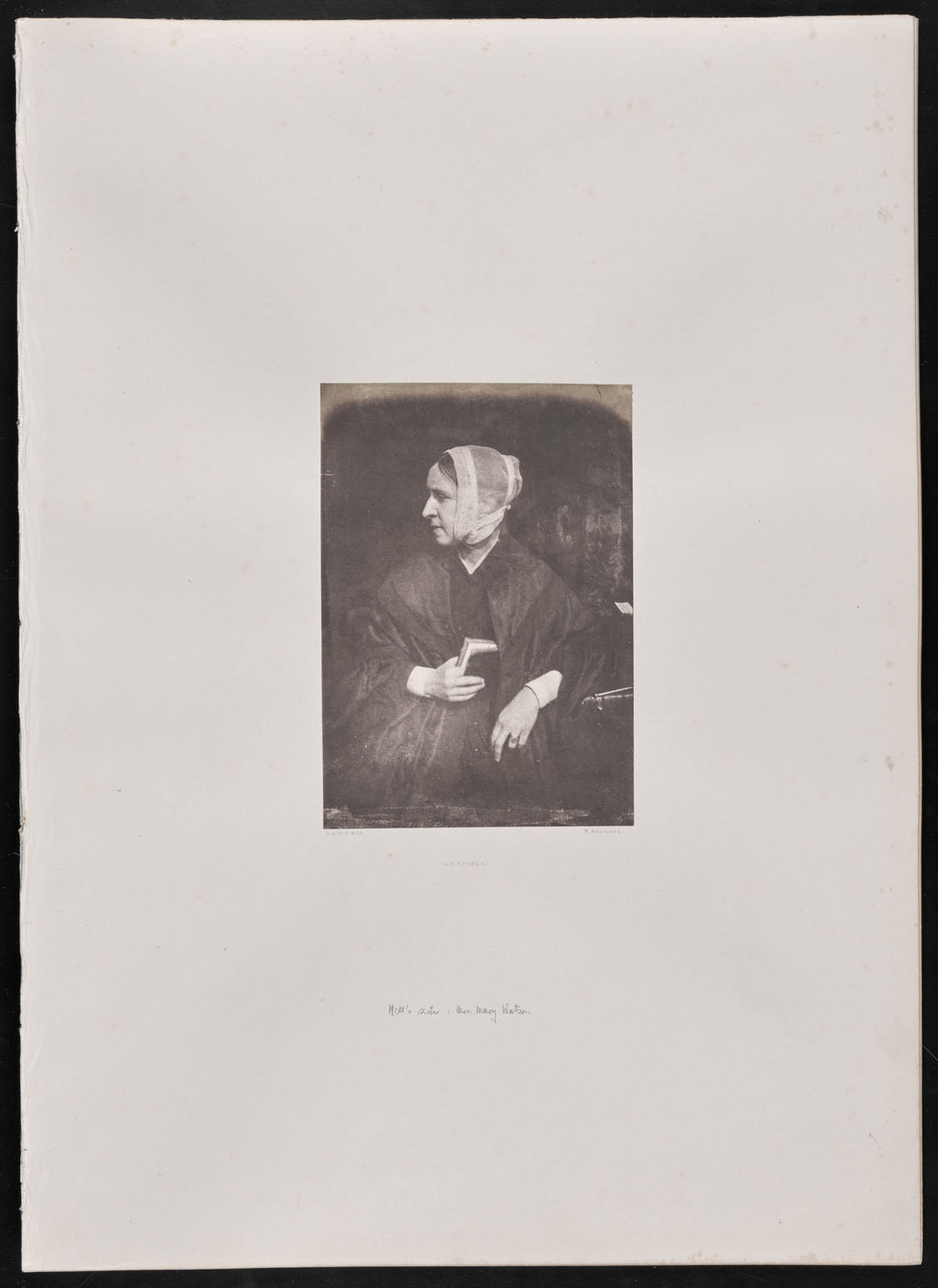

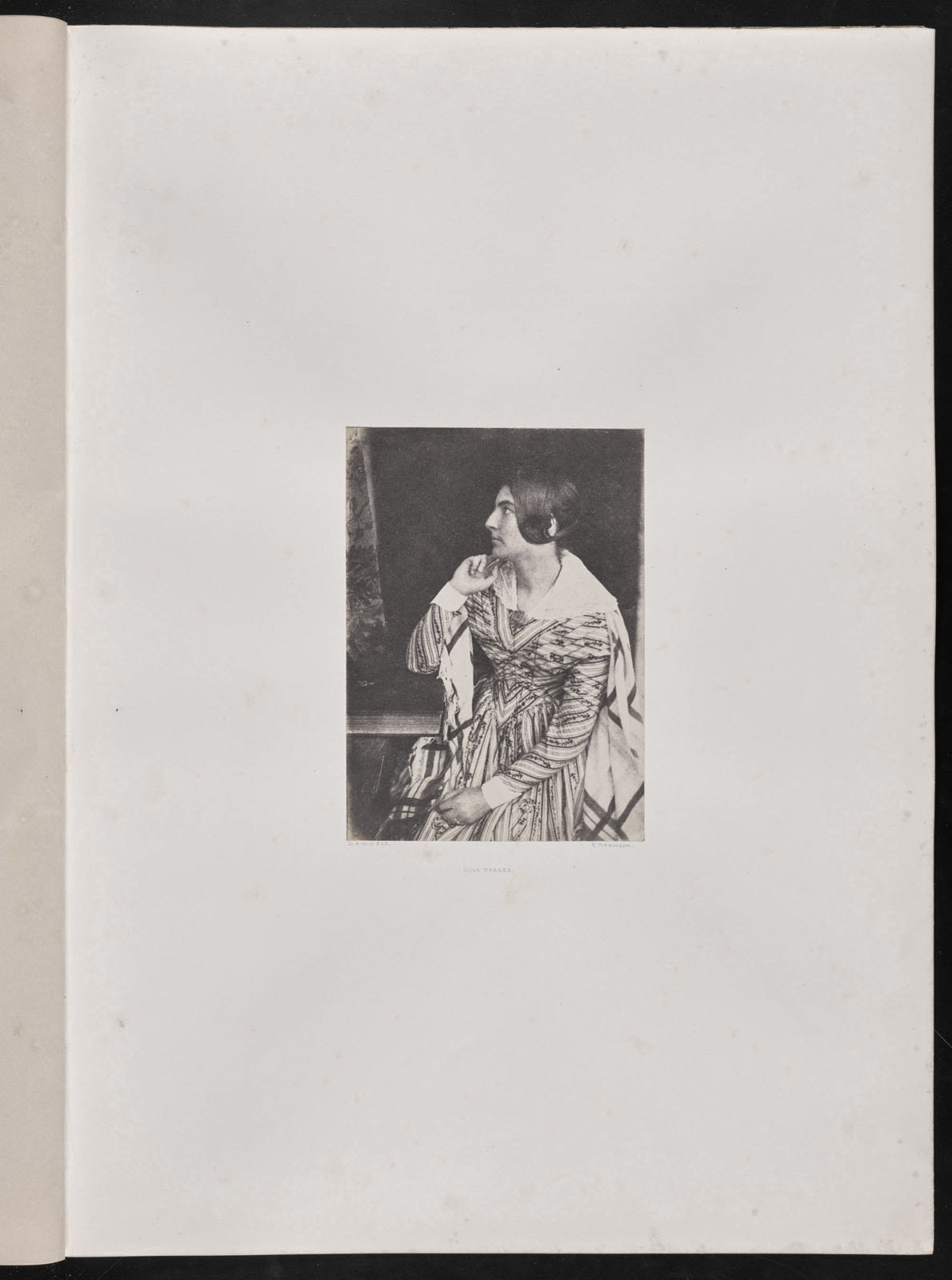
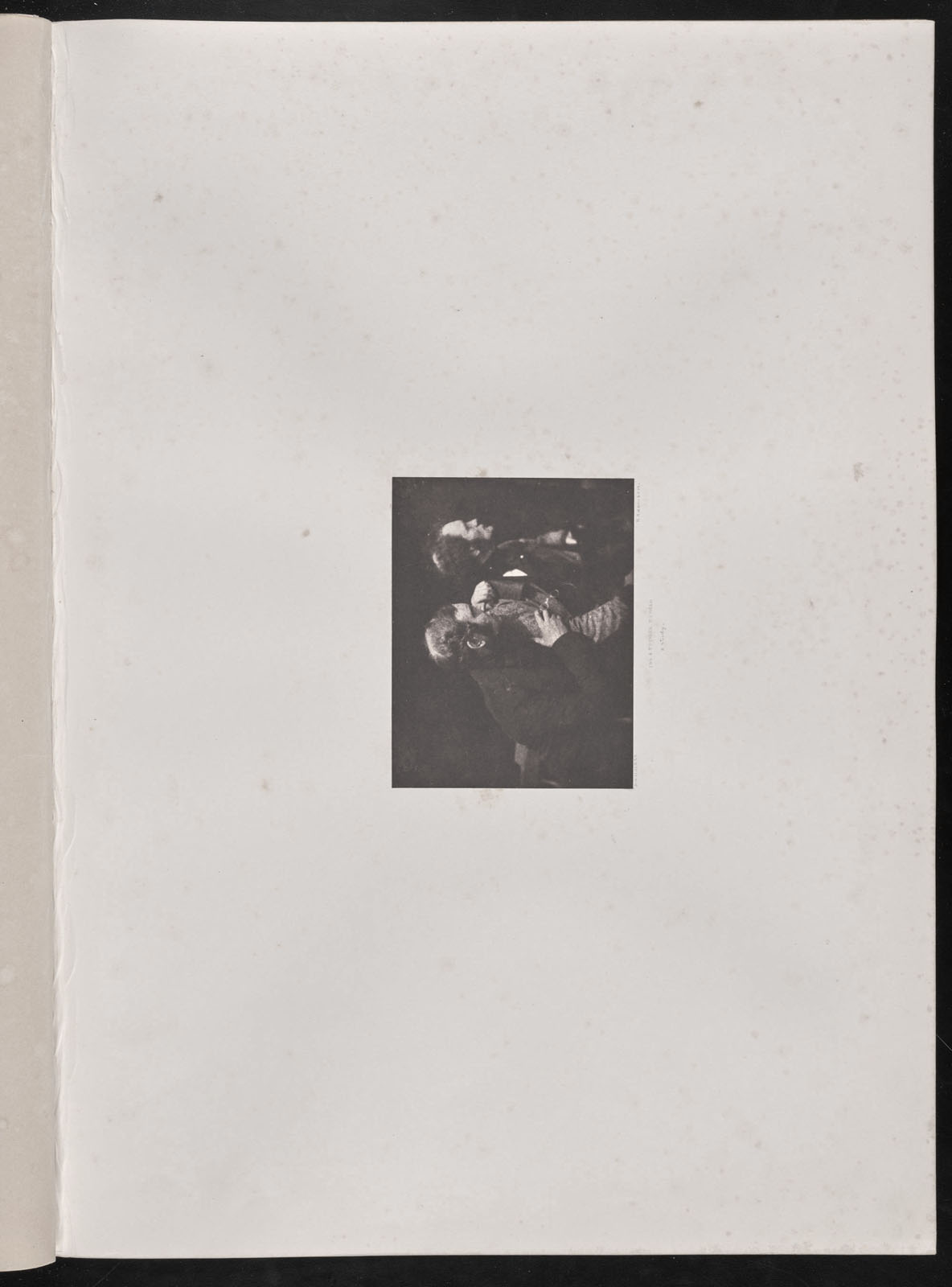

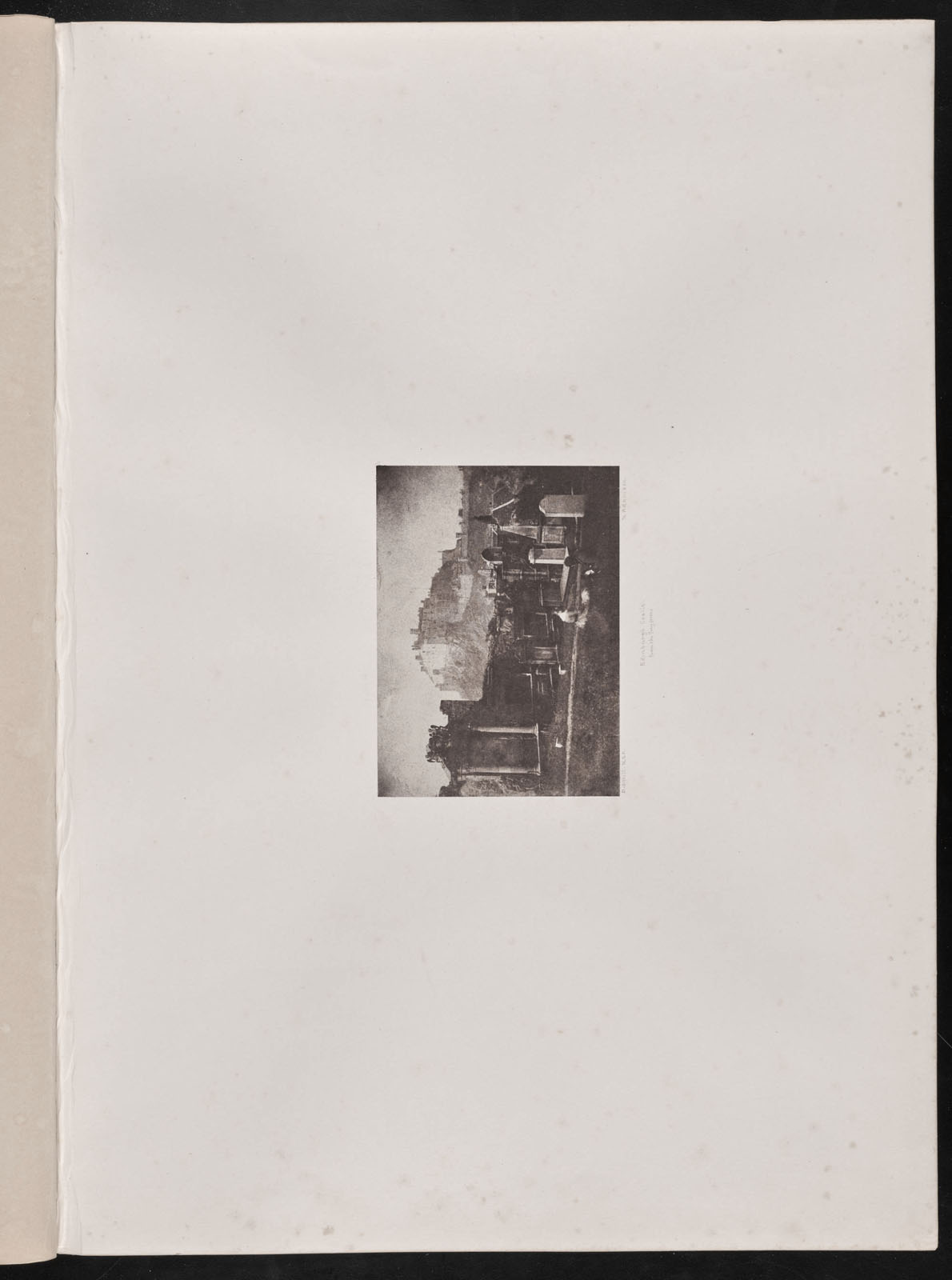
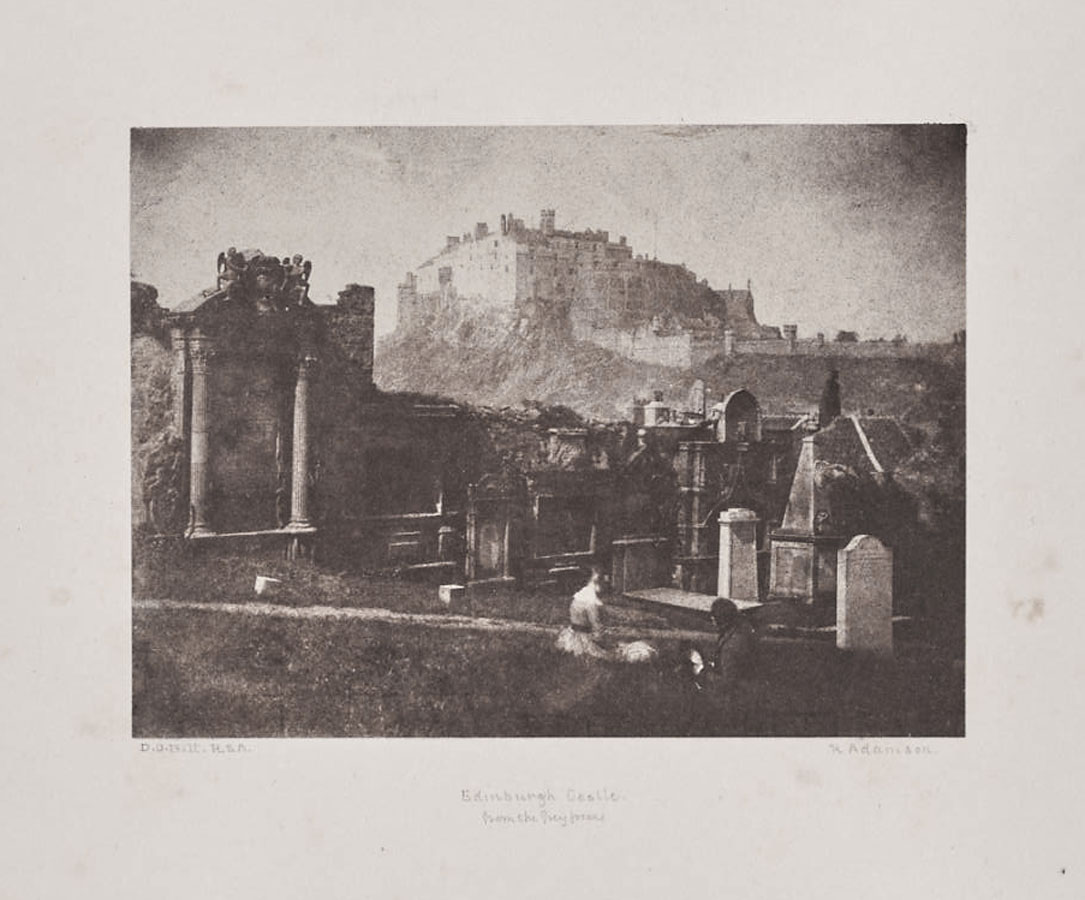

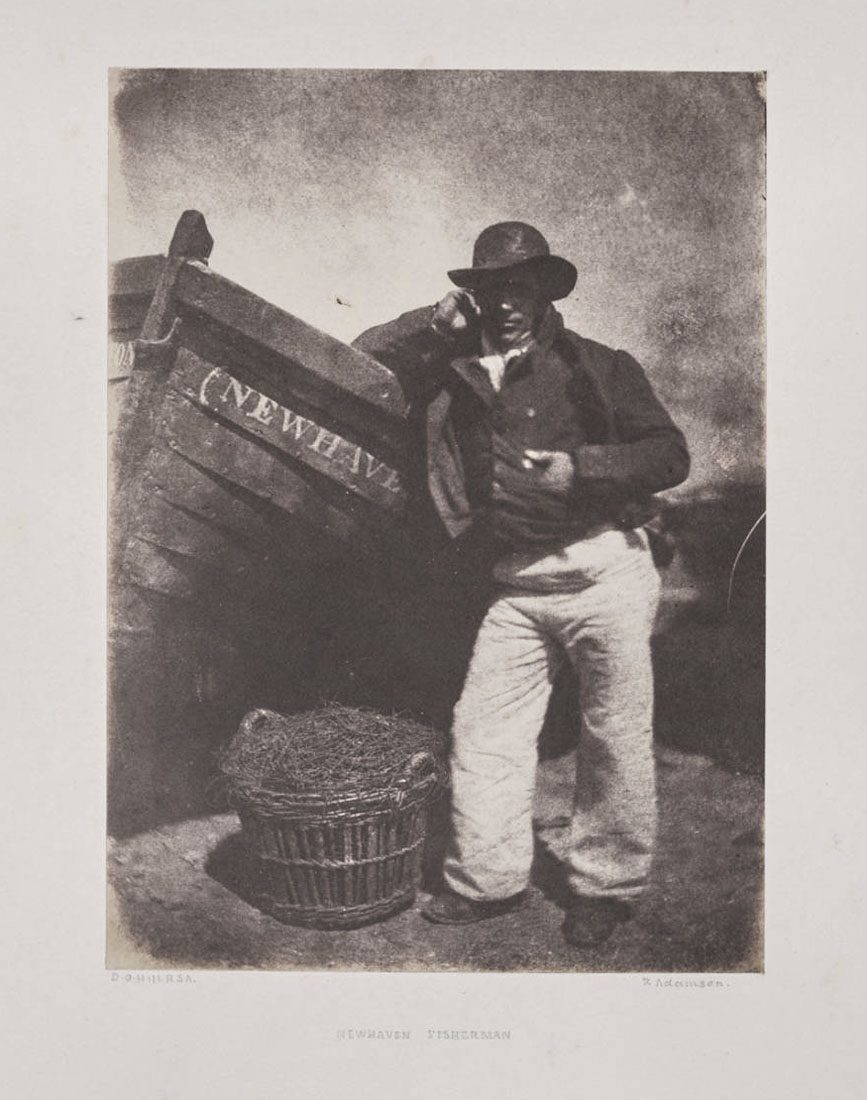


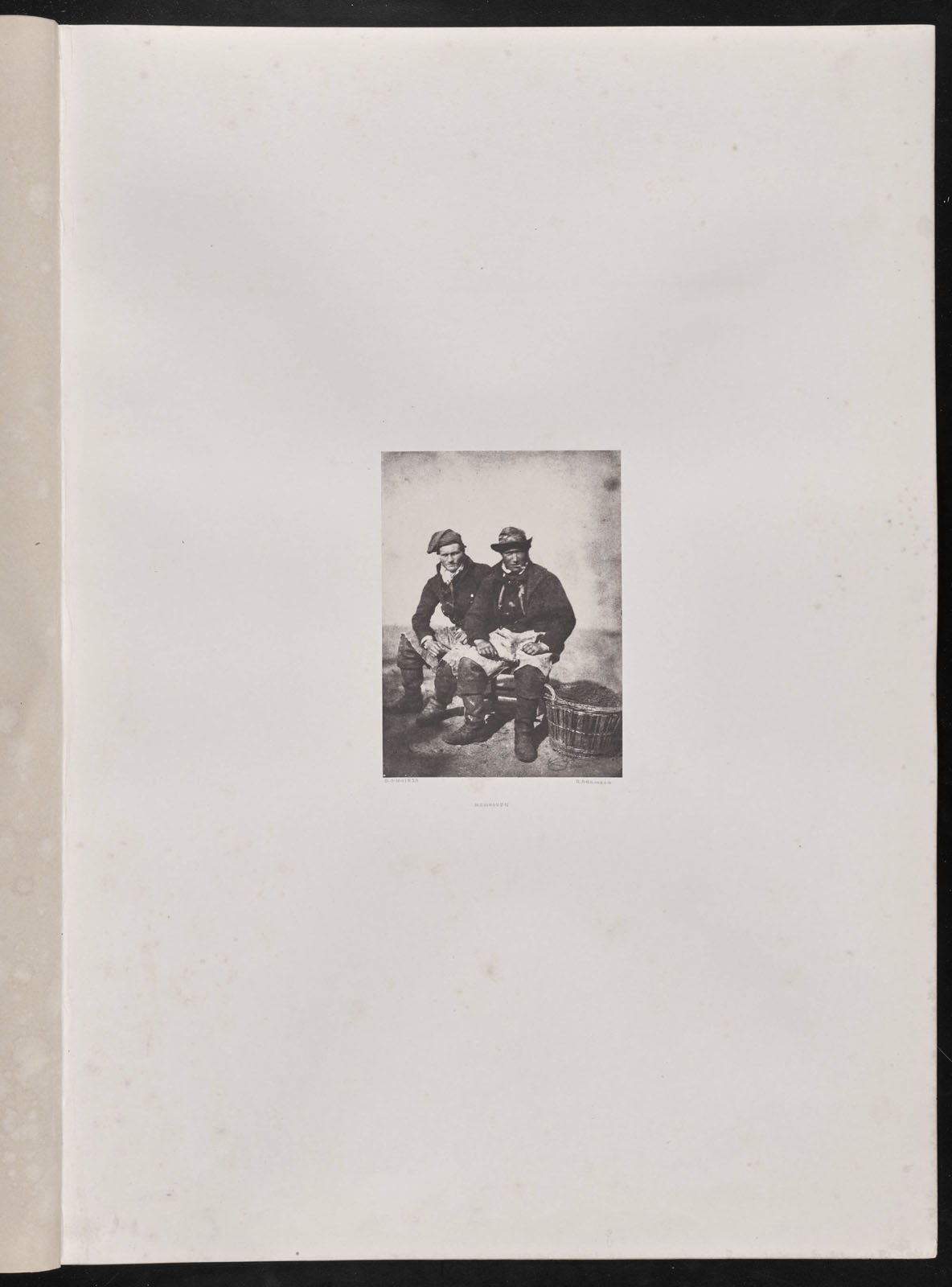

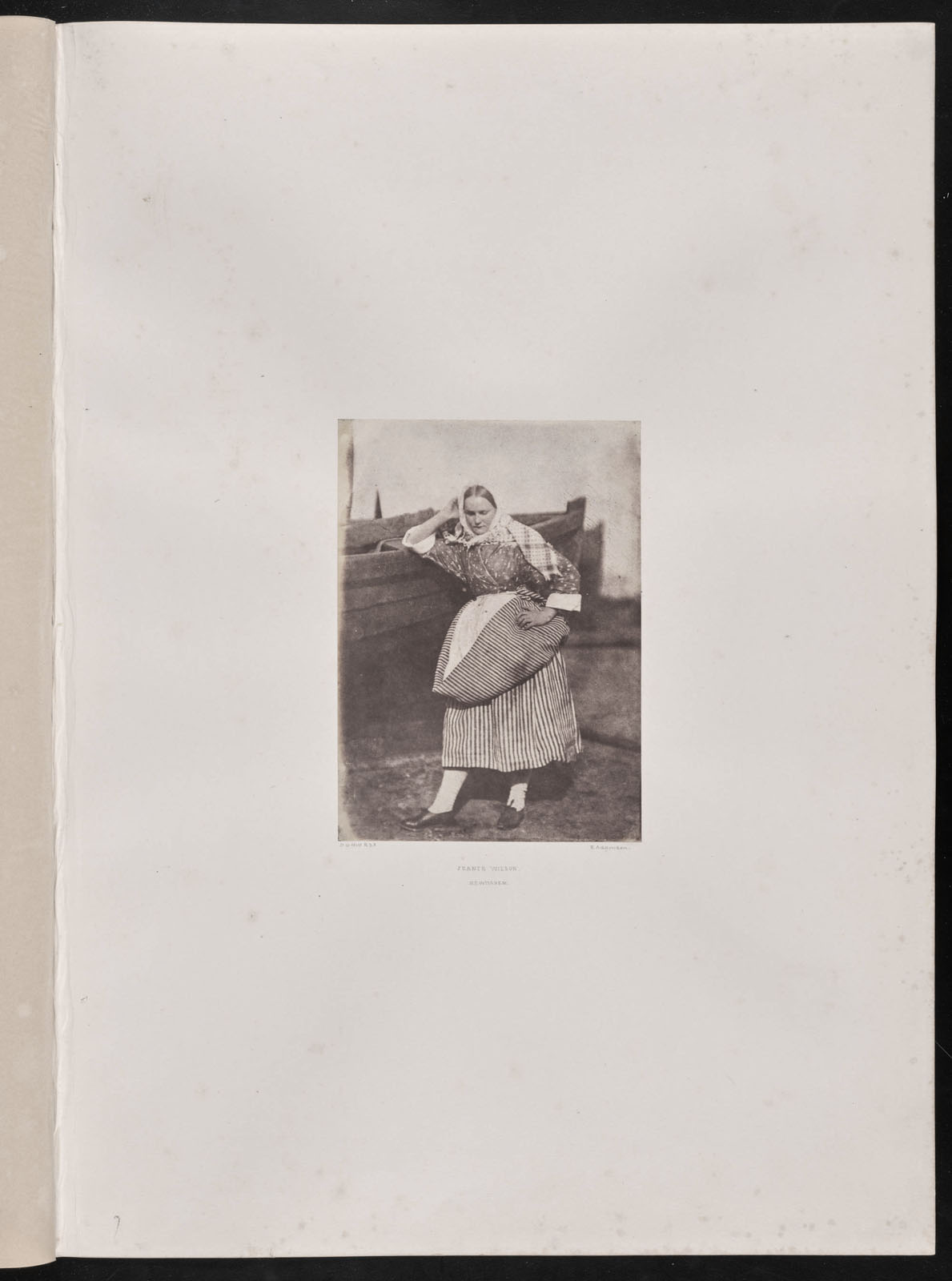

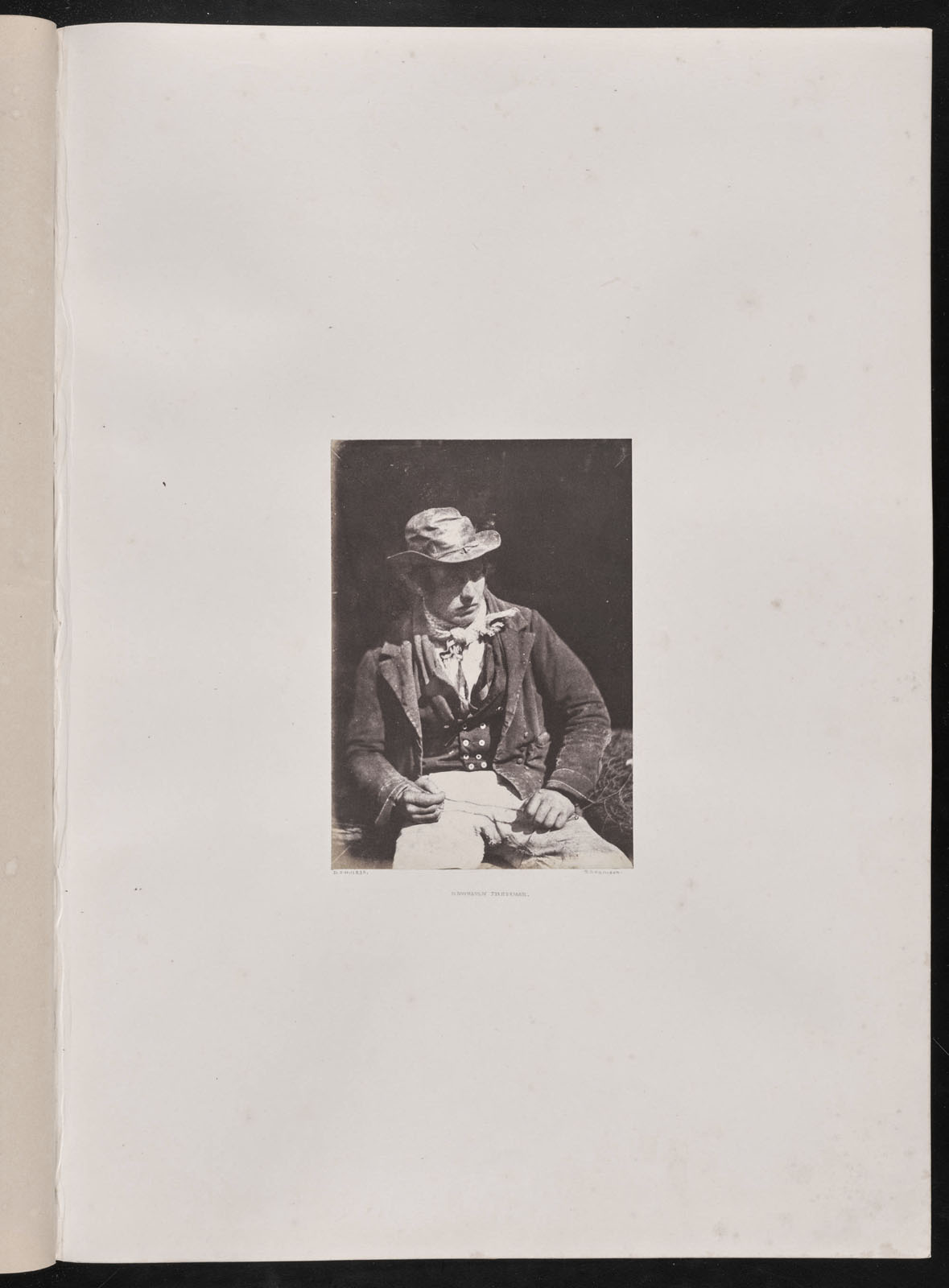
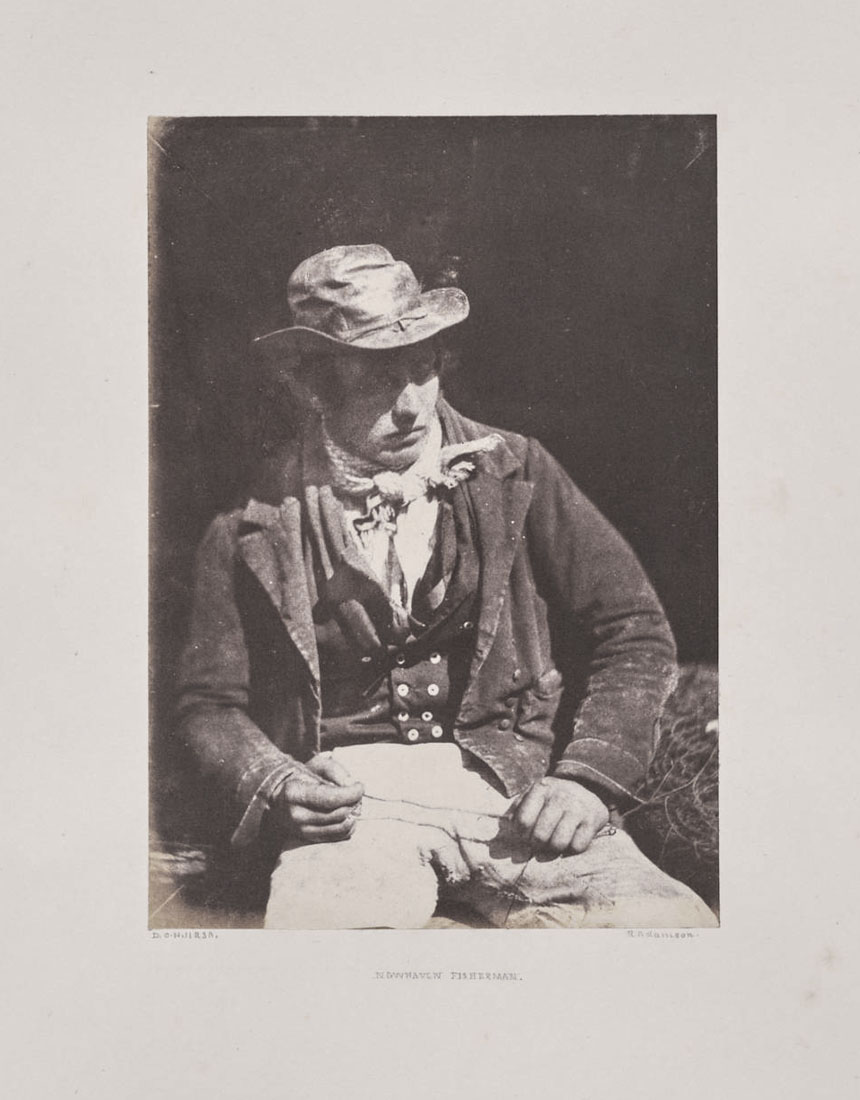
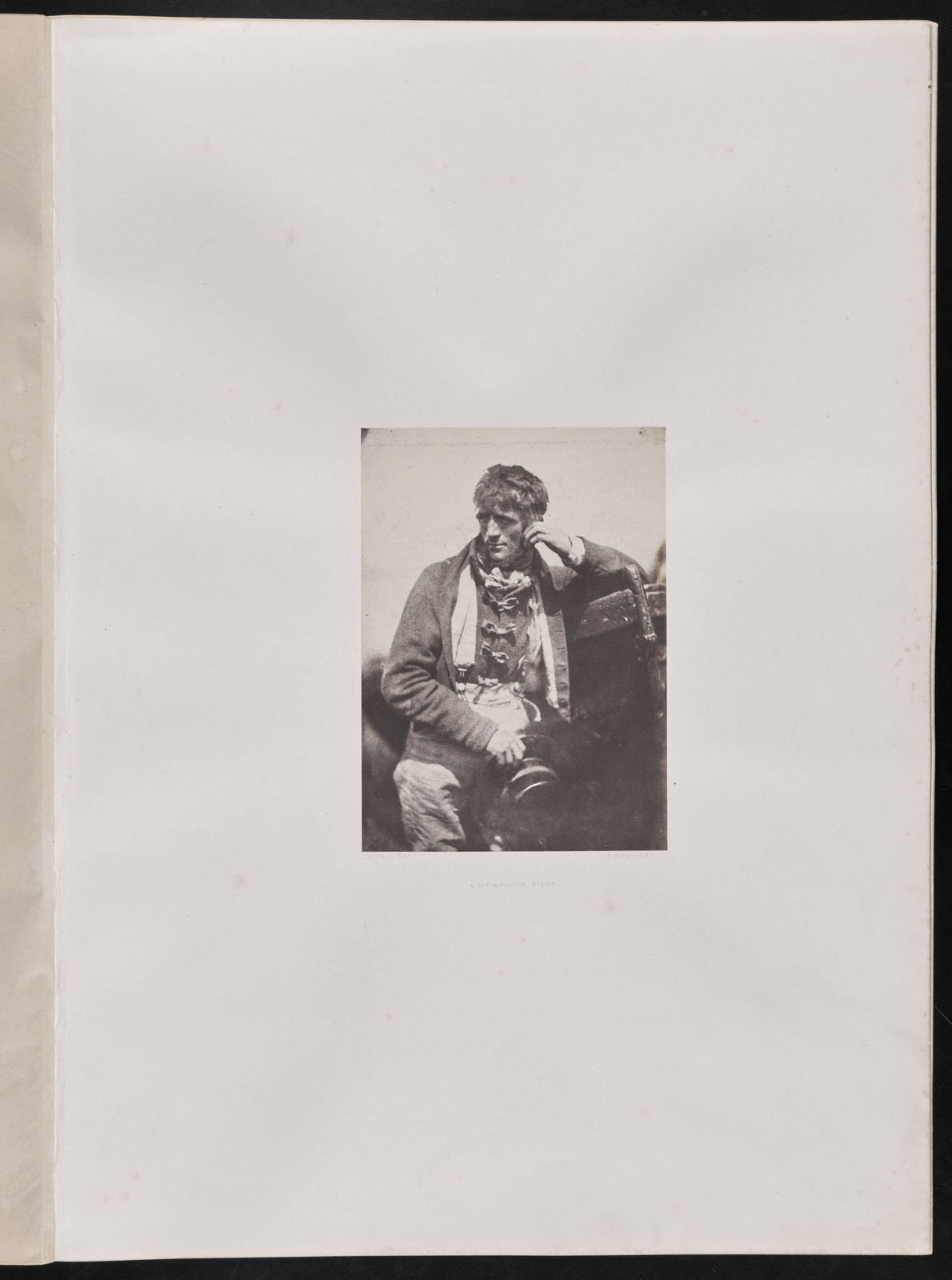
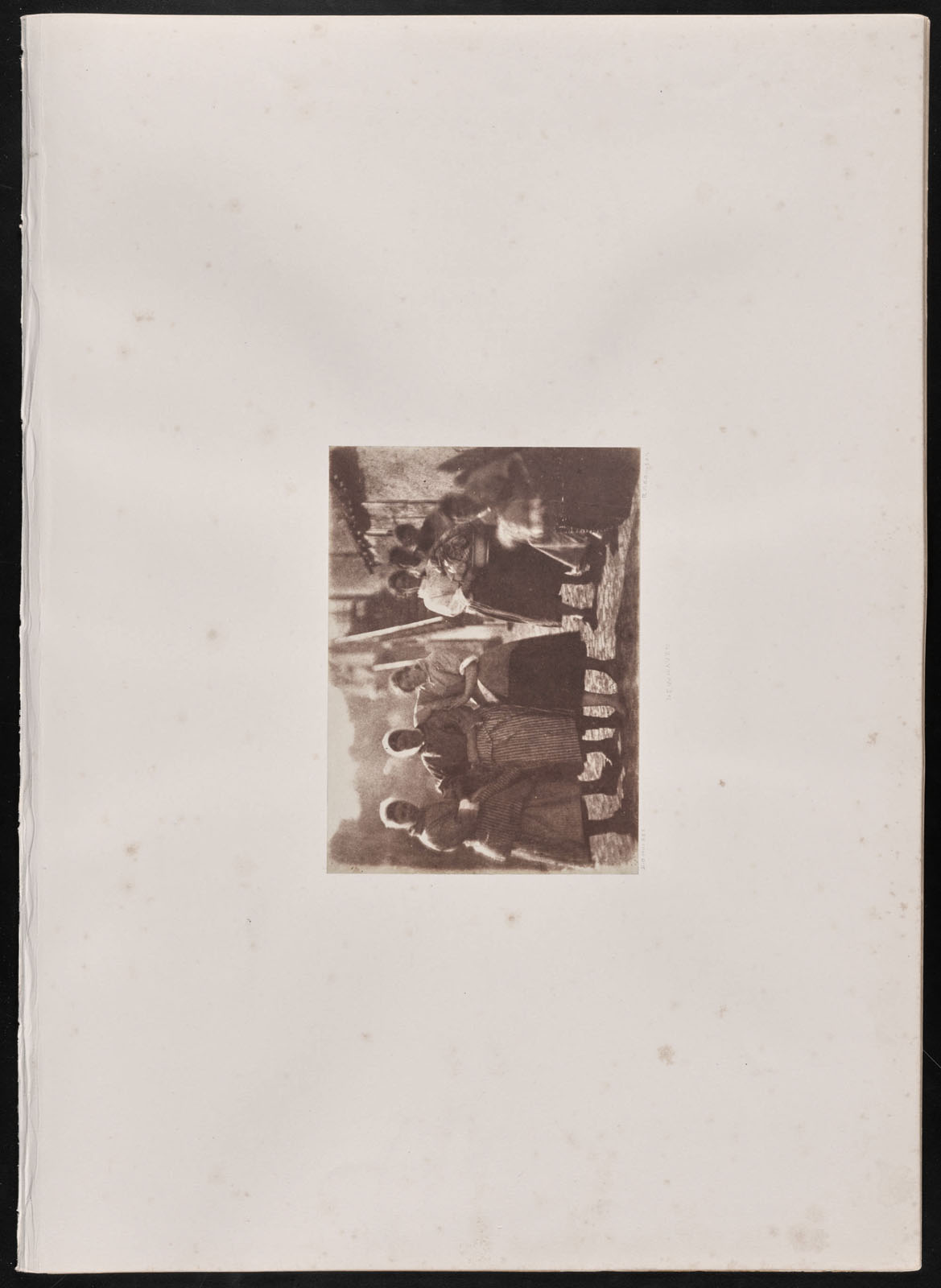
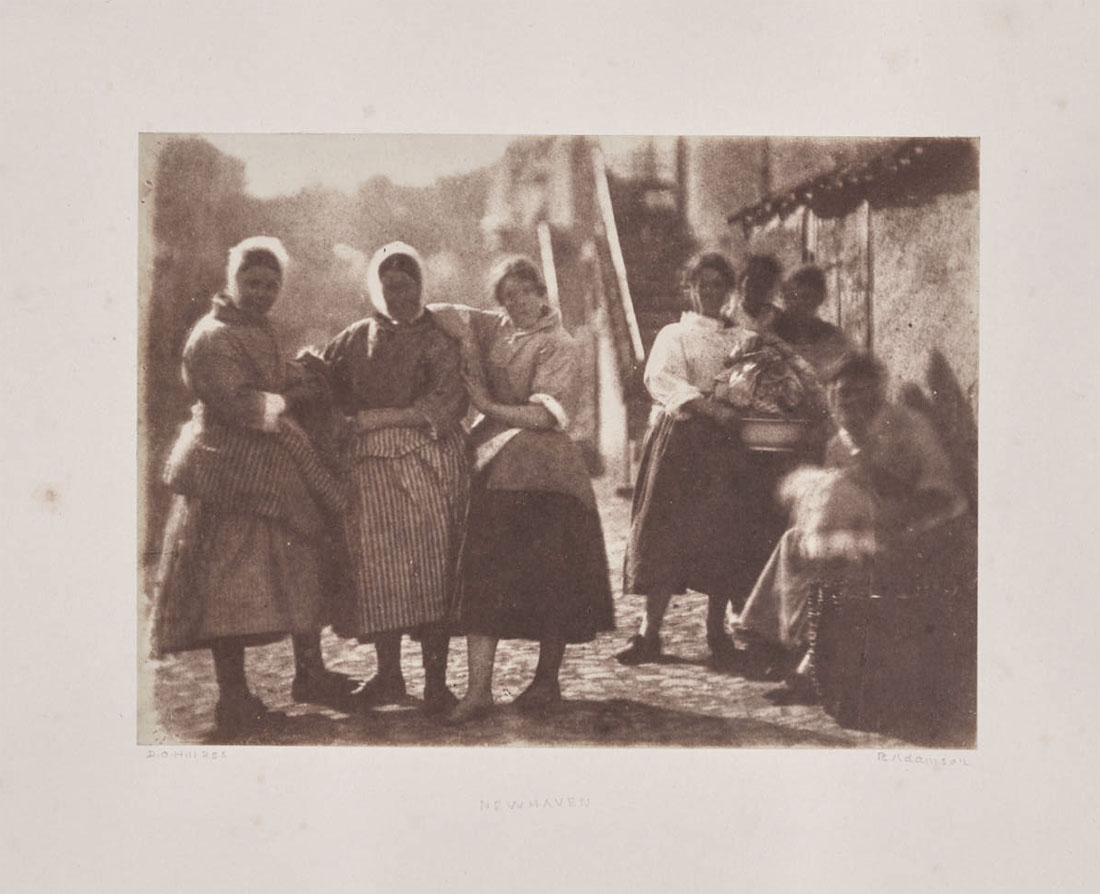
![Erich Salomon (German, 1886-1944) '[Portrait of Madame Vacarescu, Romanian Author and Deputy to the League of Nations, Geneva]' 1928 from the exhibition 'In Focus: Expressions' at the J. Paul Getty Museum, Getty Center, Los Angeles, May - Oct, 2018](https://artblart.com/wp-content/uploads/2018/06/in-focus-expressions-1-web.jpg "Erich Salomon (German, 1886-1944) '[Portrait of Madame Vacarescu, Romanian Author and Deputy to the League of Nations, Geneva]' 1928 from the exhibition 'In Focus: Expressions' at the J. Paul Getty Museum, Getty Center, Los Angeles, May - Oct, 2018")
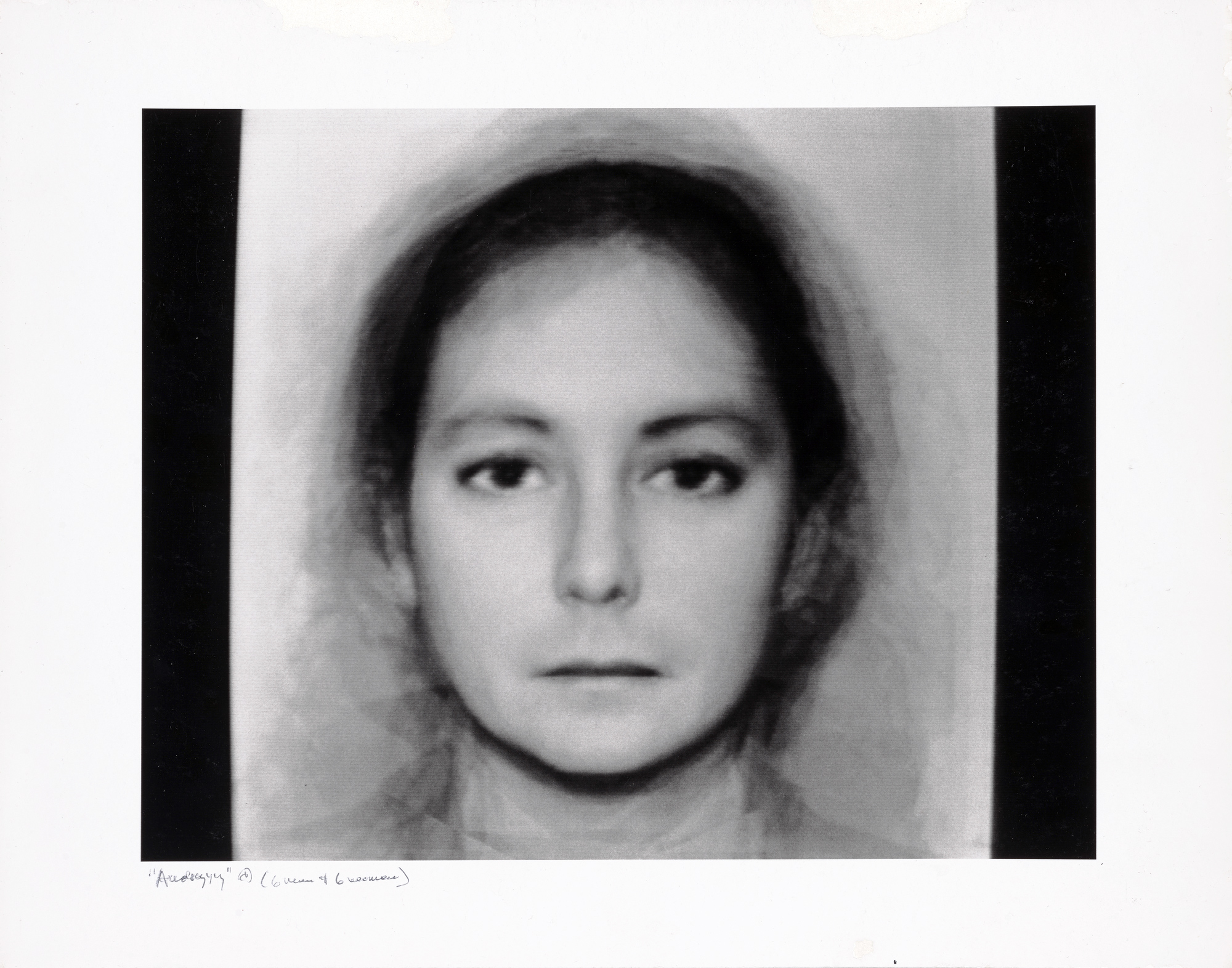
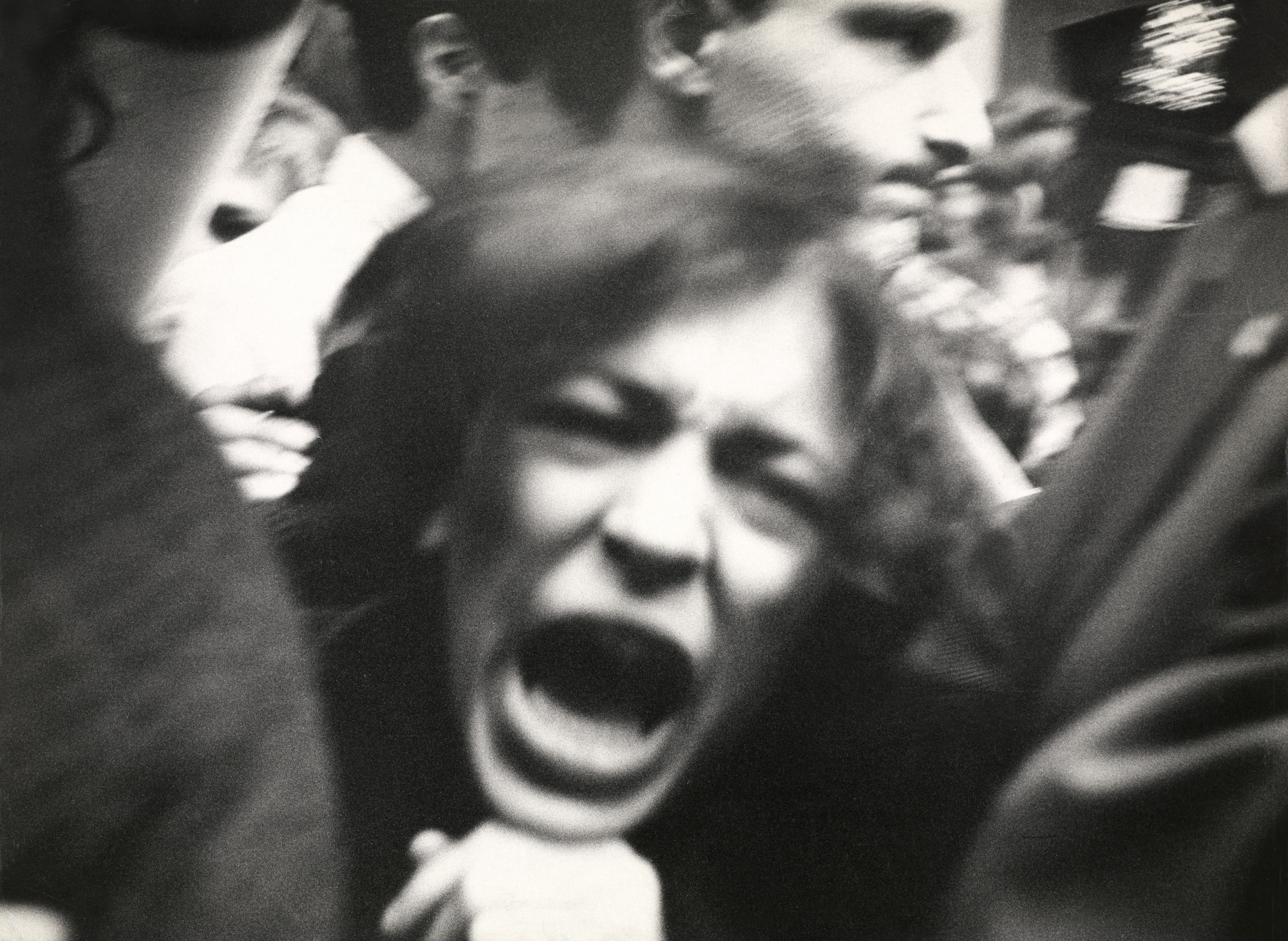
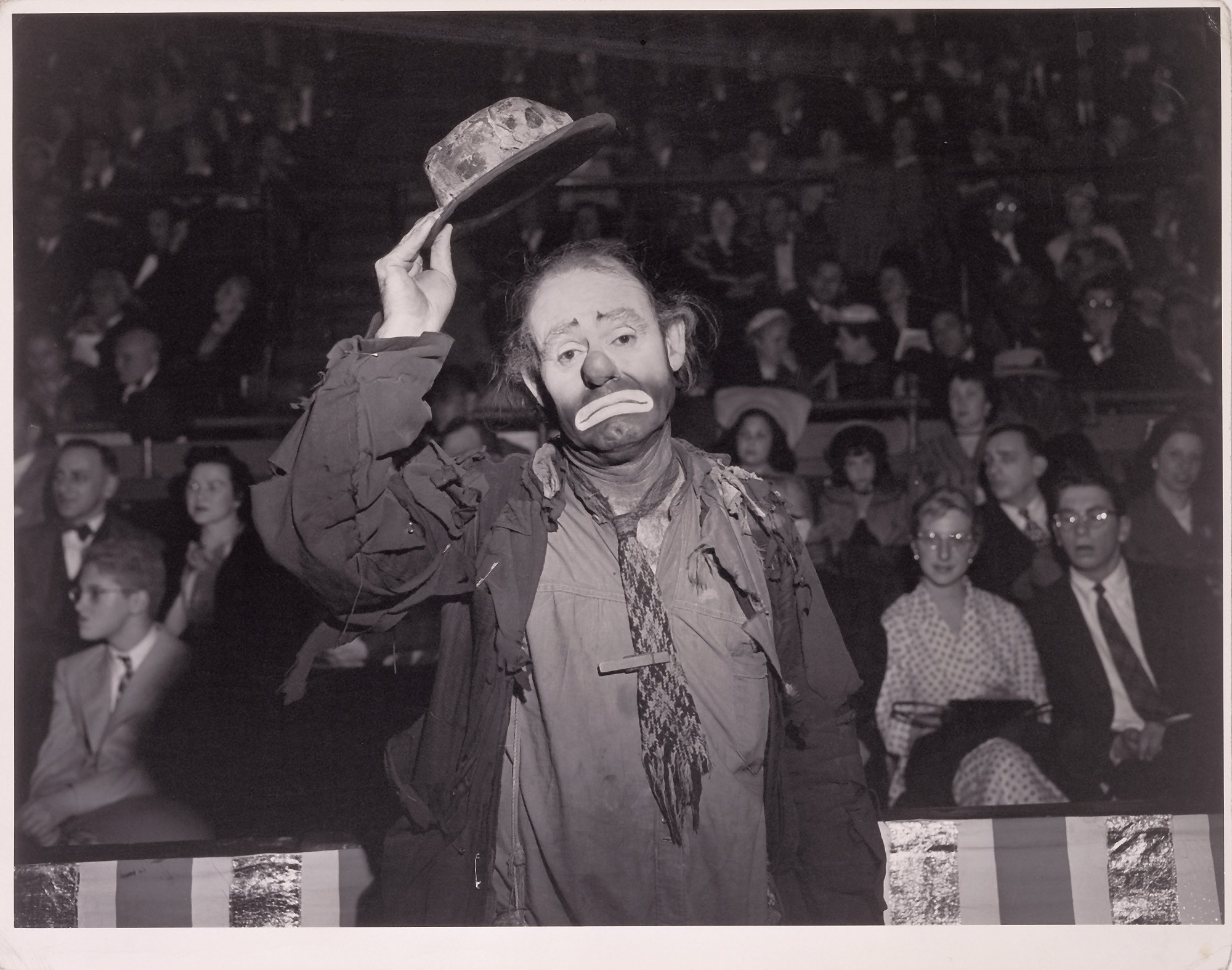

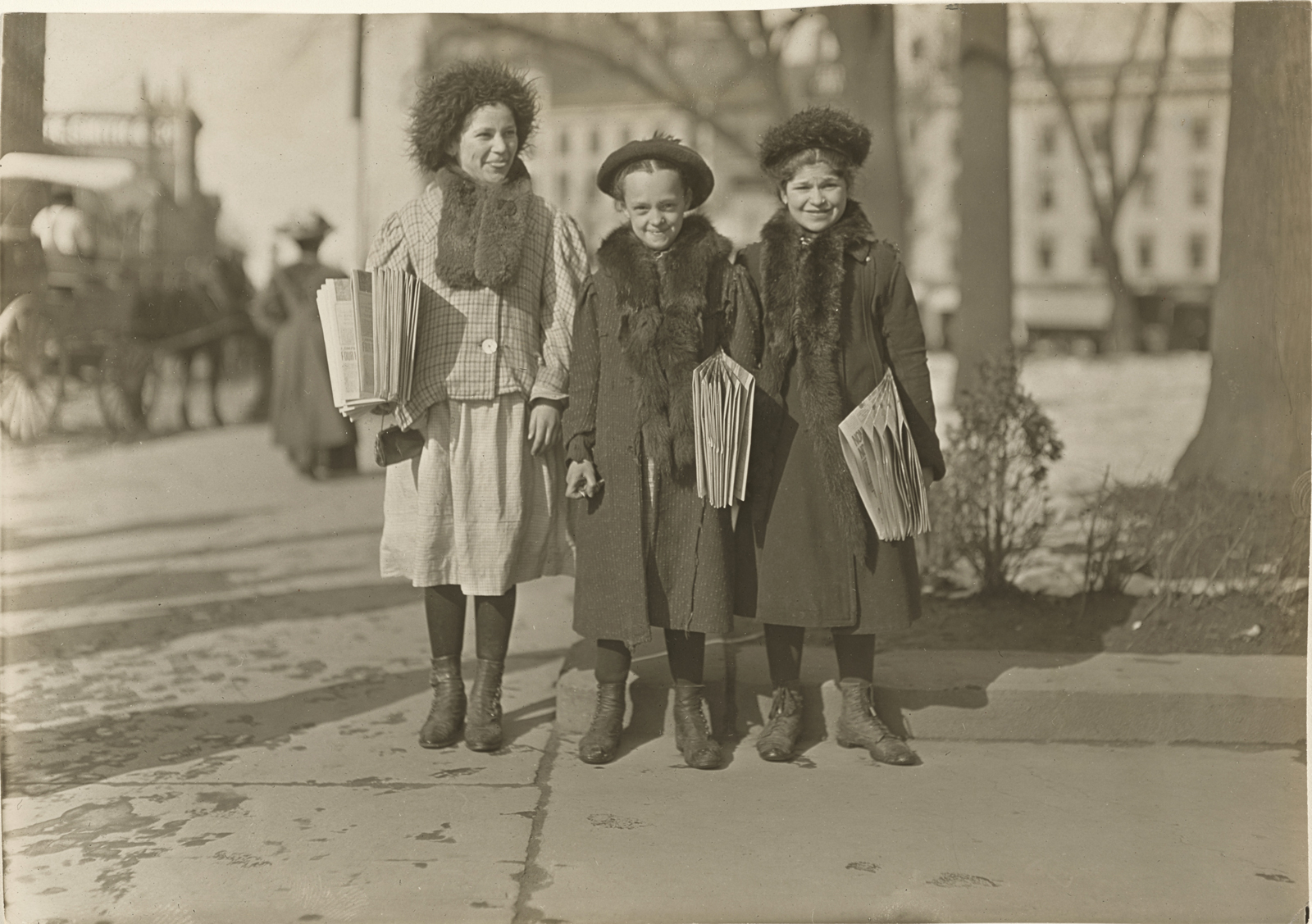
![Nadar [Gaspard Félix Tournachon] (French, 1820-1910) '[Mme Ernestine Nadar]' 1880-1883](https://artblart.com/wp-content/uploads/2018/06/in-focus-expressions-4-web.jpg "Nadar [Gaspard Félix Tournachon] (French, 1820-1910) '[Mme Ernestine Nadar]' 1880-1883")
![Nadar [Gaspard Félix Tournachon] (French, 1820-1910) '[Mme Ernestine Nadar]' 1880-1883 (detail)](https://artblart.com/wp-content/uploads/2018/06/in-focus-expressions-4-detail.jpg "Nadar [Gaspard Félix Tournachon] (French, 1820-1910) '[Mme Ernestine Nadar]' 1880-1883 (detail)")

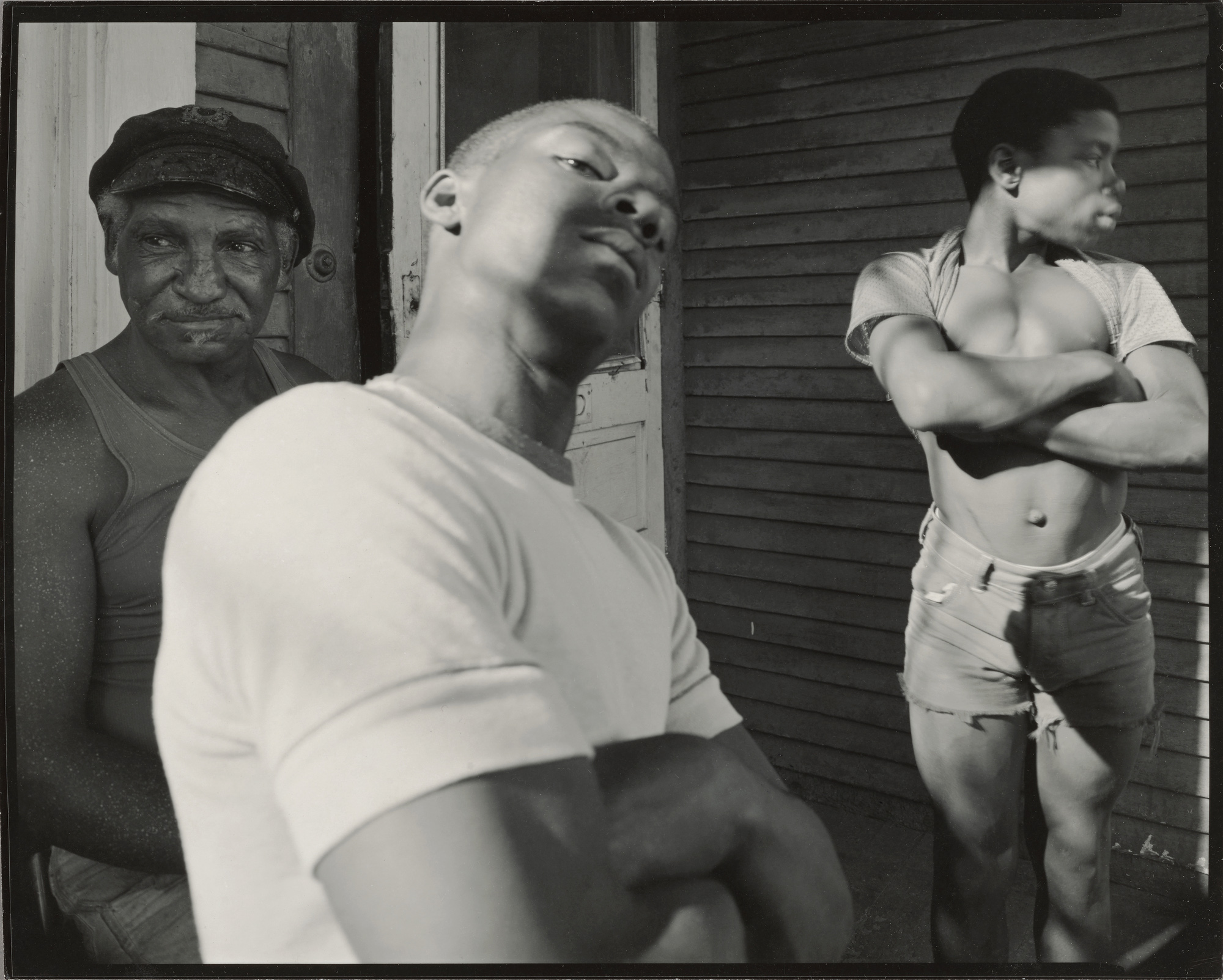
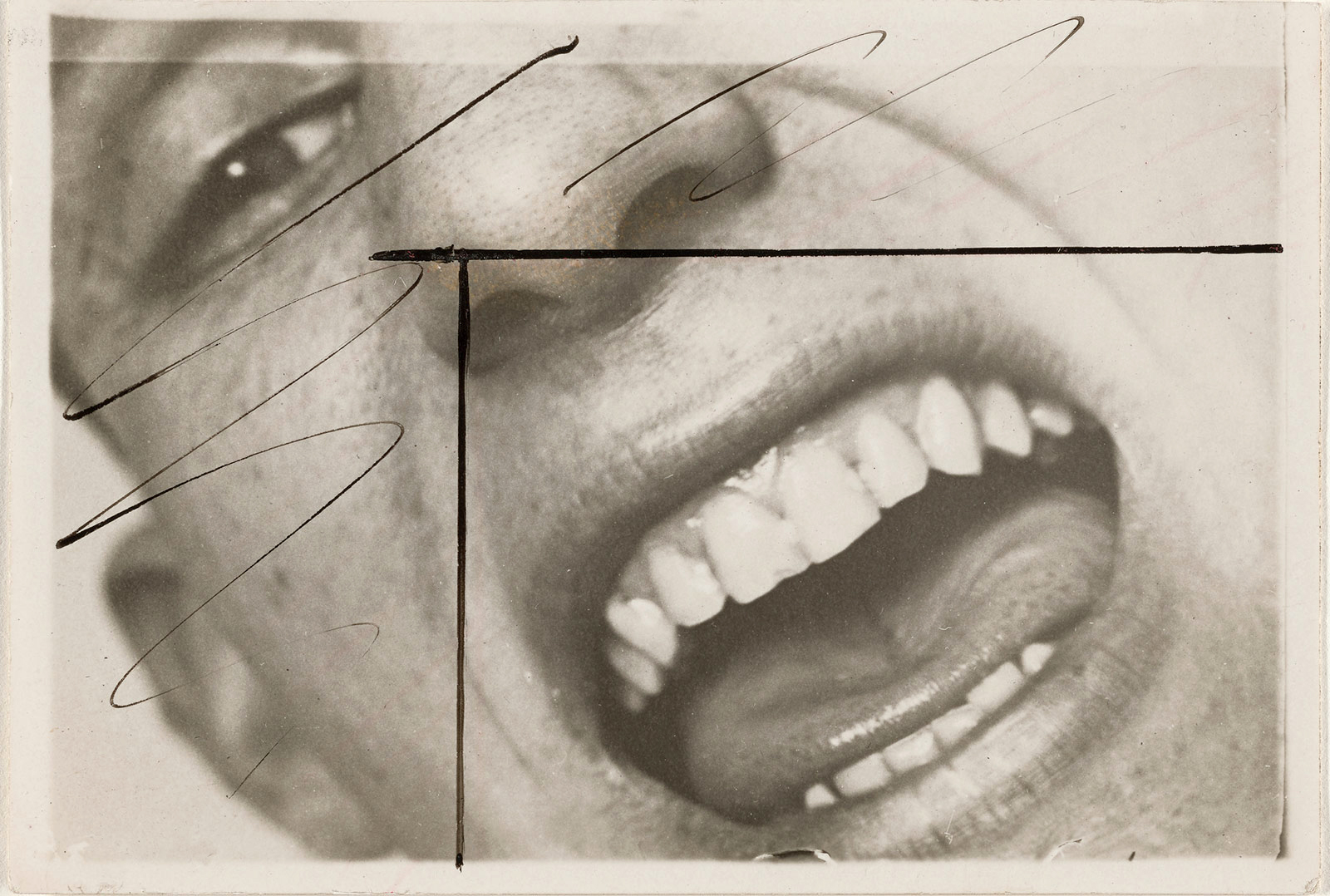
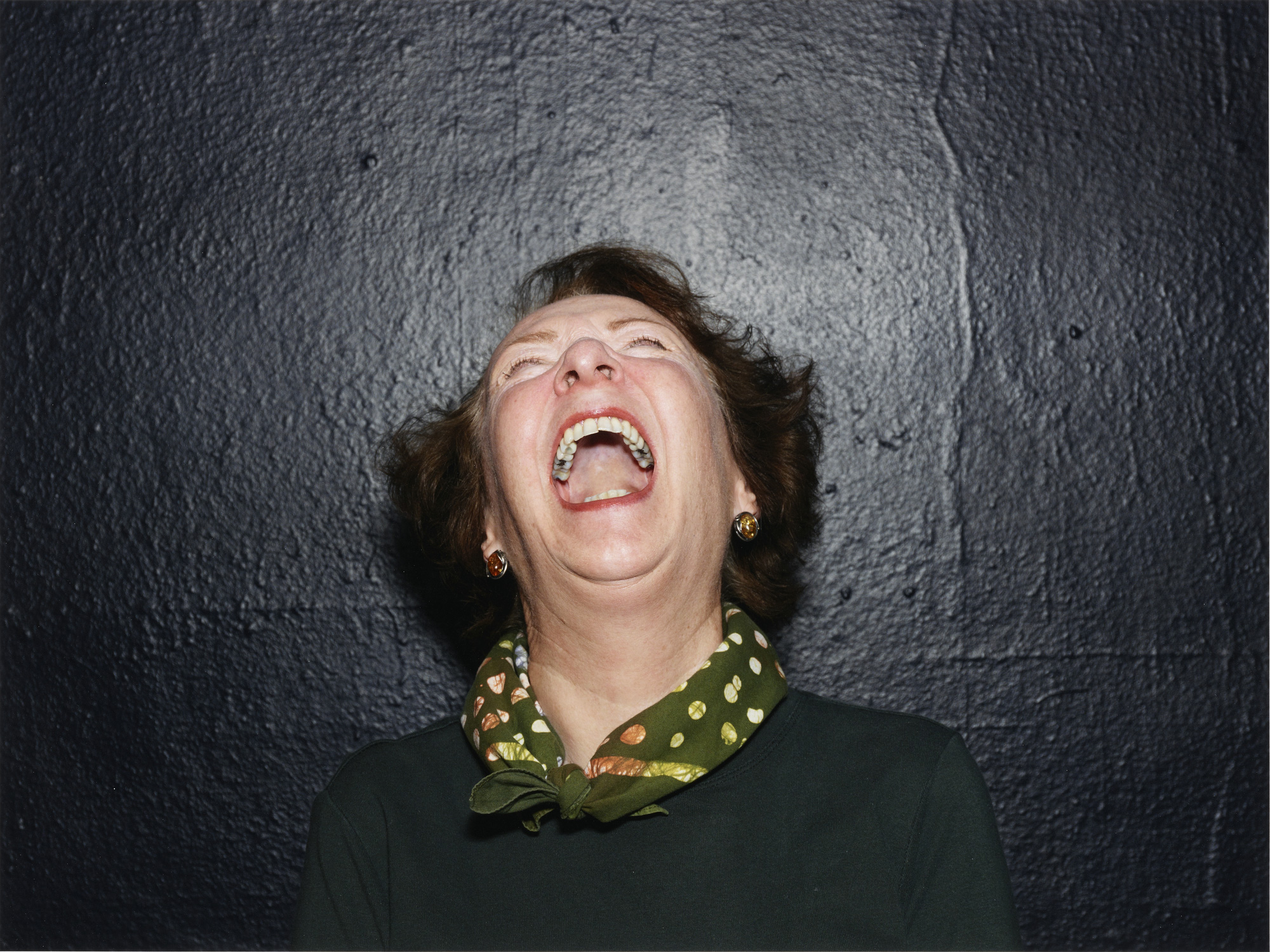
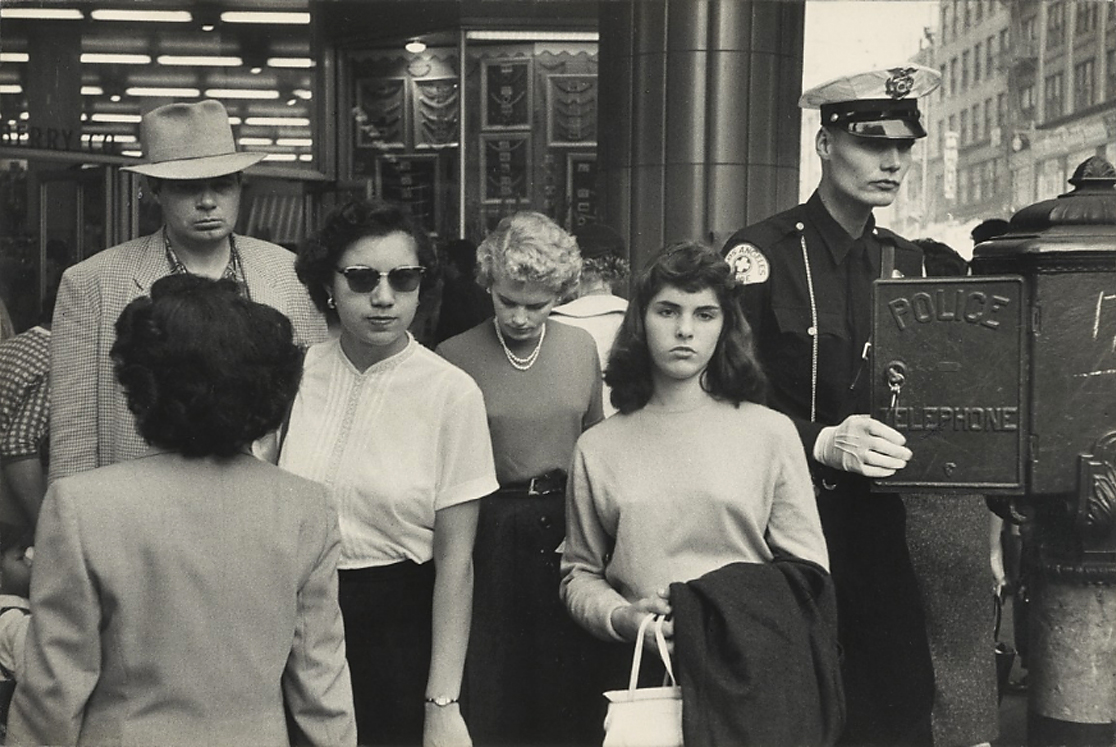
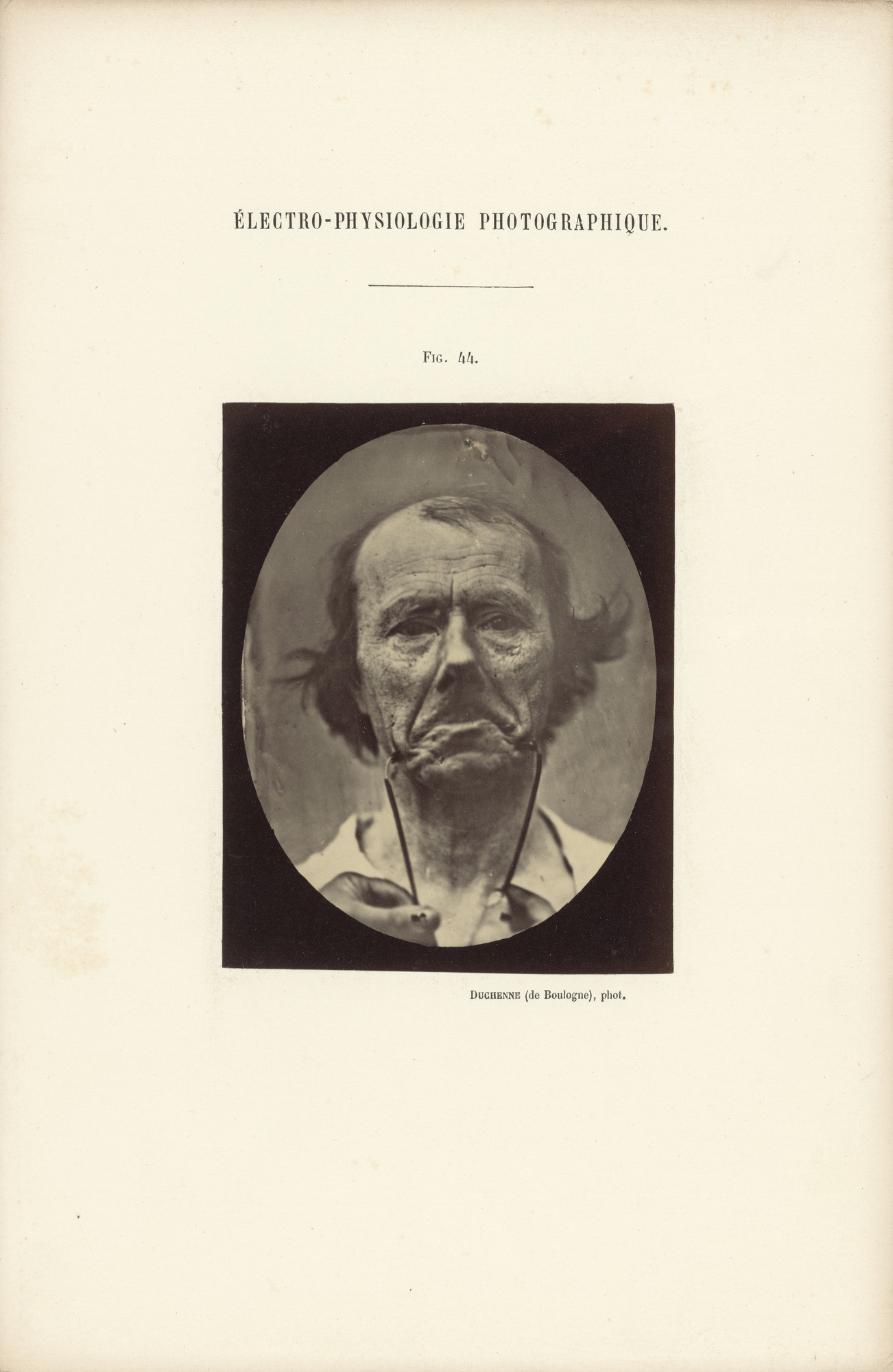
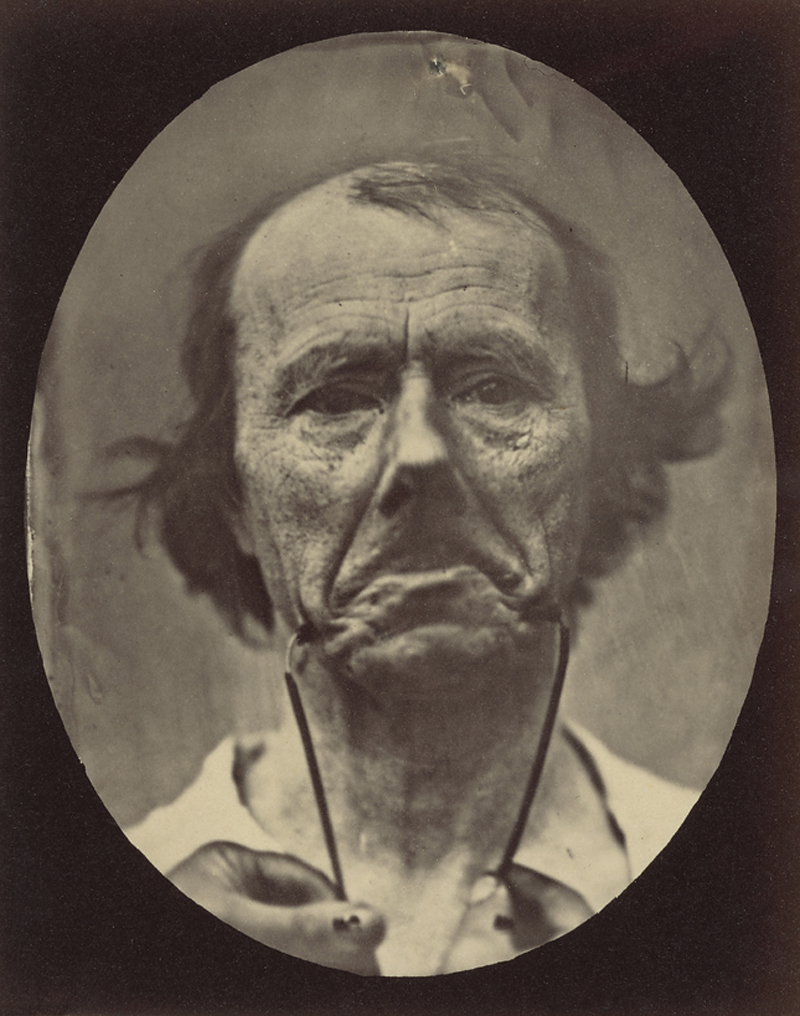
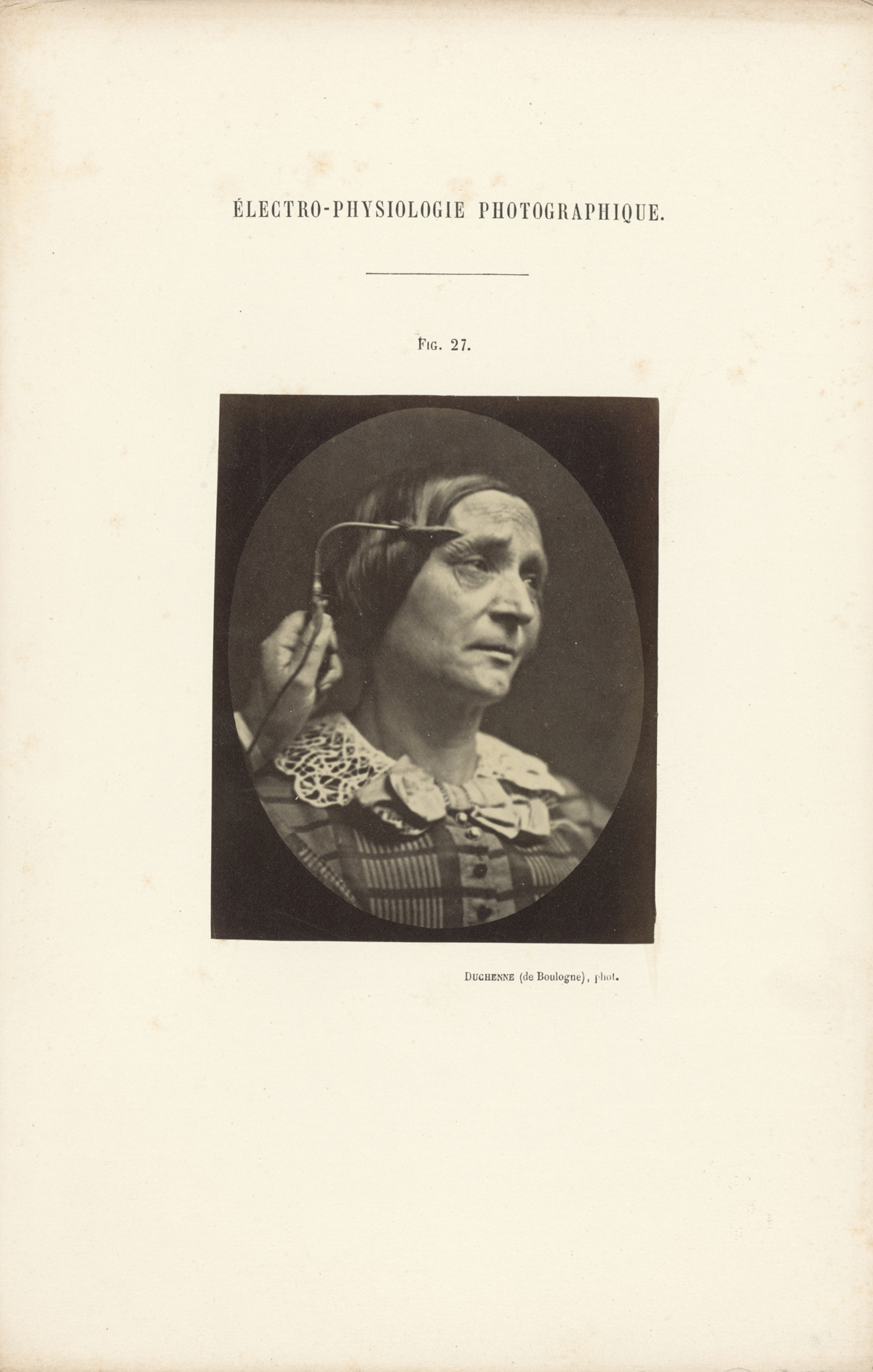
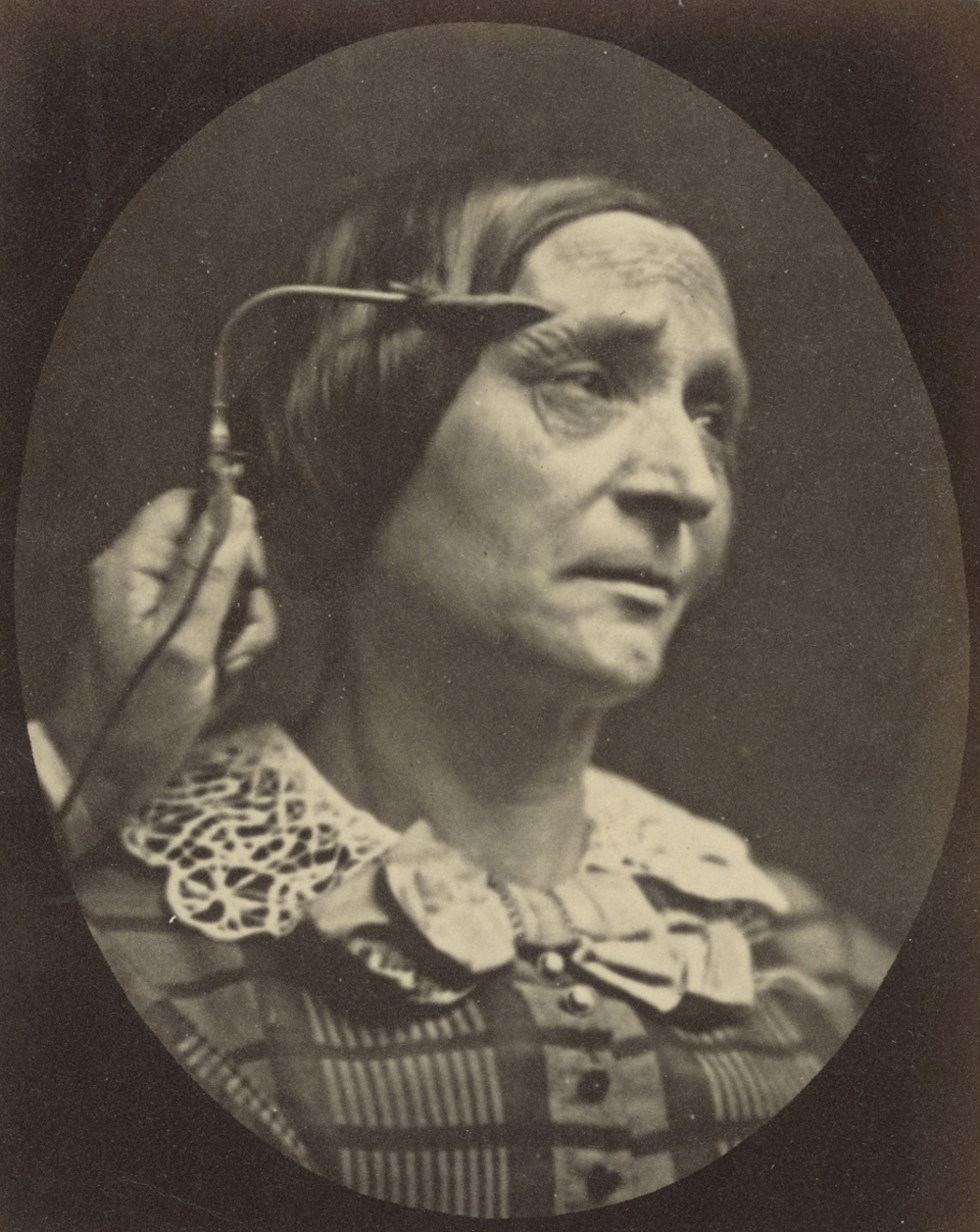
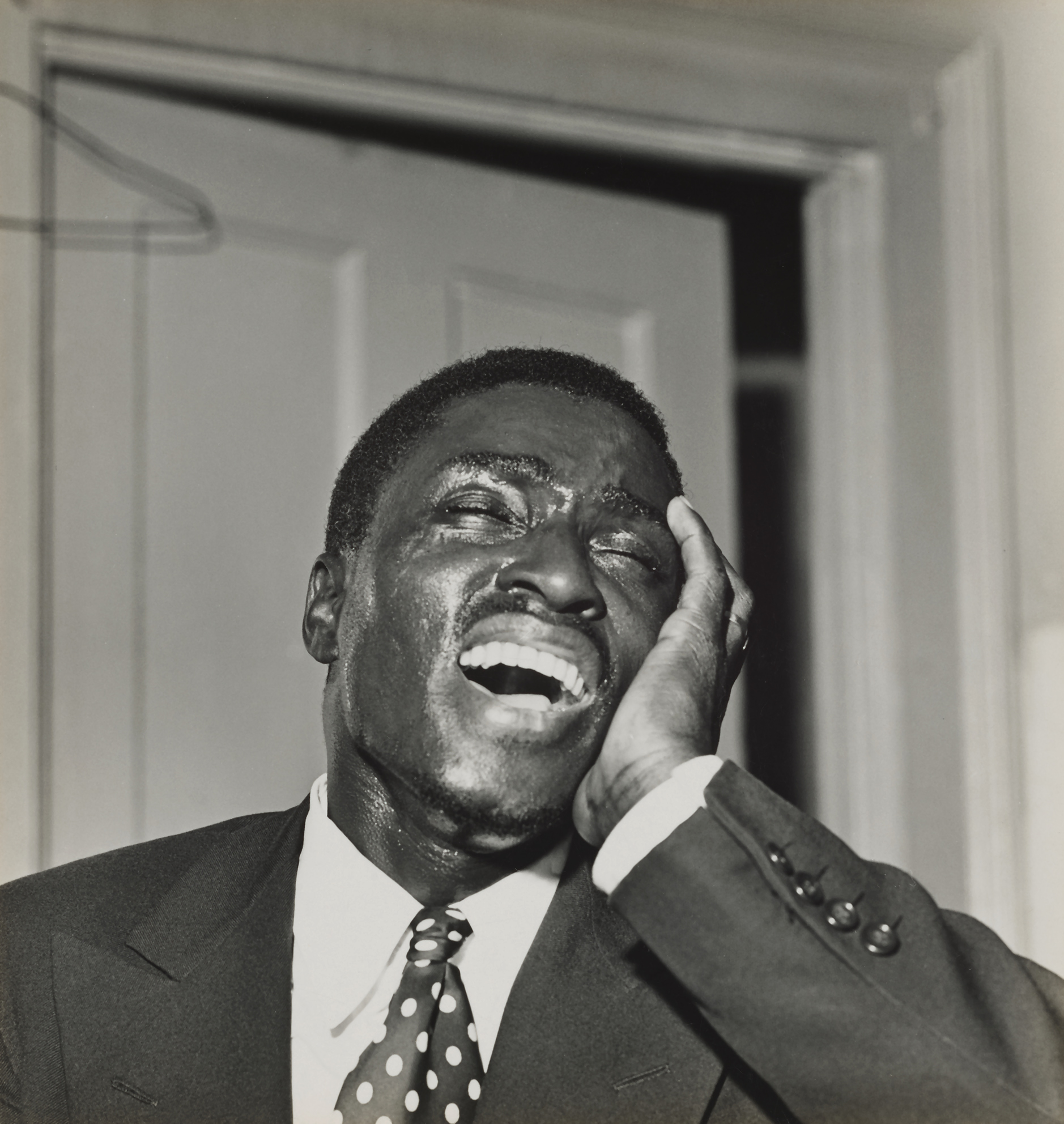
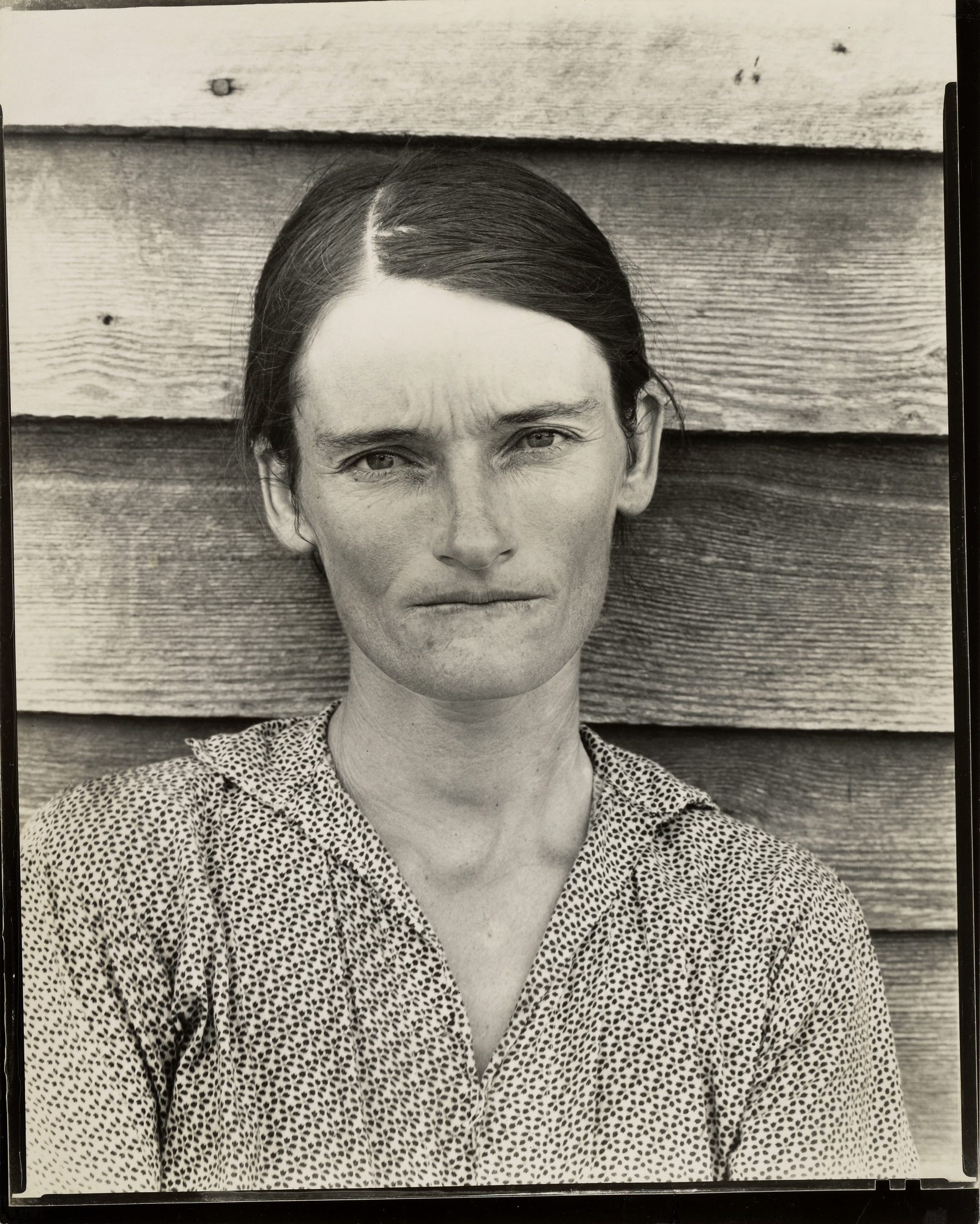
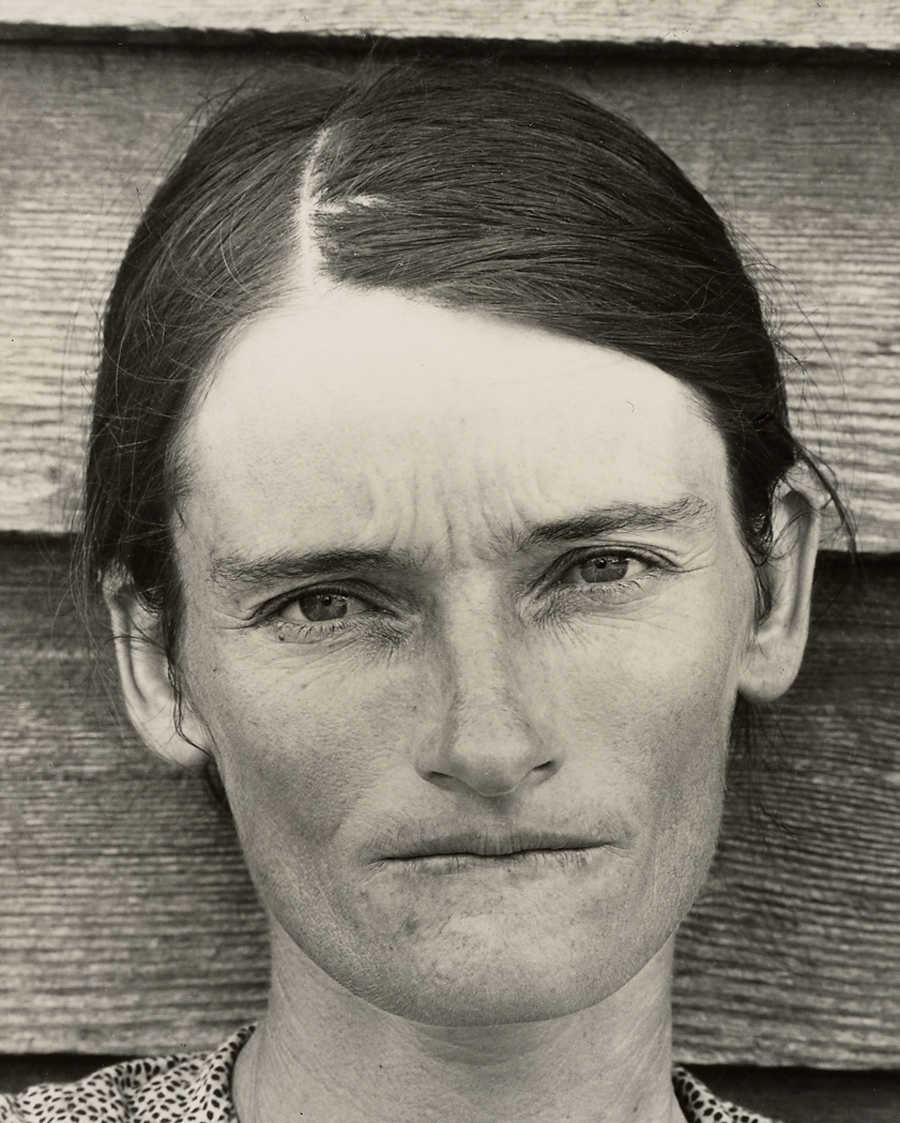
![Lisette Model (American born Austria, 1901-1983) '[War Rally]' 1942](https://artblart.com/wp-content/uploads/2018/06/in-focus-expressions-2-web.jpg "Lisette Model (American born Austria, 1901-1983) '[War Rally]' 1942")
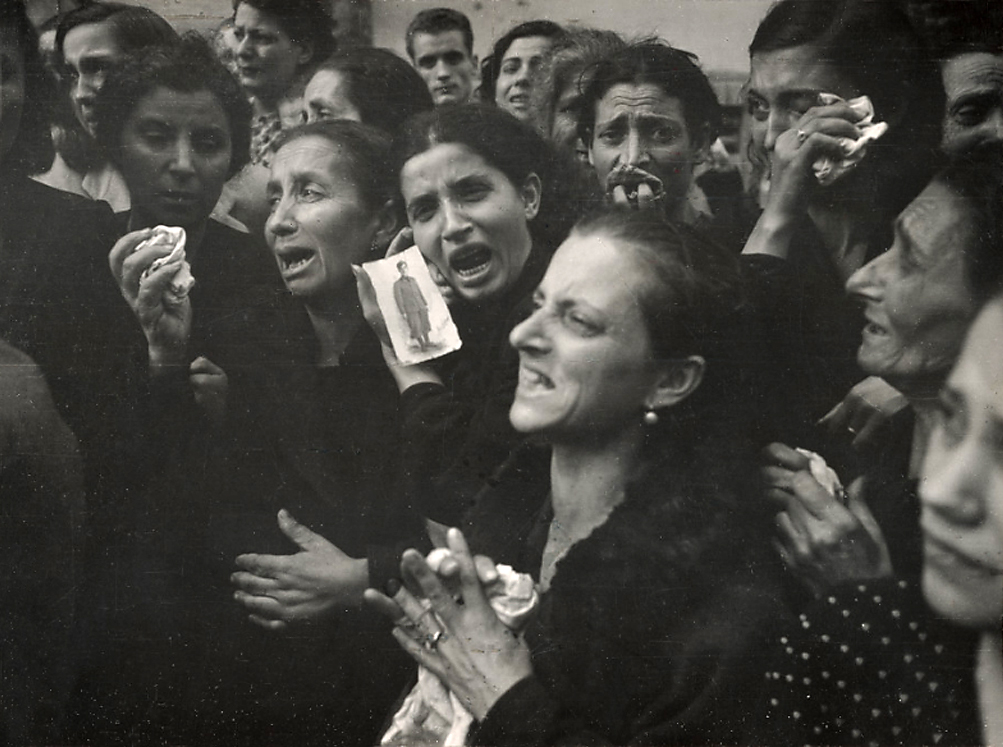
![Unknown maker (American) '[Smiling Man]' 1860](https://artblart.com/wp-content/uploads/2018/06/unknown-maker-smiling-man-1860-web.jpg "Unknown maker (American) '[Smiling Man]' 1860")
![Baron Adolf de Meyer (American born France, 1868-1946) '[Ruth St. Denis]' c. 1918](https://artblart.com/wp-content/uploads/2018/06/baron-adolf-de-meyer-ruth-st-denis-c-1918-web.jpg "Baron Adolf de Meyer (American born France, 1868-1946) '[Ruth St. Denis]' c. 1918")
![Woodbury & Page (British, active 1857-1908) '[Javanese woman seated with legs crossed, basket at side]' c. 1870](https://artblart.com/wp-content/uploads/2018/06/woodbury-and-page-javanese-woman-web.jpg "Woodbury & Page (British, active 1857-1908) '[Javanese woman seated with legs crossed, basket at side]' c. 1870")
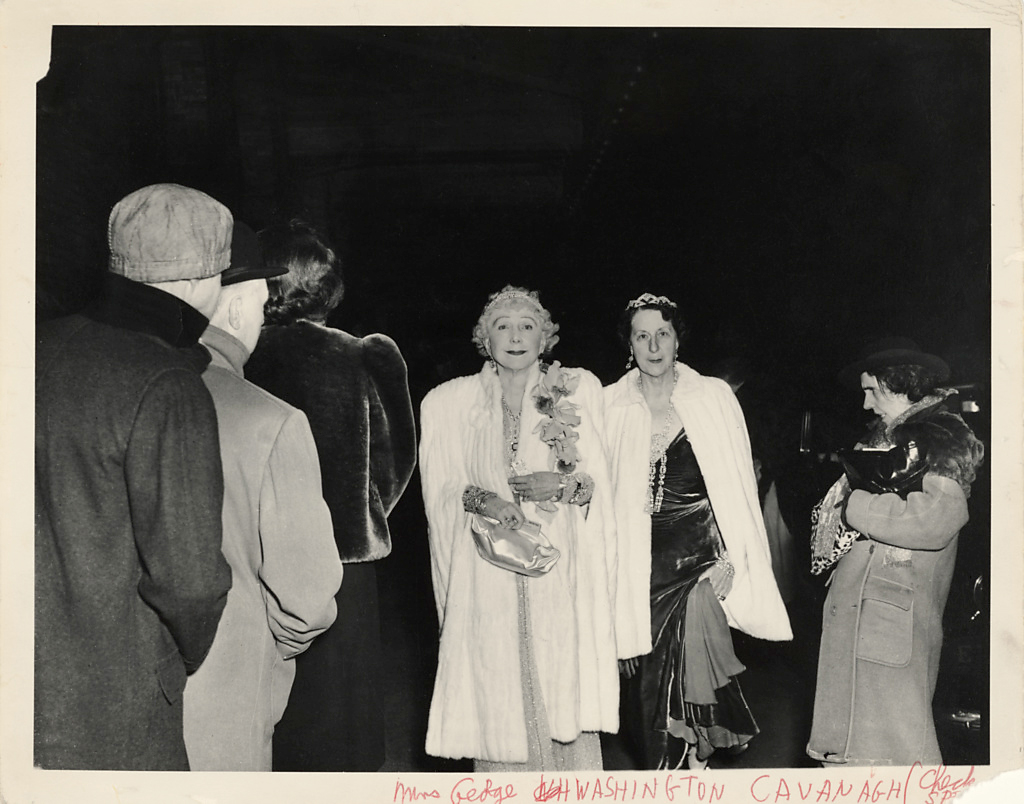
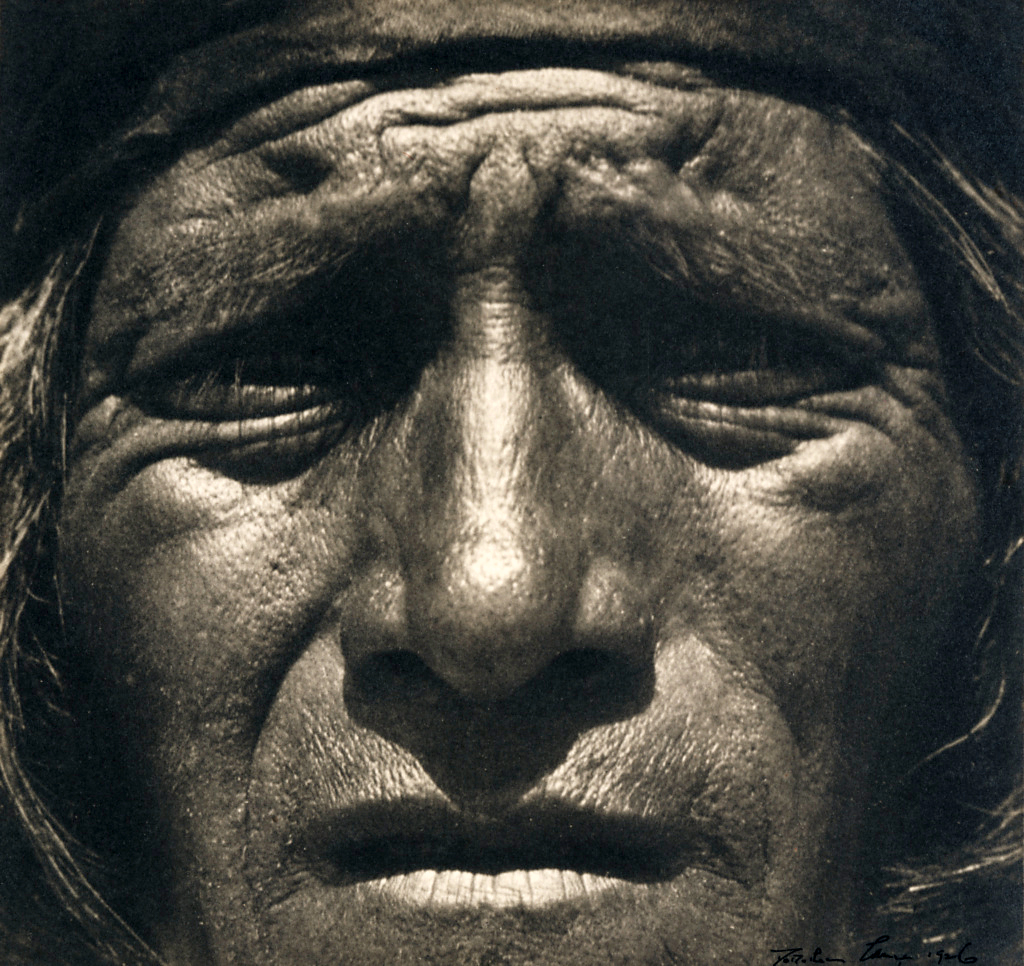
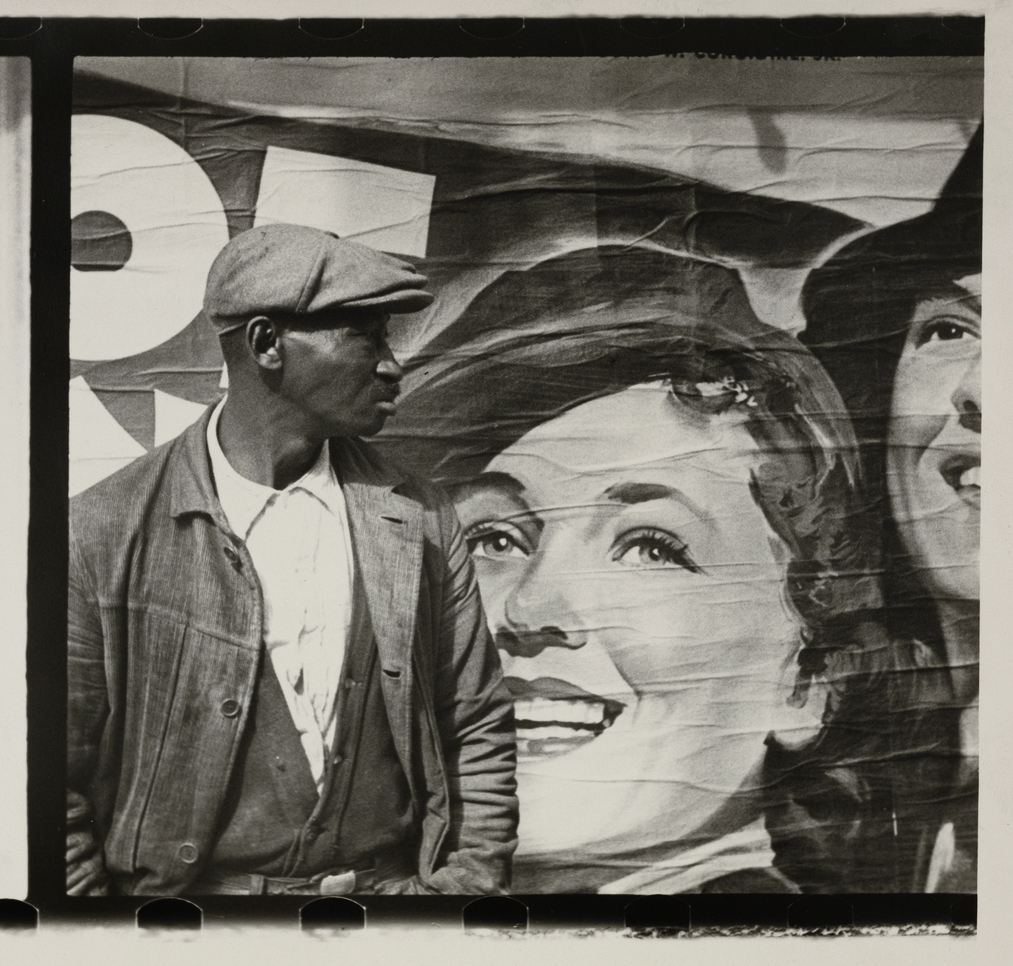
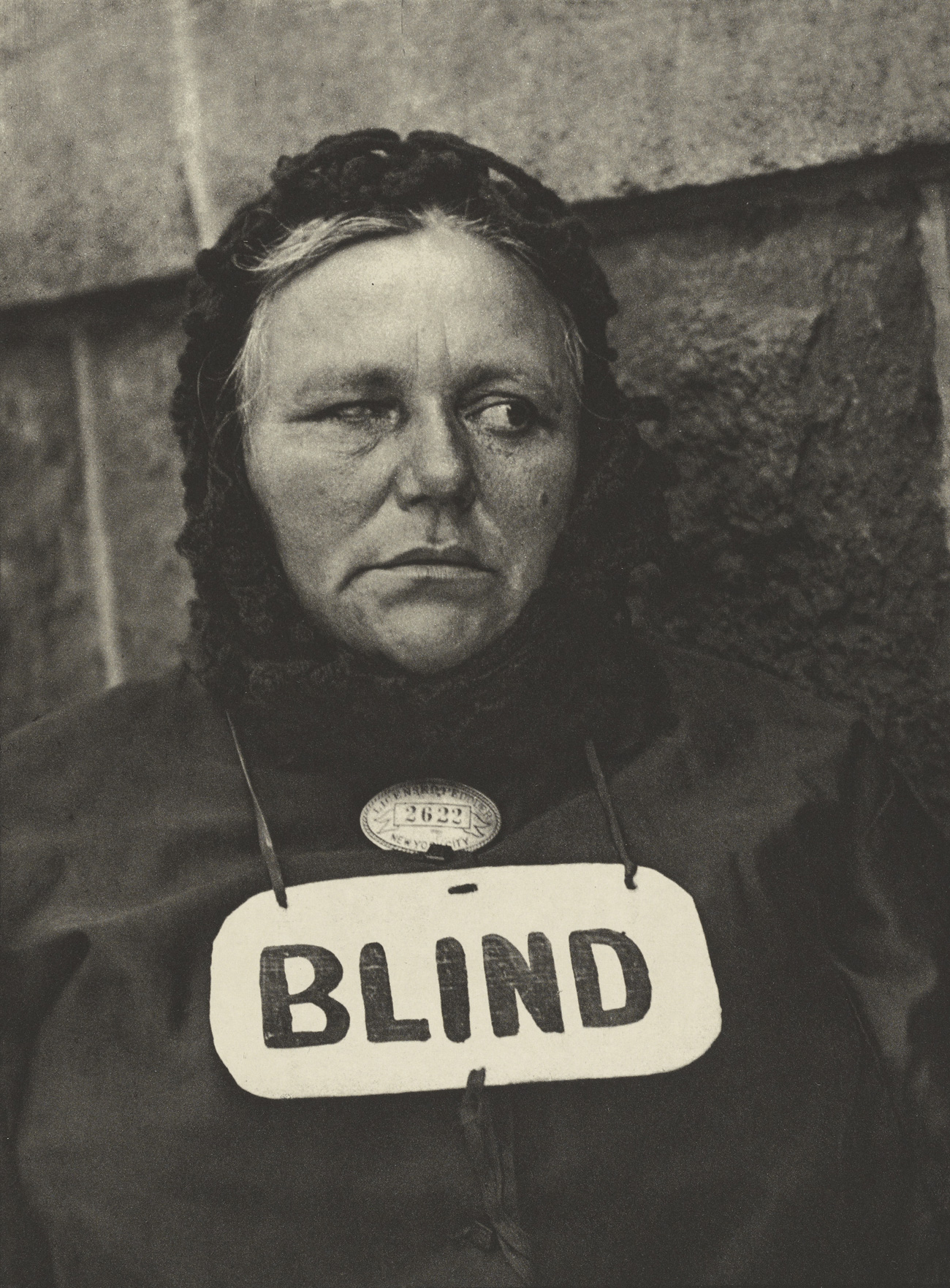
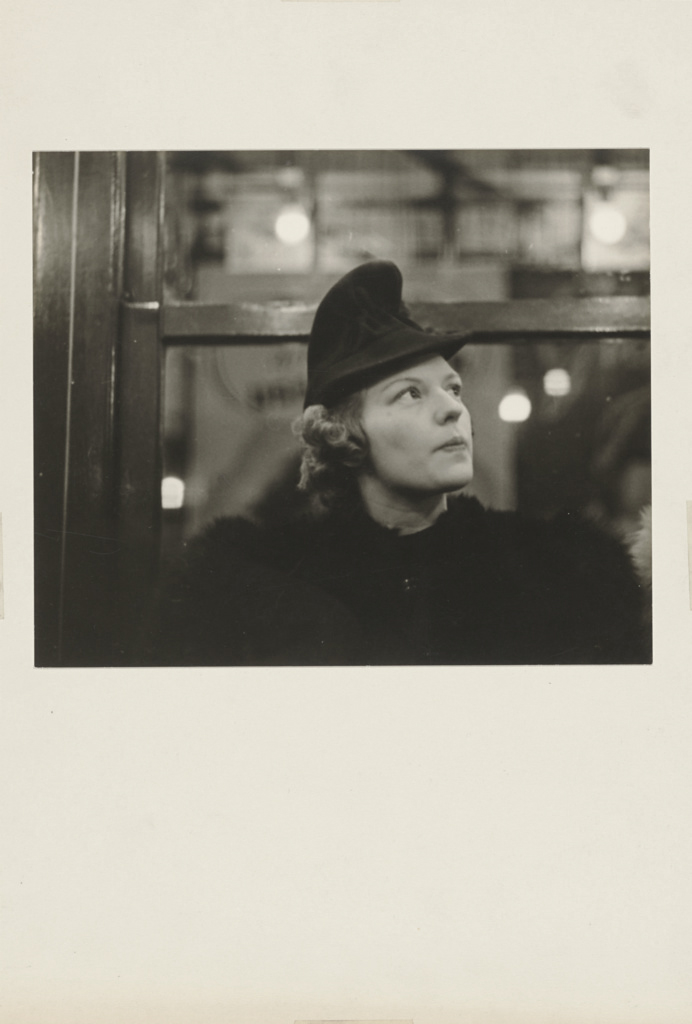
![Camille Silvy (French, 1834-1910) '[Madame Camille Silvy]' c. 1863](https://artblart.com/wp-content/uploads/2018/06/camille-silvy-web.jpg "Camille Silvy (French, 1834-1910) '[Madame Camille Silvy]' c. 1863")
![Mikiko Hara (Japanese, b. 1967) '[Untitled (Making a Void)]' Negative 2001; print about 2007](https://artblart.com/wp-content/uploads/2018/06/mikiko-hara-untitled-web.jpg "Mikiko Hara (Japanese, b. 1967) '[Untitled (Making a Void)]' Negative 2001; print about 2007")
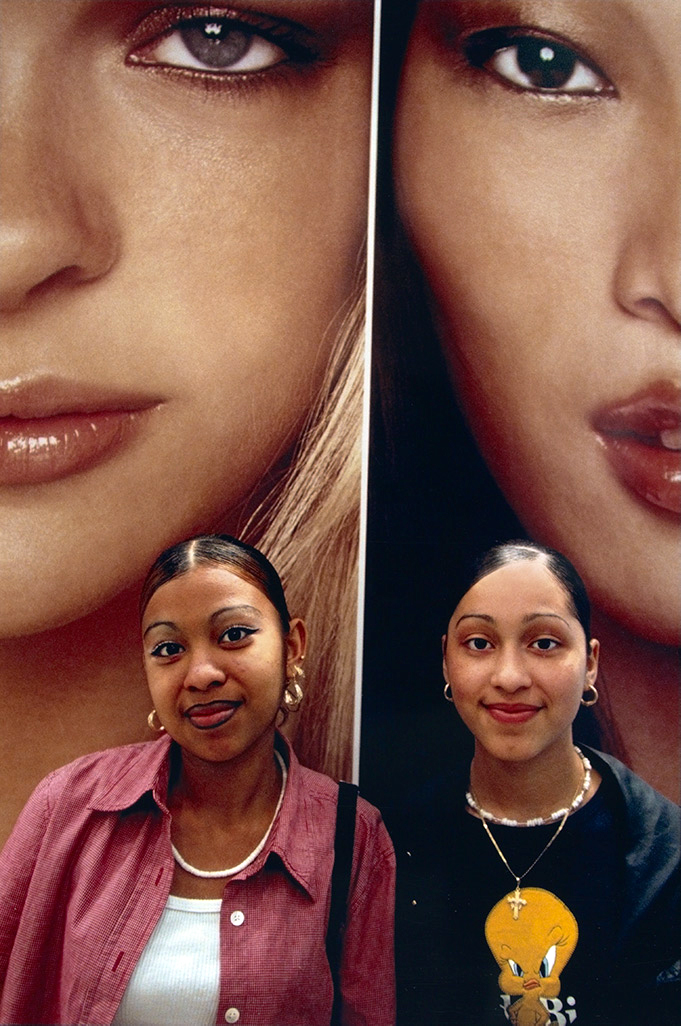
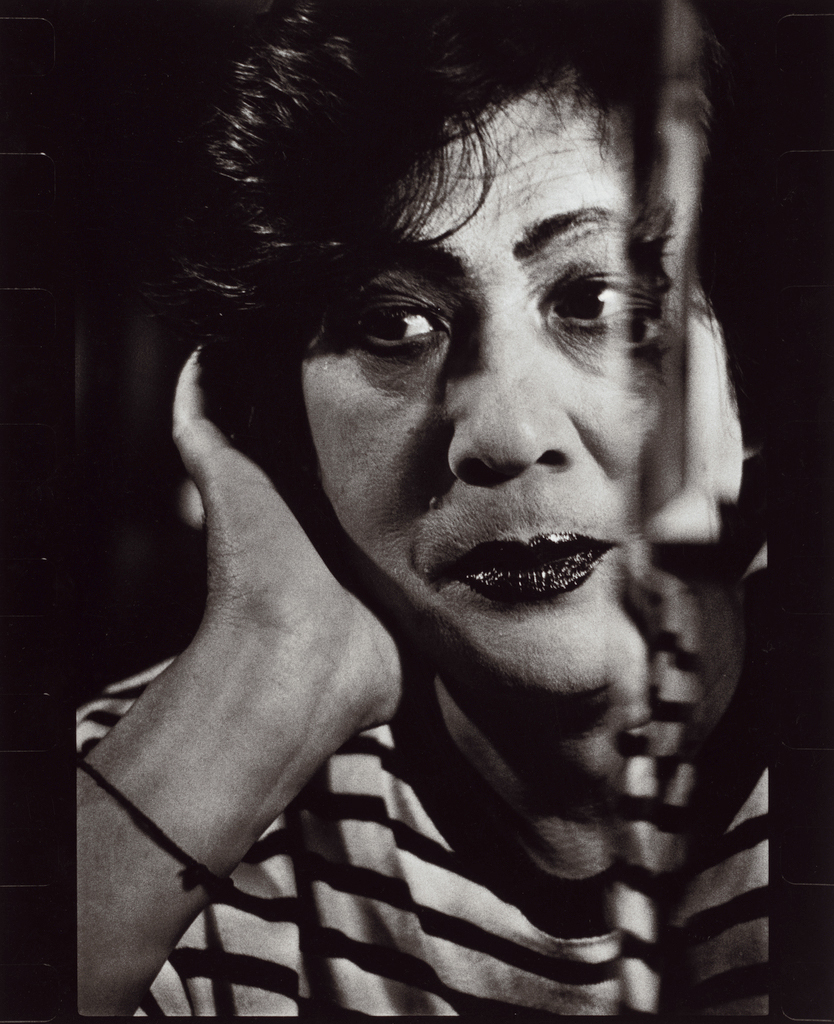
![Hill & Adamson (Scottish, active 1843-1848) '[Lane and Peddie as Afghans]' 1843 from the exhibition 'In Focus: Making A Scene' at The J. Paul Getty Museum, Los Angeles, June - Oct, 2009](https://artblart.com/wp-content/uploads/2009/09/hill-and-adamson-lane-and-peddie-as-afghans-web.jpg "Hill & Adamson (Scottish, active 1843-1848) '[Lane and Peddie as Afghans]' 1843 from the exhibition 'In Focus: Making A Scene' at The J. Paul Getty Museum, Los Angeles, June - Oct, 2009")
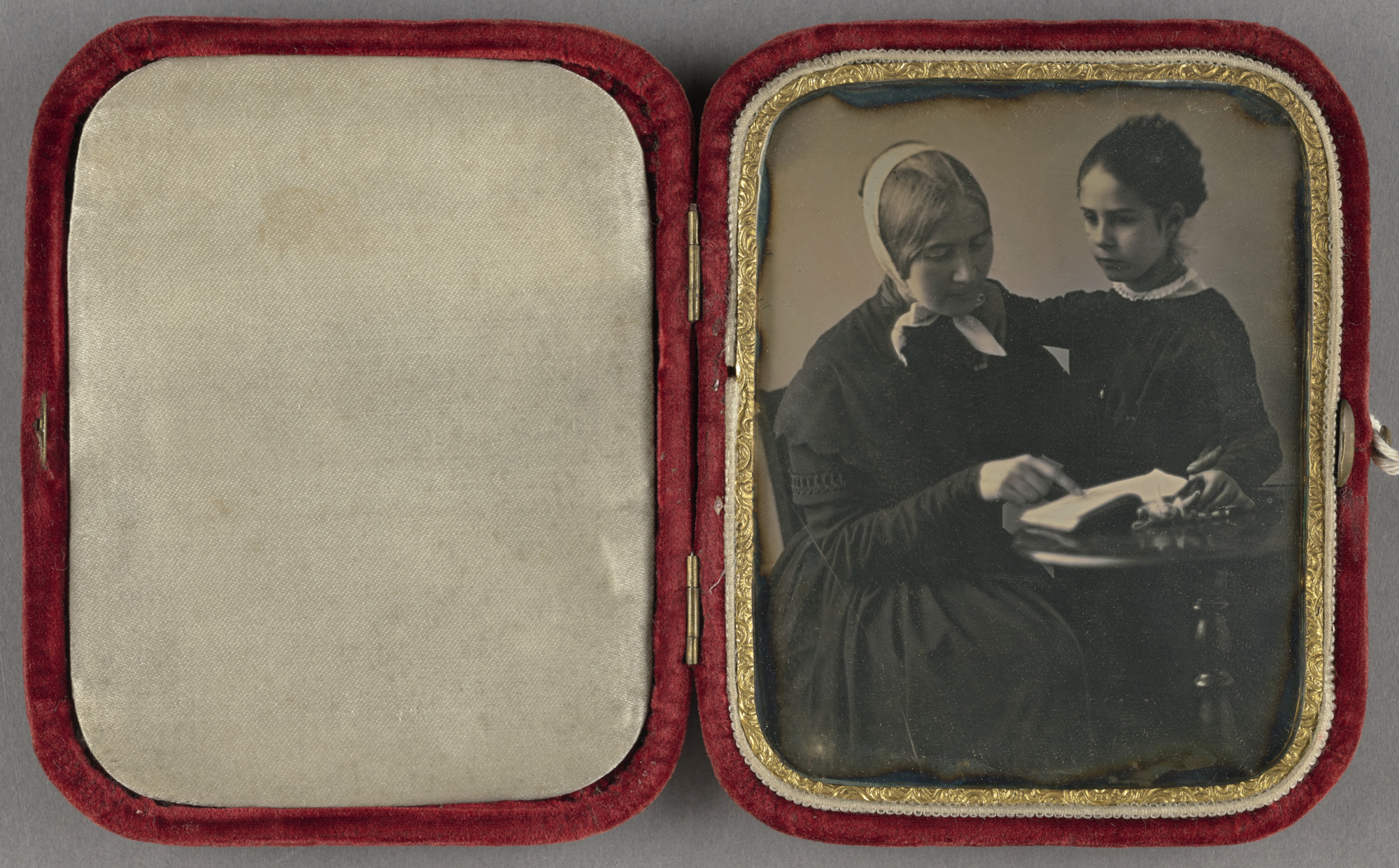


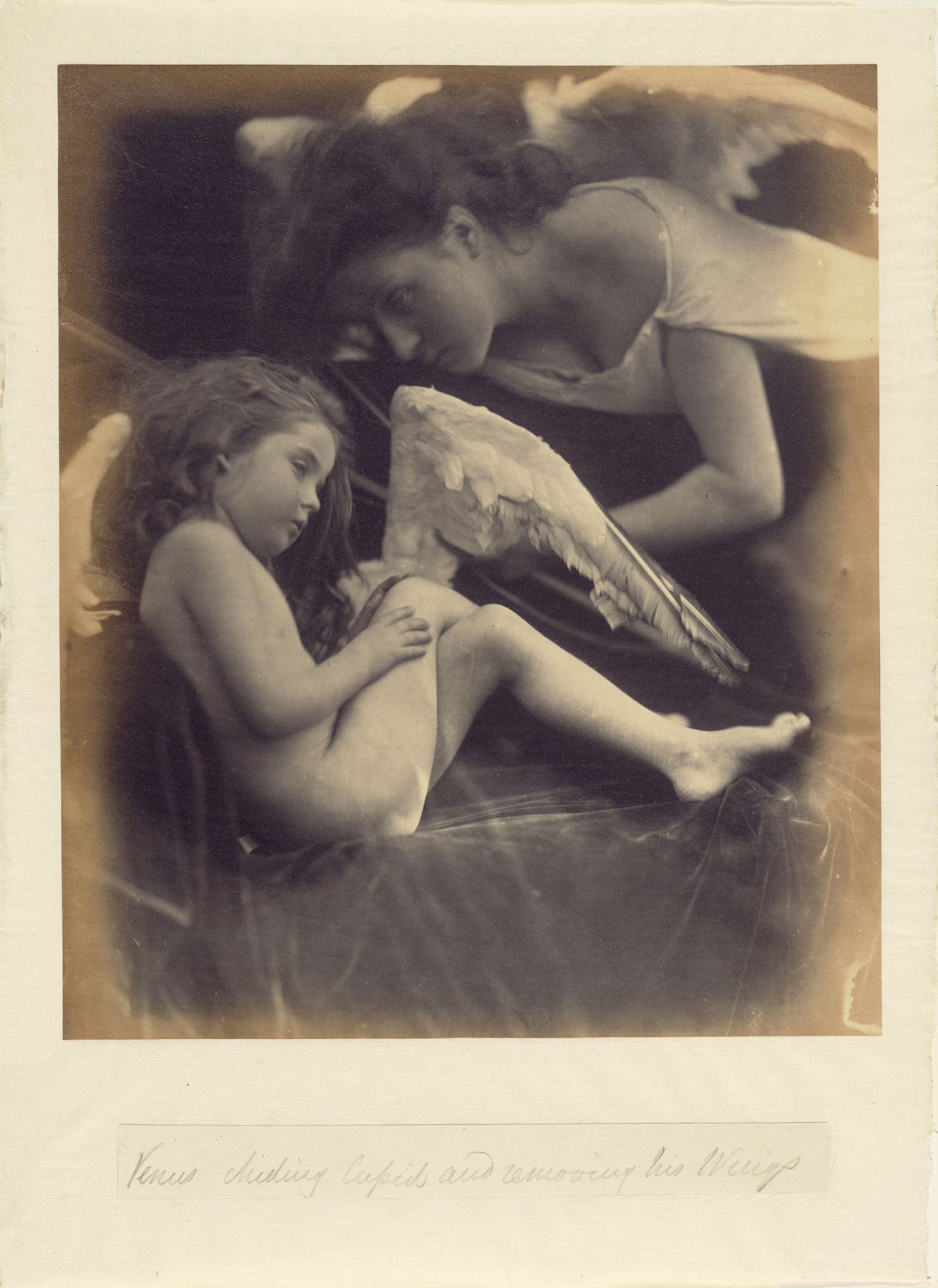
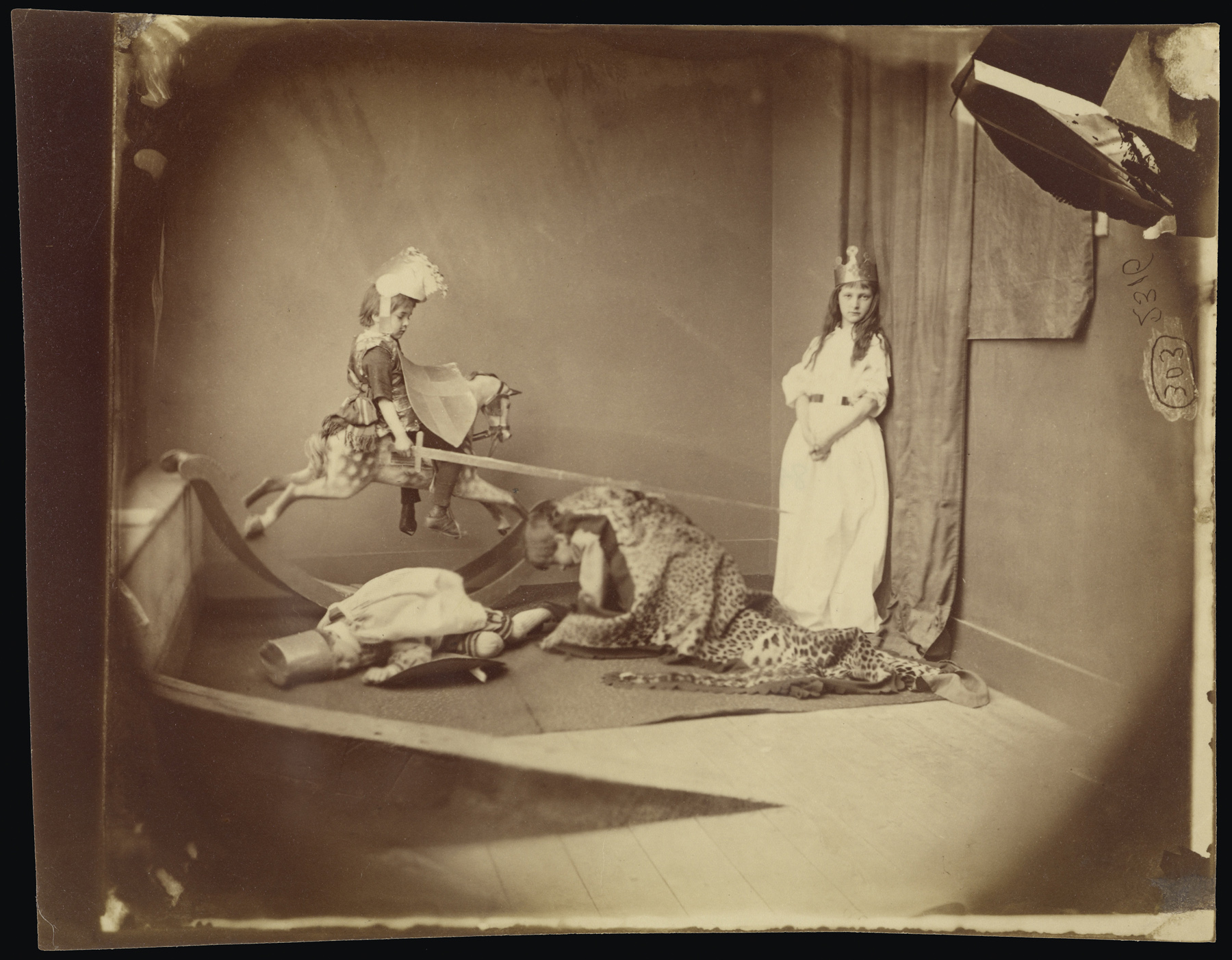
![Baron Wilhelm von Gloeden (German, 1856-1931) 'Untitled [Two Male Youths Holding Palm Fronds]' c. 1885 - 1905](https://artblart.com/wp-content/uploads/2009/09/gloeden-two-male-youths-holding-palm-fronds-web.jpg "Baron Wilhelm von Gloeden (German, 1856-1931) 'Untitled [Two Male Youths Holding Palm Fronds]' c. 1885 - 1905")
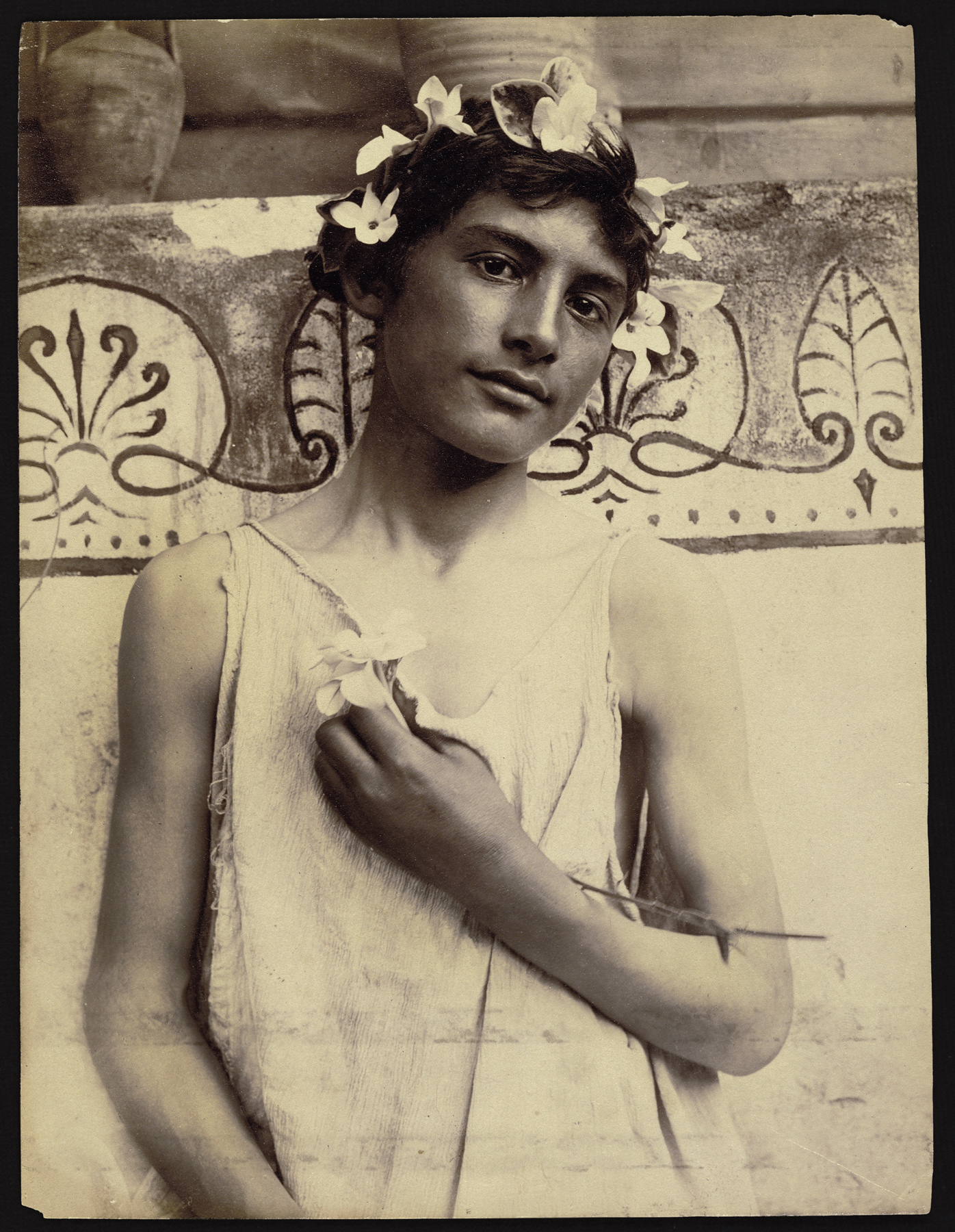
![Guido Rey (Italian, 1861-1935) '[The Letter]' 1908](https://artblart.com/wp-content/uploads/2009/09/guido-rey-the-letter-1908-web.jpg "Guido Rey (Italian, 1861-1935) '[The Letter]' 1908")


 Art Blart _ art and cultural memory archive
You must be logged in to post a comment.