Curators: Hujar’s biographer John Douglas Millar, Hujar’s close friend the artist and master printer Gary Schneider, with Raven Row’s director Alex Sainsbury
And then there is Peter Hujar (American, 1934-1987).
Using contextless backgrounds and simple settings, Hujar’s non-judgmental portraits of friends and lovers rely on the slight twist of the head, the drop of a shadow, the photographer’s look and subjects pose, performance, that curves and bends reality into a presence that is magnetic, magical, eternal.
Hujar’s direct, intimate photographs, suggestive of both love and loss, proffer a mirror to strength and determination / to friendship / to love. His pictures gather, together, a feeling for the freedom of people and places, that essence of being true to yourself (getting to the bone as Harrison Adams puts it). A direct connection between the photographer and subject captured by the camera revealed to the world.
You might have guessed I am in love with his photographs.
Thus, it is a great delight to post on this exhibition at Raven Row in London which looks to be an absolute delight, Hujar’s photographs simply and beautifully presented in the space.
His images reveal themselves over time, expounding his love of life and his intimate and free engagement with the world around him.
That is Hujar’s music, his signature.
Dr Marcus Bunyan
1/ Harrison Adams. Photography in the First Person: Robert Mapplethorpe, Peter Hujar, Nan Goldin and Sally Mann (Dissertation). Yale University, 2018 quoted on the “Peter Hujar” Wikipedia page Nd [Online] Cited 14/03/2025
Further postings on this incredible artist on Art Blart can be found at
Many thankx to Raven Row for allowing me to publish the photographs in the posting. Please click on the photographs for a larger version of the image.
One aspect of this intimate quality was Hujar’s ability to connect with his sitters. One of his models was quoted after an unsuccessful session as saying:
“We couldn’t ‘reveal’. As an actor you have to reveal. And Hujar’s big thing was that you had to reveal. I know that now, but I didn’t know it at the time. In other words, blistering, blazing honesty directed towards the lens. No pissing about. No posing. No putting anything on. No camping around. Just flat, real who-you-are…You must strip down all the nonsense until you get to the bone. That’s what Peter wanted and that was his great, great talent and skill.”
This is the first exhibition to take on the full breadth of Peter Hujar’s later photography. Hujar was a central figure in the downtown scene of 1970s and early 80s New York, but at his death in 1987 from AIDS-related pneumonia his work was largely unknown to a broader art world. Now it is widely admired for its austere elegance and emotional charge. Hujar’s principal concern was with forms of portraiture – of his friends and denizens of the downtown scene, whom he encountered on the street, shot in his apartment studio or sought out backstage. He also turned his attention to animals, whom he photographed with particular empathy, as well as to architectural, landscape and street photography.
Eyes Open in the Dark concentrates on his later work, when his emergence from a debilitating depression in 1976 brought about a new expansiveness. The exhibition also reveals the darkening tone of his photography in the early 1980s, as the AIDS crisis devastated his community, and his work entered into dialogue with the younger artist David Wojnarowicz. Peter Hujar – Eyes Open in the Dark is curated by Hujar’s biographer John Douglas Millar, and Hujar’s close friend, the artist and master printer Gary Schneider, with Raven Row’s director Alex Sainsbury. As well as lifetime prints it will include prints of little-known works specially prepared by Gary Schneider, working closely with the artist’s Estate.
Stephen Lloyd Varble (American, 1946-1984) was a notorious American performance artist, playwright, and fashion designer in lower Manhattan during the 1970s. His work challenged mainstream conceptions of gender and exposed the materialism of the established, institutionalised world.
This is the first exhibition to take on the full breadth of Peter Hujar’s later photography. Hujar was a central figure in the downtown scene of 1970s and early 80s New York, but at his death in 1987 from AIDS-related pneumonia his work was largely unknown to a broader art world. Now it is widely admired for its austere elegance and emotional charge.
Hujar’s principal concern was with forms of portraiture – of his friends and denizens of the downtown scene, whom he encountered on the street, shot in his apartment studio or sought out backstage. He also turned his attention to animals, whom he photographed with particular empathy, as well as to architectural, landscape and street photography. Eyes Open in the Dark concentrates on his later work, when his emergence from a debilitating depression in 1976 brought about a new expansiveness. The exhibition also reveals the darkening tone of his photography in the early 1980s, as the AIDS crisis devastated his community, and his work entered into dialogue with the younger artist David Wojnarowicz.
Peter Hujar – Eyes Open in the Dark is curated by Hujar’s biographer John Douglas Millar, and Hujar’s close friend, the artist and master printer Gary Schneider, with Raven Row’s director Alex Sainsbury. As well as lifetime prints it will include prints of little-known works specially prepared by Gary Schneider, working closely with the artist’s Estate.
The exhibition is free to attend and open Wednesday to Sunday, 11am to 6pm, no booking required. Please note that some images in this exhibition feature explicit sexual content.
David Wojnarowicz (American, 1954-1992) Untitled 1989 From Sex Series (for Marion Scemama) 1988-1989 Gelatin silver print
One of Wojnarowicz’s most remarkable pieces here is the “Sex Series (for Marion Scemama),” a miracle of technical prowess and visual intensity. Wojnarowicz began it in 1988, a year after the photographer Peter Hujar, his close friend and former lover, died of AIDS. These photomontages combine stock photographs with circular insets salvaged from Hujar’s porn collection [among other insets of, for example, police, medical, money, religion and life], which he’d thrown away after his diagnosis.
Much of Wojnarowicz’s work is about sex in an age of death. During the AIDS crisis, sexual activity, particularly that of gay men, was demonized. Resisting the dogma and censorship of the Right’s conservatism and the Left’s moralism alike, the “Sex Series” vibrates with anxious and desirous energy, a mood amplified by the eerie reversal of the printing process, in which light and dark have been inverted to create a near negative.
Curated by Alistair O’Neill, professor of Fashion History and Theory at Central Saint Martins (University of the Arts London)
Please note: This exhibition includes photographs showing nudity and sexually suggestive scenes. There is no age restriction for visitors to the exhibition. We are leaving the decision to visit to the discretion of parents, guardians and carers.
Keith Vaughan (British, 1912-1977) Highgate Men’s Pond Album 1933 Courtesy Aberystwyth University School of Art Museum and Galleries
Nothing hard to see here…
This looks to be a fascinating exhibition albeit with not a single erect penis on show and about half the exhibition showing flaccid examples. The photographs seem particularly asexual. Hardly any of them are what you would call “erotic”, except perhaps the photographs from the earliest album in this posting, Keith Vaughan’s Highgate Men’s Pond Album (1933, above and below). For me, the most sexual photographs are the “rough trade” such as the skins and carnies… an archetype which has existed for centuries.
My Phd research titled Presing the Flesh: Sex, Body Image and the Gay Male (1997-2001) examined in part the history of the male body in photography, including photos of ephebes (young men), the muscular mesomorphic body as featured in the physique magazines and gay male pornography. My history of the male body in photography can be found in the Historical Pressings chapter while the Bench Press chapter investigates the ‘Cult of Muscularity’, the development of gym culture, its ‘masculinity’, ‘lifestyle’, and the images used to represent it.
Much as gay men had to speak ‘Polari’ (gay slang language) when going to pubs such as the Salisbury on St Martin’s Lane in London in the 1970s so that those around us could not understand what we were saying, so physique or ‘beefcake’ magazines of the 1950s and 1960s relied heavily on the iconography of classical Rome and Greece to legitimise and hide from unknowing eyes (in plain sight) their homo-erotic overtones. Use was made of columns, drapery, and sets that presented the male body as the contemporary equivalent of idealised male beauty of ancient times.
While Simon in his excellent post on the exhibition notes that there was a delicate balancing act in the photographs in their subtle aesthetics of constraint and tact and a “self-imposed restraint which made ‘physique photographs’ walk such an exciting fine line between factual depiction of male anatomy and objects of lust from the 1930s to the 80s,” behind the scenes the models were getting boners and having sex all over the place. Purely for private consumption in their day, none of these photographs are ever shown (as in this exhibition) or published today and hardly anyone knows about them. The limp, flaccid penis is all that we get to see for fear of offence and/or moral outrage… for what was covert activity at the time (with a wide underground circulation) is kept impotent today.
Dr Marcus Bunyan
Many thankx to The Photographers’ Gallery for allowing me to publish the photographs in the posting. Please click on the photographs for a larger version of the image.
“I think the interest is not so much in the images, per se, as in their variety, and also in the extraordinary density and complexity of the clandestine networks of gay photographers, subjects, printers, publishers and distributors which the wall labels describe and explain. That’s interesting social history.
And then, when you lay the complex mesh of legal and cultural and visual parameters over the images you get, as it were, another layer of complexity beyond the images themselves; you get to see them as varying visual strategies and approaches and sublimations of very powerful male urges of desire and sexuality.”
“The bodies in the ‘beefcake’ magazines of the 1950’s tend to be bigger than that of the ephebe, even when the models were quite young in some cases. As the name ‘beefcake’ implies, the muscular mesomorphic shape was the attraction of these bodies – perfectly proportioned Adonis’s with bulging pectorals, large biceps, hard as rock abdomens and small waists. The 1950’s saw the beginning of the fixation of gay men with the muscular mesomorph as the ultimate ideal image of a male body. The lithe bodies of young dancers and swimmers now gives way to muscle – a built body, large in its construction, solid and dependable, sculpted like a piece of rock. These bodies are usually smooth and it is difficult to find a hirsute body11 in any of the photographs from the physique magazines of this time. According to Alan Berube in his book, Coming Out Under Fire,
“The post-war growth and commercialization of gay male erotica in the form of mail-order 8 mm films, photographic stills, and physique magazines were developed in part by veterans and drew heavily on World War II uniforms and iconography for erotic imagery.”12
Looking through images from the 1940s in the collection at The Kinsey Institute, I did find that uniforms were used as a fetish in some of the explicitly erotic photographs as a form of sexual iconography. These photographs of male2male sex were for private consumption only. I found little evidence of the use of uniforms as sexual iconography in the published photographs of the physique magazines. Here image composition mainly featured classical themes, beach scenes, outdoor and studio settings. …
As the 1950s turned into the 1960s other stereotypes became available to the photographers – for example the imagery of the marine, the sailor, the biker, the boy on a tropical island, the wrestler, the boxer, the mechanic. The photographs become more raunchy in their depiction of male nudity.
In the 1950s, however, classical aspirations were never far from the photographers minds when composing the images as can be seen in the undated photograph Jim Stevens by Lon of New York in London taken from a book called ‘Art in Physique Photography’.14 This book, illustrated with drawings of classical warrior figures by David Angelo, is subtitled: ‘An Album of the world’s finest photographs of the male physique’.
Here we observe a link between art and the body. This connection was used to confirm the social acceptability of physique photographs of the male body while still leaving them open to other alternative readings. One alternative reading was made by gay men who could buy these socially acceptable physique magazines to gaze with desire upon the naked form of the male body. It is interesting to note that with the advent of the first openly gay pornography magazines after the ruling on obscenity by the Supreme Court in America in the late 1960s,15 classical figures were still used to justify the desiring gaze of the camera and viewer upon the bodies of men. Another reason used by early gay pornography magazines to justify photographs of men having sex together was that the images were only for educational purposes! …
As social morals relaxed in the age of ‘free love’, physique photographers such as Bob Mizer from Athletic Model Guild produced more openly homo-erotic images. In his work from the 1970s full erections are not prevalent but semi-erect penises do feature, as do revealing “moon” shots from the rear focusing on the arsehole as a site for male libidinal desires. A less closeted, more open expression of homosexual desire can be seen in the photographs of the male body in the 1970s.17 What can also be seen in the images of gay pornography magazines from the mid 1970s onwards is the continued development of the dominant stereotypical ‘ideal’ body image that is present in contemporary gay male society – that of the smooth, white, tanned, muscular mesomorphic body image.
Marcus Bunyan. “Historical Pressings,” from Presing the Flesh: Sex, Body Image and the Gay Male. PhD thesis, RMIT University, 2001
A Hard Man is Good to Find! celebrates a clandestine visual culture of men’s bodies that emerged in the post-war period, during a time when making and distributing such images was a criminal offence.
This exhibition highlights key areas of London which were a focus for men seeking out men to photograph. It maps out a territory of risk and possibility across Highgate, between Chelsea and Wellington Barracks, in Soho, Brixton, Portobello and Euston. Catalogues, print ordering sheets, personal albums, magazines and publications explore how these photographs were circulated, exchanged and shared.
While the 1955 Wolfenden Report and the 1967 Sexual Offences Act marked the partial decriminalisation of gay sexual activity, prompting gay liberation and the fight for social equality; any depiction of male nudity which suggested homosexuality remained subject to the 1857 Obscene Publications Act.
Including work by John S. Barrington, Cecil Beaton, Guy Burch, Basil Clavering, Rotimi Fani-Kayode, Bill Green, David Gwinnutt, Angus McBean, Patrick Procktor, Ajamu X and many more.
Whilst this is an exhibition of queer pictures, it is important to note that not all the photographers or models can be claimed as queer subjects. It also acknowledges that language evolves and while queer is employed today for its inclusivity, the reclaiming of the derogatory term can sit uneasily for the generation subjected to it; the term homosexual can be similarly problematic for a younger generation.
As a number of the works are historical documents, it has not been possible to identify all individuals represented in the exhibition. We welcome any amendments or additions.
Text from The Photographers’ Gallery website
A Hard Man is Good to Find! Interview with exhibition curator Alistair O’Neill
Alistair O’Neill, professor of Fashion History and Theory at Central Saint Martins (University of the Arts London) talks about curating the exhibition A Hard Man is Good to Find! – a bold new exhibition charting over 60 years of queer photography of the male physique.
Keith Vaughan (British, 1912-1977) Highgate Men’s Pond Album (detail) 1933 Courtesy Aberystwyth University School of Art Museum and Galleries
Keith Vaughan (British, 1912-1977) Highgate Men’s Pond Album (detail) 1933 Courtesy Aberystwyth University School of Art Museum and Galleries
Keith Vaughan (British, 1912-1977) Highgate Men’s Pond Album 1933 Courtesy Aberystwyth University School of Art Museum and Galleries
Keith Vaughan (British, 1912-1977) Highgate Men’s Pond Album, front cover 1933 Courtesy Aberystwyth University School of Art Museum and Galleries
Highgate men’s pond has a history of accommodating physical culturists and queer men as swimmers and sunbathers. At the age of 21, artist Keith Vaughan purchased a Leica camera and set up a darkroom in his bedroom. One of his first projects was a photobook he designed and made charting the climbing temperature of a summer’s day at the pond. This is the first time the album has been exhibited.
Keith Vaughan (British, 1912-1977) Highgate Men’s Pond Album 1933 Courtesy Aberystwyth University School of Art Museum and Galleries
Keith Vaughan (British, 1912-1977) Highgate Men’s Pond Album (detail) 1933 Courtesy Aberystwyth University School of Art Museum and Galleries
Angus McBean (Welsh, 1904-1990) David Dulak 1946 Courtesy Rupert Smith Collection
In a study of Dulak taken in Angus McBean’s Covent Garden studio, an idealised diptych of the naked dancer is created from controlled lighting and double exposure. It was taken after McBean was released from prison, having served two years’ hard labour for gross indecency. During the Blitz, McBean relocated his studio to Bath and it was raided by police in 1941.
Between Chelsea and Wellington Barracks
I.e. Pimlico, an area of boarding houses and rented rooms, an enclave of queer life. Angus McBean opened his photographic studio on Belgrave Road in 1935.
Montague Glover had served in the First World War where he was awarded a medal. He went on to practice as an architect with photography on the side. His military career gave him easy access to the barracks where he recruited like-minded Guards to return to his studio or rented rooms and pose in less than full uniform. Squaddies available for gay sex were known as ‘a bit of scarlet’.
Angus McBean (Welsh, 1904-1990) David Dulak (detail) 1946 Courtesy Rupert Smith Collection
“… by the time of the 1939 National Register he was 35 and living in a Hertfordshire cottage with three other men; his 19 year old photographer’s assistant, a 21 year old theatre clerk, and a 26 year old builder’s carpenter. Because of the London Blitz McBean moved to Bath where he set up a studio in his ground floor flat in Kingston House, Pierrepont Street, which soon became a meeting place for gay men, including servicemen who were stationed nearby.
On 13 November 1941 Bath police raided the flat and arrested McBean and a 16 year old youth. This began a chain of arrests using evidence from letters, diaries and statements to the police. It also resulted in one, and possibly two, suicides.
McBean and five other men were tried “on grave charges” at Winchester Assizes in March 1942 in front of Bristol born and former Clifton College pupil Lord Chief Justice Thomas Inskip, 1st Viscount Caldecote. All six men were found guilty and sent to prison with McBean receiving a 4 year sentence of hard labour for three charges of gross indecency. On hearing the sentence McBean collapsed in the dock. Others convicted were: 25 year old Lt. Tom Gill, in civilian life an actor, who received 15 months in prison; 18 year old Theodore Parker who was found in possession of 36 love letters from Gill and was sent to borstal for three years; 28 year old Arthur Sigmund Politzer, a well known artist and glass designer serving with the Field Security Police who received a 20 month prison sentence; 21 year old Eric Hughes, a civil servant sentenced to three years Borstal; and 22 year old Brian Ball, a soldier stationed in Surrey and sentenced to 15 months imprisonment.
Two other lives were ended by the case, though neither was charged. Alan Farr, a 30 year old Admiralty electrical fitter and draughtsman had been interviewed twice by police in the week after the raid about connections with McBean. On 16 December 1941 a Detective Inspector called at Farr’s office to escort him to the police station, probably to be charged. On the pretext of visiting the cloakroom before leaving, Farr shot himself and died instantly. Also mentioned during the trial was 18 year old Allan Patrick Nottingham, already on probation for indecency charges in Portsmouth, who may have been the catalyst for the initial discovery of Bean’s circle. A week after the trial, the Bath Chronicle of 21 March 1942 reported that Nottingham had been found in a crashed car on the Wiltshire Downs and had died shortly after in Swindon Hospital.
Jonathan Rowe. “Angus McBean,” on the Out Stories Bristol website 2021 [Online] Cited 29/05/2023
Angus McBean (Welsh, 1904-1990) David Dulak Ballet, January 1946 Courtesy Rupert Smith Collection
Dulak was a dancer, found by physique photographer John S Barrington in 1938 on Charing Cross Road. Barrington introduced him to theatre photographer Angus McBean; this study featured on the cover of Richard Buckle’s progressive dance journal, Ballet.
The Photographers’ Gallery presents A Hard Man is Good to Find! – a bold new exhibition charting over 60 years of queer photography of the male physique, on display from 2 March to 11 June 2023.
Bringing together more than 100 works, the exhibition centres on queer photographs of men’s bodies, produced in London in the twentieth century. While the 1955 Wolfenden Report and the 1967 Sexual Offences Act marked the partial decriminalisation of gay sexual activity, prompting gay liberation and the fight for social equality; any depiction of male nudity which suggested homosexuality remained subject to the 1857 Obscene Publications Act, which made making or distributing such images a criminal offence.
A clandestine visual culture emerged, regulated by laws which enforced homosexuality as invisible. In turn, it directly fed the defiant, overt visuality of gay men’s bodies that emerged in the post-war period. The tension between invisibility and visibility was negotiated through ideas about the male body drawn from art, physical culturists, and pornography – both home-grown and imported.
Taking a novel approach, the exhibition highlights key areas of London which were a focus for men seeking out men to photograph. It maps out a territory of risk and possibility across Highgate, between Chelsea and Wellington Barracks, in Soho, Brixton, Portobello and Euston. Within each site it is possible to locate artists of all persuasions, creating work about queer sensibilities and men’s bodies in radical ways. Catalogues, print ordering sheets, personal albums, magazines and publications are also included in the exhibition to explore how these photographs were circulated, exchanged and shared. Drawing together photographs produced for commercial, as well as creative and personal purposes, A Hard Man is Good to Find! dissolves hierarchies, creates non-linear historical narratives and brokers unlikely adjacencies.
Covering the 1930s to early 1990s, many works are exhibited here for the firsttime including Keith Vaughan’s Highgate Men’s Pond album, a modernist photo collage made in 1933; ‘The Portobello Boys’, an anonymous and striking portfolio of young men taken in the late 1950s and early 1960s in North Kensington. A set of archetypes, ‘The Londoners’, documented in the late 1960s by Anthony C Burls (trading as Cain of London) and Martin Spenceley’s street portraits of subcultural men photographed in Euston in the 1980s.
The hinge of this history is the posing pouch, a modest fabric covering for the male genitals developed by gay physique photographers to show as much of the male body as possible. Its origins lie in the US, in the Athletic Model Guild established by Bob Mizer in 1945, although there is evidence of it being worn for sunbathing in London in the early 1930s. An original 1950s posing pouch will on display in the exhibition. Employed to circumvent the ban on full nudity (which included the postal system), the pouch was also painted on mail order reproductions so that customers could rub them off once received in the post. The sighting and dematerialising of the posing pouch is key to thinking through how such images were consumed, and how queer erotics were discursively constructed from imaginative forms of resistance to power and oppression.
The exhibition includes works by: John S Barrington, Cecil Beaton, Guy Burch, Basil Clavering (trading as Royale), Rotimi Fani-Kayode, Bill Green (trading as Vince), David Gwinnutt, Paul Hawker, Angus McBean and Ajamu X.
Press release from the Photographers’ Gallery
Installation view of the exhibition A Hard Man is Good to Find! at The Photographers’ Gallery, London
Mrs Mizer Tangerine Posing Strap 1955 Miles Chapman Collection
In 1945 Bob Mizer started the Athletic Model Guild, a model agency for bodybuilders for the film industry. In 1951 he launched a quarterly magazine, Physique Pictorial. For his photoshoots Mizer developed the skimpiest possible garment which dwindled down to the posing pouch. The exhibition explains that the earliest versions were sewn for him by his mother who, nonetheless, strongly disapproved of his sexuality. …
Slightly spoiling the effect, there is a small mention of the photographic evidence that this kind of super-minimalist covering was, in fact, being worn by sunbathing men in London in the early 1930s. Still. American has to be shoehorned in somehow. [see photographs by Keith Vaughan at the top of the posting]
Bill Green (Vince) catalogue sheet 31949 June 1949
Bill Green set up Vince Studio at 46 Manchester Street, Marylebone in 1946, specialising in photographs of bodybuilders. Prints could be ordered from catalogue sheets advertised in the classifieds of Health and Strength magazine. His catalogue sheets always had a gutter in the middle so they could be folded for discreet posting without creasing any image.
“Vince” had originally been the pseudonym of Bill Green, a photographer for men’s magazines, who shot wrestlers and bodybuilders naked but for nifty briefs he had cut down from chainstore trunks. These were so unlike available mens’ underwear that models and readers wanted to buy them. Green obliged by mail order, later adding to his catalogue the black sweater get-up of intellectual Paris and unshrunk Levis; in 1954 he set up in the Soho premises – described by Richard Benson of the Face magazine as “a CS Lewis of a wardrobe for young men” – they passed through its door into somewhere far out.
Vince and his boys supplied flagrant colour, untweedy texture, tight fit and low cut to a theatrical and artistic clientele, and many followers of camp. But these were not the only customers for that “certain ambiguity”: pink hipsters walked out of the shop on heteros, too.
Veronica Horwell. “John Stephen,” on The Guardian website Mon 9 Feb 2004 [Online] Cited 29/05/2023
Bill Green (Vince) Monotosh Roy c. 1950s Courtesy Rupert Smith Collection
Bill Green – ‘Vince Man’s Shop’
In the 1940s, Bill Green was a local photographer who specialised in artistic images of ‘muscle men’ and male wrestlers. His models wore fairly revealing (for the time) homo-erotic garments that were mainly designed by himself due to the lack of availability of commercial items. He decided to develop this business and by 1950 was selling them through mail-order catalogues appealing mainly to the gay community. Following European trips in the early Fifties he expanded his portfolio to include the ‘existentialist’ look that was popular in France and Italy and was the first to introduce British men to ‘Beatnik’-style fashions.
With the continued success of his mail-order business, and aware of its popularity with the gay community, he opened Vince Man’s Shop in 1954. The establishment was located in Newburgh Street, an intelligent business decision as this was right at the heart of London’s gay community and very close to Marshall Street Public Baths which was a well-known and popular meeting area for gay men. One of the earliest advertisements featured a muscular Sean Connery in a ‘matelot’ vest and skin-tight jeans.
His colourful and unconventional designs, which included velvet and silk materials and pre-faded denim, quickly widened its appeal by attracting younger members of the Bohemian and Thespian fraternities who frequented the West End of London. The window displays were provocative for the time, often featuring mannequins wearing outrageous fashions including briefs and pink hipster-style slacks, and his wide range of clientele included the likes of George Melly, Peter Sellers, Sean Connery, Pablo Picasso and even the King of Denmark!
The fashions in the establishment were not cheap, and were generally out of the normal price range of ordinary teenagers, but this brought a certain ‘respectability’ to the informality and flamboyance of new styles and were certainly one of the catalysts in the major changes that were to take place in the fashions appealing to young males in the Sixties. As the decade progressed, and ’boutiques’ started providing a progressively fast-moving outlet for cheap fashion clothing, Vince’s came under increasing financial pressure and the establishment was forced to move to a less expensive location in North London. Bill Green closed the shop for good in 1969, subsequently becoming the manager of a Soho restaurant.
Anonymous. “Carnaby Street,” on the Sixties City website Nd [Online] Cited 29/05/2023
Montosh Roy (1916-2014)
Monotosh Roy (1916-2014) was an Indian bodybuilder, who held the Mr. Universe title in Group III Amateur Division in 1951. Roy was the first Indian and Asian to be awarded the Mr. Universe title. …
In 1939, he competed in his first bodybuilding competition, but did not fare well. He resolved for success and engaged himself in further practice. In 1939, he won the East Indian Bodybuilding Championship. In 1947, he won the All India Bodybuilding Championship.
In 1951, Roy travelled to the United Kingdom and participated in the Mr. Universe competition. He won the Mr. Universe title in Group III Amateur Division category. The audience at the competition were mesmerised by his muscle display. They queued up for his autograph and even waited up to two and half hours for his autograph. Following his victory at the Mr. Universe competition, he was felicitated at the India House by the Indian High Commissioner.
After his return to India he acted as a trainer in many physical culture clubs. He used to train fitness and yoga to celebrities. He founded the Indian Bodybuilding Federation in 1958. He was also the founding member of Asian Bodybuilding Federation. He also taught at the Calcutta University and the Law College. He became a featured columnist in periodicals on health and fitness. He also wrote a few books on Yoga. He conducted bodybuilding programmes that were telecast in the Doordarshan. He set up several bodybuilding and yoga centres in Kolkata.
Bill Green (Vince) Vince advertisement Health and Strength, 29 May 1952
In 1951, Green was advertising posing briefs in the Daily Mirror. They were made by shortening and over-dyeing Marks & Spencer underwear. This advertisement was shot at the Serpentine Lido. In 1954, Green opened the first men’s fashion boutique, Vince Man’s Shop, on Fouberts Place, Soho; it was the start of the peacock revolution and Carnaby Street as a fashionable retail destination.
Bill Green (Vince) Vince Man’s Shop catalogue, model Sean Connery Spring/Summer 1957 Courtesy Alistair O’Neill Collection
Vince Man’s Shop was the first boutique to sell imported men’s fashion such as American workwear jeans and Italian suiting and shirting. It catered to homosexual men and benefited from its proximity to the Marshall Street gym, Soho’s coffee bars and Piccadilly Circus. The cover model here is aspiring actor Sean Connery, better known at the time as a bodybuilder and artist’s model
Cecil Beaton (British, 1904-1980) ‘Narcissus of 1967’ (Gervase Griffiths) c. 1967 Gelatin silver print
Marylebone
‘The City of Quebec’ pub in Marylebone is supposed to be London’s oldest gay pub. It opened in 1946 and was popular with gay RAF men. Bill Green learned photography and wrestling in the RAF and in 1946 set up Vince Studio at 46 Manchester Street, soon establishing a name for ‘physique photography’. He advised beginners to use a little oil to help highlight the contours of male musculature.
In 1954 Green opened a men’s fashion boutique in Foubert’s Place, Soho. In 1956 his assistant, John Stephen, opened another fashion store. According to the exhibition’s curator, Alistair O’Neill, Professor of Fashion History and Theory at Central Saint Martins, these sparked ‘the peacock revolution’ in men’s fashion. They helped turn Carnaby Street into the centre of modern fashion.
Artist Patrick Prockter also had a studio on Manchester Street. He took photos as preparatory studies for paintings, especially of his boyfriend Gervase Griffiths. He cultivated an artistic circle which included painter David Hockney, fashion designer Ossie Clark, and physique model Peter Hinwood. The veteran photographer Cecil Beaton was attracted to this young group of openly queer men. The exhibition includes sets of colour photos of Griffiths on a beach, and two by Beaton which are among my favourites, not because they’re nude, camp or gay – simply because they’re beautiful.
Basil Clavering (British, 1910-1973) (Royale, Hussar, Dolphin) Mail order Storyette print late 1950s Courtesy Rupert Smith Collection
Basil Clavering ran the Cameo Royal cinema on the Charing Cross Road, and the Cameo Poly (now Regent Street Cinema). He built a studio in the basement of his home on Denbigh Street, Pimlico, with his friend, John Charles Pankhurst, both of whom had served in the navy. In their studio Basil & John recruited military men to model in authentic uniforms, and Clavering innovated the ‘storyette’ where the catalogue sheet of photos available to order would set out a narrative drama like film stills from a motion picture.
Basil Clavering (British, 1910-1973) (Royale, Hussar, Dolphin) Photograph from Storyette EX FJSS 1950s Courtesy Rupert Smith Collection
“Clavering and Parkhurst’s work reflects in both imagery and subject matter the drawings of Tom of Finland (Touko Laaksonen, 1920-1991). Laaksonen met Clavering during a visit to London and Studio Hussar commissioned a series of 17 panel drawings from him entitled The Thieving Cowboy (1957). No other photographers of the time were extracting so much visual drama from the clothed male figure. Other physique photographers were viewing the legal restrictions of the time as a challenge, whereas Royale and Hussar embraced them as an opportunity to produce magnificent risqué images.
Clavering and Parkhurst both served in the Navy, and their experience and connection to their subject matter is evident in the way clothing and partial undress was depicted, reflecting an insider’s comprehension and understanding.
Many of the models were also active military personnel, who Clavering met in public houses close to Hyde Park and the Chelsea barracks. Consequently, the images are not simply of men dressing up in uniforms, but rather men fully aware of both the purpose and symbolism of the uniform.”
Basil Clavering (British, 1910-1973) (Royale, Hussar, Dolphin) Photograph from Storyette EX FJSS 1950s Courtesy Rupert Smith Collection
Clavering was a successful businessman, and owned the Gala-Royale cinema chain. More as a hobby than anything else, he established a photographic studio in the basement of his Pimlico home, with his friend John Charles Parkhurst (1927-2000). Both men had served in the Navy, and they were drawn to the military men around the Hyde Park and Chelsea barracks, whom they paid to model for them.
The studio operated under two names, Royale and Hussar, and Clavering sold the photographs by mail order. The images are profoundly erotic, despite there being no frontal nudity. Models are occasionally depicted solo, but more often in groups, and scenarios involve uniform, military and naval discipline, wrestling, light bondage and spanking – somehow always in a mood of levity and playfulness. Clavering met Tom of Finland, and several images from a biker series echo the Finn’s work; in 1957 Studio Hussar even commissioned a series of drawings from him.
As far as I know this photograph is not in the exhibition but I like it!
Paul Hawker Spencer Churchill 1951 Courtesy Rupert Smith Collection
The Serpentine
In the 1950s British bodybuilding magazines catered for two audiences, straight bodybuilders and a gay readership. As well as the obvious photos and articles, in their back pages these magazines offered discreet mail order services for ‘original physique studies’. This section features the work of mail order publisher William Domenique (trading as Lon of New York) and gay erotic artist Bill Ward.
Paul Hawker came from Bristol, moved to London, and took photos of young men preening and parading at the Serpentine Open Air swimming pool, another well-known gay haunt. He is represented by some of the photos he took of his friend, body builder Spencer Churchill. Apparently Churchill was one of the first to adopt the American fashion for denim workware jeans as regular casual clothing.
And once you knew, you could purchase. Lots of the images here skirt around the legality of the male nude by being available in bodybuilding magazines, or as a catalogue of physiques for fitness buffs to emulate at home. One amazing image shows Spencer Churchill tensed and glistening while wearing a posing pouch that you could scratch off to reveal the goods beneath. It’s a fascinating portrait of hidden mid-century male desire in London.
But there are ethical questions here too. John S Barrington pretended to be a Vogue photographer to persuade men to pose for him. That’s uncomfortable, exploitative and not really dealt with in the show. Also, lots of the subjects in the exhibition wouldn’t have considered themselves gay or queer either, so framing them anonymously in a queer context totally removes the sitters’ agency.
Then there’s the group of photos of young men lounging around in west London bedrooms and living rooms. They’re amazing images, totally unguarded and joyful, but they were purchased as a box of anonymous negatives from Portobello Antiques Market by Emmanuel Cooper. These men have had no say in their private nude moments being plastered across The Photographers’ Gallery decades after they were taken. This was a time when privacy not only mattered, but had a tangible impact on people’s lives, and this has taken the choice away from them.
So there are issues here and some tricky ethical moments, but there’s still a lot to like. At its best, this show is a celebration of the male form in London from a time when that was an incredibly dangerous thing to celebrate. The thing is, men are hot, always have been, and we should be very grateful that these days we can say that without getting put in prison.
Anonymous photogapher The Portobello Boys Early 1960s Courtesy Emmanuel Cooper Archive The Bishopsgate Institute Special Collections and Archives
Emmanuel Cooper purchased a set of negatives from Portobello Antiques Market in the early 1980s. Cooper was a ceramicist, writer, art critic and gay rights activist. He called this anonymous body of work The Portobello Boys, as he believed they were taken in the north Kensington area in the late 1950s to mid-60s. Taken in an era before gay liberation, they document young men posing, in turns uncertainly and assertively, in states of undress.
Notting Hill
Became known after the war for its combination of bachelor housing and growing immigrant community. In the early 1980s ceramics artist Emmanuel Cooper picked up a set of negatives at Portobello Market. It turned out to be a set of studies of nude or partially clothed young men with an obvious queer vibe taken in the late 1950s and early 1960s in North Kensington. Cooper titled it ‘The Portobello Boys’ and arranged for its publication. They are surprisingly homely, unguarded, intimate studies of everyday life.
Anthony C Burls (Cain of London) Catalogue sheet c. 1968-1970 Guy Burch collection
Anthony C Burls was a photographer who engaged young men to model through street casting. He also ran a coffee shop at World’s End in Chelsea in the 1960s, took casual work at Battersea Funfair and regularly attended a gym in Brixton. He used these contexts to find working-class men to photograph.
White Brixton
Anthony C. Burls was an interesting character. In the 1960s he ran a coffee shop at the World’s End in Chelsea, got odd jobs working at funfairs, and attended a gym in Brixton. In all these settings he asked working class men if he could photograph them and the result is a series of full length, mostly fully clothed studies which I think I liked most out of the exhibition. He named the series ‘The Londoners: Official reports’, including not just the photos but the man’s job description and a pen profile. His first business address was Studio 200 on Railton Road, also home to the South London Gay Community Centre. …
I liked Anthony C. Burls’ set of photos of the rough, dirty, tough-looking young men you get working at funfairs and such, swaggering among the dodgems in tight jeans, unbuttoned shirts and rocker brylcreemed hair. [see photograph at bottom of posting]
John S Barrington (British, 1920-1990) John Hamill c. 1966 Courtesy Rupert Smith Collection
John S. Barrington (1920-1991) was a British physique photographer and publisher. Barrington’s photos of nude or semi-nude men appeared widely in British and American physique magazines, sometimes under the pseudonym John Paignton. Barrington published many of his own physique magazines, including Male Model Monthly, the first in Britain. He also published a number of books related to photography and anthropometry. Barrington was a prolific artist and publisher, and by 1984 was said to have published more nude titles than any other individual in Europe or the United States.
Barrington had frequent sexual encounters with men throughout his life, particularly with the men who modeled for him, though he identified as heterosexual.
Barrington began photographing men in 1938 at the men’s bathing pond at Hampstead Heath. He studied at St Martin’s School of Art and L’Ecole des Beaux Arts in Paris. In addition to photography, Barrington was also a visual artist and sculptor.
Barrington began working as a physique photographer in 1948. In 1954, he began publishing Male Model Monthly, the first physique magazine in Britain. From 1954 until 1979, he would go on to publish many more physique magazines in Britain and the US, among the best-known being MAN-ifique, FORMosus, Superb Youth, and Youth in the Sun.
Barrington was known to select models in the “boy next door” mold, with average body types. His photographs were mostly taken outdoors, with models appearing in relaxed, natural poses.
In the 1950s and 1960s Barrington published books on anatomy and anthropometry, ostensibly for the benefit of artists.
John S Barrington (British, 1920-1990) Catalogue sheet c. 1970s Courtesy Rupert Smith Collection
John S Barrington (British, 1920-1990) Catalogue sheet (details) c. 1970s Courtesy Rupert Smith Collection
John S Barrington (British, 1920-1990) Catalogue sheet c. 1970s Courtesy Rupert Smith Collection
John S Barrington (British, 1920-1990) Catalogue sheet (details) c. 1970s Courtesy Rupert Smith Collection
Martin Spenceley Untitled 1980s Courtesy of the Michael Carnes Collection
Martin Spenceley photographed young men in Euston in the 1980s, scouting for Teds, punks and skinheads, persuading them to pose by cheekily lying that he worked for Vogue America.
Martin Spenceley Untitled 1980s Courtesy of the Michael Carnes Collection
Rough trade!
The show is split into different geographical areas of London, each of which had a slightly different character, lending themselves to different types of man and images. We start in the bedsit land of Pimlico. In the 1950s this was home to many single young queer men as well as soldiers living in the two nearby army barracks. We see pictures of many of the young fit soldiers who liked being photographed to earn a little extra money.
We then move on to Hampstead Heath the famous cruising area and home to the men-only Highgate Men’s Swimming Pond. A good collection of sunbathing men from the 1930s is included here. Other areas of London shown include a selection of 1950s male physique photography shot in Marylebone and in Hyde Park and ‘The Portobello Boys,’ an interesting selection of men shot at home in Notting Hill and Portobello in the 1960s. This area of West London was very queer back then.
Then we head south of the river to Battersea and Brixton where pictures range from 1960s fairground and other workers through to queer artists and activists in the 70s and 80s.
Anthony C Burls (Cain of London) The Young Londoners late 1960s – early 1970s
“The show is structured through areas of London that were known for attracting queer communities and related imagemaking practices,” he explains.
“This might be open air sites where men could see and be seen, such as Highgate Men’s Pond or the Serpentine Lido, but it also includes areas that offered furnished rooms for rent that were popular with single gay men, such as Pimlico or Notting Hill.”
Interesting adjacencies are revealed, such as the fact that artist Patrick Procktor had a studio in Marylebone in the same street as physique photographer Bill Green (who traded under the name Vince).
Many of the works in the show are being exhibited at the gallery for the first time, including a set of archetypes, ‘The Londoners’, documented in the late 60s by Anthony C Burls (who traded as Cain of London) and Martin Spenceley’s street portraits, photographed in Euston in the 80s.
It also highlights fascinating historical objects such as an original 1950s posing pouch, which has its origins in the US Athletic Model Guild established by Bob Mizer in 1945, but was widely used by gay physique photographers to show as much of the male body as possible.
In bringing the show to life, O’Neill hopes to demonstrate how this fascinating pocket of queer history has gone on to influence visual culture more broadly. “The movement certainly informed the body consciousness of queer visual culture,” he says, “but I would argue that it’s intertwined history with the emergence of men’s fashion in the 1950s and 60s has played a significant role in contemporary queer style positions, both naked and dressed.”
Anthony C Burls (Cain of London) Untitled (Carnie) 1960s
As far as I know this photograph is not in the exhibition but I like it!
A secret history
All this explains why, as the tools of photography became cheaper and more widely available, from the 1920s and 30s onwards a clandestine visual culture emerged. During the 1930s stunning images of athletic male physiques could be associated with the general social trend towards hiking and healthy outdoor activities. During the Second World War photographers were encouraged to take photos of our brave boys looking butch and manly. After the war publishers gained more confidence but were still liable for arrest and confiscation of stock. It was only really in the later 1960s that, along with so many other social movement, gay men felt increasing confidence in depicting their lifestyles and objects of desire openly.
Throughout the period there is a continual interplay and overlap between licit and illicit ways of visualising the male body: the naked athlete trope ultimately derived from statues of ancient Greek and Roman men. Images of tough soldiers could walk a narrow line between being heterosexual propaganda and gay adoration. Young men sunbathing could be following European models of health and fitness. Models and precedents from heterosexual art and culture were continually being subtly reworked, the borderline between legal art and illegal ‘obscenity’ shimmered and wavered within individual images, different definitions of desire fight in single photographs.
Anyway, the repression gay photos were liable to be subject to at any moment explains why a good deal of this visual culture was underground or hidden. Some gay publications were subscription only, others were available as a sideline in otherwise ‘respectable’ book and art shops. In the 60s and 70s more magazines and specialist shops came out of the closet.
Curators: Brian Clark, Susan Kravitz, and Parker Sargent for the Cherry Grove Archives Collection and coordinated at New-York Historical by Rebecca Klassen, associate curator of material culture
Weekend Guest at Hot House 1958 Cherry Grove Archives Collection, Gift of Harold Seeley
During the 1950s, Cherry Grove provided gay individuals a much-needed escape from the homophobia and the legal and social persecution that many experienced in the era of McCarthyism following World War II. Homosexuals faced physical assault, verbal attacks, family rejection, loss of employment, imprisonment, and even involuntary psychiatric hospitalisation. In the Grove, they could openly socialise and experience a joyful and rare freedom of sexual expression.
I seem to be on a roll at the moment with a series of exhibitions that this archive loves to highlight: human beings who picture, capture, depict, image, or photograph the subversive, marginalised, disenfranchised, hidden ‘Other’ in society – as an act of resistance against living lives of conformity, against the prejudices of patriarchy and religion, and against the oppression of bigotry and discrimination.
This exhibition is no exception.
In the 1950s, in an era of “passing” – where queer people had to pass themselves off as something else, something they were not, in order to keep a job or secure a roof over their heads – it is refreshing to see these candid, vernacular, performative photographs of, admittedly, privileged white gays playing, camping it up and having fun with their liberation and identity construction. Having fun in their lives.
Acknowledgement must be made that this party life on Fire Island in the 1950s was only for the white, middle-upper classes. Black, Hispanic, Latino and poor white gay trash need not apply. But that does not mean that these photographs are any less valuable in documenting queer resistance to the status quo.
Dr Marcus Bunyan
Many thankx to New-York Historical Society for allowing me to publish the photographs in the posting. Please click on the photographs for a larger version of the image.
Curator Confidential: Safe/Haven: Gay Life in 1950s Cherry Grove
During weekends and summers in the pre-Stonewall era, gay men and women, including many New Yorkers, traveled to the secluded beach town of Cherry Grove on Fire Island where they found opportunities for sexual exploration and self-expression – behaviour that was both stigmatised and criminalised in the straight world. Together with creative figures like Truman Capote, W.H. Auden, Carson McCullers, and Patricia Highsmith, these visitors to the Grove took pleasure in the costumed parties, theatrical events, and liberated atmosphere that this gay sanctuary provided.
On view outdoors in New-York Historical’s rear courtyard, this exhibition explores the gay and lesbian community that flourished during the 1950s in Cherry Grove through some 70 enlarged photographs and additional ephemera from the unique holdings of the Cherry Grove Archives Collection.
Curated by Brian Clark, Susan Kravitz, and Parker Sargent for the Cherry Grove Archives Collection and coordinated at New-York Historical by Rebecca Klassen, associate curator of material culture.
One Hundred Club Party 1949 Cherry Grove Archives Collection, Gift of Harold Seeley
During the 1950s, campy costume parties were held every summer weekend. Attendees, straight and gay, showed off flamboyant outfits that would have otherwise been considered a violation of New York laws prohibiting risqué attire and cross-dressing.
Outside of Bea Greer’s Home, Bea’s Brunch 1951 Cherry Grove Archives Collection, Gift of Harold Seeley
Cocktails, sunbathing, sex, and parties were the norm during summer weekends. Gay men and women found opportunities to socialise out in the open, whether on the beach or on the decks of Grove houses.
Parasol Party 1951 Cherry Grove Archives Collection, Gift of Harold Seeley
Under the guise of dressing up, many men and women were able to play with gender norms at these fabulous cocktail parties, thereby challenging society’s expectations of “proper” behaviour.
Patricia Fitzgerald and Kay Guinness, Cherry Grove Beach September 1952 Cherry Grove Archives Collection, Gift of Gay Nathan and Julie Paradise
Kay Guinness (right) was an iconic Cherry Grove figure. Independently wealthy and closeted, she had affairs with women while also being married three different times to men. She flew small airplanes, had her own motorboat, and loved to be part of fashionable society. In the 1950s, Guinness was arrested in Cherry Grove for nude sunbathing on the beach. Her cottage was named No Man’s Land.
The New-York Historical Society presents Safe/Haven: Gay Life in 1950s Cherry Grove, an intimate look at one of the first gay beach towns in the United States, on view in New-York Historical’s rear courtyard May 14 – October 11, 2021. The outdoor exhibition explores mid-20th-century gay life in Fire Island’s remote hamlet of Cherry Grove, located on the barrier island south of Long Island, through some 70 enlarged photographs and additional ephemera from the holdings of the Cherry Grove Archives Collection – which works to collect and archive the community’s rich and colourful history.
“Cherry Grove on Fire Island became a weekend and summer destination for gay men and women in the pre-Stonewall era of the 1950s and 1960s,” said Dr. Louise Mirrer, president and CEO of New-York Historical. “At a time when they faced homophobia and persecution, the residents of Cherry Grove found a sanctuary where they could socialise and express themselves freely. We are proud to partner with the Cherry Grove Archives Collection to display these joyful images.”
“The Cherry Grove Archives Collection is honoured to exhibit our 1950s Cherry Grove photographs and ephemera at the New-York Historical Society,” said Susan Kravitz, on behalf of the Cherry Grove Archives Collection. “As you walk around this exhibition, we hope you will become aware of the joyous freedom of expression that LGBTQ people demonstrate in so many of these photographs, remembering that pre-Stonewall 1950s was a time when persecution and prosecution ruled the lives of homosexuals in mainland America. Yet the 1950s was a richly creative historical period in Cherry Grove when gay and straight people worked and played together, whether in theatrical productions, costumed cocktail parties, annual balls, or a range of community-sponsored events.”
Safe/Haven: Gay Life in 1950s Cherry Grove is presented in conjunction with the Cherry Grove Archives Collection. Curated by Brian Clark, Susan Kravitz, and Parker Sargent for the Cherry Grove Archives Collection, it’s coordinated at New-York Historical by Rebecca Klassen, associate curator of material culture. Throughout the exhibition, visitors can hear personal, recorded accounts from members of the Cherry Grove community about their experiences and memories; the audio will be accessible to visitors through their cell phones.
At Cherry Grove, gay men and women could socialise out in the open, whether on the beach or on the decks of Grove houses. In the evenings, many gathered at local restaurants or at Duffy’s Hotel bar, where they could enjoy same-sex dancing late at night. Photographs in the exhibition depict scenes of summer events, including theatre performances, an annual regatta, art shows, beach baseball, and an end-of-season costume ball.
Writers, artists, dancers, theatre people, and Hollywood celebrities had been drawn to the Grove since the 1930s. Gay people became the majority of the population during the 1950s and joined with local straight families to work in community organisations. Visitors to the Grove took pleasure in the costumed parties, theatrical events, and liberated atmosphere that this gay sanctuary provided. A sense of togetherness could be felt at campy Cherry Grove costume parties where attendees, straight and gay, showed off flamboyant outfits that would have otherwise been considered a violation of New York laws prohibiting risqué attire and cross-dressing. Under the guise of dressing up, many men and women were able to play with gender norms at these fabulous cocktail parties, thereby challenging society’s expectations of “proper” behaviour. The images on view showcase the abundant creativity in the ebullient social scene. Many Grove house parties were fundraisers for organisations such as the Cherry Grove Fire Department; the Arts Project of Cherry Grove, which organised theatrical productions; the Dune Fund, which preserved the beach dunes; and the Doctor’s House, which provided community medical services.
With more and more gay people arriving in the 1950s, long-standing local residents attempted to reinstate “decent” behaviour, and police raids became common through the 1960s. Men in particular risked being arrested, jailed, and exposed by name in local newspapers. Headlines from the Suffolk County News – “Five Arrested in Cherry Grove Raid” (August 23, 1957) and “Fifteen Seized in Cherry Grove Raid” (August 9, 1962) – on display in the exhibition document these risks.
Safe/Haven also highlights the creative atmosphere appreciated by cultural figures, gay and straight, in Cherry Grove. Writers who rented or visited there included Christopher Isherwood, Patricia Highsmith, and Tennessee Williams. Truman Capote, the novelist, playwright, and journalist whose flamboyant lifestyle contributed to his social celebrity, stayed at Carrington House just outside of the Grove in 1957, where he wrote parts of the novella Breakfast at Tiffany’s. In one of the photographs displayed in the exhibition, Marty Mann – a pioneering member of Alcoholics Anonymous who founded the National Council on Alcoholism – is pictured with novelist, poet, and playwright Carson McCullers, who wrote the bestselling novel TheHeart Is a Lonely Hunter. Both women frequented Cherry Grove in the summer.
The final section of the exhibition explores the changing community of Cherry Grove in more recent decades. In the 1960s, following developments in the civil rights movement, Cherry Grove became more welcoming to Black and Latino gay people, reflected in photographs from that time. Working-class gay women began spending more time in the Grove in the 1960s, a change from the groups of mostly affluent and financially successful women who were there in the 1940s and 1950s. During the 1980s, the AIDS crisis devastated Cherry Grove. Both lesbians and gay men in the Grove took care of many of their male friends who were dying from the disease. Later on, middle-class lesbians had the financial ability to buy houses that had once belonged to these men, preserving the Grove as a gay community.
Press release from the New-York Historical Society
Ed Burke in Ethel Merman’s Mermaid Costume, One Hundred Club Party 1949 Cherry Grove Archives Collection, Gift of Harold Seeley
Many Grove house parties were also fundraisers for organisations such as the Cherry Grove Fire Department; the Arts Project of Cherry Grove, which organised theatrical productions; the Dune Fund, which preserved the beach dunes; and the Doctor’s House, which provided community medical services. For the One Hundred Club Party, an early fundraiser for the Arts Project, organisers asked attendees to donate $100 to join the festivities.
Two Women Getting Sun 1951 Cherry Grove Archives Collection, Gift of Harold Seeley
Patricia Fitzgerald, Kay Guinness, Mary Ronin, and Bea Greer, Duffy’s Hotel c. 1950 Cherry Grove Archives Collection, Gift of Gay Nathan and Julie Paradise
Long summer days on the beach, gay-themed theatre productions, weekend house parties, sitting together in local bars and restaurants, community fundraisers – all these were spaces where gay people and their straight neighbours could form social connections and share experiences that were not possible off-island.
Men on the Beach c. 1950 Cherry Grove Archives Collection, Gift of Paul Jablonski
Same-sex relationships were openly expressed and nurtured within this supportive and relatively safe Fire Island community. Men and women who came to 1950s Cherry Grove were free to explore their same-sex attractions, to develop positive gay identities, and to enjoy gay social support networks.
Diaper Party, II 1951 Cherry Grove Archives Collection, Gift of Harold Seeley
House members hosting a party would often send out creative invitations with tongue-in-cheek humour.
End of Season APCG Ball, Community House, Woman with Headdress September 1954 Cherry Grove Archives Collection, Gift of Harold Seeley
Beginning in the late 1940s, community members in late September ended the season by going to “the Ball.” Some spent the entire summer designing and sewing the outfits they would wear. This tradition continues today. In addition to cocktails, food, and a campy costume contest, attendees were able to dance with same-sex partners within the safety of the Community House.
Young Man Posing for Polaroid 1959 Cherry Grove Archives Collection, Gift of Don Steeple
Taking photos in Cherry Grove was complicated. People wanted to capture their history but also did not want to be identified, fearing retribution if discovered. The instant Polaroid camera, invented in 1948, produced small-sized photos in a minute but required processing on the spot. Simple cameras models like the 127 Brownie or the Argus C3 were most likely used to take snapshots in 1950s Cherry Grove.
Hot House 1958 Cherry Grove Archives Collection, Gift of Harold Seeley
Cherry Grove homeowners and renters have a long-standing tradition of naming their homes. These names, like Hot House, often have a charm that reflects the character of the community.
DJ Beast and Candy Stevens, Ice Palace c. 1980 Cherry Grove Archives Collection, Gift of Valerie Perez and Evelyn Danko
During the 1980s, the AIDS crisis devastated Cherry Grove. Gay men, women, and trans people of all races, religions, and economic status joined together to care for their male friends who were dying from this disease.
New-York Historical Society 170 Central Park West at Richard Gilder Way (77th Street) New York, NY 10024 Phone: (212) 873-3400
Hank O’Neal (American, b. 1940) (photographer) Alan Ginsberg (American, 1926-1997) (writer) Untitled (Gay Daddies) 1974-1983 From The Gay Day Archive Gelatin silver print
“Born gay and free”
I was born in 1958 and came out as a gay man in 1975, six short years after the Stonewall uprising, the nominal (the UK had decriminalised homosexuality in 1967) but official start of Gay Liberation around the world, especially in the United States of America. I survived the plague that hit in the early 1980s. A lot of my friend’s didn’t.
These fabulous photographs and lilting prose make wonderful bedfellows, shining a light on those very early years of outness, campness, empowerment and sexual and personal freedom pre HIV/AIDS. From Gay Daddies to Gay Teachers, from being nowhere (in sight) … to being everywhere. As Ginsberg eloquently proposes, “wearing their hearts on a banner for nothing but love.” Gay youth, dignity and equality, proud of my gay son whoever he may be.
There is such a sense of joy, happiness and love contained in these photographs. The two lads in “Untitled [summery mouths]” are redolent of the era. Cute as a button: platform shoes, tight flared jeans, keys hanging, hands clasped around, small waists, tight singlets, sultry curly hair. Disco love is in the air. I could have been one of these men, memories of those days, those halcyon 70s days.
There are heroes too. Marsha P. Johnson, performance artist, drag mother, transgender, gender nonconforming survival sex worker political activist human… probably murdered by thugs after the 1992 pride parade. And Harvey Milk, that assassinated visionary who became a martyr to the cause, marching in spirit with the crowd. The man carrying a wreath with his name – head down, black armband, gay rights t-shirt – is such a poignant image of the loss of a hero. And then Ginsberg’s text, “Harvey Milk died for your sins.” (He had initially written “our” but crossed it out).
That erasure is so important. I remember working at Channel 7 as a set painter in Melbourne in the late 1980s to pay for university. It was a typical male only workplace at the time, all “blokes”, and I was confronted one day by one of them about being openly gay. My response: I’m quite happy being how I am, it’s you that obviously has the problem. Why don’t you look at yourself first before you start attacking other people.
This is why it is so important that Ginsberg crossed out “our” and wrote “your” sins. LGBTQI people have not sinned. There just are. They have nothing to forgive themselves for. It is the prejudice of others that leads them to fight for dignity and equality. As one of the posters in the photographs says, “People should love one another regardless of race, religion, age or sex.” A men to that.
Dr Marcus Bunyan
PS. The exhibition of these photographs is only on for a few days. Please see them if you can.
The photographs and text are used under “fair use” for the purposes of freedom of speech, research, education and informed comment. Please click on the photographs for a larger version of the image.
A festive visual compilation by the NY-based photographer and author O’Neal of the parade signifying the Gay Liberation Movement. Pictured are an array of fun-loving and politically-motivated participants, several openly displaying affection. With photographs of the transgender activist Marsha P. Johnson. Silver prints, various sizes, with most of the sheets 6 x 7 1/2 inches, 15.2 x 19 cm., or the reverse; each captioned by Ginsberg, and signed and dated by O’Neal on verso. 1974-1983. AND – An additional group of approximately 165 photographs by O’Neal of the NYC parades, comprising 95 silver prints, various sizes but most 11 x 14 inches, 28 x 35.6 cm., and the reverse, 5 are signed and dated by O’Neal and contain Ginsberg’s captions; and 70 smaller silver prints, various sizes to 8 x 10 inches, 20.3 x 25.4 cm., and the reverse, a few with O’Neal’s hand stamp and notations and many are dated, in pencil, on verso; with duplicates and triplicates. 1974-1983.
Estimate $70,000 – 100,000
Text for the Swann Auction Galleries website [Online] Cited 30/05/2019. No longer available online
Hank O’Neal (American, b. 1940) (photographer) Alan Ginsberg (American, 1926-1997) (writer) Untitled (WE ARE EVERYWHERE) 1974-1983 From The Gay Day Archive Gelatin silver print
Hank O’Neal (American, b. 1940) (photographer) Alan Ginsberg (American, 1926-1997) (writer) Untitled [WE ARE EVERYWHERE] (verso) 1974-1983 From The Gay Day Archive Gelatin silver print
We all look pretty normal, boy next door, handsome punk, ad man’s delight, daughters of the American Revolution.
Hank O’Neal (American, b. 1940) (photographer) Alan Ginsberg (American, 1926-1997) (writer) Untitled (Hikin’ Dykes) 1974-1983 From The Gay Day Archive Gelatin silver print
Hank O’Neal (American, b. 1940) (photographer) Alan Ginsberg (American, 1926-1997) (writer) Untitled (Hikin’ Dykes) (verso) 1974-1983 From The Gay Day Archive Gelatin silver print
Black white brown boy girl what idealism! – wearing their hearts on a banner for nothing but love
Hank O’Neal (American, b. 1940) (photographer) Alan Ginsberg (American, 1926-1997) (writer) Untitled (GAY YOUTH 1969-1979) 1974-1983 From The Gay Day Archive Gelatin silver print
Hank O’Neal (American, b. 1940) (photographer) Alan Ginsberg (American, 1926-1997) (writer) Untitled (GAY YOUTH 1969-1979) (verso) 1974-83 From The Gay Day Archive Gelatin silver print
The Guy in the right looks like my daddy when he was young (and alive).
Hank O’Neal (American, b. 1940) (photographer) Alan Ginsberg (American, 1926-1997) (writer) Untitled (Dominant/Submissive Love) 1974-83 From The Gay Day Archive Gelatin silver print
Allen Ginsberg (American, 1926-1997)
Irwin Allen Ginsberg (June 3, 1926 – April 5, 1997) was an American poet, philosopher and writer. He is considered to be one of the leading figures of both the Beat Generation during the 1950s and the counterculture that soon followed. He vigorously opposed militarism, economic materialism, and sexual repression and was known as embodying various aspects of this counterculture, such as his views on drugs, hostility to bureaucracy and openness to Eastern religions. He was one of many influential American writers of his time who were associated with the Beat Generation, including Jack Kerouac and William S. Burroughs.
Ginsberg is best known for his poem “Howl”, in which he denounced what he saw as the destructive forces of capitalism and conformity in the United States. In 1956, “Howl” was seized by San Francisco police and US Customs. In 1957, it attracted widespread publicity when it became the subject of an obscenity trial, as it described heterosexual and homosexual sex at a time when sodomy laws made homosexual acts a crime in every U.S. state. “Howl” reflected Ginsberg’s own sexuality and his relationships with a number of men, including Peter Orlovsky, his lifelong partner. Judge Clayton W. Horn ruled that “Howl” was not obscene, adding, “Would there be any freedom of press or speech if one must reduce his vocabulary to vapid innocuous euphemisms?”
Ginsberg was a practicing Buddhist who studied Eastern religious disciplines extensively. He lived modestly, buying his clothing in second-hand stores and residing in downscale apartments in New York’s East Village. One of his most influential teachers was the Tibetan Buddhist Chögyam Trungpa, the founder of the Naropa Institute in Boulder, Colorado. At Trungpa’s urging, Ginsberg and poet Anne Waldman started The Jack Kerouac School of Disembodied Poetics there in 1974.
Ginsberg took part in decades of non-violent political protest against everything from the Vietnam War to the War on Drugs. His poem “September on Jessore Road”, calling attention to the plight of Bangladeshi refugees, exemplifies what the literary critic Helen Vendler described as Ginsberg’s tireless persistence in protesting against “imperial politics, and persecution of the powerless.”
His collection The Fall of America shared the annual U.S. National Book Award for Poetry in 1974. In 1979, he received the National Arts Club gold medal and was inducted into the American Academy and Institute of Arts and Letters. Ginsberg was a Pulitzer Prize finalist in 1995 for his book Cosmopolitan Greetings: Poems 1986-1992.
Hank O’Neal (American, b. 1940) (photographer) Alan Ginsberg (American, 1926-1997) (writer) Untitled (Miss Rollerind) 1974-1983 From The Gay Day Archive Gelatin silver print
Hank O’Neal (American, b. 1940) (photographer) Alan Ginsberg (American, 1926-1997) (writer) Untitled (Miss Rollerind) (verso) 1974-1983 From The Gay Day Archive Gelatin silver print
Miss Rollerind, queen of late 70s disco world universe drama, observed by a (gay??) black man on the asphalt.
Hank O’Neal (American, b. 1940) (photographer) Alan Ginsberg (American, 1926-1997) (writer) Untitled (COME! DIGNITY + EQUALITY) 1974-1983 From The Gay Day Archive Gelatin silver print
Hank O’Neal (American, b. 1940) (photographer) Alan Ginsberg (American, 1926-1997) (writer) Untitled (COME! DIGNITY + EQUALITY) (verso) 1974-1983 From The Gay Day Archive Gelatin silver print
Come all over the sky, look up!
Hank O’Neal (American, b. 1940) (photographer) Alan Ginsberg (American, 1926-1997) (writer) Untitled (ADOLPH ANITA JOE – The REAL ThREAtS to HUMANITY!) 1974-1983 From The Gay Day Archive Gelatin silver print
Hank O’Neal (American, b. 1940) (photographer) Alan Ginsberg (American, 1926-1997) (writer) Untitled (ADOLPH ANITA JOE – The REAL ThREAtS to HUMANITY!) (verso) 1974-1983 From The Gay Day Archive Gelatin silver print
What a pleasant conversation they are having under Hitler’s head, guy with handsome bicep chest, holding the banner aloft lightly, and the eye passed smiling inquirer.
Hank O’Neal (American, b. 1940) (photographer) Alan Ginsberg (American, 1926-1997) (writer) Untitled (GAY MEN’S HEALTH PROJECT) 1974-1983 From The Gay Day Archive Gelatin silver print
Hank O’Neal (American, b. 1940) (photographer) Alan Ginsberg (American, 1926-1997) (writer) Untitled (GAY MEN’S HEALTH PROJECT) (verso) 1974-1983 From The Gay Day Archive Gelatin silver print
See anyone there you’d like to leave VD with?
Hank O’Neal (American, b. 1940) (photographer) Alan Ginsberg (American, 1926-1997) (writer) Untitled (Good tight dress) 1974-1983 From The Gay Day Archive Gelatin silver print
Hank O’Neal (American, b. 1940) (photographer) Alan Ginsberg (American, 1926-1997) (writer) Untitled (Good tight dress) (verso) 1974-1983 From The Gay Day Archive Gelatin silver print
Good tight dress, totally olive oil lady from midtown, but the top’s a baseball capped ruffian whistling at the whore
Hank O’Neal (American, b. 1940) (photographer) Alan Ginsberg (American, 1926-1997) (writer) Untitled (I’m PROUD of my Gay Son) 1974-1983 From The Gay Day Archive Gelatin silver print
Hank O’Neal (American, b. 1940) (photographer) Alan Ginsberg (American, 1926-1997) (writer) Untitled (I’m PROUD of my Gay Son) (verso) 1974-1983 From The Gay Day Archive Gelatin silver print
Resolute parents that have gone thru the mill & seen the skeleton in the closet & come out of the gruesome fun house into the light – now they’re on their own feet older + dignified; with house dresses + majestic walrus mustaches.
Hank O’Neal (American, b. 1940) (photographer) Alan Ginsberg (American, 1926-1997) (writer) Untitled (Look at her! Mad but actually handsome) 1974-1983 From The Gay Day Archive Gelatin silver print
Hank O’Neal (American, b. 1940) (photographer) Alan Ginsberg (American, 1926-1997) (writer) Untitled (Look at her! Mad but actually handsome) (verso) 1974-1983 From The Gay Day Archive Gelatin silver print
Look at her! Mad but actually handsome
Hank O’Neal (American, b. 1940) (photographer) Alan Ginsberg (American, 1926-1997) (writer) Untitled (Cops with personal mustaches) 1974-1983 From The Gay Day Archive Gelatin silver print
Hank O’Neal (American, b. 1940) (photographer) Alan Ginsberg (American, 1926-1997) (writer) Untitled (Cops with personal mustaches) (verso) 1974-1983 From The Gay Day Archive Gelatin silver print
Cops with person mustaches, shun photogs, big tit guy in pancake suffering their own vision in the sun, and a thin socialist dyke
Hank O’Neal (American, b. 1940) (photographer) Alan Ginsberg (American, 1926-1997) (writer) Untitled (Gay Rights) 1974-1983 From The Gay Day Archive Gelatin silver print
Hank O’Neal (American, b. 1940) (photographer) Alan Ginsberg (American, 1926-1997) (writer) Untitled (Gay Rights) (verso) 1974-1983 From The Gay Day Archive Gelatin silver print
You mean all that hair + teeth is gay?
Hank O’Neal
Hank O’Neal (born June 5, 1940) is an American music producer, author and photographer.
Photography
He began taking photographs while a teenager, and began to pursue the field seriously in 1969, when he bought a professional camera and began documenting recording sessions and jazz concerts that he was producing. Long before Berenice Abbott admonished him to always have a project, he undertook his first, in rural East Texas during 1970-1973. These photographs led to his first exhibition in September 1973, at The Open Mind Gallery in New York City.
In the 1970s he associated with a diverse group of photographers, notably Walker Evans, André Kertész and most importantly, Berenice Abbott, with whom he worked for the last 19 years of her life.
From 1970 to 1999 (in addition to undertaking many photographic projects), O’Neal also published numerous books related to photography. In 1999, at the urging of gallery director Evelyn Daitz, he had a major retrospective of his work to that point at The Witkin Gallery. Since that time, he has focused his activities toward photography, and continues to mount exhibitions yearly throughout the U.S. and Canada. In 2003 his photographic career was summarised in a profile in The New York Times.
Books (text and illustrations)
The Eddie Condon Scrapbook of Jazz (St. Martin’s Press, 1973) A Vision Shared (St. Martin’s Press, 1976) Berenice Abbott – American Photographer (McGraw-Hill, 1982) Life Is Painful, Nasty and Short … In My Case It Has Only Been Painful and Nasty – Djuna Barnes L 1978-81 (Paragon, 1990) Charlie Parker (Filipacchi, 1995) The Ghosts of Harlem (Filipacchi, 1997) French language edition The Ghosts of Harlem (Vanderbilt University Press, 2009) English language edition Hank O’Neal Portraits 1971-2000 (Sordoni Art Gallery, 2000) Billie & Lester in Oslo (A Play with Music, 2005) Gay Day – The Golden Age of the Christopher Street Parade (Abrams, 2006) Berenice Abbott (Steidl, 2008) The Unknown Berenice Abbott – Steidl (October 15, 2013) A Vision Shared – 40th Anniversary Edition – Steidl (December 1, 2016) Berenice Abbott – The Paris Portraits – Steidl (November 22, 2016)
Books (photographs only)
Allegra Kent’s Water Beauty Book (St Martin’s Press, 1976) All the King’s Men (Limited Editions Club, 1990) XCIA’s Street Art Project: The First Four Decades (Siman Media Works, 2012)
Portfolios
Berenice Abbott – Portraits In Palladium (Text Only, Commerce Graphics / Lunn Limited, 1990) Hank O’Neal – Photographs (Text and 12 gravure prints), Limited Editions Club, 1990) The Ghosts of Harlem (Text and 12 photographs), Glenside Press, 2007)
Hank O’Neal (American, b. 1940) (photographer) Alan Ginsberg (American, 1926-1997) (writer) Untitled [MY SON IS GAY AND THAT’S OK] 1974-1983 From The Gay Day Archive Gelatin silver print
Hank O’Neal (American, b. 1940) (photographer) Alan Ginsberg (American, 1926-1997) (writer) Untitled (MY SON IS GAY AND THAT’S OK) (verso) 1974-1983 From The Gay Day Archive Gelatin silver print
She’s an old anarchist from the 30’s. She read Marcel Proust in the slums of Barcelona. She used to be a movie Star in Berlin in 1923. Now she lives in Queens in disguise as a typical american mother.
Hank O’Neal (American, b. 1940) (photographer) Alan Ginsberg (American, 1926-1997) (writer) Untitled (GOD is GAY) 1974-1983 From The Gay Day Archive Gelatin silver print
Hank O’Neal (American, b. 1940) (photographer) Alan Ginsberg (American, 1926-1997) (writer) Untitled (GOD is GAY) (verso) 1974-1983 From The Gay Day Archive Gelatin silver print
According to Barbelo Gnostic theory, God reflected on himself (or herself) & thus shone Sophia, the First Word-thought, who thereat made sex with herself and birthed the first Aeon, Laldabaoth
Barbēlō refers to the first emanation of God in several forms of Gnostic cosmogony. Barbēlō is often depicted as a supreme female principle, the single passive antecedent of creation in its manifoldness. This figure is also variously referred to as ‘Mother-Father’ (hinting at her apparent androgyny), ‘First Human Being’, ‘The Triple Androgynous Name’, or ‘Eternal Aeon’. So prominent was her place amongst some Gnostics that some schools were designated as Barbeliotae, Barbēlō worshippers or Barbēlōgnostics.
Gnosticism (from Ancient Greek: γνωστικόςgnostikos, “having knowledge”, from γνῶσιςgnōsis, knowledge) is a modern name for a variety of ancient religious ideas and systems, originating in Jewish Christian milieux in the first and second century AD. These systems believed that the material world is created by an emanation or ‘works’ of a lower god (demiurge), trapping the divine spark within the human body. This divine spark could be liberated by gnosis, spiritual knowledge acquired through direct experience. Some of the core teachings include the following:
1/ All matter is evil, and the non-material, spirit-realm is good. 2/ There is an unknowable God, who gave rise to many lesser spirit beings called Aeons. 3/ The creator of the (material) universe is not the supreme god, but an inferior spirit (the Demiurge). 4/ Gnosticism does not deal with “sin,” only ignorance. 5/ To achieve salvation, one needs gnosis (knowledge).
Laldabaoth is the demiurge (a heavenly being, subordinate to the Supreme Being, that is considered to be the controller of the material world and antagonistic to all that is purely spiritual) from Gnostic Christianity.
Hank O’Neal (American, b. 1940) (photographer) Alan Ginsberg (American, 1926-1997) (writer) Untitled (a big crowd) 1974-1983 From The Gay Day Archive Gelatin silver print
Hank O’Neal (American, b. 1940) (photographer) Alan Ginsberg (American, 1926-1997) (writer) Untitled (a big crowd) (verso) 1974-1983 From The Gay Day Archive Gelatin silver print
a big crowd of boys + girls + …? – but that tall girl looks worried, doesn’t she have a baloon?
Hank O’Neal (American, b. 1940) (photographer) Alan Ginsberg (American, 1926-1997) (writer) Untitled (STONEWALL CHORALE) 1974-1983 From The Gay Day Archive Gelatin silver print
Hank O’Neal (American, b. 1940) (photographer) Alan Ginsberg (American, 1926-1997) (writer) Untitled (STONEWALL CHORALE) (verso) 1974-1983 From The Gay Day Archive Gelatin silver print
Masculine & Feminine Sopranos! marching on the Stone floor on Manhattan, Explaining Life
Hank O’Neal (American, b. 1940) (photographer) Alan Ginsberg (American, 1926-1997) (writer) Untitled (WHERE IS your HUSBAND TONIGHT?) 1974-1983 From The Gay Day Archive Gelatin silver print
Hank O’Neal (American, b. 1940) (photographer) Alan Ginsberg (American, 1926-1997) (writer) Untitled (WHERE IS your HUSBAND TONIGHT?) (verso) 1974-1983 From The Gay Day Archive Gelatin silver print
What pretty wives! are they photocopies of men? do they smoke cigars in secret?
Hank O’Neal (American, b. 1940) (photographer) Alan Ginsberg (American, 1926-1997) (writer) Untitled (singing to skyscrapers) 1974-1983 From The Gay Day Archive Gelatin silver print
Hank O’Neal (American, b. 1940) (photographer) Alan Ginsberg (American, 1926-1997) (writer) Untitled (singing to skyscrapers) (verso) 1974-1983 From The Gay Day Archive Gelatin silver print
They’ve been meeting in secret + public for years, & now sing to skyscrapers.
Today, at least a million spectators line the Pride parade route along Fifth Avenue. But, in its earliest days, the celebration was a much smaller event characterised by NY-style high energy, pithy signage, raucous crowd chants, extensive cruising and great music (remember disco?). Most of O’Neal’s photographs focused on NY’s West Village or Christopher Street, the epicenter of gaydom. A range of sub-cultures associated with the LGBTQ+ community are depicted: young and longhaired post-hippies, bare-chested muscle men, drag queens, fairies, leather-ites, Gay Daddies, protestors, pastors, parents of gays and the hikin’ dykes.
Some participants hold placards, including those protesting Anita Bryant, the once popular singer, who emerged as an strident anti-gay crusader in the late 1970s and teamed up with the divisive evangelical figure Jerry Falwell. A banner for the Gay Men’s Health Project is a harbinger of the tragic era to come.
Ginsberg first saw the photographs in 1982 and, according to O’Neal, was inspired to add his distinctive captions to the backs of the prints. His brief handwritten notes, which often reflect personal or historic observations, strike a wonderful tone. A caption that accompanies a picture of a group of men holding the banner WE ARE EVERYWHERE reads, “We all look pretty normal, boy next door, handsome punk, ad man’s delight, daughters of the American Revolution.” A shot depicting two men dressed in ancient Roman costume reads, “Clark Gable and Nero on a date, smiling for the 1920s Hollywood photogs.” His lengthy caption for the Johnson print (featured on the catalog cover) reads: “If I keep dressing up like this I’ll save the world from nuclear apocalypse. But will anyone love me for it? I’ll save the world anyway I know that looks good.” And still others honour the courageous and brave: one participant holds a wreath bearing the name Harvey Milk; Ginsberg wrote, “Harvey Milk died for your sins.” (He had initially written “our” but crossed it out).
O’Neal’s photographs were reproduced in the book, Gay Day: The Golden Age of the Christopher Street Parade, 1974-1983 (Abrams, 2006), with a Preface by William Burroughs. Interestingly during this same period Ginsberg had revisited his own Beat-era photographs, which were shot in the 1950s and processed at a local drugstore. He developed a unique hybrid picture-text style, adding detailed, handwritten mini-narratives to the lower margins of the prints, which captured his vivid, visual memories.
Text for the Swann Auction Galleries website [Online] Cited 30/05/2019. No longer available online
Hank O’Neal (American, b. 1940) (photographer) Alan Ginsberg (American, 1926-1997) (writer) Untitled (HARVEY MILK) 1974-1983 From The Gay Day Archive Gelatin silver print
Hank O’Neal (American, b. 1940) (photographer) Alan Ginsberg (American, 1926-1997) (writer) Untitled (HARVEY MILK) (verso) 1974-1983 From The Gay Day Archive Gelatin silver print
Harvey Milk died for your sins
Harvey Milk (1930-1978)
Harvey Bernard Milk (May 22, 1930 – November 27, 1978) was an American politician and the first openly gay elected official in the history of California, where he was elected to the San Francisco Board of Supervisors. Although he was the most pro-LGBT politician in the United States at the time, politics and activism were not his early interests; he was neither open about his sexuality nor civically active until he was 40, after his experiences in the counterculture movement of the 1960s.
In 1972, Milk moved from New York City to the Castro District of San Francisco amid a migration of gay and bisexual men. He took advantage of the growing political and economic power of the neighbourhood to promote his interests and unsuccessfully ran three times for political office. Milk’s theatrical campaigns earned him increasing popularity, and in 1977 he won a seat as a city supervisor. His election was made possible by a key component of a shift in San Francisco politics.
Milk served almost eleven months in office, during which he sponsored a bill banning discrimination in public accommodations, housing, and employment on the basis of sexual orientation. The Supervisors passed the bill by a vote of 11-1 and was signed into law by Mayor Moscone. On November 27, 1978, Milk and Mayor George Moscone were assassinated by Dan White, who was another city supervisor. White had recently resigned to pursue a private business enterprise, but that endeavour eventually failed and he sought to get his old job back. White was sentenced to seven years in prison for manslaughter, which was later reduced to five years. He was released in 1983 and committed suicide by carbon monoxide inhalation two years later.
Despite his short career in politics, Milk became an icon in San Francisco and a martyr in the gay community. In 2002, Milk was called “the most famous and most significantly open LGBT official ever elected in the United States”. Anne Kronenberg, his final campaign manager, wrote of him: “What set Harvey apart from you or me was that he was a visionary. He imagined a righteous world inside his head and then he set about to create it for real, for all of us.” Milk was posthumously awarded the Presidential Medal of Freedom in 2009.
Hank O’Neal (American, b. 1940) (photographer) Alan Ginsberg (American, 1926-1997) (writer) Untitled (Blacks are most truthful) 1974-1983 From The Gay Day Archive Gelatin silver print
Hank O’Neal (American, b. 1940) (photographer) Alan Ginsberg (American, 1926-1997) (writer) Untitled (Blacks are most truthful) (verso) 1974-1983 From The Gay Day Archive Gelatin silver print
Blacks are most truthful, it all goes back to deep african religious ?
Hank O’Neal (American, b. 1940) (photographer) Alan Ginsberg (American, 1926-1997) (writer) Untitled (Judy Garland) 1974-1983 From The Gay Day Archive Gelatin silver print
Hank O’Neal (American, b. 1940) (photographer) Alan Ginsberg (American, 1926-1997) (writer) Untitled (Judy Garland) (verso) 1974-1983 From The Gay Day Archive Gelatin silver print
Hank O’Neal (American, b. 1940) (photographer) Alan Ginsberg (American, 1926-1997) (writer) Untitled (PEOPLE SHOULD LOVE ONE ANOTHER) 1974-1983 From The Gay Day Archive Gelatin silver print
Hank O’Neal (American, b. 1940) (photographer) Alan Ginsberg (American, 1926-1997) (writer) Untitled (PEOPLE SHOULD LOVE ONE ANOTHER) (verso) 1974-1983 From The Gay Day Archive Gelatin silver print
Well I’ll take 2 of these + 3 of those. How old did you say you were? Does that mean I have to sleep with 90 year old girls?
Hank O’Neal (American, b. 1940) (photographer) Alan Ginsberg (American, 1926-1997) (writer) Untitled (summery mouths) 1974-1983 From The Gay Day Archive Gelatin silver print
Hank O’Neal (American, b. 1940) (photographer) Alan Ginsberg (American, 1926-1997) (writer) Untitled (summery mouths) (verso) 1974-1983 From The Gay Day Archive Gelatin silver print
Young meat Catholes (?) appreciating each other’s summery mouths
Hank O’Neal (American, b. 1940) (photographer) Alan Ginsberg (American, 1926-1997) (writer) Untitled (ANITA SLEEPS WITH BIG BUSINESS) 1974-1983 From The Gay Day Archive Gelatin silver print
Hank O’Neal (American, b. 1940) (photographer) Alan Ginsberg (American, 1926-1997) (writer) Untitled (ANITA SLEEPS WITH BIG BUSINESS) (verso) 1974-1983 From The Gay Day Archive Gelatin silver print
Anita O’Day is still singing.
Hank O’Neal (American, b. 1940) (photographer) Alan Ginsberg (American, 1926-1997) (writer) Untitled (ANITA DEAR SHOVE IT) 1974-1983 From The Gay Day Archive Gelatin silver print
Hank O’Neal (American, b. 1940) (photographer) Alan Ginsberg (American, 1926-1997) (writer) Untitled (ANITA DEAR SHOVE IT) (verso) 1974-1983 From The Gay Day Archive Gelatin silver print
I’ll bet Anita had affairs in high school with her girlfriends. Pretty Girl.
Anita Bryant (American, b. 1940)
Anita Jane Bryant (born March 25, 1940) is an American singer and political activist. …
In the 1970s, Bryant became known as an outspoken opponent of gay rights in the US. In 1977, she ran the “Save Our Children” campaign to repeal a local ordinance in Dade County, Florida which prohibited discrimination on the basis of sexual orientation. Her involvement with the campaign was condemned by gay rights activists. They were assisted by many other prominent figures in music, film, and television, and retaliated by boycotting the orange juice which she had promoted. This, as well as her later divorce, damaged her financially…
Victory and defeat
On June 7, 1977, Bryant’s campaign led to a repeal of the anti-discrimination ordinance by a margin of 69 to 31 percent. However, the success of Bryant’s campaign galvanised her opponents, and the gay community retaliated against her by organising a boycott of orange juice. Gay bars all over North America stopped serving screwdrivers and replaced them with the “Anita Bryant Cocktail”, which was made with vodka and apple juice. Sales and proceeds went to gay rights activists to help fund their fight against Bryant and her campaign.
In 1977, Florida legislators approved a measure prohibiting gay adoption.The ban was overturned more than 30 years later when, on November 25, 2008, Miami-Dade Circuit Court Judge Cindy S. Lederman declared it unconstitutional.
Bryant led several more campaigns around the country to repeal local anti-discrimination ordinances, including campaigns in St. Paul, Minnesota; Wichita, Kansas; and Eugene, Oregon. In 1978, her success led to the Briggs Initiative in California, which would have made pro-gay statements regarding homosexual people or homosexuality by any public school employee cause for dismissal. Grassroots liberal organisations, chiefly in Los Angeles and the San Francisco Bay Area, organised to defeat the initiative. Days before the election, the California Democratic Party opposed the proposed legislation. President Jimmy Carter, governor Jerry Brown, former president Gerald Ford, and former governor Ronald Reagan – then planning a run for the presidency – all voiced opposition to the initiative, and it ultimately suffered a massive defeat at the polls.
In 1998, Dade County repudiated Bryant’s successful campaign of 20 years earlier and reauthorised an anti-discrimination ordinance protecting individuals from discrimination on the basis of sexual orientation by a seven-to-six vote. In 2002, a ballot initiative to repeal the 1998 law, called Amendment 14, was voted down by 56 percent of the voters. The Florida statute forbidding gay adoption was upheld in 2004 by a federal appellate court against a constitutional challenge but was overturned by a Miami-Dade circuit court in November 2008.
Bryant became one of the first persons to be publicly “pied” as a political act (in her case, on television), in Des Moines, Iowa, on October 14, 1977. Bryant quipped “At least it’s a fruit pie,” making a pun on the derogatory term of “fruit” for a gay man. While covered in pie, she began to pray to God to forgive the activist “for his deviant lifestyle” before bursting into tears as the cameras continued rolling. Bryant’s husband said that he would not retaliate, but followed the protesters outside and threw a pie at them. By this time, gay activists ensured that the boycott on Florida orange juice had become more prominent and it was supported by many celebrities, including Barbra Streisand, Bette Midler, Paul Williams, Dick Clark (Bryant had made several appearances on his shows, especially his namesake television show), Vincent Price (he joked in a television interview that Oscar Wilde’s A Woman of No Importance referred to her), John Waters, Carroll O’Connor, Linda Lavin, Mary Tyler Moore, Charles Schulz, Billie Jean King, and Jane Fonda. In 1978, Bryant and Bob Green told the story of their campaign in the book At Any Cost. The gay community continued to regard Bryant’s name as synonymous with bigotry and homophobia.
Hank O’Neal (American, b. 1940) (photographer) Alan Ginsberg (American, 1926-1997) (writer) Untitled (I deserve a cute boy’s kiss) (Marsha P. Johnson) 1974-1983 From The Gay Day Archive Gelatin silver print
Hank O’Neal (American, b. 1940) (photographer) Alan Ginsberg (American, 1926-1997) (writer) Untitled (I deserve a Cute boy’s kiss) (verso) 1974-1983 From The Gay Day Archive Gelatin silver print
I deserve a Cute boy’s kiss for this truthful hat. And he’s so sensitive, look at that tiny white dog!
Hank O’Neal (American, b. 1940) (photographer) Alan Ginsberg (American, 1926-1997) (writer) Untitled (BORN GAY AND FREE) 1974-1983 From The Gay Day Archive Gelatin silver print
Hank O’Neal (American, b. 1940) (photographer) Alan Ginsberg (American, 1926-1997) (writer) Untitled (BORN GAY AND FREE) (verso) 1974-1983 From The Gay Day Archive Gelatin silver print
What a pretty mother! Brave handsome courageous + true.
Hank O’Neal (American, b. 1940) (photographer) Alan Ginsberg (American, 1926-1997) (writer) Untitled (Marsha P. Johnson) 1974-1983 From The Gay Day Archive Gelatin silver print
Hank O’Neal (American, b. 1940) (photographer) Alan Ginsberg (American, 1926-1997) (writer) Untitled (Marsha P. Johnson) (verso) 1974-1983 From The Gay Day Archive Gelatin silver print
If I keep dressing up like this I’ll save the world from Nuclear Apocalypse. But will anyone love me for it? I’ll save the world anyway. I know what looks good.
Marsha P. Johnson (American, 1945-1992)
Marsha P. Johnson (August 24, 1945 – July 6, 1992) was an American gay liberation activist and self-identified drag queen. Known as an outspoken advocate for gay rights, Johnson was one of the prominent figures in the Stonewall uprising of 1969. A founding member of the Gay Liberation Front, Johnson co-founded the gay and transvestite advocacy organisation S.T.A.R. (Street Transvestite Action Revolutionaries), alongside close friend Sylvia Rivera. A popular figure in New York City’s gay and art scene, Johnson modelled for Andy Warhol, and performed onstage with the drag performance troupe, Hot Peaches. Known for decades as a welcoming presence in the streets of Greenwich Village, Johnson was known as the “mayor of Christopher Street”. From 1987 through 1992, Johnson was an AIDS activist with ACT UP.
Performance work and identity
Johnson initially called herself “Black Marsha” but later decided on “Marsha P. Johnson” as her drag queen name, getting Johnson from the restaurant Howard Johnson’s on 42nd Street. She said that the P stood for “pay it no mind” and used the phrase sarcastically when questioned about her gender, saying “it stands for pay it no mind”. She said the phrase once to a judge, who was humoured by it and released her. Johnson variably identified herself as gay, as a transvestite, and as a queen (referring to drag queen). According to Susan Stryker, a professor of human gender and sexuality studies at the University of Arizona, Johnson’s gender expression may be called gender non-conforming in absence of Johnson’s use of transgender, which was not used broadly during her lifetime.
Johnson said her style of drag was not serious (or “high drag”) because she could not afford to purchase clothing from expensive stores. She received leftover flowers after sleeping under tables used for sorting flowers in the Flower District of Manhattan, and was known for placing flowers in her hair. Johnson was tall, slender and often dressed in flowing robes and shiny dresses, red plastic high heels, and bright wigs, which tended to draw attention.
Johnson sang and performed as a member of J. Camicias’ international, NYC-based, drag performance troupe, Hot Peaches, from 1972 through to shows in the 1990s. When The Cockettes, a similar drag troupe from San Francisco, formed an East Coast troupe, The Angels of Light, Johnson was also asked to perform with them. In 1973, Johnson performed the role of “The Gypsy Queen” in the Angels’ production, “The Enchanted Miracle”, about the Comet Kohoutek. In 1975, Johnson was photographed by famed artist Andy Warhol, as part of a “Ladies and Gentlemen” series of Polaroids. In 1990, Johnson performed with The Hot Peaches in London. Now an AIDS activist, Johnson also appears in The Hot Peaches production The Heat in 1990, singing the song “Love” while wearing an ACT UP, “Silence = Death” button.
Stonewall uprising and other activism
Johnson said she was one of the first drag queens to go to the Stonewall Inn, after they began allowing women and drag queens inside; it was previously a bar for only gay men. On the early morning hours of June 28, 1969, the Stonewall uprising occurred. While the first two nights of rioting were the most intense, the clashes with police would result in a series of spontaneous demonstrations and marches through the gay neighbourhoods of Greenwich Village for roughly a week afterwards.
Johnson has been named, along with Zazu Nova and Jackie Hormona, by a number of the Stonewall veterans interviewed by David Carter in his book, Stonewall: The Riots That Sparked the Gay Revolution, as being “three individuals known to have been in the vanguard” of the pushback against the police at the uprising. Johnson denied she had started the uprising, stating in 1987 that she had arrived at around “2:00 [that morning]”, and that “the riots had already started” when she arrived and that the Stonewall building “was on fire” after cops set it on fire. The riots reportedly started at around 1:20 that morning after Stormé DeLarverie fought back against the police officer who attempted to arrest her that night.
Carter writes that Robin Souza had reported that fellow Stonewall veterans and gay activists such as Morty Manford and Marty Robinson had told Souza that on the first night, Johnson “threw a shot glass at a mirror in the torched bar screaming, ‘I got my civil rights'”. Souza told the Gay Activists Alliance shortly afterwards that it “was the shot glass that was heard around the world”. Carter, however, concluded that Robinson had given several different accounts of the night and in none of the accounts were Johnson’s name brought up, possibly in fear that if he publicly credited the uprising to Johnson due to her well-known mental state and gender nonconforming, then Stonewall, and indirectly the gay liberation movement, “could have been used effectively by the movement’s opponents”. The alleged “shot glass” incident has also been heavily disputed. Prior to Carter’s book, it was claimed Johnson had “thrown a brick” at a police officer, an account that was never verified. Johnson also claimed herself that she was not at the Stonewall Inn when the rioting broke out but instead had heard about it and went to get Sylvia Rivera who was at a park uptown sleeping on a bench to tell her about it. However, many have corroborated that on the second night, Johnson climbed up a lamppost and dropped a bag with a brick in it down on a cop car, shattering the windshield.
Following the Stonewall uprising, Johnson joined the Gay Liberation Front and participated in the first Christopher Street Liberation Pride rally on the first anniversary of the Stonewall rebellion in June 1970. One of Johnson’s most notable direct actions occurred in August 1970 when she and fellow GLF members staged a sit-in protest at Weinstein Hall at New York University after administrators canceled a dance when they found out was sponsored by gay organisations. Shortly after that, she and close friend Sylvia Rivera co-founded the Street Transvestite Action Revolutionaries (STAR) organisation (initially titled Street Transvestites Actual Revolutionaries). The two of them became a visible presence at gay liberation marches and other radical political actions. In 1973, Johnson and Rivera were banned from participating in the gay pride parade by the gay and lesbian committee who were administering the event stating they “weren’t gonna allow drag queens” at their marches claiming they were “giving them a bad name”. Their response was to march defiantly ahead of the parade. During a gay rights rally at New York City Hall in the early ’70s, photographed by Diana Davies, a reporter asked Johnson why the group was demonstrating, Johnson shouted into the microphone, “Darling, I want my gay rights now!”
During another incident around this time, which landed Johnson in court, she was confronted by police officers for hustling in New York, and when they went to apprehend her, she hit them with her handbag, which contained two bricks. When Johnson was asked by the judge why she was hustling, Johnson explained she was trying to secure enough money for her husband’s tombstone. During a time when same-sex marriage was illegal in the United States, the judge asked her what “happened to this alleged husband”, Johnson responded, “Pigs killed him”. Initially sentenced to 90 days in prison for the assault, Johnson’s lawyer eventually convinced the judge to send her to Bellevue instead.
With Rivera, Johnson established the STAR House, a shelter for gay and trans street kids in 1972, and paid the rent for it with money they made themselves as sex workers. While the House was not focused on performance, Marsha was a “drag mother” of STAR House, in the longstanding tradition of chosen family in the Black and Latino LGBT community. Johnson worked to provide food, clothing, emotional support and a sense of family for the young drag queens, trans women, gender nonconformists and other gay street kids living on the Christopher Street docks or in their house on the Lower East Side of New York.
In the 1980s Johnson continued her street activism as a respected organiser and marshal with ACT UP. In 1992, when George Segal’s Stonewall memorial was moved to Christopher Street from Ohio to recognise the gay liberation movement, Johnson commented, “How many people have died for these two little statues to be put in the park to recognise gay people? How many years does it take for people to see that we’re all brothers and sisters and human beings in the human race? I mean how many years does it take for people to see that we’re all in this rat race together.
Swann Galleries 104 East 25th Street New York, NY 10010 Phone: (212) 254-4710
Exhibition opening times: Saturday, June 15 – 12 to 5pm Monday, June 17 – 10am to 6pm Tuesday, June 18 – 10am to 6pm Wednesday, June 19 – 10am to 6pm Thursday, June 20 – 10am to 12pm
The year was 1970. The year of the first Earth Day, the year that the United States invaded Cambodia, the year when National Guardsmen shot four student demonstrators at an antiwar rally at Kent State University. A year in the continuing fight for social and political rights, be they black, female or gay. As part of the larger push for Civil Rights in the 1970s these photographs, though mainly unpublished at the time, document that struggle. Today these important and joyful photographs taken by Mother Boats C.P. act as testament to the first-ever Gay Pride Parade in the world [because of the time zone], which was held in Los Angeles on June 28, 1970 to commemorate the one-year anniversary of the Stonewall Riots the previous year. Although one of several gay pride parades that took place that day around the United States, this was the only “street closing” gay pride parade held in 1970″1 The Advocate reported, “Over 1,000 homosexuals and their friends staged, not just a protest march, but a full blown parade down world-famous Hollywood Boulevard.”2 The photographs evidence that very first flowering of mass gay visibility and freedom the world had ever seen.
From a personal perspective, the scanning and digital cleaning of the images and the research that has gone into this posting has been a labour of love, as it should be, for something that you care deeply about and that is important to culture and community. I came out in London in 1975 only six short years after the Stonewall Riots and, looking at the these photographs, I know how strong and resolute these fellow human beings would have had to have been, to be out of the closet and be photographed in public at such a point in the fight for gay liberation
Early gay activism
For those people engaged in research into gay identity and gay and lesbian history there is an awareness of groups like the Mattachine Society3 (founded in 1950, one of the earliest gay rights organisations in the United States, probably second only to Chicago’s Society for Human Rights4) and the Daughters of Bilitis5 (founded in 1955, the first lesbian civil and political rights organisation in the United States), which formed part of the homophile moment pre-Stonewall and gay liberation. Following these early groups, there is a really interesting period in the mid- late 1960s where there is an increasing level of activism right across America. Now however, there seems to exist a simplified narrative of this period that is skewed towards New York when in actuality there were a lot of things happening prior to and leading up to Stonewall all over the United States. Of course, events that flow on from Stonewall stand alone, but I believe that there is not a broad public awareness of the nuances of what was happening across the country: for example, in Chicago, Philadelphia, Washington, D. C., San Francisco and Los Angeles.
In August 1966 there was the Compton’s Cafeteria riot in Los Angeles,6 which occurred in the Tenderloin district of San Francisco. This incident was one of the first recorded transgender riots in United States history, preceding the more famous 1969 Stonewall Riots in New York City; in April 1965 in Philadelphia an estimated 150 people participated in a sit-in when the manager of Dewey’s restaurant refused service to several people he thought looked gay and in July of that year in the same city demonstrators picketed at Independence Hall, returning each year through 1969 for what came to be known as the Annual Reminder7 beginning a new era in Philadelphia LGBT culture as a presence in the community8; while in April 1969 in San Francisco, quite a prominent event took place which was picked up by student newspapers across the country – “when gay activist and journalist Gale Whittington was fired by the States Steamship Company after coming out in print, a small group of activists operating under the name “Committee for Homosexual Freedom” (CHF) picketed the company’s San Francisco offices every workday between noon and 1.00pm for several weeks.”9 An incomplete list of LGBT actions in the United States prior to the Stonewall riots can be found on the Wikipedia website.1
Artist and photographs
Mother Boats C.P. (a.k.a. Brian Traynor) undertook journalism and photojournalism for a few semesters between 1962-66 using old flat plate cameras and top view 120 roll film cameras, developing his prints in the dark room. He went to Vietnam on active service in 1967: “There was duty free exchange and I got an Olympus SLR c. 1967. I had up to three cameras around my neck, one black and white, one colour, and I even had a 16mm spy camera.”11 When he got back from Vietnam in 1969 with his equipment shipped back in a cargo container he went to a Sexual Freedom League (SFL)12 meeting at the Bi Centre San Francisco, joined the league and started shooting everything he could until all his gear got ripped off in the back of a hippie van a year and a half later. As Boats states, “I shot whatever was happening.”13 He became a freelance writer for the Berkeley Barb, a weekly underground newspaper that was published in Berkeley, California, during the years 1965 to 1980 – “one of the first and most influential of the counterculture newspapers of the late 1960s.”14 By this time Brian had got new cameras and founded the darkroom and took photographs for the paper. At night he completed a year course at Lanny College in Oakland (TAFE) in printing and print camera dark room techniques.
“Leo Laurence then co-founded a militant group the Committee for Homosexual Freedom (CHF) with Gale Whittington, Mother Boats, Morris Kight and others. Gale Whittington a young man who had been fired from States Steamship Company for being openly gay, after a photo of him by Mother Boats appeared in the Berkley Barb, next to the headline “HOMOS, DON’T HIDE IT!”, the revolutionary article by Leo Laurence. The same month Carl Wittman, a member of CHF, began writing Refugees from Amerika: A Gay Manifesto, which would later be described as “the bible of Gay Liberation”. It was first published in the San Francisco Free Press and distributed nationwide, all the way to New York City, as was the Berkeley Barb with Leo’s stories on CHF’s gay guerilla militant initiatives and Mother Boats’ photographs. CHF was soon to become renamed as GLF (Gay Liberation Front).”15
Boats participated in the emerging gay liberation movement, becoming president of the Psychedelic Venus Church (Psyven) which was founded by Jefferson Poland in 1969. Organised sexual radicalism reached its zenith in the activities of the church, which fused group sex with marijuana consumption with Eastern mysticism and paganism. “”We believed,” Boats later recalled, “in breaking the chains of restriction, to liberate the body and turn it on and enjoy hedonistic comforts.” Under Boat’s guidance, Psyven became the epicentre of some of the most radical and performative sexual experimentation of the era.”16 Boats permanently left the United States in 1973, first for New Zealand and then Australia: “… he sailed off into the sunset with the mostly nude crew of the three-masted cargo schooner S.V. Sofia.“17
Turning to the photographs themselves, what is fascinating about them is the fluid energy that they embody. Up until this point, gay liberation protests had either been respectful pickets or small protests by a tight coterie of people. In the sense that this was an organised public event, gay people – on this day, with this march – became visible in large numbers. For gay people this was a new and unique experience. To be out in public, and to be “out” in public was for most a daring escapade, an escape from a denial of their existence. For a culture that had been hidden and oppressed for so long this venturing out in public (instead of “passing” in the shadows) was a first: there was no point of reference for what they were doing. The point of view of these photographs captures that feeling with élan. They capture the feeling of the possibility of sexual freedom and … they just feel so very alive with that energy.
This newfound freedom was a release from oppression, if only for a short period (Russian critic Mikhail Bakhtin’s “carnivalesque”). As Boats moves in an out of the parade, varying his camera height and angles (in some images almost seeming to hover above the crowd), the ephemeral, fluid, fleeting moments that he captures are like a performative dance, something different from the usual static parade photographs of the time. Boats’ point of view is vital and alive and his photographs are redolent of the beginning of an openly gay sensibility. In the crowd we observe African Americans, Hispanic and Latino Americans, young straight couples, hippies, young children and families, gay sons with their mothers, old men and elderly husbands and wives. Most seem to be laughing and having a good time. For example, in Untitled (June 1970, below) two middle-aged women, one in a white cardigan and patterned dress, the other in a check dress, clutching a raffia type handbag with neatly permed hair are accompanied by a man in glasses with his arms folded resting his behind on a car. All three are smiling broadly for the photographer, as are the couple at left and the man behind them. It is a wonderful portrait of the spectators enjoying the spectacle of the parade and perhaps the visage of the photographer. The group portrait is grounded by the feet, particularly the two pairs of white shoes of the women planted on the tarmac, one women’s shoes bisected by a large crack in the white paint that has been laid down on the road, perhaps a metaphor for the fractured society that lives and breathes in plain sight once the festivities are over.
As much as a parade is a spectacle and performance, these photographs capture the authenticity of the display. With their link to the indexical nature of photography (this happened, on this day, in this place) the photographs acknowledge that the multicultural crowd (in some photographs up to three deep) enjoyed the spectacle. And in so doing they, the spectators, move from objective observers to becoming active participants in the parade. The clear denouement of these photographs can be summed up as this: once that sense of freedom for gay people came into being in public (and was accepted by the crowd lining the parade route) – in future, that ecstatic feeling could not be so easily put back into the closet. The genie was out of the bottle.
Legacy
To date, we must acknowledge that most of the research and visual contextualisation has been based around the New York march and the vast majority of material available is from that city. If mention is made of the march in Los Angeles, it is essentially as a footnote to the march in New York which happened on the same day. But at the time, in the July 22-August 4, 1970 issue of The Advocate (below), we can see that the New York and Los Angeles marches were given equal billing on the front page. To this point, there has been little research into this documentation of the beginnings of Gay Liberation in California. Unfortunately, most of the people involved in this activism are now in their 80s or have passed on. This is why these mainly unpublished photographs of the Los Angeles march in June 1970 are so important: they bear witness to the people, the places and the event as it was taking place. They are now our visual memories, in which we too can celebrate the first anniversary of the Stonewall Riots as it took place around the country.
11/ Email to the author from Mother Boats C.P. 28/02/2016.
12/ “In 1965, Jefferson Poland returned to San Franciso from New York where he and Leo Koch had founded the New York City League for Sexual Freedom in 1964, an organisation to promote and conduct sexual activity among its members and to agitate for political reform. In San Francisco Poland “lent his support to the creation of the Sexual Freedom League (SFL), a West Coast analogue of the New York group. … Poland began hosting weekly lectures and discussion on topics such as “Sex in the Mental Hospital,” “How to Be Queer and Like It,” and “Sex and Civil Right.” … Part of his goal was to “free bohemia from monogamy, possessiveness, jealousy, and sexual ‘faithfulness.'”” John Sides. Erotic City: Sexual Revolutions and the Making of Modern San Francisco. Oxford: OUP, 2009, p. 70.
13/ Email to the author from Mother Boats C.P. 28/02/2016.
14/ Anonymous. “Berkeley Barb,” on the Wikipedia website [Online] Cited 08/10/2016.
15/ Anonymous. “Gay liberation,” on the Wikipedia website [Online] Cited 08/10/2016.
“If I could send back a message, it’s never give up. We had no way of knowing 45 years ago that we would affect the world by giving people the wherewithal to speak up in their own cultures. The majority of gay pride celebrations [around the world] are now gay pride parades. The bittersweet thing is, ‘Oh, if Morris [Kite] could have lived to see gay marriage before the Supreme Court.’ It’s funny to look back think that so much of this started from a gay pride parade in Los Angeles.”
“Reverend Bob Humphries, United States Mission founder, a gay welfare organisation; Morris Kight, Gay Liberation Front founder; and Reverend Troy Perry, Universal Fellowship of Metropolitan Community Churches founder; gathered at Rev. Perry’s home to discuss how to commemorate the one year anniversary of Stonewall. Before the three left that evening, Christopher Street West was born and calls went out, “We are going to have a parade!” Soon after, Rev. Perry stunned his congregation announcing that MCC and GLF would sponsor the parade. Aware that some identifying graphic was needed, Morris took a pop bottle and sketched out a pin. Rev. Humphries set about getting together a steering committee.
As Rev. Perry remembers, “We went to the Los Angeles Police Commission to secure a permit. When we got there, we met a policeman. He informed us that our hearing wouldn’t come up until about 3.00pm. If we wanted to leave, we could. He informed us that the Police Commission was having lunch with the Parks Commission and they were going to be late in getting started. When we came back around 2.15pm they’d already passed everything on the agenda, except us. The committee asked me to act as spokesperson for our group. I didn’t know that Edward M. Davis, the chief of police of the City of Los Angeles, was going to be there. They started questioning me. It seemed like an eternity. Chief Davis then spoke up. He said, ‘Did you know that homosexuality is illegal in the state of California?’ I looked at him, and I said, ‘No, sir, it’s not.’ We then debated the issue. And he said, ‘Well, I want to tell you something. As far as I’m concerned, granting a parade permit to a group of homosexuals to parade down Hollywood Boulevard would be the same as giving a permit to a group of thieves and robbers.’ Finally, the motion was made. One commissioner said, ‘There’ll be violence in the streets.’”
Rev. Perry recalls, “They debated among themselves. The commission was against it, but they said, ‘We’re going to give the permit, if you can post two bonds, one in the amount of $1 million, one in the amount of $500,000. And you will post in cash the amount of $1,500 to pay for the policemen that it will take to protect you. And, you must have at least 3,000 people marching. If not, you go to the sidewalks.’ I thanked them and left. We called the American Civil Liberties Union and they then entered the case. We were determined to hold that parade on June the 28th!” The next day Rev. Perry met with Herbert Selwyn, an ACLU attorney. They appeared at the Police Commission the following Friday. The Commission dropped all of its specifications except the requirement to pay $1,500 for police protection.
The following Monday the California Superior Court ordered that CSW was to receive the parade permit but also required the police to provide whatever protection needed to maintain an order. In making his ruling, the judge said “all citizens of the State of California are entitled to equal protection under its laws”. The Los Angeles Police Department was ordered to protect the participants as they would any other group, and CSW would not pay any extra taxes or fees.”
With the court order secured, the ambitious team had exactly two days to throw together a parade. It was decided to march down Hollywood Boulevard from an assembly area near Hollywood and Highland, east to Vine Street and then back to their starting point. The parade was an opportunity to be proud, see and be seen, and experience, in a public setting, that you were not alone. The parade kicked off with a VW Microbus playing some recordings of marches over an amplification system. The order ran the gamut of just about anything you could name, from the Advocate Magazine’s float with a carload of men in swimsuits, to a conservative gay group in business suits from extremely conservative Orange County.
The Gay Liberation Front came marching down the street carrying banners and shouting, “Two, four, six, eight, gay is just as good as straight.” Another organisation marching was a group of friends carrying a large sign reading, “Heterosexuals for Homosexual Freedom.” It was a direct, welcome, and reassuring gesture.
What they didn’t know at the time was that while other cities were hosting marches, it was Los Angeles that held the world’s first TLGB Pride Parade. The success of the 1970 parade led immediately to talk of making the parade an annual event. The 1971 and 1972 parades had entries that created controversies; and disagreements within the steering committee lead to no parade being produced in 1973.”
Text from the LA Pride website [Online] Cited 10/10/2016. No longer available online
“The Metropolitan Community Church (MCC), also known as the Universal Fellowship of Metropolitan Community Churches (UFMCC), is an international Protestant Christian denomination. There are 222 member congregations in 37 countries, and the Fellowship has a specific outreach to lesbian, gay, bisexual, and transgender families and communities.
The Fellowship has Official Observer status with the World Council of Churches. The MCC has been denied membership in the US National Council of Churches, but many local MCC congregations are members of local ecumenical partnerships around the world and MCC currently belongs to several statewide councils of churches in the United States…
The first congregation was founded in Huntington Park, California by Troy Perry on October 6, 1968. This was a time when Christian attitudes toward homosexuality were almost universally unfavourable. The first congregation originally met in Perry’s Huntington Park home. The church first gained publicity by ads taken out in the Advocate magazine.
In 1969 the congregation had outgrown Perry’s living room and moved to rented space at the Huntington Park Women’s Club. It was at this point in time membership in the church grew to about 200 people. Due to discrimination the church was forced to move, and had a hard time finding a permanent place. During this period during the spring and summer of 1969 the church moved first to the Embassy Auditorium, and then a United Methodist Church for two weeks. The church ended up renting out the Encore Theatre in Hollywood from 1969 through 1971.
Within months of the first worship service, Perry began receiving letters and visits from people who wanted to start Metropolitan Community Churches in other cities. MCC groups from eight U.S. cities were represented at the first General Conference in 1970: Los Angeles, San Francisco, San Diego, and Costa Mesa, California; Chicago, Illinois; Phoenix, Arizona; Kanohe, Hawaii; and Dallas, Texas. An MCC group existed in Miami, Florida, but did not send a delegate.
The church had its final move to a building it purchased at 2201 South Union Avenue in Los Angeles in early 1971. The building was consecrated on March 7, 1971. MCC worshiped there until January 27 of 1973, when the building was destroyed by what the Fire Department called a fire “of suspicious origin.”
The MCC has grown since then to have a presence in 37 countries with 222 affiliated churches. The largest presence is found in the United States, followed by Canada. The denomination continues to grow: In 2010, El Mundo reported that the first MCC congregation in Spain would be established in Madrid in October. It would be the first church to recognise and perform religious same-sex marriages in the country, as the Roman Catholic Church (the former state church) refuses to perform same-sex marriage ceremonies or adoptions.”
The Gay Liberation Front (GLF) was the name of a number of gay liberation groups, the first of which was formed in New York City in 1969, immediately after the Stonewall riots, in which police clashed with gay demonstrators.
The American Gay Liberation Front (GLF) advocated for sexual liberation for all people; they believed heterosexuality was a remnant of cultural inhibition and felt that change would not come about unless the current social institutions were dismantled and rebuilt without defined sexual roles. To do this, the GLF was intent on transforming the idea of the nuclear family and making it more akin to a loose affiliation of members without biological subtexts. Prominent members of the GLF also opposed and addressed other social inequalities between the years of 1969 to 1972 such as militarism, racism, and sexism, but because of internal rivalries the GLF officially ended its operations in 1972.
“Because we were all involved with the court case, we really didn’t have much of a parade planned! Well, we got on the phones and started calling everybody. And, my goodness, that Sunday afternoon when we marched – thank God – we had a lot of people marching. We had about 50,000 people on the sidewalks. I had never seen more people with hats and dark shades on in my life. I was surprised that more of them didn’t get in the streets with us, but people were worried. They had jobs. They were concerned about being on television, being photographed. And yet, it was the best feeling in the world.”
“The Boys in the Band is a 1970 American drama film directed by William Friedkin. The screenplay by Mart Crowley is based on his Off Broadway play of the same title. It is among the first major American motion pictures to revolve around gay characters and is often cited as a milestone in the history of queer cinema.
The ensemble cast, all of whom also played the roles in the play’s initial stage run in New York City, includes Kenneth Nelson as Michael, Peter White as Alan, Leonard Frey as Harold, Cliff Gorman as Emory, Frederick Combs as Donald, Laurence Luckinbill as Hank, Keith Prentice as Larry, Robert La Tourneaux as Cowboy, and Reuben Greene as Bernard. Model/actress Maud Adams has a brief cameo appearance as a fashion model in a photo shoot segment in the opening montage of scenes.
The film is set in an Upper East Side apartment in New York City in the late 1960s. Michael, a Roman Catholic sporadically-employed writer, and recovering alcoholic, is preparing to host a birthday party for his friend Harold. Another of his friends, Donald, a self-described underachiever who has moved from the city, arrives and helps Michael prepare. Alan, Michael’s (presumably straight) old college roommate from Georgetown, calls with an urgent need to see Michael. Michael reluctantly agrees and invites him to come over.
One by one, the guests arrive. Emory is a stereotypical flamboyant interior decorator; Hank, a soon-to-be-divorced schoolteacher, and Larry, a fashion photographer, are a couple, albeit one with monogamy issues; and Bernard is an amiable black bookstore clerk. Alan calls again to inform Michael that he won’t be coming after all, and the party continues in a festive manner. But, unexpectedly, Alan has decided to drop by after all, and his arrival throws the gathering into turmoil.
“Cowboy” – a male hustler and Emory’s “gift” to Harold – arrives. As tensions mount, Alan assaults Emory and in the ensuing chaos Harold finally makes his grand appearance. In the midst of the scuffle, Michael impulsively begins drinking again. As the guests become more and more intoxicated, hidden resentments begin to surface, and the party moves indoors from the patio due to a sudden downpour.
Michael, who believes Alan is a closeted homosexual, begins a telephone game in which the objective is for each guest to call the one person whom he truly believes he has loved. With each call, past scars and present anxieties are revealed. Bernard reluctantly attempts to call the son of his mother’s employer, with whom he’d had a sexual encounter as a teenager, while Emory calls a dentist on whom he’d had a crush while in high school; both Bernard and Emory immediately regret having made the phone calls. Hank and Larry attempt to call one-another (via two separate phone lines in Michael’s apartment). Michael’s plan to “out” Alan with the game appears to backfire when Alan calls his wife, not the male college friend Justin Stewart whom Michael had presumed to be Alan’s lover. As the party ends and the guests depart, Michael collapses into Donald’s arms, sobbing. When he pulls himself together, it appears his life will remain very much the same.”
The highly quotable campy gay classic from the last days of the era before the Stonewall Riots. Michael (Kenneth Nelson) throws a birthday party for Harold (Leonard Frey) and invites their crowd of gay friends. In attendance are Donald (Frederick Combs), whose homosexuality has put him into therapy; Emory (Cliff Gorman), a flaming queen; Bernard (Reuben Greene), a black bookstore clerk; Hank (Laurence Luckinbill), a teacher who’s separated from his wife; and Larry (Keith Prentice), his boyfriend, who doesn’t think their relationship should mean that he has to stop sleeping around. Things are complicated by the arrival of Alan (Peter White), Michael’s presumably straight friend from collegee, and Cowboy (Robert La Tourneaux), a prostitute who is Emory’s birthday present for Harold.
Written by Mart Crowley and based on his play of the same name, directed by William Friedkin, who went on to direct The Exorcist. Tragically, several of the cast members are now dead from AIDS. Rated R for a lot of sex talk and a brief bare butt shot.
“Morris Kight (born November 19, 1919 – died January 19, 2003) was an American gay rights pioneer and peace activist. He is considered one of the original founders of the gay and lesbian civil rights movement in the United States…
In 1958, Kight moved to Los Angeles, where he was the founder or co-founder of many gay and lesbian organisations. The first such organisation was the ‘militant’ Committee for Homosexual Freedom or CHF, with Leo Laurence, Gale Whittington, Mother Boats and others, later to be renamed the Gay Liberation Front (GLF) in October 1969, the third GLF in the country (after New York and Berkeley). The name was used to show solidarity with the Vietnamese National Liberation Front. By the next year, there were over 350 GLF organisations around the country. He also co-founded Christopher Street West gay pride parade in Los Angeles in 1970, Aid For AIDS in 1983, and the Gay Community Center in 1971, (now the Los Angeles Gay and Lesbian Center), the Stonewall Democratic Club in 1975, and many others. Kight remarked that creating the Community Center was the achievement of which he was most proud.
Kight brought his experiences in political action into the realm of gay rights. One of the first actions by the LA GLF was against a local eatery called Barney’s Beanery. The restaurant, located in West Hollywood, not only had a sign above bar that said “Fagots [sic] Stay Out”, but also printed up matchbook covers with the same saying. Kight, along with Troy Perry and 100 activists protested outside, sending in protesters occasionally to order coffee and take up space at the tables. The protest was initially successful – the owner eventually handed Kight the sign in front of news cameras. But after the media left the owner replaced the sign, where it remained until West Hollywood’s first lesbian mayor, Valerie Terrigno, took it down when the city council passed an anti-discrimination ordinance. Perry vowed at the initial protest to never set foot in the place again until the owner apologised, which finally happened in 2005…
(The owner John Anthony put up a sign among the old license plates and other ephemera along the wall behind the bar that read “FAGOTS [sic] – STAY OUT”. Though the owner was known to be antagonistic towards gays, going as far as posing (in front of his sign) for a picture in a 1964 Life article on “Homosexuality in America” over a caption where he exclaims “I don’t like ’em…”, the sign was ostensibly put up as a response to pressure from the police who had a tendency towards discriminatory practices against homosexuals and consequently establishments that catered to the group… After the then-mayor, Valerie Terrigno, the entire city council and gay rights activists marched into Barney’s and relieved the wall of the offending sign in December 1984, it was held by Morris Kight for many years and now rests in the ONE National Gay and Lesbian Archives.
In September 2001, he made a video documentary with West Hollywood Public Access host James Fuhrman called “Early Gay and Lesbian History in Los Angeles”, which included his recollections of the Beanery protest and other actions. He had a longtime companion named Roy Zucheran. Three days before his death, he donated his memorabilia and archives to the ONE National Gay and Lesbian Archives in Los Angeles. UCLA also has possession of some of his archives.”
“The International Imperial Court System (IICS) also known as the International Court System is one of the oldest and largest LGBT organisations in the world. The Imperial Court System is a grassroots network of organisations that works to build community relationships for equality and raise monies for charitable causes through the production of annual Gala Coronation Balls that invite an unlimited audience of attendees to be presented at Royal Court in their fanciest attire throughout North America along with numerous other fundraisers each year, all for the benefit of their communities. The Imperial Court System is the second largest LGBT organisation in the world, surpassed only by the Metropolitan Community Church.
The Imperial Court System in the United States was founded in San Francisco, California, in 1965 by José Sarria. Sarria, affectionately known as “Mama José” or similar among Imperial Court members, adopted the surname “Widow Norton” as a reference to Joshua Norton, a much-celebrated citizen of 19th-century San Francisco who had declared himself Emperor of the United States and Protector of Mexico in 1859. Sarria soon became the nexus of a fundraising group with volunteer members bearing titles of nobility bestowed by yearly elected figurehead leaders of Emperor and Empress. In the United States, the first court outside of San Francisco was in Portland, Oregon, which joined with San Francisco in 1971 to start the Court System, followed by Seattle, and then by Vancouver (by the self-proclaimed Empress of Canada, ted northe (who always spelled his name in the lower case), who founded the Canadian Court System in 1971, after being inspired by attending a ball in Portland OR, and thus became the International Court System). These empires operated and formed policies more-or-less independently until an Imperial Court Council led by Sarria was formed to prevent participation by groups that were not strictly and solely involved with charitable fundraising…
Titles
Each court holds an annual “coronation” (or “adornment” in the case of baronies and ducal courts) which is usually the chapter’s largest fundraiser and is attended by both local people and members of other chapters from across North America. The evening culminates with the ceremony in which the new monarch or monarchs are crowned. The method by which monarchs are selected varies from chapter to chapter, ranging from election by vote among the active membership in closed session to election by open vote of the community region in which individuals are residents… held between one week to up to six months before the coronation to election by all in attendance on the night of the ceremony.
The office of monarch is taken very seriously within the court system and requires a large commitment of the holder’s time and money. Accordingly, while the presence of an “imperial couple” is the norm, it is not uncommon for an emperor or empress to reign alone depending on the availability of suitably dedicated and charismatic candidates with the necessary resources to fulfil the requirements of a one-year reign.
In the most frequent case, several weeks after coronation the new monarch or monarchs present their court titles at a fundraiser called investitures. The titles given to members vary from one chapter to another and are primarily left to the discretion of the reigning monarch or monarchs, the fons honorum (fountain of honor) of their chapter. Typical titles awarded are Imperial Crown Prince, Grand Duchess, Marquess, Viscount, etc. Other appellations bestowed resemble offices or professions within a medieval or modern noble court rather than titles of nobility, such as “Court Jester” or “Chancellor of the Realm” and so forth. These titles may be as serious-sounding or as humorously campy as the monarchs wish.”
“It occurs to me that perhaps some (younger) people have heard the phrase “Beautiful Downtown Burbank” applied to Burbank, California, but aren’t aware of how the phrase got started.
It was first used on a television show, “Rowan and Martin’s Laugh-In,” which premiered in 1968 on the NBC television network. NBC is, of course, located in Burbank. Gary Owens served as the announcer for it, and coined the phrase from the beginning, so the phrase dates from 1968. (Short video here.) It soon caught on and put Burbank on the map with television viewers all across the country. It wasn’t long before postcards began to be printed with this phrase.
The joke, of course, is that beauty is in the eye of the beholder. While there are many who insist that Burbank is indeed beautiful, others, like Frank Zappa, have claimed that the San Fernando Valley is the ugliest and most charmless place in the country. Whether that is the case, you may decide.
On June 28, 1970 – a year and a day after the spontaneous protest that took place in New York after the raid on the Stonewall Inn – large-scale parades were held in N.Y., L.A., and Chicago.
“Two side-by-side articles from The Advocate, July 22-August 4, 1970, offer descriptions and photos of the first parades and celebrations following the one-year anniversary of the Stonewall riots. Nancy Tucker wrote of the New York march, “Some two to three thousand homosexuals from cities around the East Coast gathered here on June 28 and marched from Greenwich Village to Central Park to demonstrate for ‘Gay Pride’ and ‘Gay Power.'”
Covering the Los Angeles Pride Parade, an accompanying article states: “The Gay Community of Los Angeles made its contribution to Americana on June 28. Over 1,000 homosexuals and their friends staged, not just a protest march, but a full blown parade down world-famous Hollywood Boulevard.””
The first-ever Gay Pride Parade was held in Los Angeles on June 28, 1970 to commemorate the one-year anniversary of the Stonewall Riots at the Stonewall Inn on Christopher Street in New York City. The CSW parade was started by a number of Los Angeles gay activists, prominent among them Morris Kight, Reverend Troy Perry, and Bob Humphries. Although one of several gay pride parades that took place that day around the United States, this was the only “street closing” gay pride parade held in 1970 – something emulated by the other parades the following year. After several troubled years (no parade was held in 1973), the CSW parade returned in 1974, and originated yet another feature of the modern gay pride movement by adding a festival to its annual event. There was always a tense relationship between CSW, the businesses on Hollywood Boulevard and the Los Angeles Police Department (LAPD), so in 1979 the parade and festival were moved to the more friendly environs of Santa Monica Boulevard, in the soon-to-be-incorporated (1984) City of West Hollywood. CSW is now celebrated every June in West Hollywood, and involves an all-weekend festival. This poster was for the second Christopher Street West Parade held in Los Angeles. No offset printshop was willing to print this poster until organisers contacted Peace Press. A workers’ collective founded by anti-Viet Nam War activists in 1967, Peace Press not only printed this poster, but were also enthusiastic about printing pamphlets about gay rights when arrested, drafted, etc.
Anonymous. “Christopher St. West,” on the Centre for the Study of Political Graphics website [Online] Cited 10/10/2016. No longer available online
Troy Deroy Perry Jr (born July 27, 1940) founded the Metropolitan Community Church, a Christian denomination with a special affirming ministry with the lesbian, gay, bisexual, and transgender communities, in Los Angeles on October 6, 1968.
Founding the Metropolitan Community Church
In 1968, after a suicide attempt following a failed love affair, and witnessing a close friend being arrested by the police at the Black Cat Tavern, a Los Angeles gay bar, Perry felt called to return to his faith and to offer a place for gay people to worship God freely. Perry put an advertisement in The Advocate announcing a worship service designed for gays in Los Angeles. Twelve people turned up on October 6, 1968 for the first service, and “Nine were my friends who came to console me and to laugh, and three came as a result of the ad.” After six weeks of services in his living room, the congregation shifted to a women’s club, an auditorium, a church, and finally to a theatre that could hold 600 within several months. In 1971, their own building was dedicated with over a thousand members in attendance.
Being outspoken has caused several MCC buildings to be targeted for arson, including the original Mother Church in Los Angeles. Perry’s theology has been described as conservative, but social action was a high priority from the beginning of the establishment of the denomination. Perry performed same sex unions as early as 1970 and ordained women as pastors as early as 1972. MCC has over 300 congregations in 18 countries. The 2007 documentary film titled Call Me Troy is the story of his life and legacy, including the founding of MCC and his struggles as a civil rights leader in the gay community
Activism
Perry’s activism has taken many turns, including positions on a number of boards of gay, lesbian, bisexual, and transgender organisations. He held a seat on the Los Angeles County Commission on Human Relations in 1973. Perry worked in political arenas to oppose Anita Bryant in the Save the Children campaign in 1977, that sought to overturn an anti-discrimination ordinance passed by the city of Miami. Unsuccessful in Miami, he also worked to oppose the Briggs Initiative in California that was written to ensure gay and lesbian teachers would be fired or prohibited from working in California public schools. The Briggs Initiative was soundly defeated in 1978, due in large part to grass-roots organising, which Perry participated in. Perry also planned the National March on Washington for Lesbian and Gay Rights in 1979 with Robin Tyler.
In 1978 he was honoured by the American Civil Liberties Union Lesbian and Gay Rights Chapter with its Humanitarian Award. He holds honorary doctorates from Episcopal Divinity School in Boston, Samaritan College (Los Angeles), and La Sierra University in Santa Monica, California for his work in civil rights, and was recently lauded by the Gay Press Association with its Humanitarian Award. Rev. Perry was invited to the White House in 1977 by President Jimmy Carter to discuss gay and lesbian civil rights, and by President Bill Clinton in 1995 for the first White House Conference on HIV/AIDS. In 1997 he was invited to the first White House Conference on Hate Crimes. Perry was also a guest of the President that same year for breakfast in the state dining room in the White House, to be honoured with 90 other clergy for their work in American society.
On Valentine’s Day 2004 he spoke to a crowd of gay newlyweds at the Marriage Equality Rally at the California State Capitol. He retired as Moderator of the MCC in 2005, and the Reverend Elder Nancy Wilson succeeded him at an installation service on 29 October 2005. He remains active in public speaking and writing.
Reverend Bob Humphries founded the United States Mission, a non-sectarian religious organisation, in 1962 to provide social services to homeless residents of downtown Los Angeles. Branches of the Mission were also established in cities in the Southwest and Pacific Northwest. Beginning in the late-1960s the US Mission advocated for gay rights and social services in Southern California.
“Born on April 24, 1934, and raised in Bisbee, Arizona, Robert Humphries, was the kind of person who only comes along once in a 100 years. Finding an overwhelming need among the poor in Los Angeles he and a group of his friends, turned an ideal, into one of the oldest organisations still in existence in the Gay and Lesbian Community. Thus in 1962, the United States Mission was born. The Mission provides shelter, food, clothing, self-help, and transitional housing for those in need, as well as meals and other services to the elderly. His legacy lives on in facilities in Los Angeles, San Francisco, San Diego, San Jose, Sacramento, Salinas, Modesto, Portland, Oregon, Seattle Washington, San Antonio Texas, Houston Texas, Phoenix Arizona, Kansas City Missouri, Omaha Nebraska, Pahoa Hawaii and the Missions Corporate headquarters in Fresno California.
Rev. Humphries was a pioneer in supporting the Gay Liberation Movement, co-founding and participating in the Christopher Street West March, he became a force in the fight for Civil Rights for all. He was often interviewed about his beliefs, and his program of “People Helping People,” he stated, “It’s not our purpose to build ivory towers for ourselves.” He preserved in his beliefs, and found many others who helped make his program become larger and stronger, and become the first organisation of its kind to be officially commended, not only be the mayor of Los Angeles, but the city council, Human Relations Commission and the California State Assembly. He had a remarkable, ability not to judge or give up on any one, and as he leaves behind no blood relatives, he will be mourned and dearly missed by the family, his forty years of ministry created.”
Reverend Bob Humphries died in Fresno, California, on January 30, 2002. He was 67.
TAO (Transvestite/Transsexual Action Organization)
“Aside from the EEF, only one transsexual organization had a national presence in the early 1970s. Angela Douglas was the force behind the group. From the mid-1960s Douglas, still living as a man, had scraped by as an aspiring rock musician and gadabout hippie, frequently high on various drugs. In 1969, shortly after she began to dress publicly as a woman, she joined the Los Angeles Gay Liberation Front, even though she did not consider herself to be gay. (She considered herself transsexual. Both before and after she lived as a woman, she was attracted primarily to women). She traveled around the country and participated actively in gay liberation protests and demonstrations. She split with GLF when she discovered the “anti-transvestic” attitudes of the gay men she encountered and when she found that GLF ignored the transsexuals who wanted to push for a clinic in Los Angeles. “I’d had my fill,” she wrote, “of insults from gays, all demanding I be a man and stop messing as a woman.” As the sexual liberation movement splintered into distinct groups for gay men, lesbians, drag queens, and transsexuals, Douglas started her own militant organisation, TAO, in Los Angeles, first for transvestites and transsexuals and then for transsexuals only.
At its founding in 1970, TAO stood for Transvestite/Transsexual Action Organization, and a year later Transsexual Action Organization. It used the same militant tactics found in gay liberation and other radical social movements. With her countercultural style, Douglas had an outspoken, in-your-face approach to political activism, and under her leadership TAO called for confrontational protests and sets demonstrations. In an early action, Douglas and another transsexual “blocked the entrance” to the theater showing the film Myra Breckinridge to protest the exploitative and ill-informed portrayal of a transsexual and also the used of a non transsexual actor (Raquel Welch) to play the transsexual role. TAO also protested when Los Angeles welfare officials refused to continue aid to men who dressed as women… As part of the more radical “second wave,” it spoke out against sexism and worked with women’s liberation groups and also maintained contact with the Gay Liberation Front. “As I progress as a transsexual,” Douglas wrote to Harry Benjamin, “I find myself more attune[d] to Women’s Liberation, in particular, the demands and ideas of gay women.” In a letter to Playboy magazine, published in 1970, Douglas explained that TAO supported “both gay liberation and women’s liberation: we believe that all victims of prejudice and discrimination must work together to change this society.”
Joanne Meyerowitz. How Sex Changed: A History of Transsexuality in the United States. Cambridge, Mass., and London: Harvard University Press, 2002, pp. 237-238.
Exhibition dates: Tuesday 22nd July – Saturday 26th, July, 2014
Opening: Tuesday 22nd July 6-8pm
Nite Art: Wednesday 23rd July until 11pm Artists represented: Philip Potter, John Storey, John Englart, Barbara Creed, Ponch Hawkes, Rennie Ellis Curators: Dr Marcus Bunyan and Nicholas Henderson Catalogue essays: Professor Dennis Altman (below) and Dr Marcus Bunyan (Being (t)here)
Five days, that’s all you’ve got! Just five days to see this fabulous exhibition. COME ALONG TO THE OPENING (Tuesday 22nd July 6-8pm) or NITE ART, the following night!
The exhibition Out of the closets, into the streets: gay liberation photography 1971-73 pictures the very beginning of the gay liberation movement in Australia through the work of Philip Potter, John Storey, John Englart, Barbara Creed, Ponch Hawkes and Rennie Ellis. The exhibition examines for the first time images from the period as works of art as much as social documents. The title of the exhibition is a slogan from the period.
As gay people found their voice in the early 1970s artists, often at the very beginning of their careers, were there to capture meetings in lounge rooms, consciousness raising groups and street protests. The liberation movement meant ‘being there’, putting your body on the line. “It was a key feature of the new left that this embodied politics couldn’t stop in the streets: that is, the public arena as conventionally understood. ‘Being there’ politically also applied to households, classrooms, sexual relations, workplaces and the natural environment.”1
Curated by Dr Marcus Bunyan and Nicholas Henderson and with catalogue essays by Professor Dennis Altman (below) and Dr Marcus Bunyan (Being (t)here: Gay Liberation Photography in Australia 1971-73), the show is a stimulating experience for those who want to be inspired by the history and art of the early gay liberation movement in Australia.
The exhibition coincides with AIDS 2014: 20th International AIDS Conference (20-25 July 2014) and Nite Art which occurs on the Wednesday night (23rd July 2014). The exhibition will travel to Sydney to coincide with the 14th Australia’s Homosexual Histories Conference in November at a venue yet to be confirmed.
Dr Marcus Bunyan
1/ Connell, Raewyn. “Ours is in colour: the new left of the 1960s,” in Carolyn D’Cruz and Mark Pendleton (eds.,). After Homosexual: The Legacies of Gay Liberation. Perth: UWA Publishing, 2013, p. 43.
Many thankx to all the artists for allowing me to publish the photographs in the posting. Please click on the photographs for a larger version of the image.
This exhibition chronicles a very specific time in several Australian cities, the period when lesbians and gay men first started demonstrating publicly in a demand to be accorded the basic rights of recognition and citizenship. Forty years ago to be homosexual was almost invariably to lead a double life; the great achievement of gay liberation was that a generation – although only a tiny proportion of us were ever Gay Liberationists – discovered that was no longer necessary.
The Archives have collected an extraordinary range of materials illustrating the richness of earlier lesbian and gay life in Australia, but this does not deny the reality that most people regarded homosexuality as an illness, a perversion, or a sin, and one for which people should be either punished or cured. It is revealing to read the first avowedly gay Australian novel, Neville Jackson’s No End to the Way [published in 1965 – in Britain – and under a pseudonym] to be reminded of how much has changed in the past half century.
Gay Liberation had both local and imported roots; the Stonewall riots in New York City, which sparked off a new phase of radical gay politics – when ‘gay’ was a term understood to embrace women, men and possibly transgender – took place in June 1969. They were barely noticed at the time in Australia, where a few people in the civil liberties world, most of them not homosexual, had started discussing the need to repeal anti-sodomy laws.
Small law reform and lesbian groups had already existed, but the real foundation of an Australian gay movement came in September 1970 when Christabel Pol and John Ware announced publicly the formation of CAMP, an acronym that stood for the Campaign Against Moral Persecution but also picked up on the most used Australian term for ‘homosexual’. Within two years there were both CAMP branches in most Australian capital cities, as well as small gay liberation groups that organised most of the demonstrations illustrated in this exhibition.
The differences between gay liberation and CAMP were in practice small, but those of us in Gay Liberation prided ourselves on our radical critique, and our commitment to radical social change. CAMP, with its rather daggy social events and its stress on law reform – at a time in history when homosexual conduct between men was illegal across the country – seemed to us too bourgeois, though ironically it was CAMP which organised the first open gay political protest in Australia [immediately identified by the balloons in the Exhibition photos].
It is now a cliché to say “the sixties” came to Australia in the early 1970s, but a number of forces came together in the few years between the federal election of 1969, when Gough Whitlam positioned the Labor Party as a serious contender for power, and 1972, the “It’s Time” election, when the ALP took office for the first time in 23 years. We cannot understand how a gay movement developed in Australia without understanding the larger social and cultural changes of the time, which saw fundamental shifts in the nature of Australian society and politics.
The decision of the Menzies government in 1965 to commit Australian troops to the long, and ultimately futile war in Vietnam, led to the emergence of a large anti-war movement, capable of mobilising several hundred thousand people to demonstrate by the end of the decade. Already under the last few years of Liberal government the traditional White Australia Policy was beginning to crumble, as it became increasingly indefensible, and awareness of the brutal realities of dispossession and discrimination against indigenous Australians was developing. Perhaps most significant for a movement based on sexuality, the second wave feminist movement, already active in the United States and Britain, began challenging the deeply entrenched sexist structures of society.
To quote myself, this at least reduces charges of plagiarism: “Anyone over fifty in Australia has lived through extraordinary changes in how we imagine the basic rules of sex and gender. We remember the first time we saw women bank tellers, heard a woman’s voice announce that she was our pilot for a flight, watched the first woman read the news on television. Women are now a majority of the paid workforce; in 1966 they made up twenty-nine per cent. When I was growing up in Hobart it was vaguely shocking to hear of an unmarried heterosexual couple living together and women in hats and gloves rode in the back of the trams (now long since disappeared). As I look back, it seems to me that some of the unmarried female teachers at my school were almost certainly lesbians, although even they would have been shocked had the word been uttered.”
In Australia Germaine Greer’s book The Female Eunuch became a major best seller, and Germaine appeared [together with Liz Fell, Gillian Leahy and myself] at the initial Gay Liberation forum at Sydney University in early 1972; looking back it is ironic that a woman who has been somewhat ambivalent in her attitudes to homosexuality was part of the public establishment of the gay movement.
But the early demonstrations illustrated in this exhibition did often include sympathetic “straights” – a term that seems to have disappeared from the language – for whom gay liberation was part of a wider set of cultural issues. It is essential to recognise that while political demonstrations may seem to assert certain claims they play widely different roles for those who participate. For some of us a public protest is a form of “coming out”; indeed many people had never been public about their sexuality before they attended their first demonstration. For others a demonstration is primarily a place to find solidarity, friendship, and, if lucky, sex.
For the gay movement more than any other just to declare oneself as gay was to take an enormous step, a step that some found remarkably easy while others had to wait until late in life to discover that actually almost everyone knew anyway. I remember the now dead Sydney playwright, Nick Enright, who was one of the first people to be open about his homosexuality, and was so without any sense of difficulty; at the same time there are still people who go to great lengths to hide their sexuality even while acknowledging they would face little risk of discrimination were they not to do so
Maybe there is a parallel for people who now declare their lost Aboriginal heritage, unsure how they will be regarded but aware that this is crucial to their sense of self. Every generation has its own version of coming out stories, this exhibition hones in on that time in our national history when everything seemed in flux, and gay liberation seemed a small part of creating a brave new world in which old hierarchies and restraints would disappear.
Looking back at the photos creates a certain nostalgia – we all look so young, so sure that we were changing the world, though in reality most of us were putting on a brave front. The oddest thing is that in some ways we did change the world. Forty years ago we looked at the police as threatening, symbolised in the photograph from Melbourne Gay Pride 1973 where the policeman is clearly telling people to move on. Today openly lesbian and gay cops march with us in the streets, and the very idea that homosexuality could be criminalised, as it still is in many parts of the world, has largely disappeared from historical memory. Indeed to many people attending this exhibition that may be the first time they confront the reality that being gay in Australia in the early 1970s was to live in a world of silence, evasion and fear.
Exhibition dates: 2nd November 2013 – 26th January 2014
MOCA Pacific Design Center
PLEASE NOTE: THIS POSTING CONTAINS ART WORK OF MALE NUDITY AND EROTIC IMAGES OF GAY MALE SEX – IF YOU DO NOT LIKE PLEASE DO NOT LOOK, FAIR WARNING HAS BEEN GIVEN
Bob Mizer (American, 1922-1992) Physique Pictorial Volume 16 Number 4, February 1968 1968
Publication
Printed with permission of Bob Mizer Foundation, Inc .
What a fantastic pairing in this exhibition and in their relationship in real life. We must remember that Tom of Finland was a ground-breaking artist, one of the very first to picture masculine gay men, “robbing straight homophobic culture of its most virile and masculine archetypes (bikers, hoodlums, lumberjacks, cops, cowboys and sailors) and recasting them – through deft skill and fantastic imagination – as unapologetic, self-aware and boastfully proud enthusiasts of gay sex.”
He would have only just been in his twenties when he started drawing men in the early 1940s, inspired by the soldiers and uniforms he saw around him from the Second World War. With no outward gay culture in Finland, let alone in America until the late 1960s, just imagine being an artist producing this kind of erotic imagery at that time. To go on to be the seminal figure in the creation of gay leather culture… what an impact this artist had on gay and popular culture. Of course, as tastes were liberalised in the era of free love, Stonewall and after, the muscles of his hunks became bigger, the size of their endowments larger and the actions portrayed became more open and transparent (as can be seen from Untitled (From Beach Boy 2 story), 1971, below).
During my PhD research I visited the One Institute/International Gay and Lesbian Archives Collection, University of Southern California, Los Angeles, to investigate the cross-over between physique magazines and early gay pornography magazines of the 1960s to early 1970s. I was interested to see whether the muscular mesomorphic bodies of the physique magazines crossed straight over into the first gay pornography magazines. To my surprise, the answer was that they did not.
After the American Supreme Court ruled on obscenity laws in the late 1960s, the first gay pornography magazines started appearing. The earliest gay porn magazine in the One Institute / IGLA collection, Action Line.No.1. San Francisco: Mark Vaughn Associates. 1969, features mostly smooth but natural bodies, not as built as in physique magazines, with nude young men with full erections lying next too each other touching. There is no sex, no sucking or fucking. Only a year later, in 1970, the story is different. In Album 1501: A Study of Sexual Activity Between Males.Los Angeles: Greyhuff Publishing, 1970 their is sexual intercourse pictured between men in an openly available publication for the first time.
Bodies in this magazine are smooth, young toned men, much as in the early photographs of George Platt Lynes (such as those of Charles ‘Tex’ Smutney, Charles ‘Buddy’ Stanley, and Bradbury Ball). They are also similar to the bodies in the photographs that Lynes submitted to the Zurich published homosexual magazine Der Kries after he found out that he had cancer, during the last years of his life (under the pseudonym Roberto Rolf late 1940s – early 1950s). The participants in Album 1501 perform sex on each other in a lounge room lit by strong lights (shadows on walls). The black and white photographs, well shot, feature in a magazine that is about 5″ wide and 10″ high, well laid out and printed. The magazine is a thin volume and features just the two models in one sex scene of them undressing each other and then having sex. One man wears a Pepsi-Cola T-shirt at first and he also has tattoos one of which says ‘Cheri’. The photographs almost have a private feel to them.
In their introduction the publishers disclaim any agreement with the content of the magazine and are only publishing it for the freedom of everybody to study the material in the privacy of their own homes. In other words male to male sex is a natural phenomenon and the publication is educational. This was a common ploy in early nudist and pornographic publications (along with classical themes) that was used to justify the content – to claim that the material was for private educational purposes only:
“Introduction.
“Publishers of material dealing frankly with sexual activity have suffered greatly in the past because of society’s anxiety over the existence and propagation of such material. But the real issue is why should such material dealing with sexual activity be any less valid or acceptable than material dealing with other facets of human behaviour? …
This book was produced so that all interested adults may have an opportunity to acquire it for their own private interests in matters relating to sex …
Our publication of this book is not to be construed that we agree with, condone or encourage any of the behaviour depicted herein. However, sexual activity between males is a fact of life and interested adults should not be denied an opportunity to study this, or any other, facet of human behaviour.”
The Publishers
It is interesting to note the progression from physique magazines and models in posing pouches in 1966-68 (such as the photographs of Bob Mizer featured in this posting), then to full erection and stories of anal penetration in Action Line in 1969, to full on photographs of gay sex in this magazine in 1970. Bodies are all smooth, quite solid, toned natural physiques, not as ‘built’ as in earlier physique magazines, but still featuring younger smooth men and not older heavier set men. It was not until the development of the clone, leatherman and magazines such a Colt from Colt Studios that Tom of Finland’s muscular mesomorphic leatherman took hold in the popular gay imagination.
Even in the mid 1970’s companies such as Colt Studios, which has built a reputation for photographing hunky, very well built masculine men, used classical themes in their photography of muscular young men. Most of the early Colt magazines have photographs of naked young men that are accompanied by photographs and illustrations based on classical themes. In their early magazines quite a large proportion of the bodies were hirsute or had moustaches as was popular with the ‘clone’ image at the time. Later Colt models of the early 1980’s tend towards the buff, tanned, stereotypical muscular mesomorph in even greater numbers. Sometimes sexual acts are portrayed in Colt magazines but mainly they are not. It is the “look” of the body and the face that the viewers desiring gaze is directed towards – not the sexual act itself.
Photographers such as Bob Mizer from Athletic Model Guild produced more openly homoerotic images. In his work from the 1970’s full erections are not prevalent but semi-erect penises do feature, as do revealing “moon” shots from the rear focusing on the arsehole as a site for male libidinal desires. A less closeted, more open expression of homosexual desire can be seen in the photographs of the male body in the 1970’s.
Dr Marcus Bunyan
Many thankx to The Museum Of Contemporary Art (MOCA) for allowing me to publish the art work in the posting. Please click on the photographs for a larger version of the image.
Bob Mizer (American, 1922-1992) Physique Pictorial Volume 11 Number 4, May 1962
1962
Publication
Printed with permission of Bob Mizer Foundation, Inc .
Bob Mizer (American, 1922-1992) Physique Pictorial Volume 7 Number 1, 1957
1957
Publication
Printed with permission of Bob Mizer Foundation, Inc .
Bob Mizer (American, 1922-1992) Physique Pictorial Volume 10 Number 4, April 1961
1961
Publication
Printed with permission of Bob Mizer Foundation, Inc .
Bob Mizer (American, 1922-1992) Jim Horn, Los Angeles
c. 1966
Vintage large-format black and white negative
Silver gelatin print
8 x 10 inches
Printed with permission of Bob Mizer Foundation, Inc .
Bob Mizer (American, 1922-1992) Untitled [Barry Maurer, Hand on Gun], Los Angeles
c. 1961
Vintage large-format black and white negative
Silver gelatin print
8 x 10 inches
Printed with permission of Bob Mizer Foundation, Inc .
Bob Mizer (American, 1922-1992) Untitled [Larry Lamb, with Tumbleweed], Los Angeles
c. 1959
Vintage large-format black and white negative
Silver gelatin print
8 x 10 inches
Printed with permission of Bob Mizer Foundation, Inc .
Bob Mizer (American, 1922-1992) Untitled [Ray Hornsby, Motorcycle], Los Angeles
c. 1957
Vintage large-format black and white negative
Silver gelatin print
8 x 10 inches
Printed with permission of Bob Mizer Foundation, Inc .
“To my mind, there is no clearer representation of Mizer’s almost manic attempts to condense the joyful, celebratory chaos of his daily photo shoots down to their most selectively stupendous moments than his catalogue boards.” ~ artist and exhibition co-curator Richard Hawkins
The Museum of Contemporary Art, Los Angeles (MOCA), is proud to present Bob Mizer and Tom of the Finland, the first American museum exhibition devoted to the art of Bob Mizer (1922-1992) and Touko Laaksonen, aka “Tom of Finland” (1920-1991), two of the most significant figures of twentieth century erotic art and forefathers of an emergent post-war gay culture. The exhibition features a selection of Tom of Finland’s masterful drawings and collages, alongside Mizer’s rarely seen photo-collage “catalogue boards” and films, as well as a comprehensive collection of his groundbreaking magazine Physique Pictorial, where drawings by Tom were first published in 1957. Organised by MOCA Curator Bennett Simpson and guest co-curator Richard Hawkins, the exhibition is presented with the full collaboration of the Bob Mizer Foundation, El Cerrito, and the Tom of Finland Foundation, Los Angeles.
Tom of Finland is the creator of some of the most iconic and readily recognisable imagery of post-war gay culture. He produced thousands of images beginning in the 1940s, robbing straight homophobic culture of its most virile and masculine archetypes (bikers, hoodlums, lumberjacks, cops, cowboys and sailors) and recasting them – through deft skill and fantastic imagination – as unapologetic, self-aware and boastfully proud enthusiasts of gay sex. His most innovative achievement though, worked out in fastidious renderings of gear, props, settings and power relations inherent therein, was to create the depictions that would eventually become the foundation of an emerging gay leather culture. Tom imagined the leather scene by drawing it; real men were inspired by it … and suited themselves up.
Bob Mizer began photographing as early as 1942 but, unlike many of his contemporaries in the subculture of illicit physique nudes, Mizer took the Hollywood star-system approach and founded the Athletic Model Guild in 1945, a film and photo studio specialising in handsome natural-bodied (as opposed to exclusively musclebound, the norm of the day) boy-next-door talent. In his myriad satirical prison dramas, sci-fi flix, domesticated bachelor scenarios and elegantly captivating studio sessions, Mizer photographed and filmed over 10,000 models at a rough estimate of 60 photos a day, seven days a week for almost 50 years. Mizer always presented a fresh-faced and free, unashamed and gregarious, totally natural and light-hearted approach to male nudity and intimate physical contact between men. For these groundbreaking perspectives in eroticised representation alone, Mizer ranks with Alfred Kinsey at the forefront of the sexual revolution.
Though Laaksonen did not move to Los Angeles until the 1970s, he had long known of Mizer and the photographer’s work through Physique Pictorial, the house publication and sales tool for Athletic Model Guild. It was to this magazine that the artist first sent his drawings and it was Mizer, finding the artworks remarkable and seeking to promote them on the magazine’s cover, but finding the artist’s Finnish name too difficult for his clientele, who is responsible for the now famous “Tom of Finland” pseudonym.
By the time the gay liberation movement swept through the United States in the late 1960s, both Tom of Finland and Bob Mizer were already well-known and widely celebrated as veritable pioneers of gay art. Decades before Stonewall and the raid on the Black Cat these evocative and lusty representations of masculine desire and joyful, eager sex between men proliferated and were disseminated worldwide at a time when the closet was still very much the norm – there was no such thing as a gay community. If these artists were not ahead of their time, they might just have foreseen and even invented a time.
Spanning five decades, the exhibition seeks a wider appreciation for Tom of Finland and Bob Mizer’s work, considering their aesthetic influence on generations of artists, both gay and straight, among them, Kenneth Anger, Rainer Werner Fassbinder, David Hockney, G.B. Jones, Mike Kelley, Robert Mapplethorpe, Henrik Olesen, Jack Pierson, John Waters, and Andy Warhol. The exhibition also acknowledges the profound cultural and social impact both artists have made, especially in providing open, powerful imagery for a community of desires at a time when it was still very much criminal. Presenting the broader historical context and key aspects of their shared interests and working relationship, as well as more in-depth solo rooms dedicated to each artist, the exhibition establishes the art historical importance of the staggering work of these legendary figures.
In addition to approximately 75 finished and preparatory drawings by Tom of Finland spanning 1947-1991, the exhibition includes a selection of Tom’s never before exhibited scrapbook collages, and examples of his serialised graphic novels, including the legendary leatherman Kake, as well as a selection of Mizer’s “catalogue boards,” AMG films, and a complete set of Physique Pictorial magazine. An accompanying publication includes texts by the exhibition co-curators and a selection of images.
Press release from the MOCA website
Bob Mizer (American, 1922-1992) Untitled [Ray Hornsby, with Skull Staff], Los Angeles
c. 1957
Vintage large-format black and white negative
Silver gelatin print
8 x 10 inches
Printed with permission of Bob Mizer Foundation, Inc .
Bob Mizer (American, 1922-1992) Untitled [Ernie Rabb, Pointed Pistol], Los Angeles
c. 1957
Vintage large-format black and white negative
Silver gelatin print
8 x 10 inches
Printed with permission of Bob Mizer Foundation, Inc .
Bob Mizer (American, 1922-1992) Untitled [Larry Lamb, Profile with Chains], Los Angeles
c. 1959
Vintage large-format black and white negative
Silver gelatin print
8 x 10 inches
Printed with permission of Bob Mizer Foundation, Inc .
Bob Mizer (American, 1922-1992) Untitled [Dennis Schreffer, Wand Balance], Los Angeles
c. 1957
Vintage large-format black and white negative
Silver gelatin print
8 x 10 inches
Printed with permission of Bob Mizer Foundation, Inc .
Bob Mizer (American, 1922-1992) Untitled [Dennis Schreffer with Portrait], Los Angeles
c. 1957
Vintage large-format black and white negative
Silver gelatin print
8 x 10 inches
Printed with permission of Bob Mizer Foundation, Inc .
Bob Mizer (American, 1922-1992) Athletic Model Guild Catalog Board, David Elliott. [Double-sided; This side Page 1 of SW series]
c. 1965
Photographs mounted to matboard and mixed media
Printed with permission of Bob Mizer Foundation, Inc .
The Museum of Contemporary Art, Los Angeles
Proposed purchase with funds provided by the Photography Committee
The Bob Mizer Foundation & INVISIBLE-EXPORTS, New York
Bob Mizer (American, 1922-1992) Athletic Model Guild Catalog Board, David Elliott. [Double-sided; This side Page 2 of SW series]
c. 1965
Photographs mounted to matboard and mixed media
Printed with permission of Bob Mizer Foundation, Inc .
The Museum of Contemporary Art, Los Angeles
Proposed purchase with funds provided by the Photography Committee
The Bob Mizer Foundation & INVISIBLE-EXPORTS, New York
Bob Mizer (American, 1922-1992) Athletic Model Guild Catalog Board, Ernie Rabb. [Double-sided; This side Page 57 of XT series]
c. 1957
Photographs mounted to matboard and mixed media
Printed with permission of Bob Mizer Foundation, Inc .
The Museum of Contemporary Art, Los Angeles
Proposed purchase with funds provided by the Photography Committee
The Bob Mizer Foundation & INVISIBLE-EXPORTS, New York
Bob Mizer (American, 1922-1992) Athletic Model Guild Catalog Board, Ernie Rabb. [Double-sided; This side Page 58 of XT series]
c. 1957
Photographs mounted to matboard and mixed media
Printed with permission of Bob Mizer Foundation, Inc .
The Museum of Contemporary Art, Los Angeles
Proposed purchase with funds provided by the Photography Committee
The Bob Mizer Foundation & INVISIBLE-EXPORTS, New York
PLEASE NOTE: THIS POSTING CONTAINS ART PHOTOGRAPHS OF FEMALE NUDITY – IF YOU DO NOT LIKE PLEASE DO NOT LOOK, FAIR WARNING HAS BEEN GIVEN
Carol Jerrems (Australian, 1949-1980) A poem (installation view)
1970
Gelatin silver photographs, letterpress, installed at Monash Gallery of Art Photograph: Katie Tremschnig
The one and only…
This is a fascinating National Gallery of Australia exhibition about the work of Australian photographer Carol Jerrems at Monash Gallery of Art, Wheelers Hill – in part both memorable, intimate, informative, beautiful, uplifting and disappointing. Let me explain what I mean.
The first section of the exhibition is devoted to Jerrems student work, notably her experiments with overlapping bodies, depth of field, movement and the layering of space and time that can be seen in her vibrant photo boooks and concertina books (see installation photographs below), accompanied by her own poems. This early work, which I had never seen, provides a wonderful insight into how the later images came to be: the shooting down hallways into the light, the pairing and tripling of bodies one behind the other, and how she constructed narrative in her later set piece photographs. This is the informative part of the exhibition.
As the exhibition moves on to the main body of Jerrems work there, in all their glory, are the famous images: Evonne Goolagong, Melbourne (1973), Flying dog (1973), Vale Street (1975), Mark and Flappers (1975), Mark Lean: rape game (1975), Mozart Street (1975), Butterfly behind glass [Red Symons from Skyhooks] (1975), Lyn (1976), Lyn and the Buick (1976), Dusan and Esben, Cronulla(1977), the self portraits and the lads with their car down by the river bank. These are memorable, intimate images, at the top of tree in terms of their importance as some of the greatest images taken by any Australian photographer of all time. They are right up there with the very best and there is no denying this. But what else is there? Take away the top dozen images of any photographer and look at the next twenty images. Now, what do you see? In Jerrems case, the results (as evidenced by this exhibition) are a little disappointing. Of course, this is not unusual with any artist.
In her low key, diaristic documentary style, Jerrems focuses on life before her lens. She finds joy, intimacy, love, danger, transgression and rape; she portrays women and gay liberation, youth on the streets, sharpies and the indigenous population. As Christopher Allen notes, sexuality and its darker side was never far from the surface in Jerrems work and there was a “mix of defiance, erotic assertiveness and vulnerability of that time… [an] intimate closeness to the subject and the direct and unmodified transcription of the world before her.”1 Her intelligent imaging of everyday subject matter “produced a body of photographs that symbolised the hopes and aspirations of the counter-culture in Australia in the 1970s,” but this investigation did not produce particularly memorable photographs. Outside the top group of images I am struggling to remember her other images.
But what we must remember is that this Australia was another time and place. Art photography books had only just arrived in Melbourne in 1970 and Jerrems was one of the first women to point her camera at other women (producing the book A Book About Australian Women in 1974) and people of the revolution. These are socially important documents in terms of Australian (photographic) history. I believe that she said to herself – I know who I am, but I want to know what other people are like – and she transcribed how she was thinking about the world to the people around her through her photographs. Building on the legacy of artists like Henri Cartier-Bresson, André Kertész and Robert Frank, her photographs are like an after-image of some other place, some other Australia that is only forty years ago but now seems eons away in time and space.
What we take for granted, in terms of sexual liberation, freedom of action and speech, she had to fight for. She had to fight for photographic, conceptual and technical knowledge to arm herself as an intelligent women (for that is what she was), so that she could image / imagine the world. She had to fight damn hard for these things – and then she upped the ante and pushed even harder, even further. These are dangerous photos, for women and gay men were vulnerable and threatened, marginalised and they were a target. Even in the act of photographing, her going into these places (brothels for example), she would have been a target. Does this make for memorable photographs? Not necessarily, and you can see this in the unevenness of the results of her investigation. But socially these are very important images.
The pity is that she died so young for what this exhibition brought home to me was that here was an artist still defining, refining her subject matter. She never had to time to develop a mature style, a mature narrative as an artist (1975-1976 seems to be the high point as far as this exhibition goes). This is the great regret about the work of Carol Jerrems. Yes, there is some mediocre work in this exhibition, stuff that really doesn’t work at all (such as the brothel photographs), experimental work, individual and collective images that really don’t impinge on your consciousness. But there are also the miraculous photographs (and for a young photographer she had a lot of those), the ones that stay with you forever. The right up there, knock you out of the ball park photographs and those you cannot simply take away from the world. They live on in the world forever.
Does Jerrems deserve to be promoted as a legend, a ‘premier’ of Australian photography as some people are doing? Probably not on the evidence of this exhibition but my god, those top dozen or so images are something truly special to behold. Their ‘presence’ alone – their physicality in the world, their impact on you as you stand before them – guarantees that Jerrems will forever remain in the very top echelons of Australian photographers of all time not as a legend, but as a women of incredible strength, intelligence, passion, determination and vision.
Dr Marcus Bunyan
1/ Allen, Christopher. “Between suburbia and radicalism,” in The Australian newspaper, October 20th, 2012 [Online] Cited 20/09/2013 no longer available online.
Many thankx to Mark Hislop for his help and Monash Gallery of Art for allowing me to publish the photographs in the posting. Please click on the photographs for a larger version of the image.
Carol Jerrems (Australian, 1949-1980) A poem 1970
Gelatin silver photographs, letterpress, installed at Monash Gallery of Art Photograph: Katie Tremschnig
Carol Jerrems (Australian, 1949-1980) Jim Fields, a portrait (installation view)
1970
Gelatin silver photographs, letterpress, installed at Monash Gallery of Art Photograph: Katie Tremschnig
Carol Jerrems (Australian, 1949-1980) The Royal Melbourne Show…1968, an essay (L) and Movement with Zara (R)
1968
Gelatin silver photographs, letterpress, installed at Monash Gallery of Art Photograph: Katie Tremschnig
Living in the seventies
Carol Jerrems’s gritty, poetic and elusive images show people trying to find a new way of life and action in the 1970s. Her images have come to define a decade in Australia’s history. In contrast to an earlier generation of internationally renowned magazine photojournalists such as David Moore, the new generation did not seek commissioned commercial or magazine work and took instead a low key intimate approach with a diaristic personal-documentary style of imagery focussed on themselves and their own, mostly urban, environments. Jerrems put her camera where the counter culture suggested; women’s liberation, social inclusiveness for street youths and Indigenous people in the cities who were campaigning for justice and land rights.
Carol Jerrems was the first contemporary Australian woman photographer to have work acquired by a number of museums including the National Gallery of Australia. The National Gallery holds an extensive archive of Jerrems photographs and film work gifted by the artist’s mother Joy Jerrems in 1983. The current exhibition concentrates on prints signed or formally exhibited, by Carol Jerrems in her lifetime dating from 1968-1978. MGA is the only Victorian venue to host the National Gallery of Australia’s major new exhibition Carol Jerrems: photographic artist. This extraordinary exhibition tells the story of Jerrems’ complex and highly influential practice. Drawn from the National Gallery of Australia’s massive holdings of the artist’s work, Carol Jerrems: photographic artist features more than 100 works, most of which have not been seen in Melbourne since Jerrems lived here during the late ’60s and ’70s.
Jerrems was born in Melbourne in 1949 and studied photography at Prahran Technical College under Paul Cox and Athol Shmith. Although she practised as an artist for only a decade, Jerrems has acquired a celebrated place in the annals of Australian photography. Her reputation is based on her intensely compassionate, formally striking pictures, her intimate connection with the people involved in social movements of the day, and her role in the promotion of ‘art photography’ in this country.
Jerrems was one of several Australian women whose work during the 1970s challenged the dominant ideas of what a photographer was and how they worked. She adopted a collaborative approach to making photographs, often featuring friends and associates, and sought a photographic practice that would bring about social change. Her gritty, poetic and elusive images show people trying to find a new way of life in the 1970s. Her images have come to define Melbourne in a decade of great social and political upheaval.
Carol Jerrems: photographic artist pays tribute to this important period in recent Australian history, showing how Jerrems participated in and helped to define Melbourne’s subculture and style in the 1970s. MGA Director Shaune Lakin said Jerrems’ vision would particularly resonate with Melbourne audiences, especially as her vision was revealed across the full breadth of her work. “Carol Jerrems: photographic artist is a perfect story for MGA to tell, as it is also the story of Melbourne in the 1970s. Jerrems captured Melbourne’s sub-cultures – sharpies, mods, hippies, feminists and gay liberationists – with powerful images that engage the viewer intimately with her subjects.”
As Dr Lakin notes, this is a rare chance to see the works Jerrems intended for exhibition: “Carol Jerrems: photographic artist concentrates on prints signed or formally exhibited by Jerrems in her lifetime, most returning to Melbourne for the first time. In addition to many of the images for which Jerrems is rightly famous, visitors to MGA can see Jerrems’ early work, including her extraordinary concertina books and other photo books,” Lakin said.”
Press release from the Monash Gallery of Art website
From the outset, Jerrems was interested in the expressive possibilities of the photographic medium, declaring that she was ‘an artist whose tool of expression is the camera’. She concentrated on photographing people; her subjects included her students, and her friends and acquaintances. Her first photographs were documentary in style, but by the mid-1970s the scenes she photographed were often contrived. She used a non-exploitative approach, based on the consent of her subjects. For Jerrems, photography had a crucial social role: ‘the society is sick and I must help change it’. Her photographs were a means of ‘bringing people together’ and offered affirmative views of certain aspects of contemporary life. With Virginia Fraser, she published A Book About Australian Women (Melbourne, 1974), to which she contributed the photographs…
Although one critic regarded her work as uneven – ‘she took a casual approach’ – Jerrems’s talents as a photographer were widely recognised. With her camera ‘firmly pointed at the heart of things’, she produced a body of photographs that symbolised the hopes and aspirations of the counter-culture in Australia in the 1970s.



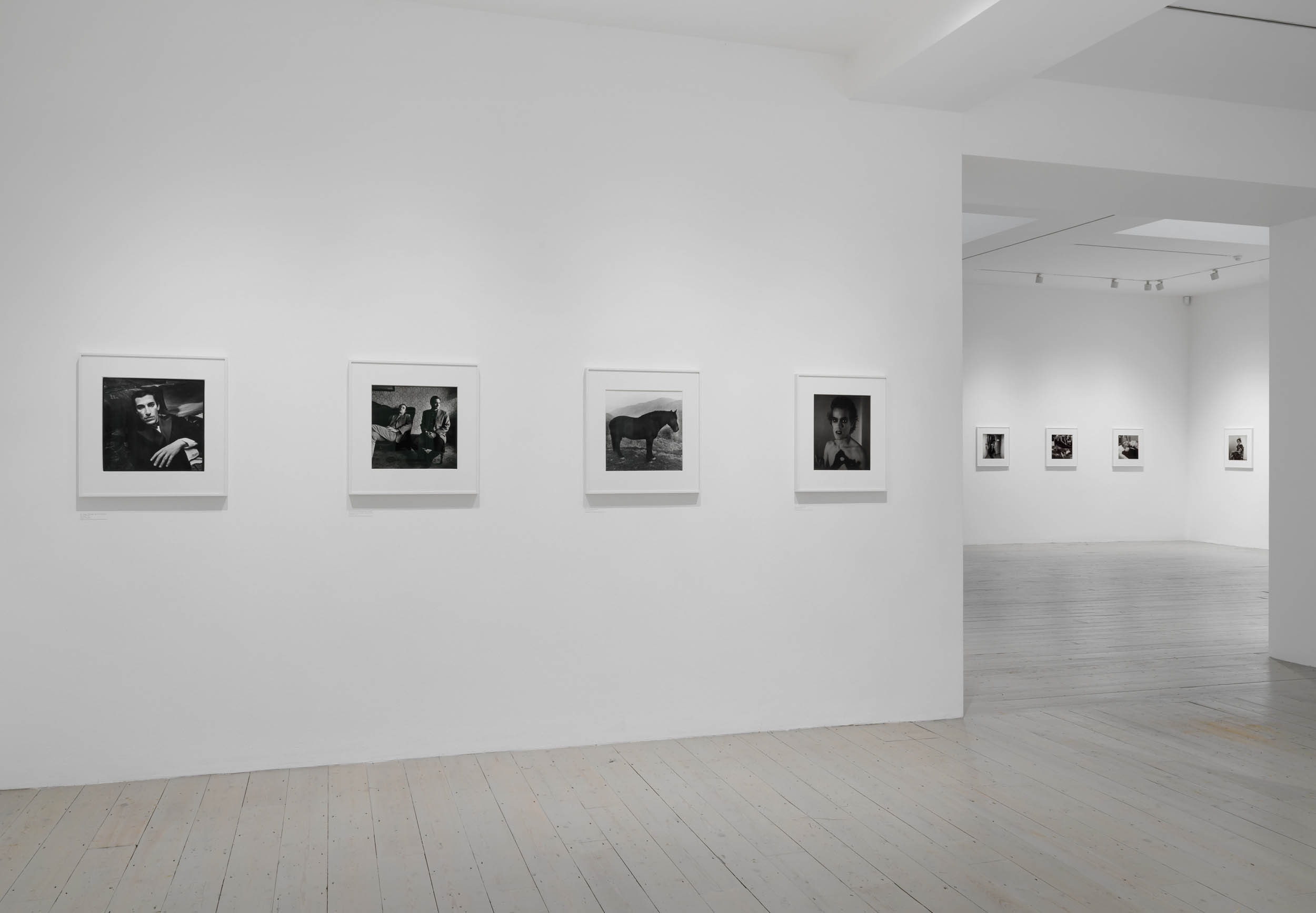
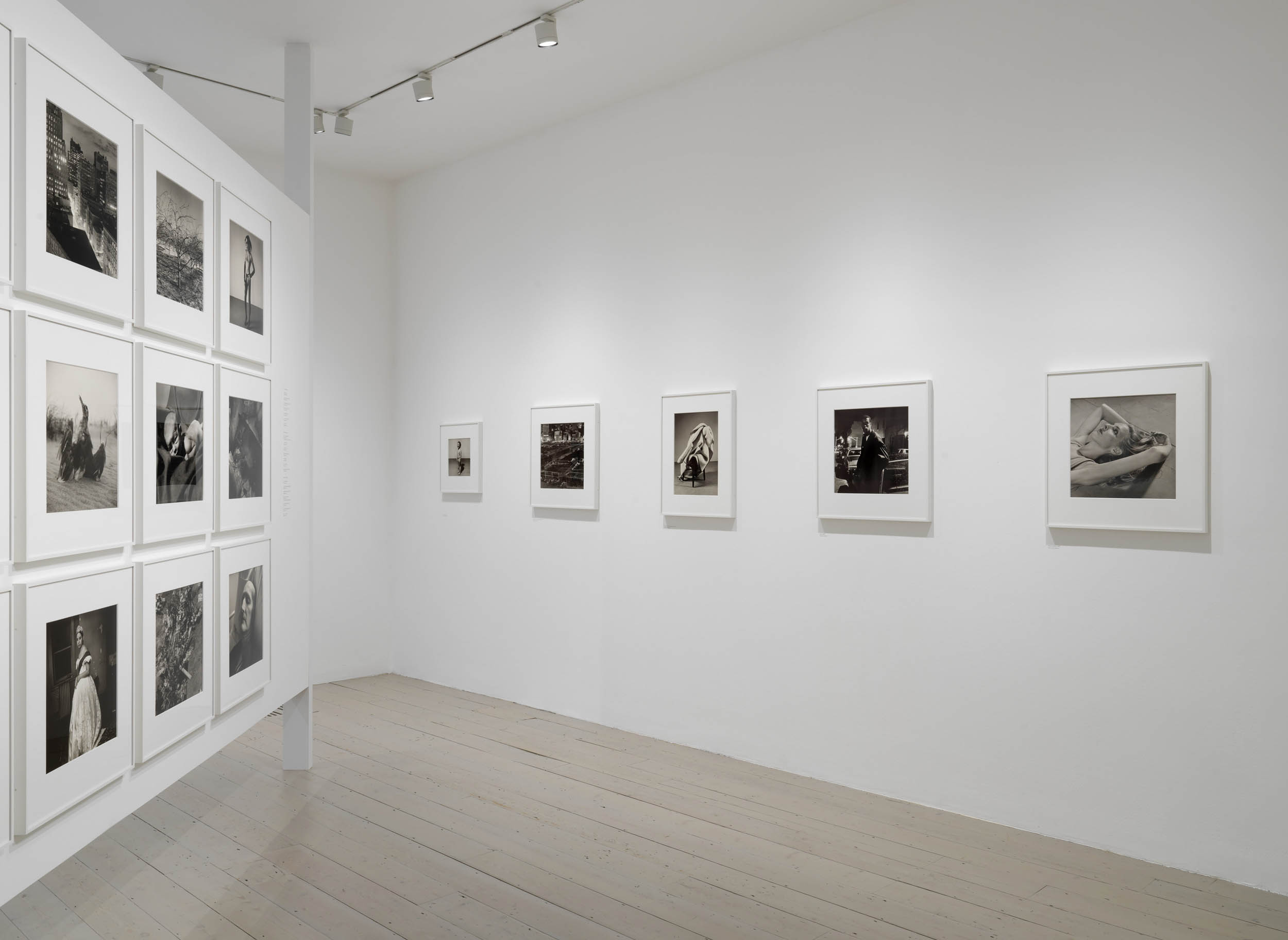
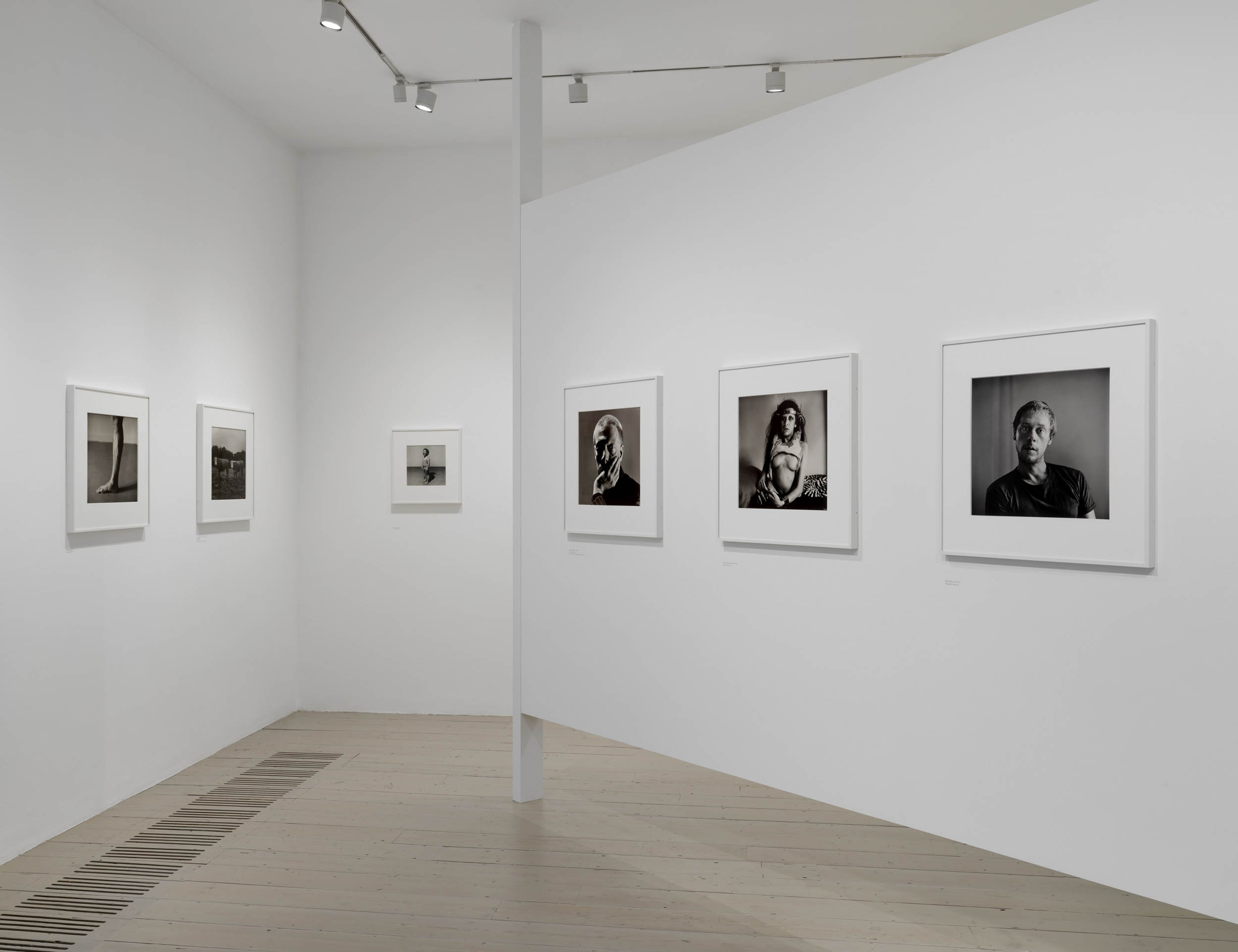
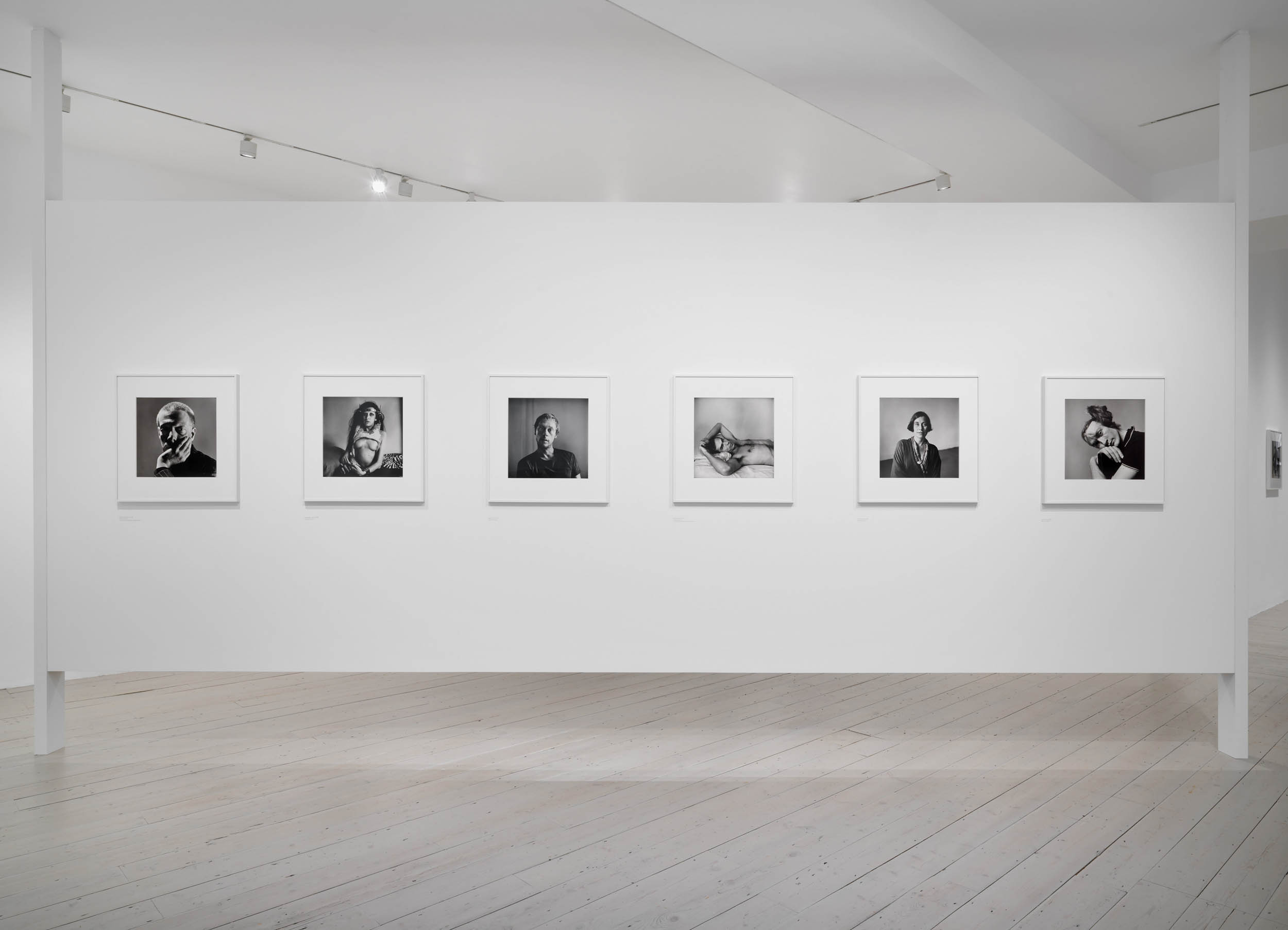
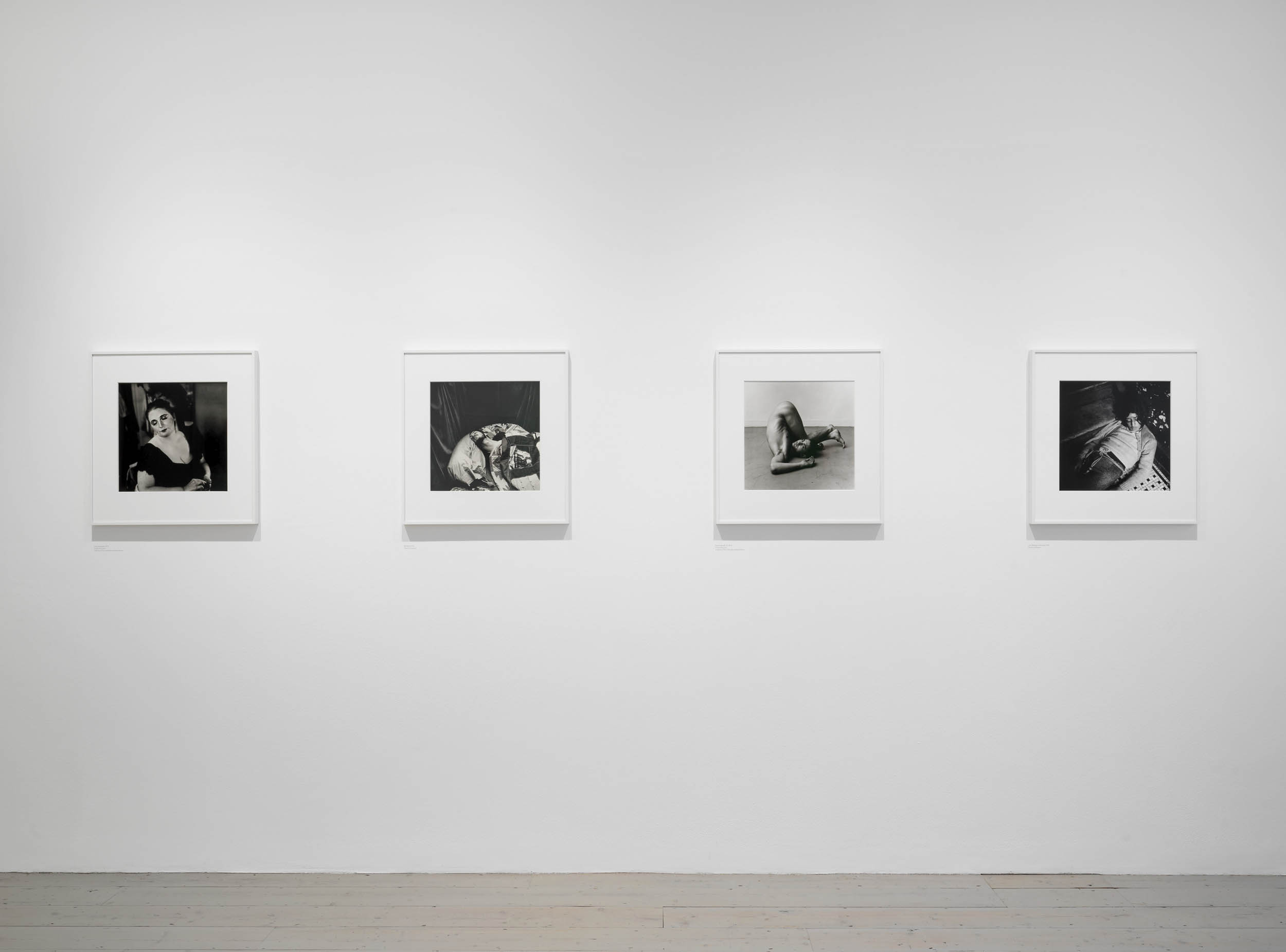
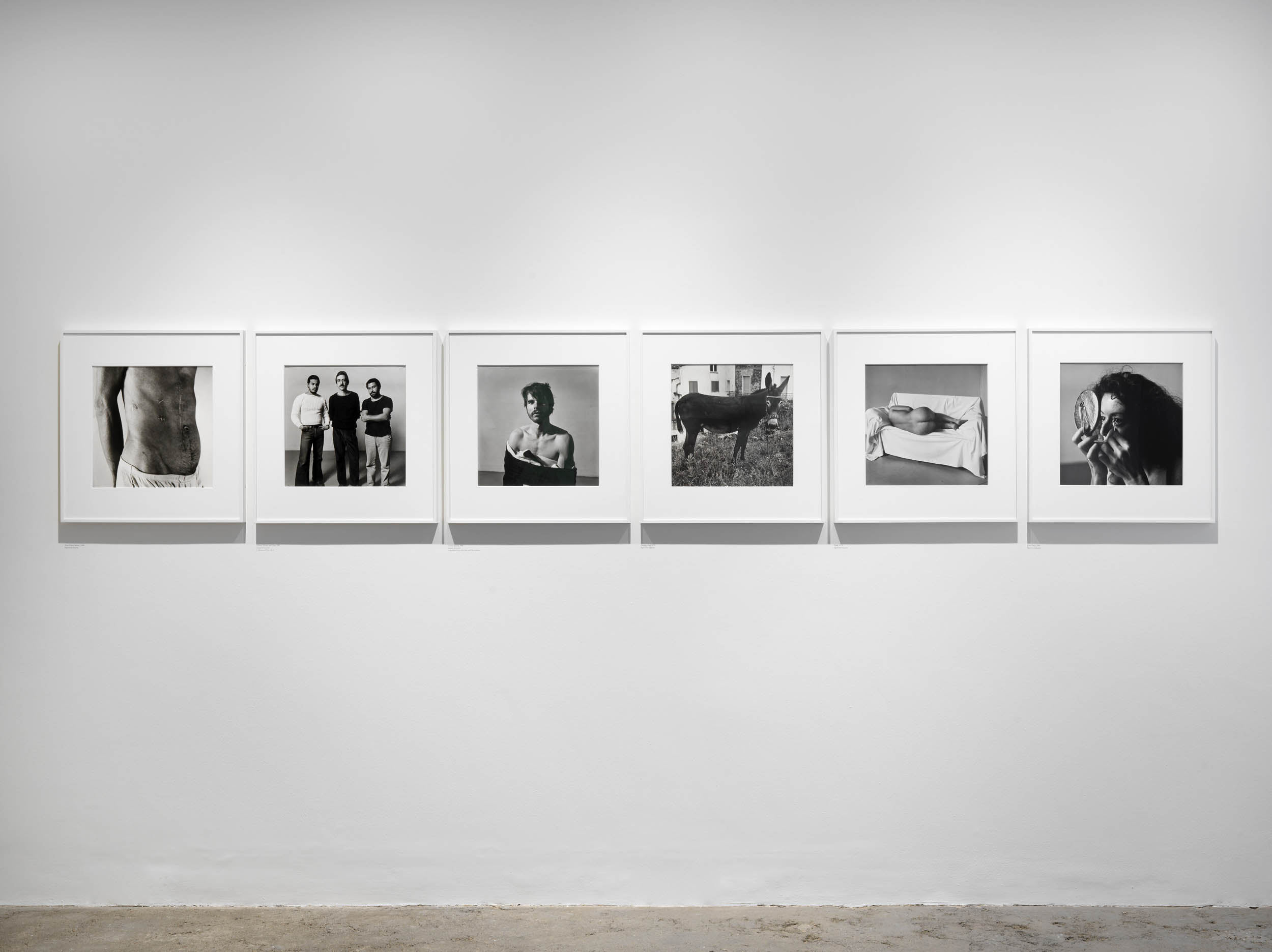


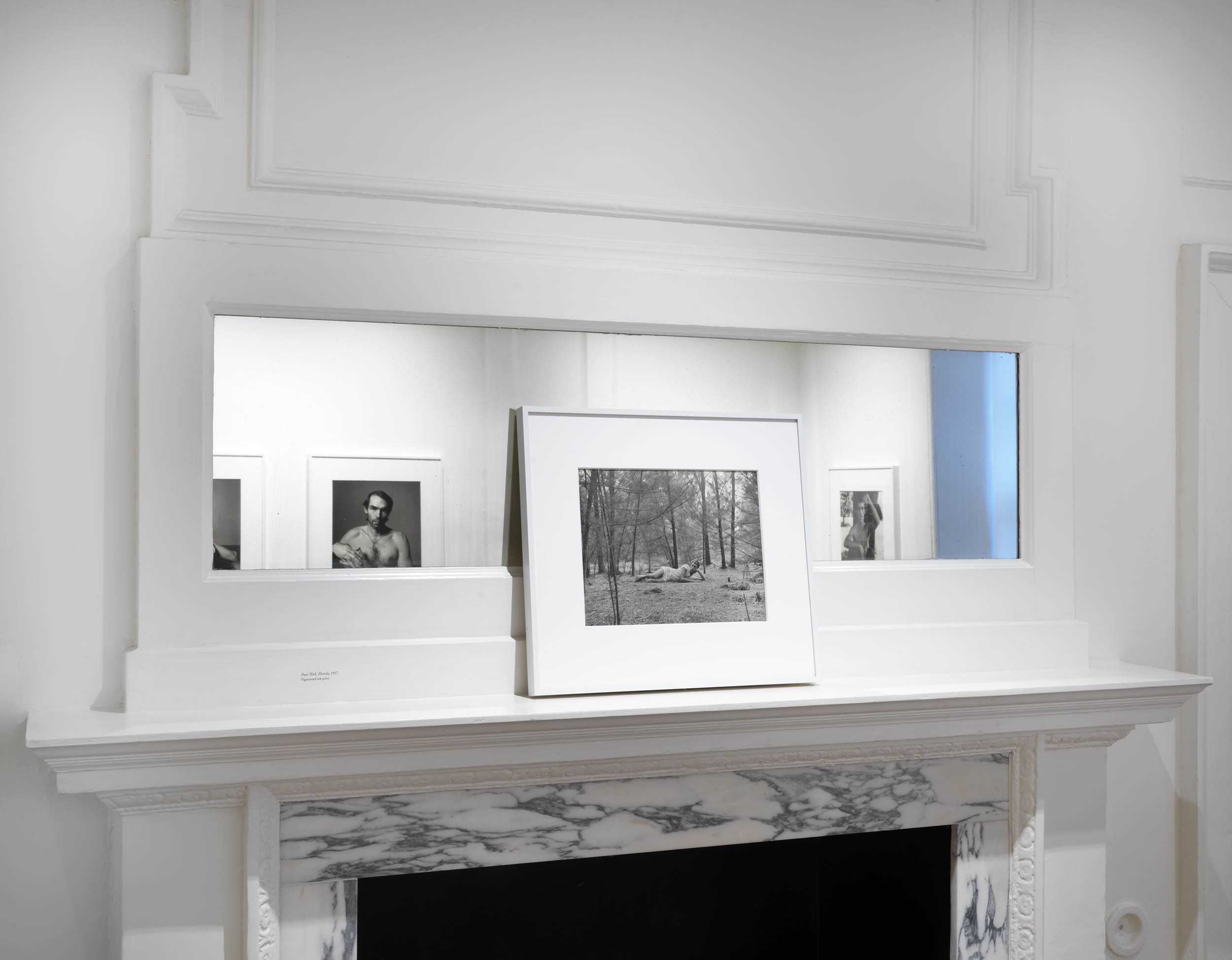
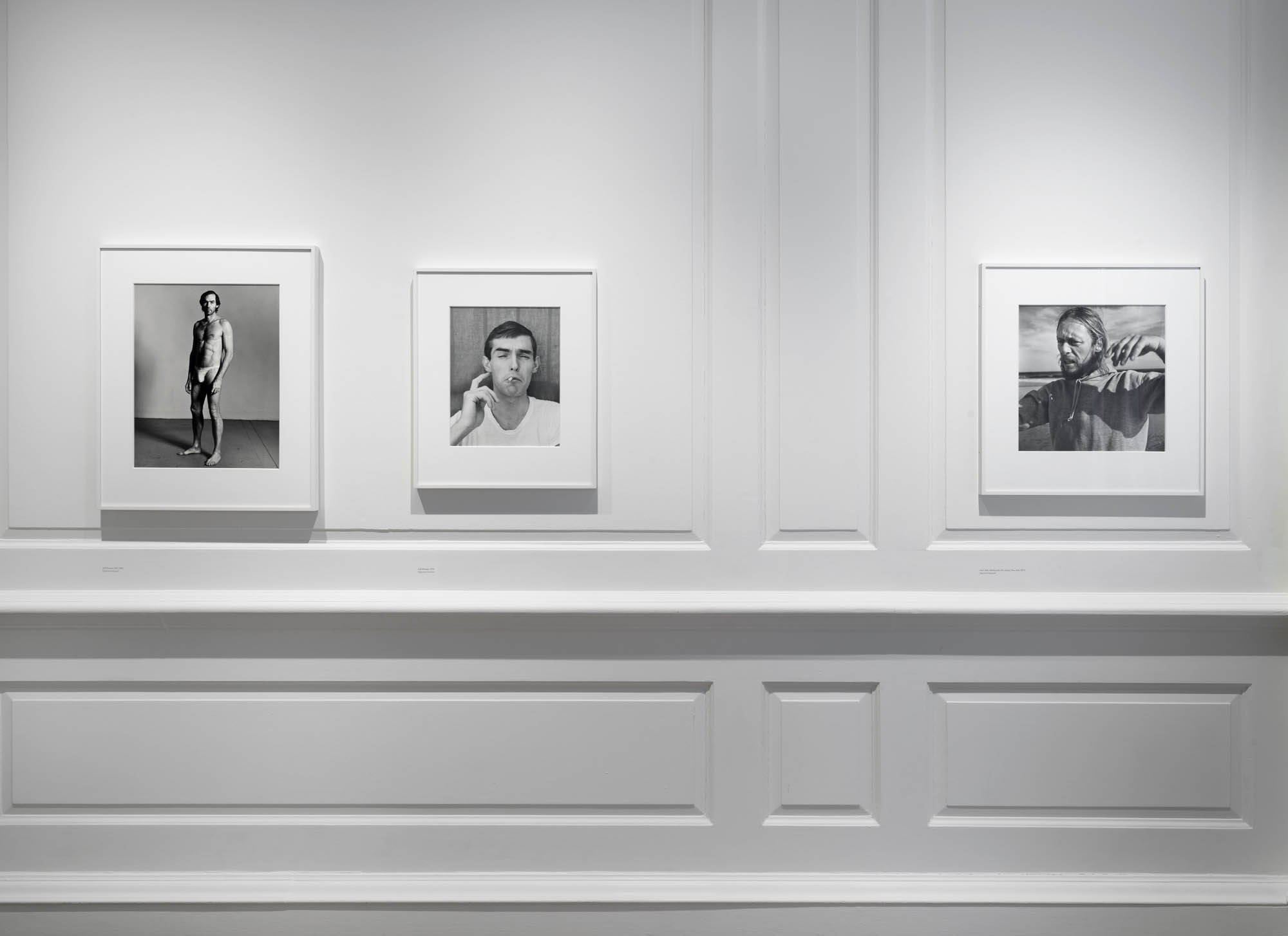

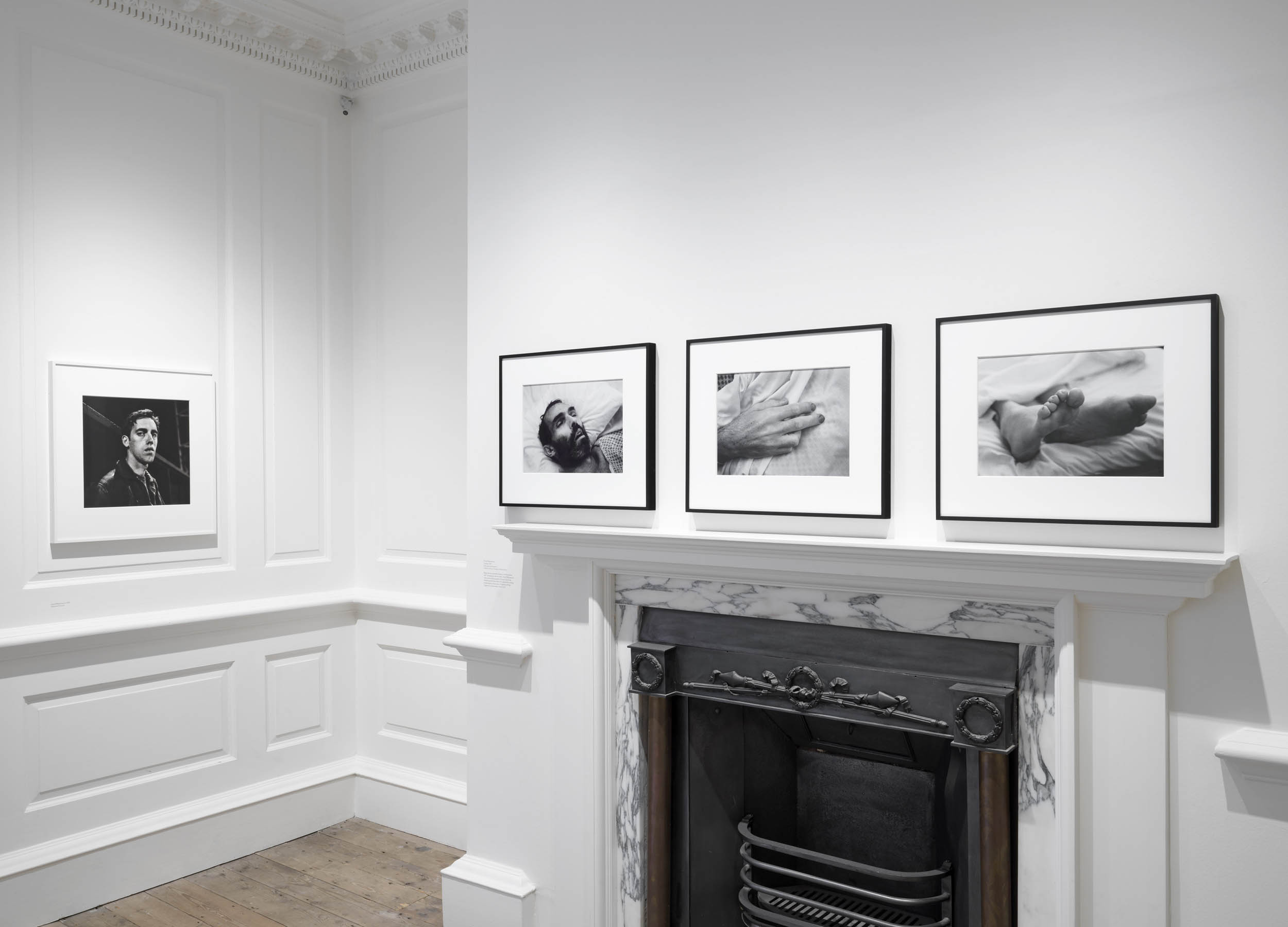
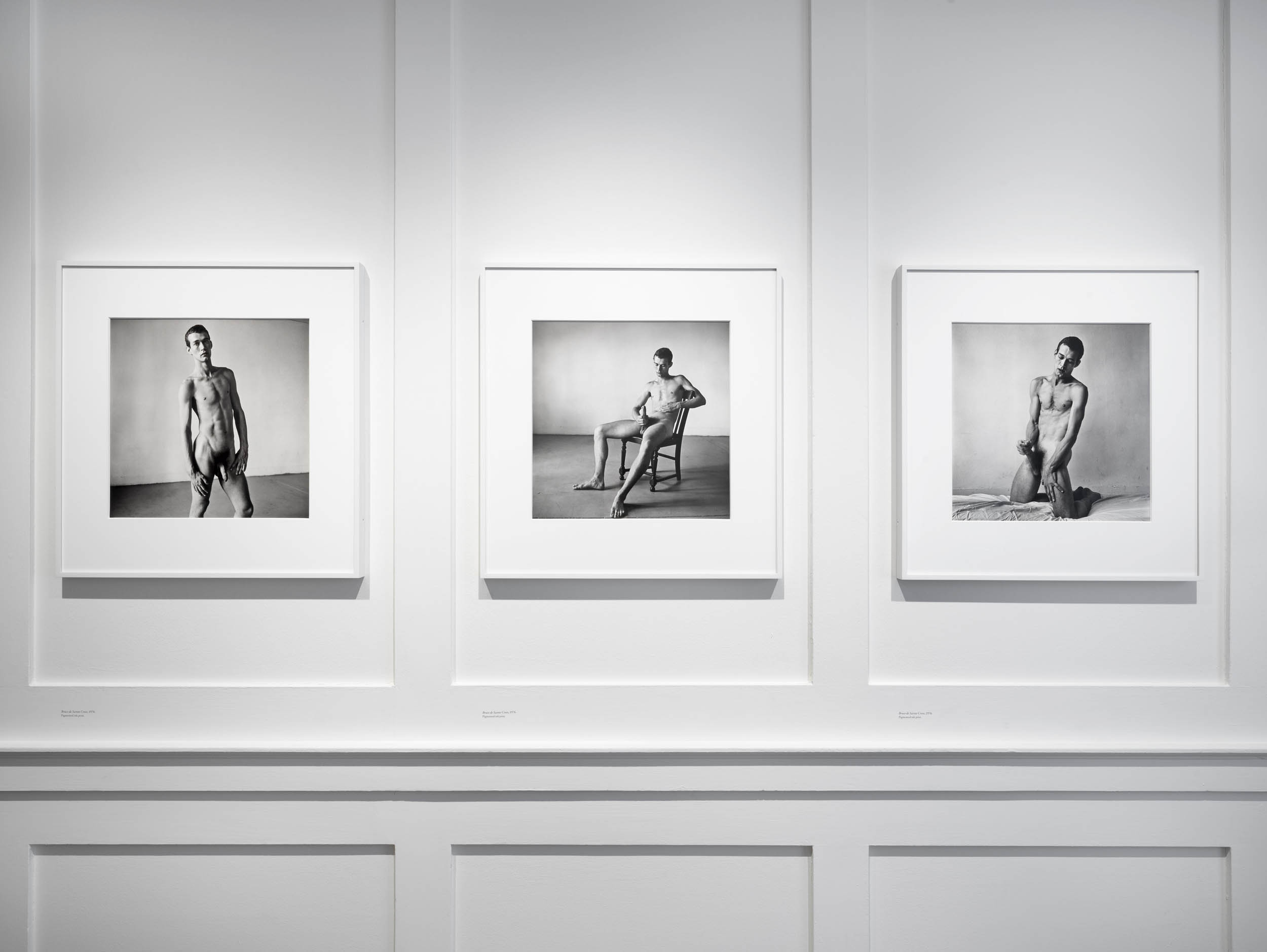
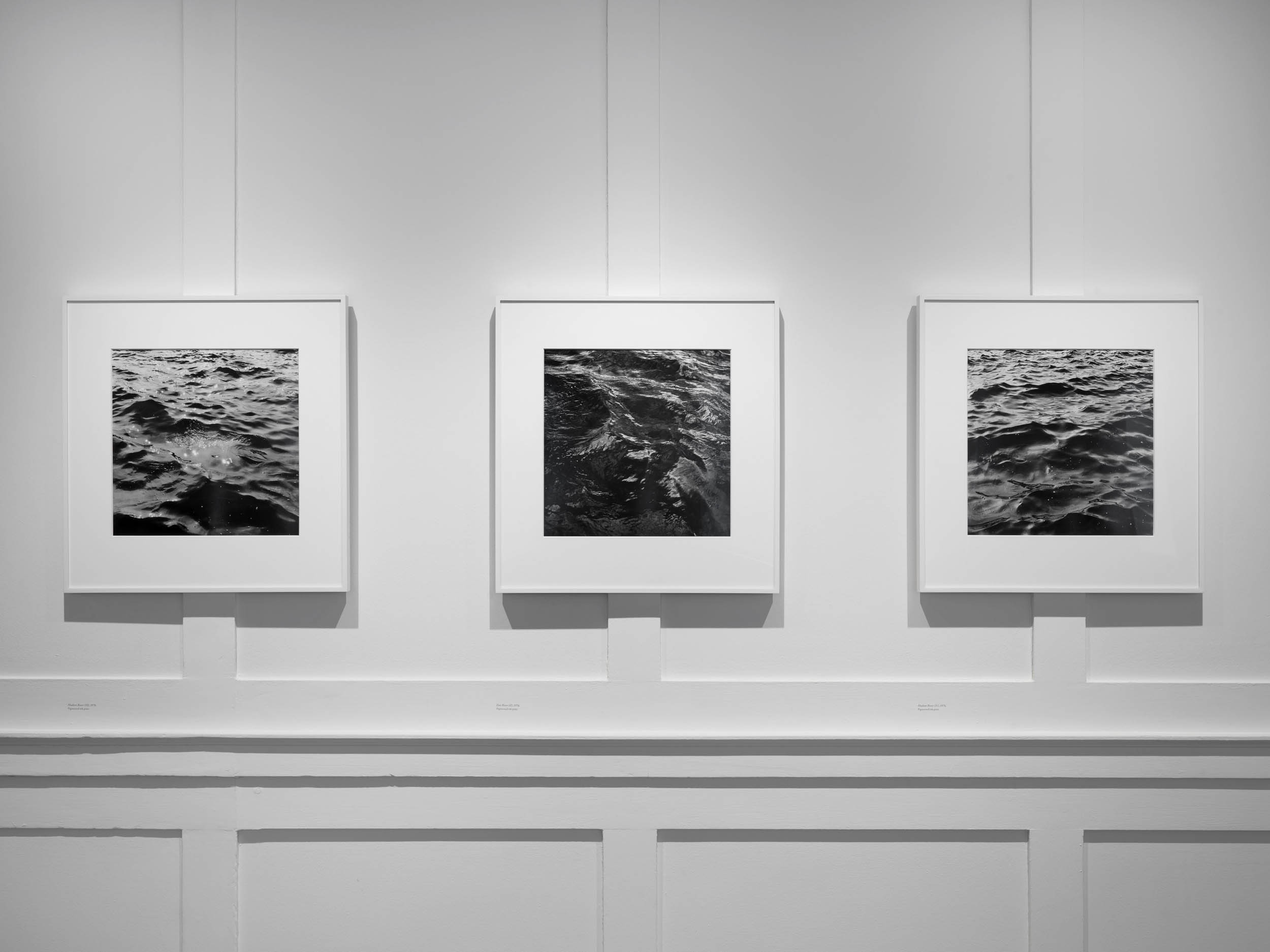
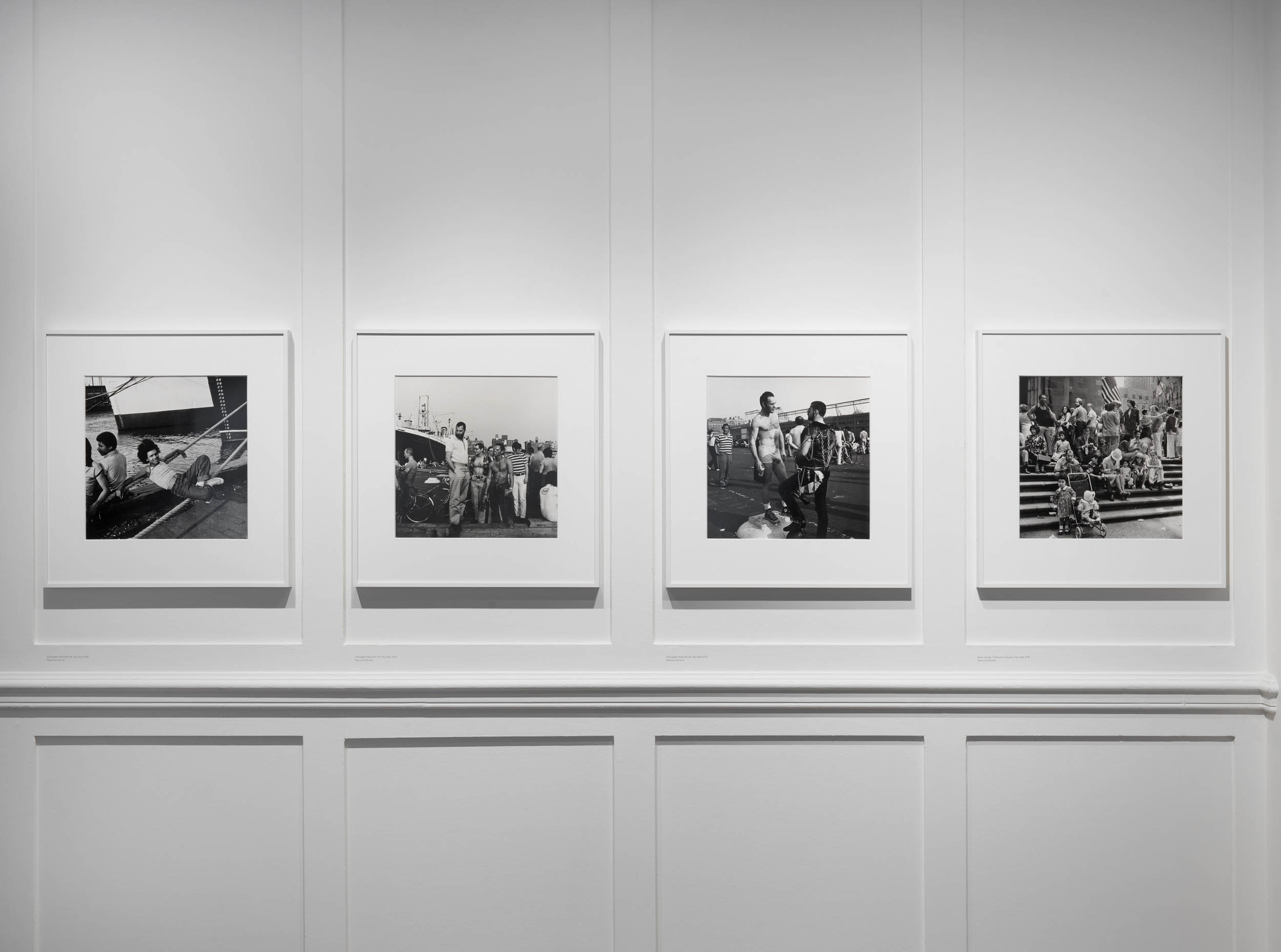


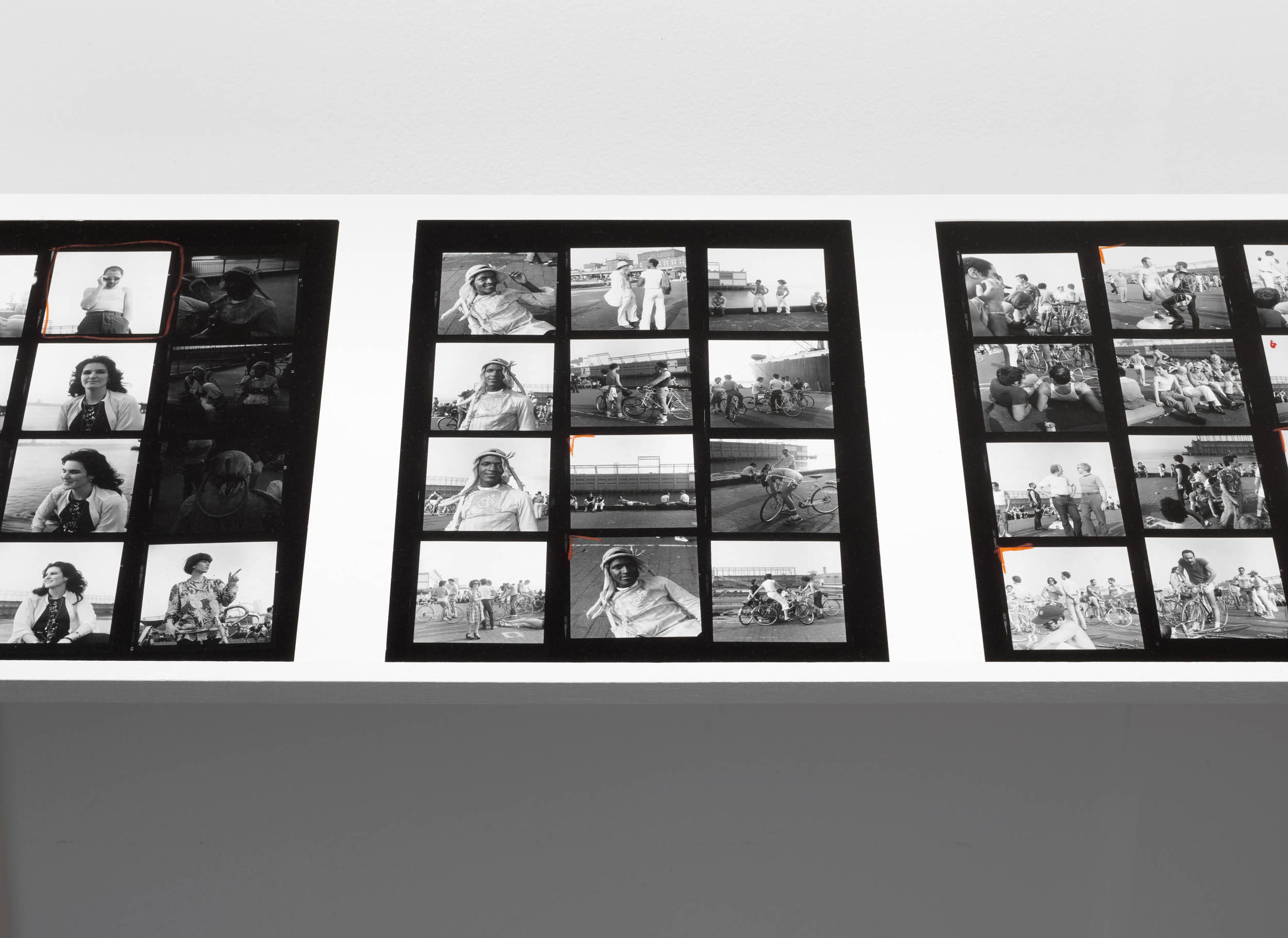


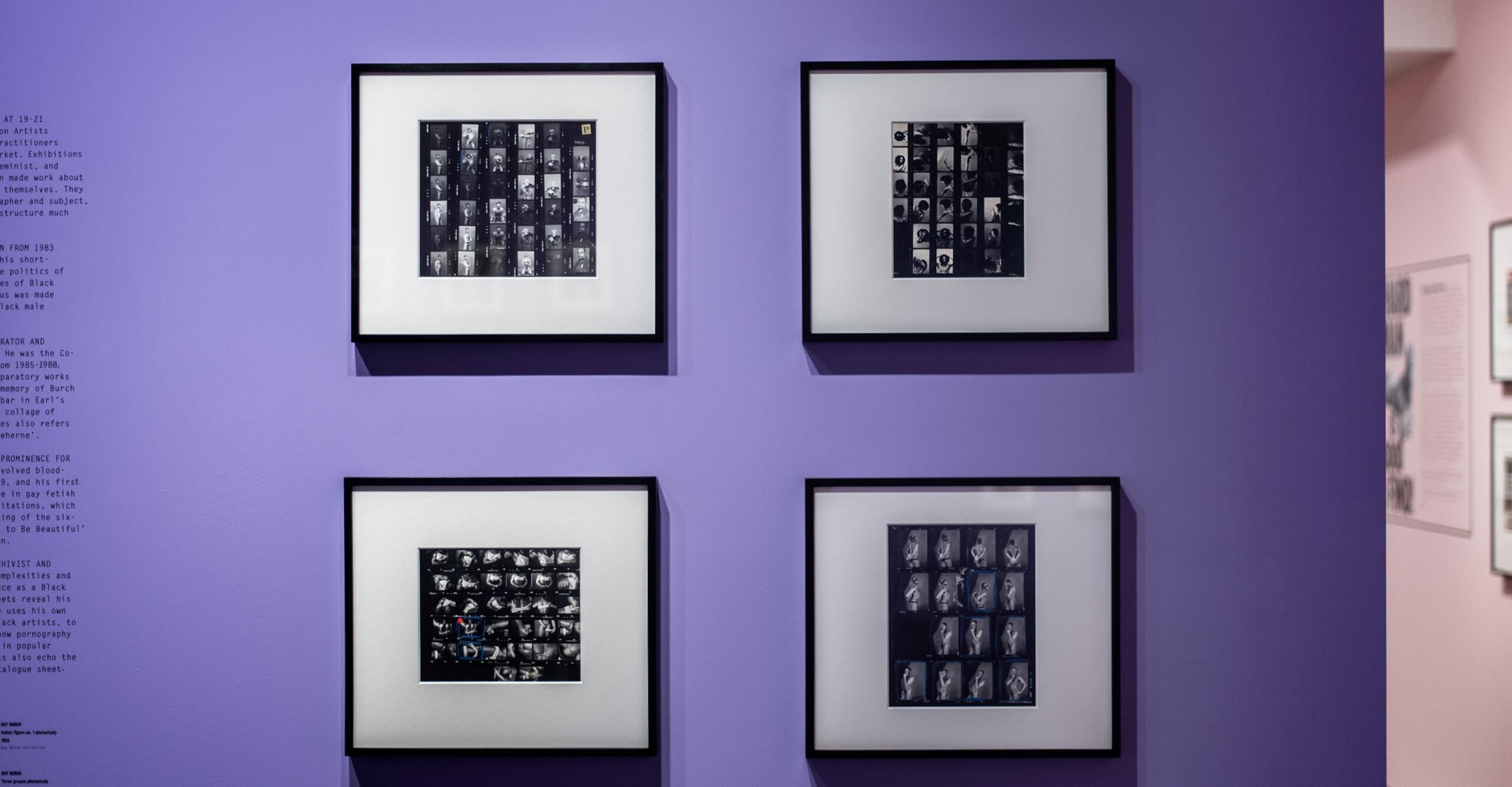


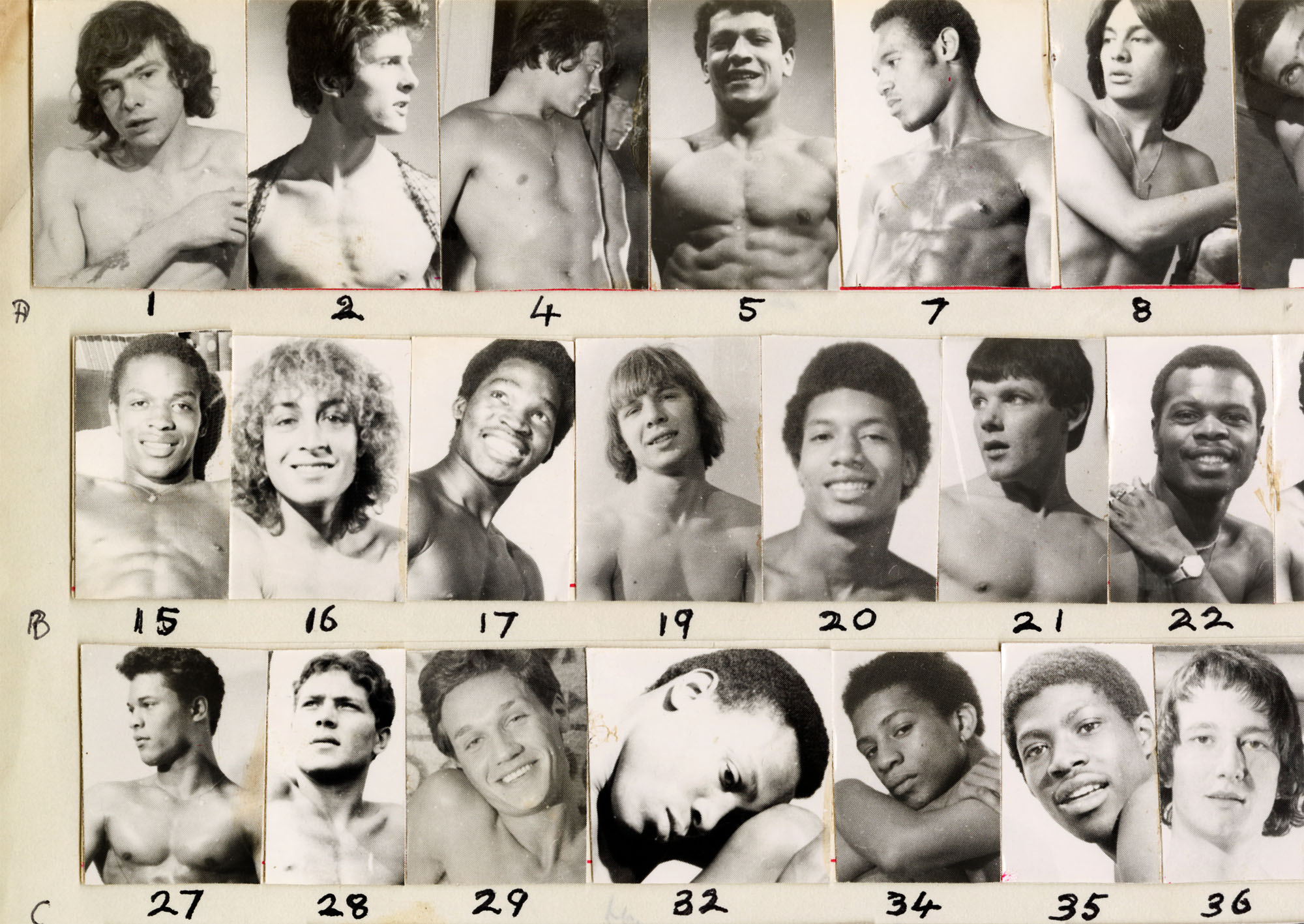


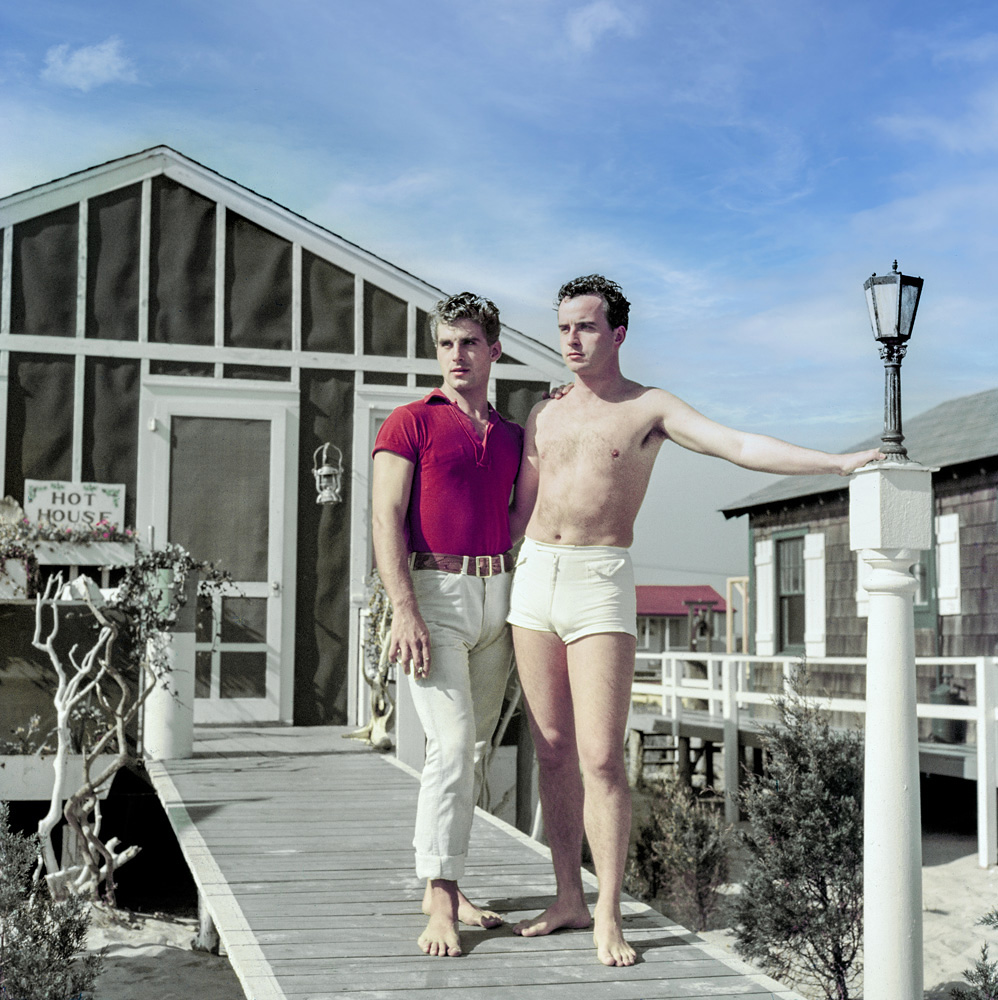
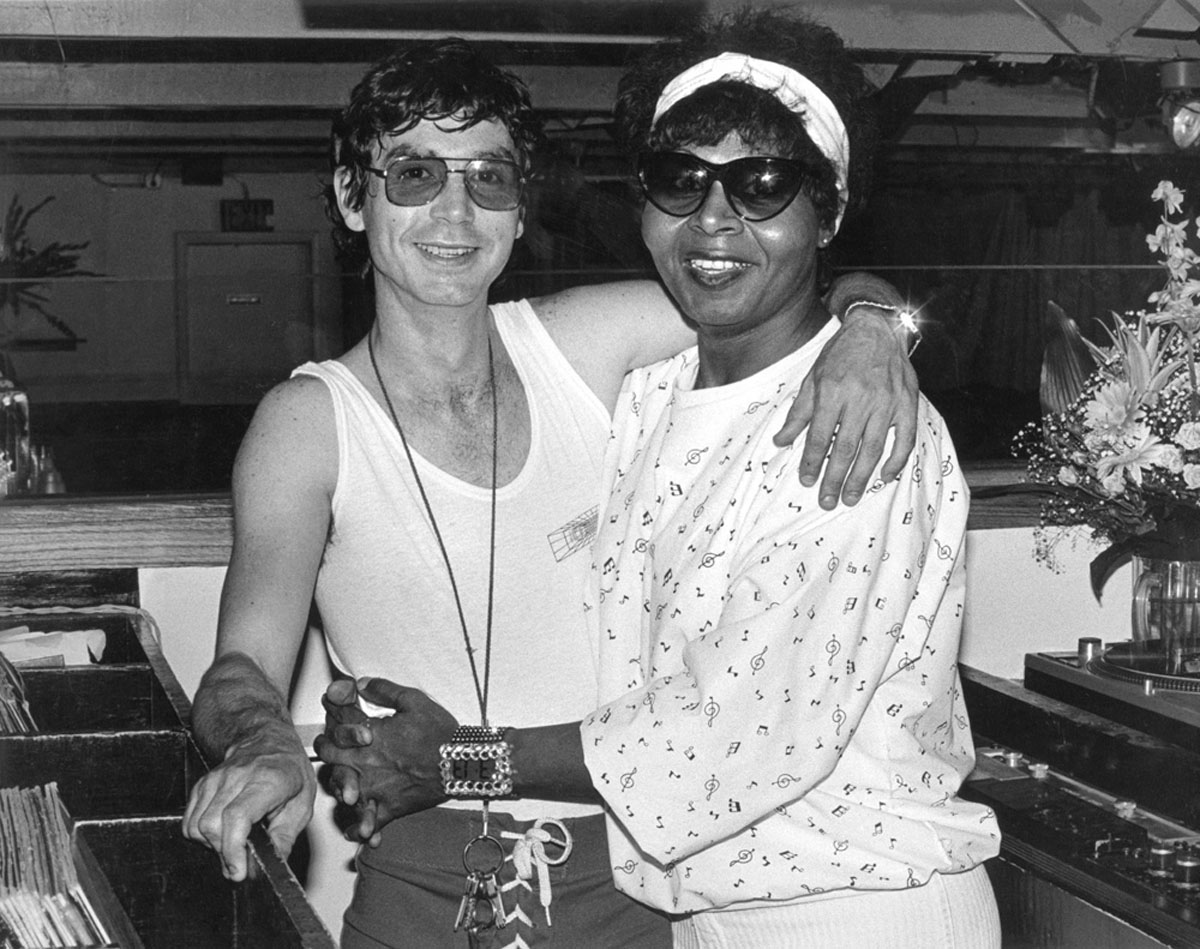


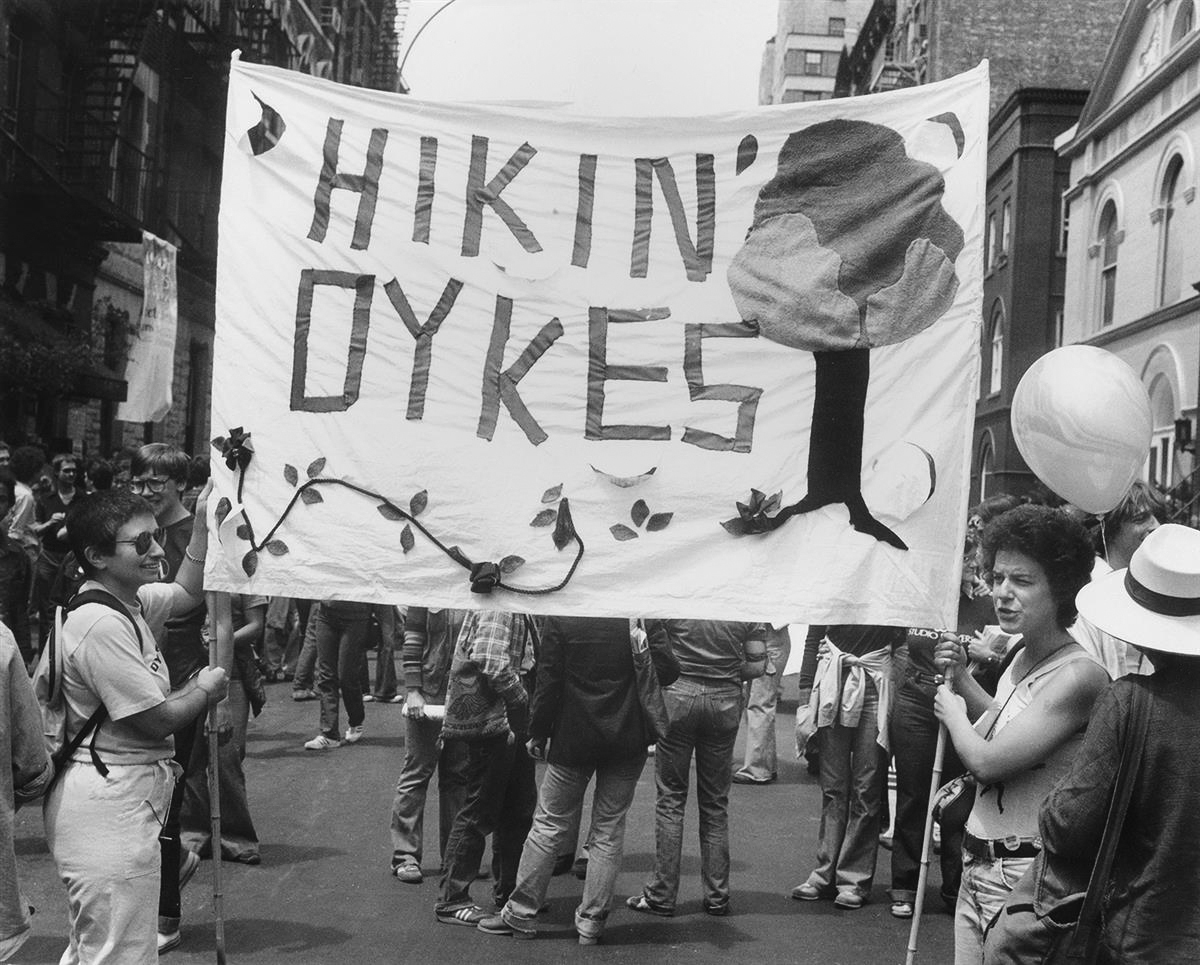

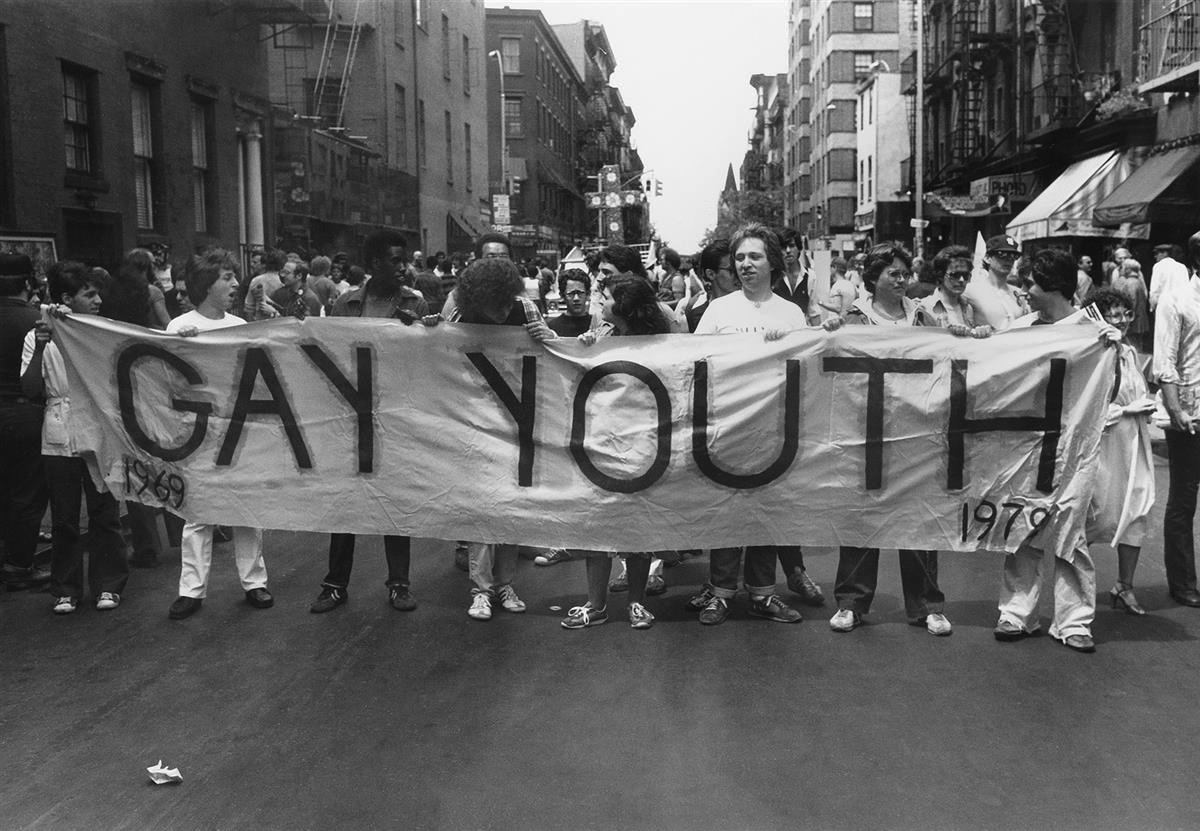


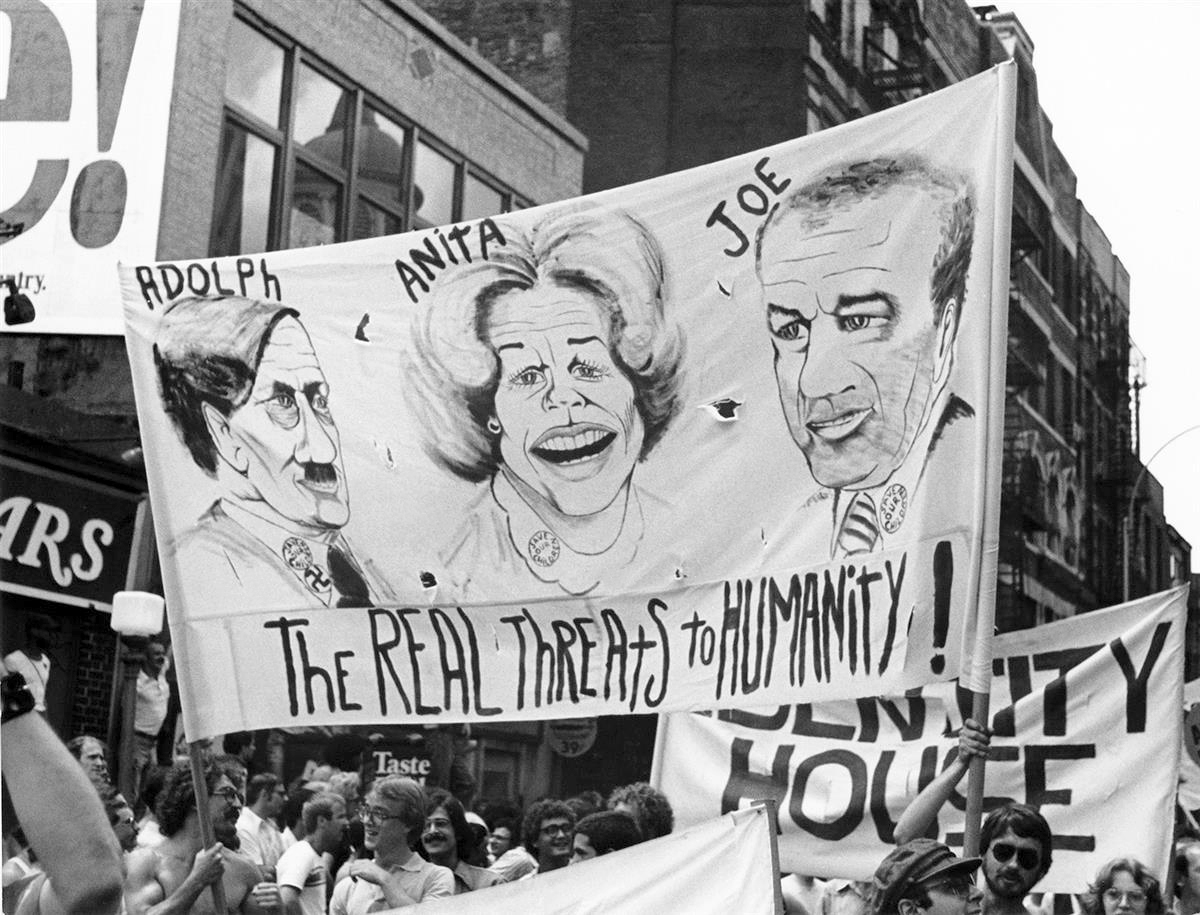


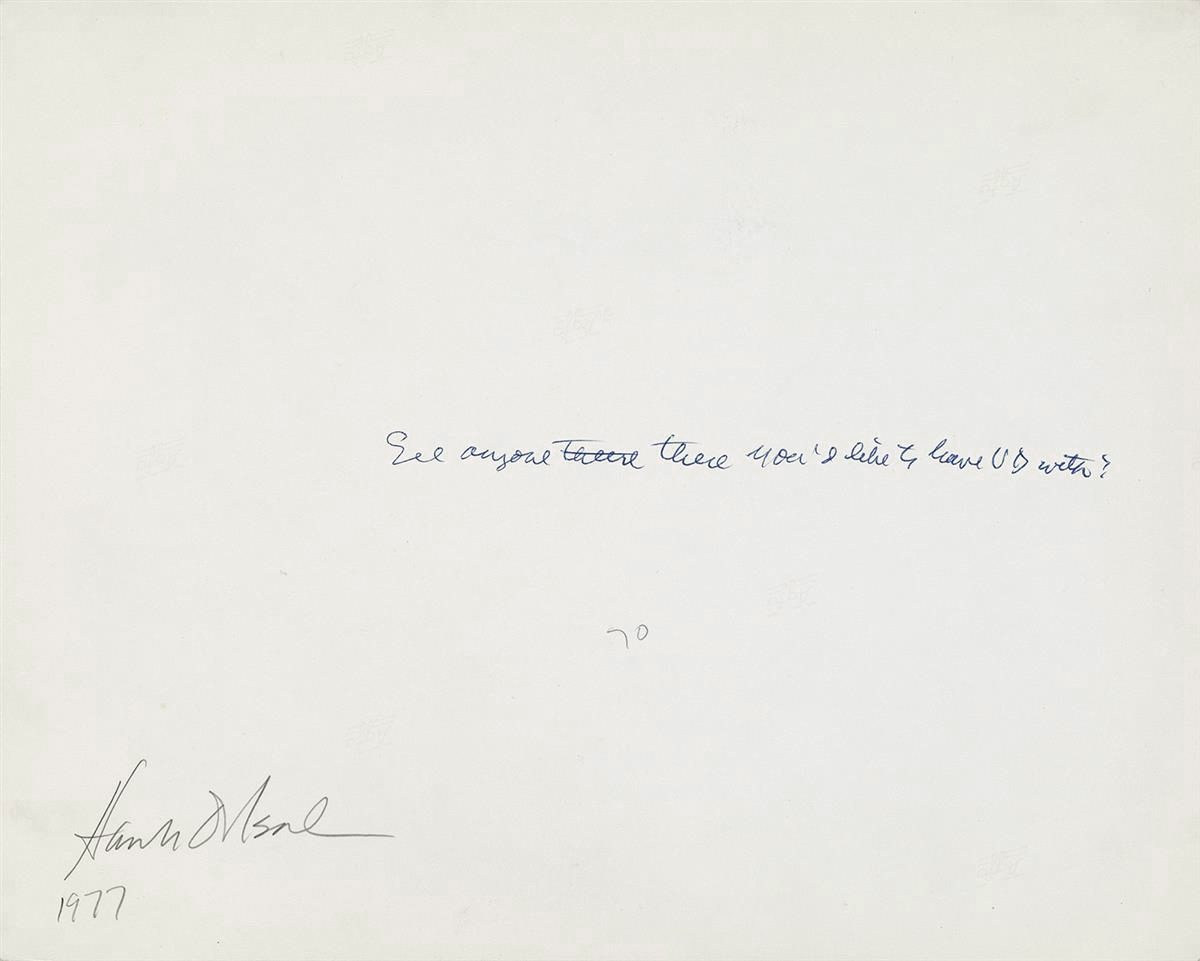
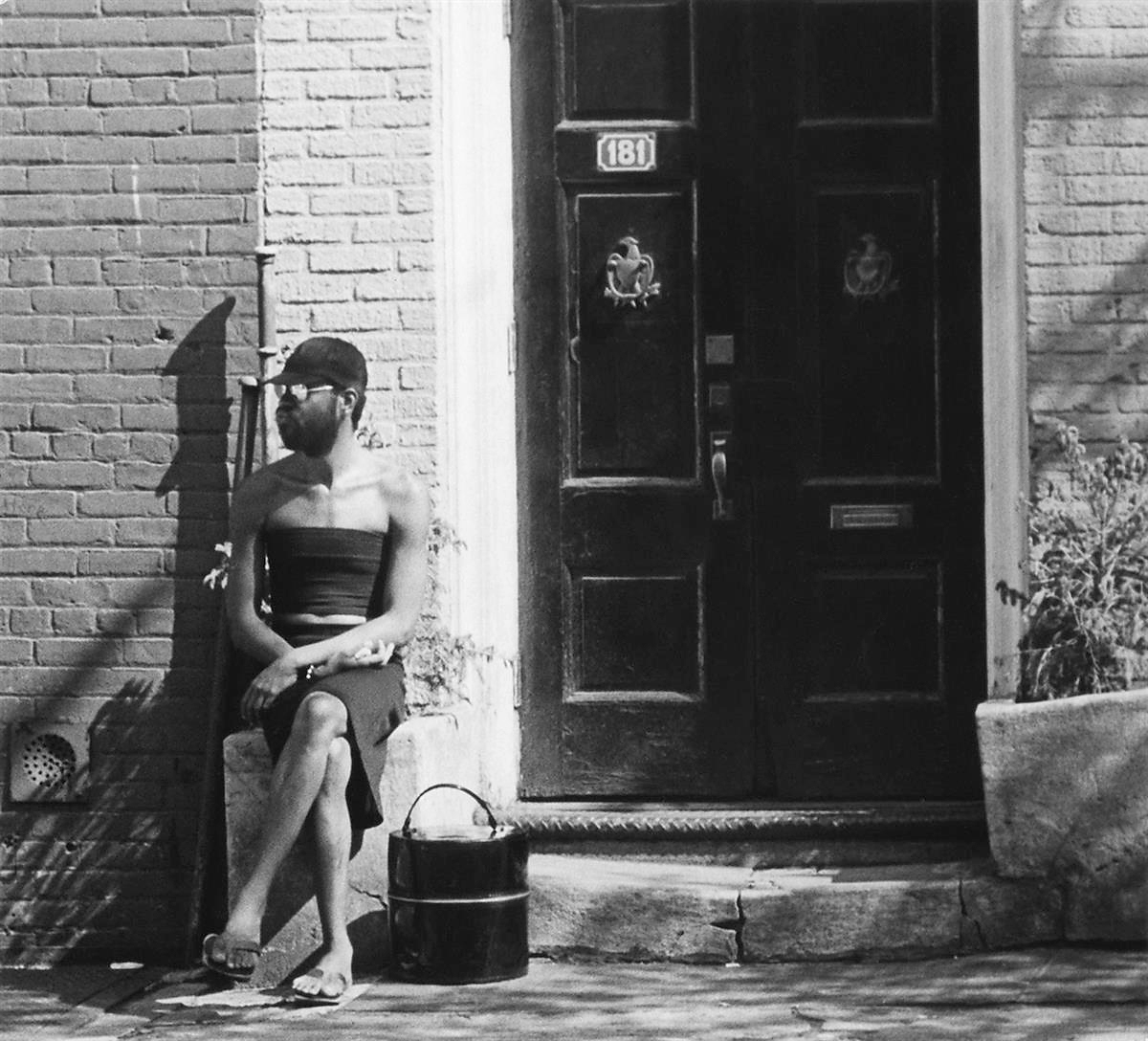


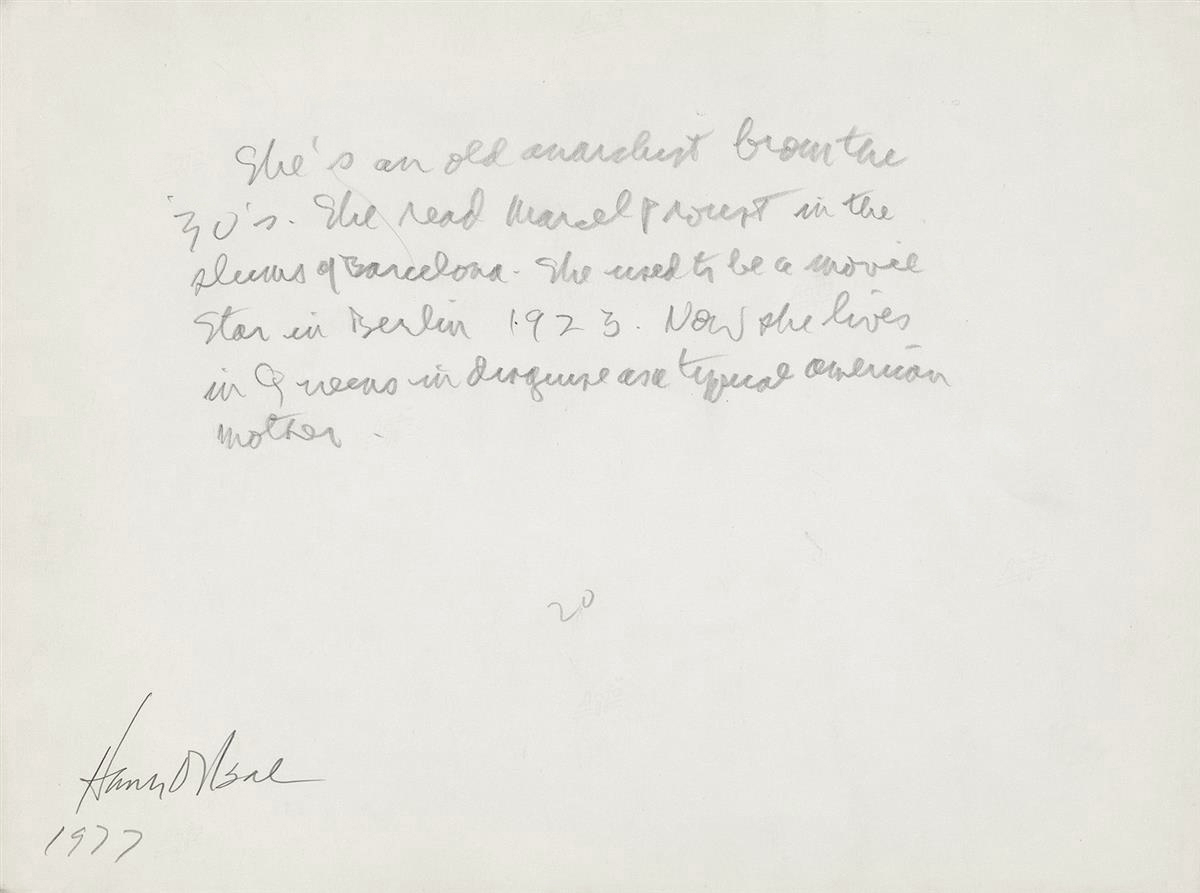


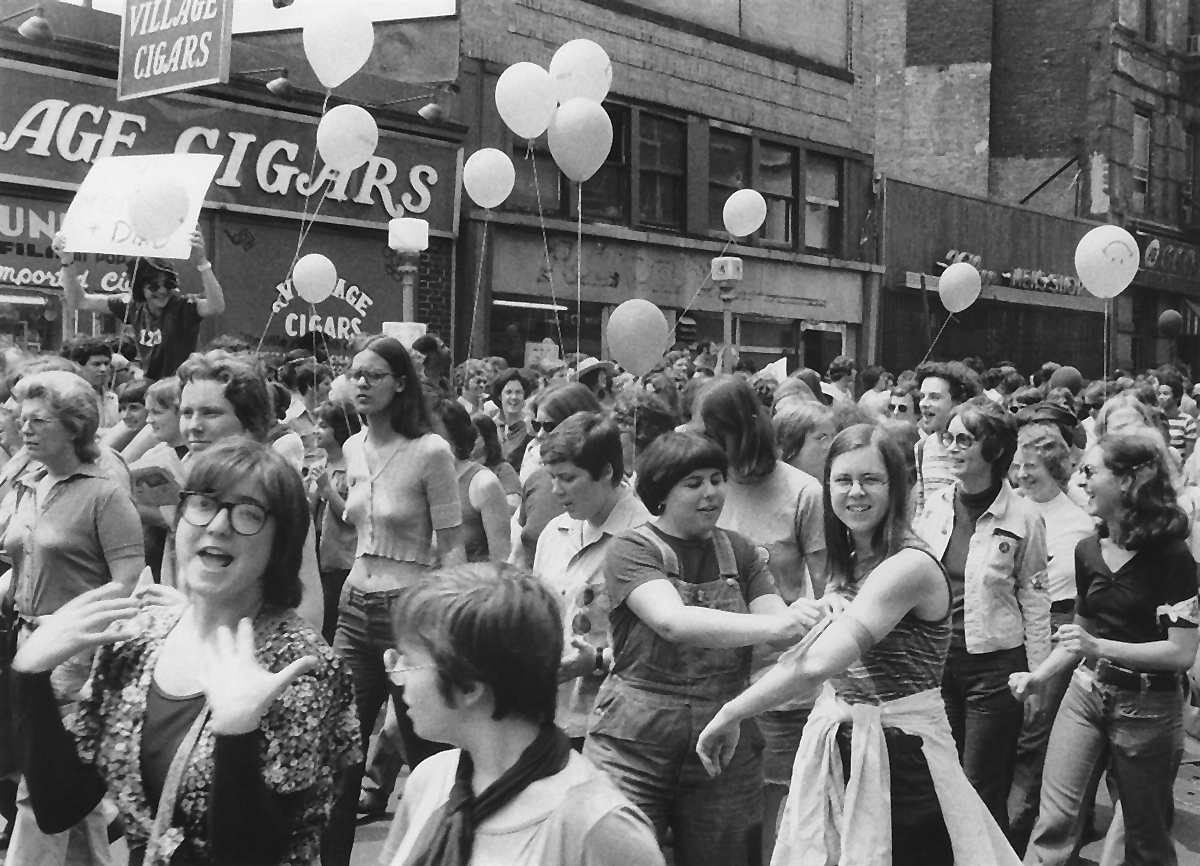


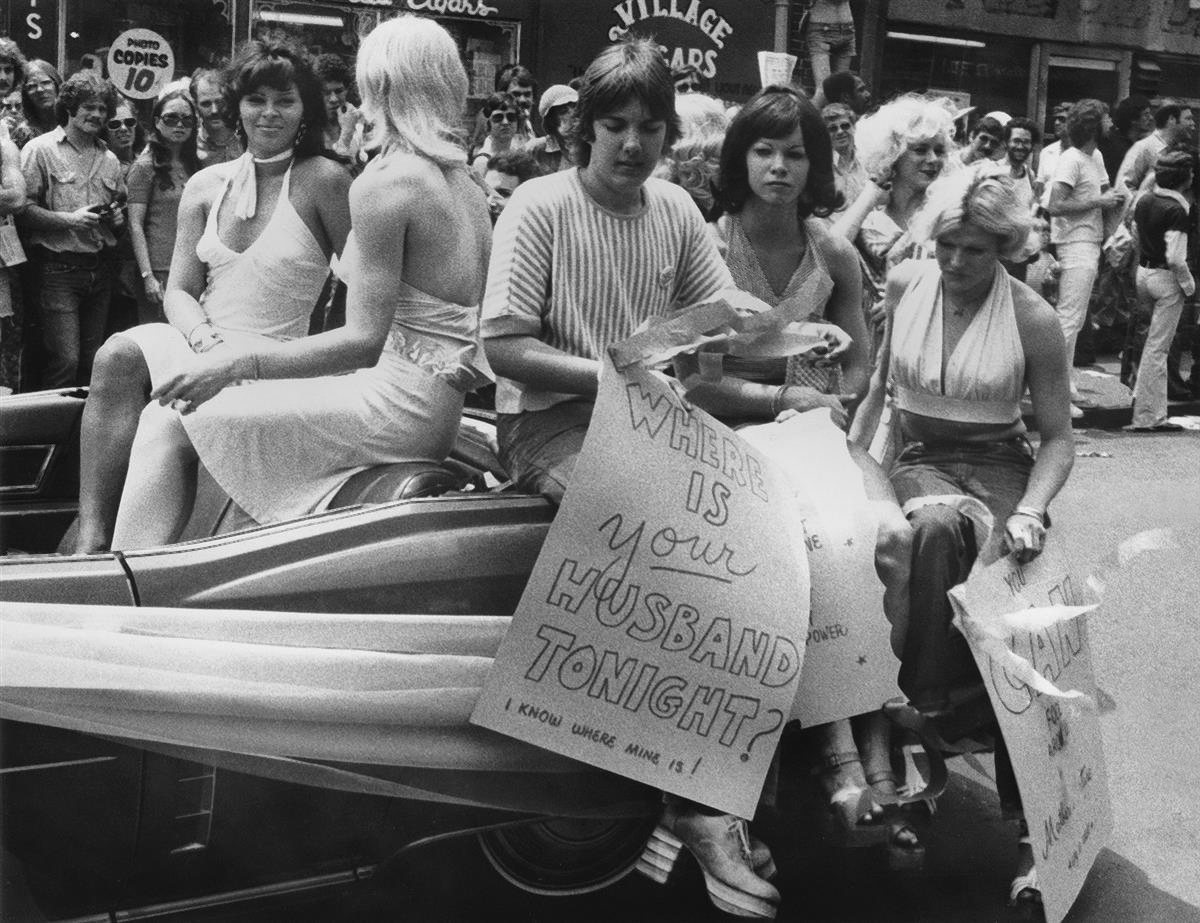


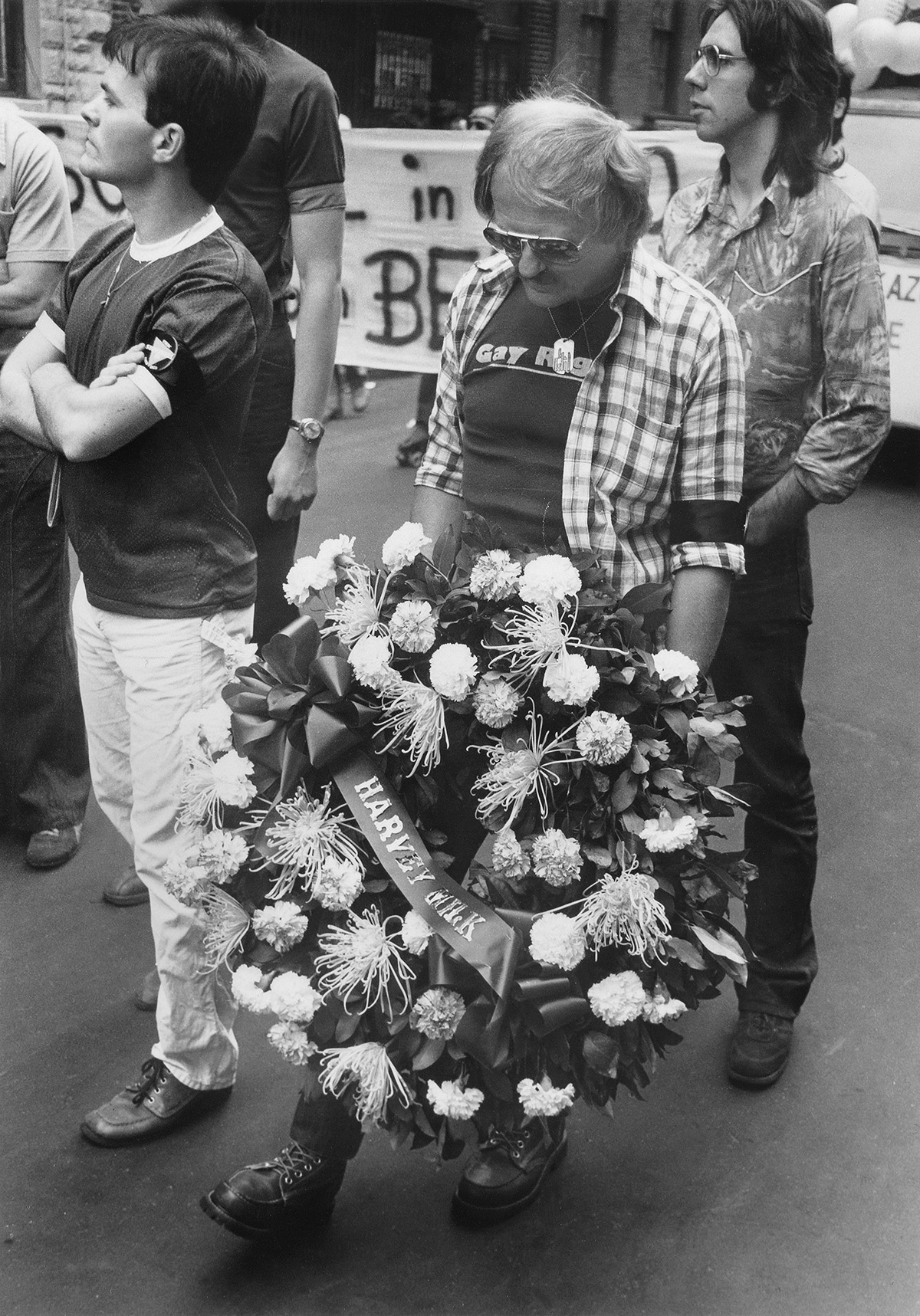

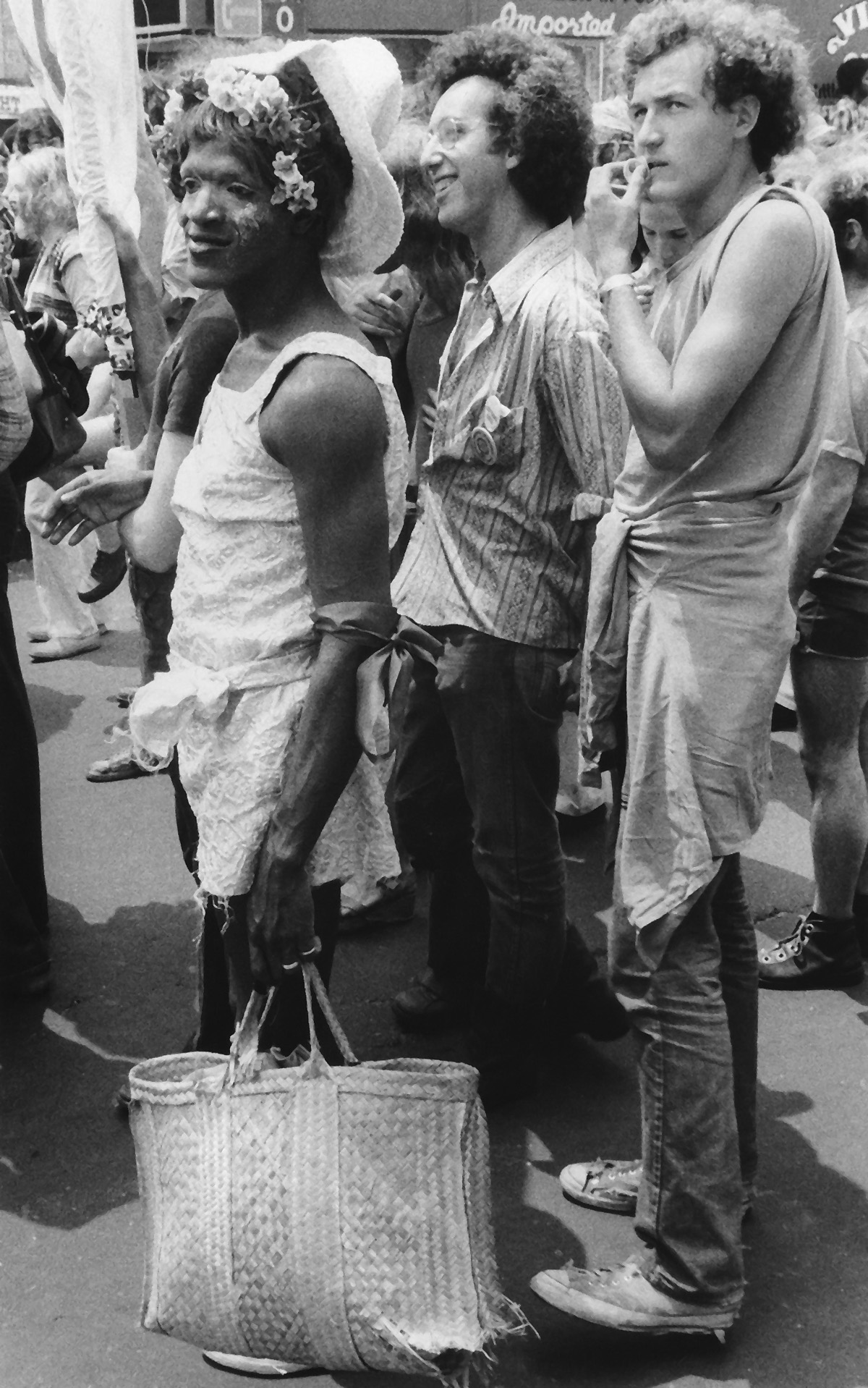
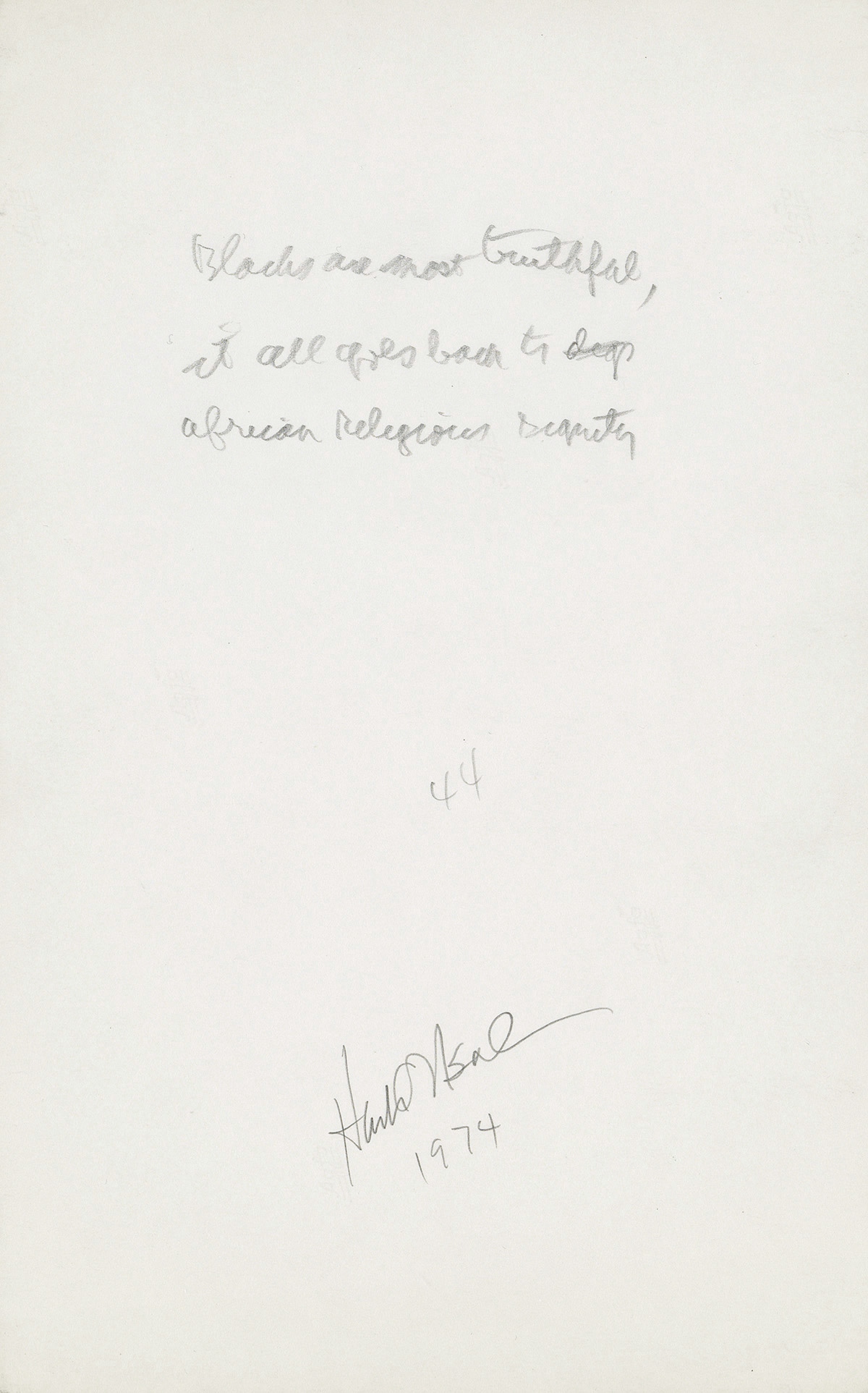
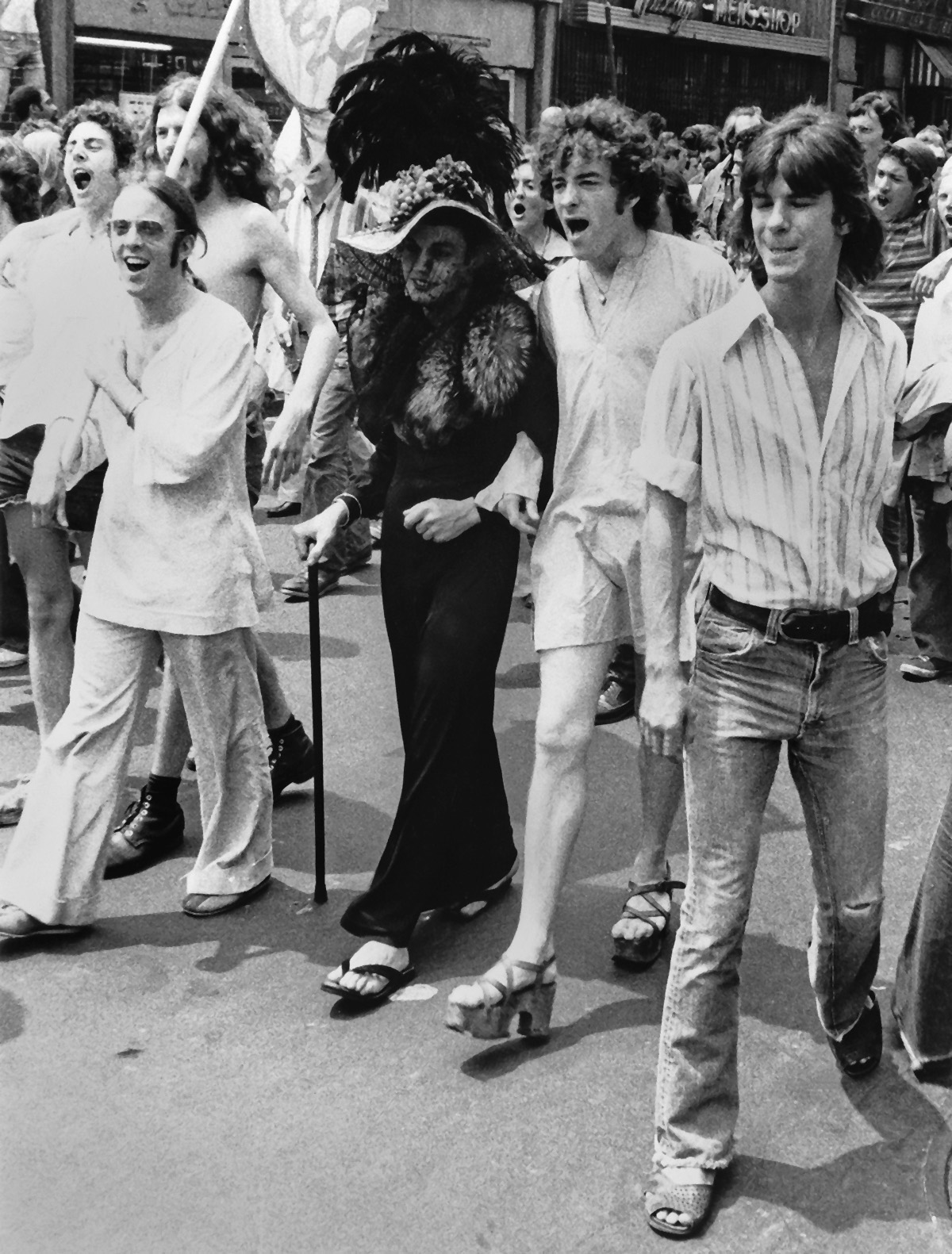
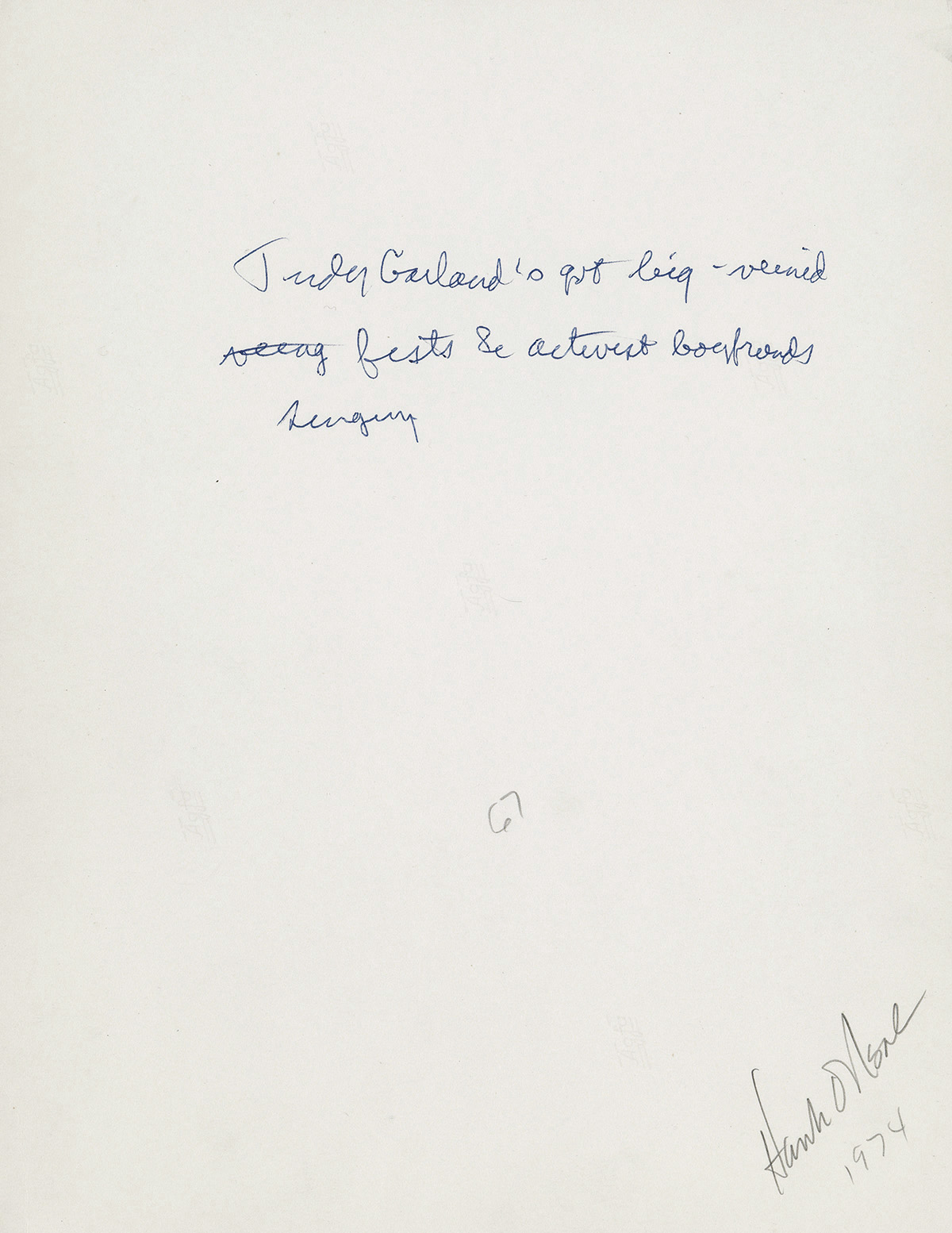

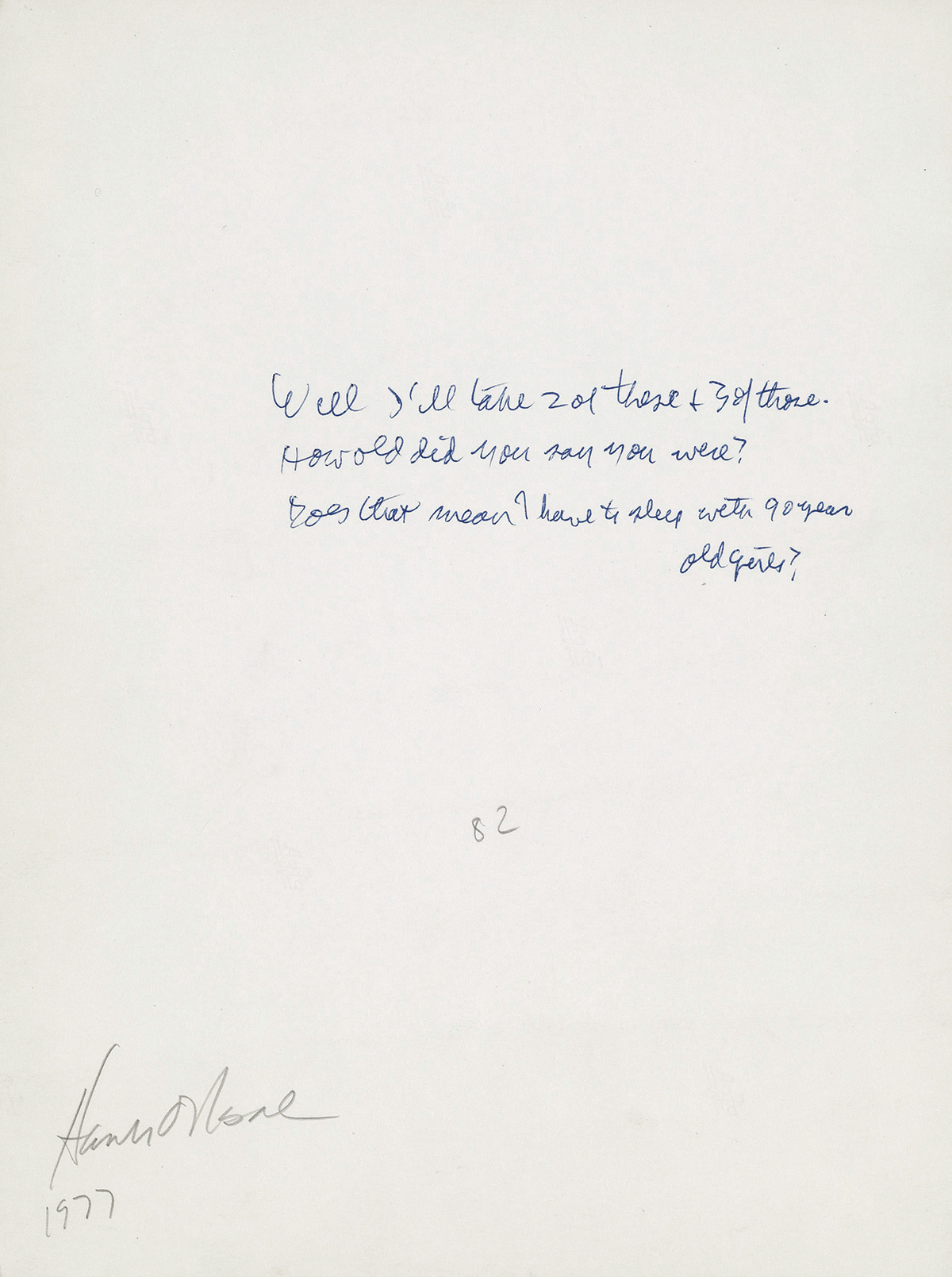


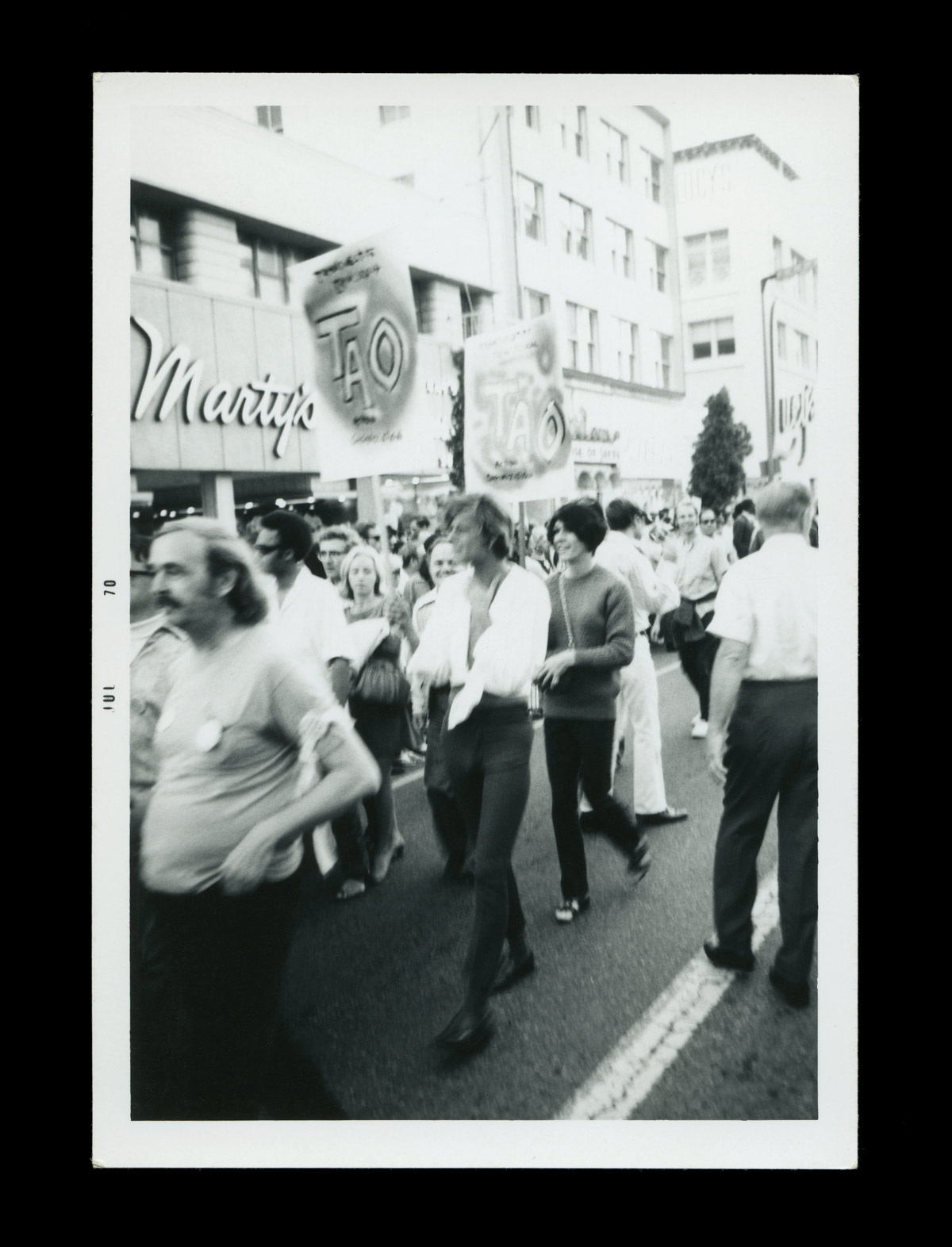


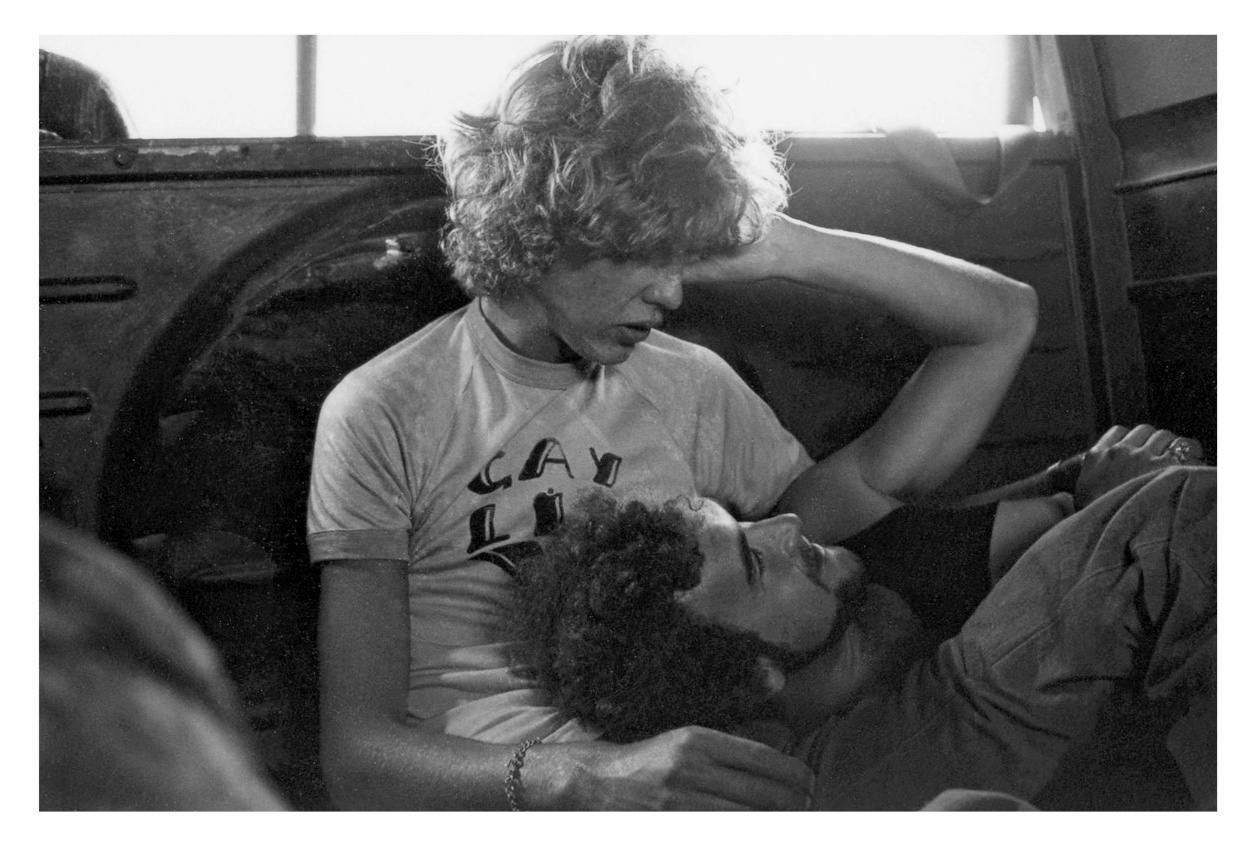
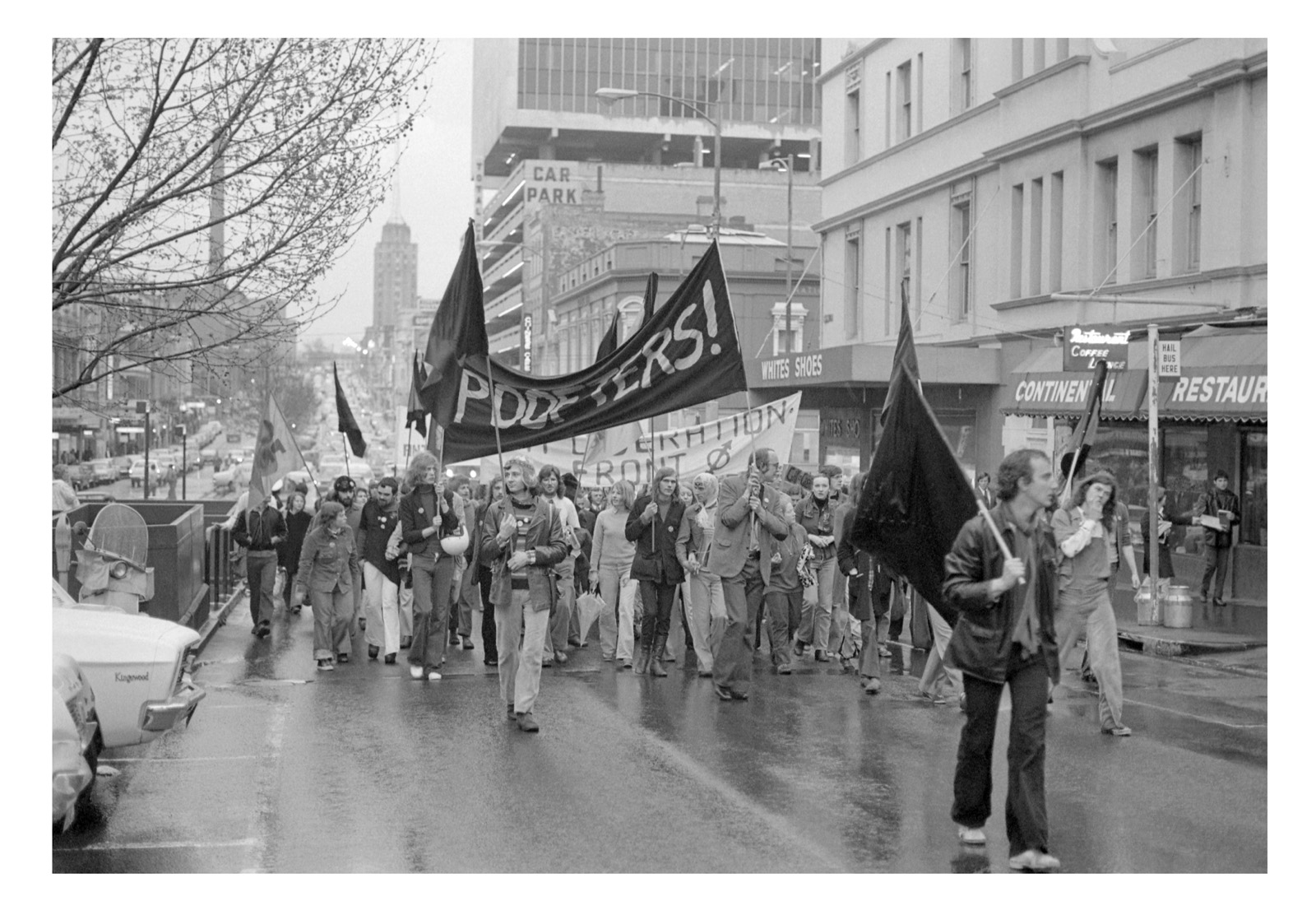
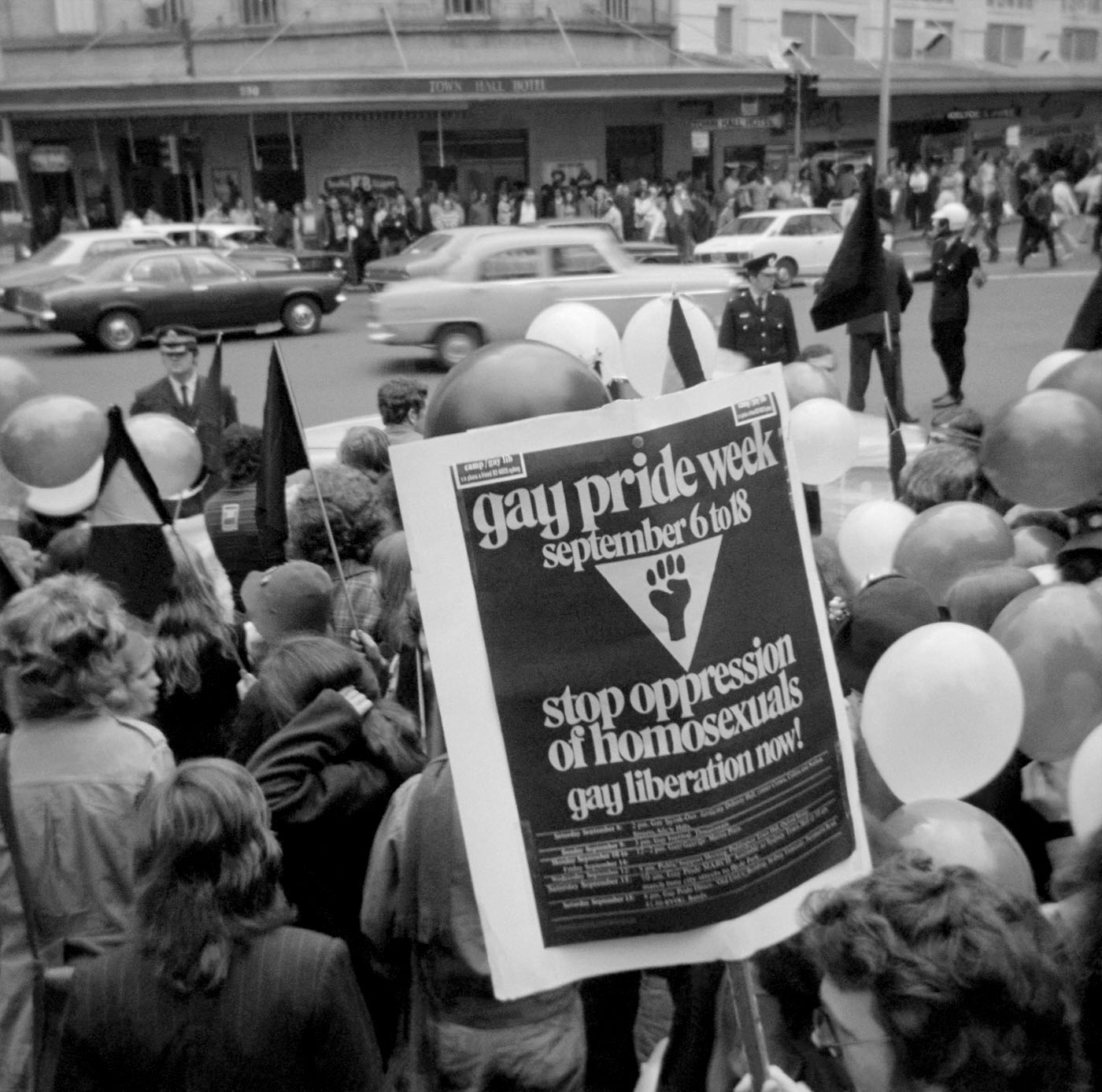
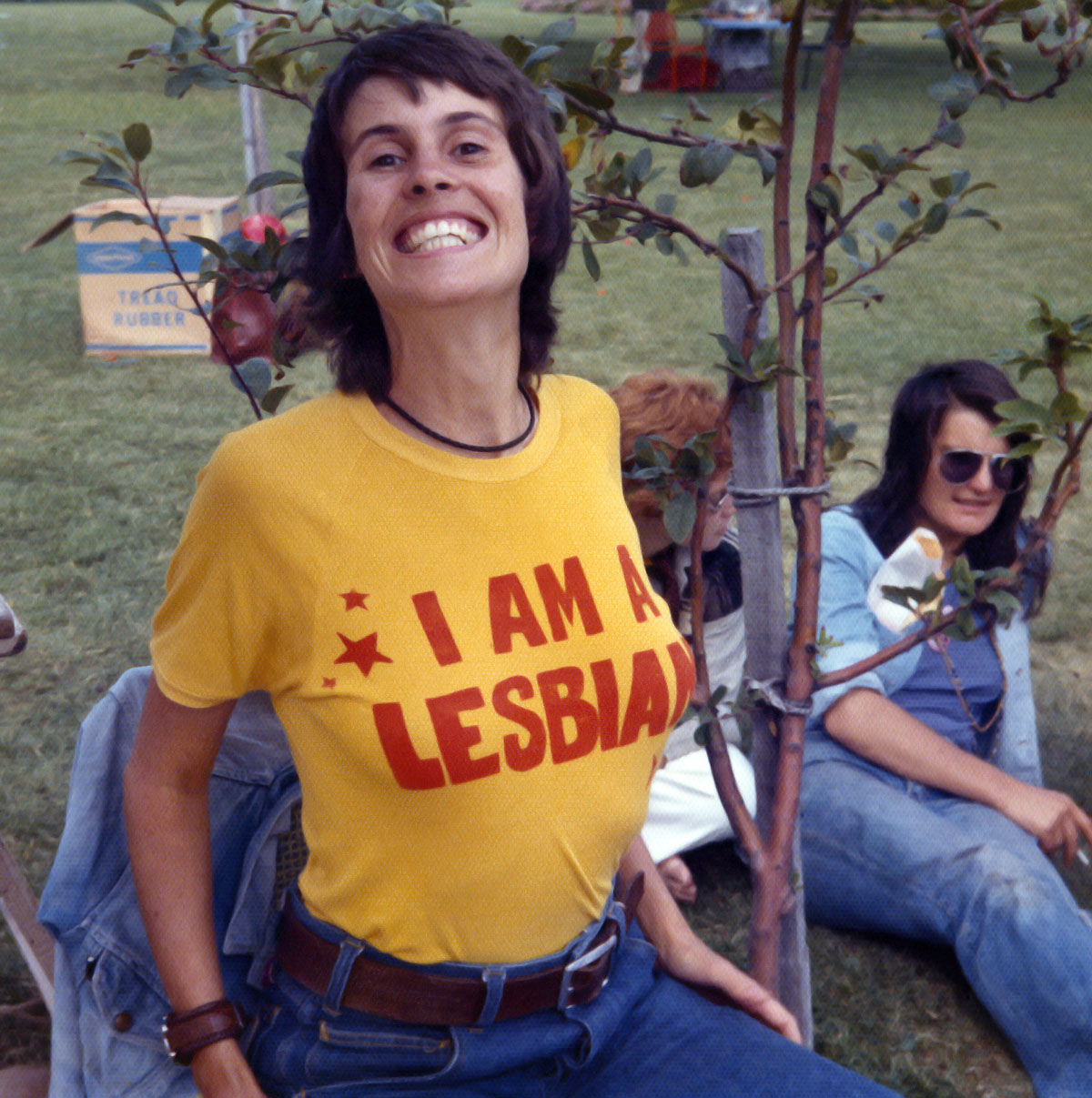
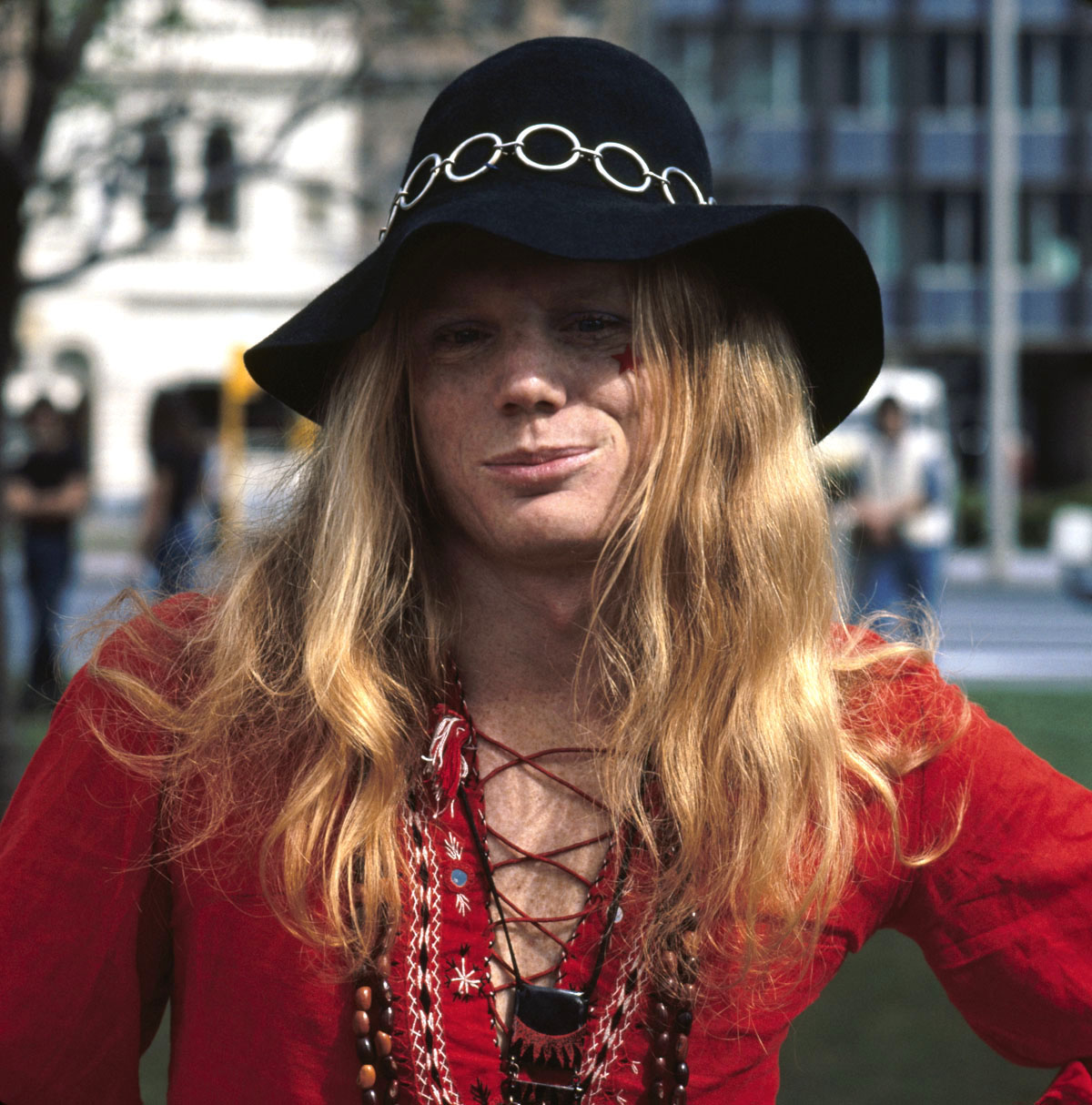






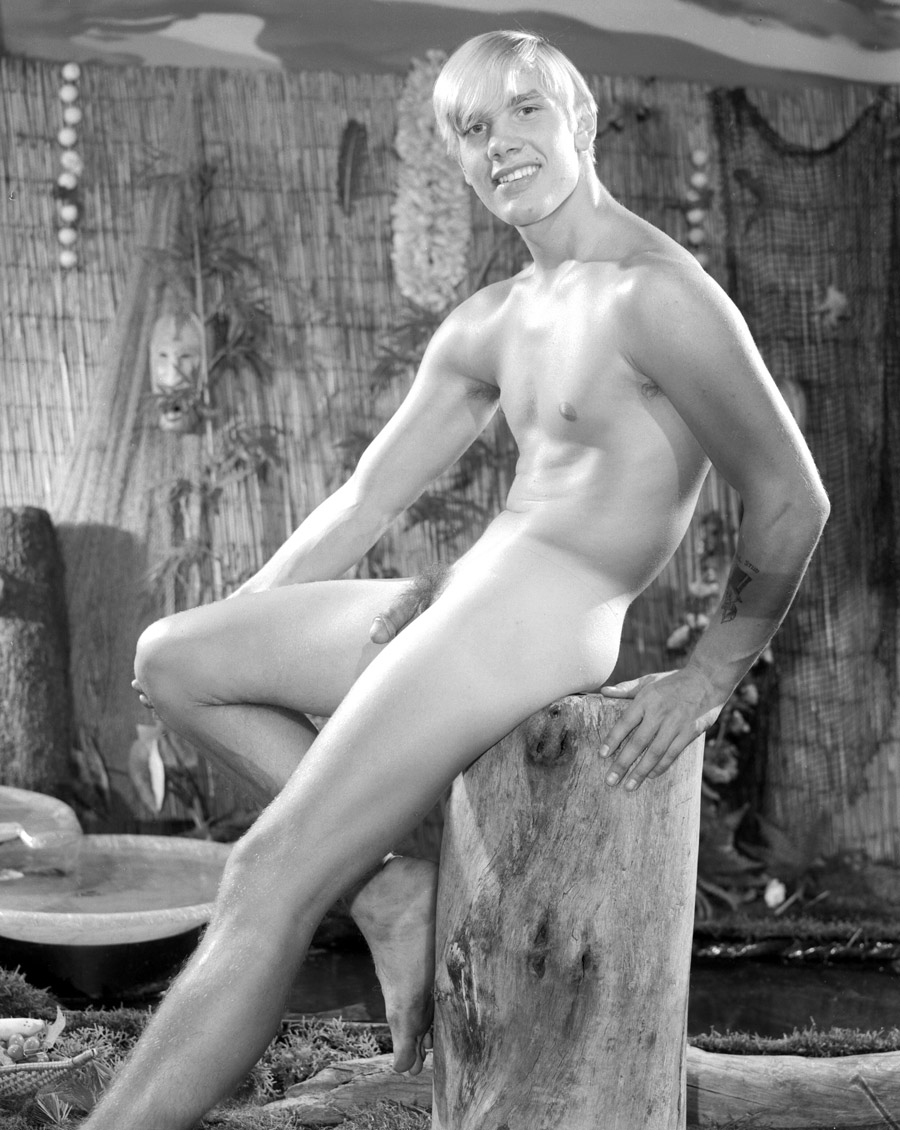
![Bob Mizer (American, 1922-1992) 'Untitled [Barry Maurer, Hand on Gun], Los Angeles' c. 1961](https://artblart.com/wp-content/uploads/2013/12/bob_mizer6-web.jpg "Bob Mizer (American, 1922-1992) 'Untitled [Barry Maurer, Hand on Gun], Los Angeles' c. 1961")
![Bob Mizer (American, 1922-1992) 'Untitled [Larry Lamb, with Tumbleweed], Los Angeles' c. 1959](https://artblart.com/wp-content/uploads/2013/12/bob_mizer8-web.jpg "Bob Mizer (American, 1922-1992) 'Untitled [Larry Lamb, with Tumbleweed], Los Angeles' c. 1959")


![Bob Mizer (American, 1922-1992) 'Untitled [Ray Hornsby, Motorcycle], Los Angeles' c. 1957](https://artblart.com/wp-content/uploads/2013/12/bob_mizer9-web.jpg "Bob Mizer (American, 1922-1992) 'Untitled [Ray Hornsby, Motorcycle], Los Angeles' c. 1957")
![Bob Mizer (American, 1922-1992) 'Untitled [Ray Hornsby, with Skull Staff], Los Angeles' c. 1957](https://artblart.com/wp-content/uploads/2013/12/bob_mizer10-web.jpg "Bob Mizer (American, 1922-1992) 'Untitled [Ray Hornsby, with Skull Staff], Los Angeles' c. 1957")
![Bob Mizer (American, 1922-1992) 'Untitled [Ernie Rabb, Pointed Pistol], Los Angeles' c. 1957](https://artblart.com/wp-content/uploads/2013/12/bob_mizer11-web.jpg "Bob Mizer (American, 1922-1992) 'Untitled [Ernie Rabb, Pointed Pistol], Los Angeles' c. 1957")
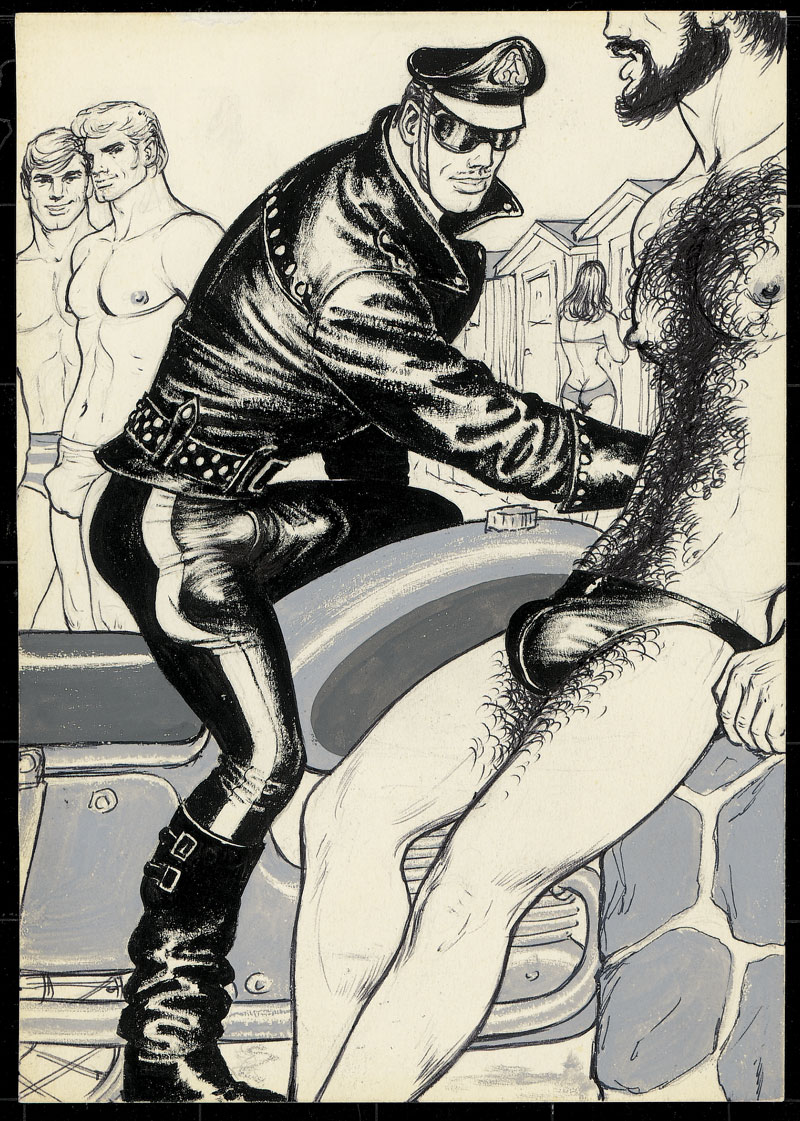

![Bob Mizer (American, 1922-1992) 'Untitled [Larry Lamb, Profile with Chains], Los Angeles' c. 1959](https://artblart.com/wp-content/uploads/2013/12/bob_mizer13-web.jpg "Bob Mizer (American, 1922-1992) 'Untitled [Larry Lamb, Profile with Chains], Los Angeles' c. 1959")
![Bob Mizer (American, 1922-1992) 'Untitled [Dennis Schreffer, Wand Balance], Los Angeles' c. 1957](https://artblart.com/wp-content/uploads/2013/12/bob_mizer14-web.jpg "Bob Mizer (American, 1922-1992) 'Untitled [Dennis Schreffer, Wand Balance], Los Angeles' c. 1957")
![Bob Mizer (American, 1922-1992) 'Untitled [Dennis Schreffer with Portrait], Los Angeles' c. 1957](https://artblart.com/wp-content/uploads/2013/12/bob_mizer15-web.jpg "Bob Mizer (American, 1922-1992) 'Untitled [Dennis Schreffer with Portrait], Los Angeles' c. 1957")


![Bob Mizer (American, 1922-1992) 'Athletic Model Guild Catalog Board, David Elliott. [Double-sided; This side Page 1 of SW series]' c. 1965](https://artblart.com/wp-content/uploads/2013/12/bob_mizer16-web.jpg "Bob Mizer (American, 1922-1992) 'Athletic Model Guild Catalog Board, David Elliott. [Double-sided; This side Page 1 of SW series]' c. 1965")
![Bob Mizer (American, 1922-1992) 'Athletic Model Guild Catalog Board, David Elliott. [Double-sided; This side Page 2 of SW series]' c. 1965](https://artblart.com/wp-content/uploads/2013/12/bob_mizer17-web.jpg "Bob Mizer (American, 1922-1992) 'Athletic Model Guild Catalog Board, David Elliott. [Double-sided; This side Page 2 of SW series]' c. 1965")
![Bob Mizer (American, 1922-1992) 'Athletic Model Guild Catalog Board, Ernie Rabb. [Double-sided; This side Page 57 of XT series]' c. 1957](https://artblart.com/wp-content/uploads/2013/12/bob_mizer18-web.jpg "Bob Mizer (American, 1922-1992) 'Athletic Model Guild Catalog Board, Ernie Rabb. [Double-sided; This side Page 57 of XT series]' c. 1957")
![Bob Mizer (American, 1922-1992) 'Athletic Model Guild Catalog Board, Ernie Rabb. [Double-sided; This side Page 58 of XT series]' c. 1957](https://artblart.com/wp-content/uploads/2013/12/bob_mizer19-web.jpg "Bob Mizer (American, 1922-1992) 'Athletic Model Guild Catalog Board, Ernie Rabb. [Double-sided; This side Page 58 of XT series]' c. 1957")

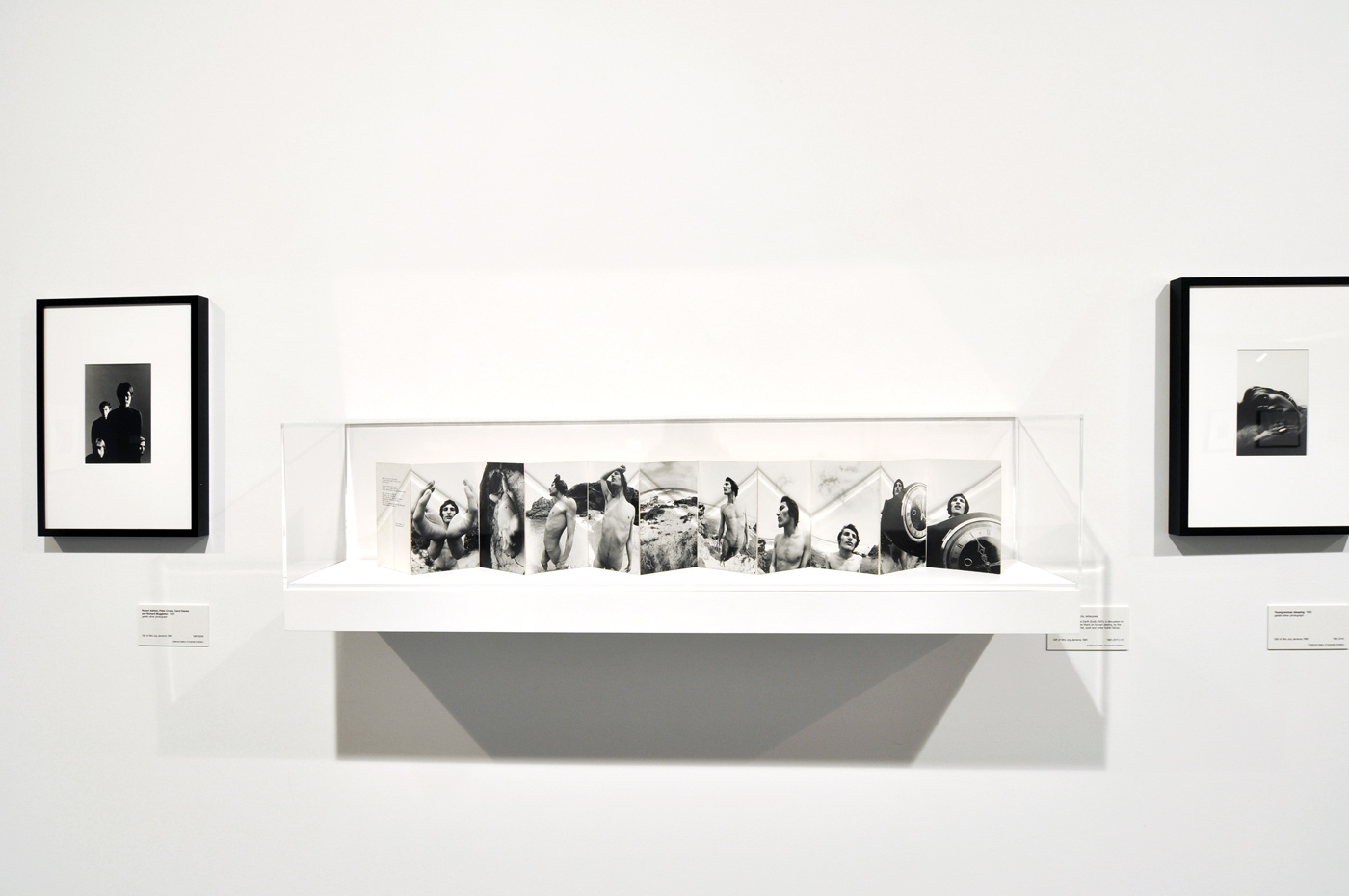


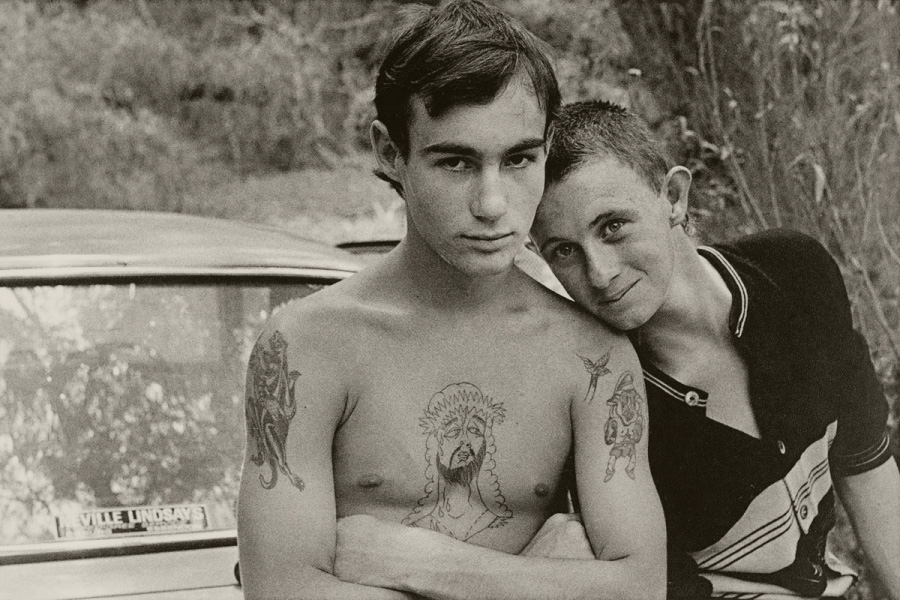
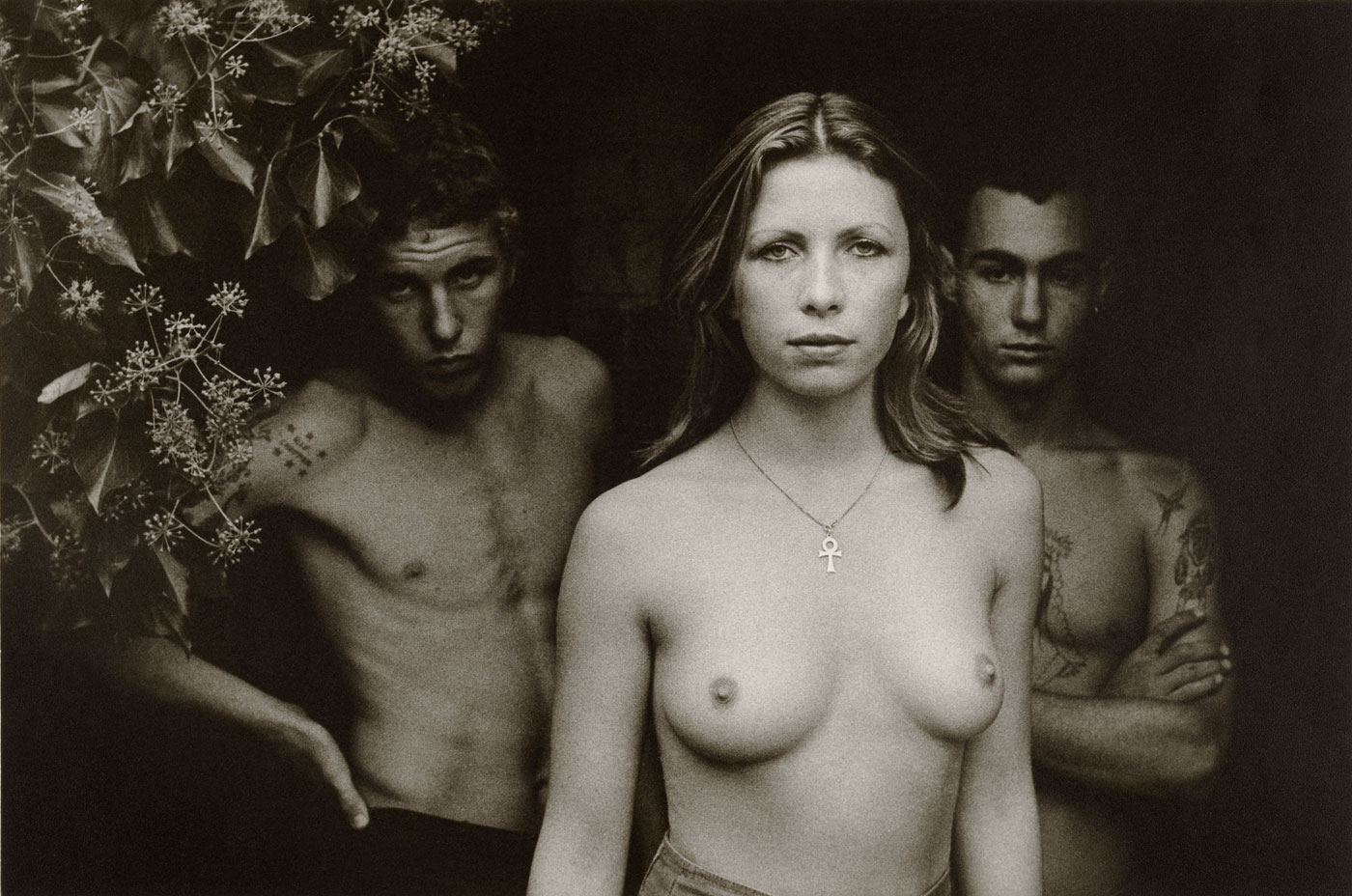
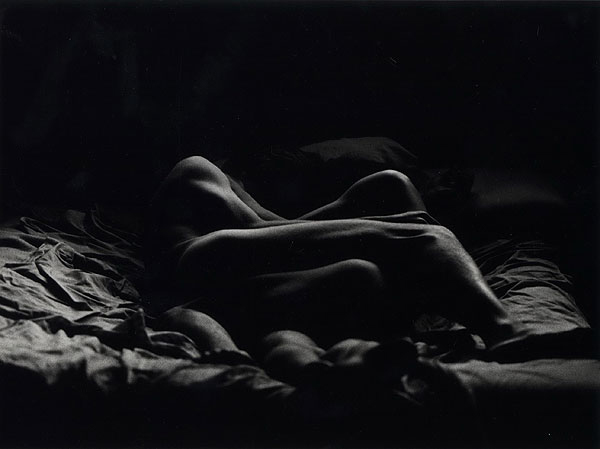
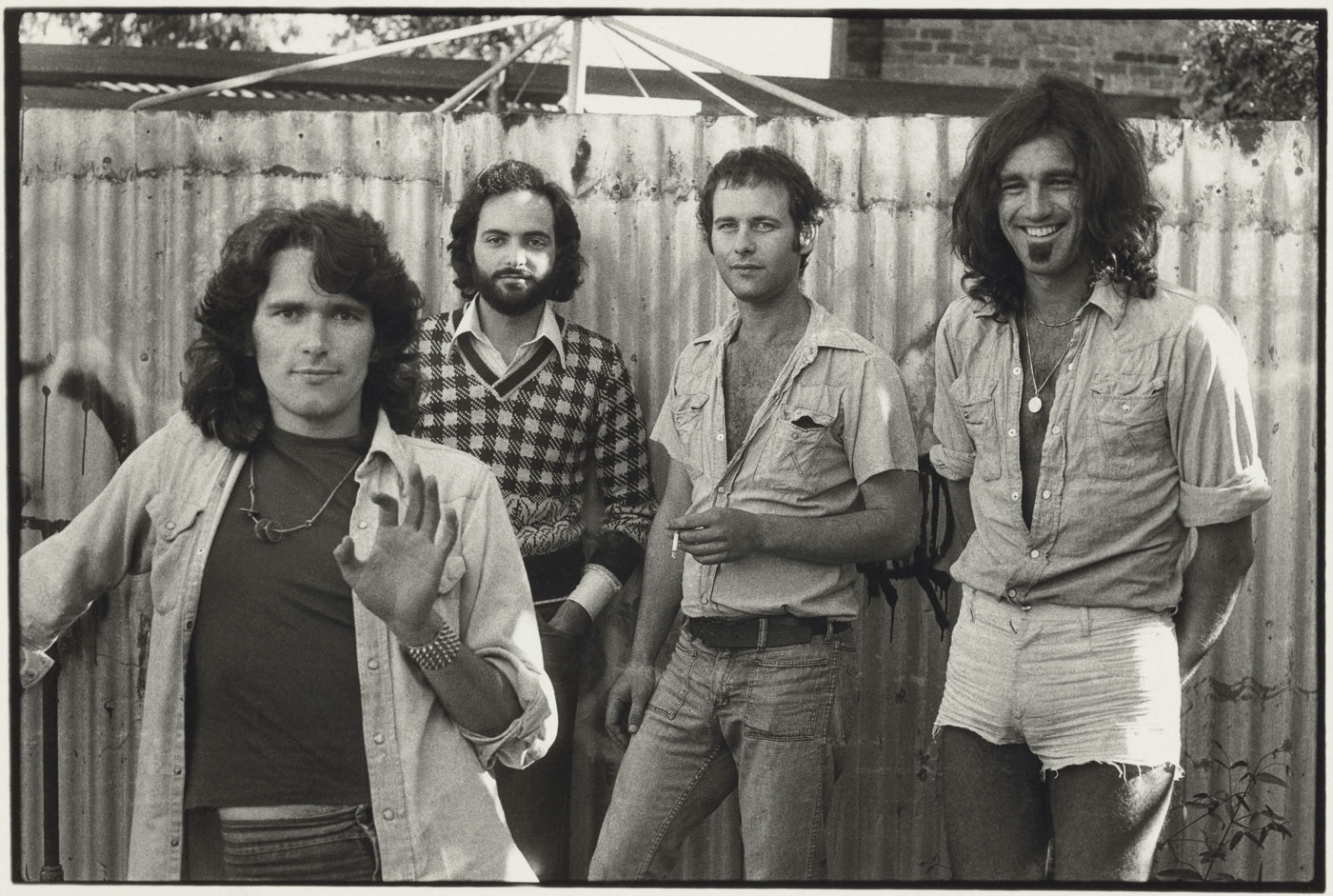
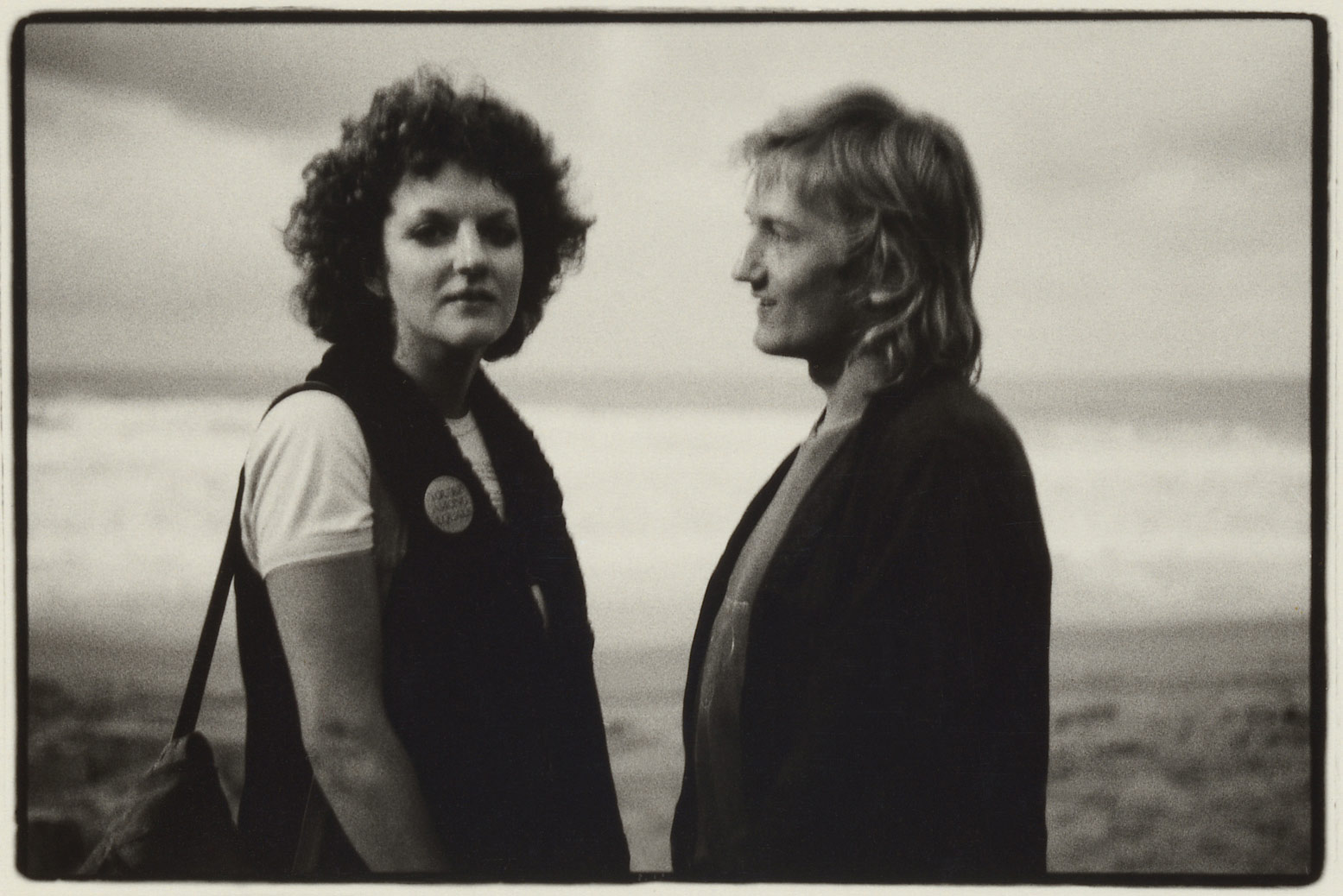

![Carol Jerrems (Australian, 1949-1980) 'Butterfly behind glass [Red Symons from Skyhooks]' 1975](https://artblart.com/wp-content/uploads/2013/09/butterfly_174882_web.jpg "Carol Jerrems (Australian, 1949-1980) 'Butterfly behind glass [Red Symons from Skyhooks]' 1975")

![Carol Jerrems (Australian, 1949-1980) 'Performers on stage,' Hair', Metro Theatre Kings Cross, Sydney, January 1970 [Jim Sharman Director cast included Reg Livermore]' 1970](https://artblart.com/wp-content/uploads/2013/09/jerrems_performers-on-stage-hair-web.jpg "Carol Jerrems (Australian, 1949-1980) 'Performers on stage,' Hair', Metro Theatre Kings Cross, Sydney, January 1970 [Jim Sharman Director cast included Reg Livermore]' 1970")
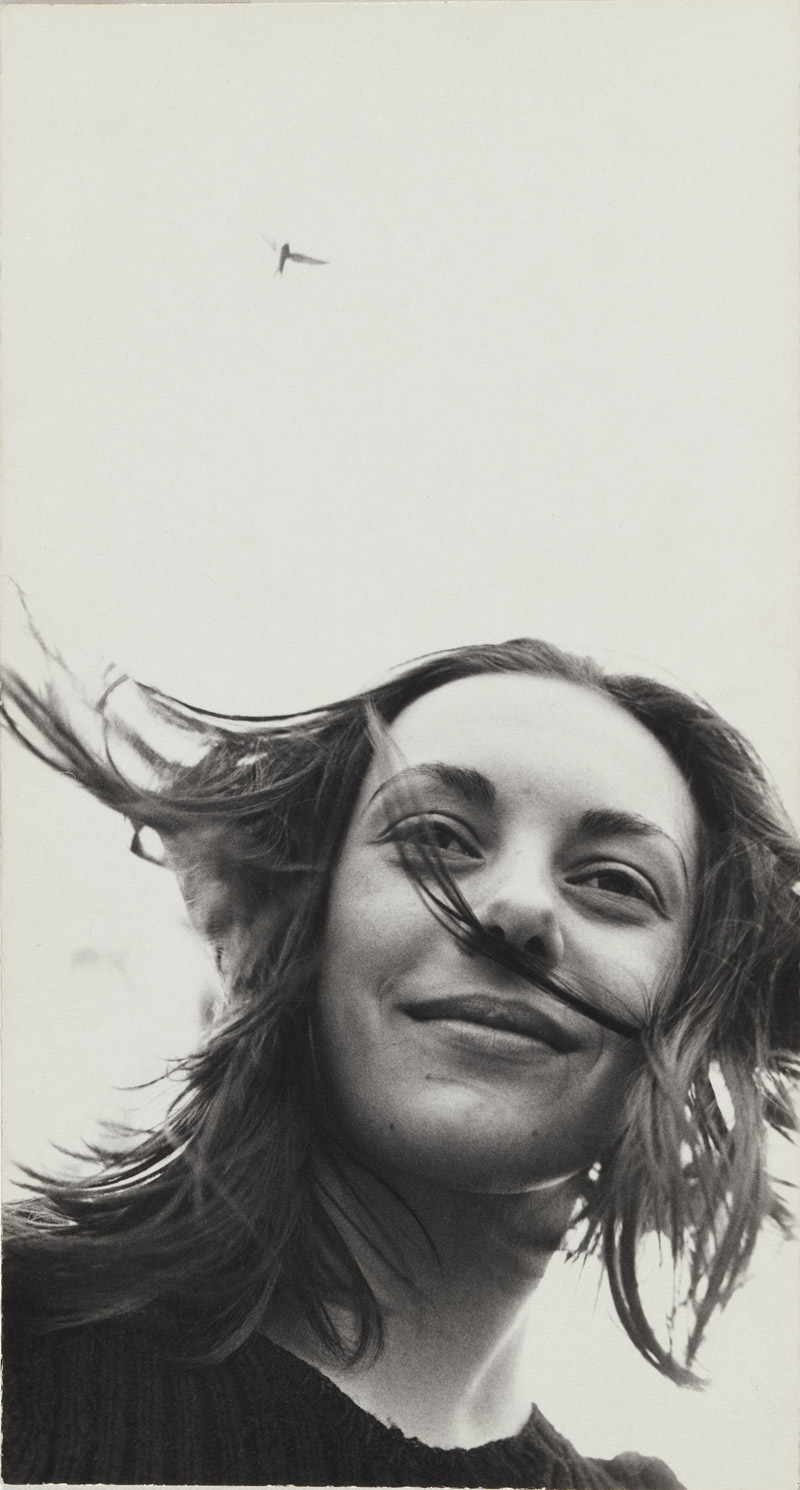

 Art Blart _ art and cultural memory archive
You must be logged in to post a comment.