Marcus Bunyan (Australian, b. 1958) Lake District, England 1994 Silver gelatin print
I finally got around to scanning some more of my black and white archive, this time from a trip to England in 1994. Beautiful, poignant and funny (people wearing their solidarity with people living with HIV/AIDS, with ribbons on their crotch), these images make me laugh and reflect at the same time. To all those that we have lost, we remember them.
Dr MarcusBunyan
I am scanning my negatives made during the years 1991-1997 to preserve them in the form of an online archive as a process of active memory, so that the images are not lost forever. These photographs were images of my life and imagination at the time of their making, the ideas I was thinking about and the people and things that surrounded me.
Photographs are available from this series for purchase. As a guide, a vintage 8″ x 10″ silver gelatin print costs $700 plus tracked and insured shipping. For more information please see my store web page.
Marcus Bunyan (Australian, b. 1958) Lake District, England 1994 Silver gelatin print
Marcus Bunyan (Australian, b. 1958) Lake District, England 1994 Silver gelatin print
Marcus Bunyan (Australian, b. 1958) Manchester Mardi Gras 1994 Silver gelatin print
Marcus Bunyan (Australian, b. 1958) Manchester Mardi Gras 1994 Silver gelatin print
Marcus Bunyan (Australian, b. 1958) Untitled 1994 Silver gelatin print
Marcus Bunyan (Australian, b. 1958) Lake District, England 1994 Silver gelatin print
Marcus Bunyan (Australian, b. 1958) Lake District, England 1994 Silver gelatin print
Marcus Bunyan (Australian, b. 1958) Untitled 1994 Silver gelatin print
Marcus Bunyan (Australian, b. 1958) Manchester Mardi Gras 1994 Silver gelatin print
Marcus Bunyan (Australian, b. 1958) Manchester Mardi Gras 1994 Silver gelatin print
Marcus Bunyan (Australian, b. 1958) Manchester Mardi Gras 1994 Silver gelatin print
Marcus Bunyan (Australian, b. 1958) Manchester Mardi Gras 1994 Silver gelatin print
Marcus Bunyan (Australian, b. 1958) Untitled 1994 Silver gelatin print
Marcus Bunyan (Australian, b. 1958) Manchester Mardi Gras 1994 Silver gelatin print
Marcus Bunyan (Australian, b. 1958) Untitled 1994 Silver gelatin print
Marcus Bunyan (Australian, b. 1958) Manchester Mardi Gras 1994 Silver gelatin print
Marcus Bunyan (Australian, b. 1958) Untitled 1994 Silver gelatin print
Marcus Bunyan (Australian, b. 1958) Lake District, England 1994 Silver gelatin print
Marcus Bunyan (Australian, b. 1958) Manchester Mardi Gras 1994 Silver gelatin print
Berenice Abbott (American, 1898-1991) Fifth Avenue Houses (5th Avenue and 8th Street) 1936, printed later Silver gelatin print
A selection of interesting images.
The Vanishing Race by Edward S. Curtis is simple, yet one of the best. Their shadows seem more substantial than their owners.
Any photographer worth their salt would recognise the light on the foliage in a certain location that they know, but the chance of it being as perfect as this are about a billion to one. Notice how the original frame extends the synthesis of man and landscape as well. Such a great amalgam of image and frame, such a perfect marriage where one complements the other without the frame being overpowering, as though the frame were an extension of the image (and organic nature of the landscape).
The line of the riders in the image … they would have virtually ridden over the photographer and the tripod if they had kept that line! And the outrider – magnificent!!
Marcus
Please click on the photographs for a larger version of the image.
Edward S. Curtis (American, 1868-1952) The Vanishing Race – Navaho 1904 Orotone (in original frame)
“The passing of every old man or woman means the passing of some tradition, some knowledge of sacred rites possessed by no other… consequently the information that is to be gathered, for the benefit of future generations, respecting the mode of life of one of the great races of mankind, must be collected at once or the opportunity will be lost for all time.”
Paul Caponigro (American, 1932-2024) Redding Stream, Redding, Connecticut 1968, printed later Gelatin silver print
Paul Caponigro (American, 1932-2024) Nautilus Shell, Ipswich, Mass 1960 Silver gelatin print
Paul Caponigro (American, 1932-2024) Two Leaves, Brewster, New York 1963 Silver gelatin print
Harry Callahan (American, 1912-1999) Eleanor, Port Huron c. 1954 Silver gelatin print
With her raven hair and ripe figure, Eleanor Callahan is one of the most recognisable models in the history of 20th-century photography, an inseparable part of both the life and work of one of its most renowned artists. Clothed and standing among trees in a public park, or nude and turned to the wall while clutching a radiator in an empty room, she served as a formal element within Mr. Callahan’s austere compositions as well as a symbol of womanhood. From 1941 to his death in 1999, she allowed herself to be photographed by him, without complaint, hundreds of times…
“He just liked to take the pictures of me,” she told an interviewer in 2008. “In every pose. Rain or shine. And whatever I was doing. If I was doing the dishes or if I was half asleep. And he knew that I never, never said no. I was always there for him. Because I knew that Harry would only do the right thing.”
Text from Richard B. Woodward. “Eleanor Callahan, Photographic Muse, Dies at 95,” on the New York Times website 28th February 2012. Used under fair use conditions for the purposes of education and research
Dorothea Lange (American, 1895-1965) Potato truck in the field near Shafter, California 1937 Ferrotyped silver print
Walker Evans (American, 1903-1975) Fish Market near Birmingham, Alabama 1936 Silver gelatin print
Robert Doisneau (French, 1912-1994) Le gardien des géants du Nord Nd Silver gelatin print
Berenice Abbott (American, 1898-1991) Christopher Street Shop late 1940s Silver gelatin print
Francesca Woodman (American, 1958-1981) But Lately I Find a Sliver of a Mirror is Simply to Slice an Eyelid 1979-1980 Silver gelatin print
André Kertész (Hungarian, 1894-1985) Fan, December 1937 1937 Silver gelatin print
“I am an amateur and I intend to stay that way for the rest of my life.”
~ André Kertész
Margaret Bourke-White (American, 1904-1971) Fort Peck Dam, Montana 1936 Silver gelatin print
This photograph became an icon of the machine age, not only because it was printed as the cover of the first issue of Life magazine (November 23, 1936), but also because it showed the power of modern technology to dwarf humankind. The giant buttresses and what seem to be crenellated battlements (actually the supports for an elevated highway) are meant to be as raw and impressive as the towering walls of ancient monuments. The engineers on the spillway provide the necessary indication of scale.
Margaret Bourke-White (American, 1904-1971) Terminal Tower [Cleveland] c. 1928 Silver gelatin print
“I stood on the deck to watch the city [Cleveland] come into view. As the skyline took form in the morning mist, I felt I was coming to my promised land … columns of machinery gaining height as we drew toward the pier, derricks swinging like living creatures. Deep inside I knew these were my subjects.”
~ Margaret Bourke-White 1927
François Kollar (Hungarian, 1904-1979) Double-impression of the Eiffel Tower 1931 Solarised silver gelatin print
In this unique and widely-reproduced photograph, the French modernist photographer has overlaid positive and negative images of the magnificent Eiffel Tower. The iconic structure is depicted from an unusual perspective, thrusting upward, with Kollar’s special solarised effect.
Edward J. Kelty (American, 1888-1967) X-ray of Ajax, the sword swallower 1928 Silver print 18 × 11 inches (45.7 × 27.9cm) With a New York X-ray lab credit in the negative
Edward J. Kelty (American, 1888-1967) Marcellus Golden Models 1933 Silver print 11 1/4 × 8 7/8 inches (28.6 × 22.5cm) With Kelty’s credit and title in the negative
Artists: Jane Brown, Cameron Clarke, Zoë Croggon, Therese Keogh, Phuong Ngo, Meredith Turnbull, Wolfgang Sievers
Curators: Naomi Cass and Kyla McFarlane
Jane Brown (Australian, b. 1967) Triptych. The Paper Mill (former Amcor and APM site), Fairfield 2014 3 panels of 9, 6 and 6 selenium toned, fibre-based, gelatin silver prints
Curated by CCP Director Naomi Cass and Kyla McFarlane, this intelligent exhibition features the work of six early career artists who respond in diverse ways to renowned Australian photographer Wolfgang Sievers (1913-2007). It was a joy to see again the large vintage silver gelatin, almost clinically composed photographs by Sievers. The light, tonality and stillness of the images make them seem mythic, modern and monumental.
Each artist offers a unique “take” on Sievers influence on Australian photography and design, including his interest in refugees and human rights issues and the representation of the dignity of labour (although the machine is more often represented in Sievers work with a distinct lack of human presence and the act of work itself).
My personal favourites were Phuong Ngo’s intimate silver gelatin photographs in four groups of sweat shop workers in Vietnam, people on boats coming to Australia, photographs of textile workers in Australia and photographs of his mother. Phuong Ngo’s shared stories of young Vietnamese refugees and the journeys taken by their mothers told through photographs is very moving, but only after you are told what the four bodies of images are about. Positioned in the small Gallery Four it was also difficult to associate this installation with the rest of the exhibition. Initially I thought it was a separate exhibition until the linkages were told, the light dawned, and the connections were made.
While Cameron Clarke’s photographs of Ford factory workers and machinery are meticulously lit and digitally observed, producing a strong body of work, it is Jane Brown’s gridded analogue triptych which steals the show (see photographs above and below). These are superbly rich and textured photographs, beautifully seen and resolved within the shifting mise-en-scène. Brown’s images kinetically flow from one image to another even as they are self contained within a modernist grid. In some instances the artist has used the same photograph within the triptych but cropped in a different manner, which pushes and pulls the viewer into a different perspective on the subject matter. This is highly intelligent art making that observes the self contained nature and monumentality of Sievers work and reworks it, lucidly commenting on the dis/integration of these spaces and industries in the present day.
This series of work is the best sequence of photographs I have seen this year and any institution worthy of their salt should snap up these works for their collection.
Installation photographs of Jane Brown Triptych. The Paper Mill (former Amcor and APM site), Fairfield2014 (details) at the exhibition The Sievers Project at the Centre for Contemporary Photography (CCP)
Jane Brown (Australian, b. 1967) Staircase. The Paper Mill (former Amcor and APM site), Fairfield, 2014 2014 Fibre-based, gelatin silver print
Jane Brown (Australian, b. 1967) Mining machinery, Line of Lode Miners Memorial Complex, Broken Hill 2014-06-10 2014 Brown toned, fibre-based, gelatin silver print Courtesy the artist
Installation photograph of Jane Brown’s work at the exhibition The Sievers Project at the Centre for Contemporary Photography (CCP)
Wolfgang Sievers (Australian born Germany, 1913-2007) Gears for the Mining Industry, Vickers Ruwolt, Burnley, Victoria, 1967 1967 Gelatin silver photograph 49.6 x 39.3cm National Library of Australia, Wolfgang Sievers Photographic Archive
Wolfgang Sievers (Australian born Germany, 1913-2007) Sulphuric Acid Plant Electrolytic Zinc, Risoon, Tasmania, 1959 1959 Gelatin silver photograph
Installation photograph of the work of Meredith Turnbull (foreground) and Zoë Croggon (rear wall) at the exhibition The Sievers Project at the Centre for Contemporary Photography (CCP)
Zoë Croggon (Australian, b. 1989) John Holland Constructions, Ginninderra Bridge (after Wolfgang Sievers) 2014 Photocollage 70 cm x 86cm Courtesy the artist and Daine Singer, Melbourne
Zoë Croggon (Australian, b. 1989) Comalco Aluminium Used in the Construction of the National Gallery of Victoria [7] (after Wolfgang Sievers) 2014 Photocollage Courtesy the artist and Daine Singer, Melbourne
Zoë Croggon (Australian, b. 1989) Comalco Aluminium Used in the Construction of the National Gallery of Victoria [18] (after Wolfgang Sievers) 2014 Photocollage Courtesy the artist and Daine Singer, Melbourne
Zoë Croggon (Australian, b. 1989) Westgate Bridge (after Wolfgang Sievers) 2014 Photocollage Courtesy the artist and Daine Singer, Melbourne
“Six early career artists, working in photography through to installation, have responded in diverse ways to renowned Australian photographer Wolfgang Sievers (1913-2007), icon of 20th century Australian photography. Sievers’ commercial practice exemplifies mid-century positivism and modernity, and the myth-making role of photography. As a German Jewish immigrant, he had a strong interest in refugees and human rights issues as well as an expressed commitment to representing the dignity of labour. The Sievers Project presents key historical works as a context for engaging the past through the present.
Photographers Jane Brown and Cameron Clarke have followed in his footsteps to industrial clients Sievers photographed and valorised, finding sites that are visually dynamic within industries now in decline. Through her intrepid, research-based practice, Therese Keogh has developed a materially-rich work from the starting point of a single, anomalous photograph Sievers took at the Roman Forum in 1953. Meredith Turnbull draws on his connections with Melbourne’s design community in the 1950s and 60s, including Gerard Herbst and Frederick Romberg. In Sievers’ photographs of industrial sewing machines and their machinists, Phuong Ngo finds shared stories of young Vietnamese refugees and the journeys taken by their mothers. Zoë Croggon positions fragments of Sievers’ iconic architectural photographs against found photographs of the human body in movement.”
Text from the CCP website
Foreword to the catalogue
The Sievers Project follows a number of exhibitions over the last five years where CCP has opened up a vista on contemporary practice by exhibiting early work by living artists such as Bill Henson, Kohei Yoshiyuki and Robert Rooney, as well as historical photography, alongside contemporary work. As a commissioning exhibition we have titled this a ‘project’ to point towards the year-long research period integral to the exhibition, capturing the curatorial gesture of inviting early career artists to engage with the past.
The Sievers Project represents a significant curatorial endeavour for CCP, the tale of which is recounted in the Introduction. It would simply not have taken place were it not for the willingness and generosity of Julian Burnside AO QC to participate, through allowing the artists research access to his Wolfgang Sievers collection and lending work from it for the exhibition, as well as contributing an essay for this catalogue.
I acknowledge the artists for setting out on this project and for returning with thoughtful and excellent work. It has been a pleasure to both engage with and exhibit the work of Jane Brown, Cameron Clarke, Zoë Croggon, Therese Keogh, Phuong Ngo and Meredith Turnbull.
The Sievers Project has been dignified by contributions by a number of experts and I wish to acknowledge Professor Helen Ennis, Australian National University School of Art who has also contributed a catalogue essay; Madeleine Say, Picture Librarian, Eve Sainsbury, Exhibitions Curator and Clare Williamson, Senior Exhibitions Curator, State Library of Victoria; Maggie Finch, Curator of Photography, National Gallery of Victoria and Professor Harriet Edquist and Kaye Ashton, Senior Coordinator, RMIT Design Archives, who all took time to speak about Sievers and share his work with the artists.
Opportunities to commission artists are relatively rare and funding through the inaugural Early Career Artist Commissions Grant from the Australia Council has enabled the project. CCP is pleased to acknowledge this recognition and support. We are delighted that Lovell Chen Architects & Heritage Consultants have provided further critical support to realise the project, for which we are grateful. We see a germane link between Lovell Chen and the premise of The Sievers Project.
The Besen Family Foundation are champions for enabling CCP to produce catalogues for selected exhibitions. I acknowledge the Foundation for their long-standing and generous engagement with CCP. We thank the National Library of Australia for providing permission to reproduce Sievers’ work in this catalogue.
The Sievers Project has provided a welcome opportunity for CCP to engage with colleagues in the fi eld of architecture and we are delighted to acknowledge a partnership with the Robin Boyd Foundation to present public programs. We are grateful to Tony Lee from the Foundation for his interest in the project.
Without doubt CCP’s ability to both present contemporary art well and look after artists is greatly enhanced through the longstanding and generous support of Tint Design and Sofi tel Melbourne on Collins. CCP is pleased to present a parallel exhibition of The Sievers Project at the 2014 Melbourne Art Fair and we thank the Melbourne Art Foundation for enabling CCP to bring the exhibition to broad new audiences. For the Art Fair exhibition we are also indebted to Christine Downer, previous CCP Board member and current supporter, for the loan of a major Sievers work.
The Sievers Project has been ably assisted by Philippa Brumby, curatorial intern. Co-curator Dr Kyla McFarlane and I thank Philippa for her wide-ranging skills over a substantial period of time. Lastly, I acknowledge Kyla for her excellent curatorial work and for the pleasure of collaborating with such a playful, dedicated and steely intellect.
Naomi Cass, Director, CCP
And what about his Legacy?
A response to this necessarily combines elements of certitude and speculation. Sievers himself was totally committed to ensuring his legacy as a photographer. He spent years meticulously cataloguing and documenting his work and was assiduous in placing as much of it as he could in major photography collections around the country – art galleries and libraries. The bulk of his archive, a staggering 65,000 negatives and prints, was acquired by the National Library where it has been digitised and is available online to users in perpetuity. But there is another aspect to his preoccupation with legacy that has troubled me over the years – his desire to control the readings of his work, to ensure that he ‘owned’ the contextualisation and interpretation of it. As I see it, some of the framing narratives he constructed were retrospective and are misleading because they are not borne out by the evidence, that is, by the photographs themselves. This is especially apparent in his insistence that the relationship between ‘man and machine’ was central to his industrial photography. In my assessment of his enormous archive, images that extol this interaction are actually relatively few in number. They are outweighed by thousands and thousands of other industrial scenes in which the worker is locked into the dreary, repetitive tasks associated with mass production, or is not present at all having been displaced by machines that are far more efficient than humans will ever be. In other words, the bulk of Sievers’ own photographs contradict his central tenet of the dignity of labour in the modern machine era. The most important aspect of his legacy is undoubtedly his photographs and the astonishingly vast, high quality body of architectural and industrial work he produced between 1938 and the early 1970s. My view is that his black and white photography is the best although he did not agree with me, arguing that his colour photography, with its expressive and dramatic qualities, was equally fine. For me, it is his black and white images that are visionary, their precision, clarity and drama embodying the belief in progress that underpinned modernity. I would also suggest Sievers’ legacy isn’t confined to his photography. As a man he cared deeply about the world and wanted it to be better. He was closely involved in the restoration of Karl Friedrich Schinkel’s buildings in Berlin in the 1990s and in the re-evaluation of his own father’s reputation (Professor Johannes Sievers was an expert on Schinkel and had used his young son’s photographs in his books on the architect in the 1930s). Wolfgang donated his photographs to fund-raising campaigns for human rights and remained a passionate antiwar activist until his death.
What would he have thought about this project?
I suspect that he would have been thrilled to know that his contribution to Australian life and photography is the touchstone for the six photographers involved in the project and that his work continues to be appreciated.
Professor Helen Ennis is Director of the Centre for Art History and Art Theory at ANU School of Art, Canberra.
Installation photographs of the exhibition The Sievers Project at the Centre for Contemporary Photography (CCP)
Installation photograph of the work of Therese Keogh (detail) in the exhibition The Sievers Project at the Centre for Contemporary Photography (CCP)
Installation photograph of the work of Meredith Turnbull (detail) in the exhibition The Sievers Project at the Centre for Contemporary Photography (CCP)
Therese Keogh In the Forum Romanum (after Sievers) (installation view) 2013 Graphite on paper Courtesy the artist
Cameron Clarke Loui Nedeski, Ford Motor Company, Geelong 2014 Archival inkjet print 50 x 63cm Courtesy the artist
Installation views of Jeff Wall: Tableaux, Pictures, Photographs, 1996-2013 at Stedelijk Museum Amsterdam Photos: Gert Jan van Rooij
What an absolutely beautiful space to show your work. Can you just imagine what you would create if you had the chance!
Dr Marcus Bunyan
Many thankx to the Stedelijk Museum for allowing me to publish the photographs in the posting. Please click on the photographs for a larger version of the image.
Jeff Wall (Canadian, b. 1946) Volunteer 1996 Gelatine silver print 221.5 x 313cm Courtesy of the artist
Jeff Wall (Canadian, b. 1946) The Flooded Grave 1998-2000 Transparency in lightbox 225.5 x 282 x 25cm Courtesy of the artist
Jeff Wall (Canadian, b. 1946) Invisible man by Ralp Ellison, The Prologue 1999-2000 Transparency in lightbox 174 x 250 x 25cm Courtesy of the artist
Jeff Wall: Tableaux, Pictures, Photographs, 1996-2013 presents recent work in colour and black and white, and features the new, previously unseen diptych Summer Afternoons (2013). It is the first major photography exhibition to be presented at the Stedelijk following its reopening in 2012.
Since the 1980s, Wall has produced critically acclaimed work in the form of colour transparencies backlit by fluorescent light strips and presented in lightboxes. He was one of the first artists to make photographs on a large scale. The standard lightbox was created for the primary purpose of outdoor advertising. In Wall’s work, this medium became a platform for his figurative tableaux, street scenes and interiors, landscapes and cityscapes. Wall explores themes such as the relationships between men and women and the boundary between metropolis and nature. He offers social commentary on violence and cultural miscommunication, and conjures seductive nightmarish fantasies and personal memories. These scenes provide the basis for photographic reconstructions of Wall’s experience. They derive their inherent suspense from a combination of extreme realism and sometimes elaborate artifice.
The exhibition hinges on the year 1996, which marked a turning point in Wall’s production: It was the first year that he produced black-and-white prints on paper. More immediately than the lightboxes, the black-and-white photographs suggest new relations of his work to documentary themes and aesthetics. But Wall also orchestrates the content of these images, employing tools borrowed from filmmaking. Wall sees photographs as autonomous, independent images and, strictly speaking, all his works are created using photographic means. At the same time, he analyses and expands the visual language of photography by adding elements from painting, cinema, theatre. In choosing his themes, Wall deconstructs common ideas and assumptions, including those relating to his own work. He has, for instance, also shot many “unstaged” images.
Curator Hripsimé Visser said: “Jeff Wall is first and foremost an ‘artist’s artist,’ he is well- known and much loved by other artists, as well as critics. With this exhibition, the Stedelijk hopes to create broader public awareness of Jeff Wall as one of the artists who uniquely and enduringly defined photography as a fine art medium. Wall’s work is classic, yet entirely contemporary at the same time. His themes are both commonplace and tension-filled. What at first seems straightforward and intelligible is also complex and enigmatic. Wall carefully selects his mode of display to be produced with an incredible eye for detail. The large scale of the images is a natural, integral feature of the work.”
Jeff Wall himself chose the title of this exhibition. It is a reference to the layers that can be found in his work. He says, “‘Tableau’ refers to the free-standing, autonomous object we look at from a distance, often when it is hanging on the wall in front of us. ‘Picture’ relates to that special and isolated image within the entire spectrum of image production available in a culture. And ‘photograph’ identifies it in the technical sense, and as medium, distinct from other ways of making tableaux or pictures.” Wall aims to present each photo as an independent, unique image, intended to be seen hanging on a wall, not as reproductions in a book. As such, Wall arranged this presentation to give each individual artwork the space it needs. The monumental scale of the work encourages viewers to experience the space that is evoked in the images. At the same time, the themes and formal and stylistic qualities of the different images prompt viewers to draw comparisons between them.
The exhibition will fan out across the Stedelijk’s former Hall of Honor, two adjacent gallery spaces in the historic building, and the Van den Ende Foundation Gallery in the new wing of the museum. Jeff Wall: Tableaux Pictures Photographs 1996-2013 was curated by Hripsimé Visser, in close collaboration with the artist and in collaboration with Kunsthaus Bregenz, Austria, and the Louisiana Museum of Modern Art, Humlebaeck, Denmark. The exhibition will travel to both museums.
Jeff Wall grew up in Vancouver and studied at the University of British Columbia and at the Courtauld Institute of Art in London. Since the late 1970s, he has been considered one of the art world’s most innovative contemporary photographers. His work has been the subject of recent solo exhibitions at the Pinakothek der Moderne, Munich (2013), the Museum of Modern Art, New York (2007), and Tate Modern, London (2005), among others. The Stedelijk Museum first presented Wall’s work in 1985.
Press release from the Stedelijk Museum Amsterdam website
Jeff Wall (Canadian, b. 1946) Overpass 2001 Transparency in lightbox 214 x 273.5 x 25cm Courtesy of the artist
Jeff Wall (Canadian, b. 1946) In Front of a Nightclub 2006 Transparency in lightbox 226 x 360 x 30cm Courtesy of the artist
Jeff Wall (Canadian, b. 1946) Knife Throw 2008 Inkjet print 195 x 267cm Courtesy of the artist
Jeff Wall (Canadian, b. 1946) Boy Falls From Tree 2010 Colour photograph 234.3 x 313.7cm Courtesy of the artist
Jeff Wall (Canadian, b. 1946) Boxing 2011 Colour photograph 222.9 x 303.5cm Courtesy of the artist
Forum: Jeff Wall – Artist Talk – 01-03-14
As part of the Public Program in conjunction with Jeff Wall: Tableaux Pictures Photographs 1996-2013 exhibition, the Stedelijk Museum is honoured to present a new stedelijk|forum afternoon with an artist talk by Jeff Wall, introduced by Hripsimé Visser (curator Photography, Stedelijk Museum Amsterdam).
Emmet Gowin is a superlative photographic artist. His images possess a unique sensuality that no other artist, save Frederick Sommer, dare approach.
His own family was an early significant subject matter, one to which only he had ready access. “I was wondering about in the world looking for an interesting place to be, when I realised that where I was already interesting.”1
I feel (imperative word) that the photographs of his family are his strongest work for they image an intimate story, and Gowin is nothing if not a magnificent storyteller. Look at the beauty of images such as Nancy, Danville (Virginia) (1969, above) or Ruth, Danville (Virginia) (1968, below) and understand what awareness it takes – first to visualise, then capture on the negative, then print these almost mystical moments of time.
As Gowin observed in his senior thesis, which was predicated upon the necessary co-ingredients of art and spirituality, “Art is the presence of something mysterious that transports you to a place where life takes on a clearness that it ordinarily lacks, a transparency, a vividness, a completeness.”2 He complemented this understanding of art and spirituality with an interest in science. He was in harmony with the physicists and the scientists, finding them to be the most poetic people of the age.3 Inspired by Sommer, Gowin perfected his printing technique through a respect for the medium, respect for the materials and conviction as to what the materials were capable of doing.4
“Sommer freely shared with Gowin his knowledge of photographic equipment, materials, chemicals and printing techniques and Gowin often repeats Sommer’s admonition to him: “Don’t let anyone talk you out of physical splendour.” Over the years Gowin developed methods of printing born from patient experimentation and a love of craft. His background in painting and drawing taught him that there are many solution to making a finished work of art… which he often builds to achieve the most satisfying integration of elements: “The mystery of a beautiful photograph really is revealed when nothing is obscured. We recognise that nothing has been withheld from us, so that we must complete its meaning. We are returned, it seems directly, to the sense and smell of its origin… A complete print is simply a fixed set of relationships, which accommodates its parts as well as our feelings. Clusters of stars in the sky are formed by us into constellations. Perhaps I feel that this constellation has enough stars, and doesn’t need any more. This grouping is complete. It feels right. Feeling, alone, tells us when a print is complete.””5
His later more universal work, such as the landscapes and aerial photographs, are no less emphatic than the earlier personal work but they are a second string to the main bow. The initial impetus of this work can be seen in the book Emmet Gowin Photographs as a development from still life photographs such as Geography Pages, 1974 (p. 62). This second theme took Gowin longer to develop but his photographs are no less powerful for it. His photographs of Petra possess the most amazing serenity of any taken at this famous site; his photographs of Mount St Helens after the volcanic eruption and the aerial photographs of nuclear sites and aeration ponds are among the strongest aerial photographs that I have ever seen. Gowin’s experimentation with the development of the negative, using different times and developers; his experimentation with the development of the print, sometimes using multiple developers and monotones or strong / subtle split toning (as can be seen in the photographs below) is outstanding. His poetic ability rouses the senses and is munificent but for me these photographs do not possess the “personality” or significance of his earlier family photographs. But only just, and we are talking fractions here!
“These photographs of the tracings of human beings reveal mankind not as a nurturer but as a blind and godlike power. Even his latest aerial agricultural landscapes made on route to nuclear sites have a magnificent indifference to human scale. For Gowin, confrontation of man’s part in the creation of ecological problems would seem to require the most transcendental point of view, and as his subjects have become more difficult and frightening, he has created his lushest and most seductive prints.”6
Gowin is an artist centred in a space of sensibility. An understanding of the interrelationships between people and the earth is evidenced through aware and clearly seen images. Gowin digs down into the essence of the earth in order to understand our habituation of it. How we fail to change the course we are on even as we recognise what it is that we are doing to the world. When the stimulus is constantly repeated there is a reduction of psychological or behavioural response and this is what Gowin pokes a big stick at. As he observes,
“We are products of nature. We are nature’s consciousness and awareness, the custodians of this planet… We begin as the intimate person that clings to our mother’s breast, and our conception of the world is that interrelationship. Out safety depends on that mother. And now I’m beginning to see that there’s a mother larger than the human mother and it’s the earth; if we don’t take care of that we will have lost everything.”7
I was luck enough to meet Emmet Gowin when he visited Australia in 1995. He had an exhibition in the small gallery in Building 2 in Bowens Lane at RMIT University, presented a public lecture and held a workshop with about 20 students. I remember I was bowled over by his intensity and star power and I admit, I asked a stupid question. The impetuousness of youth with stars in their eyes certainly got the better of me. Now when I look at the work again I am still in awe of the works sincerity, spirituality, sensuality and respect for subject matter. No matter what he is photographing.
Dr Marcus Bunyan
1/ Gowin, Emmet quoted in Chahroudi, Martha. “Introduction,” in Emmet Gowin Photographs. Philadelphia Museum of Art, 1990, p. 10. 2/ Ibid., p. 9. 3/ Ibid., p. 11. 4/ Ibid., p. 11. 5/ Gowin quoted in Kelly, Jain (ed.,). Darkroom 2. New York, 1978, p. 43 quoted in Chahroudi, Martha. “Introduction,” in Emmet Gowin Photographs. Philadelphia Museum of Art, 1990, p. 11. 6/ Chahroudi, Op. cit., p. 15. 7/ Ibid., p. 15.
Please click on the photographs for a larger version of the image.
“For me, pictures provide a means of holding, intensely, a moment of communication between one human and another.”
“There is a profound silence that whines in the ear, a breathless quiet, as if the light or something unheard was breathing. I hold my breath to make certain it’s not me. It must be the earth itself breathing.
Emmet Gowin, the catalog accompanying a retrospective now touring in Spain, is a great introduction to the artist’s works and a great keepsake for a fan. The writings by Keith Davis, Carlos Gollonet and Gowin himself identify the photographer’s humanist and spiritual roots and detail his journey from 1960’s-era people pictures focused on his wife, Edith and family in Danville, VA, to aerial photographs of ravaged landscapes, like the nuclear test grounds in Nevada, and his most recent project archiving tropical, nocturnal-moths.
While his disparate bodies of work may look like geologic shifts in subject matter, Gowin talks in the book about the spiritual quest he’s on, and his realisation that humankind inhabits the land, and that the land is a vital part of who we are. To my eye, what holds all the works together is Gowin’s never-ceasing focus on non-conventional beauty. His way of photographing both people and the wasted landscapes plays up the dark sublime. These are not traditional pretty pictures, but they are exquisitely beautiful. All Gowin photos smoulder with emotion and feel like they were snapped with a breath held, bated with desire.
From May 14th to July 27th 2014, Fondation Henri Cartier-Bresson will hold an exhibition of the American photographer Emmet Gowin. This important retrospective is showing 130 prints of one of the most original and influential photographer of these last forty years. This exhibition shows on two floors his entire career: his most famous series from the end of the sixties, the moths’ flights and the aerial photographs. The exhibition organised by Fundación MAPFRE in collaboration with Fondation HCB is accompanied by a catalogue published by Xavier Barral edition.
Born in Danville (Virginia) in 1941, Emmet Gowin grows up in Chincoteague Island, in a religious family. His father, a Methodist minister gives him a righteous discipline and a strict education, while his mother, musician, was a gentle, nurturing presence. During his spare time, Emmet encounters the surrounding landscape and begins drawing.
He completes his high school education and enrols in a local business school in 1951 and works at the same time at the design department of Sears, the multinational department store chain. In 1961, Gowin enters in the Commercial Art Department at Richmond Professional Institute, where he studies drawing, painting, graphic design, and history of Art. After a few months, he realises that photography is the best mean of expression and gives him the possibility to seize the Fate and the Unexpected.
Gowin’s early photographic influences came in the form of books and catalogues such as Images à la Sauvette by Henri Cartier-Bresson, History of Photography by Beaumont Newhall or Walker Evans’s American Photographs. Emmet Gowin acquires his first Leica 35mm in 1962 and after two years spent observing the Masters of photography, he finally feels ready to affirm his own photographic style. In 1963, he goes for the first time in New York and meets Robert Franck who encouraged him.
The first Gowin’s portfolios realised in 1965, is technically simple in approach. While the subjects vary considerably, all are drawn from everyday life: kids playing outdoors, Edith’s family, adults in the streets or squares, cars and early pictures of Edith. They get married in 1964. Edith Morris and Emmet Gowin are born in the same city but they grew up in totally different families. Edith’s one, was more exuberant and emotionally close than Emmet’s. As we can discover in the first floor of the exhibition, Edith and her family are the heart of the photograph’s creative universe. As mentioned by Carlos Gollonet, curator of the exhibition, Gowin’s work, seen cumulatively, is a portrait of the artist.
In 1965, they move to Providence, and Emmet begins his studies with Harry Callahan at Rhode Island School of Design. He begins to consistently use a 4 x 5 inch view camera from this time on. This bigger negative produced prints with beautiful transparent details and correspondingly finer and smoother tonal scale.
Just before his first son’s birth, Elijah, in 1967, Emmet and Edith moved to Ohio, where he begins teaching at the Dayton Art Institute. This marks the start of a teaching career that spans more than four decades. He concentrates his work on Edith and let us going through his private life and proposes a very personal artistic vision of this work: I do not feel that I can make picture impersonally, but that I am affected by and involved with the situations which lead to, or beyond, the making of the pictures. In these years, he met Ralph Eugene Meatyard and Frederik Sommer, who would become his close friend and mentor.
At the end of the 1960’s, Gowin begins making circular images of Edith, her family, and their own household, both indoors and out. The Gowin’s second son, Isaac, born in 1974, was the subject – both before and after birth – of many of these circular 8×10 inch photographs, which give the impression of looking through a keyhole. At the beginning of the 1970’s, the exhibitions at the Light Gallery and MoMA mark a significant step toward his American success. In 1973, he’s appointed Lecturer at Princeton University. He is later appointed Full Professor, a position he will hold until his retirement in 2009. He inspired a new generation of photographers such as Fazal Sheikh, David Maisel or Andrew Moore.
From 1973, Gowin goes back to sources, nature and landscape and introduces the idea of Working Landscapes in which the contributions of many generations, overtime, shape the use and care of the land. He travels in Europe, Ireland and Italy, where he discovered the ancient Etruscan city of Matera. His first monograph, Emmet Gowin: photographs, is published in 1976. In 1982, the Queen Noor of Jordan, one of Gowin’s students at Princeton, invites him to photograph the archeological site of Petra. Some of these photos are exhibited on the second floor of the foundation. Later, he continues making views of nature and traveled overseas, reverting to a traditional rectangular format. His interest in gardens and the historical balance between nature and human culture stimulates a dedication to a larger landscape, recorded first from the ground and then from the air. He photographs the incredible destruction of the Mount St. Helens volcano, Washington, and spent years recording the inhabited – and often scarred – face of the American West. Gowin is not an environmental activist. Nonetheless, once he comes to know and experience these landscapes his acute moral and intellectual sense is also conveyed in his images. He wants to show the conflict that exists in our relationship with nature. “It is not a call for an action … It’s a call for reflection, meditation and consideration to be on a more intimate basis with the world.”
Over the past few years, Gowin has constantly photographed nocturnal moths. His scientific interest has led him to catalog thousands of species working alongside with biologists in tropical jungles. By chance, he traveled with a cutout silhouette of Edith in his wallet or luggage and produced a series of photographs in which Edith is once again the principal subject, in this case through her silhouette. They recall the instrument known as the physionotrace, a forerunner of the earliest photographs which was used to male silhouette reproducing the images of loved ones. Those images, printed on handmade paper with the silver image gold toned confirm that Emmet Gowin is one of the finest photographers of any period.
Press release from the Fondation Henri Cartier-Bresson website
The aerial photos, taken while flying over bomb test sites and waste water catchment basins and other scenes of industrial/military destruction are almost abstract to the eye. They are also very beautiful. Getting nose to nose with these works and reading the title card, however, allows the slowly-dawning realisation that you are looking at a full blown horror. This suite of works dates from 1980 when Gowin took to the air to view the aftermath of the Mt. St. Helens volcanic eruption in Washington state and was taken with the way things not visible from “human” space below revealed themselves from above. In 1986 he started exploring man-made industrial inroads into the land from the air, flying over Hanford Reservation, for one, where nuclear reactors and chemical separation plants made scars on the land like nothing nature had done. These are truly devastating pictures, and what makes them more so is the thought that this is the tip of the iceberg and that many other sites on earth bear the scars of man-made intrusion.
As Minor White’s artist bookThe Temptation of St. Anthony is Mirrors (1948) is a visual love poem to Tom Murphy, so my artist book The Songs of Eternity (1994) is a visual love poem to my then long-time partner Paul. Both are exceedingly rare books: there are two copies of White’s book and there is one copy of mine.
The prints are even more beautiful in the flesh (so to speak).
Marcus
I am scanning my negatives made during the years 1991-1997 to preserve them in the form of an online archive as a process of active memory, so that the images are not lost forever. These photographs were images of my life and imagination at the time of their making, the ideas I was thinking about and the people and things that surrounded me.
Photographs are available from this series for purchase. As a guide, a vintage 8″ x 10″ silver gelatin print costs $700 plus tracked and insured shipping. For more information please see my store web page.
*PLEASE NOTE THIS POSTING CONTAINS ART PHOTOGRAPHS OF MALE NUDITY – IF YOU DO NOT LIKE PLEASE DO NOT LOOK, FAIR WARNING HAS BEEN GIVEN*
The Songs of Eternity
Images and poetry by M. Bunyan 1994
I stood at the edge of the precipice / and peered in as William Blake would say
The timepiece of eternity / swung hands through all the hours
so how naive I’ve been / not to see its powers
Did I deceive / or was I led
What a rude awakening / throughout my head
Many fabulous things were said /
many a doubt was in silence bled …
Nothing is certainty but the change – I was must be strong to attain
Depth, spirit, integrity and the rest
This affirmation I will confirm – not in conformity but in my own special way
Not this way nor that but my own path / that one day will whisper gently in my ear
Be strong, for we have much to say / when the sea becomes the sky.
Strong in your arms I become your scent
Lying in my bed the sheets of flowers enfold me
Trusting in my heart I know
Today Yesterday Tomorrow
The Songs of Eternity
Marcus Bunyan (Australian, b. 1958) Shroud 1994 From the series The Songs of Eternity Silver gelatin photograph
I stood at the edge of the precipice / and peered in as William Blake would say
Marcus Bunyan (Australian, b. 1958) Paul, shadows 1994 From the series The Songs of Eternity Silver gelatin photograph
The timepiece of eternity / swung hands through all the hours
Marcus Bunyan (Australian, b. 1958) Eternal timepiece 1994 From the series The Songs of Eternity Silver gelatin photograph
so how naive I’ve been / not to see its powers
Marcus Bunyan (Australian, b. 1958) Paul, head covered 1994 From the series The Songs of Eternity Silver gelatin photograph
Did I deceive / or was I led
Marcus Bunyan (Australian, b. 1958) Pendent #1 1994 From the series The Songs of Eternity Silver gelatin photograph
What a rude awakening / throughout my head
Marcus Bunyan (Australian, b. 1958) Untitled 1994 From the series The Songs of Eternity Silver gelatin photograph
Many fabulous things were said /
Marcus Bunyan (Australian, b. 1958) Untitled 1994 From the series The Songs of Eternity Silver gelatin photograph
many a doubt was in silence bled …
Marcus Bunyan (Australian, b. 1958) Suspension #1 1994 From the series The Songs of Eternity Silver gelatin photograph
Nothing is certainty but the change – I was must be strong to attain
Marcus Bunyan (Australian, b. 1958) Chrysalis 1994 From the series The Songs of Eternity Silver gelatin photograph
Depth, spirit, integrity and the rest
Marcus Bunyan (Australian, b. 1958) Décolleté 1994 From the series The Songs of Eternity Silver gelatin photograph
This affirmation I will confirm – not in conformity but in my own special way
Marcus Bunyan (Australian, b. 1958) Paul, doorway (for Georgia O’Keeffe) 1994 From the series The Songs of Eternity Silver gelatin photograph
Not this way nor that but my own path / that one day will whisper gently in my ear
Marcus Bunyan (Australian, b. 1958) Pendent #2 1994 From the series The Songs of Eternity Silver gelatin photograph
Be strong, for we have much to say / when the sea becomes the sky.
Marcus Bunyan (Australian, b. 1958) Shadow, wreath 1994 From the series The Songs of Eternity Silver gelatin photograph
Strong in your arms I become your scent
Marcus Bunyan (Australian, b. 1958) Madonna, male 1994 From the series The Songs of Eternity Silver gelatin photograph
Lying in my bed the sheets of flowers enfold me
Marcus Bunyan (Australian, b. 1958) Suspension #2 1994 From the series The Songs of Eternity Silver gelatin photograph
Trusting in my heart I know
Marcus Bunyan (Australian, b. 1958) Paul, wreath and hands 1994 From the series The Songs of Eternity Silver gelatin photograph
Today Yesterday Tomorrow
Marcus Bunyan (Australian, b. 1958) Untitled 1994 From the series The Songs of Eternity Silver gelatin photograph
Curator: Anna Tellgren, curator of photography, Moderna Museet
Featured photographers: Yngve Baum, Martin Bogren, Stina Brockman, Anna Clarén, Dawid, Ann Christine Eek, Agneta Ekman, JH Engström, Nan Goldin, Neil Goldstein, Catharina Gotby, Denise Grünstein, Kenneth Gustavsson, Walter Hirsch, Gerry Johansson, Rune Jonsson, Eva Klasson, Nina Korhonen, Tuija Lindström, Anders Petersen, Håkan Pieniowski, Marco Plüss, Inta Ruka, Ulf Simonsson, Gunnar Smoliansky, Christer Strömholm, Lars Tunbjörk, Odd Uhrbom, John S. Webb.
Gustavsson’s photographs are characterised by a strong personal expression. With tireless consistency, he sought his inner visions in urban environments such as New York, Berlin and Paris. His exceptional talent for creating everyday magic makes him timeless and always topical. The eighties were Gustavsson’s most creative period. His photographs from Belfast are an extraordinary visual interpretation of conditions in a city wracked by terror and violence.
Kenneth Gustavsson grew up in a suburb north west of Stockholm. Between 1964 and 1967 he studied photography at the Fotoskolan in Stockholm, where the photographer Christer Strömholm was head, at the same time as Anders Petersen. After graduation in 1967, he and Petersen co-founded the Saftra photo agency (Saftra Reportage Fotografi).
The Swedish photo magazine Foto published Gustavsson’s work in the 1960s. Together with Anders Petersen, Gustavsson portrayed the Stockholm slums in an exhibition at the Stockholm City Museum in 1969. After not working in photography for most of the 1970s, a feature in ETC magazine in 1983 revived Gustavsson’s career and he went on to complete assignments in Belfast, Chicago, Reykjavik and New York for ETC. In 1984 he was awarded FOTO magazine’s Photographer’s Price.
The critic Gerry Badger has said of Gustavsson’s work that “it certainly is very post-war, deeply existential and luminously poetic. And, like most good photography, it is a beguiling exploration of the human condition and our relationship with the world.”
Another posting on an eclectic subject that this archive likes to promote, this time on Swedish photography… a subject that I knew very little about.
Dr Marcus Bunyan
Many thanks to the Moderna Museet Malmö for allowing me to publish the photographs in the posting. Please click on the photographs for a larger version of the image.
Tuija Lindström belongs to the great legends of Swedish photography. Her images gained great recognition when exhibited in a group show at Camera Obscura. Lindström’s work was at this time centred on a narrative with focus on a female experience where the male gaze and patriarchal structures were investigated. This theme also characterised the photographic series ‘The Girls at Bull’s Pond’ (1991), which can be counted as Tuija Lindstrom’s real breakthrough. Other subject matters in her work revolves around memories and recollections, time and social issues.
Tuija Lindström’s work is characterised by material experiments inherent to the medium and the darkroom becomes a place for meditative, alchemical operations. Here the presences of the darkroom functions as a kind of performance art. A place of evasion where the craftsmanship evoke the sometimes coarse images soft shades, deep blacks and contrasts.
In 1992 Lindström was appointed professor at the Photo Academy, now the School of Photography at the Academy of Fine Arts in Gothenburg, where she came to teach until 2002. As the first woman on record Tuija Lindström is significant for the introduction of a more artistic and theoretical photography where philosophy and art history were incorporated in the training. An achievement that meant a step away from the documentary tradition that for a long time had characterised Swedish photography.
Text from the Female Artists in History Facebook page [Online] Cited 19/03/2021. Used under fair use conditions for the purposes of education and research
In the 1990s, Martin Bogren developed a personal approach of documentary photography by following Swedish musicians and artists on stage, tour, and studio. His first book “The Cardigans – Been It”, published at the top of the group’s success in 1996 , reveals his work and launches his career. Martin Bogren however aims at going beyond assignments and music field : he focuses on more personal photographic work.
Travels encounters, (Notes, 2008, Italia, 2016), joy of first discoveries (Ocean, 2008), or teenage spleen (Lowlands, 2011, Tractors boys, 2013, Embraces, 2014) : his works reveal a vivid desire to avoid boredom and to reach an elsewhere. He gets in contact with his subjects as a silent witness, as a subtle and caring observer. Through grainy black-and-white and highly grey nuanced photographs, he succeeds in combining a documentary approach with a sensitive affirmation of his subjective vision.
Martin Bogren “manages not to disrupt the world into which he immerses himself, with decency, with attention and acuity, and with respect, without judging – holding his breath (…) One thinks, of course, of all those photographers who – from Robert Franck onwards, from Anders Petersen to Michael Ackerman – have known how to give us the gift of their way of looking, telling us that they wanted to show nothing more than what they needed to show and to say.” (Christian Caujolle, Foreword to Tractor Boys, 2013)
Text from the Vu website [Online] Cited 19/03/2021. Used under fair use conditions for the purposes of education and research
Christer Strömholm (1918-2002) is a predominant figure of Nordic photography and has inspired generations of young photographers. His images of the transsexuals of Place Blanche in Paris is some of his most known work. Included in the exhibition are photographers that have followed in the footsteps of Strömholm. Works, taken from the Moderna Museet collection, by photographers such as Yngve Baum, Agneta Ekman, Ann Christine Eek, Gunnar Smoliansky and not least Anders Petersen, who has most prominently carried on the Strömholm legacy.
“This is an exciting exhibition not only due to its extensive selection but also because we are experimenting with intersecting three separate exhibitions into one entirety,” says John Peter Nilsson, Director, Moderna Museet Malmö. The exhibition also highlights three contemporary photographers. J.H. Engström (b. 1969) has been seen as a successor to Christer Strömholm and Anders Petersen, his Tout va bien is the newest series to be featured. Anna Clarén (b. 1972) is just like Engström part of a generation of photographers that emerged in the late 1990’s. In her bright colour photos we meet people and spaces close to the photographer. Martin Bogren (b. 1967) is the third contemporary photographer, he is active in Limhamn and his series Lowlands (2011) tells a personal tale, in black and white, about a small village in the Skåne countryside.
“It’s fantastic to be able to show an important part of Swedish modern photography history using the Moderna Museet collection. Martin Bogren, Anna Clarén and J. H. Engström are all three contemporary photographers that are good examples of how strong and exciting the Nordic photography scene is right now,” says Anna Tellgren, curator of the exhibition.
The title of the exhibition comes from a quote taken from a lecture by Christer Strömholm. He explains that “… for me, working with photographic images is a way of life. When I think of it, and when I look carefully at my images, all of them, each in its particular way, are nothing but self-portraits, a part of my life.” That approach has shaped all photographers represented in the exhibition. Several self-portraits, portraits of friends and some portraits of Christer Strömholm can be found in the selection.
Press release from the Moderna Museet Malmö website
This work might be regarded as a diary documenting my life during a period when I took pictures 24/7, even in the night I let the shutter be wide open, exposing while I was asleep. The people in the pictures are persons that are close to me; parents, my sister, my closest friends, my self and also some people I only met by accident on the street.
In this work I use external, concrete attributes, things and events to describe interior associations, an imaginary reality. A reality which for me is entirely real.
The title of the book is a term derived from psychiatry, which means that each and every child should be entitled to a loving and caring environment by her or his parents. This child will enter life with the feeling of being held. Held by her parents, her self and by life itself.
The one child that for any reason grows up in a family where this love is not possible, will, as an adult, constantly find herself in an endless, desperate search for holding. And in some cases will experience a feeling of falling.
The search for somewhere to hold on to will express itself in various ways; symbiotic love affairs, destructiveness, escaping, a constant feeling of alienation, of being outside.
The book’s story is, in many ways, a self portrait, but deep down inside, human beings are very alike. In our searching, the questions, confusions, we may find a universal strand of humanity; the difference between us lies often in the answers. And therefore, this work is a self portrait with universally human questions / stories.
Anna Clarén. “Holding,” on the Josef Chladek website [Online] Cited 19/03/2021. Used under fair use conditions for the purposes of education and research
Christer Strömholm is one of the great personalities of Swedish photography. Born in Stockholm, he discovered photography via graphic art in the late 1940s. His photographs from this period are hard black-and-white compositions featuring walls, shadows and minimalist settings. During his sojourns in Paris in the 1950s and 60s, he developed a style reminiscent of street photography, and this is also where he produced his famous portraits of transsexuals at Place Blanche. Strömholm also went on numerous photographic expeditions to places around the globe in the early 1960s, including Spain, Japan, India and the USA. Early in his career, he began teaching at Kursverksamheten in Stockholm, and his classes eventually became the legendary Fotoskolan, from which some 1,200 students graduated between 1962 and 1974. Strömholm’s photographs and methods have inspired many generations of Swedish photographers, but he did not become known to the broader public until 1986, with the major exhibition 9 Seconds in My Life at Moderna Museet.
Text from the Lens Culture website [Online] Cited 19/03/2021. Used under fair use conditions for the purposes of education and research
Swedish artist JH Engström (born 1969) is an inveterate bookmaker. Most recently, his published works have explored ideas of place and home, including “Sketch of Paris” (Aperture, 2013), “La Résidence” (2010), “From Back Home” (2009) and “CDG/JHE” (2008). After more than a decade of such thematic projects, “Tout Va Bien” returns to the looser, more associative approach of Engström’s critically acclaimed volume “Trying to Dance” (2003). The source for these photographs is nevertheless strongly autobiographical, as well as vividly metaphorical; a reemphasis of the artist’s belief in photography’s potential as visual poetry. The sequencing is highly charged with contrasts: black-and-white images mix with colour; the gentle beauty of coastal rocks clashes with a flash-lit image of the bright, blood-red placentas from the birth of his twins. The book leaves it to the viewer to map his or her own network of meaning from image to image, page to page.
Text from the Aperture website [Online] Cited 19/03/2021. Used under fair use conditions for the purposes of education and research
Moderna Museet Malmö is located in the city centre of Malmö. Ten minutes walk from the Central station, five minutes walk from Gustav Adolfs torg and Stortorget.
Eugène Atget (French, Libourne 1857-1927 Paris) Quai d’Anjou, 6h du matin 1924 Albumen silver print from glass negative 17.7 x 22.8cm (6 15/16 x 8 15/16 in.) Gilman Collection, Purchase, William Talbott Hillman Foundation Gift, 2005
If there is one city in the world in which I would really like to live, it would be Paris. I have loved her since first going there as a teenager and she has never foresaken that love: always romantic, beautiful, intriguing, Paris is my kind of city. As a flâneur there is much to observe, much to digest and assimilate through periods of reflection.
Where do you start? Steichen, Stieglitz, Fox Talbot, Marville, Brassaï, Jeanloup Sieff, Cartier-Bresson, Jacques-Mandé Daguerre, Nadar, any photographer of note but above all Atget – all acquiescent to her charms. Strange as it may seem, it is not that the photographer takes photos of Paris (as though possessing an object of desire), but that the city allows these revelations to occur as a kind of benediction, a kind of divine blessing. Am I making any sense here? Perhaps I am just too much in love, but having photographed in Pere-Lachaise Cemetery for example, there is nothing quite like the feeling I get when in the City of Light.
The photographs in this posting are magnificent. The intimacy of the Brassaï, the tonality of the Steichen; the dankness of the Marville and the informality of the Stieglitz. The first two Atget are cracking images. Note how the auteur éditeur uses the darkness of the tree trunks to divide the picture plane, better than anyone has done before or since. It is a pleasure to be able to show you Atget’s Work Room with Contact Printing Frames (c. 1910, below), an image I have never seen before in all the years I have been looking at his work. Make sure you enlarge the image to see all the details including the simplicity of the trestle table: “On the table are the wooden frames the photographer used to contact print his glass negatives; at right are several bins of negatives stacked vertically; below the table are his chemical trays; on the shelves above are stacks of paper albums – a shelf label reads escaliers et grilles (staircases and grills).”
I am particularly taken by the feather duster, the parcels wrapped in newspapers and tied with string, and intrigued by the print of a moonrise(?) over a bridge high up, tacked to the wall (see detail image below). Obviously this image meant a lot to him because it is the only one in the room and it would have taken a bit of an effort to put it up there. I wonder whose image it is, and what bridge it is of…
Dr Marcus Bunyan
Many thankx to The Metropolitan Museum of Art for allowing me to publish the photographs in the posting. Please click on the photographs for a larger version of the image.
“Oysters and a glass of wine, a corner café, the Sunday bird market on the Île de la Cité, a lover’s stolen kiss: Paris has loomed large in the imagination of artists, writers, and architects for centuries. For 175 years, it has attracted photographers from around the world who have succumbed to its spell and made it their home for part, if not all, of their lives.
Paris as Muse: Photography, 1840s-1930s (January 27 – May 4, 2014) celebrates the first 100 years of photography in Paris and features some 40 photographs, all drawn from the Museum’s collection. Known as the “City of Light” even before the birth of the medium in 1839, Paris has been muse to many of the most celebrated photographers, from Louis-Jacques-Mandé Daguerre (one of the field’s inventors) and Nadar to Charles Marville, Eugène Atget, and Henri Cartier-Bresson. The show focuses primarily on architectural views, street scenes, and interiors. It explores the physical shape and texture of Paris and how artists have found poetic ways to record its essential qualities using the camera.”
Text from The Metropolitan Museum of Art website
Eugène Atget (French, Libourne 1857-1927 Paris) Nôtre Dame 1922 Albumen silver print from glass negative 18.2 x 22.1cm (7 1/8 x 8 11/16 in.) Gilman Collection, Purchase, Joseph M. Cohen Gift, 2005
Atget likely avoided Nôtre Dame during his early career as it was already well documented by other photographers. In his old age, however, he worked more for his own pleasure and during the last five years of his life photographed the cathedral regularly. He always viewed it in an eccentric way – either in the distance, as here, or in detail.
Eugène Atget (French, Libourne 1857-1927 Paris) Untitled [Atget’s Work Room with Contact Printing Frames] c. 1910 Albumen silver print from glass negative 20.9 x 17.3cm (8 1/4 x 6 13/16 in.) Purchase, The Horace W. Goldsmith Foundation Gift, through Joyce and Robert Menschel, 1990
This straightforward study by Atget of his own work room offers a rare glimpse of the inner sanctum of an auteur éditeur, as he described his profession. On the table are the wooden frames the photographer used to contact print his glass negatives; at right are several bins of negatives stacked vertically; below the table are his chemical trays; on the shelves above are stacks of paper albums – a shelf label reads escaliers et grilles (staircases and grills). Atget used these homemade albums to organise his vast picture collection from which he sold views of old Paris to clients.
Eugène Atget (French, Libourne 1857-1927 Paris) Untitled [Atget’s Work Room with Contact Printing Frames] (detail) c. 1910 Albumen silver print from glass negative 20.9 x 17.3cm (8 1/4 x 6 13/16 in.) Purchase, The Horace W. Goldsmith Foundation Gift, through Joyce and Robert Menschel, 1990
Eugène Atget (French, Libourne 1857-1927 Paris) Marchand de Vin, Rue Boyer, Paris 1910-1911 Albumen silver print from glass negative 21.5 x 17.6cm (8 7/16 x 6 15/16 in.) Gilman Collection, Purchase, Joseph M. Cohen Gift, 2005
Eugène Atget (French, Libourne 1857-1927 Paris) Boulevard de Strasbourg, Corsets, Paris 1912 Gelatin silver print from glass negative 22.4 x 17.5cm (8 13/16 x 6 7/8 in.) The Metropolitan Museum of Art, New York, Gilman Collection Purchase, Ann Tenenbaum and Thomas H. Lee Gift, 2005
Atget found his vocation in photography in 1897, at the age of forty, after having been a merchant seaman, a minor actor, and a painter. He became obsessed with making what he termed “documents for artists” of Paris and its environs and compiling a visual compendium of the architecture, landscape, and artefacts that distinguish French culture and history. By the end of his life, Atget had amassed an archive of more than eight thousand negatives, which he organised into such categories as Parisian Interiors, Vehicles in Paris, and Petits Métiers (trades and professions).
In Atget’s inventory of Paris, shop windows figure prominently and the most arresting feature mannequin displays. In the 1920s the Surrealists recognised in Atget a kindred spirit and reproduced a number of his photographs in their journals and reviews. Antiquated mannequins such as the ones depicted here struck them as haunting, dreamlike analogues to the human form.
Marie-Charles-Isidore Choiselat (French, 1815-1858) Stanislas Ratel (French, 1824-1904) Untitled [The Pavillon de Flore and the Tuileries Gardens] 1849 Daguerreotype 15.2 x 18.7cm (6 x 7 3/8 in.) Gilman Collection, Purchase, The Horace W. Goldsmith Foundation Gift, through Joyce and Robert Menschel, 2005
Taken in September 1849 from a window of the École des Beaux-Arts, this daguerreotype exhibits the dazzling exactitude and presence that characterise these mirrors of reality. True to the daguerreotype’s potential, stationary objects are rendered with remarkable precision; under magnification one can clearly discern minute architectural details on the Pavillon de Flore, features of statuary and potted trees in the Tuileries Gardens, even the chimney pots on the buildings in the background along the rue de Rivoli.
Daguerre himself had chosen a nearly identical vantage point in 1839 for one of his earliest demonstration pieces, and it may well have been with that archetypal image in mind that Choiselat and Ratel made this large daguerreotype a decade later. Choiselat and Ratel, among the earliest practitioners to utilise and improve upon Daguerre’s process, first published their methods for enhancing the sensitivity of the daguerreotype plate in 1840 and had achieved exposure times of under two seconds by 1843. Unlike Daguerre’s long exposure, which failed to record the presence of moving figures, this image includes people (albeit slightly blurred) outside the garden gates, on the Pont Royal, and peering over the quai wall above the floating warm-bath establishment moored in the Seine. Still more striking is the dramatic rendering of the cloud-laden sky, achieved by the innovative technique of masking the upper portion of the plate partway through the exposure.
William Henry Fox Talbot (British, 1800-1877) The Boulevards at Paris May-June 1843 Salted paper print from paper negative 15.1 x 19.9cm (5 15/16 x 7 13/16 in. ) Gilman Collection, Purchase, The Horace W. Goldsmith Foundation Gift, through Joyce and Robert Menschel, 2005
Talbot traveled to Paris in May 1843 to negotiate a licensing agreement for the French rights to his patented calotype process and, with Henneman, to give first hand instruction in its use to the licensee, the Marquis of Bassano.
No doubt excited to be traveling on the continent with a photographic camera for the first time, Talbot seized upon the chance to fulfil the fantasy he had first imagined on the shores of Lake Como ten years before. Although his business arrangements ultimately yielded no gain, Talbot’s views of the elegant new boulevards of the French capital are highly successful, a lively balance to the studied pictures made at Lacock Abbey. Filled with the incidental details of urban life, architectural ornamentation, and the play of spring light, this photograph, unlike much of the earlier work, is not a demonstration piece but rather a picture of the real world. The animated roofline punctuated with chimney pots, the deep shopfront awning, the line of waiting horse and carriages, the postered kiosks, and the characteristically French shuttered windows all evoke as vivid a notion of mid-nineteenth-century Paris now as they must have when Talbot first showed the photographs to his friends and family in England.
A variant of this scene, taken from a higher floor in Talbot’s Paris hotel, appeared as plate 2 in The Pencil of Nature.
Alfred Stieglitz (American, Hoboken, New Jersey 1864 – 1946 New York) A Snapshot, Paris 1911, printed 1912 Photogravure 13.8 x 17.4cm (5 7/16 x 6 7/8 in.) Gift of J. B. Neumann, 1958
Born in Hoboken, New Jersey, Stieglitz trained to be an engineer in Germany and moved to New York in 1890. His lifelong ambition as an artist (and advocate for the arts) was to prove that photography was as capable of artistic expression as painting or sculpture. As the editor of Camera Notes, the journal of the Camera Club of New York, and then later Camera Work (1902-1917), Stieglitz espoused his belief in the aesthetic potential of the medium. He published work by photographers who shared his conviction alongside European modernists such as Auguste Rodin, Pablo Picasso, Constantin Brancusi, and Francis Picabia.
The Belgian painter, poet, designer, and art critic Seuphor moved to Paris in 1925 and entered the artistic community of such expatriate artists as Wassily Kandinsky, Piet Mondrian, and Theo van Doesburg. Little is known about his work with the camera except that this photograph was made the year Seuphor founded Cercle et Carré (Circle and Square), a group dedicated to abstraction that would include Kandinsky, Mondrian, Jean Arp, Kurt Schwitters, and Le Corbusier.
Marie-Charles-Isidore Choiselat (French, 1815-1858) Stanislas Ratel (French, 1824-1904) Défilé sur le Pont-Royal May 1, 1844 Daguerreotype Gilman Collection, Gift of The Howard Gilman Foundation, 2005
In January 1839 the Romantic painter and printmaker Louis-Jacques-Mandé Daguerre (1787-1851) showed members of the French Académie des Sciences an invention he believed would forever change visual representation: photography. Each daguerreotype (as Daguerre dubbed his invention) is an image produced on a highly polished, silver-plated sheet of copper.
Using an “accelerating liquid” of their own devising, the daguerreotypists Choiselat and Ratel were able to reduce exposure times from minutes to seconds, which allowed them to capture events as they happened. Here the mounted guards stationed along one of Paris’s most famous bridges registered clearly on the daguerreotype plate, but even with a short exposure time the moving crowds and rolling carriages became a blur of activity.
Charles Marville (French, Paris 1813 – 1879 Paris) Rue Traversine (from the Rue d’Arras) c. 1868 Albumen silver print from glass negative 34.8 x 27.5cm (13 11/16 x 10 13/16 in. ) Gift of Howard Stein, 2010
Born in Transylvania, Gyula Halász studied painting and sculpture in Hungary and moved to Paris in 1924 to work as a journalist. About 1930 he changed his name to Brassaï and took up photography. The camera became a constant companion on his nightly walks through the city’s seamier quarters, where he aimed his lens at showgirls, prostitutes, ragpickers, transvestites, and other inhabitants of the demimonde. His first and most famous book of photographs, Paris de nuit (Paris by Night), published in 1933, includes a variation of this scene of three masked women tempting men into a sideshow.
Edward J. Steichen (American born Luxembourg, Bivange 1879 – 1973 West Redding, Connecticut) Untitled [Brancusi’s Studio] c. 1920 Gelatin silver print 24.4 x 19.4cm (9 5/8 x 7 5/8 in.) Gift of Grace M. Mayer, 1992 Reprinted with permission of Joanna T. Steichen.
Steichen lived in Paris on and off from 1900 to 1924, making paintings and photographs. A cofounder with Alfred Stieglitz of the Photo-Secession, Steichen offered his former New York studio to the fledgling organisation as an exhibition space in 1905. Known first as the Little Galleries of the Photo-Secession and later simply by its address on Fifth Avenue, 291, the gallery introduced modern French art to America through the works of Rodin, Matisse, Cézanne, and, in 1914, Constantin Brancusi.
Steichen and Brancusi, who met at Rodin’s studio, became lifelong friends. This view of a corner of Brancusi’s studio on the impasse Roncin shows several identifiable works, including Cup (1917) and Endless Column (1918). The photograph’s centrepiece is the elegant polished bronze Golden Bird (1919), which soars above the other forms. Distinct from Brancusi’s studio photographs – subjective meditations on his own creations – Steichen’s view is more orchestrated, geometric, and objective. Golden Bird is centred, the light modulated, and the constellation of masses carefully balanced in the space defined by the camera. A respectful acknowledgment of the essential abstraction of the sculpture, the photograph seems decidedly modern and presages the formal studio photographs Steichen made in the service of Vanity Fair and Vogue beginning in 1923.
The Metropolitan Museum of Art 1000 Fifth Avenue at 82nd Street New York, New York 10028-0198 Phone: 212-535-7710
Artists: Jane Brown, Ponch Hawkes, Siri Hayes, Ruth Maddison, Lloyd Stubber, David Tatnall, Claudia Terstappen
Emmet Gowin printing mask for The Hint That Is a Garden: Siena, Italy 1975 (below)
A Vocabulary of Printing and the Syntax of the Image
“No matter how slow the film, Spirit always stands still long enough for the photographer It has chosen.”
“One should not only photograph things for what they are but for what else they are.”
Minor White
As an artist who originally trained in the alchemical, analogue art of photography, the magic of this process will always hold sway in my heart. No matter how many excellent digital photographs I see, there is always a longing for silver – that indescribable feeling of looking at a master printers work, an image that literally takes your breath away. I hardly ever get that in a digital print. For me, it’s the difference between the fidelity of a CD and the aura of an LP, with all its scratches and pops, hisses and, yes, atmosphere.
Minor White, that guru of enlightenment, knew how difficult it was to capture spirit in a photograph. To make a connection between photographer and object, back through a glass lens and a metal box onto a piece of plastic or glass (completing a Zen circle), then printed onto a piece of paper. There are three ways it goes: you see something (you previsualise it) and you don’t capture it in the negative; you don’t see it, and the negative surprises you; but, best of all, you see it and you capture it – the object of your attention reveals itself to you. Then all you have to do is print it – easier said than done. Much testing and assessing, dodging and burning to balance the print knowing that, as MW says, each negative is like a dragon that an image has to be wrenched from.
No longer for ears …: sound which like a deeper ear, hears us, who only seem to be hearing. Reversal of spaces.
Extract from Rainer Maria Rilke Gong 1925
When you do the analogue printing yourself (or when assessing a digital test print at a lab such as CPL Digital), the most important thing is to understand the vocabulary of printing. In both analogue and digital printing it all starts from the negative/file. If you don’t understand your negative or digital file, what hope have you of attaining a good end result? You must study the negative to understand its pushes and pulls, what needs to be held back, what other areas brought forward in the image. You have to feel the balance within the negative/file in the sensibility of the print. Darren from CPL observes that he has a lot of photographers and students come in and say, “I don’t want it to be like that,” but then they can’t explain what they do want it to be like or how they can get there. They have no vocabulary of printing or how to get the “feel” that they want from the print. I believe this is where training in the analogue darkroom can stand digital photographers in good stead.
What photographers need to understand is the syntax of an image, “the system of organization used in putting lines together to form pictures that can stand as representations of particular objects,”1 where they is a clear association between the structure of photographic prints and the linguistic structure that makes verbal communication possible. Photographers are the Keepers of Light and photography broke the boundaries of the visual field that had been delimited by etchings and prints, to allow human beings to see far beyond the physical field of view, to have photographic power over space and time which fundamentally changed the scope of human consciousness.2 Photography makes drawing unnecessary in the physical sense, but through previsualisation photography is predicated on mental drawing (with light) and through the physical form of the photograph, the print, photography has a syntactical basis – which comes from the languages of the photographer inherent in human consciousness and the chemical, optical and mechanical relationships that make photography possible. Both feeling and technology.
I believe that these two things go hand in hand and when photographers have no language, no vocabulary to describe what they want from a photographic print, then they are basically coming up against the limitations of their feelings, technologies and the machine. “Genius is constantly frustrated – and tempered – by the machine.”3 As William Crawford observes, “You simply cannot look at photographs as if they were ends without means. Each is the culmination of a process in which the photographer makes his decisions and discoveries within a technological framework.”4 “Each step in the photographic process plays a syntactical role to the degree that it affects the way the information, the sentiment, the surprises, and the frozen moments found in photographs actually meet the eye.”5 In the case of the photographic print, this means understanding the emotional linguistic vocabulary of printing through the syntax of the image.
With these thoughts in mind, the two standouts in this delightful group exhibition are Claudia Terstappen and Ponch Hawkes. Terstappen’s Brazilian rainforest photographs are as well seen and exquisitely printed as ever but this time they are slightly let down by the nearness of the frame and the colour of the moulding, both of which seen to limit the breathe of the image. Hawkes’ photographs are sublime (especially the two reproduced below), the best silver gelatin photographs that I have seen by an Australian artist in since Terstappen’s last solo exhibition In the Shadow of Change at Monash Gallery of Art. They have wonderful tonality and presence, and a quietness that really lets you contemplate the image through the beauty of the print – and a snip at only $800 each framed!
Other artists in the exhibition have singular images that are interesting (pictured below), but the major disappointment are the prints of Jane Brown. When I first saw the images of Brown’s Australian Gothic at Edmund Pearce Gallery in 2012 I said that they were, “small, darkly hewn, traditionally printed silver gelatin photographs… surrealist tinged, film noir-ish mise-en-scènes, the ones that emphasise the metaphorical darkness of the elements gathered upon the stage. Photographs such as Big Trout, The Female Factory, Adelong, New South Wales and Captain’s Flat Hotel, New South Wales really invoke a feeling of unhomely (or unheimlich), where nature is out of kilter. These images unsettle our idea of Oztraliana, our perceived sense of Self and our place in the world. They disrupt normal transmission; they transmutate the seen environment, transforming appearance, nature and form.”6 This was again the feeling that I got when I saw the series at a later exhibition at the Centre for Contemporary Photography.
Not this time. The prints shown here are much darker and have become almost ungrammatical; where the syntax of the image has broken down so that the linguistic structure of the image makes communication nearly impossible. It is not enough just to make prints darker and darker, hoping for some mystery to magically appear in the image because it won’t. This is a case of overprinting the negative, forcing the vocabulary of the image through a wish to impart something emphatic, some condition of being from the negative that has been imperfectly understood. Is this because this is Edition 2 out of 7, a different printer and a different size? I don’t know the answer to those questions, but Brown really needs to go back to the negatives and reassess the results, especially as these nearly incomprehensible prints are selling for an overinflated $2,000 each framed.
Dr Marcus Bunyan
Footnotes
1/ Crawford, William. “Photographic Syntax,” in Crawford, William. The Keepers of Light: A History and Working Guide to Early Photographic Processes. Morgan and Morgan, 1979, p. 2
Many thankx to Strange Neighbour for allowing me to publish the photographs in the posting. Please click on the photographs for a larger version of the image.
Emmet Gowin (American, b. 1941) The Hint That Is a Garden: Siena, Italy Dedicated to Frederick Sommer, 1975 Gelatin silver print 19.5 x 24.5cm (7 11/16 x 9 5/8 in.) Gift of Mrs Saul Reinfeld
William Crawford. “Photographic Syntax,” in William Crawford. The Keepers of Light: A History and Working Guide to Early Photographic Processes. Morgan and Morgan, 1979, p. 6.
Claudia Terstappen (Australian born Germany, b. 1959) Jungle I (Brazil) 1991 From the series Ghosts at the Jucurucu Silver gelatin print 46 x 68cm
David Tatnall (Australian, b. 1955) Clifton Springs Jetty 2012 From the series Coastal Pinholes Silver gelatin contact print 20 x 25cm
Ruth Maddison (Australian, b. 1945) Bellambi, NSW 1989 Hand coloured gelatin silver print 19.6 x 49cm Vintage print, unique state
Ruth Maddison (Australian, b. 1945) Self-portrait #2 2004 From the series Light touches Sun print on black and white photographic paper Vintage print, unique state
“The process of analogue photography is created through darkness and light. To celebrate the launch of the Strange Neighbour Darkroom this exhibition brings together a group of artists who pursue and extend the practice of analogue and darkroom photography. These artists work across many of the countless possibilities of the medium: 35mm, medium format and large format photography, and their diverse processes include pinhole photography, photograms, sun prints, fibre printing and hand colouring. Contemporary photographers are driving the current resurgence in analogue photography and Strange Neighbour is excited to be able to facilitate this irreplaceable art form. Darkroom practice is unique and magickal, alive and well.”
Press release from the Strange Neighbour website
Khem; a possible derivative of the word alchemy, the native name of Egypt, is thought to mean black. Some scholars maintain that Khem is derived from a root meaning wise.1
Alchemy is described as chemistry endowed with magic, and alchemists as those who work with metals and keep these operations secret.2 Apart from the obvious associations of working with metals (silver) and chemistry, there are more subtle and intimate parallels between the art and science of alchemy and darkroom practice.
It is common among darkroom practitioners to consider the process as ‘magic’. When most people encounter printing their first photograph in the darkroom, the simple sight of an image appearing on the paper in the developer tray seems ‘magical’. Even experienced darkroom practitioners never lose this special feeling. Exhibiting artist, Siri Hayes notes, “Watching images come up in developing tray is as mysterious and exciting as any magic show. Perhaps more so as there are no tricks except that the photographic product is the grandest of illusions.”
Distinct from many other forms of photography, darkroom based practice is now specialised, with few people having access to the knowledge, equipment and skills associated with the medium. Like a secret esoteric order, few share this wisdom, and even those willing to teach it may keep special recipes, techniques and discoveries to themselves or within a select dedicated group. Some of this information, although scientific, is not completely understood in rational terms of facts or calculations, but is more related to intuition and perception. It is technical and it is intuitive.
The complex rituals associated with the process allow practitioners to get into a headspace that is conducive to contemplation, bringing forth intuition, allowing space for chance and universal cause and effect. In this art and science there are so many variables with endless possibilities. Ruth Maddison‘s Sun prints are made without camera, film, enlarger or developer. She states, “the tonal range depends on variables like paper stock, length of time in sun or shade, whether the objects are wet or dry … and an unpredictable magic that happens when light sensitive paper is touched by light.”
In this unpredictable environment often mistakes lead to new ideas and create new methodologies. One of the charms of analogue processes is the discovery of beauty through error. Ponch Hawkes recalls this as disasters and wonderful happenstance. Claudia Terstappen remarks it is the number of variables in the darkroom that leaves the creative process wide open and it is often these inaccuracies caused by chemical reactions that lead to a new meaning. This is what makes analogue processes so valuable and irreplaceable. There are many effects in the analogue process that one can recreate with digital technologies, but not invent.
Imperfections caused by these variables or ‘mistakes’ may imbue the image with a ‘spirit’ and otherworldliness, as if the energy of a place or person has been captured. Black and white photography too has the ability to transcend time, memory and death. Jane Brown says, “I examine this a lot in my work – landscapes seem to have vestiges or traces of past life and memorials become otherworldly.” Claudia Terstappen‘s work, “is motivated by the stories, beliefs and histories of the people who live there. Here people spoke about the forest spirits that one should be aware of. B+W images suggest a kind of silence.” At a symbolic level, silence is part of most sacred traditions3, and it is part of darkroom practice.
Using analogue processes and working in the darkroom can be aligned to the slow movement, of valuing quality over quantity and returning to a feeling of connectedness. For the images in this exhibition David Tatnall has used an 8 x 10 inch pinhole camera and made contact prints. He expresses of this technology, “my reasons for using this slow, cumbersome and fickle means to make photographs is because I feel it conveys the interaction of the sky and water, the presence of wind and the pulse of nature. I am particularly interested in how the long exposures and lack of sharpness make these features merge into something else… (The) simplicity: no lens, shutter or batteries, no need to upgrade, no click or buzz, no flashing lights or mega pixels no viewfinder and no distortion.” For Ruth Maddision, “she says of working with hand colouring, the pleasure of it – I love working on the real object again, and away from the screen.”
Clearly there is belief and an element of trust in the medium. Lloyd Stubber‘s images in this exhibition are taken from a one-month round the world trip. On return he processed the 15 rolls of film in his laundry. Perhaps the potential fear of loss is overwhelmed by the sense of anticipation, surprise and the flood of memories that return on seeing the work at a later date, as compared to digital, which is immediate and holds none of the mystery.
Another important distinction of darkroom and analogue practice from other forms of photography is the presence of artist’s hand throughout the entire progression of creation to final outcome. In each step of the process, significant choices are made from the many possibilities, from exposing light sensitive film in the camera, developing the film, to printing and finishing the art object. The artist’s mark is therefore not only discernible but also inherently valuable. To Ponch Hawkes, being the maker is of significance. For Terstappen, The physicality of arriving at the ‘perfect’ Gelatin Silver print – with its deep tonal ranges – is something that I highly value.
Contemporary artists are driving the current resurgence in analogue photography. This is a treasured, magickal4 and irreplaceable art form. It is with great pleasure that I declare the Strange Neighbour Darkroom open, and may it provide the space and opportunity for the love of darkroom practice to be enjoyed, shared and fostered.”
Linsey Gosper, curator, darkroom lover, 2014
1/ Francis Melville. The Book of Alchemy. Quarto Publishing plc, 2002, p. 6
2/ Kurt Seligman. Magic, Supernaturalism and Religion. Pantheon Books, 1948, p. 84
3/ Ami Ronnberg (ed.,). The Book of Symbols. Taschen, 2010, p. 676
4/ Magick, in the context of Aleister Crowley’s Thelema, is a term used to differentiate the occult from stage magic and is defined as the Science and Art of causing Change to occur in conformity with Will, including both mundane acts of will as well as ritual magic
Jane Brown (Australian, b. 1967) Decommissioned Art History Library, University of Melbourne 2012-2013 Fibre-based gelatin silver print 44 x 49.5cm Edition 2 of 7
Jane Brown (Australian, b. 1967) Lathamstowe 2011- 2013 Fibre-based, gelatin silver print 46 x 44cm Edition 2 of 7
Ponch Hawkes (Australian, b. 1946) Silken Seam 2005 Silver gelatin print 34 x 34cm Courtesy of the artist and Chrysalis Gallery, Melbourne
Ponch Hawkes (Australian, b. 1946) Rouleau 2005 Silver gelatin print 34 x 34cm Courtesy of the artist and Chrysalis, Melbourne
Siri Hayes (Australian, b. 1977) Aquatic listening device 2009 Silver gelatin print 39 x 45cm Courtesy of the artist and M.33, Melbourne
Stephen Dupont (Australian, b. 1967) Untitled #16 2010 Silver gelatin print and ink 20 x 16″ (51 x 40.5cm) / edition of 5 + 2 AP’s
This is a wonderful exhibition by Stephen Dupont at Edmund Pearce Gallery. Using a 4″ x 5″ Polaroid type 55 and striping away the emulsion, Dupont is left with a fine grain large format black and white negative (which he can use in an enlarger) with the “Polaroid frame look”, which he incorporates into the silver gelatin prints.1
Most of the photographs are glorious, notably the ones where Dupont pulls back from his subject to reveal the context of the sitter (much like taking the mat off a Daguerreotype to reveal more of the studio hidden underneath). I particularly like where you can see two hands poking over the top of the white sheet hiding the person behind (see Untitled #08 2010, below). The spontaneity and improvisation of this act is very appealing.
As Dupont observes this allows him “to reveal the audience gathering and the environment around the sheet. This is meant to give the viewer a real sense of place and time, and a window onto the streets of Haridwar.” This technique gives the images real presence, they fairly “sing” to me from the gallery wall. And then! to surround the silver with hand printed Indian textile stamps in red ink… these images are really something.
Dupont’s incisiveness at the coal face of the pictorial plane is also exemplary. Notice the construction of Untitled #14 (2010, below), and observe the arms of the protagonists. An arm is raised aloft mirroring the arm of the swami in the photograph behind and also the supporting pole of the tent at top right. His other arm points to the earth but this is crossed by the arm of an out of focus man at left, which forms a strong diagonal intervention into the image as he reaches out. The money and mobile phone, at bottom left, add to the incongruity of the scene.
I am less enamoured with Dupont’s riff on Richard Avedon’s contextless background portraits. They don’t really possess the power or presence of the photographs mentioned above or of Avedon’s portraits from the series In The American West. I would have also liked to have seen the field journal (the small images at the bottom of the posting) in the exhibition. It would have been fascinating to read the text and view the other textile stamp designs. Finally, a couple of prints at a much larger size would have been good to see, to break the regularity of the series.
Having said that, you really have to see these images in the flesh for they look so much better than when reproduced online. The red is luminous and it is a joy to see good silver gelatin prints instead of so-so digital failures (Polly Borland I hope your ears are burning). This exhibition is a perfect example of what Bill Henson was talking about in his recently curated exhibition Wildcards: Bill Henson shuffles the deck at Monash Gallery of Art (MGA) where he states that his interest “is in the photograph as an object, in the physical presence of the print or whatever kind of technology is being used to make it…”2 where the images appeal not just to the eye but to the whole body, “because photographs are first and foremost objects, their size, shape grouping and texture are as important as the images they’re recording.”3
These photographs have, as Henson notes of some photographs, “the ability to suggest some other thing and that’s what draws you in.”4 You stand in front of the best of these images and contemplate them with a sense of wonder, for they suggest to the viewer – through the hand and eye of the artist in the analogue process, through the hand of the artist when applying the wood block printing which was made with much spontaneity and feeling – other worlds of which we know very little brought close to our imagination.
Through their inherent textures and tonalities, their physical presence, there is a sense of the people who populate that place, but more than that, there is a sense of our own fragility and mortality. A feeling of anOther existence for our life if we had been born into such worlds.
That is what makes these images so compelling.
Dr Marcus Bunyan
Footnotes
1/ According to Wikipedia, “Type 55 negatives are the famous source of the “Polaroid frame look” … the Polaroid reagent / gel is squeezed between the negative and positive. Some of the reagent is trapped underneath the onion-skin-like frame that crops the print into a perfect 4 x 5 image. This reagent however creates an impression of that frame on the negative, which is not protected. The result is a perfect negative, but with imperfect frame-like image surrounded 3 of the four sides, while the 4th side shows the impression of the connective mesh that controls aspects of the Polaroid packet’s sleeve functionality.”
2/ Interview with Bill Henson by Toby Fehily posted 01 Feb 2014 on the Art Guide Australia website [Online] Cited 18/02/2014. No longer available online
Many thankx to Edmund Pearce Gallery for allowing me to publish the photographs in the posting. Please click on the photographs for a larger version of the image.
Stephen Dupont (Australian, b. 1967) Untitled #08 2010 Silver gelatin print and ink 20 x 16″ (51 x 40.5cm) / edition of 5 + 2 AP’s
Stephen Dupont (Australian, b. 1967) Untitled #14 2010 Silver gelatin print and ink 20 x 16″ (51 x 40.5cm) / edition of 5 + 2 AP’s
Stephen Dupont (Australian, b. 1967) Untitled #04 2010 Silver gelatin print and ink 20 x 16″ (51 x 40.5cm) / edition of 5 + 2 AP’s
Edmund Pearce is excited to present a solo exhibition by legendary Australian photographer Stephen Dupont, entitled The White Sheet Series Number 1. This new series was shot during India’s most important Hindu Festival, Kumbh Mela, and features portraits of pilgrims and visitors combined with hand printed Indian textile stamps.
Stephen Dupont has produced a remarkable body of visual work throughout his career; hauntingly beautiful photographs of fragile cultures and marginalised peoples. He captures the human dignity of his subjects with great intimacy and his images have received international acclaim for their artistic integrity and valuable insight into the people, culture and communities that have existed for hundreds of years, yet are fast disappearing from our world.
Mark Feeney of the Boston Globe states, “Inevitably, Dupont is an outsider; yet he’s an engaged outsider, full of calm, clear-eyed curiosity. There’s not just a sense of place in his work but also something that matters even more: a sense of the people who populate that place.”
Stephen’s work has earned him a number of photography’s most prestigious prizes, including a Robert Capa Gold Medal citation from the Overseas Press Club of America. His work has featured in influential publications such as The New Yorker, Aperture and The New York Times Magazine; and he has had major exhibitions in London, Paris, New York, Sydney, Canberra, Tokyo, and Shanghai. His photographic artist books and portfolios are held in numerous private collections and by prestigious institutions such as the National Gallery of Australia, the National Library of Australia, the British Library and the Library of Congress in Washington DC to name but a few.
Press release from the Edmund Pearce Gallery website
Stephen Dupont (Australian, b. 1967) Untitled #07 2010 Silver gelatin print and ink 20 x 16″ (51 x 40.5cm) / edition of 5 + 2 AP’s
Stephen Dupont (Australian, b. 1967) Untitled #13 2010 Silver gelatin print and ink 20 x 16″ (51 x 40.5cm) / edition of 5 + 2 AP’s
Stephen Dupont (Australian, b. 1967) Untitled #12 2010 Silver gelatin print and ink 20 x 16″ (51 x 40.5cm) / edition of 5 + 2 AP’s
Stephen Dupont (Australian, b. 1967) Untitled #18 2010 Silver gelatin print and ink 20 x 16″ (51 x 40.5cm) / edition of 5 + 2 AP’s
Richard Avedon at work
Richard Avedon (American, 1923-2004) Bill Curry, drifter, Interstate 40, Yukon, Oklahoma, 6/16/80 1980 From In the American West, 1979-1984
This body of work is a selection of portraits I made in 2010 at India’s most important Hindu festival called the Kumbh Mela. In one of four locations every four years Hindu pilgrims and visitors descend into the holy waters of the Ganges River to purify the soul in a spiritual ritual considered the largest peaceful gathering in the world. The photographs were taken in Haridwar of pilgrims and sadhus I chose randomly during that festival.
Inspired by an earlier series I made of anonymous portraits of Afghans in Kabul titled Axe Me Biggie, or Mr Take My Picture, but instead of an existing Afghan outdoor studio backdrop I chose the white sheet this time for its purity and simplicity. My subjects were asked to simply stand and pose before my camera. I use a white bed sheet to create an outdoor studio that not only captures my subject but also allows me to reveal the audience gathering and the environment around the sheet. This is meant to give the viewer a real sense of place and time, and a window onto the streets of Haridwar. Had I used the backdrop in a conventional way, to solely isolate a person, you’d have the impression that they were taken anywhere – New York, Sydney, or in a studio. This process is a creative choice and allows me with some control over my sitter but brings with it the spontaneity and surprise of what may take place around the zone I am working in: the gaze of someone holding the sheet that has no idea they are in the frame, or a hand holding the sheet or something else that crops up in front or behind. In the end my portraits are environmental or even landscapes.
Over many years of travel throughout India I have been collecting textile stamps and I decided to use them on my photographs. The research and experiments started in my field journal and then to the final hand printed images in this show. I wanted to create a relationship with Indian design and cloth, the Polaroid borders and the people in my pictures. Much like my photographic practice here the wood block printing was made with much spontaneity and feeling. The photographs have been handcrafted by Chris Reid at Blanco Negro using warmtone paper and processed in a specialised developer for unique tonality.


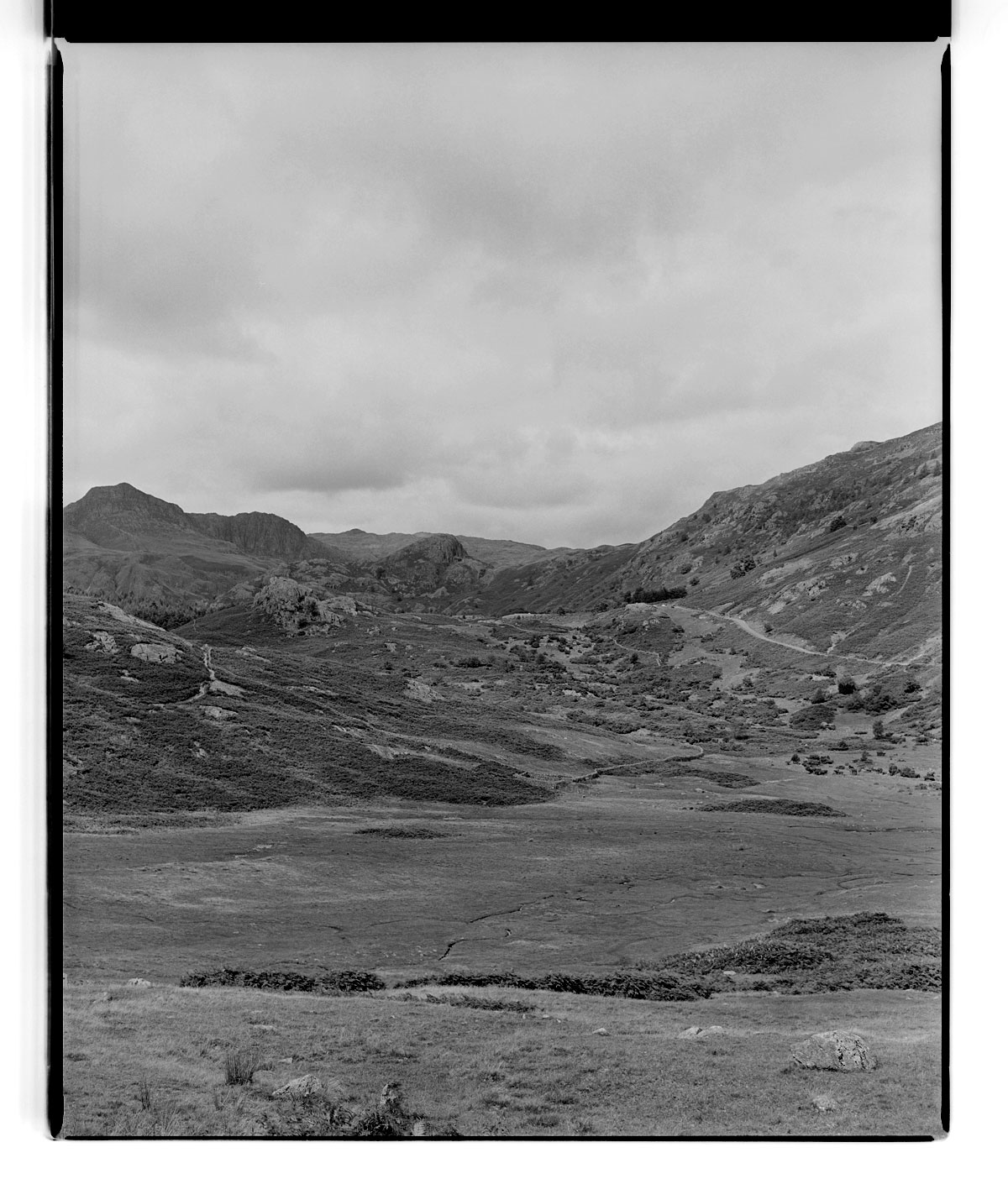


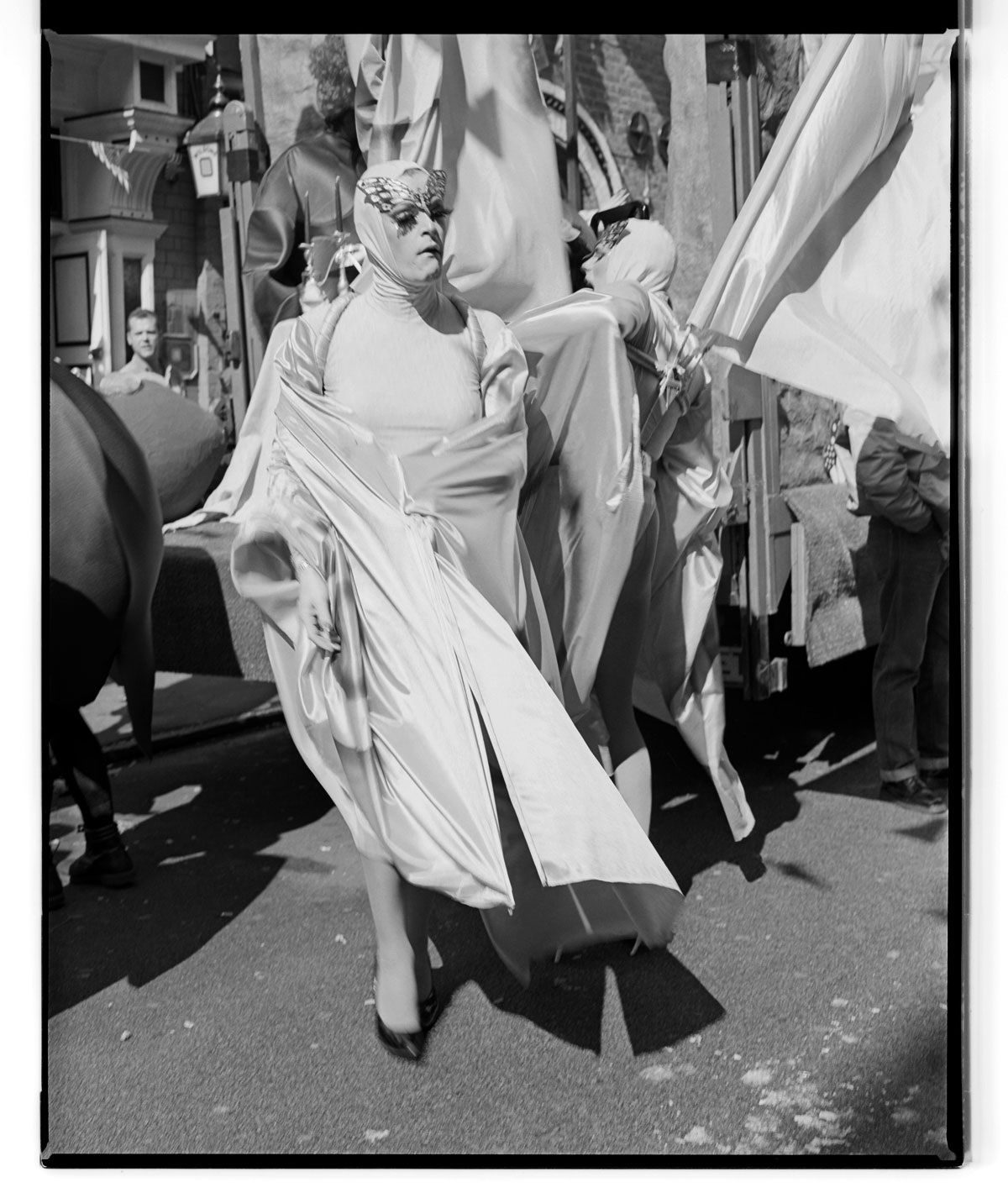
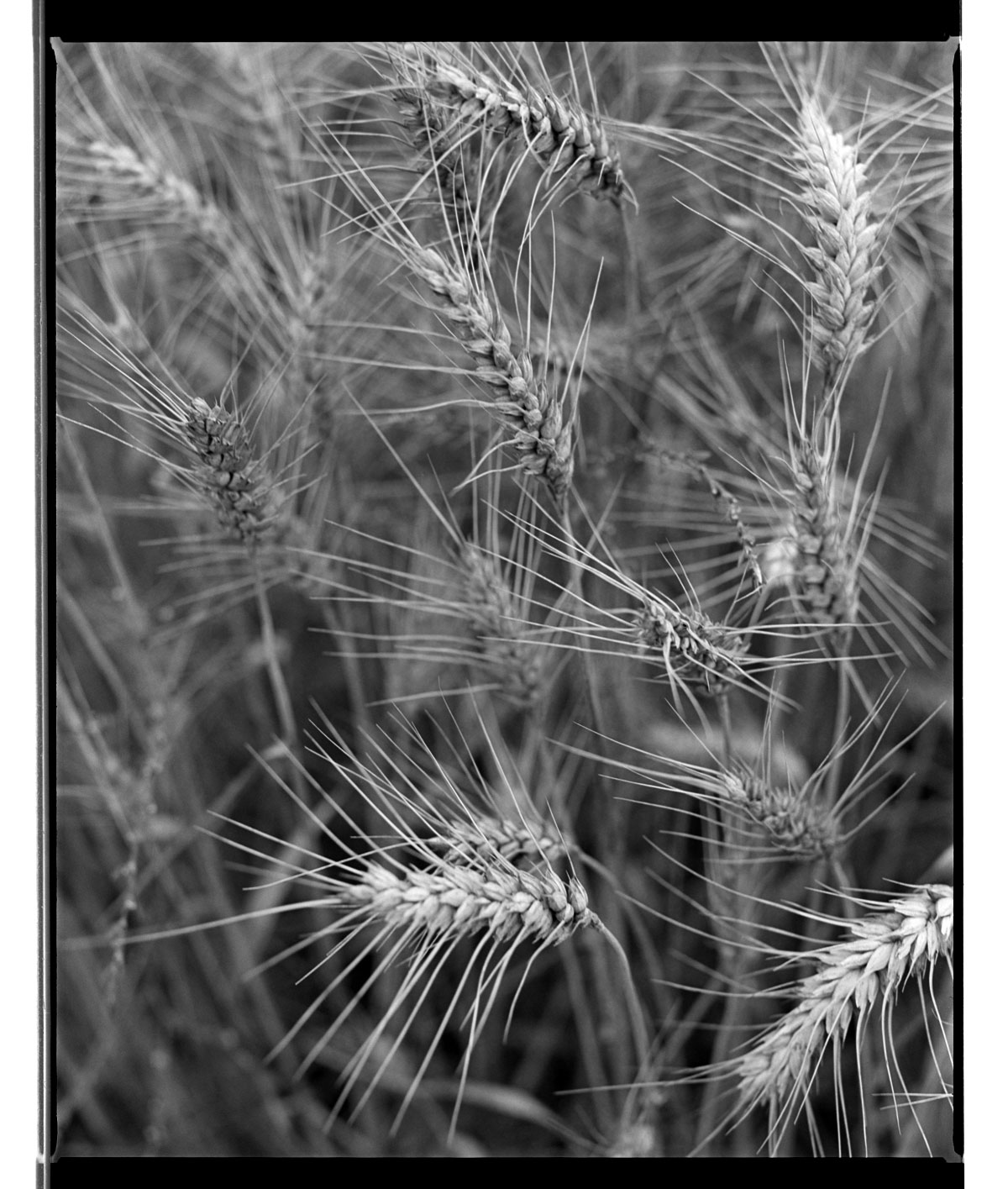
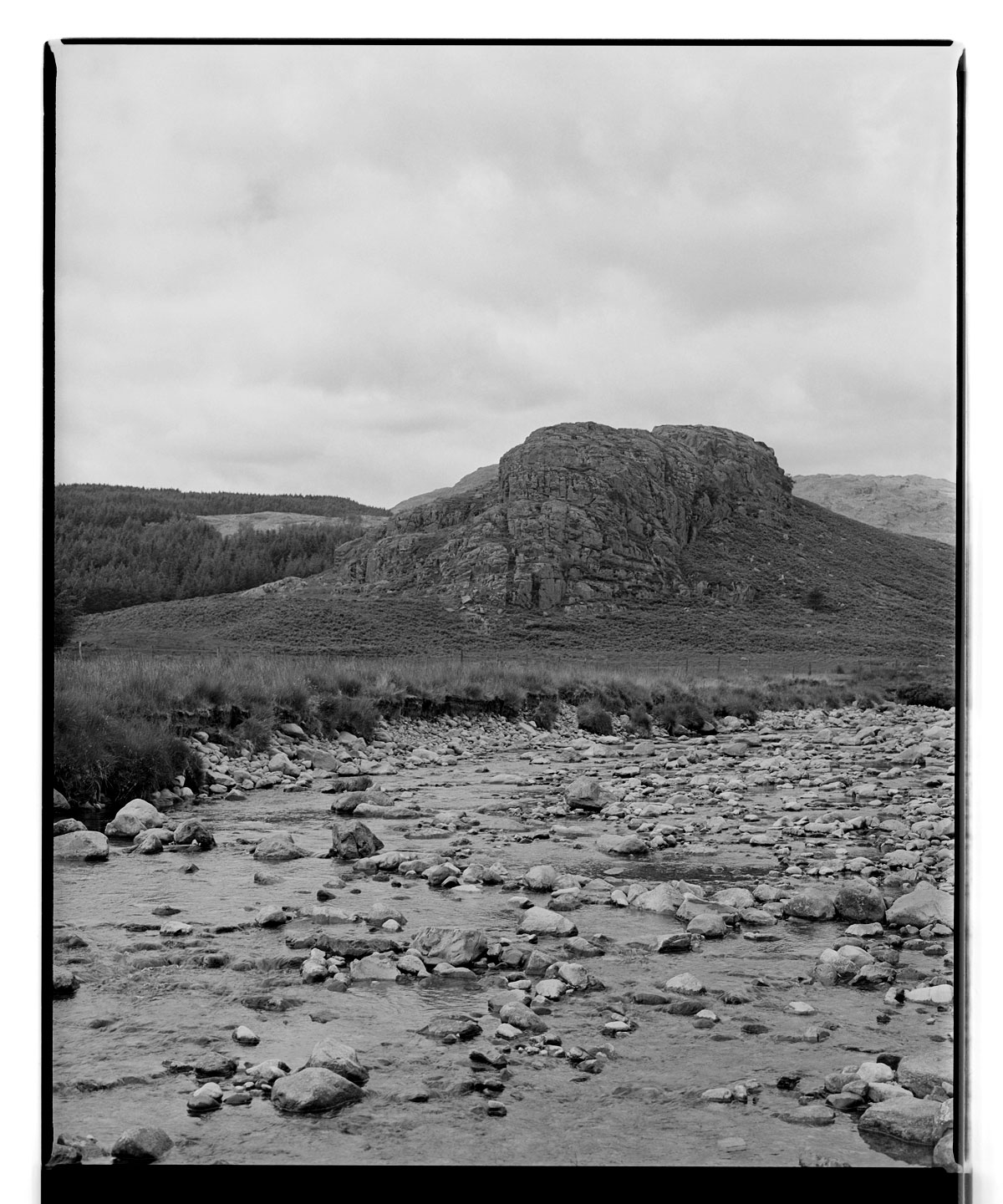
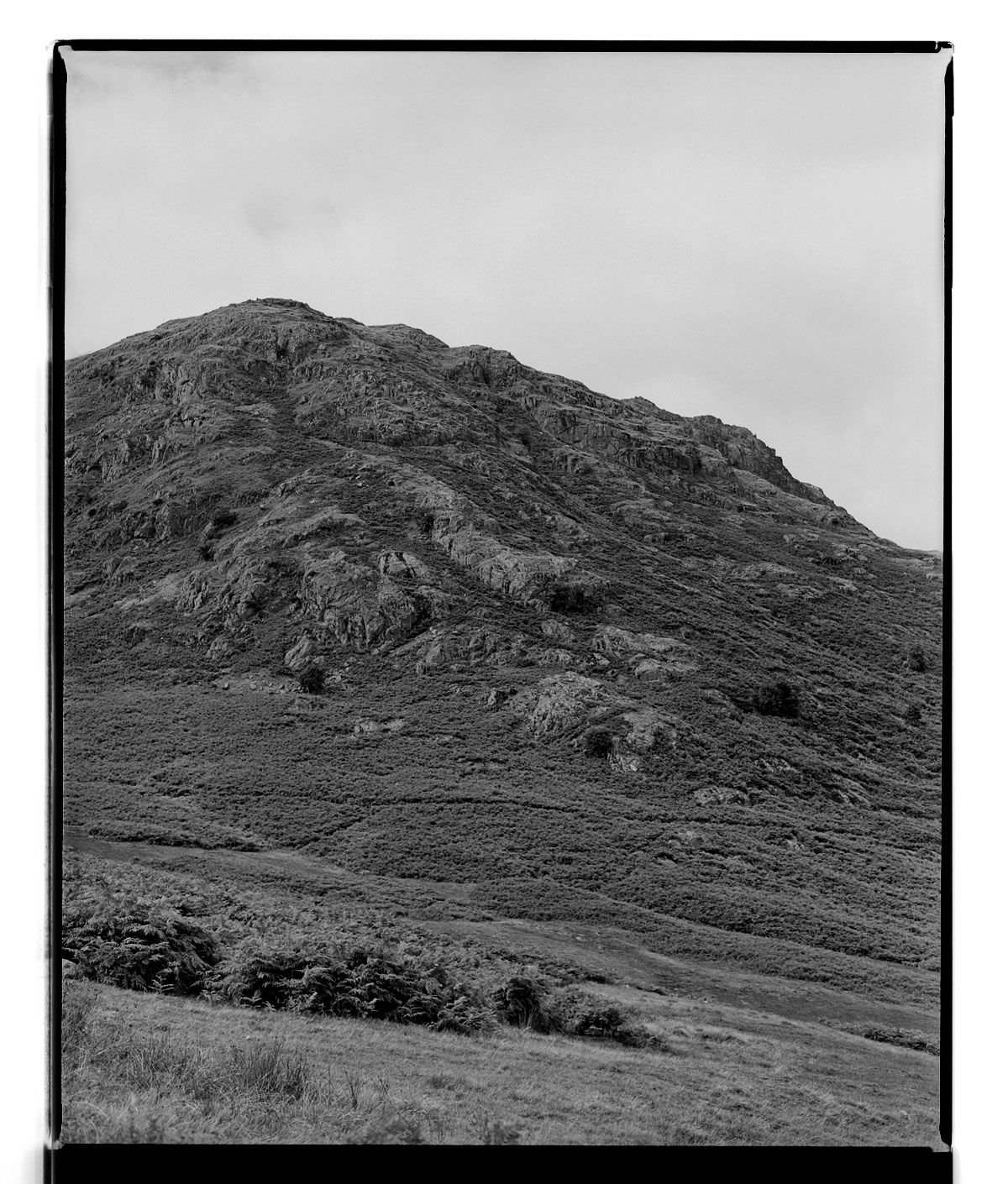
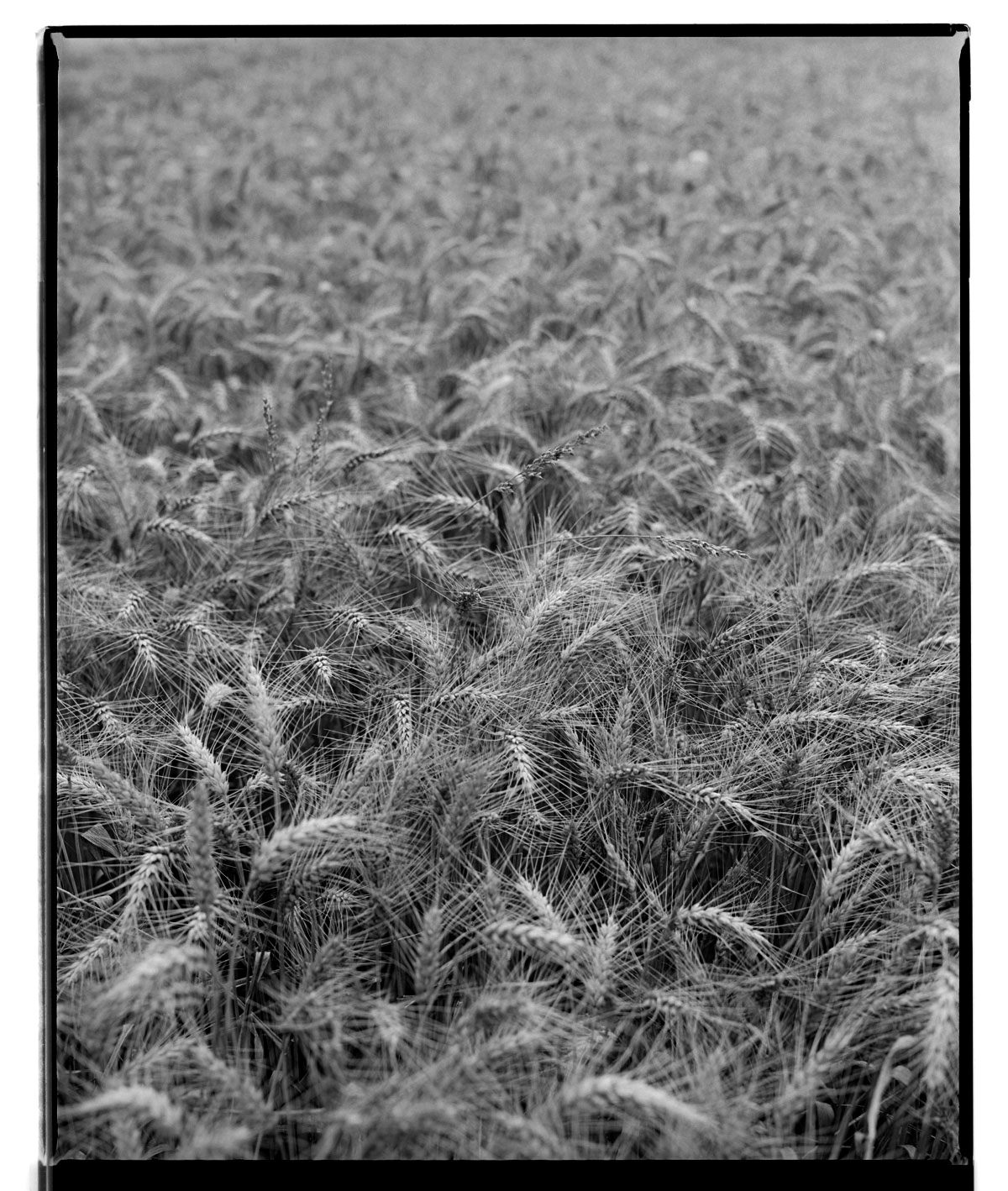
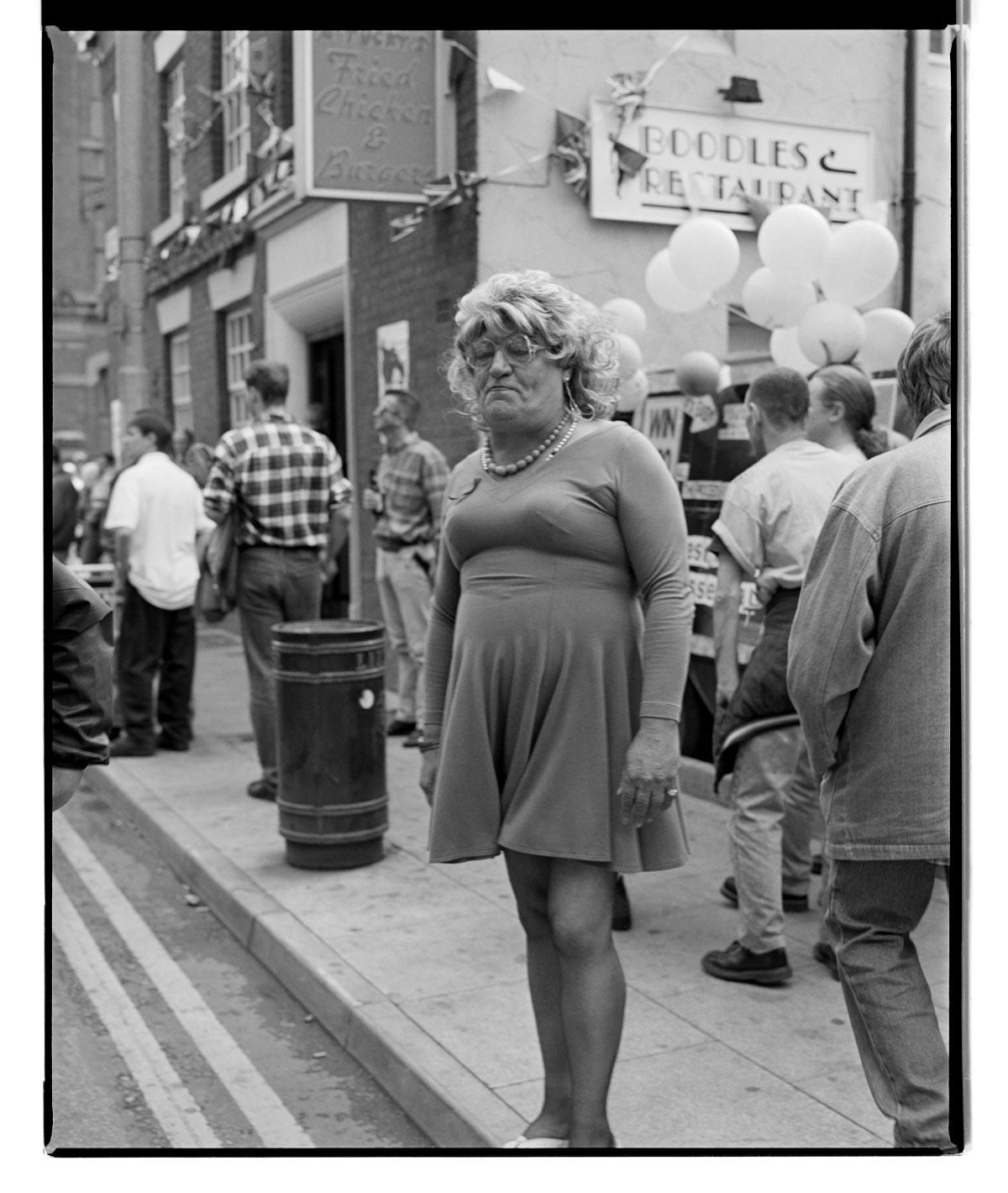
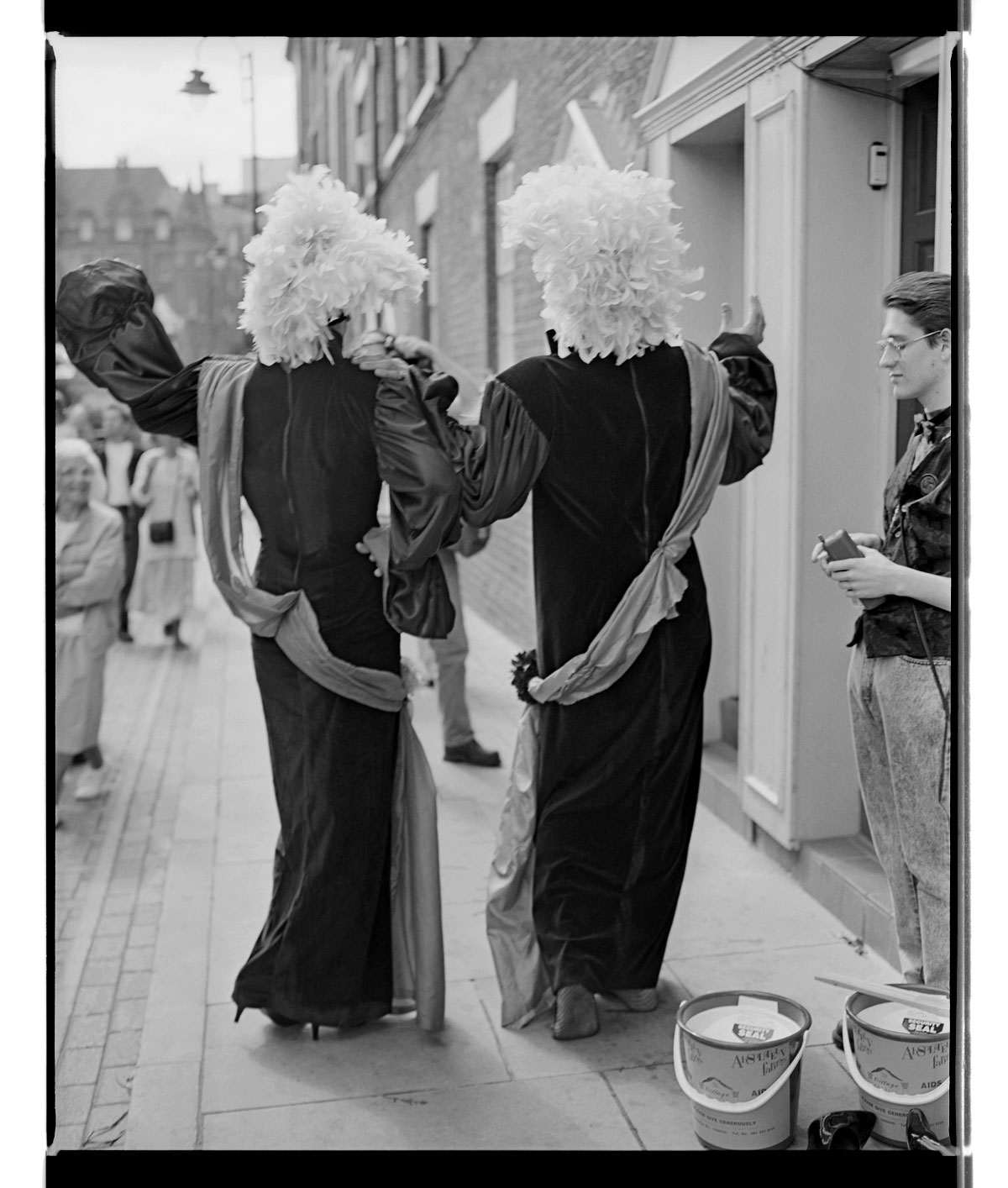

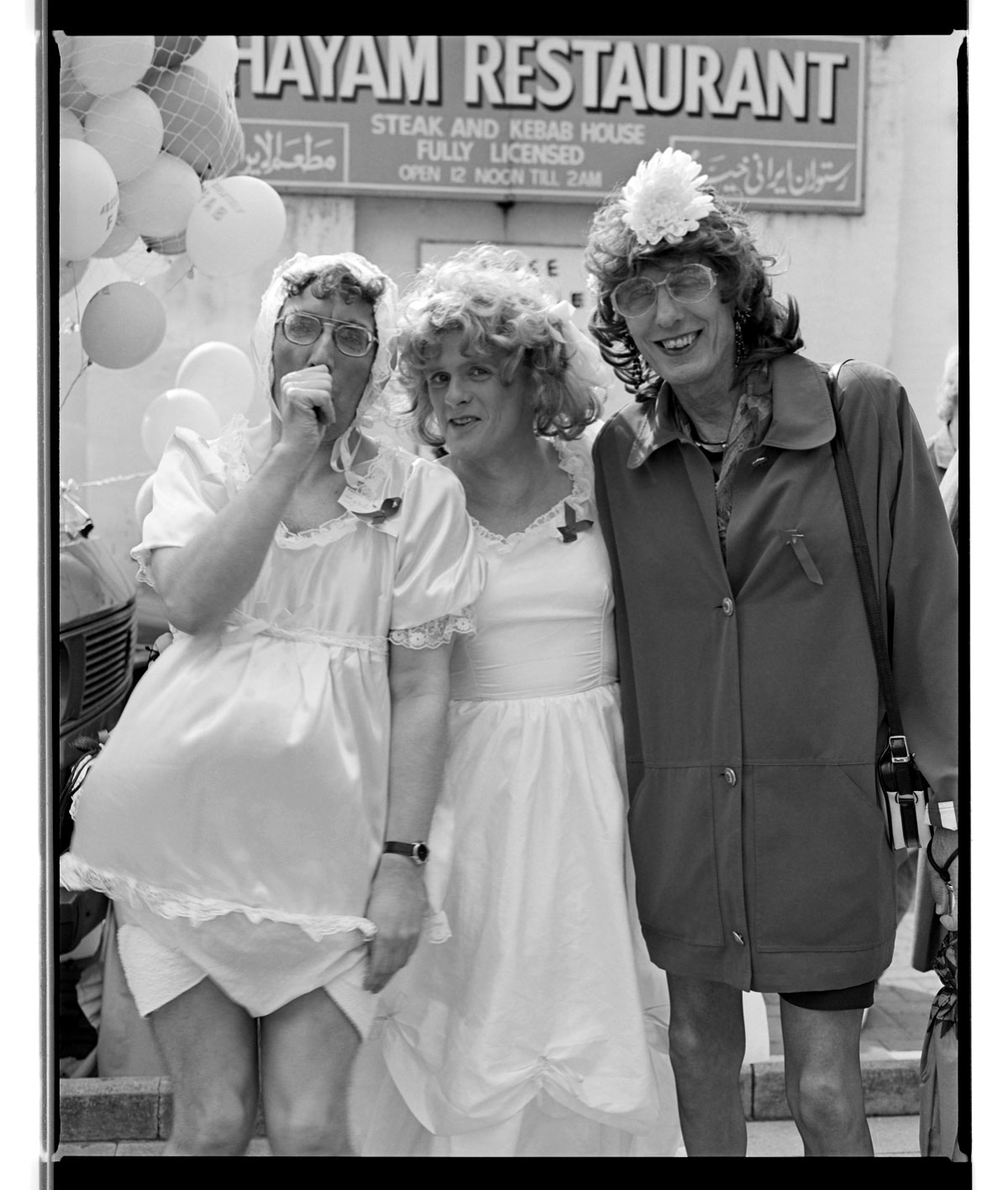

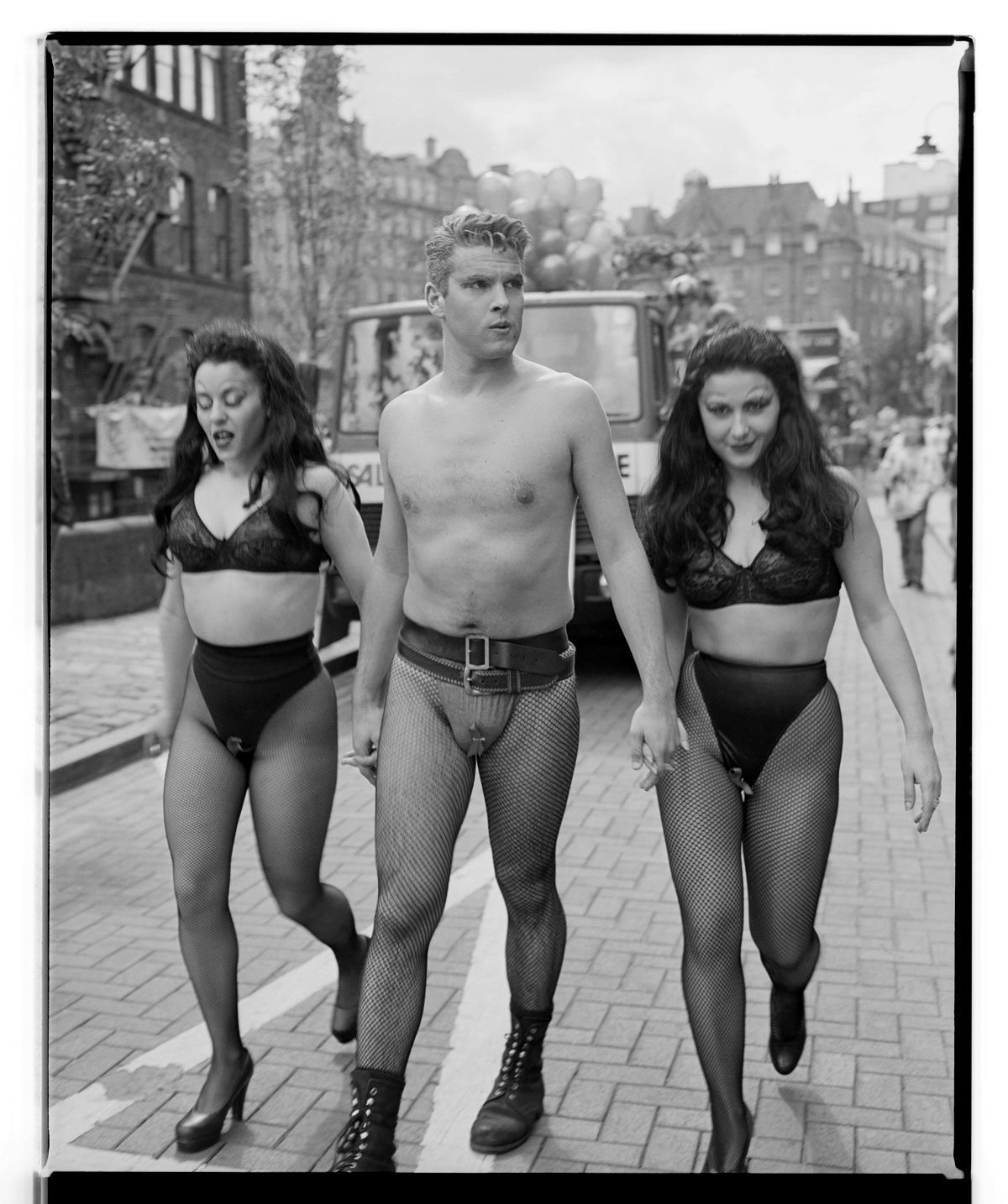
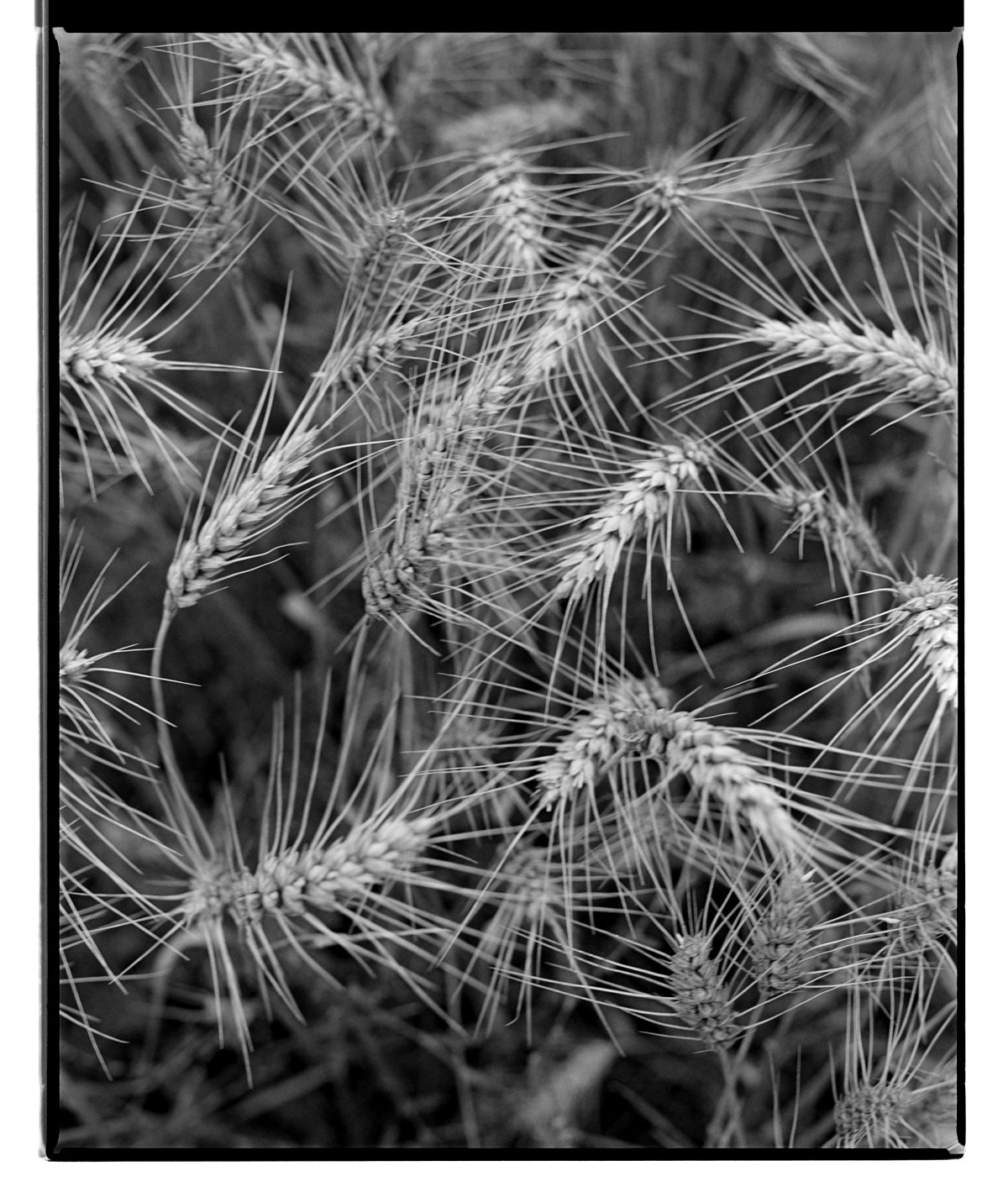
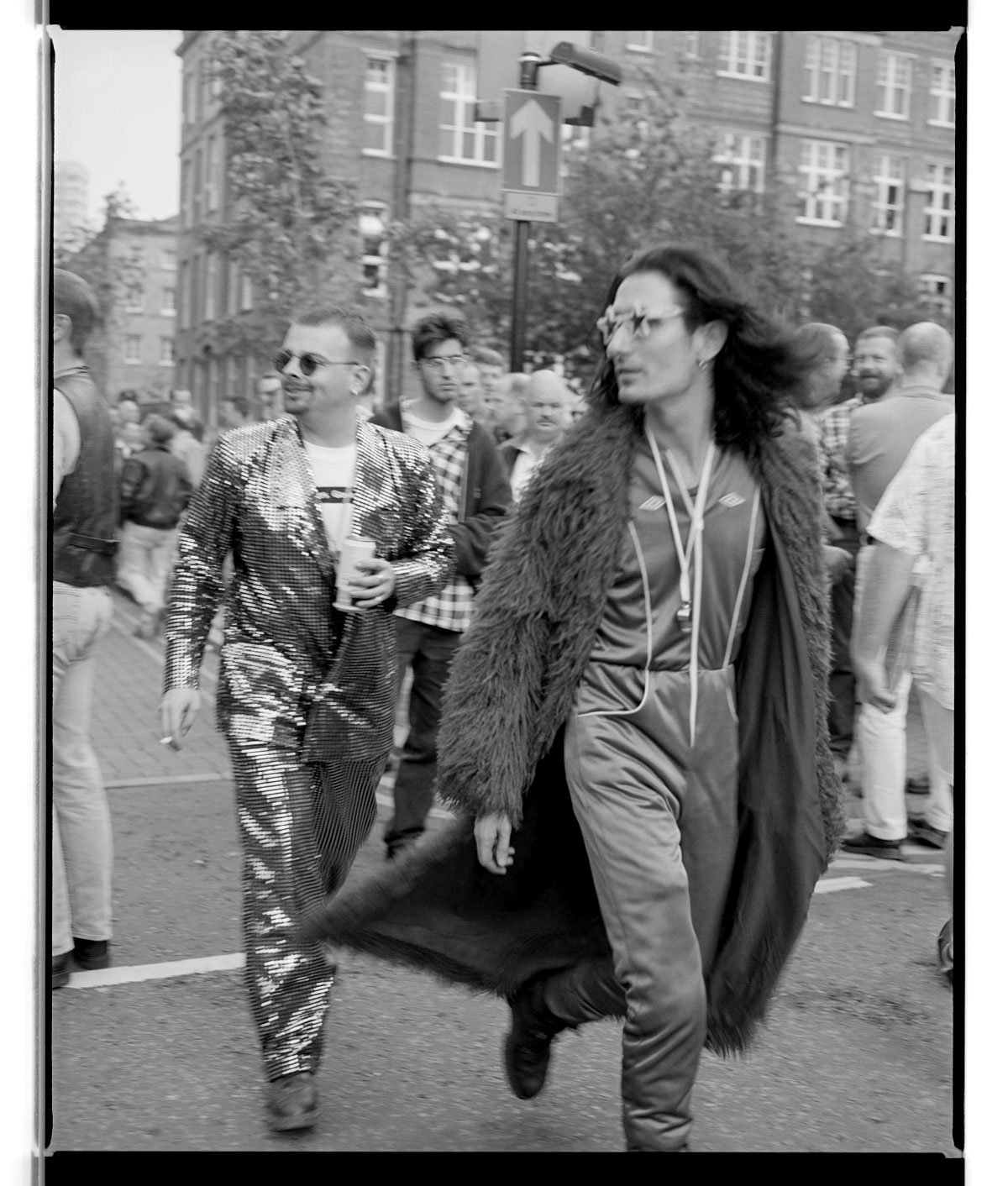
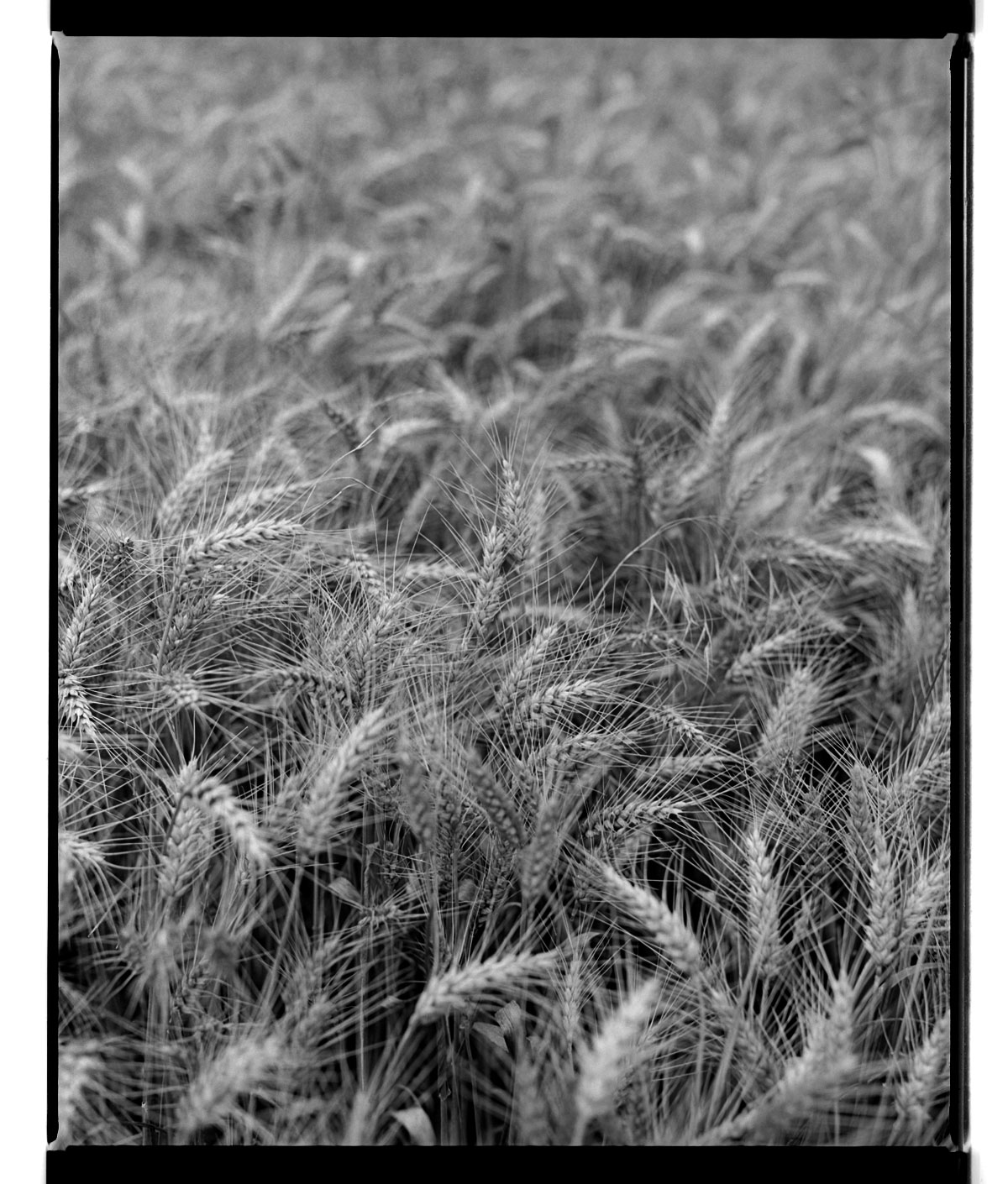

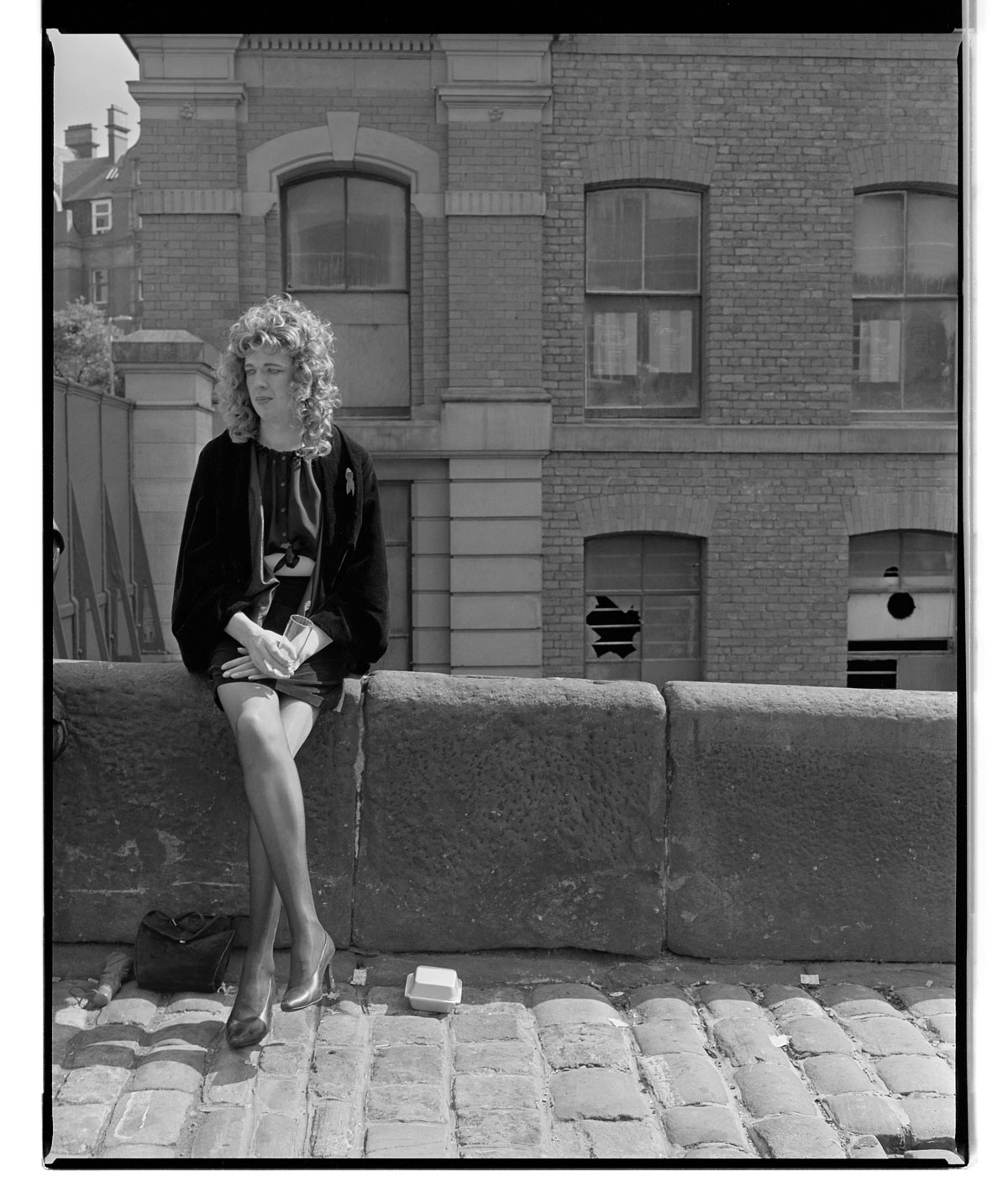
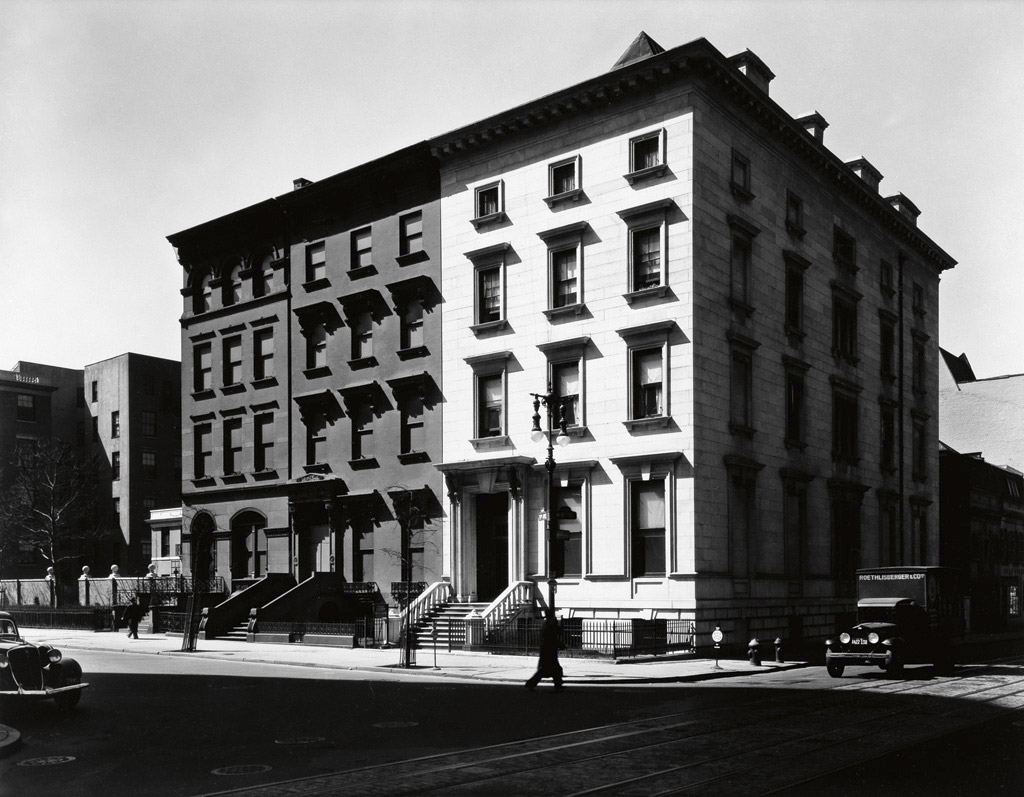


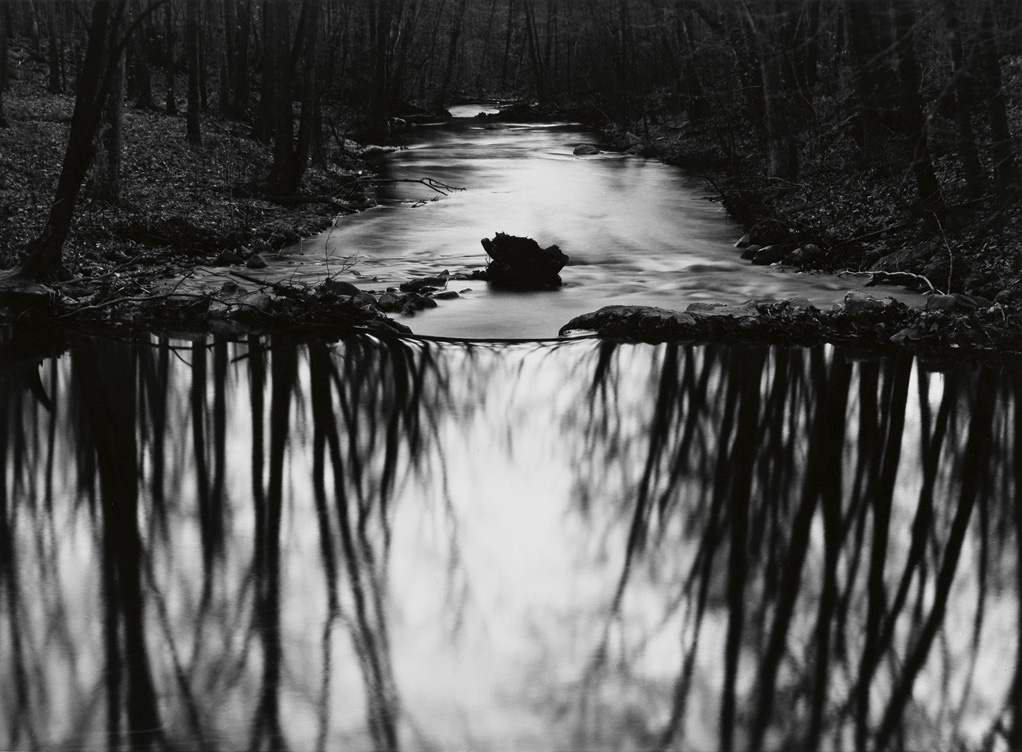
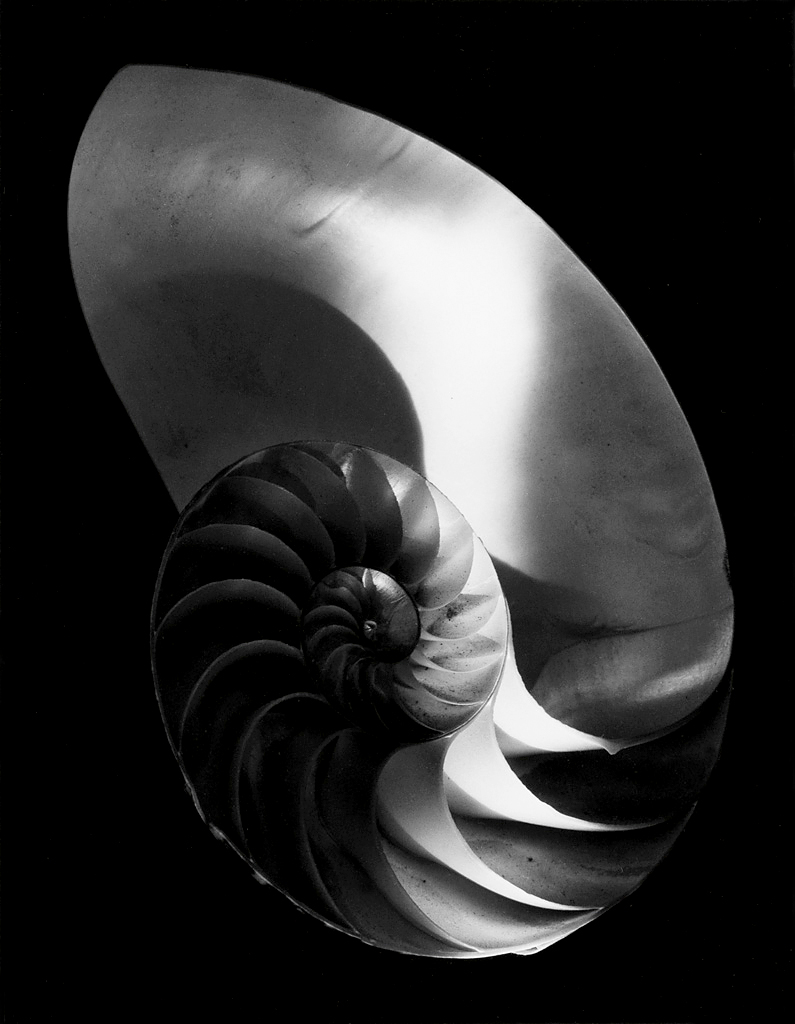
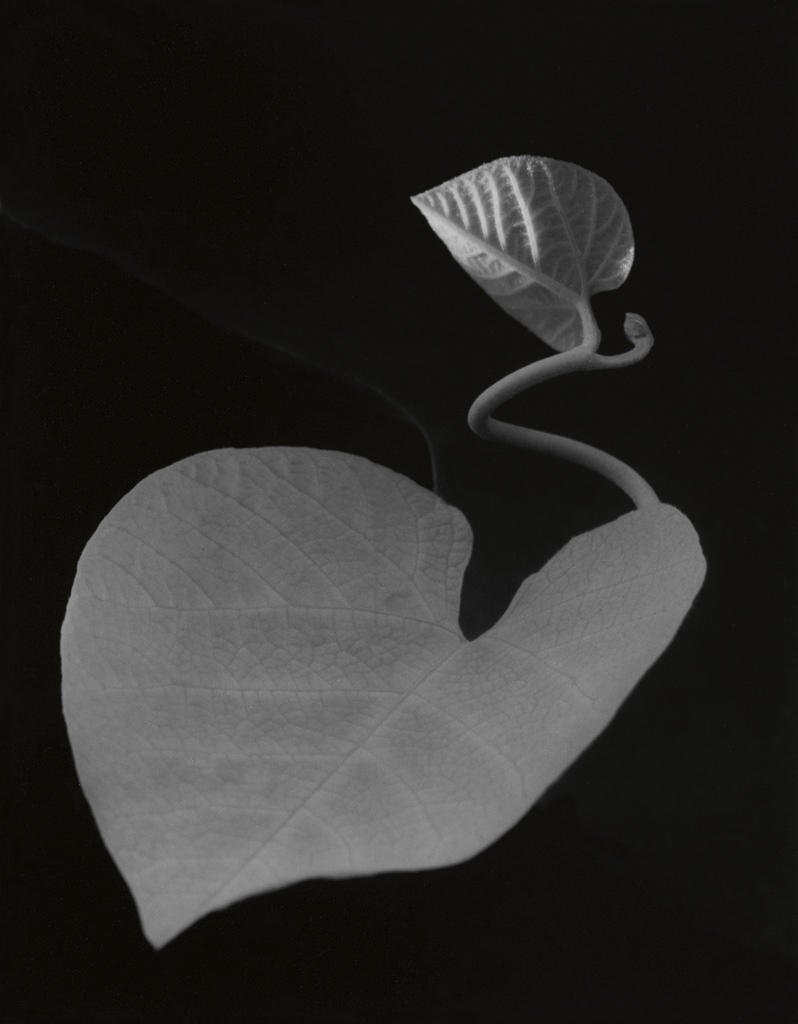
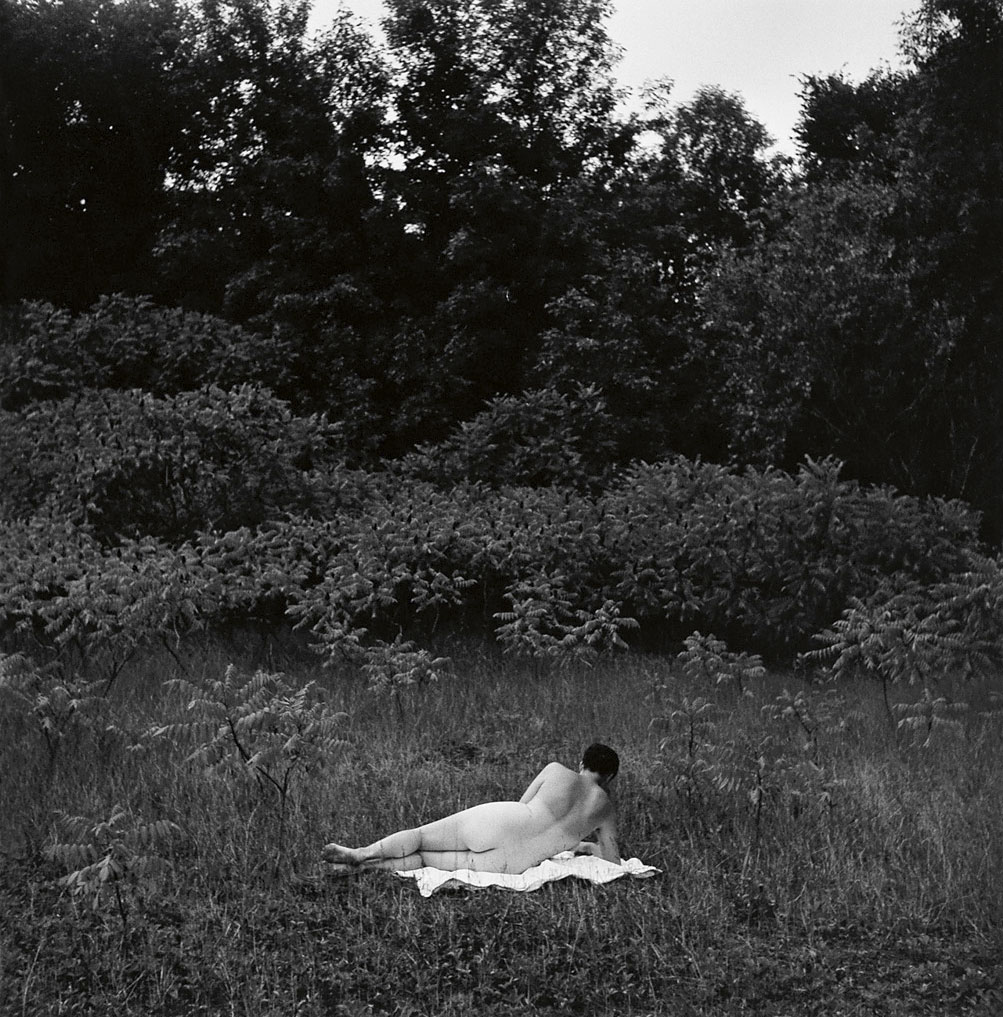
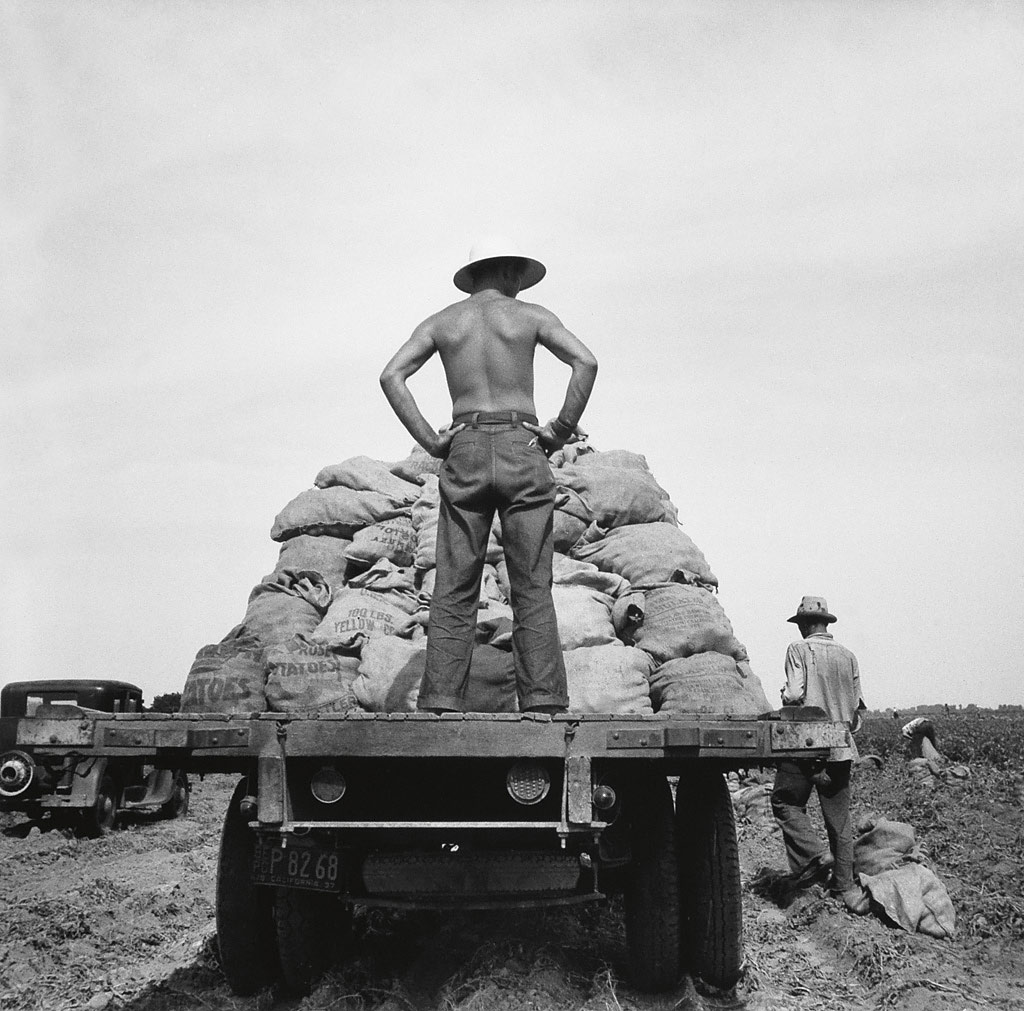

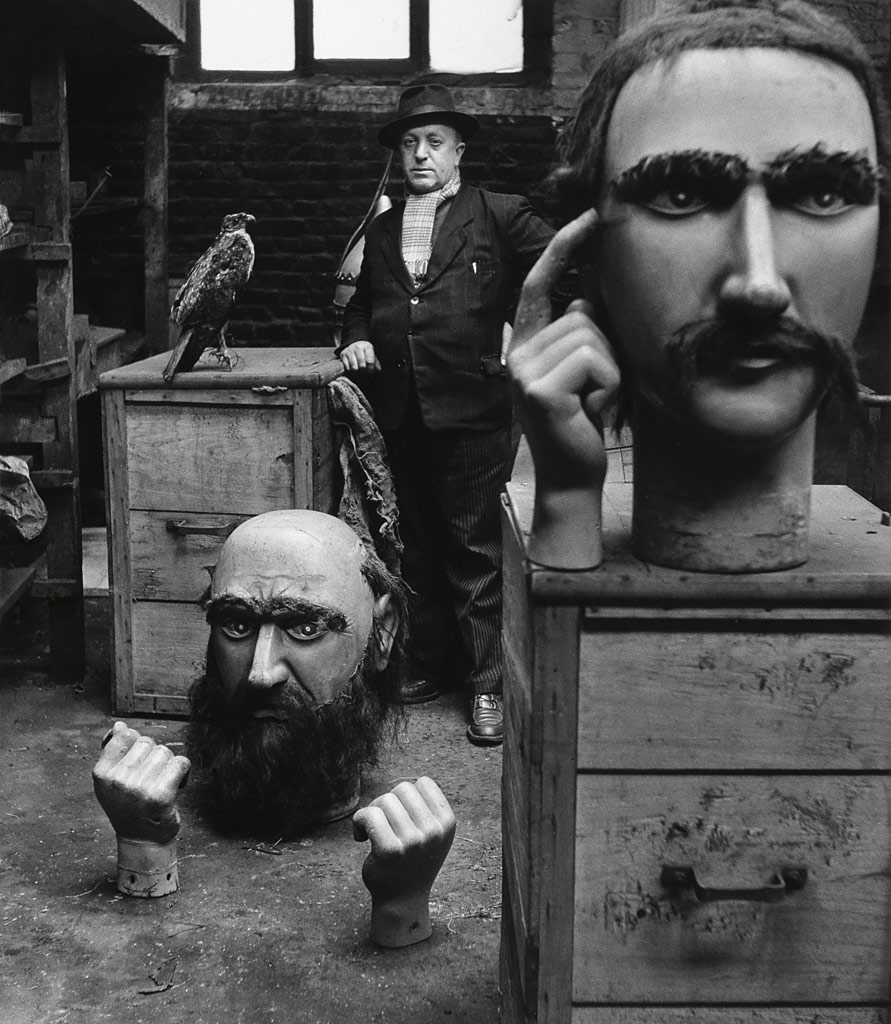
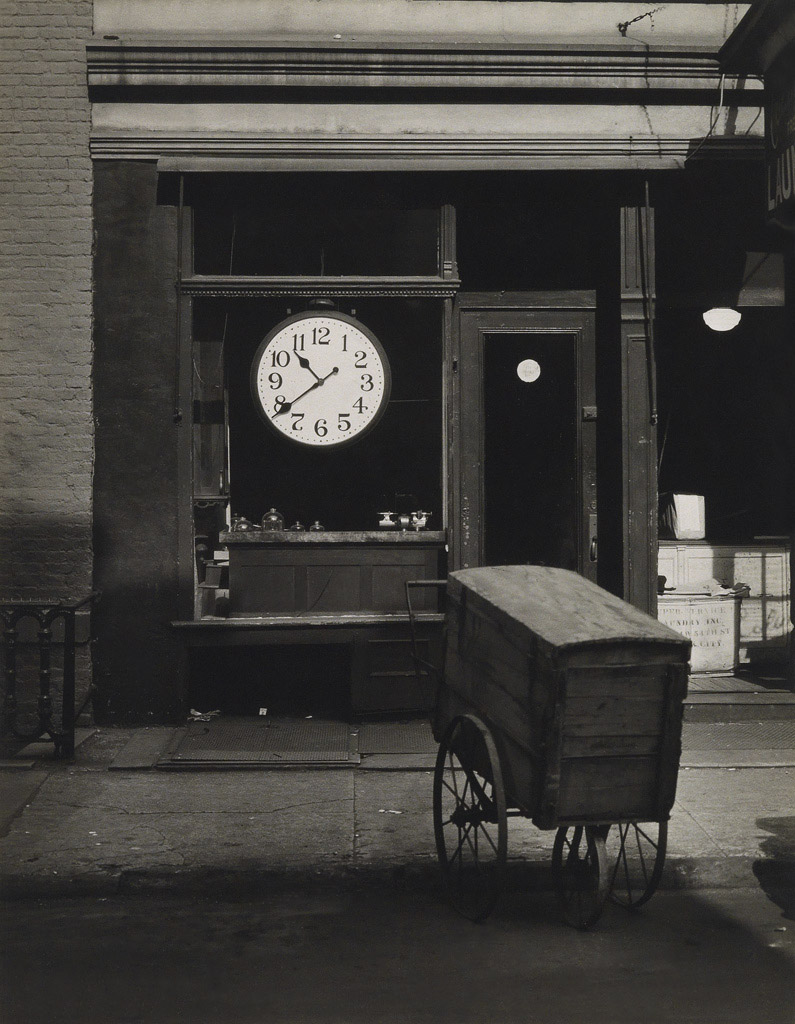
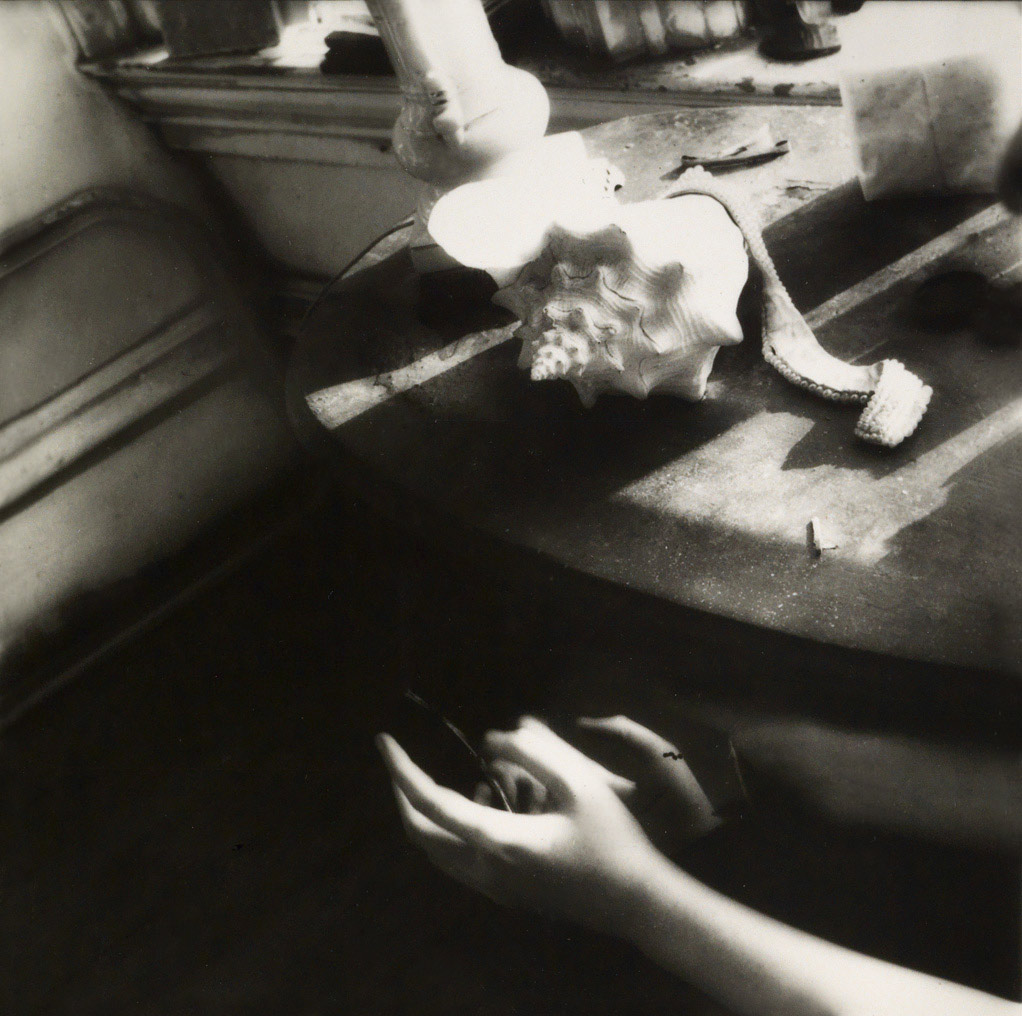
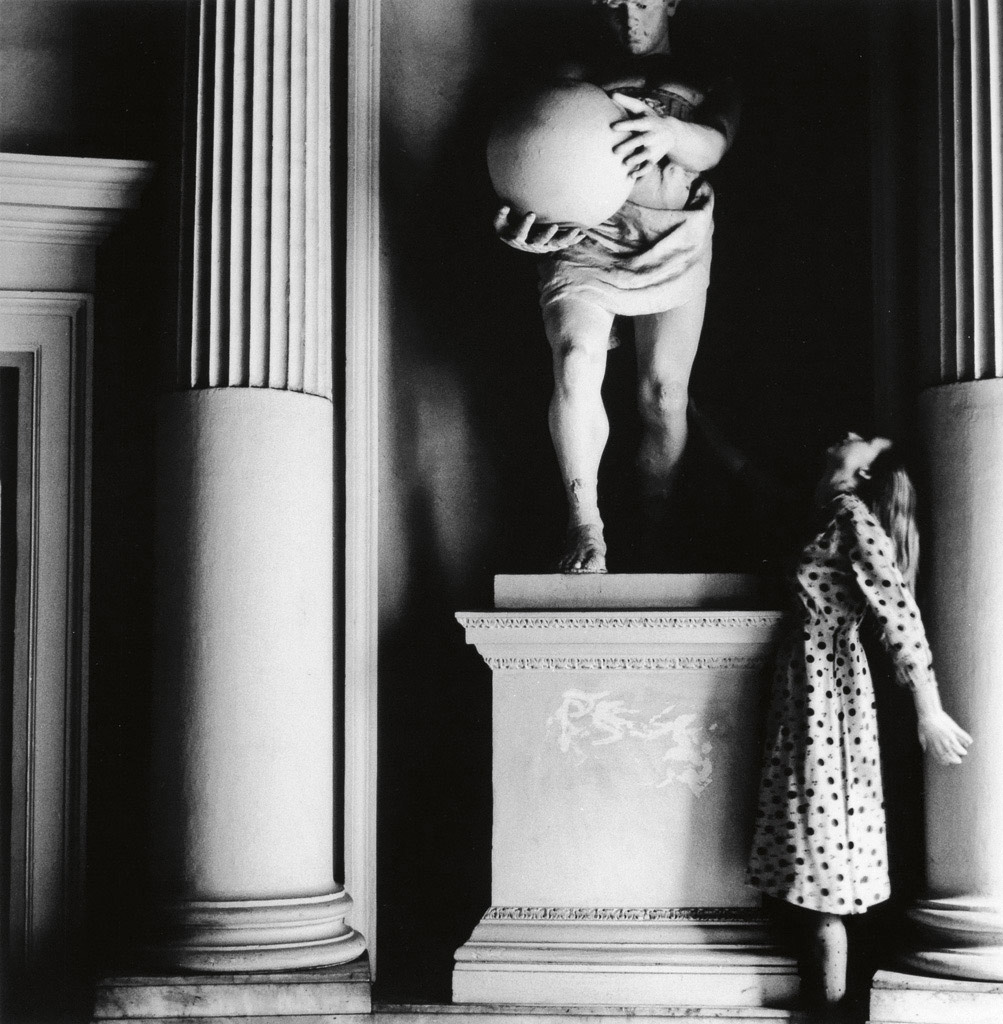
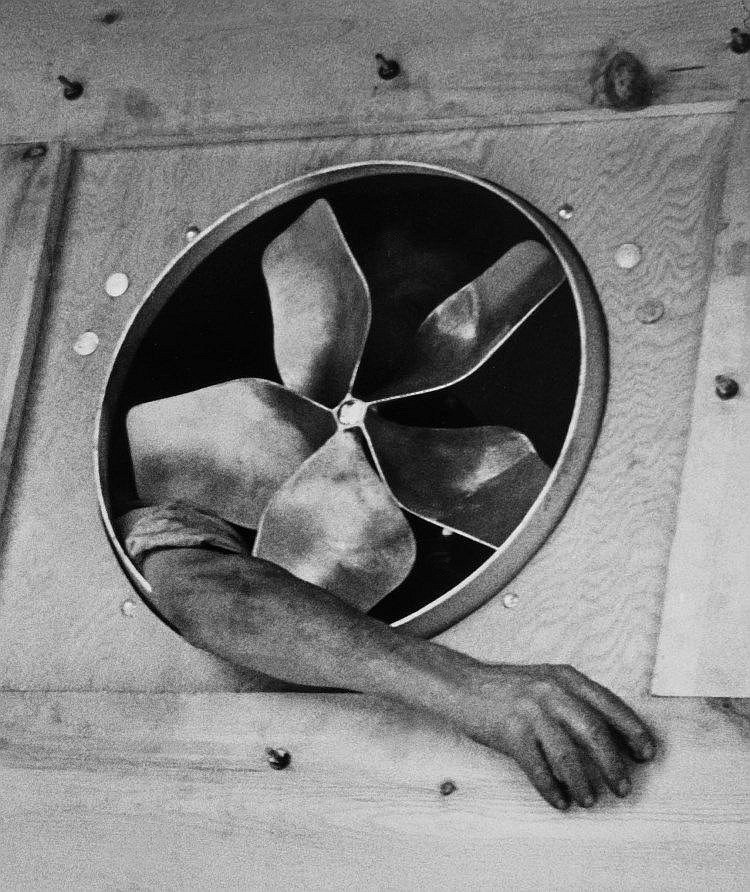
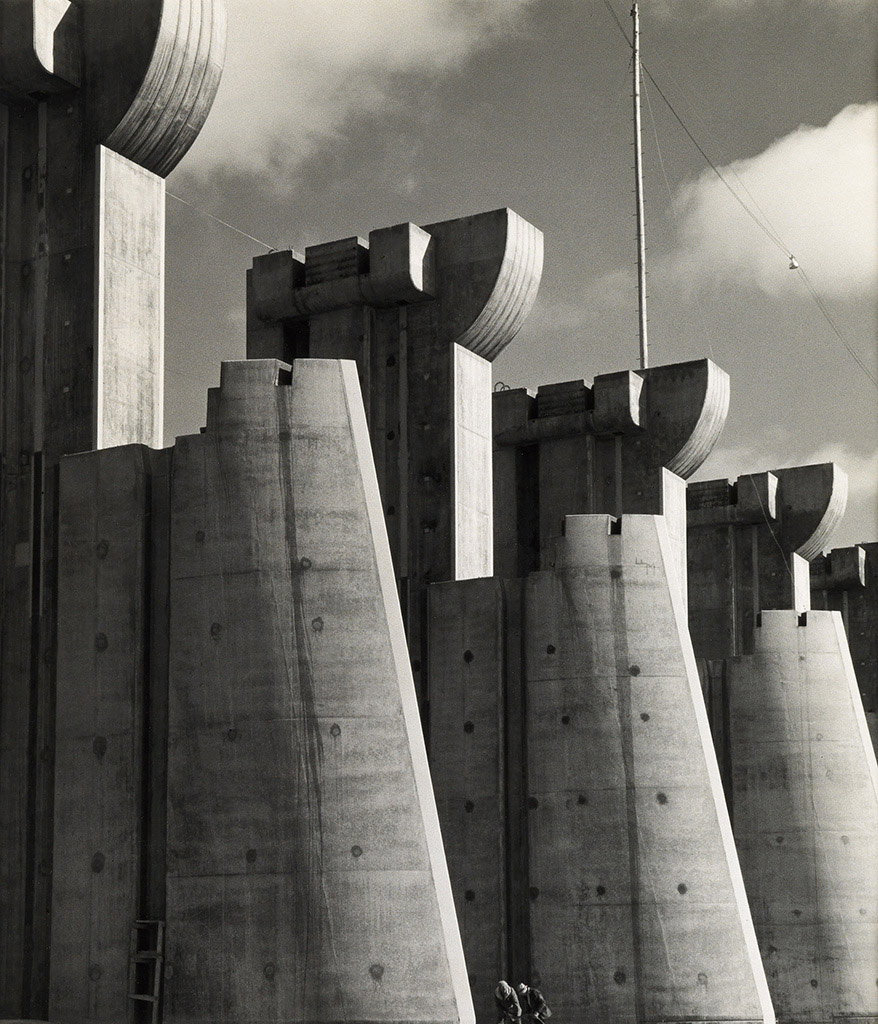
![Margaret Bourke-White (American, 1904-1971) 'Terminal Tower [Cleveland]' c. 1928](https://artblart.com/wp-content/uploads/2015/03/margaret-bourke-white-terminal-tower-cleveland-web.jpg "Margaret Bourke-White (American, 1904-1971) 'Terminal Tower [Cleveland]' c. 1928")
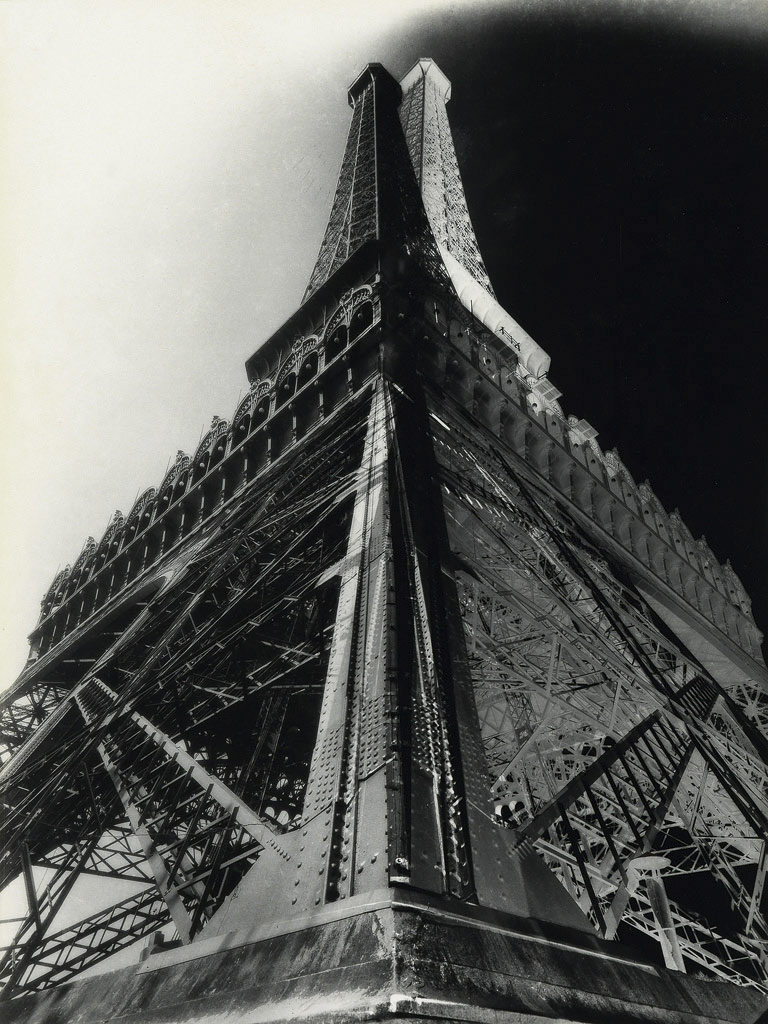
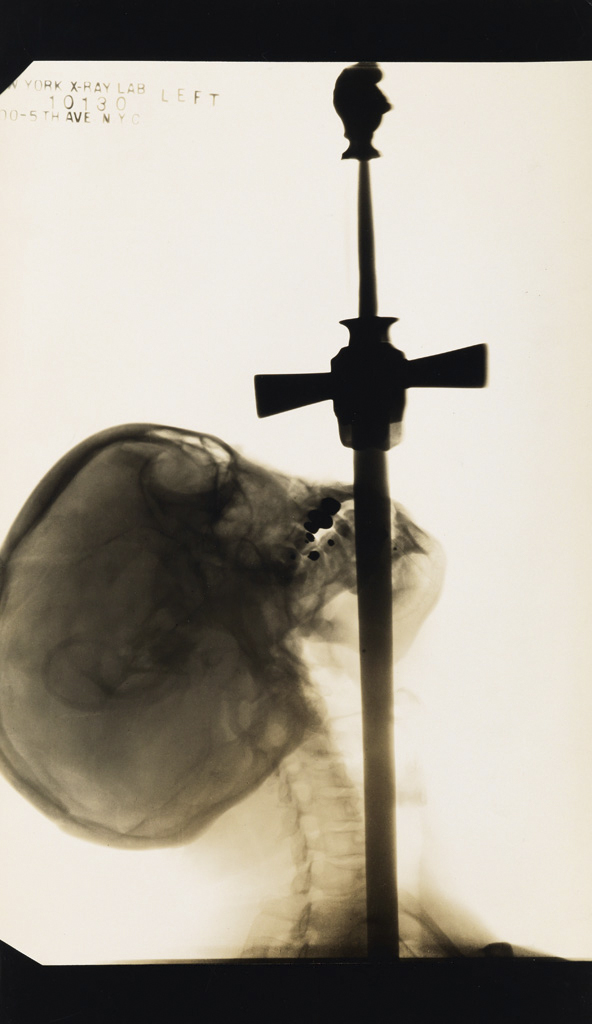
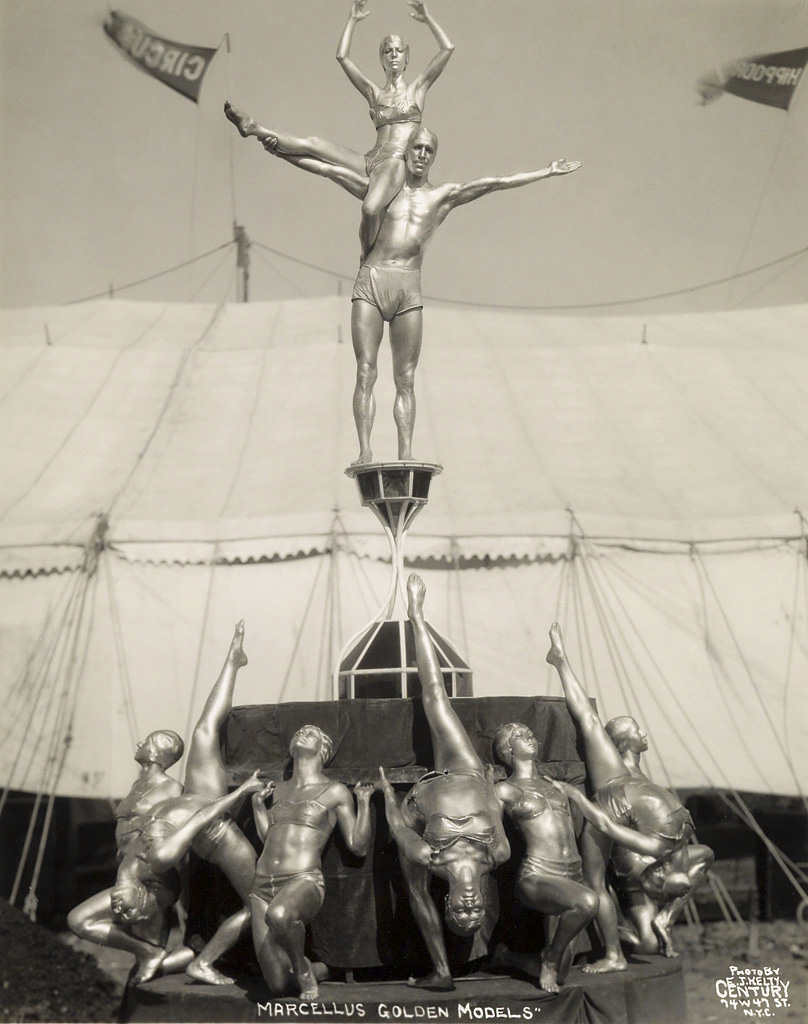


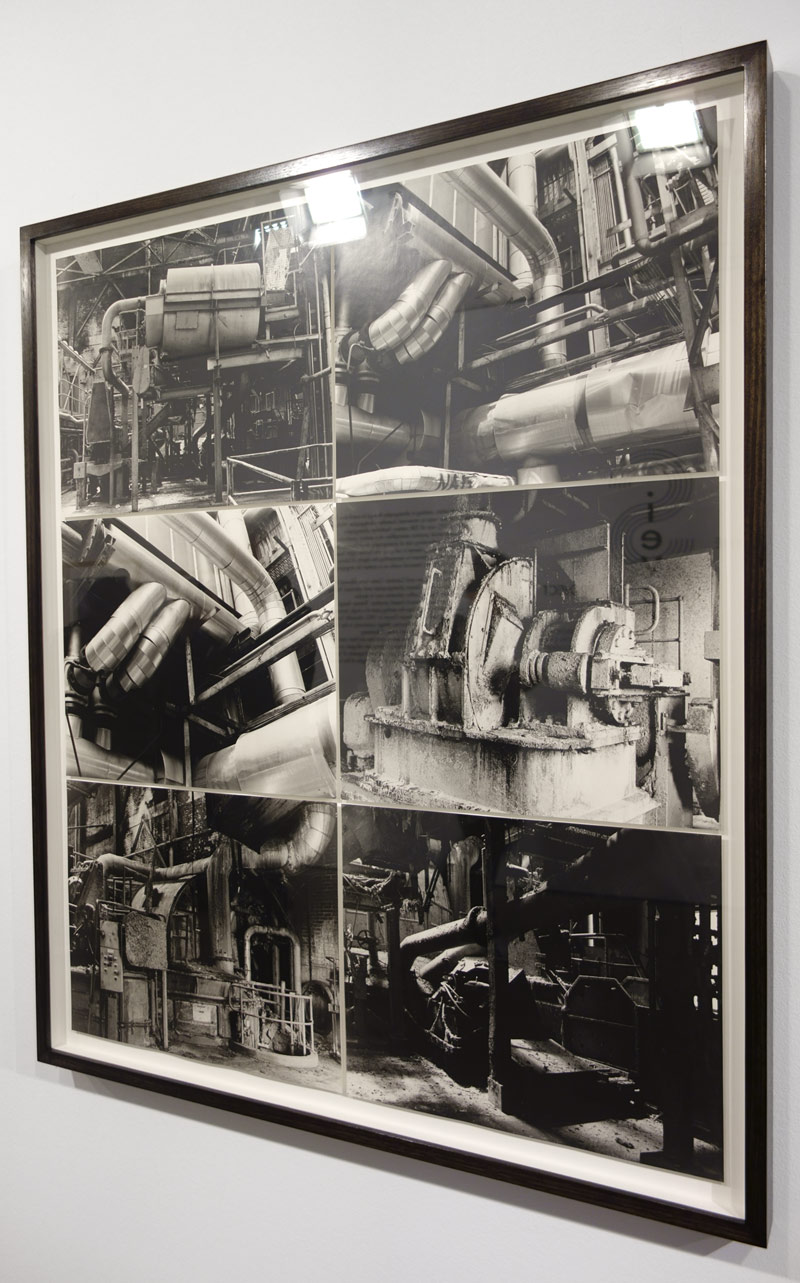


![Zoë Croggon (Australian, b. 1989) 'Comalco Aluminium Used in the Construction of the National Gallery of Victoria [7] (after Wolfgang Sievers)' 2014](https://artblart.com/wp-content/uploads/2014/08/installation-h.jpg "Zoë Croggon (Australian, b. 1989) 'Comalco Aluminium Used in the Construction of the National Gallery of Victoria [7] (after Wolfgang Sievers)' 2014")
![Zoë Croggon (Australian, b. 1989) 'Comalco Aluminium Used in the Construction of the National Gallery of Victoria [18] (after Wolfgang Sievers)' 2014](https://artblart.com/wp-content/uploads/2014/08/installation-i.jpg "Zoë Croggon (Australian, b. 1989) 'Comalco Aluminium Used in the Construction of the National Gallery of Victoria [18] (after Wolfgang Sievers)' 2014")
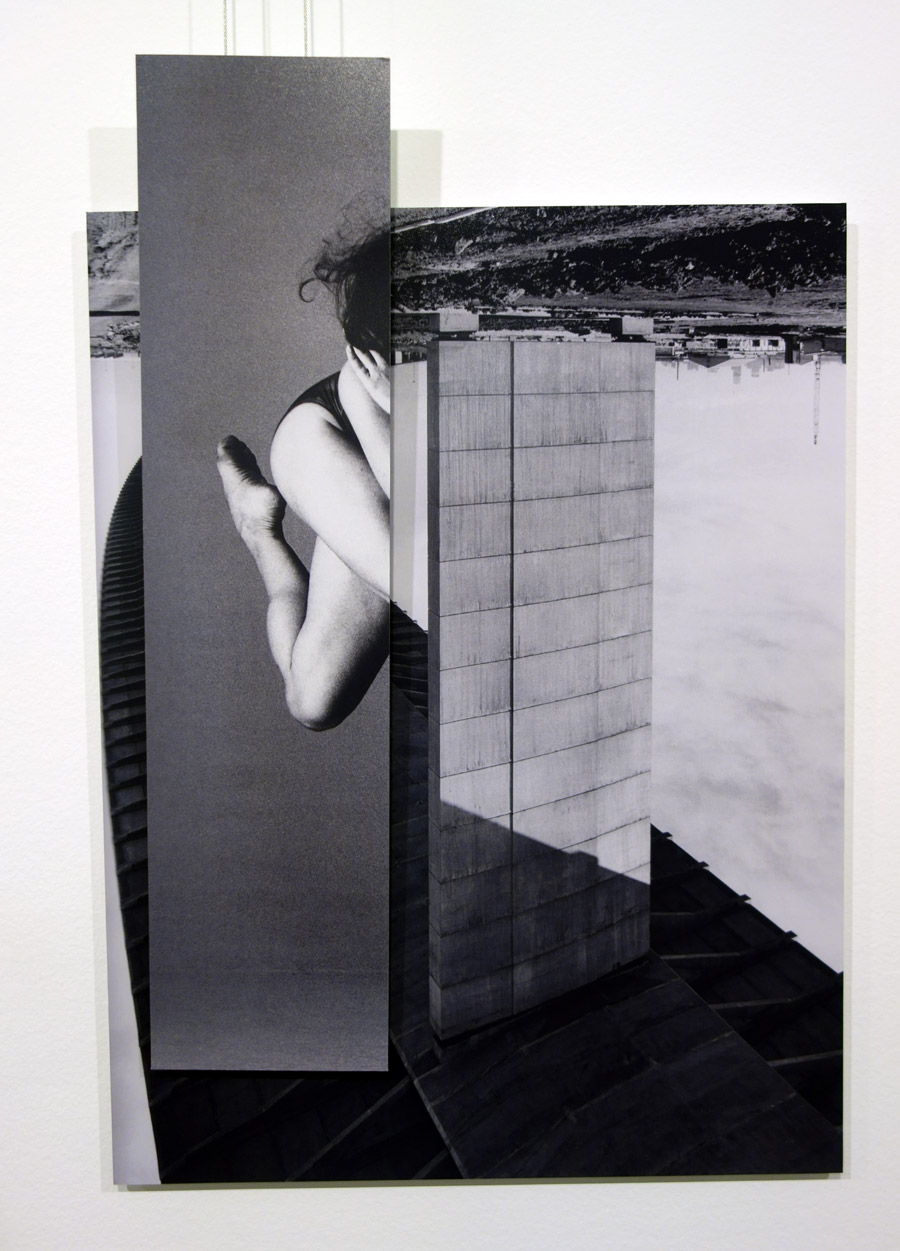


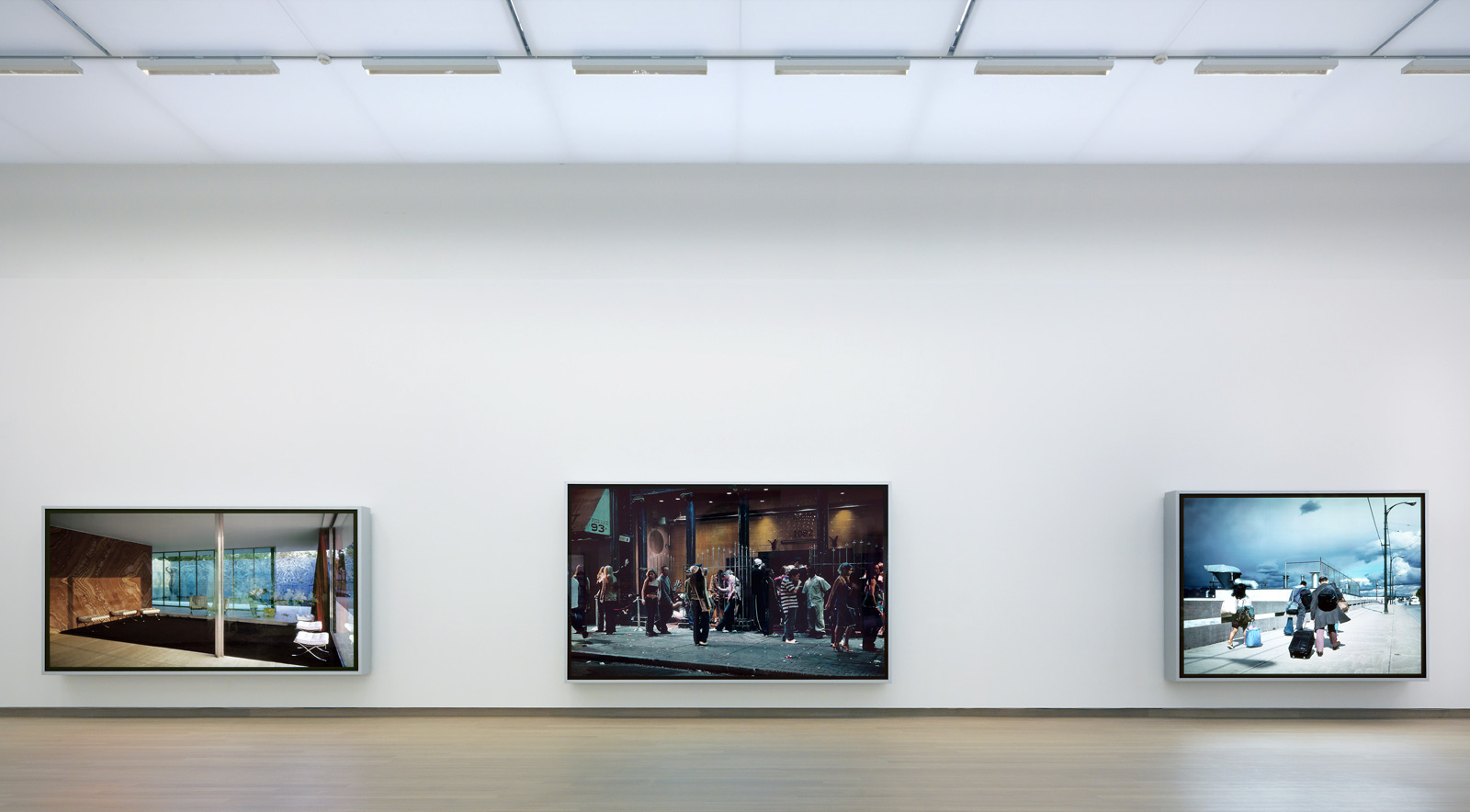
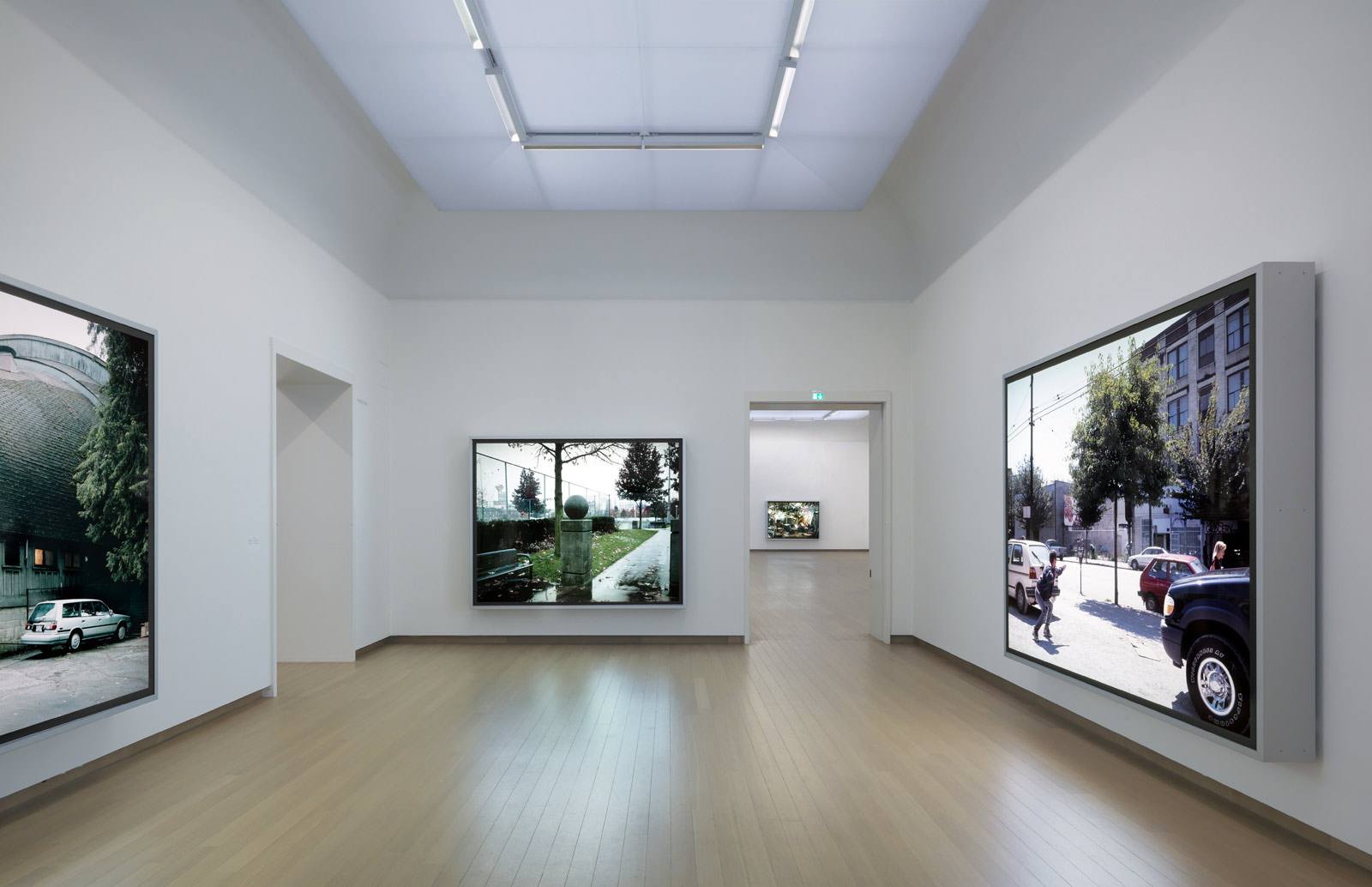
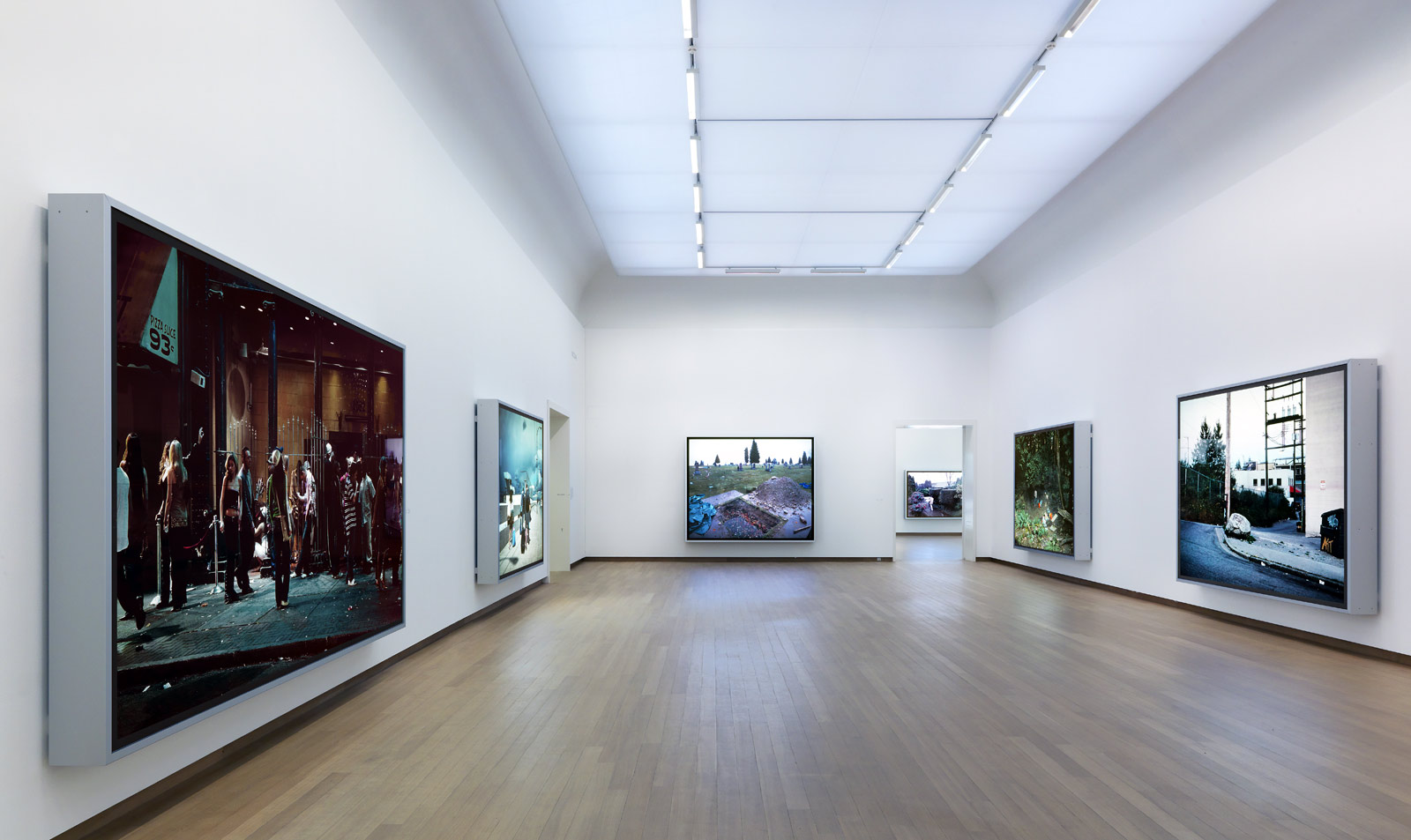
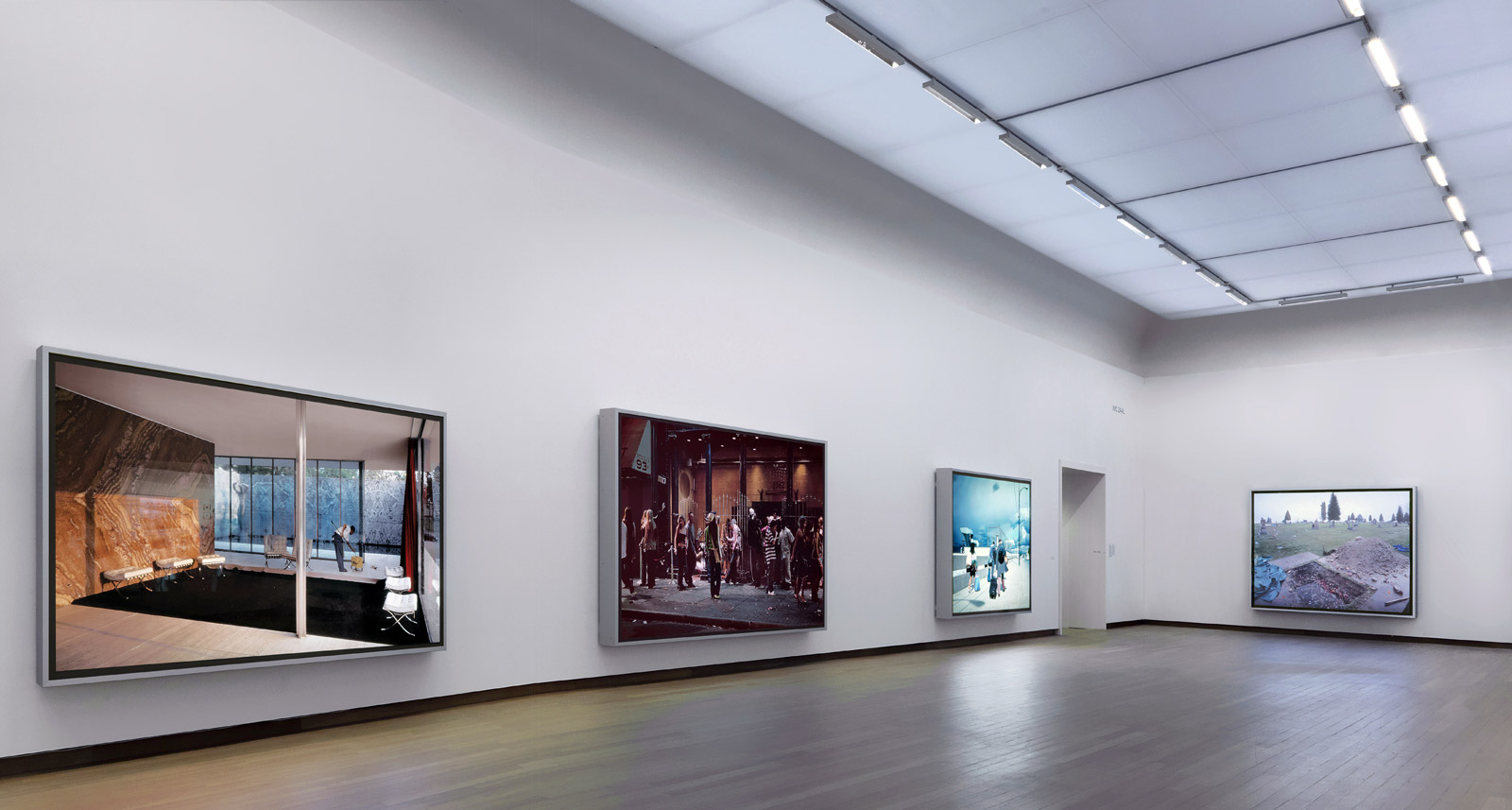
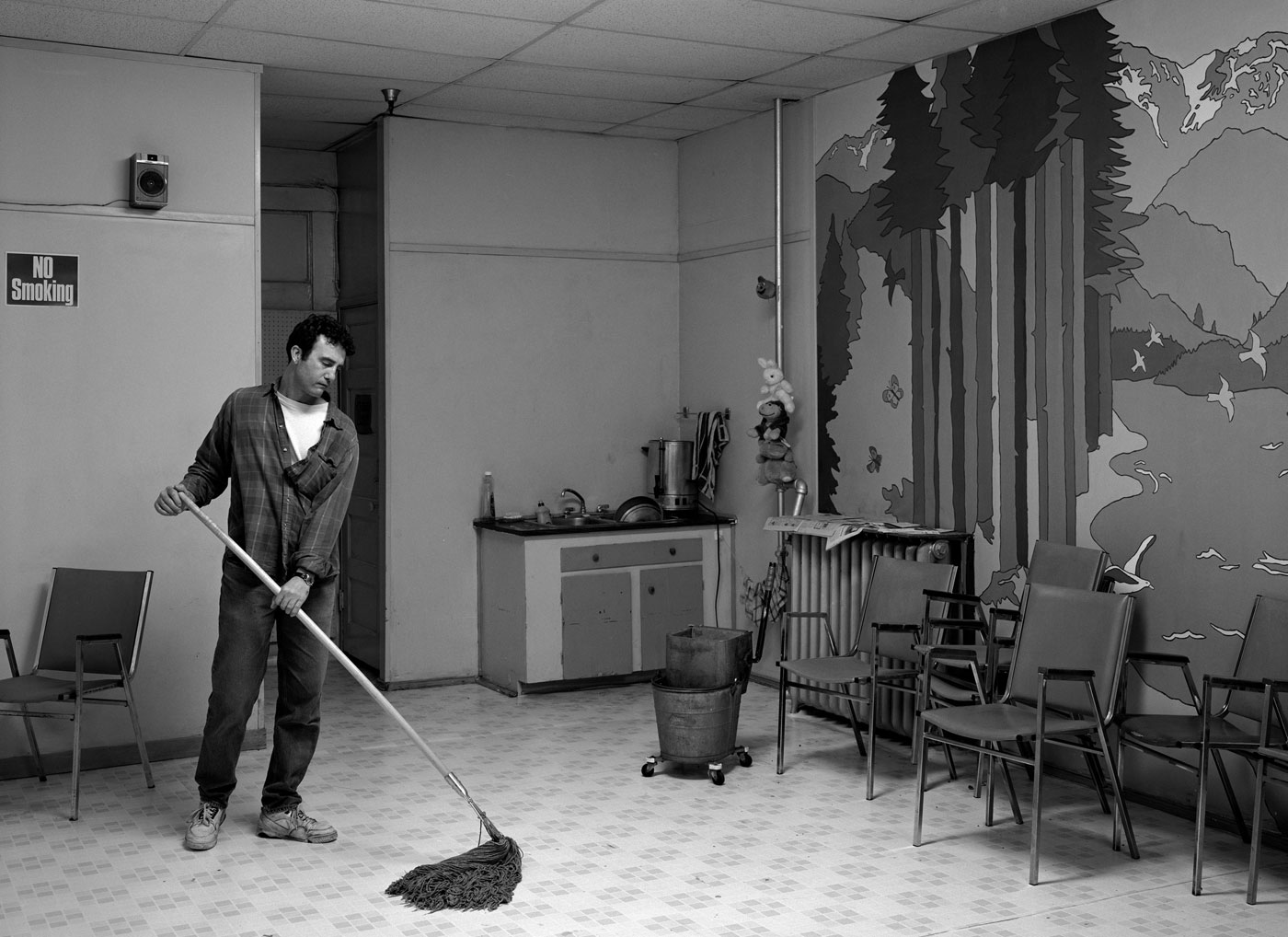
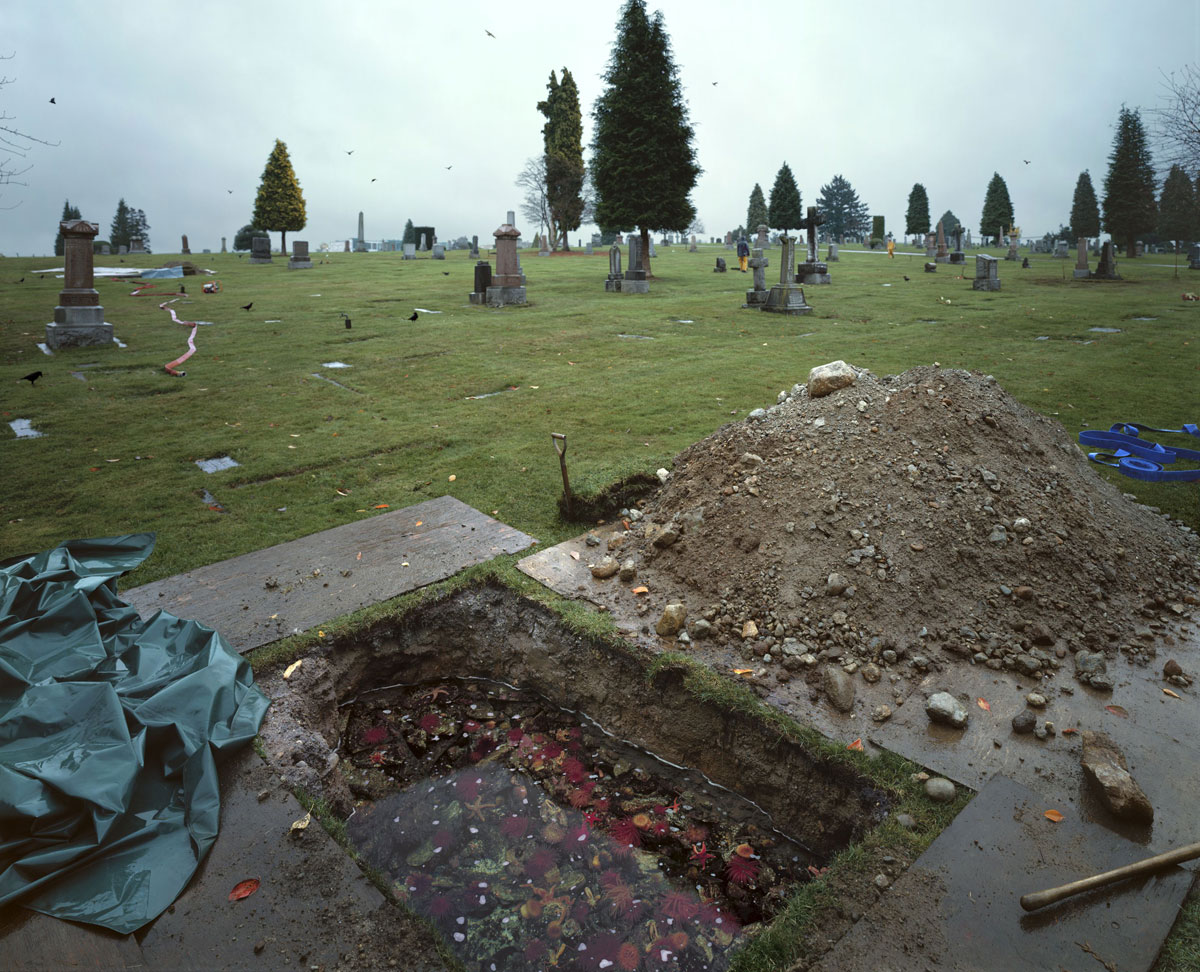
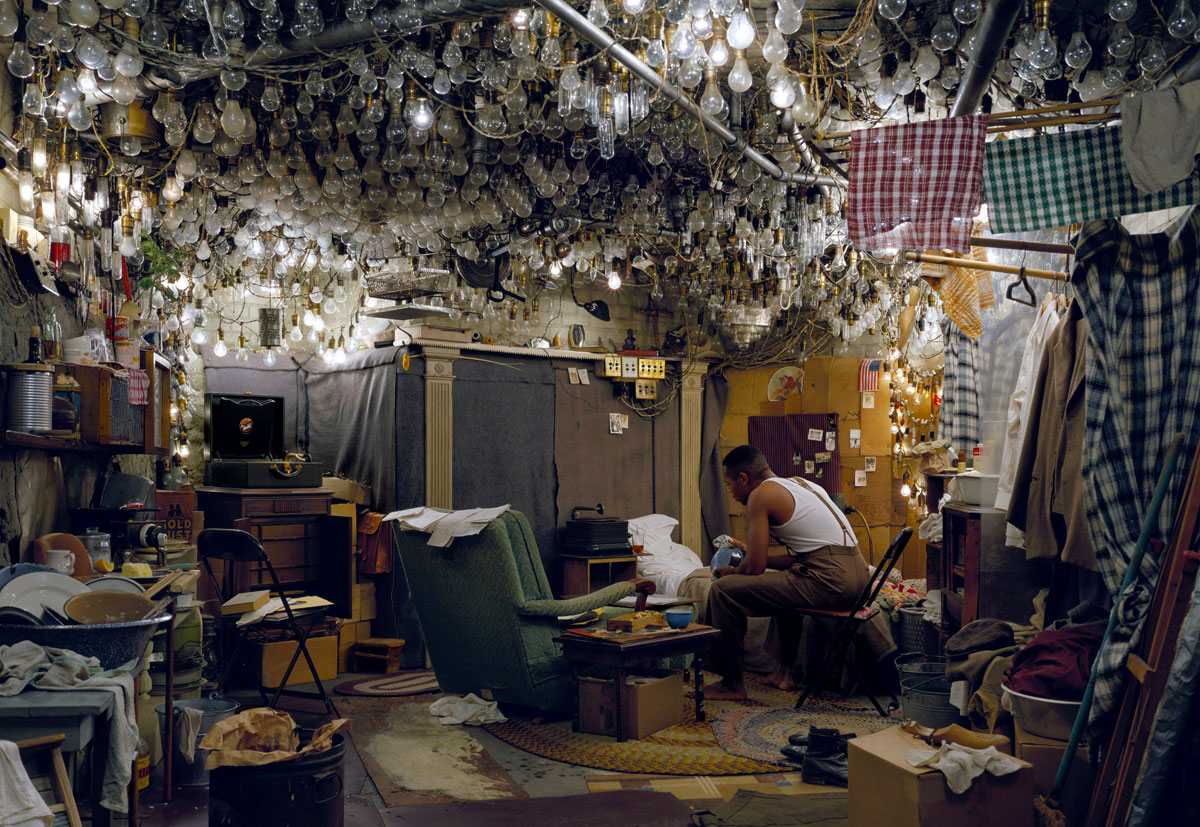
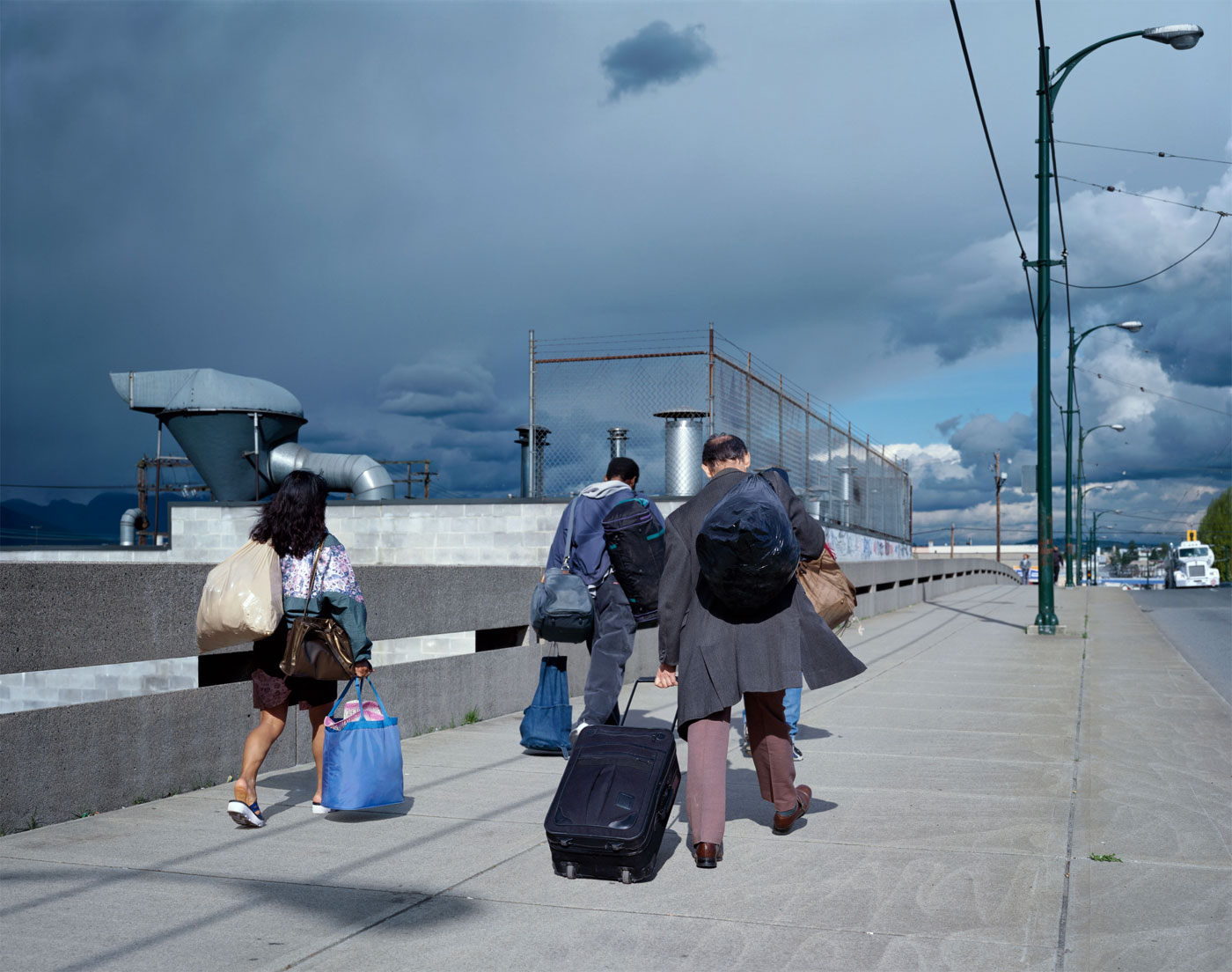
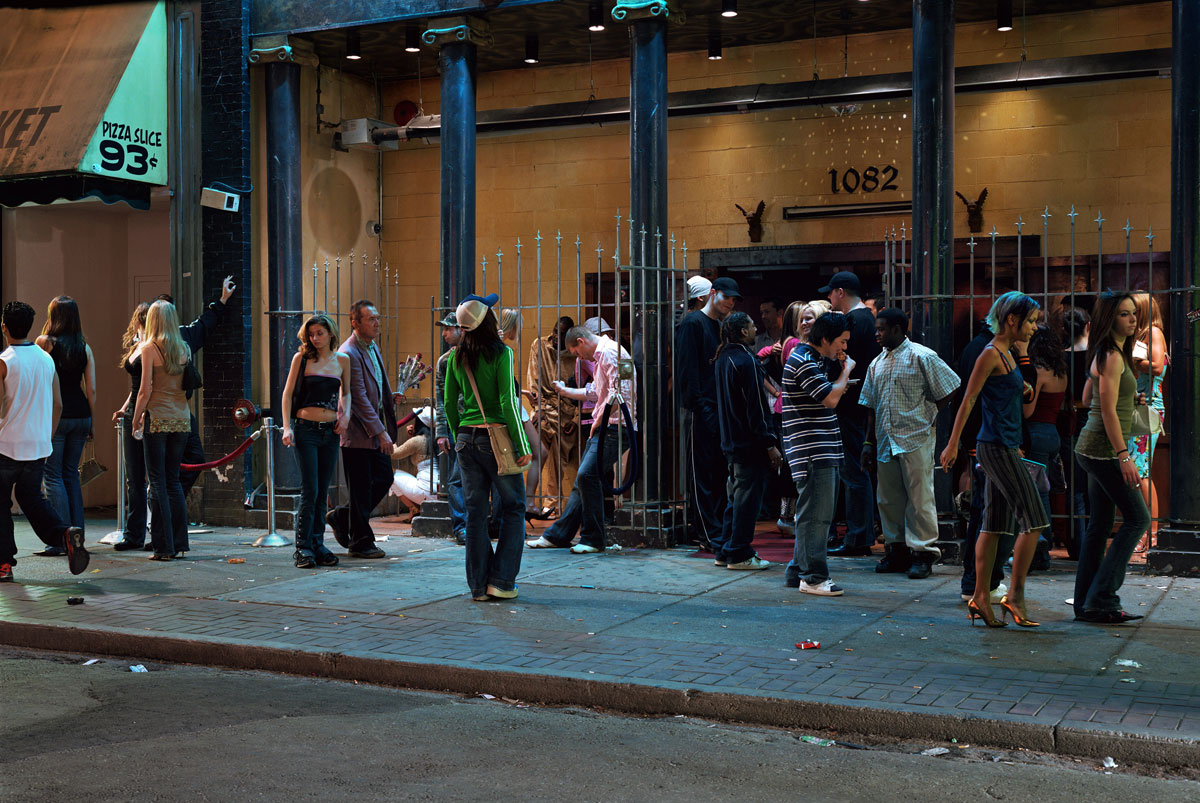
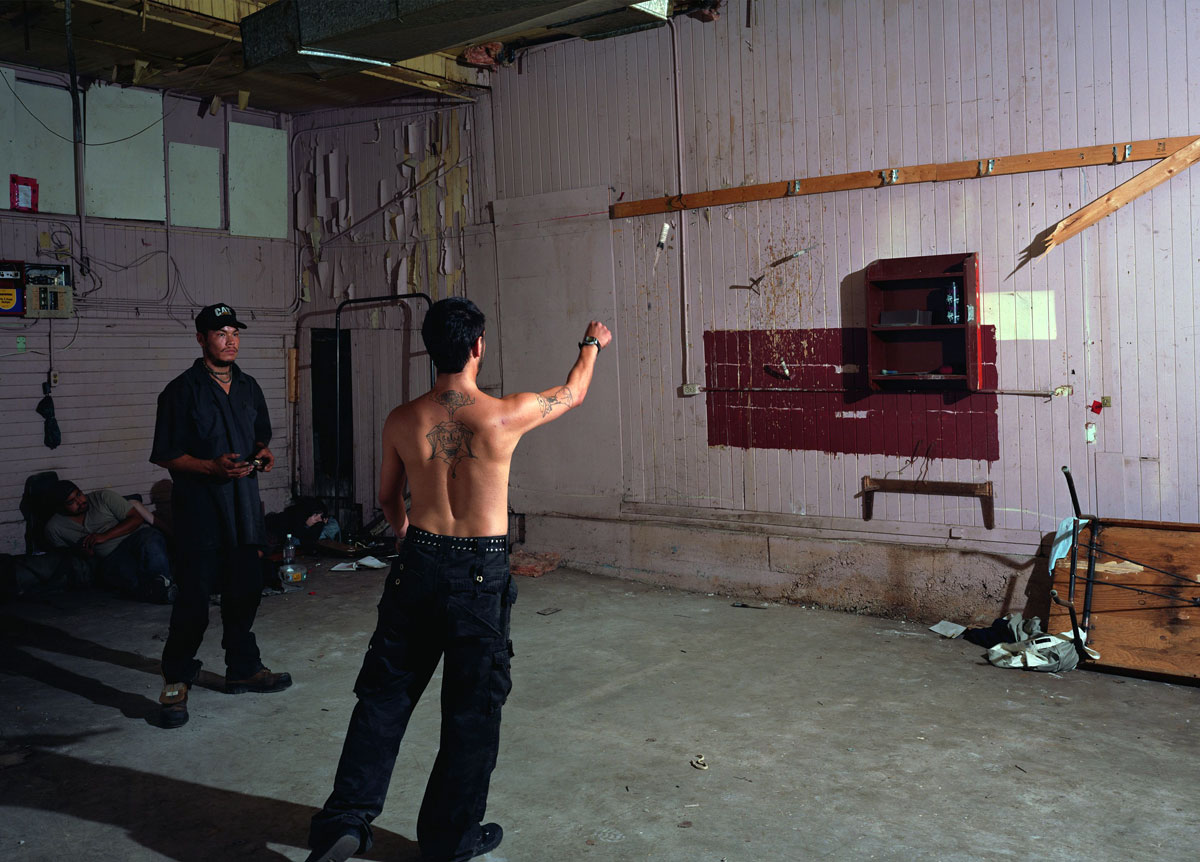
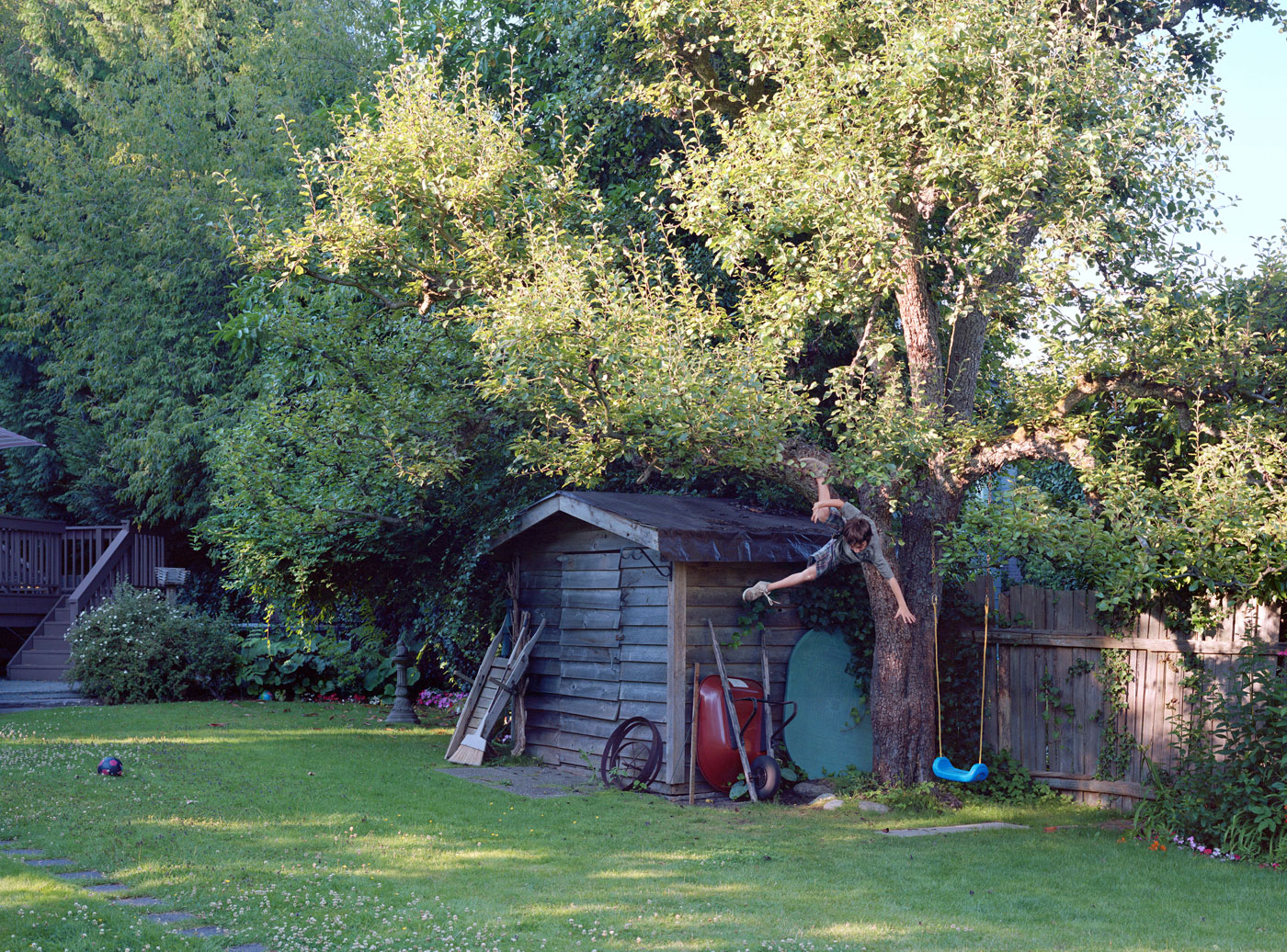

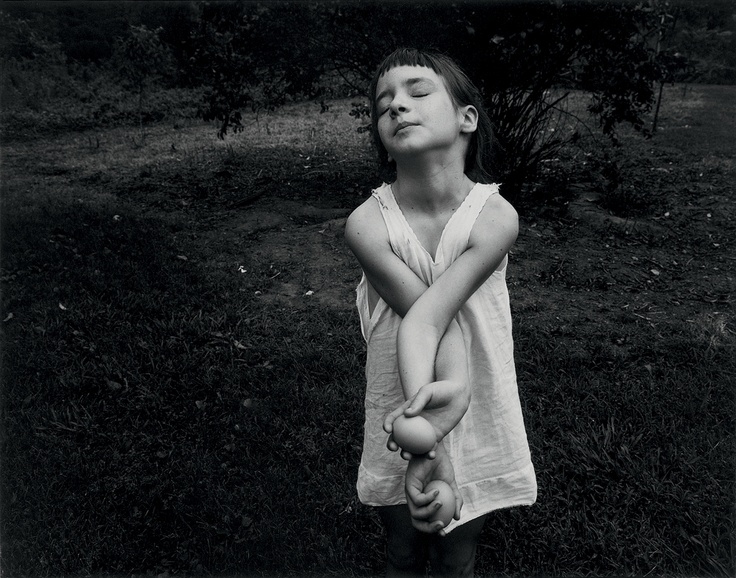

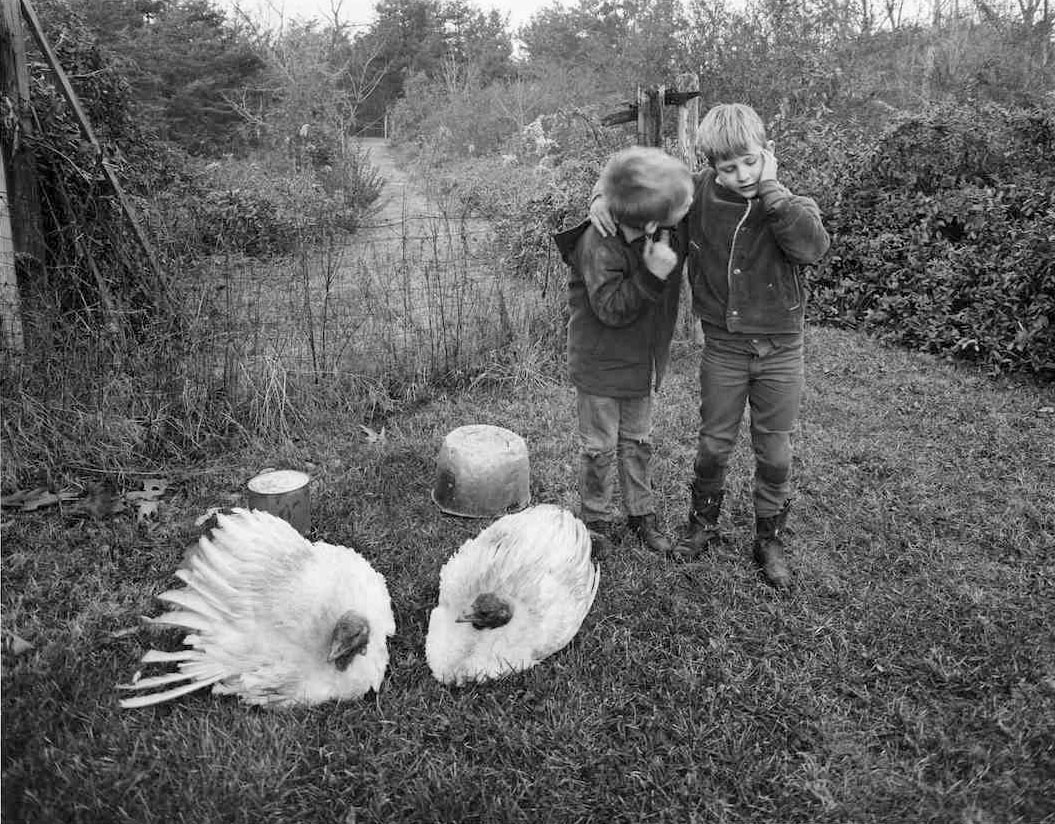
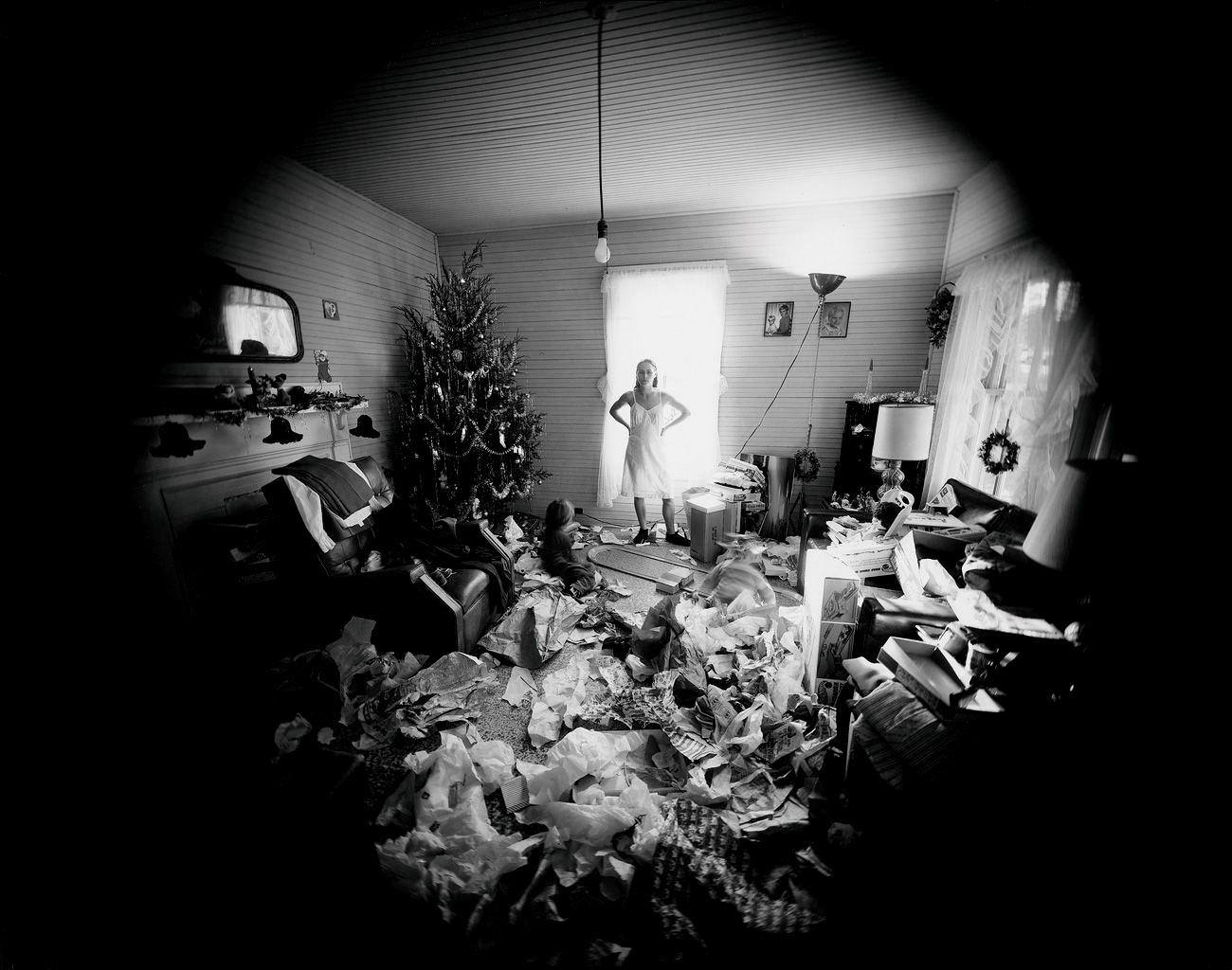

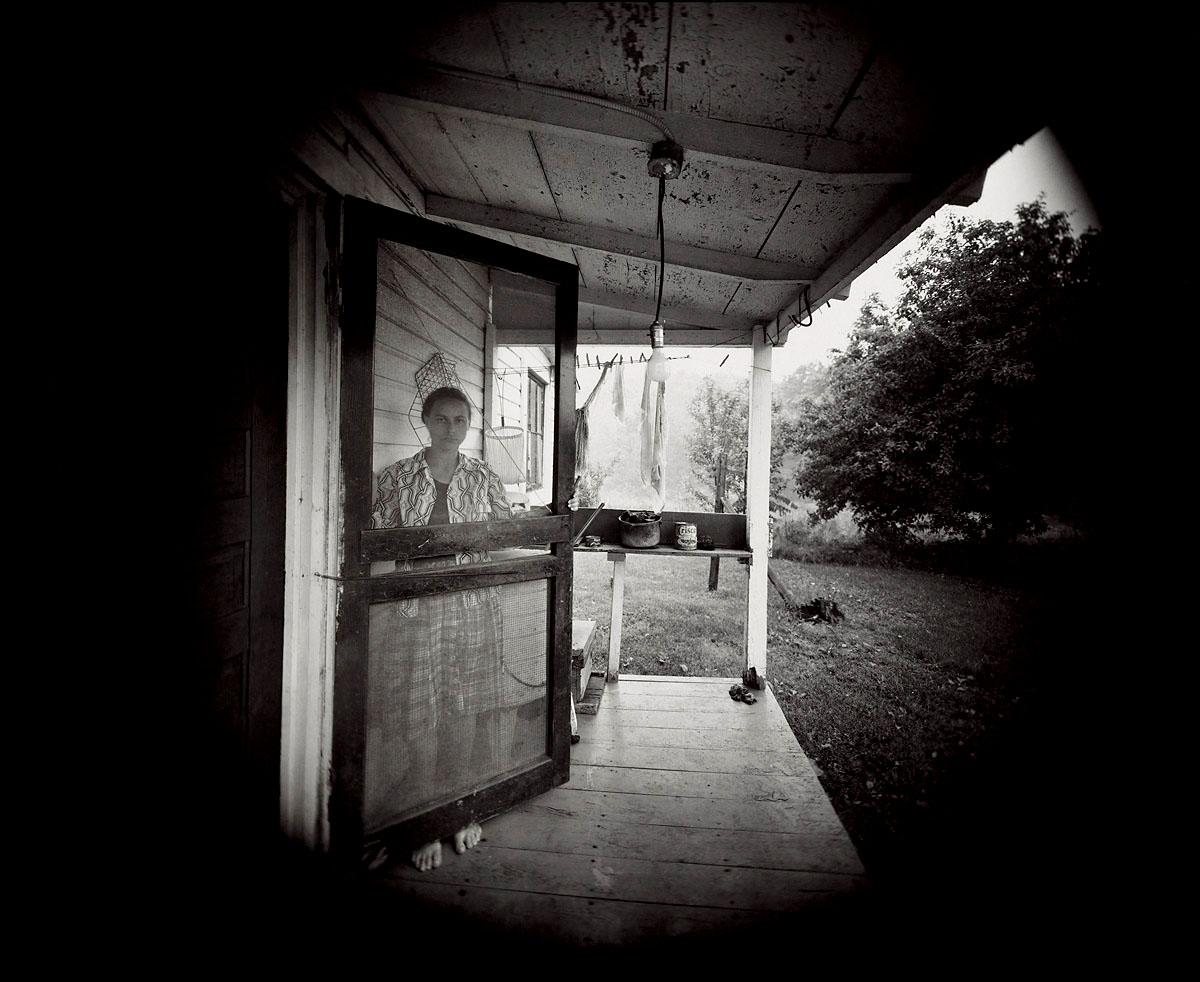
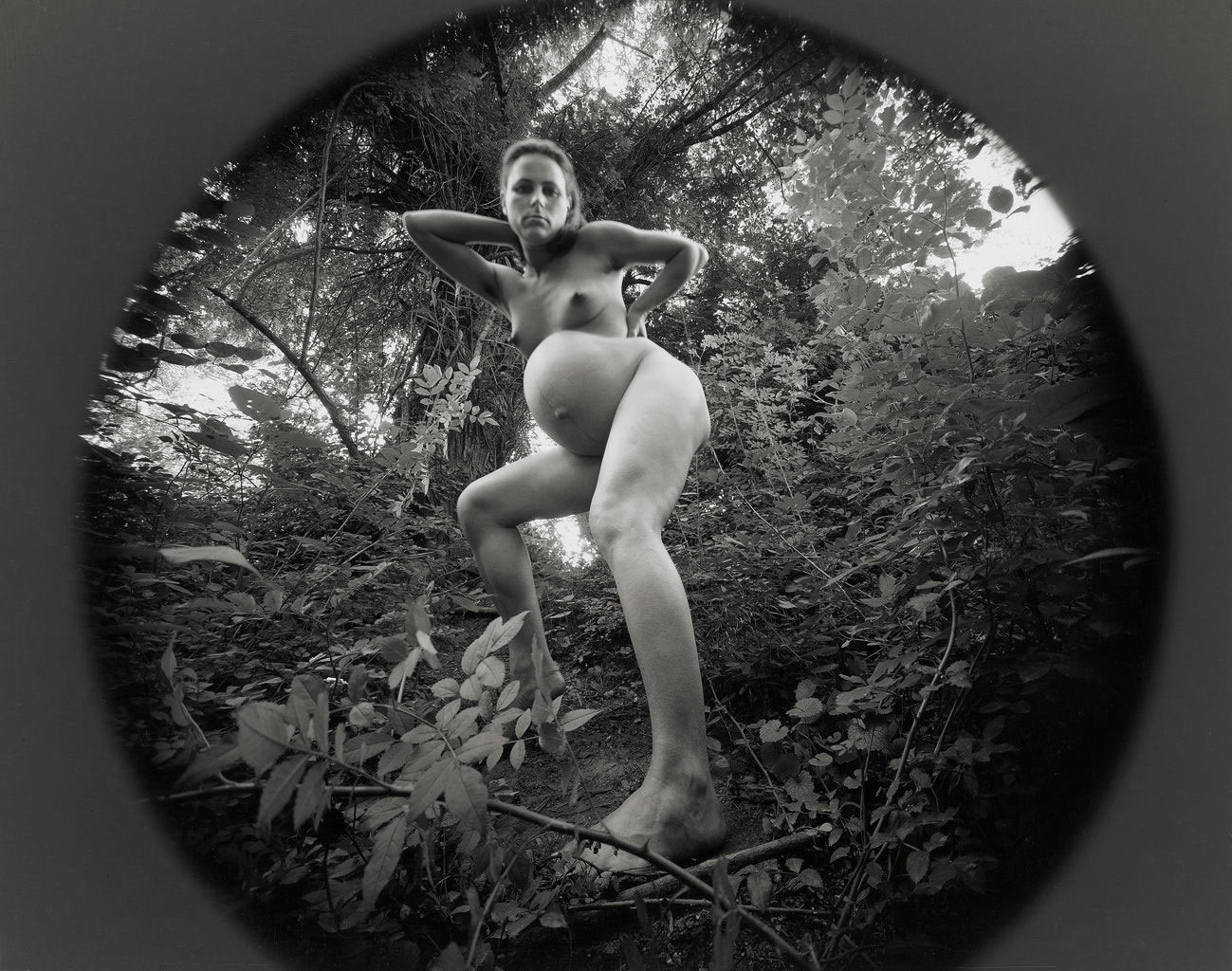
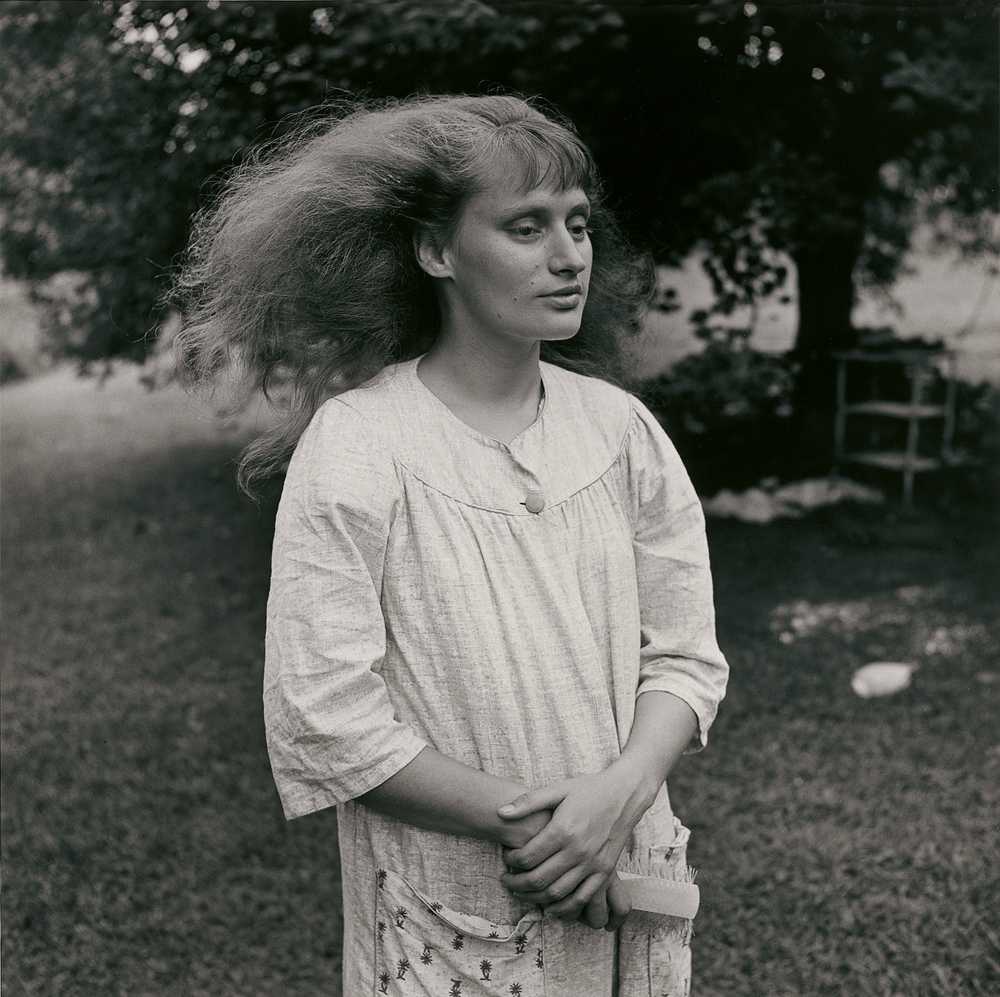


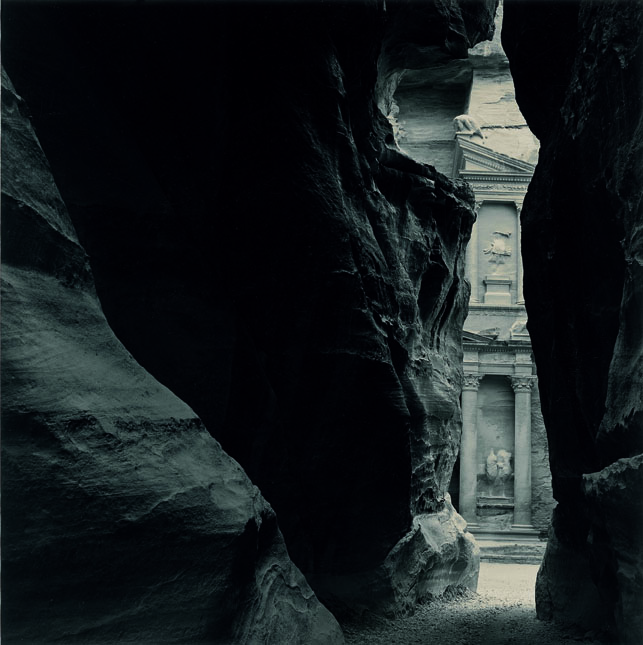
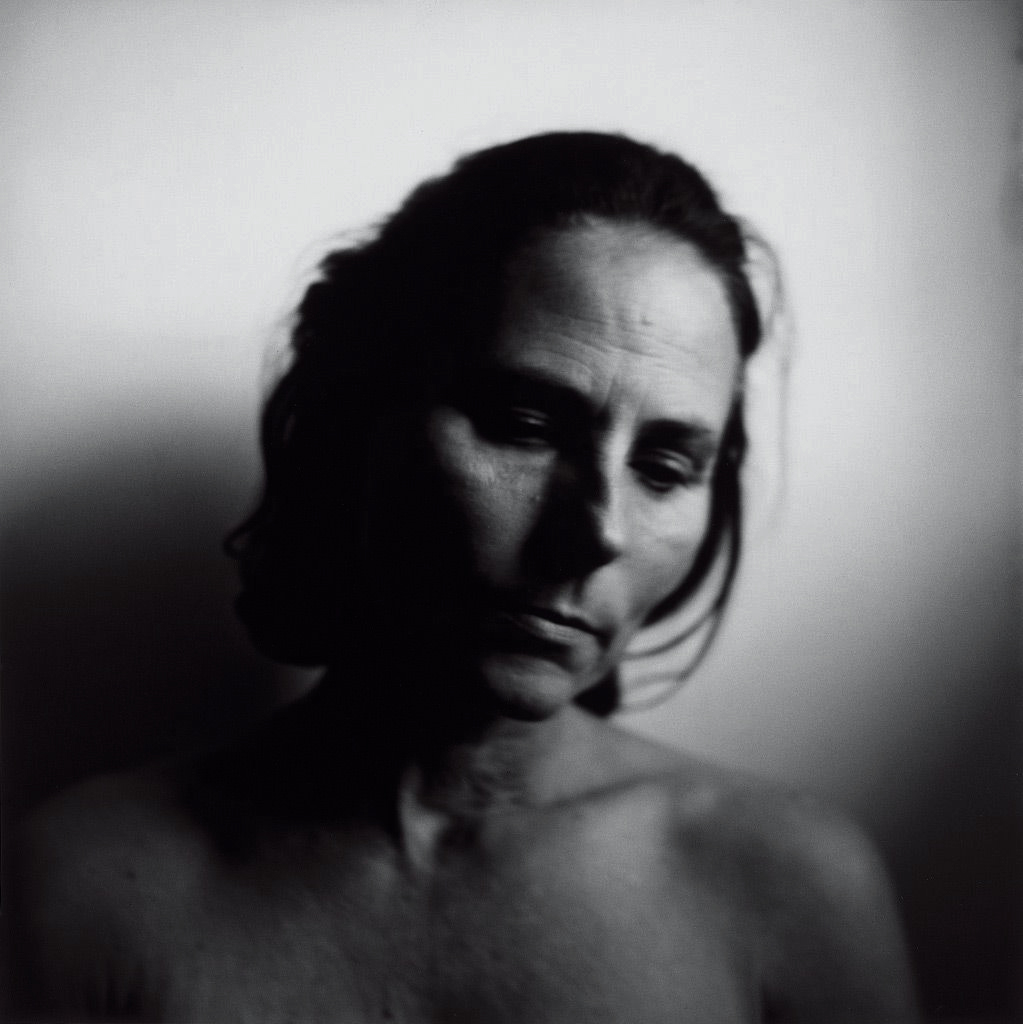
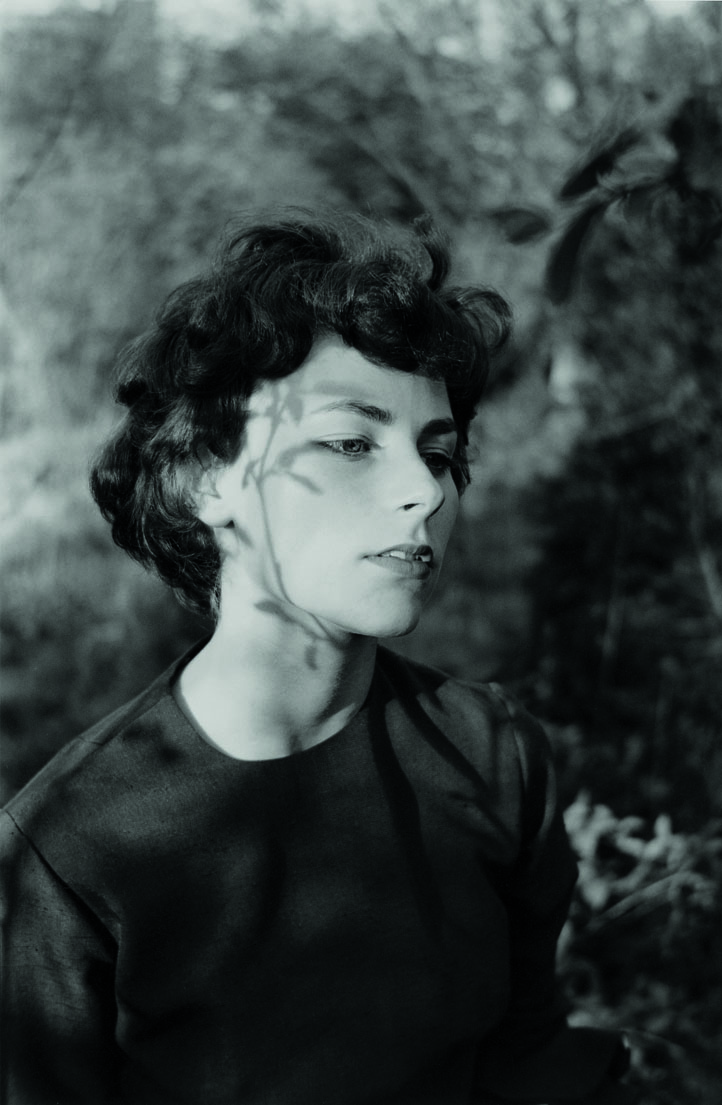

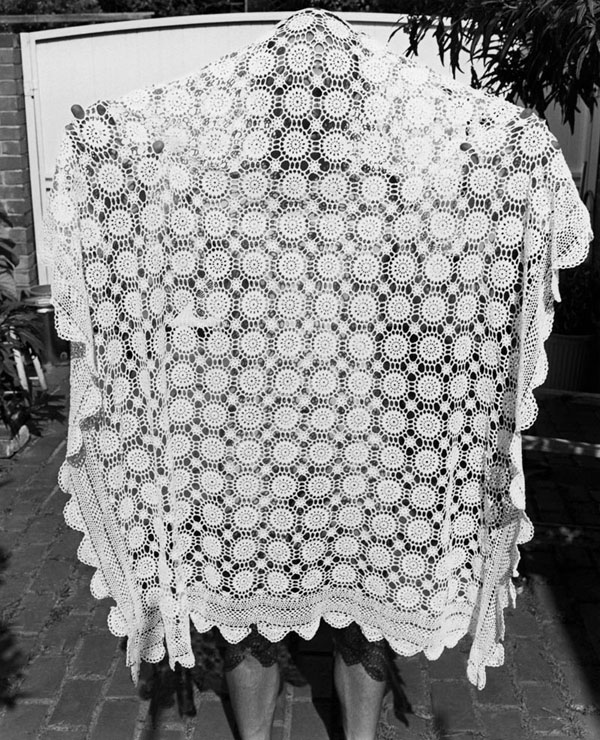
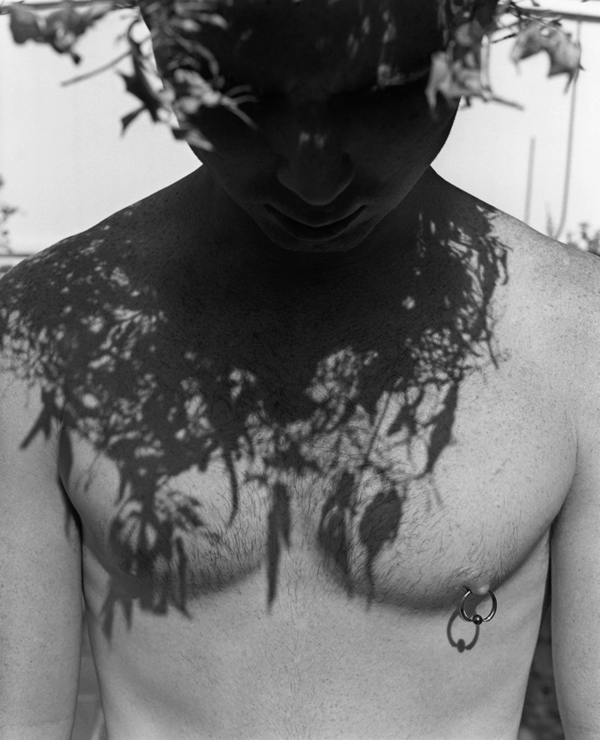
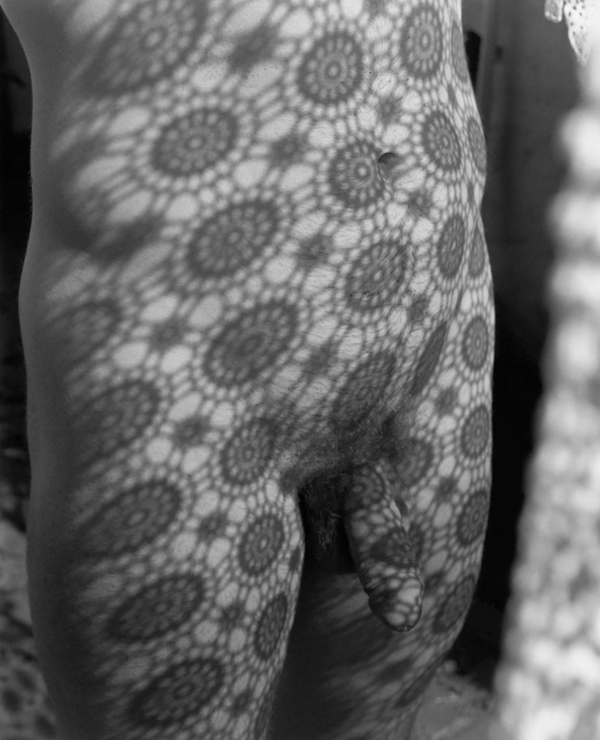
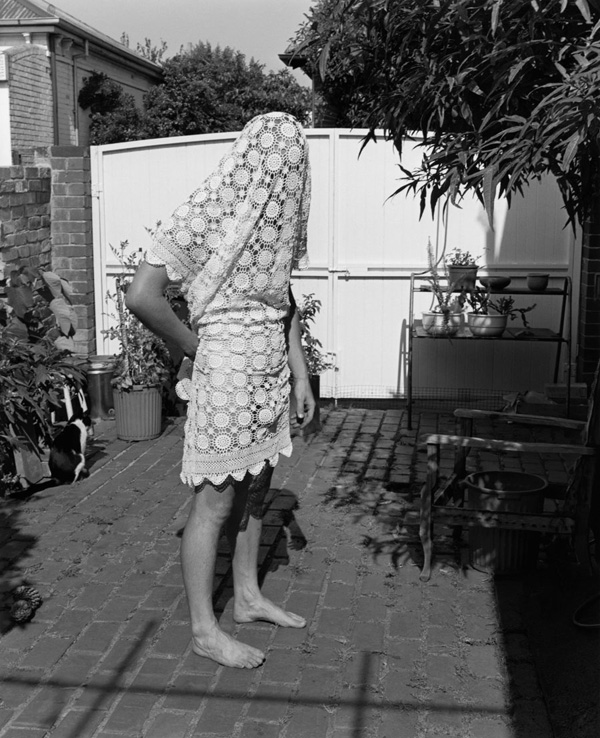
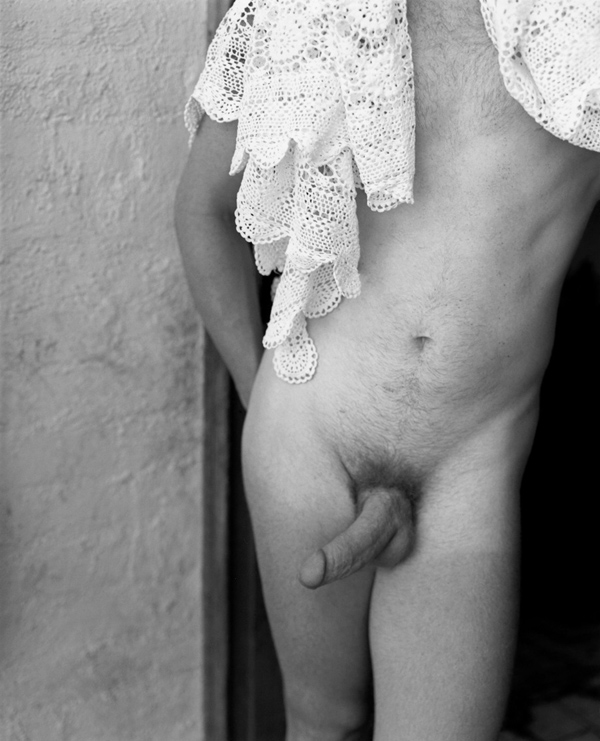
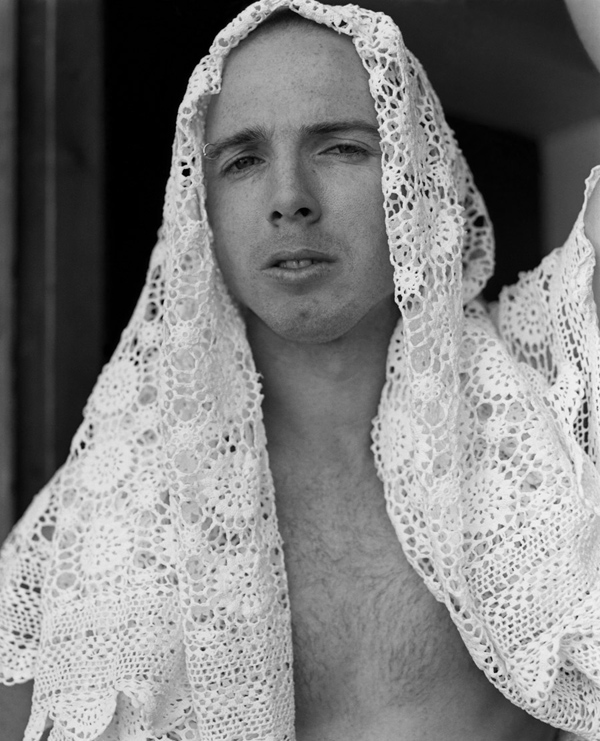
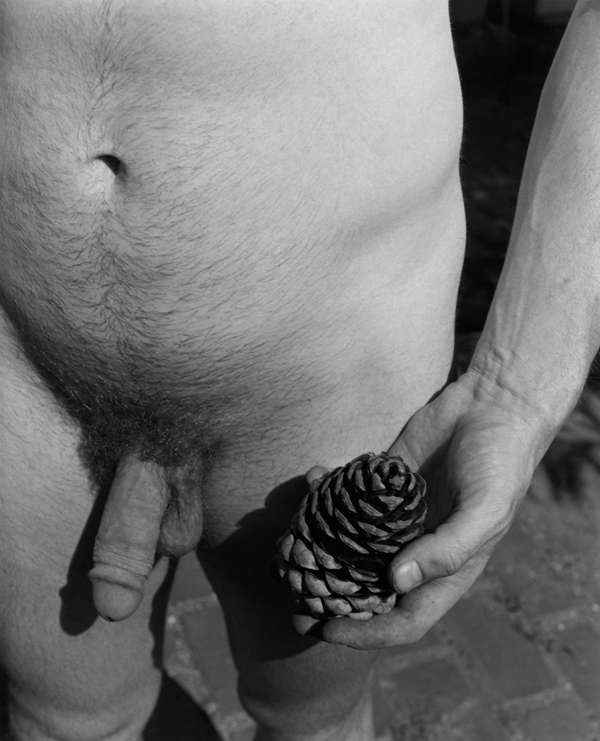
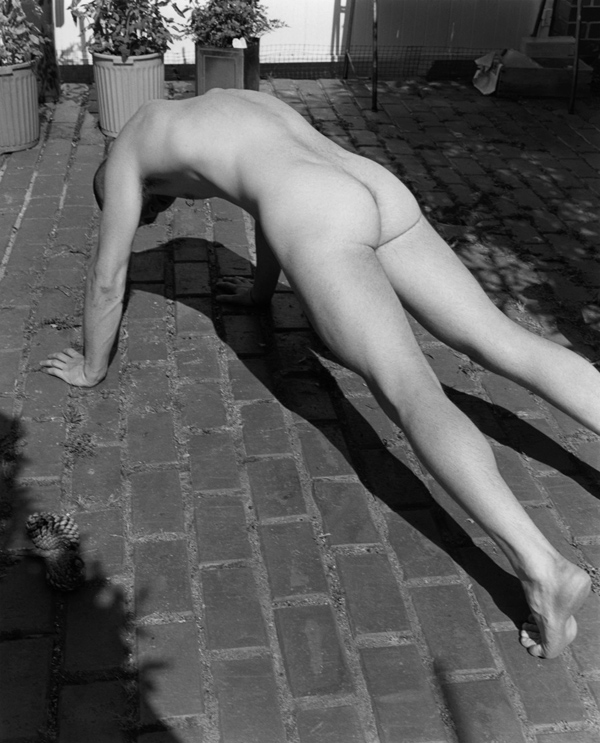
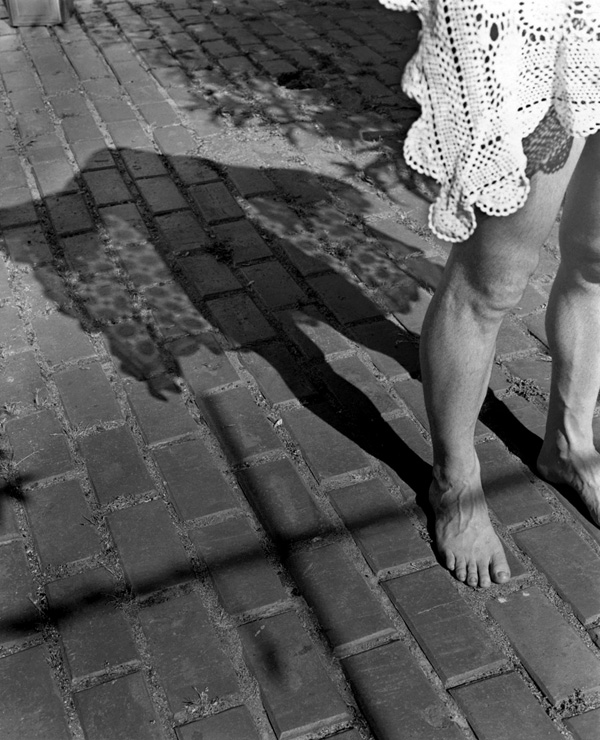
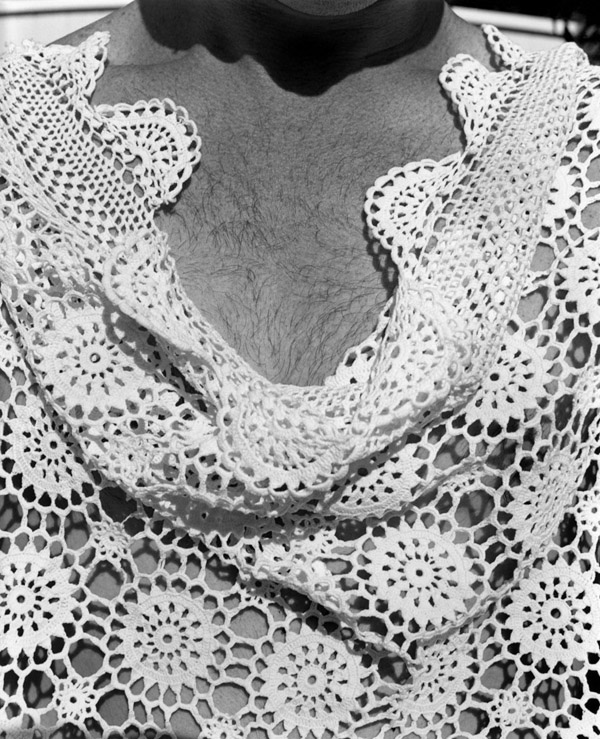
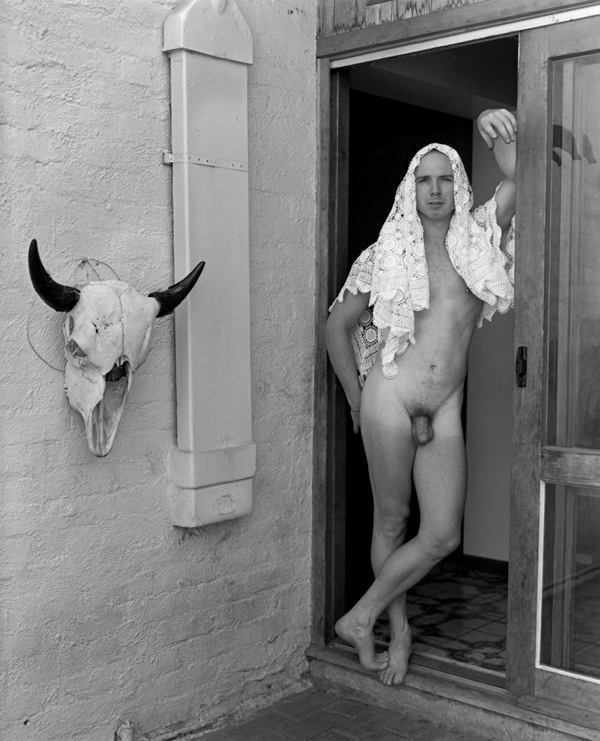
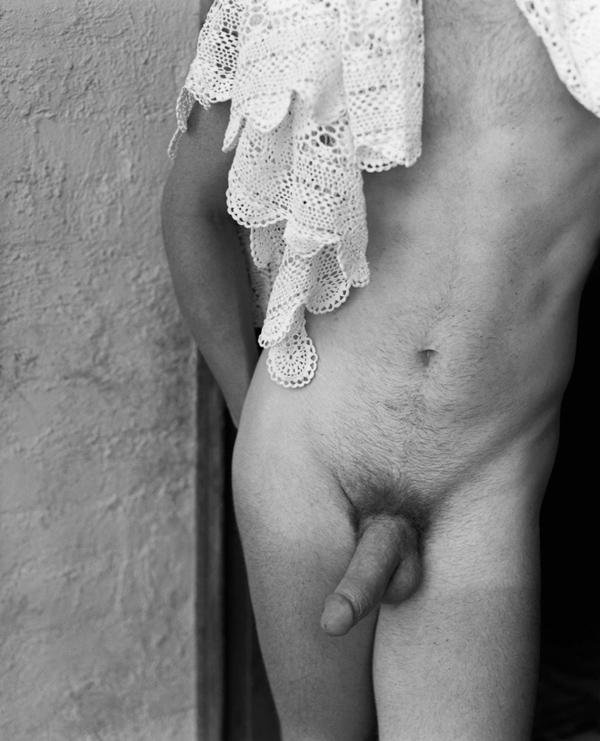
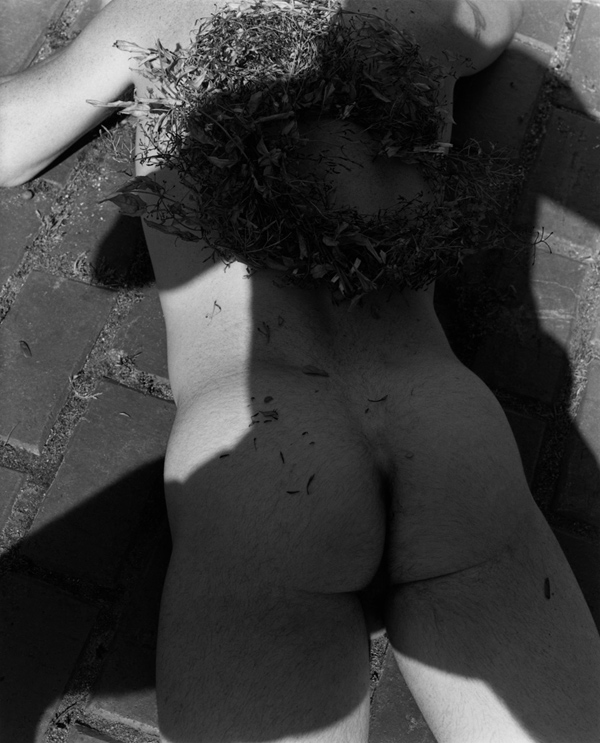
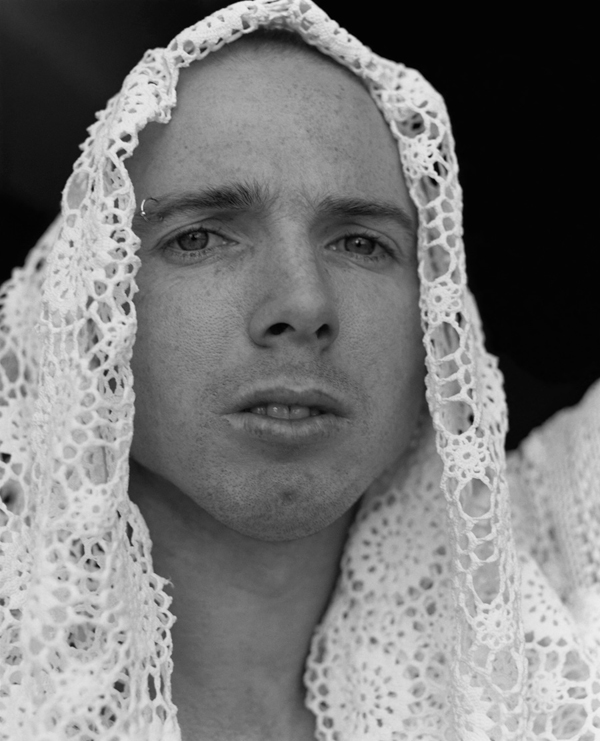
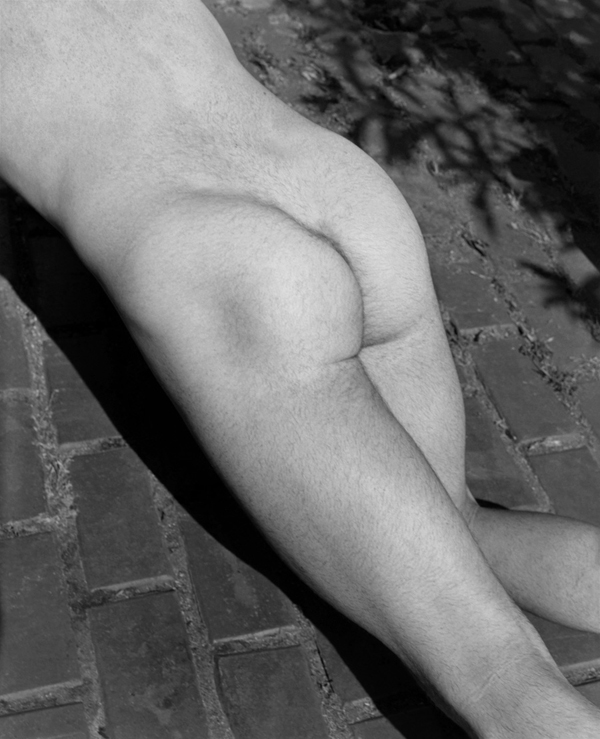
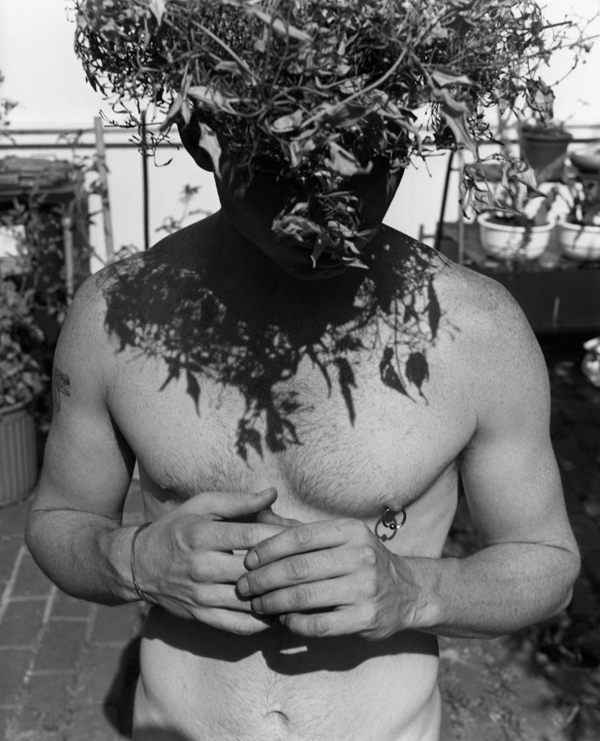
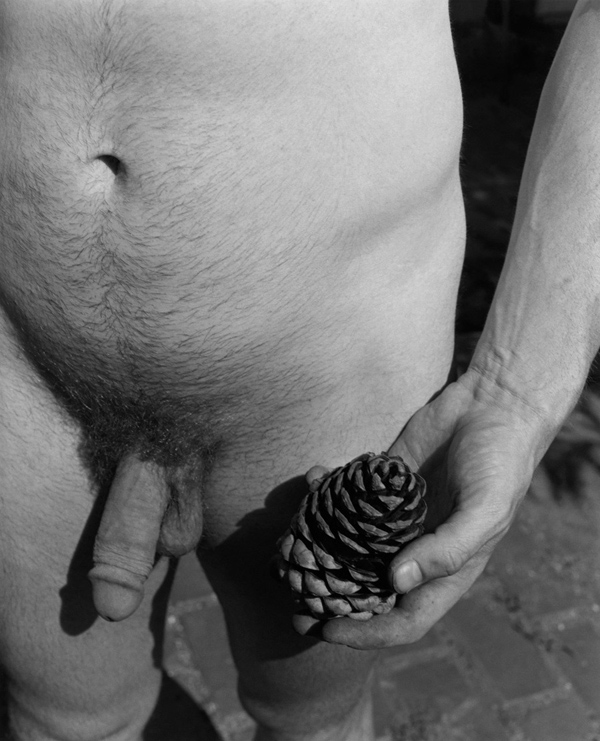



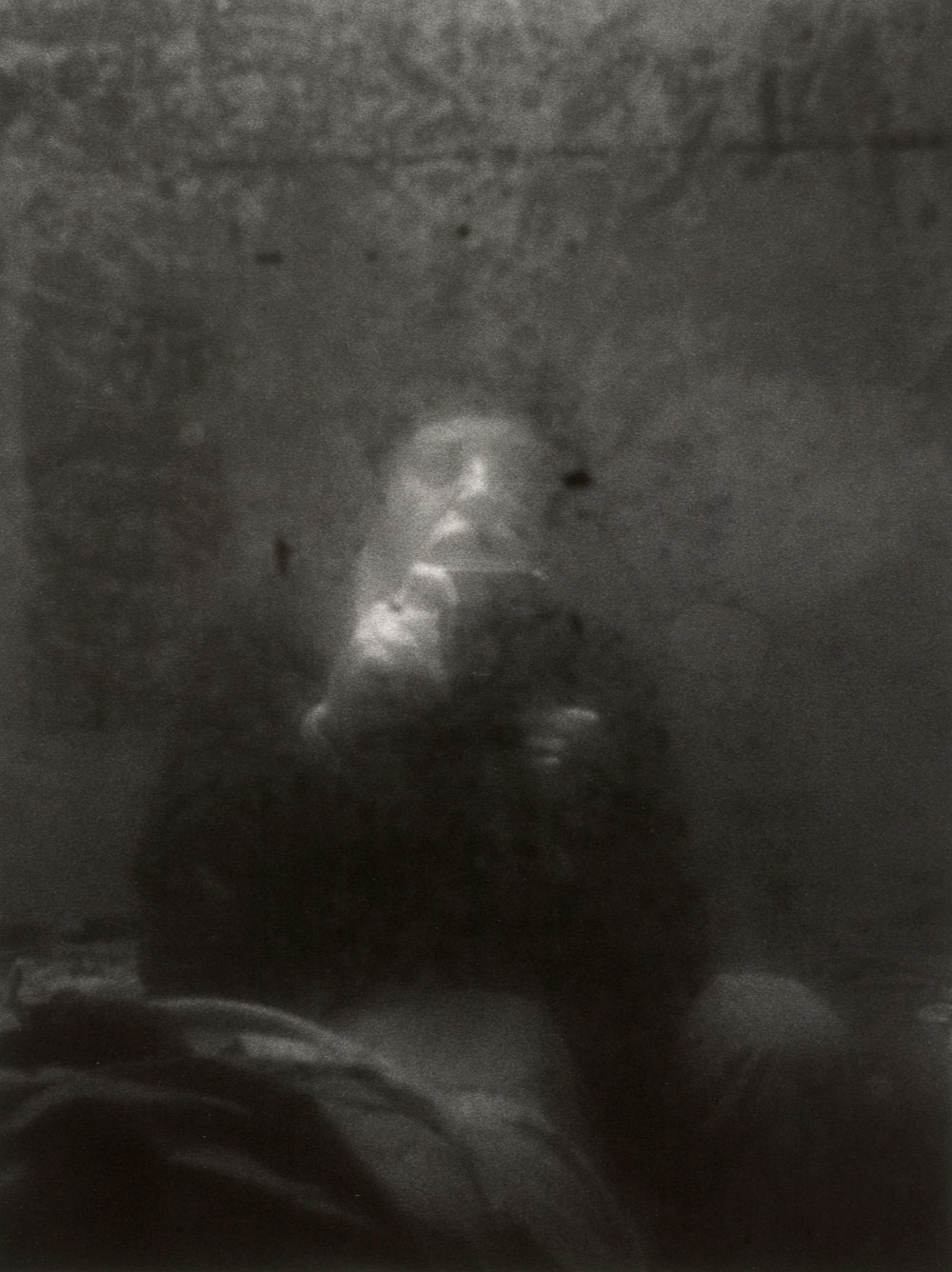
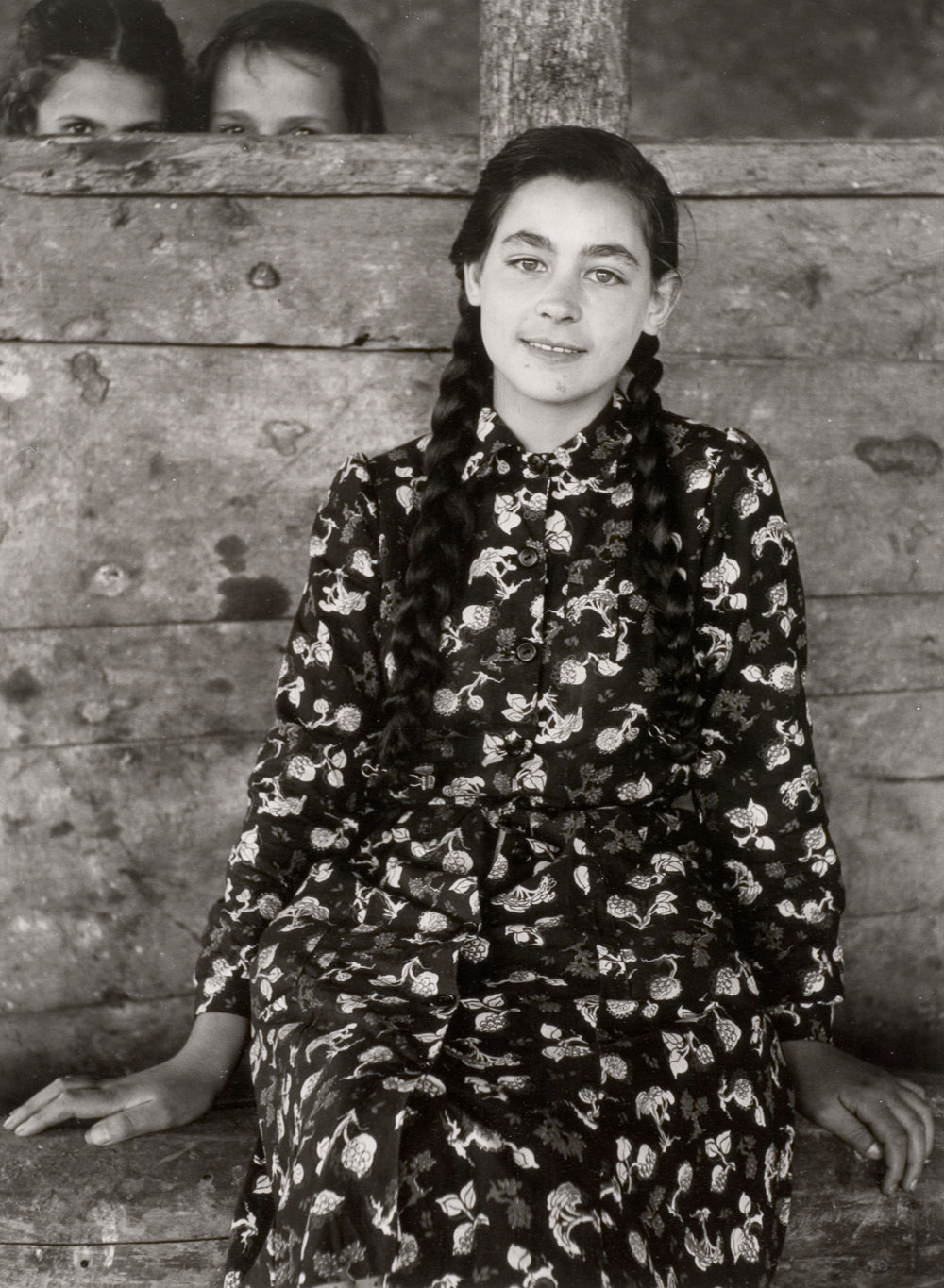


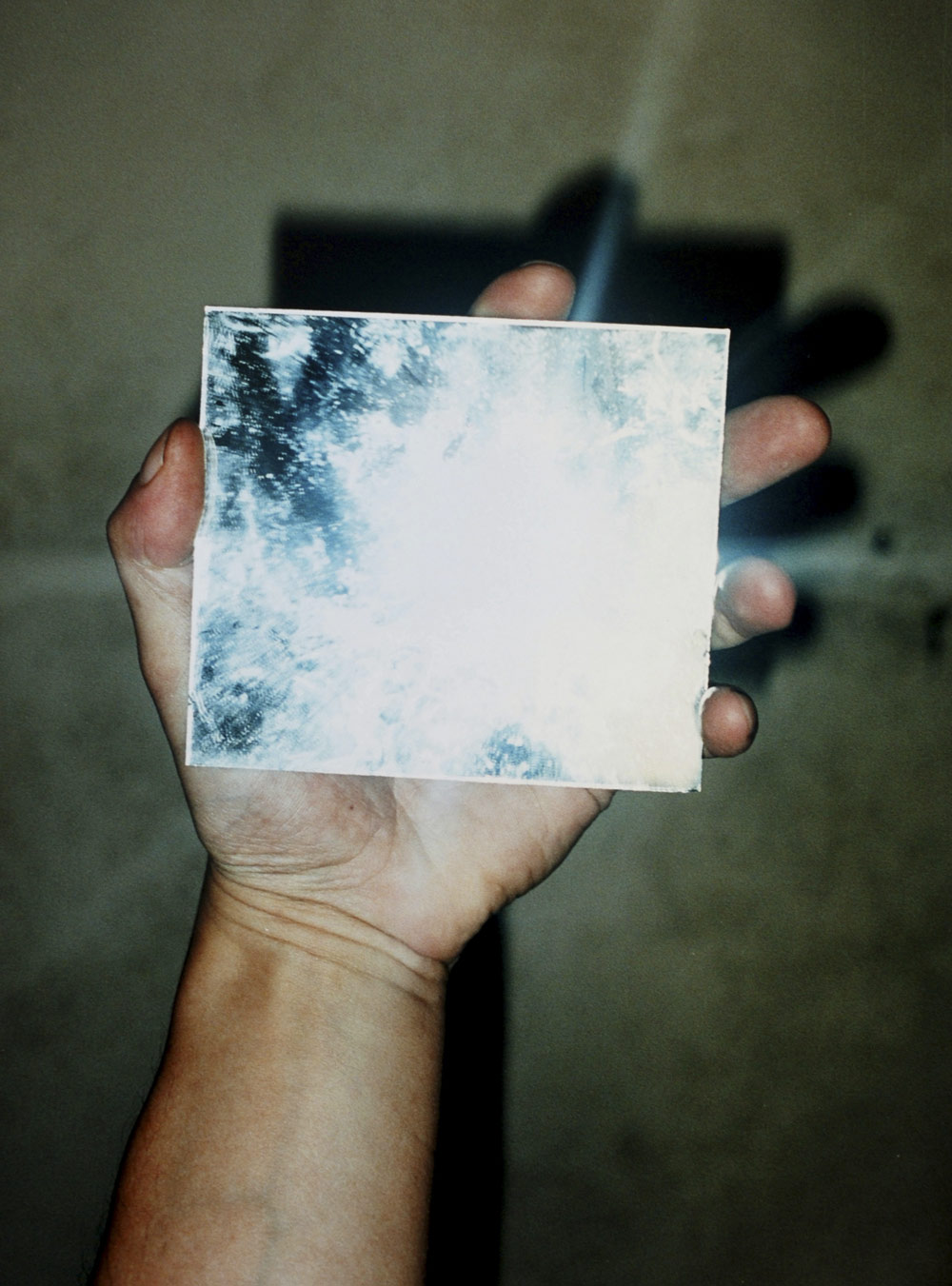


![Eugène Atget (French, Libourne 1857-1927 Paris) 'Untitled [Atget's Work Room with Contact Printing Frames]' c. 1910](https://artblart.com/wp-content/uploads/2014/04/atgets-work-room-web1.jpg "Eugène Atget (French, Libourne 1857-1927 Paris) 'Untitled [Atget's Work Room with Contact Printing Frames]' c. 1910")
![Eugène Atget (French, Libourne 1857–1927 Paris) 'Untitled [Atget's Work Room with Contact Printing Frames]' c. 1910 (detail)](https://artblart.com/wp-content/uploads/2014/04/atget-workroom-detail-web.jpg "Eugène Atget (French, Libourne 1857–1927 Paris) 'Untitled [Atget's Work Room with Contact Printing Frames]' c. 1910 (detail)")

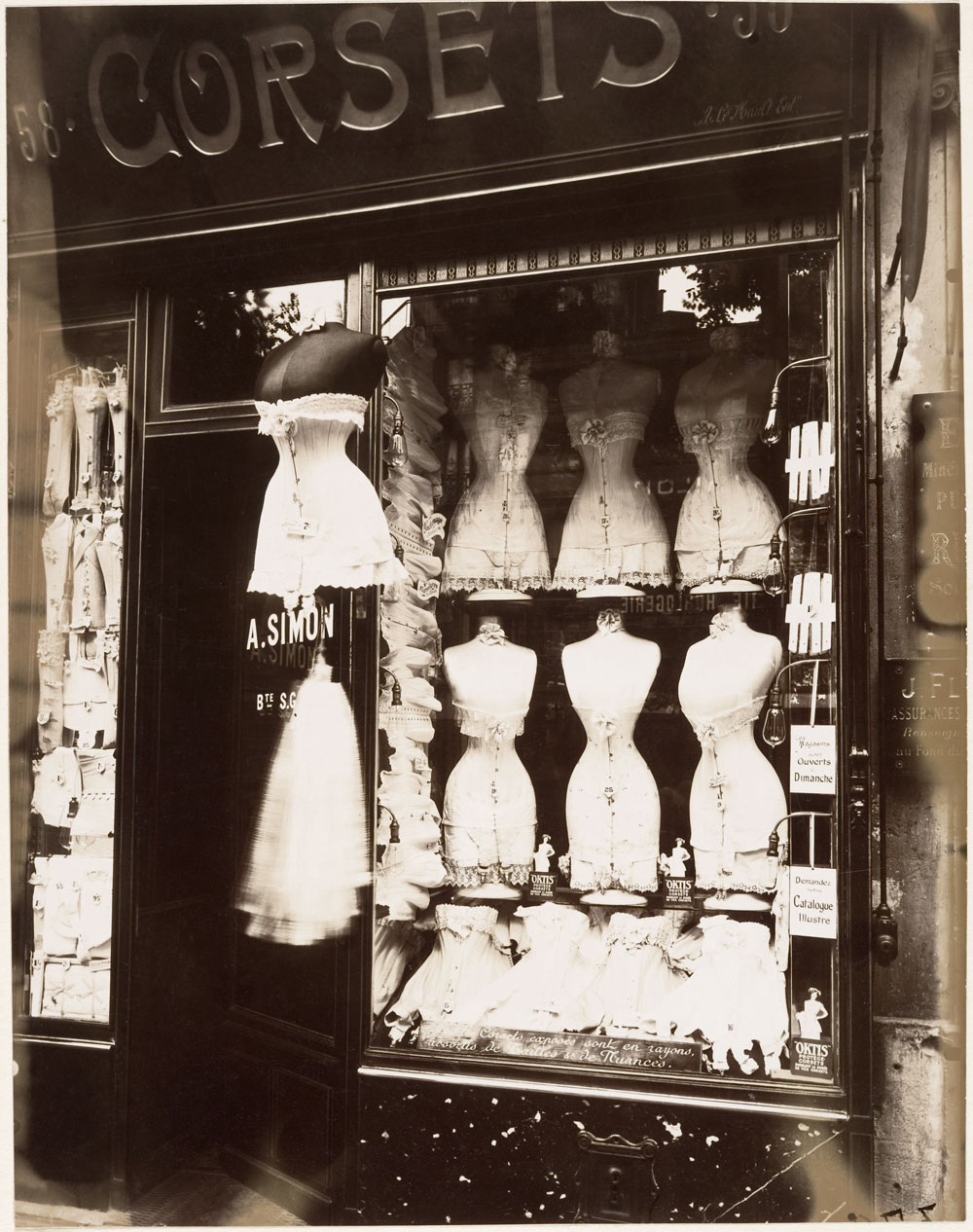
![Marie-Charles-Isidore Choiselat (French, 1815-1858) Stanislas Ratel (French, 1824-1904) 'Untitled [The Pavillon de Flore and the Tuileries Gardens]' 1849](https://artblart.com/wp-content/uploads/2014/04/the-pavillon-de-flore-web.jpg "Marie-Charles-Isidore Choiselat (French, 1815-1858) Stanislas Ratel (French, 1824-1904) 'Untitled [The Pavillon de Flore and the Tuileries Gardens]' 1849")


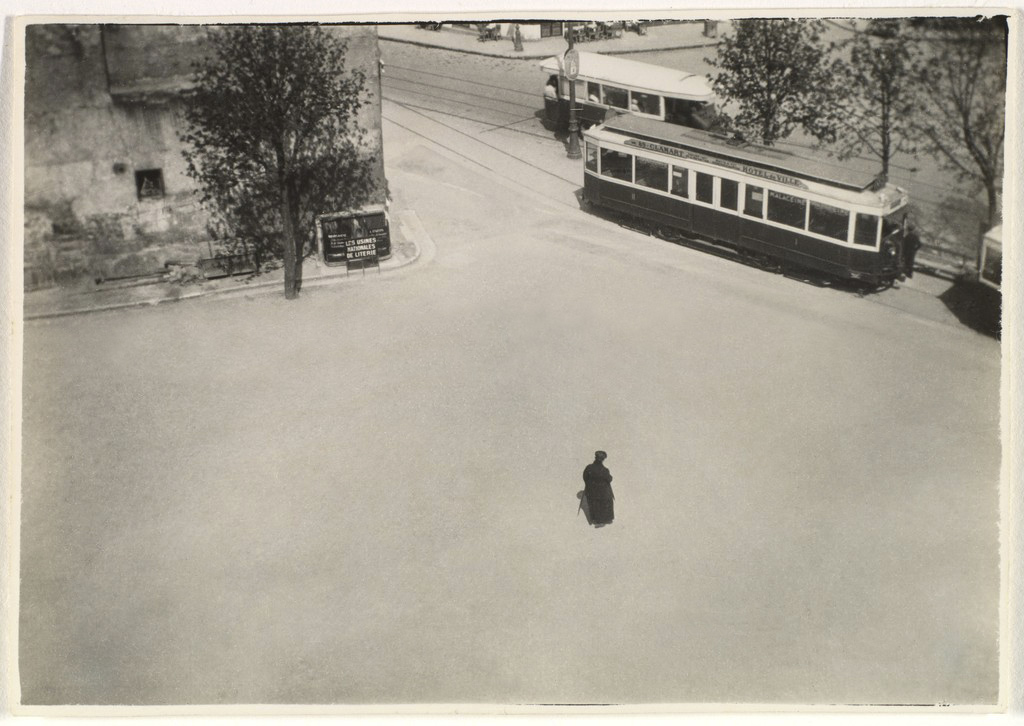


![Edward J. Steichen (American born Luxembourg, Bivange 1879 - 1973 West Redding, Connecticut) 'Untitled [Brancusi's Studio]' c. 1920](https://artblart.com/wp-content/uploads/2014/04/edward_steichen_brancusis_studio_1920-web.jpg "Edward J. Steichen (American born Luxembourg, Bivange 1879 - 1973 West Redding, Connecticut) 'Untitled [Brancusi's Studio]' c. 1920")
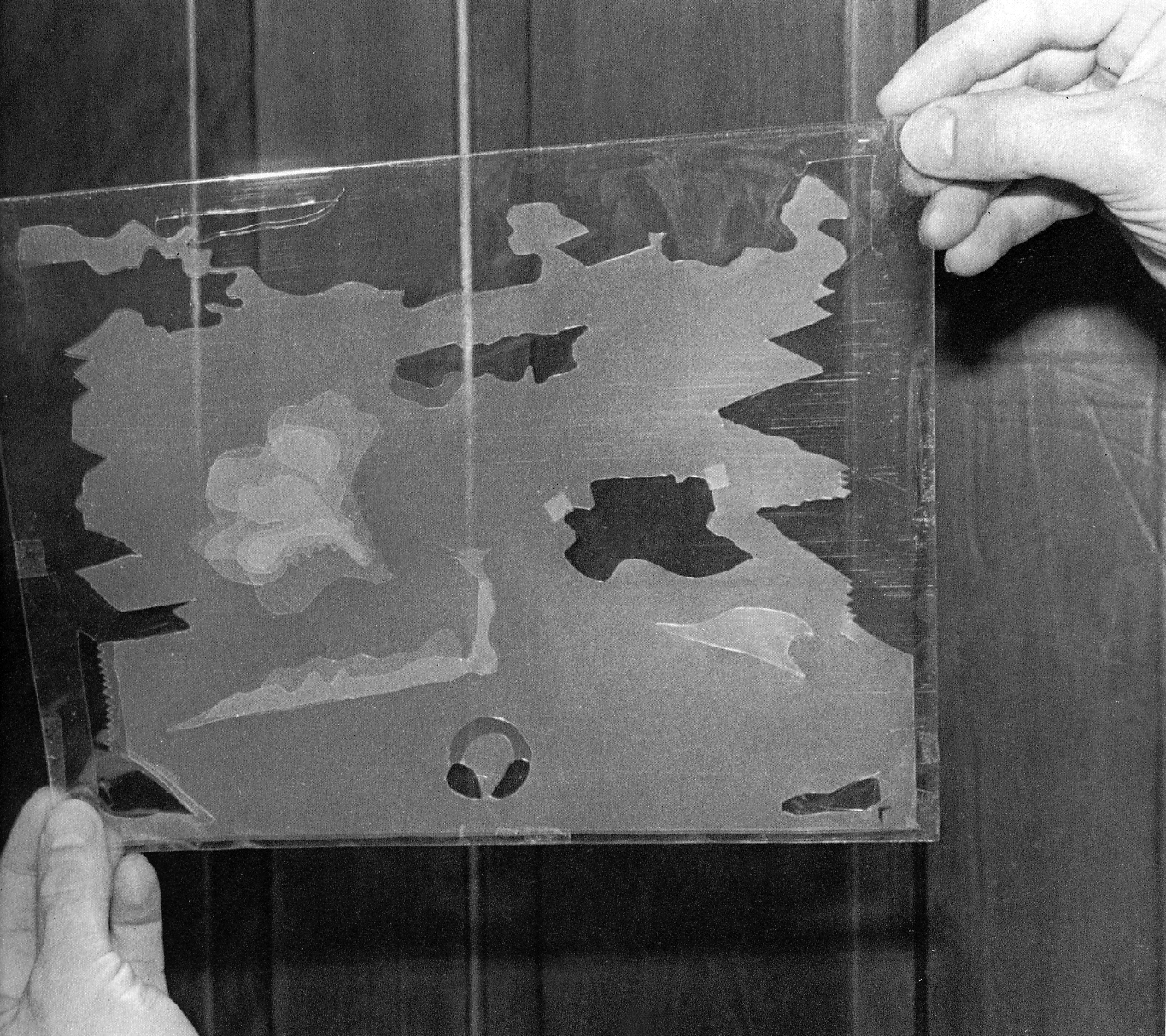
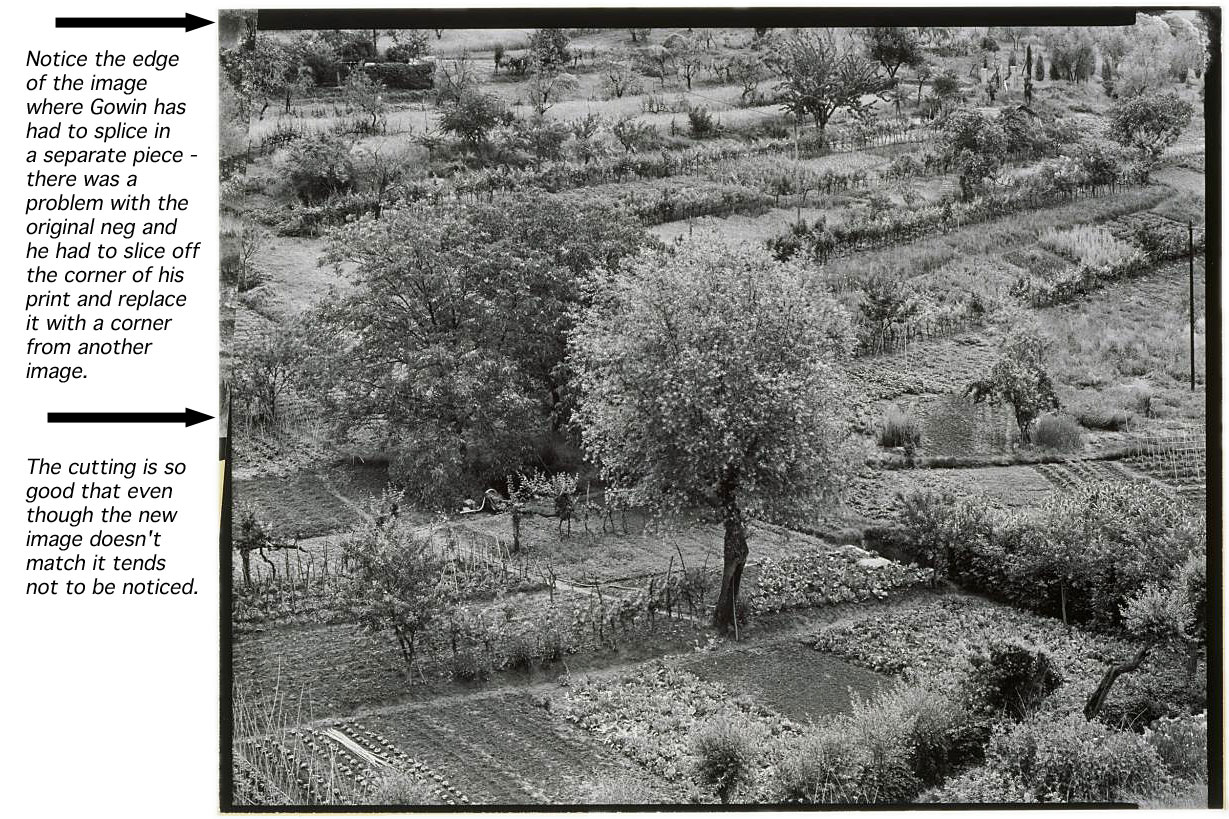
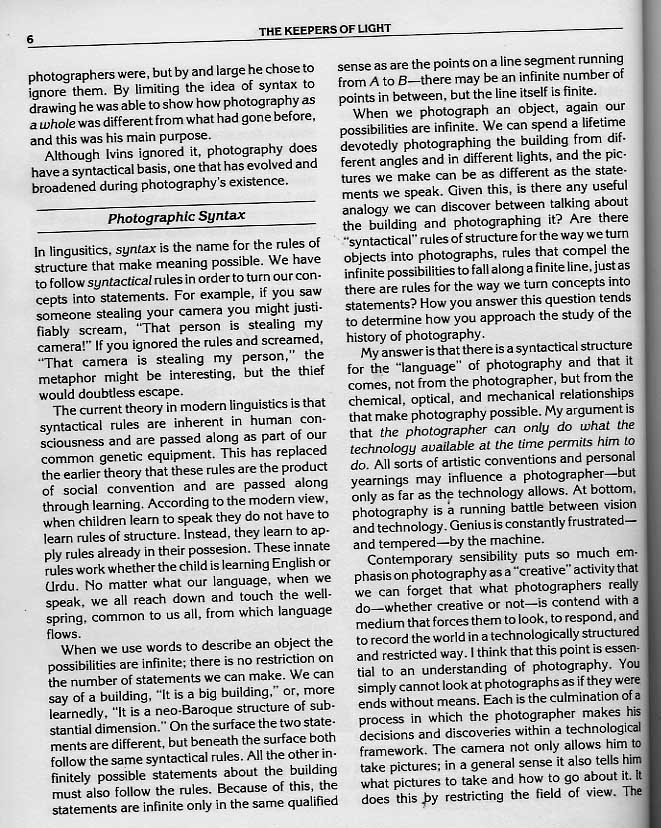
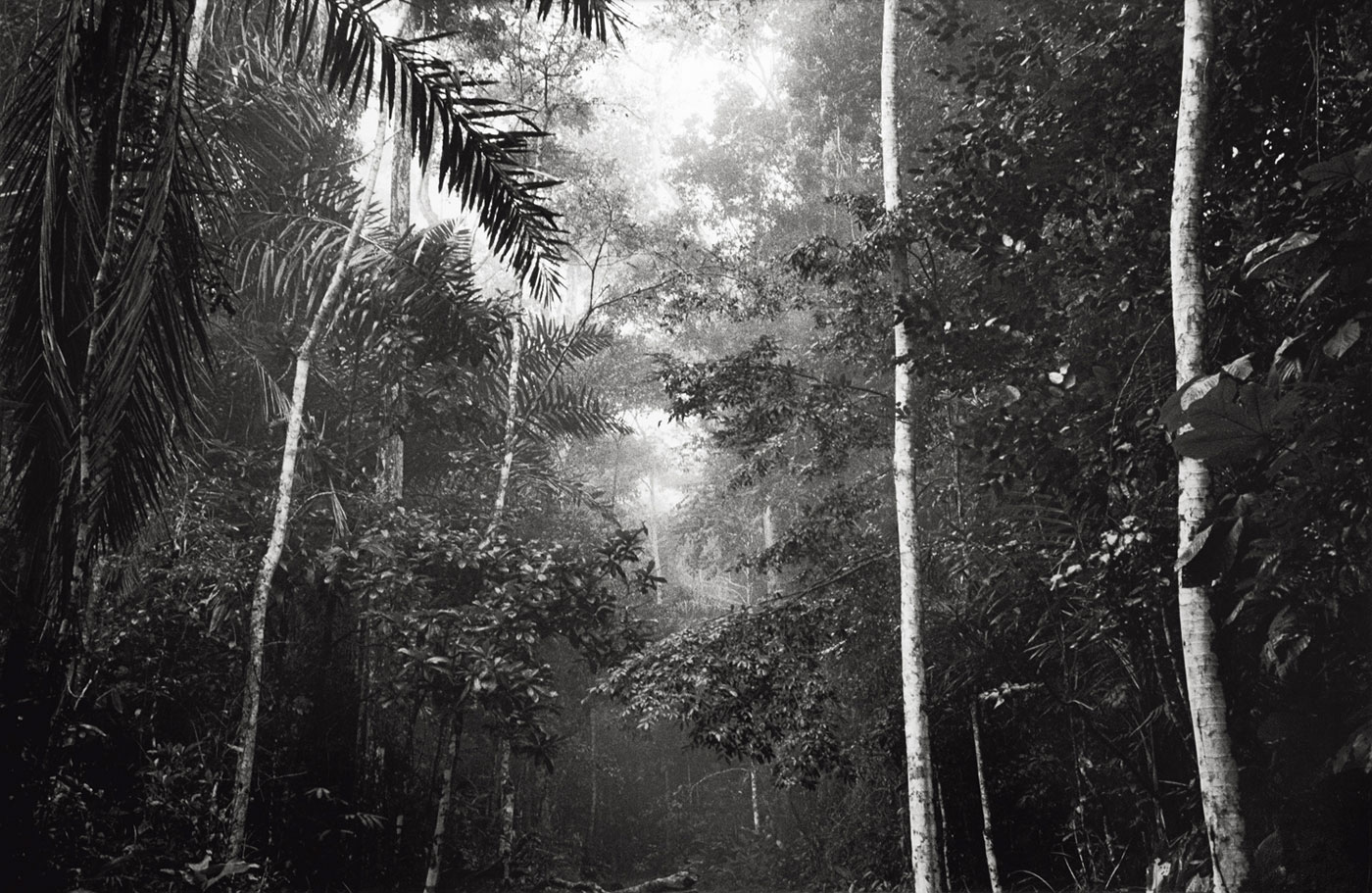
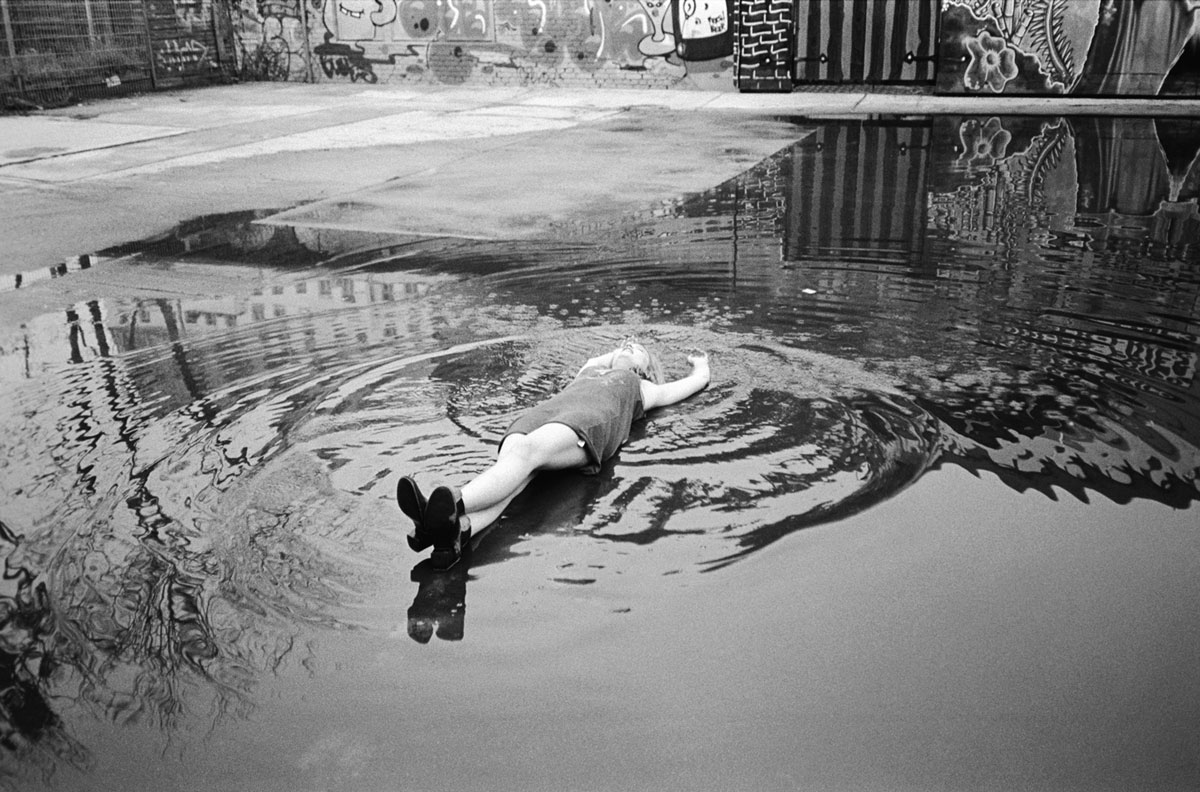
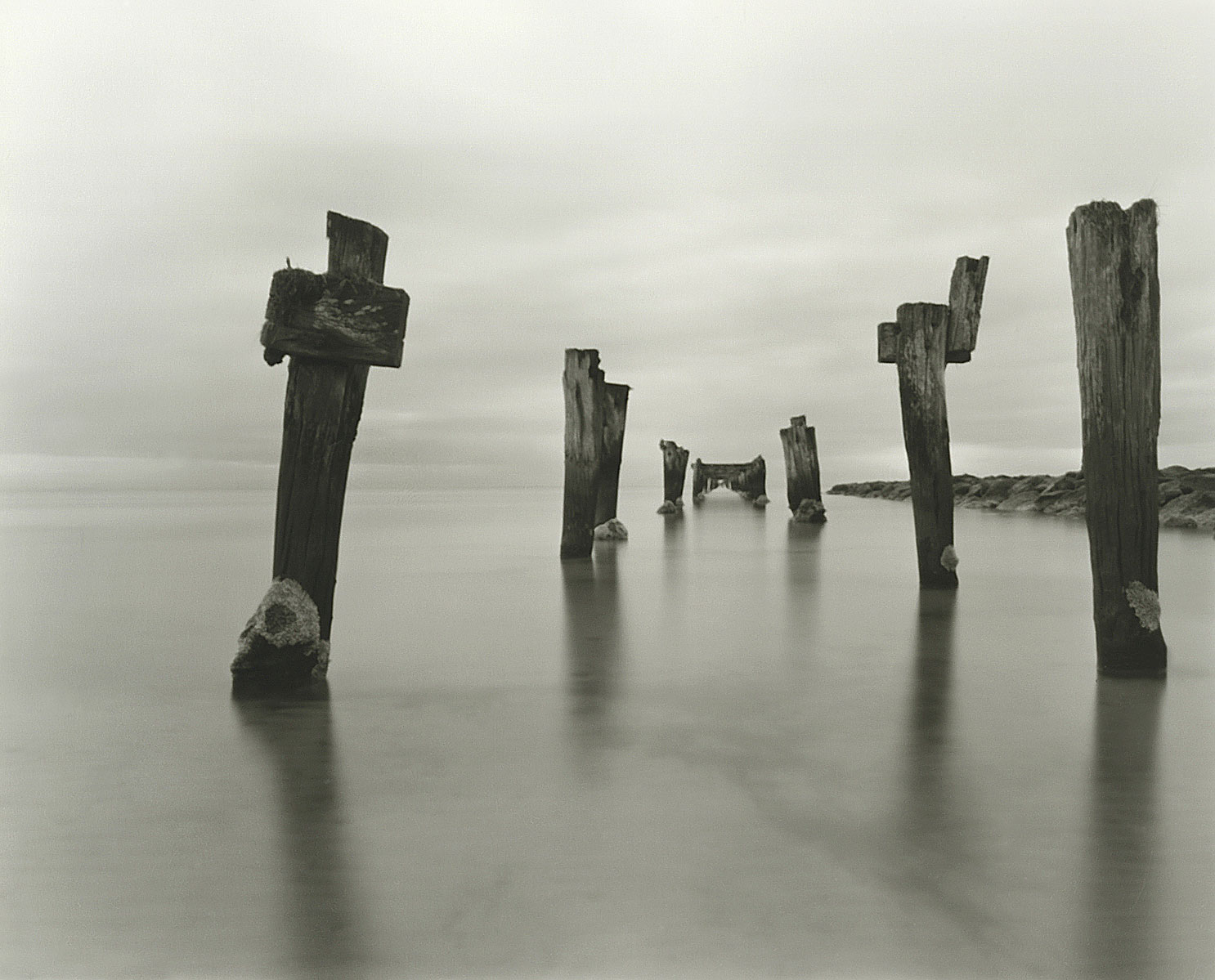
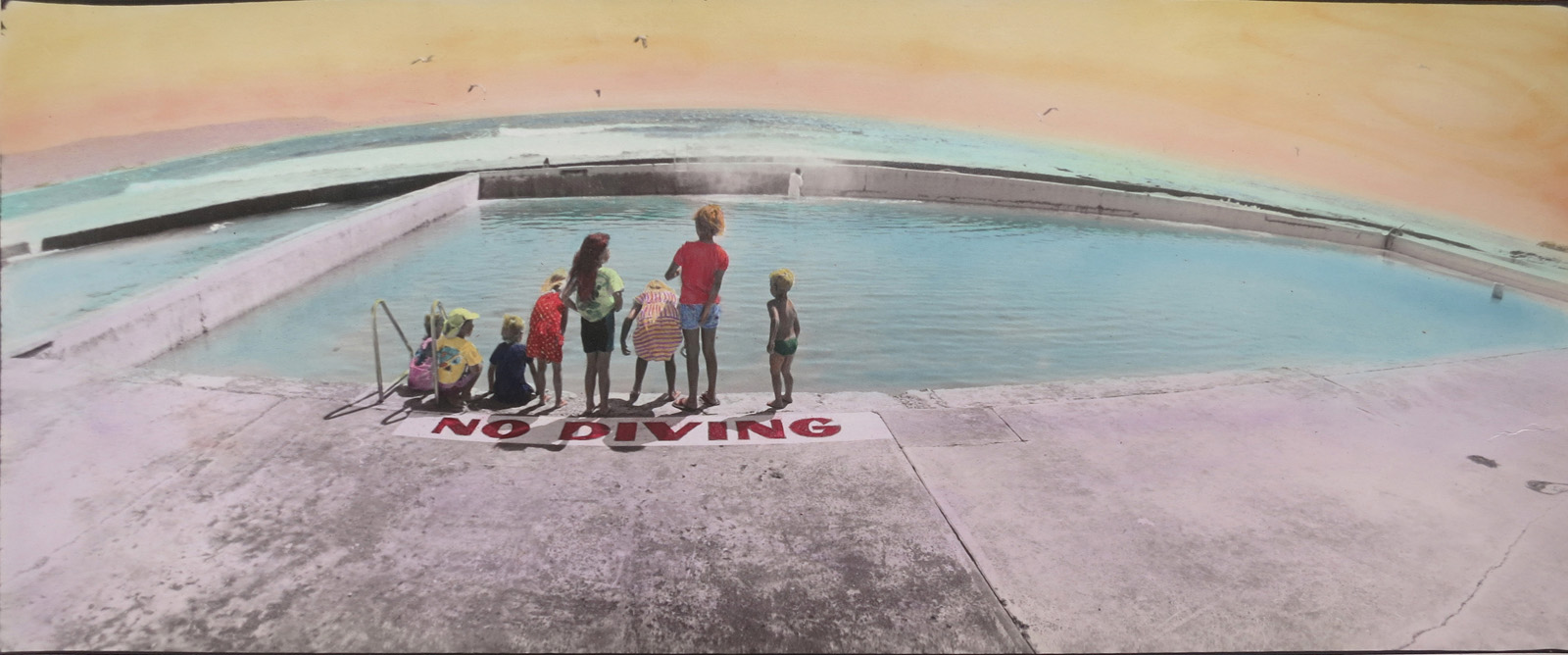
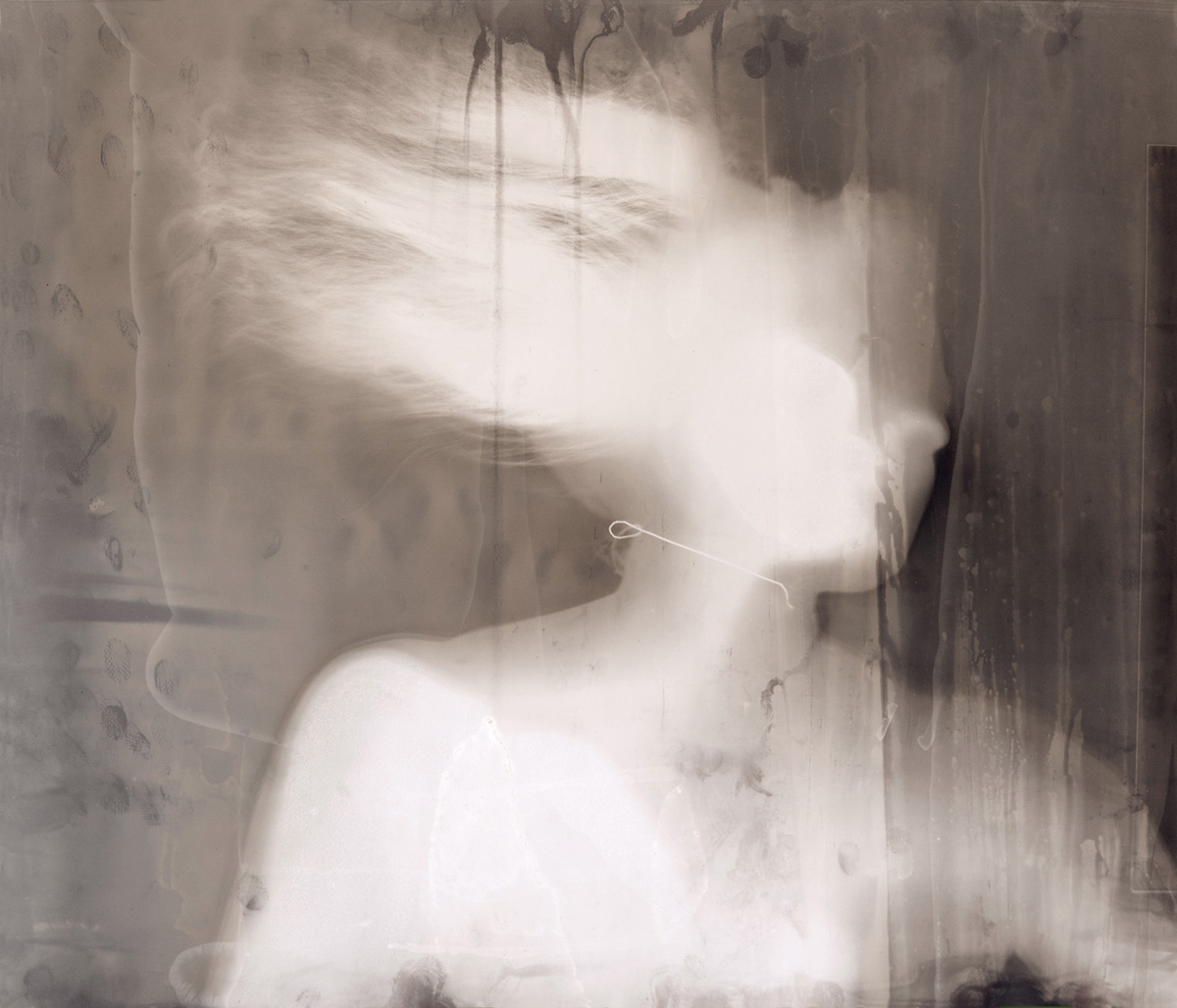
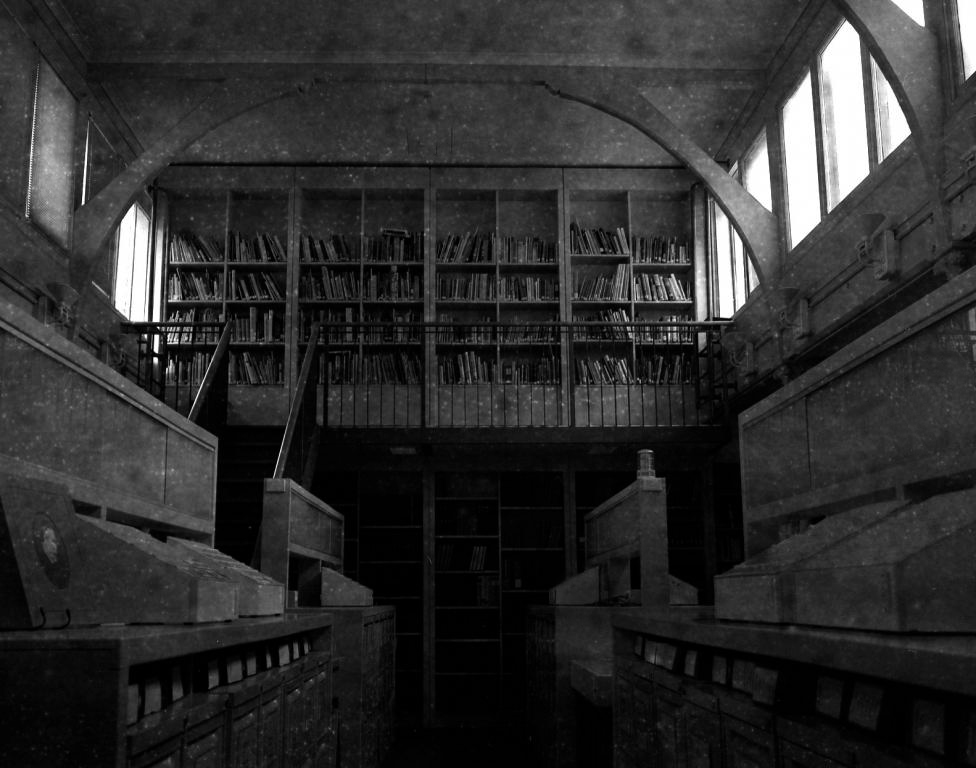
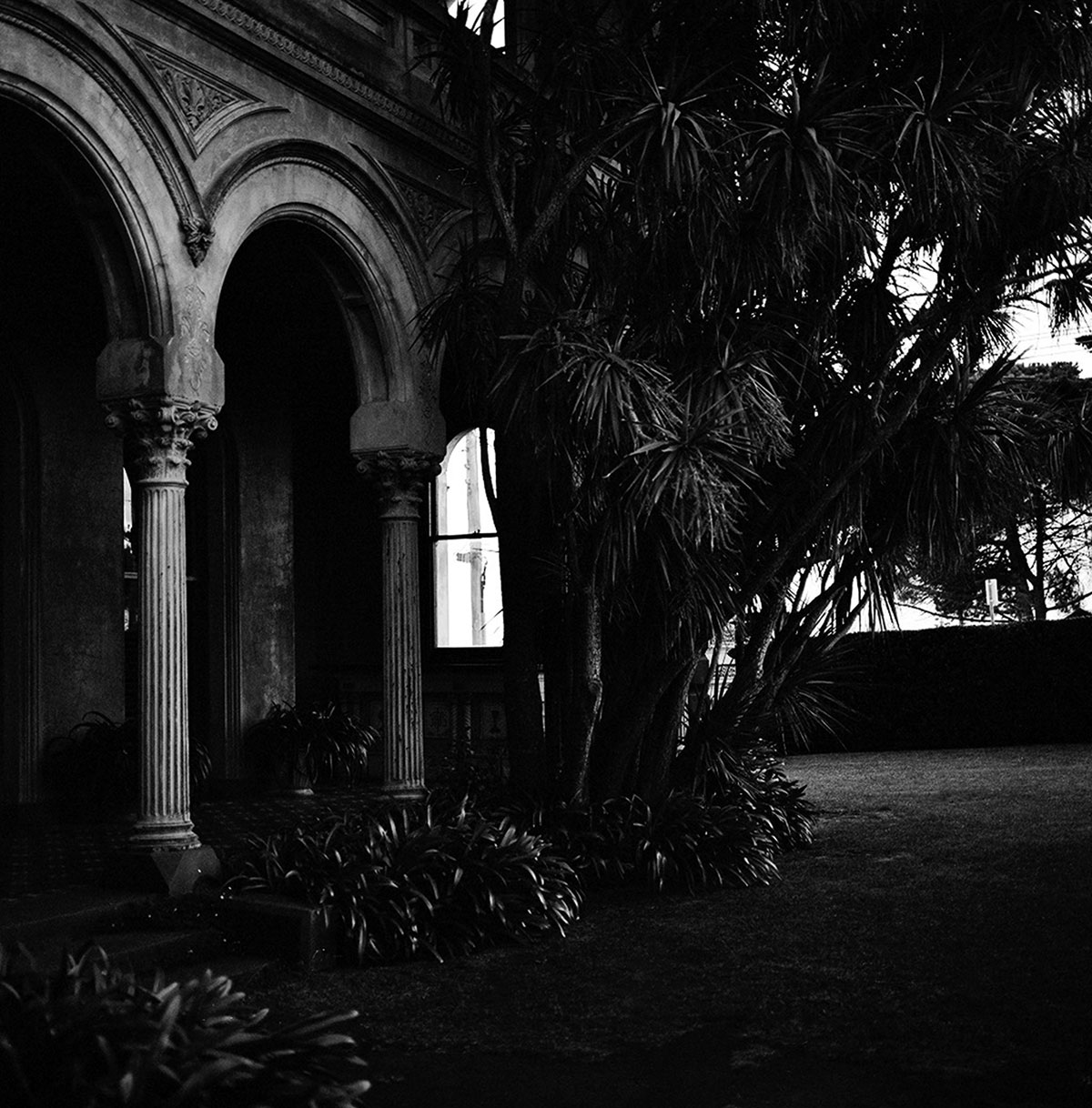
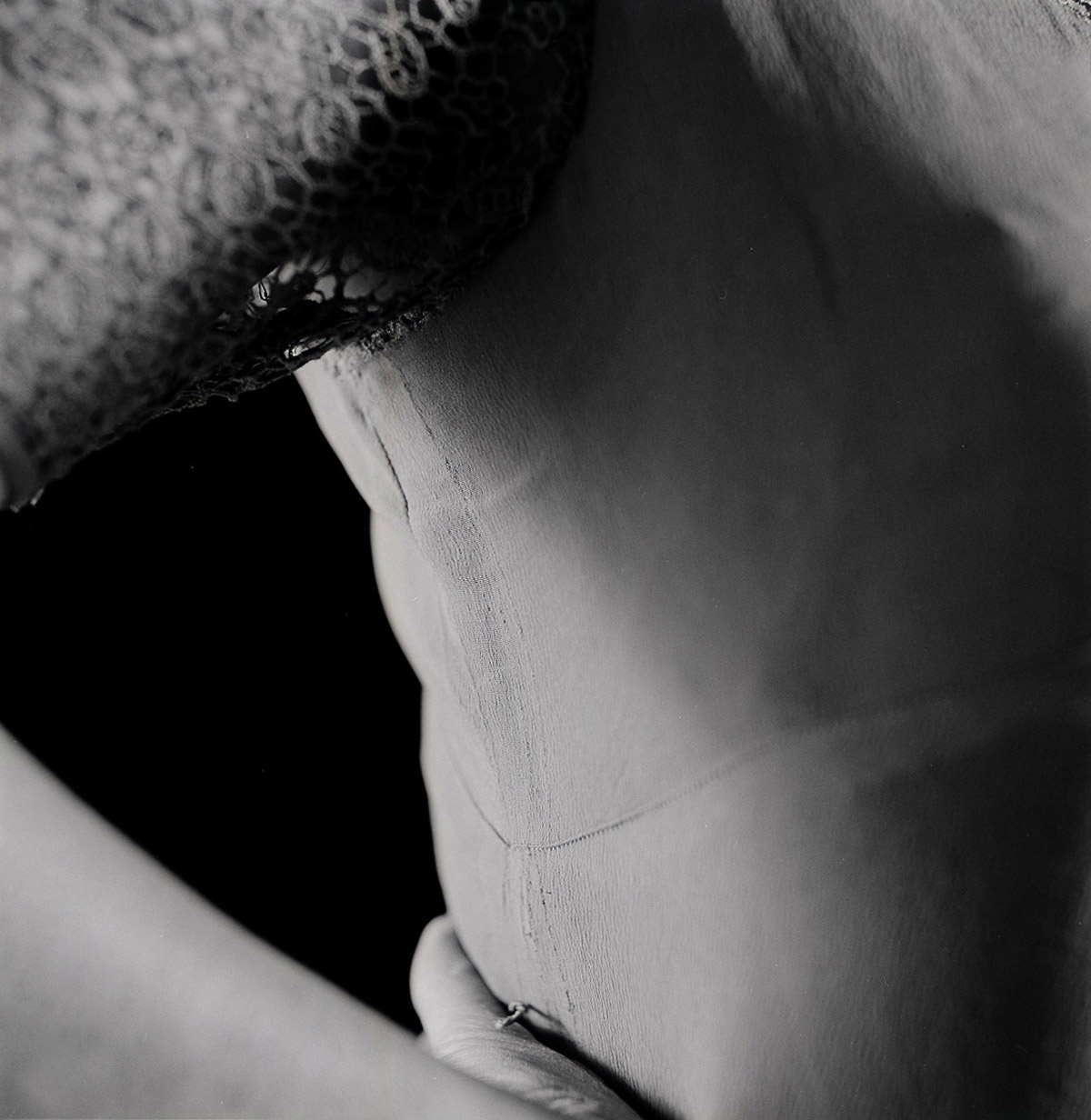
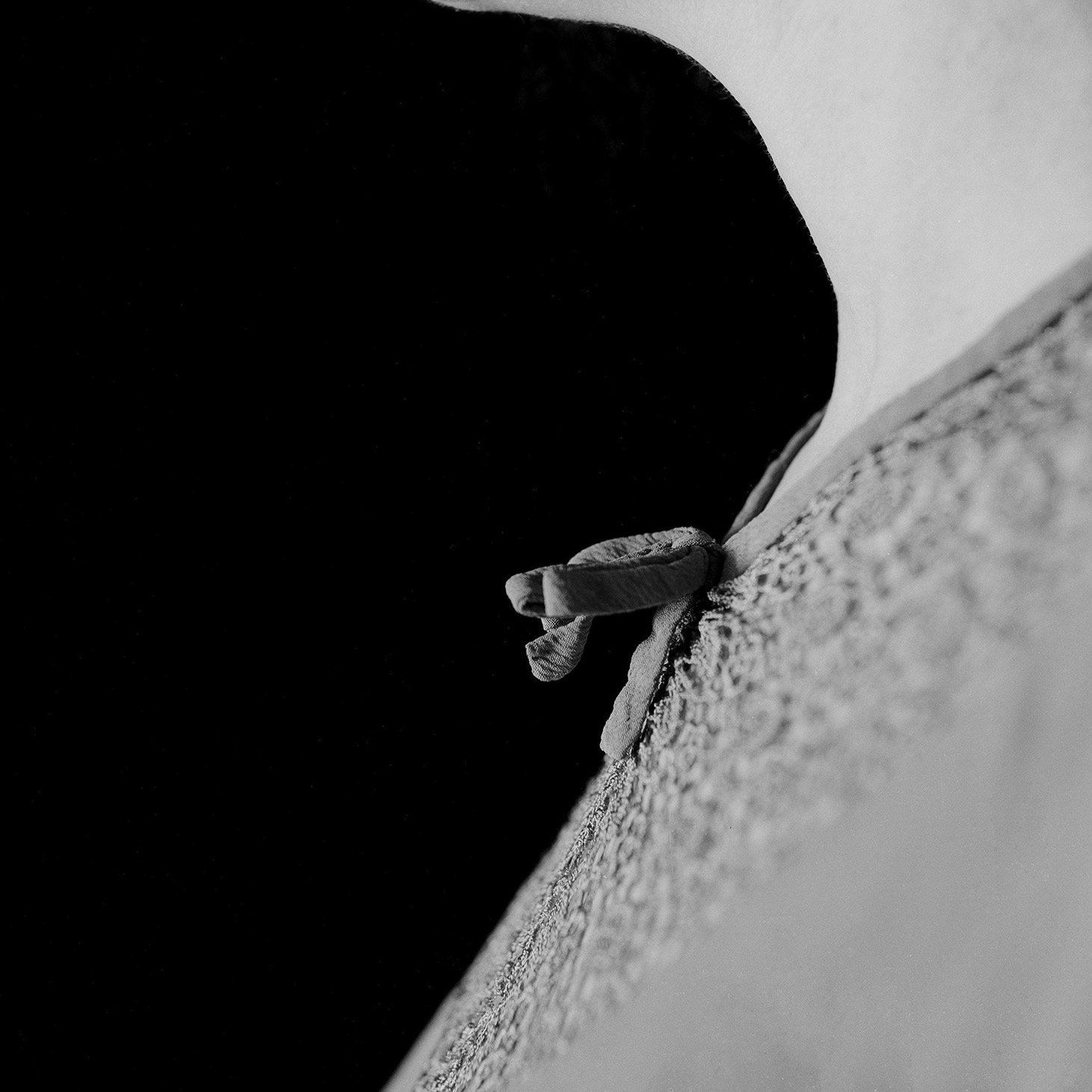
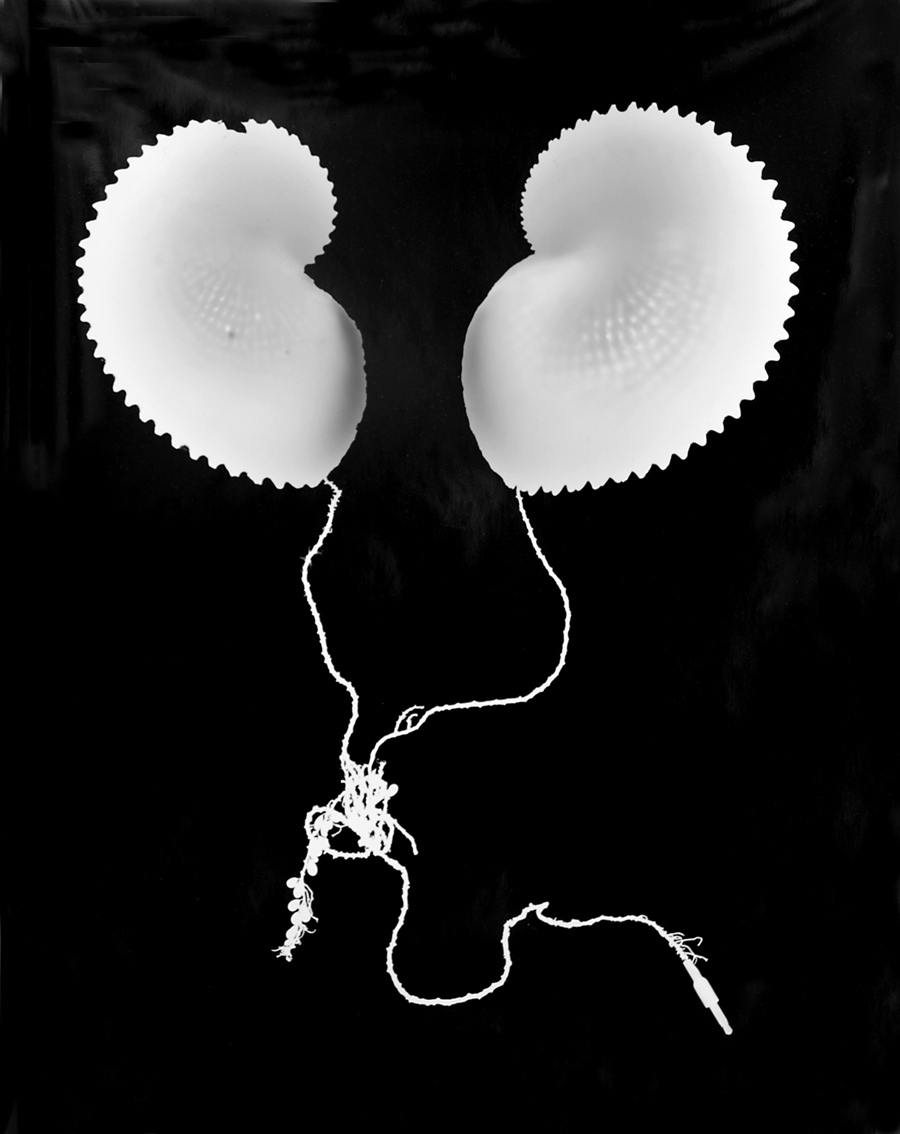


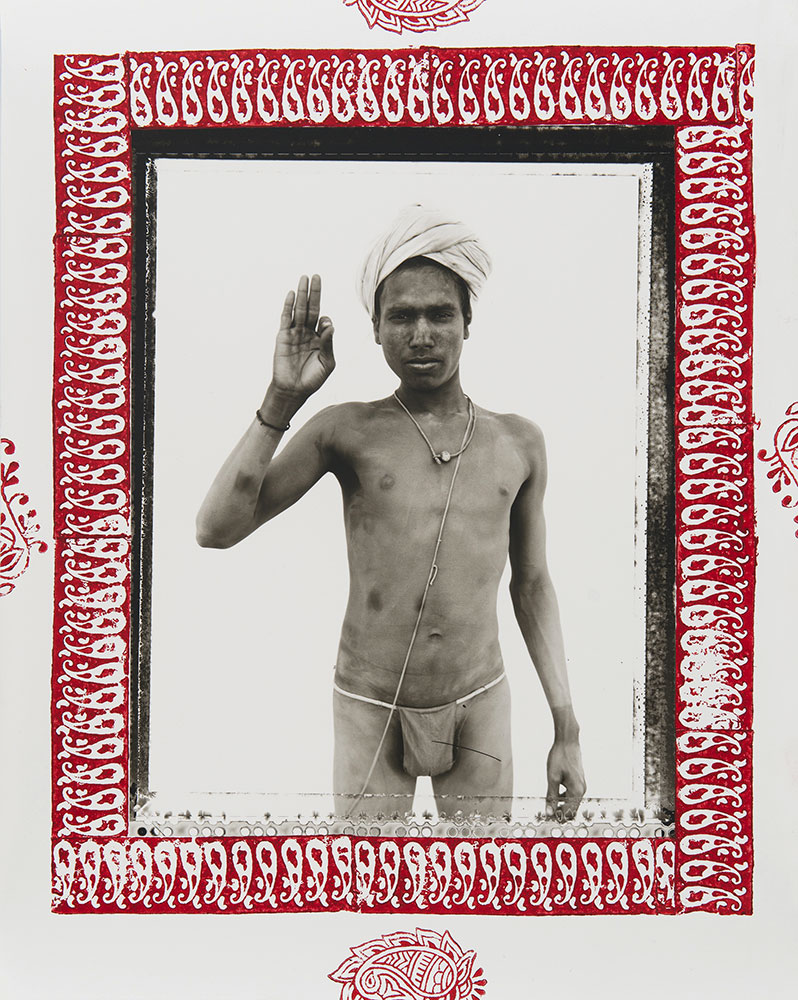


 Art Blart _ art and cultural memory archive
You must be logged in to post a comment.