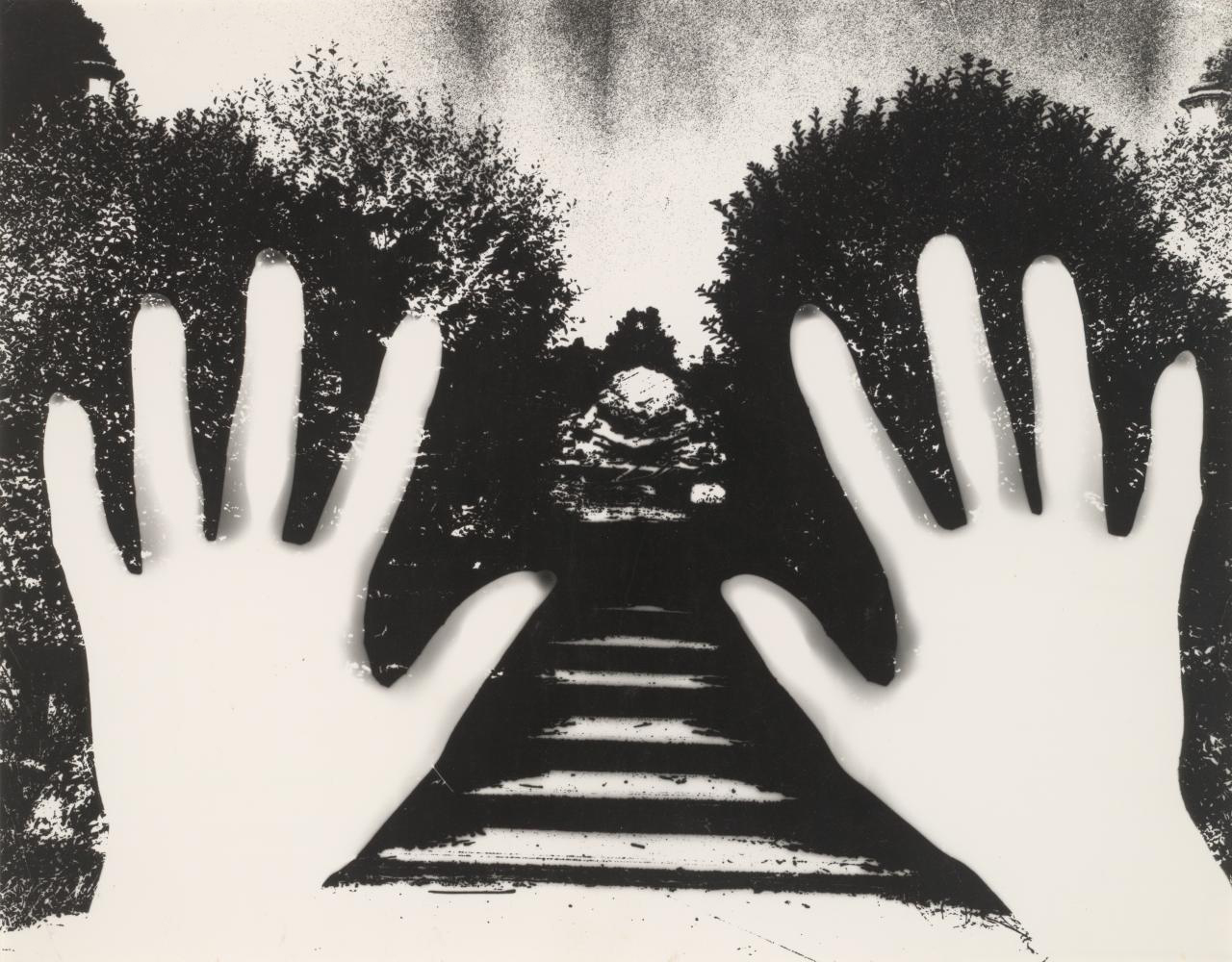
Exhibition: ‘The photograph and Australia’ at the Art Gallery of New South Wales, Sydney

Exhibition dates: 21st March – 8th June 2015

Curator: Judy Annear, Senior curator of photographs, AGNSW


Judy Annear. 'The photograph and Australia'. Sydney: Art Gallery of New South Wales, 2015. p. 236


Judy Annear. The photograph and Australia. Sydney: Art Gallery of New South Wales, 2015. p. 236


“Cultural theorist Ross Gibson has written that ‘being Australian might actually mean being untethered or placeless … and appreciating how to live in dynamic patterns of time rather than native plots of space’. Photographs always enable imaginative time and space regardless of their size and how little we might know of the ostensible subject. When people are oriented toward the camera and photographer, there is a gap which the viewer intuitively recognises. The gap is time as much as space. Occasionally – as in an anonymous 1855 daguerreotype taken at Ledcourt, Victoria, of Isabella Carfrae on horseback where we see a servant standing on the verandah, shading her eyes, and in the 1877 Fred Kruger photograph of the white-clad cricketer at Coranderrk – a subject in the photograph presses so close to the picture plane that we know for the time of the exposure they look directly into an unknowable future and collide now with our gaze as we look back.”


Judy Annear. “Time,” in Judy Annear. ‘The photograph and Australia’. Sydney: Art Gallery of New South Wales, 2015. p. 19.


This is an important exhibition and book by Judy Annear and team at the Art Gallery of New South Wales, an investigation into the history of Australian photography that is worthy of the subject. Unfortunately, I could not get to Sydney to see the exhibition and I have only just received the catalogue. I have started reading it with gusto.

With regard to the exhibition all I have to go on is a friend of mine who went to see the exhibition, and whose opinion I value highly, who said that is was the messiest exhibition that she had seen in a long while, and that for a new generation of people approaching this subject matter for the first time it’s non-chronological nature would have been quite off putting.

But this is the nature of the beast (that being a thematic not chronological approach) and personally I believe that modern audiences are a lot more understanding of what was going on in the exhibition than she would give them credit for.

In the “Introduction” to the book, Annear rightly credits the work undertaken by colleagues – especially Gael Newton’s Shades of light: photography and Australia 1839-1988, published in 1988; Alan Davis’ The mechanical eye in Australia: photography 1841-1900, published in 1977; and Helen Ennis’ Photography and Australia, published in 2007.

As the latter did, this new book “emphasises the ways in which photographs, especially in the nineteenth century, function in social, cultural and political contexts, exploring photography’s role in representing relationships between Indigenous and settler cultures, the construction of Australia, and its critique.” (Annear, p. 10)

While Ennis’ book took a chronological approach, with sections titled First Photographs, Black to Blak, Land and Landscape, Being Modern, Made in Australia, Localism and Internationalism, The Presence of the Past – Annear’s book takes a more conceptual, thematic approach, one that crosses time and space, linking past and present work in classificatory sections titled Time, Nation, People, Place and Transmission.

Both books acknowledge the key issues that have to be dealt with when formulating a book on the photograph and Australia: “the medium itself, Australia’s history, and the relationship between them. Is Australian photography different? If so, how, and in relation to what? One has to look at places with not dissimilar histories, such as Canada and New Zealand. And other questions: what has preoccupied photographers working in relation to Australia at various points in time? Have their concerns been primarily commercial, aesthetic, historical, realist, interpretive, or theoretical? Have they developed projects unique to the photographic medium; for example, large-scale classificatory projects? What have they achieved, what did it mean then, and what does it mean now?” (Annear, p.10)

These questions are the nexus of Annear’s investigation and she seeks to answer them in the well researched chapters that follow, while being mindful of “preserving some of the slipperiness of the medium.” And there is the rub.

In order to define these classificatory sections in the exhibition and book, it would seem to me that Annear shoehorns these themes onto the fluid, mutable “state of being” of the photograph, imposing classifications to order the mass of photography into bite sized entities. While “the book encourages the reader to explore connections – between different forms of photography, people and place, past and present” it also, inevitably, imposes a reading on these historical photographs that would not have been present at the time of their production.

The press release for the book says, “The photograph and Australia investigates how photography was harnessed to create the idea of a nation.” Now I find the use of that word “harnessed” – as in control and make use of – to be hugely problematic.

Personally, I don’t think that the slipperiness and mutability of photography can ever be controlled by anyone to help create the idea (imagination?) of a nation. Nations build nations, not photography. As a friend of mine said to me, it’s a long bow to draw… and I would agree.

The crux of the matter is that THERE ARE NO HANDLES, only the ones that we impose, later, from a distance. There is no definitive answer to anything, there are always twists and turns, always another possibility of how we look at things, of the past in the present.

Photography and photographs, “with its ability to capture both things of the world and those of the imagination,” are always unstable (which is why the photograph can still induce A SENSE OF WONDER) – always uncertain in their interpretation, then and now. Photographs do not belong to a dimension or a classification of time and space because you feel their being NOT their (historical) consequence. Hence, all of these classifications are essentially the same/redundant.

Perhaps it’s only semantics, but I think the word “utilises” – make practical and effective use of – would be a better word in terms of Annear’s enquiries. It also occurred to me to turn the question around: instead of “how photography was harnessed to create the idea of a nation”; instead, “how the idea of a nation helped change photography.” Think about it.

Finally, a comment on the book itself. Beautifully printed, of a good size and weight, the paper stock is of excellent quality and thickness. The type is simple and legible and the book is lavishly illustrated with photographs. The reproductions are a little ‘flat’ but the main point of concern is the size of the reproductions. Instead of reproducing carte de visite at 1:1 scale (that is, 64 mm × 100 mm), their mounted on card size – they are reproduced at 40 mm x 68 mm (see p. 236 of the catalogue below). Small enough already, this printing size renders the detailed reading of the images almost impossible. Worse, the images are laid out horizontally on a vertical page, with no size attribution of the original, nor whether they are 1/9th, 1/6th daguerreotype’s or ambrotypes, CDV’s or cabinet cards next to the image.

The reproduction size of the daguerreotypes and ambrotypes is even worse, making the images almost unreadable. For example, in an excellent piece of writing at the end of the first chapter, “Time”, Annear refers to “an anonymous 1855 daguerreotype taken at Ledcourt, Victoria, of Isabella Carfrae on horseback where we see a servant standing on the verandah, shading her eyes,”.

In the image in this posting (below) we can clearly see this woman standing on the verandah, but in the reproduction in the book (p. 139), she is reduced to a mere smudge in history, an invisibility caused by the size of the reproduction, thereby negating all that Annear comments upon.

Instead of the “subject in the photograph presses so close to the picture plane that we know for the time of the exposure they look directly into an unknowable future and collide now with our gaze as we look back,” there is no pressing, hers has no presence, and our gaze cannot collide with this vision from the future past. Why designers of photographic books consistently fall prey to these traps is beyond me.

Dr Marcus Bunyan


Many thank to the Art Gallery of New South Wales for allowing me to publish the photographs and text in the posting. Please click on the photographs for a larger version of the image.
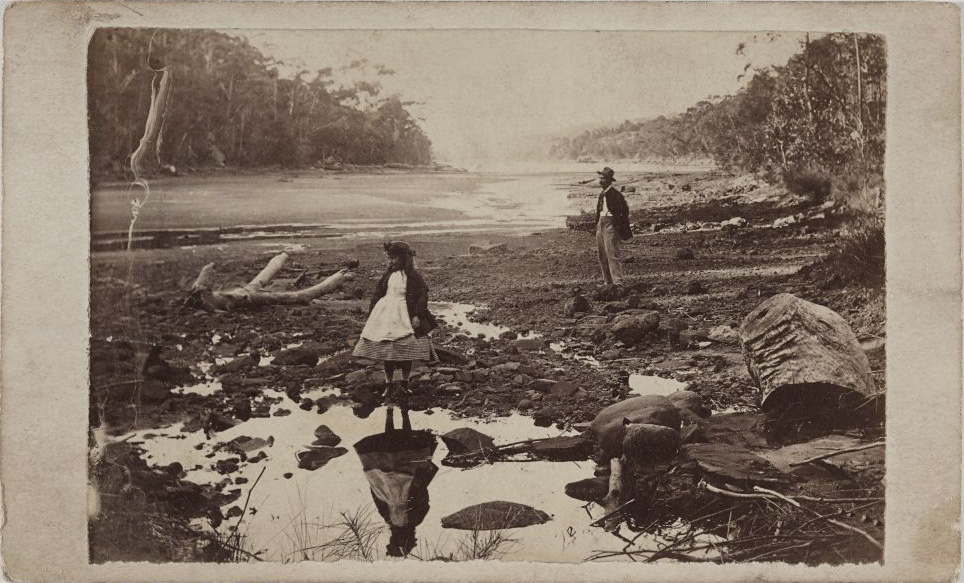


Unknown photographer. 'Australian scenery, Middle Harbour, Port Jackson' c. 1865


Unknown photographer
Australian scenery, Middle Harbour, Port Jackson
c. 1865
Carte de visite
Art Gallery of New South Wales, gift of Josef & Jeanne Lebovic, Sydney 2014


Unknown photographer. 'Australian scenery, Middle Harbour, Port Jackson' c. 1865 (verso)


Unknown photographer
Australian scenery, Middle Harbour, Port Jackson (verso)
c. 1865
Carte de visite
Art Gallery of New South Wales, gift of Josef & Jeanne Lebovic, Sydney 2014


The first large-scale exhibition of its kind to be held in Australia in 27 years, The photograph and Australia presents more than 400 photographs from more than 120 artists, including Richard Daintree, Charles Bayliss, Frank Hurley, Harold Cazneaux, Olive Cotton, Max Dupain, Sue Ford, Carol Jerrems, Tracey Moffatt, Robyn Stacey, Ricky Maynard and Patrick Pound.

The works of renowned artists are shown alongside those of unknown photographers and everyday material, such as domestic and presentation albums. These tell peoples’ stories, illustrate where and how they lived, as well as communicate official public narratives. Sourced from more than 35 major collections across Australia and New Zealand, including the National Gallery of Australia, the National Library of Australia and the Australian Museum, The photograph and Australia uncovers hidden gems dating from 1845 until now.

A richly illustrated publication accompanies the exhibition, reflecting the exhibition themes and investigating how Australia itself has been shaped by photography.

Extract from “Introduction”

“The task of this book is to formulate questions around Australian photography and its history, regardless of Australia’s, and the medium’s, permeable identity. While early photography in Australia made histories of the colonies visible, and a great deal can be read from the surviving photographic archives, interpretation of this material is often conjecture, and much remains oblique. Patrick Pound describes the sheer mass of photographs and images in the world today as an “unhinged album.”11 This dynamic of making, accumulating, ordering, disseminating, reinterpreting, re-collecting and re-narrating is an important aspect of photography. The intimate relationship, historically, between the photograph and the various arts and sciences, along with the adaptability to technological change and imaginative interpretations, allows for a constant montaging or weaving together of uses and meanings. This works against the conventional linear structure of classical histories and the idea of any progressive evolution of the medium. If what we are dealing with is a phenomenon rather than simply a form then analysing the phenomenon and its dynamic relationship to art, society, peoples, sciences, genres, and processes is critical to our modern understanding of ourselves and our place in the world as well as of the medium itself.12

In the 1970s, cultural theorist Roland Barthes wrote an essay entitled The photographic message.13 While he focussed primarily on press photography and made a distinction between reportage and ‘artistic’ photography, his pinpointing of the special status of the photographic image as a message without a code – one could say, even, a face without a name – and his understanding of photography as a simultaneously objective and invested, natural and cultural, is relevant in the colonial and post-colonial context.

We search for clues in photographs of our past and present. In some ways this is a melancholy activity, in other ways valuable detective work. In many cases it is both. Photography since its inception has belonged in a nether world of being and not being, legibility and opacity. This book preserves some of the slipperiness of the medium, while providing a series of texts touching on the photographs at hand. The history of the photograph and its relationship to Australia remains tantalisingly partial; the ever-burgeoning archives await further excavation.”14

Judy Annear. “Introduction,” in Judy Annear. The photograph and Australia. Sydney: Art Gallery of New South Wales, 2015. p. 13.


11. See ‘Transmission’ pp. 227-33
12. See Geoffrey Batchen, A Subject For, A History About, Photography accessed 23 December 2021
13. Roland Barthes, ‘The photographic message’, Image, music, text, trans Stephen Heath, Flamingo, London, 1984, pp. 15-31
14. Parts of this Introduction were in a paper delivered at the symposium, Border-lands: photography & cultural contest, Art Gallery of New South Wales, Sydney 31 Mar 2012


Time

The relationship of the photograph to ‘Time’ is discussed in chapter one, which examines how contemporary artists such as Anne Ferran, Rosemary Laing and Ricky Maynard reinvent the past through photography. The activities of nineteenth-century photographers such as George Burnell and Charles Bayliss are also discussed… The manipulation by artists and photographers of imaginative time – the time of looking at the photographic image – allows for consideration of the nexus between space and time, how subjects can be momentarily tethered and, equally, how they can float free.

Nation

Chapter two considers the idea of ‘Nation’: looking at the public role of the photograph in representing Australia at world exhibitions before Federation in 1901. Photography in this period enabled new classificatory systems to come into existence… Of particular importance was the use of the photograph to cement Darwinistic views that determined racial hierarchies according to superficial physical differences. The photograph also advertised the growing colonies to potential migrants and investors through the depiction of landscapes and amenities.

People

The third chapter, ‘People’, analyses the uncertain post-colonial heritage that all Australian inherit and how that can be evidenced and examined in photographs. The chapter encompasses portraits by Tracy Moffatt and George Goodman, for example, and considerations of where and how people lived and chose to be photographed. These include the people of the Kulin nation of Victoria, those who resided at Poonindie Mission in South Australia, the Yued people living at New Norcia mission in Western Australia, as well as the Henty family in Victoria, the Mortlocks of South Australia, the children living at The Bungalow in Alice Springs and the people of Tumut in New South Wales.

Place

‘Place’ is examined in chapter four, particularly in terms of the use of photography to enable exploration, whether to Antarctica (Frank Hurley), to map stars and further the natural sciences (Henry Chamberlain Russell, Joseph Turner), or to open up ‘wilderness’ for tourism or mining (JW Beattie, Nicholas Caire, JW Lindt, Richard Daintree) … Photographs are examined as both documents and imaginative interpretations of activity and place.

Transmission

Chapter five, ‘Transmission’, considers the traffic in photographs and the fascination with the medium’s reproducibility and circulation… The evidential aspect of the photograph has proven to be fleeting and only tangentially related to the thing it traces. The possibility of being able to fully decipher a photograph’s meaning is remote, even when it has been promptly ordered and annotated in some form of album. Each photographic form expands the possibility of instant and easy communication, but the swarm of material serves only to prove the impossibility of order, classification, and accuracy. The photograph as an aestheticised object continues regardless of platform, and the imaginative possibilities of the medium have not been exhausted.

Sections from Judy Annear. “Introduction,” in Judy Annear. The photograph and Australia. Sydney: Art Gallery of New South Wales, 2015. p. 12.


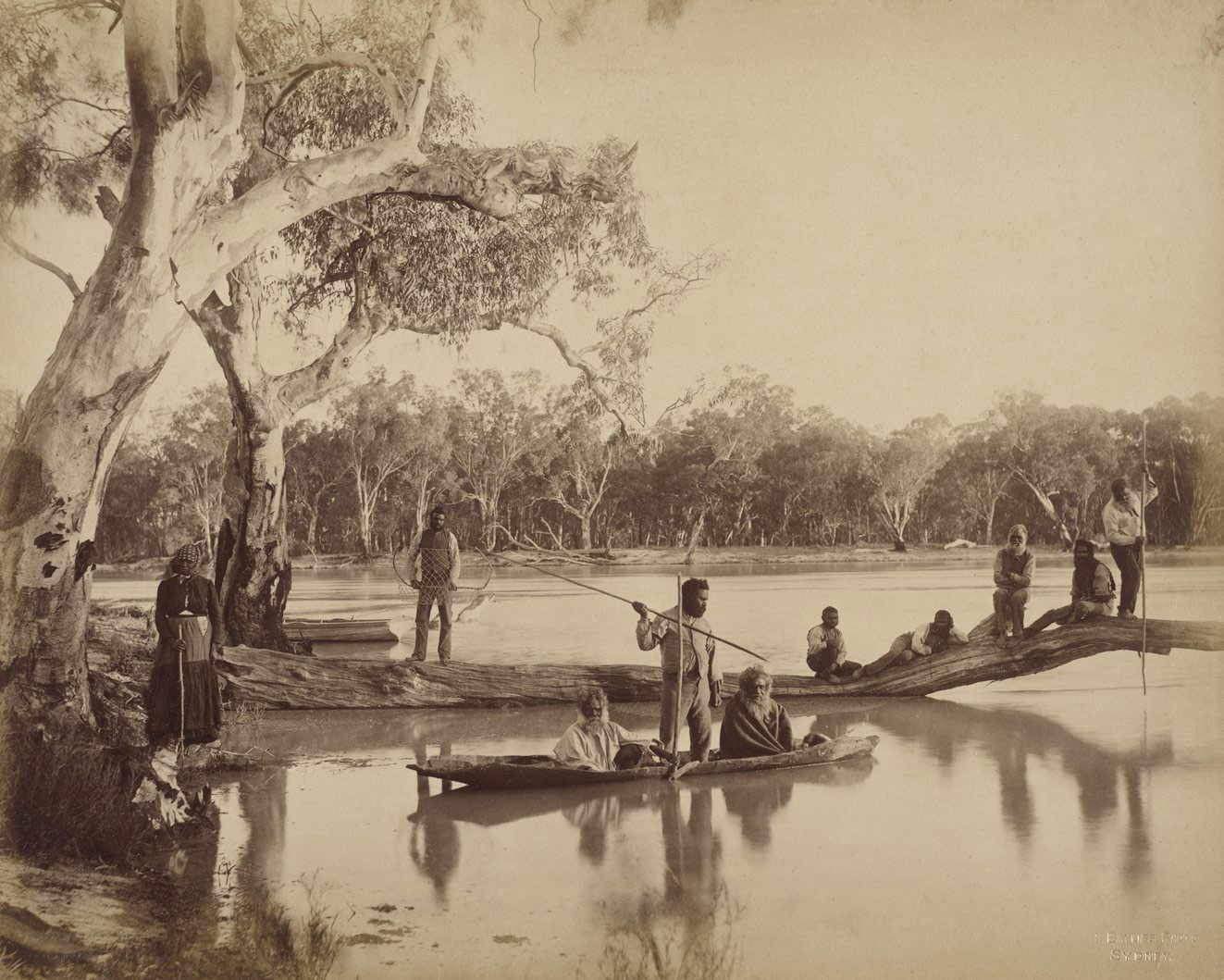
Charles Bayliss (Australian born United Kingdom, 1850-1897) 'Group of local Aboriginal people, Chowilla Station, Lower Murray River, South Australia' 1886


Charles Bayliss (Australian born United Kingdom, 1850-1897)
Group of local Aboriginal people, Chowilla Station, Lower Murray River, South Australia
1886
From the series New South Wales Royal Commission: Conservation of water. Views of scenery on the Darling and Lower Murray during the flood of 1886
Albumen photograph
Art Gallery of New South Wales, purchased 1984


This tableaux of Ngarrindjeri people fishing was carefully staged by photographer Charles Bayliss in 1886. Not just subjects, they actively participated in the photography process. It was observed at the time that the fishermen arranged themselves into position, with “the grace and unique character of which a skilful artist only could show.”

“In one extraordinary image created in 1886 by the photographer Charles Bayliss, the Ngarrindjeri people of the lower Murray River were active participants in the staging of a fishing scene. Writing in his journal, Bayliss’s companion Gilbert Parker noted: “Without a word of suggestion, these natives arranged themselves in a group, the grace and unique character of which a skilful artist only could show.” Annear says the image looks like a museum diorama to modern eyes. “But these people were very active in deciding how they wanted to be photographed,” she says. “They were determined to create an image they felt was appropriate.”

The first photographs of indigenous Australians were formal, posed portraits, taken in blazing sunlight. The sitters are often pictured leaning against each other (stillness was required for long exposure times) with eyes turned to the camera and bodies wrapped in blankets or kangaroo skins. Some wore headdresses or necklaces that may or may not have belonged to them.

“Indigenous Australians agreed to be photographed out of curiosity, or perhaps for food,” says Judy Annear, curator of The photograph and Australia, a major new photography exhibition at the Art Gallery of New South Wales. “In the past, it was considered that these sorts of early pictures were indicative of the colonial gaze. But now there is a lot of research going on into how these early photos were made. Often, the local people would have been invited to come into a studio and they were paid. They would have been dressed up and told what to do.””

Text in quotations from Elissa Blake. “Art Gallery of NSW photography exhibition: Stories told in black and white,” on the the Sydney Morning Herald website April 2, 2015 [Online] Cited 28/05/2015.


Ernest B Docker (Australian, 1842-1923) 'The Three Sisters Katoomba – Mrs Vivian, Muriel Vivian and Rosamund 7 Feb 1898' 1898


Ernest B Docker (Australian, 1842-1923)
The Three Sisters Katoomba – Mrs Vivian, Muriel Vivian and Rosamund 7 Feb 1898
1898
Stereograph
Macleay Museum, The University of Sydney


Charles Nettleton (Australian, 1825-1902) 'Untitled' 1867-1874


Charles Nettleton (Australian, 1825-1902)
Untitled
1867-1874
Carte de visite
6.2 x 9.1cm image; 6.3 x 10.0cm mount card
Purchased 2014
Art Gallery of New South Wales


Charles Nettleton was a professional photographer born in the north of England who arrived in Australia in 1854, settling in Melbourne. He joined the studio of Townsend Duryea and Alexander McDonald, where he specialised in outdoor photography. Nettleton is credited with having photographed the first Australian steam train when the private Melbourne-Sandridge (Port Melbourne) line was opened on 12 September 1854. Nettleton established his own studio in 1858, offering the first souvenir albums to the Melbourne public. He worked as an official photographer to the Victorian government and the City of Melbourne Corporation from the late 1850s to the late 1890s, documenting Melbourne’s growth from a colonial town to a booming metropolis. He photographed public buildings, sewerage and water systems, bridges, viaducts, roads, wharves, and the construction of the Botanical Gardens. In 1861 he boarded the ‘Great Britain’ to photograph the first English cricket team to visit Australia and in 1867 was appointed official photographer of the Victorian visit of the Duke of Edinburgh. For the Victorian police he photographed the bushranger Ned Kelly in 1880. This is considered to be the only genuine photograph of the outlaw.


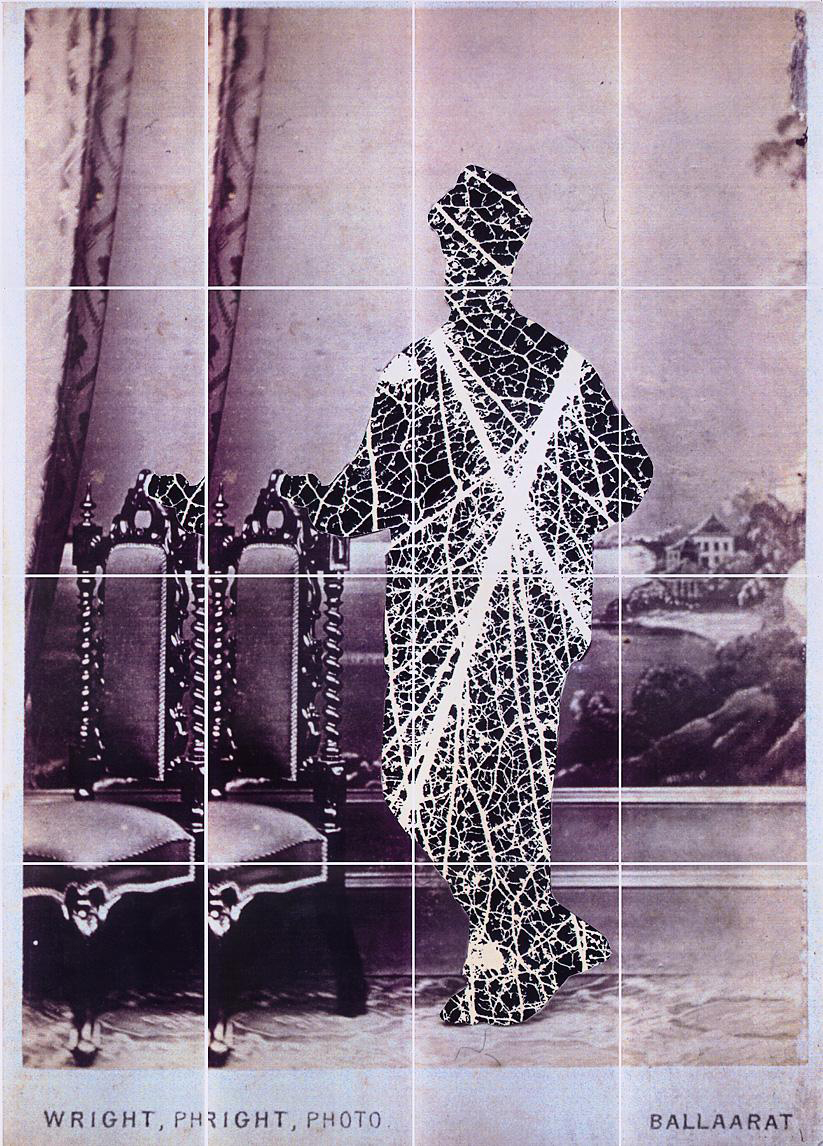
Tracey Moffatt (Australian, b. 1960) 'I made a camera' 2003


Tracey Moffatt (Australian, b. 1960)
I made a camera
2003
Photolithograph
Collection of the artist
© Tracey Moffatt, courtesy Roslyn Oxley9 Gallery, Sydney


The Art Gallery of New South Wales is proud to present the major exhibition The photograph and Australia, which explores the crucial role photography has played in shaping our understandings of the nation. It will run from 21 March to 8 June 2015.

Tracing the evolution of the medium and its many uses from the 1840s until today, this is the largest exhibition of Australian photography held since 1988 that borrows from collections nationwide. It presents more than 400 photographs by more than 120 artists, including Morton Allport, Richard Daintree, Paul Foelsche, Samuel Sweet, JJ Dwyer, Charles Bayliss, Frank Hurley, Harold Cazneaux, Olive Cotton, Max Dupain, Sue Ford, Carol Jerrems, Tracey Moffatt, Robyn Stacey, Ricky Maynard, Anne Ferran and Patrick Pound.

Iconic images are shown alongside works by unknown and amateur photographers, including photographic objects such as cartes de visite, domestic albums and the earliest Australian X-rays. The exhibition’s curator – Judy Annear, senior curator of photographs, Art Gallery of NSW – said:

“Weaving together the multiple threads of Australia’s photographic history, The photograph and Australia investigates how photography invented modern Australia. It poses questions about how the medium has shaped our view of the world, ourselves and each other. Audiences are invited to experience the breadth of Australian photography, past and present, and the sense of wonder the photograph can still induce through its ability to capture both things of the world and the imagination.”

The exhibition brings together hundreds of photographs from more than 35 private and public collections across Australia, England and New Zealand, including the National Gallery of Australia, the National Library of Australia and the State Library of Victoria. Highlights include daguerreotypes by Australia’s first professional photographer, George Goodman, and recent works by Simryn Gill. From mass media’s evolution in the 19th century to today’s digital revolution, The photograph and Australia investigates how photography has been harnessed to create the idea of a nation and reveals how our view of the world, ourselves and each other has been changed by the advent of photography. It also explores how photography operates aesthetically, technically, politically and in terms of distribution and proliferation, in the Australian context.

Curated from a contemporary perspective, the exhibition takes a thematic rather than a chronological approach, looking at four interrelated areas: Aboriginal and settler relations; exploration (mining, landscape and stars); portraiture and engagement; collecting and distributing photography. A lavishly illustrated 308-page publication, The photograph and Australia (Thames & Hudson, RRP $75.00), accompanies the exhibition, reflecting its themes and investigating the medium’s relationship to people, place, culture and history.

Press release from the Art Gallery of New South Wales


David Moore (Australian, 1927-2003) 'Migrants arriving in Sydney' 1966, printed later


David Moore (Australian, 1927-2003)
Migrants arriving in Sydney
1966, printed later
Gelatin silver photograph
30.2 x 43.5cm
Gift of the artist 1997
© Lisa, Karen, Michael and Matthew Moore


In this evocative image Moore condenses the anticipation and apprehension of immigrants into a tight frame as they arrive in Australia to begin a new life. The generational mix suggests family reconnections or individual courage as each face displays a different emotion.

Moore’s first colour image Faces mirroring their expectations of life in the land down under, passengers crowd the rail of the liner Galileo Galilei in Sydney Harbour was published in National Geographic in 1967.1 In that photograph the figures are positioned less formally and look cheerful. But it is this second image, probably taken seconds later, which Moore printed in black-and-white, that has become symbolic of national identity as it represents a time when Australia’s rapidly developing industrialised economy addressed its labour shortage through immigration. The strength of the horizontal composition of cropped figures underpinned by the ship’s rail is dramatised by the central figure raising her hand – an ambiguous gesture either reaching for a future or reconnecting with family. The complexity of the subject and the narrative the image implies ensured its public success, which resulted in a deconstruction of the original title, ‘European migrants’, by the passengers, four of whom it later emerged were Sydneysiders returning from holiday, alongside two migrants from Egypt and Lebanon.2 Unintentionally Moore’s iconic image has become an ‘historical fiction’, yet the passengers continue to represent an evolving Australian identity in relation to immigration.

1. Max Dupain and associates. Accessed 17/06/2006. No longer available online
2. Thomas D & Sayers A 2000, From face to face: portraits by David Moore, Chapter & Verse, Sydney

© Art Gallery of New South Wales Photography Collection Handbook, 2007
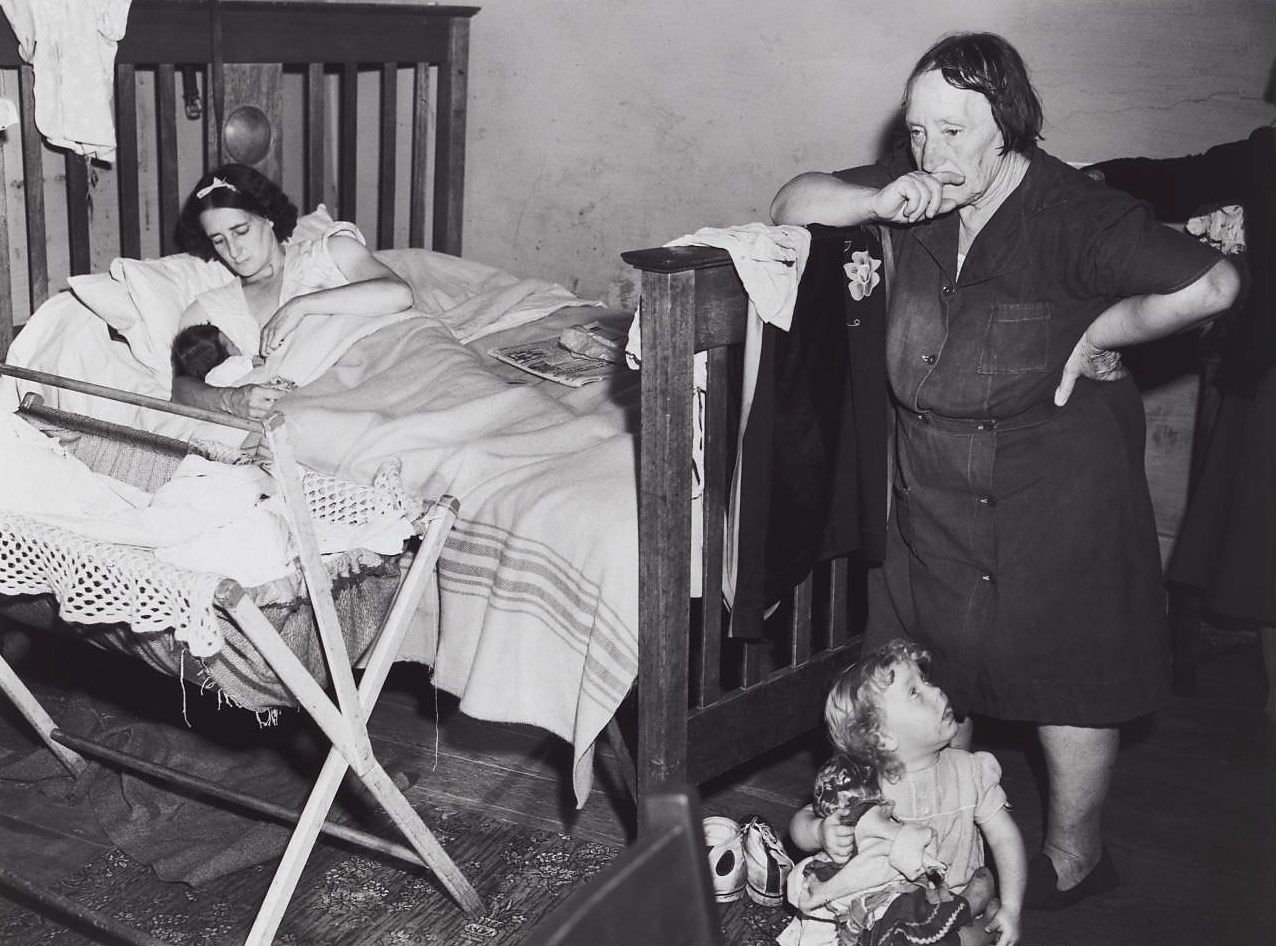
 

David Moore (Australian, 1927-2003) 'Redfern Interior' 1949


David Moore (Australian, 1927-2003)
Redfern Interior
1949
Silver gelatin print
26.7 x 35.4cm
Purchased with funds provided by the Art Gallery Society of New South Wales 1985


David Moore’s career spanned the age of the picture magazines (for example: Life, Time, The Observer) through to major commissions such as the Sydney Opera House, CSR, and self initiated projects like To build a Bridge: Glebe Island. The breadth and depth of his career means there is an extraordinary archive of material which describes and interprets the last 50 years of Australian life, the life of the region, and events in Britain and the United States. He was instrumental in advancing Australian photography throughout his career and in the early 1970s was active in setting up the Australian Centre for Photography, Sydney. From well-known images such as Migrants arriving in Sydney to Redfern interior, Moore has documented events and conditions in Sydney.
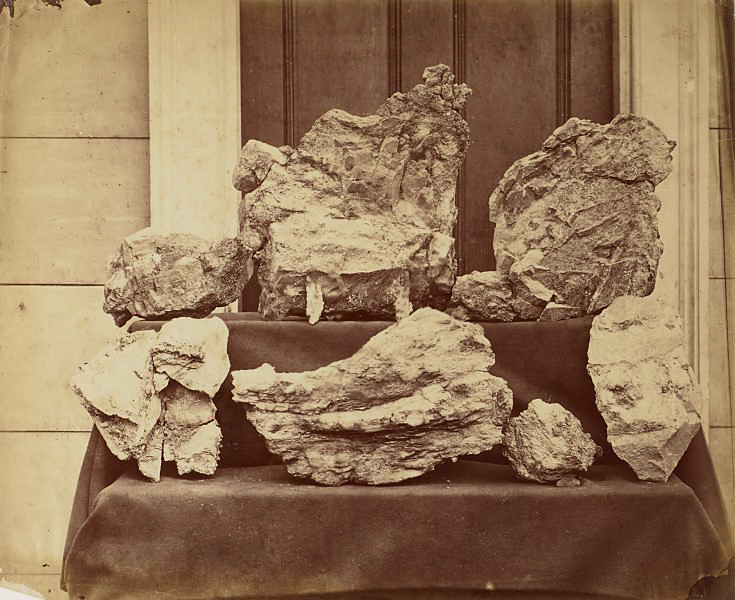
 

Charles Bayliss (England, Australia 1850-1897) Henry Beaufoy Merlin (England, Australia 1830-1873) 'Untitled' c. 1872


Charles Bayliss (England, Australia 1850-1897)
Henry Beaufoy Merlin (England, Australia 1830-1873)
Untitled
c. 1872
Albumen photograph
Dimensions
24.5 x 29.4cm image/sheet
Gift of Josef & Jeanne Lebovic, Sydney 2014
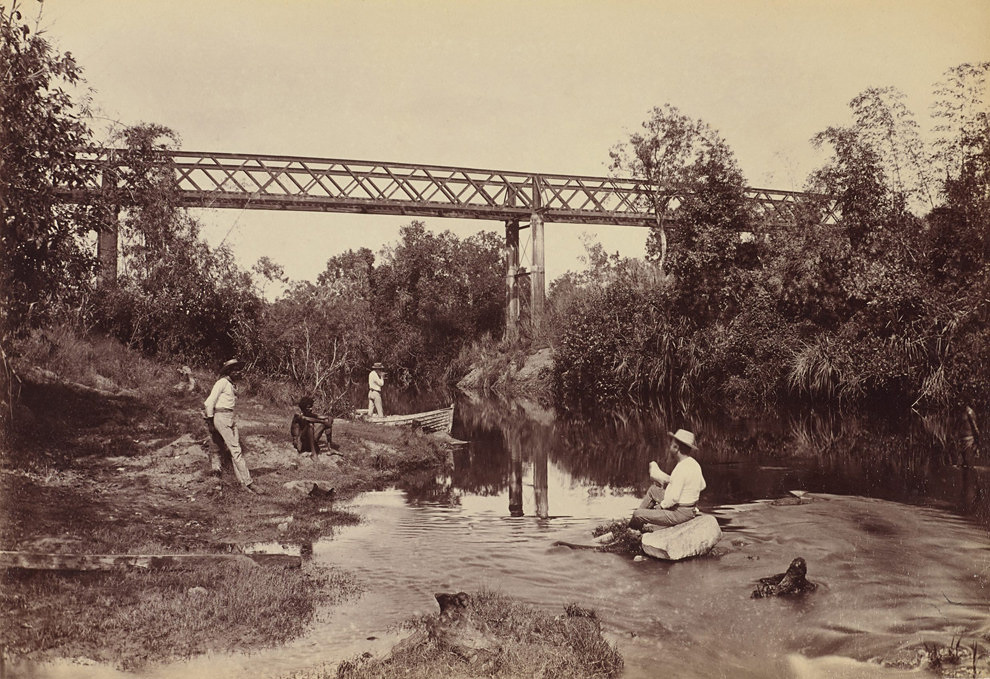
 

Paul Foelsche (Australian, 1831-1914) 'Adelaide River' 1887


Paul Foelsche (Australian, 1831-1914)
Adelaide River
1887
Albumen photograph
Art Gallery of New South Wales, gift of Josef & Jeanne Lebovic, Sydney 2014


This photo of people relaxing on the banks of the Adelaide River in the Northern Territory was taken by Paul Foelsche, a policeman and amateur anthropologist.

The collection of 19th century images brought together in The photograph and Australia show indigenous people in formal group portraits or as “exotic” subjects. They are photographed alongside early settlers, working as stockmen or holding tools. Amateur gentleman photographers such as the Scottish farmer John Hunter Kerr captured such images on his own property, Fernyhurst Station, in Victoria. Another amateur photographer, Paul Foelsche, the first policeman in the Northern Territory, took portraits of the Larrakia people, which have since become a priceless archive for their descendants.
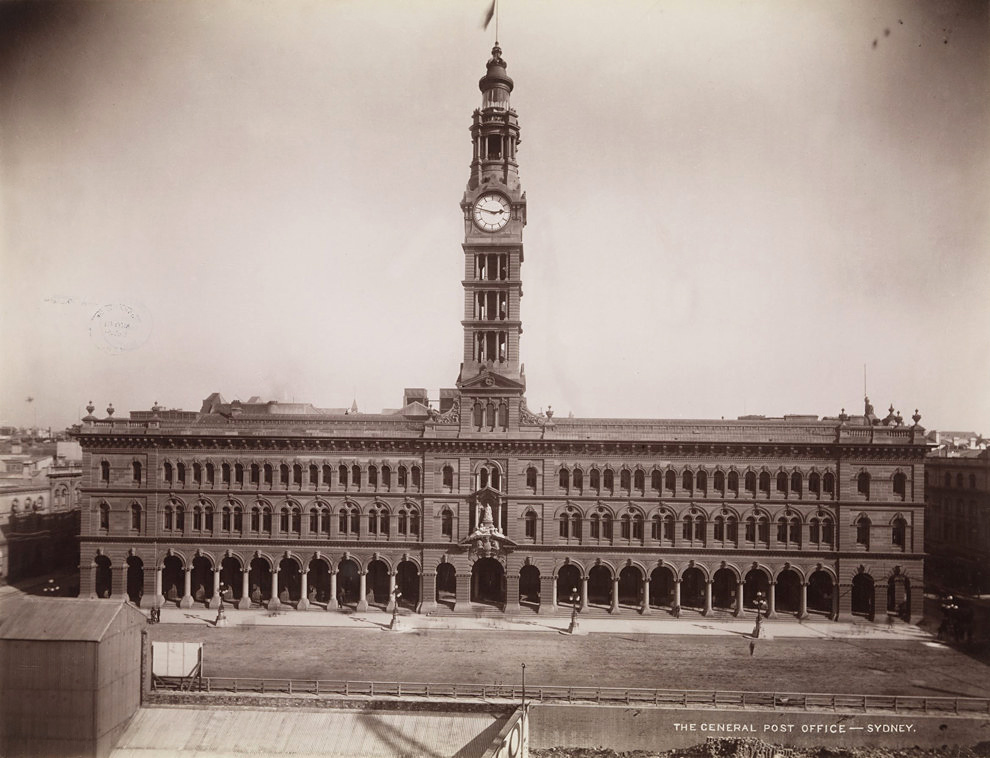
 

NSW Government Printer. 'The General Post Office, Sydney' 1892–1900


NSW Government Printer
The General Post Office, Sydney
1892-1900
Albumen photograph
State Library of New South Wales, Sydney, presented 1969


Melvin Vaniman (American, 1866-1912) 'Panorama of intersection of Collins and Queen Streets, Melbourne' 1903


Melvin Vaniman (American, 1866-1912)
Panorama of intersection of Collins and Queen Streets, Melbourne
1903


Melvin Vaniman (American, 1866-1912)

Chester Melvin Vaniman (October 30, 1866 – July 2, 1912) was an American aviator and photographer who specialised in panoramic images. He shot images from gas balloons, ships masts, tall buildings and even a home-made 30-metre (98 ft) pole. He scaled buildings, hung from self-made slings, and scaled dangerous heights to capture his unique images.

Vaniman’s photographic career began in Hawaii in 1901, and ended some time in 1904. He spent over a year photographing Australia and New Zealand on behalf of the Oceanic Steamship Company, creating promotional images for the company, many as panoramas and which popularised the format in Australia, which was taken up with enthusiasm by Robert Vere Scott among others. During this time the New Zealand Government also commissioned panoramas.

Beginning in 1903, he spent over a year photographing Sydney and the surrounding areas. It was during this time that he created his best known work, the panorama of Sydney, shot from a hot air balloon he had specially imported from the United States. Vaniman is best known for his images of Hawaii, Australia, and New Zealand.

Text from the Wikipedia website
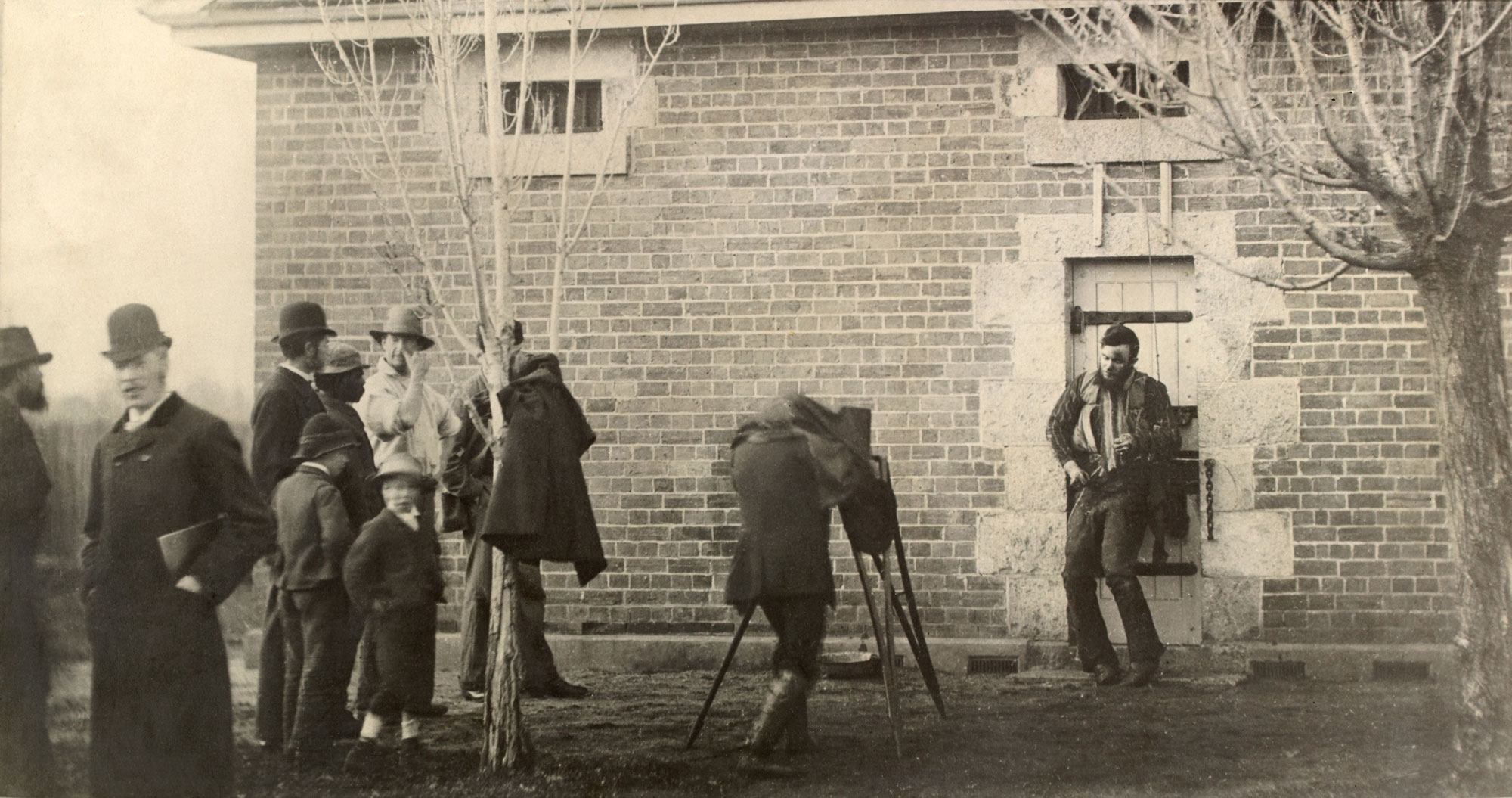
 

J. W. Lindt (Germany 1845 - Australia from 1862, Australia 1926) 'Body of Joe Byrne, member of the Kelly gang, hung up for photography, Benalla' 1880


J. W. Lindt (Germany 1845 – Australia from 1862, Australia 1926)
Body of Joe Byrne, member of the Kelly gang, hung up for photography, Benalla
1880
Gelatin silver print


Australia’s first ever press photograph pushed boundaries few journalists would transgress today. Captured by J.W, Lindt in 1880, the photo shows the dead body of a member of Ned Kelly’s infamous gang, strung up on a door outside the jail house in Benalla in regional Victoria.

Joe Byrne died from loss of blood after being shot in the groin during the siege of Glenrowan pub. Another photographer is pictured mid-shot, while an illustrator walks away from the new technology with his hat on and portfolio tucked under his arm. “We see this as the first Australian press photograph. It has that spontaneity media photographs have, and it’s also very evocative with many different stories in it,” the gallery’s senior curator of photographs, Judy Annear, said.

Text from Rose Powell. “First Australian press photo shows body of Kelly Gang member Joe Byrne,” on the Sydney Morning Herald website March 20, 2015 [Online] Cited 30/05/2015.


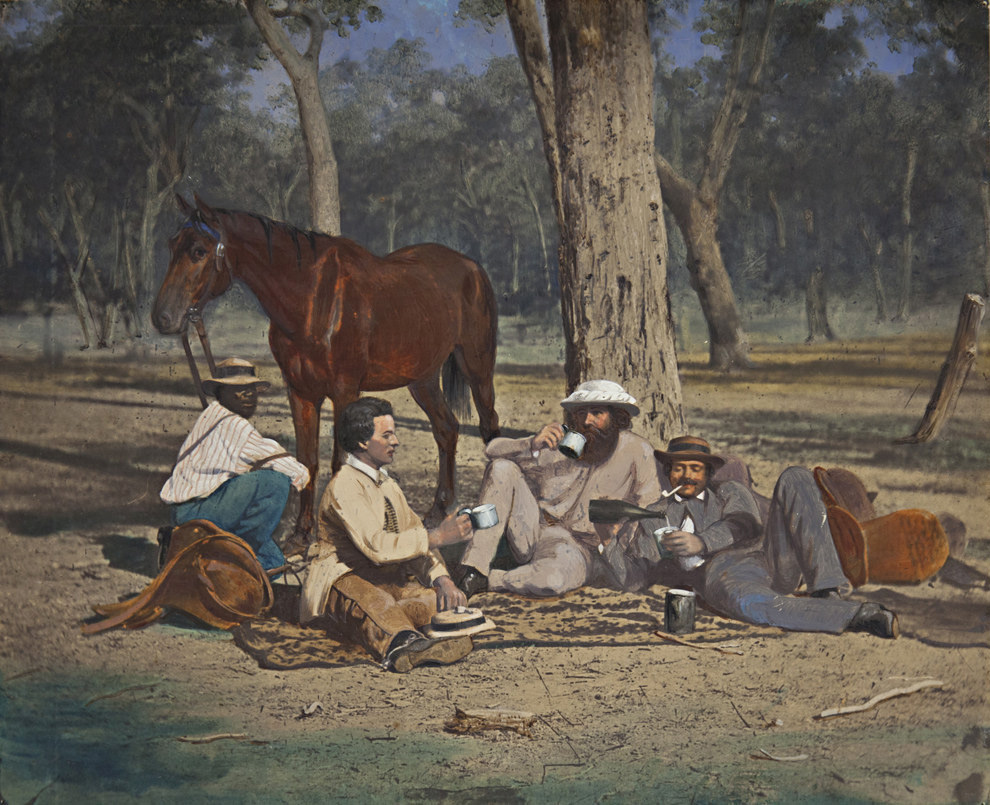
Richard Daintree (Australian, 1832-1878) 'Midday camp' 1864-1870


Richard Daintree (Australian, 1832-1878)
Midday camp
1864-1870
Albumen photograph, overpainted with oils
Queensland Museum, Brisbane


This image was an albumen photograph (using egg whites to bind chemicals to paper) which was then hand-coloured with oil paints to bring it to life. The photographer took it in the 1860s to advertise Australia as a land of opportunity.
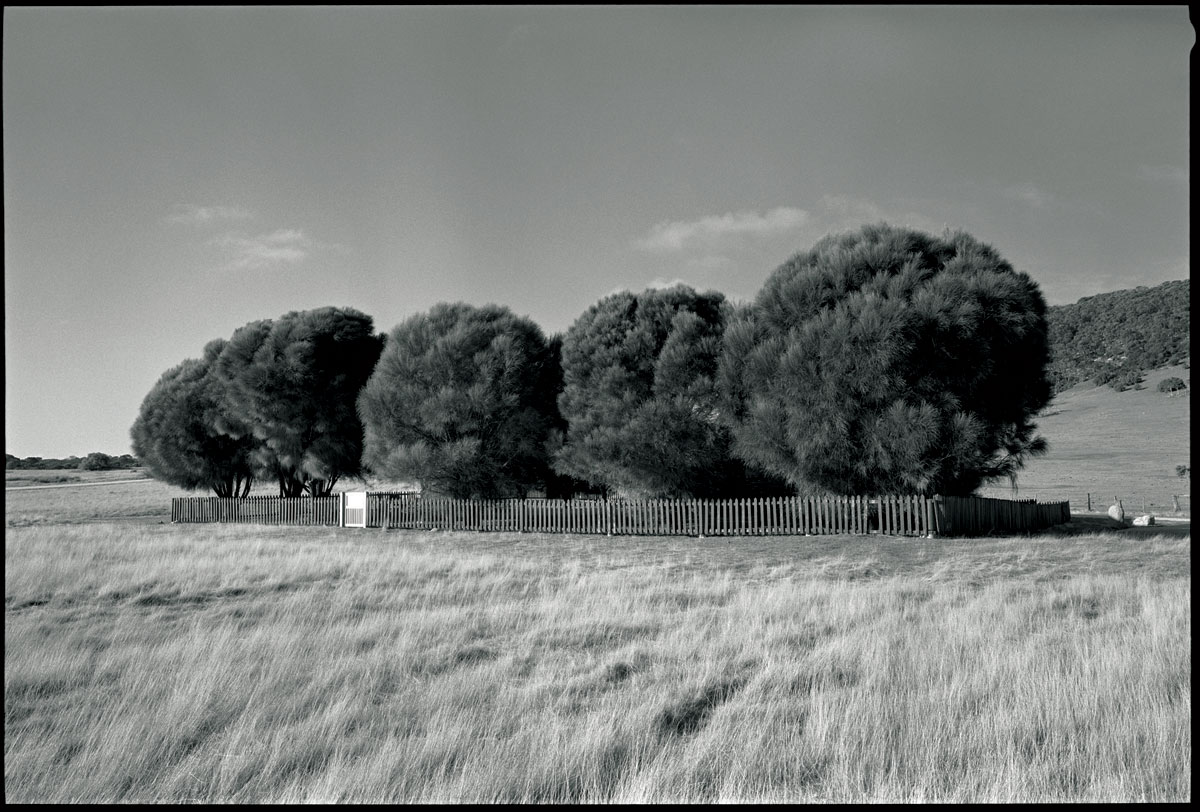
 

Ricky Maynard (Australian, b. 1953) 'The Healing Garden, Wybalenna, Flinders Island, Tasmania' 2005


Ricky Maynard (Australian, b. 1953)
Ben Lomond, Tasmania , Cape Portland, Tasmania
The Healing Garden, Wybalenna, Flinders Island, Tasmania, from the series Portrait of a distant land
2005, printed 2009
Gelatin silver photograph, selenium toned
34 x 52cm
Art Gallery of New South Wales, purchased with funds provided by the Aboriginal Collection Benefactors’ Group and the Photography Collection Benefactors’ Program 2009


Ricky Maynard has produced some of the most compelling images of contemporary Aboriginal Australia over the last two decades. Largely self taught, Maynard began his career as a darkroom technician at the age of sixteen. He first established his reputation with the 1985 series Moonbird people, an intimate portrayal of the muttonbirding season on Babel, Big Dog and Trefoil Islands in his native Tasmania. The 1993 series No more than what you see documents Indigenous prisoners in South Australian gaols.

Maynard is a lifelong student of the history of photography, particularly of the great American social reformers Jacob Riis, Lewis Hines, Dorothea Lange and Walker Evans. Maynard’s images cut through the layers of rhetoric and ideology that inevitably couch black history (particularly Tasmanian history) to present images of experience itself. His visual histories question ownership; he claims that ‘the contest remains over who will image and own this history…we must define history, define whose history it is, and define its purpose as well as the tools used for the telling it’.

In Portrait of a distant land Maynard addresses the emotional connection between history and place. He uses documentary style landscapes to illustrate group portraits of Aboriginal peoples’ experiences throughout Tasmania. Each work combines several specific historical events, creating a narrative of shared experience – for example The Mission relies on historical records of a small boy whom Europeans christened after both his parents died in the Risdon massacre. This work highlights the disparity between written, oral and visual histories, as Maynard attempts to create ‘a combination of a very specific oral history as well as an attempt to show a different way of looking at history in general’.
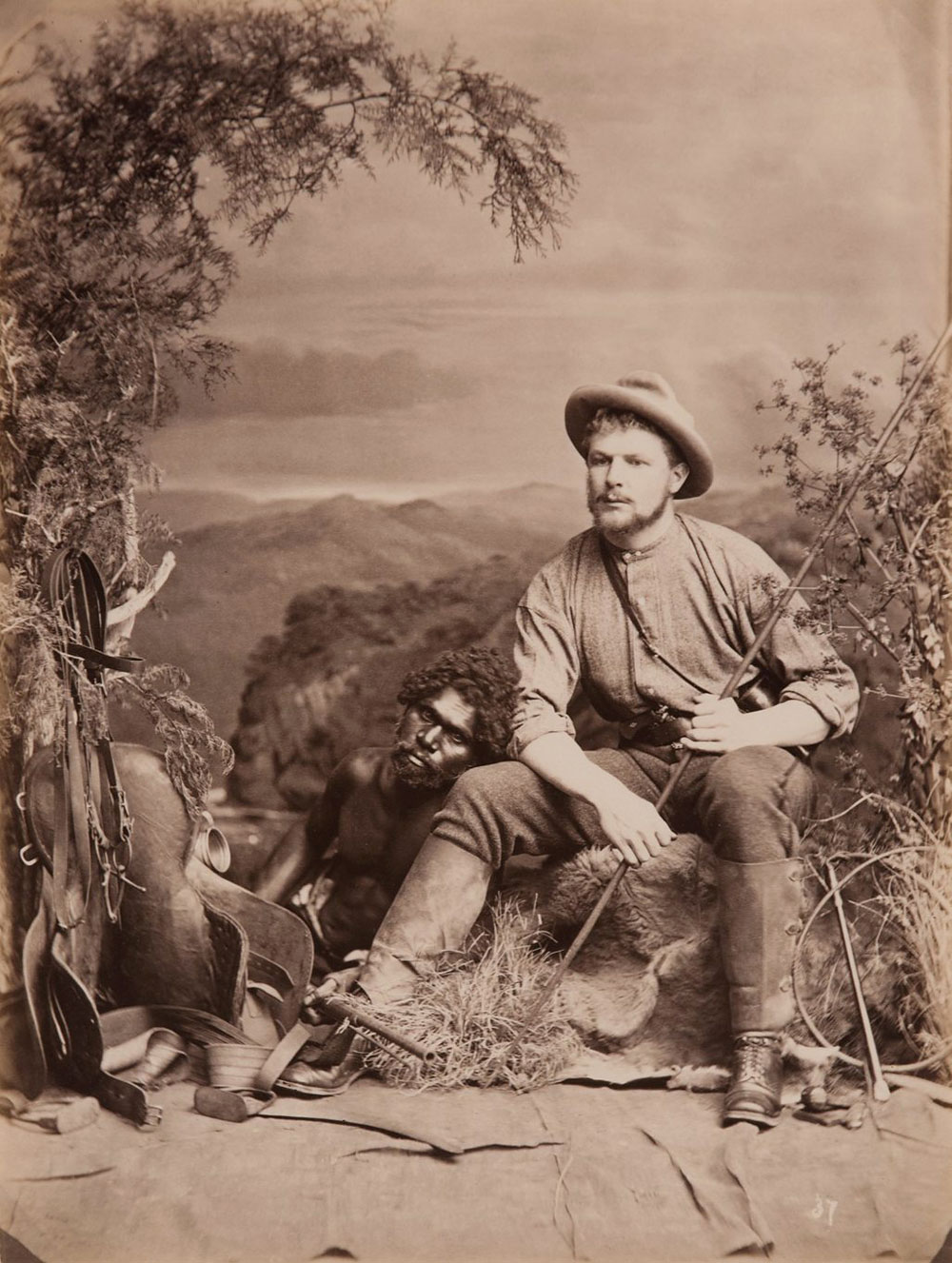
 

JW Lindt (Australian born Germany, 1845-1926) 'No 37 Bushman and an Aboriginal man' 1873


JW Lindt (Australian born Germany, 1845-1926)
No 37 Bushman and an Aboriginal man
1873
Albumen photograph
Grafton Regional Gallery Collection, Grafton, gift of Sam and Janet Cullen and family 2004


Professional photographers such as the Frankfurt-born John William Lindt (who became famous for photographing the capture of the Kelly Gang at Glenrowan in 1880) took carefully posed tableaux images in his Melbourne studio. One set of Lindt photographs, taken between 1873 and 1874, show settlers and indigenous people posing with the tools of their trade. One unusual image shows a settler holding a spear and a local man holding a rifle.

Annear says the photographs speak of a time when early settlers and indigenous people were engaged in an exchange of cultures. “These photos weren’t just a passive, one-way process,” Annear says. “It wasn’t just about capture and exoticism. We are finding contemporaneous accounts that point to a level of exchange going on that was extremely important. These photos show who those people were, where they lived and what they were doing. They have a very powerful presence in that regard, and Aboriginal people today are going back through these photographs in order to trace their family trees.” …

Annear says she could have put together an exhibition of images of the “great suffering” experienced by Aboriginal people in Australia, but chose not to. “I found the 19th century material so rich and strong and most people aren’t aware of these images. It seemed like a great opportunity to bring them forward,” she says. “I don’t want to whitewash history, but I do want people to see how rich life was, how people were adapting, and then how that was removed. After Federation and the White Australia policy and other assimilation policies, photos of indigenous people seem to disappear. Why did they disappear? The people were still here. They were greatly diminished in many senses, but nonetheless they were still here.”

Elissa Blake. “Art Gallery of NSW photography exhibition: Stories told in black and white,” on the Sydney Morning Herald website, April 2, 2015 [Online] Cited 30/05/2015


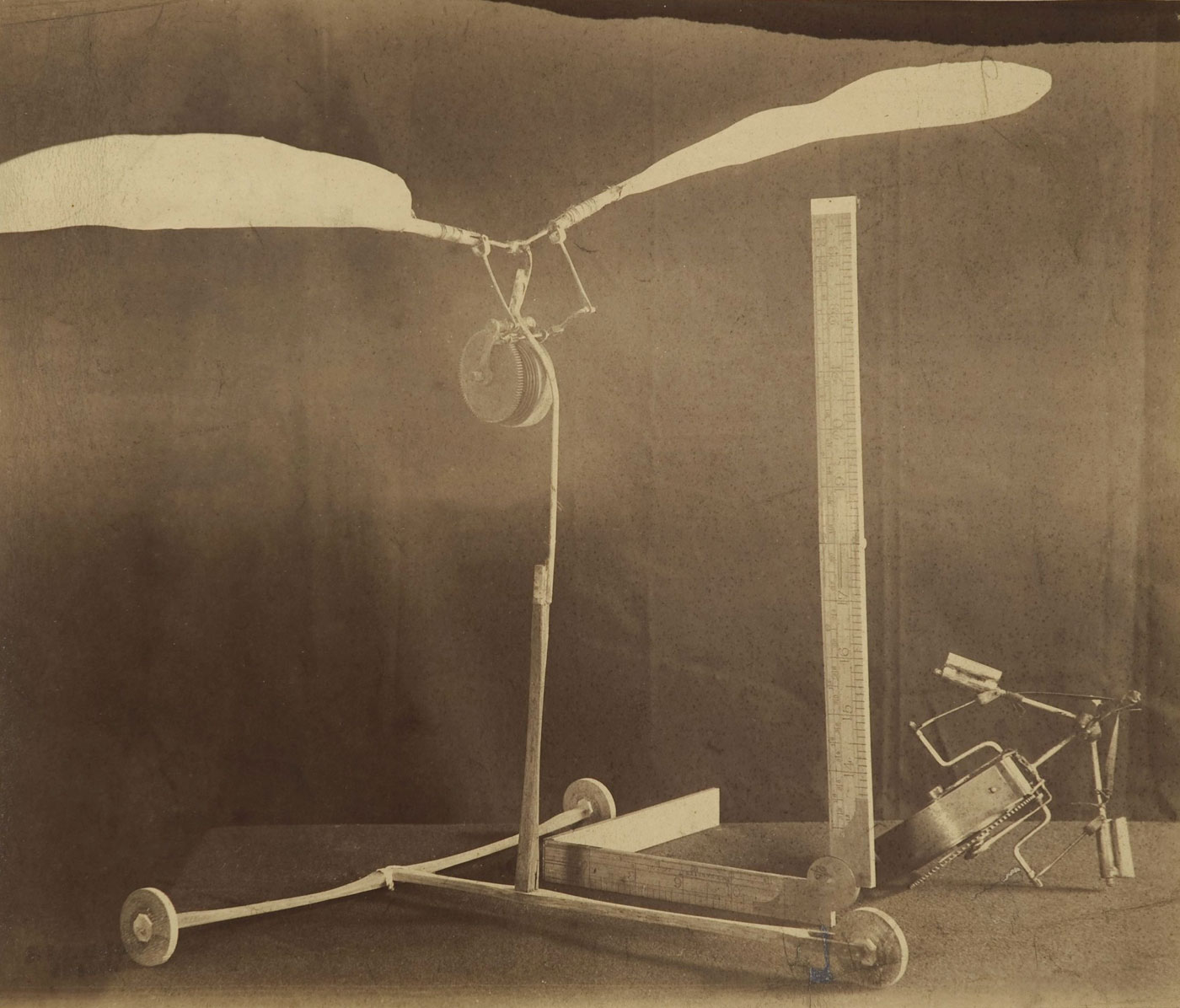
Charles Bayliss (Australian born England, 1850-1897) 'Lawrence Hargrave trochoided plane model' 1884


Charles Bayliss (Australian born England, 1850-1897)
Lawrence Hargrave trochoided plane model
1884
Albumen photograph
Museum of Applied Arts and Sciences, Sydney, gift of Mr William Hudson Shaw 1994
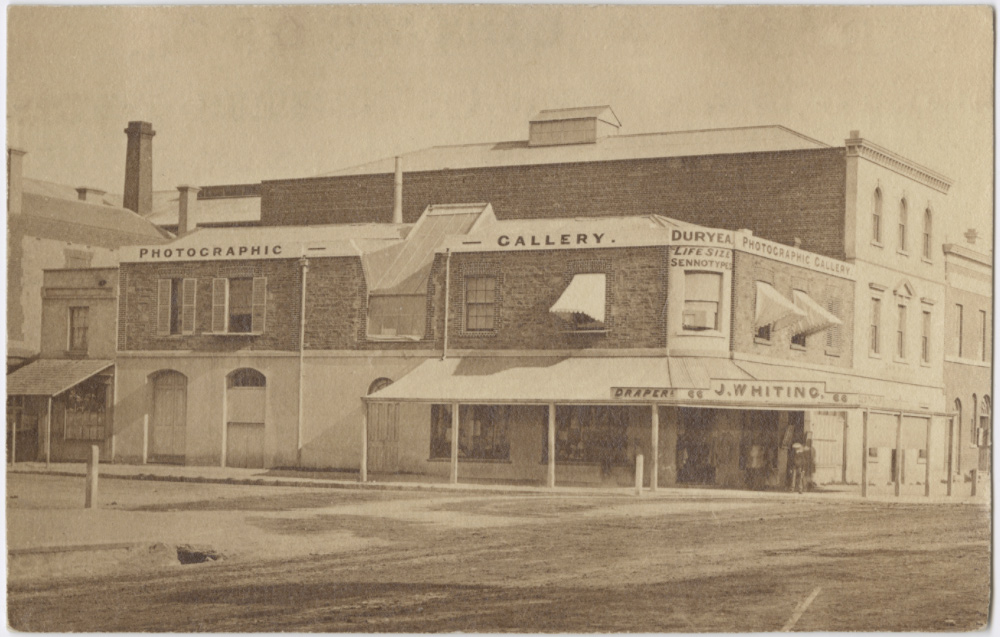
 

Unknown photographer. 'Duryea Gallery, Grenfell Street, Adelaide' c. 1865


Unknown photographer
Duryea Gallery, Grenfell Street, Adelaide
c. 1865
Carte de visite
State Library of South Australia, Adelaide
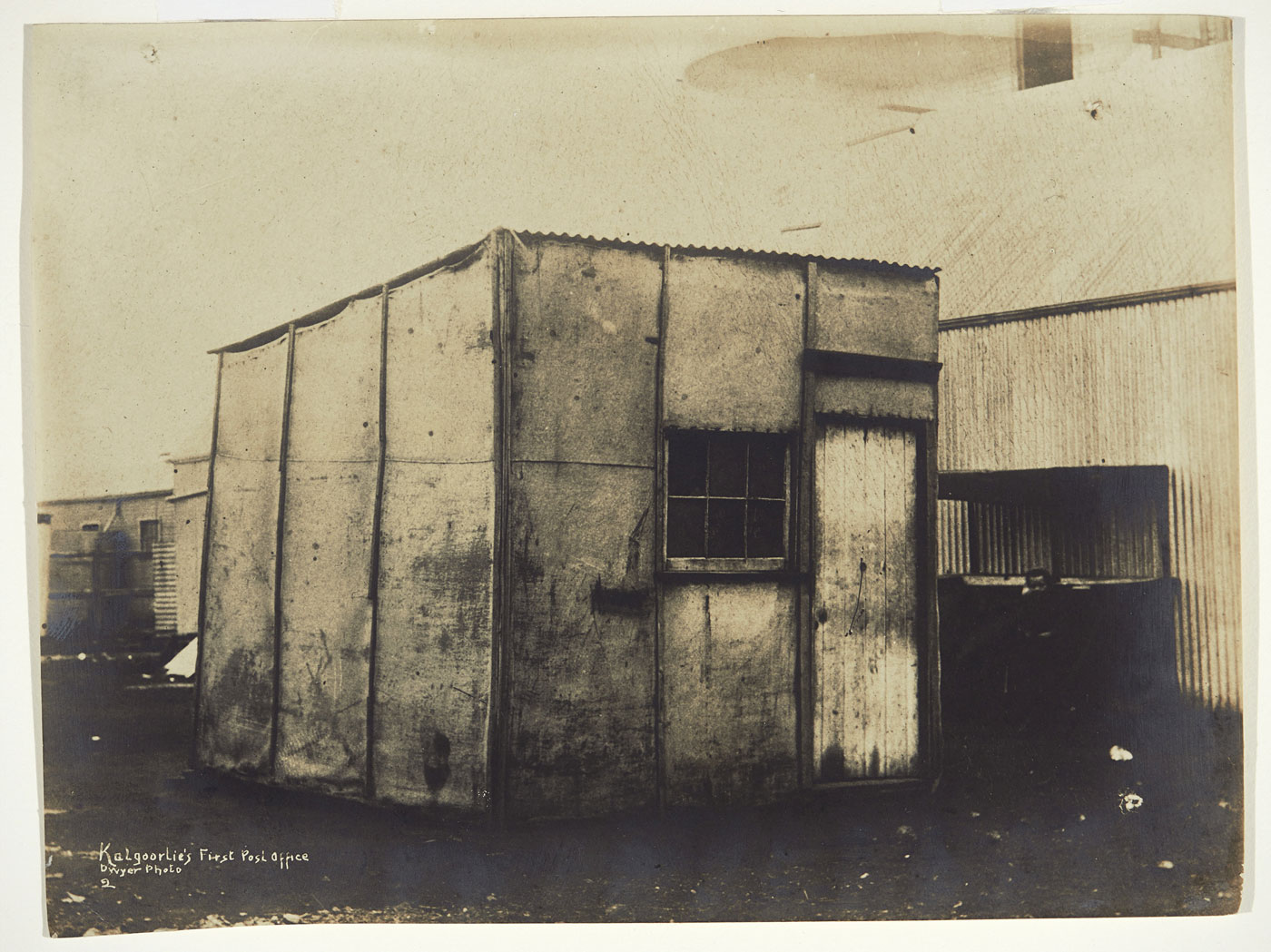
 

J. J. Dwyer (Australian, 1869-1928) 'Kalgoorlie's first post office' c. 1900


J. J. Dwyer (Australian, 1869-1928)
Kalgoorlie’s first post office
c. 1900
Gelatin silver photograph
Kerry Stokes Collection, Perth
Photo: Acorn Photo, Perth


Harold Cazneaux (Australian, 1878-1953) 'Spirit of endurance' 1937


Harold Cazneaux (Australian, 1878-1953)
Spirit of endurance
1937
Gelatin silver photograph
Art Gallery of New South Wales, gift of the Cazneaux family 1975


Keast Burke (New Zealand, Australia 1896-1974) 'Husbandry 1' c. 1940


Keast Burke (New Zealand, Australia 1896-1974)
Husbandry 1
c. 1940
Gelatin silver photograph, vintage
30.5 x 35.5cm image/sheet
Gift of Iris Burke 1989


Eric Keast Burke (16 January 1896 – 31 March 1974) was a New Zealand-born photographer and journalist.


Unknown photographer. 'Isabella Carfrae on horseback, Ledcourt, Stawell, Victoria' c. 1855 (detail)


Unknown photographer
Isabella Carfrae on horseback, Ledcourt, Stawell, Victoria
c. 1855
Daguerreotype, hand-tinted
National Gallery of Australia, Canberra, purchased 2012


Unknown photographer. 'Isabella Carfrae on horseback, Ledcourt, Stawell, Victoria' c. 1855


Unknown photographer
Isabella Carfrae on horseback, Ledcourt, Stawell, Victoria
c. 1855
Daguerreotype, hand-tinted
National Gallery of Australia, Canberra, purchased 2012


“In the late 19th century, cameras were taking us both inside the human body and all the way to the moon. By the 1970s the National Gallery of Victoria had begun collecting photographic art, and within another decade the digital revolution was underway. But this exhibition – the largest display of Australian photography since Gael Newton mounted the 900-work Shades of Light: Photography and Australia 1838-1988 at the National Gallery of Australia 27 years ago – is not chronological.

It opens with a salon hang of portraits of 19th and 20th century photographers, as if to emphasise their say in what we see, and continues with works grouped by themes: Aboriginal and settler relations; exploration; mining, landscape and stars; portraiture and engagement; collecting and distributing photography.

“A number of institutions and curators have tackled Australian photography from a chronological perspective and have done an extremely good job of it,” Annear says. “I have used their excellent research as a springboard into another kind of examination of the history of photography in this country. Nothing in photography was actually invented here, so I have turned it around and considered how photography invented Australia.”

Most of the photographs – about three quarters of the show, in fact – date from the first 60 years after Frenchman Louis Daguerre had his 1839 revelation about how to capture detailed images in a permanent form. Annear says the decades immediately following photography’s arrival in Australia provide a snapshot of all that has followed since.

“In terms of the digital revolution it is interesting to look back at the 19th century. What is going on now was all there then, it is just an expansion. There is a very clear trajectory from the birth of photography towards multiplication. After the invention of the carte de visite in the late 1850s they were made like there was no tomorrow. There are millions of cartes de visite in existence.”

There are quite a few of these small card-mounted photographs (the process was patented in Paris, hence the French) in the exhibition too, including one of a woman reflected in water at Port Jackson dating from circa 1865. With the trillions of images now in existence, it is easy to forget that once upon a time catching your reflection in the water, glass or a mirror was the only way to glimpse your own image (short of paying hefty sums for an artist to draw you).

After the invention of photography, people were quick to see how easily they could manipulate the impression created. While photographs are about fixing a moment in time, we can never be really sure just what it is they are fixing. “It’s not as simple as windows and mirrors – what we are looking at has always been constructed in some way,” Annear says. “What’s interesting about the medium is that you think it’s recording, fixing and capturing, but it is just creating an endless meditation on whatever a photograph’s relationship might be to whatever was real at the time it was taken.”

Extract from Megan Backhouse. “How the Photograph Shaped a Nation,” on the Art Guide Australia website, 20 April 2015 [Online] Cited 30/05/2015. No longer available online.


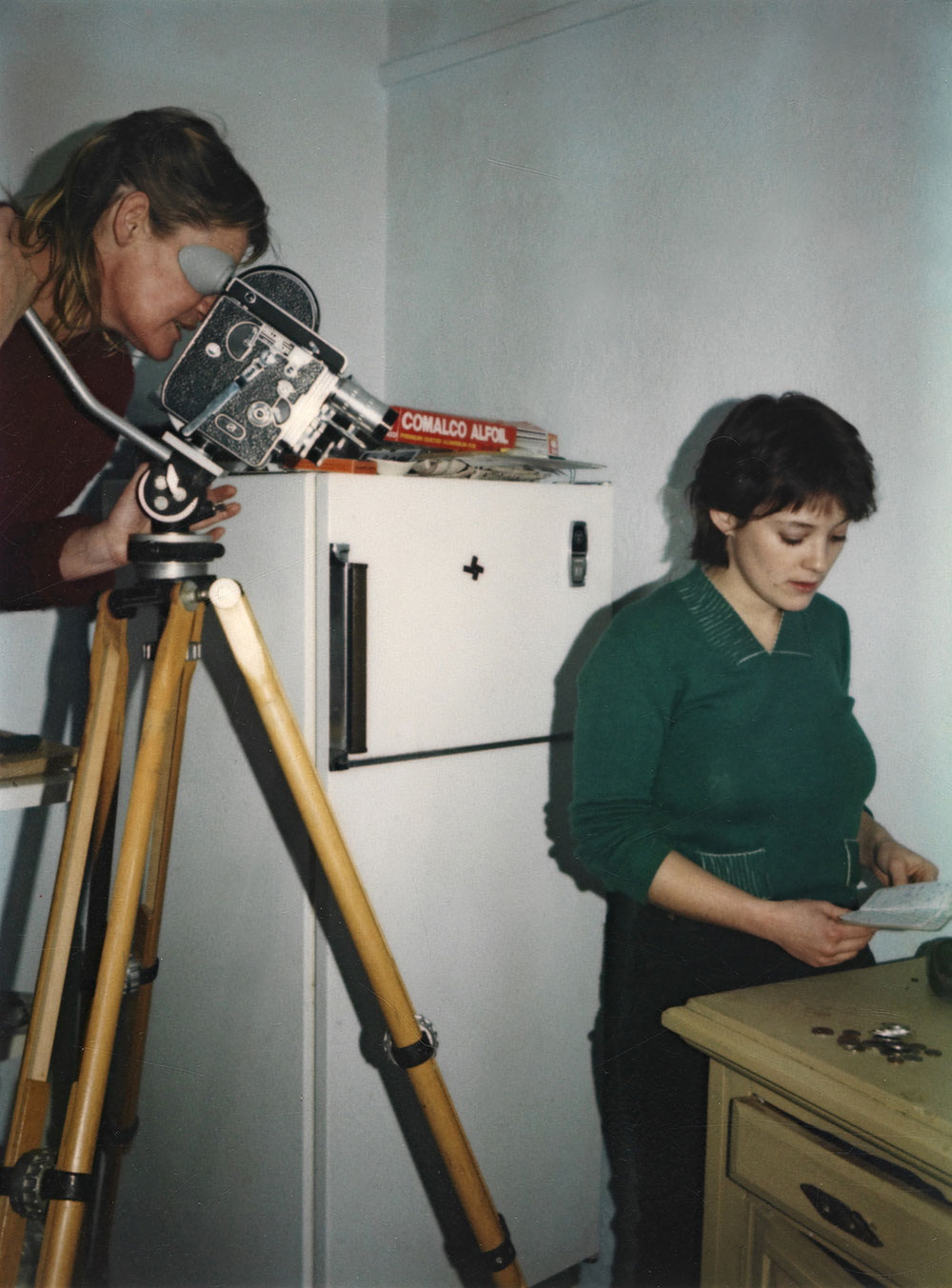
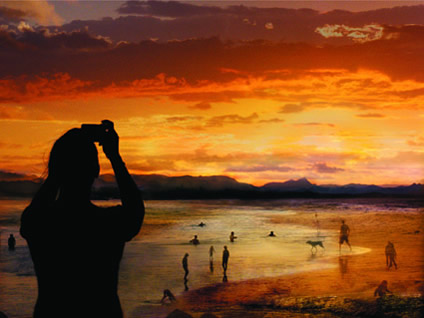
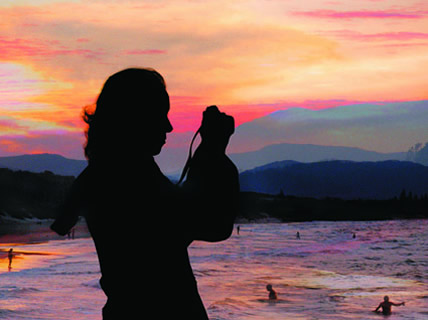
Sue Ford (Australian, 1943-2009) 'Self-portrait' 1986


Sue Ford (Australian, 1943-2009)
Self-portrait
1986
From the series Self-portrait with camera (1960-2006) 2008
Colour Polaroid photograph
Art Gallery of New South Wales, purchased with funds provided by the Paul & Valeria Ainsworth Charitable Foundation, Russell Mills, Mary Ann Rolfe, the Photography Collection Benefactors and the Photography Endowment Fund 2015
© Sue Ford Archive
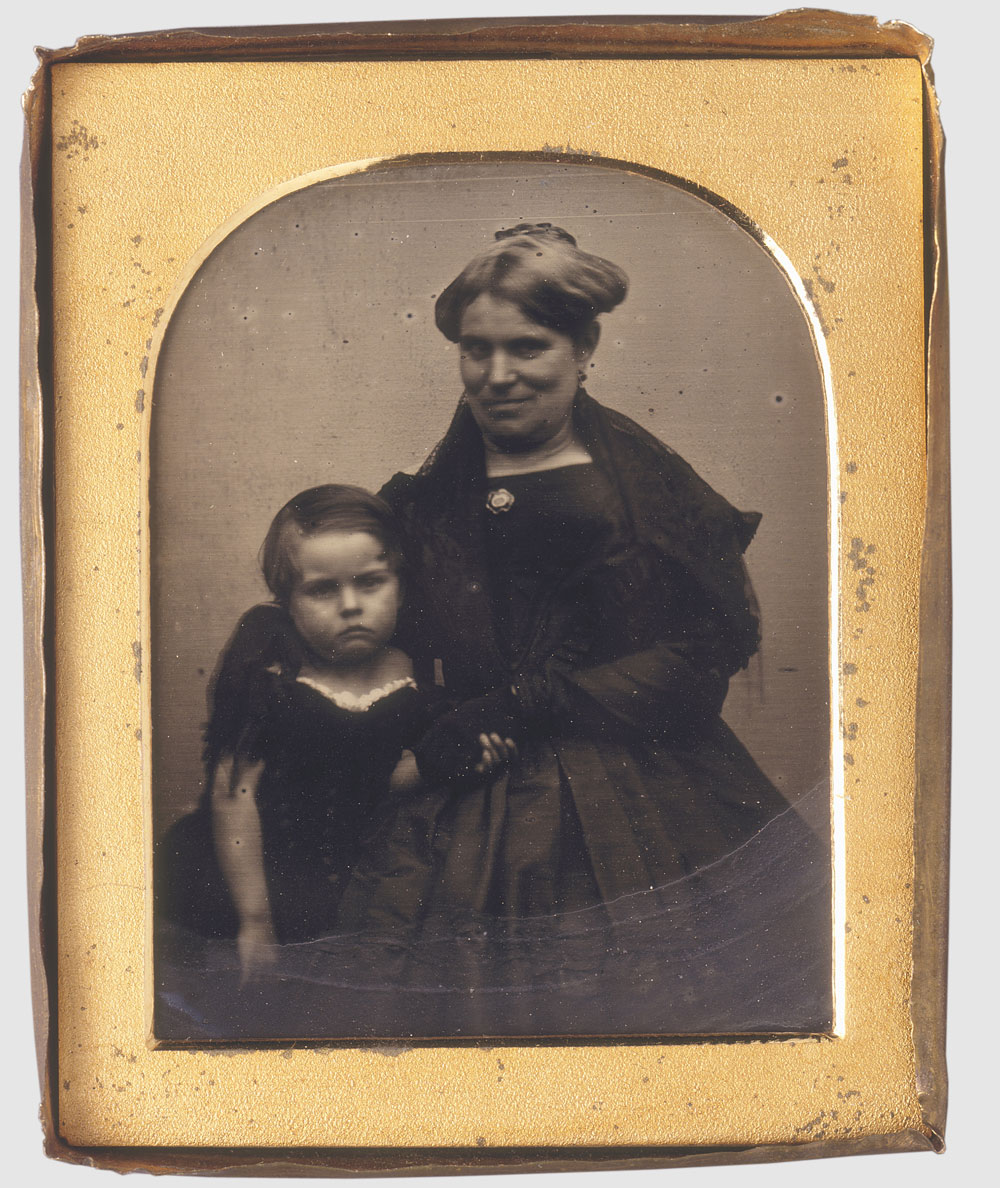
 

George Goodman (Australian born England, 1815-1891) 'Caroline and son Thomas James Lawson' 1845


George Goodman (Australian born England, 1815-1891)
Caroline and son Thomas James Lawson
1845
Daguerreotype
State Library of New South Wales, Sydney, presented 1991


Olive Cotton (Australian, 1911-2003) 'Only to taste the warmth, the light, the wind' c. 1939


Olive Cotton (Australian, 1911-2003)
Only to taste the warmth, the light, the wind
c. 1939
Gelatin silver photograph
Art Gallery of New South Wales, purchased with funds provided by John Armati 2006
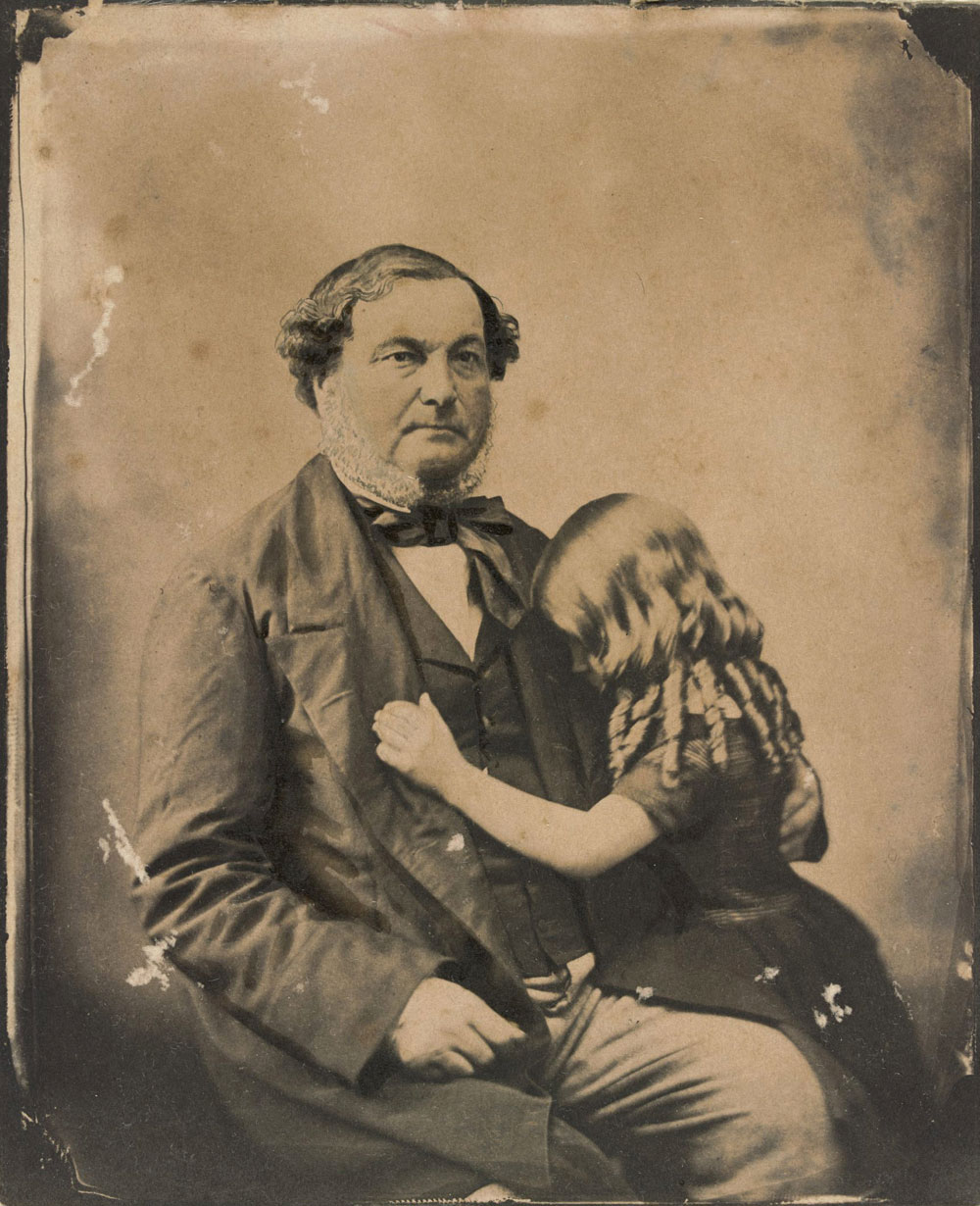
 

Unknown photographer. 'John Gill and Joanna Kate Norton' 1856


Unknown photographer
John Gill and Joanna Kate Norton
1856
Albumen photograph
Picture Collection, State Library of Victoria, Melbourne
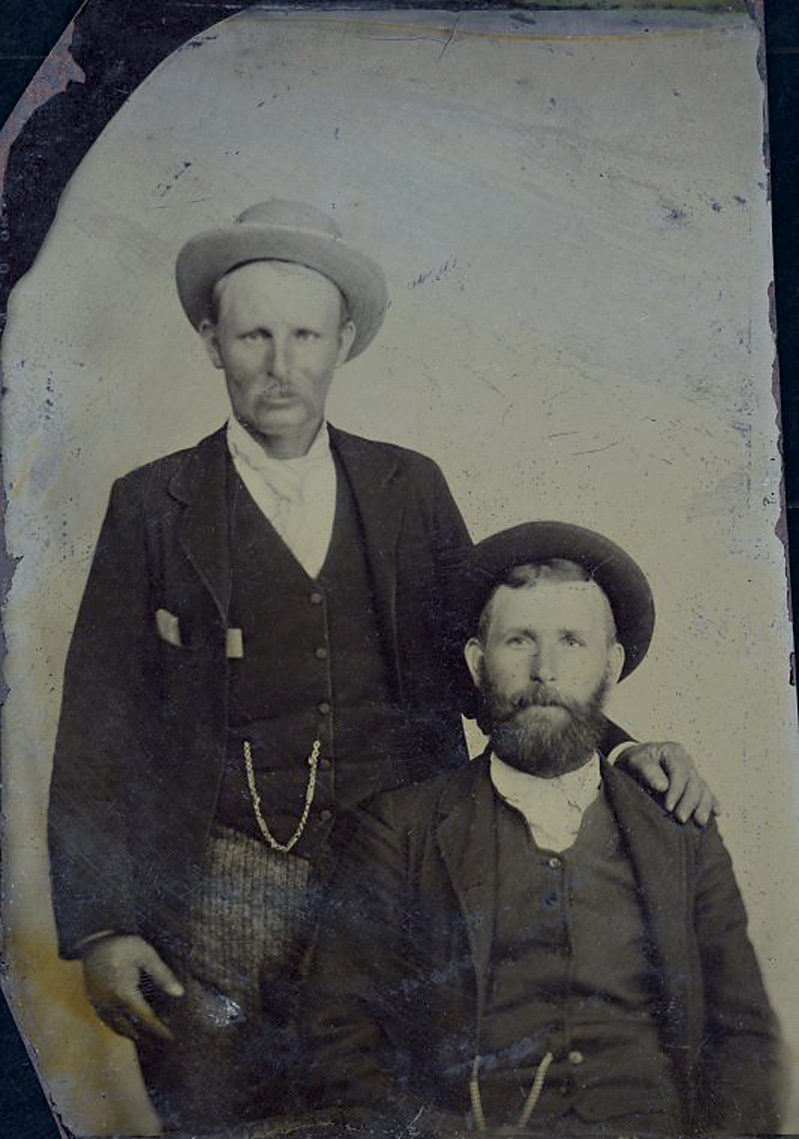
 

Unknown photographer. 'Alfred and Fred Thomas, proprietors of the Ravenswood Hotel' 1880-1890


Unknown photographer
Alfred and Fred Thomas, proprietors of the Ravenswood Hotel
1880-1890
Tintype
State Library of Western Australia, Perth


Mervyn Bishop (Australian, b. 1945) 'Prime Minister Gough Whitlam pours soil into the hands of traditional land owner Vincent Lingiari, Northern Territory' 1975


Mervyn Bishop (Australian, b. 1945)
Prime Minister Gough Whitlam pours soil into the hands of traditional land owner Vincent Lingiari, Northern Territory
1975
Type R3 photograph
Art Gallery of New South Wales, Hallmark Cards Australian Photography Collection Fund 1991
© Mervyn Bishop. Department of the Prime Minister and Cabinet


Mervyn Bishop (born July 1945) is an Australian news and documentary photographer. Joining The Sydney Morning Herald as a cadet in 1962 or 1963, he was the first Aboriginal Australian to work on a metropolitan daily newspaper and one of the first to become a professional photographer. In 1971, four years after completing his cadetship, he was named Australian Press Photographer of the Year. He has continued to work as a photographer and lecturer.
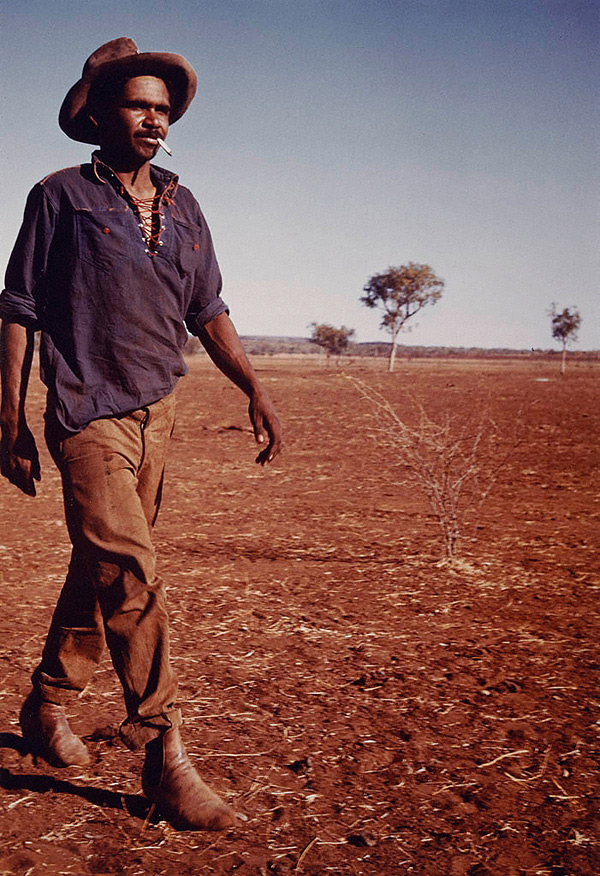
 

Axel Poignant (England, Australia, England 1906-1986) 'Aboriginal stockman, Central Australia' c. 1947, printed 1982


Axel Poignant (England, Australia, England 1906-1986)
Aboriginal stockman, Central Australia
c. 1947, printed 1982
Type C photograph
35.6 x 24.4cm image/sheet
Purchased 1984
© Courtesy Roslyn Poignant


Though not born in Australia, Axel Poignant’s work is largely about the ‘Outback’, its flora and fauna and the traditions of Australian and Indigenous identity. Poignant was born in Yorkshire in 1906 to a Swedish father and English mother, and arrived in Australia in 1926 seeking work and adventure. After tough early years of unemployment and homelessness, he eventually settled in Perth and found work as a portrait photographer, before taking to the road and the bush in search of new subjects. Poignant became fascinated with the photo-essay as a means of adding real humanity to the medium, and much of his work is in this form. The close relationships he developed with Aborigines on his travels are recorded in compassionate portraits of these people and their lives – the low angles and closely cropped frames appear more natural and relaxed than the stark compositions of earlier ethnographic photography.
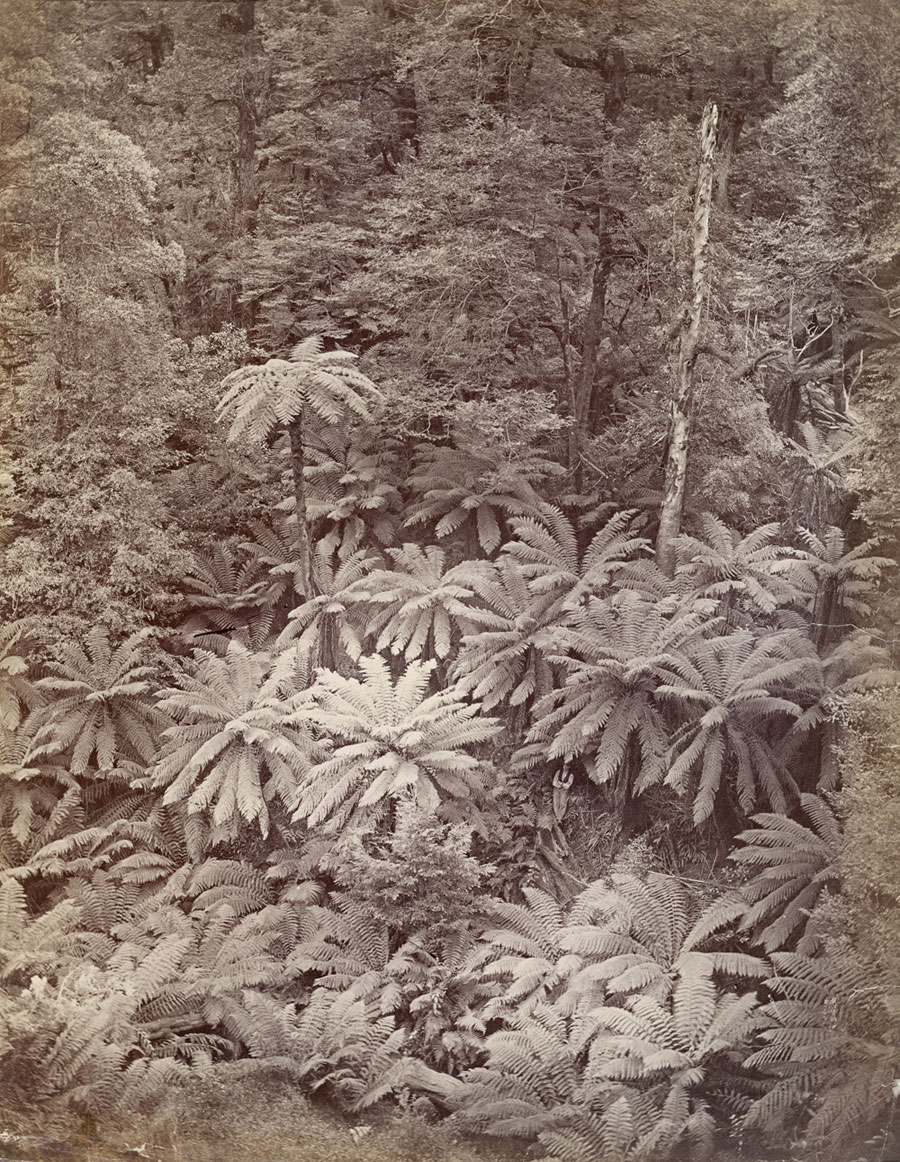
 

Nicholas Caire (Australian born England, 1837-1918) 'Fairy scene at the Landslip, Blacks' Spur' c. 1878


Nicholas Caire (Australian born England, 1837-1918)
Fairy scene at the Landslip, Blacks’ Spur
c. 1878
Albumen photograph
National Gallery of Victoria, Melbourne, purchased 1994


Nicholas John Caire (28 February 1837 – 13 February 1918) was an Australian photographer. Caire was born in Guernsey, Channel Islands, to Nicholas Caire and Hannah Margeret. As a boy Caire spoke French found he had a passion for photography that his parents encouraged. Caire moved to Adelaide, Australia, along with both his parents in 1860. Around this time Caire Found a mentor in Townsend Duryea. in 1867 he opened his own studio in Adelaide, Australia. He was married to Louisa Master in 1870 and then shortly after moved to Talbot, Victoria where he continued his photography and started to write for Life and Health Magazine. Caire died in 1918 in Armadale, Victoria.
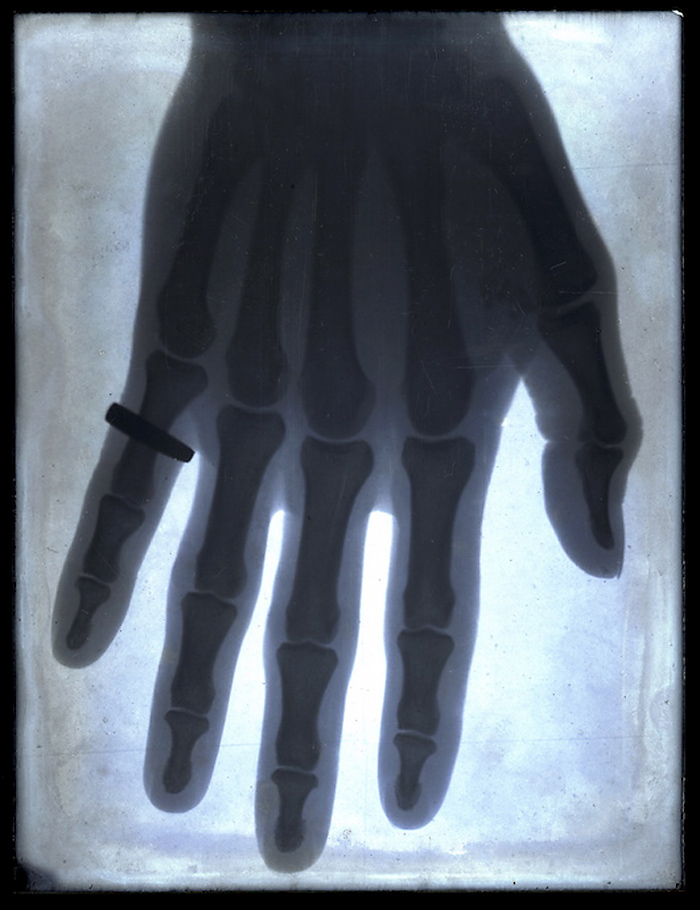
 

Frank Styant Browne (Australian born England, 1854-1938) 'Hand' 1896


Frank Styant Browne (Australian born England, 1854-1938)
Hand
1896
X-ray
Queen Victoria Museum and Art Gallery collection, Launceston


Art Gallery of New South Wales
Art Gallery Road, The Domain
Sydney NSW 2000, Australia

Opening hours:
Open every day 10am – 5pm
except Christmas Day and Good Friday
Art Gallery of New South Wales website

LIKE ART BLART ON FACEBOOK

Back to top

Video: ‘Tom Butler: Concealment, barriers and masks’

Published 30th April 2014


‘Tom Butler: Concealment, barriers and masks’ on the The Photographers Gallery Blog


Phenomenal, wondrous!

Marcus


The Photographers’ Gallery
16-18 Ramillies Street,
London W1F7Lw

Opening hours:
Monday – Saturday 10.00 – 18.00
Thursday 10.00 – 20.00
Sunday 11.30 – 18.00

The Photographers’ Gallery website

LIKE ART BLART ON FACEBOOK

Back to top

Exhibition: ‘Photography and the American Civil War’ at the New Orleans Museum of Art (NOMA)

Exhibition dates: 31st January – 4th May 2014


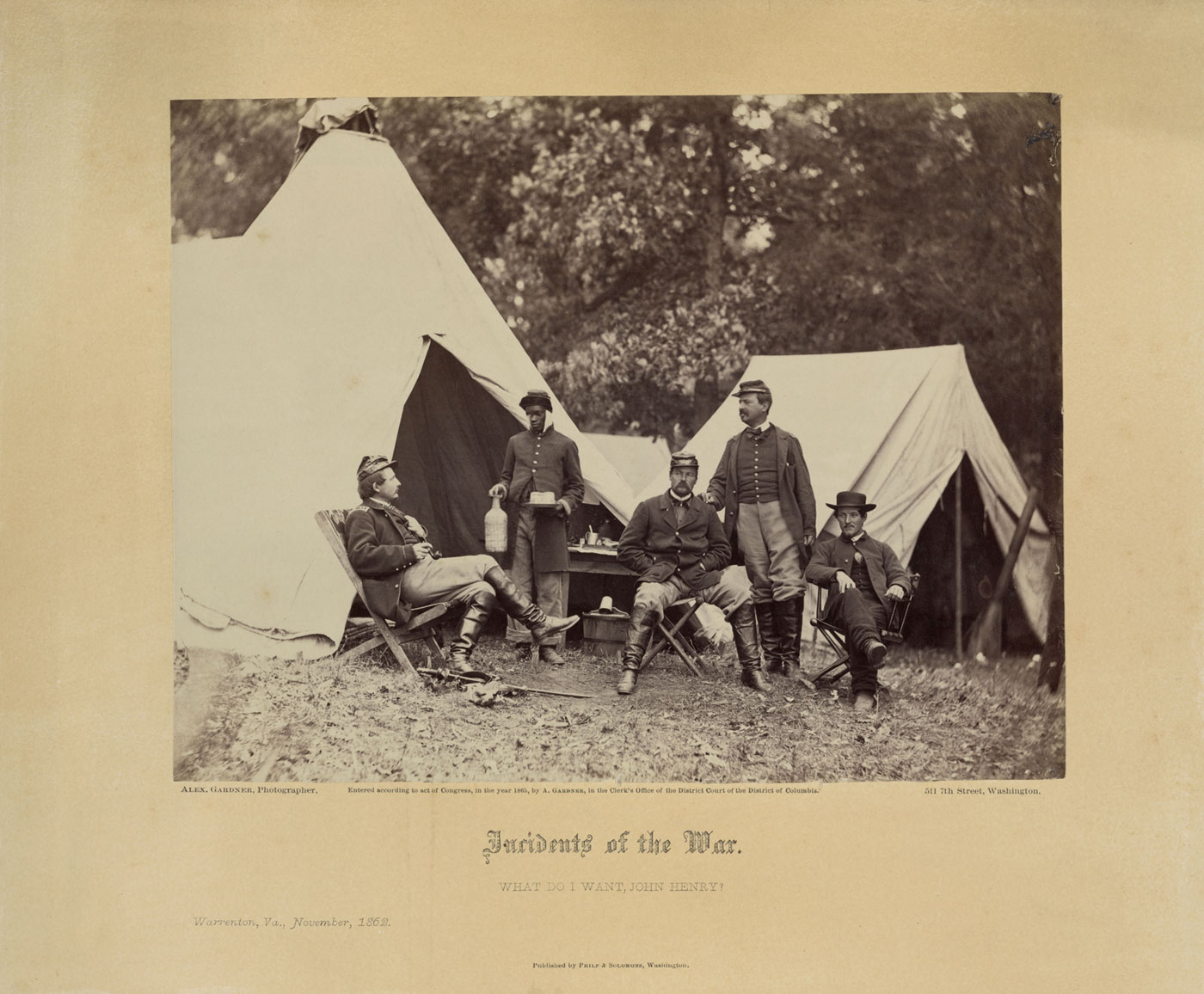
Alexander Gardner (American, Glasgow, Scotland 1821 - 1882 Washington, D.C.) 'What Do I Want, John Henry? Warrenton, Virginia' November 1862


Alexander Gardner (American, Glasgow, Scotland 1821 – 1882 Washington, D.C.)
What Do I Want, John Henry? Warrenton, Virginia
November 1862
Albumen photograph from the album Incidents of the War
Photography collection, Miriam and Ira D. Wallach Division of Art, Prints and Photographs
The New York Public Library Astor, Lennox and Tilden Foundations


This posting continues my fascination with the American Civil War, with new photographs from the exhibition to compliment the posting I did when it was staged at the Metropolitan Museum of Art, New York, April – September 2013.

I have included fascinating close-up details: the collar of African-American Union soldier John Henry flapping in the breeze during the long time exposure (What Do I Want, John Henry? Warrenton, Virginia November 1862, below); the pale grey/blue eyes of George Patillo which have been added to the plate afterwards1 (The Pattillo Brothers (Benjamin, George, James, and John) etc… 1861-1863, below); the horrific branding of the slave Wilson Chinn who had the initials of his owner burned into his head (Emancipated Slaves Brought from Louisiana by Colonel George H. Banks, December 1863, below); and the crumpled coat of Allan Pinkerton, Chief of the Secret Service of the United States, as he poses with his president (President Abraham Lincoln et al, October 4, 1862, below).

Dr Marcus Bunyan


1/ “The daguerreotype, like all photographic processes before 1873 [including Ambrotypes], was sensitive to blue light only, so that red dresses registered black and people with blue eyes appeared to have no irises and looked quite strange.”

Davies, Alan. An Eye for Photography: The camera in Australia. Melbourne: The Miegunyah Press / State Library of New South Wales, 2002, p. 8.


Many thankx to the New Orleans Museum of Art for allowing me to publish the photographs in the posting. Please click on the photographs for a larger version of the image.


Alexander Gardner (American, Glasgow, Scotland 1821 - 1882 Washington, D.C.) 'What Do I Want, John Henry? Warrenton, Virginia' November 1862 (detail)


Alexander Gardner (American, Glasgow, Scotland 1821 – 1882 Washington, D.C.)
What Do I Want, John Henry? Warrenton, Virginia (detail)
November 1862
Albumen photograph from the album Incidents of the War
Photography collection, Miriam and Ira D. Wallach Division of Art, Prints and Photographs
The New York Public Library Astor, Lennox and Tilden Foundations


Andrew Joseph Russell (American, 1830-1902) 'Confederate Method of Destroying Rail Roads at McCloud Mill, Virginia' 1863


Andrew Joseph Russell (American, 1830-1902)
Confederate Method of Destroying Rail Roads at McCloud Mill, Virginia
1863
Albumen silver print from glass negative
The Metropolitan Museum of Art, Harris Brisbane Dick Fund, 1933
Image © The Metropolitan Museum of Art


Russell made several photographs of the discovery by the Union army of the simple but effective method developed by the Confederates to destroy Union railroad track. Using the ties as fuel, the soldiers stacked the iron rails in X formations and burned them until they could be twisted and made unusable. Federal engineers employed similar tactics to destroy Southern railroads, and this photograph has been published, inaccurately, as “Sherman’s Neckties.” The title refers to Union General William Tecumseh Sherman, who during the Atlanta Campaign on July 18, 1864, gave the following explicit order to his corps: “Officers should be instructed that bars simply bent may be used again, but if when red hot they are twisted out of line they cannot be used again. Pile the ties into shape for a bonfire, put the rails across and when red hot in the middle, let a man at each end twist the bar so that its surface becomes spiral.”

Anonymous. “Confederate Method of Destroying Rail Roads at McCloud Mill, Virginia 1863,” on the Metropolitan Museum of Art website [Online] Cited 05/03/2021


Unknown photographer. 'Captain Charles A. and Sergeant John M. Hawkins, Company E, "Tom Cobb Infantry," Thirty-eighth Regiment, Georgia Volunteer Infantry' 1861-1862


Unknown photographer
Captain Charles A. and Sergeant John M. Hawkins, Company E, “Tom Cobb Infantry,” Thirty-eighth Regiment, Georgia Volunteer Infantry
1861-1862
Quarter-plate ambrotype with applied colour
David Wynn Vaughan Collection
Photo: Jack Melton


The vast majority of war portraits, either cased images or cartes de visite, are of individual soldiers. Group portraits in smaller formats are more rare and challenged the field photographer (as well as the studio gallerist) to conceive and execute an image that would honour the occasion and be desirable – saleable – to multiple sitters. For the patient photographer, this created interesting compositional problems and an excellent opportunity to make memorable group portraits of brothers, friends, and even members of different regiments.

In this quarter-plate ambrotype, Confederate Captain Charles Hawkins of the Thirty-eighth Regiment, Georgia Volunteer Infantry, on the left, sits for his portrait with his brother John, a sergeant in the same regiment. They address the camera and draw their fighting knives from scabbards. Charles would die on June 13, 1863, in the Shenandoah Valley during General Robert E. Lee’s second invasion of the North. John, wounded at the Battle of Gaines’s Mill in June 1862, would survive the war, fighting with his company until its surrender at Appomattox.


Unknown photographer '[The Pattillo Brothers (Benjamin, George, James, and John), Company K, "Henry Volunteers," Twenty-second Regiment, Georgia Volunteer Infantry]' 1861-1863


Unknown photographer
[The Pattillo Brothers (Benjamin, George, James, and John), Company K, “Henry Volunteers,” Twenty-second Regiment, Georgia Volunteer Infantry]
1861-1863
Ambrotype
Plate: 8.3 x 10.8cm (3 1/4 x 4 1/4 in.)
David Wynn Vaughan Collection
Image © The Metropolitan Museum of Art


The four Pattillo boys of Henry County were brothers who all enlisted together in Company K of the 22nd Regiment of the GA Volunteer Infantry on August 31, 1861.

Benjamin, seated on the left holding a Confederate hand-grenade, made a 50-dollar bounty during his tenure from April 5 to June 20, 1862. He was shot in the stomach at 2nd Manassas on August 30, 1862, and died in the General Hospital in Warrenton, VA, the next day.

George, second from the left, was detailed for shoemaking at Augusta, GA in November of 1862 until the close of the war. He was the only Pattillo to make it out of the Civil War without an injury. He made 35 cents per shoe and made 106 shoes in February 29, for $37.10. The pay for a soldier was 3 dollars per day.

James, second from the right, was discharged in March of 1862 but reenlisted afterwards. He was shot in the foot in the Battle of Second Deep Bottom on August 16, 1864. The injury resulted in the amputation of his third toe. Pension records show he was at home on wounded furlough to close of the war.

John, seated on the right, was admitted to Chimborazo Hospital #2 in Richmond on May 31, 1862, because of a case of Dysentery. He returned to duty on June 14, 1862, but was wounded at the Seven Days’ battles near Richmond on June 28,1862. He was admitted to C. S. A. General Hospital at Charlottesville on November 20, 1862, and again on December 16, 1862. He returned to duty on December 17, 1862, but pension records show he was discharged on account of wounds in March of 1863.

David Wynn Vaughan. “Patillo Brothers,” on the Historynet.com website [Online] Cited 04/03/2021


Unknown photographer '[The Pattillo Brothers (Benjamin, George, James, and John), Company K, "Henry Volunteers," Twenty-second Regiment, Georgia Volunteer Infantry]' (detail) 1861-1863


Unknown photographer
[The Pattillo Brothers (Benjamin, George, James, and John), Company K, “Henry Volunteers,” Twenty-second Regiment, Georgia Volunteer Infantry] (detail)
1861-1863
Ambrotype
Plate: 8.3 x 10.8cm (3 1/4 x 4 1/4 in.)
David Wynn Vaughan Collection
Image © The Metropolitan Museum of Art


Myron H. Kimball (American, active 1860s) 'Emancipated Slaves Brought from Louisiana by Colonel George H. Banks' December 1863


Myron H. Kimball (American, active 1860s)
Emancipated Slaves Brought from Louisiana by Colonel George H. Banks
December 1863
Albumen silver print from glass negative
13.2 x 18.3cm (5 3/16 x 7 3/16in.), oblong oval
The Metropolitan Museum of Art, Gilman Collection, Purchase, The Horace W. Goldsmith Foundation Gift, through Joyce and Robert Menschel, 2005
Image © The Metropolitan Museum of Art


In December 1863, Colonel George Hanks of the 18th Infantry, Corps d’Afrique (a Union corps composed entirely of African-Americans), accompanied eight emancipated slaves from New Orleans to New York and Philadelphia expressly to visit photographic studios. A publicity campaign promoted by Major General Nathaniel Banks of the Department of the Gulf, and by the Freedman’s Relief Association of New York, its sole purpose was to raise money to educate former slaves in Louisiana, a state still partially held by the Confederacy. One group portrait, several cartes de visite of pairs of students, and numerous portraits of each student were made.

When this photograph was published as a woodcut in “Harper’s Weekly” of January 30, 1864, it was accompanied by the biographies of the eight emancipated slaves, which served successfully to fan the abolitionist cause. Two are quoted below.

AUGUSTA BROUJEY is nine years old. Her mother, who is almost white, was owned by her half-brother, named Solamon, who still retains two of her children.

WILSON CHINN is about 60 years old. He was “raised” by Isaac Howard of Woodford County, Kentucky. When 21 years old he was taken down the river and sold to Volsey B. Marmillion, a sugar planter about 45 miles above New Orleans. This man was accustomed to brand his negroes, and Wilson has on his forehead the letters “V. B. M.” Of the 210 slaves on this plantation 105 left at one time and came into the Union camp. Thirty of them had been branded like cattle with a hot iron, four of them on the forehead, and the others on the breast or arm.

In his negative, Kimball retouched the brand on Wilson Chinn’s forehead to make the initials appear more visible on the print.

Anonymous. “Emancipated Slaves Brought from Louisiana by Colonel George H. Banks December 1863,” on the Metropolitan Museum of Art website [Online] Cited 05/03/2021


Myron H. Kimball (American, active 1860s) 'Emancipated Slaves Brought from Louisiana by Colonel George H. Banks' December 1863 (detail)


Myron H. Kimball (American, active 1860s)
Emancipated Slaves Brought from Louisiana by Colonel George H. Banks (detail)
December 1863
Albumen silver print from glass negative
13.2 x 18.3cm (5 3/16 x 7 3/16in.), oblong oval
The Metropolitan Museum of Art, Gilman Collection, Purchase, The Horace W. Goldsmith Foundation Gift, through Joyce and Robert Menschel, 2005
Image © The Metropolitan Museum of Art


The slave (at back left) with those letters was Wilson Chinn, who was about 60 years old at the time. When he was 21 years old he was sold to Volsey B. Marmillion, a sugar planter about 45 miles above New Orleans. Marmillion branded his slaves, including Wilson. Those are Marmillion’s initials, horrifically burned into Wilson’s forehead in the image.

Russell Lord, photography curator at NOMA


Andrew Joseph Russell (American, 1830-1902) 'Slave Pen, Alexandria, Virginia' 1863


Andrew Joseph Russell (American, 1830-1902)
Slave Pen, Alexandria, Virginia
1863
Albumen silver print from glass negative
25.6 x 36.5cm (10 1/16 x 14 3/8 in.)
Gilman Collection, Purchase, The Horace W. Goldsmith Foundation Gift, through Joyce and Robert Menschel, 2005
Image © The Metropolitan Museum of Art


Better known for his later views commissioned by the Union Pacific Railroad, A. J. Russell, a captain in the 141st New York Infantry Volunteers, was one of the few Civil War photographers who was also a soldier. As a photographer-engineer for the U.S. Military Railroad Construction Corps, Russell’s duty was to make a historical record of both the technical accomplishments of General Herman Haupt’s engineers and the battlefields and camp sites in Virginia. This view of a slave pen in Alexandria guarded, ironically, by Union officers shows Russell at his most insightful; the pen had been converted by the Union Army into a prison for captured Confederate soldiers.

Between 1830 and 1836, at the height of the American cotton market, the District of Columbia, which at that time included Alexandria, Virginia, was considered the seat of the slave trade. The most infamous and successful firm in the capital was Franklin & Armfield, whose slave pen is shown here under a later owner’s name. Three to four hundred slaves were regularly kept on the premises in large, heavily locked cells for sale to Southern plantation owners. According to a note by Alexander Gardner, who published a similar view, “Before the war, a child three years old, would sell in Alexandria, for about fifty dollars, and an able-bodied man at from one thousand to eighteen hundred dollars. A woman would bring from five hundred to fifteen hundred dollars, according to her age and personal attractions.”

Late in the 1830s Franklin and Armfield, already millionaires from the profits they had made, sold out to George Kephart, one of their former agents. Although slavery was outlawed in the District in 1850, it flourished across the Potomac in Alexandria. In 1859, Kephart joined William Birch, J. C. Cook, and C. M. Price and conducted business under the name of Price, Birch & Co. The partnership was dissolved in 1859, but Kephart continued operating his slave pen until Union troops seized the city in the spring of 1861.


Alexander Gardner (American, Glasgow, Scotland 1821 - 1882 Washington, D.C.) 'Ruins of Gallego Flour Mills, Richmond' 1865


Alexander Gardner (American, Glasgow, Scotland 1821 – 1882 Washington, D.C.)
Ruins of Gallego Flour Mills, Richmond
1865
Albumen silver prints from glass negatives
16.3 x 36.9cm (6 7/16 x 14 1/2 in.)
The Metropolitan Museum of Art, Harris Brisbane Dick Fund, 1933
Image © The Metropolitan Museum of Art


In 1861, at the outset of the Civil War, the Confederate government moved its capital from Montgomery, Alabama, to Richmond, Virginia, to be closer to the front and to protect Richmond’s ironworks and flour mills. On April 2, 1865, as the Union army advanced on Richmond, General Robert E. Lee gave the orders to evacuate the city. A massive fire broke out the following day, the result of a Confederate attempt to destroy anything that could be of use to the invading Union army. In addition to consuming twenty square blocks, including nearly every building in Richmond’s commercial district, it destroyed the massive Gallego Flour Mills, situated on the James River and seen here. Alexander Gardner, Mathew B. Brady’s former gallery manager, then his rival, made numerous photographs of the “Burnt District” as well as this dramatic panorama from two glass negatives. The charred remains have become over time an iconic image of the fall of the Confederacy and the utter devastation of war.

Anonymous. “Ruins of Gallego Flour Mills, Richmond December 1865,” on the Metropolitan Museum of Art website [Online] Cited 05/03/2021


George N. Barnard (American, 1819-1902) 'Ruins of Mrs. Henry's House, Battlefield of Bull Run; Bull Run, Mrs. Henry's House, 21 July 1861' March 1862


George N. Barnard (American, 1819-1902)
Ruins of Mrs. Henry’s House, Battlefield of Bull Run; Bull Run, Mrs. Henry’s House, 21 July 1861
March 1862
Albumen silver print from glass negative
The Metropolitan Museum of Art, Harris Brisbane Dick Fund, 1933
Image © The Metropolitan Museum of Art


Despite their preparations, Mathew B. Brady and his corps of field photographers did not return with a single photograph from the war’s first land battle, at Bull Run, Virginia, in July 1861. And no Southern photographers are known to have attempted to photograph the battle preparations or aftermath. Won by Confederate General Robert E. Lee, the Battle of First Manassas (as it is still known in the South) was fought along a creek near the farmhouse in this photograph. Made eight months after the battle, this landscape by Brady operative George N. Barnard shows the ruins of Judith Henry’s house.

According to contemporary reports, Mrs. Henry was an invalid octogenarian widow who, because of her infirmities, was unable to leave the site of the battle that took place surrounding her home along Bull Run Creek. By removing her to a gully nearby, her children helped her survive the first charge. But when the fighting increased in ferocity, they returned her to her residence, where she was later found dead of bullet wounds.

Anonymous. “Ruins of Mrs. Henry’s House, Battlefield of Bull Run March 1862,” on the Metropolitan Museum of Art website [Online] Cited 05/03/2021


Unknown maker. '[Civil War Portrait Lockets]' 1860s


Unknown maker
[Civil War Portrait Lockets]
1860s
Tintypes and albumen silver prints in brass, glass, and shell enclosures
Brian D. Caplan Collection
Image © The Metropolitan Museum of Art


Unknown maker. '[Civil War Portrait Lockets]' (detail) 1860s (detail)


Unknown maker
[Civil War Portrait Lockets] (detail)
1860s
Tintypes and albumen silver prints in brass, glass, and shell enclosures
Brian D. Caplan Collection
Image © The Metropolitan Museum of Art


More than 200 of the finest and most poignant photographs of the American Civil War have been brought together for the landmark exhibition Photography and the American Civil War, opening January 31 at New Orleans Museum of Art. Organised by The Metropolitan Museum of Art, the exhibition will examine the evolving role of the camera during the nation’s bloodiest war. The “War between the States” was the great test of the young Republic’s commitment to its founding precepts; it was also a watershed in photographic history. The camera recorded from beginning to end the heartbreaking narrative of the epic four-year war (1861-1865) in which 750,000 lives were lost. This exhibition will explore, through photography, the full pathos of the brutal conflict that, after 150 years, still looms large in the American public’s imagination.

“This extraordinary exhibition transcends geographic divisions in its intense focus on the participants in the Civil War,” said Susan M. Taylor, Director of New Orleans Museum of Art. “It becomes an exploration of shared human traits: hope, resolution, stoicism, fear, and sadness. We are delighted to share this important statement about American history and identity with the people of New Orleans and the Gulf region.”

Exhibition overview

Photography and the American Civil War will include: intimate studio portraits of armed Union and Confederate soldiers preparing to meet their destiny; battlefield landscapes strewn with human remains; rare multi-panel panoramas of the killing fields of Gettysburg and destruction of Richmond; diagnostic medical studies of wounded soldiers who survived the war’s last bloody battles; and portraits of Abraham Lincoln as well as his assassin John Wilkes Booth. The exhibition features groundbreaking works by Mathew B. Brady, George N. Barnard, Alexander Gardner, and Timothy O’Sullivan, among many others. It also examines in-depth the important, if generally misunderstood, role played by Brady, perhaps the most famous of all wartime photographers, in conceiving the first extended photographic coverage of any war. The exhibition addresses the widely held, but inaccurate, belief that Brady produced most of the surviving Civil War images, although he actually made very few field photographs during the conflict. Instead, he commissioned and published, over his own name and imprint, negatives made by an ever-expanding team of field operators, including Gardner, O’Sullivan, and Barnard.

Approximately 1,000 photographers worked separately and in teams to produce hundreds of thousands of photographs – portraits and views – that were actively collected during the period (and over the past century and a half) by Americans of all ages and social classes. In a direct expression of the nation’s changing vision of itself, the camera documented the war and also mediated it by memorialising the events of the battlefield as well as the consequent toll on the home front.

“The massive scope of this exhibition mirrors the tremendous role that photography played in describing, defining, and documenting the Civil War,” said Russell Lord, Freeman Family Curator of Photography. “The technical, cultural and even discursive functions of photography during the Civil War are critically traced in this exhibition, as is the powerful human story, a story of the personal hopes and sacrifices and the deep and tragic losses on both sides of the conflict.

Press release from the New Orleans Museum of Art website


This slideshow requires JavaScript.


Unknown maker
[Presidential Campaign Medals with Portraits of John C. Breckinridge, Stephen A. Douglas and Edward Everett]
1860
Tintype
Brian D. Caplan Collection
Image © The Metropolitan Museum of Art


Alexander Gardner (American, Glasgow, Scotland 1821 - 1882 Washington, D.C.) '[President Abraham Lincoln, Major General John A. McClernand (right), and E. J. Allen (Allan Pinkerton, left), Chief of the Secret Service of the United States, at Secret Service Department, Headquarters Army of the Potomac, near Antietam, Maryland]' October 4, 1862


Alexander Gardner (American, Glasgow, Scotland 1821 – 1882 Washington, D.C.)
[President Abraham Lincoln, Major General John A. McClernand (right), and E. J. Allen (Allan Pinkerton, left), Chief of the Secret Service of the United States, at Secret Service Department, Headquarters Army of the Potomac, near Antietam, Maryland]
October 4, 1862
Albumen silver print from glass negative
22.4 x 18cm (8 13/16 x 7 1/16 in.)
The Metropolitan Museum of Art, Gilman Collection, Gift of The Howard Gilman Foundation, 2005
Copy Photograph © The Metropolitan Museum of Art


Two weeks after he recorded the carnage at Antietam, Alexander Gardner returned to the battlefield to photograph the visit of President Abraham Lincoln. The president made the seventy-mile journey to Maryland to pay his respects to the wounded on both sides and to confer with his field generals. Gardner made about twenty-five photographs, mostly portraits of a strained meeting between Lincoln and General George B. McClellan, commander of the Union Army of the Potomac. He also made this formal field portrait of Lincoln posed with Allan Pinkerton, his diminutive Secret Service chief (left), and General John McClernand. Founder in 1850 of the eponymous detective agency, Pinkerton proved to be a particularly poor gatherer of military intelligence in his advisory role as a spy for the army. Many believe he significantly overestimated the strength of Robert E. Lee’s forces – an error that dramatically prolonged the war by contributing to McClellan’s extreme caution at attacking the enemy.

Anonymous. “President Abraham Lincoln October 4, 1862,” on the Metropolitan Museum of Art website [Online] Cited 05/03/2021


Alexander Gardner (American, Glasgow, Scotland 1821 - 1882 Washington, D.C.) '[President Abraham Lincoln, Major General John A. McClernand (right), and E. J. Allen (Allan Pinkerton, left), Chief of the Secret Service of the United States, at Secret Service Department, Headquarters Army of the Potomac, near Antietam, Maryland]' October 4, 1862 (detail)


Alexander Gardner (American, Glasgow, Scotland 1821 – 1882 Washington, D.C.)
[President Abraham Lincoln, Major General John A. McClernand (right), and E. J. Allen (Allan Pinkerton, left), Chief of the Secret Service of the United States, at Secret Service Department, Headquarters Army of the Potomac, near Antietam, Maryland] (detail)
October 4, 1862
Albumen silver print from glass negative
22.4 x 18cm (8 13/16 x 7 1/16 in.)
The Metropolitan Museum of Art, Gilman Collection, Gift of The Howard Gilman Foundation, 2005
Copy Photograph © The Metropolitan Museum of Art


Unknown maker (American); Photography Studio: After, Brady & Co., American, active 1840s - 1880s '[Mourning Corsage with Portrait of Abraham Lincoln]' (detail) Photograph, corsage April 1865


Unknown maker (American)
Photography Studio: After, Brady & Co., American, active 1840s – 1880s
[Mourning Corsage with Portrait of Abraham Lincoln]
Photograph, corsage
April 1865
Black and white silk with tintype set inside brass button
20 x 9cm (7 7/8 x 3 9/16 in.)
Image: 2 x 2cm (13/16 x 13/16 in.)
Purchase, Alfred Stieglitz Society Gifts, 2013
Image © The Metropolitan Museum of Art
Public domain


Unknown maker (American); Photography Studio: After, Brady & Co., American, active 1840s–1880s '[Mourning Corsage with Portrait of Abraham Lincoln]' Photograph, corsage April 1865 (detail)


Unknown maker (American)
Photography Studio: After, Brady & Co., American, active 1840s – 1880s
[Mourning Corsage with Portrait of Abraham Lincoln] (detail)
Photograph, corsage
April 1865
Black and white silk with tintype set inside brass button
20 x 9cm (7 7/8 x 3 9/16 in.)
Image: 2 x 2cm (13/16 x 13/16 in.)
Purchase, Alfred Stieglitz Society Gifts, 2013
Image © The Metropolitan Museum of Art
Public domain


About the time of Abraham Lincoln’s long funeral tour, April 21 to May 3, 1865, enterprising vendors produced mourning corsages featuring black silk ribbons adorned with small circular photographs of the president. The likeness is a tintype copy of a portrait from February 9, 1864, that Anthony Berger had made of President Lincoln in Mathew B. Brady’s Washington gallery. The corsage would have been worn on one’s lapel and then carefully preserved as a memento mori of the war’s final casualty.


George N. Barnard (American, 1819-1902) 'Bonaventure Cemetery, Four Miles from Savannah' 1866


George N. Barnard (American, 1819-1902)
Bonaventure Cemetery, Four Miles from Savannah
1866
Albumen silver print from glass negative
34 x 26.4cm (13 3/8 x 10 3/8 in.)
The Metropolitan Museum of Art, Gilman Collection, Purchase, Ann Tenenbaum and Thomas H. Lee Gift, 2005
Photograph © The Metropolitan Museum of Art


Unknown maker '[Game Board with Portraits of President Abraham Lincoln and Union Generals]' 1862


Unknown maker
[Game Board with Portraits of President Abraham Lincoln and Union Generals]
1862
Albumen silver prints from glass negatives
Brian D. Caplan Collection
Image © The Metropolitan Museum of Art


Unknown maker '[Game Board with Portraits of President Abraham Lincoln and Union Generals]' 1862 (detail)


Unknown maker
[Game Board with Portraits of President Abraham Lincoln and Union Generals] (detail)
1862
Albumen silver prints from glass negatives
Brian D. Caplan Collection
Image © The Metropolitan Museum of Art


Unknown photographer (American) '[Confederate Sergeant in Slouch Hat]' 1861-1862


Unknown photographer (American)
[Confederate Sergeant in Slouch Hat]
1861-1862
Ambrotype
David Wynn Vaughan, Jr. Collection
Image © The Metropolitan Museum of Art


Attributed to, Oliver H. Willard (American, active 1850s-70s, died 1875) 'Ordnance, Private' 1866


Attributed to, Oliver H. Willard (American, active 1850s-70s, died 1875)
Ordnance, Private
1866
Albumen silver print from glass negative
The Metropolitan Museum of Art, The Horace W. Goldsmith Foundation Fund, through Joyce and Robert Menschel, 2010
Image © The Metropolitan Museum of Art


This hand-coloured portrait provides a good look at the colours of war – at least as worn by the Union army. It comes from a set of photographs commissioned in 1866 by Montgomery Meigs, Quartermaster General of the United States Army during and after the Civil War. Known as “the army behind the army,” the Quartermaster Corps is the army’s oldest logistical branch. Then and now it is charged with clothing, transporting, and sustaining large field armies far away from their base camps. Meigs understood the historical value of permanently recording the clothing (with accurate colours) and personal accoutrements worn by soldiers and officers during the war. The portraits by Oliver H. Willard, still a relatively obscure photographer, all show the same soldier / actor wearing a wide variety of uniforms and posing with the tools and emblems of his service and rank.

Anonymous. “Ordnance, Private 1866,” on the Metropolitan Museum of Art website [Online] Cited 05/03/2021


Unknown photographer (American) '[James A. Holeman, Company A, "Roxboro Grays," Twenty-fourth North Carolina Infantry Regiment, Army of Northern Virginia]' 1861-1862


Unknown photographer (American)
[James A. Holeman, Company A, “Roxboro Grays,” Twenty-fourth North Carolina Infantry Regiment, Army of Northern Virginia]
1861-1862
Ambrotype
David Wynn Vaughan Collection
Image © The Metropolitan Museum of Art


Captain James A. Holeman of Person County, Roxboro lost his life during the Civil War.


Unknown photographer (American). 'Sojourner Truth, "I Sell the Shadow to Support the Substance"' 1864


Unknown photographer (American)
Sojourner Truth, “I Sell the Shadow to Support the Substance”
1864
Albumen silver print from glass negative
Carte-de-visite
The Metropolitan Museum of Art, Purchase, Alfred Stieglitz Society Gifts, 2013
© The Metropolitan Museum of Art, New York


Born Isabella Baumfree to a family of slaves in Ulster County, New York, Sojourner Truth sits for one of the war’s most iconic portraits in an anonymous photographer’s studio, likely in Detroit. The sixty-seven-year-old abolitionist, who never learned to read or write, pauses from her knitting and looks pensively at the camera. She was not only an antislavery activist and colleague of Frederick Douglass but also a memoirist and committed feminist, who shows herself engaged in the dignity of women’s work. More than most sitters, Sojourner Truth is both the actor in the picture’s drama and its author, and she used the card mount to promote and raise money for her many causes: I Sell the Shadow to Support the Substance. SOJOURNER TRUTH.

The imprint on the verso features the sitter’s statement in bright red ink as well as a Michigan 1864 copyright in her name. By owning control of her image, her “shadow,” Sojourner Truth could sell it. In so doing she became one of the era’s most progressive advocates for slaves and freedmen after Emancipation, for women’s suffrage, and for the medium of photography. At a human-rights convention, Sojourner Truth commented that she “used to be sold for other people’s benefit, but now she sold herself for her own.”

Anonymous. “Sojourner Truth, “I Sell the Shadow to Support the Substance” 1864,” on the Metropolitan Museum of Art website [Online] Cited 05/03/2021


Sojourner Truth (c.  1797 – November 26, 1883) was the self-given name, from 1843 onward, of Isabella Baumfree, an African-American abolitionist and women’s rights activist. Truth was born into slavery in Swartekill, Ulster County, New York, but escaped with her infant daughter to freedom in 1826. After going to court to recover her son, she became the first black woman to win such a case against a white man. Her best-known extemporaneous speech on gender inequalities, “Ain’t I a Woman?”, was delivered in 1851 at the Ohio Women’s Rights Convention in Akron, Ohio. During the Civil War, Truth helped recruit black troops for the Union Army; after the war, she tried unsuccessfully to secure land grants from the federal government for former slaves.

Text from the Wikipedia website


Unknown maker (American; Alexander Gardner, American, Glasgow, Scotland 1821-1882 Washington, D.C.; Photography Studio: Silsbee, Case & Company, American, active Boston) '[Broadside for the Capture of John Wilkes Booth, John Surratt, and David Herold]' April 20, 1865


Unknown maker (American; Alexander Gardner, American, Glasgow, Scotland 1821-1882 Washington, D.C.; Photography Studio: Silsbee, Case & Company, American, active Boston)
[Broadside for the Capture of John Wilkes Booth, John Surratt, and David Herold]
April 20, 1865
Ink on paper with three albumen silver prints from glass negatives
The Metropolitan Museum of Art, Gilman Collection, Purchase, The Horace W. Goldsmith Foundation Gift, through Joyce and Robert Menschel, 2005
Image © The Metropolitan Museum of Art


On the night of April 14, 1865, just five days after Lee’s surrender to Grant at Appomattox, John Wilkes Booth shot Lincoln at the Ford Theatre in Washington, D.C. Within twenty-four hours, Secret Service director Colonel Lafayette Baker had already acquired photographs of Booth and two of his accomplices. Booth’s photograph was secured by a standard police search of the actor’s room at the National Hotel; a photograph of John Surratt, a suspect in the plot to kill Secretary of State William Seward, was obtained from his mother, Mary (soon to be indicted as a fellow conspirator), and David Herold’s photograph was found in a search of his mother’s carte-de-visite album. The three photographs were taken to Alexander Gardner’s studio for immediate reproduction. This bill was issued on April 20, the first such broadside in America illustrated with photographs tipped onto the sheet.

The descriptions of the alleged conspirators combined with their photographic portraits proved invaluable to the militia. Six days after the poster was released Booth and Herold were recognised by a division of the 16th New York Cavalry. The commanding officer, Lieutenant Edward Doherty, demanded their unconditional surrender when he cornered the two men in a barn near Port Royal, Virginia. Herold complied; Booth refused. Two Secret Service detectives accompanying the cavalry, then set fire to the barn. Booth was shot as he attempted to escape; he died three hours later. After a military trial Herold was hanged on July 7 at the Old Arsenal Prison in Washington, D.C.

Surratt escaped to England via Canada, eventually settling in Rome. Two years later a former schoolmate from Maryland recognised Surratt, then a member of the Papal Guard, and he was returned to Washington to stand trial. In September 1868 the charges against him were nol-prossed after the trial ended in a hung jury. Surratt retired to Maryland, worked as a clerk, and lived until 1916.

Anonymous. “Broadside for the Capture of John Wilkes Booth, John Surratt, and David Herold April 20, 1865,” on the Metropolitan Museum of Art website [Online] Cited 05/03/2021


The New Orleans Museum of Art
One Collins Diboll Circle, City Park
New Orleans, LA 70124
Phone: (504) 658-4100

Opening hours:
Tuesday – Sunday 10am – 5pm
Closed Mondays

The New Orleans Museum of Art website

LIKE ART BLART ON FACEBOOK

Back to top

Exhibition: ‘Experience Civil War Photography: From the Home Front to the Battlefront’ at the Smithsonian Castle, Washington, DC

Exhibition dates: 1st August 2012 – 31st July 2013


Anonymous photographer. 'Ambrotype of a washerwoman for the Union Army in Richmond' c. 1865


Anonymous photographer
Ambrotype of a washerwoman for the Union Army in Richmond
c. 1865
Photo: Brian Ireley, Smithsonian


Many thankx to the Smithsonian Castle for allowing me to publish the photographs in the posting. Please click on the photographs for a larger version of the image.


“It is very strange that I, a boy brought up in the woods, seeing as it were but little of the world, should be drifted into the very apex of this great event.”


Abraham Lincoln, on the Civil War, July 1864


A box of gun cotton (cotton treated with nitric acid) carrying the brand name "Anthony's Snowy Cotton," a photo processing supply that a Civil War-era photographer might use in the field to create collodion photographs.


A box of gun cotton (cotton treated with nitric acid) carrying the brand name “Anthony’s Snowy Cotton,” a photo processing supply that a Civil War-era photographer might use in the field to create collodion photographs.
Photo: Brian Ireley, Smithsonian


A sampling of photographic chemical bottles used for wet collodion photography during the Civil War


A sampling of photographic chemical bottles used for wet collodion photography during the Civil War
Photo: Brian Ireley, Smithsonian


'This Civil-war era photo album of American political and military figures was owned by Karl Schenk, president of Switzerland' 1865


This Civil-war era photo album of American political and military figures was owned by Karl Schenk, president of Switzerland
1865
Photo: Brian Ireley, Smithsonian


Anonymous photographer. 'A book of illustrated personal portraits from the Civil War era' c. 1861-1865


Anonymous photographer
A book of illustrated personal portraits from the Civil War era
c. 1861-1865
Photo: Brian Ireley, Smithsonian


A photo exhibit to commemorate the 150th anniversary of the Civil War, Experience Civil War Photography: From the Home Front to the Battlefront, opens in the Smithsonian Castle August 1st 2012 and it continues for a year. Advancements in photography brought the conflict close to home for many Americans and the exhibit features a stereoview and a carte-de-visite album of Civil War generals.

During the Civil War the Castle served as a home for the Smithsonian Secretary’s family and a place of learning and collecting. The exhibit displays excerpts from the diary from the daughter of the Secretary Joseph Henry. Mary Henry recorded the comings and goings of soldiers to the Castle use of its towers to observe advancing soldiers and the state of Washington after Lincoln’s assassination.

Also featured are Smithsonian employee Solomon Brown (1829-1906) and the lecture hall that hosted a series of abolitionist speakers; it was destroyed by fire in 1865. Stereoviews, a form of 3-D photography that blossomed during that era, daguerreotypes, tintypes and ambrotypes – all emerging types of photography – are highlighted in the exhibit to explore the ways photography was used to depict the war, prompt discussion and retain memories.

The exhibit features a range of Civil War-era photographic materials from Smithsonian collections, including cameras, stereoviewers, albums and portraits, alongside photographs of soldiers and battlefields. Highlights include an ambrotype portrait of an African American washerwoman, carte-de-visite (a type of small photo) album of Civil War generals, an 11-by-4-inch-view camera and equipment and an examination of the emergence of battlefield photography and photojournalism.

Experience Civil War Photography: From the Home Front to the Battlefront is a joint exhibition produced by the Smithsonian and the Civil War Trust and is sponsored by the History channel. For more information visit the Civil War website.

Press release from the Smithsonian Castle website


Alexander Gardner (American born United Kingdom, 1821-1882) '[Gettysburg, Pennsylvania. Dead Confederate sharpshooter in "The devil's den."]' July 1863


Alexander Gardner (American born United Kingdom, 1821-1882)
[Gettysburg, Pennsylvania. Dead Confederate sharpshooter in “The devil’s den”]
July 1863


Alexander Gardner (American born United Kingdom, 1821-1882) '[Antietam, Md. President Lincoln with Gen. George B. McClellan and group of officers]' 3rd October 1862


Alexander Gardner (American born United Kingdom, 1821-1882)
[Antietam, Md. President Lincoln with Gen. George B. McClellan and group of officers]
3rd October 1862


Alexander Gardner (American born United Kingdom, 1821-1882) '[Antietam, Md. President Lincoln with Gen. George B. McClellan and group of officers]' (detail) 3rd October 1862


Alexander Gardner (American born United Kingdom, 1821-1882)
[Antietam, Md. President Lincoln with Gen. George B. McClellan and group of officers] (detail)
3rd October 1862


Abraham Lincoln's presidential campaign was one of the first to use photography as a political tool 1860


Abraham Lincoln’s presidential campaign was one of the first to use photography as a political tool
1860
Photo: Brian Ireley, Smithsonian


Timothy H. O'Sullivan (American born Ireland, 1840-1882) '[Fort Pulaski, Ga. The "Beauregard" gun]' April 1862


Timothy H. O’Sullivan (American born Ireland, 1840-1882)
[Fort Pulaski, Ga. The “Beauregard” gun]
April 1862
1 negative (2 plates) : glass, stereograph, wet collodion
Two plates form left (LC-B811-0197A) and right (LC-B811-0197B) halves of a stereograph pair
Photograph of the Federal Navy, and seaborne expeditions against the Atlantic Coast of the Confederacy – specifically of Fort Pulaski, Ga., April 1862


Alexander Gardner (American born United Kingdom, 1821-1882) '[Richmond, Va. Grave of Gen. J. E. B. Stuart in Hollywood Cemetery, with temporary marker]' Richmond, April-June 1865


Alexander Gardner (American born United Kingdom, 1821-1882)
[Richmond, Va. Grave of Gen. J. E. B. Stuart in Hollywood Cemetery, with temporary marker]
Richmond, April-June 1865


James F. Gibson (American, 1828-1905) '[James River, Va. Deck and turret of U.S.S. Monitor seen from the bow (ie. stern)]' 9th July, 1862


James F. Gibson (American, 1828-1905)
[James River, Va. Deck and turret of U.S.S. Monitor seen from the bow (ie. stern)]
9th July, 1862
1 negative (2 plates): glass, stereograph, wet collodion


A magnified view of a photo looking through a single lens viewfinder of a Civil War-era stereoviewer


A magnified view of a photo looking through a single lens viewfinder of a Civil War-era stereoviewer (featuring an image in the same series as the one above)
Photo: Brian Ireley, Smithsonian


Alexander Gardner (American born United Kingdom, 1821-1882) '[Washington Navy Yard, D.C. Lewis Payne, the conspirator who attacked Secretary Seward, standing in overcoat and hat]' April 1865


Alexander Gardner (American born United Kingdom, 1821-1882)
[Washington Navy Yard, D.C. Lewis Payne, the conspirator who attacked Secretary Seward, standing in overcoat and hat]
April 1865
Glass, wet plate colloidon


Matthew Brady & Co., 'Petroleum Nasby (David Ross Locke)' 1865


Matthew Brady & Co.,
Petroleum Nasby (David Ross Locke)
1865
Albumen photograph


An 1865 carte-de-visite portrait – a highly collectible albumen photograph on a small card – featuring American humorist Petroleum Nasby, pseudonym of David Ross Locke. Photo: Brian Ireley, Smithsonian


Smithsonian Castle
1000 Jefferson Dr SW
Washington, DC 20004, United States

Opening hours:
8.30am – 5.30pm daily

Smithsonian Castle website

LIKE ART BLART ON FACEBOOK

Back to top

Review: ‘Jacqui Stockdale: The Quiet Wild’ at Helen Gory Galerie, Melbourne

Exhibition dates: 18th April – 19th May 2012


Jacqui Stockdale. 'Rama-Jaara the Royal Shepherdess' 2012


Jacqui Stockdale (Australian, b. 1968)
Rama-Jaara the Royal Shepherdess
2012
Type C Print
100 x 78cm


After a slow start to the season there has be a veritable feast of excellent photography exhibitions in Melbourne over the last month or so, including John Gollings and Jane Brown at Edmund Pearce Gallery, the Fred Kruger and Light Works exhibitions (at NGVA and NGVI respectively), Littoral by Kristian Laemmle-Ruff at Colour Factory (the next local review after this one) and this exhibition, The Quiet Wild by Jacqui Stockdale at Helen Gory Galerie.

This is a very strong exhibition by Jacqui Stockdale, the metre tall colour prints (printed by the Colour Factory) displaying magnificently in the large gallery at Helen Gory. The photographs remind me of a perverse take on the ethnographic Cartes de visite that were produced during the colonial Victorian era in Australia, images of native peoples taken in studios with painted backdrops together with their cultural artefacts (which, coincidentally, can be seen in great detail and sadness in the Fred Kruger exhibition at NGVA). Drawing on personal places and stories, Mexican carnival and wrestlers masks, Indian masks, Aboriginal names and locations, Velasquez’s Las Meninas, the ghost of Frida Kahlo, rituals, gods (such as Rama) and deities, Australian scenery, performance (the process of painting the models and the outcome of this interaction), Stockdale creates a wonderful melange of archetypal characters that subvert traditional identities and narratives. Her creations “shape-shift” and frustrate attempts at categorization and assimilation.

Stockdale’s performative tactics and multiple modes of address, her polyvocal subject if you like, may be said to be an effect of textuality: “a conscious recognition and pursuit of an altogether different set of values and historical and cultural trajectories.”1 Undeniably this performative act (this “ritual spectacle”2) has links to the Bakhtin’s idea of the carnivalesque and the carnival paradigm, which accords to certain patterns of play. Stockdale inverts cultural stereotypes (which embody elements of fixity, repetition, and ambivalence) located within the realms of the fetish, the scopic, and the Imaginary in order to subvert the collective memory of viewers that have been inscribed with a stereotypical collective vernacular: her work transgresses the fantasy that plays a formative role in colonial exercises of power.3

Bakhtin likens the carnivalesque in literature to the type of activity that often takes place in the carnivals of popular culture. In the carnival… social hierarchies of everyday life – their solemnities and pieties and etiquettes, as well as all ready-made truths – are profaned and overturned by normally suppressed voices and energies. Thus, fools become wise, kings become beggars; opposites are mingled (fact and fantasy, heaven and hell).”4

In Stockdale’s world, a “world upside-down” (quite appropriate for Australia), “Each new identity is one of inversion; man becomes woman, child becomes adult, animals transform into humans and vice-versa. Another example of this inversion can be seen in the “branding” of her photographs. In colonial Cartes de visite the sitter is, more often than not, unknown – unless it is an important person. It is the photographer’s name which is printed on the front and back of the card. In these photographs the photographers name is an illegible signature at bottom left, while the title of the person in the photograph is stamped into the work at bottom right. Here Stockdale again inverts traditional textual readings, the titles of her “photographic portraits that embody a world of mystical characters in masquerade” indecipherable to the uninitiated: a coded language of identity and place – Lagunta ManEl Gato, Les Jumeaux, Dogboy of Gondwanan, Infanta Shamanta and Rama Jaara, The Royal Shepherdess. ‘Lagunta’ is Aboriginal for Tasmanian Tiger and ‘Leeawuleena’ for the land around Cradle Mountain. ‘El Gato’ is the cat, ‘Jaara’ being the Aboriginal name for the Long Gully region and ‘Gondwanan’ the name for the southernmost of two supercontinents (the other being Laurasia) before the world split apart into the structure that we known today.

These are incredibly humorous, magical and symbolic photographs. A thought came into my mind when I was in the gallery surrounded by the work: for me they represented a vision of the Major Arcana of the Tarot (for example Jaguar Hombre could be seen as an inverted version of the Hanged Man with his foot in a figure four, the Hanged Man symbolising the need to just be in the world, yielding his mind and body to the Universal flow). The Major Arcana deal with the human condition, each card representing the joys and sorrows every man and woman can experience in a lifetime. In a way Stockdale offers us her own set of subversive Major Arcana, images that transgress the boundaries of the colonial vernacular, offering the viewer a chance to explore the heart of the quiet wild.

Dr Marcus Bunyan


1/ Fisher, Jean. “Witness for the Prosecution: The Writings of Coco Fusco,” in Fusco, Coco. The Bodies That Were Not Ours. London: Routledge, 2001, pp. 227-228

2/ Bakhtin, Mikhail. Rabelais and His World (trans. Helene Iswolsky). Cambridge: MIT Press, 1968, p. 5

3/ “According to Bhabha, stereotypes are located within the realms of the fetish, the scopic, and the Imaginary. He suggests that fantasy plays a formative role in colonial exercises of power. Bhabha describes the mechanism of cultural stereotypes as embodying elements of fixity, repetition, fantasy, and ambivalence, and suggests that if certain types of images are constantly presented in a range of different contexts, they will become imprinted onto the collective memory of viewers and inscribed within a collective vernacular.”
Vercoe, Caroline. “Agency and Ambivalence: A Reading of Works by Coco Fusco,” in Fusco, Coco. The Bodies That Were Not Ours. London: Routledge, 2001, p. 240

4/ Anon. “Carnivalesque,” on Wikipedia. [Online] Cited 13/05/2012


Many thankx to Helen Gory Galerie for allowing me to publish the photographs in the posting. Please click on the photographs for a larger version of the image.


Jacqui Stockdale. 'Les Jumeaux' 2012


Jacqui Stockdale (Australian, b. 1968)
Les Jumeaux
2012
Type C Print
100 x 78cm


Jacqui Stockdale (Australian, b. 1968) 'Crudellia de Mon Botanica' 2012


Jacqui Stockdale (Australian, b. 1968)
Crudellia de Mon Botanica
2012
Type C Print
100 x 78cm


Jacqui Stockdale (Australian, b. 1968) 'Carnivale of the Night' 2012


Jacqui Stockdale (Australian, b. 1968)
Carnivale of the Night
2012
Type C Print
100 x 78cm


In this modern world of distractions there is a wild nature that stirs inside of us. A desire for transcendence, to become someone else, dance part naked and chant our lost songs so that they can be heard above the sounds of cities and mobile ring tones.

The Quiet Wild is a series of photographic portraits that embodies a world of mystical characters in masquerade set against hand-painted landscapes. The portraits playfully mimic the genre of exotic postcards and historical paintings where a fanciful subject is formally positioned within a make-believe landscape. The hand-painted settings in my photographs feature Australian scenery from places around Australia that have meaning to me including my mother’s property in Bendigo, the Melbourne Botanical Gardens and Lake Saint Claire in Tasmania.

I paint the models bodies and combine costumes and props including my own collection of rare masks originally used in dances of Mexican Carnival. This new work responds to established portrayals of human identity and masquerade informed by my research into different aspects of folk Carnivals where the masquerades are a fusion of clandestine voodoo, ancestral memory and personal revelation ritual and performance. Performance also plays a part in my photographic process where I interact with the models and allow the process to greatly determine the outcome. Each new identity is one of inversion; man becomes woman, child becomes adult, animals transform into humans and vice-versa.

The difference between painting the human subject and taking their portrait with a camera it is that during a photo shoot there is more of an element of performance. The subject, over a period of many hours often becomes a new character, extending a side of them that is not prevalent in daily life or invents a new identity. This is brought about by what I dress them in and how I direct them, provoking certain ideas, strengths about an animal power or super natural deity. I begin with an idea of character and a selection of costumes and them work intuitively as though in the dark or with eyes part open. I rarely end up with what I first imagined and revel in the surprise or discovery of a combined effort.

The inspiration for this series of work has come from a unique, rich and beautiful form of human expression that is found in the ritual side of folk art in the cultures around the world but mostly in Mexico. The traditional dances of Mexican Carnival provide an opportunity to revive the primeval gods from the depths of our communal memory, since dance constitutes our remotest language and most primitive sacred offering. The masks I have used in this series are from these types of ritual dance. They are recontextualised and worn in the works Lagunta Man and El Gato, Les Jumeaux, Dogboy of Gonwanan, Infanta Shamanta and Carnival of the Night. Other influences come from images of Exotic Postcards, regarding the formal presentation of the models, the constructed settings and the borders and way of labelling the image. Luchadora Botanica was influenced by a Goya Painting, Negro Returno – I wanted to bring one of my recent collages to life, See ‘to return’.

What I have done is imagined my own family as part ritualistic characters, setting in them in a landscape that I have visited.”

Artist statement by Jacqui Stockdale 2012


Jacqui Stockdale. 'Jaguar Hombre' 2012


Jacqui Stockdale (Australian, b. 1968)
Jaguar Hombre
2012
Type C Print
100 x 78cm


Jacqui Stockdale. 'Lagunta Man, Leeawuleena' 2012


Jacqui Stockdale (Australian, b. 1968)
Lagunta Man, Leeawuleena
2012
Type C Print
100 x 78cm


Jacqui Stockdale (Australian, b. 1968) 'El Gato, Leeawuleena' 2012


Jacqui Stockdale (Australian, b. 1968)
El Gato, Leeawuleena
2012
Type C Print
100 x 78cm


Jacqui Stockdale (Australian, b. 1968) 'Araneus' 2012


Jacqui Stockdale (Australian, b. 1968)
Araneus
2012
Type C Print
100 x 78cm


Jacqui Stockdale (Australian, b. 1968) 'Princess Eucalypt' 2012


Jacqui Stockdale (Australian, b. 1968)
Princess Eucalypt
2012
Type C Print
100 x 78cm


Jacqui Stockdale (Australian, b. 1968) 'Infanta Shamanta' 2012


Jacqui Stockdale (Australian, b. 1968)
Infanta Shamanta
2012
Type C Print
100 x 78cm


The ghost of Frida Kahlo is a haunting one that permeates many artists consciousness bringing with it not just a tragic story but intoxicating aromas of Mexican exotic, masks, Voo-Doo, bloody Mayan rituals and Catholicism gone troppo.

This is clearly evidenced in Jacqui Stockdale’s latest exhibition at Helen Gory Galerie in works such as Negro-Returno, Long Gully. The white lacy heart-shaped overlay of ghostly trees conceals a part-portrait of Frida here depicted in front of Long Gully Bendigo, the Stockdale property, after the Black Saturday bush fire three years ago. This haunting shadowy backdrop appears again in Rama Jaara, The Royal Shepherdess, ‘Jaara’ being the Aboriginal name for the Long Gully region. It is a personal aside of something that obviously touched this artist deeply, one to which she has bought her troupe of tableau vivant players to. Here, a Mauritian girl called Mimi, standing at attention, arms akimbo, dressed in remnants of regal colonial attire. The pose reminiscent of that of the Infanta Margarita in Velasquez’s Las Meninas. The dog has moved from bottom right to bottom left, here a small spotted Chinese Joss paper effigy made for the journey to the afterlife, rather than a great bounding Spanish mastiff. Our young self-possessed Mimi stares directly out of the picture space not as an Infanta, but as one of nature’s children, a shepherdess, her hairstyle resembling a ram’s head, informing that part of the title, ‘Rama’ a play on words.

Both the artists brothers are also players in this tableau: the younger as Lagunta Man, Leeawuleena and the artist’s twin as El Gato, van Diemonia. ‘Lagunta’ is Aboriginal for Tasmanian Tiger and ‘Leeawuleena’ for the land around Cradle Mountain. ‘El Gato’ is the cat, and both carrying a filmic reference to the recent movie The Hunter, filmed around Cradle Mt in Northern Tasmania. While the compositional phrasing has more than a nostalgic whiff of 19th century still studio photography, seen here such staged manners marry well to popular cinematic culture.

As this exhibition unfolds certain characterising concerns appear and reappear. Decapitation, and cross-cultural iconography make this a lavish art dining at the high table of pictorial fusion cuisine. Mexican masks, Joss paper, skulls, rites of passage tit-bits mix it with popular culture on the shag pile to produce a totally new hybrid. Folk memories merge with diaristic experiences, found objects flirt with finely painted trompe-oeil effects in an almost self-regulating metamorphosis.

In this Stockdale becomes a sort of gatekeeper, a ring master choreographer who will both mystify and amaze you with her family carnivale. Picture by picture, costume by costume, the staged imagined and the real, combine into a most fascinating enticement I find impossible to resist.

Catalogue essay by Jeff Makin, 2012


Jacqui Stockdale (Australian, b. 1968) 'Bala Opuntia' 2012


Jacqui Stockdale (Australian, b. 1968)
Bala Opuntia
2012
Type C Print
100 x 78cm


Jacqui Stockdale. 'Dogboy of Gondwanan' 2012


Jacqui Stockdale (Australian, b. 1968)
Dogboy of Gondwanan
2012
Type C Print
100 x 78cm


Jacqui Stockdale. 'Negro Returno, Long Gully' 2012


Jacqui Stockdale (Australian, b. 1968)
Negro Returno, Long Gully
2012
Type C Print
100 x 78cm


Jacqui Stockdale. 'Luchadora Botanica' 2012


Jacqui Stockdale (Australian, b. 1968)
Luchadora Botanica
2012
Type C Print
100 x 78cm


Helen Gory Galerie

This gallery has now closed.

LIKE ART BLART ON FACEBOOK

Back to top

Exhibition: ‘Playing with Pictures: The Art of Victorian Photocollage’ at The Metropolitan Museum of Art, New York

Exhibition dates: 2nd February – 9th May, 2010


Many thankx to the Metropolitan Museum of Art for allowing me to publish the images in this posting. Please click on the photographs for more information about the images from the Metropolitan Museum of Art.

Dr Marcus Bunyan


Kate Edith Gough (English, 1856-1948) 'Untitled page from the Gough Album' late 1870s from the exhibition 'Playing with Pictures: The Art of Victorian Photocollage' at The Metropolitan Museum of Art, New York, February - May, 2010


Kate Edith Gough (English, 1856-1948)
Untitled page from the Gough Album
Late 1870s
Collage of watercolour and albumen silver prints
14 5/8 x 11 5/8 in. (37 x 29.5cm)
V&A Images / Victoria and Albert Museum, London


Kate Gough was one of fourteen children born to the wealthy businessman Thomas Rolls Hoare and his wife, Emma. Although the Hoares possessed neither title nor land, their vast accumulated fortune allowed them to emulate the aristocratic lifestyle, renting a Sussex estate and dividing their time between the country and the city, where they enjoyed a variety of cultural amusements. Kate read widely, from Charles Dickens to Punch magazine, while also learning such feminine accomplishments as sketching and china painting. In 1878 she met Hugh Gough, a lieutenant in the Royal Navy. The couple married in January 1879 and lived the peripatetic life that Lieutenant Gough’s service and their lack of children enabled. Gough probably assembled her album during her courtship and early years of marriage.

A remarkable number of images found in photocollage albums combine humans and animals in fantastical ways; the temptation to cut out a photographed head and place it atop a painted animal seems to have been irresistible. This composition of ducks bearing ladies’ faces – one of them Kate herself, or her identical twin sister, Grace – may have been inspired by Charles Darwin’s new theories of evolution or by political cartoons from magazines such as Punch. On other pages of the Gough Album as well, an irreverent humor, disorienting scale shifts, mischievous visual puns, and whimsical fantasies reveal a sophisticated mind and very accomplished hand.

Text from The Metropolitan Museum of Art website


Frances Elizabeth, Viscountess Jocelyn (English, 1820-1880) 'Diamond Shape with Nine Studio Portraits of the Palmerston Family and a Painted Cherry Blossom Surround from the 'Jocelyn Album'' 1860s from the exhibition 'Playing with Pictures: The Art of Victorian Photocollage' at The Metropolitan Museum of Art, New York, February - May, 2010


Frances Elizabeth, Viscountess Jocelyn (English, 1820-1880)
Diamond Shape with Nine Studio Portraits of the Palmerston Family and a Painted Cherry Blossom Surround from the Jocelyn Album
1860s
Collage of watercolour and albumen silver prints
11 x 9 1/8 in. (28 x 23.2cm)
National Gallery of Australia, Canberra


The daughter of the exceedingly wealthy Peter Clovering-Cowper, Earl Cowper, and the legendary society hostess Emily Lamb, Countess Cowper, Viscountess Jocelyn was born into a life of privilege and social connections. When her mother remarried after her father died, Frances (known as Fanny) became the stepdaughter of Henry Temple, Viscount Palmerston, who would become the prime minister in 1855. Fanny also garnered the favor of Queen Victoria, serving as a bridesmaid at her wedding to Prince Albert and later as a Lady of the Bedchamber. In 1841 she wed Robert, Viscount Jocelyn, and bore six children over the next decade. Her husband died in 1854, and she lost each of her children to illness before her own death in 1880.

Unlike the other album makers in this exhibition, Jocelyn practiced amateur photography, using the wet-collodion process, a cumbersome technique that required time, money, education, and skill. A separate section of this album, entitled The Bygone Hours of the Viscountess Jocelyn, features nine photographs that she made of herself and her children in the garden of their estate. Most of the pages in the album, however, are photocollages employing amateur photographs and commercial cartes de visite in highly skilled watercolour designs that honour her aristocratic lifestyle, depicting family and friends, the estates they owned or visited, the jewellery and finery they wore, and the various pastimes they enjoyed.

Text from The Metropolitan Museum of Art website

The Johnstone Album represents the appropriation by the commercial printing press of an activity that was originally aristocratic and handmade. Here the grids are commercially printed and the collage maker need only paste within the shapes, offering the opportunity for those with less leisure time to create similar family albums.


Maria Harriet Elizabeth Cator (English, d. 1881) 'Untitled page from the 'Cator' Album' late 1860s/70s from the exhibition 'Playing with Pictures: The Art of Victorian Photocollage' at The Metropolitan Museum of Art, New York, February - May, 2010


Maria Harriet Elizabeth Cator (English, d. 1881)
Untitled page from the Cator Album
Late 1860s/1870s
Collage of watercolour and albumen silver prints
10 7/8 x 8 1/2 in. (27.7 x 21.7cm)
Hans P. Kraus, Jr., New York


Maria Harriet Elizabeth Cator, the likely maker of this album, filled its pages in the 1860s and 1870s with scenes of her childhood home, portraits of family members, and commemorative collages memorializing her father, who died in 1864, and a young niece who died as a child in 1866. Family mottoes and photographs of country seats belonging to relatives appear throughout the album, suggesting that it was intended more for family than for society. Set among all this seriousness, this image of a playful jester carelessly strewing photographs on the ground is surprising. Instead of serving as mementos of a loved one or records of an ancestral home, the jester’s photographs are stripped of symbolic meaning and used in the service of a lighthearted composition.

Text from The Metropolitan Museum of Art website


Viscount Jocelyn (Great Britain, 1820-1880) attributed to. 'Circular design containing five male studio portraits and two ships' c. 1860 from the exhibition 'Playing with Pictures: The Art of Victorian Photocollage' at The Metropolitan Museum of Art, New York, February - May, 2010


Viscount Jocelyn (Great Britain, 1820-1880) attributed to
Circular design containing five male studio portraits and two ships
c. 1860
Leaf 3 from an Untitled Album
Collage (albumen silver photographs, water colour, pencil)
Printed image
28.0 h x 23.2 w cm
Purchased 1985
National Gallery of Canberra


Eva Macdonald (English, 1846/50-?) "What Are Trumps?," from the 'Westmorland Album' 1869 Collage of watercolour and albumen prints The J. Paul Getty Museum, Los Angeles


Eva Macdonald (English, 1846/1850-?)
“What Are Trumps?,” from the Westmorland Album
1869
Collage of watercolour and albumen prints
The J. Paul Getty Museum, Los Angeles


A common leisure pastime in Victorian high society, card playing provided opportunities for socializing and flirting. Compositions involving cards are commonly found in photocollage albums, as if to emphasise the playfulness of the process of making such images. In many of these collages, photographic portraits replace the heads of kings and queens, elevating the subjects in rank and giving new meaning to the term “face cards.”

Text from The Metropolitan Museum of Art website


Elizabeth Pleydell-Bouverie (English, died 1889) and Jane Pleydell-Bouverie (English, died 1903) or Ellen Pleydell-Bouverie (English, 1849-?) and Janet Pleydell-Bouverie (English, 1850-1906) Untitled page from the 'Bouverie Album' 1872/77


Elizabeth Pleydell-Bouverie (English, d. 1889) and Jane Pleydell-Bouverie (English, d. 1903) or Ellen Pleydell-Bouverie (English, 1849-?) and Janet Pleydell-Bouverie (English, 1850-1906)
Untitled page from the Bouverie Album
1872/1877
Collage of watercolour and albumen prints
Courtesy of George Eastman House, International Museum of Photography and Film


Popular children’s tales by the Brothers Grimm, Hans Christian Anderson, and Lewis Carroll became fertile material for photocollages, including this one, which appears to relate the story of Thumbelina. Although the identity of the maker of this collection remains a mystery, the initials E.P.B. and J.P.B and the name Bouverie on various pieces suggest that it belonged to the Pleydell-Bouverie family.

Text from The Metropolitan Museum of Art website


In the 1860s and 1870s, long before the embrace of collage techniques by avant-garde artists of the early 20th century, aristocratic Victorian women were experimenting with photocollage. Playing with Pictures: The Art of Victorian Photocollage, on view at The Metropolitan Museum of Art February 2 – May 9, 2010, is the first exhibition to comprehensively examine this little-known phenomenon. Whimsical and fantastical Victorian photocollages, created using a combination of watercolour drawings and cut-and-pasted photographs, reveal the educated minds as well as accomplished hands of their makers. With subjects as varied as new theories of evolution, the changing role of photography, and the strict conventions of aristocratic society, the photocollages frequently debunked stuffy Victorian clichés with surreal, subversive, and funny images. Featuring 48 works from public and private collections – including many that have rarely or never been exhibited before – Playing with Pictures will provide a fascinating window into the creative possibilities of photography in the 19th century.

“In other recent exhibitions at the Metropolitan, we’ve shown masterpieces of 19th-century British photography by the period’s most prominent professionals and serious amateurs (almost always men), whose works were often displayed at the annual salons of the photographic societies and sold by printsellers throughout England and Europe,” commented Malcolm Daniel, Curator in Charge of the Department of Photographs. “What is so exciting about this exhibition is that we see a different type of artist – almost exclusively aristocratic women – using photography in highly imaginative ways, and creating pictures meant for private pleasure rather than public consumption. It is an aspect of photography’s history that has rarely been seen or written about.”

In England in the 1850s and 1860s, photography became remarkably popular and accessible as people posed for studio portraits and exchanged these pictures on a vast scale. The craze for cartes de visite – photographic portraits the size of a visiting card – led to the widespread hobby of collecting small photographs of family, friends, acquaintances, and celebrities in scrapbooks. Rather than simply gathering such portraits in the standard albums manufactured to hold cartes de visite, the amateur women artists who made the photocollages displayed in Playing with Pictures cut up these photographic portraits and placed them in elaborate watercolour designs in their personal albums.

With sharp wit and dramatic shifts of scale akin to those Alice experienced in Wonderland, Victorian photocollages stand the rather serious conventions of early photography on their heads. Often, the combination of photographs with painted settings inspired dreamlike and even bizarre results: placing human heads on animal bodies; situating people in imaginary landscapes; and morphing faces into common household objects and fashionable accessories. Such albums advertised the artistic accomplishments of the aristocratic women who made them, while also serving as a form of parlour entertainment and an opportunity for conversation and flirtation with the opposite sex.

Playing with Pictures showcases the best Victorian photocollage albums and loose pages of the 1860s and 1870s, on loan from collections across the United States, Europe, and Australia, including the Princess Alexandra Album lent by Her Majesty Queen Elizabeth II. Thirty-four photocollage album pages will be shown in frames on the wall and 11 separate albums will be displayed in cases, open to a single page. These works will be accompanied by “virtual albums” on computer monitors that allow visitors to see the full contents of the albums displayed nearby. As an introduction, the exhibition also includes two carte-de-visite albums of the period and a rare uncut sheet of carte-de-visite portraits from 1859.

Playing with Pictures: The Art of Victorian Photocollage is curated by Elizabeth Siegel, Associate Curator of Photography at The Art Institute of Chicago. The exhibition is organised at the Metropolitan Museum by Malcolm Daniel.

Press release from the Metropolitan Museum of Art website [Online] Cited 05/06/2010


Women’s Work: Albums and Their Makers

Ann Bermingham, professor, Department of the History of Art and Architecture, University of California, Santa Barbara

Sixty years before the embrace of collage techniques by avant-garde artists of the early twentieth century, aristocratic Victorian women were already experimenting with photocollage. The compositions they made with photographs and watercolours are whimsical and fantastical, combining human heads and animal bodies, placing people into imaginary landscapes, and morphing faces into common household objects. Such images, often made for albums, reveal the educated minds as well as the accomplished hands of their makers. With sharp wit and dramatic shifts of scale akin to those Alice experienced in Wonderland, these images stand the rather serious conventions of early photography on their heads. The exhibition features forty-eight works from the 1860s and 1870s, from public and private collections.

Text from the YouTube website


Society Cut-ups: Victorians and the Art of Photocollage

Elizabeth Siegel, Associate Curator of Photography, The Art Institute of Chicago

Sixty years before the embrace of collage techniques by avant-garde artists of the early twentieth century, aristocratic Victorian women were already experimenting with photocollage. The compositions they made with photographs and watercolors are whimsical and fantastical, combining human heads and animal bodies, placing people into imaginary landscapes, and morphing faces into common household objects. Such images, often made for albums, reveal the educated minds as well as the accomplished hands of their makers. With sharp wit and dramatic shifts of scale akin to those Alice experienced in Wonderland, these images stand the rather serious conventions of early photography on their heads. The exhibition features forty-eight works from the 1860s and 1870s, from public and private collections.

Text from the YouTube website


Marie-Blanche-Hennelle Fournier (French, 1831-1906) Untitled page from the 'Madame B Album' 1870s


Marie-Blanche-Hennelle Fournier (French, 1831-1906)
Untitled page from the Madame B Album
1870s
Collage of watercolour, ink, and albumen silver prints
11 1/2 x 16 1/2 in. (29.2 x 41.9cm)
The Art Institute of Chicago, Mary and Leigh Block Endowment


Marie-Blanche-Hennelle Fournier probably made the album from which this page was taken. Known as Blanche, she was the second wife of the career diplomat Hugues-Marie-Henri Fournier, who was posted in Stockholm and then in Rome during the years the album was made. Among the clues to the maker’s identity are the large painted B that graces the opening page, the many diplomats and Swedish figures and sites that fill the album, and the frequent depictions of the Fourniers and their daughter, Pauline (born 1855).

Because photocollage albums were almost exclusively made by upper-class English women, this album, with its French maker, is a rare exception. Fournier, however, likely was exposed to English diplomats in the international circles in which she traveled, and she may have been inspired to create her own album after seeing other examples or learning of the practice from her English acquaintances. As the second wife of a diplomat, Fournier may have used her album to help establish herself and her family within a specific social set or to demonstrate her role as a new wife. The album may also have functioned as a sort of travelogue, depicting places she visited or was stationed with her husband. The painted elements reveal that the maker of the album was knowledgeable about the artistic styles of various cultures and skilled in botanical and zoological drawing. Together, the photographs and watercolors often combine to create daring and fantastic compositions, transcending the simple recording of friends, family, and sites.

In the accomplished depiction of a peacock butterfly seen here, the “eye” spots on the wings have been replaced with portraits. Such a composition allowed Fournier to exhibit her artistic talents and her knowledge of natural history.

Text from The Metropolitan Museum of Art website


Georgina Berkeley (English, 1831-1919) Untitled page from the 'Berkeley Album' 1867/71


Georgina Berkeley (English, 1831-1919)
Untitled page from the Berkeley Album
1867/71
Collage of watercolour and albumen silver prints
10 x 12 5/8 in. (25.5 x 32cm)
Musée d’Orsay, Paris
Photo credit: Réunion des Musées Nationaux / Art Resource, NY


Despite her lack of title or inheritance, Georgina Berkeley maintained the sophisticated lifestyle that her ancestry provided. Her collages reveal her fascination with London’s urban pastimes as well as her cutting social commentary.

Text from The Metropolitan Museum of Art website


Georgina Berkeley (English, 1831-1919) Untitled page from the 'Berkeley Album' 1867/71


Georgina Berkeley (English, 1831-1919)
Untitled page from the Berkeley Album
1867/71
Collage of watercolour and albumen silver prints
10 x 12 5/8 in. (25.5 x 32cm)
Musée d’Orsay, Paris
Photo credit: Réunion des Musées Nationaux / Art Resource, NY


As the great-granddaughter of the 4th Earl of Berkeley, Georgina Louisa Berkeley occupied the lower echelon of aristocratic society. Despite her lack of title or inheritance, she maintained the sophisticated lifestyle that her ancestry provided. Georgina and her older sister, Alice, participated in the country-house party circuit, enjoying the hospitality of their many landed and titled relatives. Their home in London’s prestigious Belgravia district also offered them access to the city’s cultural amenities. At age forty-six, Berkeley married a man seven years her junior, Sydney Kerr Buller Atherley, the grandson of the 5th Marquess of Lothian. Sadly, Atherley died just ten months after the wedding. Rather than move back to the home of her father and sister, Georgina upheld her independence, keeping her own household and traveling with or visiting her relatives until her death in 1919.

Berkeley began to assemble the album from which this page is drawn about a decade before her marriage, when she was in her mid-thirties. In her designs, Berkeley constructed a vision of modern life far removed from the secluded domesticity of women that was idealised by middle-class Victorian culture. Many of the pages convey a fascination with London’s cosmopolitan pastimes, depicting bustling streets, theatrical entertainments, and various modes of travel. Berkeley’s photocollages reveal how this particularly modern medium enabled upper-class album makers to represent themselves as independent, urban women.

Text from The Metropolitan Museum of Art website


Mary Georgiana Caroline, Lady Filmer (English, 1838-1903) Untitled loose page from the 'Filmer Album' mid-1860s


Mary Georgiana Caroline, Lady Filmer (English, 1838-1903)
Untitled loose page from the Filmer Album
mid-1860s
Collage of watercolour and albumen silver prints
8 3/4 x 11 1/4 in. (22.2 x 28.6cm)
Paul F. Walter


Constance Sackville-West (English, 1846-1929) or Amy Augusta Frederica Annabella Cochrane Baillie (English, 1853-1913) Untitled page from the 'Sackville-West Album' 1867/73


Constance Sackville-West (English, 1846-1929) or Amy Augusta Frederica Annabella Cochrane Baillie (English, 1853-1913)
Untitled page from the Sackville-West Album
1867/73
Collage of watercolour and albumen silver prints
9 5/8 x 11 13/16 in. (24.5 x 30cm)
Courtesy of George Eastman House, International Museum of Photography and Film


This album’s scenes of country-house life and London cosmopolitanism provide tongue-in-cheek commentary regarding the aristocratic society in which the Cochrane-Baille sisters grew up. The album contains a variety of styles suggesting more than one artist. Constance Sackville-West or Amy Augusta Frederica Annabella Cochrane-Baillie.

Text from The Metropolitan Museum of Art website


Metropolitan Museum of Art
1000 Fifth Avenue at 82nd Street
New York, New York 10028-0198
Information: 212-535-7710

Opening hours:
Sunday – Tuesday and Thursday: 10am – 5pm
Friday and Saturday: 10am – 9pm
Closed Wednesday

Metropolitan Museum of Art website

LIKE ART BLART ON FACEBOOK

Back to top

Vale Sue Ford (1943-2009)

November 2009


Sue Ford (Australian, 1943-2009)
'Dissolution' 2006 From the 'Last Light' series


Sue Ford (Australian, 1943-2009)
Dissolution
2006
From the Last Light series


One thing always struck me about Sue Ford’s work when I saw it. The work had integrity.

Whatever she produced it was always interesting, valid and had integrity. She followed her own path as we all do – and her voice was clear, focused and eloquent. I loved her series Shadow Portraits – an erudite investigation into the nature of Australian identity if ever there was one!

Vale Sue Ford.

Dr Marcus Bunyan


Please click on some of the photographs for a larger version of the image.

See also Barbara Hal. “Australian pioneer focused on her art,” in The Age newspaper November 21, 2009 [Online] Cited 10 May 2019


Sue Ford (Australian, 1943-2009) 'Silhouette' 2006 from the 'Last Light' series


Sue Ford (Australian, 1943-2009)
Silhouette
2006
From the Last Light series


Sue Ford (Australian, 1943-2009) 'Apparition' 2007 from the 'Last Light' series


Sue Ford (Australian, 1943-2009)
Apparition
2007
From the Last Light series


Sue Ford (Australian, 1943-2009) 'Transparent' 2007 from the 'Last Light' series


Sue Ford (Australian, 1943-2009)
Transparent
2007
From the Last Light series


Sue Ford (Australian, 1943-2009) 'Shadow portraits' 1994 (detail)


Sue Ford (Australian, 1943-2009)
Shadow portraits (detail)
1994
Colour photocopies


Sue Ford (Australian, 1943-2009) 'Shadow portraits' 1994 (detail)


Sue Ford (Australian, 1943-2009)
Shadow portraits (detail)
1994
Colour photocopies


Sue Ford (Australian, 1943-2009) 'Shadow portraits' 1994 (detail)


Sue Ford (Australian, 1943-2009)
Shadow portraits (detail)
1994
Colour photocopies


For Shadow portraits, Ford, like numerous artists in this period, mined historical archives of photographs for her source material, decontextualising and reworking it. Her starting point was nineteenth-century studio portraits of settler Australians that were popular in colonial society. She exploded her previous practice and intense focus on the faces of individuals; in most cases the subjects of the original photographs used in Shadow portraits are unrecognisable. Their faces have been emptied out and replaced by Ford’s generic images of Australian foliage, especially fern fronds. All the details that define an individual, their character and appearance, have disappeared, just like the sitters themselves who have been dead for decades and exist only in ghosted form.

Individual works in Shadow portraits (above) rely on a dynamic relationship between historical and contemporary images to create something new. The original studio portrait is not intact, having undergone an extended process of transformation; being re-photographed, cut up and photocopied to eventually take the form of a large gridded image. Use of the grid – an obvious reference to European systems of containment and control – continues the experimentation evident in Yellowcake. Overlaps, like the doubled image of a stereoscopic card, are purposefully exploited. The aim is to destabilise a once-static historic image, to turn the small into big, the tones into colour, the positive into negative and so on. Through these means the colonial past is represented as having continuing reverberations: the loss of concreteness in the images and distortions of scale parallel the incompleteness, gaps and blow-outs characteristic of any historical narrative. As Zara Stanhope writes, Ford’s Shadow portraits ‘image the ongoing processes involved in the construction of histories, and the power to know and remember, that provides the opportunity to revisit or critique such accounts’.

Associate Professor Helen Ennis. “Sue Ford’s history,” in Art Journal 50, National Gallery of Victoria, 1 Jan 2013 [Online] Cited 11/05/2019


Sue Ford (Australian, 1943-2009) 'Ross, 1964; Ross, 1974' printed 1974 from the 'Time' series (1962-1974)


Sue Ford (Australian, 1943-2009)
Ross, 1964; Ross, 1974
Printed 1974
From the Time series (1962-1974)
Gelatin silver print
11.1 × 20.1cm
© Sue Ford


“I have always been interested in how actions taken in the past could affect and echo in peoples’ lives in the present. Most of my work is to do with thinking about human existence from this perspective.”

Sue Ford, “Project X’, in Helen Ennis & Virginia Fraser, Sue Ford: A Survey 1960-1995. Monash University Gallery, Clayton, 1995, p. 17


Sue Ford (Australian, 1943-2009) 'Big secret!' c. 1960-1961


Sue Ford (Australian, 1943-2009)
Big secret!
c. 1960-1961
Gelatin silver print
28.9 × 23.6cm
© Sue Ford


Sue Ford (Australian, 1943-2009) 'Orpheus' 1972


Sue Ford (Australian, 1943-2009)
Orpheus
1972
Gelatin silver print
33.8 × 33.8cm
© Sue Ford


A feminist approach

Until 1988 Ford was known principally for work that was motivated by feminist politics, that dealt with the lives of contemporary women and the politics of representation. She worked across media, using black and white photography, film and video. Her photography from the early 1960s onwards was based on what she regarded as photography’s objective capacity; in other words, she utilised the camera as a means of recording whatever she placed in front of it. This interest in ‘objectivity’ related more to the practices of conceptual art than to the heightened subjectivity, or subjective documentary that prevailed in art photography, especially during the seventies. Ford’s feminist photography can be regarded as objective but not as ‘documentary’ in the terms the latter is conventionally understood because there was nothing surreptitious or spontaneous about it. Her approach was non-exploitative and consensual in keeping with the politics of feminism and the counterculture. From the beginning of her career, her subjects were mostly friends and acquaintances; they knew they were being photographed and agreed to it. This consensual approach and its interrelated performative element were adopted by other feminist photographers, such as Carol Jerrems, Ponch Hawkes and Ruth Maddison, in their work during the 1970s.

In the 1970s and 80s Ford’s photography differed from mainstream practice in another fundamental way. It did not relate to the purist and fine art traditions that underpinned the case for photography’s acceptance as art. Her prints were grainy, rough and often very small. Ford conceived photography in radical terms, as a plastic medium that was entwined with other art practices. In an interview at the time she was awarded a scholarship to fund her studies at the Victorian College of the Arts in 1973-74, she emphasised her interest in artists’ use of photography: ‘Some artists are utilising phototechniques and are thinking in a photographic way. I want to use some of their techniques and materials to extend photography into other dimensions’.

Associate Professor Helen Ennis. “Sue Ford’s history,” in Art Journal 50, National Gallery of Victoria, 1 Jan 2013 [Online] Cited 11/05/2019


Sue Ford (Australian, 1943-2009) 'No title (Photogram of two hands and garden path)' c. 1970


Sue Ford (Australian, 1943-2009)
No title (Photogram of two hands and garden path)
c. 1970
Gelatin silver print
27.6 × 34.7cm irreg. (image and sheet)
© Sue Ford


LIKE ART BLART ON FACEBOOK

Back to top