Exhibition: ‘Lucia Moholy – Exposures’ at Fotostiftung Schweiz, Winterthur, Zurich

Exhibition dates: 8th February – 9th June, 2025

Curator: Jan Tichy
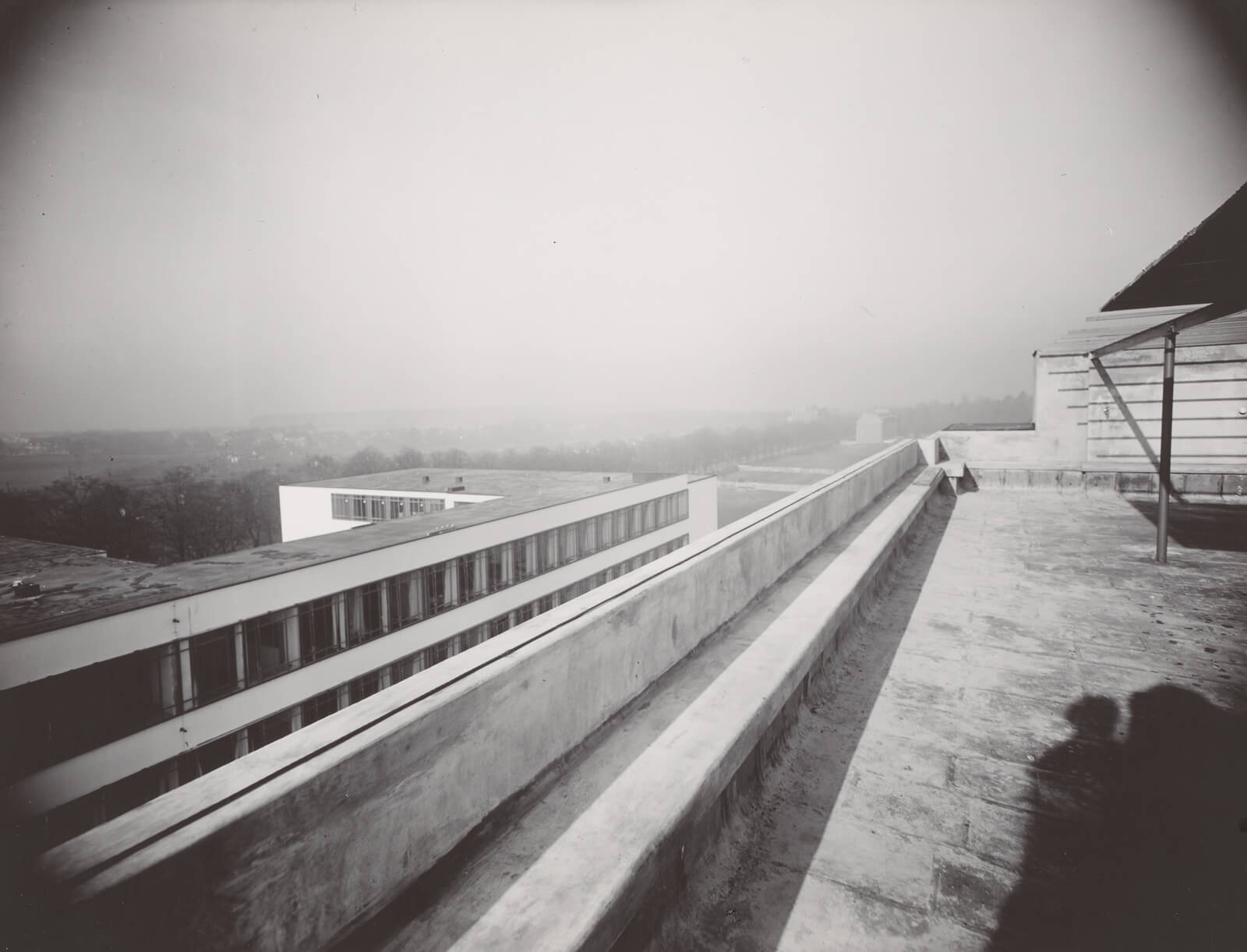
 

Lucia Moholy (British born Czech, 1894-1989) 'Roof of the Atelier-House, Bauhaus Dessau' 1926 from the exhibition 'Lucia Moholy – Exposures' at Fotostiftung Schweiz, Winterthur, Feb - June, 2025


Lucia Moholy (British born Czech, 1894-1989)
Roof of the Atelier-House, Bauhaus Dessau
1926
© 2025, ProLitteris, Zürich


I love Bauhaus design and photographs of the Bauhaus School and these are excellent photographs of both by Lucia Moholy: powerful, graphic, minimalist, modernist, echoing the ethos of the school itself. The strong portraits are pretty damn good as well…

It’s interesting to note then that Moholy was not particularly enamoured of this new modernist vision: “From her diaries, we know that Moholy didn’t like living in Dessau and her photos of the school, which are very alluring, also hint at her despair and dislike of being there.”

Then to learn that Walter Gropius, founder of the Bauhaus School, “had taken the negatives with him when he emigrated to the USA via London leading to years of negotiation with lawyers to get the negatives back.”

Why would you take the negatives of another artist, use them without credit and then refuse to give them back for many years without lawyers being involved? It’s incredible what human beings especially males will do (power and control), all because Gropius found the images useful for him to use! (see below)

While it is wonderful to be able to publish the first posting on Art Blart on the artist, I wish galleries and museums would stop making claims such as, Moholy “was one of the 20th century’s most internationally recognised and important female photographers.”

Let’s be frank: she wasn’t, not anywhere close.

Even in Europe in the 1930s we think of Florence Henri, Germaine Krull, Claude Cahun and Marcel Moore, Ilse Bing, Edith Tudor-Hart, Dora Maar etc etc… without even considering American female photographers of the era, or indeed the rest of the century. Today, many have more significance in the history of photography than Lucia Moholy ever will have.

This is in no way denigrating her work at all which I like tremendously, but just to assert that statements not thought through by marketing and media departments may come back to bite you on the arse.

Best just to say that Lucia Moholy was an accomplished artist who made focused, thoughtful, beautiful photographs of an era now nearly a century past. What more do you need to say.

Dr Marcus Bunyan


Many thankx to the Fotostiftung Schweiz for allowing me to publish the photographs in the posting. Please click on the photographs for a larger version of the image.


“In 1938, while Moholy lived in London, Walter Gropius used about fifty of Moholy’s images from the Bauhaus years – from her negatives that he still had in his possession – in the Museum of Modern Art (MoMA) exhibition and the accompanying catalogue, without giving her any credit. …

Gropius had been using her photographs without crediting her. She repeatedly reached out to Gropius to reclaim her images and he would continuously protest. Moholy resorted to hiring a lawyer to retrieve her work.

Some relevant letters between Walter Gropius and Lucia Moholy are displayed on the website 99% Invisible. Moholy stated, “These negatives are irreplaceable documents which could be extremely useful, now more than ever” to which Gropius replied, “[…] long years ago in Berlin, you gave all these negatives to me. You will imagine that these photographs are extremely useful to me and that I have continuously made use of them; so I hope you will not deprive me of them.” Lucia Moholy responded, “Surely you did not expect me to delay my departure in order to draw up a formal contract stipulating date and conditions of return? No formal agreement could have carried more weight than our friendship. It is a friendship I have always relied on, and which, also, I am now invoking.

Moholy did not get physical possession of her original material until 1957, but even then she only could recover a portion of them, 230 out of the 560 Bauhaus-era negatives she took, while 330 negatives, according to Moholy’s own card catalogue, are still missing.”

Anonymous. “Lucia Moholy,” on the Wikipedia website [Onloine] Cited 30/05/2025


Lucia Moholy (British born Czech, 1894-1989) 'Workshop wing, design by Walter Gropius, Bauhaus Dessau' around 1926 from the exhibition 'Lucia Moholy – Exposures' at Fotostiftung Schweiz, Winterthur, Feb - June, 2025


Lucia Moholy (British born Czech, 1894-1989)
Workshop wing, design by Walter Gropius, Bauhaus Dessau
around 1926
© 2025, ProLitteris, Zürich


Lucia Moholy (1894-1989) was one of the 20th century’s most internationally recognised and important female photographers. Her architectural photographs and portraits from her years at the Bauhaus in Dessau, which have become icons of photographic history, still shape how that institution is perceived today. However, Moholy was not just a photographer, but also an art historian, critic, writer and archivist; she described herself as a ‘documentalist’ and made a name for herself in the field of information science.

The exhibition Lucia Moholy – Exposures is the first to show the broad scope of her work from the 1910s to the 1970s. Her photographic oeuvre is presented together with numerous documents, some of them newly discovered, which shed light on Moholy’s role in the avant-garde during the interwar period, as well as her youth in Prague, her editorial work in Germany, her activity as a portraitist in London, and her involvement with early microfilm technology in England and Turkey.

Finally, the exhibition also invites visitors to encounter Lucia Moholy in the context of Zurich, where she spent the last thirty years of her life. During that time, she also maintained a relationship with the then fledgling Fotostiftung Schweiz, which today is home to a large collection of her photographs.

Text from the Fotostiftung Schweiz website
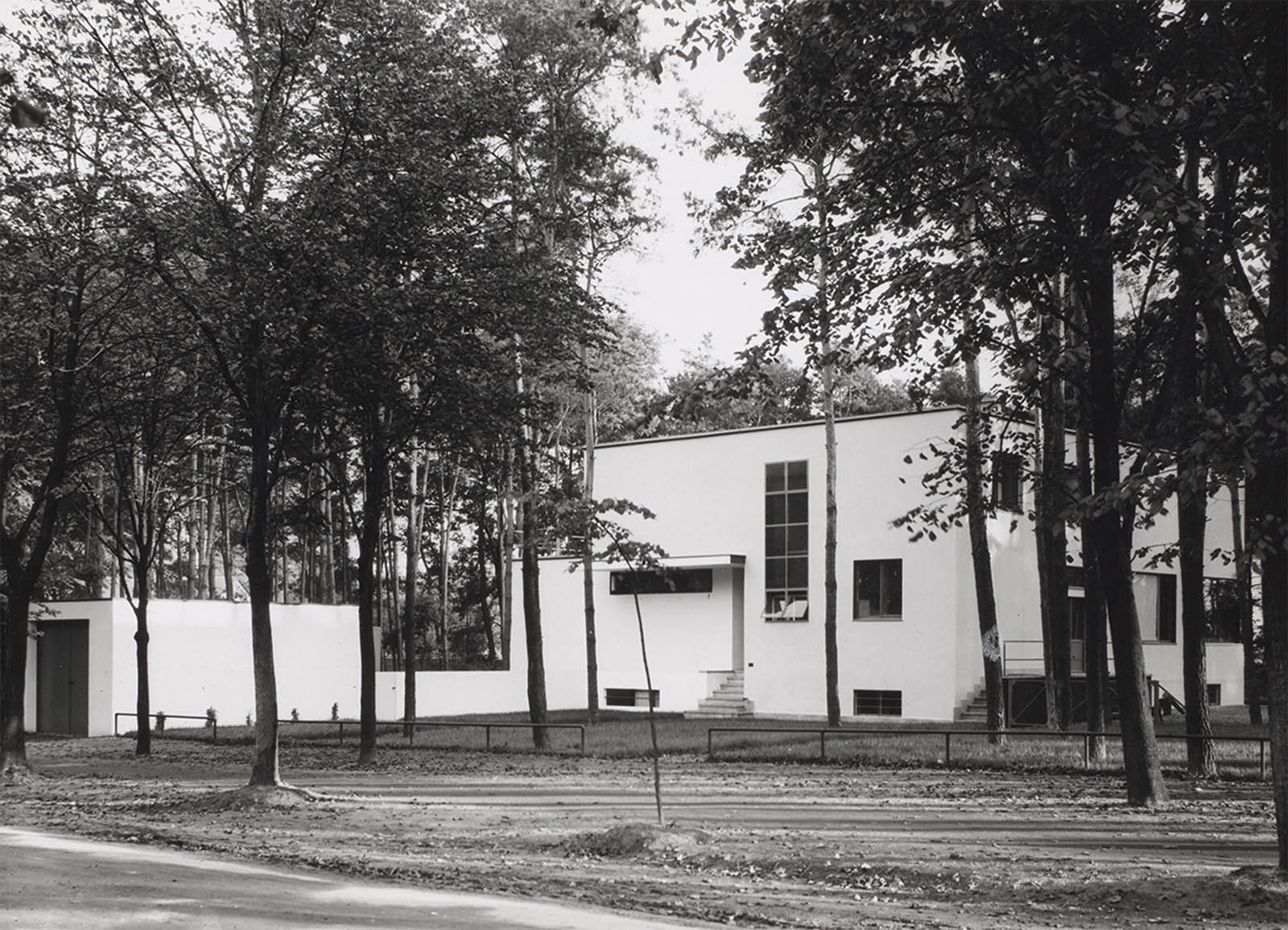
 

Lucia Moholy (British born Czech, 1894-1989) 'Gropius House in Dessau' 1925


Lucia Moholy (British born Czech, 1894-1989)
Gropius House in Dessau
1925
© 2025, ProLitteris, Zürich


“This street view of Gropius’s house in Dessau is glimpsed through a line of birch trees that conjures a feeling of entrapment, almost like prison bars. It reinforces this sense of being fenced in or fenced off – a feature of many of Moholy’s images of the Masters’ Houses, which provided accommodation for Bauhaus teachers.

“The photograph really captures the modernist style of Gropius’s buildings, with the rectilinear geometric shapes and the dark windows inserted into the white facades. While living in Dessau, Moholy’s relationship with Gropius and his wife Isa was amiable and continued to be so when the Gropiuses emigrated to the United States.

“It was only in the 1950s, when she learned how the negatives she left behind in Berlin in 1933 had been used to build the legacy of the school without her knowledge, that the relationship turned sour and she engaged a lawyer to help her recover the images.”

Meghan Forbes, co-curator of the exhibition when it was at Kunsthalle Praha quoted in Alyn Griffiths. “Lucia Moholy’s photographs provide a different perspective on the Bauhaus,” on the Dezeen website, 9th August, 2024 [Online] Cited 10/05/2025


Lucia Moholy (British born Czech, 1894-1989) 'Workshop wing from south-west, Bauhaus Dessau' 1926


Lucia Moholy (British born Czech, 1894-1989)
Workshop wing from south-west, Bauhaus Dessau
1926
© 2025, ProLitteris, Zürich
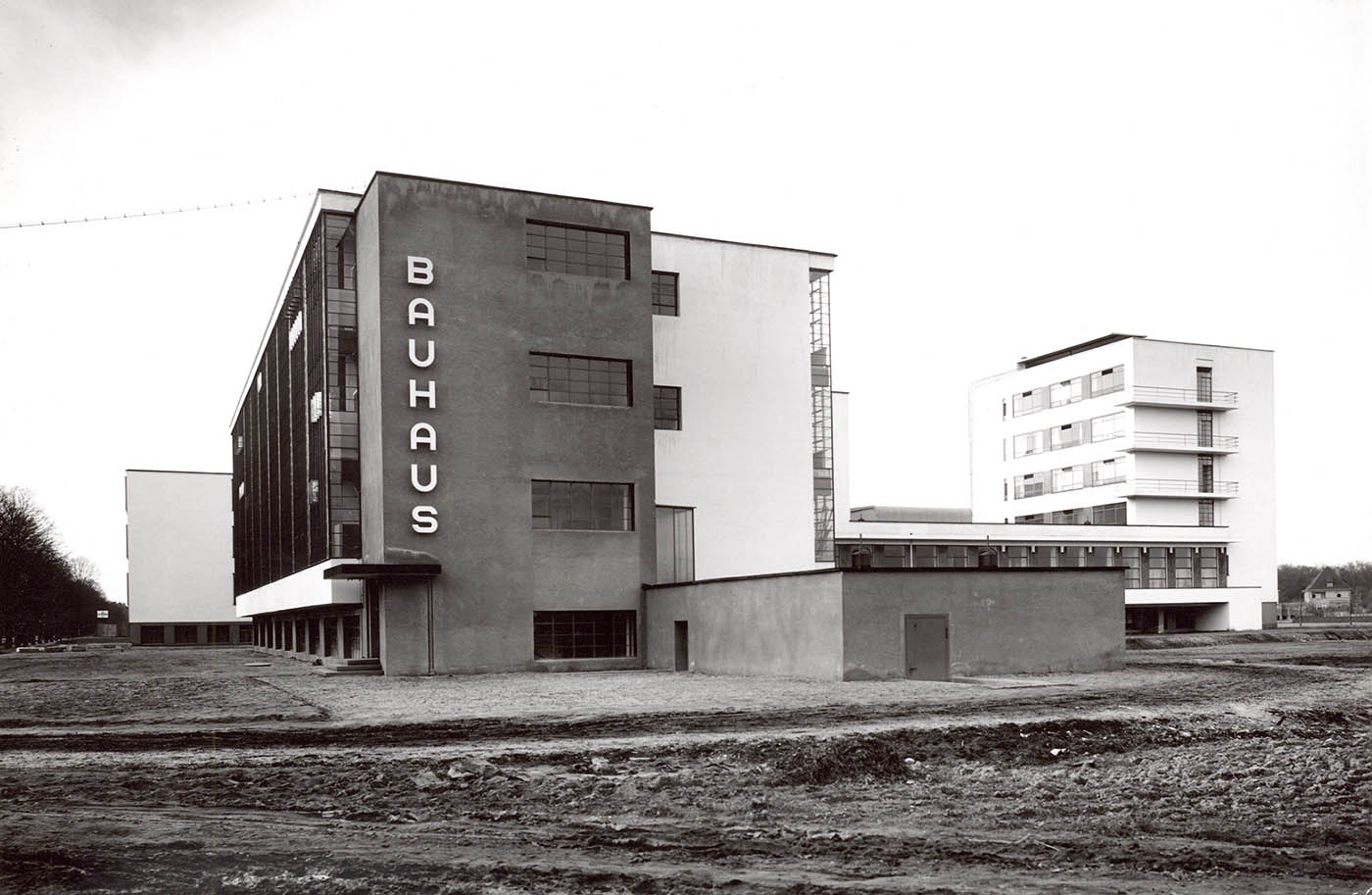
 

Lucia Moholy (British born Czech, 1894-1989) 'Bauhaus Dessau: Workshop building from the southwest' c. 1926


Lucia Moholy (British born Czech, 1894-1989)
Bauhaus Dessau: Workshop building from the southwest
c. 1926
© 2025, ProLitteris, Zürich
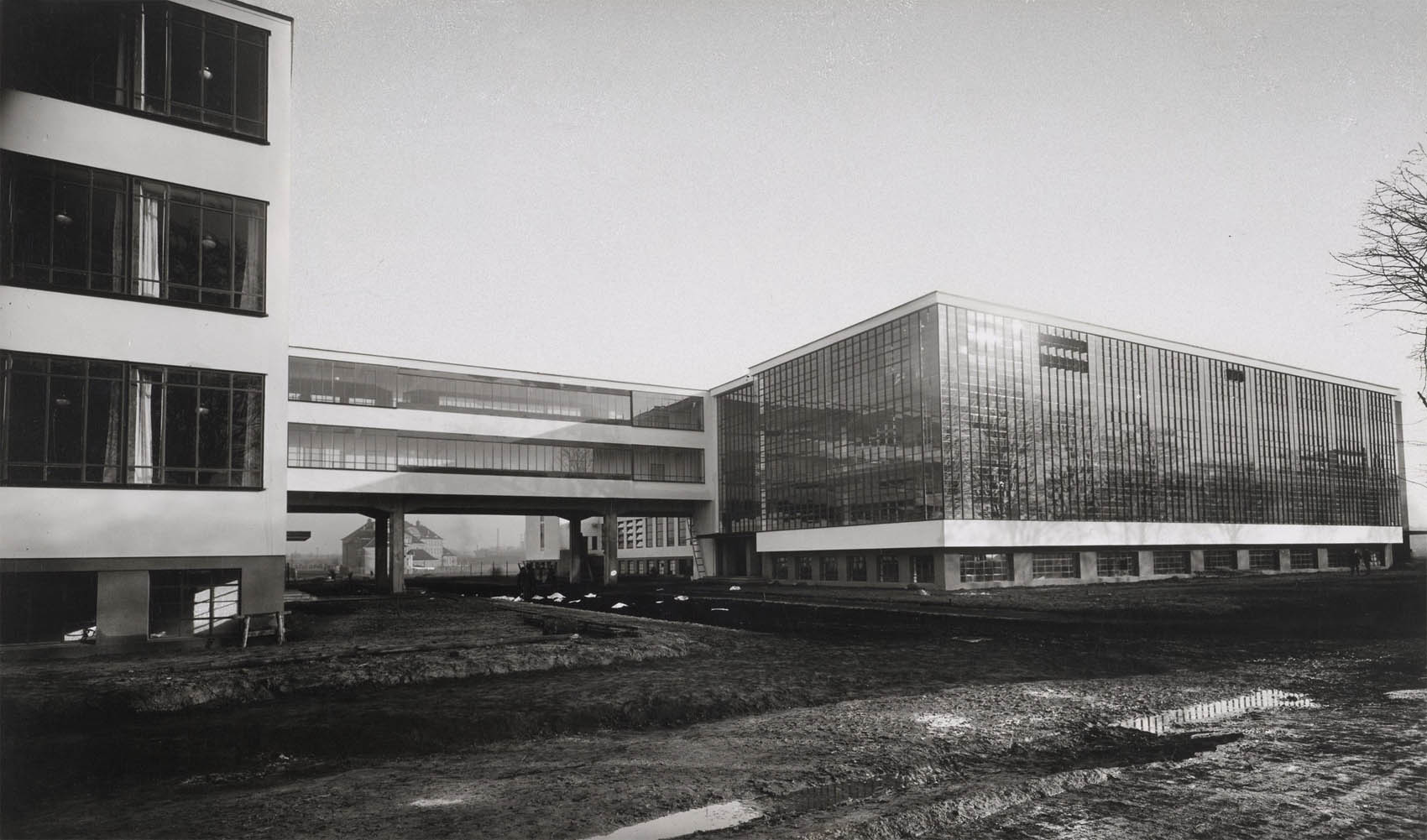
 

Lucia Moholy (British born Czech, 1894-1989) 'Workshop wing of the Bauhaus Building in Dessau' c. 1926


Lucia Moholy (British born Czech, 1894-1989)
Workshop wing of the Bauhaus Building in Dessau
c. 1926
© 2025, ProLitteris, Zürich


“To me, this photograph of Walter Gropius’s Bauhaus building with a muddy, unpaved road in the foreground shows the messier, dirtier aspects of constructing a new modernist vision. From her diaries, we know that Moholy didn’t like living in Dessau and her photos of the school, which are very alluring, also hint at her despair and dislike of being there.

“Moholy’s photographs documenting the Bauhaus buildings and design objects already appeared – with and without credits – in books at the time, as well as in the popular press. In the 1950s, she discovered that at least 40 of her images were used in the catalogue of the seminal 1938 Bauhaus exhibition held at MoMA in New York.

“It kickstarted a life-long campaign of letter-writing to try to obtain both the possession of her glass negatives from the Bauhaus years and appropriate author credit and compensation for the publication of her images.”

Meghan Forbes, co-curator of the exhibition when it was at Kunsthalle Praha quoted in Alyn Griffiths. “Lucia Moholy’s photographs provide a different perspective on the Bauhaus,” on the Dezeen website, 9th August, 2024 [Online] Cited 10/05/2025


Lucia Moholy (British born Czech, 1894-1989) 'Dining room Moholy-Nagy, Meistersiedlung Bauhaus Dessau' 1926


Lucia Moholy (British born Czech, 1894-1989)
Dining room Moholy-Nagy, Meistersiedlung Bauhaus Dessau
1926
© 2025, ProLitteris, Zürich


In the exhibition Lucia Moholy – Exposures, Fotostiftung Schweiz is honouring the oeuvre of a versatile 20th-century pioneer. The famous Bauhaus photographs taken by Lucia Moholy (1894-1989) still shape how that institution is seen today. She also left a significant legacy via her work as an art historian, critic, writer and microfilm expert. The exhibition shines a spotlight on this long-underestimated figure, who spent the last 30 years of her life in Zollikon, near Zurich.

Lucia Moholy – Exposures presents, for the first time, the full breadth of her work from the 1910s to the 1970s. Photographs, letters, diaries, publications and microfilms are shown, spread across three exhibition rooms. The focus is on key periods of her life: her youth in Prague, her time at the Bauhaus, her exile in London and her pioneering work on microfilm technology. One point of emphasis is her connection with Zurich and with Fotostiftung Schweiz, which holds many of her images. Works by the contemporary Czech artist and curatorJan Tichy will also be on display. The exhibition is realised in cooperation with Kunsthalle Praha.

Photographer of the Bauhaus

Lucia Moholy left Prague in 1915 to work for various German publishers. In Berlin, she met Hungarian artist László Moholy-Nagy, whom she married in 1921. Together, they explored new reproduction technologies and the possibilities of the photogram. When Moholy-Nagy was appointed as a master at the Bauhaus, Moholy accompanied him and began to take photographs: Between 1923 and 1928, she documented Bauhaus design objects and Walter Gropius’s famous Dessau buildings. Her clearly composed shots still characterise the visual legacy of that institution to this day. Moholy’s portraits of Bauhaus figures like Anni Albers, Walter Gropius and Florence Henri are particularly impressive, and have been made central to the exhibition.

Exile and a new beginning

In 1928, Lucia Moholy and László Moholy-Nagy left the Bauhaus and moved to Berlin, where they soon separated. Moholy took charge of the photography class at Johannes Itten’s art school, while simultaneously trying her hand at photojournalism. Her flight from the Nazis in 1933 took her to London. There, she opened a photo studio and wrote the bestseller A Hundred Years of Photography, 1839-1939. After her studio was destroyed by bombing in 1940, she turned to microfilm technology. She founded her own documentation service and set up a microfilm centre in Ankara as a UNESCO expert.

The search for the glass negatives

After the end of the Second World War, Moholy noticed many of her Bauhaus photographs appearing in newly released publications. After extensive research, she eventually learnt that Walter Gropius had taken the negatives with him when he emigrated to the USA via London. It was not until 1957, after years of legal negotiations, that Lucia Moholy was able to get a large number of her negatives back, which are now in the Bauhaus Archive in Berlin.

Late recognition of the photographer

Moholy moved to Zurich in 1959. Here, she wrote about Zurich exhibitions for English magazines and was a prominent figure on the art scene. During the 1970s and 1980s, interest in Moholy’s photographic works finally grew. They were shown in exhibitions and published in magazines. In 1981, a solo exhibition was held in her honour at Gallery Ziegler in Zurich. Four years later, her first monograph was published, with in-depth analysis of her work by art historian Rolf Sachsse. Moreover, two founding members of Fotostiftung Schweiz, Rosellina Burri-Bischof and Walter Binder, maintained contact with Lucia Moholy. Thanks to a purchase and a donation from Moholy’s estate, Fotostiftung Schweiz now holds 146 of her prints, which can be accessed via the Online Image Archive and constitute the largest collection outside the Bauhaus Archive.

Jan Tichy – Weight of Glass

The exhibition at Fotostiftung Schweiz is supplemented with contemporary works by the artist and curator Jan Tichy, who has been engaging with Moholy’s legacy for almost 20 years. His microfilm installation can be seen in the passage leading to the photo library. In addition, contemporary video works, installations and photographs are being shown at oxyd-Kunsträume from the 7th of February to the 2nd of March 2025, including the impressive Installation no. 30 (Lucia), for which Tichy arranges and illuminates 330 glass plates in the size of the original negatives. Set up in a dark room, the installation creates a fleeting and fragile memorial to an important protagonist of the 20th century.

Lucia Moholy – Exposures is a Kunsthalle Praha exhibition project, organised in cooperation with Fotostiftung Schweiz, Winterthur, and the Bauhaus Archive, Berlin.

Press release from Fotostiftung Schweiz, Winterthur
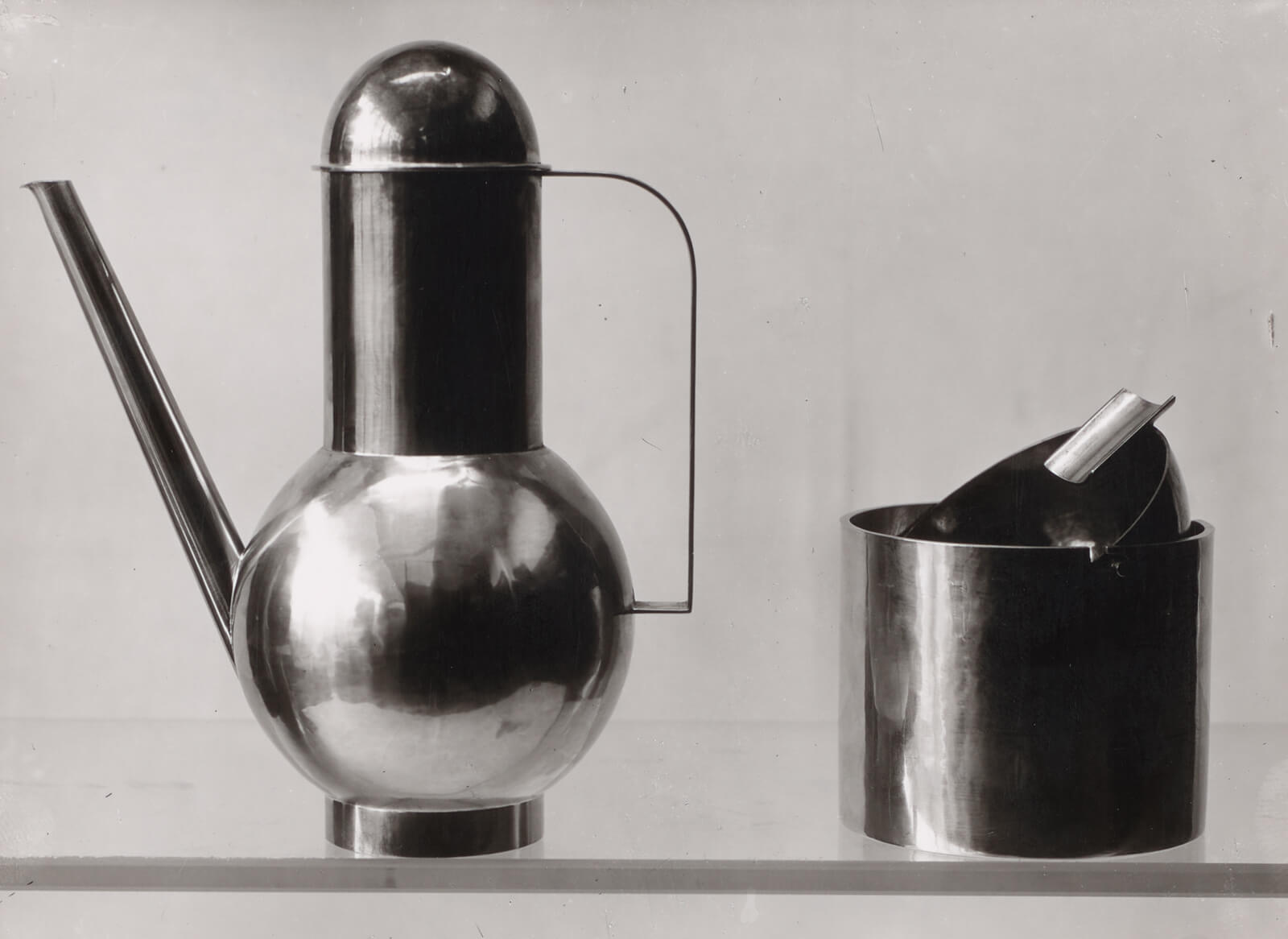
 

Lucia Moholy (British born Czech, 1894-1989) 'Metal workshop, design by Marianne Brandt, Bauhaus Dessau' 1924 from the exhibition 'Lucia Moholy – Exposures' at Fotostiftung Schweiz, Winterthur, Feb - June, 2025


Lucia Moholy (British born Czech, 1894-1989)
Metal workshop, design by Marianne Brandt, Bauhaus Dessau
1924
© 2025, ProLitteris, Zürich


“Marianne Brandt is a really important Bauhaus designer who ended up living in East Germany in relative obscurity, although her work is now also receiving due attention. The somewhat static composition of the two objects side by side is dynamised by the diagonals produced by the larger vessel’s slender spout and the decision to slant in the ashtray’s top, emphasizing the use value.

“It also shows how Moholy played with reflective surfaces when photographing metal objects, evoking the work of Florence Henri who was at the Bauhaus at the same time. Henri was known for capturing her own portrait as she played with glass and metal in her photographs.

“We can also occasionally catch a glimpse of Moholy in some of her metal studies. But in other instances, she focuses on highlighting the lustrous quality of the objects in isolation. These images of metal objects are perhaps the best-known of her Bauhaus product photographs. But she also took pictures of pieces made from ceramics or wood that indicate the evolution of design thinking at the school.”

Meghan Forbes, co-curator of the exhibition when it was at Kunsthalle Praha quoted in Alyn Griffiths. “Lucia Moholy’s photographs provide a different perspective on the Bauhaus,” on the Dezeen website, 9th August, 2024 [Online] Cited 10/05/2025


Lucia Moholy (British born Czech, 1894-1989) 'Edith Tschichold, Bauhaus Dessau' 1926


Lucia Moholy (British born Czech, 1894-1989)
Edith Tschichold, Bauhaus Dessau
1926
© ProLitteris, Zürich


Edith Tschichold was the wife of Bauhaus typographer and graphic designer Jan Tschichold (German, 1905-1986)


Lucia Moholy (British born Czech, 1894-1989) 'László Moholy-Nagy, Bauhaus Dessau' 1926


Lucia Moholy (British born Czech, 1894-1989)
László Moholy-Nagy, Bauhaus Dessau
1926
© 2025, ProLitteris, Zürich


~ European art research tour exhibition: ‘László Moholy-Nagy and New Typography: A Reconstruction of a Berlin Exhibition from 1929’ at the Staatliche Museen zu Berlin, August – September 2019, posted November 2020
~ Exhibition: ‘Moholy-Nagy: Future Present’ at the Los Angeles County Museum of Art, February – June 2017
~ Exhibition: ‘Moholy-Nagy: Future Present’ at the Solomon R. Guggenheim Museum, New York, May – September 2016
~ Exhibition: ‘László Moholy-Nagy. The Art of Light’ at the Ludwig Museum, Budapest, June – September 2011
~ Exhibition: ‘László Moholy-Nagy – Art of Light’ at Martin Gropius-Bau, Berlin, November 2010 – January 2011
~ Exhibition: ‘László Moholy-Nagy 
Retrospective’ at Schirn Kunsthalle, Frankfurt, October 2009 – February 2010


Lucia Moholy (British born Czech, 1894-1989) 'Walter Gropius, Bauhaus Dessau' 1926


Lucia Moholy (British born Czech, 1894-1989)
Walter Gropius, Bauhaus Dessau
1926
© 2025, ProLitteris, Zürich
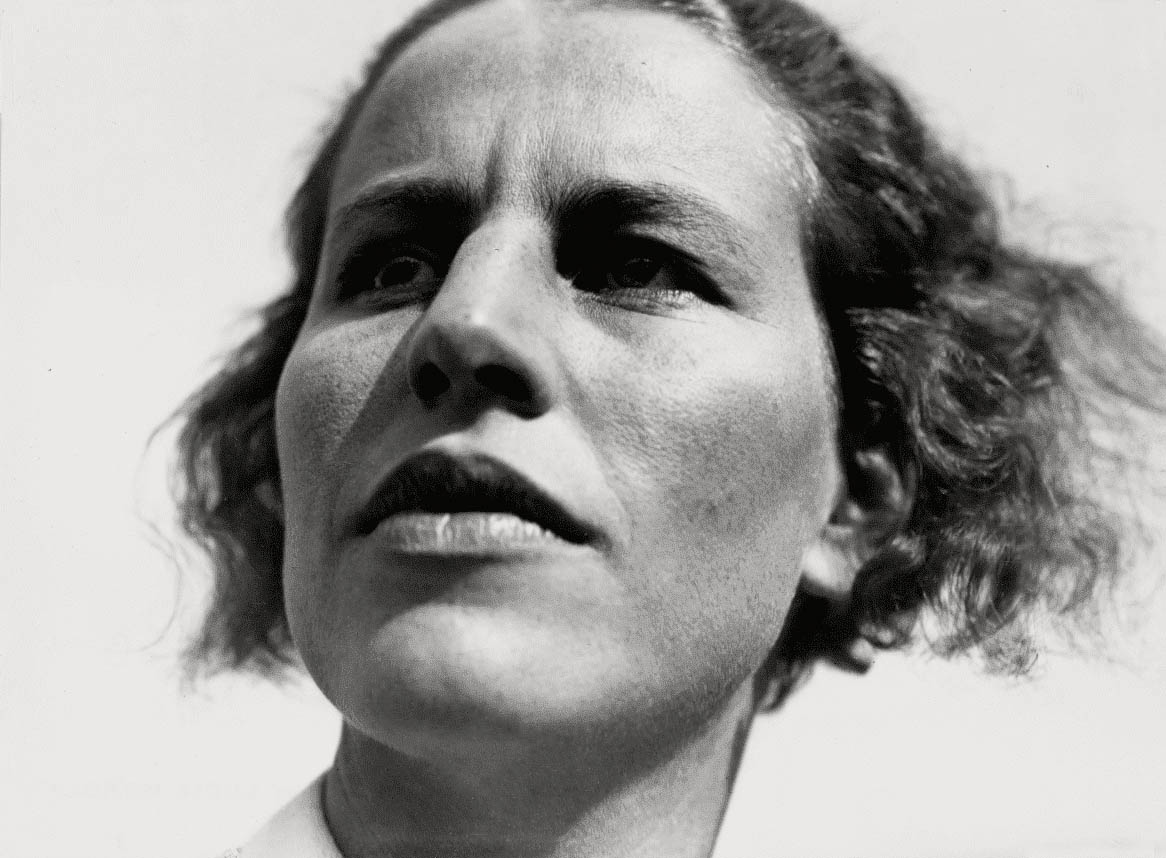
 

Lucia Moholy (British born Czech, 1894-1989) 'Ingeborg Lebert' 1927


Lucia Moholy (British born Czech, 1894-1989)
Ingeborg Lebert
1927
Gelatin silver print
22 x 29.8cm
© 2025, ProLitteris, Zürich


Lucia Moholy (British born Czech, 1894-1989) 'Lou Scheper' 1927


Lucia Moholy (British born Czech, 1894-1989)
Lou Scheper
1927
© 2025, ProLitteris, Zürich


Lou Scheper-Berkenkamp née Hermine Luise Berkenkamp (German, 1901-1976) was a painter, colour designer, the avant-garde author of children’s books, fairy-tale illustrator and costume designer.

More information on the Wikipedia website


Lucia Moholy (British born Czech, 1894-1989) 'Florence Henri, Bauhaus Dessau' 1927


Lucia Moholy (British born Czech, 1894-1989)
Florence Henri, Bauhaus Dessau
1927
© 2025, ProLitteris, Zürich


“Henri’s sophisticated, avante-garde, sculptural compositions have an almost ‘being there’ presence: a structured awareness of a way of looking at the world, a world in which the artist questions reality. She confronts the borders of an empirical reality (captured by a machine, the camera) through collage and mirrors, in order to take a leap of faith towards some form of transcendence of the real. Here she confronts the limitless freedom of creativity, of composition, to go beyond objectivity and science, to experience Existenz (Jaspers) – the realm of authentic being.*

These photographs are her experience of being in the world, of Henri observing the breath of being – the breath of herself, the breath of the objects and a meditation on those objects. There is a stillness here, an eloquence of construction and observation that goes beyond the mortal life of the thing itself. That is how these photographs seem to me to live in the world. I may be completely wrong, I probably am completely wrong – but that is how these images feel to me: a view, a perspective, the artist as prospector searching for a new way of authentically living in the world.”

Marcus Bunyan commenting on the exhibition Florence Henri. Compositions at the Pinakothek der Moderne, Munich, March – September 2014


Lucia Moholy (British born Czech, 1894-1989) 'Gypsy, Jugoslavia' 1930-1931


Lucia Moholy (British born Czech, 1894-1989)
Gypsy, Jugoslavia
1930-1931
© 2025, ProLitteris, Zürich


Lucia Moholy (British born Czech, 1894-1989) 'Ruth Fry' 1936


Lucia Moholy (British born Czech, 1894-1989)
Ruth Fry
1936
© 2025, ProLitteris, Zürich


Anna Ruth Fry (British , 1878-1962), usually known as Ruth Fry, was a Quaker writer, pacifist and peace activist.

More information on the Wikipedia website


Lucia Moholy (British born Czech, 1894-1989) 'Emma, Countess of Oxford and Asquith, London' 1937


Lucia Moholy (British born Czech, 1894-1989)
Emma, Countess of Oxford and Asquith, London
1937
© 2025, ProLitteris, Zürich
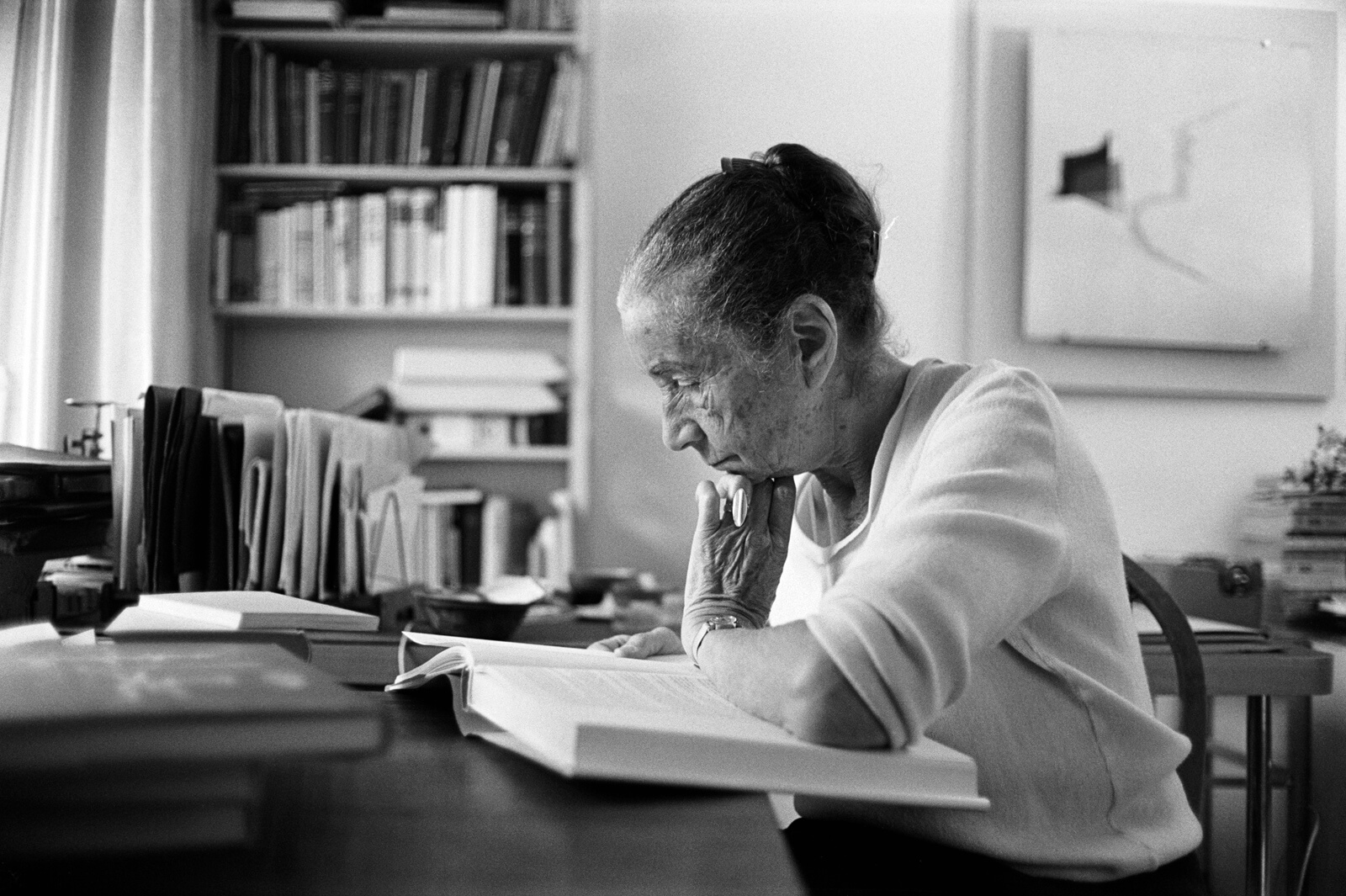
 

Hans Peter Klauser (Swiss, 1910-1989) 'Lucia Moholy in her studio in Zollikon' 1972


Hans Peter Klauser (Swiss, 1910-1989)
Lucia Moholy in her studio in Zollikon
1972
© Hans Peter Klauser/Fotostiftung Schweiz


Hans Peter Klauser (Swiss, 1910-1989) 'Lucia Moholy in her studio in Zollikon' 1972


Hans Peter Klauser (Swiss, 1910-1989)
Lucia Moholy in her studio in Zollikon
1972
© Hans Peter Klauser/Fotostiftung Schweiz


Fotostiftung Schweiz
Grüzenstrasse 45
CH-8400 Winterthur (Zürich)
Phone: +41 52 234 10 30

Opening hours:
Tuesday – Sunday 11am – 6pm
Wednesday 11am – 8pm
Closed on Mondays

Fotostiftung Schweiz website

LIKE ART BLART ON FACEBOOK

Back to top

Exhibition: ‘Karl Blossfeldt. From Nature’s Studio’ at Pinakothek der Moderne, Munich

Exhibition dates: 24th July – 25th October 2015

Curator: Simone Förster


Karl Blossfeldt (German, 1865-1932) 'Four Herbariums with groomed Thistels and Delphinium' undated


Karl Blossfeldt (German, 1865-1932)
Four Herbariums with groomed Thistels and Delphinium
Undated
Stiftung Ann und Jürgen Wilde, Pinakothek der Moderne, Munich


Karl Blossfeldt’s photographs have been associated with Modernism (Bauhaus), Surrealism and New Objectivity / New Vision.

“Blossfeldt’s factual yet finely detailed imagery was praised by Walter Benjamin, who declared that Karl Blossfeldt ‘has played his part in that great examination of the inventory of perception, which will have an unforeseeable effect on our conception of the world’. He compared him to Maholy-Nagy and the pioneers of New Objectivity, and ranked his achievements alongside the great photographers August Sander and Eugene Atget. The Surrealists also championed him, and George Bataille included his images in the periodical Documents in 1929.” (Wikipedia)

Hailed as a master for discovering a hitherto ‘unknown universe’ and for his exemplary technical feats as a photographer Blossfeldt’s work is, nevertheless, decidedly subjective as author Hanako Murata notes in her excellent essay on the artist Material Forms in Nature: The Photographs of Karl Blossfeldt (2014). “Not only did he carefully select, arrange, and in some cases physically modify his specimens, but his meticulous attention to detail and image refinement continued throughout each step of production, beginning with his negatives.” Blossfeldt uses the logic of the plant and the logic of his mind to achieve his final vision. A/symmetry as art form.

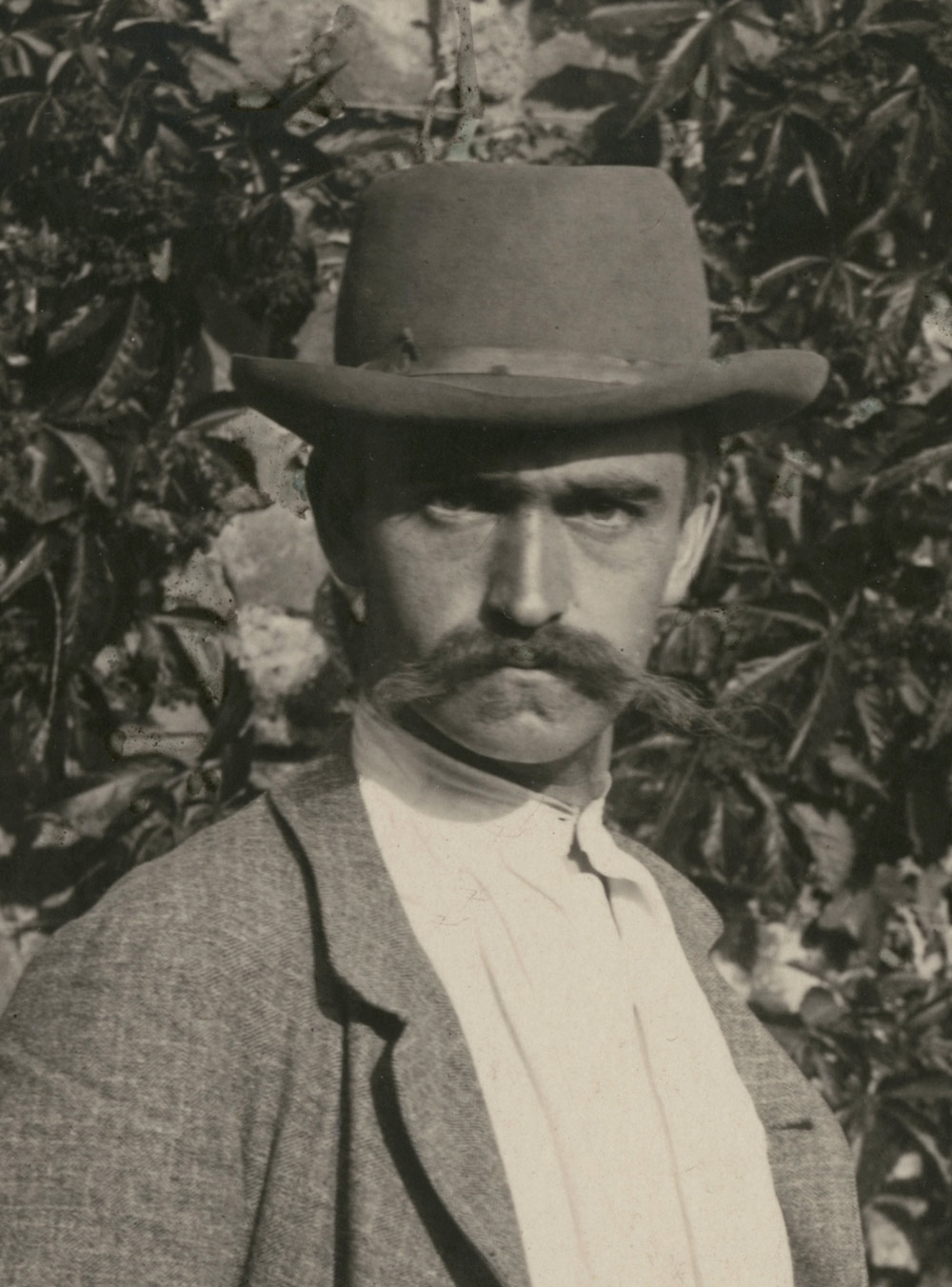
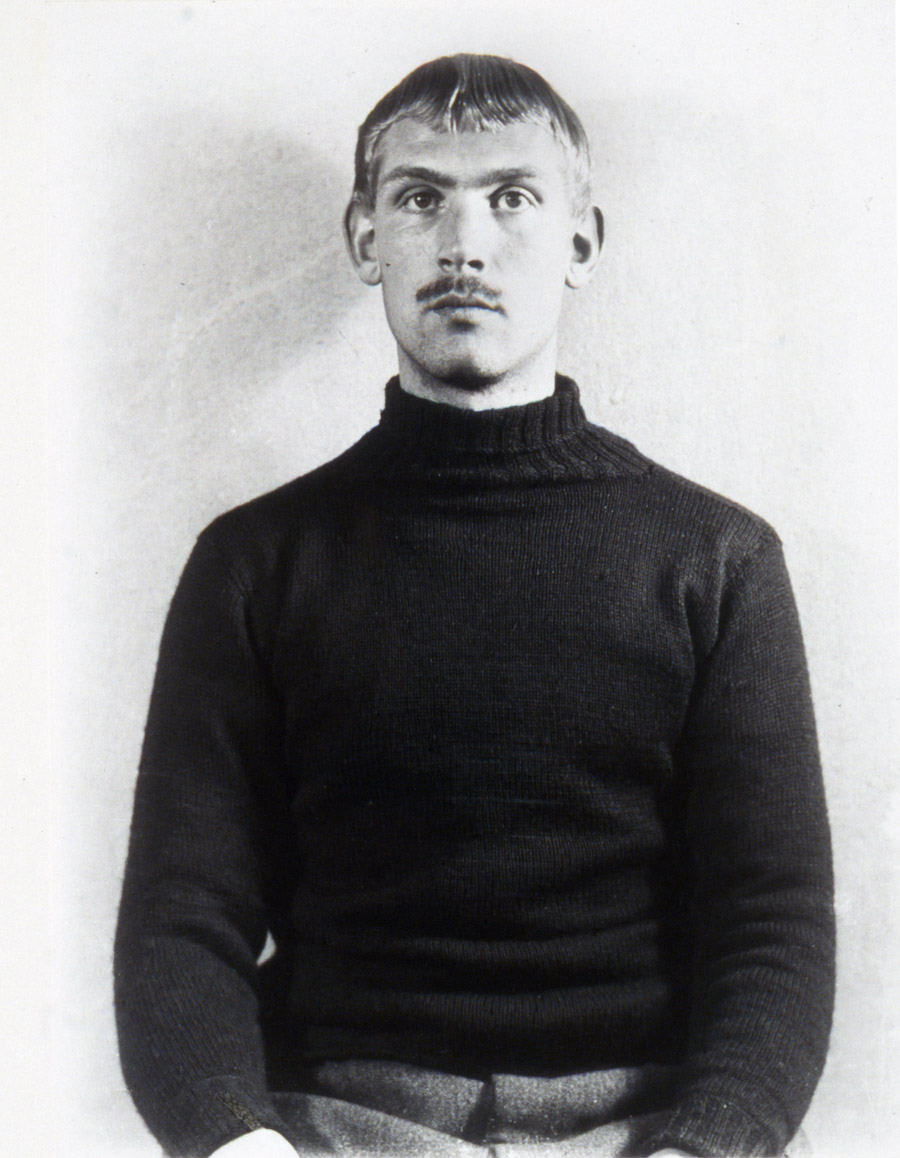
It was Blossfeldt’s conception of the world that created this inventory of perception. He was the human being who recognised these structures, who used the photographs as teaching aids, who saw them as art and a way of restoring the link between man and nature. His vision and his alone. Nothing was left to chance, everything was controlled. You only have to look at his Self portrait, Rome (1895, below) to see that here is a determined man. His body points one way in suit with braces and stiff, high collared shirt, hand clenched at waist while his head snaps towards us with the most incredible stare, almost piercing the viewer with its ferocity. You can still feel that stare after all these decades.

Ranking his photographs alongside that of Sander and Atget is a big call. Personally, too big a call. If I had to put my finger on it, what they lack for me is any form of context in relationship to an externalised nature. They rely on the form of the plant and not its relationship to the world in which it lives. To discover those forms in science and then transfer them to the field of art is a truly inspiring vision that only Blossfeldt had. He manipulated reality to achieve his beautiful, formal re/presentations. But do they take me to the places that Sander and Atget’s photographs do. No. Here is the thing itself, and not what else it can stand for. Despite their call to Surrealism, their attention to detail leaves the images little room for rumination. Perhaps he took each step of that image refinement too far. Sometimes you need a little chaos in your world order, for the world of pattern cannot exist without randomness and mutation.

Dr Marcus Bunyan


Many thankx to Pinakothek der Moderne for allowing me to publish the photographs in the posting. Please click on the photographs for a larger version of the image.

Download Hanako Murata’s essay Material Forms in Nature: The Photographs of Karl Blossfeldt (2.3Mb pdf)


“If I give someone a horsetail he will have no difficulty making a photographic enlargement of it – anyone can do that. But to observe it, to notice and discover its forms, is something that only a few are capable of.”

“My botanical documents should contribute to restoring the link with nature. They should reawaken a sense of nature, point to its teeming richness of form, and prompt the viewer to observe for himself the surrounding plant world.”

“The plant never lapses into mere arid functionalism; it fashions and shapes according to logic and suitability, and with its primeval force compels everything to attain the highest artistic form.”


Karl Blossfeldt


“The striking uniformity of Blossfeldt’s photographs suggests an excellent mastery of studio technique, and indeed, for all the prints’ subsequent associations with New Objectivity, Blossfeldt’s work was decidedly subjective, insofar as he was not shy about modifying his subjects or his images to achieve his final vision. Not only did he carefully select, arrange, and in some cases physically modify his specimens, but his meticulous attention to detail and image refinement continued throughout each step of production, beginning with his negatives.”


Hanako Murata Material Forms in Nature: The Photographs of Karl Blossfeldt 2014, p.2


Karl Blossfeldt (German, 1865-1932) 'Self portrait, Rome' 1895


Karl Blossfeldt (German, 1865-1932)
Self portrait, Rome
1895
Stiftung Ann und Jürgen Wilde, Pinakothek der Moderne, München


Karl Blossfeldt (German, 1865-1932) 'Self portrait, Rome' 1895 (detail)


Karl Blossfeldt (German, 1865-1932)
Self portrait, Rome (detail)
1895
Stiftung Ann und Jürgen Wilde, Pinakothek der Moderne, München


Karl Blossfeldt (German, 1865-1932) 'Nature study (chestnut)' 1890s


Karl Blossfeldt (German, 1865-1932)
Nature study (chestnut)
1890s
Stiftung Ann und Jürgen Wilde, Pinakothek der Moderne, München


Karl Blossfeldt (German, 1865-1932) 'Papaver orientale. Oriental Poppy' before 1928


Karl Blossfeldt (German, 1865-1932)
Papaver orientale. Oriental Poppy
Before 1928
Stiftung Ann und Jürgen Wilde, Pinakothek der Moderne, München


The photographs of plants by the university professor and amateur photographer Karl Blossfeldt (1865-1932) are among the milestones in the history of 20th-century photography. To mark the 150th anniversary of Blossfeldt’s birth, the Ann and Jürgen Wilde Foundation at the Pinakothek der Moderne, Munich is staging a comprehensive exhibition on his life and work.

Focal points of the exhibition are Blossfeldt’s early training as a modeller, his work together with the reformer Moritz Meurer, the photographer’s own handcrafted designs and his teaching at the Königliche Kunstgewerbeschule in Berlin. The preliminary works he made for his seminal publication Urformen der Kunst (Art Forms in Nature) of 1928 and the reception it received at that time, for example at the Bauhaus in Dessau in 1929, form an additional aspect.

The exhibition comprises some 120 photographs, including numerous large-format, historical exhibition prints. Collages of his work, drawings in the artist’s own hand, drafts, archival material and documents render the concept behind Blossfeldt’s teaching and work visible.

The Ann and Jürgen Wilde Foundation manages the Karl Blossfeldt Archive with its unique holdings of original photographs, negatives and documents by Karl Blossfeldt. Together with a large volume of photographs in the Bayerische Staatsgemäldesammlungen, an exceptionally high-quality presentation of Karl Blossfeldt’s photographic work can now be staged and its development shown by means of historical documents and archival material that have hardly ever been seen by the general public.

Text from the Pinakothek der Moderne website


Karl Blossfeldt (German, 1865-1932) 'Adiantum pedatum. Maidenhair Fern' before 1926


Karl Blossfeldt (German, 1865-1932)
Adiantum pedatum. Maidenhair Fern
Before 1926
Stiftung Ann und Jürgen Wilde, Pinakothek der Moderne, München


Karl Blossfeldt (German, 1865-1932) 'Eryngium bourgatii. Bourgatis Eryngo' before 1928


Karl Blossfeldt (German, 1865-1932)
Eryngium bourgatii. Bourgatis Eryngo
Before 1928
Stiftung Ann und Jürgen Wilde, Pinakothek der Moderne, München


Karl Blossfeldt (German, 1865-1932) Heracleum sphondylium. Hogweed' 1898-1932


Karl Blossfeldt (German, 1865-1932)
Heracleum sphondylium. Hogweed
1898-1932
Stiftung Ann und Jürgen Wilde, Pinakothek der Moderne, München


Karl Blossfeldt (June 13, 1865 – December 9, 1932) was a German photographer, sculptor, teacher, and artist who worked in Berlin, Germany. He is best known for his close-up photographs of plants and living things, published in 1929 as, Urformen der Kunst. He was inspired, as was his father, by nature and the way in which plants grow. He believed that ‘the plant must be valued as a totally artistic and architectural structure.’ Among his students at the Berlin Arts and Crafts School was Heinz Warneke. From 1924, he was professor at the Vereinigte Staatsschulen für freie und angewandete Kunst (United State School for Fine and Applied Art) in Berlin.

Blossfeldt made many of his photographs with a home-made camera that could magnify the subject up to thirty times its size, revealing details within a plant’s natural structure. Appointed for a teaching post at the Institute of Royal Arts Museum in 1898 (where he remained until 1930), he established an archive for his photographs. Blossfeldt never received formal training in photography. Blossfeldt developed a series of home-made cameras that allowed him to photograph plant surfaces in unprecedented magnified detail. This reflected his enduring interest in the repetitive patterns found in nature’s textures and forms.

In Berlin from the late nineteenth century until his death, Blossfeldt’s works were primarily used as teaching tools and were brought to public attention in 1928 by his first publication Urformen der Kunst (Art Forms in Nature). Published in 1928 when Blossfeldt was 63 and a professor of applied art at the Berliner Kunsthochschule (Berlin Academy of Art), Urformen der Kunst quickly became an international bestseller and in turn, made Blossfeldt famous almost overnight. His contemporaries were impressed by the abstract shapes and structures in nature that he revealed. Swiftly regarded as a seminal book on photography, Blossfeldt’s factual yet finely detailed imagery was praised by Walter Benjamin, who declared that Karl Blossfeldt ‘has played his part in that great examination of the inventory of perception, which will have an unforeseeable effect on our conception of the world’. He compared him to Maholy-Nagy and the pioneers of New Objectivity, and ranked his achievements alongside the great photographers August Sander and Eugene Atget. The Surrealists also championed him, and George Bataille included his images in the periodical Documents in 1929.

In 2001 Urformen der Kunst was included in “The Book of 101 Books” as one of the seminal photographic books of the twentieth century.

Text from the Wikipedia website


Karl Blossfeldt (German, 1865-1932) 'Blumenbachia hieronymi. Blumenbachia' 1898-1932


Karl Blossfeldt (German, 1865-1932)
Blumenbachia hieronymi. Blumenbachia
1898-1932
Stiftung Ann und Jürgen Wilde, Pinakothek der Moderne, München


Karl Blossfeldt (German, 1865-1932) 'Dipsacus laciniatus. Cutleaf Teasel' before 1927


Karl Blossfeldt (German, 1865-1932)
Dipsacus laciniatus. Cutleaf Teasel
Before 1927
Stiftung Ann und Jürgen Wilde, Pinakothek der Moderne, München


Karl Blossfeldt (German, 1865-1932) 'Equisetum hyemale. Winter Horsetail' before 1929


Karl Blossfeldt (German, 1865-1932)
Equisetum hyemale. Winter Horsetail
Before 1929
Stiftung Ann und Jürgen Wilde, Pinakothek der Moderne, München


Pinakothek der Moderne
Barer Strasse 40
Munich

Opening hours:
Daily except Monday 10am – 6pm
Thursday 10am – 8pm

Pinakothek der Moderne website

LIKE ART BLART ON FACEBOOK

Back to top

Exhibition: ‘Lyonel Feininger: Photographs, 1928-1939’ at the J. Paul Getty Museum, Getty Center, Los Angeles

Exhibition dates: 25th October 2011 – 11th March 2012


Lyonel Feininger (American, 1871-1956) 'Untitled [Street Scene, Double Exposure, Halle]' 1929-1930


Lyonel Feininger (American, 1871-1956)
Untitled [Street Scene, Double Exposure, Halle]
1929-1930
Gelatin silver print
Image: 17.8 x 23.7cm (7 x 9 5/16 in)
Gift of T. Lux Feininger, Houghton Library, Harvard University
© Artists Rights Society (ARS), New York / VG Bild-Kunst, Bonn


Another photographer whose work was largely unknown to me. His work can be seen to reference Pictorialism, Eugene Atget, Constructivism and Modernism, the latter in the last three photographs of the Bauhaus buildings at night which are just beautiful! The capture of form, light (emanating from windows) and atmosphere is very pleasing.

Dr Marcus Bunyan

P.S. Don’t be confused when looking at the photographs in the posting. Note the difference in the work of Lynonel and his two sons Andreas and Theodore (nicknamed Lux).


Many thankx to the J. Paul Getty Museum for allowing me to publish the photographs in the posting. Please click on the photographs for a larger version of the image.


Lucia Moholy (British born Czechoslovakia, 1894-1989) 'Untitled [Southern View of Newly Completed Bauhaus, Dessau]' 1926


Lucia Moholy (British born Czechoslovakia, 1894-1989)
Untitled [Southern View of Newly Completed Bauhaus, Dessau]
1926
Gelatin silver print
Sheet: 5.7 x 8.1cm (2 1/4 x 3 3/16 in)
The J. Paul Getty Museum, Los Angeles
© Artists Rights Society (ARS), New York / VG Bild-Kunst, Bonn


Lyonel Feininger (American, 1871-1956) 'Untitled [Train Station, Dessau]' 1928-1929


Lyonel Feininger (American, 1871-1956)
Untitled [Train Station, Dessau]
1928-1929
Gelatin silver print
Image: 17.7 x 23.7 cm (6 15/16 x 9 5/16 in.)
Gift of T. Lux Feininger, Houghton Library, Harvard University
© Artists Rights Society (ARS), New York / VG Bild-Kunst, Bonn


Werner Zimmermann (German, 1906-1975) 'In Der Werkstatt' about 1929


Werner Zimmermann (German, 1906-1975)
In Der Werkstatt [In The Workshop]
About 1929
Gelatin silver print
7.9 × 11cm (3 1/8 × 4 5/16 in.)
The J. Paul Getty Museum, Los Angeles


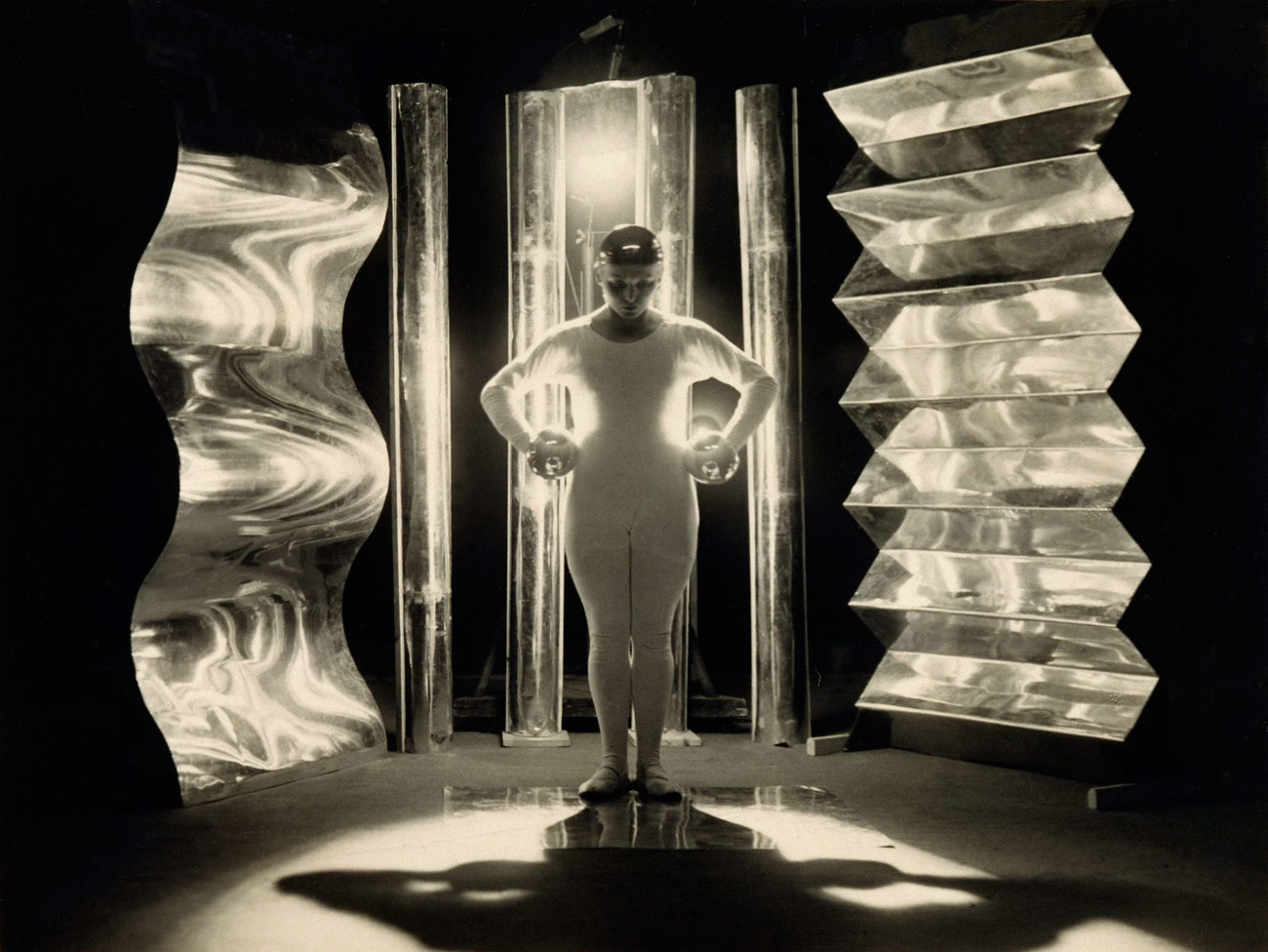
T. Lux Feininger (American born Germany, 1910-2011) 'Metalltanz' 1929


T. Lux Feininger (American born Germany, 1910-2011)
Metalltanz
1929
Gelatin silver print
Image: 10.8 x 14.4cm (4 1/4 x 5 5/8 in.)
The J. Paul Getty Museum, Los Angeles
© Estate of T. Lux Feininger


Widely recognised as a painter, printmaker, and draftsman who taught at the Bauhaus, Lyonel Feininger (American, 1871-1956) turned to photography later in his career as a tool for visual exploration. Drawn mostly from the collections at Harvard University in Cambridge, Massachusetts, Lyonel Feininger: Photographs, 1928-1939 at the J. Paul Getty Museum, Getty Center, October 25, 2011 – March 11, 2012, presents for the first time Feininger’s unknown body of photographic work. The exhibition is accompanied by a selection of photographs by other Bauhaus masters and students from the Getty Museum’s permanent collection. The Getty is the first U.S. venue to present the exhibition, which will have been on view at the Kupferstichkabinett, Staatliche Museen zu Berlin from February 26 – May 15, 2011 and the Staatliche Graphische Sammlung, Pinakothek der Moderne in Munich from June 2 – July 17, 2011. Following the Getty installation, the exhibition will be shown at the Harvard Art Museums from March 30 – June 2, 2012. At the Getty, the exhibition will run concurrently with Narrative Interventions in Photography.

“We are delighted to be the first U.S. venue to present this important exhibition organised by the Harvard Art Museums / Busch-Reisinger Museum,” says Virginia Heckert, curator of photographs at the J. Paul Getty Museum and curator of the Getty’s installation. “The presentation at the Getty provides a unique opportunity to consider Lyonel Feininger’s achievement in photography, juxtaposed with experimental works in photography at the Bauhaus from our collection.”

Lyonel Feininger Photographs

When Lyonel Feininger (1871-1956) took up the camera in 1928, the American painter was among the most prominent artists in Germany and had been on the faculty of the Bauhaus school of art, architecture, and design since it was established by Walter Gropius in 1919. For the next decade, he used the camera to explore transparency, reflection, night imagery, and the effects of light and shadow. Despite his early skepticism about this “mechanical” medium, Feininger was inspired by the enthusiasm of his sons Andreas and Theodore (nicknamed Lux), who had installed a darkroom in the basement of their house, as well as by the innovative work of fellow Bauhaus master, László Moholy-Nagy.

Although Lyonel Feininger would eventually explore many of the experimental techniques promoted by Moholy-Nagy and practiced by others at the school, he remained isolated and out of step with the rest of the Bauhaus. Working alone and often at night, he created expressive, introspective, otherworldly images that have little in common with the playful student photography more typically associated with the school. Using a Voigtländer Bergheil camera (on display in the exhibition), frequently with a tripod, he photographed the neighbourhood around the Bauhaus campus and masters’ houses, and the Dessau railway station, occasionally reversing the tonalities to create negative images.

Lyonel Feininger: Photographs, 1928-1939 also includes the artist’s photographs from his travels in 1929-1931 to Halle, Paris, and Brittany, where he investigated architectural form and urban decay in photographs and works in other media. In Halle, while working on a painting commission for the city, Feininger recorded architectural sites in works such as Halle Market with the Church of St. Mary and the Red Tower (1929-1930), and experimented with multiple exposures in photographs such as Untitled (Street Scene, Double Exposure, Halle) (1929-1930), a hallucinatory image that merges two views of pedestrians and moving vehicles.

Since 1892 Feininger had spent parts of the summer on the Baltic coast, where the sea and dunes, along with the harbours, rustic farmhouses, and medieval towns, became some of his most powerful sources of inspiration. During the summers Feininger also took time off from painting, focusing instead on producing sketches outdoors or making charcoal drawings and watercolours on the veranda of the house he rented. Included in the exhibition are photographs Feininger created in Deep an der Rega (in present-day Poland) between 1929 and 1935 which record the unique character of the locale, the people, and the artistic and leisure activities he pursued.

In the months after the Nazis closed the Bauhaus, and prior to Feininger’s departure from Dessau in March 1933, he made a series of unsettling photographs featuring mannequins in shop windows such as Drunk with Beauty (1932). Feininger’s images emphasise not only the eerily lifelike and strangely seductive quality of the mannequins, but also the disorienting, dreamlike effect created by reflections on the glass.

In 1937 Feininger permanently settled in New York City after a nearly 50-year absence, and photography served as an important means of reacquainting himself with the city in which he had lived until the age of sixteen. The off-kilter bird’s eye view he made from his eleventh-floor apartment of the Second Avenue elevated train tracks, Untitled (Second Avenue El from Window of 235 East 22nd Street, New York) (1939), is a dizzying photograph of an American subject in the style of European avant-garde photography, and mirrors the artist’s own precarious and disorienting position between two worlds, and between past and present.

The Bauhaus

Walter Gropius, director of the Bauhaus from 1919 to 1928, changed the face of art education with his philosophy of integrating art, craft, and technology with everyday life at the Bauhaus. When Gropius’s newly designed building in Dessau was completed in December 1926, its innovative structure did more than house the various components of the school; it became an integral aspect of life at the Bauhaus and a stage for its myriad activities, from studies and leisurely pursuits to theatrical performances. From the beginning, the camera recorded the architecture as the most convincing statement of Gropius’ philosophy as well as the fervour with which the students embraced it. The photographs in this complementary section of the exhibition also examine the various ways photography played a role at the Bauhaus, even before it became part of the curriculum.

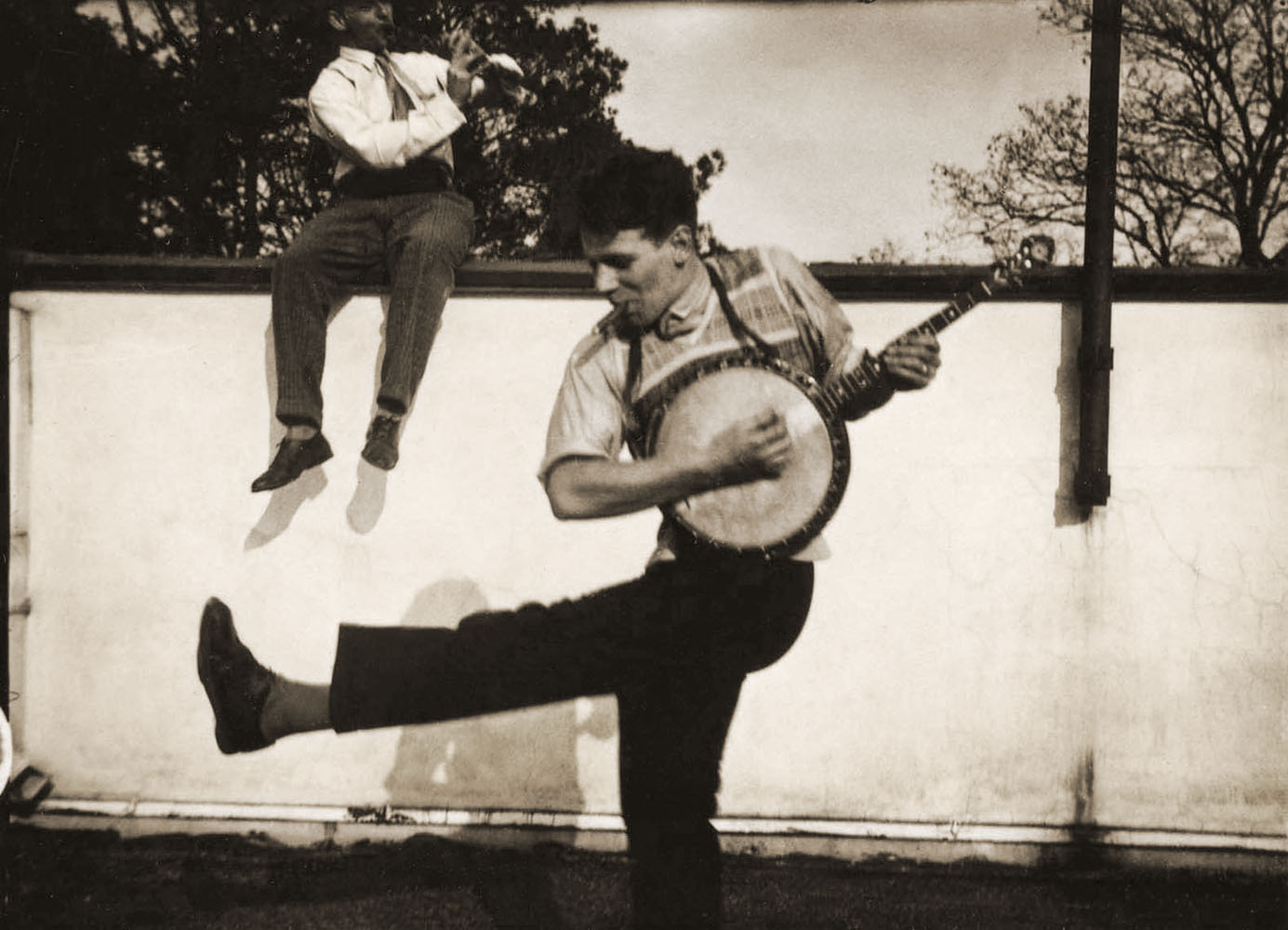
In addition to the collaborative environment encouraged in workshops, students found opportunities to bond during their leisure time, whether in a band that played improvisational music or on excursions to nearby beaches, parks, and country fairs. One of the most active recorders of life at the Bauhaus was Lyonel Feininger’s youngest son, T. Lux, who was also a member of the jazz band.

Masters and students alike at the Bauhaus took up the camera as a tool with which to record not only the architecture and daily life of the Bauhaus, but also one another. Although photography was not part of the original curriculum, it found active advocates in the figures of László Moholy-Nagy and his wife Lucia Moholy. With his innovative approach and her technical expertise, the Moholy-Nagys provided inspiration for others to use the camera as a means of both documentation and creative expression. The resulting photographs, which included techniques such as camera-less photographs (photograms), multiple exposures, photomontage and collages (“photo-plastics”), and the combination of text and image (“typo-photo”), contributed to Neues Sehen, or the “new vision,” that characterised photography in Germany between the two world wars.

It was not until 1929 that photography was added to the Bauhaus curriculum by Hannes Meyer, the new director following Gropius’s departure. A part of the advertising department, the newly established workshop was led by Walter Peterhans, who included technical exercises as well as assignments in the genres of portraiture, still life, advertisement, and photojournalism in the three-year course of study.”

Press release from the J.Paul Getty Museum website


Lyonel Feininger (American, 1871-1956) 'Untitled [Night View of Trees and Street Lamp, Burgkühnauer Allee, Dessau]' 1928


Lyonel Feininger (American, 1871-1956)
Untitled [Night View of Trees and Street Lamp, Burgkühnauer Allee, Dessau]
1928
Gelatin silver print
Image: 17.7 x 23.7cm (6 15/16 x 9 5/16 in)
Gift of T. Lux Feininger, Houghton Library, Harvard University
© Artists Rights Society (ARS), New York / VG Bild-Kunst, Bonn


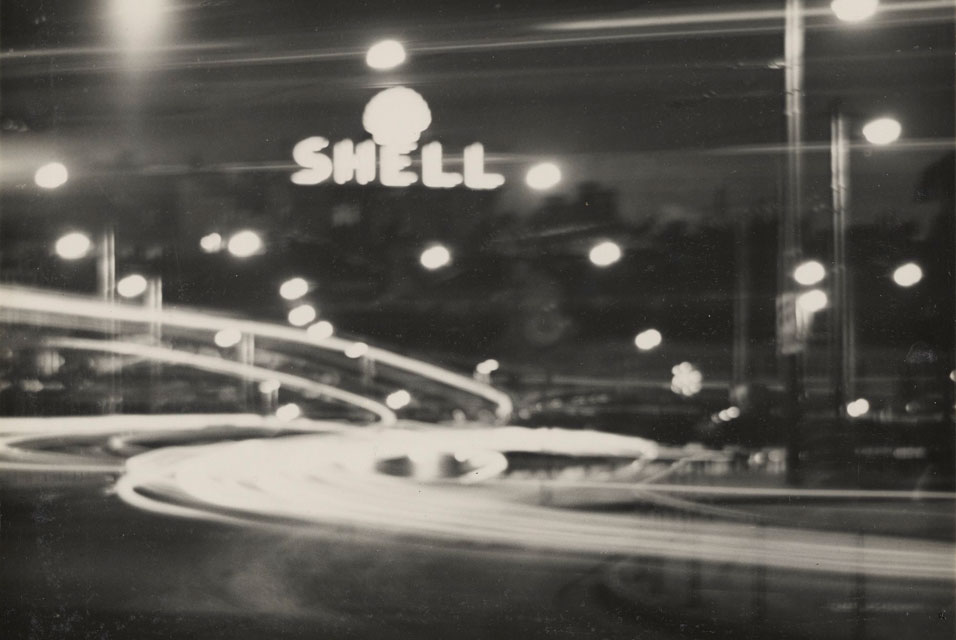
Andreas Feininger (American, 1906-1999) 'Stockholm (Shell sign at night)' 1935


Andreas Feininger (American, 1906-1999)
Stockholm (Shell sign at night)
1935
Gelatin silver print
17.4 x 24.2cm
The J. Paul Getty Museum, Los Angeles, Gift of the Estate of Gertrud E. Feininger
© Estate of Gertrud E. Feininger


Lyonel Feininger (American, 1871-1956) 'Drunk with Beauty' 1932


Lyonel Feininger (American, 1871-1956)
Drunk with Beauty
1932
Gelatin silver print
Image: 17.9 x 23.9cm (7 1/16 x 9 7/16 in)
Gift of T. Lux Feininger, Houghton Library, Harvard University
© Artists Rights Society (ARS), New York / VG Bild-Kunst, Bonn


Lyonel Feininger (American, 1871-1956) 'Bauhaus' March 22, 1929


Lyonel Feininger (American, 1871-1956)
Bauhaus
March 22, 1929
Gelatin silver print
Image: 17.8 x 23.9cm (7 x 9 7/16 in)
Harvard Art Museums/Busch-Reisinger Museum, Gift of Mr. and Mrs. Lyonel Feininger
© Artists Rights Society (ARS), New York / VG Bild-Kunst, Bonn


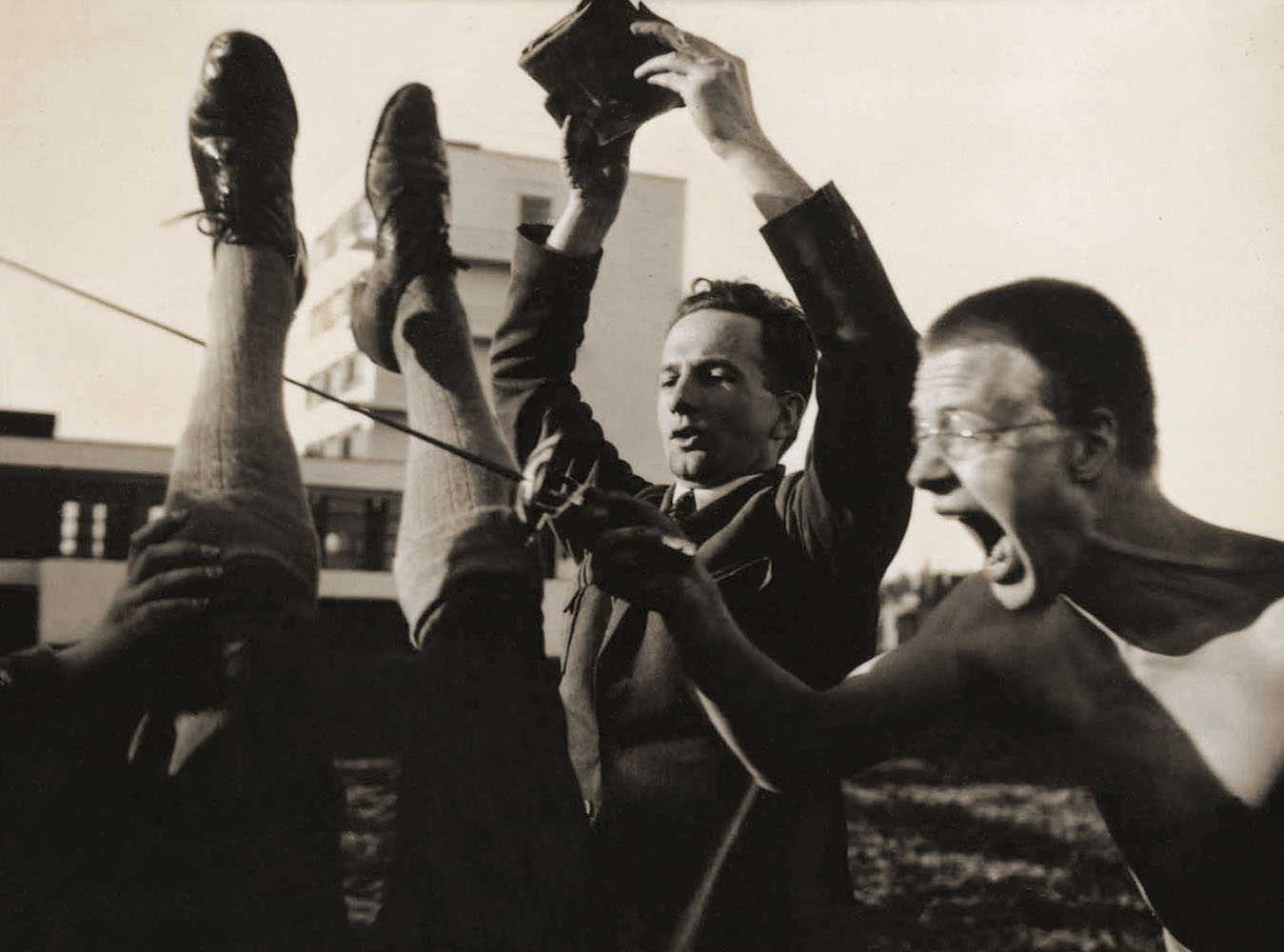
T. Lux Feininger (American born Germany, 1910-2011) 'Untitled (Georg Hartmann and Werner Siedhoff with Other Students)' 1929


T. Lux Feininger (American born Germany, 1910-2011)
Untitled (Georg Hartmann and Werner Siedhoff with Other Students)
1929
Gelatin silver print
© Estate of T. Lux Feininger


Lyonel Feininger and Photography

Lyonel Feininger took up the camera at the age of 58 in fall 1928. Despite his early skepticism about this “mechanical” medium, the painter was inspired by the enthusiasm of his sons Andreas and Theodore (nicknamed Lux), as well as by the innovative work of László Moholy-Nagy, a fellow master at the Bauhaus in Dessau, Germany.

Photography remained a private endeavour for Feininger. He never exhibited his prints, publishing just a handful during his lifetime and sharing them only with family and a few friends.

Bauhaus Experiments in Photography

Although Feininger explored many of the experimental photographic techniques being practiced at the Bauhaus, he remained isolated and out of step with the rest of the school. Working alone and often at night, he created expressive, introspective, otherworldly images that have little in common with the playful student photography more typically associated with the school.

Using a Voigtländer Bergheil camera (on display in the exhibition), frequently with a tripod, he photographed the neighbourhood around the masters’ houses, the Bauhaus campus, and the Dessau railway station, experimenting with night imagery, reversed tonalities, and severe weather conditions.

Halle, 1929-1931

In 1929 Feininger created numerous photographic sketches to prepare for a series of paintings he was commissioned to make of the city of Halle, Germany.

A photograph of Halle included in the exhibition, Untitled (Bölbergasse, Halle), was the basis for one of these paintings, which is now lost. It was perhaps the most inventive and photographic of the Halle series, transforming a view of an unremarkable street into a dramatic, almost abstract composition through tight framing and an unusual perspective. The painting is visible in a 1931 photograph of the artist’s studio also included in the exhibition

Feininger also made many photographs of his Halle studio and the paintings he produced there. While many are purely documentary, others are sophisticated compositions that explore formal relationships between a particular painting and the space in which it was created, such as the one shown at right.

Feininger would never again use photography so extensively in connection with his paintings as he did in conjunction with the Halle series.

France, 1931

After completing his painting commission in Halle, Feininger spent several weeks in June and July of 1931 in France. In Paris and in the village of Bourron, he created images with his Voigtländer Bergheil camera as well as with his newly acquired Leica (also on display in the exhibition), in which he used 35 mm film for the first time. He also sketched and photographed Brittany on a bicycle tour with his son Lux, capturing views of the architecture and seaside.

In Paris, primed by his recent experience of photographing historic buildings in the streets of Halle, Feininger was drawn to architectural views and urban scenes. On returning from a day trip, he wrote to his wife Julia: “I wandered on foot through the city, flâné! Armed with both cameras, I made photographs… From ‘Boul-Miche’ I crisscrossed through the Quartier Mouffetard… through all possible old narrow and fabulous lanes and I hope that I snapped some very, very good things. Luckily the ‘Leica’ functioned flawlessly” (June 16, 1931, Feininger Papers, Houghton Library).

The Baltic Coast, 1929-1935

Beginning in 1892 Lyonel Feininger spent parts of his summers on the Baltic coast, where the sea and dunes, along with the harbours, rustic farmhouses, and medieval towns, became some of his most powerful sources of inspiration.

Every summer between 1929 and 1935, he used the camera to document family trips to Deep an der Rega (in present-day Poland), where the beach became a playground for his three athletic sons, Andreas, Laurence, and Lux. Feininger looked forward to his time in Deep and the restorative, transformative effect it always had on him.

Shop Windows, 1932-1933

From September 1932, when the National Socialist majority of the Dessau city council voted to close the Bauhaus, through March 1933, when he and his family left for Berlin, Feininger made a series of unsettling photographs that feature mannequins in shop windows. Feininger’s images emphasise not only the eerily lifelike and strangely seductive quality of the mannequins but also the disorienting, dreamlike effect created by reflections on the glass.

In the work shown here, the reflection seems to transport the languid central figure – “drunk with beauty” and oblivious to the camera – beyond the confines of the glass.

Germany to America, 1933 to 1939

Feininger came under increasing scrutiny by the National Socialists, who had stepped up their campaign against the avant-garde after rising to power in January 1933. He produced few paintings during this oppressive period, but continued to photograph regularly in spite of having little access to darkroom facilities. In 1937 he and his wife moved to the United States, renting an apartment in Manhattan – marking his permanent return to New York after an absence of nearly 50 years.

In the years that followed, photography remained an important part of Feininger’s life, though few prints exist from his time in America.

Text from the J. Paul Getty Museum website


T. Lux Feininger (American born Germany, 1910-2011) 'Untitled (Bauhaus Band)' About 1928


T. Lux Feininger (American born Germany, 1910-2011)
Untitled (Bauhaus Band)
About 1928
Gelatin silver print
3 1/4 x 4 1/2 in.
The J. Paul Getty Museum
© Estate of T. Lux Feininger


Photography at the Bauhaus

The exhibition Lyonel Feininger: Photographs, 1928-1939 features a complementary selection of over 90 photographs from the Getty Museum’s permanent collection made at the Bauhaus.

The Bauhaus was founded in 1919 in Weimar, Germany, by the architect Walter Gropius. Students entered specialised workshops after completing a preliminary course that introduced them to materials, form, space, colour, and composition. Lyonel Feininger was one of the first masters appointed by Gropius.

The school moved to Dessau in 1925 and to Berlin in 1932, closing under pressure from the National Socialists in 1933.

The Bauhaus Building as Stage

Walter Gropius’s building in Dessau became an integral aspect of life at the Bauhaus. The camera recorded the architecture as the most convincing statement of Gropius’s philosophy of uniting art, design, and technology with everyday life, and captured the fervor with which the students embraced this philosophy.

Tight framing, dramatic use of light and shadow, and unusual angles from above and below underscored the dynamism generated by the program. The campus’s architecture was often incorporated into rehearsals and performances by the school’s theater workshop.

Masters and Students

Bauhaus masters and students alike took up the camera as a tool for documentation and creative expression.

Photography served as a medium to record student life at the Bauhaus. In addition to the collaborative environment encouraged in classes and workshops, students found opportunities to bond during their leisure time, whether in a band that played improvisational music, in excursions to nearby beaches, parks, and fairs, or at Saturday-night costume parties.

One of the most active recorders of life at the Bauhaus was Lyonel Feininger’s youngest son Theodore, nicknamed Lux, a student who also became a member of the jazz band.

László Moholy-Nagy

At the Bauhaus, photography found active advocates in the figures of László Moholy-Nagy and his wife Lucia Moholy. Hired in 1923 to head the metal workshop and teach the preliminary course, Moholy-Nagy promoted photography as a form of visual literacy and encouraged experimental techniques of what he called a “new vision,” which included dramatic camera angles, multiple exposures, negative printing, collage and photomontage (fotoplastik), the combination of text and image (typofoto), and cameraless photography (the photogram, made by placing objects on photosensitised paper).

Moholy-Nagy did not differentiate between commercial assignments and personally motivated projects; he used the same strategies in both sectors of his practice.

Walter Peterhans

A photography workshop was established at the Bauhaus in 1929, led by Walter Peterhans, a professional photographer and the son of the director of camera lens manufacturer Zeiss Ikon A.G. The three-year course of study included technical exercises as well as assignments in portraiture, still life, advertisement, and photojournalism.

In his own work, Peterhans created haunting still lifes and portraits that are at once straightforward and evocative. Titles such as Portrait of the Beloved, Good Friday Magic, and Dead Hare lend surrealistic overtones to the meticulous arrangements of richly textured, disparate objects that he photographed from above, resulting in ambiguous spatial relationships.

Text from the J. Paul Getty Museum website


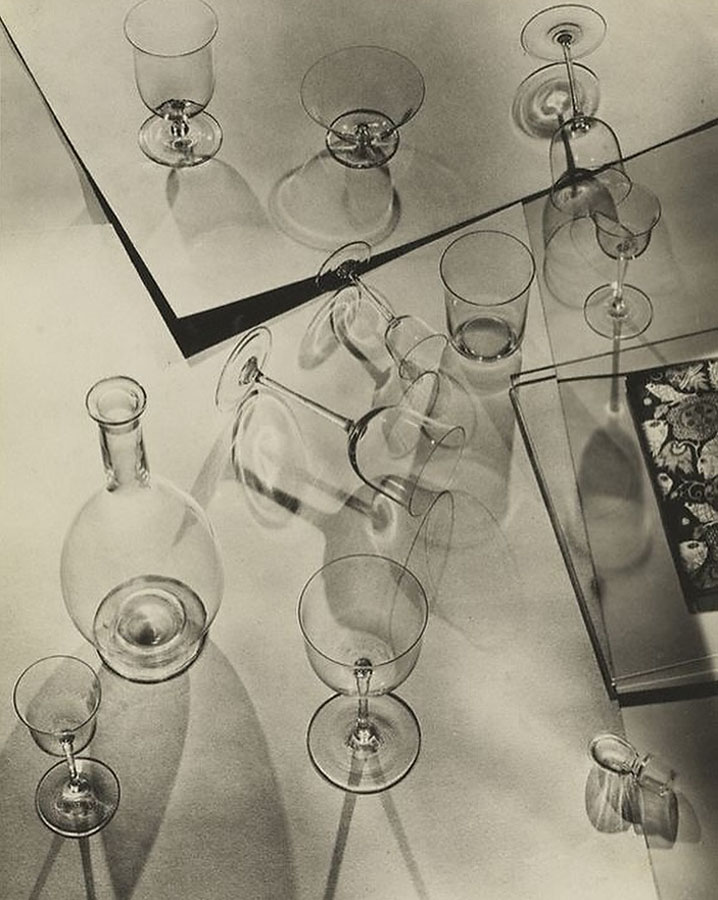
Walter Peterhans (German, 1897-1960) 'Untitled (Composition with Nine Glasses and a Decanter)' 1929-1933


Walter Peterhans (German, 1897-1960)
Untitled (Composition with Nine Glasses and a Decanter)
1929-1933
Gelatin silver print
© Estate Walter Peterhans, Museum Folkwang, Essen


Lyonel Feininger (American, 1871-1956) 'Bauhaus' March 26, 1929


Lyonel Feininger (American, 1871-1956)
Bauhaus
March 26, 1929
Gelatin silver print
Image: 17.9 x 14.3cm (7 1/16 x 5 5/8 in)
Bauhaus-Archiv Berlin
© Artists Rights Society (ARS), New York / VG Bild-Kunst, Bonn


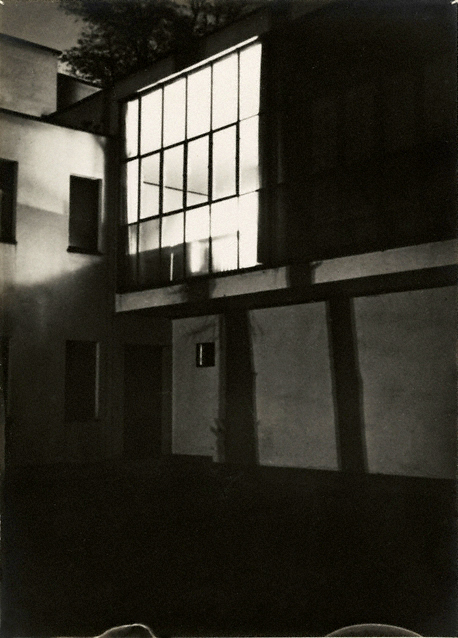
Lyonel Feininger (American, 1871-1956) '"Moholy’s Studio Window" around 10 p.m.' 1928


Lyonel Feininger (American, 1871-1956)
“Moholy’s Studio Window” around 10 p.m.
1928
Gelatin silver print
Image: 17.8 x 12.8 cm (7 x 5 1/16 in.)
Bauhaus-Archiv Berlin
© Artists Rights Society (ARS), New York / VG Bild-Kunst, Bonn


Lyonel Feininger (American, 1871-1956) 'On the Lookout, Deep an der Rega' 1932


Lyonel Feininger (American, 1871-1956)
On the Lookout, Deep an der Rega
1932
Gelatin silver print
Image: 17.7 x 12.7cm (6 15/16 x 5 in)
Gift of T. Lux Feininger, Houghton Library, Harvard University
© Artists Rights Society (ARS), New York / VG Bild-Kunst, Bonn


Irene Bayer-Hecht (American, 1898-1991) 'Untitled [Students on the Shore of the Elbe River, near Dessau]' 1925


Irene Bayer-Hecht (American, 1898-1991)
Untitled [Students on the Shore of the Elbe River, near Dessau (Georg Muche, Hinnerk Scheper, Herbert Bayer, Unknown, Unknown, Marcel Breuer, László Moholy Nagy, Unknown, Xanti Schawinsky)]
1925
Gelatin silver print
Image: 7.5 x 5.4cm (2 15/16 x 2 1/8 in)
The J. Paul Getty Museum, Los Angeles


The J. Paul Getty Museum
1200 Getty Center Drive
Los Angeles, California 90049

Opening hours:
Daily 10am – 5pm

The J. Paul Getty Museum website

LIKE ART BLART ON FACEBOOK

Back to top

Exhibition: ‘Kurt Kranz: Programming of Beauty’ at the Bauhaus Dessau, Berlin

Exhibition marking the 100th birthday of Kurt Kranz
19th November 2010 – 29th May 2011


Kurt Kranz (German, 1910-1997) 'Perspective' 1931


Kurt Kranz (German, 1910-1997)
Perspective
1931
Ingrid Kranz / Stiftung Bauhaus Dessau
Foto: Lars Lohrisch / Abdruck mit Genehmigung der Kunsthalle


One of the great pleasures of publishing this archive is that I get to research the life of an artist whose work I never knew before. Kurt Kranz is one such artist.

Dr Marcus Bunyan


Many thankx to the the Bauhaus Dessau for allowing me to publish the photographs in the posting. Please click on the photograph for a larger version of the image.


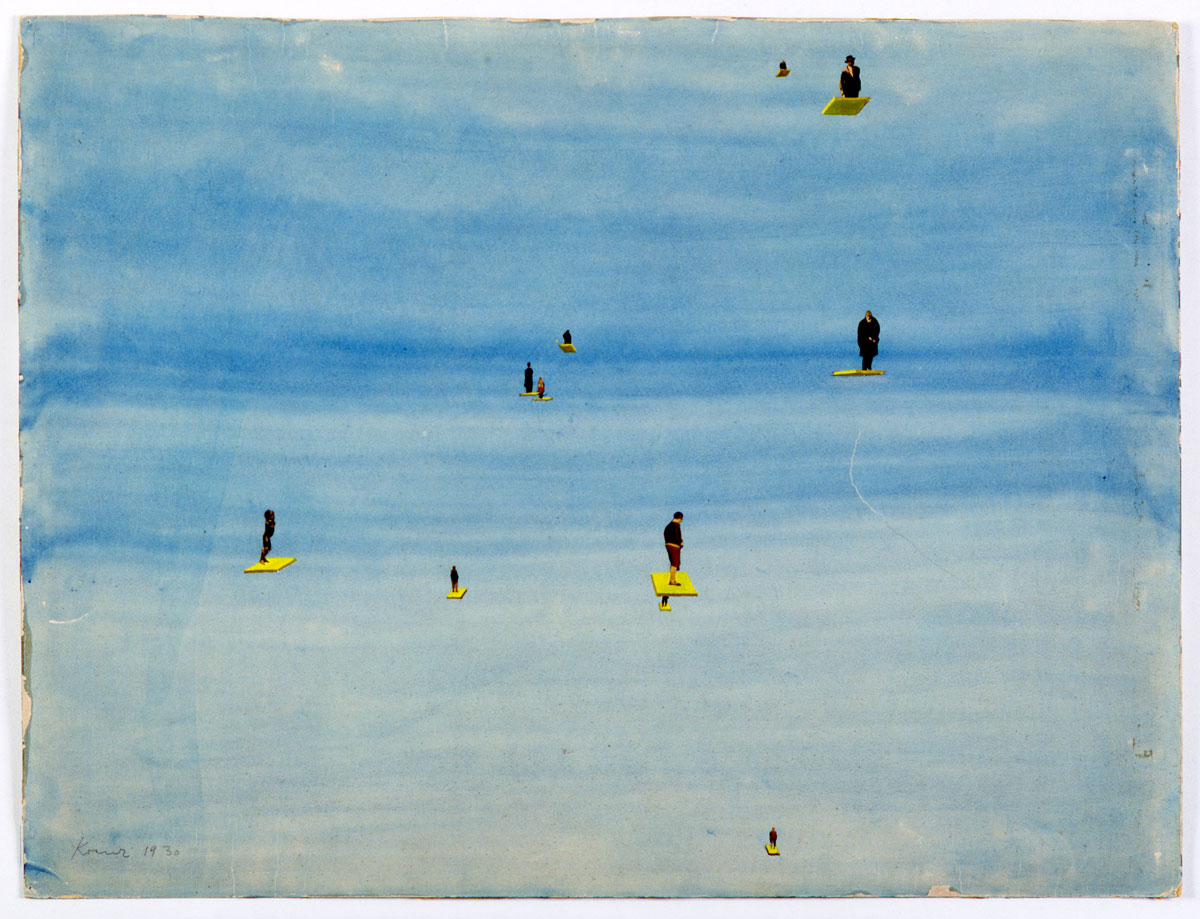
Kurt Kranz (German, 1910-1997) 'Vereinsamung' Dessau 1930


Kurt Kranz (German, 1910-1997)
Vereinsamung (Isolation)
Dessau
1930
Ingrid Kranz / Stiftung Bauhaus Dessau
Leihgeber: Kunsthalle Bremen


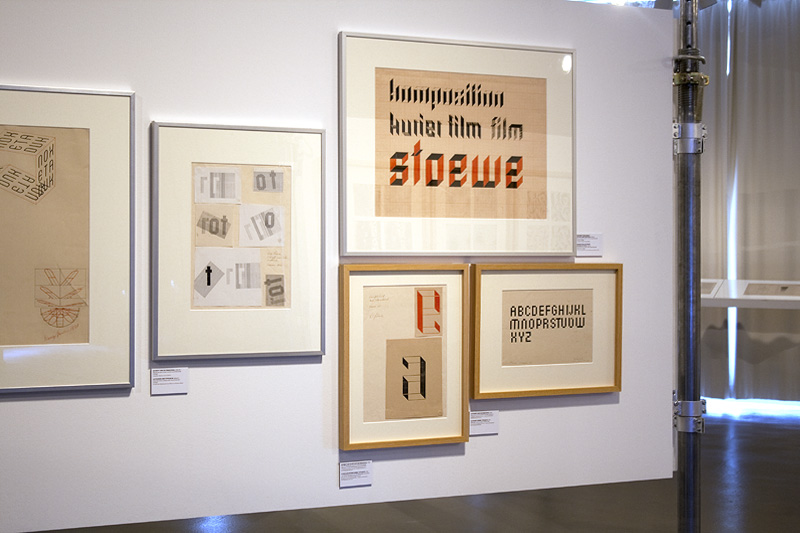
Installation photograph of 'Programming of Beauty' by Kurt Kranz at the Bauhaus Dessau


Installation photograph of Programming of Beauty by Kurt Kranz at the Bauhaus Dessau


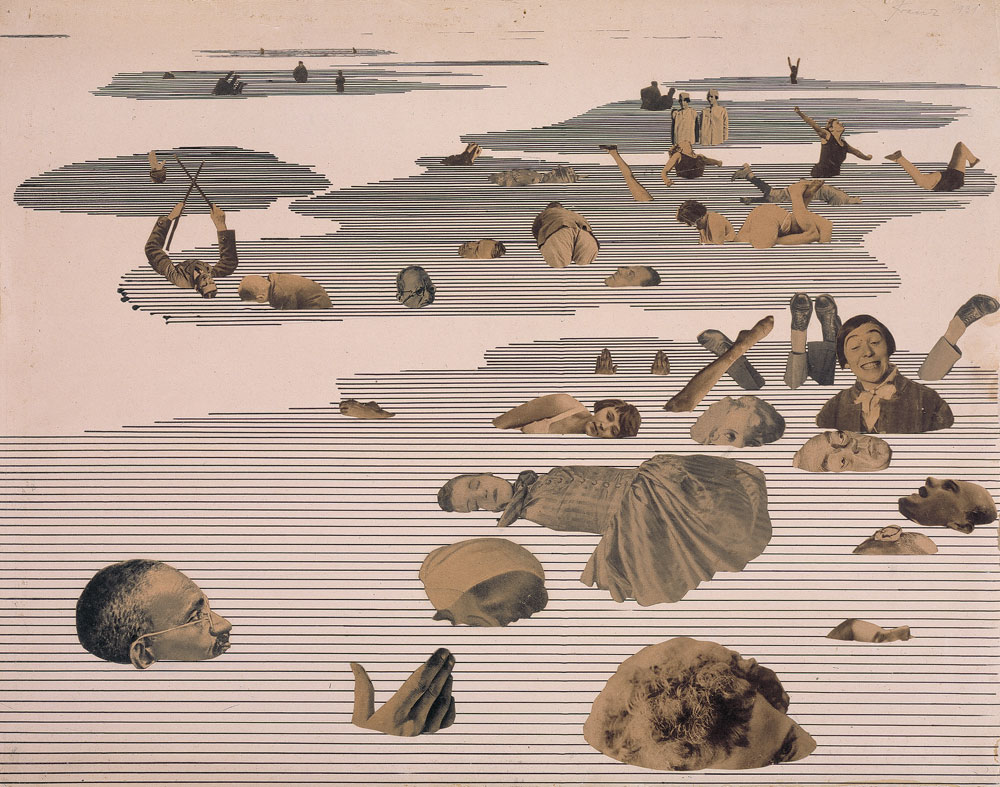
Kurt Kranz (German, 1910-1997) 'Versinkende' (Sinking one) 1931


Kurt Kranz (German, 1910-1997)
Versinkende (Sinking one)
1931
Ingrid Kranz / Stiftung Bauhaus Dessau


Kurt Kranz (German, 1910-1997) 'Persischer Garten' (Persian garden) 1970


Kurt Kranz (German, 1910-1997)
Persischer Garten (Persian garden)
1970
Ingrid Kranz / Stiftung Bauhaus Dessau
Foto: Uwe Jacobshagen


The Bauhaus Dessau dedicates a comprehensive exhibition to the painter, graphic designer and photographer Kurt Kranz to mark his 100th birthday. In 1930, the then twenty-year-old lithographer came from Bielefeld to study at the Bauhaus Dessau, where he soon established himself as a pioneer of serial and generative methods. With his avant-garde work, Kranz’s methods anticipated those of later generations.

Inspired by a lecture by László Moholy-Nagy, Kurt Kranz came to the Bauhaus Dessau in April 1930. In Walter Peterhans’s photography class, Kranz began to experiment with photographic techniques and created some of the most striking abstract picture series to emerge from the Bauhaus. Alienated and abstracted faces and hands appear repeatedly in his dynamic picture series. These show Kranz’s early affinity for film as, page for page, the abstract forms interact with one another. Kranz drafted his first concepts for abstract films at the Bauhaus, although he was first able to realise these decades later in 1972.

The exhibition to mark the artist’s 100th birthday shows works from Kranz’s Bauhaus years and his later work as an advertising graphic designer, and focuses on a selection of his large picture cycles. Strikingly diverse leporellos dating from the 1960s onwards take centre stage, as do the so-called “Matrix-und Schiebebilder”

Text from the Bauhaus Dessau website


Kurt Kranz (German, 1910-1997) 'Selbstporträt en face (objektives Foto)' (Self-portrait with face (objective photo)) 1931


Kurt Kranz (German, 1910-1997)
Selbstporträt en face (objektives Foto) (Self-portrait with face (objective photo))
1931
Ingrid Kranz / Stiftung Bauhaus Dessau


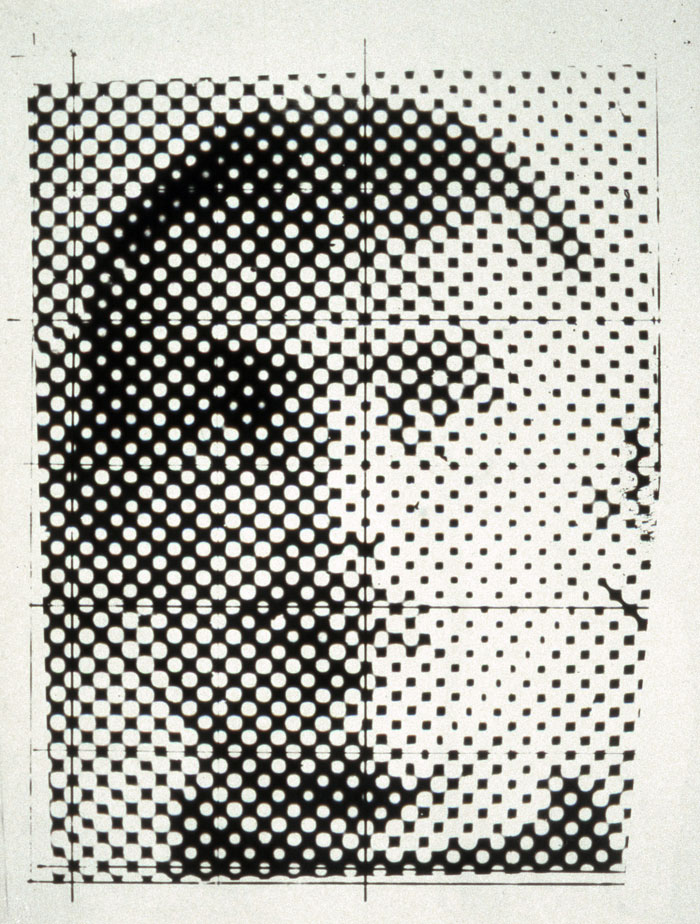
Kurt Kranz (German, 1910-1997) 'Rasterfoto' (Raster photograph) 1932


Kurt Kranz (German, 1910-1997)
Rasterfoto (Raster photograph)
1932
Ingrid Kranz / Stiftung Bauhaus Dessau


Kurt Kranz (German, 1910-1997) 'Schwarz : Weiß' (Black: White) 1928-29


Kurt Kranz (German, 1910-1997)
Schwarz: Weiß (Black: White)
1928-1929
Ingrid Kranz / Stiftung Bauhaus Dessau
Privatbesitz


Kurt Kranz (German, 1910-1997) 'Schwarz : Weiß' (Black: White) 1928-29


Kurt Kranz (German, 1910-1997)
Schwarz: Weiß (Black: White)
1928-1929
Ingrid Kranz / Stiftung Bauhaus Dessau
Privatbesitz


Kurt Kranz (German, 1910-1997) 'Schwarz : Weiß' (Black: White) 1928-29


Kurt Kranz (German, 1910-1997)
Schwarz: Weiß (Black: White)
1928-1929
Ingrid Kranz / Stiftung Bauhaus Dessau
Privatbesitz


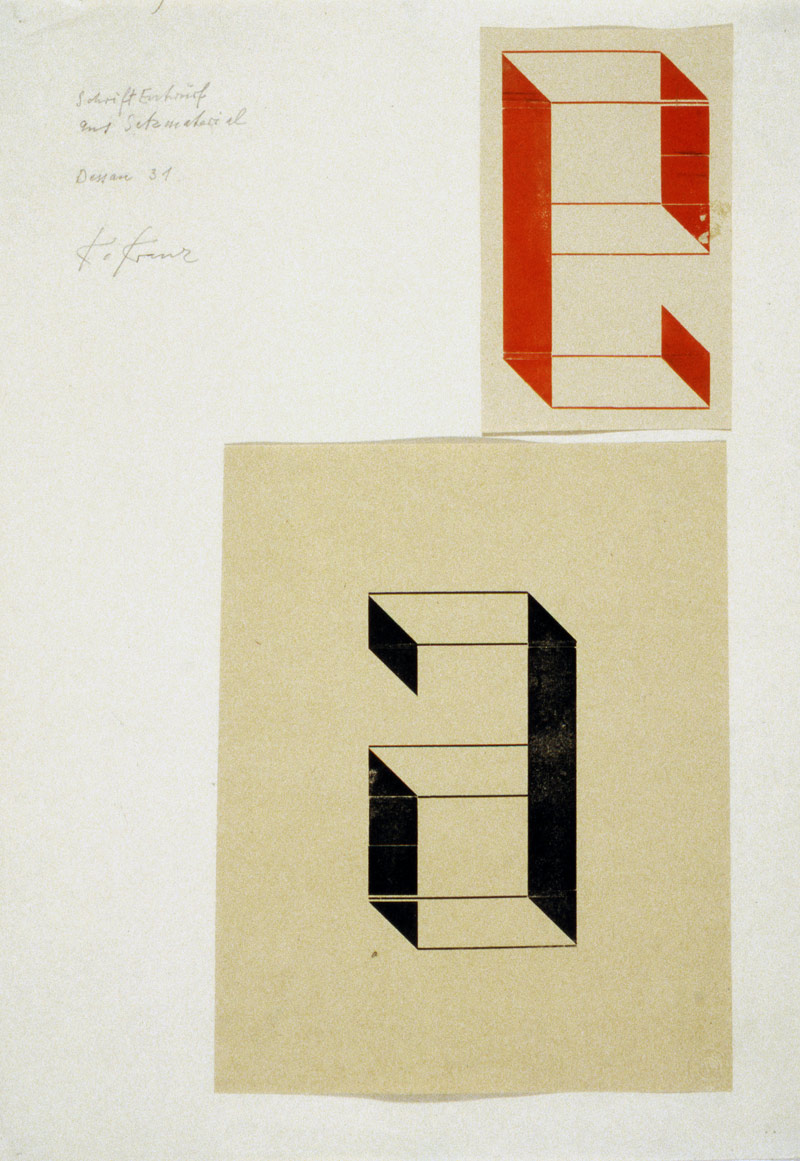
Kurt Kranz (German, 1910-1997) 'Schrift Entwurf aus Satzmaterial' (Writing draft from sentence material) Dessau 1931


Kurt Kranz (German, 1910-1997)
Schrift Entwurf aus Satzmaterial (Writing draft from sentence material)
Dessau
1931
Ingrid Kranz / Stiftung Bauhaus Dessau


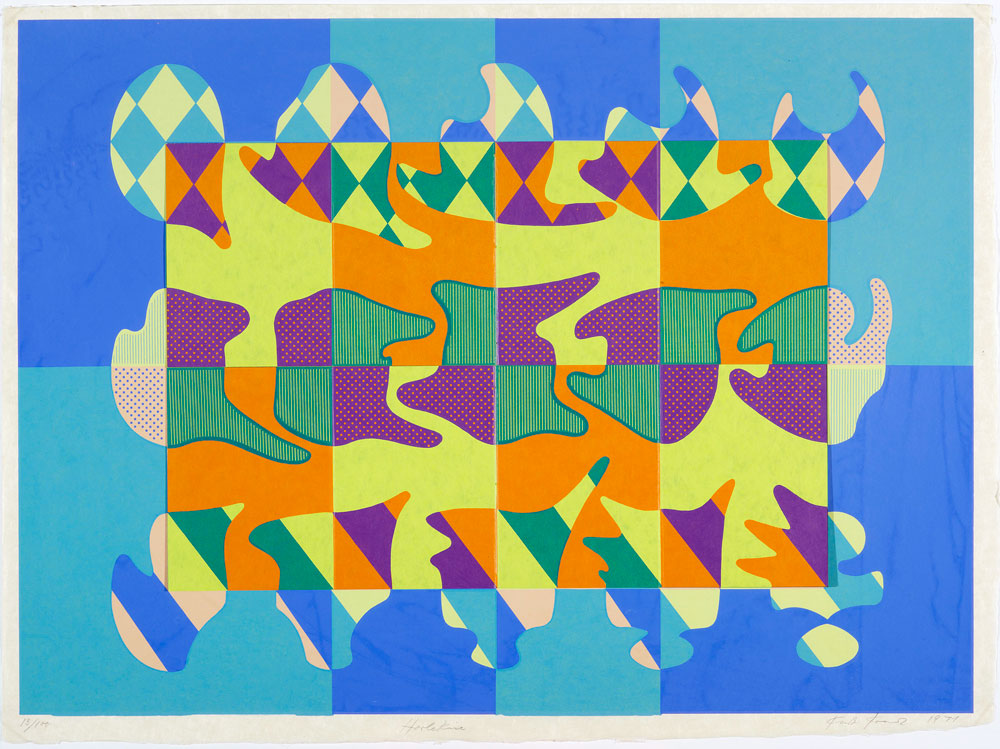
Kurt Kranz (German, 1910-1997) Aus der Serie "Sieben Schritte zum symmetrischen Oval"' (From the series "Seven steps to the symmetrical Oval") 1982


Kurt Kranz (German, 1910-1997)
Aus der Serie “Sieben Schritte zum symmetrischen Oval” (From the series “Seven steps to the symmetrical Oval”)
1982
Ingrid Kranz / Stiftung Bauhaus Dessau
Foto: Uwe Jacobshagen


Kurt Kranz (German, 1910-1997) 'Augenreihe' (Eye rows) 1931


Kurt Kranz (German, 1910-1997)
Augenreihe (Eye rows)
1931 (montiert 1981) (1931 (1981 install))
Ingrid Kranz / Stiftung Bauhaus Dessau
Leihgeber: Kunsthalle Bremen


Kurt Kranz (German, 1910-1997) 'Mund-Reihen' (Mouth rows) 1931


Kurt Kranz (German, 1910-1997)
Mund-Reihen (Mouth rows)
1931
Ingrid Kranz / Stiftung Bauhaus Dessau
Leihgeber: Kunsthalle Bremen
Foto: Ingrid Kranz, Wedel


Bauhaus Dessau
Gropiusalle 38, Dessau, Germany

Opening hours:
Tue – Sun 10am – 6pm

Bauhaus Dessau website

LIKE ART BLART ON FACEBOOK

Back to top