Text: ‘Golden splendour: privilege, ceremony and racism in 1920s-1930s Australia’ on the photo album ‘John “Jack” Riverstone Faviell (1892-1960), 1922-1933’ Part 2

January 2023

Warning: Aboriginal and Torres Strait Islander readers should be aware that this posting contains images and names of people who may have since passed away.
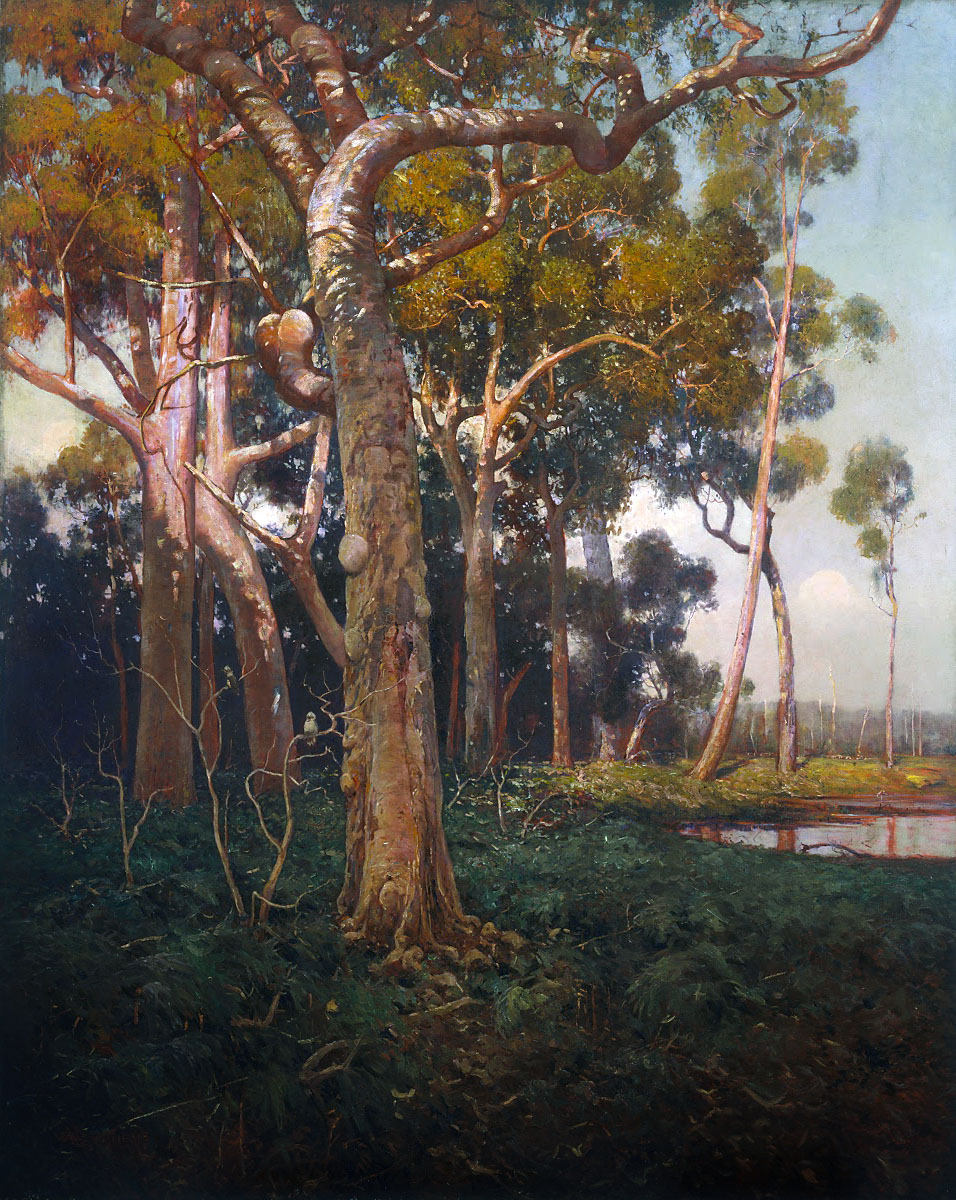
 

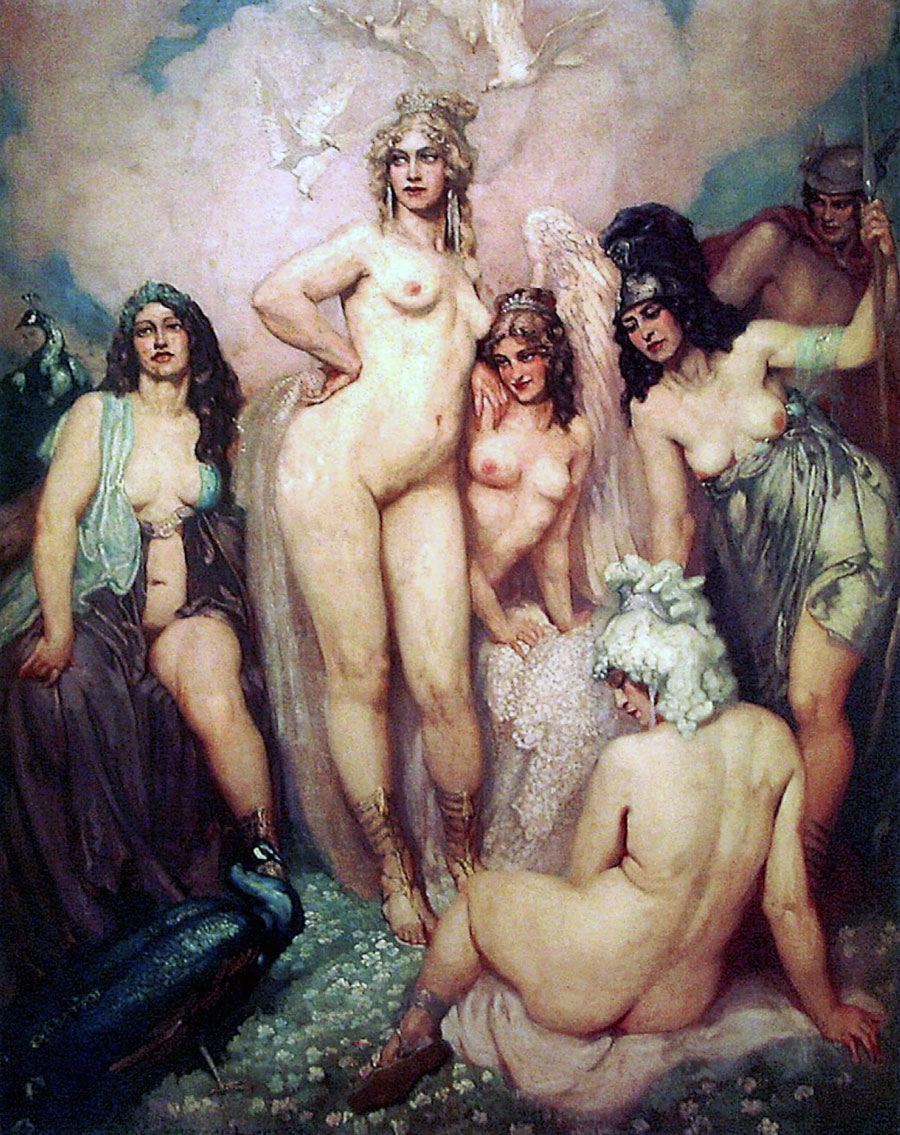
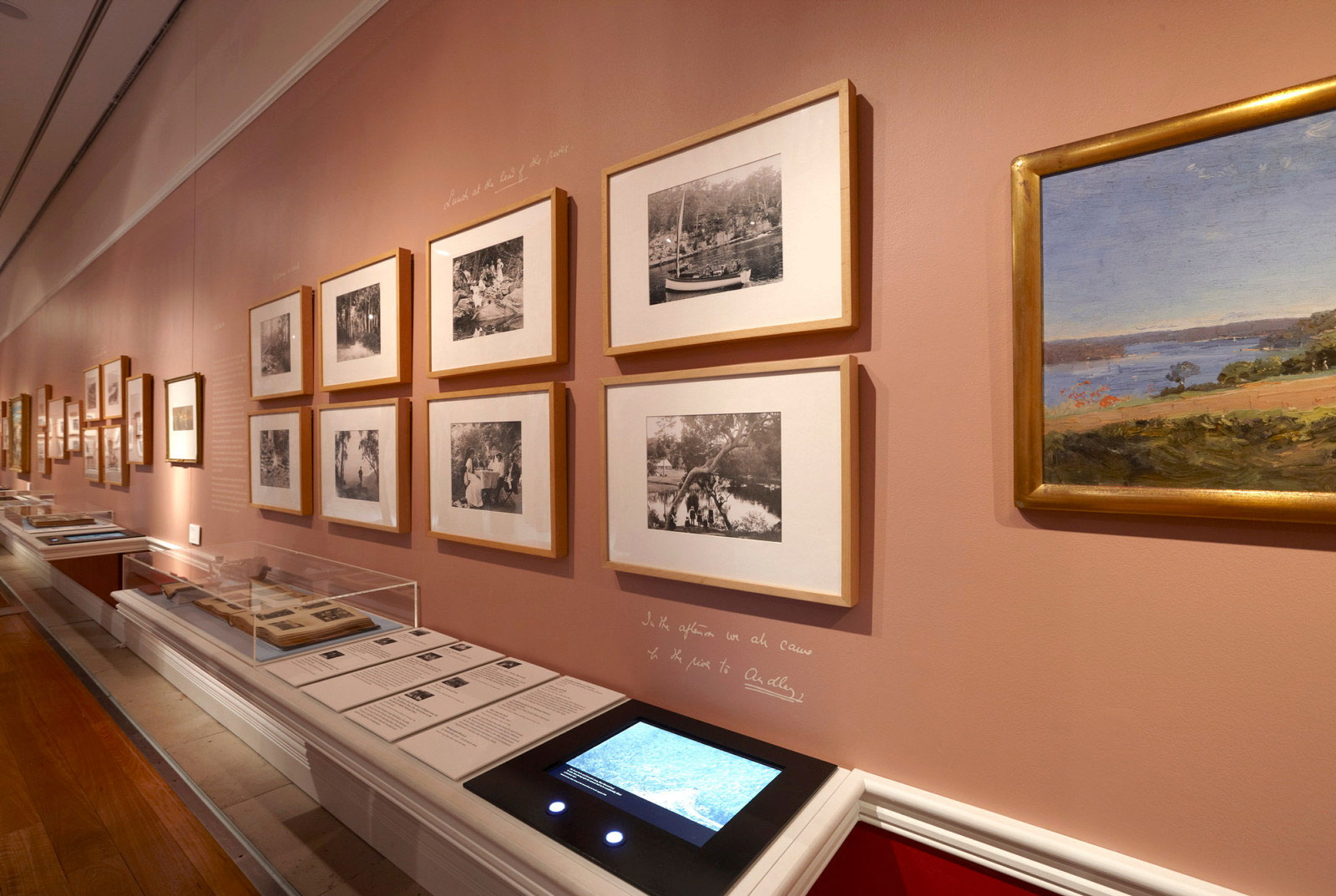
W Lister Lister (27 Dec 1859 - 06 Nov 1943) 'The golden splendour of the bush' c. 1906 from Marcus Bunyan. 'Golden splendour: privilege, ceremony & racism in 1920s-30s Australia' on the photo album 'John "Jack" Riverstone Faviell (1892-1960), 1922-1933' Part 2


W Lister Lister (27 Dec 1859 – 06 Nov 1943)
The golden splendour of the bush
c. 1906
Oil on canvas
Frame: 294 x 245.0 x 13.5cm
Art Gallery of New South Wales

Used under fair use condition for the purpose for research or study


Abstract

Discovered in an op shop (charity shop in America), this is the most historically important and exciting Australian photo album that I have ever found.

Belonging to John “Jack” Riverston Faviell, a senior New South Wales public accountant and featuring his photographs, the album ranges across the spectrum of Australian life and culture from the East to the West of the continent in the years 1922-1933. A list of locations and topics can be seen below. I have added additional research text, posters and photographs to help illuminate some of the issues under consideration.

Given its importance in documenting through photographs regional NSW, Indigenous Australians and the opening of the Sydney Harbour Bridge, the album is now in the State Library of New South Wales collection.

Keywords

Australian culture, Australian identity, Australian colonialism, Indigenous Australians, photography, photo album, Australian photography, Australian vernacular photography, racism, Australian racism, racism in Australia, White Australia, Sydney Harbour Bridge, Trans-Australian Railway, State Library of New South Wales, New South Wales, Australia, rural New South Wales, country races, Kalgoorlie Boulder, pearling, gold mining, Year of Mourning, Invasion Day, National Day of mourning, First Nations of Australia, reconciliation, pastoralism


Golden splendour: privilege, ceremony and racism in 1920s-1930s Australia

This text investigates the photographs found in an important Australian album discovered in an op shop (charity shop in America) belonging to John “Jack” Riverston Faviell (see part one of the posting), a senior New South Wales public accountant who associated with important pastoralists and bankers of the time, invested in business, travelled across the continent, went to many functions, married Sydney socialite Melanie Audrey Pickburn in February 1925 (divorced October 1930) and built a house on prestigious Darling Point overlooking Sydney Harbour.

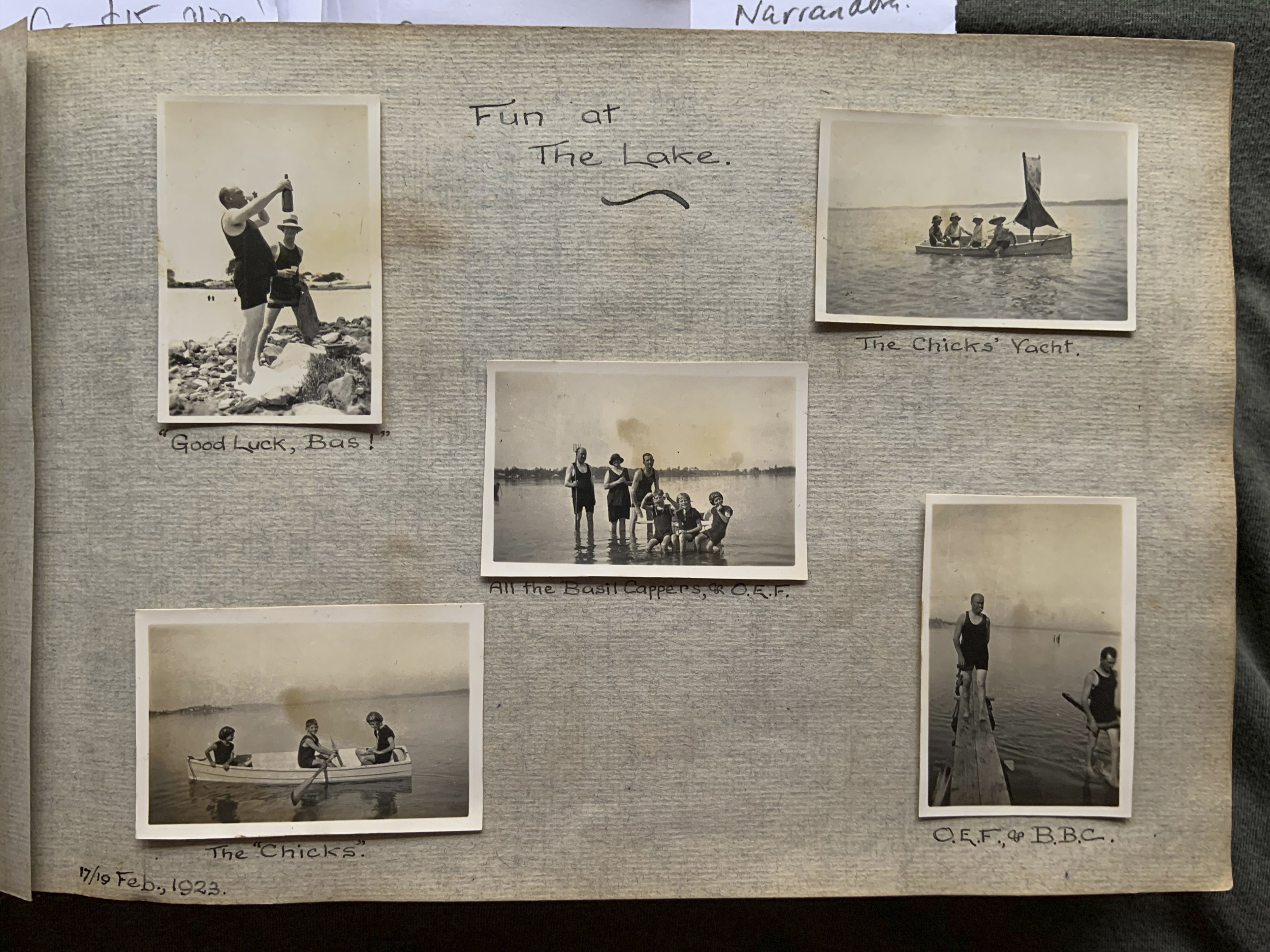
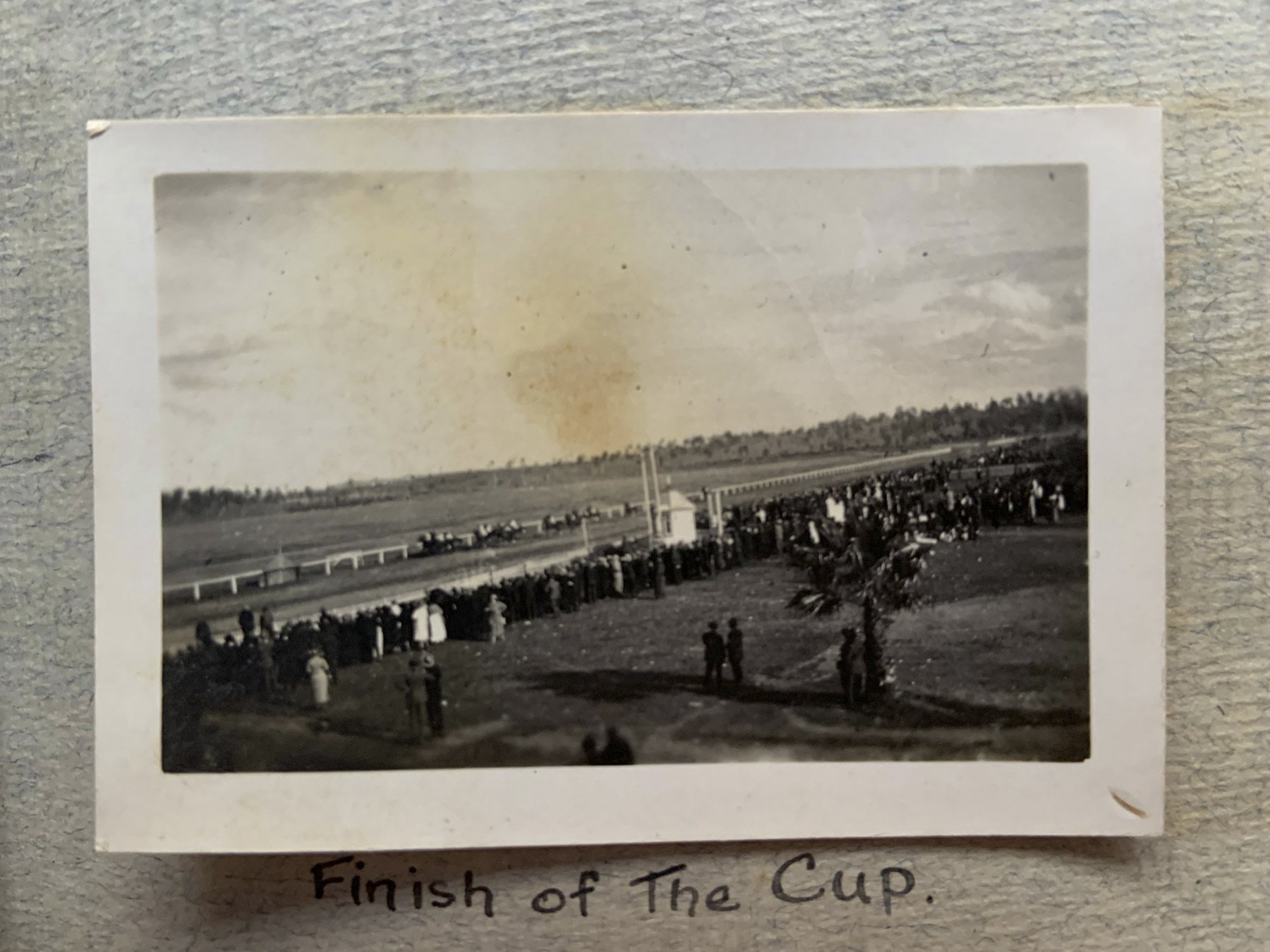
The album features Faviell’s photographs and was probably compiled by him, the photographs ranging across the spectrum of Australian life and culture from the East to the West of the continent in the years 1922-1933. A list of locations and topics can be seen below. The album has been assembled in near chronological order although some later dates precede earlier ones (for example, “Frensham Pastoral Play” of 8th December 1923 precedes “La Perouse” 7 November 1923; “Trip to Canberra” 5/6 Nov 1927 precedes “Jenolan Caves Trip” 10/12th July, 1927; and some images from 1927 sit side by side with photographs from October and November 1932). There are no dates for Faviell’s trip to Western Australia (presumably in early 1924) and the dating starts again with a polo competition for “The Dudley Cup” in 1924 after this trip.

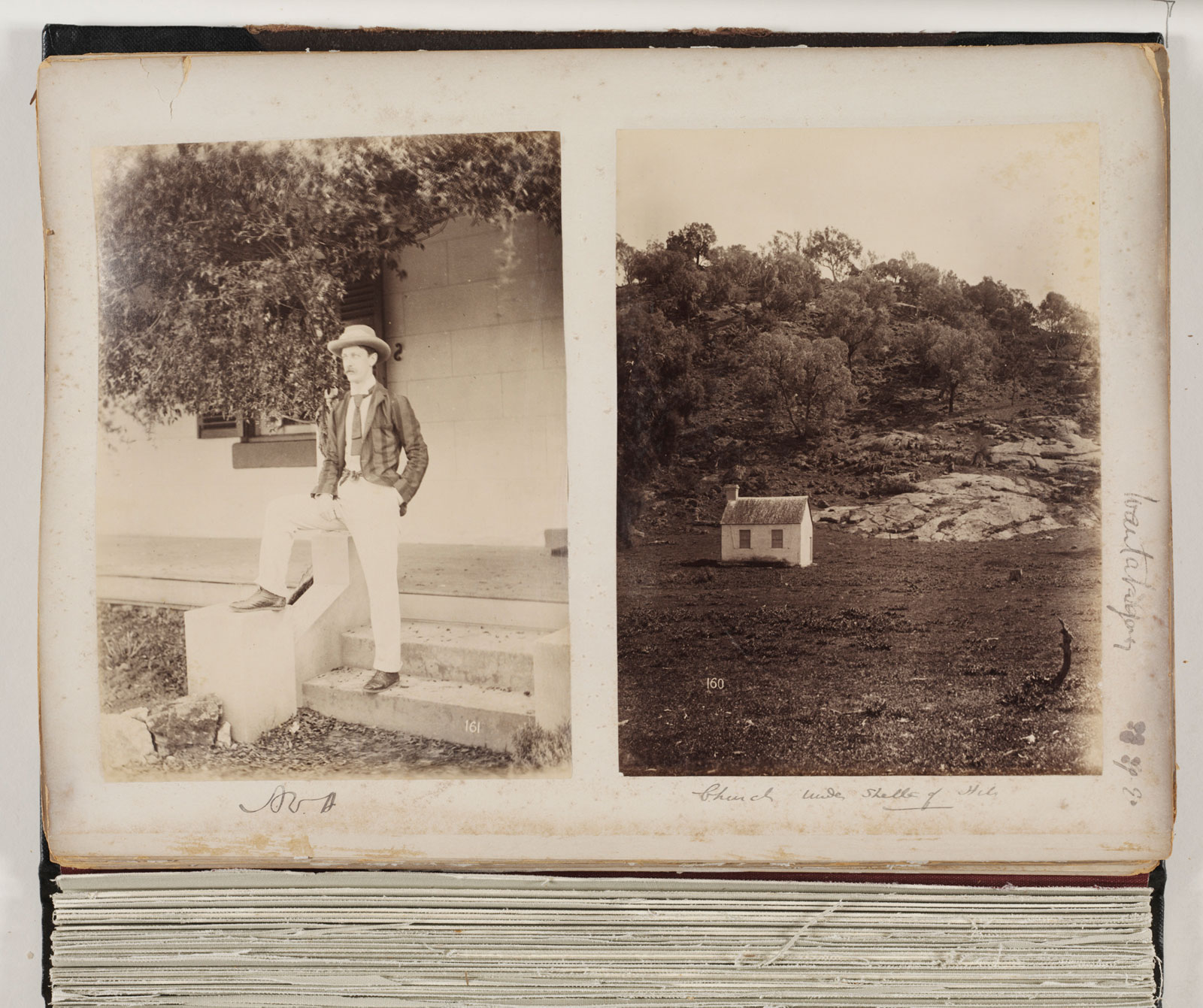
Taken in Scotland and sent by a man named Robert Reid from that country there is only one overseas photograph in the album. The photograph, which was presumably taken on Faviell’s honeymoon, is titled “Ellen’s Isle, Loch Katrine, Scotland (Audrey & me in boat) 1925”, and is inserted unceremoniously into photographs dating from 1927. There is no other reference to his marriage or photographs of it or his honeymoon in the album. The handwriting and grid-like layout of the photographs are consistent from front to back, and the photographs are mostly of the same size and shape (meaning he used the same camera throughout the period), other than photographs that Faviell did not take (including the “honeymoon” photograph from Scotland and the photographs of Jenolan Caves taken by Lady Dorothy Hope-Morley).

Thinking of the order that the photographs have been inserted into the album means to my mind that it was consciously assembled by Faviell probably after the date of the last photograph in the album which is November 1933 – although it is possible that he assembled it as he went along, inserting the “honeymoon” photograph from 1925 into the 1927 pages, and some earlier 1927 photographs next to the ones from 1932. But it just doesn’t feel like the latter to me… everything is too ordered to be done as he went along.

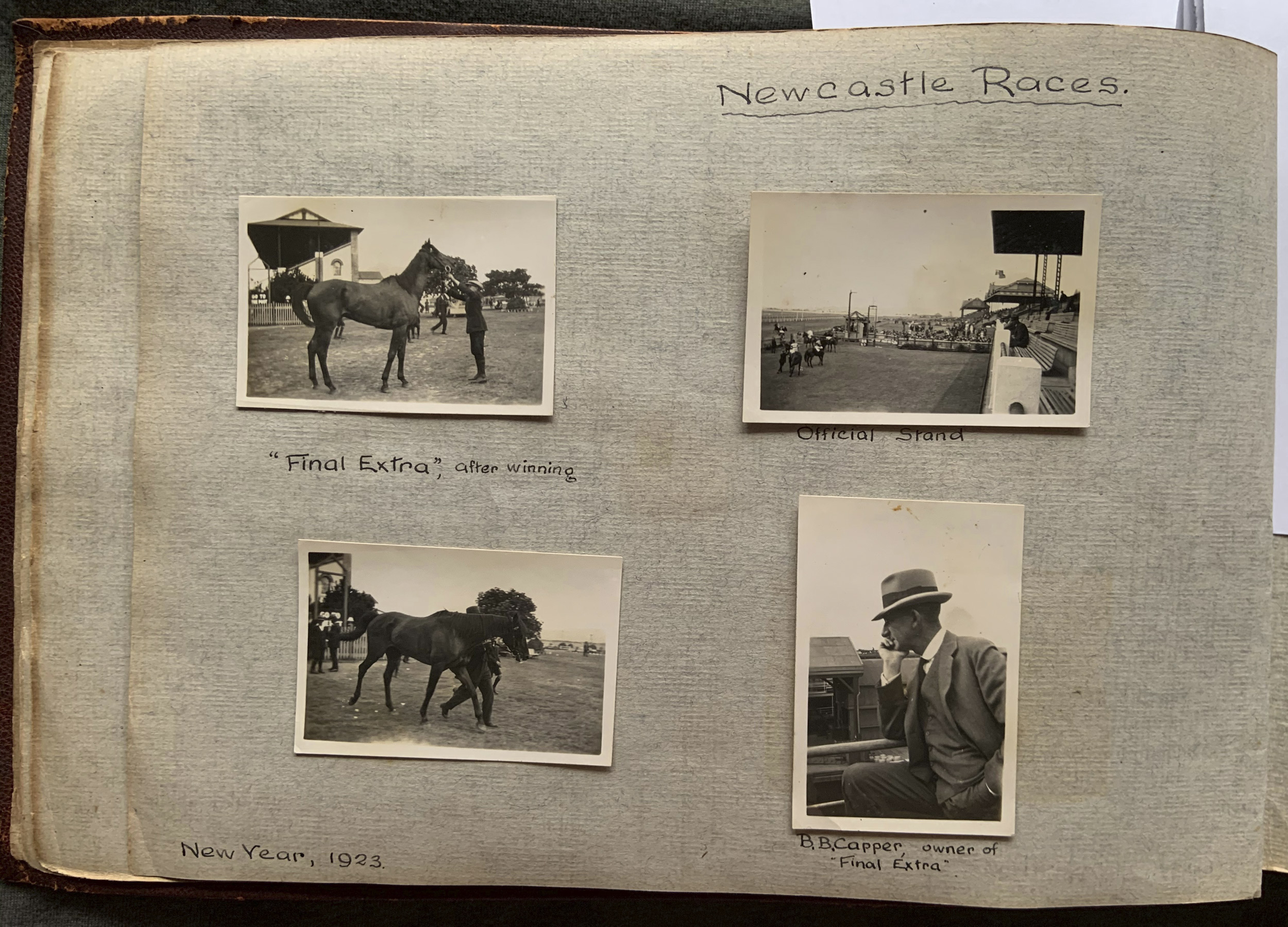
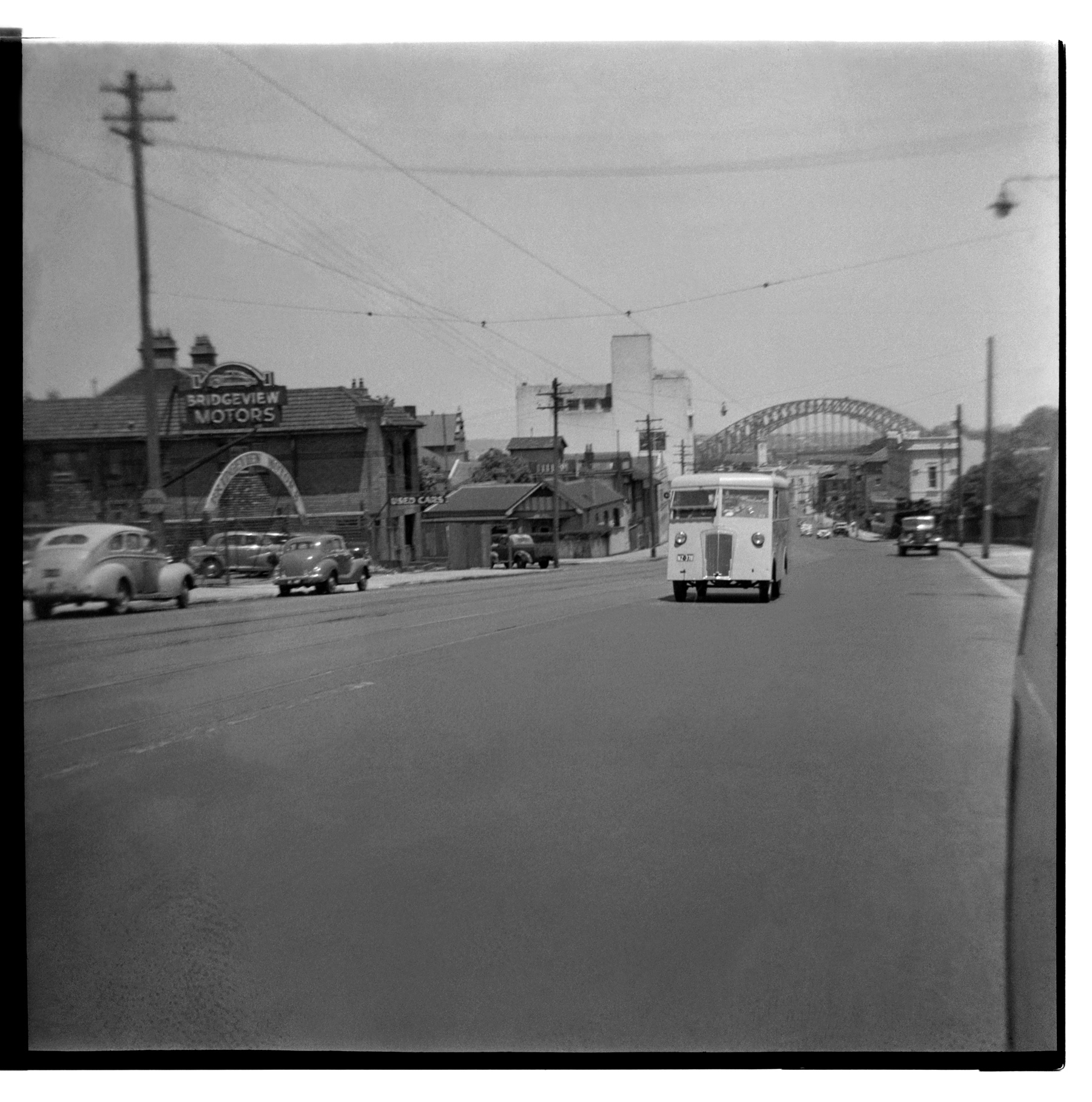
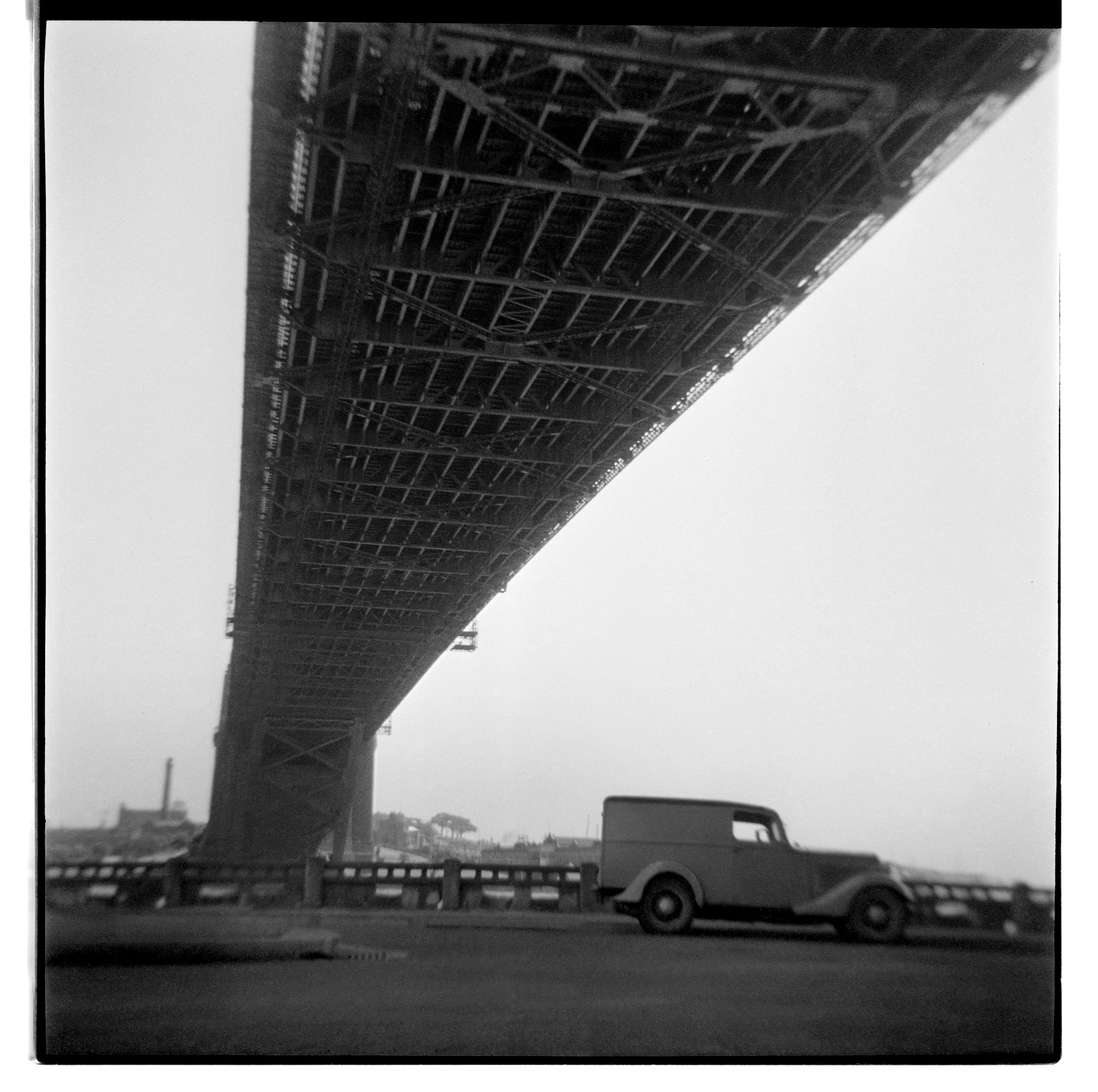
One important element of the album are John Faviell’s photographs which document his life in rural New South Wales as he attends various country race meetings, schools, historic houses, pastoral farms, regatta, and business ventures in the state during the 1920s. A second important element is the documentation of “Aboriginal Types” along the Trans-Australian Railway, gold mining in Kalgoorlie-Boulder, and pearling and Aboriginals in Shark Bay, the latter two in Western Australia. Finally, important unpublished photographs of the opening of the Sydney Harbour Bridge in 1932 give insight into the pageantry and colonialism of white Australia.

Privilege

A feeling of privilege – defined as a special right, advantage, or immunity granted or available only to a particular person or group – pervades the photographs in the album. Faviell belonged to a particular social category which had an inherently privileged and advantageous position.

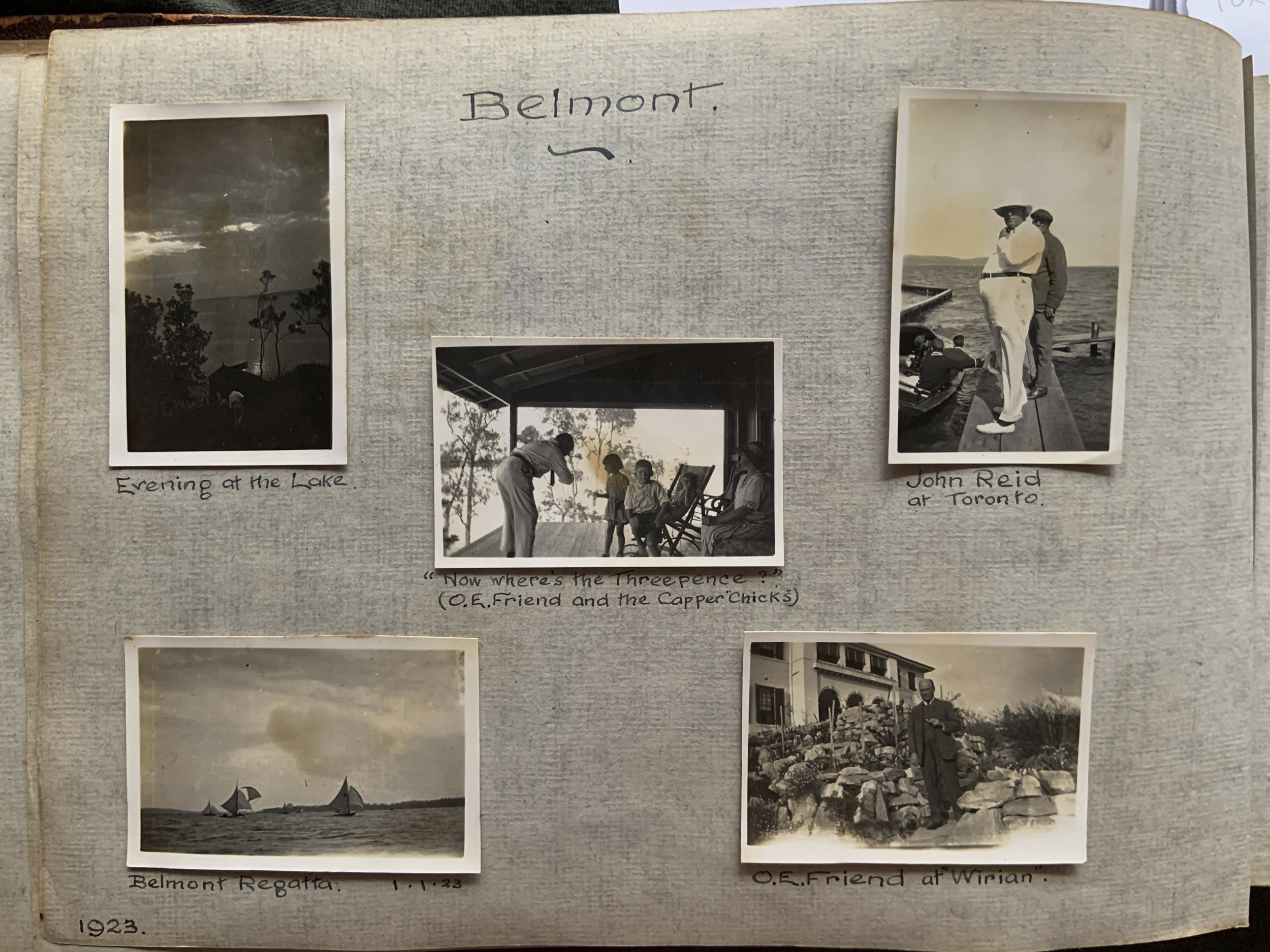
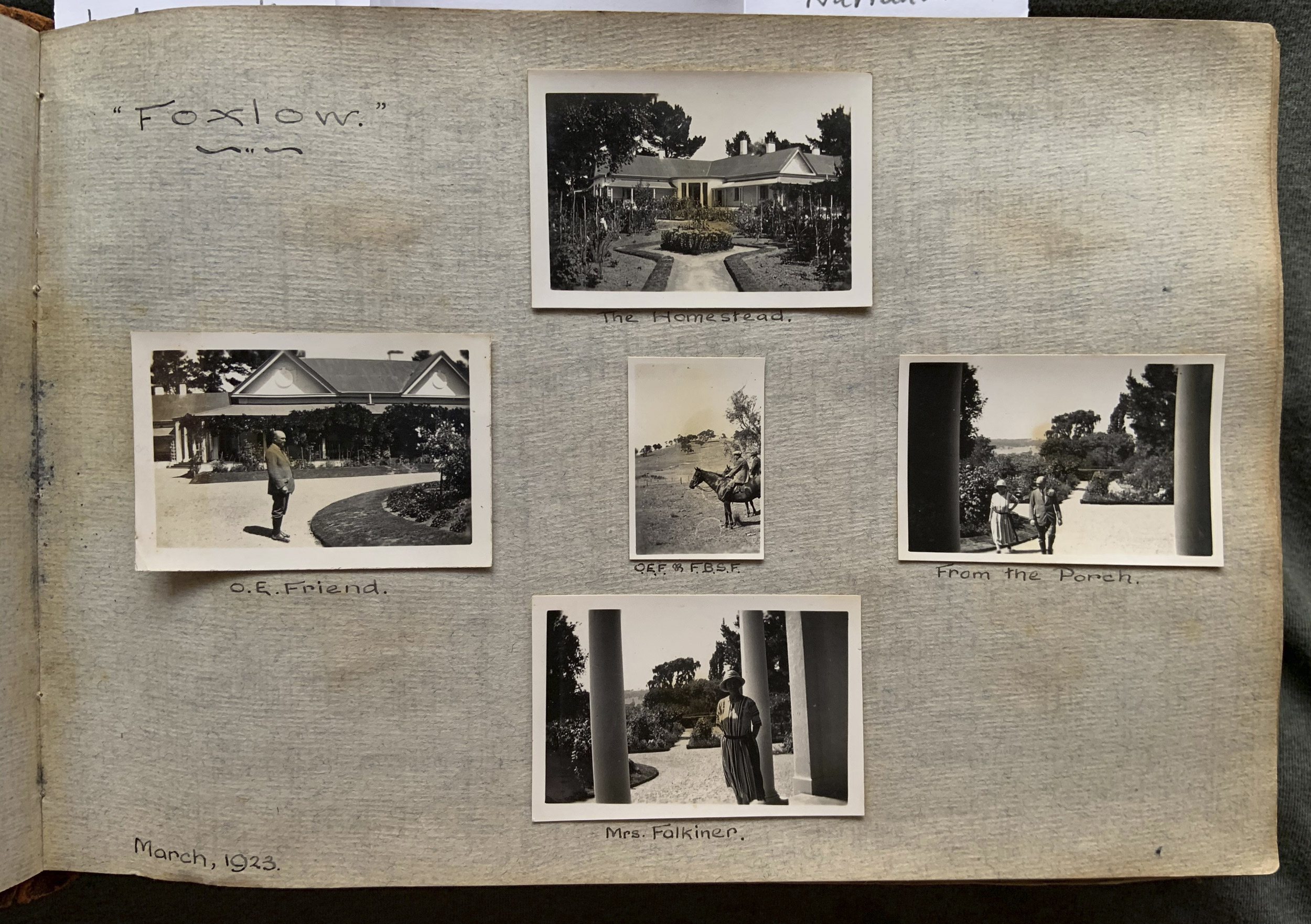
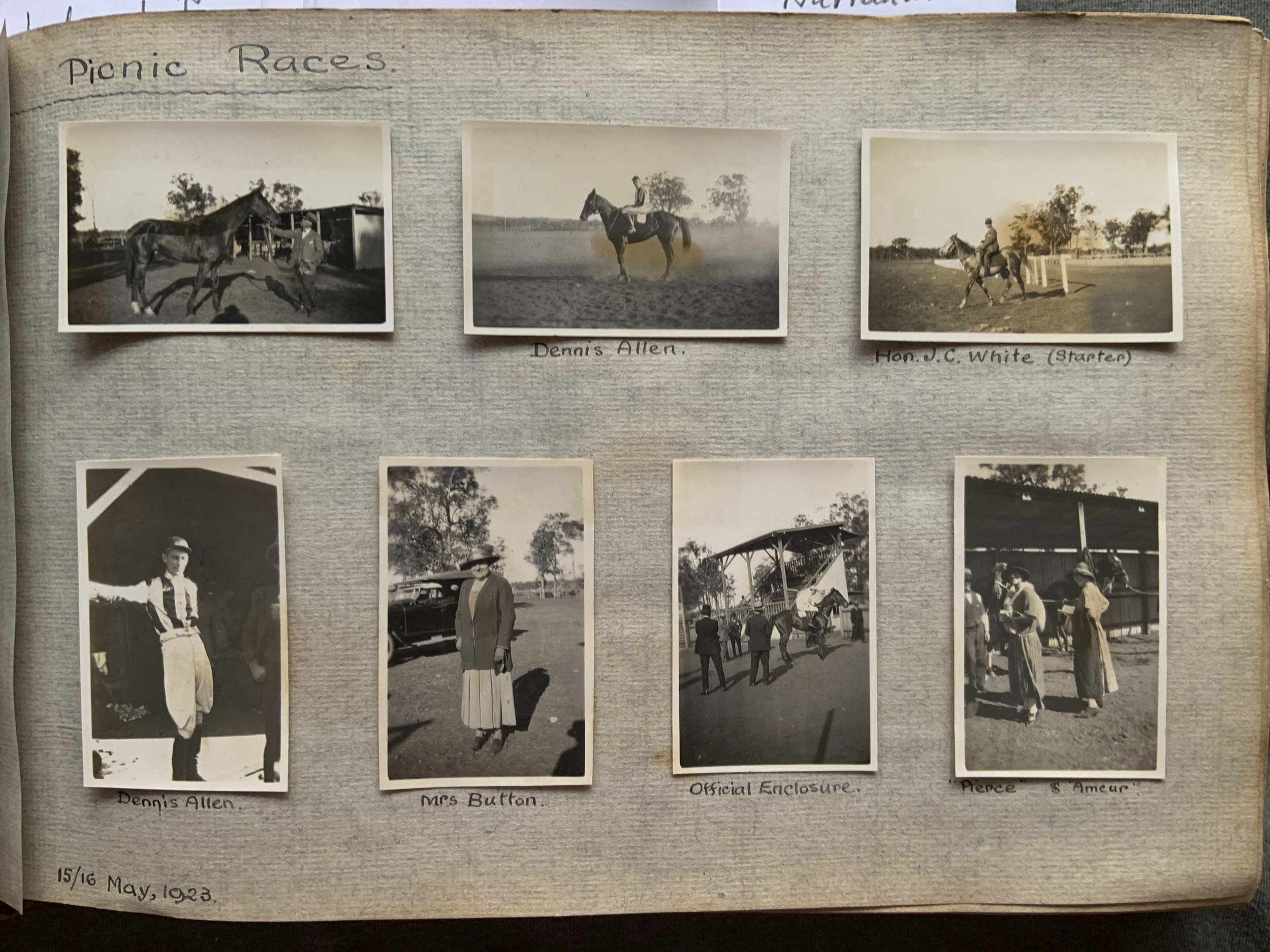
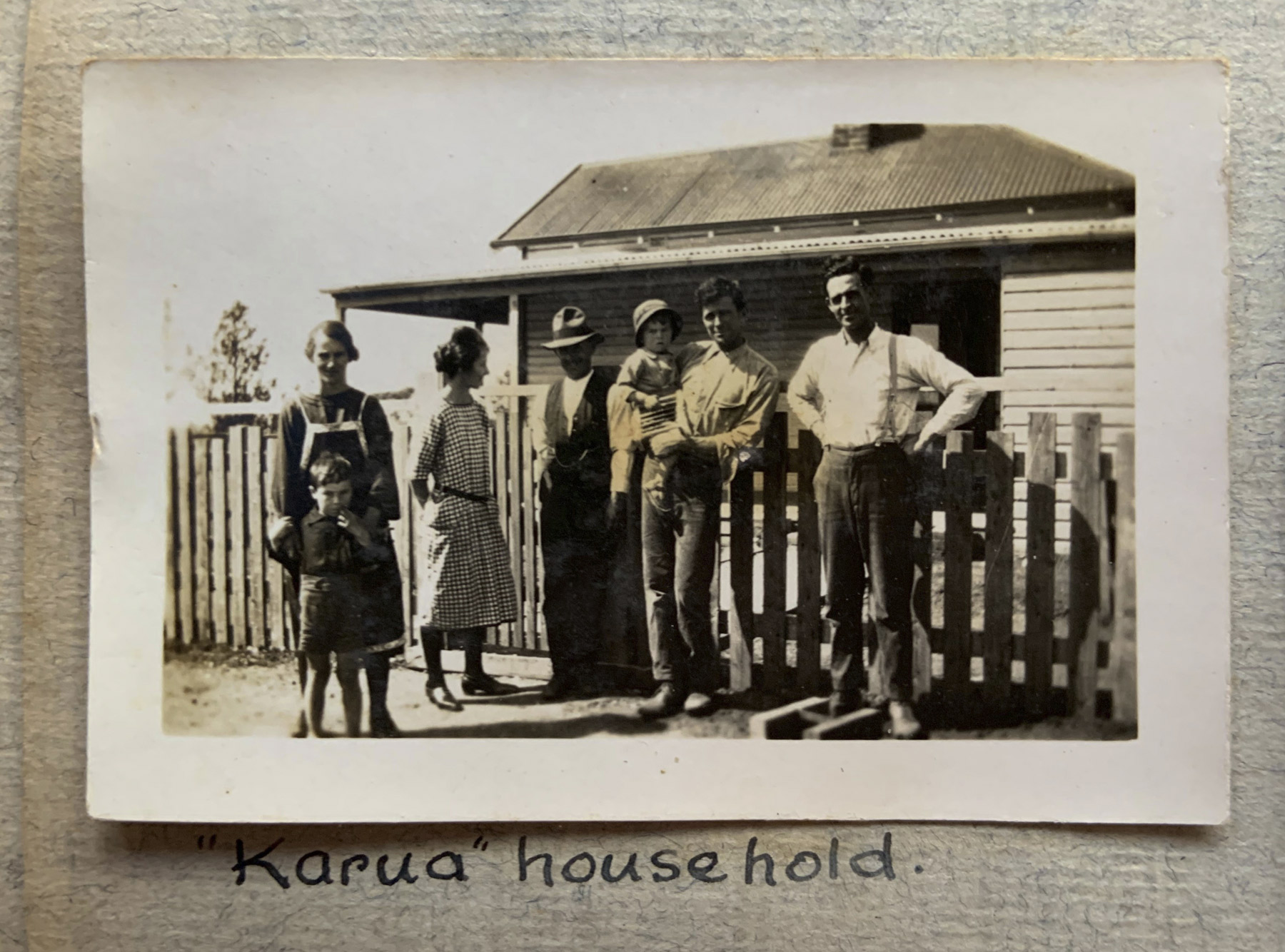
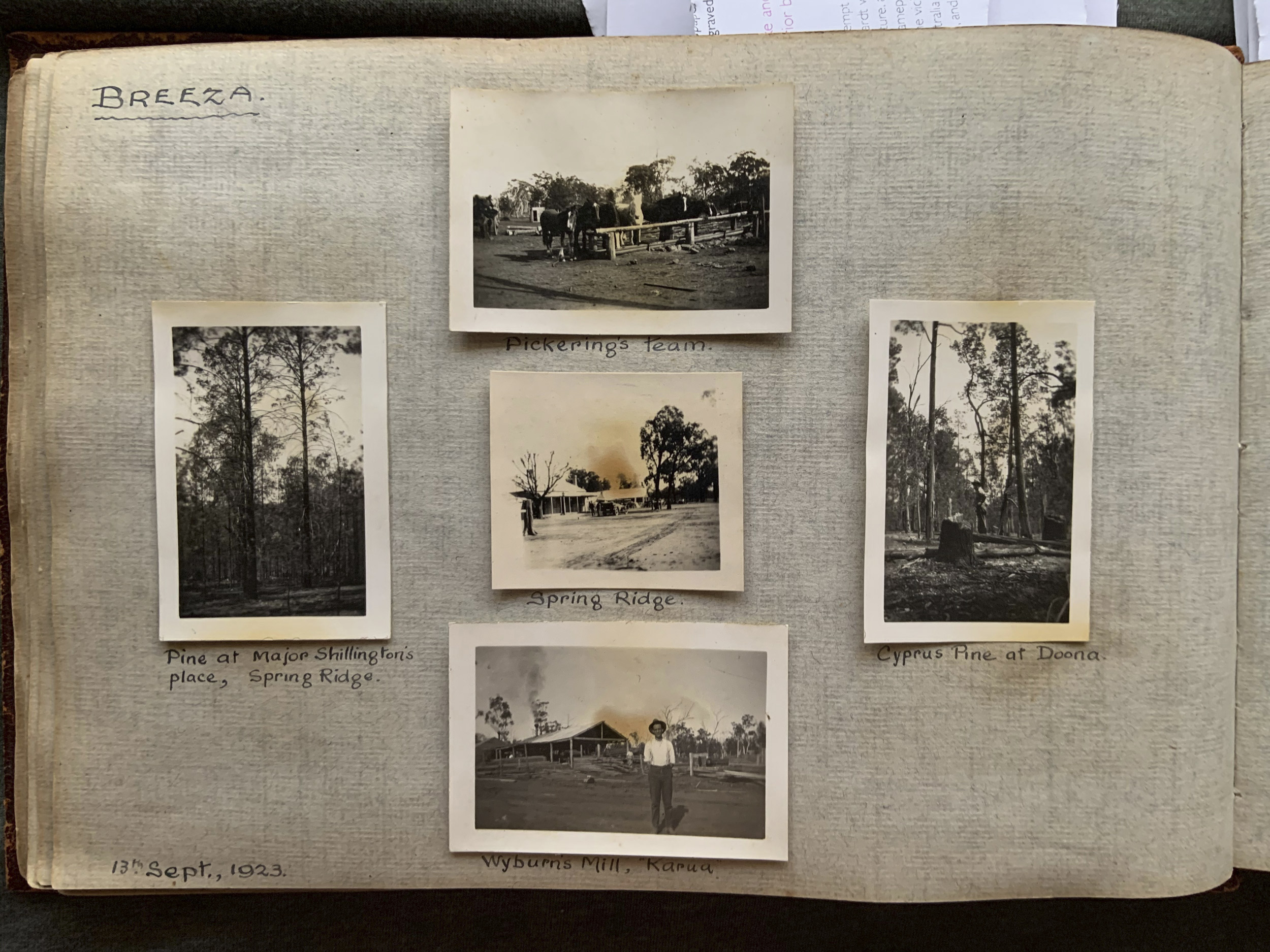
This is evidenced by his friendship with wealthy New South Wales graziers such as O.E. Friend (d. 1942) who was President of the Royal Historical Society and Director of the Commercial Banking Co., and who had a keen interest in pastoral pursuits and business investments; by photographs of large houses and pastoral stations such as “Weroona”, Belmont (demolished 1979), “Doona”, Breeza and “Foxlow”, Bungendore near Canberra which consisted of 7,500 hectares of land; by photographs of country horse races, friends who owned race horses and polo matches; by photographs of new cars; by photographs of his own investment projects such as the Doona Cyprus Pine Venture; by photographs of his travel to Western Australia and five-day cruise on the Cutter “Shark”; by photographs of “Old Boys” from Camden Grammar School, a term redolent of the English public school system; by building a house on one of the most exclusive promontories overlooking Sydney Harbour; by getting married in one of the “biggest social events of the month in Sydney”; and so it goes… the (British) class system alive and well in 1920s Australia, still an extension of the Empire.

What we should remember is that, after the end of the First World War the “1920s saw a higher level of material prosperity for non-Indigenous people than ever before.” Despite the rising affluence of the 1920s the Australian unemployment rate floated between 6% and 11% throughout the decade. Then, in October 1929, the world experienced a stock market crash on Wall Street in New York that plunged the world into the Great Depression (1929-1934). By 1932, one third of all Australians were out of work.

“Australia suffered badly during the period of the Great Depression of the 1930s… As in other nations, Australia suffered years of high unemployment, poverty, low profits, deflation, plunging incomes, and lost opportunities for economic growth and personal advancement. Unemployment reached a record high of around 30% in 1932, and gross domestic product declined by 10% between 1929 and 1931… Many hundreds of thousands of Australians suddenly faced the humiliation of poverty and unemployment. This was still the era of traditional social family structure, where the man was expected to be the sole bread winner. Soup kitchens and charity groups made brave attempts to feed the many starving and destitute. The male suicide rate spiked in 1930 and it became clear that Australia had limits to the resources for dealing with the crisis. The depression’s sudden and widespread unemployment hit the soldiers who had just returned from war the hardest as they were in their mid-thirties and still suffering the trauma of their wartime experiences. At night many slept covered in newspapers at Sydney’s Domain or at Salvation Army refugees.”1


Due to his wealth, his privileged family life and position in society, Faviell obviously felt none of the effects of the Great Depression. Although there are no photographs in the album taken between 1928 and 1931, by November 1932 he was buying a new Chrysler 70 motorcar. You can’t do that without money.

Ceremony

Faviell attended the opening of the Sydney Harbour Bridge on the 20th March 1932 sitting in the official stands, taking what are up until now previously unknown photographs of the Federal and State Governors arriving and the pageantry of the official opening (see photographs below). The ceremony featured a passing parade of groups, floats and attractions including Naval Guard, Mounted Police, Cobb & Co. Coach, Old King Street Bus, an early Hupmobile car, the first Auto-Gyro, Wool Float, surf girls, Pioneers Float and Aborigines. Also present in the parade at the Bridge’s opening ceremony was a contingent from the Aboriginal community of La Perouse on Sydney’s Botany Bay. According to the series Australia in Colour, “The first Australians are a token inclusion in the celebrations. They are not classed as citizens in their own country and have no voting or legal rights…”2 State and federal governments still saw Indigenous Australians as, “the native problem.” “For most city people, the only contact with Indigenous groups was watching tent boxing at the travelling shows which used to flourish in the ’30s.”3 But things were beginning to change. Indigenous Australians were slowly being politicised in order to get their message across, with pleas for better rights, conditions and representation.

Five years later, on the occasion of the 150th anniversary of European settlement in Australia in 1938 there was a re-enactment of Governor Phillip’s landing in which Aborigines (specially brought in for the occasion) are shown running up the beach as the boats of the First Fleet marines land at Farm Cove (see photograph below). A group of white dignitaries sits in comfortable safety watching the invasion. Elsewhere on that day in 1938 – Wednesday, 26th January – there took place the first Day of Mourning and Protest at the Australian Hall, Sydney. The protest, calling for full citizen status and equality, was led by William Cooper, Pearl Gibbs, Jack Patten and William Ferguson (see photographs and poster below). Cooper and his fellow Aboriginal men Jack Patten and William Ferguson organised a conference to grieve the collective loss of freedom and self-determination of Aboriginal communities as well as those killed during and after European settlement in 1788. “The first Day of Mourning was a culmination of years of work by the Australian Aborigines League (AAL) and the Aborigines Progressive Association (APA). It would became the inspiration for Aboriginal and Torres Strait Islander activism throughout the remainder of the twentieth century.”4

“In 1938, William Cooper had thrown down a challenge. It was 150 years since the landing of the ragtag British ‘first fleet’ in Sydney Cove on 26 January in 1788. As white Australians were preparing to celebrate, Cooper had branded that landing as the beginning of 150 years of invasion, dispossession and exploitation. Cooper dared white Australia to recognise that their ‘Australia Day’ was no celebration but instead a ‘Day of Mourning’ for invaded Australia. …

A forced reenactment. For the 150th Anniversary, Aboriginal people were forced to participate in a reenactment of the landing of the First Fleet under Captain Arthur Phillip. Aboriginal people living in Sydney had refused to take part so organisers brought in men from Menindee, in western NSW, and kept them locked up at the Redfern Police Barracks stables until the re-enactment took place. On the day itself, they were made to run up the beach away from the British – an inaccurate version of events. It was Cook who was first “threatened and warned off by the Indigenous people on the shore” and he then decided to fire gun shots.”5


Anita Heiss observes of that day in 1938, “The day also saw an appalling contrast. Aboriginal organisations in Sydney refused to participate in the government’s re-enactment of the events of January 1788. In response, the government transported groups of Aboriginal people from western communities in NSW to Sydney to partake in the re-enactments. The visitors were locked up at the Redfern Police Barracks stables and members of the Aborigines Progressive Association were denied access to them. After the re-enactment of the First Fleet landing at Farm Cove (Wuganmagulya), the visiting group of Aboriginal people were featured on a float parading along Macquarie Street.”6

Finally, by 1988, the re-enactments were discontinued. 50 years later to the day, on the occasion of the Australian Bicentenary in 1988 (the same year named a Year of Mourning by and for the Australian Aboriginal people), the protests against British invasion were even more prominent and vigorous, as Aboriginal people and their supporters rallied in Sydney and around the country. “On 26 January that year, up to 40,000 Aboriginal people (including some from as far away as Arnhem Land in the Northern Territory) and their supporters marched from Redfern Park to a public rally at Hyde Park and then on to Sydney Harbour to mark the 200th anniversary of invasion.”7

“On 26 January 1988, more than 40,000 people, including Aborigines from across the country and non-Indigenous supporters, staged what was the largest march in Sydney since the Vietnam moratorium. …

The march was seen as a challenge to the dominant society’s hegemonic construction of Australia day and what it represented. It was a statement of survival, demonstrating that although Australian history had excluded the indigenous voice, Aborigines as the original inhabitants of this place were not going to continue to be beggars in their own country. The march served to draw both national and international attention to Australia’s appalling human rights record. It aimed to educate the public about the poor conditions of Aboriginal health, education and welfare, of the high imprisonment rates and the number of deaths in custody suffered by Indigenous Australians. Activists such as Gary Foley called on Australians to join the Aboriginal protests and to make the point to the rest of Australia that the whole concept of the Bicentennial is based on hypocrisy and lies. …

There had been little emphasis on the need to address indigenous aspirations as a precondition to celebrating the bicentenary. The protest march was both an affirmation of indigenous Australians’ survival and a stark reminder of the falsity on which the celebration was premised. Celebrations focused on the discovery of Australia with a re-enactment of the arrival of the first fleet. However, the Aboriginal protest was a reminder that Australia had been inhabited at least 40,000 years before European arrival.”8


As the editorial in the Sydney Morning Herald newspaper on January 19, 1988 noted, “scarcely a day of the Bicentenary has passed when issues involving Aborigines and their “Year of Mourning” protests have not featured prominently…” which “instigated public debate concerning white and indigenous Australian history, the position of Aborigines in contemporary society and the possibilities of land rights and reconciliation in the future.”9 But despite these protests many Australians, myself included – newly arrived from England and still homesick for the mother country, failing to grasp the enormity of the betrayal – did not understand the protests. “Despite Indigenous people declaring January 26 a National Day of mourning fifty years prior in 1938, many of the non-Indigenous majority still failed to see any disrespect in celebrating an occasion made possible by the murder, massacre, dispossession, slavery and attempted genocide of the Indigenous people of this land.”10

While I could never understand, as an English man, Australia’s treatment of their First Peoples when I first arrived, at the time I had not educated myself or immersed myself in the history of Australia to gain its full import. Now I have. And so have other people.

Importantly, national events happened in the 1990s that led up to the Walk for Reconciliation across Sydney Harbour Bridge on 28 May, 2000 (see photograph below) in which about 250,000 people walked across the Sydney Harbour Bridge to show their support for reconciliation between Australia’s Indigenous and non-Indigenous peoples: in 1991 the Australian Parliament passed an Act which created the Council for Aboriginal Reconciliation; in the 1992 Mabo decision the High Court of Australia ruled that Australia was not terra nullius (land belonging to nobody) when it was claimed by Britain in 1770. This led to the Native Title Act 1993, which made it possible for Aboriginal and Torres Strait Islander people to claim ownership of their traditional lands; and the Bringing Them Home report, published in 1997, showed that thousands of Aboriginal and Torres Strait children had been taken away from their families by governments around Australia. These children have become known as the Stolen Generations. The report said that all Australian governments should apologise to Indigenous people, especially the Stolen Generations.11 So many people participated in the walk that the event took nearly six hours. It was the largest political demonstration ever held in Australia. Finally, eight years after the walk Prime Minister Kevin Rudd made a national apology to Australia’s Indigenous people. “On 13 February 2008, the Parliament of Australia issued a formal apology to Indigenous Australians for forced removals of Australian Indigenous children (often referred to as the Stolen Generations) from their families by Australian federal and state government agencies.”12

Better late than never…

Racism

By the time John Faviell started taking photographs for his album a twentieth-century, Euro- and U.S.-centric middle class had been dazzled by the “Kodakification” of photography. Small portable cameras with roll film and a faster film speed enabled “amateur” photographers,13 people who “simply wanted pictures as mementos of their daily lives but were hardly interested in learning how to do the rest”14 – that is, developing, printing and toning their own photographs – to document their existence and then send the film away to be developed and printed. George Eastman’s slogan for Kodak, “You Press the Button, We Do the Rest,” revolutionised the photography business in the United States and in the world, allowing the great mass of the general public to take photographs and assemble family albums (for example). In these vernacular photographs – “those countless ordinary and utilitarian pictures made for souvenir postcards, government archives, police case files, pin-up posters, networking Web sites, and the pages of magazines, newspapers, or family albums”15 – the focus is on the social contexts in which the photos were originally made and how they document an aspect of social or photo history. These images, including those by John Faviell, ask us to consider “the ways in which photographs function as significant bearers of complex meaning, rather than mere descriptions or reflections of the world, whether they grace the walls of a museum, the pages of a magazine, the files in a cabinet, or a living room mantel.”16 Commenting on photo postcards but equally applicable to vernacular photographs, Leonard A. Lauder observes that, “The new flexibility and mobility of this medium created citizen photographers who captured life on the ground around them… [and] we learn from them both the grand historical narrative and the smaller events that made up the daily lives of those who participated in that history.”17

Even as the freedom to photograph anywhere, anytime led to the ability of humans with access to a camera and the money to develop and pay for film and prints to document their lives – an intimate portrait of a life in the making, constructed by people for themselves – it also, paradoxically, led to the Kodification, codification, of everyday life… into the haves and the have nots, into people who were portrayed existing at the upper echelons of society, to those that existed as policemen, factory workers, or working on construction sites (for example), or those that existed at the margins of society, the disenfranchised, abused and neglected “other”, subject to the gaze of the photographer and the mechanical observation of the camera.

Even as he welcomes his own ambition and sense of self worth there is a sense of conservatism and privilege in the depiction of his social position in Australian society. In his private photographic album, John Faviell places himself at the centre of the story, at the centre of history, as though he is constructing not only his own place in the history of Australia but the history of Australia itself. His photographs portray his life embedded within the “golden splendour” of the Australian landscape even as the photographs reinforce in private the cultural and photographic norms circulating in public in 1920s-1930s Australia,18 its heteropatriarchy, settler coloniality and the racism prevalent in early 20th century Australia. Through the many titled photographs Faviell projects the inherent racism towards Aboriginal people that was present at that time in white society, the notion of white superiority that was implicit in the White Australia Policy.19 In this regard he would not have seen himself as racist (I have no idea whether he was racist or not) for he was merely reflecting the social attitudes of the day, reflecting a collective racism that pervaded all aspects of white Australian society officially sanctioned through the White Australia Policy, an attitude which continues to haunt Australia’s past, present and future.

While now totally offensive Faviell would have thought nothing of captioning his photographs with titles such as Grave in Nigger’s Cemetery, Shark’s Bay, 1923; A Nor’ West Gin and Big Nig, Shark’s Bay, 1923; and Nellie and her litter, 1923, where after colonisation “gin” became a racist, derogatory term for an Aboriginal woman quickly used against female Aborigines to express a mix of lust and racial contempt, becoming a “dehumanising weapon essential to the violence of occupation,” which led to the systematic rape, abduction and murder of Aboriginal girls and women. He would have thought nothing of titling his photograph Nellie and her litter, the text loaded with casual racism which compares Indigenous Australians to dogs. But what is important to note here is how individuals make use of images in shaping their identities, and how Faviell’s images informed the construction of his own identity and the embodying of his own power.

Photographs tend to be indispensable in the construction of identity because of the phenomenal aspect of photography – its status as a spatio-temporal capture – where memory traces and their capture become a visible reality, and where contexts (point of view) and power can be replayed over and over again, made present in absence.20 Faviell’s album of photographs and the use of the art of memory (Latin: ars memoriae: a number of loosely associated mnemonic principles and techniques used to organise memory impressions) would have allowed him to organise his memory impressions and improve the recall of them. Faviell could have used a set of associative values given for images in memory texts (Nigger, gin) as a starting point to initiate a chain of recollection. “Techniques commonly employed in the art [of memory] include the association of emotionally striking memory images within visualized locations, the chaining or association of groups of images, the association of images with schematic graphics or notae (“signs, markings, figures” in Latin), and the association of text with images.”21

Here we must acknowledge that human beings, including Faviell, are not just actors in history, they are enablers. Enablers of racism whose slippery tentacles still enslave this country Australia down to its very roots – at the footy, on social media, in government, on the land – even today. As the artist Octora observes, “A photograph is not merely evidence of the past or a slice of a passing moment, it is performative and still performs to distort actual reality today.”22 But changing how photographs perform realities and memories is not easy, for there are other forces at play to which photographs only reinforce social prejudices: “There is a racism that lurks within the Australian consciousness and is fuelled by an uneasy conscience caused by our treatment of Aborigines in the past and out fear from the future.”23

What we must do is confront this fear and propose a narrative that moves beyond those reflected in our existing histories… for memory is not just a personal remembering (the product and property of individual minds) but a collective remembering, “concerned with remembering and forgetting as socially constituted activities… Individual memories cannot be understood as ‘internal mental processes’ which occur independently of the interpretive and communicative practices which characterise a particular society or culture. Individuals ‘read’, account for and negotiate their memories within the pragmatics of social life.”24 As would John Faviell have done.

We must remember that historical memories help form the social and political identities of groups of people and that in Australia there is a collective amnesia surrounding the White Australia policy, a social amnesia where there is a collective forgetting by a group, or nation, of people about the effects of a certain policy – because they are ignorant of it, because they don’t care, because they agree with the policy, or because they benefit from the policy – and they forget about it. Things remain the same, the status quo is maintained, and mythologies of a white nation remain impervious to change. There is also a collective remembering that this is the policy of the government, that it keeps the country homogenous, and wards of the invasion of non-desirables. People of colour and “others”.

So how can looking at historic photographs, such as those in John Faviell’s photographic album, affect change? According to Mika Elo,

“Photographs are nomadic and relational images. They are scalable and can be inscribed in many kinds of material supports, which means that they carry in themselves references to something beyond their own instantiations. Something similar applies to power. Power can be restrictive or productive, personalized or impersonal, but it is always relational. With regard to visual representation, power is neither entirely inherent to specific images nor entirely reducible to the context. Rather, we might consider it a parergonal [a subordinate activity or work: work undertaken in addition to one’s main employment] phenomenon. As we all know, power relations can effectively be built up and worked against with photographic images. This means that in each individual case the borders between information, propaganda and advertising are necessarily indistinct – even if the face offered by the photograph as an image is distinct. The distinctness of an image is always dissimilarity [its groundlessness of meaning in a ‘network’ of significations]. The way in which a photograph cuts itself off from everything else introduces a mute interval that fosters many kinds of speech, whether banal, creative, humiliating or empowering. In any case, the photographic cut necessarily introduces basic conditions for power relations: it introduces a point of view into relational structures. Its effects can be both imaginary and symbolic. Depending on the point of view, the cut can be transformative or conservative, emancipatory or suppressive, subversive or destructive.”25


In this sense images, rather than being a representation of a palpable materiality at a particular point in time and with a particular interpretation, never cease to present their multiple aspects open to reinterpretation. Collectively and individually photographs can seize us, can hold us in their thrall. But we are not passive observers that approach the present which is absent, a particular floating “reality” that is embedded in a photograph, but an active participant in the encounter with performance and gesture… in the eyes of the observer. As Žarko Paić notes of the observer, “His role has changed significantly. It is no longer a Kantian passive subject to the reflection of a beautiful, nor a Nietzschean active producer who disturbs indifferent senses. The observer does not look at what’s happening in a picture like an idle screen. Violence caused by the rise of the chaotic reality of the twentieth century, wars and revolutions, by the technical acceleration of the cinematic energy of one’s life, becomes the “energy” and “intensity” of the image. The image is always an image of something. It is therefore mimetic in its aspiration to turn life into the objectivity of reality. However, the representation of something does not mean that it is only an empty intentional act of observing objects.”26 As Mika Elo states, “… power is necessarily inscribed in technologies, practices and discourses of photography in many ways. Photographic powers have their past, presence and future. They have their visible and invisible forms.”27

And so this is what we can collectively and individually undertake. We can look at John Faviell’s private photographs and confront the racist societal violence28 against Aboriginal people depicted through image and text, and we can disrupt their historicity, in public, in the here and now. We can acknowledge past determinations of these photographs and delimit that determination and identification in a network of significations… so that we celebrate the life of the disenfranchised because they are not to be seen as such. These are human beings living their life and are as equally as valuable as anybody else, and we can acknowledge this because we approach the photograph to embrace the … the “energy” and “intensity” of the image. And the “presence” and spirit of the people not as subject but as the thing itself.29

The observer actively engages with the photograph to bring these human beings to life in their imagination,30 to inhabit a reality that can in the present be changed. Every look performs this operation because only through this recon/figuration, this transformation, this metamorphosis, can we assess the past with fresh eyes and not be complicit in the racism and socially constituted activities of the past which still affect us today. Only by bringing the visible and invisible forms of racism into the open in the present can we open up new possibilities for the future.

As the photographer Frederick Sommer sagely opines,

The world is a reality,
not because of the way it is,
but because
of the possibilities it presents.


Dr Marcus Bunyan
January 2023

Word count: 4,671

See Part 1 of the posting


Footnotes

1/ “Great Depression in Australia,” on the Wikipedia website [Online] Cited 30/08/2021

2/ Lisa Matthews (director). “Shifting Allegiances,” from Australia in Colour Season One, Episode Two. TV Mini Series. Strange Than Fiction Films, 2019

3/ Ibid.,

4/ Anonymous. “The 1938 Day of Mourning,” on the AIATSIS website Nd [Online] Cited 21/02/2022.

5/ Isabella Higgins and Sarah Collard. “Captain James Cook’s landing and the Indigenous first words contested by Aboriginal leaders,” on the ABC News website Wed 29 Apr 2020 quoted in Jens Korff. “Australia Day – Invasion Day,” on the Creative Spirits website 26 July 2021 [Online] Cited 03/05/2022

6/ Anita Heiss. “Significant Aboriginal Events in Sydney,” on the Barani website Nd [Online] Cited 22/07/2021.

7/ Ibid.,

8/ Pose, Melanie. “Indigenous Protest, Australian Bicentenary, 1988,” on the Museums Victoria Collections website 2009 [Online] Cited 03/05/2022 Creative Commons Attribution 4.0 International

9/ Ibid.,

10/ Natalie Cromb. “Analysis: The ’88 protests,” on the SBS NTIV website 29 January, 2018 [Online] Cited 03/05/2022. No longer available online

11/ Anonymous. “Walk for reconciliation,” on the National Museum of Australia website 12 May 2021 [Online] Cited 03/05/2022

12/ “Apology to Australia’s Indigenous peoples,” on the Wikipedia website [Online] Cited 03/05/2022

13/ “Vernacular photography is also to be distinguished from amateur photography. While vernacular photography is generally situated outside received art categories (though where the lines are drawn may vary), “amateur photography” contrasts with “professional photography”: “[A]mateur [photography] simply means that you make your living doing something else”.”
Langford, Michael and Bilissi, Efthimia. Langford’s Advanced Photography. Oxford, UK and Burlington, MA: Focal Press. 2011, p. 1 quoted in Anonymous. “Vernacular photography,” on the Wikipedia website Nd [Online] Cited 06/05/2022

14/ Anonymous. “You Press the Button, We Do the Rest,” on the Wikipedia website Nd [Online] Cited 06/05/2022

15/ Anonymous. “In the Vernacular,” on the Art Institute of Chicago website, 2010 [Online] Cited 06/05/2022. No longer available online

16/ Ibid.,

17/ Leonard A. Lauder quoted in the press release for Real Photo Postcards: Pictures from a Changing Nation at the Museum of Fine Arts, Boston 17th March – 25th July, 2022 Nd [Online] Cited 06/05/2022

18/ Kris Belden-Adams. “CFP – ‘These Are Our Stories’: Global Expressions of “Other” Histories, Narratives, and Identities in Photographic Albums,” on the Humanities and Social Science Online website January 23, 2020 [Online] Cited 03/05/2022

19/ See Anonymous. “White Australia Policy,” on the Wikipedia website Nd [Online] Cited 25/12/2022; Anonymous. “White Australia Policy,” on the National Museum of Australia website Nd [Online] Cited 25/12/2022; and Anonymous. “The Immigration Restriction Act 1901,” on the National Archives of Australia website Nd [Online] Cited 25/12/2022

20/ Mika Elo. “Introduction: Photography Research Exposed to the Parergonal Phenomenon of “Photographic Powers”,” in Elo, Mika and Karo, Marko (eds.,). Photographic Powers – Helsinki Photomedia 2014. Aalto University publication series, 2015, pp. 7-8.

21/ Anonymous. “Art of Memory,” on the Wikipedia website Nd [Online] Cited 25/12/2022

22/ The artist Octora quoted in James McArdle. “16 July: Writing,” on the On This Date In Photography website 16/07/2021 [Online] Cited 22/07/2021.

23/ The Right Reverend George Hearn quoted in “Birthday hype ‘blurs’ history,” in The Canberra Times Sun 1 May 1988 on the Trove website [Online] Cited 22/07/2021.

24/ David Middleton and Derek Edwards (eds.,). Collective Remembering. Sage Publications, 1990

25/ Mika Elo, Op cit., pp. 7-8

26/ Žarko Paić. “The Dark Core Of Mimesis: Art, Body And Image In The Thought Of Jean-Luc Nancy,” on the TVRDA website August 20, 2022 [Online] Cited 25/12/2022

27/ Mika Elo, Op cit., pp. 7-8

28/ “Racist violence is exemplary. It is the violence that knocks someone in the face, simply because – as the stupid twat might say – it “doesn’t like the look” on his face. The face is denied truth. The truth meanwhile lies in a figure that deduces itself to the blow that it strikes. Here, truth is true because it is violent, and it is true in its violence: it is a destructive truth in the sense in which destruction verifies and makes true.”
Jean-Luc Nancy. The Ground of the Image. Translated by Jeff Fort. Fordham University Press, 2005, p. 17.

29/ Ibid., p. 21.

30/ “The image not only exceeds the form, the aspect, the calm surface of representation, but in order to do so item just draw upon a ground – or a groundlessness – of excessive power. The image must be imagined; that is to say, it must extract from its absence the unity of force that the thing merely at hand does not present. Imagination is not the faculty of representing something in its absence; it is the force that draws the form of presentation out of absence: that is to say, the force of “self-presenting.””
Jean-Luc Nancy. The Ground of the Image. Translated by Jeff Fort. Fordham University Press, 2005, p. 21.


Many thankx to the State Library of New South Wales for allowing me to publish the photographs in the posting. Grateful thankx to Douglas Stewart Fine Books for their research help with this photo album. Please click on the photographs for a larger version of the image.


John "Jack" Riverstone Faviell 1922-1933 photo album from Marcus Bunyan. 'Golden splendour: privilege, ceremony & racism in 1920s-30s Australia' on the photo album 'John "Jack" Riverstone Faviell (1892-1960), 1922-1933' Part 2


“Shark’s Bay,” 1923 in John “Jack” Riverstone Faviell 1922-1933 photo album


Locations

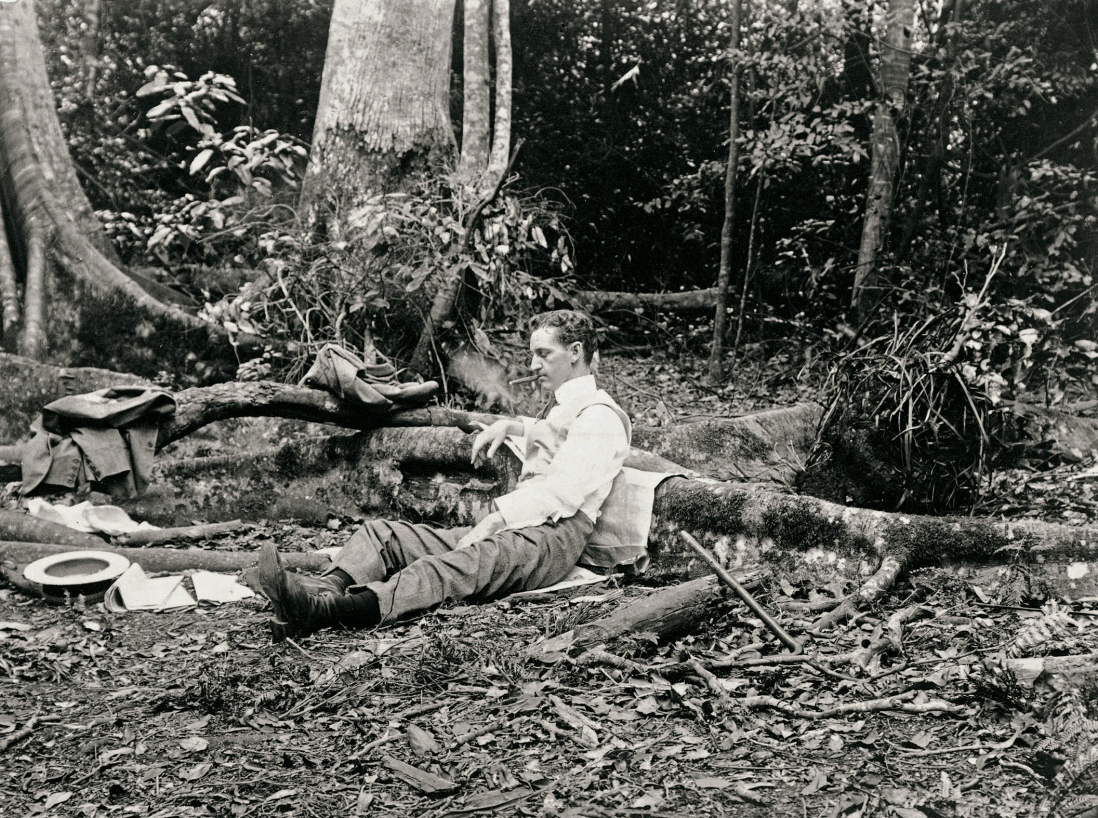
Blue Mountains, NSW (1922)
Leura Falls, NSW (1922)
Weeping Rock, Wentworth Falls, NSW (1922)
Tarana Picnic Races, NSW (1922)
Doona, Breeza, NSW (1922)
Avoca, NSW (1922)
Newcastle Races, NSW (1923)
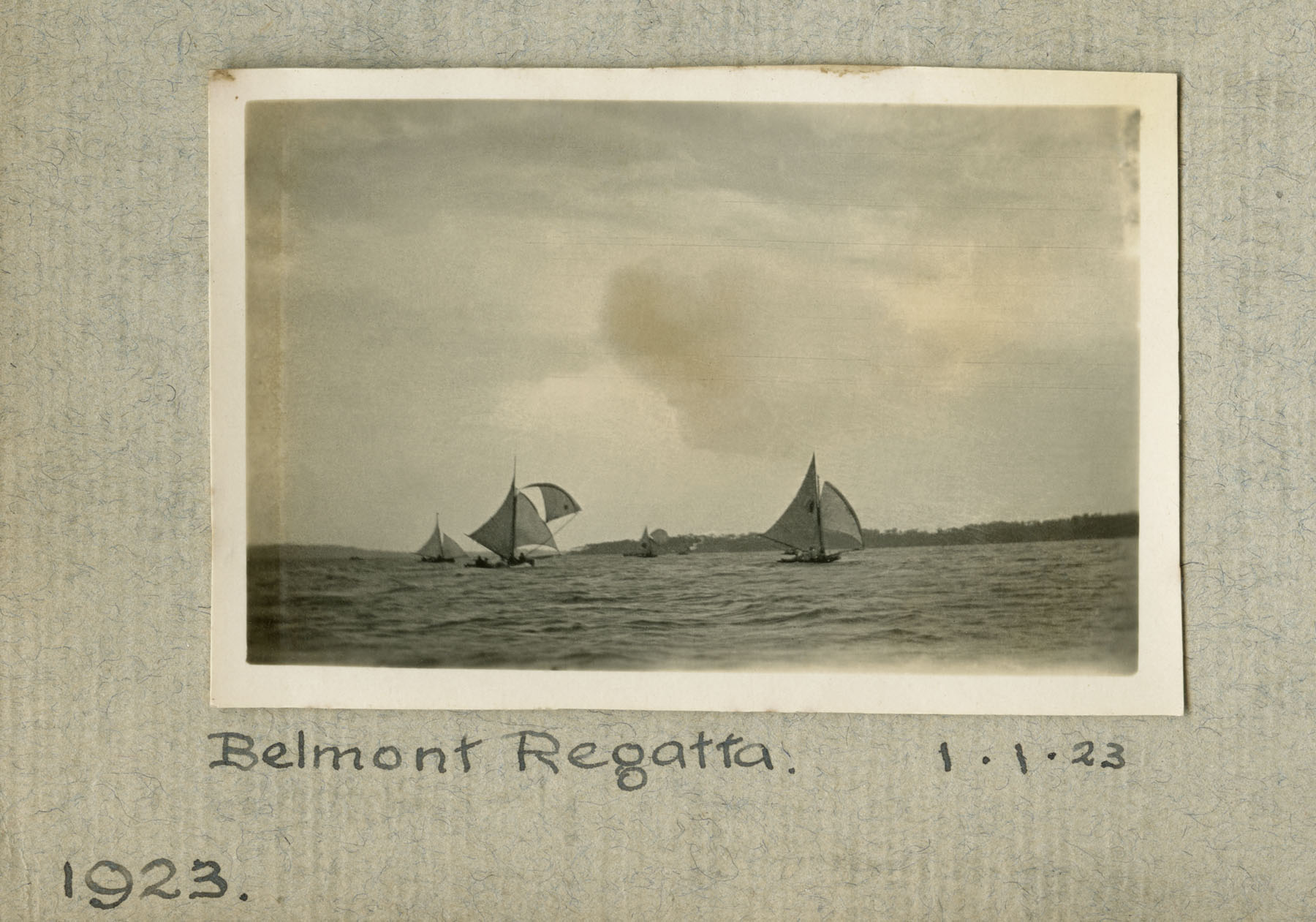
Belmont / Belmont Regatta, NSW (1923)
Hawkesbury, NSW (1923)
Frenches Forest, NSW (1923)
“Foxlow” Station, Bungedore, NSW (1923)
Sydney, NSW (Customs House, National Art Gallery, Mitchell Library, Darlinghurst Courthouse) (1923)
Muswellbrook Picnic Races, NSW (1923)
Maitland / Maitland Cup Meeting, NSW (1923)
Breeza, NSW (1923)
Wiseman’s Ferry, NSW (1923)
Moss Vale / Sutton Forest Church, NSW (1923)
Frensham, NSW (1923)
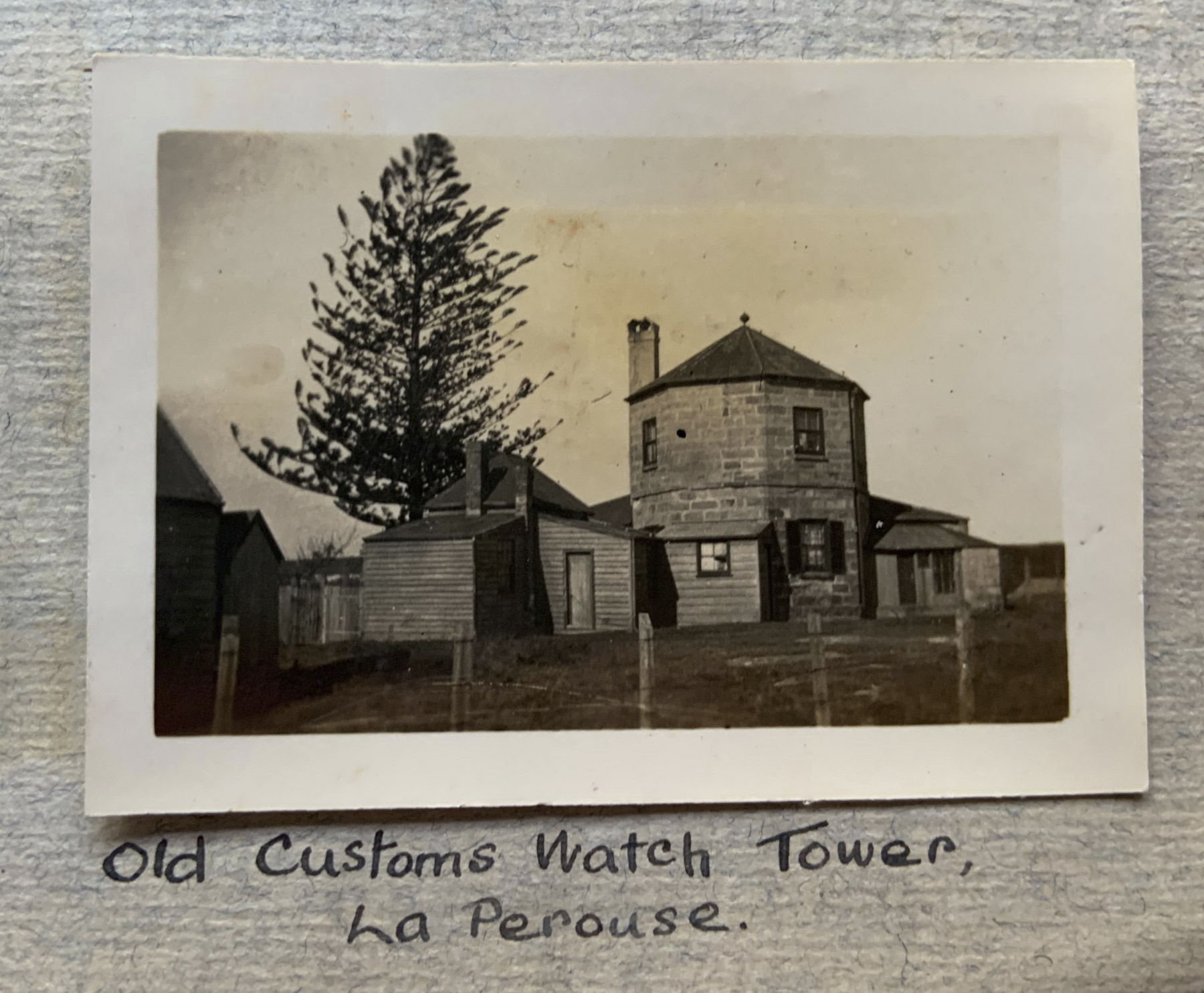
La Perouse, NSW (Historical Society Excursion) (1923)
Old Customs Watch Tower, La Perouse (1923)
The Old Illawarra Road, NSW (1923)
Yarcowie, SA (1923)
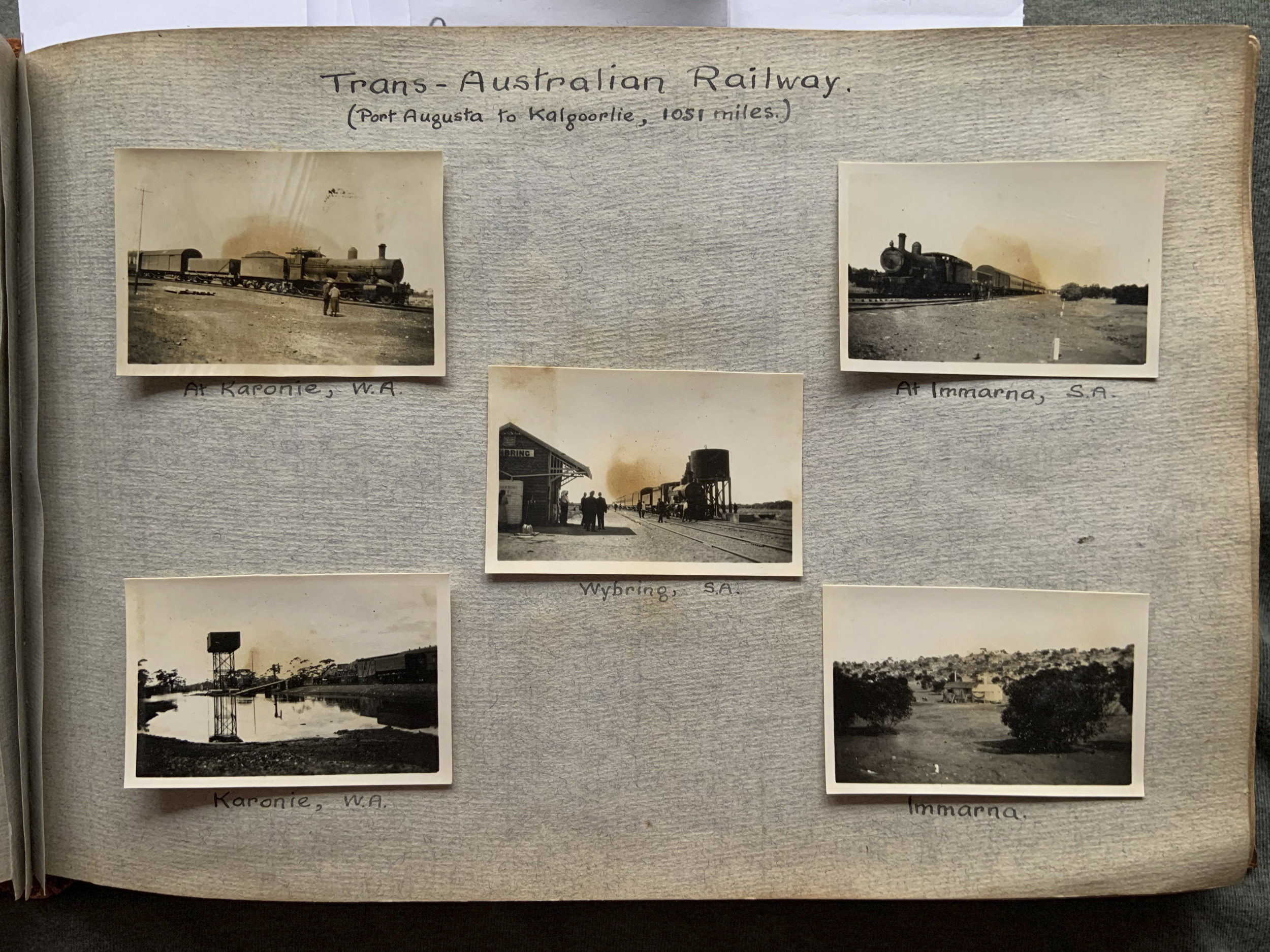
Trans-Australian Railway (Port Augusta to Kalgoorlie) (1923)
Karonie, WA (1923)
Kalgoorlie, WA (1923)
Boulder City, WA (1923)
Fremantle, WA (1923)
Geraldton, WA (1923)
Shark’s Bay, WA (1923)
Henry Freycinet Estuary, WA (1923)
Tamala Station, WA (1923)
Perth, WA (1923)
Adelaide, SA (Torrens River) (1923)
“Redbank,” Scone, NSW (1924)
Muswellbrook Picnic Races, NSW (1924)
“Craigieburn,” Bowral, NSW (1924)
The Dudley Cup at Kensington, NSW (1924)
Camden Grammar School, NSW (1924)
Liverpool Church, NSW (1924)
Landsdowne Bridge, NSW (1924)
Jenolan Caves, NSW (1924)
Avon Dam, NSW (1924)
Herald Office, Pitt Street, NSW (1924)
Camping, Cronulla, NSW (1925)
Roseville, NSW (1926)
Whale Beach, NSW (1927)
Visit of the Duke and Duchess of York, Macquarie Street, NSW (1927)
20, Yarranabbe Rd., Darling Point, NSW (1926)
Canberra, ACT (1927)
Jenolan Caves, NSW (Lady Dorothy Hope-Morley) (1927)
Ellen’s Isle, Loch Katrine, Scotland (1925)
Sydney Harbour Bridge, NSW (1931-32)
“Springfield,” Byng, Near Orange, NSW (1932)
Lucknow, near Orange, NSW (1933)
Hawkesbury, NSW (1933)
Bathurst, NSW (1933)
“Millambri, ” Canowindra, NSW (1933)
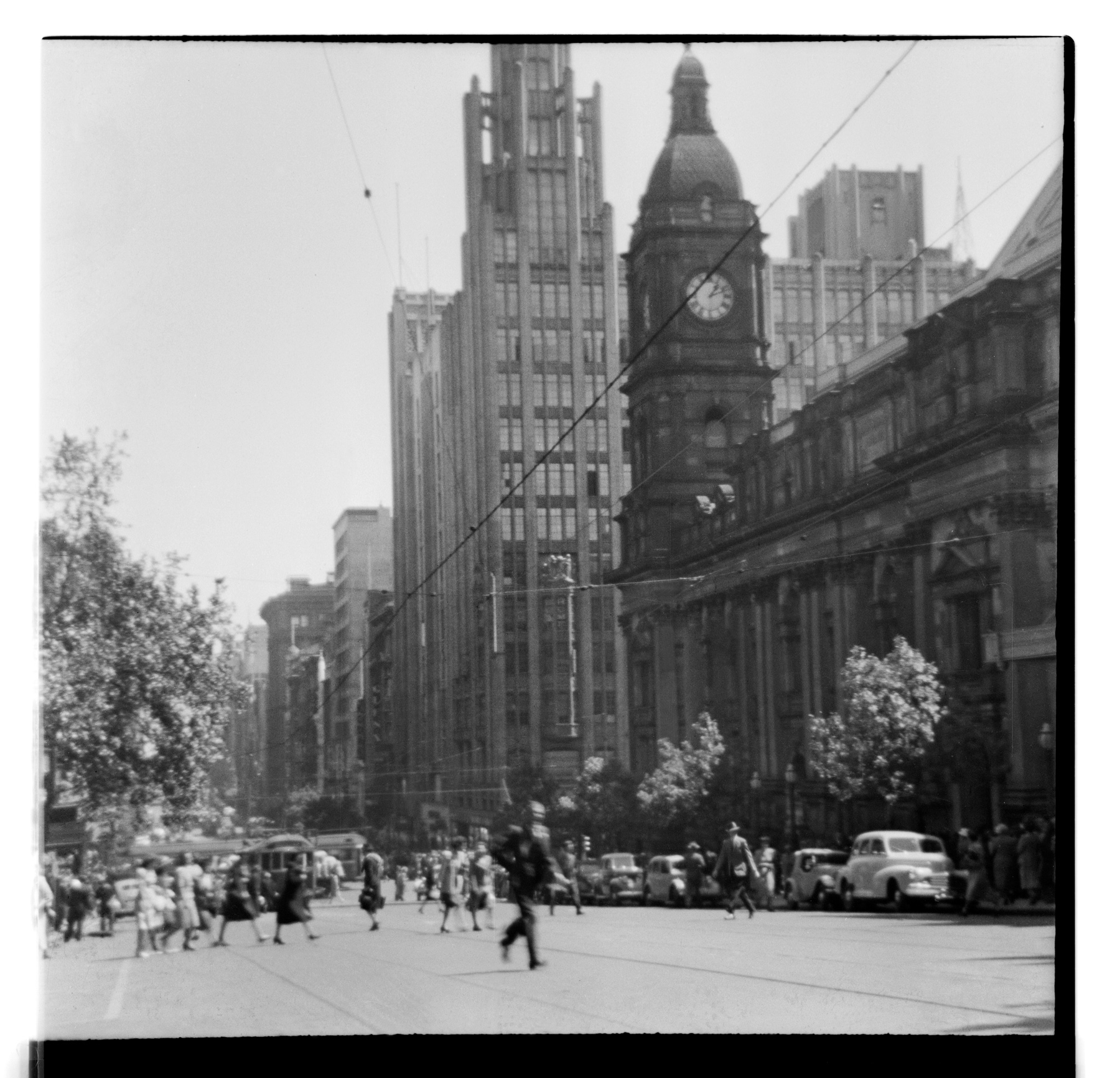
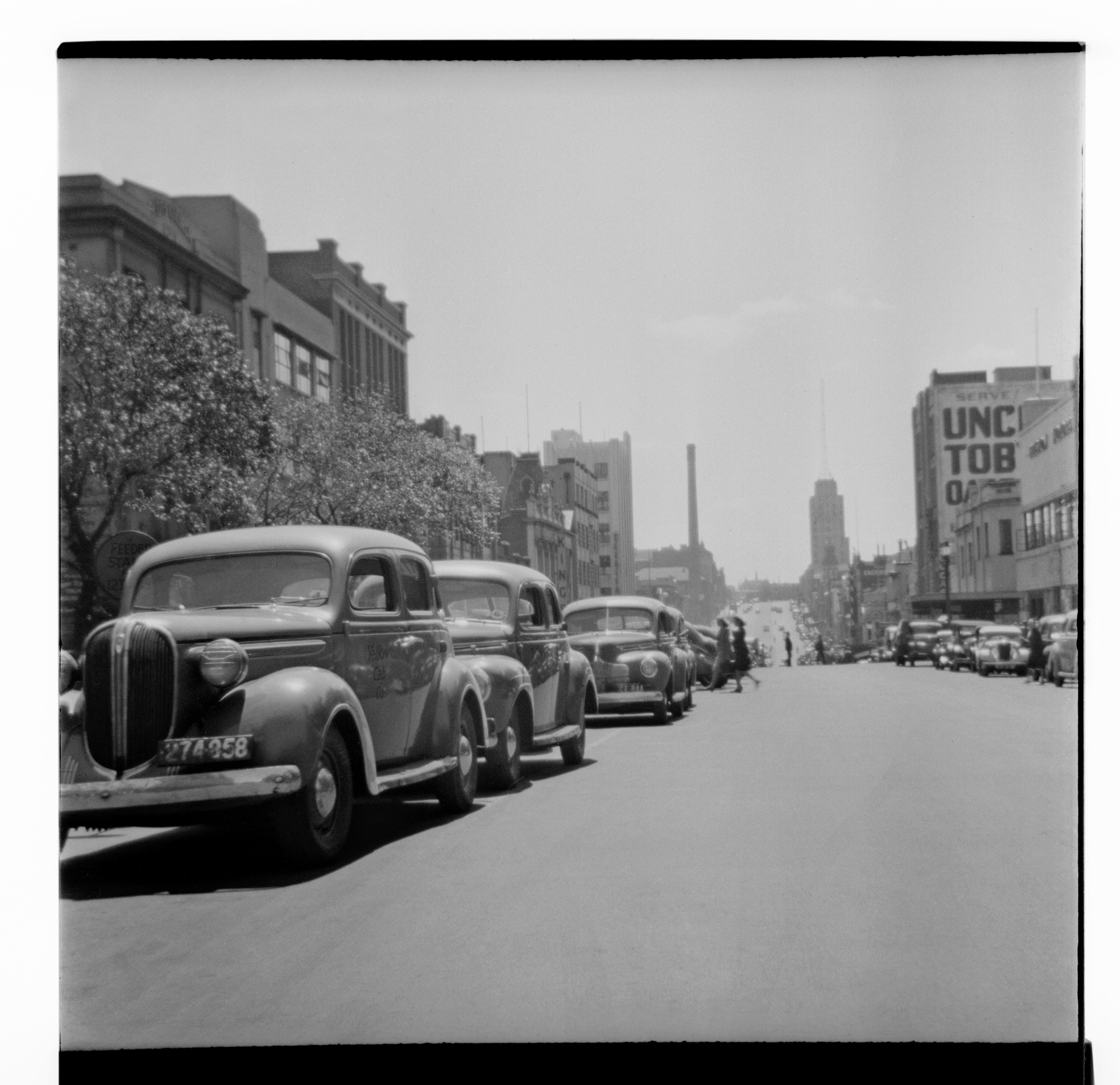
Melbourne, VIC (1933)

Topics

Men
Pastoralism and grazing
Horses / country horse racing
Sheep and shearing
Cows
Mill / logging
Pine plantation
Bush
Bores and dams
Cathedral / churches
Tennis
Golf
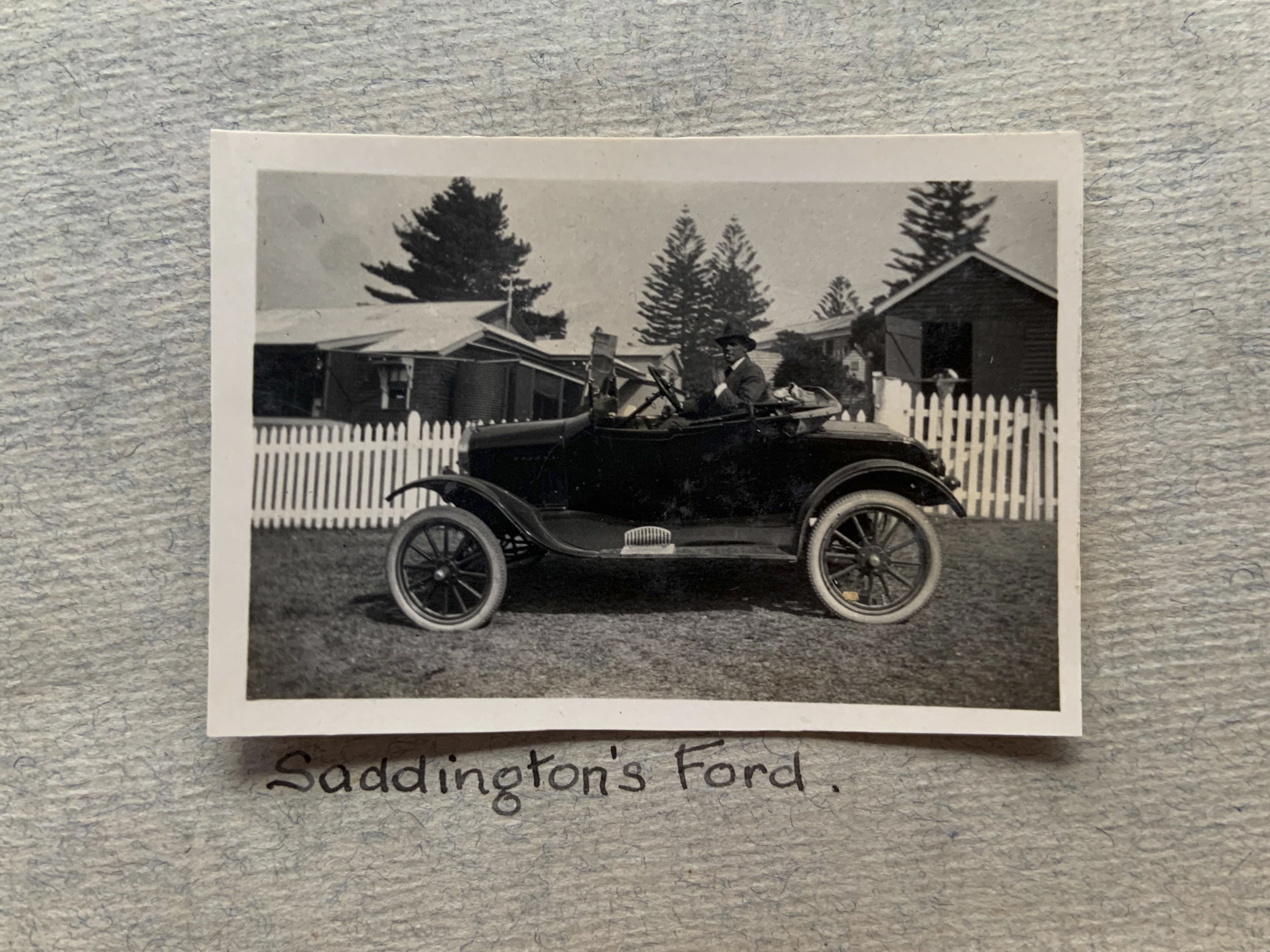
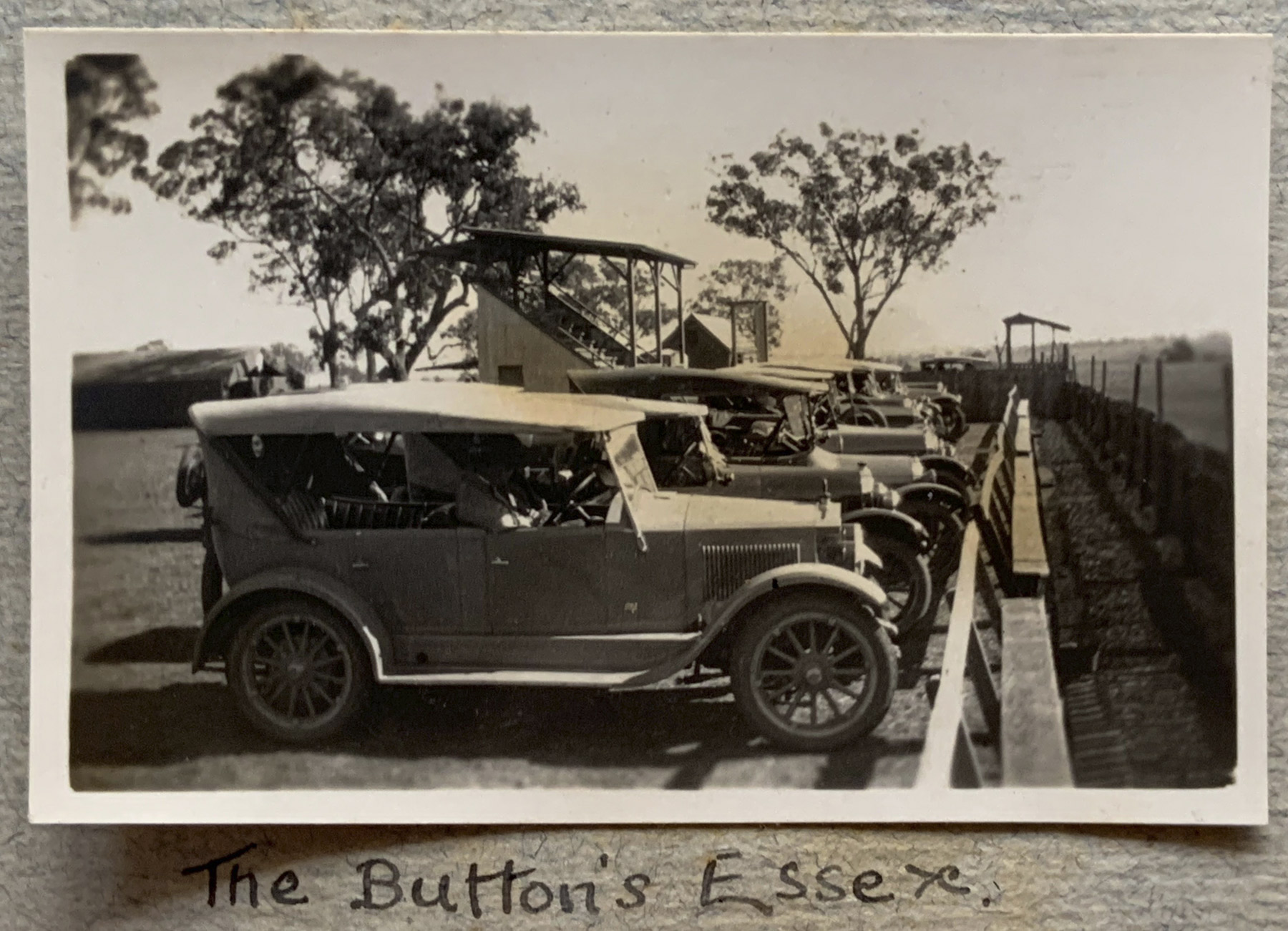
Cars (Ford, Pan-American, Essex, Oldsmobile, early Hupmobile, Chrysler 70)
Buses
Bank, post office
Pastoral Play
Monuments
Rock carvings
Houses
Cemetery / tombstones
John Dunn, executed 1866
South Australian Railways / locomotives
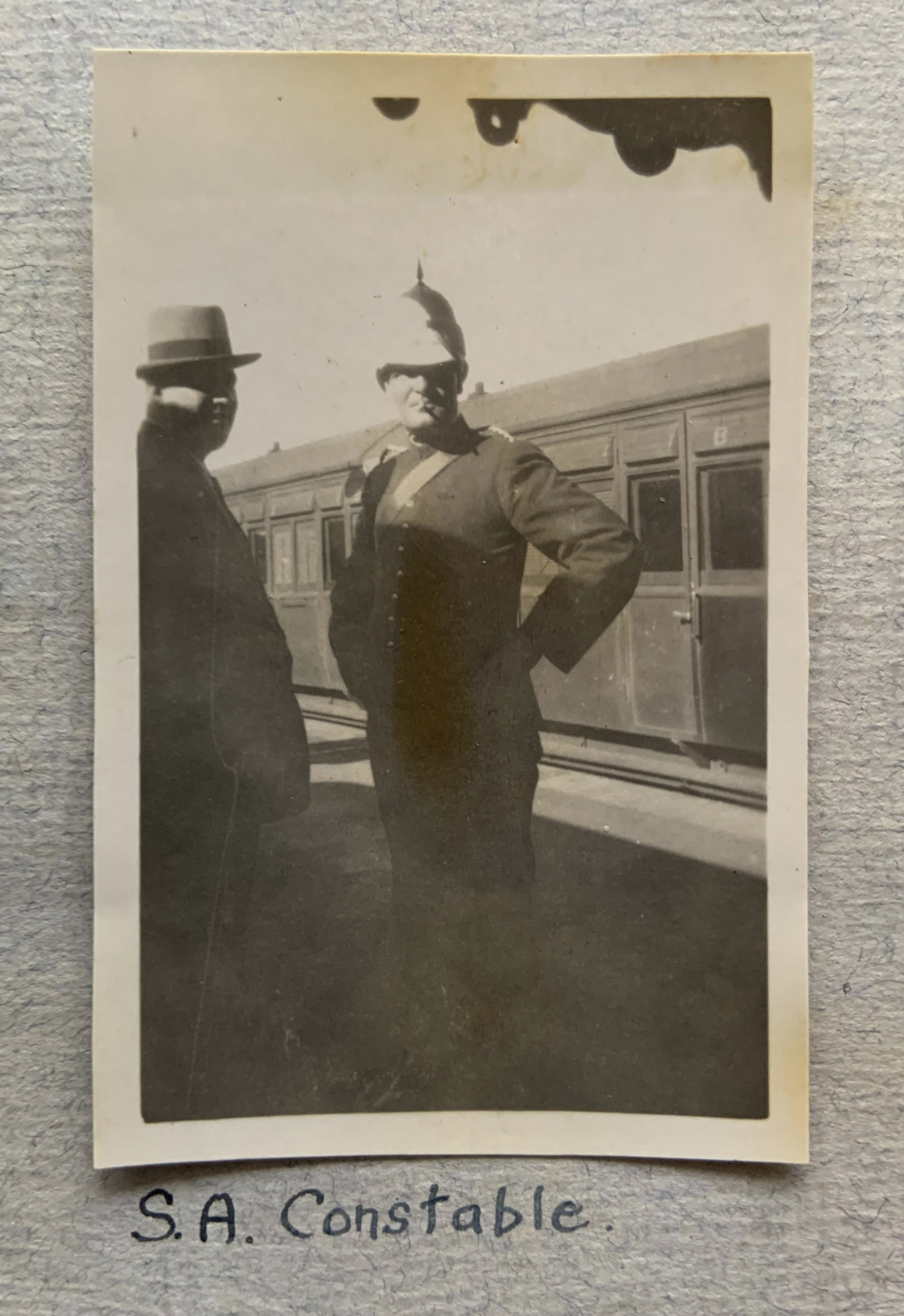
S.A. constable and Adelaide cop
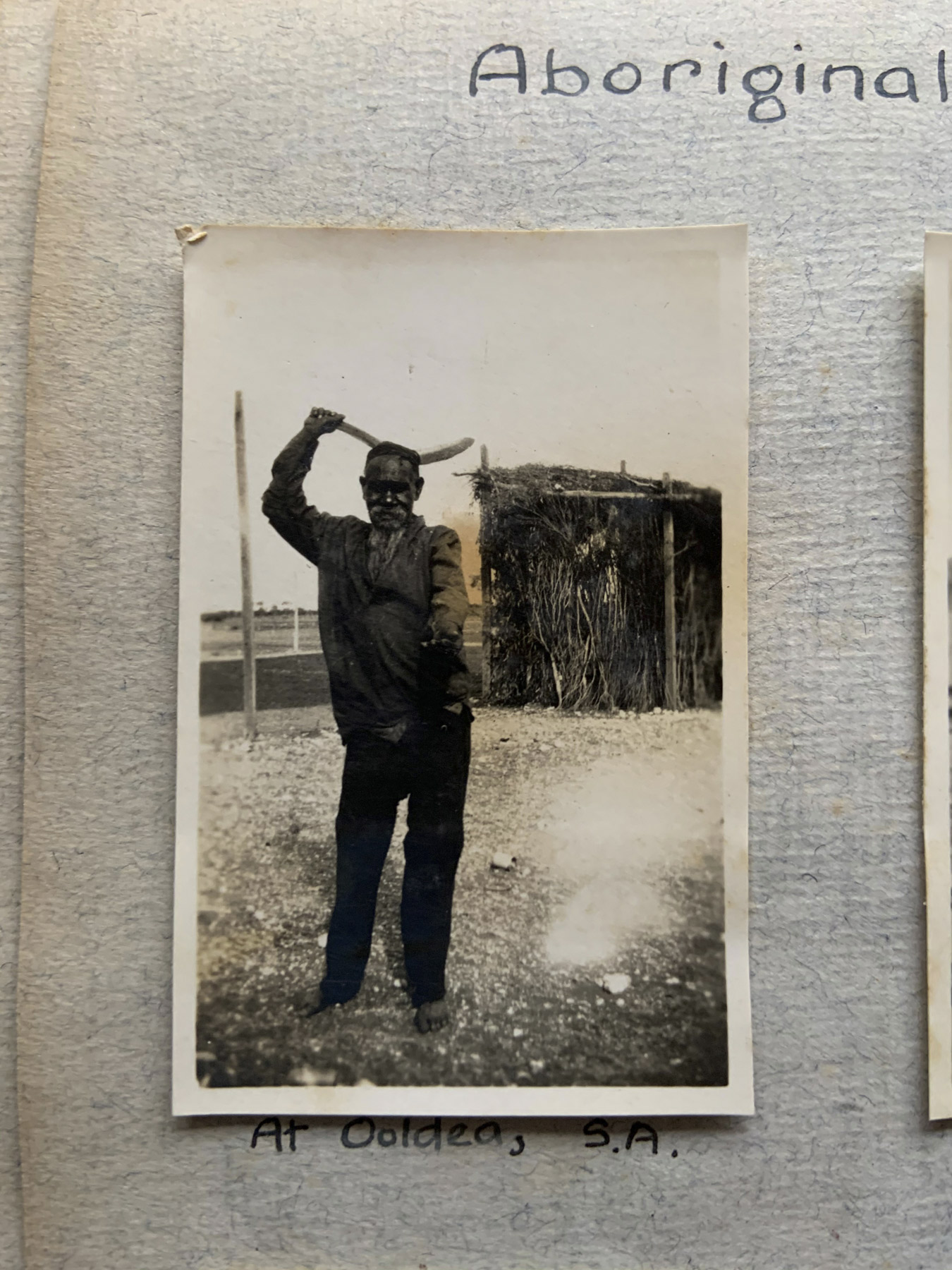
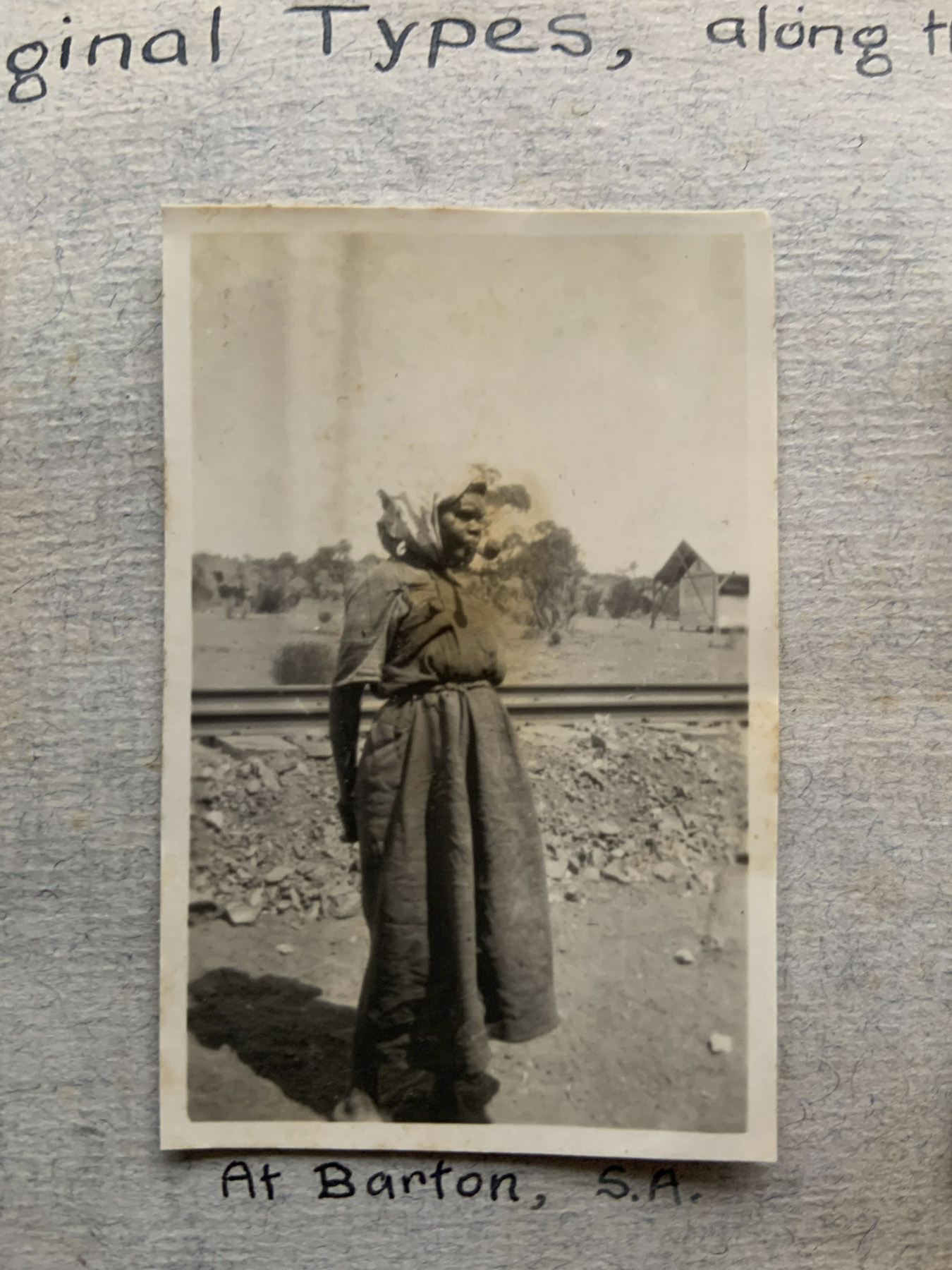
Indigenous Australians (Aboriginal types, along the Trans-Australian Railway)
Australian Desert Blacks
Gold mine / gold panning
Mining (Boulder and Perseverance Mines)
Convict gaol
Oldest inhabitant (Henry Desmond)
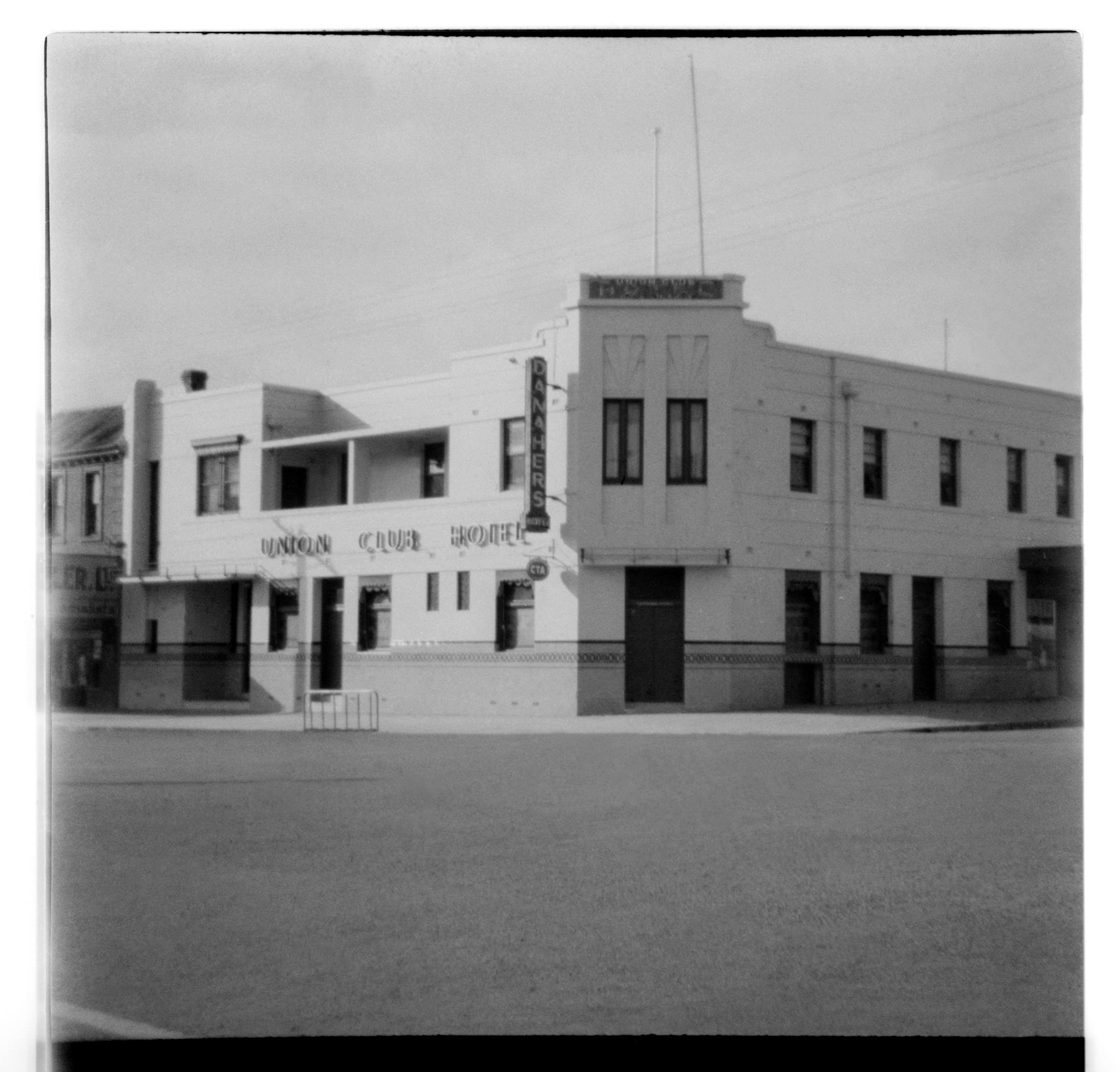
Hotels
Beach and sea, surf girls
Mother of pearl
Dates
Afghan / camels
Yachting, sailing / boats
Guano
Fred Adams, Boss-Pearler
Stations and station hands
Rowing
Dredging
Polo
Rugby
Caves
Guns
Nobility and royalty
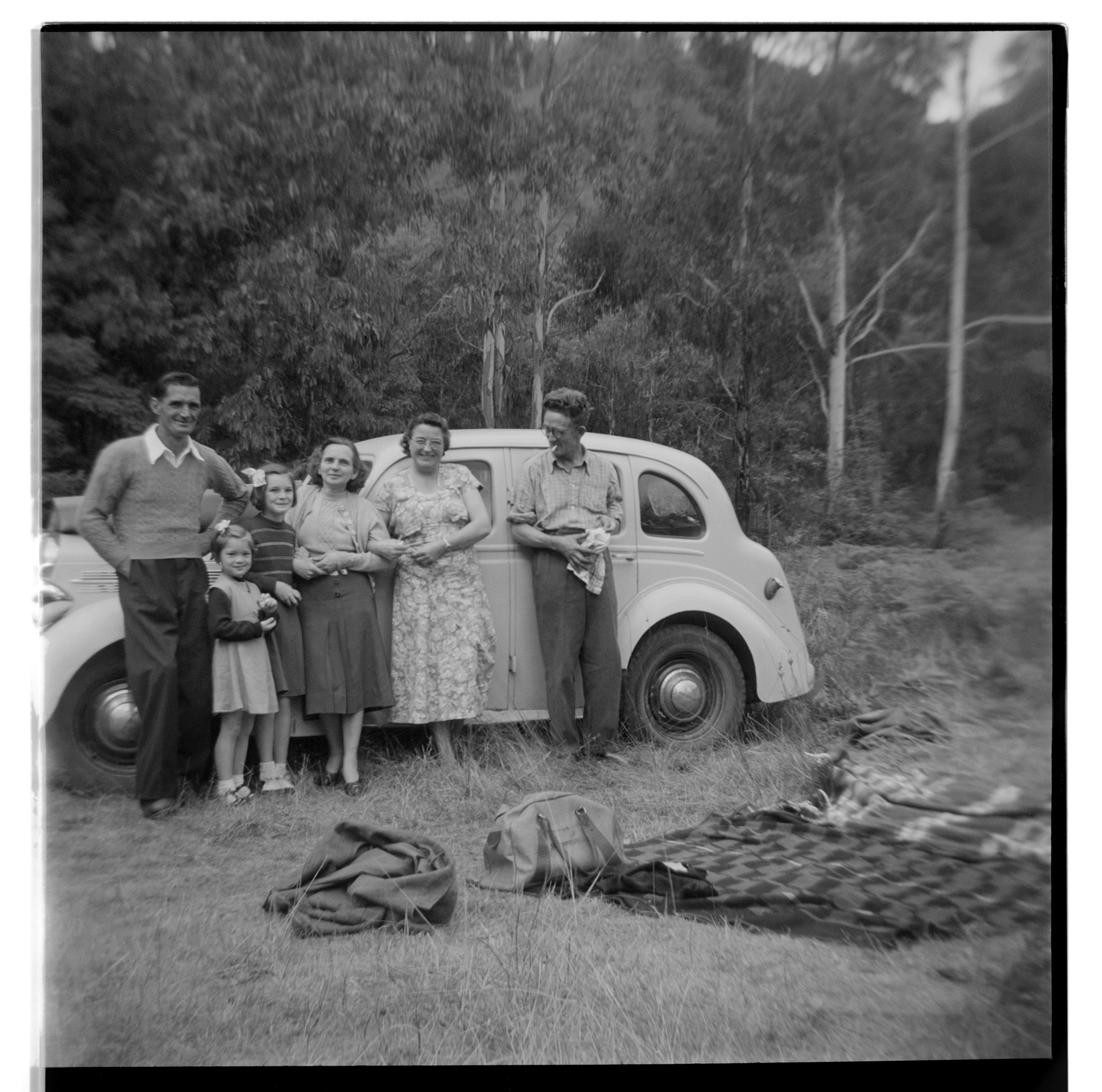
Camping, picnics
Tennis
House building / old houses
Parliament House
Prime Ministers residence
Bridges and bridge building
Federal and state governors
The world’s first auto-gyro plane (1909-1912)
The Southern Cross
Pioneers
Mounted police
First house in Byng
Rabbiting
Glamour
Social status / socialite
Family
Women and children
Sydney Harbour Bridge opening
Carillon (bells)
Myers and Bourke Street, Melbourne


"An Afghan's turnout," 1923 John "Jack" Riverstone Faviell 1922-1933 photo album from Marcus Bunyan. 'Golden splendour: privilege, ceremony & racism in 1920s-30s Australia' on the photo album 'John "Jack" Riverstone Faviell (1892-1960), 1922-1933' Part 2
 

“An Afghan’s turnout,” 1923 in John “Jack” Riverstone Faviell 1922-1933 photo album


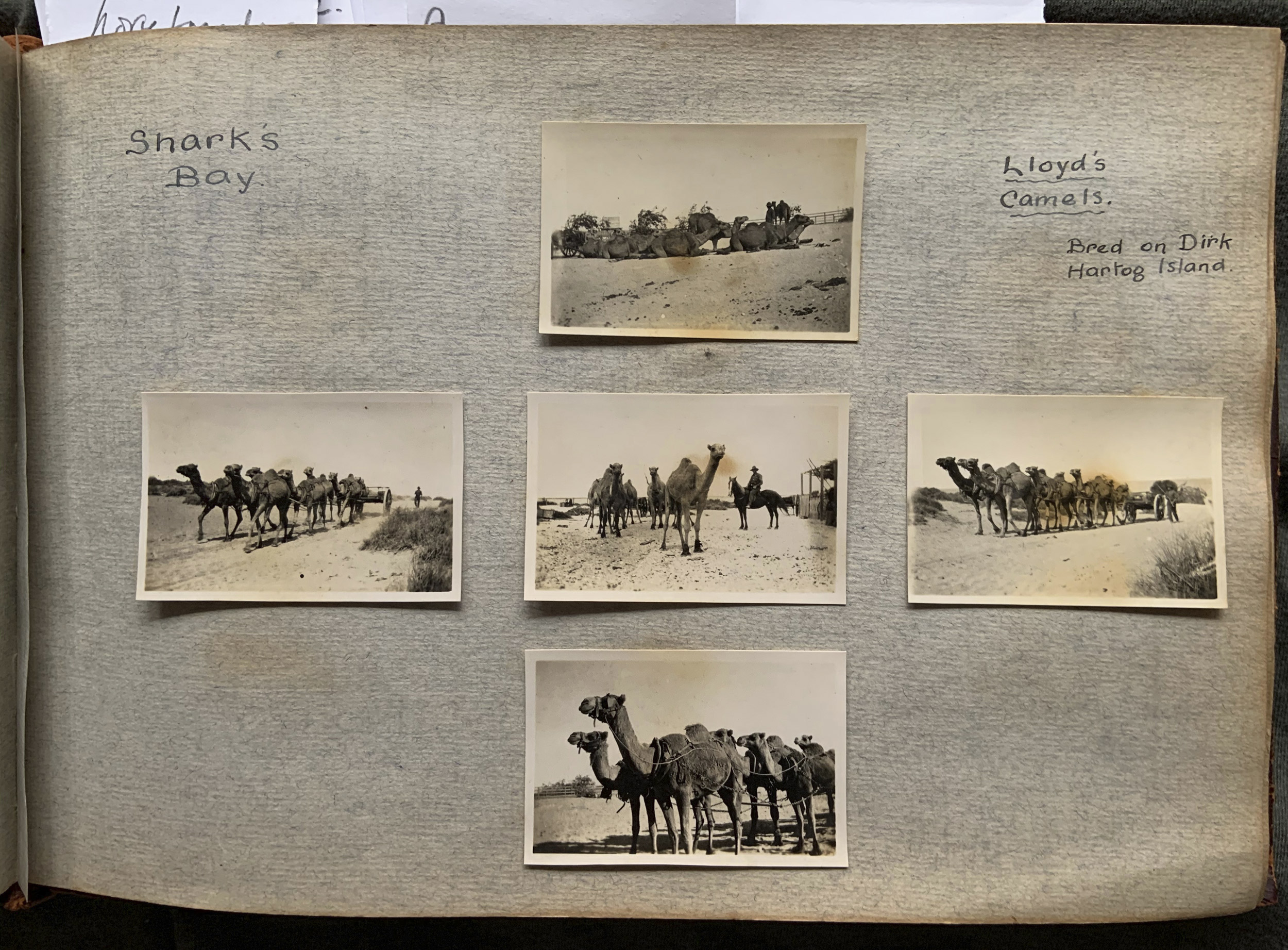
"Shark's Bay, Lloyd's Camels (Bred on Dirk Hartog Island)," 1923 in John "Jack" Riverstone Faviell 1922-1933 photo album from Marcus Bunyan. 'Golden splendour: privilege, ceremony & racism in 1920s-30s Australia' on the photo album 'John "Jack" Riverstone Faviell (1892-1960), 1922-1933' Part 2


“Shark’s Bay, Lloyd’s Camels (Bred on Dirk Hartog Island),” 1923 in John “Jack” Riverstone Faviell 1922-1933 photo album


"A five-days cruise on the Cutter "Shark"," 1923 in John "Jack" Riverstone Faviell 1922-1933 photo album


“A five-days cruise on the Cutter “Shark”,” 1923 in John “Jack” Riverstone Faviell 1922-1933 photo album


"Amongst the Islands of Henri Freycinet Estuary," 1923 in John "Jack" Riverstone Faviell 1922-1933 photo album


“Amongst the Islands of Henri Freycinet Estuary,” 1923 in John “Jack” Riverstone Faviell 1922-1933 photo album


Henri Freycinet Harbour, also known as Freycinet Estuary, is one of the inner gulfs of Shark Bay, Western Australia, a World Heritage Site that lies to the west of the Peron Peninsula. It has a significantly larger number of islands than Hamelin Pool, and has a number of smaller peninsulas known as “prongs” on its northern area. It has also been identified as a critical dugong habitat area. It is situated within the Shark Bay Marine Park.


"Fred Adams, Boss-Pearler, Shark's Bay, W.A.," 1923 in John "Jack" Riverstone Faviell 1922-1933 photo album


“Fred Adams, Boss-Pearler, Shark’s Bay, W.A.,” 1923 in John “Jack” Riverstone Faviell 1922-1933 photo album


Pearling in Western Australia was an important part of the European colonisation of the North West. Although it was never considered a permanent part of the state economy, pearling, with its immediate returns, allowed pastoralists to establish stations and contributed to the foundation of several towns. Some of these towns evolved into centres for agriculture and tourism and some developed their port facilities. Others did not outlive the availability of and market for pearlshell. Uniquely, Shark Bay not only survived the demise of the industry, but developed into the state’s commercial fishing centre. The pearling boats were simply refitted to become fishing boats (OH 2266/8) and the Bay life continued…

Wilyah Miah. An Archaeological Study of the History of the Shark Bay Pearling Industry 1850-1930. University of Western Australia, 1999, p. 7.
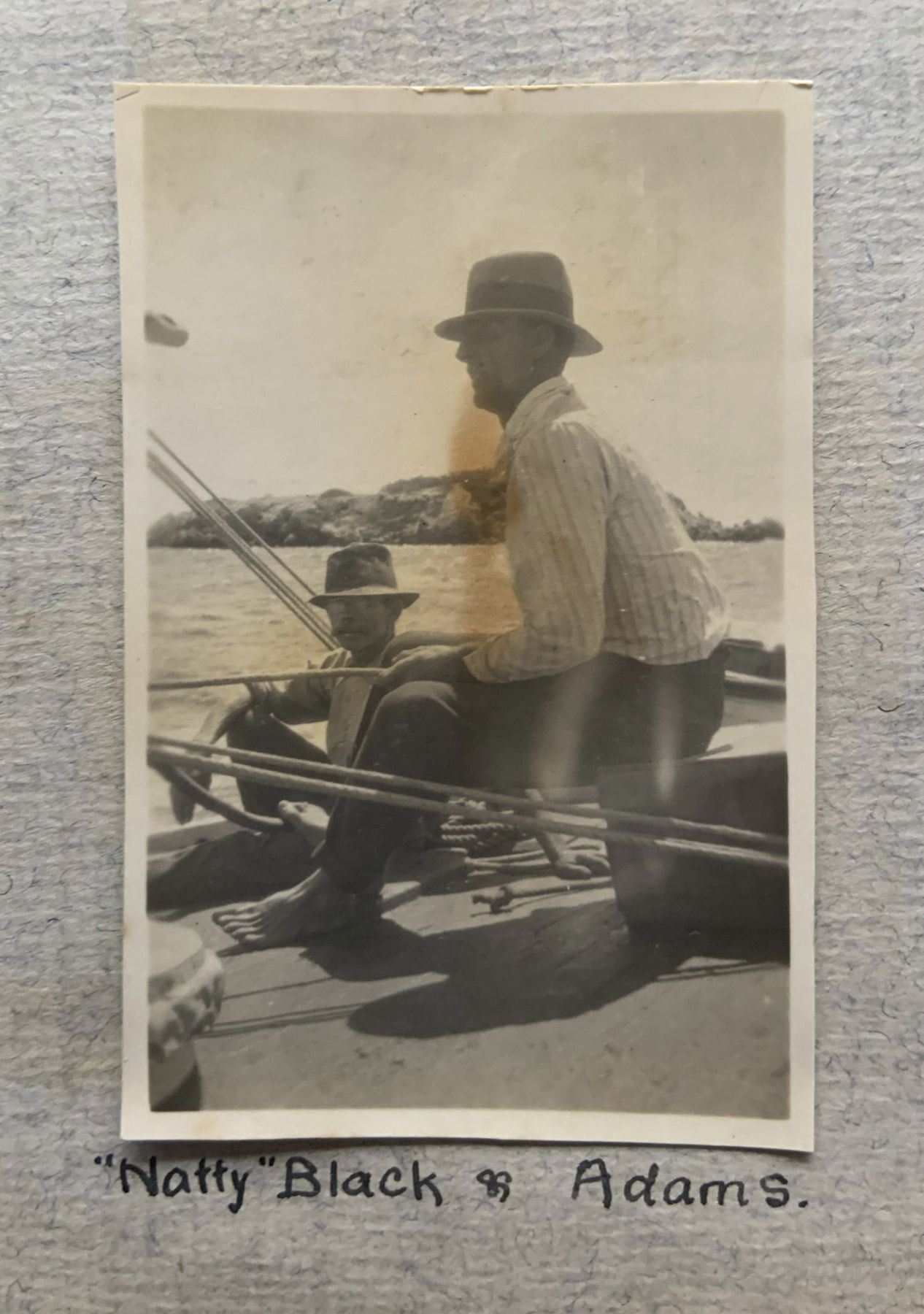
 

""Natty" Black & Adams," in John "Jack" Riverstone Faviell 1922-1933 photo album


“”Natty” Black & Adams,” in John “Jack” Riverstone Faviell 1922-1933 photo album


"Sharks Bay," 1923 in John "Jack" Riverstone Faviell 1922-1933 photo album


“Sharks Bay,” 1923 in John “Jack” Riverstone Faviell 1922-1933 photo album
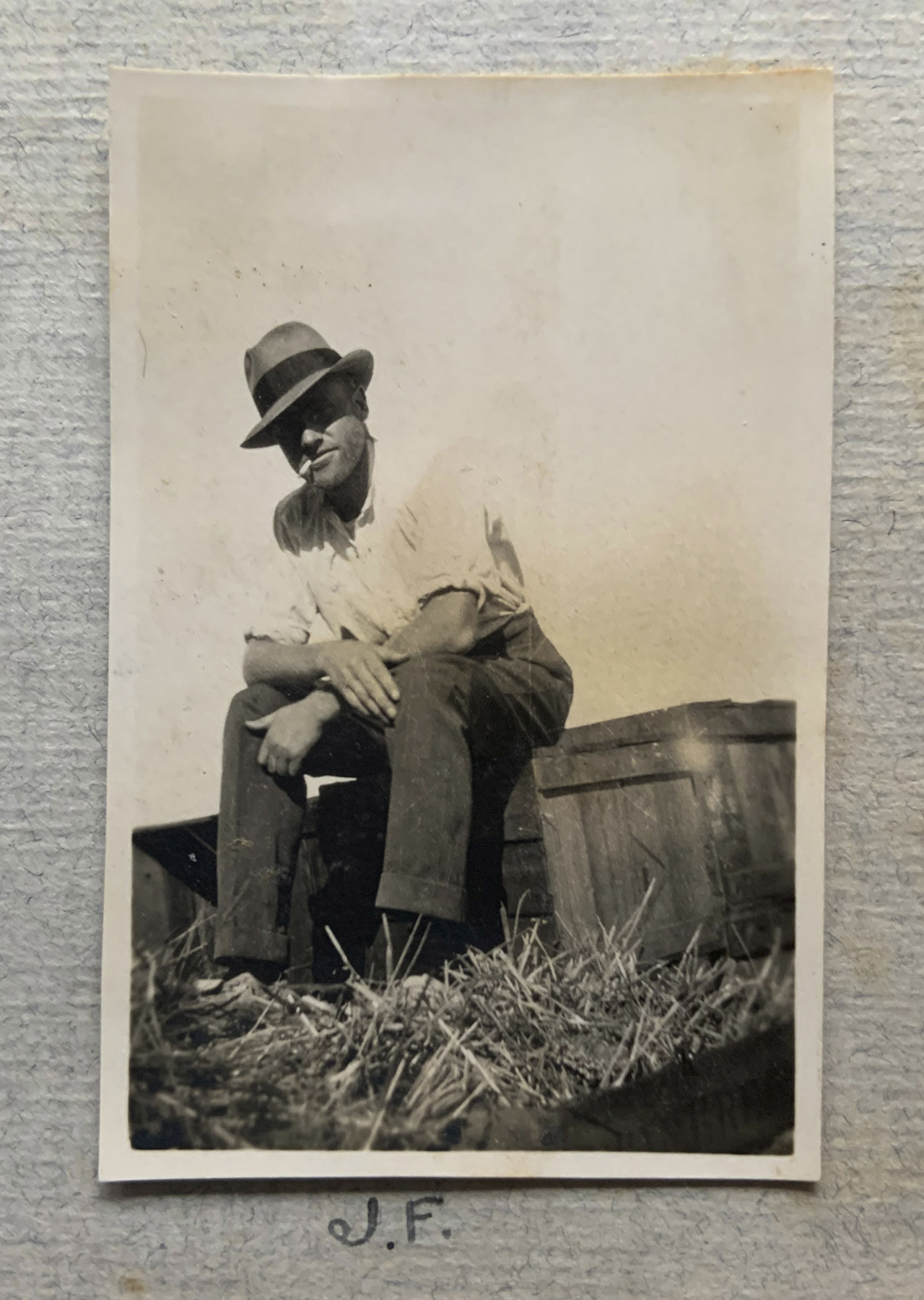
 

"J.F." 1923 in John "Jack" Riverstone Faviell 1922-1933 photo album


“J.F.” 1923 in John “Jack” Riverstone Faviell 1922-1933 photo album


"Boss-pearler Henfrey, and his "missus", opening shell," 1923in John "Jack" Riverstone Faviell 1922-1933 photo album


“Boss-pearler Henfrey, and his “missus”, opening shell,” 1923in John “Jack” Riverstone Faviell 1922-1933 photo album


The first labour employed in the industry was that of the local Aboriginal people. Little is known of the pre-European Aboriginal people of the Bay. It is not clear whether it was the territory of the Nanda or the Mulgana people (Bowdler 1992:5) although current consensus among the people of Shark Bay is that they are Mulgana (Bowdler pers. comm. 1999). They were easily accessible and there were no expectations that they should be paid the wages of other labourers. Willingness on the part of the Aboriginal people to participate in the industry was often an issue irrelevant to the interests of the pearlers. Goods such as alcohol may have been an inducement, but, according to Anderson (1978) in her study of the North West industry, coercion was necessary and practices such as blackbirding were employed to acquire labour. The introduction of pastoralism, by its appropriation of land, ensured the destruction of the traditional Aboriginal economy and forced them to provide for the market the only commodity available to them, their labour (Hartwig 1975:32).

Wilyah Miah. An Archaeological Study of the History of the Shark Bay Pearling Industry 1850-1930. University of Western Australia, 1999, p. 18.


"Tamala Station, Shark's Bay, W.A.," 1923 in John "Jack" Riverstone Faviell 1922-1933 photo album


“Tamala Station, Shark’s Bay, W.A.,” 1923 in John “Jack” Riverstone Faviell 1922-1933 photo album


This pastoral station is in the southern part of Shark Bay World Heritage Area on limestone-dominated landscapes. The main attraction of Tamala Station is the low lying coastline and waters of Henri Freycinet Harbour. Many visitors only cross this property on their way to Steep Point but some spend time here camping, fishing and exploring the prongs and peninsulas. Tamala Station allows access to the general public but you must first contact the station managers for bookings.

Text from the Shark Bay World Heritage website


"Tamala Station Hands," 1923 in John "Jack" Riverstone Faviell 1922-1933 photo album
 

“Tamala Station Hands,” 1923 in John “Jack” Riverstone Faviell 1922-1933 photo album


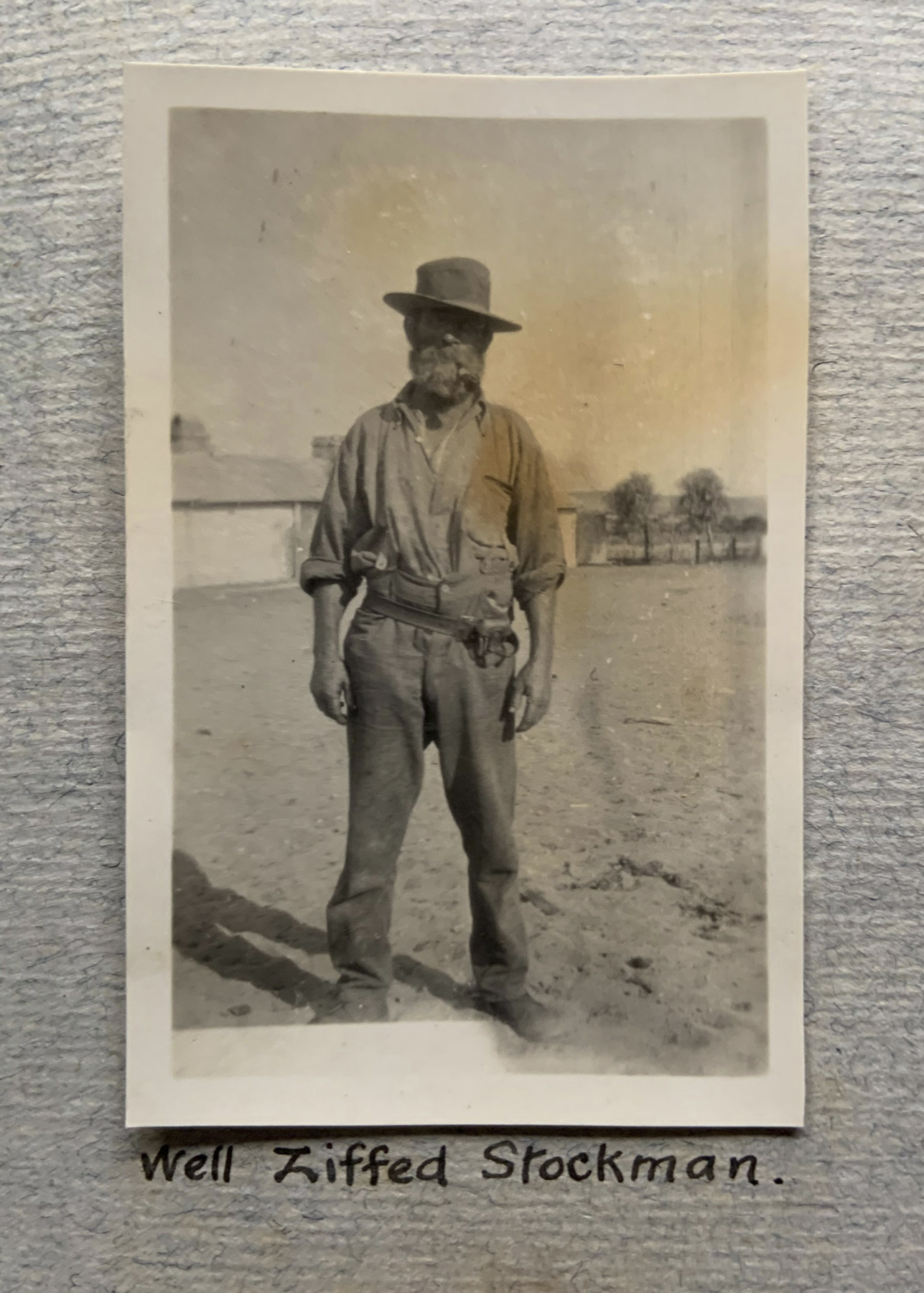
"Well Ziffed Stockman," in John "Jack" Riverstone Faviell 1922-1933 photo album


“Well Ziffed Stockman,” in John “Jack” Riverstone Faviell 1922-1933 photo album


Ziff, Australian for beard. The Oxford English Dictionary says this slang term originated around 1919, but otherwise the origin is unknown. To be ziffed means to be bearded.


"Untitled," 1923 in John "Jack" Riverstone Faviell 1922-1933 photo album


“Untitled,” 1923 in John “Jack” Riverstone Faviell 1922-1933 photo album


"Nellie and her litter," 1923 in John "Jack" Riverstone Faviell 1922-1933 photo album


“Nellie and her litter,” 1923 in John “Jack” Riverstone Faviell 1922-1933 photo album
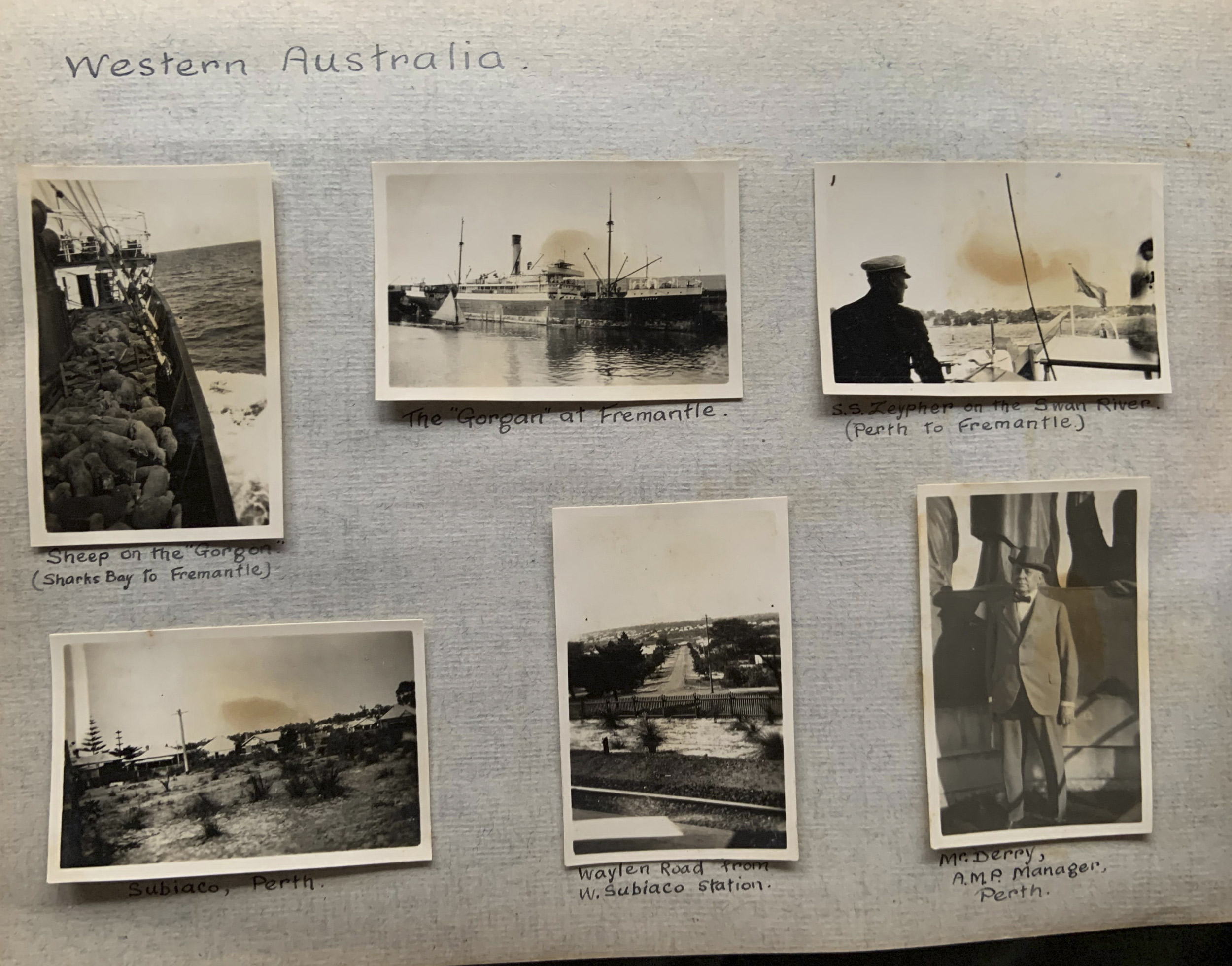
 

"Western Australia," 1923 in John "Jack" Riverstone Faviell 1922-1933 photo album


“Western Australia,” 1923 in John “Jack” Riverstone Faviell 1922-1933 photo album


"Perth," 1923 in John "Jack" Riverstone Faviell 1922-1933 photo album


“Perth,” 1923 in John “Jack” Riverstone Faviell 1922-1933 photo album


"Returning from the West," 1923 in John "Jack" Riverstone Faviell 1922-1933 photo album


“Returning from the West,” 1923 in John “Jack” Riverstone Faviell 1922-1933 photo album


"Redbank", Scone, N.S.W.," 1923 in John "Jack" Riverstone Faviell 1922-1933 photo album


“Redbank”, Scone, N.S.W.,” 1923 in John “Jack” Riverstone Faviell 1922-1933 photo album


W.T. Badgery, horsebreeder, at Scone, Hunter Valley (Information from Douglas Stewart Fine Books)

Scone /ˈskoʊn/ is a town in the Upper Hunter Shire in the Hunter Region of New South Wales, Australia. It is on the New England Highway north of Muswellbrook about 270 kilometres north of Sydney, and is part of the New England (federal) and New England (state) electorates. Scone is in a farming area and is also noted for breeding Thoroughbred racehorses. It is known as the ‘Horse capital of Australia’.

Text from the Wikipedia website


"Muswellbrook Picnic Races," 1923 in John "Jack" Riverstone Faviell 1922-1933 photo album
 

“Muswellbrook Picnic Races,” 1923 in John “Jack” Riverstone Faviell 1922-1933 photo album


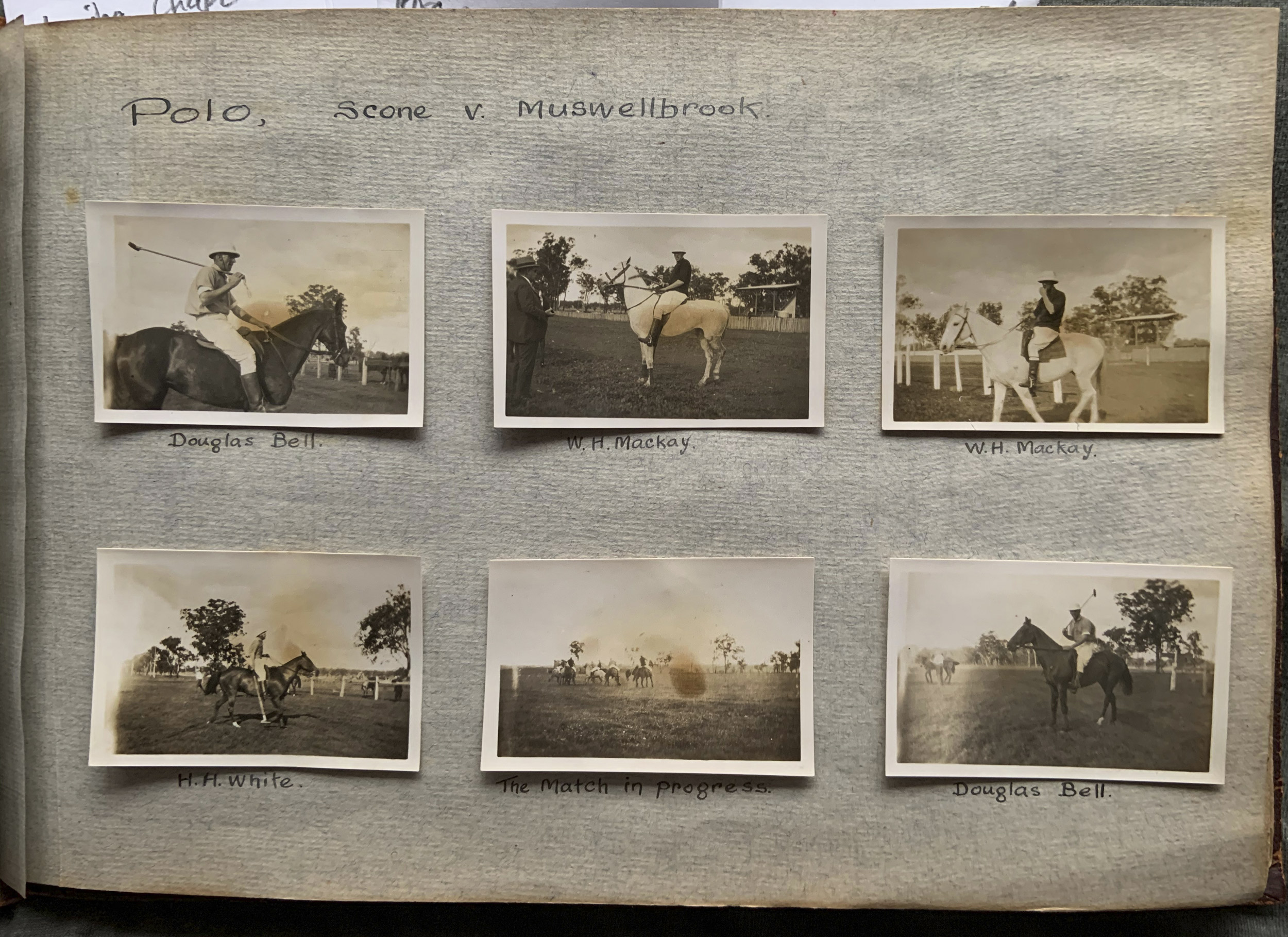
"Polo, Scone v Muswellbrook," 1923 in John "Jack" Riverstone Faviell 1922-1933 photo album


“Polo, Scone v Muswellbrook,” 1923 in John “Jack” Riverstone Faviell 1922-1933 photo album


"Craigieburn", Bowral, N.S.W.," 1923 in John "Jack" Riverstone Faviell 1922-1933 photo album


“Craigieburn”, Bowral, N.S.W.,” 1923 in John “Jack” Riverstone Faviell 1922-1933 photo album


Craigieburn, Bowral is a house of historical significance as it was built in about 1885. It was originally the mountain retreat for a wealthy Sydney merchant and was owned by him for over twenty years. It was then the home of several other prominent people until about 1918 when it was converted into a hotel. Today it still provides hotel accommodation and is a venue for special events particularly weddings and conferences.

Text from the Wikipedia website


"Bryden Brown and Jack Whitehouse," 1923 in John "Jack" Riverstone Faviell 1922-1933 photo album


“Bryden Brown and Jack Whitehouse,” 1923 in John “Jack” Riverstone Faviell 1922-1933 photo album


"The Dudley Cup at Kensington," 1924 in John "Jack" Riverstone Faviell 1922-1933 photo album


“The Dudley Cup at Kensington,” 1924 in John “Jack” Riverstone Faviell 1922-1933 photo album


"C.G.S Football, School v Old Boys," 1924 in John "Jack" Riverstone Faviell 1922-1933 photo album


“C.G.S Football, School v Old Boys,” 1924 in John “Jack” Riverstone Faviell 1922-1933 photo album


Camden Grammar School

“At the close of the last century the school was moved to the present situation at Studley Park, Narellan, formerly the residence of A. Payne Esq., a magnificent residence standing on the brow of a hill over looking the Nepean Valley and surrounded by 200 acres of rich country.” (Trove) The school was at Studley Park House 1902-1933.


"Half-time," 1924 in John "Jack" Riverstone Faviell 1922-1933 photo album


“Half-time,” 1924 in John “Jack” Riverstone Faviell 1922-1933 photo album


"Untitled," 1924 in John "Jack" Riverstone Faviell 1922-1933 photo album


“Untitled,” 1924 in John “Jack” Riverstone Faviell 1922-1933 photo album


"Trip to Jenolan Caves," October, 1924 in John "Jack" Riverstone Faviell 1922-1933 photo album


“Trip to Jenolan Caves,” October, 1924 in John “Jack” Riverstone Faviell 1922-1933 photo album


Audrey Pickburn

Audrey Pickburn was a Sydney socialite. Her mother who was obviously playing chaperone on this trip to Jenolan Caves (Information from Douglas Stewart Fine Books) (Information from Douglas Stewart Fine Books)

Audrey Pickburn and John Faviell were married on Tuesday 24 February 1925.

AT ST. JAMES’
LAST NIGHT’S WEDDING
FAVIELL – PICKBURN

ST. JAMES Church, Kings Street was crowded last night for the wedding or Miss Audrey Pickburn, only child of the late Judge Pickburn, and Mrs. Pickburn of Springfield, Darllnghurst and Mr John Favlell, of “Collinroobie”. The church was decorated by girl friends of the bride and the ceremony was performed by Rev. T. L—-.

A lovely bridal gown of gleaming white was hand embroidered with pearls and diamente, and made with a long train, which was encrusted with pearls and lined with shell pink georgette. Silver thread embroideries also appeared on the train, which was finished with true-lovers knots. A plain tulle veil, held with a coronet of orange blossom, and a bouquet of orchids completed the ensemble.

Miss Gretel Bullmore was chief bridesmaid wearing a gown of golden lame, flared at the hem. Miss Eileen Wiley and Miss Joyce Russell were also In attendance. Their frocks of lame were made —– effect. All three wore golden crin. hats, trimmed with —- and floating blue scarves, with gold thread embroideries, and they carried bouquets of orchids.

Mr. Claude Pain was in attendance as best man. Mr. Guy Little and Mr Keith Hardie acted as groomsmen. The reception was held at the Queen’s Club where the bride & mother received a big number of guests.

The Labor Daily, Tuesday, 24 February 1925, Page 7 on the Trove website [Online] Cited 05/11/2019

(The Queen’s Club, 137 Elizabeth Street, Sydney established in 1912, is a private Club. The Club was founded for social purposes for country and city women.)

PICKBURN – FAVIELL

The biggest social event of the month was the wedding on Tuesday night of Miss Mclanie Audrey Pickburn, only daughter of the late Judge Pickburn and Mrs. Pickburn, of ‘Springfield,’ Darlinghurst, to Mr. Jack “Riverstone” Faviell, of Sydney, son of the late Mr. A. Faviell, Colinroobie, Narandera, and Mrs. Faviell, Kiribilli, which was celebrated at St. James’s Church, King-street, Sydney, by the Rev. E. C. Lucas, of St. John’s, Darlinghurst. The church was beautifully decorated in white and gold.

Narandera Argus and Riverina Advertiser, Friday, 27 February 1925, Page 6 on the Trove website [Online] Cited 05/11/2019

Jenolan Caves

The Jenolan Caves (Tharawal: Binoomea, Bindo, Binda) are limestone caves located within the Jenolan Karst Conservation Reserve in the Central Tablelands region, west of the Blue Mountains, in Jenolan, Oberon Council, New South Wales, in eastern Australia. The caves and 3,083-hectare (7,620-acre) reserve are situated approximately 175 kilometres (109 mi) west of Sydney, 20 kilometres (12 mi) east of Oberon and 30 kilometres (19 mi) west of Katoomba.

The caves are the most visited of several similar groups in the limestone caves of the country, and the most ancient discovered open caves in the world.

Text from the Wikipedia website


"Caves Service Car," 1924 in John "Jack" Riverstone Faviell 1922-1933 photo album


“Caves Service Car,” 1924 in John “Jack” Riverstone Faviell 1922-1933 photo album


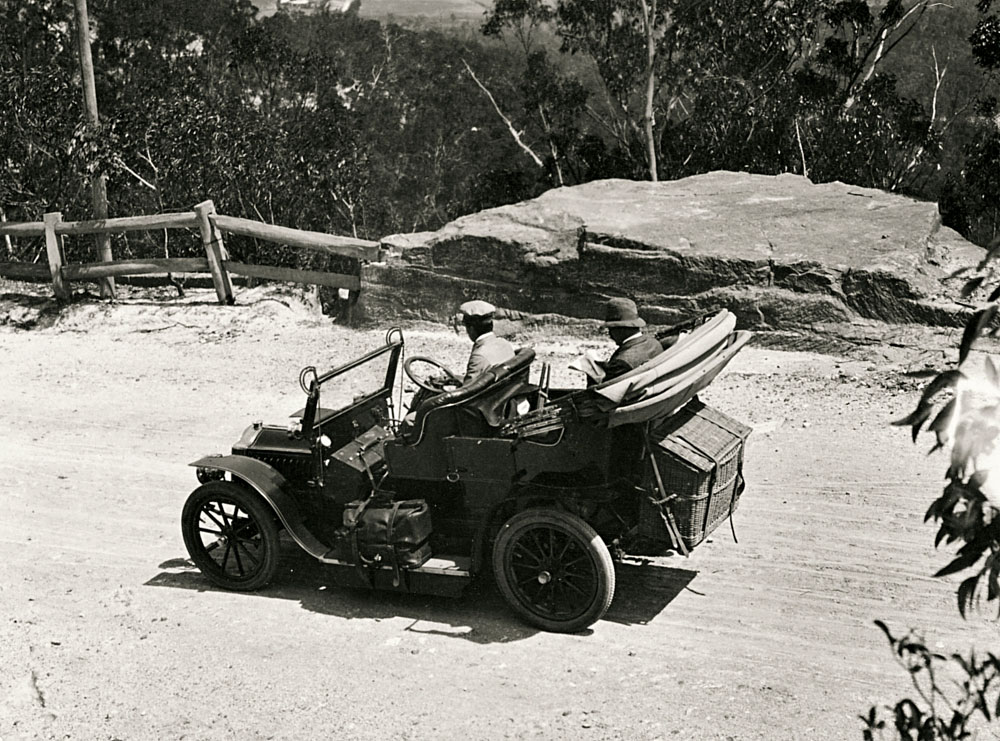
"My Pan American," 1924 in John "Jack" Riverstone Faviell 1922-1933 photo album


“My Pan American,” 1924 in John “Jack” Riverstone Faviell 1922-1933 photo album


"Audrey Pickburn," 1924 in John "Jack" Riverstone Faviell 1922-1933 photo album


“Audrey Pickburn,” 1924 in John “Jack” Riverstone Faviell 1922-1933 photo album


"Jenolan Caves," October, 1924 in John "Jack" Riverstone Faviell 1922-1933 photo album


“Jenolan Caves,” October, 1924 in John “Jack” Riverstone Faviell 1922-1933 photo album
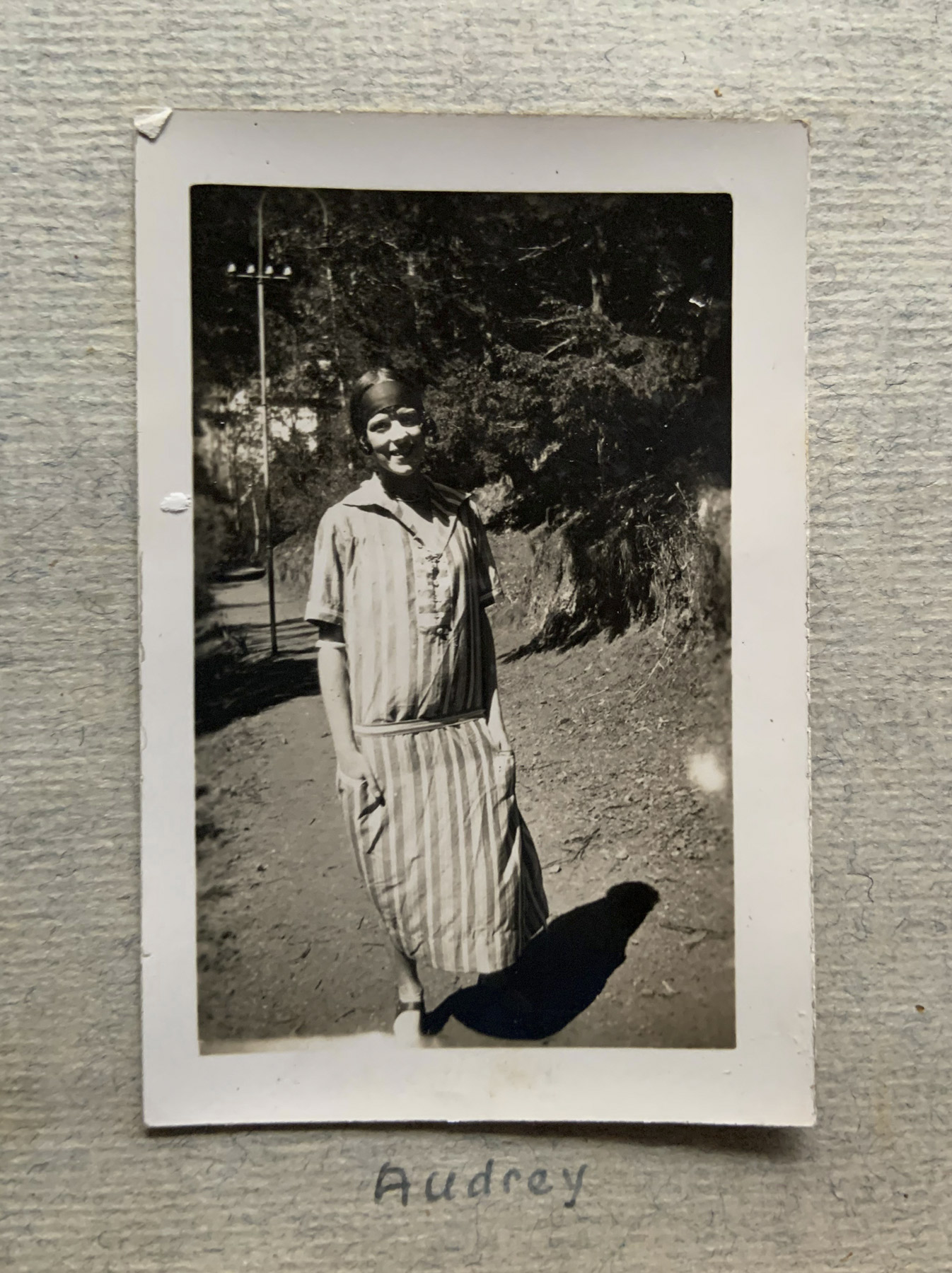
 

"Audrey," 1924 in John "Jack" Riverstone Faviell 1922-1933 photo album


“Audrey,” 1924 in John “Jack” Riverstone Faviell 1922-1933 photo album


"Untitled," in John "Jack" Riverstone Faviell 1922-1933 photo album


“Untitled,” in John “Jack” Riverstone Faviell 1922-1933 photo album


Admiral Sir Dudley Rawson Stratford de Chair, KCB, KCMG, MVO (30 August 1864 – 17 August 1958) was a senior Royal Navy officer and later Governor of New South Wales. …


Governor of New South Wales

De Chair had been interested in serving in a viceregal role as early as 1922, when he put his name forward to the Colonial Office for the position of Governor of South Australia. This position however, went to Sir Tom Bridges instead and the First Lord of the Admiralty, Leo Amery, put de Chair’s name forward for the Governor of New South Wales. This position, which had been vacant since the death of Sir Walter Davidson in September 1923, was the same one his uncle, Sir Harry Rawson, had held twenty years earlier, and to which he was appointed on 8 November 1923.

Arriving in Sydney on 28 February 1924, de Chair became governor in relatively calm political times and was warmly received in the city with great fanfare. On de Chair’s appointment, the President of the Royal Australian Historical Society, Aubrey Halloran, compared Admiral de Chair to the first Governor, Captain Arthur Phillip: “Our new Governor’s reputation as an intrepid sailor and ruler of men evokes from us a hearty welcome and inspires us to place in him the same confidence that [Arthur] Phillip received from his gallant band of fellow-sailors and the English statesmen who sent him.”

The political makeup of the state changed not long after his arrival however, when the conservative Nationalist/Progressive coalition government of Sir George Fuller, whom de Chair had got on well with, was defeated at the May 1925 state election by the Labor Party under Jack Lang. De Chair noted to himself that Lang and his party’s position comprised “radical and far-reaching legislation, which had not been foreshadowed in their election speeches”. He also later wrote that Lang’s “lack of scruple gave me a great and unpleasant surprise”.

With the Labor Government only holding a single seat majority in the Legislative Assembly and only a handful of members in the upper Legislative Council, one of Lang’s main targets was electoral reform. The Legislative Council, comprising members appointed by the Governor for life terms, had long been seen by Lang and the Labor Party as an outdated bastion of conservative privilege holding back their reform agenda. Although previous Labor premiers had managed to work with the status quo, such as requesting appointments from the Governor sufficient to pass certain bills, Lang’s more radical political agenda required more drastic action to ensure its passage. Consequently, Lang and his government sought to abolish the council, along the same lines that their Queensland Labor colleagues had done in 1922 to their Legislative Council, by requesting from de Chair enough appointments to establish a Labor majority in the council that would then vote for abolition.

While Lang’s attempts ultimately failed, de Chair failed to gain the support of an indifferent Dominions Office. With Lang’s departure in 1927, the Nationalist Government of Thomas Bavin invited him in 1929 to stay on as Governor for a further term. De Chair agreed only to a year’s extension and retired on 8 April 1930.

Text from the Wikipedia website


"Old Herald Office - Pitt St.,' 1924 in John "Jack" Riverstone Faviell 1922-1933 photo album
 

“Old Herald Office – Pitt St.,’ 1924 in John “Jack” Riverstone Faviell 1922-1933 photo album


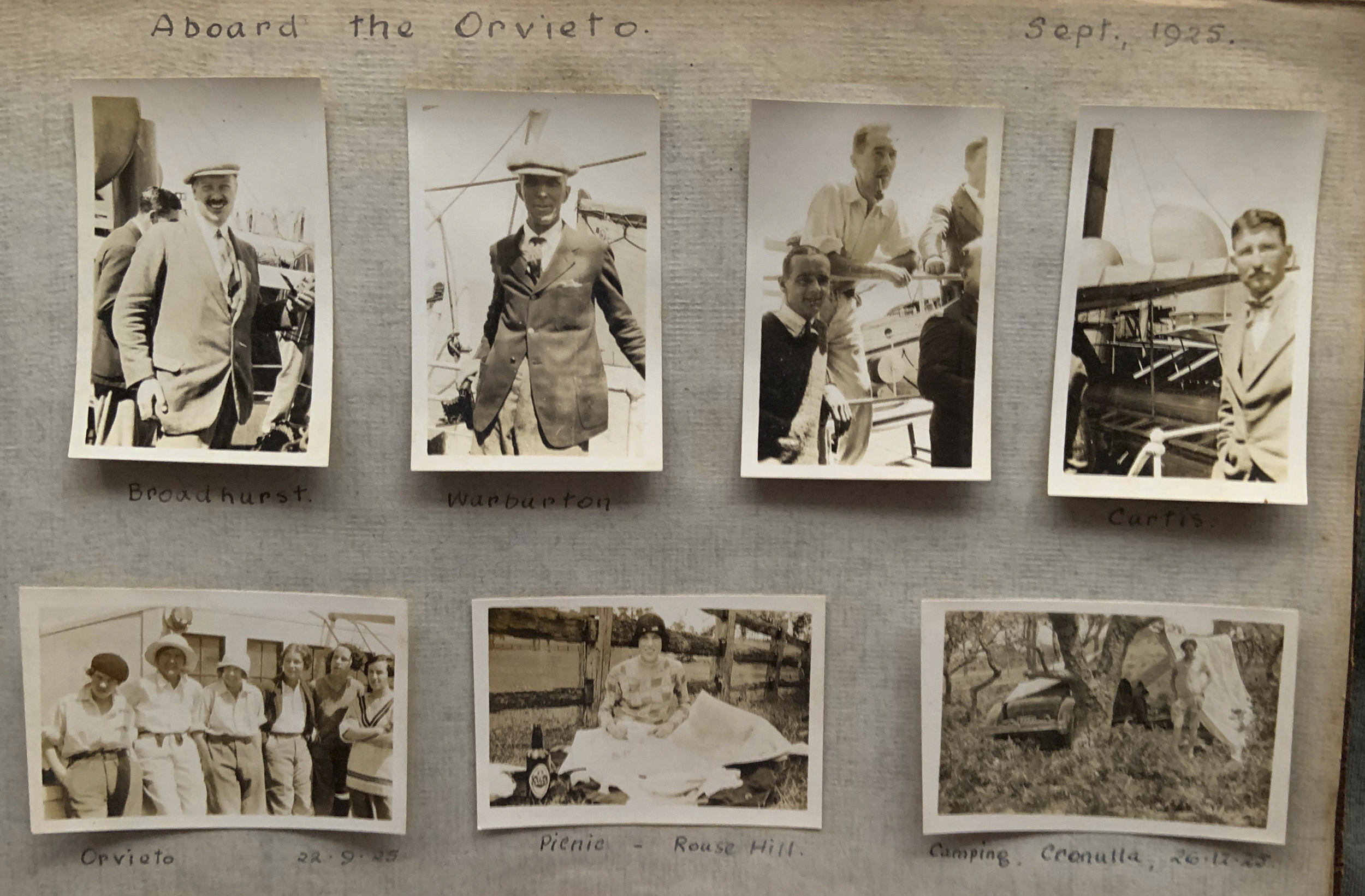
"Aboard the Orvieto," September, 1925 in John "Jack" Riverstone Faviell 1922-1933 photo album


“Aboard the Orvieto,” September, 1925 in John “Jack” Riverstone Faviell 1922-1933 photo album


"Curtis (Captain Arthur Curtis)," 1925 in John "Jack" Riverstone Faviell 1922-1933 photo album


“Curtis (Captain Arthur Curtis),” 1925 in John “Jack” Riverstone Faviell 1922-1933 photo album


"Roseville," 1926 in John "Jack" Riverstone Faviell 1922-1933 photo album


“Roseville,” 1926 in John “Jack” Riverstone Faviell 1922-1933 photo album


"Picnics - Whale Beach / Visit of the Duke & Duchess of York," 1927 in John "Jack" Riverstone Faviell 1922-1933 photo album


“Picnics – Whale Beach / Visit of the Duke & Duchess of York,” 1927 in John “Jack” Riverstone Faviell 1922-1933 photo album


"Visit of the Duke & Duchess of York," 1927 in John "Jack" Riverstone Faviell 1922-1933 photo album


“Visit of the Duke & Duchess of York,” 1927 in John “Jack” Riverstone Faviell 1922-1933 photo album


"A house is nearly built - 20 Yarranabbe Road, Darling Point," 1926 in John "Jack" Riverstone Faviell 1922-1933 photo album


“A house is nearly built – 20 Yarranabbe Road, Darling Point,” 1926 in John “Jack” Riverstone Faviell 1922-1933 photo album
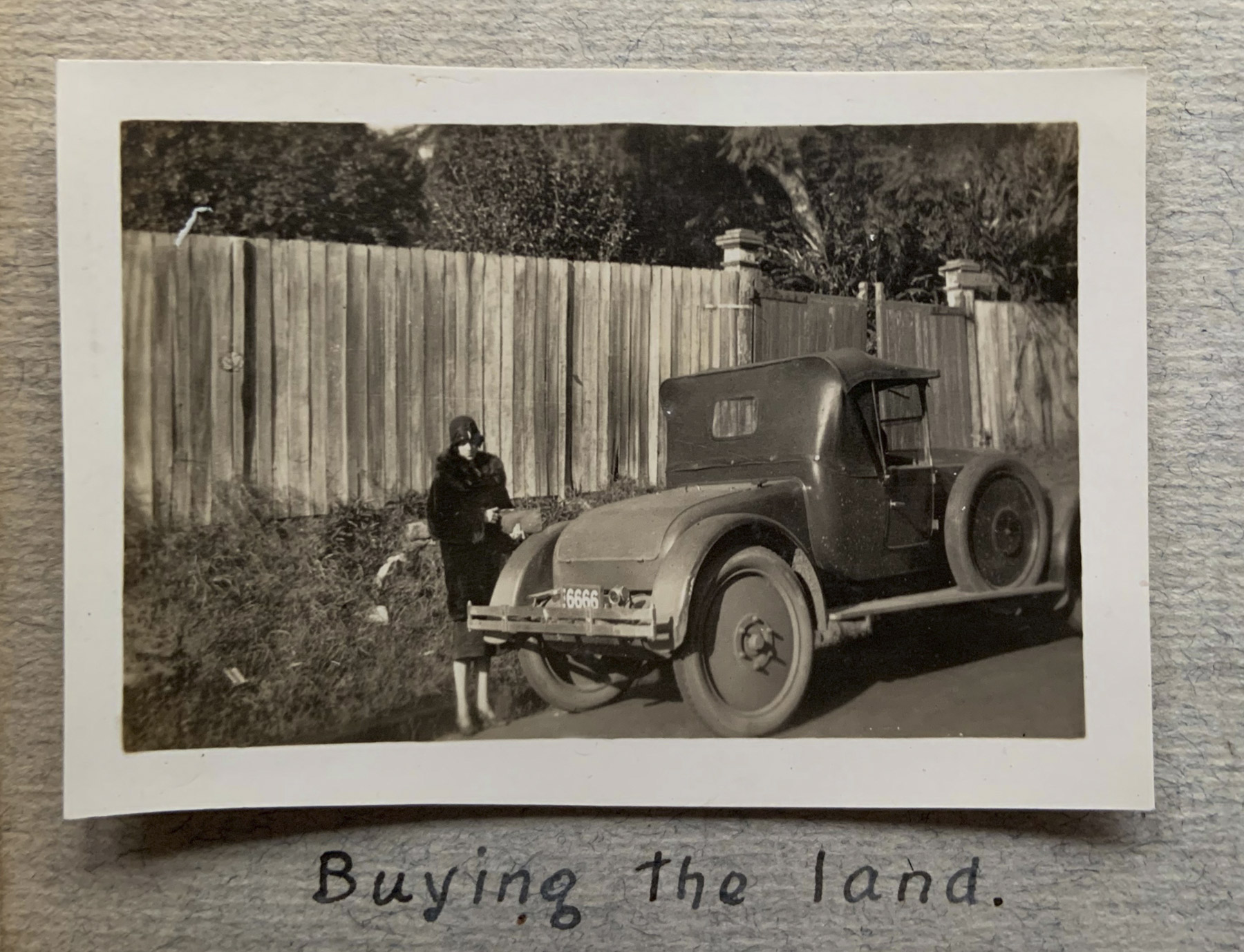


"Buying the land," 1926 in John "Jack" Riverstone Faviell 1922-1933 photo album


“Buying the land,” 1926 in John “Jack” Riverstone Faviell 1922-1933 photo album


"Three harbour views taken from upstairs," 1926 in John "Jack" Riverstone Faviell 1922-1933 photo album


“Three harbour views taken from upstairs,” 1926 in John “Jack” Riverstone Faviell 1922-1933 photo album


"Harbour view," 1926 in John "Jack" Riverstone Faviell 1922-1933 photo album


“Harbour view,” 1926 in John “Jack” Riverstone Faviell 1922-1933 photo album


Audrey Pickburn and Jack Faviell divorced in October 1930. Audrey re-married in 1934 and so did Jack (Information from Douglas Stewart Fine Books)


IN DIVORCE

(Before Mr. Justice Pike)

FAVIELL v FAVIELL

Jack Riverstone Faviell sued for divorce from Melanie Audrey Faviell (formerly Pickburn) on the ground of non compliance with a decree for restitution of conjugal rights. The parties were married at Sydney in February, 1925, according to the rites of the Church of England. A decree nisi, returnable in six months, was granted. Mr. Toose (instructed by Messrs. Allen, Allen, and Hemsley) appeared for the petitioner.

The Sydney Morning Herald, Saturday, 11 October 1930. Page 8 on the Trove website [Online] Cited 05/11/2019


The party below is for Jack with his second wife whom he married in 1934; Miss Rosenthal from Melbourne (Information from Douglas Stewart Fine Books)

“Party at Darling Point”

MRS. JOHN FAVIELL, looking very cool in a pink and grey floral sheer frock and shady natural straw hat, was hurrying about town in yesterday’s heat to complete arrangements for the Christmas party and dance at her home, 20 Yarranabbe Road, Darling Point, on Friday.

The party will be held from Ave till ten p.m., and the proceeds will be in aid of the Blind Institution. A Christmas tree will be among the attractions.

The Daily Telegraph, Wednesday, 15 December 1937. Page 12 on the Trove website [Online] Cited 05/11/2019


"Trip to Canberra," 5/6 November, 1927 in John "Jack" Riverstone Faviell 1922-1933 photo album
 

“Trip to Canberra,” 5/6 November, 1927 in John “Jack” Riverstone Faviell 1922-1933 photo album


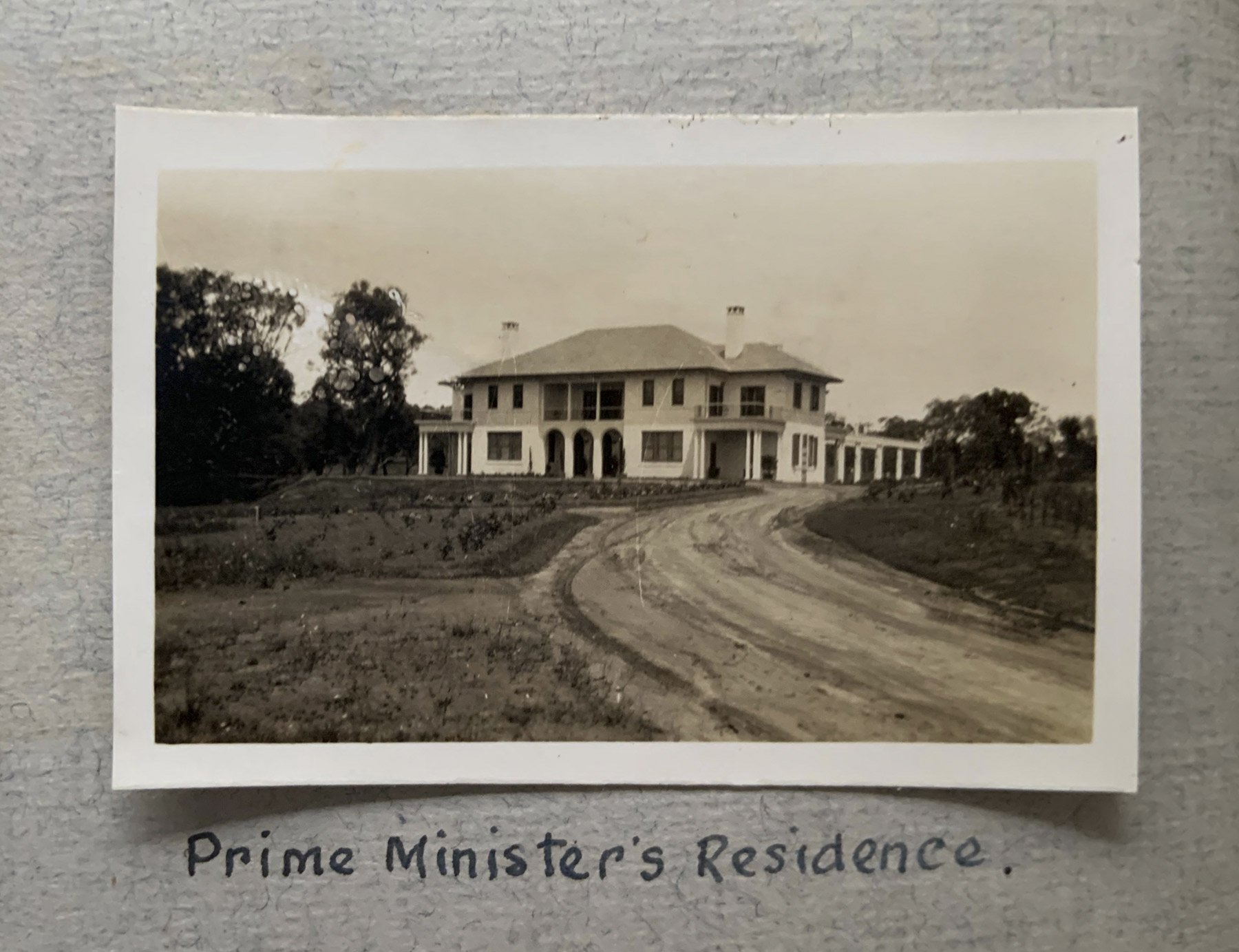
"Prime Minister's Residence," 1927 in John "Jack" Riverstone Faviell 1922-1933 photo album


“Prime Minister’s Residence,” 1927 in John “Jack” Riverstone Faviell 1922-1933 photo album


"Trip to Canberra," 5/6 November, 1927 in John "Jack" Riverstone Faviell 1922-1933 photo album


“Trip to Canberra,” 5/6 November, 1927 in John “Jack” Riverstone Faviell 1922-1933 photo album


The prophetic tombstone of Sarah, George and Betsy Webb. The inscription is prophetic “For here we have no continuing city but seek one to come” St John’s Churchyard, Constitution Avenue, Reid.
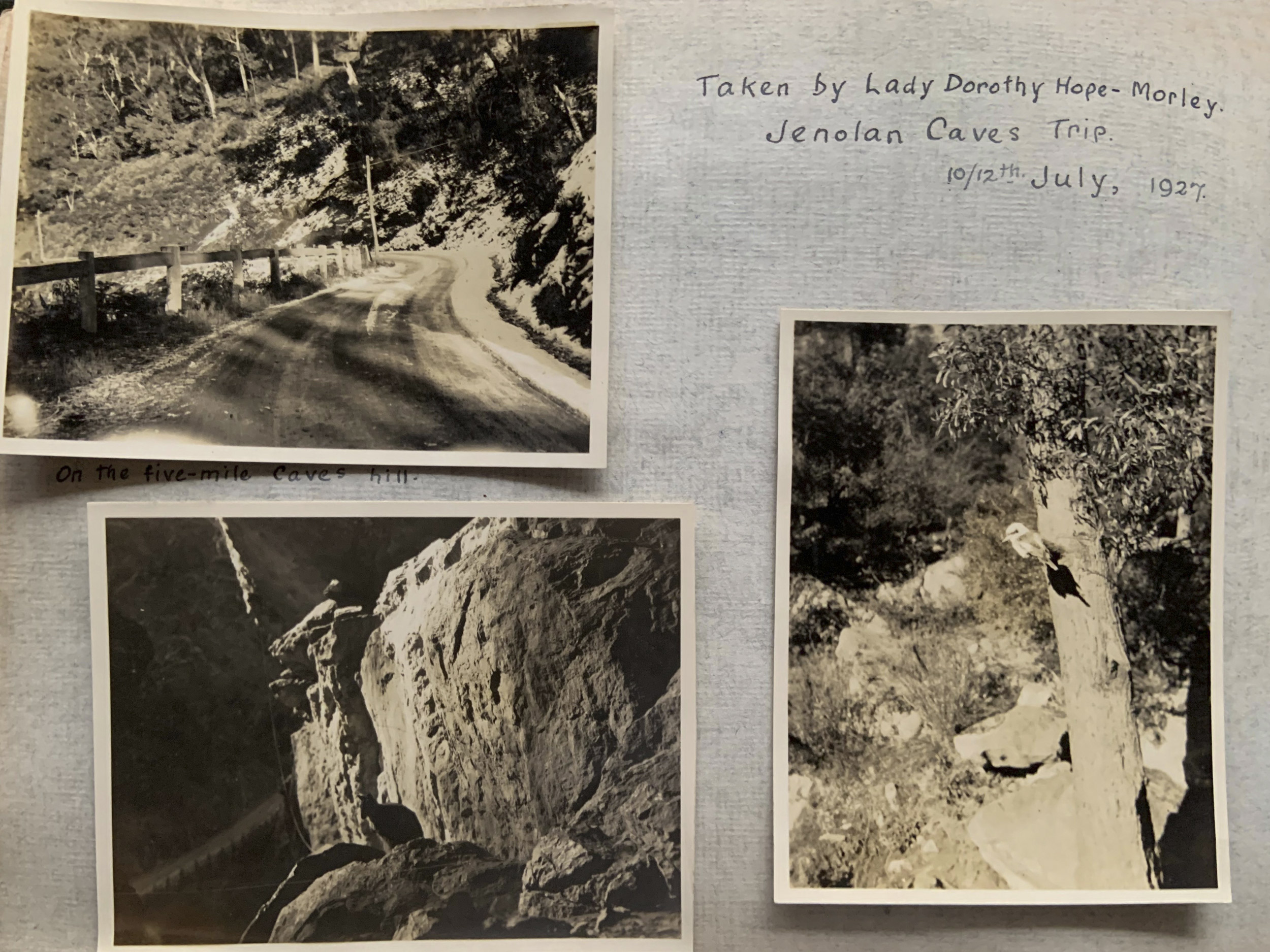
 

"Taken by Lady Dorothy Hope-Morley, Jenolan Caves Trip,' 10/12th July, 1927 in John "Jack" Riverstone Faviell 1922-1933 photo album


“Taken by Lady Dorothy Hope-Morley, Jenolan Caves Trip,’ 10/12th July, 1927 in John “Jack” Riverstone Faviell 1922-1933 photo album


Dorothy Edith Isabel Hope-Morley (Hobart-Hampden)
Birthdate: April 11, 1891
Death: December 15, 1972
Daughter of Sidney, 7th Earl of Buckinghamshire, OBE and Georgiana Wilhelmina, Countess of Buckinghamshire
Wife of Hon. Claude Hope-Morley
Mother of Gordon Hope Hope-Morley, 3rd Baron Hollenden and Hon Ann Rosemary Hope Newman
Sister of John Hobart-Hampden-Mercer-Henderson, 8th Earl of Buckinghamshire and Lady Sidney Mary Catherine Anne Hobart-Hampden


"Taken by Lady Dorothy Hope-Morley, Jenolan Caves Trip,' 10/12th July, 1927 in John "Jack" Riverstone Faviell 1922-1933 photo album


“Taken by Lady Dorothy Hope-Morley, Jenolan Caves Trip,’ 10/12th July, 1927 in John “Jack” Riverstone Faviell 1922-1933 photo album


"Taken by Lady Dorothy Hope-Morley, Jenolan Caves Trip,' 10/12th July, 1927 in John "Jack" Riverstone Faviell 1922-1933 photo album


“Taken by Lady Dorothy Hope-Morley, Jenolan Caves Trip,’ 10/12th July, 1927 in John “Jack” Riverstone Faviell 1922-1933 photo album


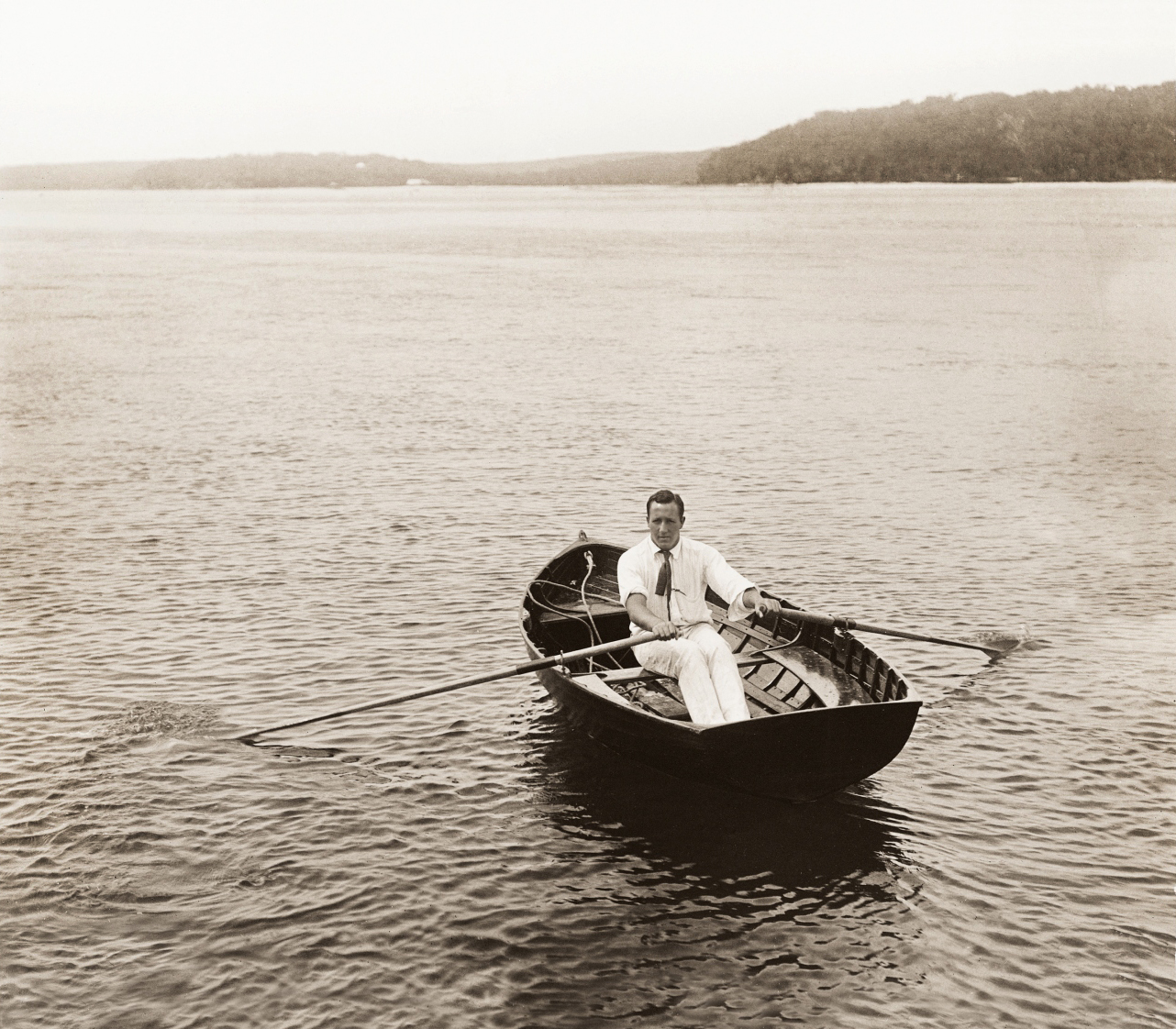
"Ellen's Isle, Loch Katrine, Scotland (Audrey & me in boat)," 1925 in John "Jack" Riverstone Faviell 1922-1933 photo album


“Ellen’s Isle, Loch Katrine, Scotland (Audrey & me in boat),” 1925 in John “Jack” Riverstone Faviell 1922-1933 photo album


This photograph, the only one from overseas (Scotland), must be from Audrey and Jack’s honeymoon (1925). It is interesting that there are no other photographs from either the wedding or the honeymoon in the album. Of course, the marriage photographs could have been housed in a purpose built wedding album, but the haphazard nature of the construction of this album, with the photographs out of date order, and this the only one from the honeymoon, make me think that this album was assembled in the 1930s. Marcus


"Untitled," c. 1927-1930 in John "Jack" Riverstone Faviell 1922-1933 photo album


“Untitled,” c. 1927-30 in John “Jack” Riverstone Faviell 1922-1933 photo album


"Untitled," c. 1927-1930 in John "Jack" Riverstone Faviell 1922-1933 photo album


“Untitled,” c. 1927-30 in John “Jack” Riverstone Faviell 1922-1933 photo album


"Sydney Harbour Bridge As It Grew," 1929-1930 in John "Jack" Riverstone Faviell 1922-1933 photo album


“Sydney Harbour Bridge As It Grew,” 1929-1930 in John “Jack” Riverstone Faviell 1922-1933 photo album


Sydney Harbour Bridge construction

Arch construction itself began on 26 October 1928. The southern end of the bridge was worked on ahead of the northern end, to detect any errors and to help with alignment. The cranes would “creep” along the arches as they were constructed, eventually meeting up in the middle. In less than two years, on Tuesday, 19 August 1930, the two halves of the arch touched for the first time. Workers riveted both top and bottom sections of the arch together, and the arch became self-supporting, allowing the support cables to be removed. On 20 August 1930 the joining of the arches was celebrated by flying the flags of Australia and the United Kingdom from the jibs of the creeper cranes.

Text from the Wikipedia website [Online] Cited 31/10/2019


"Sydney Harbour Bridge As It Grew," 1929-1930 in John "Jack" Riverstone Faviell 1922-1933 photo album


“Sydney Harbour Bridge As It Grew,” 1929-1930 in John “Jack” Riverstone Faviell 1922-1933 photo album


"Sydney Harbour Bridge As It Grew," 1929-1930 in John "Jack" Riverstone Faviell 1922-1933 photo album


“Sydney Harbour Bridge As It Grew,” 1929-1930 in John “Jack” Riverstone Faviell 1922-1933 photo album


"Sydney Harbour Bridge As It Grew," 1929-1930 in John "Jack" Riverstone Faviell 1922-1933 photo album


“Sydney Harbour Bridge As It Grew,” 1929-1930 in John “Jack” Riverstone Faviell 1922-1933 photo album


"Sydney Harbour Bridge As It Grew," 1929-1930 in John "Jack" Riverstone Faviell 1922-1933 photo album


“Sydney Harbour Bridge As It Grew,” 1929-1930 in John “Jack” Riverstone Faviell 1922-1933 photo album


"Bridge Opening, 20th March, 1932," in John "Jack" Riverstone Faviell 1922-1933 photo album


“Bridge Opening, 20th March, 1932,” in John “Jack” Riverstone Faviell 1922-1933 photo album
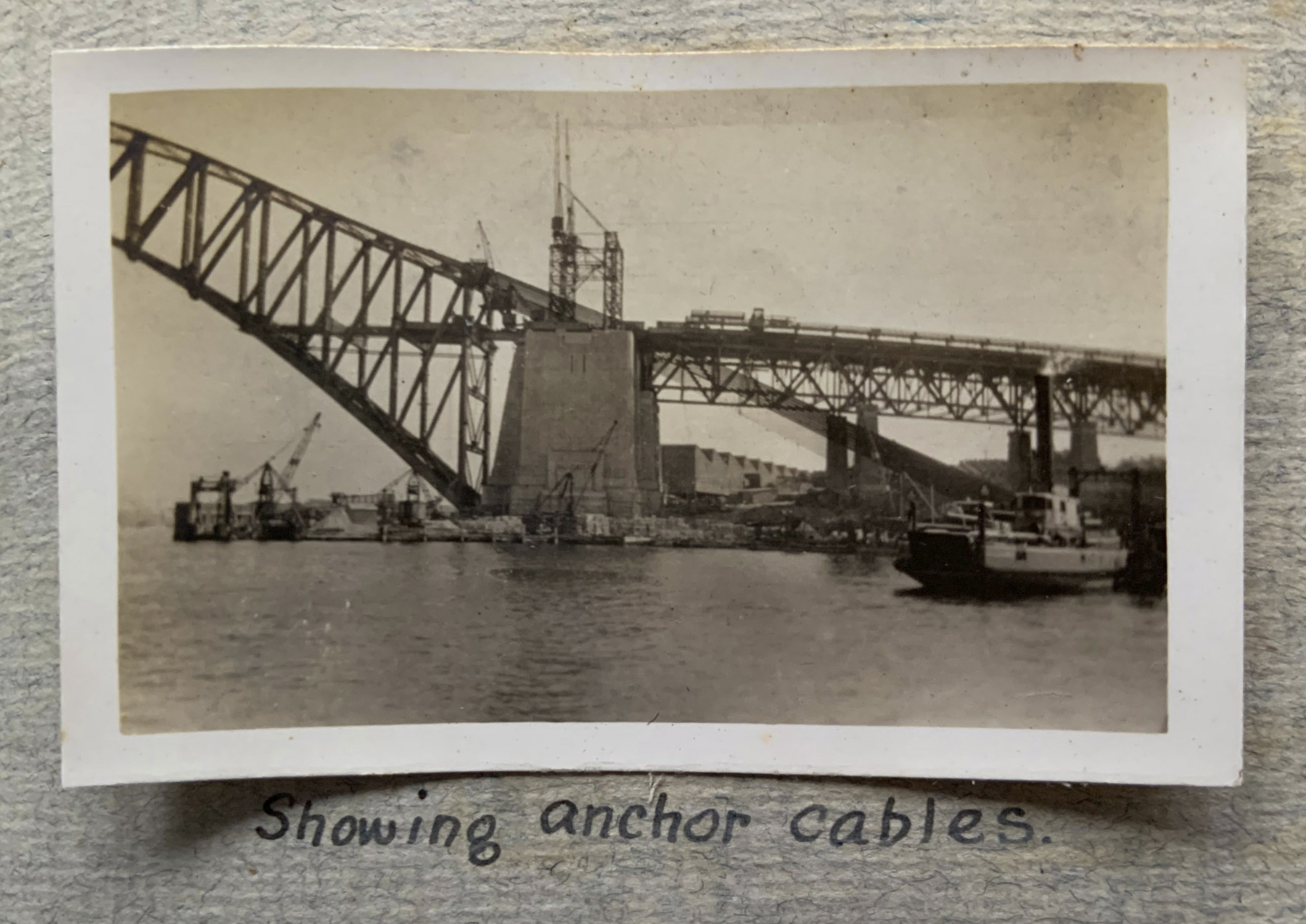
 

"Showing anchor cables," March, 1932 in John "Jack" Riverstone Faviell 1922-1933 photo album


“Showing anchor cables,” March, 1932 in John “Jack” Riverstone Faviell 1922-1933 photo album


"Federal and State Govenors arriving," March, 1932 in John "Jack" Riverstone Faviell 1922-1933 photo album


“Federal and State Govenors arriving,” March, 1932 in John “Jack” Riverstone Faviell 1922-1933 photo album


"Pageantry at Official Opening of Harbour Bridge - 20th March, 1932," in John "Jack" Riverstone Faviell 1922-1933 photo album


“Pageantry at Official Opening of Harbour Bridge – 20th March, 1932,” in John “Jack” Riverstone Faviell 1922-1933 photo album


"Pageantry at Official Opening of Harbour Bridge - 20th March, 1932," in John "Jack" Riverstone Faviell 1922-1933 photo album


“Pageantry at Official Opening of Harbour Bridge – 20th March, 1932,” in John “Jack” Riverstone Faviell 1922-1933 photo album
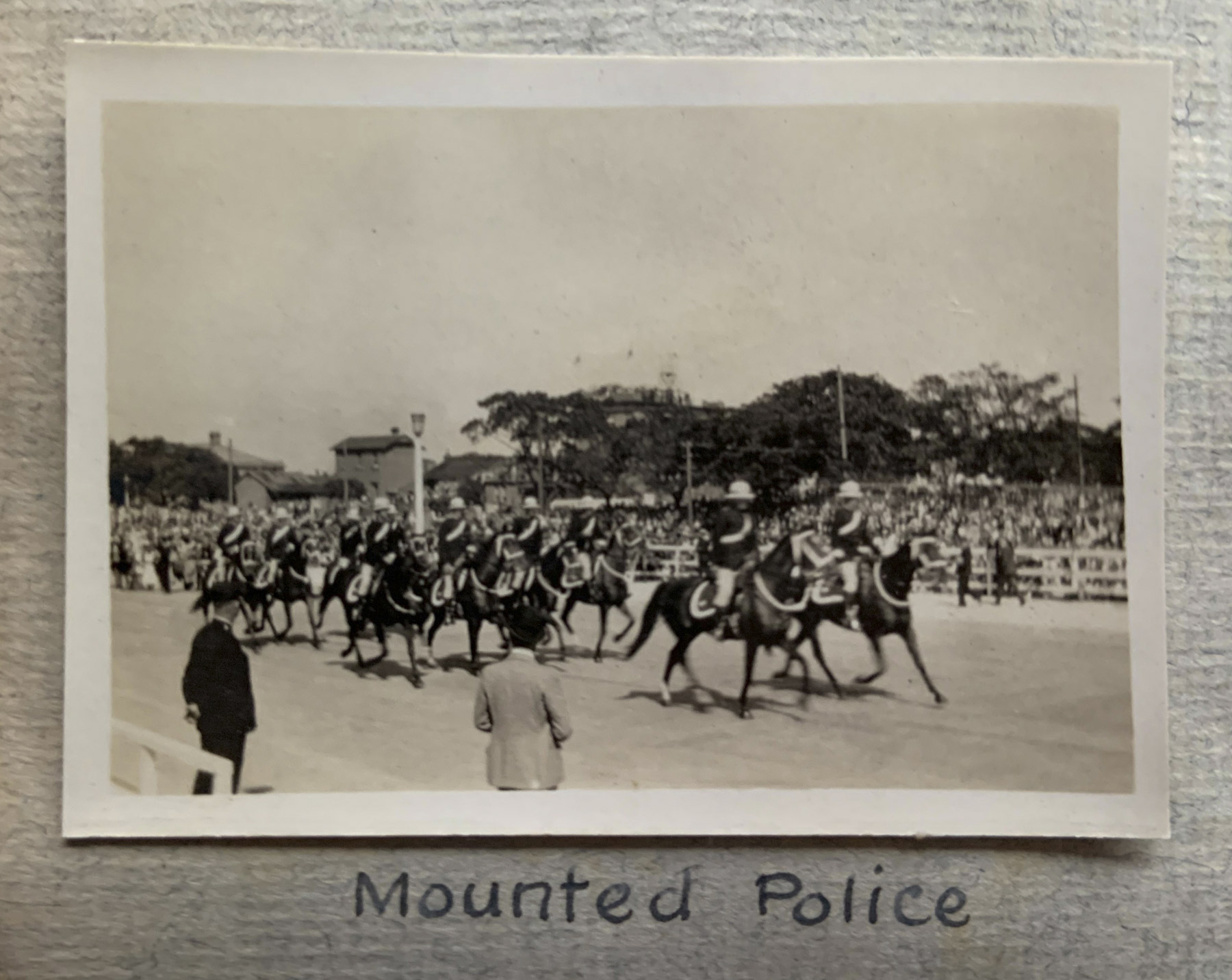
 

"Mounted Police," March, 1932 in John "Jack" Riverstone Faviell 1922-1933 photo album


“Mounted Police,” March, 1932 in John “Jack” Riverstone Faviell 1922-1933 photo album
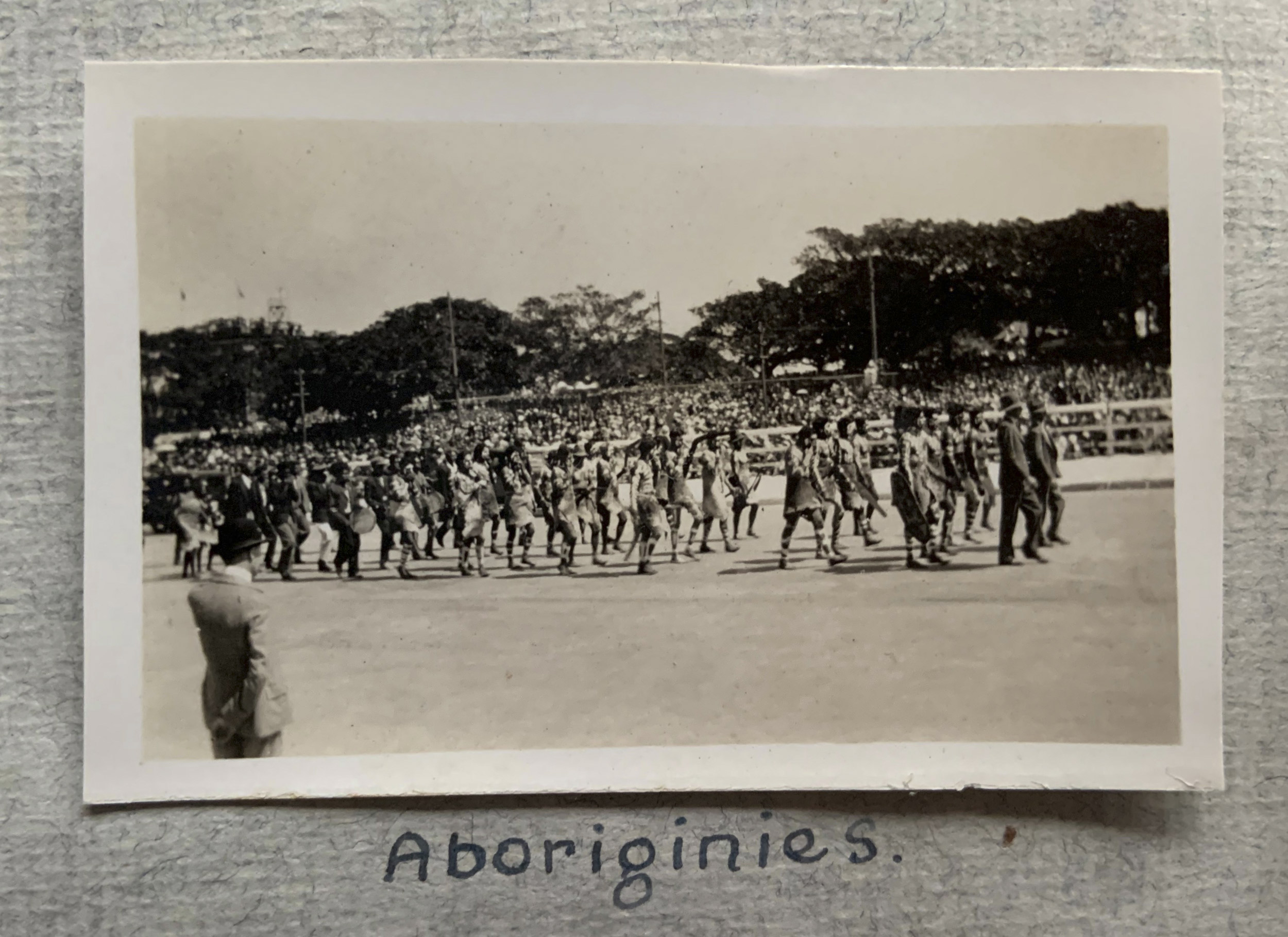
 

"Aborigines," March, 1932 in John "Jack" Riverstone Faviell 1922-1933 photo album


“Aborigines,” March, 1932 in John “Jack” Riverstone Faviell 1922-1933 photo album


"Old King Street Bus," March, 1932 in John "Jack" Riverstone Faviell 1922-1933 photo album


“Old King Street Bus,” March, 1932 in John “Jack” Riverstone Faviell 1922-1933 photo album


"An early Hupmobile car," March, 1932 in John "Jack" Riverstone Faviell 1922-1933 photo album


“An early Hupmobile car,” March, 1932 in John “Jack” Riverstone Faviell 1922-1933 photo album


Hupmobile was an automobile built from 1909 through 1939 by the Hupp Motor Car Company.


"First Auto-Gyro (The World's First Auto-Gyro Plane, 1909-12)," March, 1932 in John "Jack" Riverstone Faviell 1922-1933 photo album


“First Auto-Gyro (The World’s First Auto-Gyro Plane, 1909-12),” March, 1932 in John “Jack” Riverstone Faviell 1922-1933 photo album
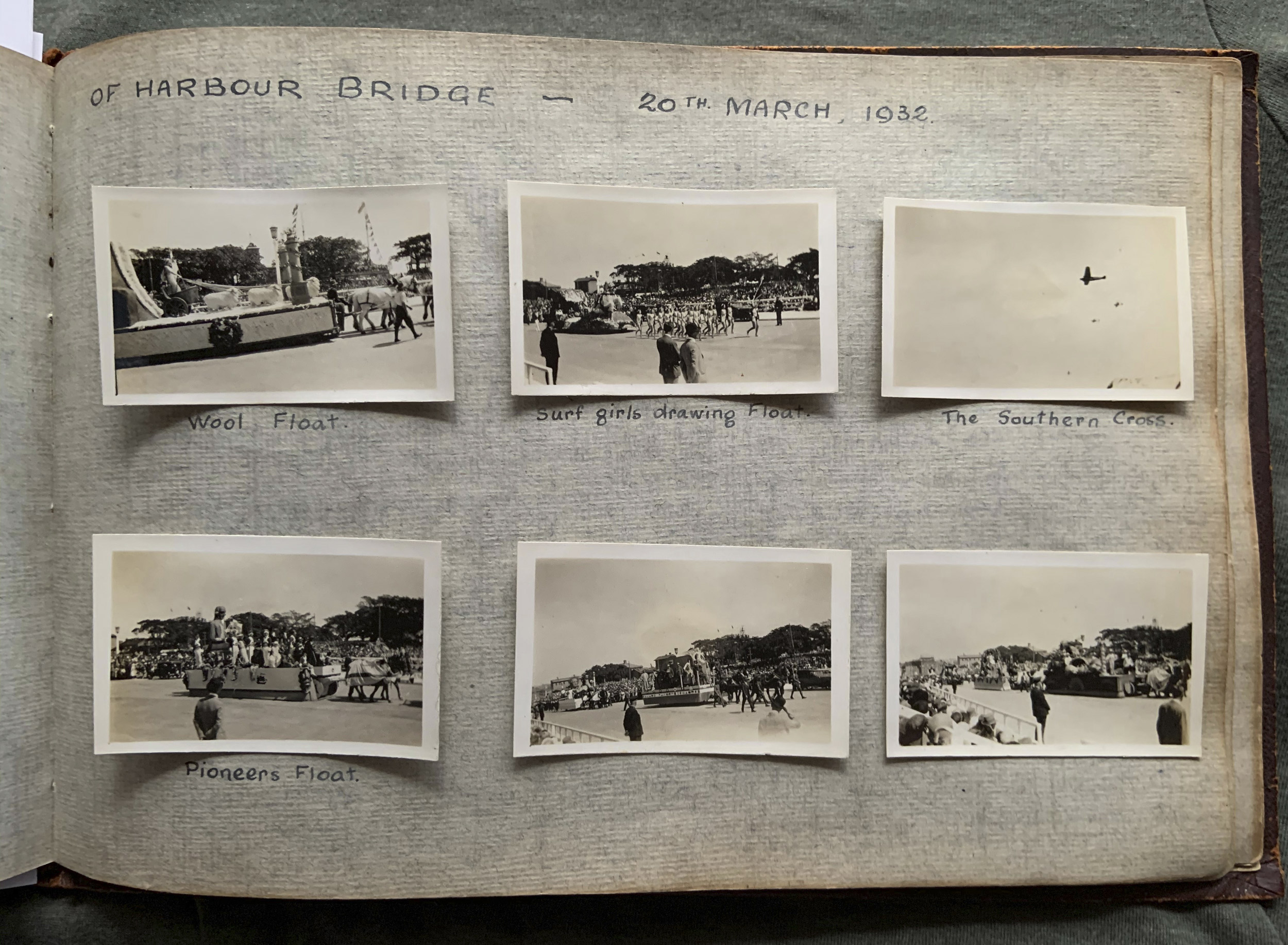
 

"Pageantry at Official Opening of Harbour Bridge - 20th March, 1932," in John "Jack" Riverstone Faviell 1922-1933 photo album


“Pageantry at Official Opening of Harbour Bridge – 20th March, 1932,” in John “Jack” Riverstone Faviell 1922-1933 photo album


“Surf girls drawing Float,” from the opening of the Sydney Harbour Bridge, March, 1932 in John “Jack” Riverstone Faviell 1922-1933 photo album


“Surf girls drawing Float,” in John “Jack” Riverstone Faviell 1922-1933 photo album


"The Southern Cross," March, 1932 in John "Jack" Riverstone Faviell 1922-1933 photo album


“The Southern Cross,” March, 1932 in John “Jack” Riverstone Faviell 1922-1933 photo album


"Pioneers Float," March, 1932 in John "Jack" Riverstone Faviell 1922-1933 photo album


“Pioneers Float,” March, 1932 in John “Jack” Riverstone Faviell 1922-1933 photo album


Australian National Travel Association Smith and Julius Studios (Sydney, N.S.W.) (printer) 'Australia's 150th Anniversary Sydney 1938: Pageantry and carnival January 26th - April 25th' Sydney: The Association, 1938


Australian National Travel Association
Smith and Julius Studios (Sydney, N.S.W.) (printer)
Australia’s 150th Anniversary Sydney 1938: Pageantry and carnival January 26th – April 25th
Sydney: The Association, 1938
Poster
101.2 x 62.4cm
© National Library of Australia

Used under fair use condition for the purpose for research or study


‘The 26th of January, 1938, is not a day of rejoicing for Australia’s Aborigines; it is a day of mourning. This festival of 150 years’ so-called “progress” in Australia commemorates also 150 years of misery and degradation imposed upon the original native inhabitants by the white invaders of this country.

‘We, representing the Aborigines, now ask you, the reader of this appeal, to pause in the midst of your sesqui-centenary rejoicings and ask yourself honestly whether your “conscience” is clear in regard to the treatment of the Australian blacks by the Australian whites during the period of 150 years’ history which you celebrate?’

‘You are the New Australians, but we are the Old Australians. We have in our arteries the blood of the Original Australians, who have lived in this land for many thousands of years.’

‘You came here only recently, and you took our land away from us by force. You have almost exterminated our people, but there are enough of us remaining to expose the humbug of your claim, as white Australians, to be a civilised, progressive, kindly and humane nation.’

‘Aborigines Claim Citizen Rights!: A Statement of the Case for the Aborigines Progressive Association’, the Publicist, 1938, p. 3 quoted in Anonymous. “The 1938 Day of Mourning,” on the AIATSIS website Nd [Online] Cited 21/02/2022


Charles Meere (Australian, 1890-1961) '1788-1938, 150 years of progress: Australia celebrates January 26 - April 25, 1938' 1938


Charles Meere (Australian, 1890-1961)
1788-1938, 150 years of progress: Australia celebrates January 26 – April 25, 1938
1938
Poster
101.5 x 63.5cm
© National Library of Australia

Used under fair use condition for the purpose for research or study
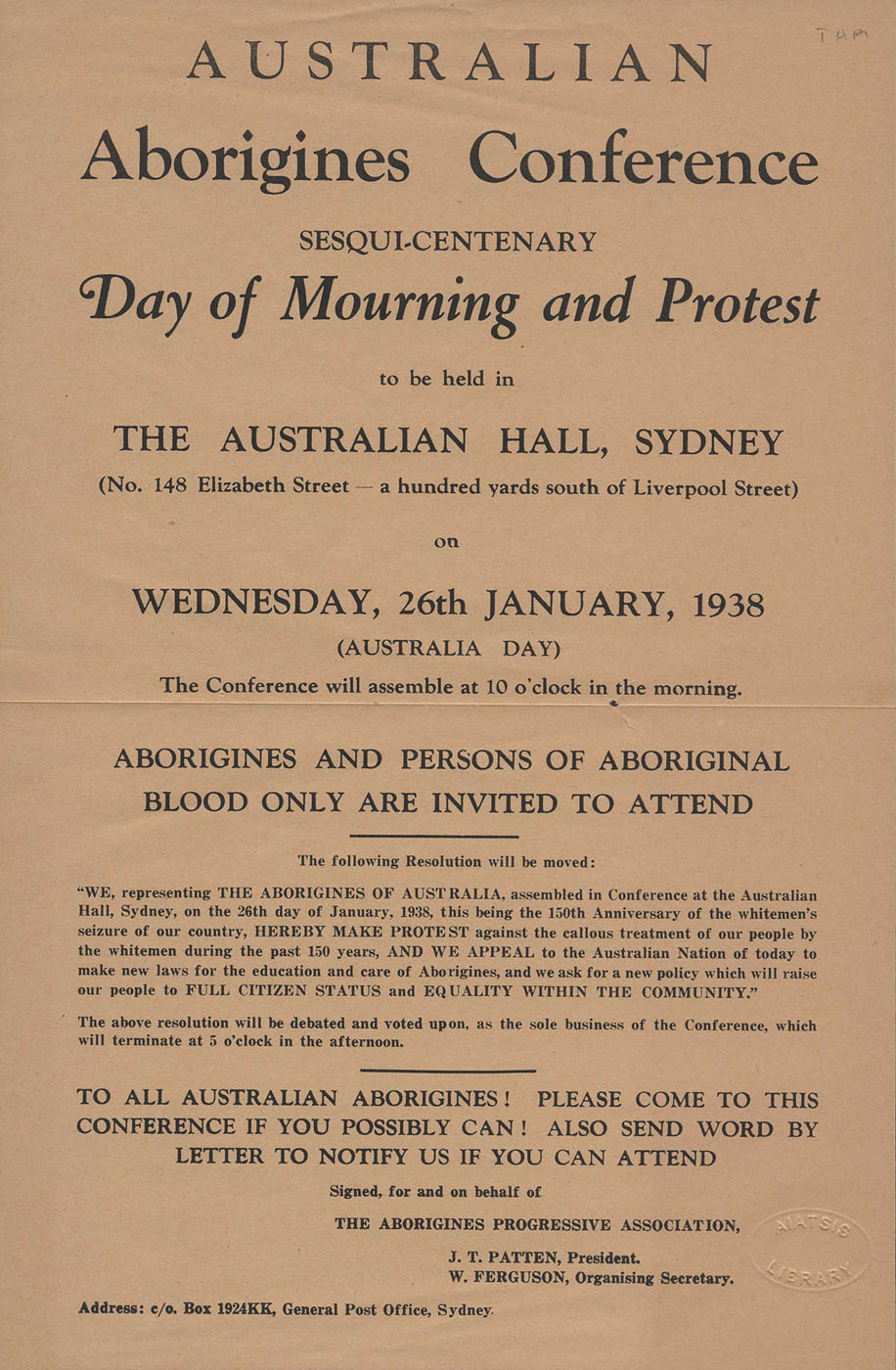
 

'Poster advertising the Day of Mourning' 1938


Poster advertising the Day of Mourning
1938
AIATSIS Collection

Used under fair use condition for the purpose for research or study


In 1938, a poster invited “Aborigines and persons of Aboriginal blood” to attend the Day of Mourning and Protest at the Australian Hall, Sydney. It was to be held on 26 January, the 150th anniversary of European colonisation. The protest, calling for full citizen status and equality, was led by William Cooper, Pearl Gibbs, Jack Patten and William Ferguson.

Keith Munro, MCA Curator Aboriginal and Torres Strait Islander Programs, says, “The Day of Mourning event is seen as the first Aboriginal civil rights protest in Australian history. The actions that took place on this day later resulted in the establishment of a national day of celebration and achievement, which turned into a longer event now known as NAIDOC Week.”

Anonymous. “Marking 80 years since the Day of Mourning,” on the Museum of Contemporary Art website 17 May 2018 [Online] Cited 21/02/2022


Unknown photographer (Australian) 'The first Day of Mourning' 1938


Unknown photographer (Australian)
The first Day of Mourning. From the left is William Ferguson, Jack Kinchela, Isaac Ingram, Doris Williams, Esther Ingram, Arthur Williams, Phillip Ingram, Louisa Agnes Ingram OAM holding daughter Olive Ingram, and Jack Patten. The name of the person in the background to the right is not known at this stage.
AIATSIS Collection

Used under fair use condition for the purpose for research or study


The first Day of Mourning was a culmination of years of work by the Australian Aborigines League (AAL) and the Aborigines Progressive Association (APA). It would became the inspiration for Aboriginal and Torres Strait Islander activism throughout the remainder of the twentieth century. In the early 1960s, both organisations would reform and reshape and become the driving force calling for a constitutional referendum that would take place in 1967.

The AAL was able to persuade many religious denominations to declare the Sunday before Australia Day as ‘Aboriginal Sunday’. This was to serve as a reminder of the unjust treatment of Indigenous people. The first of these took place in 1940 and continued until 1955, when it moved to the first Sunday in July.

In 1957, with support and cooperation from federal and state governments, the churches and major Indigenous organisations, a National Aborigines Day Observance Committee (NADOC) was formed, which continues to this day as NAIDOC.

Anonymous. “The 1938 Day of Mourning,” on the AIATSIS website Nd [Online] Cited 21/02/2022
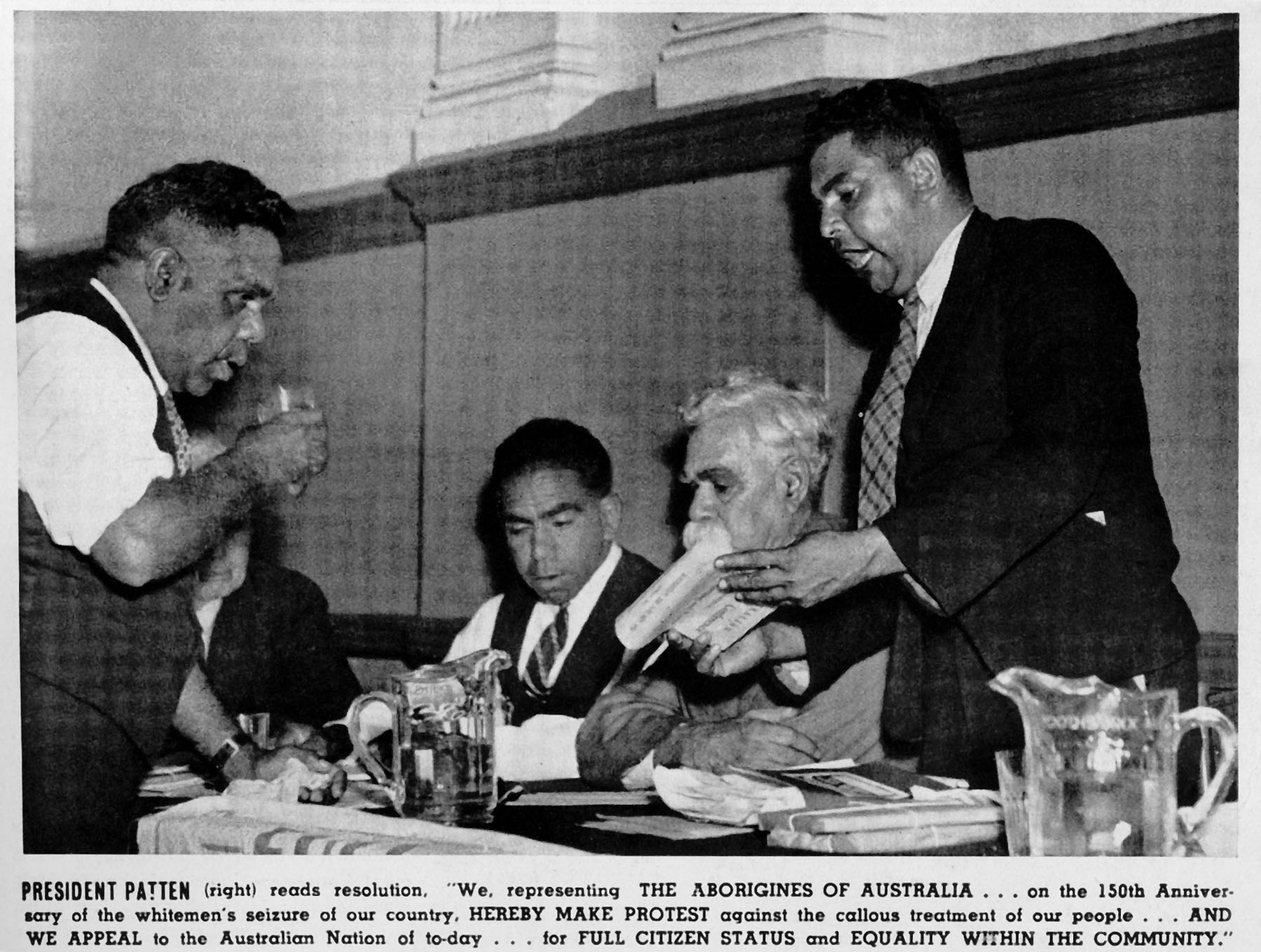
 

Unknown photographer (Australian) 'Jack Patten reads the resolution at the Day of Mourning Conference on 26 January 1938'


Unknown photographer (Australian)
Jack Patten reads the resolution at the Day of Mourning Conference on 26 January 1938
Mar. 1938 (publication date), Sydney, N.S.W.: Man magazine
12 x 17cm
© Collections of the State Library of New South Wales

Used under fair use condition for the purpose for research or study


Unknown photographer (Australian) 'In this 1938 re-enactment of Governor Phillip's landing, Aborigines (specially brought in for the occasion) are shown running up the beach as the boats of the First Fleet marines land at Farm Cove. A group of white dignitaries sits in comfortable safety watching the invasion' 1938


Unknown photographer (Australian)
In this 1938 re-enactment of Governor Phillip’s landing, Aborigines (specially brought in for the occasion) are shown running up the beach as the boats of the First Fleet marines land at Farm Cove. A group of white dignitaries sits in comfortable safety watching the invasion
1938
© Mitchell Library, State Library of NSW – Home and Away

Used under fair use condition for the purpose for research or study


Unknown photographer (Australian) 'Aboriginal protests on Sydney Harbour, Australia Day, 1988' 1988


Unknown photographer (Australian)
Aboriginal protests on Sydney Harbour, Australia Day, 1988
1988

Used under fair use condition for the purpose for research or study


National Film and Sound Archive of Australia (NFSA) Pat Fiske (director) 'Australia Daze' (film still) 1988


National Film and Sound Archive of Australia (NFSA)
Pat Fiske 
(director)
Australia Daze (film still)
1988


National Film and Sound Archive of Australia (NFSA)
Pat Fiske 
(director)
Australia Daze (film clip)
1988


The production of Australia Daze involved dozens of camera crews across the nation, filming from midnight to midnight on 26 January 1988, in order to capture the many facets of the bicentenary of European settlement in Australia. From First Fleet re-enactments to Indigenous protests, backyard barbeques to royal visits, Australia Daze chronicles a broad array of events on that historic day and diverse voices and perspectives from across Australian society.

Australia Daze is a snapshot of one day in the millennia-long history of the country. The film is an opportunity for Australians to remember where they were, or to catch a glimpse of Australia’s past before they were born or arrived here. It is a chance to reflect on how much things have changed in 33 years – and also how little has changed.

Anonymous media release from the NFSA website Nd [Online] Cited 21/02/2022


Loui Seselja (Australian, b. 1948) 'Sydney Harbour Bridge during the Walk for Reconciliation, Corroboree 2000, with the Aboriginal flag flying beside the Australian flag' 2000


Loui Seselja (Australian, b. 1948)
Sydney Harbour Bridge during the Walk for Reconciliation, Corroboree 2000, with the Aboriginal flag flying beside the Australian flag
2000
22.5 x 30.7cm
© National Museum of Australia

Used under fair use condition for the purpose for research or study


"Untitled," c. 1932-33 in John "Jack" Riverstone Faviell 1922-1933 photo album


“Untitled,” c. 1932-33 in John “Jack” Riverstone Faviell 1922-1933 photo album


"Untitled," October/November, 1932 in John "Jack" Riverstone Faviell 1922-1933 photo album


“Untitled,” October/November, 1932 in John “Jack” Riverstone Faviell 1922-1933 photo album


"Chrysler 70, bought Nov., 1932," in John "Jack" Riverstone Faviell 1922-1933 photo album


“Chrysler 70, bought Nov., 1932,” in John “Jack” Riverstone Faviell 1922-1933 photo album
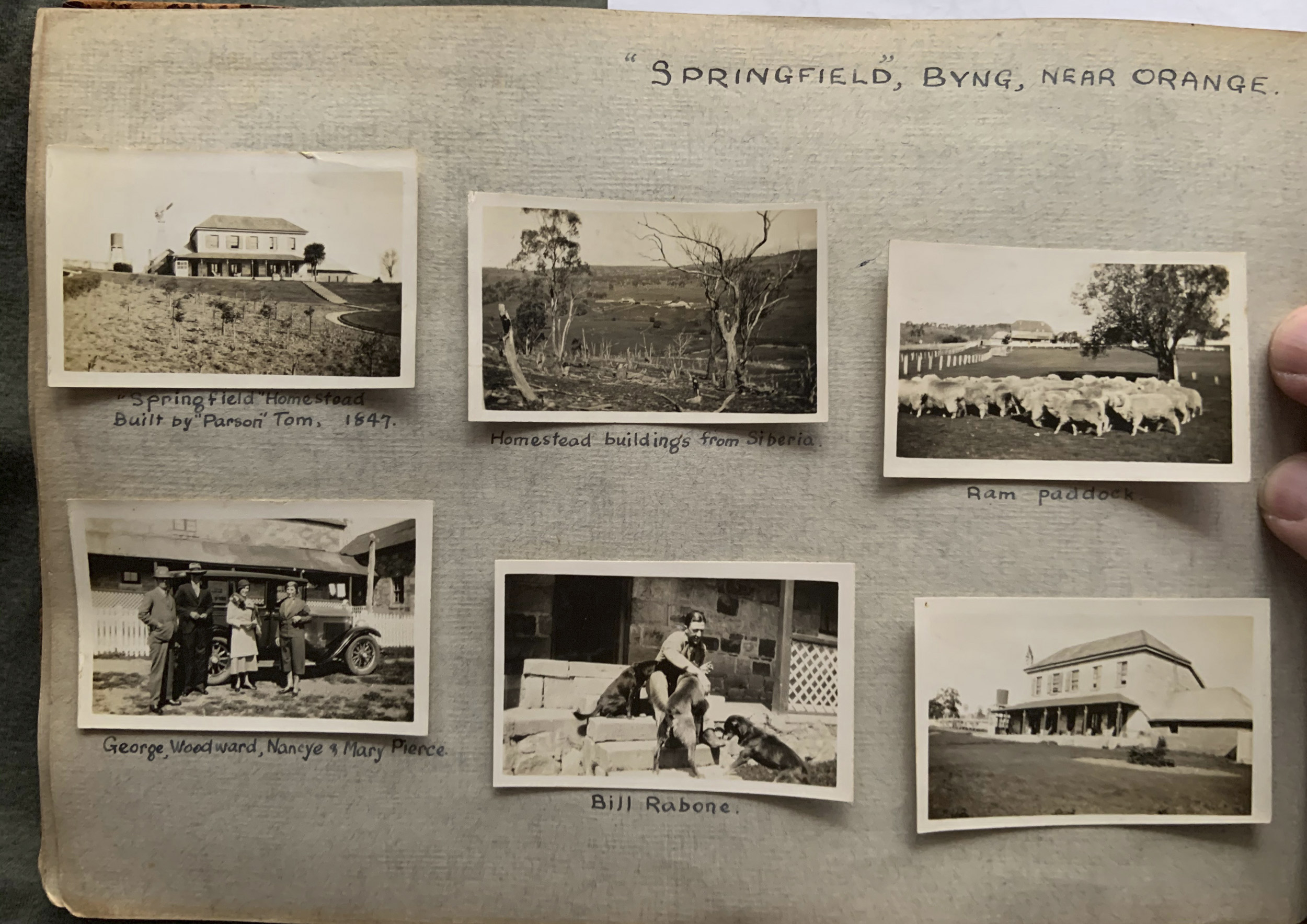
 

"Springfield", Byng, Near Orange, October 1932" in John "Jack" Riverstone Faviell 1922-1933 photo album


“Springfield”, Byng, Near Orange, October 1932″ in John “Jack” Riverstone Faviell 1922-1933 photo album


Byng

… an area of scattered houses in green valleys (when there is no drought) dates back to before 1856.

It was originally named ‘Cornish Village’ after the original Cornish settlers who brought the first fruit trees from Cornwall and gave birth to the Orange district’s fruit industry on the ‘Pendarvis’ property. Apples were produced in Byng for over 100 years but now there are mainly cattle, sheep and a little cropping.

Driving through the winding lanes with hawthorn hedgerows on either side you will see in the distance an old homestead (Springfield) which has an old Celtic custom – on the porch there are three welcome stones. The host stands on one, the guest on another – then they greet each other on the centre stone.

Text from the Orange website [Online] Cited 01/11/2019. No longer available online
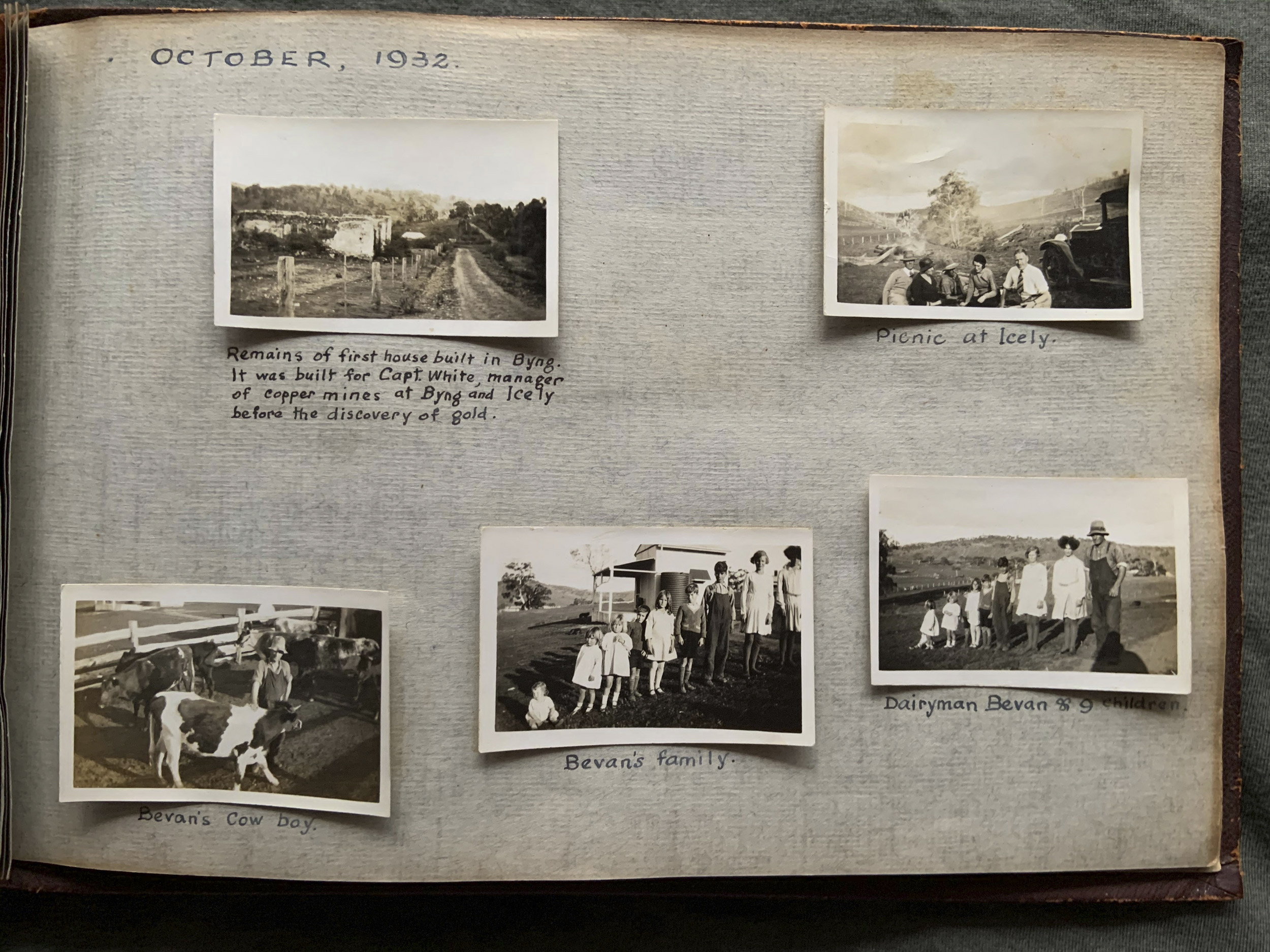
 

"Springfield", Byng, Near Orange, October 1932" in John "Jack" Riverstone Faviell 1922-1933 photo album


“Springfield”, Byng, Near Orange, October 1932″ in John “Jack” Riverstone Faviell 1922-1933 photo album


"Remains of the first house built in Byng," October, 1932 in John "Jack" Riverstone Faviell 1922-1933 photo album


“Remains of the first house built in Byng,” October, 1932 in John “Jack” Riverstone Faviell 1922-1933 photo album


"At Springfield," 1932 in John "Jack" Riverstone Faviell 1922-1933 photo album


“At Springfield,” 1932 in John “Jack” Riverstone Faviell 1922-1933 photo album


"J.F. and Woodward," 1932 in John "Jack" Riverstone Faviell 1922-1933 photo album


“J.F. and Woodward,” 1932 in John “Jack” Riverstone Faviell 1922-1933 photo album


"At Springfield," 1932 in John "Jack" Riverstone Faviell 1922-1933 photo album


“At Springfield,” 1932 in John “Jack” Riverstone Faviell 1922-1933 photo album


"Untitled (Rabbiting)," 1932 in John "Jack" Riverstone Faviell 1922-1933 photo album


“Untitled (Rabbiting),” 1932 in John “Jack” Riverstone Faviell 1922-1933 photo album


"Hawksbury River,' 1932-33 in John "Jack" Riverstone Faviell 1922-1933 photo album


“Hawksbury River,’ 1932-33 in John “Jack” Riverstone Faviell 1922-1933 photo album


"Betty Broad," 16th October, 1932 in John "Jack" Riverstone Faviell 1922-1933 photo album


“Betty Broad,” 16th October, 1932 in John “Jack” Riverstone Faviell 1922-1933 photo album
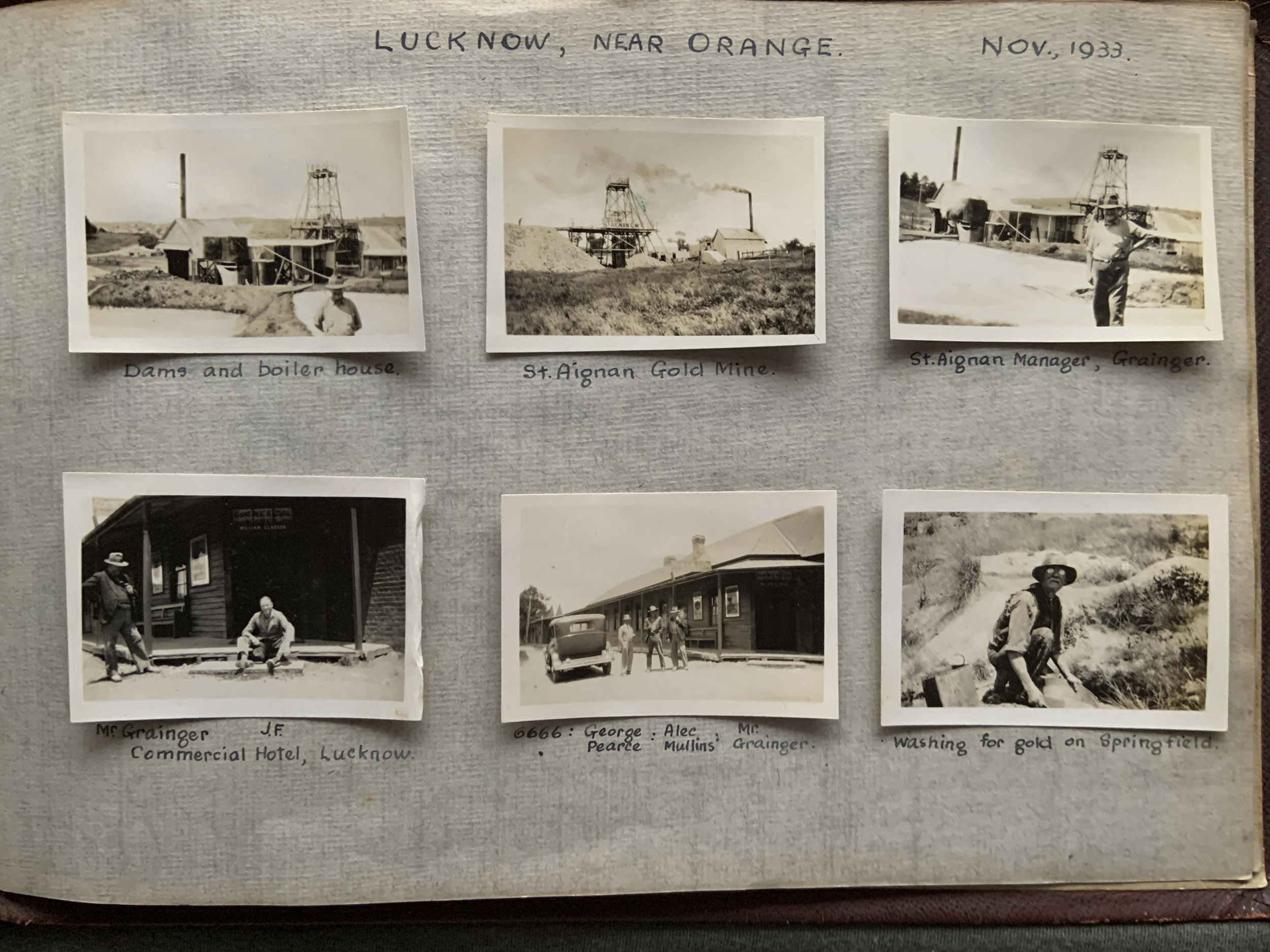
 

"Lucknow, Near Orange," November, 1933 in John "Jack" Riverstone Faviell 1922-1933 photo album


“Lucknow, Near Orange,” November, 1933 in John “Jack” Riverstone Faviell 1922-1933 photo album


Lucknow

1929-1935: Prospecting rarely ever ceases on a once lucrative gold-field and in 1928-9 companies such as St. Algnan’s (New Guinea) Gold Lodes N.L. and Lucknow Gold Options Co. were quite busy. In particular St. Aignan’s found a rich ‘brown vein’ away from ‘that portion already riddled with holes’, at a depth of only 38 feet. …

The village has a large potential to attract tourists. The iron head-frames at Wentworth Main and at Reform, right beside the highway in the village area with their accompanying equipment, are the most strikingly accessible of gold mining memorials. At Wentworth Main moreover, the largest of the iron sheds still contains a great deal of equipment, including the stamper battery and various engines. In the paddock to the west of the highway there is isolated equipment- a boiler, a winding engine. The winding house for Reform still stands.

Anonymous. “Gold mining at Lucknow,” on the Orange website [Online] Cited 01/11/2019


"Washing for gold on Springfield," November, 1933 in John "Jack" Riverstone Faviell 1922-1933 photo album


“Washing for gold on Springfield,” November, 1933 in John “Jack” Riverstone Faviell 1922-1933 photo album


"St. Aignan Gold Mine," November, 1933 in John "Jack" Riverstone Faviell 1922-1933 photo album


“St. Aignan Gold Mine,” November, 1933 in John “Jack” Riverstone Faviell 1922-1933 photo album


"Springfield," November, 1933 in John "Jack" Riverstone Faviell 1922-1933 photo album


“Springfield,” November, 1933 in John “Jack” Riverstone Faviell 1922-1933 photo album
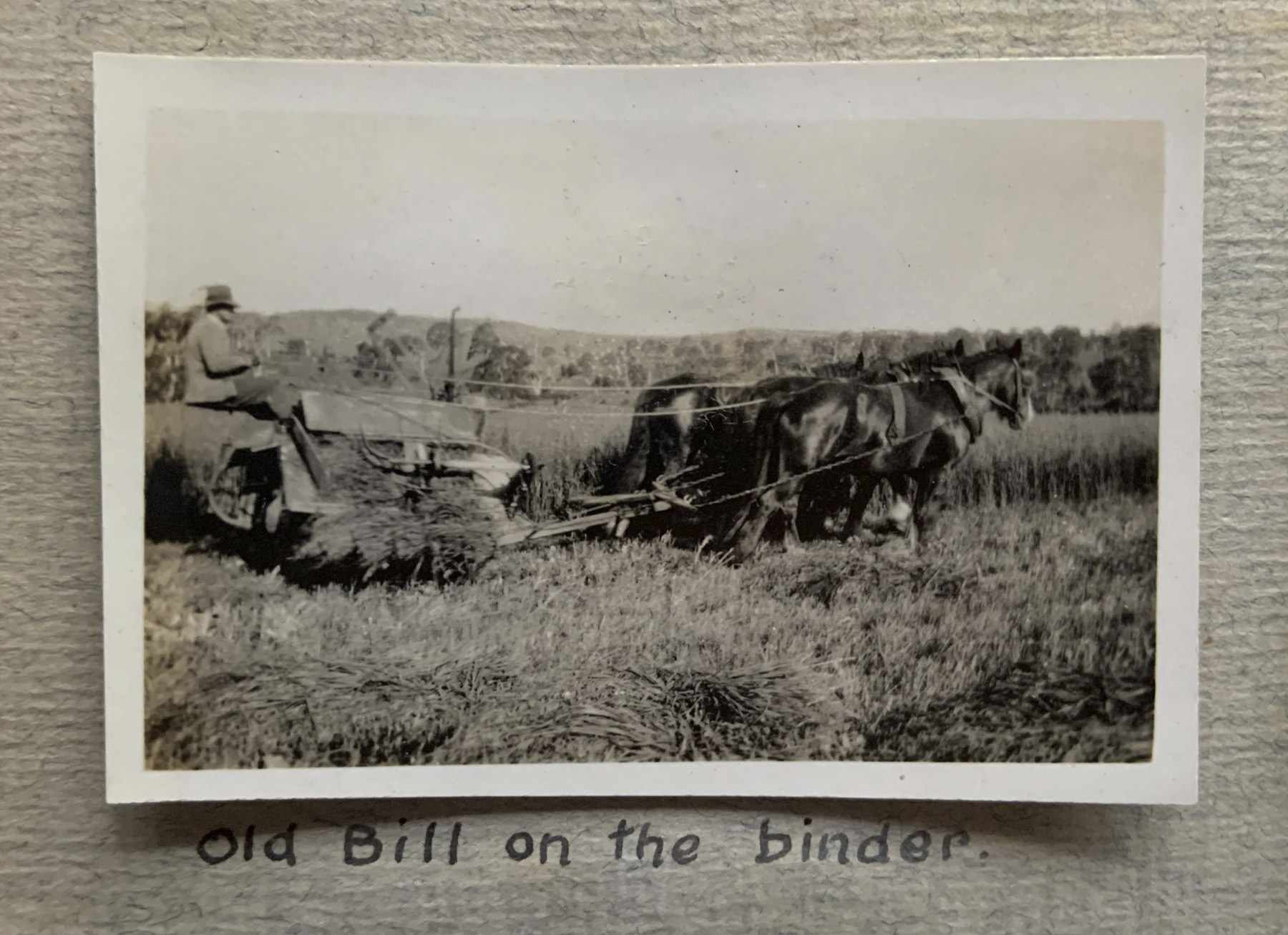
 

"Old Bill on the binder," November, 1933 in John "Jack" Riverstone Faviell 1922-1933 photo album


“Old Bill on the binder,” November, 1933 in John “Jack” Riverstone Faviell 1922-1933 photo album
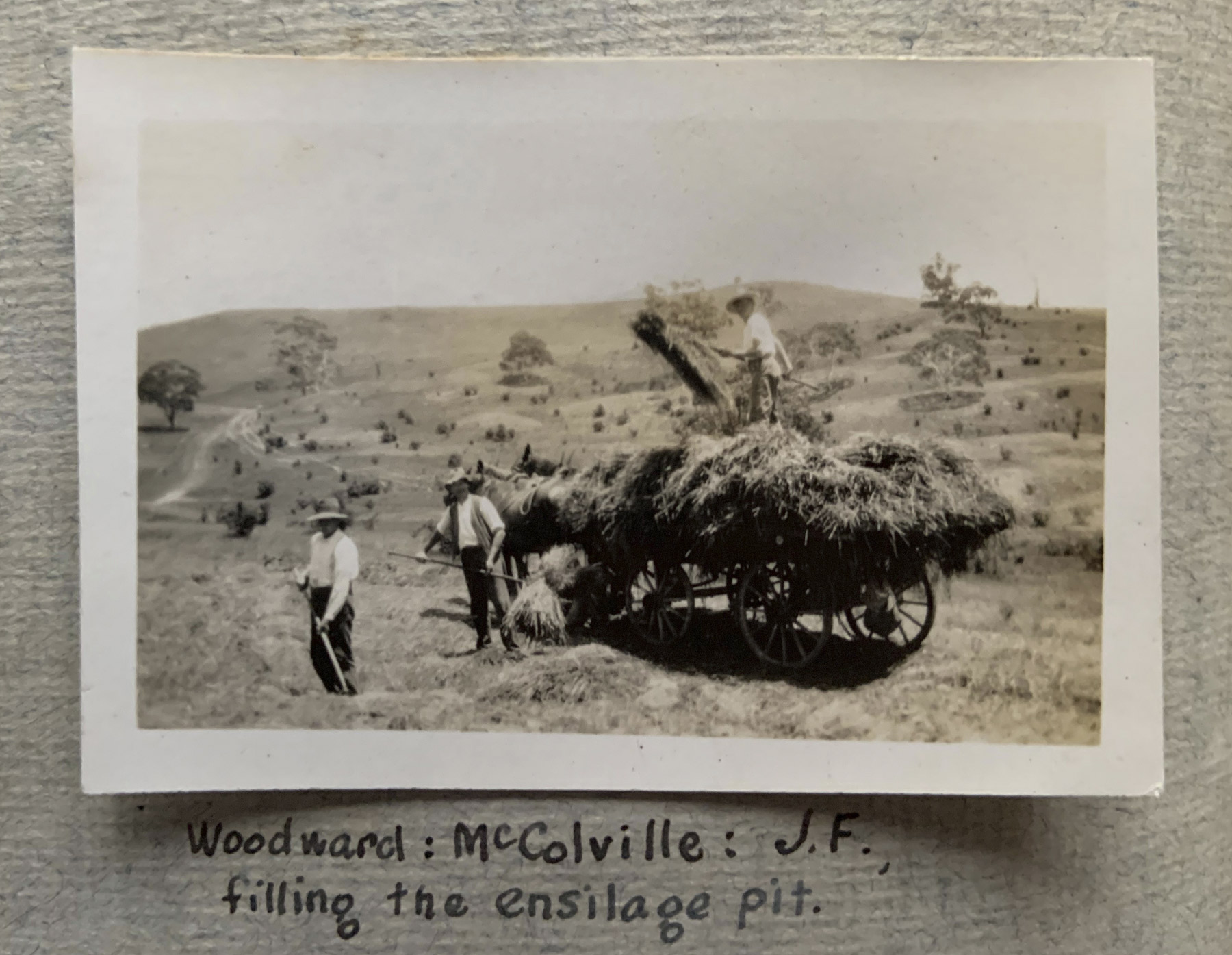
 

"Woodward : McColville ; J.F., filling the ensilage pit," November, 1933 in John "Jack" Riverstone Faviell 1922-1933 photo album


“Woodward : McColville ; J.F., filling the ensilage pit,” November, 1933 in John “Jack” Riverstone Faviell 1922-1933 photo album


Silage is a type of fodder made from green foliage crops which have been preserved by acidification, achieved through fermentation. It can be fed to cattle, sheep and other such ruminants (cud-chewing animals). The fermentation and storage process is called ensilage, ensiling or silaging, and is usually made from grass crops, including maize, sorghum or other cereals, using the entire green plant (not just the grain).


"At "Millambri", Canowindra," 1933 in John "Jack" Riverstone Faviell 1922-1933 photo album


“At “Millambri”, Canowindra,” 1933 in John “Jack” Riverstone Faviell 1922-1933 photo album


"Bathurst," November 1933 in John "Jack" Riverstone Faviell 1922-1933 photo album


“Bathurst,” November 1933 in John “Jack” Riverstone Faviell 1922-1933 photo album


"Untitled (Victoria)," November, 1933 in John "Jack" Riverstone Faviell 1922-1933 photo album


“Untitled (Victoria),” November, 1933 in John “Jack” Riverstone Faviell 1922-1933 photo album


"Myers, Melbourne," November 1933 in John "Jack" Riverstone Faviell 1922-1933 photo album


“Myers, Melbourne,” November 1933 in John “Jack” Riverstone Faviell 1922-1933 photo album


"Bourke St., Melbourne," November 1933 in John "Jack" Riverstone Faviell 1922-1933 photo album


“Bourke St., Melbourne,” November 1933 in John “Jack” Riverstone Faviell 1922-1933 photo album
 

John "Jack" Riverstone Faviell 1922-1933 photo album back cover


John “Jack” Riverstone Faviell 1922-1933 photo album back cover
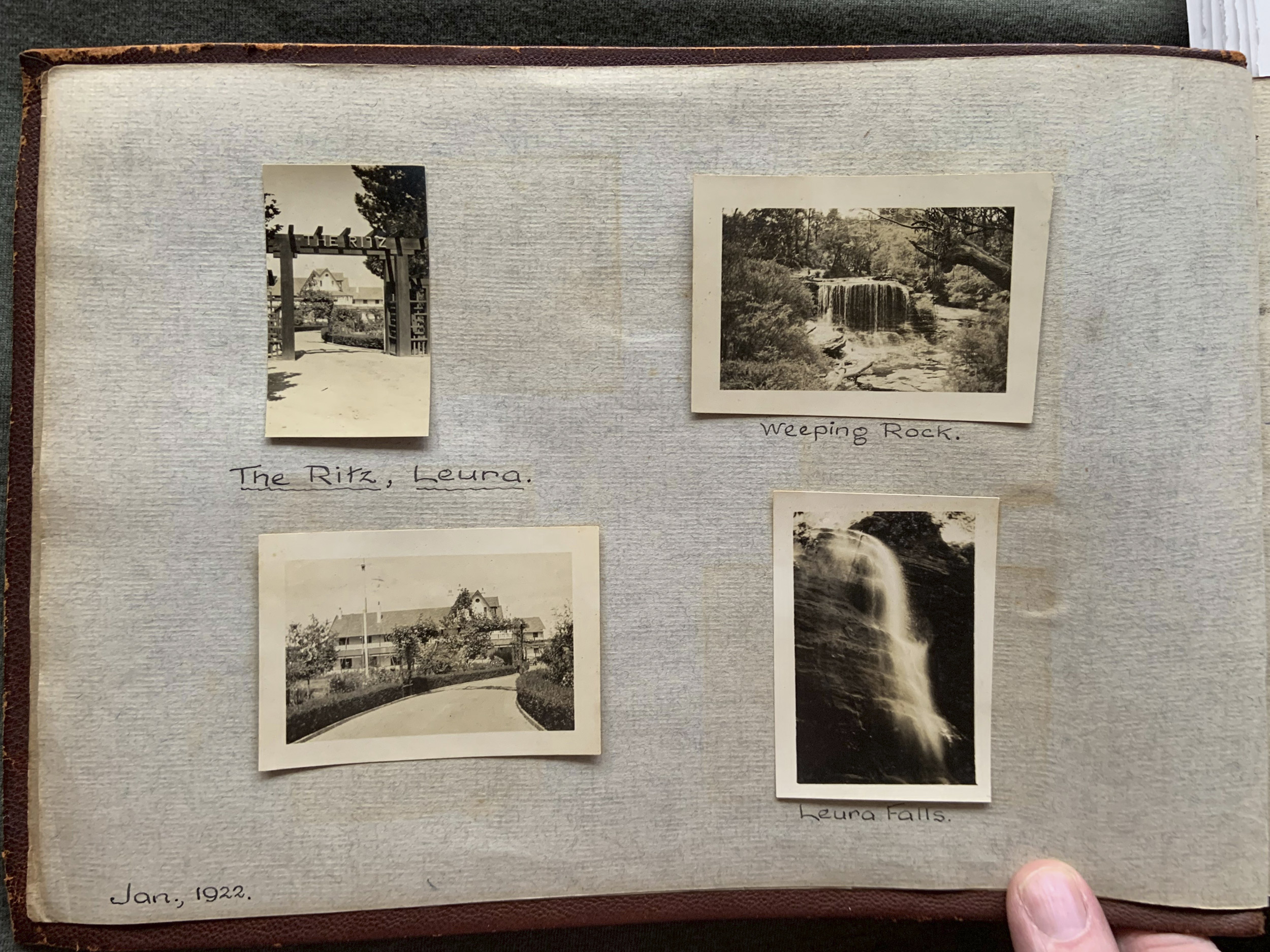


State Library of New South Wales website

LIKE ART BLACK ON FACEBOOK

Back to top

Photo album: ‘John “Jack” Riverstone Faviell (1892-1960), 1922-1933’ Part 1

July 2021

Warning: Aboriginal and Torres Strait Islander readers should be aware that this posting contains images and names of people who may have since passed away.


John "Jack" Riverstone Faviell (1892-1960), 1922-1933 photo album front cover


John “Jack” Riverstone Faviell 1922-1933 photo album front cover


Discovered in an op shop (charity shop in America), this is the most historically important and exciting Australian photo album that I have ever found.

Belonging to John “Jack” Riverston Faviell, a senior New South Wales public accountant and featuring his photographs, the album ranges across the spectrum of Australian life and culture from the East to the West of the continent in the years 1922-1933. A list of locations and topics can be seen below.

I undertake a fuller analysis of the album in Part 2 of the posting in an essay titled Golden splendour: privilege, ceremony and racism in 1920s-1930s Australia (2023), the second part of the posting containing previously unpublished photographs of the opening of the Sydney Harbour Bridge.

In this posting there are some important photographs of “Aboriginal Types, along the Trans-Australian Railway” and “Australian Desert Blacks.” The Indigenous Australians had come to trade boomerangs and spears in return for money and clothing. According to the excellent book Bitter Fruit: Australian photographs to 1963 by Michael Graham-Stewart and Francis McWhannell, after the completion of the continental railway in 1917,

“The Railway provided a source of income for Aboriginal people, much to the ire of the Chief Protector  of Aborigines in Western Australia, A. O. Neville, to whom the slightest hint of autonomy was anathema. There was some begging (Neville was convinced that children were being ‘bred’ for the purpose), but also a system of charging for photographs. Boomerang and spear demonstrations were given, and artefacts were souvenired.

The most important stop on the line was Ooldea. This was situated six kilometres south of Ooldea Soak, one of the few places in the region with permanent water. The site had long been of great ceremonial and social significance for Aboriginal people, a fact attested by the profusion of stone artefacts in the area… It was a junction of migratory routes, a centre for exchange, and a refuge in times of drought.”1


As Episode 1 of the series ‘Australia in Colour’ states of similar home movie images, “these photographs offer an unfiltered glimpse into a world seldom seen.”2

Other fascinating images in this posting include the grave of bushranger John Dunn; the Macquarie Watchtower in La Perouse; the goldfields and mines of Kalgoorlie and “Boulder City” in Western Australia; the oldest inhabitant of Geraldton, W.A.; Fremantle prison; and pearling in Shark’s Bay, W.A. including two photographs – one of the dilapidated “White’s Cemetery” with single cross and bones and the other a “Grave in the Niggers Cemetery” with nothing but a mound of earth and some dead branches. Other photographs offer casual racism as a matter of course in their titles.

Dr Marcus Bunyan

PS. This album is now in the State Library of New South Wales collection, given its importance in documenting through photographs regional NSW, Indigenous Australians and the opening of the Sydney Harbour Bridge. See Part 2 of the posting for these previously unseen images of the opening of the bridge.


Footnotes

1/ Michael Graham-Stewart and Francis McWhannell. Bitter Fruit: Australian photographs to 1963. Michael Graham-Stewart, 2017, p. 66.

2/ Episode 1 Season 1: “Outpost Of Empire”: This episode charts the story of the nation from 1897 to 1929 as agriculture transforms the land. ‘Australia in Colour’ is the history of Australia told via a unique collection of cinematic moments brought to life for the first time in stunning colour. It tells the story of how Australia came to be the nation it is today. Narrated by Hugo Weaving, it’s a reflection on our nation’s character, its attitudes, its politics, and its struggle to value its Indigenous and multicultural past. ‘Australia in Colour’ gives us a chance to relive history from a fresh perspective.


Grateful thankx to Douglas Stewart Fine Books for their research help with this photo album. Please click on the photographs for a larger version of the image.


“Biscuits and cake and fruit were thrown to them from the train windows, while their boomerangs and native weapons, and their importance in the landscape as subjects for photography, brought many a shilling and sixpence for them to spend.”


Daisy Bates, The Passing of the Aborigines quoted in Bitter Fruit: Australian photographs to 1963.1


“John “Jack” Riverston Faviell, was a senior NSW public accountant. Originally from Colinroobie, near Narrandera in NSW, he married Melanie Audrey Pickburn (daughter of Judge Pickburn) in a society wedding at St James’ Church, Sydney, in February 1925. He built no. 20 Yarranabbe Rd, Darling Point as their first married home but he divorced Audrey in October 1930. He would later remarry in 1934, as would Audrey.”


Jon Dickson. Douglas Stewart Fine Books


Locations

Blue Mountains, NSW (1922)
Leura Falls, NSW (1922)
Weeping Rock, Wentworth Falls, NSW (1922)
Tarana Picnic Races, NSW (1922)
Doona, Breeza, NSW (1922)
Avoca, NSW (1922)
Newcastle Races, NSW (1923)
Belmont / Belmont Regatta, NSW (1923)
Hawkesbury, NSW (1923)
Frenches Forest, NSW (1923)
“Foxlow” Station, Bungedore, NSW (1923)
Sydney, NSW (Customs House, National Art Gallery, Mitchell Library, Darlinghurst Courthouse) (1923)
Muswellbrook Picnic Races, NSW (1923)
Maitland / Maitland Cup Meeting, NSW (1923)
Breeza, NSW (1923)
Wiseman’s Ferry, NSW (1923)
Moss Vale / Sutton Forest Church, NSW (1923)
Frensham, NSW (1923)
La Perouse, NSW (Historical Society Excursion) (1923)
Old Customs Watch Tower, La Perouse (1923)
The Old Illawarra Road, NSW (1923)
Yarcowie, SA (1923)
Trans-Australian Railway (Port Augusta to Kalgoorlie) (1923)
Karonie, WA (1923)
Kalgoorlie, WA (1923)
Boulder City, WA (1923)
Fremantle, WA (1923)
Geraldton, WA (1923)
Shark’s Bay, WA (1923)
Henry Freycinet Estuary, WA (1923)
Tamala Station, WA (1923)
Perth, WA (1923)
Adelaide, SA (Torrens River) (1923)
“Redbank,” Scone, NSW (1924)
Muswellbrook Picnic Races, NSW (1924)
“Craigieburn,” Bowral, NSW (1924)
The Dudley Cup at Kensington, NSW (1924)
Camden Grammar School, NSW (1924)
Liverpool Church, NSW (1924)
Landsdowne Bridge, NSW (1924)
Jenolan Caves, NSW (1924)
Avon Dam, NSW (1924)Herald Office, Pitt Street, NSW (1924)
Camping, Cronulla, NSW (1925)
Roseville, NSW (1926)
Whale Beach, NSW (1927)
Visit of the Duke and Duchess of York, Macquarie Street, NSW (1927)
20, Yarranabbe Rd., Darling Point, NSW (1926)
Canberra, ACT (1927)
Jenolan Caves, NSW (Lady Dorothy Hope-Morley) (1927)
Ellen’s Isle, Loch Katrine, Scotland (1925)
Sydney Harbour Bridge, NSW (1931-32)
“Springfield,” Byng, Near Orange, NSW (1932)
Lucknow, near Orange, NSW (1933)
Hawkesbury, NSW (1933)
Bathurst, NSW (1933)
“Millambri, ” Canowindra, NSW (1933)
Melbourne, VIC (1933)


Topics

Men
Pastoralism and grazing
Horses / country horse racing
Sheep and shearing
Cows
Mill / logging
Pine plantation
Bush
Bores and dams
Cathedral / churches
Tennis
Golf
Cars (Ford, Pan-American, Essex, Oldsmobile, early Hupmobile, Chrysler 70)
Buses
Bank, post office
Pastoral Play
Monuments
Rock carvings
Houses
Cemetery / tombstones
John Dunn, executed 1866
South Australian Railways / locomotives
S.A. constable and Adelaide cop
Indigenous Australians (Aboriginal types, along the Trans-Australian Railway)
Australian Desert Blacks
Gold mine / gold panning
Mining (Boulder and Perseverance Mines)
Convict gaol
Oldest inhabitant (Henry Desmond)
Hotels
Beach and sea, surf girls
Mother of pearl
Dates
Afghan / camels
Yachting, sailing / boats
Guano
Fred Adams, Boss-Pearler
Stations and station hands
Rowing
Dredging
Polo
Rugby
Caves
Guns
Nobility and royalty
Camping, picnics
Tennis
House building / old houses
Parliament House
Prime Ministers residence
Bridges and bridge building
Federal and state governors
The world’s first auto-gyro plane (1909-1912)
The Southern Cross
Pioneers
Mounted police
First house in Byng
Rabbiting
Glamour
Social status / socialite
Family
Women and children
Sydney Harbour Bridge opening
Carillon (bells)
Myers and Bourke Street, Melbourne


"Blue Mountains, N.S.W," January 1922 in John "Jack" Riverstone Faviell 1922-1933 photo album


“Blue Mountains, N.S.W,” January, 1922 in John “Jack” Riverstone Faviell 1922-1933 photo album


"Blue Mountains, N.S.W," January 1922 in John "Jack" Riverstone Faviell 1922-1933 photo album


“Blue Mountains, N.S.W,” January, 1922 in John “Jack” Riverstone Faviell 1922-1933 photo album


"Blue Mountains, N.S.W," January 1922 in John "Jack" Riverstone Faviell 1922-1933 photo album


“Blue Mountains, N.S.W,” January, 1922 in John “Jack” Riverstone Faviell 1922-1933 photo album


Blue Mountains

The Blue Mountains are a mountainous region and a mountain range located in New South Wales, Australia. The region borders on Sydney’s metropolitan area, its foothills starting about 50 kilometres (31 mi) west of centre of the state capital, close to the major suburb of Penrith. The public’s understanding of the extent of the Blue Mountains is varied, as it forms only part of an extensive mountainous area associated with the Great Dividing Range. Officially the Blue Mountains region is bounded by the Nepean and Hawkesbury rivers in the east, the Coxs River and Lake Burragorang to the west and south, and the Wolgan and Colo rivers to the north. Geologically, it is situated in the central parts of the Sydney Basin. …

The Blue Mountains have been inhabited for millennia by the Gundungurra people, now represented by the Gundungurra Tribal Council Aboriginal Corporation based in Katoomba, and, in the lower Blue Mountains, by the Darug people, now represented by the Darug Tribal Aboriginal Corporation…

Examples of Aboriginal habitation can be found in many places. In the Red Hands Cave, a rock shelter near Glenbrook, the walls contain hand stencils from adults and children. On the southern side of Queen Elizabeth Drive, at Wentworth Falls, a rocky knoll has a large number of grinding grooves created by rubbing stone implements on the rock to shape and sharpen them. There are also carved images of animal tracks and an occupation cave. The site is known as Kings Tableland Aboriginal Site and dates back 22,000 years.

Text from the Wikipedia website

You’ll find the locality of Kanimbla Valley in New South Wales about 90km west-northwest of Sydney. At about 677m above sea level, Kanimbla Valley is one of the higher localities in New South Wales.


"Tarana Picnic Races," January 1922 in John "Jack" Riverstone Faviell 1922-1933 photo album


“Tarana Picnic Races,” January, 1922 in John “Jack” Riverstone Faviell 1922-1933 photo album


Tarana

Tarana is a small town in the Central West of New South Wales, Australia in the City of Lithgow.


"Doona, Breeza," October 1922 in John "Jack" Riverstone Faviell 1922-1933 photo album


“Doona, Breeza,” October, 1922 in John “Jack” Riverstone Faviell 1922-1933 photo album


J. Pickering – John Pickering, grazier of Breeza, Upper Hunter Valley, killed by a log he was loading onto a wagon in February 1924.
B.B. Capper – Capper family of Rossmer Homestead at Breeza, Upper Hunter Valley.
Doona Station and Breeza Station owned by the Clift family.

Information from Douglas Stewart Fine Books


"Doona, Breeza," October 1922 in John "Jack" Riverstone Faviell 1922-1933 photo album


“Doona, Breeza,” October, 1922 in John “Jack” Riverstone Faviell 1922-1933 photo album


Breeza

Breeza is a small village located about 45 kilometres south east of Gunnedah on the Kamilaroi Highway. The aboriginal name for Breeza means “one hill”.

The village overlooks the rich fertile Liverpool Plains and this diverse farming area produces many and varied crops throughout the year. When in season, the fields of sunflowers, sorghum, canola, wheat and cotton provide a picturesque vista across the sweeping plains.

Breeza was settled in 1848 by Andrew Lang. Old folk say that Bushranger Ben Hall was born at Breeza, he was in fact born near Maitland, but his father, Ben Hall Snr worked on Breeza Station at one time. A mural ‘Ben Hall’s Wall’ stands in the heart of Breeza to commemorate Ben Hall’s final years set against “those wild colonial days” of yesteryear.

Text from the australias.guide website [Online] Cited 18/10/2019


"Avoca," Xmas, 1922 in John "Jack" Riverstone Faviell 1922-1933 photo album


“Avoca,” Xmas, 1922 in John “Jack” Riverstone Faviell 1922-1933 photo album


Avoca Beach

Avoca Beach is a coastal suburb of the Central Coast region of New South Wales, Australia, about 95 kilometres (59 mi) north of Sydney. Avoca Beach is primarily a residential suburb but also a popular tourist destination. Terrigal is a major coastal suburb of the Central Coast region of New South Wales, Australia, located 12 kilometres (7 mi) east of Gosford on the Pacific Ocean. (Text from the Wikipedia website)


"Newcastle Races," New Year, 1923 in John "Jack" Riverstone Faviell 1922-1933 photo album


“Newcastle Races,” New Year, 1923 in John “Jack” Riverstone Faviell 1922-1933 photo album


Located in the heart of Newcastle on the picturesque Hunter Coast only two hours drive north of Sydney is Newcastle Racecourse. In operation for over 100 years, the Newcastle Racecourse is the largest provincial club in NSW.


"Belmont," New Year, 1923 in John "Jack" Riverstone Faviell 1922-1933 photo album


“Belmont,” New Year, 1923 in John “Jack” Riverstone Faviell 1922-1933 photo album


Belmont, on Lake Macquarie near Newcastle, NSW.


"Saddington's Ford," New Year, 1923 in John "Jack" Riverstone Faviell 1922-1933 photo album


“Saddington’s Ford,” New Year, 1923 in John “Jack” Riverstone Faviell 1922-1933 photo album


"Belmont," 1923 in John "Jack" Riverstone Faviell 1922-1933 photo album


“Belmont,” 1923 in John “Jack” Riverstone Faviell 1922-1933 photo album


John C Reid and Mark C Reid

The Reid brothers John C Reid and Mark C Reid were nephews of Sir George Houstoun Reid, 4th Prime Minister of Australia and former Premier of New South Wales prior to Federation. On Friday 14 January, 1898 the Reid boys were at the train station to welcome their uncle the Premier to Newcastle.

Roger Steel, Historian, Belmont

O.E. Friend (died 1942)

O.E. Friend was a very wealthy man and was Director of the Commercial Banking Company of Sydney with a keen interest in pastoral pursuits, investments, etc., Perhaps Faviell worked for Friend or was a close confidante, which would explain all the shots of pastoral locations (Friend’s interests).

Information from Douglas Stewart Fine Books

Obituary

MR. O. E. FRIEND DIES IN SYDNEY

Mr O. E. Friend, 60, died today. He was a director of the Permanent Trustee Company, the Commercial Banking Company of Sydney, Pitt, Son, and Badgery, the United Insurance, and Howard Smith companies, and several other business organisations. Mr. Friend was keenly interested in pastoral pursuits. He was chairman of directors of Retreat Station Ltd., Queensland, and was formerly president of the Royal Historical Society.

The Courier-Mail, Brisbane, Qld., Tue 26 May, 1942, Page 4 on the Trove website [Online] Cited 05/11/2019


"Belmont Regatta," 1.1.23 in John "Jack" Riverstone Faviell 1922-1933 photo album


“Belmont Regatta,” 1.1.23 in John “Jack” Riverstone Faviell 1922-1933 photo album


Belmont Regatta

I am researching the local history of Belmont, NSW and in particular the history of the Belmont Sailing Club. The Belmont Sailing Club was formed at a meeting on 13th May 1922 and it held its first race on 7th October 1922.

Whilst an annual regatta had been held on Belmont Bay for some decades, the Belmont Regatta held on 1st January 1923 is the first run under the auspices of the newly formed Belmont Sailing Club. The photo in the album would be the earliest photograph of 16ft skiffs sailing on Belmont Bay.

Interestingly, John C. Reid, living in Weeroona on the shores of Lake Macquarie was the sailing club’s first patron, having been involved previously with the Belmont regattas as well as the regattas held on Newcastle Harbour. He was also a benefactor providing trophies for the club and had a high profile having formerly been the Mayor of Newcastle and the French Consul for Newcastle, there to assist French sailors. He played a significant role following the wreck of the ship Adolphe (1904, see below) in Newcastle Harbour. His younger brother Mark Christian Reid was the sailing club’s first President. Both of these men lived truly amazing lives.

Is there any possibility of getting a high resolution scan of a few of these photographs?  In particular the photo of the 1923 Belmont Regatta is priceless.

The skiffs in the club then used numbers on their sails instead of ensigns like other 16ft skiff clubs. Its hard to see, but it looks like the leading skiff has the number one on the sail, making it the skiff named ‘Clift’ (No numbers are visible on the sails just splotches – Marcus). That name Clift is significant in Belmont as you can see from your photo album. The Clifts were wealthy graziers from Breeza who would holiday at Belmont in their 17 room home.

Roger Steel, Historian, Belmont

Email to Marcus Bunyan 07/07/2021


This slide depicts the wreck of the 'Adolphe' as photographed on 30 September 1904. You can also see the mast of the shipwreck Regent Murray in this photo. University of Newcastle Library's Cultural Collections


This slide depicts the wreck of the Adolphe as photographed on 30 September 1904. You can also see the mast of the shipwreck Regent Murray in this photo.
University of Newcastle Library’s Cultural Collections


Adolphe

The Adolphe was a sailing ship that was wrecked at the mouth of the Hunter River in New South Wales, Australia, in 1904. The ship is now the most prominent of several wrecks on what is now the Stockton breakwall, which protects Newcastle harbour. The rescue of the ship’s crew has gone down in local maritime history as one of the most remarkable in local waters.
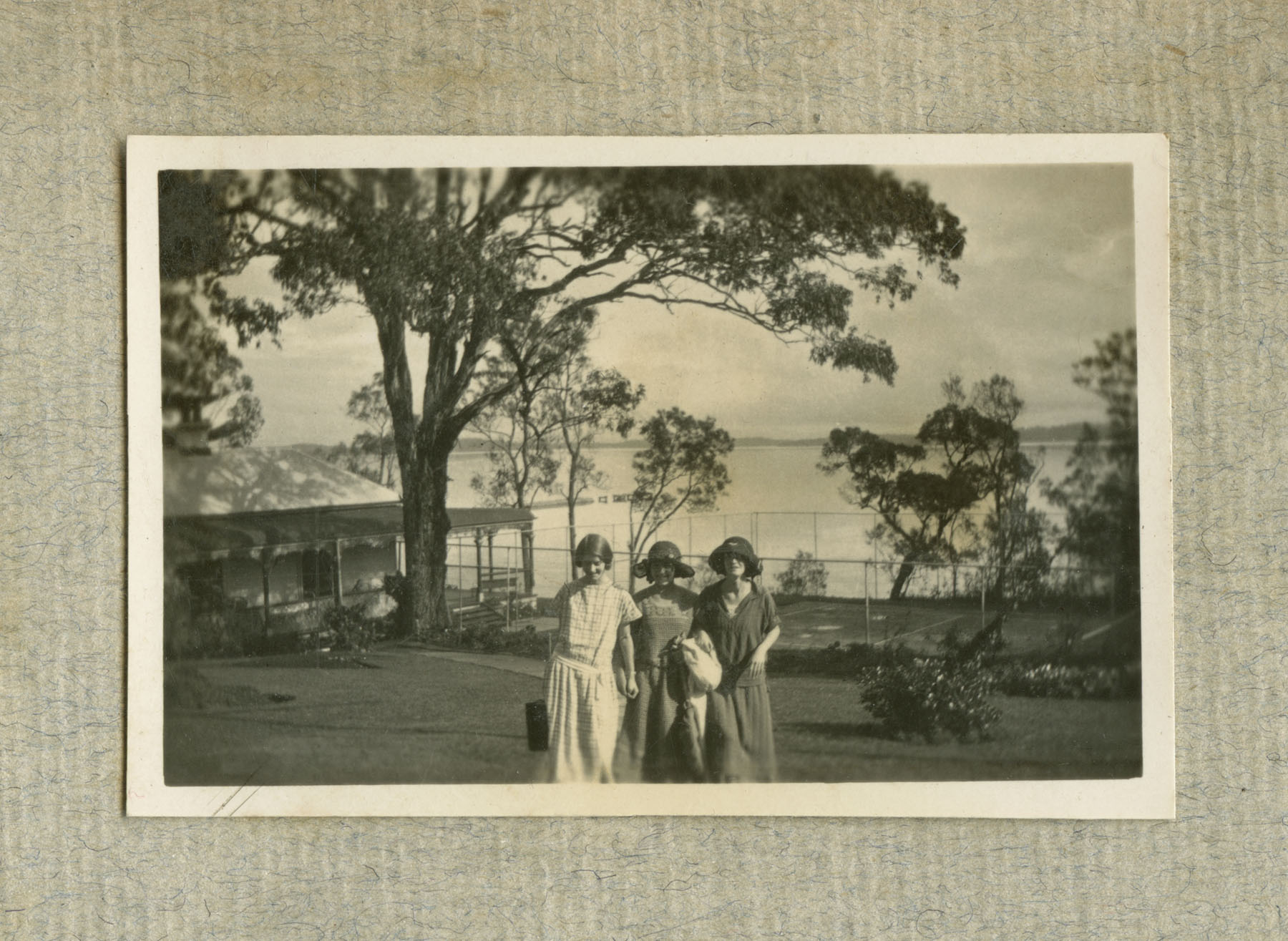
On 30 September 1904, the Adolphe was being towed through the entrance of Newcastle harbour by the tugs Hero and Victoria after an 85-day voyage in ballast from Antwerp under the command of Captain Lucas. Heavy seas prevented the tugs from holding her, and after the tug hawser parted she was swept first on to the wreck of the Colonist, then battered by waves that forced her on top of other submerged wrecks on what was then called the Oyster Bank. The lifeboat hurried to the scene and within two hours all 32 of the crew had been taken off. The northern breakwater of the entrance to the port of Newcastle was extended after the loss of the Adolphe. The French consul made an official visit to Newcastle to recognise the efforts of the lifeboat crew.

Text from the Wikipedia website


"Fun at The Lake," 17/19 February, 1923 in John "Jack" Riverstone Faviell 1922-1933 photo album


“Fun at The Lake,” 17/19 February, 1923 in John “Jack” Riverstone Faviell 1922-1933 photo album


"O.E.F. (O.E. Friend) & B.B.C. (Basil Cappers)," 17/19 February, 1923 in John "Jack" Riverstone Faviell 1922-1933 photo album


“O.E.F. (O.E. Friend) & B.B.C. (Basil Cappers),” 17/19 February, 1923 in John “Jack” Riverstone Faviell 1922-1933 photo album


"The Basil Cappers' departure for England," 9 March, 1923 in John "Jack" Riverstone Faviell 1922-1933 photo album


“The Basil Cappers’ departure for England,” 9 March, 1923 in John “Jack” Riverstone Faviell 1922-1933 photo album


"Untitled," 1923 in John "Jack" Riverstone Faviell 1922-1933 photo album


“Untitled,” 1923 in John “Jack” Riverstone Faviell 1922-1933 photo album


"Pan-American, 6666," 1923 in John "Jack" Riverstone Faviell 1922-1933 photo album


“Pan-American, 6666,” 1923 in John “Jack” Riverstone Faviell 1922-1933 photo album


"The Hawkesbury from the train," 1923 in John "Jack" Riverstone Faviell 1922-1933 photo album


“The Hawkesbury from the train,” 1923 in John “Jack” Riverstone Faviell 1922-1933 photo album


"Foxlow," 3/5 March, 1923 in John "Jack" Riverstone Faviell 1922-1933 photo album


“Foxlow,” 3/5 March, 1923 in John “Jack” Riverstone Faviell 1922-1933 photo album


"Foxlow," March, 1923 in John "Jack" Riverstone Faviell 1922-1933 photo album


“Foxlow,” March, 1923 in John “Jack” Riverstone Faviell 1922-1933 photo album


"Foxlow," 3/5 March, 1923 in John "Jack" Riverstone Faviell 1922-1933 photo album


“Foxlow,” 3/5 March, 1923 in John “Jack” Riverstone Faviell 1922-1933 photo album


"Foxlow Station, Bungendore," 3/5 March, 1923 in John "Jack" Riverstone Faviell 1922-1933 photo album


“Foxlow Station, Bungendore,” 3/5 March, 1923 in John “Jack” Riverstone Faviell 1922-1933 photo album


"Foxlow," 3/5 March, 1923 in John "Jack" Riverstone Faviell 1922-1933 photo album


“Foxlow,” 3/5 March, 1923 in John “Jack” Riverstone Faviell 1922-1933 photo album


Foxlow

Bungendore property “Foxlow” has more than 7500 hectares of land. It was purchased by F.B.S Falkiner (the son of F.S. Falkiner) in 1920.

Before the Falkiner family ownership, “Foxlow” had been in the hands of the Osborne family, and previously the Rutledge family; they had a short ownership of two years after purchasing it from John Hosking, in the 1860s. Hosking himself was the first mayor of Sydney, and had given the property its name, after his wife, Martha Foxlow Terry.

Mr Falkiner said “Foxlow” was one of the first farms to be taken up in the Molonglo Valley.

The property was profiled in The Land‘s country homes series in 1976, which detailed the property’s history extending back to an original grant in 1839 to Thomas Wood.

It is not known exactly when Hosking himself purchased the property, but his ownership lasted until 1868 when it was purchased by Thomas Rutledge, and then later George Osborne, who had owned the property for 50 years before the Falkiner family ownership.

Nick Heydon. “Historic ‘Foxlow’ offering,” on The Land website 26 April 2014 [Online] Cited 28/10/2019

Foxlow sold for $15 million in 2015.


"Mr Friend examining the old bell," March, 1923 in John "Jack" Riverstone Faviell 1922-1933 photo album


“Mr Friend examining the old bell,” March, 1923 in John “Jack” Riverstone Faviell 1922-1933 photo album


"Sydney," 1923 in John "Jack" Riverstone Faviell 1922-1933 photo album


“Sydney,” 1923 in John “Jack” Riverstone Faviell 1922-1933 photo album


"Customs House," Sydney, 1923 in John "Jack" Riverstone Faviell 1922-1933 photo album


“Customs House,” Sydney, 1923 in John “Jack” Riverstone Faviell 1922-1933 photo album


Customs House, Sydney

Customs House, Sydney is a heritage-listed museum space, visitor attraction, commercial building and performance space located in the Circular Quay area at 45 Alfred Street, in the Sydney central business district, in the City of Sydney local government area of New South Wales, Australia. The building served as a customs house prior to Federation and then as the head office of New South Wales operations of the Government of Australia agency Department of Trade and Customs (and its successors) until 1988. The customs function relocated to a new site in 1990. The initial designs were by Mortimer Lewis and it was built during 1845 by under the administration of Governor Sir George Gipps.

Text from the Wikipedia website


"National Art Gallery," Sydney, 1923 in John "Jack" Riverstone Faviell 1922-1933 photo album


“National Art Gallery,” Sydney, 1923 in John “Jack” Riverstone Faviell 1922-1933 photo album


"Upper Hunter Amateur Race Club Meeting... (Muswellbrook Picnic Races)" 15/16 May, 1923 in John "Jack" Riverstone Faviell 1922-1933 photo album


“Upper Hunter Amateur Race Club Meeting… (Muswellbrook Picnic Races)” 15/16 May, 1923 in John “Jack” Riverstone Faviell 1922-1933 photo album


Muswellbrook

Muswellbrook is a town in the Upper Hunter Region of New South Wales, Australia, about 243 km (151 mi) north of Sydney and 127 km (79 mi) north-west of Newcastle. Geologically, Muswellbrook is situated in the northern parts of the Sydney basin, bordering the New England region. The area is predominantly known for coal mining and horse breeding, but has also developed a reputation for gourmet food and wine production.

Text from the Wikipedia website


"Upper Hunter Amateur Race Club Meeting... (Muswellbrook Picnic Races)" 15/16 May, 1923 in John "Jack" Riverstone Faviell 1922-1933 photo album


“Upper Hunter Amateur Race Club Meeting… (Muswellbrook Picnic Races)” 15/16 May, 1923 in John “Jack” Riverstone Faviell 1922-1933 photo album


"The Button's Essex," May, 1923 in John "Jack" Riverstone Faviell 1922-1933 photo album


“The Button’s Essex,” May, 1923 in John “Jack” Riverstone Faviell 1922-1933 photo album


"Muswellbrook Picnic Races," 15/16 May, 1923 in John "Jack" Riverstone Faviell 1922-1933 photo album


“Muswellbrook Picnic Races,” 15/16 May, 1923 in John “Jack” Riverstone Faviell 1922-1933 photo album


"Muswellbrook Picnic Races," 15/16 May, 1923 in John "Jack" Riverstone Faviell 1922-1933 photo album


“Muswellbrook Picnic Races,” 15/16 May, 1923 in John “Jack” Riverstone Faviell 1922-1933 photo album


"Belmont," 23/25 June, 1923 in John "Jack" Riverstone Faviell 1922-1933 photo album


“Belmont,” 23/25 June, 1923 in John “Jack” Riverstone Faviell 1922-1933 photo album


Belmont Soldier's Memorial Hall and Belmont School of Arts


Three women standing in front of Belmont Soldier’s Memorial Hall (middle) and Belmont School of Arts (right) in John “Jack” Riverstone Faviell 1922-1933 photo album


Belmont Soldier’s Memorial Hall and Belmont School of Arts

My interest in the photo of the women in front of the Belmont Soldier’s Memorial Hall (opened 1921) (above) is also in the hope of seeing what is written on the building beside it (it says Belmont Literary Institute – more commonly known as the Belmont School of Arts, opened 1914). If it is the School of Arts, this suggests the building may have been moved at some stage. I’m very curious as I believed the School of Arts was close by in an adjoining street.

Roger Steel, Historian, Belmont

Belmont

Belmont is a suburb in the Hunter Region of New South Wales, Australia, located 20 kilometres (12 mi) from Newcastle’s central business district on the eastern side of Lake Macquarie and is part of the City of Lake Macquarie. Belmont is situated on a sandy peninsula formed by the Tasman Sea on the east and Lake Macquarie.


""Weroona", Belmont," 23/25 June, 1923 in John "Jack" Riverstone Faviell 1922-1933 photo album


“”Weroona”, Belmont,” 23/25 June, 1923 in John “Jack” Riverstone Faviell 1922-1933 photo album


3 women at Weeroona in John "Jack" Riverstone Faviell 1922-1933 photo album


3 women at Weeroona in John “Jack” Riverstone Faviell 1922-1933 photo album


Weeroona and the Reid’s

If we look carefully at the photograph of the 3 women at Weeroona with the lake in the back ground (above), you can see the old stone ferry jetty. It was in a state of disrepair in 1923 and Mark C Reid, having been a former Alderman on Newcastle Council and a very prominent business man, was lobbying Lake Macquarie Shire Council to have the jetty repaired. Note this jetty became the club house of Lake Macquarie Yacht Club in the early 1930’s, built at the end of the pier, and still in the same location to this day. I’ve attached an old postcard (below) which shows a view of the yacht club from the Weeroona boatshed.

Some of the information from the Wikipedia page is not correct (below). John C Reid didn’t live in Weeroona during his retirement as he died relatively young and Mark C Reid took over his brother’s position as manager of John Reid Limited and as French Consul following his brother’s unexpected death. The Crippled Children’s Association did purchase Weeroona in about 1950 following Mark C Reid’s death however based on my memory, Weeroona would have been demolished much later than 1979.

Roger Steel, Historian, Belmont

John Christian Reid

John Christian Reid, JP (1873 – 20 March 1932) was a New South Wales businessman, yachtsman and alderman, who served several terms as Mayor of Newcastle… In retirement, Reid lived with his family at his residence, “Weroona”, in Belmont, which later became the holiday home for the NSW Crippled Children’s Association and was demolished in 1979.

Text from the Wikipedia website


The Reid's water-front, Lake Macquarie in John "Jack" Riverstone Faviell 1922-1933 photo album


The Reid’s water-front, Lake Macquarie in John “Jack” Riverstone Faviell 1922-1933 photo album


'Belmont, Near Newcastle' 1950s? Postcard


Belmont, Near Newcastle
1950s?
Postcard
Colour lithograph


"Maitland," 25 August, 1923 in John "Jack" Riverstone Faviell 1922-1933 photo album


“Maitland,” 25 August, 1923 in John “Jack” Riverstone Faviell 1922-1933 photo album


Maitland

Maitland is a city in the Lower Hunter Valley of New South Wales, Australia and the seat of Maitland City Council, situated on the Hunter River approximately 166 kilometres (103 mi) by road north of Sydney and 35 km (22 mi) north-west of Newcastle. It is on the New England Highway about 17 km (11 mi) from its start at Hexham.


"Dr Kennedy's house, East Maitland," August, 1923 in John "Jack" Riverstone Faviell 1922-1933 photo album


“Dr Kennedy’s house, East Maitland,” August, 1923 in John “Jack” Riverstone Faviell 1922-1933 photo album


"Maitland Cup Meeting," Spring, 1923 in John "Jack" Riverstone Faviell 1922-1933 photo album


“Maitland Cup Meeting,” Spring, 1923 in John “Jack” Riverstone Faviell 1922-1933 photo album


"Finish of The Cup," Spring, 1923 in John "Jack" Riverstone Faviell 1922-1933 photo album


“Finish of The Cup,” Spring, 1923 in John “Jack” Riverstone Faviell 1922-1933 photo album


"Breeza (Doona Cyprus Pine Venture)," 13th September, 1923 in John "Jack" Riverstone Faviell 1922-1933 photo album


“Breeza (Doona Cyprus Pine Venture),” 13th September, 1923 in John “Jack” Riverstone Faviell 1922-1933 photo album


""Karua" household," September, 1923 in John "Jack" Riverstone Faviell 1922-1933 photo album


“”Karua” household,” September, 1923 in John “Jack” Riverstone Faviell 1922-1933 photo album


"Breeza," 13th September, 1923 in John "Jack" Riverstone Faviell 1922-1933 photo album


“Breeza,” 13th September, 1923 in John “Jack” Riverstone Faviell 1922-1933 photo album


John Pickering was killed by a log, 1924. Cyprus Pine venture was an investment project that Friend and Faviell were working on with Pickering and Capper?

Information from Douglas Stewart Fine Books


Breeza

Breeza is a locality in New South Wales, Australia. It is about 43 kilometres south of Gunnedah, in the Liverpool Plains agricultural region. The area around Breeza in particular is called the “Breeza Plains”. The name “Breeza” may be derived from an Aboriginal word meaning “one hill”.


"The team in the bush," Breeza, September 1923 in John "Jack" Riverstone Faviell 1922-1933 photo album


“The team in the bush,” Breeza, September 1923 in John “Jack” Riverstone Faviell 1922-1933 photo album


"Breeza," 13th September, 1923 in John "Jack" Riverstone Faviell 1922-1933 photo album


“Breeza,” 13th September, 1923 in John “Jack” Riverstone Faviell 1922-1933 photo album


"Wiseman's Ferry," 25 November, 1923 in John "Jack" Riverstone Faviell 1922-1933 photo album


“Wiseman’s Ferry,” 25 November, 1923 in John “Jack” Riverstone Faviell 1922-1933 photo album


Wisemans Ferry

Wisemans Ferry is a town in the state of New South Wales, Australia, located 75 kilometres north north-west of the Sydney central business district in the local government areas of Hornsby Shire, The Hills Shire, City of Hawkesbury and Central Coast Council. The town is a tourist spot with picnic and barbecue facilities. As well as a rich convict and colonial heritage in the area, the Dharug National Park and Yengo National Park are close by.

The town was originally called Lower Portland Headland, but the name was eventually changed to Wisemans Ferry, named after Solomon Wiseman, a former convict (1778-1838), who received a land grant in the area from Governor Macquarie in 1817. Wiseman established a ferry service on the Hawkesbury River in 1827 for the transport of produce and provisions to the convicts building the Great North Road and was known to many as King of the Hawkesbury.

Text from the Wikipedia website


"Moss Vale," 8/9 December, 1923 in John "Jack" Riverstone Faviell 1922-1933 photo album


“Moss Vale,” 8/9 December, 1923 in John “Jack” Riverstone Faviell 1922-1933 photo album


Moss Vale

Moss Vale is a town in the Southern Highlands of New South Wales, Australia, in the Wingecarribee Shire. At the 2016 census, it has a population of 8,579 and is sited on the Illawarra Highway, which connects to Wollongong and the Illawarra coast via Macquarie Pass.


"Frensham Pastoral Play," 8th December 1923 in John "Jack" Riverstone Faviell 1922-1933 photo album


“Frensham Pastoral Play,” 8th December 1923 in John “Jack” Riverstone Faviell 1922-1933 photo album


Frensham School

Frensham School is an independent non-denominational comprehensive single-sex early learning, primary, and secondary day and boarding school for girls, located at Mittagong, south of Sydney, in the Southern Highlands region of New South Wales, Australia.


"La Perouse (Historical Society Excursion)," 17 November, 1923 in John "Jack" Riverstone Faviell 1922-1933 photo album


“La Perouse (Historical Society Excursion),” 17 November, 1923 in John “Jack” Riverstone Faviell 1922-1933 photo album


Captain J. H. Watson, Royal Historical Society

O.E. Friend was President of the Royal Historical Society. Faviell was evidently also a member and visited La Perouse on a RHS excursion, with O.E. Friend. Friend disappears from the album after this time. Did Friend and Faviell part ways?

Information from Douglas Stewart Fine Books


La Perouse

La Perouse is a suburb in south-eastern Sydney, in the state of New South Wales, Australia. The suburb of La Perouse is located about 14 kilometres southeast of the Sydney central business district, in the City of Randwick.


"La Perouse (Historical Society Excursion)," 17 November, 1923 in John "Jack" Riverstone Faviell 1922-1933 photo album


“La Perouse (Historical Society Excursion),” 17 November, 1923 in John “Jack” Riverstone Faviell 1922-1933 photo album


"John Dunn. Executed, 19.3.1866," 17 November, 1923 in John "Jack" Riverstone Faviell 1922-1933 photo album


“John Dunn. Executed, 19.3.1866,” 17 November, 1923 in John “Jack” Riverstone Faviell 1922-1933 photo album


John Dunn

John Dunn (14 December 1846 – 19 March 1866) was an Australian bushranger. He was born at Murrumburrah near Yass in New South Wales. He was 19 years old when he was hanged in Darlinghurst Gaol. He was buried in the former Devonshire Street Cemetery in Sydney.


"Old Customs Watch Tower, La Perouse," 17 November, 1923 in John "Jack" Riverstone Faviell 1922-1933 photo album


“Old Customs Watch Tower, La Perouse,” 17 November, 1923 in John “Jack” Riverstone Faviell 1922-1933 photo album


Macquarie Watchtower

The Macquarie Watchtower is the earliest known surviving, sandstone tower building in Australia, the oldest surviving building on Botany Bay, and has long been recognised as a picturesque landmark on the headland, particularly popular for wedding photographs. The c. 1820 Macquarie Watchtower is thought to have been commissioned by Governor Macquarie. Not only is it the oldest surviving watchtower in Australia but it is the only known tower specifically constructed for colonial border protection and the prevention of smuggling.


"The old Illawarra Road," in John "Jack" Riverstone Faviell 1922-1933 photo album


“The old Illawarra Road,” 1923 in John “Jack” Riverstone Faviell 1922-1933 photo album


"Vera Capper and the children," in John "Jack" Riverstone Faviell 1922-1933 photo album


“Vera Capper and the children,” 1923 in John “Jack” Riverstone Faviell 1922-1933 photo album


"South Australian Railways," in John "Jack" Riverstone Faviell 1922-1933 photo album


“South Australian Railways,” 1923 in John “Jack” Riverstone Faviell 1922-1933 photo album


South Australian Railways

South Australian Railways (SAR) was the statutory corporation through which the Government of South Australia built and operated railways in South Australia from 1854 until March 1978, when its non-urban railways were incorporated into Australian National, and its Adelaide urban lines were transferred to the State Transport Authority.


"Terowie to Pt. Augusta, 120 ml," c. 1923 in John "Jack" Riverstone Faviell 1922-1933 photo album


“Terowie to Pt. Augusta, 120 ml.,” 1923 in John “Jack” Riverstone Faviell 1922-1933 photo album


"S.A. Constable," 1923 in John "Jack" Riverstone Faviell 1922-1933 photo album


“S.A. Constable,” 1923 in John “Jack” Riverstone Faviell 1922-1933 photo album


"Trans-Australian Railway (Port August to Kalgoorlie, 1051 miles)," 1923 John "Jack" Riverstone Faviell 1922-1933 photo album


“Trans-Australian Railway (Port August to Kalgoorlie, 1051 miles),” 1923 in John “Jack” Riverstone Faviell 1922-1933 photo album


Trans-Australian Railway

The Trans-Australian Railway crosses the Nullarbor Plain of Australia from Port Augusta in South Australia to Kalgoorlie in Western Australia. It includes a 478-kilometre (297 mi) stretch of dead-straight track, the world’s longest, between the 797 km (495 mi) post west of Ooldea and the 1,275 km (792 mi) post west of Loongana.

The line forms an important freight route between Western Australia and the eastern states. Currently two passenger services also use the line, the Indian Pacific for its entire length and The Ghan between Port Augusta and Tarcoola. Earlier passenger services on the route were known as the Great Western Express.

Text from the Wikipedia website


"Aboriginal Types, along the Trans-Australian Railway," 1923 in John "Jack" Riverstone Faviell 1922-1933 photo album


“Aboriginal Types, along the Trans-Australian Railway,” 1923 in John “Jack” Riverstone Faviell 1922-1933 photo album


"At Ooldea, S.A." 1923 in John "Jack" Riverstone Faviell 1922-1933 photo album


“At Ooldea, S.A.,” 1923 in John “Jack” Riverstone Faviell 1922-1933 photo album


"At Barton, S.A.," 1923 in John "Jack" Riverstone Faviell 1922-1933 photo album


“At Barton, S.A.,” 1923 in John “Jack” Riverstone Faviell 1922-1933 photo album


"Ooldea," 1923 in John "Jack" Riverstone Faviell 1922-1933 photo album


“Ooldea,” 1923 in John “Jack” Riverstone Faviell 1922-1933 photo album


Ooldea

Ooldea is a tiny settlement in South Australia. It is on the eastern edge of the Nullarbor Plain, 863 km (536 mi) west of Port Augusta on the Trans-Australian Railway. Ooldea is 143 km (89 mi) from the bitumen Eyre Highway.


"At Ooldea," 1923 in John "Jack" Riverstone Faviell 1922-1933 photo album


“At Ooldea,” 1923 in John “Jack” Riverstone Faviell 1922-1933 photo album


"Australian Desert Blacks," 1923 in John "Jack" Riverstone Faviell 1922-1933 photo album


“Australian Desert Blacks,” 1923 in John “Jack” Riverstone Faviell 1922-1933 photo album


"Untitled," 1923 in John "Jack" Riverstone Faviell 1922-1933 photo album


“Untitled,” 1923 in John “Jack” Riverstone Faviell 1922-1933 photo album


"Kalgoorlie," 1923 in John "Jack" Riverstone Faviell 1922-1933 photo album


“Kalgoorlie,” 1923 in John “Jack” Riverstone Faviell 1922-1933 photo album


Kalgoorlie-Boulder

Kalgoorlie-Boulder, known colloquially as just Kalgoorlie, is a city in the Goldfields-Esperance region of Western Australia, located 595 km (370 mi) east-northeast of Perth at the end of the Great Eastern Highway. The city was founded in 1889 by the amalgamation of the towns of Kalgoorlie and Boulder, which developed in 1893 during the Coolgardie gold rush, on Western Australia’s “Golden Mile”. It is also the ultimate destination of the Goldfields Water Supply Scheme and the Golden Pipeline Heritage Trail.

Text from the Wikipedia website


"Where gold was first found, by Hannan. 15 Jan., 1893," 1923 in John "Jack" Riverstone Faviell 1922-1933 photo album


“Where gold was first found, by Hannan. 15 Jan., 1893,” 1923 in John “Jack” Riverstone Faviell 1922-1933 photo album


"Boulder City," 1923 in John "Jack" Riverstone Faviell 1922-1933 photo album


“Boulder City,” 1923 in John “Jack” Riverstone Faviell 1922-1933 photo album


Boulder

Boulder is a suburb in the Western Australian Goldfields 595 kilometres (370 mi) east of Perth and bordering onto the town of Kalgoorlie in the Eastern Goldfields region.


"Perseverence Mine," 1923 in John "Jack" Riverstone Faviell 1922-1933 photo album


“Perseverence Mine,” 1923 in John “Jack” Riverstone Faviell 1922-1933 photo album


Perseverance Gold Mine, Golden Mile Mines, Kalgoorlie-Boulder, Kalgoorlie-Boulder Shire, Western Australia, Australia

The lease was spoken as the richest 24 acre block on the Golden Mile in 1901. Ten shafts were on the lease, but the two most important was Main Shaft (700feet 1901) in the centre of the block accessing the Perseverance Lode, and No6 Shaft (600 feet 1901) near the southern boundary on the Consols Lode. Measurements are in imperial in keeping with the historic references. Lake View Consols was to its north, South Kalgurli to its south, Associated to its east, and Great Boulder Proprietary to its west.

The general manager of the mine was Ralph Nicholls who arrived in July 1899, about three years after the mine opened. He was in for a torrid time later. A new mill was constructed shortly after to process the sulphide ore, while remaining oxidised ore was taken to Hannan’s Public Crushing Company, which the mine owned. All ore was processed at a new mill constructed on the lease in 1910.

Around 1900 a series of scandals hit the Golden Mile mines. From 1896-1900 they had mined incredibly rich ore loads, but as these became exhausted, lower (but still very profitable) gold grades became the norm. Several of the mines had over estimated the potential gold which could be extracted, leading to wild fluctuations in share prices. Employees of the companies were accused of what we would now call insider trading of shares they owned.

Around 1903, the Boulder Perseverance Mine was the latest to be caught in the scandal. The outcry finally forced the Government’s hand which launched a Royal Commission. Delivering its report in 1904, it was scathing of the company.

Text from “Perseverance Gold Mine (Boulder Perseverance Mine),” on the mindat.org website [Online] Cited 29/10/2019


"Boulder Mine," 1923 in John "Jack" Riverstone Faviell 1922-1933 photo album


“Boulder Mine,” 1923 in John “Jack” Riverstone Faviell 1922-1933 photo album


Great Boulder Gold Mine, Golden Mile Mines, Kalgoorlie-Boulder, Kalgoorlie-Boulder Shire, Western Australia, Australia

The Great Boulder Mine was the first large scale mine on the Golden Mile, and considered the largest and richest on the field.

The town of Boulder (as in Kalgoorlie-Boulder) was named after the mine.

Visitors to the underground workings in the early part of the Twentieth Century wrote in amazement at seeing ore shoots loaded with fine grained gold. One writer wrote the battery was barely keeping up with gold being processed from the access tunnels, let alone the ore shoots. In 1929 the mine had extracted the most gold of any location in Western Australia. In 1940 it was noted as the second largest producer to that point in Australia.

The discovery of gold at Hannans, just north of the Golden Mile, led to the greatest gold-rush in Australia’s history. After only a couple of years of frenzied activity, by thousands of individual miners, the alluvial gold had been exhausted.

British speculators successfully floated the Great Boulder and Lakeview Mines in 1895 to access the rich underground reefs. The Great Boulder Gold Mines Limited was formed at this time, until it ceased as a company in 1972. …

Between 1895-1931 over four million tonnes of ore was processed for almost the same amount in ounces of gold. Dividends amounted to 3524% of the initial capital invested. The company had produced 15 million pounds of gold monetary wise, and 7.5 million pounds in profits.

Text from “Great Boulder Gold Mine,” on the mindat.org website [Online] Cited 29/10/2019


"Fremantle," 1923 in John "Jack" Riverstone Faviell 1922-1933 photo album


“Fremantle,” 1923 in John “Jack” Riverstone Faviell 1922-1933 photo album


"Interior Courtyard, Old Gaol," Fremantle, 1923 in John "Jack" Riverstone Faviell 1922-1933 photo album


“Interior Courtyard, Old Gaol,” Fremantle, 1923 in John “Jack” Riverstone Faviell 1922-1933 photo album


Fremantle Prison

Fremantle Prison, sometimes referred to as Fremantle Gaol or Fremantle Jail, is a former Australian prison and World Heritage Site in Fremantle, Western Australia. The six-hectare (15-acre) site includes the prison cellblocks, gatehouse, perimeter walls, cottages, and tunnels. It was initially used for convicts transported from Britain, but was transferred to the colonial government in 1886 for use for locally-sentenced prisoners. Royal Commissions were held in 1898 and 1911, and instigated some reform to the prison system, but significant changes did not begin until the 1960s.

Text from the Wikipedia website


"Geraldton, W.A.," in John "Jack" Riverstone Faviell 1922-1933 photo album


“Geraldton, W.A.,” in John “Jack” Riverstone Faviell 1922-1933 photo album


Geraldton

Geraldton is a coastal city in the Mid West region of the Australian state of Western Australia, 424 kilometres (263 mi) north of the state capital, Perth.


"Oldest Inhabitant (Henry Desmond.)," Geraldton, W.A. 1923 in John "Jack" Riverstone Faviell 1922-1933 photo album


“Oldest Inhabitant (Henry Desmond.),” Geraldton, W.A. 1923 in John “Jack” Riverstone Faviell 1922-1933 photo album


"Shark's Bay, W.A.," 1923 in John "Jack" Riverstone Faviell 1922-1933 photo album


“Shark’s Bay, W.A.,” 1923 in John “Jack” Riverstone Faviell 1922-1933 photo album


Pearling interests? Investments? in Western Australia (Information from Douglas Stewart Fine Books)


Shark Bay

Shark Bay is a World Heritage Site in the Gascoyne region of Western Australia. The 23,000-square-kilometre (8,900 sq mi) area is located approximately 800 kilometres (500 mi) north of Perth, on the westernmost point of the Australian continent.


"The only street (Entirely paved of Mother of Pearl)," 1923 in John "Jack" Riverstone Faviell 1922-1933 photo album


“The only street (Entirely paved of Mother of Pearl),” 1923 in John “Jack” Riverstone Faviell 1922-1933 photo album


"Shark's Bay," 1923 in John "Jack" Riverstone Faviell 1922-1933 photo album


“Shark’s Bay,” 1923 in John “Jack” Riverstone Faviell 1922-1933 photo album


"White's Cemetery," 1923 in John "Jack" Riverstone Faviell 1922-1933 photo album


“White’s Cemetery,” Shark’s Bay, 1923 in John “Jack” Riverstone Faviell 1922-1933 photo album


"Grave in Nigger's Cemetery," Shark's Bay, 1923 in John "Jack" Riverstone Faviell 1922-1933 photo album


“Grave in Nigger’s Cemetery,” Shark’s Bay, 1923 in John “Jack” Riverstone Faviell 1922-1933 photo album


"Shark's Bay," 1923 in John "Jack" Riverstone Faviell 1922-1933 photo album


“Shark’s Bay,” 1923 in John “Jack” Riverstone Faviell 1922-1933 photo album


Gin

Gin is the term for an Aboriginal woman. It is racist, the derogatory saying most people would be familiar with is “looks like a gin’s camp”, meaning they think the place is dirty/untidy.


"Shark's Bay," 1923 in John "Jack" Riverstone Faviell 1922-1933 photo album


“Shark’s Bay,” 1923 in John “Jack” Riverstone Faviell 1922-1933 photo album


"All Mother-of-Pearl," 1923 in John "Jack" Riverstone Faviell 1922-1933 photo album


“All Mother-of-Pearl,” 1923 in John “Jack” Riverstone Faviell 1922-1933 photo album


State Library of New South Wales website

LIKE ART BLACK ON FACEBOOK

Back to top

Photographs: ‘Australia 1946-1947’ Part 2 March 2020

March 2020


Unknown photographer (Australian) 'Untitled (Flinders Street railway station)' 1946-1947


Unknown photographer (Australian)
Untitled (Flinders Street railway station)
1946-1947
Medium format negative
Collection of Nicholas Henderson


Another mountain of work scanning and cleaning 50 of these 2 1/4″ square (6 x 6 cm) medium format black and white negatives which come from the collection of my friend Nick Henderson. In Part 2 of the posting the family travel to Melbourne, Colac and Tasmania. The photographs of postwar Melbourne are fascinating. There are also pictures of mining works, a speedcar racer, picnic, pub, dogs, ballerinas, actors, children and some stunning, Frank Hurley-esque photographs of Sydney Harbour Bridge.

The photographs seem as though from another world. The Pacific Highway in North Sydney is almost deserted of traffic. A fascinating set of four photographs are Road accident, hay truck, Albion Park, New South Wales. In the first photograph from a distance we observe that a hay truck has lost its load, possibly after rounding the corner from left at too fast a speed, the intersection marked in the road by a small metal bollard. Small children inspect the underside of the truck while a boy on a bike rides to join them. What strikes one is the openness of the scene, the lack of other cars, and the spareness of the landscape, with only the “milk bar” with the Peters ice cream sign showing any sign of commerce. In the second image the photographer has moved around to the front side of the truck which tilts at a crazy angle. Two forty-gallon oil drums, possibly from the truck, have been placed upright on the road while bales of hay little the bitumen. In the background a petrol station advertises PLUME, Mobiloil, and Atlantic tyres(?) and on the right we can make out the Albion Park Hotel and the intersection around which the truck came.

In the third image which again shows the underside of the truck men have joined the scene, talking to presumably the shirtless truck driver in peaked cap, sheepishly standing among the twisted axles and staring at the camera. To the left two shoeless boys observe the scene. In the last photograph of the front of the truck we see kids sitting on the hay bails posing for the camera, while at far right the shirtless truck driver may be in conversation with others. What a glorious sequence of Walker Evans type social documentary photography… a brief context, an accident, a shooting star in the timeline of the galaxy.

My two favourite photographs in the posting: the almost solarised image of the Convict-built church at Port Arthur convict colony ruins; but more especially Number 42 tram going to Mont Albert. This photograph should become a classic in the annals of Australian photography. In one dynamic image the photographer has captured the hustle and bustle of postwar Melbourne – the women striding purposefully towards us, the Silver Top taxi cresting the rise at speed, the number 42 tram to Mont Albert kicking up dust from the tracks, the shadows, the gothic buildings, the towers behind and the vanishing point. A superlative image.

Hopefully there will be part 3 of this series when I get chance to scan some more negatives. In the meantime you can view Part 1 and these images. Enjoy!

Dr Marcus Bunyan


Many thankx to Nick Henderson for allowing me to publish the photographs in the posting. All photographs collection of Nick Henderson. Please click on the photographs for a larger version of the image.


Unknown photographer (Australian) 'Untitled (Y.M.C.A, City Road, South Melbourne)' 1946-1947


Unknown photographer (Australian)
Untitled (Y.M.C.A, City Road, South Melbourne)
1946-1947
Medium format negative
Collection of Nicholas Henderson


Unknown photographer (Australian) 'Untitled (Collins Street, Melbourne)' 1946-1947


Unknown photographer (Australian)
Untitled (Collins Street, Melbourne looking west from just above the Swanston Street intersection, Town Hall on the right, and then the Manchester Unity building across Swanston Street, probably taken from in front of the Regent Theatre)
1946-1947
Medium format negative
Collection of Nicholas Henderson


Unknown photographer (Australian) 'Untitled (Looking at Flinders Street railway station on Elizabeth Street, Melbourne)' 1946-1947


Unknown photographer (Australian)
Untitled (Looking at Flinders Street railway station on Elizabeth Street, Melbourne)
1946-1947
Medium format negative
Collection of Nicholas Henderson


Unknown photographer (Australian) 'Untitled (Centreway Building on Collins Street, 259-263 Collins Street)' 1946-1947


Unknown photographer (Australian)
Untitled (Centreway Building on Collins Street, 259-263 Collins Street)
1946-1947
Medium format negative
Collection of Nicholas Henderson


Unknown photographer (Australian) 'Untitled (Melbourne street)' 1946-1947


Unknown photographer (Australian)
Untitled (Melbourne street)
1946-1947
Medium format negative
Collection of Nicholas Henderson


Unknown photographer (Australian) 'Untitled (A. C. Goode House at 389-399 Collins)' 1946-1947


Unknown photographer (Australian)
Untitled (A. C. Goode House at 389-399 Collins) (the Gothic building at right)
1946-1947
Medium format negative
Collection of Nicholas Henderson


Unknown photographer (Australian) 'Untitled (Russell Street taken from near Collins Street)' 1946-1947


Unknown photographer (Australian)
Untitled (Russell Street taken from near Collins Street)
1946-1947
Medium format negative
Collection of Nicholas Henderson


Russell Street with police radio tower viewed from Collins street. American 1930’s car’s that where popular then, Dodge, Chevy, Lincoln & Fords! Yellow cab at left, and the cars are facing the same way both sides of the road. The Holden Motor Company built Buick, Chevy & Pontiac from “CKD” kits from the USA. Parking in the middle of the road (so we are not seeing the other side of the road).


Unknown photographer (Australian) 'Untitled (Exhibition Street, looking from Collins Street, down past Flinders Lane)' 1946-1947


Unknown photographer (Australian)
Untitled (Exhibition Street, looking from Collins Street, down past Flinders Lane)
1946-1947
Medium format negative
Collection of Nicholas Henderson


Unknown photographer (Australian) 'Untitled (Collins Street looking up towards Old Treasury Building)' 1946-1947


Unknown photographer (Australian)
Untitled (Collins Street looking up towards Old Treasury Building)
1946-1947
Medium format negative
Collection of Nicholas Henderson


Unknown photographer (Australian) 'Untitled (Number 42 tram going to Mont Albert)' 1946-1947


Unknown photographer (Australian)
Untitled (Number 42 tram going to Mont Albert)
1946-1947
Medium format negative
Collection of Nicholas Henderson


Photograph taken where – Collins and Swanston Street? The lady is walking towards or just beyond the Melbourne Town Hall, the tram is on the other side of the road going the opposite way towards Mont Albert. In the centre background is the APA Tower and in front of it is the Mutual Life and Citizens Assurance Co (MLC) building. In the far distance is the Federal Hotel and Coffee Palace. Silver Top Pontiac Taxi (1937) slippery leather seats! Front bench seats with full length grab bar too hold on when cornering! (centre of image).

Many thankx to James Nolen for help identifying this image.


Unknown photographer (Australian) 'Untitled (St Paul's Cathedral, Melbourne looking from Flinders Street Railway Station)' 1946-1947


Unknown photographer (Australian)
Untitled (St Paul’s Cathedral, Melbourne looking from Flinders Street railway station)
1946-1947
Medium format negative
Collection of Nicholas Henderson


Unknown photographer (Australian) 'Untitled (Princes Bridge, Melbourne on the Yarra River with Flinders Street Railway Station to the right)' 1946-1947


Unknown photographer (Australian)
Untitled (Princes Bridge, Melbourne on the Yarra River with Flinders Street railway station to the right)
1946-1947
Medium format negative
Collection of Nicholas Henderson


Unknown photographer (Australian) 'Untitled (Seagulls, rowing sheds on the Yarra River, Melbourne)' 1946-1947


Unknown photographer (Australian)
Untitled (Seagulls, rowing sheds on the Yarra River, Melbourne)
1946-1947
Medium format negative
Collection of Nicholas Henderson


Unknown photographer (Australian) 'Untitled (Bill Edwards speedcar, Victoria)' 1946-1947


Unknown photographer (Australian)
Untitled (Bill Edwards speedcar, Victoria)
1946-1947
Medium format negative
Collection of Nicholas Henderson


Unknown photographer (Australian) 'Untitled (Bill Edwards speedcar, Victoria)' 1946-1947


Unknown photographer (Australian)
Untitled (Bill Edwards speedcar, Victoria)
1946-1947
Medium format negative
Collection of Nicholas Henderson


Unknown photographer (Australian) 'Untitled (Union Club Hotel, Colac)' 1946-1947


Unknown photographer (Australian)
Untitled (Union Club Hotel, Colac)
1946-1947
Medium format negative
Collection of Nicholas Henderson


Union Club Hotel, Colac 2010


Union Club Hotel, Colac
2010
Wikimedia Commons
Creative Commons Attribution-Share Alike 3.0 Unported


Unknown photographer (Australian) 'Untitled (Picnic, family and car)' 1946-1947


Unknown photographer (Australian)
Untitled (Picnic, family and car)
1946-1947
Medium format negative
Collection of Nicholas Henderson


Unknown photographer (Australian) 'Untitled (Two women and two girls)' 1946-1947


Unknown photographer (Australian)
Untitled (Two women and two girls)
1946-1947
Medium format negative
Collection of Nicholas Henderson


Unknown photographer (Australian) 'Untitled (Girl)' 1946-1947


Unknown photographer (Australian)
Untitled (Girl)
1946-1947
Medium format negative
Collection of Nicholas Henderson


Unknown photographer (Australian) 'Untitled (Girl)' 1946-1947


Unknown photographer (Australian)
Untitled (Girl)
1946-1947
Medium format negative
Collection of Nicholas Henderson


Unknown photographer (Australian) 'Untitled (Two lads and two children)' 1946-1947


Unknown photographer (Australian)
Untitled (Two lads and two children)
1946-1947
Medium format negative
Collection of Nicholas Henderson


Unknown photographer (Australian) 'Untitled (Three dogs)' 1946-1947


Unknown photographer (Australian)
Untitled (Three dogs)
1946-1947
Medium format negative
Collection of Nicholas Henderson


Unknown photographer (Australian) 'Untitled (Port Arthur ruins, Tasmania)' 1946-1947


Unknown photographer (Australian)
Untitled (Port Arthur convict colony ruins, Tasmania)
1946-1947
Medium format negative
Collection of Nicholas Henderson


Unknown photographer (Australian) 'Untitled (Port Arthur convict colony ruins, Tasmania)' 1946-1947


Unknown photographer (Australian)
Untitled (Port Arthur convict colony ruins, Tasmania)
1946-1947
Medium format negative
Collection of Nicholas Henderson


Unknown photographer (Australian) 'Untitled (Port Arthur convict colony ruins, Tasmania)' 1946-1947


Unknown photographer (Australian)
Untitled (Port Arthur convict colony ruins, Tasmania)
1946-1947
Medium format negative
Collection of Nicholas Henderson


Unknown photographer (Australian) 'Untitled (Convict-built church at Port Arthur convict colony ruins, Tasmania)' 1946-1947


Unknown photographer (Australian)
Untitled (Convict-built church at Port Arthur convict colony ruins, Tasmania)
1946-1947
Medium format negative
Collection of Nicholas Henderson


Unknown photographer (Australian) 'Untitled (Pirates Bay Lookout, Tasmania)' 1946-1947


Unknown photographer (Australian)
Untitled (Pirates Bay Lookout, Tasmania)
1946-1947
Medium format negative
Collection of Nicholas Henderson


One of the Tasman Peninsula’s finest coastal lookouts is actually on the Forestier Peninsula, high on the hillsides above the Tesselated Pavement. Pirates Bay Lookout gives panoramic views down the east coast of Tasmania Peninsula and overs spectacular vistas towards Cape Hauy and Cape Pillar, which are both visible on a clear day. The lookout is on Pirates Bay Drive, the turnoff to the left off Tasman Highway being around 2 km before reaching Eaglehawk Neck when approaching from Dunalley. The lookout can also be accessed from Eaglehawk Neck. Simply take the Scenic drive past the Lufra Hotel.

Text from the Our Tasmania website [Online] Cited 29/03/2020


Pirates Bay Lookout, Tasmania 2009


Pirates Bay Lookout, Tasmania
2009
Wikimedia Commons
Creative Commons Attribution-Share Alike 2.0 Generic


Unknown photographer (Australian) 'Untitled (Men and shark)' 1946-1947


Unknown photographer (Australian)
Untitled (Men and shark) (location unknown)
1946-1947
Medium format negative
Collection of Nicholas Henderson


Unknown photographer (Australian) 'Untitled (Mining landscape)' 1946-1947


Unknown photographer (Australian)
Untitled (Mining landscape) (location unknown)
1946-1947
Medium format negative
Collection of Nicholas Henderson


Unknown photographer (Australian) 'Untitled (Mining landscape)' 1946-1947


Unknown photographer (Australian)
Untitled (Mining landscape) (location unknown)
1946-1947
Medium format negative
Collection of Nicholas Henderson


Unknown photographer (Australian) 'Untitled (Mining landscape)' 1946-1947


Unknown photographer (Australian)
Untitled (Mining landscape) (location unknown)
1946-1947
Medium format negative
Collection of Nicholas Henderson


Unknown photographer (Australian) 'Untitled (Three dogs)' 1946-1947


Unknown photographer (Australian)
Untitled (Three dogs)
1946-1947
Medium format negative
Collection of Nicholas Henderson


Unknown photographer (Australian) 'Untitled (Two dogs)' 1946-1947


Unknown photographer (Australian)
Untitled (Two dogs)
1946-1947
Medium format negative
Collection of Nicholas Henderson


Unknown photographer (Australian) 'Untitled (Smiling girl with pigtails)' 1946-1947


Unknown photographer (Australian)
Untitled (Smiling girl with pigtails)
1946-1947
Medium format negative
Collection of Nicholas Henderson


Unknown photographer (Australian) 'Untitled (Two ballerinas)' 1946-1947


Unknown photographer (Australian)
Untitled (Two ballerinas)
1946-1947
Medium format negative
Collection of Nicholas Henderson


Unknown photographer (Australian) 'Untitled (Man and ballerina)' 1946-1947


Unknown photographer (Australian)
Untitled (Man and ballerina)
1946-1947
Medium format negative
Collection of Nicholas Henderson


Unknown photographer (Australian) 'Untitled (Women in gown)' 1946-1947


Unknown photographer (Australian)
Untitled (Women in gown)
1946-1947
Medium format negative
Collection of Nicholas Henderson


Unknown photographer (Australian) 'Untitled (Three girls)' 1946-1947


Unknown photographer (Australian)
Untitled (Three girls)
1946-1947
Medium format negative
Collection of Nicholas Henderson


Unknown photographer (Australian) 'Untitled (Two women, a man and a dog)' 1946-1947


Unknown photographer (Australian)
Untitled (Two women, a man and a dog)
1946-1947
Medium format negative
Collection of Nicholas Henderson


Unknown photographer (Australian) 'Untitled (Road accident, hay truck, Albion Park, New South Wales)' 1946-1947


Unknown photographer (Australian)
Untitled (Road accident, hay truck, Albion Park, New South Wales)
1946-1947
Medium format negative
Collection of Nicholas Henderson


Unknown photographer (Australian) 'Untitled (Road accident, hay truck, Albion Park, New South Wales)' 1946-1947


Unknown photographer (Australian)
Untitled (Road accident, hay truck, Albion Park, New South Wales)
1946-1947
Medium format negative
Collection of Nicholas Henderson


Unknown photographer (Australian) 'Untitled (Road accident, hay truck, Albion Park, New South Wales)' 1946-1947


Unknown photographer (Australian)
Untitled (Road accident, hay truck, Albion Park, New South Wales)
1946-1947
Medium format negative
Collection of Nicholas Henderson


Unknown photographer (Australian) 'Untitled (Road accident, hay truck, Albion Park, New South Wales)' 1946-1947


Unknown photographer (Australian)
Untitled (Road accident, hay truck, Albion Park, New South Wales)
1946-1947
Medium format negative
Collection of Nicholas Henderson


Unknown photographer (Australian) 'Untitled (Bridgeview Motors, 267 Pacific Highway, North Sydney with Sydney Harbour Bridge in the background)' 1946-1947


Unknown photographer (Australian)
Untitled (Bridgeview Motors, 267 Pacific Highway, North Sydney with Sydney Harbour Bridge in the background)
1946-1947
Medium format negative
Collection of Nicholas Henderson


Unknown photographer (Australian) 'Untitled (Lavender street, Lavender Bay looking towards the Sydney Harbour Bridge)' 1946-1947


Unknown photographer (Australian)
Untitled (Lavender street, Lavender Bay looking towards the Sydney Harbour Bridge)
1946-1947
Medium format negative
Collection of Nicholas Henderson

Unknown photographer (Australian) 'Untitled (Dawes Point ferry, under the Sydney Harbour Bridge looking to Fort Denison)' 1946-1947


Unknown photographer (Australian)
Untitled (Dawes Point ferry, under the Sydney Harbour Bridge looking to Fort Denison)
1946-1947
Medium format negative
Collection of Nicholas Henderson


Unknown photographer (Australian) 'Untitled (Sydney Harbour Bridge, south looking north showing the North Sydney Olympic Pool in the background left)' 1946-1947


Unknown photographer (Australian)
Untitled (Sydney Harbour Bridge, south looking north showing the North Sydney Olympic Pool in the background left)
1946-1947
Medium format negative
Collection of Nicholas Henderson


The North Sydney Olympic Pool is a swimming and exercise complex located adjacent to Sydney Harbour at Milsons Point in North Sydney between the Sydney Harbour Bridge and Luna Park. Designed by architects Rudder & Grout in the Inter-War Free Classical style with art deco-style decorations, the Olympic-sized outdoor pool was built on part of the Dorman Long workshops site following the completion of the Harbour Bridge. The pool opened 4 April 1936 and hosted the swimming and diving events for the 1938 Empire Games.

Text from the Wikipedia website


Unknown photographer (Australian) 'Untitled (Sydney Harbour Bridge, north looking south showing DC current power station stack to the left)' 1946-1947


Unknown photographer (Australian)
Untitled (Sydney Harbour Bridge, north looking south showing DC current power station stack to the left)
1946-1947
Medium format negative
Collection of Nicholas Henderson


Unknown photographer (Australian) 'Untitled (Under the Sydney Harbour Bridge, north looking south showing DC current power station stack to the left)' 1946-1947


Unknown photographer (Australian)
Untitled (Under the Sydney Harbour Bridge, north looking south showing DC current power station stack to the left)
1946-1947
Medium format negative
Collection of Nicholas Henderson


LIKE ART BLACK ON FACEBOOK

Back to top

Photographs: ‘Australia 1946-1947’ Part 1 March 2020

March 2020


Unknown photographer (Australian) 'Untitled (girl on porch)' 1946-1947


Unknown photographer (Australian)
Untitled (girl on porch)
1946-1947
Medium format negative
Collection of Nicholas Henderson


One of the great joys about compiling this archive is the ability to rescue unloved and unknown images. To give them a voice in the contemporary world.

These 2 1/4″ square (6 x 6cm) medium format black and white negatives come from the collection of my friend Nick Henderson. There is no marking on any of the negatives, leading me to believe that the film numbers were on the backing paper of the 120 film roll. The negatives are housed in paper packets adorned with a logo and words ‘APS Developing and Printing Service’ – perhaps Australian Photographic Services? Each packet contains basic title information for some of the photographs. Looking at the photographs and their perspective on the world, it would seem that the camera is a waist view camera, in other words the photographer was looking down into the viewfinder, the camera not held at eye level. The camera could possibly have been a Voigtländer or similar camera (see below). The quality of the negatives is reasonable, with some fall off in terms of sharpness occurring at the edge of the image. The photographs can be dated to 1946-1947 due to the February 1947 expiry Victorian registration label on the Chevrolet (thank you Simon Barnfield for spotting this!), are taken by an unknown photographer (probably male)… photographs of life in Sydney, his family and their travels around Australia. This is the first tranche of photographs with roughly the same number to come in the second part of the posting.

What makes these photographs particularly interesting is:

1/ the breadth of subject matter taken just after the Second World War and the fact that they are medium format

2/ the relaxed nature and beauty of the photographs of the children, and the light!

3/ the unknown images of places such as Bondi Beach and historical monuments, such as that of the forlorn The Dog on the Tuckerbox

4/ the photographs of the motor sport activity of hillclimbing, unfortunately no place known but its has been suggested it could be the 90-years-old Maldon hill climb at Mt Tarrengower because of the box-ironbark (and the fact that there are photographs of Maldon in the collection).


Variously we have country towns, theatrical groups, sailing, boating, churches, Sydney ferries, a trip to Maldon in Victoria for the Maldon Show, family picnics, cars and caravans, houses and horse riding, churches and children, and the oh so cute dogs in their own car boxes. So Australian. The photographs really give an extensive insight into suburban life in Australia just after the privations of the Second World War… and the photographer had a good eye. That is what is most important – that they knew how to take a good photograph.

Talking to my friend James McArdle who writes the oh so excellent On this Date in Photography website (essential reading!), he was unaware of the time it takes to prepare images for these postings. It has literally taken me hours and hours of hard work to scan these negatives and then digitally clean and balance them. All to give them a new lease of life in the world, to preserve their captured memories and histories. I hope you can appreciate all the hard work and admire the images I have revealed.

See Part 2 of the posting

Dr Marcus Bunyan


Many thankx to Nick Henderson for allowing me to publish the photographs in the posting. All photographs collection of Nick Henderson. Please click on the photographs for a larger version of the image. See Part 2 of the posting.


APS (Australian Photographic Services?) Developing and Printing Service 'Film packets and negatives' 1946-1947

APS (Australian Photographic Services?) Developing and Printing Service 'Film packets and negatives' 1946-47


APS (Australian Photographic Services?) Developing and Printing Service
Film packets and negatives
1946-1947
Negatives: 2 1/4″ square (6 x 6 cm)
Packet (closed): 3 7/8 x 3 1/4″ (10cm x 8cm)
Collection of Nicholas Henderson


Voigtländer Brillant 1930s


Voigtländer Billiant
1930s
Photograph by Rama, Wikimedia Commons, Cc-by-sa-2.0-fr


The Voigtländer Brillant is a range of pseudo-TLR cameras, and later true TLR cameras, taking 6 × 6 cm exposures on 120 film, made by Voigtländer from 1932. Famed Hungarian-Dutch photographer Eva Besnyö used a Brillant for her early work.


Unknown photographer (Australian) 'Untitled (Circular Quay, Sydney)' 1946-1947


Unknown photographer (Australian)
Untitled (Circular Quay, Sydney)
1946-1947
Medium format negative
Collection of Nicholas Henderson


Unknown photographer (Australian) 'Untitled (Karrabee ferry, Sydney, leaving High St Wharf, Kurraba in the background)' 1946-1947


Unknown photographer (Australian)
Untitled (Karrabee ferry, Sydney, leaving High St Wharf, Kurraba in the background)
1946-1947
Medium format negative
Collection of Nicholas Henderson


Karingal and Karrabee ferry

Karingal and Karrabee were built by Morrison & Sinclair, Balmain for Sydney Ferries Limited, being launched in 1913. They were the smallest of the round-ended K-class Sydney ferries, and could carry 608 and 653 passengers respectively.

They were near identical sister ferries operated by Sydney Ferries Limited and its NSW State Government operated successors on Sydney Harbour from 1913 until 1984. Wooden ferries built at the time of Sydney Ferries’ rapid early twentieth century, they were the smallest of the round-end “K-class ferries”.

The ferries were built as coal-fired steamer and were converted to diesel in the 1930s – the first Sydney Harbour ferries to be so converted. Unlike many early twentieth century Sydney Ferries, they survived the opening of the Sydney Harbour Bridge in the 1930s, and the State Government takeover in 1951.

Karrabee sank at Circular Quay after taking on water during the Great Ferry Race in 1984 – an incident that received extensive media coverage – and did not return to service. Karingal, and the other three remaining old wooden ferries, were taken out of service shortly after Karrabee’s sinking. In service for 71 years, they were among the longest-serving ferries on Sydney Harbour.

“Karingal” and “Karrabee” are Australian Aboriginal words meaning ‘happy home’ and ‘cockatoo’ respectively.

Text from the Wikipedia website [Online] Cited 12/12/2019


Unknown photographer (Australian) 'Untitled (Bondi Beach, Sydney)' 1946-1947


Unknown photographer (Australian)
Untitled (Bondi Beach, Sydney)
1946-1947
Medium format negative
Collection of Nicholas Henderson


Unknown photographer (Australian) 'Untitled (Bondi Beach, Sydney)' 1946-1947


Unknown photographer (Australian)
Untitled (Bondi Beach, Sydney)
1946-1947
Medium format negative
Collection of Nicholas Henderson


Unknown photographer (Australian) 'Untitled (Bondi Beach, Sydney)' 1946-1947


Unknown photographer (Australian)
Untitled (Bondi Beach, Sydney)
1946-1947
Medium format negative
Collection of Nicholas Henderson


Unknown photographer (Australian) 'Untitled (The Dog on the Tuckerbox)' 1946-1947


Unknown photographer (Australian)
Untitled (The Dog on the Tuckerbox)
Gundagai, 1946-1947
Medium format negative
Collection of Nicholas Henderson


Unknown photographer (Australian) 'Untitled (The Dog on the Tuckerbox)' 1946-1947


Unknown photographer (Australian)
Untitled (The Dog on the Tuckerbox)
Gundagai, 1946-1947
Medium format negative
Collection of Nicholas Henderson


The Dog on the Tuckerbox

The Dog on the Tuckerbox is an Australian historical monument and tourist attraction, located at Snake Gully, approximately five miles (eight kilometres) from Gundagai, New South Wales as described in the song of the same name.

The inspiration for the statue has been traced to a doggerel poem, “Bullocky Bill”, published anonymously by “Bowyang Yorke” in 1857 (other references have 1880 in the Gundagai Times, however confirmation of either is hard to find), which humorously describes a series of misfortunes faced by a bullock driver, culminating in his dog either sitting on or spoiling the food in his tucker-box (an Australian colloquialism for a box that holds food, similar to a lunchbox, but larger). …

A dog monument was first erected at a site nine miles from Gundagai in 1926. Gundagai stonemason Frank Rusconi suggested a memorial using the legend of the Dog on the Tuckerbox in 1928; and in 1932 the proposal was taken up by the community…

The Back to Gundagai Committee chose the Five Mile camping site rather than the Nine Mile Peg as a location for the monument on the basis that it was more convenient to the Hume Highway and closer to the town, thereby more beneficial to tourism.

A nationwide competition was held to obtain the most suitable inscription for the monument. The chosen inscription on the base of the monument was written by Brian Fitzpatrick of Sydney. The inscription says:

“Earth’s self upholds this monument
To conquerors who won her when
Wooing was dangerous, and now
Are gathered unto her again.”

The dog section of the monument was modelled by Rusconi and cast at ‘Oliver’s Foundry’ in Sydney. Rusconi also sculpted its base.

The Dog on the Tuckerbox monument was erected in 1932 as part of ‘Back to Gundagai’ week, and a large crowd “gathered to her again” to witness the unveiling by Prime Minister Joseph Lyons on 28 November 1932. It was planned to donate money placed in the wishing well at the base of the monument to the Gundagai District Hospital. A souvenir shop was also opened nearby. Copyright on the monument was vested in the Gundagai Hospital, who for many years received a useful income from receipt of royalties from firms using the iconic image.

Text from the Wikipedia website [Online] Cited 12/12/2019


Unknown photographer (Australian) 'Untitled (hillclimb, possibly at Maldon, Victoria)' 1946-1947


Unknown photographer (Australian)
Untitled (hillclimb, possibly at Maldon, Victoria)
1946-1947
Medium format negative
Collection of Nicholas Henderson


Unknown photographer (Australian) 'Untitled (hillclimb, possibly at Maldon, Victoria)' (detail) 1946-1947


Unknown photographer (Australian)
Untitled (hillclimb, possibly at Maldon, Victoria) (detail)
1946-1947
Medium format negative
Collection of Nicholas Henderson


Unknown photographer (Australian) 'Untitled (hillclimb, possibly at Maldon, Victoria)' 1946-1947


Unknown photographer (Australian)
Untitled (hillclimb, possibly at Maldon, Victoria)
1946-1947
Medium format negative
Collection of Nicholas Henderson


Unknown location, possibly the 90-years-old Maldon hill climb at Mt Tarrengower because of the box-ironbark (and the fact that there are photographs of Maldon in the collection).


Unknown photographer (Australian) 'Untitled (hillclimb, possibly at Maldon, Victoria)' (detail) 1946-1947


Unknown photographer (Australian)
Untitled (hillclimb, possibly at Maldon, Victoria) (detail)
1946-1947
Medium format negative
Collection of Nicholas Henderson


Unknown photographer (Australian) 'Untitled (hillclimb, possibly at Maldon, Victoria)' 1946-1947


Unknown photographer (Australian)
Untitled (hillclimb, possibly at Maldon, Victoria)
1946-1947
Medium format negative
Collection of Nicholas Henderson


Unknown photographer (Australian) 'Untitled (hillclimb, possibly at Maldon, Victoria)' (detail) 1946-1947


Unknown photographer (Australian)
Untitled (hillclimb, possibly at Maldon, Victoria) (detail)
1946-1947
Medium format negative
Collection of Nicholas Henderson


Unknown photographer (Australian) 'Untitled (boat)' 1946-1947


Unknown photographer (Australian)
Untitled (boat)
1946-1947
Medium format negative
Collection of Nicholas Henderson


Unknown photographer (Australian) 'Untitled (boat at sea)' 1946-1947


Unknown photographer (Australian)
Untitled (boat at sea)
1946-1947
Medium format negative
Collection of Nicholas Henderson


Unknown photographer (Australian) 'Untitled (child on porch)' 1946-1947


Unknown photographer (Australian)
Untitled (child on porch)
1946-1947
Medium format negative
Collection of Nicholas Henderson


Unknown photographer (Australian) 'Untitled (boy outside house)' 1946-1947


Unknown photographer (Australian)
Untitled (boy outside house)
1946-1947
Medium format negative
Collection of Nicholas Henderson


Unknown photographer (Australian) 'Untitled (boy smiling)' 1946-1947


Unknown photographer (Australian)
Untitled (boy smiling)
1946-1947
Medium format negative
Collection of Nicholas Henderson


Unknown photographer (Australian) 'Untitled (boy and girl smiling)' 1946-1947


Unknown photographer (Australian)
Untitled (boy and girl smiling)
1946-1947
Medium format negative
Collection of Nicholas Henderson


Unknown photographer (Australian) 'Untitled (child on lawn)' 1946-1947


Unknown photographer (Australian)
Untitled (child on lawn)
1946-1947
Medium format negative
Collection of Nicholas Henderson


Unknown photographer (Australian) 'Untitled (child and chairs)' 1946-1947


Unknown photographer (Australian)
Untitled (child and chairs)
1946-1947
Medium format negative
Collection of Nicholas Henderson


Unknown photographer (Australian) 'Untitled (man and woman)' 1946-1947


Unknown photographer (Australian)
Untitled (man and woman)
1946-1947
Medium format negative
Collection of Nicholas Henderson


Unknown photographer (Australian) 'Untitled (house)' 1946-47


Unknown photographer (Australian)
Untitled (house)
1946-1947
Medium format negative
Collection of Nicholas Henderson


Unknown photographer (Australian) 'Untitled (boy on horse)' 1946-47


Unknown photographer (Australian)
Untitled (boy on horse)
1946-1947
Medium format negative
Collection of Nicholas Henderson


Unknown photographer (Australian) 'Untitled (dog and saucepan)' 1946-47


Unknown photographer (Australian)
Untitled (dog and saucepan)
1946-1947
Medium format negative
Collection of Nicholas Henderson


Unknown photographer (Australian) 'Untitled (1932 Chevrolet)' 1946-47


Unknown photographer (Australian)
Untitled (1932 Chevrolet)
1946-1947
Medium format negative
Collection of Nicholas Henderson


Unknown photographer (Australian) 'Untitled (1932 Chevrolet and caravan)' 1946-47


Unknown photographer (Australian)
Untitled (Chevrolet and caravan)
1946-1947
Medium format negative
Collection of Nicholas Henderson


Unknown photographer (Australian) 'Untitled (1932 Chevrolet and dogs)' 1946-47


Unknown photographer (Australian)
Untitled (1932 Chevrolet and dogs)
1946-1947
Medium format negative
Collection of Nicholas Henderson


The photographs can be dated to 1946-1947 due to the February 1947 expiry Victorian registration label on the Chevrolet. Thank you to Simon Barnfield for spotting this.


Unknown photographer (Australian) 'Untitled (1932 Chevrolet and caravan)' 1946-47


Unknown photographer (Australian)
Untitled (Chevrolet and caravan)
1946-1947
Medium format negative
Collection of Nicholas Henderson


Unknown photographer (Australian) 'Untitled (Man and car)' 1946-47


Unknown photographer (Australian)
Untitled (man and car)
1946-1947
Medium format negative
Collection of Nicholas Henderson


Unknown photographer (Australian) 'Untitled (family picnic)' 1946-47


Unknown photographer (Australian)
Untitled (family picnic)
1946-1947
Medium format negative
Collection of Nicholas Henderson


Unknown photographer (Australian) 'Untitled (Man and car)' 1946-47


Unknown photographer (Australian)
Untitled (man and car)
1946-1947
Medium format negative
Collection of Nicholas Henderson


Unknown photographer (Australian) 'Untitled (house on hill)' 1946-47


Unknown photographer (Australian)
Untitled (house on hill)
1946-1947
Medium format negative
Collection of Nicholas Henderson


Unknown photographer (Australian) 'Untitled (room interior)' 1946-47


Unknown photographer (Australian)
Untitled (room interior)
1946-1947
Medium format negative
Collection of Nicholas Henderson


Unknown photographer (Australian) 'Untitled (Future Miss Maldons, Maldon Show, Maldon, Victoria, with Maldon Timber & Hardware at 28 Main Street in the background)' 1946-47


Unknown photographer (Australian)
Untitled (Future Miss Maldons, Maldon Show, Maldon, Victoria, with Maldon Timber & Hardware at 28 Main Street in the background)
1946-1947
Medium format negative
Collection of Nicholas Henderson


Where are they now, so many ghosts with flowers in their hair.


Unknown photographer (Australian) 'Untitled (Scottish band, Maldon Show, Maldon, Victoria)' 1946-47


Unknown photographer (Australian)
Untitled (Scottish band, Maldon Show, Maldon, Victoria)
1946-1947
Medium format negative
Collection of Nicholas Henderson


Unknown photographer (Australian) 'Untitled (church)' 1946-47


Unknown photographer (Australian)
Untitled (church)
1946-1947
Medium format negative
Collection of Nicholas Henderson


Unknown photographer (Australian) 'Untitled (church)' 1946-1947


Unknown photographer (Australian)
Untitled (church)
1946-1947
Medium format negative
Collection of Nicholas Henderson


Unknown photographer (Australian) 'Untitled (group of actors)' 1946-1947


Unknown photographer (Australian)
Untitled (group of actors)
1946-1947
Medium format negative
Collection of Nicholas Henderson


Unknown photographer (Australian) 'Untitled (actor and ballerina)' 1946-1947


Unknown photographer (Australian)
Untitled (actor and ballerina)
1946-1947
Medium format negative
Collection of Nicholas Henderson


Unknown photographer (Australian) 'Untitled (actor)' 1946-1947


Unknown photographer (Australian)
Untitled (actor)
1946-1947
Medium format negative
Collection of Nicholas Henderson


Unknown photographer (Australian) 'Untitled (band performances)' 1946-1947


Unknown photographer (Australian)
Untitled (band performances)
1946-1947
Medium format negative
Collection of Nicholas Henderson


Unknown photographer (Australian) 'Untitled (Bilsons, country town)' 1946-1947


Unknown photographer (Australian)
Untitled (Bilsons, country town)
1946-1947
Medium format negative
Collection of Nicholas Henderson


LIKE ART BLACK ON FACEBOOK

Back to top

Review: ‘Patrick Pound: The Great Exhibition’ as part of the NGV Festival of Photography at NGV Australia, Melbourne Part 2

Exhibition dates: 31st March – 30th July, 2017

Photographs are in the chronological room order of the exhibition.


Entrance


Patrick Pound (New Zealander / Australian, b. 1962) 'Pairs (and the double)' 2016-2017 (detail) from the exhibition 'Patrick Pound: The Great Exhibition' as part of the NGV Festival of Photography at NGV Australia, Melbourne, March - July, 2017


Patrick Pound (New Zealand/Australian, b. 1962)
The entrants (detail)
2016-2017
Site specific installation comprising objects collected by the artist and works from the NGV Collection
Courtesy of the artist, Station, Melbourne, Stills Gallery, Sydney, Hamish McKay Gallery, Wellington and Melanie Roger Gallery, Auckland
© Patrick Pound


e e e e e e e e e e e e e e e e e e e e e e e e e e e e e e e e e e e e e e e e e e e e e e e e e e e e e e e e e e e e e e e e e e e e e e e e e e e e e e e e e e e e e e e e e e e e e e e e e e e e e e e e e e e e e e e e e e e e e e e e e e e e e e e e e e e e e e e e e e e e e e e e e e e e e e e e e e e e e e e e e e e e e e e e e e e e e e e e e e e e e e e e e e e e e e e e e e e e e e e e e e e e e e e e e e e e e e e e e e e e e e e e e e e e e e e e e e e e e e e e e e e e e e e e e e e e e e e e e e e e e e e e e e e e e e e e e e e e e e e e e e e e e e e e e e e e e e e e e e e e e e e e e e e e e e e e e e e e e e e e e e e e e e e e e e e e e e e e e e e e e e e e e e e e e e e e e e e e e e e e e e e e e e e e e e e e e e e e e e e e e e e e e e e e e e e e e e e e e e e e e e e e e e e e e e e e e e e e e e e e e e e e e e e e e e e e e e e e e e e e e e e e e e e e e e e e e e e e e e e e e e e e e e e e e e e e e e e e e e e e e e e e e e e e e e e e e e e e e e e e e e e e e e e e e e e e e e e e e e e e e e e e e e e e e e e e e e e e e e e e e e e e e e e e e e e e e e e e e e e e e e e e e e e e e e e e e e e e e e e e e e e e e e e e e e e e e e


E


This polymorphic album of an exhibition by Patrick Pound at NGV Australia, Melbourne is unfortunately stuck with a most ridiculous title.

The great “show and tell” consists of 6 large galleries which are crammed full of thousands of photographs from the artists collection and artefacts from the NGV collection which form a (according to the exhibition blurb) “diagrammatic network of intersections, and in that way shows one of the underlying ideas of the whole exhibition, which is to seek out patterns and similarities and connections across objects and works of art and ideas. In other words, one thing leads to another.”

Not necessarily.

Pound is interested in the writing of Georges Perec (a member of the Oulipo group of writers and mathematicians which formed in France in 1960) and his use of “restrictions in his writing as a way of encouraging new patterns and structures.” Perec wrote a whole novel in 1969, A Void, translated from the original French La Disparition (literally, “The Disappearance”) entirely without using the letter e (except for the author’s name). Oulipo writers sought to produce a document that undermines its own reliability. Through structures – or constraints – on composition, Oulipo writers sought to produce new and interesting works.

In a similar vein Pound restricts his collections of photographs to restrictive themes, such as people falling, sleepers, holes, readers, the air, lamps, listening to music, hands, shadows, interventions, backs, possibly dead people, holding cameras, self-portraits, doubles, entrants, etc. He seeks to gather his thoughts through these collections, and proposes that collecting found photographs “is like taking cuttings from the world.” A form of collage.

For me the grouping of all these “found” photographs together in display cases is a form of conceptual conceit: the collection of such varied instances of the shadow of the photographer appearing in every image, for example, means very little. Unlike the restrictions that Perec proposes which lead to interesting outcomes, Pound’s restrictions do not enrich the individual photographs by placing them all together, in fact the opposite. The totality is less than the sum of the parts. Reductio ad absurdum.

As individual photographs (as seen below in this posting), the images have presence, they have an aura which emanates from the moment, and context, in which the photograph was taken. Different in each instance. But in this exhibition we are overwhelmed by thousands of images and cannot give them due attention; the photographic “trace” becomes specious. The aura of the singular image is denuded; the aura of the collective does not exist. The collections become the collective photograph (of space) as reassurance: that the interrupting time freeze of individual photographs is not unique and occurs again and again and again. Pound’s collections are a form of photographic cancer… a kind of photographic plate-spinning, where the artist tries to keep all topics rotating in mid-air.

Pound’s existential typologies and classifications are a form of superficial play, using one photo to beget another. The addition of artefacts from the NGV collection only highlights the folly, in which two ceramic parrots paired with a photograph of two parrots is the indulgent nadir. The typologies and collections can, however, be seen as an ironic comment on the nature of our image saturated society, where millions of photographs are uploaded and viewed on the www every day. They can also be seen as a comment on the way people view photography in contemporary culture, where every selfie or picture of what I had for breakfast is posted online for consumption. While I admire Pound’s pugnaciousness and the obsessiveness needed to collect all of these images (being a collector myself) and, further, the tenacity required to catalogue and arrange them all – I really wonder about the clinamen, a term coined by Lucretius to describe the unpredictable swerve of atoms in his version of physics. It was adopted by the Oulipo set as – quoting Paul Klee – ‘the error in the system’. By gathering all of these photographs together in groups, the periphery becomes the centre … AND LOSES ITS UNPREDICTABILITY – the collective photographs loose their punctum, their unpredicatability. The photographs loose their individual transcendence of time. Perec’s missing eeeeeeeeeeeeeee’s at the beginning of this text thus exclude chaos, randomness, the capital E.

Other statements and ideas also grate. “The camera reduces the world to a list of things to photograph. When I click BUY on eBay – for me that’s the equivalent of taking a photograph. The mouse is my camera.” Well, no actually. The camera never reduces the world, it just is, it’s a machine. It is the person who takes the photograph, the human, that reduces the world to what they want to photograph. And when you click BUY on eBay it is not the equivalent of taking a photograph. You have used your money, your capitalism, your CAPITAL, to purchase your DESIRE. You are taking someone else’s vernacular, their moment of deciding what to photograph, to purchase their desire so that you can possess it yourself. You are coveting time and space. “Eventually every photograph is a photograph of a dead person.” Well, no actually, because not every photograph is of a person. “The camera is an idling hearse.” Yes, and so is your body, and the motor car, and walking across the road. The effect of these oblique statements is to further dumb down the public understanding of photography.

The work in the exhibition starts to come alive in Room 2 The Museum of There / Not there, where all of the things in the room are asked to stand in for an absence, where everything is a remnant or a trace. “Each thing here is a reminder of something else, it can be seen a surrogate or a partial representation.” The dissociative associations challenge the viewer to create their own connections and narratives from the objects placed before them. They mentally challenge the viewer to imagine. This challenge is further heightened in some of the best work in the exhibition, the series Portmanteau – definition: a large travelling bag; a word blending the sounds and combining the meanings of two others: podcast is a portmanteau, a made-up word coined from a combination of the words iPod and broadcast – in which visually disparate images (a cloud, a person blowing gum; a golf ball hovering over the cup, an eclipse) make unusual but sympathetic and intriguing connections across time and space. Photographs such as High wire act (2015) and The Fountainhead (2016, both below) are complex and creative examples of focused image making which reminded me of the Bauhaus collages of Josef Albers where Albers nowhere changes, “the rules of the game more profoundly than in his collages that feature a multitude of photographs. His collage of a bullfight in San Sebastian can be read as a short story or experimental film, where we as viewers recognise that we are being transported to a distant time and place, no less enchanting for its impossibility.” Randomness and synchronicity are back in the game.

Speaking of games, my favourite Pound objects in the exhibition were his Solander box series The game of things (2016, below). Their charm, wittiness, beauty, visual and mental acuity put paid to many other forced associations in the exhibition. He observes that, “Some things have little to do with each other until they come into contact.” But even when they do come into contact, they can still have very little to do with each other. Why The game of things series works so well is that Pound restricts himself (yes that Perec restriction that actually means something) in order / disorder to create something new and interesting, a document that undermines its own reliability (its a game!). The clinamen, the unpredictable swerve which, according to Lucretius occurs “at no fixed place or time” and which provides the “free will which living things throughout the world have” appears. Pound’s free will combines disparate elements in a pared down aesthetic, a playful game, where there is no need for thousands of photographs to focus his ideas.

While Pound’s description of multiplicities, repetitions and differences is engaging in a humorous and ironic way as “lines of escape from the generalities of society,” they create distance from laws and norms even while still re-enacting them. Much more interesting are Pound’s subversions of a singular reality through the overlapping of images – both mental and physical. While existing in a physical space, the “game of things” actually lives in my mind because humanness is the ultimate clinamen.

Dr Marcus Bunyan

Word count: 1,372


Many thankx to the National Gallery of Victoria for allowing me to publish the photographs in the posting. Please click on the photographs for a larger version of the image. See Part 1 of the posting.


A page from Georges Perec's book 'Species of Spaces (Espèces d'espaces) and Other Pieces' 1974


A page from Georges Perec’s book Species of Spaces (Espèces d’espaces) and Other Pieces 1974


Installation view of the exhibition 'Patrick Pound: The Great Exhibition' at NGV Australia, Federation Square with the work 'The photographer's shadow' (2000-2017) right


Entrance to the exhibition Patrick Pound: The Great Exhibition with the work The photographer’s shadow (2000-2017) right
Photo: Wayne Taylor


Installation view of the exhibition 'Patrick Pound: The Great Exhibition' at NGV Australia, Federation Square showing Patrick Pound's work 'The photographer's shadow' (2000-2017, detail)


Installation view of Patrick Pound’s work The photographer’s shadow (2000-2017, detail)
Photo: Wayne Taylor


Installation view of the exhibition 'Patrick Pound: The Great Exhibition' at NGV Australia, Federation Square showing Patrick Pound's work 'The photographer's shadow' (2000-2017, detail)


Installation view of Patrick Pound’s work The photographer’s shadow (2000-2017, detail)
Photo: Wayne Taylor


Patrick Pound (New Zealander/Australian, b. 1962)
The photographer’s shadow (detail)
2000-2017
Site specific installation comprising photographs collected by the artist
Video: © Dr Marcus Bunyan, National Gallery of Victoria and Patrick Pound


Patrick Pound (New Zealander/Australian, b. 1962) 'The photographer's shadow' 2000-2017 (detail) from the exhibition 'Patrick Pound: The Great Exhibition' as part of the NGV Festival of Photography at NGV Australia, Melbourne, March - July, 2017


Patrick Pound (New Zealander/Australian, b. 1962)
The photographer’s shadow (detail)
2000-2017
Collection of the artist
Courtesy of Station, Melbourne, Stills Gallery, Sydney, Hamish McKay Gallery, Wellington and Melanie Roger Gallery, Auckland
© Patrick Pound


Patrick Pound (New Zealander/Australian, b. 1962)
People holding cameras (detail)
2007-2017
Site specific installation comprising photographs collected by the artist
Video: © Dr Marcus Bunyan, National Gallery of Victoria and Patrick Pound


Room 1


Installation view of the exhibition 'Patrick Pound: The Great Exhibition' at NGV Australia, Federation Square. Presented as part of the NGV Festival of Photography

Installation view of the exhibition 'Patrick Pound: The Great Exhibition' at NGV Australia, Federation Square. Presented as part of the NGV Festival of Photography

Installation view of the exhibition 'Patrick Pound: The Great Exhibition' at NGV Australia, Federation Square. Presented as part of the NGV Festival of Photography

Installation view of the exhibition 'Patrick Pound: The Great Exhibition' at NGV Australia, Federation Square. Presented as part of the NGV Festival of Photography


Installation views of the exhibition Patrick Pound: The Great Exhibition at NGV Australia, Federation Square. Presented as part of the NGV Festival of Photography.
Photos: Wayne Taylor


Installation view of the exhibition 'Patrick Pound: The Great Exhibition' at NGV Australia, Federation Square showing Patrick Pound's work 'Damaged' 2008-2017 (detail)

Installation view of the exhibition 'Patrick Pound: The Great Exhibition' at NGV Australia, Federation Square showing Patrick Pound's work 'Damaged' 2008-2017 (detail)

Installation view of the exhibition 'Patrick Pound: The Great Exhibition' at NGV Australia, Federation Square showing Patrick Pound's work 'Damaged' 2008-2017 (detail)


Installation views of Patrick Pound’s work Damaged 2008-2017 (detail)
Photos: Wayne Taylor


Patrick Pound (New Zealander/Australian, b. 1962) 'Damaged' 2008-2017 (detail)

Patrick Pound (New Zealander/Australian, b. 1962) 'Damaged' 2008-2017 (detail)

Patrick Pound (New Zealander/Australian, b. 1962) 'Damaged' 2008-2017 (detail)

Patrick Pound (New Zealander/Australian, b. 1962) 'Damaged' 2008-2017 (detail)


Patrick Pound (New Zealander/Australian, b. 1962)
Damaged (details)
2008-2017
Collection of the artist
Courtesy of Station, Melbourne, Stills Gallery, Sydney, Hamish McKay Gallery, Wellington and Melanie Roger Gallery, Auckland
© Patrick Pound


Installation view of the exhibition 'Patrick Pound: The Great Exhibition' at NGV Australia, Federation Square showing Patrick Pound's work 'People holding cameras' 2007-2017 (detail)


Installation view of Patrick Pound’s work People holding cameras 2007-2017 (detail)
Photo: Wayne Taylor


Installation view of the exhibition 'Patrick Pound: The Great Exhibition' at NGV Australia, Federation Square showing Patrick Pound's work 'Listen to the music' 2016-2017 (detail)


Installation view of Patrick Pound’s work Listen to the music 2016-2017 (detail)
Photo: Wayne Taylor


Installation view of the exhibition 'Patrick Pound: The Great Exhibition' at NGV Australia, Federation Square showing Patrick Pound's work 'Self portraits' 2007-2017 (detail)


Installation view of Patrick Pound’s work Self portraits 2007-2017 (detail)
Photo: Wayne Taylor


Patrick Pound (New Zealander/Australian 1962- ) 'The hand of the photographer' (detail) 2007-2017

Patrick Pound (New Zealander/Australian 1962- ) 'The hand of the photographer' (detail) 2007-2017

Patrick Pound (New Zealander/Australian 1962- ) 'The hand of the photographer' 2007-2017  (detail)


Patrick Pound (New Zealander/Australian 1962- )
The hand of the photographer (details)
2007-2017
Collection of the artist
Courtesy of Station, Melbourne, Stills Gallery, Sydney, Hamish McKay Gallery, Wellington and Melanie Roger Gallery, Auckland
© Patrick Pound


Installation view of the exhibition 'Patrick Pound: The Great Exhibition' at NGV Australia, Federation Square showing 'The readers' 2016-2017 (installation view detail)

Installation view of the exhibition 'Patrick Pound: The Great Exhibition' at NGV Australia, Federation Square showing 'The readers' 2016-2017 (installation view detail)

Installation view of the exhibition 'Patrick Pound: The Great Exhibition' at NGV Australia, Federation Square showing 'The readers' 2016-2017 (installation view detail)

Installation view of the exhibition 'Patrick Pound: The Great Exhibition' at NGV Australia, Federation Square showing 'The readers' 2016-2017 (installation view detail)


Patrick Pound (New Zealander/Australian 1962- )
The readers (installation view details)
2016-2017
Site specific installation comprising photographs collected by the artist and works from the NGV Collection
Courtesy of the artist, Station, Melbourne, Stills Gallery, Sydney, Hamish McKay Gallery, Wellington and Melanie Roger Gallery, Auckland
© Patrick Pound
Photos: © Dr Marcus Bunyan, National Gallery of Victoria and Patrick Pound


Installation view of the exhibition 'Patrick Pound: The Great Exhibition' at NGV Australia, Federation Square showing 'Photography and air' 2016-2017 (installation view detail)

Installation view of the exhibition 'Patrick Pound: The Great Exhibition' at NGV Australia, Federation Square showing 'Photography and air' 2016-2017 (installation view detail)


Patrick Pound (New Zealander/Australian, b. 1962)
Photography and air (installation view details)
2016-2017
Site specific installation comprising photographs collected by the artist and works from the NGV Collection
Courtesy of the artist, Station, Melbourne, Stills Gallery, Sydney, Hamish McKay Gallery, Wellington and Melanie Roger Gallery, Auckland
© Patrick Pound
Photos: © Dr Marcus Bunyan, National Gallery of Victoria and Patrick Pound


Room 2


Installation view of the exhibition 'Patrick Pound: The Great Exhibition' at NGV Australia, Federation Square showing views of 'The Museum of there / Not there' 2016-2017 (detail)

Installation view of the exhibition 'Patrick Pound: The Great Exhibition' at NGV Australia, Federation Square showing views of 'The Museum of there / Not there' 2016-2017 (detail)

Installation view of the exhibition 'Patrick Pound: The Great Exhibition' at NGV Australia, Federation Square showing views of 'The Museum of there / Not there' 2016-2017 (detail)

Installation view of the exhibition 'Patrick Pound: The Great Exhibition' at NGV Australia, Federation Square showing a view of 'The Museum of there / Not there' 2016-2017 (detail) with John Brack's 'Self-portrait' (1955), David Potts 'Cat show, London' (1953), Eugène Atget's 'Eclipse' (1911, top right), Lee Friedlander's 'Mount Rushmore' (1969, middle right) and Erich Salomon's 'Banquet at the Quai d'Orsay, Paris, August 1931' (bottom right)


Installation views of The Museum of there / Not there 2016-2017 (detail) with (above) John Brack’s Self-portrait (1955), David Potts Cat show, London (1953), Eugène Atget’s Eclipse (1911, top right), Lee Friedlander’s Mount Rushmore (1969, middle right) and Erich Salomon’s Banquet at the Quai d’Orsay, Paris, August 1931 (bottom right).
Photos: Wayne Taylor


Erich Salomon (Germany 1886-1944) 'Banquet at the Quai d'Orsay, Paris, August 1931. 'A le voilà, le roi des indiscrets!'' 1931, printed 1970


Erich Salomon (German, 1886-1944)
Banquet at the Quai d’Orsay, Paris, August 1931. ‘A le voilà, le roi des indiscrets!’
1931, printed 1970
Gelatin silver photograph, ed. 3/100
Purchased, 1971


Here are some examples of how
The Museum of There / Not there works:

From Rodin’s marble head
without its helmet …
to a sculpture that’s lost its head
yet remains holding onto its hair …
and from a broken comb found in
an Egyptian tomb to a novelty wig …
it is full of missing parts,
surrogates and substitutions,
apparitions and disappearing acts.
Every representation is, after all,
something of a conjurer’s trick.
Patrick Pound


The Museum of There / Not there is a collection of my things, and the NGV’s things. All of the things in this room are asked to stand in for an absence. To make its presence shimmer.

From a ventriloquist’s dummy to a copy of Jean-Paul Sartre’s Being and Nothingness; from a photo of an empty shell to a nineteenth-century bustle; from an American toy border patrol car to a painting of an immigrant – everything in this room is a remnant or a trace. They speak of being there or not being all there.

Each thing here is a reminder of something else, it can be seen a surrogate or a partial representation. There are things that are unfinished or incomplete; there are ghosts and traces; things that are missing parts or that are simply missing. Meanings too might have changed, or become fluid, with the passing of time. In effect, this is a giant collage where things are asked to stand in for other things. They are material realisations of ephemeral and ethereal states.

There is also a soundtrack, featuring music ranging from Tom Petty’s “Refugee” to Aretha Franklin’s “I Wonder (Where You Are Tonight)”.

Patrick Pound


Installation view of Patrick Pound's 'The Museum of there / Not there' 2016-2017 (detail)

Installation view of Patrick Pound's 'The Museum of there / Not there' 2016-2017 (detail)

Installation view of Patrick Pound's 'The Museum of there / Not there' 2016-2017 (detail)

Installation view of Patrick Pound's 'The Museum of there / Not there' 2016-2017 (detail)


Patrick Pound (New Zealander/Australian, b. 1962)
The Museum of There / Not there (installation view details)
2016-2017
Site specific installation comprising objects collected by the artist, a selection of works by the artist, and works from the NGV Collection
Courtesy of the artist, Station, Melbourne, Stills Gallery, Sydney, Hamish McKay Gallery, Wellington and Melanie Roger Gallery, Auckland
© Patrick Pound
Photos: © Dr Marcus Bunyan, National Gallery of Victoria and Patrick Pound


Passageway


Patrick Pound (New Zealander/Australian, b. 1962) 'The game of things' 2016 (installation view detail)


Patrick Pound (New Zealander/Australian, b. 1962)
The game of things (installation view detail)
2016
Collection of the artist
Courtesy of Station, Melbourne, Stills Gallery, Sydney, Hamish McKay Gallery, Wellington and Melanie Roger Gallery, Auckland
© Patrick Pound
Photo: © Dr Marcus Bunyan, National Gallery of Victoria and Patrick Pound


“Photographs and things reflect on each other as if in a game or a puzzle.” ~ Patrick Pound


Patrick Pound (New Zealander/Australian, b. 1962) 'The game of things' 2016 (installation view detail)


Patrick Pound (New Zealander/Australian, b. 1962)
The game of things (installation view detail)
2016
Collection of the artist
Courtesy of Station, Melbourne, Stills Gallery, Sydney, Hamish McKay Gallery, Wellington and Melanie Roger Gallery, Auckland
© Patrick Pound
Photo: © Dr Marcus Bunyan, National Gallery of Victoria and Patrick Pound


Patrick Pound (New Zealander/Australian, b. 1962) 'The game of things' 2016 (installation view detail)


Patrick Pound (New Zealander/Australian, b. 1962)
The game of things (installation view detail)
2016
Collection of the artist
Courtesy of Station, Melbourne, Stills Gallery, Sydney, Hamish McKay Gallery, Wellington and Melanie Roger Gallery, Auckland
© Patrick Pound
Photo: © Dr Marcus Bunyan, National Gallery of Victoria and Patrick Pound


Patrick Pound (New Zealander/Australian, b. 1962) 'The game of things' 2016 (installation view detail)


Patrick Pound (New Zealander/Australian, b. 1962)
The game of things (installation view detail)
2016
Collection of the artist
Courtesy of Station, Melbourne, Stills Gallery, Sydney, Hamish McKay Gallery, Wellington and Melanie Roger Gallery, Auckland
© Patrick Pound
Photo: © Dr Marcus Bunyan, National Gallery of Victoria and Patrick Pound


Patrick Pound (New Zealander/Australian, b. 1962) 'The game of things' 2016 (installation view detail)


Patrick Pound (New Zealander/Australian, b. 1962)
The game of things (installation view detail)
2016
Collection of the artist
Courtesy of Station, Melbourne, Stills Gallery, Sydney, Hamish McKay Gallery, Wellington and Melanie Roger Gallery, Auckland
© Patrick Pound
Photo: © Dr Marcus Bunyan, National Gallery of Victoria and Patrick Pound


“To collect is to gather your thoughts through things.”

“When I began collecting photographs I was thinking of the way the camera reduces the world to a list of things to photograph. I thought that to photograph was to collect the world in the form of pictures… As writer Susan Sontag said, photography is not so much a representation of the world but a piece of it. Collecting found photos is like taking cuttings from the world. For me it is a form of collage.”

“I did suggest the call the show ‘Enough Already’ but they went with ‘The Great Exhibition’. Perhaps the best thing about that is that even people who really don’t like it will still have to call it ‘The Great Exhibition’.”

“The camera reduces the world to a list of things to photograph. When I click BUY on eBay – for me that’s the equivalent of taking a photograph. The mouse is my camera.”

“As Honoré de Balzac said, “A hobby, a mania, is pleasure transformed into the shape of an idea!””

“Some things have little to do with each other until  they come into contact.”

“To collect is to look for like-minded things. One thing inevitably leads to another. When you pair one thing with another, some things start to make sense – or not. In the end, every collection is, after all, a reflecting pool.”

“Every representation is, after all, something of a conjurer’s trick.”

“Art traditionally becalms her sitters.”

“Photography stops people in their tracks. Eventually every photograph is a photograph of a dead person. The camera is an idling hearse.”


Patrick Pound


Patrick Pound: The Great Exhibition is the first comprehensive exhibition of the New Zealand-born, Melbourne-based artist. An avid collector, Patrick Pound is equally interested in systems and the ordering of objects: an attempt, perhaps, to make things coherent. As Pound says, ‘to collect is to gather your thoughts through things’.

Through complex arrangements and installations of objects drawn from the artist’s expansive archives, Pound’s work playfully and poetically explores the art of collecting, and the ways in which things can hold and project ideas. For this exhibition Pound has created several vast new collections, which he describes as ‘museums of things’. Objects that are seemingly redundant or overlooked are meticulously collected by the artist and put back into ‘use’ in these museums. There are museums of falling, sleepers, and of holes.

The Museum of there / not there houses objects ranging from a souvenir spoon to a mask, a mourning locket to a painted ruin – one thing standing in for another. Within each museum a new logic or narrative is created for the viewer to unravel or identify. In several of Pound’s museums, works from the NGV Collection are grouped into their own categories or sit alongside his ‘things’, with the artist inviting us to rethink these works and consider what it means to collect.

Text from the NGV


Room 3


Patrick Pound (New Zealander/Australian 1962- ) 'Pairs (and the double)' 2016-2017 (detail)


Patrick Pound (New Zealander/Australian, b. 1962)
Pairs (and the double) (detail)
2016-2017
Collection of the artist
Courtesy of Station, Melbourne, Stills Gallery, Sydney, Hamish McKay Gallery, Wellington and Melanie Roger Gallery, Auckland
© Patrick Pound


“This room started with my collection of photos of reflections, and of photos of pairs of things; of twins and double exposures. I then began researching the NGV Collection and found an abundance of “pairs and doubles”, assembled within paintings, decorative arts objects, prints and photographs.

To collect is to look for like-minded things. One thing inevitably leads to another. When you pair one thing with another, some things start to make sense – or not. In the end, every collection is, after all, a reflecting pool.”

~ Patrick Pound


Patrick Pound (New Zealander/Australian 1962- ) 'Pairs (and the double)' 2016-2017 (detail)


Patrick Pound (New Zealander/Australian, b. 1962)
Pairs (and the double) (detail)
2016-2017
Collection of the artist
Courtesy of Station, Melbourne, Stills Gallery, Sydney, Hamish McKay Gallery, Wellington and Melanie Roger Gallery, Auckland
© Patrick Pound


Patrick Pound (New Zealander/Australian 1962- ) 'Pairs (and the double)' 2016-2017 (detail)


Patrick Pound (New Zealander/Australian, b. 1962)
Pairs (and the double) (detail)
2016-2017
Collection of the artist
Courtesy of Station, Melbourne, Stills Gallery, Sydney, Hamish McKay Gallery, Wellington and Melanie Roger Gallery, Auckland
© Patrick Pound


Installation view of the exhibition 'Patrick Pound: The Great Exhibition' at NGV Australia, Federation Square. Presented as part of the NGV Festival of Photography

Installation view of the exhibition 'Patrick Pound: The Great Exhibition' at NGV Australia, Federation Square. Presented as part of the NGV Festival of Photography


William De Morgan (designer, England 1839-1917) 'Startled tigers, dish' c. 1880


William De Morgan & Co., London (manufacturer, England 1872-1911)
William De Morgan (designer, England 1839-1917)
Startled tigers, dish
c. 1880
Earthenware
Felton Bequest, 1980


Installation view of the exhibition 'Patrick Pound: The Great Exhibition' at NGV Australia, Federation Square. Presented as part of the NGV Festival of Photography

Installation view of the exhibition 'Patrick Pound: The Great Exhibition' at NGV Australia, Federation Square showing at left, Man Ray's 'Solarised double portrait' 1930s; and at right, Guercino's 'Study for Esther before Ahasuerus' c. 1639


Man Ray (born United States 1890, lived in France 1921-1939, 1951-1976, died France 1976)
Solarised double portrait
1930s
Gelatin silver photograph
Purchased through The Art Foundation of Victoria with the assistance of Miss F. MacDonald Anderson and Mrs E. E. O. Lumsden, Founder Benefactors, 1983

Guercino (Italian, 1591-1666)
Study for Esther before Ahasuerus
c. 1639
Red chalk
Felton Bequest, 1923


Patrick Pound (New Zealander/Australian, b. 1962) 'Pairs (and the double)' 2016-2017 (installation view detail)


Patrick Pound (New Zealander/Australian, b. 1962)
Pairs (and the double) (installation view details)
2016-2017
Collection of the artist
Courtesy of Station, Melbourne, Stills Gallery, Sydney, Hamish McKay Gallery, Wellington and Melanie Roger Gallery, Auckland
© Patrick Pound
Photos: © Dr Marcus Bunyan, National Gallery of Victoria and Patrick Pound


Room 4


Installation view of the exhibition 'Patrick Pound: The Great Exhibition' at NGV Australia, Federation Square showing 'The collection of shelves' 1999-2017

Installation view of the exhibition 'Patrick Pound: The Great Exhibition' at NGV Australia, Federation Square showing 'The collection of shelves' 1999-2017


Patrick Pound (New Zealander/Australian, b. 1962)
The collection of shelves (installation view)
1999-2017
Circles 1999-2015
28 (screwed) 2004
Knife blocks 1999-2017
Things Change 2015
The Collector 2000-2017
Some French things 2014
Museum darts 1989-2017
Twenty six and one books 2010
Tangled 2012-2015
Blade magazine 2014
Criminal records 2012
Index cards 2012
Lost birds 1999-2014
Index photos 2013
The names 2007
Small arms 2000-2017
Soldiers 2009
Lockets 1989-2016
26 brown things 2002
Site specific installation comprising objects collected by the artist
Photos: Wayne Taylor


Installation view of the exhibition 'Patrick Pound: The Great Exhibition' at NGV Australia, Federation Square showing his 'Twenty six and one books' 2010 (detail)


Installation view of Patrick Pound’s work Twenty six and one books 2010 (detail)
Photo: Wayne Taylor


Patrick Pound (New Zealander/Australian, b. 1962) 'Twenty six and one books' 2010 (installation view detail)


Patrick Pound (New Zealander/Australian, b. 1962)
Twenty six and one books (installation view detail)
2010
Museum darts (detail)
1989-2017
From the work Twenty six and one books 2010
© Patrick Pound
Photo: © Dr Marcus Bunyan, National Gallery of Victoria and Patrick Pound


These shelves house a range of collections which Pound has been gathering over many years: they demonstrate how collections of things gradually evolved into works of art. These collections tend to be smaller than others seen throughout this exhibition, and each one operates according to a very specific constraint. Their organisational technique derives from Pound’s interest in the Oulipo group of writers and mathematicians which formed in France in 1960 and, specifically, in the writing of key member Georges Perec. Pound is fascinated by Perec’s use of restrictions in his writing as a way of encouraging new patterns and structures, and has translated some of those ideas into the formation of these collections.

In Pound’s work Twenty six and one books, 2010, each book has a number in the title, starting with Ground Zero, all the way through to Maxim Gorky’s story collection Twenty-Six and One. The entire 26 brown things, 2002, collection was found and purchased by the artist in one shop, on the same day, with everything being – you guessed it – brown.

Like some vast novel cycle, collections reflect the world. The use of such constraints when organising the collections allows for surprising and poetic responses. If we look closely enough, things are found to reflect, to hold and to project ideas.


Patrick Pound (New Zealander/Australian 1962- ) 'Tangled' 2012-2015 (installation view)

Patrick Pound (New Zealander/Australian 1962- ) 'Tangled' 2012-2015 (installation view detail)


Patrick Pound (New Zealander/Australian, b. 1962)
Tangled (installation view details)
2012-2015
Collection of the artist
Courtesy of Station, Melbourne, Stills Gallery, Sydney, Hamish McKay Gallery, Wellington and Melanie Roger Gallery, Auckland
© Patrick Pound


Installation view of the exhibition 'Patrick Pound: The Great Exhibition' at NGV Australia, Federation Square with the work 'Portmanteau' (2015-2017) at middle centre


Installation view of the exhibition Patrick Pound: The Great Exhibition at NGV Australia with the work Portmanteau (2015-2017) at middle centre. Presented as part of the NGV Festival of Photography.
Photo: Wayne Taylor


Patrick Pound (New Zealander/Australian 1962- ) 'Portmanteau' 2015-2017


Patrick Pound (New Zealander/Australian, b. 1962)
Portmanteau (detail)
2015-2017
Collection of the artist
Courtesy of Station, Melbourne, Stills Gallery, Sydney, Hamish McKay Gallery, Wellington and Melanie Roger Gallery, Auckland
© Patrick Pound


Patrick Pound (New Zealander/Australian, b. 1962) 'Portmanteau' 2015-2017 (installation view detail)


Patrick Pound (New Zealander/Australian, b. 1962)
Portmanteau (installation view detail)
2015-2017
Collection of the artist
Courtesy of Station, Melbourne, Stills Gallery, Sydney, Hamish McKay Gallery, Wellington and Melanie Roger Gallery, Auckland
© Patrick Pound
Photo: © Dr Marcus Bunyan, National Gallery of Victoria and Patrick Pound


Patrick Pound (New Zealander/Australian, b. 1962) 'Portmanteau' 2015-2017 (installation view detail)


Patrick Pound (New Zealander/Australian, b. 1962)
Portmanteau (installation view detail)
2015-2017
Collection of the artist
Courtesy of Station, Melbourne, Stills Gallery, Sydney, Hamish McKay Gallery, Wellington and Melanie Roger Gallery, Auckland
© Patrick Pound
Photo: © Dr Marcus Bunyan, National Gallery of Victoria and Patrick Pound


Patrick Pound (New Zealander/Australian, b. 1962) 'Portmanteau' 2015-2017 (installation view detail)


Patrick Pound (New Zealander/Australian, b. 1962)
Portmanteau (installation view detail)
2015-2017
Collection of the artist
Courtesy of Station, Melbourne, Stills Gallery, Sydney, Hamish McKay Gallery, Wellington and Melanie Roger Gallery, Auckland
© Patrick Pound
Photo: © Dr Marcus Bunyan, National Gallery of Victoria and Patrick Pound


Patrick Pound (New Zealander/Australian, b. 1962) 'Portmanteau' 2015-2017 (installation view detail)


Patrick Pound (New Zealander/Australian, b. 1962)
Portmanteau (installation view detail)
2015-2017
Collection of the artist
Courtesy of Station, Melbourne, Stills Gallery, Sydney, Hamish McKay Gallery, Wellington and Melanie Roger Gallery, Auckland
© Patrick Pound
Photo: © Dr Marcus Bunyan, National Gallery of Victoria and Patrick Pound


Patrick Pound (New Zealander/Australian, b. 1962) 'Portmanteau' 2015-2017 (installation view detail)


Patrick Pound (New Zealander/Australian, b. 1962)
Portmanteau (installation view detail)
2015-2017
Collection of the artist
Courtesy of Station, Melbourne, Stills Gallery, Sydney, Hamish McKay Gallery, Wellington and Melanie Roger Gallery, Auckland
© Patrick Pound
Photo: © Dr Marcus Bunyan, National Gallery of Victoria and Patrick Pound


Patrick Pound (New Zealander/Australian, b. 1962) 'High wire act' 2015 (installation view)


Patrick Pound (New Zealander/Australian, b. 1962)
High wire act (installation view)
2015
Collage of photographs
Courtesy of the artist, Station, Melbourne, Stills Gallery, Sydney, Hamish McKay Gallery, Wellington and Melanie Roger Gallery, Auckland
© Patrick Pound
Photo: © Dr Marcus Bunyan, National Gallery of Victoria and Patrick Pound


Patrick Pound (New Zealander/Australian, b. 1962) 'The Fountainhead' 2016 (installation view)


Patrick Pound (New Zealander/Australian, b. 1962)
The Fountainhead (installation view)
2016
Collage of photographs
Courtesy of the artist, Station, Melbourne, Stills Gallery, Sydney, Hamish McKay Gallery, Wellington and Melanie Roger Gallery, Auckland
© Patrick Pound
Photo: © Dr Marcus Bunyan, National Gallery of Victoria and Patrick Pound


Photographs, objects and curios sourced from the internet and op shops will be organised alongside artworks from the NGV Collection in a wondrous series of encyclopaedic displays for Patrick Pound’s major exhibition Patrick Pound: The Great Exhibition.

An avid collector, the New Zealand-born, Melbourne-based artist is fascinated by the categorisation and ordering of objects. Irreverently titled The Great Exhibition, with a knowing nod to the epic ambitions of the famous London exposition of 1851, in his largest ever presentation Pound will showcase more than 50 collections, which he describes as ‘museums of things’, featuring hundreds of items from the artist’s expansive archives.

Pound has also extensively researched the scope of the NGV Collection, identifying more than 300 works from across all of the NGV collecting departments to incorporate into his ‘museums of things’. The connections that Pound draws between objects will allow audiences to see the NGV’s diverse holdings in surprising new contexts.

Among the ‘museums’, viewers will encounter vast displays of found photographs which, at closer glance, reveal their common thread, such as The hand of the photographer, a display in which the eclipsing thumb of the photographer is ever-present, and Damaged, a huge display of photographs which have been defaced by their original owners; faces marred by cigarette burns, marker or ripped out of the photo entirely.

Other ‘museums’ incorporate seemingly disparate items, like The Museum of there / Not there, which explores the idea of absence and presence, illustrated by a curated selection of objects such as an obsolete Australian $2 banknote and a mourning locket alongside a milk jug produced to commemorate the forthcoming coronation of King Edward VIII, who abdicated before he was crowned.

Tony Ellwood, Director, NGV, commented, “Through complex arrangements of items drawn from the artist’s archives alongside works from the NGV Collection, Pound’s installations playfully explore the art of collecting, and the ways in which things can hold and project ideas. Within each museum a new logic or exciting narrative is created for the viewer to unravel or identify.”

Pound last exhibited at the NGV in the 2013 exhibition Melbourne Now with his popular “Gallery of Air”, a wunderkammer of diverse artworks and objects that held the idea of air, drawn from the NGV Collection and the artist’s archives.

Press release from the NGV


Room 5


Installation view of the exhibition 'Patrick Pound: The Great Exhibition' at NGV Australia, Federation Square. Presented as part of the NGV Festival of Photography

Installation view of the exhibition 'Patrick Pound: The Great Exhibition' at NGV Australia, Federation Square. Presented as part of the NGV Festival of Photography

Installation view of the exhibition 'Patrick Pound: The Great Exhibition' at NGV Australia, Federation Square. Presented as part of the NGV Festival of Photography

Installation view of the exhibition 'Patrick Pound: The Great Exhibition' at NGV Australia, Federation Square. Presented as part of the NGV Festival of Photography

Installation view of the exhibition 'Patrick Pound: The Great Exhibition' at NGV Australia, Federation Square. Presented as part of the NGV Festival of Photography

Installation view of the exhibition 'Patrick Pound: The Great Exhibition' at NGV Australia, Federation Square. Presented as part of the NGV Festival of Photography


Installation views of the exhibition Patrick Pound: The Great Exhibition at NGV Australia, Federation Square. Presented as part of the NGV Festival of Photography.
Photos: Wayne Taylor


This room contains several of Pound’s collections which intersect with each other in various ways, revealing what the artist describes as a ‘matrix of connections’. Occasionally the collections also connect to works of art in the NGV Collection, and vice versa. The room is a vast diagrammatic network of intersections, and in that way shows one of the underlying ideas of the whole exhibition, which is to seek out patterns and similarities and connections across objects and works of art and ideas. In other words, one thing leads to another.

This installation also reflects the way in which Pound searches on the internet, and the ways in which the internet leads us from one thing to another via algorithms. The room is a visual representation of what Pound describes as ‘thinking through things’.


Patrick Pound (New Zealander/Australian, b. 1962) 'In tears' 2016-2017 (installation view)


Patrick Pound (New Zealander/Australian, b. 1962)
In tears (installation view)
2016-2017
Site specific installation comprising photographs collected by the artist
Courtesy of the artist, Station, Melbourne, Stills Gallery, Sydney, Hamish McKay Gallery, Wellington and Melanie Roger Gallery, Auckland
© Patrick Pound


Man Ray (born United States 1890, lived in France 1921-1939, 1951-1976, died France 1976) 'Eye and tears' 1930s, printed 1972


Man Ray (born United States 1890, lived in France 1921-1939, 1951-1976, died France 1976)
Eye and tears
1930s, printed 1972
Gelatin silver photograph
Purchased, 1973


Patrick Pound (New Zealander/Australian 1962- ) 'With arms outstretched' 2016-2017 (installation view detail)


Patrick Pound (New Zealander/Australian 1962- )
With arms outstretched (installation view detail)
2016-2017
Site specific installation comprising photographs collected by the artist
Courtesy of the artist, Station, Melbourne, Stills Gallery, Sydney, Hamish McKay Gallery, Wellington and Melanie Roger Gallery, Auckland
© Patrick Pound
Photo: © Dr Marcus Bunyan, National Gallery of Victoria and Patrick Pound


Patrick Pound (New Zealander/Australian 1962- ) 'Drive by (en passant)' 2016-2017 (installation view detail)


Patrick Pound (New Zealander/Australian, b. 1962)
Drive by (en passant) (detail)
2016-2017
Collection of the artist
Courtesy of Station, Melbourne, Stills Gallery, Sydney, Hamish McKay Gallery, Wellington and Melanie Roger Gallery, Auckland
© Patrick Pound


Patrick Pound (New Zealander/Australian 1962- ) 'Drive by (en passant)' 2016-2017 (installation view detail)


Patrick Pound (New Zealander/Australian, b. 1962)
Drive by (en passant) (installation view detail)
2016-2017
Collection of the artist
Courtesy of Station, Melbourne, Stills Gallery, Sydney, Hamish McKay Gallery, Wellington and Melanie Roger Gallery, Auckland
© Patrick Pound
Photo: © Dr Marcus Bunyan, National Gallery of Victoria and Patrick Pound


Patrick Pound (New Zealander/Australian 1962- ) 'Drive by (en passant)' 2016-2017 (installation view detail)


Patrick Pound (New Zealander/Australian, b. 1962)
Drive by (en passant) (installation view detail)
2016-2017
Collection of the artist
Courtesy of Station, Melbourne, Stills Gallery, Sydney, Hamish McKay Gallery, Wellington and Melanie Roger Gallery, Auckland
© Patrick Pound
Photo: © Dr Marcus Bunyan, National Gallery of Victoria and Patrick Pound


Patrick Pound (New Zealander/Australian 1962- ) 'Drive by (en passant)' 2016-2017 (installation view detail)


Patrick Pound (New Zealander/Australian, b. 1962)
Drive by (en passant) (installation view detail)
2016-2017
Collection of the artist
Courtesy of Station, Melbourne, Stills Gallery, Sydney, Hamish McKay Gallery, Wellington and Melanie Roger Gallery, Auckland
© Patrick Pound
Photo: © Dr Marcus Bunyan, National Gallery of Victoria and Patrick Pound


The photographs collected by Patrick Pound include masses of family and vernacular snapshots, as well as newspaper archives and movie stills, which he describes as being ‘unhinged’ from their original sources. Pound does not create photographs in the traditional sense; rather, he spends hours searching for, sorting and buying prints on the internet. He describes this process as a form of ‘retaking’ the photograph.

The images are then organised according to an idea or theme or pattern, such as: ‘readers’, ‘the air’, ‘lamps’ or ‘listening to music’. Pound says he likes the idea of photographing something you cannot otherwise see. Unexpected connections, repetitions and coincidences emerge when the images are placed together in this way. Looking through these images reminds the viewer of the dramatic changes that have occurred in photography – not only in terms of the evolving technology of cameras and prints, but also in terms of what people photograph, why, and how these photographs are shared.

“When I began collecting photographs I was thinking of the way the camera reduces the world to a list of things to photograph. I thought that to photograph was to collect the world in the form of pictures. I love the way photography is so directly connected with the world. It has a remarkable familiarity. We all think we can understand it immediately. As writer Susan Sontag said, photography is not so much a representation of the world but a piece of it. Collecting found photos is like taking cuttings from the world. For me it is a form of collage.

Typically, the analogue photograph stopped life in its tracks. It couldn’t stop time, of course, but it could hold it up to a mirror. The vernacular snap reminds us that the camera is both a portal and a mirror. Photographers used to put photographs in albums and in boxes to be viewed and reviewed at will. Photographs were never made to be scanned and redistributed on eBay. Whether they are analogue or digital, printed photographs have an afterlife that no one saw coming. Photography used to be the medium of record. Now it is equally the medium of transmission.”

Wall text from the exhibition


Room 6


Installation view of the exhibition 'Patrick Pound: The Great Exhibition' at NGV Australia, Federation Square with at left, 'People from behind' 2016-2017; at centre, 'People who look dead but (probably) aren't' 2011-2014; and at right, 'The sleepers' 2007-2017


Installation view of the exhibition Patrick Pound: The Great Exhibition at NGV Australia with at left, People from behind 2016-2017; at centre, People who look dead but (probably) aren’t 2011-2014; and at right, The sleepers 2007-2017. Presented as part of the NGV Festival of Photography.
Photo: Wayne Taylor


The exhibition ends as it began, with figures whose backs are turned to us. Alongside are images of people who are asleep for the moment, and some forever; this gallery houses images of people who are all somehow removed from us. They are absorbed in their actions; they are unconscious, or not conscious, of us as they look away. There is a peculiar aspect of voyeurism that is afforded by the camera; the people in these photographs cannot see us looking at them. The camera also has a long association with the idea of stopping time – of freezing, or embalming, fleeting moments.

As Pound says, “Photography stops people in their tracks. Eventually every photograph is a photograph of a dead person. The camera is an idling hearse.”


Patrick Pound (New Zealander/Australian, b. 1962) 'People who look dead but (probably) aren't' 2011-2014


Patrick Pound (New Zealander/Australian, b. 1962)
People who look dead but (probably) aren’t
2011-2014
Gelatin silver photographs and type C photographs
Yvonne Pettengell Bequest, 2014
© Patrick Pound
Photo: Wayne Taylor


Patrick Pound (New Zealander/Australian, b. 1962) 'People who look dead but (probably) aren't' 2011-2014 (detail)


Installation view of Patrick Pound’s People who look dead but (probably) aren’t 2011-2014 (installation view detail)
Photo: Wayne Taylor


Patrick Pound (New Zealander/Australian, b. 1962) 'People who look dead but (probably) aren't' 2011-2014 (installation view detail)


Patrick Pound (New Zealander/Australian, b. 1962)
People who look dead but (probably) aren’t (installation view detail)
2011-2014
Gelatin silver photographs and type C photographs
Yvonne Pettengell Bequest, 2014
© Patrick Pound
Photo: © Dr Marcus Bunyan, National Gallery of Victoria and Patrick Pound


Installation view of the exhibition 'Patrick Pound: The Great Exhibition' at NGV Australia, Federation Square showing 'The sleepers' 2007-2017 (installation view)


Installation view of Patrick Pound’s The sleepers 2007-2017 (installation view)
Photo: Wayne Taylor


Patrick Pound (New Zealander/Australian, b. 1962) 'The sleepers' 2007-2017 (installation view detail)


Patrick Pound (New Zealander/Australian, b. 1962)
The sleepers (installation view detail)
2007-2017
Site specific installation comprising photographs collected by the artist
Courtesy of the artist, Station, Melbourne, Stills Gallery, Sydney, Hamish McKay Gallery, Wellington and Melanie Roger Gallery, Auckland
© Patrick Pound
Photo: © Dr Marcus Bunyan, National Gallery of Victoria and Patrick Pound


Installation view of the exhibition 'Patrick Pound: The Great Exhibition' at NGV Australia, Federation Square showing 'People from behind' 2016-2017


Installation view of Patrick Pound’s People from behind 2016-2017 (installation view)
Photo: Wayne Taylor


Patrick Pound (New Zealander/Australian, b. 1962) 'People from behind' 2016-2017 (installation view detail)

Patrick Pound (New Zealander/Australian, b. 1962) 'People from behind' 2016-2017 (installation view detail)


Patrick Pound (New Zealander/Australian, b. 1962)
People from behind (installation view details)
2016-2017
Site specific installation comprising works from the NGV Collection
Courtesy of the artist, Station, Melbourne, Stills Gallery, Sydney, Hamish McKay Gallery, Wellington and Melanie Roger Gallery, Auckland
© Patrick Pound
Photos: © Dr Marcus Bunyan, National Gallery of Victoria and Patrick Pound


Max Dupain (Australian, 1911-1992) 'Bondi' 1939, printed c. 1975


Max Dupain (Australian, 1911-1992)
Bondi
1939, printed c. 1975
Gelatin silver photograph
Purchased with the assistance of the Visual Arts Board, 1976


The Ian Potter Centre: NGV Australia
Federation Square
Corner of Russell and 
Flinders Streets, Melbourne

Opening hours:
Daily 10am – 5pm

National Gallery of Victoria website

LIKE ART BLART ON FACEBOOK

Back to top

Review: ‘The Rennie Ellis Show’ at Monash Gallery of Art, Wheelers Hill, Melbourne

Exhibition dates: 3rd April – 8th June 2014


Ponch Hawkes (Australian, b. 1946) 'Rennie Ellis photographing at the Gay Liberation march, Elizabeth Street, Melbourne, 1973' 1973


Ponch Hawkes (Australian, b. 1946)
Rennie Ellis photographing at the Gay Liberation march, Elizabeth Street, Melbourne, 1973
1973
Silver gelatin photograph
© Ponch Hawkes


In researching photographs for the upcoming exhibition Out of the closets, onto the streets: Gay Liberation photography 1971-73 I came across this photograph taken by Ponch Hawkes of the Gay Liberation march that was part of Gay Pride week in 1973. Ponch had never seen this image before until I scanned the negative. And there, front and centre as always, is Rennie Ellis capturing the action… What a special find and a wonderful photograph by Ponch!


We Are Family

This is FAB, one of the best experiences I have had this year at an exhibition in Melbourne. You know you are having a good time when you laugh out loud at so many photographs, sharing the experience of the artist as though you had been there. As indeed I had, for in many cases the clubs pictured in Rennie Ellis’ photographs are the ones I went to.

I remember: Wednesday nights at Inflation in the late 80s, where to satisfy licensing restrictions you had to be served a “meal” so that you could drink alcohol (Dining Out, Inflation, 1980 below). The famous Razor Club (1986-1992), based at the Light Car Club of Australia’s clubrooms on the corner of Queens Road and Roy Street, opposite the Albert Park Lake and golf course. “It was Melbourne’s version of Studio 54, the hedonistic, off-the-wall New York disco of the late ’70s – both places notoriously hard to get into but once inside a wonderland of celebrities, freaks, transvestites and fantastic music free from the tyranny of genre.” Once on a big party night the gang of us tried to get in but the queue was so long it was impossible – so I went down the side, climbed up the drain pipes past the ladies loo, and up to the first floor balcony where someone pulled me over – completely off my face, just to get my friends in. Zu Zu’s, Cadillac Bar, 397, Commerce Club, Tasty, Freakazoid, Dome, Baseline, Hardware Club, The Peel and so many parties you could poke a stick at – what a time we had!

There to capture it all – affectionately, non-judgementally – was Rennie Ellis. He wasn’t like Diane Arbus, who thrust her camera as an outsider at people, waiting for a reaction. He was always part of the action because he was part of the family. He was a humanist photographer in the true sense of the word, for he loved photographing human beings, their social relations and their habitats, whatever that might be – sunning, partying, boozing, smoking, picking up. He referred to himself as a “people perv.”

Ellis had an eloquently clumsy eye, and for the type of baroque photographs he took this is a great thing. No perfect framing, no perfect tension points within the image, no regular alignment of horizontals, verticals or diagonals – just instinctual images taken in a split second, with his own particular brand of humour embedded in them. And always with this slight eccentricity in his vision. Look at the image of Dancing People, Razor Club (1991, below) and notice the odd hand poking in at the left hand side and the attitude of the dancers, or Fully equipped, Albert Park Beach (c. 1981, below), with the angle of the three cigarettes, the drink and the bottle of sun tan lotion strapped to the hip – FIERCE!

But he was not averse to understanding the structure of his images either, as can be seen by my comparison between the tight, formal structure of Paul Strand’s The Family, Luzzara, Italy (1953, below) and the looser, more natural gathering in Ellis’ The Gang, Windsor (1976, below); or the influence of other artists on his work, for example Norman Lindsay in his My Bare Lady, The Ritz, St Kilda (1977, below). Ellis also liked to push and pull at the pictorial plane; he liked to use pairs of people; he was not afraid of out of focus elements in the foreground of his images; he used chiaroscuro; and his use of light is always excellent. Above all, there is a consistency to his vision that never falters – a concatenation of images that is his style?

This is not just nostalgia. These are bloody good images, and Ellis takes these insightful type of images over and over again – the excesses of hedonism, the influences of wealth, the see-and-be-seen syndrome, things erotic and bizarre and, most importantly, enduring friendships. He photographs what he sees with a love and affection for his subject matter. None of this “staged” vernacular photography that I recently featured in an exhibition at the Art Gallery of New South Wales. This is the real deal. A friend said to me recently, “Ah, but you know, he never did in depth photo-essays like Mary Ellen Mark did of the circus, for example.” To which I have a one word reply: BULLSHIT. His whole oeuvre is a huge photo-essay on the human race, specifically the construction of Australian identity as evidenced in sections like portraits, gangs, sharpies, Aboriginals, Kings Cross, Social Documentary, Decadence, Graffiti, Life’s a Parade, Life’s a Beach etc…

When you look at his photography it would seem to me that his images dissolve the barriers between image / subject / viewer. It’s a strange phenomena to feel so connected to a person’s work. It’s the journey that he takes us on, that we went on too – not so much the destination but the rejoicing in this journey… of company, of environment, friends, places – the joy of being human. He was allowed entry into these public/private spaces because he earned our trust. He lived with the people, and they allowed him to take a bit of their life with him – as a photographic memory, to be retold and relived in the present, allowing us all to relive those times and places. It’s the love, trust, humour and anticipation of the journey that make Ellis’ images truly unique in the history of Australian photography.

Dr Marcus Bunyan


Many thankx to Manuela Furci, Rennie Ellis Photographic Archive and the Monash Gallery of Art for allowing me to publish the photographs in the posting. Please click on the photographs for a larger version of the image.


Rennie Ellis (Australian, 1940-2003) 'Dancing People, Razor Club' 1991


Rennie Ellis (Australian, 1940-2003)
Dancing People, Razor Club
1991
Selenium-toned gelatin silver print
26.7 x 40.7cm
Courtesy of the Rennie Ellis Photographic Archive


Robyn Dean (Australian) 'Marcus dancing at an unknown club, Melbourne' c. 1991-1992


Robyn Dean (Australian)
Marcus dancing at an unknown club, Melbourne
c. 1991-1992


Rennie Ellis (Australian, 1940-2003) 'Dining Out, Inflation' 1980


Rennie Ellis (Australian, 1940-2003)
Dining Out, Inflation
1980
Selenium-toned gelatin silver print
26.7 x 40.7cm
Courtesy of the Rennie Ellis Photographic Archive


SISTER SLEDGE – WE ARE FAMILY (1979) OFFICIAL VIDEO


Rennie Ellis (Australian, 1940-2003) 'Fitzroy extrovert' 1974


Rennie Ellis (Australian, 1940-2003)
Fitzroy extrovert
1974
Selenium-toned gelatin silver print
40.5 x 50.8cm
Courtesy of the Rennie Ellis Photographic Archive


Rennie Ellis (Australian, 1940-2003) 'Dino Ferrari, Toorak Road' 1976


Rennie Ellis (Australian, 1940-2003)
Dino Ferrari, Toorak Road
1976
Selenium-toned gelatin silver print
26.7 x 40.7cm
Courtesy of the Rennie Ellis Photographic Archive


Rennie Ellis (Australian, 1940-2003) 'Bon Scott and Angus Young, Atlanta, Georgia' 1978


Rennie Ellis (Australian, 1940-2003)
Bon Scott and Angus Young, Atlanta, Georgia
1978
Selenium-toned gelatin silver print
26.7 x 40.7cm
Courtesy of the Rennie Ellis Photographic Archive


Ronald Belford “Bon” Scott (9 July 1946 – 19 February 1980) was a Scottish-born Australian rock musician, best known for being the lead singer and lyricist of Australian hard rock band AC/DC from 1974 until his death in 1980.

Angus McKinnon Young (born 31 March 1955) is a Scottish-born Australian guitarist best known as a co-founder, lead guitarist, and songwriter of the Australian hard rock band, AC/DC. Known for his energetic performances, schoolboy-uniform stage outfits, and popularisation of Chuck Berry’s duckwalk, Rolling Stone magazine ranked Young as the 24th greatest guitarist of all time.

AC/DC’s popularity grew throughout the 1970s, initially in Australia, and then internationally. Their 1979 album Highway to Hell reached the top twenty in the United States, and the band seemed on the verge of a commercial breakthrough. However, on 19 February 1980, Scott died after a night out in London. AC/DC briefly considered disbanding, but the group quickly recruited vocalist Brian Johnsonof the British glam rock band Geordie. AC/DC’s subsequent album, Back in Black, was released only five months later, and was a tribute to Scott.

Text from the Wikipedia website


AC/DC – Highways to Hell (Official Video)


Rennie Ellis (Australian, 1940-2003) 'At the Pub, Brisbane' 1982


Rennie Ellis (Australian, 1940-2003)
At the Pub, Brisbane
1982
Selenium-toned gelatin silver print
26.7 x 40.7cm
Courtesy of the Rennie Ellis Photographic Archive


Rennie Ellis (Australian, 1940-2003) 'The Gang, Windsor' 1976


Rennie Ellis (Australian, 1940-2003)
The Gang, Windsor
1976
Selenium-toned gelatin silver print
26.7 x 40.7cm
Courtesy of the Rennie Ellis Photographic Archive


Paul Strand (American, 1890-1976) 'The Family, Luzzara, Italy' 1953


Paul Strand (American, 1890-1976)
The Family, Luzzara, Italy
1953
Silver gelatin photograph


The photographer Rennie Ellis (1940-2003) is a key figure in Australian visual culture. Ellis is best remembered for his effervescent observations of Australian life during the 1970s-90s, including his now iconic book Life is a beach. Although invariably inflected with his own personality and wit, the thousands of social documentary photographs taken by Ellis during this period now form an important historical record.

The Rennie Ellis Show highlights some of the defining images of Australian life from the 1970s and ’80s. This is the period of Gough Whitlam and Malcolm Fraser, Paul Keating and Bob Hawke; AC/DC and punk rock; cheap petrol and coconut oil; Hare Krishnas and Hookers and Deviant balls.

This exhibition of over 100 photographs provides a personal account of what Ellis termed ‘a great period of change’. Photographs explore the cultures and subcultures of the period, and provide a strong sense of a place that now seems worlds away, a world free of risk, of affordable inner city housing, of social protest, of disco and pub rock, of youth and exuberance.

Text from the MGA website


Rennie Ellis (Australian, 1940-2003) 'My son Josh learns to swim' 1972


Rennie Ellis (Australian, 1940-2003)
My son Josh learns to swim
1972
Selenium-toned gelatin silver print
26.7 x 40.7cm
Courtesy of the Rennie Ellis Photographic Archive


Rennie Ellis (Australian, 1940-2003) 'My Bare Lady, The Ritz, St Kilda' 1977


Rennie Ellis (Australian, 1940-2003)
My Bare Lady, The Ritz, St Kilda
1977
Digital C Type photograph
Fuji Crystal Archive print
Courtesy of the Rennie Ellis Photographic Archive


Norman Lindsay (Australian, 1879-1969) 'The Olympians' Nd


Norman Lindsay (Australian, 1879-1969)
The Olympians
Nd
Oil on canvas
Collection of Hamilton Art Gallery


Rennie Ellis (Australian, 1940-2003) 'Richmond fans, Grand Final, MCG' 1974


Rennie Ellis (Australian, 1940-2003)
Richmond fans, Grand Final, MCG
1974
Chromogenic print
40.5 x 50.8 cm
Courtesy of the Rennie Ellis Photographic Archive


Interesting to note that Ellis must have been shooting both black and white and colour film during the VFL Grand Final of 1974. He must have had two cameras with him (this is more likely than swapping between films in the same 35mm camera) to shoot the photograph above in colour and the black and white image of Robbie McGhie (1974, below).


Rennie Ellis (Australian, 1940-2003) 'Mr Muscleman, Albert Park Beach' c. 1986


Rennie Ellis (Australian, 1940-2003)
Mr Muscleman, Albert Park Beach
c. 1986
Chromogenic print
26.7 x 40.7cm
Courtesy of the Rennie Ellis Photographic Archive


Rennie Ellis (Australian, 1940-2003) 'Fully equipped, Albert Park Beach' c. 1981


Rennie Ellis (Australian, 1940-2003)
Fully equipped, Albert Park Beach
c. 1981
Digital C Type photograph
Fuji Crystal Archive print
Courtesy of the Rennie Ellis Photographic Archive


Rennie Ellis (Australian, 1940-2003) 'Don and Patrizia, St Kilda Beach' 1985


Rennie Ellis (Australian, 1940-2003)
Don and Patrizia, St Kilda Beach
1985
Chromogenic print
40.5 x 50.8cm
Courtesy of the Rennie Ellis Photographic Archive


Rennie Ellis (Australian, 1940-2003) 'Berlin Party, Inflation, Melbourne' 1980


Rennie Ellis (Australian, 1940-2003)
Berlin Party, Inflation, Melbourne
1980
Digital C Type photograph
Fuji Crystal Archive print
Courtesy of the Rennie Ellis Photographic Archive


Rennie Ellis book covers: 'Decade, 1970-1980' (left) and 'Decadent, 1980-2000' (right)


Rennie Ellis book covers: Decade: 1970-1980 (left) and Decadent: 1980-2000 (right)


Decade: 1970-1980 is a photography book showcasing Rennie Ellis’ (1940-2003) contribution to photography and social history. With an introduction by film maker and Rennie contemporary Paul Cox and an essay by academic Susan Van Wyk, Decade highlights Ellis as one of Australia’s most important chroniclers of the 1970s. The photographs, predominantly black and white, are drawn from a core selection originally made by Rennie from his own unpublished book, supplemented by other significant and iconic images from 1970 to 1980 drawn from the Rennie Ellis Photographic Archive and the State Library of Victoria Rennie Ellis collection. Many of the photographs are accompanied by extended captions written by Rennie himself, published here for the first time. Decade explores the cultures and sub-cultures of the seventies: the political upheavals, alternative lifestyles and counter culture, the women’s movement, gay liberation, the new religions and cults, pop festivals, Vietnam and other protests, massage parlours, the disco scene, the blossoming of Australia’s film industry, the new sexual freedom, Aboriginal rights, street festivals, the new theatre, fashion, drugs and the emergence of a decadent and hedonistic society that would later characterise the 1980s.

Decadent: 1980-2000 is a photography book showcasing Rennie Ellis’ (1940-2003) contribution to photography and social history. It is a fascinating snapshot of the wild, opulent, sometimes tacky and always decadent 1980s in Australia by a true original. With an introduction by photographer and Rennie contemporary William Yang and an essay by photographer and art critic Robert McFarlane, Decadent highlights Ellis as one of Australia’s most important chroniclers of the 1980s. The photographs, both colour and black and white, are drawn from the Rennie Ellis Photographic Archive and the State Library of Victoria Rennie Ellis collection. Decadent explores the rise of the hedonism that we now associate with the 1980s. Ellis’ boundary-pushing, racy and sometimes voyeuristic works capture a society that seems to be revelling in its abandonment of the politically charged 1970s documented in Decade.

About the Author

No other photographer has documented – in such depth – the life and times in Australia, throughout the 1970s until his death in 2003, with such insight into the human condition as Rennie Ellis. His non-judgmental approach was his ‘access-to-all-areas’ pass. Ellis used his camera as a key to open the doors to the social arenas of the rich and famous and to enter the underbelly of the nightclubs, bearing witness to the indulgences and excesses. In today’s post-Henson era, these captured moments offer an intimate access to an Australia tantalisingly, but sadly, now almost out of reach.


Rennie Ellis (Australian, 1940-2003) 'Robert McGhie, Grand Final, MCG' 1974


Rennie Ellis (Australian, 1940-2003)
Robert McGhie, Grand Final, MCG
1974
Selenium-toned gelatin silver print
50.8 x 40.5cm
Courtesy of the Rennie Ellis Photographic Archive


Robert ‘Robbie’ McGhie is a former Australian rules football player who played in the VFL between 1969 and 1972 and again in 1979 for the Footscray Football Club, from 1973 to 1978 for the Richmond Football Club and in 1980 and 1981 for the South Melbourne Football Club. His height was 192 cm and he weighed 85.5 kg. He played 46 games for Footscray, 80 games for Richmond and 16 games for South Melbourne. He was a Richmond Premiership Player 1973, 1974 (the year this photograph by Rennie Ellis was taken at the Grand Final).


Rennie Ellis (Australian, 1940-2003) 'Property of Hells Angels, Kings Cross' 1970-1971


Rennie Ellis (Australian, 1940-2003)
Property of Hells Angels, Kings Cross
1970-1971
Selenium-toned gelatin silver print
50.8 x 40.5cm
Courtesy of the Rennie Ellis Photographic Archive


Invitation to The Rennie Ellis Show at the Monash Gallery of Art


Invitation to The Rennie Ellis Show at the Monash Gallery of Art


Monash Gallery of Art
860 Ferntree Gully Road, Wheelers Hill
Victoria 3150 Australia
Phone: + 61 3 8544 0500

Opening hours:
Tue – Fri: 10am – 5pm
Sat – Sun: 10pm – 4pm
Mon/public holidays: closed

Monash Gallery of Art website

Rennie Ellis Photographic Archive

LIKE ART BLART ON FACEBOOK

Back to top

Text / exhibition: ‘Australian vernacular photography’ at the Art Gallery of New South Wales (AGNSW), Sydney

Exhibition dates: 8th February – 18th May 2014


John F Williams (Australian, 1933-2016) 'The Rocks, Sydney' 1973


John F Williams (Australian, 1933-2016)
The Rocks, Sydney
1973
Gelatin silver photograph
22.6 x 34.1cm
Purchased 1989
© John F Williams


Australian vernacular photography. Such a large subject. Such a small exhibition.

With only 27 photographs from various artists (18 of which are shown in this posting), this exhibition can only ever be seen as the runt of the litter. I would have thought such a large area of photographic investigation needed a more expansive exposition than is offered here. There are no photobook, photo booth, Aboriginal, anonymous, authorless, family, gay or marginalised cultural photographs / snapshots. There are no light leaks, blur, fingers obstructing lenses, double exposures – all examples of serendipity and happenstance which could enter into an aesthetic arena.

Vernacular photography1 can be defined as the “creation of photographs, usually by amateur or unknown photographers both professional and amateur, who take everyday life and common things as subjects… Examples of vernacular photographs include travel and vacation photos, family snapshots, photos of friends, class portraits, identification photographs, and photo-booth images. Vernacular photographs are types of accidental art, in that they often are unintentionally artistic.”2 ‘Found photography’ is the recovery of a lost, unclaimed, or discarded vernacular photograph or snapshot.

While all of the photographs in the exhibition are unique images, some are definitely not vernacular in their construction – they are planned and staged photographs, what I would call planned happenstance (after John Krumboltz’s theory of career development). A perfect example of this are the photographs by Sue Ford (Sue Pike, 1963, printed 1988, below), Anne Zahalka (The girls #2, Cronulla beach, 2007, below) and Fiona Hall (Bondi Beach, Sydney, Australia, October 1975, below) which have an air of ceremonial seriousness that belies their classification as part of this exhibition. My favourites are the fantastic images by Glen Sloggett – witty, colourful, humorous with the photographer “acutely aware of the photographer and photograph’s role in pointedly constructing a narrative around Australian identity and history” – they are nevertheless self-deprecating enough that this does not impact on their innate “found” quality, as though the artist had just wandered along and captured the shot.

The route that the AGNSW has taken is similar to that of MoMA. Residing in the collection and shot by artists, these “vernacular” photographs are placed in a high art context. Their status as amateur or “authorless” photographs is undermined. This exhibit does not present vernacular photographs as just that. As the article on the One Street blog notes, what is being exhibited is as much about what has been collected by the AGNSW, its methodical and historicising classification, as it is about vernacular photographic form: chance, mistake and miscalculation. It is about creating a cliché from which to describe an ideal Australian identity, be it the beach, larrikinism, or the ANZAC / sporting “warrior”, and not about a true emotional resonance in the image that is created by, or come upon by, chance.

Dr Marcus Bunyan


Many thankx to the Art Gallery of New South Wales for allowing me to publish the photographs in the posting. Please click on the photographs for a larger version of the image.


1/ “Vernacular photography,” on One Way Street blog 20th October 2007 [Online] Cited 11/05/2014

“What is vernacular photography? Too broad to be understood as a genre per se, it can encompass anonymous snapshots, industrial photography, scientific photography, “authorless” photography, advertising, smut, as well as work that might be perceived as “other” than any of this random list. It could be understood as an oppositional photography – outside technical or artistic histories, yet, especially with the snapshot, it could also be entirely conventionalised, a manifestation of visual banalities, or an image so enigmatic that its meaning or genesis is entirely obscured. It is mistakes & failures as much as it may not be, & how we understand the images may or may not be separate from their initial intents. Is this a category we are making up?

The idea of the vernacular in photography is also an indication of photography as a medium informing the everyday, prevalent, “naturalised.””

2/ Szarkowski, John. “INTERVIEW: “Eyes Wide Open: Interview with John Szarkowski” (2006)” by Mark Durden, Art in America, May, 2006, cited in “Vernacular photography,” on Wikipedia website [Online] Cited 11/05/2014. No longer available online


Ed Douglas (United States of America, Australia, b. 6 May 1943) 'City-spaces #28, (John Williams), Sydney' 1976 printed 2012


Ed Douglas (United States of America, Australia, b. 6 May 1943)
City-spaces #28, (John Williams), Sydney
1976 printed 2012
From the series City-spaces 1975-78
Purchased with funds provided by the Photography Collection Benefactors’ Program 2012
© Ed Douglas


Words and Photos: Geoffrey Batchen’s Writing About Vernacular Photography

“At first, I was simply interested in bringing attention to a diverse range of photographic objects and practices that had not been much written about. But I soon recognised that these objects represented a significant challenge to the predominant history of photography. This history, dominated by the values ​​and tropes of art history, was not well-equipped to talk about photographs that were openly commercial, hybrid and mundane. Ie: the history of photography ignores most types of photography. My interest, therefore, has become more methodological and theoretical, in an effort to establish new ways to think of photography that could address the medium as a whole. I suggest that any substantial inclusion of vernacular photographs into a general history of photography will require a total transformation of the character of that history…

I suggest that any inclusion of vernacular photography in the larger story, will require a complete transformation of the character of that story; it will require a new kind of history altogether. My writings may have encouraged this idea, but I am just one of many scholars who have been pursuing this goal. Indeed, I would say that this idea is now the norm. The next step is to look beyond this and engage other parts of the history of photography that have been similarly neglected. For example, there are many researchers at the moment that are examining the photographs produced outside Europe and the United States, such as China, Indonesia, and Africa…

Snapshots are complicated objects. They are unique to each maker and almost always completely generic. They happily adopt the visual economy that mediates most photographic practices: same but different. You might say that every snapshot is an authentic copy of a prescribed set of middle-class values and familiar pictorial clichés. That does not make them any less fascinating, especially for people who treasure them. But it does make them difficult to write about…

It is certainly possible to recognise the existence of regional practices of photography. I wrote, for example, about the making of fotoescultura in Mexico, and about a specific form of ambrotype in Japan. No doubt one could claim to see some regional aspects of snapshots made in the United States that distinguish them from ones made in Australia or, say, Indonesia. But the more challenging task is to talk about those things that can’t be seen. For example, snapshots made in Australia and China may look exactly the same to my eye, but it stands to reason that they don’t mean the same thing (after all, access to the camera for personal photos is a fairly recent phenomenon in China). We must learn how to write these kind of differences.”

Interview by LG. “Words and Photos: Geoffrey Batchen’s Writing About Vernacular Photography,” on the LesPHOTOGRAPHES.com website Nd (translated from the French) [Online] Cited 04/05/2014. No longer available online


Ed Douglas (United States of America, Australia, b. 6 May 1943) 'City-spaces #40, Sydney' 1976 printed 2012


Ed Douglas (United States of America, Australia, b. 6 May 1943)
City-spaces #40, Sydney
1976 printed 2012
From the series City-spaces 1975-78
Gelatin silver photograph
23.6 x 30.7cm image
Purchased with funds provided by the Photography Collection Benefactors’ Program 2012
© Ed Douglas


After relocating from USA to Australia in 1973, Ed Douglas spent a few years living in the country prior to taking on a teaching position at Sydney College for the Arts in 1976. The series City-spaces was commenced in Sydney and then developed further when Douglas moved to Adelaide in 1977. Having been schooled in the formal traditions of American documentary photography, Douglas’s images appear like notations of an urban explorer attempting to locate himself in a new country. Seemingly fragmentary, they look at the specificities of the mundane and the ordinary. Close acquaintances such as photographers Ingeborg Tyssen and John F. Williams appear in City spaces #29 and City spaces #28, indicating the personal nature of the series.

Intimately scaled and tonally rich, the black and white images exalt the formal beauty which can be found in the random textures of daily existence. They are also permeated with gentle humour and a sense of quiet drama that unfolds in the strangely misplaced confluences of objects, figures and spaces. Douglas’s interest in the formal and emotional qualities of topography was emblematic of new approaches in documentary photography of the time. His 1983 series of colour photographs depicting the gypsum mine on Kangaroo Island (collection of AGNSW) developed this trajectory further by fusing the aesthetics of abstraction and objective documentation.


Gerrit Fokkema (Papua New Guinea, Australia, b. 1954) 'Woman hosing, Canberra' 1979


Gerrit Fokkema (Papua New Guinea, Australia, b. 1954)
Woman hosing, Canberra
1979
Gelatin silver photograph
34.9 x 46.5 cm image
© Gerrit Fokkema


Gerrit Fokkema’s photographs of everyday Sydney and Canberra in the early 1980s are examples of Australian photography becoming more self-aware. These decisive snapshots of suburban life reveal an irony and conjure Fokkema’s own history growing up in Queanbeyan. Though captured in seemingly banal settings, the images intrigue, pointing to issues beyond what is represented in the frame. The housewife watering the road and a young tattooed man in front of a car are both depicted alone within a sprawling suburban landscape, suggesting the isolation and boredom in the Australian dream of home ownership. The sense of strangeness in these images is consciously sought by Fokkema, aided by his embrace of the glaring and unforgiving ‘natural’ Australian light.

Gerrit Fokkema’s Woman hosing, Canberra is an affectionate and gently ironic portrait of suburban life in Canberra. Fokkema was familiar with his subject matter, raised as he was in the nearby township of Queanbeyan. After studying photography at Canberra Technical College 1974-77 he became the staff photographer for the Canberra Times in 1975. He held his first exhibition in the same year at the Australian Centre for Photography, Sydney. His career as a photo-journalist lead him to work with the Sydney Morning Herald in 1980 and participation with several international Day in the life of…. projects between 1986 and 1989.

Fokkema uses the ‘decisive moment’ of photo-journalism to reveal the incidental quirks of ordinary life in this image. The bland uniformity of the streetscape, with its identical archways and mundanely shuttered doors, is punctuated by the absurd proposition of a woman watering the street rather than the adjacent grass. Her presence is the only sign of life in an otherwise inanimate scene, and her actions suggest a kind of strangeness that lies within the normality of suburbia. Many of Fokkema’s images play with such chance incidences and odd juxtapositions, revealing his interest in surrealism and the notion of automatism. Indeed, the repeated archways and the lone figure inhabiting otherwise empty urban space of Woman hosing, Canberra recall the proto-typical surrealist painting, Mystery and melancholy of a street 1914, by Giorgio de Chirico. Fokkema’s image is, however, very much a product of Australia – of its bright ‘available’ light and of the dream of home-ownership. Fokkema has continued to document the Australian way of life. In 1986 he left newspapers to freelance as a commercial photographer and published Wilcannia, portrait of an Australian town. He has since exhibited works based on tender observations of his family members and of family life.

© Art Gallery of New South Wales Photography Collection Handbook, 2007


Gerrit Fokkema (Papua New Guinea, Australia, b. 1954) 'Blacktown man' 1983


Gerrit Fokkema (Papua New Guinea, Australia, b. 1954)
Blacktown man
1983
Gelatin silver photograph
30.6 x 40.6cm image
© Gerrit Fokkema


The work of Gerrit Fokkema exhibits a particular sensitivity to the uneasiness of people in Australian landscapes, both urban and rural. Fokkema was born in New Guinea in 1954, but raised in Canberra and worked as a press photographer before freelancing from 1986. Although his photographs demonstrate an interest in the formal qualities of landscape, the sense of rhythm his compositions generate also evoke the monotony of Australian space – sweeping terracotta roofs and long straight paths. This monotony is only interrupted by the presence of the human figure, usually isolated, alone and awkwardly out of place. In Blacktown Man 1983, the flat image of the man appears dramatically superimposed on the land and sky of the suburban street. By reminding us of our sometimes uncomfortable relationship with the spaces we inhabit, Fokkema’s work rejects any attempt to romanticise Australian life.


Trent Parke (Australian, b. 1971) 'Backyard swing set, QLD' 2003


Trent Parke (Australian, b. 1971)
Backyard swing set, QLD
2003
From the series Minutes to midnight
Type C photograph
109.9 x 164cm
Gift of Albie Thoms in memory of Linda Slutzkin, former Head of Public Programmes, Art Gallery of New South Wales 2006
© Trent Parke


Australian vernacular photography traces developments in photographic practice from the postwar period through to the present day, with images ranging from documentary or ‘straight’ photography (where the subjects are usually unaware of the camera), through to those that look self-reflexively at the constructed nature of the medium.

The increasing role of photography in the latter part of the 20th century attests to the rising need Australians felt to apprehend the nation, personal identity and society through images. Many of these photographs offer frank perspectives on Australian culture without the romanticising tendencies of earlier photographers. Photographing the everyday became a way of understanding how Australia saw (and sees) itself, with recurrent themes such as beach culture, suburbia, race relations, protest and the role of women among the central concerns of image-makers then and now.

By the 1960s Australian photographers were comparing their work with international peers, thanks to photographic publications and the watershed 1959 tour of The family of man exhibition organised by the Museum of Modern Art, New York. Institutional support for photography didn’t come until the 1970s; however those committed to the medium forged on, intent on capturing their visions of Australia photographically. The family of man exhibition toured Australia in 1959 and was enormously influential, with its themes of birth, love and death common to all humanity. However, possibilities for Australian photographers to be noticed were rare until the 1970s due to the lack of institutional support. Nonetheless, photographers from David Moore and Robert McFarlane to the young Sue Ford forged on, trying to find their own vision of Australian life and how it could be represented photographically. This exhibition looks at some of the photographers from then as well as those working more recently – such as Anne Zahalka, Trent Parke and Glenn Sloggett – to consider their various approaches to the depiction of modern Australian life.

In the Australian Photography Annual of 1947, photographer and director of the Art Gallery of NSW Hal Missingham wrote: “In a country supposedly occupied by people indulging in a vigorous outdoor life, where are the [photographic] records of beach and sport… where are the photographs of the four millions of people who live and work in our cities? What are they like – what do they do – what do they wear, and think?”

Text from the AGNSW website


Jeff Carter (Australia, 05 Aug 1928 - Oct 2010) 'The Sunbather' 1966


Jeff Carter (Australia, 05 Aug 1928 – Oct 2010)
The Sunbather
1966
Gelatin silver photograph
39.1 x 27.6cm image
© Jeff Carter


“I don’t regard photography as an art form, although I know it can be for others… To me the camera is simply an unrivalled reporter’s tool. It is an aid to getting the story “properly true,”” Jeff Carter said in 2006. Working mainly as a photojournalist, Carter wanted to make images that depicted social reality. He aimed to show the ‘unknown’, those people who are rarely seen. His approach resulted in frank, arguably even unflattering, images of Australian life, such as this of a beach-goer in the 1960s, heralding the changing social mores of the time.


John F. Williams (Australia, 1933-2016) 'Sydney' 1964, printed later


John F Williams (Australia, 1933-2016)
Sydney
1964, printed later
Gelatin silver photograph
24.3 x 24.3 cm image
© John F Williams


Sydney photographer, lecturer and historian John F. Williams has a long and personal interest in the ramifications of the Allies’ commitment to and sacrifice in the First World War which he later explored in his 1985 series From the flatlands. Williams became an amateur street photographer, inspired by Henri Cartier-Bresson and the photojournalist W. Eugene Smith. He read The family of man catalogue and saw the exhibition in 1959 but he rejected its “saccharine humanism and deliberate ahistoricism” choosing instead to socially document the raw character of Australia.1

When interviewed in 1994 Williams said: “After the [First World War] you had a range of societies which were pretty much exhausted, and they tended to turn inwards. In a society like Australia which had a poorly formed image of itself, where there was no intellectual underpinning, the image of the soldier replaced everything else as a national identity.”2

Sydney expresses the ‘Anzac spirit’ born in the battlefields of Gallipoli, the Somme and Flanders, a character study of an independent, introspective soldier. With an air of grit, determinedly smoking and wearing his badge, ribbons and rosemary as remembrance, Sydney stands apart from the crowd, not marching with his regiment. Williams embraced the ‘element of chance’ or the ‘decisive moment’ as he documented the soldier in a public place observing the procession. Taken from a low angle and very close up the man is unaware of the photographer at the moment the shot was taken, apparently lost in his own memories. The old soldier represents a generation now lost to history but portraits such as these continue to reinforce the myth of national identity.

1/ Jolly, M. “Faith sustained,” in Art Monthly, September 1989, pp. 18-19
2/ “John Williams – photographer and historian: profile,” in Sirius, winter, Macquarie University, Sydney, 1994, p. 5

© Art Gallery of New South Wales Photography Collection Handbook, 2007


Robert McFarlane (Australia, b. 1942) 'Happening Centennial Park, Sydney' c. 1968


Robert McFarlane (Australia, b. 1942)
Happening Centennial Park, Sydney
c. 1968
Gelatin silver photograph
25.9 x 17.6cm image
© Robert McFarlane


Hal Missingham (Australia, 08 Dec 1906 - 07 Apr 1994) 'Surf carnival, Cronulla' 1968, printed 1978


Hal Missingham (Australia, 08 Dec 1906 – 07 Apr 1994)
Surf carnival, Cronulla
1968, printed 1978
Media category
Gelatin silver photograph
38.1 x 26.3cm image
© Hal Missingham Estate


Photographer and former Art Gallery of NSW director, Hal Missingham wrote in the 1947 Australian Photography annual: “In a country supposedly occupied by people indulging in a vigorous outdoor life, where are the [photographic] records of beach and sport…? Where are the photographs of the four millions of people who live and work in our cities? What are they like – What do they do – What do they wear, and think?” This image points to Missingham’s own attempts to answer that question. An interesting counterpoint to the images taken at Cronulla around 40 years later, here Missingham shows a group of young women standing behind a fence watching as young men train to be lifesavers.

Hal Missingham often holidayed at his beach house at Garie in the Royal National Park south of Sydney, not far from Cronulla. In 1970 he published Close focus a book of photographic details of rocks, pools, sand and driftwood. As a beachcomber and observer of beach culture Missingham delighted in his immediate environment. Surf carnival, Cronulla is a quintessential Australian scene, one that frames an important aspect of national identity and culture. As passive observers, the 1960s was a time when many girls were still ‘minding the towels’ for the boys who surfed or competed in carnivals. Barricaded from the beach and its male activity the young women in bikinis are oblivious to the photographer who has foregrounded their relaxed tanned bodies behind the wire as they in turn observe and discuss the surf lifesavers in formation at the water’s edge. Although a beach is accessible for the majority of Australians and is now an accepted egalitarian space where women bodysurf, ride surfboards and compete along with beachgoers from diverse ethnic backgrounds, Surf carnival, Cronulla suggests a specific demography.

© Art Gallery of New South Wales Photography Collection Handbook, 2007


Fiona Hall (Australia, b. 1953) 'Bondi Beach, Sydney, Australia, October 1975' 1975


Fiona Hall (Australia, b. 1953)
Bondi Beach, Sydney, Australia, October 1975
1975
Gelatin silver photograph
28.2 x 27.9cm image
Hallmark Cards Australian Photography Collection Fund 1987
© Fiona Hall


Australian vernacular photography considers how photographers have used their cameras to depict Australian life, and how ideas of the nation have been constructed through photographic images.

Sixteen Australian photographers are represented by some 27 photographs taken from the 1960s to the 2000s. The photographs range from the more conventionally photo-documentary through to later works by photographers positioned more consciously in an art context. A selection of photography books of the period are also on display.

Artists include: Jeff Carter, Ed Douglas, Peter Elliston, Gerrit Fokkema, Sue Ford, Fiona Hall, Robert McFarlane, Hal Missingham, David Moore, Trent Parke, Roger Scott, Glenn Sloggett, Ingeborg Tyssen, John F Williams, William Yang and Anne Zahalka. Each of these artists in their own way interweave personal, documentary and fictional aspects through their images.

The works in Australian vernacular photography expose the sense of humour or larrikinism often seen as typical to Australia through showing aspects of beach and urban culture that hadn’t been imaged so bluntly before the 1960s. The characters that emerge range from leathery sunbathers, beer-drinking blokes and hippies, to beach babes, student protesters and suburban housewives, shedding light on the sense of liberation and self-recognition that arose during this period.

As photography struggled to gain recognition as an art form in the mid 20th century, the influence of exhibitions such as the Museum of Modern Art, New York’s Family of Man, which toured Australia in 1959, was vital in allowing Australian photographers to compare their work to that of their international peers.

Throughout the 1960s and ’70s, photographers such as Jeff Carter, Sue Ford, David Moore, Roger Scott and John F Williams worked in a photo-documentary mode that was less about staging a shot or creating formal harmony within the frame than about capturing a moment of lived reality. To this end, such photographs involved minimal intervention from the photographer, both before and after the shutter release. Subjects were often unaware of being photographed and extensive darkroom manipulation was frowned upon, the rawness of prints was supposed to signal authenticity.

This approach resulted in images that seemed to offer a frank perspective on Australian culture, without the romanticising tendencies of earlier photography, which had sought to construct ideals rather than document what was actually there. As artists began to realise what they could do with the camera, so too did the images evolve. By the 1980s and ’90s photographers were making images that showed the subject’s awareness of being photographed, as with Gerrit Fokkema, or presented a harsh, even aggressive perspective on the depicted situations by removing people altogether, as with Peter Elliston. This signalled the increasingly self-conscious role of photographers themselves in the equation, suggesting the influence of post-modern theories of subjectivity and their effect on the images produced.

By the time we reach the 2000s, artists such as William Yang, Anne Zahalka and Trent Parke are acutely aware of the photographer and photograph’s role in pointedly constructing a narrative around Australian identity and history. The exhibition maps out this history and offers unexpected insight into the construction of a particularly Australian vernacular within photographic practice.

Press release from the AGNSW


Sue Ford (Australia, 1943 - 06 Nov 2009) 'Sue Pike' 1963, printed 1988


Sue Ford (Australia, 1943 – 06 Nov 2009)
Sue Pike
1963, printed 1988
Media category
Gelatin silver photograph
34.2 x 34.2cm image
Gift of Tim Storrier 1989
© Estate of Sue Ford


Sue Ford’s photograph of her friend Sue Pike blow-drying her hair in the kitchen captures the young woman preparing for a night out. Ford often photographed those close to her as well as continually making self-portraits throughout her career. The photograph is domestic and intimate, showing a common aspect of life for young women in the 1960s. It suggests the procedure of preening necessary to go out and find ‘marriage and children’, while the alcohol and cigarette indicates the emerging movement for women’s liberation.

“My earliest “studio portraits” … were of my friends from school … These photo sessions were approached with a ceremonial seriousness, My friends usually brought different clothes with them and during the sessions we would change clothes and hairstyles.” Sue Ford 1987 1

Sue Ford took the majority of her photographs at this time with the camera set on a 1/60th of a second at f/11, a ‘recipe’ she wrote which had more chance of success. Poetic, fragmentary text relating to Ford’s 1961 photo-essay in “A sixtieth of a second: portraits of women 1961-1981” identify the young women’s recipe for flirtatious endeavour – ‘gossamer hairspray’, ‘peroxide’, ‘plucked eyebrows’, ‘big hair rollers to achieve “La Bouffant”‘, ‘Saturday nite’ and ‘Jive’. Sue Pike exemplifies the era of girls preparing for a night out with the boys in their ‘FJ Holdens and Hot Rods’. Staged in the kitchen, probably on a Saturday afternoon, Sue Pike, in a padded brunch coat with hair in rollers plugged into a portable hair dryer, will be a part of the action, the gossip and camaraderie. A further portrait taken in the same year shows Sue Pike metamorphosed as a beautiful bride, carefully coifed ash blonde hair under a white net veil, eyes momentarily shut, traditionally decorated with pearls and posy. Ford suggests in her prose and portraits that there are choices to be made – ‘marriage and children’ or mini-skirts and the Pill, as her old school friends go in different directions.

1/ Ford. S. “A sixtieth of a second: portraits of women 1961-1981,” Experimental Art Foundation, Adelaide, 1987, p. 4

© Art Gallery of New South Wales Photography Collection Handbook, 2007


Anne Zahalka (Australia, b. 1957) 'The girls #2, Cronulla beach' 2007


Anne Zahalka (Australia, b. 1957)
The girls #2, Cronulla beach
2007
Type C photograph
72.5 x 89.5cm image
Gift of the artist 2011. Donated through the Australian Government’s Cultural Gifts Program
© Anne Zahalka. Licensed by Viscopy, Sydney


As part of a generation of Australian women artists who came to the fore in the early 1980s, Anne Zahalka’s practice has always been concerned with questioning dominant myths and cultural constructs. The broad sweep of Zahalka’s oeuvre has often been underpinned by a common strategy: the world in her images appears as theatre where place, gender and national identity are questioned.

Many of Zahalka’s more recent works are located outside the studio though the natural environment can be seen to be equally constructed. In The girls #2, Cronulla beach, the photographer has returned to the seaside, which was the setting for one of her most iconic series, Bondi: playground of the Pacific 1989. The girls was made as a response to the Cronulla riots and after an introduction to Aheda Zanetti, the designer of the burqini. Zahalka “also knew of a documentary film being made following the recruiting of Lebanese men and women into the lifesaving club. It seemed like there was change adrift on the beachfront.”1 The permutations and post-modern anxiety about what constitutes Australian identity seen in the Bondi… series, have spilled out into the real world. But the image of these young Muslim women lifeguards seems to celebrate the potential to transgress accepted value systems.

Anne Zahalka said in 1995: “I am primarily concerned with… representations to do with place, identity and culture. Through the appropriation and reworking of familiar icons and styles I seek to question (and understand) their influence, meaning and value.” Twelve years later, Zahalka continues this line of inquiry with the series Scenes from the Shire. In this image, three Muslim girls wearing Burqinis (swimwear made for Muslim women conceived by Lebanese-Australian designer Aheda Zanetti) are standing cross-armed on Cronulla beach, a lifesaving raft is in the background. Zahalka made this work in response to the Cronulla riots of 2005. The image juxtaposes Muslim tradition with the Australian icon of the lifesaver, suggesting cultural overlap and changing national identity.

1. A. Zahalka et al, “Hall of mirrors: Anne Zahalka portraits 1987-2007,” Australian centre of photography, Sydney 2007, p. 43


William Yang (Australia, b. 1943) 'Ruby's kitchen Enngonia' 2000, printed 2002


William Yang (Australia, b. 1943)
Ruby’s kitchen Enngonia
2000, printed 2002
From the series miscellaneous obsessions
Type C photograph
35.5 x 53.5cm image
© William Yang


William Yang was born in North Queensland, a third generation Chinese-Australian. He is known both as a photographer and for his monologues with slides which he has presented around the world to great acclaim. One of these, Sadness 1992, was adapted for the screen by Tony Ayres and won AWGIEs amongst other awards. A major retrospective of Yang’s work, Diaries, was held at the State Library of NSW in 1998. Through April 24 – June 1, 2003 Yang presented all his monologues at Belvoir St Theatre, Sydney.

Yang has documented various subcultures over the last 30 years and this is reflected in his photographs as well as his monologues. A remarkable storyteller with a unique style, his current work is a synthesis of his ongoing concerns. While these concerns spring very much from his experiences growing up with a Chinese background in far north Queensland, through to his exploration of the gay community in Sydney, the work transcends the personal and becomes a meditation on the subtleties of the ordinary and everyday.

This series of images reflects Yang’s current life of travel and contact with his far flung friends and extended family. Though the subject, at its most superficial, is food, where, when and who is there at the time is of equal importance. Consequently each photograph in the series presents a web of connections and is underpinned with similar intentions to Yang’s other work, regardless of the subject.

“I don’t think I have a great technical attitude but I am interested in people,” William Yang said in 1998. Yang is known for his candid photographs of friends and situations he encounters. The images are usually accompanied by a story about his life, sometimes handwritten on the print itself, sometimes spoken aloud in performative contexts. He uses narrative as a way of locating his images in a particular moment in his personal history as well as social history at large. Yang explores themes around Australian and gay identity in a way that is frank and sometimes confronting. In this work, from a series about food, a chunk of kangaroo meat sits casually atop a laminate bench; other Australian icons such as Wonder White and Weet-Bix are also visible. The work allows for a multiplicity of signs to coexist: the slaughtered Australian mascot, the drab generic kitchen, the processed ‘white’ bread, with the Chinese-Australian photographer observing it all.


Glenn Sloggett (Australia, b. 1964) 'Cheaper & deeper' 1996


Glenn Sloggett (Australia, b. 1964)
Cheaper & deeper
1996
From the series Cheaper & deeper
Type C photograph
80.0 x 79.9cm image
Gift of Amanda Love 2011. Donated through the Australian Government’s Cultural Gifts Program
© Glenn Sloggett


Based in Melbourne, Glen Sloggett has exhibited extensively across Australia, including a touring exhibition with the Australian Centre for Photography, New Australiana 2001. Internationally, his work was included in the 11th Asian Art Biennale in Bangladesh, 2004 and the 9th Mois de la Photo ‘Image and Imagination’ in Montreal 2005.

Sloggett’s work depicts scenes from Australian suburbia with a startling mix of warmth and melancholy. Devoid of people, his photographs reflect the isolation and abandonment that afflicts the fringes of Australian urban centres. His images don’t flinch from the ugly, kitsch, and bleak. Sloggett says, “No matter where I go, I always find places and environments that are in the process of falling down. These are the images of Australia that resonate most strongly for me as an artist. I want to capture the last signs of optimism before inevitable disrepair.” (Glen Sloggett, quoted in A. Foster. Cheaper and deeper, ex. Bro. ACP 2005) His images of disrepair are infused with black humour and at the same time, affection for Australian suburbia.

From dumpy derelict flats to pavements graffitied with the words ‘mum killers’, Sloggett’s photographs capture an atmosphere of neglect. One classic image depicts a pink hearse, with the slogan Budget burials cheaper & deeper!! stencilled in vinyl on the side window. Another image shows an industrial barrel, on which is scrawled the evocative word ‘Empty’. In a third image, a dog rests on the pavement outside ‘Kong’s 1 hour dry cleaning’ – the bold red and yellow lettering on its window in stark contrast to the cracked paint of the exterior wall, and half-clean sheet that forms a makeshift curtain. These images have a profundity that is at once touching and surprising; as Alasdair Foster has commented, “In a world of rabid materialism and shallow sentiment, Sloggett’s photographs show us that life really is much cheaper and deeper.”

These five works by Glenn Sloggett serve as forms of photographic black humour. Devoid of people and always in colour, his photographs often take mundane elements from the world and make us notice their tragicomedy. This group is rooted in a play with text, where the tension between what is written and what we see is paramount. Sloggett makes comment on Australian life and culture, showing how the fringes of towns and the paraphernalia of the everyday give insight into the Australian psyche.


Glenn Sloggett (Australia, b. 1964) 'Hope Street' 2000


Glenn Sloggett (Australia, b. 1964)
Hope Street
2000
From the series Cheaper & deeper
Type C photograph
80.4 x 80.6cm image
Gift of Amanda Love 2011. Donated through the Australian Government’s Cultural Gifts Program
© Glenn Sloggett


Glenn Sloggett (Australia, b. 1964) 'Empty' 2000


Glenn Sloggett (Australia, b. 1964)
Empty
2000
From the series Cheaper & deeper
Type C photograph
80.4 x 80.6cm image
Gift of Amanda Love 2011. Donated through the Australian Government’s Cultural Gifts Program
© Glenn Sloggett


Glenn Sloggett (Australia, b. 1964) 'Kong's 1 hour dry cleaning' 1998


Glenn Sloggett (Australia, b. 1964)
Kong’s 1 hour dry cleaning
1998
From the series Cheaper & deeper
Type C photograph
80.2 x 80.0cm image
Gift of Amanda Love 2011. Donated through the Australian Government’s Cultural Gifts Program
© Glenn Sloggett


Art Gallery of New South Wales
Art Gallery Road, The Domain
Sydney NSW 2000, Australia

Opening hours:
Open every day 10am – 5pm
except Christmas Day and Good Friday

Art Gallery of New South Wales website

LIKE ART BLART ON FACEBOOK

Back to top

Exhibition: ‘Summers Past: Golden Days in the Sun 1950-1970’ at The Victorian Archives Centre, North Melbourne

Exhibition dates:  15th November 2011 – 15th April 2012


Many thankx to The Victorian Archives Centre for allowing me to publish the photographs in the posting. Please click on the photographs for a larger version of the image.


Unknown photographer (Australian) 'Waves breaking into the pool' 1945


Unknown photographer (Australian)
Waves breaking into the pool
1945
Australian News and Information Bureau collection
National Archives of Australia


Anonymous photographer (Australian). '1952 Miss Pacific finalists Mary Clifton, Pamela Jansen and Judy Worrad, stand in front of surfboards on Bondi Beach, Sydney' 1952


Anonymous photographer (Australian)
1952 Miss Pacific finalists Mary Clifton, Pamela Jansen and Judy Worrad, stand in front of surfboards on Bondi Beach, Sydney
1952
National Archives of Australia


Anonymous photographer (Australian). 'Sunbathing, Sydney Beach, NSW' c. 1955


Anonymous photographer (Australian)
Sunbathing, Sydney Beach, NSW
c. 1955
National Archives of Australia


Cossies, togs and bathers

Until the 1940s, Australian women wore decidedly modest, albeit colourful, one-piece swimsuits. But the bikini was already in vogue overseas and by the early 1950s Australian women were daring to wear it. Discover the many fashion statements that could be made by wearing a favourite pair of cossies, togs or bathers!


Anonymous photographer (Australian). 'Christmas party on Bondi Beach, Sydney' 1959


Anonymous photographer (Australian)
Christmas party on Bondi Beach, Sydney
1959
National Archives of Australia


Anonymous photographer (Australian) 'Santa Claus visits a Sydney beach' 1969


Anonymous photographer (Australian)
Santa Claus visits a Sydney beach
1969
Australian News and Information Bureau collection
National Archives of Australia


At the beach

In the 1950s and 1960s, Christmas heralded the start of annual summer holidays for many Australian families. Those who didn’t already live near the coast usually headed towards it, mostly in Holdens and sometimes hauling a caravan. They made tracks to seaside places such as the Gold Coast, Manly, Byron Bay and Sorrento, plonking their bodies on the warm sand, transistors to their ears, to bake in the summer sun. Back then most people seemed unconcerned about sunburn and, as the images show, even beach umbrellas were in short supply.


Anonymous photographer (Australian) 'Bathing beauty' 1955


Anonymous photographer (Australian)
Bathing beauty
1955
Australian Travel Industry Association collection
National Archives of Australia


This image comes from the Australian Travel Industry Association collection, now held in the National Archives. This series consists of black and white prints and negatives of photographs used in publications, notably Walkabout magazine, produced by the Australian National Travel Association (ANTA).


The Victorian Archives Centre plays host to regular displays of original records from our collection as well as touring exhibitions about Victorian stories. Over Summer, the Victorian Archives Centre will present Summers Past: Golden Days in the Sun 1950-1970, a fascinating photographic exhibition highlighting Australia’s fascination with the sun and sea.

Summers Past will explore our enduring love affair of all things summer, invoking memories of carefree sunny days at the beach in the 1950s, 1960s and 1970s. This is your last chance to view this exhibition before it returns to the National Archives of Australian in April 2012.

So slip on your cossie, slop on the sunscreen and head down to the Victorian Archives Centre this summer!

Summers Past: Golden Days in the Sun 1950-1970 will be on display until April 2012. Entry is free.


Anonymous photographer (Australian). 'Sunbathers relax under a low umbrella at Bondi, NSW' 1956


Anonymous photographer (Australian)
Sunbathers relax under a low umbrella at Bondi, NSW
1956
National Archives of Australia


Anonymous photographer (Australian) 'Sydney beach scene' 1969


Anonymous photographer (Australian)
Sydney beach scene
1969
Australian News and Information Bureau collection
National Archives of Australia


Anonymous photographer (Australian). 'Surfer and bikini girl on the sand' 1969


Anonymous photographer (Australian)
Surfer and bikini girl on the sand
1969
National Archives of Australia


Anonymous photographer (Australian) 'Holiday makers at Surfers Paradise' 1959


Anonymous photographer (Australian)
Holiday makers at Surfers Paradise
1959
Australian News and Information Bureau collection
National Archives of Australia


Anonymous photographer (Australian). 'Snack bar, Surfers Paradise, QLD' 1971


Anonymous photographer (Australian)
Snack bar, Surfers Paradise, QLD
1971
National Archives of Australia


Out and about

Australians have always been fairly laid back and never more so than in summer. Looking at these images from the 1950s and 1960s, it’s plain that sophistication was seldom a consideration when choosing what to wear. On holidays, most people preferred to be comfortable rather than trendy, and bare feet were common on coastal streets, as were unbuttoned shirts and even swimwear.


Anonymous photographer (Australian) 'Holiday makers gather around a car on a hot summer's day' 1964


Anonymous photographer (Australian)
Holiday makers gather around a car on a hot summer’s day
1964
Australian News and Information Bureau collection
National Archives of Australia


Anonymous photographer (Australian). 'Surf lifesaving, Bondi Beach' 1960


Anonymous photographer (Australian)
Surf lifesaving, Bondi Beach
1960
National Archives of Australia


Cliff Bottomley (Australian, c. 1907-1981) 'Preparing canoes' 1948


Cliff Bottomley (Australian, c. 1907-1981)
Preparing canoes
1948
Australian News and Information Bureau collection
National Archives of Australia


This image comes from the Australian News and Information Bureau collection, now held in the National Archives. This vast archival resource is the legacy of nearly half a century’s work by Bureau photographers who captured hundreds of thousands of photographs of Australians at work and play.


Cooling off

It’s no secret that Australia can be very hot, especially in summer. As the song says, we are girt by sea, and for 85 per cent of Australians a blissful dip in the ocean has always been less that two hours’ drive away. For those living further inland, sanctuary was found in a nearby river or lake, or the town’s public swimming pool.


Anonymous photographer (Australian) 'Harbour swimming pool, Manly, New South Wales' 1960


Anonymous photographer (Australian)
Harbour swimming pool, Manly, New South Wales
1960
Australian News and Information Bureau collection
National Archives of Australia


This image comes from the Australian News and Information Bureau collection, now held in the National Archives. This vast archival resource is the legacy of nearly half a century’s work by Bureau photographers who captured hundreds of thousands of photographs of Australians at work and play.


Anonymous photographer (Australian) 'Sunbathers relax on the lawn at the Olympic Pool, Canberra, Australian Capital Territory' 1966


Anonymous photographer (Australian)
Sunbathers relax on the lawn at the Olympic Pool, Canberra, Australian Capital Territory
1966
Australian News and Information Bureau collection
National Archives of Australia


Anonymous photographer (Australian). 'Surf board riders, Torquay, VIC' 1967


Anonymous photographer (Australian)
Surf board riders, Torquay, VIC
1967
National Archives of Australia


Anonymous photographer (Australian) 'Children learning to swim' 1945


Anonymous photographer (Australian)
Children learning to swim
1945
Australian News and Information Bureau collection
National Archives of Australia


Nice one, sport!

Between 1950 and 1970, Australia was triumphant in all the sports we loved. We dominated in the pool, won the Davis Cup a remarkable 15 times, and boasted an impressive record against every Test cricket nation. As these images show, Australian youngsters were keen to play the game, and on most summer Saturdays all around the country, boys and girls would play tennis or cricket, or swim like champions.


Anonymous photographer (Australian) 'Boys with kites' 1965


Anonymous photographer (Australian)
Boys with kites
1965
Australian News and Information Bureau collection
National Archives of Australia


Anonymous photographer (Australian) 'Surf carnival' 1966


Anonymous photographer (Australian)
Surf carnival
1966
Australian News and Information Bureau collection
National Archives of Australia


Anonymous photographer (Australian) 'Mass tennis class' 1967


Anonymous photographer (Australian)
Mass tennis class
1967
Australian News and Information Bureau collection
National Archives of Australia


The Victorian Archives Centre
99 Shiel Street
North Melbourne, Victoria 3051
Australia

The Victorian Archives Centre website

LIKE ART BLART ON FACEBOOK

Back to top

Exhibition: ‘An Edwardian Summer: Sydney & beyond through the lens of Arthur Wigram Allen’ at the Museum of Sydney

Exhibition dates: 11th December, 2010 – 25th April, 2011


Many thankx to the Museum of Sydney for allowing me to publish the photographs in the posting. Please click on the photographs for a larger version of the image. All images © Arthur Wigram Allan, courtesy Mitchell Library, State Library of NSW.

More photographs can be found on the An Edwardian Summer website.


Arthur Wigram Allen (Australian, 1894-1967) 'We left Medlow at 10.15 am & drove through Blackheath & Mt Victoria to Bathurst' Nd


Arthur Wigram Allen (Australian, 1894-1967)
We left Medlow at 10.15 am & drove through Blackheath & Mt Victoria to Bathurst
Nd
Mitchell Library, State Library of New South Wales


Arthur Wigram Allen (Australian, 1894-1967) 'AWA & Boyce at lunch' Nd


Arthur Wigram Allen (Australian, 1894-1967)
AWA & Boyce at lunch
Nd
Mitchell Library, State Library of New South Wales


Arthur Wigram Allen (Australian, 1894-1967) 'Kitty and Katha working at the drawn work' Nd


Arthur Wigram Allen (Australian, 1894-1967)
Kitty and Katha working at the drawn work
Nd
Mitchell Library, State Library of New South Wales


Family and friends

Arthur Allen spent many hours recording his home life and outings with family and friends. The Allens’ circle comprised a large extended family and a close-knit group of friends, who came and went as they liked and were always welcome at the various Allen households. They often stayed at the Allens’ properties on the coast and in country New South Wales, as did visiting celebrities, particularly those from the theatre.

While the social and legal status of Australian women improved toward the end of the 19th century, the Allen girls, their cousins and a small group of friends were still taught by governesses. This in turn helped to foster close ties between the members of their social class.

Sydney society among the wealthy classes was like a big, familiar club of relatives and friends, with a continual round of visiting, parties and picnics that also included, for example, visiting naval officers. There were also lively, large-scale social events organised to coincide with special occasions, such as the visit of the Duke of York in 1901, and charity fundraisers for causes in Australia and abroad, including annual Red Cross charity balls and local functions to support soldiers serving in the war.

Arthur Allen owned many cars but drove only one type – Detroit Electric broughams, one of which is now in the Powerhouse Museum, Sydney. Its batteries needed charging every 60 kilometres, but the recharging device was formidable.

Text from the An Edwardian Summer website [Online] Cited 11/01/2020


Arthur Wigram Allen (Australian, 1894-1967) 'Wedding Group at 'Merioola', Saturday 23rd December 1911. Wedding Group consisting of Lieutenant Knowles (best man), Joyce Pat and Kitty, Alex Leeper's two daughters Valentine and Molly [Kitty's half-sisters]' December 1911


Arthur Wigram Allen (Australian, 1894-1967)
Wedding Group at ‘Merioola’, Saturday 23rd December 1911. Wedding Group consisting of Lieutenant Knowles (best man), Joyce Pat and Kitty, Alex Leeper’s two daughters Valentine and Molly [Kitty’s half-sisters]
December 1911
PX*D596 Negative 240
Mitchell Library, State Library of New South Wales


Arthur Wigram Allen (Australian, 1894-1967) '11 November 1917 Mrs Frank Osborne and Miss Catterall wait in the back of one of Arthur Allens Detroit Electric broughams' 1917


Arthur Wigram Allen (Australian, 1894-1967)
11 November 1917 Mrs Frank Osborne and Miss Catterall wait in the back of one of Arthur Allens Detroit Electric broughams
1917
Mitchell Library, State Library of New South Wales


An Edwardian Summer, a new book and an exhibition opening 11th December 2010 at the Museum of Sydney showcases for the first time an extraordinary collection of photographs that capture Sydney at the turn of the century at one of the most rapidly changing times in Australia’s history.

A talented amateur photographer, lawyer and Sydney identity Arthur Wigram Allen was fascinated by the social and technological changes that occurred during his lifetime, 1862-1941. Allen created 51 albums now held by the State Library of NSW.

In 1885 after the sudden death of his father and uncle and at the age of just 23, Allen was thrust into the role of heading up the family law firm founded by his grandfather George Allen, known internationally today as Allens Arthur Robinson. While Allen’s photographs span 1890-1934, the book and exhibition concentrate on the Edwardian years, 1890s-1915, a brief often overlooked but important period in Australia’s history that heralded a new century of significant inventions and social changes, including powered flight, the rise of the motorcar and a new federated Australia.

Through Allen’s lens, we see the first mixed bathing on Sydney beaches, sporting events, pageants and processions, dramatic shipwrecks, the latest fashions as well as intimate family events such as motoring and harbour excursions and bush picnics. Meticulously captioned by Allen, his exquisitely personal and beautiful photographs capture a time of optimism and new ideas as Sydney emerged from the strict moral codes of the Victorian era.

Both the book and exhibition feature art works from the era by Australian artists including Arthur Streeton, Rupert Bunny, Grace Cossington Smith and Theodore Penleigh Boyd. The exhibition will also showcase items from the Historic Houses Trust collection and from the Powerhouse Museum, including examples of Edwardian fashion, children’s dress up costumes, jewellery and accessories and furniture.

Text from the Sydney Museum website [Online] Cited 08/04/2011 no longer available online


 Sydney lawyer and identity Arthur Wigram Allen, a tirelessly enthusiastic photographer, was fascinated by the social and technological changes occurring during his lifetime. His talent for amateur photography produced extraordinary pictures that offer a fresh insight into the Edwardian years in Sydney.

The Edwardian era was sandwiched between the great achievements of the Victorian age and the global catastrophe of World War I. The death of Queen Victoria in January 1901 heralded a new century of significant inventions and social changes, including powered flight, the rise of the motorcar and a new federated Australia.

An Edwardian Summer will present a selection of Arthur Allen’s beautiful images, depicting intimate moments with family and friends, motoring and harbour excursions, theatrical celebrities, bush picnics, the introduction of surf bathing on Sydney beaches, processions, pageants and mass celebrations, and new freedoms in fashion. Most have never before been published, and they form an unrivalled personal pictorial record of these rapidly changing times.

The exhibition will also include artworks by Rupert Bunny, Ethel Carrick Fox, Arthur Streeton and Grace Cossington Smith, examples of male and female fashion including evening and day wear, motoring ensembles and children’s dress-up costumes, jewellery and accessories, furniture and decorative embellishments characteristic of the Edwardian era.

Text from the Sydney Museum website [Online] Cited 11/01/2020


Installation view of the exhibition 'An Edwardian Summer: Sydney & beyond through the lens of Arthur Wigram Allen' at the Museum of Sydney, December 2010 - April 2011


Installation views of the exhibition An Edwardian Summer: Sydney & beyond through the lens of Arthur Wigram Allen at the Museum of Sydney, December 2010 – April 2011


Arthur Wigram Allen

Sydney lawyer and identity Arthur Wigram Allen, a tirelessly enthusiastic photographer, was fascinated by the social and technological changes occurring during his lifetime. His talent for amateur photography produced extraordinary pictures that offer a fresh insight into the Edwardian years in Sydney.

Arthur Wigram Allen was born in 1862 into a large family of wealthy Sydney solicitors. One of 11 children and third in a line of six boys he attended Sydney Grammar School before moving to Melbourne in 1880 to study law at Trinity College at the University of Melbourne. In 1885 after the sudden death of his two elder brothers Arthur assumed control of the familíes Sydney firm and many business interests.

Allen married Ethel Lamb in 1891 and they went on to have four children: Ethel Joyce, born in 1893, Arthur Denis Wigram in 1894, Ellice Margaret in 1896 and Marcia Maria in 1905.

Fascinated by the new inventions of the era, he became interested in photography, purchasing the latest cameras. He soon proved to be a talented amateur photographer, capturing images of his family and friends, the city and its surrounds.

Arthur died in 1941, aged 79; his photographs, taken from the 1890s through to 1934, provide a detailed photographic record of a changing society and the emergence of the great city of Sydney.

A man of extraordinary vitality, Allen was fascinated by the times in which he lived, and tried to photograph everything he saw: family and friends; visiting ships and theatrical celebrities; bush picnics; the first mixed bathing on Sydney beaches; dramatic shipwrecks; processions, pageants and mass celebrations; coal miners; domestic life and fashion; house interiors; and sporting events. These photographs, contained in 51 albums, are now held by the Mitchell Library, State Library of New South Wales, and provide a view of the dramatic changes that took place in Edwardian Sydney.

Arthur Allen’s photographs span 1890 to 1934, but the Edwardian Summer exhibition and book concentrate on those depicting the Edwardian years, a brief, often-overlooked but important period in Australia’s history. The photographs, most of them never published before, form an unrivalled personal pictorial record of these rapidly changing times.

Text from the An Edwardian Summer website [Online] Cited 11/01/2020


Arthur Wigram Allen (Australian, 1894-1967) 'Self-portrait' August - October 1890


Arthur Wigram Allen (Australian, 1894-1967)
Self-portrait
August – October 1890
PX*D 562 negative 162​
Mitchell Library, State Library of New South Wales


Arthur Wigram Allen (or AWA as he often referred to himself) was a man of many interests and a talented amateur photographer, capturing images of family and friends, city and surrounds. He is seen here on the steps of Wantabadgery homestead, site of a famous siege in 1879 between police and the gang of bushranger Captain Moonlight.


Arthur Wigram Allen (Australian, 1894-1967) 'Album 05: Photographs of the Allen family'
August 1890 - October 1890


Arthur Wigram Allen (Australian, 1894-1967)
Album 05: Photographs of the Allen family
August 1890 – October 1890
PX*D 562 FL576221 / FL576430
Mitchell Library, State Library of New South Wales


Arthur Wigram Allen (Australian, 1894-1967) 'Cecil Healy in the dinghy, 'Port Hacking', October 16 1904' 1904


Arthur Wigram Allen (Australian, 1894-1967)
Cecil Healy in the dinghy, ‘Port Hacking’, October 16 1904
1904
PX*D 575 negative 858
Mitchell Library, State Library of New South Wales


Cecil Healy (1881-1918) found fame as the captain of Manly Surf Club and a champion swimmer; he won gold and silver medals in the 1912 Stockholm Olympics.

Cecil Patrick Healy (28 November 1881 – 29 August 1918) was an Australian freestyle swimmer of the 1900s and 1910s, who won silver in the 100 m freestyle at the 1912 Summer Olympics in Stockholm. He also won gold in the 4 × 200 m freestyle relay. He was killed in the First World War at the Somme during an attack on a German trench. Healy was the second swimmer behind Frederick Lane to represent Australia in Swimming and has been allocated the number “2” by Swimming Australia on a list of all Australians who have represented Australia at an Open International Level.

Text from the Wikipedia website


Arthur Wigram Allen (Australian, 1894-1967) '[Roller skating on the verandah at Moombara]' Nd


Arthur Wigram Allen (Australian, 1894-1967)
[Roller skating on the verandah at Moombara]
Nd
PX*D575 negative 836
Mitchell Library, State Library of New South Wales


Roller skating on the verandah at Moombara, September 24, 1904. “Ethel and I and the children came down this afternoon for the Michaelmas holidays bringing Janet & Bob Rabete also. Immediately on arrival Joyce, Denis & Bob began to skate on the verandah and they used Janet & Margaret as horses to pull them along. Margaret also had some splendid rides on her tricycle”

Perhaps the greatest joy for the Allen children was the family’s waterfront holiday house, Moombara, where they played, swam, rode horses and roller skated around the verandah. Roller skating was a popular pastime of the era, with numerous rinks being built from the inner city to the beaches in the late 1880s. The Sydney Skating Club was formed in 1906 and skating displays were a common form of entertainment.

Text from the An Edwardian Summer website


Childhood

The four Allen children had a happy home life. Their somewhat reserved Victorian mother was balanced by their gregarious father, and as in many affluent families of the era they had numerous domestic helpers, including a nurse, Florence, who remained with the family until the children were almost grown.

The family enjoyed many excursions to local Sydney attractions as well as seaside visits, picnics and journeys further afield, including to their beach property at Port Hacking. The children celebrated birthdays with elaborate parties and were dressed in the latest fashions, which were still very much influenced by Britain. Little girls had to contend with layers of petticoats, profuse frills and, during the 1890s and 1900s, increasingly wide-brimmed hats; and neither boys nor girls could be seen in public without hats, gloves, coats and shoes.

Public education in New South Wales, established in the 1860s, also grew steadily towards the century’s end. The three Allen girls, however, like many children from wealthier families, were tutored at home by a governess. The only boy, Denis, attended a private boarding school and was then sent to England to complete his schooling.

Text from the An Edwardian Summer website


Arthur Wigram Allen (Australian, 1894-1967) 'This afternoon Marcia Lamb [centre] and I took Lord Orford and Lady Dorothy Walpole [right], also Nell Knox [left] for a drive to South Head, Bondi and Coogee' February 22, 1911


Arthur Wigram Allen (Australian, 1894-1967)
This afternoon Marcia Lamb [centre] and I took Lord Orford and Lady Dorothy Walpole [right], also Nell Knox [left] for a drive to South Head, Bondi and Coogee
February 22, 1911
PX*D594 negative 4188
Mitchell Library, State Library of New South Wales


Brief stop on a drive to South Head, Bondi and Coogee, February 22, 1911. As Sydneysiders embraced the outdoors, they began picnicking at every opportunity, flocking to local beauty spots or favourite retreats such as Coogee Beach. Although the beach was thronged with bathers and spectators, Coogee’s headland provided a quieter spot for picnicking and, for Arthur Allen, taking photographs. Seen here is his camera equipment, including the box of his Guardia and Newman camera that took 5 x 4 inch (13 x 10 cm) photographic plates. The women are wearing elaborate motoring hats with scarves, which were also useful for securing their hats on a windy cliff to prevent their hair from blowing out of style.

Text from the An Edwardian Summer website


The beach

The pleasures of sea-bathing had been discouraged in colonial Sydney on the grounds of both risk and indecency, and early laws prohibited bathing during daylight hours. People gradually defied the daylight bathing laws and by 1900 there were reports in the press of whole families bathing. In 1902, a male swimmer at Manly Beach entered the water at midday. Although arrested, he was not charged, and by 1903 new laws were introduced that permitted surf bathing but required neck-to-knee outfits and prohibited the sexes to mingle. Mixed bathing soon followed, but swimming attire continued to be stringently regulated for some years to come.

Sydneysiders increasingly flocked to the coast to enjoy the cooling summer breezes and the glorious ocean views. The ‘pleasure palaces’ near many beaches provided popular entertainment for all ages. For picnics, families sought out Clark Island, quiet beaches around Middle Harbour or the popular Manly Beach.

Bondi and Coogee beaches in Sydney’s east were connected to the city by public transport and provided the ideal day-trip for large crowds of visitors. With growing numbers of people taking to the surf, the dangers of beach bathing became apparent, and in 1906 the first surf lifesaving club in the world was founded at Bondi Beach.

Text from the An Edwardian Summer website


Arthur Wigram Allen (Australian, 1894-1967) 'Sea bathing: Coogee'
January 27, 1900


Arthur Wigram Allen (Australian, 1894-1967)
Sea bathing: Coogee
January 27, 1900
PX*D 582 negative 2563
Mitchell Library, State Library of New South Wales


The immense and immediate popularity of sea bathing: Coogee Beach on a summer’s day. The boy in the tie and straw boater contrasts with the enthusiastic swimming groups clad in simple black singlets and shorts or cut-down dresses. In truth, most are just paddling, as few had learnt to swim properly.


Arthur Wigram Allen (Australian, 1894-1967) 'Wonderland city near Bondi' December 26, 1906


Arthur Wigram Allen (Australian, 1894-1967)
Wonderland city near Bondi
December 26, 1906
PX*D580 negative 2002
Mitchell Library, State Library of New South Wales


Wonderland city near Bondi (there were 26 000 people there today). Wonderland city, a large amusement park, the Royal Aquarium and Pleasure Grounds at Tamarama near Bondi, December 26, 1906. By 1901, Bondi Beach was already a fashionable tourist destination. A tramline had been built to the beach in 1894, and a large amusement park, the Royal Aquarium and Pleasure Grounds, had opened at nearby Tamarama in 1887. Wonderland City – promoted as ‘Sydney’s Great Playground’ – opened in December 1906, also at Tamarama. Described as the Coney Island of Australia, its 50 major attractions were ‘designed by artists in architecture and landscape gardening’, with ‘no expense spared in achieving the highest standard of excellence’.1 The wooded slopes featured pleasure palaces, brightly coloured sideshows, a switchback (roller-coaster), scenic railway, slippery dips and underground rivers.

1/ Caroline Mackaness (ed.), An Edwardian Summer: Sydney and Beyond through the Lens of Arthur Wigram Allen, Historic Houses Trust, Sydney, 2010

Text from the An Edwardian Summer website


Arthur Wigram Allen (Australian, 1894-1967) 'Walter resting after lunch' November 19, 1898


Arthur Wigram Allen (Australian, 1894-1967)
Walter resting after lunch
November 19, 1898
PX*D566 negative 3649
Mitchell Library, State Library of New South Wales

Rex Walter and I went to day to Bulli mainly to see some land which had been offered to us to purchase but also to show Walter (Who had never been to Illawarra) the scenery. We lunched at the fig tree not far from the Pass Road at the Bulli “B” pit.


Renowned for its beauty, the Illawarra district was home to towering forests of turpentine and fig trees and tangled, dense stands of ferns and cabbage palms, tinted by the conspicuous red flowers of the Illawarra flame tree. Arthur Allen, his brother Walter and brother-in-law Rex travelled in a horsedrawn wagonette to Bulli, a small coal-mining town in the northern Illawarra, via the steep Bulli Pass road, which was built in 1867. The journey down the Bulli Pass afforded many spectacular views of the south coast.

Text from the An Edwardian Summer website


The bush

In the later 19th century, city dwellers’ attitudes to the Australian bush changed. Formerly a foreign wilderness, it now became a place of Arcadian bliss, offering something peculiarly Australian and very different from the more familiar urban landscapes.

Nationalism increased in the 1890s, and with it the Australian bush legend was born. Artists such as Tom Roberts and Frederick McCubbin created nostalgic bush scenes, depicting rural life as a simplistic and uniquely Australian ideal. Writers such as Banjo Paterson and Henry Lawson fashioned similar impressions in poetry and prose, strengthening the link between the bush and the Australian national identity.

By the early 1900s, the attributes of bush life were seen as an intrinsic part of the nation’s greatness. Bush characters were imbued with the same pioneering qualities as the diggers on the goldfields. By World War I these characteristics would be identified as uniquely Australian traits in our soldiers.

Expanded road and railway networks in the second half of the 19th century opened the bush to city visitors. Roads were cut to link sights of interest, and clear tracks were carved into the bush to allow access to vantage points. Swathes of descriptive tourist guides promoted the state’s many health, holiday and tourist resorts.

Text from the An Edwardian Summer website


Arthur Wigram Allen (Australian, 1894-1967) 'Crossing a creek, Belmore Falls, south of Robertson, on the edge of the Illawarra escarpment' February 13, 1899


Arthur Wigram Allen (Australian, 1894-1967)
Crossing a creek, Belmore Falls, south of Robertson, on the edge of the Illawarra escarpment
February 13, 1899
PX*D567 negative 3822
Mitchell Library, State Library of New South Wales


The Belmore Falls, south of Robertson, are on the edge of the Illawarra escarpment at the headwaters of Barrengarry Creek. They cascade into the Barrengarry Creek Valley, with the main fall dropping a spectacular 78 metres. A road from Robertson was cut through the scrub in 1887, making the falls accessible to tourists, who had been arriving in increasing numbers since the Southern Highlands railway to Mittagong was opened in 1867. The picturesque scenery and cooler climate of the Southern Highlands had made the region a popular summer holiday retreat for well-to-do Sydneysiders. Guesthouses and country homes were built from the 1870s, encouraging the expansion of road networks to connect various sights of interest.

Text from the An Edwardian Summer website


Arthur Wigram Allen (Australian, 1894-1967) '"Lunch at the head of the river" Royal National Park. Frida, Herbert, Ethel, William Wate, Jack, Hilda' Nd


Arthur Wigram Allen (Australian, 1894-1967)
“Lunch at the head of the river” Royal National Park. Frida, Herbert, Ethel, William Wate, Jack, Hilda
Nd
PX*D566 negative 3656
Mitchell Library, State Library of NSW, November 26, 1898


In 1879, an area 32 kilometres south of Sydney was dedicated as Australia’s first national park. It could be reached by road or rail, and swiftly became ‘a national pleasure ground’1 and a popular destination for Sydneysiders on a day-trip. Picnic sites were fashioned throughout the park, rustic bridges and furniture decorated the landscape and imported flora and fauna enhanced the native scenery. By 1886 a boatshed and jetties had been established, enabling visitors to hire boats and explore the park via its waterways. Parties of ladies and gentlemen favoured the freshwater river above the dam, rowing to suitable locations for a relatively informal picnic on the rocky banks by the water.

Text from the An Edwardian Summer website


Arthur Wigram Allen (Australian, 1894-1967) 'One of the new boilers just installed at the mine' November 22, 1907


Arthur Wigram Allen (Australian, 1894-1967)
One of the new boilers just installed at the mine
November 22, 1907
PX*D581 negative 2403
Mitchell Library, State Library of New South Wales


One of the new boilers just installed at the mine. November 22, 1907.

Mt Kembla was one of a series of towns established in the Illawarra region in the mid 19th century after coal mining began at nearby Mt Keira in 1848. The first coal export from the Illawarra left Wollongong harbour in 1849 destined for Sydney. Coal was mined at Mt Kembla from 1865, and in 1880 the Mount Kembla Coal and Oil Company was formed, building a loading wharf at Port Kembla in 1883 and installing a rail link from Mount Kembla to Port Kembla in 1886. By 1900, the Illawarra mines employed 2300 men. In 1902 a disastrous gas explosion, caused by the naked flames of the miners’ torches, killed 94 men.

Text from the An Edwardian Summer website


Further afield

During the Edwardian era, touring became immensely popular. With the introduction of better working conditions and shorter working hours many people had more leisure time, and took every opportunity to enjoy it. Even before the arrival of the motorcar, a growing love of the outdoors led the people of Sydney to flock to beauty spots in the Blue Mountains and Southern Highlands. Rural and waterside retreats around Sydney were as popular then as they are now, and the Allen family and their friends spent many weekends and vacations at their holiday houses at Port Hacking and Burradoo in the Southern Highlands.

To escape the hectic and at times unhealthy city, Sydneysiders sought the more relaxed lifestyle offered in rural locations. People began to enjoy the physical pleasures of life outdoors and the benefits of sun and clean air, and this was reflected in the way they behaved and dressed away from the confines of the city.

People who lacked their own transport could still enjoy tourism via the ever-expanding railway network. For those with private carriages and later motorcars, the ability to travel was only limited by the condition of the roads. The coming of the motorcar changed both the physical development of Sydney and the way people spent their leisure time, as they toured ever further.

Text from the An Edwardian Summer website


Arthur Wigram Allen (Australian, 1894-1967) 'Florence and the children on the lawn at Moombara'
July 1903


Arthur Wigram Allen (Australian, 1894-1967)
Florence and the children on the lawn at Moombara
July 1903
PX*D 572 negative 6
Mitchell Library, State Library of New South Wales


One of the most important people in the lives of the Allen children was their nurse, Florence, who remained with the family until the children were almost grown. She is shown here relaxing with her charges on the lawn at Moombara, the family holiday home that Arthur Allen purchased in 1903. Located between the unspoilt landscape of the Royal National Park and the beaches of Cronulla, it was built on a steep slope with a magnificent view over the river and pristine bushland. Soon after Allen bought the property, a second storey was added to accommodate the family and their many visitors. It was a popular place for family and friends to spend their honeymoon, and came to be nicknamed ‘Honeymoombara’.
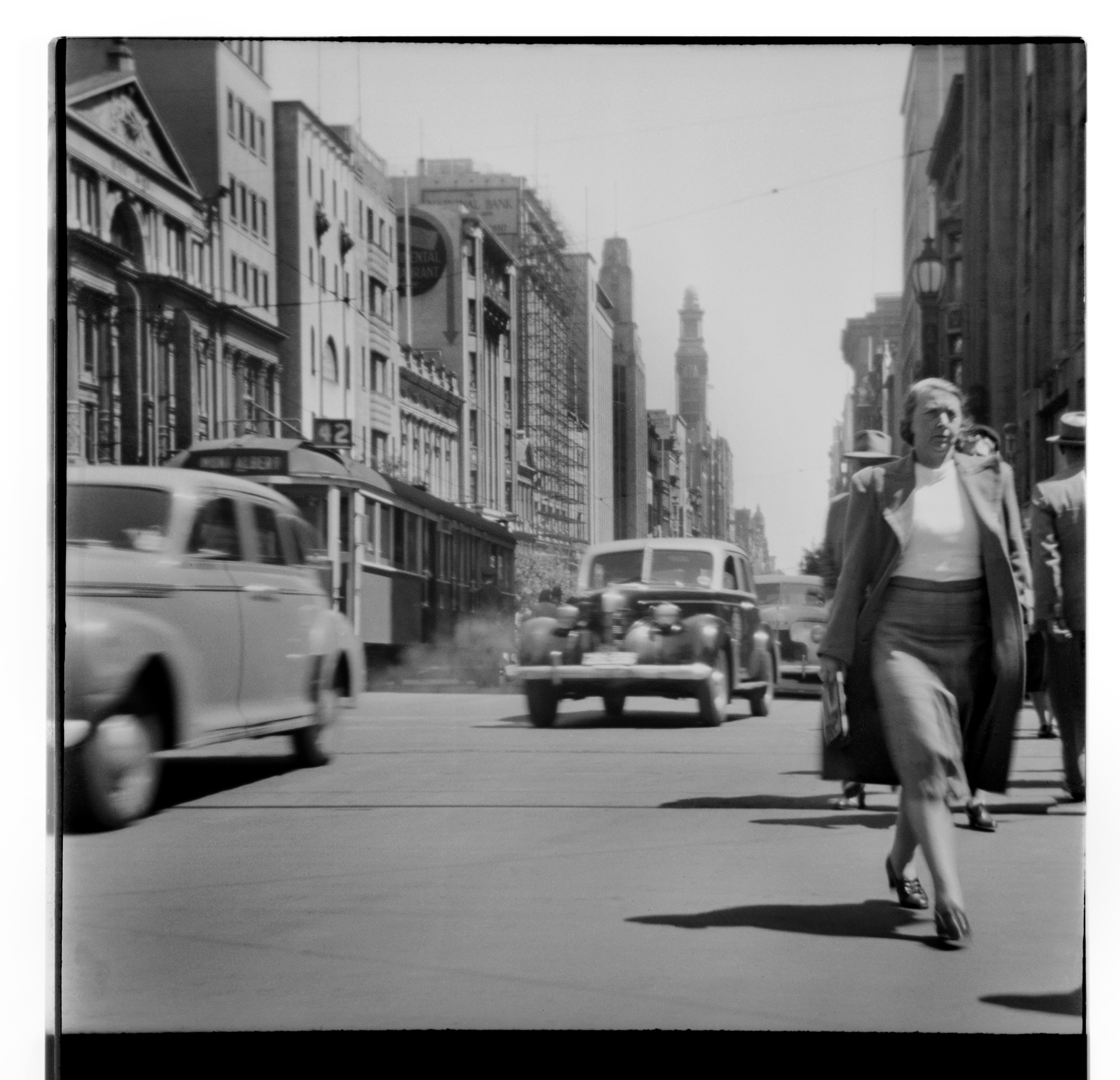
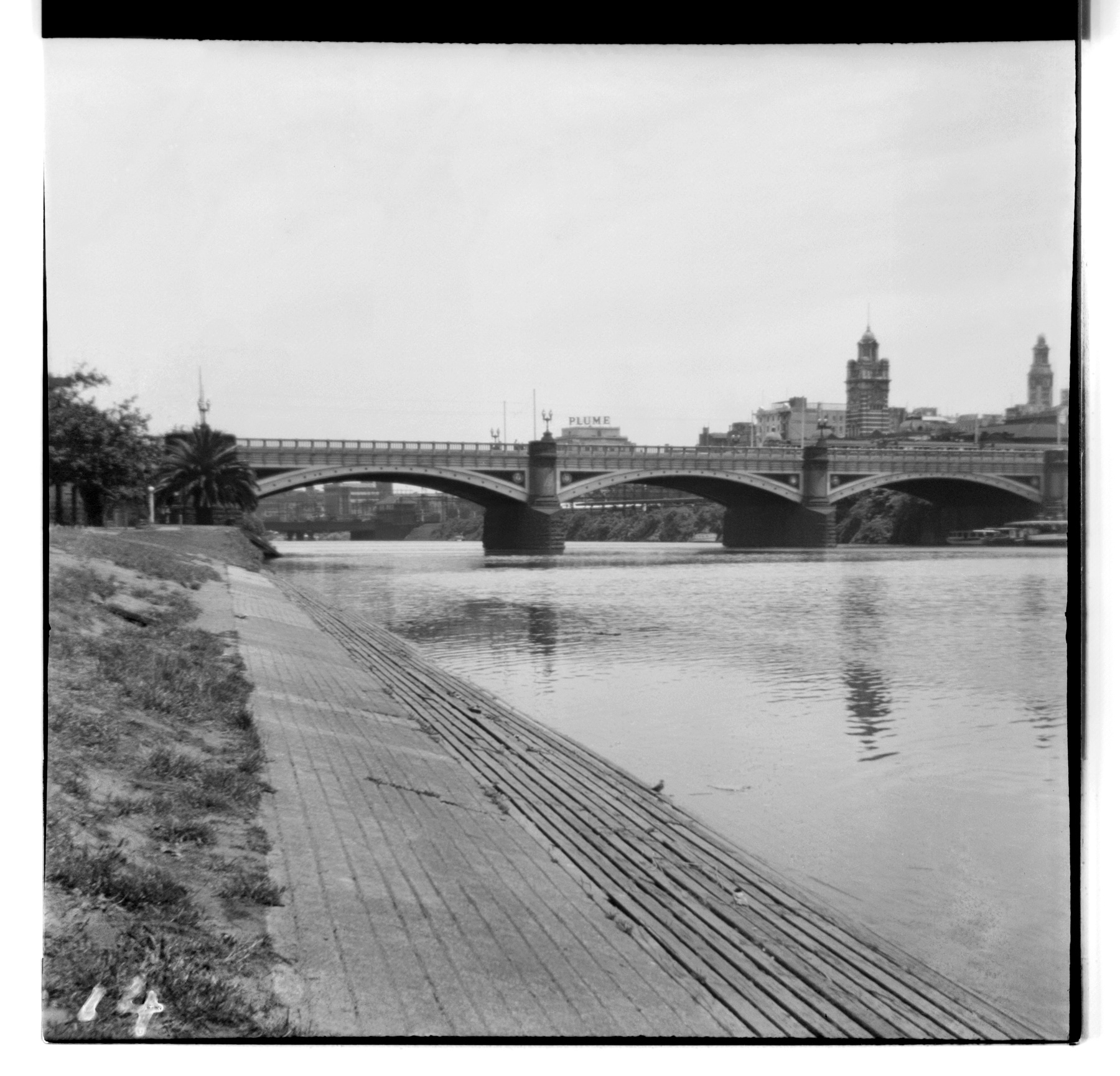
Text from the An Edwardian Summer website


Arthur Wigram Allen (Australian, 1894-1967) ''Moombaha'. 5.45 pm on the wharf, Jacob having just caught a large conger eel, Little Turriell Bay at Port Hacking' December 7, 1904


Arthur Wigram Allen (Australian, 1894-1967)
‘Moombaha’. 5.45 pm on the wharf, Jacob having just caught a large conger eel, Little Turriell Bay at Port Hacking
December 7, 1904
PX*D 575 negative 921
Mitchell Library, State Library of New South Wales


Moombara was located on Little Turriell Bay at Port Hacking. In 1901-02 nearly a third of a million tonnes of sand had been removed from the Simpsons Bay area of the estuary to create access to a fish hatchery in Cabbage Tree Basin. This helped to make the area more navigable for boating and better for fishing, both pastimes that the Allens and their friends enjoyed. With increasing numbers of residential subdivisions, the area’s waterways became popular for recreational use.

Text from the An Edwardian Summer website


Arthur Wigram Allen (Australian, 1894-1967) 'Joyce preparing to dive 15 January 1905' 1905


Arthur Wigram Allen (Australian, 1894-1967)
Joyce preparing to dive 15 January 1905
1905
Mitchell Library, State Library of New South Wales


Out and about

Edwardian Sydney offered entertainment for every taste. Apart from the large-scale parades, military displays and massed bands that accompanied public celebrations, annual events such as the Royal Easter Show and the Public Schools’ Amateur Athletics Association carnival drew crowds from all walks of life. Expanding tram and rail networks carried passengers to venues such as the Zoo (then at Moore Park), Sydney Stadium at Rushcutters Bay and the Glaciarium Skating Rink, which operated at Ultimo from 1907.

Among the more popular leisure activities was horse racing, with racecourses as far afield as Randwick, Canterbury, Moorefield and Warwick Farm. The annual amateur picnic race held at Bong Bong, near Moss Vale, was as popular with Sydneysiders as with locals.

The growth in international sporting competition also provided spectacles for large crowds. Due to Australia’s success in rowing, the world championship sculling contest was regularly held on the Parramatta River, while in 1909 the Davis Cup tennis tournament came to Rose Bay. Cricket, cycling, athletics and football were also popular, with the Sydney Cricket Ground a versatile venue.

Text from the An Edwardian Summer website


Arthur Wigram Allen (Australian, 1894-1967) 'Ladies double championship rowing race held on the Parramatta River between Abbotsford and Mortlake' Saturday 4 August 1906


Arthur Wigram Allen (Australian, 1894-1967)
Ladies double championship rowing race held on the Parramatta River between Abbotsford and Mortlake
Saturday 4 August 1906
PX*D 579 negative 1817
Mitchell Library, State Library of New South Wales


On Saturday 4 August 1906, eager onlookers crowded the banks of the Parramatta River and hundreds of launches, boats and steamers plied the water in anticipation of the veteran scullers’ handicap and the ladies’ double sculling championship, contested by a field of ten crews. One week earlier, Stanbury and Towns had competed for stakes of £500 each plus a lucrative share of the steamer takings, but on this day the ladies rowed for a more modest £20. On the 1.5-mile (2.4-km) course between Abbotsford and Mortlake, the Newcastle team of Mrs Hyde and Mrs Woodbridge narrowly beat Misses G and K Lewis of North Sydney for first place.


Arthur Wigram Allen (Australian, 1894-1967) 'Joyce and Denis at the ostrich farm' 15 November 1903


Arthur Wigram Allen (Australian, 1894-1967)
Joyce and Denis at the ostrich farm
15 November 1903
PX*D 573 negative 580
Mitchell Library, State Library of New South Wales


Children hold baby Emus at Ostrich Farm at South Head, 15 November 1903. Joseph Barracluff’s Ostrich Farm at South Head was established in 1889, when ostrich feathers were a popular women’s fashion accessory for boas, hats and fans. Arriving in Australia from Lincolnshire in 1884, Barracluff originally established a small business selling feathers from a shop on Elizabeth Street, before setting up the farm with birds reportedly imported from South Africa and Morocco. A trip to Barracluff’s farm soon became a popular excursion, and patrons could select feathers to be cut directly from a flock of 100 birds. In 1901, as a memento of her visit, the women of Sydney presented the Duchess of Cornwall and York with a gold mirror and fan embellished with tortoiseshell and Barracluff’s feathers, grown and curled on site.


Arthur Wigram Allen (Australian, 1894-1967) 'The 'Electra' … T. H. Kelly, Denis, Miss Kelly, Joyce, W. Kelly. The children's first experience of yachting Arthur Allen. The children's first experience of yachting' 14 April 1901


Arthur Wigram Allen  (Australian, 1894-1967)
The ‘Electra’ … T. H. Kelly, Denis, Miss Kelly, Joyce, W. Kelly. The children’s first experience of yachting Arthur Allen. The children’s first experience of yachting
14 April 1901
PX*D 571 negative 95
Mitchell Library, State Library of New South Wales


Yachting built up a strong following among the wealthy during the Edwardian years, with boats from the Royal Sydney Yacht Squadron regularly competing in organised races on the harbour. Joining Arthur Allen and his two elder children, Joyce and Denis, in this photo are members of the Kelly family: Thomas, William and their sister. Thomas Kelly was managing director of the family firm, the Sydney Smelting Company, and chairman of the Australian Alum Company; his brother William was a politician. Both brothers were considered dashing young men about town. The Kellys were keen yachtsmen and closely involved with Royal Sydney Yacht Squadron, founded in 1863.


A day on the harbour

Sydney’s waterways were the focus of both industry and pleasure in the Edwardian era. From its colonial foundations Sydney Cove had developed as the hub of a trading port and working harbour with a strong shipbuilding industry and other maritime trades.

During the Edwardian years, full-rigged ships gradually disappeared from Sydney Harbour, and after the bubonic plague arrived in 1900, large areas of residential and commercial buildings around Darling Harbour, Millers Point and The Rocks were resumed by the government and rebuilt.

By the early 1900s Circular Quay was dominated by ferry wharves and served as an interchange for all the traffic – pedestrian and vehicular – between Sydney and the north shore. This was the heyday of the harbour ferry, with commuter craft dominating the waters during peak hour. On weekends, the ‘great picnic trade’ ferried Sydney’s multitudes to the harbour’s pleasure destinations, many of which were owned and operated by the ferry companies.

Other Sydneysiders preferred to spend a day on the water, enjoying a leisurely steamer excursion, messing about in a small boat or sailing a yacht. Sporting events provided a further form of entertainment, with annual yachting and rowing regattas held on the harbour.


Arthur Wigram Allen (Australian, 1894-1967) 'Another who is not quite so sure' Nd


Arthur Wigram Allen (Australian, 1894-1967)
Another who is not quite so sure
Nd
Mitchell Library, State Library of New South Wales


Arthur Wigram Allen (Australian, 1894-1967) 'The 'Euryalus' in dock' 17 August 1905


Arthur Wigram Allen (Australian, 1894-1967)
The ‘Euryalus’ in dock
17 August 1905
PX*D 577 negatives 1279
Mitchell Library, State Library of New South Wales


HMS Euryalus was the flagship of the Australian station of the Royal Navy between 1904 and 1905. The 144-metre armoured cruiser was built in England in 1901, and Arthur Allen photographed it in August 1905, while it was being overhauled in the Sutherland Dock at Cockatoo Island.[1] Soon afterwards the Euryalus was replaced by HMS Powerful, and in 1920 it was broken up in Germany. On its completion in 1890, the Sutherland Dock was the world’s largest dry dock. The island’s smaller Fitzroy Dock had been built by convicts between 1839 and 1847. Cockatoo Island became the Commonwealth Naval Dockyard in 1913 and shipbuilding continued there until the dockyard closed in 1991.


Museum of Sydney
cnr Bridge & Phillip Streets, Sydney

Opening hours:
Open daily 10am – 5pm

Sydney Living Museums website

An Edwardian Summer website

LIKE ART BLART ON FACEBOOK

Back to top

Opening: Rennie Ellis ‘No standing only dancing’ at The Ian Potter Centre: NGV Australia

Exhibition dates: 31st October, 2008 – 22nd February, 2009

Opening: 30th October, 2008


Rennie Ellis (Australian, 1940-2003) 'Girls' Night Out, Prahran' 1980 from the exhibition Rennie Ellis 'No standing only dancing' at The Ian Potter Centre: NGV Australia, Oct 2008 - Feb 2009


Rennie Ellis (Australian, 1940-2003)
Girls’ Night Out, Prahran
1980
Silver gelatin, selenium toned fibre based print


A very social and lively crowd gathered at The Ian Potter Centre: NGV Australia at Federation Square on the evening of 30th October to celebrate the life and work of the Australian social photographer Rennie Ellis.

After opening comments by the NGV Director Dr Gerard Vaughan there was a funny and erudite speech by Phillip Adams AO who had flown down from Sydney to open the exhibition. The crowd enjoyed the anecdotes about his relationship with Rennie and said he thought that dying was a good career move on Rennie’s behalf and that he would have loved the fact that he had a retrospective at the NGV. Adams observed that Ellis used to be everywhere, at every party and opening, using his astute eye to record and never to judge. Applause all round for a life well lived.

On entering the exhibition space viewers were treated to a simple but effective installation of his work, with overtones of the 1970’s-1980s interior decor with yellow and white circle graphics and hanging fabric chandelier. The curatorial staff at the NGV (notably Susan van Wyk) have chosen over 200 works from an archive of over half a million images for the exhibition in a process that has taken over two and a half years.

As an immigrant arriving in Australia in 1986 I remember 397 Club that used to be at 397 Swanston Street. After every other place had closed this club attracted people from every walk of life: pimps, prostitutes, drag queens, faggots, lesbians, straights and druggies. Rennie was probably there recording the scene. We were there just for a good time. It was fun and this is what Ellis’ photography is. Not burdened by overarching conceptual ideas Ellis recorded what he saw insightfully, balancing social commentary and spatial organisation in the construction of his images. The image Girls’ Night Out, Prahran 1980 (above) is a pearler (with the look on the woman’s face) and neatly encapsulates the magic of his image making.

Dr Marcus Bunyan


Opening of the exhibition 'No standing only dancing' by Rennie Ellis at The Ian Potter Centre: NGV Australia October 30th 2008

Opening of the exhibition 'No standing only dancing' by Rennie Ellis at The Ian Potter Centre: NGV Australia October 30th 2008

Opening of the exhibition 'No standing only dancing' by Rennie Ellis at The Ian Potter Centre: NGV Australia October 30th 2008

Opening of the exhibition 'No standing only dancing' by Rennie Ellis at The Ian Potter Centre: NGV Australia October 30th 2008

Opening of the exhibition 'No standing only dancing' by Rennie Ellis at The Ian Potter Centre: NGV Australia October 30th 2008

Opening of the exhibition 'No standing only dancing' by Rennie Ellis at The Ian Potter Centre: NGV Australia October 30th 2008

Opening of the exhibition 'No standing only dancing' by Rennie Ellis at The Ian Potter Centre: NGV Australia October 30th 2008

Opening of the exhibition 'No standing only dancing' by Rennie Ellis at The Ian Potter Centre: NGV Australia October 30th 2008


Opening of the exhibition No standing only dancing by Rennie Ellis at The Ian Potter Centre: NGV Australia October 30th 2008.
Photographs © Marcus Bunyan


The Ian Potter Centre: NGV Australia
Federation Square
Corner of Russell and 
Flinders Streets, Melbourne

Opening hours:
Daily 10am – 5pm

National Gallery of Victoria website

Rennie Ellis Photographic Archive

LIKE ART BLART ON FACEBOOK

Back to top