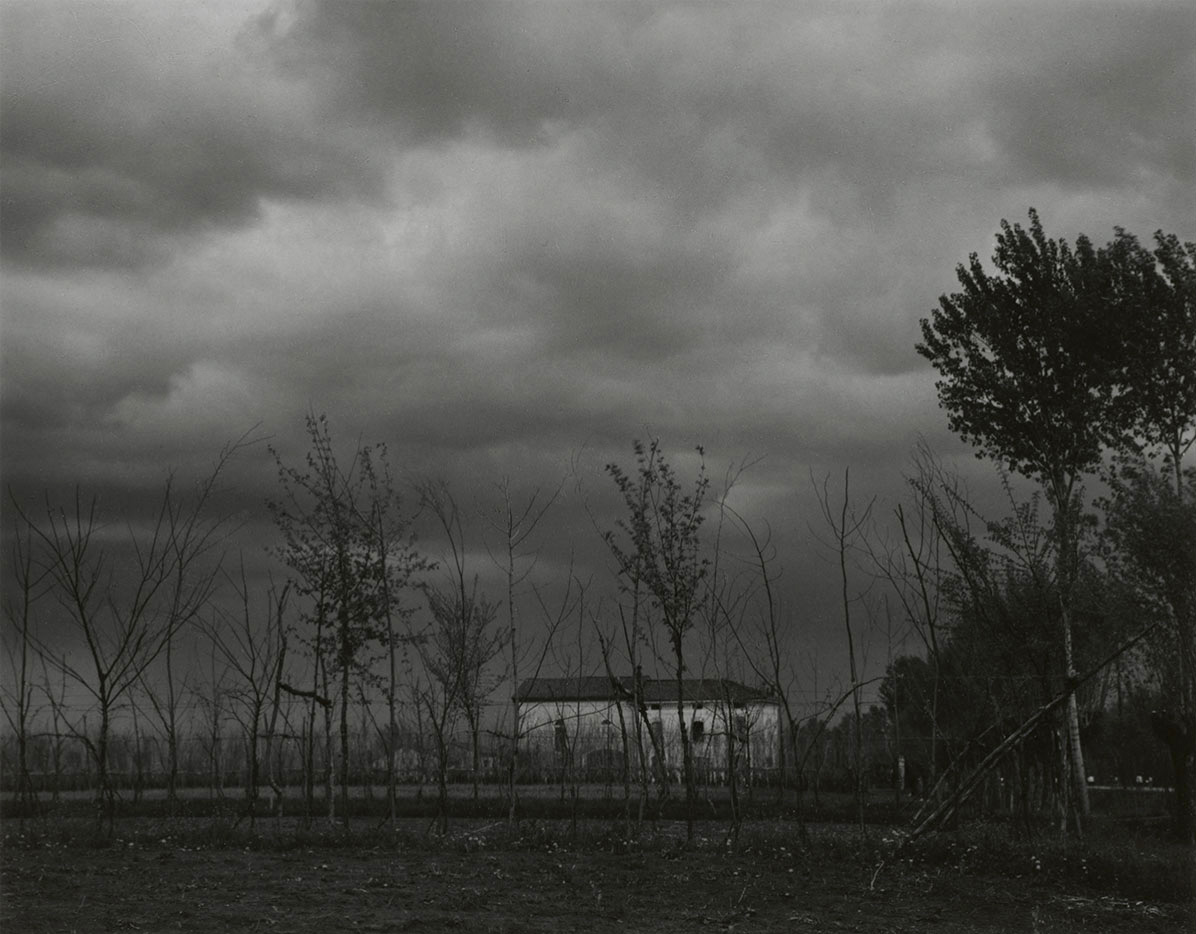
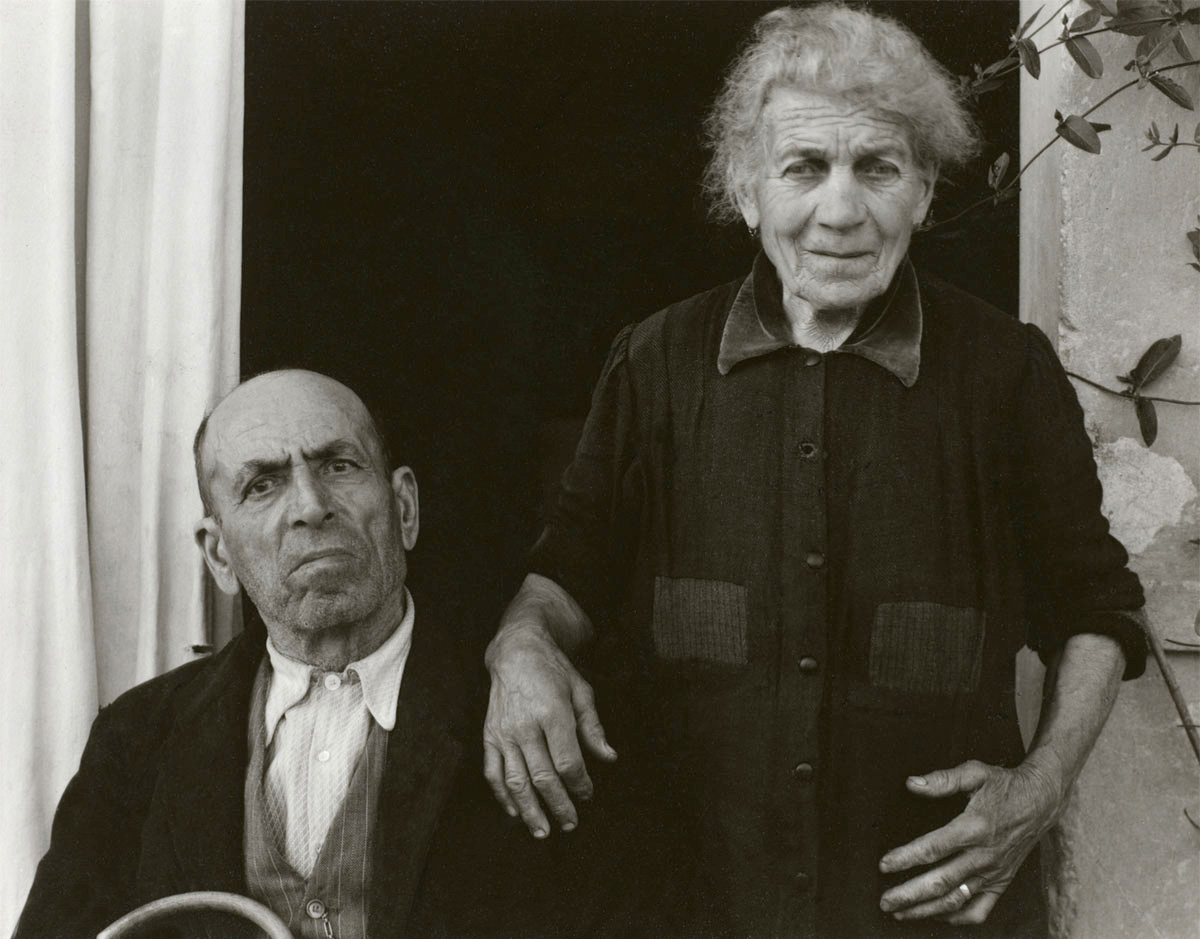
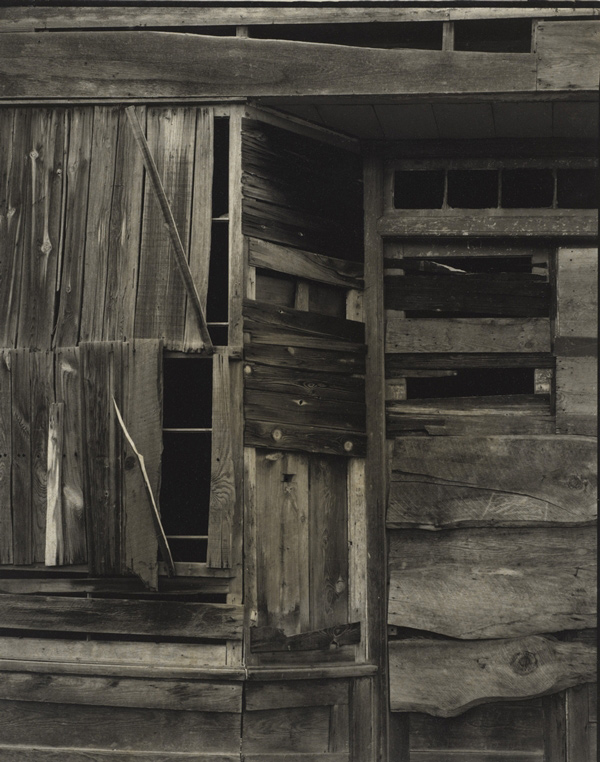
Exhibition: ‘Paul Strand: Master of Modern Photography’ at the Philadelphia Museum of Art

Exhibition dates: 21st October 2014 – 4th January 2015


Paul Strand (American, 1890-1976) 'White Fence, Port Kent, New York' 1916 (negative); 1945 (print)


Paul Strand (American, 1890-1976)
White Fence, Port Kent, New York
1916 (negative); 1945 (print)
Gelatin silver print
9 5/8 × 12 13/16 inches (24.5 × 32.5cm)
Philadelphia Museum of Art
The Paul Strand Retrospective Collection, 1915-1975
Gift of the estate of Paul Strand, 1980
© Paul Strand Archive/Aperture Foundation


Seeing clearly

What can you say about one of the greatest photographers in the history of the medium, a man with a social conscience, a man who’s fame “rests on his extraordinary artistic talent as well as his belief in the transformative power of the medium in which he chose to work.”

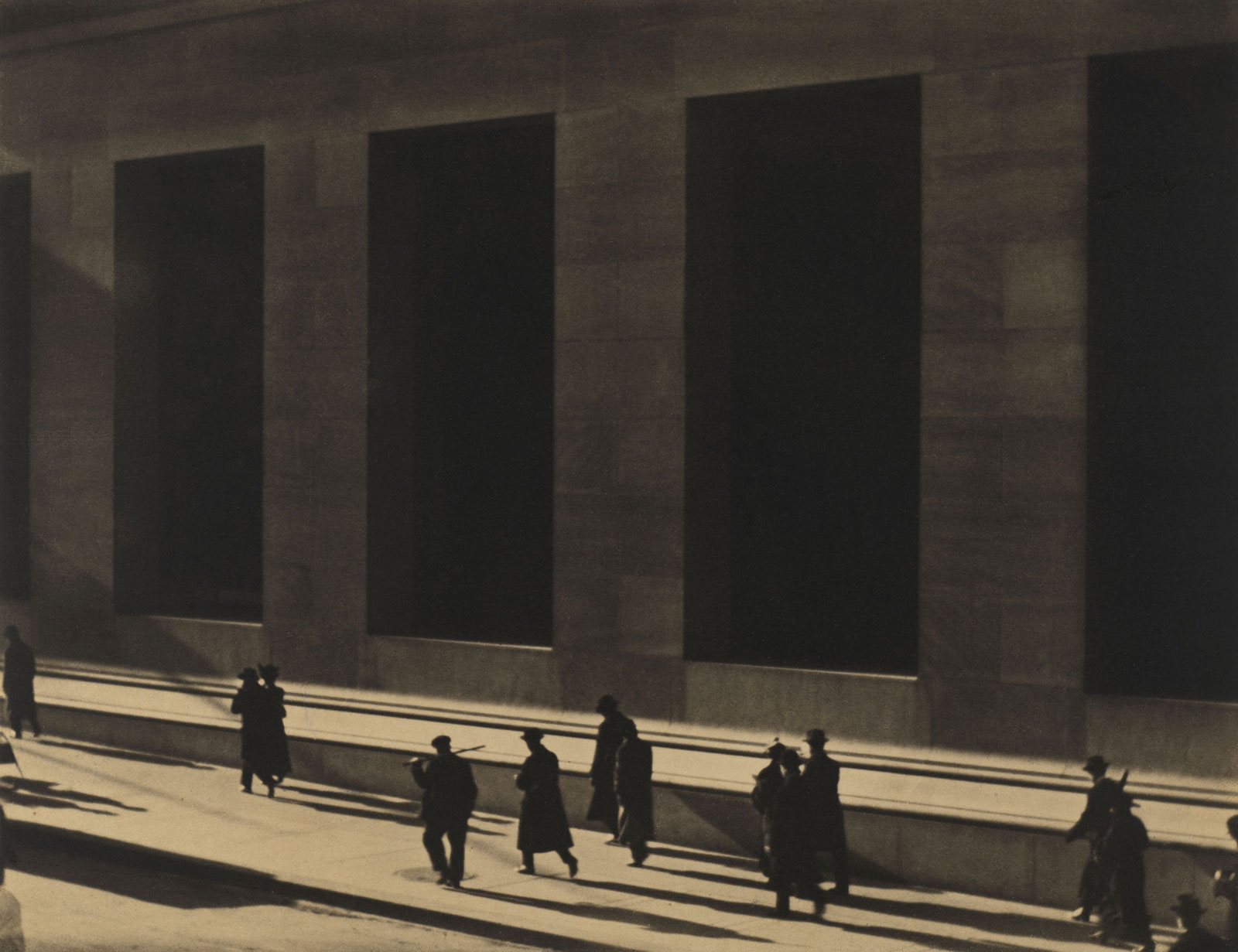
From a personal perspective, in my first year at university learning the history of the medium in the early 1990s, the image White Fence, Port Kent, New York (1916, below) was proposed as the first truly modernist photograph. I remember seeing this image for the first time, placing myself in that time (the First World War) and trying to understand what a shock that photograph must have been to the world of Pictorialism. Even now, the strength of that white picket fence is electrifying in its frontality and geometric solidity. In this image, “Strand deliberately destroyed perspective to build a powerful composition from tonal planes and rhythmic pattern.”1 A year earlier Strand had produced what is one of my favourite photographs of all time, a modernist image – Wall Street, New York (1915, below), with the dark maw of industry ready to swallow the rushing workers framed in streaming sunlight. We cannot underestimate the impact that Strand’s revolutionary photographs had on the history of photography.

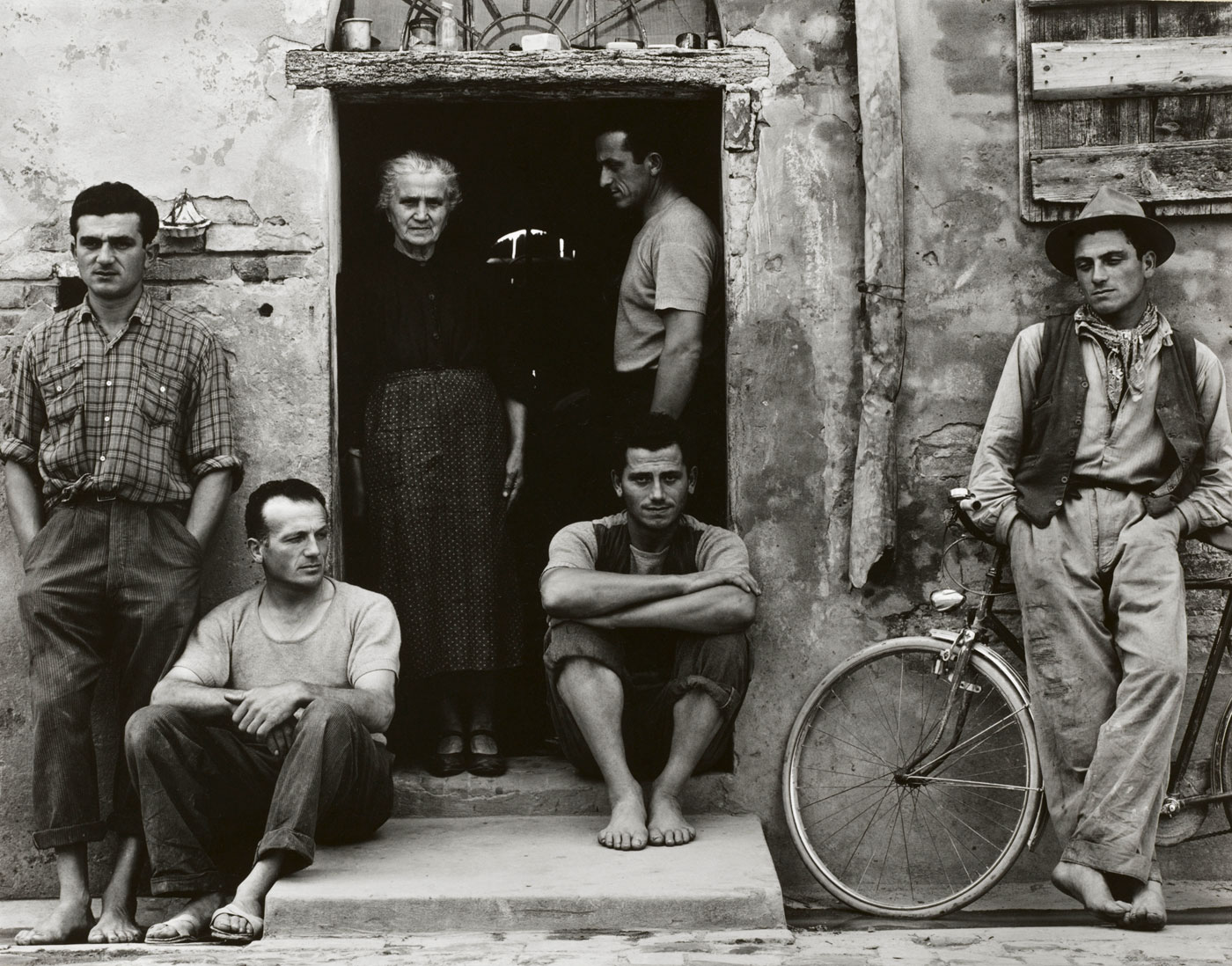
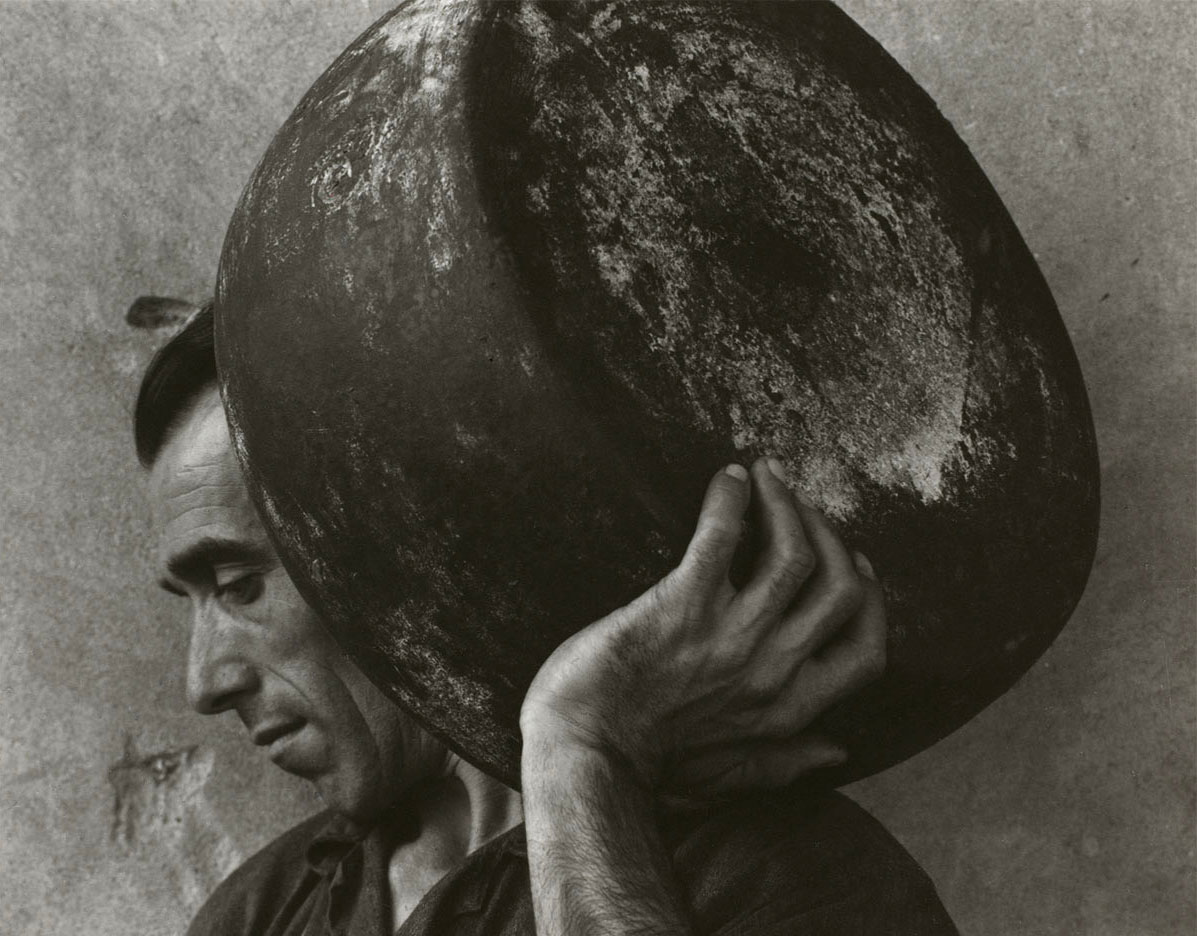
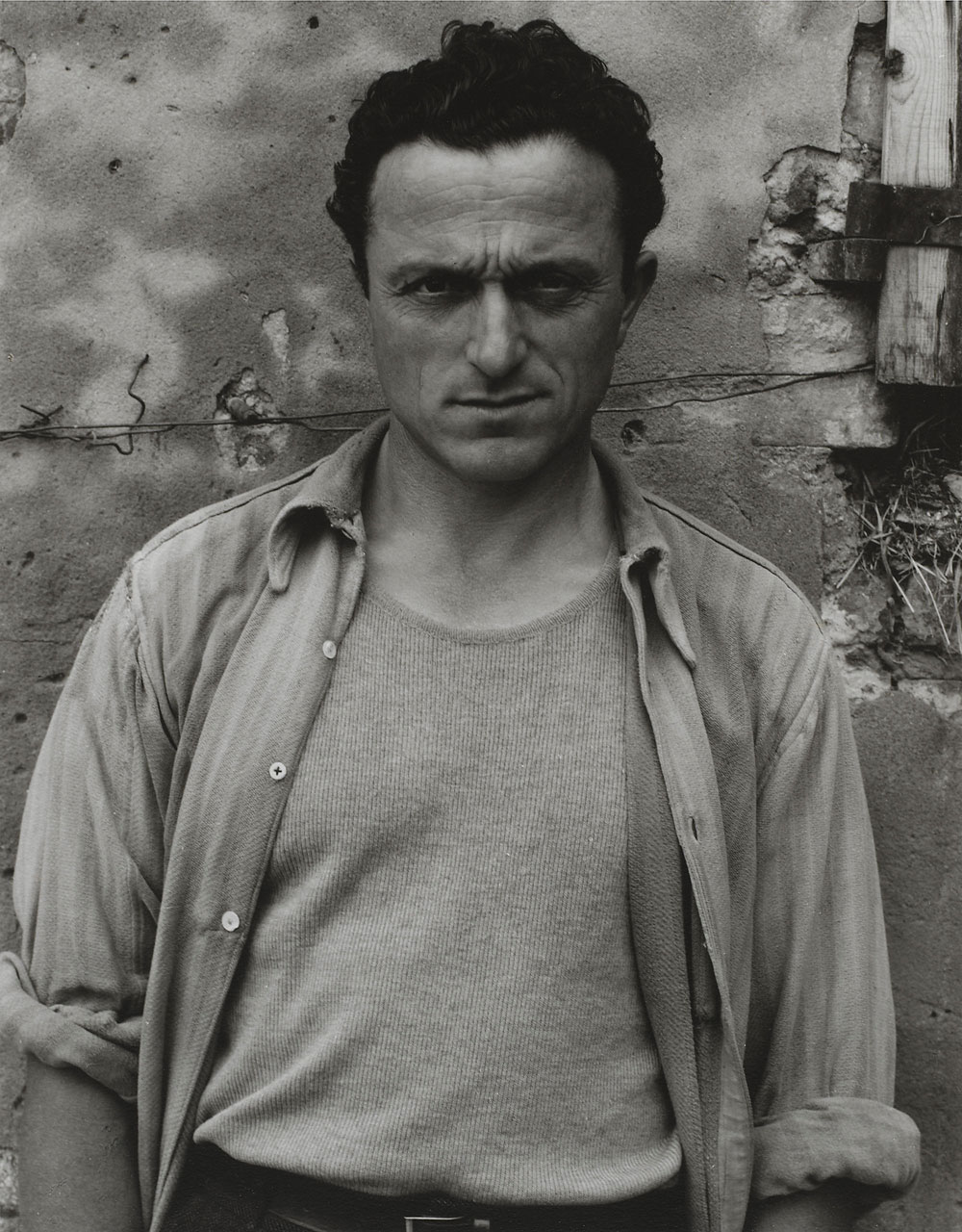
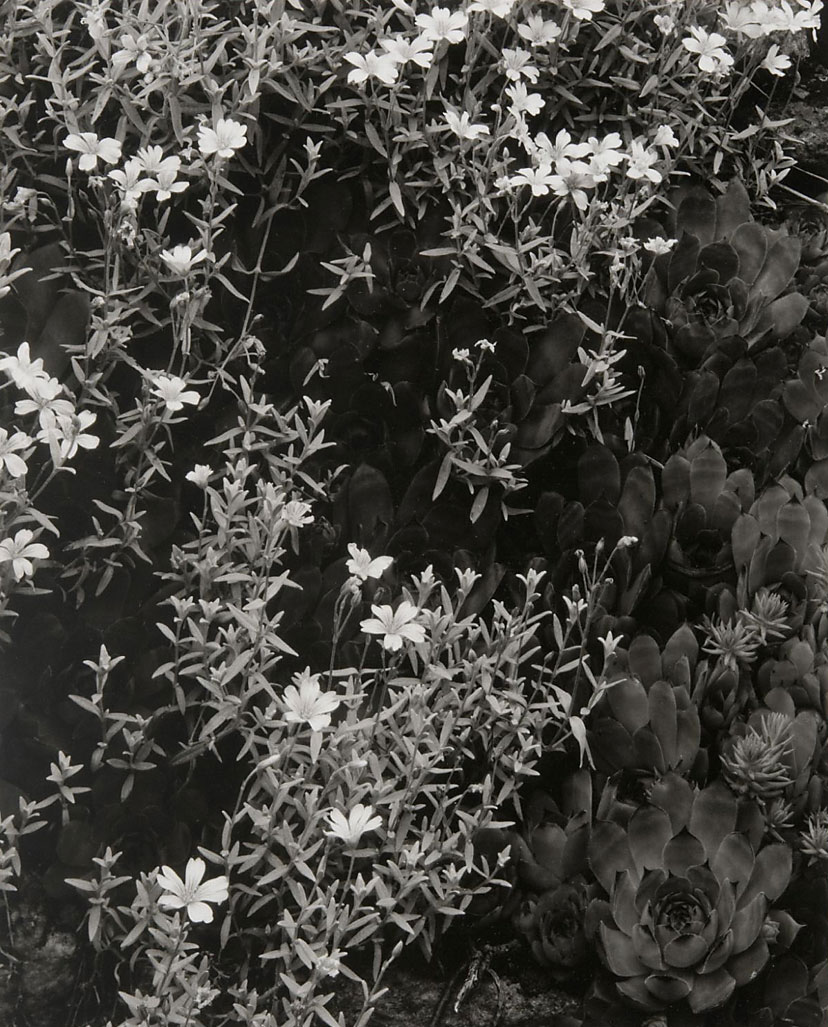
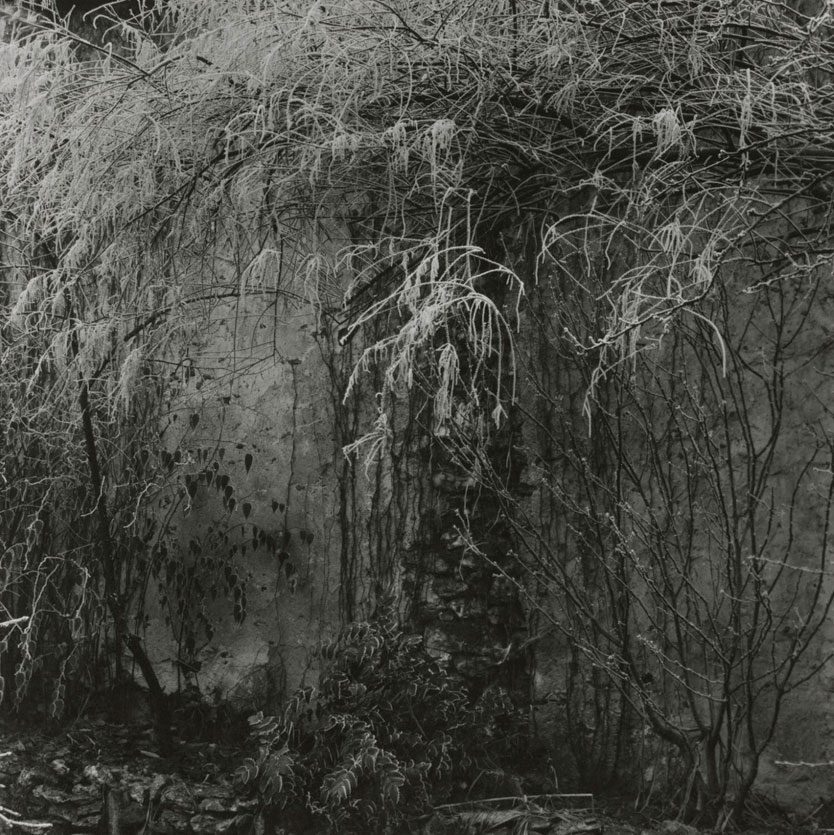
You only have to look at the images. Look at the tonality and intense stare in Young Boy, Gondeville, Charente, France (1951, below), so haunting and beautiful. Observe the ensemble of figures so tightly choreographed in The Family, Luzzara (The Lusettis) (1953, below) or the darkness and weight of the cheese in Parmesan, Luzzara (1953, below) – an image I had never seen before – as it presses into the upturned hand. Magnificent. What seems so difficult to others and what is difficult in reality, is expressed simply and eloquently by Strand, whether it be portraits of tribal elders, market squares or oil refineries. That is the mark of a master craftsman, when the difficult appears simple and insightful at one and the same time. I vividly recall seeing a folio from The garden series (1957-67, printed in the year of his death 1976) – still lifes of his garden in Orgeval, outside Paris – at the National Gallery of Victoria and being awestruck by their tonality, their beauty, quietness and lyricism. No ego here… just a reflection of life on earth and “the beauty of myriad textures.” Several of these photographs are at the bottom of the posting.

An aphorism that I was taught when first starting out as a photographer was that Strand said it took ten years to become a photographer. Ten years of study to understand your equipment, your medium and what you are trying to say yourself as an artist – and to get rid of ego in the work, to let the work just speak for itself. Whether he actually said this I am not sure, but from my experience I would say that it is about right. Strand starting studying photography at the Ethical Culture School in 1907 under the tutelage of documentary photographer Lewis Hine and his first important images were produced in 1915. The timeline is there.

For Strand, “the camera was a machine – a modern machine,” says curator of the exhibition Peter Barberie. “He was preoccupied with the question of how modern art – whether it’s photography or not – could contain all of the humanity that you see in the western artistic traditions.”

A big ask but a great artist to produce such work.

Dr Marcus Bunyan


Many thankx to the Philadelphia Museum of Art for allowing me to publish the photographs in the posting. Please click on the photographs for a larger version of the image.


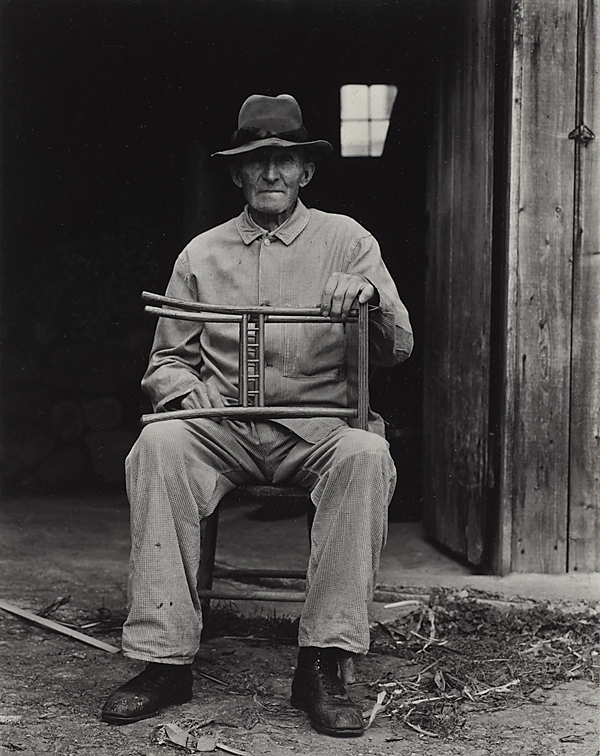
“Who can say what amalgam of memory, dreams, study, pain and discipline brought Paul Strand to photograph Mr. Bennett and to record him so perfectly? The picture is almost as unaccountable as the fact of Mr. Bennett, we are left with our little cosmologies and the certainty that we will never fully know. But we continue to speculate, as with all great art, because the picture is clearer than life and this is consoling.”


Robert Adams, Why People Photograph


“Treating the human condition in the modern urban context, Strand’s photographs are a subversive alternative to the studio portrait of glamour and power. A new kind of portrait akin to a social terrain, they are, as Sanford Schwartz put it, “cityscapes that have faces for subjects.””


Department of Photographs, The Metropolitan Museum of Art


“The portrait of a person is one of the most difficult things to do, because in order to do it it means that you must almost bring the presence of that person photographed to other people in such a way that they don’t have to know that person personally in any way, but they are still confronted with a human being that they won’t forget. The images of that person that they will never forget. That’s a portrait.”


Paul Strand


Paul Strand (American, 1890-1976) 'Wall Street, New York' 1915 (negative); 1915 (print)


Paul Strand (American, 1890-1976)
Wall Street, New York
1915 (negative); 1915 (print)
Platinum print
9 3/4 × 12 11/16 inches (24.8 × 32.2cm)
Philadelphia Museum of Art
The Paul Strand Retrospective Collection, 1915-1975
Gift of the estate of Paul Strand, 1980
© Paul Strand Archive/Aperture Foundation


Paul Strand’s 1915 photograph of Wall Street workers passing in front of the monolithic Morgan Trust Company can be seen as the quintessential representation of the uneasy relationship between early twentieth-century Americans and their new cities. Here the people are seen not as individuals but as abstract silhouettes trailing long shadows down the chasms of commerce. The intuitive empathy that Strand demonstrates for these workers of New York’s financial district would be evident throughout the wide and varied career of this seminal American photographer and filmmaker, who increasingly became involved with the hardships of working people around the world. In this and his other early photographs of New York, Strand helped set a trend toward pure photography of subject and away from the Pictorialist imitation of painting. Wall Street is one of only two known vintage platinum prints of this image and one of the treasures of some five hundred photographs in the Museum’s Paul Strand Retrospective Collection.

Martha Chahroudi, from Philadelphia Museum of Art: Handbook of the Collections (1995), p. 230.


Manhatta (1921) | Paul Strand – Charles Sheeler


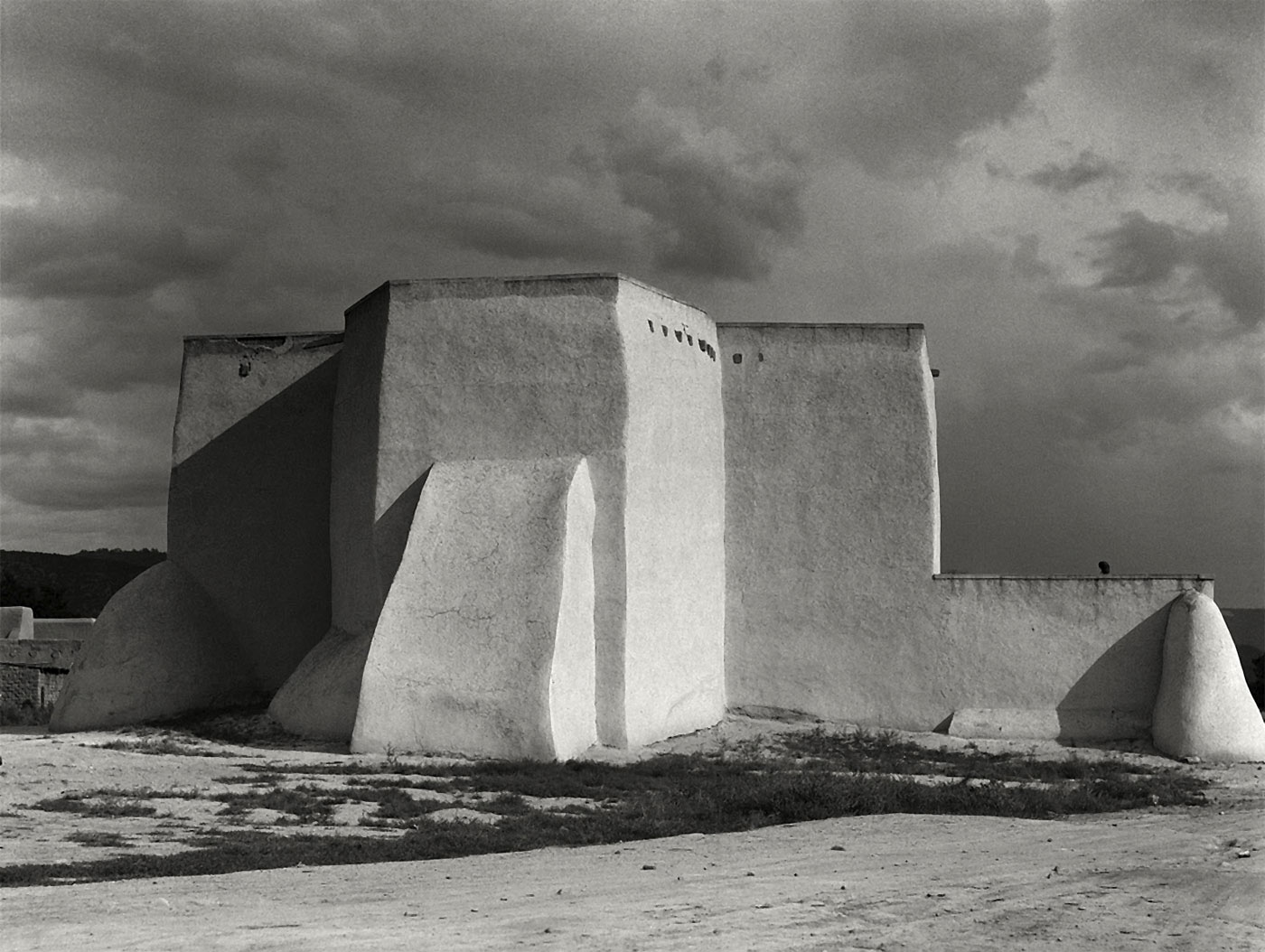
Paul Strand (American, 1890-1976) 'Church, Ranchos de Taos, New Mexico' 1931


Paul Strand (American, 1890-1976)
Church, Ranchos de Taos, New Mexico
1931 (negative); 1931 (print)
Platinum print
5 7/8 x 4 5/8 inches (15 x 11.7cm)
Philadelphia Museum of Art
The Paul Strand Collection, purchased with funds contributed by Barbara B. and Theodore R. Aronson, 2013
© Paul Strand Archive/Aperture Foundation


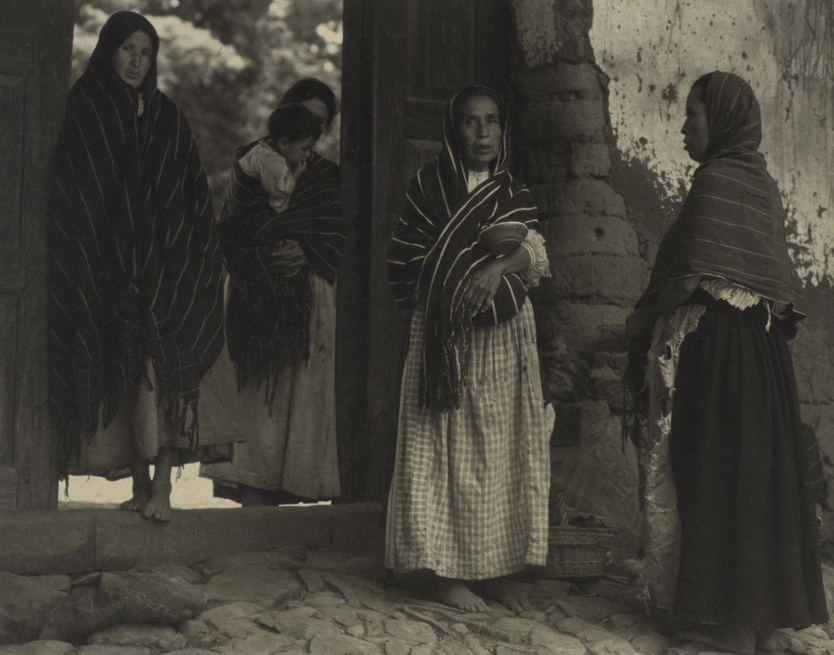
Paul Strand (American, 1890-1976) 'Women of Santa Ana, Lake Pátzcuaro, Mexico' 1933


Paul Strand (American, 1890-1976)
Women of Santa Ana, Lake Pátzcuaro, Mexico
1933
Platinum print
4 11/16 × 5 7/8 inches (11.9 × 14.9cm)
Philadelphia Museum Of Art
The Paul Strand Collection, purchased with Museum funds, 2010
© Paul Strand Archive/Aperture Foundation


Redes / The Wave (1936) Paul Strand


Paul Strand (American, 1890-1976) 'Mr. Bennett, East Jamaica, Vermont' 1944


Paul Strand (American, 1890-1976)
Mr. Bennett, East Jamaica, Vermont
1944
From Portfolio Three. 1944
Gelatin silver print
7 1/4 × 9 3/16 inches (18.4 × 23.3cm)
Philadelphia Museum Of Art
The Paul Strand Collection, purchased with Museum funds, 2010
© Paul Strand Archive/Aperture Foundation


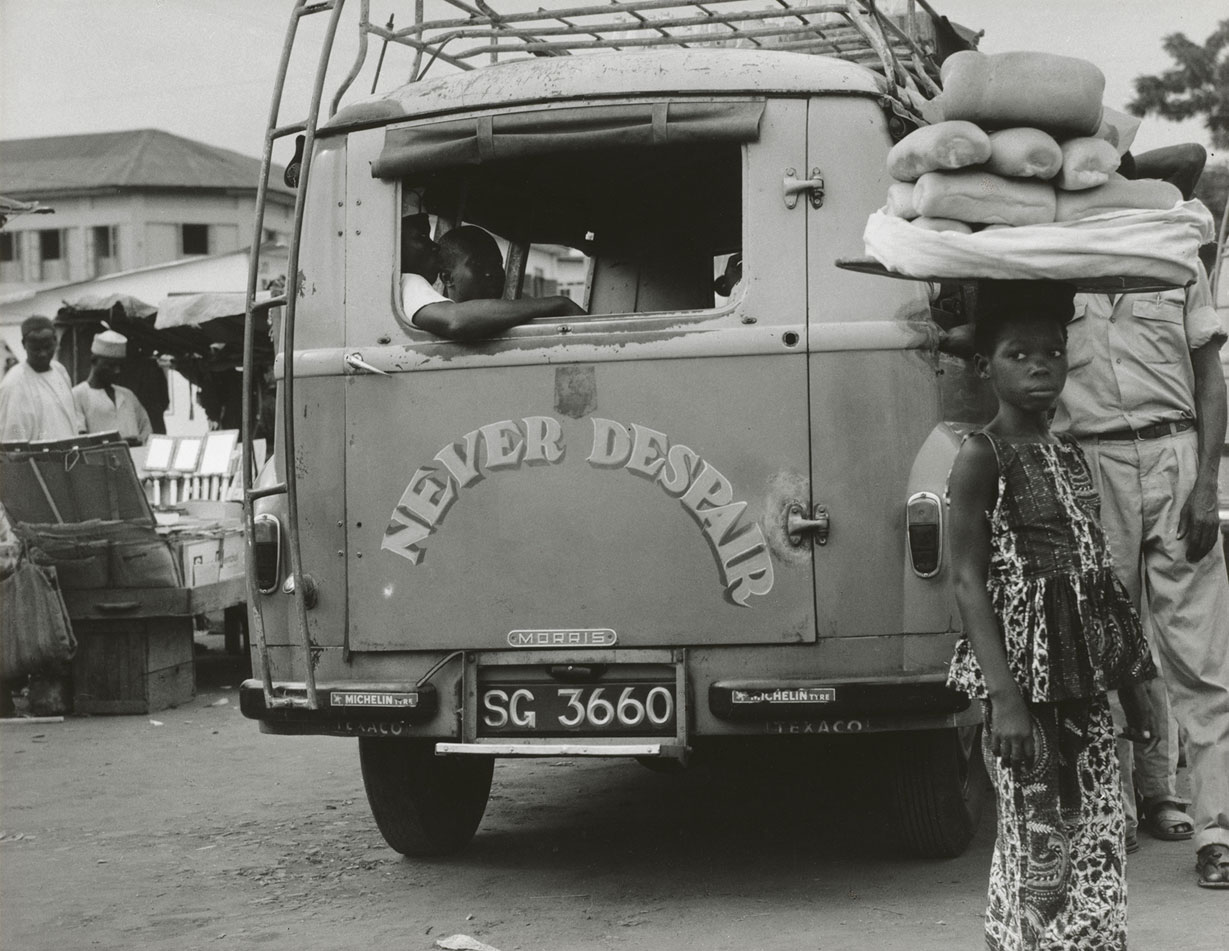
Paul Strand (American, 1890-1976) "Never Despair" 1963-1964


Paul Strand (American, 1890-1976)
“Never Despair”
1963-1964
Gelatin silver print
7 5/8 × 9 5/8 inches (19.4 × 24.4cm)
Philadelphia Museum Of Art
Gift of Lynne and Harold Honickman
© Paul Strand Archive/Aperture Foundation


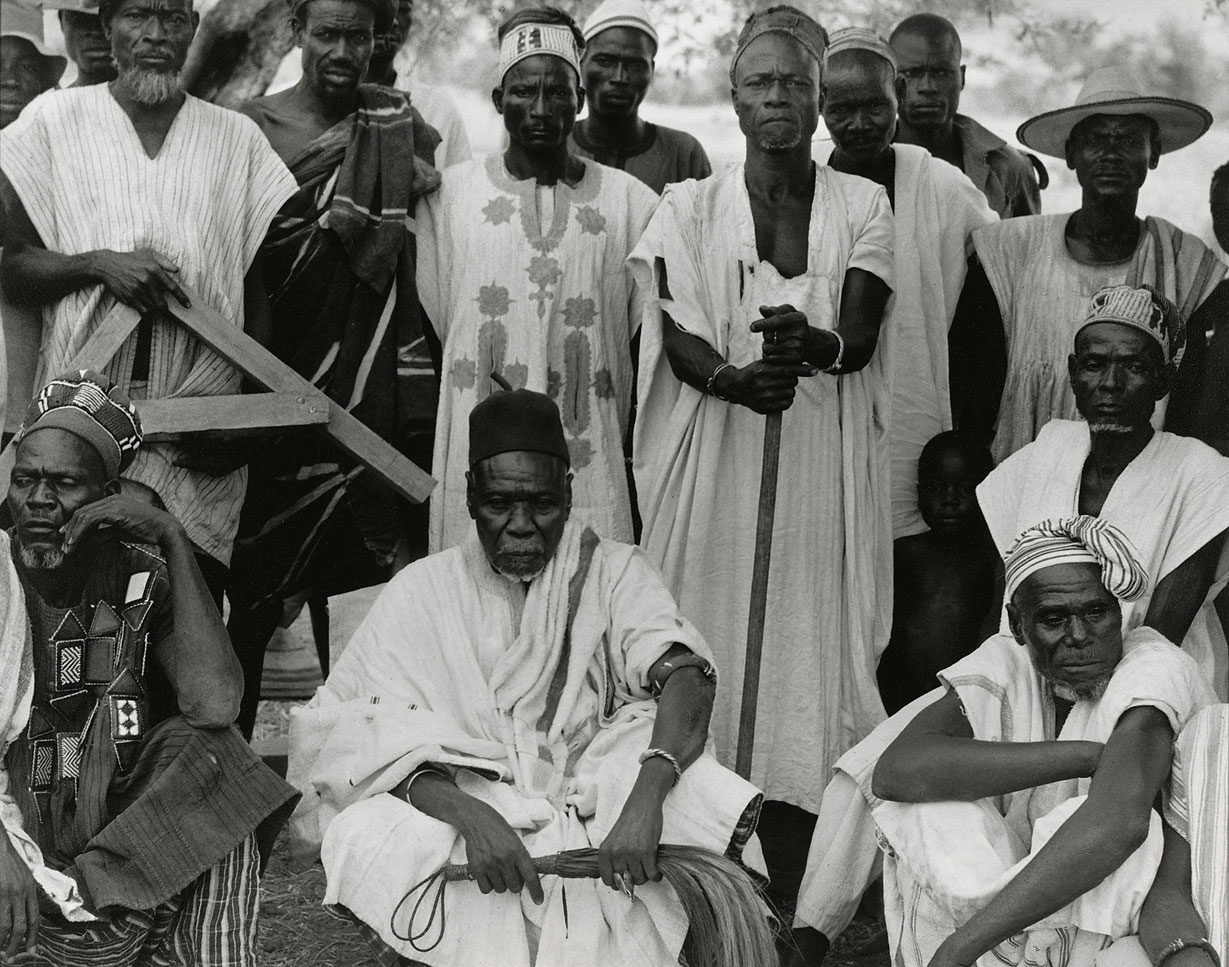
Paul Strand (American, 1890-1976) 'Chief and Elders, Nayagnia, Ghana' 1963-1964


Paul Strand (American, 1890-1976)
Chief and Elders, Nayagnia, Ghana
1963-1964
Philadelphia Museum Of Art
The Paul Strand Retrospective Collection, 1915-1975
Gift of the estate of Paul Strand
© Paul Strand Archive/Aperture Foundation


The Philadelphia Museum of Art is presenting the first major retrospective in nearly fifty years to be devoted to Paul Strand (American, 1890-1976), one of the greatest photographers in the history of the medium. It explores the remarkable evolution of Strand’s work spanning six decades, from the breakthrough moment when he brought his art to the brink of abstraction to his broader vision of the place of photography in the modern world. This exhibition examines every aspect of Strand’s work, from his early efforts to establish photography as a major independent art form and his embrace of filmmaking as a powerful medium capable of broad public impact to his masterful extended portraits of people and places that would often take compelling shape in the form of printed books. Paul Strand: Master of Modern Photography celebrates the recent acquisition of more than 3,000 prints from the Paul Strand Archive, which has made the Philadelphia Museum of Art the world’s largest and most comprehensive repository of Strand’s work.

Timothy Rub, the George D. Widener Director, stated: “Strand’s achievement was remarkable. The distinctive place he holds in the history of modern photography rests on his extraordinary artistic talent as well as his belief in the transformative power of the medium in which he chose to work. From his early experiments with street photography in New York to his sensitive portrayal of daily life in New England, Italy, and Ghana, Strand came to believe that the most enduring function of photography and his work as an artist was to reveal the essential nature of the human experience in a changing world. He was also a master craftsman, a rare and exacting maker of pictures. We are delighted to be able to present in this exhibition a selection of works drawn almost exclusively from the Museum’s collection, and to share these with audiences in the United States and abroad. Paul Strand: Master of Modern Photography will introduce a new generation of visitors to a great modern artist.”

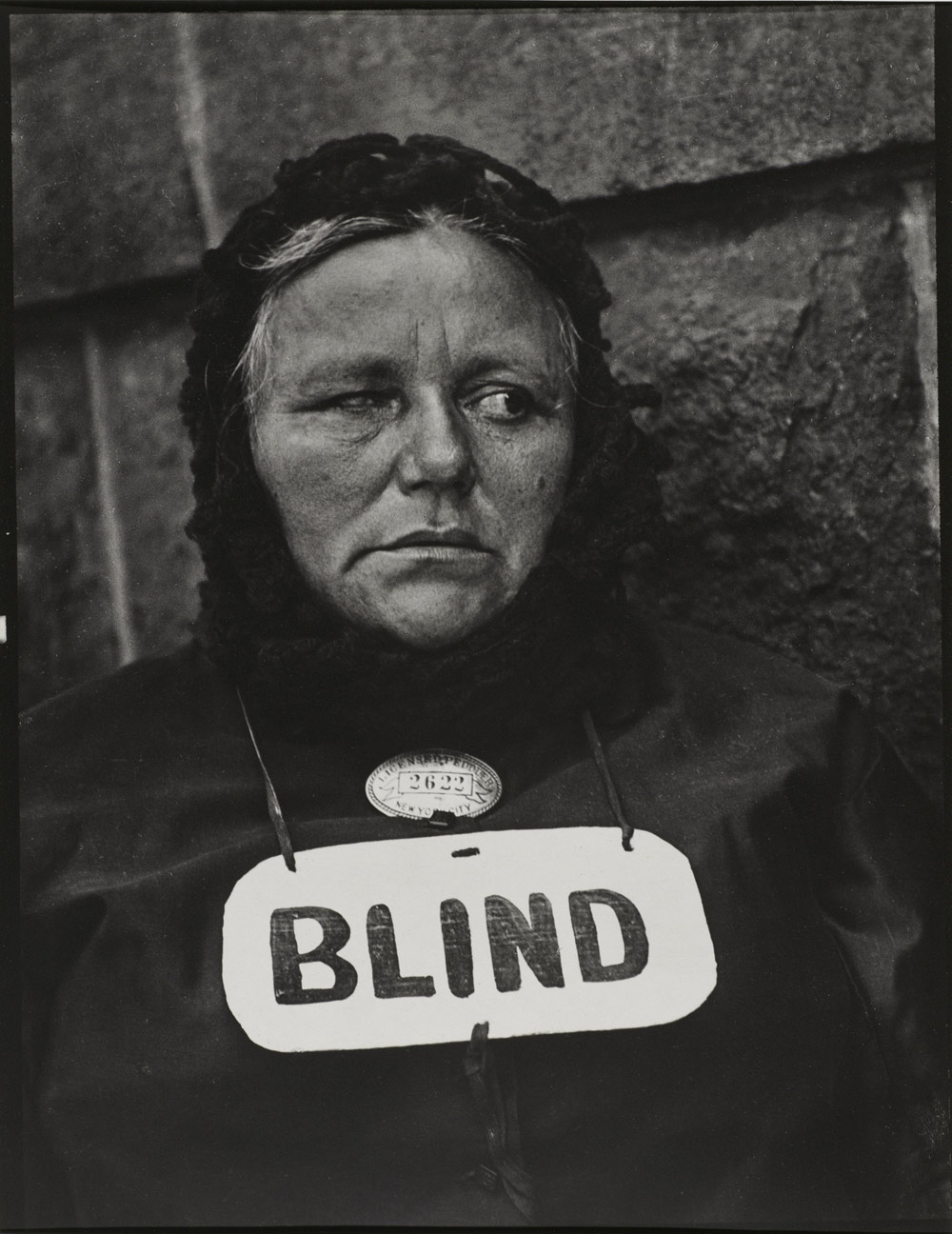
Paul Strand’s career spanned a period of revolutionary change both in the arts and in the wider world. Always motivated by a strong sense of social purpose, he came to believe that depicting the human struggle, both economic and political, was central to his responsibility as an artist. The exhibition begins with his rapid mastery of the prevailing Pictorialist style of the 1910s, reflected in serene landscapes such as The River Neckar, Germany (1911). On view also are his innovative photographs of 1915-1917 in which he explored new subject matter in the urban landscape of New York and innovative aesthetic ideas in works such as Abstraction, Porch Shadows, Twin Lakes, Connecticut (1916). These new directions in Strand’s photography demonstrated his growing interest both in contemporary painting – especially Cubism and the work of the American artists championed by Alfred Stieglitz – and in discovering for photography a unique means of expressing modernity. Strand’s work of this period includes candid, disarming portraits of people observed on the street – the first of their type – such as Blind Woman, New York (1916), and Wall Street, New York (1915), an arrangement of tiny figures passing before the enormous darkened windows of the Morgan Trust Company Building, which illustrates Strand’s fascination with the pace of life and changing scale of the modern city.

During the 1920s – a period often called “the Machine Age” – Strand became transfixed by the camera’s capacity to record mesmerising mechanical detail. At this time his ideas about the nature of portraiture began to expand significantly. These new and varied concerns can be seen in the sensuous beauty of close-up images of his wife, Rebecca Salsbury Strand, to cool, probing studies of his new motion picture camera, such as Akeley Camera with Butterfly Nut, New York (1922-23). His ideas about portraiture also extended to his growing preoccupation with photographic series devoted to places beyond New York, such as the southwest and Maine, where he would make seemingly ordinary subjects appear strikingly new. The exhibition looks at Strand’s widening engagement with his fellow artists of the Stieglitz circle, placing his works alongside a group of paintings by Georgia O’Keeffe, Marsden Hartley, Arthur Dove, and John Marin, as well as photographs by Stieglitz, who played an important role in launching Strand’s career. These juxtapositions reveal the rich interaction between Strand and his friends and peers during this time.

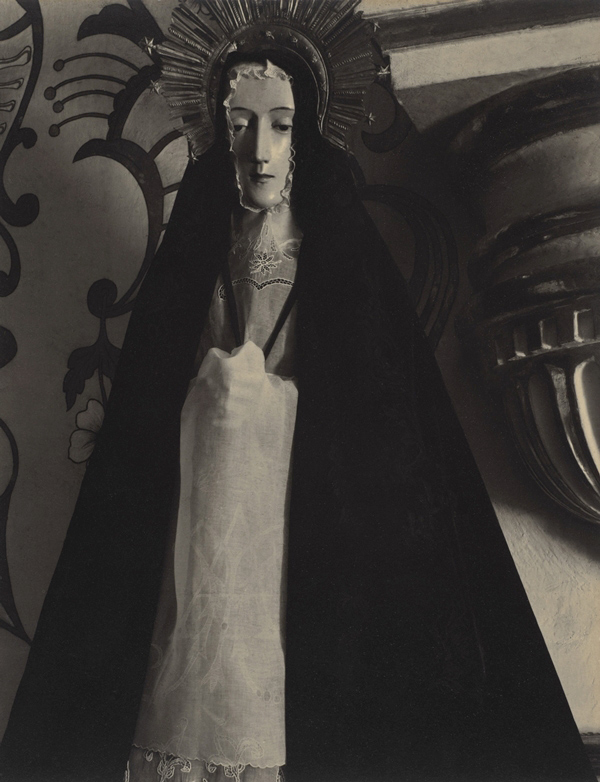
Over the next several decades Strand traveled widely, seeking always to establish a broader role for photography. The exhibition conveys his growing interest in the medium’s unique ability to record the passage of time and the specific qualities of place, as seen in Elizabethtown, New Mexico (1930), one of many photographs he made of abandoned buildings. It shows Strand returning to a core motif – the portraiture of anonymous subjects – during the time when he lived in Mexico, from 1932 to 1934. This period abroad had a profound influence on him, deepening his engagement with the politics of the left. Many of the works he created at this time, whether depicting individuals, groups of people, or even religious icons, show in their exceptional compositions a deep empathy. This can also be seen in his series devoted to Canada’s Gaspé Peninsula from the same decade.

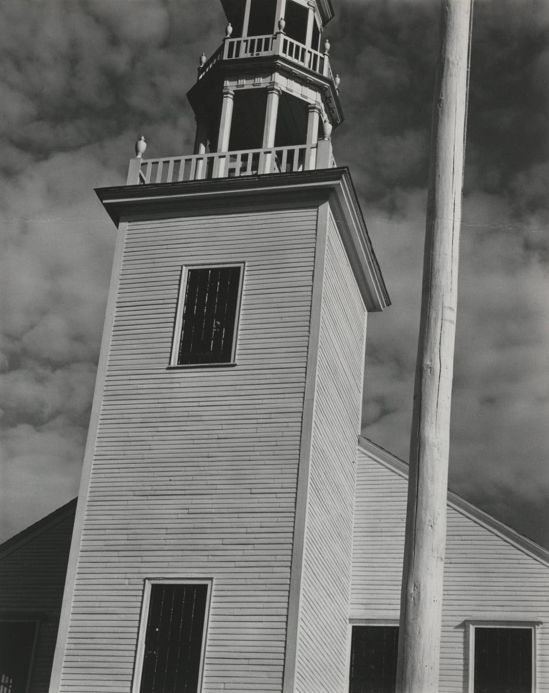
By the 1940s, books would become Strand’s preferred form of presentation for his work, reflecting a synthesis of his aims both as a photographer and filmmaker, and offering him the opportunity to create multifaceted portraits of modern life. In his photographs of New England, Strand drew upon cultural history, conveying a sense of past and present in order to suggest an ongoing struggle for democracy and individual freedom. Images of public buildings, such as Town Hall, New Hampshire (1946), and portraits of people he met, including Mr. Bennett, East Jamaica, Vermont (1943), were reproduced in Time in New England. This book was published in 1950, the year Strand moved to France in response to a growing anti-Communist sentiment in the U.S., and reflected his political consciousness. Strand described New England as “a battleground where intolerance and tolerance faced each other over religious minorities, over trials for witchcraft, over the abolitionists … It was this concept of New England that led me to try to find … images of nature and architecture and faces of people that were either part of or related in feeling to its great tradition.”

The exhibition also highlights his project in Luzzara, Italy (1953), where he focused his attention on the everyday realities of a northern village recovering from the miseries of war and fascism. This series is centred on images of townspeople, as seen in The Family, Luzzara (The Lusettis) (1953), and fulfils his long-held ambition to create a major work of art about a single community. Strand’s photographs of Luzzara were published in Un Paese: Portrait of an Italian Village (1955).

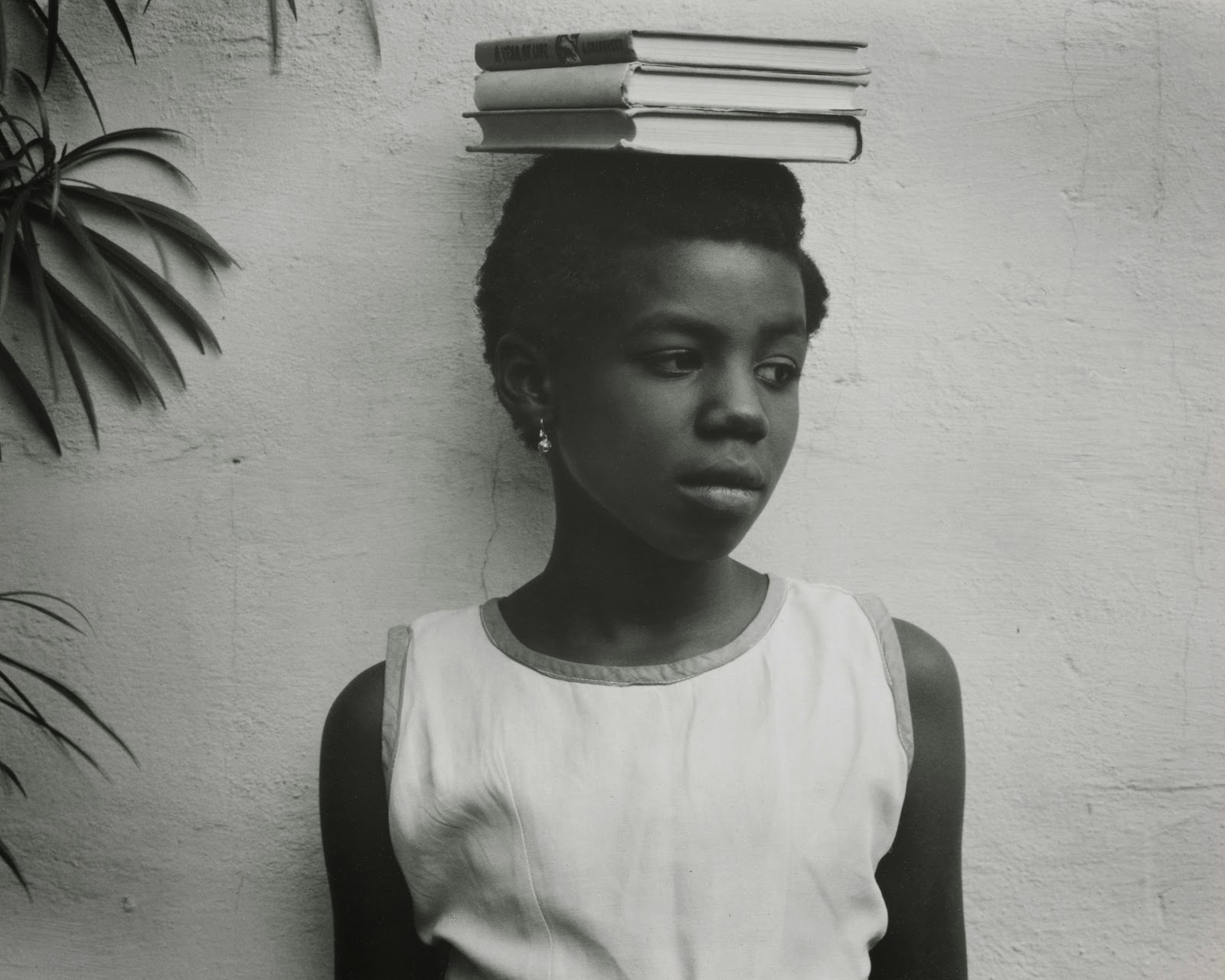
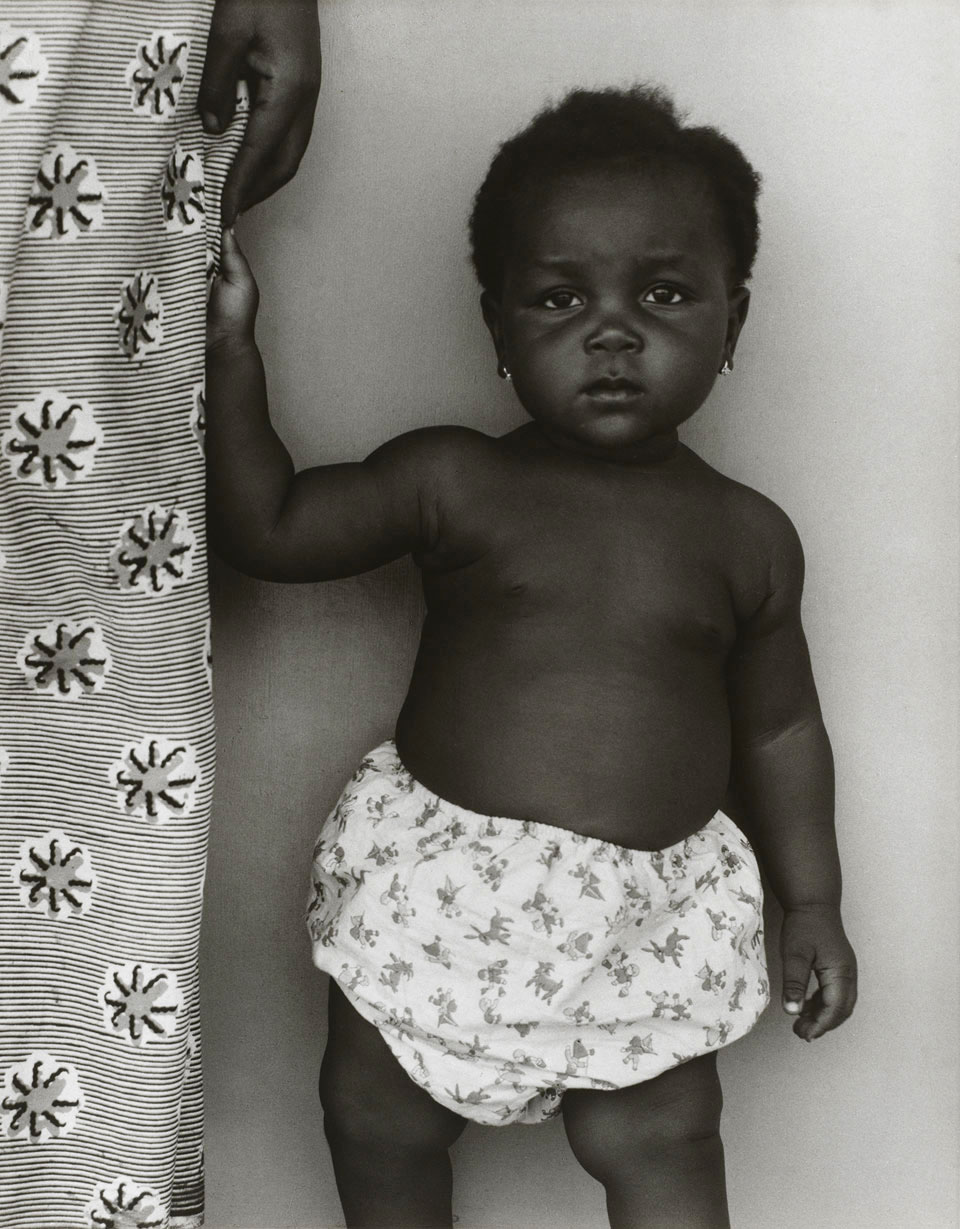
In 1963, Strand was invited to Ghana at the invitation of Kwame Nkrumah, its first president following the end of British rule. Fascinated by Ghana’s democracy during these years, Strand was excited to photograph a place undergoing rapid political change and modernisation. He saw modernity in the efforts of a newly independent nation to chart its future unfolding simultaneously alongside traditional aspects of Ghanaian culture. Portraiture was central to the project, as seen in Anna Attinga Frafra, Accra, Ghana (1964), in which a young schoolgirl balances books on her head. The project led to the publication of Ghana: An African Portrait (1976).

In Strand’s later years, he would increasingly turn his attention close to his home in Orgeval, outside Paris, often addressing the countless discoveries he could make within his own garden. There he produced a remarkable series of still life. These were at times reflective of earlier work, but also forward-looking in their exceptional compositions that depict the beauty of myriad textures, free-flowing movement, and evoke a quiet lyricism.

In addition to Strand’s still photography, the exhibition features three of his most significant films. Manhatta (1921), his first film and an important collaboration with painter and photographer Charles Sheeler, will be shown in full. This brief non-narrative “scenic” is considered the first American avant-garde film. It portrays the vibrant energy of New York City, juxtaposing the human drama on the street with abstracted bird’s-eye perspectives taken from high buildings and scenes of the ferry and harbour, all punctuated by poetry from Walt Whitman. Two of the films are seen in excerpts. Redes (1936), Strand’s second film, reflects the artist’s growing social awareness during his time in Mexico. Released as The Wave in the U.S., the film is a fictional account of a fishing village struggling to overcome the exploitation of a corrupt boss. Native Land (1942) is Strand’s most ambitious film. Co-directed with Leo Hurwitz and narrated by Paul Robeson, it was created after his return to New York when Strand became a founder of Frontier Films and oversaw the production of leftist documentaries. Ahead of its time in its blending of fictional scenes and documentary footage, Native Land focuses on union-busting in the 1930s from Pennsylvania to the Deep South. When its release coincided with the Japanese attack on Pearl Harbor, it was criticised as out-of-step with the nation, leading Strand to return exclusively to still photography.

Paul Strand: Master of Modern Photography is curated by Peter Barberie, the Brodsky Curator of Photographs, Alfred Stieglitz Center at the Philadelphia Museum of Art, with the assistance of Amanda N. Bock, Project Assistant Curator of Photographs. Barberie said, “Whether he was printing in platinum, palladium, gelatin-silver, making films, or preparing books, Strand was ultimately more than a photographer. He was a great modern artist whose eloquent voice addressed the widest possible audience, and this voice continues to resonate today.

Press release from the Philadelphia Museum of Art


Paul Strand (American, 1890-1976) 'Young Boy, Gondeville, Charente, France' 1951 (negative); mid- to late 1960s (print)


Paul Strand (American, 1890-1976)
Young Boy, Gondeville, Charente, France
1951 (negative); mid- to late 1960s (print)
Gelatin silver print
7 5/8 × 9 5/8 inches (19.4 × 24.4cm)
Philadelphia Museum of Art
The Paul Strand Collection, purchased with funds contributed by Tom Callan and Martin McNamara, 2012
© Paul Strand Archive/Aperture Foundation


Paul Strand (American, 1890-1976) 'The Family, Luzzara (The Lusettis)' 1953 (negative); mid- to late 1960s (print)


Paul Strand (American, 1890-1976)
The Family, Luzzara (The Lusettis)
1953 (negative); mid- to late 1960s (print)
Gelatin silver print
11 7/16 x 14 9/16 inches (29 x 37cm)
Philadelphia Museum of Art
The Paul Strand Collection, purchased with funds contributed by Mr. and Mrs. Robert A. Hauslohner, 1972
© Paul Strand Archive/Aperture Foundation


Paul Strand (American, 1890-1976) 'Anna Attinga Frafra, Accra, Ghana' 1964


Paul Strand (American, 1890-1976)
Anna Attinga Frafra, Accra, Ghana
1964 (negative); 1964 (print)
Gelatin silver print
7 5/8 × 9 5/8 inches (19.4 × 24.4cm)
Philadelphia Museum of Art
The Paul Strand Collection, purchased with The Henry McIlhenny Fund and other Museum funds, 2012
© Paul Strand Archive/Aperture Foundation


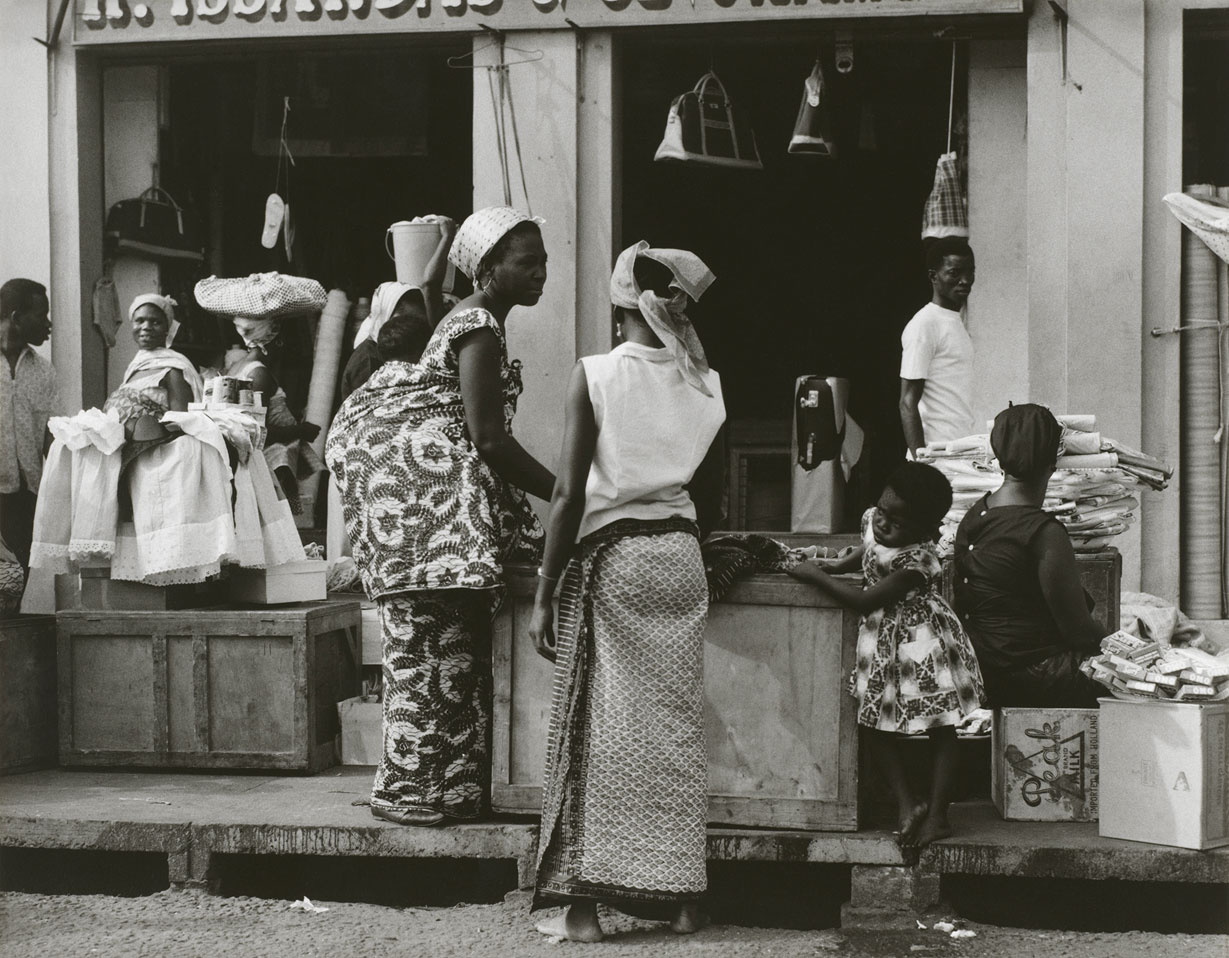
Paul Strand (American, 1890-1976) 'Market, Accra, Ghana' 1963-1964


Paul Strand (American, 1890-1976)
Market, Accra, Ghana
1963-1964
Philadelphia Museum Of Art
The Paul Strand Collection
Partial and promised gift of Marguerite and Gerry Lenfest
© Paul Strand Archive/Aperture Foundation


Paul Strand (American, 1890-1976) 'Market Day, Luzzara' 1953


Paul Strand (American, 1890-1976)
Market Day, Luzzara
1953
Gelatin silver print
4 5/8 × 5 7/8 in. (11.7 x 15cm)
Philadelphia Museum of Art
The Paul Strand Collection, purchased with funds contributed by Zoë and Dean Pappas
© Paul Strand Archive/Aperture Foundation


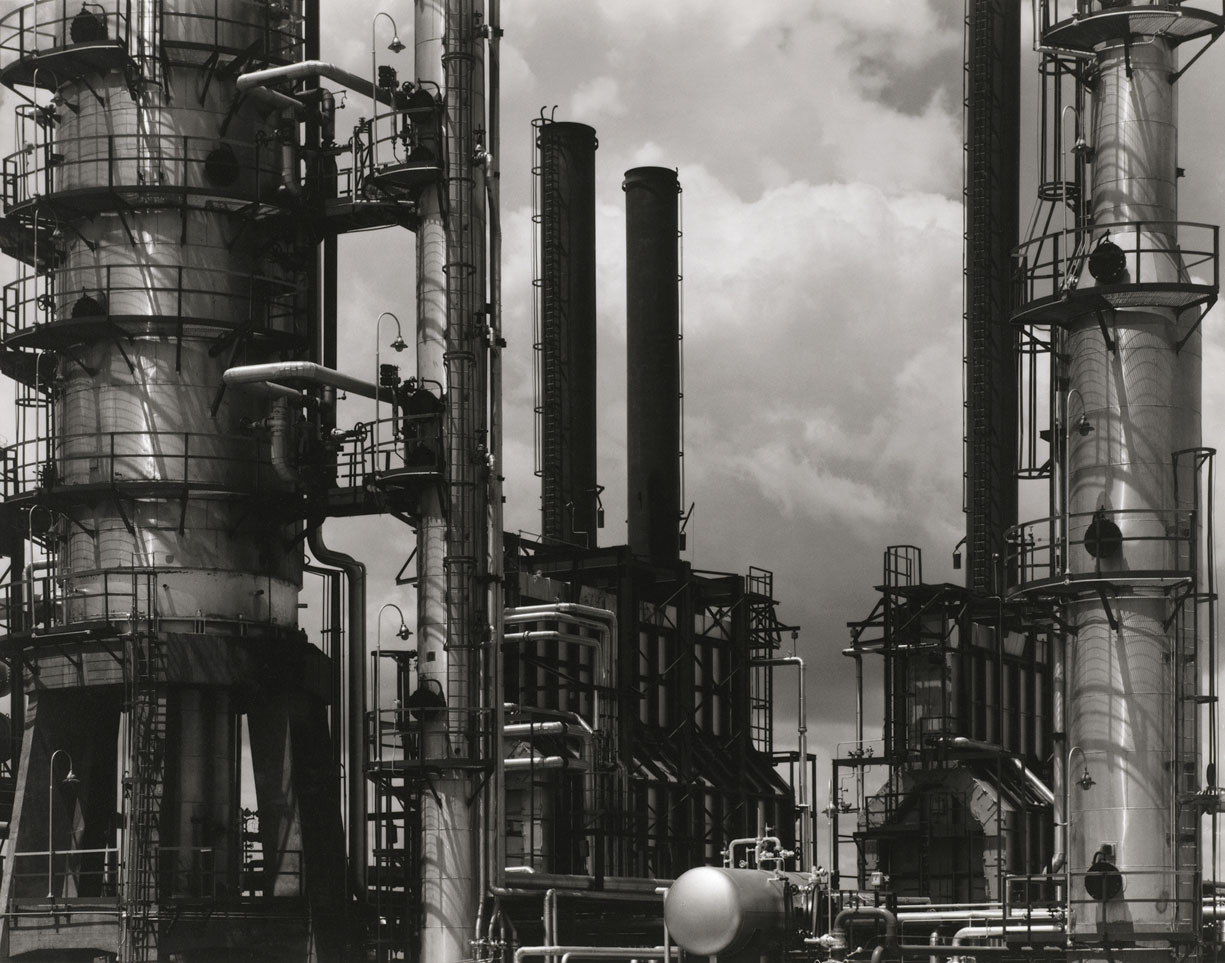
Paul Strand (American, 1890-1976) 'Oil Refinery, Tema, Ghana' 1963-1964


Paul Strand (American, 1890-1976)
Oil Refinery, Tema, Ghana
1963-1964
Philadelphia Museum Of Art
The Paul Strand Collection, purchased with funds contributed by Lynne and Harold Honickman
© Paul Strand Archive/Aperture Foundation


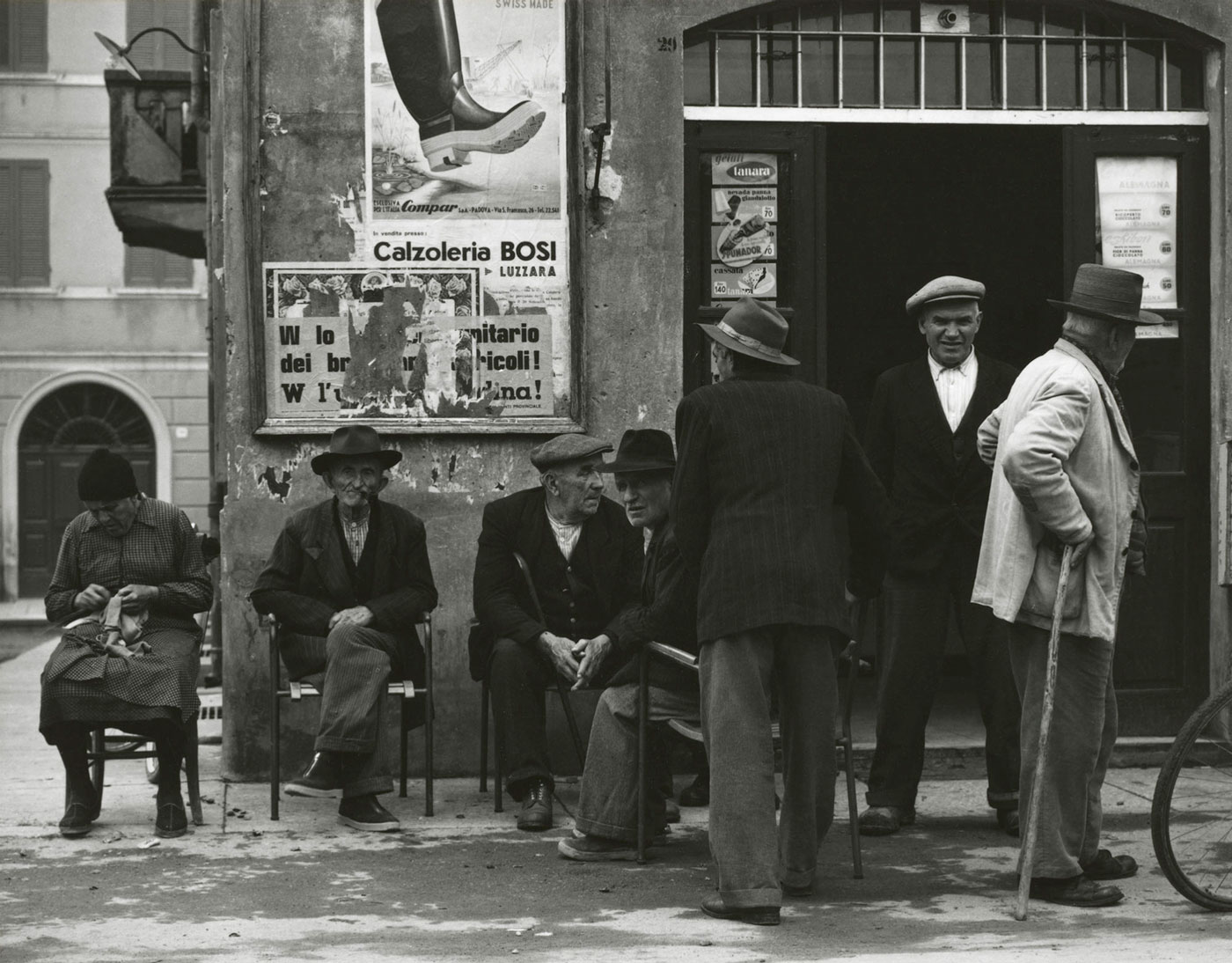
Paul Strand (American, 1890-1976) 'Place to meet, Luzzara' 1953


Paul Strand (American, 1890-1976)
Place to meet, Luzzara
1953
Gelatin silver print
4 5/8 × 5 7/8 in. (11.8 x 15cm)
Philadelphia Museum of Art
The Paul Strand Collection, purchased with funds contributed by Zoë and Dean Pappas
© Paul Strand Archive/Aperture Foundation


Paul Strand (American, 1890-1976) 'Parmesan, Luzzara
' 1953


Paul Strand (American, 1890-1976)
Parmesan, Luzzara
1953
Gelatin silver print
4 5/8 × 5 7/8 in. (11.8 x 15cm)
Philadelphia Museum of Art
The Paul Strand Collection, purchased with funds contributed by Andrea M. Baldeck, MD, and William M. Hollis Jr.,
© Paul Strand Archive/Aperture Foundation


Paul Strand (American, 1890-1976) 'The Farm, Luzzara' 1953


Paul Strand (American, 1890-1976)
The Farm, Luzzara

1953
Gelatin silver print
4 11/16 × 5 7/8 in. (11.9 × 15cm)
Philadelphia Museum of Art
The Paul Strand Collection, purchased with funds contributed by Barbara B. and Theodore R. Aronson
© Paul Strand Archive/Aperture Foundation


Paul Strand (American, 1890-1976) 'Worker at the Co-op, Luzzara
' 1953


Paul Strand (American, 1890-1976)
Worker at the Co-op, Luzzara
1953
Gelatin silver print
4 5/8 × 5 7/8 in. (11.8 × 14.9cm)
Philadelphia Museum of Art
The Paul Strand Retrospective Collection, 1915 - 1975
Gift of the estate of Paul Strand
© Paul Strand Archive/Aperture Foundation


Paul Strand (American, 1890-1976) 'The Couple, Luzzara' 
1953


Paul Strand (American, 1890-1976)
The Couple, Luzzara
1953
Gelatin silver print
4 5/8 × 5 7/8 in. (11.8 × 14.9cm)
Philadelphia Museum of Art
The Paul Strand Collection, purchased with funds contributed by Ralph Citino and Lawrence Taylor
© Paul Strand Archive/Aperture Foundation


About Paul Strand

Born in New York City, Strand first studied with the social documentary photographer Lewis Hine at New York’s Ethical Culture School from 1907-1909, and subsequently became close to the pioneering photographer Alfred Stieglitz. Strand fused these powerful influences and explored the modernist possibilities of the camera more fully than any other photographer before 1920. In the 1920s, Strand tested the camera’s potential to exceed human vision, making intimate, detailed portraits, and recording the nuances of machine and natural forms. He also created portraits, landscapes, and architectural studies on various travels to the Southwest, Canada, and Mexico. The groups of pictures of these regions, in tandem with his documentary work as a filmmaker in the 1930s, convinced Strand that the medium’s great purpose lay in creating broad and richly detailed photographic records of specific places and communities. For the rest of his career he pursued such projects in New England, France, Italy, the Hebrides, Morocco, Romania, Ghana, and other locales, producing numerous celebrated books. Together, these later series form one of the great photographic statements about modern experience. The last major retrospective dedicated to Strand was organised by the Philadelphia Museum of Art in 1971.

The Paul Strand Collection at the Philadelphia Museum of Art

In 2010, the Philadelphia Museum of Art began to acquire the core collection of photographs by Paul Strand. Through the generosity of philanthropists Lynne and Harold Honickman, Marjorie and Jeffrey Honickman, and H.F. “Gerry” and Marguerite Lenfest, the Museum received as partial and promised gifts from The Paul Strand Archive at the Aperture Foundation, as well as master prints from Strand’s negatives by the artist Richard Benson.

The Paul Strand Collection permits the study of Strand’s career with prints from the majority of his negatives, including variants and croppings of individual images. Together with other photographs already owned by the Museum, the acquisition makes the Philadelphia Museum of Art the world’s most comprehensive repository for the study of his work.

Catalogue

The exhibition will be accompanied by a substantial scholarly catalogue, co-published by the Philadelphia Museum of Art and Yale University press in collaboration with MAPFRE. The accompanying publication is supported by Lynne and Harold Honickman and The Andrew W. Mellon Fund for Scholarly Publications at the Philadelphia Museum of Art.”

Press release from the Philadelphia Museum of Art


Paul Strand (American, 1890-1976) 'Blind Woman, New York' 1916 (negative); 1945 (print)


Paul Strand (American, 1890-1976)
Blind Woman, New York
1916 (negative); 1945 (print)
Gelatin silver print
12 3/4 × 9 3/4 inches (32.4 × 24.8cm)
The Paul Strand Collection, partial and promised gift of Marguerite and Gerry Lenfest, 2009
© Paul Strand Archive/Aperture Foundation


Paul Strand (American, 1890-1976) 'Abstraction, Bowls, Twin Lakes, Connecticut' 1916


Paul Strand (American, 1890-1976)
Abstraction, Bowls, Twin Lakes, Connecticut
1916
Gelatin silver print
13 1/16 × 9 5/8 inches (33.1 × 24.4cm)
The Paul Strand Retrospective Collection, 1915-1975
Gift of the estate of Paul Strand, 1980
© Paul Strand Archive/Aperture Foundation


Paul Strand (American, 1890-1976) 'Abstraction, Porch Shadows' 1916


Paul Strand (American, 1890-1976)
Abstraction, Porch Shadows, Twin Lakes, Connecticut
1916 (negative); 1950s (print)
Gelatin silver print
12 15/16 × 8 15/16 inches (32.9 × 22.7cm)
The Paul Strand Retrospective Collection, 1915-1975
Gift of the estate of Paul Strand, 1980

© Paul Strand Archive/Aperture Foundation


Paul Strand (American, 1890-1976) 'Elizabethtown, New Mexico' 1930


Paul Strand (American, 1890-1976)
Elizabethtown, New Mexico
1930 (negative); 1930 (print)
Platinum print
9 5/8 x 7 5/8 inches (24.4 x 19.4cm)
The Paul Strand Collection, partial and promised gift of Marguerite and Gerry Lenfest, 2009
© Paul Strand Archive/Aperture Foundation


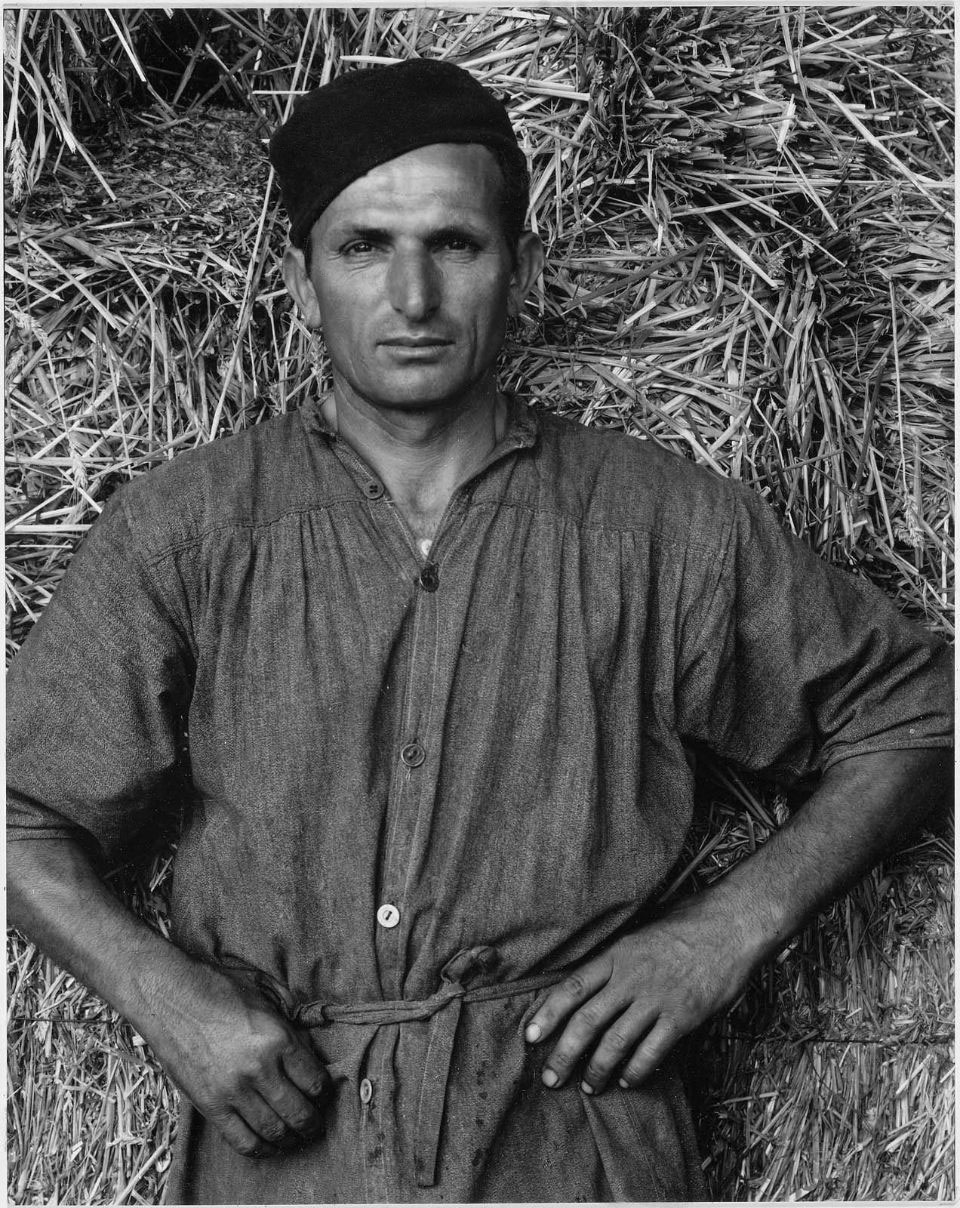
Paul Strand (American, 1890-1976) 'Farmworker, Luzzara, Italy' 1953


Paul Strand (American, 1890-1976)
Farmworker, Luzzara, Italy
1953 (negative); early to mid- 1980s (print)
Gelatin silver print
5 7/8 x 4 5/8 inches (14.9 x 11.8cm)
The Paul Strand Collection, partial and promised gift of Marguerite and Gerry Lenfest, 2009

© Paul Strand Archive/Aperture Foundation


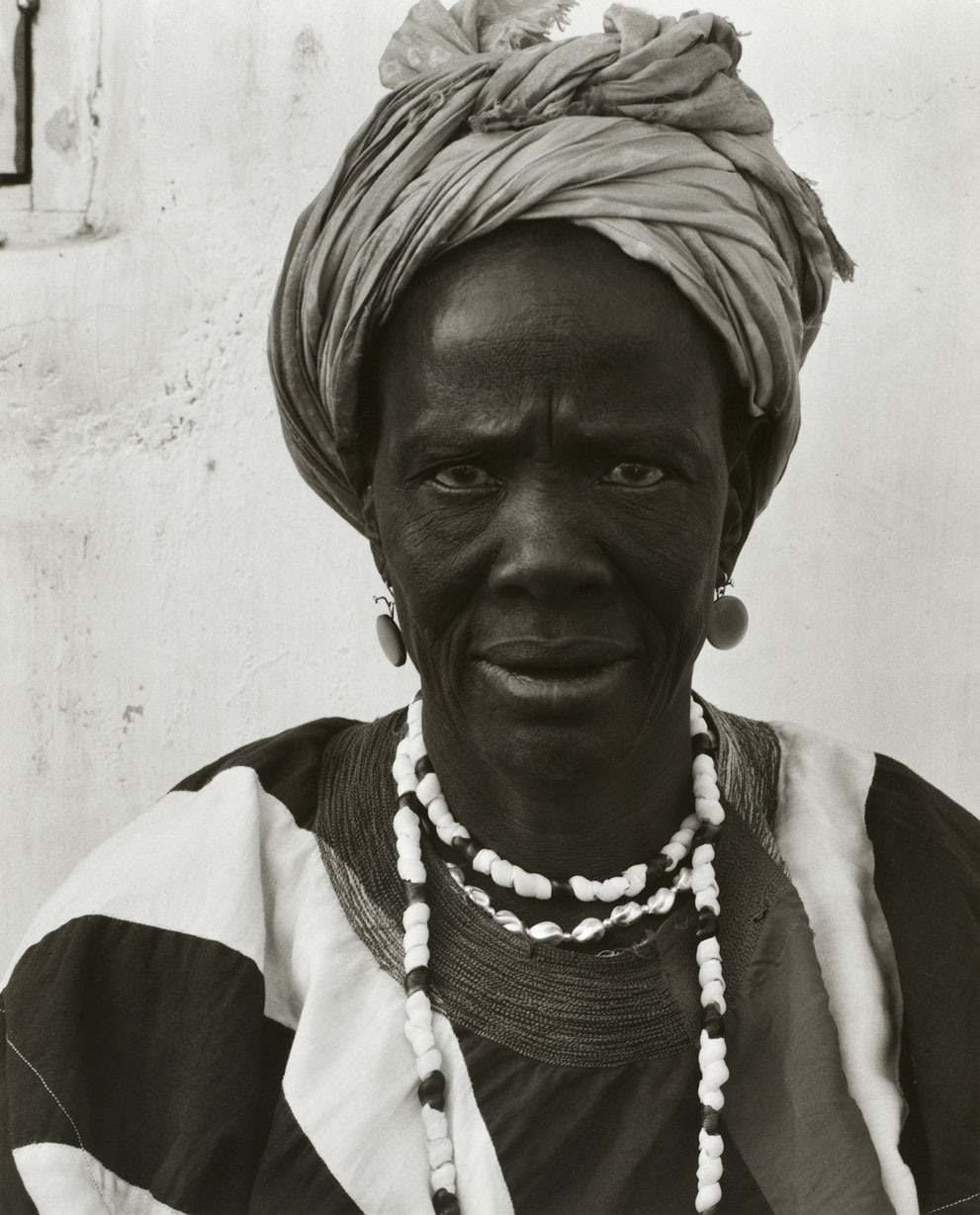
Paul Strand (American, 1890-1976) 'Asenah Wara, Leader of the Women’s Party, Wa, Ghana' 1964


Paul Strand (American, 1890-1976)
Asenah Wara, Leader of the Women’s Party, Wa, Ghana
1964
Gelatin silver print
12 1/8 x 9 7/8 inches (30.8 x 25.1cm)
The Paul Strand Retrospective Collection, 1915-1975
Gift of the estate of Paul Strand, 1980

© Paul Strand Archive/Aperture Foundation


Paul Strand (American, 1890-1976) 'Mary Hammond, Winneba, Ghana' 1963


Paul Strand (American, 1890-1976)
Mary Hammond, Winneba, Ghana
1963 (negative); 1964 (print)
9 1/4 × 7 1/4 inches (23.5 × 18.4cm)
The Paul Strand Collection, purchased with the Henry P. McIlhenny Fund in memory of Frances P. McIlhenny, 2012

© Paul Strand Archive/Aperture Foundation


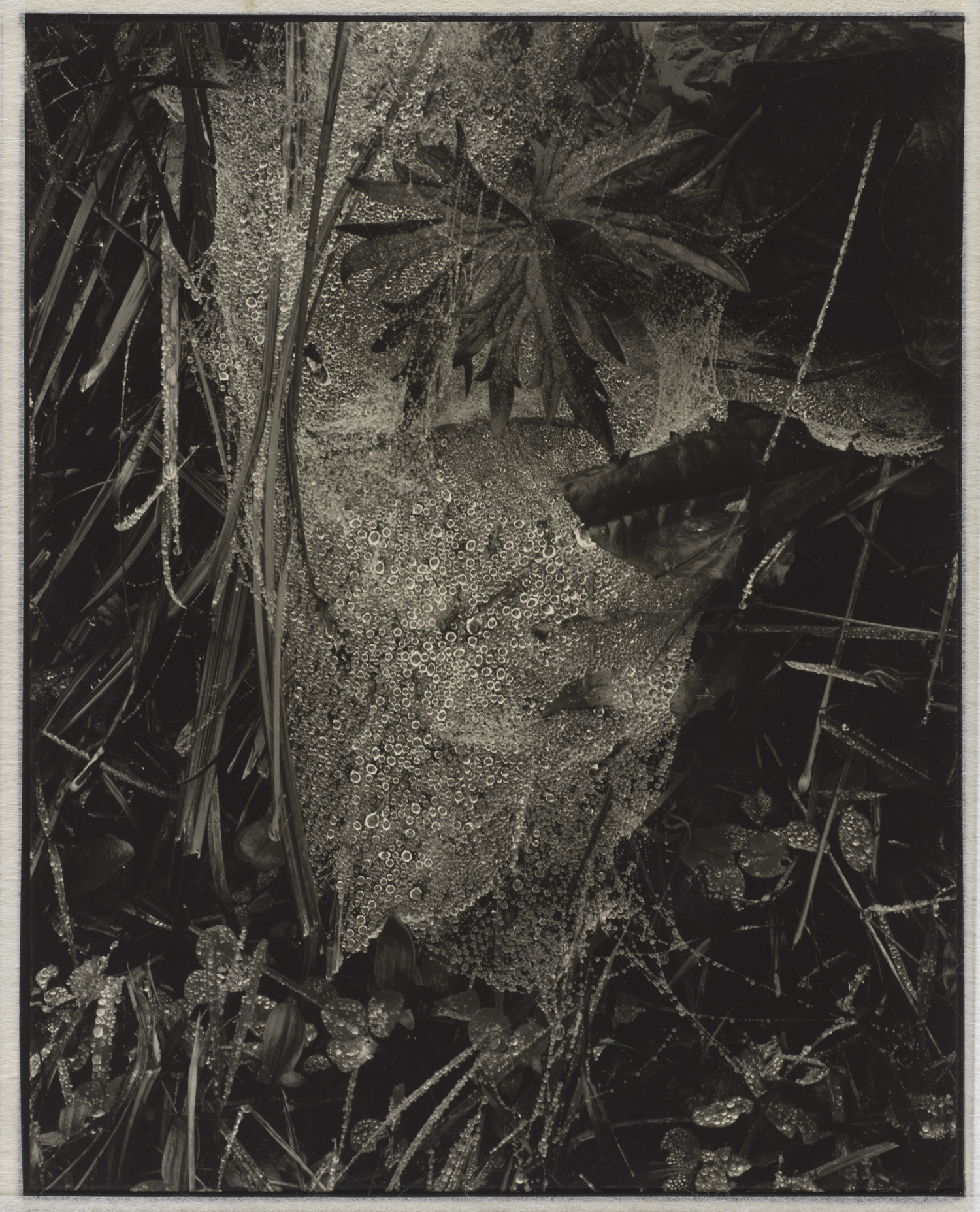
Paul Strand (American, 1890-1976) 'Cobweb in Rain, Georgetown, Maine' 1927


Paul Strand (American, 1890-1976)
Cobweb in Rain, Georgetown, Maine
1927 (negative); 1927 (print)
Gelatin silver print
9 11/16 x 7 13/16 inches (24.6 x 19.8cm)
Philadelphia Museum of Art, 125th Anniversary Acquisition
The Paul Strand Collection, The Lynne and Harold Honickman Gift of the Julien Levy Collection, 2001
© Paul Strand Archive/Aperture Foundation


Paul Strand (American, 1890-1976) 'Church, Ranchos de Taos, New Mexico' 1931


Paul Strand (American, 1890-1976)
Church, Ranchos de Taos, New Mexico
1931 (negative); 1931 (print)
Platinum print
5 7/8 x 4 5/8 inches (15 x 11.7cm)
Philadelphia Museum of Art
The Paul Strand Collection, purchased with funds contributed by Barbara B. and Theodore R. Aronson, 2013
© Paul Strand Archive/Aperture Foundation


Paul Strand (American, 1890-1976) 'Toward the Sugar House, Vermont' 1944


Paul Strand (American, 1890-1976)
Toward the Sugar House, Vermont
1944 (negative); 1944 (print)
Gelatin silver print
9 5/8 × 7 5/8 inches (24.4 × 19.4cm)
Philadelphia Museum of Art
The Paul Strand Collection, purchased with funds contributed by Barbara B. and Theodore R. Aronson, 2010
© Paul Strand Archive/Aperture Foundation


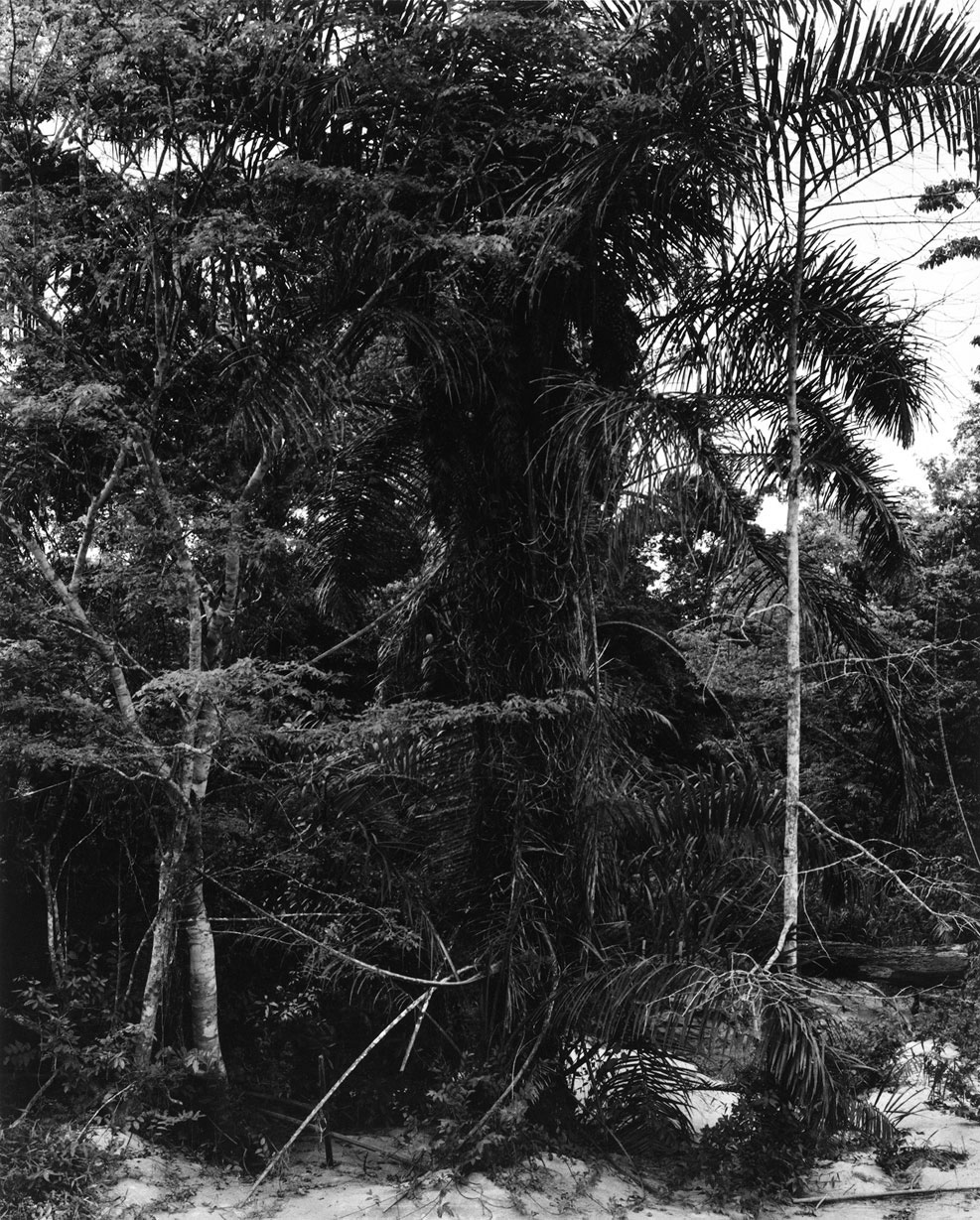
Paul Strand (American, 1890-1976) 'Jungle, Ashanti Region, Ghana' 1964


Paul Strand (American, 1890-1976)
Jungle, Ashanti Region, Ghana
1964
Gelatin silver print
9 5/8 × 7 11/16 inches (24.4 × 19.6cm)
The Paul Strand Collection, purchased with the Henry P. McIlhenny Fund in memory of Frances P. McIlhenny, 2012

© Paul Strand Archive/Aperture Foundation


Paul Strand (American, 1890-1976) 'Woman and Boy, Tenancingo, Mexico' 1933


Paul Strand (American, 1890-1976)
Woman and Boy, Tenancingo, Mexico
1933 (negative); c. 1940-1945 (print)
5 7/8 × 4 5/8 inches (15 × 11.8cm)
The Paul Strand Collection, partial and promised gift of Marguerite and Gerry Lenfest, 2009
© Paul Strand Archive/Aperture Foundation


Paul Strand (American, 1890-1976) 'Rebecca, New York' 1921


Paul Strand (American, 1890-1976)
Rebecca, New York
1921 (negative); 1921 (print)
Platinum print
9 1/2 x 7 5/8 inches (24.1 x 19.4cm)
The Paul Strand Collection, partial and promised gift of Marguerite and Gerry Lenfest, 2009
© Paul Strand Archive/Aperture Foundation


Paul Strand (American, 1890-1976) 'Mr. Bolster, Weston, Vermont' 1943


Paul Strand (American, 1890-1976)
Mr. Bolster, Weston, Vermont
1943 (negative); 1943 (print)
Gelatin silver print
5 7/8 × 4 5/8 inches (14.9 × 11.7cm)
The Paul Strand Collection, partial and promised gift of Marguerite and Gerry Lenfest, 2009
© Paul Strand Archive/Aperture Foundation


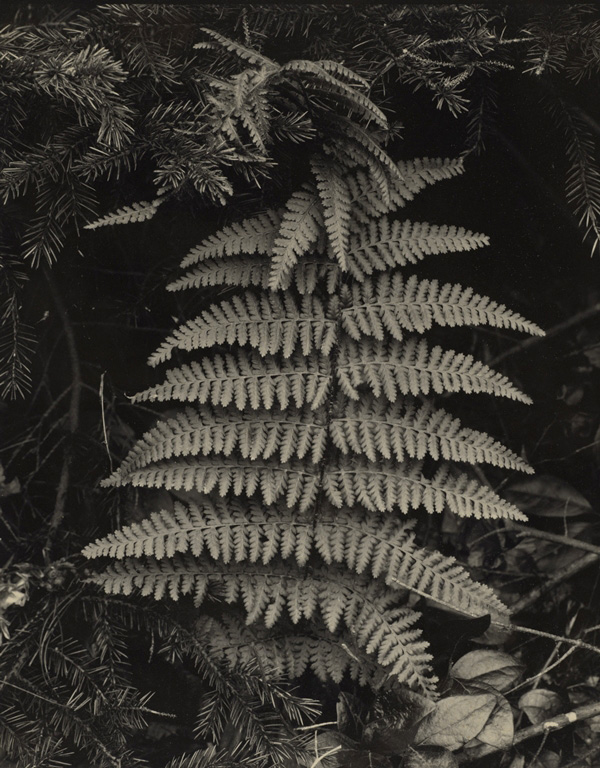
Paul Strand (American, 1890-1976) 'Fern, Georgetown, Maine' 1928


Paul Strand (American, 1890-1976)
Fern, Georgetown, Maine
1928 (negative); 1940s (print)
Platinum print
9 5/8 x 7 5/8 inches (24.4 x 19.4cm)
The Paul Strand Collection, purchased with funds contributed by Barbara B. and Theodore R. Aronson, 2014
© Paul Strand Archive/Aperture Foundation


Paul Strand (American, 1890-1976) 'Town Hall, New Hampshire' 1946


Paul Strand (American, 1890-1976)
Town Hall, New Hampshire
1946
Gelatin silver print
9 5/8 × 7 5/8 inches (24.4 × 19.4cm)
The Paul Strand Collection, gift of Lynne and Harold Honickman, 2013
© Paul Strand Archive/Aperture Foundation


Paul Strand (American, 1890-1976) 'Cobbler, Luzzara' 1953


Paul Strand (American, 1890-1976)
Cobbler, Luzzara
1953 (negative); 1953 (print)
Gelatin silver print
5 7/8 × 4 5/8 inches (15 × 11.8cm)
The Paul Strand Collection, gift of Marjorie and Jeffrey Honickman, 2012
© Paul Strand Archive/Aperture Foundation


Paul Strand (American, 1890-1976) 'Young Man, Luzzaro (Ivo Lusetti)' 1953


Paul Strand (American, 1890-1976)
Young Man, Luzzaro (Ivo Lusetti)
1953
Gelatin silver print
5 7/8 × 4 5/8 in. (15 × 11.8cm)
Philadelphia Museum of Art
The Paul Strand Retrospective Collection, 1915 -1975
Gift of the estate of Paul Strand
© Paul Strand Archive/Aperture Foundation


Paul Strand (American, 1890-1976) 'Virgin, San Felipe, Oaxaca, Mexico' 1933


Paul Strand (American, 1890-1976)
Virgin, San Felipe, Oaxaca, Mexico
1933
Platinum print
9 5/8 × 7 5/8 inches (24.4 × 19.3cm)
The Paul Strand Collection, partial and promised gift of Marguerite and Gerry Lenfest, 2009
© Paul Strand Archive/Aperture Foundation


Paul Strand (American, 1890-1976) 'Bachelor Buttons, Orgeval' early 1960s


Paul Strand (American, 1890-1976)
Bachelor Buttons, Orgeval
early 1960s
9 5/8 × 7 5/8 inches (24.4 × 19.4cm)
The Paul Strand Retrospective Collection, 1915-1975
Gift of the estate of Paul Strand, 1980
© Paul Strand Archive/Aperture Foundation


Paul Strand (American, 1890-1976) 'Cabbages and Pinks' 1957-1958


Paul Strand (American, 1890-1976)
Cabbages and Pinks, Orgeval
1957-1958
Gelatin silver print
9 5/8 × 7 5/8 inches (24.4 × 19.4cm)
The Paul Strand Collection, partial and promised gift of Marguerite and Gerry Lenfest, 2009
© Paul Strand Archive/Aperture Foundation


Paul Strand (American, 1890-1976) 'Hoar Frosted Vines, Orgeval' 1969


Paul Strand (American, 1890-1976)
Hoar Frosted Vines, Orgeval
1969 (negative); 1969 or early 1970s (print)
Gelatin silver print
7 13/16 × 7 13/16 inches (19.8 × 19.8cm)
The Paul Strand Collection, partial and promised gift of Marguerite and Gerry Lenfest, 2009
© Paul Strand Archive/Aperture Foundation


Philadelphia Museum of Art
26th Street and the Benjamin Franklin Parkway
Philadelphia, PA 19130

Opening hours:
Sunday, 10.00 am – 5.00pm
Monday, 10.00am – 5.00pm
Tuesday, Closed
Wednesday, Closed
Thursday, 10.00am – 5.00pm
Friday, 10.00am – 8.45pm
Saturday, 10.00am – 5.00pm

Philadelphia Museum of Art website

LIKE ART BLART ON FACEBOOK

Back to top

Exhibition: ‘Irving Penn, Resonance’ at the Palazzo Grassi, Venice

Exhibition dates: 13th April – 31st December 2014

Curators: Pierre Apraxine and Matthieu Humery


Irving Penn (American, 1917-2009) 'Lion (Front View)' Prague 1986


Irving Penn (American, 1917-2009)
Lion (Front View)
Prague, 1986
Copyright © by The Irving Penn Foundation


Irving Penn’s platinum photographs fetch tens of thousands of dollars at auction. I could think of better things to spend my money on…

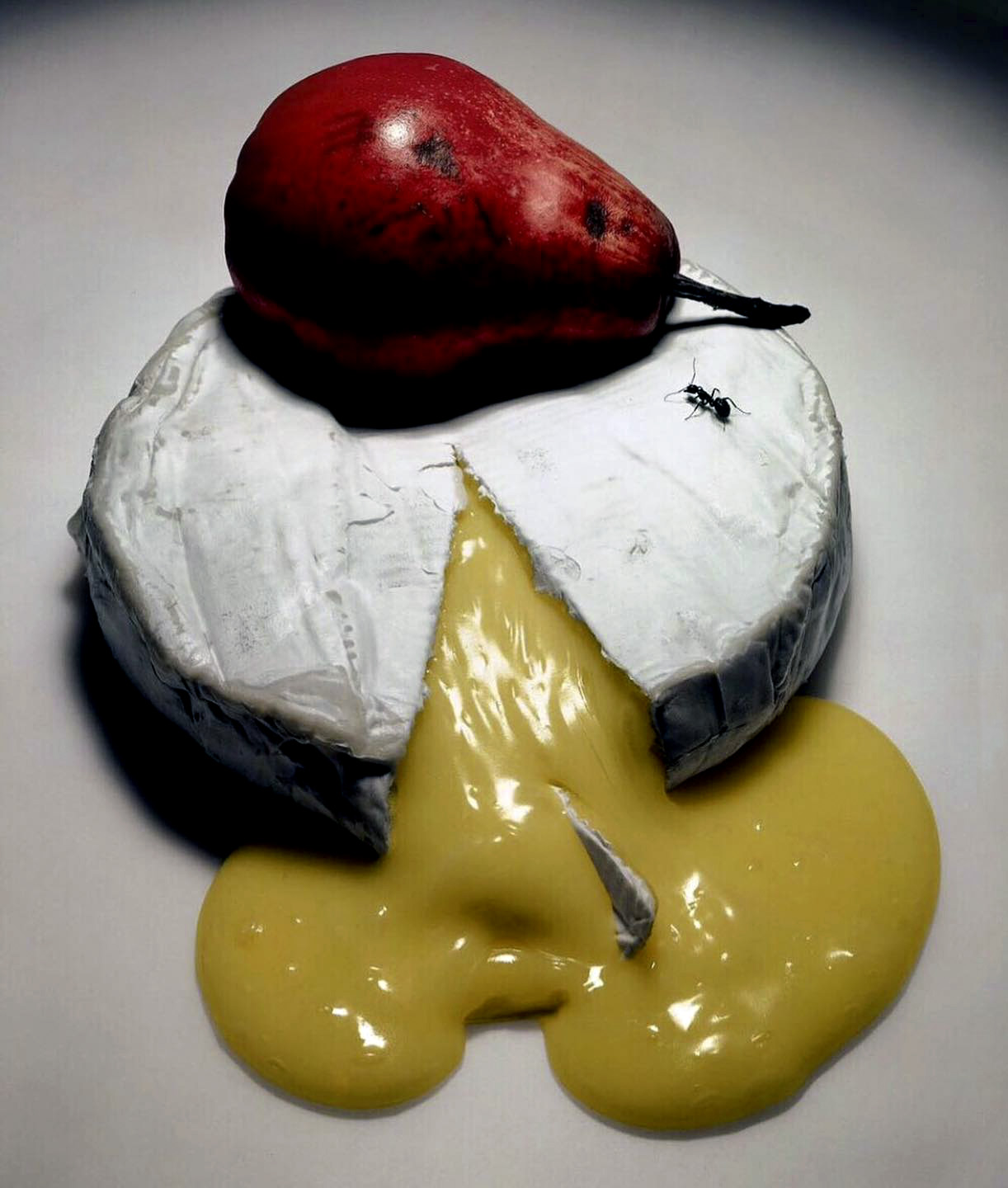
I have never been a fan – of his cigarette butts, fruit dishes, vanitas as well as animal skulls and ethnographic photos. There are just too clinically cold and dead for me. Other people may love them, but for work that supposedly investigates the ephemerality and brevity of human existence Penn tightens his essentially reductive approach until the conceptual (and formal) noose strangles the subject.

Irving Penn’s Worlds in a Small Room (where he set up baffles and stood “mudpeople” and other tribespeople), his masks, and his platinum prints of cigarette butts are his claim to fame. They were championed by the US East Coast and commercial interests. They are not terrible, but I don’t believe they are deserving of their fame – well, they are terrible in a way because they are just sort of mildly pathetic really. The work was deliberately made to attract the limelight too, at least in the vibe I get from them.

Dr Marcus Bunyan


Many thankx to the Palazzo Grassi for allowing me to publish the photographs in the posting. Please click on the photographs for a larger version of the image.


Irving Penn: The Enduring Power of Formal Simplicity

“Irving Penn was one of the most significant and prolific photographers of the 20th century whose signature blend of classical elegance, cool minimalism and monumentality still command our attention… Penn’s visual innovations, compositional originality and intensity, his diversity and range, his meticulous perfectionism and his technical precision and insistence on clean spare elegant compositions are his trademarks… A remarkable sixty-year career was filled with amazing commissioned images which could not have been sustained without a relentless sense of precision and unyielding attention to details as well as a restless sense of curiosity… Penn’s approach from the beginning was essentially reductive – he described it as a ‘tightening process – the plastic search.’ He preferred the simple studio backdrop in order to concentrate on preserving the ‘sanctity of the document’… Penn’s legacy is his prodigious insatiable breadth of work blurring the worlds of commerce and fine art. He was constantly questioning the meaning of time, of life and its fragility.


Diana Edkins. “Irving Penn: The Enduring Power of Formal Simplicity,” on The Eye of Photography website April 2014 [Online] Cited 21/11/2022


Irving Penn (American, 1917-2009) 'Poppy: Showgirl' London, 1968


Irving Penn (American, 1917-2009)
Poppy: Showgirl
London, 1968
Copyright © by Condé Nast Publications, Inc.


Irving Penn (American, 1917-2009) 'Cuzco Children' 1948


Irving Penn (American, 1917-2009)
Cuzco Children
1948
Copyright © by Condé Nast Publications, Inc.


The exhibition Irving Penn, Resonance, curated by Pierre Apraxine and Matthieu Humery, brings together on the second floor of Palazzo Grassi 130 photographs, taken between the end of the 1940s and the mid-1980s. The exhibition is a collection of 90 platinum prints, 30 gelatin silver prints, 4 colourful dye transfer prints and 17 internegatives, which will be shown to the public for the first time.

It tackles the themes dear to Irving Penn and which, beyond their apparent diversity, all capture every facet of ephemerality. This is true of the selection of photographs from the series small trades, taken in France, England and the United States in the 1950s. It is also the case for the portraits taken between the 1950s and the 1970s of celebrities from the world of art, cinema, and literature. Exhibited alongside ethnographic photographs of the people of Dahomey and of tribesmen from New Guinea and Morocco, they strongly underline the brevity of human existence, whether affluent or resourceless, famous or unknown.

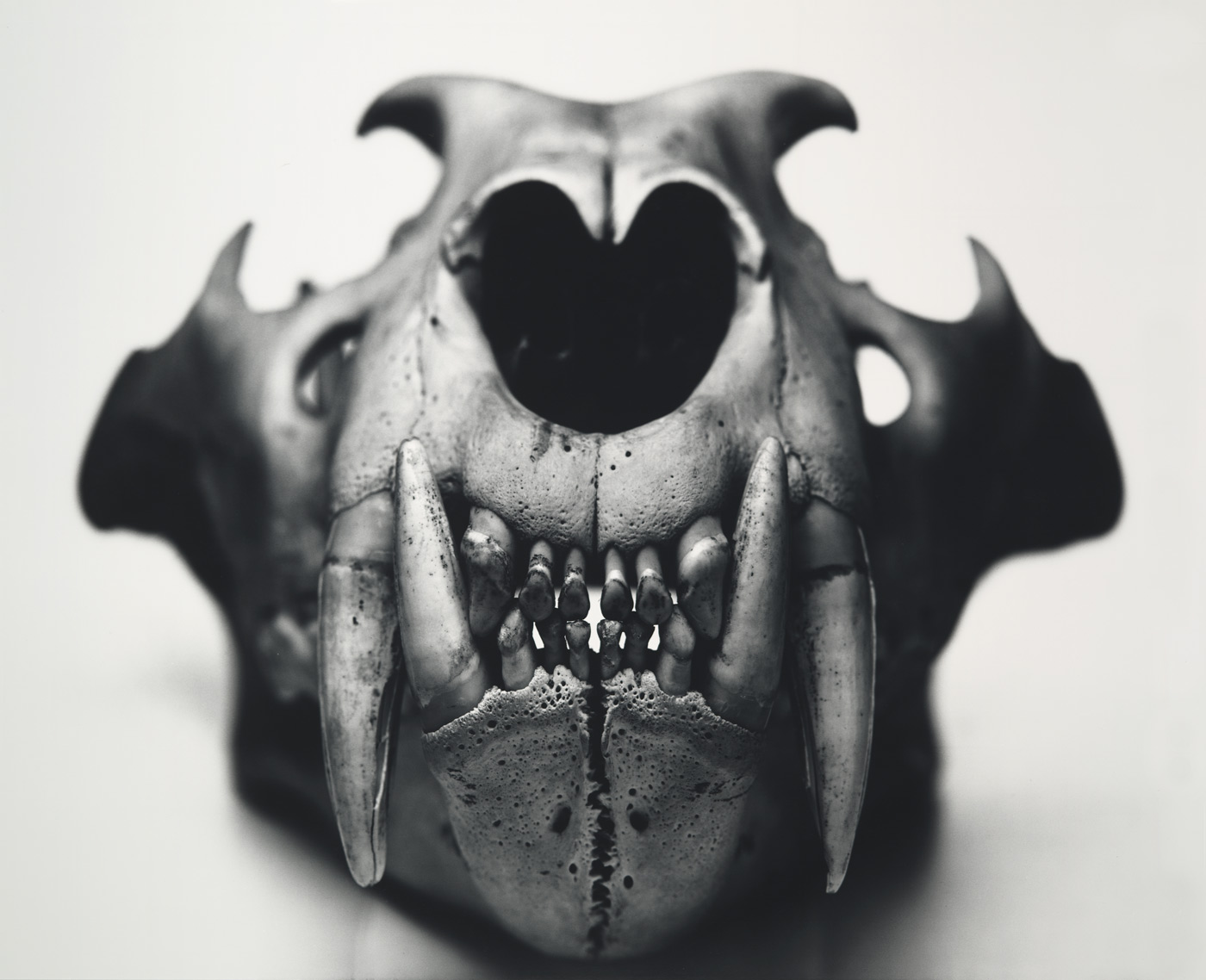
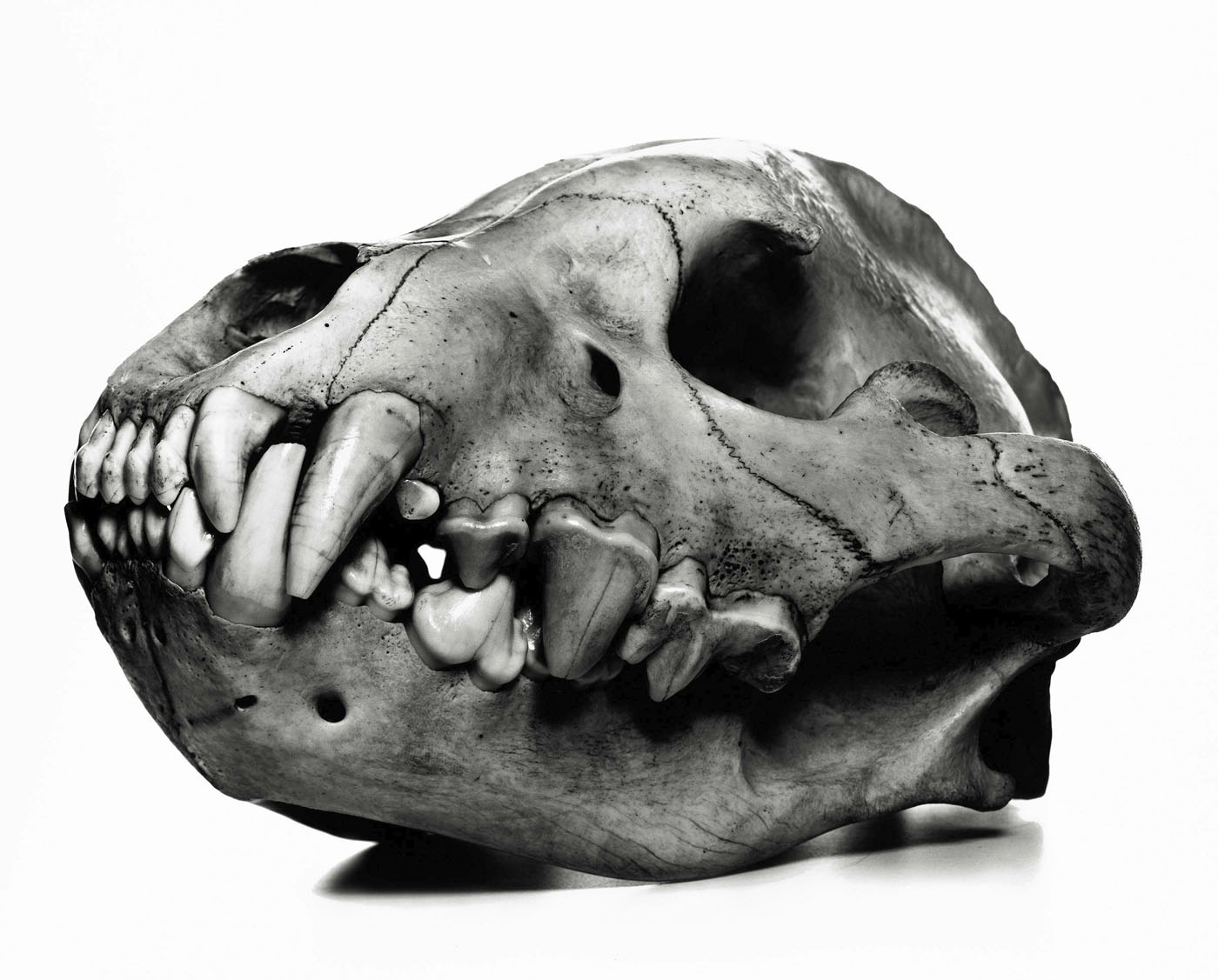
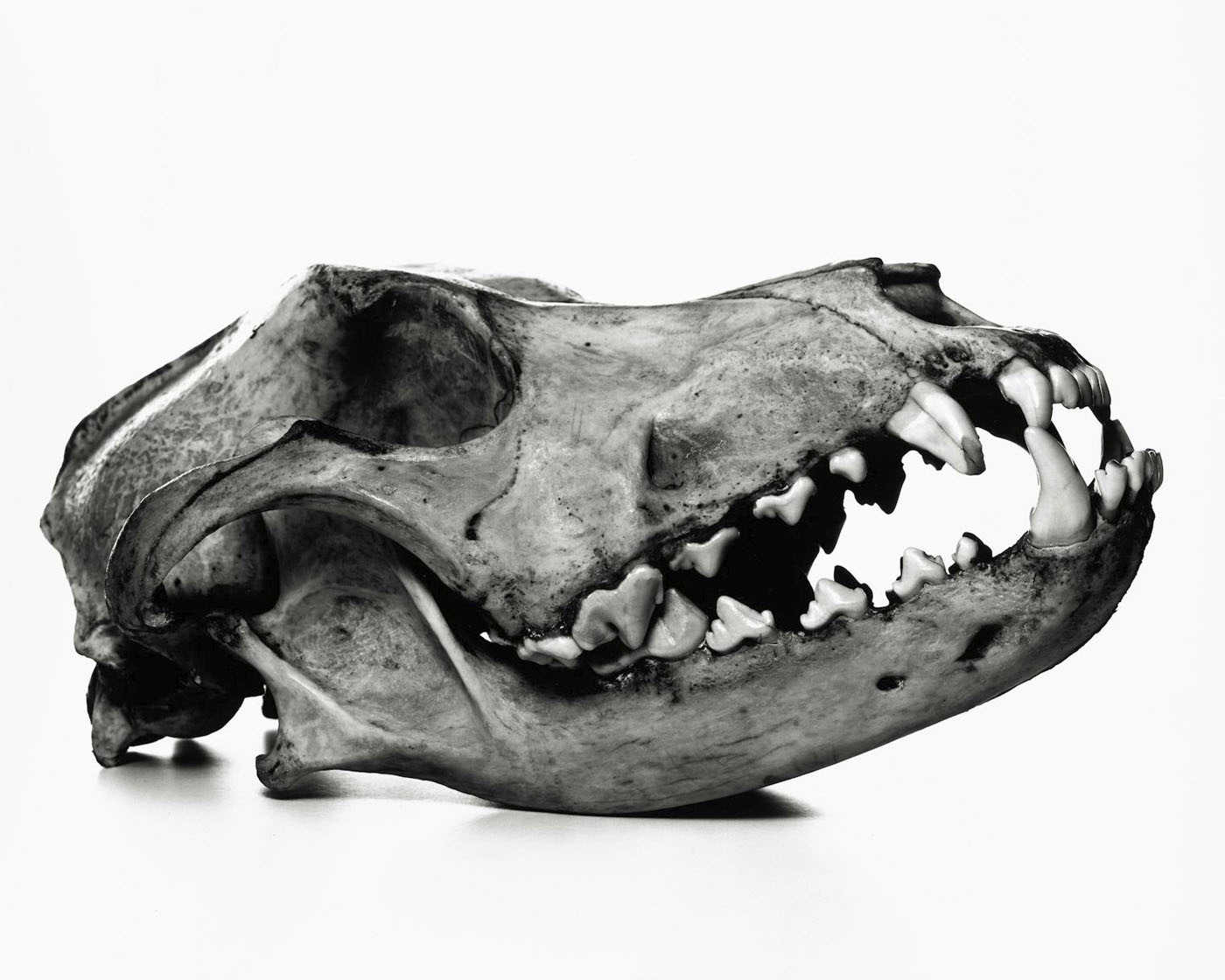
The exhibition path, which encourages dialogue and connections between works that differ in subject matter and period of time, gives prominence to still life photography from the late 1970s and the beginning of the 1980s: they are composed of cigarette ends, fruit dishes, vanitas as well as animal skulls photographed at the Narodni National Museum in Prague in 1986 for the series Cranium Architecture.

This broad overview of Irving Penn’s work puts relatively unknown images side-by-side with the most iconic ones, thereby revealing the particular ability to synthesise that characterises this photographer: in his work, modernity is not necessarily in opposition with the past and the way he exerts control over every step of the process, from the studio to the printing (to which he dedicates a lot of attention and unprecedented care), enables one to come nearer to the truth of things and people, through a constant questioning of the meaning of time, of life and of its fragility.

Irving Penn

Irving Penn was born in 1917 in Plainfield, New Jersey. In 1934 he enrolled at the Philadelphia Museum School of Industrial Art where he studied design with Alexey Brodovitch. In 1938 he began a career in New York as a graphic artist – then, after a year painting in Mexico, he returned to New York City and began work at Vogue magazine where Alexander Liberman was art director.

Liberman encouraged Penn to take his first colour photograph, a still life which became the October 1, 1943 cover of Vogue, beginning a fruitful collaboration with the magazine that lasted until his death in 2009. In addition to his editorial and fashion work for Vogue, Penn also worked for other magazines and for numerous commercial clients in America and abroad.

He published many books of his photographs including: Moments Preserved (1960); Worlds in a Small Room (1974); Inventive Paris Clothes (1977); Flowers (1980); Passage (1991); Irving Penn Regards The Work of Issey Miyake (1999); Still Life (2001); Dancer (2001); Earthly Bodies (2002); A Notebook At Random (2004); Dahomey (2004); Irving Penn: Platinum Prints (2005); Small Trades (2009); and two books of drawings and paintings.

Penn’s photographs are in the collections of major museums in America and abroad, including the Metropolitan Museum of Art, Moderna Museet in Stockholm, The National Gallery of Art in Washington, D.C., Smithsonian American Art Museum in Washington, D.C., The J. Paul Getty Museum in Los Angeles, and the Museum of Modern Art in New York, which honoured him with a retrospective exhibition in 1984. This exhibition was circulated to museums in twelve countries. Irving Penn made a donation, in 1997, to the Art Institute of Chicago of prints and archival material. In November of that year, the Art Institute mounted a retrospective that also toured to 5 museums around the world beginning at The State Hermitage in St. Petersburg, Russia.

Press release from the Palazzo Grassi website


Irving Penn (American, 1917-2009) 'Black and White Vogue Cover (Jean Patchett)' New York, 1950


Irving Penn (American, 1917-2009)
Black and White Vogue Cover (Jean Patchett)
New York, 1950
Copyright © by Condé Nast Publications, Inc.


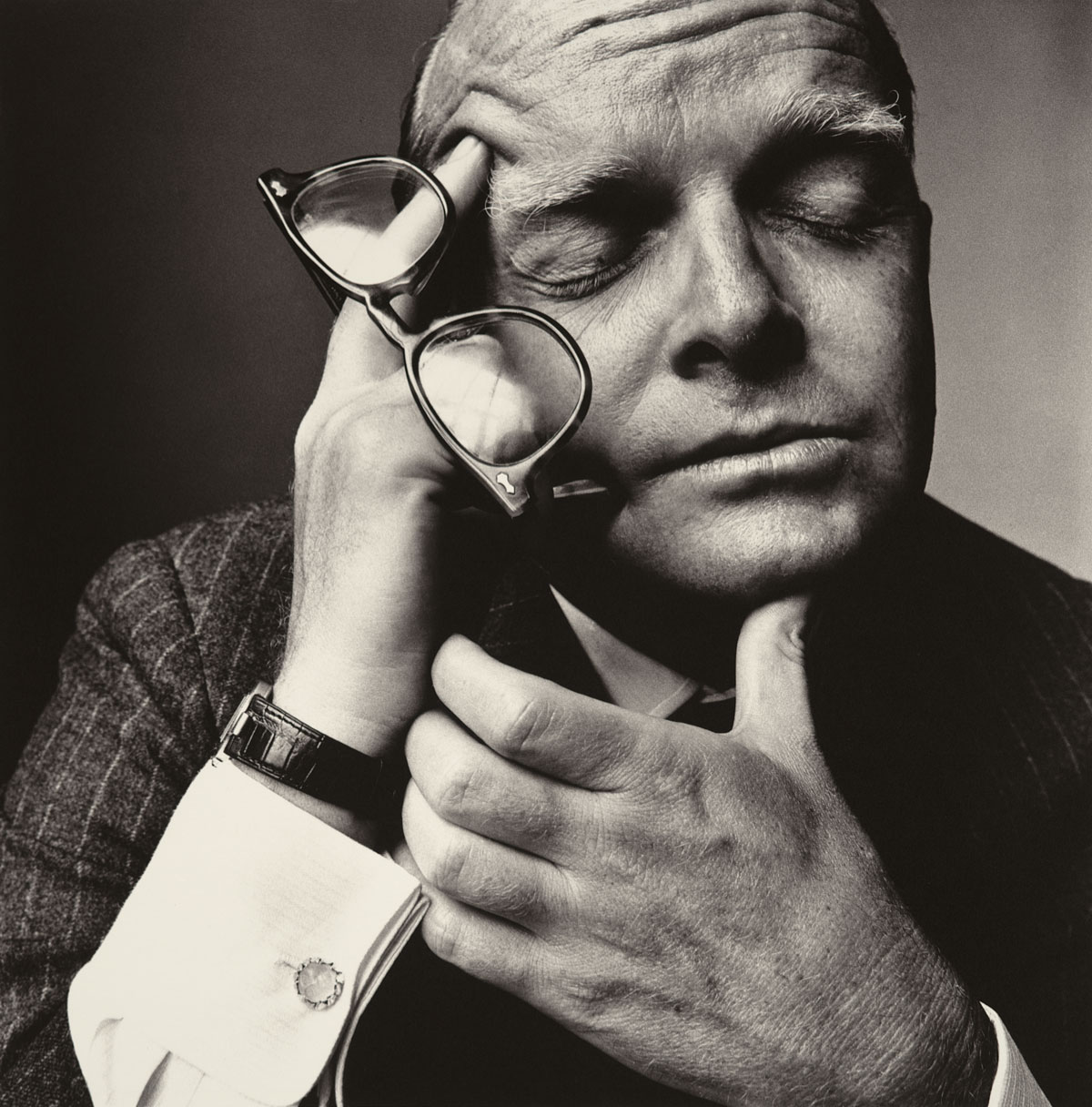
Irving Penn (American, 1917-2009) 'Truman Capote (1 of 2)' New York, 1965


Irving Penn (American, 1917-2009)
Truman Capote (1 of 2)
New York, 1965
Copyright © by Condé Nast Publications, Inc.


Irving Penn (American, 1917-2009) 'Deep-Sea Diver (C)' New York, 1951


Irving Penn (American, 1917-2009)
Deep-Sea Diver (C)
New York, 1951
Copyright © by Condé Nast Publications, Inc.


Palazzo Grassi
Dorsoduro, 2 
30123
Venezia
, Italy

Opening hours:

Wednesday – Monday 10am – 7pm
Closed Tuesdays

Palazzo Grassi website

LIKE ART BLART ON FACEBOOK

Back to top

Photographs: Andy Warhol unplugged

December 2014


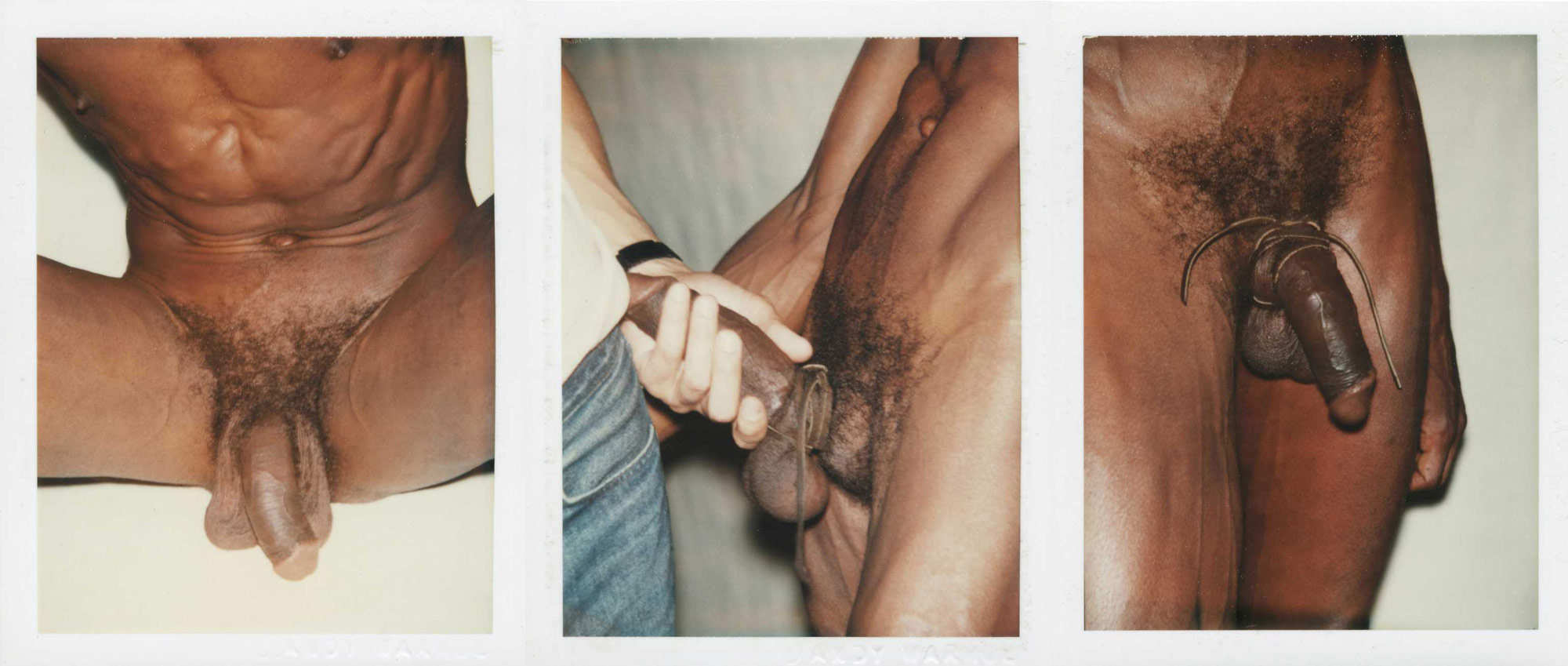
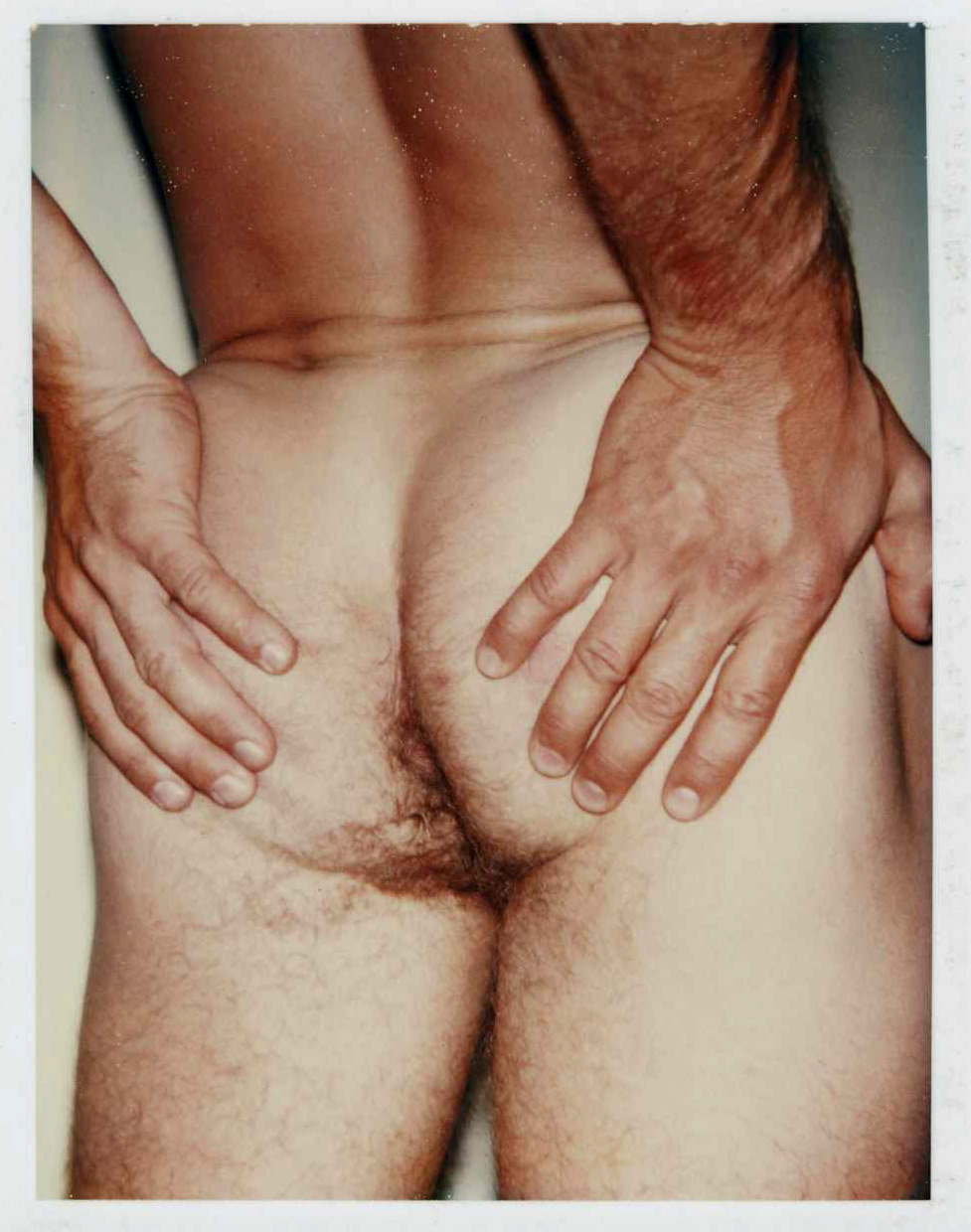
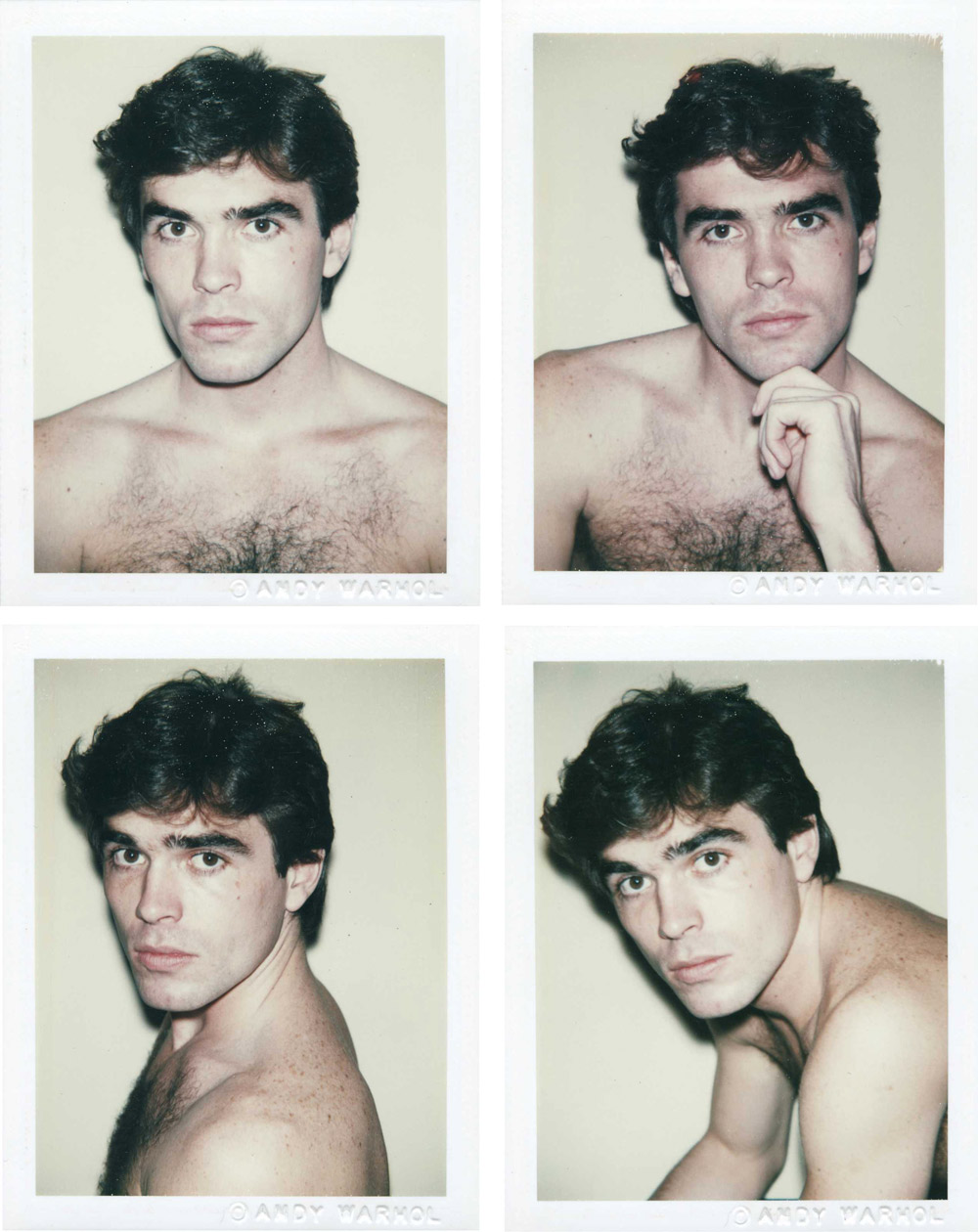
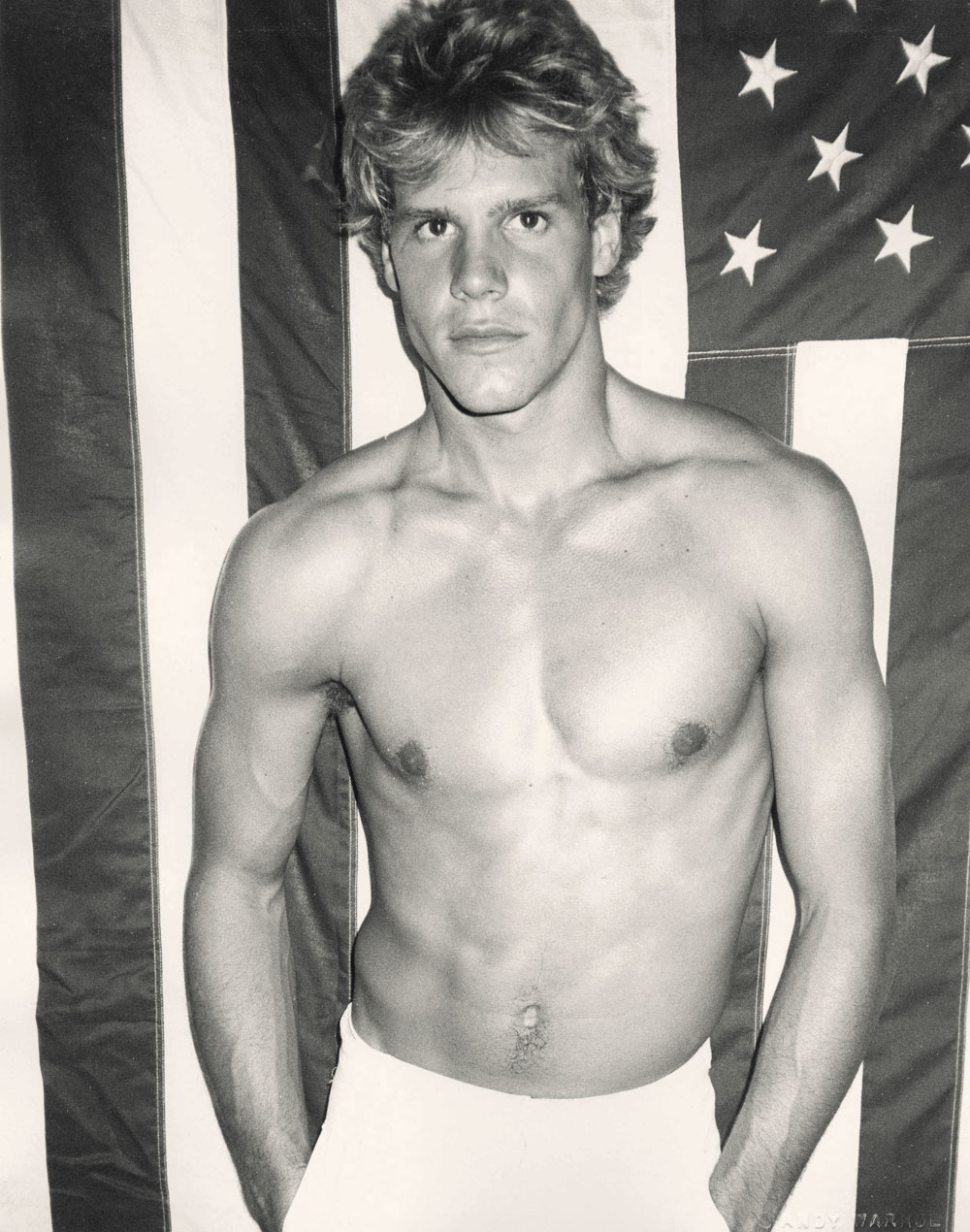
Andy Warhol (American, 1928-1987) 'Nude Male Model' 1976


Andy Warhol 
(American, 1928-1987)
Nude Male Model
1976


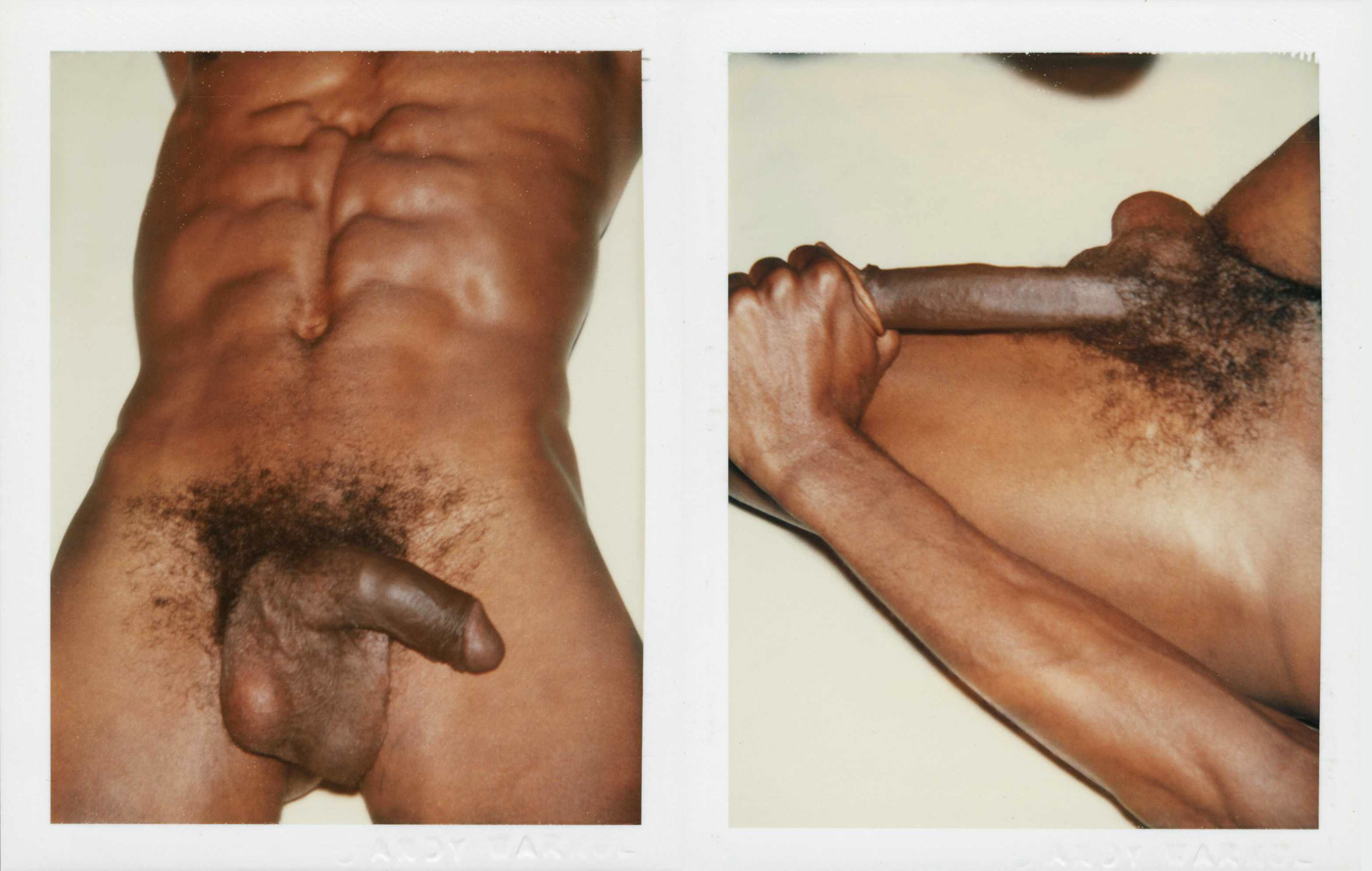
Campbell’s soup cans, Brillo boxes… and BIG BLACK COCKS!

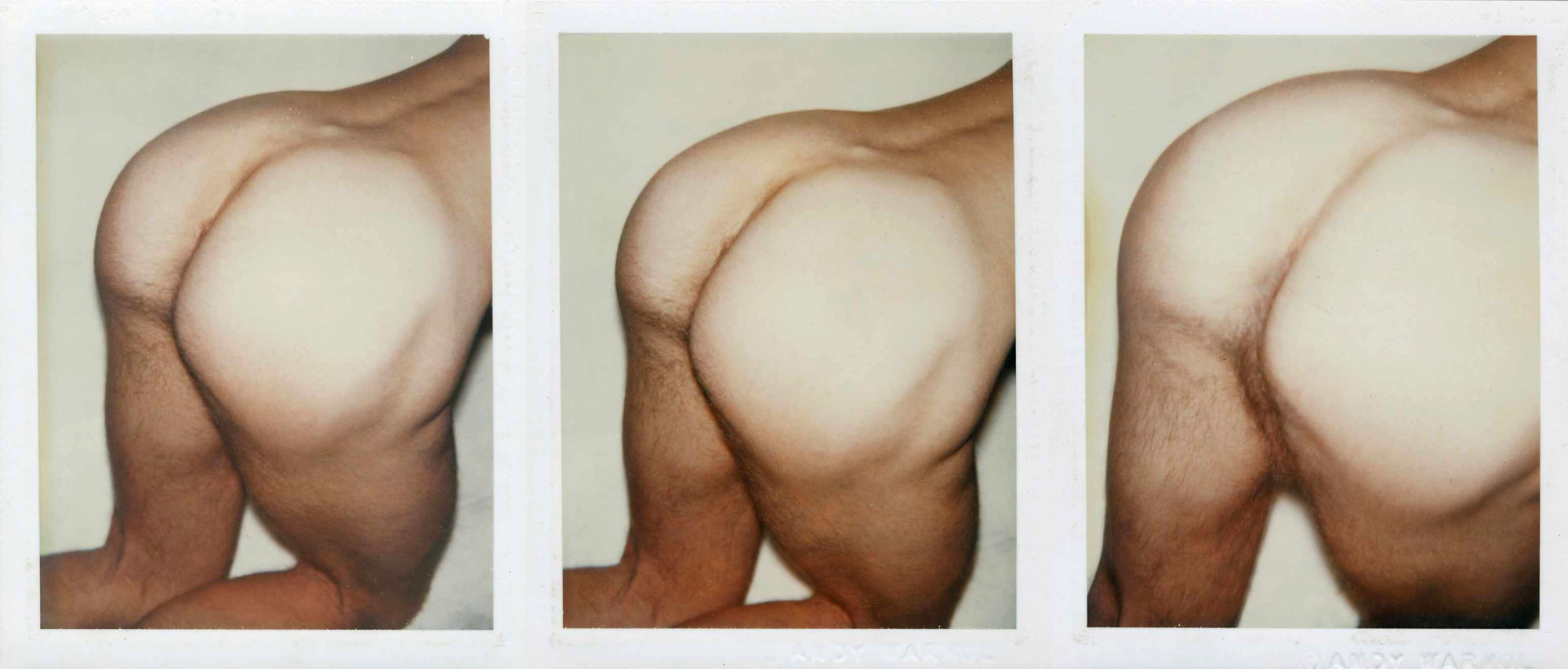
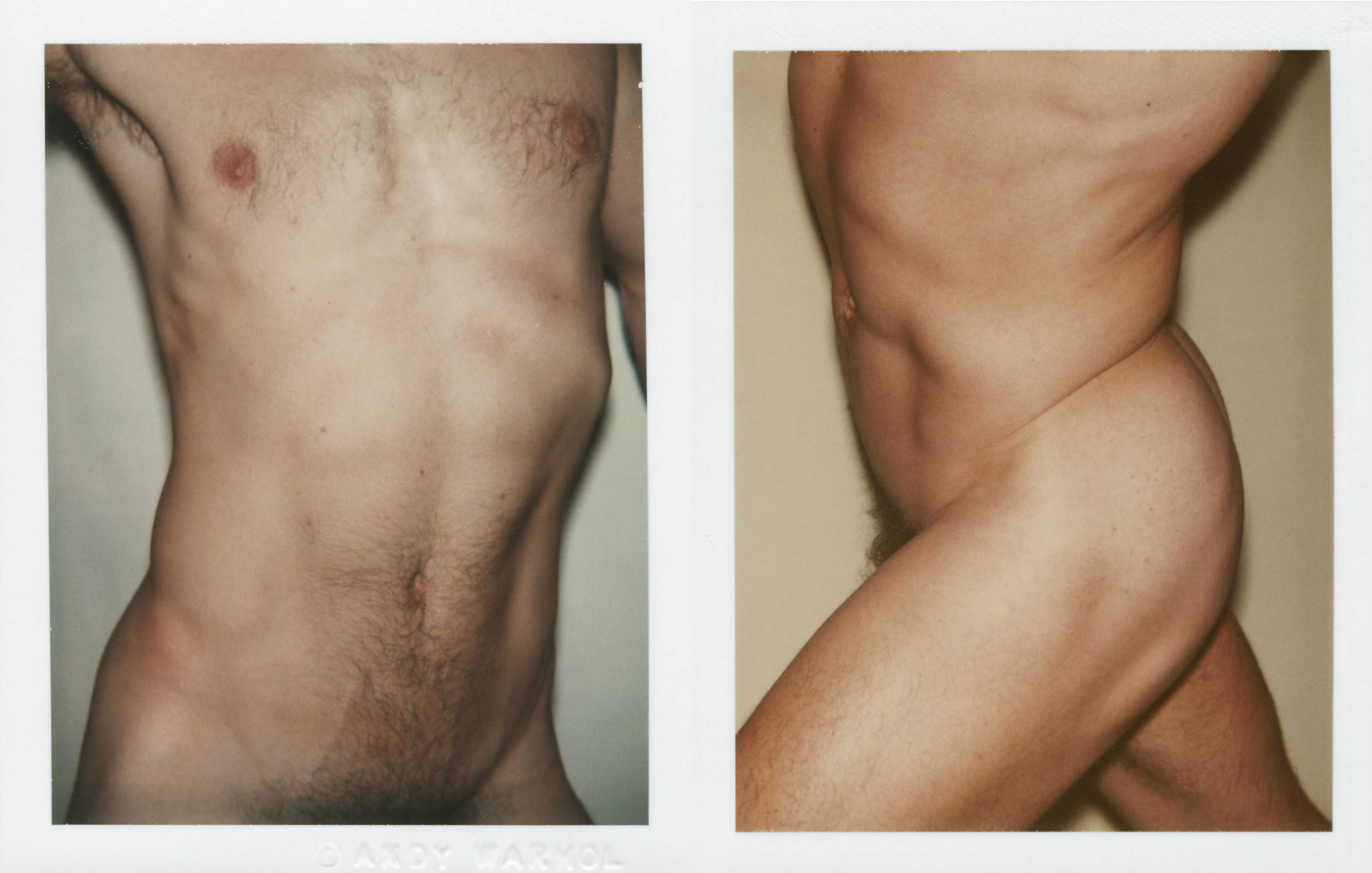
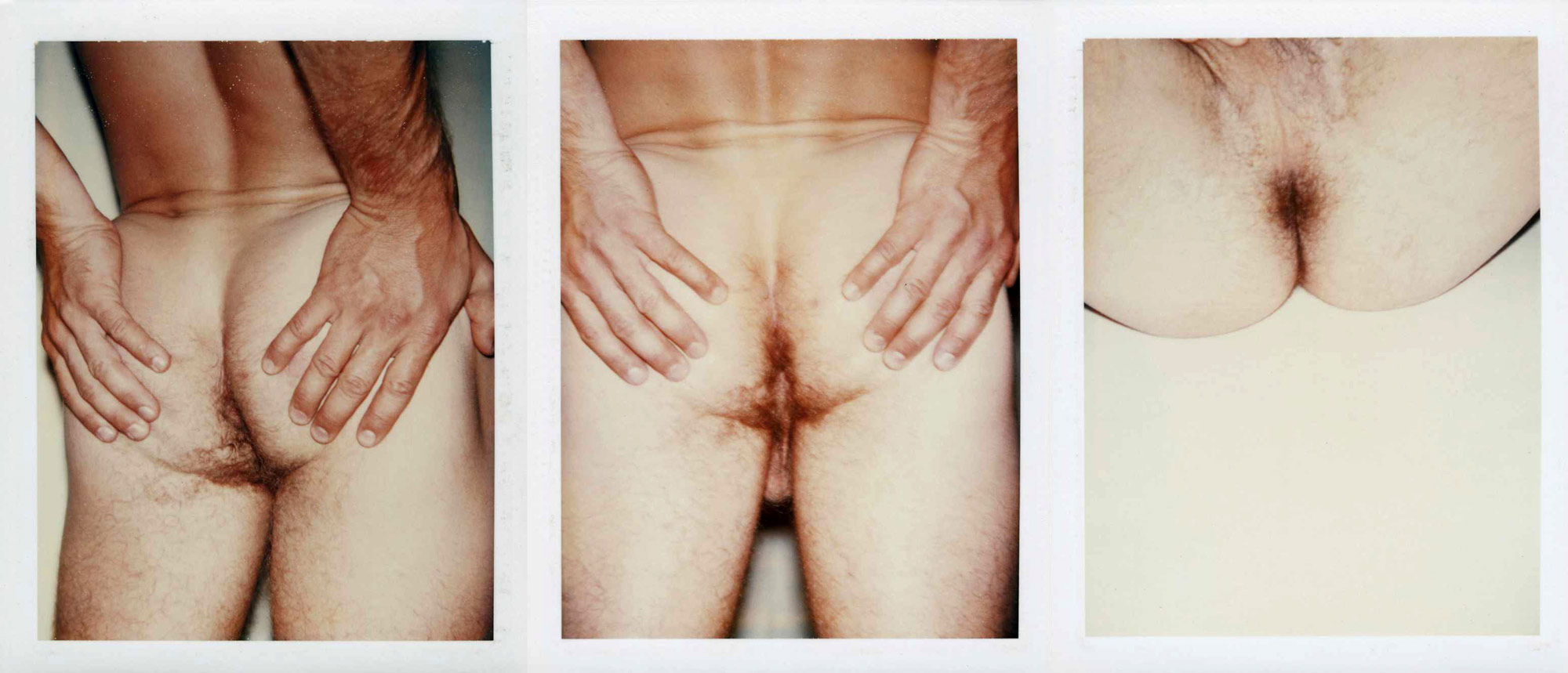
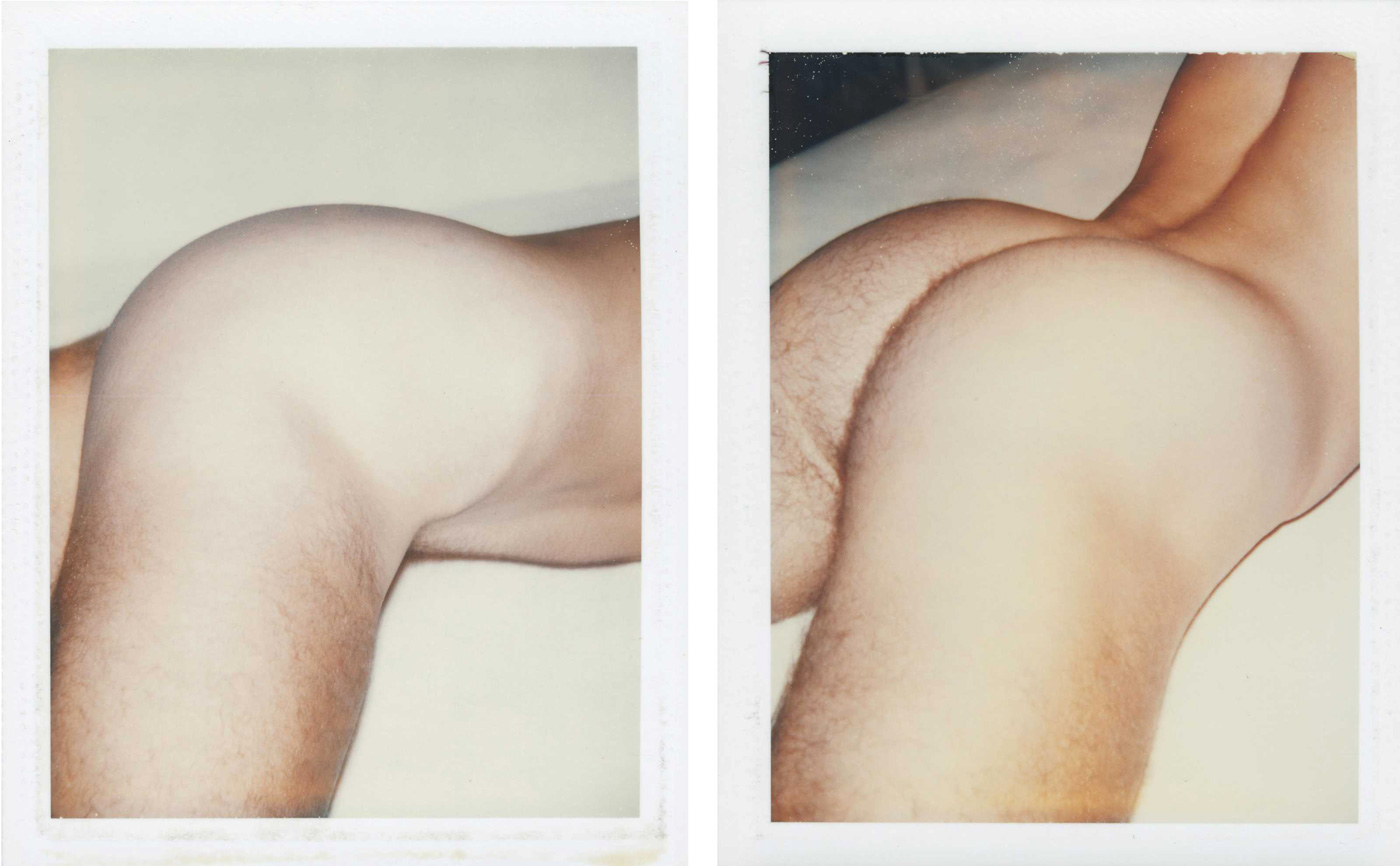
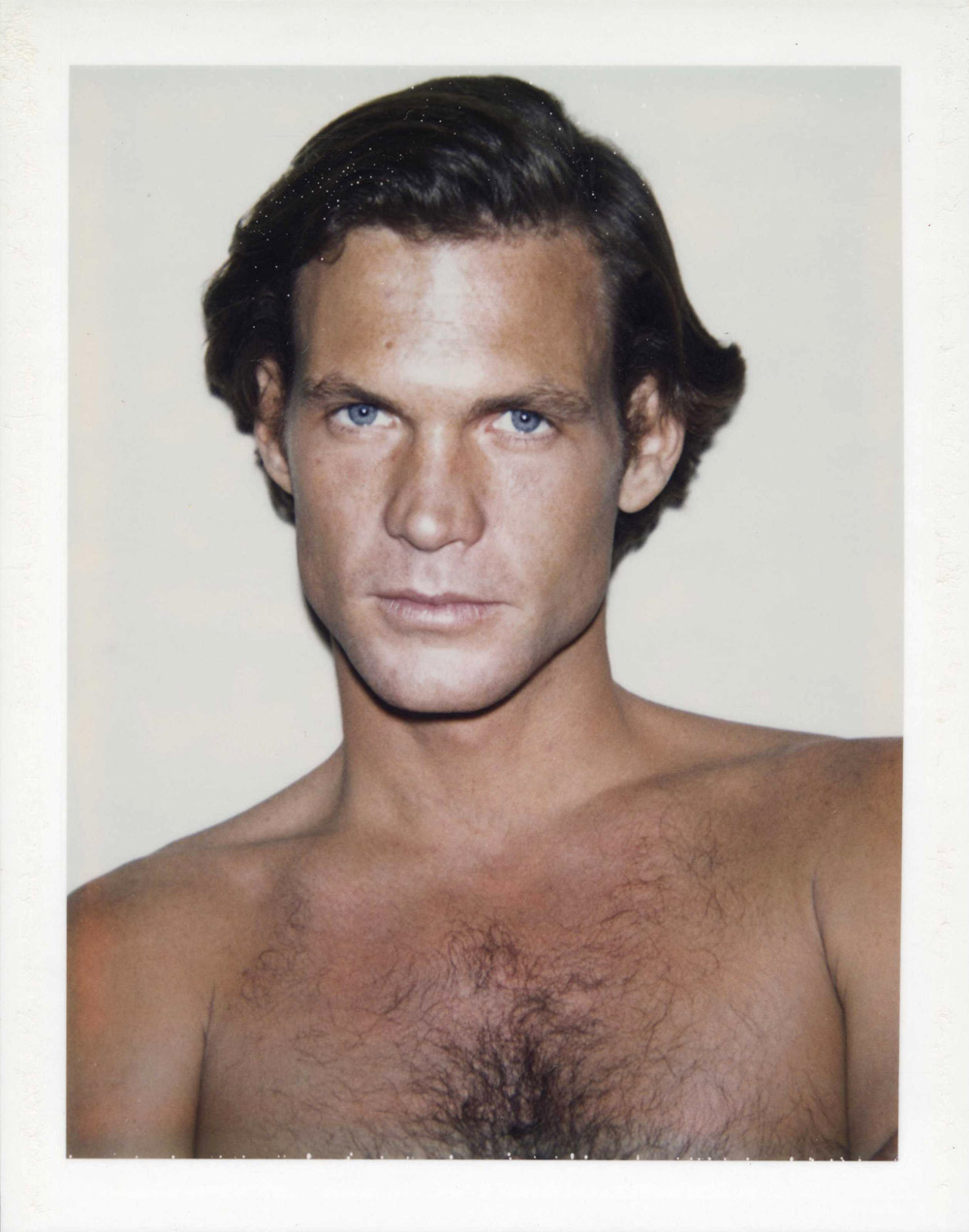
Gorgeous, intimate Polaroids of the male form. God he knew how to tell and sell a story in two or three images.

Dr Marcus Bunyan

*PLEASE NOTE THIS POSTING CONTAINS ART PHOTOGRAPHS OF MALE NUDITY – IF YOU DO NOT LIKE PLEASE DO NOT LOOK, FAIR WARNING HAS BEEN GIVEN*


Andy Warhol (American, 1928-1987) 'Nude Male Model' 1976


Andy Warhol 
(American, 1928-1987)
Nude Male Model
1976


Andy Warhol (American, 1928-1987) 'Nude Male Model' 1976 (detail)


Andy Warhol 
(American, 1928-1987)
Nude Male Model (detail)
1976


Andy Warhol (American, 1928-1987) 'Nude Male Model' 1976


Andy Warhol (American, 1928-1987)
Nude Male Model
1976


Andy Warhol (American, 1928-1987) 'Nude Male Model' 1976 (detail)


Andy Warhol 
(American, 1928-1987)
Nude Male Model (detail)
1976


Andy Warhol (American, 1928-1987) 'Nude Male Model' 1977


Andy Warhol 
(American, 1928-1987)
Nude Male Model
1977


Andy Warhol (American, 1928-1987) 'Nude Male Model' 1977


Andy Warhol 
(American, 1928-1987)
Nude Male Model
1977


Andy Warhol (American, 1928-1987) 'Nude Male Model' 1977 (detail)


Andy Warhol 
(American, 1928-1987)
Nude Male Model (detail)
1977


Andy Warhol (American, 1928-1987) 'Nude Male Model' 1977


Andy Warhol 
(American, 1928-1987)
Nude Male Model
1977


Andy Warhol (American, 1928-1987) 'Nude Male Model' 1977


Andy Warhol 
(American, 1928-1987)
Nude Male Model
1977


Andy Warhol (American, 1928-1987) 'Nude Male Model' 1977


Andy Warhol 
(American, 1928-1987)
Nude Male Model
1977


Andy Warhol (American, 1928-1987) 'Nude Male Model' 1977


Andy Warhol 
(American, 1928-1987)
Nude Male Model
1977


Andy Warhol (American, 1928-1987) 'Nude Male Model' 1977


Andy Warhol 
(American, 1928-1987)
Nude Male Model
1977


Andy Warhol (American, 1928-1987) 'Nude Male Model' 1977


Andy Warhol 
(American, 1928-1987)
Nude Male Model
1977


Andy Warhol (American, 1928-1987) 'Nude Male Model' 1977 (detail)


Andy Warhol 
(American, 1928-1987)
Nude Male Model (detail)
1977


Andy Warhol (American, 1928-1987) 'Nude Male Model' 1977 (detail)


Andy Warhol 
(American, 1928-1987)
Nude Male Model (detail)
1977


Andy Warhol (American, 1928-1987) 'Nude Male Model' 1977


Andy Warhol 
(American, 1928-1987)
Nude Male Model
1977


Andy Warhol (American, 1928-1987) 'Joe Macdonald' 1975


Andy Warhol 
(American, 1928-1987)
Joe Macdonald
1975


Andy Warhol (American, 1928-1987) 'Sean McKeon' 1980


Andy Warhol 
(American, 1928-1987)
Sean McKeon
1980


Andy Warhol (American, 1928-1987) 'Shaun Cassidy' 1979


Andy Warhol 
(American, 1928-1987)
Shaun Cassidy
1979


Andy Warhol (American, 1928-1987) 'Male Model' 1982


Andy Warhol 
(American, 1928-1987)
Male Model
1982


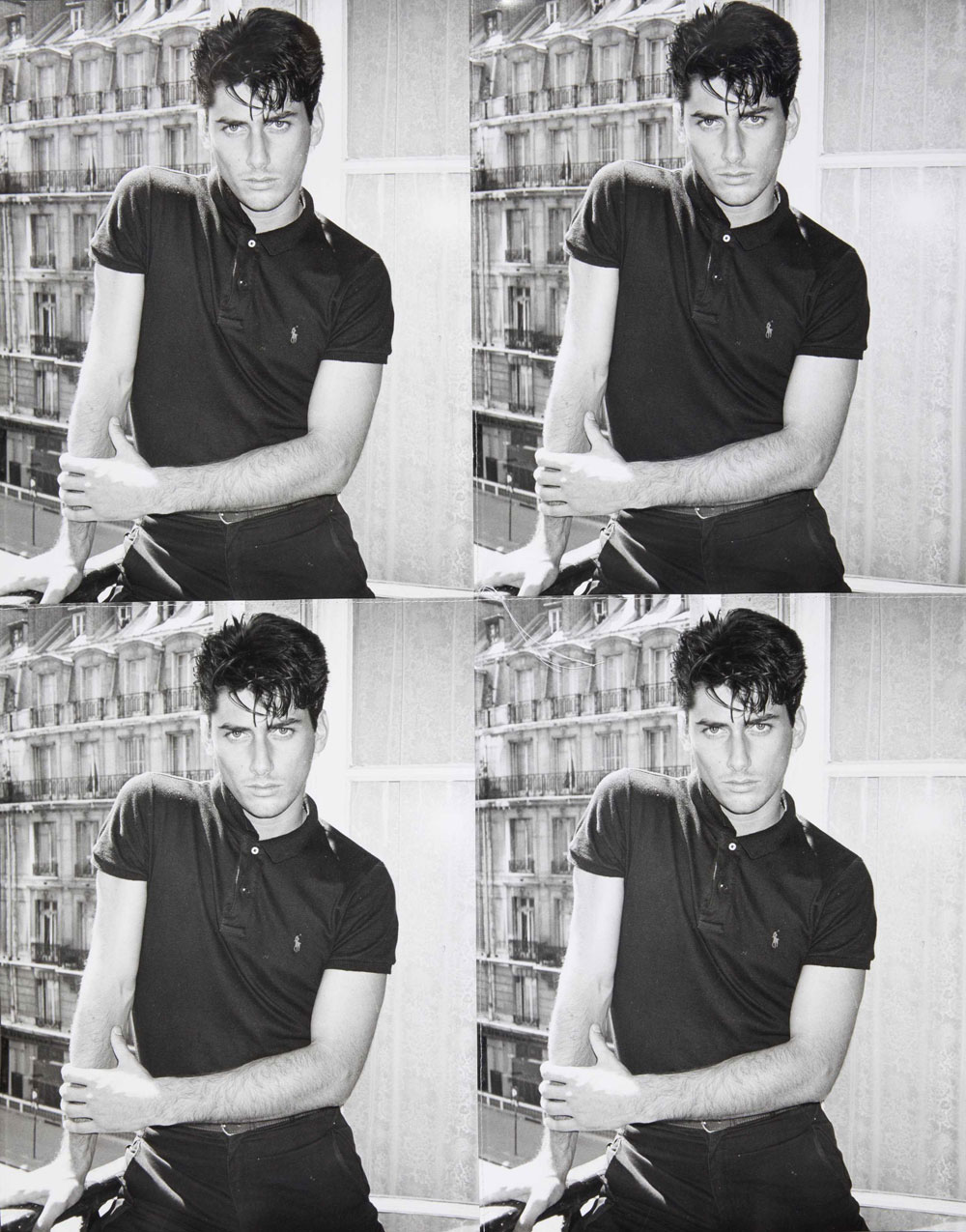
Andy Warhol (American, 1928-1987) 'Young Man in Paris' c. 1977


Andy Warhol 
(American, 1928-1987)
Young Man in Paris
c. 1977


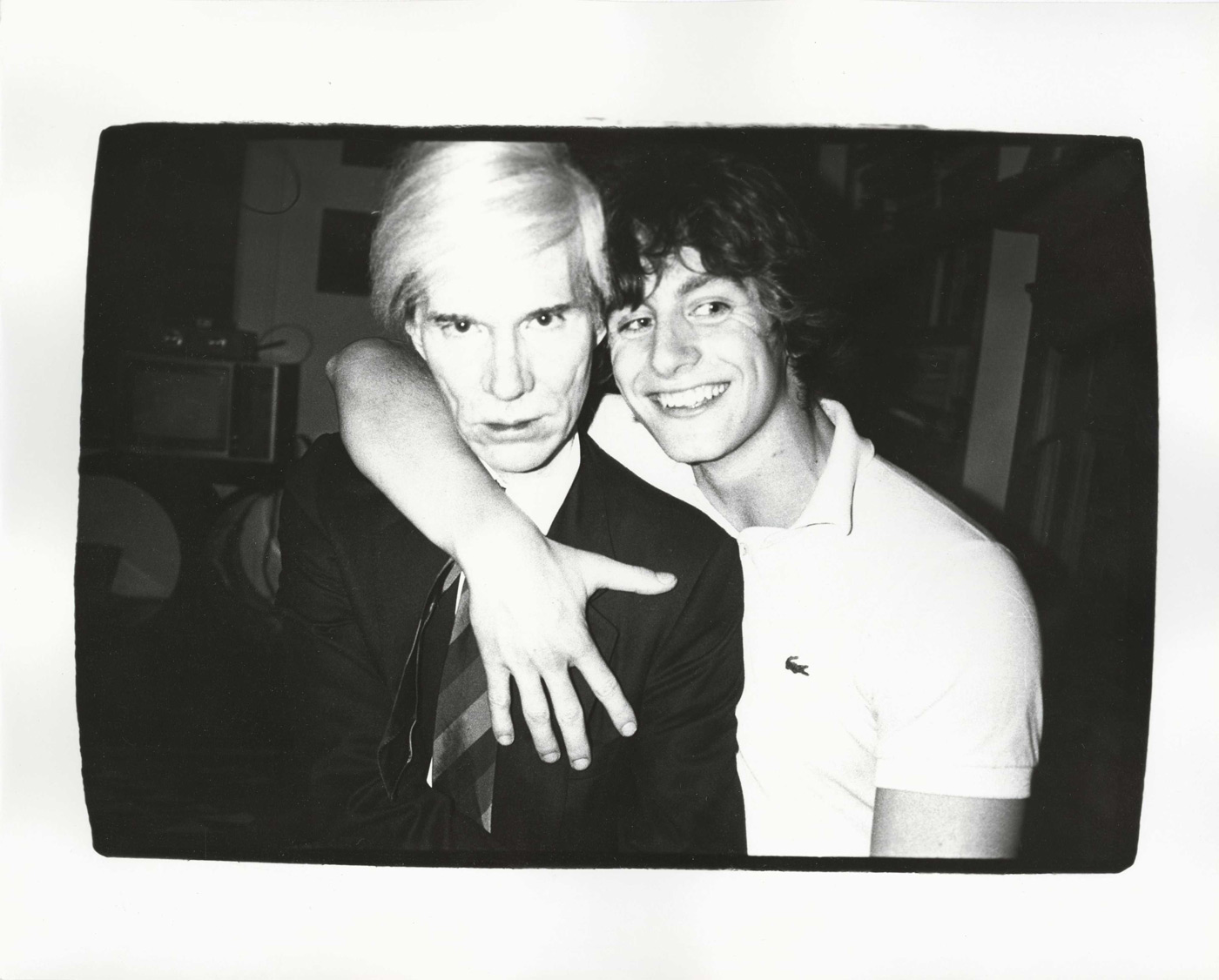
Andy Warhol (American, 1928-1987) 'Andy Warhol and Friend' c. 1979


Andy Warhol 
(American, 1928-1987)
Andy Warhol and Friend
c. 1979


Andy Warhol (American, 1928-1987) 'Unidentified Male' c. 1979


Andy Warhol 
(American, 1928-1987)
Unidentified Male
c. 1979


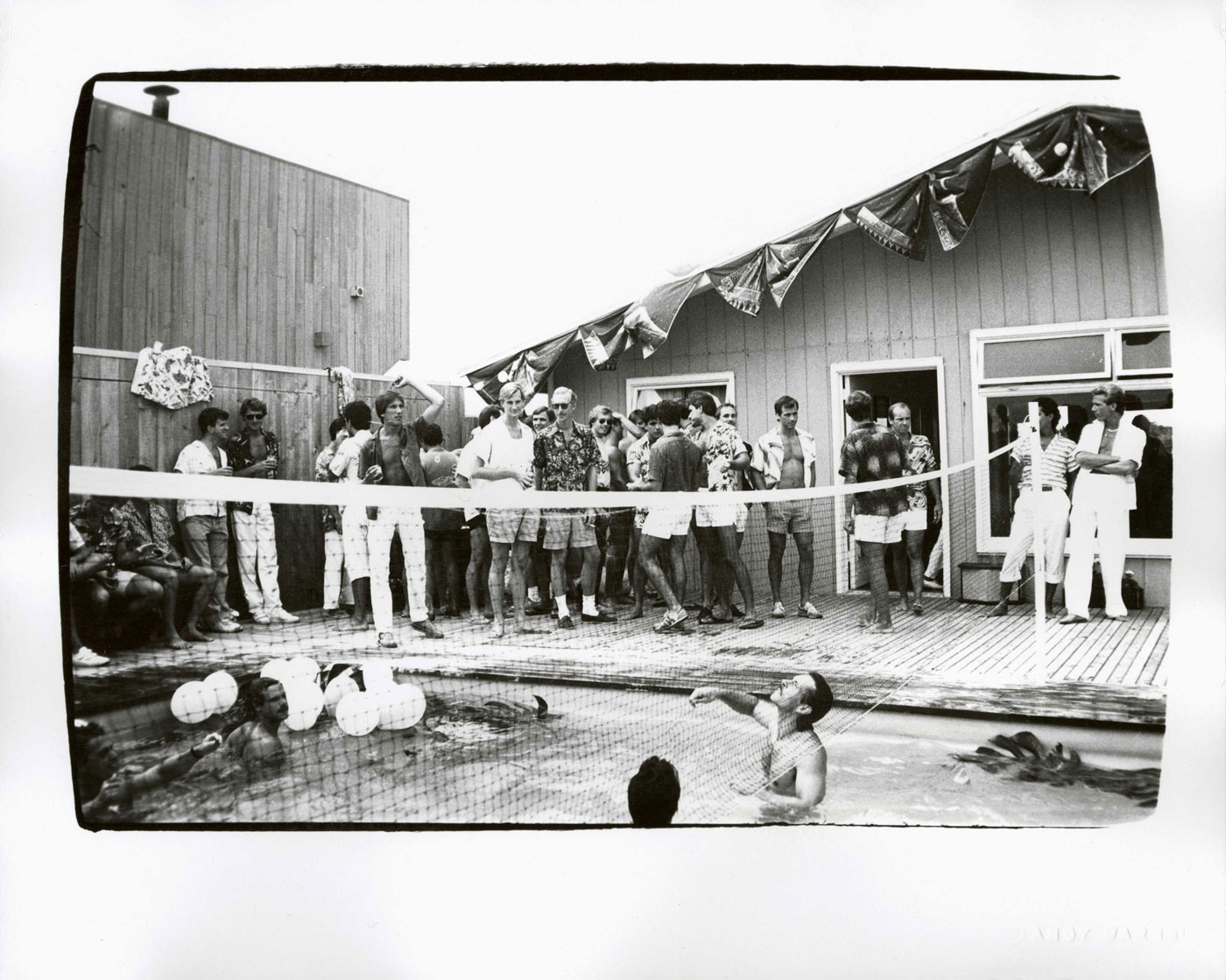
Andy Warhol (American, 1928-1987) 'Fire Island Party' 1982


Andy Warhol 
(American, 1928-1987)
Fire Island Party
1982


Andy Warhol (American, 1928-1987) 'Craig Sheffer' 1982


Andy Warhol 
(American, 1928-1987)
Craig Sheffer
1982


LIKE ART BLART ON FACEBOOK

Back to top

Exhibition: ‘Transformational Imagemaking: Handmade Photography Since 1960’ at CEPA Gallery, Buffalo, NY

Exhibition dates: 19th September – 13th December 2014

Artists: Thomas Barrow, Wayne Belger, Stephen Berkman, Matthew Brandt, Dan Burkholder, Darryl Curran, Binh Danh, Rick Dingus, Dan Estabrook, Robert Fichter, Robert Flynt, Judith Golden, Betty Hahn, Robert Heinecken, Robert Hirsch, Catherine Jansen, Harold Jones, Tantana Kellner, Les Krims, William Larson, Dinh Q. Lê, David Lebe, Martha Madigan, Curtis Mann, Stephen Marc, Scott McCarney, Chris McCaw, John Metoyer, Duane Michals, Vik Muniz, Joyce Neimanas, Bea Nettles, Ted Orland, Douglas Prince, Holly Roberts, Clarissa Sligh, Keith Smith, Jerry Spagnoli, Mike & Doug Starn, Brian Taylor, Maggie Taylor, Jerry Uelsmann, Todd Walker, Joel-Peter Witkin, John Wood.

Curator: Robert Hirsch


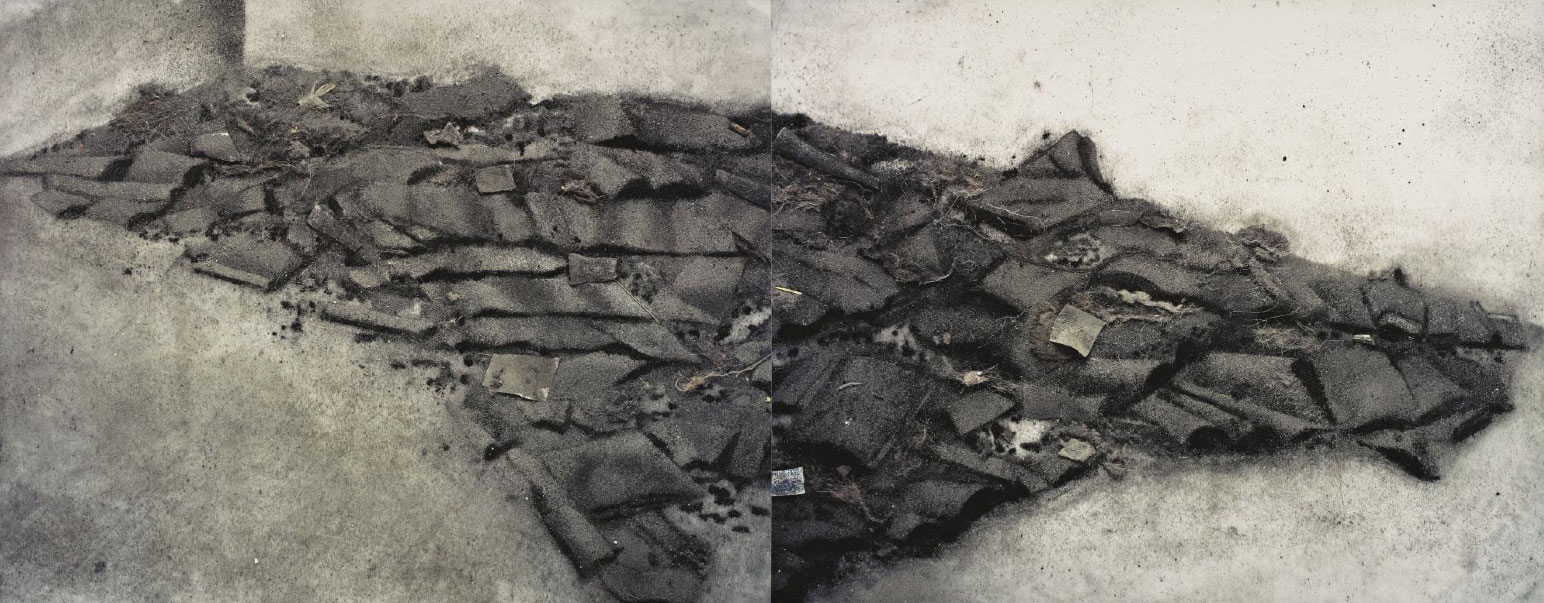
Vik Muniz (Brazilian, b. 1961) 'Picture of Dust' 2000


Vik Muniz (Brazilian, b. 1961)
Picture of Dust (Barry Le Va, Continuous and Related Activities; Discontinued by the Act of Dropping, 1967, Installed at the Whitney Museum in New Sculpture 1965-1975: Between Geometry and Gesture, February 20-June 3, 1990)
2000
From the series The Things Themselves: Picture of Dust
Framed, overall: 51 x 130 1/2 inches
Two silver dye bleach prints (Ilfochrome)
Whitney Museum of American Art, New York;/Licensed by VAGA, New York, NY


The resurgence of handmade photography in the 1960s had several sources and influences. It looked back to the “anti-tradition” of nineteenth-century romanticism, which accentuated the importance of making a highly personal response to experience and a critical response to society. It drew on contemporary popular culture. Many of the artists engaged in this movement were baby-boomers brought up on television and film, media that often portrayed photography as hip and sexy – eg. the film Blow-Up (1966) – and which drove home the significance of constructed photographic images. In addition, the widespread atmosphere of rebellion against social norms propelled the move toward handwork. The rejection of artistic standards in photography was consistent with the much broader exploration of sexual mores and gender roles that took place in the sixties. It was also consistent with the exploration of consciousness. The latter was encouraged by such counter-culture figures as Ken Kesey who, with his band of Merry Pranksters, boarded a Day-Glo bus called “Further” and took an LSD-fuelled trip across the country that echoed Dr. Timothy Leary’s decree “to tune in, turn on, and drop out.” On a broader level, the society-at-large was exposed to psychedelic exploration through Stanley Kubrick’s film 2001: A Space Odyssey (1968), which youthful audiences saw as a mysterious consciousness-expanding trip into humanity’s future. Finally, handmade photography was supported by the general growth of photographic education in the university. The ubiquity and importance of the medium in the culture at large, as well as pressure from those who championed photography from within art institutions gave credence in the post-war decades to the idea that people could study photography seriously. As new photography programs mushroomed in the universities, they produced graduates who took teaching positions in even newer programs. Many of these young teachers, who had grown up to the adage of “do your own thing,” were responsive to unconventional ways of seeing and working, and they encouraged these attitudes in their students, many of whom turned to handmade photography.

Despite the attractions of handmade photography there were in the sixties, and still are to some degree, emphatic objections to the open engagement of the hand in photographic art. One common objection is that such art constitutes a dishonest method to cover up aesthetic and technical inadequacies. Another comes from those who believe strongly in the Western tradition of positivism. These people tend to reject handmade photography on the grounds that it is unnecessarily ambiguous or irrational in its meanings. Nevertheless, more artists than ever are currently using the flexible, experiential methods of handwork. In addition to opening up an avenue to inner experience, artists find handwork attractive because it promotes inventiveness, allows for the free play of intuition beyond the control of the intellect, extends the time of interaction with an image (on the part of both the maker and the viewer), and allows for the inclusion of a wide range of materials and processes within the boundaries of photography…

[Curator] Peter C. Bunnell’s innovative exhibitions [MoMA: Photography as Printmaking (1968) and Photography Into Sculpture (1970)] demonstrated that in essence photography is nothing more than light sensitive material on a surface. The exhibitions also recognized that the way a photograph is perceived and interpreted is established by artistic and societal preconceptions about how a photographic subject is supposed to look and what is accepted as truthful. The work in the Bunnell exhibitions was indicative of a larger zeitgeist of the late 1960s that involved leaving the safety net of custom, exploring how to be more aware of and physically connected to the world, and critically examining expectations with regard to lifestyles…

In spite of post-modernism’s assault on the myth of authorship and its sardonic outlook regarding the human spirit, artists who produce handmade photography continue to believe that individuals can make a difference, that originality matters, and that we learn and understand by doing. They think that a flexible image is a human image, an imperfect and physically crafted one that possesses its own idiosyncratic sense of essence, time, and wonder. Their work can be aesthetically difficult, as it may not provide the audience-friendly narratives and well-mannered compositions some people expect. But sometimes this is necessary to get us to set aside the ordained answers to the question: “What is a photograph?” and allow us to recognise photography’s remarkable diversity in form, structure, representational content, and meaning. This acknowledgment grants artists the freedom and respect to explore the full photographic terrain, to engage the medium’s broad power of inquiry, and to present the wide-ranging complexity of our experiences, beliefs, and feelings for others to see and contemplate.

Extract from Flexible Images: Handmade American Photography, 1969-2002 by Robert Hirsch (2003) on the Light Research website [Online] Cited 14/11/2014. First published in The Society for Photographic Education’s exposure, Volume 36: 1, 2003, cover and pages 23-42. © Robert Hirsch 2003


Many thankx to CEPA Gallery for allowing me to publish the photographs in the posting. Please click on the photographs for a larger version of the image.


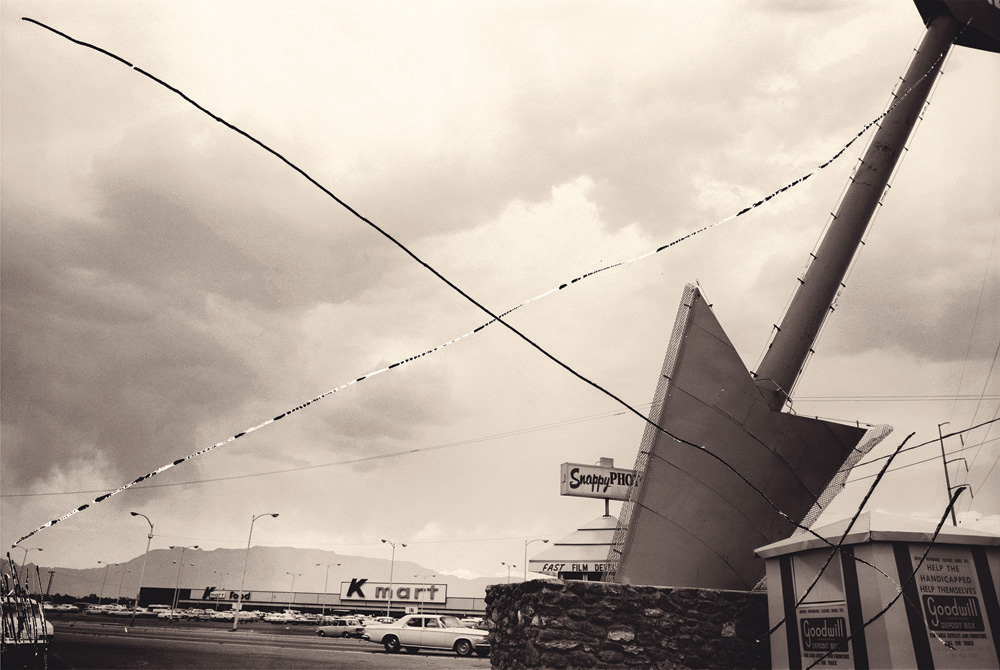
Thomas Barrow (American, b. 1938) 'Dart, Albuquerque' 1974


Thomas Barrow (American, b. 1938)
Dart, Albuquerque
1974
Fuji Crystal Archive Print


Thomas Barrow (American, b. 1938) 'f/t/s Cancellations (Brown) – Field Star' 1975


Thomas Barrow (American, b. 1938)
f/t/s Cancellations (Brown) – Field Star
1975
Gift from the Collection of Joel Deal and Betsy Ruppa
© Thomas Barrow. Museum of Art Rhode Island School of Design, Providence


Barrow scratched through his landscape negatives, calling attention to the materiality of the medium itself and the fact that regardless of how much information is given, reality remains an accumulation of belief, knowledge, and one’s own experience.


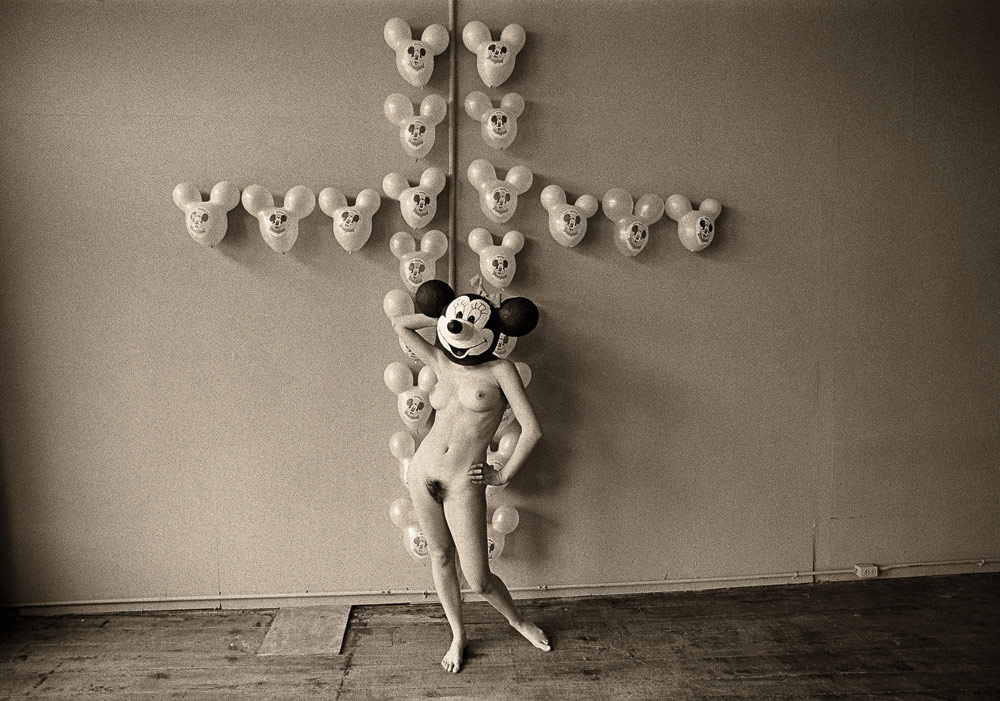
Les Krims (American, b. 1942) 'The Static Electric Effect of Minnie Mouse on Mickey Mouse Balloons' 1968


Les Krims (American, b. 1942)
The Static Electric Effect of Minnie Mouse on Mickey Mouse Balloons
1968
Kodalith Print


“Kodak Kodalith paper was a thin, matt, orthochromatic graphic arts paper that was not intended for pictorial purposes. However, when it was used for pictorial expression its responsiveness to time and temperature controls during development enabled one to produce a wide range of grainy, high-contrast, and sepia tonal effects. Its unusual handling characteristics also meant that photographers had to pull the print at precisely the “right” moment from the developer and quickly get it into the stop bath, making each print unique.”


Din Q Le (Vietnamese American, b. 1968) 'Ezekial’s Whisper' 2014


Din Q Le (Vietnamese American, b. 1968)
Ezekial’s Whisper
2014
C-print, linen tape


Ted Orland (American, b. 1941) 'Meteor!' 1998


Ted Orland (American, b. 1941)
Meteor!
1998
Hand coloured gelatin silver print


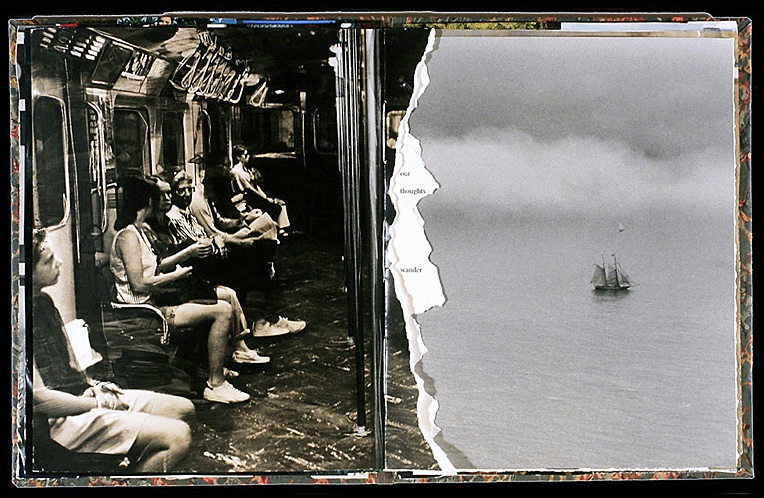
Brian Taylor (American) 'Our Thoughts Wander' 2005


Brian Taylor (American)
Our Thoughts Wander
2005
From the series Open Books
Hand bound book


Open Books

I create photographically illustrated books springing from my fascination with the book format and a love of texture in art. My imagery is inspired by the surreal and poetic moments of living in our fast-paced, modern world. I’m fascinated by how daily life in the 21st Century presents us with incredible experiences in such regularity that we no longer differentiate between what is natural and what is coloured with implausibility, humour, and irony.

These hard cover books are hand bound with marbleised paper and displayed fully opened to a photographically illustrated two-page folio spread. Each book is framed in a wooden shadowbox and presented as a wall piece. I like the idea of making art that contains some imagery which can be sensed but not seen. The underlying pages contain my photographs, snapshots, and work prints that “gave their lives” for the imagery visible in the open spread. These images lie beneath the open pages like history.

Text from the Brian Taylor Photography website [Online] Cited 12/11/2022


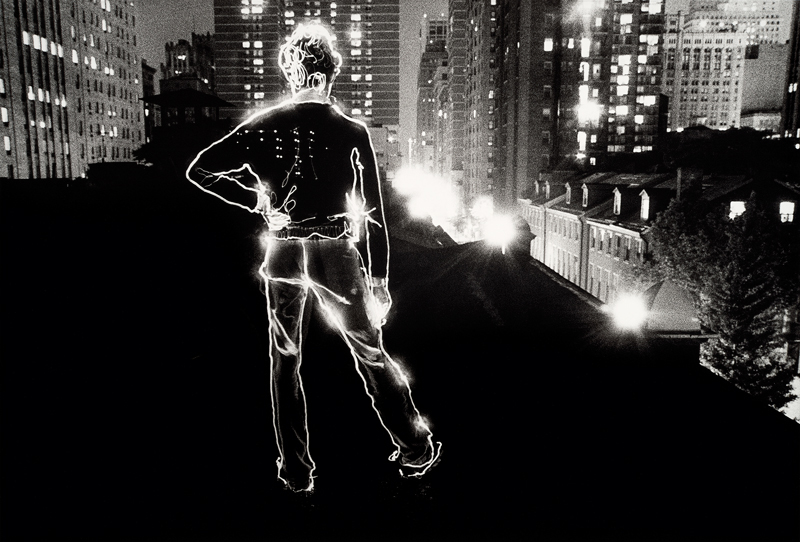
David Lebe (American, b. 1948) 'Angelo On The Roof' 1979


David Lebe (American, b. 1948)
Angelo On The Roof
1979


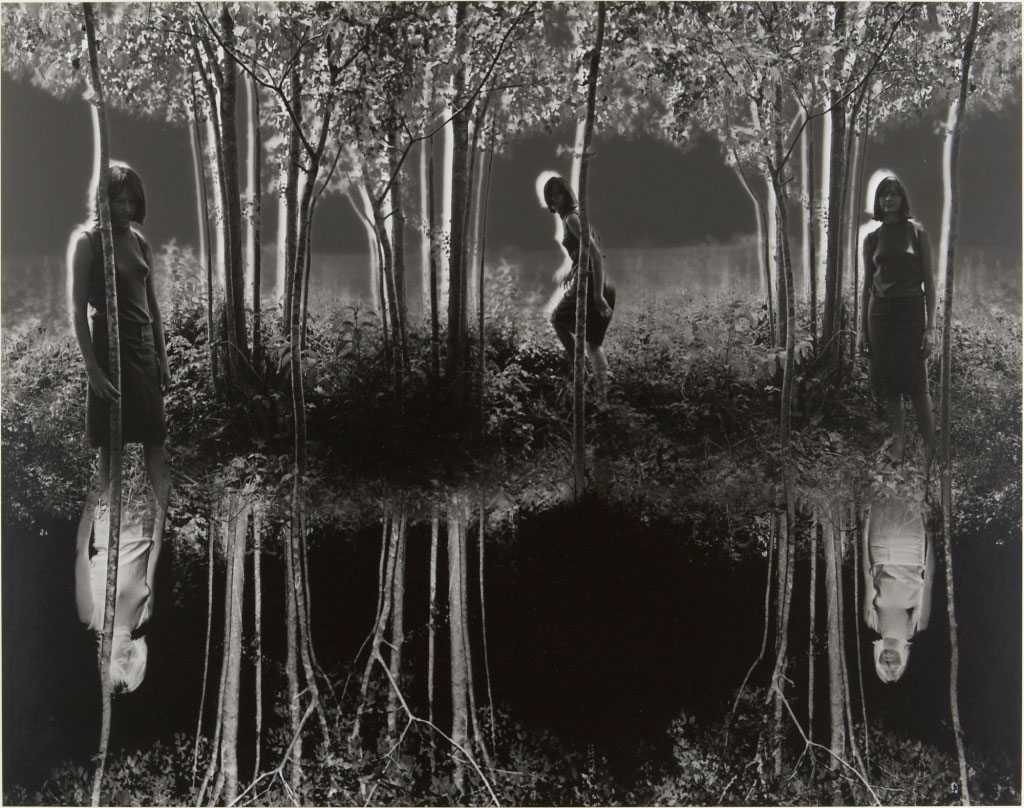
Jerry Uelsmann (American, 1934-2022) 'Small Woods where I met Myself (Final Version)' 1967


Jerry Uelsmann (American, 1934-2022)
Small Woods where I met Myself (Final Version)
1967
Gelatin silver print
25.4 x 32.3cm (10 x 12 11/16 in.)
© 1967 Jerry Uelsmann


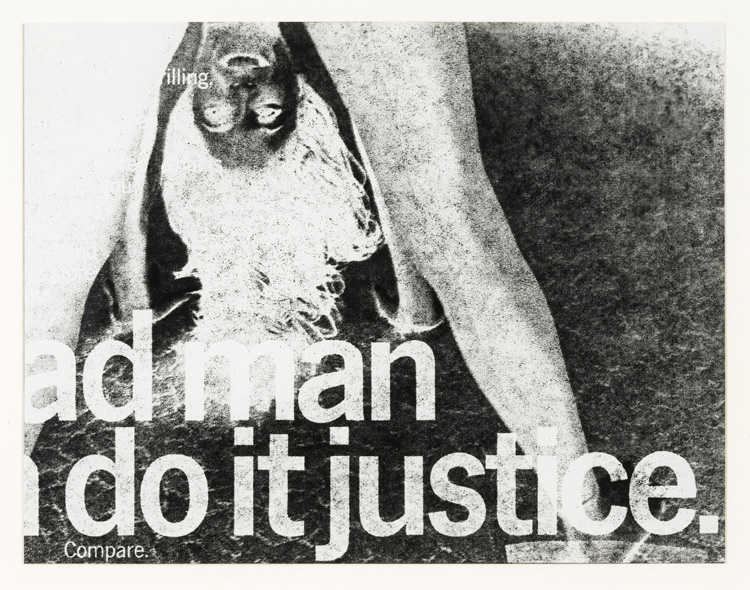
Robert Heinecken (American, 1931-2006) 'Are You Rea #15' 1968


Robert Heinecken (American, 1931-2006)
Are You Rea #15
1968
Offset lithography


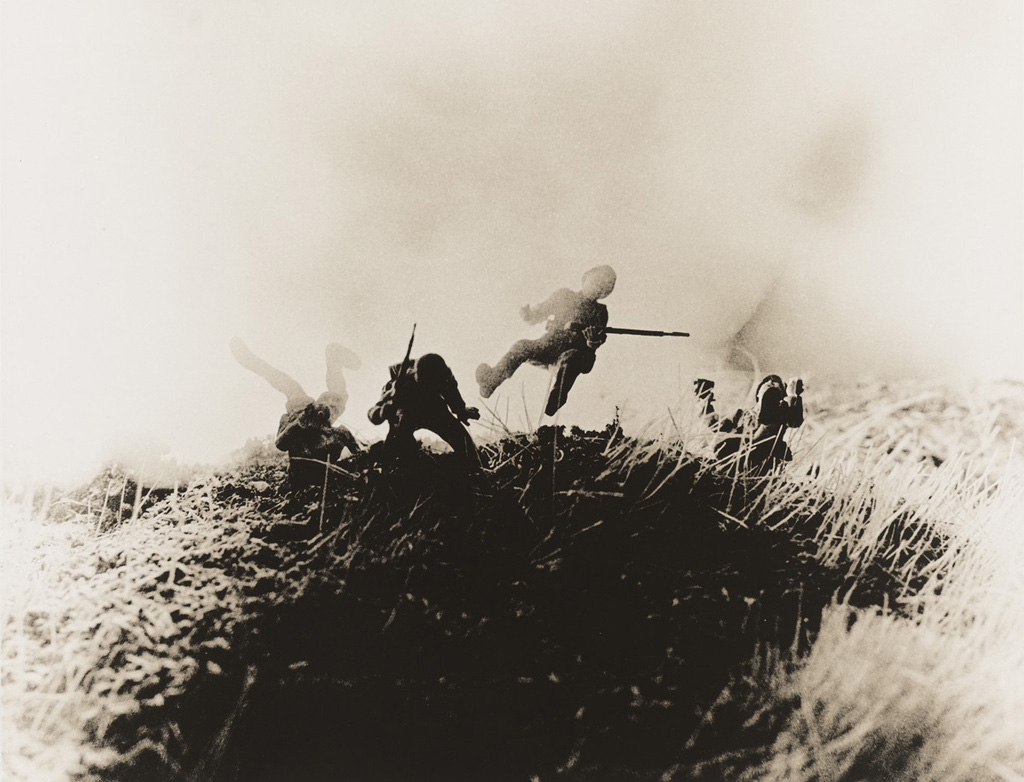
David Levinthal (American, b. 1949) and Garry Trudeau (American, b. 1948) 'Untitled', from the series 'Hitler Moves East' 1977


David Levinthal (American, b. 1949) and Garry Trudeau (American, b. 1948)
Untitled, from the series Hitler Moves East
1977
8 x 10 inches
Gelatin silver (Kodalith) print
Courtesy Paul Morris Gallery, New York City


My favourite story comes from the early days of Levinthal’s career, when he was a college student working on Hitler Moves East with Garry Trudeau. They worked with childlike enthusiasm, purchasing smoke bombs from a local theatre supply shop and growing grass inside David’s apartment to achieve maximum realism. This culminated in a huge explosion of smoke, and the photograph above. Forever making jokes, Levinthal had this to say about the situation: “I’m not even sure we had 911 those days, so that was probably helpful.” He sometimes describes incidents in which things went wrong, but thankfully this wasn’t one of those situations. Instead he successfully produced this photo and began a transition from the early works, which show toys rearranged on his linoleum floor, to photographs that are sophisticated and deceptively real looking.

Ashleigh Ferran. “From Toys to Art: Learning from David Levinthal,” on the Corcoran website August 7, 2013 [Online] Cited 02/07/2021. No longer available online


Joel-Peter Witkin (American, b. 1939) 'Poussin in Hell' 1999


Joel-Peter Witkin (American, b. 1939)
Poussin in Hell
1999
Toned gelatin silver print


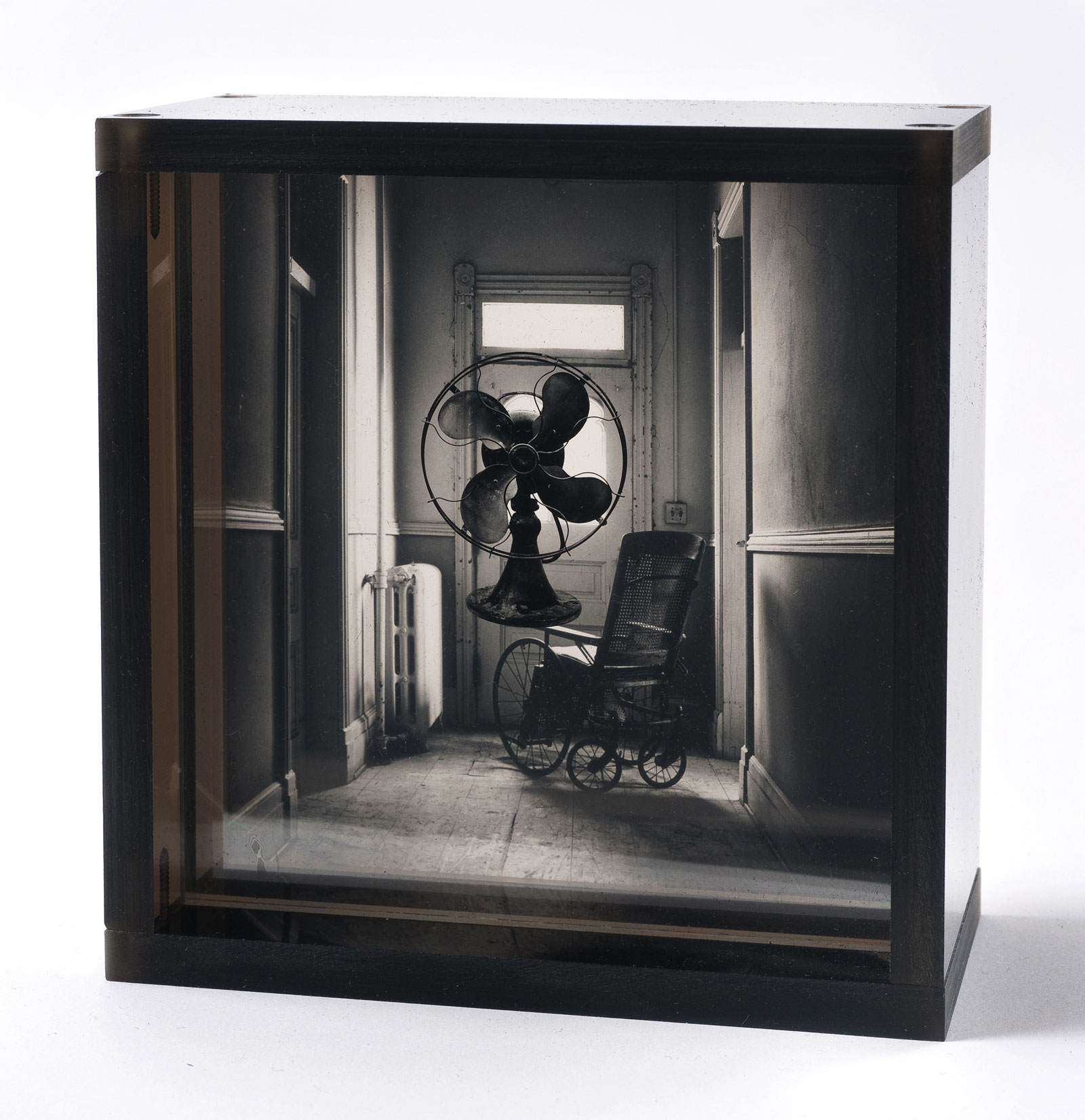
Douglas Prince (American, b. 1943) 'Untitled' 1969


Douglas Prince (American, b. 1943)
Untitled
1969
Film and Plexiglas
5 x 5 x 2.5 inches


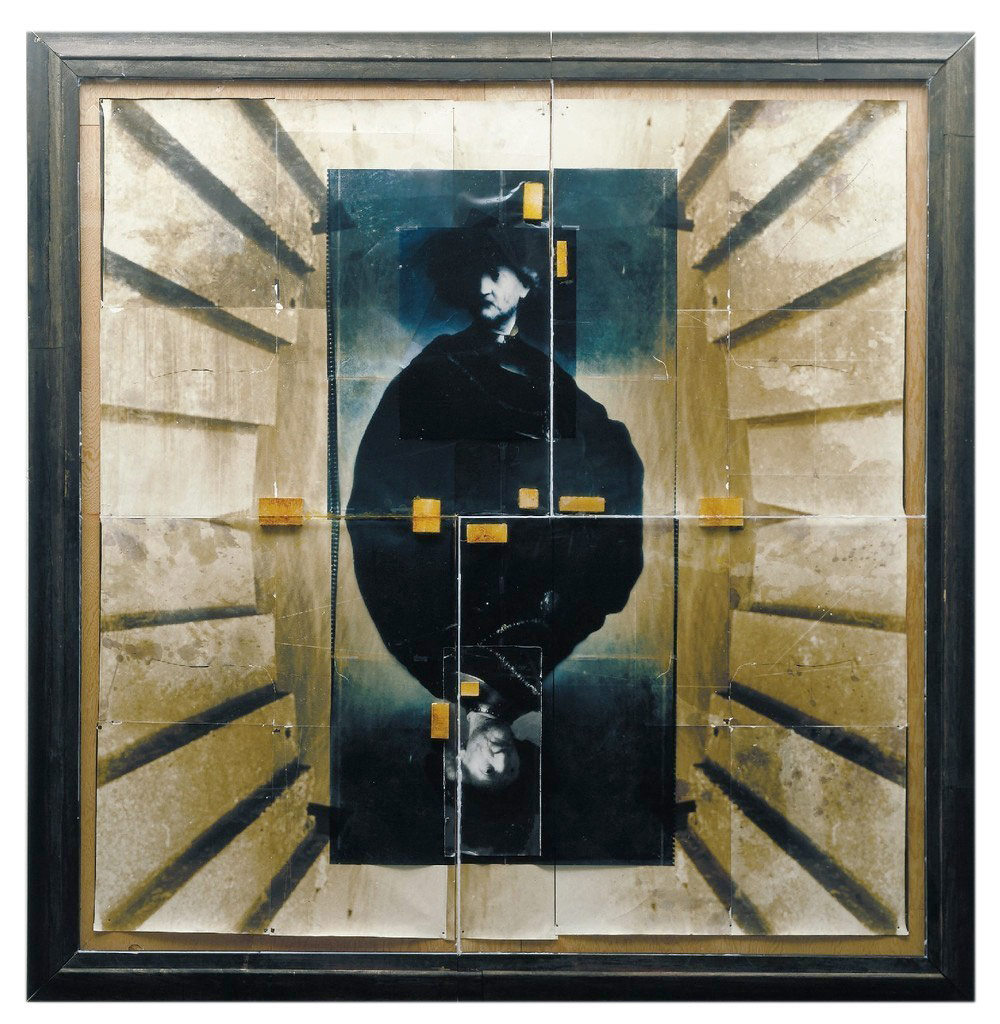
Mike and Doug Starn (American, b. 1961) 'Double Rembrandt with Steps' 1987-1988


Mike and Doug Starn (American, b. 1961)
Double Rembrandt with Steps
1987-1988
Toned gelatin silver print, toned ortho film, wood, Plexiglas, and glue.
108 x 108 inches
Collection of the Museum of Modern Art, New York, NY


CEPA Gallery is pleased to announce Transformational Imagemaking: Handmade Photography Since 1960, a companion exhibition to Robert Hirsch’s recently published book of the same title (Focal Press). This extraordinary exhibition features work by some of the most innovative photographers and imagemakers of the mid- 20th century through today; artists who redefined the notion of photography as a medium and left an indelible mark on contemporary photographic practices.

This extensive survey will include more than 140 works by over 40 artists spanning nearly 50 years of artistic practice unified by a curatorial arc rooted in notions that deviate from the purview of traditional photographic practice. Citing Robert Heinecken’s practice as the genesis of conceptual handmade photography, this exhibition charts an intricate universe of artists whose practice dispenses with the self-prescribed limitations of conventional photography in order to mine the boundless potential of the photographic medium as a conceptual conveyance.

Transformational Imagemaking is the culmination of Hirsch’s lifelong exploration into handmade photography and the artists whose practices were formed on the principle of unearthing new possibilities. Hirsch sites the catalyst for the project as an article he published in exposure in 2003 entitled “Flexible Images: Handmade American Photography, 1969-2002”. It has since expanded into a comprehensive publication that includes personal conversations with each artist conducted over a six-month period during 2013. CEPA will now elaborate further by mounting an exhibition that features a selection of each artist’s work.

In addition to Transformational Imagemaking, CEPA will also show the complete folio of Robert Heinecken’s seminal series Are You Rea (1966). Considered to be the grandfather of post-modern photographic practices and a major figure of 20th century art, Heinecken was a key figure in promoting new sentiments about photography as an art form, influencing artists such Richard Prince, Barbara Kruger, Sherrie Levine, and others. Heinecken’s rebellious spirit challenged conventions about the ways photographs represent the tangible world: “We constantly tend to misuse or misunderstand the term reality in relation to photographs. The photograph itself is the only thing that is real.”

Are You Rea (1966), created by contact printing magazine tear-outs onto photographic paper, are ghostly compositions that layer sexually suggestive images of women with fractured text. This provocative body of work, sexually charged and evocatively ambiguous, reflects an awareness of desire as a commercial commodity that begs us to question the very root of our own desires.

Press release from CEPA Gallery


Keith Smith (American, b. 1938) 'Untitled' 1972


Keith Smith (American, b. 1938)
Untitled
1972


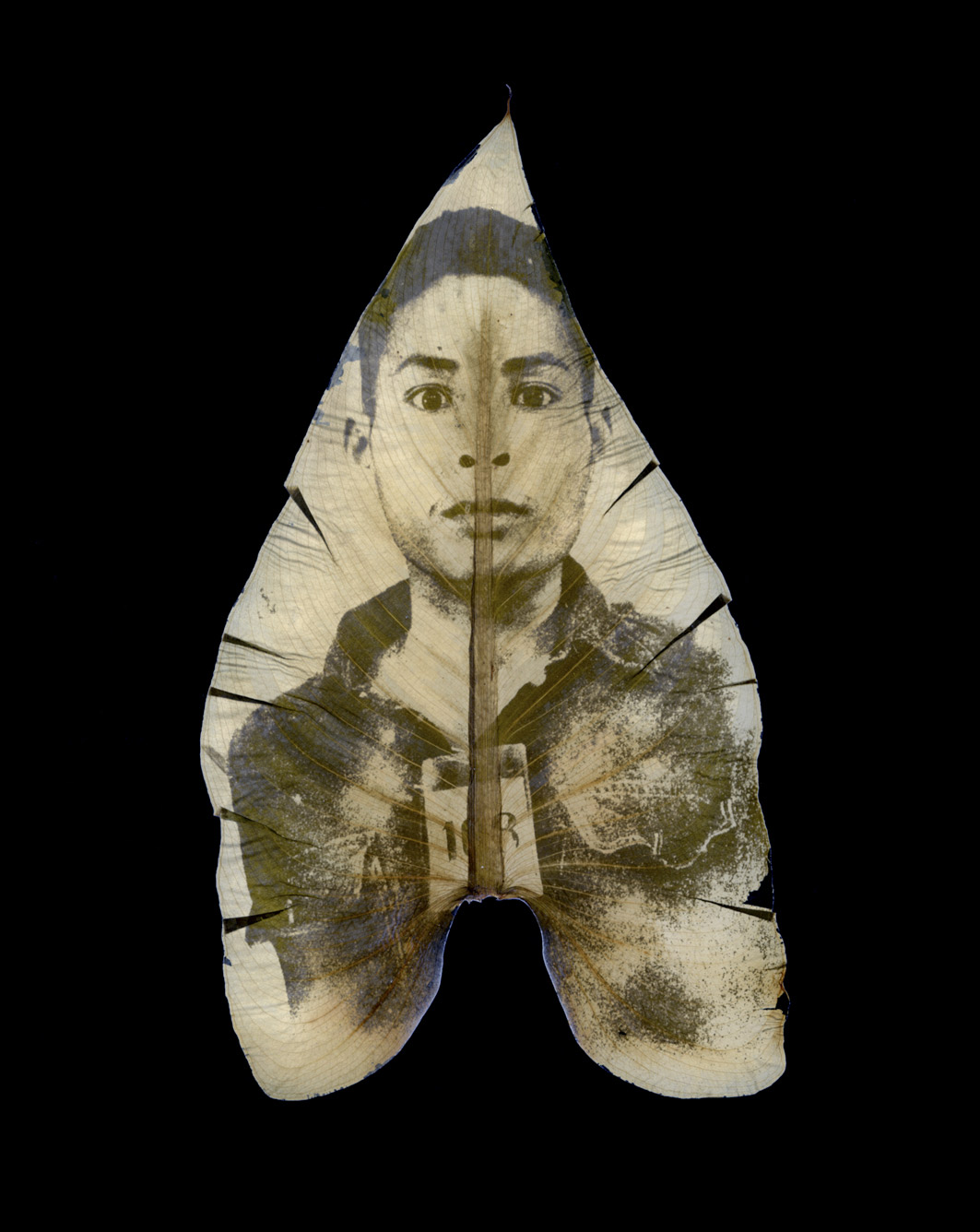
Binh Danh (American born Vietnam, b. 1977) 'The Botany of Tuol Sleng Genocide Museum #2' 2008


Binh Danh (American born Vietnam, b. 1977)
The Botany of Tuol Sleng Genocide Museum #2
2008
From the Immortality: The Remnants of the Vietnam and American War series
Chlorophyll print and resin


The chlorophyll process is an organic alternative photography process akin to the anthotype process. However, instead of printing on the crushed extract of fruit or plant matter, the prints are bleached by sunlight directly onto the surface of leaves using a positive. The resulting images are stunningly delicate and beautiful, ranging from haunting silhouettes to crisp definition. Despite the simplicity of the finished product, the process itself can be tedious with plenty of trial and error.

Drawing on the anthotype process, Danh refined a method for securing a positive directly to a live leaf and allowing sunlight to bleach the image onto its surface naturally. He has also addressed a fundamental challenge with natural photography processes; that of fixing the image to prevent further bleaching and deterioration over time. To save his work, Dah casts his finished pieces in a layer of resin allowing them to be enjoyed for years to come.

Tiffany Pereira. “The chlorophyll process,” on the Alternative Photography website [Online] Cited 02/07/2021


Dinh Q. Lê (Vietnamese, b. 1968) 'Untitled' 1998


Dinh Q. Lê (Vietnamese, b. 1968)
Untitled, from the series Cambodia: Splendor and Darkness
1998
C-print and linen tape


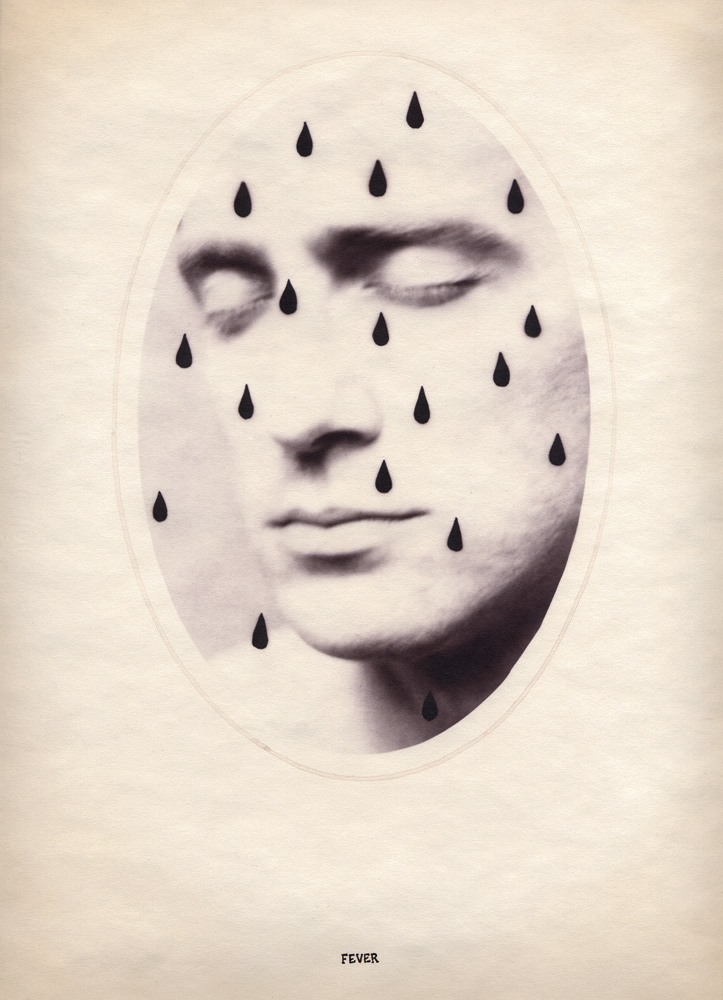
Dan Estabrook (American, b. 1969) 'Fever' 2004


Dan Estabrook (American, b. 1969)
Fever
2004
Salt print with ink and watercolor


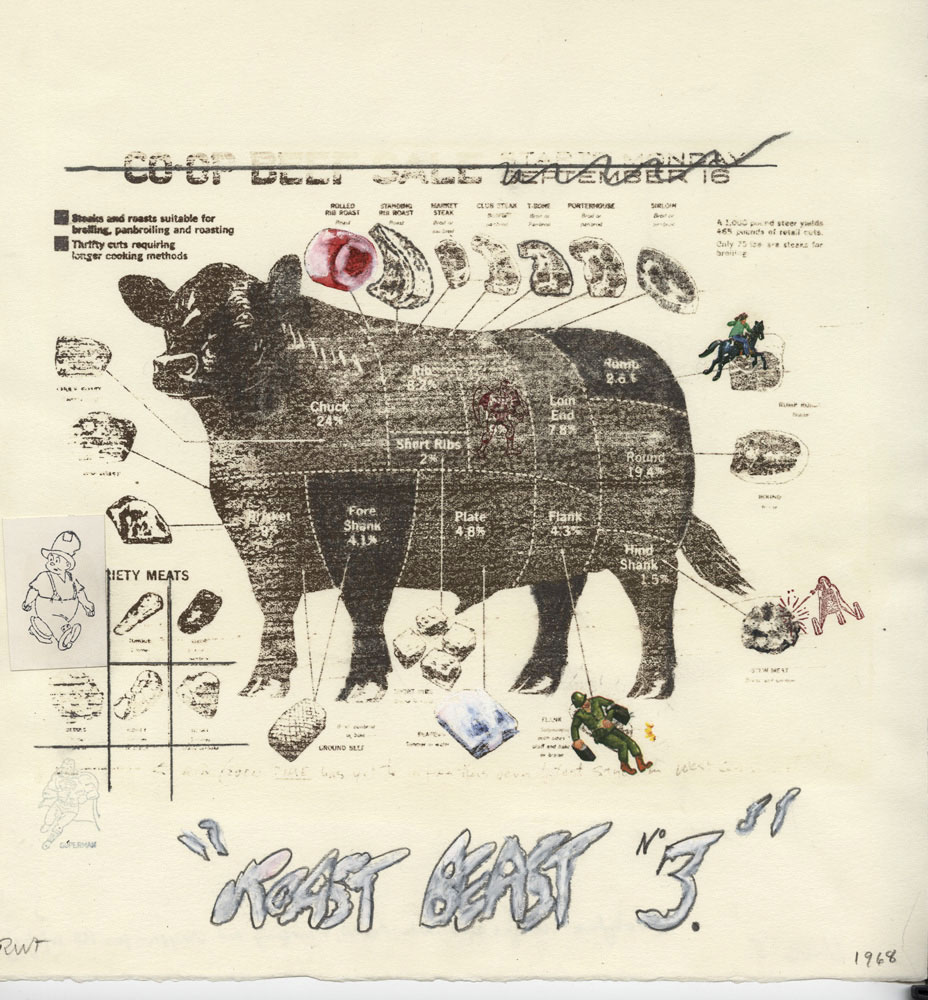
Robert Fichter (American, b. 1939) 'Roast Beast 3' 1968


Robert Fichter (American, b. 1939)
Roast Beast 3
1968
Verifax transfer with rundowns, stamping, and crayon


Robert Heinecken (American, 1931-2006) 'Are You Rea #1' 1966


Robert Heinecken (American, 1931-2006)
Are You Rea #1
1966
Offset lithography


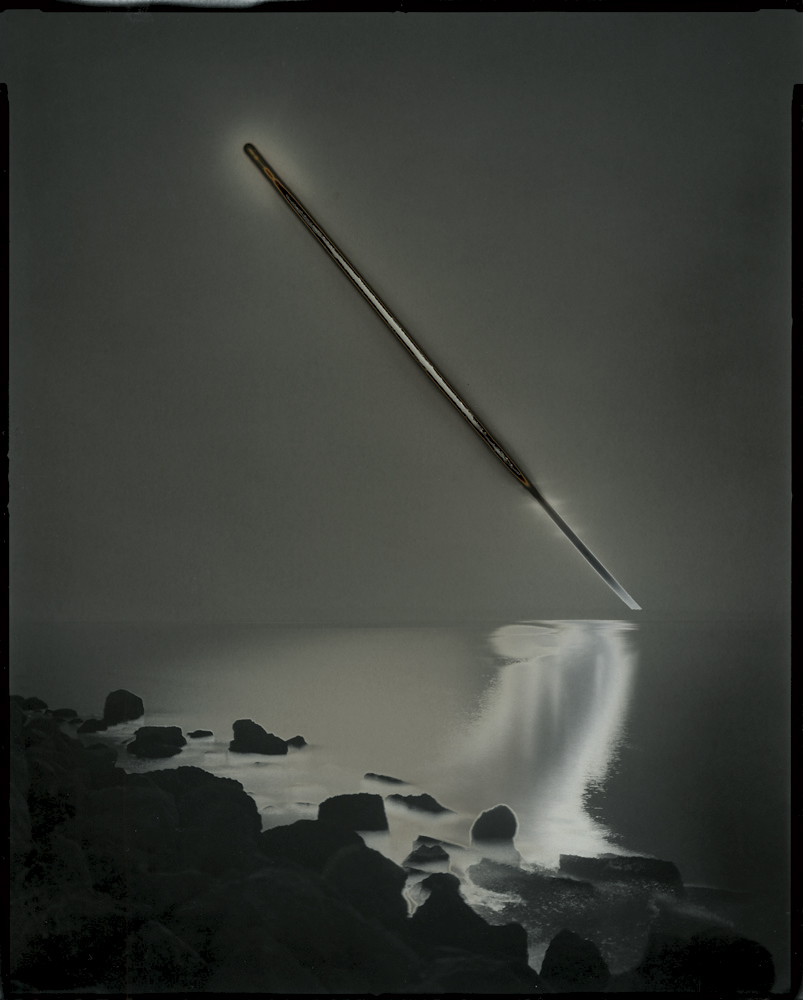
Chris McCaw (American, b. 1971) 'Sunburned GSP #676 (San Francisco Bay)' 2013


Chris McCaw (American, b. 1971)
Sunburned GSP #676 (San Francisco Bay)
2013
Gelatin Silver paper negative


Curtis Mann (American, b. 1979) 'Photographer, Scratch' 2009


Curtis Mann (American, b. 1979)
Photographer, Scratch
2009
Bleached c-print with synthetic polymer varnish


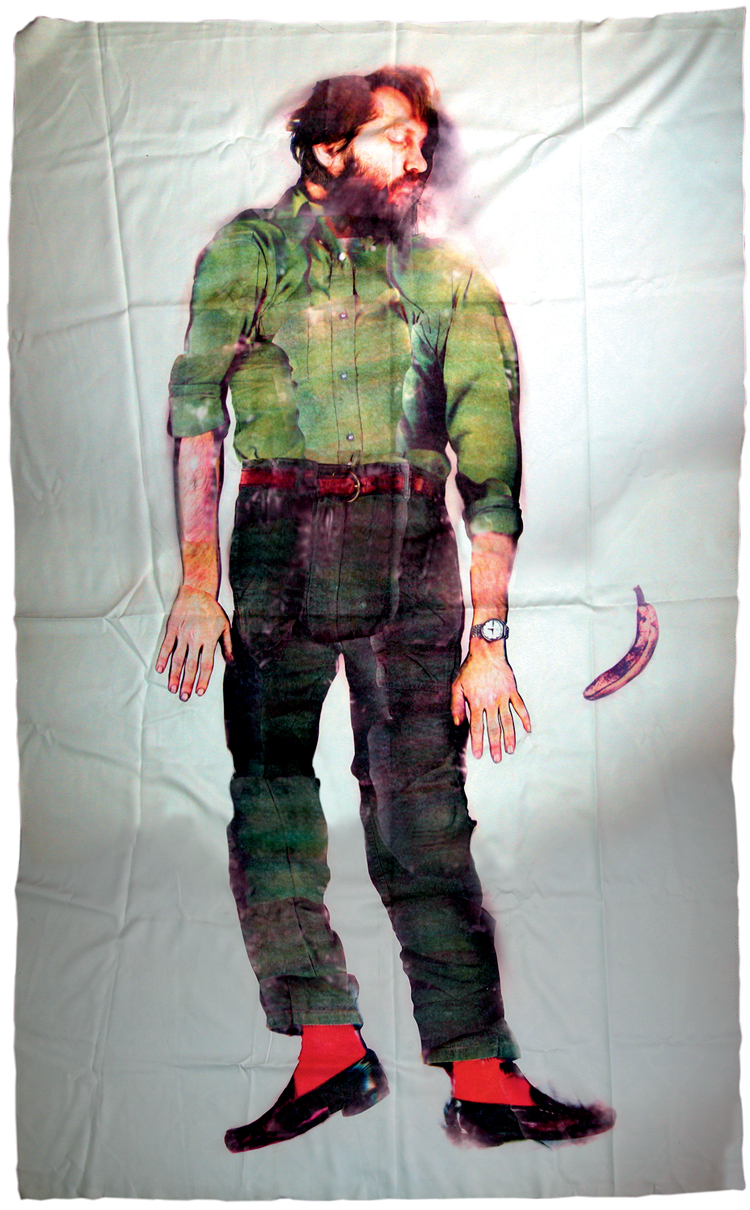
Vik Muniz (Brazilian, b. 1961) 'Atlas (Carlao)' 2008


Vik Muniz (Brazilian, b. 1961)
Atlas (Carlao)
2008
Digital C-print


CEPA Gallery
617 Main Street
Buffalo, NY 14203
Phone: (716) 856-2717

Opening hours:
Wednesday: 12.00pm – 4.00pm
Thursday: 4.00pm -7.00pm
Friday: 12:00pm – 4.00pm
Saturday: 12.00pm – 4.00pm

CEPA Gallery website

LIKE ART BLART ON FACEBOOK

Back to top

Exhibition: ‘The New Landscape: Experiments in Light by Gyorgy Kepes’ at the Cantor Arts Center at Stanford University

Exhibition dates: 23rd July – 17th November 2014


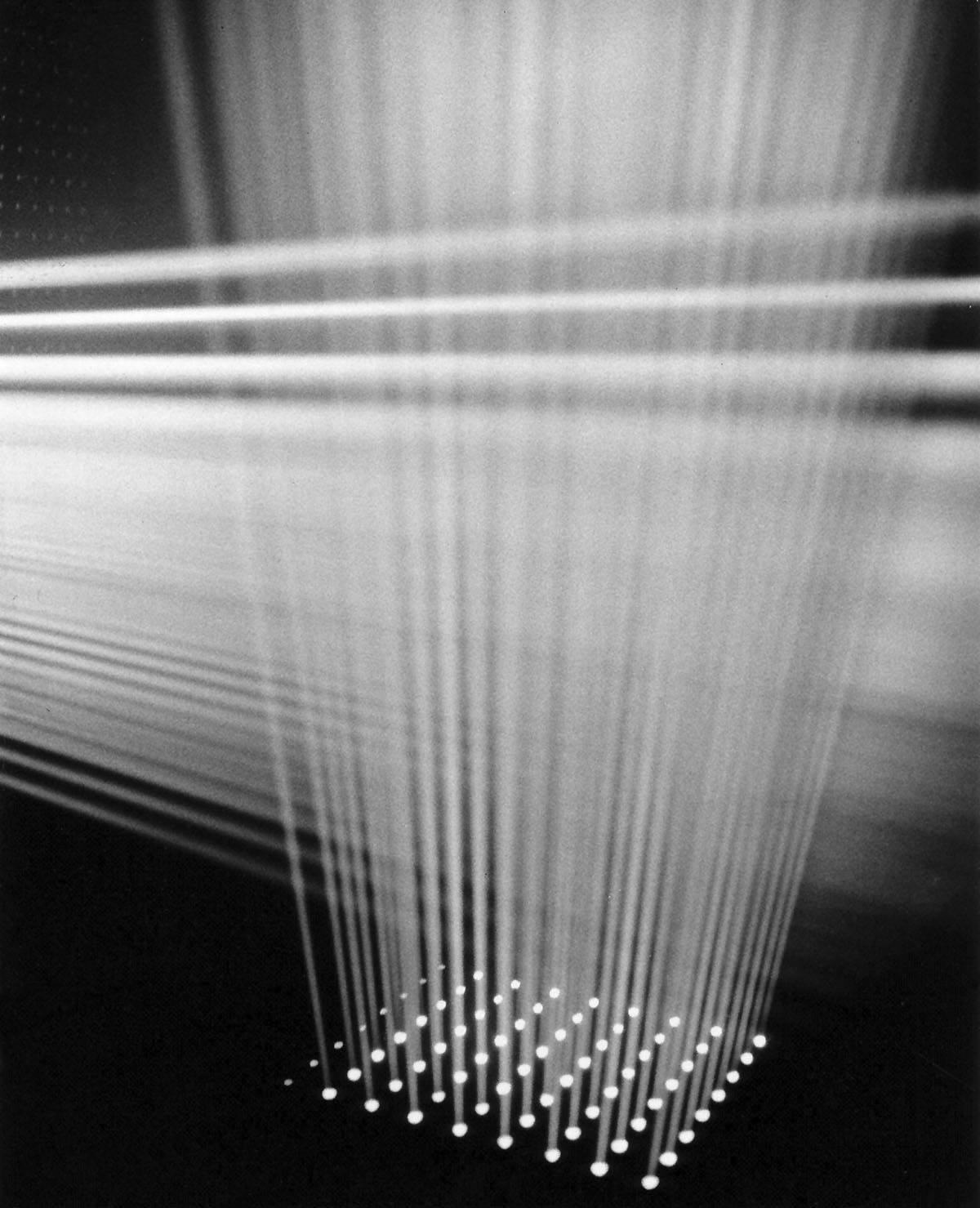
Gyorgy Kepes (American born Hungary, 1906-2001) 'Lichtenberg figures: A. R. von Hippel' 1951


Gyorgy Kepes (American born Hungary, 1906-2001)
Lichtenberg figures: A. R. von Hippel
1951
Photographic enlargement on particleboard
Lent by Department of Special Collections, Stanford University Libraries


Way to go… Abstract Expressionists eat your heart out!

Marcus


Many thankx to the Cantor Arts Center for allowing me to publish the photographs in the posting. Please click on the photographs for a larger version of the image.


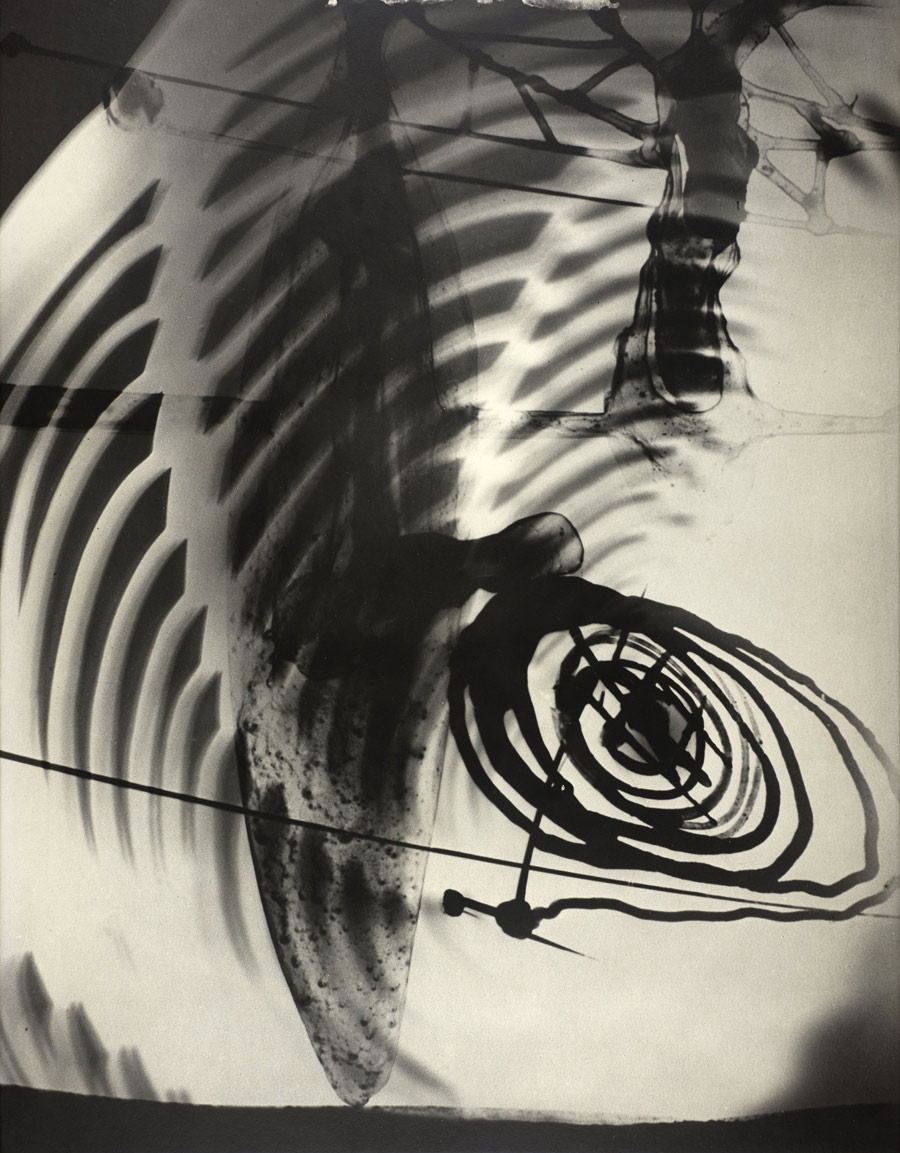
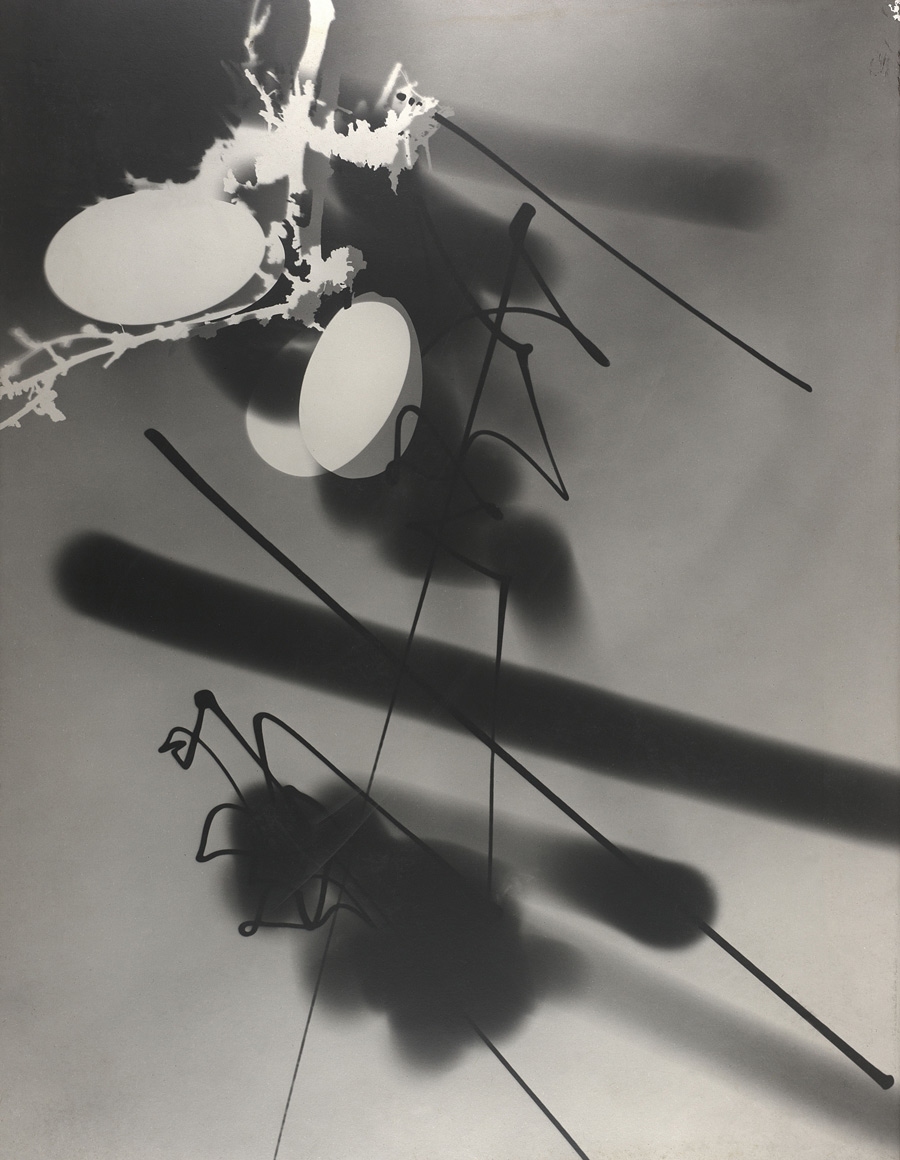
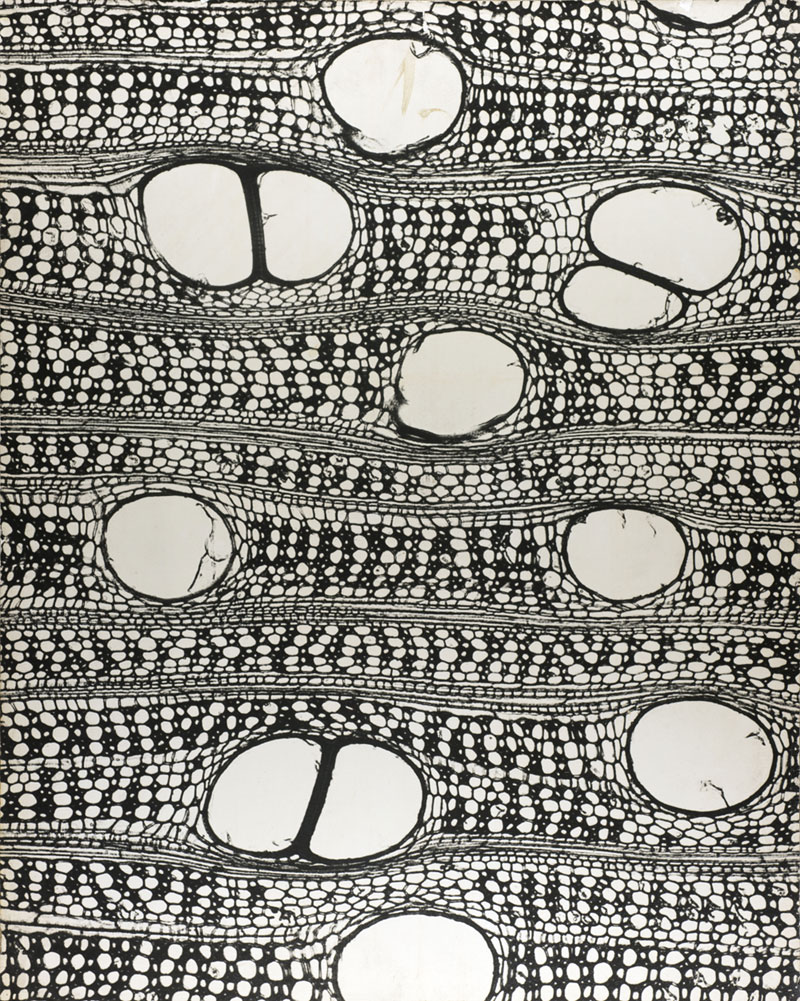
This exhibition explores the question of art’s relevance in a scientific age through the work of Hungarian-born American artist, designer, and visual theorist Gyorgy Kepes (1906-2001). Forty-five panels depict what Kepes, associated with Germany’s Bauhaus and Chicago’s New Bauhaus, called the “new landscape” of scientific imagery – microscopic minerals, cellular patterns, and tissue fibres – as well as Kepes’s own experiments with camera-less photographic techniques. The exhibition is one of the first projects resulting from a $500,000 grant awarded to the Cantor and the Department of Art & Art History from the Andrew W. Mellon Foundation to facilitate research conducted by Stanford Ph.D. candidates on the Cantor’s collection.

Text from the Cantor Arts Center website


Gyorgy Kepes (American born Hungary, 1906-2001) 'Lichtenberg figures: A. R. von Hippel' 1951


Gyorgy Kepes (American born Hungary, 1906-2001)
Lichtenberg figures: A. R. von Hippel
1951
Photographic enlargement on particleboard
Lent by Department of Special Collections, Stanford University Libraries


Gyorgy Kepes (American born Hungary, 1906-2001) 'Untitled' Date unknown


Gyorgy Kepes (American born Hungary, 1906-2001)
Untitled
Date unknown
Photographic enlargement on particleboard, date unknown
Lent by Department of Special Collections, Stanford University Libraries


Gyorgy Kepes (American born Hungary, 1906-2001) 'Untitled' Date unknown


Gyorgy Kepes (American born Hungary, 1906-2001)
Untitled
Date unknown
Photographic enlargement on particleboard, date unknown
Lent by Department of Special Collections, Stanford University Libraries


Gyorgy Kepes (American born Hungary, 1906-2001) 'Gate, Photogenic' 1948


Gyorgy Kepes (American born Hungary, 1906-2001)
Gate, Photogenic
1948
Photographic enlargement on particleboard, date unknown
Lent by Department of Special Collections, Stanford University Libraries


Gyorgy Kepes (American born Hungary, 1906-2001) 'Photogenic Painting, Photogenic' 1942


Gyorgy Kepes (American born Hungary, 1906-2001)
Photogenic Painting, Photogenic
1942
Photographic enlargement on particleboard, date unknown
Lent by Department of Special Collections, Stanford University Libraries


Gyorgy Kepes (American born Hungary, 1906-2001) 'Light Graphic, Photogenic' 1945


Gyorgy Kepes (American born Hungary, 1906-2001)
Light Graphic, Photogenic
1945
Photographic enlargement on particleboard, date unknown
Lent by Department of Special Collections, Stanford University Libraries


Gyorgy Kepes (American born Hungary, 1906-2001) 'Camel's tongue: 10X' 1951


Gyorgy Kepes (American born Hungary, 1906-2001)
Camel’s tongue: 10X
1951
Photographic enlargement on particleboard
Lent by Department of Special Collections, Stanford University Libraries


Gyorgy Kepes (American born Hungary, 1906-2001) 'Transverse section of Osmanthus wood: 50X' 1951


Gyorgy Kepes (American born Hungary, 1906-2001)
Transverse section of Osmanthus wood: 50X
1951
Photographic enlargement on particleboard
Lent by Department of Special Collections, Stanford University Libraries


Gyorgy Kepes (American born Hungary, 1906-2001) 'Transverse section of wood: 250X' 1951


Gyorgy Kepes (American born Hungary, 1906-2001)
Transverse section of wood: 250X
1951
Photographic enlargement on particleboard
Lent by Department of Special Collections, Stanford University Libraries


Cantor Arts Center at Stanford University
328 Lomita Drive at Museum Way
Stanford, CA 94305-5060
Phone: 650-723-4177

Opening hours:
Wednesday – Sunday 11am – 5pm
Closed Monday and Tuesday

Cantor Arts Center at Stanford University website

LIKE ART BLART ON FACEBOOK

Back to top

Exhibition: ‘Walker Evans. A Life’s Work’ at Martin-Gropius-Bau Berlin

Exhibition dates: 25th July – 9th November 2014


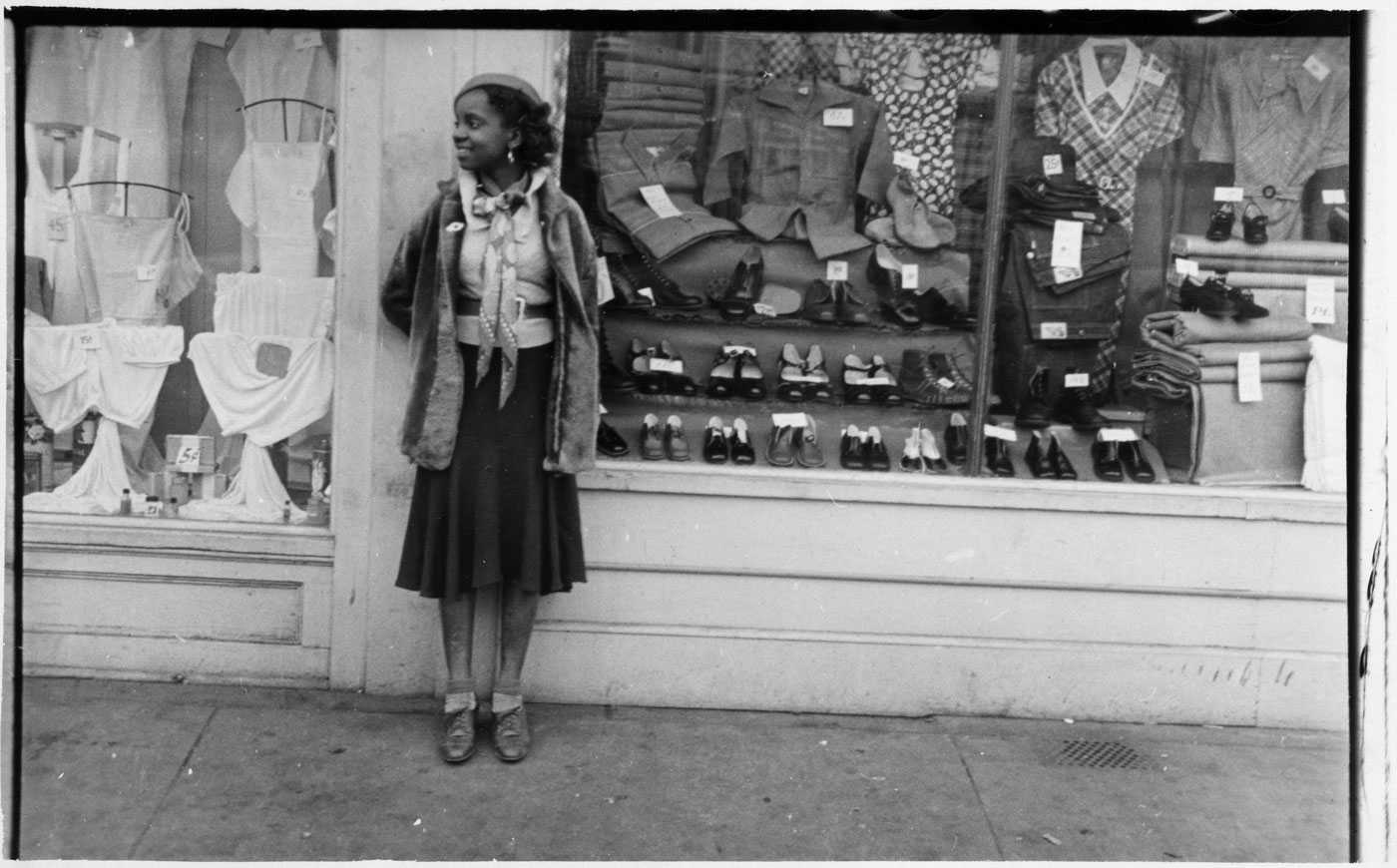
Walker Evans (American, 1903-1975) 'Young Women Outside Clothing Store' 1934-1935


Walker Evans (American, 1903-1975)
Young Women Outside Clothing Store
1934-1935
114 x 184mm
Lunn Gallery Stamp (1975)
© Walker Evans Archive, The Metropolitan Museum of Art


End of the week. Not a lot of energy or time to write an in depth piece on the wonders of Walker Evans, so just a few observations…

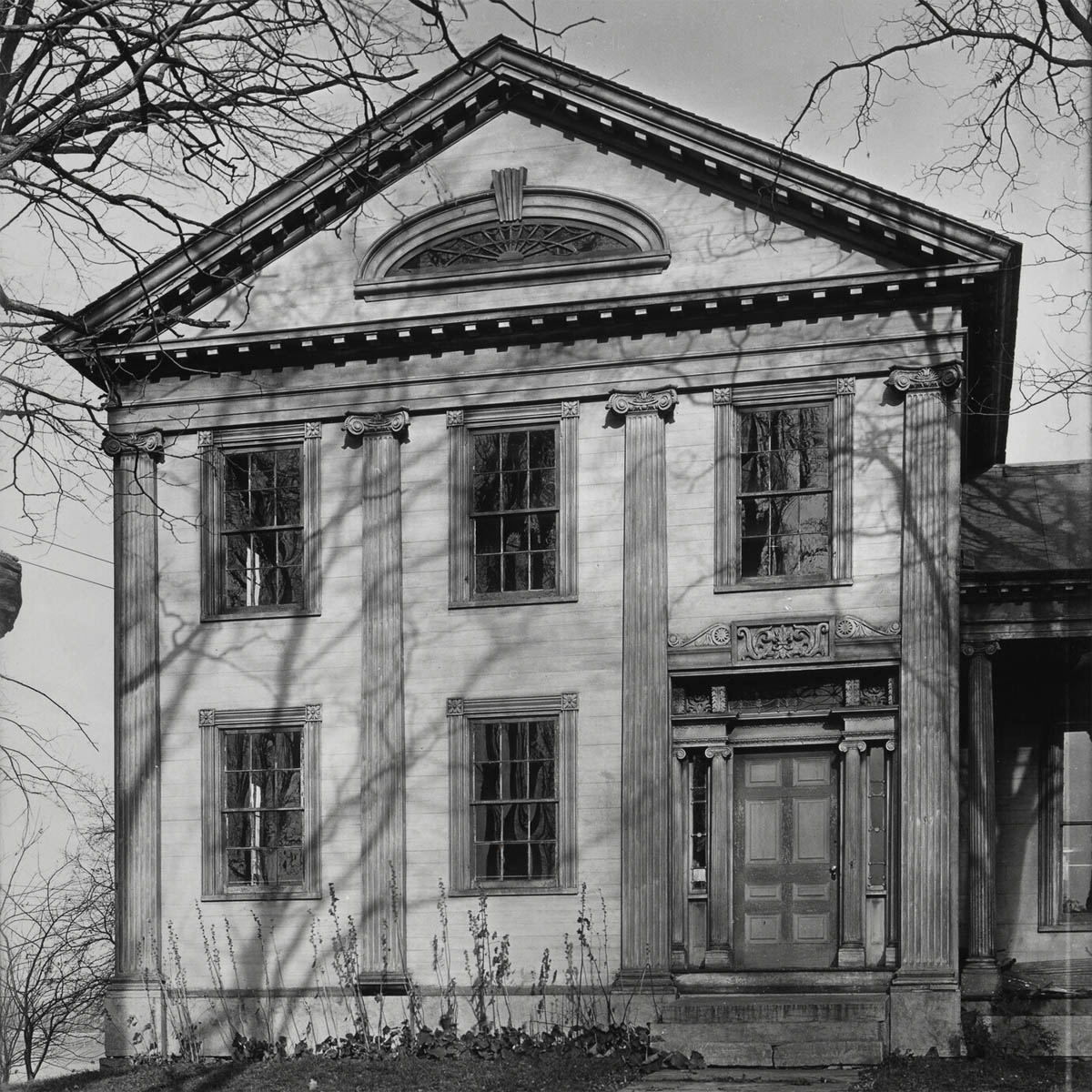
I like this photographer, I like him a lot. No histrionics, little subjectivity being thrown at the audience. The images are -just -so. The compositions are seemingly simple but are actually very complex. Only a skilled craftsman can make the difficult look simple. As Thomas Struth has said of his photography: ‘for me it is more interesting to try and find out something from the real than to throw something subjective in front of the audience.’

“The uninflected image gives no hints as to how it is to be interpreted, and the viewer is led to linger over what might otherwise seem an un-noteworthy, everyday vista.” It’s recognising that vista in the first place for what it is, and what else it can be, so that it ‘gives pause’ to the viewer.

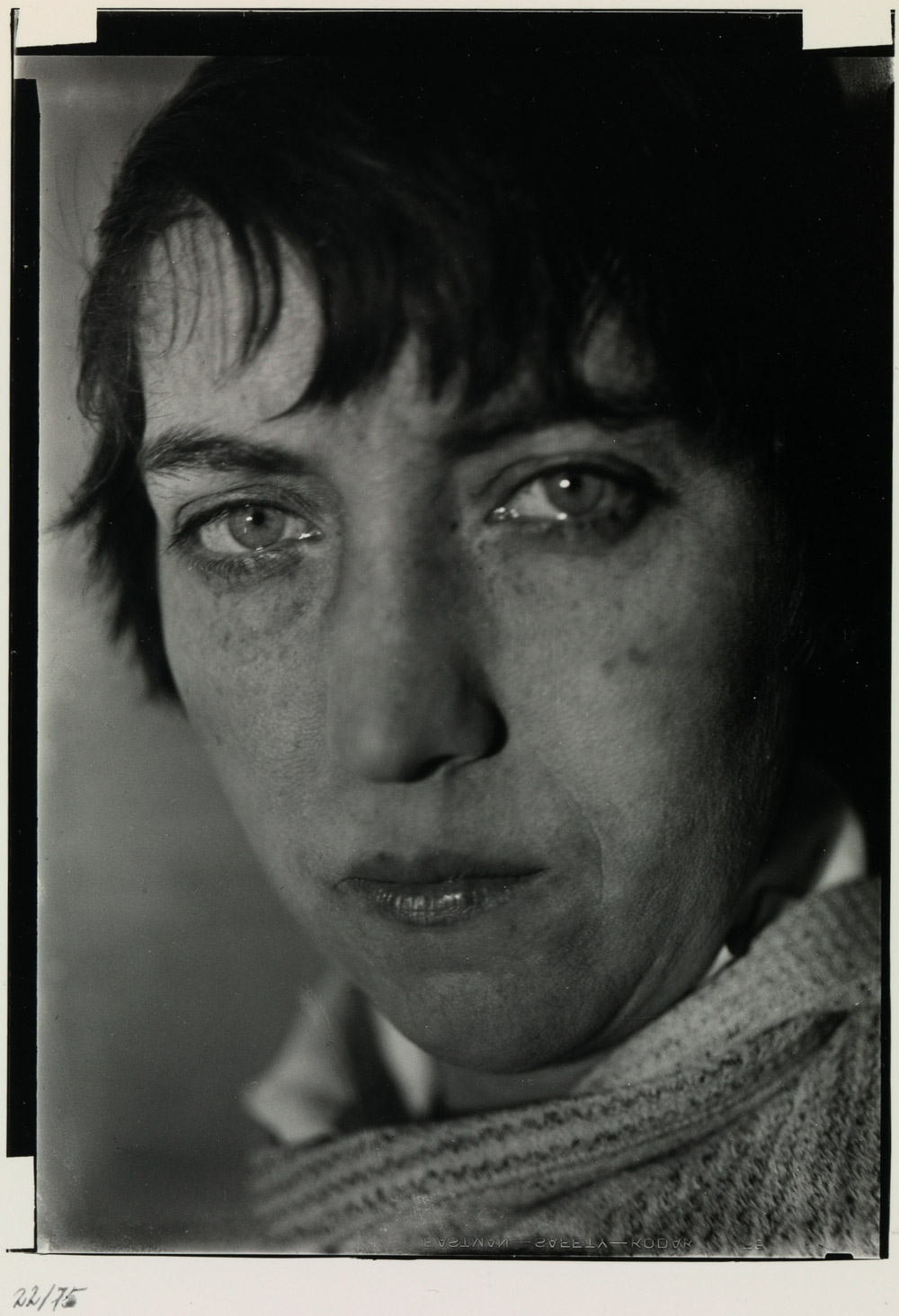
I really like the portrait of Berenice Abbott and it is also very educational. Look at the depth of field, with the view camera probably one stop past wide open. The sharpness plane is very tiny but look at the quality of the lens and how it renders the values that are slightly out of focus. What a very beautiful image and I suspect a top drawer lens. Notice also it is print 22. Walker Evans would keep a lot of prints and they were not the same. The next copy of this print might have been better (he might have worked out something to do) or it might be worse – the developer might have gone off. So it is not strictly an “edition” it is just the numbering of the prints he made.

He used every sort of camera: 8 x 10 and the smaller view formats, roll film cameras, Colour polaroid! hence the different sizes of his prints. Occasionally he did crop his images but on other occasions he took “a stance” where you knew he was about to perform and there would be no cropping. If you are really interested in this master photographer, the best Walker Evans book to get is First and Last (1978, available cheaply as a hardback on Amazon) which contains many pictures and “threads” that are dynamite… and the John Szarkowski book Walker Evans (1972) is a good one as well.

Dr Marcus Bunyan


Many thankx to Martin-Gropius-Bau for allowing me to publish the photographs in the posting. Please click on the photographs for a larger version of the image.


Walker Evans (American, 1903-1975) 'Two Women' Frenchquarter, New Orleans, February - March 1935


Walker Evans (American, 1903-1975)
Two Women
Frenchquarter, New Orleans, February – March 1935
155 x 219mm
Lunn Gallery Stamp (1975)
© Walker Evans Archive, The Metropolitan Museum of Art


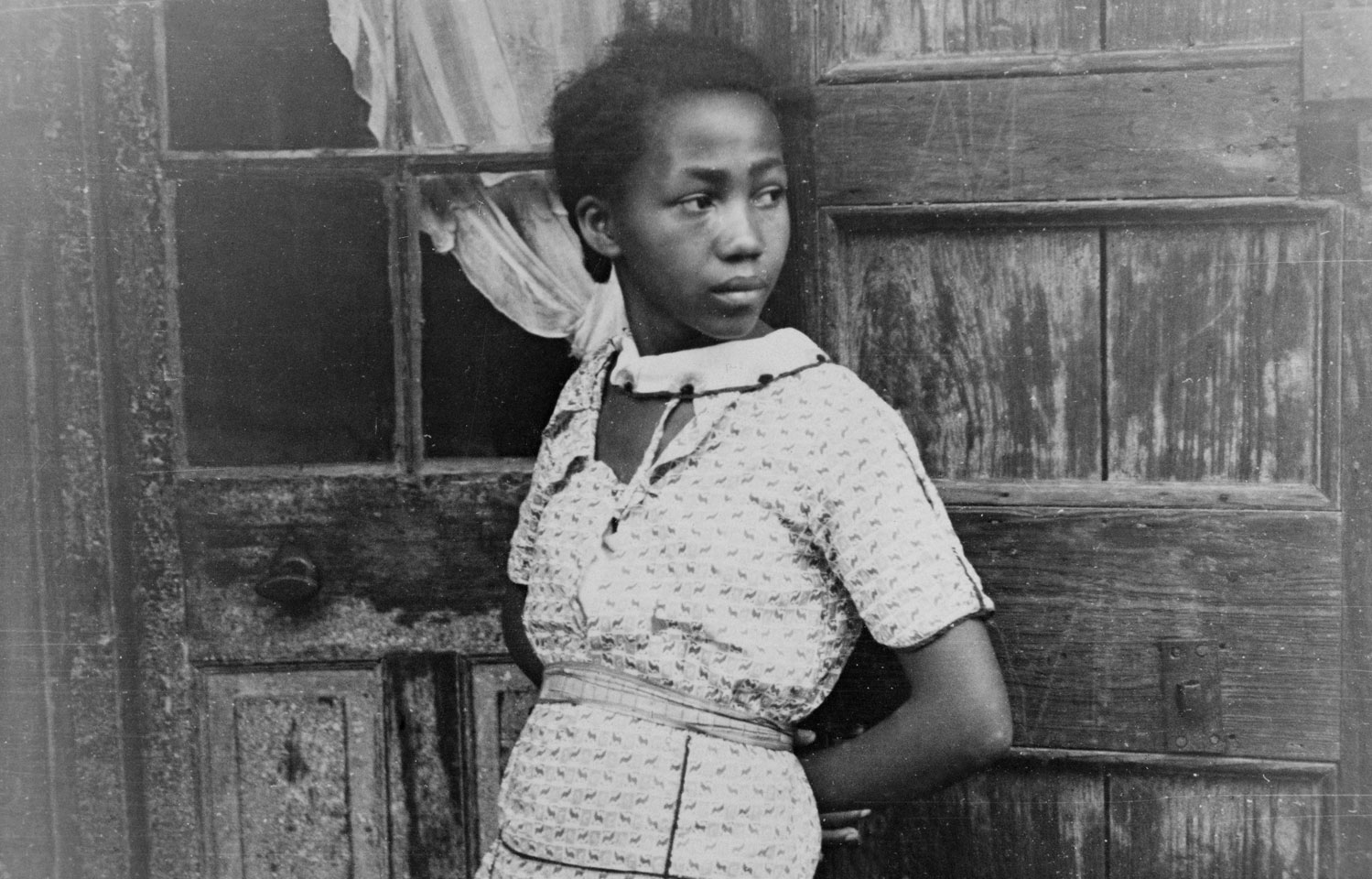
Walker Evans (American, 1903-1975) 'Girl In French Quarter' New Orleans, February - March 1935


Walker Evans (American, 1903-1975)
Girl In French Quarter
New Orleans, February – March 1935
117 x 178mm
Lunn Gallery Stamp (1975)
© Walker Evans Archive, The Metropolitan Museum of Art


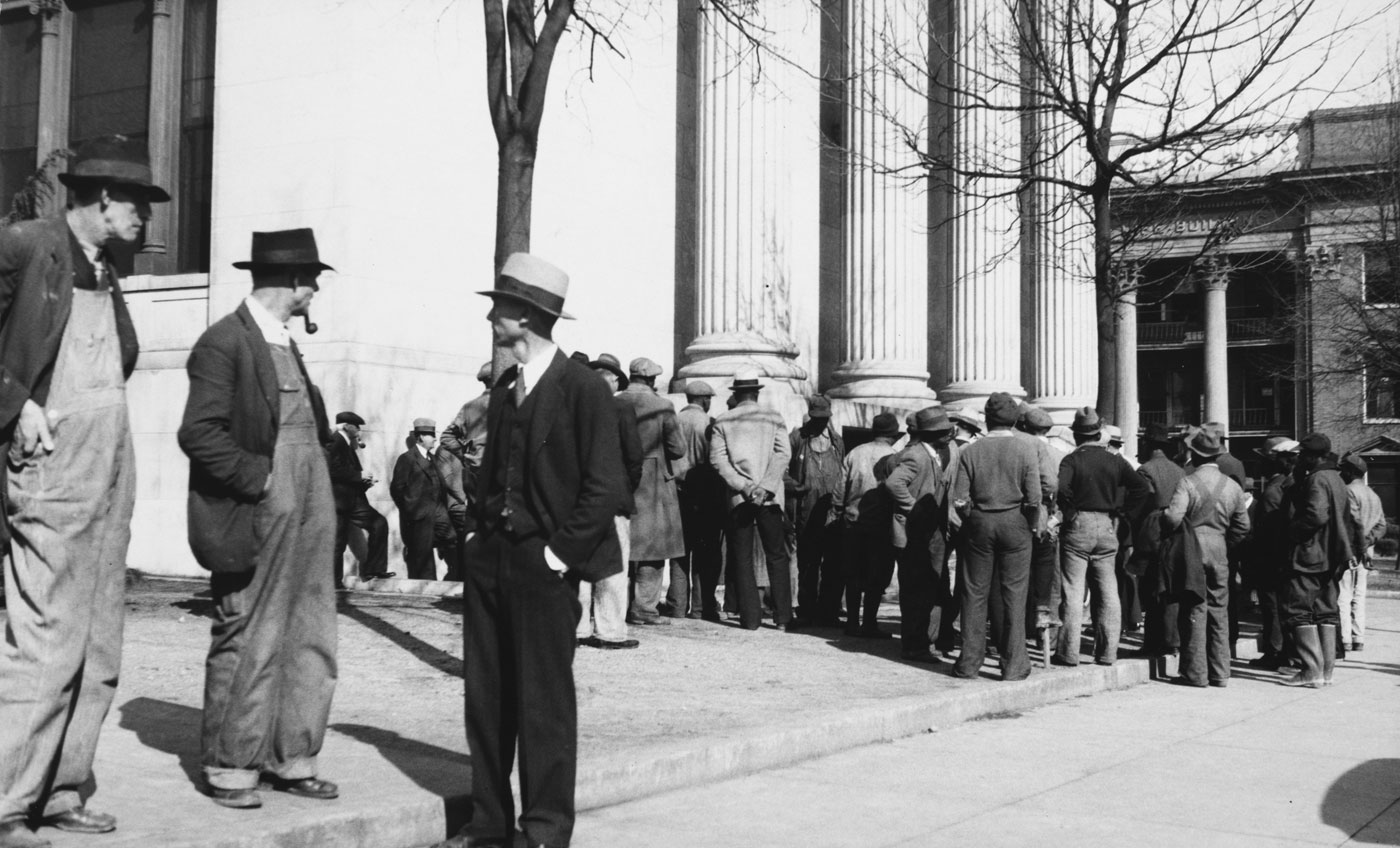
Walker Evans (American, 1903-1975) 'Crowd In Public Square' 1930s


Walker Evans (American, 1903-1975)
Crowd In Public Square
1930s
143 x 248mm
Lunn Gallery Stamp (1975)
© Walker Evans Archive, The Metropolitan Museum of Art


Walker Evans (American, 1903-1975) 'Berenice Abbott' 1929-1930


Walker Evans (American, 1903-1975)
Berenice Abbott
1929-1930
© Walker Evans Archive, The Metropolitan Museum of Art


Walker Evans (1903-1975) was one of the great personalities of 20th century photography, being an exponent of what is called the “documentary style”. His work, which spans a period of over fifty years, will be represented by well over 200 original prints from the years 1928 to 1974, taken mostly from the considerable private collection of Clark and Joan Worswick, but also from various German collections.

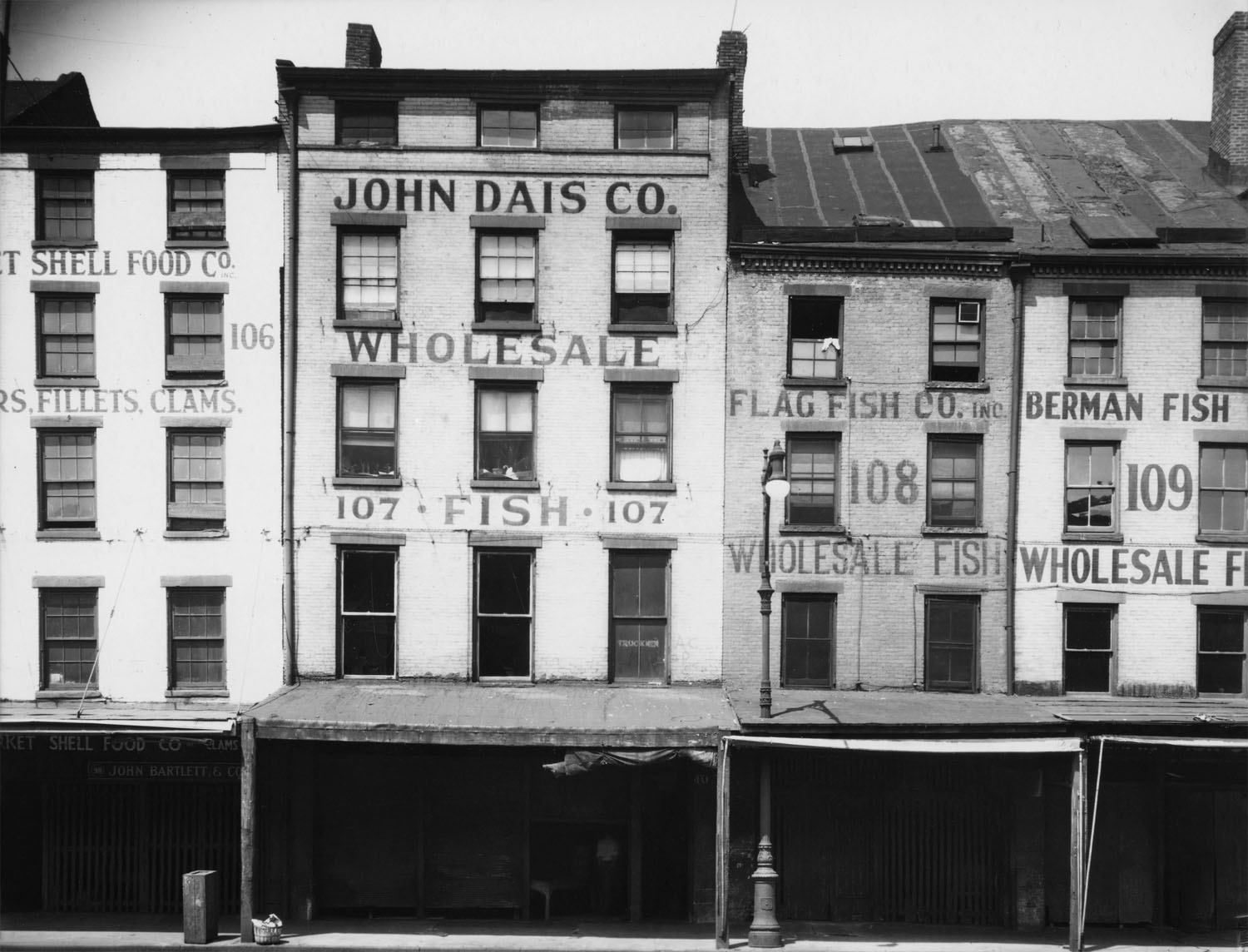
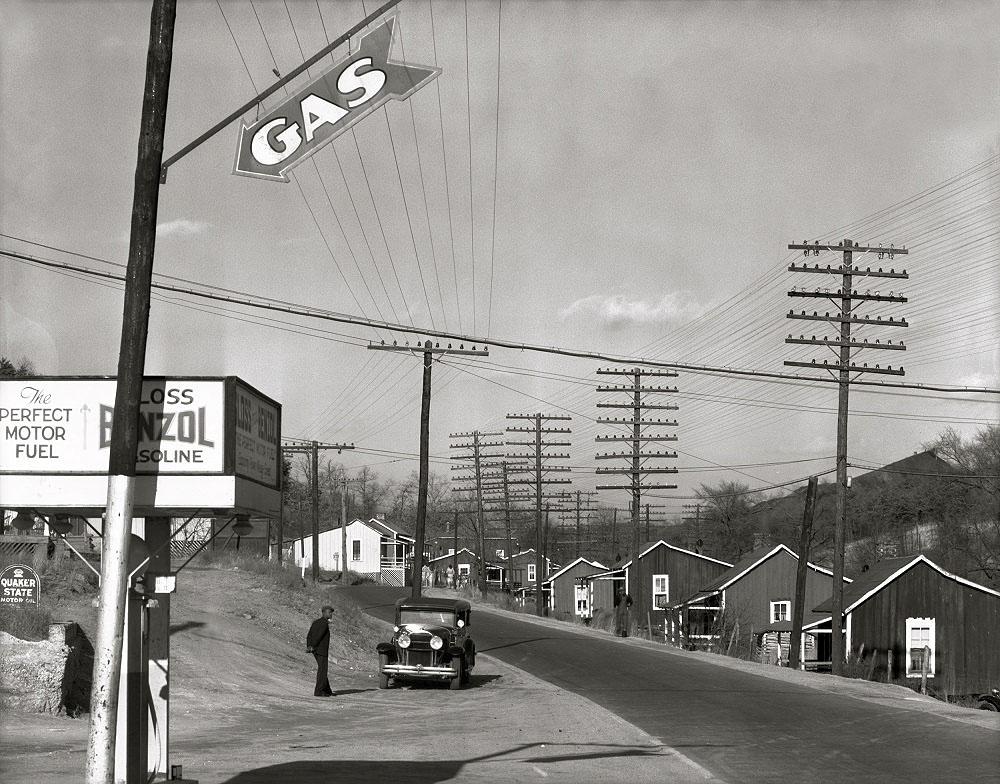
For decades, right up to the present, the prolific photographic oeuvre of Walker Evans has acquired an increasingly model character. In the half century of his creative activity the photographer documented in sober documentary fashion a uniquely authentic picture of America, and like no other before him showed a particular feel for both the everyday and the subtle – the American Vernacular – creating a sense of identity and historic significance.

Visitors follow both Evans’ biography and the changing face of America, from the Great Depression to the onset of stability and business as usual: early impressions of the 1920s from the New York neighbourhood he lived in; portraits of his friends and fellow artists which give some indication of the ramified cultural ambience he inhabited; specimens of 19th century architecture that have blended into the evolving cultural life about them; picture cycles from Tahiti and Cuba; images of African sculptures and masks commissioned by the New York Museum of Modern Art; and numerous photographs taken in the 1930s in the rural south of the USA, which contrast starkly with the lifestyles of those who may be seen promenading in the fashionable streets of cities like New York.

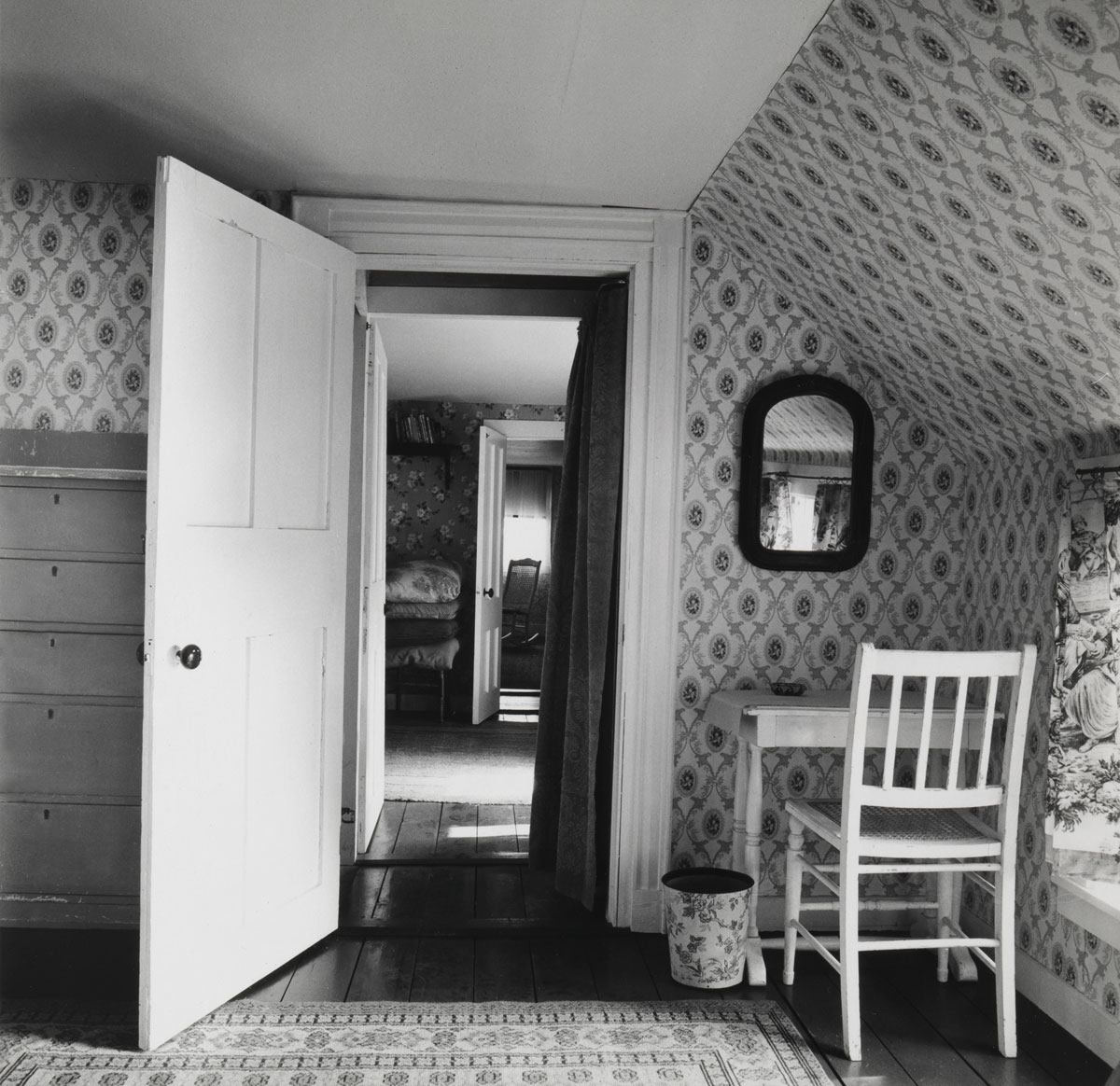
In addition to street scenes, American monuments and shop window displays far from the world of “big business”, examples of his significant subway photographs are to be seen, taken with a hidden camera. We also see interiors whose modest appointments tell of the life of those who live in them, pictures that inevitably recall Evans’ remark that “I do like to suggest people by absence”. Evans’ predilection for typography, advertising and mass-produced articles give rise to strangely fascinating shots which seem to anticipate the soon-to-emerge Pop Art and its assemblages.

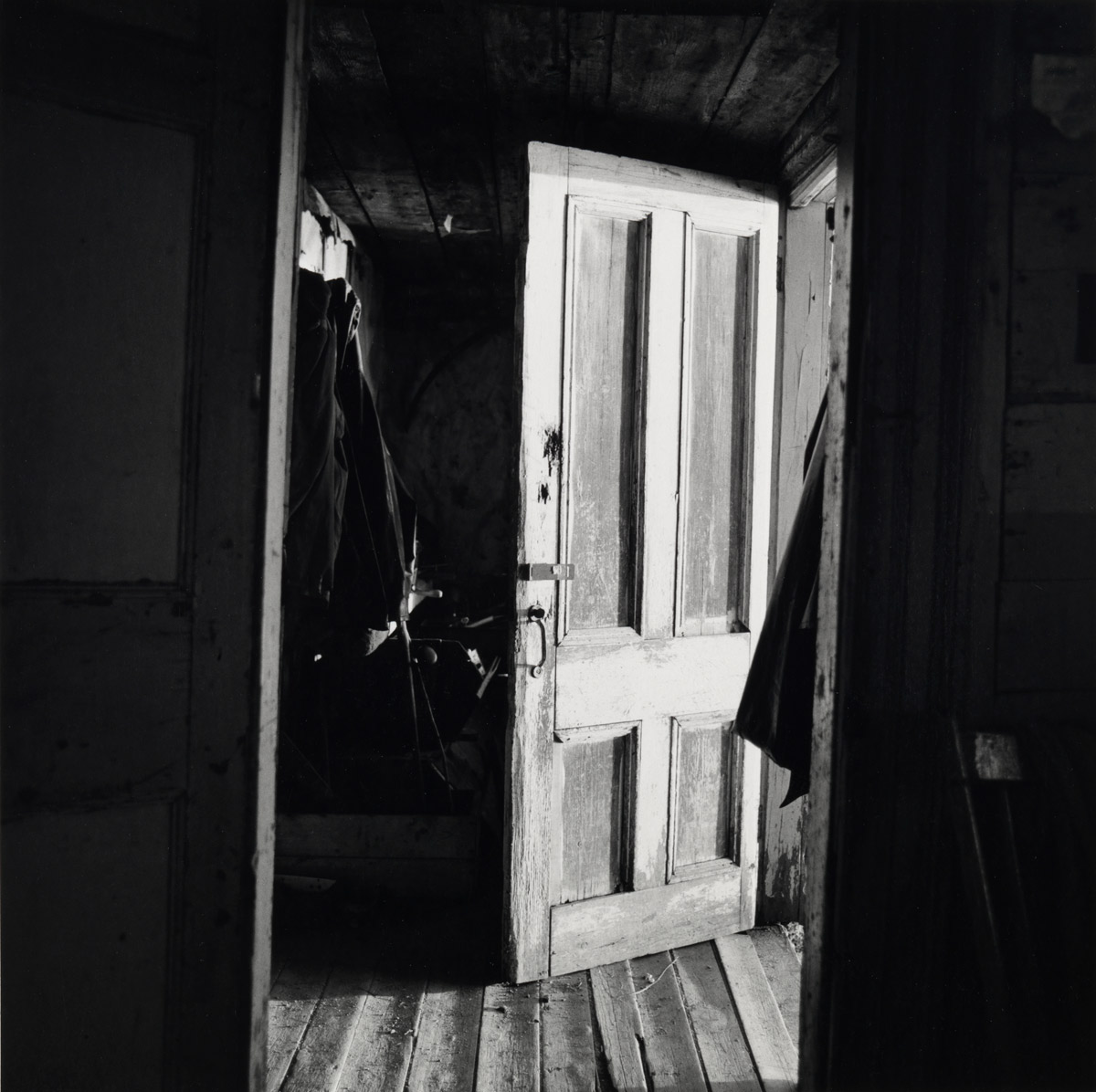
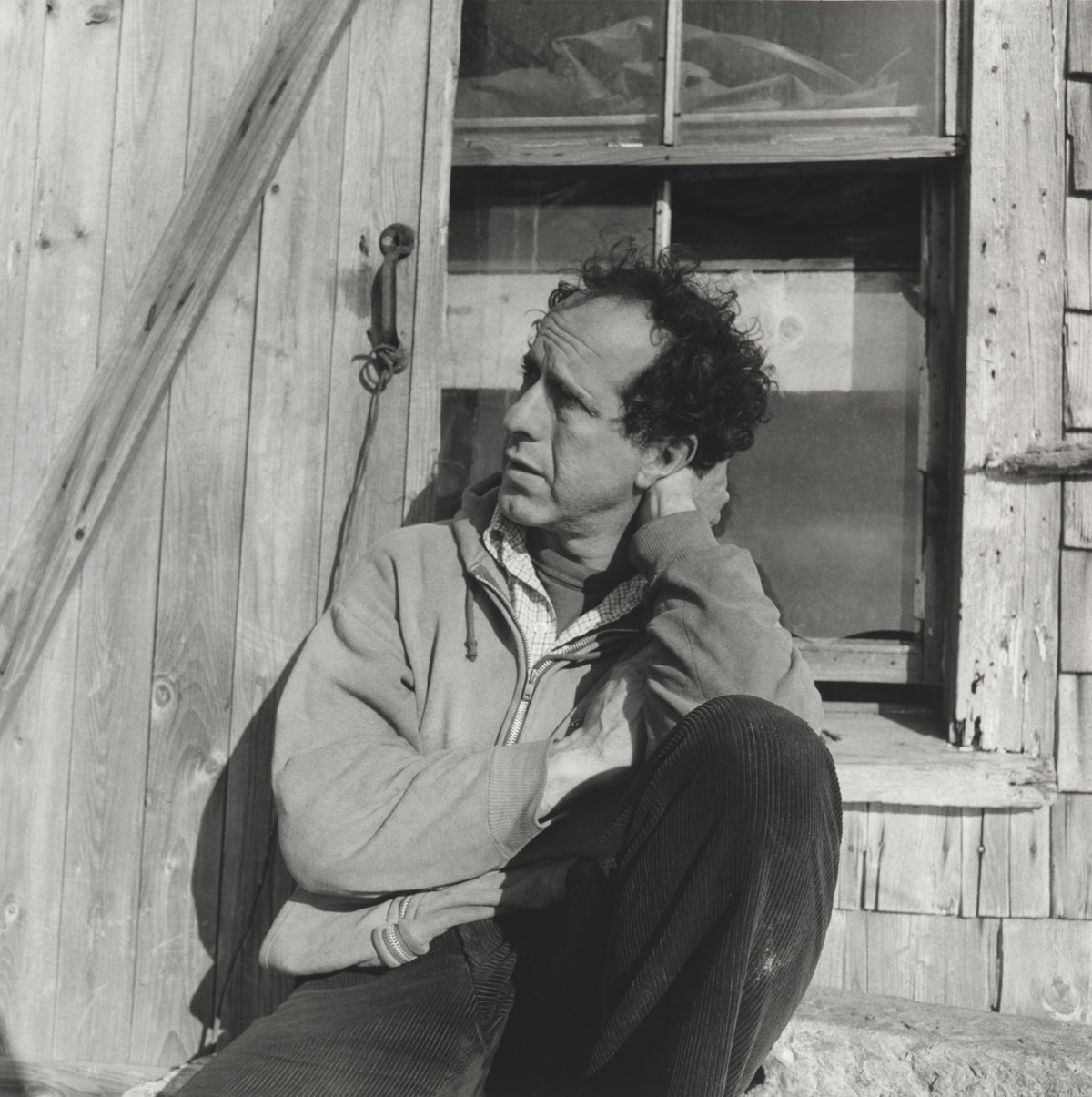
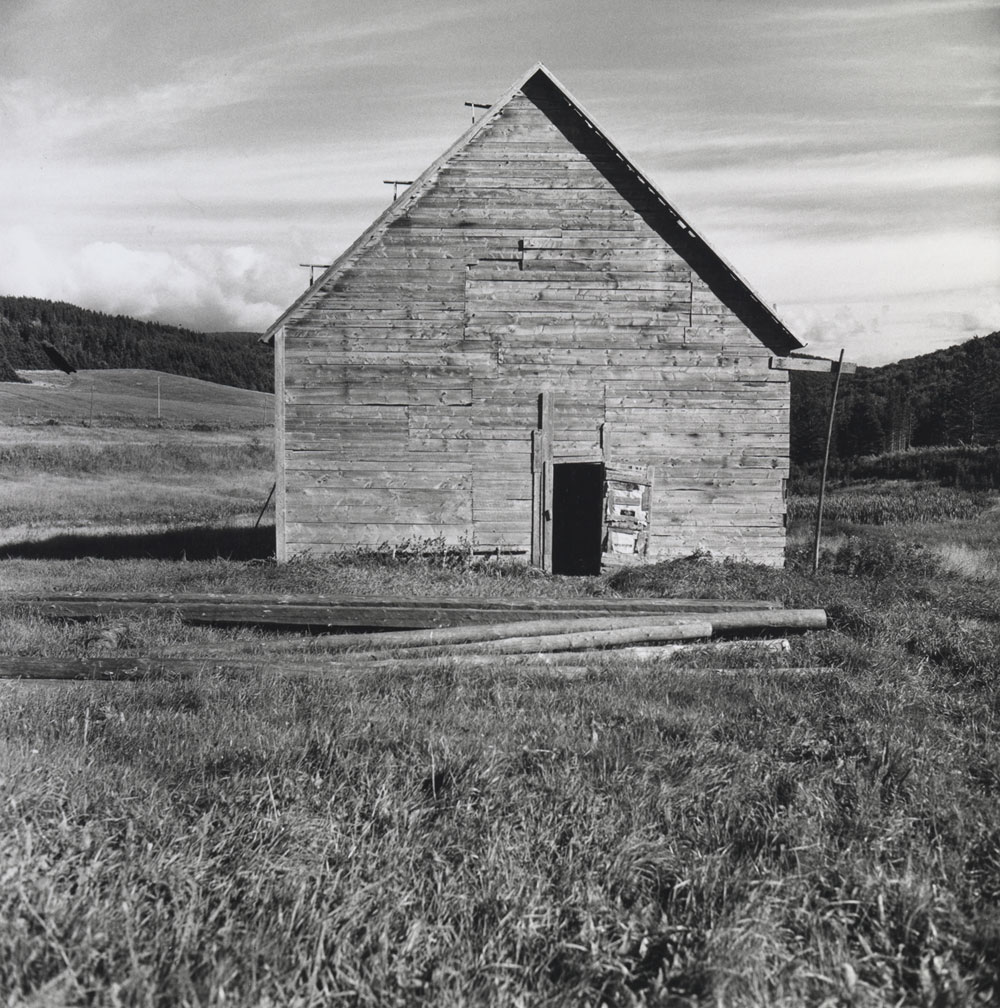
While the exhibition shows icons in the history of photography, it also highlights some of the photographer’s lesser known motifs dating from the 1940s, 1950s and 1960s. These include works done for Fortune, the magazine founded by Henry Luce in 1930; pictures taken on trips to London from 1945 onwards for the periodical Architectural Forum; or during stays at Robert Frank’s Nova Scotia house in the late 1960s.

Text from the Martin-Gropius-Bau website


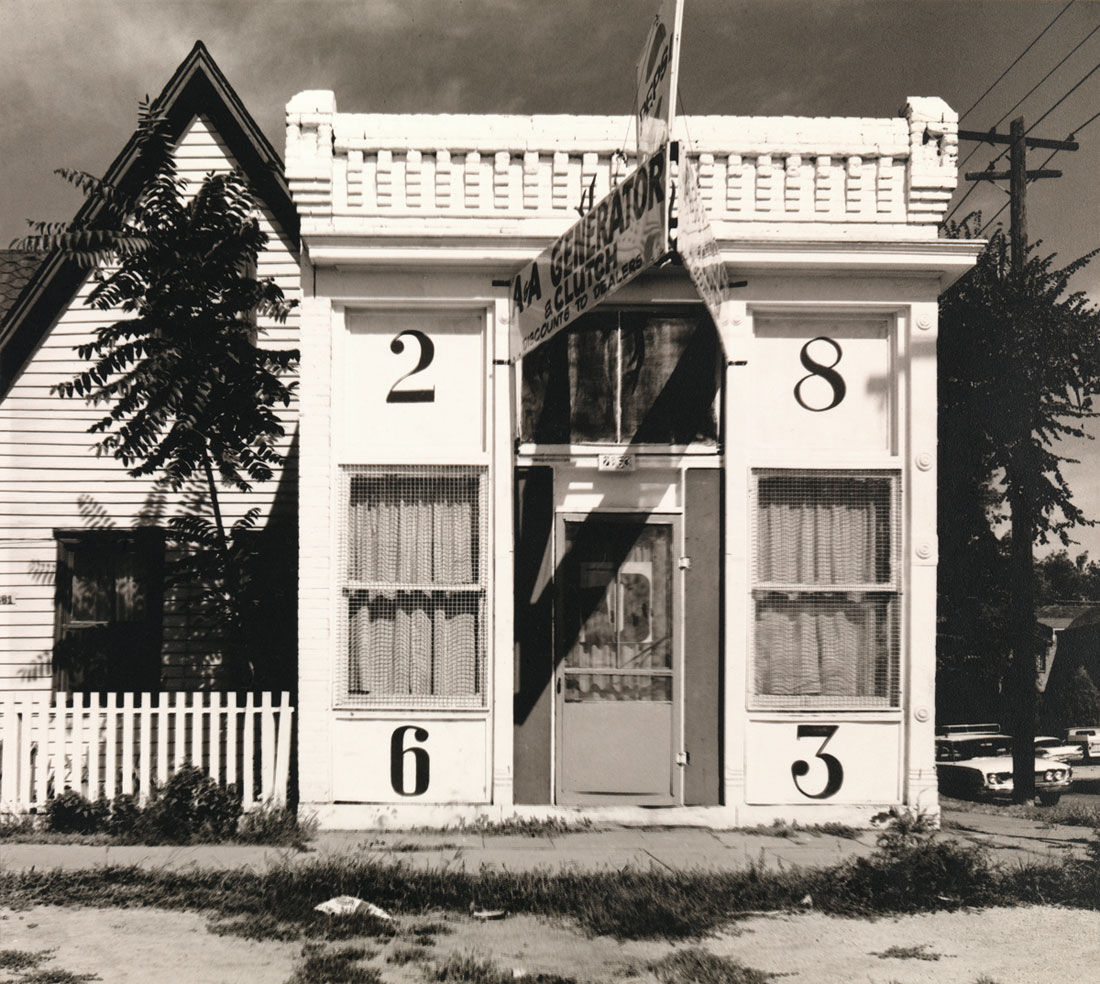
Walker Evans (American, 1903-1975) 'Façade of House with Large Numbers' Denver, Colorado, August 1967


Walker Evans (American, 1903-1975)
Façade of House with Large Numbers
Denver, Colorado, August 1967
Collection of Clark and Joan Worswick
© Walker Evans Archive, The Metropolitan Museum of Art


Walker Evans (American, 1903-1975) 'Interior View of Heliker/Lahotan House' Walpole, Maine, 1962


Walker Evans (American, 1903-1975)
Interior View of Heliker/Lahotan House
Walpole, Maine, 1962
Collection of Clark and Joan Worswick
© Walker Evans Archive, The Metropolitan Museum of Art


Walker Evans (American, 1903-1975) 'Interior View of Robert Frank’s House' Nova Scotia, 1969-1971


Walker Evans (American, 1903-1975)
Interior View of Robert Frank’s House
Nova Scotia, 1969-1971
Collection of Clark and Joan Worswick
© Walker Evans Archive, The Metropolitan Museum of Art


Walker Evans (American, 1903-1975) 'Robert Frank' Nova Scotia, 1969-1971


Walker Evans (American, 1903-1975)
Robert Frank
Nova Scotia, 1969-1971
Collection of Clark and Joan Worswick
© Walker Evans Archive, The Metropolitan Museum of Art


Walker Evans (American, 1903-1975) 'Barn' Nova Scotia, 1969-1971


Walker Evans (American, 1903-1975)
Barn
Nova Scotia, 1969-1971
Collection of Clark and Joan Worswick
© Walker Evans Archive, The Metropolitan Museum of Art


Walker Evans (American, 1903-1975) 'Pabst Blue Ribbon Sign' Chicago, Illinois, 1946


Walker Evans (American, 1903-1975)
Pabst Blue Ribbon Sign
Chicago, Illinois, 1946
Collection of Clark and Joan Worswick
© Walker Evans Archive, The Metropolitan Museum of Art


Martin-Gropius-Bau Berlin
Niederkirchnerstraße 7
Corner Stresemannstr. 110
10963 Berlin
Phone: +49 (0)30 254 86-0

Opening Hours:
Wednesday to Monday 10 – 19 hrs
Tuesday closed

Martin-Gropius-Bau website

LIKE ART BLART ON FACEBOOK

Back to top

Review: ‘Crossing Paths with Vivian Maier’ at the Centre for Contemporary Photography (CCP), Fitzroy, Melbourne

Exhibition dates: 3rd October – 26th October 2014

Artists: Cherine Fahd, Vivian Maier, Gabriella Mangano and Silvana Mangano, Debra Phillips, Patrick Pound, Clare Rae, Simone Slee, David Wadelton And Kellie Wells and Vivian Maier.

Curators: Naomi Cass, Louise Neri and Karra Rees


Vivian Maier (American, 1926-2009) 'East 108th Street. September 28, 1959, New York, NY'


Vivian Maier (American, 1926-2009)
East 108th Street. September 28, 1959, New York, NY
1959
Gelatin silver print
30.5 x 30.5cm
Vivian Maier/Maloof Collection, courtesy of Howard Greenberg Gallery


Just slightly overrated…

Apologies to the wonderful and hard working Director of the CCP Naomi Cass for what I am about to say, but this is one of the most disappointing photographic exhibitions in Melbourne this year.

Let’s start with the Australian work. There is nothing at all wrong with any of the Australian work. Some of it is very strong, such as the found images of Patrick Pound and the social documentary work of David Wadelton. The problem comes with the lack of connection to the photographs of Vivian Maier. For work that is supposed to be “crossing paths” conceptually with the images of Maier many of the connections are so esoteric as to be almost indistinguishable, so obtuse (as Tim Robbins would say in the Shawshank Redemption) as to be almost unintelligible to the uninitiated. Where the work is conceptualised around the performative context of identity and the occupation of space(s), such as in Claire Rae’s digital colour lightbox images of people jumping in the air stopped in suspended animation or the beautiful reinscription of the body in the almost dance like video work of Gabriella Mangano and Silvana Mangano, then the juxtaposition simply does not work. The ties that bind one to another simply are not strong enough to sustain the inquiry of the viewer. More interesting would have been the investigation of the concept of an artist taking photographs in her own time, hidden, secretive, and then being discovered later after she had died – which brings up issues of visibility (the cameras and her gendered own), celebrity, posthumous recreation of identity, the fame of the artist after death, and how the self-portraits fit into this theme etc…


The photographs by Vivian Maier printed by ? are far more disappointing.

Touted as the NEXT BIG THING by curators who are always looking for the next big thing and people out to make a healthy buck or two, VM is a person who has been “posthumously invented” and her work, which was largely unprinted during her lifetime, has been brought to market in a commercial process. As Abigail Solomon-Godeau notes at the end of her excellent essay “Inventing Vivian Maier” on the Jeu de Paume website:

“Here one can see how the terms of an “aesthetic” discourse within the world of contemporary photography, turning on the individual author and her work, and the far less lofty realities of market and marketing, property relations, public relations, media relations and all the other apparatuses, illuminate one another, or even collide. “Her big project,” remarks Michael Williams, “was her life,” but perhaps the even larger project is her posthumous invention.”

Abigail Solomon-Godeau. “Inventing Vivian Maier,” on the Jeu de Paume website, 16th September 2013 [Online] Cited 26/06/2021.


With this invention in mind (and the product that you want to sell being paramount), you would have thought that the people who now control her archive would have got a damn good black and white printer to print the work. But no. Some of the prints are appalling, so flat that there is little if any true black in them at all. As for the content of the images, they look better in reproduction than they do in real life.

Maier, as I have said elsewhere, is a competent photographer – but she will never be a great photographer. Periodically (and I use the word my female friend supplied) she is very good, but too often she lapses into cliche. There are lots of low depth of field photographs but the construction of the images is cold and stilted, there is little engagement it would seem but for the snap of the shutter as she wanders around city after city, keeping the resulting negatives securely hidden.

There is also little mystery in her photographs which is probably why they don’t rise to that next level: look at the photograph of the two men staring at a length of hose on the ground on a rainy street in NY. The hose just sits there, the men are caught mid-gesture… and that’s it. Lots of her photographs are like this. And there also seem to be some anger towards the world as well. If you compare the photograph of the two boys, Undated, Canada (below) with that of the twins by Diane Arbus, there seems to be a darkness and malevolence to VM’s photograph that contrasts with the mystery and joy in that of Arbus – not so much in the subject matter but in the feeling that the photographer projects towards what she is photographing.

There is a coldness when you see the prints in the flesh (like the wind whistling off Lake Michigan onto the Chicago streets), an ice chill, a lack of humour, something that is a little creepy and screwy (if you will pardon the colloquialism) about the work. She wants us to know she is there in the photograph, even when she is not physically present, as in the image September 18, 1962 (below) where the viewer understands that the photographer is down on one knee to get the shot.

There is also a healthy dose of narcissism in the photographs: the self-portraits with this serious woman peering back at us, one who’s eyes hardly ever smile (you can tell a lot from a person’s eyes!) are not psychological investigations like the self-portraits of Rembrandt as he ages throughout the years – portraits in which Rembrandt explores what it is to be him – they are something more obsessive which VM then hides under a bushel. The use of fragmentation and shadows in the two self-portraits that I have put together (New York City, September 10, 1955 and Self-Portrait; October 18, 1953, New York, NY, below) speak of a schism inside the person, one who exposes herself through photography and then possesses but disclaims the results.

People have been flocking to see the film with sold out sessions all over the city, and they were flocking into the CCP to see the exhibition last Saturday when we were there. People love the back story as it has been sold to them by “marketing, property relations, public relations, media relations and all the other apparatuses” and there has been a veritable feeding frenzy about this work: THE DISCOVERY OF KING TUT’S TOMB WITH 100,000 NEGATIVES AND ASSORTED ARTEFACTS!

Kudos to the CCP for getting these images to Australia and exhibiting them and its great to see so many people in the gallery but please, let’s understand the hype and then really look at the work. The ART in FACT is that these are not well printed images, and most of them are pretty prosaic in composition and feeling. There are maybe four really good images, but that is about it. As always, go and see for yourself and keep my words in mind.

Dr Marcus Bunyan


Many thankx to the CCP for allowing me to publish the photographs in the posting. Please click on the photographs for a larger version of the image.


Vivian Maier (American, 1926-2009) 'August 1960. Chicago, IL' 1960


Vivian Maier (American, 1926-2009)
August 1960. Chicago, IL
1960
Gelatin silver print
30.5 x 30.5cm
Vivian Maier/Maloof Collection, courtesy of Howard Greenberg Gallery


Vivian Maier (American, 1926-2009) 'Undated, Canada'


Vivian Maier (American, 1926-2009)
Undated, Canada
Nd
Gelatin silver print
30.5 x 30.5cm
Vivian Maier/Maloof Collection, courtesy of Howard Greenberg Gallery


Diane Arbus (American, 1923-1971) 'Identical twins, Roselle, N.J. 1967' 1967


Diane Arbus (American, 1923-1971)
Identical twins, Roselle, N.J. 1967
1967
© The Estate of Diane Arbus


Vivian Maier (American, 1926-2009) 'Self-Portrait, 1950ies'


Vivian Maier (American, 1926-2009)
Self-Portrait, 1950ies
c. 1950s
Gelatin silver print
30.5 x 30.5cm
Vivian Maier/Maloof Collection, courtesy of Howard Greenberg Gallery


Vivian Maier (American, 1926-2009) 'Armenian woman fighting on East 86th Street, September, 1956, New York, NY'


Vivian Maier (American, 1926-2009)
Armenian woman fighting on East 86th Street, September, 1956, New York, NY
1956
Gelatin silver print
30.5 x 30.5cm
Vivian Maier/Maloof Collection, courtesy of Howard Greenberg Gallery


Vivian Maier (American, 1926-2009) 'April 7, 1960. Florida'


Vivian Maier (American, 1926-2009)
April 7, 1960. Florida
1960
Gelatin silver print
30.5 x 30.5cm
Vivian Maier/Maloof Collection, courtesy of Howard Greenberg Gallery


Vivian Maier (American, 1926-2009) 'January 1956'


Vivian Maier (American, 1926-2009)
January 1956
1956
Gelatin silver print
30.5 x 30.5cm
Vivian Maier/Maloof Collection, courtesy of Howard Greenberg Gallery


Vivian Maier (American, 1926-2009) 'January, 1953, New York, NY'


Vivian Maier (American, 1926-2009)
January, 1953, New York, NY
1953
Gelatin silver print
30.5 x 30.5cm
Vivian Maier/Maloof Collection, courtesy of Howard Greenberg Gallery


Vivian Maier (American, 1926-2009) 'Self-Portrait, 1953'


Vivian Maier (American, 1926-2009)
Self-Portrait, 1953
1953
Gelatin silver print
30.5 x 30.5cm
Vivian Maier/Maloof Collection, courtesy of Howard Greenberg Gallery


Vivian Maier (American, 1926-2009) 'Self-Portrait, 1953'


Vivian Maier (American, 1926-2009)
Self-Portrait, 1953
1953
Gelatin silver print
30.5 x 30.5cm
Vivian Maier/Maloof Collection, courtesy of Howard Greenberg Gallery


Vivian Maier (American, 1926-2009) 'Undated, Canada'


Vivian Maier (American, 1926-2009)
Undated, Canada
Nd
Gelatin silver print
30.5 x 30.5cm
Vivian Maier/Maloof Collection, courtesy of Howard Greenberg Gallery


Vivian Maier (American, 1926-2009) 'July 1957. Chicago Suburb, IL'


Vivian Maier (American, 1926-2009)
July 1957. Chicago Suburb, I
1957
Gelatin silver print
30.5 x 30.5cm
Vivian Maier/Maloof Collection, courtesy of Howard Greenberg Gallery


Vivian Maier (American, 1926-2009) 'January 9, 1957, Florida'


Vivian Maier (American, 1926-2009)
January 9, 1957, Florida
1957
Gelatin silver print
30.5 x 30.5cm
Vivian Maier/Maloof Collection, courtesy of Howard Greenberg Gallery


One of the most atmospheric and mysterious of Maier’s photographs.


Vivian Maier (American, 1926-2009) 'Self-Portrait, New York, February 3, 1955'


Vivian Maier (American, 1926-2009)
Self-Portrait, New York, February 3, 1955
1955
Gelatin silver print
30.5 x 30.5cm
Vivian Maier/Maloof Collection, courtesy of Howard Greenberg Gallery


Vivian Maier (American, 1926-2009) 'March 1954, New York, NY'


Vivian Maier (American, 1926-2009)
March 1954, New York, NY
1954
Gelatin silver print
30.5 x 30.5cm
Vivian Maier/Maloof Collection, courtesy of Howard Greenberg Gallery


Vivian Maier (American, 1926-2009) 'May 16, 1957. Chicago, IL'


Vivian Maier (American, 1926-2009)
May 16, 1957. Chicago, IL
1957
Gelatin silver print
30.5 x 30.5cm
Vivian Maier/Maloof Collection, courtesy of Howard Greenberg Gallery


Vivian Maier (American, 1926-2009) 'June 1963. Chicago, IL'


Vivian Maier (American, 1926-2009)
June 1963. Chicago, IL
1963
Gelatin silver print
30.5 x 30.5cm
Vivian Maier/Maloof Collection, courtesy of Howard Greenberg Gallery


During her lifetime, Vivian Maier (1926-2009) produced more than 100,000 photographic images, which remained largely undiscovered until after her death. CCP celebrates this reluctant artist’s timely relevance, juxtaposing her work with contemporary Australian photography, performance and video.

Maier’s prolific body of work recording both herself and the world around her – predominately with a distinctive medium format Rolleiflex twin-lens reflex camera – is a precursor to our age of compulsive photographic documentation via smart phones and digital media. The posthumous construction of her identity is almost as compelling as her images and her ability to determine and frame a gripping moment with poignancy and beauty. Time has been Maier’s collaborator, where nostalgia plays a significant role in the popularity of her archive.

In Crossing Paths with Vivian Maier, Maier’s photography – printed well after her death – is presented with contemporary Australian artists working in still, moving and found photography and who also document the street and themselves in an equally obsessive manner.

Against the gritty street life captured by her probing lens, Patrick Pound responds with second-hand images gleaned from junk shops and the Internet, while Debra Phillips and David Wadelton make an inventory of the city and its quirky features. Maier’s self-portraits reverberate with Australian women artists who turn the camera on themselves in performative ways, in the work of Cherine Fahd, Gabriella Mangano and Silvana Mangano, Clare Rae, Simone Slee and Kellie Wells.

Text from the CCP website


Vivian Maier (American, 1926-2009) 'May 27, 1970. Chicago, IL'


Vivian Maier (American, 1926-2009)
May 27, 1970. Chicago, IL
1970
Gelatin silver print
30.5 x 30.5cm
Vivian Maier/Maloof Collection, courtesy of Howard Greenberg Gallery


Vivian Maier (American, 1926-2009) 'May 28, 1954, New York, NY'


Vivian Maier (American, 1926-2009)
May 28, 1954, New York, NY
1954
Gelatin silver print
30.5 x 30.5cm
Vivian Maier/Maloof Collection, courtesy of Howard Greenberg Gallery


Vivian Maier (American, 1926-2009) 'New York City, September 10, 1955'


Vivian Maier (American, 1926-2009)
New York City, September 10, 1955
1955
Gelatin silver print
30.5 x 30.5cm
Vivian Maier/Maloof Collection, courtesy of Howard Greenberg Gallery


Vivian Maier (American, 1926-2009) 'Self-Portrait; October 18, 1953, New York, NY'


Vivian Maier (American, 1926-2009)
Self-Portrait; October 18, 1953, New York, NY
1953
Gelatin silver print
30.5 x 30.5cm
Vivian Maier/Maloof Collection, courtesy of Howard Greenberg Gallery


Vivian Maier (American, 1926-2009) 'Undated, New York, NY'


Vivian Maier (American, 1926-2009)
Undated, New York, NY
Nd
Gelatin silver print
30.5 x 30.5cm
Vivian Maier/Maloof Collection, courtesy of Howard Greenberg Gallery


Vivian Maier (American, 1926-2009) 'Undated, New York, NY'


Vivian Maier (American, 1926-2009)
Undated, New York, NY
Nd
Gelatin silver print
30.5 x 30.5cm
Vivian Maier/Maloof Collection, courtesy of Howard Greenberg Gallery


Vivian Maier (American, 1926-2009) 'Undated, New York, NY'


Vivian Maier (American, 1926-2009)
Undated, New York, NY
Nd
Gelatin silver print
30.5 x 30.5cm
Vivian Maier/Maloof Collection, courtesy of Howard Greenberg Gallery


Vivian Maier (American, 1926-2009) 'Undated, New York, NY'


Vivian Maier (American, 1926-2009)
Undated, New York, NY
Nd
Gelatin silver print
30.5 x 30.5cm
Vivian Maier/Maloof Collection, courtesy of Howard Greenberg Gallery


Vivian Maier (American, 1926-2009) 'Undated, New York, NY'


Vivian Maier (American, 1926-2009)
Undated, New York, NY
Nd
Gelatin silver print
30.5 x 30.5cm
Vivian Maier/Maloof Collection, courtesy of Howard Greenberg Gallery


Vivian Maier (American, 1926-2009) 'New York, NY' 1954


Vivian Maier (American, 1926-2009)
New York, NY
1954
Gelatin silver print
30.5 x 30.5cm
Vivian Maier/Maloof Collection, courtesy of Howard Greenberg Gallery


Vivian Maier (American, 1926-2009) 'Self-Portrait, 1959'


Vivian Maier (American, 1926-2009)
Self-Portrait, 1959
1959
Gelatin silver print
30.5 x 30.5cm
Vivian Maier/Maloof Collection, courtesy of Howard Greenberg Gallery


Vivian Maier (American, 1926-2009) 'Undated, New York, NY'


Vivian Maier (American, 1926-2009)
Undated, New York, NY
Nd
Gelatin silver print
30.5 x 30.5cm
Vivian Maier/Maloof Collection, courtesy of Howard Greenberg Gallery


Vivian Maier (American, 1926-2009) 'October 31, 1954. New York, NY'


Vivian Maier (American, 1926-2009)
October 31, 1954. New York, NY
1954
Gelatin silver print
30.5 x 30.5cm
Vivian Maier/Maloof Collection, courtesy of Howard Greenberg Gallery


Vivian Maier (American, 1926-2009) 'July 27, 1954. New York, NY' 1954


Vivian Maier (American, 1926-2009)
July 27, 1954. New York, NY
1954
Gelatin silver print
30.5 x 30.5cm
Vivian Maier/Maloof Collection, courtesy of Howard Greenberg Gallery


Vivian Maier (American, 1926-2009) 'September 18, 1962'


Vivian Maier (American, 1926-2009)
September 18, 1962
1962
Gelatin silver print
30.5 x 30.5cm
Vivian Maier/Maloof Collection, courtesy of Howard Greenberg Gallery


Vivian Maier (American, 1926-2009) 'September 1956, New York, NY'


Vivian Maier (American, 1926-2009)
September 1956, New York, NY
1956
Gelatin silver print
30.5 x 30.5cm
Vivian Maier/Maloof Collection, courtesy of Howard Greenberg Gallery


Vivian Maier (American, 1926-2009) 'Untitled, Undated'


Vivian Maier (American, 1926-2009)
Untitled, Undated
Nd
Gelatin silver print
30.5 x 30.5cm
Vivian Maier/Maloof Collection, courtesy of Howard Greenberg Gallery


Vivian Maier (American, 1926-2009) 'Untitled, Undated'


Vivian Maier (American, 1926-2009)
Untitled, Undated
Nd
Gelatin silver print
30.5 x 30.5cm
Vivian Maier/Maloof Collection, courtesy of Howard Greenberg Gallery


Love this one, with feeling

~ The balloons for a celebration
~ The exit sign
~ How he looks distractedly off camera into the distance
~ How her hands are clenched anxiously together
~ How she looks sad and lonely, looking off camera


Vivian Maier (American, 1926-2009) 'Untitled, Undated'


Vivian Maier (American, 1926-2009)
Untitled, Undated
Nd
Gelatin silver print
30.5 x 30.5cm
Vivian Maier/Maloof Collection, courtesy of Howard Greenberg Gallery


Vivian Maier (American, 1926-2009) 'Undated, Vancouver, Canada'


Vivian Maier (American, 1926-2009)
Undated, Vancouver, Canada
Nd
Gelatin silver print
30.5 x 30.5cm
Vivian Maier/Maloof Collection, courtesy of Howard Greenberg Gallery


Vivian Maier (American, 1926-2009) 'Untitled, Undated'


Vivian Maier (American, 1926-2009)
Untitled, Undated
Nd
Gelatin silver print
30.5 x 30.5cm
Vivian Maier/Maloof Collection, courtesy of Howard Greenberg Gallery


Vivian Maier (American, 1926-2009) 'Untitled, Undated'


Vivian Maier (American, 1926-2009)
Untitled, Undated
Nd
Gelatin silver print
30.5 x 30.5cm
Vivian Maier/Maloof Collection, courtesy of Howard Greenberg Gallery


Centre for Contemporary Photography

No permanent exhibition space at the moment

Centre for Contemporary Photography website

LIKE ART BLART ON FACEBOOK

Back to top

Exhibition: ‘Ray K. Metzker: One and Only: Unique photographs and works on paper’ at the Laurence Miller Gallery, New York

Exhibition dates: 4th September – 25th October 2014


Ray K. Metzker (American, 1931-2014) 'Untitled, family home outside Milwaukee, 1957 (#1)' 1957


Ray K. Metzker (American, 1931-2014)
Untitled, family home outside Milwaukee, 1957 (#1)
1957
Multiple exposure gelatin silver print
7 3/4 x 9 5/8″
Stamp Signature on verso
Copyright the Estate of Ray K. Metzker, Courtesy Laurence Miller Gallery


Vale Ray K. Metzker. An artist who made difference.

The one and only Ray K. Metzker has made his last photograph, passing away recently at the age of 83.

RESPECT. That is the word that springs to mind when I think of this artist. I utterly respect this man’s work for its integrity, vision, experimentation and intensity. He was committed to discovering the potential of black and white photography. In images that challenge our perception of what photography is, what photography can do, and what realities it can depict, Metzker produced sublimely beautiful and evocative images that were distinctly his own. They are formidable photographs. You cannot mistake his work for that of any other artist.

His handling of line and light is that of a master. His understanding of angle, camera placement, composition, composites, multiple-exposure, superimposition of negatives, juxtapositions of two images, solarisation and other formal elements AS A MEANS TO AN END are all superlative. He does not use these elements because they are gimmicky or fashionable but because they are an inherent part of his vocabulary as an artist. They help him produce avant-garde images that talk about the things he wants to talk about. Nothing is superfluous. Everything is focused, intense and passionate. A passionate engagement with reality.

Metzker’s drawing with light surely comes from an enlightened mind. Magical. Wonderful. And so another spirit passes on…

Dr Marcus Bunyan


~ Exhibition: ‘The Photographs of Ray K. Metzker and the Institute of Design’ at the J. Paul Getty Museum, Los Angeles, September 2012 – February 2013
~ Exhibition: ‘Two of a Mind’ at the Laurence Miller Gallery, New York, September – November 2012
~ Exhibition: ‘The Photographs of Ray K. Metzker’ at The Nelson-Atkins Museum of Art, Kansas City, Missouri, January – June 2011
~ Exhibition: ‘Ray K. Metzker: Automagic’ at the Laurence Miller Gallery, New York, November 2009 – January 2010


Many thankx to the Laurence Miller Gallery for allowing me to publish the photographs in the posting. Please click on the photographs for a larger version of the image. All photographs copyright the Estate of Ray K. Metzker, Courtesy Laurence Miller Gallery.


Ray K. Metzker (American, 1931-2014) 'Untitled, Chicago, February 1959 (#1)' 1959


Ray K. Metzker (American, 1931-2014)
Untitled, Chicago, February 1959 (#1)
1959
Multiple exposure gelatin silver print,
7 3/4 x 9 5/8″
Stamp Signature on verso
Copyright the Estate of Ray K. Metzker, Courtesy Laurence Miller Gallery


Ray K. Metzker (American, 1931-2014) 'Untitled multiple print, 69 KC-MX' 1969


Ray K. Metzker (American, 1931-2014)
Untitled multiple print, 69 KC-MX
1969
Gelatin silver print,
6 3/4 x 8 5/8″
Signed on verso
Copyright the Estate of Ray K. Metzker, Courtesy Laurence Miller Gallery


Ray K. Metzker (American, 1931-2014) 'Chicago, Multiple exposure' 1958


Ray K. Metzker (American, 1931-2014)
Chicago, Multiple exposure
1958
Gelatin silver print,
7 3/8 x 7 1/2″
Signed and inscribed “Unique” on verso
Copyright the Estate of Ray K. Metzker, Courtesy Laurence Miller Gallery


It is with great sadness that Laurence Miller Gallery announces the death of Ray K. Metzker. Ray passed away early this morning at the age of 83, after a long illness.

Ray K. Metzker had quietly been making extraordinary photographs for the better part of six decades. Today, he is recognised as one of the great masters of American photography, a virtuoso who has pursued his chosen medium passionately for fifty years. Metzker was born in 1931 in Milwaukee and attended the Institute of Design, Chicago – a renowned school that had a few years earlier been dubbed the New Bauhaus – from 1956 to 1959. He was thus an heir to the avant-garde photography that had developed in Europe in the 1920’s. Early in his career, his work was marked by unusual intensity. Composites, multiple-exposure, superimposition of negatives, juxtapositions of two images, solarisation and other formal means were part and parcel of his vocabulary. He was committed to discovering the potential of black and white photography during the shooting and the printing, and has shown consummate skill in each stage of the photographic process. Ray Metzker’s unique and continually evolving mastery of light, shadow and line transform the ordinary in the realm of pure visual delight.

Text from the Laurence Miller Gallery


Ray K. Metzker (American, 1931-2014) 'Strip Tease #11' c. 1968


Ray K. Metzker (American, 1931-2014)
Strip Tease #11
c. 1968
Gelatin silver print,
2 1/2 x 20 1/2″
Stamp signature on verso
Copyright the Estate of Ray K. Metzker, Courtesy Laurence Miller Gallery


Ray K. Metzker (American, 1931-2014) 'Atlantic City, 1966 (66 FD-2)' 1966


Ray K. Metzker (American, 1931-2014)
Atlantic City, 1966 (66 FD-2)
1966
Gelatin silver print,
6 x 6″
Signed on verso
Copyright the Estate of Ray K. Metzker, Courtesy Laurence Miller Gallery


Esteemed as a photographer, Ray Metzker’s creative practice was nevertheless unbounded by the conventional borders of the medium. Metzker sought out methods that allowed him access to the full potential of photography as an art form. He continually explored the medium’s untapped possibilities; at various times embracing the roll of film as a single picture, using the prints as building blocks for composite works, and even setting aside the camera to explore the expressive potential of the developing process itself.

Nowhere is his spirit of creative curiosity more evident than in the unique, non-editioned works that he crafted at every stage in his career. These one of a kind pieces are the focus of our new exhibition, many of them shown here for the first time.

A broad range of techniques and sensibilities are on display in this group of pictures. Even in some of the earliest pictures, dating from 1957, objects have been dissolved past the point of recognition leaving form and light as the subject. The world that comes back into focus later in the exhibition is often the natural one, as in his photograms from the 1990s where ghosts of leaves are traced onto the paper itself. Towards the end of the show’s chronology there are light-drawn “landscapes” where wind whipped clouds and darkened horizons rise up not out of a camera’s aperture but from light and the darkroom’s chemicals alone. There is an elemental quality to these later works: they seem to be striving to depict an essence more than an image.

Some of the most revealing works included are the pieces that employ only cut and folded paper. Metzker was always a very material photographer, as his darkroom manipulations attest, and in these works it is as if concerns of photographic exposure have fallen away and he is directly arranging light and shade in this most tactile of ways.

It is notable that the spirit of playful invention is unflagging across the six decades of work collected for this exhibition. There is an impassioned curiosity on display that seems continually refreshed by the act of making. It tells us a great deal about his conception of photography that, in a medium known for reproduction, Metzker never stopped making unique, non-reproducible works. An edition of one if you will, like the man himself.

On the occasion of Ray’s 83rd birthday, Laurence Miller Gallery invites you to experience more than three dozen of his one of a kind works, showing us that seeing is a unique act of creation.

Jacob Cartwright

Text from the Laurence Miller Gallery website


Ray K. Metzker (American, 1931-2014) 'Atlantic City, 1966 (66 FD-2)' 1966 'Untitled light drawing' 1996


Ray K. Metzker (American, 1931-2014)
Untitled light drawing
1996
Gelatin silver print,
4 x 5″
Signed on verso
Copyright the Estate of Ray K. Metzker, Courtesy Laurence Miller Gallery


Ray K. Metzker (American, 1931-2014) 'Untitled light drawing' 1996


Ray K. Metzker (American, 1931-2014)
Untitled light drawing
1996
Gelatin silver print,
10 3/4 x 13 1/4″
Signed on verso
Copyright the Estate of Ray K. Metzker, Courtesy Laurence Miller Gallery


Ray K. Metzker (American, 1931-2014) 'Untitled light drawing' 2007


Ray K. Metzker (American, 1931-2014)
Untitled light drawing
2007
Gelatin silver print,
11 x 13 1/2″, mounted
Signed and dated on mount recto
Copyright the Estate of Ray K. Metzker, Courtesy Laurence Miller Gallery


Ray K. Metzker (American, 1931-2014) 'Untitled light drawing' 1996


Ray K. Metzker (American, 1931-2014)
Untitled light drawing
1996
Gelatin silver print,
15 x 19 1/2″
Signed on verso
Copyright the Estate of Ray K. Metzker, Courtesy Laurence Miller Gallery


Ray K. Metzker (American, 1931-2014) 'Strip Tease #68' c. 1966


Ray K. Metzker (American, 1931-2014)
Strip Tease #68
c. 1966
Gelatin silver contact print,
30 3/4 x 1 1/8″
Stamp signature on verso
Copyright the Estate of Ray K. Metzker, Courtesy Laurence Miller Gallery


Laurence Miller Gallery

There is no longer a physical exhibition space for this gallery. Laurence Miller Gallery currently operates as a private fine art photography dealer.

Opening hours:
We are open by appointment only, with locations in New Hope, Pa. and New York City.

Laurence Millery Gallery website

LIKE ART BLART ON FACEBOOK

Back to top

Exhibition: ‘Sharp, Clear Pictures: Edward Steichen’s World War 1 and Condé Nast Years’ at The Art Institute of Chicago

Exhibition dates: 24th June – 13th October 2014


Photographic Section, U.S. Air Service, American Expeditionary Forces (AEF) and Major Edward J. Steichen, A.S.A. 'Bomb Dropped From Airplane' 1918


Photographic Section, U.S. Air Service, American Expeditionary Forces (AEF) and Major Edward J. Steichen, A.S.A.
Bomb Dropped From Airplane
1918
Gelatin silver print, from loose-leaf album of aerial photographs from the Photographic Section, Air Service, American Expeditionary Forces, World War I
The Art Institute of Chicago, gift of William Kistler
© 2014 The Estate of Edward Steichen/Artists Rights Society (ARS), New York.


Brave man, hanging over the side of a rickety biplane at 15,000 feet taking aerial photographs during World War One but just look at the images he brought back, especially the hellish Untitled (Vaux) (1918-1919, below). I’m still not that convinced by his portraiture. The technical proficiency is magnificent (lighting, set, costume) but they are just too styled for me – the cat in the top left corner of Noel Coward (1932, below), the bowler hat of Charles Chaplin (1931, below) and the double shadow of Fred Astaire in Funny Face (1927, below) coupled with bands of light/dark and tons of “atmosphere” (certainly not sharp and clear!) which echo the mannerisms of Pictorialism. I see little modernist aesthetics and advertising tactics in these photographs. They are beautiful but they leave me unengaged. I much prefer the advertising photography in the next posting, much more angular and modern. You will have to wait and see what it is!

Dr Marcus Bunyan


Many thankx to The Art Institute of Chicago for allowing me to publish the photographs in the posting. Please click on the photographs for a larger version of the image.


Photographic Section, U.S. Air Service, American Expeditionary Forces (AEF) and Major Edward J. Steichen, A.S.A. 'In Chateau Thierry Sector showing service bridges destroyed by retreating enemy forces' September 7, 1918


Photographic Section, U.S. Air Service, American Expeditionary Forces (AEF) and Major Edward J. Steichen, A.S.A.
In Chateau Thierry Sector showing service bridges destroyed by retreating enemy forces
September 7, 1918
Gelatin silver print, from loose-leaf album of aerial photographs from the Photographic Section, Air Service, American Expeditionary Forces, World War I
The Art Institute of Chicago, gift of William Kistler
© 2014 The Estate of Edward Steichen/Artists Rights Society (ARS), New York


Photographic Section, U.S. Air Service, American Expeditionary Forces (AEF) and Major Edward J. Steichen, A.S.A. 'In Chateau Thierry Sector showing service bridges destroyed by retreating enemy forces' (detail) September 7, 1918 (detail)


Photographic Section, U.S. Air Service, American Expeditionary Forces (AEF) and Major Edward J. Steichen, A.S.A.
In Chateau Thierry Sector showing service bridges destroyed by retreating enemy forces (detail)
September 7, 1918
Gelatin silver print, from loose-leaf album of aerial photographs from the Photographic Section, Air Service, American Expeditionary Forces, World War I
The Art Institute of Chicago, gift of William Kistler
© 2014 The Estate of Edward Steichen/Artists Rights Society (ARS), New York


Photographic Section, U.S. Air Service, American Expeditionary Forces (AEF) and Major Edward J. Steichen, A.S.A. 'Concrete landing platform for airplanes at Puxieux (each strip about 50 ft. wide by 250 ft long), crescent shape mass was formed by the pile of broken concrete when the platform was removed, altitude 15,000 ft.,' August 23, 1918


Photographic Section, U.S. Air Service, American Expeditionary Forces (AEF) and Major Edward J. Steichen, A.S.A.
Concrete landing platform for airplanes at Puxieux (each strip about 50 ft. wide by 250 ft long), crescent shape mass was formed by the pile of broken concrete when the platform was removed, altitude 15,000 ft.,
August 23, 1918
Gelatin silver print, from loose-leaf album of aerial photographs from the Photographic Section, Air Service, American Expeditionary Forces, World War I
The Art Institute of Chicago, gift of William Kistler
© 2014 The Estate of Edward Steichen/Artists Rights Society (ARS), New York


Photographic Section, U.S. Air Service, American Expeditionary Forces (AEF) and Major Edward J. Steichen, A.S.A. 'Concrete landing platform for airplanes at Puxieux (each strip about 50 ft. wide by 250 ft long), crescent shape mass was formed by the pile of broken concrete when the platform was removed, altitude 15,000 ft.,' (detail) August 23, 1918 (detail)


Photographic Section, U.S. Air Service, American Expeditionary Forces (AEF) and Major Edward J. Steichen, A.S.A.
Concrete landing platform for airplanes at Puxieux (each strip about 50 ft. wide by 250 ft long), crescent shape mass was formed by the pile of broken concrete when the platform was removed, altitude 15,000 ft., (detail)
August 23, 1918
Gelatin silver print, from loose-leaf album of aerial photographs from the Photographic Section, Air Service, American Expeditionary Forces, World War I
The Art Institute of Chicago, gift of William Kistler
© 2014 The Estate of Edward Steichen/Artists Rights Society (ARS), New York


Photographic Section, U.S. Air Service, American Expeditionary Forces (AEF) and Major Edward J. Steichen, A.S.A. 'Untitled (Vaux)' 1918/1919


Photographic Section, U.S. Air Service, American Expeditionary Forces (AEF) and Major Edward J. Steichen, A.S.A.
Untitled (Vaux)
1918-1919
Gelatin silver print, from loose-leaf album of aerial photographs from the Photographic Section, Air Service, American Expeditionary Forces, World War I
The Art Institute of Chicago, gift of William Kistler
© 2014 The Estate of Edward Steichen/Artists Rights Society (ARS), New York


At the start of World War I in 1914, Edward Steichen was a pioneering champion of art photography – catapulting to fame as a leading member of the Photo Secessionists and as cofounder of the trailblazing magazine Camera Work. Yet by the early 1920s, Steichen had rejected the soft focus, dreamy landscapes and portraits of his early years in favour of realist photographs made for informational purposes or popular consumption. This turning point was first marked by his role in World War I as chief of the Photographic Section of the American Expeditionary Forces from 1917 to 1919; and was fully realised in his subsequent work as lead photographer at Condé Nast publications from 1923 to 1937.

While on military duty, Steichen helped adapt aerial photography for intelligence purposes, implementing surveillance programs that had a lasting impact on modern warfare. He later reflected: “The wartime problem of making sharp, clear pictures from a vibrating, speeding airplane ten to twenty thousand feet in the air had brought me a new kind of technical interest in photography… Now I wanted to know all that could be expected from photography.” Steichen began to value photography’s capacity to transmit and encode information, and he soon proved his savvy as a collaborator and producer rather than a solitary auteur – new skills that enabled his subsequent groundbreaking career in magazines. Upon his return to New York in 1923, Steichen joined Condé Nast publications, creating iconic fashion photographs and celebrity portraits for Vogue and Vanity Fair. Over a period of nearly 15 years he created images that redefined the field through their clever use of modernist aesthetics and advertising tactics, becoming an influential impresario who promoted photography as a mass-media tool.

Focusing on rarely seen Steichen photographs drawn from the Art Institute’s collection, this exhibition includes a unique album of over 80 World War I aerial photographs assembled and annotated by Steichen himself as well as a group of iconic glamour portraits and fashion photographs done for Condé Nast, featuring notable figures such as Greta Garbo, Fred Astaire, and Gloria Swanson.

Text from The Art Institute of Chicago website


Edward Steichen (American, 1879-1973) 'Mary Duncan in "Lilly,"' 1931


Edward Steichen (American, 1879-1973)
Mary Duncan in “Lilly”
1931
The Art Institute of Chicago, bequest of Edward Steichen by direction of Joanna T. Steichen and George Eastman House
© 2014 The Estate of Edward Steichen/Artists Rights Society (ARS), New York


Throughout his extensive career, famed photographer Edward Steichen (1879-1973) championed photography’s multiple roles – from his earliest efforts to promote American photography as an equal among the modern fine arts, to his groundbreaking work for the magazine industry. A new exhibition at the Art Institute of Chicago, Sharp, Clear Pictures: Edward Steichen’s World War I and Condé Nast Years, on view from June 28 – September 28, 2014, in Galleries 1-4, examines a crucial period in Steichen’s career, when he rejected the painterly Pictorialist aesthetic of his early years in favor of a straight, information-based approach. This turning point was first signalled by Steichen’s role in World War I, as chief of the Photographic Section of the American Expeditionary Forces from 1917 to 1919, and was fully realised in his work as lead photographer at Condé Nast Publications from 1923 to 1937.

Focusing on rarely seen Steichen photographs drawn from the Art Institute’s collection, this exhibition includes a unique album of over 80 World War I aerial photographs assembled and annotated by Steichen himself as well as a group of iconic glamour portraits and fashion photographs done for Condé Nast, featuring such early Hollywood royalty as Mary Pickford, Greta Garbo, Fred Astaire, Charlie Chaplin and Gloria Swanson, as well as key historical figures like Winston Churchill.

Prior to WWI, Edward Steichen was a pioneering champion of art photography – he had a leading reputation in the Photo Secession movement in New York, and, along with his mentor Alfred  Stieglitz, had cofounded its trail-blazing fine-art journal Camera Work. Together, they opened the Little Galleries of the Photo-Secession, later 291, which first presented Picasso, Bråncusi, and a range of progressive photographers to the American public. In 1906, seeking a change, Steichen moved to Voulangis, France, with his family, where he immersed himself in European modern art. They remained there until the outbreak of the war in 1914, when, under the threat of advancing German troops, they fled home to the United States.

In July 1917, Steichen entered active duty with the goal of becoming “a photographic reporter, as Mathew Brady had been in the Civil War,” but he quickly abandoned this romantic notion to help implement the newest weapon of war – aerial photography. While on military duty, Steichen helped adapt aerial photography for intelligence purposes, implementing surveillance programs that had a lasting impact on modern warfare. He later reflected: “The wartime problem of making sharp, clear pictures from a vibrating, speeding airplane ten to twenty thousand feet in the air had brought me a new kind of technical interest in photography… Now I wanted to know all that could be expected from photography.” Steichen began to value photography’s capacity to transmit and encode information, and he soon proved his savvy as a collaborator and producer rather than a solitary auteur – new skills that enabled his subsequent groundbreaking career in magazines.

Following his military discharge in 1919, Steichen returned to Voulangis, where for a period of three years he created work that embraced clear focus, close cropping, and other techniques of modernist photography. Upon his return to New York in 1923, Steichen joined Condé Nast Publications, creating iconic fashion photographs and celebrity portraits for Vogue and Vanity Fair. In undertaking this challenging endeavour, the organisational and technical skills Steichen gained during his time in the military and in Voulangis proved invaluable.

Steichen championed the cultural and economic potential of celebrity, fashion, and advertising photography, creating images that became the foundation for contemporary magazine photography. Over a period of nearly 15 years he created images that redefined the field through their clever use of modernist aesthetics and advertising tactics, becoming an influential impresario who promoted photography as a mass-media tool.

Press release from The Art Institute of Chicago website


Edward Steichen (American, 1879-1973) 'Self-Portrait with Brush and Palette' 1902


Edward Steichen (American, 1879-1973)
Self-Portrait with Brush and Palette
1902
The Art Institute of Chicago, Alfred Stieglitz Collection
© 2014 The Estate of Edward Steichen/Artists Rights Society (ARS), New York


Edward Steichen (American, 1879-1973) 'Mary Pickford' 1924


Edward Steichen (American, 1879-1973)
Mary Pickford
1924
The Art Institute of Chicago, Bequest of Edward Steichen by direction of Joanna T. Steichen and George Eastman House
© 2014 The Estate of Edward Steichen/Artists Rights Society (ARS), New York


Edward Steichen (American, 1879-1973) 'Fred Astaire in Funny Face' 1927


Edward Steichen (American, 1879-1973)
Fred Astaire in Funny Face
1927
The Art Institute of Chicago, Bequest of Edward Steichen by direction of Joanna T. Steichen and George Eastman House
© 2014 The Estate of Edward Steichen/Artists Rights Society (ARS), New York


Edward Steichen (American, 1879-1973) 'Noel Coward' 1932


Edward Steichen (American, 1879-1973)
Noel Coward
1932
The Art Institute of Chicago, bequest of Edward Steichen by direction of Joanna T. Steichen and George Eastman House
© 2014 The Estate of Edward Steichen/Artists Rights Society (ARS), New York


Edward Steichen (American, 1879-1973) 'Charles Chaplin' 1931


Edward Steichen (American, 1879-1973)
Charles Chaplin
1931
The Art Institute of Chicago, Bequest of Edward Steichen by direction of Joanna T. Steichen and George Eastman House
© 2014 The Estate of Edward Steichen/Artists Rights Society (ARS), New York


Edward Steichen (American, 1879-1973) 'Lily Pons' 1932


Edward Steichen (American, 1879-1973)
Lily Pons
1932
The Art Institute of Chicago, bequest of Edward Steichen by direction of Joanna T. Steichen and George Eastman House
© 2014 The Estate of Edward Steichen/Artists Rights Society (ARS), New York


Edward Steichen (American, 1879-1973) 'Winston Churchill' 1932


Edward Steichen (American, 1879-1973)
Winston Churchill
1932
The Art Institute of Chicago, Bequest of Edward Steichen by direction of Joanna T. Steichen and George Eastman House
© 2014 The Estate of Edward Steichen/Artists Rights Society (ARS), New York


Edward Steichen (American, 1879-1973) 'Greta Garbo and John Gilbert' 1928


Edward Steichen (American, 1879-1973)
Greta Garbo and John Gilbert
1928
The Art Institute of Chicago, bequest of Edward Steichen by direction of Joanna T. Steichen and George Eastman House
© 2014 The Estate of Edward Steichen/Artists Rights Society (ARS), New York


The Art Institute of Chicago
111 South Michigan Avenue
Chicago, Illinois 60603-6404
Phone: (312) 443-3600

Opening hours:
Thursday – Monday 11am – 5pm
Closed Tuesday and Wednesday
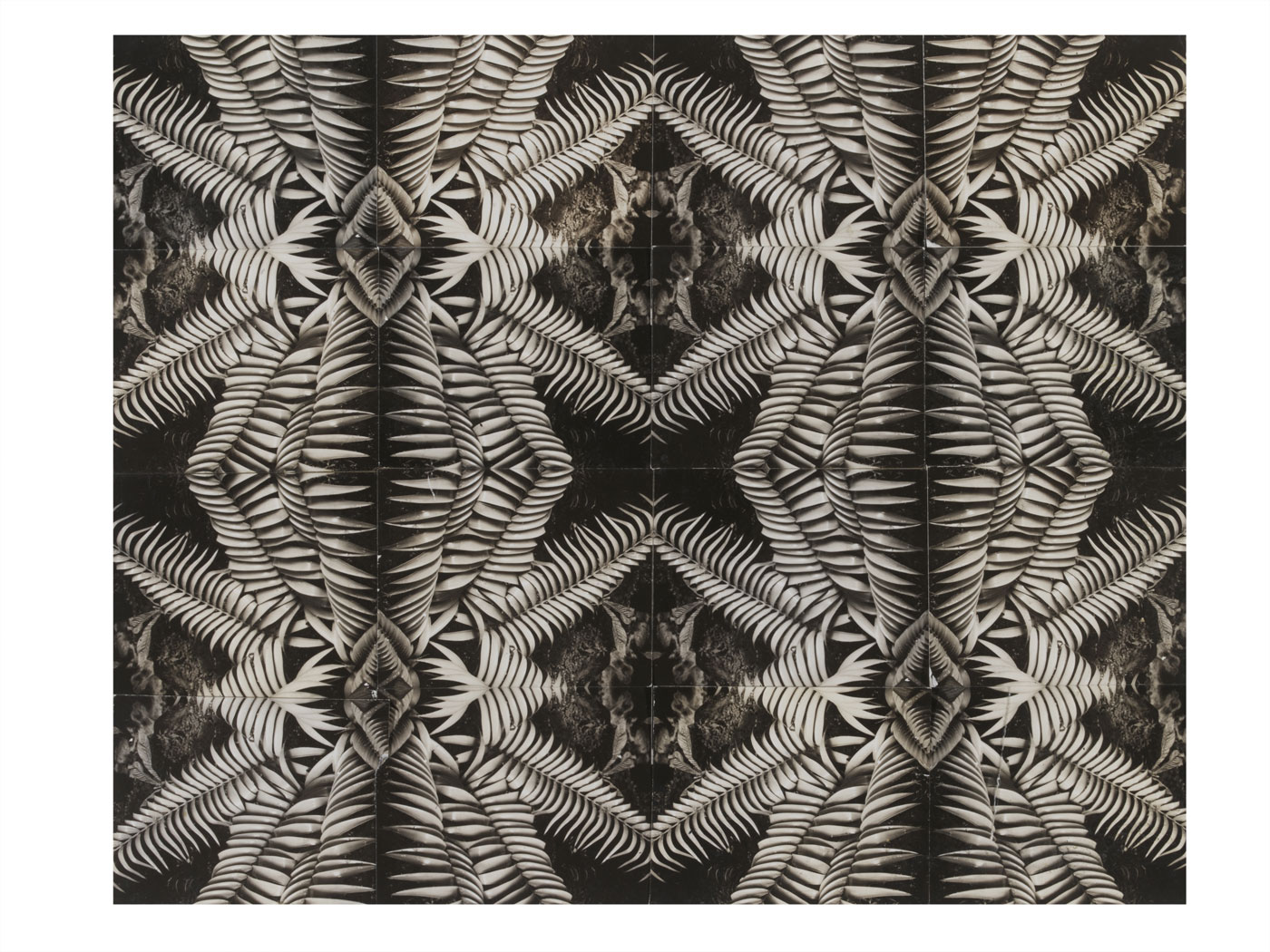
The Art Institute of Chicago website

LIKE ART BLART ON FACEBOOK

Back to top

Exhibition: ‘A World of Its Own: Photographic Practices in the Studio’ at the Museum of Modern Art (MoMA), New York Part 2

Exhibition dates: 8th February – 2nd November 2014

The Edward Steichen Photography Galleries, third floor

Curators: Organised by Quentin Bajac, The Joel and Anne Ehrenkranz Chief Curator, with Lucy Gallun, Assistant Curator, Department of Photography


Peter Hujar (American, 1934-1987) 'David Wojnarowicz' 1981


Peter Hujar (American, 1934-1987)
David Wojnarowicz
1981
Gelatin silver print
14 x 14″ (35.6 x 35.6cm)
The Fellows of Photography Fund
Museum of Modern Art Collection


Many thankx to MoMA for allowing me to publish four of the photographs in the posting. The rest of the images were sourced from the Internet in order to give the reader a more comprehensive understanding of what this exhibition is actually about – especially if you are thousands of miles away and have no hope of ever seeing it!

Dr Marcus Bunyan


Please click on the photographs for a larger version of the image.


The exhibition is divided into 6 themes each with its own gallery space:

1/ Surveying the Studio
2/ The Studio as Stage
3/ The Studio as Set
4/ A Neutral Space
5/ Virtual Spaces
6/ The Studio, from Laboratory to Playground


A Neutral Space


Harry Callahan (American, 1912-1999) 'Eleanor' 1948


Harry Callahan (American, 1912-1999)
Eleanor
1948
Gelatin silver print
4 1/2 x 3 1/4″ (11.4 x 8.3cm)
Gift of the artist
Museum of Modern Art Collection


Charles Harry Jones (English, 1866-1959) 'Brussels Sprouts' c. 1900


Charles Harry Jones (English, 1866-1959)
Brussels Sprouts
c. 1900
Gelatin silver printing-out-paper print
6 1/8 × 8 1/16″ (15.5 × 20.5cm)
Acquired through the generosity of Robert B. Menschel
Museum of Modern Art Collection


Charles Harry Jones (1866 – 15 November 1959) was an English gardener and photographer, noted for his still lifes of fruit and vegetables.

The photographs were probably made between 1895 and 1910, and likely while he was employed at Ote Hall. Jones’ work was never exhibited in his lifetime, and was largely unknown even to his family, until the photographic prints were discovered by accident in 1981. Sean Sexton found a suitcase containing hundreds of prints of vegetables, fruits and flowers at Bermondsey antiques market. Other than a very few exceptions, Jones’ photographs exist only in unique examples. None of the glass-plate negatives have been located.

Jones isolated his vegetables, fruits and flowers against neutral dark or light backgrounds, in the manner of formal studio portraits. He used long exposures and small apertures to give depth of field.

Text from the Wikipedia website


Imogen Cunningham (American, 1883-1976) 'Cala Leaves' 1932


Imogen Cunningham (American, 1883-1976)
Cala Leaves
1932
Gelatin silver print
9 9/16 x 7 9/16″ (24.3 x 19.2cm)
Gift of Paul F. Walter
Museum of Modern Art Collection


Karl Blossfeldt (German, 1865-1932) 'Chrysanthemum segetum – Feverfew' before 1928


Karl Blossfeldt (German, 1865-1932)
Chrysanthemum segetum – Feverfew Enlarged 8 Times
Before 1928
Gelatin silver print
11 15/16 × 9 7/16″ (30.4 × 23.9cm)
Thomas Walther Collection. Gift of James Thrall Soby, by exchange
Museum of Modern Art Collection
© 2022 Karl Blossfeldt / Artists Rights Society (ARS), New York


Edward Weston (American, 1886-1958) 'Nude, Mexico' 1925


Edward Weston (American, 1886-1958)
Nude, Mexico
1925
Palladium print
8 3/8 × 7 5/8″ (21.2 × 19.3cm)
Gift of David H. McAlpin
Museum of Modern Art Collection
© 1981 Center for Creative Photography, Arizona Board of Regents


Richard Avedon (American, 1923-2004) 'Carl Hoefert, unemployed blackjack dealer, Reno, Nevada', from the series 'In the American West' August 30, 1983


Richard Avedon (American, 1923-2004)
Carl Hoefert, unemployed blackjack dealer, Reno, Nevada, from the series In the American West
August 30, 1983
Gelatin silver print, printed 1985
47 1/2 x 37 1/2″ (120.6 x 95.2cm)
Gift of the artist
Museum of Modern Art Collection


Peter Hujar (American, 1934-1987) 'Pascal (Paris)' 1980


Peter Hujar (American, 1934-1987)
Pascal (Paris)
1980
Gelatin silver print
14 5/8 x 14 11/16″ (37.1 x 37.3cm)
Gift of David Wojnarowicz
Museum of Modern Art Collection


Valérie Belin (French, b. 1964) 'Untitled' from the series 'Mannequins' 2003


Valérie Belin (French, b. 1964)
Untitled from the series Mannequins
2003
Gelatin silver print
61 x 49″ (154.9 x 124.5cm)
Purchase
Museum of Modern Art Collection


Laurie Simmons (American, b. 1949) Allan McCollum (American, b. 1944) 'Untitled' from the series 'Actual Photos' 1985


Laurie Simmons (American, b. 1949)
Allan McCollum (American, b. 1944)
Untitled from the series Actual Photos
1985
Silver dye bleach print
9 5/16 x 6 5/16″ (23.7 x 16.1cm)
Joel and Anne Ehrenkranz Fund
Museum of Modern Art Collection


Josephine Meckseper (German, b. 1964) 'Blow-Up (Michelli, Knee-Highs)' 2006


Josephine Meckseper (German, b. 1964)
Blow-Up (Michelli, Knee-Highs)
2006
Chromogenic colour print
78 5/8 x 62 5/8″ (199.7 x 159.1cm)
Fund for the Twenty-First Century
Museum of Modern Art Collection


Robert Mapplethorpe (American, 1946-1989) 'Hermes' 1988


Robert Mapplethorpe (American, 1946-1989)
Hermes
1988
Gelatin silver print
19 1/4 × 19 1/4″ (48.9 × 48.9cm)
Gift of Agnes Gund
Museum of Modern Art Collection
© 2022 Robert Mapplethorpe Foundation


Virtual Spaces


Christian Marclay (American and Swiss, b. 1955) 'Allover (Genesis, Travis Tritt, and Others)' 2008


Christian Marclay (American and Swiss, b. 1955)
Allover (Genesis, Travis Tritt, and Others)
2008
Cyanotype
Composition and sheet: 51 1/2 x 97 3/4″ (130.8 x 248.3cm)
Publisher and printer: Graphic studio, University of South Florida, Tampa
Acquired through the generosity of Steven A. and Alexandra M. Cohen
Museum of Modern Art Collection


Luigi Veronesi (Italian, 1908-1998) 'Composition' 1935


Luigi Veronesi (Italian, 1908-1998)
Composition
1935
Gelatin silver print
9 7/16 × 11 1/4″ (24 × 28.6 cm)
Thomas Walther Collection. Gift of Ansel Adams, by exchange
Museum of Modern Art Collection
© 2022 Archivio Luigi Veronesi, Milan


Luigi Veronesi (28 May 1908 – 25 February 1998) was an Italian photographer, painter, scenographer and film director born in Milan.


Thomas Ruff (German, b. 1958) 'phg.06' 2012


Thomas Ruff (German, b. 1958)
phg.06
2012
Chromogenic colour print
100 3/8 x 72 13/16″ (255 x 185cm)
Courtesy David Zwirner, New York/London
Museum of Modern Art Collection


Man Ray (American, 1890-1976) 'Rayograph' 1923


Man Ray (American, 1890-1976)
Rayograph
1923
Gelatin silver print
9 7/16 x 7″ (23.9 x 17.8cm)
Purchase
Museum of Modern Art Collection


György Kepes (American born Hungary, 1906-2001) 'Abstraction – Surface Tension #2' c. 1940


György Kepes (American born Hungary, 1906-2001)
Abstraction – Surface Tension #2
c. 1940
Gelatin silver print
14 x 11 1/8″ (35.6 x 28.3cm)
Gift of the artist
Museum of Modern Art Collection


The Studio, from Laboratory to Playground


Barbara Morgan (American, 1900-1992) 'Pure Energy and Neurotic Man' 1941


Barbara Morgan (American, 1900-1992)
Pure Energy and Neurotic Man
1941
Gelatin silver print, printed 1971
19 1/8 x 15 1/2″ (48.6 x 39.3cm)
Gift of the artist
Museum of Modern Art Collection


Barbara Morgan (American, 1900-1992) 'Cadenza' 1940


Barbara Morgan (American, 1900-1992)
Cadenza
1940
Gelatin silver print, printed 1971
17 7/8 x 15″ (45.4 x 38.2cm)
Gift of the artist
Museum of Modern Art Collection


Berenice Abbott (American, 1898-1991) 'Focusing Water Waves, Massachusetts Institute of Technology' 1958-1961


Berenice Abbott (American, 1898-1991)
Focusing Water Waves, Massachusetts Institute of Technology
1958-1961
Gelatin silver print
6 9/16 x 7 15/16″ (16.7 x 20.1cm)
Gift of Ronald A. Kurtz
Museum of Modern Art Collection


Berenice Abbott (American, 1898-1991) 'Wave Pattern with Glass Plate, Massachusetts Institute of Technology' 1958-1961


Berenice Abbott (American, 1898-1991)
Wave Pattern with Glass Plate, Massachusetts Institute of Technology
1958-1961
Gelatin silver print
6 9/16 x 7 9/16″ (16.7 x 19.2cm)
Gift of Ronald A. Kurtz
Museum of Modern Art Collection


Heinz Hajek-Halke (German, 1898-1983) 'Embrace (Umarmung)' 1947-1951


Heinz Hajek-Halke (German, 1898-1983)
Embrace (Umarmung)
1947-1951
Gelatin silver print
15 5/8 x 11 3/8″ (39.7 x 29.0cm)
Gift of the artist
Museum of Modern Art Collection


Harold Edgerton (American, 1903-1990) 'Lead Falling in a Shot Tower' 1936


Harold Edgerton (American, 1903-1990)
Lead Falling in a Shot Tower
1936
Gelatin silver print
7 9/16 x 9 1/2″ (19.3 x 24.2cm)
Gift of Gus and Arlette Kayafas
Museum of Modern Art Collection


Harold Edgerton (American, 1903-1990) 'Bouncing Ball Bearing' 1962


Harold Edgerton (American, 1903-1990)
Bouncing Ball Bearing
1962
Gelatin silver print
9 9/16 x 7 11/16″ (24.3 x 19.5cm)
Gift of Gus and Arlette Kayafas
Museum of Modern Art Collection


Harold Edgerton (American, 1903-1990) 'This is Coffee' 1933


Harold Edgerton (American, 1903-1990)
This is Coffee
1933
Gelatin silver print
9 7/8 x 12 7/8″ (25.1 x 32.7cm)
Gift of the artist
Museum of Modern Art Collection


Roman Signer (Swiss, b. 1938) 'Sand Curtain (Sandvorhang)' 1983


Roman Signer (Swiss, b. 1938)
Sand Curtain (Sandvorhang)
1983
Super 8 film transferred to video (colour, silent)
Approximately 2 min.
Committee on Media Funds
Museum of Modern Art Collection


Roman Signer (Swiss, b. 1938) 'Sand Stairs (Sandtreppe)' 1975


Roman Signer (Swiss, b. 1938)
Sand Stairs (Sandtreppe)
1975
Super 8 film transferred to video (colour, silent)
Approximately 2 min.
Committee on Media Funds
Museum of Modern Art Collection


Roman Signer (Swiss, b. 1938) 'Rubber Motor (Gummimotor)' 1983


Roman Signer (Swiss, b. 1938)
Rubber Motor (Gummimotor)
1983
Super 8 film transferred to video (colour, silent)
Approximately 2 min.
Committee on Media Funds
Museum of Modern Art Collection


Roman Signer (Swiss, b. 1938) 'Sand Cone (Sandkegel)' 1984


Roman Signer (Swiss, b. 1938)
Sand Cone (Sandkegel)
1984
Super 8 film transferred to video (colour, silent)
Approximately 2 min.
Committee on Media Funds
Museum of Modern Art Collection


Roman Signer (Swiss, b. 1938) 'Sand Pillar (Sandturm)' 1987


Roman Signer (Swiss, b. 1938)
Sand Pillar (Sandturm)
1987
Super 8 film transferred to video (colour, silent)
Approximately 2 min.
Committee on Media Funds
Museum of Modern Art Collection


Roman Signer (Swiss, b. 1938) 'Sand (Sand)' 1988


Roman Signer (Swiss, b. 1938)
Sand (Sand)
1988
Super 8 film transferred to video (colour, silent)
Approximately 2 min.
Committee on Media Funds
Museum of Modern Art Collection


Roman Signer (Swiss, b. 1938) 'Umbrella (Schirm)' 1989


Roman Signer (Swiss, b. 1938)
Umbrella (Schirm)
1989
Super 8 film transferred to video (colour, silent)
Approximately 2 min.
Committee on Media Funds
Museum of Modern Art Collection


Roman Signer (Swiss, b. 1938) 'Barrel (Fass)' 1985


Roman Signer (Swiss, b. 1938)
Barrel (Fass)
1985
Super 8 film transferred to video (colour, silent)
Approximately 2 min.
Committee on Media Funds
Museum of Modern Art Collection


Roman Signer (Swiss, b. 1938) 'Carriage (Wagen)' 1982


Roman Signer (Swiss, b. 1938)
Carriage (Wagen)
1982
Super 8 film transferred to video (colour, silent)
Approximately 2 min.
Committee on Media Funds
Museum of Modern Art Collection


Roman Signer (Swiss, b. 1938) 'Tube (Schlauch)' 1982


Roman Signer (Swiss, b. 1938)
Tube (Schlauch)
1982
Super 8 film transferred to video (colour, silent)
Approximately 2 min.
Committee on Media Funds
Museum of Modern Art Collection


Roman Signer (b. 1938 in Appenzell, Switzerland) is principally a visual artist who works in sculpture, installations photography, and video. Signer’s work has grown out of, and has affinities with both land art and performance art, but they are not typically representative of either category.It is often being described as following the tradition of the Swiss engineer-artist, such as Jean Tinguely and Peter Fischli & David Weiss.

Signer’s “action sculptures” involve setting up, carrying out, and recording “experiments” or events that bear aesthetic results. Day-to-day objects such as umbrellas, tables, boots, containers, hats and bicycles are part of Signer’s working vocabulary. Following carefully planned and strictly executed and documented procedures, the artist enacts and records such acts as explosions, collisions, and the projection of objects through space. Signer advocates ‘controlled destruction, not destruction for its own sake’. Action Kurhaus Weissbad (1992) saw chairs catapulted out of a hotel’s windows; Table (1994) launched a table into the sea on four buckets; Kayak (2000) featured the artist being towed down a road in a canoe. In documenta 8 (1987), he catapulted thousands of sheets of paper into the air to create an ephemeral wall in the room for a brief, but all the more intense moment. As the Swiss representative at the Venice Biennale in 1999, he made 117 steel balls fall from the ceiling on to lumps of clay lying on the ground. Many of his happenings are not for public viewing, and are only documented in photos and film. Video works like Stiefel mit Rakete (Boot with Rocket) are integral to Signer’s performances, capturing the original setup of materials that self-destruct in the process of creating an emotionally and visually compelling event.
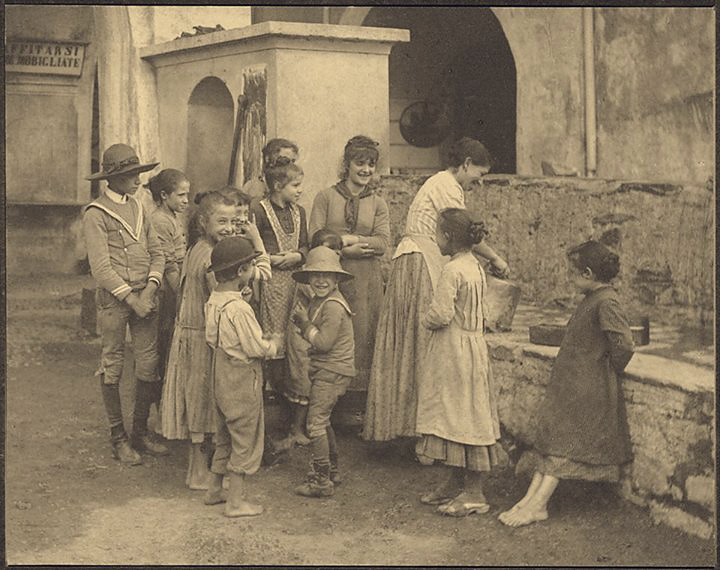
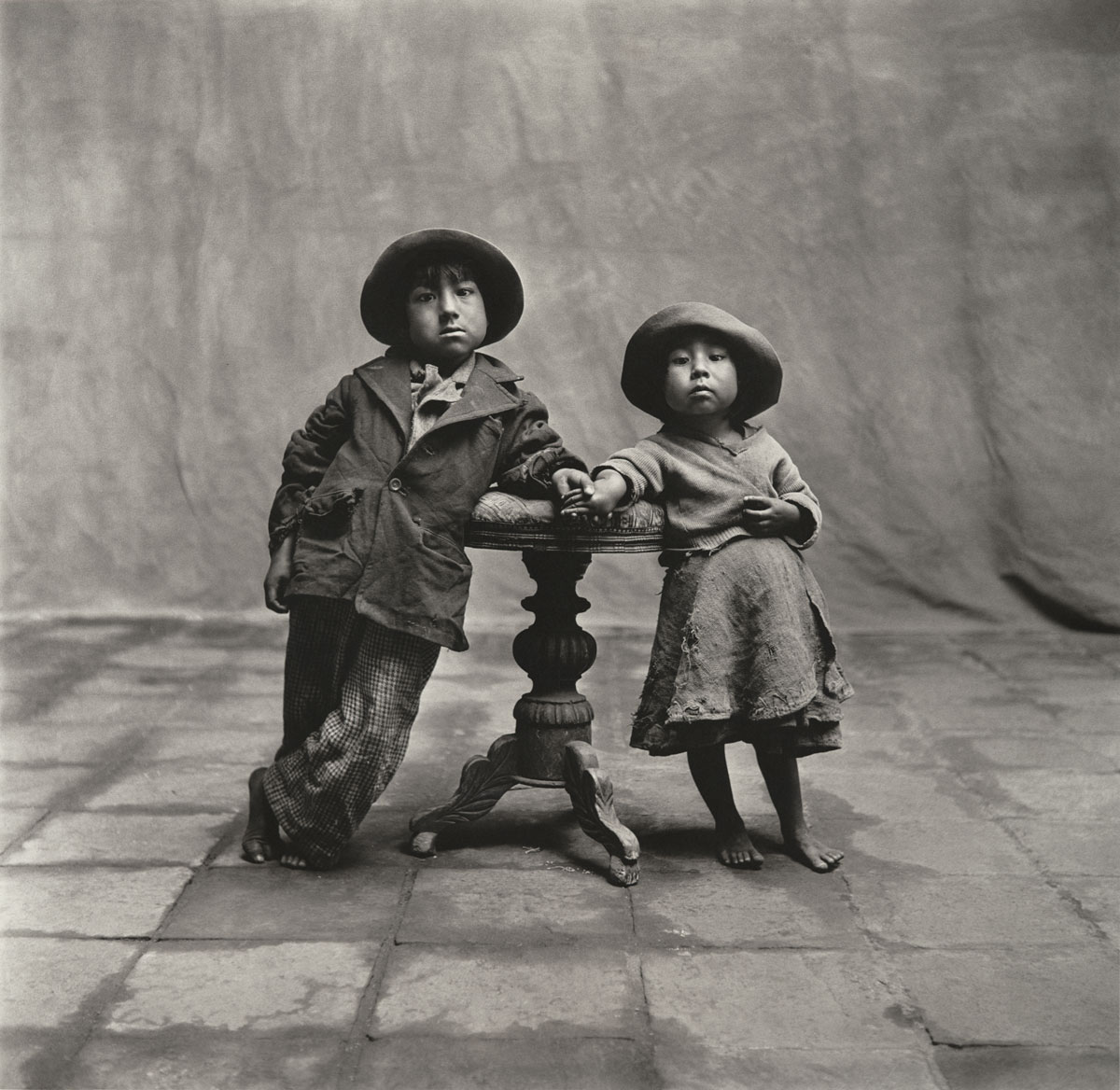
Text from Wikipedia website


Kiki Smith (American born Germany, b. 1954) 'My Secret Business' 1993


Kiki Smith (American born Germany, b. 1954)
My Secret Business
1993
Lithograph
23 9/16 x 18 1/8″ (59.8 x 46cm)
Gift of Howard B. Johnson
Museum of Modern Art Collection


Adrian Piper (American, b. 1948) 'Food for the Spirit #2' 1971, printed 1997


Adrian Piper (American, b. 1948)
Food for the Spirit #2
1971, printed 1997
Gelatin silver print
14 9/16 x 15″ (37 x 38.1cm)
The Family of Man Fund
Museum of Modern Art Collection


Adrian Piper (American, b. 1948) 'Food for the Spirit #8' 1971, printed 1997


Adrian Piper (American, b. 1948)
Food for the Spirit #8
1971, printed 1997
Gelatin silver print
14 9/16 x 14 15/16″ (37 x 38cm)
The Family of Man Fund
Museum of Modern Art Collection


Adrian Piper (American, b. 1948) 'Food for the Spirit #14' 1971, printed 1997


Adrian Piper (American, b. 1948)
Food for the Spirit #14
1971, printed 1997
Gelatin silver print
14 9/16 x 15″ (37 x 38.1cm)
The Family of Man Fund
Museum of Modern Art Collection


Harold Edgerton (American, 1903-1990) 'Indian Club Demonstration' 1939


Harold Edgerton (American, 1903-1990)
Indian Club Demonstration
1939
Gelatin silver print
13 x 10″ (33.0 x 26.0cm)
Gift of the artist
Museum of Modern Art Collection


Harold Edgerton (American, 1903-1990) 'Bobby Jones with an Iron' 1938


Harold Edgerton (American, 1903-1990)
Bobby Jones with an Iron
1938
Gelatin silver print
9 5/8 x 11 1/2″ (24.4 x 29.2cm)
Gift of the artist
Museum of Modern Art Collection


John Divola (American, b. 1949) 'Untitled' from the series 'Vandalism' 1974


John Divola (American, b. 1949)
Untitled from the series Vandalism
1974
Gelatin silver print
7 1/16 x 7 1/16″ (18.0 x 18.0cm)
Purchase
Museum of Modern Art Collection


John Divola (American, b. 1949) 'Untitled' from the series 'Vandalism' 1974


John Divola (American, b. 1949)
Untitled from the series Vandalism
1974
Gelatin silver print
7 x 7″ (17.9 x 17.9cm)
Purchase
Museum of Modern Art Collection


Robert Frank (American born Switzerland, 1924-2019) 'Boston' March 20, 1985 (detail)


Robert Frank (American born Switzerland, 1924-2019)
Boston (detail)
March 20, 1985
Colour instant prints (Polaroids) with hand-applied paint and collage
Each 27 3/4 x 22 1/4″ (70.3 x 56.4cm)
Acquired through the generosity of Polaroid Corporation
Museum of Modern Art Collection


Anna Blume (German, 1937-2020) Bernhard Blume (German, 1937-2011) 'Kitchen Frenzy (Küchenkoller)' 1986 (detail)


Anna Blume (German, 1937-2020)
Bernhard Blume (German, 1937-2011)
Kitchen Frenzy (Küchenkoller) (detail)
1986
Gelatin silver prints
Each 66 15/16 x 42 1/2″ (170 x 108cm)
Acquired through the generosity of the Contemporary Arts Council of The Museum of Modern Art
Museum of Modern Art Collection


Anna Blume (née Helming; 21 April 1936 – 18 June 2020) and Bernhard Johannes Blume (8 September 1937 – 1 September 2011) were German art photographers. They created sequences of large black-and-white photos of staged scenes in which they appeared themselves, with objects taking on a “life” of their own. Their works have been shown internationally in exhibitions and museums, including New York’s MoMA. They are regarded as “among the pioneers of staged photography”. …

Anna and Bernhard Blume together created installations, sequences of large photo scenes and, mostly in the 1990s, Polaroids. Both created drawings. They staged and photographed scenes in which they appeared themselves, with objects taking on a “life” of their own. According to the Deutsche Börse Photography Foundation, their process was to create their picture sequences together and complete all related tasks without outside help. That included designing the sets and costumes, developing the negatives, and producing enlargements; at each stage the artwork was refined, polished and painted. Anna said: “Wir malen mit der Kamera, und diese malerische Arbeit findet auch noch im Labor statt.” (We paint with our camera, and this painterly work continues in the lab, too.) The images were produced without the aid of digital manipulation or post-production montages. Taking pictures of a “flying, crashing, and swirling world”, the artists used safety features such as ropes, nets and mattresses.

Text from the Wikipedia website


The Museum of Modern Art
11 West 53 Street
New York, NY 10019
Phone: (212) 708-9400

Opening hours:
10.30am – 5.30pm
Open seven days a week

MoMA website

LIKE ART BLART ON FACEBOOK

Back to top