Nathaniel L. Stebbins photographic collection at Historic New England, Boston, Mass. now available online

November 2013


Nathaniel Livermore Stebbins (American, 1847-1922) 'George W. Wells' 1900-10-26


Nathaniel Livermore Stebbins (American, 1847-1922)
George W. Wells
1900-10-26
Nathaniel L. Stebbins photographic collection
© Historic New England


Historic New England

I had never heard of the photographer Nathaniel Livermore Stebbins, but it is such a joy that these photographs have been digitised and are now available online. How gloriously elegant these yachts were (but still at the cutting edge of technology of their day), when compared with the ugly, contemporary America’s Cup trimarans.

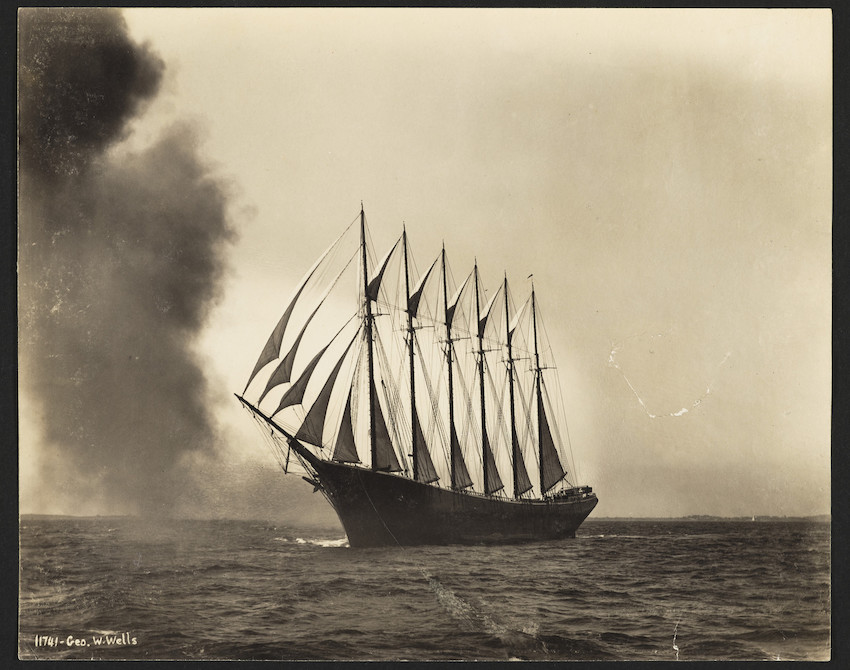
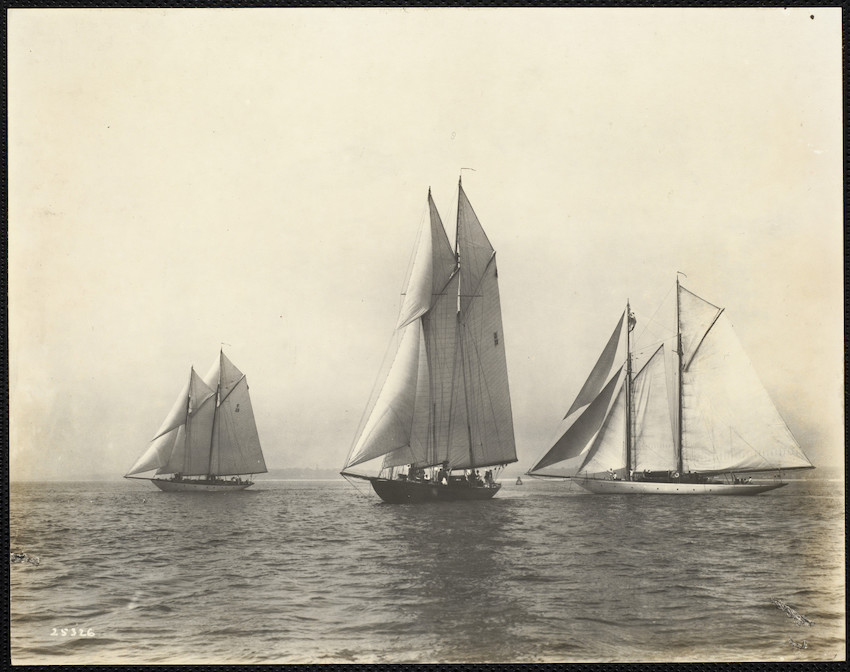
All the photographs in this posting are wonderful for their classical eloquence and framing of the subject. I especially like the first image, George W. Wells (1900, below), as the photographer stands on a tug belching smoke that has gone out to meet the largest schooner in the world at the time. With land in the distance and a rope snaking across the water back to the tug, the lack of sail – along with the darkness of the hull and the attitude of the ship – make it seem as though this were a ghost ship. The other image I particularly like is Start of Schooners (1920, below). The angles of the three ships as they manoeuvre on a seemingly becalmed sea adds a wonderful aura to the photograph.

Can you imagine trying to take these photographs using a large format camera with dry-plate glass negatives on the open sea? While dry-plate photography with its fast exposure time and ease of use had made photography more practical, the difficulty of getting an in focus image on an open, exposed, rocking ship would have been enormous. That the artist achieved such outstanding results says a lot about his previsualisation and his expertise and craftsmanship as a photographer.

Dr Marcus Bunyan


Please click on the photographs for a larger version of the image. All images © Historic New England


Nathaniel Livermore Stebbins (American, 1847-1922) 'George W. Wells' 1900-10-26


Nathaniel Livermore Stebbins (American, 1847-1922)
George W. Wells
1900-10-26
Nathaniel L. Stebbins photographic collection
© Historic New England


The first arrival of the new George W. Wells in Boston, then the world’s largest schooner and its first six masted schooner. The tug Storm King picked her up off Highland Light and N. L. Stebbins probably went on the Storm King to take this photo.


Nathaniel Livermore Stebbins (American, 1847-1922) 'Gadabout' 1893-10-07


Nathaniel Livermore Stebbins (American, 1847-1922)
Gadabout
1893-10-07
Nathaniel L. Stebbins photographic collection
© Historic New England


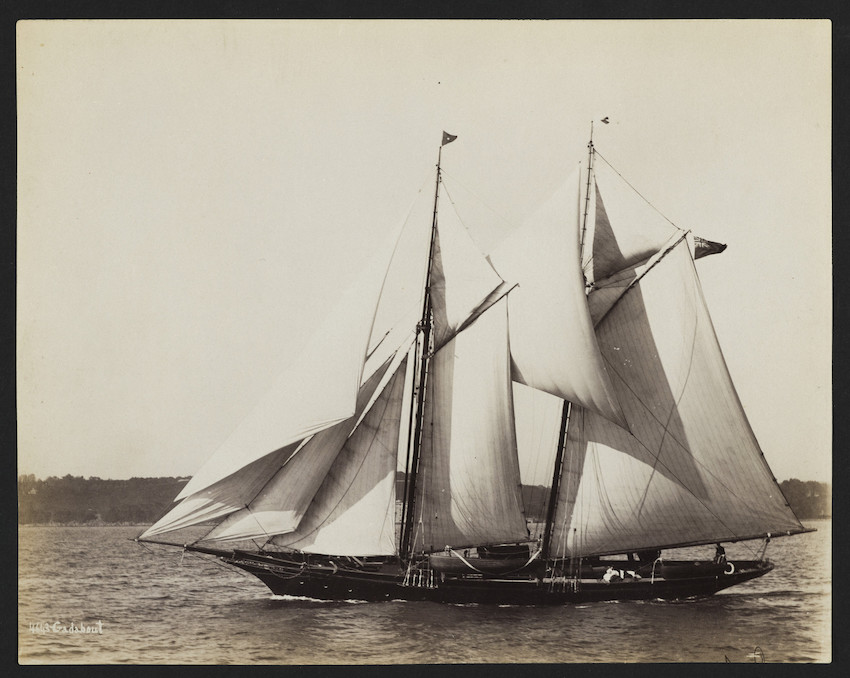
Taken on the day of the first America’s Cup race between Vigilant and Valkyrie, 15 miles to windward and return, starting from Sandy Hook Lightship, Vigilant won.


Nathaniel Livermore Stebbins (American, 1847-1922) 'Egeria' 1886-07-09


Nathaniel Livermore Stebbins (American, 1847-1922)
Egeria
1886-07-09
Nathaniel L. Stebbins photographic collection
© Historic New England


Historic New England announced that it’s collection of Nathaniel L. Stebbins photographs will be accessible online on August 22, 2013. Stebbins, a celebrated marine photographer, captured the quintessential New England pastimes of yachting and racing, as well as an extraordinary variety of marine vessels. This spectacular photographic collection consists of approximately 6,000 original prints. Dating from the early 1880s to c. 1922, the images depict recreational sailing vessels, steamships, ferries, and police boats, as well as boatyards and other dockside facilities. The images are a record of an important era in maritime history and document commercial and recreational maritime activities that would eventually fade away due to changes in transportation and technology. Architectural views are also part of the collection.

Born in Meadville, Pennsylvania, Stebbins developed a love of ships at a young age, and made an ocean voyage to South America as a young man. He published several books on marine and naval topics, including The New Navy of the United States (1912), The Illustrated Coast Pilot, with Sailing Directions (1891), and The Yachtsman’s Album (1896). Stebbins took roughly 25,000 photographs before his death in 1922. The digitisation of the Stebbins collection is an important step in Historic New England’s ongoing Collections Access Project, which launched in 2010. The Northeast Document Conservation Center and the Boston Public Library in conjunction with the Digital Commonwealth participated in the effort.

Text from the Art Daily website [Online] Cited 10/11/2013


Nathaniel Livermore Stebbins (American, 1847-1922) 'Puritan' 1885-08-03


Nathaniel Livermore Stebbins (American, 1847-1922)
Puritan
1885-08-03
Nathaniel L. Stebbins photographic collection
© Historic New England


Goelet Cup, Newport

“Mr. N. L. Stebbins, the marine photographer, succeeded in getting a large number of views of the Puritan, Priscilla and other yachts in the race for the Goelet cups Monday [1885-08-03].”

Source: Anon. “Yachting Spray.” Boston Globe, August 9, 1885, p. 6.


Nathaniel Livermore Stebbins (American, 1847-1922) 'Mayflower' 1886-09-07


Nathaniel Livermore Stebbins (American, 1847-1922)
Mayflower
1886-09-07
Nathaniel L. Stebbins photographic collection
© Historic New England


First race for the America’s Cup 1886, Mayflower won against Galatea


Nathaniel Livermore Stebbins (American, 1847-1922) 'America's Cup Race: Start, Vigilant and Valkyrie' 1893-10-07


Nathaniel Livermore Stebbins (American, 1847-1922)
America’s Cup Race: Start, Vigilant and Valkyrie
1893-10-07
Nathaniel L. Stebbins photographic collection
© Historic New England


First America’s Cup race, 15 miles to windward and return, starting from Sandy Hook Lightship, Vigilant won.


Nathaniel Livermore Stebbins (American, 1847-1922)

Nathaniel Livermore Stebbins (January 9, 1847 – July 10, 1922) was a noted American marine photographer, whose surviving photographs document an important era in the development of American maritime activities, as sweeping technological and social changed revolutionised activity on the water, in military, commercial and leisure spheres… He became interested in photography in about 1882, shortly after the introduction of dry-plate photography, with its fast exposure time and ease of use, made photography more practical. With an interest in the sea, and little competition in that area, it was natural that he should specialise in maritime photography.

Over his working career as a commercial photographer (from 1884 to 1922), he took approximately 25,000 images. Of these, about 60% were of marine subjects (the majority of those being of leisure activities, but many are of military and commercial scenes, a valuable record for historians). The remainder include a wide variety of commercial work, including the theatre, railroads, home interiors, etc. His collection at his death included about 20,000 negatives, almost all on glass plates (the usual medium for high-resolution negatives in his time); it was bought by another photographer, and on his death, many of Stebbins’ plates were sold for scrap (tradition holds that they were used in greenhouses).

A few plates found their way to the Peabody Museum in Salem, Massachusetts, and another small group eventually wound up at the Mariners’ Museum, but the bulk of the remaining collection (about 5,000 images total, of which a little over 2,500 are the original glass negatives) were rescued for Historic New England by William Appleton, the founder of the Society. Almost all are of maritime subjects; very little of his non-maritime work survives.

Text from the Wikipedia website


Nathaniel Livermore Stebbins (American, 1847-1922) 'America's Cup Race: Two minutes after start, Valkyrie & Vigilant' 1893-10-09


Nathaniel Livermore Stebbins (American, 1847-1922)
America’s Cup Race: Two minutes after start, Valkyrie & Vigilant
1893-10-09
Nathaniel L. Stebbins photographic collection
© Historic New England


Second America’s Cup race between Vigilant and Valkyrie, equilateral triangle, starting from Sandy Hook Lightship, Vigilant won.


Nathaniel Livermore Stebbins (American, 1847-1922) 'America's Cup Race: Vigilant at the mark' 1893-10-05


Nathaniel Livermore Stebbins (American, 1847-1922)
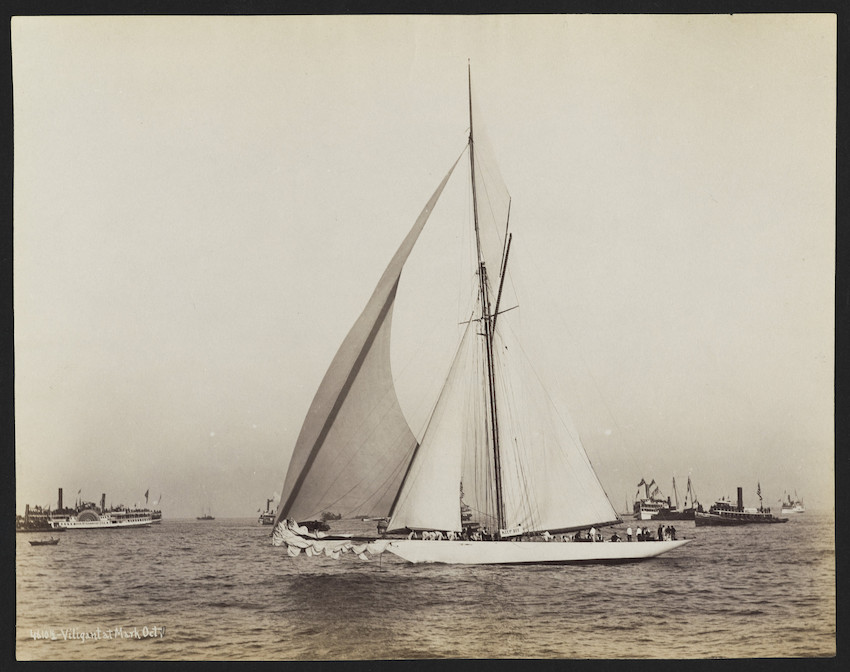
America’s Cup Race: Vigilant at the mark
1893-10-05
Nathaniel L. Stebbins photographic collection
© Historic New England


First America’s Cup race, 15 miles to windward and return, starting from Sandy Hook Lightship, Vigilant won.


Nathaniel Livermore Stebbins (American, 1847-1922) 'Colonia, Vigilant & Jubilee' 1893-08-11


Nathaniel Livermore Stebbins (American, 1847-1922)
Colonia, Vigilant & Jubilee
1893-08-11
Nathaniel L. Stebbins photographic collection
© Historic New England


Nathaniel Livermore Stebbins (American, 1847-1922) 'Defender' 1895-07-20


Nathaniel Livermore Stebbins (American, 1847-1922)
Defender
1895-07-20
Nathaniel L. Stebbins photographic collection
© Historic New England


First trial race between Defender and Vigilant, 30 miles windward and leeward from Scotland lightship. Defender’s first race and win. Defender, designed and built in 1895 by N. G. Herreshoff to defend the America’s Cup against Valkyrie III. Her bottom was polished bronze, but her topsides, deck beams, and some of her deck framing were aluminium (making her a giant battery with electrolysis).


Nathaniel Livermore Stebbins (American, 1847-1922) 'Elsemarie' 1895-08-02


Nathaniel Livermore Stebbins (American, 1847-1922)
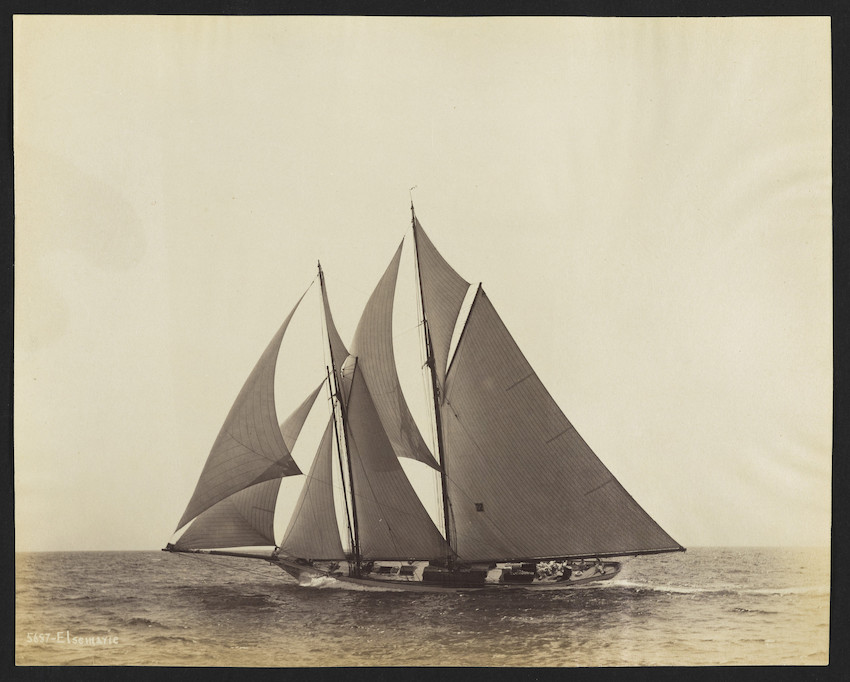
Elsemarie
1895-08-02
Nathaniel L. Stebbins photographic collection
© Historic New England


Goelet Cup, Newport

N. L. Stebbins took photos from the Amadis (Boston Globe, Aug. 3, 1895, p. 1-2). Volunteer won the slop class (after Defender had been disabled by a broken gaff); Emerald the schooner class.


Nathaniel Livermore Stebbins (American, 1847-1922) 'Gitana' 1888-06-10


Nathaniel Livermore Stebbins (American, 1847-1922)
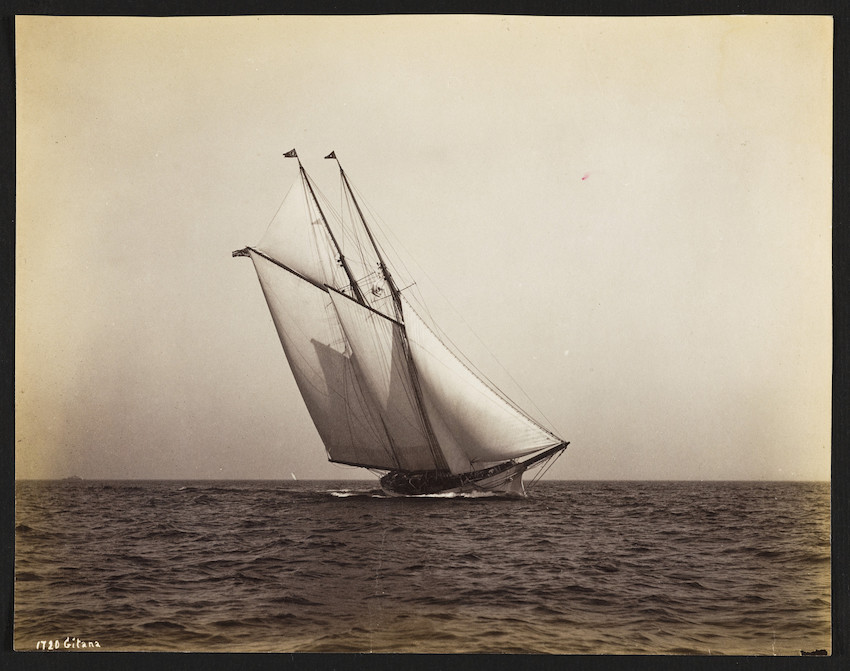
Gitana
1888-06-10
Nathaniel L. Stebbins photographic collection
© Historic New England


Nathaniel Livermore Stebbins (American, 1847-1922) 'Jubilee' 1893-09-07


Nathaniel Livermore Stebbins (American, 1847-1922)
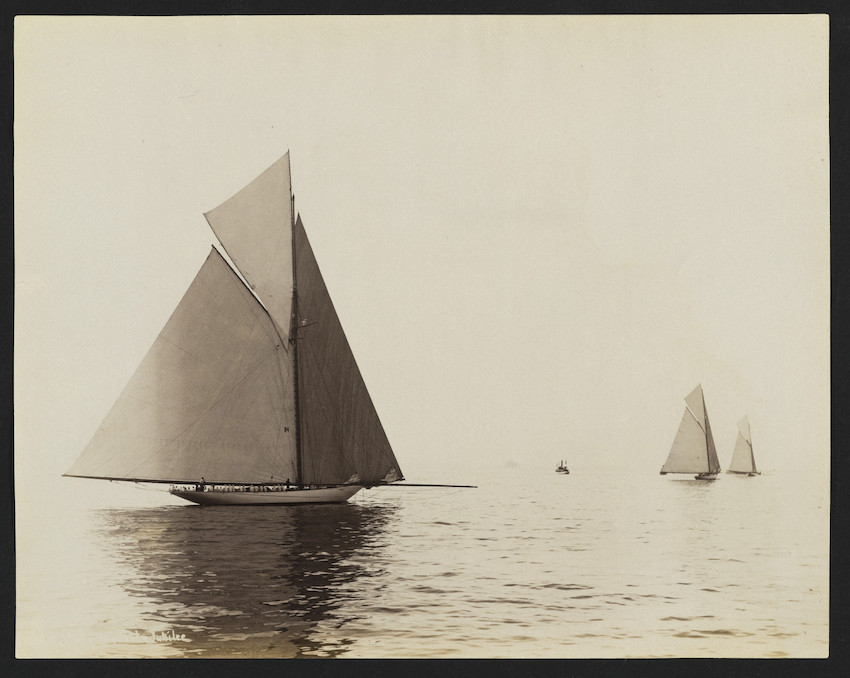
Jubilee
1893-09-07
Nathaniel L. Stebbins photographic collection
© Historic New England


First trial race to choose an America’s Cup defender.


Nathaniel Livermore Stebbins (American, 1847-1922) 'Start of Schooners' 1920-07-10


Nathaniel Livermore Stebbins (American, 1847-1922)
Start of Schooners
1920-07-10
Nathaniel L. Stebbins photographic collection
© Historic New England


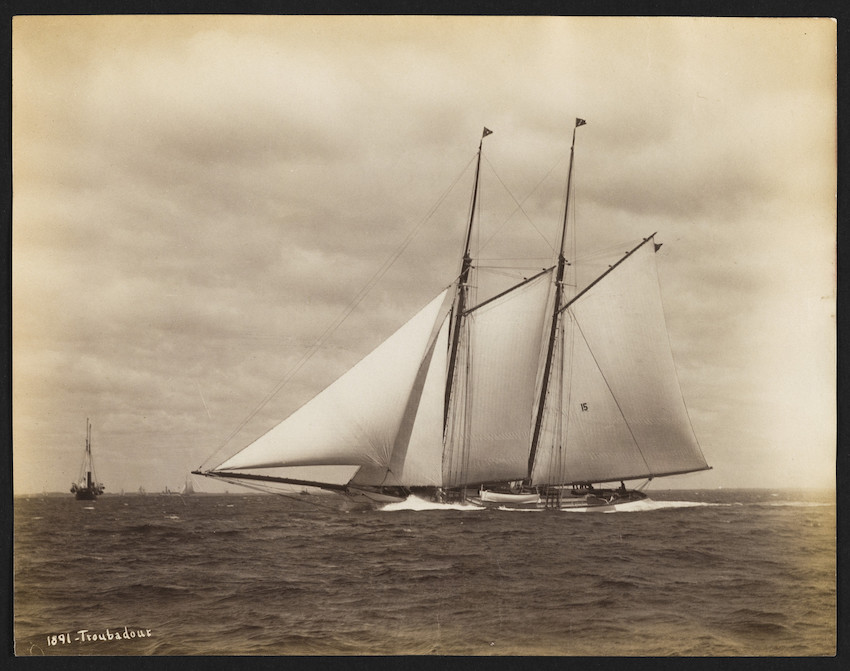
Nathaniel Livermore Stebbins (American, 1847-1922) 'Troubadour' 1888-08-14


Nathaniel Livermore Stebbins (American, 1847-1922)
Troubadour
1888-08-14
Nathaniel L. Stebbins photographic collection
© Historic New England


Historic New England website

LIKE ART BLART ON FACEBOOK

Back to top

Exhibition: ‘Lee Friedlander – America by Car’ at Foam, Amsterdam

Exhibition dates: 13th September – 11th December, 2013


Lee Friedlander (American, b. 1934) 'Bettina Katz, Cleveland, Ohio' 2009


Lee Friedlander (American, b. 1934)
Bettina Katz, Cleveland, Ohio
2009
From the series America by Car, 1995-2009
Gelatin silver print
15 × 15 in. (38.1 × 38.1cm)
Collection of the artist; courtesy Fraenkel Gallery, San Francisco
© Lee Friedlander, courtesy Fraenkel Gallery, San Francisco


“I’m not trying to do something to you, I’m trying to do something with you.”


American pianist and composer Keith Jarrett at a concert in Melbourne, 1970s


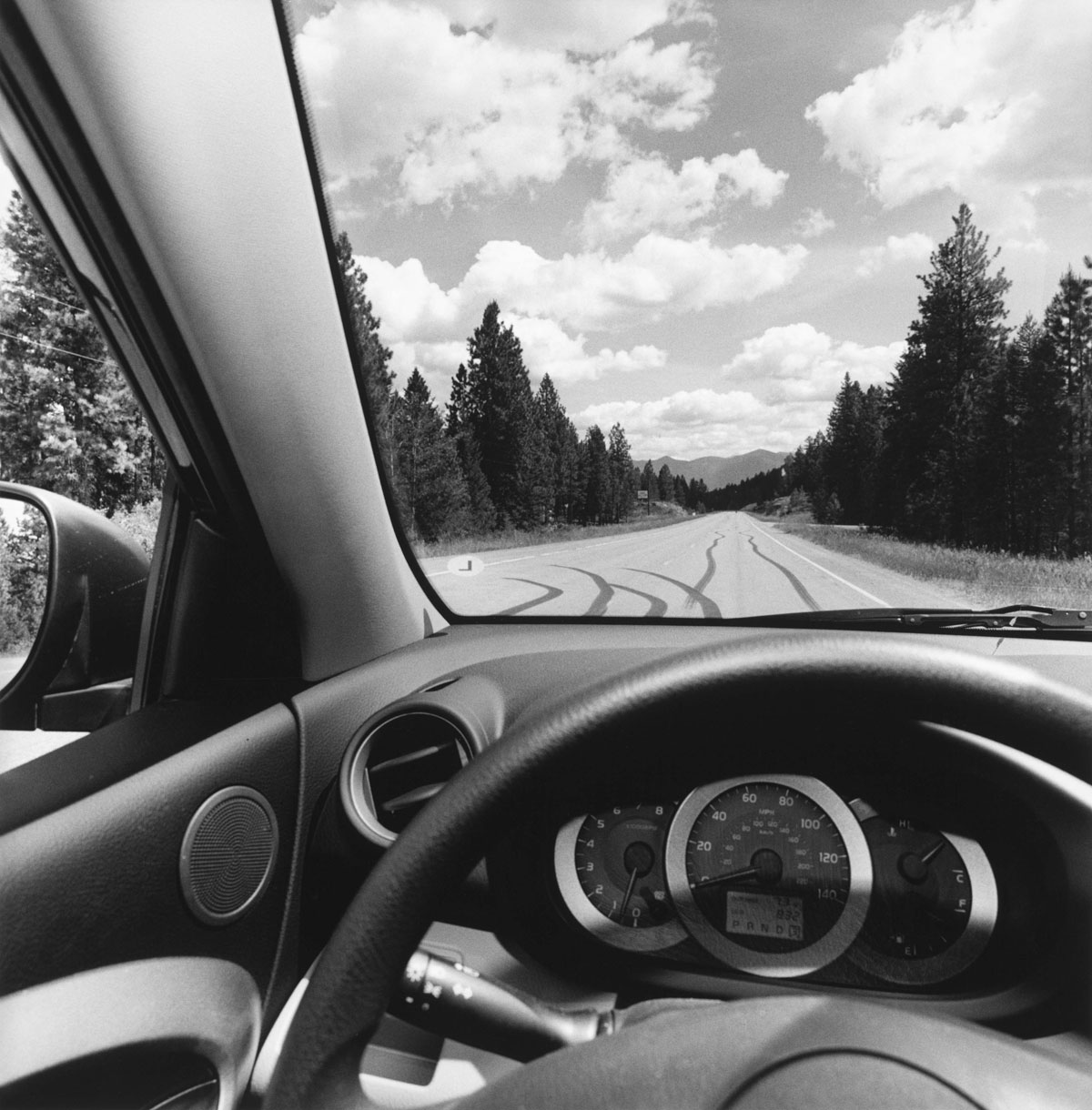
The eye of Lee Friedlander is incredible. His complex, classical photographs in books such as Letters from the People (1993), Flowers and Trees (1981), The American Monument (1976) and America by Car (2010) have redefined the (photographic) landscape. The artist is constantly reinventing himself, reinventing pictorial space – cutting, distorting, reflecting it back onto itself – to create layered images (after Eugène Atget and Walker Evans). These self-reflective spaces are as much about the artist and his nature as they are about the world in which he lives. They have become the basis of Friedlander’s visual language. Here is a love of the medium and of the world that is a reflection of Self.

I don’t see these cars (or photographs) as illusion factories. For me, this series of work is akin to a tri-view self-portrait. Instead of the artist painting the sitter (as in the triple portrait of Cardinal Richelieu, 1627 below), a vision, an energy of Self emanates outwards from behind the bulwark of the car steering wheel and dash. It is a Self and its relationship to the world split into multifaceted angles and views. He looks out the left window, the front window, the side window – and then he splits his views between side and front windows using the A pillar of the car as a dividing, framing tool. Sometimes he throws in the reflections of him / self with camera in the rear view mirror for good measure. There is wit, humour and irony in these photographs. There is cinematic panorama and moments of intimacy. There is greatness in these images.

Friedlander is not trying to do something to you, but something with you, for he is showing you something that you inherently know but may not be aware of. Like a Zen master, he asks you questions but also shows you the way. If you understand the path of life and the energy of the cosmos, you understand what a journey this is.

Dr Marcus Bunyan


Many thankx to Foam for allowing me to publish the photographs in the posting. Please click on the photographs for a larger version of the image.


Philippe de Champaigne (French, 1602-1674) 'Triple portrait of Cardinal Richelieu' 1642


Philippe de Champaigne (French, 1602-1674)
Triple portrait of Cardinal Richelieu
c. 1640
Oil on canvas
58cm (22.8 in) x 72cm (28.3 in)
The National Gallery, London
This reproduction is in the public domain


Lee Friedlander: America by Car

Published by D.A.P./Fraenkel


Lee Friedlander (American, b. 1934) 'Houston, Texas' 2006


Lee Friedlander (American, b. 1934)
Houston, Texas
2006
From the series America by Car, 1995-2009
Gelatin silver print
15 × 15 in. (38.1 × 38.1cm)
Collection of the artist; courtesy Fraenkel Gallery, San Francisco
© Lee Friedlander, courtesy Fraenkel Gallery, San Francisco


Lee Friedlander (American, b. 1934) 'Denali National Park, Alaska' 2007


Lee Friedlander (American, b. 1934)
Denali National Park, Alaska
2007
From the series America by Car, 1995-2009
Gelatin silver print
15 × 15 in. (38.1 × 38.1cm)
Collection of the artist; courtesy Fraenkel Gallery, San Francisco
© Lee Friedlander, courtesy Fraenkel Gallery, San Francisco


Lee Friedlander (American, b. 1934) 'Nebraska' 1999


Lee Friedlander (American, b. 1934)
Nebraska
1999
From the series America by Car, 1995-2009
Gelatin silver print
15 × 15 in. (38.1 × 38.1cm)
Collection of the artist; courtesy Fraenkel Gallery, San Francisco
© Lee Friedlander, courtesy Fraenkel Gallery, San Francisco


The automobile has come to symbolise the American dream and the associated urge for freedom. It is therefore no surprise that cars play a central role in the series America by Car and The New Cars 1964 by renowned American photographer Lee Friedlander (1934, US), now receiving their first showing in the Netherlands.

Road Trip


America by Car documents Friedlander’s countless wanderings around the United States over the past decade. In this he follows a trail laid down by numerous photographers, film makers and writers like Robert Frank, Stephen Shore and Jack Kerouac. Friedlander nevertheless succeeds in giving the theme of the American road trip his own very original twist, using the cars’ windscreens and dashboards to frame the familiar American landscape, as well as exploiting the reflections found in their wing and rear view mirrors. It is a simple starting point which results in complex and layered images that are typical for Friedlander’s visual language. He also has a sharp eye for the ironic detail. He makes free use of text on billboards and symbols on store signs to add further meaning to his work. His images are so layered that new information continues to surface with every glance, making America by Car a unique evocation of contemporary America.

Car portraits


The New Cars 1964 is a much older series. Friedlander had been commissioned by Harper’s Bazaar to photograph all the new models of automobile introduced in 1964. Rather than placing them centrally and showing them to best advantage, Friedlander decided to set the cars in the most banal of locations, in front of a furniture store or in a scrap yard for instance. Exploiting reflections, available light and unusual perspectives, his cars are almost completely absorbed into the street scene. Although they were rejected at the time by the magazine’s editorial board on the grounds that the images were not attractive enough, the pictures were put away in a drawer and since forgotten. Friedlander however recently rediscovered this series. The New Cars 1964 has since become a special historical and social document and has in its own right become part of Friedlander’s impressive oeuvre.

Fifty-year career

Lee Friedlander was born in the US in 1934. In a career extending across 5 decades Friedlander has maintained an obsessive focus on the portrayal of the American social landscape. His breakthrough in the eyes of the wider public came with the New Documents exhibition at the MoMA in 1967, where his work was presented alongside that of Diane Arbus and Garry Winogrand. Friedlander accumulated numerous awards during his career, including the MacArthur Foundation Award and three Guggenheim Fellowships. He also published more than twenty books. His work has been shown at many venues around the world, including the Whitney Museum of American Art and the MoMA in New York, San Francisco’s SFMOMA, the MAMM in Moscow and the National Museum of Photography in Copenhagen.

Press release from the FOAM website


Lee Friedlander (American, b. 1934) 'Cleveland, Ohio' 2009


Lee Friedlander (American, b. 1934)
Cleveland, Ohio
2009
From the series America by Car, 1995-2009
Gelatin silver print
15 × 15 in. (38.1 × 38.1cm)
Collection of the artist; courtesy Fraenkel Gallery, San Francisco
© Lee Friedlander, courtesy Fraenkel Gallery, San Francisco


Lee Friedlander (American, b. 1934) 'Montana' 2008


Lee Friedlander (American, b. 1934)
Montana
2008
From the series America by Car, 1995-2009
Gelatin silver print
15 × 15 in. (38.1 × 38.1cm)
Collection of the artist; courtesy Fraenkel Gallery, San Francisco
© Lee Friedlander, courtesy Fraenkel Gallery, San Francisco


Lee Friedlander (American, b. 1934) 'Montana' 2008


Lee Friedlander (American, b. 1934)
Montana
2008
From the series America by Car, 1995-2009
Gelatin silver print
15 × 15 in. (38.1 × 38.1cm)
Collection of the artist; courtesy Fraenkel Gallery, San Francisco
© Lee Friedlander, courtesy Fraenkel Gallery, San Francisco


Mr. Friedlander took his black-and-white, square-format photographs entirely from the interior of standard rental cars – late-model Toyotas and Chevys, by the looks of them – on various road trips over the past 15 years. In these pictures our vast, diverse country is buffered by molded plastic dashboards and miniaturized in side-view mirrors…

Mr. Friedlander groups images by subject, not geography: monuments, churches, houses, factories, ice cream shops, plastic Santas, roadside memorials.

So “America by Car,”… is more of an exercise in typology, along the lines of Ed Ruscha’s “Twentysix Gasoline Stations.” But there’s nothing deadpan or straightforward about the way Mr. Friedlander composes his pictures. He knows that cars are essentially illusion factories – to wit: “Objects in the mirror are closer than they appear.”

Some of the illusions on view here exploit the technology of the camera Mr. Friedlander has been using since the 1990s, the square-format Hasselblad Superwide (so named for its extra-wide-angle lens). The Superwide produces crisp and detail-packed images that are slightly exaggerated in perspective, giving the foreground – the car – a heightened immediacy…

Some of the photographs are dizzyingly complex, like one taken in Pennsylvania in 2007. The camera looks out through the passenger-side window, at a man whose feet appear to be perched on the door frame. He is standing in front of a trompe l’oeil mural of a train, which seems to be heading right at the car. In the side-view mirror you can see a woman approaching. It’s a bizarre pileup of early cinematic trickery (as in the Lumière Brothers), amateur photography and surveillance technology.

Mr. Friedlander’s love of such layering can be traced to Walker Evans and Eugène Atget. He also shares, in this series, Evans’s wry eye for signs of all kinds: the matter-of-fact “Bar” advertising a Montana watering hole, or the slightly more cryptic “ME RY RISTMAS” outside a service station in Texas [see image below]. He strikes semiotic gold at Mop’s Reaching the Hurting Ministry in Mississippi: “LIVE IN RELATIONSHIP ARE LIKE RENTAL CARS NO COMMITMENT.”

Cars distance people from one another, this series reminds us over and over. When Mr. Friedlander photographs people he knows – the photographer Richard Benson, or the legendary MoMA curator John Szarkowski (to whom the book is dedicated) – he remains in his seat, shooting through an open window. In just a few instances the subjects poke their heads inside, a gesture that seems transgressive in its intimacy…

Did he ever get out of the vehicle? Just once in this series, for a self-portrait. It’s the last picture, and it shows him leaning into the driver’s-side window, elbow propped on the door, left hand reaching for the steering wheel.

Maybe he was thinking of the last image in “The Americans” – a shot of Mr. Frank’s used Ford taken from the roadside, showing his wife and son huddled in the back seat. In Mr. Frank’s photograph the car is a protective cocoon. Mr. Friedlander seems to see it that way too, but from the inside out.

Excerpts of an excellent review by Karen Rosenberg. “America by Car,” on The New York Times website, September 2, 2010 [Online] Cited 05/11/2013. Used under fair use conditions for the purposes of education and research


Lee Friedlander (American, b. 1934) 'Alaska' 2007


Lee Friedlander (American, b. 1934)
Alaska
2007
From the series America by Car, 1995-2009
Gelatin silver print
15 × 15 in. (38.1 × 38.1cm)
Collection of the artist; courtesy Fraenkel Gallery, San Francisco
© Lee Friedlander, courtesy Fraenkel Gallery, San Francisco


Lee Friedlander (American, b. 1934) 'Montana' 2008


Lee Friedlander (American, b. 1934)
Montana
2008
From the series America by Car, 1995-2009
Gelatin silver print
15 × 15 in. (38.1 × 38.1cm)
Collection of the artist; courtesy Fraenkel Gallery, San Francisco
© Lee Friedlander, courtesy Fraenkel Gallery, San Francisco


Lee Friedlander (American, b. 1934) 'California' 2008


Lee Friedlander (American, b. 1934)
California
2008
From the series America by Car, 1995-2009
Gelatin silver print
15 × 15 in. (38.1 × 38.1cm)
Collection of the artist; courtesy Fraenkel Gallery, San Francisco
© Lee Friedlander, courtesy Fraenkel Gallery, San Francisco


Lee Friedlander (American, b. 1934) 'Texas' 2006


Lee Friedlander (American, b. 1934)
Texas
2006
From the series America by Car, 1995-2009
Gelatin silver print
15 × 15 in. (38.1 × 38.1cm)
Collection of the artist; courtesy Fraenkel Gallery, San Francisco
© Lee Friedlander, courtesy Fraenkel Gallery, San Francisco


Foam
Keizersgracht 609
1017 DS Amsterdam
The Netherlands
Phone: + 31 20 5516500

Opening hours:
Daily from 10am – 6pm
Thurs – Friday 10am – 9pm

Foam website

LIKE ART BLART ON FACEBOOK

Back to top

Exhibition: ‘Winogrand’s Women Are Beautiful’ at the Worcester Art Museum, Worcester, MA

Exhibition dates: 10th August – 10th November, 2013

Curator: Nancy Burns, Assistant Curator of Prints, Drawings, and Photographs at the Worcester Art Museum


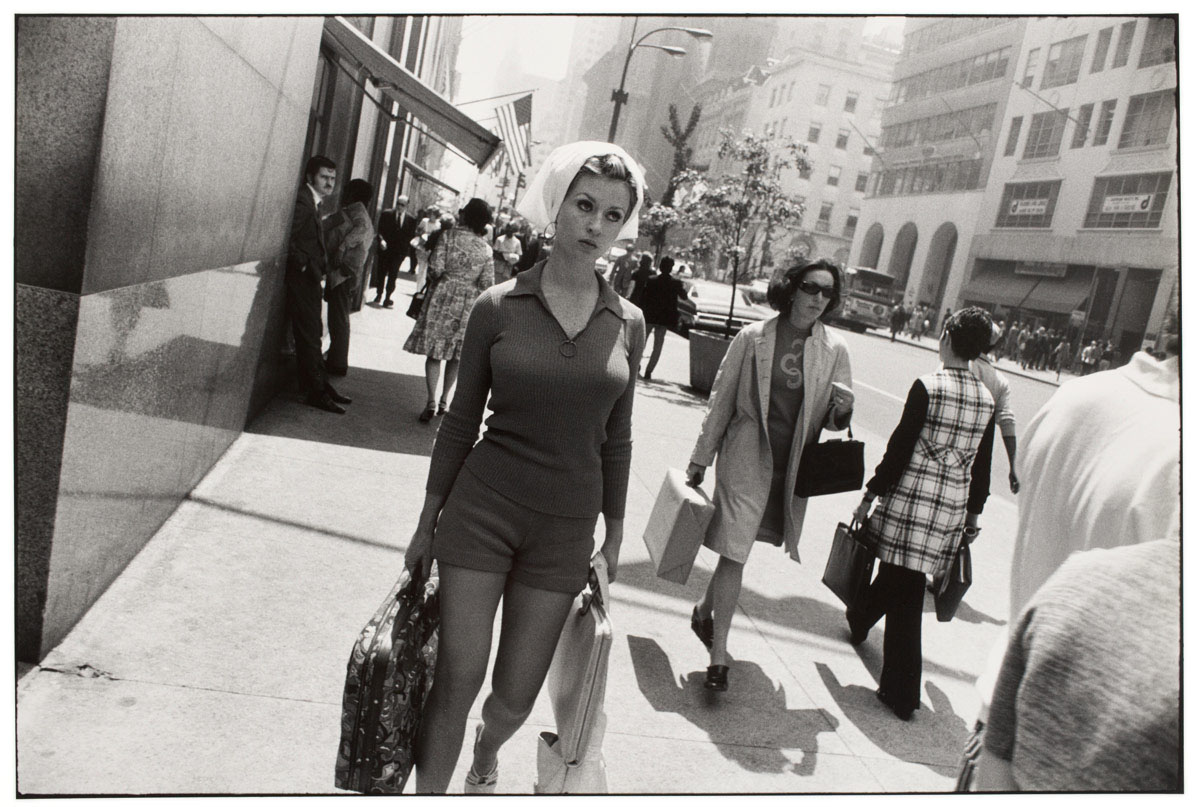
Garry Winogrand (American, 1928-1984) 'Untitled (Woman Carrying Bags)' about 1972


Garry Winogrand (American, 1928-1984)
Untitled (Woman Carrying Bags)
About 1972
Gelatin silver print
Gift of the Schorr Family Collection, 1984.102
© The Estate of Garry Winogrand, courtesy Fraenkel Gallery, San Francisco


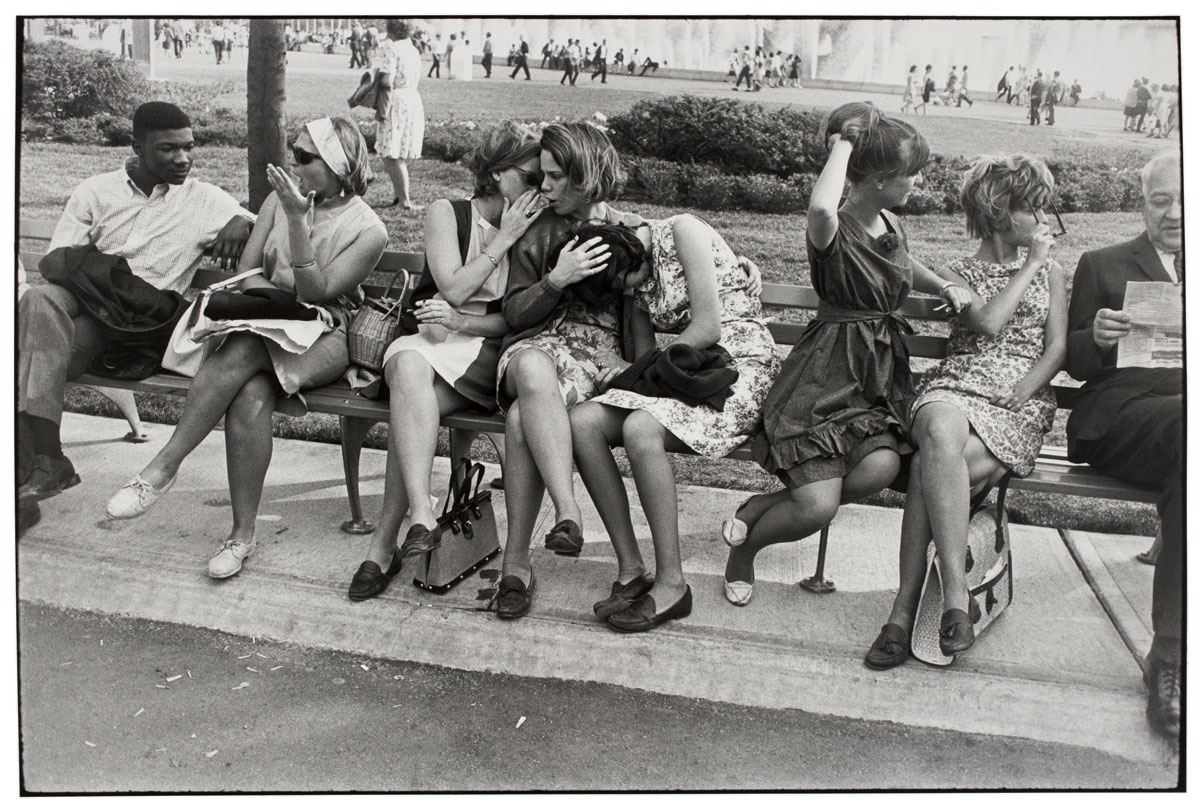
As people may know, I am not a great fan of the photography of Garry Winogrand. Wile other people rave over this “master” of street snapshot photography, his work has never won me over, and possibly never will. There is something a little… what’s the word… creepy? voyeuristic? plain downright predatory about his photography. All the oblique angles in the world aren’t going to change my opinion.

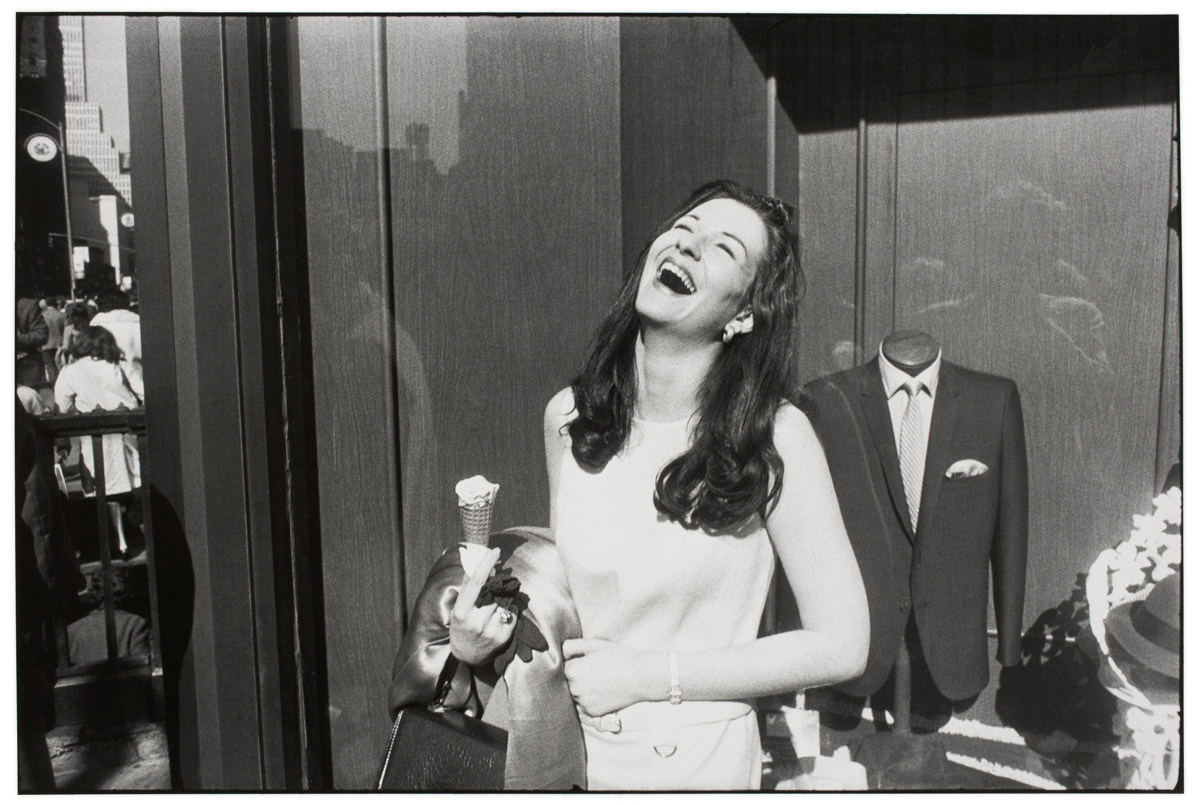
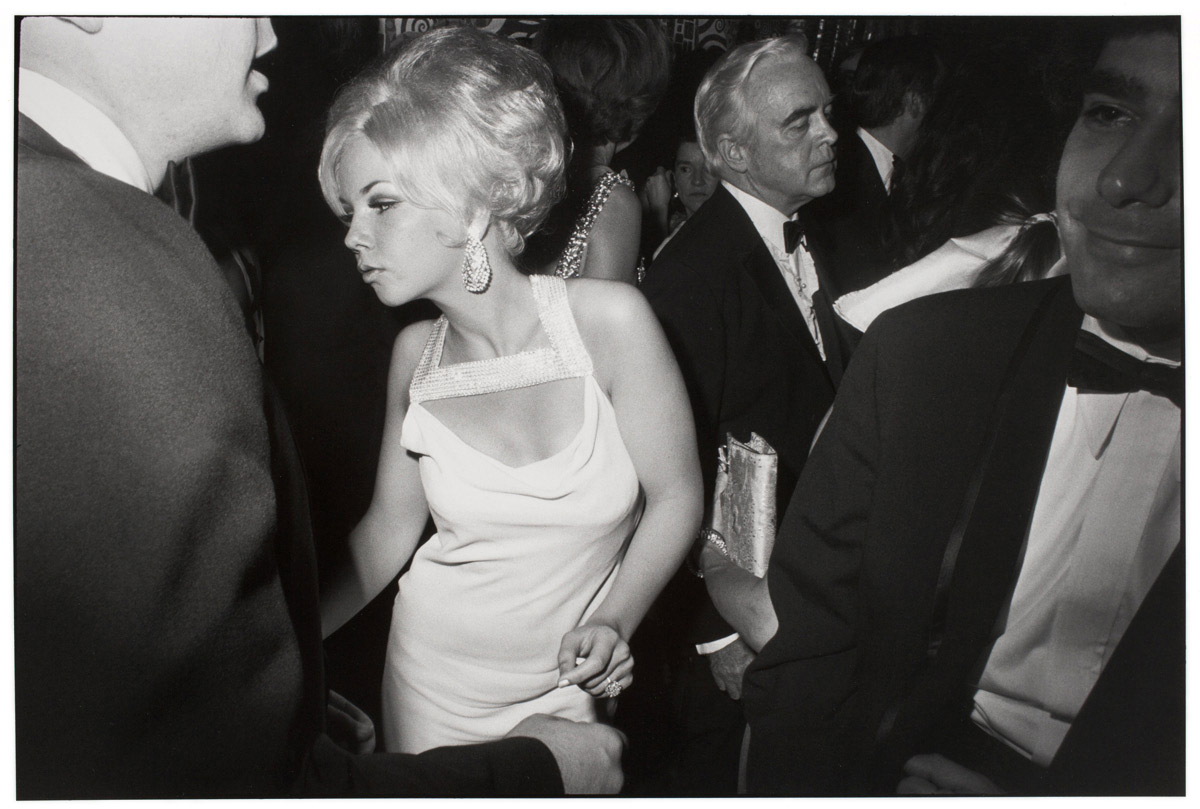
For me, this series represents the pinnacle of Winogrand’s photography. The affection of the photographer toward the subject is clearly evident, coupled with a stealthy hunting instinct. It’s almost as if he is stalking these women to peer up their skirts (as in Woman in a Telephone Booth, New York, about 1972, below). The scenario is pretty unedifying. There are odd moments of joy (such as is in Woman Laughing, New York 1968, below) and beauty, as in the rightly famous Centennial Ball, Metropolitan Museum, New York (1969, below).

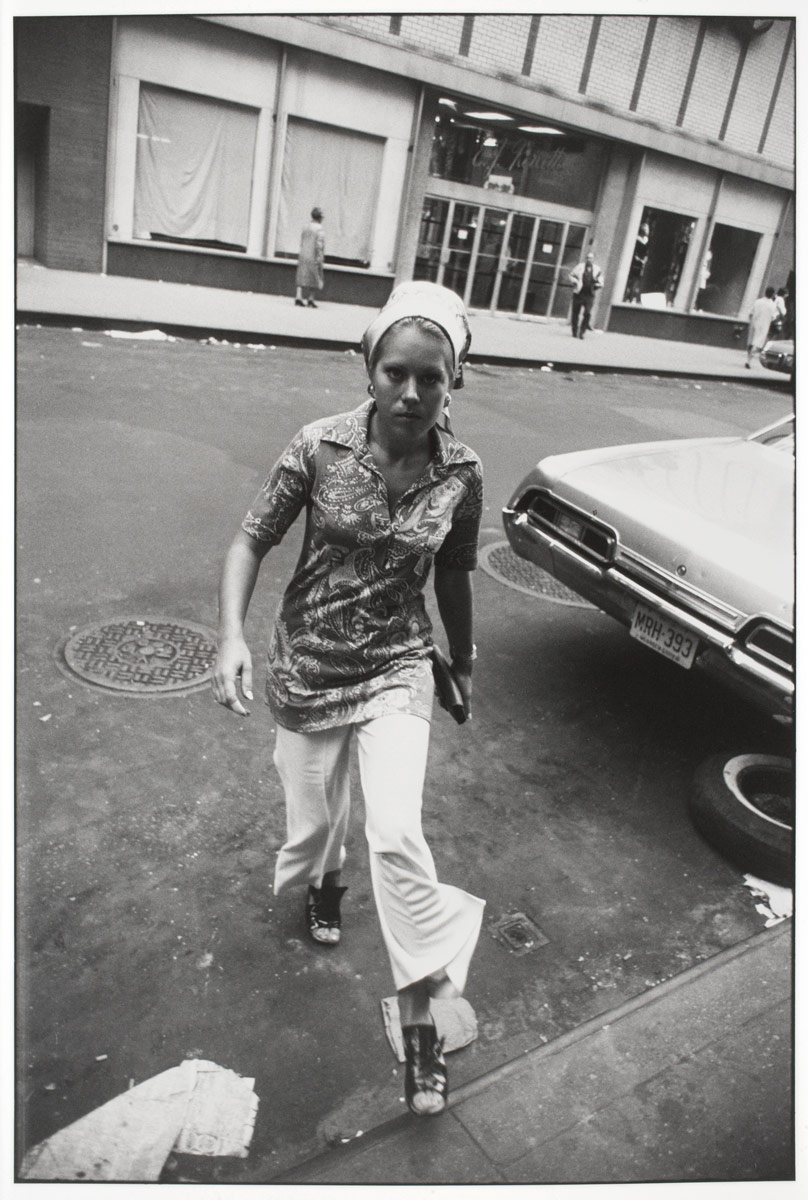
However, I feel like the human being in Woman Crossing Street, New York (about 1970, below) where the look on her face says that she could just bop him on the nose with a good left hook. And I wouldn’t have blamed her, either.

Dr Marcus Bunyan


Many thankx to the Worcester Art Museum for allowing me to publish the photographs in the posting. Please click on the photographs for a larger version of the image.

All of the photographs are Gift of the Schorr Family Collection © The Estate of Garry Winogrand, courtesy Fraenkel Gallery, San Francisco


Garry Winogrand (American, 1928-1984) 'Untitled (Woman in a Telephone Booth, New York)' about 1972


Garry Winogrand (American, 1928-1984)
Untitled (Woman in a Telephone Booth, New York)
About 1972
Gelatin silver print
Gift of the Schorr Family collection
© The Estate of Garry Winogrand, courtesy Fraenkel Gallery, San Francisco


Garry Winogrand (American, 1928-1984) 'Untitled (Histrionics on a Bench, World’s Fair, New York)' 1964


Garry Winogrand (American, 1928-1984)
Untitled (Histrionics on a Bench, World’s Fair, New York)
1964
Gelatin silver print
Gift of the Schorr Family Collection
© The Estate of Garry Winogrand, courtesy Fraenkel Gallery, San Francisco


Garry Winogrand (American, 1928-1984) 'Untitled (Woman Laughing, New York)' 1968


Garry Winogrand (American, 1928-1984)
Untitled (Woman Laughing, New York)
1968
Gelatin silver print
Gift of the Schorr Family Collection
© The Estate of Garry Winogrand, courtesy Fraenkel Gallery, San Francisco


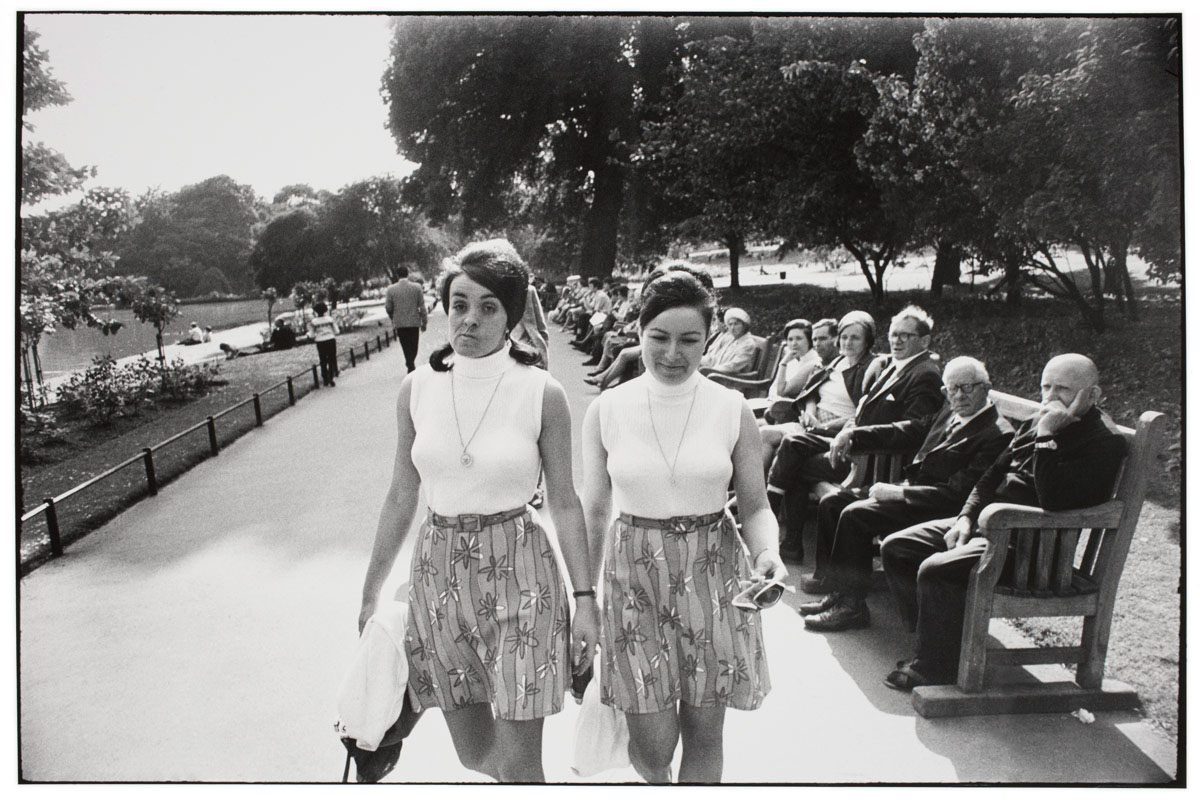
Garry Winogrand (American, 1928-1984) 'Untitled (Identically Dressed)' Nd


Garry Winogrand (American, 1928-1984)
Untitled (Identically Dressed)
Nd
Gelatin silver print
Gift of the Schorr Family Collection
© The Estate of Garry Winogrand, courtesy Fraenkel Gallery, San Francisco


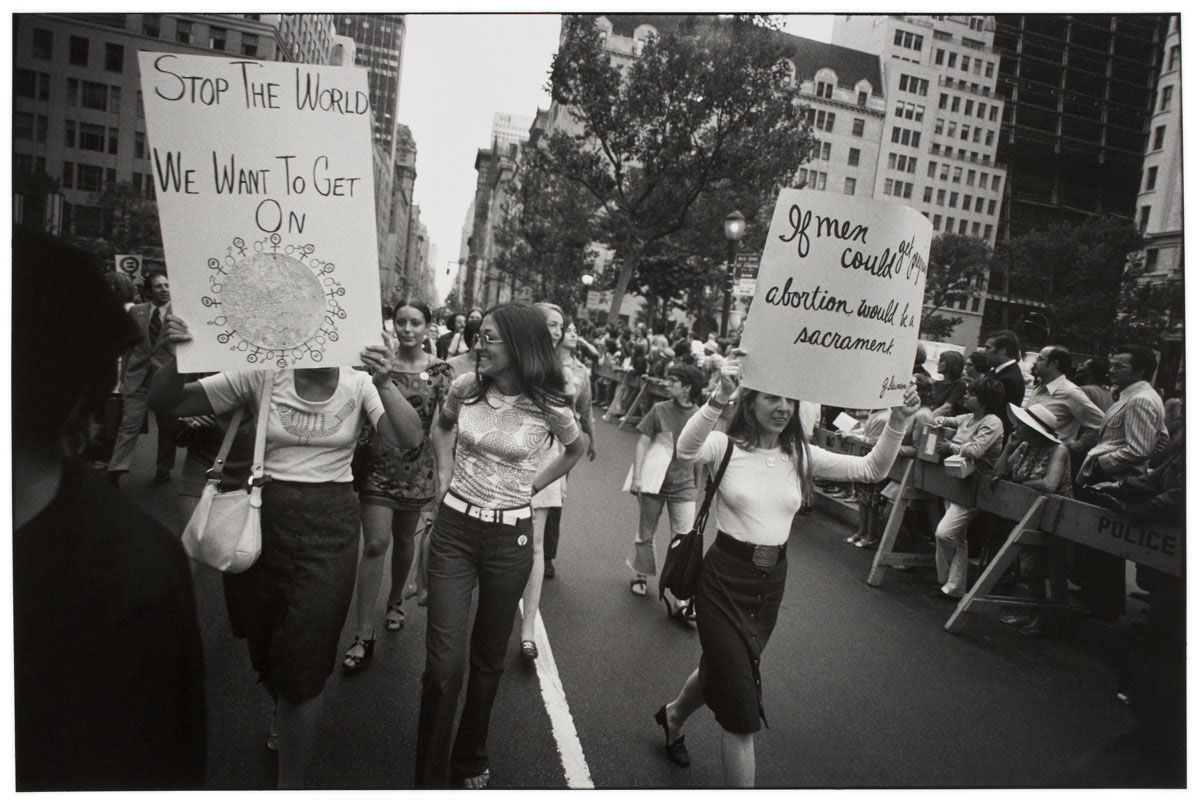
Garry Winogrand (American, 1928-1984) 'Untitled (Women Rallying, New York)' about 1972


Garry Winogrand (American, 1928-1984)
Untitled (Women Rallying, New York)
About 1972
Gelatin silver print
Gift of the Schorr Family Collection, 1991.293
© The Estate of Garry Winogrand, courtesy Fraenkel Gallery, San Francisco


Worcester Art Museum is pleased to announce the photography exhibition, Winogrand’s Women are Beautiful, on view August 10 through November 10, 2013. Worcester Art Museum owns a complete portfolio of the Women are Beautiful series by photographer Garry Winogrand (American, 1928-1984).  68 of the 85 images will be on view. Photographs feature black and white images of young adult women taken primarily during the 1960s and early 1970s.

Hailed as a pioneer of the “snapshot aesthetic” within the genre of documentary photography, Winogrand used a wide-angle Leica M4 camera to produce spontaneous images emphasising how everyday subjects, like people, dogs, or crowds, interact with the landscape around them. His work features oblique perspectives, often resulting in uniquely composed photographs made by the stealthy eye of a private investigator. However, Winogrand is also routinely criticised for exploiting the subjects of his work, particularly women.

Organised by Assistant Curator of Prints, Drawings and Photographs, Nancy Burns, Winogrand’s Women are Beautiful, presents the photographer’s most popular portfolio through the lens of five varying themes.  These themes seek to promote Winogrand’s significance within the canon of photography, while engaging directly with the censure his works receive from art historians and feminists alike.

Press release from the Worcester Art Museum


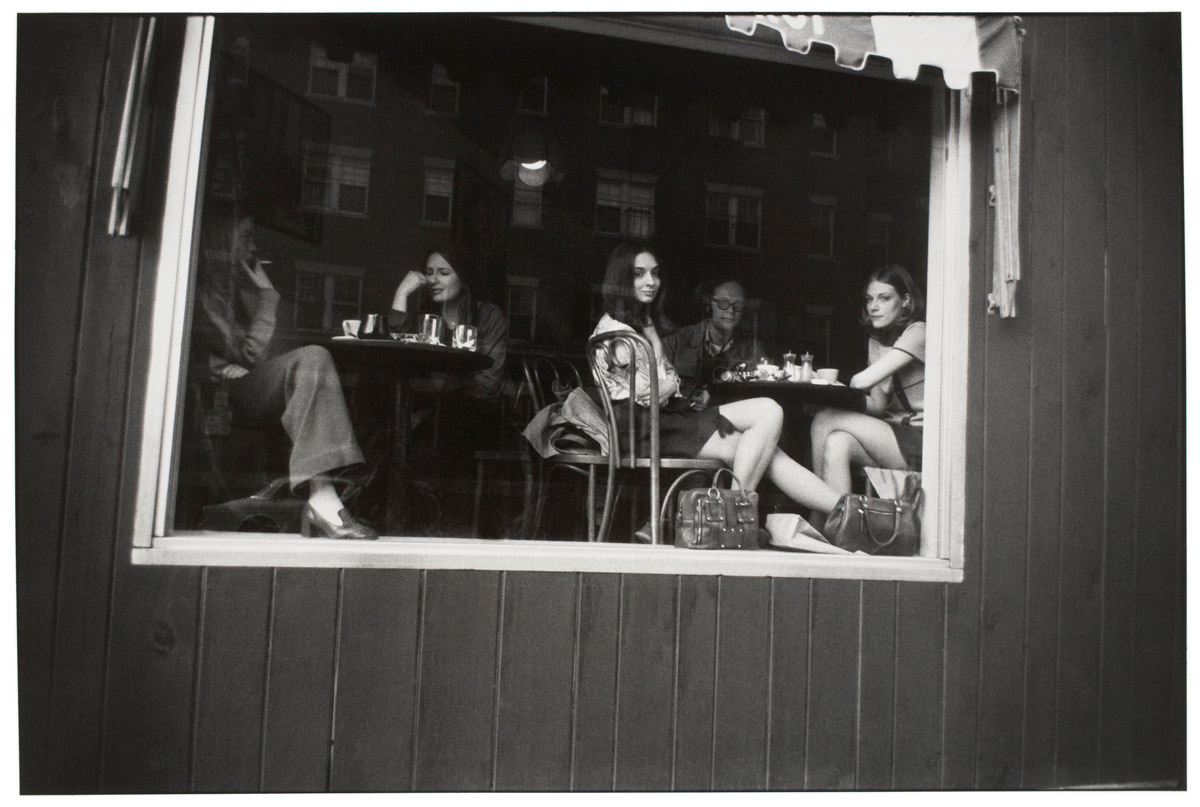
Garry Winogrand (American, 1928-1984) 'Untitled (Restaurant Window, Boston)' about 1970


Garry Winogrand (American, 1928-1984)
Untitled (Restaurant Window, Boston)
About 1970
Gelatin silver print
Gift of the Schorr Family collection
© The Estate of Garry Winogrand, courtesy Fraenkel Gallery, San Francisco


Garry Winogrand (American, 1928-1984) 'Untitled (Café, Paris)' about 1969


Garry Winogrand (American, 1928-1984)
Untitled (Café, Paris)
About 1969
Gelatin silver print
Gift of the Schorr Family Collection
© The Estate of Garry Winogrand, courtesy Fraenkel Gallery, San Francisco


Garry Winogrand (American, 1928-1984) 'Untitled (Cheerleaders, Austin)' 1974


Garry Winogrand (American, 1928-1984)
Untitled (Cheerleaders, Austin)
1974
Gelatin silver print
Gift of the Schorr Family Collection
© The Estate of Garry Winogrand, courtesy Fraenkel Gallery, San Francisco


Garry Winogrand (American, 1928-1984) 'Untitled (Centennial Ball, Metropolitan Museum, New York)' 1969


Garry Winogrand (American, 1928-1984)
Untitled (Centennial Ball, Metropolitan Museum, New York)
1969
Gelatin silver print
Gift of the Schorr Family collection
© The Estate of Garry Winogrand, courtesy Fraenkel Gallery, San Francisco


Garry Winogrand (American, 1928-1984) 'Untitled (Women Walking Poodles, New York)' about 1959


Garry Winogrand (American, 1928-1984)
Untitled (Women Walking Poodles, New York)
About 1959
Gelatin silver print
Gift of the Schorr Family Collection
© The Estate of Garry Winogrand, courtesy Fraenkel Gallery, San Francisco


Garry Winogrand (American, 1928-1984) 'Untitled (Woman Crossing Street, New York)' about 1970


Garry Winogrand (American, 1928-1984)
Untitled (Woman Crossing Street, New York)
About 1970
Gelatin silver print
Gift of the Schorr Family collection
© The Estate of Garry Winogrand, courtesy Fraenkel Gallery, San Francisco


Worcester Art Museum
Fifty-five Salisbury Street
Worcester, MA 01609
Phone: 508.799.4406

Opening hours:
Wednesday – Sunday 10am – 4pm

Worcester Art Museum website

LIKE ART BLART ON FACEBOOK

Back to top

Photographs: ‘The War at Home: Farm Security Administration / Office of War Information Color Photographs’ by Alfred Palmer Part 2

October 2013


Alfred Palmer (American, 1906-1993) 'Large pipe elbows for the Army are formed at Tube Turns, Inc.,' 1941


Alfred Palmer (American, 1906-1993)
Large pipe elbows for the Army are formed at Tube Turns, Inc., by heating lengths of pipe with gas flames and forcing them around a die, in Louisville, Kentucky, in 1941
1941
4 x 5 Kodachrome transparency
Alfred Palmer/OWI/LOC


Kodachrome sheets 1941-1943

This is the second of a two-part posting on the large format Kodachrome colour transparency photographs of the American photographer Alfred Palmer taken during 1941-1943.

This man was a true master of his craft. Look at the lighting in the first three photographs. Palmer really understood the theatre of the scene he was photographing. The first photograph, an inanimate object picturing an elemental force, brings me to tears when looking at it. Too sentimental, too emotional? I don’t think so… just an amazing experience from a magnificent photograph.

See Part 1 of the posting.

Dr Marcus Bunyan


Please click on the photographs for a larger version of the image. Many thankx to the Library of Congress for allowing me to publish the photographs in the posting. No known copyright restrictions on any of the photographs.


Alfred Palmer (American, 1906-1993) 'Casting a billet from an electric furnace, Chase Brass and Copper Co., Euclid, Ohio' February 1942


Alfred Palmer (American, 1906-1993)
Casting a billet from an electric furnace, Chase Brass and Copper Co., Euclid, Ohio. Modern electric furnaces have helped considerably in speeding the production of brass and other copper alloys for national defense. Here the molten metal is poured or cast from the tilted furnace into a mold to form a billet. The billet later is worked into rods, tubes, wires or special shapes for a variety of uses
February 1942
4 x 5 Kodachrome transparency
Alfred Palmer/OWI/LOC


Alfred Palmer (American, 1906-1993) 'Crane operator at Tennessee Valley Authority's Douglas Dam' June 1942


Alfred Palmer (American, 1906-1993)
Crane operator at Tennessee Valley Authority’s Douglas Dam
June 1942
4 x 5 Kodachrome transparency
Alfred Palmer/OWI


Alfred T. Palmer was an Office of War Information photographer from 1941 until 1943. 

The United States Office of War Information (OWI) was a U.S. government agency created during World War II to consolidate government information services. It operated from June 1942 until September 1945. It coordinated the release of war news for domestic use, and, using posters and radio broadcasts, worked to promote patriotism, warned about foreign spies, and attempted to recruit women into war work. The office also established an overseas branch which launched a large scale information and propaganda campaign abroad. 

Photographers working for the U.S. government’s Farm Security Administration (FSA) and later the Office of War Information (OWI) between 1939 and 1944 made approximately 1,600 color photographs that depict life in the United States, including Puerto Rico and the Virgin Islands. The pictures focus on rural areas and farm labor, as well as aspects of World War II mobilization, including factories, railroads, aviation training, and women working. 

The original images are color transparencies ranging in size from 35 mm. to 4 x 5 inches. They complement the better-known black-and-white FSA / OWI photographs, made during the same period. Alfred T. Palmer was notable for his portraits of men and women at work in the industry. He used a crude lighting system which focused on the person rather than his environment, sometimes creating an extreme contrast in his images.

Text from the Wikipedia Commons website


Alfred Palmer (American, 1906-1993) 'An employee in the drill-press section of North American's huge machine shop runs mounting holes in a large dural casting, in Inglewood, California, in October of 1942' October 1942


Alfred Palmer (American, 1906-1993)
An employee in the drill-press section of North American’s huge machine shop runs mounting holes in a large dural casting, in Inglewood, California, in October of 1942
October 1942
4 x 5 Kodachrome transparency
Alfred Palmer/OWI/LOC


Alfred Palmer (American, 1906-1993) 'North American Aviation drill operator in the control surface department assembling horizontal stabilizer section of an airplane. Inglewood, California' October 1942


Alfred Palmer (American, 1906-1993)
North American Aviation drill operator in the control surface department assembling horizontal stabilizer section of an airplane. Inglewood, California
October 1942
4 x 5 Kodachrome transparency
Alfred Palmer/OWI


Alfred Palmer (American, 1906-1993) 'Here's our mission. A combat crew receives final instructions just before taking off in a mighty YB-17 bomber from a bombardment squadron base at the field, in Langley Field, Virginia, in May of 1942' May 1942


Alfred Palmer (American, 1906-1993)
Here’s our mission. A combat crew receives final instructions just before taking off in a mighty YB-17 bomber from a bombardment squadron base at the field, in Langley Field, Virginia, in May of 1942
May 1942
4 x 5 Kodachrome transparency
Alfred Palmer/OWI/LOC


Alfred Palmer (American, 1906-1993) 'Hitler would like this man to go home and forget about the war. A good American non-com at the side machine gun of a huge YB-17 bomber is a man who knows his business and works hard at it' May 1942


Alfred Palmer (American, 1906-1993)
Hitler would like this man to go home and forget about the war. A good American non-com at the side machine gun of a huge YB-17 bomber is a man who knows his business and works hard at it
May 1942
4 x 5 Kodachrome transparency
Alfred Palmer/OWI/LOC


Alfred Palmer (American, 1906-1993) 'Young woman employee of North American Aviation working over the landing gear mechanism of a P-51 fighter plane. Inglewood, California' October 1942


Alfred Palmer (American, 1906-1993)
Young woman employee of North American Aviation working over the landing gear mechanism of a P-51 fighter plane. Inglewood, California. 
October 1942
4 x 5 Kodachrome transparency
Alfred Palmer/OWI


Alfred Palmer (American, 1906-1993) 'Working on the horizontal stabilizer of a "Vengeance" dive bomber at the Consolidated-Vultee plant in Nashville' February 1943


Alfred Palmer (American, 1906-1993)
Working on the horizontal stabilizer of a “Vengeance” dive bomber at the Consolidated-Vultee plant in Nashville
February 1943
4 x 5 Kodachrome transparency
Alfred Palmer/OWI


Alfred Palmer (American, 1906-1993) 'Testing electric wiring at Douglas Aircraft Company. Long Beach, California' October 1942


Alfred Palmer (American, 1906-1993)
Testing electric wiring at Douglas Aircraft Company. Long Beach, California
October 1942
4 x 5 Kodachrome transparency
Alfred Palmer/OWI


Alfred Palmer (American, 1906-1993) 'Truck driver at the Tennessee Valley Authority's Douglas Dam' June 1942


Alfred Palmer (American, 1906-1993)
Truck driver at the Tennessee Valley Authority’s Douglas Dam
June 1942
4 x 5 Kodachrome transparency
Alfred Palmer/OWI


Alfred Palmer (American, 1906-1993) 'Experimental staff at the North American Aviation plant in Inglewood, Calif. , observing wind tunnel tests on a model of the B-25 ("Billy Mitchell") bomber' October 1942


Alfred Palmer (American, 1906-1993)
Experimental staff at the North American Aviation plant in Inglewood, Calif., observing wind tunnel tests on a model of the B-25 (“Billy Mitchell”) bomber
October 1942
4 x 5 Kodachrome transparency
Alfred Palmer/OWI


Alfred Palmer (American, 1906-1993) 'An experimental scale model of the B-25 plane is prepared for wind tunnel tests in the plant of the North American Aviation, Inc., Inglewood, California' October 1942


Alfred Palmer (American, 1906-1993)
An experimental scale model of the B-25 plane is prepared for wind tunnel tests in the plant of the North American Aviation, Inc., Inglewood, California. The model maker holds an exact miniature reproduction of the type of bomb the plane will carry
October 1942
4 x 5 Kodachrome transparency
Alfred Palmer/OWI/LOC


Alfred Palmer (American, 1906-1993) 'Parris Island S.C., barrage balloon' May 1942


Alfred Palmer (American, 1906-1993)
Parris Island S.C., barrage balloon
May 1942
4 x 5 Kodachrome transparency
Alfred Palmer/OWI


Alfred Palmer (American, 1906-1993) 'Women are trained as engine mechanics in thorough Douglas training methods, at the Douglas Aircraft Company in Long Beach, California, in October of 1942' October 1942


Alfred Palmer (American, 1906-1993)
Women are trained as engine mechanics in thorough Douglas training methods, at the Douglas Aircraft Company in Long Beach, California, in October of 1942
October 1942
4 x 5 Kodachrome transparency
Alfred Palmer/OWI/LOC


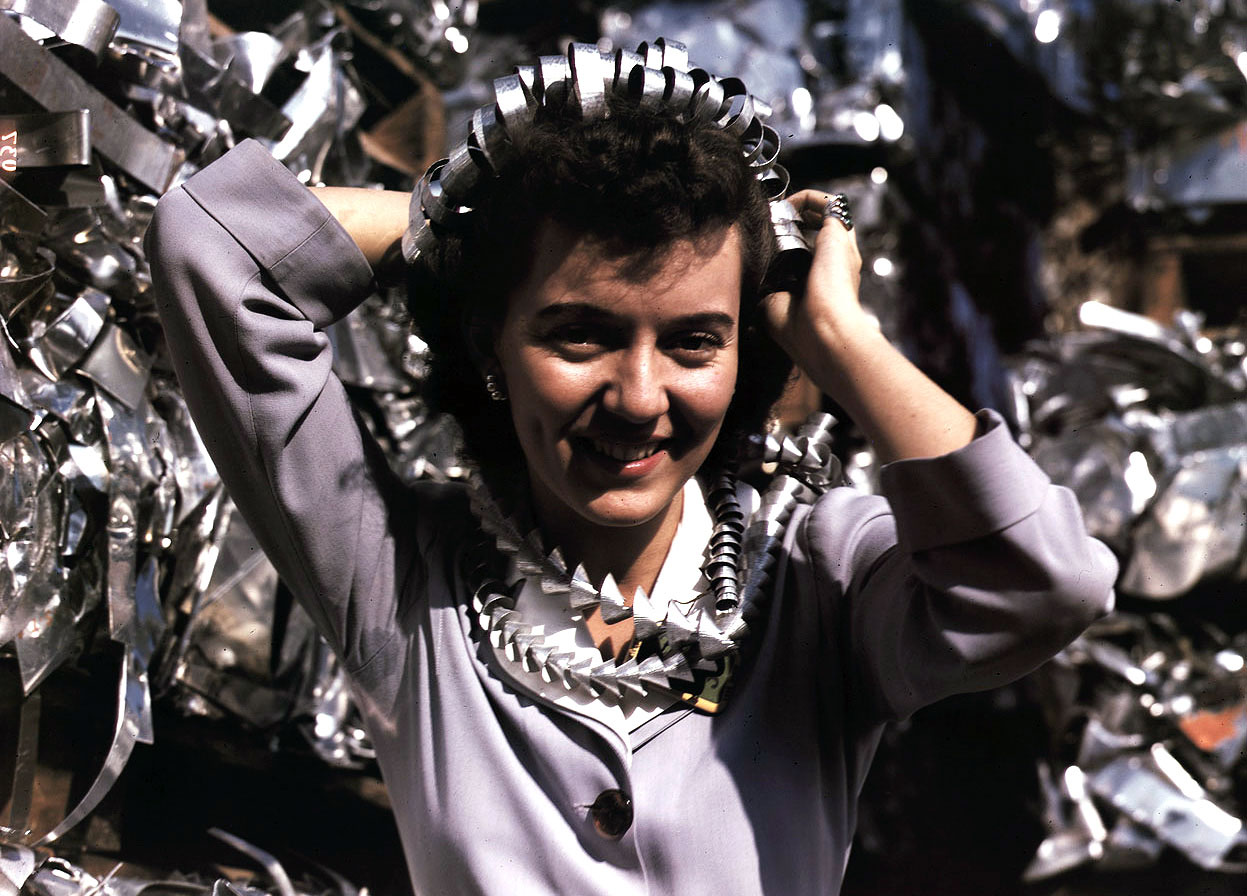
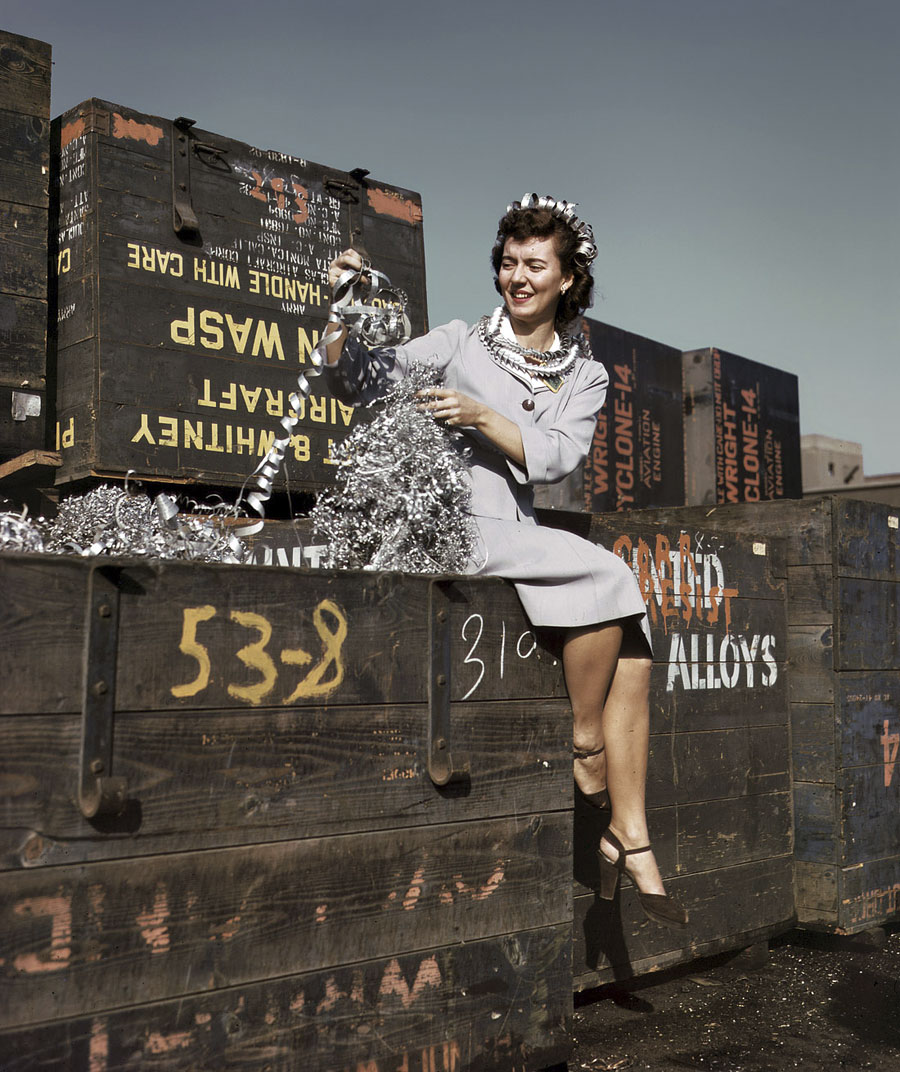
Alfred Palmer (American, 1906-1993) 'Annette del Sur publicizes a salvage campaign in yard of Douglas Aircraft Company, in Long Beach, California, in October of 1942' October 1942


Alfred Palmer (American, 1906-1993)
Annette del Sur publicizes a salvage campaign in yard of Douglas Aircraft Company, in Long Beach, California, in October of 1942
October 1942
4 x 5 Kodachrome transparency
Alfred Palmer/OWI/LOC


Alfred Palmer (American, 1906-1993) 'Annette del Sur publicizing salvage campaign in yard of Douglas Aircraft Company. Long Beach, California' October 1942


Alfred Palmer (American, 1906-1993)
Annette del Sur publicizing salvage campaign in yard of Douglas Aircraft Company. Long Beach, California
October 1942
4 x 5 Kodachrome transparency
Alfred Palmer/OWI


Alfred Palmer (American, 1906-1993) 'Engine installers at Douglas Aircraft in Long Beach, California' October 1942


Alfred Palmer (American, 1906-1993)
Engine installers at Douglas Aircraft in Long Beach, California
October 1942
4 x 5 Kodachrome transparency
Alfred Palmer/OWI


LIKE ART BLART ON FACEBOOK

Back to top

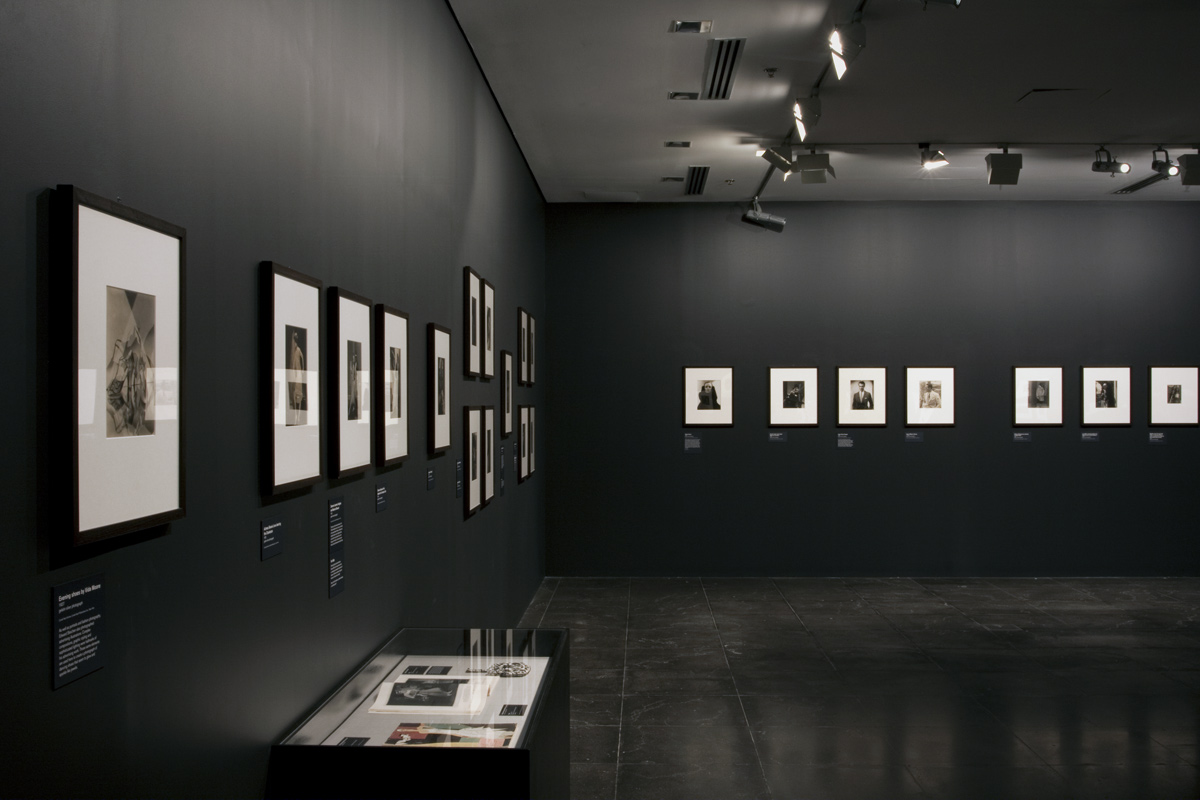
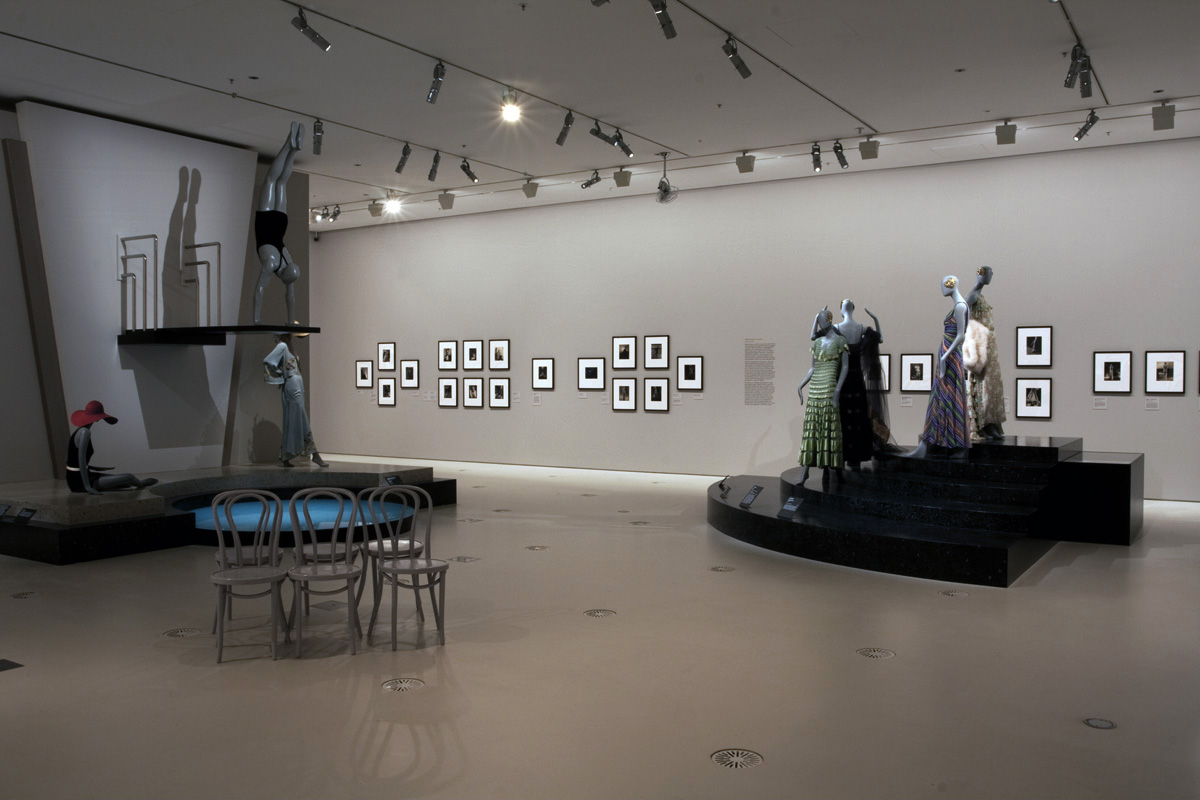
Exhibition: ‘Edward Steichen & Art Deco Fashion’ at NGV International, Melbourne

Exhibition dates: 18th October, 2013 – 2nd March, 2014

Curators: Susan Van Wyk, Senior Curator of Photography, and Paola Di Trocchio, Curator of Fashion and Textiles both at the National Gallery of Victoria


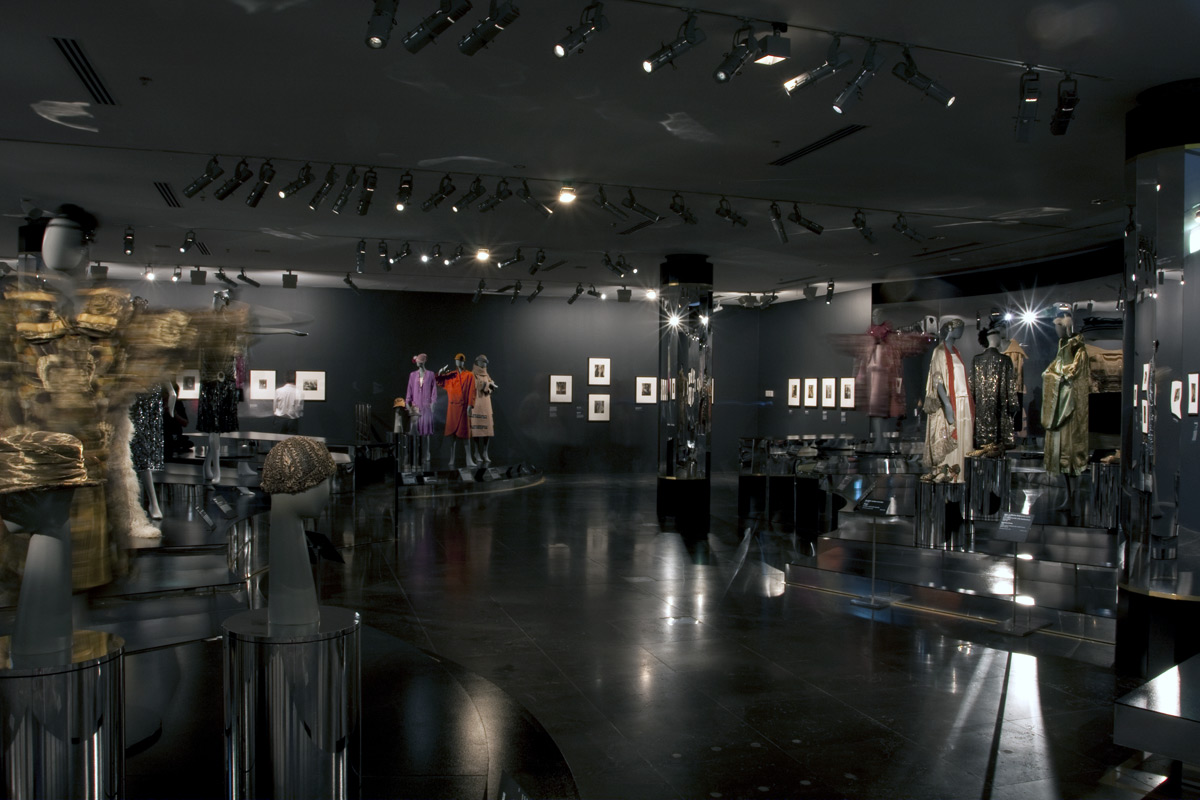
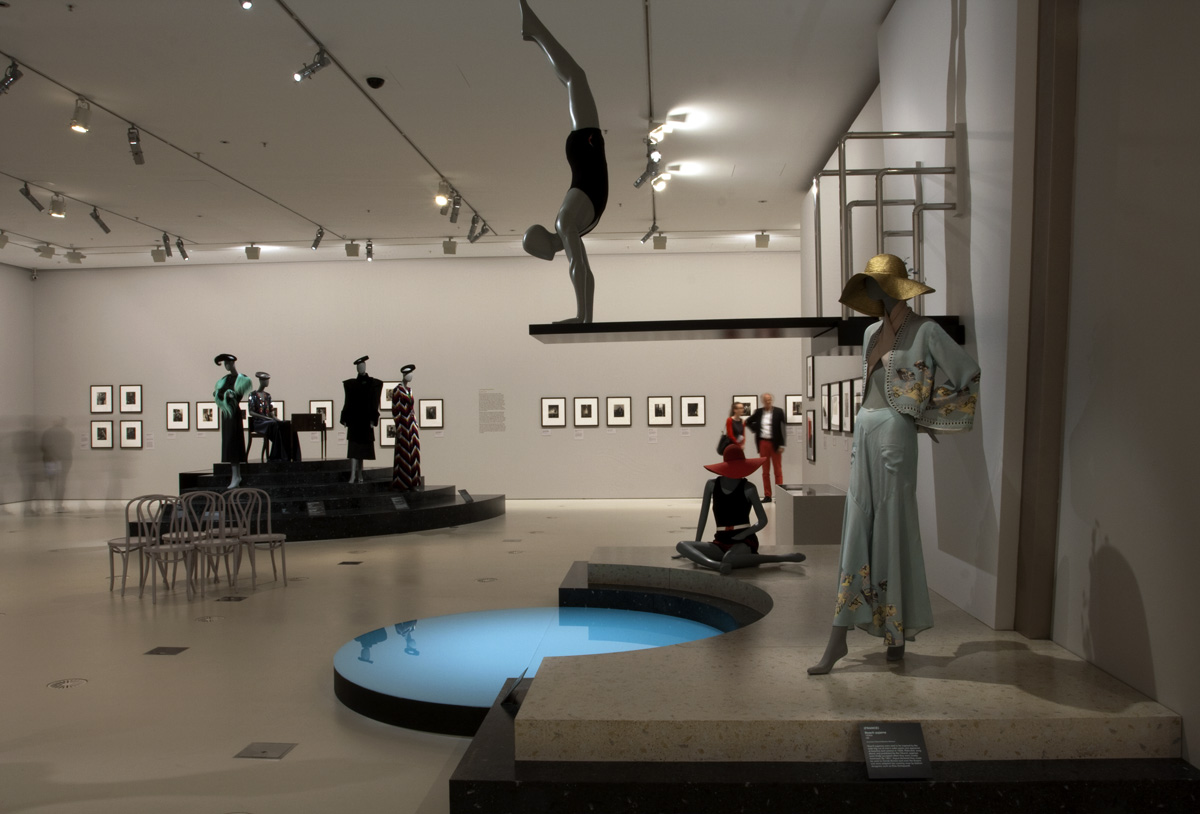
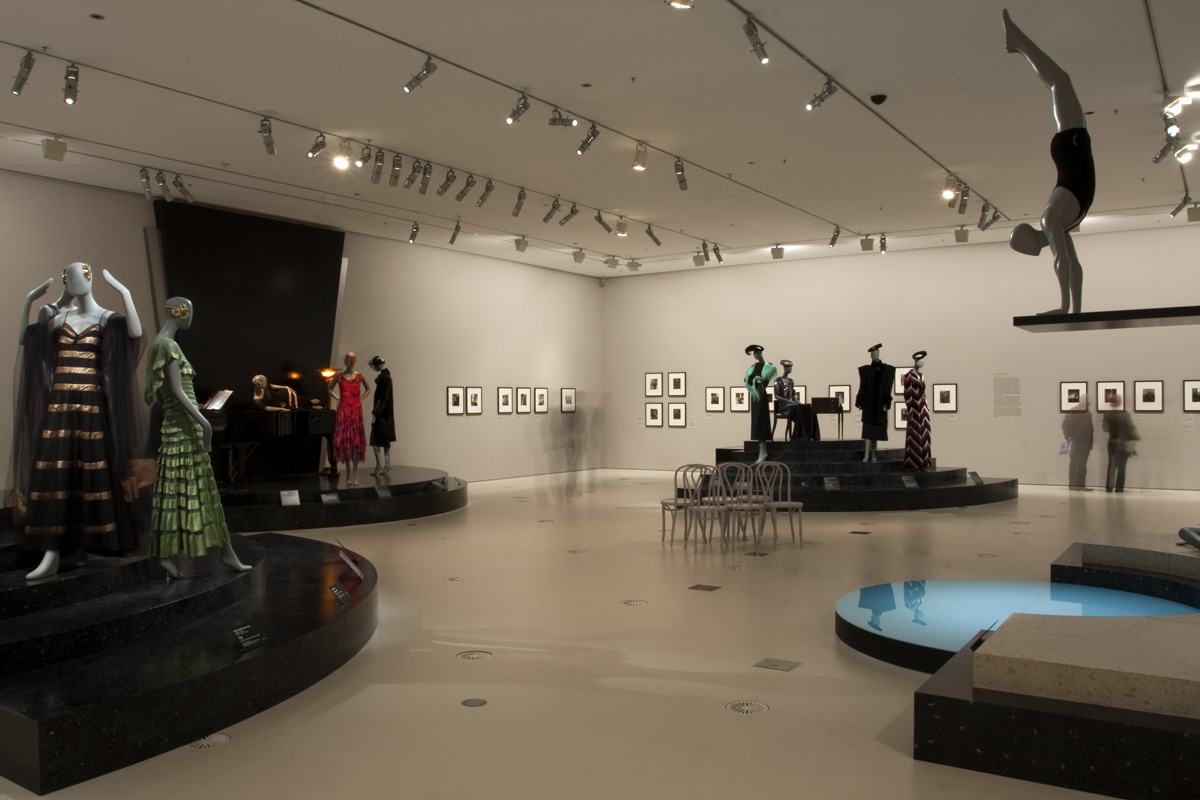
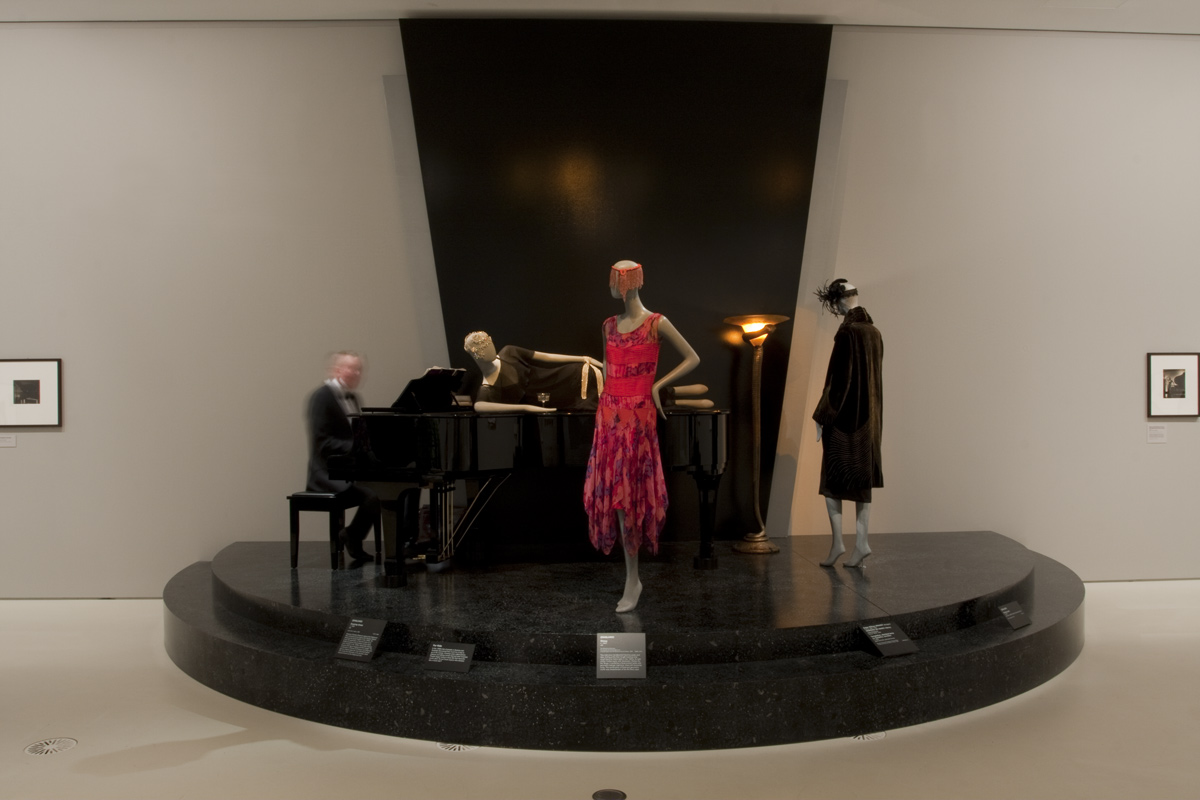
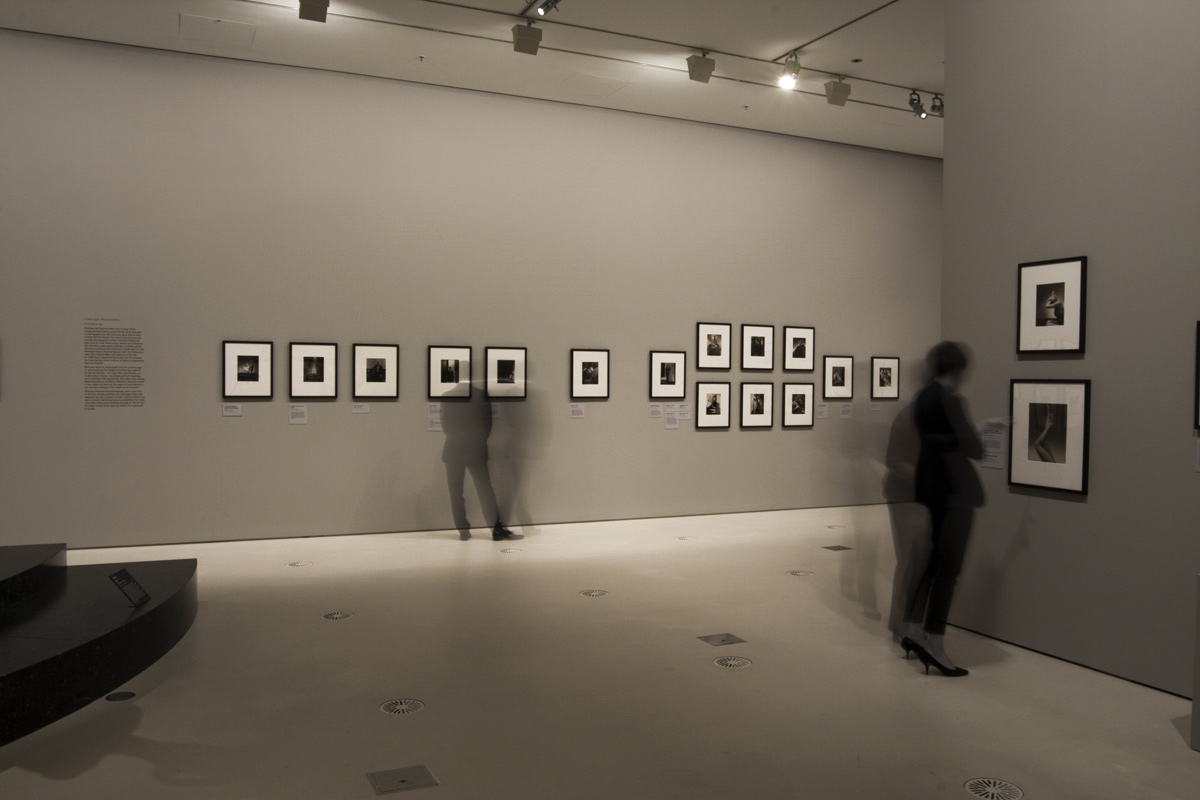
Installation photograph of the exhibition 'Edward Steichen & Art Deco Fashion' at NGV International


Installation photograph of the exhibition Edward Steichen & Art Deco Fashion at NGV International
Photo: Marcus Bunyan


You saw it here first on Art Blart!

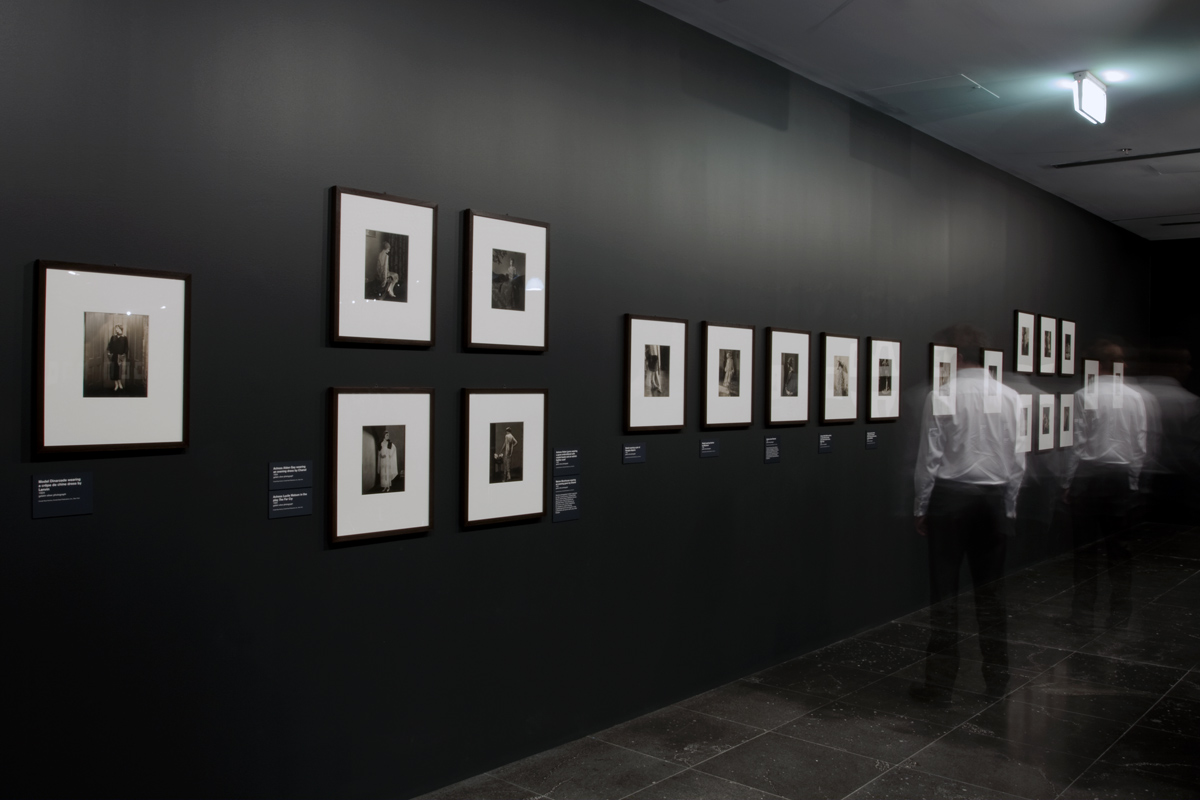
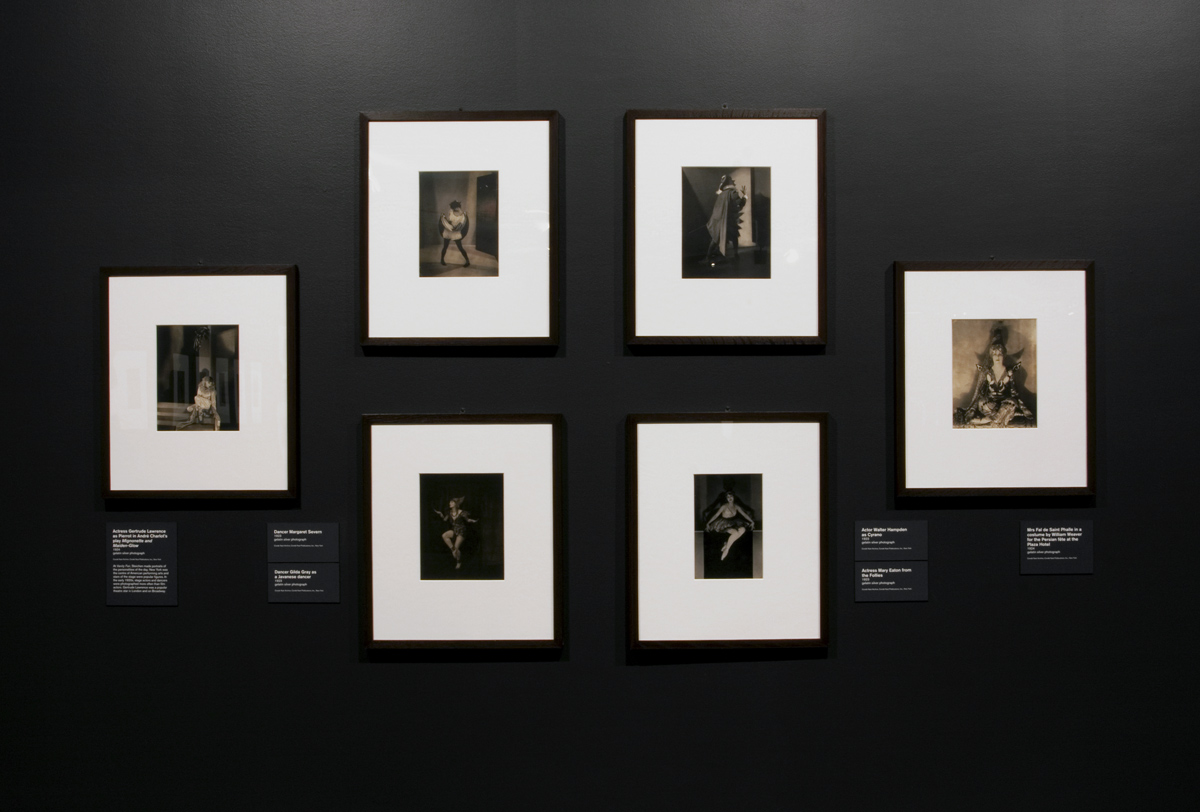
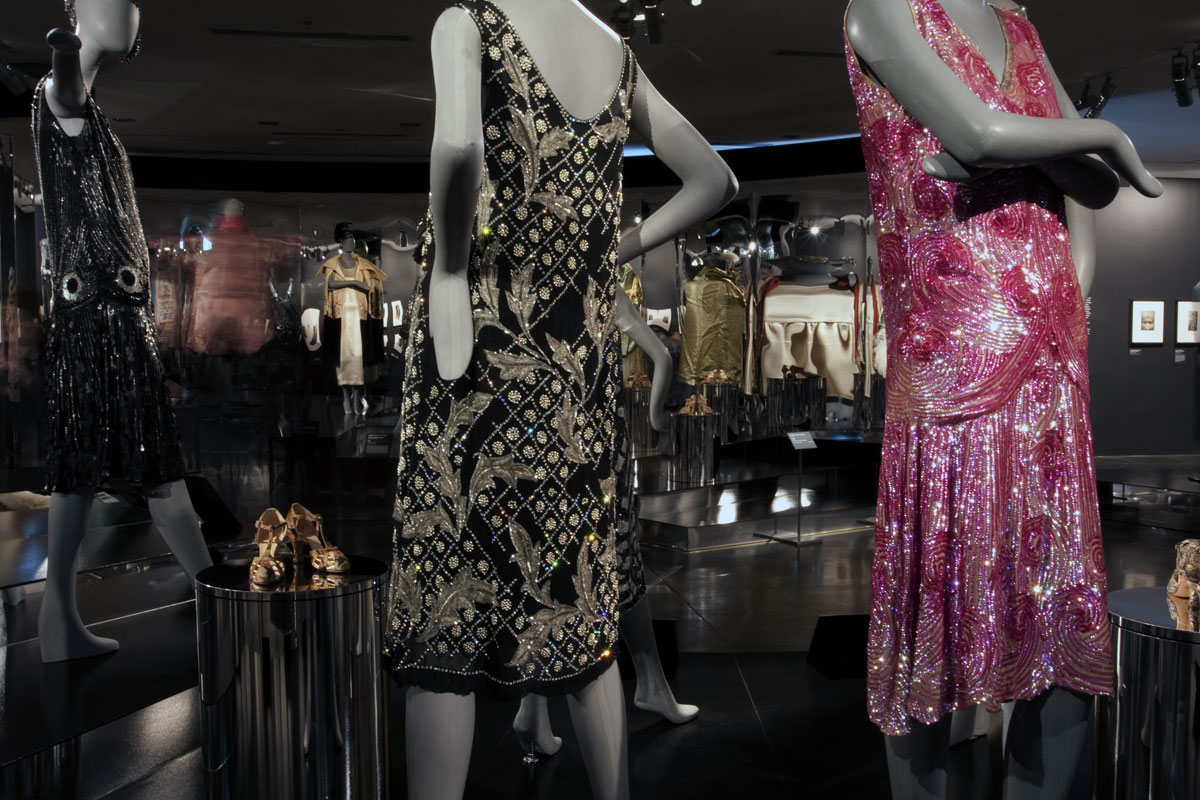
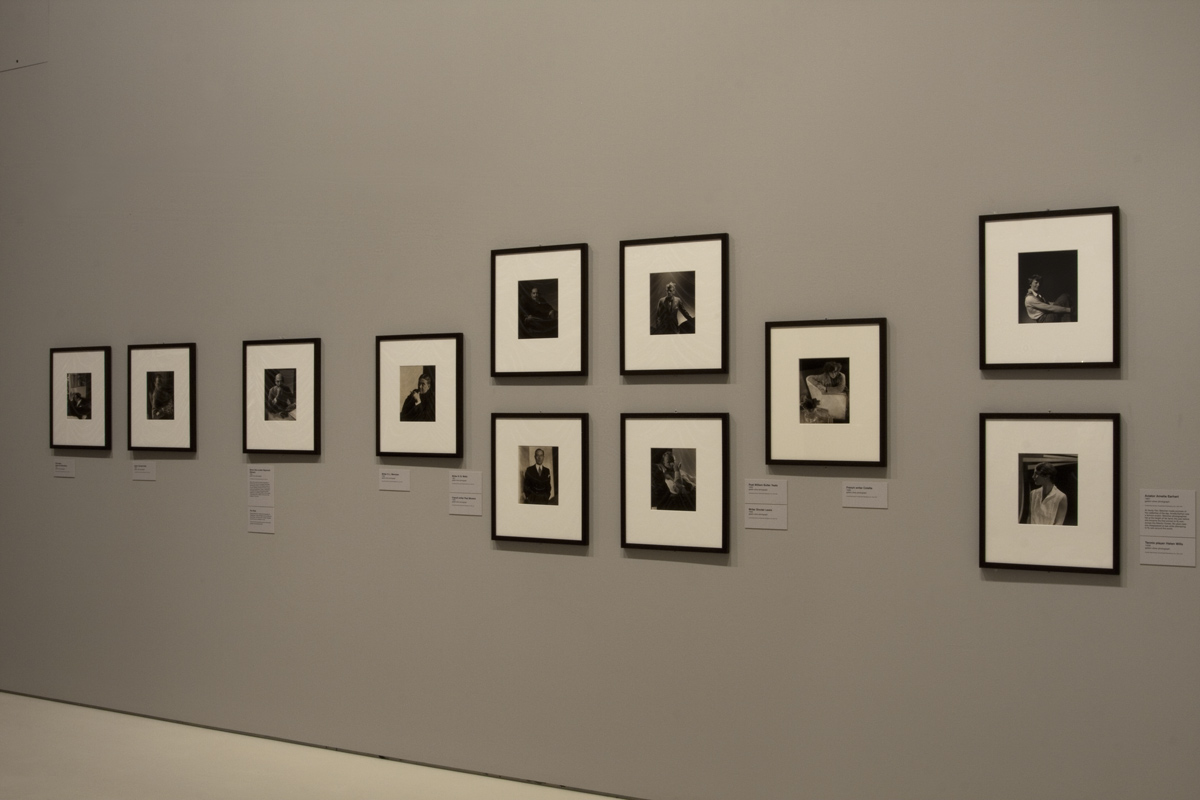
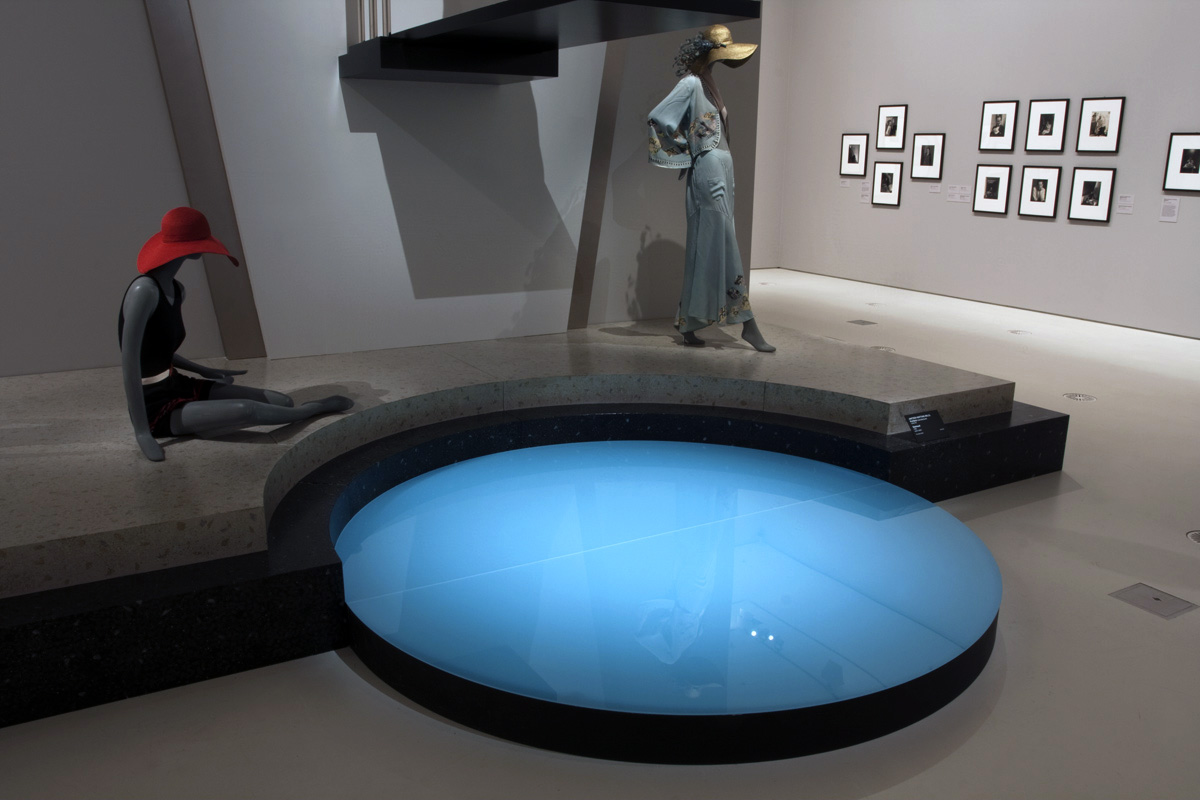
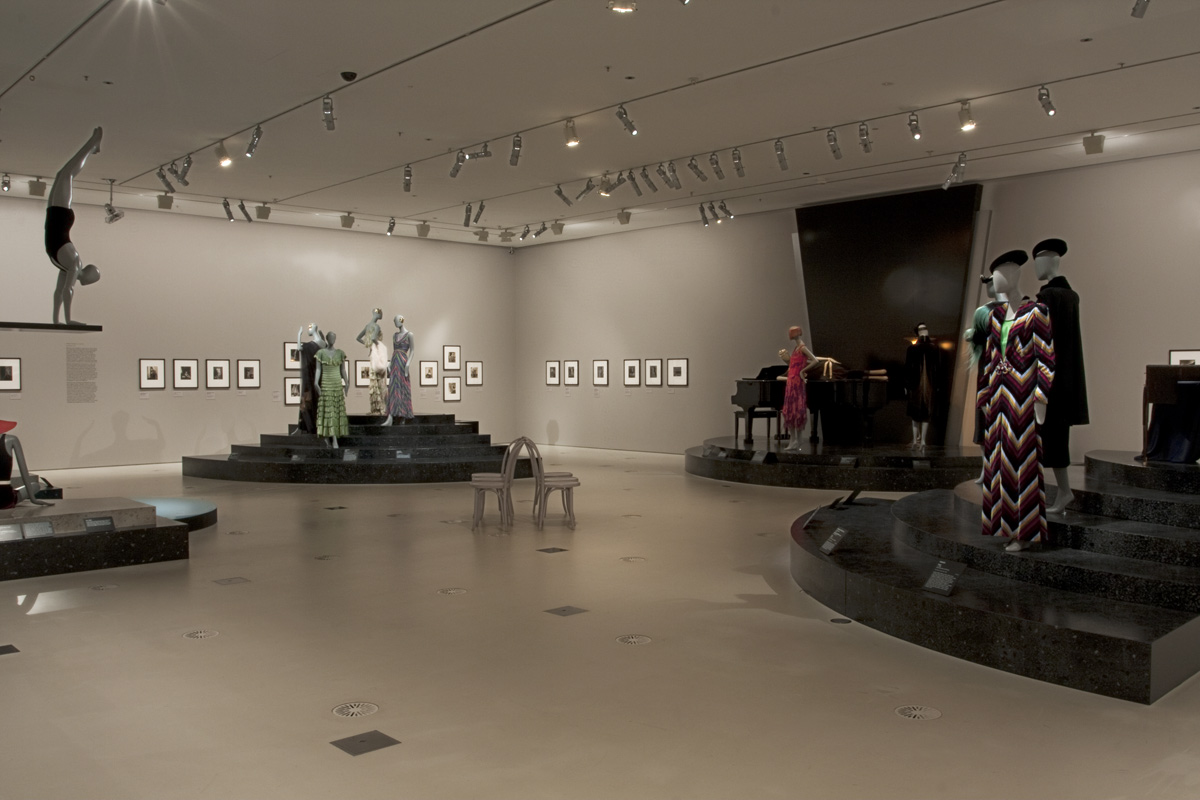
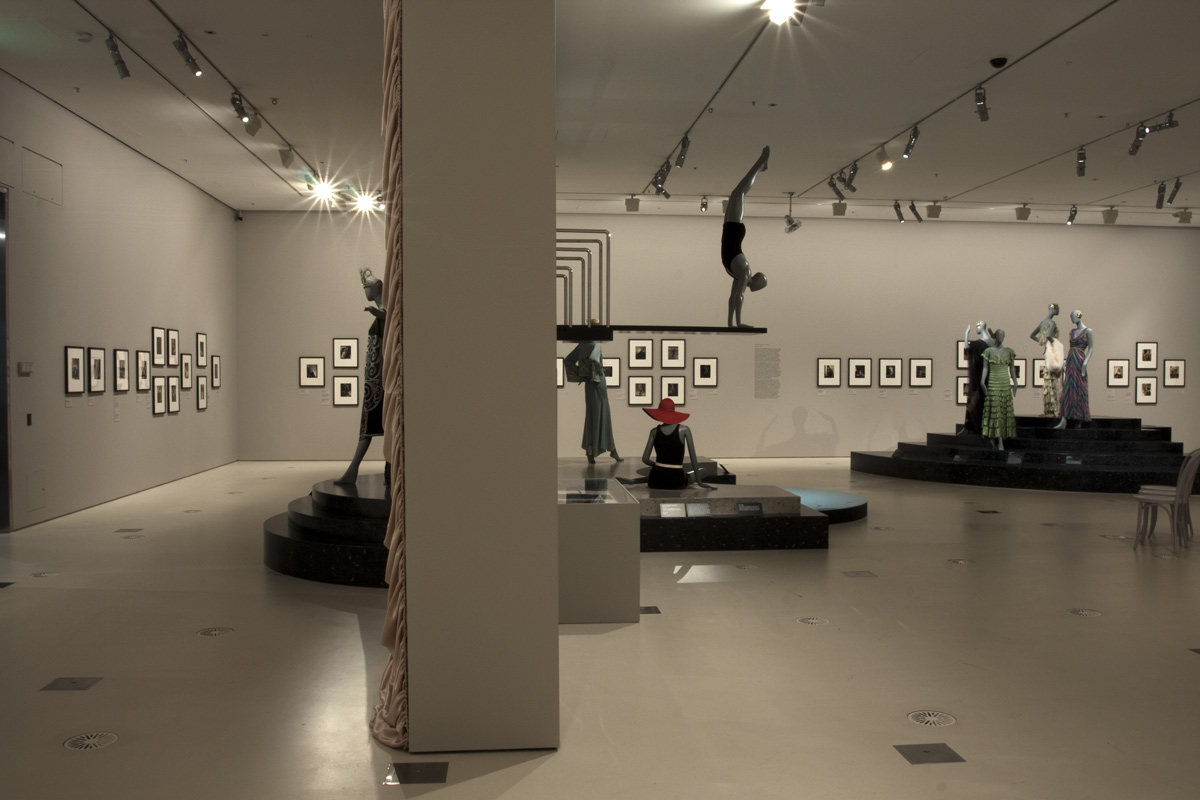
What a gorgeous exhibition. It’s about time Melbourne had a bit of style put back into the National Gallery of Victoria, and this exhibition hits it out of the park. Not only are the photographs absolutely fabulous but the frocks are absolutely frocking as well. Well done to the NGV for teaming the photographs with the fashion and for a great install (makes a change to see 2D and 3D done so well together). Elegant, sophisticated and oozing quality, this is a sure fire winner…. Review of the photographs to follow.

Dr Marcus Bunyan


Many thankx to the NGV for allowing me to take and publish the photographs. Please click on the photographs for a larger version of the image. All photographs © Marcus Bunyan and the National Gallery of Victoria. May be used freely if permission is sought and proper accreditation given.


Room 1


Installation photograph of the exhibition 'Edward Steichen & Art Deco Fashion' at NGV International

Installation photograph of the exhibition 'Edward Steichen & Art Deco Fashion' at NGV International

Installation photograph of the exhibition 'Edward Steichen & Art Deco Fashion' at NGV International

Installation photograph of the exhibition 'Edward Steichen & Art Deco Fashion' at NGV International

Installation photograph of the exhibition 'Edward Steichen & Art Deco Fashion' at NGV International


Installation photographs of the exhibition Edward Steichen & Art Deco Fashion at NGV International
Photos: Marcus Bunyan


Installation photograph of the exhibition 'Edward Steichen & Art Deco Fashion' at NGV International


(L-R) Vogue March First 1926; Vogue November 15, 1925; and Vanity Fair June 1926
Photo: Marcus Bunyan


Installation photograph of the exhibition 'Edward Steichen & Art Deco Fashion' at NGV International

Installation photograph of the exhibition 'Edward Steichen & Art Deco Fashion' at NGV International

Installation photograph of the exhibition 'Edward Steichen & Art Deco Fashion' at NGV International

Installation photograph of the exhibition 'Edward Steichen & Art Deco Fashion' at NGV International


Installation photographs of the exhibition Edward Steichen & Art Deco Fashion at NGV International
Photos: Marcus Bunyan


The National Gallery of Victoria will showcase the glamour and modernity of the Art Deco period through the work of fashion’s most influential photographer, Edward Steichen, and stunning Art Deco fashion garments and accessories. The exhibition Edward Steichen & Art Deco Fashion is the first Australian survey of Steichen, widely considered to have created the first modern fashion photo. The exhibition features almost 200 of Steichen’s original vintage photographs, drawn from the vast archives of Condé Nast where he was chief photographer for their most prestigious magazines Vanity Fair and Vogue during the 1920s and 30s, alongside more than forty exquisite Art Deco fashion items from the NGV Collection and select private collections.

Tony Ellwood, Director, NGV, said that Edward Steichen & Art Deco Fashion is the first major Australian retrospective dedicated to Steichen’s iconic Condé Nast work.

“Steichen’s evocative images are regarded as among the most striking in early-to-mid-20th century photography and his fashion work in particular revolutionised the genre of fashion photography. This exhibition provides a rare opportunity to view such a large body of his work and to see up close the intricate details of outstanding Art Deco fashion items that highlight the interplay between fashion and photography,” said Mr Ellwood.

The exhibition presents Steichen’s pioneering modernist fashion photography and celebrity portraiture, produced during his fifteen year career as chief photographer for esteemed Condé Nast publications Vanity Fair and Vogue. During this period he put his exceptional talents and prodigious energy to work, creating a legacy of unequalled brilliance as he photographed the world of high fashion and stars of contemporary popular culture including Marlene Dietrich, Joan Crawford, Charlie Chaplin, Katherine Hepburn, Clara Bow, Louise Brooks, Greta Garbo, Gary Cooper, Winston Churchill and George Gershwin. Steichen’s images transformed fashion photography and influenced generations of photographers, capturing the sophistication of the newly liberated ‘modern woman’ and encapsulating the chic beauty and avant-garde style of the Art Deco movement. Renowned as an innovator and master of lighting, his practice bridged the transition from photography’s early soft-focus, pictorialist style to clean, crisp modernism.

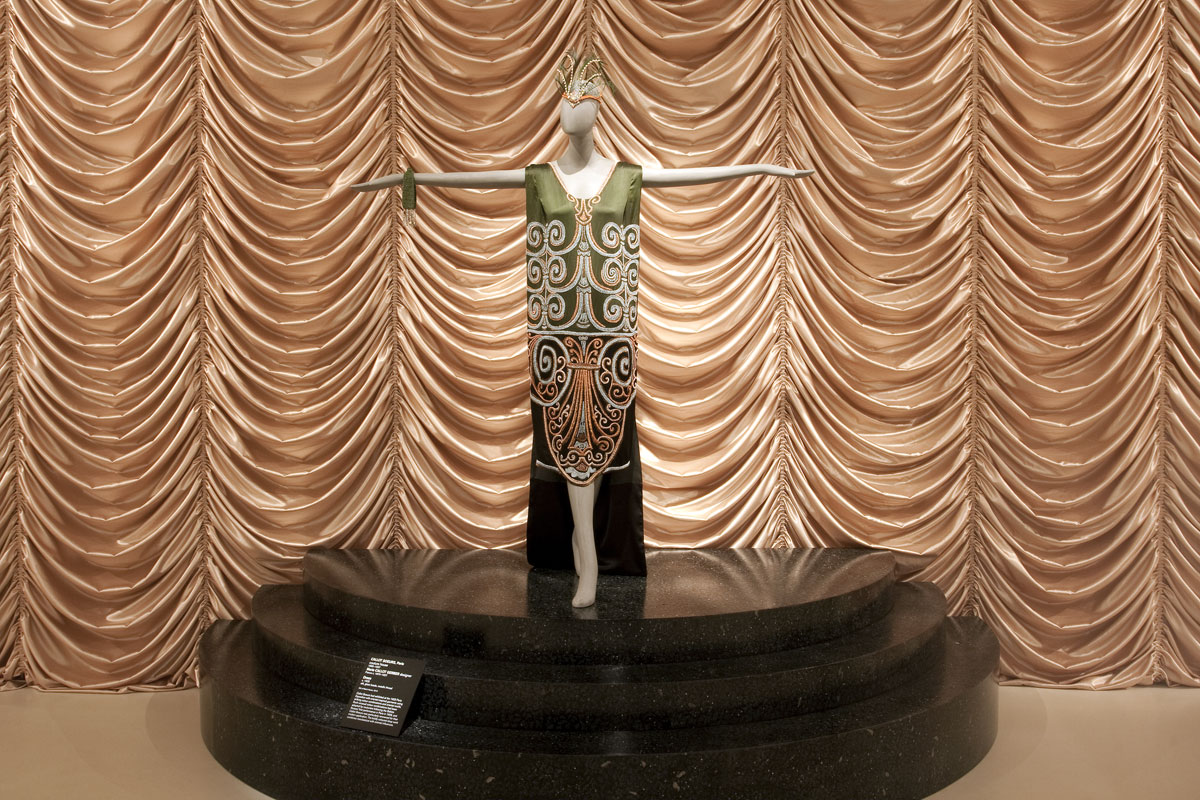
Echoing the aesthetics of Steichen’s photographs, this exhibition will also celebrate the fashion borne of the period with over forty exquisite Art Deco garments and accessories by leading designers of the day including Chanel, Lanvin, Madeleine Vionnet, Madame Paquin and Callot Soeurs. The elegance of old Hollywood glamour and high end fashion will be seen through a range of pieces – including swimsuits, coats, evening gowns, beach pyjamas, dresses, hats, bags and shoes, as well as an early example of Chanel’s little black dress. Art Deco style developed in response to changing lifestyles and ideals following the First World War. Typically characterised by sleek, geometric lines, rich colours and luxurious adornments, these new forms represented a shift away from traditional values; in fashion, hemlines rose and hairstyles became shorter, culminating in the infamous mid-twenties flapper style.

Edward Steichen & Art Deco Fashion also displays rare copies of Vogue and Vanity Fair that demonstrate the way Steichen’s photographs appeared on the magazine page. Two catalogues accompany the exhibition: Art Deco Fashion, a magazine-style volume that charts the development of the modern silhouette and highlights some of the leading designers of the period, and Edward Steichen: In High Fashion – The Condé Nast Years, 1923-1937, a lavishly illustrated 288 page publication that focuses on Steichen’s legendary Vogue and Vanity Fair work.

Press release from the National Gallery of Victoria


Room Two


CALLOT SOUERS, Paris couture hours 1925-1937 Marie CALLOT GERBER designer France c. 1870-1927 'Dress' c. 1925


Callot Souers, Paris
Couture house (1925-1937)
Marie Callot Gerber designer
France c. 1870-1927
Dress
c. 1925
Silk, glass beads, metallic thread


Installation photograph of the exhibition 'Edward Steichen & Art Deco Fashion' at NGV International

Installation photograph of the exhibition 'Edward Steichen & Art Deco Fashion' at NGV International

Installation photograph of the exhibition 'Edward Steichen & Art Deco Fashion' at NGV International

Installation photograph of the exhibition 'Edward Steichen & Art Deco Fashion' at NGV International

Installation photograph of the exhibition 'Edward Steichen & Art Deco Fashion' at NGV International

Installation photograph of the exhibition 'Edward Steichen & Art Deco Fashion' at NGV International

Installation photograph of the exhibition 'Edward Steichen & Art Deco Fashion' at NGV International

Installation photograph of the exhibition 'Edward Steichen & Art Deco Fashion' at NGV International

Installation photograph of the exhibition 'Edward Steichen & Art Deco Fashion' at NGV International

Installation photograph of the exhibition 'Edward Steichen & Art Deco Fashion' at NGV International

Installation photograph of the exhibition 'Edward Steichen & Art Deco Fashion' at NGV International


Installation photographs of the exhibition Edward Steichen & Art Deco Fashion at NGV International
Photos: Marcus Bunyan


NGV International
180 St Kilda Road

Opening hours:
Daily 10am – 5pm

National Gallery of Victoria website

LIKE ART BLART ON FACEBOOK

Back to top

Photographs: ‘The War at Home: Farm Security Administration / Office of War Information Color Photographs’ by Alfred Palmer Part 1

“These are epic canvases of colour, light and form.” Dr Marcus Bunyan

October 2013


Alfred Palmer (American, 1906-1993) 'P-51 "Mustang" fighter plane in construction, at North American Aviation, Inc., in Los Angeles, California' c. 1942


Alfred Palmer (American, 1906-1993)
P-51 “Mustang” fighter plane in construction, at North American Aviation, Inc., in Los Angeles, California
c. 1942
4 x 5 Kodachrome transparency
Alfred Palmer/OWI/LOC


Kodachrome sheets 1941-1943

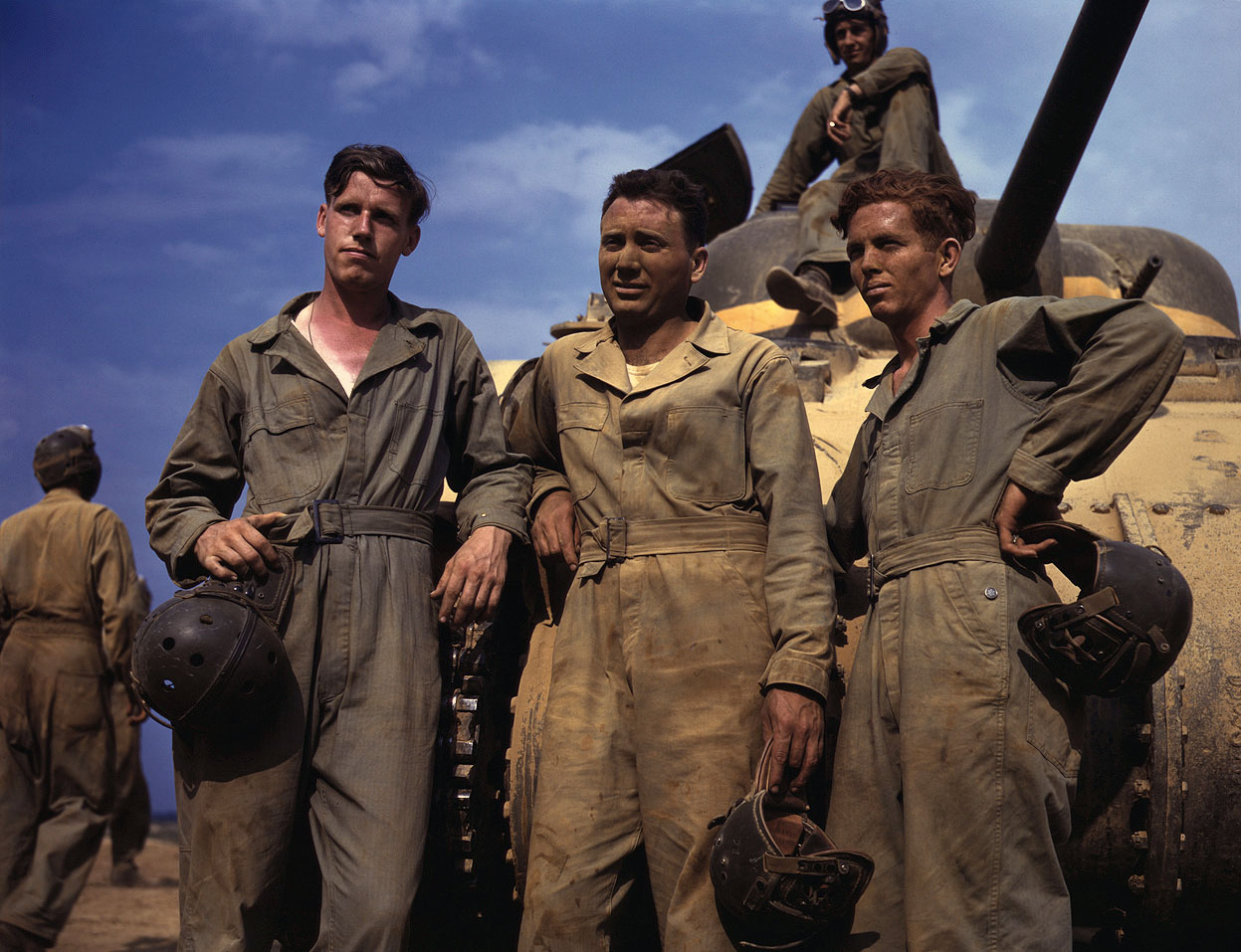
This is the first of a two-part posting on the large format Kodachrome colour transparency photographs of the American photographer Alfred Palmer taken during 1941-1943. I absolutely adore these photographs. While today they might seem overly posed and almost surreal in their depiction of men and women at work in the factories of the home front during the Second World War, these are epic canvases of colour, light and form. While Eugène Atget’s photographs may well have been “Documents for artists”, I believe that Alfred Palmer’s photographs can be seen as “Documents for photographers.” They teach later generations the value of craft, of an understanding of the technical aspects of the medium (both camera and film) coupled with the imaginative use and capture of light, colour and pose. Look at the photograph Noontime rest for an assembly worker at the Long Beach (October 1942, below) – have you ever seen such use of colour in the 1940s: red socks, blue slacks, beige shirt, green lunch box and silver background. Like one of those old films in Technicolor, just so beautiful!

While these photographs are masterpieces of formalism, lighting, tone, texture and control, they also transcend their subject matter. Observe the image P-51 “Mustang” fighter plane in construction, at North American Aviation, Inc., in Los Angeles, California (c. 1942, above) for example, to comprehend how this master photographer saw this image, how he understood the potential of the subject matter to shine (on so many levels) and then was able to capture it and let it speak for itself. Considering the conditions under which he would have been working (in cramped factories) and the fact that he would have had to light everything himself, Palmer has recorded a remarkable body of work. All captured on the wonderful Kodachrome film in large format 4″ x 5″ sheets. What a loss to photography this film is.

These photographs deserve to be more widely known and appreciated than they are at present. Love em, love em, love them!

See Part 2 of the posting.

Dr Marcus Bunyan


Many thankx to the Library of Congress for allowing me to publish the photographs in the posting. No known copyright restrictions on any of the photographs.


Alfred Palmer (American, 1906-1993) 'A view of the B-25 final assembly line at North American Aviation's Inglewood, California, plant' Photo published in 1942


Alfred Palmer (American, 1906-1993)
A view of the B-25 final assembly line at North American Aviation’s Inglewood, California, plant
Photo published in 1942
4 x 5 Kodachrome transparency
Alfred Palmer/OWI/LOC


Alfred Palmer (American, 1906-1993) 'B-25 bomber plane at North American Aviation being hauled along an outdoor assembly line. Kansas City, Kansas.' October 1942


Alfred Palmer (American, 1906-1993)
B-25 bomber plane at North American Aviation being hauled along an outdoor assembly line. Kansas City, Kansas
October 1942
4 x 5 Kodachrome transparency
Alfred Palmer/OWI


Alfred Palmer (American, 1906-1993) 'Servicing an A-20 bomber, Langley Field, Va.' July 1942


Alfred Palmer (American, 1906-1993)
Servicing an A-20 bomber, Langley Field, Va.
July 1942
4 x 5 Kodachrome transparency
Alfred Palmer/OWI


Alfred Palmer (American, 1906-1993) 'P-51 "Mustang" fighter in flight' October 1942


Alfred Palmer (American, 1906-1993)
P-51 “Mustang” fighter in flight, Inglewood, California, The Mustang, built by North American Aviation, Incorporated, is the only American-built fighter used by the Royal Air Force of Great Britain
October, 1942
4 x 5 Kodachrome transparency
Alfred Palmer/OWI/LOC


Alfred Palmer (American, 1906-1993) 'Sunset silhouette of a flying fortress, at Langley Field, Virginia, in July, 1942' July 1942


Alfred Palmer (American, 1906-1993)
Sunset silhouette of a flying fortress, at Langley Field, Virginia, in July, 1942
July 1942
4 x 5 Kodachrome transparency
Alfred Palmer/OWI/LOC


Alfred Palmer (American, 1906-1993) 'Light tank going through water obstacle. Fort Knox, June 1942' June 1942


Alfred Palmer (American, 1906-1993)
Light tank going through water obstacle. Fort Knox, June 1942
June 1942
4 x 5 Kodachrome transparency
Alfred Palmer/OWI


Alfred Palmer (American, 1906-1993) 'Tank crew standing in front of M-4 tank, Ft. Knox, Kentucky, June, 1942' June, 1942


Alfred Palmer (American, 1906-1993)
Tank crew standing in front of M-4 tank, Ft. Knox, Kentucky, June, 1942
June, 1942
4 x 5 Kodachrome transparency
Alfred Palmer/OWI/LOC


Alfred Palmer (American, 1906-1993) 'Army tank driver at Fort Knox , Kentucky' June 1942


Alfred Palmer (American, 1906-1993)
Army tank driver at Fort Knox, Kentucky
June 1942
4 x 5 Kodachrome transparency
Alfred Palmer/OWI


Alfred Palmer (American, 1906-1993) 'Lieutenant "Mike" Hunter, Army pilot assigned to Douglas Aircraft Company, Long Beach, Calif.' October 1942


Alfred Palmer (American, 1906-1993)
Lieutenant “Mike” Hunter, Army pilot assigned to Douglas Aircraft Company, Long Beach, Calif.
October 1942
4 x 5 Kodachrome transparency
Alfred Palmer/LOC


Alfred Palmer (American, 1906-1993) 'Lieutenant 'Mike' Hunter, Army test pilot assigned to Douglas Aircraft Company, Long Beach, California' October 1942


Alfred Palmer (American, 1906-1993)
Lieutenant ‘Mike’ Hunter, Army test pilot assigned to Douglas Aircraft Company, Long Beach, California
October 1942
4 x 5 Kodachrome transparency
Alfred Palmer/OWI


Alfred T. Palmer 1906-1993

Born in San Jose, California, Palmer was an avid photographer from an early age, meeting the young Ansel Adams in Yosemite in 1916. He was hired on as a cadet on the Dollar Lines President Monroe. He was 19 years old. This would be the first of his 23 trips around the world in the next 32 years. Palmer became the official photographer and worked aboard Dollar Line, Matson and Moore-McCormack Lines ships around the world shooting 100s of images with his Graflex camera. He would trade with other crew members for daytime shifts so he could go ashore and photograph everything he saw.

In 1938, he packed cameras and darkroom equipment into his car and set out across America documenting everything that captured his interest from cows and pigs and corn to towns, cities, people and industry. He would develop the film in the bathrooms of the tourist homes and auto courts every night. He sold the negatives for a dollar each for use in educational books. He made contact prints of each one which are included in his vast portfolio of work.

In 1939 when Hitler attacked Poland the United States ranked twentieth as a world military power. In June of 1940 President Roosevelt and Congress passed a bill for the building of a major two ocean navy. At that time Roosevelt formed the National Defense Advisory Commission of the Office of Emergency Management (OEM) and Palmer was chosen to head the photography department. To rally and inform citizens about the use of their tax dollars and resources, Palmer was sent out to photograph Americans building what Roosevelt termed the Arsenal of Democracy. Aware of the power of mass media, the OEM wanted to provide images which would vividly convey their story in high contrast photos for magazines and newspapers. At the OEM, Palmer’s boss, Robert Horton, would brainstorm assignments, sending him into restricted industrial and military facilities. Once in the field, Palmer worked independently. He developed a style of quickly seeing the picture and catching the essence. Through this style he was able to convey the gritty texture and geometry of industrial form combined with the strong emotion of men and women attentive to their work. His dramatic tonal ranges and sharp focus approach reflect the early influence of his mentor, Ansel Adams.

In 1941, after the bombing of Pearl Harbor, Palmer became official photographer for the newly formed Office of War Information (OWI). He also served as technical expert with final say on photographic equipment and processes. Now his images had to illustrate all aspects of the war effort, from industrial workers to conservation of resources and citizen participation. Palmer’s emphasis was on the typical American hard at work on the home front. His photographs were also an integral part of the “women power” campaign to change the public attitude toward women joining the work force. He showed women as patriotic, glamorous and capable, working on fighter planes as well as assembly lines. Palmer also focused on the dedication and dignity of the black labor force and worked with the chief of the News Bureau Negro Press.

In 1942, the Farm Security Administration (FSA) was added as a joint agency with the OWI. Palmer and Roy Stryker shared creativity and conflict during those years in the dissident approaches to portraying America to herself. While Stryker’s unit showed a national self scrutiny of post depression America, Palmer sought to emphasise a moral building role through his photography. Palmer’s deep belief in promoting the spiritual strength of people permeates his entire career as photographer and filmmaker.

During his years with OWI Palmer worked with a number of significant photographers such as Esther Bubbly, Howard Leiberman, Gordon Parks, Dorothea Lang and Edward Steichen. Palmer’s artistic style was recognised by Steichen, who featured his photographs in the historic traveling exhibit “Road to Victory”, which opened at the Museum of Modern Art in 1942. Alfred Palmer generated thousands of photographs that were widely published in the major magazines and newspapers in the United States and abroad. His works were praised for their exceptional symbolic power and striking use of intense contrasts conveying the courage and determination that Roosevelt sought to arouse in the nation. Much of the vast collection of Palmer’s photographs (including rare colour transparencies) is housed in the National Archives and the Library of Congress.

Alfred Palmer passed away in 1993, leaving a legacy of life work that is unique in its very essence. This extensive collection of photographs and 16mm colour film encompassing five decades of world cultures, World War II history and America’s maritime heritage becomes increasingly significant as a testimony to our humanity.

Text from the Alfred T. Palmer website [Online] Cited 13/10/2013. No longer available online. Used under fair use conditions for the purposes of education and research


A Kodachrome sheet film box that held 2 x half a dozen sheets of film in 2 sheet packages, from around the time Alfred Palmer would have been using the same film. Notice the ISO/ASA rating of 10. Expiry date of October 1944


A Kodachrome sheet film box that held 2 x half a dozen sheets of film in 2 sheet packages, from around the time Alfred Palmer would have been using the same film. Notice the ISO/ASA rating of 10. Expiry date of October 1944.


Alfred Palmer (American, 1906-1993) 'American mothers and sisters, like these women at the Douglas Aircraft Company plant in Long Beach , California , give important help in producing dependable planes for their men at the front' October 1942


Alfred Palmer (American, 1906-1993)
American mothers and sisters, like these women at the Douglas Aircraft Company plant in Long Beach, California, give important help in producing dependable planes for their men at the front
October 1942
4 x 5 Kodachrome transparency
Alfred Palmer/OWI


Alfred Palmer (American, 1906-1993) 'Assembling switchboxes on the firewalls of B-25 bombers at North American Aviation's Inglewood, California, factory' October 1942


Alfred Palmer (American, 1906-1993)
Assembling switchboxes on the firewalls of B-25 bombers at North American Aviation’s Inglewood, California, factory
October 1942
4 x 5 Kodachrome transparency
Alfred Palmer/OWI


Alfred Palmer (American, 1906-1993) 'Workers installing fixtures and assemblies in the tail section of a B-17F bomber at the Douglas Aircraft Company plant in Long Beach , California' October 1942


Alfred Palmer (American, 1906-1993)
Workers installing fixtures and assemblies in the tail section of a B-17F bomber at the Douglas Aircraft Company plant in Long Beach, California
October 1942
4 x 5 Kodachrome transparency
Alfred Palmer/OWI


Alfred Palmer (American, 1906-1993) 'Engine inspector for North American Aviation at Long Beach, California' June 1942


Alfred Palmer (American, 1906-1993)
Engine inspector for North American Aviation at Long Beach, California
June 1942
4 x 5 Kodachrome transparency
Alfred Palmer/OWI


Alfred Palmer (American, 1906-1993) 'Punching rivet holes in a frame member for a B-25 bomber at North American Aviation. Inglewood, California' June 1942


Alfred Palmer (American, 1906-1993)
Punching rivet holes in a frame member for a B-25 bomber at North American Aviation. Inglewood, California 
June 1942
4 x 5 Kodachrome transparency
Alfred Palmer/OWI


Alfred Palmer (American, 1906-1993) 'Inglewood, California. Riveting team working on the cockpit shell of a C-47 heavy transport at North American Aviation' 1942


Alfred Palmer (American, 1906-1993)
Inglewood, California. Riveting team working on the cockpit shell of a C-47 heavy transport at North American Aviation.
“The versatile C-47 performs many important tasks for the Army. It ferries men and cargo across the oceans and mountains, tows gliders and brings paratroopers and their equipment to scenes of action.”
1942
4 x 5 Kodachrome transparency
Alfred Palmer/OWI


Alfred Palmer (American, 1906-1993) 'Noontime rest for an assembly worker at the Long Beach, Calif., plant of Douglas Aircraft Company. Nacelle parts for a heavy bomber form the background' October 1942


Alfred Palmer (American, 1906-1993)
Noontime rest for an assembly worker at the Long Beach, Calif., plant of Douglas Aircraft Company. Nacelle parts for a heavy bomber form the background
October 1942
4 x 5 Kodachrome transparency
Alfred Palmer/OWI


Alfred Palmer (American, 1906-1993) 'Two assembly line workers at the Long Beach, Calif., plant of Douglas Aircraft Company enjoy a well-earned lunch period, Long Beach, Calif. Nacelle parts of a heavy bomber form the background' October 1942


Alfred Palmer (American, 1906-1993)
Two assembly line workers at the Long Beach, Calif., plant of Douglas Aircraft Company enjoy a well-earned lunch period, Long Beach, Calif. Nacelle parts of a heavy bomber form the background
October 1942
4 x 5 Kodachrome transparency
LOC


LIKE ART BLART ON FACEBOOK

Back to top

Exhibition: ‘Un/Natural Color’ at the Santa Barbara Museum of Art, Santa Barbara, CA

Exhibition dates: 7th July – 29th September, 2013


Many thankx to the Santa Barbara Museum of Art for allowing me to publish the photographs in the posting. Please click on the photographs for a larger version of the image.


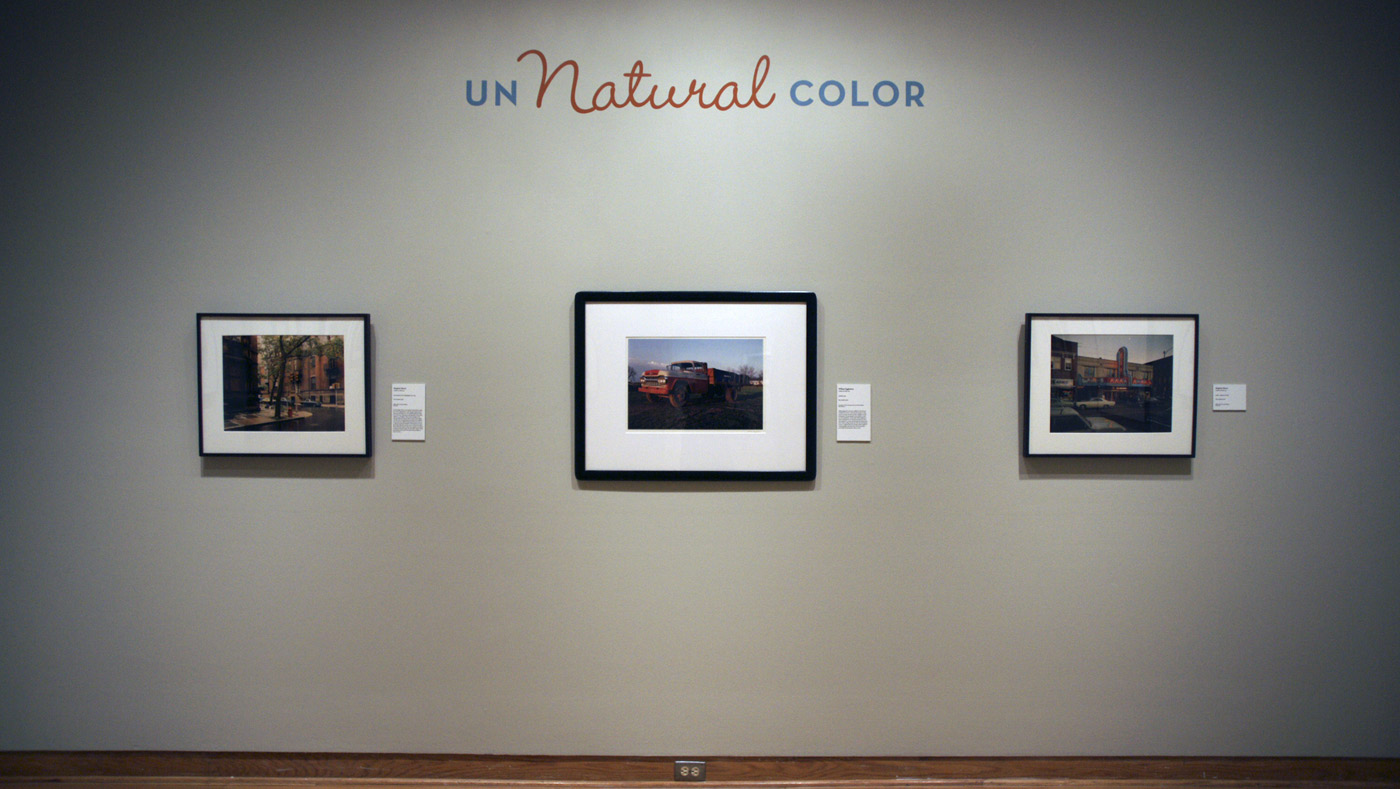
Installation photograph of the exhibition 'Un/Natural Color' at the Santa Barbara Museum of Art

Installation photograph of the exhibition 'Un/Natural Color' at the Santa Barbara Museum of Art

Installation photograph of the exhibition 'Un/Natural Color' at the Santa Barbara Museum of Art


Installation photographs of the exhibition Un/Natural Color at the Santa Barbara Museum of Art


This exhibition looks at the powerful relationship between colour and memory by considering photographs and the ways in which their unique colour palettes evoke specific moments of the historical past. From the pastel hues of 19th-century hand-painted portraits, to the vibrant colours of late-1930s Kodachrome transparencies, and the faded, shifted tones of snapshots from the 1970s, different kinds of colour reproduction are closely associated with the time periods that they most frequently represent. Each experiment in colour photography was originally meant to convey a sense of the natural hues of the world, but as our expectations for realistic representation have evolved, these earlier technologies for representing colour have also taken on new meaning. Today, the distinctive colours found in many vintage photographs speak as loudly to contemporary viewers about the period in which they were made as the content that they render visible. The exhibition suggests that the aesthetics of colour are closely related to the evolution of photographic technology over the past 100 years, and encourages visitors to rethink the significance of colour in contemporary photography through the lens of its multi-coloured past. This exhibition was organised by Kim Beil, an art historian who teaches at the University of California, Santa Cruz.

Text from the Santa Barbara Museum of Art website


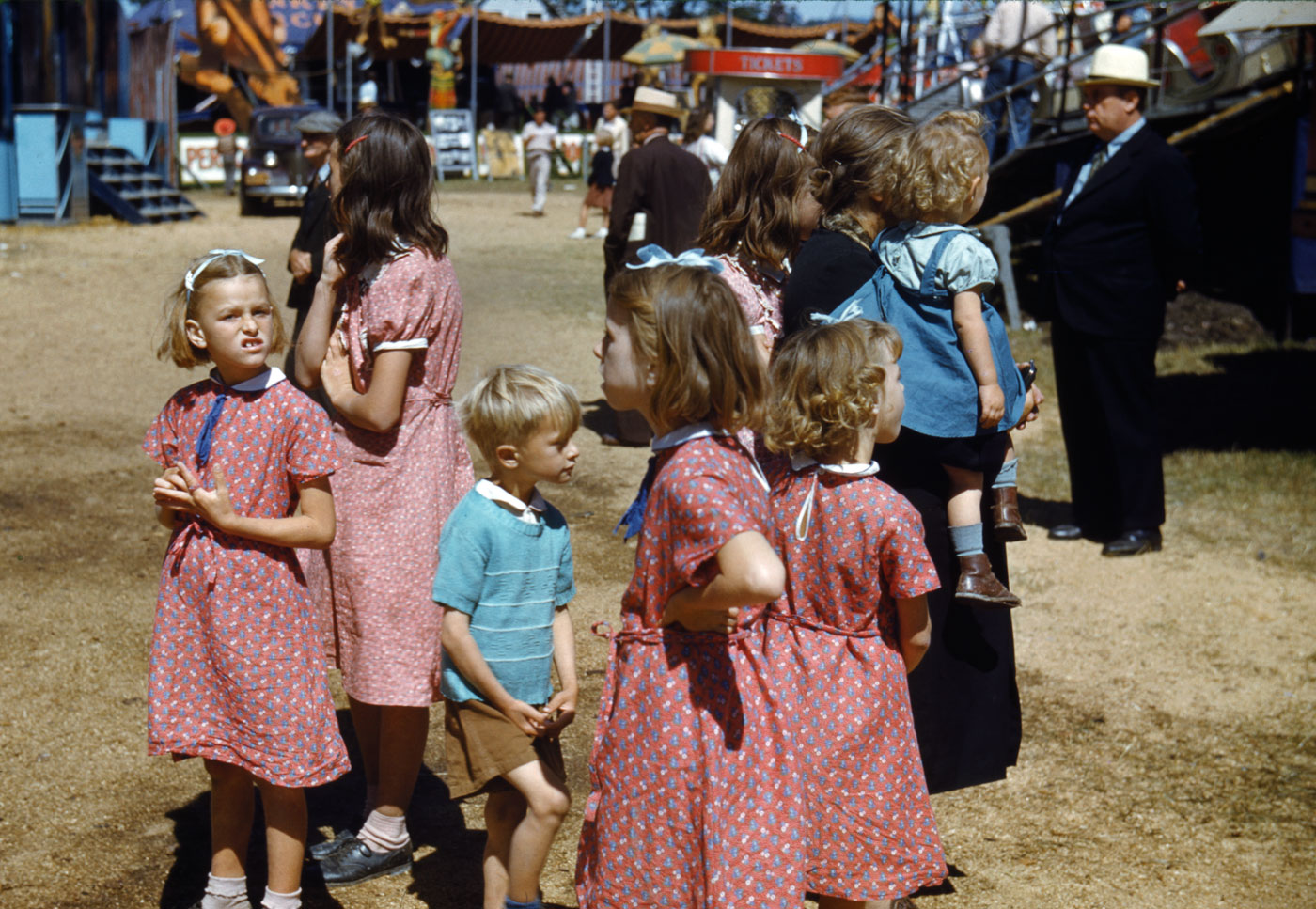
Jack Delano (American, 1914-1997) 'Barker at the Grounds of the Vermont State Fair, Rutland' 1941, printed 1983


Jack Delano (American, 1914-1997)
Barker at the Grounds of the Vermont State Fair, Rutland
1941, printed 1983
Dye transfer print
Santa Barbara Museum of Art, Gift of the Bruce Berman and Nancy Goliger Berman Collection


Jack Delano (American, 1914-1997) 'At the Vermont State Fair, Rutland' 1941, printed 1985


Jack Delano (American, 1914-1997)
At the Vermont State Fair, Rutland
1941, printed 1985
Dye transfer print
Santa Barbara Museum of Art, Gift of the Bruce Berman and Nancy Goliger Berman Collection


William Eggleston (American, b. 1939) 'Farm truck, Memphis, Tennessee' 1972


William Eggleston (American, b. 1939)
Farm truck, Memphis, Tennessee
1972
Dye-transfer print


Leroy Grannis (American, 1917-2011) 'Greg Noll Surf Team at Duke Kahanamoku Invitational, Sunset Beach' 1966, printed 2005


Leroy Grannis (American, 1917-2011)
Greg Noll Surf Team at Duke Kahanamoku Invitational, Sunset Beach
1966, printed 2005
C-print, ed. 1/9
Santa Barbara Museum of Art, Museum purchase with funds provided by Janet and Michael G. Wilson


LeRoy “Granny” Grannis (August 12, 1917 – February 3, 2011) was a veteran photographer. His portfolio of photography of surfing and related sea images from the 1960s enjoys a reputation that led The New York Times to dub him “the godfather of surfphotography.”


Un/Natural Color, an exhibition of colour photography from the Santa Barbara Museum of Art’s (SBMA) permanent collection, illustrates the history of colour photography since the 19th century and examines how the shifted or faded colours of old photographs can evoke moments in the historical past. Responding to the widespread use of nostalgic filters in popular photography and social media apps, such as Instagram and Twitter, this presentation enables visitors to see first-hand the historical processes that inspired the aesthetics of these digital manipulations. Despite their reputation for preserving memories and stopping time, photographs themselves are susceptible to material changes over time. These changes are often most visible in the radical colour shifts seen in old photographs, from the characteristic pink hue of snapshots from the 1950s to the yellowed borders and cool cast of prints from the 1970s. These changes also serve to complicate any simple belief in the ability of photography to faithfully represent the natural colours of the world.

While the exhibition includes a number of experimental early processes, including the chromolithographically-derived Photochrom process as well as an early Autochrome, the bulk of the imagery is drawn from the decades following the pivotal invention of Kodachrome, the first colour slide film, which was made commercially available in 1936. Because this film, as well as Kodacolor negative film (1942), was sent back to Eastman-Kodak for processing, photographers’ control over their imagery was greatly reduced, leading many art photographers to resist the transition to colour until decades later.

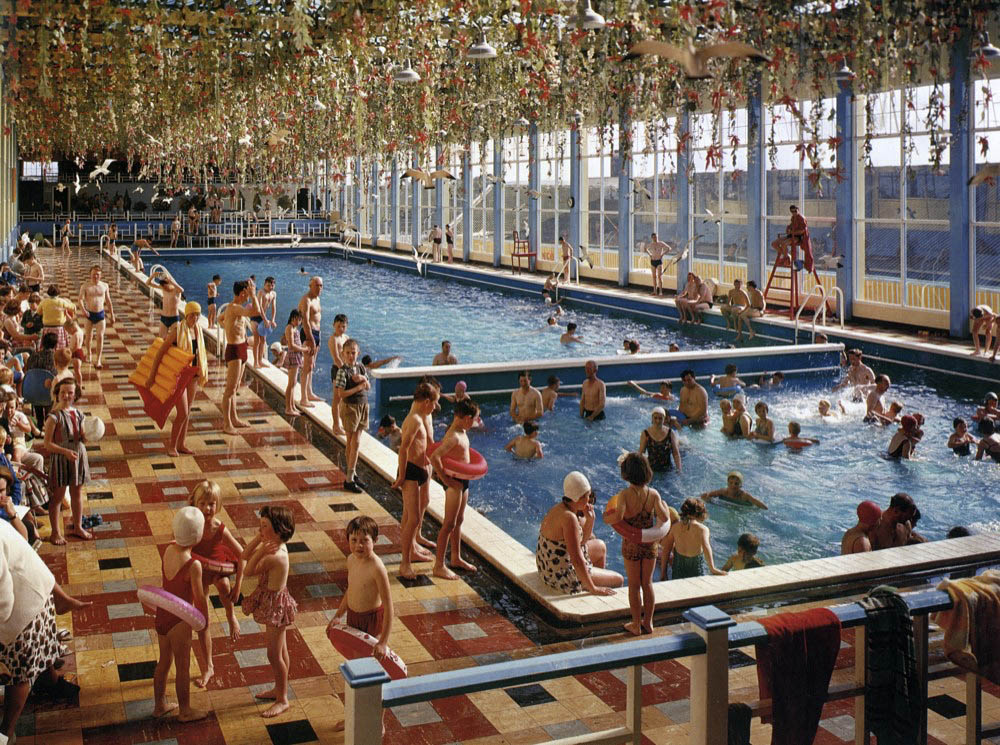
Un/Natural Color includes rarely-seen colour work by two notable documentary photographers of the Depression era, Jack Delano and Marion Post Wolcott. Both worked for the Farm Security Administration (a government program associated with the New Deal) and made limited use of colour film while on assignment documenting the effects of the Great Depression on rural American. Very few (if any) of these images were reproduced in the popular press, however, owing to the difficulty and cost of reproducing colour photographs, and to colour photography’s overwhelming association with commercial advertising at this time (as in Elmar Ludwig and Edmund Nägele’s image of the popular resort chain, Butlin’s).

The art establishment at large expressed little interest in colour photography until the mid-1970s, following the inclusion of colour work in two groundbreaking exhibitions: Stephen Shore’s vernacular landscapes in New Topographics: Photographs of a Man-Altered Landscape at the George Eastman House in Rochester, NY (1975) and the solo exhibition of William Eggleston’s colour photography at the Museum of Modern Art, NY (1976). Both of these important photographers are represented in Un/Natural Color, as well as work by photographers exploring similar uses of colour to record everyday American scenes, including Jeff Brouws, Jim Dow, and Joel Meyerowitz.

Prior to the 1970s, some tentative forays into colour photography were made by art photographers primarily known for their work in black-and-white (notably Harry Callahan), but colour was more often derided for its populist associations and was typically allied with either snapshot photography or advertising and Hollywood. The negative connotation that colour photography had acquired over the years in the art world was critical to its adoption by photographers like Shore and Eggleston, who used it to challenge conventional expectations for photographic art and to force viewers to look with new eyes at the familiar world around them.

An image such as Greg Noll Surf Team at Duke Kahanamoku Invitational, Sunset Beach by Leroy Grannis highlights the powerful ability of colour photography to summon a unique historical moment. It is not just the classic haircut and short surf trunks sported by the surf legend, Greg Noll, that situates this photograph in the 1960s. Colour photography at this time typically recorded colour in a highly saturated, though fairly uniform manner, leaving some aspects of this photograph looking flat, rather than mimicking the subtle modulation of tone that is more commonly associated with the perception of depth by human vision.

The characteristic manner by which different colour processes represent the colours of the world, as well as the changes that such colour photographs suffer over time, are powerful indicators of the photograph’s history. When we look at colour photographs, all of these markers are brought to bear on our interpretation of their subjects, leading us to question: what is natural colour anyway?

Press release from the Santa Barbara Museum of Art website


Roman Freulich (American born Poland, 1898-1974) 'Gloria Swanson' Nd


Roman Freulich (American born Poland, 1898-1974)
Gloria Swanson
Nd
Dye transfer print
Santa Barbara Museum of Art, Gift of Judith Caditz, Allan M. Caditz, Ellen Joan Abramson and Norman Abramson


Roman Freulich (1898-1974) was a photographer in the United States known for his movie stills and glamour shots. He immigrated from Poland.


William Edwin Gledhill (Canadian, 1888-1976) 'Amanda Duff' 1935


William Edwin Gledhill (Canadian, 1888-1976)
Amanda Duff
1935
Dye transfer print
Santa Barbara Museum of Art, Gift of Keith Gledhill


In 1907, the recently married Carolyn and Edwin Gledhill opened their first portrait studio on Chapala Street [Santa Barbara], one block from the luxurious oceanfront Potter Hotel, a destination for wealthy and prominent visitors at the time. During an era of extensive industrial growth and expansion for many burgeoning California cities, Santa Barbarans instead made the collective choice to focus on the city’s architecture, civic value and pageantry, making it an ideal haven for a diverse and growing community of artists and professionals. This unique social climate allowed the Gledhills access to the cultural elite, both visitors and residents alike, from which they chose the subjects of their portraits.

The Gledhills were fairly radical for their time, which was reflected both in their craft and in their personal life. At the time of their marriage, Edwin was only 19, while Carolyn was already in her 30s. This age disparity, which might be viewed as unorthodox today, was borderline scandalous in the early 20th century.

Carolyn Gledhill also showed a propensity for early feminism in her work. Before her untimely death in 1935, she would pose many of her female subjects in subtly defiant ways, reflecting the fundamental shift in the paradigm of women’s roles in America during the 1920s.

Following Carolyn’s death, Edwin continued his work as a photographer and preservationist of Santa Barbara’s historic resources; he even served for many years as the executive director of the Santa Barbara Historical Museum, helping build it into the cultural institution it is today.

Anonymous. “Portraits in Paradise: The Photography of Carolyn and Edwin Gledhill, 1906-1944,” on the Santa Barbara Historical Museum website Nd [Online] Cited 03/07/2024. Used under fair use conditions for the purposes of education and research


Elmar Ludwig (German, b. 1935) and Edmund Nägele (German, b. 1942) 'The Indoor-Heated Pool, Butlin’s Mosney' Nd


Elmar Ludwig (German, b. 1935) and Edmund Nägele (German, b. 1942)
The Indoor-Heated Pool, Butlin’s Mosney
Nd


Elmar Ludwig (born 1935) is a German photographer. Ludwig was born in Halle in 1935. In 1961, John Hinde recruited two German photographers, Ludwig (as head of photographic department) and Edmund Nägele, and one British, David Noble to expand his eponymous postcard business. Ludwig travelled the world for John Hinde, before establishing his own Munich studio at the end of the 1960s, focused on architecture, product and advertising photography.

Text from the Wikipedia website

Edmund Nägele FRPS is a German photographer. Nägele started his career in a Munich advertising studio, before relocating to Ireland. In 1962, John Hinde recruited two German photographers, Elmar Ludwig and Edmund Nägele and one British, David Noble to expand his eponymous postcard business. John Hinde Ltd. sent Nägele to Cyprus around 1969, where he recorded the life and scenery of this beautiful island. Large format film was used to produce postcard subjects, with colour separation and other post-processing being done in Milan – this included removing telegraph poles, television aerials and adding bright colours to vehicles and peoples clothing. Nägele is remembered for his elaborately staged, colour-saturated images of Butlin’s holiday camps taken in the 1960s.

Text from the Wikipedia website


William Henry Jackson (American, 1843-1942) 'Colorado Railway Mountain View' 1898


William Henry Jackson (American, 1843-1942)
Colorado Railway Mountain View
1898
Photochrom
Santa Barbra Museum of Art, Museum purchase


William Henry Jackson (American, 1843-1942) 'Colorado Grand Canyon of the Arkansas' 1898


William Henry Jackson (American, 1843-1942)
Colorado Grand Canyon of the Arkansas
1898
Photochrom
Santa Barbara Museum of Art, Museum purchase


Saul Leiter (American, 1923-2013) 'Snow' 1960


Saul Leiter (American, 1923-2013)
Snow
1960


Santa Barbara Museum of Art
1130 State Street, Santa Barbara, CA

Opening hours:
Tuesday – Sunday 11am – 5pm
Thursday Evenings 5 – 8pm

Santa Barbara Museum of Art website

LIKE ART BLART ON FACEBOOK

Back to top

Exhibition: ‘Cindy Sherman – Untitled Horrors’ at the Astrup Fearnley Museet, Oslo

“Like a mouthful of cinders.” Dr Marcus Bunyan

Exhibition dates: 4th May – 22nd September, 2013

Curators: Daniel Birnbaum, Lena Essling, Gunnar B. Kvaran, and Hanne Beate Ueland in collaboration with the artist


Cindy Sherman (American, b. 1954) 'Untitled #92' 1981


Cindy Sherman (American, b. 1954)
Untitled #92
1981
Chromogenic colour print
61 x 121.9cm
The National Museum of Art, Architecture and Design, Oslo


Like a mouthful of cinders.

Dr Marcus Bunyan


Many thankx to the Astrup Fearnley Museet for allowing me to publish the photographs in the posting. Please click on the photographs for a larger version of the image.


Cindy Sherman (American, b. 1954) 'Untitled #167' 1985


Cindy Sherman (American, b. 1954)
Untitled #167
1985
Chromogenic colour print
150 x 225cm
Astrup Fearnley Collection


Cindy Sherman (American, b. 1954) 'Untitled Film Still #32' 1979


Cindy Sherman (American, b. 1954)
Untitled Film Still #32
1979
Gelatin silver print
69.5 x 87.2cm
Astrup Fearnley Collection


Cindy Sherman (American, b. 1954) 'Untitled #150' 1985


Cindy Sherman (American, b. 1954)
Untitled #150
1985
Chromogenic colour print
121 x 163.8cm
Collection of Cynthia and Abe Steinberger


Cindy Sherman (American, b. 1954) 'Untitled Film Still #56' 1980


Cindy Sherman (American, b. 1954)
Untitled Film Still #56
1980
Gelatin silver print
15.5 x 22.8cm
Moderna Museet
Donation from The American Friends of the Moderna Museet, Inc., 2010


Cindy Sherman (born 1954) is one of the leading and most influential artists of our time. She belongs to a generation of postmodern artists who redefined the photograph and its place in an ever more visually oriented culture. Taking female roles in photographic representations as her starting point, Sherman creates recognisable pictures that mirror the human condition in its many nuances. Sherman’s pictures became key works in a time of turbulence for the very concept of art, and continue to challenge concepts of representation, identity and portrait.

Cindy Sherman’s allegorical pictures reflect our own conception of the world and open up for new interpretations of familiar phenomena. She uses herself as a model and equally portrays film stars and pin-up girls, as well as abnormal monsters from fantasy worlds. Sherman’s assertive use of masks, wigs and prosthetics has a disturbing effect, which is further reinforced in pictures where the human presence is gradually reduced in favour of posed dolls or traces of waste and decay.

The exhibition Cindy Sherman – Untitled Horrors has been composed to emphasise the disturbing, grotesque and disquieting sides of Sherman’s pictures. These are aspects that are visible in her exploration of well-established photographic genres such as film stills, fashion photography or classic portraits, as well as in series with titles such as Fairy Tales, Disasters, Sex Pictures, Civil War and Horror & Surrealist. This exhibition seeks to highlight these key aspects in her artistry and to examine their relevance through a dedicated selection of works from the beginning of her career in the mid-1970s up to the present day.

In conjunction with the exhibition, a richly illustrated catalogue is being published in cooperation with art publishers Hatje Cantz Verlag. The idea behind the catalogue is to explore and examine the more disquieting sides of Sherman’s art by inviting contributions from authors who have touched on similar themes in their own works. Contributors are well-known artists, dramatists and authors including Lars Norén, Miranda July, Sibylle Berg, Sjón, Sara Stridsberg, Karl Ove KnausgÃ¥rd and Kathy Acker.

Press release from the Astrup Fearnley Museet website


Cindy Sherman (American, b. 1954) 'Untitled #402' 2000


Cindy Sherman (American, b. 1954)
Untitled #402
2000
Chromogenic colour print
88 x 60cm
Astrup Fearnley Samlingen / Collection


Cindy Sherman (American, b. 1954) 'Untitled #132' 1984


Cindy Sherman (American, b. 1954)
Untitled #132
1984
Chromogenic colour print
176.3 x 119.2cm
Kunsthaus Zürich


Cindy Sherman (American, b. 1954) 'Untitled #199-A' 1989


Cindy Sherman (American, b. 1954)
Untitled #199-A
1989
Chromogenic colour print
63.3 x 45.7cm
Astrup Fearnley Collection


Cindy Sherman (American, b. 1954) 'Untitled #152' 1985


Cindy Sherman (American, b. 1954)
Untitled #152
1985
Chromogenic colour print
184.2 x 125.4cm
Astrup Fearnley Samlingen/ Collection


Cindy Sherman (American, b. 1954) 'Untitled #470' 2008


Cindy Sherman (American, b. 1954)
Untitled #470
2008
Chromogenic colour print
216.5 x 147.5cm
Acquired with founding from The American Friends of the Moderna Museet Inc.,


Astrup Fearnley Museet
Strandpromenaden 2, 0252 Oslo
Phone: +47 22 93 60 60

Opening hours:
Tuesday – Friday 12-17
Thursday 12-19
Saturday, Sunday 11-17
Mondays closed

Astrup Fearnley Museet website

LIKE ART BLART ON FACEBOOK

Back to top

Exhibition: ‘Lorna Simpson’ at Jeu de Paume, Paris

Exhibition dates: 28th May – 1st September 2013
 

Lorna Simpson (American, b. 1960) 'Five Day Forecast (Prévisions à cinq jours)' 1988


Lorna Simpson (American, b. 1960)
Five Day Forecast (Prévisions à cinq jours)
1988
5 gelatin silver prints in a frame, 15 plates engraved plastic
24 1/2 x 97 in (62.2 x 246.4cm) overall
Lillian and Billy Mauer Collection
© Lorna Simpson


A fascinating practice!

Identity, memory, gender, representation, the body, the subject, felt, text, images, video, gesture, reenactment, concept and performance, all woven together seamlessly like a good wig made of human hair…

Dr Marcus Bunyan


Many thankx to Jeu de Paume for allowing me to publish the photographs in the posting. Please click on the photographs for a larger version of the image.


Lorna Simpson (American, b. 1960) 'Stereo Styles (Styles stéréo)' 1988


Lorna Simpson (American, b. 1960)
Stereo Styles (Styles stéréo)
1988
10 dye-diffusion black-and-white Polaroid prints, 10 engraved plastic plaques
57 3/4 x 125 1/4 x 1 3/8 in (146.7 x 318.1 x 3.5cm) overall
Collection of Melva Bucksbaum and Raymond Learsy
© Lorna Simpson
 

Lorna Simpson (American, b. 1960) 'Wigs II' 1994-2006


Lorna Simpson (American, b. 1960)
Wigs II
1994-2006
Serigraph on 71 felt panels (images and text)
98 x 265 in (248.9 x 673.1cm) overall
Courtesy the artist; Salon 94, New York; and Galerie Nathalie Obadia, Paris/Brussels
© Lorna Simpson


Lorna Simpson surprised her audiences in 1994 when she began to print her photographs on felt, inspired by its materiality after seeing an exhibition of the sculpture of Joseph Beuys in Paris “where the piano and walls were covered for a beautiful installation.” Simpson questioned whether the medium might be appropriate in a far different way for her work given the perspective afforded her by the passage of time. With the felt pieces, Simpson turned away from photography’s traditional paper support, magnified the already larger-than-life-size of the images within her large photo-text pieces to extremely large-scale multi-part works, and, most critically, absented the figure, in particular, the black woman in a white shift facing away from the camera for which she had received critical acclaim.

Ever-present, nevertheless, were her thematic concerns. The first felts offered surrogates for the body in a taxonomy of her own photographs of Wigs, with voicings “in and around gender,” and expanded upon the investigation of the role of coiffure in the construction of identity in Simpson’s photo-texts (such as Stereo Styles, Gallery 1). In the mid-1990s, such felts were succeeded by a series of photographs of interior and exterior scenes that were accompanied by long text passages printed on separate small felts. In these works the figure was replaced, as Okwui Enwezor wrote, “by the rumour of the body.”


Lorna Simpson (American, b. 1960) 'Please remind me of who I am' 2009 (detail)


Lorna Simpson (American, b. 1960)
Please remind me of who I am (detail)
2009
50 found photo booth portraits, 50 ink drawings on paper, 100 bronze elements
Overall installation dimensions variable
Collection of Isabelle and Charles Berkovic
© Lorna Simpson


For each multi-part photo-booth piece, Simpson sets in bronze frames these small inexpensive shots as well as her drawings of selected details of the photographs. Self-styled and performed, these photographs were used for a variety of purposes by their now anonymous sitters, ranging from sober, formal ID photos to glamorous, often theatrically playful mementos. Encompassing photo booth shots of different sizes from the 1920s to the 1970s (a few in colour), Simpson’s constellations of many images for each work offer a collective portrait of self-portraiture (Gather, 2009) and continue her ongoing explorations of identity and memory, explicitly phrased in the title of one of them: Please remind me of who I am (2009).


Lorna Simpson (American, b. 1960) 'Waterbearer [Porteuse d'eau]' 1986


Lorna Simpson (American, b. 1960)
Waterbearer (Porteuse d’eau)
1986
Gelatin silver print, vinyl letters
59 x 80 x 2 1/2 in (149.9 x 203.2 x 5.7cm) overall
Courtesy the artist; Salon 94, New York; and Galerie Nathalie Obadia, Paris / Brussels
© Lorna Simpson


Waterbearer shows a woman from the back, pouring water from an elegant silvery metallic pitcher in one hand and from an inexpensive plastic jug in the other, echoing art historical renderings of women at wells or in the domestic settings of Dutch still-life paintings. As if balancing the scales of justice, this figure also symbolically offers disjunctions of means and class. In the accompanying text, Simpson explicitly addresses memory and the agency of speakers: “She saw him disappear by the river, they asked her to tell what happened, only to discount her memory.”


For her first European retrospective, the Jeu de Paume presents thirty years of Lorna Simpson’s work. For this Afro-American artist, born in Brooklyn, New York, in 1960, the synthesis between image and text is profound and intimate. If one were to consider Lorna Simpson as a writer, the textual element of her works could have an autonomous life as prose poems, very short stories or fragments of scripts. And yet, her texts are inseparable from her images; there is a dynamic between the two that is both fragile and energising, which links them unfailingly. Lorna Simpson became known in the 1980s and 90s for her photographs and films that shook up the conventions of gender, identity, culture and memory.

Throughout her work, the artist tackles the complicated representation of the black body, using different media, while her texts add a significance that always remains open to the spectator’s imagination. In her recent work, Lorna Simpson has integrated archive images, which she reinvents by positioning herself in them as subject. As the artist underlines: “The theme I turn to most often is memory. But beyond this subject, the underlying thread is my relationship to text and ideas about representation.” (Lorna Simpson)

This retrospective reveals the continuity in her conceptual and performative research. In her works linking photography and text, as well as in her video installations, she integrates – while continually shaking them up – the genres of fixed and moving images, using them to ask questions about identity, history, reality and fiction. She introduces complexity through her use of photography and film, in her exploitation of found objects, in the processes she develops to take on the challenges she sets herself and to spectators.

The exhibition gathers her large format photo-texts of the mid 1980s, which brought her to the attention of the critics (Gestures / Reenactments, Waterbearer, Stereo Styles), her work in screenprints on felt panels since the 1990s (Wigs, The Car, The Staircase, Day Time, Day Time (gold), Chandelier), a group of drawings (Gold Headed, 2013), and also her “Photo Booths,” ensembles of found photos and drawings (Gather, Please remind me of who I am…). The exhibition is also an opportunity to discover her video installations: multivalent narratives that question the way in which experience is created and perceived more or less falsely (Cloudscape, 2004, Momentum, 2010), among them, Playing Chess, a new video installation made especially for the occasion.


About the exhibition

Joan Simon

In her critically acclaimed body of work spanning more than thirty years, Lorna Simpson questions identity and memory, gender and history, fact and fiction, playing eye and ear in tandem if not in synchrony to prompt consideration of how meaning is constructed. That she has often described herself as an observer and a listener informs an understanding of both her approach and her subjects. In her earliest black-and-white documentary street photographs (1978-1980), Simpson isolated gestures that bespoke an intimacy between those framed in her viewfinder, recording what was less a decisive moment than one of coming into relation. Some of these photographs seem to capture crossed glances, pauses in an ongoing conversation. Others are glimpses of occasions, transitional events identifiable by a white confirmation or wedding dress, which convey a sense of palpable silence in exchanges between people just out of earshot.

When Simpson began to stage her own photographs in 1985 and to write accompanying texts, she came in closer. She allowed us to see a carefully framed black body, abstracted in gesture and in white clothing, yet also permitted us to read seemingly overheard comments that redirected and recomplicated the view. While her images captured gestures, her narratives imbued these images frozen in a never-changing present with memory, a past. The title of her first photo-text work, made in 1985, and of the exhibition of that year in which it was first exhibited was Gestures / Reenactments, and one can argue that all Simpson’s work is built on the juxtaposition of gestures and reenactments, creating meaning in the resonant gap between the two. It is a gap that invites the viewer / reader to enter, all the while requiring an active reckoning with some inalienable truths: seeing is not necessarily believing, and what we might see is altered not only by our individual experiences and assumptions but also, critically, by what we might hear.

The exhibition

Whether for still or moving picture productions, Lorna Simpson (b. 1960) uses her camera as catalyst to question identity and gender, genres and history, race and class, fact and fiction, memory and meanings. Assumptions of photographic “truth” are challenged and qualified – indeed redirected – by the images she creates that are inseparable from the texts she writes to accompany them, by the soundings she chooses  for videos, or by her pairings of vintage photographs with newly made renderings. The Jeu de Paume presents lorna Simpson’s first large-scale exhibition in Europe beginning with her earliest photo-text pieces of the 1980s through her newest video installation, Chess, 2013, which makes its debut in Paris.

Works in the exhibition show the artist drawing on traditional photo techniques such as gelatin silver prints in an intimate synthesis with speakerly texts (Gallery 1). They also show Simpson’s creation of new combines, among them serigraphs on felt with writings and images invoking film noir (Gallery 2), a video installation of three projections based on historic photographs and her own prior still photos (Gallery 3), constellations of recuperated photo-booth photos with her drawings isolating details from them as well as vintage photographs together with those re-staged by the artist (Gallery 4), and a video focusing on performance as well as time itself and its reversal (Gallery 5).

The exhibition’s parcours [route] reveals turning points in Simpson’s oeuvre as well as thematic continuities. The earliest pieces in the show are Simpson’s performative proto-cinematic photo-texts, beginning with the 1985 Gestures/ Reeactments, a title literally evocative of the work’s visual / verbal aspect while also paradigmatically descriptive of what would be her conceptual practice for the next three decades. Simpson herself makes a rare appearance in her work in two related pieces in the show: the 2009 epic still photo work 1957-2009 (Gallery 4), for which the artist re-enacted scenes from vintage photos, and Chess, 2013, (Gallery 3), which features re-enactments of some of the same photos.

.
Gallery 1 introduces the artist’s signature, indeed iconic early images of the 1980s – a black figure in white clothing, face turned away from the camera or cropped out of the frame – accompanied by precisely crafted, allusive texts that recomplicate what is seen by what is heard in these voicings. The intention to deny a view of a face, as Simpson says, “was related to the idea that the one thing that people gravitate to in photography is the face and reading the expression and what that says about the person pictured, an emotional state, who they are, what they look like, deciphering and measuring. Who is being pictured, what is actually the subject? Photographing from the back was a way to get viewers’ attention as well as to consciously withdraw what they might expect to see.”

The performative photo-text works in Gallery 1 are Gestures / Reenactments, 1985 (created as part of her thesis project for her MFA at the University of California, San Diego), Waterbearer and Twenty Questions (A Sampler) (the first works that Simpson made when she moved to New York in 1986), as well as Five Day Forecast, 1988, and Stereo Styles, 1988. Beginning with Waterbearer, all of these except Gestures / Reenactments (which features a black male) show a black female in a white shift played by artist Alva Rogers, who was often mistaken for Simpson herself.

Gallery 2 marks important changes the artist made during the ’90s, most notably Simpson’s surprising shift to printing her photographs on felt and absenting the human figure. At first she used surrogates for the body, seen in the many and various wigs she photographed and which she accompanied with texts that continued to address ideas of identity and gender (Wigs, 1994-2006). She used photographs taken during her travels for the next series of felt works, which were interior and exterior scenes (The Car, 1995, The Rock, 1995, The Staircase, 1998) that in both imagery and texts invoked film noir. These works led almost inevitably to the start of Simpson’s film and video work in 1997. (Her earliest photo-texts will be recognised by the viewer as proto-cinematic with their multiple frames and conversational voices.)

This gallery also reveals how Simpson continues to use her felt medium and returns to her own archive of images   as well as found objects. Three related works, though no longer using text, nevertheless “comment” on each other:  a video of a performance (Momentum, 2010) inspired by an early 1970s performance at Lincoln Center generated felt works based on vintage photographs of this famous New York theatre – Chandelier, 2011, Daytime, 2011, and Daytime (gold), 2011 – as well as the Gold Headed (2013) drawings, based on the dancers costumed head to foot in gold. Drawings are perhaps the least known medium in Simpson’s practice, and while they reveal the fluid gestures of her hand, visitors will recognise in these gold heads turned from the viewer an echo of the position of the figures  in Gallery 1.

Gallery 3 is devoted to Simpson’s newest video, Chess, 2013, which is based on historic photos as well as her own earlier photographic piece, 1957-2009 (Gallery 4), in which she restaged found vintage photographs. Chess and 1957-2009 mark the rare instances in which Simpson has herself appeared in her work.

Gallery 4 presents reenactments that use quotidian photographic genres to explore constructions of identity and that offer a collective portrait of photographic portraiture over time. All of the works in this gallery are based on found photographs Simpson purchased on eBay and each depicts anonymous subjects performing for the camera. 1957-2009 is based on photographs in a vintage album; Gather and Please remind me of who I am are constellations of bronze-framed found photo-booth images (from the 1920s to the 1970s) accompanied by Simpson’s similarly framed drawings of details from the photographs.

Gallery 5 offers Simpson’s video installation Cloudscape, 2004, which focuses on performance itself and the soundings of a body, that of artist Terry Adkins whistling a hymn. Embodying memory (and the distortions of it) as she did in her earliest photo-works but playing also with the particularities of video, Simpson loops the video to play forward and backward. In this process a new melody is created even as the stationary figure appears same but different.
 

Lorna Simpson (American, b. 1960) 'Chess (Échecs)' 2013


Lorna Simpson (American, b. 1960)
Chess (Échecs)
2013
HD video installation with three projections, black & white, sound
10:25 minutes (loop)
Score and performance by Jason Moran
Courtesy the artist; Salon 94, New York; and Galerie Nathalie Obadia, Paris/Brussels
© Lorna Simpson
 

Lorna Simpson (American, b. 1960) 'Chess (Échecs)' 2013


Lorna Simpson (American, b. 1960)
Chess (Échecs)
2013
HD video installation with three projections, black & white, sound
10:25 minutes (loop)
Score and performance by Jason Moran
Courtesy the artist; Salon 94, New York; and Galerie Nathalie Obadia, Paris/Brussels
© Lorna Simpson


“Gestures” and “reenactments” could both be described as the underlying methods of Simpson’s practice for the decades to follow. Whether working with photographs she herself staged, found photographs, or archival film footage, her images captured gestures (as in her earliest documentary photographs of 1978-1980) while her series of multiple images, accompanied by texts, proposed simultaneous (if not synchronous) reenactments. This method also applied to works in which she replicated found images, whether turning images from her films into drawings, or using herself to re-play roles depicted by anonymous figures she had discovered in vintage photographs, either for staged still photographs (as in 1957-2009, 2009), or for moving pictures (as in the video Chess, 2013).

Chess, 2013, Simpson’s video installation made expressly for this exhibition, draws on images from 1957-2009, her still photograph ensemble of 2009 (on view in Gallery 4). For both, in a departure from her earlier videos and prior staged photographs, Simpson herself performs. In 1957-2009, by reenacting scenes from found vintage prints with which they are shown, Simpson is “mirroring both the male and  the female character, in dress, pose, expression, and setting. When I would mention the idea of working with mirrors [for the Chess video] people would often mention the famous portraits of Picasso and Picabia taken at a photo studio in New York by an anonymous photographer who placed the subject at a table in front of two mirrored panels at seventy-degree angles. The result is a five-way portrait that includes views that are not symmetrical and that offer slightly different angles: a surrealist trope of trick photography.”

Though the artist first rejected the idea of working with the mirror device used in these historic portraits, which she had seen many times, she decided to take it on fully and reconstruct it in her studio for this new video project after  art historian and sociologist Sarah Thornton sent her “a beautiful image of an unknown man of African descent in a white straw hat, which had been in an exhibition at MoMA [catalogue page 61]. It was a five-way portrait probably taken by the same photographer who had taken the portraits of Picasso and Picabia. I could no longer resist or dismiss this idea. I felt that it was demanding my attention.”

Shot in Simpson’s studio over the weekend of December 8, 2012, Chess is comprised of three video projections. For two of them Simpson again plays both female and male chess-players, and with the help of makeup and hair assistants, she now allows her characters to age. The third projection shows pianist Jason Moran performing his improvised score for this project, which was inspired by discussions between artist and composer about “mirroring in music,” especially “in the work of musician Cecil Taylor, who employs mirroring in his compositions.”
 

Lorna Simpson (American, b. 1960) 'The Car' 1995


Lorna Simpson (American, b. 1960)
The Car
1995
Serigraph on 12 felt panels with felt text panel
102 x 104 in (259.1 x 264.2cm)
Courtesy the artist; Salon 94, New York; and Galerie Nathalie Obadia, Paris/Brussels
© Lorna Simpson
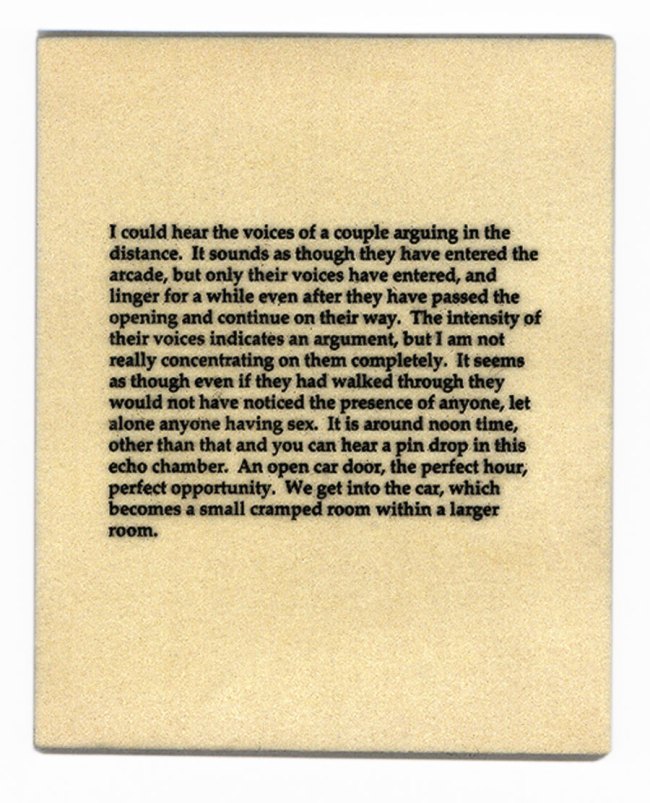
 

Lorna Simpson (American, b. 1960) 'The Car' 1995 (detail)


Lorna Simpson (American, b. 1960)
The Car (detail)
1995
Serigraph on 12 felt panels with felt text panel
102 x 104 in (259.1 x 264.2cm)
Courtesy the artist; Salon 94, New York; and Galerie Nathalie Obadia, Paris/Brussels
© Lorna Simpson
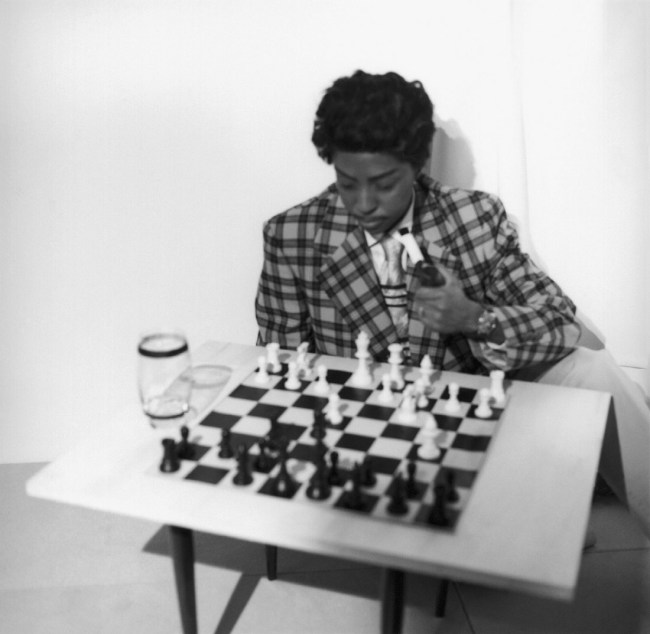
 

Lorna Simpson (American, b. 1960) '1957-2009' 2009 (detail)


Lorna Simpson
1957-2009 (detail)
2009
299 gelatin silver prints, framed
5 x 5 in. (12.7 x 12.7cm) each (image size)
Rennie Collection, Vancouver
© Lorna Simpson


While collecting photo booth images on eBay, Simpson found the first of the vintage photographs – a woman in a tight sweater-dress leaning on a car – that would generate 19572009 (2009). The artist subsequently bought the entire album and in 2009 restaged these photographs of an anonymous black woman and sometimes a man performing for their camera between June and August 1957 in Los Angeles, which they may have done in the hope of gaining movie work in Hollywood or as an independent project of self-invention. For 1957-2009, Simpson reenacted both female and male roles, and the 299 images are comprised of both the 1957 originals and Simpson’s 2009 remakes. Simpson again reenacted a selection of these vignettes for her video installation Chess, 2013.


Lorna Simpson (American, b. 1960) 'Cloudscape (Paysage nuageux)' 2004


Lorna Simpson (American, b. 1960)
Cloudscape (Paysage nuageux)
2004
Video projection, black & white, sound
3:00 minutes (loop)
Centre national des arts plastiques, purchase in 2005
Photo courtesy the artist; Salon 94, New York; and Galerie Nathalie Obadia, Paris/Brussels
© Lorna Simpson/Centre national des arts plastiques


Lorna Simpson’s video installation Cloudscape (2004) isolates one man, Simpson’s friend, the artist and musician Terry Adkins, in a dark room, spotlighted as he whistles a hymn and is enveloped in fog. Focusing on the ephemerality of performance, the artist employs a technique afforded by her medium to play with time as well. Simpson runs the video forward and then also backward in a continuous loop, creating new visual and oral / aural permutations of gesture and reenactment. In the reversal of the time sequence, the image remains somewhat familiar while the tune turns into something else, a different melody.
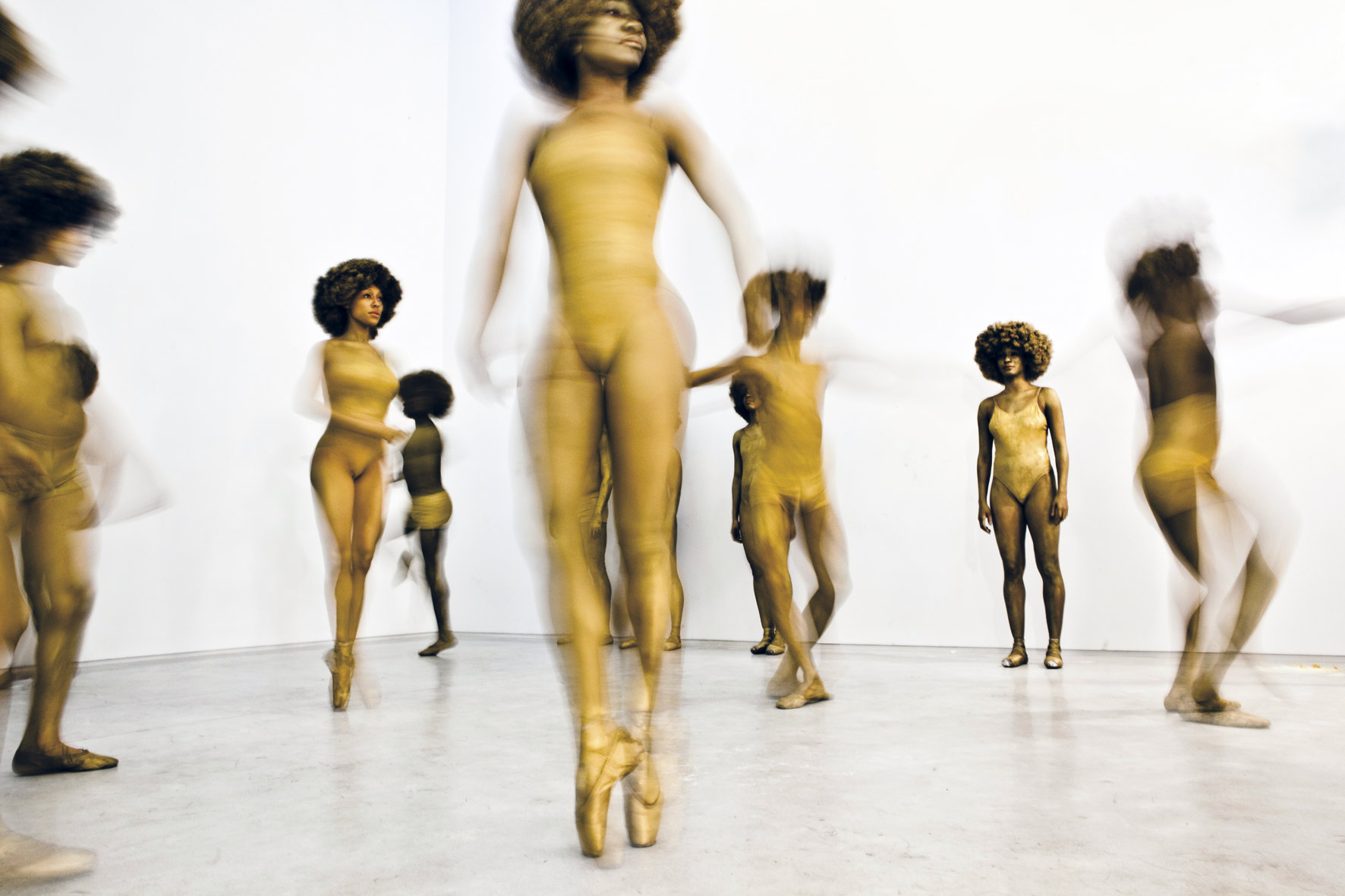
 

Lorna Simpson (American, b. 1960) 'Momentum' 2010


Lorna Simpson (American, b. 1960)
Momentum
2010
HD video, color, sound
6:56 minutes
Courtesy the artist; Salon 94, New York; and Galerie Nathalie Obadia, Paris/Brussels
© Lorna Simpson


As Simpson explored new mediums, such as film and video starting in 1997 or found photographs in  the late 1990s, she continued to work in parallel with her felt serigraphs. In this gallery are three related sets of works that, unlike her earlier photo-text pieces, are all based on a personal memory: performing as a youngster, age 12, in gold costume, wig, and body paint in a ballet recital at New York’s Lincoln Center. Simpson re-staged such a performance for her video Momentum (2010).


Jeu de Paume
1, Place de la Concorde
75008 Paris
métro Concorde
Phone: 01 47 03 12 50

Opening hours:
Tuesday – Friday: 12am – 8pm
Saturday and Sunday: 11am – 7pm
Closed Monday

Jeu de Paume website

Lorna Simpson website

LIKE ART BLART ON FACEBOOK

Back to top

Exhibition: ‘Lewis Hine – Photography for a Change’ at Fotomuseum Winterthur, Zurich

Exhibition dates: 8th June – 25th August 2013


Lewis Hine (American, 1874-1940) 'Midnight at the Brooklyn Bridge' 1906


Lewis Hine (American, 1874-1940)
Midnight at the Brooklyn Bridge
1906
Gelatin silver print
12 x 17cm
© Collection of George Eastman House, Rochester


“While human truth may be ephemeral qualities like justice are not; the struggle is to define justice and to live it. And for artists to display it.”


Dr Marcus Bunyan


Here is one artist who certainly used photography for social good. Hine “represents the beginning of a long tradition of politically engaged, social documentary photography, so called “concerned photography”… He firmly believed that every person, every individual, was worthy of respect, and he believed photography to be the best tool for clearly and visibly expressing this view.” Bravo to him.

Unfortunately, like so many of these visionary and revolutionary artists, Hine died in 1940, completely impoverished. As a society, why is it that we don’t value these brave human beings until years after they have passed? Is it because of petty jealousies, the rush of life, people in positions of power too long or a lack of understanding of the visionary nature of their work? Or is it just that time passes them by. I would like to pose this question.

Dr Marcus Bunyan


Many thankx to Fotomuseum Winterthur for allowing me to publish the photographs in the posting. Please click on the photographs for a larger version of the image.


Lewis Hine (American, 1874-1940) 'Spinner in New England mill' 1913


Lewis Hine (American, 1874-1940)
Spinner in New England mill
1913
Gelatin silver print
12.6 x 10.1cm
© Collection of George Eastman House, Rochester


Lewis Hine (American, 1874-1940) 'Italian family looking for lost baggage, Ellis Island' 1905


Lewis Hine (American, 1874-1940)
Italian family looking for lost baggage, Ellis Island
1905
Gelatin silver print
33.4 x 27.2cm
© Collection of George Eastman House, Rochester


Lewis Hine (American, 1874-1940) 'Candy worker, New York' c. 1925


Lewis Hine (American, 1874-1940)
Candy worker, New York
c. 1925
Gelatin silver print
17.2 x 11.8cm
© Collection of George Eastman House, Rochester


To what extent can images effectively combat injustice and social inequity? The American photographer Lewis Hine (1874-1940) offered an early answer to this question through his work. Trained as a teacher and sociologist, he ardently wished that Americans would become conscious of the injustice of American labor laws. He also firmly believed that every person, every individual, was worthy of respect, and he believed photography to be the best tool for clearly and visibly expressing this view.

His work represents the beginning of a long tradition of politically engaged, social documentary photography, so called “concerned photography.” His photographs of immigrants from Ellis Island, child labor in American factories, and the construction of the Empire State Building high above Manhattan have become major icons of the 20th century. Simultaneously, the photographs also point to the fact, that the documented problems have not lost their currency, even one hundred years later. Today, even in Europe, we are experiencing intensive migrations, which will continue to increase in the future. Here we are not confronted with child labor, because we have transferred the kinds of industrial production that used child labor to distant countries. Accidents in non-European factories indicate the risky conditions under which our consumer goods are still produced today. Hine’s photographic eye and his black and white images form a trajectory that leads directly to the present.

Lewis Hine grew up in a family that owned a simple restaurant in the small town of Oshkosh, Wisconsin. He lost his father at age 18 due to an accident. He provided for himself and his family first as a factory worker in a furniture production company and then as a doorman, salesman, and bookkeeper. After training as a teacher and studying sociology at the University of Chicago, Hine moved to New York, where he first came in contact with photography while teaching at the Ethical Culture School. Using the camera in his lessons, he made portraits of immigrants on Ellis Island in conjunction with a research project. From then on Hine viewed his camera as a weapon for revealing social injustice and effecting change through the power of images. With this motivation he traveled some 75,000 km through the United States for the National Child Labor Committee (NCLC) and photographed children at work in the fields, mines, factories, mills, and on the streets. His photographs played no small part in raising awareness for child labor and instigating initial reforms. They also represented some of the earliest and most significant contributions to the social documentary genre of photography. During the construction of the Empire State Building Hine was commissioned with documenting the phases of construction over the course of six months in 1930/1931. In over one thousand photographs he recorded the perspective of the construction workers and their hard work on the ultimately 381 m high building. Despite his early success and the use of his images by many governmental agencies, Hine died in 1940, completely impoverished, after an operation.

Fotomuseum Winterthur presents this comprehensive retrospective including 170 images and extensive documentation material in cooperation with the Fundación MAPFRE (Madrid), the Fondation Henri Cartier-Bresson (Paris) and the Nederlands Fotomuseum (Rotterdam). All works come from the George Eastman House, International Museum of Photography and Film in Rochester, USA.

Press release from the Fotomuseum Winterthur website


Lewis Hine (American, 1874-1940) 'Paris gamin' c. 1918


Lewis Hine (American, 1874-1940)
Paris gamin
c. 1918
Gelatin silver print
24.4 x 19.4cm
© Collection of George Eastman House, Rochester


Lewis Hine (American, 1874-1940) 'Jewess at Ellis Island' 1905


Lewis Hine (American, 1874-1940)
Jewess at Ellis Island
1905
Gelatin silver print
24.1 x 19.1cm
© Collection of George Eastman House, Rochester


Lewis Hine (American, 1874-1940) 'Mechanic at steam pump in electric power house' 1920


Lewis Hine (American, 1874-1940)
Mechanic at steam pump in electric power house
1920
Gelatin silver print
16.9 x 11.7cm
© Collection of George Eastman House, Rochester


Lewis Hine (American, 1874-1940) '[Man on girders, Empire State Building]' c. 1931


Lewis Hine (American, 1874-1940)
[Man on girders, Empire State Building]
c. 1931
Gelatin silver print
12 x 9.2cm
© Collection of George Eastman House, Rochester


Lewis Hine (American, 1874-1940) '[Steelworker touching the tip of the Chrysler Building]' c. 1931


Lewis Hine (American, 1874-1940)
[Steelworker touching the tip of the Chrysler Building]
c. 1931
Gelatin silver print
16.9 x 11.9cm
© Collection of George Eastman House, Rochester


Lewis Hine (American, 1874-1940) 'Icarus atop Empire State Building' 1931
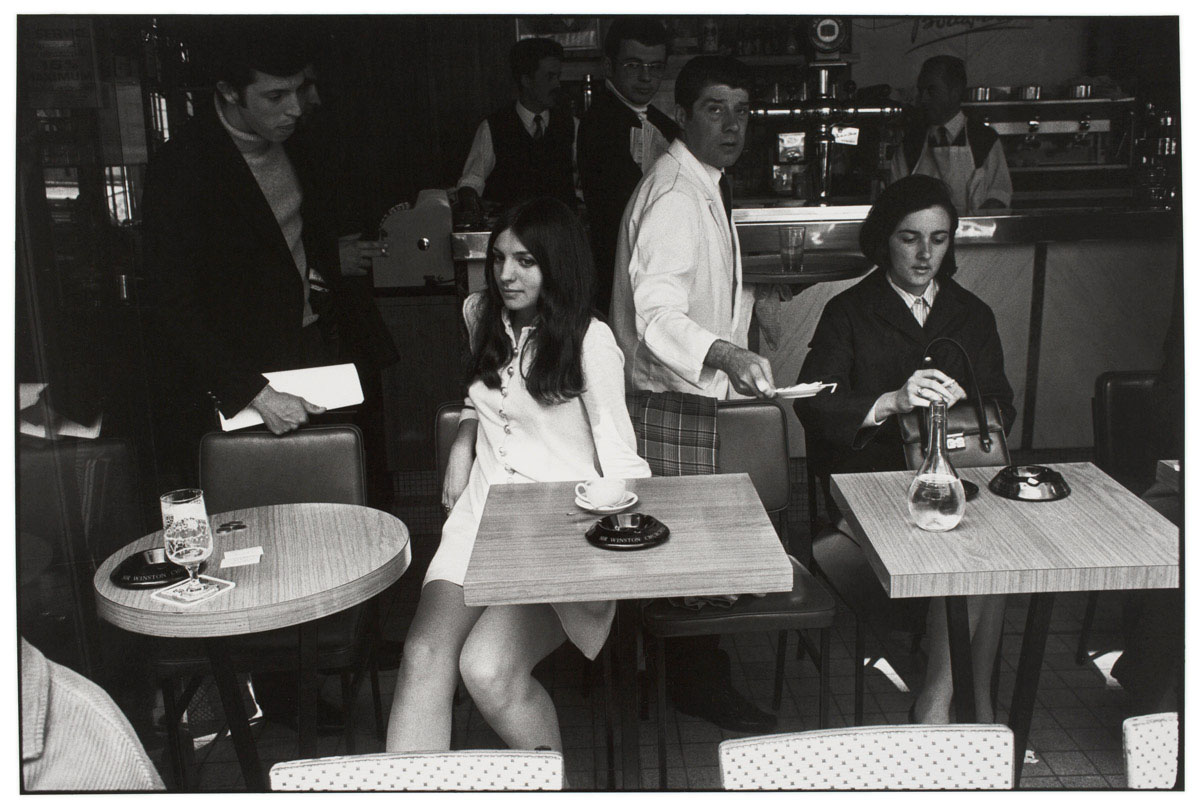
 

Lewis Hine (American, 1874-1940)
Icarus atop Empire State Building
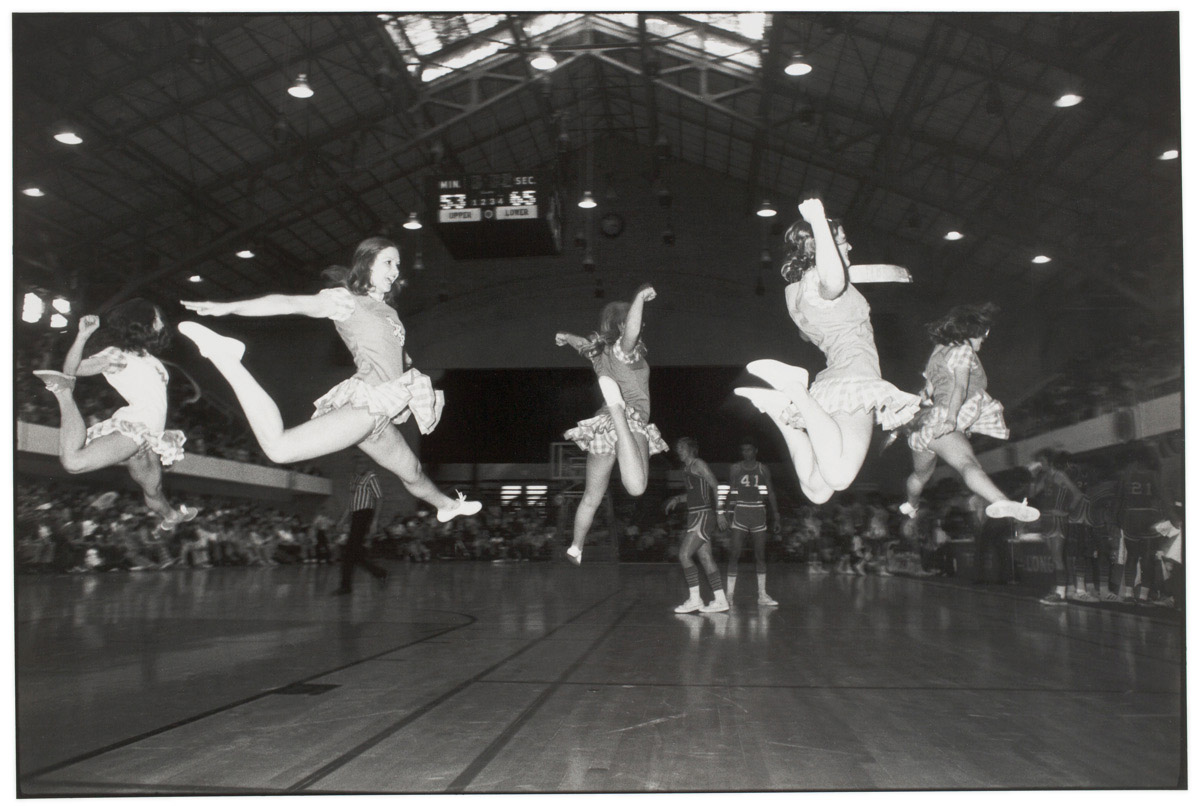
1931
Gelatin silver print
9.3 x 10cm
© Collection of George Eastman House, Rochester


Fotomuseum Winterthur
Grüzenstrasse 44 + 45
CH-8400
Winterthur (Zürich)

Opening hours:
Tuesday to Sunday 11am – 6pm
Wednesday 11am – 8pm
Closed on Mondays

Fotomuseum Winterthur website

LIKE ART BLART ON FACEBOOK

Back to top