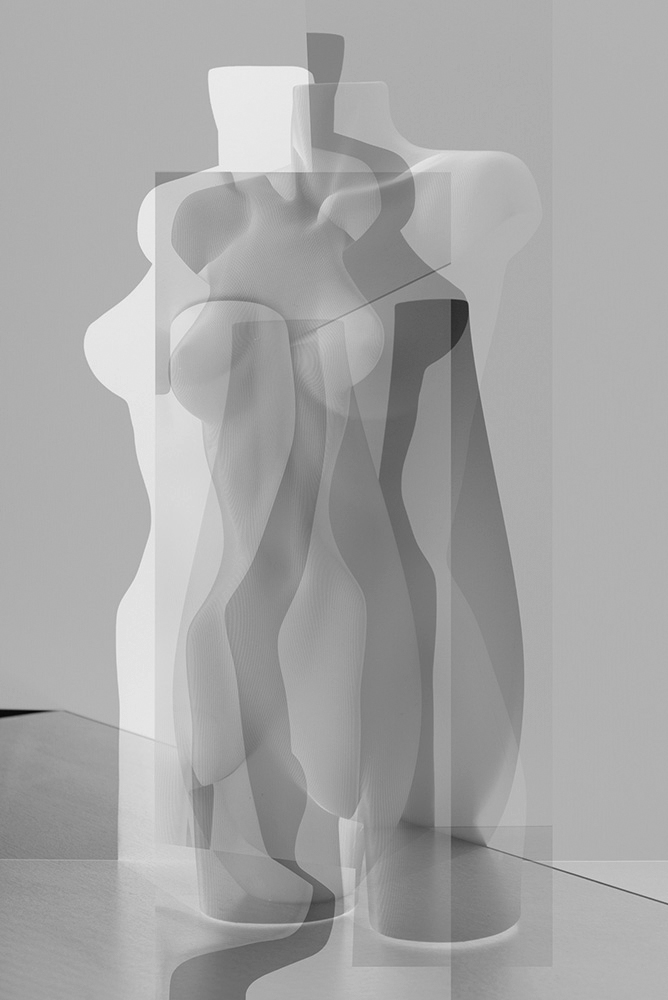
Exhibition: ‘Flowers & Mushrooms’ at the Museum der Moderne Salzburg, Austria

Exhibition dates: 27th July – 27th October 2013


Many thankx to the Museum der Moderne Salzburg for allowing me to publish the photographs in the posting. Please click on the photographs for a larger version of the image.
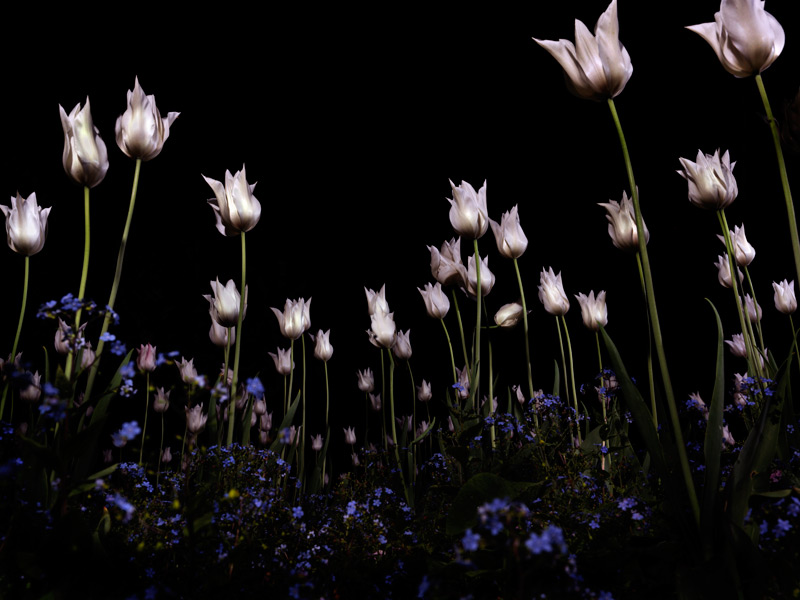
 

Giovanni Castell (German, b. 1964) 'Tulpomania 3 / Vergissmeinnicht' 2009


Giovanni Castell (German, b. 1964)
Tulpomania 3 / Vergissmeinnicht
2009
C-Print/Plexiglas (Diasec)
130 x 160cm
Courtesy the artist
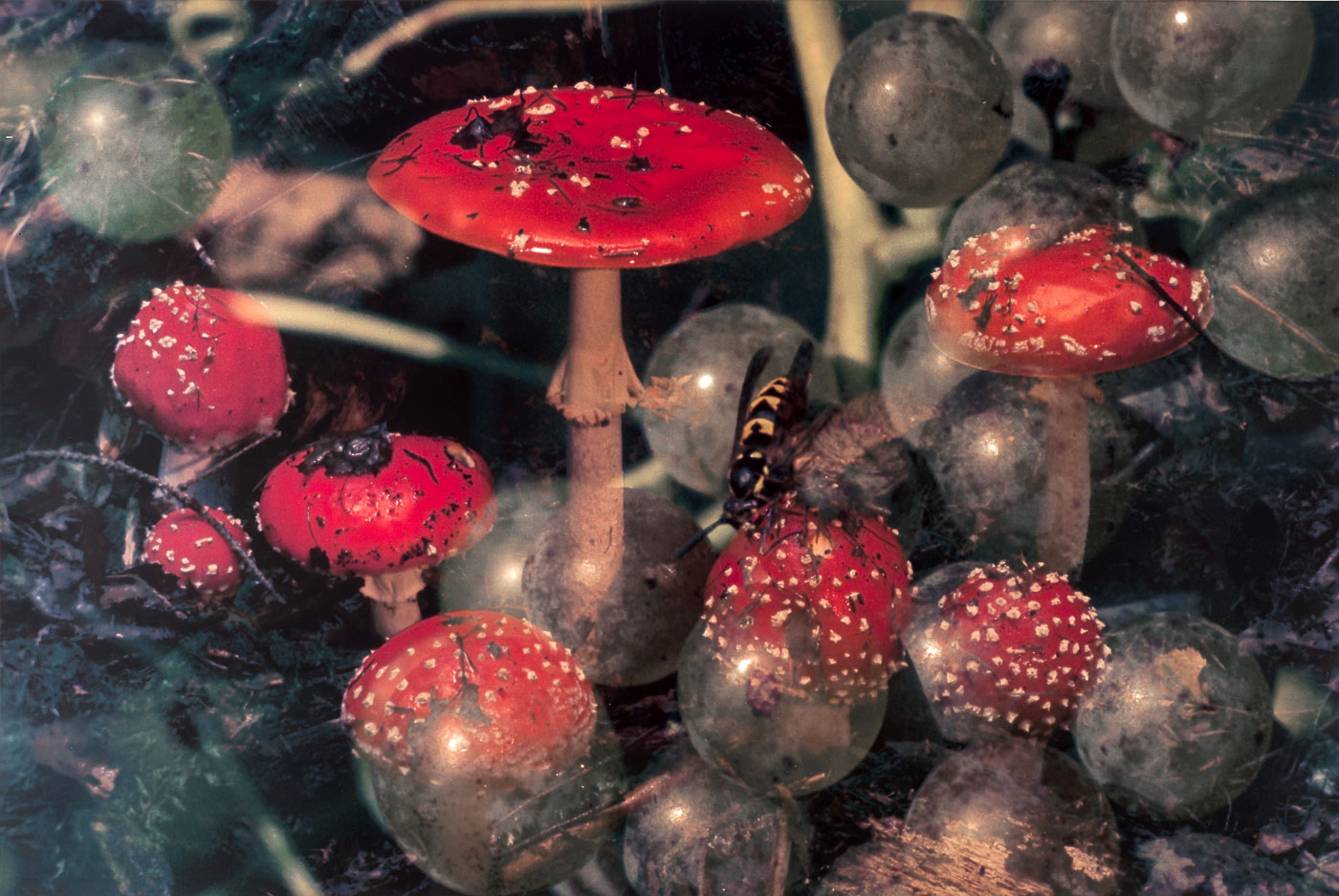
 

Fischli/David Weiss. Peter Fischli (Swiss, b. 1952) and David Weiss (Swiss, 1946-2012) 'Mushrooms / Funghi 18' 1997-1998


Fischli/David Weiss
Peter Fischli
(Swiss, b. 1952) and David Weiss (Swiss, 1946-2012)
Mushrooms / Funghi 18
1997-1998
Inkjet print with Polyester Foil
73.8 x 106.7cm
Bavarian State Painting Collections Munich – Pinakothek der Moderne
Acquired by PIN, Friends of the Art Gallery of modernity for the Modern Collection Art
© The artists; Gallery Sprueth Magers Berlin, London; Galerie Eva Presenhuber Zurich; and Matthew Marks Gallery New York


Michael Wesely (German, b. 1963) 'Still life (29.12. - 4.1.2012)' 2012


Michael Wesely (German, b. 1963)
Still life (29.12. – 4.1.2012)
2012
C-Print, UltraSecG, Metallrahmen
100 x 130cm
Courtesy Galerie Fahnemann, Berlin
© VBK, Wien, 2013


Marc Quinn (British, b. 1964) 'Landslide in the South Tyrol' 2009


Marc Quinn (British, b. 1964)
Landslide in the South Tyrol
2009
Oil in canvas
168.5 x 254 x 3cm
Galerie Thaddaeus Ropac, Paris. Salzburg
Foto: Ulrich Ghezzi
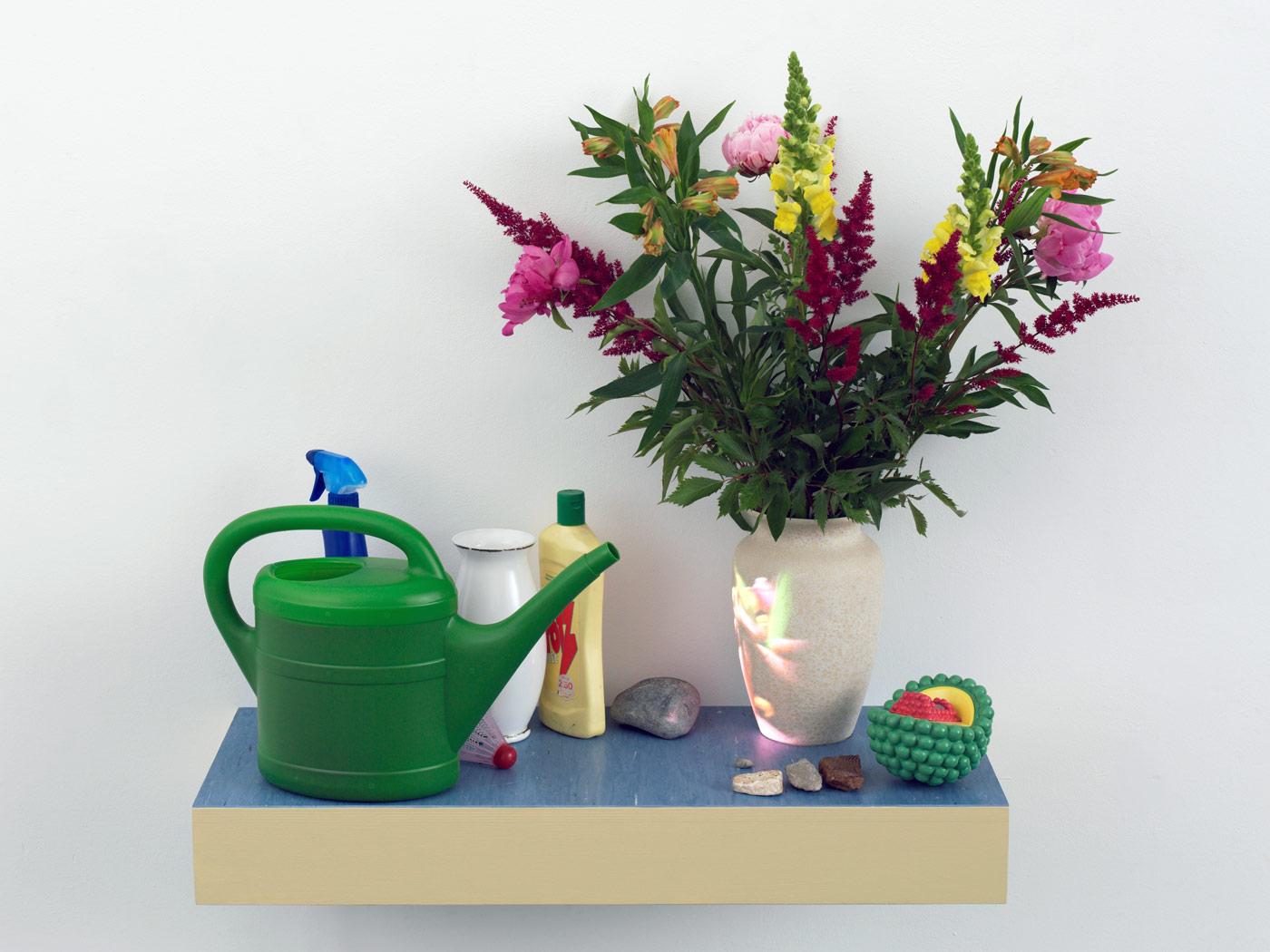
 

Pipilotti Rist (Swiss, b. 1962) 'Sparking of the Domesticated Synapses' 2010


Pipilotti Rist (Swiss, b. 1962)
Sparking of the Domesticated Synapses
2010
Video installation; Projector and Media Player, miscellaneous
Objects, Regal, Quiet
Video: 5:34 min
Courtesy of the artist and Hauser & Wirth, Zürich
© The artist, Hauser & Wirth and Luhring Augustine, New York
Foto: Stefan Altenburger Photography Zürich


For some time now, there has been a renaissance of flowers and mushroom themes in fine art. The comprehensive exhibition Flowers & Mushrooms explores the clichées and the various levels of meaning and symbolism of flowers and mushrooms in art. Current social and aesthetic issues are discussed on the basis of a selection of works from the fields of photography, photo-based paintings, video and sculptures/installations.

Today flowers are primarily associated with their decorative function. They also have a symbolic meaning both at weddings, where they represent freshness and fertility, and at funerals, where they represent transitoriness and death. An in-depth exploration of the varied symbolic meanings of flowers in cultural history reveals further levels of meaning, many of which refer to the ambivalence and abysms of human existence. Contemporary art adopts and continues the historical and complex pictorial tradition of flowers and mushrooms by adding new, contemporary perspectives. The exhibition was inspired by the multi-part work series Ohne Titel (Flowers, Mushrooms) by the artist duo Peter Fischli / David Weiss. The Swiss artists have been preoccupied with the role of clichées and common subjects for many years. Different slide projections with a comprehensive series of inkjet prints and Cibachromes included cross-fadings of flower and mushroom motifs.

At the beginning of the exhibition, a historical section shows photographs from the 19th and early 20th century. In particular the new medium of photography developed a special relationship with flower motifs. Photographs of the great variety of different plant and flower species serve as a kind of substitute for the traditional herbarium or as natural models, as “prototypes of art” for ornamental design lessons. From the early beginnings of photography, scientific interest motivated pioneers such as William Henry Fox Talbot or Anna Atkins to capture amazing pictures of plants.

Later on, the affirmative exaggeration of the decorative character of the flower inspired none other than Andy Warhol to take up a simple, photographically reproduced flower motif in his work Flowers (from 1964); through serial repetitions he ironically exaggerated the motif and conferred iconic status on banal everyday objects. Artists such as David LaChapelle and Marc Quinn continue the baroque symbol for opulence with the aggressive colourfulness of their impressively grand flower arrangements, but also emphasise the simultaneously existing threatening moment, when the boundlessness can take on a devouring character.

For some time now, there has been a renaissance of flowers and mushroom themes in fine art. The works of leading “portraitists” of flowers and mushrooms, such as Peter Fischli / David Weiss, David LaChapelle, Marc Quinn, Sylvie Fleury, Nobuyoshi Araki or Carsten Höller, continue the multi-faceted and long pictorial tradition of flowers, which is unparalleled in the history of art. At the same time no other motif is so easily suspected of trivialism. The question arises of how a subject that is frequently accused of being trivial and shallow has been able to gain ground in a field of art that is generally regarded as serious and sophisticated. The picture of a flower is too easily associated with the idea of harmless beauty and the mushroom with cliché-like hallucinogenic states of consciousness. Nevertheless many artists increasingly adopt these motifs, adapt them and find individual ways to put them into the context of socio-critical, feminist, political and media-reflexive art.

It is only at first glance that David LaChapelle and Marc Quinn continue the baroque symbol for opulence with their impressively grand flower arrangements that reveal a threateningly devouring character upon closer inspection. Female artists such as Vera Lutter, Paloma Navares and Chen Lingyang reflect upon flowers in a specifically female way, using them as a symbol for their own identity-defining sexuality, but also for their vulnerability and exposure and thus elevate the flower to a socio-critical and political level. With almost scientific interest, Andrew Zuckerman and Carsten Höller take an analytical view of the morphological characteristics of flowers and mushrooms in their photographs and installations which create an impressive immediacy. The erotic photographs by Nobuyoshi Araki and Robert Mapplethorpe draw parallels between a blossom and the male and female body and create a field of tension between still life and nude. The wilting flower as a classic symbol of vanity is depicted by Michael Wesely in his long-exposure photographs, which accompany the life of a flower from full bloom to its wilting while emphasising their beauty to the very end. Contrastingly, the monstrous, towering plants of the “desolate” video installations created by Nathalie Djurberg and Hans Berg are devoid of any loveliness and have a menacing effect. They depict violence and abuse give flowers a particularly irritating and disconcerting touch by breaking with their generally positive connotation.

Flowers and buds symbolise eroticism in general, their appearance creating associations with the female and masculine gender (sexual organs) specifically and thus have a sensual appeal. Imogen Cunningham and Robert Mapplethorpe have a reputation as early forerunners of this sexualised and yet apocalyptic perception of flowers. They both implemented this special perception – erotically charged and aloof at the same time – in their photographs by drawing analogies to the human body in their sculptural treatment of the flower. Female artists such as Vera Lutter, Paloma Navares and Chen Lingyang reflect upon flowers in a specifically female way, using them as a symbol for their own identity-defining sexuality, but also for their vulnerability and exposure and thus elevate the flower to a socio-critical and political level.

Thanatos, or death, is closely related to Eros. The wilting flower as a symbol of vanity is depicted by Michael Wesely in his long-exposure photographs, which accompany the life of a flower from full bloom to its wilting while emphasising their beauty to the very end. The flower monstrosities of the “desolate” video installations by Nathalie Djurberg, which deal with violence and abuse, are devoid of any loveliness and even have a threatening effect.

Both in their natural environment and in cultural history, mushrooms are on the shadow side. Mushrooms are mainly associated with dubious alchemism and witchcraft, are desired and feared as hallucinogenic and have become an integral part of art and literature. Similar to flowers, mushrooms have a long tradition in art history and appear frequently within the context of artistic productions. Sylvie Fleury, for example, controls space with a “forest” of over-dimensional mushrooms, whose surface is covered with car paint, thus increasing their intrinsic character of a foreign body. Their over-dimensional size, and glittering appearance evokes scenes from “Alice in Wonderland”, where the protagonist eats from a mushroom to makes her grow or sink. Carsten Höller, by contrast, explores mushrooms with almost scientific interest and documents their individuality and uniqueness in detailed colour photographs or converts them into larger-than-life-size, large-scale sculptures and display cabinets.

The particular appeal of this exhibition organised by the curators of the MdM SALZBURG lies in the comparison and confrontation of the different levels of meaning of images of flowers and mushrooms and their controversial positions in contemporary arts. The title of the exhibition has been inspired by the series of C-prints by the Swiss artist duo Peter Fischli / David Weiss with the title “Flowers, Mushrooms”. Flowers & Mushrooms presents a selection of important works from the fields of photography, photo-based paintings, video and sculpture/installation art with floral motifs, spanning the time from the early beginnings of photography to the immediate presence. Selected works on loan accentuate the focal points and main themes of the exhibition by raising current social and aesthetic issues and thus allow a closer inspection of the multi-faceted symbolic use of flowers and mushrooms. At the same time, new levels of meaning are opened, referring to the ambivalent and mystical dark side of human existence. The exhibition shows how contemporary art adopts and continues the historical and complex pictorial tradition of flowers and mushrooms by adding new, contemporary perspectives. A historical section with photographs from the 19th century and of Classical modernism complements the exhibition and shows, how photography as a new medium has developed a special relationship with floral motifs.

The exhibition features works by Nobuyoshi Araki, Anna Atkins, Eliška Bartek, Christopher Beane, Karl Blossfeldt, Lou Bonin-Tchimoukoff, Balthasar Burkhard, Giovanni Castell, Georgia Creimer, Imogen Cunningham, Nathalie Djurberg, Hans-Peter Feldmann, Peter Fischli / David Weiss, Sylvie Fleury, Seiichi Furuya, Ernst Haas, Carsten Höller, Judith Huemer, Dieter Huber, Rolf Koppel, August Kotzsch, David LaChapelle, Edwin Hale Lincoln, Chen Lingyang, Vera Lutter, Katharina Malli, Robert Mapplethorpe, Elfriede Mejchar, Moritz Meurer, Paloma Navares, Nam June Paik, Marc Quinn, Albert Renger-Patzsch, Zeger Reyers, Pipilotti Rist, August Sander, Gitte Schäfer, Shirana Shahbazi, Luzia Simons, Thomas Stimm, Robert von Stockert, William Henry Fox Talbot, Diana Thater, Stefan Waibel, Xiao Hui Wang, Andy Warhol, Alois Auer von Welsbach, Michael Wesely, Manfred Willmann, Andrew Zuckerman.

Press release from the Museum der Moderne Salzburg website


Paloma Navares (Spanish, b. 1947) 'Vestidas de Sede' 2009


Paloma Navares (Spanish, b. 1947)
Vestidas de Sede
2009
C-Print on Diasec
125 x 125cm
Courtesy MAM MARIO MAURONER Contemporary Art, Salzburg-Vienna
© VBK, Wien, 2013


Robert Mapplethorpe (American, 1946-1989) 'Flower' 1988


Robert Mapplethorpe (American, 1946-1989)
Flower
1988
Silver gelatin print
71.1 x 68.6cm
© The Robert Mapplethorpe Foundation, New York
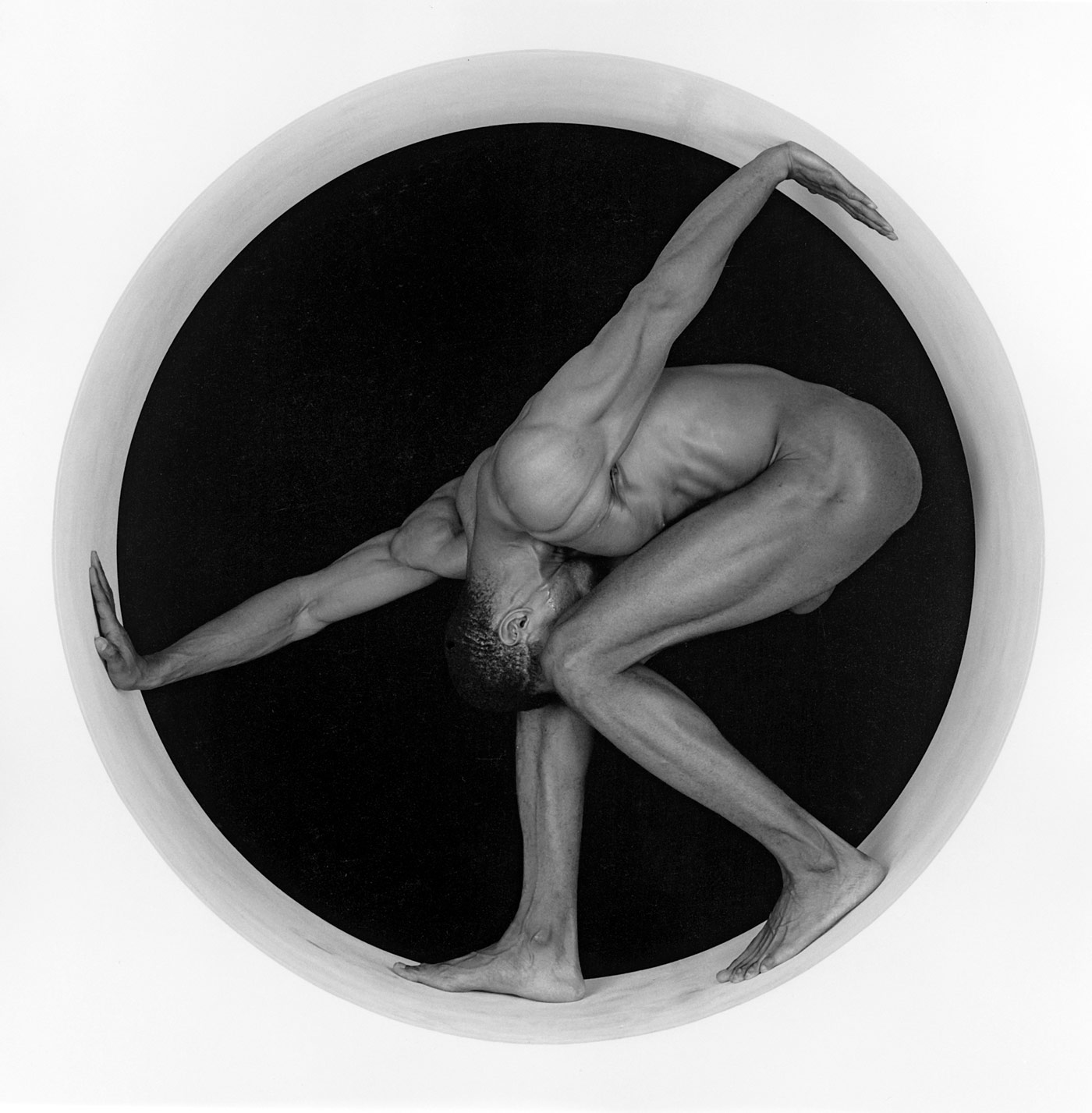
 

Robert Mapplethorpe (American, 1946-1989) 'Thomas' 1987


Robert Mapplethorpe (American, 1946-1989)
Thomas
1987
Silver gelatin print
71.1 x 68.6cm
© The Robert Mapplethorpe Foundation, New York
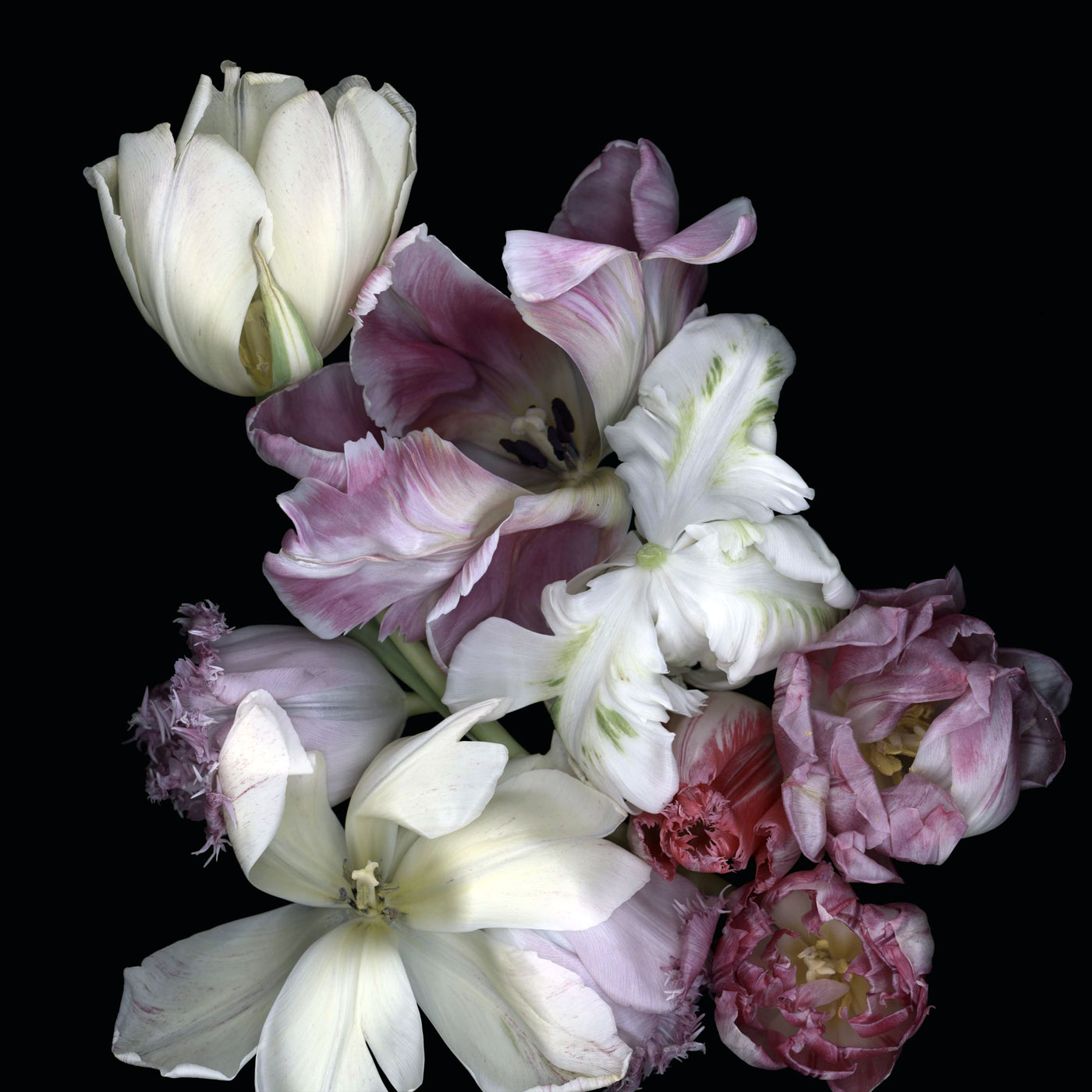
 

Luzia Simons (Brazilian, b. 1953) 'Stockage 104' 2010


Luzia Simons (Brazilian, b. 1953)
Stockage 104
2010
Scannogramm
Lightjet Print / Diasec
100 x 100cm
Courtesy ALEXANDER OCHS GALLERIES BERLIN ǀ BEIJING
© VBK, Wien 2013
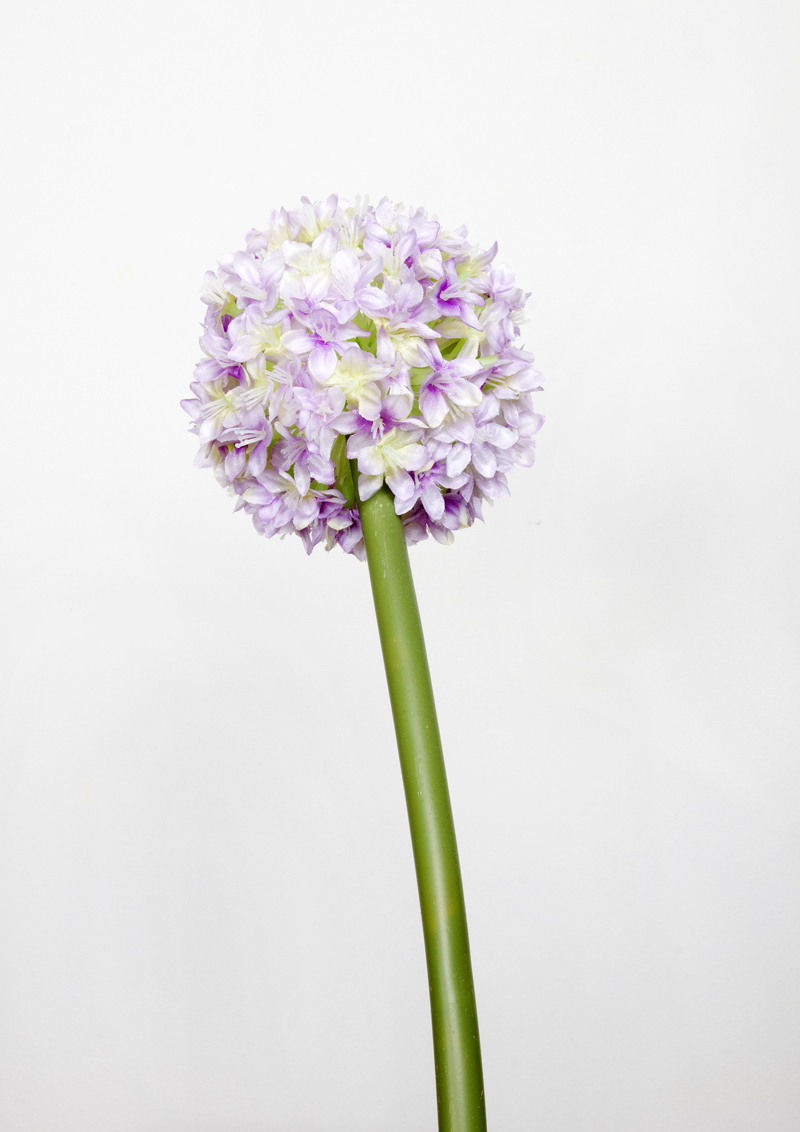
 

Katharina Malli. From the series 'Dead nature' 2012


Katharina Malli
From the series Dead nature
2012
Digtal C-Print
40 x 60cm
KUNSTIMFLUSS; eine Initiative von VERBUND


Flowers & Mushrooms exhibition texts

The title of the exhibition refers to the name of different slide projections and comprehensive photo series created by the Swiss artist duo Peter Fischli / David Weiss, which show cross-fadings of flowers and mushrooms. Fischli / Weiss began with photo series of everyday motifs back in 1987, and ten years later they used 2400 pictures from their extensive archive to make a cross-fading video with a duration of eight hours. Their general aim was to present the entire visual world they had encountered and documented on their excursions or long travels. Ten years later, the seemingly endless impressions of sights and attractions of the old and new world became limited to flowers and mushrooms, whose pictures overlap in double exposures and appear as a kind of hybrid: as newly created “living beings” between the world of flowers, associated in art history with all kinds of christological and erotic symbolism, and the world of mushrooms, which are not plants and are mainly known for their toxicity. Peter Fischli and David Weiss made the representation of flowers and mushrooms, which had mainly been restricted to calendars and trivial photo books respectable and presentable in contemporary visual arts. The time was ripe for this, even though pictures of flowers and mushrooms had experienced a kind of renaissance in contemporary art before: The ongoing interest in artistic productions dealing with different plants and mushrooms seems to confirm this.

Nevertheless the question arises, how the “flower image” which was frequently accused of triviality in the past, has been able to gain ground in sophisticated and serious art. Pictures of flowers could too easily be associated with the idea of harmless beauty and those of mushrooms with cliche-like, hallucinogenic states. For some years, many artists have nevertheless adopted these motifs, adapted them and found individual ways to put them into the context of socio-critical, feminist, political and media-reflexive art.

Many of the artists represented here in this exhibition deliberately continue this multi-faceted tradition which testifies to a respectable history the “flower picture”: Integrated into the context of Christian iconography in late antiquity and the Middle Ages until the Renaissance period, it timidly began to develop an autonomy during the Baroque period as a result of the newly arising scientific interest in the morphology of flowers and the related wish to classify them encyclopaedically. The rise of the “flower image” to a significant motif that appeals to the audience came to a temporary standstill in the 19th century, when it became an empty academic shell. It re-gained importance only during the Art Deco and New Objectivity period and even became a model for some contemporary forms of expression. While flowers have always been used as photographic motif all over the world due to their beauty and their specific shapes, which are frequently associated with human genitals, mushrooms seem to have inspired most artists who used them in their works due to their sculptural potential and possibly their hallucinogenic effect.

Our exhibition wants to present the use of flowers and mushroom in contemporary art photography, slide and video projections, installations, sculptures and photo-based paintings in all its different faces and assign the works to different themes for better understanding, however without clear boundaries between the individual categories. In a kind of art-historical prologue with the Latin title Species Plantarum we want to show, how scientists and artists have dealt with the representation of plants and blossoms and more rarely of mushrooms since the mid-19th century – parallel to the invention of photography – in photographic studies and “still lifes”. Rose is a rose is a rose is a rose shows that even seemingly trivial photographs of a flower or a mushroom viewed with disinterested pleasure can and should no longer be regarded as neutral and is linked with connotations of everyday experience and cultural education. Les Fleurs du Mal focuses on cryptic and unfathomable, abysmal aspects hidden in flower motifs. The works presented in the section Garden of Earthly Delights establish connections between gender, eroticism and sexuality – but also transitoriness and death – and the symbolism of flowers and associations used by many artists in their works. Nature versus artificiality finally heralds human interventions in nature and the wish to control and experiment with nature and the reflection of this development in visual art.

Species Plantarum

The 19th century was marked by social upheavals, which allowed civil society to intervene in many areas, such as politics, humanism and cultural history, but also natural sciences. The publication of Charles Darwin’s (1809-1882) Origin of Species (1859) intensified the public interest in forms of nature and increased the significance of natural phenomena. This not only encouraged the scientific curiosity of scientists, but also inspired artists to find new approaches to representing nature.

The newly discovered medium of photography, (further) developed out of the desire for an accurate reproduction for scientific purposes and used for various optical and chemical experiments, expanded the range of artistic forms of expression. Artists with an interest in botany eagerly and enthusiastically applied new techniques -such as nature prints, airbrush techniques or photogenetic drawings – and also embraced the new medium and instantly recognised its potential, inspired by pioneers such as Anna Atkins (1799-1871) and William Henry Fox Talbot (1800-1877). Early photographic experiments found their expression in the floral Art Nouveau style and in teaching concepts and teaching aids. The most famous collection of designs was Urformen der Kunst / Art Forms in Nature (1928) by Karl Blossfeldt (1865-1932). His photographs became incunabula for the representation of plant-derived forms using the precise stylistic means of New Objectivity.

The artistic impulses of the following decades contributed to an exploration of nature through alternative cognitive forms. Photography detached itself from the primacy of representation, dominated by form and surface stimuli, and turned towards visual stimuli for the human power of imagination.

Anna Atkins

The botanist and illustrator Anna Atkins (1799-1871) is regarded as pioneer of photography. Her father, the British chemist, mineralogist and zoologist John George Children (1777-1852) aroused her passion for natural sciences. At a time when there was no scientific education for women, ladies from noble families had to content themselves with being “amateur helpers” for their fathers and husbands and worked in the background, compiling herbariums and making drawings. Through her friendship with the physicist John Herschel (1792-1871), who closely collaborated with William Henry Fox Talbot (1800-1877), Atkins became familiar with cyanotype, a printing process invented by Herschel, and began to use this new photographic printing process for mapping scientific samples. The first photographic herbarium was published under the title Photographs of British Algae: Cyanotype Impressions between 1843 and 1854, comprising 12 issues with 389 illustrations. The photograms, which get their characteristic blue colour on the parts of the paper exposed to light from the use of an iron complex, produce particularly accurate representations of the plants. Their special allure is their diaphanous appearance. Anna Atkins’s works, which were forgotten for a long time, are today regarded as a milestone in the history of scientific and photographic illustration and have contributed to the rediscovery of cyanotype as printing technique.

Alois Auer von Welsbach

Alois Auer von Welsbach (1813-1869) was an Austrian printer, inventor and illustrator specialising in books on botany. He was head of the “k.u.k. Hof-und Staatsdruckerei” printing company founded in 1804 in Vienna and developed it into a large-scale enterprise that offered all state-of-­the-art printing techniques and methods of representation known at that time. The printing company became renowned for its nature prints developed and perfected by Auer in cooperation with Andreas Worring. Nature printing is a printing process that uses natural objects to produce an image. Dried or pressed objects are placed between a plate of steel and another of lead and drawn through a pair of zinc rollers under considerable pressure to produce in impression in the leaden plate. The printing plate is produced by electrotyping, also called galvanoplasty. Gravure printing is used for plants. The use of several colours in one printing cycle produced polychrome and particularly “authentic” prints. Until today no printing process has been able to surpass the high level of detail of this technique. For Auer nature printing was as important as photography, and he published books to promote this printing process. “Auers Naturselbstdruck” was patented in 1852 and released for general use in 1853. Over the centuries nature printing has been used for decorating everyday objects and for illustrations on substrates such as papyrus, parchment and paper.

Robert von Stockert

In the 1890s a small community of aristocrats and upper class people with an interest in arts established the “Club der Amateur-Photographen” (Club of Amateur Photographers) – later re­named “Wiener Kamera-Club”. Their photographs were largely influenced by painting. Members of the club include many famous names such as Heinrich Kühn (1866-1944), but also less famous contemporaries such as Carl Brandis (active around 1885-1900), Franz Holluber (1858-1942) or Robert von Stockert (1848-1918), who specialised in flower still lifes. For von Stockert, nature was an interesting theme for various reasons: He had the ambition to contribute to the “development of photographic art”, benefited from his own gardens and the decorative talent of his daughters and used his photographs for book illustrations. He regularly published his experience in illustrated supplements to the association’s publication “Wiener Photographische Blätter”. His pictorial vocabulary ranges from purely decorative flower arrangements to sophisticated still lifes. To convey the colourfulness of his motifs, von Stockert experimented with various techniques, both with photographic techniques, like the use of various colour filters and sensitive plates, and with reproduction techniques. His favourite printing techniques include platinum print, which provides a particularly rich and intensive range of grey nuances. For colour reproductions he used the new multicolour collotype process.

Karl Blossfeldt

The plant photographs of German photographer Karl Blossfeldt (1865-1932) are milestones in the transitions from the playfully stylising Art Nouveau style to the unemotional, cool spirit of “New Objectivity” and have become incunabula of the history of photography. His motivation behind his imagery and motifs is rooted in his education as sculptor and modeller in an art foundry. At the Kunstgewerbeschule in Berlin – today the Universität der Künste (University of the Arts) – he collaborated in a project of his art teacher Moritz Meurer and compiled teaching aids for ornamental design. As lecturer for “modelling from plants” he received an official assignment in 1889 which provided further impetus for the production of illustrative material. Blossfeldt became famous for his book Urformen der Kunst (Art Forms in Nature) (1928); another volume – Wundergarten der Natur (Magic Garden of Nature). A sequel to Art Forms in Nature ­was published in 1932. The photographs here on display are a small selection from a collection of 6,000 pictures, whose clarity, rich contrast and acutance testify to his technical precision, craftsmanship and passion for photography and teaching. Graphic details, structures, forms and surfaces are emphasised by the targeted selection of details, magnified 2 to 45 times. Blossfeldt achieves a sculptural effect by using a monochrome, light background and thus liberates the plants from their natural context.

Rose is a rose is a rose is a rose

What Getrude Stein wrote in the mid-1920s and later became so influential and was often misunderstood, can be used as a motto for the works here on display, but also to point out ironically that the use of flower motifs is trivial only at first sight.

Like portraits or interieurs, flower pictures are part of the repertoire of art history. Even more so: No living being is used more frequently in symbolism than the flower, and few subjects are as complex as the history of the flower motif. In the past, flower still lifes were used to convey encrypted and symbolic messages, most of which are lost to us today. We no longer know the symbolic meaning of the individual flowers or their arrangements. Many artists have used floral themes in their work, as a reaction to the apparent triviality of the century-old flower motif, and have so continued this traditional theme. Today the flower motif has become the basis for new reflections and observations.

The oldest photographers whose works are here on display – Ernst Haas and Balthasar Burkhard – already liberated the flower from its temporal and spatial context and focused on depicting the flower not as a decorative still-life at the height of its beauty, but as a fragile plant subjected to instability and transformation. The American photographer Andrew Zuckerman portrays crystal-clear, razor-sharp images of different blossoms with an accurate eye, capturing the fine details of their surface structure and colour transitions. His strict staging abandons the common understanding of flowers and releases them from their context. As a result, Zuckerman’s pictures assume an almost cool, abstract quality.

Christopher Beane shares a similar love for details. His close-up pictures of petals convey sensuousness and opulence. As a staging photographer he completely restrains himself and entirely leaves the stage to his protagonists, allowing them to unfold their full beauty in exciting, suspenseful intersections, contours and curves. The scannograms by Luzia Simons show an opulence and splendour that reminds us of traditional Dutch still lifes of flowers. The large-format photographs are thoughtful reflections on the proud, but also tragic role of the tulip in the early 17th century Netherlands in connection with the “tulip mania”, which is generally considered the first recorded speculation bubble. In Giovanni Castelli’s photographs, flowers appear as mysterious plants, monumental and unreal at the same time. The artist finds his motifs in nocturnal parks, capturing close-ups of colourful flowers against a jet-black sky. The result are eerily beautiful flower portraits which seem to be from another world and elegantly refute our conventional visual concepts.

Carsten Höller

b. 1961 in Brussels/Belgium, lives and works in Stockholm / Sweden.

Carsten Höller, who has a doctorate in agricultural science, works at the frontier between art and natural science. Dissatisfied with the restrictive structures of the academic world, he turned his back on it and chose the path of greatest-possible openness: he became an artist. “As an artist I do not have to submit to any formalistic constraints and can develop things as far as I think makes sense in a particular framework, without always having to undergo specialist training in the relevant fields.” Höller has not abandoned his first life, but combines the two disciplines, which appear to be so different from one another, in a highly idiosyncratic and humorous manner. He creates bizarre hybrid forms from a variety of types of mushrooms. He either grows them to a threatening height or exhibits them, like jewels in a glass cabinet, in orderly rows as though in a natural-history museum. Fly agaric is always present. Höller explores this mushroom and its hallucinogenic effects in great detail. In this context he is on the trail of a mysterious potion called soma, which is thought to have been made of fly agaric and was used for ritual purposes as early as the second century BC. Drinking it is said to impart good fortune and riches, the power to be victorious, and awareness and access to the divine sphere.

Hans­ Peter Feldmann

b. 1941 in Düsseldorf/Germany, lives and works in Düsseldorf.

The large-format photographs of flowers by Hans-Peter Feldmann are at first glance reminiscent of the floral postcards of the 1950s: we see flowers popular at the time, such as roses and lilies, in close-up in front of a neutral, colourful background. The colour aesthetic of flower and background, too, corresponds to the time. Clear and uncompromising, the blossoms present themselves to the viewer in their full glory, while simultaneously appearing distant and artificial. In this respect they do not match today’s ideas of the bourgeois idyll. The magnification makes the kitschy look sublime. The blossom appears like a fetish behind glass, frozen for the next millennium. Feldmann has always been interested in the everyday and the banal. He lives his passion for collecting at flea markets and in his own shop of knick-knacks. He often works with found materials such as postcards and newspaper cuttings. The photographs shown here are not enlargements of these collected objects, however. They were created by Feldmann, based on the aesthetic of the small-format postcards of which they are ironic imitations. Feldmann’s artistic concept includes the practice of not dating and not signing his works: “Bakers don’t sign their rolls either, do they? Art has to taste and smell, one has to be able to experience it.” For Feldmann, one of the first concept artists, the works of art are already there. He considers it to be his job to find them. They should not lose their vitality despite the transformation.

Luzia Simons

b. 1953 in Quixadá/Brazil, lives and works in Stuttgart and Berlin / Germany.

The tulip is, in the eyes of Luzia Simons, an element that connects cultures, and a symbol of transcultural identity. As a nomad among flowers, the tulip was brought to Europe from Asia, and connects the Orient and the Occident. It is at home both here and there, and has established itself as a virtu despite having been transferred via several different cultures. The tulip conquered the Netherlands in the late sixteenth century, and tulips featuring special colours and patterns commanded exorbitant prices on the market in a rapidly expanding “tulip mania”. Speculation with tulip bulbs led to a speculative bubble. The bubble burst in 1637, with far-reaching social and economic consequences. Simons sets the scene for the majestic and simultaneously tragic character of the tulip, as well as for its long-standing traditions, in her series entitled Stockage. The artist stages the flowers in large-format arrangements in which they surge towards the viewer in bright colours out of a neutral darkness, revealing their beauty and fugacity in sharp focus. Both through the inescapable vanitas concept and in its painterly effect Simons’s oeuvre is reminiscent of Baroque still lifes. Paradoxically, Simons makes use of a very modern method to generate the images, however: the flowers are “read” by a scanner before they are printed using a carbon-printing process, and finally they unfold their vibrant depth effect behind acrylic glass.

Peter Fischli / David Weiss

b. 1952 in Zurich/Switzerland, lives in Zurich / b. 1946 in Zurich, d. 2012 in Zurich.

The Swiss artist duo Fischli / Weiss began work in 1979 and was highly successful in the spheres of film, photography, sculpture, art books and video installations. Cryptic and playful, often seen as though through the eyes of children, they re-arranged art and the everyday in their work. Their subtly ironic works, which often appear to be imbued with subversive nonsense messages, received numerous international awards. From kinetic experimental arrangements using everyday objects to interpersonal re-enactments using sausage leftovers: Fischli / Weiss transformed the apparently banal and the absurd into art. For this reason the flower motif also entered the work of Fischli / Weiss from 1997 onwards. The Flowers series (1997-1998) exists in two presentation forms: colour prints, and a double-slide projection. It shows a chaotic view of nature, as though from an ant’s perspective, using a hallucinatory and intensely colourful technique of superimposition. The arrangement of double and quadruple exposures and the resulting translucent layering of close-ups of flowers, mushrooms, snails and many other things creates the impression of a nature that is unordered and exuberant, unreal and simultaneously beautiful. This playful approach to reality and appearance, the conceptual claim of the visualisation of the world – in this case nature, which is just “there” and is in no need of legitimisation in order to be shown in the context of art – and the interest in the banal, in combination with a more serious artistic interest, constitutes the framework that encompasses the entire oeuvre of die Fischli / Weiss.

Les Fleurs du Mal. Reality and Appearance

In his poetry collection Les Fleurs du Mal (1857-1868) the French writer Charles Baudelaire (1821-1867) painted a picture of a pessimistic modern city dweller that is characterised by despondency, anger and rebellion against all conformities. Man is torn between Christian morality, the good ideal and virtuousness on the one hand and the reprehensible and yet appealing fascination with the evil and ugly on the other hand, and forced to establish a new position for himself continuously.

What the artists represented in this part of the exhibition and Baudelaire’s Fleurs du Mal have in common is their questioning of conventional views on beauty and morality, symbolised by flowers which are generally regarded as beautiful, and the deliberate discussion of the transience of beauty as well as socio-­political principles and ethics. In particular the vanity theme is directly related to the “Flowers of Evil”, as it belies the human desire for eternal beauty and eternal life. Bourgeois decadence in the form of Baudelaire’s positive re-interpretation is no longer a common term today, but has a stronger presence than ever in the classic meaning of the decline of a social system, in particular with reference to the frequently heralded fall of capitalism. In the 21st century artists approach this subject in a differentiated way. Works closely related to traditional genres of art history, such as the still life, exist side by side with current series of works dealing with the concept of time as such, for example by intensely visualising the blossoming and withering of flowers or linking this with socio-political issues. The delightful moment of the pictures and materials is sometimes opposed to the subject matter or explicitly border-crossing contents.

Marc Quinn

b. 1964 in London/Great Britain, lives and works in London.

Marc Quinn’s 2009 paintings Landslide in the South Tyrol and Aleppo Shore from 2010 are based on photographs that he took of model landscapes he himself had composed. To this end he arranged lush and colourful plant ensembles in his studio. Drawing on Baroque bouquets, which are artificial creations and consciously unnatural in their composition, Quinn negates the passing of the seasons and combines plants that do not blossom at the same time as each other. His enormous square compositions confront viewers with paradisiacal gardens bursting with life, allowing viewers to immerse themselves in an apparently idyllic, magical world. Closer inspection reveals that the white surface to which the luminosity is owed is in fact a snowfield, and this causes consternation. The first impression of cheerful colourfulness and light-heartedness dissipates and the scenery that is now perceived as artificial suddenly feels threatening in a very subtle way. In the midst of life we are surrounded by death! The viewer is surrounded not by a lively garden landscape, but by an arrangement of frozen, dead plants. The unnatural brightness of the colours, which knows no soft nuances, points to the artificially generated world, and reveals the difference between beautiful appearances and reality. One senses that critique of civilisation is a driving force: the artist exposes humankind’s reckless approach to nature because we are willing to sacrifice nature for the sake of its perfect beauty.

Eliška Bartek

b. 1950 in Nov Jičín/former Czechoslovakia, lives and works in Berlin/Germany and Lucerne / Switzerland.

For the series Und Abends blüht die Moldau Eliška Bartek uses highly sensitive film that blurs the contours while simultaneously making details as visible as though they are being viewed through a microscope. As a result the surfaces of the flower petals appear exquisitely delicate and fragile. This feeling corresponds to the traditional symbolism of flowers. They are viewed as the ultimate symbols of the beauty of the moment, which already contains the seeds of transience. The flowers come from a Berlin wholesaler or are cut fresh by the owner of a botanical garden in Pila, a small village in Ticino. Bartek exposes them to particular light influences and in this way alters their colours. In addition to the extreme magnification and closely framed composition of the pictorial subjects it is this intense colourfulness in particular, further enhanced by the dark background and dramatically heightened by unusual light and shadow effects, that creates an extraordinary vitality and releases the pictorial subject from its static nature. For a short time the photo artist breathes an intoxicating beauty into the blossoms, for which the flowers pay the ultimate price: the extreme light burns the delicate petals and destroys the natural splendour. Bartek’s subtle play with reality and appearance, or with artificiality and naturalness, also points to the fallibility of our perception.

Vera Lutter

b. 1960 in Kaiserslautern/Germany, lives and works in New York / USA.

With the project Samar Hussein Vera Lutter reveals herself to be a socio-critical artist who rescues the civilian victims of the Iraq war from oblivion and creates a memorial to them. More than 120,000 civilians have been killed since the invasion by the American army in March 2003. They are referred to in military jargon as “collateral damage” – an appalling word that downplays the suffering for which it stands. The artist has gathered the names and dates for her work of art from the Iraq Body Count Project. The biggest publicly accessible database of this kind worldwide, it records the civilians who have lost their lives in military and paramilitary campaigns, and documents the collapse of public safety following the invasion. Lutter uses the image of a budding, blossoming and finally wilted and withered hibiscus blossom as a metaphor for the human life cycle. The artist sees analogies between human life with its beauty and fullness, as well as its vulnerability and destructibility, on the one hand, and the tones of this flower, reminiscent of the colour of flesh, and the sensuous shape of its blossom, on the other hand. The names of the dead are superimposed on the printed and projected photographs in chronological order according to the date of death. The first picture is named after Samar Hussein. It is for this 13-year-old girl, the first civilian victim to have been recorded in the database, that the art project as a whole, Vera Lutter’s remarkably poetic and touching elegy for the senseless casualties of war, is named.

Paloma Navares

b. 1947 in Burgos/Spain, lives and works in Madrid and Alicante / Spain.

Paloma Navares’s oeuvre spans the fields of photography, sculpture, installation and performance, and explores historical female positions in our society. Navares, who suffers from a rare eye condition that will eventually lead to the loss of her eyesight, employs her memory, which she refers to as her “inner eye”, as an artistic device. The multimedia artist uses a poetical pictorial language that aims to draw the viewer’s attention in a delicate and subtle way to existential human questions: might putative mistakes or what society judges to be incapacity lead to recognition after all? The photographs of delicate orchid blossoms tell of the fates of women, and are in some respects symbolic. They stand, for example, for Meerabai, a late-fourteenth-century princess from northern India who wrote love songs and laments, and who, as a devotee of Krishna, vehemently opposed marriage. The pressure exerted on her by society at court forced her to commit suicide by drinking from a poisoned cup. Female Korean entertainers, known as kisaeng, were similarly despised and judged by society for their nonconformity. Navares’s depictions of flowers are homages to great female poets of past eras whose lyrical works were ignored and who, in the face of the contempt with which society treated them, chose to die by their own hands. The images represent a plea for justice and self-determination, and simultaneously stand for grace, strength and beauty.

Garden of Earthly Delights

Flowers and blossoms have always held a great fascination for man and are symbolically and culturally linked with love, beauty, youth and sensuality. Opulent flowers are thus instinctively associated with eroticism and seduction, but also inevitably with the aspect of transitoriness. From a biological point of view, the attraction of flowers is due to their signal effect for the purpose of pollination and thus reproduction and survival of a plant species. Not only poems use flowers as metaphor for human desire; the flower as analogy for man and corporeality is also found in fine arts. Artists such as Robert Mapplethorpe, Nobuyoshi Araki and Rolf Koppel combine nudes with floral still lifes and both in form and context refer to the sensual analogies to the erotic desires of man. Robert Mapplethorpe has made the most explicit comments on the relationship between flowers – in particular blossoms with strongly emphasised seeds such as the calla or anthuria – and the phallus. Mapplethorpe once said that his way of photographing a flower does not differ significantly from his way of photographing male genitals. The natural scientist Carl von Linné (1707-1778), who established the basis for modern botanical and zoological classifications, commented two centuries ago on the relationship between the corporeality of plants, animals and man. “We look at the genitals of plants with pleasure, those of animals with revulsion and our own with wondrous thoughts.” In his writings he poses the question, who is aware that the flowers a man gives to the woman he adores are “cut-off genitals of higher plants” and that the floral splendour must be regarded as “sexual intercourse of plants”? Within the context of cultural history, plants have been used until today as a symbol for the sexuality of man which is still a taboo.

Chen Lingyang

b. 1975 in Zhejiang province/China, lives and works in Beijing / China.

The subject of Chen Lingyang’s twelve-part series of photographs Twelve Flower Months is the artist’s monthly cycle, which is associated with twelve different flowers. The viewer sees twelve geometric formats that correspond to traditional Chinese window and door shapes. They feature reflections of Chen Lingyang’s vagina, and the menstrual blood that drips from it. The shape of the mirror, too, varies from month to month. The viewer is supposed to feel disturbed by the juxtaposition of flowers – which are the ideal expression of the beauty of nature – and the bleeding genitals. Looking at the mirror, a Western symbol of flirtatiousness and beauty, viewers simultaneously become secret viewers of an intimate depiction. The apparent contrast also reveals unusual similarities, however: Chen Lingyang shows two natural cycles of growth and decay. The artist herself has commented on this work that “in traditional Chinese culture there is the idea of the person who lives in harmony with nature. … To me, ‘nature’ refers most importantly to the laws and rhythms of the universe. And these laws and rhythms are connected to cycles. It is easy for a woman to observe this from monthly physiological and psychological changes.”

Nature vs. artificiality

“Planting means to dig holes to force nature to become unnatural (cultural). […] Owing to the gesture of planting man has lived in an artificial world since the Neolithic period”, the media philosopher and communication scientist Vilém Flusser (1920-1991) once said. In this way he descriptively refers to the general circumstance that we can no longer view nature as something “given”, but as something that is “man-made” and constructed and controlled by man. Accordingly, culture has monopolised nature and its original autonomy to a large extent.

The main purpose of fine arts as a cultural manifestation is not only aesthetic edification. Artists, in particular modern and contemporary artists, also serve as introspective seismographs for development processes of civilisation. Their thinking, designs and creations bring about a change of perspective that goes beyond conventional acceptance and reception and thus refers to phenomena that inspire the viewer to reflect and take a closer look. The preoccupation with flower and mushroom motifs also has to be understood in this context. Primarily decorative and trivial at first glance, their meta levels contain far-reaching statements.

The installation of the Swiss artist Pipilotti Rist explores socially standardised patterns of behaviour of civilised man. Rist makes these patterns tangible in her works by depicting the way people deal with artfully arranged flower decorations. In a comparable, yet differing way Gitte Schäfer explores nature and its “domestic use” in her flower wall. About three hundred small flower vases with an artistically kitschy design are affixed to a wall of diagonally placed mirrored tiles and filled by the artist with cut flowers in the form of a symmetrical picture.

The transient splendour of the flower arrangements symbolises earthly transitoriness and were a characteristic feature of 17th century Baroque still lifes. The Italian term for this category of painting ­natura morta – also alludes to the notion of vanity. In her four-part work series with the same title, the Austrian artist Katharina Malli shows close-up coloured pictures of crops and ornamental plants against a neutral white background, whose aesthetics deliberately quote the documentary style of Karl Blossfeldt (1865-1932). Upon closer inspection, they are industrially produced artificial flowers. As perverted products of civilisation they represent this dead nature and at the same time symbolise the notion of immortality. Dieter Huber’s works also focus on artificially generated nature and play with the wishful thought of potential immortality. In his work series he presents apparently “documentary” pictures of plant hybrids that herald a “brave new world”. The works by Nam June Paik and Zeger Reyers create a concrete connection between nature and technology. The instruments used, such as TV sets and record players, symbolically refer to social progress and are an expression of human inventiveness. They emphasize “manmade” things, juxtapose them with naturally occurring objects and thus describe them in relation to one another.

Andy Warhol

b. 1928 in Pittsburgh/USA, d. 1987 in New York / USA.

By the second half of the twentieth century the flower as an artistic motif had become insignificant. It had become overburdened with the general suspicion of triviality and kitsch. However, Pop Art, which took a deliberate interest in the world of trivial imagery, immersed itself in this subject. Andy Warhol’s Flowers are exemplary of the approach of Pop Art artists. Warhol based his flowers on a folded insert in the June 1964 issue of Modern Photography magazine, a reproduction of a colour photograph of seven hibiscus blossoms. The photograph had been taken by the editor in chief, Patricia Caulfield, and was included as an illustration accompanying an article about a Kodak colour processor. Warhol cropped the photograph to alter the pictorial format, number and arrangement of the blossoms. Numerous variations of what was now a square image were then produced using the screen-printing process, differing from one another in colour and size. In total, more than 500 pictures of flowers must have been produced in this way. The Flowers appear to float in a diffuse space, detached from the background and unconnected to their stalks and leaves. In some versions the blossoms and the pictorial ground are painted by hand in DayGlo colours, further emphasising this impression. Warhol presented the prints in such a way that they covered entire gallery walls as though they were wallpaper. In this way he succinctly demonstrated the plant’s natural potential for rank growth as well as its technical reproducibility as a decorative mass subject.

Dieter Huber

b. 1962 in Schladming/Austria, lives and works in Vienna and Salzburg / Austria.

Since as early as 1986 Dieter Huber has worked with photography that is optimised and altered using computer technology. The three works from the KLONES series, which were executed from 1994 onwards and thus explored genetic engineering and manipulation at a very early date, are doubtless among the pioneering works in computer-generated images. Huber commented on them that “the construction of a world that could be freely disposed of in all respects according to one’s will and imagination was still considered highly vexing at the time.” The three plant studies in the exhibition are – at first glance – razor-sharp photographs of flowers, each before a black background. Well-known types of flowers such as tulips, carnations, narcissuses, daffodils, roses and lilies are reminiscent of a grandmother’s garden. Closer inspection causes consternation, however: various types of flowers grow out of the same greenery, rose stalks are crowned by lily blossoms, and daffodils, lilies and tulips all grow out of the stem of a trumpet flower. Artificially created, impossible-looking crossings have long since found entrance into our real world. Almost all livestock breeds and crop plants used in agriculture were developed through decade-long crossing. Perhaps the surreal floral worlds of Dieter Huber will really exist one day?


Christopher Beane (American, b. 1967) 'Study of fungus' 2004


Christopher Beane (American, b. 1967)
Study of fungus
2004
From the Farm House series
C-Print
60 x 50cm
Courtesy of the artist


Lou Bonin-Tchimoukoff (French, 1906-1979) 'Rayograph #35 - #75' Paris, 1928


Lou Bonin-Tchimoukoff (French, 1906-1979)
Rayograph #35 – #75
Paris, 1928
Gelatin silver print
23.8 x 17.8cm
Courtesy Galerie Johannes Faber, Wien
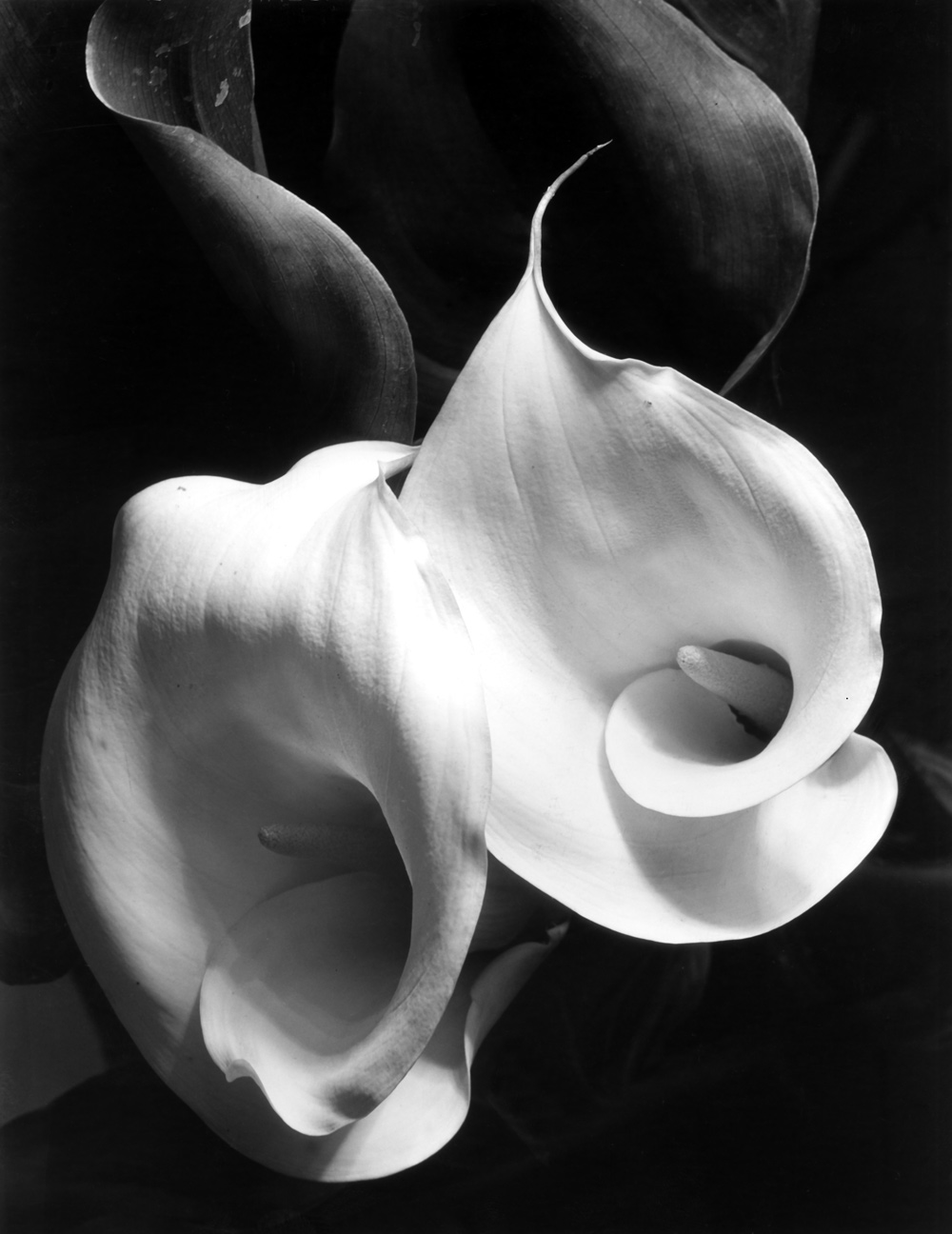
 

Imogen Cunningham (American, 1883-1976) 'Two Callas' c. 1925


Imogen Cunningham (American, 1883-1976)
Two Callas
c. 1925
Gelatin silver print
Estate Prints, 2013
21.5 x 17cm
Austrian Gallery, Museum of Moderne Salzburg
The Imogen Cunningham Trust, 2013
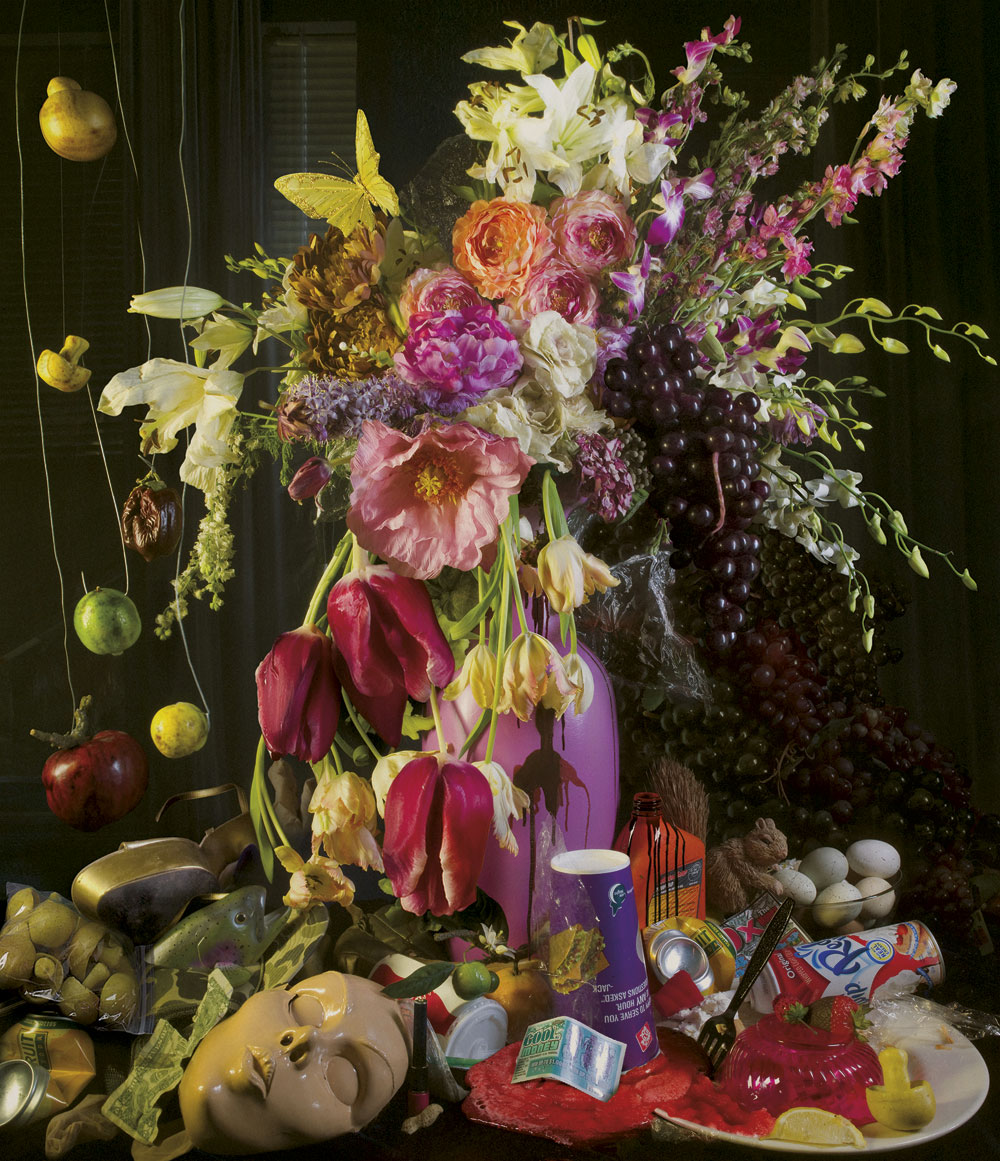
 

David LaChapelle (American, b. 1963) 'Late Summer' 2008-2011


David LaChapelle (American, b. 1963)
Late Summer
2008-2011
C-Print
152 x 110cm
Courtesy of the Artist ROBILANT + VOENA, London – Milan


Museum der Moderne Salzburg
Mönchsberg 32
5020 Salzburg, Austria

Opening hours:
Tuesday – Sunday:10.00am – 6.00pm
Wednesday: 10.00am – 8.00pm
Monday: closed
Museum der Moderne Salzburg website

LIKE ART BLART ON FACEBOOK

Back to top

Review: ‘Joyce Evans: Edge of the road’ at the Monash Gallery of Art, Wheelers Hill, Melbourne

Exhibition dates: 3rd October – 3rd November 2013


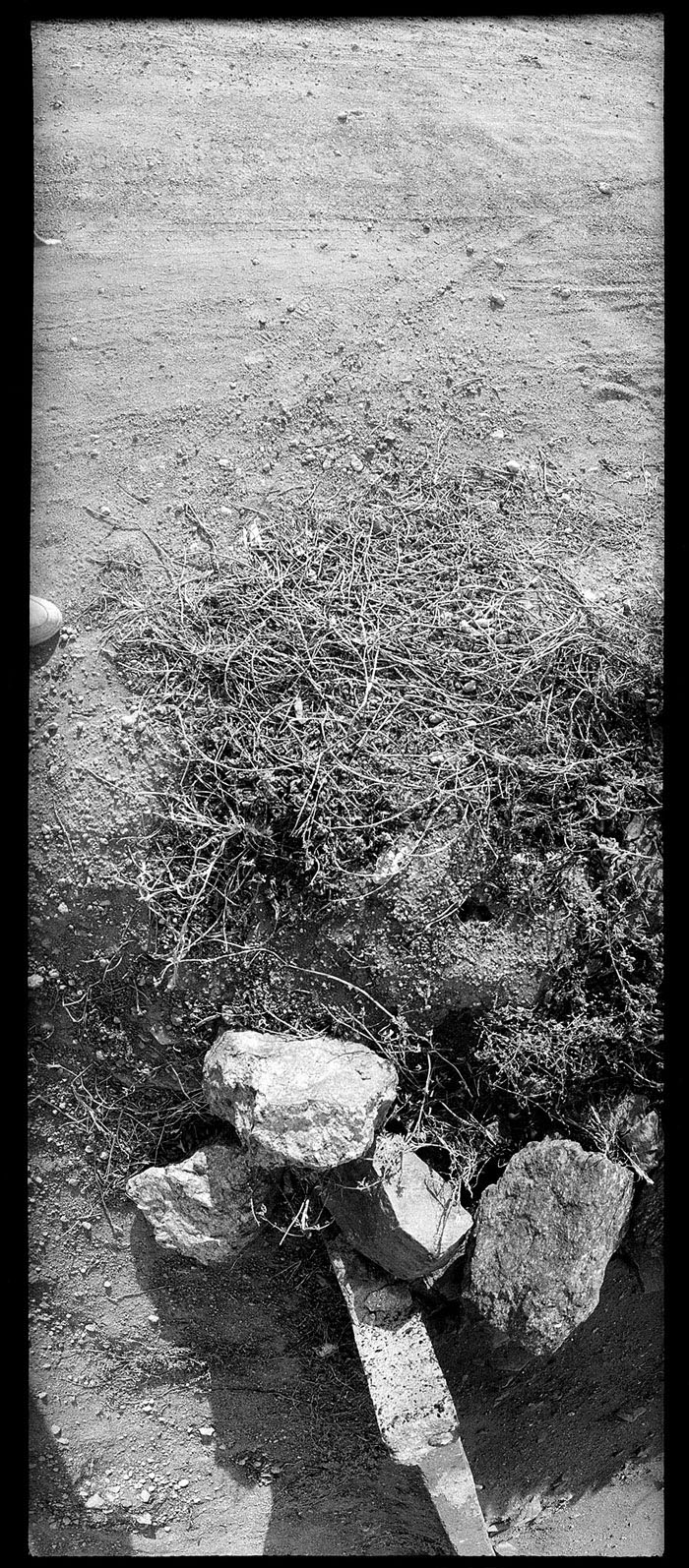
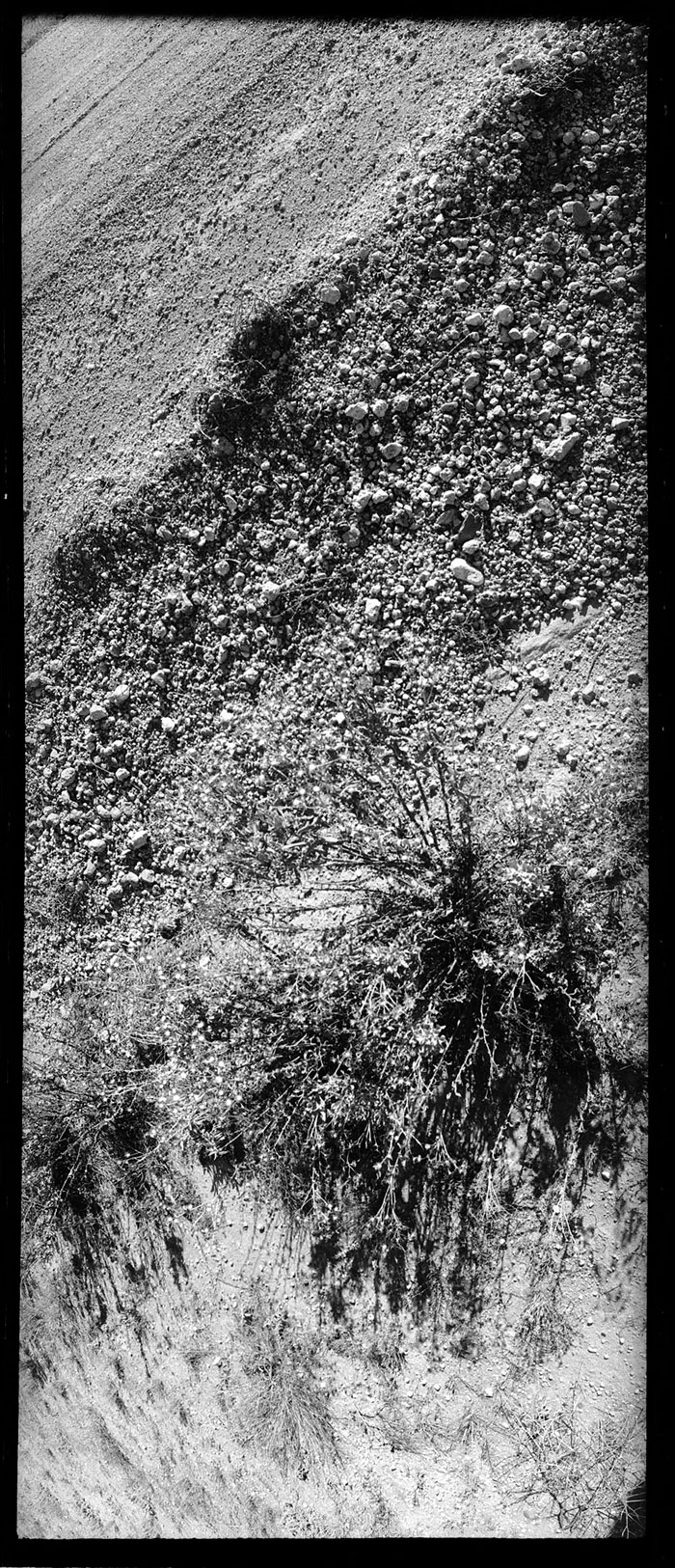
Joyce Evans (Australian, 1929-2019) 'Wilcannia, New South Wales' 1990


Joyce Evans (Australian, 1929-2019)
Wilcannia, New South Wales
1990
Silver gelatin photograph
© Joyce Evans


At close range

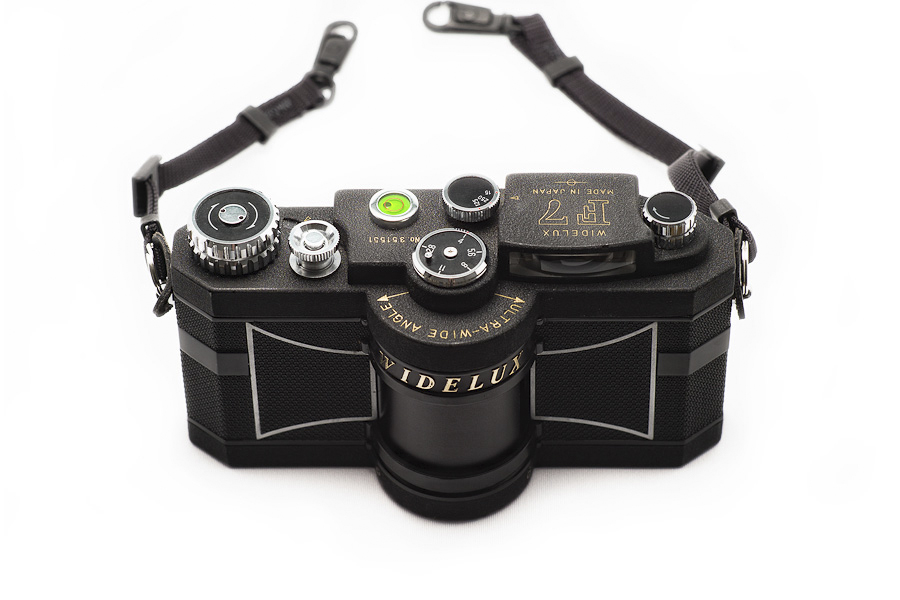
This exhibition at the Monash Gallery of Art features the series Edge of the road by Melbourne photographer Joyce Evans. It is an intense, if less than fully successful, presentation of a body of work completed between 1988 and 1996. The photographs were made with a Widelux F7 35mm panoramic camera, a camera that has a rotating fixed focus lens (see images of the camera below). Rather than the normal horizontal panoramic orientation, Evans has mostly used the camera in a vertical orientation to shoot these images. At the same time she has twisted the camera along unfamiliar axes, sometimes on a diagonal line, which has produced unexpected distortion within the final images.

Evans professed aim in her artist statement (below) is to let go of control of what is captured by the camera, to let go of some previsualisation (what the photographer imagines that they want the photograph to be in their mind’s eye before they press the shutter) and rely on a certain amount of planning and chance. She cites the example of the American photographer Minor White (1908-1976) who popularised the idea of previsualisation as a means of aesthetically controlling the outcome of what the camera captures. Evans wants little of this and sees her photographs as using the camera’s inherent capabilities to image the minutiae of the world, using “the camera’s capacity to see detail, which in the 60th of a second of the firing of the shutter my subconscious may perceive, but may not fully know.” In this sense, the artist is appealing to Walter Benjamin’s idea of film serving as an optical unconscious, a medium that captures everyday objects of ordinary experience which are revealed as strange and unsettling, a “different” nature presenting itself to the camera than to the naked eye.1 As Richard Prouty has noted, “Film changed how we view the least significant minutiae of reality just as surely as Freud’s Psychopathology of Everyday Life changed how we look at incidental phenomenon like slips of the tongue.”2

This enrichment of human perception by a scientific technology, the camera, happens at a level below human recognition, for although the retina frequently receives these aspects, they are not transformed into information by the perceptive system.3 “These new technical images helped discover hitherto unknown – ie. unacknowledged and analysed by perception and therefore restricted to the space of the unconscious or, as he [Benjamin] called it, of an “optical unconscious” – movements and dimensions of reality.”4 In other words, these new technical images may include information that was not retained, processed or even intended by the operator (hence the hoped for serendipity of the images). These images then surprise with the unexpected. As François Arago has observed, “When observers apply a new instrument to the study of nature, what they had hoped for is always but little compared with the successions of discoveries of which the instrument becomes the source – in such matters it is on the unexpected that one can especially count.”5 This is evidenced in Evans photographs through the POTENTIAL of chance. Not chance itself, but the potential of chance of the optical unconscious (of film) to capture something unexpected.

I must disagree with Evans, however, about the photographic process of Minor White and the process of “letting go” that she proposes to adhere to in this body of work. In fact, I would go so far as to invert her rationalisation. Having studied the work of Minor White and visited his archive at Princeton University Museum of Art I understand that previsualisation was strong in White’s photographs, but there was an ultimate letting go of control when he opened the shutter to his camera. In meditation, he sought a connection from himself to the object, from the object back through the camera to form a Zen circle of connection which can be seen in one of his famous Canons: “Let the Subject generate its own Composition.” Then something (spirit?) might take over. This is the ultimate in paradoxical letting go of control for a photographer – to previsualise something, to see it on the ground glass, to capture it on film, to then print it out to find that there is something amorphous in the negative and in the print that you cannot quite put your finger on. Some indefinable element that is not chance, not the unexpected, but spirit itself. Evans photographs are not of this order.

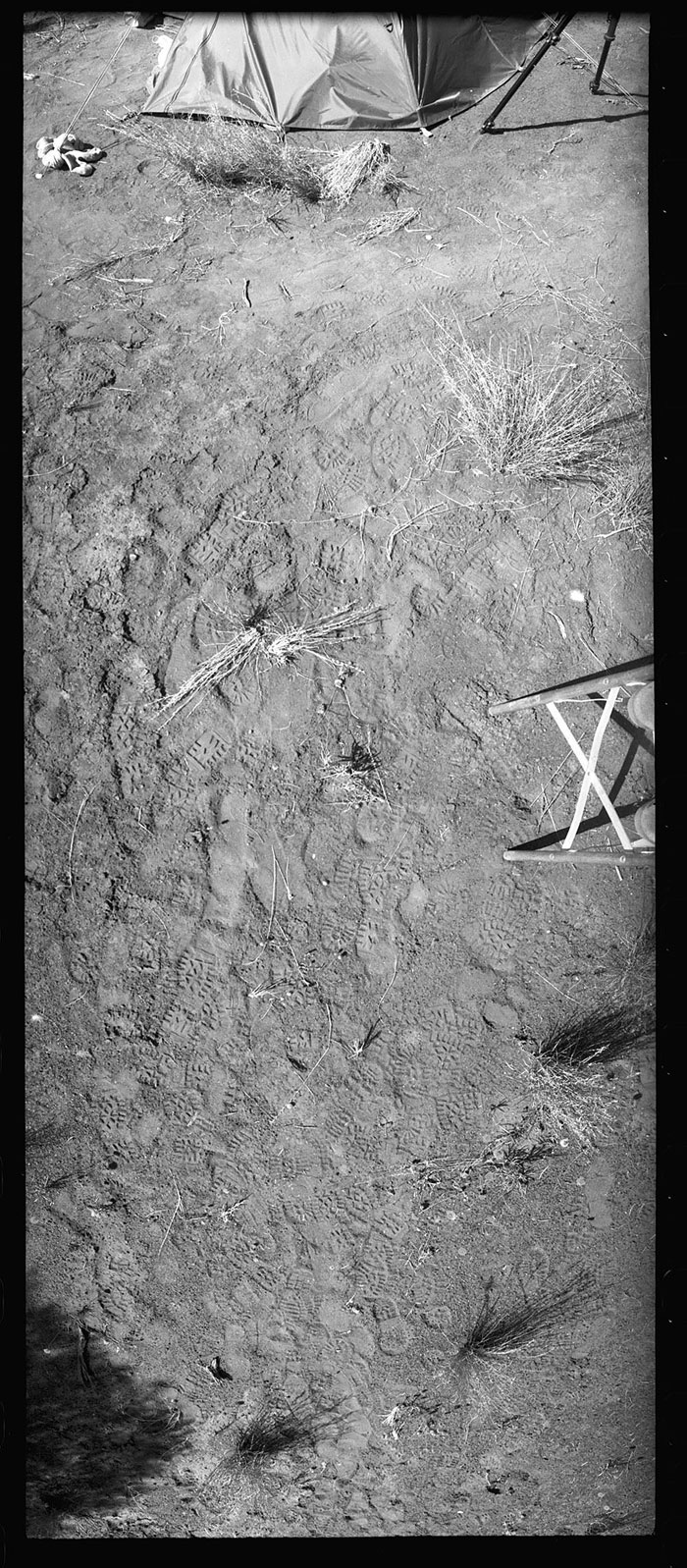
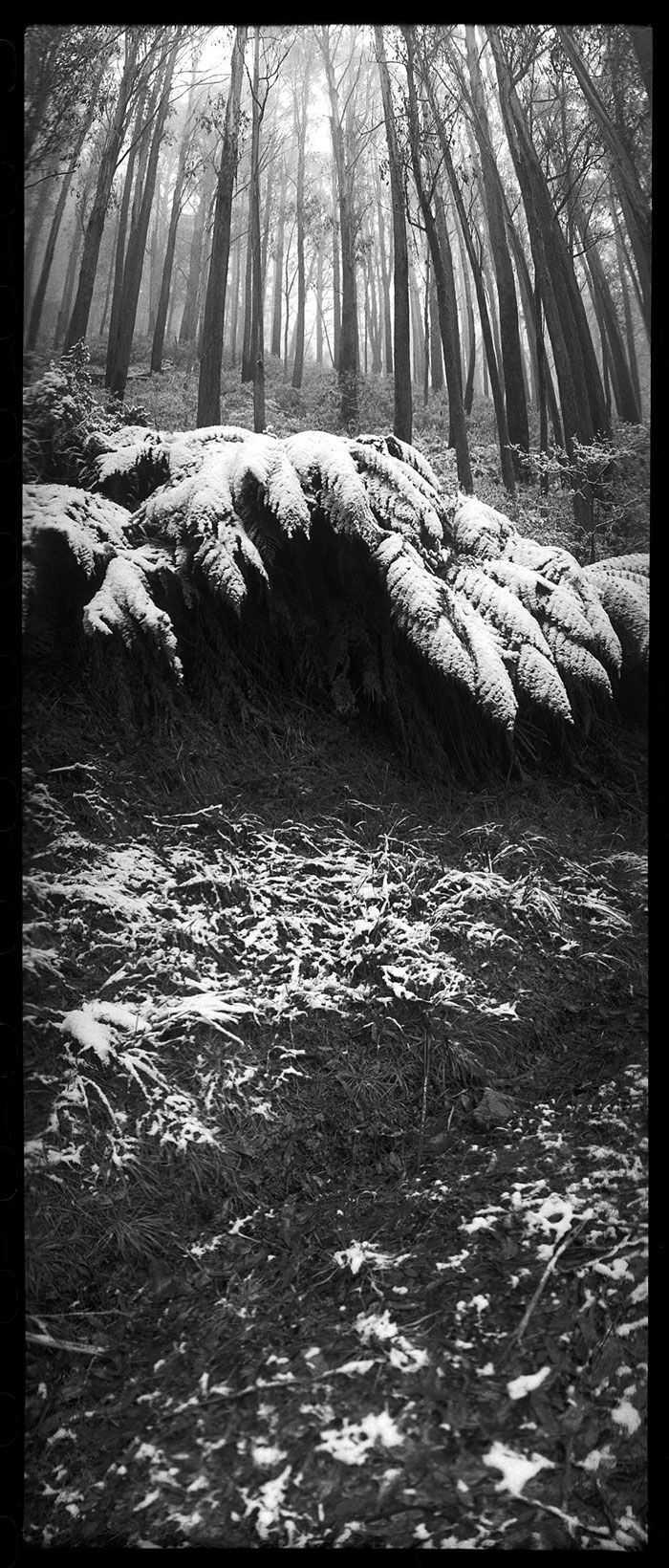
What these photographs are about is an intimate view of the land and our relationship to it, an examination of something that is very close to the artist, but evidenced through the subjectivity of the artist’s control and the objectivity of the cameras optical unconscious. They are shot “at close range,” the picture being taken very close (both physically and psychologically) to the person who is taking the photograph. In their multifaceted perspectives – some images, such as Flood on Murray River on Wodonga side, Victoria (1996) have double horizon lines – the viewer is immersed in the disorientating sweep of the landscape. The photographs become almost William Robinson-esque in their panoramic distortion of both time and space. For example, the descent from the light of the trees, to ferns, to the mulch of paleontological existence in Mount Bulla Ferns, Victoria (1996, below) is particularly effective, as is the booted front prints of Anzses Trip, Talaringa Springs, Great Victorian Desert, South Australia (1993, below). The transition of time is further emphasised by the inclusion of the film sprocket holes in some of the works, such as Pine Barbed Wire Fence and Orchard, Tyabb, Mornington Peninsula (1992, below). However, out of the thirteen photographs presented from the series some photographs, such as Bin, Toorak, Victoria (1990, below) simply do not work, for the image is too didactic in its political and aesthetic definition.

At their best these photographs capture an intensity that is at the boundary of some threshold of understanding (edge of the road, no man’s land, call it whatever you will or the artist wills) of our European place in this land, Australia. There are no bare feet on the ground, only booted footprints, barbed wire, gravel roads, dustbins, tyre tracks and hub caps. The reproductions do not do the work justice. One has to stand in front of these complex images to appreciate their scale and impact on the viewer. They resist verbal description, for only when standing in front of the best of these images does one observe in oneself a sense of disorientation, as though you are about to step off the edge of the world. They do not so much attempt to capture the energy of the landscape but our fragmented and possessive relation to it.

Ultimately, Evans photographs are highly conceptual photographs. Despite protestations to the contrary her photographs are about the control of the photographer with the potential of chance (through the recognition of the process of the optical unconscious of the camera) used knowingly by the artist to achieve the results that she wants. They are about the control of humans over landscape. Evans knows her medium, she knows the propensities of her camera, she plans each shot and despite not knowing exactly what she will get, she roughly knows what they results will be when she tilts the lens of her camera along different axes. These are not emotionally evocative landscapes but, because of the optical unconscious embedded in their construction, they are intimate, political statements about our relationship to the land.

Dr Marcus Bunyan


Marcus was a friend of Joyce Evans OAM (1929-2019). Please click on the photographs for a larger version of the image.


Footnotes

1/ Prouty, Richard. “The Optical Unconscious,” on the One-Way Street blog, October 16th 2009 [Online] Cited 20th October 2013. No longer available online

2/ Ibid.,

3/ Flores, Victor. “Optical unconscious,” on the Fundação Côa Parque website [Online] Cited 20th October 2013. No longer available online

4/ Ibid.,

5/ Arago, Francois. “Rapport sur le daguerréotype,” in AA.VV. Du Bon Usage de la Photographie: une anthologie de textes. Paris: Centre National de la Photographie, 1987, p. 14 quoted in Flores, op. cit.,


Many thankx to Joyce Evans and Monash Gallery of Art for allowing me to publish the photographs in the posting. Please click on the photographs for a larger version of the image.


Joyce Evans (Australian, 1929-2019) 'Wilcannia, New South Wales' 1990


Joyce Evans (Australian, 1929-2019)
Wilcannia, New South Wales
1990
Silver gelatin photograph
© Joyce Evans


Joyce Evans (Australian, 1929-2019) 'Holden, Victoria' 1990


Joyce Evans (Australian, 1929-2019)
Holden, Victoria
1990
Silver gelatin photograph
© Joyce Evans


“Evidenced in these photographs is one of the things that attracted me to photography – namely, its ability to capture the millisecond. While there are many schools of photography, the one popularised by the American photographer Minor White (1908-1976) suggests that the photographer pre-visualises the image prior to pressing the shutter. In other words, the photographer is in control and is the controller of what is captured by the camera. In terms of the resolution of the final image this is technically an important concept. However aesthetically, I enjoy the camera’s capacity to see detail, which in the 60th of a second of the firing of the shutter my subconscious may perceive, but may not fully know.

This appreciation of aesthetics goes back to my university days in 1969-1971 when I did a degree in fine arts at Sydney University. Here the ability to deconstruct imagery was passed on to us by Dr Anton Wilhelm and the understanding of the limits and potentials of two-dimensional imagery (with constant reference to the picture plane), was demonstrated by Professor Bernard Smith. This understanding was further enhanced when I painted at the Bakery Art School in Sydney, 1977-1978. Studying under the inspiring tutelage of John Olsen (b.1928) he made me aware of the power of the edge of the image to relate to what was not shown in the image.

This awareness is reflected in the exhibition through my fascination with, and imaging of, the Edge of the Road, that no man’s land which has a rarely noticed life of its own. I use the 180 degree vista of the Widelux camera, with its ability to capture elongated elements of the landscape, to conceptually explore the lack of control that is offered by the camera. The results are serendipitous: the cigarette butts, the spiders home, the intruding foot, the fecund compost under snow laden ferns. All of these elements combine with the time freeze of the camera to image places of survival and change.

While the images may not be fully visualised they rely on both planning and chance. I choose to point the camera at the subject and let the ‘snap’ of the shutter do the rest. The images that emerge from the flow of time are images that I have imagined in my mind but which the camera has interpreted through an (ir)rational act: the fixity of the image frame challenged by the very act of taking the photograph at the edge of consciousness. As such they ask the question of the viewer: what exactly is being imaged and did it really exist in the first place?”

Joyce Evans with Dr Marcus Bunyan


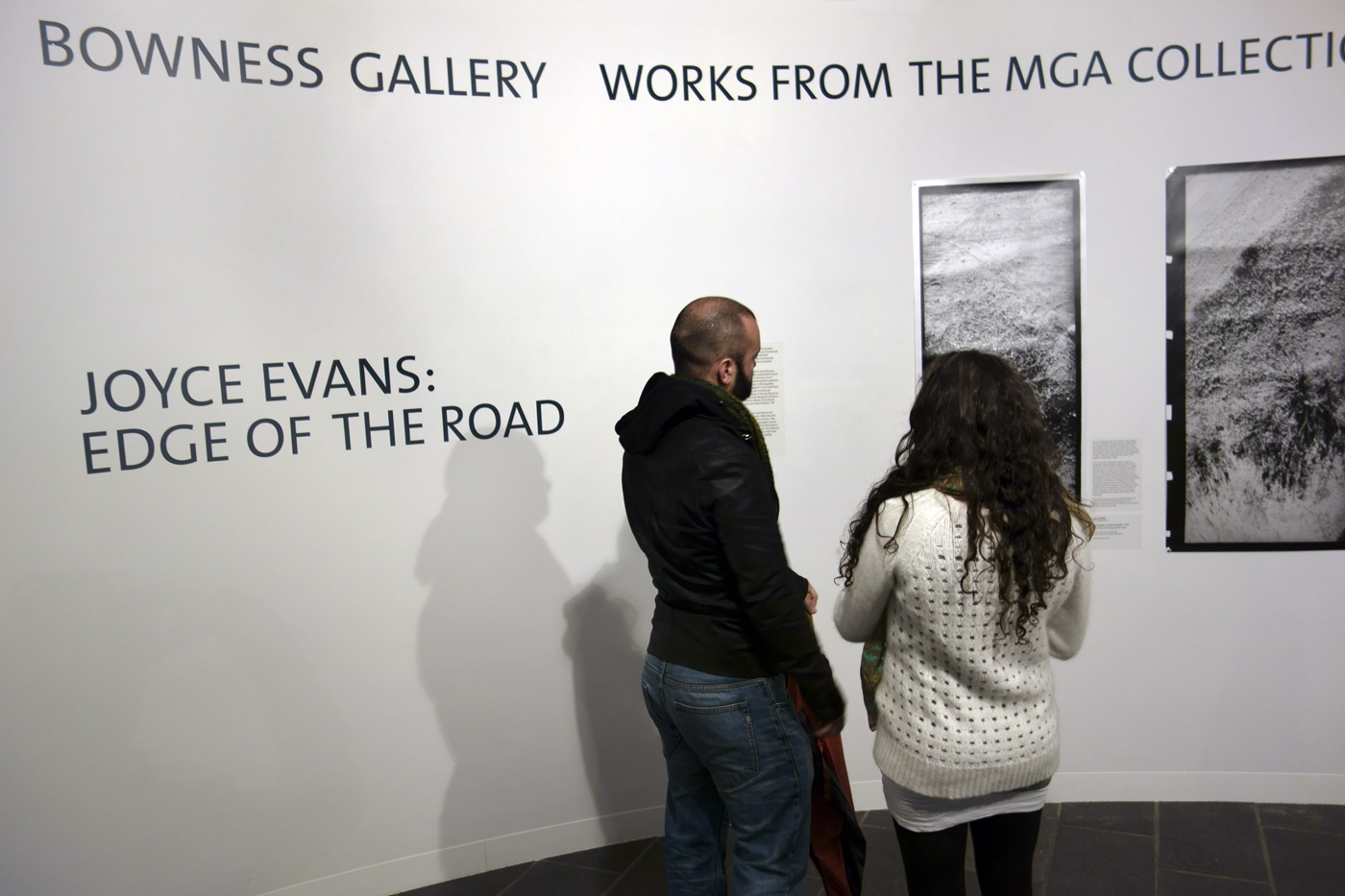
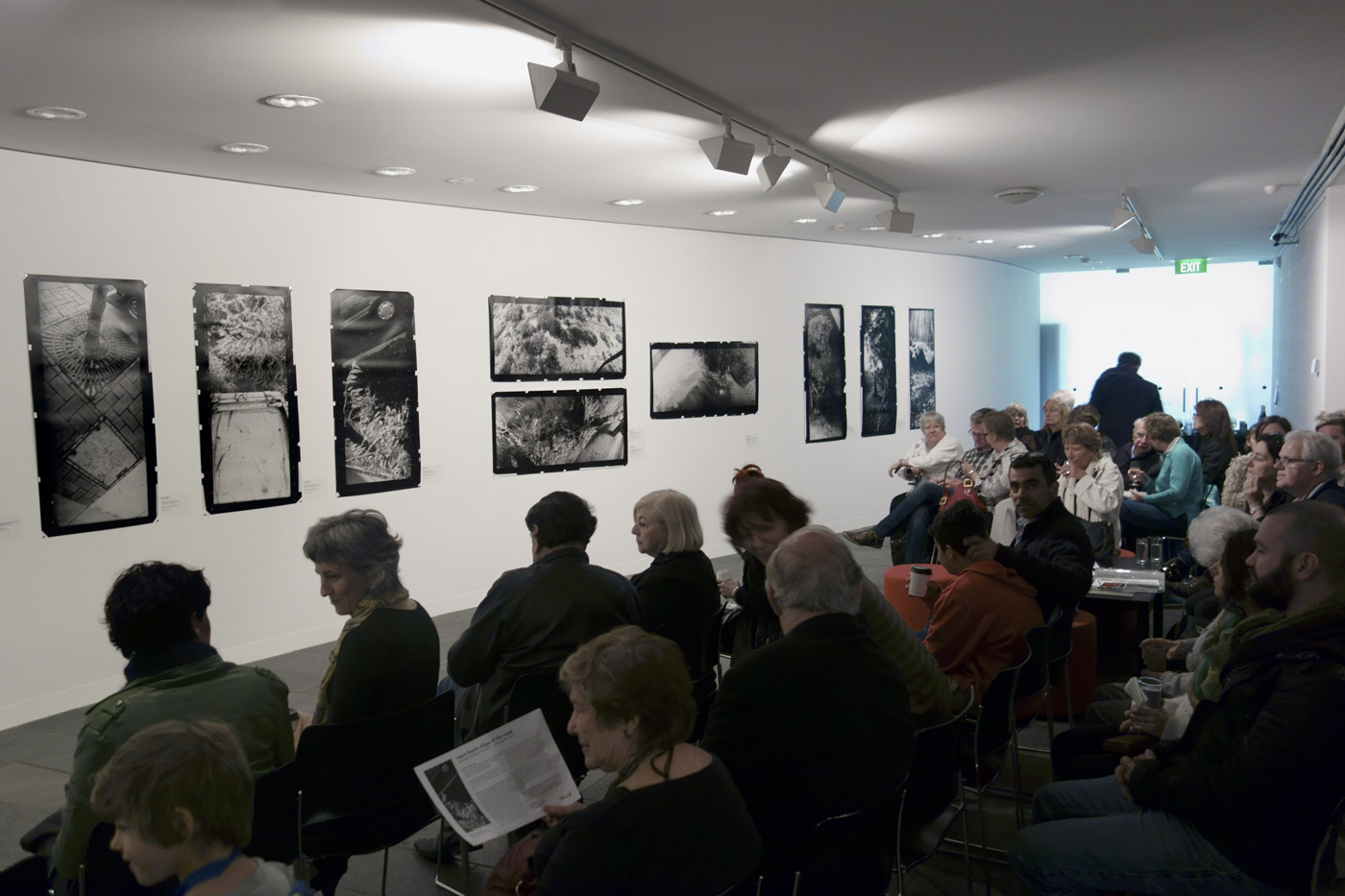
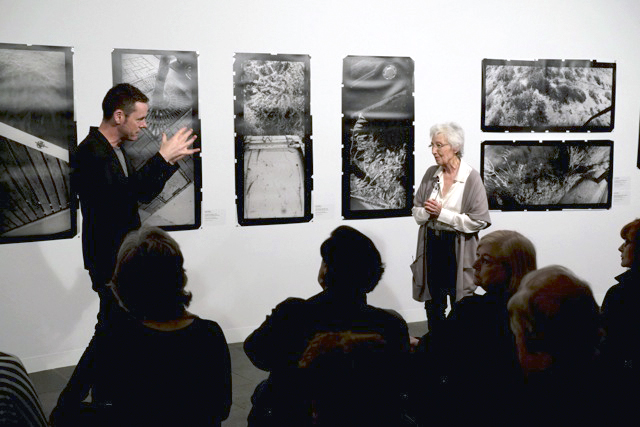
'Joyce Evans: Edge of the road' installation photographs and artist talk at Monash Gallery of Art

'Joyce Evans: Edge of the road' installation photographs and artist talk at Monash Gallery of Art

'Joyce Evans Edge of the road' installation photographs and artist talk at Monash Gallery of Art

'Joyce Evans Edge of the road' installation photographs and artist talk at Monash Gallery of Art

Shaune Lakin, Director of the Monash Gallery of Art, speaking to the assembled at the exhibition 'Joyce Evans Edge of the road' at Monash Gallery of Art


Joyce Evans Edge of the road installation photographs and artist talk at Monash Gallery of Art showing in the bottom image, Shaune Lakin, Director of the Monash Gallery of Art, speaking to the assembled
Photos: Marcus Bunyan


View of the Widelux F7 camera

View of the Widelux F7 camera


Two views of the Widelux F7 camera


Shaune Lakin, Director of the Monash Gallery of Art, speaking to the photographer Joyce Evans


Shaune Lakin, Director of the Monash Gallery of Art, speaking to the photographer Joyce Evans OAM (Australian, 1929-2019)
Photo: Jason Blake


Joyce Evans [OAM, Australian, 1929-2019] has been a key figure in Australian photography for many decades. As a gallerist, Evans introduced audiences to the work of many young and established photographers, and as a photographer she has assiduously documented the Australian landscape and the Australian cultural scene.

Evans’s initial contribution to photography in Australia was largely as an advocate for the medium. She established Church Street Photographic Centre in 1976, which became one of Australia’s most significant commercial photographic galleries. Church Street encourage a broad interest in photography and assisted the careers of many of Australia’s most important photographers. At Church Street. Evans also introduced Melbourne audiences to the work of many of the key figures in international photography, including Julia Margaret Cameron, Eugène Atget, Alfred Steiglitz, Berenice Abbott, Paul Strand, Brett Weston, Henri Cartier-Bresson and André Kertész.

Evans devised to become a photographer well before she opened Church Street. But it was in the early 1980s that she began to focus more productively on her own practice. This exhibition includes a selection of colour photographs drawn from the MGA Collection, each of which demonstrates Evans’s quite formal interest in landscape. The exhibition mainly features the series Edge of the road, large panoramic prints that have only rarely been exhibited and which reflect a decidedly different photographic relationship to landscape.

Evans’s landscapes are often political. They reflect her keen interest in the way that we relate to land, and engage with the politics of Indigenous land ownership. Evans is also interested in the way that landscape has featured in Australian art history, and often draws on the work and lessons of the legendary painter of abstract landscapes John Olsen, who taught her during the 1960s.

A fine example is Edge of the road, a series of landscapes made between 1988 and 1996 with a Widelux F7 35mm camera. The Widelux is a swing-lens panoramic camera which provides only basic functionality. Its rotating lens is fixed focus at 3.3 metres. Evans embraced these limitations, and in fact played with them by introducing chance to the photographic process. During exposure Evans twisted her camera, sometimes on a diagonal line which produced unexpected distortion. Rather than the straight vertical or horizontal axis usually associated with panoramic photographs, the axis of some of these landscapes chops and changes. In doing so, Evans is attempting to capture the energy of the landscape. These large panoramas were printed by the artist and her assistant Christian Alexander in her darkroom.

Wall text from the exhibition


Joyce Evans (Australian, 1929-2019) 'Bin, Toorak, Victoria' 1990


Joyce Evans (Australian, 1929-2019)
Bin, Toorak, Victoria
1990
Silver gelatin photograph
© Joyce Evans


Joyce Evans (Australian, 1929-2019) 'Anzses Trip, Talaringa Springs, Great Victorian Desert, South Australia' 1993


Joyce Evans (Australian, 1929-2019)
Anzses Trip, Talaringa Springs, Great Victorian Desert, South Australia
1993
Silver gelatin photograph
© Joyce Evans


Joyce Evans (Australian, 1929-2019) 'Pine Barbed Wire Fence and Orchard, Tyabb, Mornington Peninsula' 1992


Joyce Evans (Australian, 1929-2019)
Pine Barbed Wire Fence and Orchard, Tyabb, Mornington Peninsula
1992
Silver gelatin photograph
© Joyce Evans


Joyce Evans (Australian, 1929-2019) 'Mount Bulla Ferns, Victoria' 1996


Joyce Evans (Australian, 1929-2019)
Mount Bulla Ferns, Victoria
1996
Silver gelatin photograph
© Joyce Evans


Monash Gallery of Art
860 Ferntree Gully Road, Wheelers Hill
Victoria 3150 Australia
Phone: + 61 3 8544 0500

Opening hours:
Tuesday – Friday 10am – 5pm
Saturday – Sunday 10am – 4pm
Closed Mondays
Monash Gallery of Art website

LIKE ART BLART ON FACEBOOK

Back to top

Exhibition: ‘Edward Steichen & Art Deco Fashion’ at NGV International, Melbourne

Exhibition dates: 18th October 2013 – 2nd March 2014


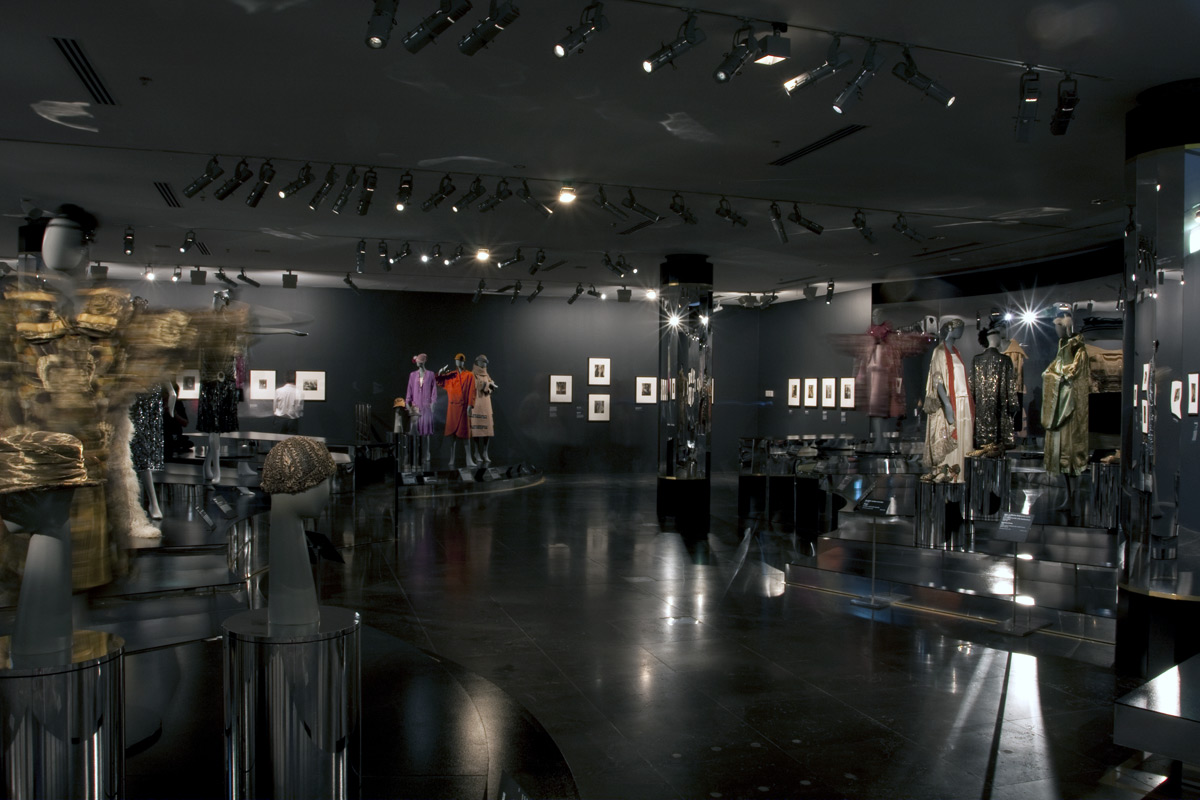
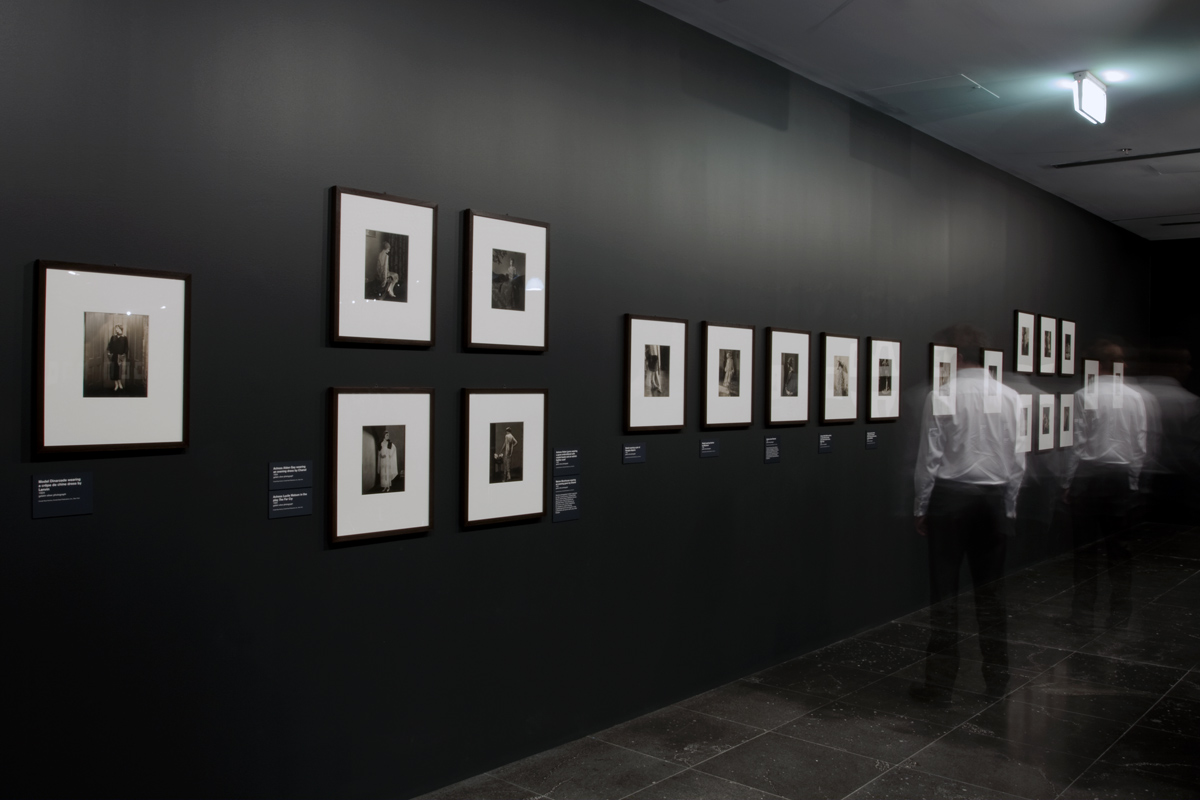
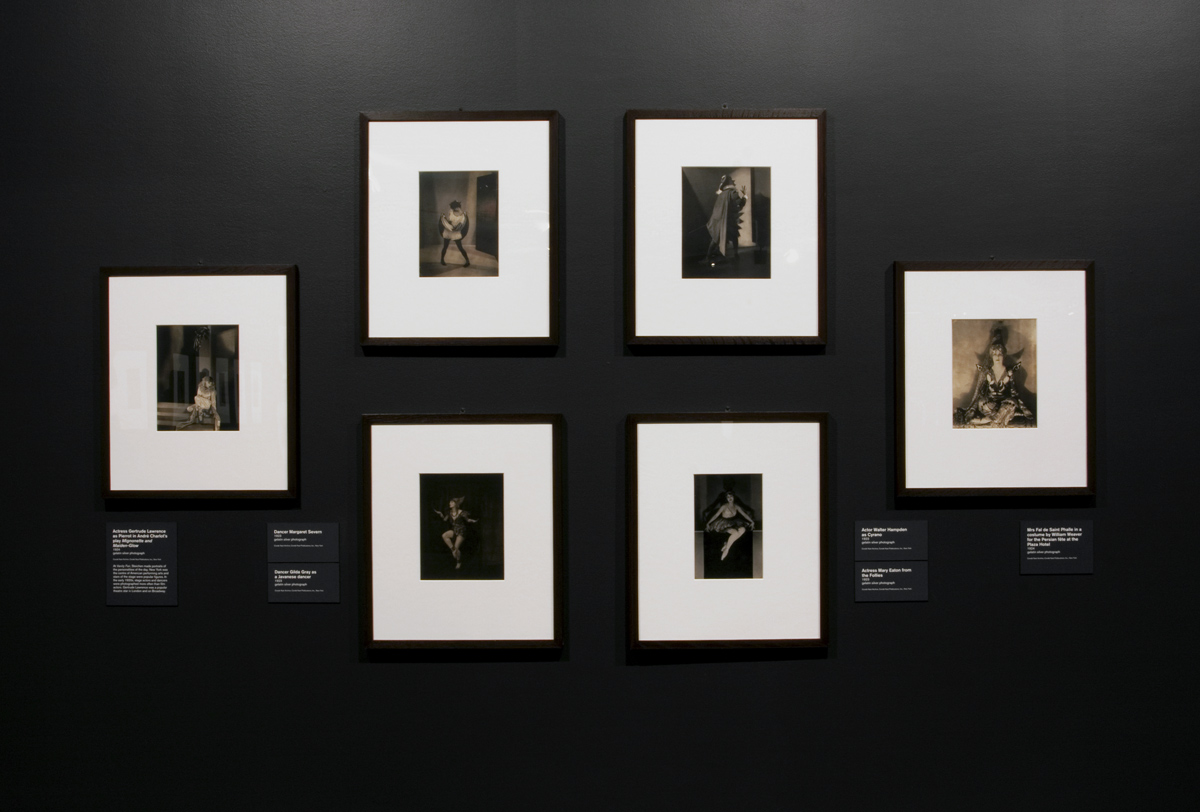
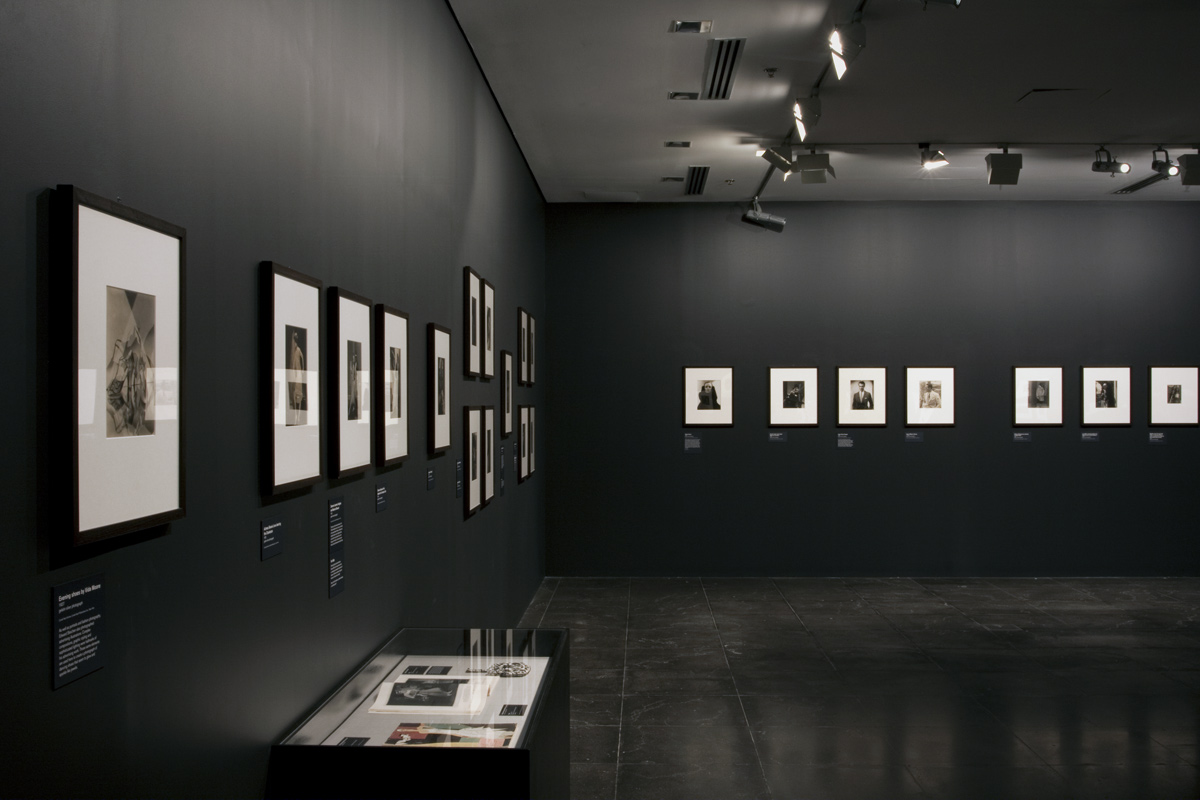
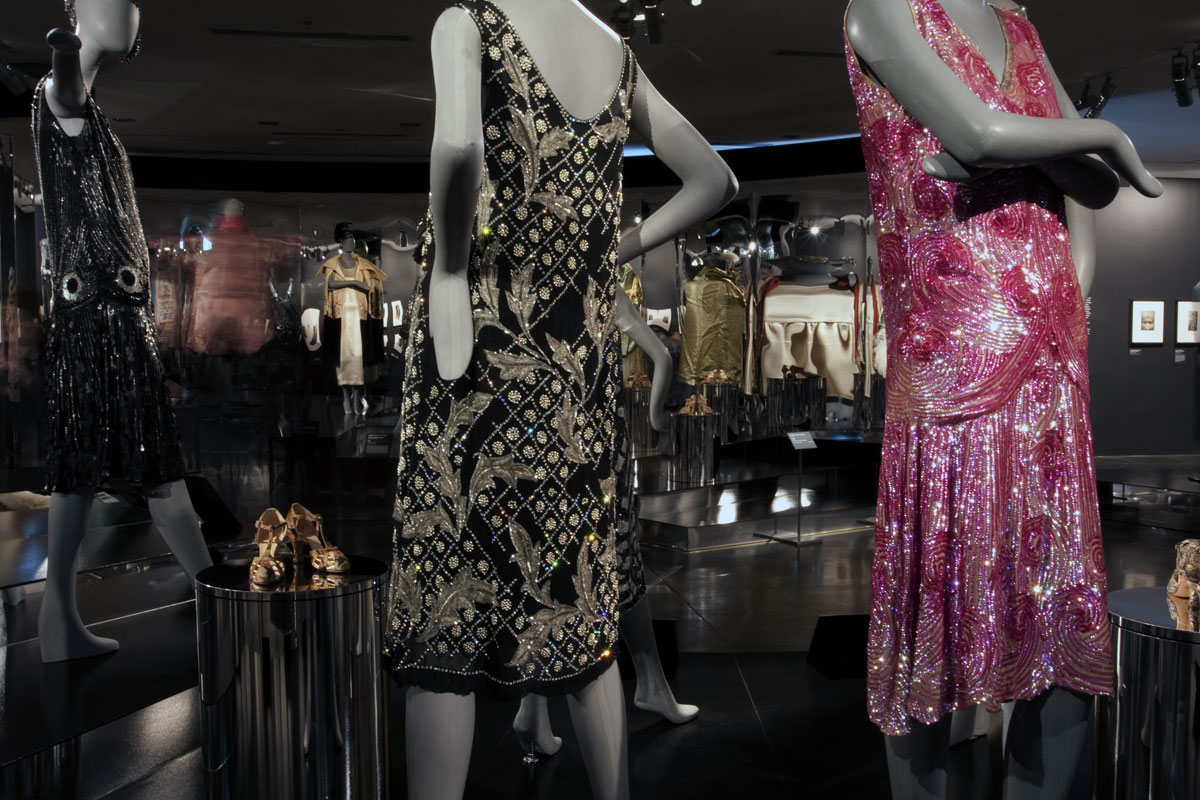
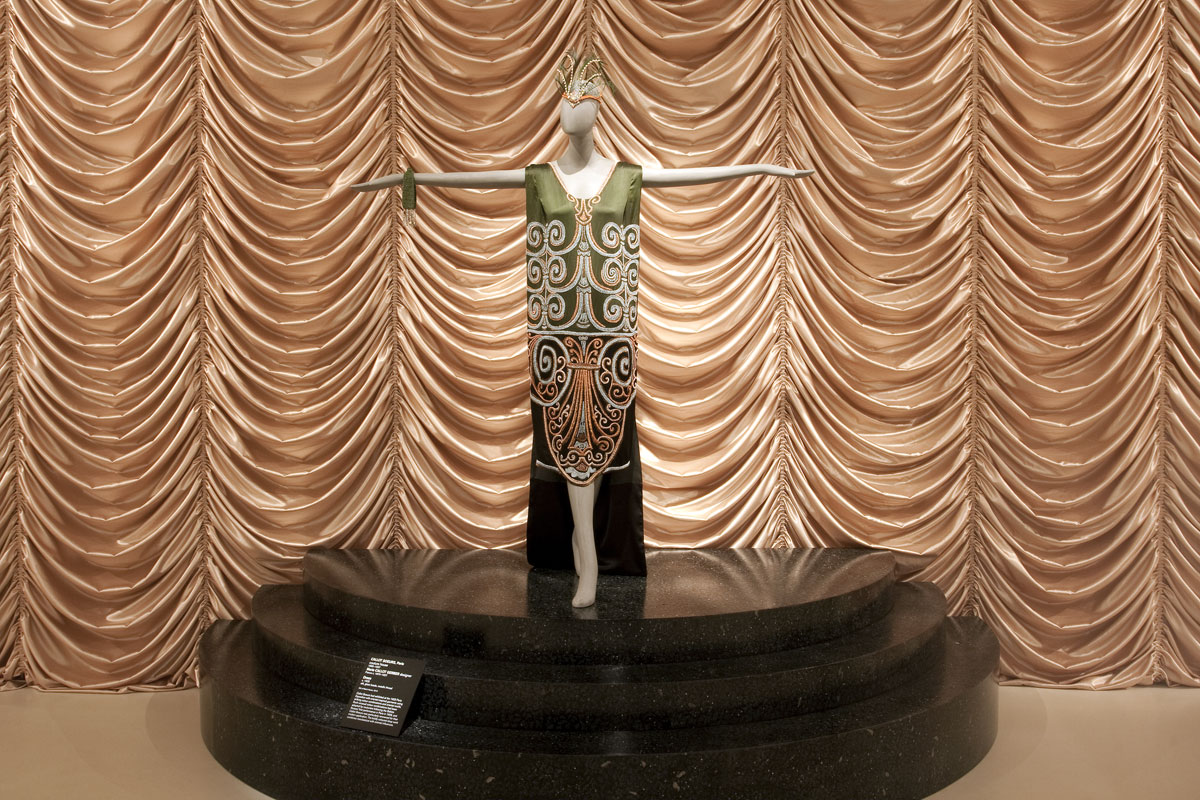
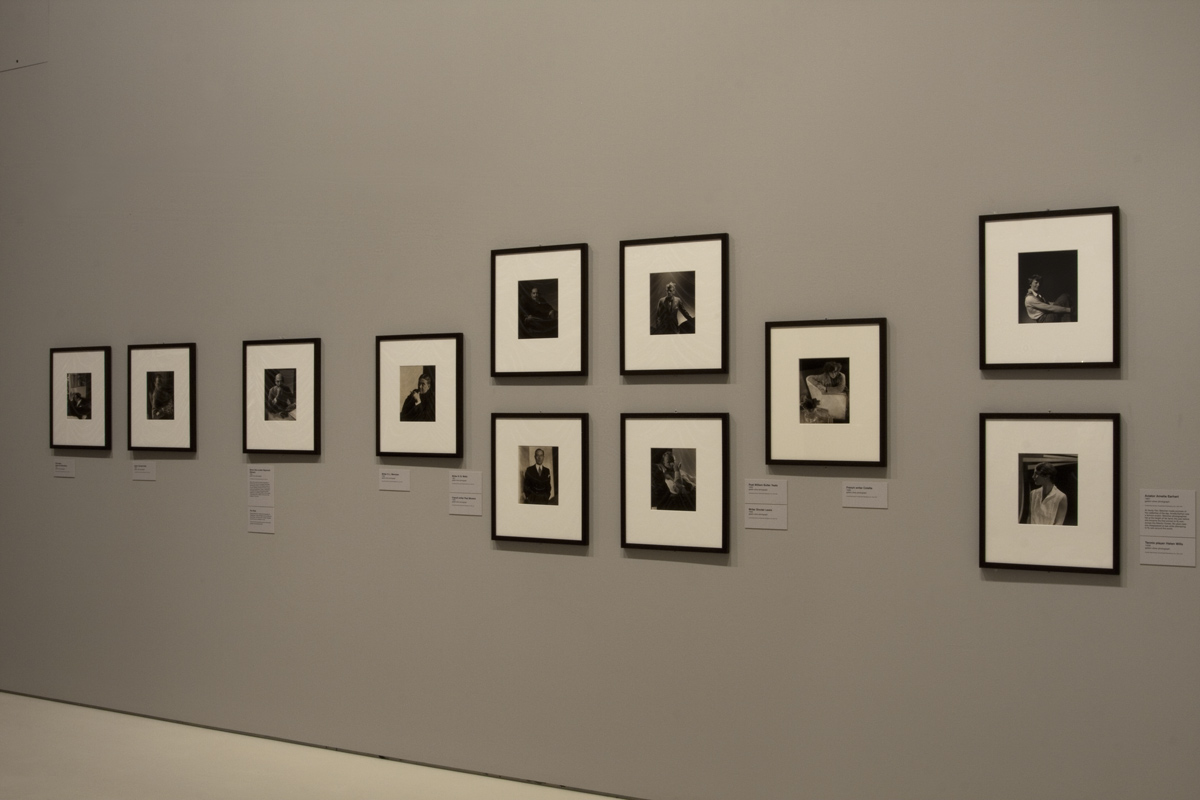
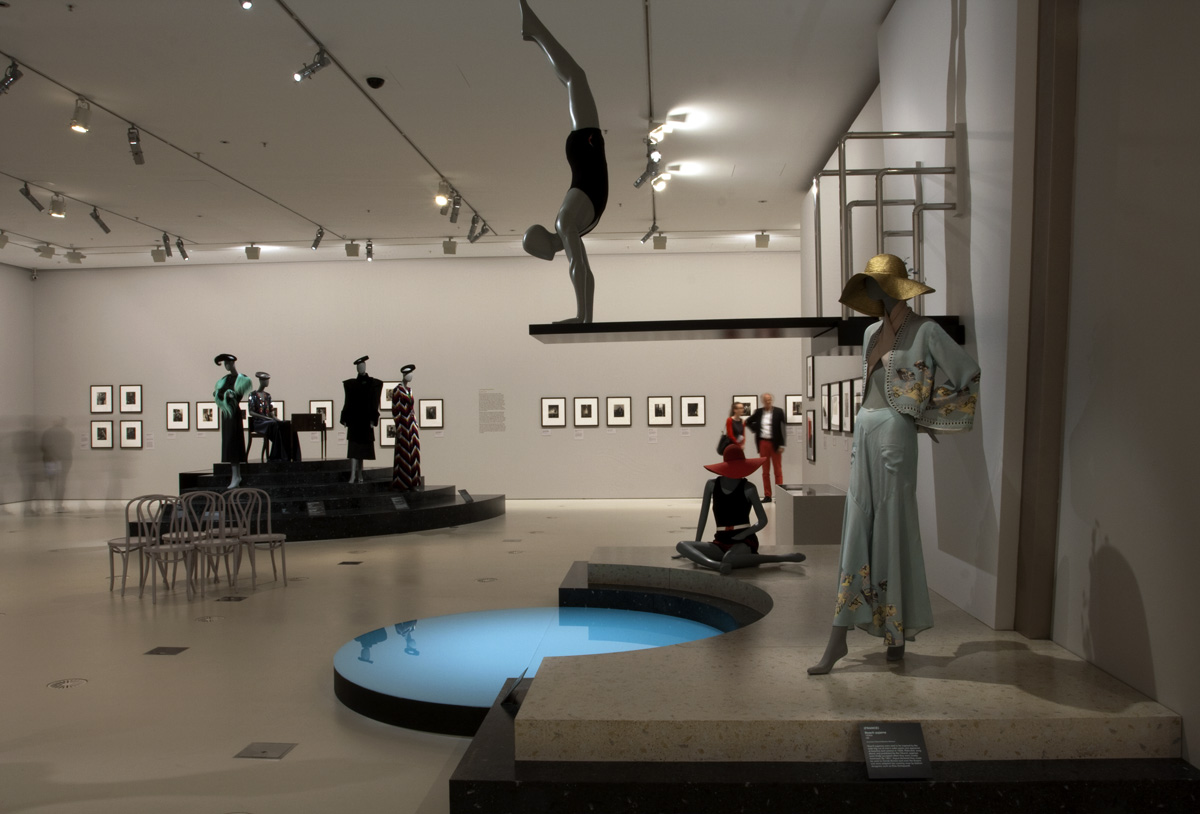
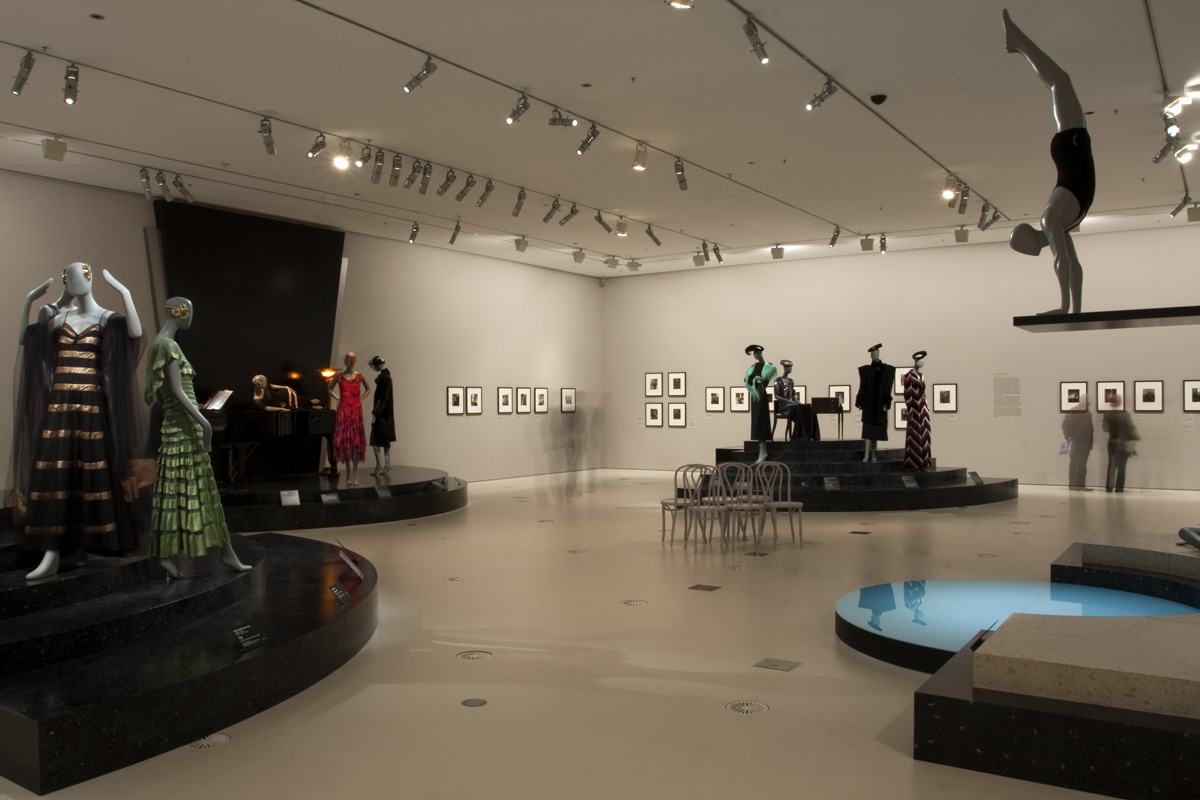
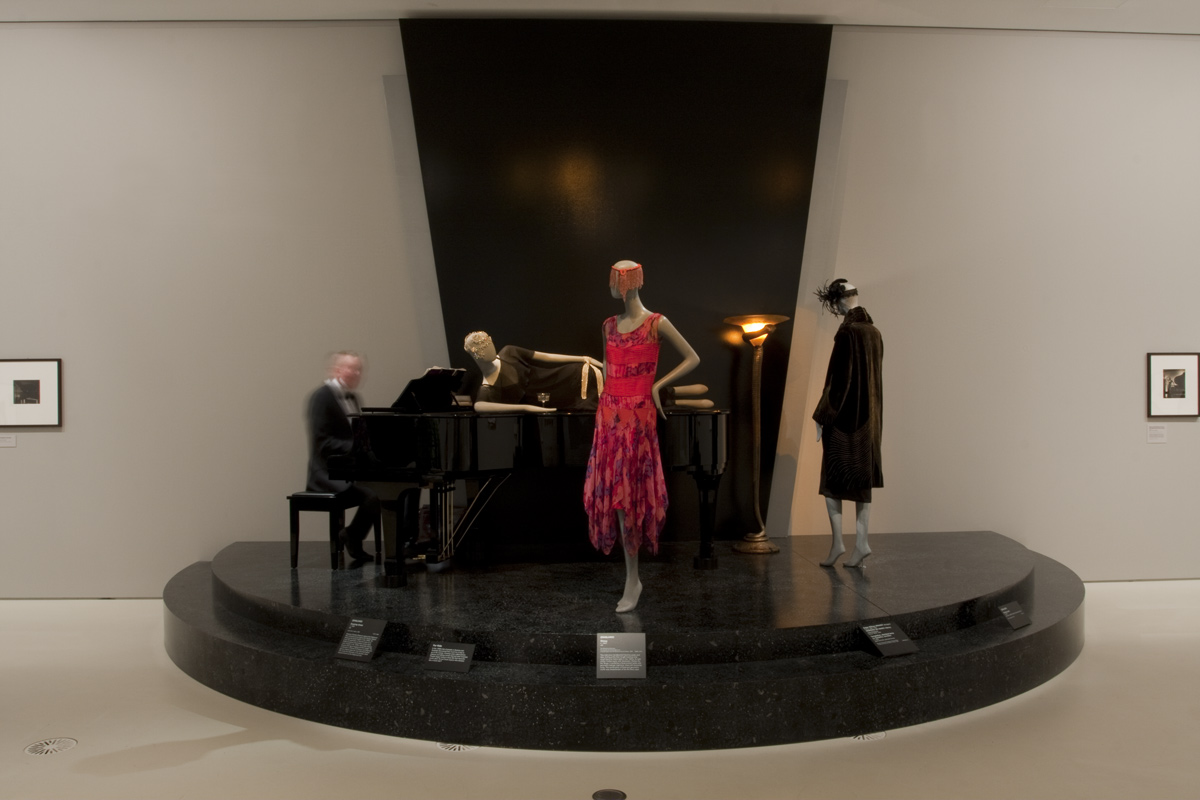
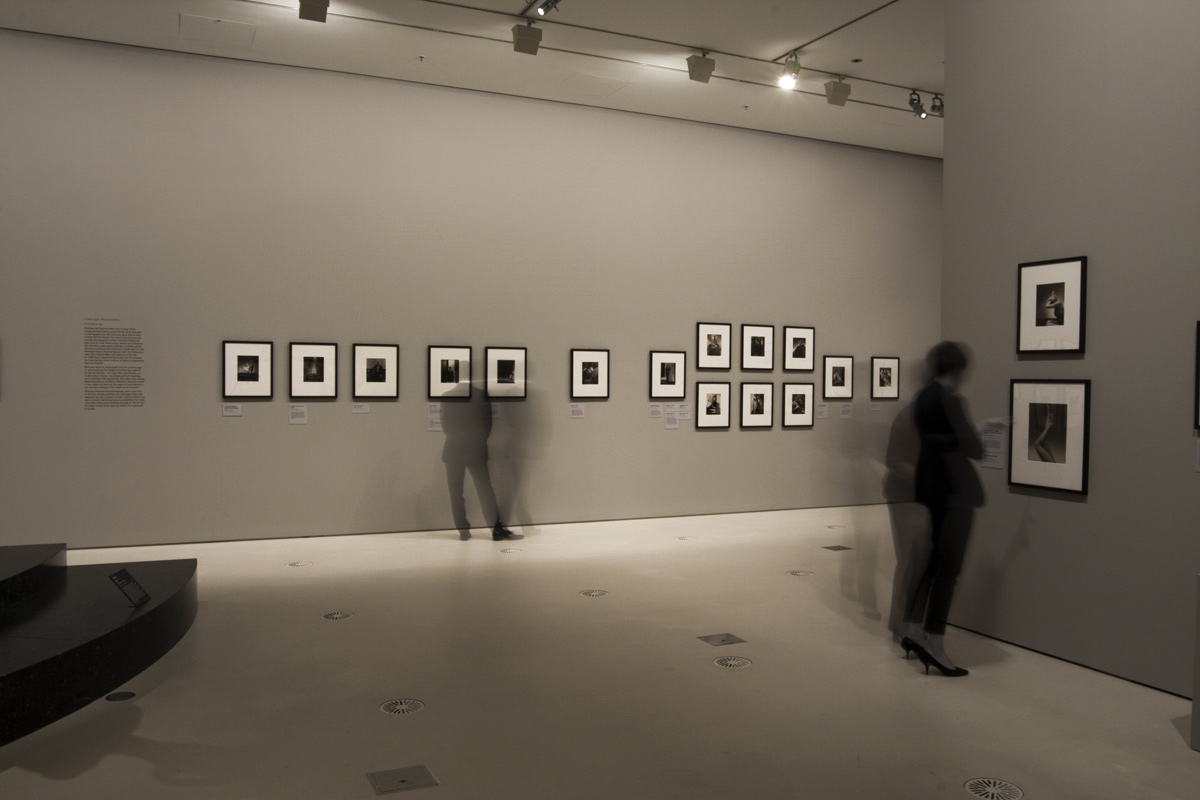
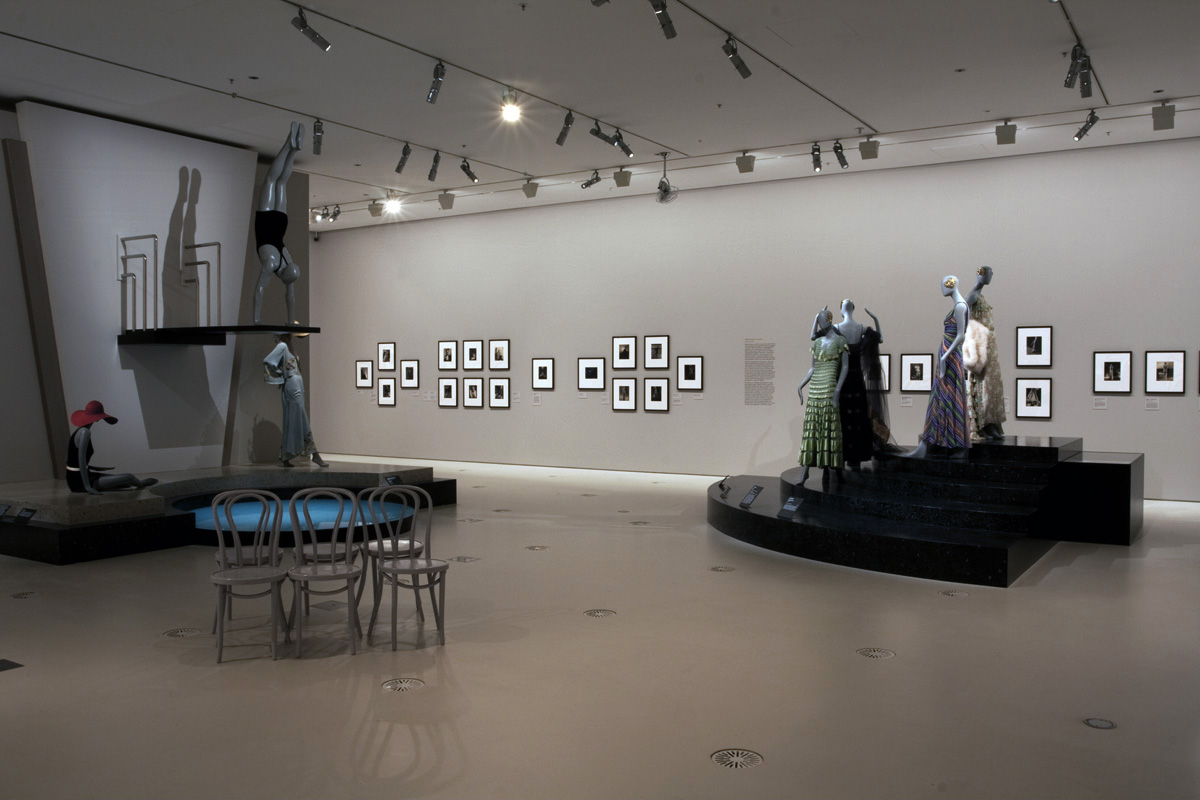
Installation photograph of the exhibition 'Edward Steichen & Art Deco Fashion' at NGV International


Installation photograph of the exhibition Edward Steichen & Art Deco Fashion at NGV International
Photo: Marcus Bunyan


You saw it here first on Art Blart!

What a gorgeous exhibition. It’s about time Melbourne had a bit of style put back into the National Gallery of Victoria, and this exhibition hits it out of the park. Not only are the photographs absolutely fabulous but the frocks are absolutely frocking as well. Well done to the NGV for teaming the photographs with the fashion and for a great install (makes a change to see 2D and 3D done so well together). Elegant, sophisticated and oozing quality, this is a sure fire winner…. Review of the photographs to follow.

Dr Marcus Bunyan


Many thankx to the NGV for allowing me to take and publish the photographs. Please click on the photographs for a larger version of the image. All photographs © Marcus Bunyan and the National Gallery of Victoria. May be used freely if permission is sought and proper accreditation given.


Room 1

Installation photograph of the exhibition 'Edward Steichen & Art Deco Fashion' at NGV International

Installation photograph of the exhibition 'Edward Steichen & Art Deco Fashion' at NGV International

Installation photograph of the exhibition 'Edward Steichen & Art Deco Fashion' at NGV International

Installation photograph of the exhibition 'Edward Steichen & Art Deco Fashion' at NGV International

Installation photograph of the exhibition 'Edward Steichen & Art Deco Fashion' at NGV International


Installation photographs of the exhibition Edward Steichen & Art Deco Fashion at NGV International
Photos: Marcus Bunyan


Installation photograph of the exhibition 'Edward Steichen & Art Deco Fashion' at NGV International


(L-R) Vogue March First 1926; Vogue November 15, 1925; and Vanity Fair June 1926
Photo: Marcus Bunyan


Installation photograph of the exhibition 'Edward Steichen & Art Deco Fashion' at NGV International

Installation photograph of the exhibition 'Edward Steichen & Art Deco Fashion' at NGV International

Installation photograph of the exhibition 'Edward Steichen & Art Deco Fashion' at NGV International

Installation photograph of the exhibition 'Edward Steichen & Art Deco Fashion' at NGV International


Installation photographs of the exhibition Edward Steichen & Art Deco Fashion at NGV International
Photos: Marcus Bunyan


The National Gallery of Victoria will showcase the glamour and modernity of the Art Deco period through the work of fashion’s most influential photographer, Edward Steichen, and stunning Art Deco fashion garments and accessories. The exhibition Edward Steichen & Art Deco Fashion is the first Australian survey of Steichen, widely considered to have created the first modern fashion photo. The exhibition features almost 200 of Steichen’s original vintage photographs, drawn from the vast archives of Condé Nast where he was chief photographer for their most prestigious magazines Vanity Fair and Vogue during the 1920s and 30s, alongside more than forty exquisite Art Deco fashion items from the NGV Collection and select private collections.

Tony Ellwood, Director, NGV, said that Edward Steichen & Art Deco Fashion is the first major Australian retrospective dedicated to Steichen’s iconic Condé Nast work.

“Steichen’s evocative images are regarded as among the most striking in early-to-mid-20th century photography and his fashion work in particular revolutionised the genre of fashion photography. This exhibition provides a rare opportunity to view such a large body of his work and to see up close the intricate details of outstanding Art Deco fashion items that highlight the interplay between fashion and photography,” said Mr Ellwood.

The exhibition presents Steichen’s pioneering modernist fashion photography and celebrity portraiture, produced during his fifteen year career as chief photographer for esteemed Condé Nast publications Vanity Fair and Vogue. During this period he put his exceptional talents and prodigious energy to work, creating a legacy of unequalled brilliance as he photographed the world of high fashion and stars of contemporary popular culture including Marlene Dietrich, Joan Crawford, Charlie Chaplin, Katherine Hepburn, Clara Bow, Louise Brooks, Greta Garbo, Gary Cooper, Winston Churchill and George Gershwin. Steichen’s images transformed fashion photography and influenced generations of photographers, capturing the sophistication of the newly liberated ‘modern woman’ and encapsulating the chic beauty and avant-garde style of the Art Deco movement. Renowned as an innovator and master of lighting, his practice bridged the transition from photography’s early soft-focus, pictorialist style to clean, crisp modernism.

Echoing the aesthetics of Steichen’s photographs, this exhibition will also celebrate the fashion borne of the period with over forty exquisite Art Deco garments and accessories by leading designers of the day including Chanel, Lanvin, Madeleine Vionnet, Madame Paquin and Callot Soeurs. The elegance of old Hollywood glamour and high end fashion will be seen through a range of pieces – including swimsuits, coats, evening gowns, beach pyjamas, dresses, hats, bags and shoes, as well as an early example of Chanel’s little black dress. Art Deco style developed in response to changing lifestyles and ideals following the First World War. Typically characterised by sleek, geometric lines, rich colours and luxurious adornments, these new forms represented a shift away from traditional values; in fashion, hemlines rose and hairstyles became shorter, culminating in the infamous mid-twenties flapper style.

Edward Steichen & Art Deco Fashion also displays rare copies of Vogue and Vanity Fair that demonstrate the way Steichen’s photographs appeared on the magazine page. Two catalogues accompany the exhibition: Art Deco Fashion, a magazine-style volume that charts the development of the modern silhouette and highlights some of the leading designers of the period, and Edward Steichen: In High Fashion – The Condé Nast Years, 1923-1937, a lavishly illustrated 288 page publication that focuses on Steichen’s legendary Vogue and Vanity Fair work.

Press release from the National Gallery of Victoria


Room Two

CALLOT SOUERS, Paris couture hours 1925-1937 Marie CALLOT GERBER designer France c. 1870-1927 'Dress' c. 1925


Callot Souers, Paris
Couture house (1925-1937)
Marie Callot Gerber designer
France c. 1870-1927
Dress
c. 1925
Silk, glass beads, metallic thread


Installation photograph of the exhibition 'Edward Steichen & Art Deco Fashion' at NGV International

Installation photograph of the exhibition 'Edward Steichen & Art Deco Fashion' at NGV International

Installation photograph of the exhibition 'Edward Steichen & Art Deco Fashion' at NGV International

Installation photograph of the exhibition 'Edward Steichen & Art Deco Fashion' at NGV International

Installation photograph of the exhibition 'Edward Steichen & Art Deco Fashion' at NGV International

Installation photograph of the exhibition 'Edward Steichen & Art Deco Fashion' at NGV International

Installation photograph of the exhibition 'Edward Steichen & Art Deco Fashion' at NGV International

Installation photograph of the exhibition 'Edward Steichen & Art Deco Fashion' at NGV International

Installation photograph of the exhibition 'Edward Steichen & Art Deco Fashion' at NGV International

Installation photograph of the exhibition 'Edward Steichen & Art Deco Fashion' at NGV International

Installation photograph of the exhibition 'Edward Steichen & Art Deco Fashion' at NGV International


Installation photographs of the exhibition Edward Steichen & Art Deco Fashion at NGV International
Photos: Marcus Bunyan


NGV International
180 St Kilda Road

Opening hours
Daily 10am – 5pm

National Gallery of Victoria website

LIKE ART BLART ON FACEBOOK

Back to top

Photographs: ‘The War at Home: Farm Security Administration / Office of War Information Color Photographs’ by Alfred Palmer Part 1

October 2013


Alfred Palmer (American, 1906-1993) 'P-51 "Mustang" fighter plane in construction, at North American Aviation, Inc., in Los Angeles, California' c. 1942


Alfred Palmer (American, 1906-1993)
P-51 “Mustang” fighter plane in construction, at North American Aviation, Inc., in Los Angeles, California
c. 1942
4 x 5 Kodachrome transparency
Alfred Palmer/OWI/LOC


Kodachrome sheets 1941-1943

This is the first of a two-part posting on the large format Kodachrome colour transparency photographs of the American photographer Alfred Palmer taken during 1941-1943. I absolutely adore these photographs. While today they might seem overly posed and almost surreal in their depiction of men and women at work in the factories of the home front during the Second World War, these are epic canvases of colour, light and form. While Eugène Atget’s photographs may well have been “Documents for artists”, I believe that Alfred Palmer’s photographs can be seen as “Documents for photographers.” They teach later generations the value of craft, of an understanding of the technical aspects of the medium (both camera and film) coupled with the imaginative use and capture of light, colour and pose. Look at the photograph Noontime rest for an assembly worker at the Long Beach (October 1942, below) – have you ever seen such use of colour in the 1940s: red socks, blue slacks, beige shirt, green lunch box and silver background. Like one of those old films in Technicolor, just so beautiful!
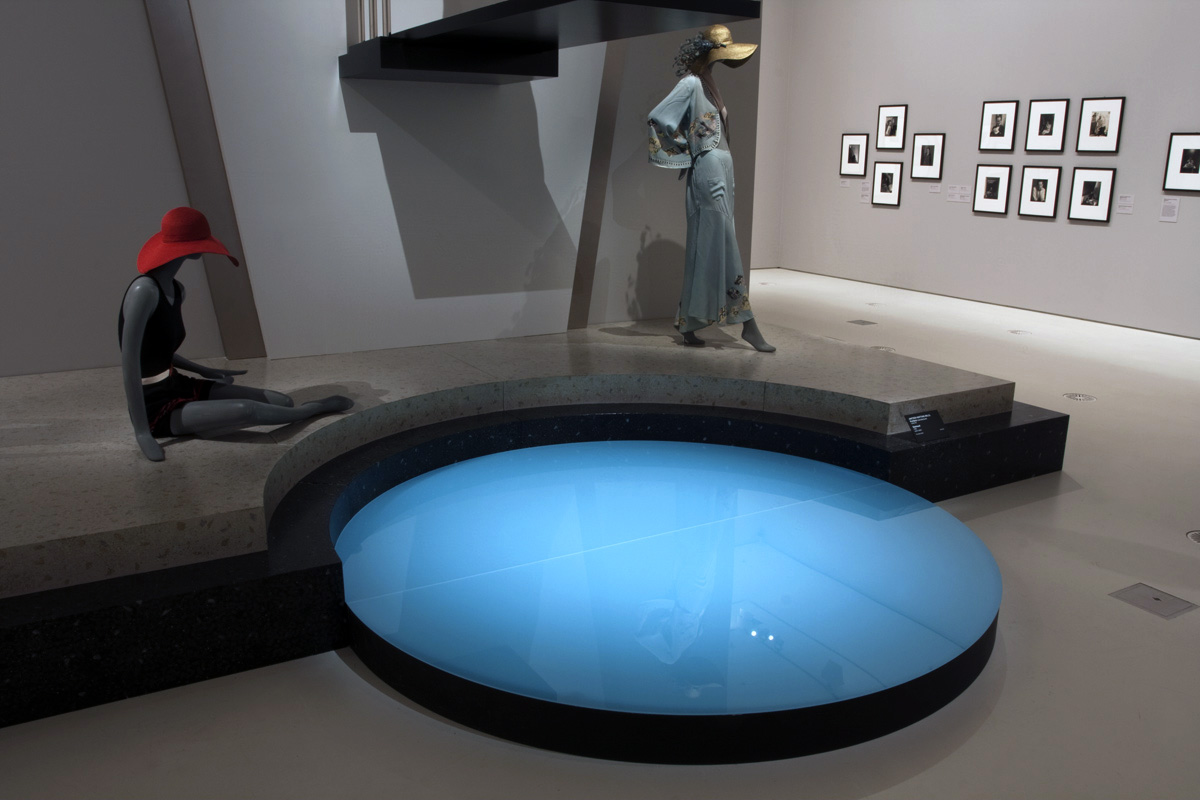
While these photographs are masterpieces of formalism, lighting, tone, texture and control, they also transcend their subject matter. Observe the image P-51 “Mustang” fighter plane in construction, at North American Aviation, Inc., in Los Angeles, California (c. 1942, above) for example, to comprehend how this master photographer saw this image, how he understood the potential of the subject matter to shine (on so many levels) and then was able to capture it and let it speak for itself. Considering the conditions under which he would have been working (in cramped factories) and the fact that he would have had to light everything himself, Palmer has recorded a remarkable body of work. All captured on the wonderful Kodachrome film in large format 4″ x 5″ sheets. What a loss to photography this film is.

These photographs deserve to be more widely known and appreciated than they are at present. Love em, love em, love them!

See Part 2 of the posting.

Dr Marcus Bunyan


Many thankx to the Library of Congress for allowing me to publish the photographs in the posting. No known copyright restrictions on any of the photographs.


Alfred Palmer (American, 1906-1993) 'A view of the B-25 final assembly line at North American Aviation's Inglewood, California, plant' Photo published in 1942


Alfred Palmer (American, 1906-1993)
A view of the B-25 final assembly line at North American Aviation’s Inglewood, California, plant
Photo published in 1942
4 x 5 Kodachrome transparency
Alfred Palmer/OWI/LOC


Alfred Palmer (American, 1906-1993) 'B-25 bomber plane at North American Aviation being hauled along an outdoor assembly line. Kansas City, Kansas.' October 1942


Alfred Palmer (American, 1906-1993)
B-25 bomber plane at North American Aviation being hauled along an outdoor assembly line. Kansas City, Kansas

October 1942
4 x 5 Kodachrome transparency
Alfred Palmer/OWI


Alfred Palmer (American, 1906-1993) 'Servicing an A-20 bomber, Langley Field, Va.' July 1942


Alfred Palmer (American, 1906-1993)
Servicing an A-20 bomber, Langley Field, Va.
July 1942
4 x 5 Kodachrome transparency
Alfred Palmer/OWI


Alfred Palmer (American, 1906-1993) 'P-51 "Mustang" fighter in flight' October 1942


Alfred Palmer (American, 1906-1993)
P-51 “Mustang” fighter in flight, Inglewood, California, The Mustang, built by North American Aviation, Incorporated, is the only American-built fighter used by the Royal Air Force of Great Britain
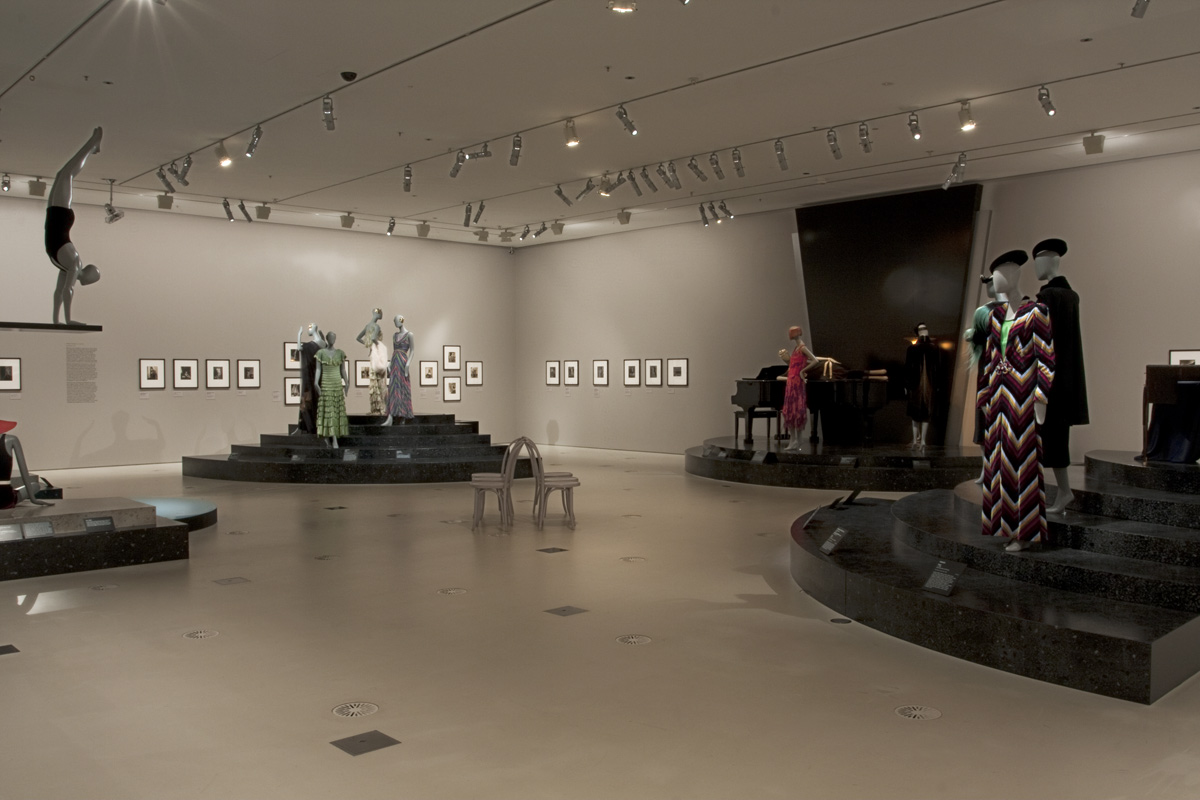
October, 1942
4 x 5 Kodachrome transparency
Alfred Palmer/OWI/LOC
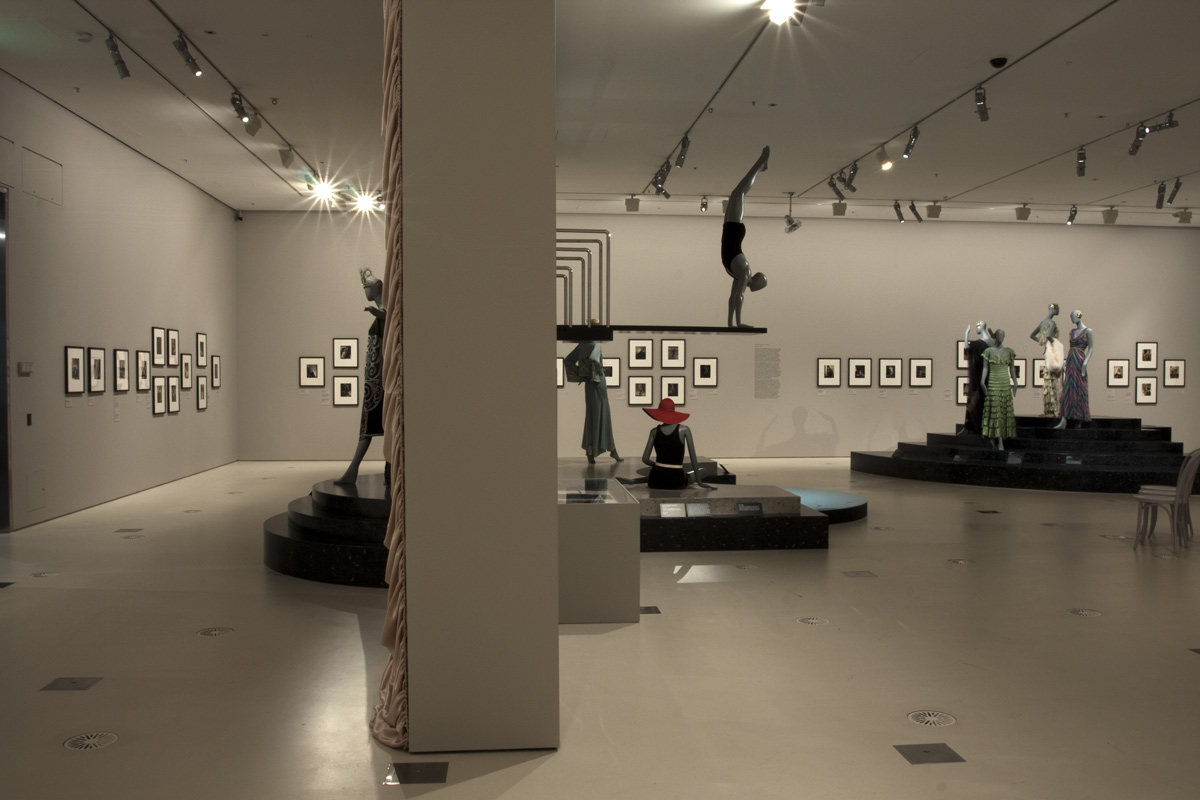
 

Alfred Palmer (American, 1906-1993) 'Sunset silhouette of a flying fortress, at Langley Field, Virginia, in July, 1942' July 1942


Alfred Palmer (American, 1906-1993)
Sunset silhouette of a flying fortress, at Langley Field, Virginia, in July, 1942
July 1942
4 x 5 Kodachrome transparency
Alfred Palmer/OWI/LOC


Alfred Palmer (American, 1906-1993) 'Light tank going through water obstacle. Fort Knox, June 1942' June 1942


Alfred Palmer (American, 1906-1993)
Light tank going through water obstacle. Fort Knox, June 1942
June 1942
4 x 5 Kodachrome transparency
Alfred Palmer/OWI


Alfred Palmer (American, 1906-1993) 'Tank crew standing in front of M-4 tank, Ft. Knox, Kentucky, June, 1942' June, 1942


Alfred Palmer (American, 1906-1993)
Tank crew standing in front of M-4 tank, Ft. Knox, Kentucky, June, 1942
June, 1942
4 x 5 Kodachrome transparency
Alfred Palmer/OWI/LOC


Alfred Palmer (American, 1906-1993) 'Army tank driver at Fort Knox , Kentucky' June 1942


Alfred Palmer (American, 1906-1993)
Army tank driver at Fort Knox, Kentucky
June 1942
4 x 5 Kodachrome transparency
Alfred Palmer/OWI


Alfred Palmer (American, 1906-1993) 'Lieutenant "Mike" Hunter, Army pilot assigned to Douglas Aircraft Company, Long Beach, Calif.' October 1942


Alfred Palmer (American, 1906-1993)
Lieutenant “Mike” Hunter, Army pilot assigned to Douglas Aircraft Company, Long Beach, Calif.
October 1942
4 x 5 Kodachrome transparency
Alfred Palmer/LOC


Alfred Palmer (American, 1906-1993) 'Lieutenant 'Mike' Hunter, Army test pilot assigned to Douglas Aircraft Company, Long Beach, California' October 1942


Alfred Palmer (American, 1906-1993)
Lieutenant ‘Mike’ Hunter, Army test pilot assigned to Douglas Aircraft Company, Long Beach, California
October 1942
4 x 5 Kodachrome transparency
Alfred Palmer/OWI


Alfred T. Palmer 1906-1993

Born in San Jose, California, Palmer was an avid photographer from an early age, meeting the young Ansel Adams in Yosemite in 1916. He was hired on as a cadet on the Dollar Lines President Monroe. He was 19 years old. This would be the first of his 23 trips around the world in the next 32 years. Palmer became the official photographer and worked aboard Dollar Line, Matson and Moore-McCormack Lines ships around the world shooting 100s of images with his Graflex camera. He would trade with other crew members for daytime shifts so he could go ashore and photograph everything he saw.

In 1938, he packed cameras and darkroom equipment into his car and set out across America documenting everything that captured his interest from cows and pigs and corn to towns, cities, people and industry. He would develop the film in the bathrooms of the tourist homes and auto courts every night. He sold the negatives for a dollar each for use in educational books. He made contact prints of each one which are included in his vast portfolio of work.

In 1939 when Hitler attacked Poland the United States ranked twentieth as a world military power. In June of 1940 President Roosevelt and Congress passed a bill for the building of a major two ocean navy. At that time Roosevelt formed the National Defense Advisory Commission of the Office of Emergency Management (OEM) and Palmer was chosen to head the photography department. To rally and inform citizens about the use of their tax dollars and resources, Palmer was sent out to photograph Americans building what Roosevelt termed the Arsenal of Democracy. Aware of the power of mass media, the OEM wanted to provide images which would vividly convey their story in high contrast photos for magazines and newspapers. At the OEM, Palmer’s boss, Robert Horton, would brainstorm assignments, sending him into restricted industrial and military facilities. Once in the field, Palmer worked independently. He developed a style of quickly seeing the picture and catching the essence. Through this style he was able to convey the gritty texture and geometry of industrial form combined with the strong emotion of men and women attentive to their work. His dramatic tonal ranges and sharp focus approach reflect the early influence of his mentor, Ansel Adams.

In 1941, after the bombing of Pearl Harbor, Palmer became official photographer for the newly formed Office of War Information (OWI). He also served as technical expert with final say on photographic equipment and processes. Now his images had to illustrate all aspects of the war effort, from industrial workers to conservation of resources and citizen participation. Palmer’s emphasis was on the typical American hard at work on the home front. His photographs were also an integral part of the “women power” campaign to change the public attitude toward women joining the work force. He showed women as patriotic, glamorous and capable, working on fighter planes as well as assembly lines. Palmer also focused on the dedication and dignity of the black labor force and worked with the chief of the News Bureau Negro Press.

In 1942, the Farm Security Administration (FSA) was added as a joint agency with the OWI. Palmer and Roy Stryker shared creativity and conflict during those years in the dissident approaches to portraying America to herself. While Stryker’s unit showed a national self scrutiny of post depression America, Palmer sought to emphasise a moral building role through his photography. Palmer’s deep belief in promoting the spiritual strength of people permeates his entire career as photographer and filmmaker.

During his years with OWI Palmer worked with a number of significant photographers such as Esther Bubbly, Howard Leiberman, Gordon Parks, Dorothea Lang and Edward Steichen. Palmer’s artistic style was recognised by Steichen, who featured his photographs in the historic traveling exhibit “Road to Victory”, which opened at the Museum of Modern Art in 1942. Alfred Palmer generated thousands of photographs that were widely published in the major magazines and newspapers in the United States and abroad. His works were praised for their exceptional symbolic power and striking use of intense contrasts conveying the courage and determination that Roosevelt sought to arouse in the nation. Much of the vast collection of Palmer’s photographs (including rare colour transparencies) is housed in the National Archives and the Library of Congress.

Alfred Palmer passed away in 1993, leaving a legacy of life work that is unique in its very essence. This extensive collection of photographs and 16mm colour film encompassing five decades of world cultures, World War II history and America’s maritime heritage becomes increasingly significant as a testimony to our humanity.

Text from the Alfred T. Palmer website [Online] Cited 13/10/2013 no longer available online


A Kodachrome sheet film box that held 2 x half a dozen sheets of film in 2 sheet packages, from around the time Alfred Palmer would have been using the same film. Notice the ISO/ASA rating of 10. Expiry date of October 1944


A Kodachrome sheet film box that held 2 x half a dozen sheets of film in 2 sheet packages, from around the time Alfred Palmer would have been using the same film. Notice the ISO/ASA rating of 10. Expiry date of October 1944.


Alfred Palmer (American, 1906-1993) 'American mothers and sisters, like these women at the Douglas Aircraft Company plant in Long Beach , California , give important help in producing dependable planes for their men at the front' October 1942


Alfred Palmer (American, 1906-1993)
American mothers and sisters, like these women at the Douglas Aircraft Company plant in Long Beach, California, give important help in producing dependable planes for their men at the front
October 1942
4 x 5 Kodachrome transparency
Alfred Palmer/OWI


Alfred Palmer (American, 1906-1993) 'Assembling switchboxes on the firewalls of B-25 bombers at North American Aviation's Inglewood, California, factory' October 1942


Alfred Palmer (American, 1906-1993)
Assembling switchboxes on the firewalls of B-25 bombers at North American Aviation’s Inglewood, California, factory
October 1942
4 x 5 Kodachrome transparency
Alfred Palmer/OWI


Alfred Palmer (American, 1906-1993) 'Workers installing fixtures and assemblies in the tail section of a B-17F bomber at the Douglas Aircraft Company plant in Long Beach , California' October 1942


Alfred Palmer (American, 1906-1993)
Workers installing fixtures and assemblies in the tail section of a B-17F bomber at the Douglas Aircraft Company plant in Long Beach, California
October 1942
4 x 5 Kodachrome transparency
Alfred Palmer/OWI


Alfred Palmer (American, 1906-1993) 'Engine inspector for North American Aviation at Long Beach, California' June 1942


Alfred Palmer (American, 1906-1993)
Engine inspector for North American Aviation at Long Beach, California
June 1942
4 x 5 Kodachrome transparency
Alfred Palmer/OWI


Alfred Palmer (American, 1906-1993) 'Punching rivet holes in a frame member for a B-25 bomber at North American Aviation. Inglewood, California' June 1942


Alfred Palmer (American, 1906-1993)
Punching rivet holes in a frame member for a B-25 bomber at North American Aviation. Inglewood, California 
June 1942
4 x 5 Kodachrome transparency
Alfred Palmer/OWI


Alfred Palmer (American, 1906-1993) 'Inglewood, California. Riveting team working on the cockpit shell of a C-47 heavy transport at North American Aviation' 1942


Alfred Palmer (American, 1906-1993)
Inglewood, California. Riveting team working on the cockpit shell of a C-47 heavy transport at North American Aviation.
“The versatile C-47 performs many important tasks for the Army. It ferries men and cargo across the oceans and mountains, tows gliders and brings paratroopers and their equipment to scenes of action.”
1942
4 x 5 Kodachrome transparency
Alfred Palmer/OWI


Alfred Palmer (American, 1906-1993) 'Noontime rest for an assembly worker at the Long Beach, Calif., plant of Douglas Aircraft Company. Nacelle parts for a heavy bomber form the background' October 1942


Alfred Palmer (American, 1906-1993)
Noontime rest for an assembly worker at the Long Beach, Calif., plant of Douglas Aircraft Company. Nacelle parts for a heavy bomber form the background
October 1942
4 x 5 Kodachrome transparency
Alfred Palmer/OWI


Alfred Palmer (American, 1906-1993) 'Two assembly line workers at the Long Beach, Calif., plant of Douglas Aircraft Company enjoy a well-earned lunch period, Long Beach, Calif. Nacelle parts of a heavy bomber form the background' October 1942


Alfred Palmer (American, 1906-1993)
Two assembly line workers at the Long Beach, Calif., plant of Douglas Aircraft Company enjoy a well-earned lunch period, Long Beach, Calif. Nacelle parts of a heavy bomber form the background
October 1942
4 x 5 Kodachrome transparency
LOC


LIKE ART BLART ON FACEBOOK

Back to top

Marcus Bunyan black and white archive: ‘Immersion’, 1994

October 2013


Marcus Bunyan (Australian, b. 1958) 'Untitled (bandsaw)' 1994


Marcus Bunyan (Australian, b. 1958)
Untitled (bandsaw)
1994
Silver gelatin photograph


“What A. feels he is doing, however, as he writes the pages of his own book, is something that does not belong to either one of these two types of memory. A. has both a good memory and a bad memory. He has lost much, but he has also retained much. As he writes, he feels the he is moving inward (through himself) and at the same time moving outward (towards the world). What he experienced, perhaps, during those few moments on Christmas Eve, 1979, as he sat alone in his room on Varick Street, was this: the sudden knowledge that came over him that even alone, in the deepest solitude of his room, he was not alone, or, more precisely, that the moment he began to try to speak of that solitude, he had become more than just himself. Memory, therefore, not simply as the resurrection of one’s private past, but an immersion in the past of others, which is to say: history – which one both participates in and is a witness to, is a part of and apart from. Everything, therefore, is present in his mind at once, as if each element were reflecting the light of all the others, and at the same time emitting its own unique and unquenchable radiance. If there is any reason for him to be in this room now, it is because there is something inside him hungering to see it all at once, to savor the chaos of it in all its raw and urgent simultaneity. And yet, the telling of it is necessarily slow, a delicate business of trying to remember what has already been remembered. The pen will never be able to move fast enough to write down every word discovered in the space of memory. Some things have been lost forever, other things will perhaps be remembered again, and still others have been lost and found and lost again. There is no way to be sure of any of this.”


Paul Auster. “The Book of Memory,” in The Invention of Solitude, 1982, pp. 148-49


I am scanning my negatives made during the years 1991-1997 to preserve them in the form of an online archive as a process of active memory, so that the images are not lost forever. These photographs were images of my life and imagination at the time of their making, the ideas I was thinking about and the people and things that surrounded me.

All images © Marcus Bunyan. Please click the photographs for a larger version of the image. Please remember these are just straight scans of the prints, all full frame, no cropping !

Photographs are available from this series for purchase. As a guide, a vintage 8″ x 10″ silver gelatin print costs $700 plus tracked and insured shipping. For more information please see my store web page.


Marcus Bunyan (Australian, b. 1958) 'Inversion' 1994


Marcus Bunyan (Australian, b. 1958)
Inversion
1994
Silver gelatin photograph


Marcus Bunyan (Australian, b. 1958) 'Growth 2' 1994


Marcus Bunyan (Australian, b. 1958)
Growth 2
1994
Silver gelatin photograph


Marcus Bunyan (Australian, b. 1958) 'Starry Night (Burke and Wills memorial)' 1994


Marcus Bunyan (Australian, b. 1958)
Starry Night (Burke and Wills memorial)
1994
Silver gelatin photograph


Marcus Bunyan (Australian, b. 1958) 'Untitled (bandsaw)' 1994


Marcus Bunyan (Australian, b. 1958)
Untitled (bandsaw)
1994
Silver gelatin photograph


Marcus Bunyan (Australian, b. 1958) 'Four ears' 1994


Marcus Bunyan (Australian, b. 1958)
Four ears
1994
Silver gelatin photograph


Marcus Bunyan (Australian, b. 1958) 'Such is death' 1994


Marcus Bunyan (Australian, b. 1958)
Such is death
1994
Silver gelatin photograph


Marcus Bunyan (Australian, b. 1958) 'The wash house' 1994


Marcus Bunyan (Australian, b. 1958)
The wash house
1994
Silver gelatin photograph


Marcus Bunyan (Australian, b. 1958) 'Untitled (bandsaw)' 1994


Marcus Bunyan (Australian, b. 1958)
Untitled (bandsaw)
1994
Silver gelatin photograph


Marcus Bunyan (Australian, b. 1958) 'The place where many men have stood' 1994


Marcus Bunyan (Australian, b. 1958)
The place where many men have stood
1994
Silver gelatin photograph


Marcus Bunyan (Australian, b. 1958) 'Untitled (bandsaw)' 1994


Marcus Bunyan (Australian, b. 1958)
Untitled (bandsaw)
1994
Silver gelatin photograph


Marcus Bunyan (Australian, b. 1958) 'Singer' 1994


Marcus Bunyan (Australian, b. 1958)
Singer
1994
Silver gelatin photograph


Marcus Bunyan (Australian, b. 1958) 'Ecce homo' 1994


Marcus Bunyan (Australian, b. 1958)
Ecce homo
1994
Silver gelatin photograph


Marcus Bunyan (Australian, b. 1958) 'Cluster' 1994


Marcus Bunyan (Australian, b. 1958)
Cluster
1994
Silver gelatin photograph


Marcus Bunyan (Australian, b. 1958) 'Theoria' 1994


Marcus Bunyan (Australian, b. 1958)
Theoria
1994
Silver gelatin photograph


The Greek theoria (θεωρία), from which the English word “theory” is derived, meant “contemplation, speculation, a looking at, things looked at”, from theorein (θεωρεῖν) “to consider, speculate, look at”, from theoros (θεωρός) “spectator”, from thea (θέα) “a view” + horan (ὁρᾶν) “to see”. It expressed the state of being a spectator. Both Greek θεωρία and Latin contemplatio primarily meant looking at things, whether with the eyes or with the mind.

Taking philosophical and theological traditions into consideration, the term was used by the ancient Greeks to refer to the act of experiencing or observing and then comprehending through consciousness, which is called the nous or “eye of the soul” (Matthew 6:22-34). Insight into being and becoming (called noesis) through the intuitive truth called faith, in God (action through faith and love for God), leads to truth through our contemplative faculties. This theory, or speculation, as action in faith and love for God, is then expressed famously as “Beauty shall Save the World”. This expression comes from a mystical or gnosiological perspective, rather than a scientific, philosophical or cultural one.

Text from Wikipedia website


Marcus Bunyan (Australian, b. 1958) 'Parsnips and potatoes' 1994


Marcus Bunyan (Australian, b. 1958)
Parsnips and potatoes
1994
Silver gelatin photograph


Marcus Bunyan (Australian, b. 1958) 'Burke and water' 1994


Marcus Bunyan (Australian, b. 1958)
Burke and water
1994
Silver gelatin photograph


Marcus Bunyan (Australian, b. 1958) 'Growth 1' 1994


Marcus Bunyan (Australian, b. 1958)
Growth 1
1994
Silver gelatin photograph


Marcus Bunyan. 'Untitled (comet)' 1994


Marcus Bunyan (Australian, b. 1958)
Untitled (comet)
1994
Silver gelatin photograph


Marcus Bunyan (Australian, b. 1958) 'A(r)mour' 1994


Marcus Bunyan (Australian, b. 1958)
A(r)mour
1994
Silver gelatin photograph


Marcus Bunyan black and white archive page

LIKE ART BLART ON FACEBOOK

Back to top

Exhibition: ‘The Gender Show’ at George Eastman House, Rochester, New York

Exhibition dates: 15th June – 13th October 2013


Vincent Cianni (American, b. 1952) 'Anthony hitting on Giselle, Vivien waiting, Lorimer Street, Williamsburg, Brooklyn' From the series 'We Skate Hardcore' 1996


Vincent Cianni (American, b. 1952)
Anthony hitting on Giselle, Vivien waiting, Lorimer Street, Williamsburg, Brooklyn
1996
From the series We Skate Hardcore
Gelatin silver print
Purchased with funds from Mary Cianni
© Vincent Cianni


I am so sick of museums and art galleries not allowing me to publish photographs that I collect freely available elsewhere on the web to illustrate their exhibitions.

1/ I am promoting the exhibition free for them to over 9,000 people over 3 days
2/ The images are freely available elsewhere on the web
3/ I am promoting artists so that the work is more widely known, and that can only be a positive for the artist (and the price of their art through greater recognition)
4/ The images are 72dpi jpg – what do they think, that people are going to rip them off. They are such low quality anyway who cares!


If artist’s are so precious about their work, even when someone is trying to promote it, then perhaps they should stop making art. Or perhaps it’s the archives and institutions, the patriarchies, that are just too protective of their precious mother-load.

Photography and photographs are ubiquitous. They are taken in the world and live in that world, not stuffed in some curators drawer or surrounded by a circle under the letter ©


This exhibition seems to have a finger in every gender pie without going hard core or in depth at anything. There seems to be no rhyme or reason, no catalogue to the exhibition (as far as I can ascertain), and no indication on how the exhibition is structured, even in the press release. How you would hope to cover such a broad topic in one exhibition is beyond me. That given, there are some fascinating photographs from the exhibition in this posting. My personal favourites in the posting are:

~ Donald York, Jr. standing beside his father’s wrecker, Millerton, New York by Mark Goodman (1974, below). Ah, the jouissance of youth (jouissance means enjoyment, in terms both of rights and property, and of sexual orgasm). Here “junior” is possessing the masculinity of his father’s truck while at the same time emphasising his youthful sexuality with short shorts, naked body, tilt of the hips, pose of the arm and slight cock of the head replete with hair falling over the eyes. There is a certain prepossession about this Donald York, a sexual knowing as he flirts with the camera. Beautiful image

~ Greta Garbo by Edward Steichen (1928, below). My god, how would you be as a photographer looking in the ground glass to see this visage staring back at you. Strength of character, vulnerability and eyes that seem to bore right through you. Face framed with black surmounted by pensive hands. A masterpiece

~ Ophelia Study No. 2 by Julia Margaret Cameron (1867, below). What an impression. Wistful, delicate, a ghostly slightly mad presence with hardly an existence but oh so memorable (Ophelia is a fictional character in the play Hamlet by William Shakespeare that suffers from “erotomania, a malady conceived in biological and emotional terms which is a type of delusion in which the affected person believes that another person, usually a stranger, high-status or famous person, is in love with him or her.”(Wikipedia)) Madness and sexuality. The divine Miss Julia does it again…

Dr Marcus Bunyan


Please click on the photographs for a larger version of the image.


Mark Goodman (American b. 1946) 'Donald York, Jr. standing beside his father's wrecker, Millerton, New York' 1974


Mark Goodman (American, b. 1946)
Donald York, Jr. standing beside his father’s wrecker, Millerton, New York
1974
Gelatin silver print
Gift of Dr and Mrs Maurice Miller
© Mark Goodman


Elias Goldensky (American born Russia, 1867-1943) 'Head and shoulders study' c. 1920


Elias Goldensky (American born Russia, 1867-1943)
Head and shoulders study
c. 1920
Gelatin silver print
Gift of 3M Company
Ex-collection of Louis Walton Sipley


Lewis W. Hine (American, 1874-1940) 'Greek Wrestling Club' c. 1910


Lewis W. Hine (American, 1874-1940)
Greek Wrestling Club
c. 1910
From the series Hull House, Chicago
Gelatin silver print
Transfer from Photo League Lewis Hine Memorial Committee; ex-collection of Corydon Hine


Nickolas Muray (American born Hungary, 1892-1965) 'Douglas Fairbanks, Jr. & Joan Crawford' c. 1930


Nickolas Muray (American born Hungary, 1892-1965)
Douglas Fairbanks, Jr. & Joan Crawford
c. 1930
Gelatin silver print
Gift of Mrs. Nickolas Muray
© Nickolas Muray Archives


Victor Keppler (American, 1904-1987) 'First Hair Cut' 1943


Victor Keppler (American, 1904-1987)
First Hair Cut
1943
Gelatin silver print
Gift of the photographer


Unidentified Photographer. 'Two women fencing' June 16, 1891


Unidentified Photographer
Two women fencing
June 16, 1891
Tintype
Museum Collection


Lewis W. Hine (American, 1874-1940) 'The boys learn to cook' c. 1935


Lewis W. Hine (American, 1874-1940)
The boys learn to cook
c. 1935
From the series The Ethical Culture Schools NYC
Gelatin silver print
Transfer from Photo League Lewis Hine Memorial Committee
Ex-collection of Corydon Hine


Mary Ellen Mark (American, 1940-2015) 'Hispanic Girl with Her Brother, Dallas, Texas' 1987


Mary Ellen Mark (American, 1940-2015)
Hispanic Girl with Her Brother, Dallas, Texas
1987, print c. 1991 by Sarah Jenkins
From the series Urban Poverty
Gelatin silver print
Gift of the photographer
© Mary Ellen Mark


In common use, the word gender may refer to biological sex, self-identity, perceived identity, or imposed identity. Gender can be both fluid and ambiguous. Many of the ways we express and identify gender are based on visual clues. George Eastman House is proud to present The Gender Show, an exhibition that explores ways gender has been presented in photographs, ranging from archetypal to non-traditional to subversive representations, with a special emphasis on the performances that photography can encourage or capture.

With a collection that spans over 170 years of photography, Eastman House is uniquely able to thoughtfully examine our changing cultural and social landscape, in which evolving ideas of gender are framed as photographic images. The Gender Show offers the opportunity to see important photographs from our collection in a new context. The Gender Show sets the stage for a lively discussion of both photographic and cultural conventions and can be enjoyed by a variety of audiences for both its subject matter and content. Those interested in material, visual, and popular culture; gender, identity, and equality; and photographic history will find this exhibition captivating.

George Eastman House’s exhibition The Gender Show will explore how photographs, from the mid-19th century to today, have portrayed gender – from archetypal to non-traditional to subversive representations – with a special emphasis on the performances that the act of photographing or being photographed can encourage or capture. The Gender Show, presenting over 200 works, draws primarily from the Eastman House collection, which spans more than 170 years, and also features contemporary art photographs and videos on loan from artists and private collectors. The exhibition will be on view from June 15 through October 13, 2013.

The Gender Show is the first major Eastman House exhibition organised under the direction of Dr. Bruce Barnes, who assumed the role of Ron and Donna Fielding Director last October. “This exhibition is an extraordinary survey of how photographers and their subjects have presented gender over the course of more than 150 years,” said Barnes. “George Eastman House is uniquely able to review the ever-changing cultural and social landscape through depictions of gender ranging from innocent assertion to elaborate masquerade.”

From the Eastman House collection are photographs by many of the biggest names in the history of the medium – including Julia Margaret Cameron, August Sander, Edward Steichen, Nickolas Muray, Brassaï, Robert Frank, Andy Warhol, Barbara Norfleet, Mary Ellen Mark, Cindy Sherman, and Chuck Samuels – as well as rarely seen vernacular photographs, in the form of cabinet cards depicting early vaudeville and music-hall stars. The exhibition will also present works by contemporary artists, including photographs by Janine Antoni, Rineke Dijkstra, Debbie Grossman, Catherine Opie, and Gillian Wearing, and videos by artists Jen DeNike, Kalup Linzy, and Martha Rosler.

“Since before Duchamp photographed Rrose Sélavy, his female alter-ego, artists have used photography to explore issues of identity, sex and gender,” said Barnes. “In recent decades, the artist’s identity and gender have been an increasingly prominent theme within photography. This exhibition offers a unique opportunity to see works by leading contemporary artists in the context of photographs from our world-class collection.”

Included in The Gender Show are tintypes and daguerreotypes by unknown artists; advertising images; self-portraits by artists, sometimes in disguise; and portraits of celebrities who in their time were a paragon of their own gender or of androgyny. Subjects include Sarah Bernhardt, Joan Crawford and Douglas Fairbanks Jr., Marlene Dietrich, Greta Garbo, Marilyn Monroe, Paul Newman, and Arnold Schwarzenegger. Additional famous subjects presented in the show include Frida Kahlo, Auguste Rodin, Franklin Roosevelt with Winston Churchill and Joseph Stalin, and Andy Warhol.

Press release from the George Eastman House website


B. J. Falk (American, 1853-1925) 'Verona Jarbeau' c. 1885


B. J. Falk (American, 1853-1925)
Verona Jarbeau
c. 1885
Albumen print
Museum Collection


Cabinet card of 19th century burlesque artist Verona Jarbeau. Comedienne Verona Jarbeau dressed in masculine costume, and carrying a big stick.


Nickolas Muray (American born Hungary, 1892-1965) 'Gloria De Haven' 1947


Nickolas Muray (American born Hungary, 1892-1965)
Gloria De Haven
1947
Carbro print
Gift of Mrs. Nickolas Muray
© Nickolas Muray Archives


Nickolas Muray (American born Hungary, 1892-1965) 'Torso' c. 1927


Nickolas Muray (American born Hungary, 1892-1965)
Torso
c. 1927
Descriptive Title: Torso, Hubert Julian Stowitts
Gelatin silver print
Gift of Mrs. Nickolas Muray
© Nickolas Muray Archives


Lewis W. Hine (American, 1874-1940) 'Guiding a beam' From the series 'Empire State building' c. 1931


Lewis W. Hine (American, 1874-1940)
Guiding a beam
From the series Empire State building
c. 1931
Gelatin silver print
Transfer from Photo League Lewis Hine Memorial Committee
Ex-collection of Corydon Hine


Debbie Grossman (American, b. 1977) 'Jessie Evans-Whinery, homesteader, with her wife Edith Evans-Whinery and their baby' From the series 'My Pie Town'


Debbie Grossman (American, b. 1977)
Jessie Evans-Whinery, homesteader, with her wife Edith Evans-Whinery and their baby
Nd
From the series My Pie Town
Collection of the Artist, courtesy of Julie Saul Gallery
© Debbie Grossman


Debbie Grossman’s series My Pie Town reworks and re-imagines a body of images of Pie Town, New Mexico, originally photographed by Russell Lee for the United States Farm Security Administration in 1940. Using Photoshop to modify Lee’s pictures, Debbie Grossman has created an imaginary, parallel world – a Pie Town populated exclusively by women.


Jessica Todd Harper (American, b. 1976) 'Self-Portrait With Christopher and My Future In-Laws' 2001, print 2013


Jessica Todd Harper (American, b. 1976)
Self-Portrait With Christopher and My Future In-Laws
2001, print 2013
Inkjet print
Gift of the photographer
© Jessica Todd Harper


Lejaren à Hiller (American, 1880-1969) 'Men posed in front of backdrop with ship' c. 1950


Lejaren à Hiller (American, 1880-1969)
Men posed in front of backdrop with ship
c. 1950
Carbro print
Gift of 3M Company, ex-collection Louis Walton Sipley
© Visual Studies Workshop


Melissa Ann Pinney (American, b. 1953) 'Bat Mitzvah Dance, Knickerbocker Hotel, Chicago' 1991, print 2003


Melissa Ann Pinney (American, b. 1953)
Bat Mitzvah Dance, Knickerbocker Hotel, Chicago
1991, print 2003
Chromogenic print
Gift of Richard S. Press
© Melissa Ann Pinney


Cig Harvey (British, b. 1973) 'Gingham Dress with Apple' c. 2003


Cig Harvey (British, b. 1973)
Gingham Dress with Apple
c. 2003
Chromogenic print
Gift of the photographer
© Cig Harvey


Victor Keppler (American, 1904-1987) 'Housewife in Kitchen' 1939


Victor Keppler (American, 1904-1987)
Housewife in Kitchen
1939
Digital Inkjet reproduction, 2012


Julia Margaret Cameron (British, 1815-1879) 'Ophelia Study No. 2' 1867


Julia Margaret Cameron (British, 1815-1879)
Ophelia Study No. 2
1867
Albumen print
Gift of Eastman Kodak Company
Ex-collection Gabriel Cromer


James Jowers (American, 1938-2009) 'New Orleans' 1970


James Jowers (American, 1938-2009)
New Orleans
1970
Gelatin silver print
Gift of the photographer
© George Eastman House


William Mortensen (American, 1897-1965) 'Preparing for the Sabbot' c. 1926


William Mortensen (American, 1897-1965)
Preparing for the Sabbot
c. 1926
Gelatin silver print
Gift of Dr. C.E.K. Mees


B. J. Falk (American, 1853-1925) 'Sandow' c. 1895


B. J. Falk (American, 1853-1925)
Sandow
c. 1895
Albumen print
Gift of Charles Carruth


Baron Wilhelm von Gloeden (German, 1856-1931) 'Youth with wreath on head' c. 1900


Baron Wilhelm von Gloeden (German, 1856-1931)
Youth with wreath on head
c. 1900
Albumen print
Anonymous gift


William Mortensen (American, 1897-1965) 'The Kiss' From the portfolio 'Pictorial Photography' c. 1930


William Mortensen (American, 1897-1965)
The Kiss
c. 1930
From the portfolio Pictorial Photography
Gelatin silver print
Gift of Dr. C.E.K. Mees


Anne Noggle (American, 1922-2005) 'Lois Hollingsworth Zilner, Woman Air force Service Pilot, WWII' 1984, print 1986


Anne Noggle (American, 1922-2005)
Lois Hollingsworth Zilner, Woman Air force Service Pilot, WWII
1984, print 1986
Gelatin silver print
Purchased with funds from Charina Foundation
© Anne Noggle


Edward Steichen (American born Luxembourg, 1879-1973) 'Marlene Dietrich, The Teuton Siren' 1931


Edward Steichen (American born Luxembourg, 1879-1973)
Marlene Dietrich, The Teuton Siren
1931
Gelatin silver contact print
Bequest of Edward Steichen by direction of Joanna T. Steichen
© Estate of Edward Steichen


Nickolas Muray (American born Hungary, 1892-1965) 'Marilyn Monroe .... Actress' 1952


Nickolas Muray (American born Hungary, 1892-1965)
Marilyn Monroe … Actress
1952
Carbro print
Gift of Michael Brooke Muray, Nickolas Christopher Muray, and Gustav Schwab
© Nickolas Muray Archives


George Eastman House
900 East Avenue
Rochester, NY 14607

Opening hours:
Tues – Sat 10am – 5pm
Sunday 11am – 5pm
Closed Mondays

George Eastman House website

LIKE ART BLART ON FACEBOOK

Back to top

Exhibition: ‘Another Country: Vintage Photographs of British Life by Tony Ray-Jones’ at James Hyman, London

Exhibition dates: 11th September – 11th October 2013


Tony Ray-Jones (British, 1941-1972) 'Lady's Day' c. 1967


Tony Ray-Jones (British, 1941-1972)
Lady’s Day
c. 1967
Vintage Gelatin Silver Print
12 x 20cm (5 x 8 inches)


What a loss to the world when this photographer died aged just thirty. His eye was magnificent. He seems to have instinctively known how to capture the quintessential British at work, rest and play in all that societies class-ridden glory – the fag hanging out of the mouth in Lady’s Day (c. 1967) combining beautifully with the aura of the patterned dresses; the isolation of the figures and their stop-frame movement in Day at the Races (c. 1967), a wonderfully balanced composition caught in the moment; and the orchestral ensemble that is the cast of Bacup, Lancashire, 1968 (1968), each figure playing its part in the overall tension of the picture plane: the brothers at right in matching duffle coats, the boy walking forward down the incline with head thrown sideways balanced at rear by another boy with hands in pockets tossing his head into the wind. Magical.

Just to see this image, to visualise it and have the camera ready to capture its “nature”, its undeniable presence for that one split second, then to develop and find this image on a proof sheet, what joy this would have been for the artist. Equally illustrious is the feeling of Bournemouth, 1969 (1969) with the nuanced use of shadow and light, the occlusion of the figure behind the screen with the turn of the head, and the placement of the two white tea cups at right. Ray-Jones wasn’t afraid to place figures in the foreground of his compositions either as can be seen in Brighton Beach, 1967 (1967) to great effect, framing the mise en scène behind.

These photographs take me way back to my childhood in the 1960s in England, going to Butlin’s Clacton-on-Sea and Bournemouth for our family holidays. Even the name says it all: Clacton “on sea” as though they have to remind people visiting that they are actually at the sea. The photographs perfectly capture the mood of the country in this utilitarian era where holidays at a seaside resort were often dour affairs, punctuated by stony beaches, bad weather and regulated activities. The freedom of the 1970s had yet to arrive and us kids went whether we liked it or not: Mablethorpe, 1967 (1967) perfectly epitomises such an environment, with the long days of pleasure / torture stretching off into the distance much as the sea wall in Ray-Jones’ photo.

Dr Marcus Bunyan


Many thankx to James Hyman for allowing me to publish these magnificent photographs. Please click on the photographs for a larger version of the image.


Tony Ray-Jones (British, 1941-1972) 'Day at the Races' c. 1967


Tony Ray-Jones (British, 1941-1972)
Day at the Races
c. 1967
Vintage Gelatin Silver Print
13 x 20cm (5 x 8 inches)


Tony Ray-Jones (British, 1941-1972) 'A Day at Richmond Park' c. 1967


Tony Ray-Jones (British, 1941-1972)
A Day at Richmond Park
c. 1967
Vintage Gelatin Silver Print
17.5 x 25.6cm (7 x 10 inches)


Tony Ray-Jones (British, 1941-1972) 'Chatham May Queen, 1968' 1968


Tony Ray-Jones (British, 1941-1972)
Chatham May Queen, 1968
1968
Vintage Gelatin Silver Print
17.5 x 26.2cm (7 x 10 inches)


Tony Ray-Jones (British, 1941-1972) 'Bacup, Lancashire, 1968' 1968


Tony Ray-Jones (British, 1941-1972)
Bacup, Lancashire, 1968
1968
Vintage Gelatin Silver Print
17.5 x 26.5cm (7 x 10 inches)


James Hyman is delighted to stage an exhibition of rare, vintage photographs by Tony Ray-Jones to coincide with the opening exhibition of the Science Museum Media Space, Only in England, Photographs by Tony Ray-Jones and Martin Parr, in September 2013.

Tony Ray-Jones had a short life. He died in 1972 aged just thirty. But the pictures that he left behind are some of the most powerful British photographs of the twentieth century. His work of the late 1960s and early 1970s documents English culture and identity and brilliantly captures this period in English public life. Inspired by what he learnt in America in the mid-1960s, from photographers such as Lee Friedlander and Joel Meyerowitz, Ray-Jones was keen to make ‘new’ photographs of English life, which did not read simply as documentary, but also as art objects. As he explained in Creative Camera in 1968: “the spirit and the mentality of the English, their habits, and the way they do things, partly through tradition and the nature of their environment and mentality.”

The acclaim that Ray-Jones received after his death, especially from other photographers, testifies to the respect of his elders and his contemporaries. Bill Brandt praised the “very pronounced style all of his own” and lamented that “his death, at such a young age, is a terrible loss to British photography.” Jacques Henri-Lartigue praised Tony Ray-Jones as a “fantaisiste”: “young, free and whimsical with, in addition, a very sound technique and a vision of fire that was full of humour, truth and a sense of poetry” and Paul Strand praised his “remarkable formal organisation” and declared: “I found the photographs of Tony Ray-Jones very outstanding. In them I find that rather rare concurrence when an artist clearly attaining mastery of his medium, also develops a remarkable way of looking at the life around him, with warmth and understanding.”

These tributes are to be found in the most important book of Tony Ray-Jones work, A Day Off. An English Journal, published in 1974. They are included in a beautiful essay in which Ainslie Ellis, one of the photographer’s earliest champions, addresses not only the photographs but also Ray-Jones’s photographic process. Ellis stresses that what mattered to Ray-Jones was not just taking the picture, but also the creative process of deciding which pictures on a contact strip to print, and then making a master-print, from which all subsequent prints would be matched. We are, therefore, delighted that this exhibition should include many of the pictures reproduced in this celebrated book and that it present exclusively vintage prints, which, in a number of identifiable cases, are the actual photographs that Tony Ray-Jones exhibited in his lifetime.

Often playful and sometimes despondent, what Ray-Jones produced was unlike anything which came before, and was the catalyst for a generation of New British Photographers.

Press release from the James Hyman website


Tony Ray-Jones (British, 1941-1972) 'Bournemouth, 1969' 1969


Tony Ray-Jones (British, 1941-1972)
Bournemouth, 1969
1969
Vintage Gelatin Silver Print
16 x 25cm (6 x 10 inches)


Tony Ray-Jones (British, 1941-1972) 'Brighton Beach, 1967' 1967


Tony Ray-Jones (British, 1941-1972)
Brighton Beach, 1967
1967
Vintage Gelatin Silver Print
17.5 x 26.5cm (7 x 10 inches)


Tony Ray-Jones (British, 1941-1972) 'Mablethorpe, 1967' 1967


Tony Ray-Jones (British, 1941-1972)
Mablethorpe, 1967
1967
Vintage Gelatin Silver Print
14 x 21cm (6 x 8 inches)


Tony Ray-Jones (British, 1941-1972) 'Waxworks, Eastbourne, 1968' 1968


Tony Ray-Jones (British, 1941-1972)
Waxworks, Eastbourne, 1968
1968
Vintage Gelatin Silver Print
14 x 21cm (6 x 8 inches)


Tony Ray-Jones (British, 1941-1972) 'Durham Miners' Gala' 1969


Tony Ray-Jones (British, 1941-1972)
Durham Miners’ Gala
1969
Vintage Gelatin Silver Print
14 x 22.5cm (6 x 9 inches)


Tony Ray-Jones (British, 1941-1972) 'Sunday Best' c. 1967


Tony Ray-Jones (British, 1941-1972)
Sunday Best
c. 1967
Vintage Gelatin Silver Print
30.5 x 20cm (12 x 8 inches)


Tony Ray-Jones (British, 1941-1972) 'Blackpool, 1968' 1968


Tony Ray-Jones (British, 1941-1972)
Blackpool, 1968
1968
Vintage Gelatin Silver Print
21 x 14.5cm (8.25 x 5.70 ins)


James Hyman Gallery
16 Savile Row
London W1S 3PL
Phone: 020 7494 3857

Opening hours:
By appointment

James Hyman Gallery website

LIKE ART BLART ON FACEBOOK

Back to top

Exhibition: ‘Distance and Desire: Encounters with the African Archive Part II’ at The Walther Collection, Neu-Ulm, Germany

Exhibition dates: 9th June 9 2013 – 17th May 2015


Sammy Baloji (Congolese, b. 1978) 'Untitled 7' 2006


Sammy Baloji (Congolese, b. 1978)
Untitled 7
2006
From Mémoires


This is the last in my trilogy of postings on exhibitions titled Distance and Desire which have featured African art from The Walther Collection, this time focusing on contemporary art.

It is quite instructive to compare this posting with the last, the exhibition My Country, I Still Call Australia Home: Contemporary Art from Black Australia at The Gallery of Modern Art (GOMA), Brisbane. I feel (a critical word) that there is a completely different atmosphere to most of this contemporary art when compared to the Australian iteration. Despite both groups surviving horrendous experiences and the ongoing memories of those acts, there seems to be a lightness of spirit to most of the contemporary African art, a delightful irony, a self deprecating humour, a less backward looking sadness than evidenced in the Australian work.

Of course there are intense moments when contemporary artists mine (and that is an appropriate word, for many Africans worked in servitude in the mines during the Apartheid period) the colonial archive, such as Carrie Mae Weems blood red tondos, You Became a Scientific Profile / An Anthropological Debate / A Negroid Type / A Photographic Subject (1995-1996, below) but what is more in evidence here is a dramatic sense of fashion and the performative and playful manner in which contemporary African identities are explored coupled with a strength in the representation of these identities. These are strong, forthright individuals not hidden off camera or dressed up in European dreamings imagin(in)g utopian “what ifs”; not the obvious crosses on black chests or deleted, delineated faces made of gum blossoms – but vital, alive, present human beings. While both groups of artists use traditional symbology to explore issues of identity and representation, the Australian version often seems dragged down by the portrayed dichotomy between past and present, traditional and contemporary / subversive, as though there must always be a reckoning, a longing, a sadness constantly reiterated in / with the past.

Dr Marcus Bunyan


Many thankx to The Walther Collection for allowing me to publish the photographs in the posting. Please click on the photographs for a larger version of the image. All images Courtesy of The Walther Collection.


Part II: Contemporary Reconfigurations


Pieter Hugo (South African, b. 1976) 'Nandipha Mntambo, Cape Town' 2012


Pieter Hugo (South African, b. 1976)
Nandipha Mntambo, Cape Town
2012
From There’s a Place in Hell for Me and My Friends


Pieter Hugo’s There’s a Place in Hell for Me and My Friends is a series of close-up portraits of the artist and his friends, all of whom call South Africa home. Through a digital process of converting colour images to black and white while manipulating the colour channels, Hugo emphasises the pigment (melanin) in his sitters’ skins so they appear heavily marked by blemishes and sun damage. The resulting portraits are the antithesis of the airbrushed images that determine the canons of beauty in popular culture, and expose the contradictions of racial distinctions based on skin colour. As the critic Aaron Schuman writes, “although at first glance we may look ‘black’ or ‘white’, the components that remain ‘active’ beneath the surface consist of a much broader spectrum. What superficially appears to divide us is in fact something that we all share, and like these photographs, we are not merely black and white – we are red, yellow, brown, and so on; we are all, in fact, coloured.

Text from the Stevenson Gallery website [Online] Cited 01/10/2013 no longer available online


Sabelo Mlangeni (South African, b. 1980) 'Outside King Mswati's palace' 2011


Sabelo Mlangeni (South African, b. 1980)
Outside King Mswati’s palace
2011
From Iimbali


Sabelo Mlangeni (South African, b. 1980) 'Imbali' 2011


Sabelo Mlangeni (South African, b. 1980)
Imbali
2011
From Iimbali


David Goldblatt (South African, 1930-2018) 'Mineworkers in their hostel, Western Deep Levels, Carletonville' 1970


David Goldblatt (South African, 1930-2018)
Mineworkers in their hostel, Western Deep Levels, Carletonville
1970


Pieter Hugo (South African, b. 1976) 'Yasser Booley, Cape Town' 2011


Pieter Hugo (South African, b. 1976)
Yasser Booley, Cape Town
2011
From There’s a Place in Hell for Me and My Friends


Pieter Hugo (South African, b. 1976) 'Pieter Hugo, Cape Town' 2011


Pieter Hugo (South African, b. 1976)
Pieter Hugo, Cape Town
2011
From There’s a Place in Hell for Me and My Friends


Pieter Hugo (South African, b. 1976) 'Themba Tshabalala, Cape Town' 2011


Pieter Hugo (South African, b. 1976)
Themba Tshabalala, Cape Town
2011
From There’s a Place in Hell for Me and My Friends


Guy Tillim (South African, b. 1962) 'Mai Mai militia in training near Beni, eastern DRC, for immediate deployment with the APC (Armée Populaire du Congo), the army of the RCD-KIS-ML - Portraits I and II' December 2002

Guy Tillim (South African, b. 1962) 'Mai Mai militia in training near Beni, eastern DRC, for immediate deployment with the APC (Armée Populaire du Congo), the army of the RCD-KIS-ML - Portraits I and II' December 2002


Guy Tillim (South African, b. 1962)
Mai Mai militia in training near Beni, eastern DRC, for immediate deployment with the APC (Armée Populaire du Congo), the army of the RCD-KIS-ML – Portraits I and II
December 2002


Sabelo Mlangeni (South African, b. 1980) 'Lwazi Mtshali, "Bigboy"' 2009


Sabelo Mlangeni (South African, b. 1980)
Lwazi Mtshali, “Bigboy”
2009
From Country Girls


Sabelo Mlangeni (South African, b. 1980) 'Xolani Ngayi, eStanela' 2009


Sabelo Mlangeni (South African, b. 1980)
Xolani Ngayi, eStanela
2009
From Country Girls


Zanele Muholi (South African, b. 1972) 'Amogelang Senokwane, District Six, Cape Town' 2009


Zanele Muholi (South African, b. 1972)
Amogelang Senokwane, District Six, Cape Town
2009
From Faces and Phases


Zanele Muholi (South African, b. 1972) 'Sishipo Ndzuzo, Embekweni, Paarl' 2009


Zanele Muholi (South African, b. 1972)
Sishipo Ndzuzo, Embekweni, Paarl
2009
From Faces and Phases


The Walther Collection is pleased to announce Part II of Distance and Desire: Encounters with the African Archive, a three-part exhibition series curated by Tamar Garb. “Contemporary Reconfigurations” offers new perspectives on the African photographic archive, reimagining its diverse histories and changing meanings. The exhibition centres on photography and video by African and African American artists who engage critically with the archive through parody, appropriation, and reenactment.

Carrie Mae Weems introduces the themes of “Contemporary Reconfigurations” with her powerful series From Here I Saw What Happened And I Cried, a revision of nineteenth and twentieth-century anthropometric photographs of African Americans, overlaid with texts by the artist. Sammy Baloji, Candice Breitz, Zwelethu Mthethwa, and Zanele Muholi rethink the ethnographic archive in large-scale colour prints, while Samuel Fosso and Philip Kwame Apagya create exuberant studio portraiture.

Sabelo Mlangeni’s black and white photo-essay, Imbali, documents the reed dances of KwaZulu-Natal, showing the display of virgins vying to be chosen as brides. Pieter Hugo’s series There’s a Place in Hell for Me and My Friends examines ethnicity and skin tonalities through anthropological mug shots. Working in video, Berni Searle performs as a statuesque deity engaged in domestic labor in “Snow White,” and Andrew Putter gives an indigenous voice to the effigy of Marie van Riebeeck, wife of the first Dutch settler in the area known today as Cape Town, in “Secretly I Will Love You More.”

For this group of artists, a stereotype or ethnographic vision in one era may provide material for quotation, irreverent reworking, or satirical performance in another. Illustrating how the African archive – broadly understood as an accumulation of representations, images, and objects – figures in selected contemporary lens-based practices, the exhibition stages a dialogue between the distance of the past and the desiring gaze of the present.

Press release from The Walther Collection website


Zwelethu Mthethwa (South African, b. 1960) 'Untitled' 2010


Zwelethu Mthethwa (South African, b. 1960)
Untitled
2010
From The Brave Ones
Courtesy of Jack Shainman Gallery, New York


Samuel Fosso (Cameroonian, b. 1962) 'La femme américaine libérée des années 70' 1997


Samuel Fosso (Cameroonian, b. 1962)
La femme américaine libérée des années 70
1997


Samuel Fosso (Cameroonian, b. 1962) 'Le Chef qui a vendu l'Afrique aux colons' 1997


Samuel Fosso (Cameroonian, b. 1962)
Le Chef qui a vendu l’Afrique aux colons
1997


Zanele Muholi (South African, b. 1972) 'Miss D'vine I' 2007


Zanele Muholi (South African, b. 1972)
Miss D’vine I
2007


Zanele Muholi (South African, b. 1972) 'Miss D'vine II' 2007


Zanele Muholi (South African, b. 1972)
Miss D’vine II
2007


Candice Breitz (South African, b. 1972) 'Ghost Series #9' 1994-1996


Candice Breitz (South African, b. 1972)
Ghost Series #9
1994-1996


Candice Breitz (South African, b. 1972) 'Ghost Series #4' 1994-1996


Candice Breitz (South African, b. 1972)
Ghost Series #4
1994-1996


Carrie Mae Weems (American, b. 1953) 'You Became a Scientific Profile / An Anthropological Debate / A Negroid Type / A Photographic Subject' 1995-1996


Carrie Mae Weems (American, b. 1953)
You Became a Scientific Profile / An Anthropological Debate / A Negroid Type / A Photographic Subject
1995-1996
From From Here I Saw What Happened and I Cried
Courtesy of Jack Shainman Gallery, New York


Andrew Putter (South African, b. 1965) 'Secretly I Will Love You More' 2007 (video still)


Andrew Putter (South African, b. 1965)
Secretly I Will Love You More (video still)
2007
Courtesy of the artist and Stevenson, Cape Town and Johannesburg


Sue Williamson (South African, b. 1941) 'Helen Joseph' 1983


Sue Williamson (South African, b. 1941)
Helen Joseph
1983
from A Few South Africans


Helen Beatrice Joseph (née Fennell) (8 April 1905 – 25 December 1992) was a South African anti-apartheid activist.

Helen Joseph was born in Eastbourne near Midhurst West Sussex, England and graduated from King’s College London, in 1927. After working as a teacher in India for three years, Helen came to South Africa in 1931, where she met and married a dentist, Billie Joseph. In 1951 Helen took a job with the Garment Workers Union, led by Solly Sachs. She was a founder member of the Congress of Democrats, and one of the leaders who read out clauses of the Freedom Charter at the Congress of the People in Kliptown in 1955. Appalled by the plight of black women, she was pivotal in the formation of the Federation of South African Women and with the organisation’s leadership, spearheaded a march of 20,000 women to the Union Buildings in Pretoria to protest against pass laws on August 9, 1956. This day is still celebrated as South Africa’s Women’s Day.

She was a defendant at the 1956 Treason Trial. She was arrested on a charge of high treason in December 1956, then banned in 1957. The treason trial dragged on for four years but she was acquitted in 1961. In spite of her acquittal, in 13 October 1962, Helen became the first person to be placed under house arrest under the Sabotage Act that had just been introduced by the apartheid government. She narrowly escaped death more than once, surviving bullets shot through her bedroom and a bomb wired to her front gate. Her last banning order was lifted when she was 80 years old. Helen had no children of her own, but frequently stood in loco parentis for the children of comrades in prison or in exile. Among the children who spent time in her care were Winnie and Nelson Mandela’s daughters Zinzi and Zenani and Bram Fischer’s daughter Ilsa. Helen Joseph died on the 25 December 1992 at the age of 87.

Text from Wikipedia website


Sue Williamson (South African, b. 1941) 'Miriam Makeba' 1987


Sue Williamson (South African, b. 1941)
Miriam Makeba
1987
From A Few South Africans


Miriam Makeba (4 March 1932 – 9 November 2008), nicknamed Mama Africa, was a Grammy Award-winning South African singer and civil rights activist.

In the 1960s, she was the first artist from Africa to popularise African music around the world. She is best known for the song “Pata Pata”, first recorded in 1957 and released in the U.S. in 1967. She recorded and toured with many popular artists, such as Harry Belafonte, Paul Simon, and her former husband Hugh Masekela. Makeba campaigned against the South African system of apartheid. The South African government responded by revoking her passport in 1960 and her citizenship and right of return in 1963. As the apartheid system crumbled she returned home for the first time in 1990. Makeba died of a heart attack on 9 November 2008 after performing in a concert in Italy organised to support writer Roberto Saviano in his stand against the Camorra, a mafia-like organisation local to the region of Campania.

Text from Wikipedia website


Kudzanai Chiurai (Zimbabwean, b. 1981) 'The Black President' 2009


Kudzanai Chiurai (Zimbabwean, b. 1981)
The Black President
2009


Zanele Muholi (South African, b. 1972) 'Ms Le Sishi I, Glebelands, Durban' January 2010


Zanele Muholi (South African, b. 1972)
Ms Le Sishi I, Glebelands, Durban
January 2010
From Beulahs (Beauties)


Zanele Muholi (South African, b. 1972) 'Martin Machapa' 2006


Zanele Muholi (South African, b. 1972)
Martin Machapa
2006
From Beulahs (Beauties)


Philip Kwame Apagya (Ghanaian, b. 1958) 'Come on Board' 2000


Philip Kwame Apagya (Ghanaian, b. 1958)
Come on Board
2000


Philip Kwame Apagya (Ghanaian, b. 1958) 'After the Funeral' 1998


Philip Kwame Apagya (Ghanaian, b. 1958)
After the Funeral
1998


The Walther Collection
Reichenauer Strasse 21
89233 Neu-Ulm, Germany

Opening hours:
Thurs – Sunday by appointment and with guided tour only
Public tours Saturday and Sunday at 3pm by appointment only

The Walther Collection website

LIKE ART BLART ON FACEBOOK

Back to top

Exhibition: ‘My Country, I Still Call Australia Home: Contemporary Art from Black Australia’ at The Gallery of Modern Art (GOMA), Brisbane

Exhibition dates: 1st June – 7th October 2013


Tony Albert (Australia, Queensland Girramay people b. 1981) Girramay people 'Sorry' 2008


Tony Albert (Australia, Queensland b. 1981)
Girramay people
Sorry
2008
Found kitsch objects applied to vinyl letters
The James C Sourris, AM, Collection. Purchased 2008 with funds from James C Sourris through the Queensland Art Gallery Foundation
Collection: Queensland Art Gallery


R U SORRY?

Do you feel FORGIVEN?

What do I have to feel sorry for
I only arrived here yesterday

I FORGIVE you for all the SADNESS and SORROW that COLONISATION has CAUSED

You gutless wonder

GUILT, GUILTY, GUILTLESS, GUILELESS, GUTLESS


The persistence of memory – how the past lingers and subverts

MEMORY – inflicting more DAMAGE on the already DAMAGED

(TIME) to MOVE ON… Nothing to  see here


Dr Marcus Bunyan


Many thankx to the The Gallery of Modern Art (GOMA) for allowing me to publish the photographs in the posting. Please click on the photographs for a larger version of the image.


Bindi Cole (Australian, Victoria Wathaurung people b. 1975) 'I forgive you' 2012


Bindi Cole (Australian, Victoria b. 1975)
Wathaurung people
I forgive you
2012
Emu feathers on MDF board
Purchased 2012. Queensland Art Gallery Foundation
Collection: Queensland Art Gallery
© Bindi Cole 2012. Licensed by Viscopy, Sydney, 2013


Bindi Cole (Australian, Victoria Wathaurung people b. 1975) 'Crystal' 2009


Bindi Cole (Australian, Victoria b. 1975)
Wathaurung people
Crystal
2009
From the series Sistagirls
Pigment print on Hahnemühle Photo Rag paper
Purchased 2011 with funds from the Bequest of Grace Davies and Nell Davies through the Queensland Art Gallery Foundation
Collection: Queensland Art Gallery
© Bindi Cole 2009. Licensed by Viscopy, Sydney, 2013


~ Review: ‘Sistagirls’ by Bindi Cole at Nellie Castan Gallery, Melbourne, July 2010


Bindi Cole (Australian, Victoria Wathaurung people b. 1975) 'Frederina' 2009


Bindi Cole (Australian, Victoria b. 1975)
Wathaurung people
Frederina
2009
From the series Sistagirls
Pigment print on Hahnemühle Photo Rag paper
Purchased 2011 with funds from the Bequest of Grace Davies and Nell Davies through the Queensland Art Gallery Foundation
Collection: Queensland Art Gallery
© Bindi Cole 2009. Licensed by Viscopy, Sydney, 2013


Arthur Koo-ekka Pambegan Jr (Australian, Queensland Wik-Mungkan people 1936-2010) 'Flying Fox Story Place' 2002-2003


Arthur Koo-ekka Pambegan Jr (Australian, Queensland 1936-2010)
Wik-Mungkan people
Flying Fox Story Place
2002-2003
Carved milkwood (Alstonia muellerana) with synthetic polymer paint and natural pigments
Commissioned 2002 with funds from the Queensland Art Gallery Foundation Grant
Collection: Queensland Art Gallery


Ron Yunkaporta (Australian, Queensland Wik-Ngathan people b. 1956) 'Thuuth thaa' munth (Law poles)' 2002-2003


Ron Yunkaporta (Australian, Queensland b. 1956)
Wik-Ngathan people
Thuuth thaa’ munth (Law poles)
2002-2003
Cottontree wood (Hibiscus tiliaceus), ibis feathers, bush string with natural pigments
Commissioned 2002 with funds from the Queensland Art Gallery Foundation Grant
Collection: Queensland Art Gallery


Jennifer Mye Jr. (Australian, Queensland Meriam Mir people b. 1984) 'Basket with short handles' 2011


Jennifer Mye Jr. (Australian, Queensland b. 1984)
Meriam Mir people
Basket with short handles
2011
Woven polypropylene tape (blue with Australian flag motif)
Purchased 2011 with funds from Thomas Bradley through the Queensland Art Gallery Foundation


Ken Thaiday Sr (Australian, Queensland Meriam Mir people b. 1950) 'Symbol of the Torres Strait' 2003


Ken Thaiday Sr (Australian, Queensland b. 1950)
Meriam Mir people
Symbol of the Torres Strait
2003
Plywood, synthetic polymer paint, feathers, black bamboo, plastic tubing, fishing line
Purchased 2004 with funds from Corrs Chambers Westgarth through the Queensland Art Gallery Foundation
Collection: Queensland Art Gallery


Dinny McDinny (Australian, Northern Territory Marnbaliya people, Balyarrinji skin group c. 1927-2003) 'Kalajangu – Rainbow Dreaming came through Marnbaliya Country' 2003


Dinny McDinny (Australian, Northern Territory c. 1927-2003)
Marnbaliya people, Balyarrinji skin group
Kalajangu – Rainbow Dreaming came through Marnbaliya Country
2003
Synthetic polymer paint on canvas
Purchased 2004
Queensland Art Gallery Foundation
Collection: Queensland Art Gallery


Sally Gabori (Australian, Queensland Kaiadilt people 1924-2015) 'Dibirdibi Country' 2008


Sally Gabori (Australian, Queensland 1924-2015)
Kaiadilt people
Dibirdibi Country
2008
Synthetic polymer paint on linen
Purchased 2008 with funds from Margaret Mittelheuser, AM, and Cathryn Mittelheuser, AM, through the Queensland Art Gallery Foundation
Collection: Queensland Art Gallery
© Sally Gabori 2008. Licensed by Viscopy, Sydney, 2013


Gabori created a body of work, which expressed sensations of life and cultural memory in diaspora, and differed from other known forms of Aboriginal painting, which focused on story-telling. Most of Gabori’s works represent places on Bentinck Island of deep personal significance to the artist: her husband’s place, Dibirdibi Country, her father’s place, Thundi, her own Country, Mirdidingki, and the first outstation, Nyinyilki.

Gabori lived on Bentinck Island in accordance with custom, developing knowledge of Kaiadilt cartography and cosmology, until the entire population was removed to Mornington Island mission by European settlers in 1948.

Text from the NGV website


Wakartu Cory Surprise (Australian, Western Australia Walmajarri people 1929-2011) 'Mimpi' 2011


Wakartu Cory Surprise (Australian, Western Australia 1929-2011)
Walmajarri people
Mimpi
2011
Synthetic polymer paint on canvas
Purchased 2012
Queensland Art Gallery
Collection: Queensland Art Gallery
© Wakartu Cory Surprise 2011. Licensed by Viscopy, Sydney, 2013


“When I paint, I think about my country and where I have been travelling across that couontry. I paint from here (points to head-thinking about country) and here (points to breasts, collarbone and shoulder blades which is reference to body painting). I think abut my people the old people and what they told me, I think about jumangkarni (Dreamtime). Nobody taught me how to paint, I put down my own ideas, I saw these palces for my self, I went there with the old people. I paint jiji (sand hills), jumu (soak water), jila (spring), jiwari (rock hole), pamarr (hills and rock country), I think about mangarri (vegetable food) and kuyu (game) from my country and when I was there. Whe I paint I am thinking about law from a long time ago, I am thinking about the country, my country. When I first painted we didn’t get money, nothing. I like painting, its good, I get pamarr (word for rock, stone money) for it, I can buy my food, tyres, fix my car, I give some money to family and I keep some for me.”

~ Wakartu Cory Surprise


Ruby Tjangawa Williamson (Australian, South Australia b. 1940); Nita Williamson (Australian, South Australia b. 1963); Suzanne Armstrong (Australian, South Australia b. 1980); Pitjantjatjara people (Collaborating artists). 'Ngayuku ngura (My country) Puli murpu (Mountain range)' 2012


Ruby Tjangawa Williamson (Australian, South Australia b. 1940)
Pitjantjatjara people
Nita Williamson (Australian, South Australia b. 1963)
Suzanne Armstrong (Australian, South Australia b. 1980)
Pitjantjatjara people (Collaborating artists)
Ngayuku ngura (My country) Puli murpu (Mountain range)
2012
Synthetic polymer paint on linen
Purchased 2012 with funds from Margaret Mittelheuser, AM, and Cathryn Mittelheuser, AM, through the Queensland Art Gallery Foundation
Collection: Queensland Art Gallery


Ruby Tjangawa Williamson is a senior law woman committed to fostering traditional culture. She began painting in 2000. Her distinctive works are acclaimed and she is regarded as one of Amata’s most significant artists. Williamson also weaves tjanpi (desert grass) baskets and makes punu (wood carvings) with pokerwork designs.


My Country, I Still Call Australia Home: Contemporary Art from Black Australia is the Gallery’s largest exhibition of contemporary art by Aboriginal and Torres Strait Islander artists to date. The exhibition examines the strengths of the Gallery’s holdings and explores three central themes – presenting Indigenous views of history (My history), responding to contemporary politics and experiences (My life), and illustrating connections to place (My country).

From paintings and sculptures about ancestral epicentres to photographs and moving-image works that interrogate and challenge the established history of Australia, to installations responding to political and social situations affecting all Australians, the thread that binds these artists is their collective desire to share their experiences and tell their stories.

“Drawing on three decades of research, collaboration and Collection development, My Country, I Still Call Australia Home highlights the connection Aboriginal and Torres Strait Islander artists have with country as both ‘land’ and ‘nation’, and features over 300 works by 116 artists from every state and territory,” Mr Saines said.

“Curated by Bruce McLean, a Wirri / Birri-Gubba man with heritage from the central coast of Qoeensland and the Gallery’s Curator of Indigenous Australian Art, the exhibition gives voice to artists who investigate historical and contemporary political and social issues. Many of these issues and works are confronting and controversial, and we are proud of the role our Gallery plays as a forum for discussion, debate and education.”

Mr Saines said the exhibition was divided in to three broad thematic strands that explore how Aboriginal and Torres Strait Islander artists depict the stories of their communities and highlight contemporary Indigenous experiences in Australia.

Press release from the Gallery of Modern Art (GOMA) website


Michael Cook (Australian, Queensland Bidjara people b. 1968) 'Civilised #13' 2012


Michael Cook (Australian, Queensland b. 1968)
Bidjara people
Civilised #13
2012
Inkjet print on paper
Purchased 2012
Queensland Art Gallery
Collection: Queensland Art Gallery
© The artist


Michael Cook’s works depict an ethereal dreamworld, a timeless place that traverses both the colonial and contemporary worlds and is sustained on ‘what ifs’ and hypotheticals. It is a place of Cook’s own modern Dreaming. His central question is quite simple: what if the British, instead of dismissing Aboriginal society, had taken a more open approach to their culture and knowledge systems? This all-Aboriginal world is a sort of utopia where questions can be posed and answered without the complication of race – there is no black and white, no right or wrong. The figures within them are both conquerors and conquered. Through the use of images of Aboriginal people, often in roles opposite to the stereotypical, Cook ensures that an Aboriginal voice is ever-present.
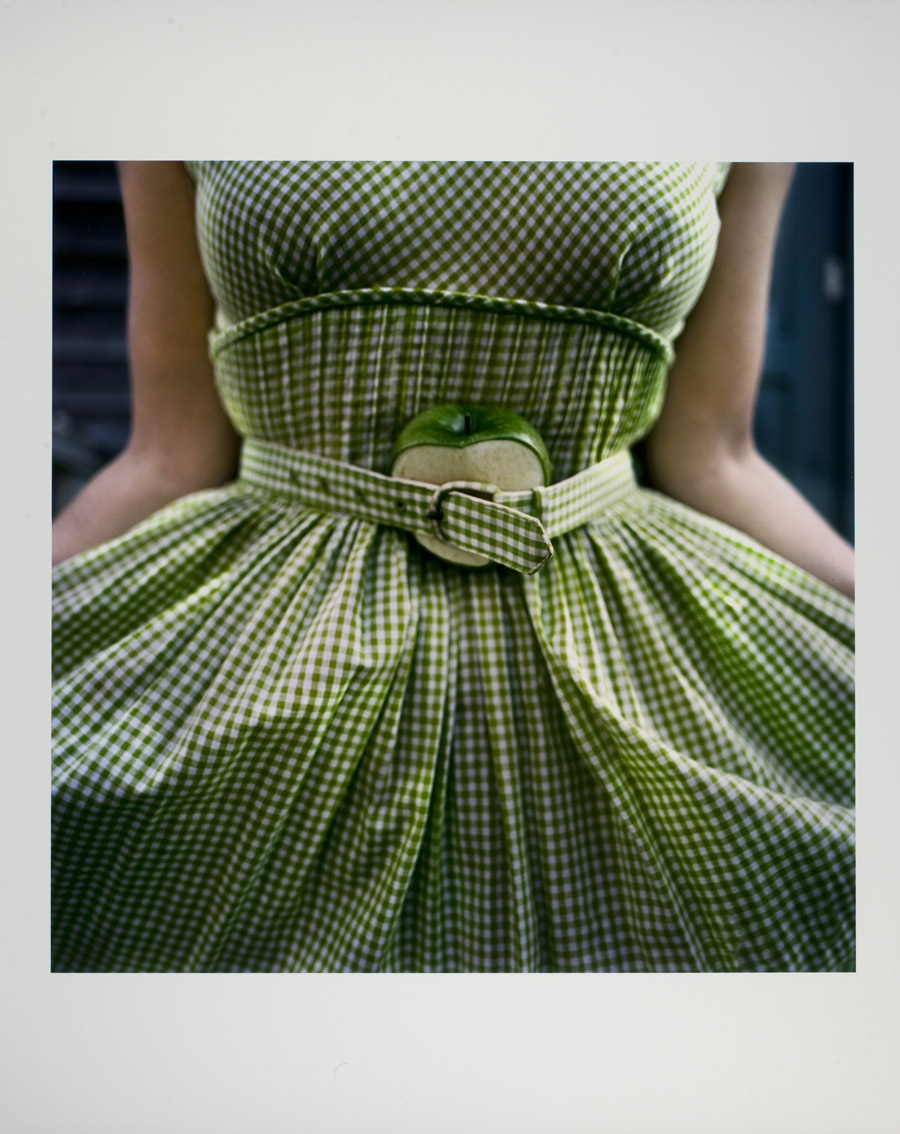
 

Fiona Foley (Australian, Queensland/New South Wales Badtjala people, Wondunna clan, Fraser Island b. 1964) 'The Oyster Fishermen #1' 2011


Fiona Foley (Australian, Queensland/New South Wales b. 1964)
Badtjala people, Wondunna clan, Fraser Island
The Oyster Fishermen #1
2011
Inkjet print on Hahnemühle paper
Purchased 2012
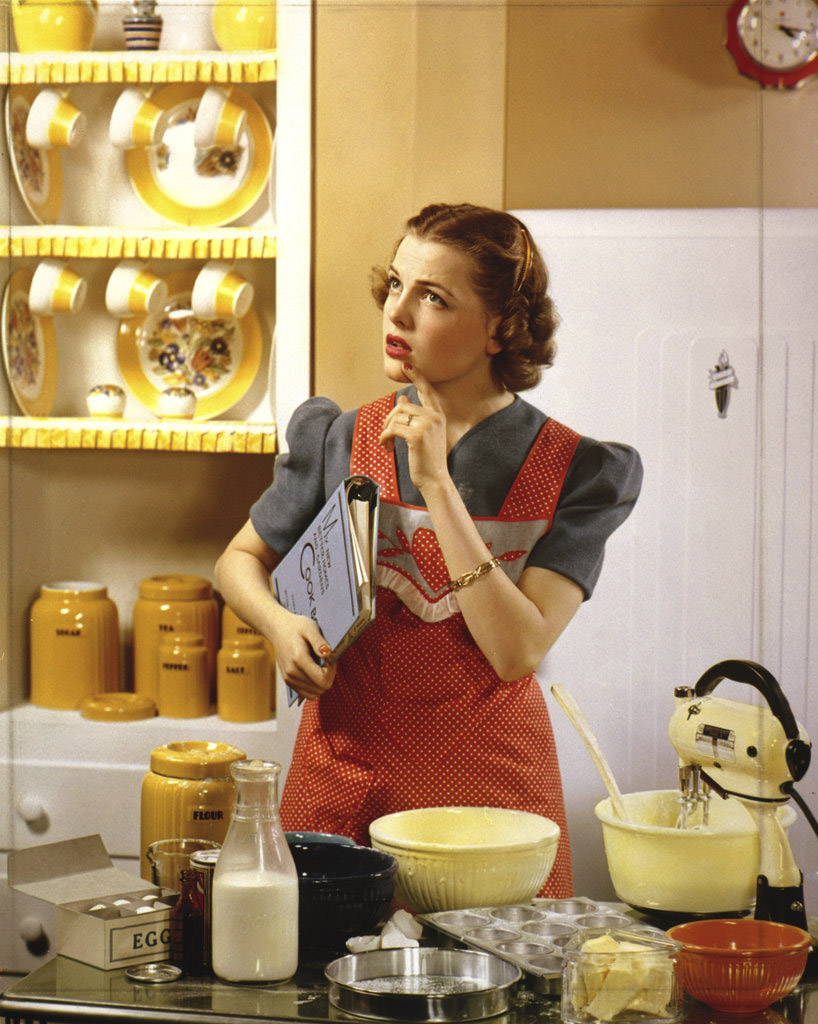
Queensland Art Gallery Foundation
Collection: Queensland Art Gallery


Vernon Ah Kee (Australian, Queensland Kuku Yalanji/Waanyi/Yidinyji/GuuguYimithirr people b. 1967) 'Tall Man' 2010 (still)


Vernon Ah Kee (Australian, Queensland b. 1967)
Kuku Yalanji/Waanyi/Yidinyji/GuuguYimithirr people
Tall Man (still)
2010
Four-channel digital video installation from DVD
Purchased 2012
Queensland Art Gallery
Collection: Queensland Art Gallery


Gordon Hookey (Australian, Queensland/New South Wales Waanyi people b. 1961) 'Blood on the wattle, blood on the palm' 2009


Gordon Hookey (Australian, Queensland/New South Wales b. 1961)
Waanyi people
Blood on the wattle, blood on the palm
2009
Oil on linen
The James C Sourris, AM, Collection
Gift of James C Sourris, AM, through the Queensland Art Gallery Foundation 2012
Donated through the Australian Government’s Cultural Gifts Program
Collection: Queensland Art Gallery


Michael Riley (Australian, New South Wales Kamilaroi/Wiradjuri people 1960-2004) 'Sacrifice (portfolio)' 1993 (detail)


Michael Riley (Australian, New South Wales 1960-2004)
Kamilaroi/Wiradjuri people
Sacrifice (portfolio) (detail)
1993
Colour cibachrome photograph
Purchased 2002
Collection: Queensland Art Gallery


Christian Thompson (Australian, Queensland/New South Wales/Victoria Bidjarra/Kunja people b. 1978) 'Black Gum 2' (from 'Australian Graffiti' series) 2008


Christian Thompson (Australian, Queensland/New South Wales/Victoria b. 1978)
Bidjarra/Kunja people
Black Gum 2 (from Australian Graffiti series)
2008
Type C photograph
Purchased 2008
The Queensland Art Gallery Foundation Grant
Collection: Queensland Art Gallery


Warwick Thornton (Australian, Northern Territory Kaytej people b. 1970) 'Stranded' 2011 (still)


Warwick Thornton (Australian, Northern Territory b. 1970)
Kaytej people
Stranded (still)
2011
3D digital video: 11.06 minutes, colour, sound
Commissioned by the 2011 Adelaide Film Festival Investment Fund
Purchased 2011
Queensland Art Gallery Foundation
Collection: Queensland Art Gallery
© Warwick Thornton. Image courtesy the artist and Stills Gallery


Gallery of Modern Art (GOMA)

The Queensland Art Gallery (QAG) and Gallery of Modern Art (GOMA) are located 150 metres from each other, on the south bank of the Brisbane River. Entrance to both buildings is possible from Stanley Place, and the river front entrance to the Queensland Art Gallery is on Melbourne Street. The Galleries are within easy walking distance to the city centre and South Bank Parklands.

Opening hours:
Daily 10.00am – 5.00pm

Gallery of Modern Art (GOMA) website

LIKE ART BLART ON FACEBOOK

Back to top

Review: ‘Tangent’ by Michael Corridore at Edmund Pearce Gallery, Melbourne

Exhibition dates: 11th September – 5th October 2013


Michael Corridore (Australian) 'Form Collage 0004' 2001


Michael Corridore (Australian)
Form Collage 0004
2001
Archival pigment print
20 x 26.5cm
© Michael Corridore


This is a patchy exhibition by Michael Corridore at Edmund Pearce Gallery.

The four small images from the initial foray into digital collage (the photograph above and the top three photographs below, all 2001) are the most striking and effective works in the exhibition. Lucid in their Duchampian layering and movement, these beautiful photographs most clearly express the conceptual ideas behind the collages. The four pieces literally stopped me in my tracks when I saw them in the gallery space. The colours are bold, the overlapping and movement refined and the effect on this viewer was profound, so intense was the visualisation of the work.

The new photographs possess a different order of being. Subtle and requiring greater contemplation there were only five images that impinged on my consciousness in the rest of the exhibition (the first five photographs after the press release below, all 2013). Even the best of them seem more an exercise in the formal qualities of digital collage rather than the élan vital of the earlier work. While Corridore re-interprets “what we see from differing perspectives and synthesise[s] those components of our observations and memory information into a two-dimensional image,” what he produces are images that are not that memorable. Interesting exercises, perhaps, in the topography of being, but not that memorable or emotive as images.

The rest of the new photographs simply did not work for me. Either there was not enough for this viewer to hang his hat on (visually speaking) or the image was so subtle and occluded behind the glass of the frame that the viewer gets no feeling, no presence from the image at all. (Of course, this is the perennial difficulty of framing dark or subtle work in a gallery environment, the ability of the viewer to actually see the work if glass or perspex is placed in front of it. Either you pin the work to the wall, or frame it without glass, or mount on aluminium but all but the latter precludes the easy sale to customers who want an artwork ready to purchase off the gallery wall). Tangentially speaking, it is as if the train of thought of the artist has wandered as he seeks other pathways to creation, pathways that fail to interestingly develop the initial topic of conversation.

It is all very well to go off at a tangent (defined as a line, curve, or surface meeting another line, curve, or surface at a common point and sharing a common tangent line or tangent plane at that point; a sudden digression or change of course), but the meeting point between artist’s intentions and the viewer’s reception have to at some point possess some common ground of interest and understanding. As it stands, I will always, always remember Corridore’s initial ‘fictional realities’ for their intensity and beauty but the later work will seep from my mind as easily as thought placed it there.

Dr Marcus Bunyan


Many thankx to Edmund Pearce Gallery for allowing me to publish the photographs in the posting. Please click on the photographs for a larger version of the image.


Michael Corridore (Australian) 'Form Collage 0015' 2001


Michael Corridore (Australian)
Form Collage 0015
2001
Archival pigment print
26.5 x 20cm
© Michael Corridore


Michael Corridore (Australian) 'Form Collage 0001' 2001


Michael Corridore (Australian)
Form Collage 0001
2001
Archival pigment print
26.5 x 20cm
© Michael Corridore


Michael Corridore (Australian) 'Form Collage 0003' 2001


Michael Corridore (Australian)
Form Collage 0003
2001
Archival pigment print
26.5 x 20 cm
© Michael Corridore


Although a departure from the Angry Black Snake series and ongoing landscape work, Tangents reflects Michael’s deep artistic practise and an ability to experiment confidently with different techniques and styles. Such strong technique reflects this photographer’s mastery of his craft.

Michael Corridore’s primary interest in his fine-art and commercial photography has been in inventing new narratives. Whether it is spectators shrouded in the smoke of burning rubber, his unique portraits of the famous and not so famous, capturing empty urban everyday spaces, or external landscapes that are at times exceptionally beautiful or beautifully strange and mysterious, you cannot help but be drawn in by Corridore’s ‘fictional realities’.

In this new series, Tangents, Corridore uses references to Cubism and art history, redefining such ideas in a modern photographic context. This project was commenced in 2000 and now in 2013 it has been fully realised by the artist due to advances in digital capture technology. Vibrant and subtle colour can now be fully preserved in the collage process.

“In this series of collages, I have returned to a series that I had started in 2000. The original series resulted in about a dozen or so photographs. My first attempts at collage were through printing negatives onto black and white Lithographic film and layering multiple sheets of those films onto a light box and photographing the assembled sheets as collages.

From there I decided to experiment with digital capture of the original components and assemble the layers in photoshop so that I could preserve colour, which was lost in the lithographic printing process. This was my first foray into working with digital capture technology.

In the past year I began to explore this collage process again photographing various forms working with life models, mannequins and various household objects which offered me the opportunity to explore both malleable and solid forms and shapes that could be layered together in the assembled collages.

This exploration in collage stems from my interest in the Cubists approach to re-interpreting what we see from differing perspectives and synthesise those components of our observations and memory information into a two-dimensional image.”

Michael Corridore artist statement 2013


Michael Corridore (Australian) 'Form 3784' 2013


Michael Corridore (Australian)
Form 3784
2013
Archival pigment print
100 x 67cm
© Michael Corridore


Michael Corridore (Australian) 'Form 3781' 2013


Michael Corridore (Australian)
Form 3781
2013
Archival pigment print
100 x 67cm
© Michael Corridore


Michael Corridore (Australian) 'Form 4107' 2013


Michael Corridore (Australian)
Form 4107
2013
Archival pigment print
100 x 67cm
© Michael Corridore


Michael Corridore (Australian) 'Form 4102' 2013


Michael Corridore (Australian)
Form 4102
2013
Archival pigment print
100 x 67cm
© Michael Corridore


Michael Corridore (Australian) 'Form 0137' 2013


Michael Corridore (Australian)
Form 0137
2013
Archival pigment print
100 x 67cm
© Michael Corridore


Michael Corridore (Australian) 'Form 3783' 2013


Michael Corridore (Australian)
Form 3783
2013
Archival pigment print
100 x 67cm
© Michael Corridore


Edmund Pearce Gallery

This gallery has now closed.

LIKE ART BLART ON FACEBOOK

Back to top