As a follow up to my posting ‘How to Understand the Light on a Landscape’ by Pablo Helguera, my friend and photographer Ian Lobb sent me this text from the first few pages of the novel Across by Peter Handke (1986). In the novel the narrator, Andreas Loser, knocks down a stranger in the street, takes a leave of absence from his post as teacher of ancient languages and leaves his family to move to a drab flat in a housing development.
“Handke’s novel tells the story of a quiet, organised classics teacher named Andreas Loser. One night, on the way to his regularly scheduled card game, he passes a tree that has been defaced by a swastika. Impulsively yet deliberately, he tracks down the defacer and kills him. With this act, Loser has crossed an invisible threshold, and will be stuck in this secular purgatory until he can confess his crime.”
In this wonderful piece of text the first paragraph sets the scene before one of the most inspired pieces of writing, a meditation on story, on nothing, on light, joy and emptiness – a story of “Emptiness” that is fullness.
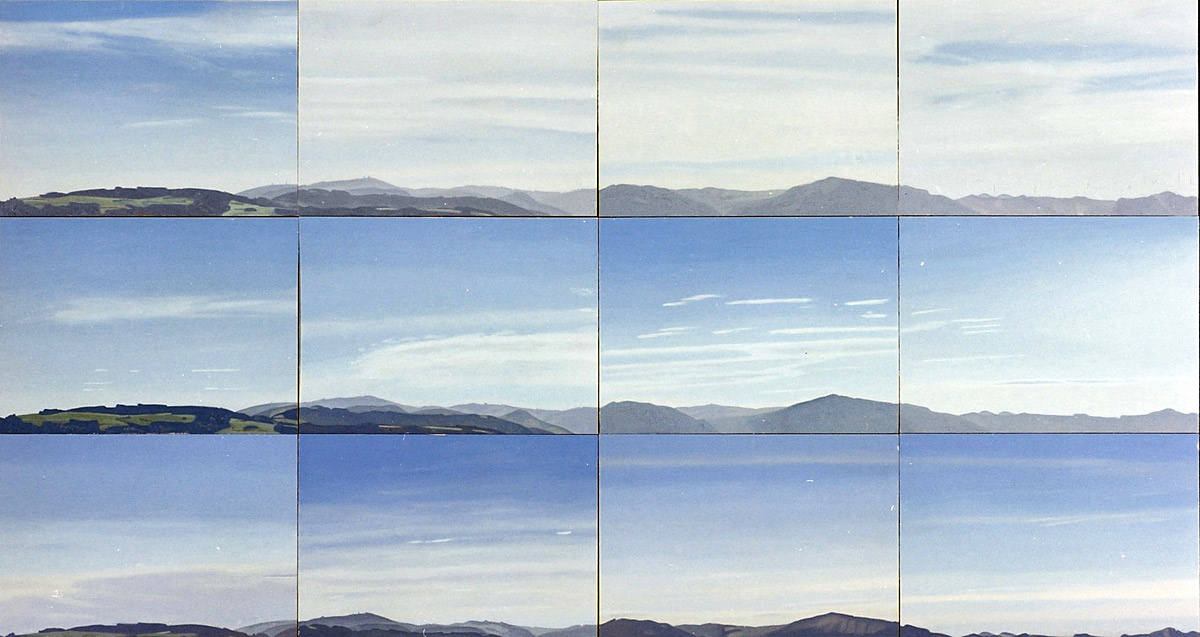
Peter Dreher (German, b. 1932) Schöne Tage im Hochschwarzwald 1999 Oil on canvas
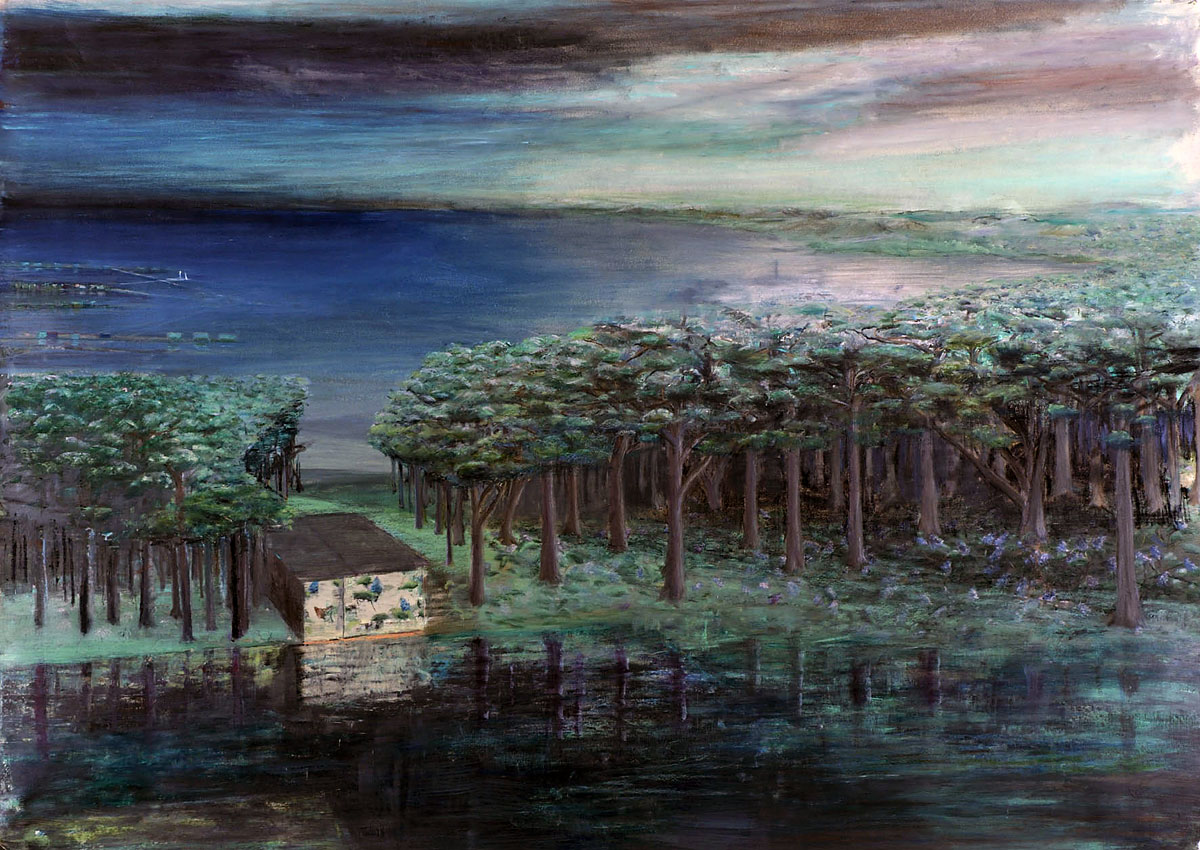
Friederike Jokisch (German, b. 1981) Domizil 2009 Pastel
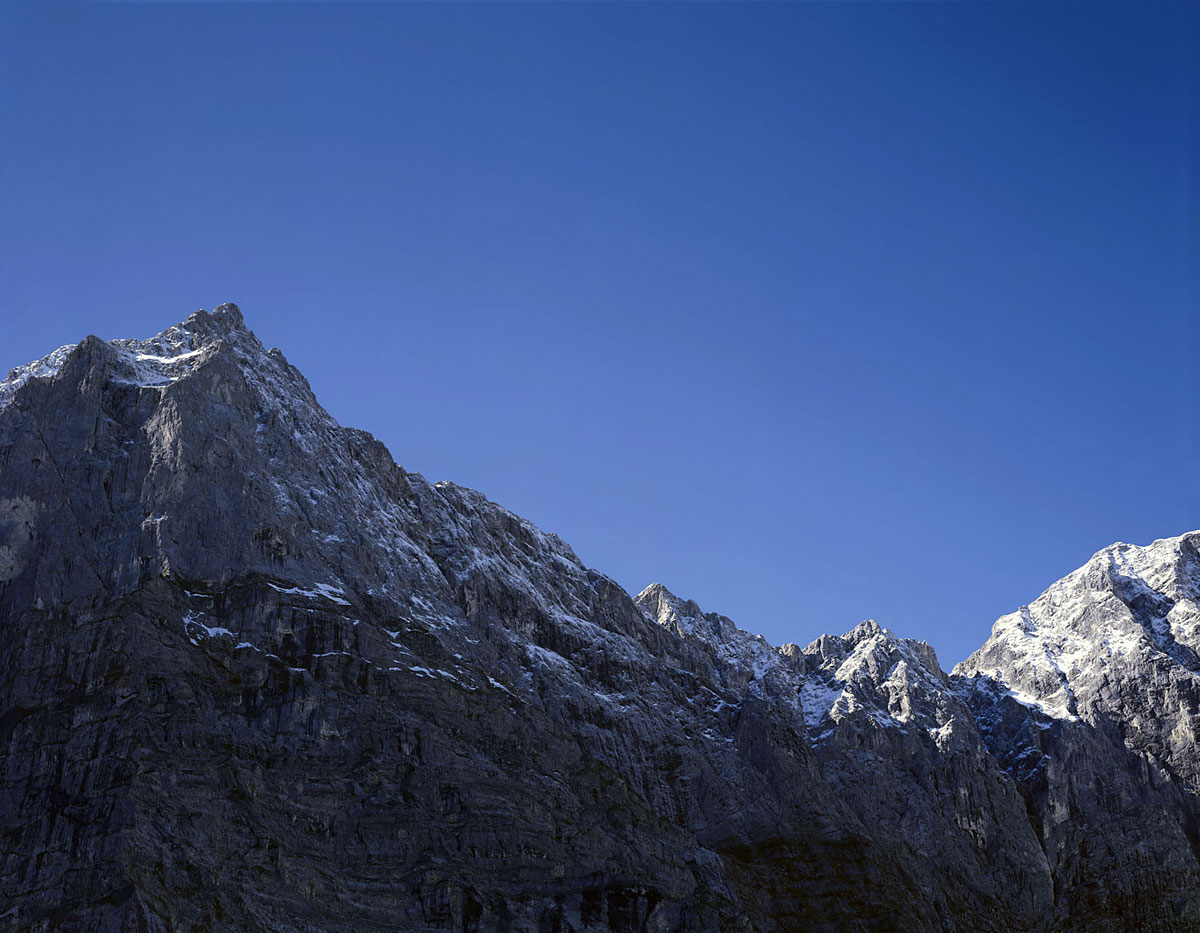
Josef Schulz (Polish, b. 1966) Felswand #3 2008 Type C print Diasec
Nature became landscape long ago. Since the Romantic period landscape has furthermore been an aesthetic position. But what is landscape for the modern human being? The thematic exhibition “Open Landscape” at the Galerie Wagner + Partner provides a juxtaposition of multigenerational photographic and pictorial approaches to this question. The reference point for all participating artists is the real landscape.
The works of Thomas Wrede and Joseph Schulz increase their charm through friction between photorealistic representation extended through staging and intervention. Wrede, in his series entitled “Real Landscapes” combines the natural beauty of landscape with constructed miniature models. The landscapes photographed in this way appear seductively plausible and exaggerate the romantic projection.
Schulz similarly aims for an aesthetic exaggeration and idealisation through digital intervention in his nature photographs of the series “Terraform”. Through the elimination of human traces he reconstructs the lost primordial state of nature and creates people’s “internal” images of the landscape.
Similarly originating from actual landscape, Peter Dreher’s “Schwarzwaldlandschaft” (Black Forest Landscape) appears idealistic. It almost appears to be based on the tradition of “Heimatmalerei” (patriotic landscape painting). Viewed in close proximity however, the picture’s elements are ordered according to days and time. Each single picture documents what the artist saw and captured at precisely this point in time. Only when viewed as a whole an abstract picture of landscape as space-time-construct appears.
The central theme of Neo Rauch-student Friederike Jokisch is the landscape beyond the established idyll. Her large format pastel paintings make the process of transformation from nature to landscape tangible. In striking pictures “landscape” is demystified and instead ruptures and alienations between culture and nature become central themes.
The exhibition consciously poses more questions, attempts to find fewer answers. At the same time it continues the theme of the previous exhibition “The Nightingale’s Secret Garden”.
Text from the Galerie Wagner + Partner website [Online] Cited 14/07/2010 no longer available online
Thomas Wrede (German, b. 1963) Drive In Theatre 2009 Lambda Print Diasec
Thomas Wrede (German, b. 1963) In the Tertiary Valley 2008 Lambda Print Diasec
Open Landscape exhibition view at Galerie Wagner + Partner, 2010
A huge gallery crawl on Wednesday last saw me take in exhibitions at Nellie Castan Gallery (Malleus Melficarum: strong sculptural work by James and Eleanor Avery; Broken Canon: vibrant mixed media collages by Marc Freeman); Anita Traverso Gallery (Peristereonas: sculptures, photographs and mixed media by Barry Thompson); John Buckley Gallery (Perpetua by Emma can Leest, beautiful cut paper works; rather mundane paintings by Christian Lock); Karen Woodbury Gallery (Every breath you take: wonderful galaxy-like paintings, perhaps as seen by the Hubble telescope, with a geometric / cellular base by Lara Merrett); The Centre for Contemporary Photography (Event horizon: a group exhibition that “engages the horizon as a means to establish a physical locality with relation to the Earth’s surface and more broadly to the universe of which it is a miniscule component.” An exhibition that left me rather cold); and ACCA (Towards an elegant solution by Peter Cripps, again a singularly unemotional engagement with the precise, contained work: interesting for how the work explores spatial environments but in an abstract, intellectual way).
The stand out work from this mammoth day was Jill Orr: Vision at Jenny Port Gallery. Simply put, it was the strongest, most direct, most emotionally powerful work that I saw all day.
Dr Marcus Bunyan
Many thankx to Amelia Douglas and Jenny Port Gallery for allowing me to publish the photographs in this posting.
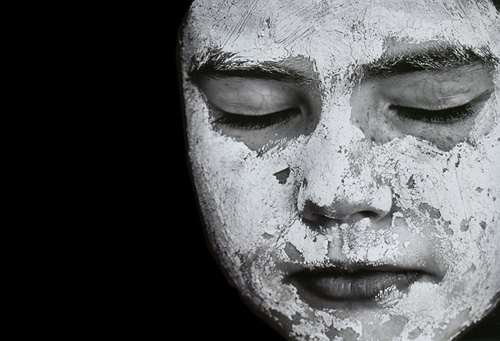
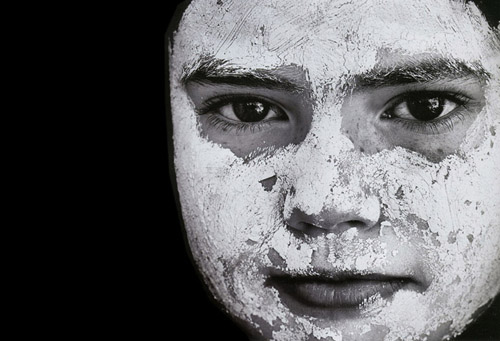
Jill Orr (Australian, b. 1952) Megan 2009
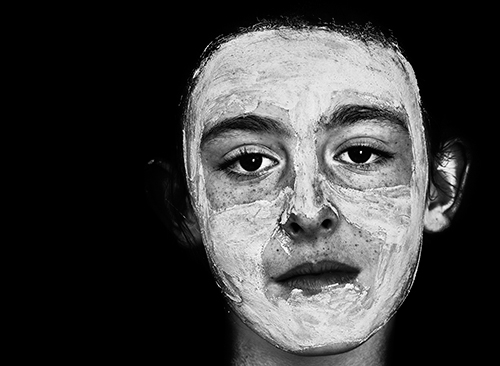
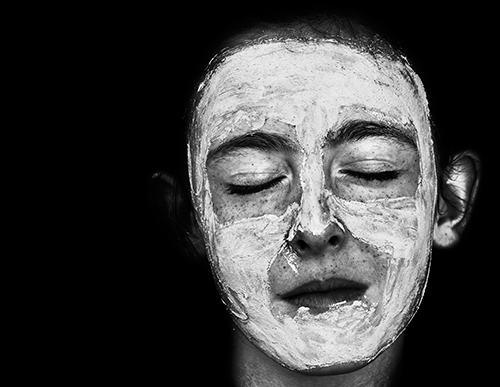
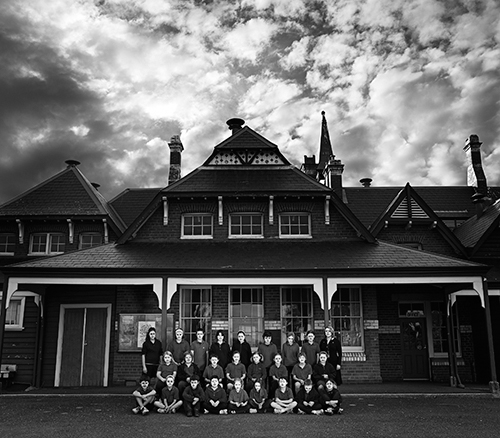
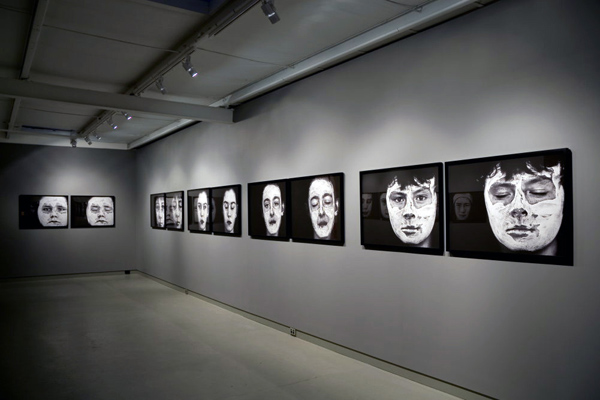
Jill Orr’s new participatory performances are photographs of children from Avoca Primary School painted with white clay from the area, displayed in pairs. The children are photographed once with eyes open, once with eyes closed. Orr asked the children to imagine their future life when they had their eyes closed. The key to the work is a group photograph of the ghostly children outside the primary school where everyone is isolated from each other (see photograph below).
“White faces loom up out of a dark ground, described by Orr as a void. On the surface these portraits are finely crafted, the skin of masked face becomes one with the digital file to create a facial landscape. The materiality of the face and the photographic file are exposed for the viewer. Titling the series ‘vision’ Orr ventures into a ‘haptic visuality’ where “vision itself can be tactile, as though one were touching a film with one’s eyes.”
From the catalogue essay by Professor Anne Marsh, Monash University
In the performance, the ritual of being photographed, Orr instructs the children who are placed under the surveillance of the camera. “We are confronted with the pose, the conscious composition of the image to be photographed, the inherent constructedness of the posed photograph.”1 The child assumes the pose by which they wish to be memorialised. The gaze (of the camera, of the viewer) is returned / or not in this spectacle.
Something happens when we look at these photographs. The text of the photographs becomes intertextual, producing as Barthes understands a “plurality of meanings and signifying / interpretive gestures that escape the reduction of knowledge to fixed, monological re-presentations, or presences.”2 This is because, as Foucault observes, texts “are caught up in a system of references to … other texts, other sentences: it is a node within a network … Its unity is variable and relative.”3
The photographs invite us to share not only the mapping of the surface of the skin and the mapping of place (the history of white people living on the land in country Australia) and identity but the sharing of inner light, the light of the imaginary as well – and in this observation the images become unstable, open to reinterpretation. The distance between viewer and subject is transcended through an innate understanding of inner and outer light. The photographs seduce, meaning, literally, to be led astray.
As American photographer Minor White, who photographed in meditation hoping for a revelation in spirit though connection between person > subject > camera > negative > print, observes in one of his Three Canons
When the image mirrors the man And the man mirrors the subject Something might take over 4
Here the power of the photographer acting in isolation, the modernist tenet of authorship, is overthrown. In it’s place, “White supposes a relationship with subject that is a two way street: by granting the world some role in its own representation we create a photograph that is not so much a product solely of individual actions as it is the result of a negotiation in which the world and all its subjects might participate.”5 The autobiography of a soul born in the age of mechanical reproduction. This is the power of these photographs for something intangible within the viewer does take over. I found myself looking at the photographs again and again for small nuances, the detail of hairs on the head, the imagining of what the person was thinking about with their eyes closed: their future, their fears, their hopes, the ‘active imagination as a means to visualise sustainable futures’ (Orr, 2010).
These photographs seem to lengthen or protract time through this haptic touching of inner light. As Pablo Helguera observes in his excellent essay How To Understand the Light on a Landscape that examines different types of light (including experiental light, somber light, home light, ghost light, the light of the deathbed, protective light, artificial light, working light, Sunday light, used light, narrated light, the last light of day, hotel light, transparent light, after light, the light of the truly blind and the light of adolescence but not, strangely, inner light)
“Experience is triggered by light, but not exclusively by the visible light of the electro-magnetic spectrum. What the human eye is incapable to perceive is absorbed by other sensory parts of the body, which contribute to the perception that light causes an effect that goes beyond the merely visual …
There is the LIGHT OF ADOLESCENCE, a blinding light that is similar to the one we feel when we are asleep facing the sun and we feel its warmth but don’t see it directly. Sometimes it marks the unplace, perhaps the commonality of all places or perhaps, for those who are pessimists, the unplaceness of every location …
We may choose to openly embrace the darkness of light, and thus let ourselves through the great gates of placehood, where we can finally accept the unexplainable concreteness of our moments for what they are.”6
In the imagination of the darkness that lies behind these children’s closed eyes is the commonality of all places, a shared humanity of memory, of dreams. These photographs testify to our presence and ask us to decide how we feel about our life, our place and the relation to that (un)placeness where we must all, eventually, return.
Dr Marcus Bunyan
1/ Feiereisen, Florence and Pope, Daniel. “True Fiction and Fictional Truths: The Enigmatic in Sebald’s Use of Images in The Emigrants” in Patt, Lise (ed.,). Searching for Sebald: Photography after W.G. Sebald. Los Angeles: The Institute of Cultural Inquiry, 2007, p. 175.
2/ Barthes, Roland. “From Work to Text” in Image, Music, Text. trans. S. Heath. New York: Hill and Wang, 1977 quoted in Thumlert, Kurt. Intervisuality, Visual Culture, and Education. [Online] Cited 10/08/2006. www.forkbeds.com/visual-pedagogy.htm (link no longer active)
3/ Foucault, Michel. The Order of Things: An Archeology of the Human Sciences. New York: Vintage, 1973 quoted in Thumlert, Kurt. Intervisuality, Visual Culture, and Education. [Online] Cited 10/08/2006. www.forkbeds.com/visual-pedagogy.htm (link no longer active)
4/ White, Minor. Mirrors, Messages and Manifestations. Aperture, 1969
5/ Leo, Vince. Review of Mirrors, Messages and Manifestations on the Amazon website [Online] Cited 26/06/2010
6/ Helguera, Pablo. “How to Understand the Light on a Landscape,” in Patt, Lise (ed.,). Searching for Sebald: Photography after W.G. Sebald. Los Angeles: The Institute of Cultural Inquiry, 2007, pp. 110-119
Jill Orr (Australian, b. 1952) Jacinta 2009
Jill Orr (Australian, b. 1952) Avoca Primary School 2009
Jill Orr’s work centres on issues of the psycho-social and environmental where she draws on land and identities. Grappling with the balance and discord that exists between the human spirit, art and nature, Orr has, since the 1970s, delighted, shocked and moved audiences through her performance installations.
This current body of work involved children from the Avoca Primary School as active participants in Orr’s performance for the camera. The result is a series of high contrast black and white photographic portraits, which are shown as diptychs portraying the different states of seeing both outwardly and inwardly. One of each pair frames the child looking directly at the camera. The gaze meets the viewer. Who is looking at whom? The second captures the child whose eyes are closed. An inner world is intimated, but not accessible to the viewer.
In terms of the ‘gaze’, these works turn to the child as conveyer of the imaginary engaging both within and without. “I have found that creative acts require the visionary sensibilities of both the inner and outer world to operate simultaneously, consciously and unconsciously as dual aspects of the one action. In this instance the action is that of active imagination as a means to visualise sustainable futures.” (Jill Orr, 2010). The portraits also reflect the present relationship to place that is etched into the faces of youth as already kissed by the harsh Australian sun.
Avoca is one of many townships that has been socially, economically and environmentally affected by drought and climate change. The portraits are created against this background.
Text from the Jenny Port Gallery website [Online] Cited 26/06/2010 no longer available online
Jill Orr (Australian, b. 1952) Vision installation photographs at Jenny Port Gallery June 2010 Photos: Marcus Bunyan
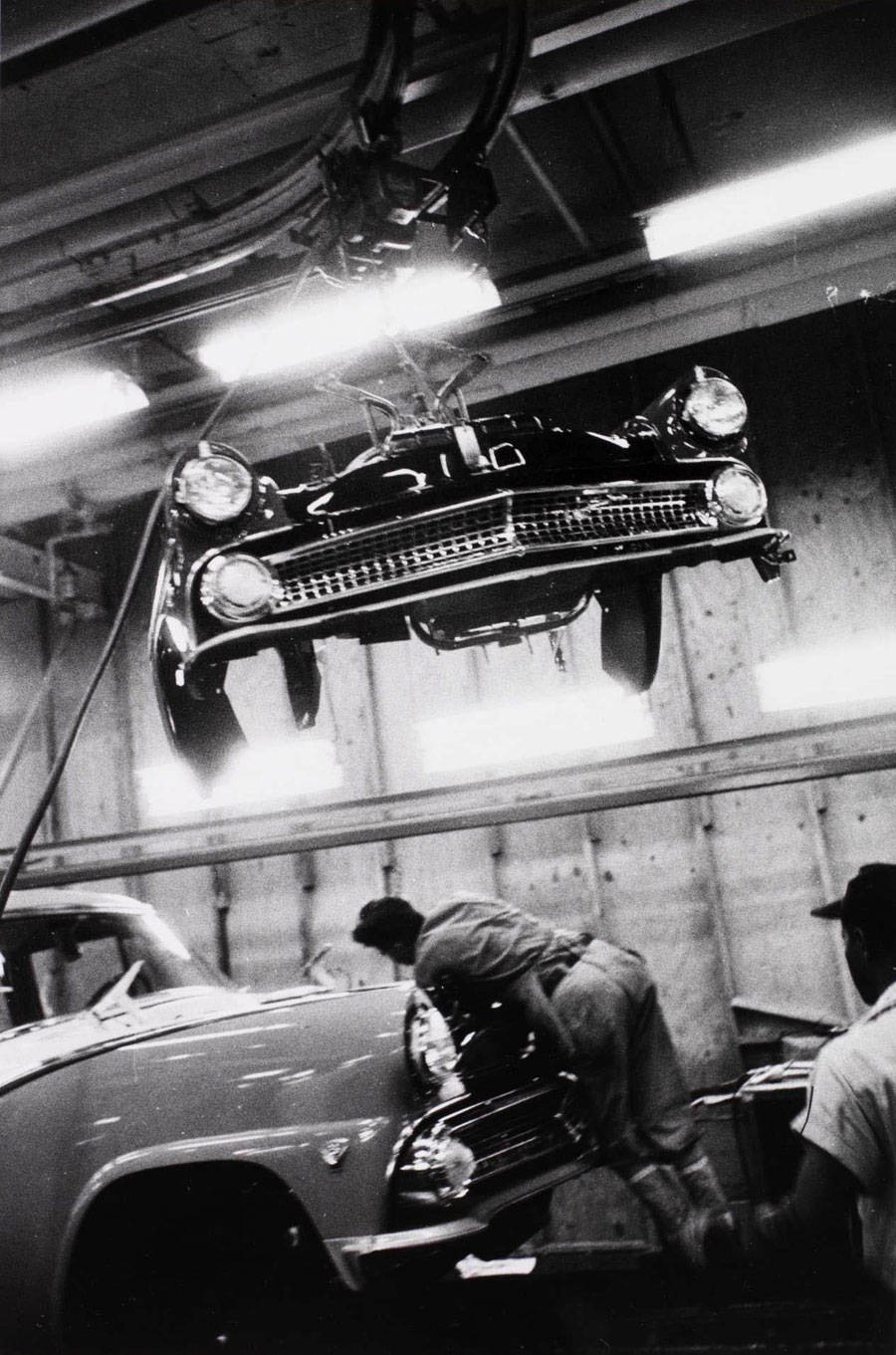
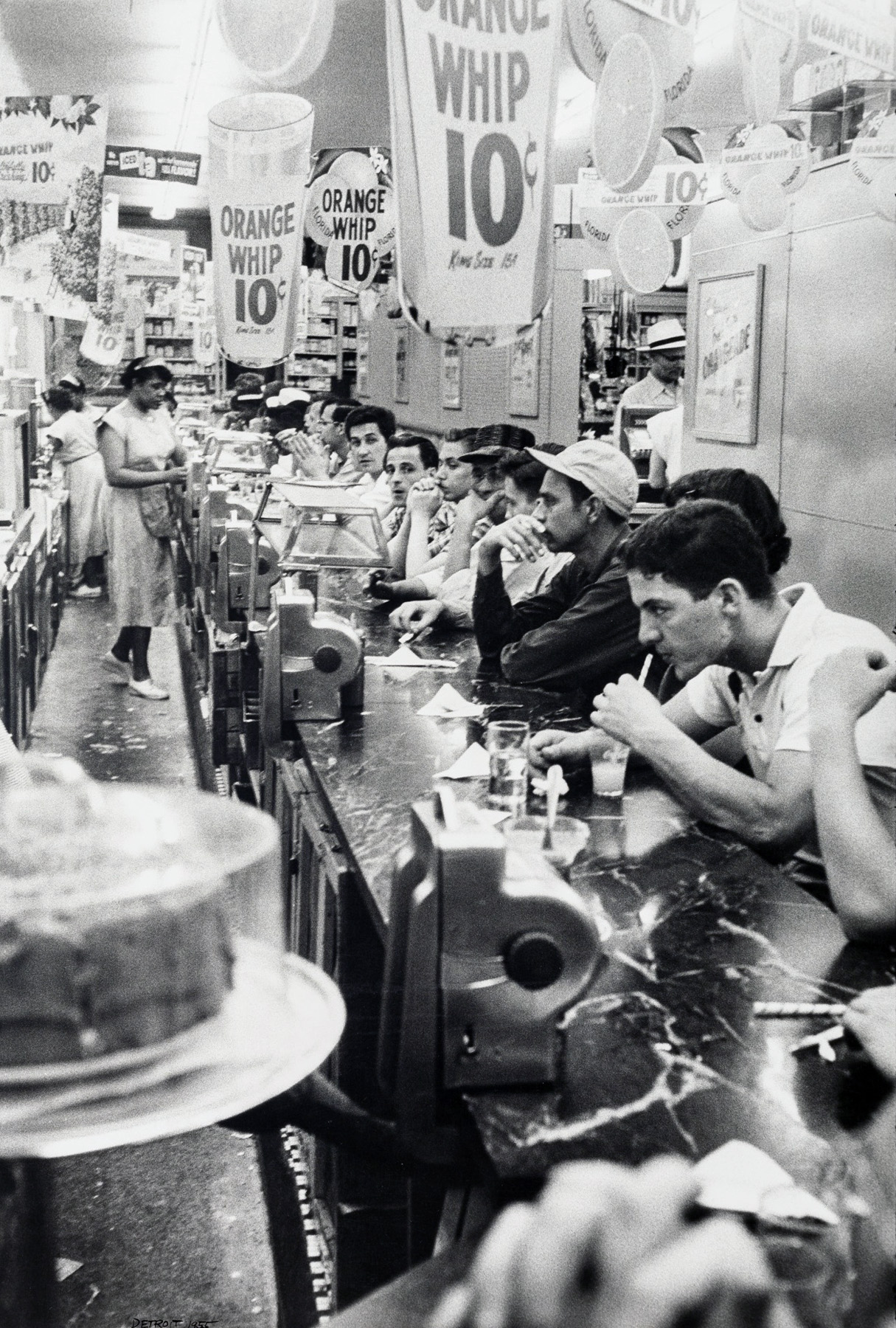
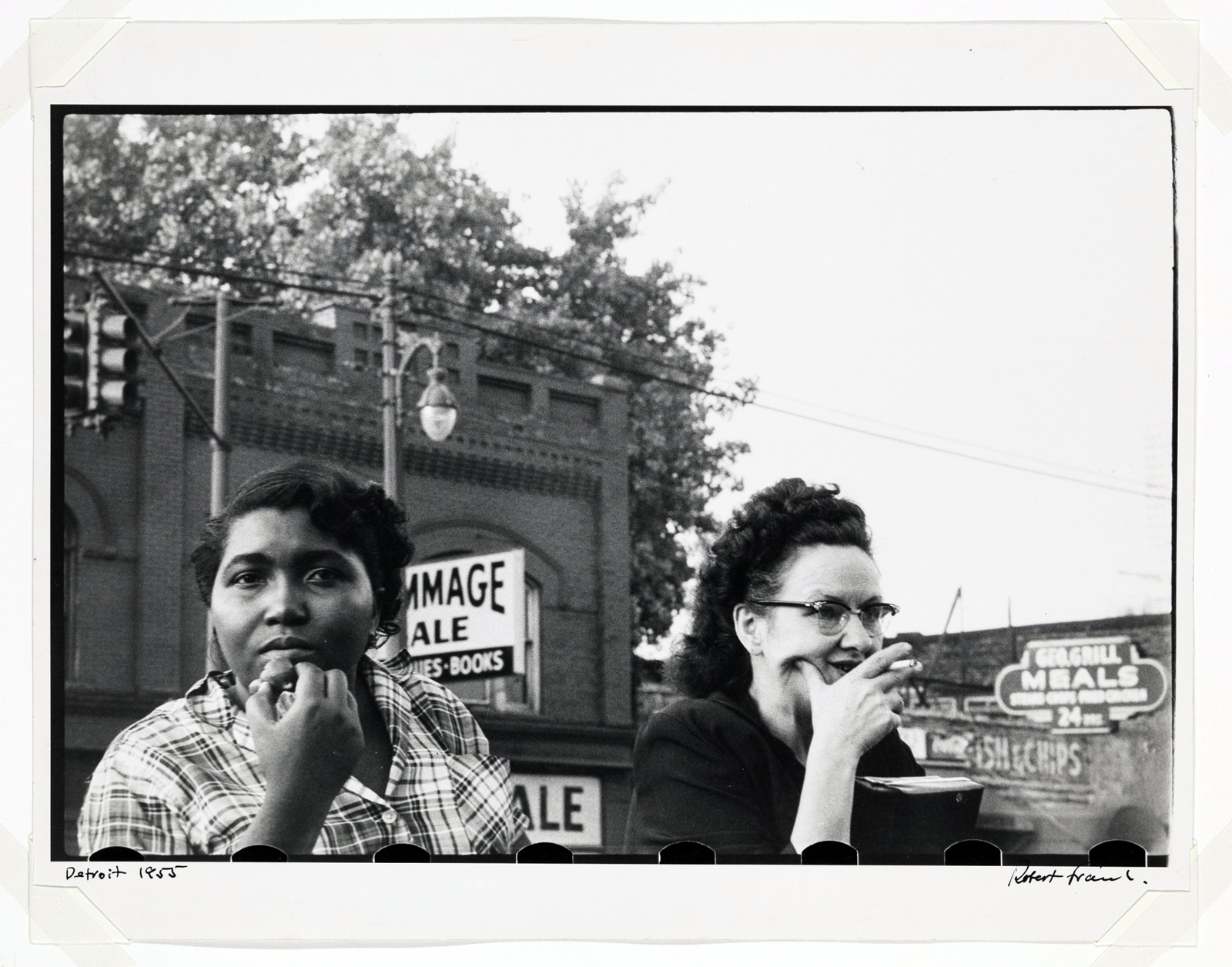
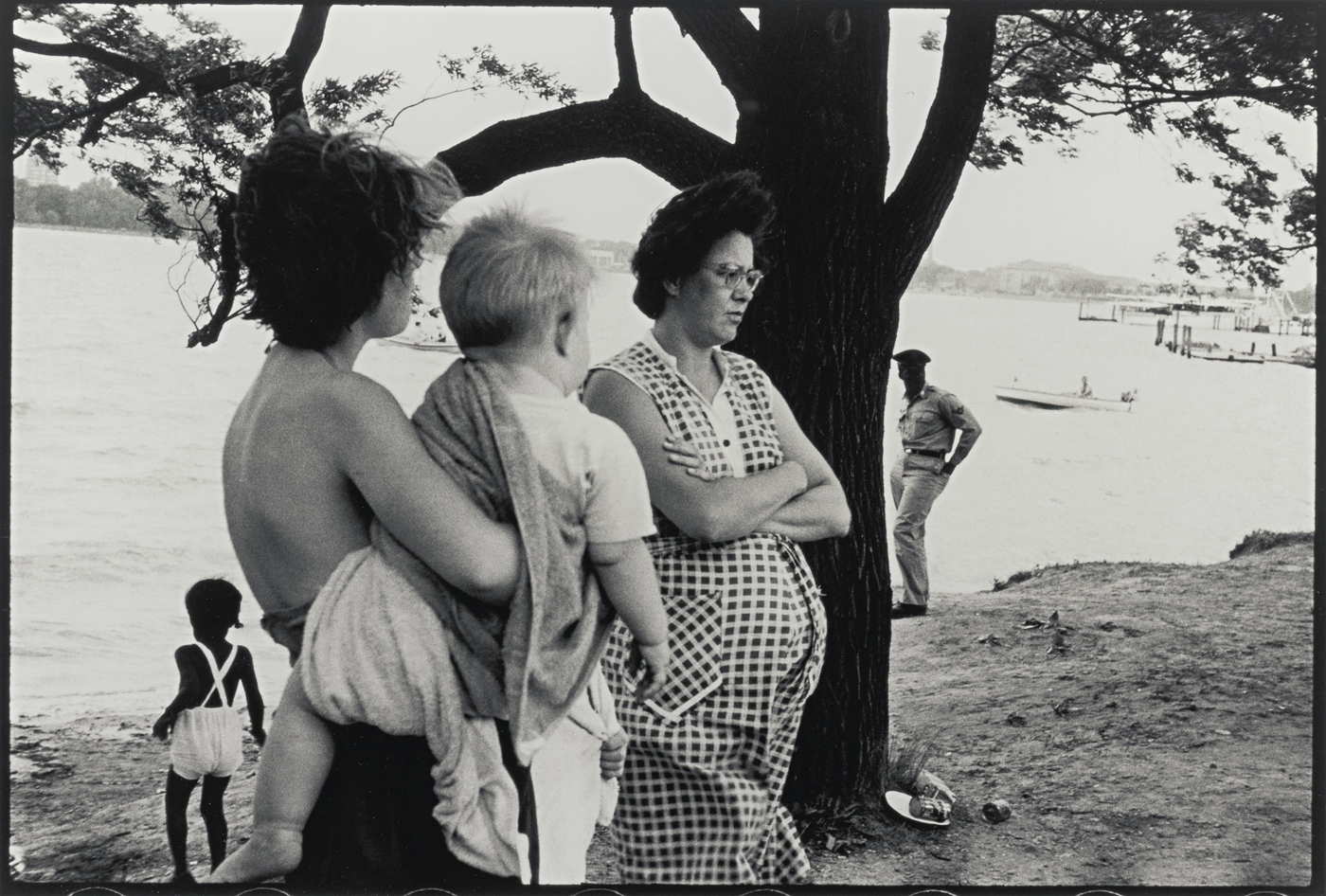
Many thankx to Pamela Marcil and the Detroit Institute of Arts for allowing me to reproduce the photographs in the posting. Please click on the photographs for a larger version of the image.
Marcus
“I am always looking outside, trying to look inside, trying to say something that is true. But maybe nothing is really true. Except what’s out there. And what’s out there is constantly changing.”
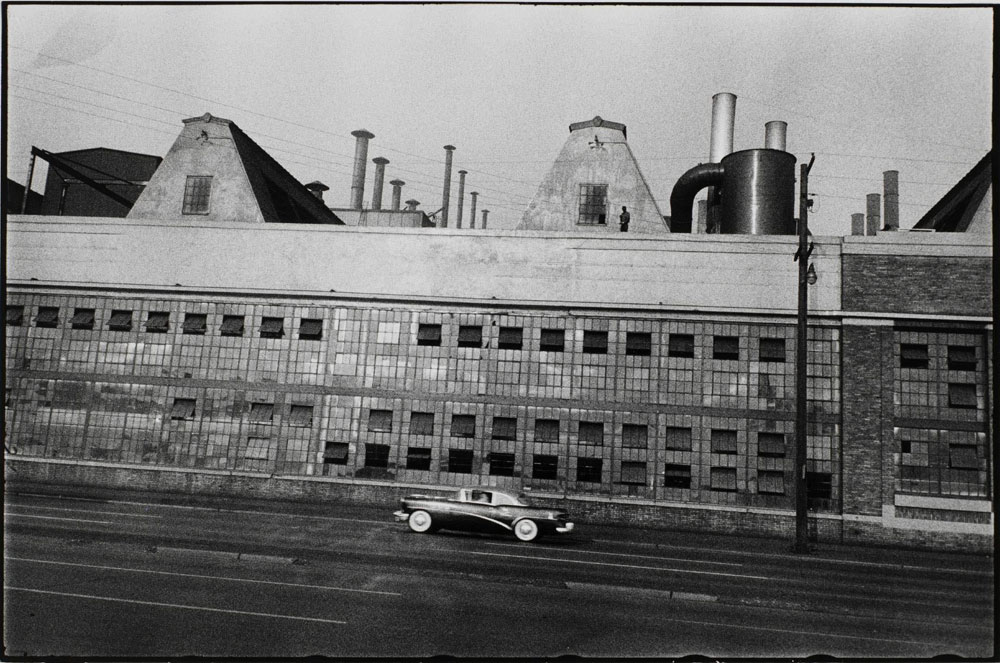
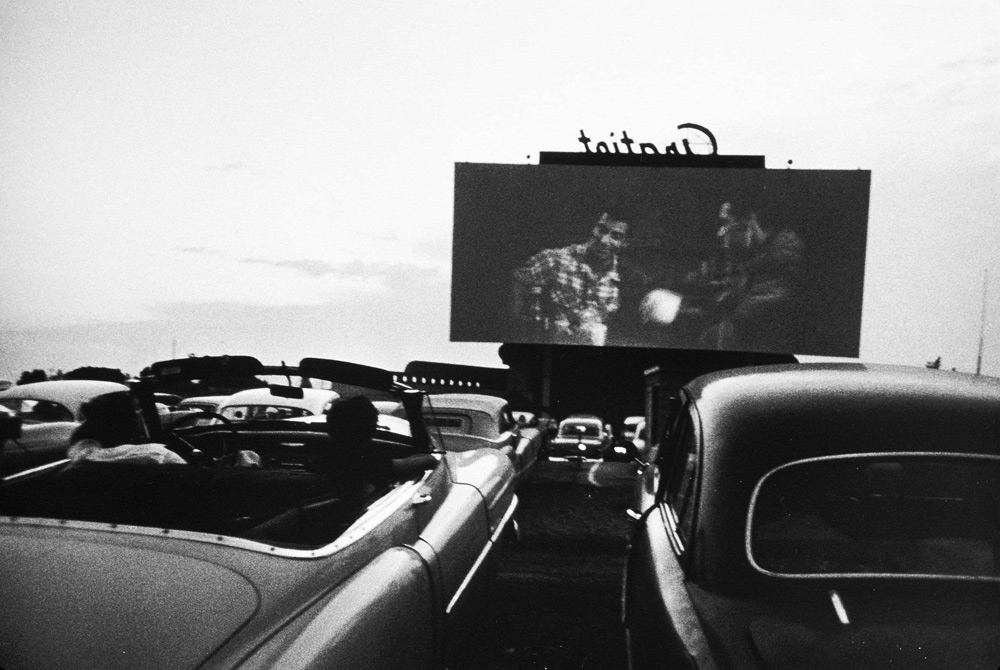
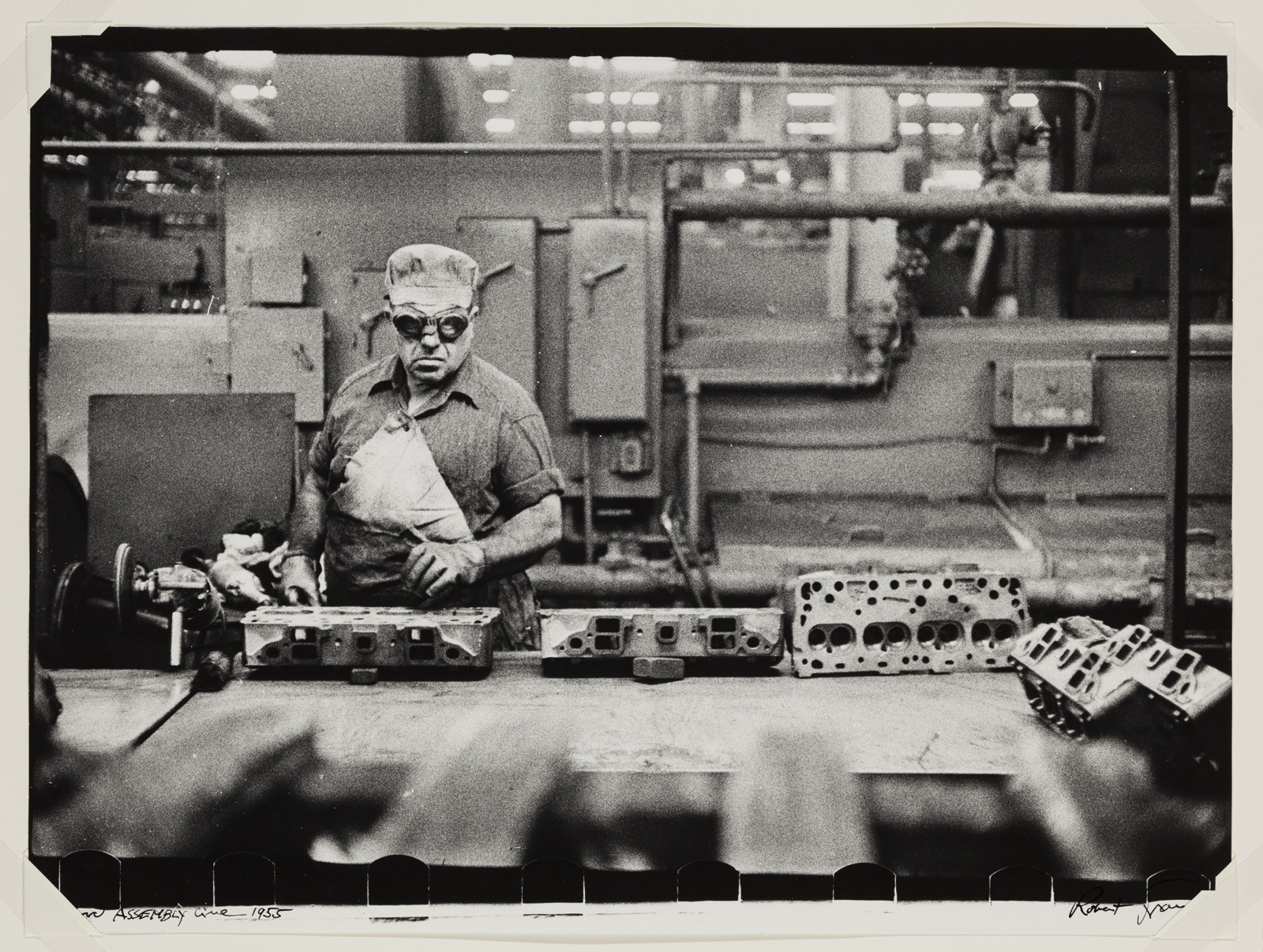
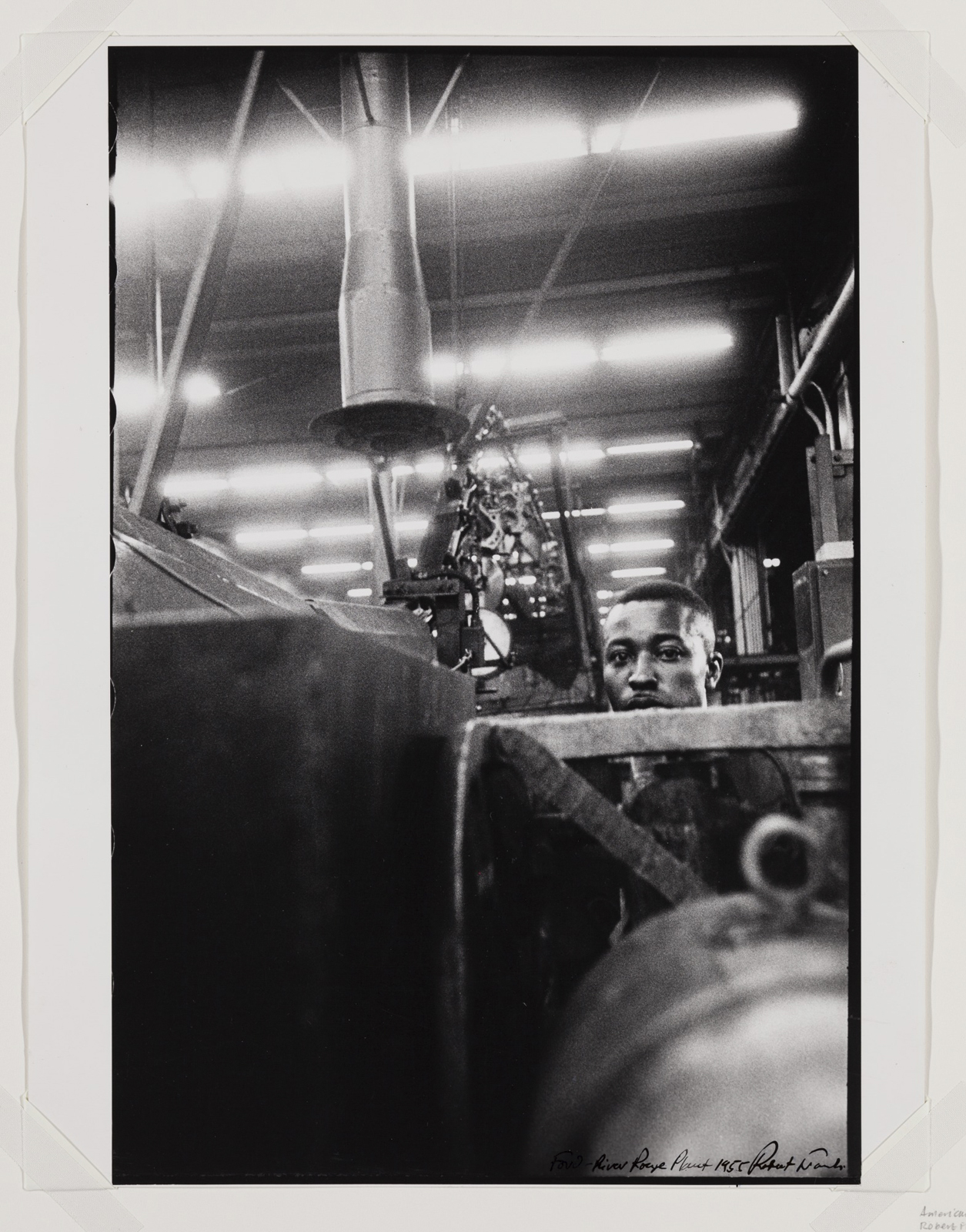
Detroit Experiences: Robert Frank Photographs, 1955 showcases more than 50 rare and many never-before-seen black-and-white photographs taken in Detroit by legendary artist Robert Frank. The exhibition will be on view at the Detroit Institute of Arts (DIA) March 3 – July 4, 2010. The exhibition is free with museum admission.
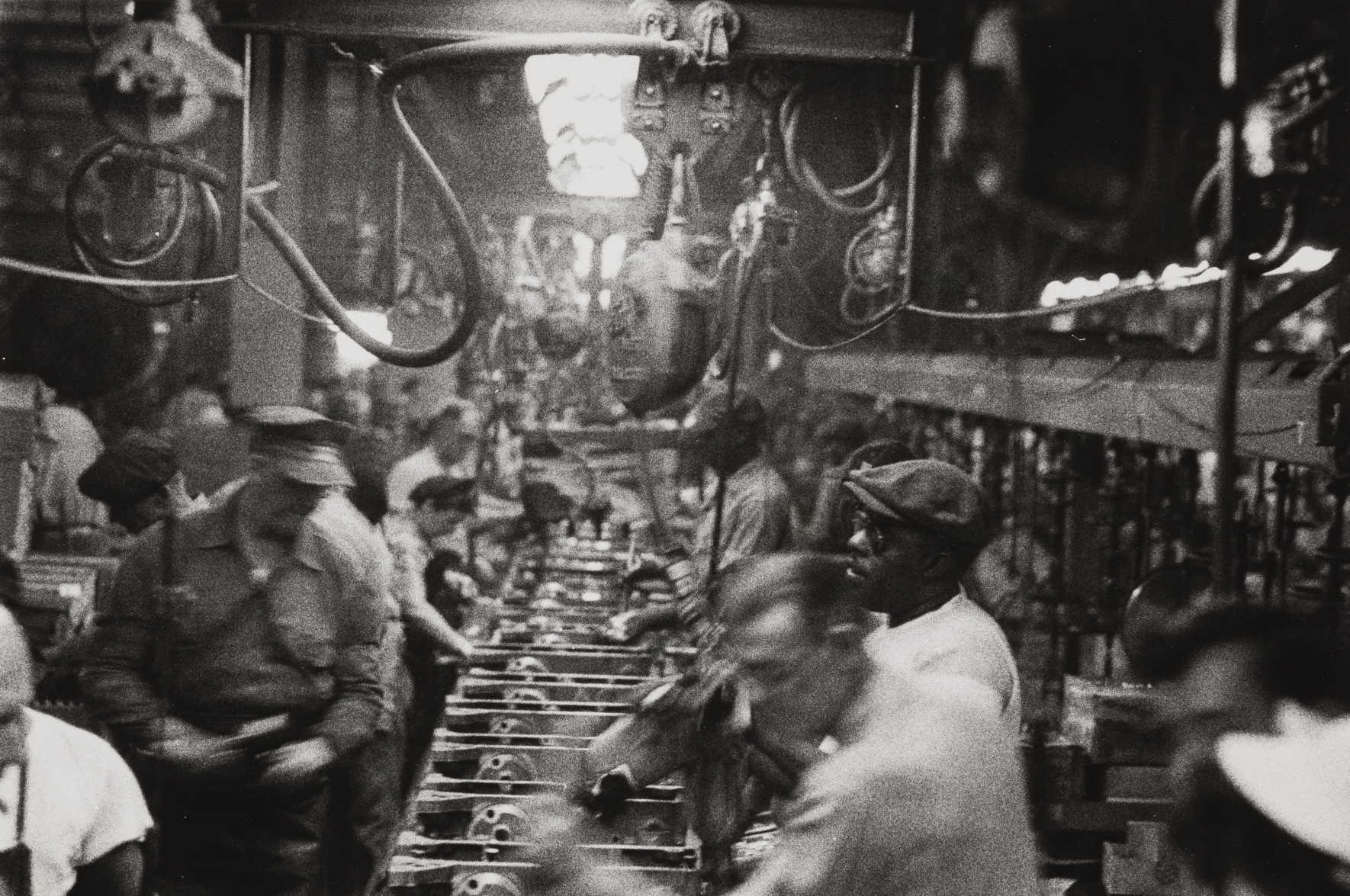
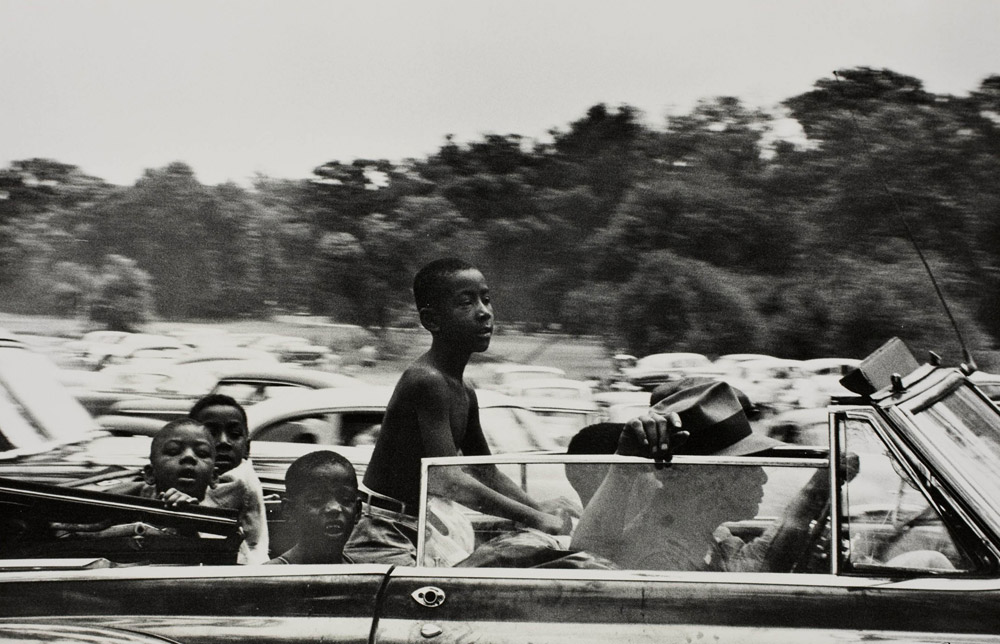
In 1955 and 1956 Robert Frank traveled the U.S. taking photographs for his groundbreaking book The Americans, published in 1958. With funding from a prestigious Guggenheim grant, he set out to create a large visual record of America, and Detroit was one of his early stops. Inspired by autoworkers, the cars they made, along with local lunch counters, drive-in movies and public parks such as Belle Isle, Frank transformed everyday experiences of Detroiters into an extraordinary visual statement about American life.
According to Frank, The Americans included “things that are there, anywhere, and everywhere … a town at night, a parking lot, the man who owns three cars and the man who owns none … the dream of grandeur, advertising, neon lights … gas tanks, post offices and backyards …” The exhibition includes nine Detroit images that were published in The Americans, as well as, for the first time, an in-depth body of work representative of Frank’s Detroit, its working-class culture and automotive industry.
Frank was drawn to Detroit partly by a personal fascination with the automobile, but also saw its presence and effect on American culture as essential to his series. Frank was one of the few photographers allowed to take photographs at the famous Ford Motor Company River Rouge factory, where he was amazed to witness the transformation of raw materials into fully assembled cars. In a letter to his wife he wrote, “Ford is an absolutely fantastic place … this one is God’s factory and if there is such a thing – I am sure that the devil gave him a helping hand to build what is called Ford’s River Rouge Plant.” Frank spent two days taking pictures at the Ford factory, photographing workers on the assembly lines and manning machines by day, and following them as they ventured into the city at night.
Whether in the disorienting surroundings of a massive factory or during the solitary and alienating moments of individuals in parks and on city streets, the Swiss-born photographer looked beneath the surface of life in the U.S. and found a culture that challenged his perceptions and popular notions of the American Dream. Further accentuating his view of America, Frank developed an unconventional photographic style innovative and controversial in its time. Photographing quickly, Frank sometimes tilted and blurred compositions, presenting people and their surroundings in fleeting and fragmentary moments with an unsentimental eye.
Beat poet Jack Kerouac expressed the complex nature of the artist and his work in a passage from his introduction to The Americans stating, “Robert Frank, Swiss, unobtrusive, nice, with that little camera that he raises and snaps with one hand he sucked a sad poem right out of America onto film, taking rank among the tragic poets of the world.”
Born in 1924 in Zurich, Switzerland, Frank emigrated to the U.S. in 1947. He worked on assignments for magazines from 1948–53, but his photographic books garnered the highest acclaim. After publishing The Americans, he began filmmaking and directed the early experimental masterpiece Pull My Daisy, in collaboration with Jack Kerouac in 1959. Frank continues to work in both film and photography and has been the subject of many traveling exhibitions in recent years. The National Gallery of Art, Washington, D.C. established Frank’s photographic archive in 1990 and organised his first traveling retrospective, “Moving Out, in 1995” as well as a 2009 exhibition “Looking In: Robert Frank’s “The Americans”.” Frank lived in Mabou, Nova Scotia, and New York City with his wife, artist June Leaf.
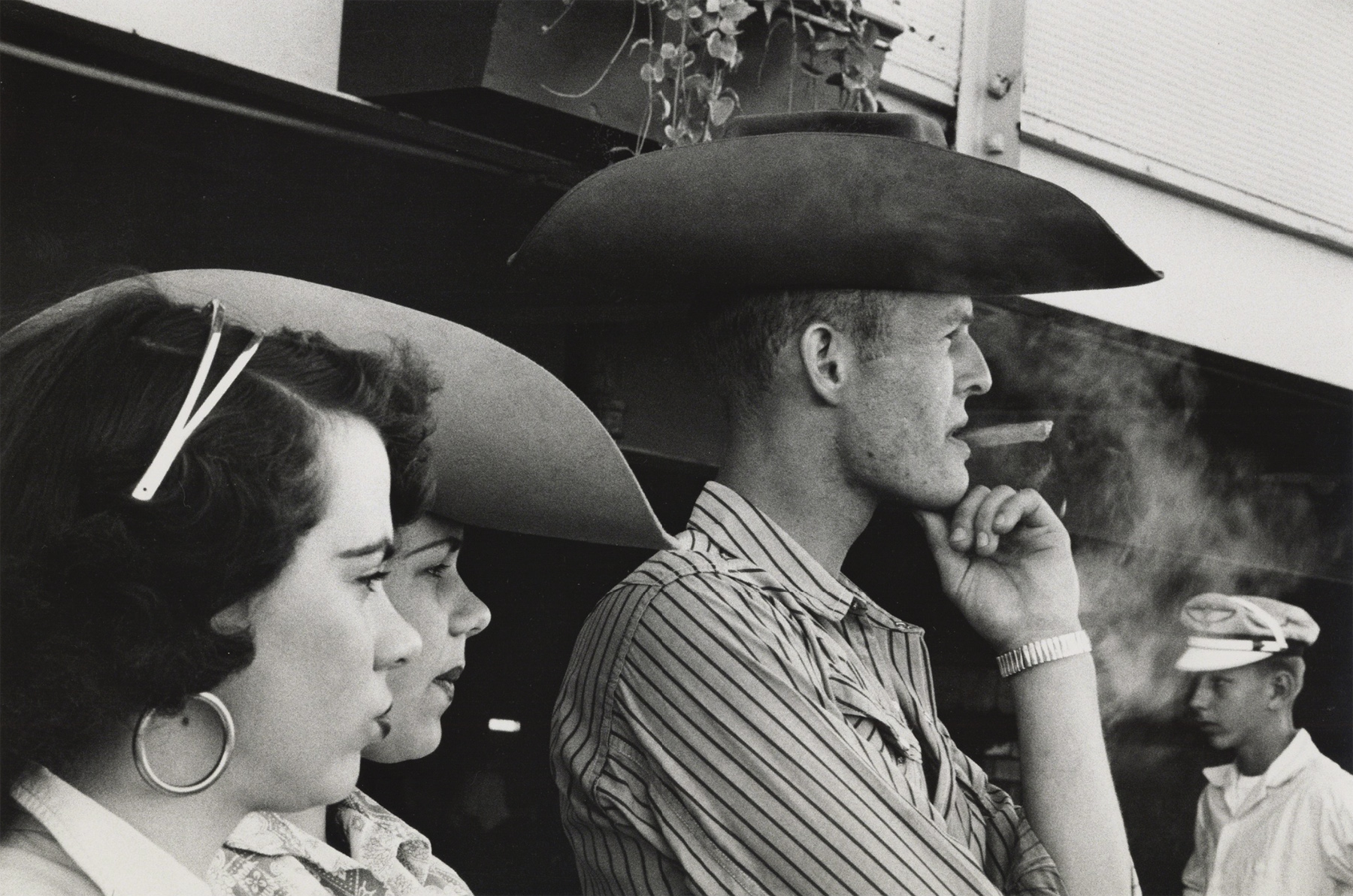
In 1955, Swiss-born photographer Robert Frank traveled across the United States photographing how Americans live, work, and spend their leisure time. Detroit was a critical stop on his itinerary, as the Motor City was world renowned for its automobiles along with its factories and labor force. Frank spent several days in Detroit at its legendary Ford Motor Company Rouge Plant and visited dime-store lunch counters, drive-ins, and public parks as well. He may have found Stetson-wearing spectators at a local rodeo an unlikely and uncharacteristic subject for Detroit – a large, industrial, midwestern city. Nonetheless he included Rodeo – Detroit, in addition to eight other photographs taken in the city, as part of the 83 images found in his ground-breaking photo book The Americans from 1958. The book brought Frank great acclaim for his critical commentary on America during the boom years following World War II.
From Bulletin of the Detroit Institute of Arts 89 (2015)
Exhibition dates: 21st November 2009 – 3rd July, 2010
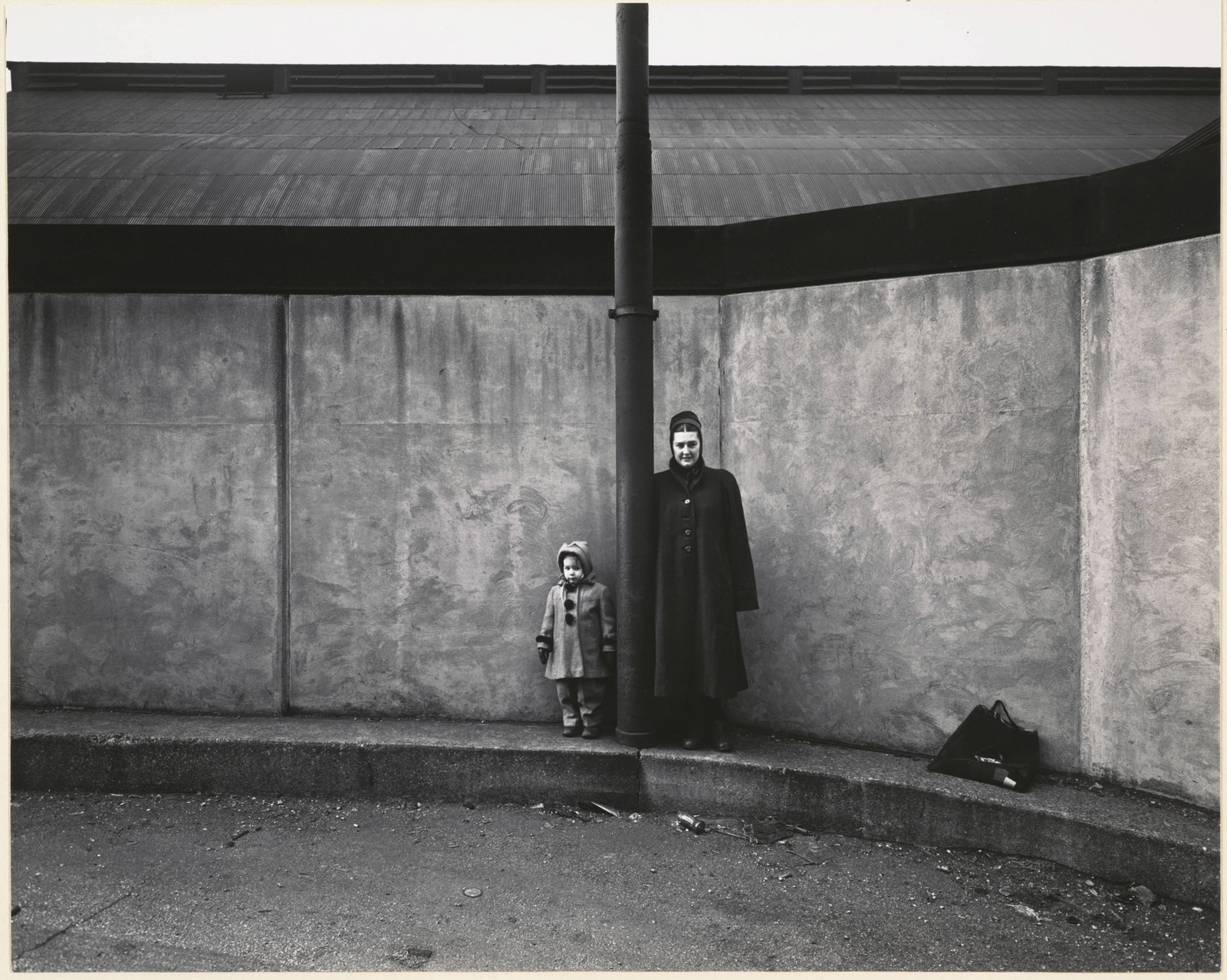
Harry Callahan (American, 1912-1999) Eleanor, Chicago 1949 Gelatin silver print Courtesy Museum of Fine Arts, Boston
I admire the use of strong horizontals and verticals in the work of Harry Callahan and the exquisite sense of space, stillness and sensuality he creates within the image plane. A true American master. Please click on the photographs for a larger version of the image.
Dr Marcus Bunyan
Many thankx to the Museum of Fine Arts, Boston for allowing me to publish the photographs in the posting. Please click on the photographs for a larger version of the image.
Harry Callahan (American, 1912-1999) Eleanor and Barbara 1953 Gelatin silver print Courtesy Museum of Fine Arts, Boston
Harry Callahan (American, 1912-1999) Eleanor and Barbara, Lake Michigan 1953 Gelatin silver print Courtesy Museum of Fine Arts, Boston
Harry Callahan (American, 1912-1999) Eleanor and Barbara c. 1954 Gelatin silver print Courtesy Museum of Fine Arts, Boston
Harry Callahan (American, 1912-1999) Eleanor, Chicago 1953 Gelatin silver print Courtesy Museum of Fine Arts, Boston
Harry Callahan (American, 1912-1999) Detroit 1943 Gelatin silver print Courtesy Museum of Fine Arts, Boston
The brilliant graphic sensibility of Harry Callahan (1912-1999), a major figure in American photography, is the focus of Harry Callahan: American Photographer at the Museum of Fine Arts, Boston (MFA). Debuting November 21, the exhibition features approximately 40 photographs that survey the major visual themes of the artist’s career. It celebrates the Museum’s important recent acquisitions – by both purchase and gift – of Callahan’s photographs and showcases significant examples of his artistry from the collections of friends of the MFA. The many sensitive pictures that Callahan made of his wife Eleanor, his depictions of passers-by on the street, his carefully composed landscapes and close-ups from nature, and experimental darkroom abstractions reveal a wide-ranging talent that was enormously influential.
“Harry Callahan was one of the most innovative photographers working in America in the mid 20th-century,” said Malcolm Rogers, Ann and Graham Gund Director of the MFA. “His elegantly spare, introspective photographs demonstrate his lyricism and the originality of his sense of design.”
The Detroit-born photographer, whose career spanned six decades, became interested in the camera in the late 1930s while working as a Chrysler Corporation shipping clerk. He was largely self-taught, and attracted admiration early on for his originality. By 1946, Callahan was hired as a photography instructor by the Hungarian-born artist László Moholy-Nagy for the Institute of Design, a Bauhaus-inspired school of art and design in Chicago. In 1961, Callahan was invited to head the photography program at the Rhode Island School of Design (RISD), where he was based until retiring to Atlanta two decades later.
“Harry Callahan’s approach helped shape American photography in the second half of the 20th-century,” said Anne Havinga, Estrellita and Yousuf Karsh Senior Curator of Photographs, who organised the exhibition. “His way of seeing inspired countless followers and continues to feel fresh today.”
Callahan concentrated on a handful of personal subjects in his work, exploring each theme repeatedly throughout his career. These include portraits of his wife Eleanor, depictions of anonymous pedestrians, expressive details of the urban and natural landscape, and experimental darkroom abstractions. The MFA exhibition is organised into five themes: Eleanor, Pedestrians, Architecture, Landscapes, and Darkroom Abstractions …
Press release from the MFA website [Online] Cited 20/06/2010. No long available online
Harry Callahan (American, 1912-1999) Eleanor 1948 Gelatin silver print Courtesy Museum of Fine Arts, Boston
Harry Callahan (American, 1912-1999) Chicago 1950 Gelatin silver print Courtesy Museum of Fine Arts, Boston
Harry Callahan (American, 1912-1999) Eleanor, Chicago 1949 Gelatin silver print Courtesy Museum of Fine Arts, Boston
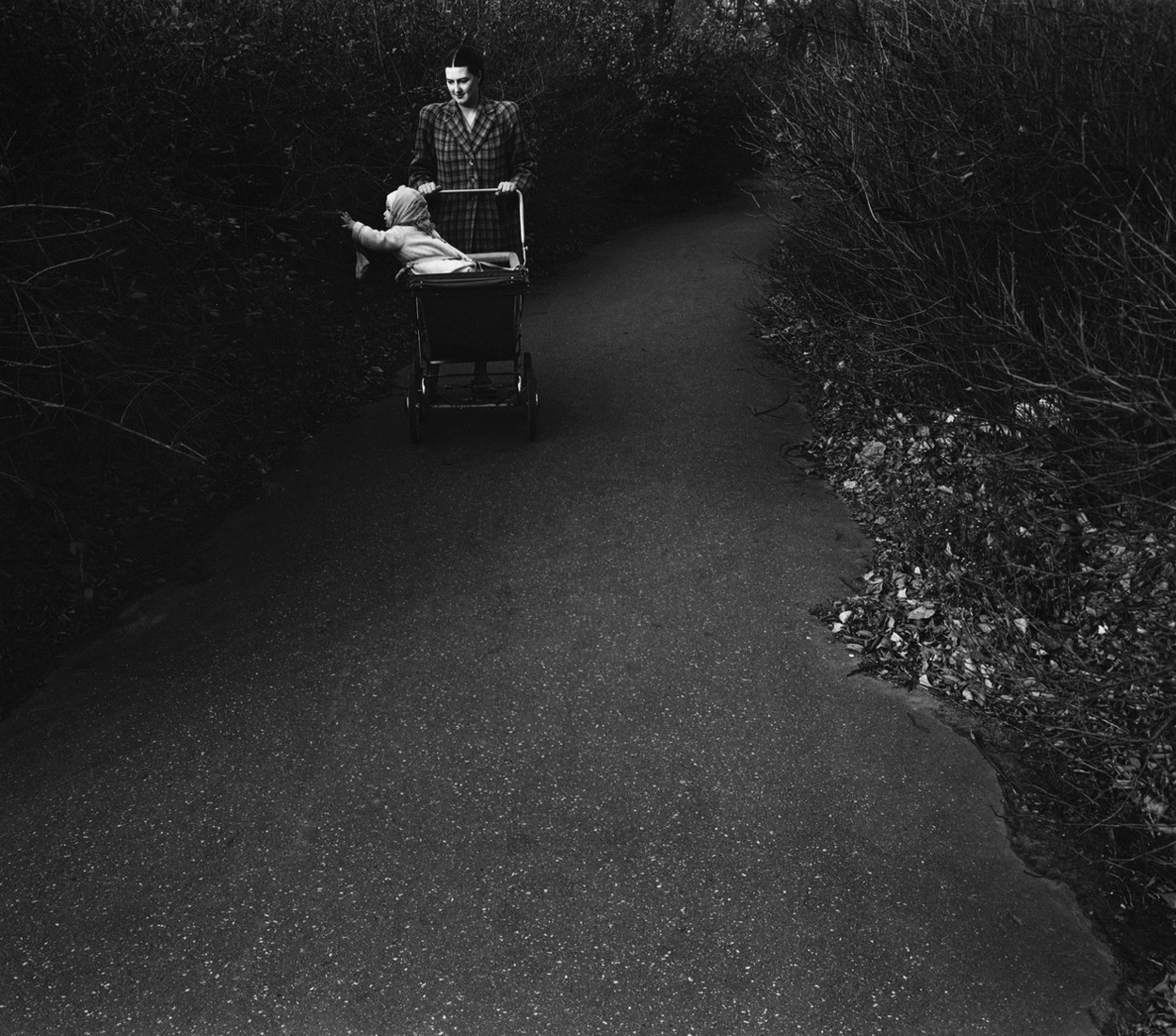
Harry Callahan (American, 1912-1999) Eleanor and Barbara (baby carriage) 1952 Gelatin silver print Courtesy Museum of Fine Arts, Boston
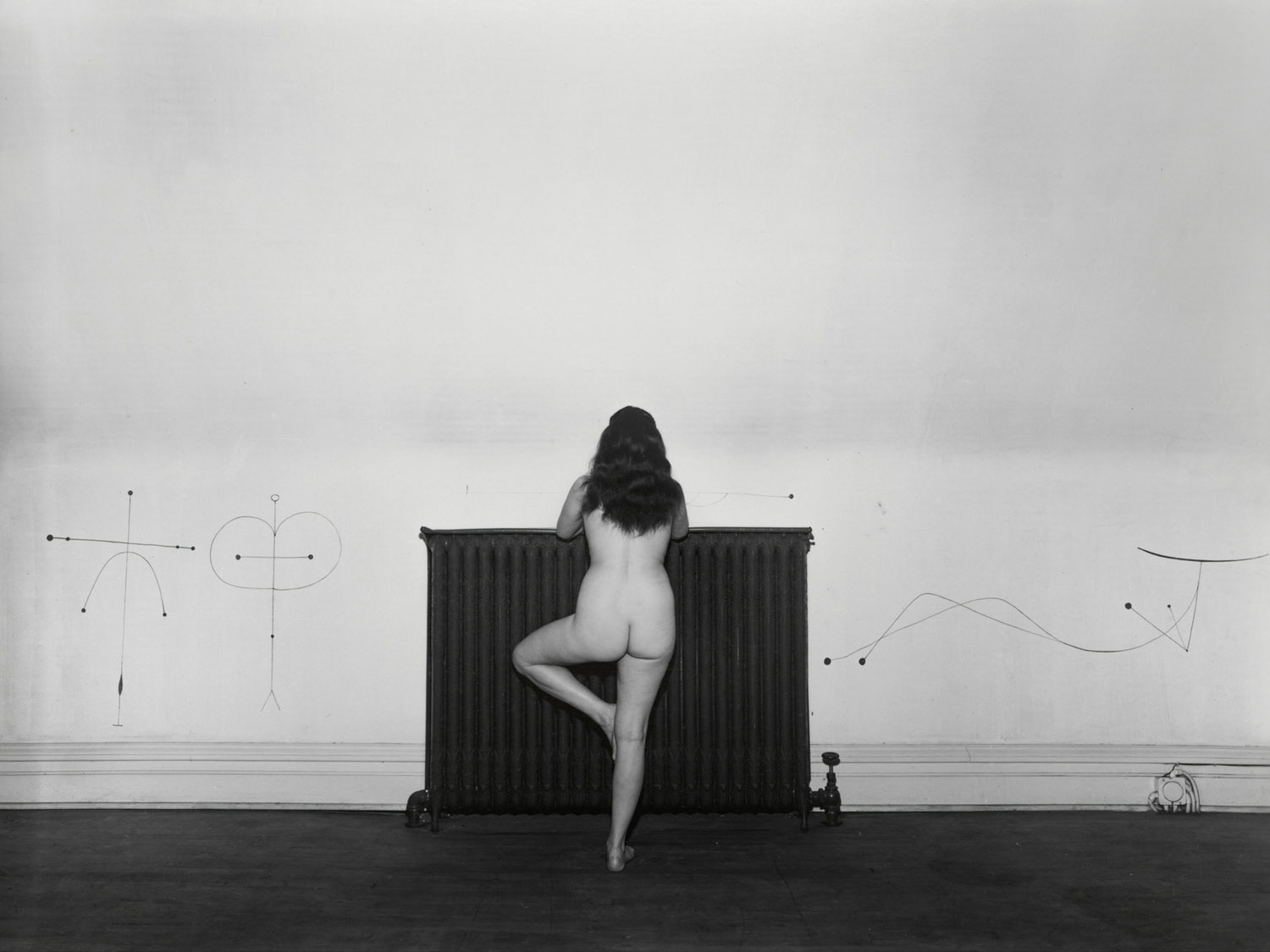
In 1936, around the time that Callahan began to explore photography, he married Eleanor Knapp, who served as one of his first and most frequent subjects. Callahan’s portraits of his wife, characterised by their intimate yet detached poetry, have become a landmark in the history of photography. In the photograph Eleanor (about 1948, see second photograph above), Callahan portrays his wife in a private interior setting, facing away from the camera. After the birth of their daughter Barbara in 1950, she too entered these family pictures, which capture the intimate moments of daily life as seen in the photograph, Eleanor and Barbara (1953, see photograph second from top).
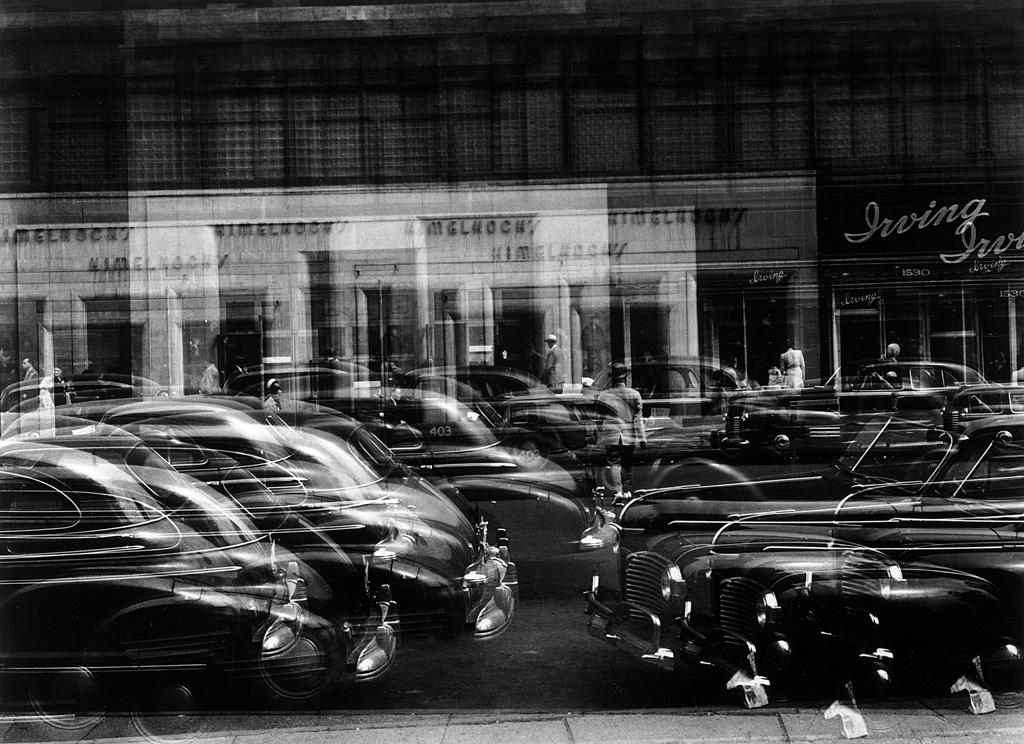
Callahan photographed the natural landscape throughout his career, focusing on its evocative forms and textures. In images such as Aix-en-Provence, France (1957), he explored the visual effects that he could create either through high contrast or closely related tonalities. Callahan also utilised a range of different experimental darkroom techniques – from photographing the beam of a flashlight in a darkened room, to developing one print from multiple negatives. Many of his multi-exposure pictures were made by superimposing images from popular culture onto studies of urban life. Callahan’s openness to experimentation was stimulating for the many students who worked with him.
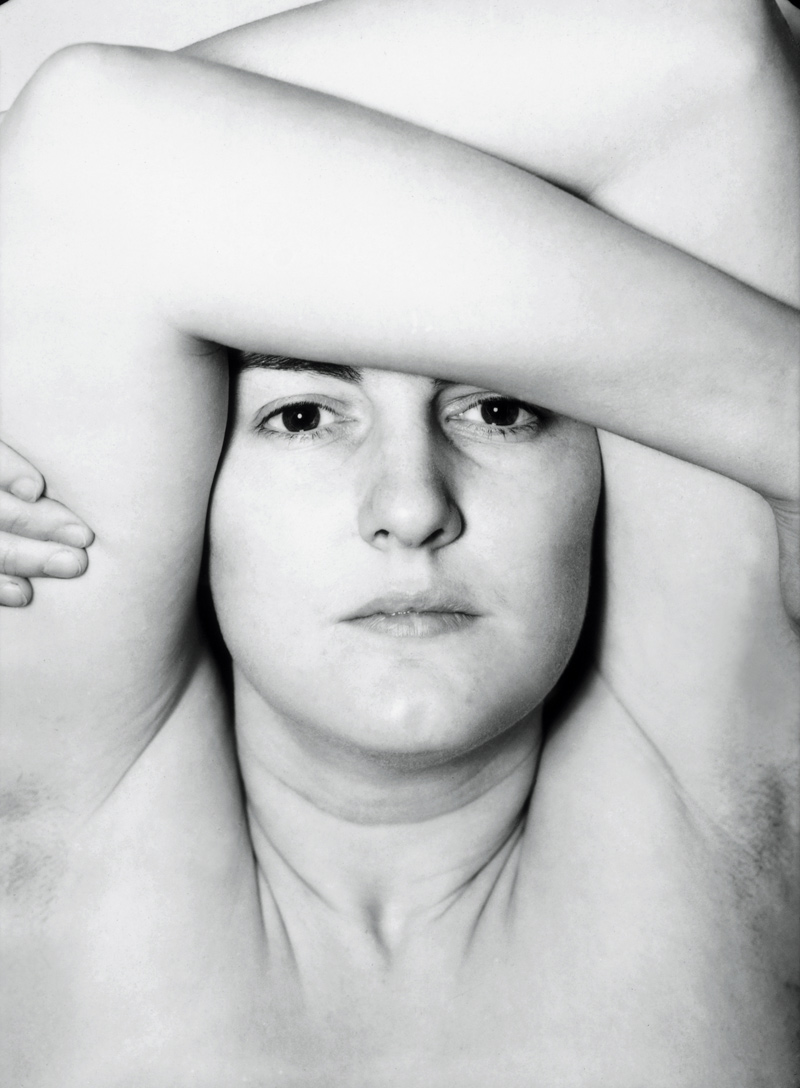
Callahan made many of his best known images during his 15 years in Chicago, where he also began his role as an influential teacher. During the 1950s, the photographer embarked on a series of close-ups of anonymous pedestrians in the streets of Chicago, most of them women. Using a 35mm camera with a pre-focused telephoto lens, he captured passersby unaware of his presence, resulting in snapshot-like images that record unsuspecting subjects absorbed in private thought or action, such as Chicago (1950, see photograph above), a close-up of a preoccupied woman’s face. Callahan returned to this theme frequently, working in both black and white and colour.
Callahan was repeatedly drawn to architectural and urban subjects. Prior to moving to Chicago, he explored the spaces of Detroit, photographing the formal patterns he discovered there. In Detroit (1943, see photograph above), Callahan depicts a street scene, with the people in transit appearing as a pattern. He experimented with colour in these pictures as early as the 1940s, but he worked more extensively in colour later in his career, from the 1970s onward.
Text from the Art Tatler website [Online] Cited 20/06/2010. No long available online
Many thankx to Fenna Lampe and the Foam Fotografiemuseum Amsterdam for allowing me to publish the photographs in the post. Please click on the photographs for a larger version of the image.
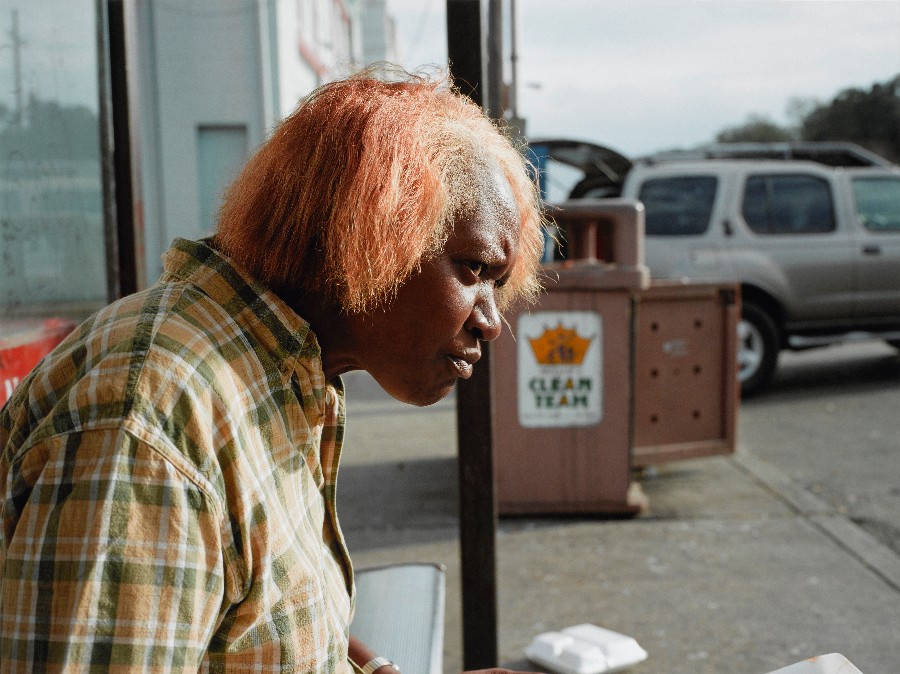
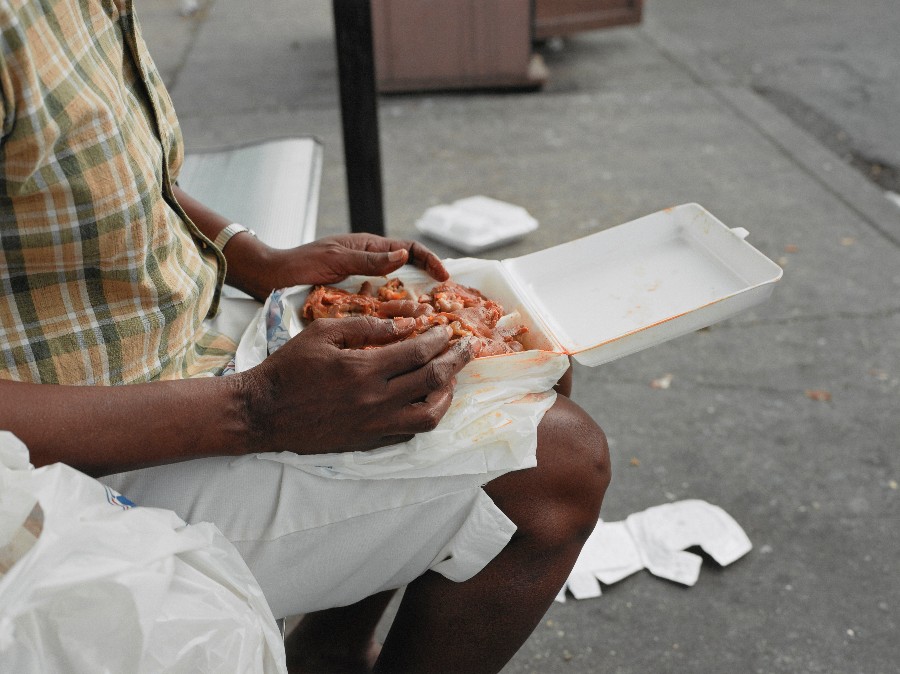
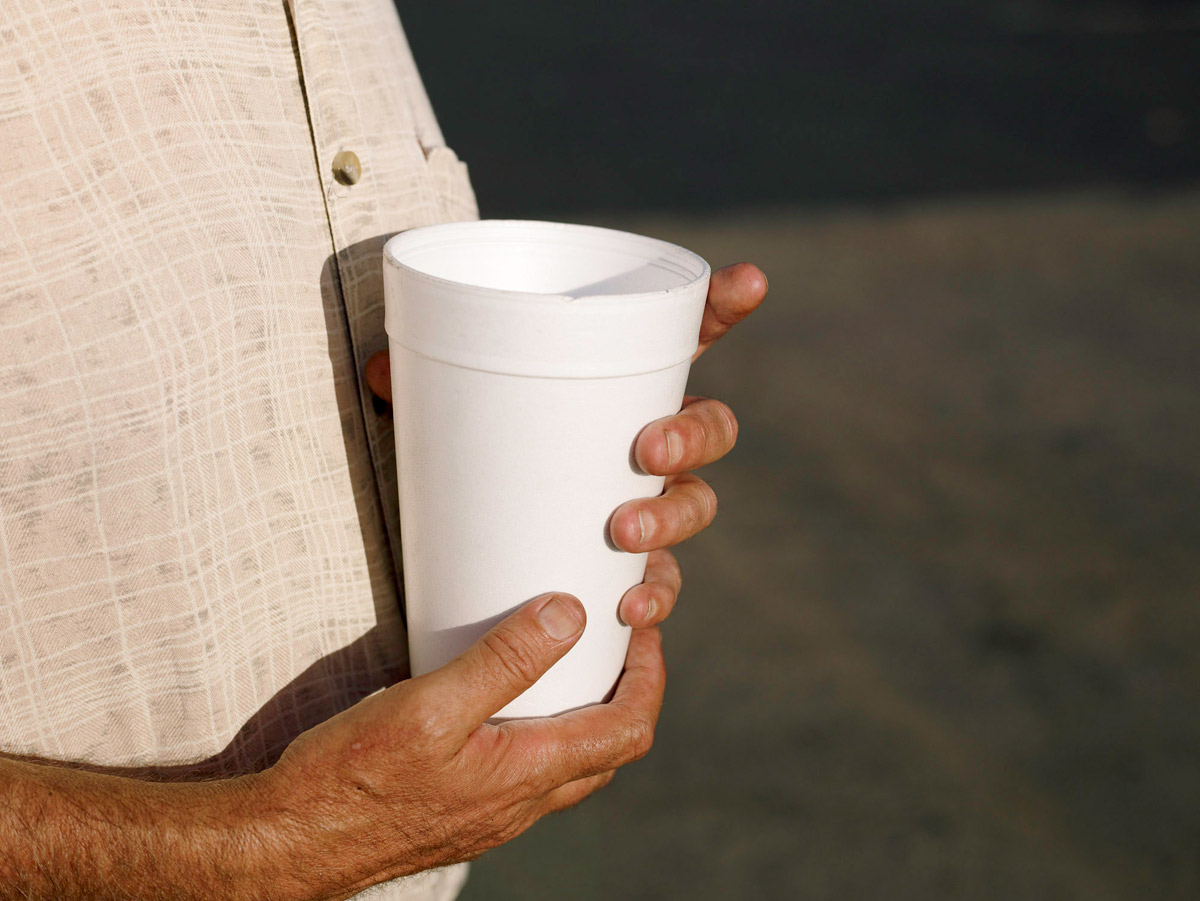
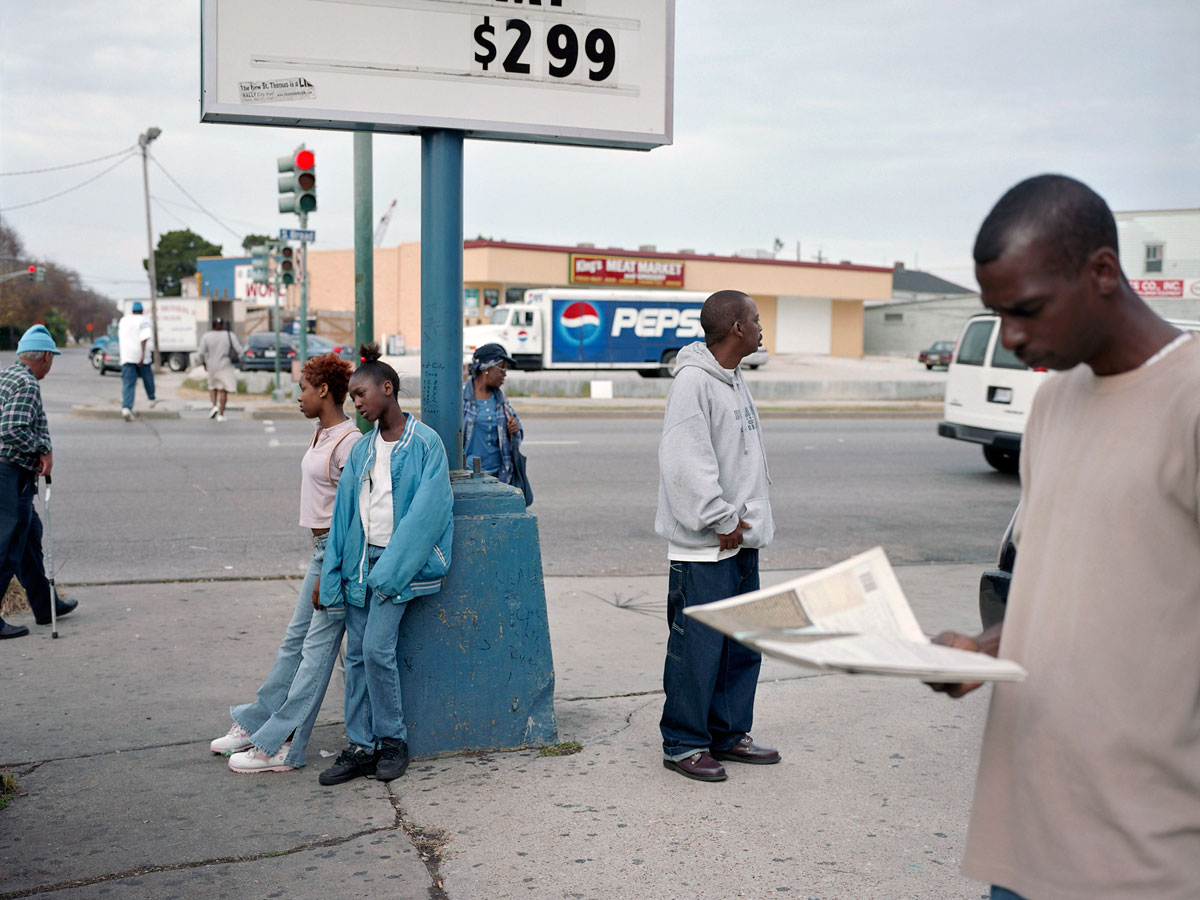
a shimmer of possibility is the latest project by influential British photographer Paul Graham. This work was created during Graham’s many travels through the United States since 2002. a shimmer of possibility consists of twelve sequences varying in number: from just a few images to more than ten. Each sequence offers an informal look at the life of ordinary, individual Americans – from a woman eating to a man waiting for the bus. The sequences focus attention on very ordinary things, which Graham has photographed with affection and curiosity.
Each sequence is a short, casual encounter, where we consider for a moment something that attracts our attention. Then life goes on, full of new possibilities. The way Graham presents the diverse sequences in the exhibition is crucial. Instead of being shown in a linear fashion, a sequence fans out over the wall like a cloud. Due to the carefully considered and inventive structure, no viewing direction or predominant hierarchy is imposed on the individual images. The eye of the viewer wanders over the photos, offering the opportunity to make personal connections in an associative manner.
a shimmer of possibility can be seen as the ultimate antithesis of what Henri Cartier-Bresson called ‘the decisive moment’. This French master endeavoured to record exactly those moments where subject matter and formal aspects combined perfectly in a single image. Paul Graham, by contrast, defends how we normally look around us. We move through the world and look from left to right, see something that grabs our attention, move towards it, glance to the side while en route, pass that by and continue on our way. Observation is a never-ending series of ‘non-decisive moments’, full of potential for anyone who is open to see it.”
Text from the Foam website [Online] Cited 06/06/2010 no longer available online
Graham walked the streets of residential neighbourhoods in Massachusetts, Pennsylvania, and Louisiana, and the sidewalks of New Orleans, Las Vegas, and New York, and when he encountered someone who caught his eye, he photographed them: an older woman retrieving her mail; a young man and woman playing basketball at dusk; a couple returning from the supermarket. Graham followed people navigating their way through crowded city sidewalks, and tracked and photographed lone figures crossing a busy roadway, unaware of the camera.
Reviewing several trips’ worth of photographs on the large, flat screen of his computer, Graham realised that the more or less randomly gathered pictures could be united into multipart works. As in a poem, where language and rhythm organise words, lines, and stanzas into an imaginative interpretation of a subject, Graham’s imposed yet open-ended structures imply – through close-ups, crosscutting, and juxtapositions of people and nature-specific narratives and overarching ideas. Images of people placed in tandem with other people and with nature suggest the flow of life, pointing to the unknown and the possibility of change, with nature acting as a balm, whether as raindrops, trees silhouetted against a burning sunset, or the bright green grass on a highway meridian.
In his reconstruction of the world in pictures, Graham describes an America at odds with itself, filled with contradictions and inconsistencies. Yet, through the gloom, the small felicities of life peek through. Fluid, filled with desire, and marked by extremes, his view is what the late curator, critic, and photographer John Szarkowski called, in another context, a “just metaphor” for our times.
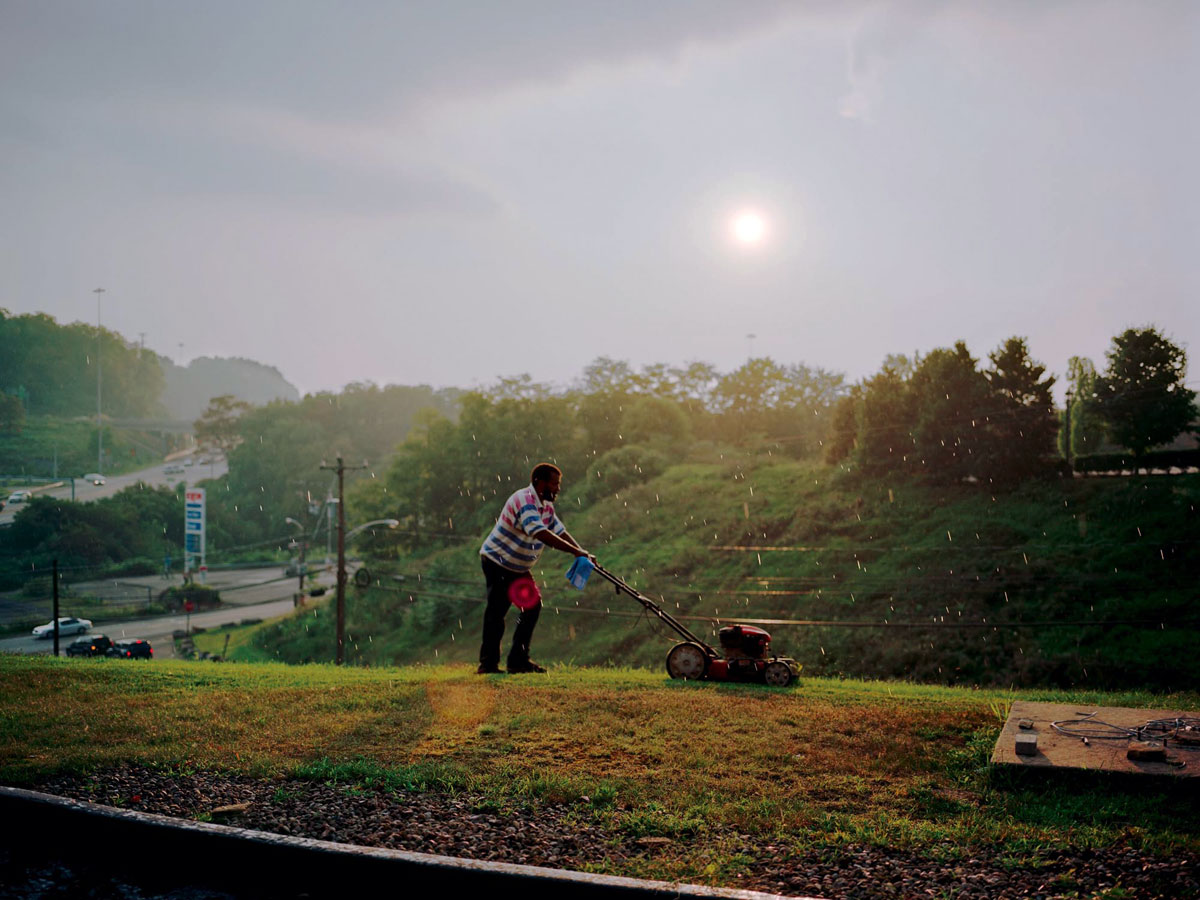
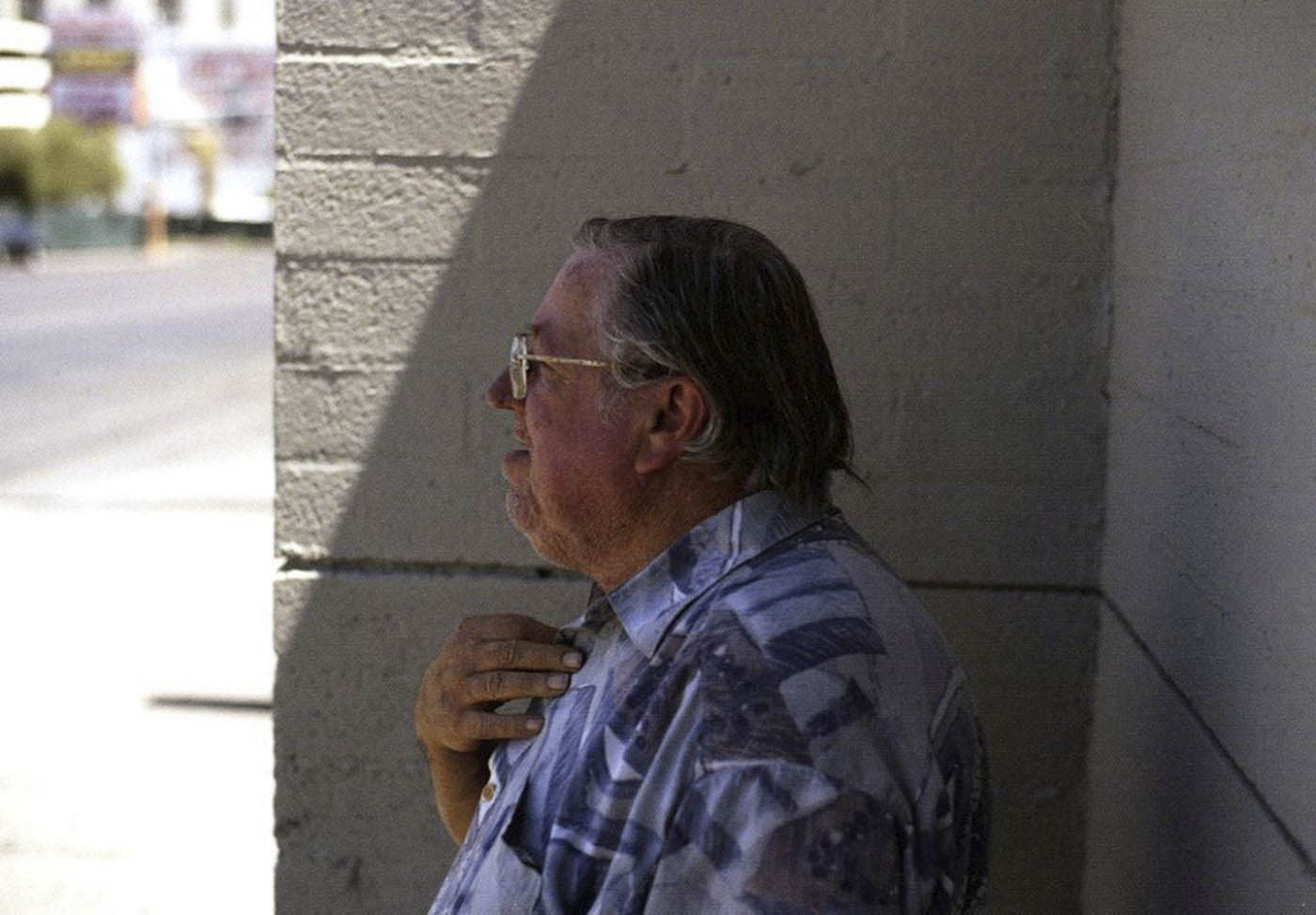
Inspired by Chekhov’s short stories – and by his own contagious joy in the book form – photographer Paul Graham has created A Shimmer of Possibility, comprised of 12 individual books, each a photographic short story of everyday life. Some are simple and linear – a man smokes a cigarette while he waits for a bus in Las Vegas, or the camera tracks an autumn walk in Boston. Some entwine two, three or four scenes – while a couple carry their shopping home in Texas, a small child dances with a plastic bag in a garden. Some watch a quiet narrative break unexpectedly into a sublime moment – as a man cuts the grass in Pittsburgh it begins to rain, until the low sun breaks through and illuminates each drop. Graham’s filmic haikus shun any forceful summation or tidy packaging. Instead, they create the impression of life flowing around and past us while we stand and stare, and make it hard not to share the artist’s quiet astonishment with its beauty and grace. The 12 books gathered here are identical in trim size, but vary in length from just a single photograph to 60 pages of images made at one street corner.
Text from the Mack website [Online] Cited 14/08/2019
a shimmer of possibility by Paul Graham 12 volumes 376 pages, 167 colour plates 24.2 cm x 31.8 cm 12 cloth covered hardbacks Limited edition of 1,000 sets MACK ISBN: 9783865214836 Publication date: October 2007
Marcus Bunyan (Australian, b. 1958) Missing in Action (dark kenosis) No.11 2010 Digital photograph
Missing in action (dark kenosis)
A new body of work Missing in Action (dark kenosis) 2010 is now online on my website.
There are eighty-two images in the series which are like a series of variations in music with small shifts in tone and colour. Below are a selection of images from the series. Please click on the photographs for a larger version of the image.
Many thankx to the people who have emailed me saying how much they like the new series of work.
Dr Marcus Bunyan
Photographs are available from this series for purchase. As a guide, a digital colour 16″ x 20″ costs $1000 plus tracked and insured shipping. For more information please see my Store web page.
Kenosis
“In Christian theology, Kenosis is the concept of the ‘self-emptying’ of one’s own will and becoming entirely receptive to God and his perfect will.”
Marcus Bunyan (Australian, b. 1958) Missing in Action (dark kenosis) No.19 2010 Digital photograph
Marcus Bunyan (Australian, b. 1958) Missing in Action (dark kenosis) No.35 2010 Digital photograph
Marcus Bunyan (Australian, b. 1958) Missing in Action (dark kenosis) No.46 2010 Digital photograph
Marcus Bunyan (Australian, b. 1958) Missing in Action (dark kenosis) No.49 2010 Digital photograph
Marcus Bunyan (Australian, b. 1958) Missing in Action (dark kenosis) No.67 2010 Digital photograph
Marcus Bunyan (Australian, b. 1958) Missing in Action (dark kenosis) No.71 2010 Digital photograph
Marcus Bunyan (Australian, b. 1958) Missing in Action (dark kenosis) No.76 2010 Digital photograph
Curators: Peter W. Kunhardt, Jr., Director of the Meserve-Kunhardt Foundation, and Robin Garr, Director of Education, Bruce Museum
Many thankx to Mike Horyczun, Director of Public Relations and the Bruce Museum for allowing me to publish the images in the posting. Please click on the photographs for even larger version of the image.
Marcus
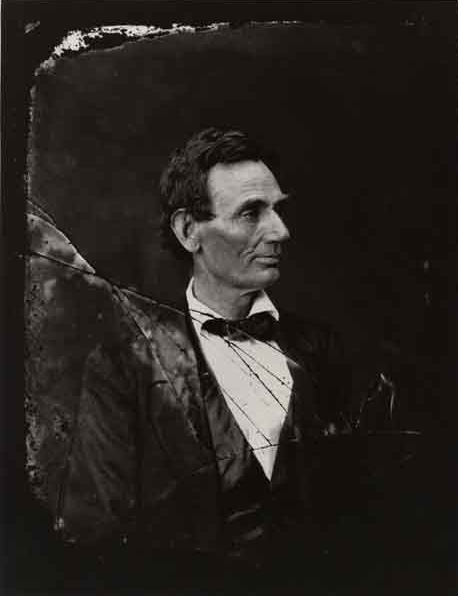
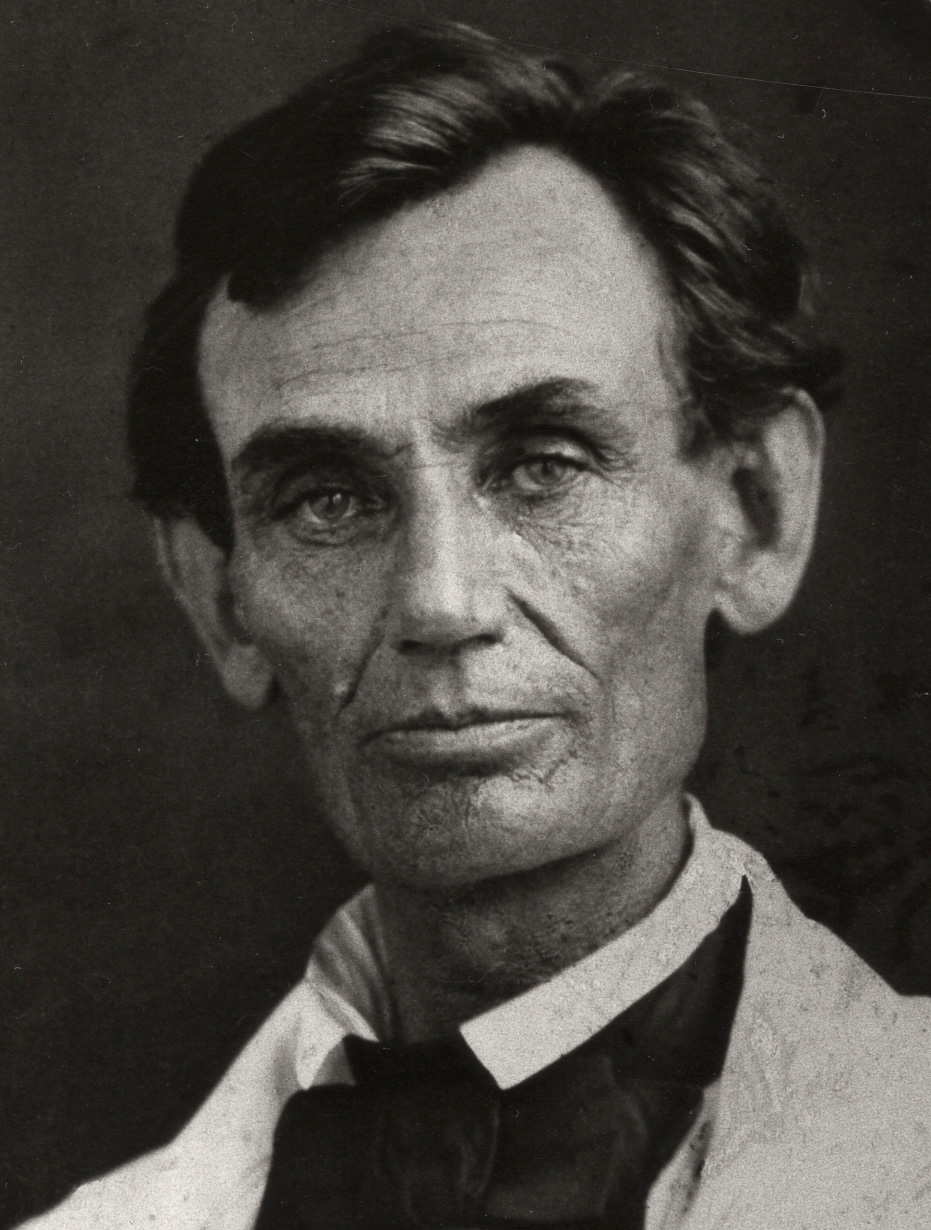
Alexander Hesler (American, 1823-1895) Abraham Lincoln June 3, 1860 Springfield, Illinois
Alexander Hesler or Hessler (1823-1895) was an American photographer active in the U.S. state of Illinois. He is best known for photographing, in 1858 and 1860, definitive iconic images of the beardless Abraham Lincoln. …
Hesler’s known portraits include photographs of the two chief Illinois political figures of his day, Lincoln and federal senator Stephen A. Douglas. In the 1860 presidential election, Lincoln’s friends took steps to have Hesler’s images copied and recirculated, cementing their stature as works of Lincoln image-making.
Hesler was an award-winning photographer whose goal was to create photographs of lasting artistic value. He was recognised for the quality of both his portrait work and his outdoor photography. Upon Hesler’s retirement in 1865, he transferred his Chicago studio and negatives to a fellow photographer, George Bucher Ayres. Several of Hesler’s best-known images of Lincoln are platinum prints produced by Ayres from Hesler negatives.
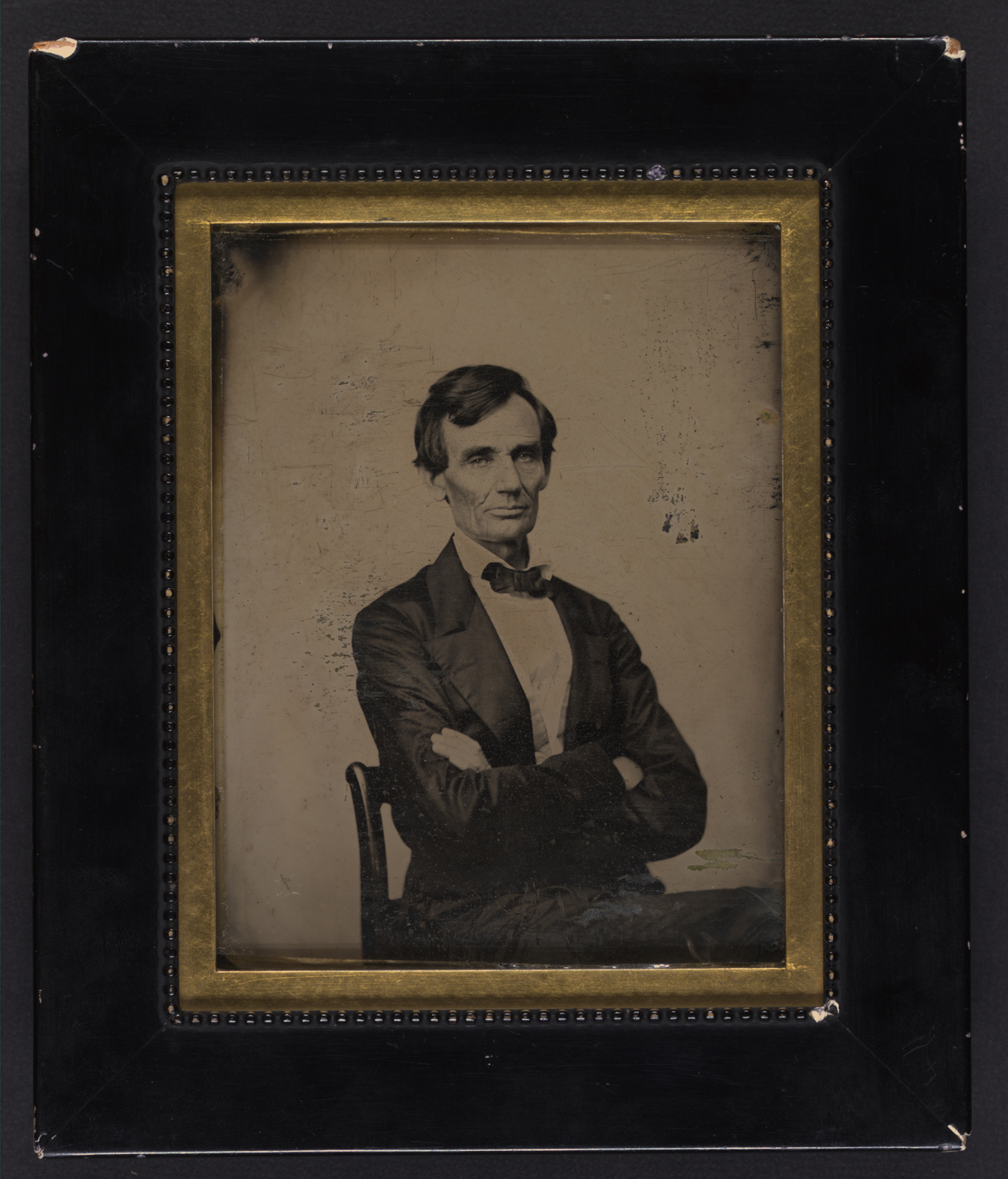
Preston Butler Abraham Lincoln August 13, 1860 Springfield, Illinois Ambrotype Plate 5 3/4 x 4 1/2 in Library of Congress
Abraham Lincoln as candidate for United States president. Half-length portrait, seated, facing front.
Thought to be the last beardless portrait of Lincoln, this photo was “made for the portrait painter, John Henry Brown, noted for his miniatures in ivory. … ‘There are so many hard lines in his face,’ wrote Brown in his diary, ‘that it becomes a mask to the inner man. His true character only shines out when in an animated conversation, or when telling an amusing tale. … He is said to be a homely man; I do not think so.'” (Source: Ostendorf, p. 62)
Published in: Lincoln’s photographs: a complete album / by Lloyd Ostendorf. Dayton, OH: Rockywood Press, 1998, pp. 62-63.
Between 1856, the year of Preston Butler’s arrival in Springfield, and Feb. 11, 1861, when President-elect Abraham Lincoln departed from Springfield, Butler took at least 8 photographs of Lincoln and at least 1 photograph of Mary, Willie and Tad Lincoln. Also, in 1857 or 1858, Butler photographed each of the 4 sides of Springfield’s public square. These photographs are the primary source of information about the appearance of the public square in Lincoln’s Springfield.
Abraham B. Byers (American, 1836-1920) Abraham Lincoln May 7, 1858 Beardstown, Illinois Ambrotype
The Bruce Museum in Greenwich, Connecticut, presents its newest exhibition Lincoln, Life-Size, from February 13, 2010, through June 6, 2010. The exhibition features photographs of Abraham Lincoln reproduced full size, hanging alongside original 19th-century images and artefacts that tell the story of Lincoln’s tumultuous presidency. The exhibition is drawn from the Meserve-Kunhardt Collection which it has on loan from the Meserve-Kunhardt Foundation. Lincoln, Life-Size is supported by Fieldpoint Private Bank & Trust, New England Land Company, Ltd., a Committee of Honor co-chaired by Tom Clephane and Nat Day, and the Charles M. and Deborah G. Royce Exhibition Fund.
Lincoln, Life-Size is organised by guest curator Peter W. Kunhardt, Jr., Director of the Meserve-Kunhardt Foundation, and Robin Garr, Director of Education, Bruce Museum. Peter W. Kunhardt, Jr., is the great-great-grandson of Frederick Hill Meserve one of this country’s premiere Lincoln collectors. Frederick Hill Meserve’s passion for Lincoln was ignited in the 1880s when his father, William Neal Meserve, who had served in the Civil War, asked him to hunt for photographs to illustrate his handwritten war diary. Five generations of the family have preserved this massive historical record over the past century.
The exhibition chronicles the toll of war etched into the face of our 16th president. Life-size enlargements of Lincoln’s portraits circle the entire central gallery. Visitors will experience what it was like to stand before him and look into his eyes. Beneath this facial timeline of his presidency is a selection of photographs of people who touched his life and events that nearly wore him out.
The show explores the time from Abraham Lincoln’s arrival in Washington in 1857 through his assassination in 1865. Photographs chronicle events as the war unfolds, his son dies, and he struggles with generals and mounting death tolls. In the photographs, Lincoln is revealed in a variety of poses, each bearing a significance that attests to the historic nature of his life, be it as he is grappling with emancipation or drafting words that would become sacred; serving as husband and father or being pulled in all directions by his constituents; and ultimately as he holds the country together throughout the turbulent times of the Civil War.
Highlights of the exhibition include Leonard Volk’s bronze life mask of Lincoln’s head and hands, glass negatives by Mathew Brady, original albumen war prints by Alexander Gardner and Timothy O’Sullivan, and carte-de-visites of Lincoln, his family, his cabinet, and his generals. Viewers can study official government war maps, view a Thomas Nast drawing depicting the slavery issue, and walk around an early “triptych” photograph that portrays Lincoln, Grant, or Sherman, depending on where the viewer stands. An oversize “imperial” print shows Lincoln just days before delivering his Gettysburg address. In another imperial print a lab technician’s thumb print obliterates Lincoln at his second inaugural, but what is visible is a spectator in the crowd who appears to be John Wilkes Booth. Another photograph of Booth has these words written on the back side: “Recognize him and kill him.”Lincoln, Life-Size also include artefact related to Lincoln and his era.
“We have presented these works so that viewers can see how the toll the war and personal tragedies aged him during his years in office,” said Peter W. Kunhardt, Jr. “In fact, he was just 56 years old when he was assassinated.” This is the first museum exhibition dedicated to the collection of the Meserve-Kunhardt Foundation, which is now housed on the campus of SUNY Purchase. The recent book, Lincoln, Life-Size, co-authored by Phillip B. Kunhardt III, Peter W. Kunhardt and Peter W. Kunhardt, Jr. is available in the Bruce Museum Store. A full array of exhibition programming related to the exhibition is scheduled.
Text from the Bruce Museum website [Online] Cited 01/06/2010. No longer available online
Mathew B. Brady (American, c. 1822-1896) Abraham Lincoln January 8, 1864 Washington, DC National Archives and Records Administration
Anthony Berger (American born Germany, 1832 – after 1897) Abraham Lincoln February 9, 1864 Washington, DC Collodion negative Quarter-plate glass transparency 10.9 x 8.7cm (case) Brady’s National Photographic Portrait Galleries Library of Congress
This is one of a series of photographs that Anthony Berger took of President Abraham Lincoln at the Brady Gallery in Washington in the winter of 1864, as the Civil War dragged on. Modern albumen print from 1864 wet-plated collodion negative. National Portrait Gallery.
“The Famous Profile” by Anthony Berger, manager of Brady’s Gallery, Washington D.C., made direct from an original collodion negative in the Meserve collection (M-82). One of seven poses taken by Berger on Tuesday February 9, 1864, it is perhaps the most familiar of Lincoln profiles, a more handsome pose than its companion view (0-89) because Lincoln’s profile is less severe and his left eyebrow is more visible.
Alexander Gardner (Scottish 1821-1882; emigrated America 1856) Abraham Lincoln November 8, 1863 Washington, DC Library of Congress
Alexander Gardner (Scottish 1821-1882; emigrated America 1856) Abraham Lincoln February 5, 1865 Washington, DC Library of Congress
Alexander Gardner was a Scottish photographer who immigrated to the United States in 1856, where he began to work full-time in that profession. He is best known for his photographs of the American Civil War, U.S. President Abraham Lincoln, and the execution of the conspirators to Lincoln’s assassination.
This is one of the last photos taken of Lincoln, who was assassinated ten weeks later, on April 14, 1865.
Alexander Gardner (Scottish 1821-1882; emigrated America 1856) Abraham Lincoln (detail) February 5, 1865 Washington, DC Library of Congress
The Bruce Museum 1 Museum Drive in Greenwich, Connecticut, USA.
Opening hours: Tuesday – Sunday 10am – 5pm Closed Mondays and major holidays
I seen to have become a little smitten by Romy Schneider. What charisma!
Marcus
Many thankx to the Deutsche Kinemathek – Museum for Film and Television for allowing me publish the images in the posting. Please click on the images for a larger version.
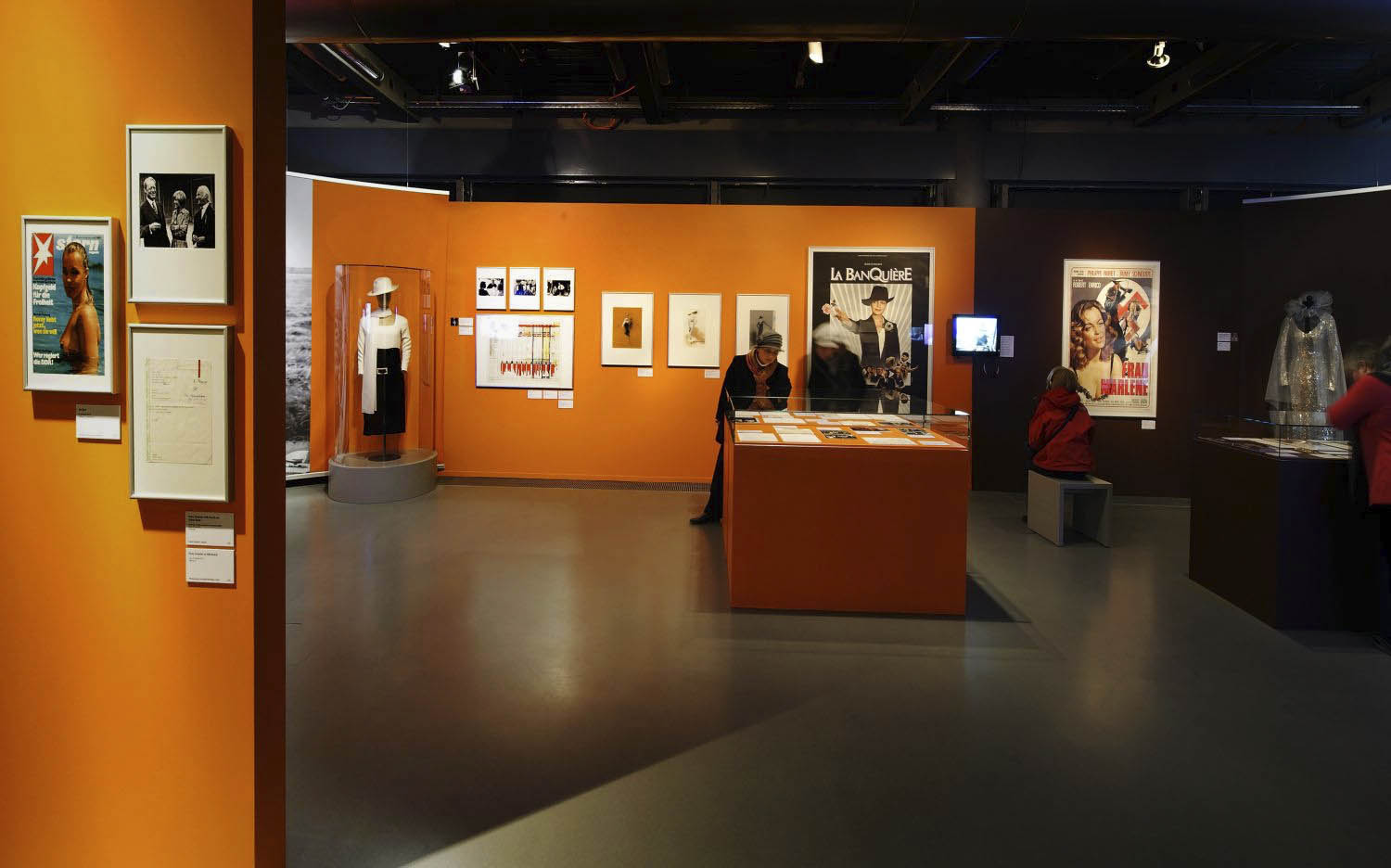
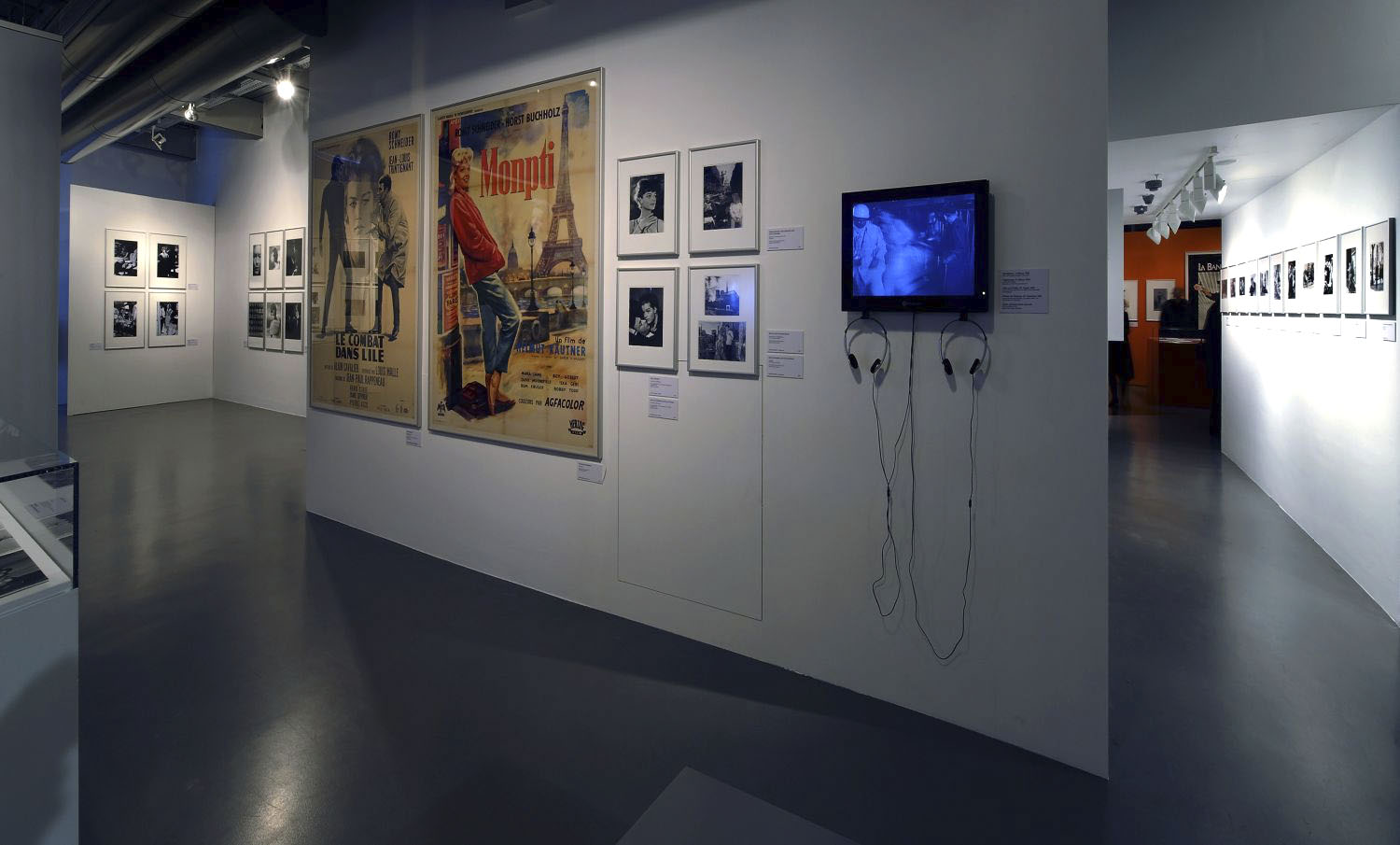
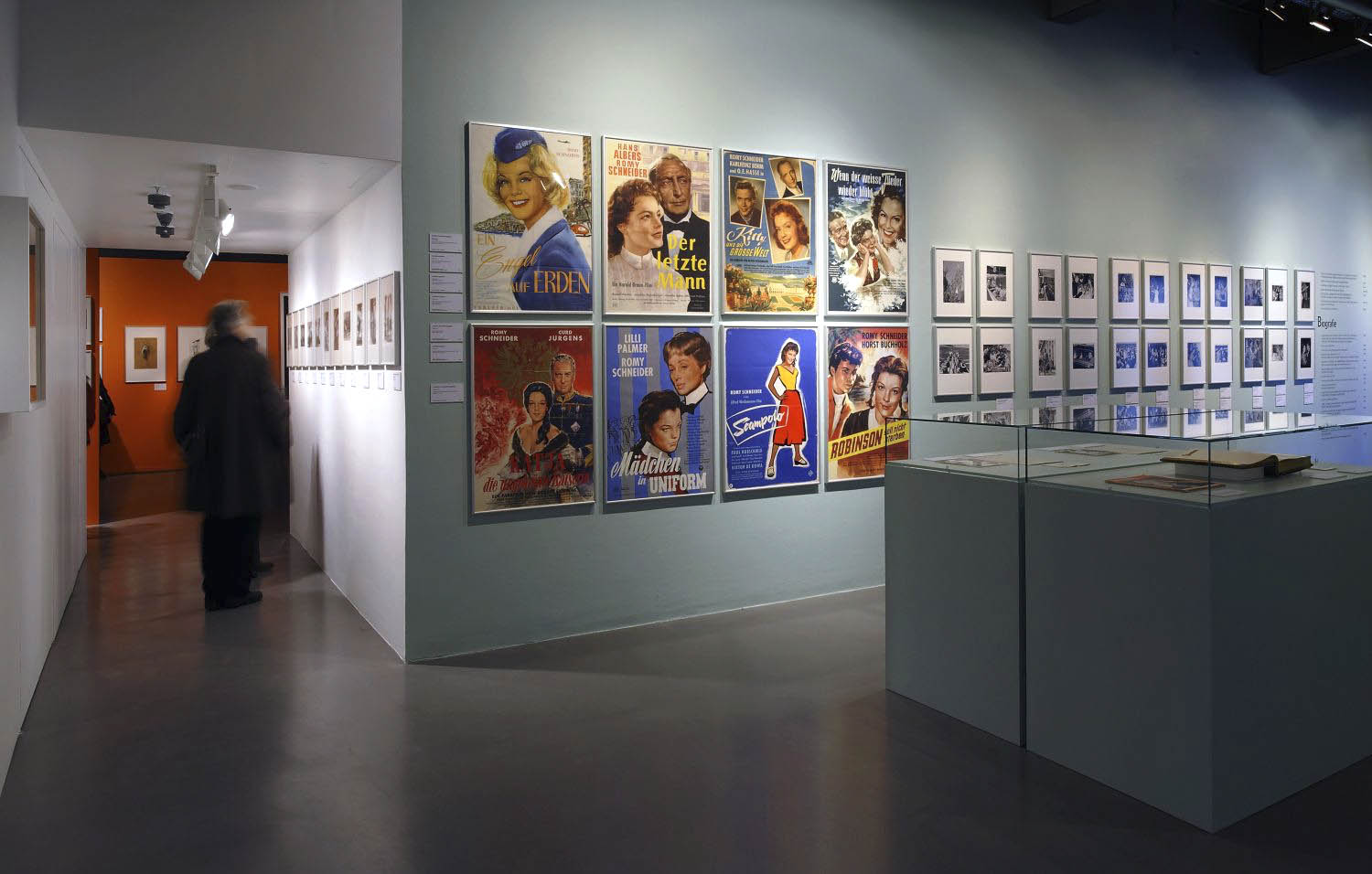
The exhibition documents the eventful career of Romy Schneider, who by the late 1950s no longer wanted to be Sissi, and by the 1970s was a celebrated star of French cinema. A large number of unknown photographs of Romy Schneider, her film partners, and family from the 1950s and 1960s will be on display from the collections of the Deutsche Kinemathek. The exhibition will also present loans from private individuals and institutions from France and Austria …
The exhibition Romy Schneider. Wien – Berlin – Paris, which the Museum für Film und Fernsehen will present beginning on December 5th, documents the varied and wide-ranging career of Romy Schneider, who no longer wanted to be “Sissi” at the end of the 1950s and was celebrated as a star of French cinema in the 1970s.
Romy Schneider publicly bemoaned her roles in Germany and went to Paris to play women who did justice to her acting abilities and her expectations. She settled in France at the beginning of the 1970s, where she advanced to one of the biggest stars of French cinema. She won several awards and made films with nearly all the great directors and actors of that period. The paparazzi followed the actress at every turn, documenting her strokes of fate for the international popular press, and throughout her life Romy Schneider considered herself to be their victim. Romy Schneider died in Paris in May 1982. To this day, she is admired by millions of fans around the world as one of cinema’s international stars.
This homage, which can be seen in 450 sq. m. of exhibition space at the Filmhaus, treats both the diverse roles and changing image of the actress, as well as her representation in the media.
Pictures from films, the press and her private life are grouped according to recurring motifs and combined with film clips. Media installations show the interplay between projection and active self-promotion. Posters, costumes, correspondence and fan souvenirs will augment the presentation.
Numerous photographs from the 1950s and 1960s of Romy Schneider, her film partners and her family, largely unknown until now, originate from the collections of Deutsche Kinemathek. Loans from other institutions and private individuals will also be on view, for instance from the photographers F. C. Gundlach and Robert Lebeck, as well as from the personal archives of the film director Claude Sautet.
Press release from the Museum für Film und Fernsehen website [Online] Cited 25/05/2010 no longer available online
F. C. Gundlach (Franz Christian Gundlach) was a German photographer, gallery owner, collector, curator und founder. In 2000 he created the F.C. Gundlach Foundation, since 2003 he has been founding director of the House of Photography – Deichtorhallen Hamburg.
Alain Delon and Romy Schneider in La Piscine/Der Swimmingpool R- Jacques Deray, F/I 1969 Gelatin silver print Foto/Quelle: Filmarchiv Austria, Wien
Romy Schneider and Alain Delon in La Piscine/Der Swimmingpool R- Jacques Deray, F/I 1969 Gelatin silver print Foto/Quelle: Deutsche Kinemathek
Romy Schneider and Claude Sautet during the shooting of UNE HISTOIRE SIMPLE / A SIMPLE STORY 1978 Gelatin silver print Foto/Quelle: Yves Sautet, Paris
Claude Sautet
Claude Sautet (23 February 1924 – 22 July 2000) was a French author and film director. Born in Montrouge, Hauts-de-Seine, France, Sautet first studied painting and sculpture before attending a film university in Paris where he began his career and later became a television producer. He filmed his first movie, Bonjour Sourire, in 1955.
He earned international attention with Les choses de la vie, which he wrote and directed, like the rest of his later films. It was shown in competition at the 1970 Cannes Festival, where it was well received. The film also revived the career of Romy Schneider; she acted in several of Sautet’s later films. In his next film Max et les Ferrailleurs (1971) she played a prostitute, while in César et Rosalie (1972) she portrayed a married woman who copes with the reappearance of an old flame.
Vincent, Paul, François, et les Autres (1974) is one of Sautet’s most acclaimed films. Four middle-class men meet in the country every weekend mainly to discuss their lives. The film featured a cast of major stars of French cinema: Michel Piccoli, Yves Montand, Gérard Depardieu, and Stéphane Audran. He achieved even further critical success with Mado (1976).
His 1978 film A Simple Story (Une Histoire simple) was nominated for an Academy Award for Best Foreign Language Film. The film featured Schneider again, this time as a dissatisfied working woman in her 40s. She won the César Award for Best Actress for her performance.
Artists: Lionel Bawden, Penny Byrne, Nicholas Folland, Locust Jones, Rhys Lee, Rob McHaffie, Derek O’Connor, Alex Spremberg, Madonna Staunton
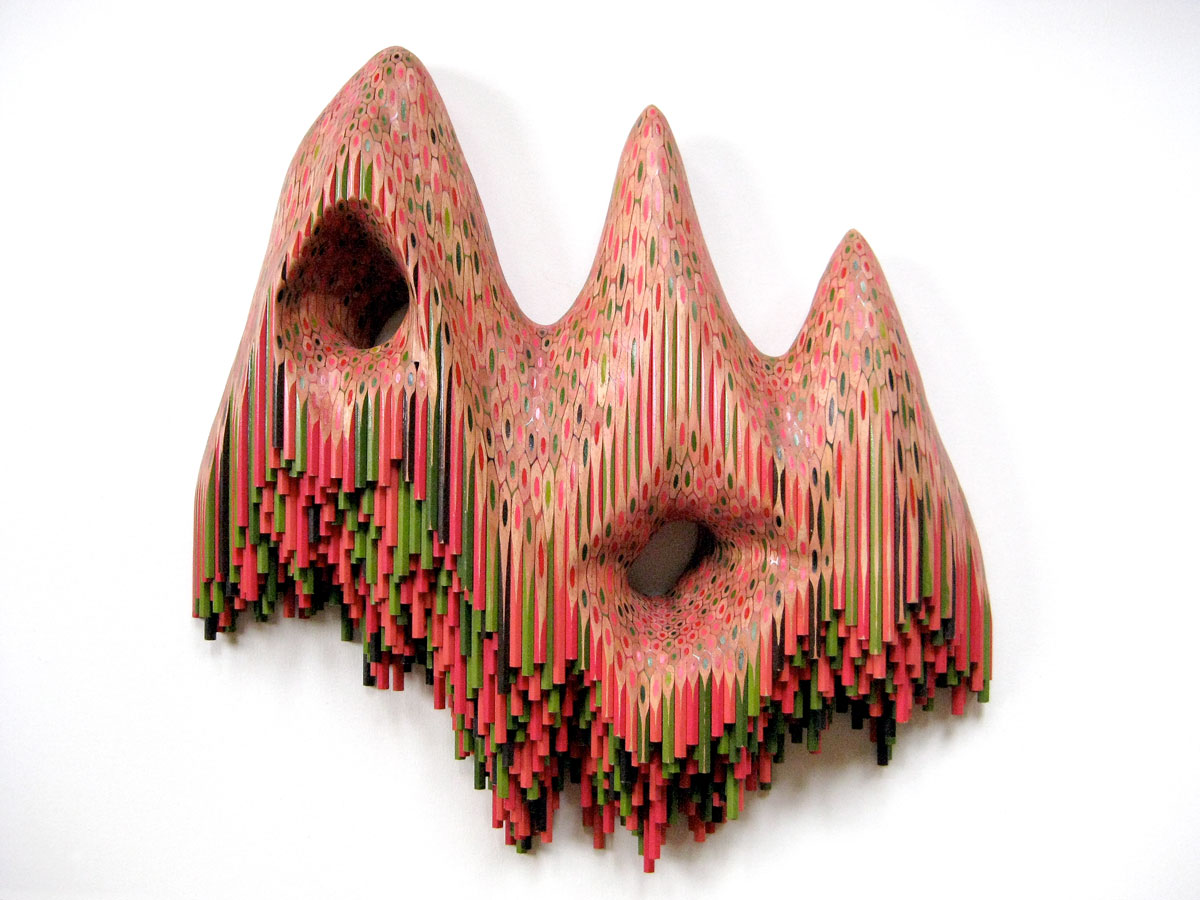
Lionel Bawden (Australian, b. 1974) formless worlds move through me 2010 Coloured Staedtler pencils, epoxy, incralac 51.0 x 51.0 x 9.5cm
Some good work in this exhibition – especially the Staedtler hexagonal coloured pencil constructions by Lionel Bawden. Beautifully crafted by hand they remind me of ghosts, the ‘millefiori’ (thousand flowers) of Italian glass and the inside of caverns with their stalactites.
Dr Marcus Bunyan
Many thankx to the Karen Woodbury Gallery for allowing me to publish the photographs in the posting. Please click on the photographs for a larger version of the image.
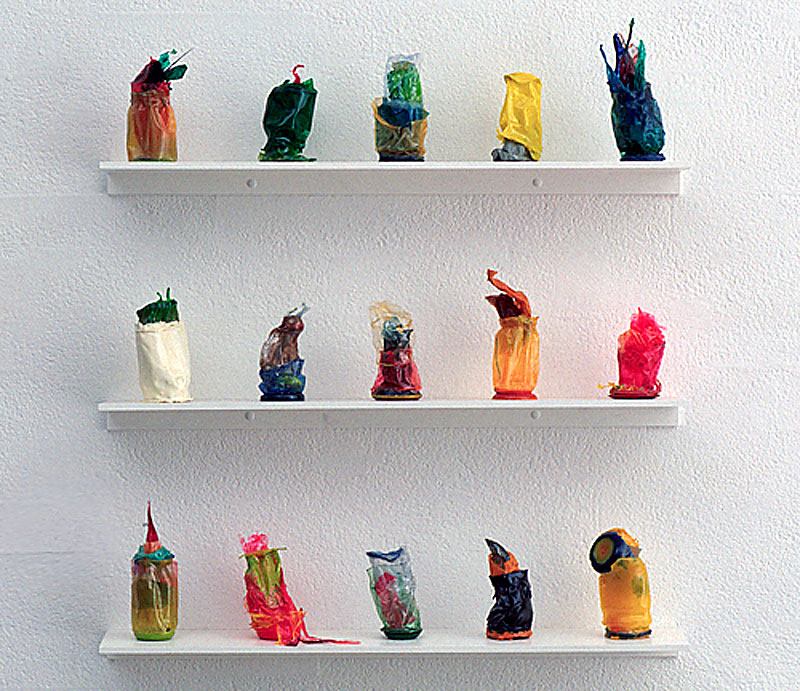
Alex Spremberg (Australian born Germany, b. 1950) Inside skins 2002
These artists have been selected for their interest in ideas of assemblage and re-use of pre-existing materials. Working across a range of media, each artist in the exhibition employs a process of manipulation to create completely different concepts and forms with their finished works. These works comprise of found objects and assembled from disparate elements, scavenged or foraged by the artists and juxtaposed in inventive ways. All works included in The Navigators take on their own form and imbue a new meaning to the original source materials.
Not originally intended as art materials, yet these artists have seen potential for a new idea in the materials; creating a new thought for the object. The original useful element of the preformed material thus comes under more aesthetic and creative significance. The impetus for such artistic practice is located in a desire by these artists to re-use, re-model, reshape and recycle within their practices. Despite an obvious interest and emphasis in the materiality of the works, the conceptual underpinning are the key motivation within these varying works and pose questions regarding the value of the objects within society. The artists included in The Navigators are continuously surveying and navigating their practice, allowing for deeper exploration in their work.
The exhibition will include various two and three-dimensional objects that interact with each other in unique ways. In the example of Lionel Bawden’s sculptures, his work exploits hexagonal coloured pencils as a sculptural material, reconfiguring and carving into amorphous shapes. Here the rich qualities of colour are explored as pencils are carved, shaped and fused together. Bawden explores themes of flux, transformation, rhythm and repetition as preconditions to our experience of the physical world. Bawden’s wall mounted works ‘the caverns of temporal suspension’ explore shapes within and outside the work as they hover ominously, melting, conjoined, growing, in transformation. These works are at the forefront of his current practice.
Penny Byrne’s work makes use of vintage porcelain sculptures that are adorned with a range of materials. Through this process, Byrne makes the base sculptures appear starkly different to that of the original, taking on new connotations that are often humorous and quirky but also convey political and social issues. In her work Mercury Rising. Hunted, Slaughtered, Eaten vintage porcelain dolphins and new plastic Manga figurines are employed to relate to the annual Japanese slaughter of tens of thousands dolphins as highlighted in the documentary ‘The Cove’. The Japanese eat the dolphins and then suffer mercury poisoning due to the high mercury levels in the dolphins flesh, leading to symptoms of madness.
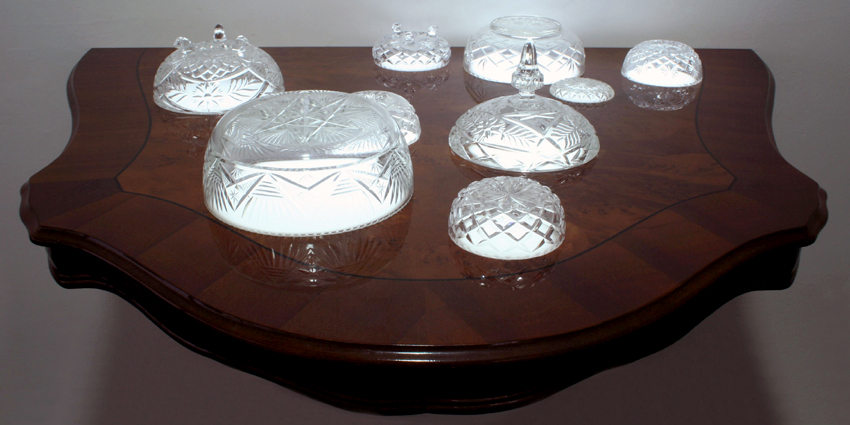
Nicholas Folland’s Navigator sculptures are indicative Folland’s continued interest in utilising, modifying and experimenting with various sourced materials. These sculptures comprise of various upturned intricately detailed crystal objects that sit above a wood panelled shelf. These glass object are lit and act as beacons or floating satellite cities. Folland personifies the intrepid creative explorer via his navigation of various found materials.
Locust Jones’ three-dimensional globes are made from papier mache and pictorially and graphically convey global issues. These works sit on the floor and allow the viewer to orient themselves around the works allowing for a detached, objective perspective on contemporary societal issues. The quickly worked surfaces reflect a stream of consciousness in process. Imagery and themes are taken from various media such as the Internet, photojournalism, film culture and nightly news broadcasts.
The two sculptures in the exhibition by Rhys Lee imbue associations of debris and deal with found objects such as a money box, a dead bird and a clowns face. These trophy-like pieces are decorated by old, worn and found vintage materials that engage with the everyday. The intimate scale of these works do not account for the potency of symbolism and accumulation of collected ideas. The blistered silver patina and bronze sculptures allude to a dark gothic sentiment that extends beyond the morphing forms. The shapes have been smashed, manipulated and stuck back together again resulting in frozen miniature icons that represent a contemporary zest for defiance.
Rob McHaffie’s works comprise a pastiche of painted anonymous unrelated objects and shapes that somehow come together to create unlikely compositions and formations. The highly skilled execution of McHaffie’s paintings attracts the viewer, who is then faced with a banality in subject matter, often of depictions of clothing, crumpled paper, plants and disfigured creatures and figures. These perfectly rendered images of everyday objects are unsettling in their clarity and realism, which are then skewed, moulded and displaced in unlikely relationships. There is a sense of a deliberate haphazard nature to McHaffie’s work that draws upon a range of elements brought together to mimic something else. Humour surfaces through this stylistic creative process.
Derek O’Connor’s re-worked painting collages resemble distorted and fragmented realities and stories via the manipulation and playful technique of alteration and re-use of book covers and record album and EP covers. O’Connor’s characteristic gestural sweeping luscious brushstrokes are employed with precision yet allow for organic spontaneity. The old material takes on new meaning and are given new life via O’Connor’s creations.
Alex Spremberg’s work Inside Skins highlights the artist’s accidental processes at work. This sculptural piece was made as an ancillary to his broader practice – working with acrylic, enamel and varnish on board and canvas. These objects where literally created via chance – an after thought that was noticed to be a finished piece in its own right. Left to dry within their containers these ‘skins’ were extracted and proved to provide aesthetic attraction and conceptual ideas of the ready-made.
The mainstay of Madonna Staunton’s practice surrounds the physicality of assemblage. Essentially she is a collage artist. The components of her two- and three-dimensional assemblages are usually drawn from old, faded and battered discards such as frames and chairs that are carefully put together in new ways and given another life. A play between precision and randomness animates her work. Her sensitivity to tonal and formal arrangement always remains acute during this process and the results are austerely and chaotically beautiful.
Press release from the Karen Woodbury Gallery website [Online] Cited 20/05/2010 no longer available online
Nicholas Folland (Australian, b. 1967) Navigators 1 2008 Glassware, table and lightbox 25.0 x 110.0 x 87.0cm
Nicholas Folland (Australian, b. 1967) Navigators 2 2008 Glassware, table and lightbox 25.0 x 110.0 x 87.0cm






















 Art Blart _ art and cultural memory archive
You must be logged in to post a comment.