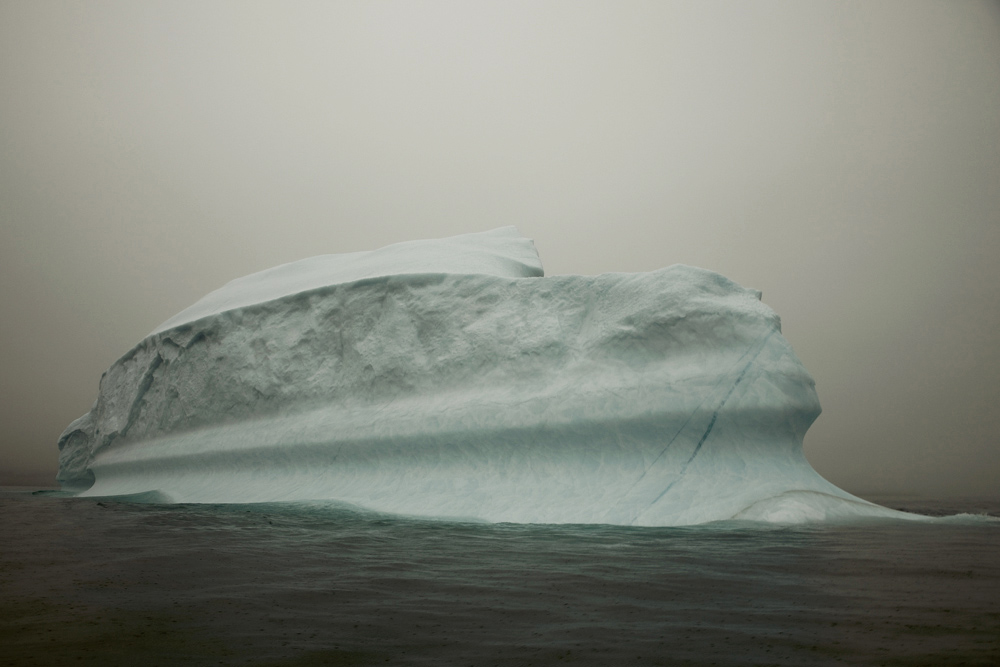
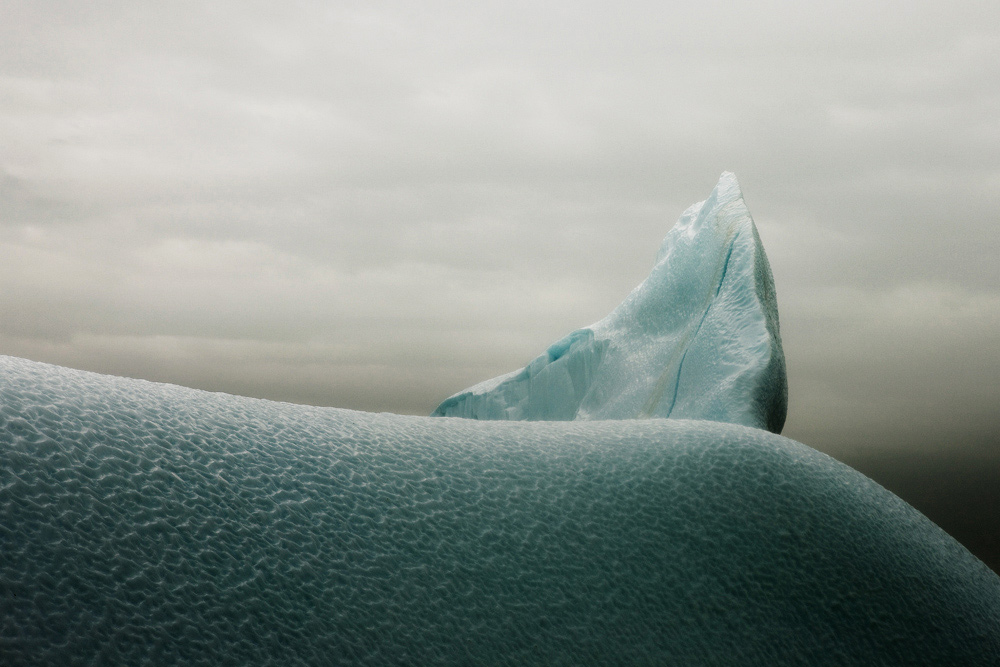
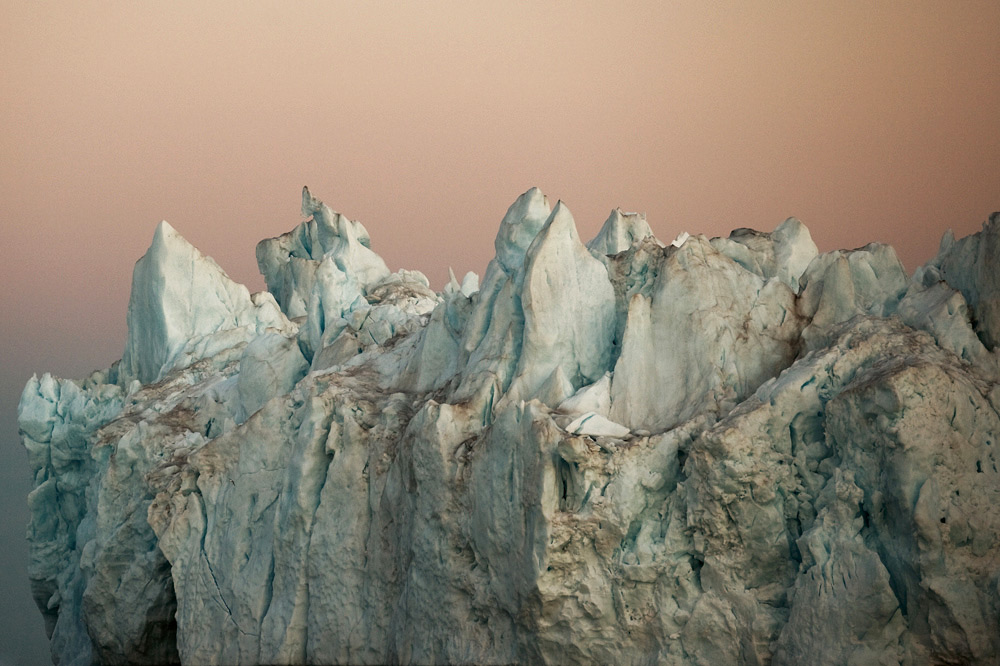
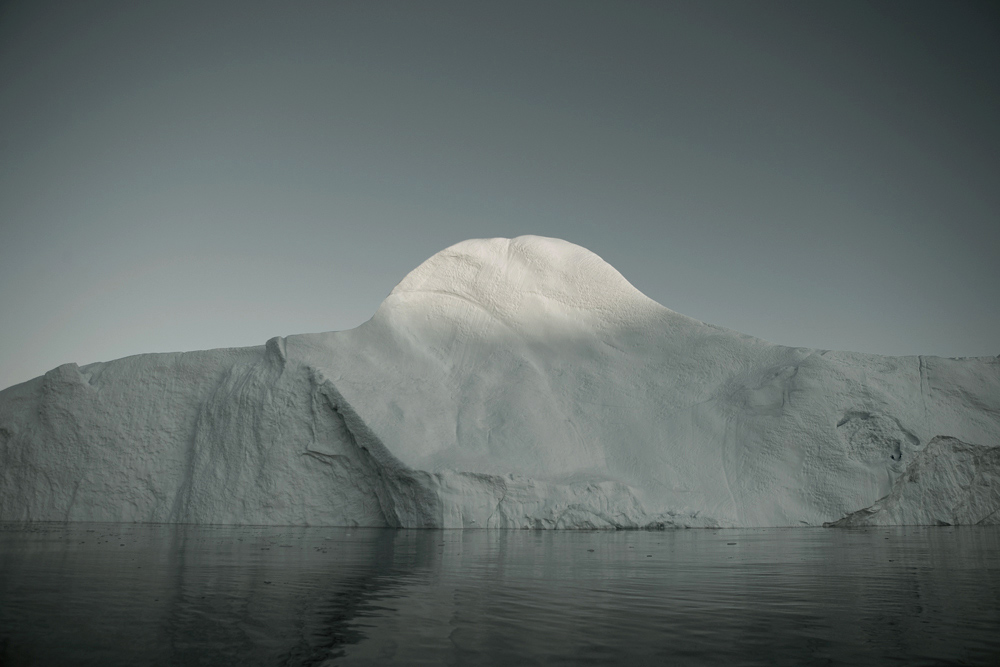
Exhibition: ‘Only in England: Photographs by Tony Ray-Jones and Martin Parr’ at Media Space at Science Museum, London

Exhibition dates: 21st September 2013 – 16th March 2014
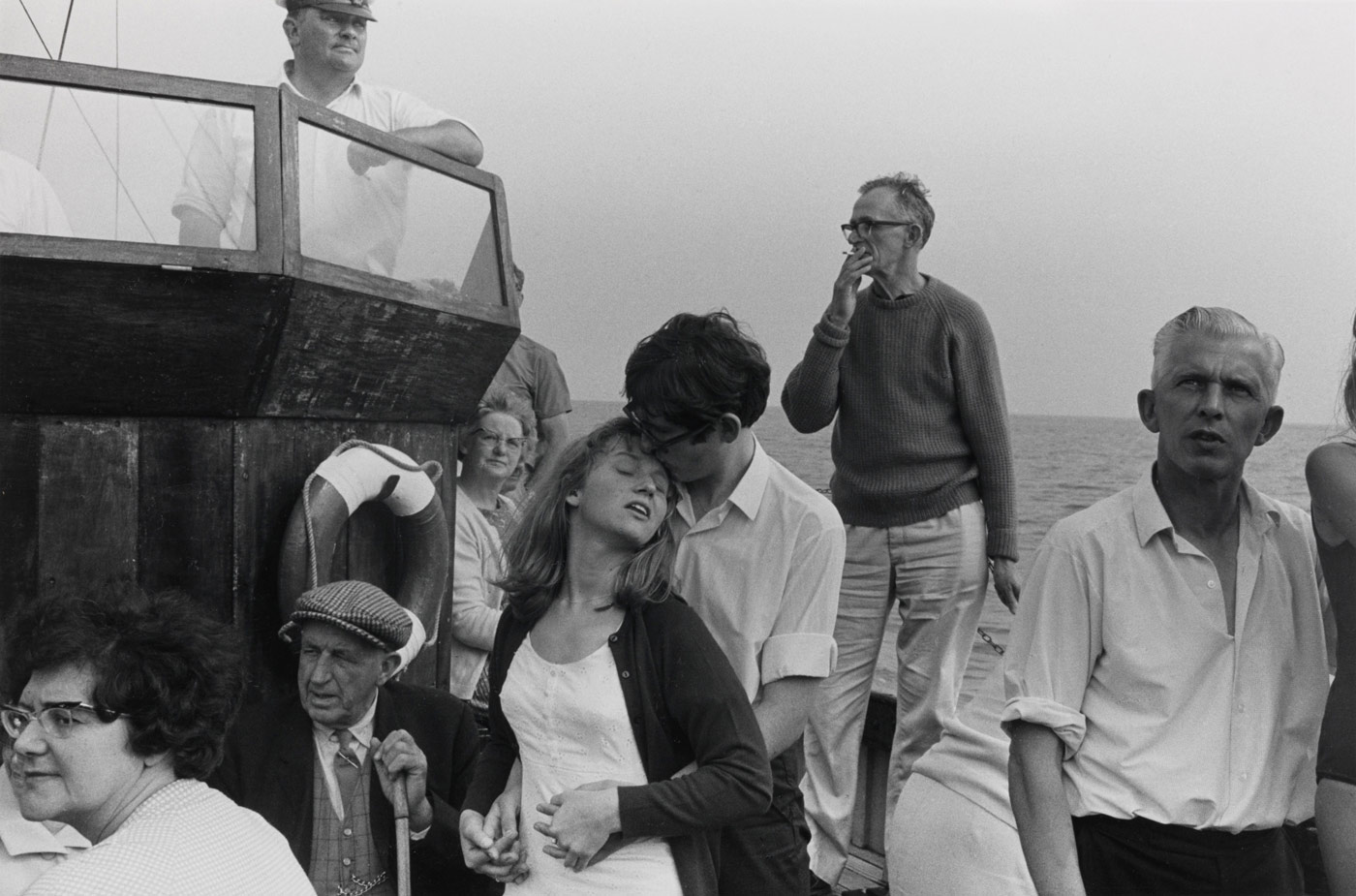
 

Tony Ray-Jones (English, 1941-1972) 'Beachy Head Tripper Boat, 1967' 1967


Tony Ray-Jones (English, 1941-1972)
Beachy Head Tripper Boat, 1967
1967
© National Media Museum


“Be more aware of composition

Don’t take boring pictures

Get in closer

Watch camera shake

Don’t shoot too much”


Tony Ray-Jones from his diaries


Growing up in the 1960s we used to get taken to Butlins holiday camps (Billy Butlin founded the company, a chain of large holiday camps in the United Kingdom, to provide affordable holidays for ordinary British families). It was a great treat to be away from the farm, to be by the sea, even if the beach was made of stones. Looking back on it now you realise how seedy it was, how working class… but as a kid it was oh, so much fun!

Tony Ray-Jones photographed these environments (mainly the British at play by the sea) and their opposites – afternoon tea taken at Glyndebourne opera festival for example (Glyndebourne, 1967, below) – drawing on the tradition of great British social documentary photography by artists such as Bill Brandt. TRJ even pays homage to Brandt in one of his photographs, Dickens Festival, Broadstairs, c. 1967 (below) which echoes Brandt’s famous photograph Parlourmaid and Under-parlourmaid Ready to Serve Dinner, 1933 by changing “point of view” from up close, personal, oppressive and interior to distance, isolation, leisure/work and exterior.

Through his photographs Ray-Jones adds his own style and humour, using “a new conception of photography as a means of expression, over and above its accepted role as a recorder.” He does it all as an intimate expression of his own personality, his maverick, outsider, non-conformist self. I feel – and that is the key word with his art – that he had a real empathy with his subject matter. There is a twinkle in his eye that becomes embedded in his photographs. There is an honesty, integrity and respect for the people he is photographing, coupled with a wicked sense of humour and the most amazing photographic eye. What an eye he had!

To be able to sum up a scene in a split second, to previsualise (think), intuitively compose, frame and shoot in that twinkle of an eye, and to balance the images as he does is truly the most incredible gift, the quintessential British “decisive moment”. Look at the structural analysis of Location unknown, possibly Worthing (1967-1968, below) that I have presented in a slide show. This will give you a good idea of the visual complexity of Ray-Jones’ images… and yet he makes the sum of all components seem grounded (in this case by the man’s feet) and effortless. Devon Caranicas has observed that TRJ possessed a quick wit and adeptness for reducing a complex narrative into a single frame, the photographed subjects transformed into social actors of supreme stereotypes. The first part is insightful, but social actors of supreme stereotypes? I think not, because these people are not acting, this is their life, their humanity, their time out from the hum-drum of everyday working class life. They do not pose for TRJ, it’s just how they are. Look at the musicality of the first five images in the posting – how the line rises and falls, moves towards you and away from you. Only a great artist can do that, instinctively.

I cannot express to you enough the utmost admiration I have for this man’s art. In my opinion he is one of greatest British photographers that has ever lived (Julia Margaret Cameron, William Henry Fox Talbot, Roger Fenton, Francis Bedford, Frederick H. Evans, Cecil Beaton, Peter Henry Emerson and Herbert Ponting would be but a few others that spring to mind). He photographed British customs and values at a time of change and pictured a real affection for the lives of ordinary working class people. Being one of the them, he will always hold a special place in my heart.

Dr Marcus Bunyan


Many thankx to Media Space at Science Museum for allowing me to publish the photographs in the posting. Please click on the photographs for a larger version of the image.


“Although the entirety of the images from Only in England were shot throughout the politically and socially turbulent late 60’s and early 70’s both artists shy away from depicting the culture clashes that so often visually defined this period. Instead, they each opted to turn their lens onto the quintessential country side, and in doing so, pay homage to a traditional type of English life that was becoming a sort of sub-culture in itself – a way of living that was not yet touched by the encroaching globalisation, or “americanisation,” of the UK.”

Anonymous text on the ART WEDNESDAY website September 26th, 2013 [Online] Cited 05/03/2014. No longer available online


“Ray-Jones printed his black and white pictures small, in a dark register of tonally very dense prints. The National Media Museum has lots of these, and perhaps to devote the cavernous new space only to such small pictures would have been a mistake. Even backed up with a mass of supporting material, including the fascinating pages from Ray-Jones’ diaries, the prints would struggle to fill the space. So only the first section is devoted to about 50 beautiful little Ray-Jones vintage prints. Two whole sections have been added to the exhibition to flesh it out…

[Parr] has unfortunately chosen to print them [Ray-Jones prints] in a way quite alien to anything Ray-Jones ever made: they are printed in Parr’s own way, as larger, paler, more diffuse things in mid-tones that Ray-Jones would never have countenanced. They are printed, inevitably, by digital process…

Sadly, these Ray-Jones by Parr prints add up to an appropriation of the former by the latter: they are Martin Parr pictures taken from Tony-Ray Jones negatives, and it would have been better not to have shown them so. They are fine images, but they should have been seen in some other way: on digital screens, perhaps, or as modern post-cards. Anything to make quite explicit the clear break with Ray-Jones’ own prints. That the images they contain are very fine is not in doubt. But I take leave to question whether they “present a new way of thinking through creative use of the collections”. They are well labelled and for specialists there will be no difficulty in knowing that they are not by Ray-Jones. But for the public I am not so sure. Suddenly two-thirds of the show are in this larger, modern, digitally printed form, either by Parr himself or by Ray-Jones-through-Parr. It looks as if that is the dominant group…”

Extract from Francis Hodgson. “Two Exhibitions of Tony Ray-Jones – Two Ways of Giving Context to Photographs,” on the Photomonitor website, September 2013 Cited 05/03/2014 no longer available online
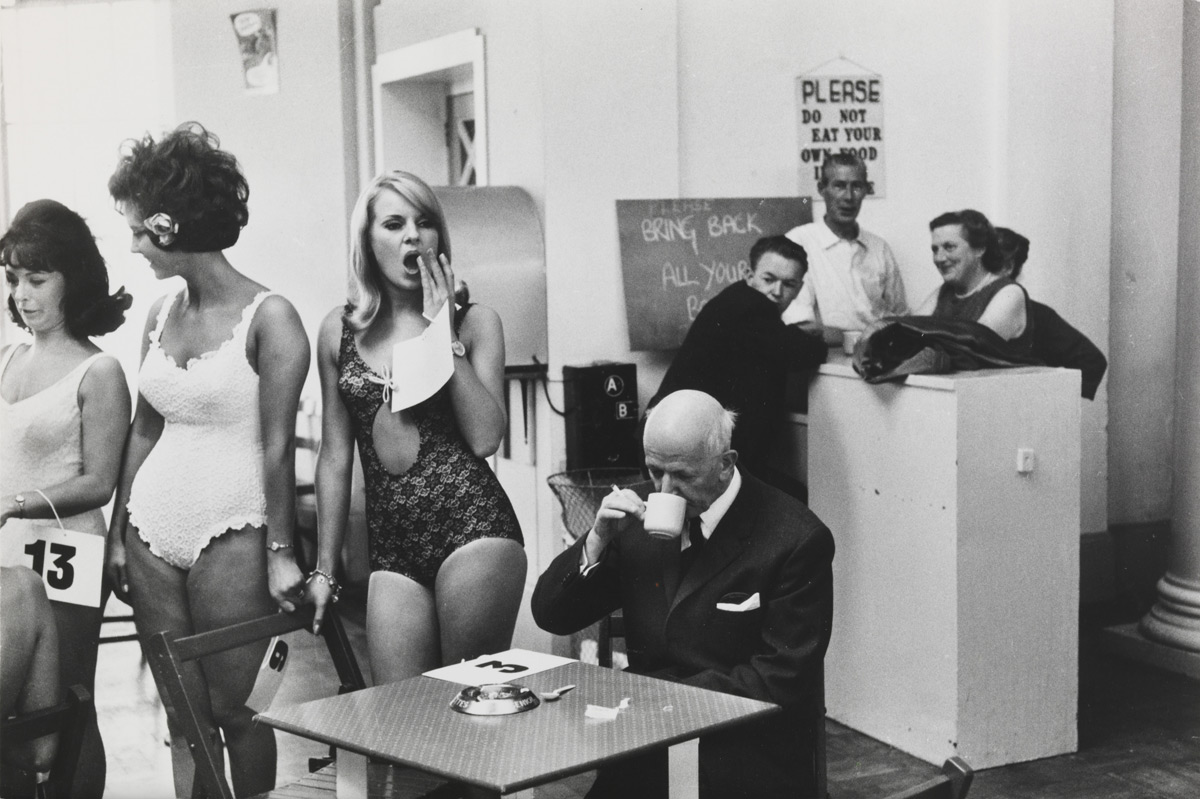
 

Tony Ray-Jones (English, 1941-1972) 'Beauty contestants, Southport, Merseyside, 1967' 1967


Tony Ray-Jones (English, 1941-1972)
Beauty contestants, Southport, Merseyside, 1967 
1967
© National Media Museum


Tony Ray-Jones (English, 1941-1972) 'Brighton Beach, West Sussex, 1966' 1966


Tony Ray-Jones (English, 1941-1972)
Brighton Beach, West Sussex, 1966
1966
© National Media Museum
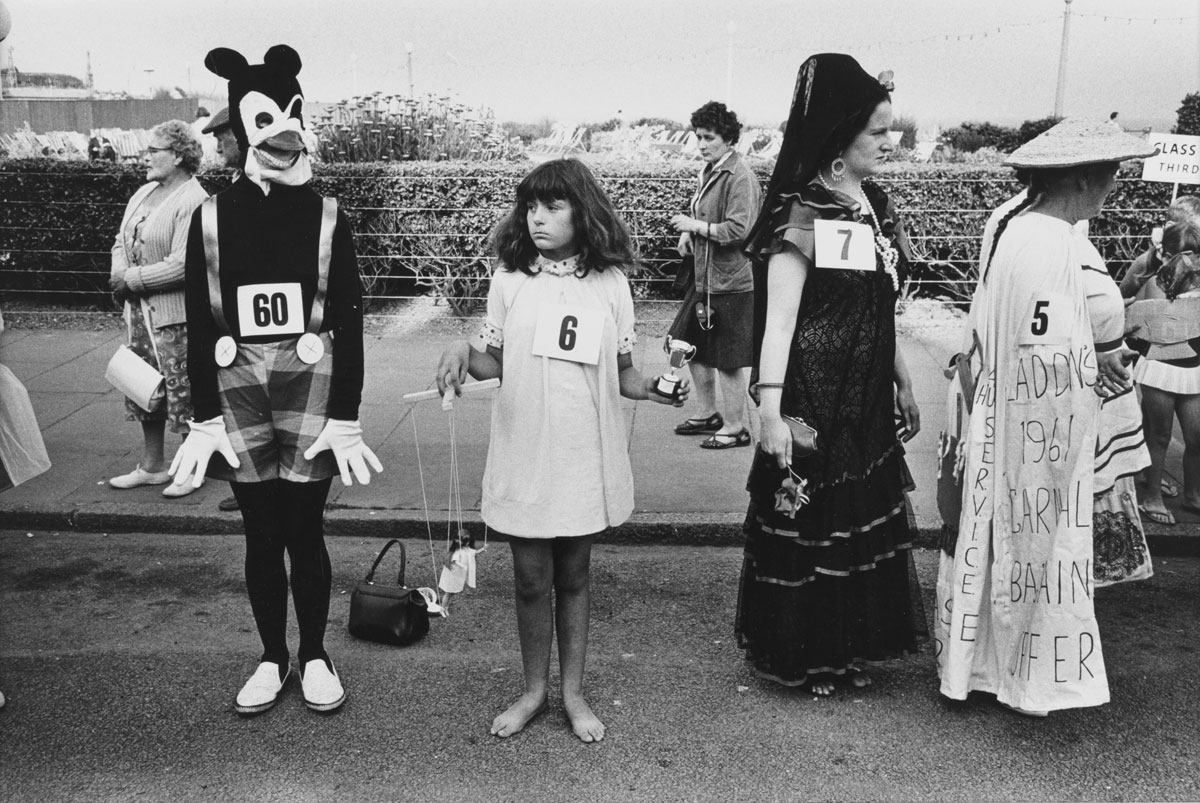
 

Tony Ray-Jones (English, 1941-1972) 'Eastbourne Carnival, 1967' 1967


Tony Ray-Jones (English, 1941-1972)
Eastbourne Carnival, 1967
1967
© National Media Museum


Tony Ray-Jones (English, 1941-1972) 'Blackpool, 1968' 1968


Tony Ray-Jones (English, 1941-1972)
Blackpool, 1968
1968
© National Media Museum


Tony Ray-Jones (English, 1941-1972) 'Location unknown, possibly Worthing' 1967-1968


Tony Ray-Jones (English, 1941-1972)
Location unknown, possibly Worthing
1967-1968
© National Media Museum


This slideshow requires JavaScript.


Tony Ray-Jones Location unknown, possibly Worthing (1967-68) picture analysis by Dr Marcus Bunyan


Fascinated by the eccentricities of English social customs, Tony Ray-Jones spent the latter half of the 1960s travelling across England, photographing what he saw as a disappearing way of life. Humorous yet melancholy, these works had a profound influence on photographer Martin Parr, who has now made a new selection including over 50 previously unseen works from the National Media Museum’s Ray-Jones archive. Shown alongside The Non-Conformists, Parr’s rarely seen work from the 1970s, this selection forms a major new exhibition which demonstrates the close relationships between the work of these two important photographers.

The first ever major London exhibition of work by British Photographer, Tony Ray-Jones (1941-1972) will open at Media Space on 21 September 2013. The exhibition will feature over 100 works drawn from the Tony Ray-Jones archive at the National Media Museum alongside 50 rarely seen early black and white photographs, The Non-Conformists, by Martin Parr (1952).

Between 1966 and 1969 Tony Ray-Jones created a body of photographic work documenting English customs and identity. Humorous yet melancholy, these photographs were a departure from anything else being produced at the time. They quickly attracted the attention of the Institute of Contemporary Arts (ICA), London where they were exhibited in 1969. Tragically, in 1972, Ray-Jones died from Leukaemia aged just 30. However, his short but prolific career had a lasting influence on the development of British photography from the 1970s through to the present.

In 1970, Martin Parr, a photography student at Manchester Polytechnic, had been introduced to Ray-Jones. Inspired by him, Parr produced The Non-Conformists, shot in black and white in Hebden Bridge and the surrounding Calder Valley. This project started within two years of Ray-Jones death and demonstrates his legacy and influence.

The exhibition will draw from the Tony Ray-Jones archive, held by the National Media Museum.  Around 50 vintage prints will be on display alongside an equal number of photographs which have never previously been printed. Martin Parr has been invited to select these new works from the 2700 contact sheets and negatives in the archive. Shown alongside these are Parr’s early black and white work, unfamiliar to many, which has only ever previously been exhibited in Hebden Bridge itself and at Camerawork Gallery, London in 1981.

Tony Ray-Jones was born in Somerset in 1941. He studied graphic design at the London School of Printing before leaving the UK in 1961 to study on a scholarship at Yale University in Connecticut, US. He followed this with a year long stay in New York during which he attended classes by the influential art director Alexey Brodovitch, and became friends with photographers Joel Meyerowitz and Garry Winogrand. In 1966 he returned to find a Britain still divided by class and tradition. A Day Off – An English Journal, a collection of photographs he took between 1967-1970 was published posthumously in 1974 and in 2004 the National Media Museum held a major exhibition, A Gentle Madness: The Photographs of Tony Ray-Jones.

Martin Parr was born in Epsom, Surry in 1952. He graduated from Manchester Polytechnic in 1974 and moved to Hebden Bridge in West Yorkshire, where he established the ‘Albert Street Workshop’, a hub for artistic activity in the town. Fascinated by the variety of non-conformist chapels and the communities he encountered in the town he produced The Non-Conformists. In 1984 Parr began to work in colour and his breakthrough publication The Last Resort was published in 1986. A Magnum photographer, Parr is now an internationally renowned photographer, filmmaker, collector and curator, best-known for his highly saturated colour photographs critiquing modern life.

Only in England: Photographs by Tony Ray-Jones and Martin Parr will run at Media Space, Science Museum from 21 September 2013 – 16 March 2014. The exhibition will then be on display at the National Media Museum from 22 March – 29 June 2014. The exhibition is curated by Greg Hobson, curator of Photographs at the National Media Museum, and Martin Parr has been invited to select works from the Tony Ray-Jones archives.

Greg Hobson, curator of Photographs at the National Media Museum says, “The combination of Martin Parr and Tony Ray-Jones’ work will allow the viewer to trace an important trajectory through the history of British photography, and present new ways of thinking about photographic histories through creative use of our collections.” Martin Parr says, “Tony Ray-Jones’ pictures were about England. They had that contrast, that seedy eccentricity, but they showed it in a very subtle way. They have an ambiguity, a visual anarchy. They showed me what was possible.”

The Tony Ray-Jones archive comprises of approximately 700 photographic prints, 1700 negative sheets, 2700 contact sheets, 600 boxes of Ektachrome / Kodachrome transparencies. It also includes ephemera such as notebooks, diary pages, and a maquette of England by the Sea made by Tony Ray-Jones.

Media Space is a collaboration between the Science Museum (London) and the National Media Museum (Bradford). Media Space will showcase the National Photography Collection of the National Media Museum through a series of exhibitions. Alongside this, photographers, artists and the creative industries will respond to the wider collections of the Science Museum Group to explore visual media, technology and science.

Press release from the Science Museum website


Tony Ray-Jones (English, 1941-1972) 'Bacup coconut dancers, 1968' 1968


Tony Ray-Jones (English, 1941-1972)
Bacup coconut dancers, 1968
1968
© National Media Museum


Tony Ray-Jones (English, 1941-1972) 'Bournemouth, 1969' 1969


Tony Ray-Jones (English, 1941-1972)
Bournemouth, 1969
1969
Vintage Gelatin Silver Print
16 x 25cm (6 x 10 inches)
© National Media Museum
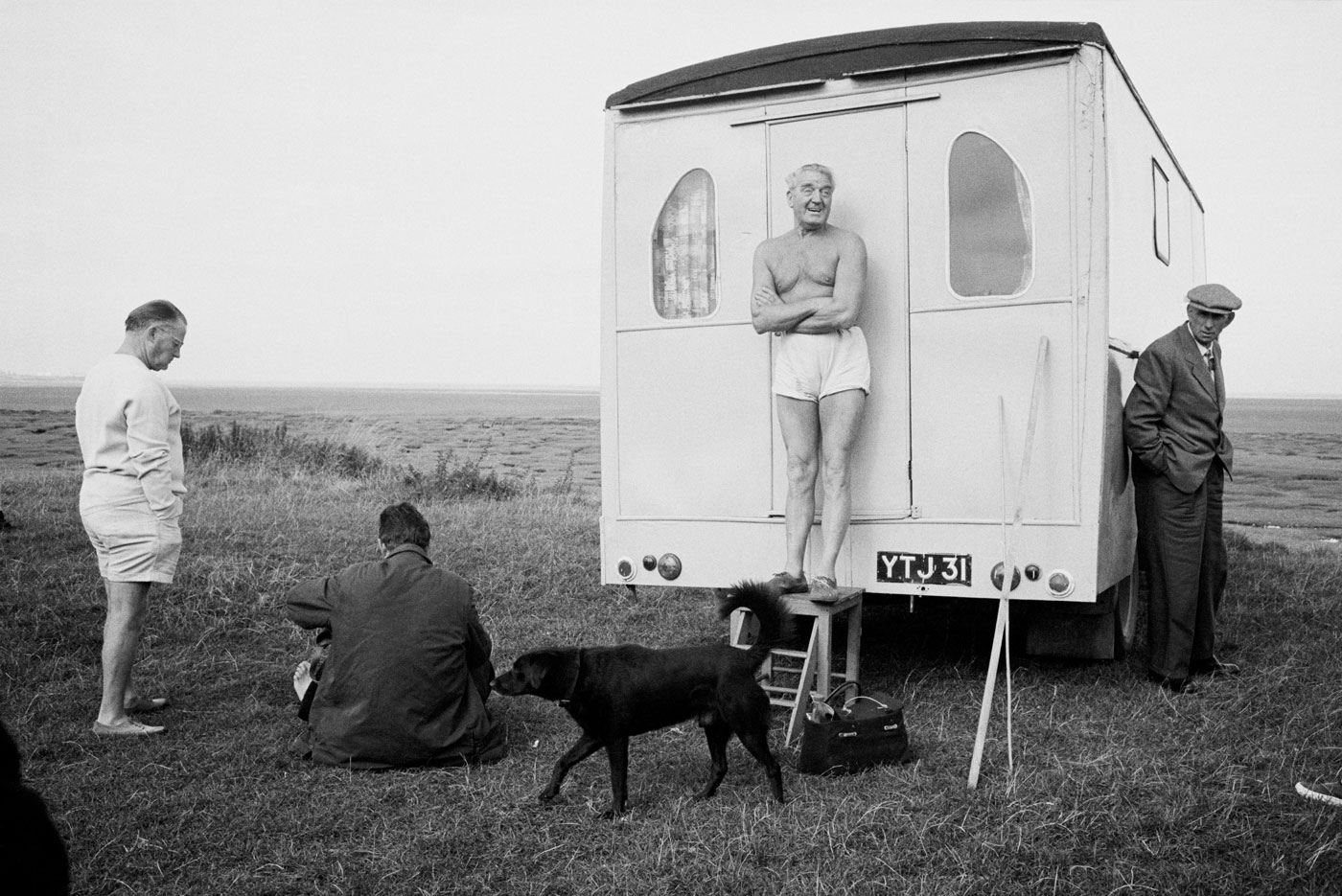
 

Tony Ray-Jones (English, 1941-1972) 'Location unknown, possible Morecambe, 1967-68' 1967-1968


Tony Ray-Jones (English, 1941-1972)
Location unknown, possible Morecambe, 1967-68
1967-1968
© National Media Museum


Tony Ray-Jones (English, 1941-1972) 'Mablethorpe, 1967' 1967


Tony Ray-Jones (English, 1941-1972)
Mablethorpe, 1967
1967
Vintage Gelatin Silver Print
14 x 21cm (6 x 8 inches)
© National Media Museum
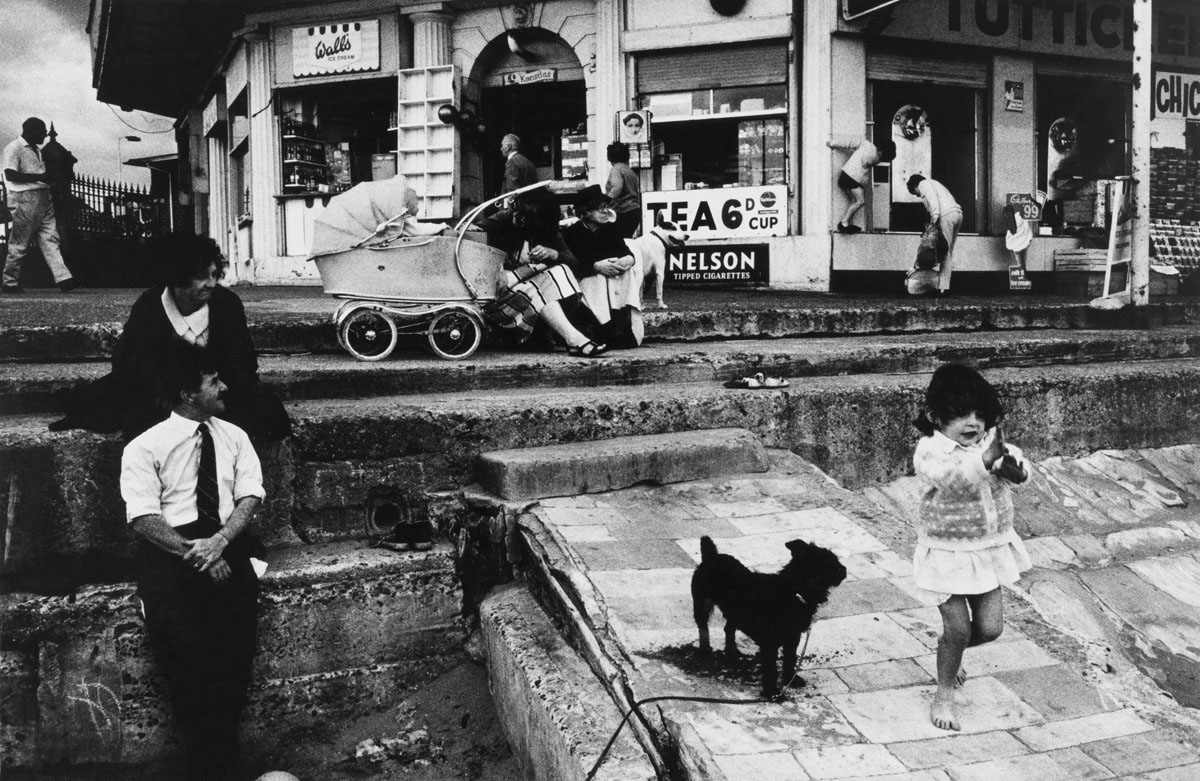
 

Tony Ray-Jones (English, 1941-1972) 'Ramsgate, 1967' 1967


Tony Ray-Jones (English, 1941-1972)
Ramsgate, 1967
1967
© National Media Museum


Tony Ray-Jones (English, 1941-1972) 'Mankinholes Methodist Chapel, Todmorden' 1975


Tony Ray-Jones (English, 1941-1972)
Mankinholes Methodist Chapel, Todmorden
1975
© Martin Parr/ Magnum


Tony Ray-Jones (English, 1941-1972) 'Cruft's Dog Show, London, 1966' 1966


Tony Ray-Jones (English, 1941-1972)
Cruft’s Dog Show, London, 1966
1966
© National Media Museum


Tony Ray-Jones (English, 1941-1972) 'Dickens Festival, Broadstairs, c. 1967' c. 1967


Tony Ray-Jones (English, 1941-1972)
Dickens Festival, Broadstairs, c. 1967
c. 1967
© National Media Museum
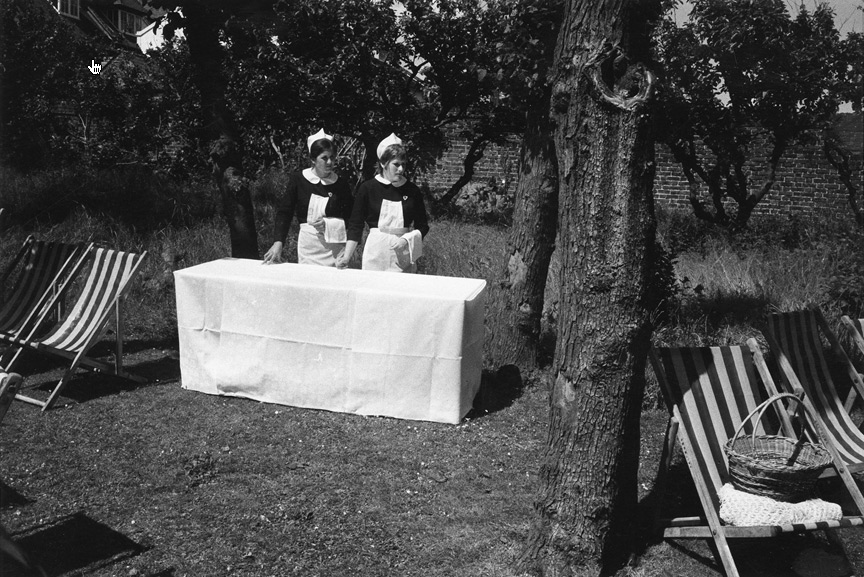
 

Tony Ray-Jones (English, 1941-1972) 'Dickens Festival, Broadstairs, c. 1967' c. 1967


Tony Ray-Jones (English, 1941-1972)
Dickens Festival, Broadstairs, c. 1967
c. 1967
© National Media Museum
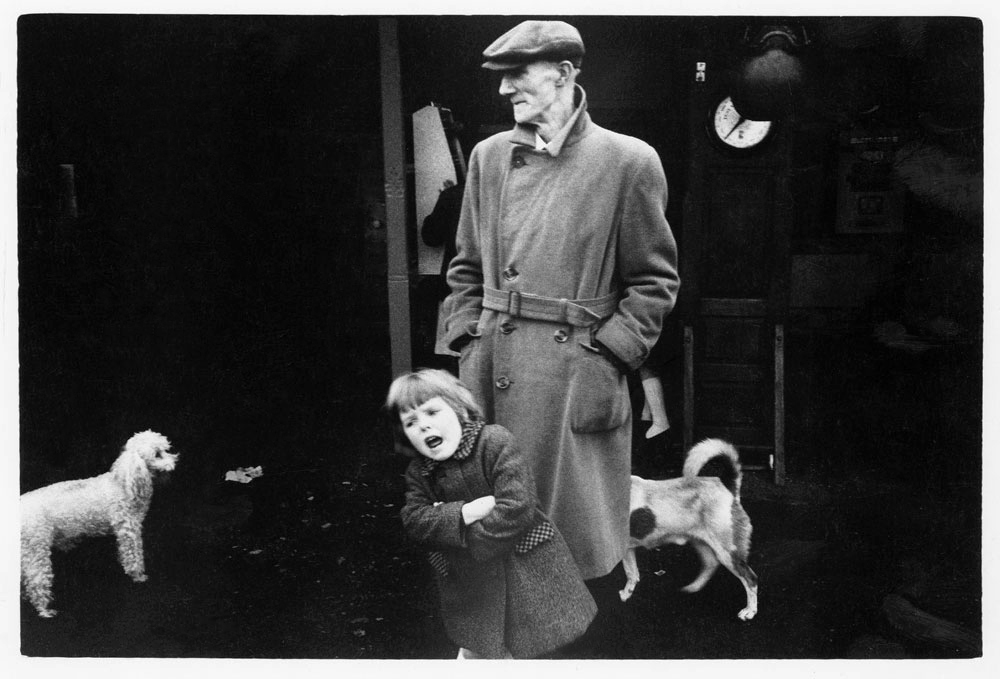
 

Tony Ray-Jones (English, 1941-1972) 'Wormwood Scrubs Fair, London, 1967' 1967


Tony Ray-Jones (English, 1941-1972)
Wormwood Scrubs Fair, London, 1967
1967
© National Media Museum


Tony Ray-Jones (English, 1941-1972) 'Untitled' 1960s


Tony Ray-Jones (English, 1941-1972)
Untitled
1960s
© National Media Museum


Tony Ray-Jones (English, 1941-1972) 'Trooping the Colour, London, 1967' 1967


Tony Ray-Jones (English, 1941-1972)
Trooping the Colour, London, 1967
1967
© National Media Museum


Tony Ray-Jones (English, 1941-1972) 'Untitled' 1960s


Tony Ray-Jones (English, 1941-1972)
Untitled
1960s
© National Media Museum


Tony Ray-Jones (English, 1941-1972) 'Glyndebourne, 1967' 1967


Tony Ray-Jones (English, 1941-1972)
Glyndebourne, 1967
1967
© National Media Museum
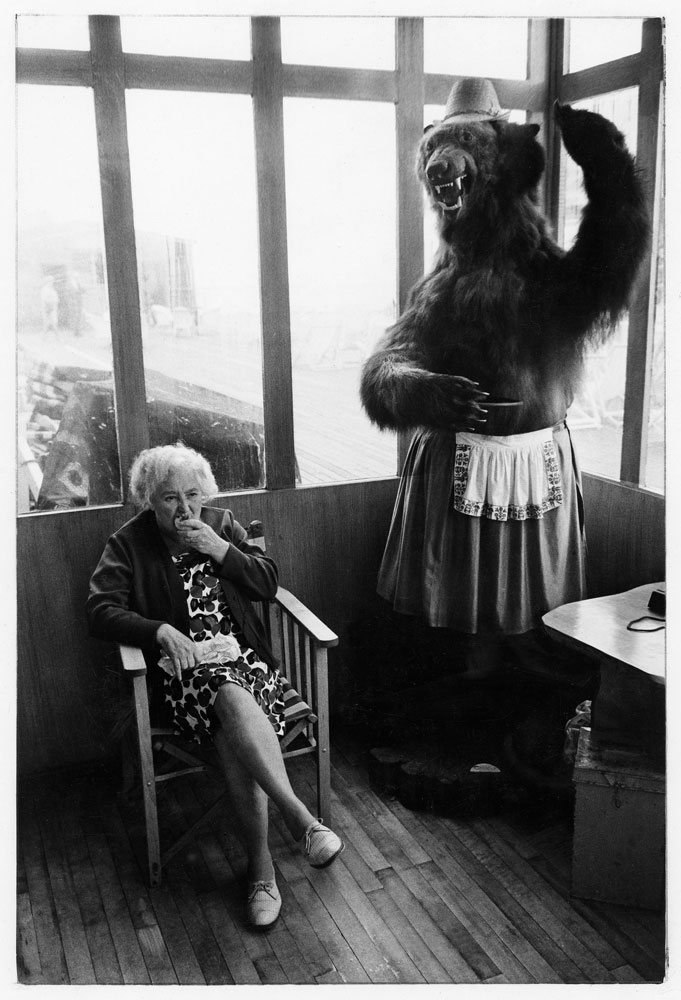
 

Tony Ray-Jones (English, 1941-1972) 'Elderly woman eating pie seated in a pier shelter next to a stuffed bear, 1969' 1969


Tony Ray-Jones (English, 1941-1972)
Elderly woman eating pie seated in a pier shelter next to a stuffed bear, 1969
1969
© National Media Museum


Tony Ray-Jones (English, 1941-1972) 'Blackpool, 1968' 1968


Tony Ray-Jones (English, 1941-1972)
Blackpool, 1968
1968
Vintage Gelatin Silver Print
21 x 14.5cm (8.25 x 5.70 ins)
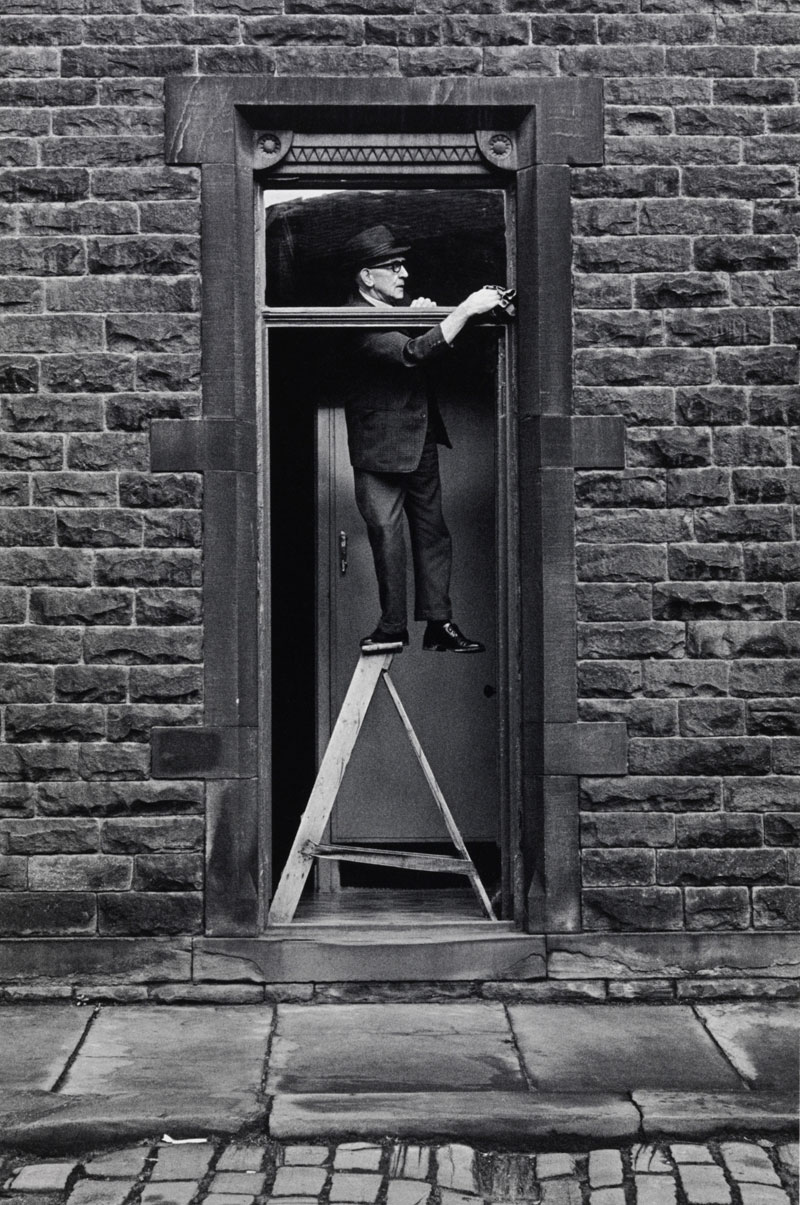
 

Tony Ray-Jones (English, 1941-1972) 'Tom Greenwood cleaning' 1976


Tony Ray-Jones (English, 1941-1972)
Tom Greenwood cleaning
1976
© Martin Parr/ Magnum


Media Space at Science Museum
Exhibition Road, South Kensington,
London SW7 2DD

Opening hours:
Open seven days a week, 10.00 – 18.00

Media Space at Science Museum website

LIKE ART BLART ON FACEBOOK

Back to top

Exhibition: ‘Flesh and Metal: Body and Machine in Early 20th­-Century Art’ at the Cantor Arts Center at Stanford University

Exhibition dates: 13th November 2013 – 16th March 2014

Featured artists include Margaret Bourke-White, Constantin Brancusi, Giorgio de Chirico, Salvador Dalí, Marcel Duchamp, Germaine Krull, Fernand Léger, Wyndham Lewis, László Moholy-Nagy, Piet Mondrian, Man Ray, Alexander Rodchenko, and Charles Sheeler, among others.


Many thankx to the San Francisco Museum of Modern Art (SFMOMA) and the Cantor Arts Center at Stanford University for allowing me to publish the art work in the posting. Please click on the art work for a larger version of the image.


Man Ray (American, 1890-1976) 'Untitled (Rayograph)' 1922


Man Ray (American, 1890-1976)
Untitled (Rayograph)
1922
Gelatin silver print
11 15/16 x 9 3/8 in. (30.32 x 23.81cm)
Collection SFMOMA, purchase
© Man Ray Trust / Artists Rights Society (ARS), New York / ADAGP, Paris


“I am young, I am twenty years old; yet I know nothing of life but despair, death, fear, and fatuous superficiality cast over an abyss of sorrow. I see how peoples are set against one another, and in silence, unknowingly, foolishly, obediently, innocently slay one another. I see that the keenest brains of the world invent weapons and words to make it yet more refined and enduring. And all men of my age, here and over there, throughout the whole world see these things; all my generation is experiencing these things with me. What would our fathers do if we suddenly stood up and came before them and proffered our account? What do they expect of us if a time ever comes when the war is over? Through the years our business has been killing; – it was our first calling in life. Our knowledge of life is limited to death. What will happen afterwards? And what shall come out of us?”

Erich Maria Remarque. All Quiet on the Western Front, 1929


Germaine Krull (European, 1897-1985) 'Portrait of Joris Ivens, Amsterdam' c. 1928


Germaine Krull (European, 1897-1985)
Portrait of Joris Ivens, Amsterdam
c. 1928
Gelatin silver print
7 3/8 x 6 1/4 in. (18.77 x 15.88cm)
Collection SFMOMA, gift of Simon Lowinsky
© Germaine Krull Estate


Germaine Krull (29 November 1897 – 31 July 1985), was a photographer, political activist, and hotel owner. Her nationality has been categorised as German, Polish, French, and Dutch, but she spent years in Brazil, Republic of the Congo, Thailand, and India. Described as “an especially outspoken example” of a group of early 20th-century female photographers who “could lead lives free from convention”, she is best known for photographically-illustrated books such as her 1928 portfolio Métal...

Having met Dutch filmmaker and communist Joris Ivens in 1923, she moved to Amsterdam in 1925. After Krull returned to Paris in 1926, Ivens and Krull entered into a marriage of convenience between 1927 and 1943 so that Krull could hold a Dutch passport and could have a “veneer of married respectability without sacrificing her autonomy.”

In Paris between 1926 and 1928, Krull became friends with Sonia Delaunay, Robert DelaunayEli LotarAndré MalrauxColetteJean CocteauAndré Gide and others; her commercial work consisted of fashion photography, nudes, and portraits. During this period she published the portfolio Métal (1928) which concerned “the essentially masculine subject of the industrial landscape.” Krull shot the portfolio’s 64 black-and-white photographs in Paris, Marseille, and Holland during approximately the same period as Ivens was creating his film De Brug (“The Bridge”) in Rotterdam, and the two artists may have influenced each other. The portfolio’s subjects range from bridges, buildings and ships to bicycle wheels; it can be read as either a celebration of machines or a criticism of them. Many of the photographs were taken from dramatic angles, and overall the work has been compared to that of László Moholy-Nagy and Alexander Rodchenko. In 1999-2004 the portfolio was selected as one of the most important photobooks in history.

By 1928 Krull was considered one of the best photographers in Paris, along with André Kertész and Man Ray. Between 1928 and 1933, her photographic work consisted primarily of photojournalism, such as her photographs for Vu, a French magazine. Also in the early 1930s, she also made a pioneering study of employment black spots in Britain for Weekly Illustrated (most of her ground-breaking reportage work from this period remains immured in press archives and she has never received the credit which is her due for this work). Her book Études de Nu (“Studies of Nudes”) published in 1930 is still well-known today.

Text from the Wikipedia website


El Lissitzky (Russian, 1890-1941) 'Untitled' c. 1923


El Lissitzky (Russian, 1890-1941)
Untitled
c. 1923
Gelatin silver print
9 1/2 x 7 1/4 in. (24.13 x 18.42cm)
Collection SFMOMA, gift of anonymous donors
© Estate of El Lissitzky / Artists Rights Society (ARS), New York / VG Bild-Kunst, Bonn


Lazar Markovich Lissitzky (November 23, 1890 – December 30, 1941), better known as El Lissitzky, was a Russian artist, designer, photographer, typographer, polemicist and architect. He was an important figure of the Russian avant garde, helping develop suprematism with his mentor, Kazimir Malevich, and designing numerous exhibition displays and propaganda works for the Soviet Union. His work greatly influenced the Bauhaus and constructivist movements, and he experimented with production techniques and stylistic devices that would go on to dominate 20th-century graphic design.

Lissitzky’s entire career was laced with the belief that the artist could be an agent for change, later summarised with his edict, “das zielbewußte Schaffen” (goal-oriented creation). Lissitzky, of Jewish origin, began his career illustrating Yiddish children’s books in an effort to promote Jewish culture in Russia, a country that was undergoing massive change at the time and that had just repealed its antisemitic laws. When only 15 he started teaching; a duty he would stay with for most of his life. Over the years, he taught in a variety of positions, schools, and artistic media, spreading and exchanging ideas. He took this ethic with him when he worked with Malevich in heading the suprematist art groupUNOVIS, when he developed a variant suprematist series of his own, Proun, and further still in 1921, when he took up a job as the Russian cultural ambassador to Weimar Germany, working with and influencing important figures of the Bauhaus and De Stijl movements during his stay. In his remaining years he brought significant innovation and change to typography, exhibition design, photomontage, and book design, producing critically respected works and winning international acclaim for his exhibition design. This continued until his deathbed, where in 1941 he produced one of his last works – a Soviet propaganda poster rallying the people to construct more tanks for the fight against Nazi Germany. In 2014, the heirs of the artist, in collaboration with Van abbemuseum and the leading worldwide scholars, the Lissitzky foundation was established, to preserve the artist’s legacy and prepare a catalogue raisonné of the artists oeuvre.

Text from the Wikipedia website


Alexander Rodchenko (Russian, 1891-1956) 'Pozharnaia lestnitsa' from the series 'Dom na Miasnitskoi' (Fire Escape, from the series House Building on Miasnitskaia Street) 1925


Alexander Rodchenko (Russian, 1891-1956)
Pozharnaia lestnitsa from the series Dom na Miasnitskoi (Fire Escape, from the series House Building on Miasnitskaia Street)
1925
Gelatin silver print
9 x 6 in. (22.86 x 15.24cm)
Collection SFMOMA, Accessions Committee Fund: gift of Frances and John Bowes, Evelyn Haas, Mimi and Peter Haas, Pam and Dick Kramlich, and Judy and John Webb
© Estate of Alexander Rodchenko / RAO, Moscow / VAGA, New York


Raoul Ubac (French, 1910-1985) 'Penthésilée' 1937


Raoul Ubac (French, 1910-1985)
Penthésilée
1937
Gelatin silver print
15 1/2 x 11 1/4 in. (39.37 x 28.58cm)
Collection SFMOMA, gift of Robert Miller
© Artists Rights Society (ARS), New York / ADAGP, Paris


Raoul Ubac (31 August 1910, Cologne – 24 March 1985, Dieudonne, Oise) was a French painter, sculptor, photographer and engraver. Ubac’s mother’s family ran a tannery and his father was a magistrate. In his early years he traveled through some parts of Europe on foot. He originally intended to become a waterways and forestry inspector. His interest in art was aroused when he made his first visit to Paris in 1928 and met several artists, including Otto Freundlich.

After returning to Malmédy he read the Manifeste du Surréalisme (1924) by André Breton. He met that document’s author André Breton and other leading Surrealists in 1930, and dedicated himself to capturing the movement’s dream aesthetic in photography after settling in Paris, attending the first showing of Luis Buñuel’s film L’Age d’or (1931). He attended the Faculté des Lettres of the Sorbonne briefly but soon left to frequent the studios of Montparnasse. About 1933-34 he attended the Ecole des Arts Appliqués for more than a year, studying mainly drawing and photography. In the course of a visit to Austria and the Dalmatian coast in 1933, he visited the island of Hvar where he made some assemblages of stones, which he drew and photographed, for example Dalmatian Stone (1933). Disillusioned with Surrealism, Ubac abandoned photography after the Second World War in favour of painting and sculpture, and died in France in 1985.

Text from various sources


Co-organised by the San Francisco Museum of Modern Art (SFMOMA) and the Cantor Arts Center at Stanford University, Flesh and Metal: Body and Machine in Early 20th­-Century Art presents more than 70 artworks that explore a central dynamic of art making in Europe and the Americas between the 1910s and the early 1950s. On view from November 13, 2013 to March 16, 2014 at the Cantor Arts Center, the exhibition includes a rich group of paintings, sculptures, photographs, drawings, prints, and illustrated books from the collection of SFMOMA. Taken together, the works offer a fresh view of how artists negotiated the terrain between the mechanical and the bodily – two oppositional yet inextricably bound forces – to produce a wide range of imagery responding to the complexity of modern experience.

The exhibition is part of the collaborative museum shows and extensive off-site programming presented by SFMOMA while its building is temporarily closed for expansion construction. From the summer of 2013 to early 2016, SFMOMA is on the go, presenting a dynamic slate of jointly organised and traveling exhibitions, public art displays and site-specific installations, and newly created education programs throughout the Bay Area.

“We are thrilled to pair SFMOMA’s world-class collection with Stanford’s renowned academic resources,” said Connie Wolf, the John and Jill Freidenrich Director of the Cantor Arts Center. “Cantor curators and the distinguished chair of the Department of Art and Art History guided seminars specifically for this exhibition, with students examining art of the period, investigating themes, studying design and display issues, and developing writing skills. The students gained immeasurably by this amazing experience and added new research and fresh perspectives to the artwork and to the exhibition. We are proud of the results and delighted to present a unique and invaluable partnership that will enrich the Stanford community, our museum members, and our visitors.”

SFMOMA’s Curator of Photography Corey Keller concurred: “The opportunity to work with our colleagues at Stanford has been a remarkable experience both in the galleries and in the classroom. We couldn’t be prouder of the exhibition’s unique perspective on a particularly rich area of SFMOMA’s collection that resulted from our collaboration.”

Exhibition overview

The exhibition is organised into four thematic sections dealing with the human figure, the imagination, the urban landscape, and the object, which together reveal a range of artists’ responses to the conditions of modernity. At the beginning of the 20th century, many hailed the machine as a symbol of progress. “Speed” and “efficiency” entered the vocabularies of art movements such as Futurism (in Italy), Purism (in France), Vorticism (in England), and Constructivism (in Russia), all of which adapted the subject matter and formal characteristics of the machine. Factories and labourers were presented positively as emblems of modernity, and mechanisation became synonymous with mobility and the possibility of social improvement. Countering this utopian position were proponents of the Dada and Surrealist movements (based largely in Germany and France), who found mechanical production problematic. For many of these artists who had lived through the chaos and destruction of World War I, the machine was perceived as a threat not only to the body, but to the uniquely human qualities of the mind as well. These artists embraced chance, accident, dream, and desire as new paths to freedom and creativity, in contrast to their counterparts who maintained their faith in an industrially enhanced future.

Though art from the first half of the 20th century is often viewed as representing an opposition between the rational, impersonal world of the machine and the uncontrollable, often troubling realm of the human psyche, the work in this exhibition suggests a more nuanced tension. In fact, artists regularly perceived these polarities in tandem. The codes of the bodily and the industrial coalesce in Fernand Léger’s machine aesthetic, on view in his 1927 painting Two Women on a Blue Backgound and an untitled collage from 1925. For his “rayographs,” Man Ray made use of mass-produced objects, but deployed them in a lyrical and imaginative manner – placing them on photosensitised paper and exposing it to light. Constantin Brancusi’s The Blond Negress (1927) and Jacques Lipchitz’s Draped Woman (1919) update the tradition of the cast bronze figure by introducing impersonal geometries. And even the seemingly formulaic surfaces of Piet Mondrian’s abstract paintings eventually reveal the artist’s sensitive hand.”

Press release from SFMOMA and the Cantor Arts Center


Hans Bellmer (German, 1902-1975) 'La mitrailleuse en état de grâce' (The Machine Gun[neress] in a State of Grace) 1937


Hans Bellmer (German, 1902-1975)
La mitrailleuse en état de grâce (The Machine Gun[neress] in a State of Grace)
1937
Gelatin silver print with oil and watercolour
26 x 26 in. (66.04 x 66.04cm)
Collection SFMOMA, gift of Foto Forum
© Artists Rights Society (ARS), New York / ADAGP, Paris


Hans Bellmer (13 March 1902 – 23 February 1975) was a German artist, best known for the life sized pubescent female dolls he produced in the mid-1930s. Historians of art and photography also consider him a Surrealist photographer.

Bellmer was born in the city of Kattowitz, then part of the German Empire (now Katowice, Poland). Up until 1926, he’d been working as a draftsman for his own advertising company. He initiated his doll project to oppose the fascism of the Nazi Party by declaring that he would make no work that would support the new German state. Represented by mutated forms and unconventional poses, his dolls were directed specifically at the cult of the perfect body then prominent in Germany. Bellmer was influenced in his choice of art form by reading the published letters of Oskar Kokoschka (Der Fetisch, 1925).

Bellmer’s doll project is also said to have been catalysed by a series of events in his personal life. Hans Bellmer takes credit for provoking a physical crisis in his father and brings his own artistic creativity into association with childhood insubordination and resentment toward a severe and humourless paternal authority. Perhaps this is one reason for the nearly universal, unquestioning acceptance in the literature of Bellmer’s promotion of his art as a struggle against his father, the police, and ultimately, fascism and the state. Events of his personal life also including meeting a beautiful teenage cousin in 1932 (and perhaps other unattainable beauties), attending a performance of Jacques Offenbach’s Tales of Hoffmann (in which a man falls tragically in love with an automaton), and receiving a box of his old toys. After these events, he began to actually construct his first dolls. In his works, Bellmer explicitly sexualised the doll as a young girl. The dolls incorporated the principle of “ball joint”, which was inspired by a pair of sixteenth-century articulated wooden dolls in the Kaiser Friedrich Museum.

Bellmer produced the first doll in Berlin in 1933. Long since lost, the assemblage can nevertheless be correctly described thanks to approximately two dozen photographs Bellmer took at the time of its construction. Standing about fifty-six inches tall, the doll consisted of a modelled torso made of flax fibre, glue, and plaster; a mask-like head of the same material with glass eyes and a long, unkempt wig; and a pair of legs made from broomsticks or dowel rods. One of these legs terminated in a wooden, club-like foot; the other was encased in a more naturalistic plaster shell, jointed at the knee and ankle. As the project progressed, Bellmer made a second set of hollow plaster legs, with wooden ball joints for the doll’s hips and knees. There were no arms to the first sculpture, but Bellmer did fashion or find a single wooden hand, which appears among the assortment of doll parts the artist documented in an untitled photograph of 1934, as well as in several photographs of later work.

Bellmer’s 1934 anonymous book, The Doll (Die Puppe), produced and published privately in Germany, contains 10 black-and-white photographs of Bellmer’s first doll arranged in a series of “tableaux vivants” (living pictures). The book was not credited to him, as he worked in isolation, and his photographs remained almost unknown in Germany. Yet Bellmer’s work was eventually declared “degenerate” by the Nazi Party, and he was forced to flee Germany to France in 1938. Bellmer’s work was welcomed in the Parisian art culture of the time, especially the Surrealists around André Breton, because of the references to female beauty and the sexualization of the youthful form. His photographs were published in the Surrealist journal Minotaure, 5 December 1934 under the title “Poupée, variations sur le montage d’une mineure articulée” (The Doll, Variations on the Assemblage of an Articulated Minor).

He aided the French Resistance during the war by making fake passports. He was imprisoned in the Camp des Milles prison at Aix-en-Provence, a brickworks camp for German nationals, from September 1939 until the end of the Phoney War in May 1940. After the war, Bellmer lived the rest of his life in Paris. Bellmer gave up doll-making and spent the following decades creating erotic drawings, etchings, sexually explicit photographs, paintings, and prints of pubescent girls… Of his own work, Bellmer said, “What is at stake here is a totally new unity of form, meaning and feeling: language-images that cannot simply be thought up or written up … They constitute new, multifaceted objects, resembling polyplanes made of mirrors … As if the illogical was relaxation, as if laughter was permitted while thinking, as if error was a way and chance, a proof of eternity.

Text from the Wikipedia website


Salvador Dalí (Spanish, 1904-1989) 'Objet Surréaliste à fonctionnement symbolique - le soulier de Gala' (Surrealist object that functions symbolically - Gala's Shoe) 1932/1975


Salvador Dalí (Spanish, 1904-1989)
Objet Surréaliste à fonctionnement symbolique – le soulier de Gala (Surrealist object that functions symbolically – Gala’s Shoe)
1932/1975
Shoe, marble, photographs, clay, and mixed media
48 x 28 x 14 in. (121.92 x 71.12 x 35.56 cm)
Collection SFMOMA, purchase, by exchange, through a gift of Norah and Norman Stone
© Salvador Dalí, Gala-Salvador Dalí Foundation / Artists Rights Society (ARS), New York


Marcel Jean (French, 1900-1993) 'Le Spectre du Gardenia' (The Specter of the Gardenia) 1936/1972


Marcel Jean (French, 1900-1993)
Le Spectre du Gardenia (The Specter of the Gardenia)
1936/1972
Wool powder over plaster, zippers, celluloid film, and suede over wood
13 1/2 x 7 x 9 in. (34.29 x 17.78 x 22.86 cm)
Collection SFMOMA
Purchase through a gift of Dr. and Mrs. Allan Roos
© Artists Rights Society (ARS), New York / ADAGP, Paris


With zippers for eyes and a filmstrip collar around its neck, this figure composes an anxious portrait, but its tactile surface of black cloth, faded red velvet, and zippers is charged with the eroticism of imagined touch. Jean originally called this work Secret of the Gardenia after an old movie reel he discovered, along with the velvet stand, at a Paris flea market. As the artist later recalled, Surrealism’s leader André Breton “always pressed his friends to center their interest on Surrealist objects,” and “he made a certain number himself.” Chance discoveries like the movie reel and velvet stand that inspired this work provided a trove of uncanny items for Surrealists to include, combine, and transform in their works.

Text from the MoMA website [Online] Cited 01/03/2014


Max Ernst (German, 1891-1976) 'La famille nombreuse' (The Numerous Family) 1926


Max Ernst (German, 1891-1976)
La famille nombreuse (The Numerous Family)
1926
Oil on canvas
32 1/8 x 25 5/8 in. (81.61 x 65.1cm)
Collection SFMOMA, gift of Peggy Guggenheim
© Artists Rights Society (ARS), New York / ADAGP, Paris


Giorgio de Chirico (Italian, 1888-1978) 'Les contrariétés du penseur' (The Vexations of the Thinker) 1915


Giorgio de Chirico (Italian, 1888-1978)
Les contrariétés du penseur (The Vexations of the Thinker)
1915
Oil on canvas
18 1/4 x 15 in. (46.36 x 38.1cm)
Collection SFMOMA, Templeton Crocker Fund purchase
© 2013 Artists Rights Society (ARS), New York / SIAE, Rome


Fernand Léger (French, 1881-1955) 'Deux femmes sur fond bleu' (Two Women on a Blue Background) 1927


Fernand Léger (French, 1881-1955)
Deux femmes sur fond bleu (Two Women on a Blue Background)
1927
Oil on canvas
36 1/2 x 23 5/8 in. (92.71 x 59.94cm)
Collection SFMOMA, fractional gift of Helen and Charles Schwab
© Artists Rights Society (ARS), New York / ADAGP, Paris


Constantin Brancusi (Romanian, 1876-1957) 'La Négresse blonde' (The Blond Negress) 1926


Constantin Brancusi (Romanian, 1876-1957)
La Négresse blonde (The Blond Negress)
1926
Bronze with marble and limestone base
70 3/4 x 10 3/4 x 10 3/4 in. (179.71 x 27.31 x 27.31 cm)
Collection SFMOMA, gift of Agnes E. Meyer and Elise S. Haas
© Artists Rights Society (ARS), New York / ADAGP, Paris


Cantor Arts Center at Stanford University
328 Lomita Drive at Museum Way
Stanford, CA 94305-5060
Phone: 650-723-4177

Opening hours:
Wednesday – Sunday 11am – 5pm
Closed Monday and Tuesday

Cantor Arts Center at Stanford University website

LIKE ART BLART ON FACEBOOK

Back to top

Exhibition: ‘Félix Thiollier (1842-1914), photographs’ at the Musée d’Orsay, Paris

Exhibition dates: 13th November 2013 – 10th March 2014


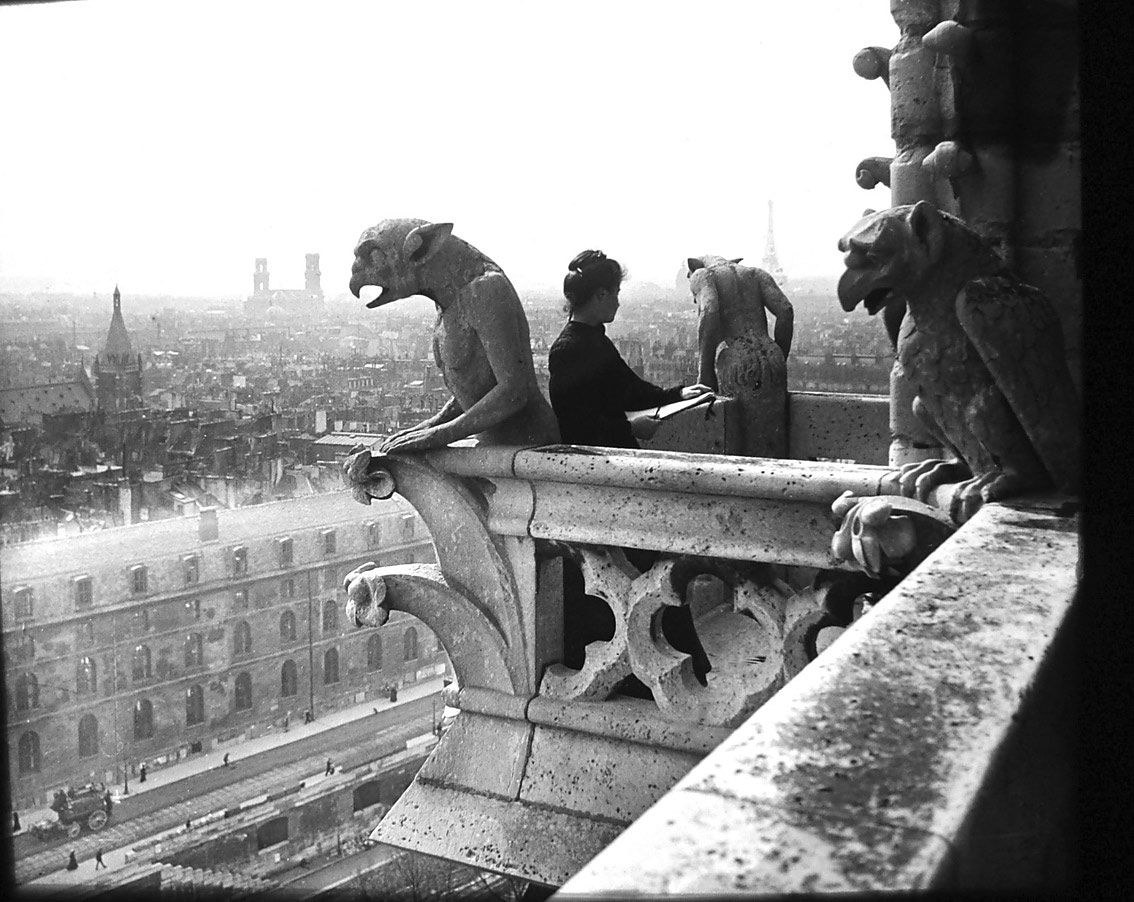
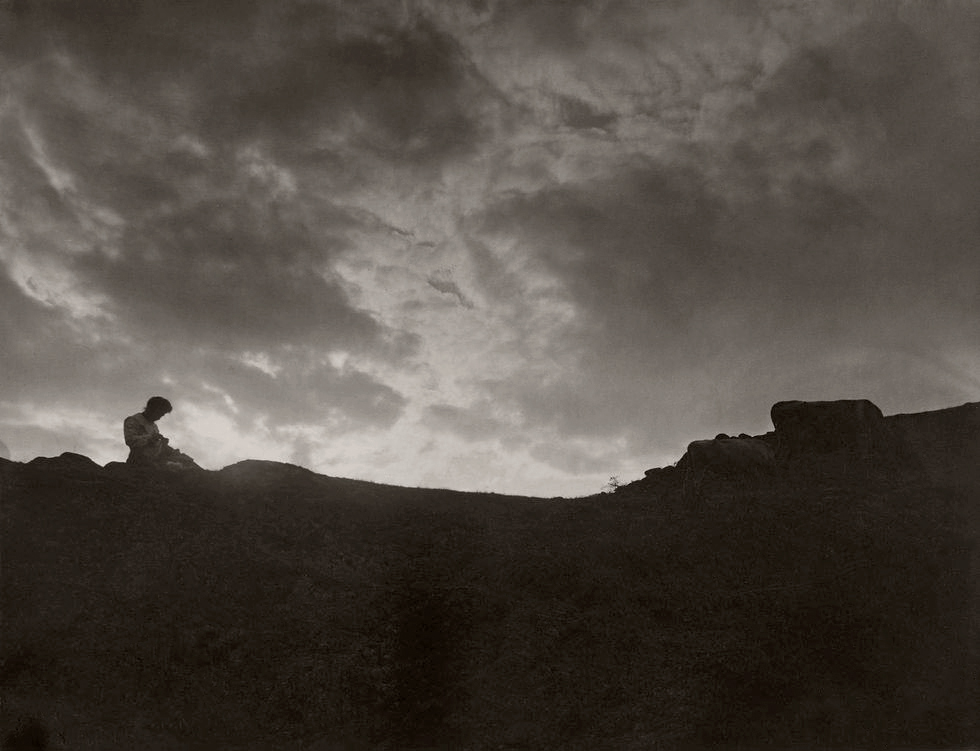
Félix Thiollier (French, 1842-1914) 'Emma Thiollier painting on top of one of the towers of Notre Dame, photographed by her father Félix Thiollier' 1907


Félix Thiollier (French, 1842-1914)
Emma Thiollier painting on top of one of the towers of Notre Dame, photographed by her father Félix Thiollier
1907


“Why is the price of justice so high?”


Maheude, Germinal


“Beneath the blazing of the sun, in that morning of new growth, the countryside rang with song, as its belly swelled with a black and avenging army of men, germinating slowly in its furrows, growing upwards in readiness for harvests to come, until one day soon their ripening would burst open the earth itself.”


Émile Zola. Germinal (1885)


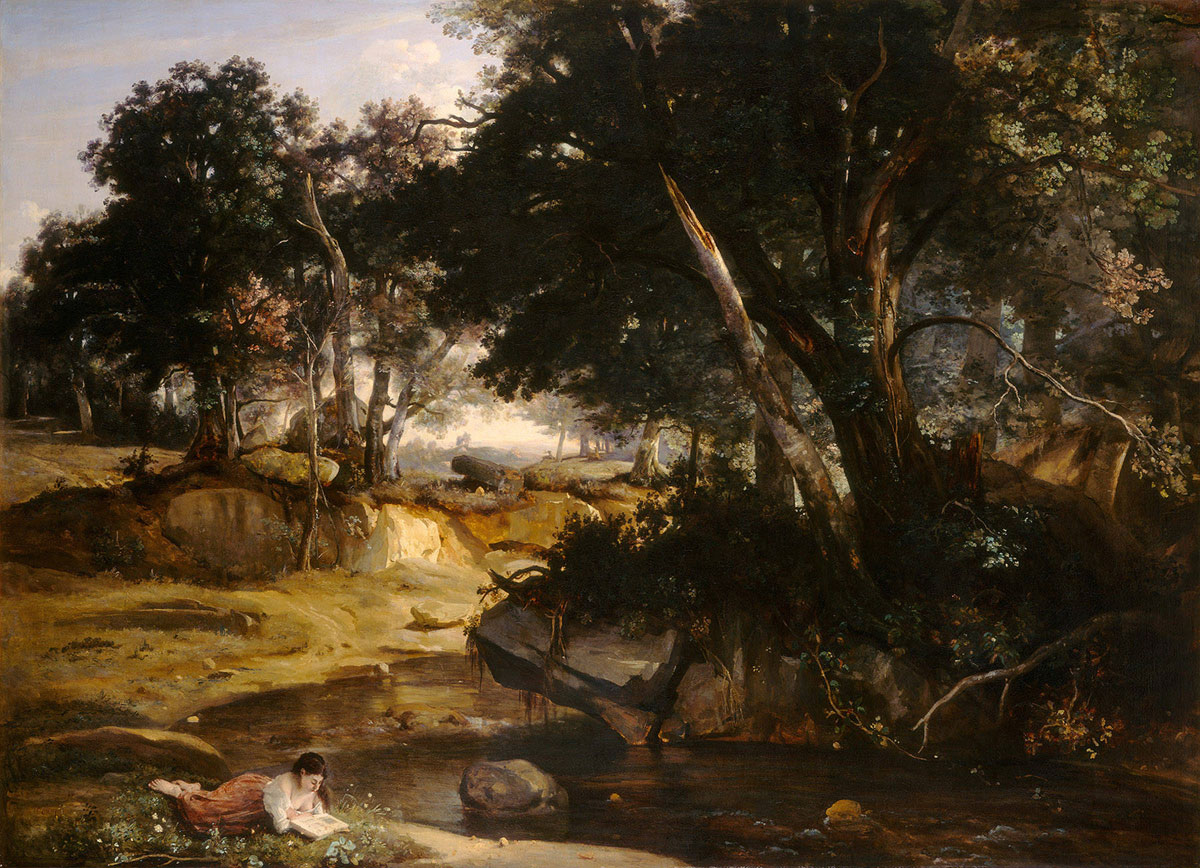
This is the biggest collection of photographs by the French photographer Félix Thiollier available on the Internet. I spent hours cleaning up the images to a presentable standard (mixing them with appropriate paintings by Corot and Francois-Auguste Ravier), so I hope you enjoy the posting.

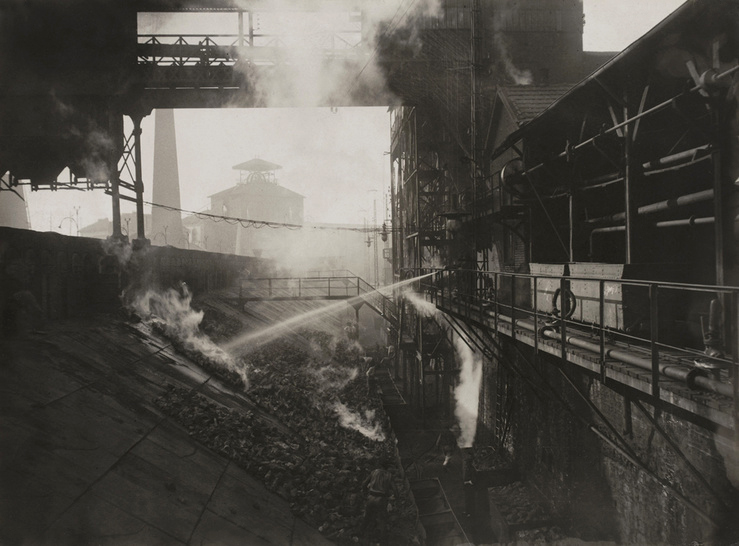
While the bucolic photographs of ruins, pastoral landscapes and shepherdess (bucolic – via Latin from Greek boukolikos, from boukolos ‘herdsman’) are relatively straight forward, it is Thiollier’s sensitive portrayal of the “industrial image” – of the mines and factories of Forez – that hold weight here. Thiollier emphasises the theatrical aspects of the landscape (he loved shooting at dusk), finding new subject matter among the photogenic nature of industrial sites “his last images… extolling these new “worthless” locations that included scrapheaps, wasteland and abandoned pitheads, such were the ruins of modern Forez, that met his melancholy and clear-sighted gaze.”

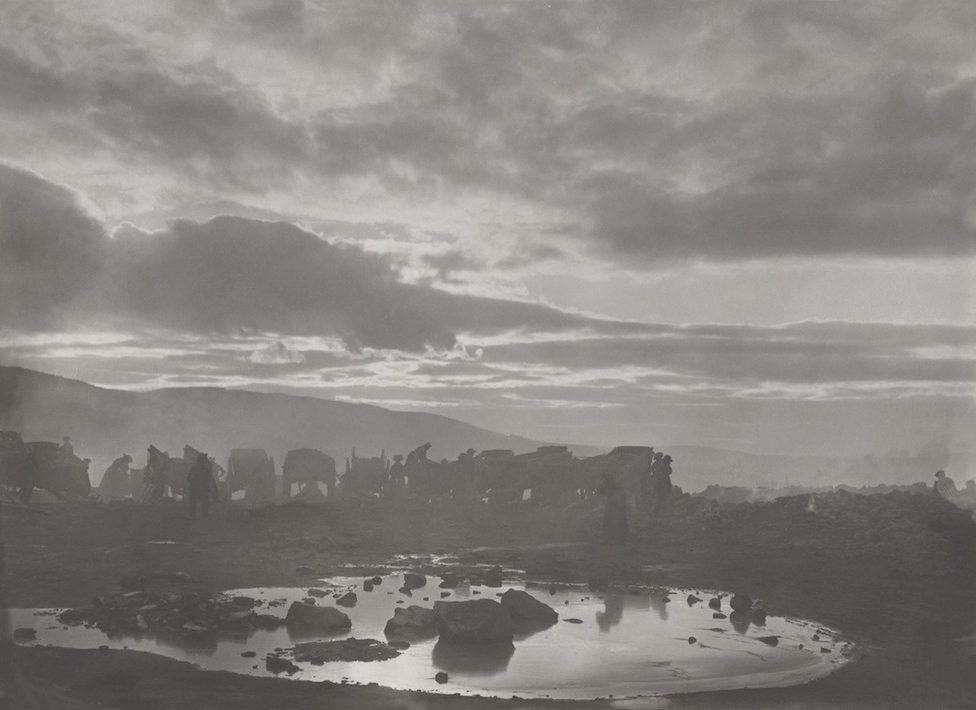
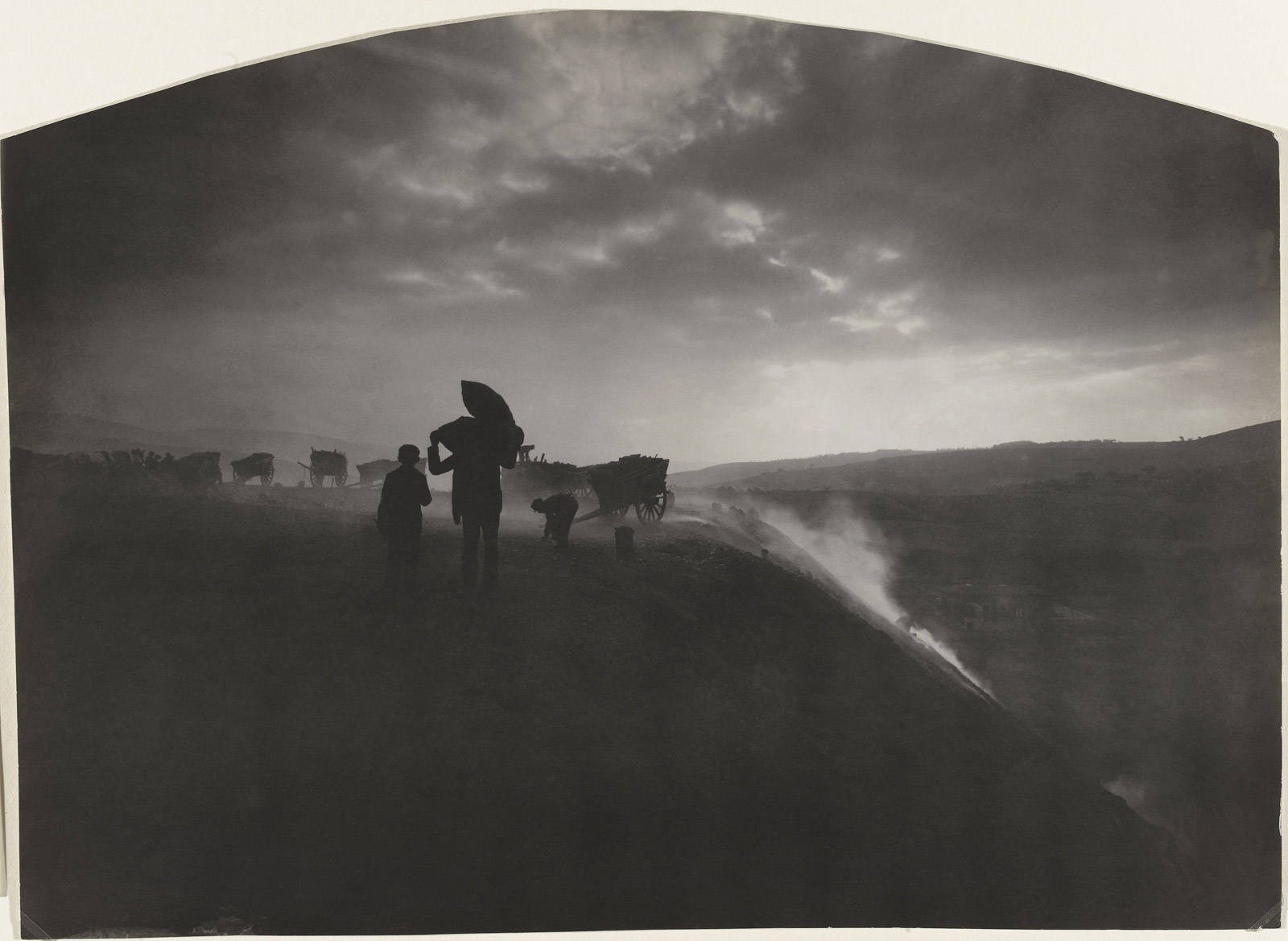
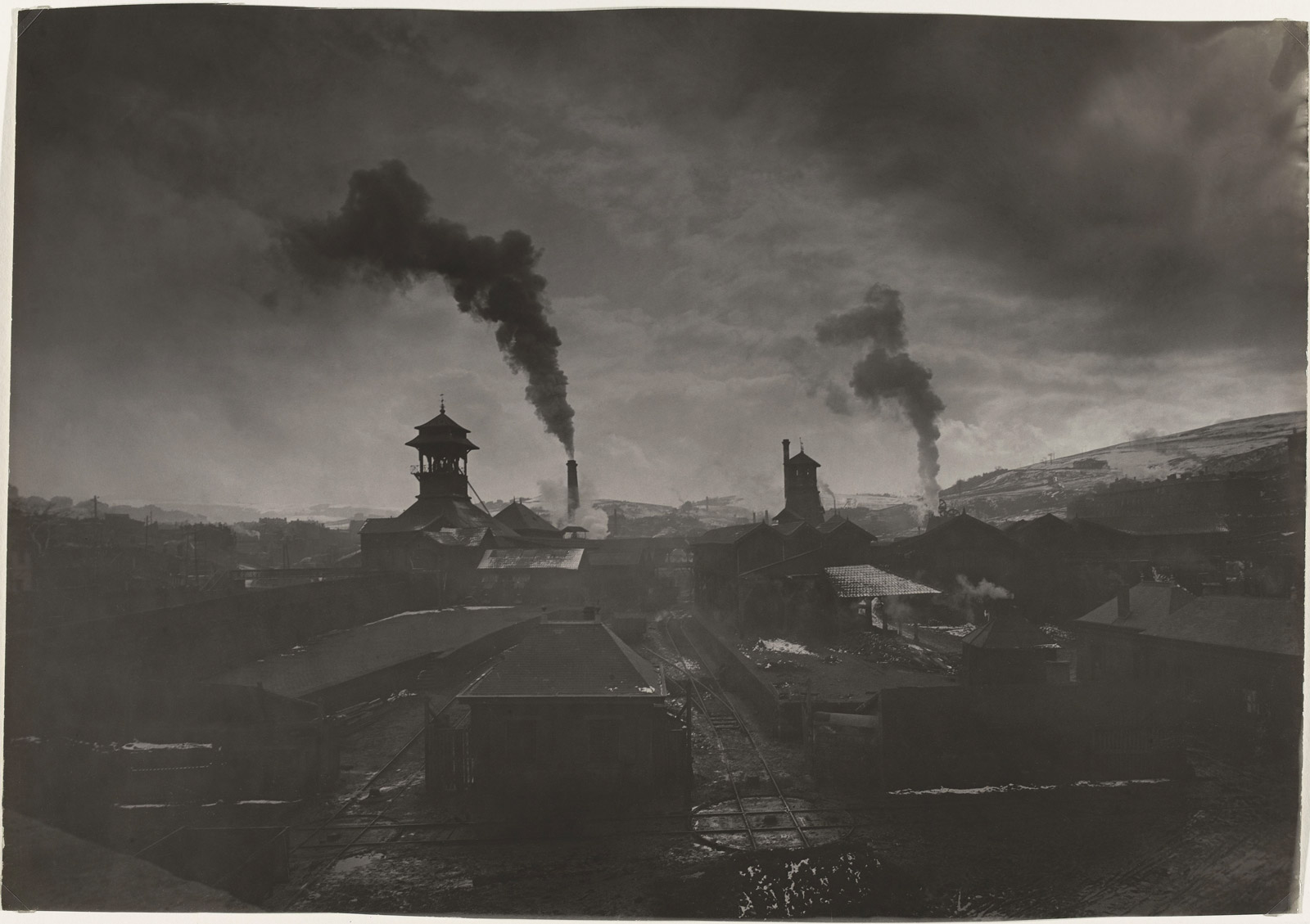
His photographs of the “black city” are atmospheric, vivid and powerful. Post-Romantic lyricism is still present in these images but is now coupled with a unique vision that has more earthy, psychological overtones. The anonymous figures of workers or coal pickers toiling away in oppressive landscapes are never better realised than in the line of figures silhouetted against the dying light in Mining Landscape, Saint-Etienne (1895-1910, below); the solitary figure caught in the rising dust on the side of the hill in Mining Landscape, Saint-Etienne (1895-1910, below – enlarge the image to see the figure). The desolation of an industrial revolution mining town is also perfectly captured in Mining Landscape, The Chatelus Pit at Saint-Etienne (1907-1912, below).

All three images remind me of the epic film Germinal staring Gerard Depardieu, based on the novel of the same name by Émile Zola. I’m sure that Thiollier would have been familiar with the book, it being a sensation upon original publication (1885). The book may well have appealed to Thiollier because he was a wealthy man, an industrialist who had reinvented himself as a gentleman farmer, who finally leaves the picturesque behind to photograph, “atmospheric phenomena studies, the architectural and mineral landscape created by the hard work of men, and how the human figure related to this.” In all its hope and misery.

Thiollier becomes so much more than an amateur photographer. His impressions of a dark, hidden drama beating at the heart of industrial, fin de siècle France provided him with the opportunity to become a progenitor of modernism, “ten years before the photogenic nature of industrial sites would be elevated into a credo of photographic modernism.” (Fin de siècle has connotations of both the closing and onset of an era, as the end of the 19th century was felt to be a period of degeneration, but at the same time a period of hope for a new beginning).

Finally, despite his willingness to remain on the sidelines, Thiollier may well be getting the approbation he deserves.

Dr Marcus Bunyan


Please click on the photographs for a larger version of the image.


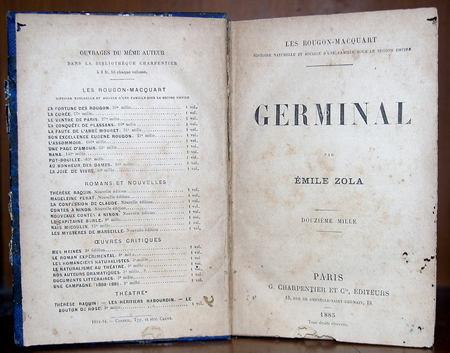
Émile Zola (French, 1840-1902) 'Germinal' Title page of the 1885 edition


Émile Zola (French, 1840-1902)
Germinal
Title page of the 1885 edition


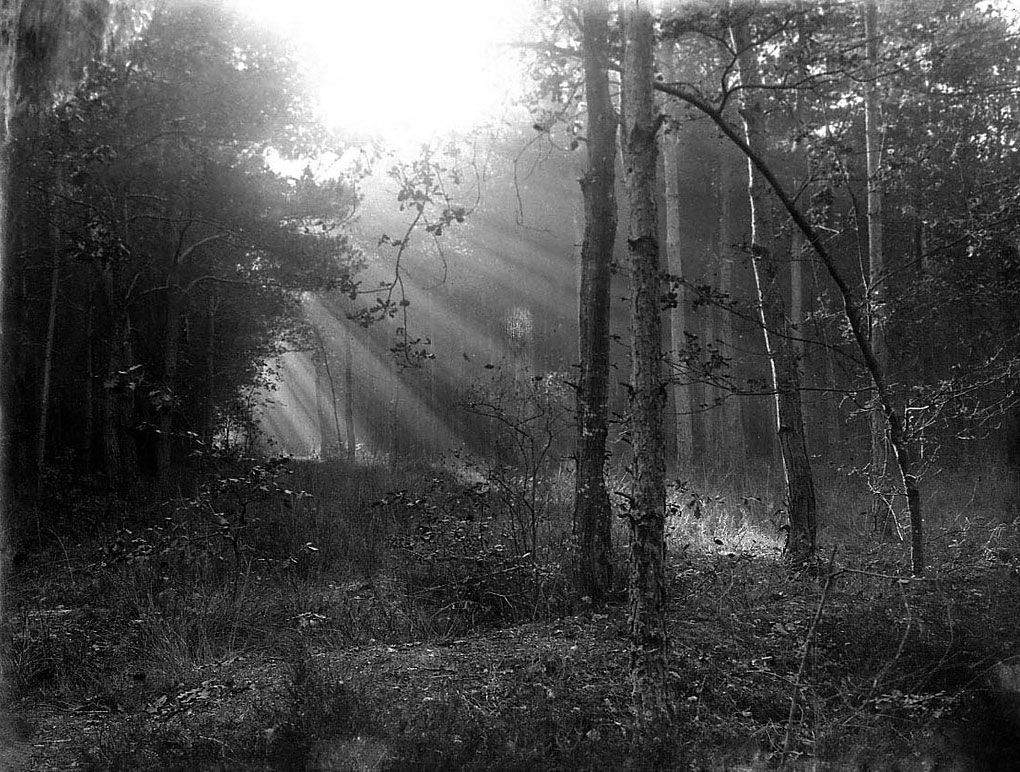
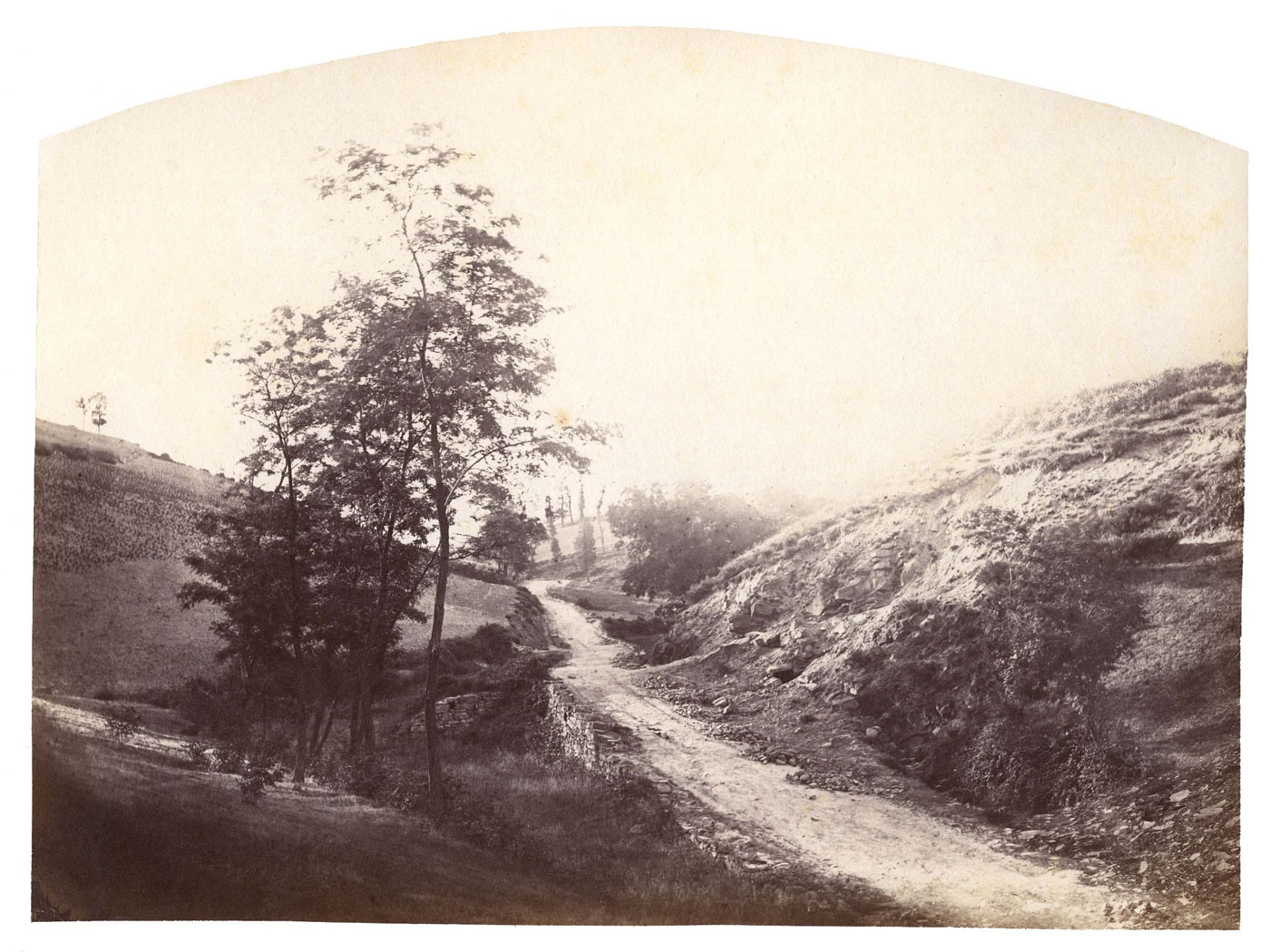
Félix Thiollier (French, 1842-1914) 'Undergrowth in Forez' (Sous-bois en Forez) Nd


Félix Thiollier (French, 1842-1914)
Undergrowth in Forez (Sous-bois en Forez)
Nd
© Félix Thiollier


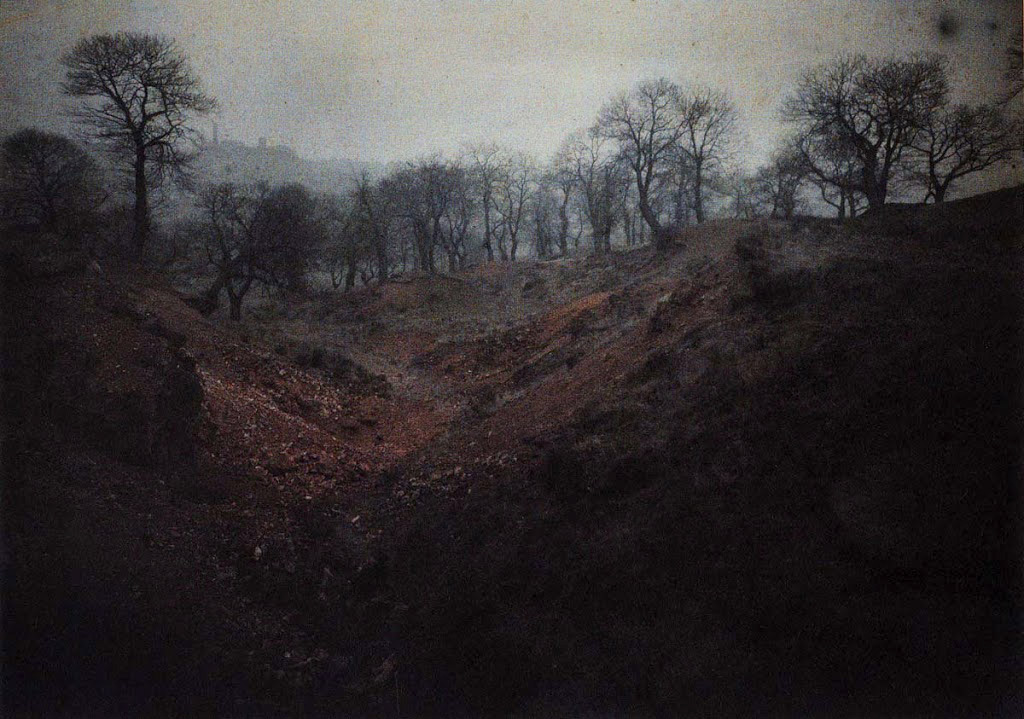
Félix Thiollier (French, 1842-1914) 'Around Saint-Etienne (Environs Saint-Etienne)' 1907-1912


Félix Thiollier (French, 1842-1914)
Around Saint-Etienne (Environs Saint-Etienne)
1907-1912
Autochrome


Jean-Baptiste-Camille Corot (French, 1796-1875) 'Forest of Fontainebleau' 1834


Jean-Baptiste-Camille Corot (French, 1796-1875)
Forest of Fontainebleau
1834
Oil on canvas
69 1/8 x 95 1/2 in. (175.6 x 242.6cm)


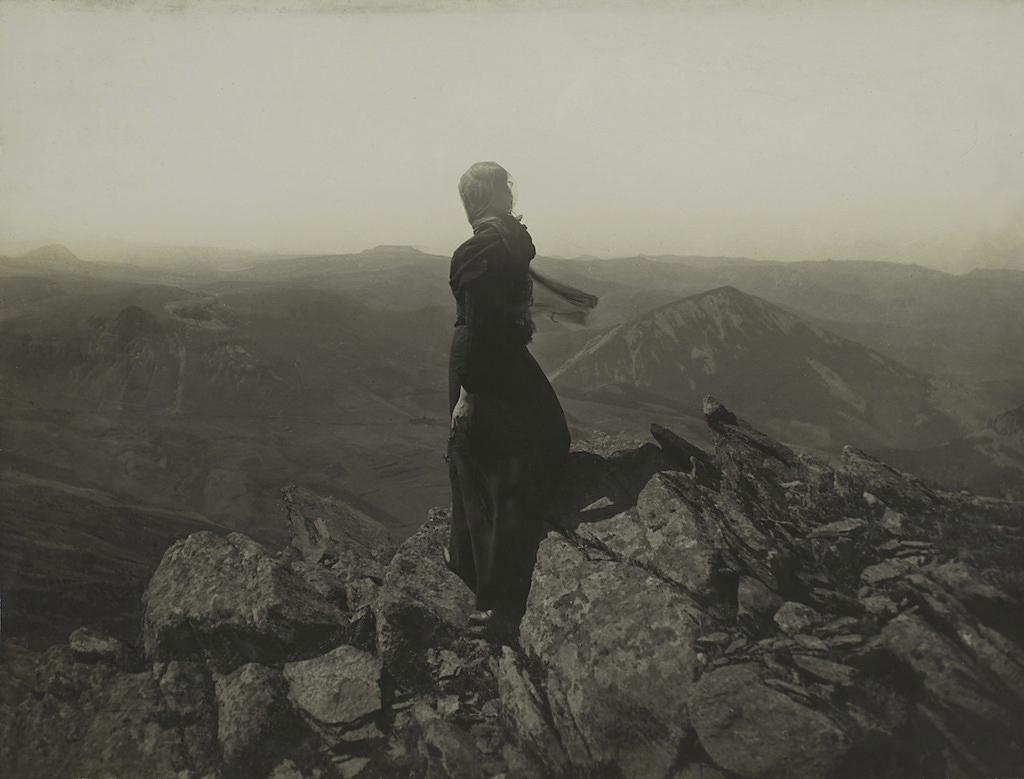
Félix Thiollier (French, 1842-1914) 'Figure contemplating the mountains of Menzenc (Emma Thiollier, daughter of the photographer)' 1895-1905


Félix Thiollier (French, 1842-1914)
Figure contemplant les monts du Menzenc (Emma Thiollier, fille du photographe)
Figure contemplating the mountains of Menzenc (Emma Thiollier, daughter of the photographer)

1895-1905
Collection Julien Laferrière
© Musée d’Orsay (dist. RMN) / Patrice Schmidt


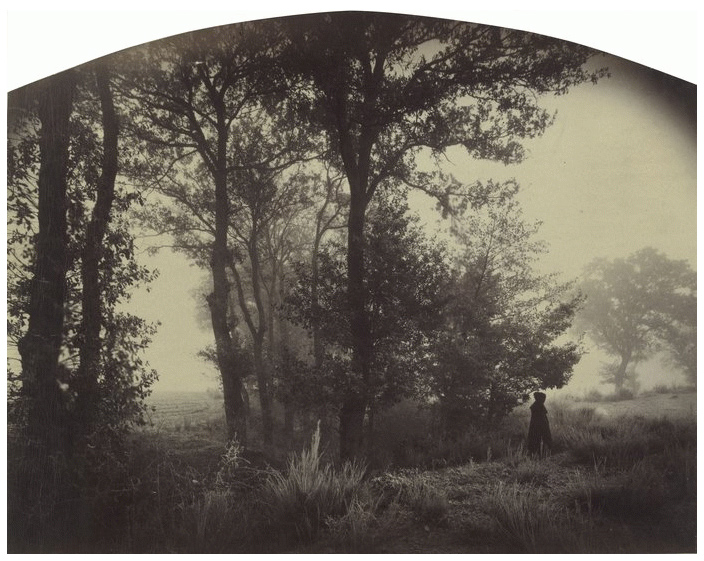
Félix Thiollier (French, 1842-1914) 'Landscape with Figure, Forez (Loire)' c. 1880-1882


Félix Thiollier (French, 1842-1914)
Landscape with Figure, Forez (Loire)
c. 1880-1882
Silver gelatin dry plate print on barium paper from a silver gelatin dry plate glass negative
H. 18.5; W. 22cm
Paris, Musée d’Orsay
Gift of Mr and Mrs Noël Sénéclauze, 2007
© Musée d’Orsay (dist. RMN)


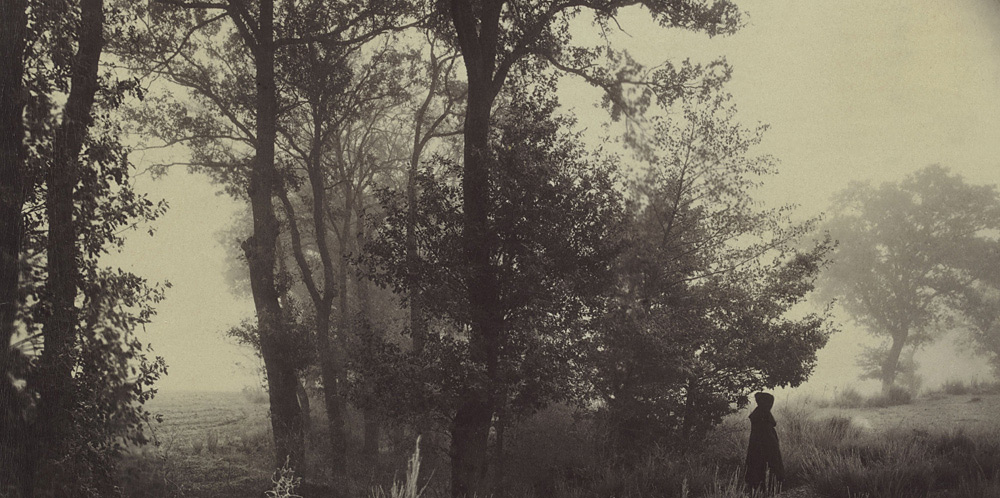
Félix Thiollier (French, 1842-1914) 'Landscape with Figure, Forez (Loire)' c. 1880-1882 (detail)


Félix Thiollier (French, 1842-1914)
Landscape with Figure, Forez (Loire) (detail)
c. 1880-1882
Silver gelatin dry plate print on barium paper from a silver gelatin dry plate glass negative
H. 18.5; W. 22cm
Paris, Musée d’Orsay
Gift of Mr and Mrs Noël Sénéclauze, 2007
© Musée d’Orsay (dist. RMN)


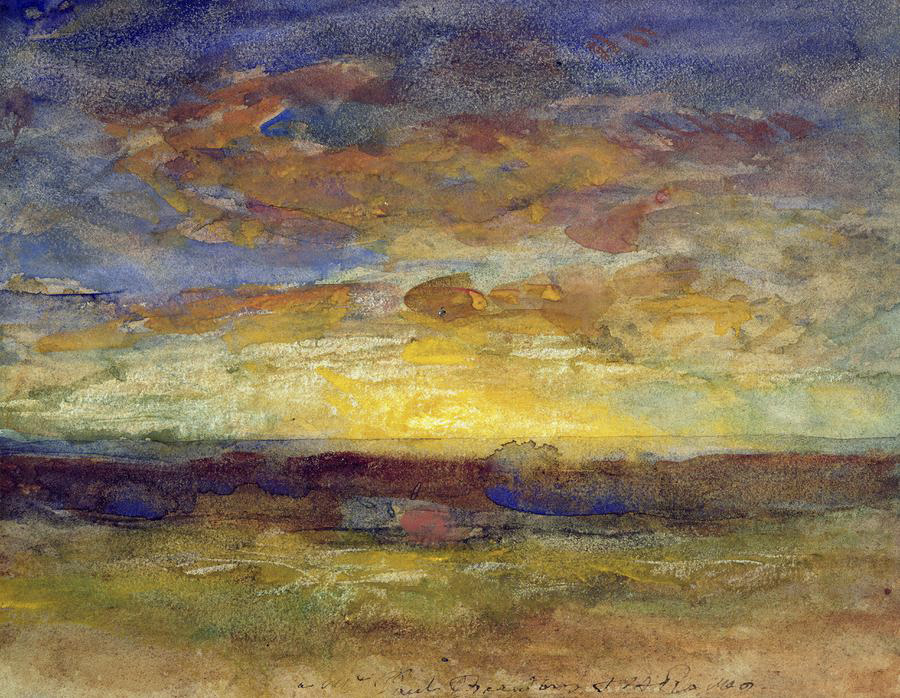
Francois-Auguste Ravier (French, 1814-1895) 'Landscape with Setting Sun' Nd


Francois-Auguste Ravier (French, 1814-1895)
Landscape with Setting Sun
Nd
Oil on canvas


Félix Thiollier (French, 1842-1914) 'Mining Landscape, Saint-Etienne' 1895-1910


Félix Thiollier (French, 1842-1914)
Mining Landscape, Saint-Etienne
1895-1910
Silver gelatin dry plate print on barium paper from a silver gelatin dry plate glass negative
H. 28; W. 39.5cm
Paris, Musée d’Orsay
© Musée d’Orsay (dist. RMN)


Félix Thiollier

Although the talent of photographer Félix Thiollier was still unrecognised twenty years ago, this is mainly because it never occurred to him to seek recognition as such. When, at the age of 35, he decided to live off his private income, this ribbon manufacturer from Saint-Étienne intended to devote himself to art and archaeology. But feeling restricted in his role as scholar of the local area, Thiollier very quickly started publishing illustrated books. This enterprise, intended to promote both the rich natural environment and cultural heritage of Forez and the work of his artist friends, seemed to take up most of his energy, when he was not otherwise involved with initiatives to protect the local heritage of Saint-Étienne or promote the culture of the area.

It was his activities in these two latter fields that brought him both regional and national recognition, and until recently his reputation was based on these activities alone. Today, his resolute determination to remain on the fringes of the photographic circles of his time seems consistent with Thiollier’s passion for this medium that he would practise continuously for over half a century. In addition to showing the rich variety of subjects that inspired him, this exhibition seeks to give the viewer an appreciation of the originality of an approach based wholly on an inexhaustible passion for the picturesque: guiding his photographical machine, this mechanics of looking would lead him from bucolic landscapes and scenes of rural life to sensitive images of an industrial environment largely ignored by the amateur photographers at the turn of the 20th century.

“At an age when I deluded myself into believing that it was possible to combine the picturesque and archaeology…”

Thiollier’s intellectual and aesthetic background was typical of that section of the provincial elite in the 19th century who took a keen interest in art and archaeology, and had a great love of books. When, at the end of the 1850s, senior figures encouraged him to take photographs of notable sites and monuments in the Forez area, they already had a project in mind to produce a book about this ancient province which, celebrated by Honoré d’Urfé in L’Astrée (1607-1627), extended right across the department of the Loire into parts of the Haute-Loire and Puy-de-Dôme. They were all steeped in the Romantic tradition of the illustrated picturesque book, a tradition that would flourish in the second half of the century through many regional publications, like many local responses in this search for the identity of the regions of France. Illustrated with his early and more recent photographs, Thiollier’s Le Forez pittoresque et monumental, published in 1889, is one of the last and most outstanding examples of these.

Perpetuating the rustic ideal

In leaving the town and his activities as an industrialist, Thiollier did not just move closer to the monuments and landscapes he had undertaken to describe. Having acquired two modest country estates –  a hunting lodge near the ponds around Précivet, and the former commandery of the Order of Saint John of Jerusalem at Verrières – he also reinvented himself as a gentleman farmer in the heart of this arcadian Forez countryside, which, in his view, was under threat. Heavily influenced by the example of the Barbizon artists whose paintings he collected along with those of his naturalist painter friends, he never tired of capturing the disappearing traces of traditional skills and ways of life with the eye of a painter. However, it required a certain poetic detachment for photographs to complete this grief. This was usually achieved with the loyal help of his daughter, who appeared in his photographs whenever he wanted to draw attention to the timeless nature of peasant genre scenes.

“Stylistic Landscapes”

Although Thiollier had nursed an ambition to become a landscape photographer before he met Ravier in 1873, it is essential to recognise the influence of this painter from Morestel – who had been practising photography since the 1850s – in order to understand why Thiollier moved towards a more committed, if unrevealed, artistic approach to the medium. After many sessions spent “photographicking” together, their shared vision is expressed in the resulting images of autumnal and winter landscapes, which, devoid of any human presence, offer many light-filled variations on the handful of motifs chosen by the painter: still pools or the banks of streams, solitary outlines of dead trees, undergrowth and country paths, it is a complete repertoire of images of the Dauphiné region that stimulated Thiollier’s desire to extol the natural beauty of the Forez. Although he had to include riverscapes and mountain panoramas to reflect the true variety of this beautiful area, he almost always concentrate on the sky and studies of clouds, ideally enhanced by reflections playing on the still water.

The range of effects Thiollier developed, although intended in part to transpose the Post-Romantic lyricism which, in Ravier’s work, was conveyed through blazing colours and highly skilful brush- work, nonetheless indicates that his images of the countryside were produced with a perfect understanding of his medium. In pushing for a rapprochement with contemporary artistic photography, the main feature of his style was thus the expressiveness of the contrasts in values. It is this preference for representing nature in monochrome that partly explains his liking for snowscapes, and also prompted him to undertake almost systematic research into contre-jour, the most appropriate effect for both synthesising his motifs and revealing the theatrical aspects of the landscape. Indeed, the all-revealing clarity of broad daylight was far less of an inspiration to Thiollier than the atmosphere of solitude and silence that came with the dusk. As he often noted in his descriptions, it was when the shadows were at their most dramatic that the countryside cast its strongest spell over him.

Territories of intimacy

Alongside the search for effects that so often excited this landscape photographer, Thiollier’s solitary wanderings too were a source of more physical, more earthy themes that reveal a personal shift in the sensitive approach towards the territory. Although the traditional picturesque approach, which he had adopted until the 1880s, had been fuelled by Romanticism, it was also partly because it implied a way of considering the environment as a spectacle and thus relied heavily on the subjectivity of the first viewer that chose to depict it.

It was this look at the landscape that Thiollier now seems to stage, finding that this, far more than the self-portrait, offered him a way to incorporate himself into the landscape that he claimed as his own, and in doing so, into his work. Admittedly, the natural world he shows us is always uninhabited, but this makes it now all the better to fill with the presence of the photographer: the bleaker his selected locations, in relation to the accepted picturesque aesthetic, the more personal these choices turn out to be. Swept along by the rapid improvements in photographic techniques, the snap shot practitioner was freed from the pictorial tradition that restricted him to this side of Alberti’s “window”: his images are those of someone taking a stroll into the heart of the countryside, or more precisely, pausing at some point, seized by the desire to capture forever the emotion that had prompted him to set up his equipment right in the middle of the pathway, or, as often happened, in a quiet corner of his garden.

The picturesque as developer: the photogeneity of the black city

Forty years after having made the first important choices of his life, learning photography at the same time when he renounced a career as a mine engineer, the former ribbon manufacturer discovered a photographic passion for Saint-Étienne, “a lively and animated city (…) to which the local industries brought a special picturesque character”. It was not easy to break away from a code of aesthetic appreciation, which, at a deeper level, was also a way of recognising the world.

The mines and factories in the cradle of the first French industrial revolution were, moreover, particularly appropriate subjects for what came to absorb him more than ever: atmospheric phenomena studies, the architectural and mineral landscape created by the hard work of men, and how the human figure related to this. It was as if the anonymous figures of workers or coal pickers had come just at the right moment, not only to enhance that “impression (…) of a sort of hidden drama” that best reveals the continuing influence of Ravier in his work, but also to fuel his inexhaustible desire for the picturesque. Besides, how could the poor people of this black town have concealed the exotic charm of their poverty from the lens of this bourgeois citizen who, in spite of himself, was still Thiollier?

Although Thiollier’s interest in photography gradually developed until eventually it became much more than the project to promote the natural and archaeological treasures of the area, it was perhaps because this industrialist turned gentleman farmer had realised intuitively that “machine art” (Delacroix) could be the way to resolve, in images, this tension between two worlds that lived side by side – the rural and traditional on one side and the industrial and contemporary on the other – and he belonged to both. The union of the picturesque and photography was sealed and could not be broken until his project as the editor of Le Forez pittoresque et monumental was completed, and this meant the aesthetic appropriation of the mental and identitarian territory of Forez as he saw it, reconciled with itself in the context of the “industrial image”. The choice of medium, precisely because Thiollier officially refused to give it any artistic legitimacy, would not however be made without consequences.

By admitting the creative superiority of the eye over the hand, the mechanised tool for reproducing images would gradually enable him to establish an independent vision, with a boldness that would burst into colour: ten years before the photogenic nature of industrial sites would be elevated into a credo of photographic modernism, his last images were extolling these new “worthless” locations that included scrapheaps, wasteland and abandoned pitheads, such were the ruins of modern Forez, that met his melancholy and clear-sighted gaze.

Text from the Musée d’Orsay website


Félix Thiollier (French, 1842-1914) '4 am Roche-La-Moliere, Forez' c. 1870


Félix Thiollier (French, 1842-1914)
4 am Roche-La-Moliere, Forez (4H du matin vers Roche-La-Moliere, Forez)
c. 1870


Félix Thiollier (French, 1842-1914) 'Mining Landscape, Saint-Etienne' 1895-1910


Félix Thiollier (French, 1842-1914)
Mining Landscape, Saint-Etienne
1895-1910
Paris, Musée d’Orsay
© RMN (Musée d’Orsay) / Hervé Lewandowski


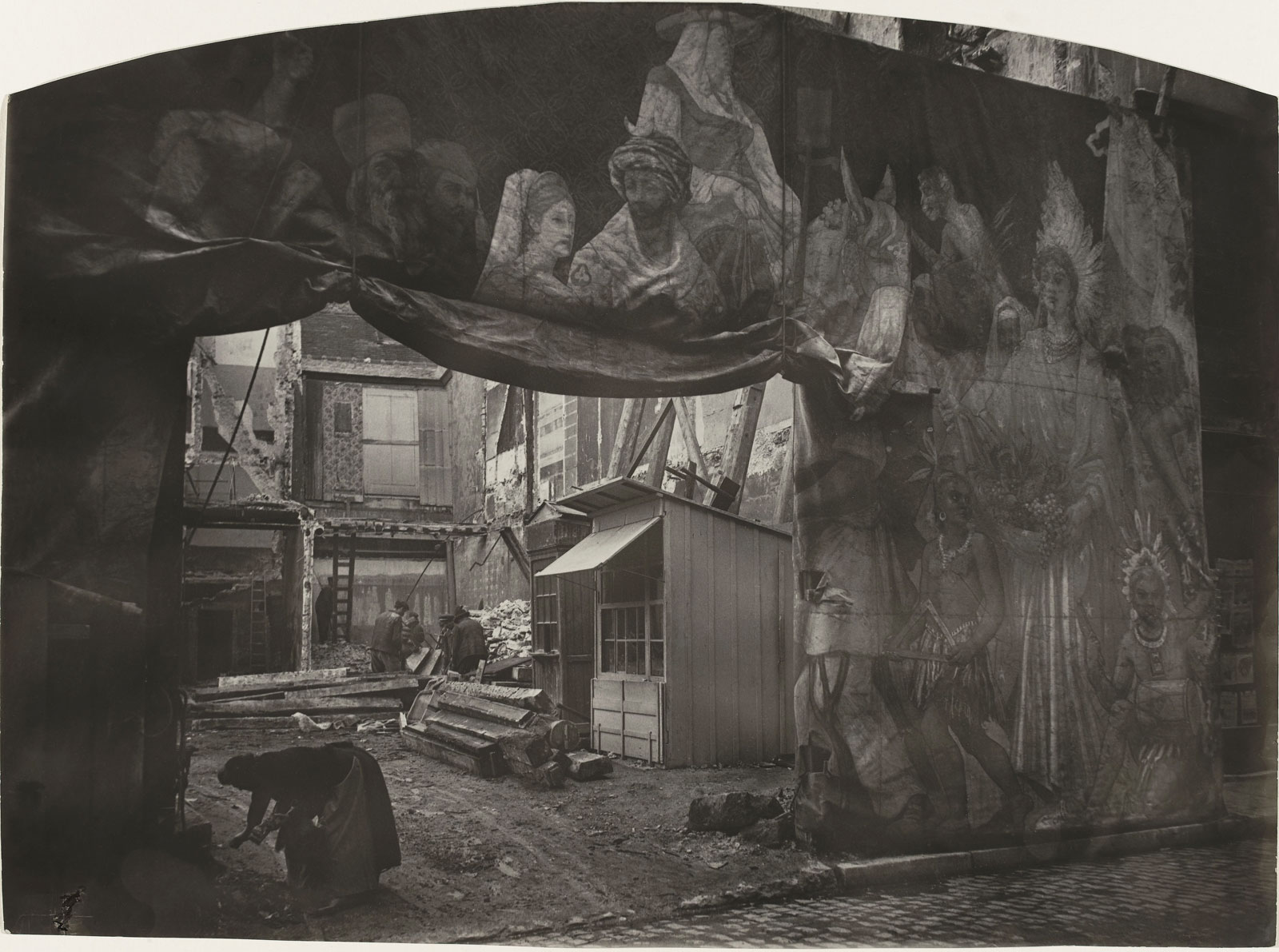
Félix Thiollier (French, 1842-1914) 'Decor for a fete or fair, Saint-Etienne' (Décor de fête ou de foire, Saint-Etienne) 1890-1910


Félix Thiollier (French, 1842-1914)
Decor for a fete or fair, Saint-Etienne (Décor de fête ou de foire, Saint-Etienne)
1890-1910
Paris, Musée d’Orsay
© RMN (Musée d’Orsay) / Hervé Lewandowski


Félix Thiollier (French, 1842-1914) 'Mining Landscape, The Chatelus Pit at Saint-Etienne' 1907-1912


Félix Thiollier (French, 1842-1914)
Mining Landscape, The Chatelus Pit at Saint-Etienne
1907-1912
Silver gelatin dry plate print on barium paper from a silver gelatin dry plate glass negative
H. 28; W. 40cm
Paris, Musée d’Orsay
© Musée d’Orsay (dist. RMN)


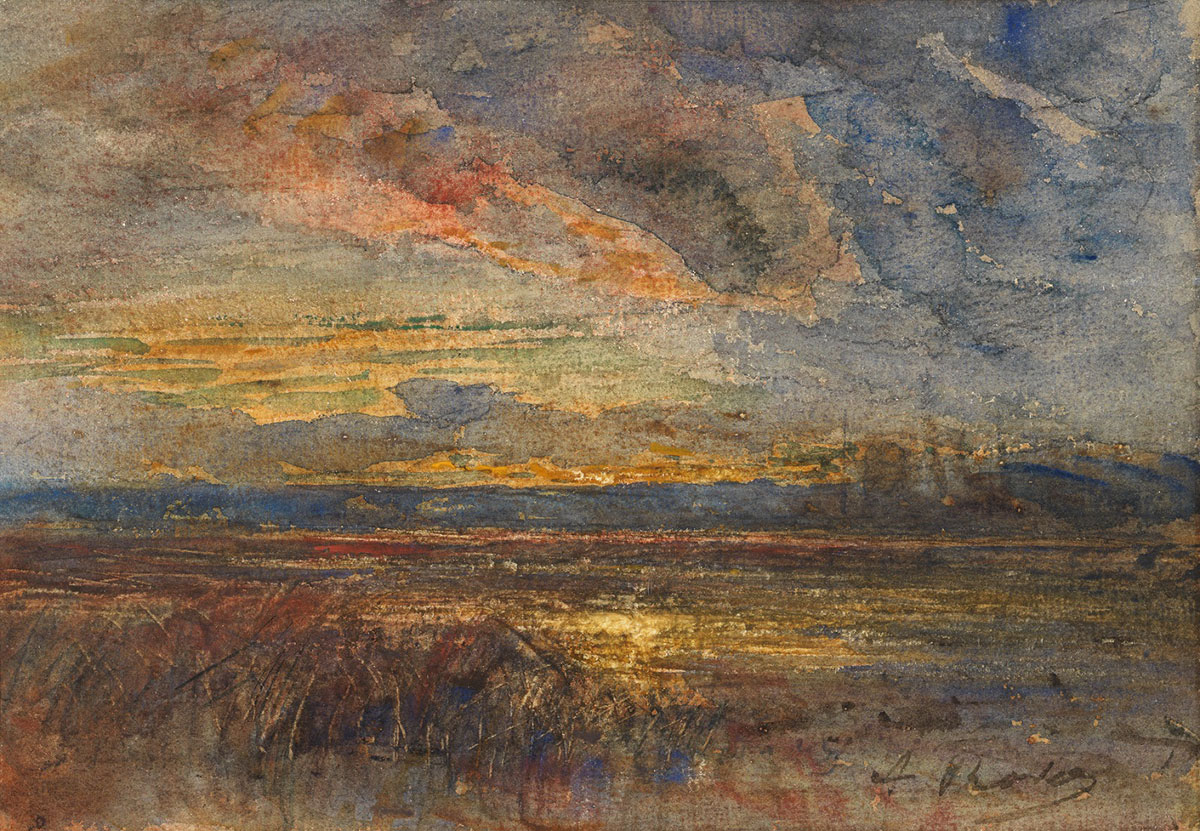
Francois-Auguste Ravier (French, 1814-1895) 'A Marsh at Sunset' Nd


Francois-Auguste Ravier (French, 1814-1895)
A Marsh at Sunset
Nd
Oil on canvas


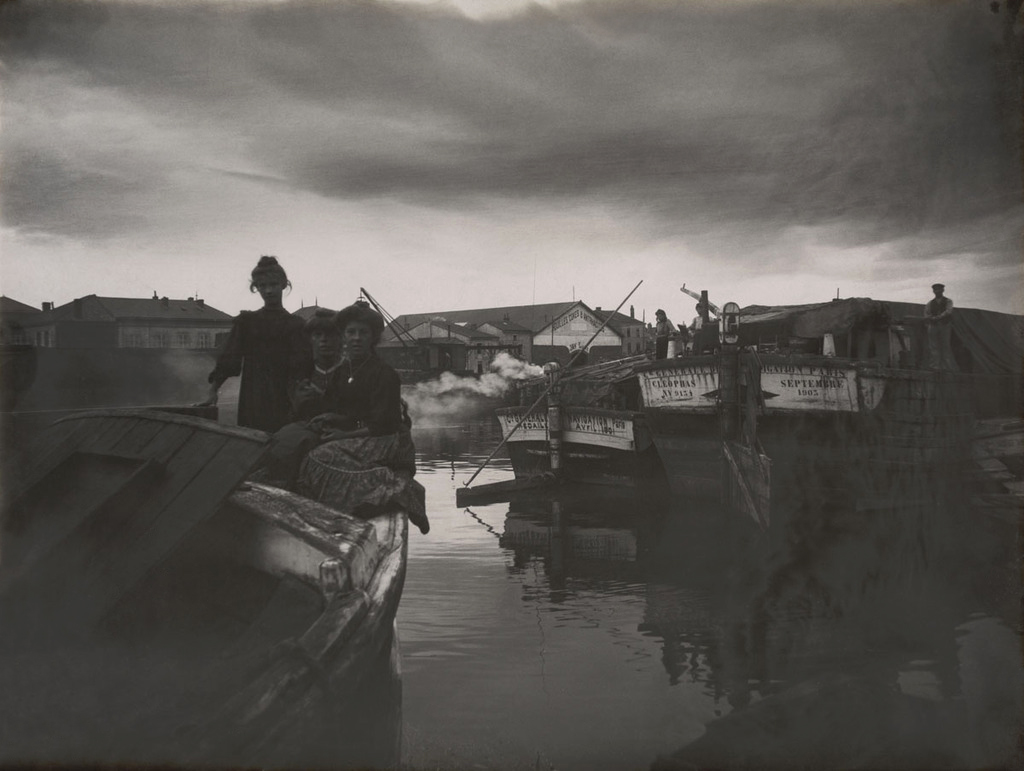
Félix Thiollier (French, 1842-1914) 'Boats on the Seine, Paris' 1903-1905


Félix Thiollier (French, 1842-1914)
Boats on the Seine, Paris (Bateaux sur la Seine, Paris)
1903-1905
Silver gelatin print
29.7 x 39.4 cm


Félix Thiollier (French, 1842-1914) 'Shepherdess and Flock' 1890-1910


Félix Thiollier (French, 1842-1914)
Shepherdess and Flock
1890-1910
Silver gelatin dry plate print on barium paper from a silver gelatin dry plate glass negative
H. 29.2; W. 38.4cm
Paris, Musée d’Orsay
© Musée d’Orsay (dist. RMN) / Patrice Schmidt


Félix Thiollier (French, 1842-1914) 'The Verpilleux Coking Plant, near Saint-Etienne' 1895-1910


Félix Thiollier (French, 1842-1914)
The Verpilleux Coking Plant, near Saint-Etienne
1895-1910
Silver gelatin dry plate print on barium paper from a silver gelatin dry plate glass negative
H. 39.3; W. 29.9cm
Paris, Julien-Laferrière collection
© Musée d’Orsay / Patrice Schmidt


Félix Thiollier (French, 1842-1914) 'Landscape with Ruin' c. 1870


Félix Thiollier (French, 1842-1914)
Landscape with Ruin
c. 1870


Biography

1842
Maurice Félix Thiollier is born in Saint-Étienne into a wealthy family of ribbon manufacturers who espouse the values of social Catholicism.

1847
The Thiollier family moves to Paris. A French priest, l’abbé Paul Lacuria, is engaged as a tutor for Félix’s older brothers.

1851-52
The Thiollier family returns to Saint-Étienne. Félix Thiollier goes to school at the Collège Saint-Thomas d’Acquin in Oullins near Lyon.

1858
Eligible to take the competitive entrance test for the École des Mines de Saint-Étienne, Félix Thiollier chooses to train at the ribbon factory. He takes up photography, and possibly receives technical advice at this time from Stéphane Geoffray, a photographer from Roanne.

1867
At the age of 25, he sets up his own ribbon factory in Saint-Étienne.

1869
Through the painter Henri Baron, his father’s cousin, he is offered a place in the studio of the painter Louis Français, which he turns down for family reasons.

1870
Marries Cécile Testenoire-Lafayette, daughter of Claude-Philippe Testenoire-Lafayette, a lawyer and local scholar from Saint-Étienne, and president of La Diana – the Historical and Archaeo-logical Society of Forez (1870-1879).

1873
Meets the Dauphinois painter Auguste Ravier and soon gives up hope of becoming a professional painter.

1879
Decides to live off his private income. Becomes a member of La Diana.

1881
Publication of the first book to be illustrated with his photographs, Le Poème de l’âmeby his friend the painter Louis Janmot.

1885
First exhibition of his photographs, presented in the great hall belonging to La Diana in Montbrison, on the occasion of the 52nd congress of the Société Française d’Archéologie. Becomes a member of this society, which awards him its silver medal.

1886
Publication of Château de la Bastie d’Urfé et ses seigneurs.

1889
Publication of Forez pittoresque et monumental. Receives a silver medal for his illustrated books at the universal exhibition in Paris.

1894
Becomes a non-resident member of the Committee for Historic and Scientific Works at the Ministry for Public Instruction.

1895
Receives the Légion d’Honneur for his work as a photographer.

1897
Receives the title of honorary curator of the Saint-Étienne Museum of Art and Industry.

1900
Receives another silver medal for his illustrated books at the universal exhibition in Paris.

1902
Publication of L’Histoire de Saint-Etienne by Claude-Philippe Testenoire Lafayette, illustrated with photographs by Félix Thiollier.

1914
Death of Félix Thiollier on 12 May at Saint-Étienne.

1917
Publication of his biography by Sébastien Mulsant.


Musée d’Orsay
62, rue de Lille
75343 Paris Cedex 07
France

Opening hours:
Tuesday – Sunday 9.30am – 6pm
Closed on Mondays

Musée d’Orsay website

LIKE ART BLART ON FACEBOOK

Back to top

Film: ‘All This Can Happen’

February 2014


Siobhan Davies and David Hinton
Trailer from All This Can Happen
2012


“The highest and the lowest, the most serious and the most hilarious things are to the walker equally beloved, beautiful and valuable…”


Dislocation
Displacement
Discontinuity
Death
Dance
Despair
Documentary

Scene
Seen
Single
Multiple
Surreal
Mundane
Storyline

Sound
Subject
Space

Encounters
Engagements
Negotiations

Time
Memory
Location
Voice
Touch

Walking
Flaneur

Body
Soul

Life itself!


Dr
Marcus Bunyan


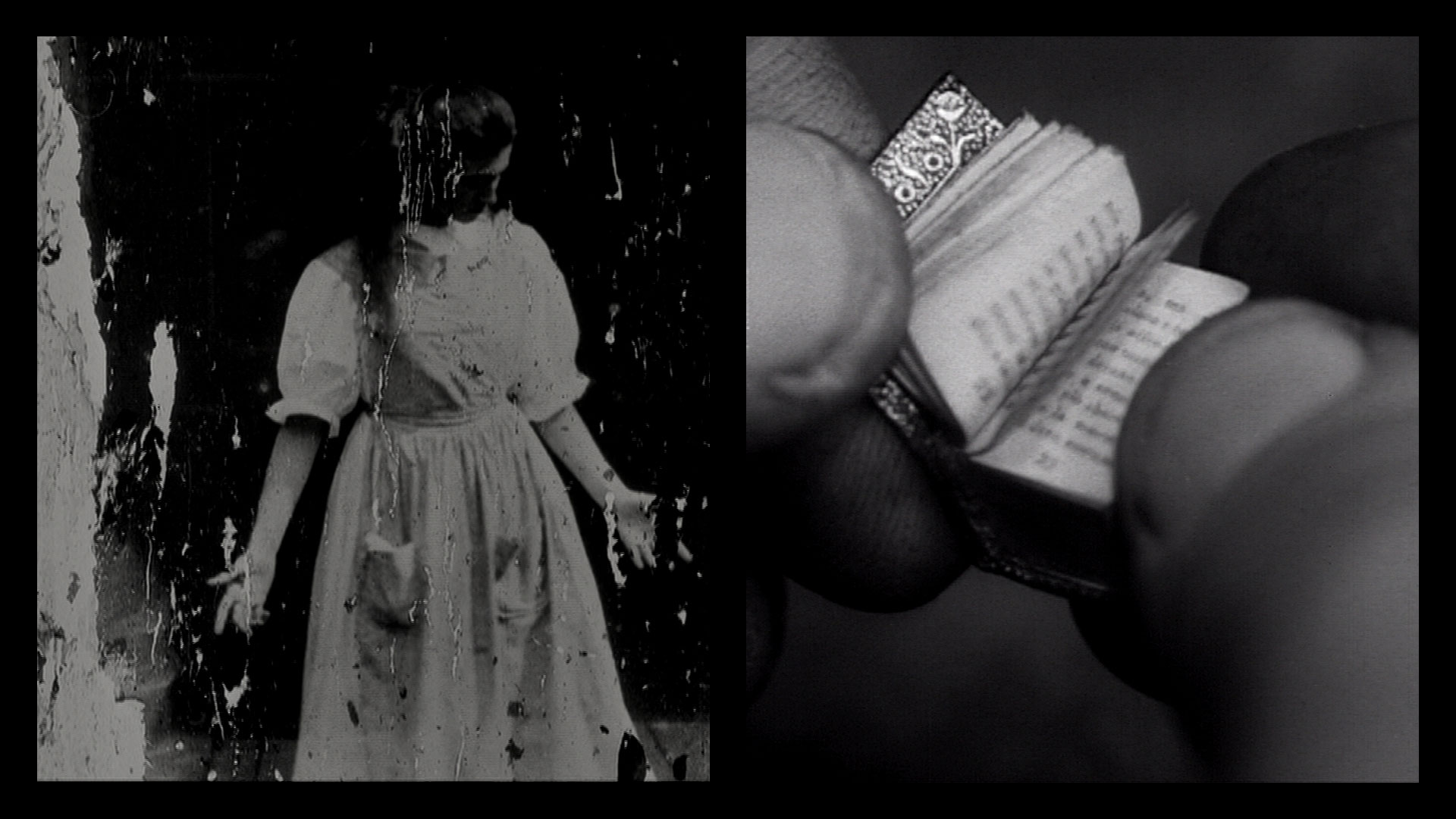
Created by Siobhan Davies and filmmaker David Hinton in 2012, All This Can Happen is a film constructed entirely from archive photographs and footage from the earliest days of cinema.

Based on Robert Walser’s novella The Walk (1917), the film follows the footsteps of the protagonist as series of small adventures and chance encounters take the walker from idiosyncratic observations of ordinary events towards a deeper pondering on the comedy, heartbreak and ceaseless variety of life. A flickering dance of intriguing imagery brings to light the possibilities of ordinary movements from the everyday which appear, evolve and freeze before your eyes. Juxtapositions, different speeds and split frame techniques convey the walker’s state of mind as he encounters a world of hilarity, despair and ceaseless variety.


“To walk in the city is to experience the disjuncture of partial vision/partial consciousness. The narrativity of this walking is belied by a simultaneity we know and yet cannot experience. As we turn a corner, our object disappears around the next corner. The sides of the street conspire against us; each attention suppresses a field of possibilities. The discourse of the city is a syncretic discourse, political in its untranslatability. Hence the language of the state elides. Unable to speak all the city’s languages, unable to speak all at once, the state’s language become monumental, the silence of headquarters, the silence of the bank. In this transcendent and anonymous silence is the miming of corporate relations. Between the night workers and the day workers lies the interface of light; in the rotating shift, the disembodiment of lived time. The walkers of the city travel at different speeds, their steps like handwriting of a personal mobility. In the milling of the crowd is the choking of class relations, the interruption of speed, and the machine. Hence the barbarism of police on horses, the sudden terror of the risen animal.”


Stewart, Susan. On Longing: Narratives of the Miniature, the Gigantic, the Souvenir, the Collection. Durham: Duke University Press, 1993, p. 2. Prologue.


Siobhan Davies and David Hinton. 'Alice in Wonderland' 2012


Siobhan Davies and David Hinton
Alice in Wonderland
2012
Still from All This Can Happen
Courtesy of BFI National Archive


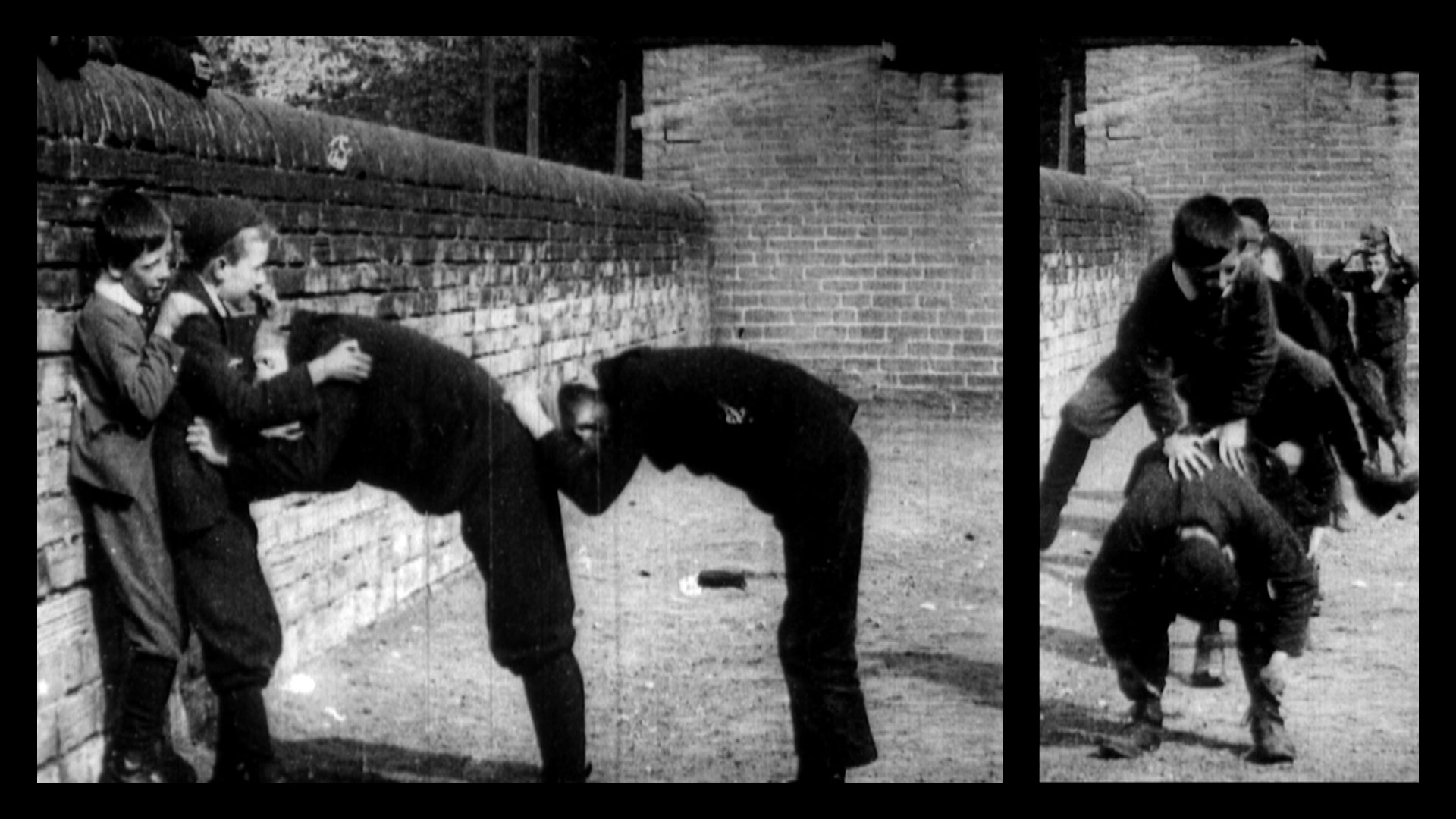
Siobhan Davies and David Hinton. 'Leap Frog' 2012


Siobhan Davies and David Hinton
Leap Frog
2012
Still from All This Can Happen
Courtesy of BFI National Archive


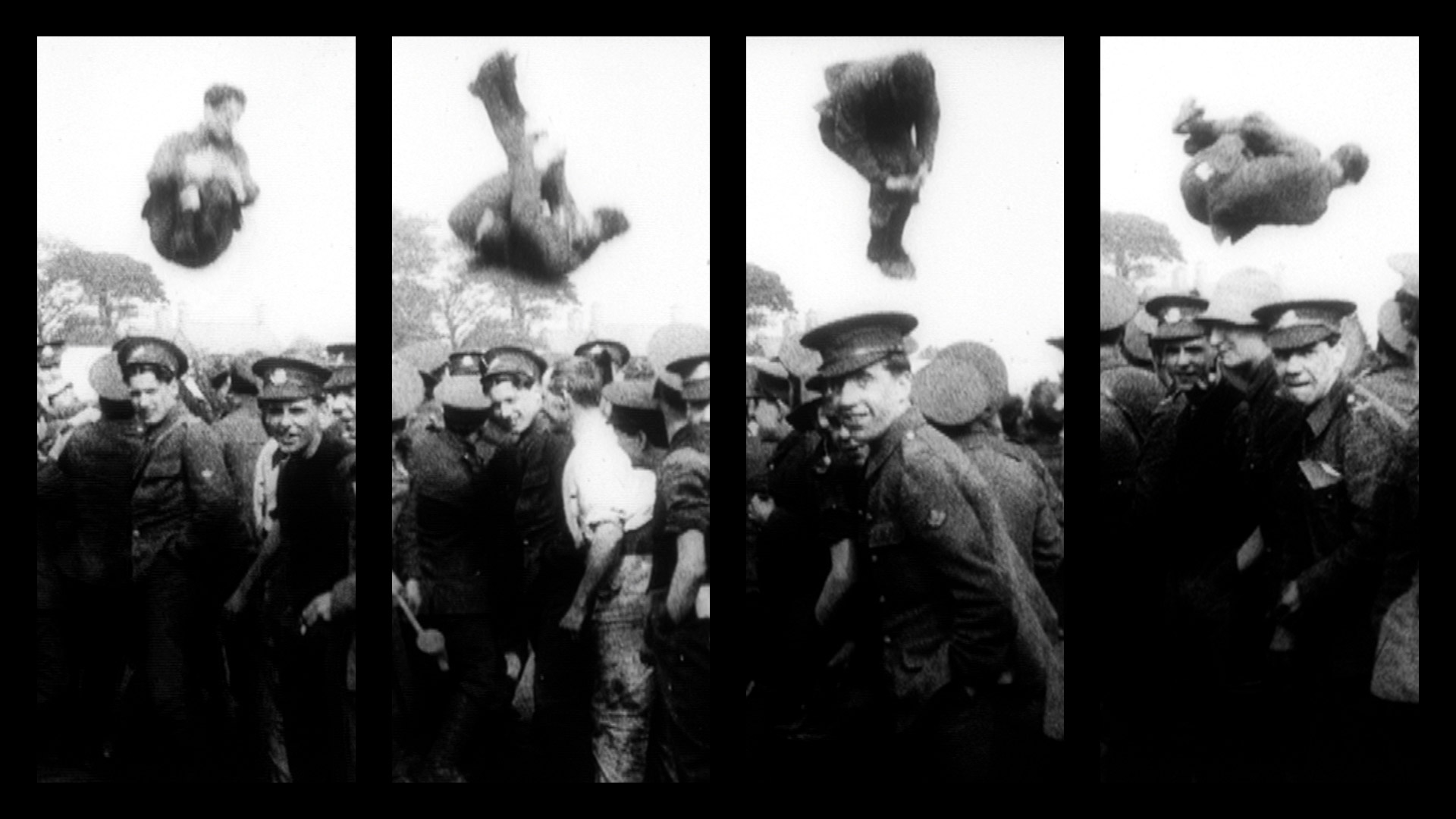
Siobhan Davies and David Hinton. 'Cheshire Territorials' 2012


Siobhan Davies and David Hinton
Cheshire Territorials
2012
Still from All This Can Happen
Courtesy of BFI National Archive


Siobhan Davies and David Hinton. 'Otto the Giant' 2012


Siobhan Davies and David Hinton
Otto the Giant
2012
Still from All This Can Happen
Courtesy of British Pathé


All This Can Happen, a 50-minute film by David Hinton and choreographer Siobhan Davies, opens with images of men who cannot walk. One lies immobile in a hospital bed, his head trembling, eyes vacant with torment. Another, also institutionalised, tries to walk but fails. He falls, scrambles and falls again, his whole body stiff with malfunction.

All this did happen. Every frame of this remarkable film comes from old, mostly black and white archive footage, complete with scratches and fingerprints. It is neither documentary nor constructed reality, but rather a wholly unexpected film adaptation of a short story by Swiss writer Robert Walser (1878-1956), about a man going for a walk.

The story, to which those opening images serve as a prologue, recounts the sights, sounds, encounters and musings of a day’s meandering: children playing in a school, a visit to the tax office, a display of women’s hats, a stroll through a forest, an argument with a tailor. Lovingly voiced by John Heffernan, the narration treats each moment, each thought and perception, with equal consideration, whether it is a gripe about automobiles, a memory of unbearable anguish, the sound of sublime music, or a chat with a dog. “The highest and the lowest, the most serious and the most hilarious things,” he explains, “are to the walker equally beloved, beautiful and valuable…

… the narration establishes a supple continuity, yet though the imagery follows the story devotedly, it has no continuity. It leaps between locations, splices scenes, switches subjects, and roams freely between poetic and literal modes, between the fantastic, the scientific, the surreal and the mundane. It seems able to let the whole world in, and still stay true to a singular storyline.

The imagery is discontinuous in other senses too. The screen is often split into multiple frames so that we notice how highly composed the film is. The frames themselves often freeze fleetingly, arresting the flow of time. Such stops literally give us pause; they let us take a moment. In fact, the whole film could be seen as the encounter between continuity – the story, the voice, time itself – and composition, or indeed choreography: the framing of action, the placement of sound, the arrangement of subjects and space.

But the reason to watch this film is not because it is artful and thoughtful, though it is that. It is because it restores us to our senses, because it touches – gently – both body and soul. To walk, it suggests, is to be in the world. A world that is physical, full of texture and sound and sensation; that is abstract, a matrix of space and time; that is imaginary, teeming with fantasies and terrors, desires, hopes and regrets; that is social, marked by encounters, engagements, negotiations; a world that is human. As a walk of life, All This Can Happen is, quite naturally, also shadowed by death, by not-walking, by not moving in space and time. “Where would I be,” asks the walker, “if I was not here? Here, I have everything. And elsewhere, I would have nothing.” All this it finds equally beloved, beautiful and valuable.

Sanjoy Roy. Excerpt of “Review of All This Can Happen, by Siobhan Davies and David Hinton” on the Aesthetica Magazine Blog website 5 November 2013 [Online] Cited 17/10/2022


Siobhan Davies and David Hinton. 'Miniature Writer' 2012


Siobhan Davies and David Hinton
Miniature Writer
2012
Still from All This Can Happen
Courtesy of British Pathé


Siobhan Davies and David Hinton. 'Hints and Hobbies' 2012


Siobhan Davies and David Hinton
Hints and Hobbies
2012
Still from All This Can Happen
Courtesy of AP Archive  British Movietone


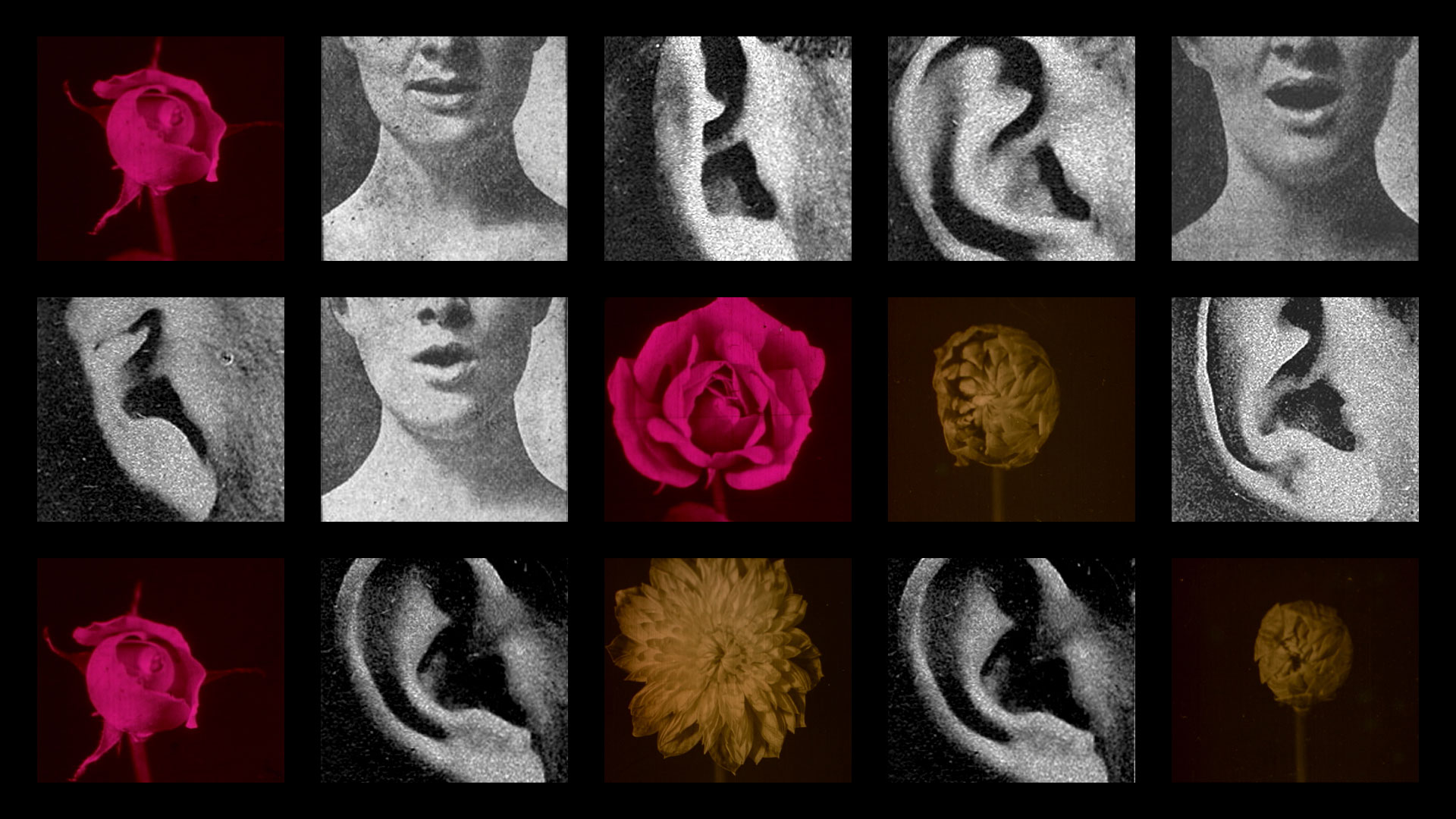
Siobhan Davies and David Hinton. 'Ears' and 'Birth of a Flower' 2012


Siobhan Davies and David Hinton
Ears and Birth of a Flower
2012
Still from All This Can Happen
Courtesy of Wellcome Library, London and AP Archive British Movietone


Siobhan Davies and David Hinton. 'Banff Scotland' and 'I Saw This' 2012


Siobhan Davies and David Hinton
Banff Scotland and I Saw This
2012
Still from All This Can Happen
Courtesy of Library of Congress, Prints & Photographs Division and Yorkshire Film Archive


Siobhan Davies Dance website

LIKE ART BLART ON FACEBOOK

Back to top

Review: ‘Simon Harsent / Melt: Portrait of an Iceberg’ at Edmund Pearce Gallery, Melbourne

Exhibition dates: 5th February – 1st March 2014


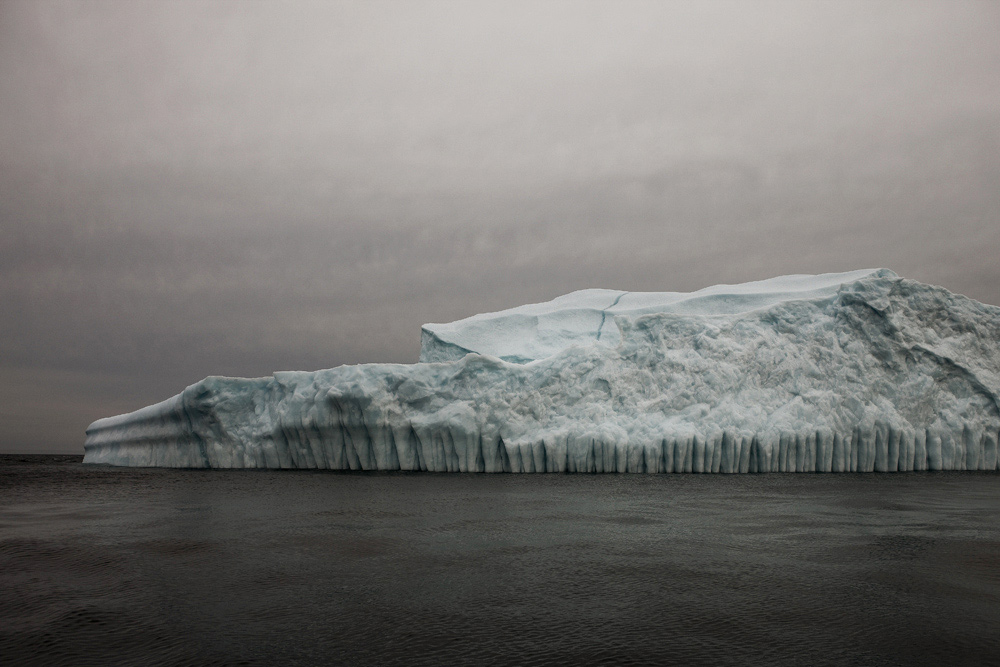
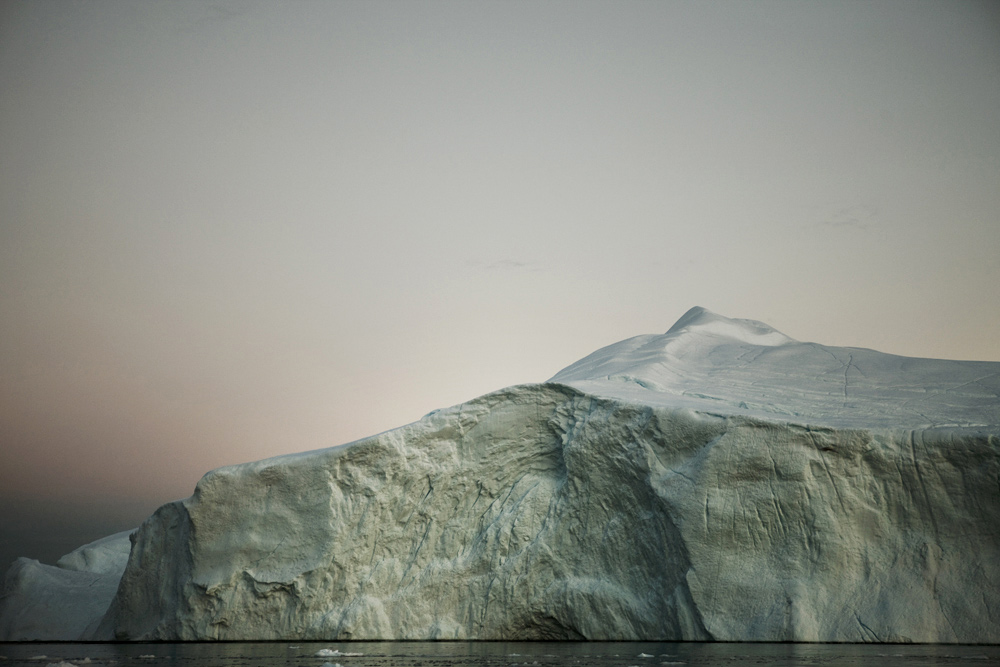
Simon Harsent (British, b. 1965) 'Melt #028a' 2008


Simon Harsent (British, b. 1965)
Melt #028a
2008
Archival Pigment Print
58.5 x 86cm
Edition of 25


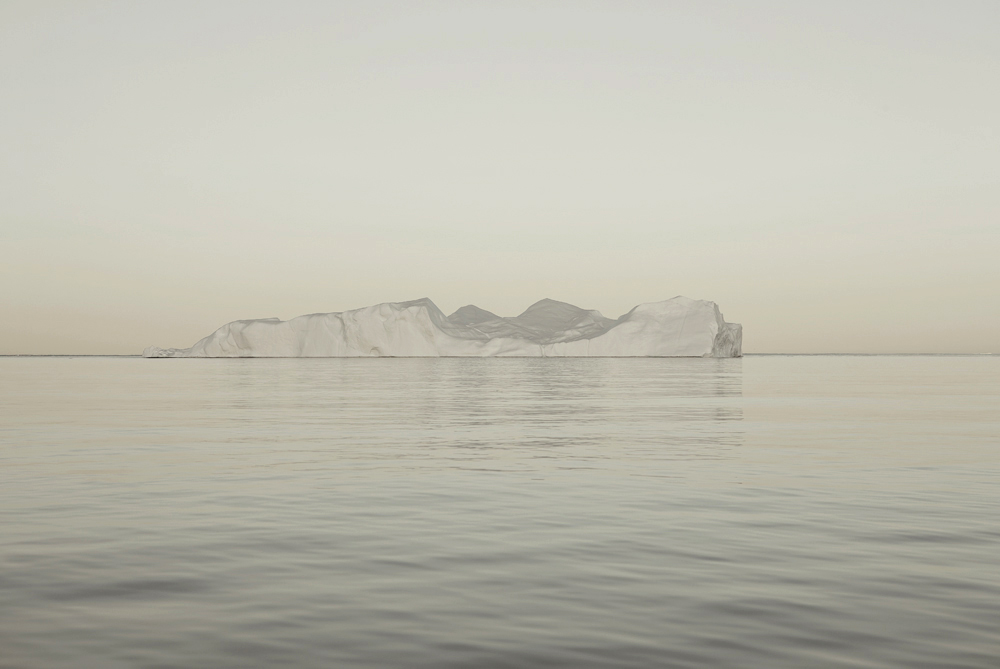
A solid exhibition by Simon Harsent to open the year at Edmund Pearce Gallery, Melbourne.

Things I felt and observed

~ Harsent shows me sculptural photographs of icebergs as I have never seen them before

~ The photographs are well printed and framed, have great colour variation and work at both sizes the images are presented at

~ The horizon line of the sea rises and falls throughout the series, allowing the viewer to levitate and drop as you walk around the gallery

~ The ecological component of the exhibition, while inherent, is not overpowering. Which is a good thing

~ The non-chronological hang benefits the exhibition immensely. If the exhibition had been hung from large to small iceberg, the effect would have been too didactic

~ The Brancusi-esque forms held more interest for me, such as Melt #029, Melt #036 and Melt #039 (seen with a photograph of Brancusi’s The Newborn 1920, below), together with the intense, close-up abstract forms such as Melt #014 and Melt #023. These are superb!

Things I wanted to feel and observe

~ When viewing the series I didn’t feel Harsent’s metaphorical reflection upon his own mortality. Only in two images, Melt #042 and Melt #09 (where the sunlight hits the top of the iceberg deliciously) did I feel an anthropomorphic link to humanity

~ I didn’t feel the grandeur of these icebergs. Perhaps just one image at the largest size possible would have shook me from my reverie

~ I didn’t feel the personality of each iceberg in its own journey. In the exhibition I never knew which large iceberg had metamorphosed into which smaller iceberg. Therefore I was unsure of each iceberg’s life-span and story. For that reason these are not ontological portraits concerned with the nature and relations (the relation of one photograph and the next) of being

~ Finally, I wanted the images to push forward, to take me further on the journey. Taking the adage that two-thirds of the iceberg is always below water, I never really felt the psychological power of these objects, something dark that is hidden beneath the sea. All the icebergs are photographed in clear, calm weather. Some photographed in storms, in mist or fog, or at night would have added ineffably to the atmosphere


These are not sublime photographs. I never got that feeling from viewing the work. They come nowhere close to Alain de Botton’s wonderful prose on the significance of sublime places:

“If the world is unfair or beyond our understanding, sublime places suggest it is not surprising things should be thus. We are the playthings of the forces that laid out the oceans and chiselled the mountains. Sublime places acknowledge limitations that we might otherwise encounter with anxiety or anger in the ordinary flow of events. It is not just nature that defies us. Human life is as overwhelming, but it is the vast spaces of nature that perhaps provide us with the finest, the most respectful reminder of all that exceeds us. If we spend time with them, they may help us to accept more graciously the great unfathomable events that molest our lives and will inevitably return us to dust.”(de Botton, Alain. The Art of Travel. London: Penguin, 2002, p. 178-179.)

I never felt that the photographs transported the viewer on an emotional journey that furthers our understanding of the fragility of life both of the planet and of ourselves. And that is the one thing I wished they had of done.

Dr Marcus Bunyan


Many thankx to Edmund Pearce Gallery for allowing me to publish the photographs in the posting. Please click on the photographs for a larger version of the image.


Simon Harsent (British, b. 1965) 'Melt #026' 2008


Simon Harsent (British, b. 1965)
Melt #026
2008
Archival Pigment Print
58.5 x 86cm
Edition of 25


Simon Harsent (British, b. 1965) 'Melt #029' 2008


Simon Harsent (British, b. 1965)
Melt #029
2008
Archival Pigment Print
110 x 160cm
Edition of 10


Simon Harsent (British, b. 1965) 'Melt #039' 2008


Simon Harsent (British, b. 1965)
Melt #039
2008
Archival Pigment Print
58.5 x 86cm
Edition of 10


Simon Harsent (British, b. 1965) 'Melt #036' 2008


Simon Harsent (British, b. 1965)
Melt #036
2008
Archival Pigment Print
58.5 x 86cm
Edition of 25


Constantin Brancusi (Romanian, 1876-1957) 'The Newborn'. Version I 1920 (close to the marble of 1915)


Constantin Brancusi (Romanian, 1876-1957)
The Newborn. Version I
1920 (close to the marble of 1915)
Bronze
14.6cm x 21cm x 14.6cm
Acquired through the Lillie P. Bliss request
© 2010 Artists Rights Society (ARS), New York / ADAGP, Paris

Used under conditions of fair use for the purpose of art criticism


Simon Harsent (British, b. 1965) 'Melt #037' 2008


Simon Harsent (British, b. 1965)
Melt #037
2008
Archival Pigment Print
58.5 x 86cm
Edition of 25


Simon Harsent (British, b. 1965) 'Melt #042' 2008


Simon Harsent (British, b. 1965)
Melt #042
2008
Archival Pigment Print
58.5 x 86cm
Edition of 25


After successful exhibitions in Australia and abroad, Simon Harsent’s sublime photographic series Melt: Portrait of an Iceberg makes its Melbourne premiere at Edmund Pearce this February. The exhibition and accompanying monograph present portraits of icebergs as they travel Greenland’s Ilulissat Icefjord. The ecological story is self-evident; more sections are breaking away from the arctic ice cap and melting faster due to global warming. But the chronicle of the iceberg is, for the artist, a metaphorical reflection upon his own mortality.

Harsent states; “Seeing them first overpowering in grandeur and then, later, about to be absorbed back into the flux from which they came, is both beautiful and humbling: a metamorphosis that endows them with a life-span, each with its own personality, each with its own story.”

Born in England Simon Harsent studied photography at Watford College before moving to Australia in 1988 to establish himself as one of the country’s leading photographers. Currently based in New York, Harsent’s career has seen him win numerous national and international awards including, Cannes Lions, One Show, Clio, D&AD, and Australia’s first Cannes Grand Prix – making him one of the most awarded photographers in the world. His work is included in the permanent collection of the Queensland Art Gallery and The Powerhouse Museum. Melt: Portrait of an Iceberg was published in late 2009 to critical acclaim, reinforced by its inclusion in the prestigious D&AD and PDN Photo Annuals.

Text from the Edmund Pearce Gallery website


Simon Harsent (British, b. 1965) 'Melt #023' 2008


Simon Harsent (British, b. 1965)
Melt #023
2008
Archival Pigment Print
58.5 x 86cm
Edition of 25


Simon Harsent (British, b. 1965) 'Melt #014' 2008


Simon Harsent (British, b. 1965)
Melt #014
2008
Archival Pigment Print
58.5 x 86cm
Edition of 25


Simon Harsent (British, b. 1965) 'Melt #021' 2008


Simon Harsent (British, b. 1965)
Melt #021
2008
Archival Pigment Print
58.5 x 86cm
Edition of 25


Simon Harsent (British, b. 1965) 'Melt #010' 2008


Simon Harsent (British, b. 1965)
Melt #010
2008
Archival Pigment Print
58.5 x 86cm
Edition of 25


Simon Harsent (British, b. 1965) 'Melt #09' 2008


Simon Harsent (British, b. 1965)
Melt #09
2008
Archival Pigment Print
58.5 x 86cm
Edition of 25


Simon Harsent (British, b. 1965) 'Melt #020' 2008


Simon Harsent (British, b. 1965)
Melt #020
2008
Archival Pigment Print
58.5 x 86cm
Edition of 25


Simon Harsent (British, b. 1965) 'Melt #05' 2008


Simon Harsent (British, b. 1965)
Melt #05
2008
Archival Pigment Print
58.5 x 86cm
Edition of 25


Simon Harsent (British, b. 1965) 'Melt #03' 2008


Simon Harsent (British, b. 1965)
Melt #03
2008
Archival Pigment Print
58.5 x 86cm
Edition of 25


Simon Harsent (British, b. 1965) 'Melt #07' 2008


Simon Harsent (British, b. 1965)
Melt #07
2008
Archival Pigment Print
110 x 160cm
Edition of 10


Edmund Pearce Gallery

This gallery has now closed.

LIKE ART BLART ON FACEBOOK

Back to top

Exhibition: ‘Walker Evans American Photographs’ at The Museum of Modern Art (MoMA), New York

Exhibition dates: 19th July 2013 – 9th March 2014


Walker Evans (American, 1903-1975) 'City Lunch Counter, New York' 1929


Walker Evans (American, 1903-1975)
City Lunch Counter, New York
1929
Gelatin silver print
4 3/16 x 6 5/16″ (10.7 x 16.1cm)
Gift of the photographer
© 2013 Walker Evans Archive, Metropolitan Museum of Art


Picture this

That is what Walker Evans does in his unique, forthright way. He shows you what he is seeing in a very straight forward way – directly, purposefully, in images where the artist seems to have no presence, no ego to impart. As artist Chris Killip observes, “Walker Evans is serious and smart and purposeful. He is trying to show you very clearly what he is seeing. It is very unadorned, as if nobody had taken the photograph. He conveys what is in front of him as clearly as possible.”1

But further than this, Evans presents us with a photographic version of Tomas Tranströmer’s poems which were seen by his English admirers in terms of “deep image”, a vaguely Jungian concept which suggests that “poetry could state absolute truths if only the images poets evoked welled up from deep enough sources uncontaminated by history and the follies of reason.”2

Evans direct, plainspoken images picture reality whilst hovering above the void – flirting with the duality of absolute truth and metaphysical inquiry. Whether Evans was consciously aware of this elemental antinomy is unlikely. Nevertheless we can read it in his images, even if we cannot read it in his prosaic words. You only have to look at the jet-black trees on a rainy day in Main Street, Saratoga Springs, New York (1931, below), or the justly famous Sharecropper’s Family, Hale County, Alabama (March 1936, below).

The people in the photograph have been posed but there is an intimate relationship here between the artist and his subjects. It is a loving photograph, for Evans cares for the dignity of these people in their naked condition. The grandmother wary of the camera with clasped hands, the weary husband, stick thin with glazed eyes, the young girl child with sallow stare, and the pensive mother with sleeping baby staring directly into camera, all of them dirty and in rags. In this absolute reality there is a nobility to these people and there, buried in the image, a relationship to the metaphysical essence of what it is to be human – the pictures of children on the back wall with text I can’t quite make out; the glorious arrangement of feet that run along the bottom of the image in all different angles and positions, the mothers folded under her almost collapsing with the weight of her burden; and what is that black shape prostrate on the floor? A rag? death? No! A cat.

The blackest most thinnest small cat that you ever seen, lingering on the edge of starvation, hovering in the void of existence.

As Thomas Sleigh writes of his first meeting with Tomas Tranströmer as he stepped from a small plane onto the ground, “I don’t mind large planes or middle-sized planes (his English was slightly guttural, his intonations lilting in a mild brogue), but small planes – you feel too much of the air under you.”3

And so with Evans if you know where to look.

Dr Marcus Bunyan


PS. For a fascinating insight into how these photographs were hung in the 1938 exhibition at MoMA see installation views of “Walker Evans American Photographs” at the Museum of Modern Art, New York City, 1938 on the ASX website. Notice the smallness of the photographs, their different sizes, the juxtaposition of disparate images, some double or triple hung one above the other, some printed in the centre of white sheets of photographic paper, others displayed on dark walls. The image that I describe above, Sharecropper’s Family, Hale County, Alabama (March 1936) is shown in an installation photograph below. Notice how small the image is and what affect this size of image has on the viewer, its shear concentration and intensity.

A friend Christopher Young tells me, “The install was done by Evans himself the night before and very chaotically. I love the poetry of the 1938 opening in that he got to the front door and couldn’t enter the show. He instead circled the block a number of times before going home…” Sounds like my early exhibitions. I could be found next door in a cafe playing pinball, I couldn’t face the crowd!


Footnotes

1/ Interview with Chris Killip about his exhibition Work at Museo Nacional Centro de Arte Renia Sofia, October 2013 [Online] Cited 11/02/2021

2/ Sleigh, Tom. “Too Much of the Air: Tomas Tranströmer,” 2005, on the Poets.org website [Online] Cited 15/02/2014. No longer available online

3/ Ibid.,


Many thankx to The Museum of Modern Art for allowing me to publish the photographs in the posting. Please click on the photographs for a larger version of the image.


Installation view of "Walker Evans American Photographs" at the Museum of Modern Art, New York City, 1938

Installation view of "Walker Evans American Photographs" at the Museum of Modern Art, New York City, 1938


Installation views of “Walker Evans American Photographs” at the Museum of Modern Art, New York City, 1938 with at bottom right, Sharecropper’s Family, Hale County, Alabama (March 1936)
© Walker Evans Archive, The Metropolitan Museum of Art

Images used under conditions of fair use for the purpose of art criticism.


Walker Evans (American, 1903-1975) '42nd Street, New York' 1929


Walker Evans (American, 1903-1975)
42nd Street, New York
1929
Gelatin silver print
4 1/4 x 6 1/2″ (10.8 x 16.6cm)
Purchase
© 2013 Walker Evans Archive, Metropolitan Museum of Art


Walker Evans (American, 1903-1975) 'Church Organ and Pews, Alabama' 1936


Walker Evans (American, 1903-1975)
Church Organ and Pews, Alabama
1936
Gelatin silver print, printed 1970
7 9/16 x 9 1/8″ (19.2 x 23.2cm)
Printer: James Dow
Mr. and Mrs. John Spencer Fund


Walker Evans (American, 1903-1975) 'Sharecropper's Family, Hale County, Alabama' March 1936


Walker Evans (American, 1903-1975)
Sharecropper’s Family, Hale County, Alabama
March 1936
Gelatin silver print
7 5/8 x 9 5/8″ (19.4 x 24.4cm)
Gift of the Farm Security Administration


Walker Evans (American, 1903-1975) 'Sharecropper's Family, Hale County, Alabama' March 1936 (detail)


Walker Evans (American, 1903-1975)
Sharecropper’s Family, Hale County, Alabama (detail)
March 1936
Gelatin silver print
7 5/8 x 9 5/8″ (19.4 x 24.4cm)
Gift of the Farm Security Administration


Walker Evans (American, 1903-1975) 'Sharecropper's Family, Hale County, Alabama' (detail) March 1936


Walker Evans (American, 1903-1975)
Sharecropper’s Family, Hale County, Alabama (detail)
March 1936
Gelatin silver print
7 5/8 x 9 5/8″ (19.4 x 24.4cm)
Gift of the Farm Security Administration


This installation celebrates the 75th anniversary of the first one-person photography exhibition in MoMA’s history, and the accompanying landmark publication, which established the potential of the photographer’s book as an indivisible work of art. Through these projects Walker Evans created a collective portrait of the eastern United States during a decade of profound transformation – one that coincided with the flood of everyday images, both still and moving, from an expanding mass culture, and the construction of a Modernist history of photography. As Lincoln Kirstein wrote in his essay for the book, “After looking at these pictures with all their clear, hideous and beautiful detail, their open insanity and pitiful grandeur, compare this vision of a continent as it is, not as it might be or as it was, with any other coherent vision that we have had since the war. What poet has said as much? What painter has shown as much? Only newspapers, the writers of popular music, the technicians of advertising and radio have in their blind energy accidentally, fortuitously, evoked for future historians such a powerful monument to our moment. And Evans’s work has, in addition, logic, continuity, climax, sense and perfection.”

Comprising approximately 60 prints from the Museum’s collection that were included in the 1938 exhibition or the accompanying publication, the current installation maintains the bipartite presentation of the originals; the first section portrays American society through images of its individuals and social environments, while the second consists of photographs of the relics that constitute expressions of an American cultural identity – the architecture of Main streets, factory towns, rural churches, and wooden houses. The pictures provide neither a coherent narrative nor a singular meaning, but rather create connections through the repetition and interplay of pictorial structures and subject matter. Its placement on the fourth floor of the Museum – between galleries featuring the paintings of Robert Rauschenberg, Jasper Johns, Jackson Pollock, and Andy Warhol – underscores the continuation of prewar avant-garde practices in America and the unique legacy of Evans’s explorations of signs and symbols, commercial culture, and the vernacular. Their profound impact on not only photography, but also film, literature, and the visual arts, reverberates today.

Text from The Museum of Modern Art website


Walker Evans (American, 1903-1975) 'American Legionnaire' 1936


Walker Evans (American, 1903-1975)
American Legionnaire
1936
Gelatin silver print
5 3/4 x 5 1/8″ (14.6 x 13cm)
Gift of the Farm Security Administration


Walker Evans (American, 1903-1975) 'Interior Detail of Portuguese House' 1930


Walker Evans (American, 1903-1975)
Interior Detail of Portuguese House
1930
Gelatin silver print
7 15/16 x 6 1/8″ (20.2 x 15.5cm)
Purchase
© 2013 Walker Evans Archive, Metropolitan Museum of Art


Walker Evans (American, 1903-1975) 'Penny Picture Display, Savannah, Georgia' 1936


Walker Evans (American, 1903-1975)
Penny Picture Display, Savannah, Georgia
1936
Gelatin silver print
8 5/8 x 6 15/16″ (21.9 x 17.6cm)
Gift of Willard Van Dyke
© 2013 Walker Evans Archive, The Metropolitan Museum of Art


Walker Evans (American, 1903-1975) 'Main Street, Saratoga Springs, New York' 1931


Walker Evans (American, 1903-1975)
Main Street, Saratoga Springs, New York
1931
Gelatin silver print
7 1/16 x 5 9/16″ (18 x 14.2cm)
Gift of the photographer
© 2013 Walker Evans Archive, Metropolitan Museum of Art


Walker Evans (American, 1903-1975) 'Negro Church, South Carolina' 1936


Walker Evans (American, 1903-1975)
Negro Church, South Carolina
1936
Gelatin silver print
9 x 6 15/16″ (22.9 x 17.6cm)
Gift of Willard Van Dyke


The Museum of Modern Art
11 West 53 Street
New York, NY 10019
Phone: (212) 708-9400

Opening hours:
10.30am – 5.30pm
Open seven days a week

MoMA website

LIKE ART BLART ON FACEBOOK

Back to top

Review / Text: ‘Edward Steichen & Art Deco Fashion’ at the National Gallery of Victoria, Melbourne

Exhibition dates: 18th October 2013 – 2nd March 2014


Edward Steichen (American, 1879-1973) 'Model Dinarzade in a Dress by Poiret' 1924


Edward Steichen (American, 1879-1973)
Model Dinarzade in a Dress by Poiret
1924
Gelatin silver photograph

Image used under fair use for the purpose of art criticism


This is a sublime exhibition, teaming with fabulous frocks and beautiful, classical, evanescent photographs. The exhibition was in my top nine magnificent Melbourne exhibitions that featured on Art Blart last year. Elegant, sophisticated and oozing quality, this exhibition has been a sure fire winner for the NGV. This review will concentrate on the photographs by Edward Steichen. See my previous posting on the exhibition including installation photographs.

High Society

Edward Steichen (1879-1973) was a painter and champion of art photography who initially worked in the soft focus, Pictorialist style prevalent at the beginning of the 20th century. He was an artist who worked closely with Alfred Stieglitz on the influential quarterly art journal Camera Work, designing the cover and the Art Nouveau-style typeface especially for the internationally focused publication. Stieglitz, and by extension Camera Work, lived to promote photography as an art form and to challenge the norms of how art may be defined.1 In the early years Camera Work only published photography, but in later years the journal increasingly featured reproductions of and articles on modern painting, drawing and aesthetics.

“This change was brought about by a similar transformation at Stieglitz’s New York gallery, which had been known as the Little Galleries of the Photo-Secession until 1908. That year he changed the name of the gallery to “291”, and he began showing avant-garde modern artists such as Auguste Rodin and Henri Matisse along with photographers. The positive responses he received at the gallery encouraged Stieglitz to broaden the scope of Camera Work as well, although he decided against any name change for the journal.”2

Steichen was heavily associated with Gallery 291 (291 Fifth Avenue, New York City) which ran from 1905 to 1917. The gallery exhibited European artists such as Braque, Picasso, Matisse, Brancussi, Cézanne and Rodin and soon to be famous American artists such as John MarinMax WeberArthur DoveMarsden Hartley and Georgia O’Keeffe. Virtually no other gallery in the United States was showing modern art works with such abstract and dynamic content at this time.3 Both the gallery and the journal ran hand in hand; both closed in 1917. The journal closed due to a downturn in interest in Pictorial photography, a lack of subscribers, cultural changes and the economic effects of the First World War, which saw both the costs and even the availability of the paper on which it was printed become challenging.4 In the penultimate issue 48 (October 1916) Stieglitz,

” …introduced the work of a young photographer, Paul Strand, whose photographic vision was indicative of the aesthetic changes now at the heart of Camera Work’s demise. Strand shunned the soft focus and symbolic content of the Pictorialists and instead strived to create a new vision that found beauty in the clear lines and forms of ordinary objects. By publishing Strand’s work Stieglitz was hastening the end of the aesthetic vision he had championed for so long. Nine months later, in June 1917, what was to be the final issue of Camera Work appeared. It was devoted almost entirely to Strand’s photographs.”5


Edward Steichen felt the change in the air. When he accepted the job as chief photographer for Condé Nast publications in 1923 his early fashion photographs for Vogue and Vanity Fair were seen as innovative and ground breaking, even as his former art colleagues saw shooting fashion and celebrities was a way of selling-out. Steichen bought to fashion and portrait photography an aesthetic of clear lines and forms that simply had not been present before, coupled with a Pictorialist sensibility for light and the use of low depth of field. John McDonald in his excellent review of the exhibition observes, “Steichen has claims to having invented fashion photography with a series of pictures he took in Paris in 1911, for couturier, Paul Poiret; but the genre had found its first true professional in Baron Adolphe de Meyer, who left Vogue for Harper’s Bazaar, opening the door for Steichen’s appointment. De Meyer was an incurable mannerist who remained true to the Pictorialist aesthetic, but his successor would prove himself an innovator.”6

Steichen’s photographs from 1923-1924 are pared back, Modernist photographs that evidence the beginning of his later photographic style. Madame Nadine Vera wearing a crêpe evening gown by Chanel (1924) has a plain background of some wooden studio panels; Model Dinarzade in a Dress by Poiret (1924, above) has fabric hanging behind while Crêpe de chine dress by Lanvin (1924) has three doors casually put together to form the backdrop to the model. All three photographs show beautiful tonality and lighting in the full length capture of the models with hints of browns and yellows in the prints. The figure is isolated in the studio space simply and elegantly. The model is being studied. Steichen’s models are immersed in suffused light but the form of the photograph is different from that of Pictorialism, for the models themselves are pin sharp, as though stepping out into the world. These early photographs are fascinating to study, for they lay the ground work for what is to follow. These three images inform the viewer as to the experimentation that Steichen was undertaking to get to a starting point for the complex and atmospheric studio lighting that he would later employ.

Gradually, Steichen’s images become more confident and assured and take on a patina of beauty, style and grace. In his close-up portraits there is an isolation of the face against out of focus backgrounds with the use of profiles, arms and elbows as framing devices, for example Actress Sylvia Sidney (1929) and Actress Clara Bow (1928, above). In his longer-length portraits there is an isolation of figures against a white or black ground, as in Marion Morehouse in a dress by Louise Boulanger (1929) and Actresses Norma and Constance Talmadge (1927). Males usually have a heavy darkness to them while the females are more luminously lit. In the male portraits the hands dominate. The hands in the male photographs belong to the male as part of the portrait whereas in the early photographs of women they are only models, there at his command, and the hands are almost invisible. Only in the later photographs of high society women are the hands of females fully represented. What can be observed is that the figure is usually isolated against an out of focus background, with deep, dark shadows and soft luxurious light, low depth of field and feminine profiles.

In commercial terms (and we must remember that this is how the artist made his living for these photographs were seen as his commercial work at the time), Steichen’s photographs fulfilled his brief: the portrayal of shimmer and sparkle, geometric Art Deco style, the drama and theatrical lighting of the talkies, and the spectacle of the liberated modern women. She in turn was influenced by the prevalent cultural conditions: smoking, jazz, prohibition, automobiles, trains, dancing, fast living, gold (King Tuts tomb was discovered in 1922) and African and Japanese art. Appealing to the new leisure classes, publications such as Vogue and Vanity Fair offered a glimpse of a longed for paradise to the burgeoning middle-classes with their photographs of the rich and famous, the glamour and the costumes – the social groups that hold the most power actually exposing their own status on paper through these magazines.

As John McDonald notes, “Steichen uses every trick at his disposal to convey a particular kind of image,”7 an image that uses increasingly elaborate studio lighting and disparate indoor and outdoor locations. But by the early 1930s the work becomes quite formulaic with its use of low depth of field, profiles, angles of arms or chairs and geometric shapes. The figure is tightly controlled – either cropped close in or set amongst ambiguously filled sets and shaped backgrounds. There is a sameness and repetitiveness about the work as one image bleeds into another. In fact, after that early period of experimentation, there is basically no change to his mature style from the years 1925-1937 and this makes for a long twelve years for an artist of his talent. He found his mother load and he stuck to it.

Steichen’s photographs of the rich and famous are “pictures” taken by one who mingled with the elite, one who enjoyed the trappings of fame and high society. As Robert Nelson notes in his review of the exhibition, “Steichen’s talents were never incompatible with the conspicuous snobbery of his age, for which it would never have occurred to him to proffer an apology. Having arrived himself, he naturally admires gentry-by-ambition and crowns it with the smugness that it enjoys.”8 Ouch! Nelson goes on to observe, “Much of the work is statuesque and formidable in its composition, lighting and symbolic rigour,” while at the same time portraying a world that is completely artificial in which nothing is real and everything is a pose.9 And we, the viewer and reader, are voyeurs of this hedonistic world.

On close reading, the photographs flatten out into a studied set of stylistic manoeuvres, a form where style stands in for a quality of visual perception.10 As Steichen seeks to “clinch the image” the syntax of his photographs (the system of organisation used in putting lines together to form pictures) becomes imitative. This leads to evanescent photographs, images that soon pass out of sight, memory, or existence; images that slip for the mind as quickly as one sees them. There is little sense of dislocation in the images, only “in his ability to distance himself from a subject, analysing his or her foibles with a cool, practiced eye,”11 and in the distance of the scene from the reality of everyday life. Each photograph becomes a microcosm of vanity, celebrity and fashion. Steichen ticks all the boxes (and he made all the boxes that he ticked) but the photographs usually don’t fulfil any new demands that the situation generates. He restricts his field of view to one that he creates and controls within certain narrowly defined boundaries, usually using passive people who are at his command. In his orientation to the world the photographs are not ‘things as they are’ but things as they are constructed to be (seen) – a form of social capital, social fascism, even.12

Only when Steichen is challenged by an active “personality” does he raise his game. This is when the modernist, emotive, visually rhapsodic AND MEMORABLE photographs take hold in this exhibition. The great breakthrough with Greta Garbo (1929, below), mass of black with face surmounting, hair pulled back by hands “the woman came out full beauty on her magnificent face” Steichen said; Actress Gloria Swanson (1924, below) like some prowling, wide-eyed animal hidden behind a black lace veil, “a predatory femme fatale concealing her ambitions behind a mask of beauty”13; Marlene Dietrich (1934, below) nestled into the glorious curve of an armchair, lace-covered hand open, inviting; and Actress Loretta Young (1931) active, not passive, in which Steichen humanises his sitter. For me, these are the glorious images – not the men, not the fashion photographs, but these strong, independent women.

“An interested image-maker takes available resources for meaning (visual grammars, fabrication techniques and focal points of attention), undertakes an act of designing (the process of image-making), and in so doing re-images the world in a way that it has never quite been seen before.”14 Initially, in the early experimentation, this is what Steichen did; he achieves it again in the photographs of Garbo, Swanson, Dietrich and Young. As for the other photographs we feel an overall suffused glow of beauty and glamour – we admire their scale and intensity, the deep blacks and velvety whites, and wonder at the light and assemblage of elements – but they do not have the power and engagement of the best, most challenging work. In these photographs of vibrant women the viewer finally starts to feel the spirit of the face, the spirit of the person captured in an instant. And that is a rare and beautiful thing.

Dr Marcus Bunyan

Word count: 1,883


Footnotes

1/ Whelan, Richard. Alfred Stieglitz: A Biography. NY: Little, Brown, 1995, pp. 189-223
2/ Anon. “Camera Work,” on Wikipedia website [Online] Cited 15/02/2014
3/ Anon. “291,” on Wikipedia website [Online] Cited 15/02/2014
4/ “Camera Work,” op. cit.,
5/ Hoffman, Katherine. Stieglitz : A Beginning Light. New Haven: Yale University Press Studio, 2004,  pp. 213–222 cited in “Camera Work,” op. cit.,
6/ McDonald, John. “Edward Steichen & Art Deco Fashion” on John McDonald website February 1, 2014 [Online] Cited 15/02/2014
7/ Ibid.,
8/ Nelson, Robert. “An age of elegance captured forever,” in The Age newspaper Wednesday November 6th, 2013, p. 54
9/ Ibid.,
10/ Rewording of a sentence by Sleigh, Tom. “Too Much of the Air: Tomas Tranströmer,” 2005, on the Poets.org website [Online] Cited 15/02/2014. No longer available online
11/ McDonald, op. cit.,
12/ “In sociology, social capital is the expected collective or economic benefits derived from the preferential treatment and cooperation between individuals and groups. Although different social sciences emphasise different aspects of social capital, they tend to share the core idea “that social networks have value”.”
Anon. “Social capital,” on Wikipedia website [Online] Cited 15/02/2014
“Social fascism was a theory supported by the Communist International (Comintern) during the early 1930s, which held that social democracy was a variant of fascism because, in addition to a shared corporatist economic model, it stood in the way of a complete and final transition to communism.”
Anon. “Social fascism,” on Wikipedia website [Online] Cited 15/02/2014
13/ McDonald, op. cit.,
14/ Anon. “The Image of Transformation: Properties of Consequence,” on The Image website [Online] Cited 15/02/2014. No longer available online


Many thankx to the National Gallery of Victoria for allowing me to publish the photographs in the posting. Please click on the photographs for a larger version of the image.


Edward Steichen (American, 1879-1973) 'Actress Clara Bow for Vanity Fair' 1928


Edward Steichen (American, 1879-1973)
Actress Clara Bow for Vanity Fair
1928
Vintage silver gelatin print
Block Museum, Gift of the Hollander Family in Honor of Morton and Mimi Schapiro
Steichen / Condé Nast Archive; © Condé Nast

Image used under fair use for the purpose of art criticism


Edward Steichen (American 1879-1973, emigrated to United States 1881, worked in France 1906-23) Actress 'Gloria Swanson' 1924


Edward Steichen (American 1879-1973, emigrated to United States 1881, worked in France 1906-1923)
Actress Gloria Swanson
1924
Gelatin silver photograph
Courtesy Condé Nast Archive
© 1924 Condé Nast Publications


Steichen’s portrait of Gloria Swanson has taken on iconic masterpiece status overtime. Created in 1924, just as the first feature-length sound movies were emerging – effectively truncating the actress’s brilliant silent-film career – this image caught the essential Gloria Swanson: haunting and inscrutable, forever veiled in the whisper of a distant era. Steichen’s photograph has elements of turn-of-the-century Pictorialism (moody and delicate, the subject seeming to peer from the darkness, as if from jungle foliage), yet it also projects modernist boldness, with its pin-sharp precision and graphic severity.

Anonymous. “Gloria Swanson by Edward Steichen,” on the Iconic Photos website October 5th, 2009 [Online] Cited 11/02/2021


Edward Steichen (American 1879-1973, emigrated to United States 1881, worked in France 1906-23) 'Dancers Leonore Hughes and Maurice Mouvet' 1924


Edward Steichen (American 1879-1973, emigrated to United States 1881, worked in France 1906-1923)
Dancers Leonore Hughes and Maurice Mouvet
1924
Gelatin silver photograph
Courtesy Condé Nast Archive
© 1924 Condé Nast Publications


Maurice Mouvet was one of the most famous and successful dance teams around the early 1910’s and lead the way for many performers that would follow… Maurice was born in New York but as a young lad moved to Paris with his father and knew he wanted to be a dancer as a young boy. He had his first professional dance at the Noveau Cirque in Paris, France at age 15. Mouvet’s best partners were Florence Walton and Leonora (Leona) Hughes.


Edward Steichen (American 1879-1973, emigrated to United States 1881, worked in France 1906-23) 'Actress Paula Negri' 1925


Edward Steichen (American 1879-1973, emigrated to United States 1881, worked in France 1906-1923)
Actress Paula Negri
1925
Gelatin silver photograph
Courtesy Condé Nast Archive
© 1924 Condé Nast Publications


Pola Negri (née Apolonia Chałupiec, January 3, 1897 – 1 August 1987) was a Polish stage and film actress who achieved worldwide fame during the silent and golden eras of Hollywood and European film for her tragedienne and femme fatale roles. She was the first European film star to be invited to Hollywood, and become one of the most popular actresses in American silent film. She also started several important women’s fashion trends that are still staples of the women’s fashion industry. Her varied career included work as an actress in theatre and vaudeville; as a singer and recording artist; as an author; and as a ballerina.

Text from the Wikipedia website


Edward Steichen (American 1879-1973, emigrated to United States 1881, worked in France 1906-23) 'Tamaris with a large Art Deco scarf' 1925


Edward Steichen (American 1879-1973, emigrated to United States 1881, worked in France 1906-1923)
Tamaris with a large Art Deco scarf
1925
Gelatin silver photograph
Courtesy Condé Nast Archive
© 1924 Condé Nast Publications


Edward Steichen (American 1879-1973, emigrated to United States 1881, worked in France 1906-23) 'Model wearing a black tulle headdress by Suzanne Talbot and a brocade coat with black fox collar' 1925


Edward Steichen (American 1879-1973, emigrated to United States 1881, worked in France 1906-1923)
Model wearing a black tulle headdress by Suzanne Talbot and a brocade coat with black fox collar
1925
Gelatin silver photograph
Courtesy Condé Nast Archive
© 1924 Condé Nast Publications


Edward Steichen (American 1879-1973, emigrated to United States 1881, worked in France 1906-23) 'Actor Gary Cooper' 1930


Edward Steichen (American 1879-1973, emigrated to United States 1881, worked in France 1906-1923)
Actor Gary Cooper
1930
Gelatin silver photograph
Courtesy Condé Nast Archive
© 1924 Condé Nast Publications


Edward Steichen (American 1879-1973, emigrated to United States 1881, worked in France 1906-23) 'Marion Morehouse and unidentified model wearing dresses by Vionnet' 1930


Edward Steichen (American 1879-1973, emigrated to United States 1881, worked in France 1906-1923)
Marion Morehouse and unidentified model wearing dresses by Vionnet
1930
Gelatin silver photograph
Courtesy Condé Nast Archive
© 1924 Condé Nast Publications


Marion Morehouse (1906-1969), was a fashion model who rose to prominence in the late 20s and early 30s, sitting for Vanity Fair and Vogue photographer Edward Steichen. The pair created some strikingly modernist photographs. According to Steichen Morehouse was:

“The greatest fashion model I ever photographed … When she put on the clothes that were to be photographed, she transformed herself into a woman who really would wear that gown … whatever the outfit was.”

She was also a favourite of Cecil Beaton and French Vogue’s Baron George Hoyningen-Huene. Morehouse was of Choctaw Indian ancestry, with brown eyes and an angular frame. After her modelling career ended, she took up photography herself. Later she became the third wife of author and painter E.E Cummings. When Cummings met Marion Morehouse in 1932, he was in the middle of a painful split from his second wife, Anne Barton. Although it is not clear whether the two were ever formally married, Morehouse lived with Cummings in a common-law marriage until his death in 1962. Morehouse died on May 18, 1969.

Text from the Photographs, film, literature & quotes from the bygone era website [Online] Cited 10/02/2014. No longer available online


Edward Steichen (American 1879-1973, emigrated to United States 1881, worked in France 1906-23) 'Olympic diver Katherine Rawls' 1931


Edward Steichen (American 1879-1973, emigrated to United States 1881, worked in France 1906-1923)
Olympic diver Katherine Rawls
1931
Gelatin silver photograph
Courtesy Condé Nast Archive
© 1924 Condé Nast Publications


Katherine Louise Rawls (June 14, 1917 – April 8, 1982) was a multiple United States national champion in swimming and diving in the 1930s.


Edward Steichen (American 1879-1973, emigrated to United States 1881, worked in France 1906-23) Model 'Dorothy Smart wearing a black velvet hat by Madame Agnès' 1926


Edward Steichen (American 1879-1973, emigrated to United States 1881, worked in France 1906-1923)
Model Dorothy Smart wearing a black velvet hat by Madame Agnès
1926
Gelatin silver photograph
Courtesy Condé Nast Archive
© 1924 Condé Nast Publications


France’s most popular milliner Madame Agnes was born in France in the late 1800’s, she retired in 1949, and died a short while later. She was famous for cutting the brims of her hats while they were worn by her customers. Madame Agnes styled hats which were both abstract and unique. An illustration from 1927 depicts Madame Agnes’ Congo inspired hats with a model wearing a slave collar. As the 20’s moved into the 30’s, the hats became smaller and away from the face. In December 1935 she introduced hats with large straw brims which were mounted on flowered madras handkerchiefs. Madame Agnes was inspired by a matador’s hat when she created a small dinner hat for Spring 1936. It was sewn of black maline with heavy white silk fringe. The fringe was mounted on each side of the hat’s top. In mid-1946 she created a soft beige beret of felt which featured a line that was broken just above the right eyebrow, where a soft quill was inserted.

Text from the Photographs, film, literature & quotes from the bygone era website [Online] Cited 10/02/2014. No longer available online


Edward Steichen (American 1879-1973, emigrated to United States 1881, worked in France 1906-23) 'On George Baher's yacht' 1928


Edward Steichen (American 1879-1973, emigrated to United States 1881, worked in France 1906-1923)
On George Baher’s yacht. June Cox wearing unidentified fashion; E. Vogt wearing fashion by Chanel and a hat by Reboux; Lee Miller wearing a dress by Mae and Hattie Green and a scarf by Chanel; Hanna-Lee Sherman wearing unidentified fashion
1928
Gelatin silver photograph
Courtesy Condé Nast Archive
© 1924 Condé Nast Publications


Elizabeth “Lee” Miller, Lady Penrose (April 23, 1907 – July 21, 1977) was an American photographer. Born in Poughkeepsie, New York, in 1907, she was a successful fashion model in New York City in the 1920s before going to Paris, where she became an established fashion and fine art photographer. During the Second World War, she became an acclaimed war correspondent for Vogue, covering events such as the London Blitz, the liberation of Paris, and the concentration camps at Buchenwald and Dachau.


Edward Steichen (American 1879-1973, emigrated to United States 1881, worked in France 1906-23) 'Marlene Dietrich' 1934


Edward Steichen (American 1879-1973, emigrated to United States 1881, worked in France 1906-1923)
Marlene Dietrich
1934
Gelatin silver photograph
Courtesy Condé Nast Archive
© 1924 Condé Nast Publications


Edward Steichen (American 1879-1973, emigrated to United States 1881, worked in France 1906-23) 'Greta Garbo' 1929


Edward Steichen (American 1879-1973, emigrated to United States 1881, worked in France 1906-1923)
Greta Garbo
1929
Gelatin silver photograph
Courtesy Condé Nast Archive
© 1924 Condé Nast Publications


Edward Steichen (American 1879-1973, emigrated to United States 1881, worked in France 1906-23) Actress 'Joan Crawford in a dress by Schiaparelli' 1932


Edward Steichen (American 1879-1973, emigrated to United States 1881, worked in France 1906-1923)
Actress Joan Crawford in a dress by Schiaparelli
1932
Gelatin silver photograph
Courtesy Condé Nast Archive
© 1924 Condé Nast Publications


Elsa Schiaparelli (1890-1973) was an Italian fashion designer. Along with Coco Chanel, her greatest rival, she is regarded as one of the most prominent figures in fashion between the two World Wars. Starting with knitwear, Schiaparelli’s designs were heavily influenced by Surrealists like her collaborators Salvador Dalí and Alberto Giacometti. Her clients included the heiress Daisy Fellowes and actress Mae West.

Perhaps Schiaparelli’s most important legacy was in bringing to fashion the playfulness and sense of “anything goes” of the Dada and Surrealist movements. She loved to play with juxtapositions of colours, shapes and textures, and embraced the new technologies and materials of the time. With Charles Colcombet she experimented with acrylic, cellophane, a rayon jersey called “Jersela” and a rayon with metal threads called “Fildifer” – the first time synthetic materials were used in couture. Some of these innovations were not pursued further, like her 1934 “glass” cape made from Rhodophane, a transparent plastic related to cellophane. But there were more lasting innovations; Schiaparelli created wraparound dresses decades before Diane von Furstenberg and crumpled up rayon 50 years before Issey Miyake’s pleats and crinkles. In 1930 alone she created the first evening-dress with a jacket, and the first clothes with visible zippers. In fact fastenings were something of a speciality, from a jacket buttoned with silver tambourines to one with silk-covered carrots and cauliflowers. Schiaparelli did not adapt to the changes in fashion following World War II and her business closed in 1954.

Text from the Wikipedia website


Edward Steichen (American 1879-1973, emigrated to United States 1881, worked in France 1906-23) 'White (center Gwili André)' 1935


Edward Steichen (American 1879-1973, emigrated to United States 1881, worked in France 1906-1923)
White (center Gwili André)
1935
Gelatin silver photograph
Courtesy Condé Nast Archive
© 1924 Condé Nast Publications


Gwili Andre (4 February 1908 – 5 February 1959) was a Danish actress who had a brief career in Hollywood films. Andre came to Hollywood in the early 1930s with the intention of establishing herself as a film star. She appeared in the 1932 RKO Studio films Roar of the Dragon and Secrets of the French Police and began to attract attention for her striking good looks. These films provided her with starring roles playing against such established actors as Richard Dix, ZaSu Pitts and Frank Morgan, and RKO began using her glamorous looks to promote her.

A widespread publicity campaign ensured that her name and face became well known to the American public, but her next role in No Other Woman (1933), opposite Irene Dunne, was not the success the studio expected. Over the next few years she was relegated to supporting roles which included the Joan Crawford picture A Woman’s Face (1941). Her final role was a minor part in one of the popular Falcon series, The Falcon’s Brother in 1942.

Text from the Wikipedia website


Edward Steichen (American 1879-1973, emigrated to United States 1881, worked in France 1906-23) 'Actress Mary Heberden' 1935


Edward Steichen (American 1879-1973, emigrated to United States 1881, worked in France 1906-1923)
Actress Mary Heberden
1935
Gelatin silver photograph
Courtesy Condé Nast Archive
© 1924 Condé Nast Publications


American actress Mary Heberden made her first New York stage appearance in 1925 and performed regularly on Broadway in the 1930s.


Edward Steichen (American 1879-1973, emigrated to United States 1881, worked in France 1906-23) 'Charlie Chaplin' 1934


Edward Steichen (American 1879-1973, emigrated to United States 1881, worked in France 1906-1923)
Charlie Chaplin
1934
Gelatin silver photograph
Courtesy Condé Nast Archive
© 1924 Condé Nast Publications


NGV International
180 St Kilda Road

Opening hours
Daily 10am – 5pm

National Gallery of Victoria website

LIKE ART BLART ON FACEBOOK

Back to top

New photographic prize: The Prix Elysée with the support of Parmigiani Fleurier

Applications open: 3rd February 2014
Applications close: 25th April 2014


The Prix Elysée with the support of Parmigiani Fleurier


About the Prix Elysée

At the Musée de l’Elysée, we think that supporting photographers in the evolution of their career is as important as preserving their art for future generations. It is in a shared commitment to foster creativity and support the production of new work that the Musée de l’Elysée enters into a partnership with Parmigiani Fleurier to launch the Prix Elysée.

Who can apply

The prize is open to promising photographers or artists using photography, of all nationalities, who have already enjoyed their first exhibitions and publications. There is no imposed theme or preference for any particular photographic genre or technique. Applications are open from February 3 to April 25, 2014.

What can you win?

The winner and nominees of the Prix Elysée will all benefit from important exposure and the Museum’s expert guidance. The winner is invited to produce an original and new project as well as its related book. Both the project and book will be presented at one of the Musée de l’Elysée’s most important events, the Nuit des images.

How to apply

Photographers must be recommended by a reputed professional in the fields of photography, cinema, fashion, journalism, publishing or contemporary art. The Musée de l’Elysée will select eight nominees based upon their entry portfolios. Each will receive a contribution of CHF 5’000 towards the initial presentation of their project in a dedicated edition of the Prix Elysée magazine. This magazine will accompany the nominees’ complete portfolios in the final consideration before the jury of experts. The winner will receive CHF 80’000 to be divided between the completion of the proposed project and the publication of the accompanying book within one year. A curator from the Musée de l’Elysée will advise the winner throughout this process.

The call for applications will take place biennially. The first edition of the Prix Elysée is launched in February 2014 and concludes in June 2016.

Applicants may download the official rules for le Prix Elysée at www.prixelysee.ch.


Yves André. 'Musée de l'Elysée' Nd


Yves André
Musée de l’Elysée
Nd
© Yves André


Musée de l'Elysée logo

Musée de l’Elysée
Avenue de l’Elysée 18
CH-1014 Lausanne
Phone: +41 21 316 99 27

Musée de l’Elysée website

LIKE ART BLART ON FACEBOOK

Back to top

Exhibition: ‘The Weak Sex – How Art Pictures the New Male’ at Kunstmuseum Bern

Exhibition dates: 18th October 2013 – 9th February 2014

Participating artists: Vito Acconci / Bas Jan Ader / Luc Andrié / Lynda Benglis / Luciano Castelli / Martin Disler / VALIE EXPORT and Peter Weibel / Gelitin / Pascal Häusermann / Alexis Hunter / Cathy Joritz / Jesper Just / Jürgen Klauke / Frantiček Klossner / Elke Silvia Krystufek / Marie-Jo Lafontaine / Peter Land / Littlewhitehead / Sarah Lucas / Urs Lüthi / Manon / Paul McCarthy / Tracey Moffatt / Josef Felix Müller / Ursula Palla / Adrian Piper / Anne-Julie Raccoursier / Ugo Rondinone / Carole Roussopoulos / Rico Scagliola and Michael Meier / Sylvia Sleigh / Nedko Solakov / Megan Francis Sullivan / Sam Taylor-Johnson / Costa Vece / William Wegman / Silvie Zürcher.

PLEASE NOTE: THIS POSTING CONTAINS ART PHOTOGRAPHS OF MALE NUDITY AND MALE SEXUAL AROUSAL – IF YOU DO NOT LIKE PLEASE DO NOT LOOK, FAIR WARNING HAS BEEN GIVEN


Alexis Hunter (New Zealand, b. 1948) 'Approach to Fear: XVII: Masculinisation of Society – exorcise' 1977


Alexis Hunter (New Zealand, b. 1948)
Approach to Fear: XVII: Masculinisation of Society – exorcise
1977
10 Colour photographs, mounted on two panels, both 25 x 101cm
Courtesy of Richard Saltoun Gallery
© 2013 ProLitteris, Zürich
(From the section Experiments)


The Cult of Muscularity


“… muscularity is a key term in appraising men’s bodies … this comes from men themselves. Muscularity is the sign of power – natural, achieved, phallic.”


Richard Dyer. Only Entertainment. London: Routledge, 1992, p. 114


“The formation of ‘The Cult of Muscularity’ (Elliott Gorn. The Manly Art. London: Robson Books, 1986) in the last decade of the 19th century was a reaction to the perceived effeminisation of heterosexual masculinity. The position of the active, heroic hetero-male was under attack from the passivity of industrialisation, from the expansion of women’s rights and their ability to become breadwinners, and through the naming of deviant sexualities that were seen as a threat to the stability of society. By naming deviant sexualities they became visible to the general public for the first time, creating apprehension in the minds of men gazing upon the bodies of other men lest they be thought of as ‘pansies’. (Remember that it was in this decade the trials of Oscar Wilde had taken place in England after he was accused of being a sodomite by The Marquis of Queensbury. It is perhaps no coincidence that the rules that governed boxing, a very masculine sport in which a man could become a popular hero, were named after his accuser. By all accounts he was a brute of a man who despised and beat his son Lord Alfred Douglas and sought revenge on his partner, Oscar Wilde, for their sexual adventures). Muscles became the sign of heterosexual power, prowess, and virility. A man had control over his body and his physical world. His appearance affected how he interacted with this world, how he saw himself, and was seen by others, and how closely he matched the male physical ‘ideal’ impacted on his own levels of self-esteem. The gymnasium became a meeting point for exercise, for health, for male bonding, and to show off your undoubted ‘masculinity’…”

The development of ‘The Cult of Muscularity’ may also have parallels in other social environments which were evolving at the turn of the century. For example, I think that the construction of the muscular mesomorphic body can be linked to the appearance of the first skyscrapers in cities in the United States of America. Skyscrapers were a way increasing visibility and surface area within the limited space of a crowded city. One of the benefits of owning a skyscraper like the Chrysler Building in New York, with its increased surface area, was that it got the company noticed. The same can be said of the muscular body. Living and interacting in the city, the body itself is inscribed by social interaction with its environment, its systems of regulation and its memories and historicities (his-tor-i-city, ‘tor’ being a large hill or formation of rocks). Like a skyscraper, the muscular body has more surface area, is more visible, attracts more attention to its owner and is more admired. The owner of this body is desired because of his external appearance which may give him a feeling of superiority and power over others. However this body image may also lead to low self-esteem and heightened body dissatisfaction in the owner (causing anxiety and insecurity in his identity) as he constantly strives to maintain and enhance his body to fulfil expectations he has of himself.

Of course, body image is never a static concept for the power of muscular images of the male body resides in their perceived value as a commodity. This value is reinforced through social and moral values, through fluid personal interactions, and through the desire of self and others for a particular type of body image; it is a hierarchical system of valuation. It relies on what type of body is seen as socially desirable and ‘beautiful’ in a collective sense, even though physical attractiveness is very much a personal choice.”

Dr Marcus Bunyan. Excerpt from “Bench Press,” in Pressing the Flesh: Sex, Body Image and the Gay Male, PhD thesis, RMIT University, Melbourne, 2001.


Many thankx to the Kunstmuseum Bern for allowing me to publish the art work in the posting. Please click on the photographs for a larger version of the image.


Ugo Rondinone (Switzerland, b. 1962) 'I Don't Live Here Anymore' 1998


Ugo Rondinone (Switzerland, b. 1962)
I Don’t Live Here Anymore
1998
C-prints between Alucobond and Plexiglas
Each 180 × 125cm
Kunstmuseum Bern, purchased with the donation of an Art Lover
(From the section Masculinity as Masquerade)


Digitally manipulates photos of women depicted in various suggestive poses, replacing their features with his own in a sufficiently consistent way for the image to retain its erotic content. By slipping into different bodies, he tests his own body and appearance, and he raises the issue of reality. The artist can only offer his own, man-made version.


Lynda Benglis (American, b. 1941) 'Artforum Advertisement in: Artforum, November 1974, Vol. 13, No. 3, S. 3-4' 1974


Lynda Benglis (American, b. 1941)
Artforum Advertisement in: Artforum, November 1974, Vol. 13, No. 3, S. 3-4
1974
26.7 × 26.5 × 0.5cm
Bayerische Staatsbibliothek, München
(From the section Experiments)


Peter Land (Danish, b. 1966) 'Peter Land d. 5. maj 1994' 1994


Peter Land (Danish, b. 1966)
Peter Land d. 5. maj 1994
1994
Colour video
Time, 25 Min.
Courtesy Galleri Nicolai Wallner
(From the section Crisis and Criticism)


Ursula Palla (Switzerland, b. 1961) 'balance' 2012


Ursula Palla (Switzerland, b. 1961)
balance
2012
Colour video installation
Time, 8 Min.
Courtesy the artist
(From the section Crisis and Criticism)


Masculinity under scrutiny

This themed group exhibition is our contribution to the discussion on new role definitions of the male gender, a topic that has long been on the agenda of academia and popular culture. Works by artists of both sexes will address the issue of how contemporary art stages male role models and masculinity, critically scrutinising the content of the same.

Who or what makes a man? How do men define themselves in art since feminism; how do they reflect on their gender and the portrayal thereof? Whereas the preferred angle of engaging with female artists is still today via “gender”, this is still a novel angle for looking at male artists. And as feminist art has finally become an established entity in major institutions, it is time to take a closer look at the art produced by men about men. The Sexual Revolution as well as the feminist and gay movements did not have only one side to them: they likewise impacted the roles of men and transformed images of masculinity. The exhibition therefore explores how contemporary Western artists of both sexes have, since the 1960s, invented new notions of masculinity or shattered existing ones. It does this with some 45 installations, some of which are large and extensive.

With this exhibition, the Kunstmuseum Bern is addressing a topic that, until now, has hardly been tackled in a museum context: the “normal” white heterosexual male, hitherto the ultimate measure for everything we consider characteristically human, is now facing a crisis. The exhibition and catalogue draw on the reflections and insights gained from masculinities studies to throw light on the consequences of the contemporary male crisis and how it is reflected in art, making the extent of the crisis visually palpable.

The works selected for the show have been divided up into six sections. These sections explore what “normal” might be and what the new nuances inherent in being “male” are today. The prescribed tour of the exhibition begins with the chapter on “Strong Weaknesses” and then proceeds through the sections focusing thematically on “Experiments”, “Emotions”, “Eroticism”, “Critique and Crisis”, and “Masculinity as Masquerade”. This route follows, at the same time, a roughly chronological order. The show is accompanied by a rich fund of educational programs with tours of the exhibition, discussions of artworks with invited guests, as well as a film program in collaboration with the cinema Kino Kunstmuseum, and not least, workshops for schools.

Text from the Kunstmuseum Bern website


Tracey Moffat (Australian, b. 1960) 'Heaven' 1997 (still)

Tracey Moffat (Australian, b. 1960) 'Heaven' 1997 (still)

Tracey Moffat (Australian, b. 1960) 'Heaven' 1997 (still)


Tracey Moffat (Australian, b. 1960)
Heaven (3 stills)
1997
Colour video
Time, 28 Min.
© 2013 ProLitteris, Zürich
(From the section Eroticism)


Male to the Hilt: Images of Men

The exhibition The Weak Sex – How Art Pictures the New Male zeroes in on the evolution of male identity since the 1960s. On view are works by 40 artists regardless of gender who question masculinity and stage it anew. The Kunstmuseum Bern seeks to foster dialogue in the exhibition and is therefore increasing its focus on social media. For the first time our visitors can respond to issues raised by an exhibition immediately on location…

The whole spectrum of art media and male images

The exhibition is presenting works that cover the entire range of media used by artists, including paintings, drawings, photographs, films, videos, sculptures and performance-installations. Artists of all ages are represented in the exhibition, enabling it to highlight images of men in all age groups. Each of the artworks questions social norms, who or what a man is, while orchestrating masculinity in novel ways and reflecting on what it means to be a “man”. The artworks in the show take up the theme of masculinity or male emotions – as discussed in society in general or as openly demonstrated by men today: as weeping sport heroes, the disadvantaged position of divorced fathers, overstrained top managers or criminal youths.

Of strong weaknesses, eroticism and the male in crisis

The exhibition is divided into six sections that explore key aspects of masculinity studies and thus simultaneously follow a loose art-historical chronological thread. The introductory section takes up the theme of “Strong Weaknesses” with representations of men weeping or expressing fear. The second section “Experiments” scrutinises the exciting events that took place in conjunction with the social movements of the 1960s and 1970s. The section “Emotions” presents male emotionality in intensely stirring artistic orchestrations. The section “Eroticism” take us through a selection of artworks that investigate men as objects of desire. The last two sections of the exhibition “Crisis and Critique” and “Masculinity as Masquerade” investigate traditional male images and give us an account of the potential of new gender orientations.

Press release from the Kunstmuseum Bern website


Bas Jan Ader (born Winschoten, Netherlands, 1942, died 1975 presumably on the high seas. Lived in California, USA, as of 1963) 'I'm Too Sad to Tell You' 1970-1971


Bas Jan Ader (born Winschoten, Netherlands, 1942, died 1975 presumably on the high seas. Lived in California, USA, as of 1963)
I’m Too Sad to Tell You
1970-1971
16mm, s/w
Time, 3:34 Min.
Museum Boijmans Van Beuningen, Rotterdam
(From the section Strong Weaknesses)


Sylvia Sleigh (born Llandudno, Wales, Great Britain, 1916; died New York, USA, 2010) 'Paul Rosano in Jacobson Chair' 1971


Sylvia Sleigh (born Llandudno, Wales, Great Britain, 1916; died New York, USA, 2010)
Paul Rosano in Jacobson Chair
1971
Oil on canvas
131 x 142cm
Courtesy The Estate of Sylvia Sleigh & Freymond-Guth Fine Arts Zürich
(From the section Eroticism)


Peter Weibel with Valie EXPORT. 'Peter Weibel Aus der Mappe der Hundigkeit' (Peter Weibel From the Underdog File) 1969


Peter Weibel (Austrian, b. 1944) with Valie EXPORT (Austrian, b. 1940)
Peter Weibel Aus der Mappe der Hundigkeit (Peter Weibel From the Underdog File)
1969
Documentation of the action
5 s/w photographs, 40.4 x 50 cm / 50 x 40.4cm
Sammlung Generali Foundation
Vienna Foto: Josef Tandl
© Generali Foundation © 2013 ProLitteris, Zürich
(From the section Experiments)


Gelitin. 'Ständerfotos – Nudes' (Standing Photos – Nudes) 2000


Gelitin
Ständerfotos – Nudes (Standing Photos – Nudes)
2000
Series of 15 Lambda prints
Various dimensions
(From the section Eroticism)


Gelitin. 'Ständerfotos – Nudes' (Standing Photos – Nudes) 2000


Gelitin
Ständerfotos – Nudes (Standing Photos – Nudes)
2000
Series of 15 Lambda prints
Various dimensions
(From the section Eroticism)


Austrian artists’ collective with Wolfgang Gantner, Ali Janka, Florian Reither, and Tobias Urban. Apparently became acquainted at a summer camp in 1978. Changed their name from Gelatin to Gelitin in 2005.


Those who lived through their childhood and youth as members of the baby-boomer generation in the period of the late nineteen-fifties to the mid-seventies, as we did, received a clear view of the world along the way. It was the Cold War. There were precise dividing lines, and it was possible to completely separate good and evil, right and wrong, from one other. The division of roles between men and women was regulated in a way that was just as self-evident. For many children of this time, it was natural that the father earned the money while the mother was at home around the clock and, depending on her social position, went shopping and took care of the laundry herself, or left the housework to employees in order to be able to dedicate herself to “nobler” tasks such as, for instance, beauty care. Family and social duties were clearly distributed between husband and wife: the “strong” sex was responsible for the material basics of existence and for the social identity of the family. The “weak” or also fair sex, in contrast, was responsible for the “soft” factors inside: children, housekeeping, and the beautification of the home. The year 1968 did away with bourgeois concepts of life. Feminism and emancipation anchored the equality of men and women in law. And since the nineteen-sixties, art has also dealt intensively and combatively with feminism and gender questions.

Since VALIE EXPORT walked her partner Peter Weibel on a leash like a dog in their public action that unsettled the public in 1968, legions of creators of art, primarily of the female sex, have questioned the correlations between the genders and undertaken radical reassessments. The formerly “strong” gender has thus long since become a “weak” one. Nevertheless, the exhibition The Weak Sex: How Art Pictures the New Male is not dedicated first and foremost to the battlefield of the genders. Nor is the gender question, which has so frequently been dealt with, posited in the foreground. The Weak Sex is instead dedicated to man as object of research. In what state does he find himself now that his classical role has been invalidated? How does he behave after the shift from representative external appearance to work within the family unit? And where does he stand in the meantime in the midst of so many strong women? What has become of the proud and self-assured man who once signed the school report cards with praise or reproach as head of the family? What has become of the XY species since then is presented – insightfully, sarcastically, and wittily – in the exhibition by Kathleen Bühler.

Part of the Preface to the exhibition by Matthias Frehner, Director of the Kunstmuseum Bern and Klaus Vogel, Director of the Deutsches Hygiene-Museum Dresden


Sam Taylor-Johnson (British, b. 1967) 'Steve Buscemi' 2004


Sam Taylor-Johnson (British, b. 1967)
Steve Buscemi
2004
From the series: Crying Men, 2002-2004
C-Print
99.2 x 99.2cm framed
Courtesy White Cube
© Sam Taylor-Johnson
(From the section Strong Weaknesses)


Sam Taylor-Johnson (British, b. 1967) 'Gabriel Byrne' 2002


Sam Taylor-Johnson (British, b. 1967)
Gabriel Byrne
2002
From the series: Crying Men, 2002-2004
C-Print
86.2 x 86.2cm framed
Courtesy White Cube
© Sam Taylor-Johnson
(From the section Strong Weaknesses)


Costa Vece (Swiss, b. 1969) 'Me as a Revolutionary, Dictator, Guerilla, Freedom Fighter, Terrorist, Jesus Christ' 2007


Costa Vece (Swiss, b. 1969)
Me as a Revolutionary, Dictator, Guerilla, Freedom Fighter, Terrorist, Jesus Christ
2007
Ultrachrome – Digitalprint
106 × 80cm
(From the section Crisis and Criticism)


Ugo Rondinone (Swiss, b. 1962) 'I Don't Live Here Anymore' 1998


Ugo Rondinone (Swiss, b. 1962)
I Don’t Live Here Anymore
1998
C-print between Alucobond and Plexiglas
180 × 125cm
Kunstmuseum Bern, purchased with the donation of an Art Lover
(From the section Masculinity as Masquerade)


Rico Scagliola & Michael Meier (Swiss, b. 1985; Swiss, b. 1982) Nude, Leaves and Harp 2012


Rico Scagliola & Michael Meier (Swiss, b. 1985; Swiss, b. 1982)
Nude, Leaves and Harp
2012
Floor Installation, HD Digital Print on Novilux traffic, dimensions variable
Ed. 1/5


Jürgen Klauke (Germany, b. 1943) 'Rot' 1974


Jürgen Klauke (Germany, b. 1943)
Rot
1974
Series of 7 photographs
Each 40 × 30cm
Kunstmuseum Bern
(From the section Experiments)


Stronger and Weaker Sexes: Remarks on the Exhibition

Kathleen Bühler Curator Kunstmuseum Bern

In 1908, the Genevan politician and essayist William Vogt wrote the book Sexe faible (The Weak Sex), in which he examines the “natural” weaknesses and inabilities of the female gender. Intended as a “response to absurd exaggerations and feminist utopias,”1 since then the catchy title has shaped the battle of the sexes as a dictum. Like Otto Weininger’s misogynistic study Geschlecht und Charakter (Sex and Character, 1903), Sexe faible is one of the texts from the turn of the previous century that justified the legal, political, and social subordination of women based on their anatomical and, according to the opinion of the author, thus also intellectual inferiority in comparison with men.2 The perception of women as the “weak sex” persisted tenaciously. It is first in recent years that this ascription has slowly been shifted to men, as for instance in the report by neurobiologist Gerald Huther called Das schwache Geschlecht und sein Gehirn (The Weak Sex and His Brain) published in 2009.

Polemics has long since yielded to statistics, and the most recent biological discoveries are gaining currency, such as the fact that male babies are already at risk in the womb because they lack a second X chromosome.3 This genetic “weakness” would apparently lead seamlessly to a social weakness, since males more frequently have problems in school, turn criminal, and die earlier.4 In addition to the findings on biologically based weaknesses also comes the social, economic, and political challenge, which has for some years been discussed as a “crisis of masculinity.” With this metaphor, “an attempt is made to apprehend all the changes that contribute to the fact that the dominance of the male gender, which was formerly consolidated to a large extent, … has lost the obviousness of being self-evident.”5 Nothing therefore demonstrates the transience of gender stereotypes more clearly, and one might rightly ask whether the earlier “weaknesses” might long since have come to be considered new “strengths.” The exhibition at the Kunstmuseum Bern takes up the thread that was already spun by the small but noteworthy exhibition in Switzerland Helden Heute (Heroes Today) in 2005.6 At that time, the focus was put on hero images in contemporary art and on society’s current need for strong men in art and politics.7 The current exhibition in Bern, in contrast, argues quite differently that specifically images of “weak” men best represent the social and cultural liberation movements of the twentieth and twenty-first centuries. The fact that men today are allowed to express their feelings publicly, as is shown for instance by the example of the exceptional Swiss athlete Roger Federer, or that they are staged by female artists as object of desire and no longer as subject of desire is a crucial innovation in the visualisation of gender identities. After various exhibitions in recent years were dedicated to gender relations, gender imprinting, or the social latitude in performative stagings of gender,8 the exhibition at the Kunstmuseum Bern focuses exclusively on men in contemporary art for the first time.9 It brings together the points of view of male and female artists who deal either with their own experiences with men and / or being a man, or with an examination of the images of men that are available. This exhibition has been long overdue.

Nonetheless, what first needs to be overcome is the perception that “gender” themes are a woman’s matter and that only marginalised positions have addressed their social gender. Hegemonic male types – thus men who, according to general opinion, embody the dominant masculine ideal most convincingly – have only been reflected in public through media for a relatively short time, even though the male gender is also a sociocultural construct, just like that of women, transgender, or inter-gender individuals.10 What comes to be expressed here is the invisibility of norms. As is generally known, it is those social groups that hold the most power that actually expose their own status the least. In Western cultural tradition, these are physically sound, white heterosexual men.11 They remain the norm unchallenged as a “blind spot” without their position of power and their power to make decisions ever becoming a focus. The masculine-heterosexual dominance succeeds in “remaining out of the question itself,” as the art historian Irit Rogoff has criticised, by subordinating all representations of the “other” to their own norm, including women, individuals with a different sexual orientation, and non-whites.12

The fact that male bodies are becoming visible today in the most unexpected places is demonstrated in a striking way by the work Nude, Leaves and Harp (2012) by Rico Scagliola and Michael Meier, which graces the entrance area to the exhibition in Bern. The artist duo incorporated detailed images of their naked, sculpted bodies into a palm and marble decor on the floor. The path to the exhibition literally leads over their nakedness. Two exhibitions in Austria were also recently dedicated to this new presence of the naked man,13 with numerous works documenting “the deconstruction of hegemonic models of masculinity – the look of desire at the male body as well as body cult and exploitation,” which is also a focus of the exhibition in Bern.14 However, while those responsible in Linz and Vienna assumed a distanced, art-historical perspective by taking an iconographic approach based on the selection of motifs or a chronological approach according to epoch, the exhibition in Bern favours a different perspective. It focuses on representations of masculinity in art since the nineteen-sixties while simultaneously taking the historical conditions of being a man into consideration by utilising central issues in masculinity research as a guide. What thus results is a logical division of the exhibition and this publication into six chapters.

The introductory chapter “Strong Weaknesses” revolves around the change in gender virtues and considers this based on the example of the weeping and fearful man. The chapter “Experiments” presents eccentric artistic stagings and socio-critical actions that were influenced by the sexual revolution. The chapter “Emotions” highlights the point in time at which men themselves increasingly cast aside the image of the successful and unflinching hero and explore men’s emotionality through doing so. The chapter “Eroticism” describes the change in gaze and position from the male subject to object of desire. The final two chapters “Crisis and Criticism” and “Masculinity as Masquerade,” in contrast, are dedicated to a younger generation of artists who deal out criticism of their “fathers” and also discover the arsenal of gender stagings and their utopian potential anew.


Footnotes

1/ Une riposte aux exagérations, aux absurdités et aux utopies du féminisme is the subtitle.

2/ Otto Weininger, Geschlecht und Charakter, 19th ed. (Leipzig and Vienna, 1920), p. 390. Both Weininger’s book and Vogt’s pamphlet, which saw signs of cultural decay in the women’s movement, are considered to be expressions of a growing antifeminism. The often-used term “weak sex” then also provided the title of a theatre piece by Edouard Bourdet in 1929, which was even filmed in 1933.

3/ “Männer – Das schwache Geschlecht und sein Gehirn: Peter Schipek im Gespräch mit Prof. Dr. Gerald Hüther,” p. 2 (accessed July 2013) No long available online.

4/ Carmen Sadowski, “Der Mann: das schwache Geschlecht,” Express.de, (accessed July 14, 2013) No longer available online.

5/ Michael Meuser and Sylka Scholz, “Krise oder Strukturwandel hegemonialer Männlichkeit?,” in In der Krise? Männlichkeiten im 21. Jahrhundert, ed. Mechthild Bereswill and Anke Neuber (Münster, 2011), p. 56. See also the text by Michael Meuser in this book.

6/ Helden Heute: Das Heldenbild in der zeitgenössischen Kunst, Centre Pasquart, Biel, 2005.

7/ Sociologists interpret this as a sign of need in times of social upheaval. See Dolores Denaro, in Helden Heute: Das Heldenbild in der zeitgenössischen Kunst, ed. Dolores Denaro, exh. cat. Centre Pasquart (Biel, 2005), p. 20.

8/ Oh boy! It’s a Girl, Kunstverein München, 1994; Féminin – Masculin, Centre Georges Pompidou, Paris, 1995; Rosa für Jungs: Hellblau für Mädchen, Neue Gesellschaft für Bildende Kunst, Berlin, 1999; Das achte Feld, Museum Ludwig, Cologne, 2006; to name but a few.

9/ To date, this has occurred only in smaller exhibition spaces, above all during the nineteen-eighties and nineties, and has remained practically undocumented. An exception in this respect was the exhibition Women’s Images of Men (1984) at the Institute of Contemporary Art, London, organised by Joyce Agee, Catherine Elwes, Jacqueline Morreau, and Pat Whiteread.

10/ Inge Stephan, “Im toten Winkel: Die Neuentdeckung des ‘ersten Geschlechts’ durch men’s studies und Männlichkeitsforschung,” in Männlichkeit als Maskerade: Kulturelle Inszenierungen vom Mittelalter bis zur Gegenwart, ed. Claudia Benthien and Inge Stephan (Cologne et al., 2003), p. 13.

11/ Richard Dyer, “Introduction,” in The Matter of Images: Essays on Representation, ed. Richard Dyer (London and New York, 1993), p. 4.

12/ Irit Rogoff, “Er selbst: Konfigurationen von Männlichkeit und Autorität in der Deutschen Moderne,” in Blick-Wechsel: Konstruktionen von Männlichkeit und Weiblichkeit in Kunst und Kunstge-schichte, ed. Ines Lindner et al. (Berlin, 1989), p. 141.

13/ Nude Men, Leopold Museum, Vienna, 2012-13; The Naked Man, Lentos Museum, Linz, 2012-13.

14/ Barnabàs Bencsik and Stella Rollig, “Vorwort,” in Der nackte Mann: Texte, exh. cat. Lentos Kun-stmuseum Linz and Ludwig Museum – Museum of Contemporary Art (Budapest, 2012), p. 7.


Urs Lüthi (Swiss, b. 1947) 'Lüthi weint auch für Sie' (Lüthi also cries for you) 1970


Urs Lüthi (Swiss, b. 1947)
Lüthi weint auch für Sie (Lüthi also cries for you)
1970
Offset printing on paper
85.5 x 58.6cm
Ed. 15/100
Kunstmuseum Bern Sammlung Toni Gerber (Schenkung 1983)
© Urs Lüthi
(From the section Experiments)


Luciano Castelli (Swiss, b. 1951) 'Lucille, Straps Attractive' 1973


Luciano Castelli (Swiss, b. 1951)
Lucille, Straps Attractive
1973
Collage on cardboard
100 x 70cm
Kunstmuseum St. Gallen
© 2013 ProLitteris, Zürich
(From the section Experiments)


littlewhitehead (Craig Little, born Glasgow (UK), 1980. Blake Whitehead, born Lanark (UK), 1985) 'The Overman' 2012


littlewhitehead (Craig Little, born Glasgow (UK), 1980. Blake Whitehead, born Lanark (UK), 1985)
The Overman
2012
Mannequin, towels, Boxing Glove, wooden base
120 x 120 x 120cm
Saatchi Collection, London Courtesy of the artist/Sumarria Lunn Gallery/Saatchi Collection
(From the section Crisis and Criticism)


Pascal Häusermann (Swiss, b. 1973) 'Megalomania, No. 8' 2009


Pascal Häusermann (Swiss, b. 1973)
Megalomania, No. 8
2009
Monotype, oil paint, shellac
43 x 29cm
Private Collection, Courtesy the artist
(From the section Crisis and Criticism)


Sarah Lucas (British, b. 1962) 'Self Portrait with Knickers' 1999


Sarah Lucas (British, b. 1962)
Self Portrait with Knickers
1999
From Self Portraits 1990-1999
1999
Iris print on watercolour paper
80 x 60cm
© Sarah Lucas, courtesy Sadie Coles HQ, London
(From the section Masculinity as Masquerade)


Sarah Lucas (British, b. 1962) 'Self Portrait With Skull' 1996


Sarah Lucas (British, b. 1962)
Self Portrait With Skull
1996
From Self Portraits 1990-1999
1999
Iris print on watercolour paper
80 x 60cm
© Sarah Lucas, courtesy Sadie Coles HQ, London
(From the section Masculinity as Masquerade)


Sarah Lucas (British, b. 1962) 'Smoking' 1998


Sarah Lucas (British, b. 1962)
Smoking
1998
From Self Portraits 1990-1999
1999
Iris print on watercolour paper
80 x 60cm
© Sarah Lucas, courtesy Sadie Coles HQ, London
(From the section Masculinity as Masquerade)


Silvie Zürcher (Swiss, b. 1977) 'Blue Shorts' 2005-2006


Silvie Zürcher (Swiss, b. 1977)
Blue Shorts
2005-6
From the series I Wanna Be a Son
Collage
31.5 x 24.4cm
Courtesy Silvie Zürcher
(From the section Masculinity as Masquerade)


Kunstmuseum Bern
Hodlerstrasse 12
3000 Bern 7
Phone: +41 31 328 09 44
E: info@kunstmuseumbern.ch

Opening hours:
Tuesday: 10h – 21h
Wednesday to Sunday: 10h – 17h
Mondays: closed

Kunstmuseum Bern website

LIKE ART BLART ON FACEBOOK

Back to top

Exhibition: ‘Louise Lawler. Adjusted’ at the Ludwig Museum of Contemporary Art, Budapest

Exhibition dates: 11th October 2013 – 26th January 2014


Louise Lawler (American, b. 1947) '16' 1985


Louise Lawler (American, b. 1947)
16
1985
Cibachrome (museum box)
27 x 39-5/8 inches (68.6 x 100.6cm)
© Louise Lawler, Metro Pictures, New York, Sprüth Magers Berlin/London
Andy Warhol Artwork © The Andy Warhol Foundation for the Visual Arts, Inc.


Complex and polyglot, conceptual and analytical, but simultaneously ironically light, elegiac, and unfathomable. Abstract, non-evaluative, impartial presentations and suggestive settings gazing toward the fringes of art. Strongly shaped by institutional critique, the works are casual (causal?) sociological commentaries reflecting on aesthetic, economic, and historical factors in art.

Apparently…

But do you like them?

Dr Marcus Bunyan


Many thankx to the Ludwig Museum of Contemporary Art for allowing me to publish the photographs in the posting. Please click on the photographs for a larger version of the image.


Louise Lawler (American, b. 1947) 'Etude pour La Lecture, 1923, This Drawing is for Sale, Paris' 1985


Louise Lawler (American, b. 1947)
Etude pour La Lecture, 1923, This Drawing is for Sale, Paris
1985
Gelatin silver print
39.5 x 59cm
© Louise Lawler, Metro Pictures, New York, Sprüth Magers Berlin/London


Etude pour La Lecture, 1923, This Drawing is for Sale, Paris, 1985 is a gelatine silver print showing a corner in a Paris room. The image is a careful composition of vertical and horizontal lines made up by architectural features in the background and, in the foreground, a square-edged leather covered chair on the right and a group of framed artworks, stacked against the wall, on the left. A free-standing ashtray in the image centre firmly anchors the composition on its vertical-horizontal axis: its narrow metal tube stand creating a strong vertical line and the ashtray repeating the horizontal plane of the chair arm below it. One artwork is visible in its entirety: a drawing by Fernand Léger (1881-1955) showing two women, one standing and one reclining, both holding books. Propped on a much larger frame that is turned towards the wall, the image – Etude pour La Lecture, 1923 – reinforces the combination of horizontal and vertical elements in Lawler’s picture. Below it, a painting of an organic form, also by Léger (La Racine, 1934), is partially visible behind the arm of the chair.

Extract from Elizabeth Manchester. “Etude pour La Lecture, 1923, This Drawing is for Sale, Paris,” on the Tate website April 2007 [Online] Cited 21/01/2021


Louise Lawler (American, b. 1947) (Holzer, Nadin and Other Artists) 'Baby Blue' 1981


Louise Lawler (American, b. 1947)
(Holzer, Nadin and Other Artists)
Baby Blue
1981
Cibachrome (museum box)
28 1/2 x 37 1/4 x 1 inches (72.4 x 94.6 x 2.5cm)
© Louise Lawler, Metro Pictures, New York, Sprüth Magers Berlin/London

Top left: Edward Weston’s photographs of his son Neil Weston


Louise Lawler (American, b. 1947) 'I-O (adjusted to fit)' 1993-1998


Louise Lawler (American, b. 1947)
I-O (adjusted to fit)
1993-1998
Cibachrome (museum box)
19 5/16 x 23 3/8 inches (49.1 x 59.4cm)
© Louise Lawler, Metro Pictures, New York, Sprüth Magers Berlin/London
Andy Warhol Artwork © The Andy Warhol Foundation for the Visual Arts, Inc.


Louise Lawler (American, b. 1947) 'Taking Place - Il m'aime, un peu, beaucoup, passionnément, à la folie, pas du tout' (He loves me, a little, a lot, passionately, madly, not at all) 2008/2009


Louise Lawler (American, b. 1947)
Taking Place – Il m’aime, un peu, beaucoup, passionnément, à la folie, pas du tout (He loves me, a little, a lot, passionately, madly, not at all)
2008-2009
Cibachrome face mounted to plexiglass on 2″ museum box
47 3/4 x 55 3/4 inches (121.3 x 141.6cm)
© Louise Lawler, Metro Pictures, New York, Sprüth Magers Berlin/London


Louise Lawler (American, b. 1947) 'Salon Hodler' 1992/1993


Louise Lawler (American, b. 1947)
Salon Hodler
1992-1993
Cibachrome
58 1/2 x 49 1/4 inches (148.6 x 125.1cm)
© Louise Lawler, Metro Pictures, New York, Sprüth Magers Berlin/London


Louise Lawler (American, b. 1947) 'Unsentimental' 1999/2000


Louise Lawler (American, b. 1947)
Unsentimental
1999-2000
Cibachrome
120.7 x 144.8cm
© Louise Lawler, Metro Pictures, New York, Sprüth Magers Berlin/London


Left: Louise Lawler (American, b. 1947) 'Pollock and Tureen (traced)' 1984/2013; Right: Louise Lawler (American, b. 1947) 'Salon Hodler (traced)' 1992/1993/2013 (installation view)


Left:

Louise Lawler (American, b. 1947)
Pollock and Tureen (traced)
(installation view)
1984-2013
Bedruckte Folie / printed vinyl
Dimensions variable

Right:

Louise Lawler (American, b. 1947)
Salon Hodler (traced)
(installation view)
1992/1993/2013
Bedruckte Folie / printed vinyl
Dimensions variable


Louise Lawler (American, b. 1947) 'Hand On Her Back (traced)' 1997/1998 (installation view)


Louise Lawler (American, b. 1947)
Hand On Her Back (traced)
(installation view)
1997/1998/2013
Bedruckte Folie / printed vinyl
Dimensions variable


The Museum Ludwig is hosting the first comprehensive exhibition in Germany of the American Conceptual artist Louise Lawler (born 1947, lives and works in New York). The exhibition comprises around 80 works, which are positioned throughout the entire building, thus engendering surprising situations through their encounters with the Museum Ludwig’s permanent collection. In addition, a new series of ten “tracings” has been created for the show – outline drawings that are reminiscent of children’s colouring books and draw on earlier works by Lawler. Furthermore, the artist has agreed to create two new, large-format “stretches” for the Museum Ludwig. These are photos that she has printed out on self-adhesive vinyl film and whose proportions she tailors to the space in question – even if that means deforming the motifs. Lawler’s work has been featured in numerous international exhibitions, including Documenta 12, the Whitney Biennial 2008, and recently in a large overview at the Wexner Art Center in Columbus, Ohio.

Louise Lawler photographs works by other artists and captures them in their various contexts: in museums, in private collections, at auctions, or in storage. Her works illustrate just how much the meaning of art is influenced by how it is presented and by the attendant circumstances in the institutions where it is located. Her analytical and at times ironic approach is revealing, but by no means evaluative, such as when her view of an abstract work by Jackson Pollock correlates with the way she looks at a decorative soup tureen.

Louise Lawler, who embarked on her oeuvre in the late 1970s, belongs to the broader field of the “Pictures Generation,” which also includes Sherrie Levine, Jack Goldstein, Richard Prince, and Cindy Sherman. At the same time, her beginnings were also strongly shaped by the institutional critique of the early 1970s, and consequently her works were initially interpreted as sociological commentaries reflecting on aesthetic, economic, and historical factors in art. Yet beyond this, her photographs illustrate to this day that an impartial presentation of art simply does not exist; they reveal the ideological implications inherent in the suggestive settings given to artworks, which would otherwise scarcely be visible. Lawler directs her gaze toward the fringes of art, as it were, creating subtle commentaries of a poetic casualness via compositions that distinguish themselves by their formal approach as well as by their eccentricity.


Louise Lawler (American, b. 1947) 'Pink and Yellow and Black II (Green Coca Cola Bottles) from On a Wall, On a Cow, In a Book, In the Mail' 1999


Louise Lawler (American, b. 1947)
Pink and Yellow and Black II (Green Coca Cola Bottles) from On a Wall, On a Cow, In a Book, In the Mail
1999
Cibachrome (museum box)
26 5/8 x 26 5/8 inches (67.6 x 67.6cm)
© Louise Lawler, Metro Pictures, New York, Sprüth Magers Berlin/London
Andy Warhol Artwork © The Andy Warhol Foundation for the Visual Arts, Inc.


Louise Lawler (American, b. 1947) 'Pink and Yellow and Black I (Red Disaster) from On a Wall, On a Cow, In a Book, In the Mail' 1999


Louise Lawler (American, b. 1947)
Pink and Yellow and Black I (Red Disaster) from On a Wall, On a Cow, In a Book, In the Mail
1999
Cibachrome (museum box)
38 3/4 x 32 1/2 inches (98.4 x 82.6cm)
© Louise Lawler, Metro Pictures, New York, Sprüth Magers Berlin/London
Andy Warhol Artwork © The Andy Warhol Foundation for the Visual Arts, Inc.


Foreword

To describe Louise Lawler’s artistic practice is not easy: it is complex and polyglot, conceptual and analytical, but simultaneously ironically light, elegiac, and unfathomable. Lawler eyes the incidental, undermining the economy of attention, dislocating hierarchies, and querying, with the air of critical nonchalance, the system of art and its institutions. When works of art, arranged based on their colours and forms like flowers, unashamedly reveal the tastes and values of their owners, or sculptures held in gloomy depots are deprived of the attention they deserve, then Lawler’s works are a means of redress – what is not visible is given visibility. Her camera registers not only the life of artworks (after they have left the artists’ studios) in museums, corporate collections, depots, or at auctions, it also penetrates the most intimate abodes of the collectors, intruding even into their bedrooms. Lawler’s practice here is ambivalent, hardly judgmental, but constantly interested in poetic ambiguities, fractured harmony, and suggestive relationships. Her work does not seek out the essence of art but looks for compulsions, rules, and their readability. Incidental contiguities, formal-aesthetic analogies, but also savage thought shape the work of Louise Lawler, which had its beginnings in the late 1970s in the context of appropriation art and followed in the footsteps of the practice of institutional critique, which has been all too often discursively co-opted. Almost forty years later a differentiated perspective on this subtle work opens up, a work that does not understand melancholy and postmodernist criticality as a contradiction and unfolds its potency precisely in subtle unsharpness.

We are delighted that with Adjusted Louise Lawler has put together such an extensive survey of her work for the very first time, a show that covers the early conceptual and performative relics, the so-called ephemera, as well as a wide-ranging selection of photographic works and the latest wall works. Although the greater part of her oeuvre is photographic, it becomes clear that Lawler is not a photographer. She uses the medium as a means to appropriate situations and, in resolute focusing, to let the things which would otherwise remain unarticulated speak for themselves. Her exhibition title, Adjusted, which is to be understood as referring to her large format wallpapers adjusted to fit the given circumstances, is the distant echo of a critical practice fully aware that adjusting is a dialectic process where there are neither winners nor losers, neither conquerors nor conquered.

Louise Lawler’s exhibition Adjusted opens simultaneously with the new presentation of the collection Not Yet Titled. New and Forever at Museum Ludwig, which emphasises the provisional nature of art historical narratives and presentations, colliding with the claim to eternity raised by the institution of the museum. Lawler’s exhibition spans the entire building, intervenes in the contexts of the collection, and spreads itself out, then retreats, or functions plainly and simply as a casual commentary. The reflectivity of her work, its context-specific changeability, presents the provisional as a quality constitutive for art, which in the process makes it clear just how much circumstances determine the way of looking at things.

Excerpt from the Foreword by Philipp Kaiser


Louise Lawler (American, b. 1947) 'Life After 1945 (Hats)' 2006/2007


Louise Lawler (American, b. 1947)
Life After 1945 (Hats)
2006-2007
Cibachrome (mounted on museum box)
27 1/4 x 22 3/4 inches (69.2 x 57.8cm)
© Louise Lawler, Metro Pictures, New York, Sprüth Magers Berlin/London
Andy Warhol Artwork © The Andy Warhol Foundation for the Visual Arts, Inc.


Louise Lawler (American, b. 1947) 'Chandelier' 2001/2007


Louise Lawler (American, b. 1947)
Chandelier
2001-2007
Cibachrome (mounted on museum box)
19 1/4 x 15 1/2 inches (48.9 x 39.4cm)
© Louise Lawler, Metro Pictures, New York, Sprüth Magers Berlin and London

(Lucio Fontana)


Louise Lawler (American, b. 1947) 'Nude' 2002/2003


Louise Lawler (American, b. 1947)
Nude
2002/2003
Cibachrome (museum mounted)
59.5 x 47.5 inches (151.1 x 12.70cm)
© Louise Lawler, Metro Pictures, New York, Sprüth Magers Berlin/London

(Gerhard Richter. Ema (Nude on a Staircase) 1966, 200 x 130cm, Oil on canvas)


Louise Lawler (American, b. 1947) 'Still Life (Napkins)' 2003


Louise Lawler (American, b. 1947)
Still Life (Napkins)
2003
Digital cibachrome on aluminum museum box
19-3/4 x 14-1/4 inches (50.2 x 36.2cm)
© Louise Lawler, Metro Pictures, New York, Sprüth Magers Berlin/London


Louise Lawler (American, b. 1947) 'WAR IS TERROR' 2001/2003 (Julia Margaret Cameron)


Louise Lawler (American, b. 1947)
WAR IS TERROR
2001-2003
Cibachrome (museum mounted)
30 x 25-3/4 inches (76.2 x 65.4cm)
© Louise Lawler, Metro Pictures, New York, Sprüth Magers Berlin/London

(Julia Margaret Cameron)


Louise Lawler (American, b. 1947) 'Monogram' 1984


Louise Lawler (American, b. 1947)
Monogram
1984
Cibachrome, type on wall (sometimes)
39 1/2 x 28 inches (100.3 x 71.1cm)
© Louise Lawler, Metro Pictures, New York, Sprüth Magers Berlin/London

(Jasper Johns)


Louise Lawler (American, b. 1947) 'Portrait' 1982


Louise Lawler (American, b. 1947)
Portrait
1982
Cibachrome
19 x 19 inches (48.3 x 48.3cm)
© Louise Lawler, Metro Pictures, New York, Sprüth Magers Berlin/London


Ludwig Museum of Contemporary Art
1095 Budapest Komor Marcell Street 1
Hungary 06 1 555-3444

Opening hours:
Tuesday – Sunday: 10.00 – 18.00
Closed on Mondays

Ludwig Museum of Contemporary Art website

LIKE ART BLART ON FACEBOOK

Back to top