Many thankx to the Deutsche Guggenheim for allowing me to publish the art work in the posting. Please click on the art work for a larger version of the image.
“My paintings are about light, about the way things look in their environment and especially about how things look painted. Form, colour and space are at the whim of reality, their discovery and organisation is the assignment of the realist painter.”
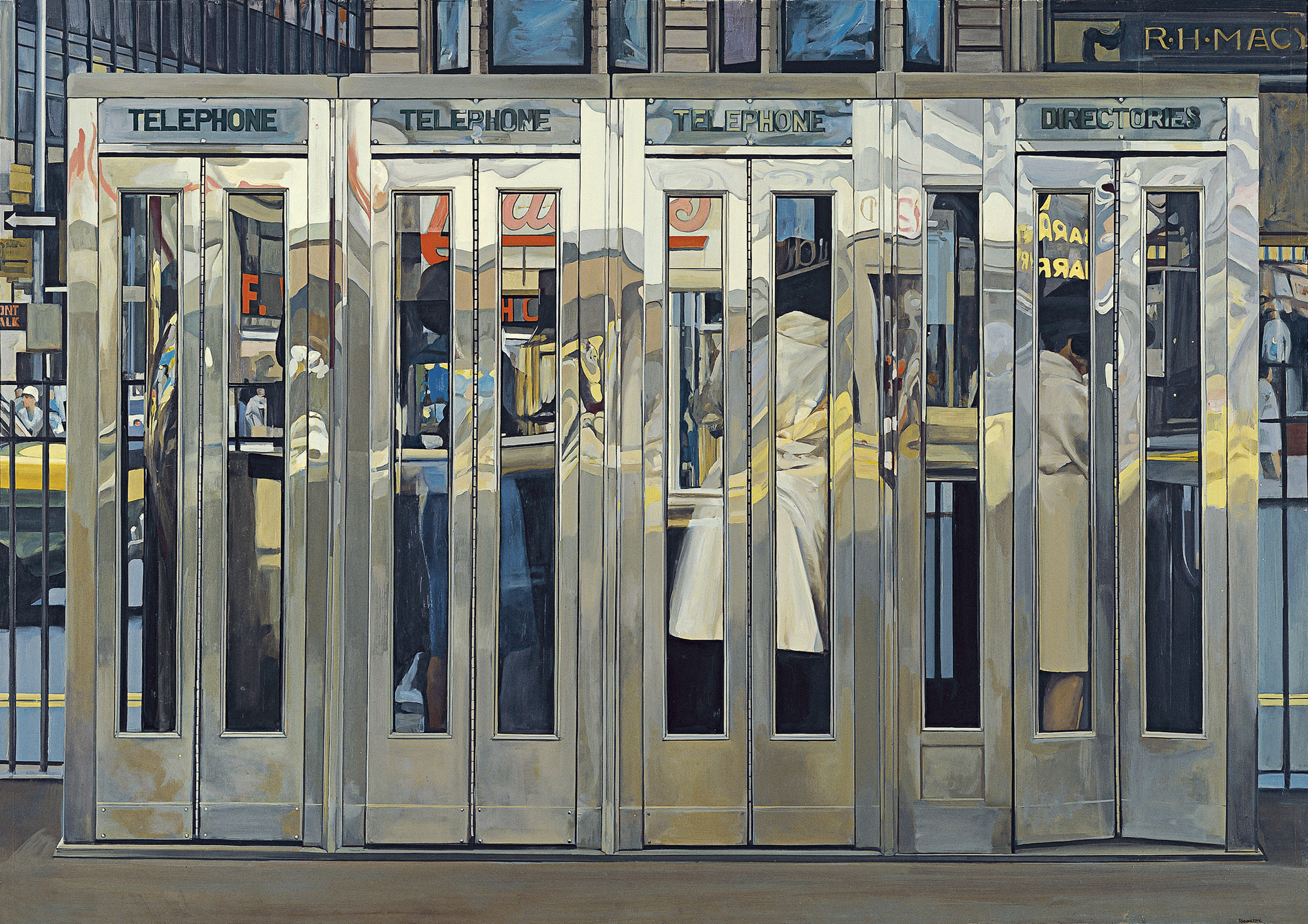
Richard Estes (American, b. 1932) Telephone Booths 1967
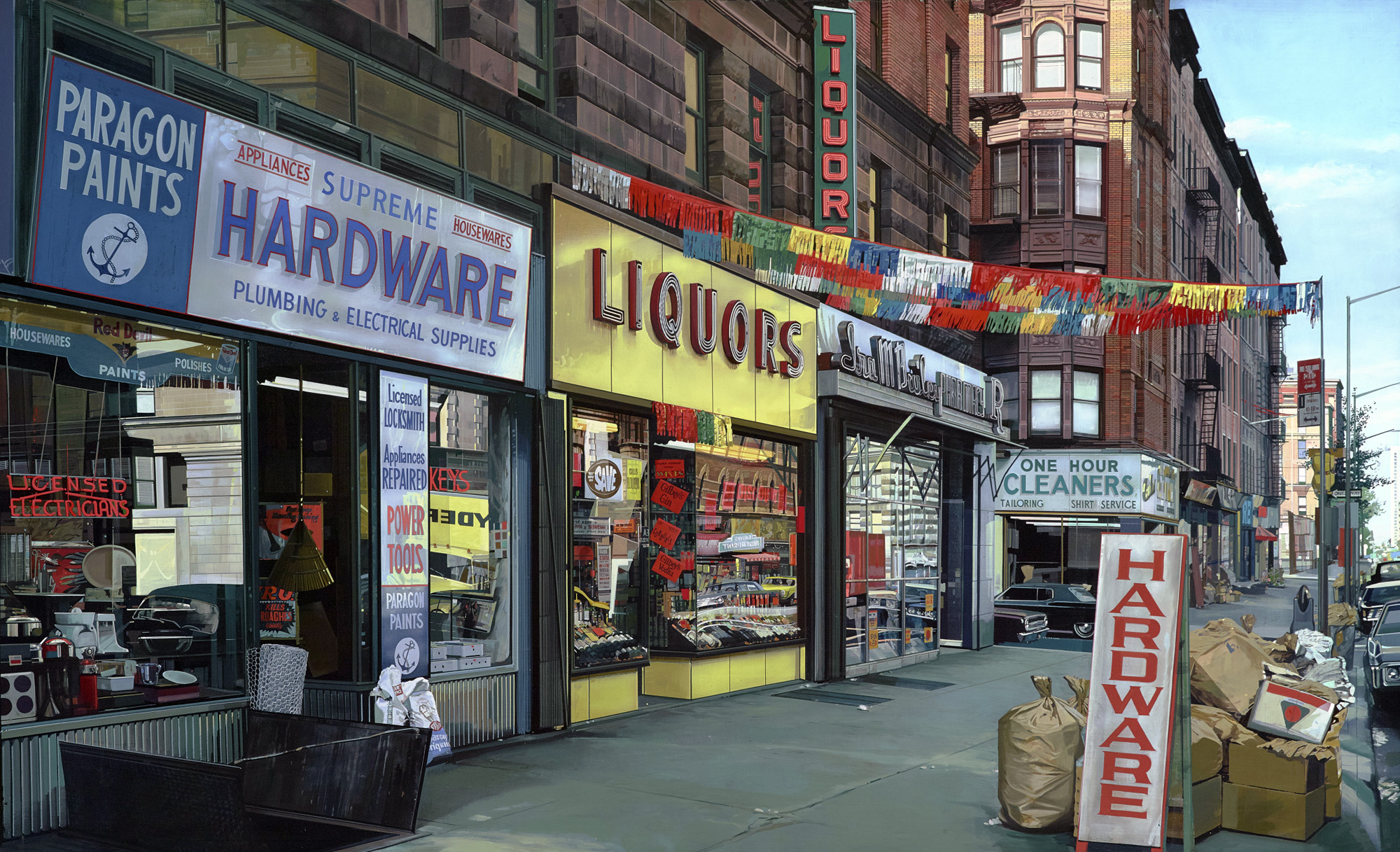
Richard Estes (American, b. 1932) Supreme Hardware 1974
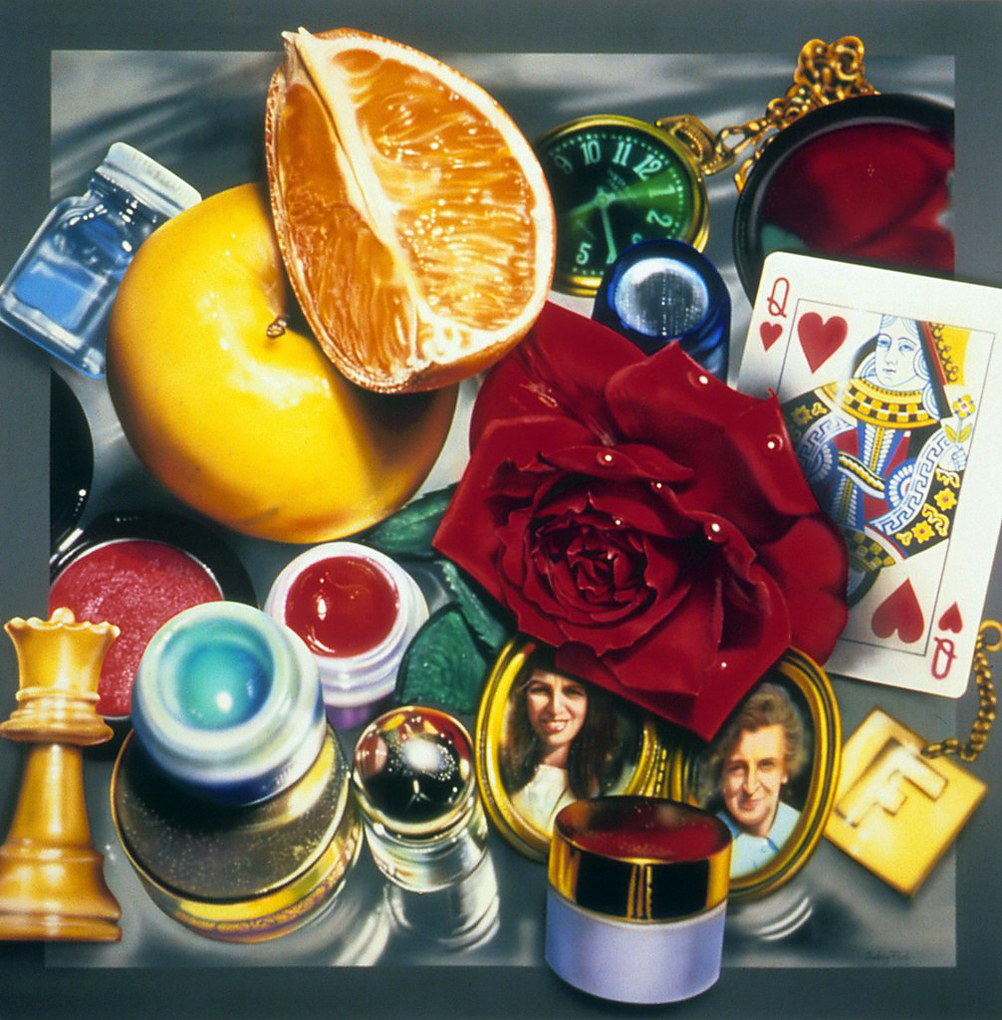
Audrey Flack (American, 1931-2024) Queen 1976
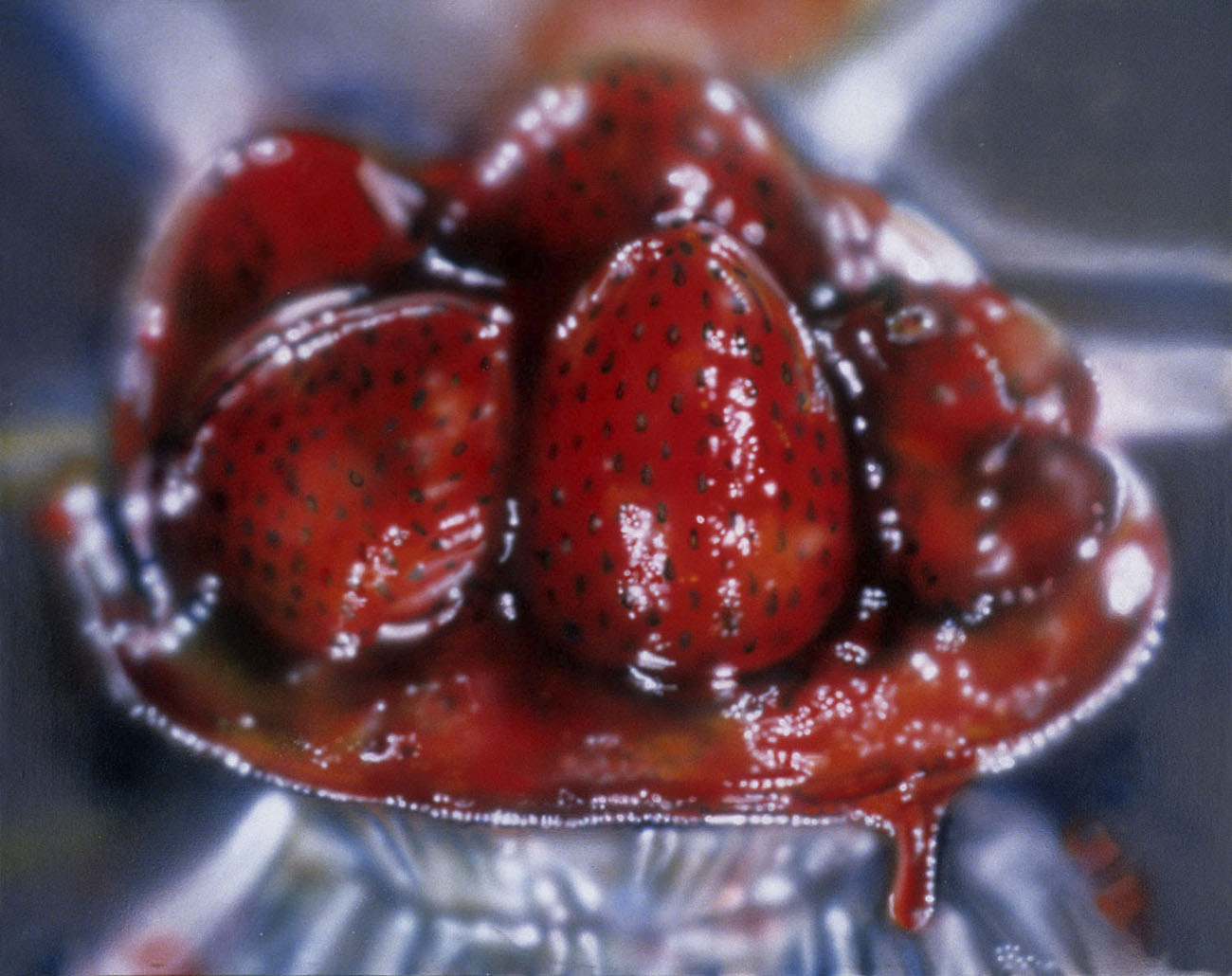
Audrey Flack (American, 1931-2024) Strawberry Tart 1974 Oil on canvas 24 x 30 inches
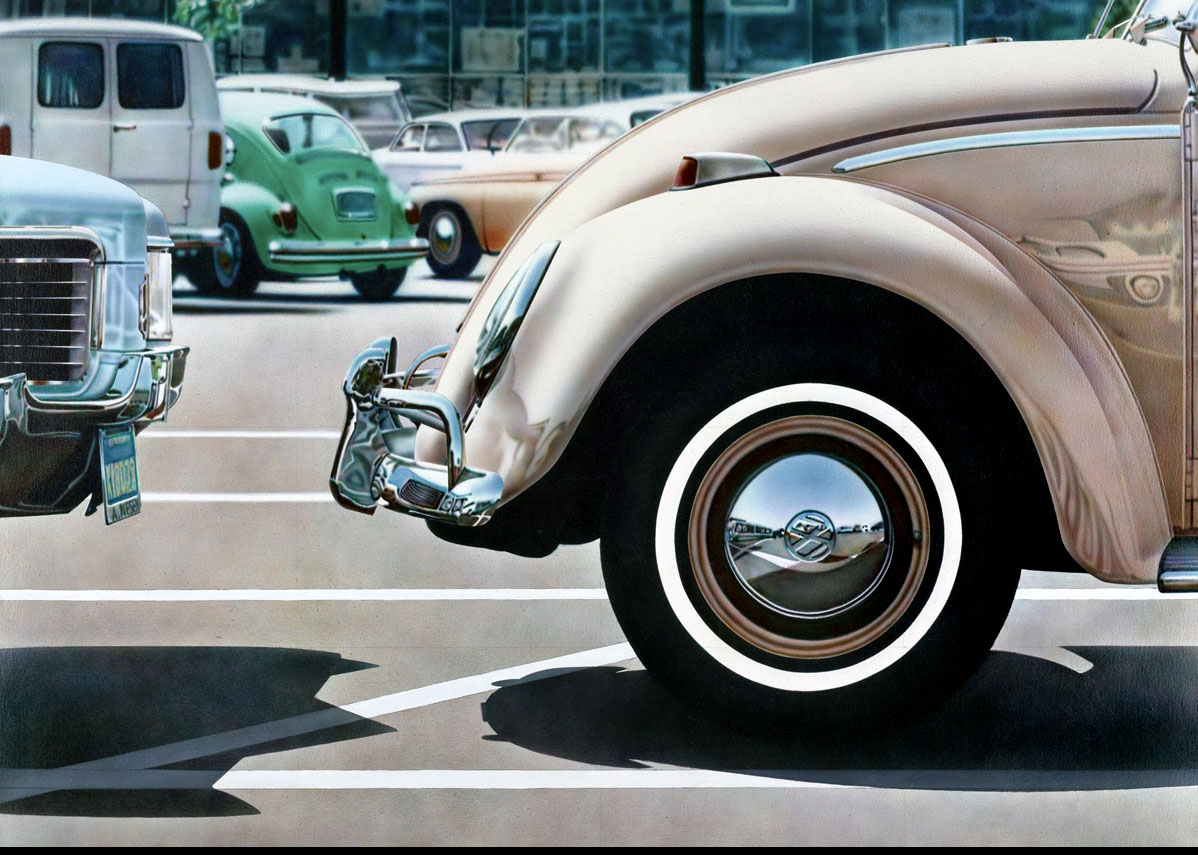
Don Eddy (American, b. 1944) Untitled 1971
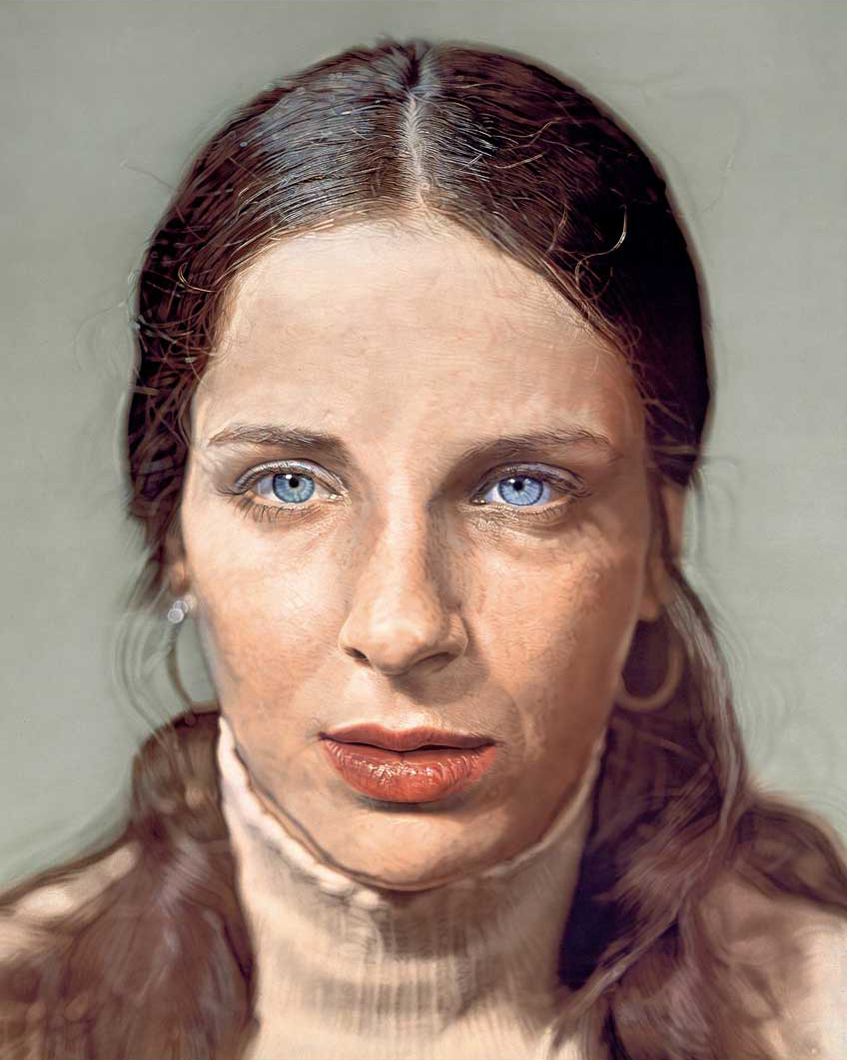
Chuck Close (American, 1940-2021) Leslie 1973
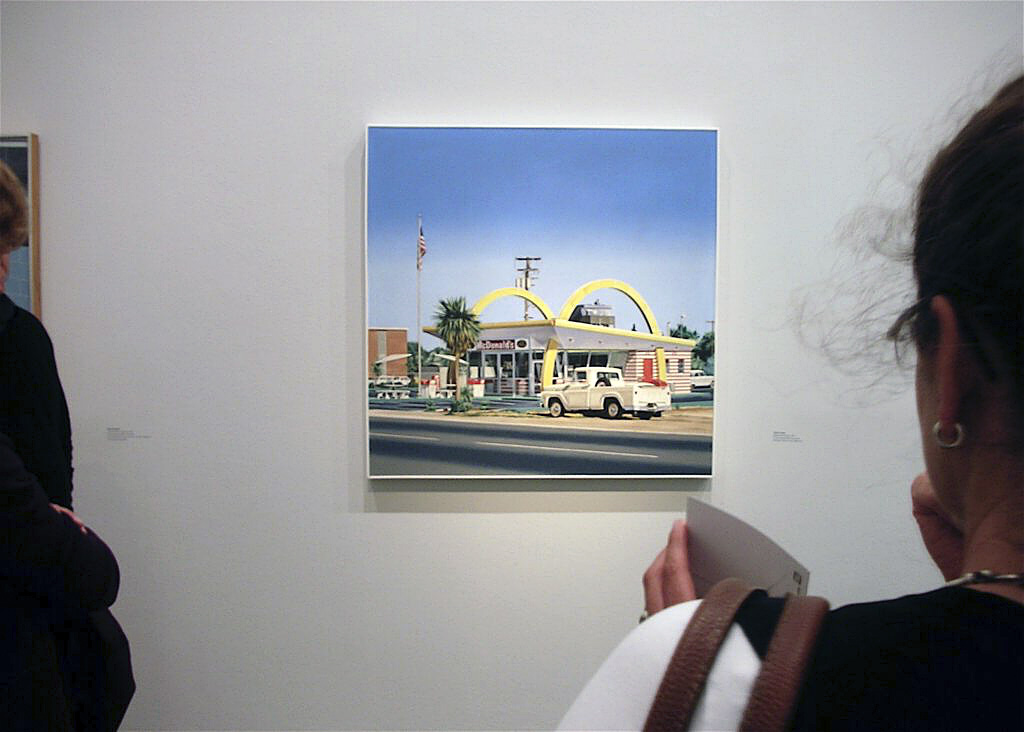
Ralph Goings (American, 1928-2016) McDonalds Pick Up (installation view) 1970 41 x 41 inches Oil on canvas Collection of Marilyn and Ivan Karp
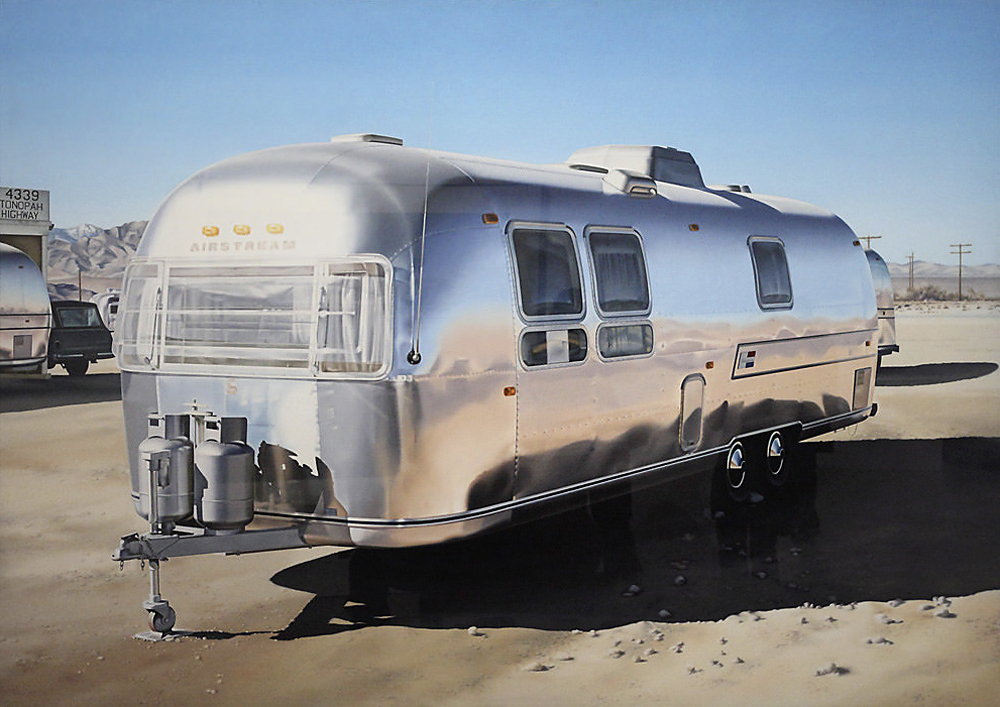
Ralph Goings (American, 1928-2016) Airstream 1970
Ralph Goings (American, 1928-2016) Dicks Union General 1971 Oil on canvas
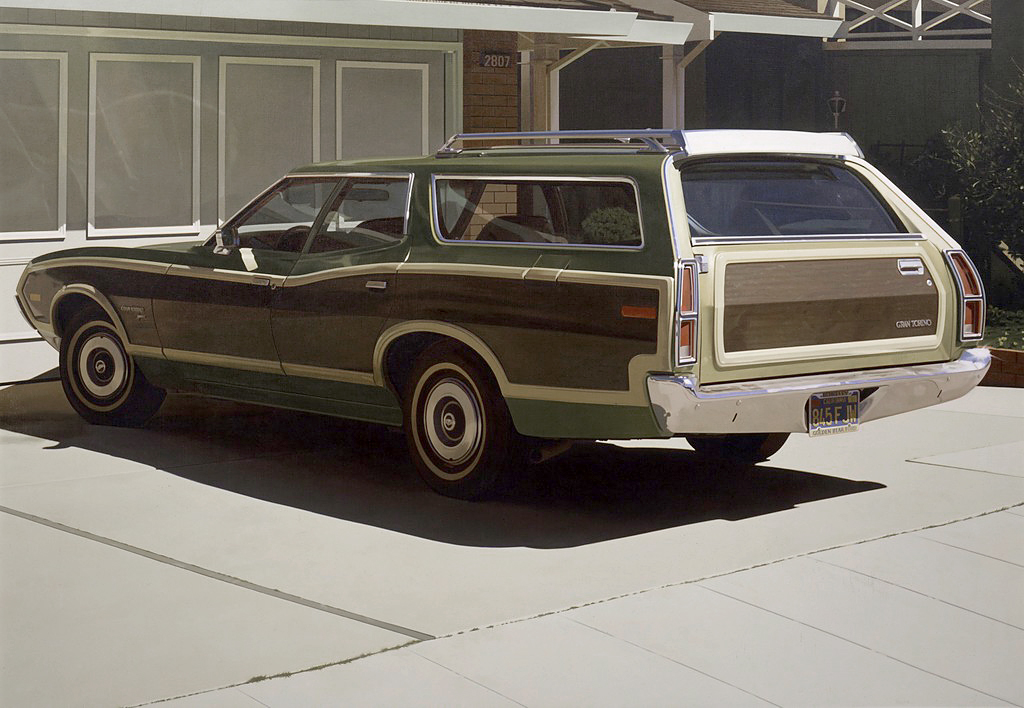
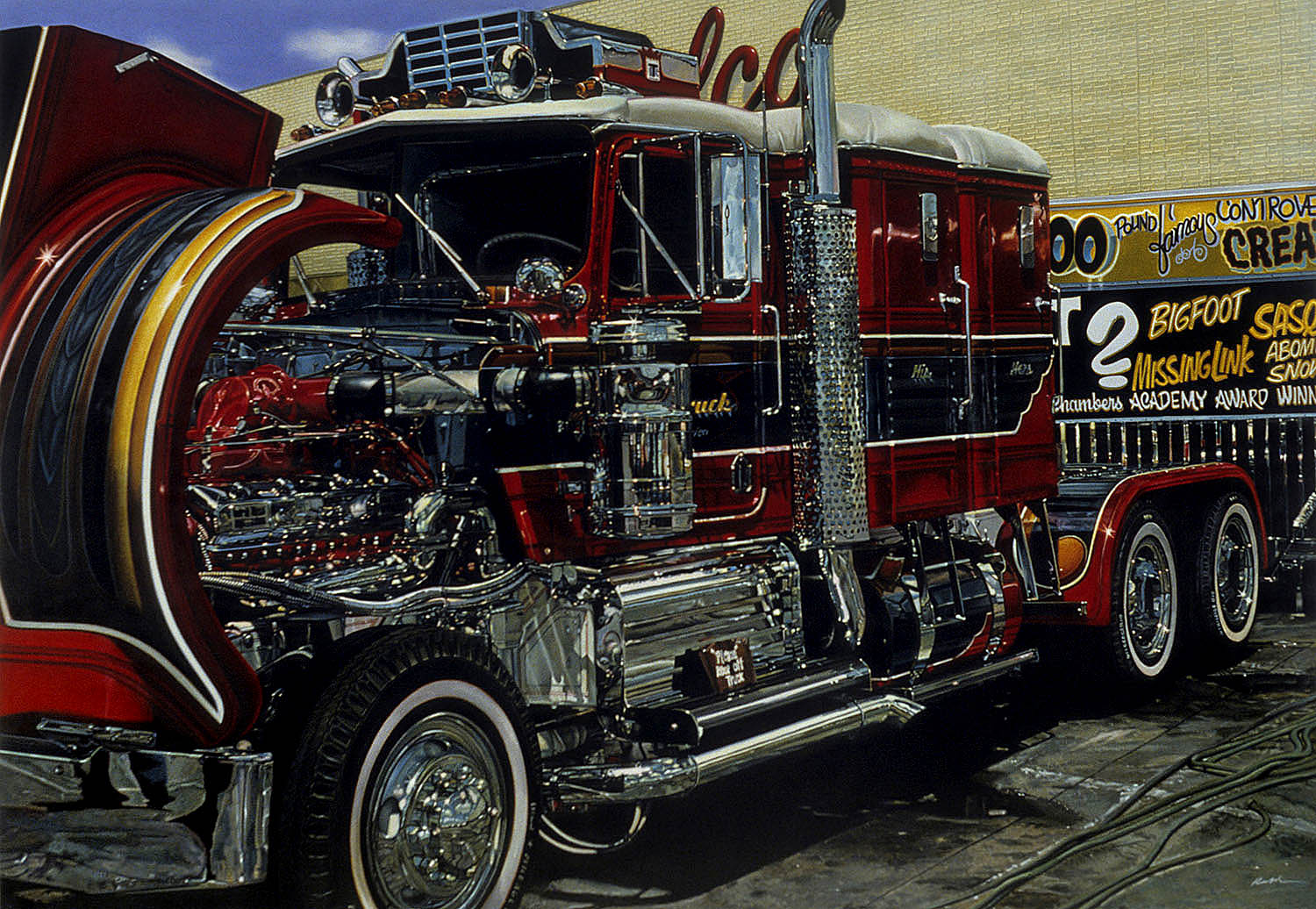
By the end of the 1960s, a number of young artists working in the United States had begun making large-scale realist paintings directly from photographs. With often meticulous detail, they portrayed the objects, places, and people that defined urban and suburban everyday life in America. In contrast to the Pop artists, they did not present their ubiquitous, often mundane, subject matter in a glamorised or ironic manner. They sought instead to achieve a great degree of objectivity and precision in the execution of their work in an effort to stay more or less faithful to the mechanically generated images that served as their source material. They developed various means of systematically translating photographic information onto canvas. In prioritising the way the camera sees over the way the eye sees, they underscored the complexity of the relationship between the reproduction and the reproduced as well as the impact of photography on the perception of both daily life and reality in general.
A number of terms were proposed in quick succession to describe this novel approach to painting, chief among them Super-Realism, Hyperrealism, and Photorealism. The artists identified as Photorealists neither formed a coherent group nor considered themselves to be part of a movement, and a number of them actively challenged their association with the label. Nevertheless, in the late 1960s and 1970s, the seventeen artists in Picturing America: Photorealism in the 1970s – Robert Bechtle, Charles Bell, Tom Blackwell, Chuck Close, Robert Cottingham, Don Eddy, Richard Estes, Audrey Flack, Franz Gertsch, Ralph Goings, Ron Kleemann, Richard McLean, Malcolm Morley, Stephen Posen, John Salt, Ben Schonzeit, and Paul Staiger – were exploring a related set of issues, methods, and subjects that led critics, curators, and art historians to both exhibit and write about their work as a coherent trend in contemporary art. Picturing America focuses on this formative, defining period in the history of Photorealism.
The exhibition includes thirty-one paintings, a number of them the most iconic and masterful works of 1967-1982, for example Richard Estes’s Telephone Booths (1967, above) and Chuck Close’s Leslie (1973, above). Picturing America is divided into four sections, three exploring key themes of Photorealist painting during the 1970s – Reflections on the City, Culture of Consumption, and American Life – and a fourth dedicated to a portfolio of ten lithographs made on the occasion of Documenta 5 in 1972, which featured the first major group showing of Photorealism.
Text from the Deutsche Guggenheim website
Picturing Americas – American Photorealism in the 70s
Vernissage video of “Picturing Americas”, an art exhibition about American Photorealism in the 1970s, presented in Berlin by Deutsche Guggenheim, a joint venture between Deutsche Bank and the Solomon R. Guggenheim Foundation in New York. The exhibition (March – May 2009) was the first major showing of American Photorealism in Germany since “documenta 5” in 1972.
The video includes interviews of Valerie Hillings, Assistant Curator, Solomon R. Guggenheim Museum, and interviews with the following artists: Ron Kleemann, Robert Bechtle, Tom Blackwell. You can also enjoy stills of selected pictures shown at the exhibition. Video courtesy of VernissageTV (VTV).
Text from the YouTube website
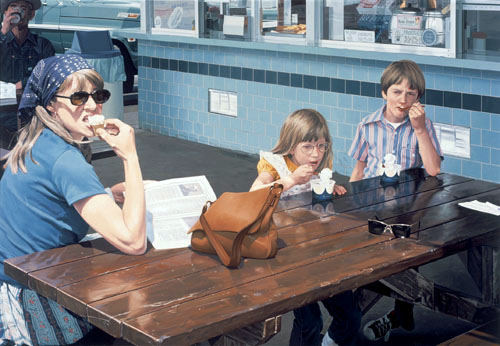
Robert Bechtle (American, 1932-2020) Foster’s Freeze, Escalon 1975
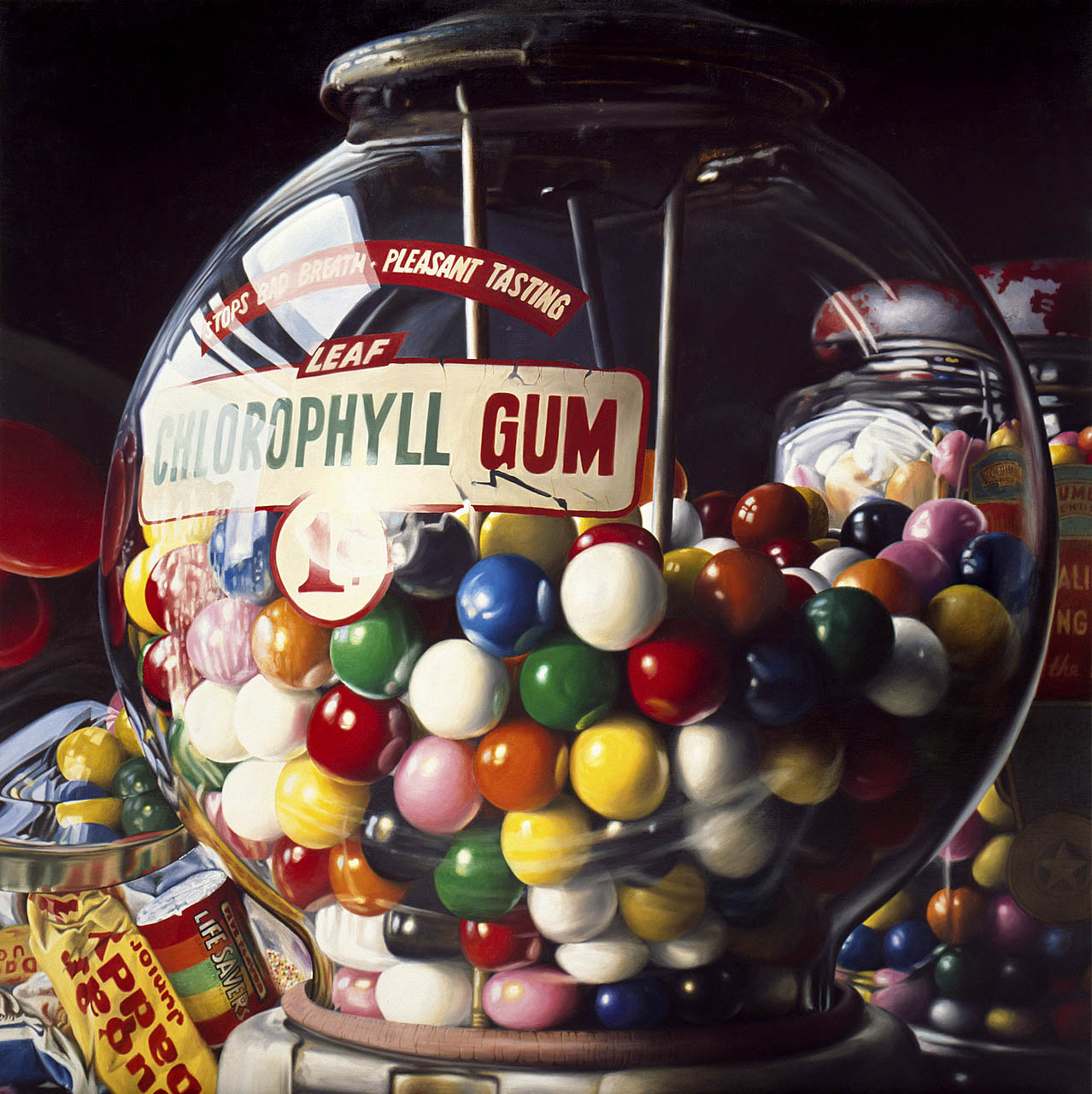
Charles Bell (American, 1935-1995) Gum Ball No. 10: “Sugar Daddy” 1975 Oil on canvas 66 x 66 inches
Charles Bell was born in 1935 in Tulsa, Oklahoma. Although Bell became interested in art at a young age, he never received formal training. In 1957, he completed a BBA at the University of Oklahoma, Norman, and did not decide to pursue an artistic career until the early 1960s after touring in the U.S. Navy. At this point in time, he was working in the San Francisco Bay Area, where he was drawn to the vibrantly colored paintings of Richard Diebenkorn and Wayne Thiebaud. Other artistic influences Bell has cited range from Pop art to the realisms of Jan Vermeer and Salvador Dalí. It was through the painter Donald Timothy Flores, however, that Bell learned technique, most notably trompe l’oeil, while working in the former’s San Francisco studio. Under Flores, Bell painted mostly small-scale landscapes and still lifes, which earned him the Society of Western Artists Award in 1968.
In 1967 Bell relocated to New York, where he set up his first studio. Two years later he began showing at New York’s Meisel Gallery run by Louis K. Meisel, who popularized the term “Photorealism” and helped establish the style as a movement. Bell embraced a photo-based technique in his work not only for the way it renders imperceptible details visible, but also for how he saw the close-up photographic view as emblematic of contemporary visual experience steeped in a daily bombardment of media imagery. Bell carried out his Photorealist works by photographing his subjects in still-life compositions and painting from his image.
Although Photorealism emerged as a national phenomenon, certain general qualities distinguish the coastal approaches to the movement. While the majority of the West Coast Photorealists preferred landscapes, particularly images of cars, trucks, and homes within an overall landscape, Bell, like many of the New York–based Photorealists, focused on still life. Bell transformed everyday subject matter by enlarging ordinary objects like Raggedy Ann dolls and gumball machines to an unusually grand scale. His subjects are typically familiar objects associated with childhood, consumer culture, and play, and thus capable of resonating with a broad audience. By focusing on larger-than-life subjects, Bell’s paintings also deny narrative readings of his work. He has described his approach to selecting subject matter as more of an emotional than intellectual process. The hyperrealistic precision of his technique, combined with an exaggerated scale, produces a sensation that oscillates between familiarity and unfamiliarity, thus engaging the viewer sensually and emotionally. The exploration of light remains a persistent theme throughout Bell’s oeuvre, from his earliest treatments of light on mostly opaque surfaces to his interest in reflected and refracted light on transparent materials, as seen in the gumball machine series (1971-77). These investigations gave way to his subsequent interest in objects illuminated from within, such as pinball machines, which he began in 1977.
Curator: Manuela Mena, co-curator of the exhibition at the Prado
Francis Bacon (British, 1909-1992) Triptych inspired by T.S. Eliot’s ‘Sweeney Agonistes’ 1967 Oil on canvas 198 x 147.5cm (each) Washington, D.C. Hirshhorn Museum and Sculpture Garden, Smithsonian Institution. Gift of the Joseph H. Hirshhorn Foundation, 1972
Looks like an amazing exhibition of Francis Bacon’s work, one of my favourite artists – I wish I could see it!
Many thankx to the Museo Nacional del Prado for allowing me to publish the art work in the posting. Please click on the photographs for a larger version of the image.
The exhibition is constructed in different sections:
~ Animal ~ Zone ~ Apprehension ~ Crucifixion ~ Crisis ~ Archive ~ Portrait ~ Memorial ~ Epic ~ Late
Bacon’s work demonstrates marked similarities to that of many of the Spanish artists he admired. (Manuela Mena, co-curator of the exhibition at the Prado, has written an excellent essay on this topic that can be found in the exhibition’s catalog.) The retrospective at the Prado provides a rare opportunity to compare Bacon to some of the Spanish masters that influenced him.
Start by meandering through the vast Bacon exhibition. Spread between two floors of the new wing of the Prado, the exhibition has brought together Bacon’s most important works from nearly his entire artistic production. It begins with the work that put Bacon on the map, “Three Studies for Figures at the Foot of a Crucifixion” (1944), and follows his work through the interpretations of Velázquez, crucifixion triptychs, his unique portraits and the late works through the years shortly before his death.
Text from the Prado website
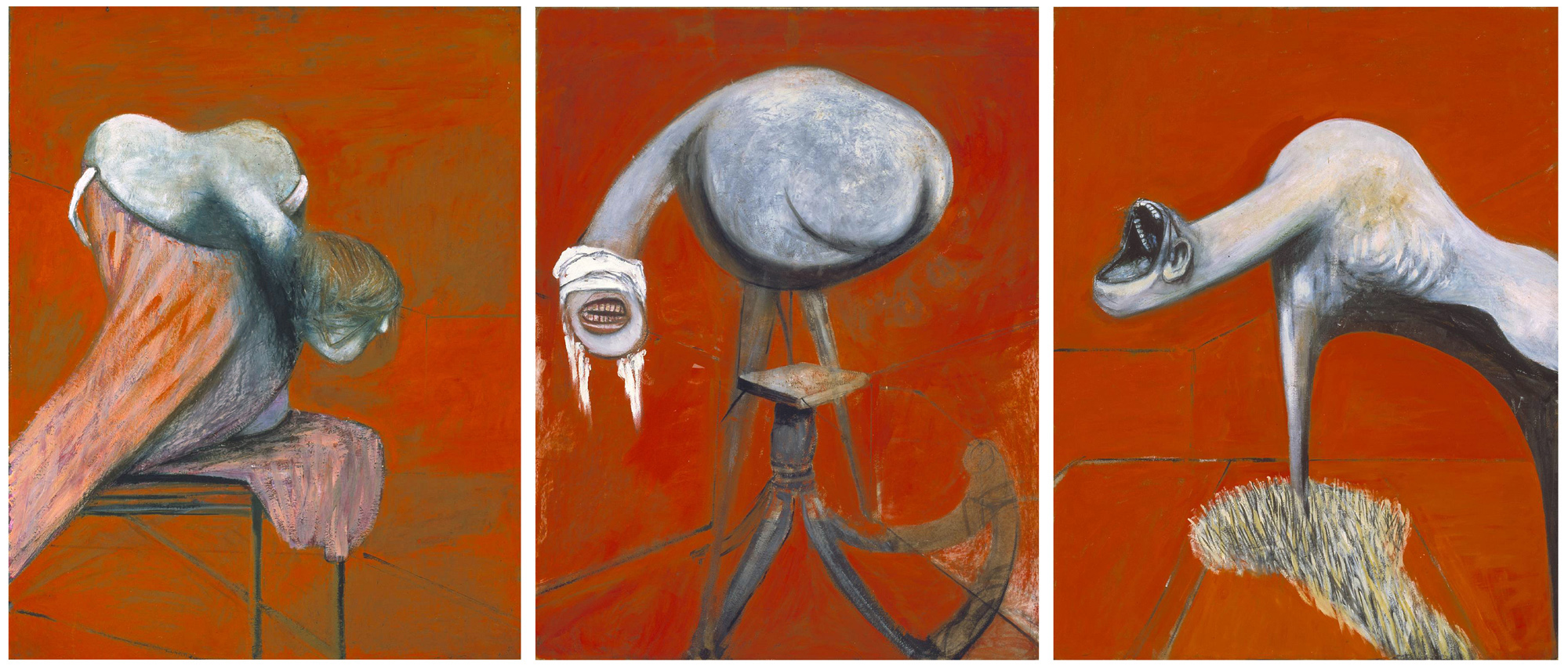
Francis Bacon (British, 1909-1992) Three Studies for Figures at the Base of a Crucifixion c. 1944 Oil on board 94 x 73.7cm London, Tate, presented by Eric Hall 1953
Animal
A philosophical attitude to human nature first emerges in Francis Bacon’s works of the 1940s. They reflect his belief that, without God, humans are subject to the same natural urges of violence, lust and fear as any other animal. He showed Figure in a Landscape and Three Studies for Figures at the Base of a Crucifixion in April 1945, and exhibited consistently thereafter. The bestial depiction of the human figure was combined with specific references to recent history and especially the devastating events of the Second World War. Bacon often drew his inspiration from reproductions, acquiring a large collection of books, catalogues and magazines. He repeatedly studied key images in order to probe beneath the surface appearance captured in photographs. Early concerns that would persist throughout his work include the male nude, which reveals the frailty of the human figure, and the scream or cry that expresses repressed and violent anxieties. These works are among the first in which he sought to balance psychological insights with the physical identity of flesh and paint.
Francis Bacon (British, 1909-1992) Study after Velázquez’s Portrait of Pope Innocent X 1953 Oil on canvas 153 x 118cm Des Moines, Nathan Emory Coffin Collection of the Des Moines Arts Center, purchased with funds from the Coffin Fine Arts Trust
Zone
In his paintings from the early 1950s, Bacon engaged in complex experiments with pictorial space. He started to depict specific details in the backgrounds of these works and created a nuanced interaction between subject and setting. Figures are boxed into cage-like structures, delineated ‘space-frames’ and hexagonal ground planes, confining them within a tense psychological zone. In 1952 he described this as “opening up areas of feeling rather than merely an illustration of an object”. Through his technique of ‘shuttering’ with vertical lines of paint that merge the foreground and background, Bacon held the figure and the setting together within the picture surface, with neither taking precedence in what he called “an attempt to lift the image outside of its natural environment”.
A theme that emerged in the 1950s was the extended series of variants of Velázquez’s Portrait of Pope Innocent X, 1650 (Rome, Galleria Doria Pamphilj), a work Bacon knew only from illustrations. He used this source to expose the insecurities of the powerful – represented most often in the scream of the caged figure. Through the open mouth Bacon exposed the tension between the interior space of the body and the spaces of its location, which is explored more explicitly in the vulnerability of the ape-like nudes.
Francis Bacon (British, 1909-1992) Chimpanzee 1955 Oil on canvas 152.5 x 117cm Stuttgart, Staatsgalerie
Apprehension
Implicit throughout Bacon’s work of the mid 1950s is a sense of dread pervading the brutality of everyday life. Not only a result of Cold War anxiety, this seems to have reflected a sense of menace at a personal level emanating from Bacon’s chaotic affair with Peter Lacy (who was prone to drunken violence) and the wider pressures associated with the continuing illegality of homosexuality. The Man in Blue series captures this atmosphere, concentrating on a single anonymous male figure in a dark suit sitting at a table or bar counter on a deep blue-black ground. Within their simple painted frames, these awkwardly posed figures appear pathetically isolated.
Bacon’s interest in situations that combine banality with acute apprehension was also evident in other contemporary works. From figures of anxious authority, his popes took on malevolent attributes and physical distortions that were directly echoed in the paintings of animals, whose actions are also both sinister and undignified. Some of these images derived from Bacon’s close scrutiny of the sequential photographs of animals and humans taken by Eadweard Muybridge (1830-1904), which he called “a dictionary” of the body in motion.
Francis Bacon (British, 1909-1992) Three Studies for a Crucifixion 1962 Oil on canvas 198.2 x 144.8cm New York, Solomon R. Guggenheim Museum
Crucifixion
Bacon made paintings related to the Crucifixion at pivotal moments in his career, which is why these key works are gathered here. The paradox of an atheist choosing a subject laden with Christian significance was not lost on Bacon, but he claimed, “as a non-believer, it was just an act of man’s behaviour”. Here the instincts of brutality and fear combine with a deep fascination with the ritual of sacrifice. Bacon had already made a very individual crucifixion image in 1933 before returning to the subject with his break-through triptych Three Studies for Figures at the Base of a Crucifixion in 1944. This is a key precursor to later themes and compositions, containing the bestial distortion of human figures within the triptych format. These monstrous creatures displace the traditional saints and Bacon later related them to the Eumenides – the vengeful furies in Greek mythology. In resuming the theme in the 1960s, especially in 1962 as the culmination of his first Tate exhibition, Bacon used references to Cimabue’s 1272-1274 Crucifixion to introduce a more explicitly violent vision. Speaking after completing the third triptych in 1965 he simply stated: “Well, of course, we are meat, we are potential carcasses”.
Francis Bacon (British, 1909-1992) Paralytic Child Walking on All Fours (from Muybridge) 1961 Oil on canvas 198 x 142cm The Hague, Collection Gemeentemuseum Den Haag
Crisis
Between 1956 and 1961, Bacon travelled widely. He spent time in places marginal to the art world, in Monaco, the South of France and Africa, and particularly with Peter Lacy in the ex-patriot community in Tangier. In this rather unsettled context, he explored new methods of production, shifting to thicker paint, violently applied and so strong in colour as to indicate an engagement with the light of North Africa. This was most extreme in his series based on a self-portrait of Van Gogh, The Painter on the Road to Tarascon (1888, destroyed), which became an emblem of the modern predicament. Despite initial acclaim, Bacon’s Van Gogh works were soon criticised for their “reckless energy” and came to be viewed as an aberration. They can now be recognised as pivotal to Bacon’s further development, however, and allow glimpses into his search for new ways of working. His innovations were perhaps in response to American Abstract Expressionism, of which he was publicly critical. Although he eventually returned to a more controlled approach to painting, the introduction of chance and the new vibrancy of colour at this moment would remain through out his career.
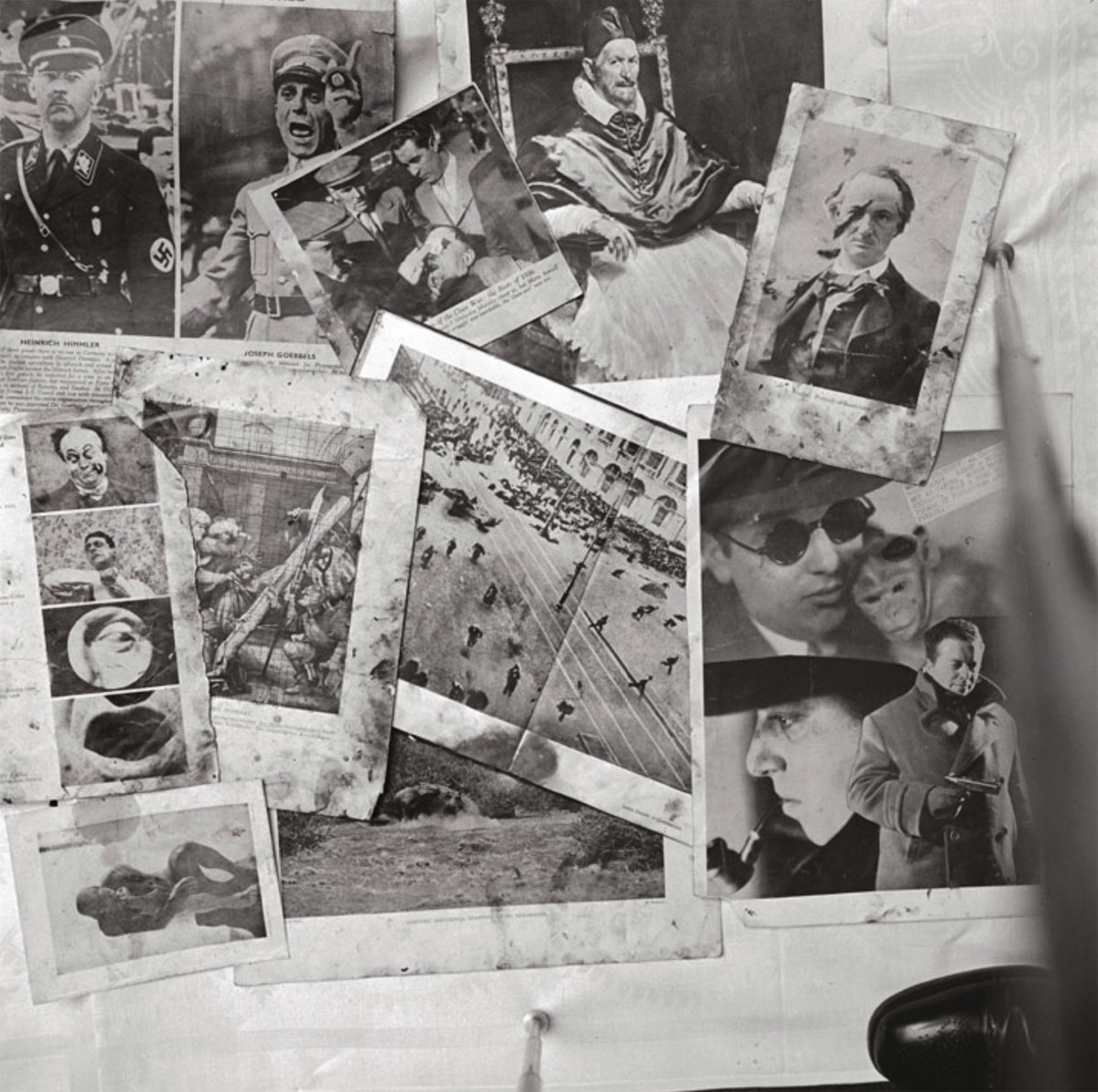
The posthumous investigation of Bacon’s studio confirmed the extent to which he used and manipulated photographic imagery. This practice was already known from montages recorded in 1950 by the critic Sam Hunter. Often united by a theme of violence, the material ranges between images of conflict, big game, athletes, film stills and works of art.
An important revelation that followed the artist’s death was the discovery of lists of potential subjects and preparatory drawings, which Bacon had denied making. Throughout his life, he asserted the spontaneous nature of his work, but these materials reveal that chance was underpinned by planning.
Photography offered Bacon a dictionary of poses. Though he most frequently referred to Eadweard Muybridge’s (1830-1904) survey of human and animal locomotion, images of which he combined with the figures of Michelangelo, he remained alert to photographs of the body in a variety of positions.
A further extension of Bacon’s preparatory practices can be seen in his commissioning of photographs of his circle of friends from the photographer John Deakin (1912-1972). The results – together with self-portraits, photo booth strips, and his own photographs – became important prompts in his shift from generic representations of the human body to portrayals of specific individuals.
A matrix of images
Bacon’s use of photographic sources has been known since 1950 when the critic Sam Hunter took three photographs of material he had selected from a table in Bacon’s studio in Cromwell Place, South Kensington. Hunter observed that the diverse imagery was linked by violence, and this fascination continued throughout Bacon’s life. Images of Nazis and the North African wars of the 1950s were prominent in his large collection of sources. Films stills and reproductions of works of art, including Bacon’s own, were also common. The dismantling of Bacon’s later studio, nearby at Reece Mews, after his death confirmed that the amassing of photographic material had remained an obsession. While some images were used to generate paintings, he also seems to have collected such an archive for its own sake.
The mediated image
From the 1960s, Bacon’s accumulation of chance images began to include a more deliberate strategy of using photographs of his close circle. They became key images for the development of the portraits that dominated his paintings at this time. Snap shots and photo booth strips were augmented by the unflinching photographs taken by his friend John Deakin. Bacon specifically commissioned some of these from Deakin as records of those close to him – notably his partner from 1962, George Dyer – and they served as sources for likenesses and for poses for the rest of his career.
The Physical Body
Bacon drew more from Eadweard Muybridge’s sequential photographs of human and animal locomotion than from any other source. These isolated the naked figure in a way he clearly found stimulating. He also, however, spoke of projecting on to them Michelangelo’s figures which for him had more “ampleness” and “grandeur of form”.
His fascination in photography’s freezing of the body in motion led him to collect sports photographs, particularly boxing, cricket and bullfighting. It was not just movement but the physicality of the body that Bacon scrutinised, using found images to provoke new ways of picturing its strength and vulnerability.
Francis Bacon (British, 1909-1992) Portrait of Isabel Rawsthorne Standing in a Street in Soho 1967 Oil on canvas 198 x 147.5cm Berlin, Staatliche Museen zu Berlin, Nationalgalerie
Portrait
During the 1960s, the larger part of Bacon’s work shifted focus to portraits and paintings of his close friends. These works centre on two broad concerns: the portrayal of the human condition and the struggle to reinvent portraiture. Bacon drew upon the lessons of Van Gogh and Velázquez, but attempted to rework their projects for a post-photographic world. His approach was to distort appearance in order to reach a deeper truth about his subjects. To this end, Bacon’s models can be seen performing different roles. In the Lying Figures series, Henrietta Moraes is naked and exposed. This unprecedented raw sexuality reinforces Bacon’s understanding of the human body simply as meat. By contrast Isabel Rawsthorne, a fellow painter, always appears in control of how she is presented. With a mixture of contempt and affection, Bacon depicted George Dyer, his lover and most frequent model, as fragile and pathetic. This is especially evident in Dyer’s first appearance in Bacon’s work, in Three Figures in a Room, in which he represents the absurdities, indignities and pathos of human existence. Everyday objects occasionally feature in these works, hollow props for lonely individuals which reinforce the sense of isolation that Bacon associated with the human condition.
Francis Bacon (British 1909-1992) Triptych in Memory of George Dyer 1971 Oil on canvas
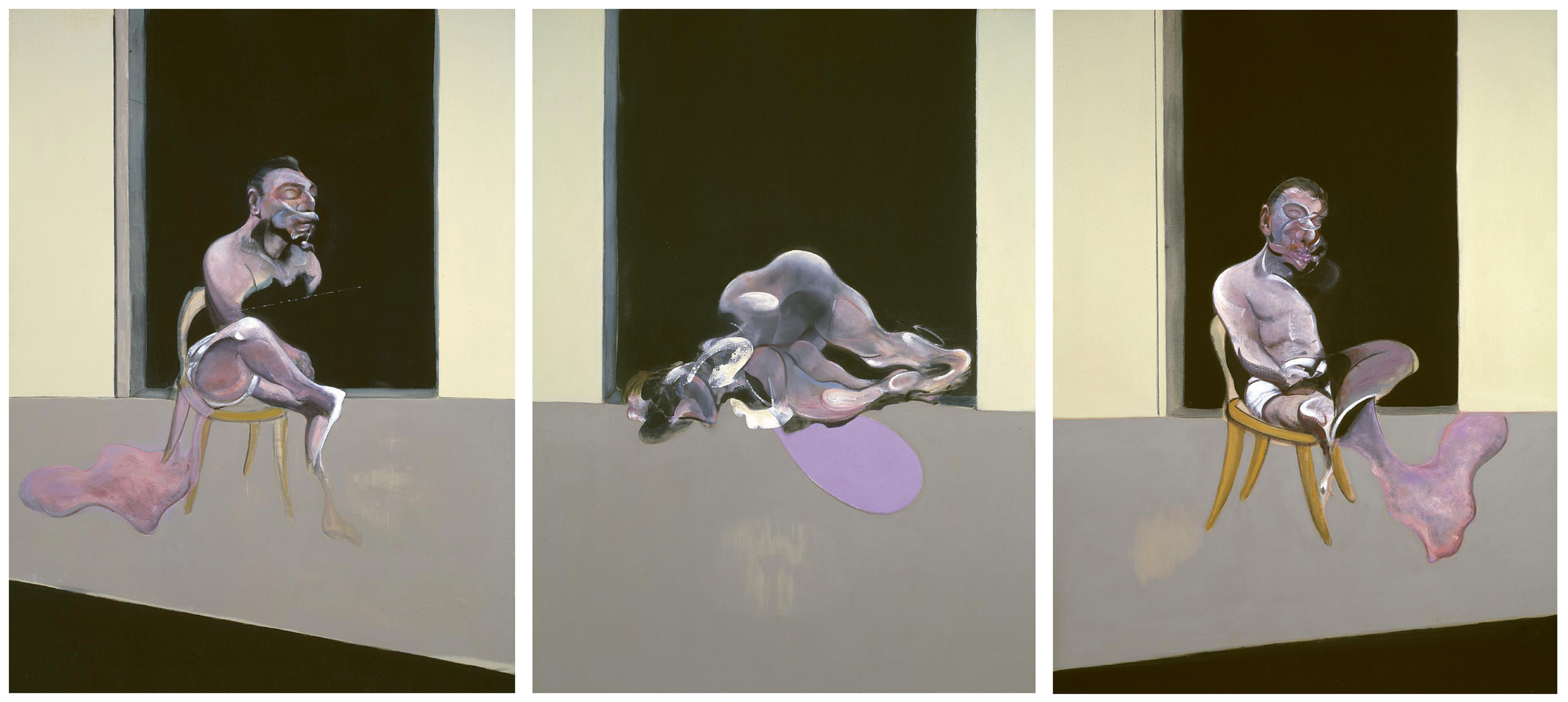
Francis Bacon (British, 1909-1992) Triptych – August 1972 1972 Oil on canvas 198 x 147.5cm London, Tate
Memorial
This room is dedicated to George Dyer who was Bacon’s most important and constant companion and model from the autumn of 1963. He committed suicide on 24 October 1971, two days before the opening of Bacon’s major exhibition at the Grand Palais in Paris. Influenced by loss and guilt, the painter made a number of pictures in memorial to Dyer. From this period onwards the large-scale triptych was his established means for major statements, having the advantage of simultaneously isolating and juxtaposing the participating figures, as well as guarding against narrative qualities that Bacon strove to avoid. But while evading narrative, Bacon drew more than ever from literary imagery; the first of the sequence, Triptych In Memory of George Dyer 1971, refers to a specific section of T.S. Eliot’s The Waste Land (1922). In addition to his own memory, for Triptych – August 1972 Bacon relied on photographs, taken by John Deakin, of Dyer in various poses on a chair. He confined his dense and energetic application of paint to the figures in these works. The dark openings consciously evoke the abyss of mortality that would become a recurring concern in Bacon’s later works.
Francis Bacon (British, 1909-1992) Triptych 1987 Oil on canvas 198 x 147.5cm London, The Estate of Francis Bacon, courtesy Faggionato Fine Art
Epic
References to poetry and drama became a central element in Bacon’s work from the second half of the 1960s. Alongside images of friends and single figures (often self-portraits), he produced a series of grand works that identified with great literature. Imbued with the inevitability and constant presence of death, the poetry of T.S. Eliot was a particular source of inspiration. The sentiments of the poet’s character Sweeney could be said to echo the painter’s perspective on life:
Birth, and copulation, and death.
That’s all the facts when you come to
brass tacks:
Birth, and copulation, and death.
The works in this room refer to and derive from literature. Some make direct references in their titles, others depict, sometimes abstractly, a certain scene or atmosphere within the narratives themselves. Bacon repeatedly stated that none of his paintings were intended as narratives, so rather than illustrations, these works should perhaps be understood as evoking the experience of reading of Eliot’s poetry or Aeschylus’s tragedies: their violence, threat or erotic charge. Thus, of the triptych created after reading Aeschylus, Bacon explained “I tried to create images of the sensations that some of the episodes created inside me”.
Francis Bacon (British, 1909-1992) Portrait of John Edwards 1988 Oil on canvas 198 x 147.5cm The Estate of Francis Bacon, courtesy of Faggionato Fine Arts, London, and Tony Shafrazi Gallery, New York
Late
When Bacon turned seventy in 1979, more than a decade of work lay ahead of him. Neither his legendarily hedonistic lifestyle nor his work pattern seemed to age him, but he was continually facing up to mortality through the deaths of those around him. This unswerving confrontation, however mitigated by youthful companions such as John Edwards, became the great theme of his late style. Constantly stimulated by new source material – for example the photographs and the poetry of Federico García Lorca which triggered his bullfight paintings – he was able to adapt them to his abiding concerns with the vulnerability of flesh. Exploring new techniques he also extended his fascination with how appropriate oil paint is for rendering the human body’s sensuality and sensitivity. A certain despairing energy may also be felt in the forceful throwing of paint that dominates some of these final works: the controlled chance as a defiant gesture. Ultimately, and appropriately, Bacon’s last triptych of 1991 returns to the key image of sexual struggle that had frequently recurred in his work. He faced death with a defiant concentration on the exquisiteness of the lived moment.
Francis Bacon (British, 1909-1992) Three Studies for Self-Portrait 1979-1980 Oil on canvas 37.5 x 31.8cm Nueva York, The Metropolitan Museum of Art, Jacques and Natasha Gelman collection, 1998
Francis Bacon
Francis Bacon is internationally acknowledged as among the most powerful painters of the twentieth century. His vision of the world was unflinching and entirely individual, encompassing images of sensuality and brutality, both immediate and timeless. When he first emerged to public recognition, in the aftermath of the Second World War, his paintings were greeted with horror. Shock has since been joined by a wide appreciation of Bacon’s ability to expose humanity’s frailties and drives.
This major retrospective gathers many of his most remarkable paintings and is arranged broadly chronologically. Bacon’s vision of the world has had a profound impact. It is born of a direct engagement that his paintings demand of each of us, so that, as he famously claimed, the “paint comes across directly onto the nervous system”.
As an atheist, Bacon sought to express what it was to live in a world without God or afterlife. By setting sensual abandon and physical compulsion against hopelessness and irrationality, he showed the human as simply another animal. As a response to the challenge that photography posed for painting, he developed a unique realism which could convey more about the state of existence than photography’s representation of the perceived world. In an era dominated by abstract art, he amassed and drew upon a vast array of visual imagery, including past art, photography and film. These artistic and philosophical concerns run like a spine through the present exhibition.
Museo Nacional Del Prado Paseo del Prado, s/n, 28014 Madrid, Spain
Marcus Bunyan (Australian born England, b. 1958) Oakland, 7-’51 from the series The Shape of Dreams (restored) 2009
“Fragments of harmonic lines assemble and collapse as the meaning of each interval must be continually revised in light of the unfolding precession of further terms in an ultimately unsustainable syntax. The mind’s ear tries to remember the sum of passing intervals, but without the ability to incorporate them into larger identifiable units each note inevitably lapses back into silence, surrendered to the presence of the currently sounding tone, itself soon to give way to another newly isolated note in its turn.”
Craig Dworkin1
The Passing of Memory
Thinking about this photograph
I bought an album on Ebay that contained an anonymous aviator with snapshots of his life: photographs of him in Oakland, California, Cologne in Germany and flying out of Italy – photos of his buddies and the work they did, the places they visited, the fun they had.
This one photograph has haunted me more than the rest.
Who was he? What was his life like? Do he get married and have children? Is he still alive?
When scanned the image was so dirty, so degraded, that I spent 7 weeks of my life cleaning and restoring the photograph working all hours of the day and night. I was obsessive almost to the point of obstinacy. Many times I nearly gave up as I thought the task impossible – thousands of dots and hairs inhabited the surface of the image and, surely, it was just another photograph one of millions that circle the world. Why expend so much energy just to resurrect this one particular image?
Some things that can be said about this photograph
It is small measuring only 9cm high by 7.5 cm wide
It is printed on cheap glossy photographic paper which now has a slight yellow tinge to it.
The image is creased at top left.
The back is annotated ‘Oakland, 7-’51’
The dark roundel with the wing on the side of the aircraft has faint text that spells out the words ‘AERO ACE’.
There is no engine in the aircraft and it looks from the parts lying on the ground that the aircraft is being broken up or used for spares.
The man is wearing work overalls with unidentifiable insignia on them, a worker on the aircraft being dismantled or just a fitter on the base.
Someone standing on the ground has obviously called out the man’s name and he has turned around in response to the call and lent forward and put out his hand in greeting – a beautiful spontaneous response – and the photograph has been taken.
Some other things that can be said about this photograph, in passing
The sun splashes the man’s face. He smiles at the camera.
His arm rests gently on the metal of the aircraft, shielded from the sun.
Perhaps he wears a ring on his fifth finger.
He is blind.
This photograph is an individual, isolated note in the fabric of time. It could easily pass into silence as memory and image fade from view. Memories of the individual form the basis for remembering and photographs act as an aide-memoire both for individual memory and the collective memory that flows from individual memory. Memory is always and only partial and fragmentary – who is remembering, what are they remembering, when do they remember, what prompts them to remember and how these memories are incorporated into the collective memory, an always mediated phenomenon that manifests itself in the actions and statements of individuals, are important questions.
Images are able to trigger memories and emotional responses to a particular time and place, but since this photograph has no personal significance what is going on here? Why did I cry when I was restoring it? What emotional association was happening inside me?
“To remember is always to give a reading of the past, a reading which requires linguistic skills derived from the traditions of explanation and story-telling within a culture and which [presents] issues in a narrative that owes its meaning ultimately to the interpretative practices of a community of speakers. This is true even when what is remembered is one’s own past experience… [The] mental image of the past … becomes a phenomenon of consciousness only when clothed with words, and these owe their meaning to social practices of communication.”2
His blindness stares at us while underneath his body walks away into his passing.
I have become the speaker for this man, for this image.
His brilliant face is our brilliant face.
In this speaking, the phenomenon of making the image conscious, the gap between image and presence, between the photo and its shadow has collapsed. There is no past and present but a collective resonance that has presence in images.
“Such reasoning questions the separation of past and present in a fundamental way. As a consequence it becomes fruitless to discuss whether or not a particular event or process remembered corresponds to the actual past: all that matters are the specific conditions under which such memory is constructed as well as the personal and social implications of memories held.”3
‘The personal and social implications of memories held’. Or not held, if images are lost in passing.
It is such a joyous image, the uplifted hand almost in supplication. I feel strong connection to this man. I bring his presence into consciousness in my life, and by my thinking into the collective memory. Perhaps the emotional response is that as I get older photographs of youth remind me of the passing of time more strongly. Perhaps the image reminds me of the smiling father I never had. These are not projections of my own feelings but resonances held in the collective memory.
As Susan Sontag has observed,
“Remembering is an ethical act, has ethical value in and of itself. Memory is, achingly, the only relation we can have with the dead. So the belief that remembering is an ethical act is deep in our natures as humans, who know we are going to die, and who mourn those who in the normal course of things die before us – grandparents, parents, teachers and older friends.”4
Remembering is an ethical act. It is also a voluntary act. We can choose not to remember. We can choose to forget. In this photograph I choose to remember, to not let pass into the dark night of the soul. My mind, eyes and heart are open.
This is not a simulacra of an original image but an adaptation, an adaptation that tries to find resonances between past and present, between image and shadow. As such this photograph is no longer an isolated tone that inevitably lapses back into silence but part of a bracketing of time that is convulsingly beautiful in it’s illumination, it’s presence. The individual as collective, collected memory present for all to see.
The form of formlessness, the shape of dreams.
Dr Marcus Bunyan
1/ Dworkin, Craig. “Grammar Degree Zero (Introduction to Re-Writing Freud)” (2005) [Online] Cited 23rd March, 2009 (no longer available online)
2/ Holtorf, Cornelius. “Social Memory,” part of a doctoral thesis Monumental Past: The Life-histories of Megalithic Monuments in Mecklenburg-Vorpommern (Germany) submitted 1998 [Online] Cited 23/03/2009
3/ Ibid.,
4/ Sontag, Susan. Regarding the Pain of Others. London: Hamish Hamilton, 2003, p. 103
Exhibition dates: National Gallery of Art, January 18 – April 26, 2009; San Francisco Museum of Modern Art, May 16 – August 23, 2009; Metropolitan Museum of Art, September 22 – December 27, 2009
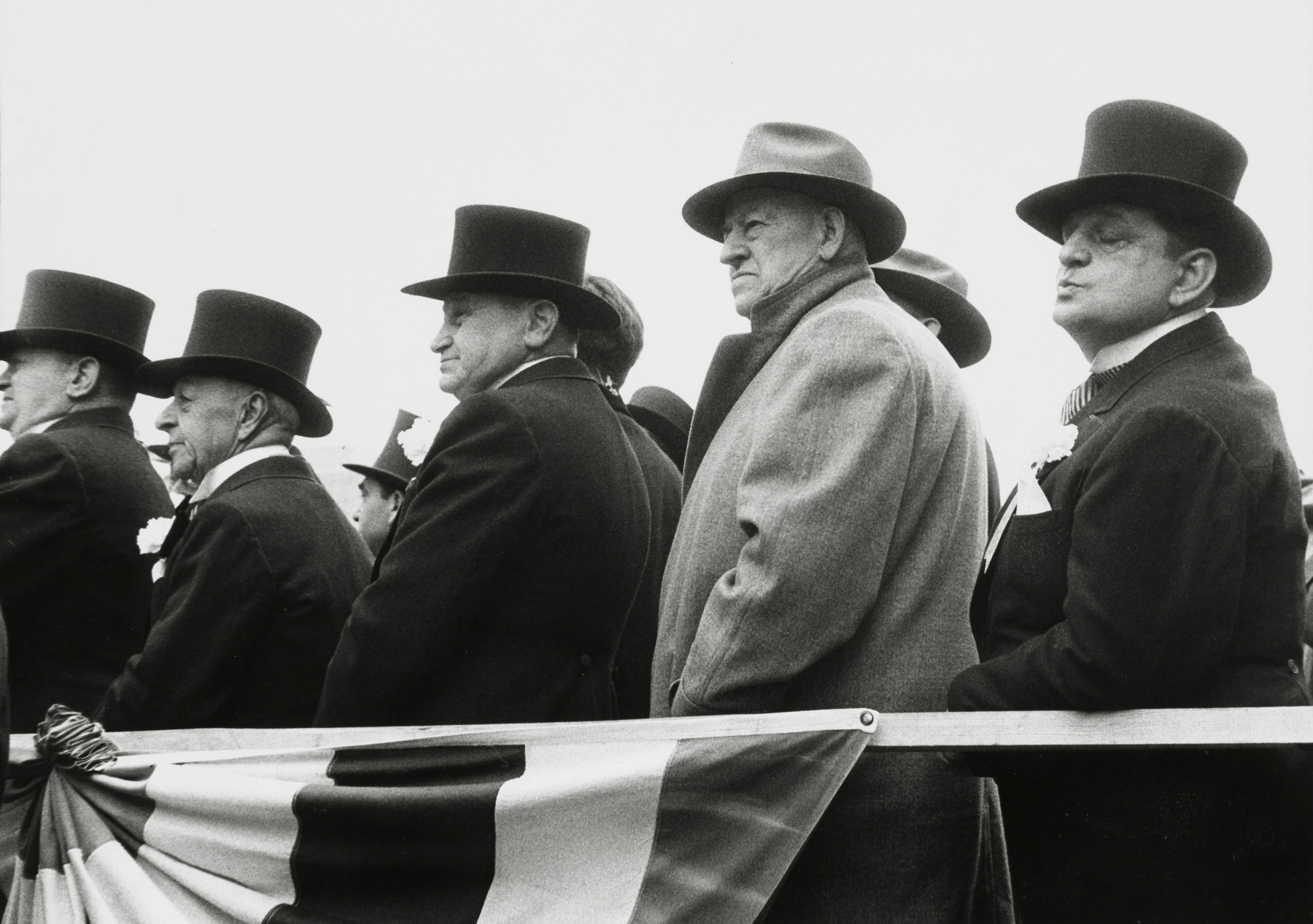
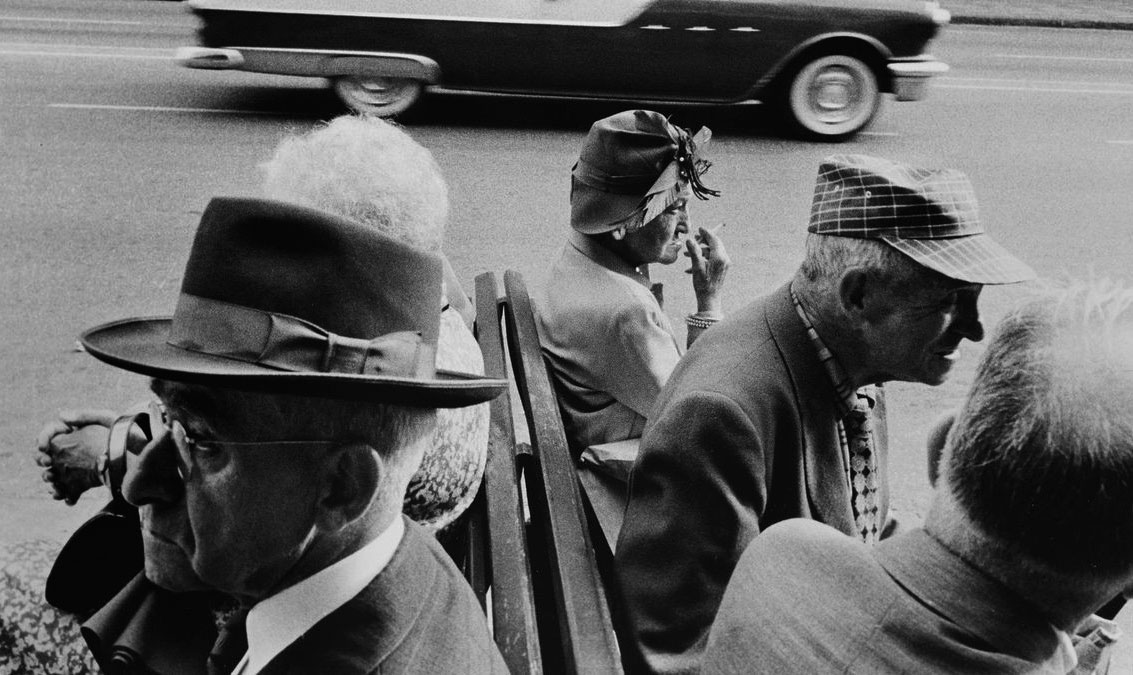
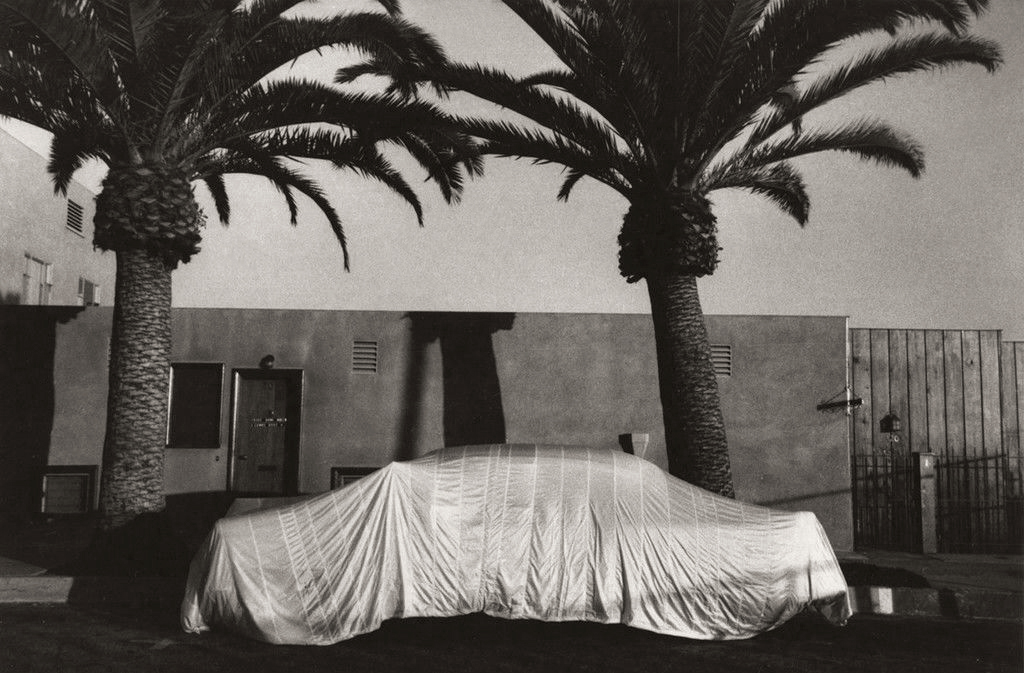
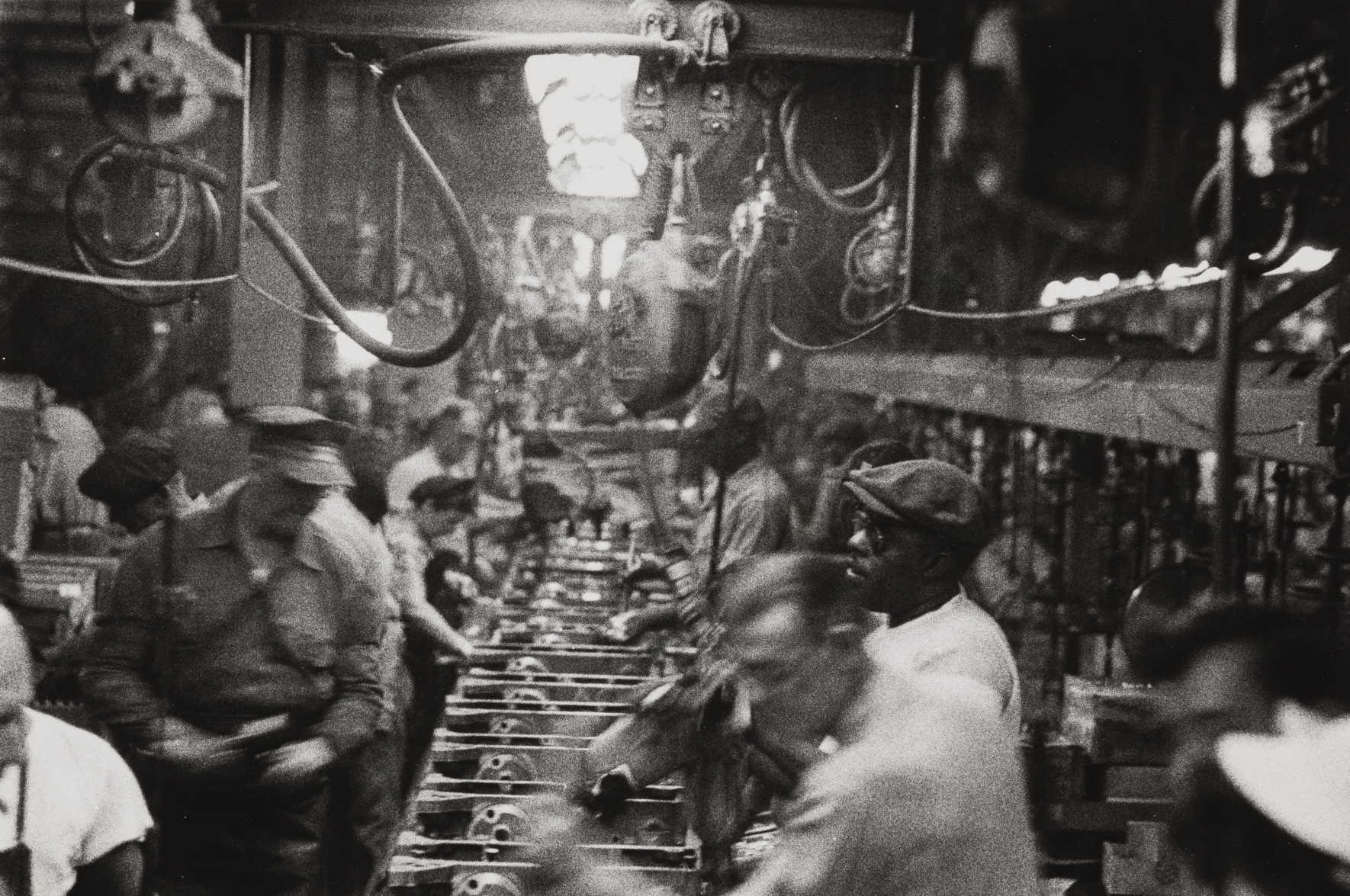
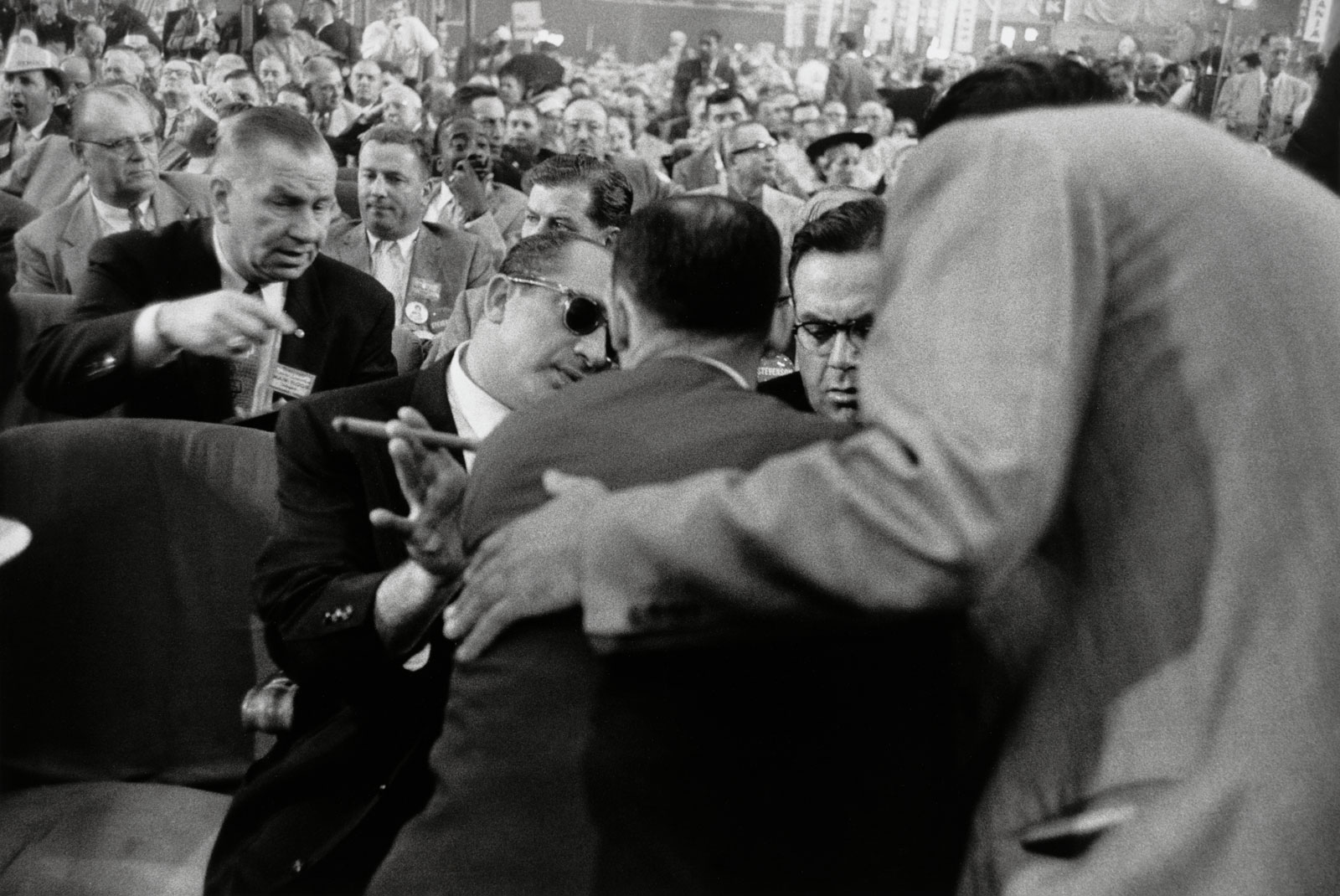
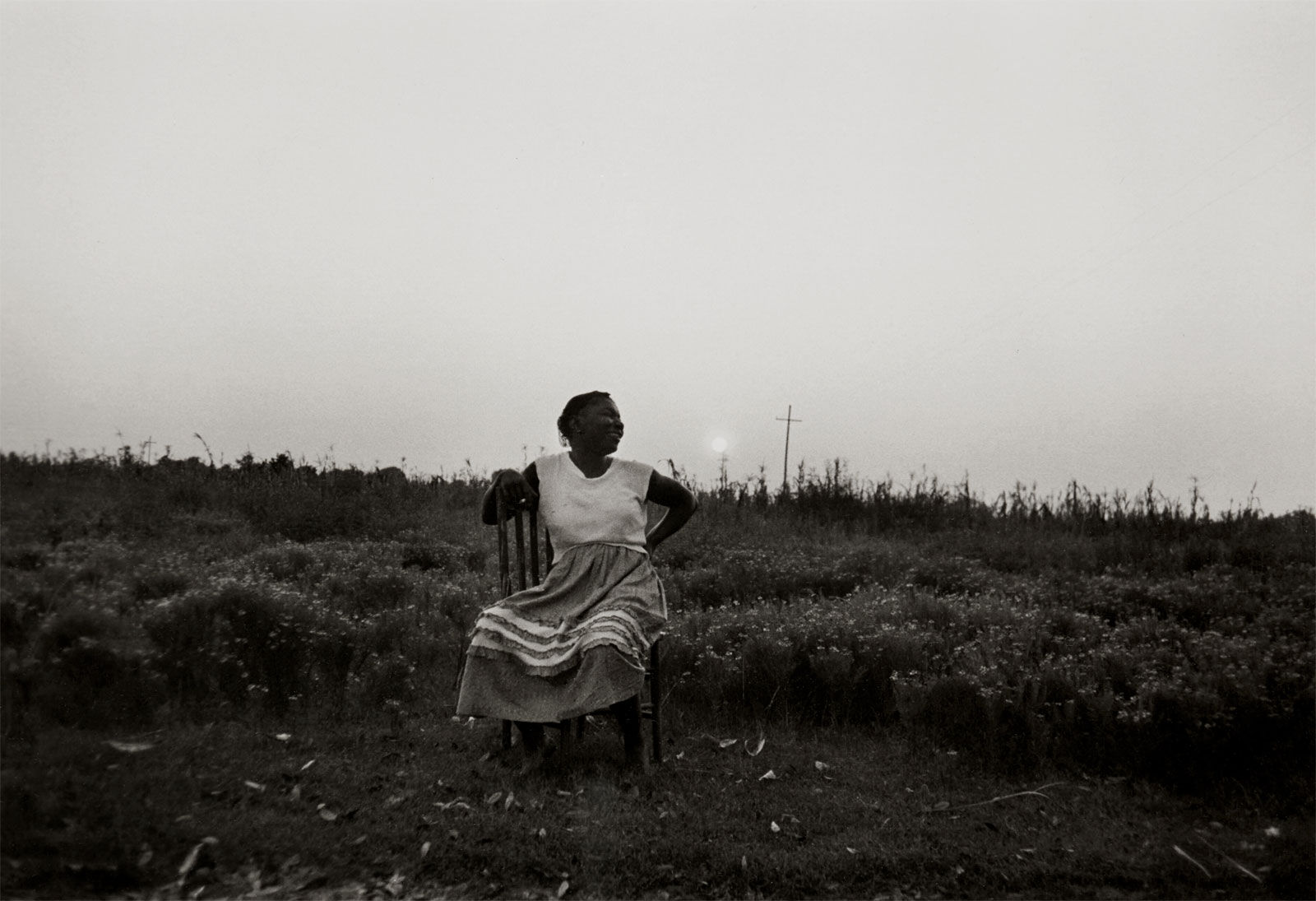
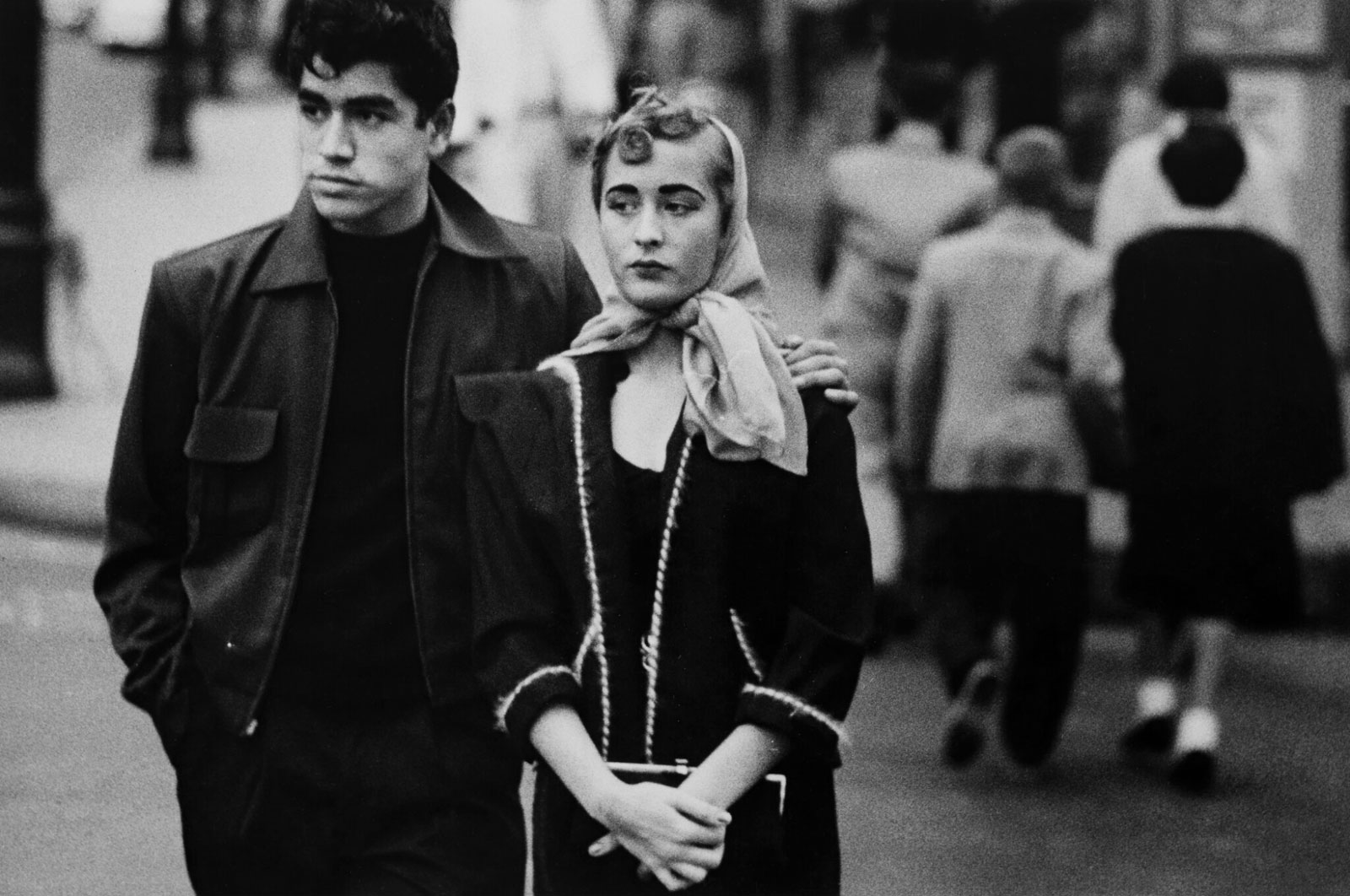
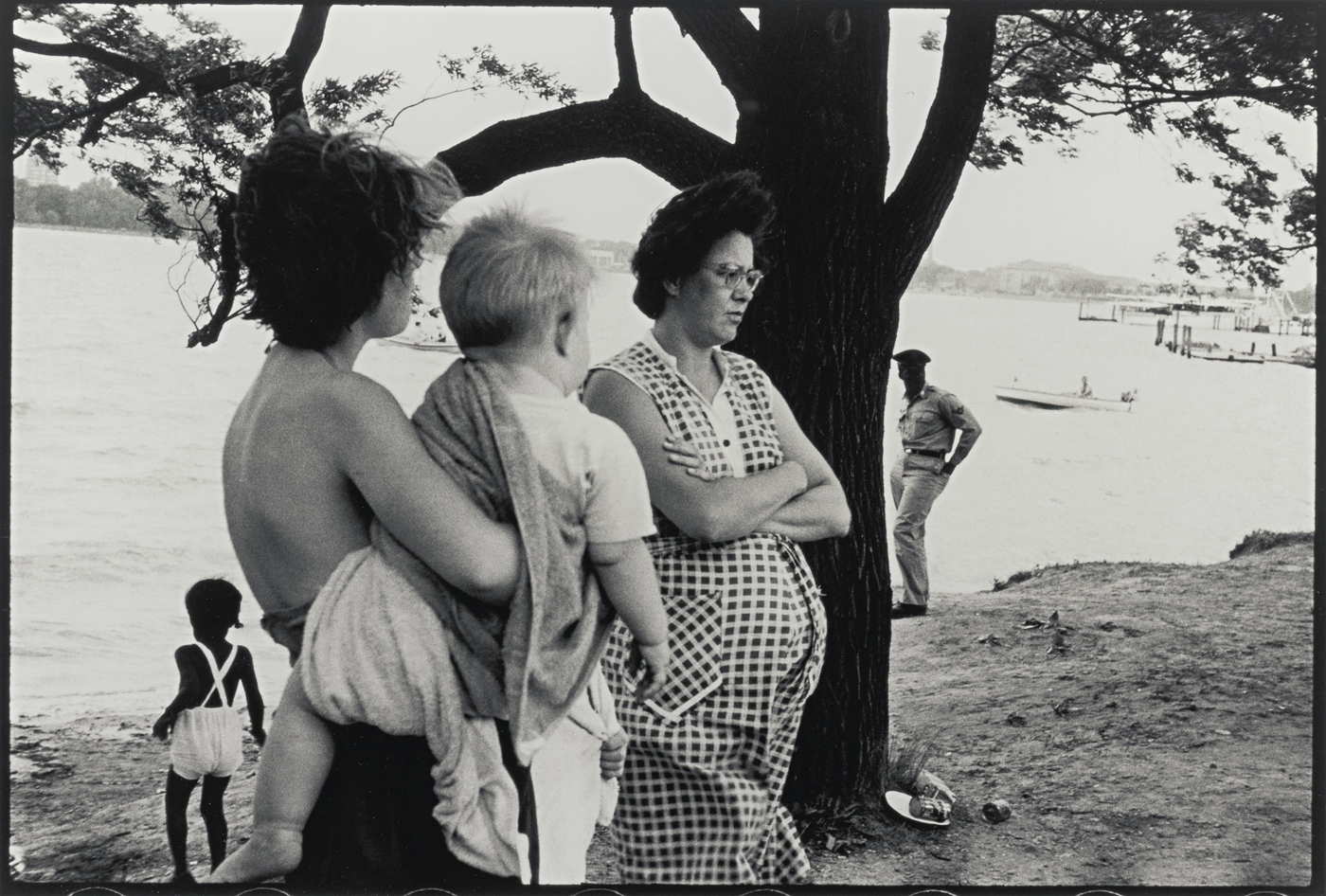
Robert Frank (Swiss-American, 1924-2019) The Americans New York: Grove Press 1959
One of the seminal photography books of the twentieth century, Robert Frank’s The Americans changed photography forever, changed how America saw itself and became a cult classic. Like Eugene Atget’s positioning of the camera in an earlier generation Frank’s use of camera position is unique; his grainy and contrasty images add to his outsider vision of a bleak America; his sequencing of the images, like the cadences of the greatest music, masterful. One of the easiest things for an artist to do is to create one memorable image, perhaps even a group of 4 or 5 images that ‘hang’ together – but to create a narrative of 83 images that radically alter the landscape of both photography and country is, undoubtedly, a magnificent achievement.
The photographs in the posting appear by number order that they appear in the book.
Dr Marcus Bunyan
Many thankx to the National Gallery of Art for allowing me to publish the photographs in the posting. Please click on the photographs for a larger version of the image.
Released at the height of the Cold War, The Americans was initially reviled, even decried as anti-American. Yet during the 1960s, many of the issues that Frank had addressed – racism, dissatisfaction with political leaders, skepticism about a rising consumer culture – erupted into the collective consciousness. The book came to be regarded as both prescient and revolutionary and soon was embraced with a cult-like following.
First published in France in 1958 and in the United States in 1959, Robert Frank’s The Americans is widely celebrated as the most important photography book since World War II. Including 83 photographs made largely in 1955 and 1956 while Frank (1924-2019) travelled around the United States, the book looked beneath the surface of American life to reveal a profound sense of alienation, angst, and loneliness. With these prophetic photographs, Frank redefined the icons of America, noting that cars, jukeboxes, gas stations, diners, and even the road itself were telling symbols of contemporary life. Frank’s style – seemingly loose, casual compositions, with often rough, blurred, out-of-focus foregrounds and tilted horizons – was just as controversial and influential as his subject matter. The exhibition celebrates the 50th anniversary of the book’s publication by presenting all 83 photographs from The Americans in the order established by the book, and by providing a detailed examination of the book’s roots in Frank’s earlier work, its construction, and its impact on his later art.
Anonymous text from The National Gallery of Art website [Online] Cited 06/03/2009. No longer available online
“The photos revealed a bleaker, more dislocated view of America than Americans were used to (at least in photography). Frank’s “in-between moments” demonstrated that disequilibrium can seem more revealing, seeming to catch reality off-guard. In doing so the collection also announced to the world that photos with a completely objective reference / referent could be subjective, lyrical, reveal a state-of-mind. Looser framing, more forced or odd juxtapositions, “drive-by” photos and other elements offer a sense of the process that has produced the photos”
Lloyd Spencer on Discussing The Americans in Hardcore Street Photography
“Frank’s contact sheets take us back to the moment he made the photographs for The Americans. They show us what he saw as he traveled around The United States and how he responded to it. These sheets are not carefully crafted objects; in his eagerness to see what he had captured, Frank did not bother to order his film strips numerically or even to orientate them all in the same direction.”
The 50th anniversary of a groundbreaking publication will be celebrated in the nation’s capital with the exhibition Looking In: Robert Frank’s The Americans, premiering January 18 through April 26, 2009, in the National Gallery of Art’s West Building ground floor galleries. In 1955 and 1956, the Swiss-born American photographer Robert Frank (b. 1924) traveled across the United States to photograph, as he wrote, “the kind of civilisation born here and spreading elsewhere.” The result of his journey was The Americans, a book that looked beneath the surface of American life to reveal a culture on the brink of massive social upheaval and one that changed the course of 20th-century photography.
First published in France in 1958 and in the United States in 1959, The Americans remains the single most important book of photographs published since World War II. The exhibition will examine both Frank’s process in creating the photographs and the book by presenting 150 photographs, including all of the images from The Americans, as well as 17 books, 15 manuscripts, and 28 contact sheets. In honour of the exhibition, Frank has created a film and participated in selecting and assembling three large collages. The exhibition will travel to the San Francisco Museum of Modern Art from May 17 through August 23, 2009, and The Metropolitan Museum of Art from September 22 through December 27, 2009.
“The Americans is as powerful and provocative today as it was 50 years ago,” said Earl A. Powell III, director, National Gallery of Art. “We are immensely grateful to Robert Frank and his wife, June Leaf, for their enthusiastic participation and assistance in all aspects of this exhibition and its equally ambitious catalogue. We also wish to thank Robert Frank for his donation of archival material related to The Americans, in addition to gifts of his photographs and other exhibition prints to the National Gallery of Art in 1990, 1994, and 1996, all of which formed the foundation of the project.”
“It’s hard to stress how different The Americans was. Over the course of those 83 pictures – shot from Detroit to San Francisco to Chattanooga, Tennessee – Frank captured the country in images that were intentionally unglamorous. On a technical level, he brazenly tossed out an adherence to traditional ideas of composition, framing, focus, and exposure.”
Sarah Greenough, Senior Curator of Photography at the National Gallery of Art in Washington
Richard Grigg (Australian) New Work exhibition Opening night crowd at Block Projects, Melbourne
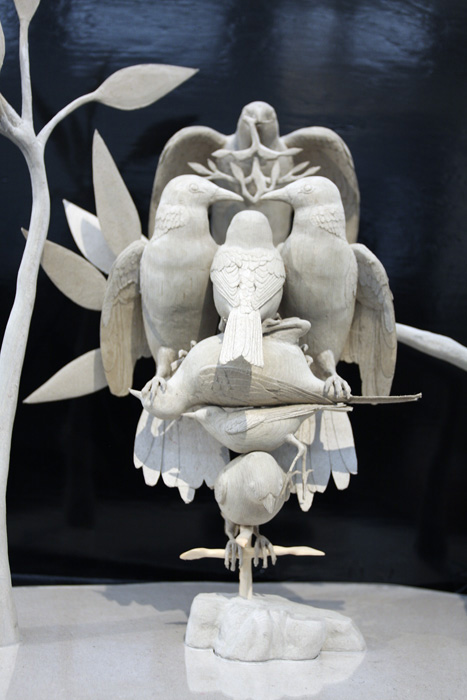
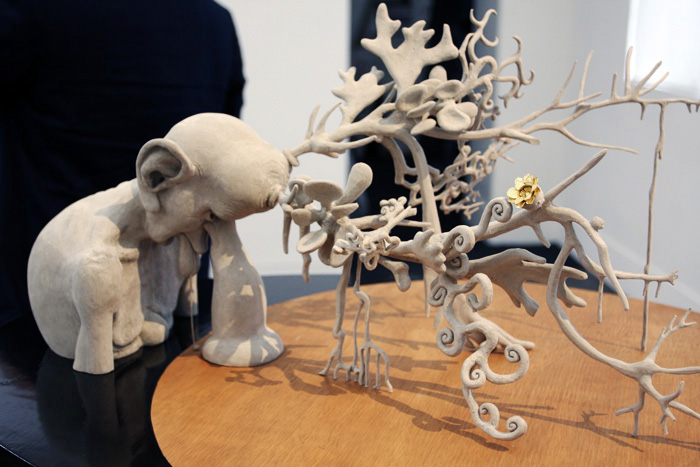
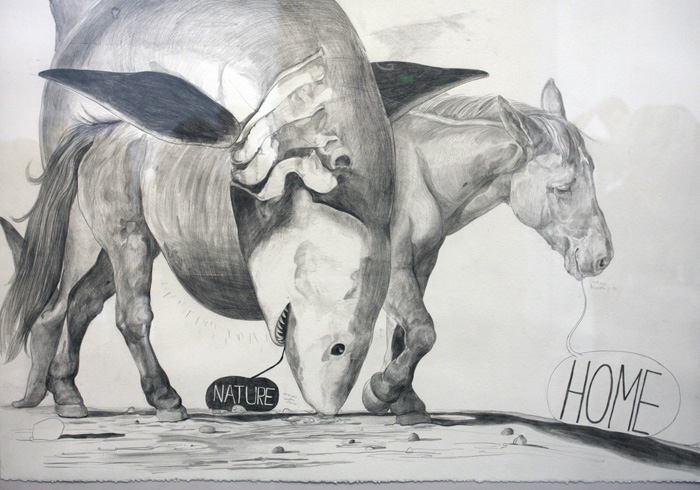
Moving down Flinders Lane we ascended to the fourth floor and entered the beautiful light filled gallery space at Block Projects to view the ‘new work’ of Richard Grigg. An eclectic mix of sculpture, painting, drawing, and collage was presented. Preparatory drawings for one of the sculptures, a pencil drawing of two old men debating, a canvas of a camera in tempera, gold leaf and gesso vie for attention with the two standout pieces of the show: No more songs at funerals/hero today gone tomorrow (2007) and He can’t read well because of his horns (2009), surrealist sculptures both made of compressed cardboard (below).
These two sculptures are fantastic: the first forming a skull made out of birds perched on a cross surmounted by a bird holding an olive branch, the title deliciously ironic; the second a stooped gargoyle like creature with a massive extrusion for a nose, hanging tongue dripping saliva and phantasmagorical protrusions emerging from it’s head making it impossible for the creature to ‘read well’ in both the metaphorical and literal sense. This is a beautiful but grotesque primordial fantasy with the horns putting roots down in the soil like the roots of a mangrove tree, a gold leaf flower blooming at their outer reaches, the creature exhausted by the effort of trying to keep his head up.
Unfortunately the rest of the exhibition lacked core strength: conceptually the show is not strong. Evidence of beauty in decay and concerns about the process of ageing vie with environmental contexts; slippages in time (The Moment Between) contrast with cameras and their sight lines; Pinocchio lies under a shroud with a camera trapped in the back of a horse drawn cart (Dream of Rest). Apparently, the cameras do not signify the capturing of the frozen moment of beauty but they are there because the artist’s father collected cameras. To me they seemed to be defining the nature of our interaction with the world, the surface of the image controlling the interface between technology and earth.
One of the problems with undertaking an exhibition titled New Work is the assumption that the new work being produced hangs together holistically and tells a not necessarily linear narrative story but one that the viewer can investigate, question, and tease the pertinent concepts from – something the viewer can hang their hat on (perhaps the horns of a dilemma!) This was not the case here. The bits n bobs approach of this exhibition falls slightly flat but go see the show for the two sculptures – they alone are worth the effort!
Dr Marcus Bunyan
Many thankx to Block Projects for allowing me to publish the photographs in the posting. Please click on the photographs for a larger version of the image.
Richard Grigg (Australian) No more songs at funerals/hero today gone tomorrow 2007-2009 Layered boxboard, wood dowel, glue, pine, black gloss enamel, Perspex
Richard Grigg (Australian) He can’t read well because of his horns 2009 Layered boxboard, gold leaf, wood dowel, glue, pine, black gloss enamel, wood stain
Richard Grigg (Australian) A Late Night Story 2007 pencil on paper
Richard Grigg (Australian) Older than the value of beauty (detail) 2009 Tempera, gold leaf and gesso on board
Richard Grigg (Australian) Cloak 2008 Tempera, gold leaf and gesso on board
Block Projects Level 1 / 252 Church Street Richmond Victoria 3121 Australia Phone: +61 3 9429 0660
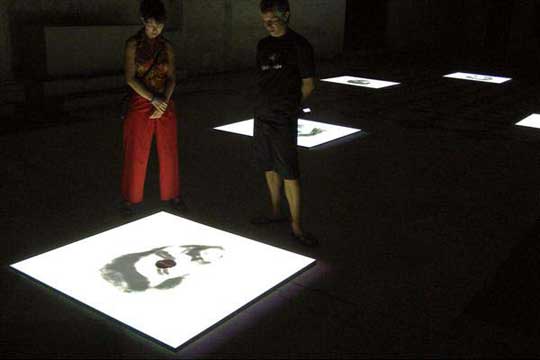
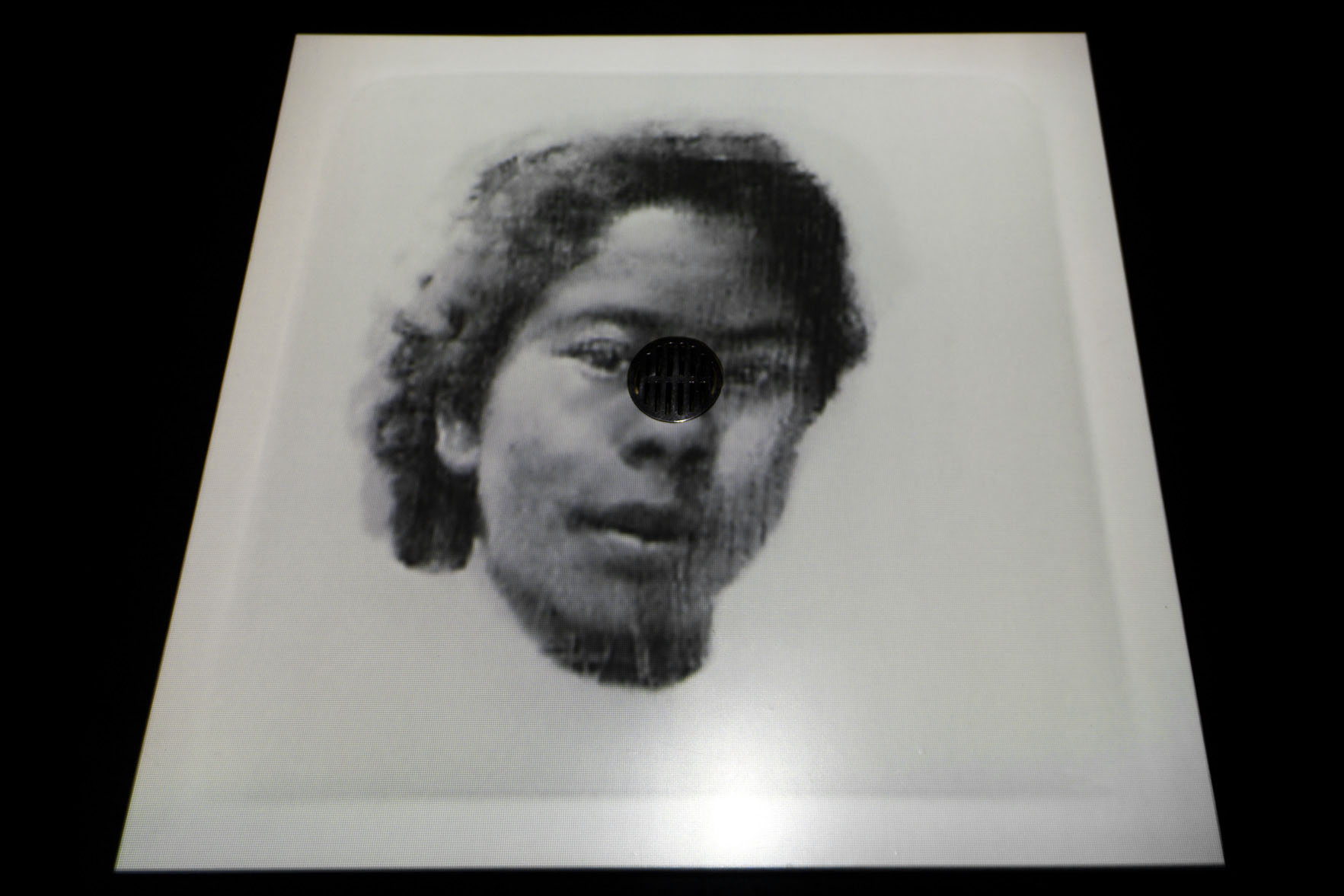
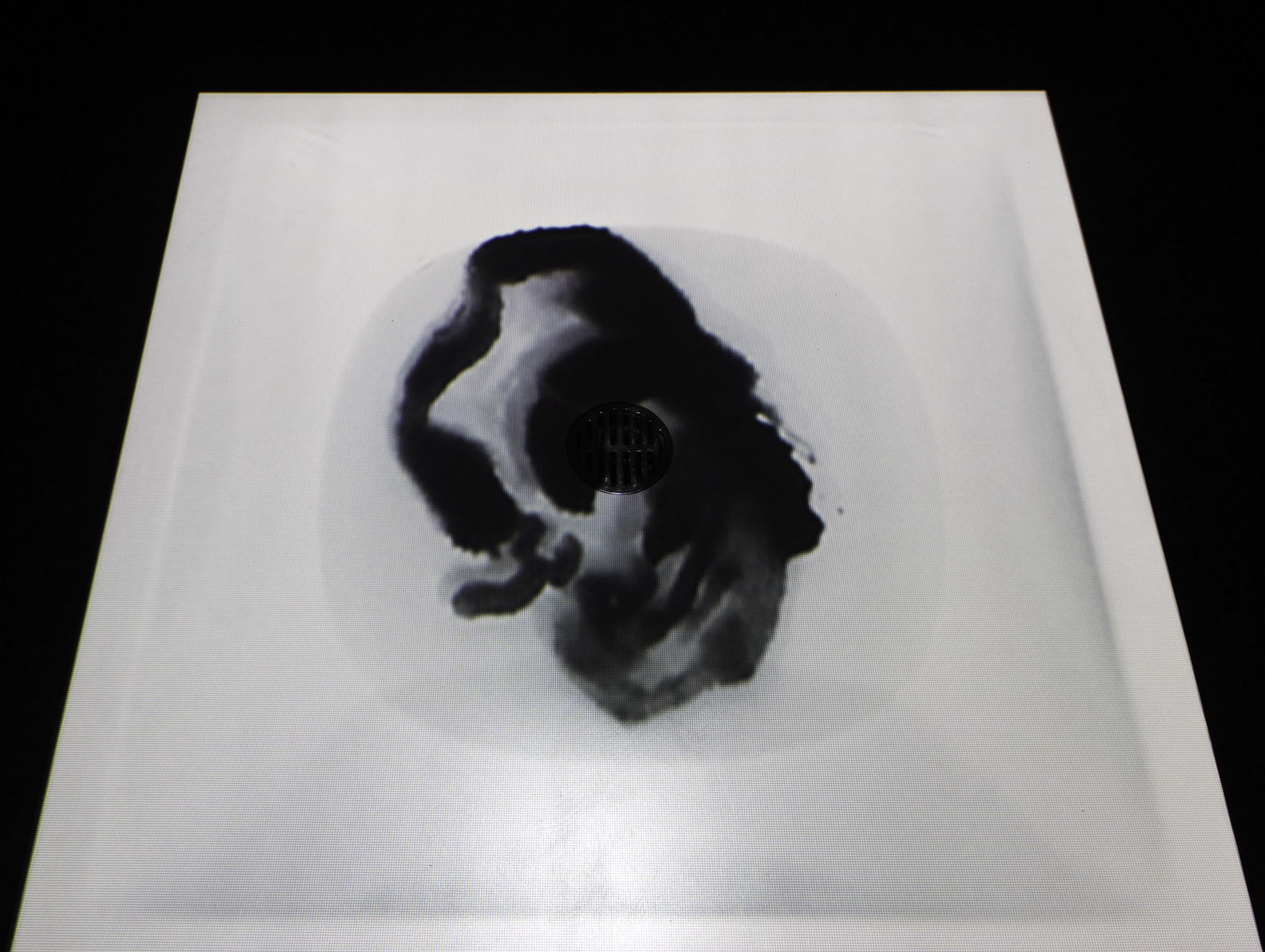
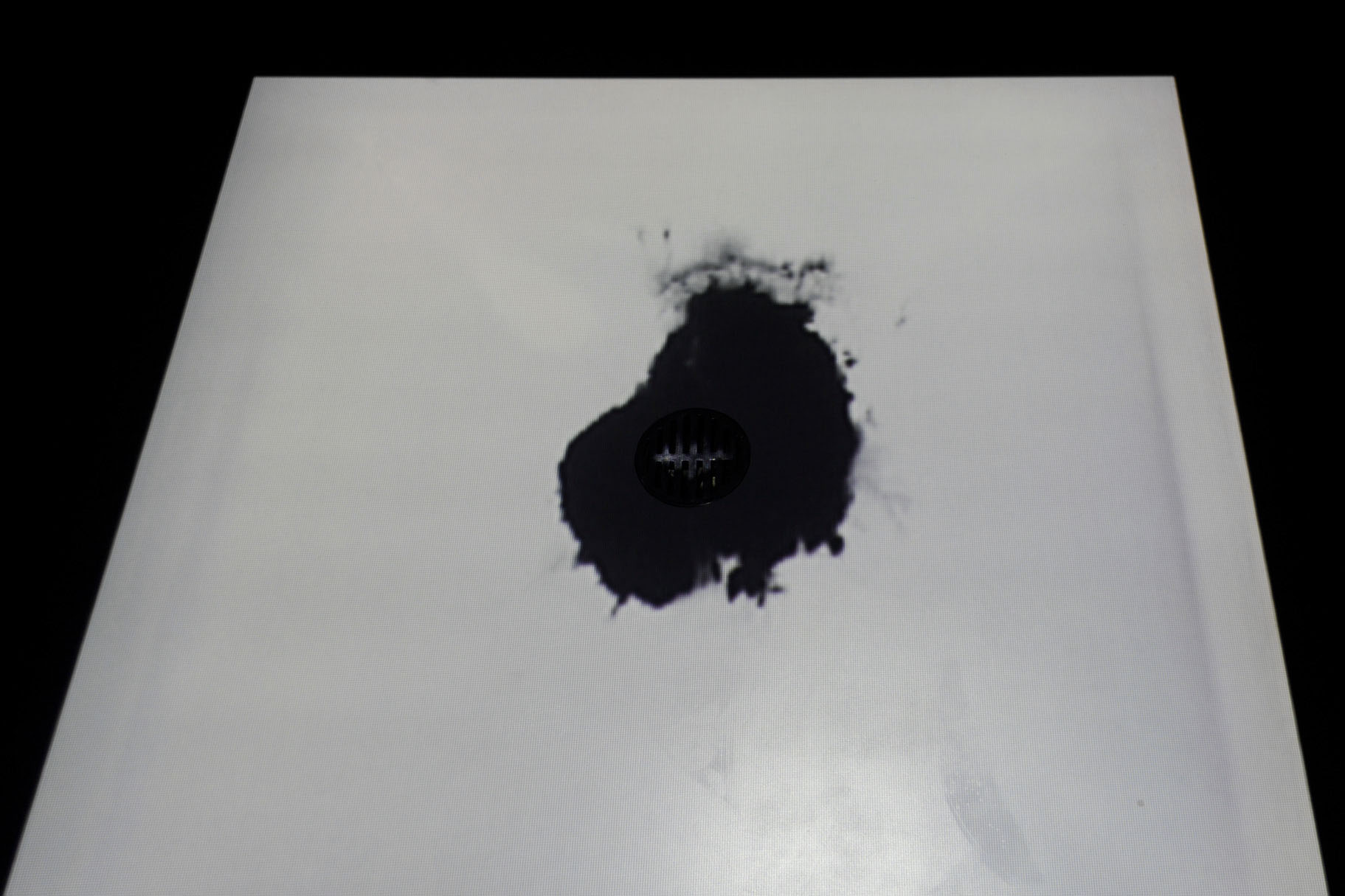
Óscar Muñoz (Colombian, b. 1951) Biografías (installation views) 2002 5 video projections, 7 ‘, loop, without sound, DVD, mdf support, metal grids, variable dimensions
“How can one construe a notion of time in this immemorial setting? How can one assimilate and articulate in one’s memory all these events that have been happening for so many years now?”
“My work today … is based on my endeavour to understand the mechanism developed by a society which has ultimately suffered the routinisation of war… A past, a present and in all likelihood a future full of violent events on a daily basis, which are stubbornly repeated, in a practically identical fashion.”
Óscar Muñoz
Óscar Muñoz is something of a gentle magician. His ‘disappearing’ drawings are poignant and beautiful, combining consummate skill with conceptual subtlety and rigour.
Muñoz is a senior Colombian artist. He plays an important role in mentoring younger artists but his own work is very focused on a personal language that is closely tied to the body and its disappearance. His work has always combined traditional drawing skills with video in a completely original and surprising way.
Although Muñoz is not assertively political, his work is more about mortality than specific acts of violence but it is impossible not to look at it in the context of Colombian life. A common technique for social control has become the ‘disappearing’ of people. The work shown in this exhibition, Biografías 2002 is structured to reflect this pervasive theme of disappearance.
Biografías is one of a series of works in which portraits slowly disappear, reflecting the disappearance of people on a regular basis in Colombia. Muñoz has made silk screen portraits of people but instead of forcing ink through the screen onto paper he has dusted fine coal dust through the screen onto a flat basin of water. The portrait in coal is then transferred to float on the surface of the water. After a while the water starts to drain out of a plug hole in the basin causing the image to begin to distort. Eventually the image is compressed becomes unrecognisable and finally disappears down the drain.
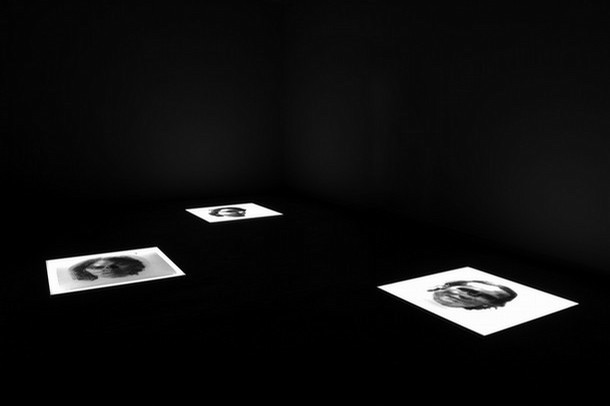
Five such portraits are shown in Biografías by projecting video of the performed drawings onto screens on the floor complete with plug holes beneath which you hear the sound of water running down the drain.
Text from the Art Gallery of New South Wales website [Online] Cited 22/02/2009 (no longer online)
Many thankx to Art Gallery of New South Wales for allowing me to publish the art work in the posting. Please click on the art work for a larger version of the image.
Óscar Muñoz (Colombian, b. 1951) Biografías (stills) 2002 5 video projections, 7 ‘, loop, without sound, DVD, mdf support, metal grids, variable dimensions
Óscar Muñoz Biografías
The work refers to the idea of death, disappearance and transience of memory, linked to acts of violence.
Muñoz is also known for his use of ephemeral materials, in poetic reflections upon memory and mortality.
Art Gallery of New South Wales Art Gallery Road, The Domain Sydney NSW 2000, Australia
Opening hours: Open every day 10am – 5pm except Christmas Day and Good Friday
Photographs are available from this series for purchase. As a guide, a digital colour 16″ x 20″ costs $1000 plus tracked and insured shipping. For more information please see my Store web page.
Marcus Bunyan (Australian, b. 1958) Untitled from the series Momentum 2009 Digital colour photograph
Marcus Bunyan (Australian, b. 1958) Untitled from the series Momentum 2009 Digital colour photograph
Marcus Bunyan (Australian, b. 1958) Untitled from the series Momentum 2009 Digital colour photograph
Marcus Bunyan (Australian, b. 1958) Untitled from the series Momentum 2009 Digital colour photograph
Marcus Bunyan (Australian, b. 1958) Untitled from the series Momentum 2009 Digital colour photograph
Marcus Bunyan (Australian, b. 1958) Untitled from the series Momentum 2009 Digital colour photograph
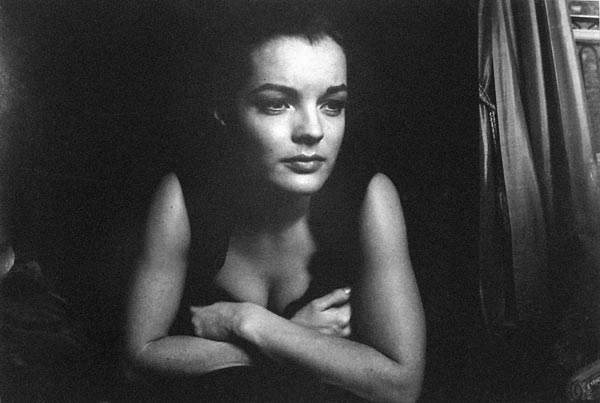
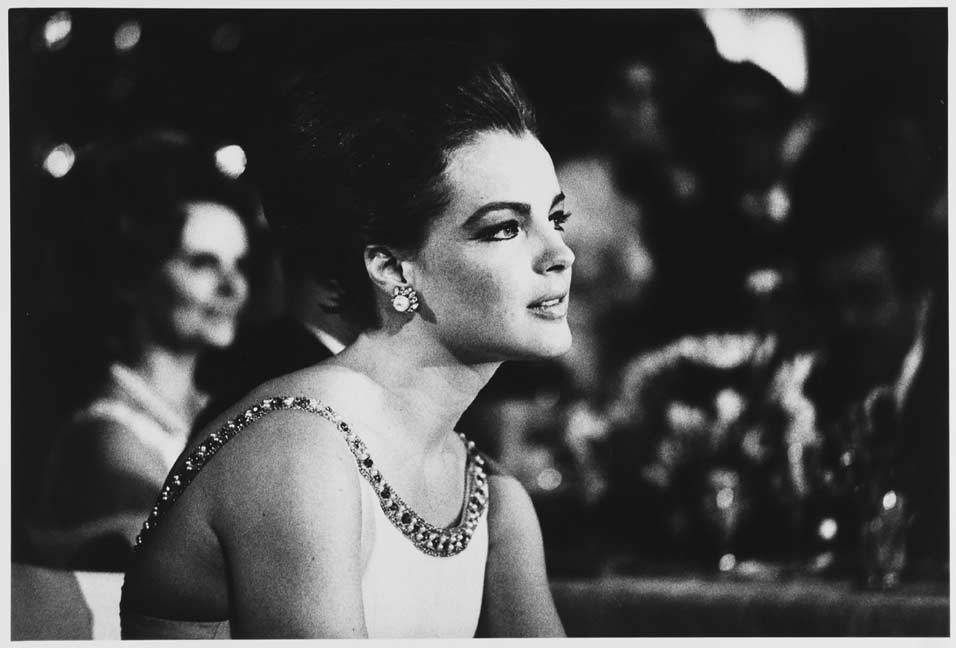
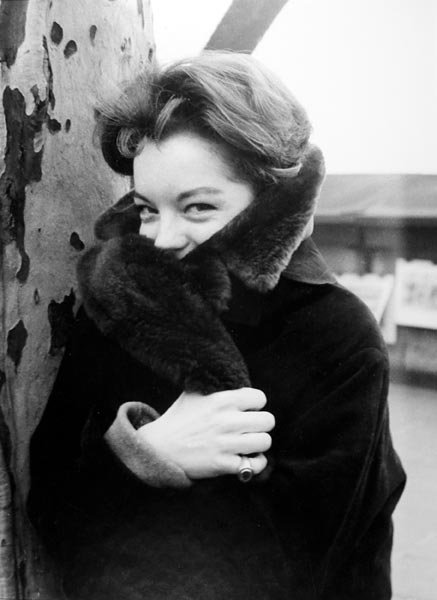
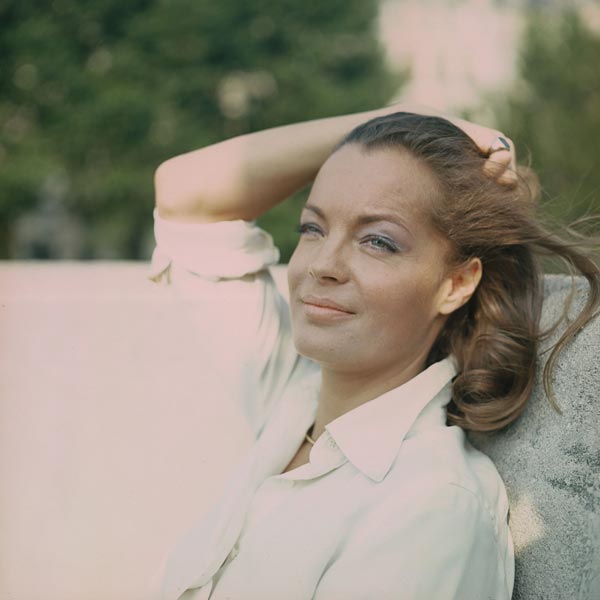
I have never known the filmography of Romy Schneider, never come across this actress before sad to say. But now I do. What great photographs. What a beautiful woman: sensitive, vivacious, stunning. A soul I would have liked to have known.
Marcus
Many thankx to the Museum für Kunst Und Gewerbe for allowing me to publish the photographs in the posting. Please click on the photographs for a larger version of the image.
Romy Schneider (German: born Rosemarie Magdalena Albach; 23 September 1938 – 29 May 1982) was a German-French actress. She began her career in the German Heimatfilm genre in the early 1950s when she was 15. From 1955 to 1957, she played the central character of Empress Elisabeth of Austria in the Austrian Sissi trilogy, and later reprised the role in a more mature version in Luchino Visconti’s Ludwig (1973). Schneider moved to France, where she made successful and critically acclaimed films with some of the most notable film directors of that era.
Born in Berlin, Peter Brüchmann trained to be a photographer with the fashion and portrait photographer Lotte Söhring and subsequently completed a traineeship at the German press agency dpa. In the 1950s and 1960s he worked for well-known magazines, such as Schöner Wohnen, Stern and Bild am Sonntag. Brüchmann is primarily known for his portraits of celebrities of the movie and music industry. In 2008 the photographer participated in the group exhibition Die Erinnerung ist oft das Schönste – Fotografische Porträts von Romy Schneider, an exhibition comprising portraits of the famous Franco-German actress Romy Schneider, held at the Stiftung Opelvillen Rüsselheim, Germany. Today Peter Brüchmann works as a freelance photographer for several national and international magazines. Numerous of his photographs are among the collections of the German Historical Museum in Berlin.
Roger Fritz (German, 1936-2021) Romy Schneider, Paris, 1961 1961 Gelatin silver print
Herbert List, Max Scheler, Roger Fritz, F. C. Gundlach, Will McBride, Peter Brüchmann, Werner Bokelberg, Helga Kneidl and Robert Lebeck took photos of Romy Schneider in quite different ways, as a young girl, in her film roles, together with her children, apparently unobserved in everyday situations or in set poses and dressed up in various costumes, merry or pensive, beautiful and fragile. More than 140 pictures will be on show, of which about 40 are being exhibited for the first time.
Hardly any other star has left us with so many different and conflicting images as Romy Schneider. She was photographed thousands of times – and yet she always remained enigmatic. Some of the photographers whose work is presented in this exhibition only met Romy once – Herbert List, for instance, captured her as a teenager around 1954 on pictures which remained unknown until recently – or accompanied her throughout her life, like Robert Lebeck, who succeeded in taking disturbingly personal pictures of her from the 1950s through to shortly before her death.
These snapshots conjure up once again the legend that was Romy, while at the same time making a powerful statement which reveals the transitoriness of existence. Because that is the core of what a photo does: it creates an image in order to bear lasting witness to an event which happened – yet at the very moment of capturing the image on film, it is no more than the proof that the fleeting moment has passed.
The photos by Herbert List, Werner Bokelberg, Peter Brüchmann, Roger Fritz and Max Scheler are being shown publicly for the first time. This also applies to the majority of the photos by F. C. Gundlach and Will McBride. The pictures by Helga Kneidl and Robert Lebeck have already appeared in books about Romy Schneider. These volumes are however now out of print.
Text from the Museum für Kunst Und Gewerbe website
Herbert List (German, 1903-1975) Romy Schneider, Munich, 1954 1954 Gelatin silver print
Herbert List
Herbert List (7 October 1903 – 4 April 1975) was a German photographer, who worked for magazines, including Vogue, Harper’s Bazaar, and Life, and was associated with Magnum Photos. His austere, classically posed black-and-white compositions, particularly his homoerotic male nudes, taken in Italy and Greece being influential in modern photography and contemporary fashion photography.
Photographer
In 1929 he met Andreas Feininger who inspires his greater interest in photography and who gives him a Rolleiflex camera. From 1930 he began taking portraits of friends and shooting still life, is influenced by the Bauhaus and artists of the surrealist movements, Man Ray, Giorgio De Chirico and Max Ernst, and creates a surrealist photograph titled Metaphysique in a style he called fotografia metafisica in homage to De Chirico, his most important influence during this period. He used male models, draped fabric, masks and double-exposures to depict dream states and fantastic imagery. He has explained that his photos were “composed visions where [my] arrangements try to capture the magical essence inhabiting and animating the world of appearances.”
In 1936, in response to the danger of Gestapo attention to his openly gay lifestyle and his Jewish heritage, List left Germany for Paris, where he met George Hoyningen-Huene with whom he travelled to Greece, deciding then to become a photographer. During 1937 he worked in a studio in London and held his first one-man show at Galerie du Chasseur d’Images in Paris. Hoyningen-Huene referred him to Harper’s Bazaar magazine, and 1936-1939 he worked for Arts et Metiers Graphiques, Verve, Vogue, Photographie, and Life. List was unsatisfied with fashion photography. He turned back to still life imagery, continuing in his fotografia metafisica style.
From 1937 to 1939 List traveled in Greece and took photographs of ancient temples, ruins, sculptures, and the landscape for his book Licht über Hellas. In the meantime he supported himself with work for magazines Neue Linie, Die Dame and for the press from 1940-1943, and with portraits which he continued to make until 1950. In List’s work the revolutionary tactics of surrealist art and a metaphysical staging of irony and reverie had been honed in an the fashion industry that relied on illusion and spectacle which after World War II returned to a classical fixation on ruins, broken male statuary and antiquity.
F. C. Gundlach (German, 1926-2021) Romy Schneider, Hamburg, 1961 1961 Gelatin silver print
F. C. Gundlach
F. C. Gundlach (Franz Christian Gundlach; born 16 July 1926 in Heinebach, Hesse; died 23 July 2021, Hamburg, Germany) is a German photographer, gallery owner, collector, curator und founder. In 2000 he created the F.C. Gundlach Foundation, since 2003 he has been founding director of the House of Photography – Deichtorhallen Hamburg.
His fashion photographs of the 1950s, 1960s and 1970s, which in many cases integrated social phenomena and current trends in the visual arts, have left their context of origin behind and found their way into museums and collections. Since 1975 he also curated many internationally renowned photographic exhibitions. On the occasion of the reopening of the House of Photography in April 2005, he curated the retrospective of the Hungarian photographer Martin Munkácsi. Here, the exhibitions A Clear Vision, The Heartbeat of Fashion and Maloney, Meyerowitz, Shore, Sternfeld. New Color Photography of the 1970s from his collection were presented since 2003. Most recently he curated the exhibitions More Than Fashion for the Moscow House of Photography and Vanity for the Kunsthalle Wien 2011.
The fashion photographer
F. C. Gundlach attended the Private Lehranstalt für Moderne Lichtbildkunst (Private School for Modern Photography) under Rolf W. Nehrdich in Kassel from 1946 to 1949. Subsequently, he began publishing theatre and film reports in magazines such as Deutsche Illustrierte, Stern, Quick and Revue as a freelance photographer.
His specialisation in fashion photography began in 1953 with his work for the Hamburg-based magazine Film und Frau, for which he photographed German fashion, Parisian haute couture and fur fashion campaigns. Additionally he photographed portraits of artists such as Romy Schneider, Hildegard Knef, Dieter Borsche and Jean-Luc Godard. For Film und Frau, but also for Stern, Annabelle, Twen and other magazines, F. C. Gundlach has since made fashion and reportage trips to the Near, Middle and Far East as well as to Central and South America. Under an exclusive contract with the magazine Brigitte, he photographed many of the trendsetting fashion pages until 1983, a total of more than 160 covers and 5,000 pages of editorial fashion. In the 1970s and 1980s he worked in South America, Africa, but above all in New York and on the American west coast.
His retrospective solo exhibitions, such as ModeWelten (1985), Die Pose als Körpersprache (1999), Bilder machen Mode (2004) or F. C. Gundlach. The photographic work (2008) were shown in many museums and galleries in Germany and abroad.
“He is a photographer whose images show the knowledge of the dominant role of fashion as a cultural social factor. For this reason, he rarely presented the phenomena of fashion in isolation, but rather linked them to the phenomenology of everyday reality and placed them in the socio-cultural context from which they ultimately originated. F. C. Gundlach proves to be a photographic artist with a will to style, a mastery of staging and the ability to shape the photographic image at his leisure, who arranges his models in ever new formal constellations: as a photographer of extraordinary aesthetic quality.”
~ Klaus Honnef
“As a fashion photographer who makes use of a recording medium, the photographer must live, think and feel entirely in his time. Fashion photographs are always interpretations and stagings. They reflect and visualise the zeitgeist of the present and anticipate the spirit of tomorrow. They offer projection screens for identification, but also for dreams, wishes and desires. And yet fashion photographs say more about a time than documentary photographs pretending to depict reality.”
Eduardo Sourrouille (Spanish, b. 1970) Salon para Gaydjteam 2008
Artium, Basque Centre-Museum of Contemporary Art, presents the exhibition Villa Edur. Eduardo Sourrouille (North Gallery, from January 17 to April 19), an intimate self-portrait of this Basque artist based on more than 170 photographs taken in recent years. Sourrouille (Basauri, Bizkaia, 1970) proposes a metaphorical visit to the private rooms of his life, from the most superficial to the most intimate, to explore all aspects of the relationship with others and with oneself. Based on three different series of technically exquisite photographs, the author displays a world in which affection and the need to love and to feel loved predominates, in which there are ever-present allusions to questions such as sexual identity, the demands of friendship and recognition of links with others.
Villa Edur, the title of the first major one-man show of the work of Eduardo Sourrouille in a Museum, is taken from the maternal home of Eduardo Sourrouille, “the first legacy I received from her, the most valuable of all her bequests: besides being a home, it is an ongoing project, a driving force in my life and a reflection of my artistic career.” As in a home, the exhibition allows the visitors to explore a number of different rooms, each more intimate than the previous one, in which the artist receives visitors, who are converted into a host and guests.
Thus, in the exhibition, as in his house, “the host receives his guests at the entrance, where newcomers have access to proof of all the visitors that preceded them.” And in this way, the visitor sees two different series of portraits in the first room, Of the folder, people who visited my house and Of the folder, people who visited my house: room for… In the first Gallery, the artist presents different portraits of couples, consisting of himself with the different people with whom he has had some kind of relationship, be this emotional, family, friendship or any other kind. In this case, the photographs come very close to studio portraits, with carefully prepared, static poses, with hardly any atrezzo.
Each of these photographs is matched in the exhibition with another belonging to the second gallery of images, in which Sourrouille repeats the figures but in this case with a more accentuated theatricality, with a set design that may make the spectator imagine anecdotes or stories that occur in the encounter. The room, dominated by a more than one hundred photographs, reveals an entire “network of relationships, in which friendship, affection, love, fascination, desire, etc. (sometimes mixed up), have a place. The number of people including his father and other relatives, a large number of friends, artists such as Miguel Ángel Gaüeca, Manu Arregui and Ignacio Goitia, have been present here and have left their mark, and as the entire exhibition is imbued with games and humour, fictional figures such as Doña Rogelia are also included.
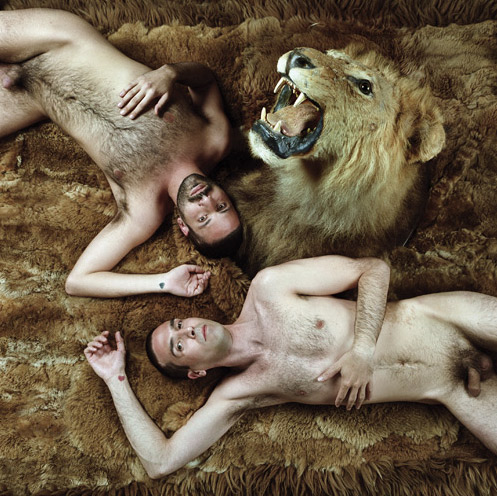
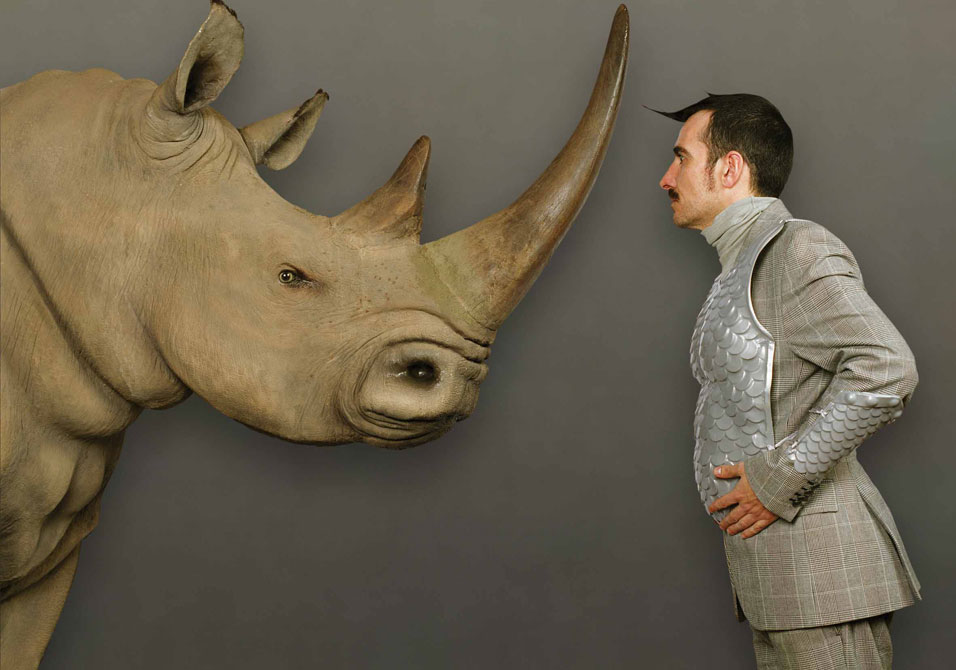
From this broad entrance, densely inhabited by figures “whose ghost lives on”, the artist invites first to step into his sitting room, the place in his house that “offers a precise image of what its owner is and would like to be.” In this space, Eduardo Sourrouille presents thirty self-portraits that “show of the people who have coexisted in me” and who “embody in the symbolic manner the different aspects of love and friendship, that can be found in me, as in any other individual.” With this aim in mind, Sourrouille presents in this exhibition space the Selfportrait with a friend series, thirty images in which the artist photographs himself with different animals, ironic portraits in which the human being appears to adopt certain characteristics of the animal.
There remain two more rooms in this house, the most private of all, where “intimate secret processes” take place. Sourrouille once again portrays himself with his father in the environment where the legacy is transmitted by means of simple rites, before going on to “the most secret room of all (…) in which the intimate world of each person is developed, in other words, what one does not necessarily confess but what one, nevertheless, has decided to experience.” Here, the spectator confronts a video entitled If you could see him through my eyes, in which the sheets are lowered slowly to discover the artist accompanied by two wild boar.
Press release from Basque Centre-Museum of Contemporary Art
The house that I show in Villa Edur is my house, as it was (is) my mother’s. It is the first legacy I received from her, the most valuable of all: in addition to a home, it is a perpetual project, a vital engine and a reflection of my career.
Eduardo Sourrouille (Spanish, b. 1970) Self-portrait with impetuous friend 2008
“The house I depict in Villa Edur is my home, as it was (is) my mother’s home. It is the first legacy I received from her, the most valuable of all her bequests: besides being a home, it is an ongoing project, the driving force in my life and a reflection of my artistic career.
1
In my house, the host receives his guests at the entrance, where newcomers find proof of all the visitors that preceded them. Everything takes place in this zealously staged space, and so each decorative element is selected with the very same care. Objects, costumes and scenery make up, both individually and jointly, a system of symbols alluding to the nature of its own contents.
One by one, the portrait of the person in question confronts his situation within the context that was created for him and which, at the same time, he himself contributed to defining, and whose ghost still lives on. Each portrait determines both a singular identity and the kind of relationship in which at least two individuals interact and this, in turn, is the reflection of a specific experience. Each relationship leaves a visible and definitive mark on the other, like the dent in an aluminium vessel, which reasserts the experience and provides solace (provisionally) as it is the proof of our materiality. The inescapable need to make these marks involves the creation of an entire network of relationships in which friendship, affection, love, fascination, desire, etc. (sometimes mixed up), have a place.
Next to the door, raised on her solid, light shelf, my mother observes us and invites us in.
2
A door leads to the sitting room, a multifunctional and ultimately magical space, an environment in which everything that can be shown to visitors (plus part of what cannot be shown) is put on display. Definitively, the sitting room always offers a precise image of who its owner is and would like to be, of what he deliberately reveals to others and what he cannot prevent from being perceived through the cracks in his subconscious.
For this reason, the sitting room offers visitors a gallery of thirty self-portraits that show them the different people who coexist in me, what they can expect and the extent of the range of choices permitted. From a conceptual viewpoint and in a symbolic manner, these portraits embody different aspects of love and friendship that can be found in me, as in any other individual.
3
Beyond the sitting room lie the private rooms in which intimate, secret processes take place, ceremonies that create individuals and subsequently shape them, mould them and endorse them for the world. In one of these, I share the space with my father because this room is where his offspring receive their legacy through atavistic and recurrent rites – so simple that they scarcely cause pain. In another room, I (at last) dare to make the call I have learnt, the one that I use to invoke the Other, even though in some ways the person I seek is myself. There is anguish and confusion in that call, but also the desire to establish constructive communication, as I also offer myself to the Other so that he might leave his mark on me.
4
The intimate world of each person, in other words, what one does not necessarily confess but what one, nevertheless, has decided to experience, is developed in the most secret room of all. It is also the space reserved for the beauty that one finds by one’s own means – as it has not been revealed by any of one’s elders – and which therefore will be treasured as the exclusive property of its discoverer.
I live in Villa Edur because all the relationships that crystallise around me also reside there. Every individual harbours a space that he uses as a scenario to display his relationships, his family, lovers, friends, and for life, everything that is deposited with the passing of time, following the structure of his stage machinery. That is the space that is often called home.”
Ianko López Ortiz de Artiñano for Eduardo Sourrouille
Text from the Artium, Basque Centre-Museum of Contemporary Art website
Eduardo Sourrouille (Spanish, b. 1970) Panolis 2008
Eduardo Sourrouille (Spanish, b. 1970) Double self-portrait 2008
Eduardo Sourrouille (Spanish, b. 1970) Self-portrait with a proud friend 2008
Eduardo Sourrouille (Spanish, b. 1970) Self-portrait with a gorgeous friend 2008
Artium, Basque Centre-Museum of Contemporary Art 24 Francia Street. Vitoria-Gasteiz, 01002 Araba Phone: 945 20 90 00
Opening hours: Tuesdays to Fridays: 11am to 2.00pm and 5.00pm to 8.00pm Saturdays and Sundays: 11.00am to 8.00pm Mondays closed
Another fantastic group of Americurbana from this wonderful photographer!
Dr Marcus Bunyan
Many thankx to Gagosian Gallery for allowing me to publish the photographs in the posting. Please click on the photographs for a larger version of the image.
“Henri Cartier-Bresson famously said, “The world is going to pieces and people like Adams and Weston are photographing rocks.” But I don’t think the world would have been a better place if these photographers had headed off to a war zone. The question is whether you can be a political photographer while you photograph rocks. My pictures don’t have a specific social commentary but I think they have social and political meaning.”
Alec Soth on the Gagosian Gallery website 2009
Alec Soth (American, b. 1969) Dynell, Bemidji, MN (Girl in store) 2007
Alec Soth (American, b. 1969) Josh, Joelton, Tennessee 2004
Gagosian Gallery is pleased to present The Last Days of W., colour photographs taken by Alec Soth between 2000 and 2008.
Although originally conceived without explicit political intent, in retrospect Soth considers this selected body of work, which spans both terms of George W. Bush’s presidency, to represent “a panoramic look at a country exhausted by its catastrophic leadership.” Soth’s earlier series such as Sleeping by the Mississippi, Niagara, and Dog Days, Bogotá – all subjective narratives containing disenfranchised figures and decaying landscapes – laid the conceptual groundwork for The Last Days of W. It provides a wry commentary on the adverse effects of the national administration, perhaps best exemplified by an unwittingly ironic remark that Bush made in 2000: “I think we can agree, the past is over.”
Following in the humanist tradition established by the great chroniclers of the American experience such as Walker Evans, Robert Frank, and Stephen Shore, Soth captures diverse images of a country disillusioned with, and deceived by, its own identity, from mothers of marines serving in Iraq to teenage mothers in the Louisiana Bayou; from religious propaganda in the American workplace to the mortgage crisis in Stockton, CA. His incisive depiction of contemporary American reality confronts the ideals romanticised in the American Dream with the hastening decline of the American Empire.
Text from the Gagosian Gallery website 2009
The Last Days of W installation view at Gagosian Gallery
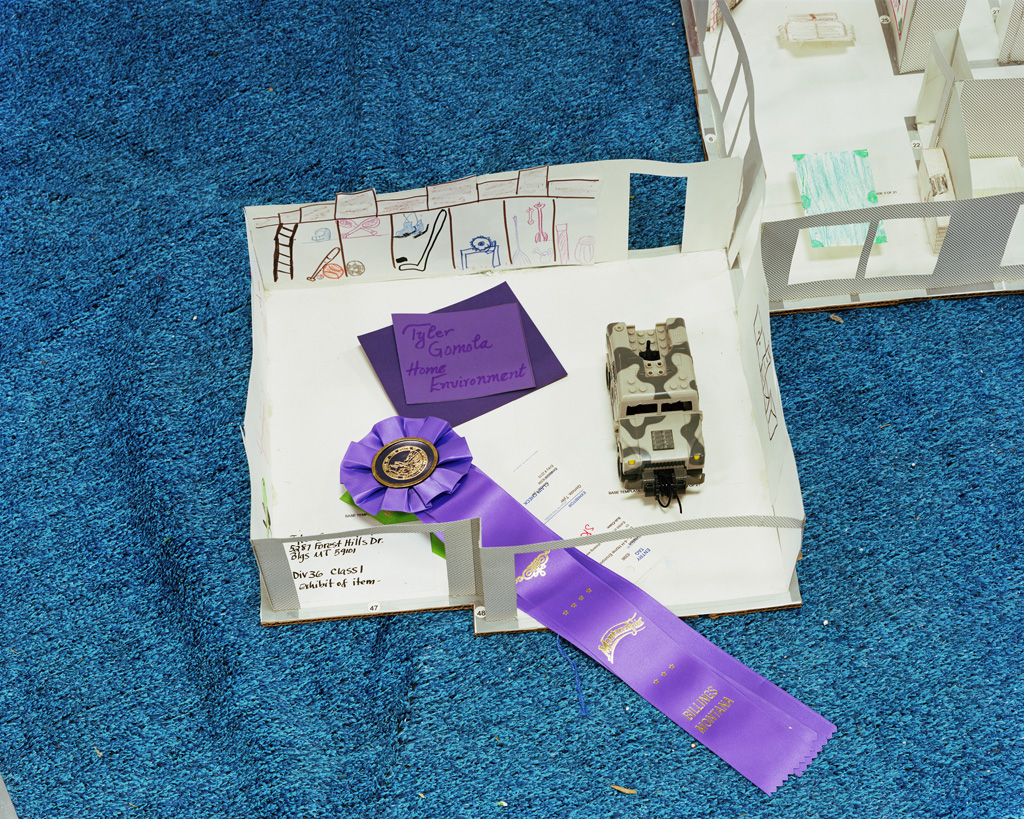
Alec Soth (American, b. 1969) Home Environment, Billings, MT 2008
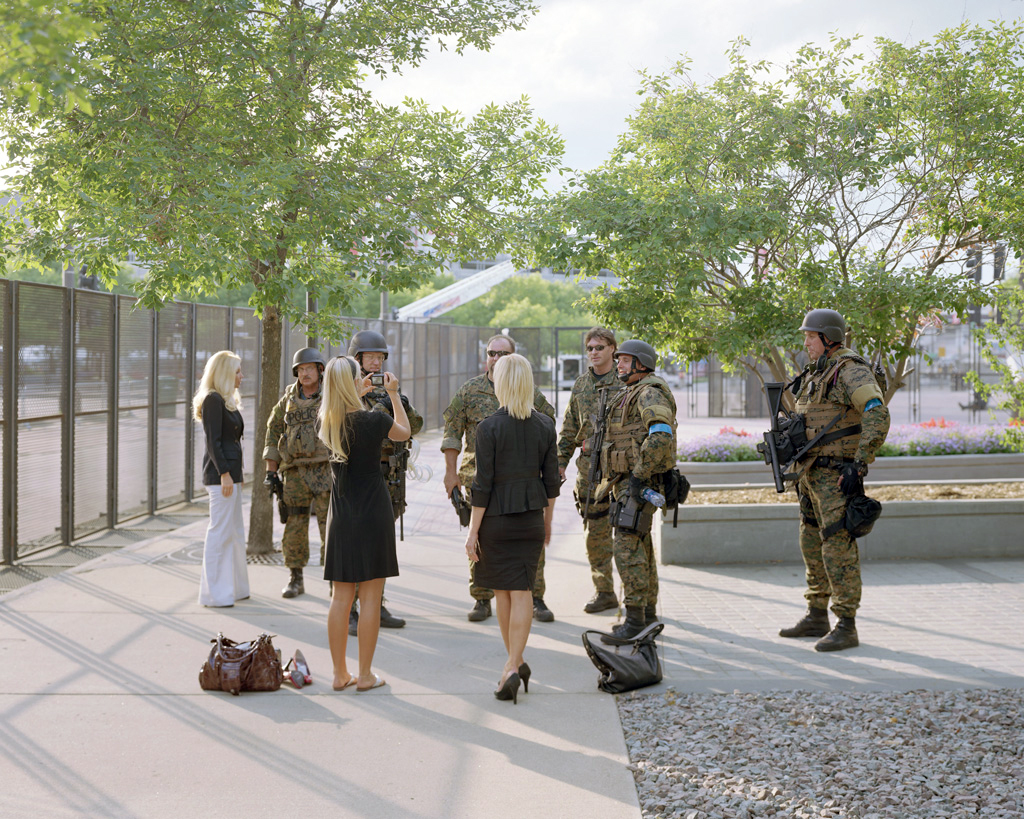
Alec Soth (American, b. 1969) Republican National Convention, Saint Paul, MN 2008
Gagosian Gallery 980 Madison Avenue New York, NY 10075 Phone: 212.744.2313




























 Art Blart _ art and cultural memory archive
You must be logged in to post a comment.