Review: ‘All the Little Pieces’ by Lyndal Hargrave at Anita Traverso Gallery, Richmond, Melbourne

Exhibition dates: 3rd September – 3rd October, 2009


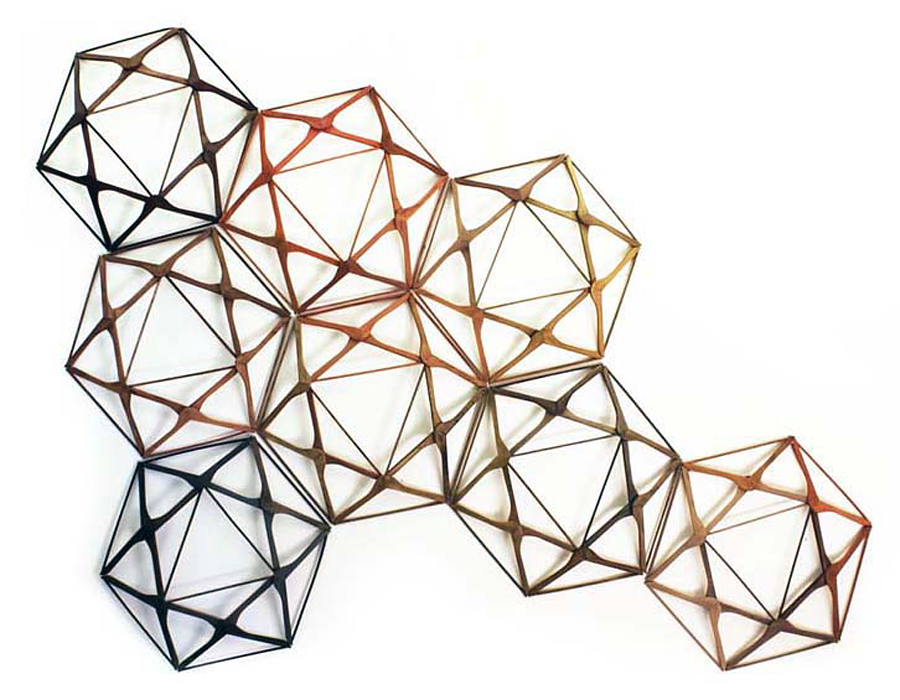
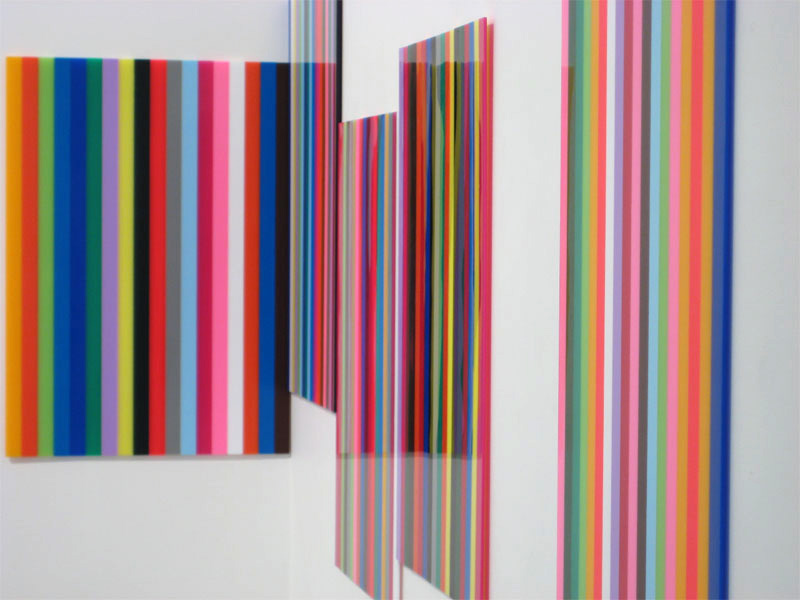
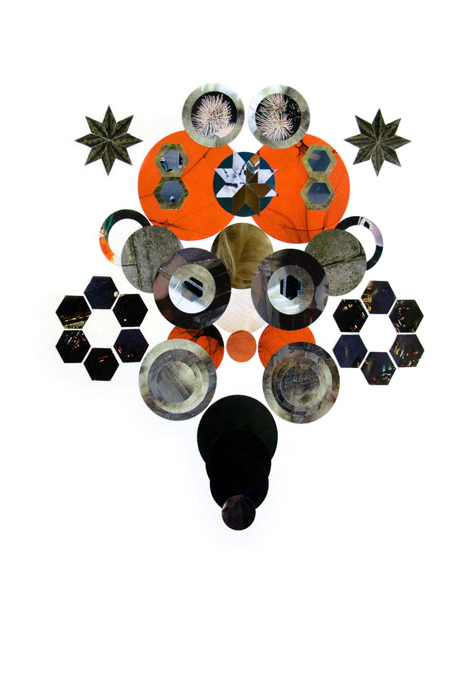
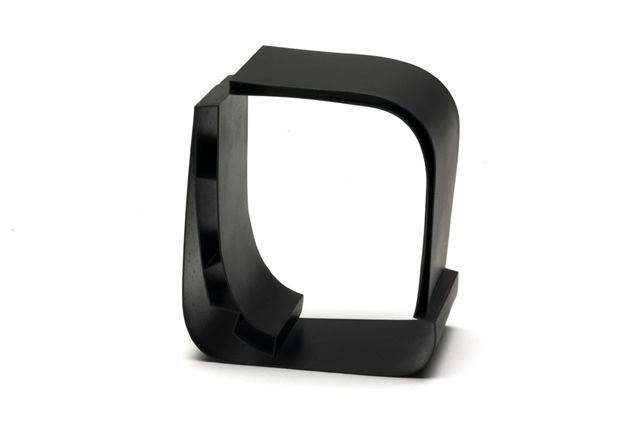
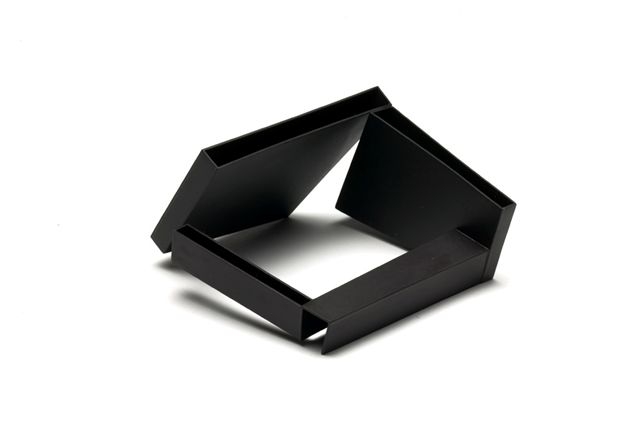
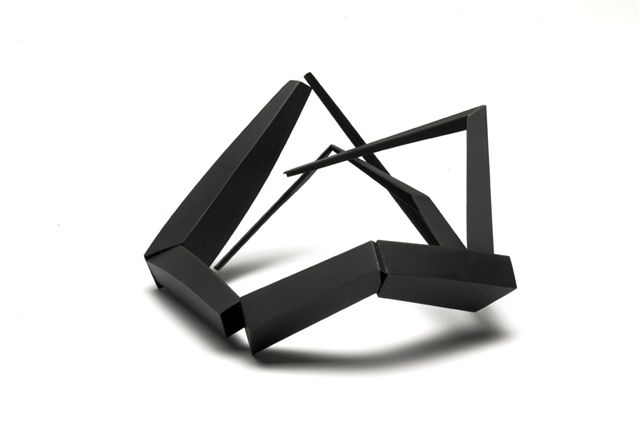
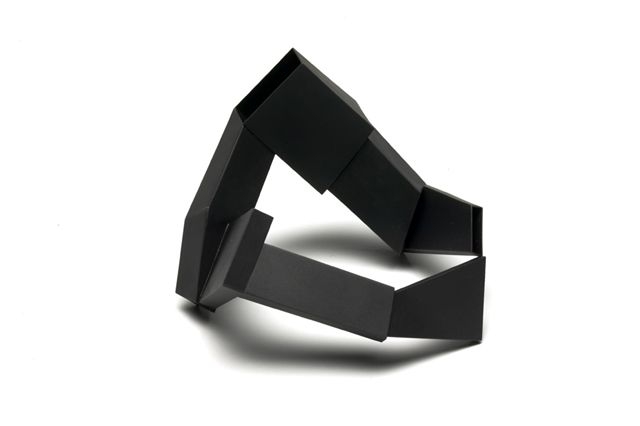
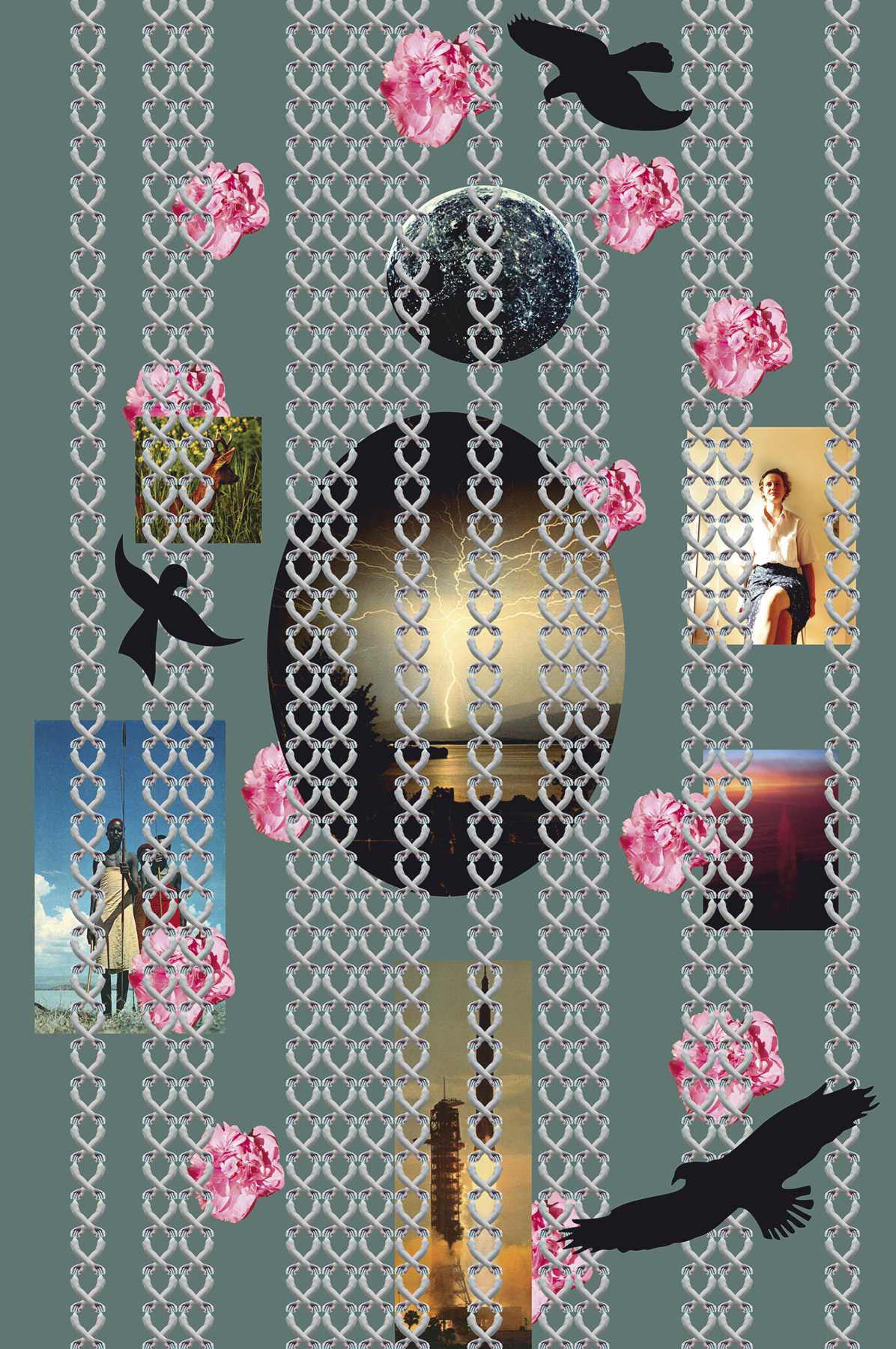
Lyndal Hargrave (Australia, b. 1959) 'Sacred Geometry' 2009 from the exhibition 'All the Little Pieces' by Lyndal Hargrave at Anita Traverso Gallery, Richmond, Melbourne, Sept - Oct, 2009


Lyndal Hargrave (Australia, b. 1959)
Sacred Geometry
2009
Acrylic painted timber coat hangers, screws, staples
180 x 170cm
Photo: Marcus Bunyan


This is a mixed bag of an exhibition by Lyndal Hargrave at Anita Traverso Gallery in Richmond, Melbourne.

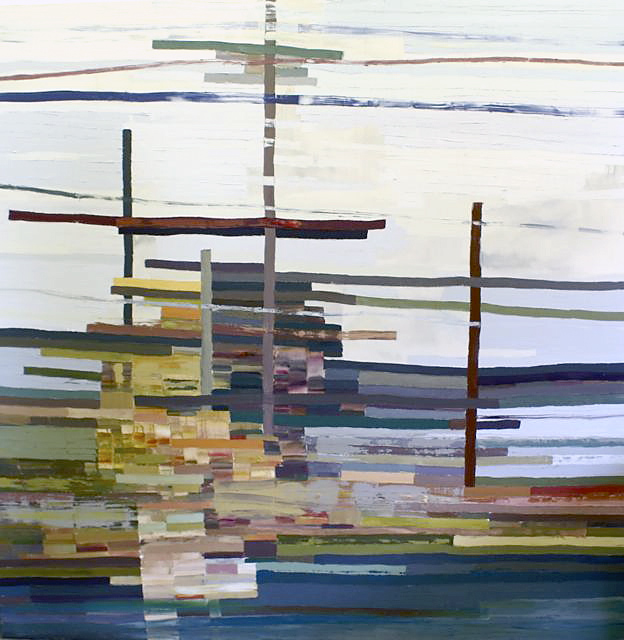
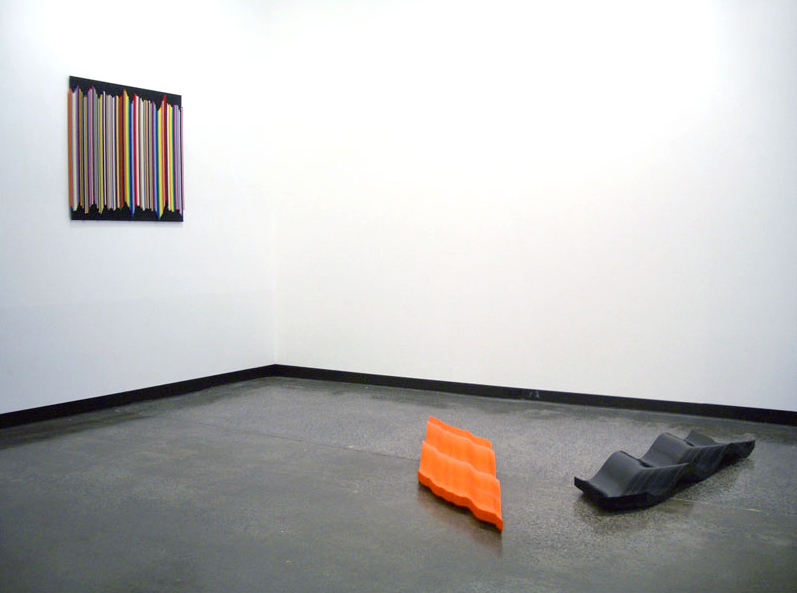
Despite one outstanding painting Breathing Space (2009, see below), the view from the back of the artist’s house onto a jetty with attendant wooden posts and sky, the other paintings are the weakest elements of the exhibition, lacking the strength and resonance of the sculptural work.

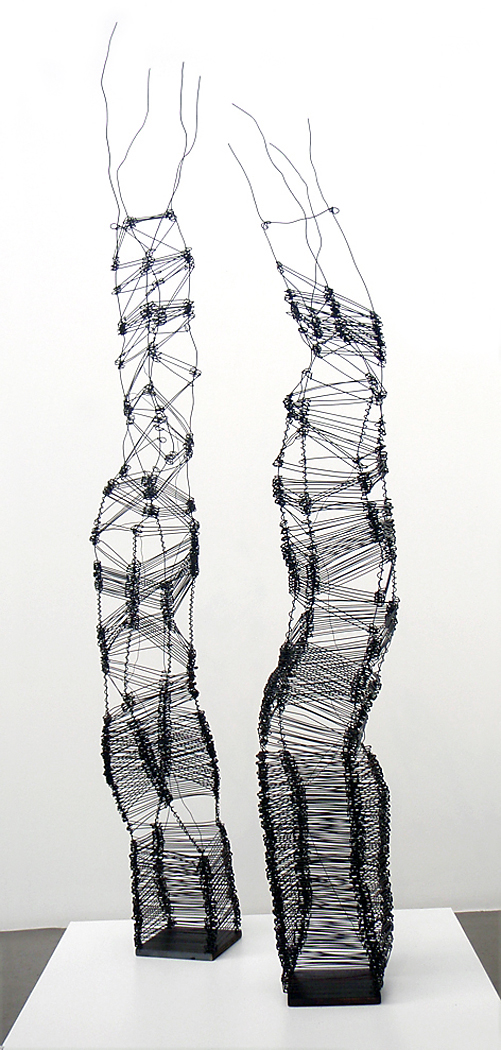
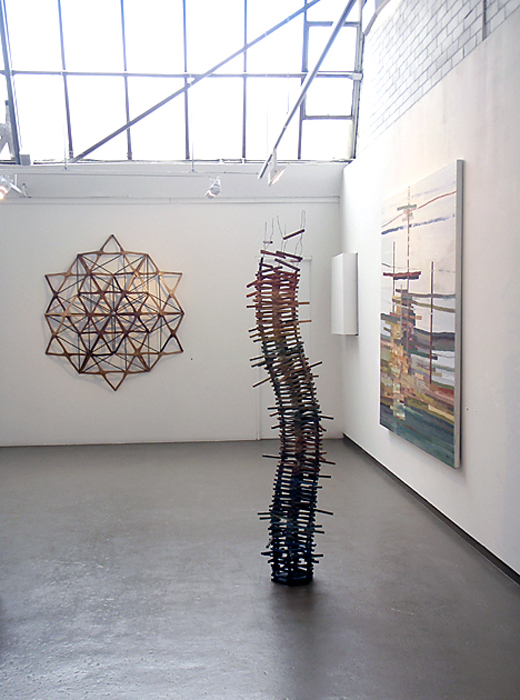
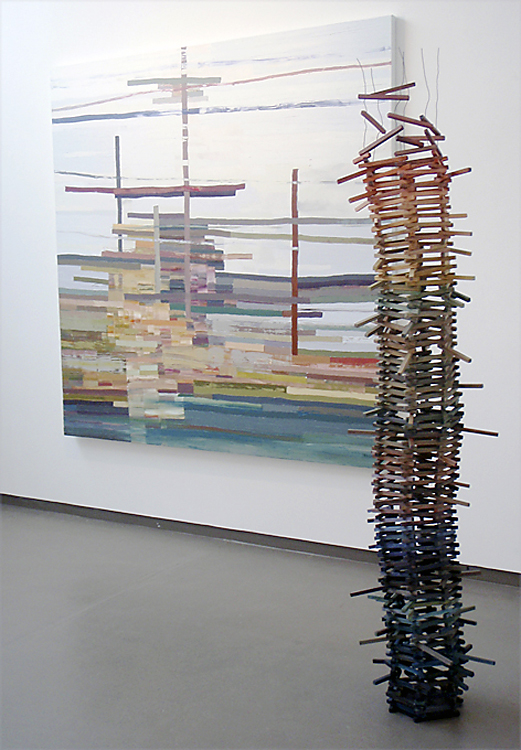
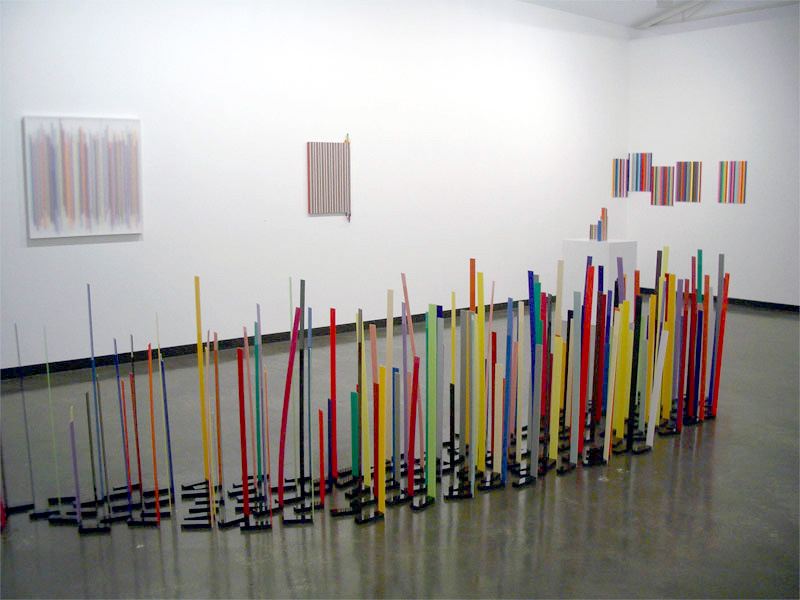
The two standing towers, Hairpin Dragons I & II and Jacob’s Ladder (both 2009, see below) are stronger work, Jacobs Ladder imitating the form of the painting Breathing Space in three-dimensional Cuisenaire-type coloured rods (see the installation photograph of the two pieces below).

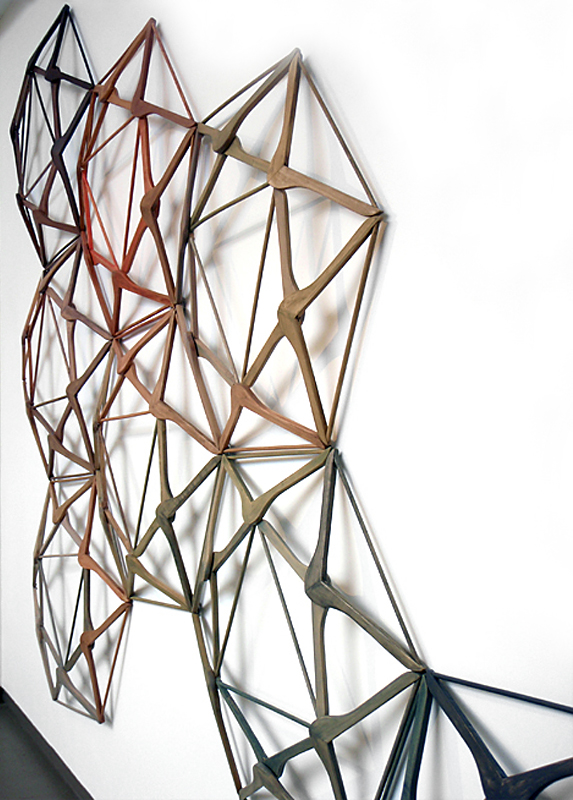
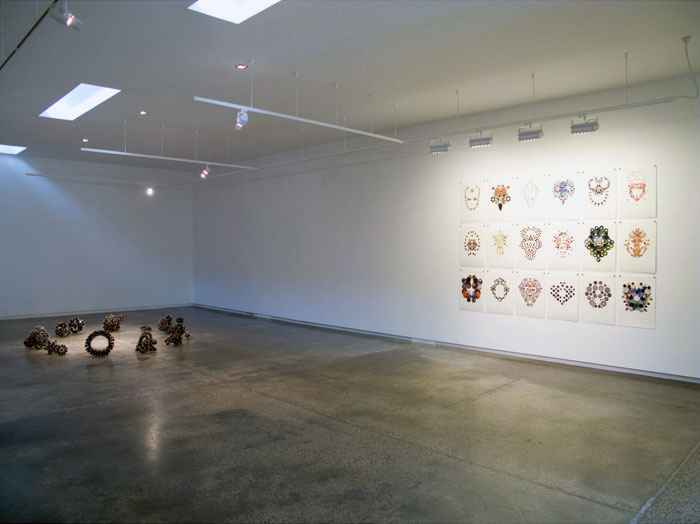
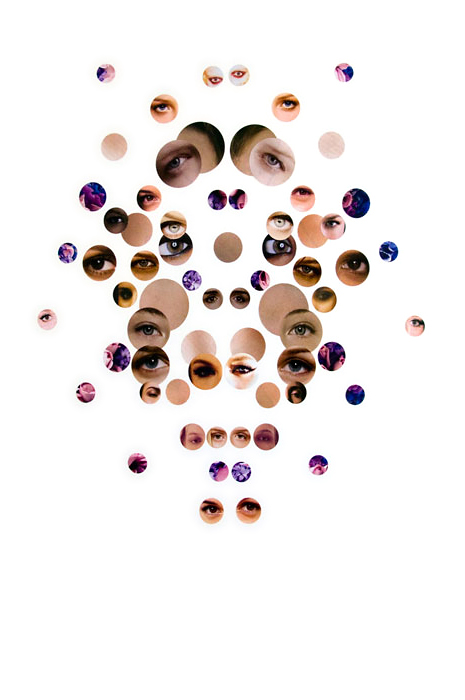
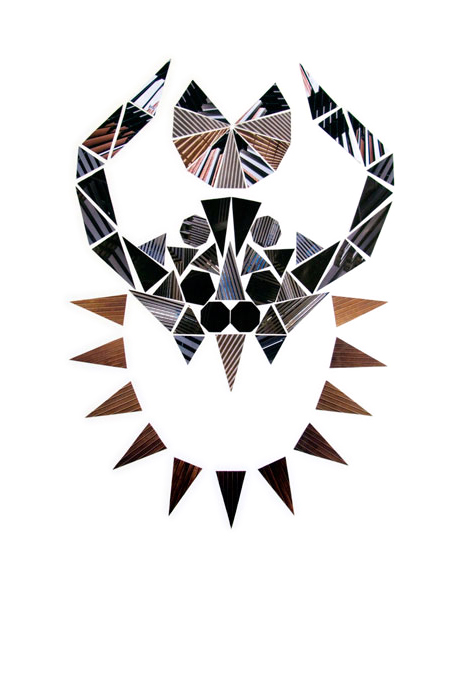
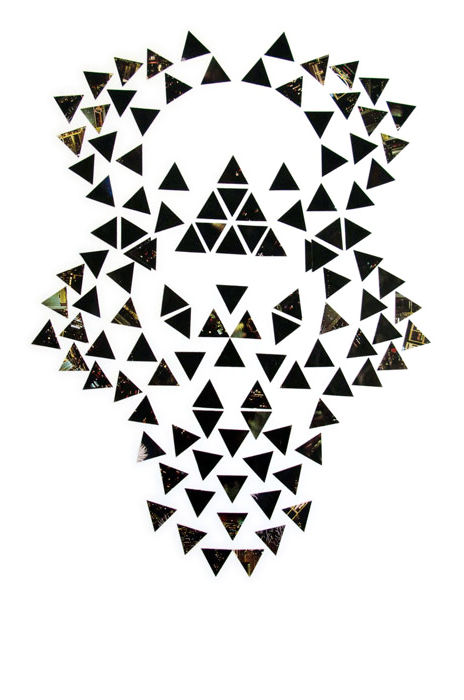
The best pieces in the exhibition are the wall mounted geometric, mandala-like sculptures made of wooden coat hangers. Delicately shifting patterns take the micro cellular form and make it macro, their patterns of construction offering a pleasing visual balance that is both complex, layered and innovative at one and the same time. As explorations of the notion of the universal structure, the golden ratio, they reward repeated viewing.

As the exhibition stands there are too many little pieces to make a holistic whole. Perhaps an exhibition solely of the towers or geometric pieces would have been stronger. I look forward to seeing how the geometric pieces (d)evolve in future work. Will the structures break down and reassemble in other marvellous incantations? I hope so!

Dr Marcus Bunyan


Many thankx to Anita Traverso Gallery for allowing me to publish the art work in the posting. Please click on some of the photographs for a larger version of the image.


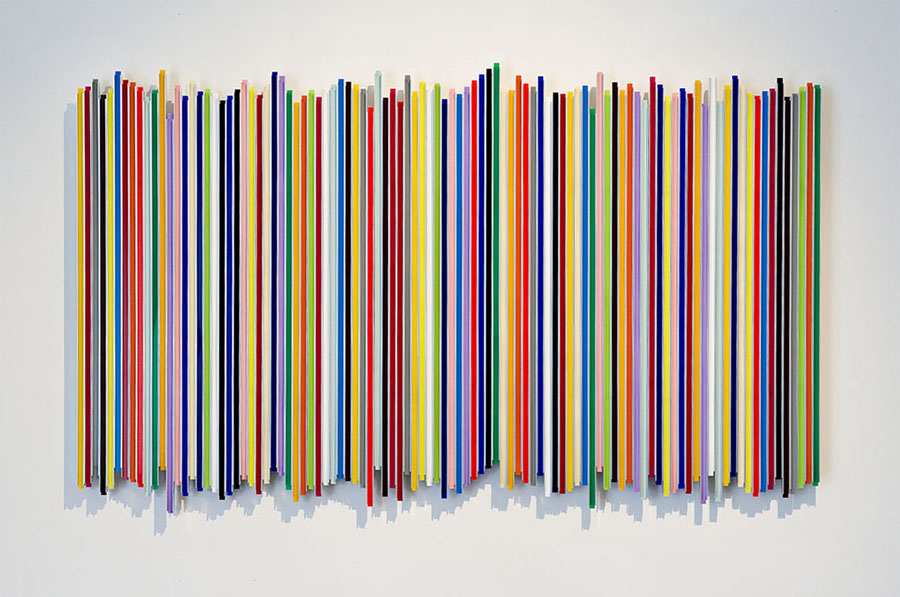
Lyndal Hargrave (Australia, b. 1959) 'Arabesque' 2009 from the exhibition 'All the Little Pieces' by Lyndal Hargrave at Anita Traverso Gallery, Richmond, Melbourne, Sept - Oct, 2009


Lyndal Hargrave (Australia, b. 1959)
Arabesque
2009
Acrylic painted timber coat hangers, screws, staples
200 x 360cm
Photo: Marcus Bunyan


Lyndal Hargrave (Australia, b. 1959) 'Arabesque' 2009 (detail)


Lyndal Hargrave (Australia, b. 1959)
Arabesque (detail)
2009
Acrylic painted timber coat hangers, screws, staples
200 x 360cm
Photo: Marcus Bunyan


Lyndal Hargrave (Australia, b. 1959) 'Hairpin Dragons I & II' 2009


Lyndal Hargrave (Australia, b. 1959)
Hairpin Dragons I & II
2009
Wire, formply
170 x 15cm (varying)
Photo: Marcus Bunyan


“It is a constant idea of mine that behind the cotton wool (of daily reality) is hidden a pattern, that we – I mean all human beings – are connected with this: that the whole world is a work of art; that we are parts of the work of art.”

~ Virginia Woolf


For as long as I can remember, my art practice has served as a filter between the outside world and my inside world. I realise now that the act of making the artwork informs my ideas rather than the other way round. Working intuitively results in a continuous stream of surprises that in retrospect mirror the pressing issues surrounding me at that time.

In All the Little Pieces my fascination with patterns of construction from micro to macro and natural to man-made continues. My work explores the gap between order and chaos and helps me to understand the meaning of balance.

Using mundane found objects, my sculptures probe the possibility of re-invention through the way the componentry of human habitation can be re-configured to offer us a new way of seeing and experiencing our world.

It is this process of metamorphosis that is at the centre of my investigation: how life forms make the transition from one state to another – tree to timber to tower or talisman; why some systems remain strong and others crumble.

Overarching my work is the notion of universal structure and the geometry that has informed our evolution from molecule to macro-system.”

Lyndal Hargrave 2009

Text from the Anita Traverso Gallery website


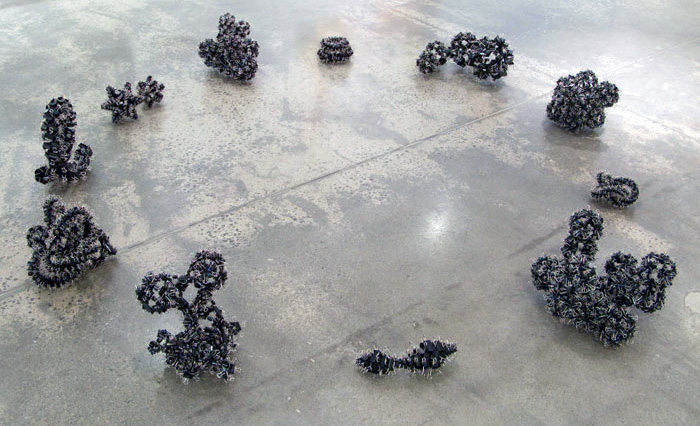
Lyndal Hargrave (Australia, b. 1959) 'Whirlpool Galaxy' (2009) and 'The Samarian Star' (2009)


Lyndal Hargrave (Australia, b. 1959)
Whirlpool Galaxy and The Samarian Star
2009
Acrylic painted timber coat hangers, screws, staples
Photo: Marcus Bunyan


Installation view of Lyndal Hargrave exhibition at Anita Traverso Gallery, Melbourne


Installation view of the Lyndal Hargrave exhibition at Anita Traverso Gallery
Photo: Marcus Bunyan


Photograph showing the relationship of form between the work 'Jacob’s Ladder' (2009) and the painting 'Breathing Space' (2009)


Photograph showing the relationship of form and colour between the work Jacob’s Ladder (2009) and the painting Breathing Space (2009)
Photo: Marcus Bunyan


Lyndal Hargrave (Australia, b. 1959) 'Breathing Space' 2009


Lyndal Hargrave (Australia, b. 1959)
Breathing Space
2009
Oil on canvas
200 x 200cm


Anita Traverso Gallery

The physical gallery has now closed.

PO Box 7001, Hawthorn North 3122
Phone: 0408 534 034
Email: art@anitatraversogallery.com.au

Anita Traverso Gallery website

LIKE ART BLART ON FACEBOOK

Back to top

Review: ‘Connection is Solid’ by John Nicholson at Sophie Gannon Gallery, Richmond, Melbourne

Exhibition dates: 25th August – 19th September, 2009


John Nicholson (Australian, b. 1970) 'Untitled' 2009 from the exhibition 'Connection is Solid' by John Nicholson at Sophie Gannon Gallery, Richmond, Melbourne, Aug - Sept, 2009


John Nicholson (Australian, b. 1970)
Aerial Navigation
2009


You could say that the essence of the cosmos is not matter, it is consciousness.

It is not the external world that is real – it is “maya”, an illusion, for the real world lies within.

These works, with their striations, strata and suspension are emanations of that spirit – projections of the inner reality.

In terms of the ancient Chinese philosophy Lao Tzu we dream the butterfly and the butterfly is us. If you don’t ‘get’ these works, let go all pretensions and feel their colour as sound, as vibrations of energy.

Submerge yourself in their shape and form. Like DNA structure, a heart beat or the record of a seismic shock these works are music as art, the length of harmony quivering and slipping in our minds, before our eyes.

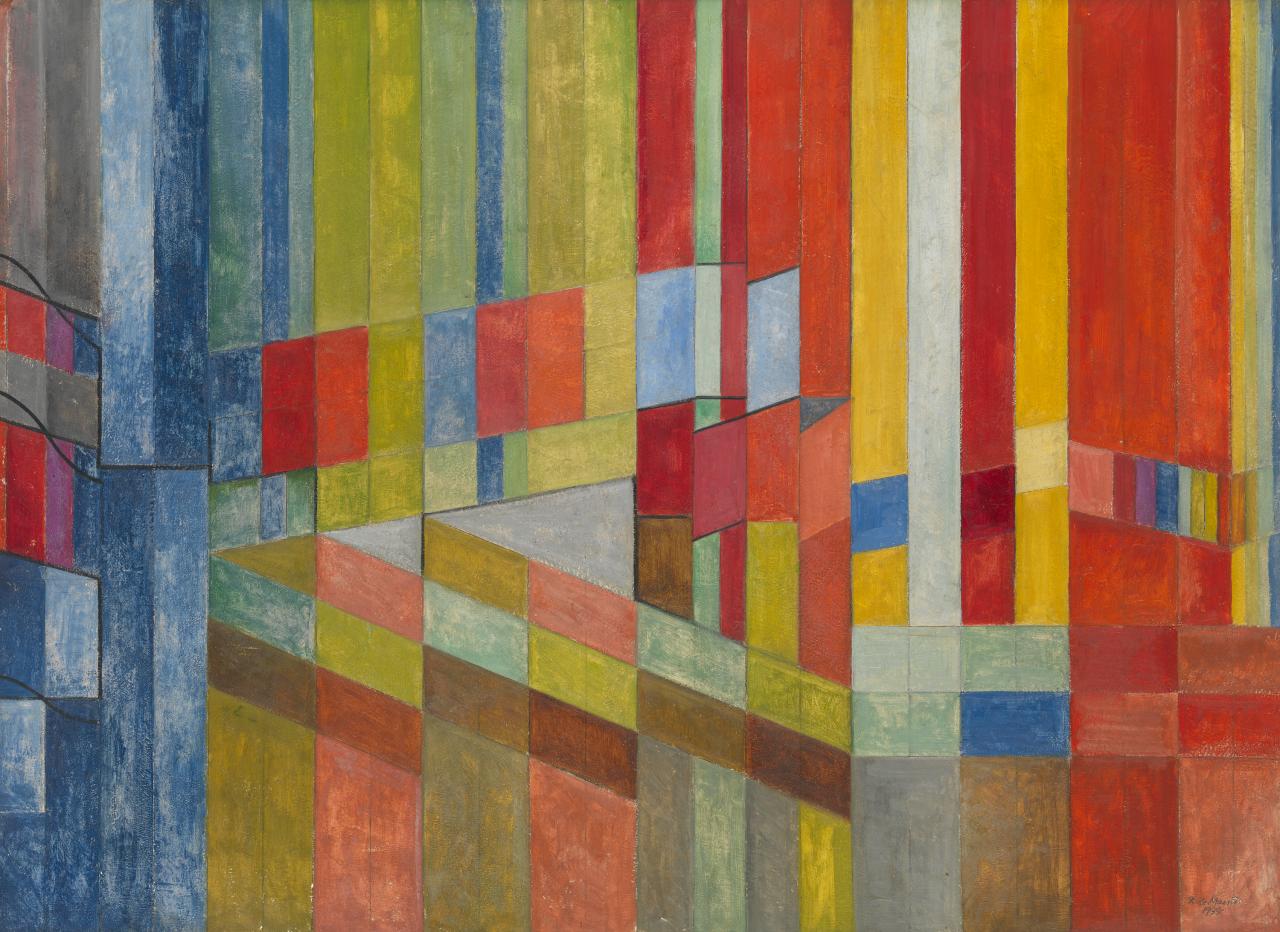
This is the colour music of Roy De Maistre’s paintings of the 1930’s updated to the 21st century. They are fugues of sound made physical entities, intertwining, coming and going. Here lines, tones and colours are organised in a parallel way – tone after tone, line after line. They are wavelengths of the interior made visible. The connection is solid and fluid at one and the same time; there are many connections to be discovered, many journeys to be made.

I hear them, I like them.

Dr Marcus Bunyan


Many thankx to Sophie Gannon Gallery for allowing me to publish the photographs in the posting. Please click on the photographs for a larger version of the image.


John Nicholson (Australian, b. 1970) 'Under the radar' 2009 from the exhibition 'Connection is Solid' by John Nicholson at Sophie Gannon Gallery, Richmond, Melbourne, Aug - Sept, 2009


John Nicholson (Australian, b. 1970)
Under the radar
2009
Photo: Marcus Bunyan


Installation view of 'Connection is Solid' by John Nicholson at Sophie Gannon Gallery, Melbourne

Installation view of 'Connection is Solid' by John Nicholson at Sophie Gannon Gallery, Melbourne


Installation views of Connection is Solid by John Nicholson at Sophie Gannon Gallery
Photos: Marcus Bunyan


John Nicholson (Australian, b. 1970) 'Thrill seeker' 2009 (detail)


John Nicholson (Australian, b. 1970)
Thrill seeker (detail)
2009
Photo: Marcus Bunyan


Roy de Maistre (Australian, 1894-1968) 'Arrested Movement from a Trio' 1934


Roy de Maistre (Australian, 1894-1968)
Arrested Movement from a Trio
1934
Oil and pencil on composition board
72.3 × 98.8cm


John Nicholson (Australian, b. 1970) 'Slip' 2009


John Nicholson (Australian, b. 1970)
Slip
2009


John Nicholson (Australian, b. 1970) 'The wire might sense' 2009


John Nicholson (Australian, b. 1970)
The wire might sense
2009


John Nicholson (Australian, b. 1970) 'Swoop' 2009


John Nicholson (Australian, b. 1970)
Swoop
2009
Photo: Marcus Bunyan


Installation view of 'Connection is Solid' by John Nicholson with on the wall 'Satellite Graffitti' (2009) and on the floor 'Cascade' (2009) and 'Swoop' (2009)


Installation view of Connection is Solid by John Nicholson with on the wall Satellite Graffitti (2009) and on the floor Cascade (2009) and Swoop (2009)
Photo: Marcus Bunyan


Sophie Gannon Gallery
2, Albert Street, Richmond, Melbourne

Opening hours:
Tuesday – Saturday 11am – 5pm
Sophie Gannon Gallery website

LIKE ART BLART ON FACEBOOK

Back to top

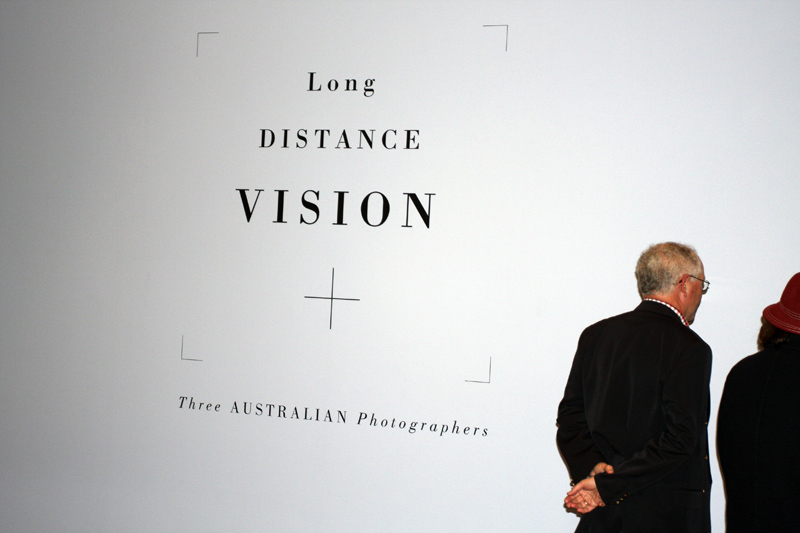
Opening: ‘Long Distance Vision: Three Australian Photographers’ at The Ian Potter Centre, NGV Australia, Federation Square, Melbourne

Exhibition dates: 28th August 2009 – 21st February 2010

Opening: Thursday 27th August 2009
Artists: Christine Godden, Max Pam and Matthew Sleeth


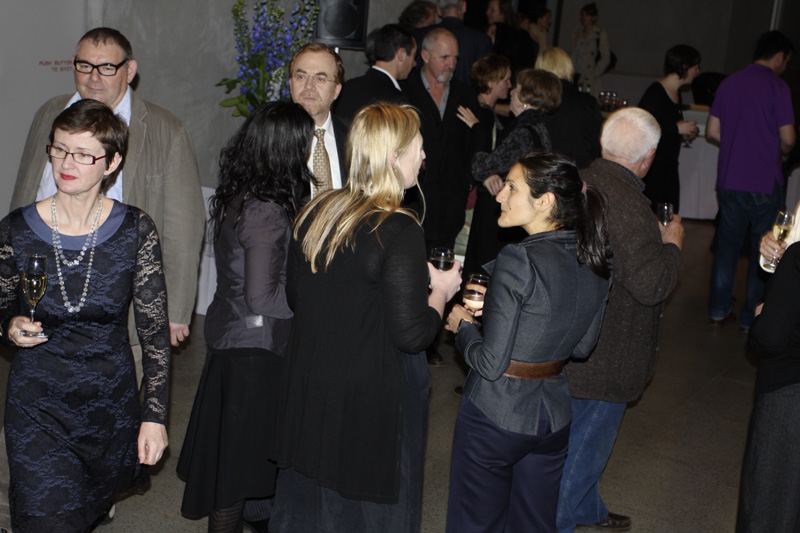
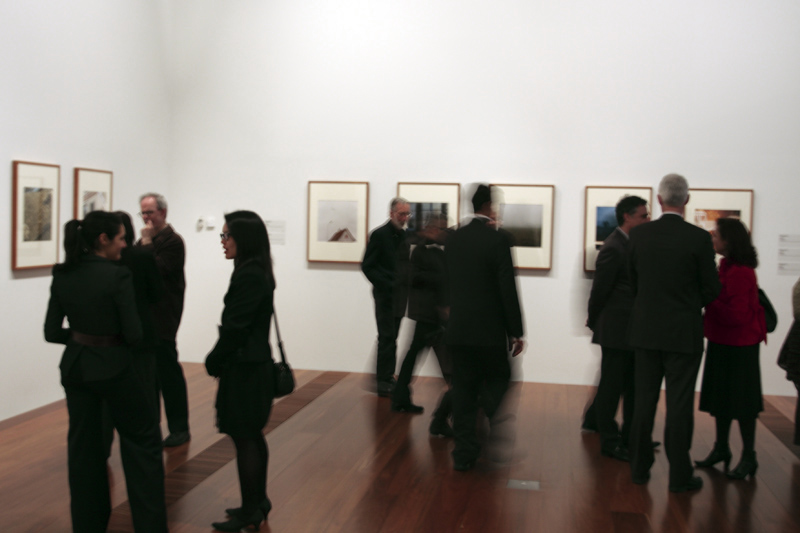
Opening night crowd for 'Long Distance Vision' at NGV Australia, Melbourne


Opening night crowd for Long Distance Vision at NGV Australia, Melbourne with Senior Curator of Photography, Dr Isobel Crombie, at left of photograph
Photo: Marcus Bunyan


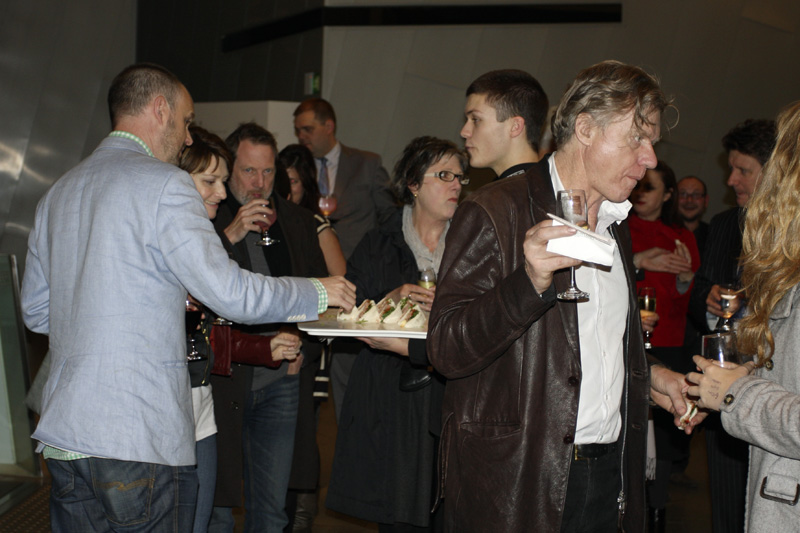
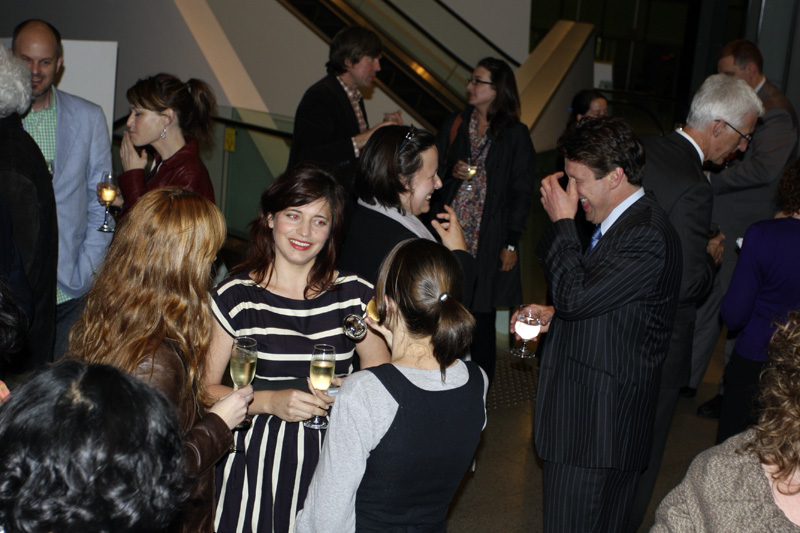
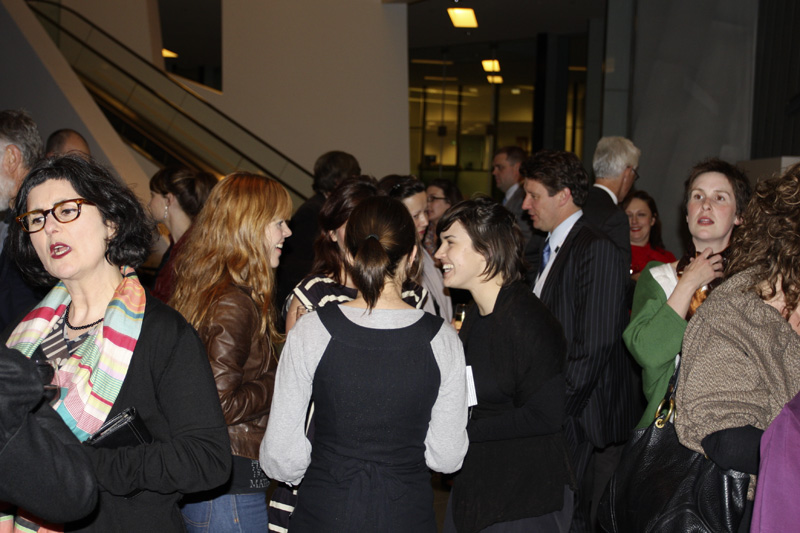
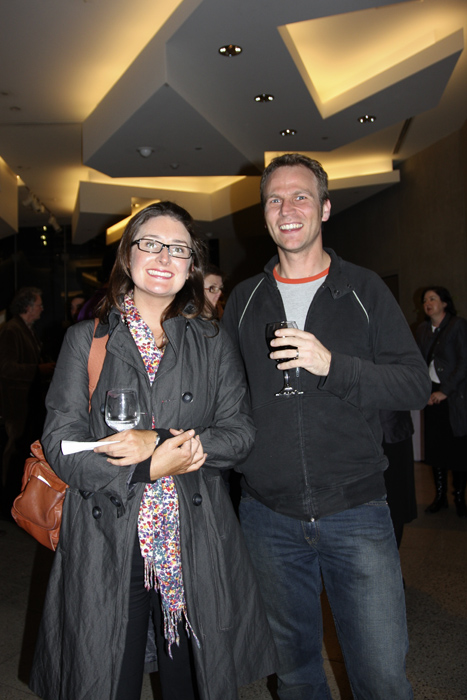
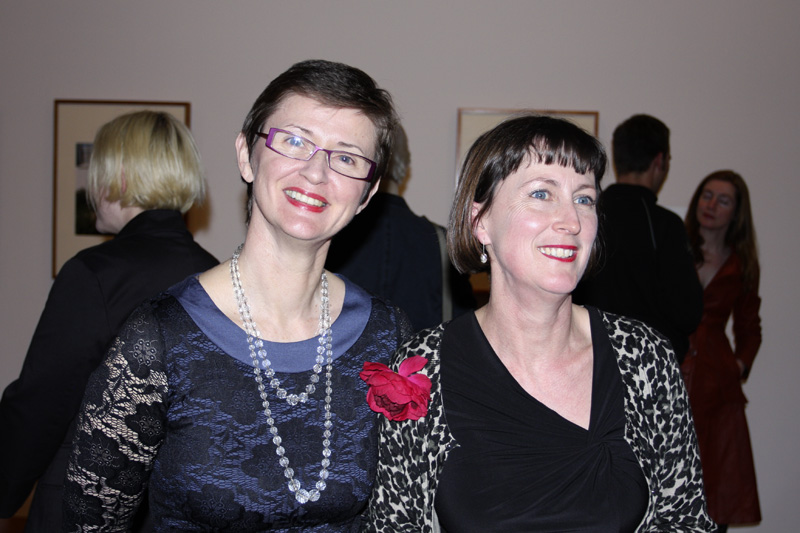
A small but social opening of the latest photography exhibition at NGV Australia. Wonderful to see Edwin Nicholls and Sophie Gannon from Sophie Gannon Gallery, Richmond in attendance along with Dr Isobel Crombie, Senior Curator of Photography at the NGV and Susan van Wyk, curator of this exhibition and Curator of Photography at the NGV. Also in attendance were the NGV Director, Gerard Vaughan and Frances Lindsay, Deputy Director of the NGV. The exhibition was opened by Associate Professor Christopher Stewart from RMIT University.

Dr Marcus Bunyan


Many thankx to Alison Murray and Sue Coffey for allowing me to take photographs of the opening, and for allowing me to publish the photographs in the posting. Please click on the photographs for a larger version of the image.


Opening night crowd for 'Long Distance Vision' at NGV Australia, Melbourne

Opening night crowd for 'Long Distance Vision' at NGV Australia, Melbourne

Opening night crowd for 'Long Distance Vision' at NGV Australia, Melbourne


Opening night crowd for Long Distance Vision at NGV Australia, Melbourne
Photos: Marcus Bunyan


Long Distance Vision will include over 60 photographs from the NGV Collection exploring the concept of the ‘tourist gaze’ and its relationship with the three artists.

Susan van Wyk, Curator Photography, NGV said the exhibition provides a fascinating insight into the unusual perspective brought by the three photographers to their varied world travel destinations.

“There’s a sense in the works in the exhibition that the photographers are not from the places they choose to photograph, and that each is a visitor delighting in the scenes they encounter.

What is notable about the photographs in Long Distance Vision is that rather than focussing on the well known scenes that each artist encountered, they have turned their attention to the ‘little things’, the details of the everyday,” said Ms van Wyk.

From the nineteenth century, photography has been a means by which people could discover the world, initially through personal collection and albums, and later via postcards, magazines, books and the internet.

Dr Gerard Vaughan, Director, NGV said that both contemporary photographers and tourists use the camera as a means to explore and capture the world.

“Through their photographs, the three artists featured in Long Distance Vision show us highly individual ways of seeing the world. This exhibition will surprise and delight visitors as our attention is drawn to not only what is different but what remains the same as we travel the world,” said Dr Vaughan.

Long Distance Vision: Three Australian Photographers is on display at The Ian Potter Centre: NGV Australia, Federation Square from 28 August 2009 to 21 February 2010. The Ian Potter Centre: NGV Australia is open every day 10am-5pm. Entry to this exhibition is free.”

Press release from the NGV


Opening of 'Long Distance Vision' at NGV Australia, Melbourne

Opening of 'Long Distance Vision' at NGV Australia, Melbourne


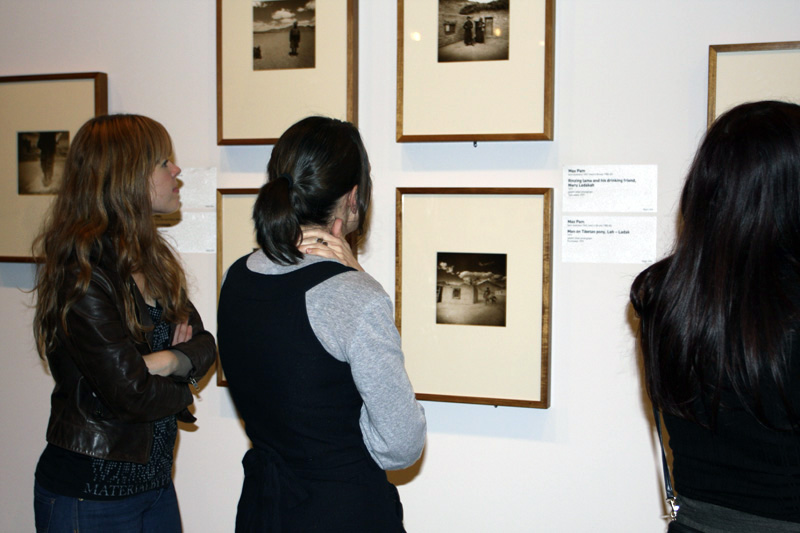
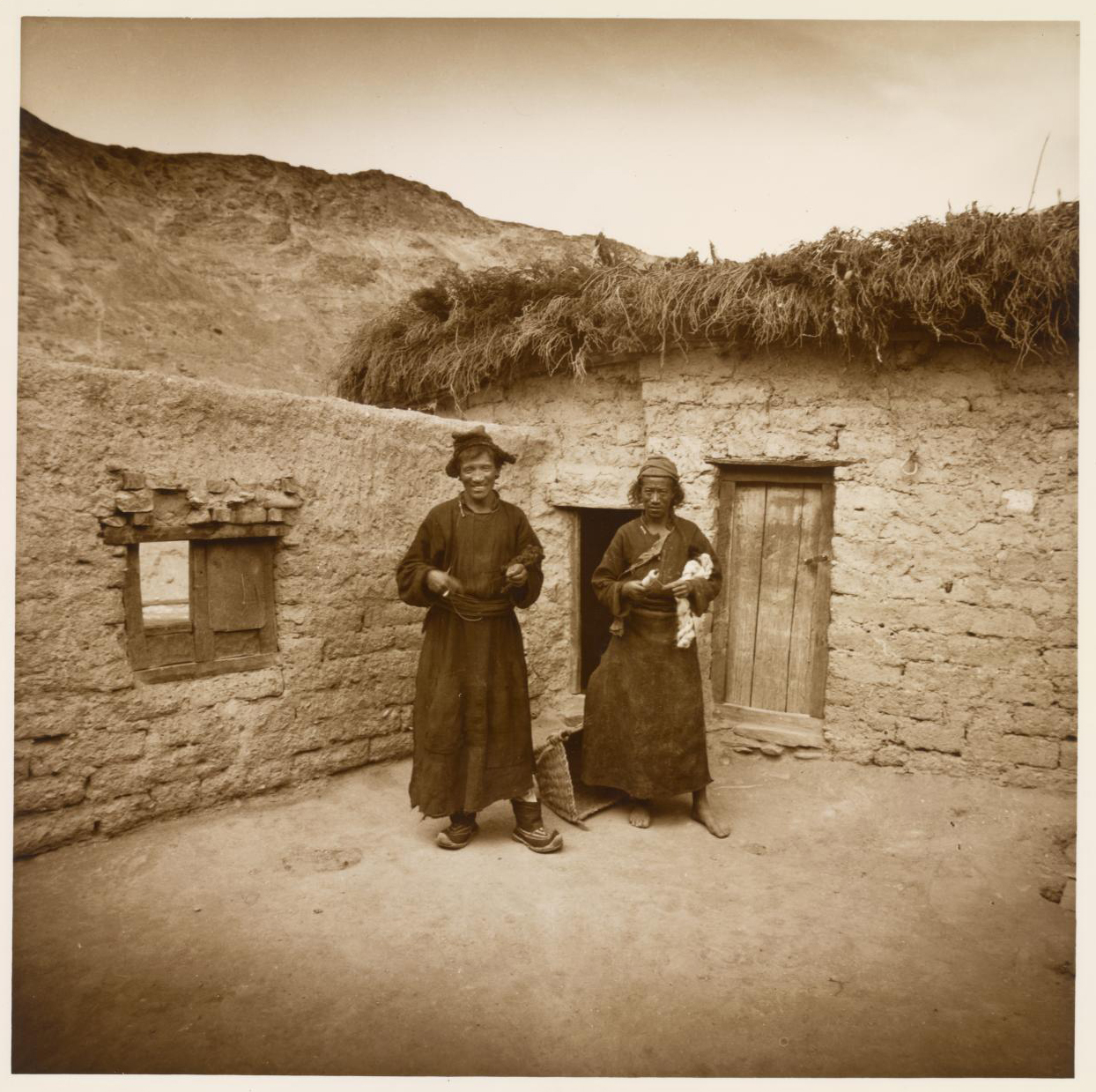
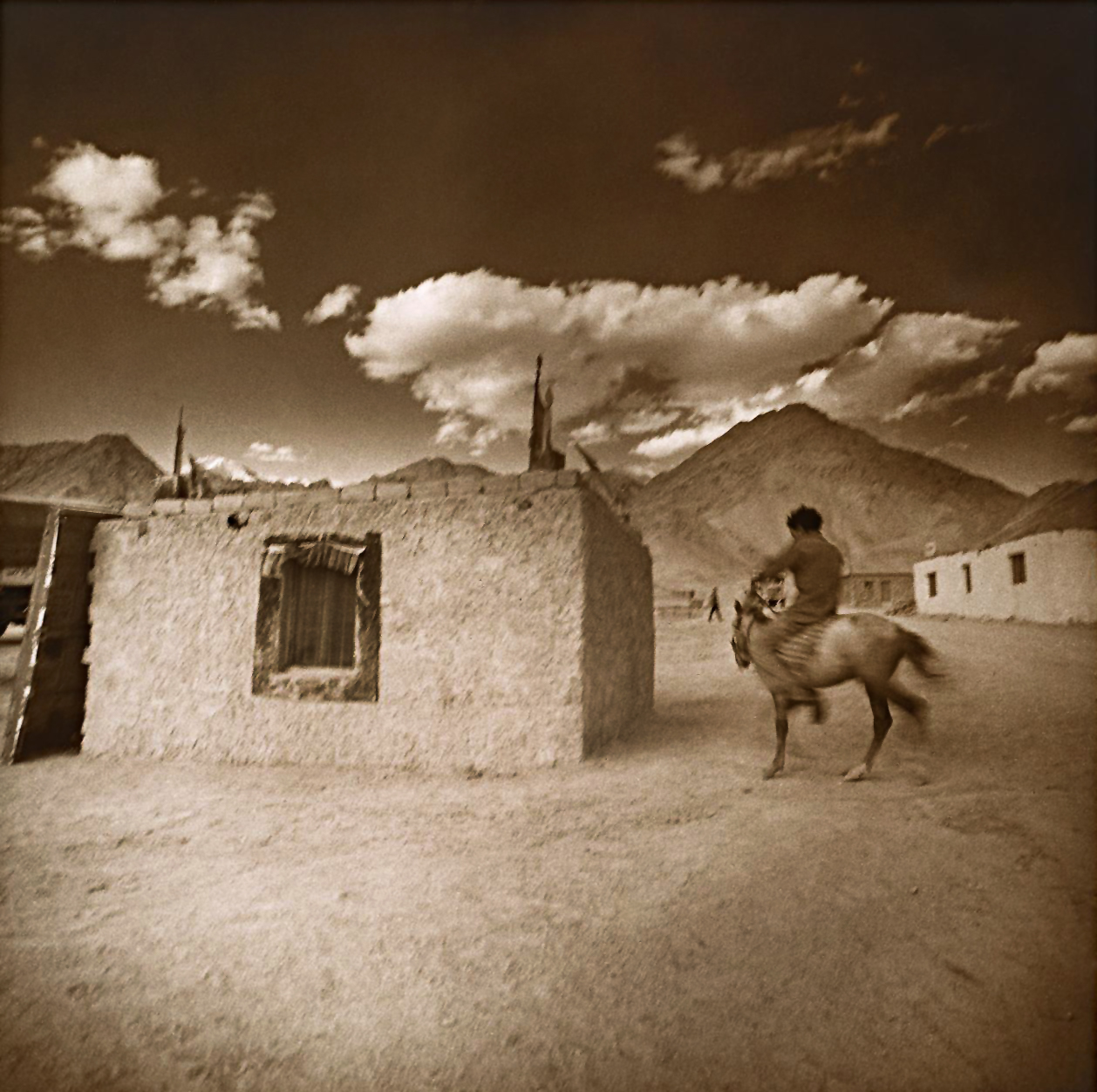
Opening night crowd for Long Distance Vision at NGV Australia, Melbourne looking at the work of Max Pam from his Tibet series (see the four images below)
Photos: Marcus Bunyan


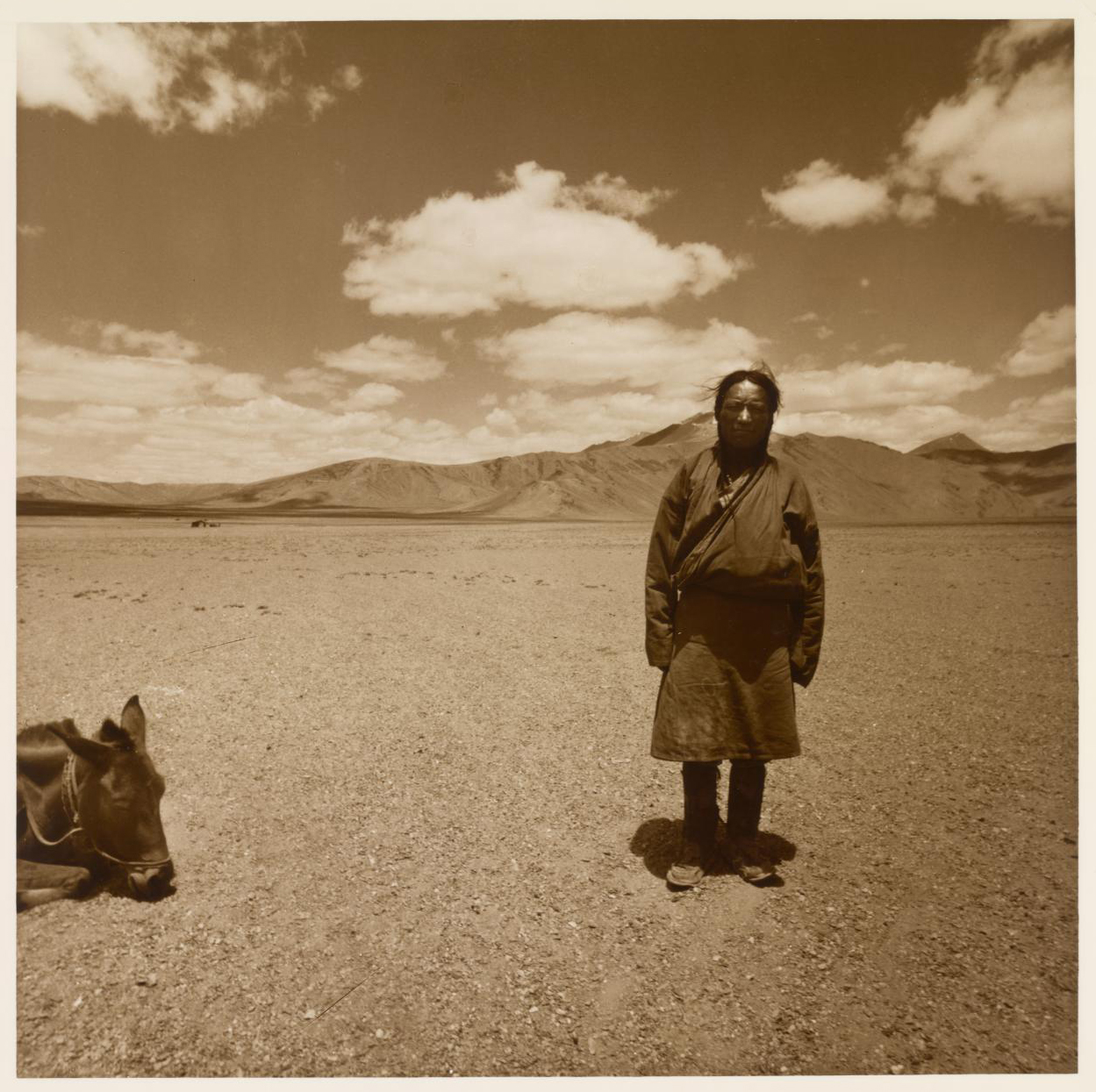
Max Pam (Australian, b. 1949) 'Tibetan man' 1977


Max Pam (Australian, b. 1949)
Tibetan man
1977
Gelatin silver photograph
20.1 × 20.1cm
National Gallery of Victoria, Melbourne
Purchased, 1979
© Max Pam


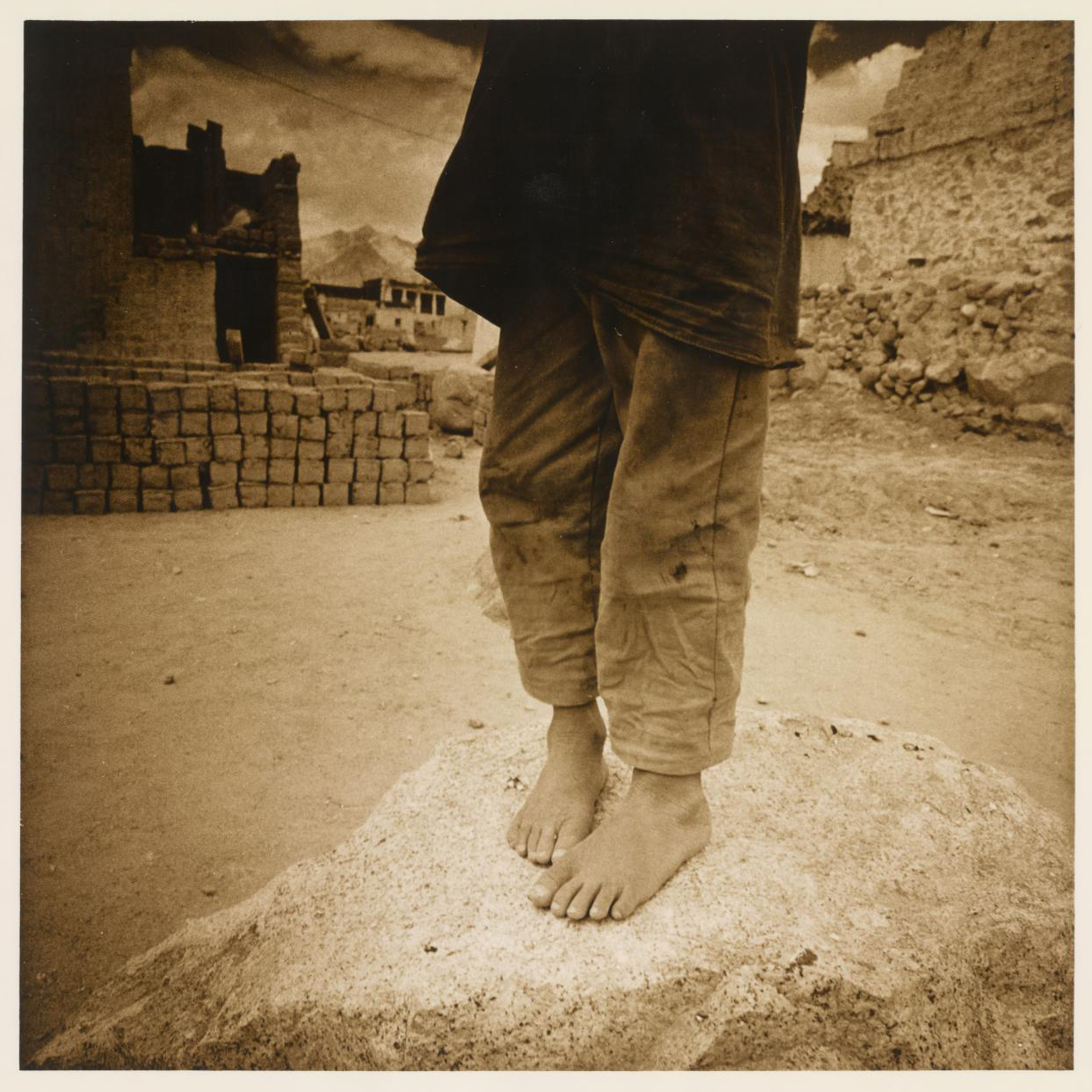
Max Pam (Australian, b. 1949) 'Feet, Thiksè, Ladakh' 1977


Max Pam (Australian, b. 1949)
Feet, Thiksè, Ladakh
1977
Gelatin silver photograph
20.1 × 20.1cm
National Gallery of Victoria, Melbourne
Purchased, 1979
© Max Pam


Max Pam (Australian, b. 1949) 'Rinzing lama and his drinking friend, Meru Ladakh' 1977


Max Pam (Australian, b. 1949)
Rinzing lama and his drinking friend, Meru Ladakh
1977
Gelatin silver photograph
20.1 × 20.1cm
National Gallery of Victoria, Melbourne
Purchased, 1979
© Max Pam


Max Pam (Australian, b. 1949) 'Man on Tibetan pony, Leh Ladakh' 1977


Max Pam (Australian, b. 1949)
Man on Tibetan pony, Leh Ladakh
1977
Gelatin silver photograph
20.1 × 20.1cm
National Gallery of Victoria, Melbourne
Purchased, 1979
© Max Pam


Edwin Nicholls and Sophie Gannon at the opening of 'Long Distance Vision' at NGV Australia, Melbourne


Sophie Gannon and Edwin Nicholls at the opening of Long Distance Vision at NGV Australia, Melbourne
Photo: Marcus Bunyan


Dr Isobel Crombie, Senior Curator of Photography at the NGV (left) with Susan can Wyk, Curator of Photography at the NGV and curator of the exhibition (right) at the opening of 'Long Distance Vision'


Dr Isobel Crombie, Senior Curator of Photography at the NGV (left) with Susan van Wyk, Curator of Photography at the NGV and curator of the exhibition (right) at the opening of Long Distance Vision
Photo: Marcus Bunyan


Opening night crowd for 'Long Distance Vision' at NGV Australia, Melbourne

Opening of 'Long Distance Vision' at NGV Australia, Melbourne.


Opening night crowd for Long Distance Vision at NGV Australia, Melbourne looking at the work of Max Pam from his Tibet series (see two images below)
Photos: Marcus Bunyan


Max Pam (Australian, b. 1949) 'Sisters' 1977


Max Pam (Australian, b. 1949)
Sisters
1977
Gelatin silver photograph
20.1 × 20.1cm
National Gallery of Victoria, Melbourne
Purchased, 1979
© Max Pam


Max Pam (Australian, b. 1949) 'Tibetan nomads' 1977


Max Pam (Australian, b. 1949)
Tibetan nomads
1977
Gelatin silver photograph
20.1 × 20.1cm
National Gallery of Victoria, Melbourne
Purchased, 1979
© Max Pam


The Ian Potter Centre: NGV Australia Federation Square
Corner of Russell and 
Flinders Streets, Melbourne

Opening hours:
Daily 10am – 5pm

National Gallery of Victoria website

LIKE ART BLART ON FACEBOOK

Back to top

Review: ‘Symmetrical Spirit Guides and Fractal Alchemy’ by Carl Scrase at John Buckley Gallery, Richmond, Melbourne

Exhibition dates: 19th August – 5th September, 2009


Carl Scrase 'Fractal Alchemy' installation view 2009


Carl Scrase (Australian, b. 1983)
Fractal Alchemy installation view
2009


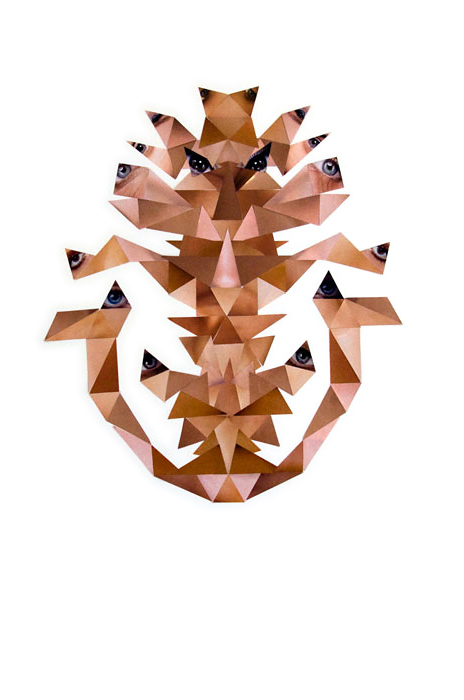
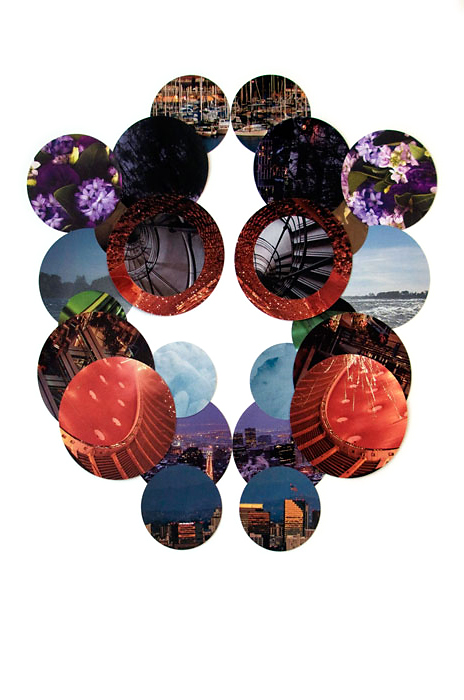
This is a slight exhibition of collages and constructions by Carl Scrase at John Buckley Gallery, Melbourne. Ironically, given the nature of the catalogue essay by Tai Snaith (see below) that waxes lyrical about the mystery and magic of symmetry, synchronicity and spirit, this exhibition lacks the depth of purpose needed to address spiritual elements that are the very basis of human existence.

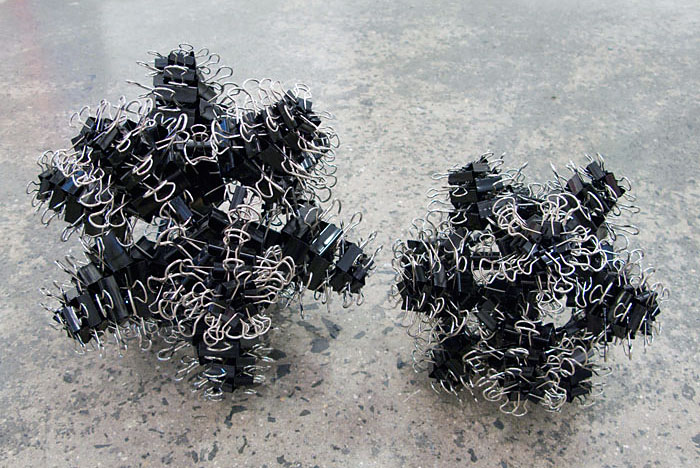
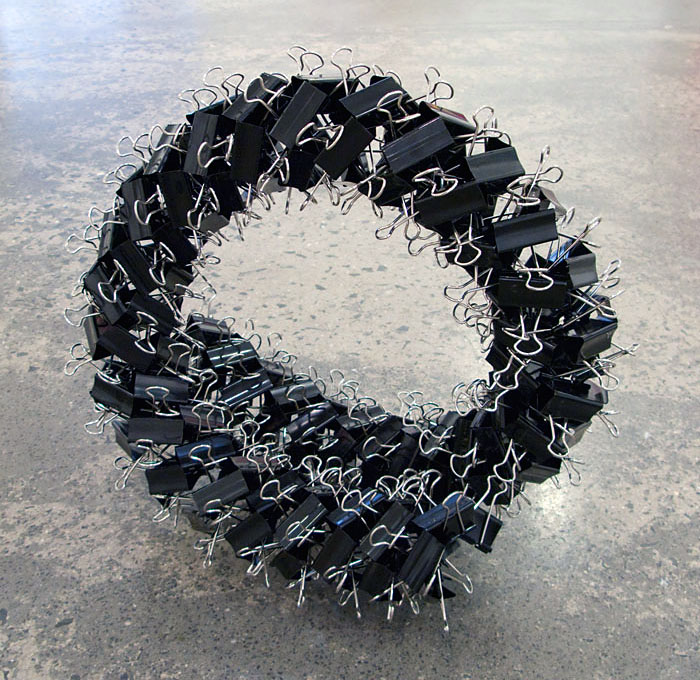
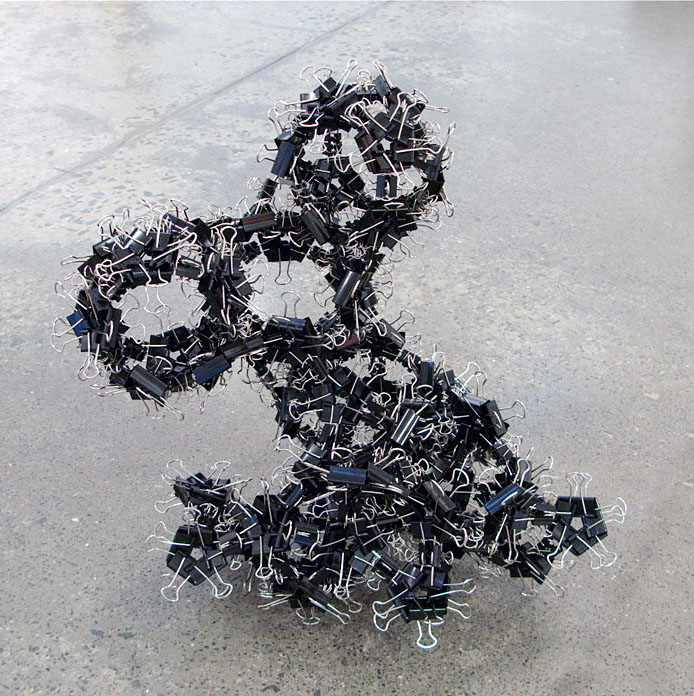
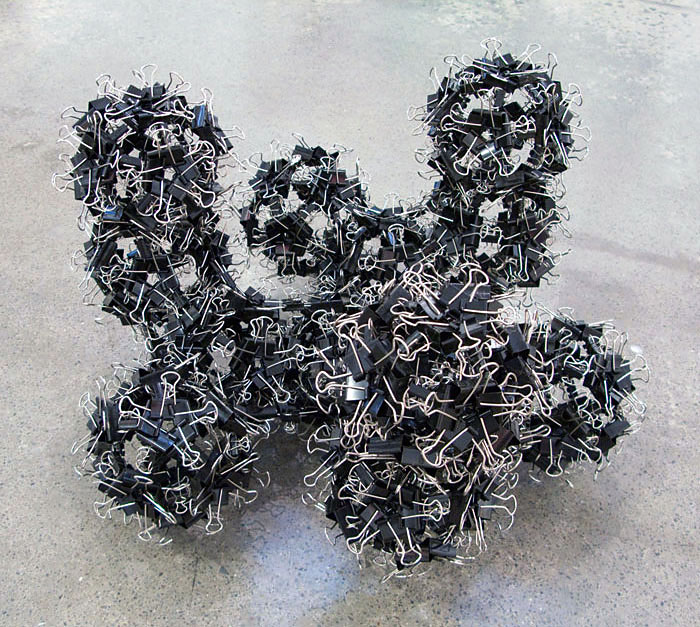
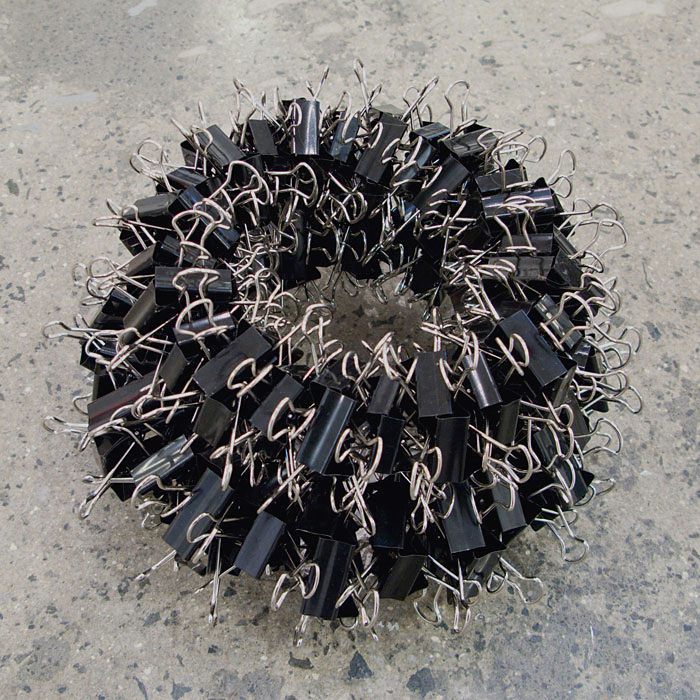
The biomorphic forms that go to make up the work Fractal Alchemy (2009) fair better in this regard, the various size bull dog clips offering non-representational patterns that resemble living organisms and genetic structures in shape and appearance. At their best these elemental shapes start to transcend form and function to become something else: an instinctive and intuitive connection to the inherent fold in the universe, like the embedded pattern, the DNA template in a blank piece of paper before the folding of the origami model. Unfortunately the wonder of this piece is short-lived. Unlike the ever magical repetition of fractal geometry with its inherent iteration of forms that constantly a/maze, here the shapes are not stretched far enough, the exposition not grounded in broken or fractured forms that invite alchemical awareness in the viewer.

The collages are less successful in this mystery project. Made from cut-up images from magazines these symmetrical constructions lack spiritual presence. Like the aspired to symmetrical beauty of a human face it is, paradoxically, the irregularities of the human face that are their most attractive feature – our individuality. In the photographic stereoscopes of Victorian landscapes it is the difference between the left and right image that adds three-dimensional depth in the eye of the viewer, that transports them to other places, other worlds. In the collages of  Picasso it is the irregularities that also transport the viewer into a hypertextural, hypertextual world of wonder. Scrase’s collages on the other hand, are flat, rigidly symmetrical life-less things that belie their stated aim – to be kaleidoscopic spirit guides in search of a pattern for inner peace. Although some of their forms are attractive their is no wonder, no my-story to be gleaned here.

Overall the work lacks the gravitas and sense of fun in and through the act of creation that the concepts require: to see things clearly and to ground this visualisation in objects that transcend ‘now’ and extend spirit into the eternal. These constructions do not stand as ‘equivalents’ for other states of consciousness, of being-in-the-world, nor do they offer a re-velatio where they open up ‘poetic spaces’ in which the alienation and opposition of inside and outside, of objectivity and subjectivity are seen to be disconnected. The Japanese ‘ma’, the interval which gives substance to the whole, is missing.

To express deep inner emotions and connection to spirit requires utmost focus on their expression-in-the-world, a releasement from ego and a layering of materials and form that transport the object and viewer into an’other’ plane of existence. Unfortunately this work falls short of this state of no-desire.

Dr Marcus Bunyan


Many thankx to John Buckley Gallery for allowing me to publish the photographs in the posting.


Carl Scrase (Australian, b. 1983) 'Fractal Alchemy' 2009 from the exhibition Review: 'Symmetrical Spirit Guides and Fractal Alchemy' by Carl Scrase at John Buckley Gallery, Richmond, Melbourne, Aug - Sept, 2009


Carl Scrase (Australian, b. 1983)
Fractal Alchemy installation view
2009


Carl Scrase (Australian, b. 1983) 'Fractal Alchemy' 2009 (detail)


Carl Scrase (Australian, b. 1983)
Fractal Alchemy (detail)
2009


Carl Scrase (Australian, b. 1983) 'Fractal Alchemy' 2009 (detail)


Carl Scrase (Australian, b. 1983)
Fractal Alchemy (detail)
2009


Carl Scrase (Australian, b. 1983) 'Fractal Alchemy' 2009 (detail)


Carl Scrase (Australian, b. 1983)
Fractal Alchemy (detail)
2009


Carl Scrase (Australian, b. 1983) 'Fractal Alchemy' 2009 (detail)


Carl Scrase (Australian, b. 1983)
Fractal Alchemy (detail)
2009


Carl Scrase (Australian, b. 1983) 'Fractal Alchemy' 2009 (detail)


Carl Scrase (Australian, b. 1983)
Fractal Alchemy (detail)
2009


Carl Scrase is a perfect example of an artist marking the turn of a tide. At this distinct ebb of the ravenous, rampant seas of consumption and production we’ve been surfing for the past couple of hundred years and with the onset of the new flow, towards the riptide of Mayan prophesies of fast approaching 2012, Carl is on it, or should I say in it. And he’s splashing around.

This new generation of creative humans (to which Carl belongs) are not really concerned with how much money, time or status something is worth, or what kind of flashy object the human next to them owns. They seem to be more interested in what kind of wisdom can be procured, how many friends can be found and how a thing can be recycled or was born from something else. It is all about a search for the spirit, the feeling. Moreover, what it means. We are getting sick of the bland smog of consumerism, the stench of blatant big business and seem to be looking for escape pointers, for enlightenment, for answers and for CHANGE.

Carl’s work suggests his role as an artist is almost akin to a kind of medium slash alchemist – a self-proclaimed, new-age, anonymous shaman of sorts. Big boots to fill indeed, but don’t worry, its not like Carl is about to declare himself a Secret Chief and start welcoming in the new Golden Dawn or reading your tarot at openings. Nor is he concerned with the alchemical properties and behaviour of inorganic compounds or scientific explanations or measurements of the planets. His interest lies in noticing the sparkling mist of questions surrounding these things. The mystery and magic of how these marvels, such as symmetry and synchronicity occur in nature and how we can possibly learn from them and experience them in our day-to-day lives.

A true spiritualist in an atheist age, Carl uses his work as a kind of cipher for sorting his beliefs via a material creative process. His collages begin with found images from magazines, chosen relatively arbitrarily. His sculptures begin in a similar fashion with found objects, usually of the mundane or mass produced variety. It may be that they are all parts of images of human faces or just a complete add for a pair of Crocs or a hundred boxes of bull dog clips. Starting with the colour and then cutting the shape, or with the objects and then finding their natural function- almost as if listening to an instinctive, visual Ouija board somewhere in his subconscious. Carl then arranges the pieces through play. Similar to the way that you need to relax your eyes to receive the effects of a Magic Eye picture (remember them?), Carl relaxes his mind in order to let his collages find their final composition. This allows a kind of subconscious code to come forward, thus acting as both a reflection of his thoughts but also a kind of guide or suggestion for other’s thoughts, and perhaps something deeper that we don’t understand just yet.

I remember as a child I found an empty plastic tubular casing of a biro pen whilst walking along the beach one day. It had been washed and scratched by the ocean and gave the pale blue, semi-translucent plastic a soft almost sparkly effect. I picked it up and instinctively looked through the tiny tunnel at the sun. The way the sunlight refracted through the plastic before reaching my retina made me think of a magical kaleidoscope and I immediately classified it as having ‘special powers’, granting it prime position in my pocket for months. It became a type of personal talisman or spirit guide.

Traditionally, in animist belief systems (such as Shinto and certain parts of Hinduism) sprits need either an object or a medium (ie, thunder, lightening, wind, animals, plants, etc) to be experienced or seen by humans. They need something else to exist in order to communicate with us. Carl’s images and objects seem to suggest or demonstrate this kind of medium as well as subtly questioning the message. In the same way that a child finds wonder in the changing symmetry of a Kaleidoscope before they even understand the science of the mirror involved, there is a wonder in these images and objects as soon as we encounter them. A wonder in creation, in ritual, in synchronicity and light. A wonder in life.

For Carl, the practice of Alchemy (and in this instance one might just as comfortably read Alchemy as Art) is ‘not the search for some magic potion’ but rather the ‘awareness that all life is eternal and the inner peace that comes from that realisation’. Just as we recognise similar patterns within nature, like the spiral formation of a shell or the layering of petals on a flower or the direction of the hair growing on a man’s scalp, we can notice these patterns on a spiritual and philosophical plane also. It doesn’t take a genius to recognise a similar search for meaning and self-realisation being revisited amongst some of the most interesting artists of our time, but let’s just hope that the search continues to prove that the process of making art itself is both the question and the answer.

Tai Snaith
 2009

Text from the John Buckley website [Online] Cited 20/08/2009 no longer available online


Carl Scrase (Australian, b. 1983) 'Spiritguide 090501' 2009 from the exhibition Review: 'Symmetrical Spirit Guides and Fractal Alchemy' by Carl Scrase at John Buckley Gallery, Richmond, Melbourne, Aug - Sept, 2009


Carl Scrase (Australian, b. 1983)
Spiritguide 090501
2009


Carl Scrase (Australian, b. 1983) 'Spiritguide 090624' 2009 from the exhibition Review: 'Symmetrical Spirit Guides and Fractal Alchemy' by Carl Scrase at John Buckley Gallery, Richmond, Melbourne, Aug - Sept, 2009


Carl Scrase (Australian, b. 1983)
Spiritguide 090624
2009


Carl Scrase (Australian, b. 1983) 'Spiritguide 090504' 2009


Carl Scrase (Australian, b. 1983)
Spiritguide 090504
2009


Carl Scrase (Australian, b. 1983) 'Spiritguide 090509' 2009


Carl Scrase (Australian, b. 1983)
Spiritguide 090509
2009


Carl Scrase (Australian, b. 1983) 'Spiritguide 090520' 2009


Carl Scrase (Australian, b. 1983)
Spiritguide 090520
2009


Carl Scrase (Australian, b. 1983) 'Spiritguide 090601' 2009


Carl Scrase (Australian, b. 1983)
Spiritguide 090601
2009


Carl Scrase (Australian, b. 1983) 'Spiritguide 090617' 2009


Carl Scrase (Australian, b. 1983)
Spiritguide 090617
2009


John Buckley Gallery

This gallery is now closed.

LIKE ART BLART ON FACEBOOK

Back to top

Opening: ‘Little Treasures’ and ‘Clay Cameras’ at Helen Gory Galerie, Melbourne

Exhibition dates: 20th August – 5th September, 2009

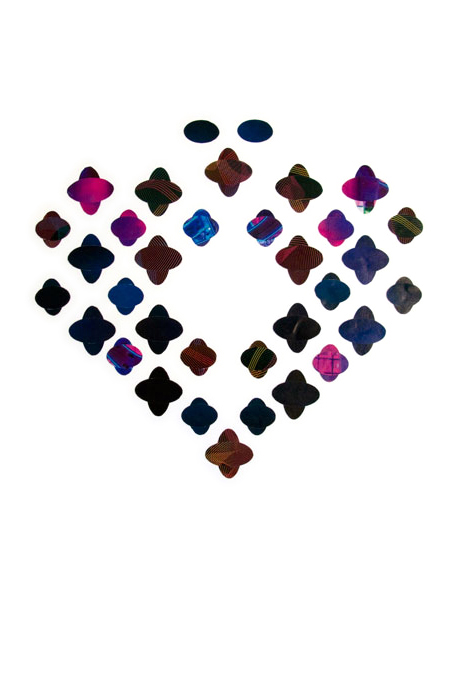
Little Treasures Toby Richardson, Will Nolan, CJ Taylor and Steve Wilson

Clay Cameras Alan Constable


Alan Constable (Australian, b. 1956) 'Not titled (ALE SLR)' 2008. from the exhibition 'Clay Cameras' at Helen Gory Galerie, Melbourne, Aug - Sept, 2009


Alan Constable (Australian, b. 1956)
Not titled (ALE SLR)
2008
Ceramic
Photo: Marcus Bunyan


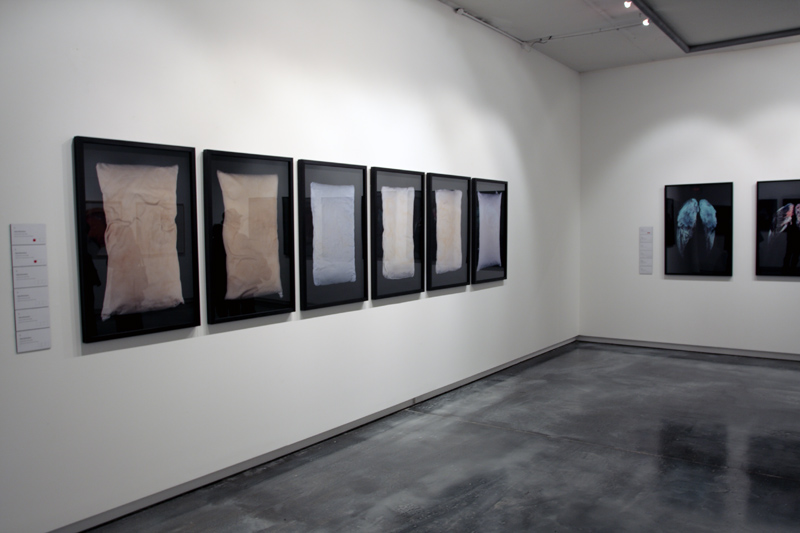
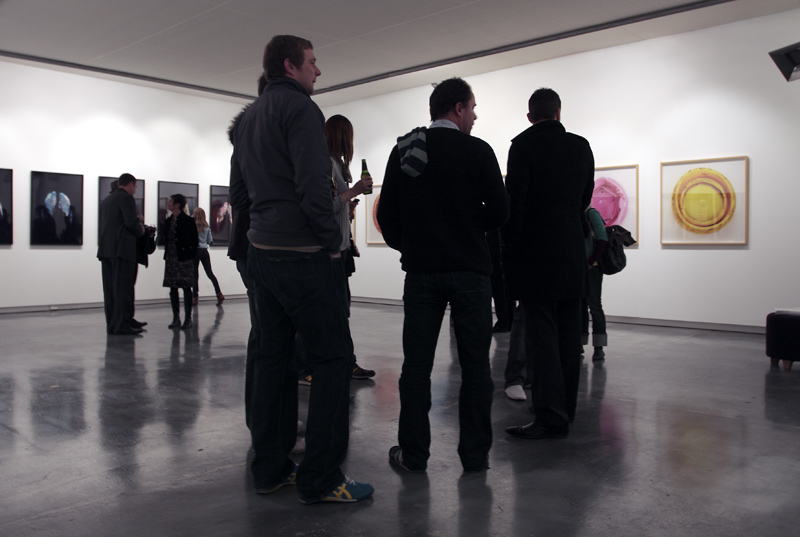
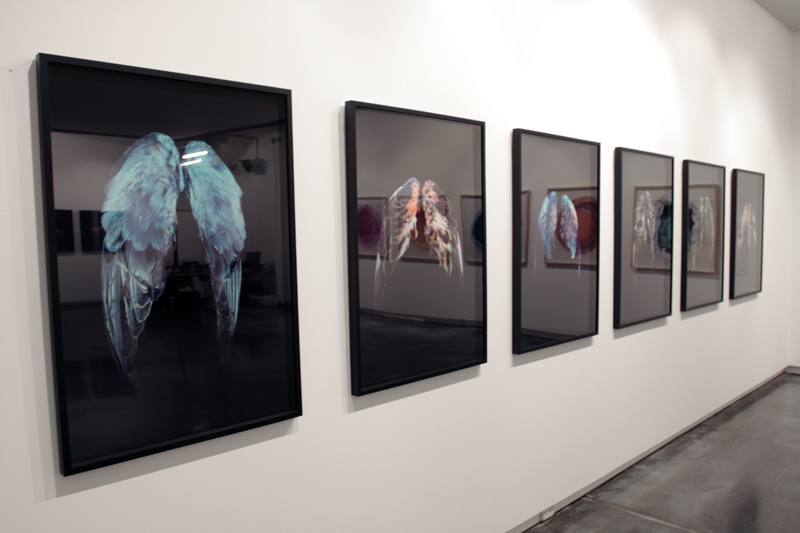
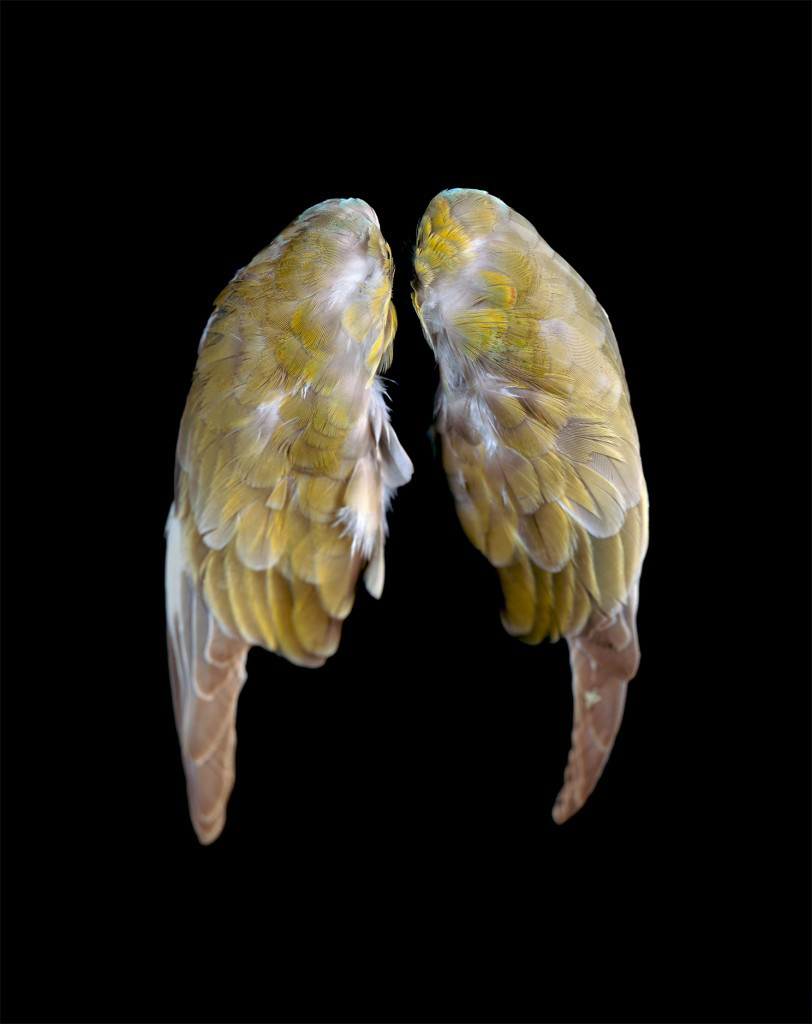
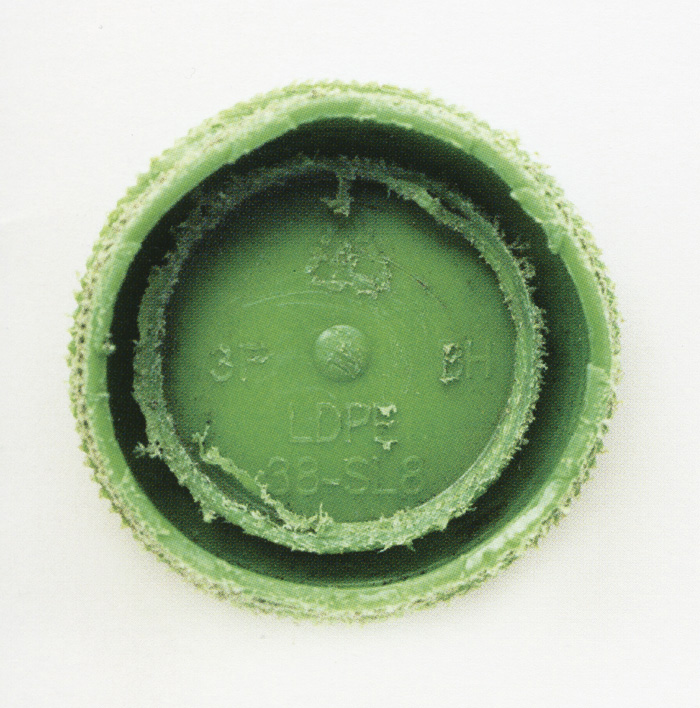
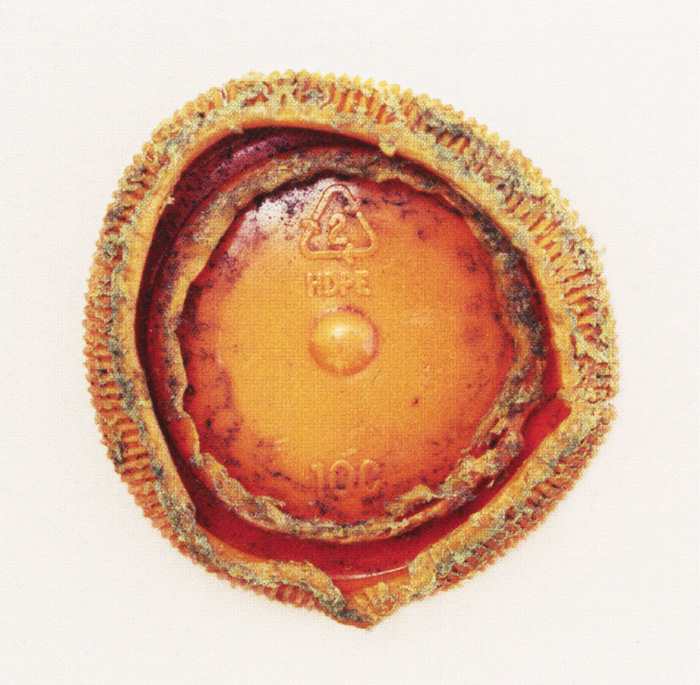
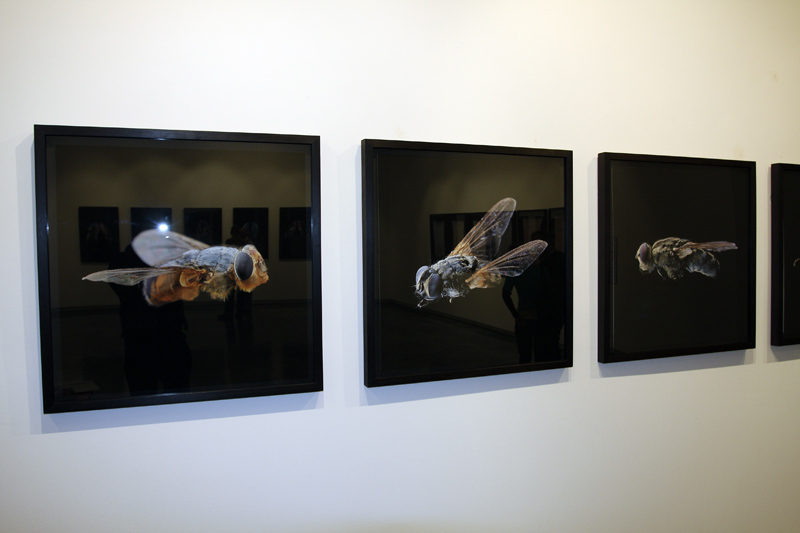
A small crowd was in attendance for the opening of two new exhibitions at Helen Gory Galerie (due to two auctions, one at Sotheby’s and the other at Deutscher-Menzies). Despite this the crowd was appreciative of the beautifully printed and well presented work. In the main exhibition Little Treasures four photographers show various bodies of work. Toby Richardson’s stained pillows (Portrait of the artist) from the years 1986-2003 were effective in their muted tones and ‘thickened’ spatio-temporal identity. CJ Taylor’s winged detritus from the taxidermist were haunting in their mutilated beauty. Steve Wilson’s sometimes legless flies were startling in their precision, attitude/altitude and, as someone noted, they looked like jet fighters! Finally my favourite of this quartet were the recyco-pop iridescent bottle tops of Will Nolan – “these objects remain enigmatic, resonating with a sense of mystery, hidden thoughts and unknown histories.” (Lauren Tomczak, catalogue text).

Some good work then in this take on found, then lost and found again treasure trove, work that retrieves and sustains traces of life, history and memory in the arcana of discarded and dissected objects.

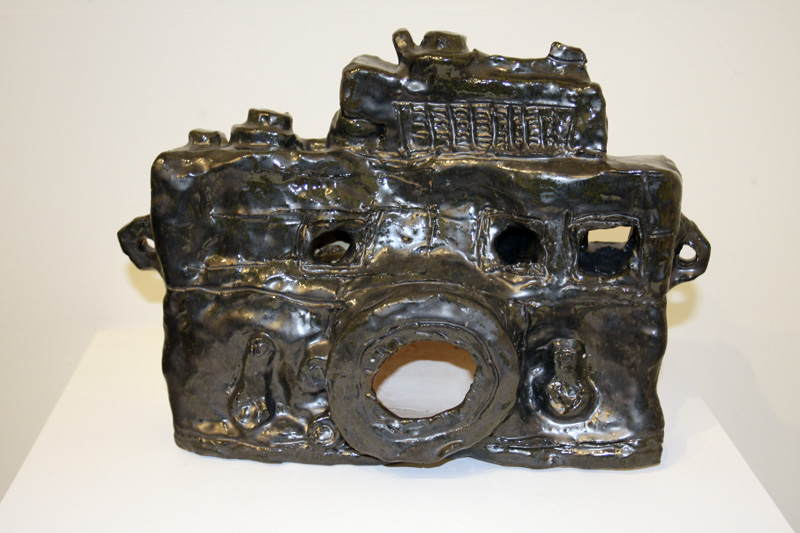
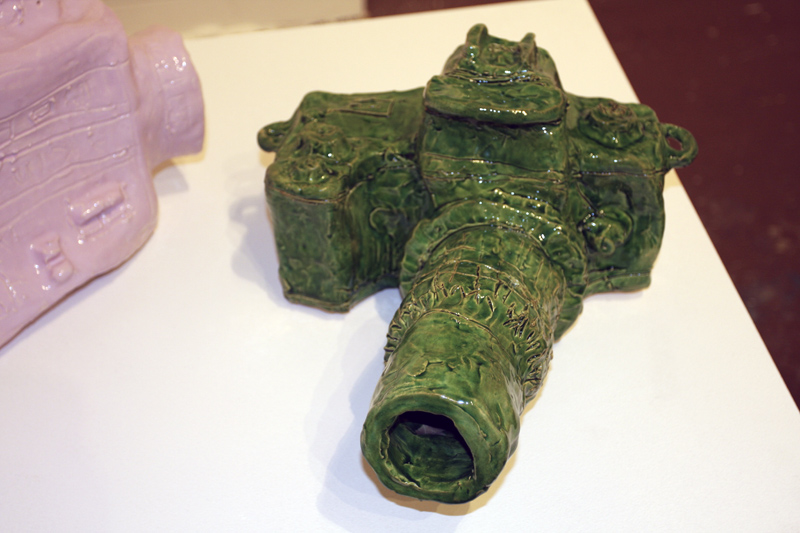
The hit of the night for me was the work of Alan Constable, his “objects that see”. I found his clay cameras intoxicating – I wanted to own one (always a good sign). I loved the exaggerated form and colours, the playfulness of the creativity on display. Being a photographer I went around trying to work out the different makes of these scratched and highly glazed cameras without looking at the exhibition handout. For a very reasonable price you could own one of these seductive (is that the right word, I think it is) viewfinders and they were selling like hot cakes!

Dr Marcus Bunyan


Many thankx to Helen Gory Galerie for allowing me to publish the photographs in the posting. Please click on the photographs for a larger version of the image.


Little Treasures

“Wings, pillows, flies and bottle tops are blown up vastly in stunning large scale prints that take the viewer through the looking glass into another universe, their brilliant colour and rich detail revealing unexpected beauty and delight in these forgotten things. Unmanipulated and finely printed, these images are the product of each artist’s technical mastery and inquisitive eye finding beauty in the cast off and delight in the ignored.” (Jemima Kemp, 2009)


Installation view of 'Little Treasures' showing the work of Toby Richardson 'Portrait of the Artist' series at Helen Gory Galerie, Melbourne


Installation view of Little Treasures showing Toby Richardson’s Portrait of the Artist series (2009, left)
Photo: Marcus Bunyan


Opening night crowd at 'Little Treasures'

Installation view of 'Little Treasures' showing the work of CJ Taylor (left) and Will Nolan 'Bottle Top' series (2009, right) series at Helen Gory Galerie, Melbourne


Installation view of Little Treasures showing the work of CJ Taylor (2009, left) and Will Nolan’s Bottle Top series (2009, right)
Photos: Marcus Bunyan


Installation view of 'Little Treasures' showing the work of CJ Taylor (2009)


Installation view of Little Treasures showing the work of CJ Taylor (2009)
Photo: Marcus Bunyan


CJ Taylor (Australian, b. 1951) 'Blue, turquoise yellow green' 2009 from the exhibition 'Little Treasures' at Helen Gory Galerie, Melbourne, Aug - Sept, 2009


CJ Taylor (Australian, b. 1951)
Blue, turquoise yellow green
2009
Acrylic glass pigment print
110 x 79cm


CJ Taylor (Australian, b. 1951) 'Blue, Blue, Grey' 2009 from the exhibition 'Little Treasures' at Helen Gory Galerie, Melbourne, Aug - Sept, 2009


CJ Taylor (Australian, b. 1951)
Blue, Blue, Grey
2009
Acrylic glass pigment print
110 x 79cm


Installation view of 'Little Treasures' showing the work of Will Nolan 'Bottle Top' series (2009) at Helen Gory Galerie, Melbourne


Installation view of Little Treasures showing Will Nolan’s Bottle Top series (2009)
Photo: Marcus Bunyan


Will Nolan (Australian) 'Bottle top #10' 2009


Will Nolan (Australian)
Bottle top #10
2009


Will Nolan (Australian) 'Bottle top #1' 2009


Will Nolan (Australian)
Bottle top #1
2009


Installation view of 'Little Treasures' showing the work of Steve Wilson 'Fly' series (2009) at Helen Gory Galerie, Melbourne


Installation view of Little Treasures showing Steve Wilson’s Fly series (2009)
Photo: Marcus Bunyan


Clay Cameras

“From the box brownie to disposables, VHS to SLR, these works explore Alan Constable’s fascination with cameras. Unlike the streamlined design of the originals, Constable’s cameras appear soft, organic and malleable.”


Alan Constable (Australian, b. 1956) 'Not titled (pearlescent gold/black Leica)' 2008


Alan Constable (Australian, b. 1956)
Not titled (pearlescent gold/black Leica)
2008
Ceramic
Photo: Marcus Bunyan


Installation view of 'Clay Cameras' at Helen Gory Galerie, Melbourne


Installation view of Clay Cameras by Alan Constable
Photo: Marcus Bunyan


Alan Constable (Australian, b. 1956) 'Not titled (Hasselblad)' 2008


Alan Constable (Australian, b. 1956)
Not titled (Hasselblad)
2008
Ceramic
Photo: Marcus Bunyan


Alan Constable (Australian, b. 1956) 'Not titled (Digital with zoom lens)' 2009


Alan Constable (Australian, b. 1956)
Not titled (Digital with zoom lens)
2009
Ceramic
Photo: Marcus Bunyan


Helen Gory Galerie

This gallery is now closed.

LIKE ART BLART ON FACEBOOK

Back to top

Review: ‘Cineraria’ by Julia deVille at Sophie Gannon Gallery, Richmond, Melbourne

Exhibition dates: 28th July – 22nd August, 2009


Julia deVille (New Zealand, b. 1982) 'Ruby Heart Starling' 2008 from the exhibition 'Cineraria' by Julia deVille at Sophie Gannon Gallery, Richmond, Melbourne, July - Aug, 2009


Julia deVille (New Zealand, b. 1982)
Ruby Heart Starling
2008
Starling, sterling silver, black rhodium & gold plate, rubies, antique frame
30 x 35 x 18cm


This is an itsy-bitsy show by Julia deVille at Sophie Gannon Gallery in Richmond, Melbourne. Offering a menagerie of macabre stuffed animals and conceptual ideas the exhibition fails to coalesce into a satisfying vision. It features many ideas that are not fully investigated and incorporated into the corporeal body of the work.

We have, variously, The Funerary Urn/Cinerarium, The Ossuary, Skeletons, Black, Victorian Funerary Customs, Feathers, Taxidermy, Time, Eggs and Religion. We also have stuffed animals, cigar boxes, lace and silver, pelts and columns, jet necklaces and Victorian glass domes, glass eyes and ruby hearts to name but a few. The viewer is overwhelmed by ideas and materials.

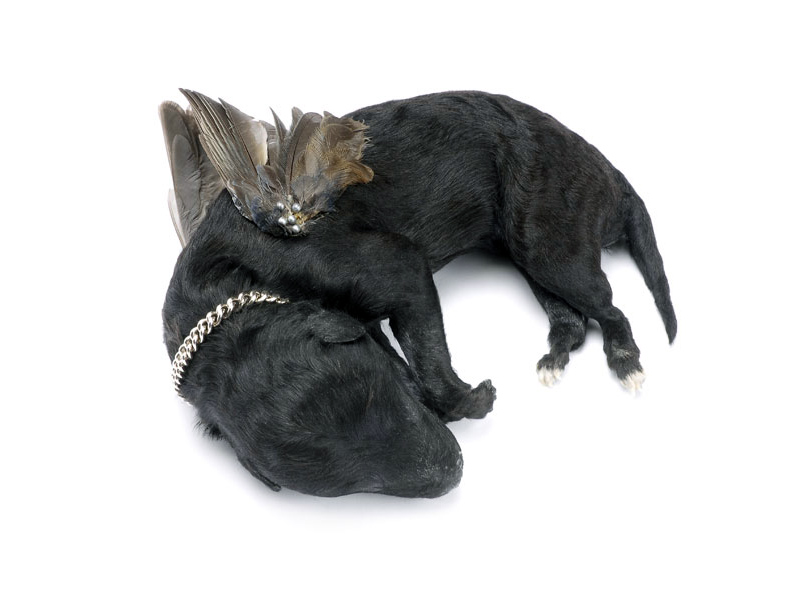
When individual pieces excel the work is magical: the delicate and disturbing Stillborn Angel (2009, below) curled in a foetal position with appended sparrows wings is a knockout. The large suspended raven of Night’s Plutonian Shore (2009, above) effectively evinces the feeling of the shores of the underworld that the title, taken from an Edgar Allan Poe poem, reflects on.

Other pieces only half succeed. Piglet (2009, below) is a nice idea with its lace snout and beaded wings sitting on a bed of feathers awaiting judgement but somehow the elements don’t click into place. Further work are just one shot ideas that really lead nowhere. For example Cat Rug (2008, below) features black crystals in the mouth of a taxidermied cat that lies splayed on a plinth on the gallery floor. And, so … Silver Rook (2008, below) is a rook whose bones have been cast in silver, with another ruby heart, suspended in mid-air in the gallery space. Again an interesting idea that really doesn’t translate into any dialogue that is substantial or interesting.

Another problem with the work is the technical proficiency of some of the pieces. The cast silver front legs and ribs of The Anatomy of a Rabbit (2008, below) are of poor quality and detract from what should have been the delicacy of the skeletal bones of the work. The bronze lion cartouche on the egg shaped Lion Urn (2009) fails to fit the curved shape of the egg – it is just attached at the top most point and sits proud of the egg shape beneath. Surely someone with an eye for detail and a sense of context, perfection and pride in the work they make would know that the cartouche should have been made to fit the shape underneath.

Despite its fashionable position hovering between craft, jewellery and installation this is ‘art’ in need of a good reappraisal. My suggestion would be to take one idea, only one, and investigate it fully in a range of work that is thematically linked and beautifully made. Instead of multiplying the ideas and materials that are used, simplify the conceptual theme and at the same time layer the work so it has more complexity, so that it reveals itself over time. You only have to look at the work of Mari Funaki in the previous post or the simple but conceptually complex photographs of Matthias Koch in the German photography review to understand that LESS IS MORE!

There are positive signs here and I look forward to seeing the development of the artist over the next few years.

Dr Marcus Bunyan


Many thankx to Sophie Gannon Gallery for allowing me to publish the photographs in the posting. Please click on the photographs for a larger version of the image.


Julia deVille (New Zealand, b. 1982) 'Night's Plutonian Shore' 2009 from the exhibition 'Cineraria' by Julia deVille at Sophie Gannon Gallery, Richmond, Melbourne, July - Aug, 2009


Julia deVille (New Zealand, b. 1982)
Night’s Plutonian Shore
2009
Tasmanian Forest Raven, black garnets, cotton, sterling silver, amethyst


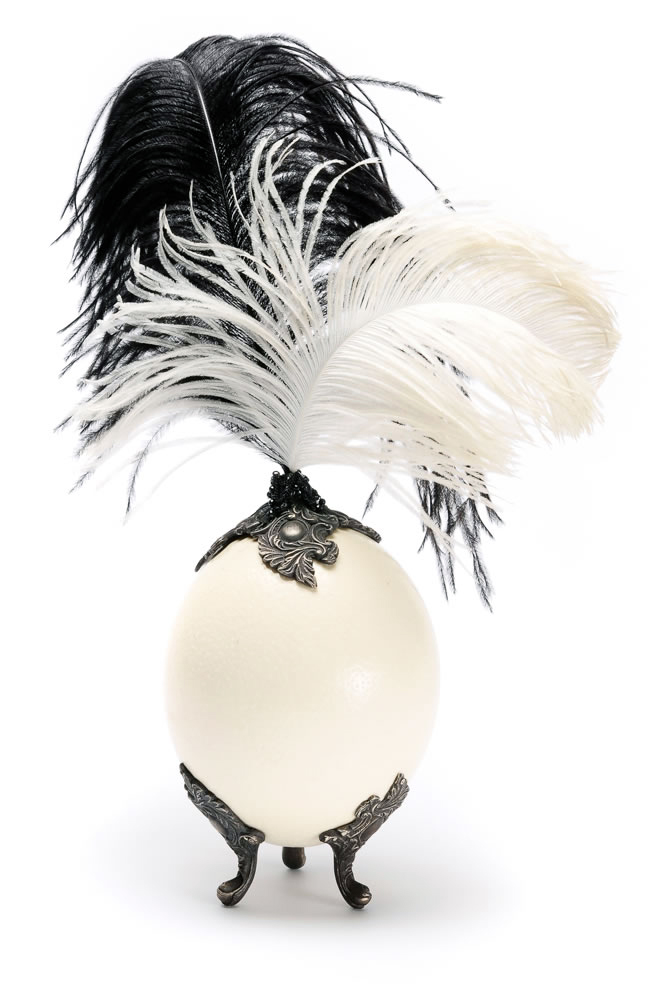
Julia deVille (New Zealand, b. 1982) 'L'enfant (Infant Funerary Urn)' 2009 from the exhibition 'Cineraria' by Julia deVille at Sophie Gannon Gallery, Richmond, Melbourne, July - Aug, 2009


Julia deVille (New Zealand, b. 1982)
L’enfant (Infant Funerary Urn)
2009
Ostrich egg, sterling silver, ostrich plumes and black garnet
35 x 12 x 12cm


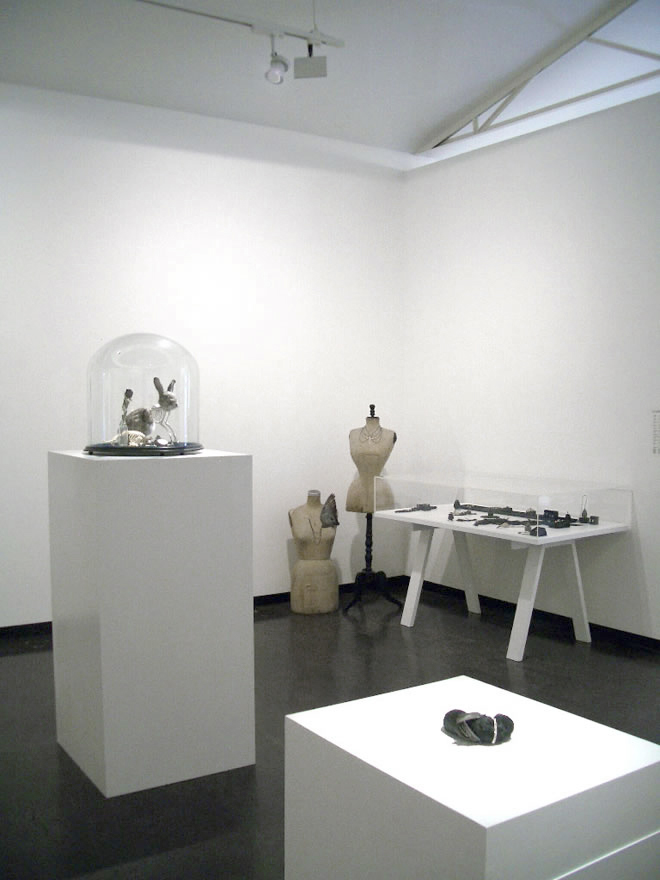
Julia de Ville 'Cineraria' installation view at Sophie Gannon Gallery, Melbourne

Julia de Ville 'Cineraria' installation view at Sophie Gannon Gallery, Melbourne


Julia deVille Cineraria installation views at Sophie Gannon Gallery, Melbourne
Photos: Marcus Bunyan


Julia deVille (New Zealand, b. 1982) 'Piglet' 2009


Julia deVille (New Zealand, b. 1982)
Piglet
2009
Piglet, antique lace, pins and feathers
25 x 23 x 13cm


Julia deVille (New Zealand, b. 1982) 'Cat Rug' 2008


Julia deVille (New Zealand, b. 1982)
Cat Rug
2008
Cat, glitter and fibreglass
100 x 60 x 8cm


Julia deVille (New Zealand, b. 1982) 'Sympathy' 2008


Julia deVille (New Zealand, b. 1982)
Sympathy
2008


Julia deVille (New Zealand, b. 1982) 'Silver Rook' 2008


Julia deVille (New Zealand, b. 1982)
Silver Rook
2008
Sterling silver, rubies
30 x 25 x 35cm


Cinerarium

n. pl. Cineraria
A place for keeping the ashes of a cremated body.

Cineraria
n. any of several horticultural varieties of a composite plant, Senecio hybridus, of the Canary Islands, having clusters of flowers with
white, blue, purple, red, or variegated rays.

Origin: 1590-1600; < NL, fem. of cinerarius ashen, equiv. to L ciner- (s. of cinis ashes) + -rius -ary; so named from ash-coloured down on leaves.

CINERARIA is a study of the ritual and sentiment behind funerary customs from various cultures and eras.


Notes on inspirations

The Funerary Urn/Cinerarium: Funerary Urns have been used since the times of the ancient Greeks and are still used today. After death, the body is cremated and the ashes are collected in the urn.

The Ossuary: An ossuary is a chest, building, well, or site made to serve as the final resting place of human skeletal remains. They are frequently used where burial space is scarce. A body is first buried in a temporary grave, then after some years the skeletal remains are removed and placed in an ossuary. The greatly reduced space taken up by an ossuary means that it is possible to store the remains of many more people in a single tomb than if the original coffins were left as is. This was a common practice in post plague Europe in the 14th-16th Centuries.

Skeletons: Human skeletons and sometimes non-human animal skeletons and skulls are often used as blunt images of death. The skull and crossbones (Death’s Head) motif has been used among Europeans as a symbol of piracy, poison and most commonly, human mortality.

Black: In the West, the colour used for death and mourning is black. Black is associated with the underworld and evil. Kali, the Hindu god of destruction, is depicted as black.

Victorian Funerary Customs:

~ A wreath of laurel, yew or boxwood tied with crape or black ribbons would be hung on the front door to alert passers by that a death had occurred

~ The use of flowers and candles helped to mask unpleasant odours in the room before embalming became common

~ White was a popular colour for the funeral of a child. White gloves, ostrich plumes and a white coffin were the standard

Feathers: In Egyptian culture a recently deceased persons soul had to be as light as a feather to pass the judgment of Ma’at. Ma’at (Maet, Mayet) is the Egyptian goddess of truth, justice and the underworld. She is often portrayed as wearing a feather, a symbol of truth, on her head. She passed judgment over the souls of the dead in the Judgment Hall of Osiris. She also weighted up the soul against a feather. The “Law of Ma’at” was the basis of civil laws in ancient Egypt. If it failed, the soul was sent into the underworld. Ma’at’s symbol, an ostrich feather, stands for order and truth.

Taxidermy: Taxidermy to me is a modern form of preservation, a way for life to continue on after death, in a symbolic visual form.

The Raven: In many cultures for thousands of years, the Raven has been seen symbol of death. This is largely due to the Raven feeding on carrion. Edgar Allan Poe has used this symbolism in his poem, “The Raven”.

Time: Less blunt symbols of death frequently allude to the passage of time and the fragility of life. Clocks, hourglasses, sundials, and other timepieces call to mind that time is passing. Similarly, a candle both marks the passage of time, and bears witness that it will eventually burn itself out. These sorts of symbols were often incorporated into vanitas paintings, a variety of early still life.

Eggs: The egg has been a symbol of the start of new life for over 2,500 years, dating back to the ancient Persians. I have chosen egg shapes and even one Ostrich egg to represent the cycle of life, the beginning and the end.

Religion: Religion has played a large part in many funerary customs and beliefs. I am particularly interested in the Memento Mori period of the 16th-18th centuries. In a Calvinistic Europe, when the plague was a not too distant memory, a constant preoccupation with death became a fashionable devotional trend.

Julia deVille


Julia deVille (New Zealand, b. 1982) 'Stillborn Angel' 2009


Julia deVille (New Zealand, b. 1982)
Stillborn Angel
2009
Stillborn puppy, sparrow wings and sterling silver
13 x 10 x 5cm


Julia deVille (New Zealand, b. 1982) 'The Anatomy of a Rabbit' 2008


Julia deVille (New Zealand, b. 1982)
The Anatomy of a Rabbit
2008
Rabbit, sterling silver, rubies, glitter and mahogany
30 x 30 x 30cm


Julia de Ville 'Cineraria' installation views at Sophie Gannon Gallery, Melbourne


Julia deVille Cineraria installation view at Sophie Gannon Gallery, Melbourne
Photo: Marcus Bunyan


Sophie Gannon Gallery
2, Albert Street, Richmond, Melbourne

Opening hours:
Tuesday – Saturday 11am – 5pm
Sophie Gannon Gallery website

LIKE ART BLART ON FACEBOOK

Back to top

Notes from a Conversation with Mari Funaki. Exhibition: ‘Mari Funaki, Works 1992-2009’ at Art Gallery of Western Australia, Perth

Exhibition dates: 27th June – 18th October, 2009


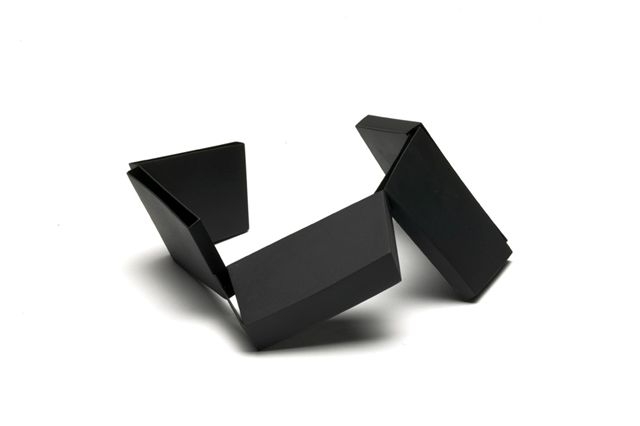
Mari Funaki (Australian, 1950-2010) 'Bracelet 1' from ‘Space between’ heat-coloured mild steel 2005-2006 from the exhibition 'Mari Funaki, Works 1992-2009' at Art Gallery of Western Australia, Perth. June - Oct, 2009


Mari Funaki (Australian, 1950-2010)
Bracelet 1 from Space between
2005-2006
Heat-coloured mild steel


Mari Funaki (Australian, 1950-2010) 'Bracelet 2' from ‘Space between’ heat-coloured mild steel 2005-2006 from the exhibition 'Mari Funaki, Works 1992-2009' at Art Gallery of Western Australia, Perth. June - Oct, 2009


Mari Funaki (Australian, 1950-2010)
Bracelet 2 from Space between
2005-2006
Heat-coloured mild steel


Mari Funaki is one of Australia’s leading jewellers. This exhibition celebrates her considerable achievements between 1992 and the present day. Her first major show in a state gallery, it includes nearly fifty works and will be the first time Perth audiences have seen her work in such depth. Many of these are new works produced especially for this show.

The exhibition will focus on rings, containers and bracelets. These forms have been the core of her practice, the foundation of her intricate material experimentations. Her sheer intensity of focus has seen her hone these forms into objects of extreme power and beauty. Funaki’s is no simple beauty, however. It is sharp, complicated. There is always a sense of danger in her work, as the spindly legs of her insect-like containers support unlikely, unwieldy torsos, and as her rings and bracelets cultivate miniature monoliths that play with scale and weight in fascinating ways.

This exhibition will frame these unique objects in such a way as to acknowledge Funaki’s ability to work with space and matter to form entrancing works that adorn the imagination in the same they adorn the body.

Text from the Art Gallery of Western Australia website [Online] Cited 10/08/2009. No longer available online


Mari Funaki (Australian, 1950-2010) 'Bracelet 3' from ‘Space between’ heat-coloured mild steel 2005-2006


Mari Funaki (Australian, 1950-2010)
Bracelet 3 from Space between
2005-2006
Heat-coloured mild steel


Mari Funaki (Australian, 1950-2010) 'Bracelet 4' from ‘Space between’ heat-coloured mild steel 2005-2006


Mari Funaki (Australian, 1950-2010)
Bracelet 4 from Space between
2005-2006
Heat-coloured mild steel


Notes from a Conversation with Mari Funaki, July 2006

Mari Funaki’s initial response comes from the environment – the response is part random, part constructed idea.

Funaki likes the ‘animated’ response from the viewer – allowing them to make their own associations with the work and their own meaning. The making of the work doesn’t emerge out of nothing but through the development of ideas over a long period of time.

Mari starts with a flat drawing – this approach comes from an Eastern perspective in the history of art making i.e. screens, woodcuts and scrolls. Initially when starting with the idea Mari is mentally thinking in two dimensions – then drawing out onto paper in two dimensions the ideas.

When actually making the work Mari then starts working and thinking in three dimensions – starting with a base piece of metal and working physically and intuitively around the object, to form a construction that evidences her feelings about what she wants to create. She likes the aesthetic beauty but uneasy aspect of a dead insect for example (like the Louise Bourgeois Maman spider outside the Guggenheim in Bilbao).

Now collaborating with architect Nonda Kotsalidis, Mari is working to produce her sculptural objects on a larger scale, up to 6 metres high. She needs the objects to have an emotional and physical impact on the viewer – both beautiful and threatening at one and the same time. How will her objects translate to a larger scale? Very well I think.

Funaki likes the physical distortion of space – and she likes telling a story to the viewer. She is working on a building where the facade is really strongly geometric and then she is embedding an emotion into the front of the building – constructing a narrative – constructing an emotional response with the viewer and establishing a relationship with the building. Here she is working from photographs of the space, her own recognition and remembrance of that space. She is having to work physically in 3D from the beginning for the first time, but still uses drawings to sketch out her ideas.

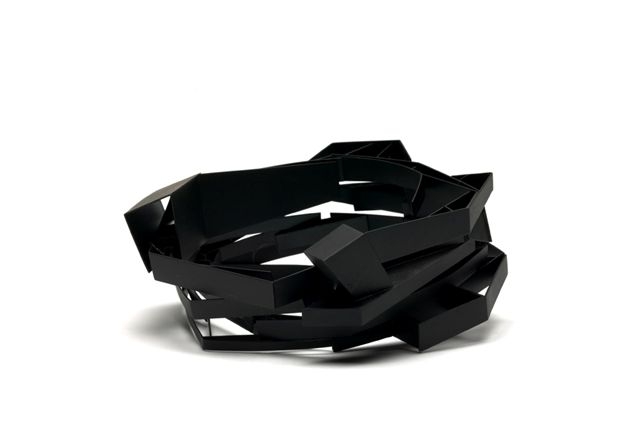
Several of Funaki’s pieces in the Cecily and Colin Rigg Contemporary Design Award (2006) at the NGV Federation Square were inspired by the work of Bernd and Hilla Becher. Their photographs of factories and gasworks, specifically the facades of such buildings (see image below), were the jumping off point for the development of the objects (the bracelets). Funaki takes the front of these buildings, a 3D structure ‘in reality’ but pictorially imaged on a 2D plane, and then twists and distorts their structure back into a 3D environment. The facades move up and around, as though a body is twisting around its own axis, pirouetting around an invisible central spine.

Each piece is created and then the next one is created in relation to the previous, or to each other. Each individual piece has its own character and relation to each other. They are never variations of the same piece with small differences – each is a separate but fully (in)formed entity.

Dr Marcus Bunyan


Bernd and Hiller Becher (German, 1931-2007 and 1934-2015) 'Water Towers' 1980


Bernd and Hiller Becher (German, 1931-2007 and 1934-2015)
Water Towers
1980
Gelatin silver prints


“Black. Sharp, shifting contours. Familiar and alien. Confident, expressive and agile, it is easy to take the existence of these works for granted – and it is hard enough to trace in one’s mind the physical evolution back through heat colouring, sandblasting, soldering, assembling and cutting, to unremarkable, thin sheets of mild steel – let alone comprehend their conception and resolution.

They inhabit space in a way that is difficult to describe – the edge between each object and the space that encloses it is shockingly sudden.

How can something human-made be so insanely artificial and natural at the same time? It must be no accident that I described them as articulate – ambiguous and wide ranging in the breadth of associations and allusions, they can tell you everything and nothing at the same time.”

Sally Marsland, 2006

Text from the Gallery Funaki website [Online] Cited 10/08/2009 no longer available online


Mari Funaki (Australian, 1950-2010) 'Bracelet 5' from ‘Space between’ heat-coloured mild steel 2005-2006


Mari Funaki (Australian, 1950-2010)
Bracelet 5 from Space between
2005-2006
Heat-coloured mild steel


Mari Funaki (Australian, 1950-2010) 'Bracelet 6' from ‘Space between’ heat-coloured mild steel 2005-2006


Mari Funaki (Australian, 1950-2010)
Bracelet 6 from Space between
2005-2006
Heat-coloured mild steel


Art Gallery of Western Australia
Perth Cultural Centre
Perth WA 6000

Opening hours:
Wednesday – Monday 10am – 5pm
Closed Tuesdays.

Art Gallery of Western Australia website

Gallery Funaki website

LIKE ART BLART ON FACEBOOK

Back to top

Review: ‘presentation/representation: photography from Germany’ at the Monash Gallery of Art, Wheelers Hill, Melbourne

Exhibition dates: 3rd July – 30th August, 2009

Curator: Thomas Weski

Artists: Laurenz Berges, Albrecht Fuchs, Karin Geiger, Claus Goedicke, Uschi Huber, Matthias Koch, Wiebke Loeper, Nicola Meitzner, Peter Piller, Heidi Specker.

An exhibition of the Institut für Auslandsbeziehungen e. V. (ifa/Institute for Foreign Cultural Relations), Stuttgart, Germany and presented in cooperation with the Goethe-Institut Australien.


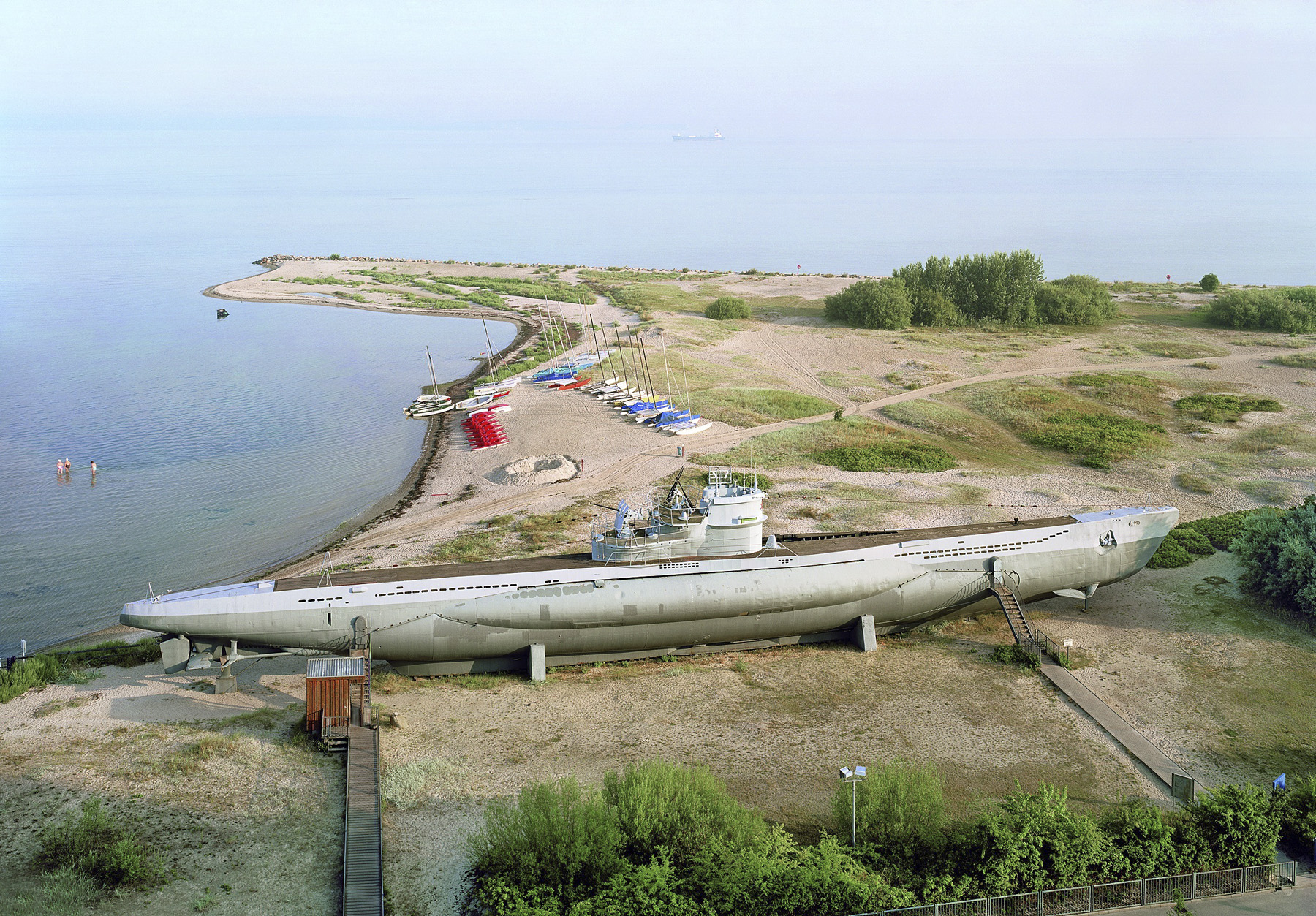
Matthias Koch (German, b. 1967) 'Submarine Laboe near Kiel, built 1944' 2006 from the exhibition 'presentation/representation: photography from Germany' at the Monash Gallery of Art, Melbourne, July - August, 2009


Matthias Koch (German, b. 1967)
Submarine Laboe near Kiel, built 1944
2006
© Matthias Koch


I was looking forward to this exhibition and so on a cold and very windy winter’s day I ventured out on the drive to the Monash Gallery of Art in Wheelers Hill expecting to be challenged by a new generation of German photographers. I was to be sorely disappointed. This show, with the exception of excellent work by Andreas Koch and good work by Laurenz Berges, epitomises all that I find woeful about contemporary photography.

There is a lack of life and vigour to the work, no sense of enjoyment in taking photographs of the world. The narratives are shallow and vacuous inducing a deep somnambulism in the viewer that is compounded by the silent, deeply carpeted gallery making the experience one of entering a mausoleum (this is a great space that needs to be a contemporary space!). How many times have I seen photographs of empty spaces that supposedly impart some deep inner meaning? See how a great artist like Tacita Dean achieves the same end to startling effect with her film Darmstädter Werkblock (2007). How many times do I need to see ‘dead pan’ portrait photographs that are again supposed to impart rich psychological meaning? I have seen too many already.

Conceptually the work is barren. Technically the proficiency of some of the work is almost non-existent. If this standard of work was put up for assessment in a university course it would fail miserably. For example in Nicola Meitzner’s work Forward Motion (2006), vertical portraits (of the same person in different poses) and streetscapes of Tokyo are poor quality prints mounted in unattractive silver aluminium frames. They are forgettable. If an artist were to study the work of, say, Manuel Alvarez Bravo, then one might gain some insight into how to photograph the city and the people that live in it in a way that elicits a response from the viewer to the photo-poetry that is placed before them.

Uschi Huber’s photographs of boarded up shop fronts, while a nice conceptual idea, are again lacking in technical proficiency and are nothing we haven’t seen many times before while Peter Piller’s ten print-media type pigment prints of girls at a shooting range with rifles do not bare comment on both a conceptual and technical level. Similarly, Wiebke Loeper’s colour photographs of the city of Wismar – houses, roads, water, oat fields, people peering into shop windows – sent to friends living in Melbourne to show them the desolation and rebuilding of the city are seriously year 12 work.

The two redeeming artists are Laurenz Berges and Andreas Koch.

Berges four large type C colour photographs of an empty house and the surrounds as seen through a window are intimately detailed visions of human absence from the built environment: the huts, piles of wood chips, barren trees, the feathers on the floor of one print, the cigarette butts on the floor of another, the marks on the wall in blue and red add to a sense of abandonment and alienation from the environment – traces of human experience, identity and memory etched into the photographic medium.

As the text on the Institut für Auslandsbeziehungen (IFA) website observes,

“Laurenz Berges is a chronicler of absence. His minimalist photographs point to the earlier use of spaces, only fragments of which are shown, whose inhabitants have put them to other, new uses. Berges depicts the traces of this change in austere images that, due to their reduction, tell their stories indirectly and almost involuntarily. These are stories about the existential significance certain spaces have for our identity, and also about their transitoriness and their loss.”1


The star of the show was the work of Matthias Koch. His five large aqua-mounted type C prints from the series Sites of German History (2006) are both technically and conceptually superb, full of delicious ironies and humour. Using an aerial aesthetic (apparently by climbing the ladder of a fire engine that he owns) Koch looks down on the landscape and through his images formulates new ways of seeing national symbols (even though many of them are not in Germany). His re-presentation of spatial inter-relations and objects embedded in their rural and urban surroundings are both simple yet layered and complex.

Unfortunately I have only two photographs (above and below) to show you of his work. None other was available but the images gives you an idea of his raison d’être. The specimen of U-995, built in Kiel in 1944, is presented as a trapped and mounted animal, preserved for our delectation and inspection with gangways and stairs to view the innards. Little hobby craft lie on a beach behind while people paddle in the shallows, a ship barely seen in the distance out at sea. The fact that this U-boat was once used to destroy such a ship, the irony of the proposition, is not lost on the viewer.

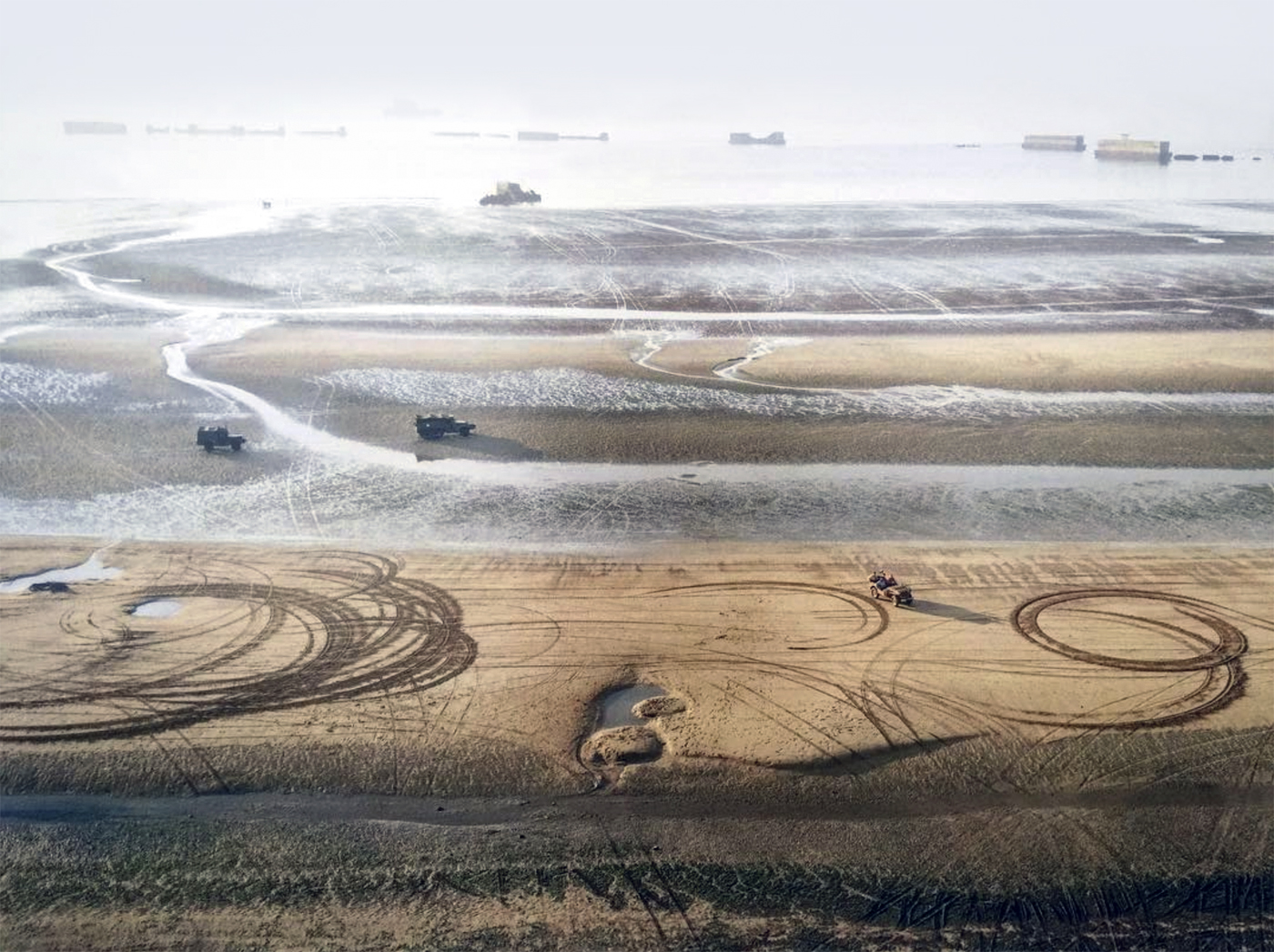
Other images in the series include a photograph of the derelict runway of the Heinkel factory as seen from above, the overgrown concrete slabs cracked and lifting, the edges filled with grass, the distant view dissolving into mist and nothingness. The photograph Harbour, Allied landing near Normandy, 1944 (2006, below) shows an American jeep and half-track of the period on the beach of the Allied landing in Normandy, tyre tracks swirling in the sand while in the distance the concrete block remains of the Mulberry harbour used in 1944 still litter the coastline. How many men, both German and American, died on this beach all those years ago? In another tour de force Atlantic Defence Wall near Cherbourg. Bunker construction built 1940 (2006) concrete bunkers dot the landscape with the beach and sea beyond as people sunbathe on the grass amongst the ruined bunkers, probably oblivious to the context of their surroundings. Koch is a master of the re-presentation of the context of memory, history and place.

Overall this exhibition is a great disappointment. I find it hard to believe that the exhibition has been curated by the same man who curated the recent Andreas Gursky exhibition at the National Gallery of Victoria. The choice of work and the presentation of technically poor prints is not up to standard. I also find it difficult to reconcile some of the reviews I have read of this exhibition with the actual work itself. Thank goodness for the photographs of Matthias Koch for he alone made the journey into outer Melbourne a worthwhile journey into the memory of the soul.

Dr Marcus Bunyan


1/ Anonymous. “Presentation/representation: Laurenz Berges,” on the Institut für Auslandsbeziehungen (IFA) website [Online] Cited 08/08/2009 no longer available online


    Many thankx to Monash Gallery of Art for allowing me to publish the photographs in the posting. Please click on the photographs for a larger version of the image.


    Matthias Koch (German, b. 1967) 'Harbour, Allied landing near Normandy, 1944' 2006 from the exhibition 'presentation/representation: photography from Germany' at the Monash Gallery of Art, Melbourne, July - August, 2009


    Matthias Koch (German, b. 1967)
    Harbour, Allied landing near Normandy, 1944
    2006
    © Matthias Koch


    Laurenz Berges (German, b. 1966) 'Garzweiler' [surface mine] 2003 from the exhibition 'presentation/representation: photography from Germany' at the Monash Gallery of Art, Melbourne, July - August, 2009


    Laurenz Berges (German, b. 1966)
    Garzweiler [surface mine]
    2003
    C print
    130 x 171cm (51.2 x 67.3 in.)
    © Courtesy Galerie Wilma Tolksdorf, Frankfurt/Berlin


    This international touring exhibition was developed by the Institut für Auslandsbeziehungen (ifa) in Germany and is presented in cooperation with the Goethe-Institut Australien.

    MGA is hosting the important international exhibition ‘presentation / representation: photography from Germany’, which brings to Melbourne the work of ten of Germany’s best contemporary photographers.

    presentation/representation is curated by Thomas Weski (curator of Andreas Gursky recently seen at the National Gallery of Victoria), and covers the work of the generation of German photographers that has followed the now-legendary Kunstakademie Düsseldorf generation of Gursky, Thomas Ruff, Thomas Struth and Candida Höfer. For the artists in presentation/representation, including Matthias Koch, Laurenz Berges and Heidi Specker, photography is a medium that has its own language and characteristics, and their work collectively explores the limits of the medium.

    Shaune Lakin, Director of the MGA states “MGA is thrilled to present ‘presentation / representation’ and to bring to the people of Melbourne such an important survey of contemporary German photography. As well as providing a comprehensive survey of German practice, the exhibition will complement the experience of those who saw Weski’s wonderful Gursky exhibition at NGV. We are also delighted to host participating artist Matthias Koch.”

    Koch will be presenting a series of public programs including an artist talk, student tutorial and a field trip exploring the industrial suburban sites close to the gallery. “With his critical interest in landscape, architecture and history, Koch will provide some wonderful insights into our local landscape for participants in these programs,” notes Dr Lakin.

    MGA’s Education and public programs coordinator Stephanie Richter says: “This is a great opportunity for students and Melbourne audiences to meet one of Germany’s most celebrated contemporary photographers and to participate in the busy schedule of talks, tutorials and field trips with Matthias.”

    Press release from Monash Gallery of Art website [Online] Cited 05/08/2019 no longer available online


    Heidi Specker (German, b. 1962) 'D'Elsi - Elsi' 12007


    Heidi Specker (German, b. 1962)
    D’Elsi – Elsi 1
    2007
    Digital Fine Art Print
    Courtesy Fiedler Contemporary, Köln
    Galerie Barbara Thumm, Berlin
    © VG Bild-Kunst, Bonn, Germany, 2007


    Claus Goedicke (German, b. 1966) 'Trip to the Moon' 2006


    Claus Goedicke (German, b. 1966)
    Trip to the Moon
    2006
    Pigment print on wallpaper
    © Claus Goedicke


    Nicola Meitzner (German, b. 1969) 'Forward motion' 2006


    Nicola Meitzner (German, b. 1969)
    Forward motion
    2006
    From the tableau Forward motion
    Pigment print
    © Nicola Meitzner


    Wiebke Loeper (German, b. 1972) 'To the sisters of Carl Möglin' 2005


    Wiebke Loeper (German, b. 1972)
    To the sisters of Carl Möglin
    2005
    From the series To the sisters of Carl Möglin
    © VG Bild-Kunst, Bonn, Germany, 2007


    Uschi Huber (German, b. 1966) 'Fronten' 2006


    Uschi Huber (German, b. 1966)
    Fronten
    2006
    From the series Fronten 2006
    © Uschi Huber


    Albrecht Fuchs (German, b. 1964) 'Daniel Richter, Berlin' 2004


    Albrecht Fuchs (German, b. 1964)
    Daniel Richter, Berlin
    2004
    C print
    © Courtesy Frehking Wiesehöfer, Köln


    Monash Gallery of Art
    860 Ferntree Gully Road
    Wheelers Hill, Victoria 3150

    Opening hours:
    Tuesday – Friday: 10am – 5pm
    Saturday – Sunday: 10pm – 4pm
    Monday and Public Holidays: closed

    Monash Gallery of Art website

    LIKE ART BLART ON FACEBOOK

    Back to top

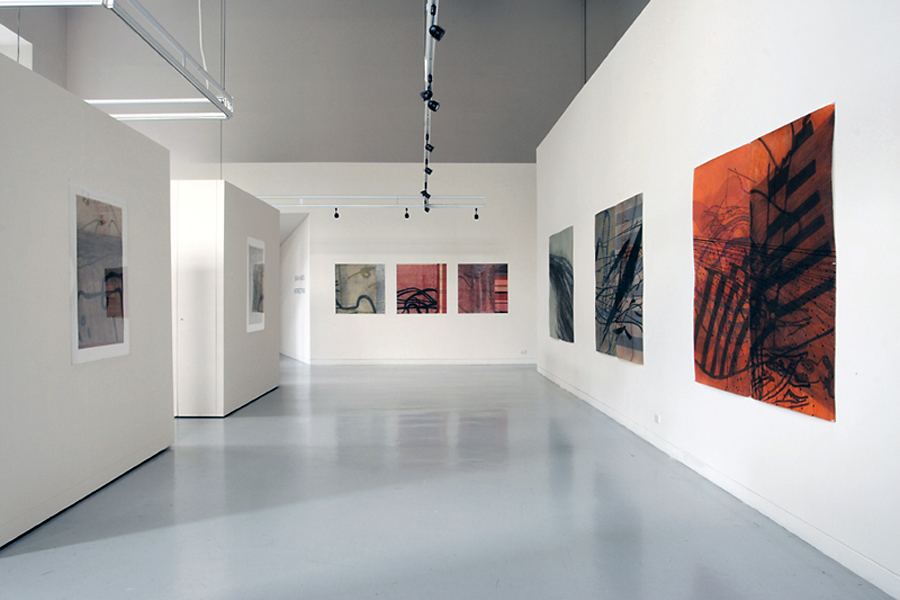
    Review: ‘Intersections’ by Sarah Amos at Gallery 101, Melbourne

    Exhibition dates: 22nd July – 15th August, 2009


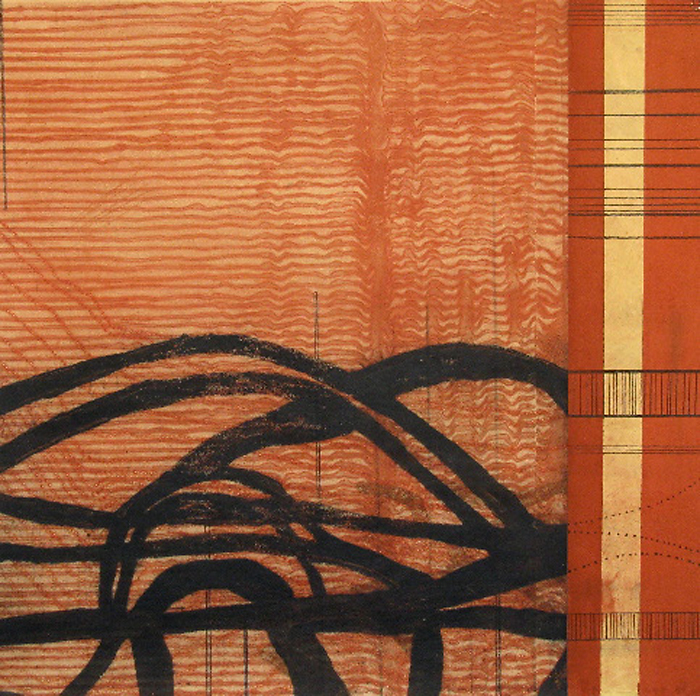
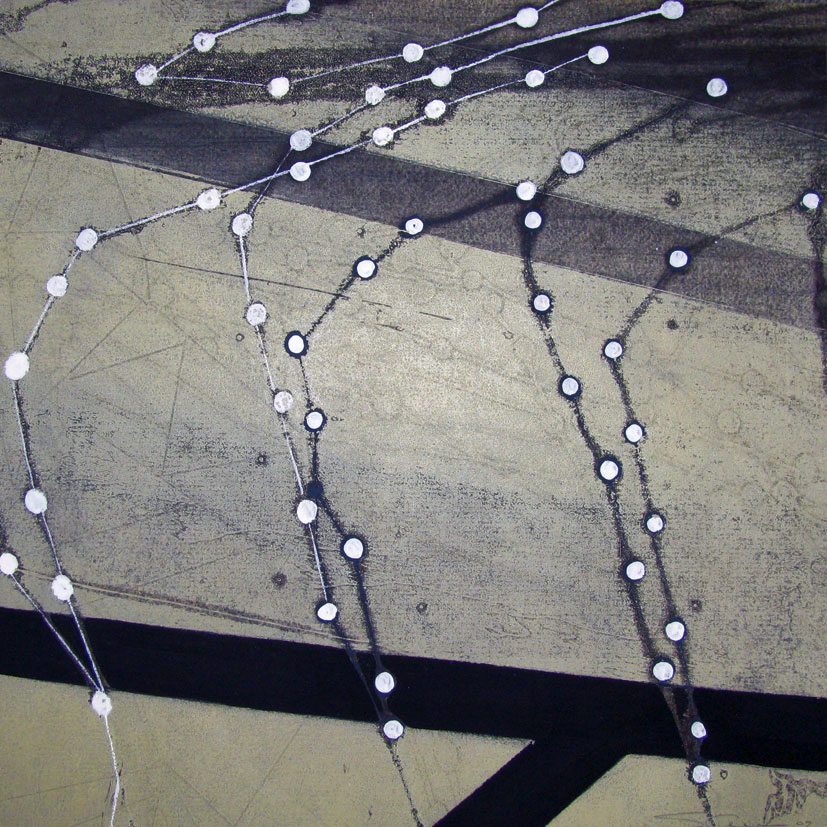
    Sarah Amos (Australian, b. 1965) 'Red Walk' 2009 from the exhibition 'Intersections' by Sarah Amos at Gallery 101, Melbourne, July - August, 2009


    Sarah Amos (Australian, b. 1965)
    Red Walk
    2009
    Collagraph and Monoprint


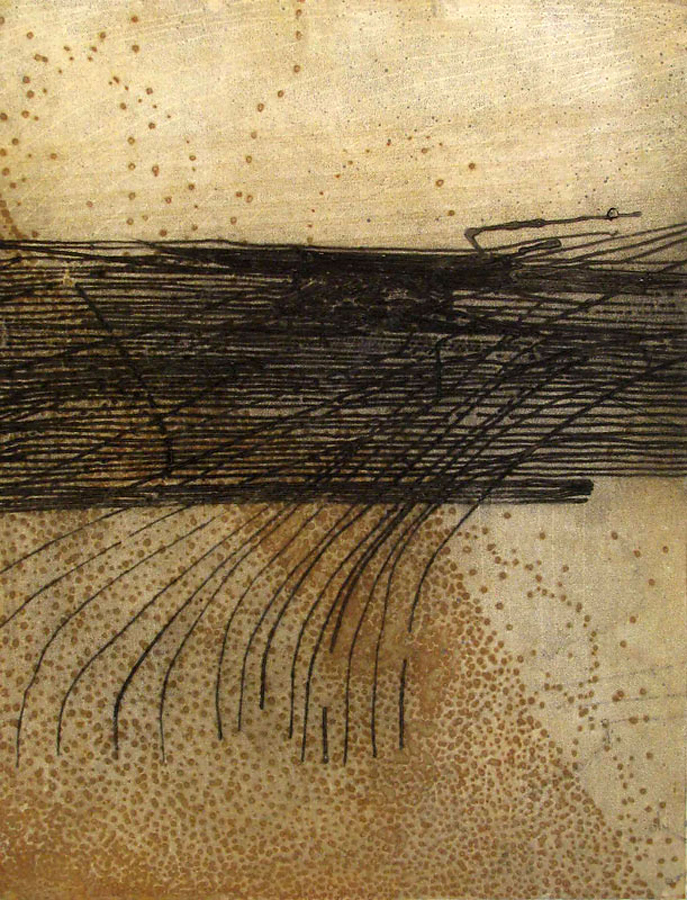
    An interesting exhibition of Collagraphs (a type of collage printmaking)1 and etchings is presented by Sarah Amos at Gallery 101, Melbourne, work that is full of delicate coloured layering, topographical mapping and nodal, rhizomic and Spirogyra-type structures.

    The ‘flux’ of the work, it’s musical cadence if you like, is the fusion of palimpsestic markings as viewed from the air – the dotted contours, the ploughed fields, the beautiful spatial layering that has an almost Kandinsky-like effect – with the aesthetics of Japanese paper, matt black colour (that subtly glistens on close inspection) and the tactility of the surface of the work. These intersections produce images that have some outstanding resonances: vibrations of energy that ebb and flow around the gallery space. These works are captivating!

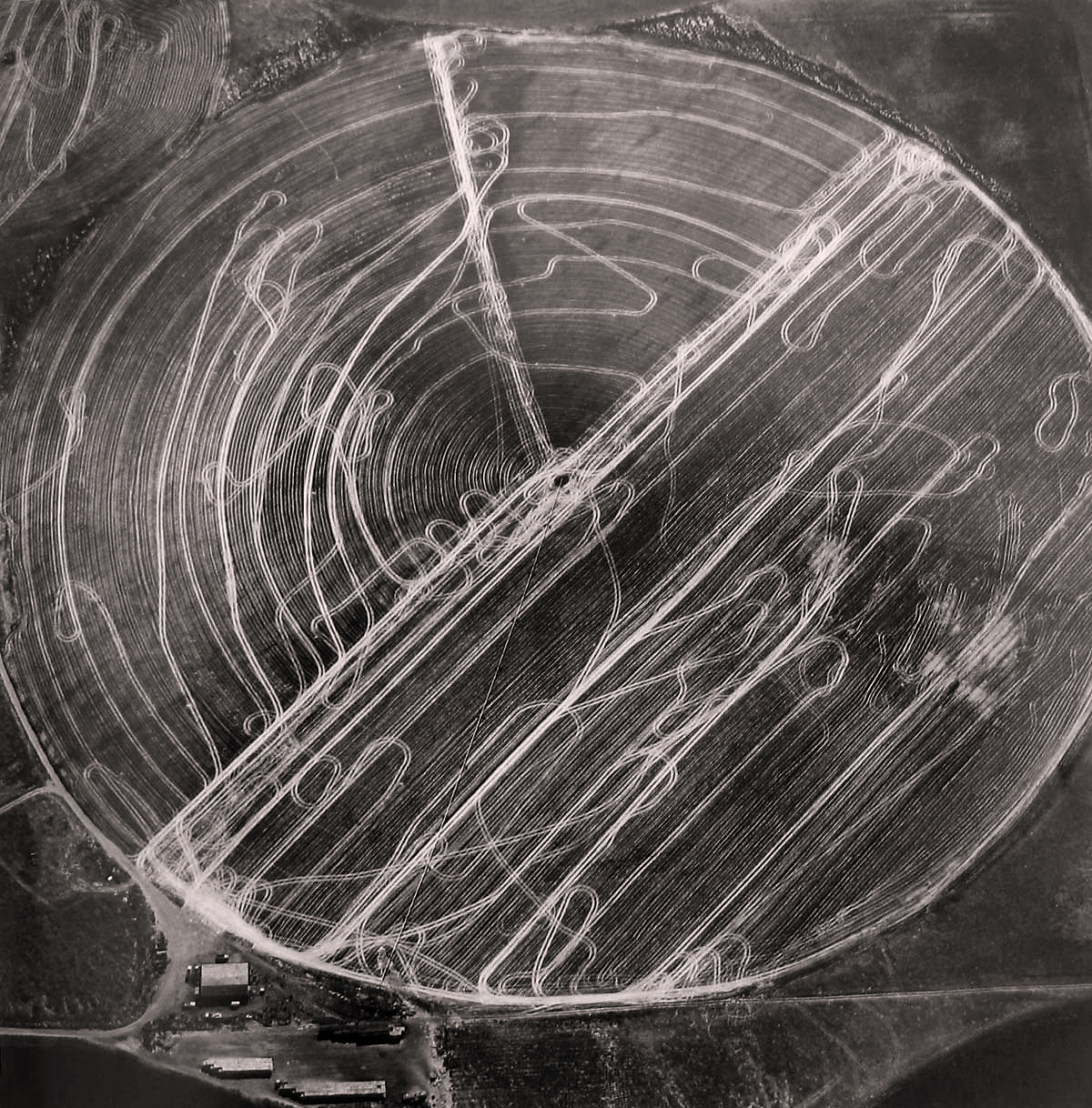
    For me the simpler images were the more successful especially the series named Intersections with their muted tonalities, shifting colours and topographical structure. They also reminded me of the black and white aerial landscape photography of Emmet Gowin (see below).

    While I am unsure of the validity of the ‘landscape’/’urban lens’ ‘urban temperature’ references (which I found unnecessary and slightly irrelevant) these works and their synaptic interfaces must be experienced. For the viewer they hold a strange attraction as you stand before them drawn, inexorably, into their penumbral spaces. Recommended.

    Dr Marcus Bunyan


    Many thankx to gallery 101 for allowing me to publish the art work in the posting. Please click on the photographs for a larger version of the image.


    1/ “A Collagraph print is a collage printmaking technique and is a form of Intaglio printing. The collagraph plate is printed in the same way as etchings, but also include the basic principle of relief printing and can be printed either as intaglio or relief.

    The term collagraph refer to a collage board where the materials are assembled on a flat base or plate (matrix) to form a relief block with different surface levels and textures.

    Collagraph plates are created by sticking and gluing materials like textured paper or fabric onto the plate and then coat it with varnish or acrylic medium afterwards to protect the materials.

    Anonymous. “Printmaking: Collagraphs/Collage Blocks,” on the ArtistTerms.com website [Online] Cited 03/08/2009. No longer available online


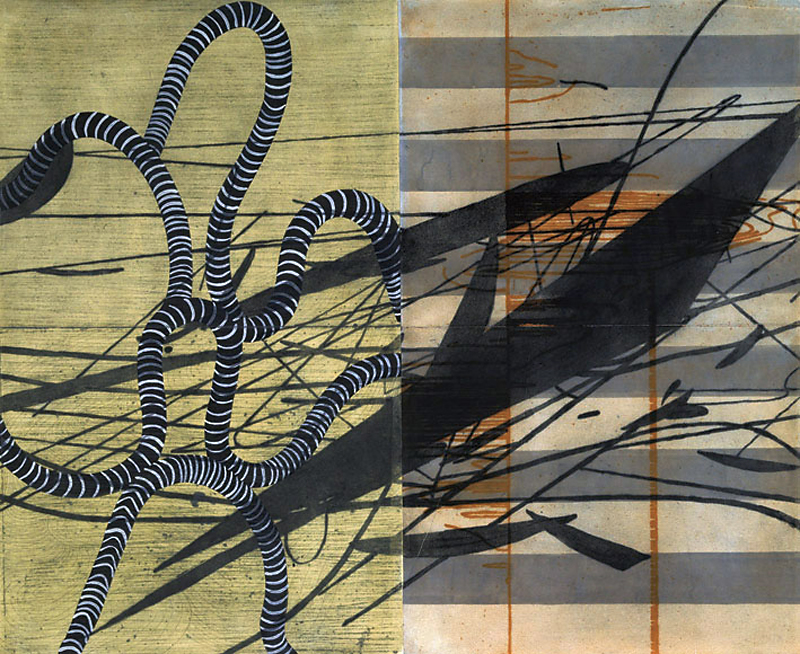
    Sarah Amos (Australian, b. 1965) 'Storm Loading' 2009 from the exhibition 'Intersections' by Sarah Amos at Gallery 101, Melbourne, July - August, 2009


    Sarah Amos (Australian, b. 1965)
    Storm Loading
    2009
    Etching and hand drawing on Shiramine Japanese paper


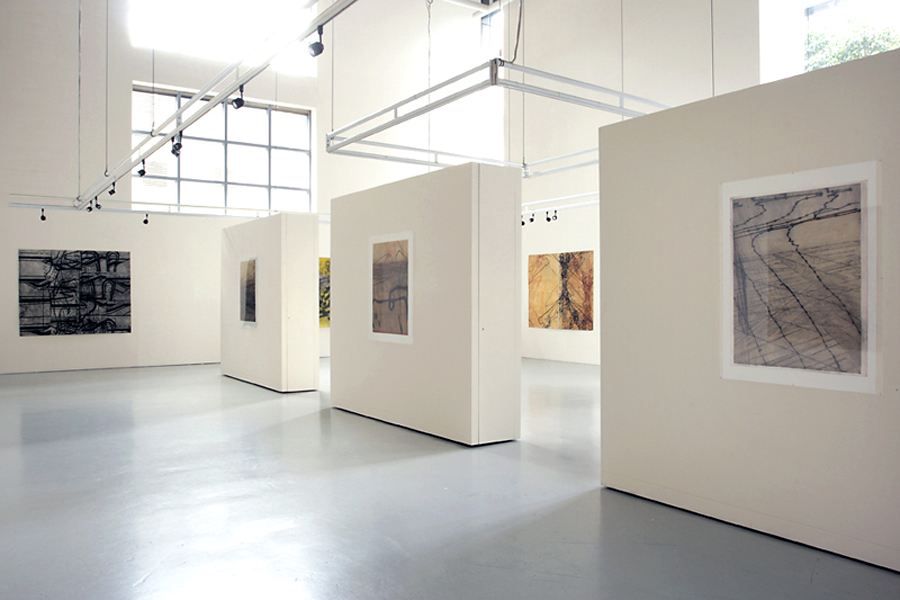
    Installation view of 'Intersections' by Sarah Amos at Gallery 101, Melbourne

    Installation view of 'Intersections' by Sarah Amos at Gallery 101, Melbourne


    Installation views of Intersections by Sarah Amos at Gallery 101, Melbourne
    Photos: Marcus Bunyan


    Emmet Gowin (American, b. 1941) 'Harvest traffic over agricultural pivot near Hermiston, Orgeon, 1991' 1991


    Emmet Gowin (American, b. 1941)
    Harvest traffic over agricultural pivot near Hermiston, Orgeon, 1991
    1991
    Gelatin silver print


    Sarah Amos (Australian, b. 1965) 'Intersections 8' 2009


    Sarah Amos (Australian, b. 1965)
    Intersections 8
    2009
    Collagraph with gouache


    “(Flux) – where a total electric or magnetic field passes through a surface.”

     
    My work is a fusion of both land and cityscape. I am interested in interpreting spatially dynamic, real and half forgotten landscapes through an urban lens. New to this body of work is my interest in the visual graphics of scientific diagrams in which dynamic and informative landscapes are drafted into linear minimal lines. I have absorbed this distilled language, translating it into an architectural and organic landscape where the intersections of line, volume and space are constantly in flux. This obscure knowledge is pared down, simplified and ordered into a clean analysis ready for instant translation.

    The Australian landscape is central to my work and influences my use of colour, idiosyncratic marks and open space. These works are personalised maps of accumulated information, like printed histories, that record the duelling intersections where the weathers of the landscape and the urban temperature have begun to take on new and vital immediacy.”

    Sarah Amos, 2009

    Text from the Gallery 101 website [Online] Cited 01/08/2009. No longer available online


    Sarah Amos (Australian, b. 1965) 'Lute' 2009


    Sarah Amos (Australian, b. 1965)
    Lute
    2009
    Collagraph


    Gallery 101

    This gallery is no longer open.ppp

    Sarah Amos website

    LIKE ART BLART ON FACEBOOK

    Back to top

    Review: ‘John Brack’ retrospective at the National Gallery of Victoria, NGV Australia, Federation Square, Melbourne

    Exhibition dates: 24th April – 9th August, 2009


    John Brack (Australian, 1920-1999) 'The chase' 1959 from the 'John Brack' retrospective at the National Gallery of Victoria, NGV Australia, Federation Square, Melbourne, April - August, 2009


    John Brack (Australian, 1920-1999)
    The chase
    1959
    Oil on composition board
    100.2 x 121.8 cm
    Grishin, o94
    Private collection, Melbourne
    © Helen Brack


    “One either has a subject, or one has not.”

    John Brack


    This is a solid retrospective of the work of the Australian artist John Brack (1920-1999) presented by the National Gallery of Victoria, Melbourne. John Brack is, quintessentially, an Australian and more specifically a Melbourne artist. Melbournians have a love hate relationship with his work – loving the earlier paintings that view the working classes of 1950s Melbourne through a nostalgic, humorous, sardonic lens (when originally the popularity of the work in the 1950s/60s was, as Robert Nelson has observed, mistakenly identified with ridicule of the subject matter)1 while finding the later work of massed pencils, postcards, deities and wooden people mystifying, cold and elusive.

    Brack saw his paintings of suburbia as honest portrayals of the new milieux. His sparse, graphic style evidenced the emotionally distanced relationships between space and people in the new cityscapes and best suited his cerebral approach to the subject matter. Men become mannequins with skeletal faces that hover menacingly behind the barmaid in The bar (1954, above), an amorphous mass of brown-suited humanity. Two women are portrayed in all their high-collared stiffness in the painting ‘Two typists’ (1955, above), their stylised faces, black hat and hair surmounted by hanging, disembodied legs at the top of the painting. These two women then reappear at bottom right in one of Brack’s most famous paintings, Collins St, 5p.m. (1955, above) subsumed into the two lines of people wearily trudging home from a day’s work at the office.

    Brack’s early paintings are full of stylised metaphor – for example the clinical emptiness of space, the implied threat of hanging ‘instruments’ in ‘The block’ (1954, above) or the decapitated bird-like alienation of the fish head in The fish shop (1955, above) – offer comment on the nature of suburban life: ordered, dead, soulless surfaces, facades behind which life seethes. Brack recognises the slightly macabre beauty of these industrial spaces, their form and purpose, where no one had recognised them before. There are oversized teeth (The veil, 1952), large hands, the fleshy pink of faces (The barbers shop, 1952) and the tribal mask of a face in Man in pub (1953) where man becomes fragment. Above all there is a simplicity and eloquence in line and form grounded in a limited palette of ochres, yellows, greys, blacks, whites and browns. These are the colours of the early cave painters and it’s poignant that Brack uses them so effectively to anchor his subject matter both in history, memory and the present of contemporary life, a life we still recognise intimately over fifty years later.

    Here is the ‘Human Condition’ writ large (with capitals!), the humility of professions such as butchers, seamstresses, typists and barmaids (with their limited control of the environment) portraying the body of the worker, as in Satre’s ‘Nothingness’,2 living the tedium of suburban life whilst wanting to flee the anguish of this existence into the desirable light of the future toward which man projects himself. This a theme that Brack develops in the later paintings with their stilted, cerebral investigation of existentialism. These paintings offer a more general contribution to a view of the human condition – love and hate, we, us, them, pros and cons – a view originally grounded in the suburbs of Melbourne but elevated to the ethereal, paintings that seem to lack material substance but offer a hyper-refined conceptual aesthetic.

    Sticks and Stones Will Break My Bones But Pencils Will Never Hurt Me

    As early as Knives and forks (1958) and The playground (1959) we can observe the beginnings of the spaces of his later pencil paintings with their uniting of form, line and plane (think the planes of Cezanne). The later work is literally much colder, the palette now blues instead of the warmer ochres and yellows and this change is very obvious when you walk around the exhibition. There is an emotional distance here – from human contact and the warmth of company. Ronald Miller observed in 1970 that Brack’s work is about the rituals of life, about states of uneasy poise and vulnerability, about realities behind facades but in the later work the paintings become the facades: gone are the ambiguities and vulnerabilities to be replaced by an altogether different ‘order’ of existence.

    We see in paintings such as Souvenirs (1976), We, Us, Them (1983), The pros and cons (1985) and Watching the flowers (1990-91 – see all below) how the canvas has become a stage set replete with turned up edges, spaces of ritual performance containing generalised metaphors for the nature of human existence, metaphors with universal themes. In his investigation of the universal Brack looses sight of the personal. His towers made of playing cards, his thrusting planes, the military precision of his opposing armies of goose-steeping pencils lack empathy for the thing that he was searching to be attuned with: the nature of existence, the human condition.

    As Sartre observed,

    “To apprehend myself as seen is, in fact, to apprehend myself as seen in the world and from the standpoint of the world. The look does not carve me out in the universe; it comes to search for me at the heart of my situation and grasps me only in irresolvable relations with instruments. If I am seen as seated, I must be seen as “seated-on-a-chair,” … But suddenly the alienation of myself, which is the act of being-looked-at, involves the alienation of the world which I organise. I am seated on this chair with the result that I do not see it at all, that it is impossible for me to see it …”3


    This is the point that John Brack reached: through his desire to paint universal themes he was unable to visualise and apprehend himself as seen in the world from the standpoint of the world. It feels (yes feeling!) that he was alienated from the very thing he sought to portray – how the personal and the universal are one and the same.

    Brack’s ‘failure’ as an artist (if indeed it can be called that) is not, as Robert Nelson has suggested, “because he didn’t talk enough or wisely enough to negotiate his way out of a misunderstanding” (that his work was sardonic). On the contrary I believe his ‘success’ as an artist is that he painted exactly what he wanted to paint in the time and place that he wanted to paint it. His later work might strike some as cold and impenetrable but if one looks clearly, with a steady eye, there still beats a heart under that chill exterior, a heart grounded in the life of suburban Melbourne. In the end Brack returns to the beginning, still exploring, still searching.

    As T.S. Eliot wrote in one of The Four Quartets,4

    “We shall not cease from exploration
    And the end of all our exploring
    Will be to arrive where we started
    And know the place for the first time.”

     Dr Marcus Bunyan


    Many thankx to the NGV for allowing me to publish the art work in the posting. Please click on the photographs for a larger version of the image.


    1/ Nelson, Robert. The Age newspaper. Melbourne, Friday 24th April, 2009

    2/ “We learn that Nothingness is revealed to us most fully in anguish and that man generally tries to flee this anguish, this Nothingness which he is, by means of “bad faith.” The study of “bad faith” reveals to us that whereas Being-in-itself simply is, man is the being “who is what he is not and who is not what he is.” In other words man continually makes himself. Instead of being, he “has to be”; his present being has meaning only in the light of the future toward which he projects himself. Thus he is not what at any instant we might want to say he is, and he is that towards which he projects himself but which he is not yet.”
    Barnes, Hazel. Introduction to Jean-Paul Satre’s Being and Nothingness. London: Methuen, 1966, pp. xvii-xix

    3/ Satre, Jean-Paul. Being and Nothingness. (trans. Hazel Barnes). London: Methuen, 1966, p. 263

    4/ Eliot, T.S. “Little Gidding” from The Four Quartets (1942)


      John Brack (Australian, 1920-1999) 'The barber’s shop' 1952 from the 'John Brack' retrospective at the National Gallery of Victoria, NGV Australia, Federation Square, Melbourne, April - August, 2009


      John Brack (Australian, 1920-1999)
      The barber’s shop
      1952
      Oil on canvas
      63.7 × 76.3 cm
      National Gallery of Victoria, Melbourne
      Purchased, 1953
      © Helen Brack


      John Brack (Australian, 1920-1999) 'Two Typists' 1955 from the 'John Brack' retrospective at the National Gallery of Victoria, NGV Australia, Federation Square, Melbourne, April - August, 2009


      John Brack (Australian, 1920-1999)
      Two typists
      1955
      Oil on canvas
      51.0 × 61.5 cm
      National Gallery of Victoria, Melbourne
      The Joseph Brown Collection. Presented through the NGV Foundation by Dr Joseph Brown AO OBE, Honorary Life Benefactor, 2004
      © Helen Brack


      John Brack (Australian, 1920-1999) 'Collins St, 5p.m.' 1955


      John Brack (Australian, 1920-1999)
      Collins St, 5 p.m.
      1955
      Oil on canvas
      114.8 × 162.8 cm
      National Gallery of Victoria, Melbourne
      Purchased, 1956
      © National Gallery of Victoria


      John Brack (Australian, 1920-1999) 'The bar' 1954


      John Brack (Australian, 1920-1999)
      The bar
      1954
      Oil on canvas
      97.0 × 130.3 cm irreg.
      National Gallery of Victoria, Melbourne
      Purchased with the assistance of Peter Clemenger AM and Joan Clemenger, Elena Keown Bequest, Spotlight Foundation, NGV Foundation, Ross Adler AC and Fiona Adler, Bruce Parncutt and Robin Campbell, Marc Besen AO and Eva Besen AO, the Bowness Family, Lindsay Fox AO and Paula Fox, Dorothy Gibson, Rino Grollo and Diana Ruzzene Grollo, Ian Hicks AM, the NGV Women’s Association and donors to the John Brack Appeal, 2009
      © Helen Brack


      John Brack (Australian, 1920-1999) 'The conference' 1956


      John Brack (Australian, 1920-1999)
      The conference
      1956
      Oil on canvas


      John Brack (Australian, 1920-1999) 'The block' 1954


      John Brack (Australian, 1920-1999)
      The block
      1954
      Oil on canvas
      59.0 × 71.5 cm
      National Gallery of Victoria, Melbourne
      Presented through The Art Foundation of Victoria by Dr Joseph Brown, AO, OBE, Honorary Life Benefactor, 1999
      © Helen Brack


      John Brack (Australian, 1920-1999) 'The fish shop' 1955


      John Brack (Australian, 1920-1999)
      The fish shop
      1955
      Oil on canvas


      John Brack (Australian, 1920-1999) 'The new house' 1953


      John Brack (Australian, 1920-1999)
      The new house
      1953
      Oil on canvas on board
      127.0 x 55.8 cm
      Private collection, Brisbane
      © Helen Brack


      John Brack (Australian, 1920-1999) 'Self-portrait' 1955


      John Brack (Australian, 1920-1999)
      Self-portrait
      1955
      Oil on canvas
      81.4 × 48.3 cm
      National Gallery of Victoria, Melbourne
      Purchased with the assistance of the National Gallery Women’s Association, 2000
      © Helen Brack


      John Brack (Australian, 1920-1999) 'The unmade road' 1954


      John Brack (Australian, 1920-1999)
      The unmade road
      1954
      Oil on canvas


      John Brack (Australian, 1920-1999) 'Subdivision' 1954


      John Brack (Australian, 1920-1999)
      Subdivision
      1954
      Oil on canvas


      John Brack (Australian, 1920-1999) 'Nude in an armchair' 1957


      John Brack (Australian, 1920-1999)
      Nude in an armchair
      1957
      Oil on canvas
      127.6 × 107.4 cm
      National Gallery of Victoria, Melbourne
      Purchased, 1957
      © National Gallery of Victoria


      “What I paint most is what interests me most, that is, people; the Human Condition, in particular the effect on appearance of environment and behaviour… A large part of the motive is the desire to understand, and if possible, to illuminate …”

      John Reed, New Painting 1952-62, Longmans, Melbourne, 1963, p. 19.


      Opening 24 April, the National Gallery of Victoria will present a major retrospective of the work of John Brack, the first in more than twenty years. This exhibition will survey John Brack’s complete career, incorporating over 150 works from all of his major series. John Brack will bring together a significant body of the artist’s paintings and works on paper, including pictures that have developed ‘icon status’ and others that have rarely, if ever, been seen publicly since they were first exhibited.

      Kirsty Grant, Senior Curator Australian Art, NGV said that more than any other artist of his generation, John Brack was a painter of modern Australian life.

      “John Brack painted images which explored the social rituals and realities of everyday life. Long considered the quintessential Melbourne artist, Brack’s images of urban and suburban Melbourne painted during the 1950s drew attention for their novelty of subject and instantly recognisable references. His work is much broader however and in this exhibition we will see the continuity throughout his career of his fundamental interest in people, human nature and the human condition,” said Ms Grant.

      Frances Lindsay, NGV Deputy Director said John Brack was widely considered one of Australia’s greatest twentieth century artists.

      “The NGV has enjoyed a long association with John Brack: he worked as an assistant frame maker at the gallery in 1949, became head of the National Gallery School in 1962, and the NGV was also the first public institution to purchase one of his works. Brack’s iconic works are certainly the highlight for many visitors to the Gallery. We are thrilled to be continuing this special relationship by presenting this important and timely retrospective.”

      The exhibition will be displayed chronologically, beginning with some rare early student works. Each phase of Brack’s practice will be explored, from his well-known urban scenes of the 1950s to the highly symbolic paintings from the 1970s. Many of Brack’s most familiar paintings are included in the exhibition such as Collins St, 5p.m, The bar and The Old Time.

      Brack produced compelling pictures which captured the essential characteristics of his subjects involved in everyday activities and, in some of his most engaging series, he depicted the characters of the racecourse, children at school and professional ballroom dancers. Throughout his career Brack also painted the nude, still life subjects and portraits, both of family and friends – including artists Fred Williams and John Perceval – as well as commissioned subjects, such as Barry Humphries as his alter-ego Edna Everage. During the 1970s Brack replaced the human figure with an assortment of everyday implements including cutlery, pens and pencils which he used as metaphors for the complexities of human behaviour and relationships.

      Press release from the NGV website [Online] Cited 26/07/2009. No longer available online


      John Brack (Australian, 1920-1999) 'Inside and outside (The shop window)' 1972


      John Brack (Australian, 1920-1999)
      Inside and outside (The shop window)
      1972
      Oil on canvas


      John Brack (Australian, 1920-1999) 'Latin American Grand Final' 1969


      John Brack (Australian, 1920-1999)
      Latin American Grand Final
      1969
      Oil on canvas
      167.5 x 205.0 cm
      National Gallery of Australia, Canberra
      Purchased, 1981
      © Helen Brack


      John Brack (Australian, 1920-1999) 'Portrait of Fred Williams' 1979-1980


      John Brack (Australian, 1920-1999)
      Portrait of Fred Williams
      1979-1980
      Oil on canvas


      John Brack (Australian, 1920-1999) 'The pros and cons' 1985


      John Brack (Australian, 1920-1999)
      The pros and cons
      1985
      Oil on canvas


      John Brack (Australian, 1920-1999)' The Battle' 19181-1983


      John Brack (Australian, 1920-1999)
      The Battle
      19181-1983
      Oil on canvas


      John Brack (Australian, 1920-1999) 'We, Us, Them' 1983


      John Brack (Australian, 1920-1999)
      We, Us, Them
      1983
      Oil on canvas
      183.4 × 122.4 cm
      National Gallery of Victoria, Melbourne
      Purchased through The Art Foundation of Victoria with the assistance of Mr Philip Russell, Fellow, 1983
      © Helen Brack


      John Brack (Australian, 1920-1999) 'Kings and Queens' 1988


      John Brack (Australian, 1920-1999)
      Kings and Queens
      1988
      Oil on canvas


      John Brack (Australian, 1920-1999) 'Souvenirs' 1976


      John Brack (Australian, 1920-1999)
      Souvenirs
      1976


      John Brack (Australian, 1920-1999) 'Watching the flowers' 1990-1991


      John Brack (Australian, 1920-1999)
      Watching the flowers
      1990-1991
      Oil on canvas


      The Ian Potter Centre:
 NGV Australia 
Federation Square
      Corner of Russell and 
Flinders Streets, Melbourne

      Opening hours:
      Everyday 10am – 5pm

      National Gallery of Victoria website

      LIKE ART BLART ON FACEBOOK

      Back to top