Review: ‘Cubism & Australian Art’ at Heide Museum of Modern Art, Bulleen

Exhibition dates: 24th November, 2009 – 8th April, 2010


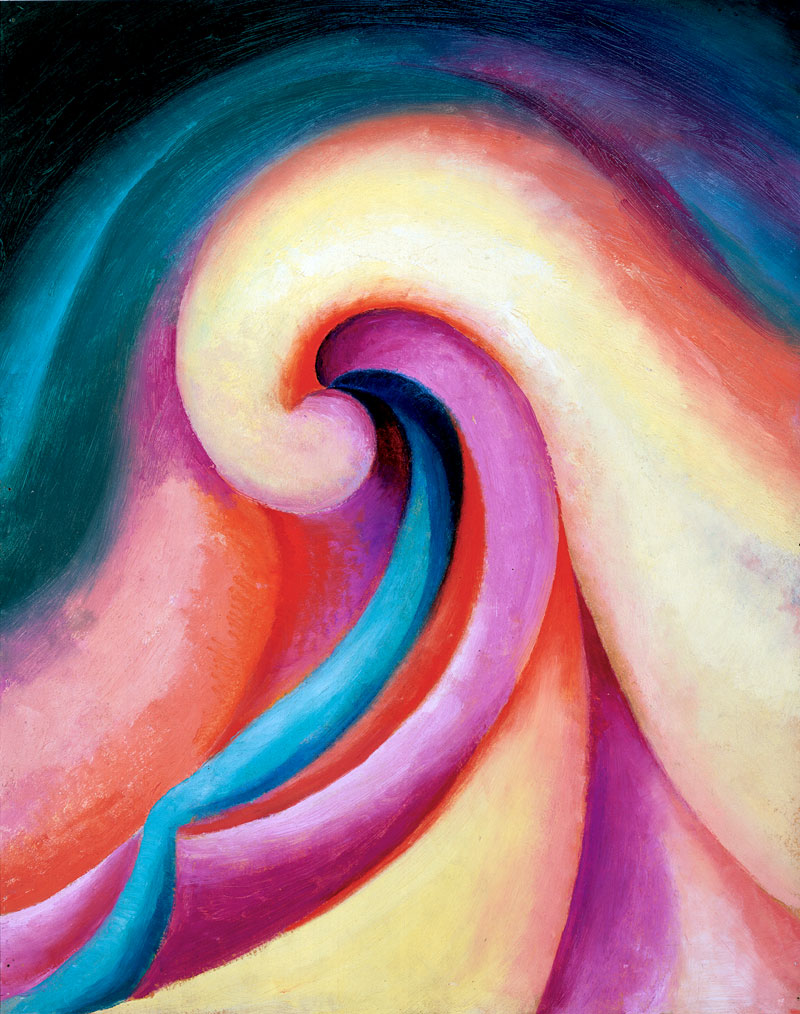
Jean Appleton (Australian, 1911-2003) 'Painting IX' 1937 from the exhibition 'Cubism & Australian Art' at Heide Museum of Modern Art, Nov 2009 - April 2010


Jean Appleton (Australian, 1911-2003)
Painting IX
1937
Whitworth/Bruce Collection


Perfect summer fare out at Heide at the moment – relax with a lunch at the new Cafe Vue followed by some vibrantly fresh art in the galleries. In a nicely paced exhibition, Cubism & Australian Art takes you on a journey from the 1920s to the present day, the art revealing itself as you move through the galleries.

There are too many individual works to critique but some thoughts and ideas do stand out.


Cezanne’s use of passage (A French term (pronounced “pahsazh”) for a painting technique characterised by small, intersecting planes of patch-like brushwork that blend together to create an image), the transition between adjacent shapes, where solid forms are fused with the surrounding space was an important starting point for the beginnings of Cubism. Simultaneity – movement, space and the dynamism of modern life – was matched to Cubism’s new forms of pictorial organisation. The geometries of the Section d’Or (or the Gold Mean), that magical ratio found in all forms, also sounds an important note as it flows through the rhythmic movement and the sensations of temporal reality.

In the work from the 1920s/30s presented in the exhibition the palette of most of the works is subdued, the form of circles and geometrics. There are some beautiful paintings by one of my favourite Australian artists Roy de Maistre and others by Eric Wilson, Sam Atyeo and Jean Appleton (see image above). The feeling of these works is quiet and intense.

Following

There are some evocative works from the 1940s/50s including Godfrey Miller’s Still Life with Musical Instruments (1958, below), Graham King’s Industrial Landscape (1959) and Ralph Balson’s Constructive painting (1951). The Charcoal Burner (1959) by Fred Williams (see image below) is the Australian landscape seen through Cubist eyes, surface and space perfectly commingled in reserved palette, delineated planes. Grace Crowley’s Abstract Painting (1947, see image below) is a symphony of colour, plane and form that I would willingly take home any day of the week!

Now

It is the contemporary work that is of most interest in this exhibition. Spatio-temporal reality is distorted as artists push the boundaries of dimensionality. The parameters of reality are blurred and extended through the use of multiple viewpoints and lines of sight. Fresh and spatially aware (like an in joke because everyone recognises the fragmented ‘nature’ of contemporary existence) we have the sublime Milky Way (1995, see image below) by Rosalie Gascoigne and for me the two standout pieces in the exhibition, Bicycles (2007, below) by James Angus and Static No.9 (a small section of something larger) (2005, below) by Daniel Crooks.

Though difficult to see in the photograph of the work (below), Bicycles fuses three bicycles into one. “A photo finish made actual, a series of frames at the conclusion of a race transferred permanently into three dimensions.” You look and then look again: three frames into one, three tyres into one, three stands into one, three chains the only singular – like a freeze frame of a motor drive on a camera

Snap
Snap
Snap

or the slight difference of the two images of a Victorian stereoscope made triumvirate (the 3D world of Avatar comes to mind). Static, the bicycle can never work, is redundant, but paradoxically moves at the same time.

Even more mesmerising is the video work Static No.9 (a small section of something larger) by Daniel Crooks. Unfortunately I cannot show you the video but a still from the video can be seen below as well as a link to a trailer of the work. Imagine this animated like swirling DNA (in actual fact it is people walking across an intersection at different distances and speeds to the camera – and then sections taken out of the video and layered). Swirling striations through time and space fragment identity so that people almost become code, the sound track the distorted beep beep beep of the buzzer at the crossing. I could have sat there for hours watching the performance as it crackles with energy and flow – with my oohs and aahs! The effect is magical, beautiful, hypnotic.

A great summer show – fresh, alive and well worth the journey if only to see that static in all its forms has never looked so good.

Dr Marcus Bunyan


Many thankx to the Heide Museum of Modern Art for allowing me to publish the art work in the posting. Please click on the photographs for a larger version of the image.


Cubism and Abstract Art


Alfred Barr’s Cubism diagram – original cover of Cubism and Abstract Art, Museum of Modern Art, New York, exhibition catalogue, 1936


Ralph Balson (Australian, 1890-1964) 'Painting no. 17' 1941 from the exhibition 'Cubism & Australian Art' at Heide Museum of Modern Art, Nov 2009 - April 2010


Ralph Balson (Australian, 1890-1964)
Painting no. 17
1941
Oil and metallic paint on cardboard
91.7 x 64.8cm
Hassall Collection


By 1941 Ralph Balson had abandoned the figure for a completely abstract style. He announced this breakthrough in a solo exhibition at the Fine Art Galleries at Anthony Hordern and Sons in Sydney with paintings that evolved in part out of Albert Gleizes’s style of Cubism: uninflected surfaces, essential forms, respect for the two-dimensionality of the picture surface and the sense of a search for a deeper, universal truth.

Though at the time unusual for Australian art, such developments were concurrent with advancements in abstraction in the UK and US. This new mode of painting was to preoccupy Balson and Crowley, and to a lesser extent Frank Hinder, for the rest of the decade.

Balson’s ‘constructive’ pictures became sophisticated and intricate, characterised by Constructive painting (1945), with its overlapping translucent planes and array of discs, squares and rectilinear shapes in an animated state of flux, and perhaps culminating in Constructive painting (1951). This work has a different kind of luminosity, as if the picture has an inner light. As Balson himself said of such images, they are ‘abstract from the surface, but more truly real with life’.

Heide Education Resource p. 15.


Dorrit Black (Australian, 1891-1951) 'The bridge' 1930


Dorrit Black (Australian, 1891-1951)
The bridge
1930
Oil on canvas on board
60 x 81cm
Art Gallery of South Australia, Adelaide
Bequest of Dorrit Black, 1951


Roy de Maistre (Australian, 1894-1968) 'The football match' 1938


Roy de Maistre (Australian, 1894-1968)
The football match
1938
Oil on canvas
71.5 x 92cm
The Janet Holmes à Court Collection


Eric Wilson (Australian, 1911-1946) 'Theme for a mural' 1941


Eric Wilson (Australian, 1911-1946)
Theme for a mural
1941
Oil on plywood on corrugated iron
53.2 x 106.8cm
National Gallery of Victoria, purchased 1958


Sidney Nolan (Australian, 1917-1992) 'Rimbaud royalty' 1942


Sidney Nolan (Australian, 1917-1992)
Rimbaud royalty
1942
Synthetic polymer paint on composition board
59.5 x 90cm
Heide Museum of Modern Art
Bequest of John and Sunday Reed


Ralph Balson (Australian born England, 1890-1964; worked in Australia 1913-1964) 'Constructive painting' 1948


Ralph Balson (Australian born England, 1890-1964; worked in Australia 1913-1964)
Constructive painting
1948
Oil on cardboard
106.8 × 71.0cm
National Gallery of Victoria, Melbourne
Bequest of Grace Crowley, 1981
© Ralph Balson Estate


Grahame King (Australian 1915-2008) 'Industrial Landscape' 1960


Grahame King (Australian 1915-2008)
Industrial Landscape
1960
Oil on board
91.00 x 122.00cm
Charles Nodrum Gallery


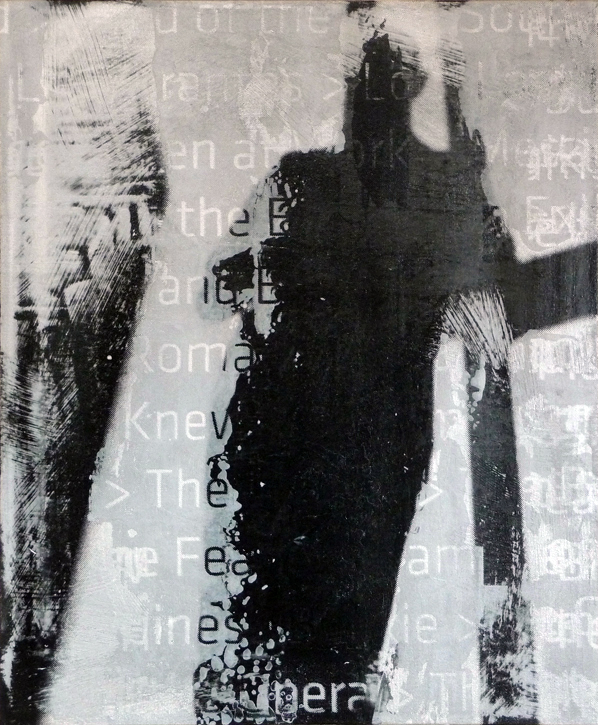
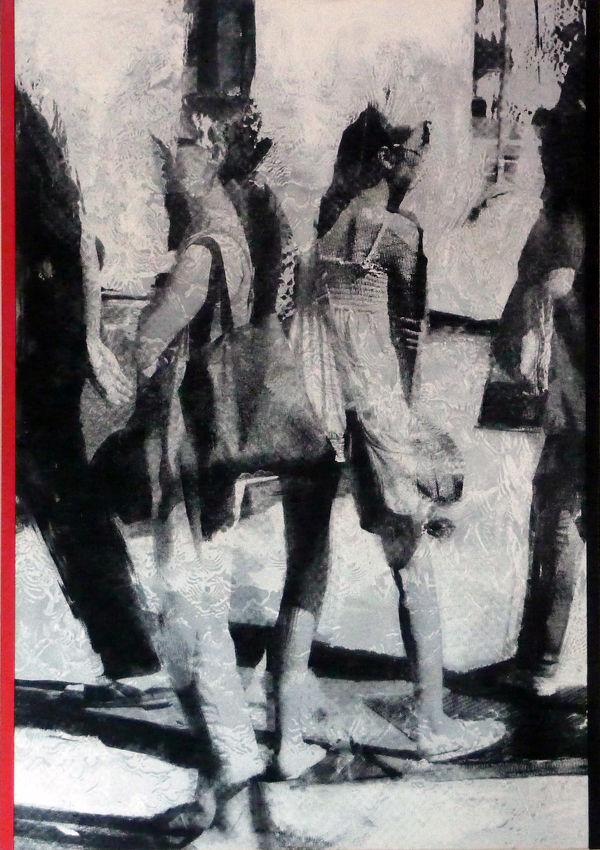
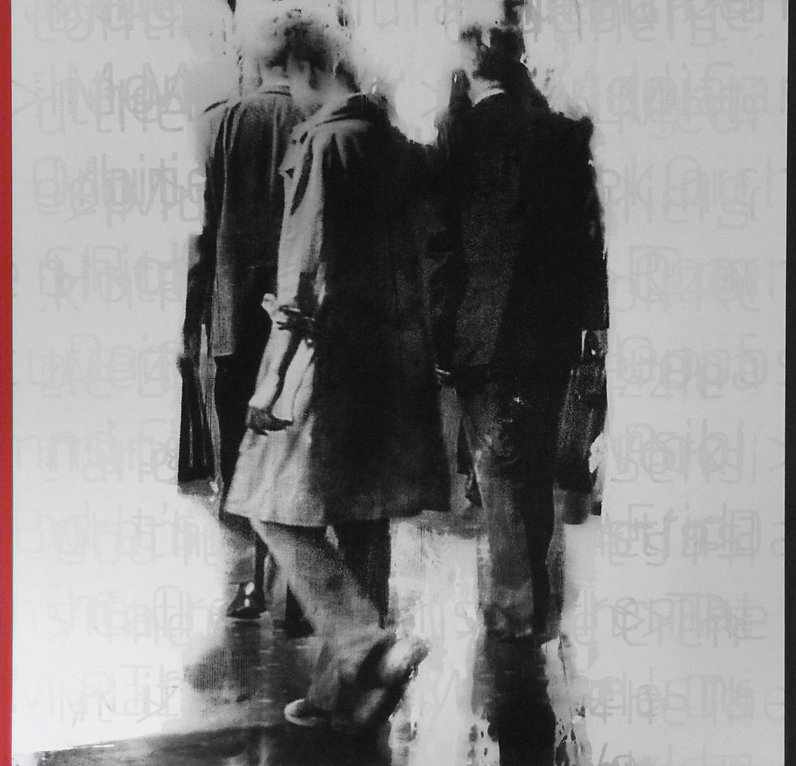
Daniel Crooks (New Zealand, b. 1973) 'Portrait #2' (Chris) 2007


Daniel Crooks (New Zealand, b. 1973)
Portrait #2 (Chris)
2007
Lambda photographic print
102 cm x 102cm
Heide Museum of Modern Art
Purchased with funds from the Robert Salzer Foundation 2012


“With these portraits I’m attempting to make large detailed images of people in their own surroundings, images of people very much in and of their time that are both intriguing and beautiful. As with a lot of my work the portraits also seek to render the experience of time in a more tangible material form, blurring the line between still and moving images and looking to new post-camera models of spatiotemporal representation.”

Daniel Crooks


Portrait #2 (Chris) forms part of Daniel Crooks’s Scanlines, a series of moving image works and prints made using digital collage techniques. This involves digitally slicing images then reassembling them sequentially, across the screen or picture plane, to create rhythmic and spatial effects through which Crooks seeks to explore ideas and themes related to our understandings of time and motion.


Elizabeth Gower (Australian, b. 1952) 'City Series' 1982-1984


Elizabeth Gower (Australian, b. 1952)
City Series
1982-1984
Acrylic on paper
© Courtesy the artist and Sutton Gallery, Melbourne and Milani Gallery, Brisbane


Elizabeth Gower (Australian, b. 1952) 'Transient' 1979


Elizabeth Gower (Australian, b. 1952)
Transient
1979
Synthetic, polymer paint and resin on rice paper, newsprint and garment patterns
© Courtesy the artist and Sutton Gallery, Melbourne and Milani Gallery, Brisbane


Elizabeth Gower found a new relevance for Cubism in her abstract series Shaped works (1978-1984) … Cubist collage combined with feminist ideas to inspire her use of everyday materials such as newsprint and garment patterns. Transparent rice paper adds a delicacy and lightness to the work. The dynamic overlap of flat planes and juxtaposition of contrasting shapes, textures and patterns relates directly to the legacy of Synthetic Cubism. The work of Sonia Delaunay was also a particular inspiration for Gower.

Heide Education Resource p. 23.


Melinda Harper (Australian, b. 1965) 'Untitled' 2000


Melinda Harper (Australian, b. 1965)
Untitled
2000
Oil on canvas
183.0 × 152.3cm
National Gallery of Victoria, Melbourne
Presented through the NGV Foundation by Robert Gould, Founder Benefactor, 2004
© Melinda Harper/Licensed by Copyright Agency, Australia


Cubism & Australian Art, one of the most ambitious and extensive exhibitions Heide has undertaken, shows the impact of the revolutionary and transformative movement of Cubism on Australian art from the early twentieth century to the present day. It uncovers a little-known yet compelling history through works by over eighty artists, including key examples of international Cubism drawn from Australian collections – by André Lhote, Albert Gleizes, Fernand Léger, Alexander Archipenko, Ben Nicholson and others – and nine decades of Australian modern and contemporary art that demonstrate a local evolution of cubist ideas.

The exhibition documents the earliest incorporation of cubist principles in Australian art practice in the 1920s, when artists such as Grace Crowley and Anne Dangar, who studied overseas under leading cubist artists, began to transform their art in accordance with late cubist thinking. It examines the influence of Cubism on artists associated with the George Bell School in Melbourne and the Crowley-Fizelle School in Sydney; and on those who participated in the cubist movement abroad including James Cant and John Power.

While its distortions and unconventional perspectives served individual styles such as the expressionism of Albert Tucker or the experimental landscapes of Sidney Nolan and Fred Williams, Cubism’s most enduring influence on postwar Australian art has been in abstraction. This exhibition traces its reverberations in 1950s abstract art by Roger Kemp, Robert Klippel and Ron Robertson-Swann and others, through to works by younger artists such as Stephen Bram, Gemma Smith and Justin Andrews.

Cubism’s formal and conceptual innovations and its investigations into the representation of time, space and motion have continuing relevance for artists today, who variously adapt, develop, quote and critique aspects of cubist practice. In this exhibition, Cubism’s shifting, multi-perspectival view of reality takes on new form in moving-image works by John Dunkley-Smith and Daniel Crooks, in paintings by Melinda Harper and sculptures by James Angus. The use of found objects and recycled materials by Madonna Staunton, Rosalie Gascoigne and Masato Takasaka extends ideas originating in cubist sculpture and collage. Other artists are critical of Cubism, bringing Indigenous and non-european perspectives to bear on its modernist history, particularly its appropriation of so-called ‘primitive art’.

Text from the Heide Museum of Modern Art website [Online] Cited 10/01/2010 no longer available online


Grace Crowley (Australian, 1890-1979) 'Abstract painting' 1947


Grace Crowley (Australian, 1890-1979)
Abstract painting
1947
Oil on board
63.2 x 79.0cm
Private Collection, Sydney


Godfrey Miller (New Zealand, 1893-1964; worked in England 1933-39, Australia 1939-64) 'Still Life with Musical Instruments' 1958


Godfrey Miller (New Zealand, 1893-1964; worked in England 1933-1939, Australia 1939-1964)
Still Life with Musical Instruments
1958
Pen and ink and oil on canvas
65.5 × 83.0cm
National Gallery of Victoria, Melbourne
Felton Bequest, 1963
© National Gallery of Victoria


Introduction

Cubism & Australian Art considers the impact of the revolutionary and transformative movement of Cubism on Australian art from the early twentieth century to the present day. Cubism was a movement that changed fundamentally the course of twentieth-century art, and its innovations – the shattering of the traditional mimetic relationship between art and reality and investigations into the representation of time, space and motion – have continuing relevance for artists today. Works by over eighty artists, including key examples of international Cubism drawn from Australian collections, are displayed in the exhibition.

The exhibition examines not only the period contemporaneous with Cubism’s influence within Europe, but also the decades from then until the present day, when its reverberations continue to be felt. In the first part of the century, Cubism appeared through a series of encounters and dialogues between individuals and groups resulting in a range of fascinating adaptations, translations and versions alongside other more programmatic or prescriptive adoptions of cubist ideas. The exhibition traces the first manifestations of Cubism in Australian art in the 1920s, when artists studying overseas under leading cubist artists began to transform their art in accordance with such approaches. It examines the transmission of cubist thinking and its influence on artists associated with the George Bell School in Melbourne and the Crowley-Fizelle School in Sydney. By the 1940s, artists working within the canon of modernism elaborated on Cubism as part of their evolutionary process, and following World War II Cubism’s reverberations were being felt as its ideas were revisited by artists working with abstraction.

In the postwar years and through to the 1960s, the influence of Cubism became more diffuse, but remained significant. In painting, cubist ideas provided an underlying point of reference in the development of abstract pictorial structures, though they merged with other ideas current at the time, relating in the 1950s, for example, to colour, form, musicality and the metaphysical. For many artists during this decade, Cubism provided the geometric basis from which to seek an inner meaning beneath surface appearances, to explore the spiritual dimension of painting and to understand modernism.

The shift from a Cubist derived abstraction in Australia in the 1950s to a mild reaction against Cubism in the Colour field and hard-edged painting of the mid to latter 1960s reflected a new recognition of New York as the centre of the avant-garde. Cubism’s shallow pictorial space, use of trompe l’oeil and fragmentation of parts continued to inform the work of certain individuals who adapted them in ways relevant to the new abstraction. Cubist ideas and precepts also found some resonance in an emphasis on the flatness of the canvas, particularly as articulated in the formalist criticism of Clement Greenberg.

The influence of Cubism on Australian art from 1980s to 2000s is subtle, varied and diffuse as contemporary artists variously quote, adapt, develop and critique aspects of cubist practice. Cubism’s decentred, shifting, multi-perspectival view of reality takes on new form, in moving-image works and installations, as well as being further developed in painting and sculpture. Post-cubist collage is used both as a method of constructing artworks – paintings, sculptures, assemblages – and as an intellectual strategy, that of the postmodern bricoleur. Several artists imagine alternative cubist histories and lineages, revisiting cubist art from an Indigenous or non-European perspective and drawing out the implications of its primitivism. Others pay homage to local versions of Cubism, or look through its lens at art from elsewhere.

Heide Education Resource p. 3.


Fred Williams (Australian, 1927-1982) 'The Charcoal Burner' 1959


Fred Williams (Australian, 1927-1982)
The Charcoal Burner
1959
Oil on composition board
86.3 × 91.4cm
National Gallery of Victoria, Melbourne, purchased 1960
© Estate of Fred Williams


Cubism played a fundamental role in Fred Williams’s pictorial rethinking of the Australian landscape and through him, Cubism has affected the way Australians view their natural surroundings.

Patrick McCaughey writes in the catalogue for this exhibition:

The charcoal burner, with its reserved palette and briskly delineated planes, is one of his most accomplished essays in seeing the Australian landscape through cubist eyes. Already looking for the ‘bones’ of the landscape, Williams was drawn to the early phase of Cubism, as it gave structure to the unspectacular landscape – the bush in the Dandenongs; the coastal plain around the You Yangs.

Just as Braque in his cubist landscapes of 1908-1909 eschewed ‘view’ painting and disdained the picturesque, so Williams in turn generalised the landscape, constructing it and rendering it taut, modern and vivid. In his landscapes Braque made the important pictorial discovery of passage, fusing solid forms with the surrounding space. Williams exploits this innovation in The charcoal burner, where surface and space are perfectly commingled.

Heide Education Resource p. 1.


Robert Rooney (Australian, 1937-2017) 'After Colonial Cubism' 1993


Robert Rooney (Australian, 1937-2017)
After Colonial Cubism
1993
Synthetic polymer paint on canvas
122 x 198.3cm
Heide Museum of Modern Art
Purchased through the Heide Foundation with the assistance of the Heide Foundation Collectors’ Group and the Robert Salzer Fund 2008. Courtesy of the artist


Robert Rooney’s painting After Colonial Cubism (1993) shows a vibrant streetscape rendered in deliberate and self-conscious cubist style that declares itself to be a second-hand quotation of Cubism, rather than an example of the original style. The streetscape has not been drawn from life but is a faithfully scaled-up version of a much earlier gouache sketch Buildings (1953) that Rooney did as a young student in Melbourne. The sketchbook page is indicated in the painting by the vertical bands on either side of the image which effectively serve as quotation marks.

In highlighting the second-hand nature of the image in his painting, Rooney more broadly comments on the dispersal of cubist ideas from Paris, Cubism’s place of origin, to more local contexts such as Australia. The painting carries with it the artist’s memories of his student days, of learning about Cubism through magazines and books. Rooney remembers visiting exhibitions of cubist works by Australian artists and being fascinated by how these ideas were translated locally. Further meaning in the work derives from its title which refers to the painting Colonial Cubism 1954, by Stuart Davis, an American artist whose cubist works are a further instance of the dispersal of the style to localities outside of France.

Heide Education Resource p. 29.


Rosalie Gascoigne (Australian, born New Zealand 1917-1999) 'Milky Way' 1995 (detail)


Rosalie Gascoigne (Australian, born New Zealand 1917-1999)
Milky Way (detail)
1995
Mixed media


Rosalie Gascoigne is renowned for her sculptural assemblages of great clarity, simplicity and poetic power. Using natural or manufactured objects, sourced from collecting forays, that evoke the lyrical beauty of the Monaro region of New South Wales, her work radically reformulated the ways in which the Australian landscape is perceived. …

“My country is the eastern seaboard. Lake George and the Highlands. Land that is clean scoured by the sun and frost. The record is on the roadside grass. I love to roam around, to look and hear … I look for things that have been somewhere, done something. Second hand materials aren’t deliberate; they have had sun and wind on them. Simple things. From simplicity you get profundity. The weathered grey look of the country gives me a great emotional upsurge. I am not making pictures, I make feelings.”

Rosalie Gascoigne

Extract from Anonymous. “Biography (Roaslie Gascoigne),” on the Art Gallery of New South Wales website [Online] Cited 21/05/2019


Daniel Crooks (New Zealand, b. 1973) 'Static No.9 (a small section of something larger)' 2005


Daniel Crooks (New Zealand, b. 1973)
Static No.9 (a small section of something larger) (still)
2005
Single channel digital video, colour, sound
Duration: 00:13:29 min, aspect ratio: 16:9

View a preview of the work: Static No.9 (a small section of something larger) from Daniel Crooks.


James Angus (Australian, b. 1970) 'Bicycles' 2007


James Angus (Australian, b. 1970)
Bicycles
2007
Chromed steel, aluminium, polyeurethane, enamel paint


“An object which is entirely solid yet blurry; a sculpture-in-motion that vibrates between plural and singular.” ~ James Angus

For this handcrafted sculpture, Angus melded the frames of three bicycles into one, creating a kind of platonic ideal of bike design which resolves slight differences in thickness of truss, angles of frame and fork, shape of saddle and handlebar position into an ideal form – one that seems to shift between the plural and the singular. Traces of all three bikes inhabit this final rendition, with its tripled wheel spokes and chain drive, contoured saddle and ridged handlebars.

Hovering between three sets of dimensions and proportions, the sculpture presents a visual experience akin to looking at lenticular imagery or to a stereoscopic gaze, in which two sets of slightly disparate visual information are resolved into the one three-dimensional image. These subtle differences, inhabiting the one object, speak of the slight variations between not only bikes but individual riders, for whom the bike is an extension of their body shape, size and movement. In keeping with his other works, which have distorted, shifted and played with elements of design from architecture to automobiles, Angus disrupts our expectations of an everyday object. By making us look again he reminds us that a bicycle, like a racing car, is a moving sculpture.

Text from the Museum of Contemporary Art website [Online] Cited 21 May 2019


Justin Andrews (Australian, b. 1973) 'Acid yellow 3' 2008


Justin Andrews (Australian, b. 1973)
Acid yellow 3
2008
Acrylic and enamel on composition board
75 x 60cm
Courtesy of the artist and Charles Nodrum Gallery, Melbourne


Masato Takasaka (Australian, b. 1977) 'Return to forever (productopia)' 2009


Masato Takasaka (Australian, b. 1977)
Return to forever (productopia)
2009
Cardboard, wood, plastic, mdf, acrylic, paint, paper, soft-drink cans, tape and discarded product packaging installation
Dimensions variable
Courtesy of the artist


Heide Museum of Modern Art
7 Templestowe Road,
Bulleen, Victoria 3105

Opening hours:
(Heide II & Heide III)
Tuesday – Sunday, Public holidays 10am – 5pm

Heide Museum of Art website

LIKE ART BLART ON FACEBOOK

Back to top

Exhibition: ‘René Burri: A Retrospective’ at Flo Peters Gallery, Hamburg

Exhibition dates: 4th November, 2009 – 15th January, 2010


Many thankx to the Flo Peters Gallery for allowing me to publish the photographs in the posting. Please click on the photographs for a larger version of the image.

Dr Marcus Bunyan


René Burri (Swiss, 1933-2014) 'Tae Soe Dong, Sud Korea' 1961


René Burri (Swiss, 1933-2014)
Tae Soe Dong, Sud Korea
1961
Gelatin silver print


René Burri (Swiss, 1933-2014) 'Bilbao, Spain' 1957


René Burri (Swiss, 1933-2014)
Bilbao, Spain
1957
Gelatin silver print


René Burri (Swiss, 1933-2014)
'Training, Fort Lauderdale, Florida'
1966


René Burri (Swiss, 1933-2014)
Training, Fort Lauderdale, Florida
1966
Gelatin silver print


René Burri (Swiss, 1933-2014) 'Two Monks, Kyoto, Japan' 1961


René Burri (Swiss, 1933-2014)
Two Monks, Kyoto, Japan
1961
Gelatin silver print


René Burri (Swiss, 1933-2014) 'Che Guevara, Havana' 1963


René Burri (Swiss, 1933-2014)
Che Guevara, Havana
1963
Gelatin silver print


René Burri (Swiss, 1933-2014) 'Men On A Rooftop, Sao Paulo' 1960


René Burri (Swiss, 1933-2014)
Men On A Rooftop, Sao Paulo
1960
Gelatin silver print


René Burri likes to see his career as a series of happy accidents, which is often just another way of editing out all the downtime and boring bits, the months of no work. But you have to admit it did start with a bang. There he was, 24 years old, mooching around in northern Spain, when he read in a newspaper that Picasso was expected at a bullfight in Nimes the next day. He drove through the night, checked into a hotel early the next morning – and to his surprise was ushered straight into Picasso’s bedroom.

A party was in full swing, and the artist was sitting up in bed, directing a small group of musicians and friends. He nodded at Burri – yes, he could take pictures – and the result is a wonderfully vivid sequence of portraits, Picasso laughing and clapping and betraying not the tiniest sign that a private party has just been interrupted. Burri, of course, took it as a sign from God: with luck like this, he was a born photographer.

So, right from the start, he has had a knack for being in the right place at the right time – and for not making a nuisance of himself once he gets there. He photographed Che Guevara in Havana in 1963, just a few months before the revolutionary disappeared from public life. He got stuck in a lift with President Nasser of Egypt, and took a funny picture of him laughing while a bodyguard looks on murderously.

Of course, for every picture Burri took, there was another he didn’t. He is now 71 and semi-retired (photographers never stop), and says that you could fill volumes with the stories he didn’t get, the places he didn’t go.

The first time he was commissioned to go to Cuba, in 1958 at the height of the revolution, he got drunk the night before he was due to fly, cried off, and went skiing at home in Switzerland instead. He once saw Greta Garbo coming down the road towards him in New York, wearing dark glasses, and at the very last moment put away his camera; she was just too forbidding. In the desert in Egypt, he saw the blackened hand of a corpse reaching up through the sand, and he didn’t take that picture, either. Burri believes in a notion of tact, or what he calls dignity.

Other people might call it cowardice, but he feels strongly that there are some lines you just don’t cross. “I have incredible respect for [war photographers] Don McCullin and Larry Burrows, but you pay a price. What does Don photograph now? Landscapes, pictures of flowers.” This is partly a moral position – photographers can get addicted to war, he says, and he met a lot of them in Vietnam – but it is also a simple instinct for self-preservation. Three of Burri’s great mentors at Magnum – Robert Capa, Werner Bischof, Chim (David Seymour) – lived dangerously and died young, and he always felt it was a tremendous waste of their talent.

For all that, Burri has seen a lot of war. Since joining Magnum in 1959, he has covered conflicts in Cambodia, Korea, Vietnam, Egypt, Syria, Lebanon and China. He says he prefers to photograph the build-up to war, or its aftermath, rather than the violence itself. One of the first big projects he undertook was a portrait of postwar Germany, starting in the bleak mid-1950s and published in book form in 1962.

Of all his photographs, those that most nearly capture the atmosphere of combat are, in fact, of a training exercise in the Swiss Jura. Burri undertook compulsory military service in the 1950s, while still at art school, but with the permission of his training officer ended up shooting more film than anything else; he developed the pictures in his bath tub at the end of the day. At the age of 21, he came to see the camera as a way of removing himself from actual conflict; it also, he says, forced him to look for metaphors about battle, rather than relying on the action picture. (This is a rule of his – don’t be too literal. He once saw Castro standing in a doorway underneath a big exit sign, which was tempting for a second, but then just too obvious.)

Burri’s most powerful war pictures are the ones with no one in them. During the Six Day War between Egypt and Israel in 1967, he took a series of stark, graphic photographs, many of them from the air, which said something about the conflict that any single explosion or corpse might not have. In one, the wreckage of an Egyptian helicopter lies sprawled on a concrete landing pad, looking like a bug squashed on patio paving; in another, a burned-out convoy snakes through the desert like a collection of children’s toys left out in a sand pit.

A third photograph, an extreme close-up of a helmeted soldier with helicopters swarming at his shoulder like mosquitoes, taken in 1974, after the Yom Kippur war, has someone in it, it’s true, but he is silhouetted and faceless – an emblematic soldier, not a real one. In person, Burri is not a man given to big political statements, but on film he has captured the futility of war, the mess and wastefulness of human aggression.

Burri now lives in Paris, which is currently honouring him with a retrospective, and on the opening weekend he rushes around the gallery with his publisher, a TV director, several friends, his wife and 11-year-old son in tow. (He has grown-up children from his first marriage to Rosellina Bischof, who died in 1986.) He is every inch the European photojournalist – battered black fedora, cravat, a thick cloud of cigar smoke; when we move to a cafe to talk and the Americans at the next table complain about the cigar, he points out, in a very genial way, that the pollution is marginally worse outside.

At art school in Zurich, Burri was initially more interested in film. He had a rather off-putting photography teacher who started class with gymnastics and breathing exercises, and was a keen proponent of the “new objectivity” – there was an emphasis on still lifes and form, and what Burri refers to as “coffee cups in light.”

The American photographer Edward Steichen once came to the school looking for work he might include in an exhibition, The Family Of Man, at the Museum of Modern Art in New York – where were the pictures of people, he wanted to know, and left disappointed. It wasn’t until after he graduated that Burri felt free to pursue the more spontaneous, subjective kind of photography that Steichen had come looking for. “I suddenly had to chase after my pictures … Pictures are like taxis during rush hour – if you’re not fast enough, someone else will get there first.”

He started in Paris, as everyone did in the 1950s. Henri Cartier-Bresson had just published his influential book The Decisive Moment, and Robert Doisneau and Willy Ronis were photographing the city’s streets and cafes. At Magnum, they took an interest in a story Burri had published about a school for deaf-mute children, selling it on to Life magazine. He was in – Cartier-Bresson approved, Capa was enthusiastic, so Burri became a part of the greatest photographers’ cooperative in the world.

For the next two decades, he travelled almost incessantly, working on commissions for the New York Times, Vogue, Paris-Match, Time, Der Stern. He has kept every boarding card and press pass; a cabinet in the Paris exhibition is full of them. But although Burri worked constantly throughout the 1950s and 1960s, his photographs were always considered the lesser part of a story; as far as magazine editors were concerned, it was the words that mattered. After Burri accompanied an American journalist on a two-hour interview with Che Guevara, Look magazine ran pages of dense text, cropping his extraordinary portraits and running them very small at the bottom of the page.

One of the chief pleasures of this retrospective stage in life, says Burri, is being able to go back through all that work and decide for himself what was important and what was not. In Phaidon’s new monograph of his work, the portrait of Che is not 2in square but blown up across two pages. He has hung magazine stories in the new exhibition, signing the uncredited ones in red crayon. And as well as the reportage, there are hundreds of portraits of artists and writers and architects – Patricia Highsmith, Alberto Giacometti, Le Corbusier – and of cities: Tokyo, Havana, New York in a blackout, Rio de Janeiro, São Paolo, Brasilia.

Burri fell in love with modern architecture as a student and went on to form close friendships with Le Corbusier, Luis Barragan and Oscar Niemeyer. Some of his best work draws on this innate feel for the form and volume of a building, and of a person’s place within it. A photograph called In The Ministry Of Health, Rio de Janeiro 1960, is so full of light and shadow, it looks at first like a street scene, two young women striding through thick bars of sunlight; in fact, the photograph was taken indoors, in the lobby of a building designed by two of Burri’s favourite architects, Niemeyer and Le Corbusier. Burri’s best known photograph, of four suited men crossing a rooftop in São Paolo, captures all the drama, glamour and vertigo of life in a giant city: the flat roof floats high above the street, dotted with tiny, improbable people.

When Burri left Zurich in the 1950s, he set out to discover the world and some sense of man’s smallness within it. Switzerland was landlocked, bordered by mountains; a camera was a way out. Even then, he worried about what he could do that was new – “when shutters rattle from morning to night in every corner of the world … when every continent is lit with the flash of cameras.” His job, he believes, has been to “trace the enormous social changes taking place in our age, conveying my thoughts and images of them.” And, more poetically, “to put the intensity that you yourself have experienced into the picture – otherwise it is just a document.” He retired from reporting once that intensity, that sense of the bigness of the world, was gone. In 1989, he went to Moscow to photograph Ronald Reagan and Mikhail Gorbachev, but so did 6,500 others, and in the scrum it seemed impossible to take a meaningful picture. He now prefers to paint and take pictures of his wife and son. Of course, he’d start all over again if the world ever became less crowded – if you could walk into Picasso’s bedroom at six in the morning, and be welcome.

Saturday February 7, 2004
The Guardian
Text on the Art Daily website [Online] Cited 19/05/2019


René Burri (Swiss, 1933-2014) 'Blackout New York' November 9, 1965

René Burri (Swiss, 1933-2014) 'Blackout New York' November 9, 1965

René Burri (Swiss, 1933-2014) 'Blackout New York' November 9, 1965

René Burri (Swiss, 1933-2014) 'Blackout New York' November 9, 1965


René Burri (Swiss, 1933-2014)
Four photographs from the series Blackout New York
November 9, 1965
Gelatin silver print


Flo Peters Gallery
Burchardstraße 13
Chilehaus C
20095 Hamburg, Germany

Gallery hours:
Tuesday – Friday 12 – 4pm
Saturday 11 – 3pm

Flo Peters Gallery website

LIKE ART BLART ON FACEBOOK

Back to top

Exhibition: ‘Lisette Model’ at the Instituto de Cultura, Fundación MAPFRE, Madrid

Exhibition dates: 23rd September, 2009 – 10th January, 2010


Lisette Model (American born Austria, 1901-1983) 'Riviera - elderly woman' c. 1934 from the exhibition 'Lisette Model' at the Instituto de Cultura, Fundación MAPFRE, Madrid, Sept 2009 - Jan 2010


Lisette Model (American born Austria, 1901-1983)
Riviera – elderly woman from the series Promenade des Anglais
Nice c. 1934
Gelatin silver print
© The Lisette Model Foundation


An interesting discussion of the life and work of Lisette Model (and her influence on Diane Arbus and vice versa) can be found on the AMERICANSUBURB X: THEORY website in an article by Elsa Dorfman titled “Ann Thomas on Lisette Model”. More photographs by Lisette Model can be found on the Masters of Photography website including some fabulous “Running Legs” images.

Dr Marcus Bunyan


Many thankx to Fundacion MAPFRE for allowing me to publish the photographs in the posting. Please click on the photographs for a larger version of the image.


“New images surround us everywhere. They are invisible only because of sterile routine convention and fear.”

“Photography starts with the projection of the photographer, his understanding of life and himself into the picture.”

“New images surround us everywhere. They are invisible only because of sterile routine convention and fear. To find these images is to dare to see, to be aware of what there is and how it is. The photographer not only gets information, he gives information about life.”


Lisette Model


Lisette Model (American born Austria, 1901-1983) 'Running Legs, NYC, 42nd Street' c. 1940-1941 from the exhibition 'Lisette Model' at the Instituto de Cultura, Fundación MAPFRE, Madrid, Sept 2009 - Jan 2010


Lisette Model (American born Austria, 1901-1983)
Running Legs, NYC, 42nd Street
c. 1940-41
Gelatin silver print
© The Lisette Model Foundation


Lisette Model (American born Austria, 1901-1983) 'Running Legs, 5th Avenue' c. 1940-1941 from the exhibition 'Lisette Model' at the Instituto de Cultura, Fundación MAPFRE, Madrid, Sept 2009 - Jan 2010


Lisette Model (American born Austria, 1901-1983)
Running Legs, 5th Avenue [Jambes de passants, 5e avenue]
New York
c. 1940-1941
Gelatin silver print
National Gallery of Canada, Ottawa
© The Lisette Model Foundation


Lisette Model (American born Austria, 1901-1983) 'Sammy's' 1940-1944


Lisette Model (American born Austria, 1901-1983)
Sammy’s
New York
1940-1944
Gelatin silver print
© The Lisette Model Foundation


Lisette Model (American born Austria, 1901-1983) 'Lower East Side' c. 1942


Lisette Model (American born Austria, 1901-1983)
Lower East Side
c. 1942
Gelatin silver print
Collection Fundación MAPFRE
© The Lisette Model Foundation


Lisette Model (American born Austria, 1901-1983) 'Albert-Alberta, Hubert's 42nd St Flea Circus, New York' c. 1945


Lisette Model (American born Austria, 1901-1983)
Albert-Alberta, Hubert’s Forty-second Street Flea Circus
New York
1945
Gelatin silver print
© The Lisette Model Foundation


Lisette Model (American born Austria, 1901-1983) 'Belmont Park' 1956


Lisette Model (American born Austria, 1901-1983)
Belmont Park
New York
1956
Gelatin silver print
© The Lisette Model Foundation


If Lisette Model took up photography as a way of earning a living, it is also true that she always fought for her own subjects, rather than simply carry out the assignments given by editors. She believed that for a photograph to be successful its subject had to be something that “hits you in the stomach.” This could be something familiar or something unfamiliar. For Model, the camera was an instrument for probing the world, a way of capturing aspects of a permanently changing reality that otherwise we would fail to see.

Model always said that she looked but did not judge. Yes, her photographs of the Promenade des Anglais in Nice were published by the left-wing journal Regards, in 1935, but she was not interested exclusively either in the rich or in the poor, and her images are much more about human relations. Her work evinces empathy, curiosity, compassion and admiration, and reflects the photographer’s attraction to voluminous forms, energy and liveliness, to emphatic gesture and expression: the world as stage. The critic Elizabeth McCausland has described Model’s camerawork as expressing “a subconscious revolt against the rules.”

This exhibition of some 120 of Lisette Model’s most representative photographs illustrates the very bold and direct approach to reality that made her one of the most singular proponents of street photography, the particular form of documentary photography that developed in New York during the 1940s, through the camerawork of such as Helen Levitt, Roy de Carava and Weegee.

Alongside the photographs, archive film and sound recordings of Lisette Model will evoke the photographer’s life, and there will be copies of magazines to which she contributed (Regards, Harper’s Bazaar, etc.).

Exhibition organised by Jeu de Paume and Fundación MAPFRE, Madrid.

Text from the Jeu de Paume website [Online] Cited 01/01/2010 no longer available online


Lisette Model (American born Austria, 1901-1983) 'Promenade des Anglais' Nice c. 1934


Lisette Model (American born Austria, 1901-1983)
Promenade des Anglais
Nice c. 1934
Gelatin silver print
National Gallery of Canada, Ottawa
© The Lisette Model Foundation


Lisette Model (American born Austria, 1901-1983) 'Gambler, French Riviera' 1937


Lisette Model (American born Austria, 1901-1983)
Gambler, French Riviera
1937
Gelatin silver print
Collection Fundación MAPFRE
© The Lisette Model Foundation


Lisette Model (American born Austria, 1901-1983) 'Coney Island Bather, New York' [Baigneuse, Coney Island] c. 1939-1941


Lisette Model (American born Austria, 1901-1983)
Coney Island Bather [Baigneuse, Coney Island]
New York
c. 1939-1941
Gelatin silver print
© The Lisette Model Foundation


Lisette Model (American born Austria, 1901-1983) 'Diana Vreeland, New York' c. 1945


Lisette Model (American born Austria, 1901-1983)
Diana Vreeland, New York
c. 1945
Gelatin silver print
National Gallery of Canada, Ottawa
© The Lisette Model Foundation


Lisette Model (American born Austria, 1901-1983) 'Restaurant, New York' c. 1945


Lisette Model (American born Austria, 1901-1983)
Restaurant, New York
c. 1945
National Gallery of Canada, Ottawa
© The Lisette Model Foundation


Lisette Model (American born Austria, 1901-1983) 'Reflections' [Reflets] c. 1939-1945


Lisette Model (American born Austria, 1901-1983)
Reflections [Reflets]
New York
c. 1939-1945
Gelatin silver print
Collection Fundación MAPFRE
© The Lisette Model Foundation


Lisette Model (American born Austria, 1901-1983) 'Reflection' [Reflet] c. 1939-1945


Lisette Model (American born Austria, 1901-1983)
Reflection [Reflet]
New York
c. 1939-1945
Gelatin silver print
© The Lisette Model Foundation


Lisette Model (American born Austria, 1901-1983) 'Sammy's, New York' 1940-1944


Lisette Model (American born Austria, 1901-1983)
Sammy’s, New York
1940-1944
Gelatin silver print
National Gallery of Canada
© The Lisette Model Foundation


Lisette Model (American born Austria, 1901-1983) 'Las Vegas, on the bar' c. 1945


Lisette Model (American born Austria, 1901-1983)
Las Vegas, on the bar
c. 1945
Gelatin silver print
Collection Fundación MAPFRE
© The Lisette Model Foundation


Lisette Model (American born Austria, 1901-1983) 'Cafe Metropole, New York City' c. 1946


Lisette Model (American born Austria, 1901-1983)
Metropole Cafe
New York
c. 1946
Gelatin silver print
© The Lisette Model Foundation


Lisette Model (American born Austria, 1901-1983) 'Fashion show, Hotel Pierre, New York City' 1940-1946


Lisette Model (American born Austria, 1901-1983)
Fashion show, Hotel Pierre, New York City
1940-1946
Gelatin silver print
Collection Fundación MAPFRE
© The Lisette Model Foundation


Lisette Model (American born Austria, 1901-1983) 'San Francisco' 1949


Lisette Model (American born Austria, 1901-1983)
San Francisco
1949
Gelatin silver print
National Gallery of Canada, Ottawa
© The Lisette Model Foundation


Lisette Model (American born Austria, 1901-1983) 'Woman with Veil, San Francisco' 1949


Lisette Model (American born Austria, 1901-1983)
Woman with Veil, San Francisco
1949
Gelatin silver print
© The Lisette Model Foundation


Lisette Model (American born Austria, 1901-1983) 'Opera, San Francisco' 1949


Lisette Model (American born Austria, 1901-1983)
Opera, San Francisco
1949
Gelatin silver print
National Gallery of Canada, Ottawa
© The Lisette Model Foundation


Lisette Model (American born Austria, 1901-1983) 'Opera, San Francisco' 1949


Lisette Model (American born Austria, 1901-1983)
Opera, San Francisco
1949
Gelatin silver print
National Gallery of Canada, Ottawa
© The Lisette Model Foundation


Fundacion MAPFRE
Avenida General Perón, 40
Madrid 28020
Phone:
91 581 16 28

Opening hours:
Mondays (except holidays): 2pm – 8pm
Tuesday to Saturday: 11am – 5pm
Sunday and holidays: 11am – 7 pm

Fundacion MAPFRE website

LIKE ART BLART ON FACEBOOK

Back to top

Exhibition: ‘Ray K. Metzker: Automagic’ at the Laurence Miller Gallery, New York

24th November, 2009 – 9th January, 2010


Ray K. Metzker (American 1931-2014) 'Philadelphia, 1963' 1963 from the exhibition 'Ray K. Metzker: Automagic' at the Laurence Miller Gallery, New York,  Nov 2009 - Jan 2010


Ray K. Metzker (American, 1931-2014)
Philadelphia, 1963
1963
Gelatin silver print


The early photographs from the 1960’s are stupendous!

The pre-visualisation of the final photograph shows rare talent. The use of deep chiaroscuro is handled so adeptly, so confidently. The photographer is in full control of the modelling of the spaces and contours of the objects within the photographic frame. Metzker’s drawing with light surely comes from an enlightened mind. Magical. Wonderful.

Dr Marcus Bunyan


Many thankx to Laurence Miller Gallery for allowing me to publish the photographs in the posting. Please click on the photographs for a larger version of the image.


Ray K. Metzker (American, 1931-2014) 'Philadelphia, 1963' from the exhibition 'Ray K. Metzker: Automagic' at the Laurence Miller Gallery, New York,  Nov 2009 - Jan 2010


Ray K. Metzker (American, 1931-2014)
Philadelphia, 1963
1963
Gelatin silver print


Ray K. Metzker (American 1931-2014) 'Philadelphia' 1963 from the exhibition 'Ray K. Metzker: Automagic' at the Laurence Miller Gallery, New York,  Nov 2009 - Jan 2010


Ray K. Metzker (American, 1931-2014)
Philadelphia
1963
Gelatin silver print


Ray K. Metzker (American, 1931-2014) 'Philadelphia, 1964'


Ray K. Metzker (American, 1931-2014)
Philadelphia, 1964
1964
Gelatin silver print


Ray K. Metzker (American, 1931-2014) 'Chicago, 1958'


Ray K. Metzker (American, 1931-2014)
Chicago, 1958
1958
Gelatin silver print


From November 24 through January 9 Laurence Miller Gallery celebrates Ray K. Metzker: AutoMagic. This exhibition features over fifty black-and-white photographs taken by this 78-year old master photographer over the past fifty years in which the automobile plays a pivotal role in the contest between light and shadow. Forty of the photographs have never been exhibited before.

From his earliest street pictures taken under the El in Chicago’s Loop in the mid-Fifties, to his most recent highly abstract views of reflections on Philadelphia car windows, Ray K. Metzker brings an exuberance of vision rarely found among today’s photographers. In total control of his camera and craft, Metzker transforms the mundane in daily urban life into intense images that sizzle, and delight the eye.

In the darkest recesses of a parking garage, we discover a single shimmering tail fin of a late 50’s Cadillac. In a scene more Orson Wells than Woody Allen, we witness a menacing shadow figure approaching a parked car, intent unknown. In a blizzard, we join the photographer and a single figure as they look at one another wondering why each other is standing there in the cascading snow.

The show also reveals a more tender side of Metzker, as we peer into car windows to see folks uninhibited within their mobile shelters, including a sleeping man with a medallion, head resting on the door; a man reading at the wheel of his damaged white coupe; and a man at the end of long day, hand upon his head.

Metzker’s work of the last few years, fondly nicknamed Autowackies, are a brilliant extension of his earlier forays into abstraction, and are only made possible by the contours of  our newest cars and SUV’s, which wildly warp the architecture and cloud formations reflected on their glossy surfaces.

Text from the Lawrence Miller Gallery website [Online] Cited 12/12/2009. No longer available online


Ray K. Metzker (American, 1931-2014) 'Philadelphia, 1963'


Ray K. Metzker (American, 1931-2014)
Philadelphia, 1963
1963
Gelatin silver print


Ray K. Metzker (American, 1931-2014) 'Philadelphia, 1964'


Ray K. Metzker (American, 1931-2014)
Philadelphia, 1964
1964
Gelatin silver print


Ray K. Metzker (American, 1931-2014) 'Albuquerque, 1971' solarized vintage silver print


Ray K. Metzker (American, 1931-2014)
Albuquerque, 1971
1971
Solarized vintage silver print


Ray K. Metzker (American 1931-2014) 'Philadelphia' 1963


Ray K. Metzker (American, 1931-2014)
Philadelphia
1963
Gelatin silver print


Ray K. Metzker (American 1931-2014) 'Philadelphia' 1963


Ray K. Metzker (American, 1931-2014)
Philadelphia
1963
Gelatin silver print


Ray K. Metzker (American 1931-2014) 'Philadelphia' 1963


Ray K. Metzker (American, 1931-2014)
Philadelphia
1963
Gelatin silver print


Ray K. Metzker (American 1931-2014) 'Philadelphia' 1963


Ray K. Metzker (American, 1931-2014)
Philadelphia
1963
Gelatin silver print


Ray K. Metzker (American 1931-2014) 'Philadelphia' 1963


Ray K. Metzker (American, 1931-2014)
Philadelphia
1963
Gelatin silver print


Ray K. Metzker (American, 1931-2014) 'Philadelphia, 2009'


Ray K. Metzker (American, 1931-2014)
Philadelphia, 2009
2009
Gelatin silver print


Ray K. Metzker (American, 1931-2014) 'Philadelphia, 2009'


Ray K. Metzker (American, 1931-2014)
Philadelphia, 2009
2009
Gelatin silver print


Lawrence Miller Gallery

Lawrence Miller Gallery is now operating as a private dealer and consultant. The gallery is no longer hosting a physical exhibition space.

Lawrence Miller Gallery website

LIKE ART BLART ON FACEBOOK

Back to top

Exhibition: ‘Icons of American Photography: A Century of Photographs from the Cleveland Museum of Art’ at the Frick Art and Historical Center, Pittsburgh

Exhibition dates: 3rd October, 2009 – 3rd January, 2010

Curator: Tom Hinson, Curator of Photography


Many thankx to the Frick Art and Historical Center for allowing me to publish the photographs in the posting. Please click on the photographs for a larger version of the image.

Dr Marcus Bunyan


Matthew Brady (American 1823-1896) 'Prosper Whetmore' 1857


Matthew Brady (American, 1823-1896)
Prosper M. Wetmore
1857
Salted paper print from wet collodion negative
47 x 39.4cm (18 1/2 x 15 1/2 in.)
CC0 1.0 Universal


A popular author, legislator, and general in the New York State militia, Wetmore, here at age 59, still resembles Edgar Allen Poe’s description of him from a decade earlier: “about five feet eight in height, slender, neat; with an air of military compactness.” Brady’s portrait studio, with branches in New York and Washington, DC, was the most important of its era in America, thanks in part to its success in photographing political, social, and cultural figures. These early celebrity portraits, such as those of the wedding of performer Tom Thumb (seen in the centre of the gallery), could sell thousands of copies. Brady is now best known for images of the Civil War, most taken by photographers he hired.

Text from The Cleveland Museum of Art website


Anne W. Brigman (American, 1869-1950) 'The Hamadryads' c. 1910 from the exhibition Exhibition: 'Icons of American Photography: A Century of Photographs from the Cleveland Museum of Art' at the Frick Art and Historical Center, Pittsburgh, Oct 2009 - Jan 2010


Anne W. Brigman (American, 1869-1950)
The Hamadryads
c. 1910
Platinum print


Charles Sheeler (American, 1883-1965) 'Bucks County Barn' 1915 from the exhibition Exhibition: 'Icons of American Photography: A Century of Photographs from the Cleveland Museum of Art' at the Frick Art and Historical Center, Pittsburgh, Oct 2009 - Jan 2010


Charles Sheeler (American, 1883-1965)
Bucks County Barn
1915
Gelatin silver print
9 1/4 x 7 5/16″ (23.5 x 18.6cm)


Margaret Bourke-White (American 1904-1971) 'Terminal Tower' 1928


Margaret Bourke-White (American 1904-1971)
Terminal Tower
1928
13 1/4 x 10″ (33.7 x 25.4cm)
Gelatin silver print


Imogen Cunningham (American, 1883-1976) 'Black and White Lilies III' 1928


Imogen Cunningham (American, 1883-1976)
Black and White Lilies III
1928
Gelatin silver print


Alfred Steiglitz (American, 1864-1946) 'Georgia O'Keefe' 1933


Alfred Steiglitz (American, 1864-1946)
Georgia O’Keefe
1933
Gelatin silver photograph


Dorothea Lange (American 1895-1965) 'Resident, Conway, Arkansas' 1938


Dorothea Lange (American, 1895-1965)
Resident, Conway, Arkansas
1938
Gelatin silver print
11 15/16 x 9 1/2 in. (30.32 x 24.13cm)


Laszlo Moholy-Nagy (Hungarian, 1895-1946) 'Untitled' 1939


Laszlo Moholy-Nagy (Hungarian, 1895-1946)
Untitled
1939
Photogram
Gelatin silver print


On October 3, 2009, Icons of American Photography: A Century of Photographs from the Cleveland Museum of Art opens at The Frick Art Museum. This exhibition is composed of fifty-nine photographs from Cleveland’s extraordinary collection that chronicle the evolution of photography in America from a scientific curiosity in the 1850s to one of the most potent forms of artistic expression of the twentieth century.

Icons of American Photography presents some of the best work by masters of the medium, like Mathew Brady, William Henry Jackson, Eadweard Muybridge, Alfred Stieglitz, Edward Steichen, Paul Strand, Edward Weston, Imogen Cunningham, Margaret Bourke-White, Dorothea Lange, Walker Evans, and Robert Frank, encompassing themes of portraiture, the Western landscape, Pictorialism, documentary photography, and abstraction.

The exhibition explores the technical developments of photography, starting with outstanding examples of daguerreotypes – a sheet of copper coated with light sensitive silver. The daguerreotype gave way to salt, albumen, and then gelatin silver prints. Technologies improved to accommodate larger sizes, easy reproduction of multiple prints from a single negative, and commercially available negative film and print papers. As we move into an increasingly digitised twenty-first century, the lure of the photographer’s magic and the mysteries of making photographic images appear on paper is still strong.

Icons of American Photography presents a remarkable chronicle of American life seen through the camera’s lens. The earliest days of photography saw a proliferation of portraiture – intimately personal and honest in composition. A rare multiple-exposure daguerreotype by Albert Southworth (1811-1894) and Josiah Hawes (1808-1901) presents the sitter in variety of poses and expressions, while the formal portrait of Prosper M. Wetmore, 1857, by Civil War-era photographer Mathew Brady (1823-1896) is more typical of early portraiture. The carefully staged daguerreotype, Dead Child on a Sofa, c. 1855, is an outstanding example of the postmortem portrait. The high rate of infant mortality throughout the 1800s made this variety of portraiture common, satisfying the emotional need of the parents to have a lasting memory of their loved one.
Advances in photographic processes allowed for a range of expressive qualities that were exploited by photographers with an artistic flair. In a style known as Pictorialism, works such as Hamadryads, 1910, by Anne Brigman (1869-1950) imitated the subject matter of painting. In Greek mythology a hamadryad is a nymph whose life begins and ends with that of a specific tree. In this work, two nudes representing wood nymphs were carefully placed among the flowing forms of an isolated tree in the High Sierra. The platinum print method used by Brigman allowed for a detailed, yet warm and evocative result. Edward Steichen’s Rodin the Thinker, 1902 (see below), was created from two different negatives printed together using the carbon print process. This non-silver process provided a continuous and delicate tonal range. For even greater richness, these prints were often toned, producing dense, glossy areas in either black or warm brown.

During the late nineteenth century, the U.S. Congress commissioned photographers to document the American West. Photographs by Timothy O’Sullivan (1840-1882) and William Henry Jackson (1843-1942) are the most celebrated from among this era. The exhibition includes O’Sullivan’s East Humbolt Mountains, Utah, 1868 (see below), and Jackson’s Mystic Lake, M.T., 1872 (see below), as well as Bridal Veil, Yosemite, c. 1866 (see below), by Carleton Watkins (1829-1916). Photographers carried large-format cameras with heavy glass negatives to precarious vantage points to create their sharply focused and detailed views. Decades later, Ansel Adams (1902-1984) carried on the intrepid tradition when he swerved to the side of the road and hauled his view camera to the roof of his car to make the famous image Moonrise, Hernandez, New Mexico, 1941.

Responding to the rapid growth of the twentieth century, many photographers shifted their attention from depictions of the natural world to the urban landscape. The power, energy, and romance of the city inspired varied approaches, from sweeping vistas to tight, close-up details and unusual camera angles. Margaret Bourke-White (1904-1971) established her reputation during the late 1920s by photographing industrial subjects in Cleveland. Her Terminal Tower, 1928, documents what was then the second tallest building in America. Berenice Abbot’s (1898-1991) New York, 1936 (see below), is one of many depictions of this vibrant metropolis. The human life of the city intrigued many photographers, including Helen Levitt (1913-2009) whose photographs of children are direct, unsentimental and artful; Weegee [Arthur Fellig] (1899-1968) who unflinchingly documented crime and accident scenes; and Gordon Parks (1912-2006) who chronicled the life of African Americans.

Exploiting the new medium, numerous photography projects were instituted as part of FDR’s New Deal. The most legendary was that of the Farm Security Administration (FSA) run by Roy Stryker, who hired such important photographers such as Walker Evans, Dorothea Lange, and Arthur Rothstein. One of the most iconic images of the New Deal was Dust Storm, Cimarron County, 1936 (see below), by Arthur Rothstein (1915-1985). In the spring of 1936, Rothstein made hundreds of photographs in Cimarron County in the Oklahoma panhandle, one of the worst wind-eroded areas in the United States. Out of that body of work came this gripping, unforgettable image. Dorothea Lange’s (1895-1965) work chronicled the human toll wrought by hardship in Resident, Conway, Arkansas, 1938.

As an art form, photography kept in step with formalist modern styles and an increasing trend toward abstraction. Known for his precisionist paintings, Charles Sheeler’s (1883-1965) Bucks County Barn, 1915, features a geometric composition, sharp focus, and subtle tonal range. In Black and White Lilies III, c. 1928 (see above), Imogen Cunningham (1883-1976) combined the clarity and directness of Modernism with her long-held interest in botanical imagery. For two decades she created a remarkable group of close-up studies of plants and flowers that identified her as one of the most sophisticated and experimental photographers working in America.

Photographers such as Edward Weston (1886-1958) and Paul Strand (1890-1976) employed a straight-on clarity that highlighted the abstract design of everyday objects and the world around us. A completely abstract work by artist László Moholy-Nagy (1894-1946), Untitled, 1939 (see above), is a photogram made by laying objects onto light-sensitive photographic paper and exposing it to light. The objects partially block the light to create an abstract design on the paper.

By 1960, photography had attained a prominent place not only among the fine arts, but in popular culture as well, ushering in a new era of image-based communication that has profoundly affected the arts as well as everyday life.

Icons of American Photography: A Century of Photographs from the Cleveland Museum of Art is organised by the Cleveland Museum of Art. The exhibition is curated by Tom Hinson, Curator of Photography.

Press release from the The Frick Art and Historical Center website [Online] Cited 06/12/2009 no longer available online


Unknown photographer (American) 'Dead child on a sofa' c. 1855


Unknown photographer (American)
Dead child on a sofa
c. 1855
Quarter plate daguerreotype with applied colour


Carelton Watkins (American, 1829-1916) 'Yosemite Valley from the Best General View No. 2.' 1866


Carelton Watkins (American, 1829-1916)
Yosemite Valley from the Best General View No. 2
1866
Albumen silver print


Carleton Watkins had the ability to photograph a subject from the viewpoint that allowed the most information to be revealed about its contents. In this image, he captured what he considered the best features of Yosemite Valley: Bridal veil Falls, Cathedral Rock, Half Dome, and El Capitan. By positioning the camera so that the base of the slender tree appears to grow from the bottom edge of the picture, Watkins composed the photograph so that the canyon rim and the open space beyond it seem to intersect. Although he sacrificed the top of the tree, he was able to place the miniaturised Yosemite Falls at the visual centre of the picture. To alleviate the monotony of an empty sky, he added the clouds from a second negative. This image was taken while Watkins was working for the California Geological Survey. His two thousand pounds of equipment for the expedition, which included enough glass for over a hundred negatives, required a train of six mules.

Text from the J. Paul Getty Museum website [Online] Cited 14/05/2019


Carelton Watkins (American, 1829-1916) 'Bridal Veil, Yosemite' 1866


Carelton Watkins (American, 1829-1916)
Bridal Veil, Yosemite
1866
Albumen silver print


Eadweard J. Muybridge (American born England, 1830-1904) 'Valley of Yosemite, from Rocky Ford' 1872


Eadweard J. Muybridge (American born England, 1830-1904)
Valley of Yosemite, from Rocky Ford
1872
Albumen silver print


Timothy H. O'Sullivan (American, 1840-1882) 'East Humboldt Mountains, Utah' 1868


Timothy H. O’Sullivan (American, 1840-1882)
East Humboldt Mountains, Utah
1868
Albumen print from wet collodion negative
Image: 19.7 x 27cm (7 3/4 x 10 5/8 in.)
The Cleveland Museum of Art
James Parmelee Fund


By nature and by experience gained during the Civil War, O’Sullivan was ideally suited for the physical and creative demands required of the official photographer for the geological exploration of the fortieth parallel, led by the enterprising Yale geologist Clarence King. The goal of the expedition was to survey the geological structure and natural resources of a swath of territory 100 miles wide, from the eastern slopes of the Sierra Nevada Mountains across the Great Basin to the Rocky Mountains. While on the expedition in 1867-1869 and 1872, O’Sullivan simultaneously pursued his own interest in perfecting a balanced, aesthetic style of landscape photography while providing a faithful record of the natural terrain. As typified in this print, he positioned the camera at a distance parallel to the majestic scenery, presenting a shallow, flattened depiction of space. The image describes in sharp detail the sheer beauty and rugged scale of this Western landscape.

Text from The Cleveland Museum of Art website


William Henry Jackson (American, 1843-1942) 'Mystic Lake, M.T.' 1872


William Henry Jackson (American, 1843-1942)
Mystic Lake, M.T.
1872
Albumen print from wet collodion negative
Image: 23.3 x 50.7cm (9 3/16 x 19 15/16 in.)
The Cleveland Museum of Art
John L. Severance Fund


One of the best-known 19th-century landscape photographers of the American West, Jackson took thousands of negatives between 1870 and 1888 while working for the federal government and the railroads. Beginning in 1870, he began an eight-year assignment as official photographer to the U.S. Geological and Geographical Survey of the Territories led by Ferdinand V. Hayden. This beautiful view of Mystic Lake, located at the head of the East Gallatin River, is one of the most picturesque photographs of the mountainous American West. Jackson used for the first time 11-by-14-inch negatives that captured the scene’s rich textures, the brilliant play of light and shade, and the power and romance of this enthralling vista. Jackson described the scenic lake as “well stocked with most excellent trout, it is quite a pleasure-resort, despite the difficulties to encounter in reaching it.”

Text from The Cleveland Museum of Art website


Edward Steichen (American 1879-1973) 'Rodin The Thinker' 1902


Edward Steichen (American, 1879-1973)
Rodin The Thinker
1902
Gum bichromate print


When Edward Steichen arrived in Paris in 1900, Auguste Rodin (1840-1917) was regarded not only as the finest living sculptor but also perhaps as the greatest artist of his time. Steichen visited him in his studio in Meudon in 1901 and Rodin, upon seeing the young photographer’s work, agreed to sit for his portrait. Steichen spent a year studying the sculptor among his works, finally choosing to show Rodin in front of the newly carved white marble of the “Monument to Victor Hugo,” facing the bronze of “The Thinker.” In his autobiography, Steichen describes the studio as being so crowded with marble blocks and works in clay, plaster, and bronze that he could not fit them together with the sculptor into a single negative. He therefore made two exposures, one of Rodin and the “Monument to Victor Hugo,” and another of “The Thinker.” Steichen first printed each image separately and, having mastered the difficulties of combining the two negatives, joined them later into a single picture, printing the negative showing Rodin in reverse.

“Rodin – The Thinker” is a remarkable demonstration of Steichen’s control of the gum bichromate process and the painterly effects it encouraged. It is also the most ambitious effort of any Pictorialist to emulate art in the grand tradition. The photograph portrays the sculptor in symbiotic relation to his work.

Suppressing the texture of the marble and bronze and thus emphasiSing the presence of the sculptures as living entities, Steichen was able to assimilate the artist into the heroic world of his creations. Posed in relief against his work, Rodin seems to contemplate in “The Thinker” his own alter ego, while the luminous figure of Victor Hugo suggests poetic inspiration as the source of his creativity. Recalling his response to a reproduction of Rodin’s “Balzac” in a Milwaukee newspaper, Steichen noted: “It was not just a statue of a man; it was the very embodiment of a tribute to genius.” Filled with enthusiasm and youthful self-confidence, Steichen wanted in this photograph to pay similar tribute to Rodin’s genius.

Text from the Metropolitan Museum of Art website [Online] Cited 14/05/2019


Arthur Rothstein (American 1915-1985) 'Dust Storm, Cimarron County' 1936


Arthur Rothstein (American, 1915-1985)
Dust Storm, Cimarron County
1936
Gelatin silver photograph
40.4 × 39.6cm


Berenice Abbott (American, 1898-1991) 'Columbus Circle' 1936


Berenice Abbott (American, 1898-1991)
Columbus Circle
1936
Gelatin silver print
Image: 24.6 x 19.6cm (9 11/16 x 7 11/16 in.)
The Cleveland Museum of Art
Sundry Purchase Fund


A native of Springfield, Ohio, Abbott studied art and photography in Paris. Arriving in New York in 1929, she was shocked by the past decade’s vertical building boom, and dedicated herself to documenting the city’s new structures and fast-disappearing historic ones. She made this image from the ninth floor of the General Motors building in New York while working for the Federal Art Project, a governmental agency that employed artists during the Depression. The statue of Columbus, at centre, is dwarfed by two advertising signs: one for Schenley rye whiskey and a landmark 80-x-50-foot display for Coca-Cola that required 3,000 incandescent bulbs.

Text from The Cleveland Museum of Art website


The Frick Art and Historical Center
7227 Reynolds Street
Pittsburgh PA 15208

Opening hours:
Tuesday – Sunday 10am – 5pm
Friday 10am – 9pm
Closed Monday

The Frick Art and Historical Center website

LIKE ART BLART ON FACEBOOK

Back to top

Review: ‘Emily Kame Kngwarreye: The Person and her Paintings’ at DACOU Aboriginal Art, Port Melbourne

Exhibition dates: 29th October – 6th December 2009


Emily Kame Kngwarreye (Australian, 1910-1996) 'My Country' 1996 from the exhibition 'Emily Kame Kngwarreye: The Person and her Paintings' at DACOU Aboriginal Art, Port Melbourne, Oct - Dec, 2009


Emily Kame Kngwarreye (Australian, 1910-1996)
My Country
1996
Synthetic polymer paint on canvas


“One can theorise about beauty all day, but words are weak and at day’s end one will go out into the blue and golden and multifarious world, and one will know with the responsive heart, before there is time for words, what is and isn’t beautiful.”


Leo Rubinfien1


There are certain existential experiences in art one will always remember:

~ The maelstrom of convulsive colours in the paintings of J. M. W. Turner at the Tate in London
~ Being alone in a gallery at the Louvre with six self-portraits by Rembrandt and embracing their inner humanity

~ Sitting in the Musée de l’Orangerie, Paris and being surrounded by the elemental forces of Monet’s panels of Nymphéas

~ Listening to “Sorrowful Songs” from the Symphony No. 3 by Gorecki


to name but a few.

Added to this list would be my experience of this exhibition of paintings by Emily Kame Kngwarreye.

It was a privilege to spend time alone with the work, just wandering around the gallery that is situated in an industrial estate in Port Melbourne. It is difficult for me to describe the experience such was the connection I had with the work, with the earth. I am emotional even writing about it. Standing in front of these paintings all pretensions of existence, all trappings of society, dissolve in colour, in presence.

I am a naturalised Australian having been born in England; I have never been to the far desert. This does not matter. What I felt, what I experienced was a connection to the land, to the stories that Emily has told in these paintings. We all come from the earth and return to it.

The paintings were painted horizontally (like the painter Jackson Pollock who intuitively accessed the spiritual realm) and evidence a horizontal consciousness not a hierarchical one. Knowledge is not privileged over wisdom. There is a balance between knowledge and wisdom – the knowledge gained through a life well lived and the wisdom of ancient stories that represent the intimacy of living on this world. The patterns and diversities of life compliment each other, are in balance.

Wisdom comes from the Indo-European root verb weid, “to see,” the same root from which words like vision come.2 In this sense these are “Vedic” paintings in that they are ancient, sacred teachings, Veda meaning literally “I have seen.”

On this day I saw. I felt.

Rarely do I have such an emotional reaction to art. When it does happen it washes over me, it cleanses my soul and releases pent up emotions – about life, about mortality, about being.

As Cafe del Mar in one of their songs, “The Messenger” sing:

“We,
We got the feeling of Mystery,
We got the touch of humanity,
I know, we can’t live forever.”


Go and be touched.

Dr Marcus Bunyan


1/ Rubinfien, Leo. “Perfect Uncertainty: Robert Adams and the American West, (2002)” on Americansuburb X: Theory. [Online] Cited 22/11/2009 no longer available online

2/ Doczi, Gyorgy. The Power of Limits: Proportional Harmonies in Nature, Art and Architecture. Colorado: Shambala Publications, 1981, p. 127


Thank you to Leanne Collier and DACOU Aboriginal Art for allowing me to reproduce the three large photographs of two Wildflower paintings and one My Country painting.


Emily Kame Kngwarreye (Australian, 1910-1996) 'My Country' 1996 from the exhibition 'Emily Kame Kngwarreye: The Person and her Paintings' at DACOU Aboriginal Art, Port Melbourne, Oct - Dec, 2009


Emily Kame Kngwarreye (Australian, 1910-1996)
My Country
1996
Synthetic polymer paint on canvas


Emily Kame Kngwarreye (Australian, 1910-1996) 'My Country' 1996


Emily Kame Kngwarreye (Australian, 1910-1996)
My Country
1996
Synthetic polymer paint on canvas


Emily Kame Kngwarreye (Australian, 1910-1996) 'My Country' 1996


Emily Kame Kngwarreye (Australian, 1910-1996)
My Country
1996
Synthetic polymer paint on canvas


Emily Kame Kngwarreye is Australia’s most important and famous female artist. Hailed as a modernist ‘genius’, she has been compared to Rothko and de Kooning. An Anmatyerre elder from Utopia in the remote central desert region of the Northern Territory, Emily first took up painting on canvas in her late 70’s. She quickly became one of the leaders in the contemporary Aboriginal art movement, transforming her style several times during her short career of eight years. Today she is known as one of the greatest abstract painters of the 20th century.

This important exhibition of over 80 pieces covering all significant series and periods of Emily Kngwarreye’s artistic career is the first commercial retrospective exhibition to be held since she passed away in 1996. It gives the public an outstanding chance to view and purchase works in each of her styles. DACOU has retained numerous magnificent pieces over the years that will be included in this exhibition, such as rarely seen works from Emily’s Ochre Series, created with ochre and charcoal she collected from her country. On show will be the sister painting to the famous Earth’s Creation (also titled Earth’s Creation, 1994, 4 panels, 211 x 596cm) and just as splendid in colour and style.

Text from the DACOU Aboriginal Art website [Online] Cited 27/11/2009 no longer available online


Emily Kame Kngwarreye (Australian, 1910-1996) 'Wildflower' 1992


Emily Kame Kngwarreye (Australian, 1910-1996)
Wildflower
1992
Synthetic polymer paint on canvas


Emily Kame Kngwarreye (Australian, 1910-1996) 'Wildflower' 1992 (detail)


Emily Kame Kngwarreye (Australian, 1910-1996)
Wildflower (detail)
1992
Synthetic polymer paint on canvas


Inspired by her cultural life as an Anmatyerre elder Emily produced over 3000 paintings over the course of her short eight-year painting career. Her lifelong custodianship of the women’s Dreaming sites of her clan country and in particular her yam Dreaming is the driving force behind her work (Kame meaning yam seed). Her work displays an instinct created by decades of making art for private purposes, drawing in soft earth and ritual body painting. Strong lineal structures whereupon individual dots overlap lines and appearing within others trace the appearance of seeds, plants and tracks on her country.
Text from the University of Canberra website [Online] Cited 11/05/2019


Emily Kame Kngwarreye (Australian, 1910-1996) 'Wildflower' 1994


Emily Kame Kngwarreye (Australian, 1910-1996)
Wildflower
1994
Synthetic polymer paint on canvas


DACOU Aboriginal Art

This gallery has now closed.

LIKE ART BLART ON FACEBOOK

Back to top

Vale Sue Ford (1943-2009)

November 2009


Sue Ford (Australian, 1943-2009)
'Dissolution' 2006 From the 'Last Light' series


Sue Ford (Australian, 1943-2009)
Dissolution
2006
From the Last Light series


One thing always struck me about Sue Ford’s work when I saw it. The work had integrity.
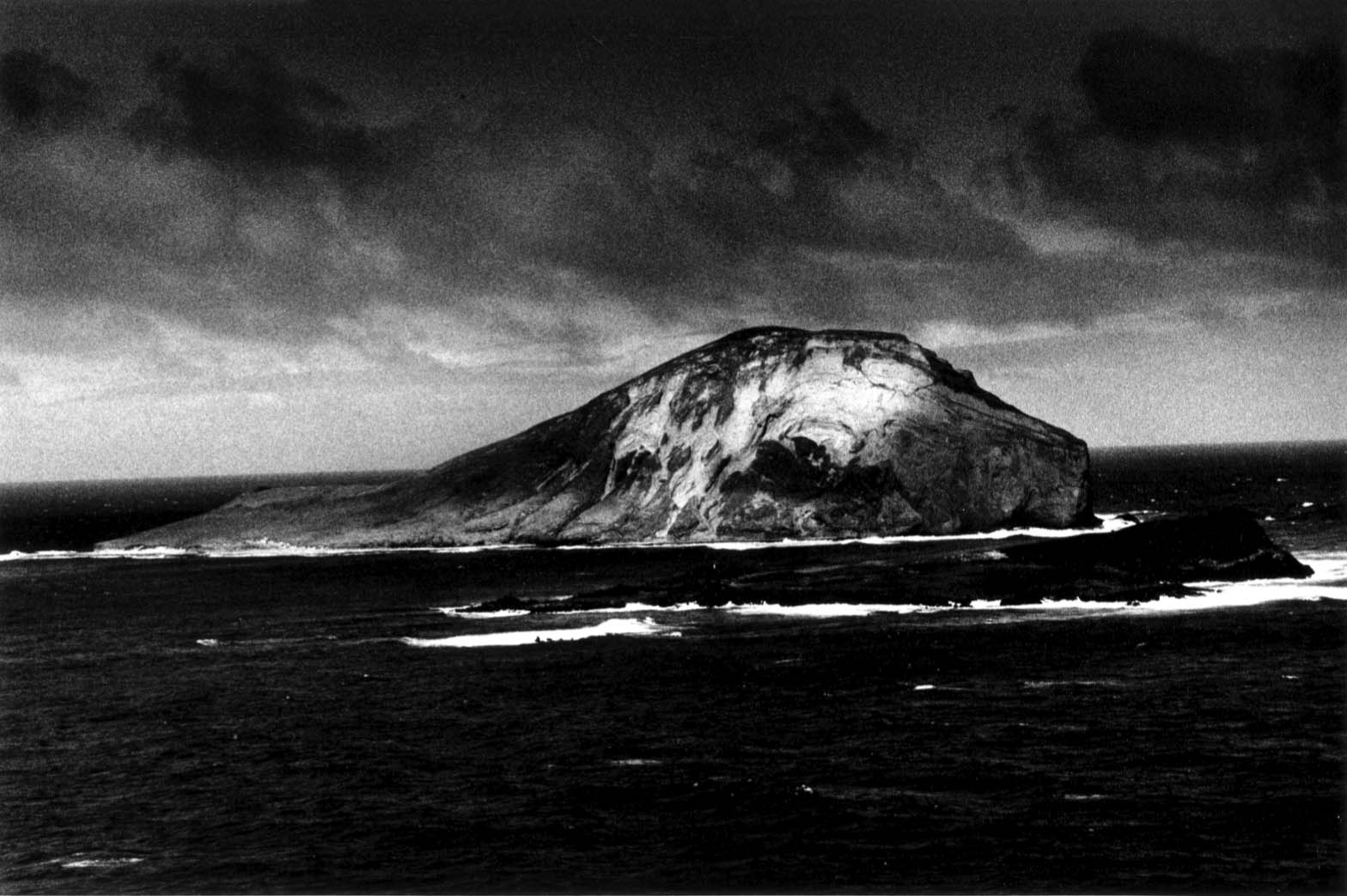
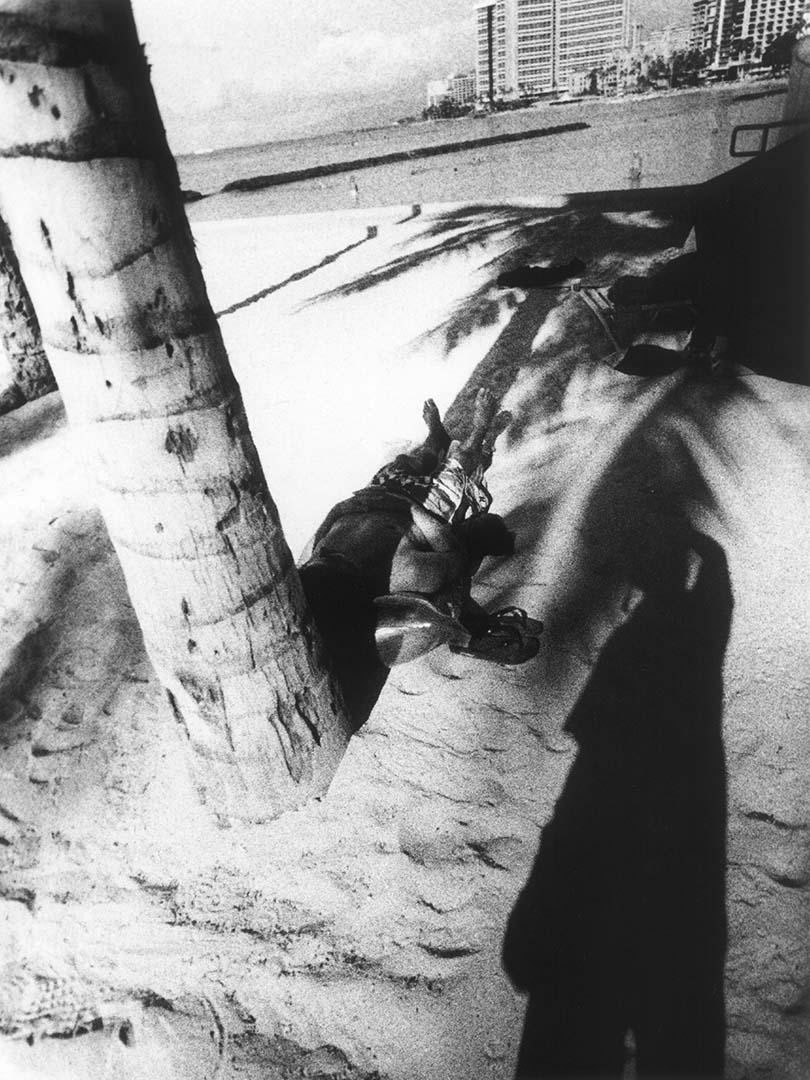
Whatever she produced it was always interesting, valid and had integrity. She followed her own path as we all do – and her voice was clear, focused and eloquent. I loved her series Shadow Portraits – an erudite investigation into the nature of Australian identity if ever there was one!

Vale Sue Ford.

Dr Marcus Bunyan


Please click on some of the photographs for a larger version of the image.

See also Barbara Hal. “Australian pioneer focused on her art,” in The Age newspaper November 21, 2009 [Online] Cited 10 May 2019


Sue Ford (Australian, 1943-2009) 'Silhouette' 2006 from the 'Last Light' series


Sue Ford (Australian, 1943-2009)
Silhouette
2006
From the Last Light series


Sue Ford (Australian, 1943-2009) 'Apparition' 2007 from the 'Last Light' series


Sue Ford (Australian, 1943-2009)
Apparition
2007
From the Last Light series


Sue Ford (Australian, 1943-2009) 'Transparent' 2007 from the 'Last Light' series


Sue Ford (Australian, 1943-2009)
Transparent
2007
From the Last Light series


Sue Ford (Australian, 1943-2009) 'Shadow portraits' 1994 (detail)


Sue Ford (Australian, 1943-2009)
Shadow portraits (detail)
1994
Colour photocopies


Sue Ford (Australian, 1943-2009) 'Shadow portraits' 1994 (detail)


Sue Ford (Australian, 1943-2009)
Shadow portraits (detail)
1994
Colour photocopies


Sue Ford (Australian, 1943-2009) 'Shadow portraits' 1994 (detail)


Sue Ford (Australian, 1943-2009)
Shadow portraits (detail)
1994
Colour photocopies


For Shadow portraits, Ford, like numerous artists in this period, mined historical archives of photographs for her source material, decontextualising and reworking it. Her starting point was nineteenth-century studio portraits of settler Australians that were popular in colonial society. She exploded her previous practice and intense focus on the faces of individuals; in most cases the subjects of the original photographs used in Shadow portraits are unrecognisable. Their faces have been emptied out and replaced by Ford’s generic images of Australian foliage, especially fern fronds. All the details that define an individual, their character and appearance, have disappeared, just like the sitters themselves who have been dead for decades and exist only in ghosted form.

Individual works in Shadow portraits (above) rely on a dynamic relationship between historical and contemporary images to create something new. The original studio portrait is not intact, having undergone an extended process of transformation; being re-photographed, cut up and photocopied to eventually take the form of a large gridded image. Use of the grid – an obvious reference to European systems of containment and control – continues the experimentation evident in Yellowcake. Overlaps, like the doubled image of a stereoscopic card, are purposefully exploited. The aim is to destabilise a once-static historic image, to turn the small into big, the tones into colour, the positive into negative and so on. Through these means the colonial past is represented as having continuing reverberations: the loss of concreteness in the images and distortions of scale parallel the incompleteness, gaps and blow-outs characteristic of any historical narrative. As Zara Stanhope writes, Ford’s Shadow portraits ‘image the ongoing processes involved in the construction of histories, and the power to know and remember, that provides the opportunity to revisit or critique such accounts’.

Associate Professor Helen Ennis. “Sue Ford’s history,” in Art Journal 50, National Gallery of Victoria, 1 Jan 2013 [Online] Cited 11/05/2019


Sue Ford (Australian, 1943-2009) 'Ross, 1964; Ross, 1974' printed 1974 from the 'Time' series (1962-1974)


Sue Ford (Australian, 1943-2009)
Ross, 1964; Ross, 1974
Printed 1974
From the Time series (1962-1974)
Gelatin silver print
11.1 × 20.1cm
© Sue Ford


“I have always been interested in how actions taken in the past could affect and echo in peoples’ lives in the present. Most of my work is to do with thinking about human existence from this perspective.”

Sue Ford, “Project X’, in Helen Ennis & Virginia Fraser, Sue Ford: A Survey 1960-1995. Monash University Gallery, Clayton, 1995, p. 17


Sue Ford (Australian, 1943-2009) 'Big secret!' c. 1960-1961


Sue Ford (Australian, 1943-2009)
Big secret!
c. 1960-1961
Gelatin silver print
28.9 × 23.6cm
© Sue Ford


Sue Ford (Australian, 1943-2009) 'Orpheus' 1972


Sue Ford (Australian, 1943-2009)
Orpheus
1972
Gelatin silver print
33.8 × 33.8cm
© Sue Ford


A feminist approach

Until 1988 Ford was known principally for work that was motivated by feminist politics, that dealt with the lives of contemporary women and the politics of representation. She worked across media, using black and white photography, film and video. Her photography from the early 1960s onwards was based on what she regarded as photography’s objective capacity; in other words, she utilised the camera as a means of recording whatever she placed in front of it. This interest in ‘objectivity’ related more to the practices of conceptual art than to the heightened subjectivity, or subjective documentary that prevailed in art photography, especially during the seventies. Ford’s feminist photography can be regarded as objective but not as ‘documentary’ in the terms the latter is conventionally understood because there was nothing surreptitious or spontaneous about it. Her approach was non-exploitative and consensual in keeping with the politics of feminism and the counterculture. From the beginning of her career, her subjects were mostly friends and acquaintances; they knew they were being photographed and agreed to it. This consensual approach and its interrelated performative element were adopted by other feminist photographers, such as Carol Jerrems, Ponch Hawkes and Ruth Maddison, in their work during the 1970s.

In the 1970s and 80s Ford’s photography differed from mainstream practice in another fundamental way. It did not relate to the purist and fine art traditions that underpinned the case for photography’s acceptance as art. Her prints were grainy, rough and often very small. Ford conceived photography in radical terms, as a plastic medium that was entwined with other art practices. In an interview at the time she was awarded a scholarship to fund her studies at the Victorian College of the Arts in 1973-74, she emphasised her interest in artists’ use of photography: ‘Some artists are utilising phototechniques and are thinking in a photographic way. I want to use some of their techniques and materials to extend photography into other dimensions’.

Associate Professor Helen Ennis. “Sue Ford’s history,” in Art Journal 50, National Gallery of Victoria, 1 Jan 2013 [Online] Cited 11/05/2019


Sue Ford (Australian, 1943-2009) 'No title (Photogram of two hands and garden path)' c. 1970


Sue Ford (Australian, 1943-2009)
No title (Photogram of two hands and garden path)
c. 1970
Gelatin silver print
27.6 × 34.7cm irreg. (image and sheet)
© Sue Ford


LIKE ART BLART ON FACEBOOK

Back to top

Review: ‘Heavenly Vaults’ by David Stephenson at John Buckley Gallery, Richmond

Exhibition dates: 7th – 28th November, 2009


David Stephenson (Australian born America, b. 1955) 'Nave, Laon Cathedral, Laon, France' 2006/07 from the exhibition 'Heavenly Vaults' by David Stephenson at John Buckley Gallery, Richmond, Nov 2009


David Stephenson (Australian born America, b. 1955)
Nave, Laon Cathedral, Laon, France
2006/2007


I remember many years ago, in the mid-1990’s, seeing the wonderful Domes of David Stephenson displayed in Flinders Lane in what is now fortfivedownstairs gallery. They were a revelation in this light filled space, row upon row of luminous domes seemingly lit from within, filled with the sense of the presence of divinity. On the opposite wall of the gallery were row upon row of photographs of Italian graves depicting the ceramic photographic markers of Italian dead – markers of the impermanence of life. The doubled death (the representation of identity on the grave, the momento mori of the photograph) slipped quietly into the earth while opposite the domes ascended into heaven through their numinous elevation. The contrast was sublime.

Unfortunately the same cannot be said of the latest exhibition Heavenly Vaults by David Stephenson at John Buckley Gallery, Richmond.

The problems start with the installation of the exhibition. As you walk into the gallery the 26 Cibachrome photographs are divided symmetrically down the axis of the gallery so that the prints reflect each other at both ends and each side of the gallery. It is like walking down the nave of a cathedral and observing the architectural restraint of the stained glass windows without their illumination. Instead of the punctum of light flooding through the stained glass windows, the varying of intensities, the equanimity of the square prints all exactly the same size, all reflecting the position of the other makes for a pedestrian installation. Some varying of the print size and placement would have added much life and movement to a static ensemble.

Another element that needed work were the prints themselves which, with a few notable exceptions, seemed remarkably dull and lifeless (unlike their digital reproductions which, paradoxically, seem to have more life!). They fail to adequately represent the aspirations of the vaults as they soar effortlessly overhead transposing the earth bound into the heaven sent. In the earlier work on the domes (which can be found in the book Visions of Heaven: The Dome in European Architecture) the symmetry of the mandala-like domes with their light-filled inner illumination worked well with the square format of the images making the photographs stand as equivalents for something else, other ineffable states of being.

“The power of the equivalent, so far as the expressive-creative photographer is concerned, lies in the fact that he can convey and evoke feelings about things and situations and events which for some reason or other are not or can not be photographed. The secret, the catch and the power lies in being able to use the forms and shapes of objects in front of the camera for their expressive-evocative qualities. Or to say this in another way, in practice Equivalency is the ability to use the visual world as the plastic material for the photographer’s expressive purposes. He may wish to employ the recording power of the medium, it is strong in photography, and document. Or he may wish to emphasize its transforming power, which is equally strong, and cause the subject to stand for something else too.”1

As Minor White further observes,

“When the image mirrors the man
And the man mirrors the subject
Something might take over”2


When the distance between object and image and image and viewer collapses then something else may be revealed: Spirit.

In this exhibition some of the singular images such as the Crossings, Choirs and Nave of the Church of Santa Maria, Hieronymite Monastery, Belém, Portugal (see photograph below) work best to achieve this revelation. They transcend the groundedness of the earthly plane through their inner ethereal light using a reductive colour palette and strong highlight/shadow detail. Conversely the diptychs and triptychs of Nave and Choir (see photographs below and above) fail to impress. The singular prints pinned to the gallery wall are joined together to form pairs and trios but in this process the ‘space between’ the prints (mainly white photographic paper), the breathing space between two or more photographs that balances their disparate elements, the distance that Minor White calls ‘ice / fire’, does not work. There is no tension, no crackle, no visual crossover of the arches and vaults, spandrels and flutes. Here it is dead space that drags all down with it.

I found myself observing without engagement, looking without wonder or feeling – never a good sign!

The photographs of Domes and Vaults have served David Stephenson well for numerous years but the concept has become tired, the inspiration in need of refreshment through other avenues of exploration – both physical and spiritual.

Dr Marcus Bunyan


1/ White, Minor. “Equivalence: The Perennial Trend,” in PSA Journal, Vol. 29, No. 7, pp. 17-21, 1963 [Online] Cited 08/05/2019

2/ White, Minor. “Three Canons,” from Mirrors, Messages, Manifestations. Viking Press, 1969


Many thankx to Daniel and John Buckley Gallery for allowing me to reproduce the photographs from the exhibition. Please click on the photographs for a larger version of the image.


David Stephenson (Australian born America, b. 1955) 'Choir, Laon Cathedral, Laon, France' 2006/07 from the exhibition 'Heavenly Vaults' by David Stephenson at John Buckley Gallery, Richmond, Nov 2009


David Stephenson (Australian born America, b. 1955)
Choir, Laon Cathedral, Laon, France
2006/2007


David Stephenson (Australian born America, b. 1955) 'St. Hugh’s Choir, Lincoln Cathedral, Lincoln, England' 2006/07 from the exhibition 'Heavenly Vaults' by David Stephenson at John Buckley Gallery, Richmond, Nov 2009


David Stephenson (Australian born America, b. 1955)
St. Hugh’s Choir, Lincoln Cathedral, Lincoln, England
2006/2007


Installation view of 'Heavenly Vaults' by David Stephenson at John Buckley Gallery, Richmond


Installation view of Heavenly Vaults by David Stephenson at John Buckley Gallery, Richmond
Photo: Marcus Bunyan


David Stephenson (Australian born America, b. 1955) 'Nave, Cathedral of St. Barbara, Kutná Hora, Czech Republic' 2008/09


David Stephenson (Australian born America 1955)
Nave, Cathedral of St. Barbara, Kutná Hora, Czech Republic
2008/2009


David Stephenson (Australian born America, b. 1955) 'Choir, Cathedral of St. Barbara, Kutná Hora, Czech Republic' 2008/09


David Stephenson (Australian born America 1955)
Choir, Cathedral of St. Barbara, Kutná Hora, Czech Republic
2008/2009


“While the subject of my photographs has shifted… my art has remained essentially spiritual – furthermore than two decades I have been exploring a contemporary expression of the sublime – a transcendental experience of awe with the vast space and time of existence.”


David Stephenson


Internationally renowned photographer David Stephenson has dedicated his practice to capturing the sublime in nature and architecture. Fresh from a successful exhibition at Julie Saul Gallery in New York, Stephenson returns to John Buckley Gallery for his third highly anticipated exhibition Heavenly Vaults. The exhibition will feature 26 selected prints from his latest monograph published by Princeton Architectural Press; Heavenly Vaults: From Romanesque to Gothic in European Architecture. Shaun Lakin, Director of the Monash Gallery of Art, will launch the book and exhibition at the opening, November 7th.

Stephenson began to photograph Gothic vaults in Spain and Portugal in 2003, while completing the work for his Domes project, and his first monograph Visions of Heaven: the Dome in European Architecture. He began to focus on the Vaults project in 2006, photographing Gothic churches and cathedrals in England, Belgium and France. With the assistance of an Australia Council Artist Fellowship in 2008-2009, Stephenson completed extensive fieldwork for the Vaults project, intensively photographing Romanesque and Gothic architecture in Italy, France, Spain, Portugal, Austria, the Czech Republic, Poland, and Germany. The exhibition at John Buckley Gallery coincides with the launch of his second monograph, Heavenly Vaults: from Romanesque to Gothic in European Architecture, published by Princeton Architectural Press, New York.

Even though the traditional systems the underpinned church architecture have lost their unequivocal power, David Stephenson’s photographs capture the resonance of those times. More importantly his work also suggest that the feelings of aspiration, transcendence, and infinity these buildings evoke in the viewer have an ongoing relevance beyond the religious setting and help us understand who and what we are.

Excerpt from Foreword, Heavenly Vaults, by Dr Isobel Crombie 2009


David Stephenson’s new book of photography is a love letter to the intricate, seemingly sui generis vaults of Europe’s Romanesque and Gothic cathedrals and churches.

Press release from the John Buckley website [Online] Cited 11/11/2009 no longer available online


David Stephenson (Australian born America, b. 1955) 'Nave, Church of Santa Maria, Hieronymite Monastery, Belém, Portugal' 2008/09


David Stephenson (Australian born America, b. 1955)
Nave, Church of Santa Maria, Hieronymite Monastery, Belém, Portugal
2008/2009


‘While the subject of my photographs has shifted from the landscapes of the American Southwest and Tasmania, and the minimal horizons of the Southern Ocean, and the icy wastes of Antarctica, to sacred architecture and the sky at both day and night, my art has remained essentially spiritual – for more than two decades I have been exploring a contemporary expression of the sublime – a transcendental experience of awe with the vast space and time of existence.’

David Stephenson 1998.1


With poetic symmetry the Domes series considers analogous ideas. It is a body of work which has been ongoing since 1993 and now numbers several hundred images of domes in countries including Italy, Spain, Portugal, Turkey, England, Germany and Russia. The typological character of the series reveals the shifting history in architectural design, geometry and space across cultures and time, demonstrating how humankind has continually sought meaning by building ornate structures which reference a sacred realm.2 Stephenson photographs the oculus – the eye in the centre of each cupola. Regardless of religion, time or place, this entry to the heavens – each with unique architectural and decorative surround – is presented as an immaculate and enduring image. Placed together, the photographs impart the infinite variations of a single obsession, while also charting the passage of history, and time immemorial.

1. Van Wyk, S. 1998. “Sublime space: photographs by David Stephenson 1989-1998,” National Gallery of Victoria, Melbourne np
2. Hammond, V. 2005. “The dome in European architecture,” in Stephenson, D. 2005, Visions of heaven: the dome in European architecture, Princeton Architectural Press, New York p. 190

© Art Gallery of New South Wales Photography Collection Handbook, 2007


David Stephenson (Australian born America, b. 1955) 'Choir, King's College Chapel, Cambridge, England' 2006/07


David Stephenson (Australian born America, b. 1955)
Choir, King’s College Chapel, Cambridge, England
2006/2007


David Stephenson (Australian born America, b. 1955) 'Crossing, York Minster, York, England' 2006/07


David Stephenson (Australian born America, b. 1955)
Crossing, York Minster, York, England
2006/2007


John Buckley Gallery

This gallery is now closed.

LIKE ART BLART ON FACEBOOK

Back to top

Review: ‘Long Distance Vision: Three Australian Photographers’ at The Ian Potter Centre NGV Australia, Federation Square, Melbourne

Exhibition dates: 28th August, 2009 – 21st February, 2010


Max Pam (born Australia 1949, lived in Brunei 1980-1983) 'Road from Bamiyan' 1971 from the exhibition 'Long Distance Vision: Three Australian Photographers' at The Ian Potter Centre NGV Australia, Federation Square, Melbourne, Aug 2009 - Feb 2010


Max Pam (born Australia 1949, lived in Brunei 1980-1983)
Road from Bamiyan
1971
Gelatin silver photograph
20.1 x 20.1cm
National Gallery of Victoria, Melbourne
Purchased, 1979


Long Distance Vision is a disappointingly wane exploration of travel photography at NGV Australia. With the exception of the work of Max Pam the exhibition lacks insight into the phenomena that the curators want the work to philosophically investigate: namely how photographs shape our expectations of a place (even before we arrive) and how photographs also serve to confirm our experience – the picture as powerful mnemonic tool.

Firstly a quick story: when travelling in America to study at the Kinsey Institute I boarded a train from Chicago to what I thought was Bloomington, Indiana only to arrive many hours later at Bloomington, Illinois. Unbeknownst to me this Bloomington also had a motel of the same name as I was staying at in Indiana! After much confusion I ended up at the local airport trying to catch a single seater aircraft to Bloomington, Indiana with no luck – at the end of my tether, fearful in a foreign country, in tears because I just had to be at this appointment the next morning. Riding to my rescue was a nineteen year old kid with no shoes, driving an ex-cop car, who drove me across the Mid-West states stopping at petrol stops in the dead of night. It was a surreal experience, one that I will never forget for the rest of my life … fear, apprehension, alienation, happiness, joy and the sublime all rolled into one.

I tell this story to illustrate a point about travel – that you never know what is going to happen, what experiences you will have, even your final destination. To me, photographs of these adventures not only document this dislocation but step beyond pure representation to become art that re-presents the nature of our existence.

Matthew Sleeth‘s street photographs could be taken almost anywhere in the world (if it were not for a building with German writing on it). His snapshot aesthetic of caught moments, blinded people and dissected bodies in the observed landscape are evinced (to show in a clear manner; to prove beyond any reasonable doubt; to manifest; to make evident; to bring to light; to evidence – yes to bring to light, to evidence as photography does!) in mundane, dull, almost lifeless prints – ‘heavy’ photographs with a lack of shadow detail combined with a shallow depth of field. His remains, the people walking down the street and their shadow, are odd but as as The Age art critic Robert Nelson succinctly notes in his review of this exhibition, To become art, the odd cannot remain merely quaint but has to signify an existential anomaly by implication.”1

If we look at the seminal photographs from the book The Americans by Robert Frank we see in their dislocated view of America a foreigners view of the country the artist was travelling across – a subjective view of America that reveals as much about the state of mind of the artist as the country he was exposing. No such exposition happens in the works of Matthew Sleeth.

Christine Godden‘s photographs of family and friends have little to do with travel photography and I struggle to understand their inclusion in this exhibition. Though they are reasonable enough photographs in their own right – small black and white photographs of small intimacies (at the beach, in the garden, at the kitchen table, on the phone, on the porch, on the float, etc…) Godden’s anthropomorphist bodies have nothing to do with a vision of a new land as she had been living in San Francisco, New York and Rochester for six years over the period that these photographs were taken. Enough said.

The highlight of the exhibition is the work of Max Pam. I remember going the National Gallery of Victoria in the late 1980s to view this series of work in the collection – and what a revelation they were then and remain so today. The square formatted, dark sepia toned silver gelatin prints of the people and landscapes of Tibet are both monumental and personal at one and the same time. You are drawn into their intimacies: the punctum of a boys feet; the gathering of families; camels running before a windstorm; human beings as specks in a vast landscape.

“If the world is unfair or beyond our understanding, sublime places suggest it is not surprising things should be thus. We are the playthings of the forces that laid out the oceans and chiselled the mountains. Sublime places acknowledge limitations that we might otherwise encounter with anxiety or anger in the ordinary flow of events. It is not just nature that defies us. Human life is as overwhelming, but it is the vast spaces of nature that perhaps provide us with the finest, the most respectful reminder of all that exceeds us. If we spend time with them, they may help us to accept more graciously the great unfathomable events that molest our lives and will inevitably return us to dust.”2

The meditation on place and space that the artist has undertaken gives true insight into the connection of man and earth, coming closest to Alain de Botton’s understanding of the significance of sublime places. Through a vision of a distant land the photographs transport us in an emotional journey that furthers our understanding of the fragility of life both of the planet and of ourselves.

While the National Gallery of Victoria holds some excellent photography exhibitions (such as Andreas Gursky and Rennie Ellis for example) this was a missed opportunity. The interesting concept of the exhibition required a more rigorous investigation instead of such a cursory analysis (which can be evidenced by the catalogue ‘essay’: one page the size of a quarter of an A4 piece of paper that glosses over the whole history of travel photography in a few blithe sentences).

Inspiration could have easily been found in Alain de Botton’s excellent book The Art of Travel. Here we find chapters titled “On Anticipation”, “On Travelling Places”, “On the Exotic”, “On Curiosity”, “On the Country and the City” and “On the Sublime” to name but a few, with places and art work to illustrate the journey: what more is needed to excite the mind!

Take Charles Baudelaire for example. He travelled outside his native France only once and never ventured abroad again. Baudelaire still dreamt of going to Lisbon, or Java or to the Netherlands but “the destination was not really the point. The true desire was to get away, to go, as he concluded, ‘Anywhere! Anywhere! So long as it is out of the world!'”3

Heavens, we don’t even have to leave home to create travel photography that is out of the world! Our far-sighted vision (like that of photographer Gregory Crewdson) can create psychological narratives of imaginative journeys played out for the camera.

Perhaps what was needed was a longer gestation period, further research into the theoretical nuances of travel photography (one a little death, a remembrance; both a dislocation in the non-linearity of time and space), a gathering of photographs from collections around Australia to better evidence the conceptual basis for the exhibition and a greater understanding of the irregular possibilities of travel photography – so that the work and words could truly reflect the title of the exhibition Long Distance Vision.

Dr Marcus Bunyan


1/ Nelson, Robert. “In blurred focus: le freak c’est chic,” in The Age newspaper. Friday, October 23rd 2009, p. 18

2/ de Botton, Alain. The Art of Travel. London: Penguin, 2002, p. 178-179

3/ Ibid., p. 34


Max Pam (born Australia 1949, lived in Brunei 1980-83) 'My donkey, our valley, Sarchu' 1977 from the exhibition 'Long Distance Vision: Three Australian Photographers' at The Ian Potter Centre NGV Australia, Federation Square, Melbourne, Aug 2009 - Feb 2010


Max Pam (born Australia 1949, lived in Brunei 1980-1983)
My donkey, our valley, Sarchu
1977
Gelatin silver photograph
20.1 x 20.1cm
National Gallery of Victoria, Melbourne
Purchased, 1979
© Max Pam


Max Pam (Australian, b. 1949) 'Sisters' 1977 from the exhibition 'Long Distance Vision: Three Australian Photographers' at The Ian Potter Centre NGV Australia, Federation Square, Melbourne, Aug 2009 - Feb 2010


Max Pam (born Australia 1949, lived in Brunei 1980-1983)
Sisters
1977
Gelatin silver photograph
20.1 x 20.1cm
National Gallery of Victoria, Melbourne
Purchased, 1979
© Max Pam


Max Pam (Australian, b. 1949) 'Tibetan nomads' 1977


Max Pam (born Australia 1949, lived in Brunei 1980-1983)
Tibetan nomads
1977
Gelatin silver photograph
20.1 x 20.2cm
National Gallery of Victoria, Melbourne
Purchased, 1979
© Max Pam


Christine Godden (Australian, b. 1947) 'Bobbie and Amitabha at the beach' c. 1972


Christine Godden (Australian, b. 1947)
Bobbie and Amitabha at the beach
c. 1972
Gelatin silver photograph
13.2 x 20.1cm
National Gallery of Victoria, Melbourne
Purchased from Admission Funds, 1991
© Christine Godden


Christine Godden (Australian, b. 1947) 'Elliot holding a ring' 1973


Christine Godden (Australian, b. 1947)
Elliot holding a ring
1973
Gelatin silver photograph
15.0 x 22.8cm
National Gallery of Victoria, Melbourne
Purchased from Admission Funds, 1991
© Christine Godden


Christine Godden.Christine Godden (Australian, b. 1947)kitchen table' 1973


Christine Godden (Australian, b. 1947)
Joanie at the kitchen table
1973, printed 1986
Gelatin silver photograph
20.1 x 30.6cm
National Gallery of Victoria, Melbourne
Purchased from Admission Funds, 1991
© Christine Godden


Christine Godden (Australian, b. 1947) 'With Leigh on the porch' 1972


Christine Godden (Australian, b. 1947)
With Leigh on the porch
1972, printed 1986
Gelatin silver photograph
20.2 x 30.5cm
National Gallery of Victoria, Melbourne
Purchased from Admission Funds, 1991
© Christine Godden


“The National Gallery of Victoria will celebrate the work of Christine Godden, Max Pam and Matthew Sleeth in a new exhibition, Long Distance Vision: Three Australian Photographers opening 28 August.

Long Distance Vision will include over 60 photographs from the NGV Collection exploring the concept of the ‘tourist gaze’ and its relationship with the three artists.

Susan van Wyk, Curator Photography, NGV said the exhibition provides a fascinating insight into the unusual perspective brought by the three photographers to their varied world travel destinations.

“There’s a sense in the works in the exhibition that the photographers are not from the places they choose to photograph, and that each is a visitor delighting in the scenes they encounter.

“What is notable about the photographs in Long Distance Vision is that rather than focussing on the well known scenes that each artist encountered, they have turned their attention to the ‘little things’, the details of the everyday,” said Ms van Wyk.

From the nineteenth century, photography has been a means by which people could discover the world, initially through personal collection and albums, and later via postcards, magazines, books and the internet.

Dr Gerard Vaughan, Director, NGV said that both contemporary photographers and tourists use the camera as a means to explore and capture the world.

“Through their photographs, the three artists featured in Long Distance Vision show us highly individual ways of seeing the world. This exhibition will surprise and delight visitors as our attention is drawn to not only what is different but what remains the same as we travel the world,” said Dr Vaughan.

Born in Melbourne in 1949, Max Pam began his career in various commercial photography studios in the 1960s. After responding to a university notice for assistance to drive a Volkswagen from Calcutta to London in 1969, Pam got his first taste of being a traveller. The body of Pam’s work in this exhibition is from the series The Himalayas, which was photographed over a number of early visits to India.

Christine Godden also travelled the popular overland route between Europe and India in the early 1970s, returning to Sydney in 1978. In 1972, after a period of travelling, Godden found her home in the US where she remained for six years. Godden’s photographs in this exhibition were taken between 1972 and 1974 during her stay in the US.

Born in Melbourne in 1972, Matthew Sleeth is another seasoned traveller. During the late 1990s, Sleeth settled in Opfikon, an outer suburb of Zurich, Switzerland. The series of photographs in Long Distance Vision were taken during this time, showing Sleeth’s interest not only in street photography, but also in the narrative possibilities in everyday scenes. Dotted with garishly coloured playhouses, naive sculptures and whimsical arrangements of garden gnomes Sleeth’s photographs go beyond the ‘picture-perfect’ scenes of typical tourist photography.

Long Distance Vision: Three Australian Photographers is on display at The Ian Potter Centre: NGV Australia, Federation Square from 28 August 2009 to 21 February 2010.”

Text from the National Gallery of Victoria press release


Matthew Sleeth (Australian, b. 1972) From the series 'Opfikon' 1997

Matthew Sleeth (Australian, b. 1972) From the series 'Opfikon' 1997

Matthew Sleeth (Australian, b. 1972) From the series 'Opfikon' 1997

Matthew Sleeth (Australian, b. 1972) From the series 'Opfikon' 1997

Matthew Sleeth (Australian, b. 1972) From the series 'Opfikon' 1997


Matthew Sleeth (Australian, b. 1972)
Photographs from the series Opfikon
1997, printed 2004
Type C photograph
43.2 x 43.0cm
National Gallery of Victoria, Melbourne
Presented through the NGV Foundation by Patrick Corrigan, Governor, 2005
© Matthew Sleeth courtesy of Sophie Gannon Gallery, Melbourne


The Ian Potter Centre: NGV Australia Federation Square
Corner of Russell and 
Flinders Streets, Melbourne

Opening hours:
Every day 10am – 5pm

National Gallery of Victoria website

LIKE ART BLART ON FACEBOOK

Back to top