Exhibition: ‘Thomas Demand’ at the National Gallery of Victoria International, Melbourne

Exhibition dates: 30th November 2012 – 17th March 2013


Installation view of 'Thomas Demand' at NGVI showing, at right, 'Lichtung / Clearing' 2003


Installation view of Thomas Demand at NGVI showing, at right, Lichtung / Clearing 2003
Photo: Marcus Bunyan


You saw it here first on Art Blart!

Beautiful installation shots of the new Thomas Demand exhibition at NGVI. Jeff Wall installation photographs to follow in the next posting on Saturday. Reviews to follow in due course.

These are all cardboard models created in Thomas Demand’s studio and then photographed. The models are destroyed afterwards leaving the photographs as artefacts and remembrances, both a performance in their own right, but also a record of another performance, that of the creation of the models. Double self, double performativity, double ritual.

Many thankx to Jemma Altmeier and all the media team at NGV for all their wonderful help and congratulations to the curators, Susan van Wyk and Dr Isobel Crombie, for their restrained yet contemporary installations and for getting the exhibitions to Melbourne. They look magnificent. Well done!

Dr Marcus Bunyan


Many thankx to the NGV for allowing me to publish the photographs in the posting. Please click on the photographs for a larger version of the image. All photographs © Marcus Bunyan © National Gallery of Victoria. May not be reproduced without permission.


Thomas Demand is regarded as one of the world’s leading contemporary artists whose work in photography and, most recently stop-animation films, is at the forefront of contemporary art. Demand initially worked as a sculptor who used photography to document his ephemeral creations. From 1993 his creative practice changed and, from then on, he made sculptures for the sole purpose of photographing them. Demand begins with an image, often taken from media sources and frequently dealing with traumatic or politically important events, and creates a life-size replica of the image using paper and cardboard. The effect of these uncanny reconstructions is to destabilise our understanding of the sites which we ‘know’ so well through reproduction. This exhibition features a selection of photographs and 35mm films as chosen by the artist.


Jeff Wall & Thomas Demand: In Conversation, National Gallery of Victoria


Thomas Demand (German, b. 1964) 'Lichtung' / 'Clearing' 2003


Thomas Demand (German, b. 1964)
Lichtung / Clearing
2003
C-Print / Perspex
Courtesy Taka Ishii Gallery, Sprüth Magers Berlin London, Esther Schipper, Berlin, Matthew Marks Gallery
© Thomas Demand, VG Bild-Kunst, Bonn / VISCOPY, Sydney


Installation view of 'Thomas Demand' at NGVI showing, at left, 'Badezimmer / Bathroom' 1997 and, at right, 'Labor / Laboratory' 2000


Installation view of Thomas Demand at NGVI showing, at left, Badezimmer / Bathroom 1997 and, at right, Labor / Laboratory 2000
Photo: Marcus Bunyan


Thomas Demand (German, b. 1964) 'Laboratory (77-E-217)' 2000


Thomas Demand (German, b. 1964)
Labor / Laboratory
2000
C-Print / Perspex
180 × 268cm
Courtesy Taka Ishii Gallery, Sprüth Magers Berlin London, Esther Schipper, Berlin, Matthew Marks Gallery
© Thomas Demand, VG Bild-Kunst, Bonn / VISCOPY, Sydney


Installation view of 'Thomas Demand' at NGVI showing 'Badezimmer / Bathroom' 1997


Installation view of Thomas Demand. Badezimmer / Bathroom 1997 at NGVI
Photo: Marcus Bunyan


Thomas Demand (German, b. 1964) 'Badezimmer / Bathroom' 1997


Thomas Demand (German, b. 1964)
Badezimmer / Bathroom
1997
C-Print / Perspex
160.0 × 122.0cm
Courtesy Taka Ishii Gallery, Sprüth Magers Berlin London, Esther Schipper, Berlin, Matthew Marks Gallery
© Thomas Demand, VG Bild-Kunst, Bonn / VISCOPY, Sydney


Installation view of 'Thomas Demand' at NGVI showing 'Copyshop' 1999


Installation view of Thomas Demand at NGVI showing Copyshop 1999
Photo: Marcus Bunyan


Thomas Demand (German, b. 1964) 'Copyshop' 1999


Thomas Demand (German, b. 1964)
Copyshop
2009
C-Print / Perspex
Courtesy Taka Ishii Gallery, Sprüth Magers Berlin London, Esther Schipper, Berlin, Matthew Marks Gallery
© Thomas Demand, VG Bild-Kunst, Bonn / VISCOPY, Sydney
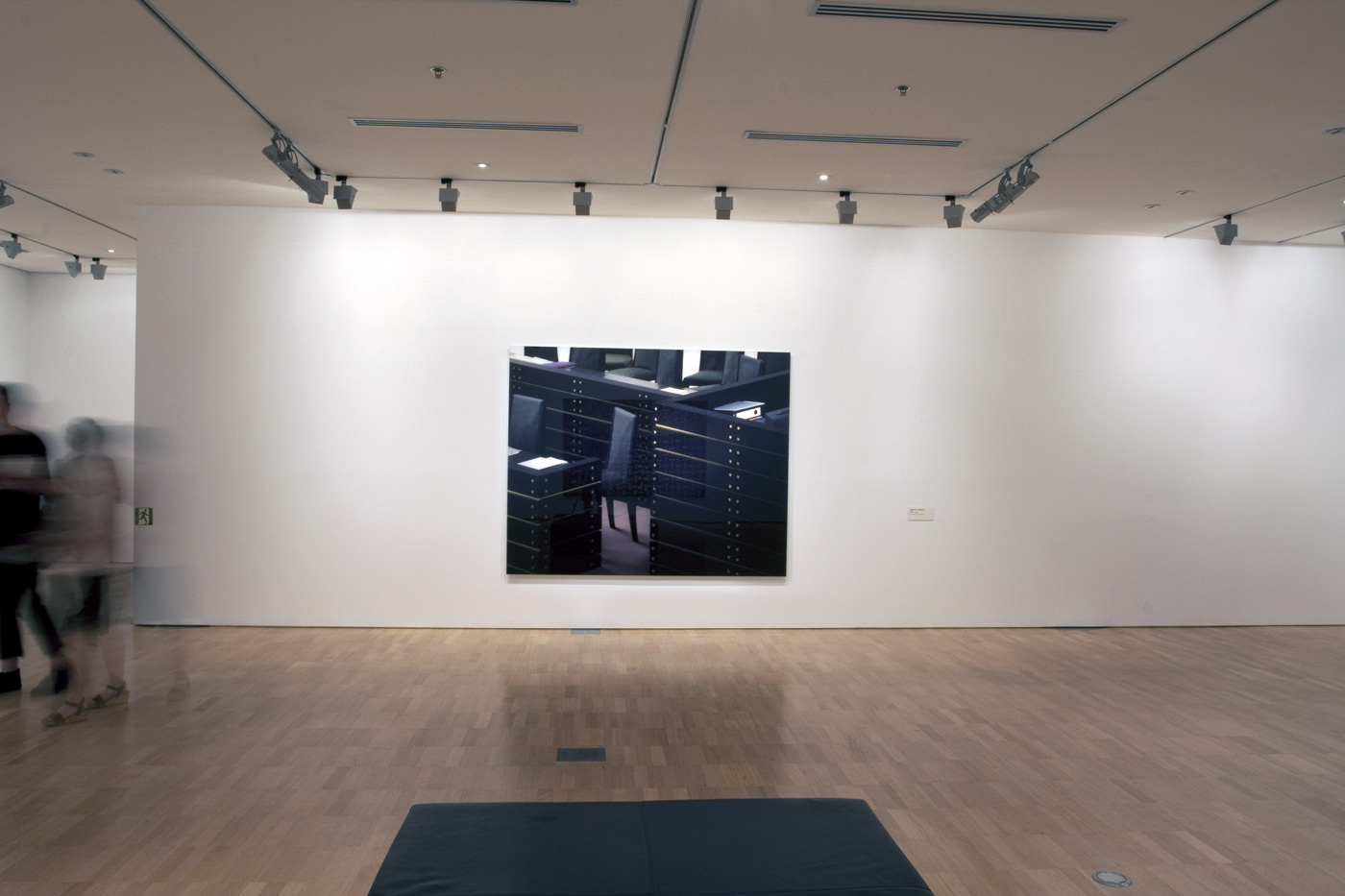
 

Installation view of 'Thomas Demand' at NGVI showing 'Parlament / Parliament' 2009


Installation view of Thomas Demand at NGVI showing Parlament / Parliament 2009
Photo: Marcus Bunyan


Thomas Demand (German, b. 1964) 'Parlament / Parliament' 2009


Thomas Demand (German, b. 1964)
Parlament / Parliament
2009
C-Print / Perspex
Courtesy Taka Ishii Gallery, Sprüth Magers Berlin London, Esther Schipper, Berlin, Matthew Marks Gallery
© Thomas Demand, VG Bild-Kunst, Bonn / VISCOPY, Sydney


When you step through the door into the Thomas Demand exhibition you enter a realm that was conceived, meticulously planned, and built to his exacting specifications. Demand designed every aspect of this exhibition. Having selected the photographs and films that he wanted to show in Melbourne, he then went on to design the exhibition space itself.

He was quite specific that the secondary walls had to be full height to create a sense of beautiful rooms rather than a space that has been partitioned. Once this was done he began work on the layout of the show. He carefully planned the sequence in which you would encounter each work, setting up an interesting play between the works. How we read these is an entirely individual experience. Recently someone said to me that they thought the placement of Lichtung / Clearing next to Paneel / Pegboard was an interesting comment on forest clearing and the devastating impact that pulp mills can have on the environment. Until then I had never seen those works in that way.

In conversation during the installation, Thomas explained that he was not interested in putting together an exhibition that then toured around the world. The usual practice of curating an exhibition and then ‘fitting’ it into different exhibition spaces in a number of venues holds little interest for him. So each time you see a Thomas Demand exhibition it has been curated, designed and installed for that particular space.

This is perhaps most obvious when you enter the rooms where the films are showing. From the brightly lit first room you can see through the door way into a darkened room lined with floor to ceiling curtains, but not really. What you see is a darkened room hung with wallpaper that the artist made to look like the kind of sweeping curtains that you might find in a cinema or theatre. It’s theatrical and spectacular but once you enter this space the real treat is Demands films.

Susan van Wyk, 6 February 2013 on the NGV website [Online] Cited 05/09/2020


Thomas Demand (German, b. 1964) 'Tribute' 2011


Thomas Demand (German, b. 1964)
Tribute
2011
C-Print / Perspex
166 x 125cm, edition of 6
Courtesy Taka Ishii Gallery, Sprüth Magers Berlin London, Esther Schipper, Berlin, Matthew Marks Gallery
© Thomas Demand, VG Bild-Kunst, Bonn / VISCOPY, Sydney


Installation view of 'Thomas Demand' at NGVI showing, at right, 'Space Simulator' 2003


Installation view of Thomas Demand at NGVI showing, at right, Space Simulator 2003
Photo: Marcus Bunyan


Installation view of 'Thomas Demand' at NGVI showing, at left, 'Grotte / Grotto' 2006 and, at right, 'Space Simulator' 2003


Installation view of Thomas Demand at NGVI showing, at left, Grotte / Grotto 2006 and, at right, Space Simulator 2003
Photo: Marcus Bunyan


Thomas Demand (German, b. 1964) 'Space Simulator' 2003


Thomas Demand (German, b. 1964)
Space Simulator
2003
C-Print / Perspex
300 × 429.4cm
Courtesy Taka Ishii Gallery, Sprüth Magers Berlin London, Esther Schipper, Berlin, Matthew Marks Gallery
© Thomas Demand, VG Bild-Kunst, Bonn / VISCOPY, Sydney


Installation view of 'Thomas Demand' at NGVI showing, at right, 'Grotte / Grotto' 2006


Installation view of Thomas Demand at NGVI showing, at right, Grotte / Grotto 2006
Photo: Marcus Bunyan


Thomas Demand (German, b. 1964) 'Grotte / Grotto' 2006 (detail)


Thomas Demand (German, b. 1964)
Grotte / Grotto (detail)
2006
C-Print / Perspex
Courtesy Taka Ishii Gallery, Sprüth Magers Berlin London, Esther Schipper, Berlin, Matthew Marks Gallery
© Thomas Demand, VG Bild-Kunst, Bonn / VISCOPY, Sydney


One of the world’s most influential contemporary artists, Thomas Demand, will be the subject of a new exhibition announced by the National Gallery of Victoria.

The exhibition will be the first major Australian survey of the artist’s work and will comprise large scale photographs and films never before shown in Australia.

NGV Director, Tony Ellwood said the addition of Thomas Demand to the NGV’s exhibition schedule is part of an exciting and ambitious summer program.

“When the opportunity came up to hold an exhibition of Thomas Demand’s work this summer, it was just too good to miss. Thomas Demand will be part of a great summer program at the NGV and has been timed to coincide with the Jeff Wall Photographs exhibition being held at NGV Australia.

“We are offering a two-for-one ticket for Thomas Demand and Jeff Wall Photographs, so visitors to the NGV can experience the work of two major artists of international contemporary photography for one ticket price,” said Mr Ellwood.

Works in the exhibition will span the artist’s career from 1997 to 2012. Recent works presented in the exhibition include Control Room (pictured below), which depicts the Fukushima Daiichi nuclear power plant and Tribute, a work based on images taken at the site of tragic mass panic at Europe’s biggest rave party.

Susan van Wyk, NGV Curator of Photography said Thomas Demand is widely regarded as one of the world’s leading contemporary artists.

“Thomas has a unique style in which he creates paper models of objects and scenes, often taken from media sources like flickr or newspaper reports. These intricate life size models are then photographed.

“The results are disquieting images that subvert our understanding of reality and fiction and draws attention to how we engage with the media and modern technologies,” said Ms Van Wyk.

Press release from the NGV website


Installation view of 'Thomas Demand' at NGVI showing, at left, 'Vault' 2012 and, at centre, 'Kontrollraum / Control Room' 2011


Installation view of Thomas Demand at NGVI showing, at left, Vault 2012 and, at centre, Kontrollraum / Control Room 2011
Photo: Marcus Bunyan
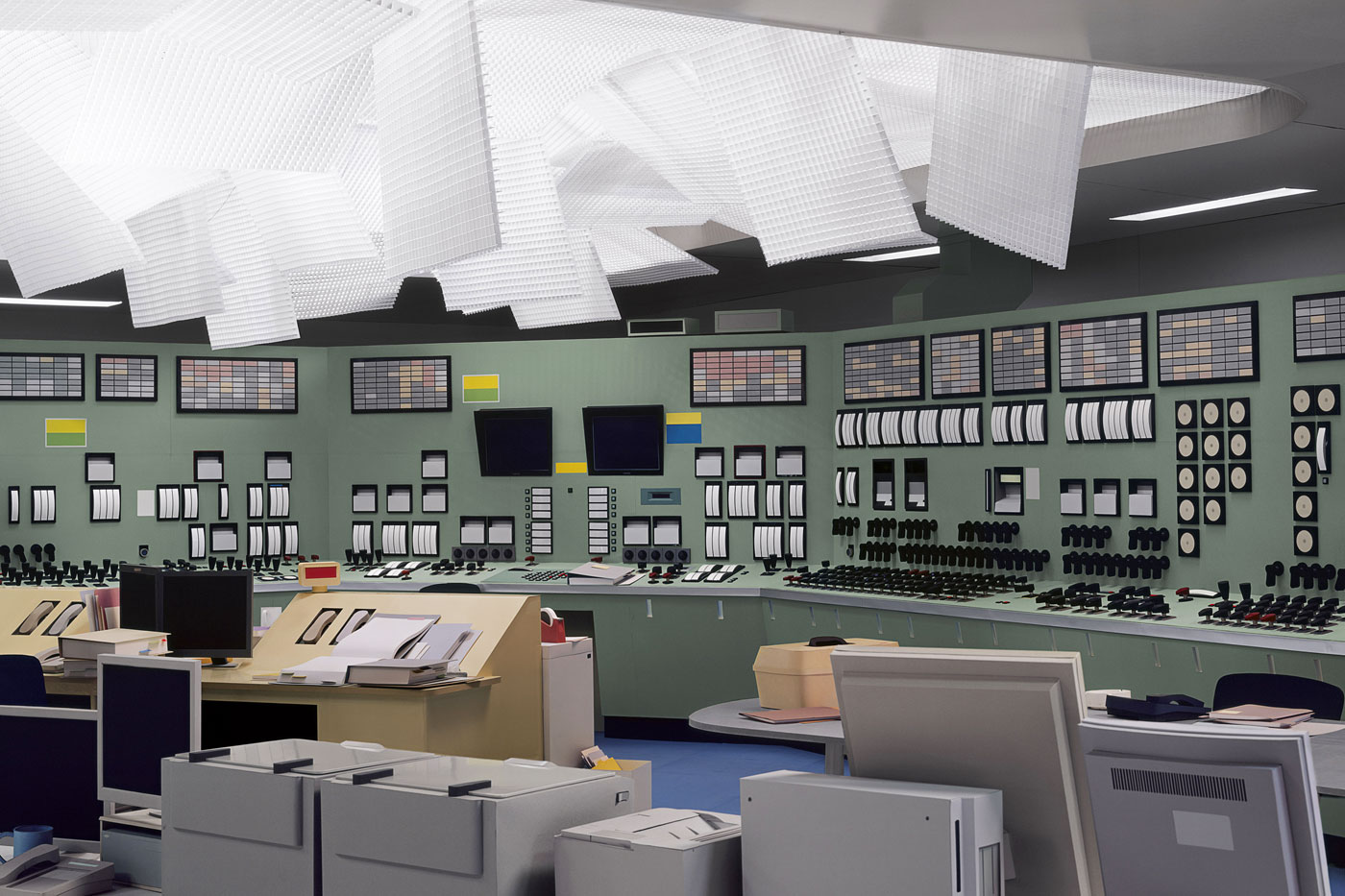
 

Thomas Demand (German, b. 1964) 'Kontrollraum / Control Room' 2011


Thomas Demand (German, b. 1964)
Kontrollraum / Control Room
2011
C-Print / Perspex
200 × 300cm
Courtesy Taka Ishii Gallery, Sprüth Magers Berlin London, Esther Schipper, Berlin, Matthew Marks Gallery
© Thomas Demand, VG Bild-Kunst, Bonn / VISCOPY, Sydney


Installation view of 'Thomas Demand' at NGVI showing 'Vault' 2012


Installation view of Thomas Demand at NGVI showing Vault 2012
Photo: Marcus Bunyan


Thomas Demand (German, b. 1964) 'Vault' 2012 (detail)


Thomas Demand (German, b. 1964)
Vault (detail)
2012
C-Print / Perspex
Courtesy Taka Ishii Gallery, Sprüth Magers Berlin London, Esther Schipper, Berlin, Matthew Marks Gallery
© Thomas Demand, VG Bild-Kunst, Bonn / VISCOPY, Sydney


NGV International
180 St Kilda Road

Opening hours:
Open daily 10am – 5pm

National Gallery of Victoria website

LIKE ART BLART ON FACEBOOK

Back to top

Text: Minkowski retentir / Photos: Rosemary Laing ‘groundspeed’ series

October 2012


Rosemary Liang (Australian, 1959-2024) 'groundspeed (Red Piazza) #04' 2001


Rosemary Liang (Australian, 1959-2024)
groundspeed (Red Piazza) #04
2001
C-Print
110 x 219cm
Purchased with funds provided by the Photography Collection Benefactors’ Program
© Rosemary Laing


“If, having fixed the original form in our mind’s eye, we ask ourselves how that form comes alive and fills with life, we discover a new dynamic and vital category, a new property of the universe: reverberation (retentir). It is as though a well-spring existed in a sealed vase and its waves, repeatedly echoing against the sides of this vase, filled it with their sonority. Or again, it’s as though the sound of a hunting horn, reverberating everywhere through its echo, made the tiniest leaf, the tiniest wisp of moss shudder in a common movement and transformed the whole forest, filling it to its limits, into a vibrating, sonorous world.”


Eugene Minkowski. ‘Vers une Cosmologie’ (translated by Maria Jolas) quoted on Michael Ormerod. “Minkowski’s Reverberating Forest,” on the ‘The Spirit of the Mass’ blog 23rd April 2012 [Online] Cited 24th October 2012 and again on 3rd September 2020


Rosemary Liang (Australian, 1959-2024) 'groundspeed (Red Piazza) #05' 2001


Rosemary Liang (Australian, 1959-2024)
groundspeed (Red Piazza) #05
2001
C-Print
106 x 163cm
Courtesy the artist; DZ Bank Kunstsammlung
© Rosemary Laing; Galerie CONRADS, Düsseldorf


The Australian artist Rosemary Laing moves between different genres in her work, drawing upon installation, performance and photography at the same time. The groundspeed series is the result of a sort of “field trip” to the eucalyptus forests of southern Australia. Together with a team of assistants, Laing produced a series of images of landscapes in which reality and fiction combine through the insertion of ordinary industrially produced carpets in practically unspoilt natural settings. Her work thus weds the open landscape of the image in the background with an element in the foreground that instead recalls an interior, an inhabited human environment. But where is the reality or where is the fiction? Are we sure we can believe in the reality of pure and idyllic nature?

The artist’s working method is comparable to filmmaking. A team of professionals goes to the selected location and creates a set that meets all of the artist’s requirements and is therefore ready to be photographed. This procedure enables Laing to achieve results that would be impossible through digital manipulation of the images alone. The flower-patterned carpets Laing uses belong to a European tradition that was very popular and widespread in Australia when she was young. She thus “grafts” a piece of European culture onto the Australian landscape. She intervenes in nature and alters it. Reverberating in her works is an explicit criticism of the appropriation of the Australian continent by European colonisers, a process underway for at least 200 years. In the light of these considerations, Laing’s apparently idyllic and fantastic images suddenly take on a bitter and dramatic aftertaste. The artistic representation thus succeeds in arriving at a higher level of truth than that of the concrete visual reality it uses.”

Text from the Manipulating Reality: How Images Redefine the World website [Online] Cited 24th October 2012 and again on 3rd September 2020. No longer available online


“groundspeed (Red Piazza) #4 is from the series groundspeed, in which patterned Feltex carpet is laid on the forest floor or on the edge of a rocky coastal setting. This particular image uses retro Red Piazza carpet in the forest at the George Boyd Lookout in southern New South Wales. The carpet is obviously incongruous to the forest, even though its floral pattern is inspired by nature. The lush saturated colours are typical of Laing’s work. Here, red and green – opposites on the colour spectrum – are placed in combination, heightening the tone and conceptual vigour of the union. In each photograph from the series, nature is shown as living and abundant; from the fecund, green forest to, in other images, the ferocity of waves breaking against the coast.

The title is an amalgamation of Laing’s concerns: ‘ground’ refers to land and solidity, and ‘speed’ references flight and impermanence. Placed together these terms conceptually summarise the visual considerations at work. In a reversal of accepted norms in which nature is distanced from domestic living and where nature is historically sidelined by cultural pursuits, Laing figuratively brings the inside out. In so doing groundspeed makes concrete the unstable and provocative rapport between habitation and inhabitation, stillness and movement, growth and decay. Laing’s vibrant images subsume the visual in a historical, social and cultural dialogue where the ground keeps shifting.”

Text from the Art Gallery of New South Wales website


Max Ernst (French born Germany, 1891-1976) 'Forest and Sun' 1927


Max Ernst (French born Germany, 1891-1976)
Forest and Sun
1927


LIKE ART BLART ON FACEBOOK

Back to top

Exhibition: ‘Lost Places. Sites of Photography’ at the Hamburger Kunsthalle, Hamburg

Exhibition dates: 8th June – 23rd September 2012


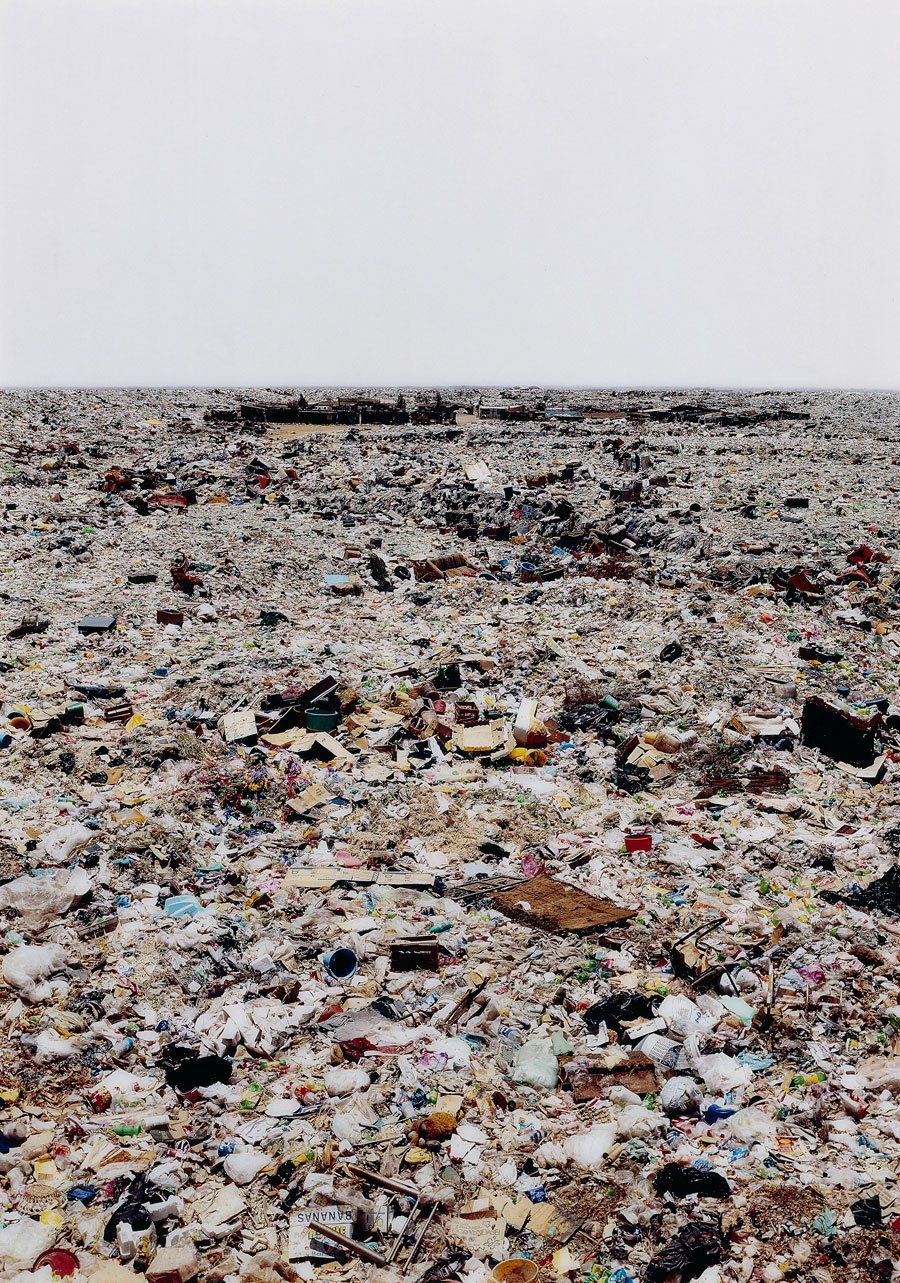
Tobias Zielony (German, b. 1973) 'Dirt Field' 2008


Tobias Zielony (German, b. 1973)
Dirt Field
2008
From the series Trona – Armpit of America
C-Print
56 x 84cm
Sammlung Halke / Courtesy KOW, Berlin
© Tobias Zielony


“Fredric Jameson wrote that in the postmodern world, the subject is not alienated but fragmented. He explained that the notion of alienation presumes a centralized, unitary self who could become lost to himself or herself. But if, as a postmodernist sees it, the self is decentred and multiple, the concept of alienation breaks down. All that is left is an anxiety of identity. The personal computer culture began with small machines that captured a post-1960s utopian vision of transparent understanding. Today, the personal computer culture’s most compelling objects give people a way to think concretely about an identity crisis. In simulation, identity can be fluid and multiple, a signifier no longer points to a thing that is signified, and understanding is less likely to proceed through analysis than by navigation through virtual space.”


Sherry Turkle 1


As we navigate these (virtual) worlds a signifier no longer points to a thing that is signified. In other words there is a split between referent and (un)known reality = a severance of meaning and its object.

“The image has nothing to do with signification, meaning, as implied by the existence of the world, the effort of truth, the law and the brightness of the day. Not only is the image of an object not the meaning of that object and of no help in comprehending it, but it tends to withdraw it from its meaning by maintaining it in the immobility of a resemblance that it has nothing to resemble.”2

Such is the case in these photographs. In their isolation each becomes the simulacra, the restaged models that are Thomas Demand’s photographs. That they do not allow any true reference to reality means that they become the image of memory in the present space. As the press release notes, “What happens to real places if a space loses its usual significance and can be experienced on a virtual plane?”

Kenneth Gergen observes, “The current texts of the self are built upon those of preceding eras, and they in turn upon more distant forms of discourse. In the end we have no way of “getting down to the self as it is.” And thus we edge toward the more unsettling question: On what grounds can we assume that beneath the layers of accumulated understandings there is, in fact, an obdurate “self” to be located? The object of understanding has been absorbed into the world of representations.”3

So we return to the split between referent and reality, a severance of meaning and its object in representation itself. These photographs, our Self and our world are becoming artefacts of hyperreality, of unallocated (un/all/located) space in which a unitary self/world has always been “lost.”

Dr Marcus Bunyan


Many thankx to the Hamburger Kunsthalle for allowing me to publish the photographs in the posting. Please click on the photographs for a larger version of the image.


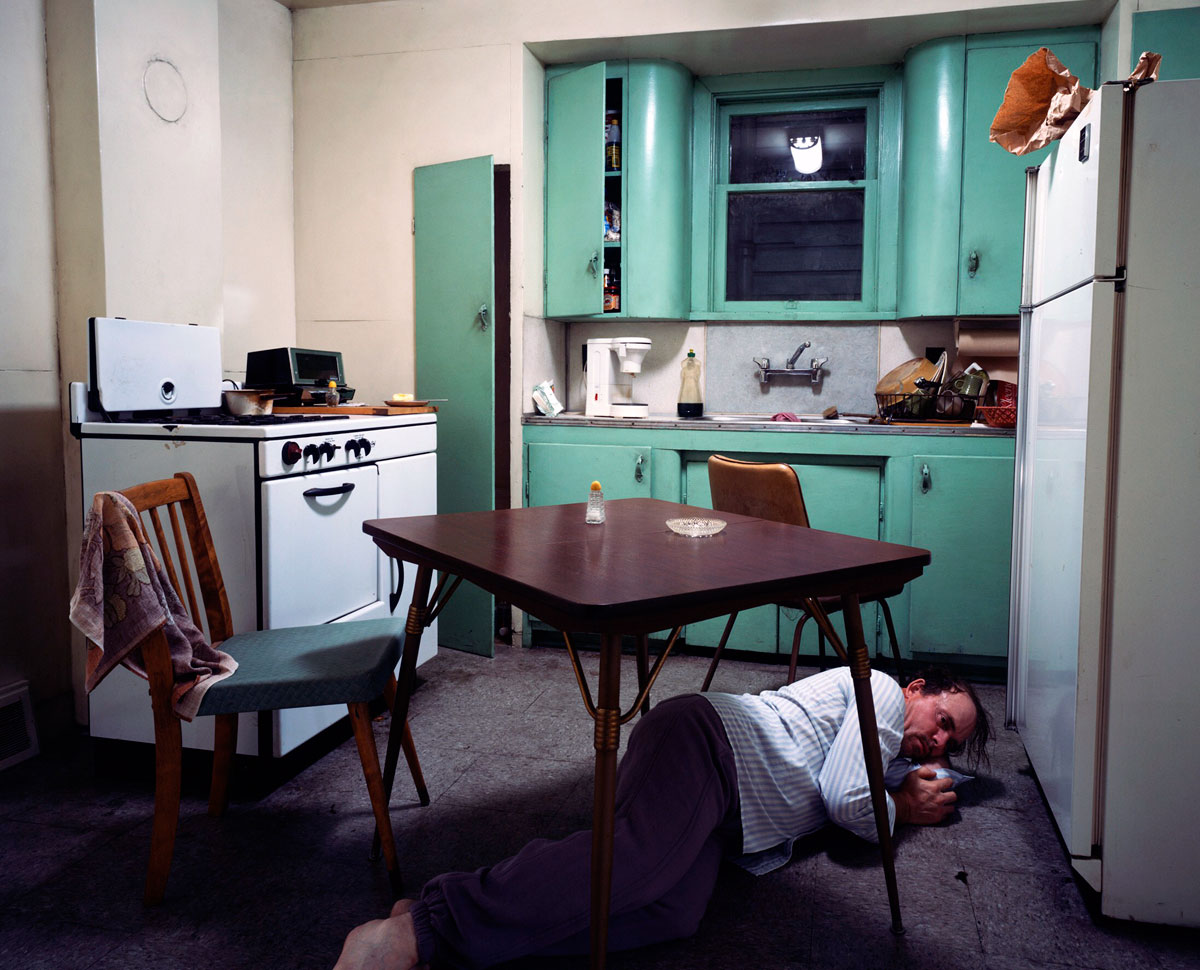
Jeff Wall (Canadian, b. 1946) 'Insomnia' 1994


Jeff Wall (Canadian, b. 1946)
Insomnia
1994
Cibachrome in Leuchtkasten (Plexiglas, 
Aluminium, Leuchtröhren)
174 x 214cm
Hamburger Kunsthalle
© Jeff Wall


Beate Gütschow (German, b. 1970) 'S#11' 2005


Beate Gütschow (German, b. 1970)
S#11
2005
Light Jet Print
180 x 232cm
Hamburger Kunsthalle
© Beate Gütschow / VG Bild-Kunst, Bonn 2012


Sarah Schönfeld (German, b. 1979) 'Wende-Gelände 01' 2006


Sarah Schönfeld (German, b. 1979)
Wende-Gelände 01
2006
C-Print
122 x 150cm
Privatsammlung / Courtesy Galerie 
Feldbuschwiesner, Berlin
© Sarah Schönfeld


Alexandra Ranner (German, b. 1967) 'Schlafzimmer II' 2008


Alexandra Ranner (German, b. 1967)
Schlafzimmer II (Bedroom II)
2008
Installation, Holz, Teppich, Styrodur, 
Licht, Farbe
H: 240cm, B: 500cm, L: 960cm
© Alexandra Ranner, Galerie Mathias 
Güntner, Hamburg / VG Bild-Kunst, 2012


Guy Tillim (South African, b. 1962) 'Apartment Building, Avenue Bagamoyo, Beira, Mozambique' 2008


Guy Tillim (South African, b. 1962)
Apartment Building, Avenue Bagamoyo, Beira, Mozambique
2008
(aus der Serie Avenue Patrice Lumumba)
Pigmentdruck auf Papier, kaschiert auf Aluminium
91.5 x 131.5cm
Guy Tillim / Courtesy Kuckei + Kuckei, Berlin und Stevenson, Cape Town
© Guy Tillim


In recent years, photography has reached a new peak in artistic media. Starting with the Düsseldorf School, with artists such as Andreas Gursky, Thomas Struth, Thomas Ruff or Candida Höfer, a young generation of artists developed that adopted different approaches by which to present the subject-matter of “space” and “place” in an era of historic change and social crises. With the exhibition Lost Places, the Hamburger Kunsthalle art museum dedicates itself to these new approaches, which document a wide range of different places and living spaces and their increasing isolation through the media of photography, film and installation works.

Joel Sternfeld’s documentary photographs depict places that were crime scenes. Thomas Demand restages real crime scenes, initially as models in order to then photograph them. In turn, in her large-scale photographs, Beate Gütschow constructs cityscapes and landscapes that are reminiscent of well-known places, but that do not allow any true reference. Sarah Schönfeld illustrates “the image of memory in the present space” in her photographs. She visits old places from her GDR childhood and captures these in their present state, whereby both points in time collide. In his fictional video installation Nostalgia, Omer Fast recounts the story of illegal immigrants from three different perspectives.

In his book The collective memory, French philosopher Maurice Halbwachs pointed out the significance of “spatial images” for the memory of social communities. Today the reliable spatial contextualisation of objects and memories (also due to digital photography) is under threat, hence this pretence begins to crumble. What happens to real places if a space loses its usual significance and can be experienced on a virtual plane?

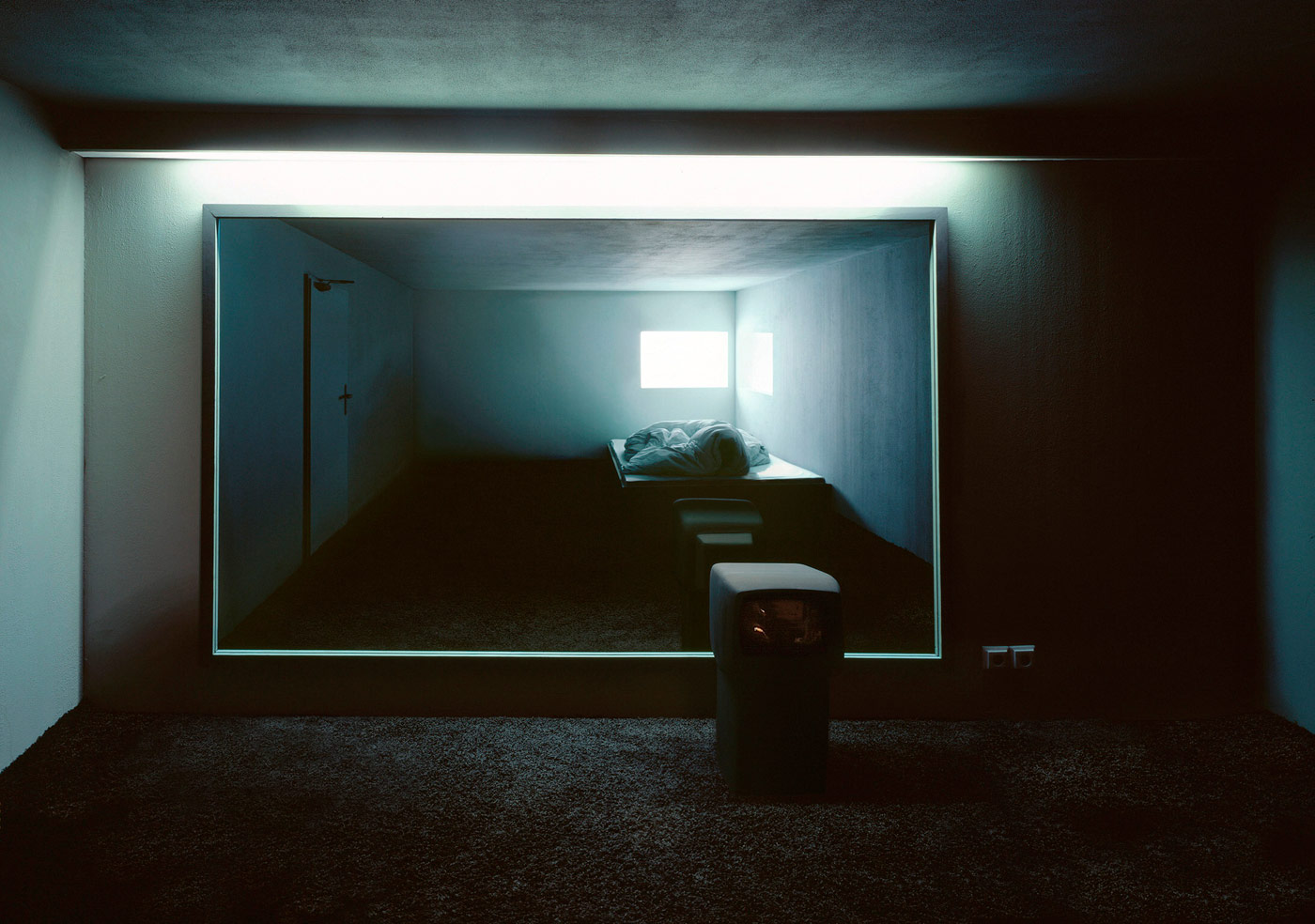
The exhibition comprises about 20 different approaches of contemporary photography and video art with many loans from museums and private collections. The exhibition features the following artists: Thomas Demand (b. 1964), Omer Fast (b. 1972), Beate Gütschow (b. 1970), Andreas Gursky (b. 1955), Candida Höfer (b. 1944), Sabine Hornig (b. 1964), Jan Köchermann (b. 1967), Barbara Probst (b. 1964), Alexandra Ranner (b. 1967), Ben Rivers (b. 1972), Thomas Ruff (b. 1958), Gregor Schneider (b. 1969), Sarah Schönfeld (b. 1979), Joel Sternfeld (b. 1944), Thomas Struth (b. 1954), Guy Tillim (b. 1962), Jörn Vanhöfen (b. 1961), Jeff Wall (b. 1946) and Tobias Zielony (b. 1973).

Press release from the Hamburger Kunsthalle website


Joel Sternfeld (American, b. 1944) 'Mclean, Virginia' 1978


Joel Sternfeld (American, b. 1944)
Mclean, Virginia
1978


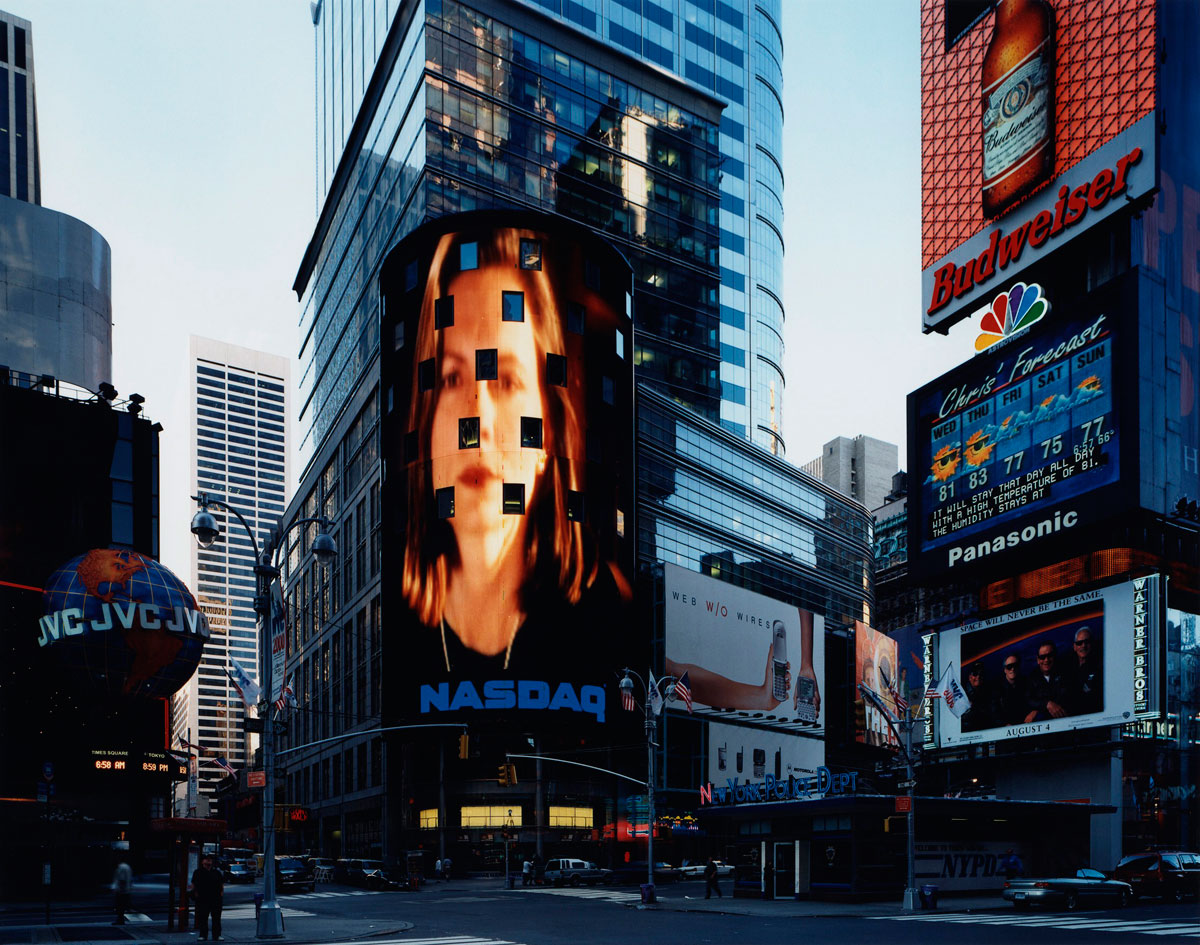
Thomas Struth (German, b. 1954) 'Times Square, New York' 2000


Thomas Struth (German, b. 1954)
Times Square, New York
2000
C-Print
140.2 x 176.2cm
Courtesy Thomas Struth, Berlin
© Thomas Struth


Thomas Demand (German, b. 1964) 'Parlament' 2009


Thomas Demand (German, b. 1964)
Parlament
2009
C-Print / Diasec
180 x 223cm
Staatliche Museen zu Berlin, Nationalgalerie 2010 
erworben durch die Stiftung des Vereins der 
Freunde der Nationalgalerie für zeitgenössische Kunst
© Thomas Demand / VG Bild-Kunst, Bonn 2012


Thomas Demand (German, b. 1964) 'Haltestelle' 2009


Thomas Demand (German, b. 1964)
Haltestelle
2009
C-Print / Diasec
240 x 330cm
Thomas Demand, Berlin
© Thomas Demand / VG Bild-Kunst, Bonn 2012


Thomas Demand restages real crime scenes, initially as models, in order to photograph them. Haltestelle (2009) is a large-scale photograph of a life-size paper model resembling a space of significant cultural meaning. It is a non-descript rural German bus stop that happens to be located just outside of Magdeburg, where the pop sensation Tokio Hotel used to wait for their school bus every morning. Much to the residents’ anger, the bus stop became a worshipping ground for die-hard fans. To solve the problem of the influx of teenagers, they auctioned the bus stop online, not thinking about the fact that Tokio Hotel’s fans wouldn’t be able to afford such an expensive souvenir. In a slight alteration of the plan, they sawed the structure apart and sold the constituent parts online, with great success. Like much of Demand’s work, this image tests our reception of visual media and explores its influences on the structures of memory.

Anonymous. “The Narrative of Location,” in Aesthetica magazine August/September 2012, p. 22 online on the Aesthetica magazine website [Online] Cited 23/08/2024


Jörn Vanhöfen (German, b. 1961) 'Asok #797' 2010


Jörn Vanhöfen (German, b. 1961)
Asok #797
2010
C-Print auf Aluminium
122 x 147cm
© Jörn Vanhöfen, courtesy: Kuckei + Kuckei, 
Berlin


Andreas Gursky (German, b. 1955) 'Ohne Titel XIII (Mexico)' 2002


Andreas Gursky (German, b. 1955)
Ohne Titel XIII (Mexico)
2002
Photographie
276 x 206cm
Dauerleihgabe der Stiftung für die 
Hamburger Kunstsammlungen
© SHK/Hamburger Kunsthalle/bpk/ VG 
Bild-Kunst, 2012


Andreas Gursky (German, b. 1955) 'Sáo Paulo Sé' 2002


Andreas Gursky (German, b. 1955)
Sáo Paulo Sé
2002
C-Print, Plexiglas
286 x 206cm
Dauerleihgabe der Stiftung für die 
Hamburger Kunstsammlungen
© SHK/Hamburger Kunsthalle/bpk/ 
VG Bild-Kunst, 2012


Tobias Zielony (German, b. 1973) 'Vela Azzurra' 2010


Tobias Zielony (German, b. 1973)
Vela Azzurra
2010
From the series Vele
C-Print
150 x 120cm
Tobias Zielony / Courtesy und KOW, Berlin und Lia Rumma, Neapel
© Tobias Zielony


Hamburger Kunsthalle
Glockengießerwall 20095
Hamburg
Phone: +49 (0) 40 – 428 131 200

Opening hours:
Tuesdays to Sundays 10am – 6pm
Closed Mondays

Hamburger Kunsthalle website

LIKE ART BLART ON FACEBOOK

Back to top

Exhibition: ‘Weegee: Murder Is My Business’ at the International Center of Photography, New York

Exhibition dates: 20th January – 2nd September 2012


Weegee (Arthur Fellig) (American, 1899-1968) 'Untitled [Anthony Esposito, booked on suspicion of killing a policeman, New York]' January 16, 1941


Weegee (Arthur Fellig) (American, 1899-1968)
Untitled [Anthony Esposito, booked on suspicion of killing a policeman, New York]
January 16, 1941
Silver gelatin photograph
© Weegee/International Center of Photography


If you want a good read about the life and times of Weegee then Mark Svetov’s ‘Life and Death (Mostly Death) in the Streets’ (2010) on American Suburb X website is the way to go. I can’t really add much to this excellent piece of writing in terms of the history of the man and the social milieu in which he surrounded himself. What I can comment on are my personal feelings about his photographs.

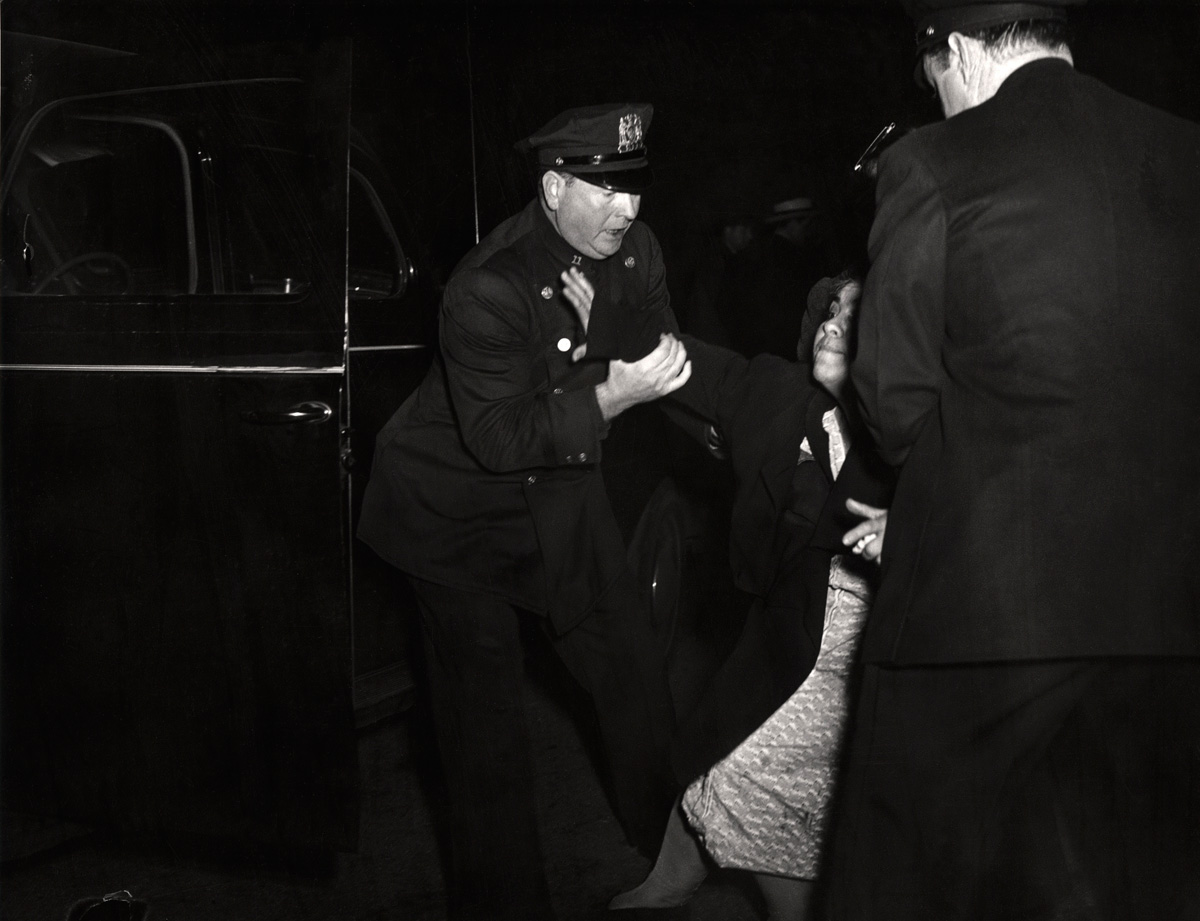
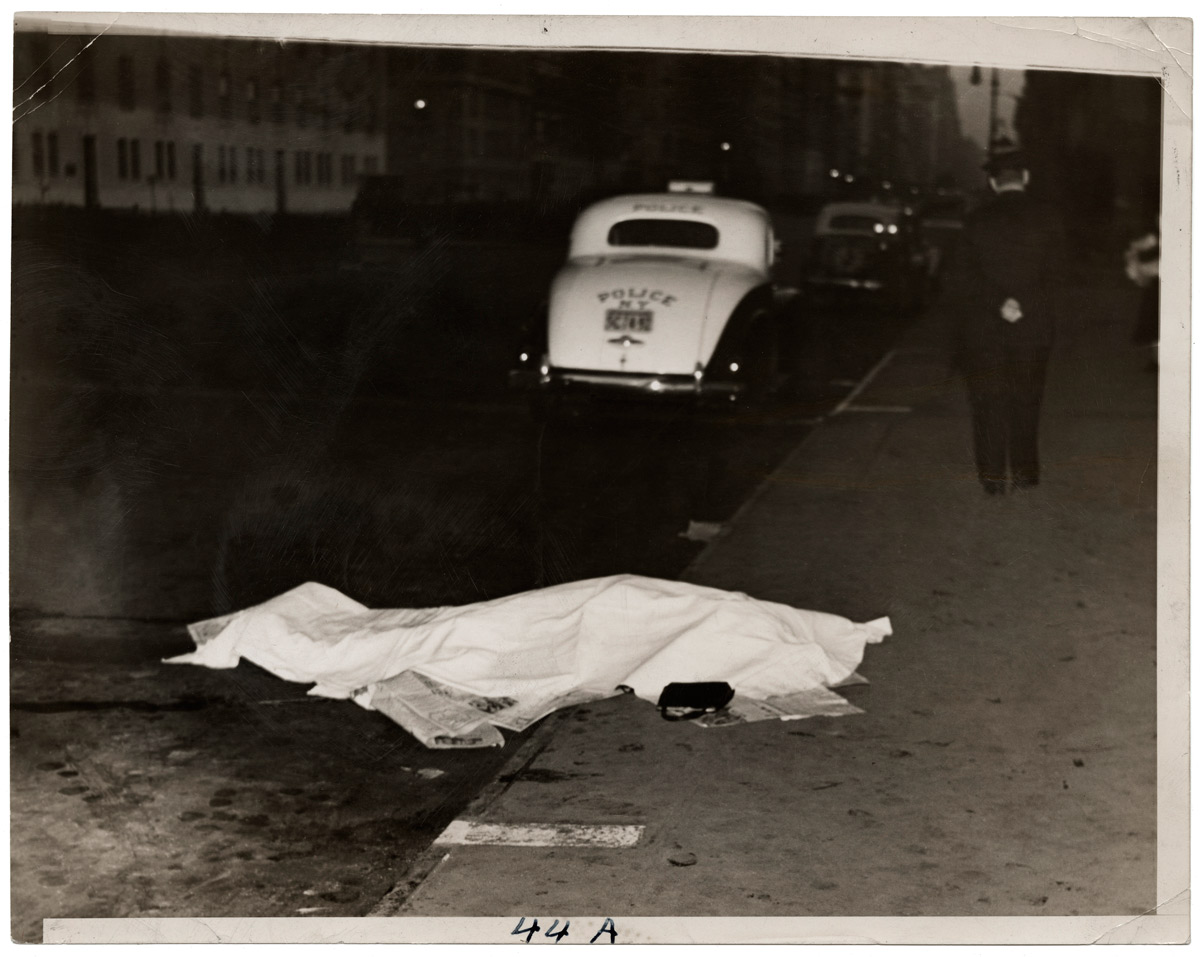
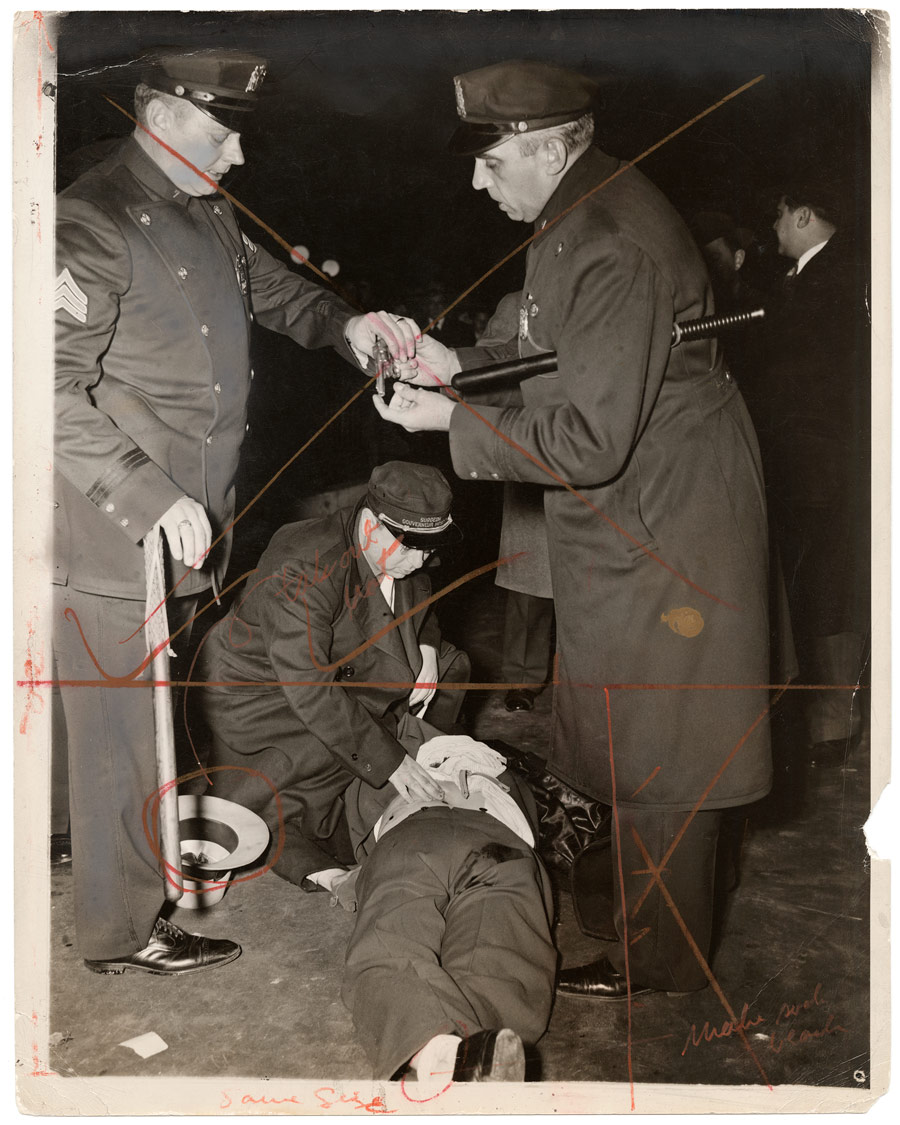
Weegee’s photographs are no masterpiece of fine art printing, they are rough and direct, and I love them all the more for this quality. Their roughness – all sellotaped over, edges cut at odd angles, drawn and written on – only adds to their power and immediacy. If you can call photographs of dead bodies in the street vibrant and alive, then these photographs are just that. Svetov sees Weegee as the quintessential noir photographer; I see him not so much as that but as a sensitive, formalist photographer, a wonderful collagist and an artist who is a precursor to the pop art of the mid-late 1950s (think Warhol’s screen prints of the electric chair, or his mangled car crash series).

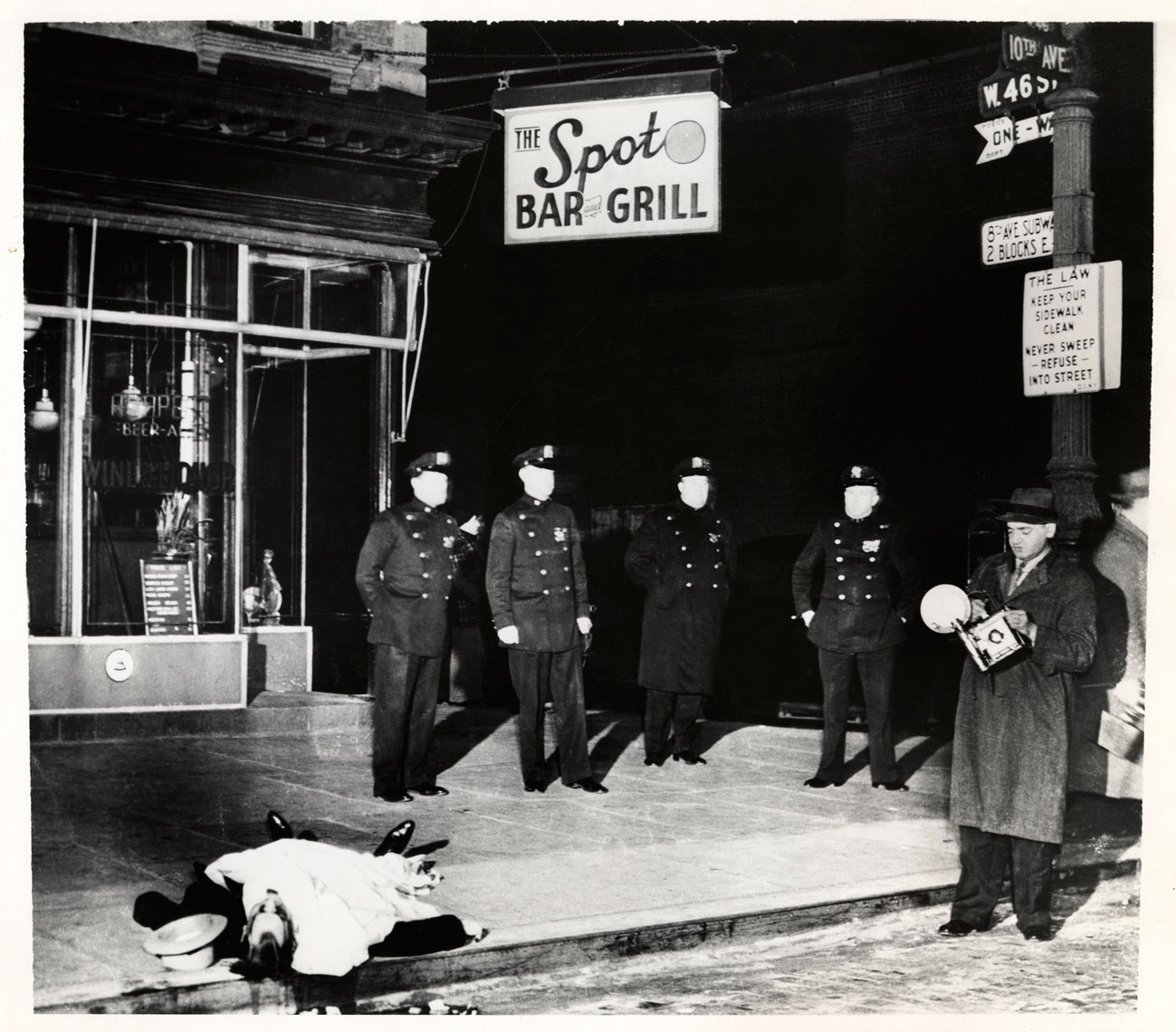
In the installation photographs of the exhibition Weegee: Murder Is My Business at the Photo League, New York (1941, see below) you get a sense of this master of assemblage, the animator and promoter (another pop trait!) at work. The large prints are casually pinned to the back board, surrounded by drawings of guns with smoke emanating from their barrels, cause of death certificates, photographs of Weegee himself “On the Spot”, Weegee’s press pass, newspaper clippings about the man and his work (including a photograph of his tiny bedroom) where Weegee “introduces” himself to his audience. The photographs flow around the room, from Faces, to Murder and Society. People are drawn into the aura of these photographs, you can see them leaning forward to take in every detail. They peer intently at the them trying to decipher every nuance of the narrative being told (the frequent hats lying about, the discarded pistols, the hand emerging from underneath the draped sheet).

As Svetov notes, Weegee’s news pictures were never haphazard snapshots, for they always seem perfectly arranged. Underneath the spontaneity and the humanism imparted by the artist is that fact that Weegee is a master of formalism. He knows exactly how to structure the picture plane as a classical pianist knows how to bring alive the themes of a Mozart sonata. Usually arriving before any other photographer because he lived opposite the police station and had a police radio in his car, Weegee “cased the joint” as I would put it, prowling quickly around the scene to get the best angle, the best shot before other photographers arrived or the scene was closed off by police. This instinctive framing only comes through having a good eye and training that eye so that what to shoot and how to crop the scene “in camera” becomes second nature.

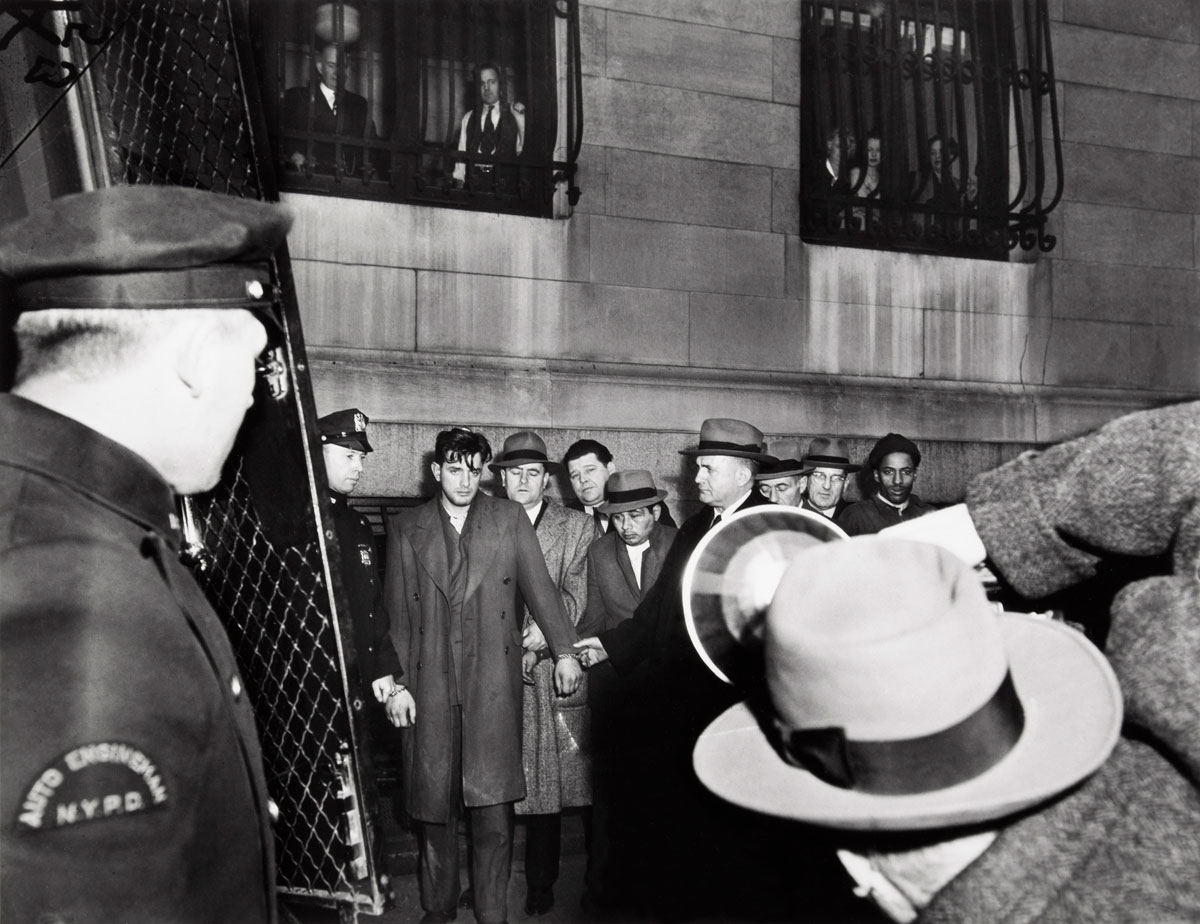
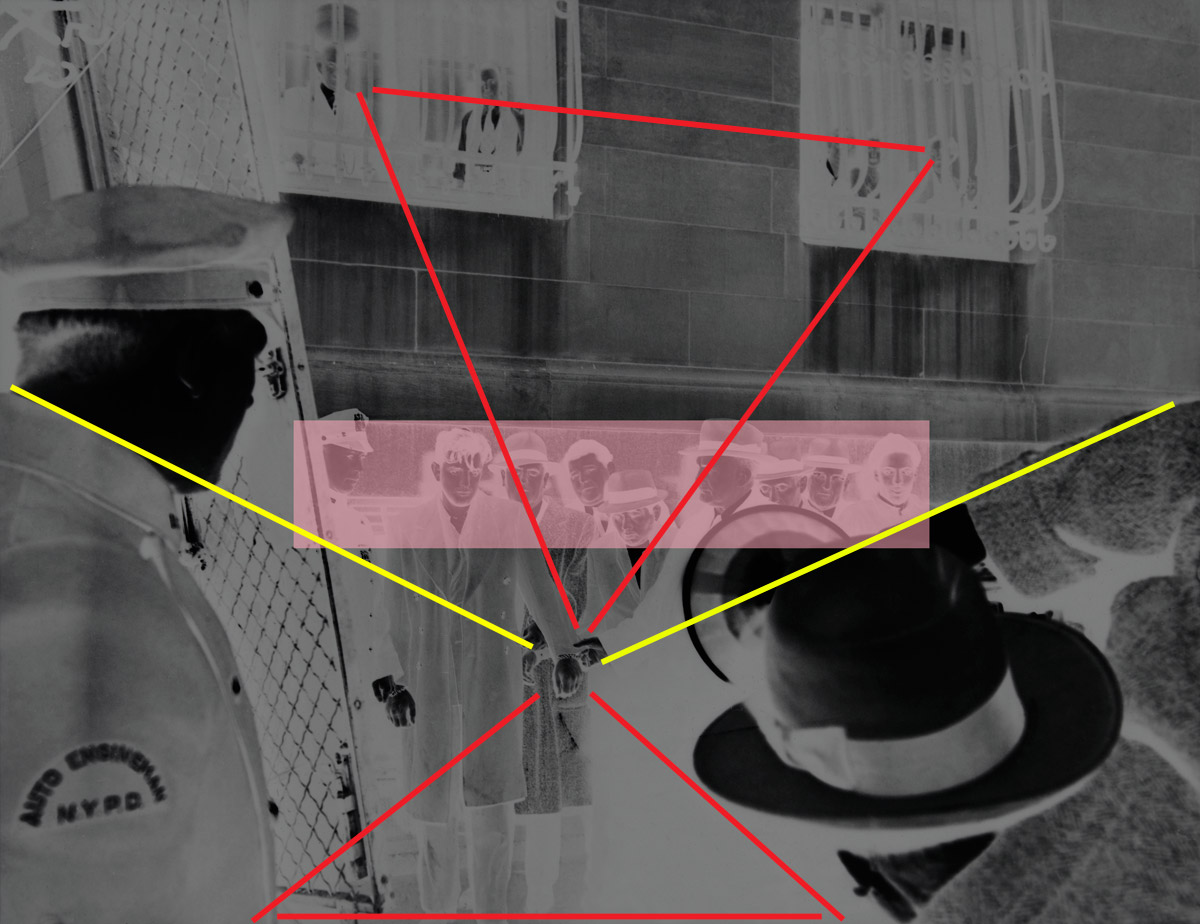
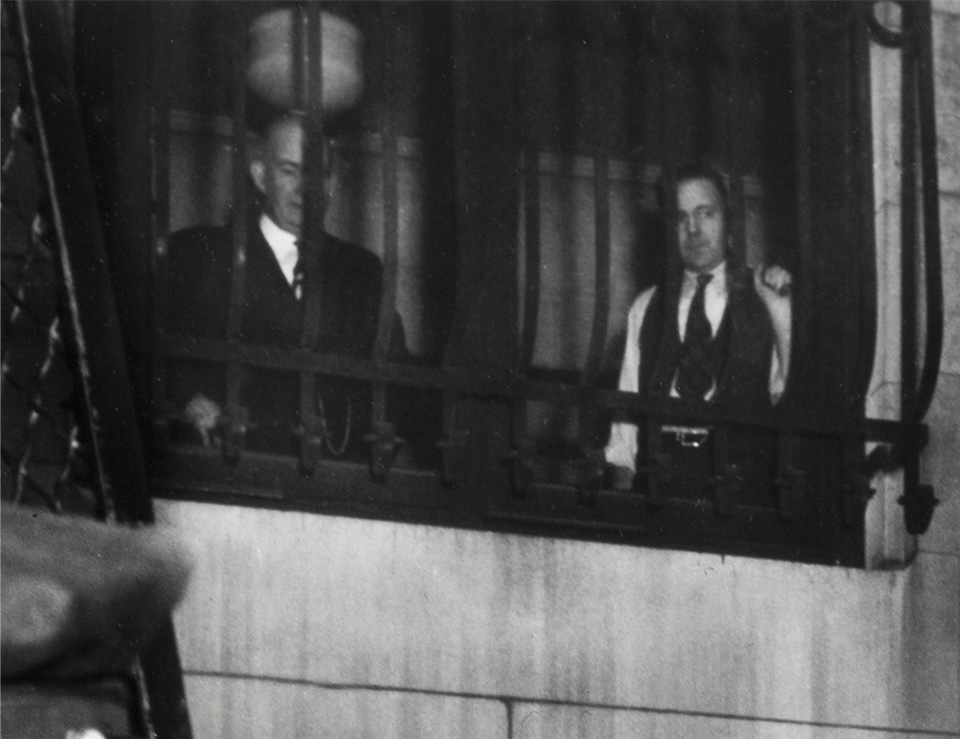
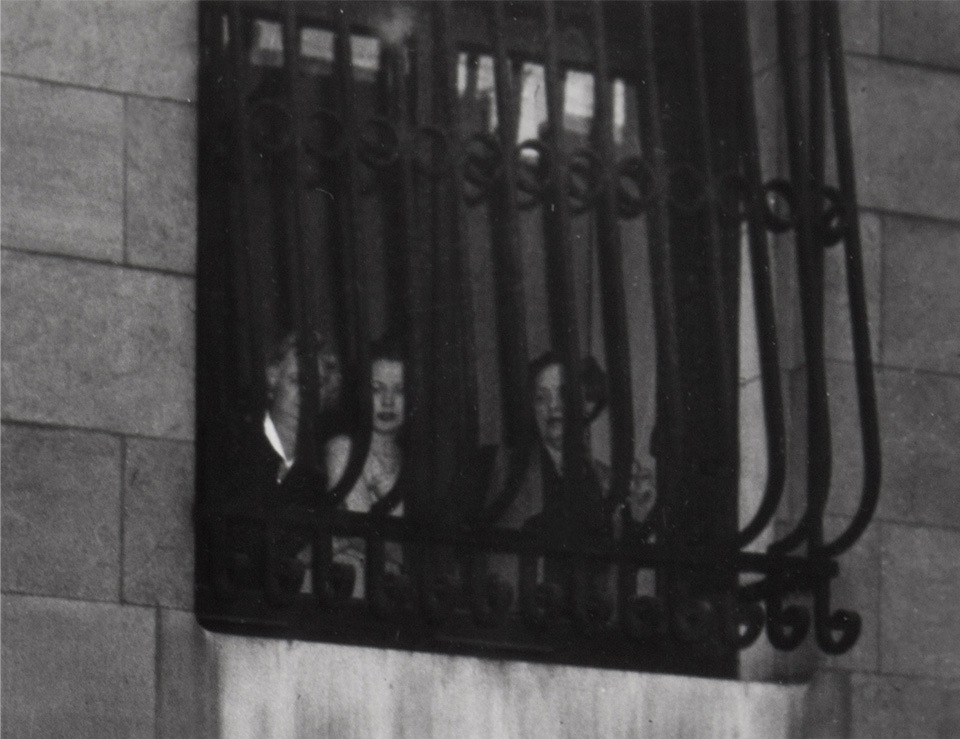
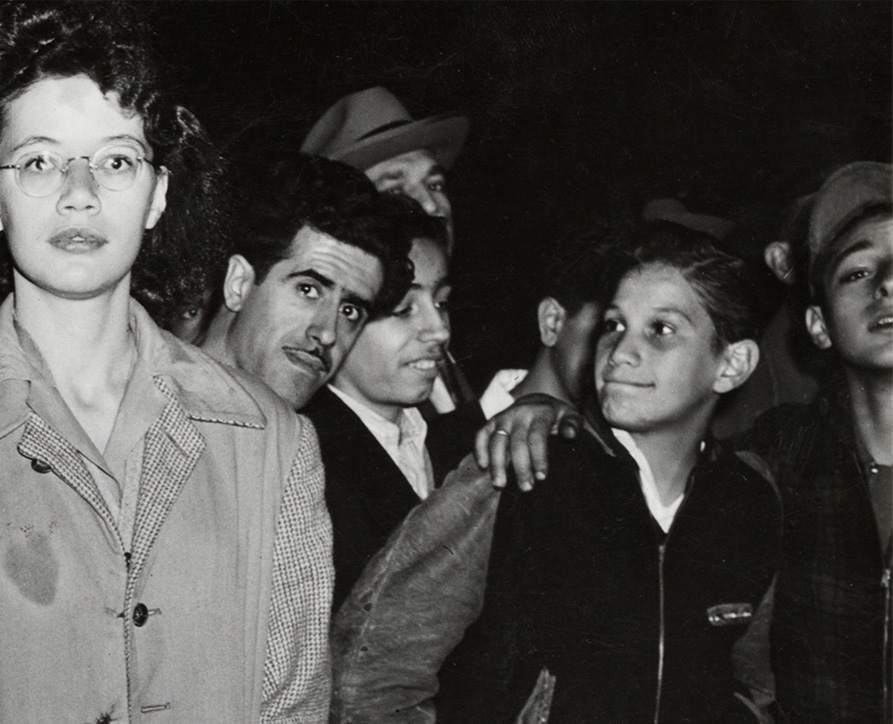
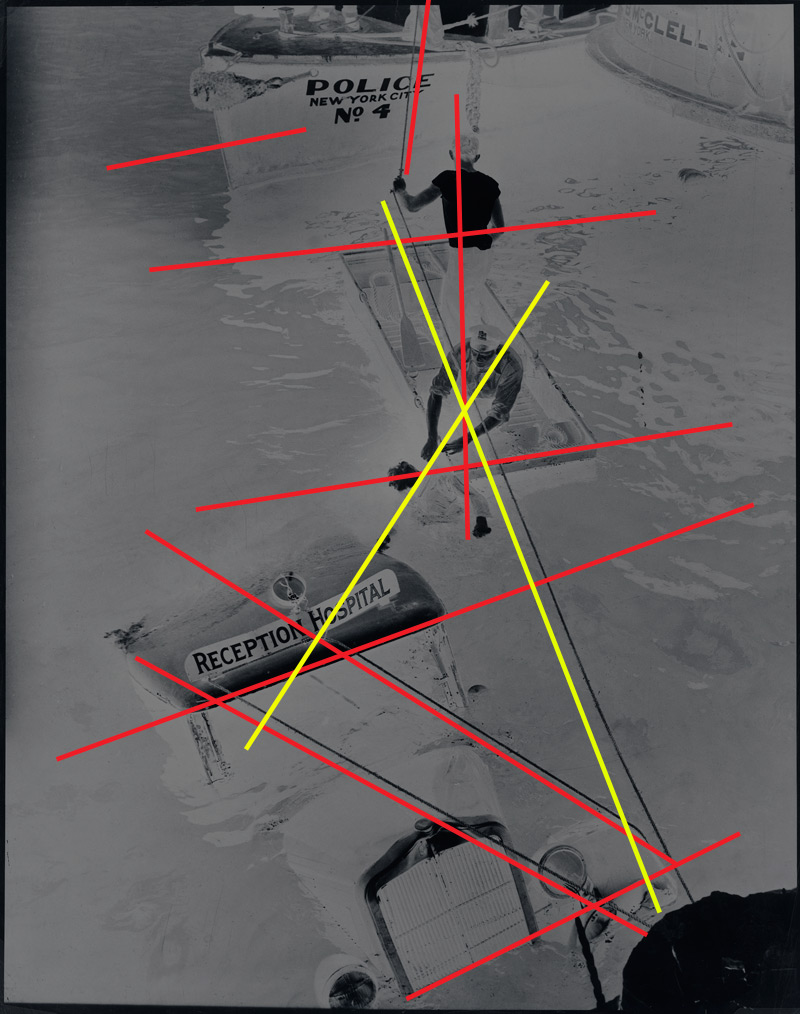
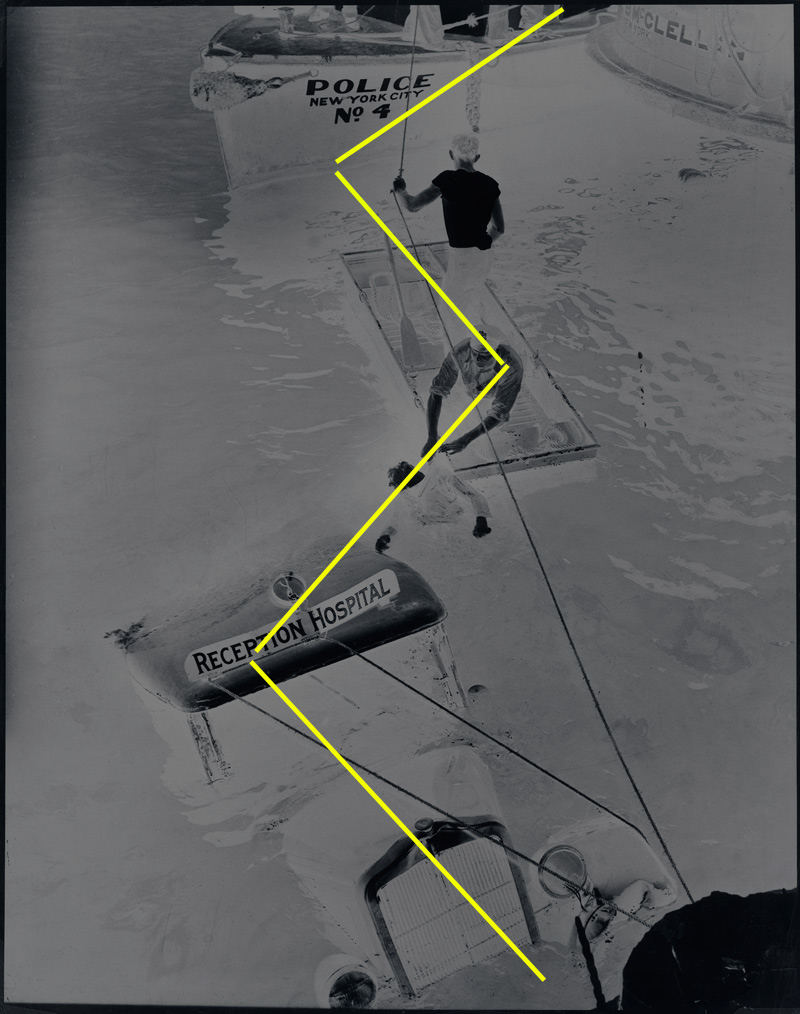
Evidence of the formal structure implicit in Weegee’s photographs can be seen in my analysis of two photographs Line-Up for Night Court (c. 1941, below) and Police officer and assistant removing body of Reception Hospital ambulance driver Morris Linker from East River, New York (August 24, 1943, below). In the first image the epicentre (or the enigma if you like) of the photograph is the dance of hands at the lower centre of the image, formed by two triangles and emphasised by two radial diagonals. The top points of the upper triangle are anchored by the men and women at both windows (see detail photographs), the patriarchal men in suit and tie at one window – a detective, a chief of police? – separated from the woman at another. Weegee’s splits this triangle with his frieze of faces showing the depths of human despair, despondency and ambivalence.

The second image has a much more complicated structure. In the first analysis we observe the different horizontal, vertical and diagonal planes as they march up the photograph. The “heart” of this image, where the yellow lines cross, is actually a point of absence. Look at the real photograph: it is the heart shaped empty space between the man’s outstretched hands that form the emotional centre of the image. In the second analysis we can simplify this down into a zigzagging line that passes directly through this point. To see this, to assess this and visualise the flowing movement in a split second is in any visual language outstanding. Weegee wasn’t averse to manipulating his images to achieve the desired result. The photograph Hold up man killed (November 24, 1941, below) shows his notations over the top of the image, the crop he envisaged and the words “Take out hat” and “Make sock black” so that he achieved the desired dynamic within the photograph.

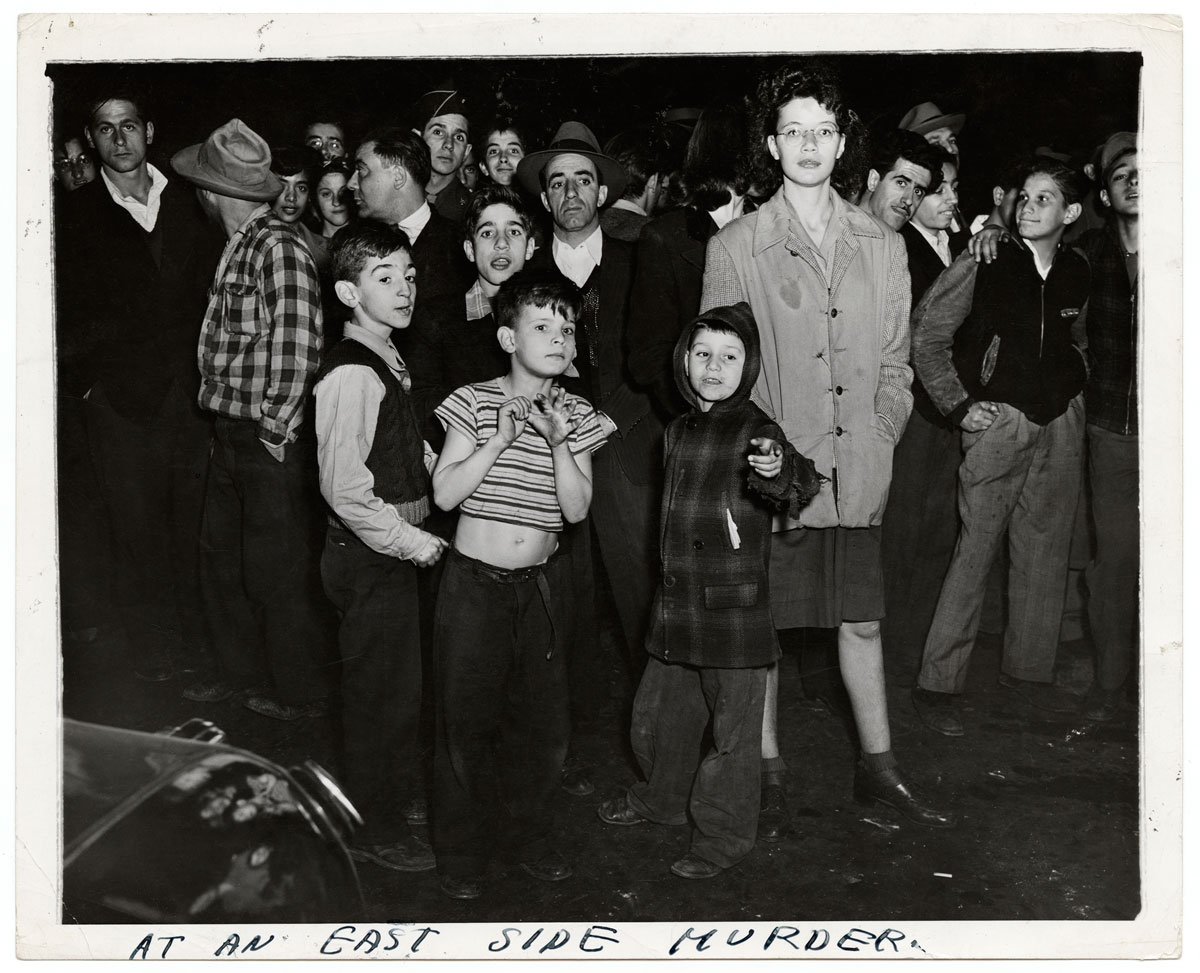
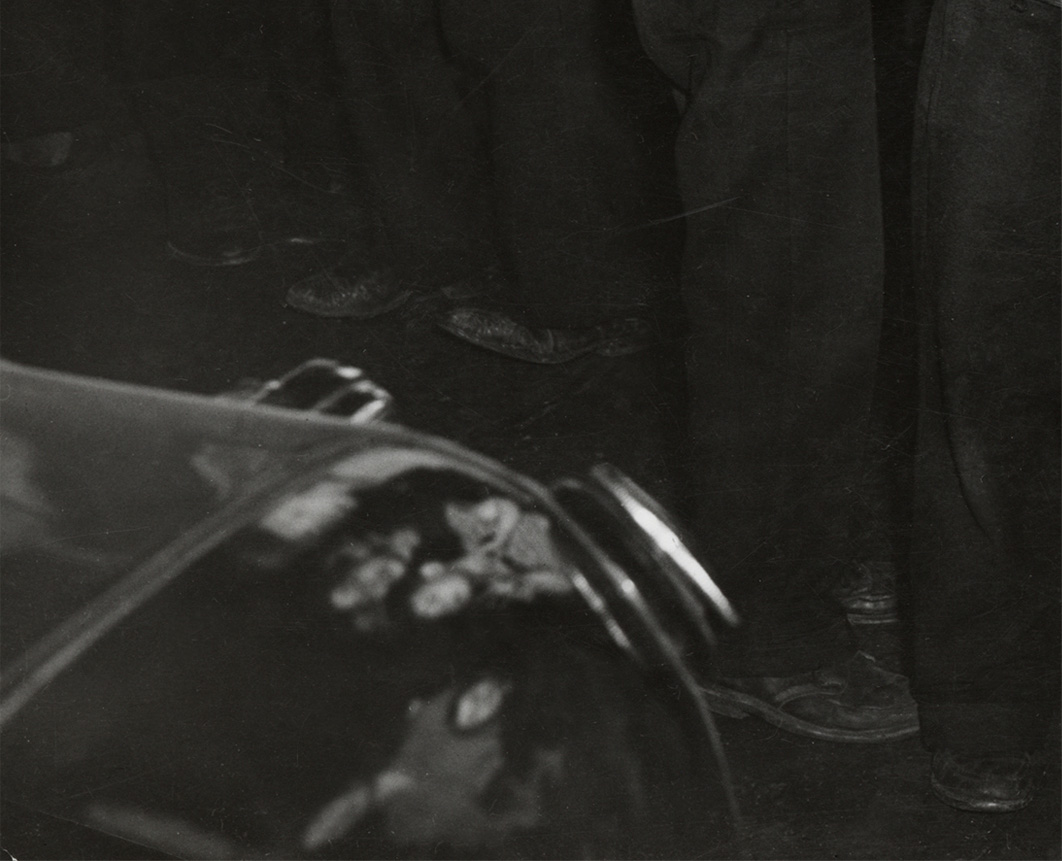
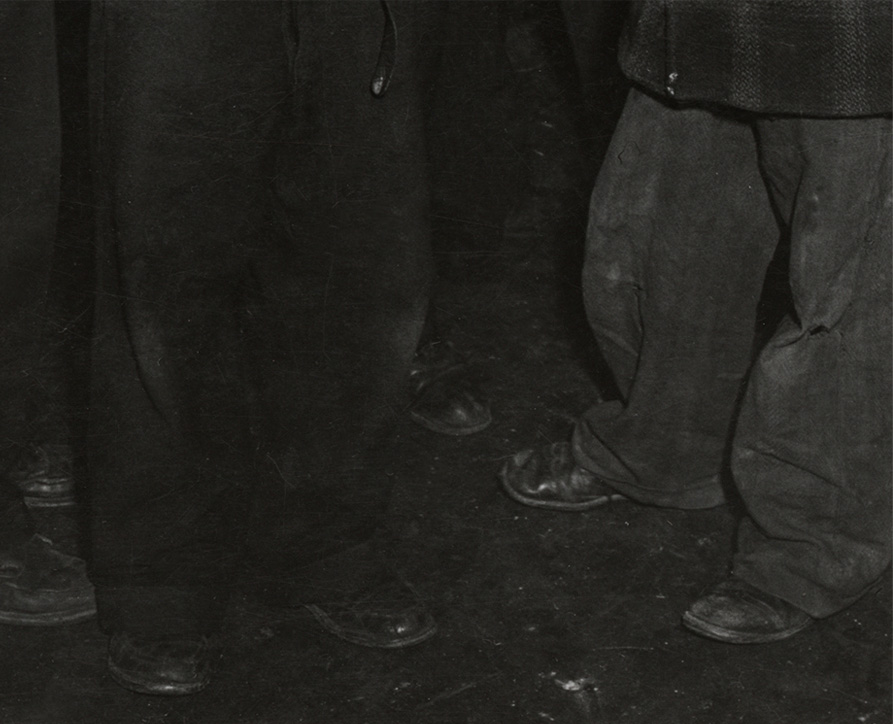
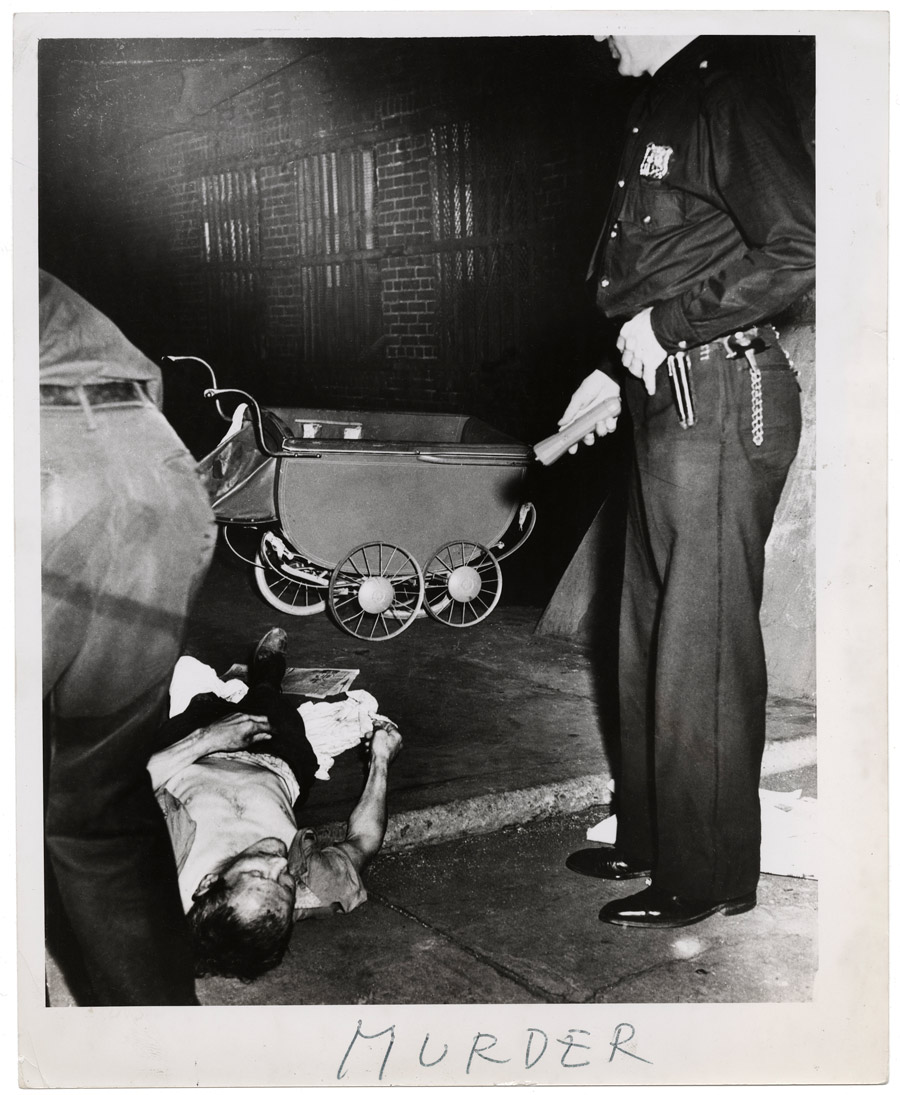
Weegee was a master of flash and the use of foreshortening – to create atmosphere in the first instance and used as a visual entre into the photographs in the second. Sometimes he combines both. The policeman at left in Line-Up for Night Court is both out of focus and the highlights (his face) are blown out by the flash. Does this matter: not one iota, for the policeman “grounds” the whole left hand side of the image. Again, in Murder (c. 1940, below) the backside of the policeman is blown out by the flash but this only leads the eye of the viewer to the foreshortened body of the murder victim nestled in the crook of his knee and then onto the starkly lit pram, beyond. Finally, in Hold up man killed (November 24, 1941, below) the feet of the hold up man actually lead the viewer into the space between the two policeman’s shoes were the Surgeon from Gouverneur Hospital crouches over the body. Weegee also loved to weave detail into his images, so that even though the story is about human content, as Svetov observes, it is just as much about human materiality as well: notice the reflection of people in the car bonnet in At an East Side Murder (1943, below) at lower left and then the procession of worn shoes and the bagginess of the trousers – I didn’t realised they wore their trousers so baggy in the 1940s!

Svetlov sees Weegee’s photographs as containing an almost sacred squalor, a brash but anguished cry in an endless nightscape with nothing judgemental or distanced about them. I concur with the last part for Weegee was a man of the people whom he photographed. On the other points I am less sure: to me they are about light not darkness. They are about the aftermath of atrocity, of living, human beings dealing with death and its consequences. I see nothing sacred about this squalor. The photographs are about shining a light into darkness, the darkness that every human being must confront: the fact that we all have to die, somewhere, sometime, in the end.

Dr Marcus Bunyan


Many thankx to the International Center of Photography for allowing me to publish the photographs in the posting. Please click on the photographs for a larger version of the image.


“People are so wonderful that a photographer has only to wait for that breathless moment to capture what he wants on film… and when that split second of time is gone, it’s dead and can never be brought back.”

“For the pictures… I was on the scene; sometimes drawn there by some power I can’t explain, and I caught the New Yorkers with their masks off… not afraid to Laugh, Cry, or Make Love. What I felt I photographed, laughing and crying with them.”


Arthur Fellig (aka Weegee, 1899-1968)


“Weegee’s work is connected by an umbilical cord to darkness; his images emerged from Gotham City’s nocturnal penumbra, spectrally streaked by streetlights, lit brightly only where there was a human focus, a tabloid John Alton at work.

Weegee called it his “Rembrandt light” as he caught the human protagonists in the white glare of his photo flash, the scene otherwise enveloped in darkness. Weegee’s news pictures were never haphazard snapshots, albeit they were taken by a man who had happenstance and chance as his helpmates; he and his camera, with its flash, seem to have a fateful meeting with his human subjects; pictures seem perfectly arranged, and what we focus on is their human content. Weegee is the quintessential noir photographer.”


Mark Svetov. “Life and Death (Mostly Death) in the Streets (2010)” on American Suburb X website May 2012 [Online] Cited 28/08/2012


Weegee (Arthur Fellig) (American, 1899-1968) 'The dead man's wife arrived... and then she collapsed' c. 1940


Weegee (Arthur Fellig) (American, 1899-1968)
The dead man’s wife arrived… and then she collapsed
c. 1940
Silver gelatin photograph
© Weegee/International Center of Photography


Weegee (Arthur Fellig) (American, 1899-1968) 'Girl jumped out of car, and was killed, on Park Ave.,' c. 1938


Weegee (Arthur Fellig) (American, 1899-1968)
Girl jumped out of car, and was killed, on Park Ave.,
c. 1938
Silver gelatin photograph
© Weegee/International Center of Photography


Weegee (Arthur Fellig) (American, 1899-1968) 'Untitled [Installation view of "Weegee: Murder Is My Business" at the Photo League, New York]' 1941

Weegee (Arthur Fellig) (American, 1899-1968) 'Untitled [Installation view of "Weegee: Murder Is My Business" at the Photo League, New York]' 1941

Weegee (Arthur Fellig) (American, 1899-1968) 'Untitled [Installation view of "Weegee: Murder Is My Business" at the Photo League, New York]' 1941

Weegee (Arthur Fellig) (American, 1899-1968) 'Untitled [Installation view of "Weegee: Murder Is My Business" at the Photo League, New York]' 1941


Weegee (Arthur Fellig) (American, 1899-1968)
Untitled [Installation view of “Weegee: Murder Is My Business” at the Photo League, New York]
1941
Silver gelatin photographs
© Weegee/International Center of Photography


Text and captions from the original Murder Is My Business exhibition:

~ “Introducing Weegee”
~ “Due to an increase in MURDERS The Photo League presents 2nd Edition of “MURDER IS MY BUSNESS” by Weegee”
~ “Weegee Lives For His Work And Thinks Before Shooting” (newspaper headline on the “Weegee” board at left)
~ “This space reserved for the latest muders”
~ “MURDER Manhattan bloodbath”
~ “Arthur Fellig Photographer / Do not disturbe / Except in case of Fire, Murder or Snow Storm” (caption underneath photograph)
~ “Why did you kill your Sweetie”?  (caption underneath photograph)
~ “HUMAN BODY MINUS HEAD FOUND ON STREET” (caption underneath photograph)
~ “Cop & human head in package” (caption underneath photograph)
~ “Killed her husband after drinking brawl” (caption underneath photograph)
~ “Just a cheap murder” (caption underneath photograph)
~ “My man” (caption underneath photograph)
~ “Who done that” (caption underneath photograph)


“Weegee’s captions provided a visceral vernacular for the almost-sacred squalor of his imagery (see “Weegee’s Words” for a sampling). Taken together, they packed more than a mere punch; they were a brash but anguished cry in an endless nightscape. More than mere documents of a violent era, they also exuded a humanity that could only come from the photographer himself. There was nothing judgmental or distanced in Weegee’s work; he was the antithesis of the “slickers” who worked for glossy magazines. He remained a man essentially from the same New York working-class as the people he chose to photograph.”


Mark Svetov. “Life and Death (Mostly Death) in the Streets (2010)” on American Suburb X website May 2012 [Online] Cited 28/08/2012


Weegee (Arthur Fellig) (American, 1899-1968) 'Untitled ["Ruth Snyder Murder" wax display, Eden Musée, Coney Island, New York]' c. 1941


Weegee (Arthur Fellig) (American, 1899-1968)
Untitled [“Ruth Snyder Murder” wax display, Eden Musée, Coney Island, New York]
c. 1941
Silver gelatin photograph
© Weegee/International Center of Photography


Unidentified Photographer. 'On the Spot' December 9, 1939


Unidentified Photographer
On the Spot
December 9, 1939
© Weegee/International Center of Photography


Weegee (Arthur Fellig) (American, 1899-1968) 'Line-Up for Night Court' c. 1941


Weegee (Arthur Fellig) (American, 1899-1968)
Line-Up for Night Court
c. 1941
Silver gelatin photograph
© Weegee/International Center of Photography


Construction of the pictorial plane in 'Line-Up for Night Court'


Construction of the pictorial plane in Line-Up for Night Court


Weegee (Arthur Fellig) (American, 1899-1968) 'Line-Up for Night Court' c. 1941 (detail)

Weegee (Arthur Fellig) (American, 1899-1968) 'Line-Up for Night Court' c. 1941 (detail)


Weegee (Arthur Fellig) (American, 1899-1968)
Line-Up for Night Court (details)
c. 1941
Silver gelatin photograph
© Weegee/International Center of Photography


Weegee (Arthur Fellig) (American, 1899-1968) 'At an East Side Murder' 1943


Weegee (Arthur Fellig) (American, 1899-1968)
At an East Side Murder
1943
Silver gelatin photograph
© Weegee/International Center of Photography


Weegee (Arthur Fellig) (American, 1899-1968) 'At an East Side Murder' 1943 (detail)

Weegee (Arthur Fellig) (American, 1899-1968) 'At an East Side Murder' 1943 (detail)

Weegee (Arthur Fellig) (American, 1899-1968) 'At an East Side Murder' 1943 (detail)


Weegee (Arthur Fellig) (American, 1899-1968)
At an East Side Murder (details)
1943
Silver gelatin photograph
© Weegee/International Center of Photography


Weegee (Arthur Fellig) (American, 1899-1968) 'Untitled [Hats in a pool room, Mulberry Street, New York]' c. 1943


Weegee (Arthur Fellig) (American, 1899-1968)
Untitled [Hats in a pool room, Mulberry Street, New York]
c. 1943
© Weegee/International Center of Photography


Gangland murders, gruesome car crashes, and perilous tenement fires were for the photographer Weegee (1899-1968) the staples of his flashlit black-and-white work as a freelance photojournalist in the mid­-1930s. Such graphically dramatic and sometimes sensationalistic photographs of New York crimes and news events set the standard for what has since become known as tabloid journalism. In fact, for one intense decade, between 1935 and 1946, Weegee was perhaps the most relentlessly inventive figure in American photography. A surprising new exhibition at the International Center of Photography (1133 Avenue of the Americas at 43rd Street), titled Weegee: Murder Is My Business and organised by ICP Chief Curator Brian Wallis, will present some rare examples of Weegee’s most famous and iconic images, and will consider his early work in the context of its original presentation in historical newspapers and exhibitions, as well as Weegee’s own books and films.

Taking its title from Weegee’s self-curated exhibition at the Photo League in 1941, Murder Is My Business looks at the urban violence and mayhem that was the focus of his early work. As a freelance photographer at a time when New York City had at least eight daily newspapers and when wire services were just beginning to handle photos, Weegee was challenged to capture unique images of newsworthy events and distribute them quickly. He worked almost exclusively at night, setting out from his small apartment across from police headquarters when news of a new crime came chattering across his police-band radio receiver. Often arriving before the police themselves, Weegee carefully cased each scene to discover the best angle. Murders, he claimed, were the easiest to photograph because the subjects never moved or got temperamental.

Weegee’s rising career as a news photographer in the 1930s coincided with the heyday of Murder Inc., the Jewish gang from Brownsville who served as paid hitmen for The Syndicate, a confederation of mostly Italian crime bosses in New York. As a wave of governmental and legal crackdowns swept the city between 1935 and 1941, the rate of organised murders of small-time wiseguys and potential stool pigeons increased dramatically. Weegee often worked closely with the police but also befriended high-profile criminals like Bugsy Siegel, Lucky Luciano, and Legs Diamond. Weegee called himself the “official photographer for Murder Inc.” and claimed to have covered 5,000 murders, a count that is perhaps only slightly exaggerated. In asserting the true nature of his business, Weegee proudly displayed his check stub from LIFE magazine that paid him $35 for two murders, slightly more, he said, for the one that used more bullets.

Selling his photographs to a variety of New York newspapers in the 1930s, and later working as a stringer for the short-lived daily newspaper PM (1940-1948), Weegee established a highly subjective approach to both photographs and texts that was distinctly different from that promoted in most dailies and picture magazines. Utilising other distribution venues, Weegee also wrote extensively (including his autobiographical Naked City, published in 1945) and organised his own exhibitions at the Photo League, the influential photographic organisation that promoted politically committed pictures, particularly of the working classes. In 1941, Weegee installed two back-to-back exhibitions in the League’s headquarters. This visibility helped promote Weegee’s growing reputation as a news photographer, and he began stamping his prints “Weegee the Famous.” The general acceptance of his punchy photographic style, which did not shy away from lower-class subjects and humanistic narratives, led to the acquisition of his work by the Museum of Modern Art and inclusion in two group shows there, in 1943 and 1945.

“Weegee has often been dismissed as an aberration or as a naive photographer, but he was in fact one of the most original and enterprising photojournalists of the 1930s and ’40s. His best photographs combine wit, daring, and surprisingly original points of view, particularly when considered in light of contemporaneous press photos and documentary photography. He favoured unabashedly low-culture or tabloid subjects and approaches, but his Depression-era New York photographs need to be considered seriously alongside other key documentarians of the thirties, such as Dorothea Lange, Robert Capa, Walker Evans, and Berenice Abbott,” said Wallis.

The exhibition will feature over 100 original photographs, drawn primarily from the comprehensive Weegee Archive of over 20,000 prints at ICP, as well as period newspapers, magazines, and films. It will also include partial reconstructions of Weegee’s studio and his Photo League exhibition. The four galleries will each feature a touch-screen monitor allowing visitors to explore further details regarding the images and artefacts in that room.

Press release from the ICP


Weegee (Arthur Fellig) (American, 1899-1968) 'Untitled [Body of Dominick Didato, Elizabeth Street, New York]' August 7, 1936


Weegee (Arthur Fellig) (American, 1899-1968)
Untitled [Body of Dominick Didato, Elizabeth Street, New York]
August 7, 1936
Silver gelatin photograph
© Weegee/International Center of Photography


Weegee (Arthur Fellig) (American, 1899-1968) 'Murder' c. 1940


Weegee (Arthur Fellig) (American, 1899-1968)
Murder
c. 1940
Silver gelatin photograph
© Weegee/International Center of Photography


Weegee (Arthur Fellig) (American, 1899-1968) 'Untitled [Police officer and lodge member looking at blanket-covered body of woman trampled to death in excursion-ship stampede, New York]' August 18, 1941


Weegee (Arthur Fellig) (American, 1899-1968)
Untitled [Police officer and lodge member looking at blanket-covered body of woman trampled to death in excursion-ship stampede, New York]
August 18, 1941
Silver gelatin photograph
© Weegee/International Center of Photography


Weegee (Arthur Fellig) (American, 1899-1968) 'Hold up man killed' November 24, 1941


Weegee (Arthur Fellig) (American, 1899-1968)
Hold up man killed
November 24, 1941
Silver gelatin photograph
© Weegee/International Center of Photography


Weegee (Arthur Fellig) (American, 1899-1968) 'Untitled [Police officer and assistant removing body of Reception Hospital ambulance driver Morris Linker from East River, New York]' August 24, 1943


Weegee (Arthur Fellig) (American, 1899-1968)
Untitled [Police officer and assistant removing body of Reception Hospital ambulance driver Morris Linker from East River, New York]
August 24, 1943
Silver gelatin photograph
© Weegee/International Center of Photography


Pictorial construction of Police officer and assistant removing body of Reception Hospital ambulance driver Morris

Pictorial construction of Police officer and assistant removing body of Reception Hospital ambulance driver Morris


Pictorial construction of Police officer and assistant removing body of Reception Hospital ambulance driver Morris


International Center of Photography
79 Essex Street, New York, NY 10002
between Delancey Street and Broome Street

Opening hours:
Wednesday – Monday 11am – 7pm
Tuesday closed

International Center of Photography website

LIKE ART BLART ON FACEBOOK

Back to top

Review: ‘Berlinde De Bruyckere: We are all Flesh’ at the Australian Centre for Contemporary Art (ACCA), Melbourne

Exhibition dates: 2nd June – 29th July 2012


Apologies, just a short review as I have been sick all weekend. It’s hard to think straight with a thumping headache…

~ An interesting exhibition with several strong elements

~ Wonderful use of the ACCA space. Nice to see the building allowed to speak along with the work; in other words a minimal install that shows off the work and the building to advantage. ACCA could do more of this.

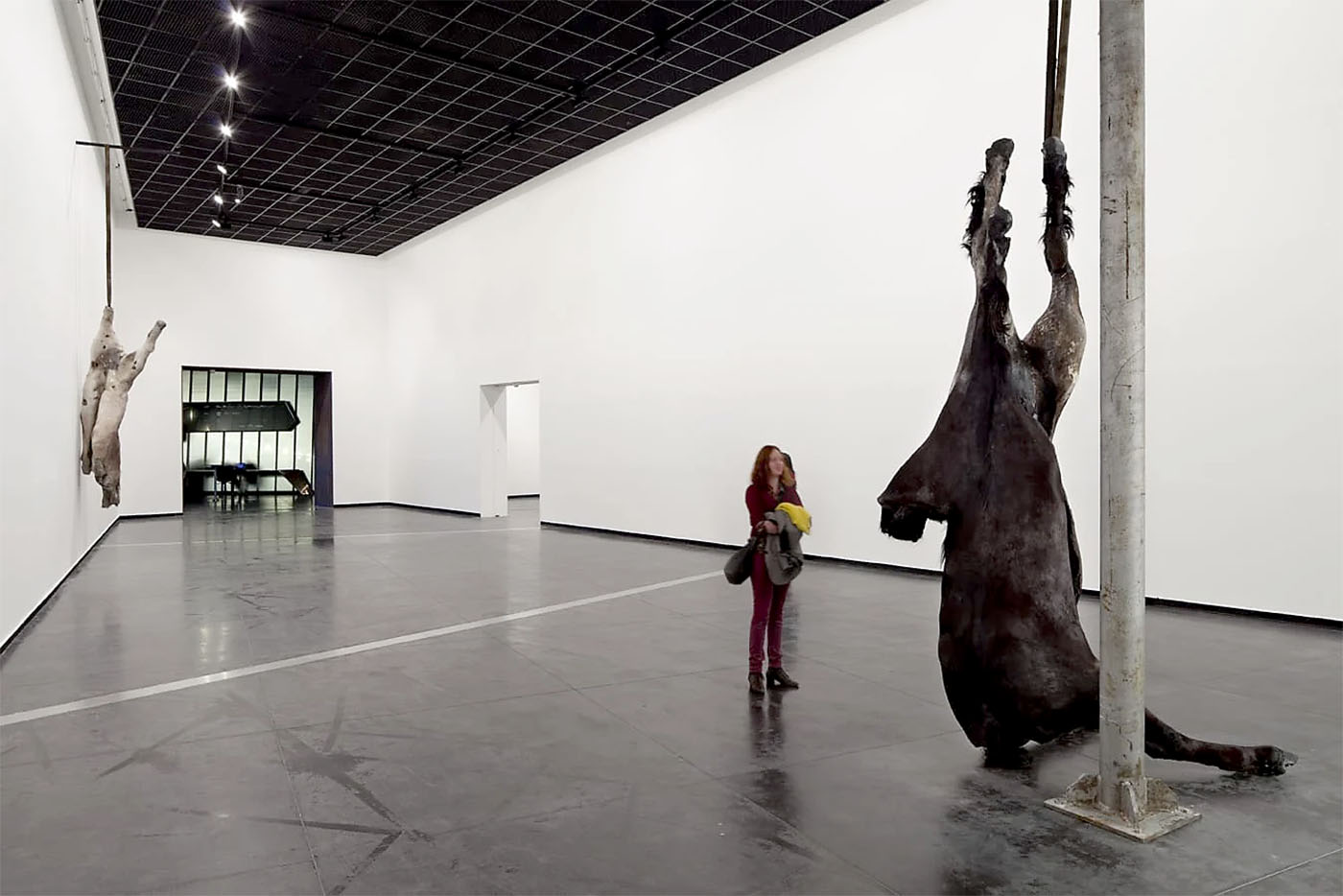
~ The main work We Are All Flesh (2012, below) reminded me of a version of the game The Hanged Man (you know, the one where you have to guess the letters of a word and if you don’t get the letter, the scaffold and the hanged man are drawn). The larger of the two hanging pieces featured two horse skins of different colours intertwined like a ying yang paux de deux. Psychologically the energy was very heavy. The use of straps to suspend the horses was inspired. Memories of Rembrandt’s The Anatomy Lesson of Dr. Nicolaes Tulp and The Godfather rose to the surface…

~ I found it difficult to get past the fact that the sculptures were built on an armature with epoxy = the construction of these objects, this simulacra, had to be put to the back of my mind but was still there

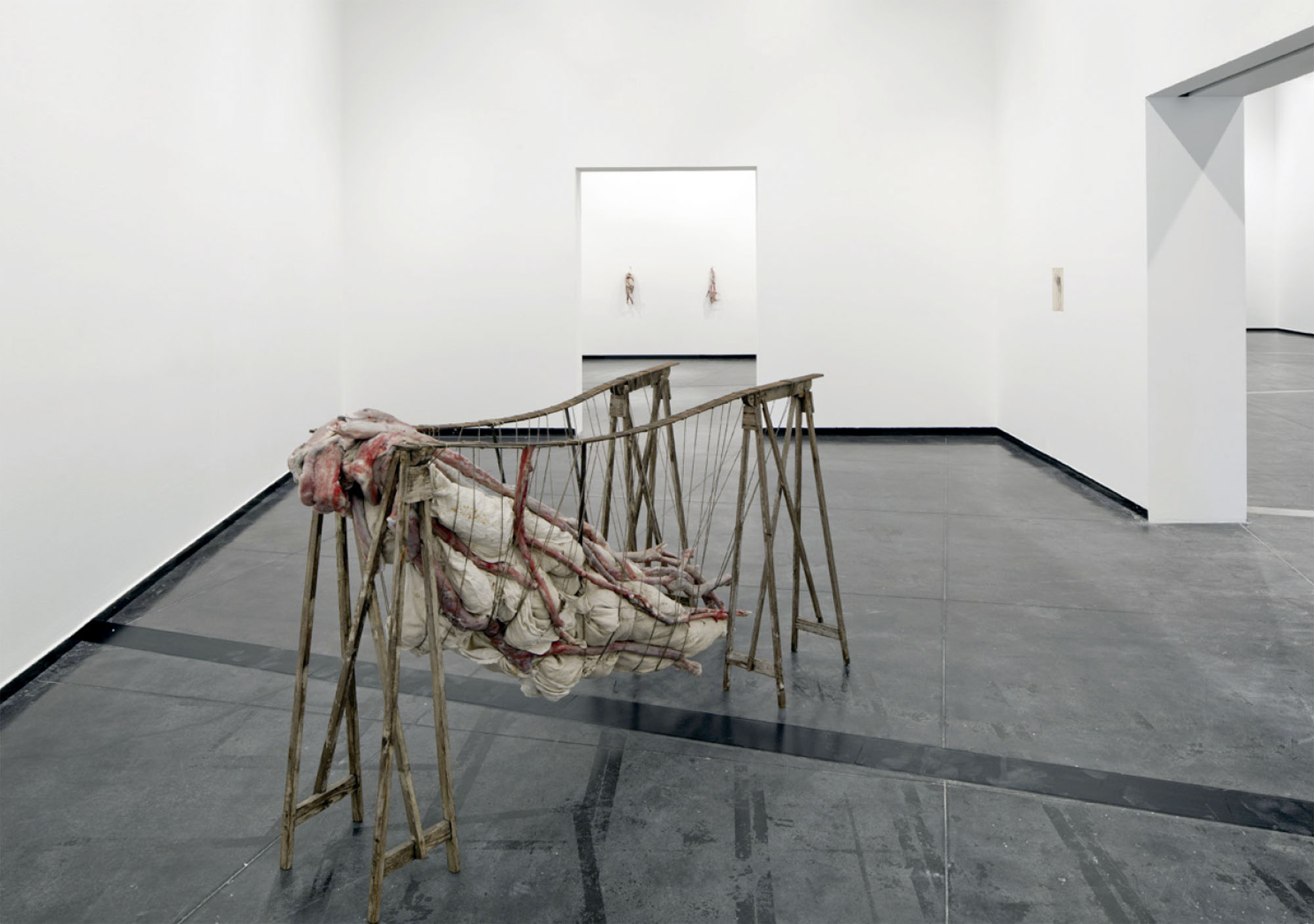
~ Inside me III (2012, below) was a strong work reminding me of an exposed spinal column being supported by thin rope and fragile trestles. Excellent

~ The series of work Romeu “my deer” (2012, below) was the least strong in the exhibition. Resembling antler horns or the blood vessels of the aorta bound together with futon like wadding, the repetition of form simply emphasised the weakness of the conceptual idea

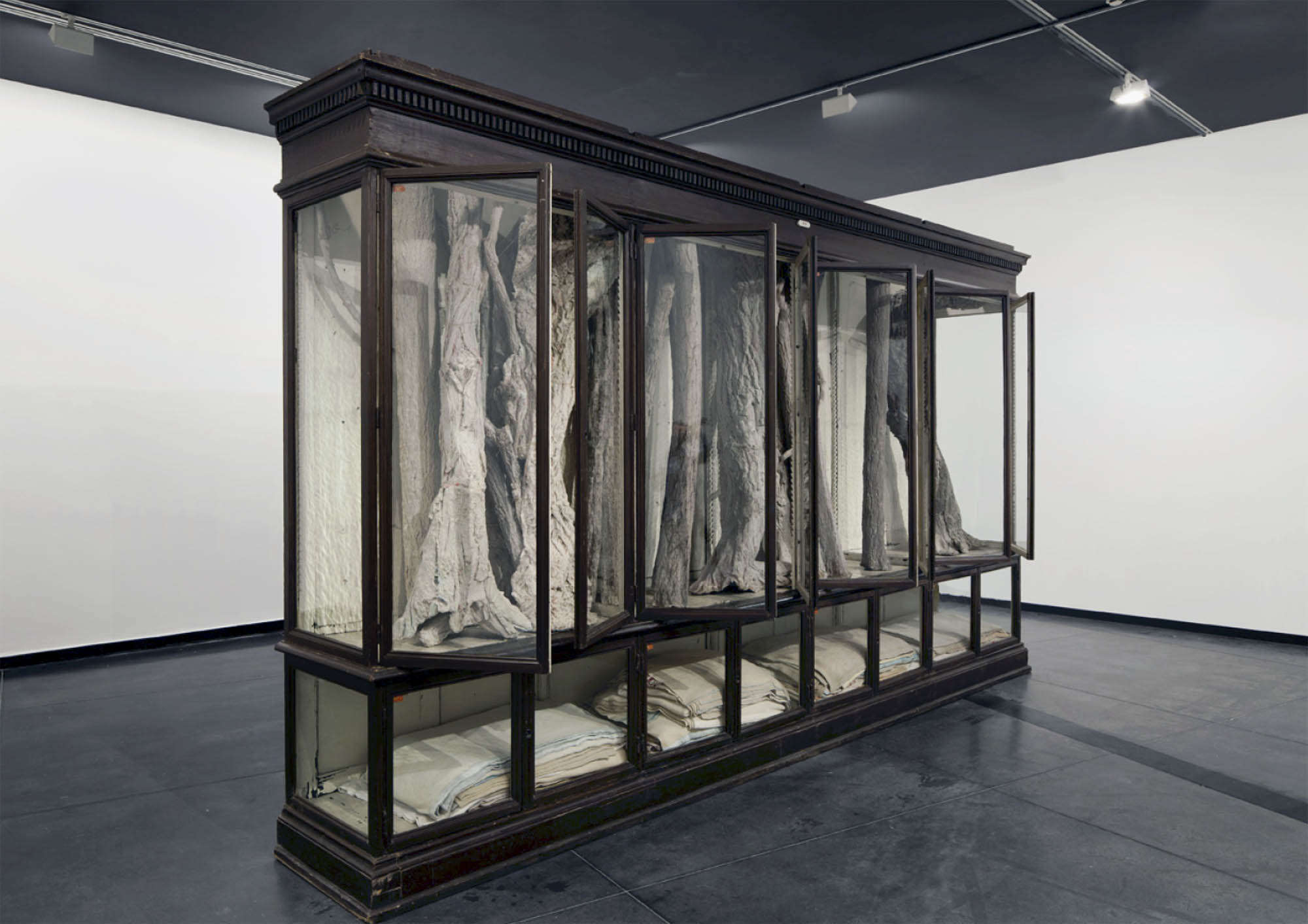
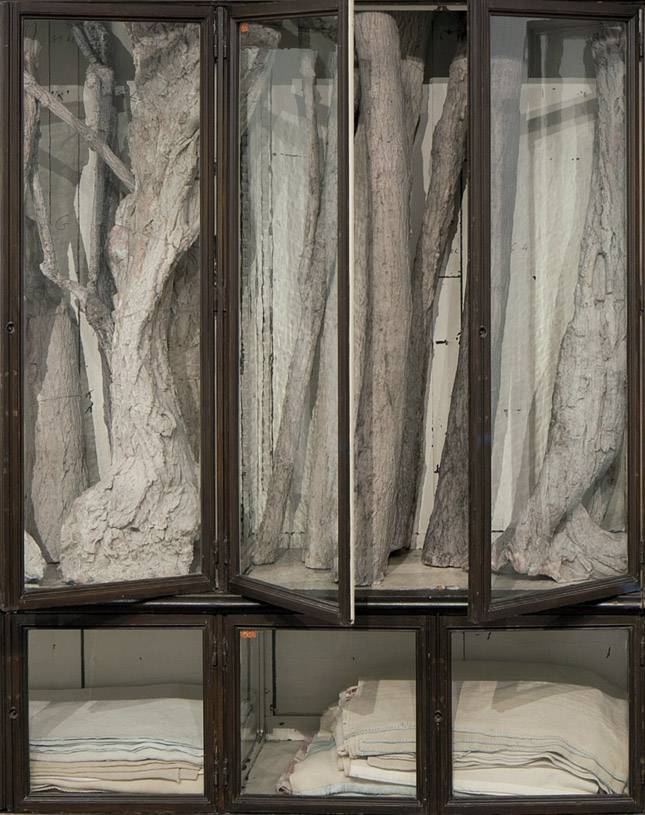
~ My favourite piece was 019 (2007, below). Elegant in its simplicity this beautiful display case from a museum was dismantled and shipped over to Australia in parts and then reassembled here. The figurative pieces of wood, made of wax, seemed like bodies drained of blood displayed as specimens. The blankets underneath added an element of comfort. The whole piece was restrained and beautifully balanced. Joseph Beuys would have been very proud!

~ The “visceral gothic” contained in the exhibition was very evident. I liked the artist’s trembling and shuddering. Her narratives aroused a frisson, a moment of intense danger and excitement, the sudden terror of the risen animal

Dr Marcus Bunyan


Many thankx to the Australian Centre for Contemporary Art for allowing me to publish the photographs in the posting. Please click on the photographs for a larger version of the image.


“On one hand, I shoot disconcerting questions at the spectator, to which I do not give any re-assuring answers; on the other hand, the presence of human characteristics in my figures is familiar, and therefore comforting.”

“Life is beautiful even if we have to deal with fear and pain… It makes it easier if we take care of each other and if we have a language with each other to communicate about pain, suffering and fear.”

“That’s what makes a good sculpture, I think: the fact it doesn’t rely on a meaning or subject matter, but that it is so broad that you can take it in any number of different directions, and lose your way in it.”


Berlinde De Bruyckere


Berlinde De Bruyckere (Belgian, b. 1964) 'We Are All Flesh' 2012 (installation view)


Berlinde De Bruyckere (Belgian, b. 1964)
We Are All Flesh (installation view)
2012
Treated horse skin, epoxy, iron armature
280 x 160 x 100cm
Courtesy the artist, Hauser & Wirth and Galleria Continua
Photo: Andrew Curtis


Berlinde De Bruyckere (Belgian, b. 1964) 'We Are All Flesh' 2012 (installation view)


Berlinde De Bruyckere (Belgian, b. 1964)
We Are All Flesh (installation view)
2012
Treated horse skin, epoxy, iron armature
280 x 160 x 100cm
Courtesy the artist, Hauser & Wirth and Galleria Continua
Photo: Andrew Curtis


“I only use animals in a human way. I started to work on horses in 1999, when the Flanders Fields Museum in Ypres asked me to reflect on war today. I was working more than one year in their archives and did a lot of research on this matter. The most important images for me were the abandoned city and the dead bodies of the horses. These images were staying with me. I took the motif of the dead horse as a symbol for loss in war, wherever it happens. Because if we address war, it’s about losing people. I wanted to translate that feeling so I started to work on six portraits of dead horses. Some years afterwards when people were asking about other animals in my work, I said ‘no’. I need the horse because of its beauty and its importance to us. It has a mind, a character and a soul. It is closest to us human beings. I couldn’t imagine another animal being so important.”


Berlinde De Bruyckere, 2011


Berlinde De Bruyckere (Belgian, b. 1964) 'We Are All Flesh' 2012 (installation view detail)


Berlinde De Bruyckere (Belgian, b. 1964)
We Are All Flesh (installation view detail)
2012
Treated horse skin, epoxy, iron armature
280 x 160 x 100cm
Courtesy the artist, Hauser & Wirth and Galleria Continua


Berlinde De Bruyckere uses wax, wood, wool, horse skin and hair to make haunting sculptures of humans, animals and trees in metamorphosis.

Based in her home town of Ghent, Berlinde De Bruyckere’s studio is an old neo-Gothic Catholic school house. From here she creates her incredible sculptures – torsos morph into branches, trees are captured and displayed inside old museum cabinets and cast horses are crucified upside down in works that have been described as brutal, challenging, inspiring and both frightening and comforting.

Heavily influenced by the old masters, De Bruyckere’s early years at boarding school were spent hiding in the library, pouring over books on the history of catholic art. She went on to study at the Saint-Lucas Visual Arts School in Ghent, and was known in the early stages of her career for using old woollen blankets in her works, sometimes simply stacked on tables of beds, a response to news footage she had seen of blanket-swathed refugees in Rwanda.

Her breakthrough work In Flanders Fields, five life-size splay-legged horses captured in the throes of death, was commissioned by the In Flanders Fields Museum, in the town of Ypres, the site of the legendary World War 1 battle. She was then invited to participate in the 2003 Venice Biennale, and the subsequent work, an equine form curled up on a table titled Black Horse, firmly established her on the international scene. She has since had solo exhibitions at Hauser & Wirth in Zurich and New York and in prestigious museums across Europe.

“Berlinde De Bruyckere creates works that recall the visceral gothic of Flemish trecento art, updated to a new consideration of the human condition,” says Juliana Engberg, ACCA Artistic Director.

“Her work taps into our human need to experience transformation and transcendence, to experience great depths of feeling transferred from the animal to human. Through experiencing Berlinde’s amazing sculptural works we come closer to the human condition and the tragedy and drama of mortality, out of which something miraculous occurs in metamorphosis.”

We are all Flesh will include the rarely seen and iconic work 019 and two new commissions created specially for this exhibition.

Text from the ACCA website


Berlinde De Bruyckere (Belgian, b. 1964) '019' 2007 (installation view)


Berlinde De Bruyckere (Belgian, b. 1964)
019 (installation view)
2007
Wax, epoxy, metal, glass, wood, blankets
293.5 x 517 x 77.5cm
Private Collection, Paris
Photo: Andrew Curtis


“Behind the distorted, antique glass, you see sculptures in the shape of trees or branches. The trees are nearly the colour of human skin, so you end up with something fragile. Because the antique glass distorts your view, a couple of doors are left open, inviting you to look inside. I don’t want people to see the sculptures as trees, but as strange, vulnerable beings. The vitrines have a shelf at the bottom on which I placed three piles of blankets. It looks as if they are shielding and nurturing the roots of the trees… I also refer to those blankets as a “soothing circumstance” because they can sometimes lead us to a less harsh reality.”


Berlinde De Bruyckere


Berlinde de Bruyckere (Belgian, b. 1964) '019' 2007 (installation view)


Berlinde De Bruyckere (Belgian, b. 1964)
019 (installation view)
2007
Wax, epoxy, metal, glass, wood, blankets
293.5 x 517 x 77.5cm
Private Collection, Paris


Berlinde De Bruyckere (Belgian, b. 1964) '019' 2007 (installation view detail)


Berlinde De Bruyckere (Belgian, b. 1964)
019 (installation view detail)
2007
Wax, epoxy, metal, glass, wood, blankets
293.5 x 517 x 77.5cm
Private Collection, Paris


What is the Meaning of Trecento (1300-1400)

The term “trecento” (Italian for ‘three hundred’) is short for “milletrecento” (‘thirteen hundred’), meaning the fourteenth century. A highly creative period, it witnessed the emergence of Pre-Renaissance Painting, as well as sculpture and architecture during the period 1300-1400. In fact, since the trecento coincides with the Pre-Renaissance movement, the term is often used as a synonym for Proto-Renaissance art – that is, the bridge between Medieval Gothic art and the Early Renaissance. The following century (1400-1500) is known as the quattrocento, and the one after that (1500-1600) is known as the cinquecento.

The main types of art practised during the trecento period showed relatively little change from Romanesque times. They included: fresco painting, tempera panel painting, book-painting or illuminated manuscripts, metalwork, relief sculpture, goldsmithery and mosaics.


Berlinde De Bruyckere (Belgian, b. 1964) 'Inside me III' 2012 (installation view)


Berlinde De Bruyckere (Belgian, b. 1964)
Inside me III (installation view)
2012
Wax, wool, cotton, wood, epoxy, iron armature
135 x 235 x 115cm
Courtesy the artist, Hauser & Wirth and Galleria Continua


Created especially for ACCA, Inside Me III is a tangle of flesh-coloured wax branches reminiscent of intestines, tree roots and human limbs, splayed across worn white pillows and slung between a frame based on a drying rack for herbs. This is a body turned inside out shown as a bag of bones and flesh. It’s a body reduced to its most basic form. In this state the viewer is encouraged to think about what makes us human. Yes we are all flesh – but we are more than the physical, aren’t we? Inside Me alludes to an interior state of being, a tangle of intangible emotions and feelings that are very real. Similar to the work in Gallery 4, here human limbs become branches, as tree trunks stand in for people in 019, reminding us of a universal life cycle, and for De Bruyckere ‘life and hope’.

Text from the Berlinde De Bruyckere We Are All Flesh ACCA Education Kit


Berlinde De Bruyckere (Belgian, b. 1964) 'Inside me III' 2012 (installation view)


Berlinde De Bruyckere (Belgian, b. 1964)
Inside me III (installation view)
2012
Wax, wool, cotton, wood, epoxy, iron armature
135 x 235 x 115cm
Courtesy the artist, Hauser & Wirth and Galleria Continua


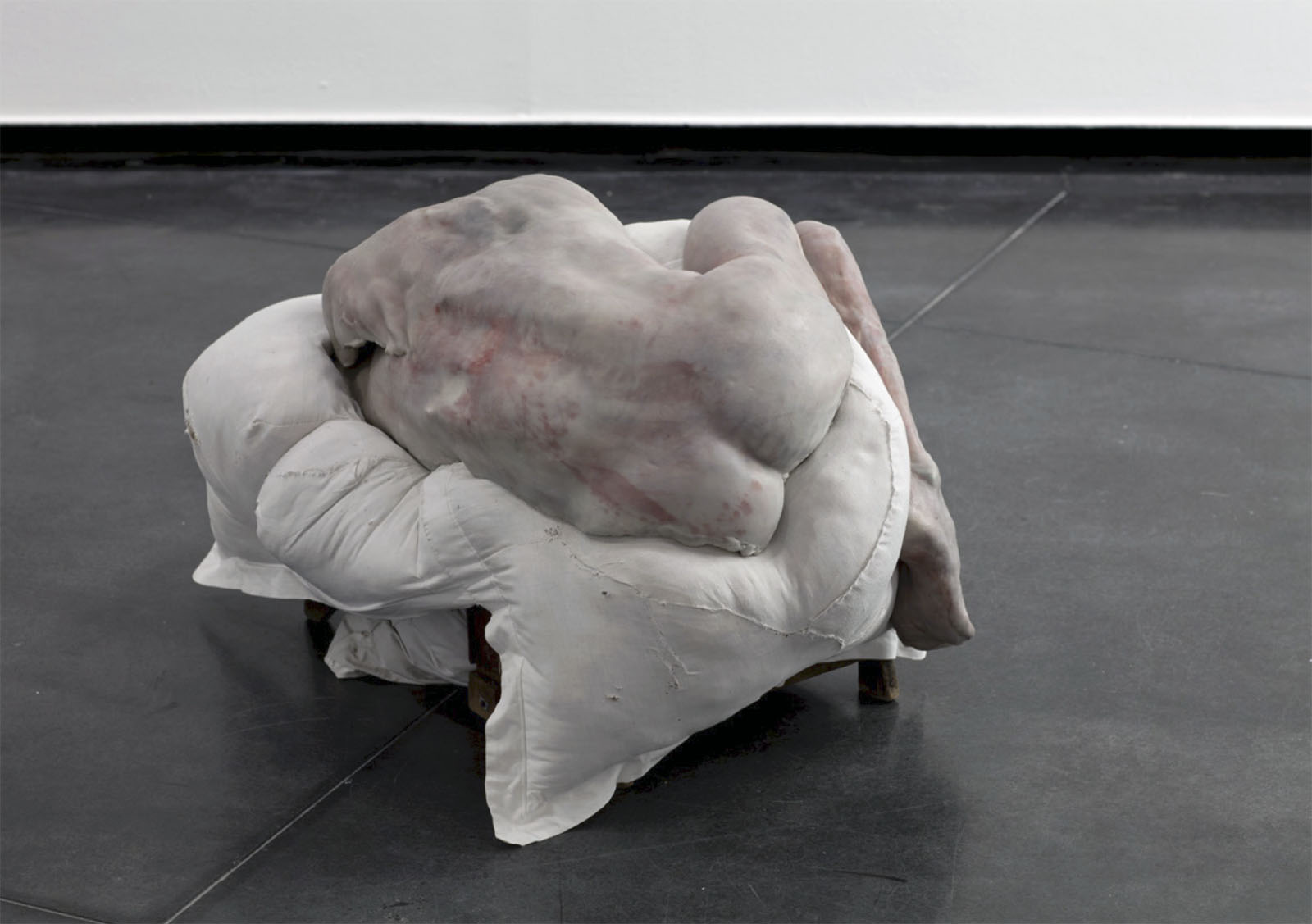
Berlinde De Bruyckere (Belgian, b. 1964) 'The Pillow' 2010 (installation view)


Berlinde De Bruyckere (Belgian, b. 1964)
The Pillow (installation view)
2010
Wax, epoxy, iron, wool, cotton, wood
90 x 70 x 60cm
Private Collection, Brussels


To one side of the room a wax figure is crouched over a soft pillow, the body hairless, faceless and surface almost transparent. ‘The Pillow’ is another important loan in the exhibition and the only obviously human figurative element. The figure appears to be protecting itself, curled inwards into a pillow atop a small wooden box. The fragility and rawness of the body is softened by the use of pillows. Here the pillow supports the figure as a sort of plinth, comforting the body. Four antler-based works are suspended by strings from the gallery wall. Unlike the clichéd hunting trophies mounted in baronial halls, these antlers are pallid, delicate and raw. Antlers are a more recent motif for De Bruyckere. In Metamorphoses, Ovid retells the Greek myth of Actaeon, who accidentally stumbled across the Goddess Diana bathing. In an embarrassed fury she transforms Actaeon into a stag. He is unable to speak and flees in fear. His fellow hunters and their dogs do not recognise him and he is torn to death by his own hounds. The male deer’s antlers serve to seduce the female but also to test their strength with other males and defend themselves against predators. In this sense they are also capable of destruction. The antler grows out of the body without control, and in some of De Bruyckere’s drawings they grow back inside it, suggesting that sometimes our strongest weapons can, despite their benefits, also be a threat to our own lives. Not only referencing mythology, the stag is also a traditional symbol of Christ. De Bruyckere has frequently used the Man of Sorrows motif, which throughout history has shown Christ, usually on the cross with the wounds of the passion, Here its interpretation enhances our sympathy for the hunted animal as well.

Text from the Berlinde De Bruyckere We Are All Flesh ACCA Education Kit


Berlinde De Bruyckere (Belgian, b. 1964) 'Romeu "my deer"' 2012 (installation view)


Berlinde De Bruyckere (Belgian, b. 1964)
Romeu “my deer” (installation view)
2012
Pencil, watercolour, collage
37.5 x 28cm
Courtesy the artist, Hauser & Wirth and Galleria Continua


Berlinde De Bruyckere (Belgian, b. 1964) 'Romeu "my deer"' 2012 (installation view detail)


Berlinde De Bruyckere (Belgian, b. 1964)
Romeu “my deer” (installation view detail)
2012
Pencil, watercolour, collage
37.5 x 28cm
Courtesy the artist, Hauser & Wirth and Galleria Continua


Australian Centre for Contemporary Art (ACCA)
111 Sturt Street
Southbank
Victoria 3006
Australia

Opening hours:
Tuesday – Friday 10am – 5pm
Saturday – Sunday 11am – 5pm
Monday closed
Open all public holidays except Christmas Day and Good Friday

Australian Centre for Contemporary Art website

LIKE ART BLART ON FACEBOOK

Back to top

Review: ‘Lost & Found: Family Photos Swept away by the 3.11 East Japan Tsunami’ at the Centre for Contemporary Photography (CCP), Fitzroy, Melbourne

Exhibition dates: 1st June – 15th July 2012


'Untitled' from 'Lost and Found' 2011


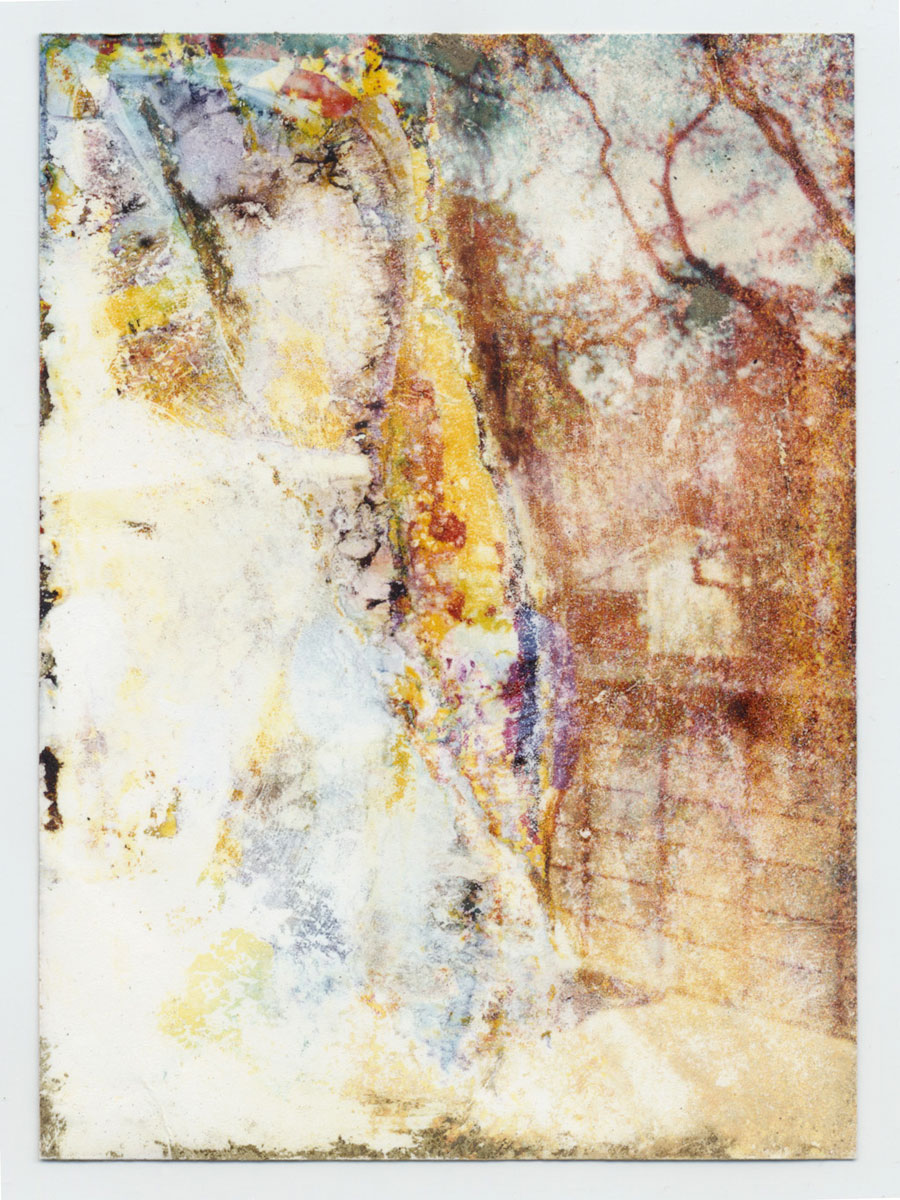
This is a profound exhibition of photographs that have been lost then found. Too damaged to be returned to the families of their missing owners after the 3.11 East Japan Tsunami they have been cleaned, dried, digitally catalogued and put on display. As remnants of disaster they have taken on an ethereal, abstract expressionist beauty.

Like Atget’s photographs (his “documents for artists”) they were never meant to be “art”, but through morphogenesis (‘beginning of the shape’) these snapshots of places, family and friends reveal their inherent form. This beginning of form has been exposed through displacement, washing and erasure. Through this process of erasure these anonymous images reveal their underlying structure with its link to alchemy, as the image dis/appears from view; they have become unfixed (as in the fixer that stabilises the image in the analogue darkroom) from reality. In this process they have become art.


The images are incredibly beautiful.

They hid secrets (of ownership, names, families and places, of time and space).

Something (energy, spirit?) emerges when you least expect it.


Photographs are coded, but usually so as to appear uncoded but here the link to the indexicality of the image – the idea of the visible as evidence of truth – has been broken. These photographs, taken out of their original context, have lost their specific use value in the particular time and place of their consumption. The fragmentation of this use value, together with the dissolution of their formal characteristics, means that they are freed of the conditions that limit and determine their meaning.1 As Annette Kuhn has written in The Power of the Image, “Meanings do not reside in images, then: they are circulated between representation, spectator and social function.”2 And in these images all three things have changed.

Further, the link between the image and its referent, the photograph and the thing being photographed has been irreversibly broken. As the French critic Maurice Blanchot has written, “The image has nothing to do with signification, meaning, as implied by the existence of the world, the effort of truth, the law and the brightness of the day. Not only is the image of an object not the meaning of that object and of no help in comprehending it, but it tends to withdraw it from its meaning by maintaining it in the immobility of a resemblance that it has nothing to resemble.”3 In other words (and especially in these photographs) it is this severance of meaning and its object, this resemblance of nothing.

But think about this idea:

THINK ABOUT THE IDEA OF RE(AS)SEMBLANCE!

DOES THE PHOTOGRAPH REASSEMBLE A SIGNIFICATION, A MEANING WHOLLY ITS OWN, OR IS THAT RE(AS)SEMBLANCE PART OF THE ORIGINAL MEANING OF THE OBJECT PHOTOGRAPHED?


In these photographs there is an obfuscation of reality in which the usually coded photographs now appear to be uncoded in some visceral sense. In fact there is a double obfuscation, a double effacement, as the images are displayed on the wall like a series of bathroom tiles in plastic sleeves, here not at one remove but at two (the clouding of the image and the clouding through the plastic). What emerges from this alchemical miasma is the ghost of the meaning of the object, where we acknowledge that the essence of these people did really exist. The recognition of their presence, this partial reassemblance of the context and meaning of the object originally photographed, is the strength of these images: our acknowledgment of some form of existence in the trace of the photograph, where seeing is subconsciously believing.

What we are left with in these images are vestiges of presence, remnants or traces of people that have passed on. In a kind of divine intervention, these photographs ask the viewer questions about the one fact that we cannot avoid in our lives, our own mortality, and what remains after we pass on. We can never know these people and places, just as we can never know the place and time of our death – when our “time” is up – but these photographs awaken in us a subconscious remembering: that we may be found (in life), then lost (through death), then found again in the gaze of the viewer looking at the photographs in the future present. We are (dis)continuous beings.

There is no one single reading of these photographs for “there are only competing narratives and interpretations of a world that cannot be wholly, accurately described.”4 These indescribable photographs impinge on our consciousness calling on us to remember even as the speed of contemporary life asks us to forget. This ethical act of looking, of mourning and remembering, of paying homage to presence acknowledges that we choose not to let pass into the dark night of the soul these traces of our forebears, for each emanation is deeply embedded within individual and cultural memory.

These photographs are a contemporary form of Western ‘dreaming’ in which we feel a link to the collective human experience. In this reification, we bear witness to the (re)assemblance of life, the abstract made (subconsciously) concrete, as material thing. These images of absent presence certainly reached out and touched my soul.

Vividly, I choose to remember rather than to forget.

Dr Marcus Bunyan


Footnotes

1/ Kuhn, Annette. The Power of the Image: Essays on Representation and Sexuality. London: Routledge and Kegan Paul, 1985, p. 6

2/ Ibid.,

3/ Blanchot, Maurice. The Gaze of Orpheus. New York: Barrytown, 1981, p. 85

4/ Townsend, Chris. Vile Bodies: Photography and the Crisis of Looking. Munich: Prestel, 1998, p. 10


Many thankx to Munemasa Takahashi, Kristian Haggblom and Karra Rees for their help and the CCP for allowing me to publish the photographs in the posting. Please click on the photographs to view a larger version of the image.


'Untitled' from 'Lost and Found' 2011


Opening of the 'Lost & Found' exhibition at the Centre for Contemporary Photography


Opening of the Lost & Found exhibition at the Centre for Contemporary Photography, Melbourne


'Untitled' from 'Lost and Found' 2011


'Untitled' from 'Lost and Found' 2011


'Untitled' from 'Lost and Found' 2011


Lost & Found is a profoundly moving exhibition of collected photographs recovered from the devastation following the earthquake and tsunami and subsequent nuclear catastrophe that took place in the Tohoku region in 2011. 

The tsunami not only swept the harbour away, but also houses, cars, trains; and many people lost their lives. Although no longer in the media, people in this region are still in great need. These photographs remind us of their presence and make us aware of their silent voices. The exhibition also gives us an opportunity to think about the relationship people have with their photographs.

The Lost & Found project is attempting to return pictures from the collection to their owners by cleaning, cataloguing and creating a digital database of the photographs. Many images were too badly damaged and can not be returned; rather than discard them, the project team decided to exhibit the imagery and give people the opportunity to see these photographs in the belief that they carry powerful messages. 

This project was initiated by Munemasa Takahashi and Hiroshi Hatate in Japan and Kristian Haggblom from Wallflower Photomedia Gallery in Australia. Funds raised will go directly to the people of Yamamoto-cho.

Text from the CCP website


'Untitled' from 'Lost and Found' 2011


'Untitled' from 'Lost and Found' 2011


'Untitled' from 'Lost and Found' 2011


'Untitled' from 'Lost and Found' 2011


'Untitled' from 'Lost and Found' 2011


All photographs are from the exhibition Lost & Found


Centre for Contemporary Photography

No permanent exhibition space at the moment

Centre for Contemporary Photography website

LIKE ART BLART ON FACEBOOK

Back to top

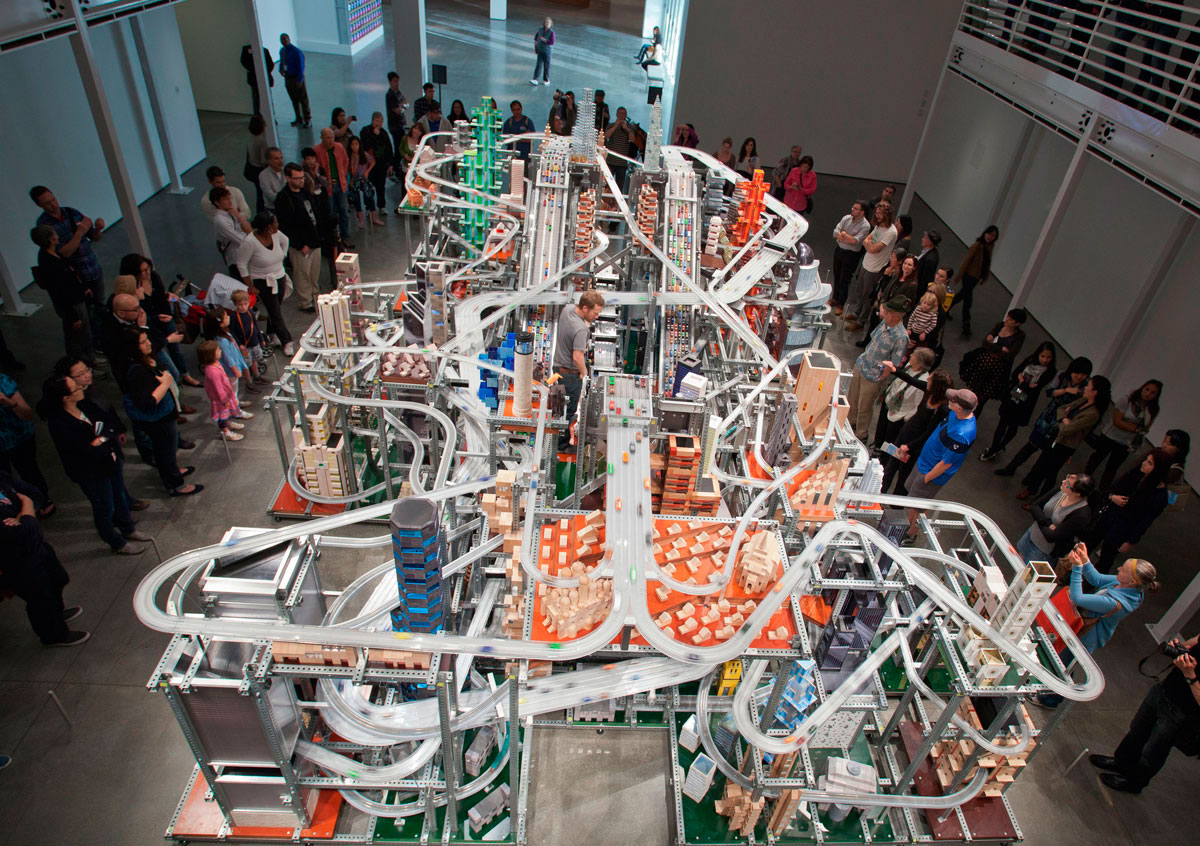
Sculpture: ‘Metropolis II’ (2010) by Chris Burden at LACMA, Los Angeles

Installation dates: 14th January 2012 –


Chris Burden (American, 1946-2015)
Metropolis II
2010
Courtesy of the Nicolas Berggruen Charitable Foundation
© Chris Burden

Dimensions: 9’9″ (H) x 28’3” (W) x 19’2” (D) (297 cm x 862 cm x 584 cm)
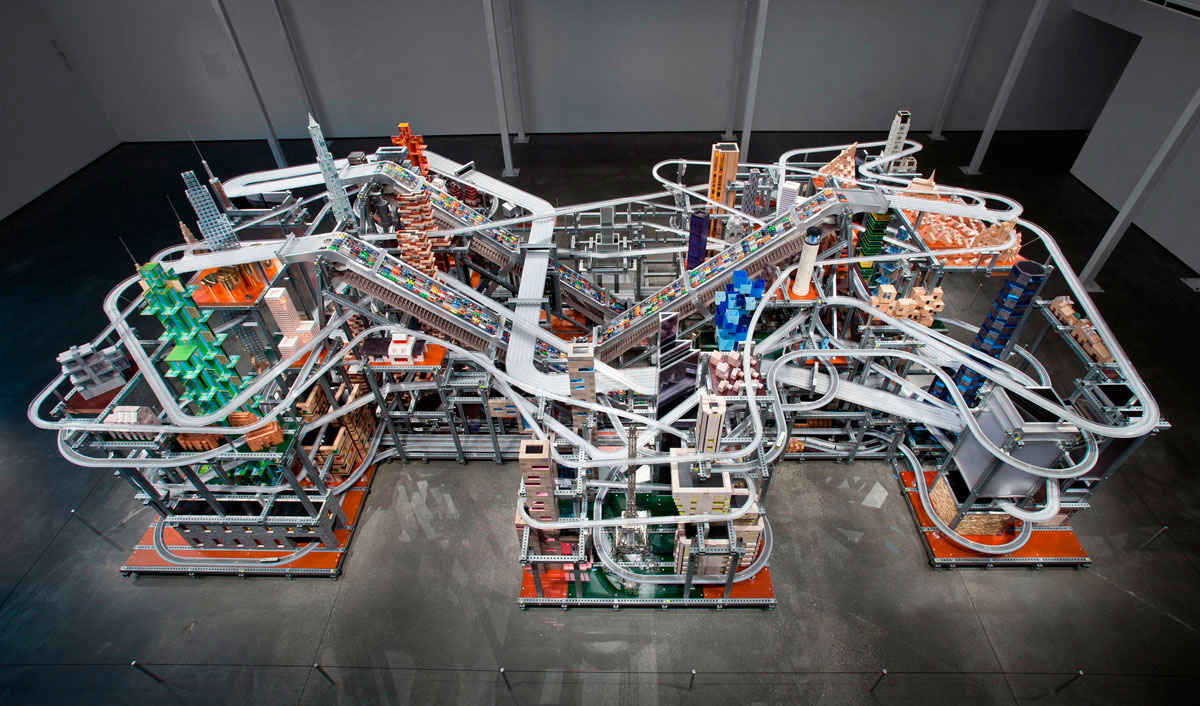
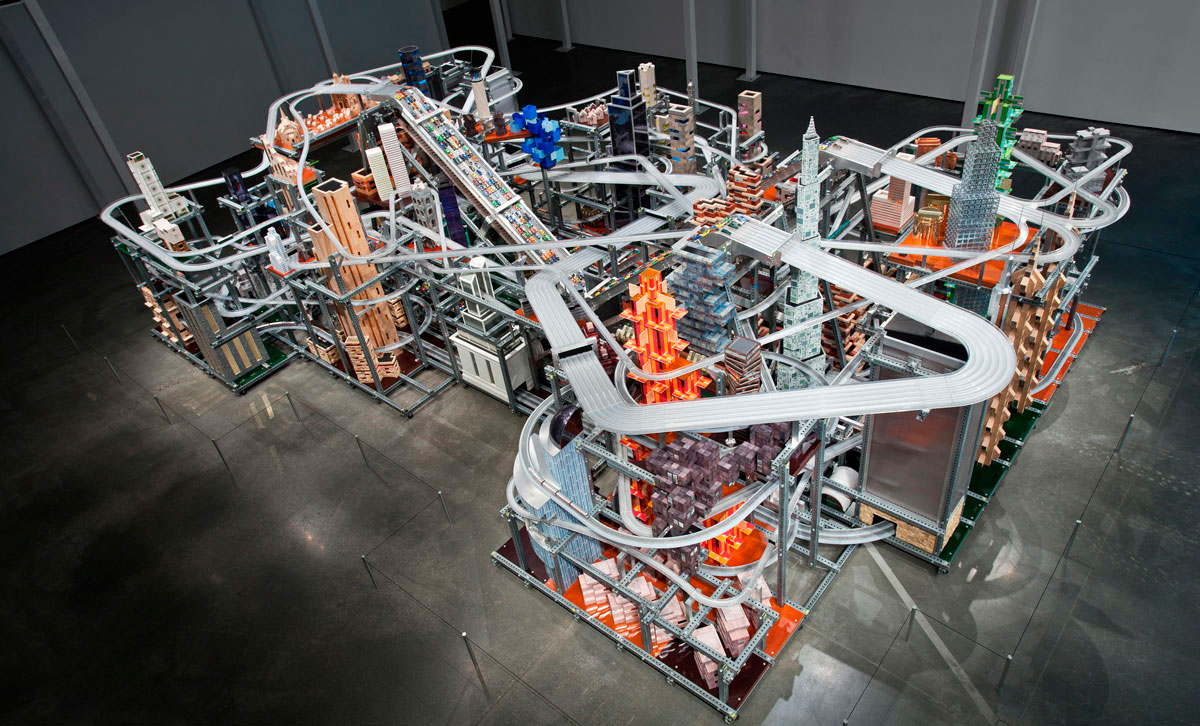
Media: 
3 1/2 hp DC motors with motor controllers
1,100 custom-manufactured die-cast cars
13 HO-scale train sets with controllers and tracks
Steel, aluminium, shielded copper wire, copper sheet, brass, various plastics, assorted woods and manufactured wood products, Legos, Lincoln Logs, Dado Cubes, glass, ceramic and natural stone tiles, acrylic and oil-based paints, rubber, sundry adhesives


Poetic, historic, amazing, fantastic, incredible, indescribable (the words of an eight year old, comment on the website). Great video as well. Take your ear plugs!

Dr Marcus Bunyan


Many thankx to LACMA for allowing me to publish the video and the photographs in the posting. Please click on the photographs for a larger version of the image.


Chris Burden (American, 1946-2015) 'Metropolis II' 2010
 

Chris Burden (American, 1946-2015)
Metropolis II
2010
Courtesy of the Nicolas Berggruen Charitable Foundation
© Chris Burden


Created by artist Chris Burden, Metropolis II (2010) is a complex, large-scale kinetic sculpture modelled after a fast-paced modern city. The armature of the piece is constructed of steel beams, forming an eclectic grid interwoven with an elaborate system of eighteen roadways, including a six-lane freeway, train tracks, and hundreds of buildings. 1,100 miniature toy cars speed through the city at 240 scale miles per hour on the specially designed plastic roadways. Every hour, the equivalent of approximately 100,000 cars circulates through the sculpture. “The noise, the continuous flow of the trains, and the speeding toy cars, produces in the viewer the stress of living in a dynamic, active and bustling 21st Century city.”

Situated in the centre of the grid are three electrically powered conveyor belts, each studded with magnets at regular intervals. The magnets on the conveyor belt and those on the toy cars attract, enabling the cars to travel to the top of the sculpture without physical contact between the belt and cars. At the top, the cars are released one at a time and race down the roadways, weaving in and out of the structure, simulating rapid traffic and congestion.

Metropolis II is on long-term loan to LACMA, thanks to the generosity of LACMA Trustee Nicolas Berggruen. Beginning January 14, 2012, the work will be on view on the first floor of the Broad Contemporary Art Museum (BCAM) and run on weekends during the scheduled times below.

~ The cars are attached by a small magnet to the conveyor belt that brings them to the crest
~ The only motorisation of the cars is the conveyor belt to the top
~ Once the cars cross over the crest and head downward, their entire movement is by gravity
~ They travel at a scale speed of 240 mph, plus or minus
~ The tracks they take are Teflon coated to reduce friction
~ The tracks are beveled at 7 degrees to give added torque for speed when they come through corners and curves


Beginning Saturday, January 14, to see Metropolis II in action, please visit the gallery at these times:
Fridays: 12.30 – 2pm; 3 – 4.30pm; 5 – 6.30pm; 7 – 8.30pm
Weekends: 11.30 – 1.00pm; 2 – 3.30pm; 4 – 5.30pm; 6 – 7.30pm
Weekdays: not operational”

Press release from LACMA


Chris Burden (American, 1946-2015) 'Metropolis II' 2010

Chris Burden (American, 1946-2015) 'Metropolis II' 2010


Chris Burden (American, 1946-2015)
Metropolis II
2010
Courtesy of the Nicolas Berggruen Charitable Foundation
© Chris Burden


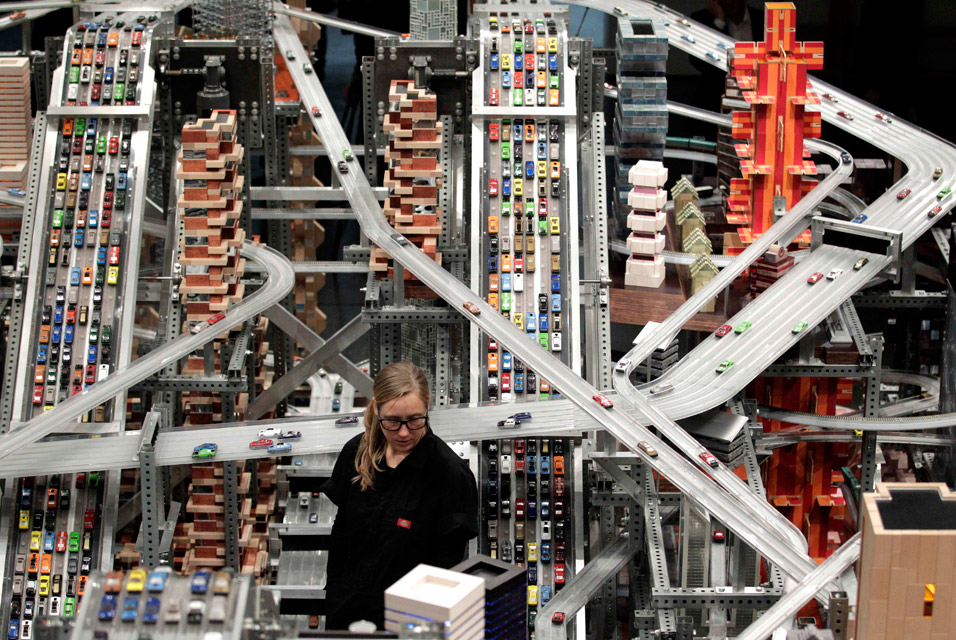
Chris Burden (American, 1946-2015) 'Metropolis II' 2010 (detail)


Chris Burden (American, 1946-2015)
Metropolis II (detail)
2010
Courtesy of the Nicolas Berggruen Charitable Foundation
© Chris Burden


Operator Alison Walker watches miniature cars move along the roads in Chris Burden’s latest kinetic sculpture, Metropolis II, at the Los Angeles County Museum of Art (LACMA) in Los Angeles, Wednesday, Jan. 11, 2012. The sculpture does more than just imitate life. The colorful display of roads, cars, trains and buildings is art imitating what the artist foresees life being like in five or 10 years.


Los Angeles County Museum of Art (LACMA)
5905 Wilshire Boulevard (at Fairfax Avenue)
Los Angeles, CA, 90036
Phone: 323 857-6000

Opening hours:
Monday, Tuesday, Thursday: 11am – 5pm
Friday: 11am – 8pm
Saturday, Sunday: 10am – 7pm
Closed Wednesday

LACMA website

LIKE ART BLART ON FACEBOOK

Back to top

Opening: ‘Traverse’ by Kim Percy at Stockroom, Kyneton

Exhibition dates: 10th March – 8th April 2012


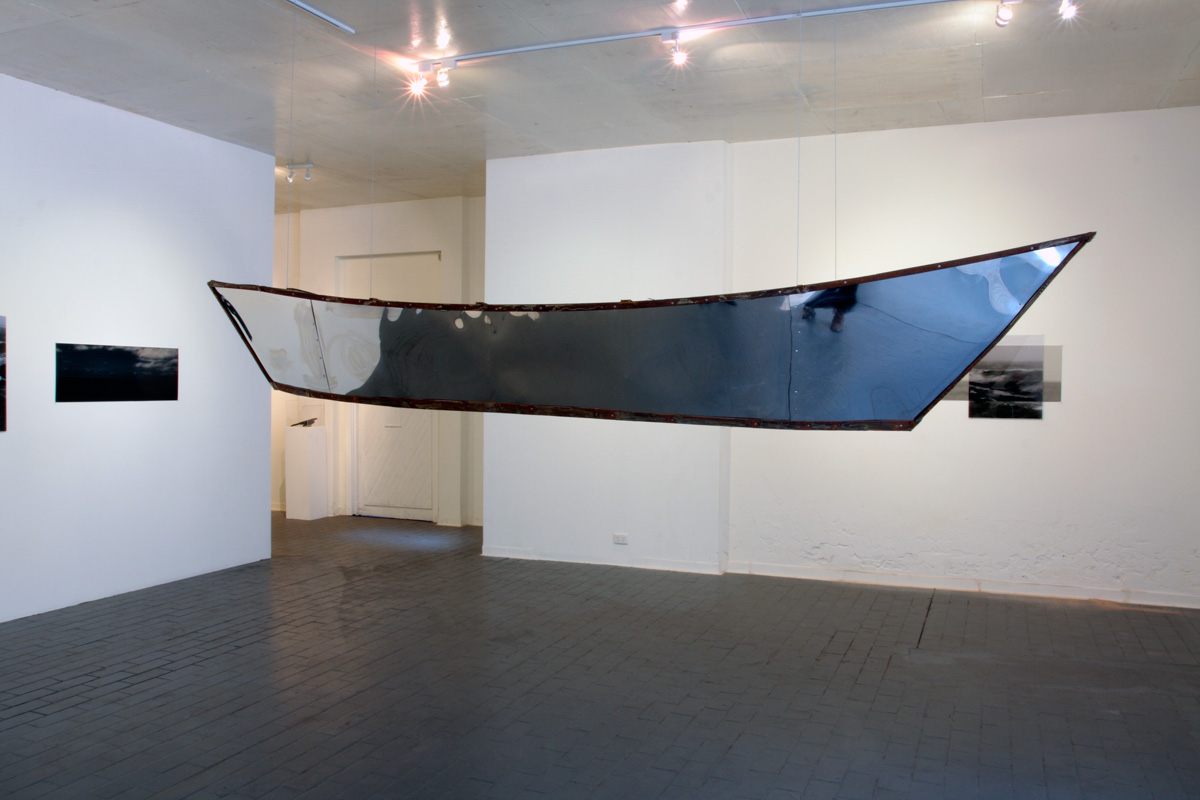
Installation of 'Traverse' by Kim Percy at Stockroom, Kyneton


Installation of Traverse by Kim Percy at Stockroom, Kyneton
Installation photograph by Marcus Bunyan
© Kim Percy and Marcus Bunyan


Many thanx to Jason, Magali and Kent for inviting me to the gallery, and Kim for asking me to open the exhibition – it was fun!

I have known Kim since the early 1990s when we both did our Bachelor of Arts in photography at RMIT University so it was wonderful to have opened her show yesterday. Reprinted below is the speech I gave at the opening with its musings on the (in)visibility of asylum seekers arriving by boat in Australia. I hope you enjoy reading the text. Marcus.


Opening speech by Dr Marcus Bunyan, 10th March 2012

Out of Sight, Out of Mind __________________

“What I am about to say, my musings if you like, are inspired by Kim’s wonderful installation. The work before you is the basis of my inquiry. The issues involved are difficult and not to be dealt with lightly but I hope you will follow my drift, my traverse if you like.

I would like to take you on a journey – physical, metaphorical and maybe even philosophical. I want to ask questions of the world, questions about the journey we all take as human beings. These questions are prompted by my personal response to two elements of Kim’s work – water and the journey, specifically the image of asylum seekers arriving here in Australia. Imagine being an asylum seeker making that journey.

Imagine living in an (in)between space, living in a refugee camp over there. Marc Augé coined the phrase “non-place” to refer to places of transience that do not hold enough significance to be regarded as “places.”1 These camps are such places. Put yourself in that predicament, seeking a better life, seeking to escape persecution, war (of which we as a nation are often part), prejudice and death, deliberately placing yourself and your family in a fragile boat, like a seed pod floating upon the waters, taking the dangerous journey to reach Australia. Imagine the emotional and intellectual turmoil that must surround such a decision, the decision to place your life in the hands of the ocean. Important decisions affecting the entire course of one’s life are rarely made without some form of mental distress.

Nurtured in water, some baptised in it, water is the life-blood of the world and the asylum seeker must trust to its benevolence. Marc Augé “argues that we are in transit through non-place for more and more of our time, as if between immense parentheses.”2 This is the journey that the asylum seeker takes over water, a journey through an interstitial space that has no beginning and no end caught between a set of parentheses [insert life here / or not].

Now let us move our line of sight. What about a visual parentheses?


Asylum seekers are almost invisible from Australia living over there. They are over the horizon, out of sight and out of mind. When they journey across the sea – an open ended journey passing through a liminal space, a forgotten space – they suddenly appear as if by magic washed up on the shore, unseen despite surveillance planes, ships and other forms of tracking and reconnaissance. Think, for example, of the sudden and surprising arrival of the boat SIEV-221 when it was washed onto the rocks of Christmas Island in December 2010. The invisible made visible caught in a non-place.

This (in)visibility can be evidenced in other ways. The specks of humanity waving from the deck of the Tampa, the asylum seekers being escorted from arriving boats, seen for a few brief seconds on the evening news and then disappearing from view, almost like being sucked into the depths of the sea. Here and not here; here and there. Halfway between nothingness and being: they walk between one state and another, forward and backward, backward and forward.


Displacement
Diaspora
Disruption


The spectacle of the asylum seekers is despectacularised by and for the viewer. We remove ourselves from the emotion of these people, the presence of these images. They become ordinary as if seen from far away – glimpsed every so often as though viewing the world of another. They become Other.

The movement of the ship, the movement of the sky, the movement of vision is a constant decentering through a push / pull with something else – some other order of the world. Their journey into the unknown is a journey to submit to the ordering of another: the socially constructed system of classification: “refugee,” “asylum seeker.” The axis of visibility3 that operates in relation to subject, object, and space is not interrogated as to the representations that are constructed. This is what I am interested in here. These vital, alive human beings come from one taxonomic system (of ordered death, persecution, injustice), become visible from a brief instance, and are then fed into another taxonomic system of order – that of the detention centre.

Taking the metaphor of the horizon line further, I would argue that detention centres are like an inverted Panopticon. The Panopticon “is a type of institutional building, a prison, designed by English philosopher and social theorist Jeremy Bentham in the late eighteenth century. The concept of the design is to allow an observer to observe all inmates of an institution without them being able to tell whether or not they are being watched.”4 The guard sits in a central tower and can observe and inspect all prisoners on the outer 360 degree circle, while the prisoners cannot see the guard and can only presume he is there (an omnipresent God) and hence they behave.

Let us invert this concept.

Now the asylum seekers sit in the tower looking outwards, seeing the promised land but unable to touch it and the guards (prison officers, government, the Australian people) are all around but most are blind. They look inwards but cannot see / they look outwards and most go about their daily business. The perimeter fence of the detention centre becomes the horizon line of the sea. As in Kim’s red lined horizons, over the horizon is out of sight, out of mind _________________


What Kim’s eloquent, minimal, brooding installation does is hold our attention and ask certain questions of us as human beings. If photography is a mode of visually addressing a certain order in the world – be it horror, war, peace, human tragedy, public, private – and then destabilising it, then Kim destabilises the binary sea / sky through fragmentation and isolation. She redlines our experience and asks us to inhabit the non-space, the non-place of the gallery, allowing us to hover between boat and image, between sea and sky, between seeing and feeling. Through her work she asks us to become more aware. She asks us to see things more clearly. Above all she asks us to have faith in the compassion of human beings.

The asylum seekers have faith: faith to get into a fragile boat to venture upon the sea in search of a better life. If we had more faith in ourselves then we would have less need to rely on the images of the past, a white colonial past.

I will finish with a quote from Jeff Brown.

“Sometimes we have to surrender to the not knowing. At other times, it is helpful to adventure outward and explore new possibilities. Like swashbucklers of the spirit, we bravely seek out any experience that might inform our path. When we are afraid of something, we live it fully and see what floats to the surface in the doing. We participate in our own revealing. We have faith in the shaping of what we cannot see.”5


The seekers surrender to the not knowing and have faith in the shaping of what they cannot see. These risk takers are the strong ones that are going to make a difference in a new society by the very fact of their strength and determination to survive and live in a free society, for the very fact of the risks undertaken. This exhibition informs their path as it informs our path. Be aware of the doing, be bold and forthright in the being. Enjoy.

Thank you

Dr Marcus Bunyan


Footnotes

1/ Augé, Marc (trans. John Howe). Non-Places: Introduction to an Anthropology of Supermodernity. London: Verso, 1995

2/ Ibid.,

3/ Hooper-Grenhill, Eilean. Museums and the Shaping of Knowledge. London: Routledge, 2000, p. 7

4/ Anon. “Panopticon,” on Wikipedia [Online] Cited 09/03/2012

5/ Brown, Jeff. Soulshaping. Berkeley, CA: North Atlantic Books, 2009, np quoted on Stroud, Jeff. The reluctant blogger website. [Online] Cited 09/03/2012


Installation of 'Traverse' by Kim Percy at Stockroom, Kyneton

Installation of 'Traverse' by Kim Percy at Stockroom, Kyneton


Installation of Traverse by Kim Percy at Stockroom, Kyneton
Installation photographs by Marcus Bunyan © Kim Percy and Marcus Bunyan


Kim Percy (Australian) 'Pale Sea' 2012


Kim Percy (Australian)
Pale Sea
2012
Digital photograph


Kim Percy (Australian) 'Where' 2012


Kim Percy (Australian)
Where
2012
Digital photograph


Kim Percy (Australian) 'Rough Water' 2012


Kim Percy (Australian)
Rough Water
2012
Digital photograph


Kim Percy (Australian) 'Traverse' 2012


Kim Percy (Australian)
Traverse
2012
Digital photograph


Kim Percy (Australian) 'Red Horizon No.1' 2012


Kim Percy (Australian)
Red Horizon No.1
2012
Digital photograph


Kim Percy (Australian) 'Red Horizon No.2' 2012


Kim Percy (Australian)
Red Horizon No.2
2012
Digital photograph


Stockroom
98 Piper street, Kyneton
Phone: 03 5422 3215

Opening hours:
Thursday – Saturday 10am – 5pm
Sunday 11am – 3pm
Closed Monday and Tuesday
Wednesday by appointment

Stockroom website

LIKE ART BLART ON FACEBOOK

Back to top

Exhibition: ‘Chihuly: Through the Looking Glass’ at Museum of Fine Arts, Boston

Exhibition dates: 10th April – 7th August, 2011


Dale Chihuly (American, b. 1941) 'Neodymium Reeds on Logs', de Young Museum, San Francisco, California, 2008


Dale Chihuly (American, b. 1941)
Neodymium Reeds on Logs
2008
de Young Museum, San Francisco, California
Photo by Teresa Nouri Rishel
© 2008 Chihuly Studio


“The way I paint or draw, I don’t think about it very much. If I’m thinking about it, that kind of means that I don’t know what to do. If I start thinking, ‘I want to draw, now what can I draw?’ and I’m not inspired – because that can happen very easily – then they start to get mundane. On the other hand, if I start making drawings that I know how to do already, and if I can go fast enough, they start to get really good.”


Dale Chihuly


I love contemporary glass and Dale Chihuly is one of my favourite artists in the world. The Persian ceiling is breathtaking – organic and pulsating like the most outrageously coloured jellyfish floating over your head; the Ikebana boat, the Mille Fiori pitch perfect – a riot of colour and form, playing with ideas and the chandeliers, the chandeliers – wow! Then to do something as sensitive and restrained as the Tabac basket or the beautiful Neodymium Reeds on Logs. This is the full package, bravo.

Dr Marcus Bunyan


Many thankx to the Museum of Fine Arts, Boston for allowing me to publish the photographs in the posting. Please click on the photographs for a larger version of the image.


Often considered the greatest artist working in American glass since Louis Comfort Tiffany, Dale Chihuly is known for creating dramatic works, impressive for their size and bold use of color. Fortunately for Bostonians, his massive glass forms can now be seen in a dozen installations at the Museum of Fine Arts…


Dale Chihuly (American, b. 1941) 'Ikebana Boat' 2011


Dale Chihuly (American, b. 1941) 
Ikebana Boat
2011
Blown glass, boat hull
5 X 17 X 7′
Artwork © 2011 by Chihuly Studio, All rights reserved
Photograph © Museum of Fine Arts, Boston


Dale Chihuly (American, born 1941) 'Mille Fiori' 2011


Dale Chihuly (American, b. 1941)
Mille Fiori
2011
Blown glass
9½ X 56 X 12′
Artwork © 2011 by Chihuly Studio, All rights reserved
Photograph © Museum of Fine Arts, Boston


Installation view of the exhibition 'Chihuly: Through the Looking Glass' at Museum of Fine Arts, Boston showing Chihuly's 'Lime Green Icicle Tower' (2011)


Installation view of the exhibition Chihuly: Through the Looking Glass at Museum of Fine Arts, Boston showing Chihuly’s Lime Green Icicle Tower (2011)


Dale Chihuly (American, b. 1941) 'Persian Ceiling' 2011


Dale Chihuly (American, b. 1941)
Persian Ceiling
2011
Blown glass
15 X 28′
Artwork © 2011 by Chihuly Studio, All rights reserved.
Photograph © Museum of Fine Arts, Boston


Dale Chihuly (American, b. 1941) 'Persian Ceiling' 2011


Dale Chihuly (American, b. 1941)
Persian Ceiling
2011
Blown glass
15 X 28′
Artwork © 2011 by Chihuly Studio, All rights reserved
Photograph © Museum of Fine Arts, Boston


Dale Chihuly (American, b. 1941) 'Persian Ceiling' 2011 (detail)


Dale Chihuly (American, b. 1941)
Persian Ceiling (detail)
2011
Blown glass
15 X 28′
Artwork © 2011 by Chihuly Studio, All rights reserved
Photograph © Museum of Fine Arts, Boston


Dale Chihuly (American, b. 1941) 'Persian Wall' 2011


Dale Chihuly (American, b. 1941)
Persian Wall 
2011
Blown glass
15 X 30′
Artwork © 2011 by Chihuly Studio, All rights reserved
Photograph © Museum of Fine Arts, Boston


A magical wonderland to delight Alice herself unfolds in Chihuly: Through the Looking Glass at the Museum of Fine Arts, Boston (MFA), from April 10 through August 7, 2011. This exhibition presents new and early works created over the last four decades by Dale Chihuly, one of the world’s foremost artists working in glass. Chihuly: Through the Looking Glass features 12 boldly hued installations. Nine of these glass artworks are on view in the MFA’s Ann and Graham Gund Gallery, which serves as the main stage for the exhibition. Three additional installations are displayed within and outside of the Museum’s soaring, glass-enclosed Ruth and Carl J. Shapiro Family Courtyard, including the 42-foot-tall Lime Green Icicle Tower. The exhibition is organised by the Museum of Fine Arts, Boston, in cooperation with Dale Chihuly. It is supported by Highland Street Foundation. The media sponsors are The Boston Phoenix and WFNX Radio Network.

“Dale Chihuly is an American original, a master artist and craftsman who brings a truly magical touch to the fragile, yet malleable medium of glass, and who embodies the message: art is for everyone,” said Malcolm Rogers, Ann and Graham Gund Director of the MFA. “Visitors to the exhibition will be surprised and delighted by his dazzling installations, which create a kaleidoscopic world full of colour and light. This exhibition gives us the wonderful opportunity to showcase the full range and grand scale of his art.”

First Installation in the New Shapiro Family Courtyard

The MFA continues the celebration of the recently opened Art of the Americas Wing and Shapiro Family Courtyard with Chihuly: Through the Looking Glass, showcasing the artwork of one of the most innovative and beloved American artists of our time. The show was conceived two years ago when Chihuly visited the Museum while the courtyard was still under construction, and marks the first time that exhibition-related works are on view in the courtyard. Chihuly: Through the Looking Glass was designed by Chihuly specifically for the Museum site. Works created in the Chihuly Studio hot shop in Seattle, Washington, incorporating thousands of individual pieces of hand-blown glass, were sent to Boston in six 53-foot containers. The 12 installations were assembled on site at the MFA during a three-week period in March. During this time, visitors to the MFA were able to watch a team from Chihuly Studio install the monumental glass artworks in the courtyard and surrounding gardens…

Works created specifically for Chihuly: Through the Looking Glass, such as the dramatic Lime Green Icicle Tower, have transformed the Shapiro Family Courtyard. Measuring 42-feet high and weighing approximately 10,000 pounds, the sculpture’s 2,342 glass elements catch the light flooding into the glass-enclosed space. Also in the courtyard, along the colonnade of the Museum’s historic interior façade, is the newly created Boathouse Neon II – an expansive profusion of red, yellow, and orange – spanning 98 feet. Outside, along the courtyard’s glass walls, Amber Cattails extend the length of the northern-landscaped area as though planted in their natural environment.

“Perhaps the greatest artist in American glass since Louis Comfort Tiffany, Dale Chihuly is one of the central figures in the contemporary studio glass movement. This exhibition will give our visitors a look at his extraordinary career – the creation of enchanting environments that, through the manipulation of light and colour, both delight the eye and challenge our perception of space,” said Gerald W.R. Ward, the Katharine Lane Weems Senior Curator of American Decorative Arts and Sculpture, who organised the exhibition.

Nine Unique Installations in the New Gund Gallery

The exhibition continues below the courtyard, where nine unique Chihuly installations (including both newly made and early works) are on view in the Gund Gallery for special exhibitions. Outside of the gallery, a glistening, 30′ long and 15′ tall Persian Wall composed of intricately detailed rondels – flower-like shapes in yellows, reds, and oranges – offer an enchanting welcome to visitors. Inside the gallery, Scarlet Icicle Chandelier, measuring 6’ high, sets the stage for the bold creations that lie beyond, such as Ikebana Boat, a 17′-long, newly made composition featuring a weathered wooden rowboat filled with brightly colored, seemingly alien glass forms. Chihuly’s Ikebana series, which alludes to Japanese flower arrangements, is featured in a nearby room, where 5′-to-6′-tall silvered vessels hold inventive floral “stems”. Also on view in the room is an assortment of Venetians – silvered blown glass sculptures originally conceived by Chihuly after seeing Venetian Art Deco glass. Chihuly Drawings seen in this space serve as complement and inspiration for the glass Venetian works. The nearby Northwest Room evokes the artist’s native Pacific Northwest environment and the Native American influence on his work. It features an assemblage of ethereal Baskets inspired by Native American baskets, as well as displays of 75 colourful trade blankets and a variety of woven baskets from the artist’s own extensive collection.

Adjacent to this installation is a darkened space showcasing Mille Fiori (Italian for “a thousand flowers”), measuring 58′ long and 11′ tall and presented on a 12′-wide raised platform. This breathtaking work of art is one of the artist’s largest installations, a combination of many of the colourful, inventive shapes found in Chihuly’s other creations – from exotic Cattails and tall Reeds, to giant glass Niijima Floats and ribbon-like Herons – brilliantly coloured in shades of yellow, red, lavender, green, orange, and blue. Persian Ceiling, a dazzling 15′ by 25′ array of vibrant and beautifully articulated shapes encased and suspended from the ceiling, is featured in the adjacent gallery. This eruption of colour continues in the Chandelier Room, featuring six dramatic Chandeliers hanging at different heights from the 16′-high Gund Gallery ceiling. Included are newly created works, the 12′-tall Silvered Chrysalis Tiered Chandelier and Iris Yellow Frog Foot Chandelier, as well as the spectacular Chiostro di Sant’Apollonia Chandelier and three other works: Palazzo di Loredana Balboni Chandelier, Orange Hornet and Eelgrass Chandelier, and Onyx and Caramel Chandelier. The final exhibition space showcases luminescent Neodymium Reeds, a large-scale installation composed of birch logs and elegant glass Reeds in shades of lavender.

Press release from the Museum of Fine Arts, Boston website


Dale Chihuly (American, b. 1941) 'Persian Wall' 2011 (detail)


Dale Chihuly (American, b. 1941)
Persian Wall (detail)
2011
Blown glass
15 X 30′
Artwork © 2011 by Chihuly Studio, All rights reserved
Photograph © Museum of Fine Arts, Boston


Dale Chihuly (American, b. 1941) 'Palazzo di Loredana Balboni Chandelier' 2011


Dale Chihuly (American, b. 1941)
Palazzo di Loredana Balboni Chandelier
2011
Blown glass, steel
9 X 7 X 7′
Artwork © 2011 by Chihuly Studio, All rights reserved
Photograph © Museum of Fine Arts, Boston


Dale Chihuly (American, b. 1941) 'Chiostro di Sant'Apollonia Chandelier' 2011


Dale Chihuly (American, b. 1941) 
Chiostro di Sant’Apollonia Chandelier
2011
Blown glass, steel
10 X 7 X 9′
Artwork © 2011 by Chihuly Studio, All rights reserved
Photograph © Museum of Fine Arts, Boston


Dale Chihuly (American, b. 1941) 'Tabac Basket' 2008


Dale Chihuly (American, b. 1941)
Tabac Basket
Photo by Teresa Nouri Rishel
© 2008 Chihuly Studio


Museum of Fine Arts, Boston
Avenue of the Arts
465 Huntington Avenue
Boston, Massachusetts

Opening hours:
Thursday – Monday 10am – 5pm
Closed Tuesdays and Wednesdays

Museum of Fine Arts Boston website

LIKE ART BLACK ON FACEBOOK

Back to top

Review: ‘Paradise’ by Brook Andrew at Tolarno Galleries, Melbourne

Exhibition dates: 18th June – 30th July 2011


Brook Andrew 'Paradise' installation at Tolarno Galleries, Melbourne


Brook Andrew Paradise installation at Tolarno Galleries, Melbourne


This is a strong, refined photo-ethnographic exhibition by Brook Andrew at Tolarno Galleries in Melbourne, one that holds the viewers attention, an exhibition that is witty and inventive if sometimes veering too closely to the simplistic and didactic in some works.

Rare postcards of Indigenous peoples and their colonising masters and surrounded by thick polished wood frames (the naturalness of the wood made smooth and perfect) and coloured neon lights that map out the captured identities, almost like a highlighting texta and forms of urban graffiti. This device is especially effective in works such as Men and Women (both 2011, below) with their male and female neon forms, and Flow Chart (2011, below) that references an anthropological map.

Other works such as Monument 1 (2011, below) lay the postcards into the rungs of a small step ladder covered in white paint that has echoes of the colonisers renovation of suburban homes and becomes a metaphor for the Indigenous peoples being stepped on, oppressed and downtrodden. In a particularly effective piece, Monument 2 (2011, below) the viewer stares down into a black box with multiple layers of neon that spell out the words ‘I see you’ in the Wiradjuri language: we can relate this work to Lacan’s story of the sardine can, where the point of view of the text makes us, the viewer, seem rather out of place in the picture, an alien in the landscape. The text has us in its sights making us uncomfortable in our position.

The work Paradise (2011, six parts, above) can certainly be seen as paradise lost but the pairing of black / white / colour postcards is the most reductive of the whole exhibition vis a vis Indigenous peoples and the complex discourse involved in terms of oppression, exploitation, empowerment, identity, mining rights and land ownership. The two quotations below can be seen to be at opposite ends of the same axis in this discourse. My apologies for the long second quotation but it is important to understand the context of what Akiko Ono is talking about with regard to the production of Indigenous postcards.


White… has the strange property of directing our attention to color while in the very same movement it exnominates itself as a color. For evidence of this we need look no further than to the expression “people of color,” for we know very well that this means “not White.” We know equally well that the color white is the higher power to which all colors of the spectrum are subsumed when equally combined: white is the sum totality of light, while black is the total absence of light. In this way elementary optical physics is recruited to the psychotic metaphysics of racism, in which White is “all” to Black’s “nothing”…”


Victor Burgin 1


“In his study of Aboriginal photography, Peterson also looks at the dynamics of colonial power relations in which both European and Aboriginal subjects are constituted in and by their relations to each other. Peterson in the main writes about two different contexts of the usage of photography of Aboriginal people

1. popular usage of photographs, especially in the form of postcards in the early twentieth century (Peterson 1985, 2005)

2. anthropologists’ ethnographic involvement with photography (Peterson 2003, 2006).

Regarding the first, Peterson depicts how the discourses of atypical (that is, disorganised) family structures and destitution among Aboriginal people were produced and interacted with the prevalent moral discourses of the time. He makes an important remark about the interactive dimensions that existed between the photographer and the Aboriginal subject. Hand-printed postcards in the same period showed much more positive images of Aboriginal people (Peterson 2005: 18-22). These were ‘real’ photographs taken by the photographers who had daily interactions with Aboriginal people…

Peterson gives greater attention to photographs taken by anthropologists for scientific purposes, and in this second context provides a more detailed treatment of his insight regarding the discrepancies between the colonisers’ discourse and the actual visual knowledge that photography offers…

These two contexts are not, of course, mutually exclusive. By dealing with image ethics and the changing photographic contract, Peterson (2003) shows the interlocking formations of popular image, anthropological knowledge and Aboriginal self-representation. In particular, it is important to remember that Aboriginal people have not always rejected collaboration with and appropriation of the idioms of the coloniser. Aboriginal people were not bothered by posing for photographers to produce images such as ‘naked’ Aboriginal men and women in formal pose, accompanied by an ‘unlikely combination’ of weapons (Peterson 2005); and at times complex negotiations occurred between the photographer and the photographed – resulting in both consent and refusal (Peterson 2003: 123-31).

These anecdotes suggest the necessity of unravelling the ‘lived’ dimensions of colonial and / or racial subjugation and resistance to that subjugation from the site of their occurrence …

Rather than scrutinising the authenticity of Aboriginality or taking it for granted that ethnographic photography is doomed to reproduce a colonial or anthropological power structure, it is more important to attend to the ‘instances in which colonized subjects undertake to represent themselves in ways that engage with the colonizer’s own terms’, as Pratt (1992: 7, emphasis in the original) suggests. She proposes the term ‘autoethnography’ to refer to these instances: ‘If ethnographic texts are a means by which Europeans represent to themselves their (usually subjugated) others, autoethnographic texts are those the others construct in response to or in dialogue with those metropolitan representations’ (Pratt 1992).


Akiko Ono 2


The work Paradise buys into the first quotation in a big way, playing as it does with the idioms of black / white / colour. It can also be seen as a form of autoethnographic text that uses rare postcards to critique historical relations between peoples and cultures. What it does not do, I feel, is delve deeper to try to understand the “interlocking formations of popular image, anthropological knowledge and Aboriginal self-representation” and resistance to that subjugation from the site of their occurrence. As the quotation observes “Aboriginal people have not always rejected collaboration with and appropriation of the idioms of the coloniser” and it is important to understand how the disciplinary systems of the coloniser (the ethnographic documenting through photography) were turned on their head to empower Indigenous people who undertake to represent themselves in ways that engage with the coloniser’s own terms. Nothing is ever just black and white. It is the interstitial spaces between that are always the most interesting.

In conclusion this an elegant exhibition of old and new, an autoethnographic text that seeks to address critical issues that look back at us and say – ‘I see you’.

Dr Marcus Bunyan


1/ Burgin, Victor. In/Different Spaces: Place and Memory in Visual Culture. Berkeley: University of California Press, 1995, p. 131

2/ Ono, Akiko. “Who Owns the ‘De-Aboriginalised’ Past? Ethnography meets photography: a case study of Bundjalung Pentecostalism,” in Musharbash, Yasmine and Barber, Marcus (eds.,). Ethnography & the Production of Anthropological Knowledge: Essays in honour of Nicolas Peterson. The Australian National University E Press [Online] Cited 16/07/2011 (no longer available online)

~ Peterson, N. 1998. “Welfare colonialism and citizenship: politics, economics and agency,” in N. Peterson and W. Sanders (eds.,). Citizenship and Indigenous Australians: Changing Conceptions and Possibilities. Cambridge: Cambridge University Press, pp. 101-17.
~ Peterson, N. 1999. “Hunter-gatherers in first world nation states: bringing anthropology home,” in Bulletin of the National Museum of Ethnology 23 (4), pp. 847-61.
~ Peterson, N. 2003. “The changing photographic contract: Aborigines and image ethics,” in C. Pinney and N. Peterson (eds.,). Photography’s Other Histories. Durham, NC: Duke University Press, pp. 119-45.
~ Peterson, N. 2005. “Early 20th century photography of Australian Aboriginal families: illustration or evidence?” in Visual Anthropology Review 21 (1-2), pp. 11-26.
~ Peterson, N. 2006. “Visual knowledge: Spencer and Gillen’s use of photography in The Native Tribes of Central Australia,” in Australian Aboriginal Studies (1), pp. 12-22
~ Pratt, M. L. 1992. Imperial Eyes: Travel Writings and Transculturation. London: Routledge


Footnote 1. Peterson has built up a collection of process-printed (that is, mass-produced) postcard images and hand-printed images dating from 1900 to 1920 (that is, real photographic postcards), over 20 years, during which time he obtained a copy every time he saw a new image. He feels confident that he has seen two-thirds of the process-printed picture postcards from the period although it is harder to estimate how many hand-printed images were circulating (Peterson 2005: 25n.3). He had a collection of 528 process-printed postcards (Peterson 2005: 25) and 272 hand-printed photographs (p. 18) by 2005.


Many thankx to Olivia Radonich for her help and to Tolarno Galleries for allowing me to publish the text and photographs in the posting. Please click on the photographs for a larger version of the image. Images courtesy the artist and Tolarno Galleries, Melbourne. Photos by Christian Capurro.


Brook Andrew 'Paradise' installation at Tolarno Galleries, Melbourne


Brook Andrew Paradise installation at Tolarno Galleries, Melbourne


Brook Andrew (Australian, b. 1970) 'Paradise 1 (red)' 2011


Brook Andrew (Australian, b. 1970)
Paradise 1 (red)
2011
Rare postcards, sapele, and neon
24.5 x 28.5 x 8cm


Brook Andrew (Australian, b. 1970) 'Paradise 2 (orange)' 2011


Brook Andrew (Australian, b. 1970)
Paradise 2 (orange)
2011
Rare postcards, sapele, and neon
24.5 x 34 x 8cm


Brook Andrew (Australian, b. 1970) 'Paradise 3 (yellow)' 2011


Brook Andrew (Australian, b. 1970)
Paradise 3 (yellow)
2011
Rare postcards, sapele, and neon
24.5 x 28.5 x 8cm


Brook Andrew (Australian, b. 1970) 'Paradise 4 (green)' 2011


Brook Andrew (Australian, b. 1970)
Paradise 4 (green)
2011
Rare postcards, sapele, and neon
25 x 33.5 x 8cm


Brook Andrew (Australian, b. 1970) 'Paradise 5 (magenta)' 2011


Brook Andrew (Australian, b. 1970)
Paradise 5 (magenta)
2011
Rare postcards, sapele, and neon
24.5 x 28 x 8cm


Brook Andrew (Australian, b. 1970) 'Flow Chart' 2011


Brook Andrew (Australian, b. 1970)
Flow Chart
2011
Rare postcards, sapele and neon
283 x 449.5 x 8.5cm


Brook Andrew 'Paradise' installation at Tolarno Galleries, Melbourne


Brook Andrew Paradise installation at Tolarno Galleries, Melbourne


Brook Andrew (Australian, b. 1970) 'Men' 2011


Brook Andrew (Australian, b. 1970)
Men
2011
Rare postcards, sapele, and neon
82 x 264 x 12.5cm


Brook Andrew (Australian, b. 1970) 'Women' 2011


Brook Andrew (Australian, b. 1970)
Women
2011
Rare postcards, sapele, and neon
179 x 179 x 6cm


Brook Andrew (Australian, b. 1970) 'Women' 2011 (detail)


Brook Andrew (Australian, b. 1970)
Women (detail)
2011
Rare postcards, sapele, and neon
179 x 179 x 6cm


Tolarno Galleries is pleased to present Paradise, a major solo exhibition by Brook Andrew. Widely regarded as a multi-disciplinary artist, Brook Andrew’s Jumping Castle War Memorial was a highlight of the 17th Biennale of Sydney. Recently his major installation, Ancestral Worship 2010, was included in 21st Century: Art in the First Decade at Gallery of Modern Art, Brisbane. His powerful new installation – Marks and Witness: A Lined crossing in Tribute to William Barak 2011 – was commissioned by the National Gallery of Victoria and is currently on display at Federation Square, Melbourne.

Paradise expands Brook Andrew’s interest in forgotten histories. His new works ask us to think about what has disappeared from our worlds, literally, and also from our consciousness. The exhibition features a number of assemblages made in neon and wood and incorporating rare postcards and photographs collected over many years. Men 2011 includes the original postcard that became the source for Sexy and Dangerous, Andrew’s iconic work of 1995.

Brook Andrew’s continuing search for curious portrait images from the 19th and early 20th century represents his fascination with the way the camera has documented a particular ‘colonial’ gaze and an interest in the exotic. Outlining or highlighting these images in glorious coloured neon emphasises this point.

However bright the neon, Brook Andrew’s works are characterised by a formal beauty and simplicity that explores conceptually complex ideas and themes. Nowhere is this more apparent than in Monument 4, a ‘boomerang bar’ or Monument 2, a black lacquer box of neon containing the words ‘I see you’ in Wiradjuri. Gazing into this ‘well of words’ is like looking into infinity.

Brook Andrew’s work is held in every major collection in Australia. An important survey of his work: Brook Andrew Eye to Eye was presented by Monash University Museum of Art in 2007. In 2008 his work was showcased in Theme Park at AAMU Museum of Contemporary Aboriginal Art in The Netherlands. Major publications accompanied both of these solo exhibitions.”

Press release from Tolarno Galleries


Brook Andrew (Australian, b. 1970) 'Monument 2' 2011


Brook Andrew (Australian, b. 1970)
Monument 2
2011
Black lacquer, wood, perspex, neon, mirror and wire
38 x 99 x 87cm


Brook Andrew (Australian, b. 1970) 'Monument 2' 2011 (detail)


Brook Andrew (Australian, b. 1970)
Monument 2 (detail)
2011
Black lacquer, wood, perspex, neon, mirror and wire
38 x 99 x 87cm


Brook Andrew (Australian, b. 1970) '18 lives in Paradise' Single box detail


Brook Andrew (Australian, b. 1970)
18 lives in Paradise
Single box detail
2011


The basic unit used in 18 Lives in Paradise is a cardboard printed box 50 x 50 x 50 cm. The boxes are the building blocks for a sculpture, wall or any other structure. The box is also a parody of the courier box – those containers daily transported around the globe in the vast movement of lives and identities today. What was thought of as fixed may not be so.

The images are sourced from postcards. The postcards range from the early to mid-twentieth century and form part of a worldwide curiosity in indigenous people, circus acts and personalities, environment and resources … The images come together as an assemblage of ‘freaks’ and represent the collision paths of indigenous and non-indigenous cultures; those being documented out of curiosity and those belonging to dominant cultures who have used the land and its people for entertainment and wealth.

18 Lives in Paradise can form a column or wall. It can be a barrier, a beacon or epitaph. En masse, the boxes are a symbol of many lives whose identities are sometimes twisted for the gaze of the curious world.

Brook Andrew 2011


Brook Andrew (Australian, b. 1970) 'Monument 1' 2011


Brook Andrew (Australian, b. 1970)
Monument 1
2011
Black lacquer, are postcards, wood, mirror and metal
104.5 x 69.5 x 58cm


Tolarno Galleries
Level 4, 104 Exhibition Street
Melbourne VIC 3000 Australia
Phone: +61 3 9654 6000

Opening hours:
Tues – Fri 10am – 5pm
Sat 1pm – 4pm

Tolarno Galleries website

LIKE ART BLART ON FACEBOOK

Back to top