Curators: Dr Grace Blakeley-Carroll and Shelly McGuire
Joyce Evans (Australian, 1929-2019) Students Protesting during a May Day March on Flinders Street, Melbourne 1951 Photograph Joyce Evans Archive National Library of Australia
At far-left, John Clendenin, philosopher and president of University of Melbourne SRC. Banner-bearer Jill Warwick, later a TV Producer, vice-president UniMelb SRC. The Forum Theatre on Flinders Street in the background.
That bohemian force of nature who was Australian artist, curator, teacher, writer, philanthropist, poet, gallery owner and collector Joyce Evans OAM (1929-2019) would have been the first to admit that she was not the most naturally gifted photographer the world has ever known. But Joyce worked assiduously at her craft for over 70 years and became a very fine image maker, picturing her beloved Australia through landscape, documentary and portrait photographs for many a decade.
Joyce had an innate knack of putting people at their ease when having their photograph taken. Never without a camera close at hand, she would approach complete strangers anywhere and ask them whether she could take their portrait… and she was never refused. She had the most gracious way about her, as though she was speaking in communion with her subject: whether that be the contemplation of the Australian landscape, Indigenous Australians, or up close and personal portraits of the ordinary or famous. As author Professor Sasha Grishin observes in his book Joyce Evans (National Library of Australia, 2022) she “was an artist who possessed a definite photographic personality… [who] pursued an agenda that shone a light on racism, social inequality and environmental degradation.”
Joyce worked hard at her craft and it rewarded her soul in so many unconditional ways. Her energy for life and photography was full of unbridled enthusiasm. It is therefore a blessing that this passion has now found a permanent home: her complete photographic archive, the Joyce Evans Archive, is now housed at the National Library of Australia in Canberra, an institution for which she did much work over the years. And it is wonderful that they have staged this small exhibition of 27 of her photographs. My only quibble would be the lack of photographs of Indigenous Australians in the exhibition. Other than the portrait of Aboriginal activist Faith Bandler (1951, below) there are no other photographs of her immense engagement with Aboriginal communities and peoples in this exhibition – which is a great shame. Joyce was very proud of her photography of and relationship with remote Aboriginal communities and their people and it would have been nice to see that energy reflected in the photographs in this exhibition.
Dr Marcus Bunyan
Joyce Evans was a cherished friend of Marcus Bunyan.
Many thankx to the National Library of Australia for allowing me to publish the photographs in the posting. Please click on the photographs for a larger version of the image.
The career of Joyce Evans OAM (1929-2019) spans more than six decades of landscape, documentary, and portrait photography. Her work is preserved through the Library’s Joyce Evans Archive, one of our largest collections of images by a contemporary Australian photographer, and contains images which capture essential aspects of Australian life.
“We believed we had an obligation, neither social nor political, to make a difference. We were brought up as children to believe that we had an obligation to make that difference.
If we can find out what we are… that is the artist. This goes to the core element of your being, and the core element of your enquiry remains the same.
If the core part of your life is the search for the truth then that becomes a core part of your identity for the rest of your life. It becomes embedded in your soul.”
Joyce Evans
Joyce Evans (Australian, 1929-2019) Richard Woolcott AC at NUAUS Conference, Largs Bay, S.A. 1951, printed by David Chisolm and Joyce Evans, 2013 Photograph Joyce Evans Archive National Library of Australia
Richard Arthur WoolcottAC (11 June 1927 – 2 February 2023) was an Australian public servant, diplomat, author, and commentator.
The [photographic] form that Joyce found so early in her life was the music and poetry of humanist photographs, images that are subjective, lyrical, and reveal a state-of-mind. Here is passion and belief in the life of human beings, and the exquisiteness, beauty (and death) of the lived moment. You could label them “social documentary photography” if you were so inclined, but labels don’t capture the frisson of the creative process nor the joyous outcome of Joyce’s portraits. It’s as though Joyce, in a mixture of consciousness and unconsciousness, is making love to the world through her images: neither rational nor cerebral they evoke sensations and feelings, of being here and there, in that past space and time, now, all these years later. These were epic days of change and transformation – of nations, of continents, of cultures and of people. There was death and destruction but there was also such happiness, hope and joy.
Further, what her photographs also depict is the rise of an informed Australian social consciousness after the Second World War. Her important historical and personal photographs shine a light on forgotten people, times, places and actions, such as the broad based youth movements opposition to the atomic bomb, associations and friendships which eventually form the basis for the progressive social and political protest movements of the 1960s. The voices raised later in support of feminism, gay liberation, free love and Vietnam anti-war protests did not appear fully formed, for there was a history of activism… a slow build, a groundswell of public opinion that was the basis for such emerging actions. Nothing ever emerges from nothing.
Marcus Bunyan. “Nothing emerges from nothing,” foreword from the book We Had Such High Hopes: Student Activism and the Peace Movement 1949-1952, A Photographic Memoir by Joyce Evans. Melbourne: Australian Scholarly Publishing, 2019
Joyce Evans (Australian, 1929-2019) Faith Bandler 1951, printed 2012 Photograph Joyce Evans Archive National Library of Australia
Faith Bandler AC MBE (27 September 1918 – 13 February 2015; née Ida Lessing Faith Mussing) was an Australian civil rights activist of South Sea Islander and Scottish-Indian heritage. A campaigner for the rights of Indigenous Australians and South Sea Islanders, she was best known for her leadership in the campaign for the 1967 referendum on Aboriginal Australians.
‘I don’t know what sort of photographer I am, but I try to be an honest one.’ ~ Joyce Evans.
The career of Joyce Evans OAM (1929-2019) spans more than six decades of landscape, documentary, and portrait photography. Her work is preserved through the Library’s Joyce Evans Archive, one of our largest collections of images by a contemporary Australian photographer, and contains images which capture essential aspects of Australian life.
This collection-in-focus display contains highlights from the Library’s Joyce Evans Archive, and can be seen in our Treasures Gallery from Tuesday 4 April 2023. Entry to the Gallery is free and no bookings are required.
You can read more about Evans’ life in the NLA Publishing title, Joyce Evans by Sasha Grishin.
Text from the National Library of Australia website.
Joyce Evans (Australian, 1929-2019) Cotswold Farm, Menzies Creek, Victoria 1982 Colour photograph Joyce Evans Archive National Library of Australia
Joyce Evans (Australian, 1929-2019) Moon over Coober Pedy, South Australia 1988, printed by David Chisolm and Joyce Evans, 2013 Colour photograph 35.2 x 35cm Joyce Evans Archive National Library of Australia
Joyce Evans (Australian, 1929-2019) Windmill on Weerewa/Lake George, New South Wales c. 1983-2012 Colour photograph 35.6 x 37.2cm Joyce Evans Archive National Library of Australia
Joyce Evans (Australian, 1929-2019) Desert Car on Gunbarrel Highway, Northern Territory 1991 Colour photograph 21 x 50.6cm Joyce Evans Archive National Library of Australia
Joyce Evans (Australian, 1929-2019) Mud Football, Derby, Western Australia 2000, printed 2012 Inkjet on Hahnemuhle photo rag paper 34.3 x 41cm Joyce Evans Archive National Library of Australia
Joyce Evans (Australian, 1929-2019) The Big Galah and Tourist Gift Shop, Kimba, South Australia c. 2006-2012 Colour photograph 33.6 x 50.7cm Joyce Evans Archive National Library of Australia
Joyce Evans (Australian, 1929-2019) Gertrude, Boola Boolka Station, New South Wales 2006 Colour photograph 33.9 x 50.7cm Joyce Evans Archive National Library of Australia
Joyce Evans (Australian, 1929-2019) Evidence of Severe Drought at Menindee Dam, Menindee, New South Wales 2006 Colour photograph Joyce Evans Archive National Library of Australia
Joyce Evans (Australian, 1929-2019) Uluru, Northern Territory 1987 Colour photograph Joyce Evans Archive National Library of Australia
Joyce Evans was an unusual phenomenon in the Australian photography scene. Her conversion to photography did not occur until she was already in her 40s, while her engagement in professional photography had to wait until she was 50. She never developed a signature style, nor had she become a template photographer, but she possessed a definite photographic personality. …
As a documentary photographer, Evans considered herself a hunter and gatherer waiting to find the image. She remarked, “as an artist, you channel the energy of the place – the image comes to you as a gift.”
Her oeuvre is remarkable for its diversity and includes landscapes, roadkill, portraiture, social documentation, brothels and erotica – all brought together through a unifying sensibility, the Evans photographic moment. She was also an artist with a social conscience and pursued an agenda that shone a light on racism, social inequality and environmental degradation.
Many of Evans’s photographs demand slow viewing and open up gradually. Uluru, Northern Territory, 1987 (above), shows the rock as if carved by nature. In one sense, it is a very simple photograph in which two colours meet – the brilliant red ochre of the rock and the fathomless blue of the sky. It is also an immensely complex photograph with the mysterious slit – like the womb of the earth – in the centre of the composition and galvanising the viewer’s attention.
Gradually, as you focus into the image, there are signs of human presence at the top of the rock: two climbers on the chain pathway, contrasted with organic shapes created through centuries of erosion – a contrast between the temporal and the eternal. Despite the sense of stillness and silence, there is also considerable movement as the light plays over the textured surfaces.
The photograph is rare in that it defines a space but also distils the spiritual essence of the place and asserts an atmosphere of mystery and contemplative presence.
In 2016, when I was working on a monograph on Evans’s work, she noted: “As a photographer – I have a voice – it is an Australian voice, as I do not know intimately any other culture. It comes at a time when you say: ‘This is my country’. One of the sub-texts, when I pick up a camera, is that I always try to identify the stereotypical that is always defined by that which is on the edge.”
Joyce Evans (Australian, 1929-2019) Barbara Blackman 1989 Photograph 30 x 40.7cm Joyce Evans Archive National Library of Australia
Barbara Blackman AO (née Patterson; born 22 December 1928) is an Australian writer, poet, librettist, broadcaster, model and patron of the arts. In 2004, she donated $1 million to a number of Australian music organisations, including Pro Musica, the Australian Chamber Orchestra, the Australian National University’s School of Music and the Stopera Chamber Opera Company. In 2006, she was awarded the Australian Contemporary Music Award for Patronage. Barbara Blackman was married for 27 years to renowned Australian artist Charles Blackman.
Joyce Evans (Australian, 1929-2019) Philanthropist Dame Elisabeth Murdoch, Langwarrin, Victoria 1995 Photograph 24.9 x 37.0cm Joyce Evans Archive National Library of Australia
Dame Elisabeth Joy Murdoch, Lady Murdoch AC DBE (née Greene; 8 February 1909 – 5 December 2012), also known as Elisabeth, Lady Murdoch, was an Australian philanthropist and matriarch of the Murdoch family. She was the wife of Australian newspaper publisher Sir Keith Murdoch and the mother of international media proprietor Rupert Murdoch. She was appointed a Dame Commander of the Order of the British Empire (DBE) in 1963 for her charity work in Australia and overseas.
Joyce Evans (Australian, 1929-2019) Bernard Smith, Victoria 2004, printed 2013 Colour photograph 47.5 x 37.5cm Joyce Evans Archive National Library of Australia
Bernard William Smith (3 October 1916 – 2 September 2011) was an Australian art historian, art critic and academic, considered the founding father of Australian art history, and one of the country’s most important thinkers. His book Place, Taste and Tradition: a Study of Australian Art Since 1788 (1945) is a key text in Australian art history, and influence on Robert Hughes. Smith was associated with the Communist Party of Australia, and after leaving the party remained a prominent left-wing intellectual and Marxist thinker.
Joyce Evans (Australian, 1929-2019) Stephen Dupont 2009, printed by David Chisolm and Joyce Evans, 2013 Photograph 35.6 x 35.6cm Joyce Evans Archive National Library of Australia
Stephen Dupont (b. 1967) is an Australian photographer and director working on films, commercials, magazine and newspaper assignments and long term personal projects.
Joyce Evans (Australian, 1929-2019) William Yang 1996 Photograph Joyce Evans Archive National Library of Australia
“William Yang [Aust., b.1943] belongs to a generation of artists who used photography to document alternative lifestyles and celebrate social diversity during the latter decades of the 20th century…Yang is the type of social documentary photographer who carries a camera around his neck, ready to capture things with a certain immediacy, as they happen around him.” ~ Museum of Contemporary Art
Joyce Evans was an unusual phenomenon in the Australian photography scene. Her conversion to photography did not occur until she was already in her forties, while her engagement in professional photography had to wait until she was fifty. She never developed a signature style, nor did she become a template photographer, but she possessed a sensibility that has become characteristic of her work, so that you can quickly recognise a Joyce Evans photograph. She was an artist who possessed a definite photographic personality.
Evans combined documentary photography, social photography, landscape photography and studio practice. She also had a social conscience. Although avoiding didactic images or illustrative propaganda, in her documentary work and in her choice of subjects, she had pursued an agenda that shone a light on racism, social inequality and environmental degradation.
This stylish and generously-illustrated monograph shows how Evans’ photography was about capturing not only the surface appearances, but ultimately the essences, of her subjects. It illustrates the Evans’ belief that in silence and stillness you come to feel the spirit of the subject, and that capturing this spirit was the photographer’s goal.
About the author
Professor Sasha Grishin AM, FAHA established the academic discipline of Art History at the ANU and was the Sir William Dobell Professor of Art History and Head of Art History and Curatorship at the ANU until December 2013. He works internationally as an art historian, art critic and curator. In 2005 he was awarded the Order of Australia (AM) for services to Australian art and art history. He has published over 25 books and over 2,000 articles and catalogue essays dealing with various aspects of art.
Text from the National Library of Australia website.
Curators: Christine Barthe: Head of the Photography Heritage Department at the Musée du quai Branly – Jacques Chirac; Annabelle Lacour: Head of the Photography Collection at the Musée du quai Branly – Jacques Chirac
Warning: Aboriginal and Torres Strait Islander readers should be aware that this posting contains images and names of people who may have since passed away.
Unknown photographer Portrait of a Persian Dignitary Tehran, 1848 Daguerreotype Photo: RMN – Grand Palais (Musée d’Orsay) Hervé Lewandowski
I wish we had tele-transportation so that I could go and see this incredible exhibition about the beginnings of photography practiced outside Europe.
It took me many hours to construct this posting. Placing the information into a logical order was an important consideration, matching the installation photographs with the exhibition texts and individual images so that the story makes sense. Finding country of origin and dates for the photographers was another issue. Further bibliographic information has been added from sources around the internet to fill out life stories and sometimes this information was difficult to find.
Congratulations to the curators for assembling a photographic tour de force in which “the production of these images is diverse and responds to different wishes, desires, and fits into various different contexts.” In other words what was the force majeure, the greater force, that directed the what, where, when, how, who and for whom of their production. Here, force is the operative word… for many of the foremost contexts are both anthropological and geographic (to record what people and places looked like) under the guise of European colonial conquest: to “capture” the spirit of the people and conquered lands under force of occupation.
More interesting are the photographs taken by photographers of their own people, for example different Indian “casts” taken by a Indian born photographer. How did they picture themselves using a European machine? In this context we must remember that the images were usually taken to fulfil a commercial brief, either taken for a rich patron or to be sold through the photographers studio to local and foreign clients.
Predominantly using a Western pictorial language, sometimes these local photographers step outside the mould of making a portrait or casting a ‘type’ or recording a monument within the landscape by embodying within their art the aesthetics of their own cultural history. For example, “Lai Afong’s photographic compositions show the technical and aesthetic influence of traditional Chinese painting, known as guóhuà.” (Wikipedia) “In many regions, from Colombia to West Africa to Madagascar, and from Iran to Japan to India, photography was adopted and sometimes adapted to social uses and local cultures and in many places seems to satisfy the desire for self-representation and the construction of modern identities.” (Exhibition text)
Undoubtedly this was the exception rather than the rule – for the rule of the lawful image was usually Western in power and aesthetic. As the exhibition text notes, “The 19th century in Europe was characterised by a need to accumulate objects, knowledge and also territory. Through photography, landscapes became lands to be mapped and conquered, and their inhabitants subjects to be studied. In the scientific field, the natural history model influenced the use of photography. It contributed to the myth of virgin territories and was a tool in the growing geographical discipline, making claims of exhaustivity: see everything, photograph everything.” And one might add, own everything, both physically and visually (through the photographers and viewers gaze).
Thus the European photographer of the 19th century taxonomically ordered the world around him through a classification of the visual culture of the exotic. Anthropologically, “within the framework of a science then racial, and in a project typology inherited from natural history classification methods, photography is a tool that establishes visual categories that shape racial stereotypes.” This racial science was to have a lasting impact well into the 20th century through the now debunked theory of eugenics (which has no association with anthropology) – “the study of all agencies under human control which can improve or impair the racial quality of future generations” (Galton) – influencing cultures around the world with devastating impact especially through the genocide of untermensch, or what were seen as racial subhumans, by the Nazi party in Germany in the 1930s-1940s.
What is undeniable is the inalienable presence of the sitter in these powerful portraits. This is William Lane in the here and now, with his strong face and sorrowful eyes. This is Botcudo “brought to France by a certain Mr. Porte and are going to stay in Paris for a few months.” This is his representation but also his spirit from the past, this impression all that is left of his life force today. But it is enough. We pay reverence to his life. This is a half-length portrait of a 77-year-old Japanese man… what did he do in his life, what journey led him to be present in front of the camera in February 1890, the learnt lines on his open face evidence of a hard life well lived. And these are Majeerteen Woman trapped in silver like ghosts in a machine, a movement of mutable energy through time and space that still has me engaging with their life even today. Bless them all.
Dr Marcus Bunyan
Many thankx to the musée du quai Branly – Jacques Chirac for allowing me to publish the photographs in the posting. Please click on the photographs for a larger version of the image.
“Among the 101 photographers on show, 52 are Westerners and 49 are indigenous. This near-parity was made possible by the rise, over the last decade, of acquisitions of works by artists from the four continents.”
Quotation by curator Christine Barthe, head of the heritage unit at the Quai Branly’s photographic collection and co-curator of the exhibition with Anabelle Lacour, head of the photographic collection
Installation views of the exhibition Photographs. An Early Album of the World (1842-1911) at the musée du quai Branly – Jacques Chirac, Paris showing in the two bottom images the section ‘Daguerreotypes for anthropology’ and in the bottom image the daguerreotypes of Henri Jacquart (French, 1809 – died after 1873) from September 1851 (below)
Many places in the world became accessible through photography as soon as it was invented in 1839. From the 1840s, darkrooms were taken on official expedition ships and crossed the borders of Europe. From Mexico to Gabon, the camera served the taste of the time for archaeological and geographical description and curiosity about the models encountered. In the second half of the 19th century, photography was used to examine all areas of the globe. This thirst for images was notably fuelled by the European colonial conquest.
Starting from the Musée du quai Branly – Jacques Chirac’s photograph collection, completed by exceptional loans from public and private collections, the exhibition considers the routes and the dissemination of photography outside Europe in the 19th century. Through a selection of photographs produced between 1842 and 1911 in Asia, Africa, Oceania and the Americas, it aims to understand better the development and the different appropriations of the medium locally by bringing to light less well-known photographs, patrons, phenomena and forms of photography in different parts of the world. An attempt to rebalance the history of photography, too often centred on Europe and the United States.
This exhibition is an adaptation of the exhibition Photographs. 1842-1896: An Early Album of the World designed by the Musée du quai Branly – Jacques Chirac and presented at the Louvre Abu Dhabi from 25 April to 13 July 2019.
Text from the musée du quai Branly – Jacques Chirac website
There was a time without photography, and there were places without cameras. Even if it is hard to imagine nowadays, it was not so long ago. Since its invention in 1839, photography has extended its reach at varying paces into all the visible spaces and every corner of the globe: starting in familiar places, spreading to nearby regions and neighbouring countries, and finally making it way into more far-flung lands as well. From the most extraordinary scenes to the most trivial, from breathtaking scenery to the food on our plates, nothing is too intimate or too grandiose to escape our desire to take a picture of it.
But how did it all start? How did photography spread, contributing to our view of the world? Who are the players who make this “photo album of the world”?
Since the 1840s, photography has accompanied countless scientific and military expeditions and trips. It was part of the usual conquest of the world, in the context of colonial expansion by the European powers, which intensified in the second half of the 19th century. As a tool to describe landscape and map territories, it contributed to the knowledge and control of Indigenous populations. Europe did not have a monopoly over this modern technology, however. Photography travelled and was transformed. In many regions, from Mexico and Colombia to Sierra Leone and Madagascar, Iran, Japan and India, it was adopted and sometimes adapted to social practices and local cultures, to create, control and conserve an image of the self and one’s environment.
The exhibition revisits some of this early histories of photography outside of Europe.
There was a time without photography and places without a camera. Even if it is difficult to imagine it today, this period is not so far away.
Since the announcement of its invention in 1839, photography has more or less quickly invaded all visible spaces, penetrated all places on the scale of the globe: familiar places, nearby regions, then neighbouring countries, also the most distant. From the most extraordinary to the most trivial, from the sublime landscape to the content of our plates, nothing was too intimate or too grandiose to escape the desire to create its image.
How did it all start? How did photography come about? propagated, participating in the global geographical imagination? Who are the actors who make up this “world album”?
Since the 1840s, photography has accompanied the countless voyages and scientific and military expeditions. It participates in the visual conquest planetary, in the context of the colonial expansion of the European powers which accelerated in the second half of the 19th century. Description tool landscapes, territorial mapping, it supported the knowledge and population control. But Europe did not have a monopoly on this modern technology. Photography travels, transforms, takes root. In many regions, Mexico, Colombia, West Africa in Madagascar, from Iran to Japan via India, it has been adopted and sometimes adapted to social uses and local cultures to build, control and maintain an image of oneself and one’s environment.
This exhibition proposes to return to some of these stories from the beginnings of photography practiced outside Europe.
First appearances
The first technique that was widely used in the early days photography, between the 1840s and 1850s, takes its name “daguerreotype” of its inventor Louis Jacques Mandé Daguerre. It’s about of a copper plate coated with silver and made sensitive to light. Relatively expensive to manufacture and requiring learning, this technique was widely used to produce portraits. The long exposure time made it difficult to apply it to the landscape. These images are unique because formed directly on the silver plate, they cannot therefore give rise to several tests. The difficulty of their realisation as well as their cost explain their rarity today. European and American practice in its very beginnings, the daguerreotype quickly exported around the world. new technique modifying the relationship to its own image, the daguerreotype is also used as a tool of scientific description. Practiced by travellers and traveling photographers, it was also adopted very early in many photographic studios of major world cities, such as Mexico City, Bogotá and Lima. In Tehran, the daguerreotype is practiced at the court of the Shah of Persia from 1845.
Daguerreotypes for anthropology
If photography is quickly adopted by travellers and offers a new vision of the real world, it also serves a new discipline: anthropology. In France, the first scientific applications of photography to this burgeoning field are experienced in the years 1840-1850. Within the framework of a science then racial, and in a project typology inherited from natural history classification methods, photography is a tool that establishes visual categories, that shape racial stereotypes. Daguerreotypes made on demand from the anthropology laboratory of the National Museum of Natural History show the importance attached by scientists to skulls, casts and human skeletons, central in a discipline marked by the medicine and comparatism. Produced by professionals like Louis-Auguste Bisson, or by employees of the Museum like Henri Jacquart, these examples testify of an objectification of bodies that photography reinforces. These daguerreotypes are produced or collected by the institution in the same way as the portraits of living people.
Twenty years after the conquest of Algeria, the Arab horsemen have stopped fighting, and are but the shadows of those who for years thwarted the French army. They came to Paris for a show set up by the Museum, Children of the Desert, a fantasia on the Champ de Mars in June, 1851. They too are photographed, and casts of their bodies taken for science – but as popular artists, these horsemen leave their names under their portraits and are paid to pose.
Catherine Darley. “Ghosts (1) – Shadows,” on the Poemas del río Wang blog 10/08/2012 [Online] Cited 07/05/2023
Installation views of the exhibition Photographs. An Early Album of the World (1842-1911) at the musée du quai Branly – Jacques Chirac, Paris showing in the bottom image the section ‘Recreated worlds: photo studios’ (below)
Recreated worlds: photo studios
In the second half of the 19th century, travel by land and sea developed considerably. European colonial expansion was one of the drivers behind the rise in global photographic coverage, not only did cameras and photographers travel, but so did their models. Members of the Indigenous elites made regular diplomatic trips or came to Europe to study. At the major colonial world’s fairs between 1870 and the early 20th century, groups were brought to European cities to be exhibited.
From the 1860s onwards, a great number of photo studios were set up in major cities. Those involved in this new commercial practice adapted to demand from a tourist clientele in search of exoticism, and sets and accessories were used to recreate artificial worlds. These widely distributed images with simplistic, sometimes demeaning captions, transmitted and perpetuated stereotypes. Photos with the frame centred on the face were often taken to respond to the need for description expressed in the field of physical anthropology. But studio decors also attracted a local clientele keen to create souvenirs with their loved ones.
Looking at these portraits, many questions remain today: Who are these individuals? What can we find out about their interactions with the photographer and their participation when being photographed?
Portraits of Aboriginal Australians
The aboriginal populations were privileged subjects of the first commercial photographers in Australia. Produced in the studio, these portraits obey 19th century racialist scientific interests; they are designed to document what was then considered to be an endangered population. German photographer John William Lindt, based in Grafton, New Wales of the South, produces a series of portraits of the aboriginal populations of Clarence Valley, marketed in the form of portfolios from the 1870s.
Combining exoticism and pictorial tradition, his pictures met with great success. Despite this problematic production context and the sometimes artificial nature stagings, this visual heritage is now a resource important for the descendants of the communities. In Australia, research have been undertaken since the 1990s to obtain information on the models, their identity and their territory of origin. The photography model known as “Mary Ann of Ulmarra” was identified in 2013 as Mary Ann Williams, née Cowan, through research conducted by one of his descendants.
Text from the exhibition
John William Lindt (Australian born Germany, 1845-1926) Mary Ann of Ulmarra (Mary Ann Williams, née Cowan) 1873 Albumen print
Lindt took at least sixty photographs in this series of studio portraits of Clarence River Aborigines, although extant albums usually contain fewer than a dozen each. When first published, these studio tableaux were regarded as accurate. Reference: An Eye for Photography: the camera in Australia / Alan Davies. Carlton, Vic: Melbourne University Press, 2004, p. 60.
Antoine Julien Nicolas Fauchery (French, 1823-1861) and Richard Daintree (Australian born United Kingdom, 1832-1878) Untitled (Two Aborginal Australian men and three women posing in front of a studio backdrop) Victoria possibly Mt Franklin, 1858 9.20 x 21.20cm
John Beattie (1859-1930) came to Tasmania from Scotland at the age of nineteen, in 1878. Within a year, he was using the brand-new dry-plate photographic technique to take a series of views of Lake St Clair. He joined the Anson Brothers studio, and worked with the three siblings until he bought them out in 1891. In the 1890s he established a museum of curiosities he had collected. The first of the island’s wilderness photographers – with a keen interest in preservation of the environment – Beattie became the ‘official’ photographer for the Tasmanian Government. In addition to his well-known series of photographs of convicts, he made a number of portraits of Aboriginal people, of whom he said ‘for about thirty years this ancient people held their ground bravely against the invaders of their beautiful domain.’
Of Scottish origin, John Watt Beattie landed in Australia in 1878. The following year, he moved to Tasmania to a farm in New Norfolk, northwest of Hobart. Feeling more interest in going out in the bush than for the work of the farm, he then devotes himself to the photography of countryside. He was appointed official government photographer of Tasmania in 1896. Able to promote his work, he also enthusiastically supported the development of the tourism industry. In 1906, he traveled to Melanesia, Polynesia and the Norfolk Islands and derives hundreds of widely distributed photographs.
Text from the exhibition
Charles Woolley (Australian, 1834-1922) William Lanne 1866 Albumen silver photograph
William Lanne (1834-1869), also known as King Billy or William Laney, is said to have been Truganini’s third partner. Lanne was captured along with his family in 1842 and taken to the Aboriginal camp at Wybelenna on Flinders Island. He moved for a time to Oyster Cove in 1847, before spending the years until 1851 in a Hobart orphanage. Four years later he joined a whaling ship. Regarded as the last surviving male of the Oyster Cove clan, Lanne died in March 1869 from a combination of cholera and dysentery. Following his death an argument broke out between England’s Royal College of Surgeons and Tasmania’s Royal Society over who should have his remains for scientific purposes. A member of the College of Surgeons, William Crowther, managed to break into the morgue where Lanne’s body was kept, decapitating the corpse, removing the skin and inserting a skull from a white body into the remnants. The Royal Society, discovering Crowther’s work, moved to thwart any further violations by amputating the hands and feet and discarding them separately. In this state, Lanne’s body was buried.
Charles Alfred Woolley (17 December 1834-1922) was born in Hobart Town, Tasmania, Australia. He was an Australian photographer but also created drawings, portraits and visual art. He is best known for his photographic portraits of the five surviving Oyster Cove Aboriginal people taken in August 1866 and exhibited at the Intercolonial Exhibition of Australasia colonial exhibition in Melbourne the same year. …
In August 1866, Woolley took photographic portraits in his studio of the five surviving Oyster Cove Aboriginal people which became his best known work. These were exhibited at the Intercolonial Exhibition of Australasia colonial exhibition in Melbourne later that year. Two of the portraits were of Truganini, a female, and William Lanne, also known as King Billy.
These works are now exhibited in the National Library, and the State Libraries of New South Wales, Tasmania and Victoria. James Bonwick’s publication The Last of the Tasmanians (1870) included several of the photographs and shortly after engravings started to appear. Woolley exhibited the prints again in 1875 at the Victorian Intercolonial Exhibition. A few of the original sets survive, mainly in English collections, as well as copies that J. W. Beattie made.
After Lanne’s death in 1869, his grave was desecrated and his body mutilated and a full sized bust was produced by an artist named Francisco Santé. The Evening Mail advertised that it could be seen for a “small fee”. Though Woolley was not known as a sculptor, the Hobart Town Examiner reported that “numerous” busts he had produced were at Walch and Sons and Birchall’s bookshops.
Installation view of the exhibition Photographs. An Early Album of the World (1842-1911) at the musée du quai Branly – Jacques Chirac, Paris showing the section ‘Conquering souls and spreading the word’ with, at left, three photographs by Augustine Dyer (Australian, 1858-1931) of Papua New Guinea (1884, see below)
Conquering souls and spreading the word
The movement of colonial conquest also proceeded through missionary work where competition between congregations and between nations played out, much like at the political level. The Pacific was a place of rivalry between the United Kingdom and France. Protestant societies established from 1875 onwards in south-eastern New Guinea found themselves in competition with the Catholic missionaries. National alliances were formed between explorers and missionaries, promoting each other’s work. At the turn of the 19th and 20th centuries, the development of illustrated travel press allowed these heroic stories to be shared with a wide audience. Conferences with photo projections organised by the Geographical and Anthropological Societies were part of this process, combining different sources of images and narratives and establishing a lasting visual culture of the exotic.
Dyer was the Australian Government Printing Office photographer who went to British New Guinea with John Paine (a studio photographer), for the purpose of recording the British annexation of the territory. He travelled more extensively with Paine in 1884 through PNG visiting Port Moresby, Motu-Motu, Kerepunu, etc.
Taking as its starting point the photography collection of the musée du quai Branly – Jacques Chirac, a reference collection for the representation of the extra-European world in the early years of photography, the exhibition focuses on the trajectories and geographies of the medium outside Europe in the 19th century, from its invention. Through a selection of nearly 300 photographs taken between 1842 and 1911 in Asia, Africa, Oceania, and the Americas, it seeks to better understand the phenomenon of the global dissemination of photography and the regional histories of non-European photography.
A visual collection of the world
Many places in the world became accessible through photography after the official announcement of its invention. The technical details of the daguerreotype were revealed in Paris in August 1839 and, in September, the darkrooms were loaded onto ships and crossed the borders of Europe. A tool associated with Western technological modernity, taken on countless voyages and scientific and military expeditions around the world, the medium of photography was used in the second half of the 19th century to investigate everywhere on the globe. From Mexico to Gabon, photography was in turn an instrument of description and the visual appropriation of landscapes and monuments, a tool for knowledge and the control of populations, and an object of diplomacy with the local elite. European colonial expansion was one of the driving forces that greatly accelerated global photography.
Dissemination and local appropriation
The new medium spread throughout the world from the 19th century, with very varied adoption rates in different regions. Europeans were no longer the only ones experimenting with, commissioning and marketing photography. Its local roots can be linked to the relations of countries with the West and to the relationship of societies to images. The exhibition, which presents the work of European and local photographers on four continents, seeks to better understand the development and appropriation of the medium around the world on a local scale by bringing to light lesser-known photographers, sponsors, phenomena and photographic forms, in an attempt to rebalance a history of photography that too often focuses on Europe and the United States. In many regions, from Colombia to West Africa to Madagascar, and from Iran to Japan to India, photography was adopted and sometimes adapted to social uses and local cultures and in many places seems to satisfy the desire for self-representation and the construction of modern identities. If cameras and photographers travelled, their models also travelled. The indigenous elites made regular diplomatic visits or came to Europe for training. From the 1860s, many photography studios were set up in large cities to meet the demands of tourists looking for exoticism. But the studios’ decor also attracted a local clientele wanting to preserve the memory of their loved ones.
How far should photography be taken?
The 19th century in Europe was characterised by a need to accumulate objects, knowledge and also territory. Through photography, landscapes became lands to be mapped and conquered, and their inhabitants subjects to be studied. In the scientific field, the natural history model influenced the use of photography. It contributed to the myth of virgin territories and was a tool in the growing geographical discipline, making claims of exhaustivity: see everything, photograph everything. But this thirst for images, which began in 1840 in Europe and then spread rapidly throughout the world, met with contrasting situations. From the beginning, the question of limits arose: how far to go, under what conditions and for what purposes should a photograph be taken? This was sometimes a technical challenge, but above all an ethical question when it involved showing the horrors of wars or producing the image of scenes or objects that were supposed to remain hidden. Some photographers may have tricked, coerced or negotiated to get an image.
The selection of works, mostly taken from the quai Branly photography collection, highlights the diversity of photographic practices outside Europe at their origins and reveals early testimonies of indigenous photographers. By revealing the scientific, military and commercial uses, as well as the memorial and social functions of photography, and by presenting a wide range of objects and techniques, the exhibition invites us to re-examine today the meaning of the photographic gesture in these different non-European contexts.
Publication
Mondes photographiques, histoires des débuts
The book that accompanies the exhibition broadens its scope of study to offer the first decentralised history of early world photography. Taking as its base the photography collection of the musée du quai Branly – Jacques Chirac, a reference collection for the representation of the extra-European world in the early years of photography, it deepens this study to focus on the trajectories and geographies of the medium outside Europe from the 19th century. Co-publication musée du quai Branly – Jacques Chirac / Actes Sud 400 pages. €69
Text from the musée du quai Branly – Jacques Chirac
In 1844, two Brazilian Indians were brought to France by a certain Mr. Porte and are going to stay in Paris for a few months. This man baptised Manuel (and the young woman baptised Marie) in the press, will arouse interest certain among the anthropologists of the Natural History Museum. Werner, painter from the Museum, paints their portrait in watercolour, while Thiesson photographs them using the daguerreotype. They also lend themselves at a moulding session in the anthropology laboratory. The five daguerreotypes that remain today from the photography session show us two people with the top of the body undressed, and the bottom dressed of what appears to be European clothing.
Text from the exhibition
This man from the Canaries counts among the very first non-Europeans to have been photographed, probably in Paris. His portrait illustrates the first scientific publication offering daguerreotypes to visually appreciate the anatomic characteristics of human skulls. The Botocudo Indian from Brazil was photographed in Lisbonne, in 1844, but he visited Paris; his name was Manuel, and his wife was Maris. They lodged with some man called Porte, who brought them to the Museum. There, people wanted to make casts of their faces, their torsos, their arms and legs. Manuel and Marie walked across Marville’s Paris – across that city that was to disappear; they walked on the Boulevard du Temple and might have even visited the theaters. Actors, spectators? Dressed, costumed, naked? Under applause, mockery, examination, or measurement?
Catherine Darley. “Ghosts (1) – Shadows,” on the Poemas del río Wang blog 10/08/2012 [Online] Cited 07/05/2023
Luis Garcia Hevia is the first Colombian photographer and daguerreotypist. He exhibited his first “two essays of daguerreotypes” at the exhibition of industry in Bogota in November 1841. He was also a painter and miniaturist.
Recreated Worlds: The Studios
In the second half of the 19th century, land and sea travel grow considerably. European colonial expansion is one of the driving forces behind the acceleration of global photographic coverage. If cameras and photographers travel, their models also travel. The indigenous elites make regular diplomatic visits or come to train in Europe. During major universal and colonial exhibitions, population groups are moved and exhibited in European metropolises, between the 1870s and the beginning of the 20th century.
From the 1860s, many photographic studios set up in the big cities. The actors of this new commercial practice adapt to the demand of a tourist clientele in search of exoticism. Staging and props recreate artificial worlds. When the framing refocuses on the face, it is often to respond to the descriptive need of physical anthropology. But the decor of the studio attracts also a local clientele anxious to preserve the memory of their loved ones.
Faced with these portraits, many questions persist today: who were these individuals? What can we know of their interaction with the photographer and their participation at the time of the shot?
In photography, the portrait genre has from the outset brought together goals and very different situations. Like today, it may have been used at recreational or law enforcement purposes, as a personal memento or as a means of recording. The very ambiguity of the medium lies in this possible permeability of domains: a family album image can leave the private sphere, a photograph made for an anthropological description can sometimes also be a true portrait, shedding light on the personality of its subject.
The images of Jacques-Philippe Potteau, produced for scientific purposes between 1860 and 1869 at the National Museum of Natural History in Paris, confer a undeniable dignity to their models, sometimes photographed as part of diplomatic functions (embassies of India, Siam, Japan). Jean Lagrêne, Philippe Colarossi are closely associated with the artistic world, as models. If Jacques-Philippe Potteau, a technician employed by the Museum, took care to note the names of the people he photographs, the reason for their presence in the photographic workshop, or in the Parisian capital is not always known to us. This is currently under research.
Jacques-Philippe Potteau was a member of the anthropology department of the Muséum d’histoire naturelle, Paris. Between 1860 and 1869 he made a series of ethnographic portraits for the museum under the collective title Collection anthropologique du Muséum de Paris. In 1862 Potteau succeeded Louis Rousseau as the departmental photographer. Potteau showed his work at the London Photography Exhibit in 1862 and 1863, and the 1863 Paris International Photography Exhibit.
As early as the 1840s, cameras were on board on expedition ships departing from Europe. sailors, explorers, archaeologists, missionaries, artists are among the first experimenters of this new technology in remote regions, which are gradually passing under the yoke of the colonial powers. From Mexico to Gabon, photography is in turn an instrument of description and visual appropriation landscapes and monuments, a knowledge and control tool populations, or even an object of diplomacy vis-à-vis the local elite.
If the camera records with the same acuity the architectural detail, the landscape grandiose and the faces crossed, the authors gathered here turn out to be excellent technicians with a personal eye. Their travelogues relate the difficulties overcome: technical challenges, climatic constraints or even reluctance of local populations to pose. But these spectacular images, carried out in more or less accessible places, are also the result of a collaboration with many less visible local intermediaries: guides, interpreters, informants or porters – necessary to transport photographic equipment – played a decisive role.
The Briton Philip Henry Egerton worked for most of his life as senior civil servant for the colonial regime in northern India. He realises these photographs during a semi-official mission in the Himalayas, trying identify alternative routes for the wool trade across the border
India and Chinese Tibet. The Kangra and Kullu valleys, as well as the sites of Spiti and the Bara Shigri glacier are thus photographed for the first time. The images are published, accompanied by the story of their author, in 1864, with the support of the government of Punja.
Text from the exhibition
Philip Henry Egerton (Welsh, 1824-1893) Shigri Glacier – From the River (Main View) Negative June – August 1863; print 1863-1864 From Journal of a Tour Through Spiti, To The Frontier of Chinese Thibet, With Photographic Illustrations Albumen silver print 21.6 × 26.5cm (8 1/2 × 10 7/16 in.) Credit Line: The J. Paul Getty Museum, Los Angeles Public domain
Philip Henry Egerton (Welsh, 1824-1893) Shigri Glacier – Lower View Negative June – August 1863; print 1863-1864 From Journal of a Tour Through Spiti, To The Frontier of Chinese Thibet, With Photographic Illustrations Albumen silver print 21.6 × 26.5cm (8 1/2 × 10 7/16 in.) Credit Line: The J. Paul Getty Museum, Los Angeles Public domain
Improvised archaeologist and photographer with a taste for travel, Désiré Charnay is known to be the first to have brought back from several archaeological sites Mexicans a harvest of spectacular images. He uses the process of the negative on wet collodion glass, which requires him to carry heavy equipment. His fame was ensured by the publication, in 1861-1862, of the album photographic American cities and ruins.
Local stories and self-images
Europeans are not the only ones to experiment, order and market photography from the 19th century. The new medium is spreading to scale across the globe and has very variable rates of adoption depending on the region. Its local roots can be linked to the countries’ relations with the West or the relationship of societies to images. In Qajar Iran, in Siam (Thailand present day), in the princely courts of India and Java, royalty has been a patron enthusiast of photography and accelerated its growth by designating official photographers and importing equipment. The leaders take awareness of the potential of photography for the representation of power and the assertion of their authority. In India, Japan, China, West Africa and in Madagascar, indigenous photographers are getting professional training to practice, open their commercial studio in the major port cities, and very often work for a wider clientele, among the local and colonial elite. Photography is appropriate and adapted to social uses, it sometimes mixes to local visual traditions – such as painting or calligraphy – and seems in many places respond to the desire for self-representation and construction modern identities.
Royal appropriations of photography in Iran and Thailand
The monarchs Naser al-Din Shah (r. 1848-1896), in Iran, and Mongkut in Siam (Rama IV, r. 1851-1868), seduced by the technology and the possibilities of dissemination of the royal image, were important patrons. Naser al-Din Shah, defender of the arts and open to Europe, initiated himself into the practice, becoming an amateur keen. It promotes the development of photography through the diversity of actions which he led: in 1858, he established the Royal Photography Workshop within the of the Golestan Palace in Tehran, promotes the teaching of technique at school polytechnic of Dar ol-Fonoun, imports equipment, translates manuals, and appoints official court photographers who are given the title of Akkasbashi. Siam’s science-savvy King Mongkut also ramps up production photography at court. The Thai Francis Chit, who receives the title of “photographer of His Majesty the King of Siam”, produced several portraits of the royal family and views of official court events.
In Japan, a considerable boom during the Meiji era (1868-1912)
In Japan, photography developed as soon as the country opened up to trade international in 1859, and experienced considerable growth during the Meiji era (1868-1912), period of great modernisation. Uchida Kuichi and Ueno Hikoma, trained in Nagasaki, are among the most famous Japanese photographers of their time. They have developed a unique style with a pronounced taste for theatricality and sometimes humour. The production of ambrotypes, known as garasu shashin – “photography on glass” – is experiencing a particular boom in the field portraiture from the 1860s. Unique objects, they are mounted in boxes in raw paulownia wood, with traditional geometric shapes simple, used to preserve calligraphy or personal property.
The ambrotypes were intended for the private sphere of Japanese families, wishing to pass on the portraits of their loved ones as an inheritance. The tekagami-style accordion albums, richly decorated with gilding and sophisticated paintings, originally planned to accommodate calligraphy, have been diverted from their traditional use to receive prints large format photographs of Ichida Sota and Suzuki Shin’ichi II.
Tamoto Kenzō (田本 研造, 1832-1912) was a Japanese photographer. He was born in Kumano, in the Mie Prefecture of Honshu. When he was twenty-three, he moved to Nagasaki to study western culture. In 1859, he relocated to Hakodate, where he lost a foot due to frostbite. The surgeon who amputated his foot had an interest in photography, specifically ambrotypes, and Tamoto became his apprentice. It was not until 1866 that he began working as a photographer. In 1867, he photographed the construction of the last castle to be built in Japan, Fukuyama Castle. Tamoto took photographs of military leaders Enomoto Takeaki and Hijikata Toshizō during the Battle of Hakodate between 1868-1869. Tamoto opened his own portrait studio in Hakodate in 1869. Starting in 1871, he documented the improvements to infrastructure in the Hokkaido region, eventually presenting 158 photographs of the process to the Settlement Office.
Introduced in India in 1840, photography was used by the authorities British and quickly adopted by the Indian elite. Studios set up in major port cities like Bombay, Madras and Calcutta. Active members of the Photographic Society of Bombay, Narayan Dajee and Hurrychund Chintamon are among the first native photographers to practice from the 1850s with the local elite, Brahmans, members of the government, and at the same time participate in colonial projects ethnographic documentation. The technology aroused enthusiasm very early on many maharajas. Famous Indian photographer Lala Deen Dayal received the title of official photographer of the ruler of Hyderabad in 1884. In some princely states like Indore, Udaipur and Mewar, photography of painted court is a great success and is part of the tradition of royal portraiture of pageantry. Enlarged prints are coated with a vivid layer of paint and opaque, which emphasises the abundance of jewels and the sumptuous character clothes.
One of India’s earliest commercial photographers who specialised in portraiture, Hurrychund Chintamon was based in Bombay (now Mumbai). He received his training at Elphinstone College in 1855 under WHS Crawford, a secretary of the Photographic Society of Bombay, where Chintamon also exhibited his work the following year. He subsequently set up his photography studio in the city, initially photographing members of local mercantile families and later expanding his clientele to aristocracy and important political, administrative and literary figures, including Jamsetjee Jejeebhoy and Manickjee Antarya.
When Elphinstone introduced a course in photography in 1855, under instruction from the British East India Company, Chintamon was among the first batch of forty students to enroll. He graduated in 1856 with distinction, having twice earned the best photographs prize. The same year, he exhibited his photographs at the Bombay Photographic Society, along with others such as Narayan Daji, gaining the visibility he needed to operate as an independent professional. He also went on to produce a number of ethnographic images, some of which were displayed at the Exposition Universelle, or the Paris International Exposition, of 1867 for industrial, art and craft manufactures. His studio, Hurrychund & Co., which he set up at Rampart Row in 1858 flourished until 1881, when it ceased operations. …
Accompanying the proliferation of independent photography studios in the mid-nineteenth century, was the development of a hybrid aesthetic, seen also in Chintamon’s work. He evolved a visual style that combined the Victorian iconographies of class and refinement with the Indian symbols of ethnicity, caste and status. In staging his sitters, he used the popular European conventions of painted backdrops as well as props such as printed carpets and flower vases. The sitters were often posed or arranged to suggest an air of casualness or informality, in conspicuous contrast to their own self-conscious formality – likely a result of having to hold still during extended individual exposure times. This unintended tension between setting and sitter is another notable characteristic of Chintamon’s portraits.
Anonymous. “Hurrychund Chintamon,” on the Mapacademy website April 21, 2022 [Online] Cited 27/05/2023
Of British origin, P. A. Johnston and Theodore Julius Hoffmann founded the Johnston & Hoffmann studio, at its time the second largest European studio important in India. Established in Calcutta in 1882, they opened eight years later a annex to Darjeeling. Their studio is best known for its portraits of locals and royalty from Nepal, Sikkim and Tibet.
Raja Lala Deen Dayal (Hindi: लाला दीन दयाल; 1844-1905; also written as ‘Din Dyal’ and ‘Diyal’ in his early years), famously known as Raja Deen Dayal) was an Indian photographer. His career began in the mid-1870s as a commissioned photographer; eventually he set up studios in Indore, Mumbai and Hyderabad. He became the court photographer to the sixth Nizam of Hyderabad, Mahbub Ali Khan, Asif Jah VI, who awarded him the title Raja Bahadur Musavvir Jung Bahadur, and he was appointed as the photographer to the Viceroy of India in 1885. He received the Royal Warrant from Queen Victoria in 1897.
Installation view of the exhibition Photographs. An Early Album of the World (1842-1911) at the musée du quai Branly – Jacques Chirac, Paris showing the section ‘Composite photographs in Mexico’
Composite photographs in Mexico
In the history of painted photography practices, colourisation often aims to embellish the print considered monochromatic and dull. A set of photographs painted by landscape artist Conrad Wise Chapman show a association of these two techniques around picturesque and popular subjects. Other forms of formal hybridisation are attested in Mexico. Three shots set with a medallion were partially covered with feathers in the colours shimmering, to highlight clothes and certain elements of the decor. These composite objects are rare testimonies that combine the art of featherwork, widespread in Mexico during the pre-Hispanic and colonial periods, with the new technique of photography. The figure of the peddler is attributed to the photographer Augustin Péraire [below] and the image of the three women is a reproduction of a print of the popular figure showing the “China poblana”.
Installation view of the exhibition Photographs. An Early Album of the World (1842-1911) at the musée du quai Branly – Jacques Chirac, Paris showing at second left, W.J. Sawyer’s Mr Sawyer, photo man (Nigeria, 1880-1890, below)
Photo of W. J. Sawyer and his sons taken in Calabar (possibly at his studio). W. J. Sawyer was a photographer based in Calabar, mostly active during the late 19th century and early 20th century, having photographed the Oba of Benin during the period of his craft.
W.J. Sawyer
The biography of W. J. Sawyer is still quite incomplete. He takes, on demand of the Spanish Commander Francisco Romero, several photographs in Bioko (current Equatorial Guinea), in 1883. The images are shown the same year at the International Colonial and Export Exhibition in Amsterdam. The picture showing a man accompanied by two boys could be a self-portrait of the photographer, as the title on the back suggests.
Rapid growth in West Africa
Photography was quickly adopted in many regions in the world from the 1840s to the 1860s. West Africa combines several factors which have fostered its rapid growth. Many ports connect the cities with each other and with the European continent, facilitating transatlantic and regional trade. In Freetown (current Sierra Leone), Lagos (current Nigeria), Libreville (current Gabon) established communities made up of elders freed and returning slaves from North and South America and the Caribbean. A cosmopolitan culture reigns in these cities where trade can develop.
As early as 1853, the African-American Augustus Washington left the United States and set up a daguerreotype studio in Monrovia. In the 1860s, Francis W. Joaque or J.P. Decker practice photography on an itinerant basis on the coast. These photographers respond to a local demand for photography loved ones or events to remember. They also include a clientele European, Joaque realising for example many portraits of the explorer Italian Pierre Savorgnan de Brazza. The Lutterodt dynasty establishes several studios photographers who operate in Accra (current Ghana) and Freetown between the years 1870 and 1940.
J. A. Green is one of West Africa’s most prolific photographers. Born in Nigeria, he is the son of a palm oil merchant. He practices photography from 1891 and provides images to a clientele African and European. He also trains other photographers. In this image, Green photographs a stage at the leader’s funeral slaver Amonibienye Ofori Long John. The tanda burial custom involves, for the elites, the public presentation of the body of the deceased dressed in his clothes of pageantry. Son Henry Obulu supports his father’s jaw to affirm his position as legitimate heir.
Text from the exhibition
Jonathan Adagogo Green
Jonathan Adagogo Green (J. A. Green), born in the village of Ayama (Peterside), Bonny (Rivers State, Nigeria) in 1873. The son of Chief Sunju Okoronkwoye Dublin Green and Madame Idameinye Green, he was looked after by his uncle Uruasi Dublin Green after his father’s death in 1875. He attended school in Lagos and possibly Sierra Leone. It is unknown where he trained as a photographer but by 1891 he had set up his photographic practice in Bonny. His work covered a range of themes including portraiture of British colonial officers, European merchants, prominent chiefs and their families, scenes of daily and ritual life, commerce and building – a body of work that appealed to both local elites and expatriate clients. Green died in 1905 at the age of 32, after practicing in the Niger Delta for 14 years. His work is in held in a number of collections in the UK, USA and Nigeria.
Text from the exhibition
Jonathan Adagogo Green (1873-1905) was according to some sources the first professional photographer in what is now Nigeria to have ethnic origins in that area. He is significant in being a pioneering photographer in what is now Nigeria, noted for his documentation of the colonial power and local culture, particularly his Ibani Ijo community.
Green was born in Bonny, present day Rivers State. “He studied photography in Sierra Leone and then established a studio in Bonny.” The area where he lived became part of the British Oil Rivers protectorate in 1884, which was renamed to the Niger Coast Protectorate in 1893. It was part of the Southern Nigeria Protectorate for the last few years of Green’s life, starting in 1900.
Green was active as a photographer for only a short lifetime, dying at the age of 32. “But during this period he was both energetically productive and remarkably adroit in serving both indigenous and colonial clienteles.” “When he set up shop his work was appreciated and rewarded by two very different communities.” His “strategic use of initials on his business cards and stamps… disguised his African origins”, part of his working with the colonial era officials.
William Ellis (29 August 1794 – 9 June 1872) was a British missionary and author. He travelled through the Society Islands, Hawaiian Islands, and Madagascar, and wrote several books describing his experiences.
In Madagascar, photography as a tool of social distinction
Photography is introduced to Madagascar by the British missionary William Ellis [above]. First rejected by Queen Ranavalona I (r. 1828-1861), the technology was enthusiastically adopted during the reign of Radama II (r. 1861-1863) by the king himself, the court and the Malagasy elite, responding to the desire for individualisation and social distinction from high society. Several European photographers mentioned the ease and familiarity of the models with the device. From the 1890s, the first Malagasy studios won great success with a population wishing to design and maintain a self-image. The photos presented here are the work of this first generation Malagasy photographers, including Joseph Razaka based in Antananarivo and Joseph Razafy in Toamasina.
Ulke Brothers Studio (Julius Ulke and Henry Ulke) Apsáalooke (Crow) delegation 1872 Albumen silver print from glass negative 8 x 10 in. National Anthropological Archives, Smithsonian Institution
Back row (standing) from left to right: Long Horse; Thin Belly; Bernard Prero (interpreter); unknown name, wife of Awé Kúalawaachish (Sits In The Middle Of The Land); Major F.D. Pease (agent); unknown name, wife of Uuwatchiilapish (Iron Bull); Frank Shane (interpreter); and Bear In The Water. Front row (seated in chairs) from left to right: Bear Wolf; White Calf; Awé Kúalawaachish (Sits In The Middle Of The Land); Uuwatchiilapish (Iron Bull); One Who Leads The Old Dog; and Peelatchixaaliash (Old Crow [Raven]). Front row (seated on the floor) from left to right: Stays With The Horses, wife of Bear Wolf; and Pretty Medicine Pipe, wife of Peelatchixaaliash (Old Crow [Raven])
This series by Timothy H. O’Sullivan comes from the album Photographs from Geographical explorations and surveys west of the 100th meridian Wheeler 1871-2-3, consisting of fifty photographs of explorations in the Western United States (New Mexico, Nevada, Arizona, Utah, etc.). The set shows mainly landscapes and natural sites, some portraits of Zunis, Apaches and Navajos, and views of architecture and monuments.
The limits of visibility
The thirst for images which manifested itself as early as 1840 in Europe and then rapidly in the whole world has encountered contrasting situations. From the beginning arose the question of limits: how far to go? Under what conditions do a photography ? For what purposes? Technical challenge sometimes but above all question ethics when it comes to bearing witness to the horrors of war, or when it comes to to produce the image of scenes or objects that are supposed to remain hidden. Some photographers could trick, coerce or negotiate. The images produced are remained secret or, conversely, circulated widely. The life of photographs after the shot is a fundamental element of this medium, they are led to undergo multiple changes of meaning depending on the way we perceives them, from which they are presented. In this section are photographs that evoke certain situations limits: images of conflicts shown or hidden, sacred places of which a part remains invisible, images obtained by trickery. These photographs are not shown as trophies but as traces of practices that we can re-examine today.
Uncover the Sacred
For many photographers, the attraction of the forbidden or the opportunity to attend a singular event played into the desire to create an image. We consider today with a certain reserve these images of masks or places Holy. While they may still constitute factual documents, our attention now turns to the conditions of their realisation. In what contexts could they have been made, and what do they show us, apart from the very fact that they were produced in an exceptional way?
James album
The history of photography in Pueblo territory, in the United States, offers a rare example of strong reaction to the invasion of photography. The first reactions of mistrust from the Indian communities, from the 1890s, are linked to the dissemination of images and the tourist promotion of rituals supposed remain secret. The Hopi Snake Dance ceremony had become a major attraction. Often disrupted by ever-increasing numbers of visitors, it will be definitively prohibited to photographers in 1913, following the mobilisations of Hopi communities. The exhibition does not present here the photographs of this ritual that George Wharton James manages to capture, in order respect the Hopi restrictions. The exposed double page combines two times of shooting, the first image showing the perplexed waiting of the Indians in front the church of Acoma, and the second their reaction of just surprise and mistrust after shooting.
Félix Adrien Bonfils was a French photographer and writer who was active in the Middle East. He was one of the first commercial photographers to produce images of the Middle East on a large scale and amongst the first to employ a new method of colour photography, developed in 1880. …
Maison Bonfils produced thousands of photographs of the Middle East. Bonfils worked with both his wife and his son. Their studio became “F. Bonfils et Cie” in 1878. They photographed landscapes, portraits, posed scenes with subjects dressed up in Middle Eastern regalia, and also stories from the Bible. Bonfils took photographs in Lebanon, Egypt, Palestine, Syria, Greece and Constantinople (now Istanbul). While Bonfils produced the vast majority of his work, his wife, Lydie, and son Adrien were also involved in photography produced by the studio. As few are signed, it is difficult to identify who is responsible for individual photographs. Lydie is thought to have taken some of the studio portraits, especially those of Middle Eastern women, who were more inclined to pose for a female photographer. Adrien became more involved in the landscape photography at age 17, when Félix returned to Alès to have compiled collections of their photographs published and then to open a collotype printing factory. Félix died in Alès on the 9th of April 1855.
As Christine Barthe observes, “In the first ten years of photography, from 1841 to 1851, many travelers would try their hands at daguerreotypes outside Europe. Guillain’s photographs, taken in very difficult conditions, are not always perfect from a technical point of view, but they nevertheless represent the pioneering works in the history of photography.” They offer extraordinary insight into the people, the policies, and the places along the east coast of Africa during the mid nineteenth-century.
Ernest Philipp Benecke may have been part of a well-known German banking family of the same name from the Hamburg and Hanover area. Benecke made his only known photographs in Egypt and Nubia in 1852, which consisted of portraits and studies of the daily life of the cultures he visited. His works are among the earliest surviving photographs of non-Western civilizations.
Muhammad Sadiq Bey (1832-1902) was an Ottoman Egyptian army engineer and surveyor who served as treasurer of the Hajj pilgrim caravan. As a photographer and author, he documented the holy sites of Islam at Mecca and Medina, taking the first ever photographs in what is now Saudi Arabia. …
Born in Cairo, Sadiq was educated in Cairo’s military college and at the Paris École Polytechnique. He qualified as an colonel in the Egyptian army and returned to the military college to teach cartographic drawing.
In 1861, he was assigned to visit the region of Arabia from Medina to the port of Al Wajh and conduct a detailed survey. He took a small team and some surveying equipment as well as his own camera; photography was not part of the official mission. His records of the expedition are the earliest known detailed accounts of the region’s climate and settlements. His photographs of Medina were the first ever taken there. In 1880 he was assigned to accompany the Hajj pilgrim caravan from Egypt to Mecca as its treasurer. He was responsible for the safe passage of the mahmal, a ceremonial passenger-less litter, to Mecca. Again he brought a camera, becoming the first person to photograph Mecca, the Great Mosque, the Kaaba, and pilgrim camps at Mina and Arafat. …
Sadiq used a wet-plate collodion camera, which had been invented in the 1850s. This produced negatives on wet glass plates, requiring a portable darkroom. From these negatives he made albumen prints which he signed or, later, stamped.
The sanctuaries of Mecca and Medina are the holiest sites of Islam. As part of the Hajj which is one of the five pillars of Islam, pilgrims perform rituals at Mecca and other nearby sites. On his expeditions from 1861 to 1881, Sadiq photographed the interiors and exteriors of sites on the Hajj pilgrimage route as well as at Medina. Photographing the Al-Masjid an-Nabawi (Prophet’s Mosque) and its surroundings in Medina on 11 February 1861, he noted in his diary that no-one had taken such photographs before.
He used walls and mosque roofs as vantage points to capture panoramas of the cities. He also photographed people connected to the holy sites. As well as the Hajj pilgrims walking around the Kaaba, he photographed Shaykh ‘Umar al-Shaibi, the keeper of the key of the Kaaba, and Sharif Shawkat Pasha, guardian of the Prophet’s Mosque.
Jules Borelli (b. 1853, d. 1941) was a French traveller and explorer who travelled to Ethiopia from Egypt on 16 September 1885 to explore the Omo river. In this effort he was supported by his brother, a financier in Cairo and the owner of a fine collection of Egyptian antiquities. He was delayed from moving into western and southwestern Ethiopia by ase Ménilék II, who, out of political concerns, detained him at the capital of Éntotto for part of the period from July 1886 to November 1887. Finally, in November 1887. Borelli started out for the headwaters of the Omo river, and reached a point some 300 miles north of Lake Rudolf (Turkana) on 17 June 1888, three months after Count Samuel Teleki von Szek and Lieutenant Ludwig Ritter von Hohnel had arrived on the lake’s southern shore. Had Ménilék not detained him and had he not fallen ill with malaria, Borelli could have reached the lake well before Teleki and von Hohnel. During his travels, Borelli was given a good description of the lake by people in Ethiopia, who called it Lake Šambara.
Borelli arrived in Cairo on 15 November 1888, where he later met Teleki and von Hohnel who were returning to Europe from their trip. The latter assisted B. in drawing his maps of the country surrounding the Omo river. Borelli doubted von Hohnel’s unsubstantiated claim that two rivers flowed into Lake Rudolf, and, as was later proven, correctly deduced that only the Omo flowed into the lake. In 1889, Borelli invited von Hohnel to Paris to attend an international geographical congress, where both men lectured. Borelli described his Ethiopian travels in his beautifully illustrated and well documented book published in 1890.
Isidore van Kinsbergen (Bruges 1821-Batavia 1905) was a Dutch-Belgian engraver, who after an educational period in Bruges and Gent discovered the artistic wealth of the theatre. In Batavia (Jakarta) he proved to be a real all-rounder, combining decoration painting with singing, acting and management. In 1855, Van Kinsbergen also took up photography. He was invited to photograph ‘all peculiarities’ on the Dutch mission to Bangkok in 1862 and took part in two inspection tours covering Java, Madura and Bali (1862 and 1865). Between 1863 and 1867 and again in 1873 he was contracted by the Government of the Netherlands-Indies to photograph Java’s antiquities. Two series, together holding over 375 photos, constitute his art and archaeology legacy.
There is a less or even ‘unknown’ Van Kinsbergen as well, who commercially operated from a professional studio in Batavia. Thanks to research, more than 200 anonymous or wrongly attributed photos can now be assigned to him. How to recognize Van Kinsbergen in portraits, landscapes, views and ‘types’? After all, making a portrait or casting a ‘type’ is quite different from photographing monuments. Are characteristics found within his art and archaeology series evident in his so-called commercial work? Yes, but not in one stereotypical way. Besides a general artistic rendering of items and the careful use of light, his style is direct, full of contrast, academic and theatrical at the same time.
Isidore van Kingsbergen (1821-1905) is sometimes described as the “sleeping beauty” of nineteenth-century photography, because his remarkable body of work has never been presented in its entirety. Yet he was a flamboyant artist who appeals to the imagination. For the first time, this publication gives a broad overview of the exceptional qualities of this photo pioneer. Van Kinsbergen became famous for the almost four hundred photographs he took of Java’s antiquities at the behest of the Dutch colonial government and the Batavian Society. Detailed research has also brought to light a hitherto unknown part of his oeuvre, including the portraits he made at the courts of Yogyakarta, Surakarta, Bandung, Madura and Buleleng (Bali). In his studio, he used his experience as a theatre director to photograph people from various social backgrounds in an expressive manner. Due to his tireless efforts for new cultural projects, he has also been called as the “soul of colonial artistic life in Batavia.”
Unknown photographer Album of photographs of the Philippines Nd Photo: musée du quai Branly – Jacques Chirac, Dist. RMN – Grand Palais image musée du quai Branly – Jacques Chirac
The text on the photo stating that this man is from Papua New Guinea is incorrect. He is from the Marquesas archipelago. Please see another photograph of Hitoro, King of the island Ua Pou by Eugene Maunoury on the Ua Pou Wikipedia entry.
Eugene Maunoury
Eugène Maunoury settled in Chile between 1858 and 1865, in Santiago and Valparaiso. Then, from 1861, he was at the head of a luxurious studio in Lima (Peru) which saw parade the elite of society. From 1862 he was a correspondent for the Nadar studio. However, these portraits of Marquesans taken in Peru are neither intended images exotic, or photographs intended for scientific use. They were made by Maunoury to protest against the kidnapping of these people intended for be employed in forced labor in the exploitation of guano, in Peru. Maunoury publishes in L’Illustration of August 29, 1863 an article denouncing the situation of the raid, using some of his portraits. We recognise the king of the island Ua Pou, in the Marquesas Archipelago.
Many places in the world have become accessible through photography since it was invented. In August 1839, the technical details of the daguerreotype were revealed in Paris, and from September onwards, cameras were taken on board the ships of countless scientific and military expeditions and voyages all around the world. Associated with technological modernity, photography was used in the second half of the 19th century to record the whole planet. From Mexico to Gabon, photography was in turn an instrument of description and the visual appropriation of landscapes and monuments, a tool for knowledge and the control of populations, and an object of diplomacy with the local elite.
European colonial expansion was one of the driving forces that greatly accelerated global photography. Taking as its starting point the collection of photographs at the musée du quai Branly – Jacques Chirac, enriched by several exceptional loans from public and private collections, the exhibition focuses on the trajectories and geographies of photography outside Europe in the 19th century.
4 key questions for Christine Barthe and Annabelle Lacour, the curators of the exhibition
1- What is the origin of this exhibition project?
Christine Barthe: The origins of this exhibition can be found in a project set up for the Louvre Abu Dhabi, where a first version of the exhibition was shown in 2019. Originally, it was based on the museum’s own collection, focusing on early photographs taken in regions far removed from Europe. The museum’s collection mainly reflects the European and American point of view, and we wanted, right from the beginning, and even more so for this adaptation for the musée du quai Branly – Jacques Chirac, to show a little more interest in local productions, which are not so well known and visible as those of Westerners. So this project quickly expanded in terms of research to try and decentralise the history of photography.
2- More precisely, what discoveries did you make during this new research?
C.B.: The project was built up over a period of several years, and so we benefited from the layering of experiences, in-depth research, new acquisitions, contacts… It’s a long-term project. Right from the beginning, we have been researching images from the museum’s collection. This work has allowed us to re-identify major artists in the history of photography, whose images were previously anonymous in the museum’s collections. Lesser-known photographers have been found in French collections such as the National Library and the Asian arts museum Guimet. We were thus able to include a lot of local photographers in the exhibition, especially from West Africa, in present-day Ghana, Sierra Leone, Iran, India, Japan…
3- How did photography spread outside Europe?
Annabelle Lacour: What is striking about the beginning is how fast things happened. As soon as the French government announced the invention of the process in 1839, there were articles in newspapers all over the world. In the weeks that followed, boats left for foreign countries carrying cameras to make daguerreotypes. Lots of people all over the world were curious to see how it worked. As early as 1842, the Shah of Iran asked Russia and the United Kingdom to send him some cameras. Photographers trained people at the Persian court. There were different examples in India, in Thailand, where we see this infatuation of sovereigns for photography. However, the speed it was taken up with also varied greatly depending on the region. In Japan, for example, photography developed a little later, in the late 1850s, when the country opened up to trade. In Europe, photography was related to the idea of a visual conquest that accompanied the colonial conquest. And of course, we should never forget the significant use of photography to design and build up one’s own image.
4- Today, the way we perceive these photographs has evolved. How does this translate into the way they are displayed?
A.L.: The idea of this exhibition, through these fascinating images, is to give visitors the opportunity to see how, right from the beginning, the production of these images is diverse and responds to different wishes, desires, and fits into various different contexts. Obviously, the intention with which they were made for was not fixed in time. Some images may have seen their meaning change completely in the course of history. So we have this whole issue of a new reading of the images, which is important. The questions they posed when they were taken, and pose again today, are very much contemporary. The end of the exhibition raises certain ethical questions: what does it mean to want to photograph everything? What do we do with the images of scenes or people that we were not allowed to see or photograph? I don’t think the choice lies in the alternative of showing or concealing everything. The interest in showing these images today is the possibility to reflect, to ask the question of meaning, to show certain contexts and historical narratives, to realise just how contemporary these issues are.
Text from the musée du quai Branly – Jacques Chirac
Lai Afong (Chinese: 黎芳; c. 1838 or 1839 – 1890) was a Chinese photographer who established Afong Studio, considered to be the most successful photographic studio in the late Qing Dynasty. He is widely acknowledged as the most significant Chinese photographer of the nineteenth century. …
Lai Afong was the most successful of his generation of Chinese photographers in appealing to both a Chinese and foreign cosmopolitan clientele. Lai Afong advertised in English-language newspapers – offering a “Larger, and more complete collection of Views than any other Establishment in the Empire of China” – and the artist captioned much of his work in both Chinese and English. Afong Studio photographs were sold to both Chinese patrons – both those local to Hong Kong and those visiting from other parts of China – and foreign visitors to China.
The Afong Studio became a destination and training ground for foreign photographers in the region, and photographers such as Emil Rusfeldt and D.K. Griffith began their careers under the tutelage of Lai Afong. In 1875, Griffith claimed that his mentor had “entered the arena of European art, associating his name with photography in its best form, and justly stands first of his countrymen in Hong Kong.” John Thomson, a Scottish photographer working in China at the time, praised Lai Afong’s images as “extremely well-executed, [and] remarkable for their artistic choice of position,” in his book The Straits of Malacca, Indo-China, and China.
Lai Afong seems to have been the only Chinese photographer of his generation to be embraced by his foreign contemporaries. However, his work is distinct among them, as many of Lai Afong’s photographic compositions show the technical and aesthetic influence of traditional Chinese painting, known as guóhuà. Additionally, Lai Afong favoured the panorama more than any other photographer working in China in the 19th century, earning his work a place among the giants of 19th century landscape photography such as Carleton Watkins in America and Gustave Le Gray in France. No other nineteenth-century Chinese photographer offered as extensive and diverse a view of late Qing Dynasty China.
Warning: Aboriginal and Torres Strait Islander readers should be aware that this posting contains images and names of people who may have since passed away.
W Lister Lister (27 Dec 1859 – 06 Nov 1943) The golden splendour of the bush c. 1906 Oil on canvas Frame: 294 x 245.0 x 13.5cm Art Gallery of New South Wales
Used under fair use condition for the purpose for research or study
Abstract
Discovered in an op shop (charity shop in America), this is the most historically important and exciting Australian photo album that I have ever found.
Belonging to John “Jack” Riverston Faviell, a senior New South Wales public accountant and featuring his photographs, the album ranges across the spectrum of Australian life and culture from the East to the West of the continent in the years 1922-1933. A list of locations and topics can be seen below. I have added additional research text, posters and photographs to help illuminate some of the issues under consideration.
Given its importance in documenting through photographs regional NSW, Indigenous Australians and the opening of the Sydney Harbour Bridge, the album is now in the State Library of New South Wales collection.
Keywords
Australian culture, Australian identity, Australian colonialism, Indigenous Australians, photography, photo album, Australian photography, Australian vernacular photography, racism, Australian racism, racism in Australia, White Australia, Sydney Harbour Bridge, Trans-Australian Railway, State Library of New South Wales, New South Wales, Australia, rural New South Wales, country races, Kalgoorlie Boulder, pearling, gold mining, Year of Mourning, Invasion Day, National Day of mourning, First Nations of Australia, reconciliation, pastoralism
Golden splendour: privilege, ceremony and racism in 1920s-1930s Australia
This text investigates the photographs found in an important Australian album discovered in an op shop (charity shop in America) belonging to John “Jack” Riverston Faviell (see part one of the posting), a senior New South Wales public accountant who associated with important pastoralists and bankers of the time, invested in business, travelled across the continent, went to many functions, married Sydney socialite Melanie Audrey Pickburn in February 1925 (divorced October 1930) and built a house on prestigious Darling Point overlooking Sydney Harbour.
The album features Faviell’s photographs and was probably compiled by him, the photographs ranging across the spectrum of Australian life and culture from the East to the West of the continent in the years 1922-1933. A list of locations and topics can be seen below. The album has been assembled in near chronological order although some later dates precede earlier ones (for example, “Frensham Pastoral Play” of 8th December 1923 precedes “La Perouse” 7 November 1923; “Trip to Canberra” 5/6 Nov 1927 precedes “Jenolan Caves Trip” 10/12th July, 1927; and some images from 1927 sit side by side with photographs from October and November 1932). There are no dates for Faviell’s trip to Western Australia (presumably in early 1924) and the dating starts again with a polo competition for “The Dudley Cup” in 1924 after this trip.
Taken in Scotland and sent by a man named Robert Reid from that country there is only one overseas photograph in the album. The photograph, which was presumably taken on Faviell’s honeymoon, is titled “Ellen’s Isle, Loch Katrine, Scotland (Audrey & me in boat) 1925”, and is inserted unceremoniously into photographs dating from 1927. There is no other reference to his marriage or photographs of it or his honeymoon in the album. The handwriting and grid-like layout of the photographs are consistent from front to back, and the photographs are mostly of the same size and shape (meaning he used the same camera throughout the period), other than photographs that Faviell did not take (including the “honeymoon” photograph from Scotland and the photographs of Jenolan Caves taken by Lady Dorothy Hope-Morley).
Thinking of the order that the photographs have been inserted into the album means to my mind that it was consciously assembled by Faviell probably after the date of the last photograph in the album which is November 1933 – although it is possible that he assembled it as he went along, inserting the “honeymoon” photograph from 1925 into the 1927 pages, and some earlier 1927 photographs next to the ones from 1932. But it just doesn’t feel like the latter to me… everything is too ordered to be done as he went along.
One important element of the album are John Faviell’s photographs which document his life in rural New South Wales as he attends various country race meetings, schools, historic houses, pastoral farms, regatta, and business ventures in the state during the 1920s. A second important element is the documentation of “Aboriginal Types” along the Trans-Australian Railway, gold mining in Kalgoorlie-Boulder, and pearling and Aboriginals in Shark Bay, the latter two in Western Australia. Finally, important unpublished photographs of the opening of the Sydney Harbour Bridge in 1932 give insight into the pageantry and colonialism of white Australia.
Privilege
A feeling of privilege – defined as a special right, advantage, or immunity granted or available only to a particular person or group – pervades the photographs in the album. Faviell belonged to a particular social category which had an inherently privileged and advantageous position.
This is evidenced by his friendship with wealthy New South Wales graziers such as O.E. Friend (d. 1942) who was President of the Royal Historical Society and Director of the Commercial Banking Co., and who had a keen interest in pastoral pursuits and business investments; by photographs of large houses and pastoral stations such as “Weroona”, Belmont (demolished 1979), “Doona”, Breeza and “Foxlow”, Bungendore near Canberra which consisted of 7,500 hectares of land; by photographs of country horse races, friends who owned race horses and polo matches; by photographs of new cars; by photographs of his own investment projects such as the Doona Cyprus Pine Venture; by photographs of his travel to Western Australia and five-day cruise on the Cutter “Shark”; by photographs of “Old Boys” from Camden Grammar School, a term redolent of the English public school system; by building a house on one of the most exclusive promontories overlooking Sydney Harbour; by getting married in one of the “biggest social events of the month in Sydney”; and so it goes… the (British) class system alive and well in 1920s Australia, still an extension of the Empire.
What we should remember is that, after the end of the First World War the “1920s saw a higher level of material prosperity for non-Indigenous people than ever before.” Despite the rising affluence of the 1920s the Australian unemployment rate floated between 6% and 11% throughout the decade. Then, in October 1929, the world experienced a stock market crash on Wall Street in New York that plunged the world into the Great Depression (1929-1934). By 1932, one third of all Australians were out of work.
“Australia suffered badly during the period of the Great Depression of the 1930s… As in other nations, Australia suffered years of high unemployment, poverty, low profits, deflation, plunging incomes, and lost opportunities for economic growth and personal advancement. Unemployment reached a record high of around 30% in 1932, and gross domestic product declined by 10% between 1929 and 1931… Many hundreds of thousands of Australians suddenly faced the humiliation of poverty and unemployment. This was still the era of traditional social family structure, where the man was expected to be the sole bread winner. Soup kitchens and charity groups made brave attempts to feed the many starving and destitute. The male suicide rate spiked in 1930 and it became clear that Australia had limits to the resources for dealing with the crisis. The depression’s sudden and widespread unemployment hit the soldiers who had just returned from war the hardest as they were in their mid-thirties and still suffering the trauma of their wartime experiences. At night many slept covered in newspapers at Sydney’s Domain or at Salvation Army refugees.”1
Due to his wealth, his privileged family life and position in society, Faviell obviously felt none of the effects of the Great Depression. Although there are no photographs in the album taken between 1928 and 1931, by November 1932 he was buying a new Chrysler 70 motorcar. You can’t do that without money.
Ceremony
Faviell attended the opening of the Sydney Harbour Bridge on the 20th March 1932 sitting in the official stands, taking what are up until now previously unknown photographs of the Federal and State Governors arriving and the pageantry of the official opening (see photographs below). The ceremony featured a passing parade of groups, floats and attractions including Naval Guard, Mounted Police, Cobb & Co. Coach, Old King Street Bus, an early Hupmobile car, the first Auto-Gyro, Wool Float, surf girls, Pioneers Float and Aborigines. Also present in the parade at the Bridge’s opening ceremony was a contingent from the Aboriginal community of La Perouse on Sydney’s Botany Bay. According to the series Australia in Colour, “The first Australians are a token inclusion in the celebrations. They are not classed as citizens in their own country and have no voting or legal rights…”2 State and federal governments still saw Indigenous Australians as, “the native problem.” “For most city people, the only contact with Indigenous groups was watching tent boxing at the travelling shows which used to flourish in the ’30s.”3 But things were beginning to change. Indigenous Australians were slowly being politicised in order to get their message across, with pleas for better rights, conditions and representation.
Five years later, on the occasion of the 150th anniversary of European settlement in Australia in 1938 there was a re-enactment of Governor Phillip’s landing in which Aborigines (specially brought in for the occasion) are shown running up the beach as the boats of the First Fleet marines land at Farm Cove (see photograph below). A group of white dignitaries sits in comfortable safety watching the invasion. Elsewhere on that day in 1938 – Wednesday, 26th January – there took place the first Day of Mourning and Protest at the Australian Hall, Sydney. The protest, calling for full citizen status and equality, was led by William Cooper, Pearl Gibbs, Jack Patten and William Ferguson (see photographs and poster below). Cooper and his fellow Aboriginal men Jack Patten and William Ferguson organised a conference to grieve the collective loss of freedom and self-determination of Aboriginal communities as well as those killed during and after European settlement in 1788. “The first Day of Mourning was a culmination of years of work by the Australian Aborigines League (AAL) and the Aborigines Progressive Association (APA). It would became the inspiration for Aboriginal and Torres Strait Islander activism throughout the remainder of the twentieth century.”4
“In 1938, William Cooper had thrown down a challenge. It was 150 years since the landing of the ragtag British ‘first fleet’ in Sydney Cove on 26 January in 1788. As white Australians were preparing to celebrate, Cooper had branded that landing as the beginning of 150 years of invasion, dispossession and exploitation. Cooper dared white Australia to recognise that their ‘Australia Day’ was no celebration but instead a ‘Day of Mourning’ for invaded Australia. …
A forced reenactment. For the 150th Anniversary, Aboriginal people were forced to participate in a reenactment of the landing of the First Fleet under Captain Arthur Phillip. Aboriginal people living in Sydney had refused to take part so organisers brought in men from Menindee, in western NSW, and kept them locked up at the Redfern Police Barracks stables until the re-enactment took place. On the day itself, they were made to run up the beach away from the British – an inaccurate version of events. It was Cook who was first “threatened and warned off by the Indigenous people on the shore” and he then decided to fire gun shots.”5
Anita Heiss observes of that day in 1938, “The day also saw an appalling contrast. Aboriginal organisations in Sydney refused to participate in the government’s re-enactment of the events of January 1788. In response, the government transported groups of Aboriginal people from western communities in NSW to Sydney to partake in the re-enactments. The visitors were locked up at the Redfern Police Barracks stables and members of the Aborigines Progressive Association were denied access to them. After the re-enactment of the First Fleet landing at Farm Cove (Wuganmagulya), the visiting group of Aboriginal people were featured on a float parading along Macquarie Street.”6
Finally, by 1988, the re-enactments were discontinued. 50 years later to the day, on the occasion of the Australian Bicentenary in 1988 (the same year named a Year of Mourning by and for the Australian Aboriginal people), the protests against British invasion were even more prominent and vigorous, as Aboriginal people and their supporters rallied in Sydney and around the country. “On 26 January that year, up to 40,000 Aboriginal people (including some from as far away as Arnhem Land in the Northern Territory) and their supporters marched from Redfern Park to a public rally at Hyde Park and then on to Sydney Harbour to mark the 200th anniversary of invasion.”7
“On 26 January 1988, more than 40,000 people, including Aborigines from across the country and non-Indigenous supporters, staged what was the largest march in Sydney since the Vietnam moratorium. …
The march was seen as a challenge to the dominant society’s hegemonic construction of Australia day and what it represented. It was a statement of survival, demonstrating that although Australian history had excluded the indigenous voice, Aborigines as the original inhabitants of this place were not going to continue to be beggars in their own country. The march served to draw both national and international attention to Australia’s appalling human rights record. It aimed to educate the public about the poor conditions of Aboriginal health, education and welfare, of the high imprisonment rates and the number of deaths in custody suffered by Indigenous Australians. Activists such as Gary Foley called on Australians to join the Aboriginal protests and to make the point to the rest of Australia that the whole concept of the Bicentennial is based on hypocrisy and lies. …
There had been little emphasis on the need to address indigenous aspirations as a precondition to celebrating the bicentenary. The protest march was both an affirmation of indigenous Australians’ survival and a stark reminder of the falsity on which the celebration was premised. Celebrations focused on the discovery of Australia with a re-enactment of the arrival of the first fleet. However, the Aboriginal protest was a reminder that Australia had been inhabited at least 40,000 years before European arrival.”8
As the editorial in the Sydney Morning Herald newspaper on January 19, 1988 noted, “scarcely a day of the Bicentenary has passed when issues involving Aborigines and their “Year of Mourning” protests have not featured prominently…” which “instigated public debate concerning white and indigenous Australian history, the position of Aborigines in contemporary society and the possibilities of land rights and reconciliation in the future.”9 But despite these protests many Australians, myself included – newly arrived from England and still homesick for the mother country, failing to grasp the enormity of the betrayal – did not understand the protests. “Despite Indigenous people declaring January 26 a National Day of mourning fifty years prior in 1938, many of the non-Indigenous majority still failed to see any disrespect in celebrating an occasion made possible by the murder, massacre, dispossession, slavery and attempted genocide of the Indigenous people of this land.”10
While I could never understand, as an English man, Australia’s treatment of their First Peoples when I first arrived, at the time I had not educated myself or immersed myself in the history of Australia to gain its full import. Now I have. And so have other people.
Importantly, national events happened in the 1990s that led up to the Walk for Reconciliation across Sydney Harbour Bridge on 28 May, 2000 (see photograph below) in which about 250,000 people walked across the Sydney Harbour Bridge to show their support for reconciliation between Australia’s Indigenous and non-Indigenous peoples: in 1991 the Australian Parliament passed an Act which created the Council for Aboriginal Reconciliation; in the 1992 Mabo decision the High Court of Australia ruled that Australia was not terra nullius (land belonging to nobody) when it was claimed by Britain in 1770. This led to the Native Title Act 1993, which made it possible for Aboriginal and Torres Strait Islander people to claim ownership of their traditional lands; and the Bringing Them Home report, published in 1997, showed that thousands of Aboriginal and Torres Strait children had been taken away from their families by governments around Australia. These children have become known as the Stolen Generations. The report said that all Australian governments should apologise to Indigenous people, especially the Stolen Generations.11 So many people participated in the walk that the event took nearly six hours. It was the largest political demonstration ever held in Australia. Finally, eight years after the walk Prime Minister Kevin Rudd made a national apology to Australia’s Indigenous people. “On 13 February 2008, the Parliament of Australia issued a formal apology to Indigenous Australians for forced removals of Australian Indigenous children (often referred to as the Stolen Generations) from their families by Australian federal and state government agencies.”12
Better late than never…
Racism
By the time John Faviell started taking photographs for his album a twentieth-century, Euro- and U.S.-centric middle class had been dazzled by the “Kodakification” of photography. Small portable cameras with roll film and a faster film speed enabled “amateur” photographers,13 people who “simply wanted pictures as mementos of their daily lives but were hardly interested in learning how to do the rest”14 – that is, developing, printing and toning their own photographs – to document their existence and then send the film away to be developed and printed. George Eastman’s slogan for Kodak, “You Press the Button, We Do the Rest,” revolutionised the photography business in the United States and in the world, allowing the great mass of the general public to take photographs and assemble family albums (for example). In these vernacular photographs – “those countless ordinary and utilitarian pictures made for souvenir postcards, government archives, police case files, pin-up posters, networking Web sites, and the pages of magazines, newspapers, or family albums”15 – the focus is on the social contexts in which the photos were originally made and how they document an aspect of social or photo history. These images, including those by John Faviell, ask us to consider “the ways in which photographs function as significant bearers of complex meaning, rather than mere descriptions or reflections of the world, whether they grace the walls of a museum, the pages of a magazine, the files in a cabinet, or a living room mantel.”16 Commenting on photo postcards but equally applicable to vernacular photographs, Leonard A. Lauder observes that, “The new flexibility and mobility of this medium created citizen photographers who captured life on the ground around them… [and] we learn from them both the grand historical narrative and the smaller events that made up the daily lives of those who participated in that history.”17
Even as the freedom to photograph anywhere, anytime led to the ability of humans with access to a camera and the money to develop and pay for film and prints to document their lives – an intimate portrait of a life in the making, constructed by people for themselves – it also, paradoxically, led to the Kodification, codification, of everyday life… into the haves and the have nots, into people who were portrayed existing at the upper echelons of society, to those that existed as policemen, factory workers, or working on construction sites (for example), or those that existed at the margins of society, the disenfranchised, abused and neglected “other”, subject to the gaze of the photographer and the mechanical observation of the camera.
Even as he welcomes his own ambition and sense of self worth there is a sense of conservatism and privilege in the depiction of his social position in Australian society. In his private photographic album, John Faviell places himself at the centre of the story, at the centre of history, as though he is constructing not only his own place in the history of Australia but the history of Australia itself. His photographs portray his life embedded within the “golden splendour” of the Australian landscape even as the photographs reinforce in private the cultural and photographic norms circulating in public in 1920s-1930s Australia,18 its heteropatriarchy, settler coloniality and the racism prevalent in early 20th century Australia. Through the many titled photographs Faviell projects the inherent racism towards Aboriginal people that was present at that time in white society, the notion of white superiority that was implicit in the White Australia Policy.19 In this regard he would not have seen himself as racist (I have no idea whether he was racist or not) for he was merely reflecting the social attitudes of the day, reflecting a collective racism that pervaded all aspects of white Australian society officially sanctioned through the White Australia Policy, an attitude which continues to haunt Australia’s past, present and future.
While now totally offensive Faviell would have thought nothing of captioning his photographs with titles such as Grave in Nigger’s Cemetery, Shark’s Bay, 1923; A Nor’ West Gin and Big Nig, Shark’s Bay, 1923; and Nellie and her litter, 1923, where after colonisation “gin” became a racist, derogatory term for an Aboriginal woman quickly used against female Aborigines to express a mix of lust and racial contempt, becoming a “dehumanising weapon essential to the violence of occupation,” which led to the systematic rape, abduction and murder of Aboriginal girls and women. He would have thought nothing of titling his photograph Nellie and her litter, the text loaded with casual racism which compares Indigenous Australians to dogs. But what is important to note here is how individuals make use of images in shaping their identities, and how Faviell’s images informed the construction of his own identity and the embodying of his own power.
Photographs tend to be indispensable in the construction of identity because of the phenomenal aspect of photography – its status as a spatio-temporal capture – where memory traces and their capture become a visible reality, and where contexts (point of view) and power can be replayed over and over again, made present in absence.20 Faviell’s album of photographs and the use of the art of memory (Latin: ars memoriae: a number of loosely associated mnemonic principles and techniques used to organise memory impressions) would have allowed him to organise his memory impressions and improve the recall of them. Faviell could have used a set of associative values given for images in memory texts (Nigger, gin) as a starting point to initiate a chain of recollection. “Techniques commonly employed in the art [of memory] include the association of emotionally striking memory images within visualized locations, the chaining or association of groups of images, the association of images with schematic graphics or notae (“signs, markings, figures” in Latin), and the association of text with images.”21
Here we must acknowledge that human beings, including Faviell, are not just actors in history, they are enablers. Enablers of racism whose slippery tentacles still enslave this country Australia down to its very roots – at the footy, on social media, in government, on the land – even today. As the artist Octora observes, “A photograph is not merely evidence of the past or a slice of a passing moment, it is performative and still performs to distort actual reality today.”22 But changing how photographs perform realities and memories is not easy, for there are other forces at play to which photographs only reinforce social prejudices: “There is a racism that lurks within the Australian consciousness and is fuelled by an uneasy conscience caused by our treatment of Aborigines in the past and out fear from the future.”23
What we must do is confront this fear and propose a narrative that moves beyond those reflected in our existing histories… for memory is not just a personal remembering (the product and property of individual minds) but a collective remembering, “concerned with remembering and forgetting as socially constituted activities… Individual memories cannot be understood as ‘internal mental processes’ which occur independently of the interpretive and communicative practices which characterise a particular society or culture. Individuals ‘read’, account for and negotiate their memories within the pragmatics of social life.”24 As would John Faviell have done.
We must remember that historical memories help form the social and political identities of groups of people and that in Australia there is a collective amnesia surrounding the White Australia policy, a social amnesia where there is a collective forgetting by a group, or nation, of people about the effects of a certain policy – because they are ignorant of it, because they don’t care, because they agree with the policy, or because they benefit from the policy – and they forget about it. Things remain the same, the status quo is maintained, and mythologies of a white nation remain impervious to change. There is also a collective remembering that this is the policy of the government, that it keeps the country homogenous, and wards of the invasion of non-desirables. People of colour and “others”.
So how can looking at historic photographs, such as those in John Faviell’s photographic album, affect change? According to Mika Elo,
“Photographs are nomadic and relational images. They are scalable and can be inscribed in many kinds of material supports, which means that they carry in themselves references to something beyond their own instantiations. Something similar applies to power. Power can be restrictive or productive, personalized or impersonal, but it is always relational. With regard to visual representation, power is neither entirely inherent to specific images nor entirely reducible to the context. Rather, we might consider it a parergonal [a subordinate activity or work: work undertaken in addition to one’s main employment] phenomenon. As we all know, power relations can effectively be built up and worked against with photographic images. This means that in each individual case the borders between information, propaganda and advertising are necessarily indistinct – even if the face offered by the photograph as an image is distinct. The distinctness of an image is always dissimilarity [its groundlessness of meaning in a ‘network’ of significations]. The way in which a photograph cuts itself off from everything else introduces a mute interval that fosters many kinds of speech, whether banal, creative, humiliating or empowering. In any case, the photographic cut necessarily introduces basic conditions for power relations: it introduces a point of view into relational structures. Its effects can be both imaginary and symbolic. Depending on the point of view, the cut can be transformative or conservative, emancipatory or suppressive, subversive or destructive.”25
In this sense images, rather than being a representation of a palpable materiality at a particular point in time and with a particular interpretation, never cease to present their multiple aspects open to reinterpretation. Collectively and individually photographs can seize us, can hold us in their thrall. But we are not passive observers that approach the present which is absent, a particular floating “reality” that is embedded in a photograph, but an active participant in the encounter with performance and gesture… in the eyes of the observer. As Žarko Paić notes of the observer, “His role has changed significantly. It is no longer a Kantian passive subject to the reflection of a beautiful, nor a Nietzschean active producer who disturbs indifferent senses. The observer does not look at what’s happening in a picture like an idle screen. Violence caused by the rise of the chaotic reality of the twentieth century, wars and revolutions, by the technical acceleration of the cinematic energy of one’s life, becomes the “energy” and “intensity” of the image. The image is always an image of something. It is therefore mimetic in its aspiration to turn life into the objectivity of reality. However, the representation of something does not mean that it is only an empty intentional act of observing objects.”26 As Mika Elo states, “… power is necessarily inscribed in technologies, practices and discourses of photography in many ways. Photographic powers have their past, presence and future. They have their visible and invisible forms.”27
And so this is what we can collectively and individually undertake. We can look at John Faviell’s private photographs and confront the racist societal violence28 against Aboriginal people depicted through image and text, and we can disrupt their historicity, in public, in the here and now. We can acknowledge past determinations of these photographs and delimit that determination and identification in a network of significations… so that we celebrate the life of the disenfranchised because they are not to be seen as such. These are human beings living their life and are as equally as valuable as anybody else, and we can acknowledge this because we approach the photograph to embrace the … the “energy” and “intensity” of the image. And the “presence” and spirit of the people not as subject but as the thing itself.29
The observer actively engages with the photograph to bring these human beings to life in their imagination,30 to inhabit a reality that can in the present be changed. Every look performs this operation because only through this recon/figuration, this transformation, this metamorphosis, can we assess the past with fresh eyes and not be complicit in the racism and socially constituted activities of the past which still affect us today. Only by bringing the visible and invisible forms of racism into the open in the present can we open up new possibilities for the future.
As the photographer Frederick Sommer sagely opines,
The world is a reality, not because of the way it is, but because of the possibilities it presents.
2/ Lisa Matthews (director). “Shifting Allegiances,” from Australia in Colour Season One, Episode Two. TV Mini Series. Strange Than Fiction Films, 2019
13/ “Vernacular photography is also to be distinguished from amateur photography. While vernacular photography is generally situated outside received art categories (though where the lines are drawn may vary), “amateur photography” contrasts with “professional photography”: “[A]mateur [photography] simply means that you make your living doing something else”.” Langford, Michael and Bilissi, Efthimia. Langford’s Advanced Photography. Oxford, UK and Burlington, MA: Focal Press. 2011, p. 1 quoted in Anonymous. “Vernacular photography,” on the Wikipedia website Nd [Online] Cited 06/05/2022
20/ Mika Elo. “Introduction: Photography Research Exposed to the Parergonal Phenomenon of “Photographic Powers”,” in Elo, Mika and Karo, Marko (eds.,). Photographic Powers – Helsinki Photomedia 2014. Aalto University publication series, 2015, pp. 7-8.
21/ Anonymous. “Art of Memory,” on the Wikipedia website Nd [Online] Cited 25/12/2022
22/ The artist Octora quoted in James McArdle. “16 July: Writing,” on the On This Date In Photography website 16/07/2021 [Online] Cited 22/07/2021.
23/ The Right Reverend George Hearn quoted in “Birthday hype ‘blurs’ history,” in The Canberra Times Sun 1 May 1988 on the Trove website [Online] Cited 22/07/2021.
24/ David Middleton and Derek Edwards (eds.,). Collective Remembering. Sage Publications, 1990
28/ “Racist violence is exemplary. It is the violence that knocks someone in the face, simply because – as the stupid twat might say – it “doesn’t like the look” on his face. The face is denied truth. The truth meanwhile lies in a figure that deduces itself to the blow that it strikes. Here, truth is true because it is violent, and it is true in its violence: it is a destructive truth in the sense in which destruction verifies and makes true.” Jean-Luc Nancy. The Ground of the Image. Translated by Jeff Fort. Fordham University Press, 2005, p. 17.
29/ Ibid., p. 21.
30/ “The image not only exceeds the form, the aspect, the calm surface of representation, but in order to do so item just draw upon a ground – or a groundlessness – of excessive power. The image must be imagined; that is to say, it must extract from its absence the unity of force that the thing merely at hand does not present. Imagination is not the faculty of representing something in its absence; it is the force that draws the form of presentation out of absence: that is to say, the force of “self-presenting.”” Jean-Luc Nancy. The Ground of the Image. Translated by Jeff Fort. Fordham University Press, 2005, p. 21.
Many thankx to the State Library of New South Wales for allowing me to publish the photographs in the posting. Grateful thankx to Douglas Stewart Fine Books for their research help with this photo album. Please click on the photographs for a larger version of the image.
“Shark’s Bay,” 1923 in John “Jack” Riverstone Faviell 1922-1933 photo album
Locations
Blue Mountains, NSW (1922) Leura Falls, NSW (1922) Weeping Rock, Wentworth Falls, NSW (1922) Tarana Picnic Races, NSW (1922) Doona, Breeza, NSW (1922) Avoca, NSW (1922) Newcastle Races, NSW (1923) Belmont / Belmont Regatta, NSW (1923) Hawkesbury, NSW (1923) Frenches Forest, NSW (1923) “Foxlow” Station, Bungedore, NSW (1923) Sydney, NSW (Customs House, National Art Gallery, Mitchell Library, Darlinghurst Courthouse) (1923) Muswellbrook Picnic Races, NSW (1923) Maitland / Maitland Cup Meeting, NSW (1923) Breeza, NSW (1923) Wiseman’s Ferry, NSW (1923) Moss Vale / Sutton Forest Church, NSW (1923) Frensham, NSW (1923) La Perouse, NSW (Historical Society Excursion) (1923) Old Customs Watch Tower, La Perouse (1923) The Old Illawarra Road, NSW (1923) Yarcowie, SA (1923) Trans-Australian Railway (Port Augusta to Kalgoorlie) (1923) Karonie, WA (1923) Kalgoorlie, WA (1923) Boulder City, WA (1923) Fremantle, WA (1923) Geraldton, WA (1923) Shark’s Bay, WA (1923) Henry Freycinet Estuary, WA (1923) Tamala Station, WA (1923) Perth, WA (1923) Adelaide, SA (Torrens River) (1923) “Redbank,” Scone, NSW (1924) Muswellbrook Picnic Races, NSW (1924) “Craigieburn,” Bowral, NSW (1924) The Dudley Cup at Kensington, NSW (1924) Camden Grammar School, NSW (1924) Liverpool Church, NSW (1924) Landsdowne Bridge, NSW (1924) Jenolan Caves, NSW (1924) Avon Dam, NSW (1924) Herald Office, Pitt Street, NSW (1924) Camping, Cronulla, NSW (1925) Roseville, NSW (1926) Whale Beach, NSW (1927) Visit of the Duke and Duchess of York, Macquarie Street, NSW (1927) 20, Yarranabbe Rd., Darling Point, NSW (1926) Canberra, ACT (1927) Jenolan Caves, NSW (Lady Dorothy Hope-Morley) (1927) Ellen’s Isle, Loch Katrine, Scotland (1925) Sydney Harbour Bridge, NSW (1931-32) “Springfield,” Byng, Near Orange, NSW (1932) Lucknow, near Orange, NSW (1933) Hawkesbury, NSW (1933) Bathurst, NSW (1933) “Millambri, ” Canowindra, NSW (1933) Melbourne, VIC (1933)
Topics
Men Pastoralism and grazing Horses / country horse racing Sheep and shearing Cows Mill / logging Pine plantation Bush Bores and dams Cathedral / churches Tennis Golf Cars (Ford, Pan-American, Essex, Oldsmobile, early Hupmobile, Chrysler 70) Buses Bank, post office Pastoral Play Monuments Rock carvings Houses Cemetery / tombstones John Dunn, executed 1866 South Australian Railways / locomotives S.A. constable and Adelaide cop Indigenous Australians (Aboriginal types, along the Trans-Australian Railway) Australian Desert Blacks Gold mine / gold panning Mining (Boulder and Perseverance Mines) Convict gaol Oldest inhabitant (Henry Desmond) Hotels Beach and sea, surf girls Mother of pearl Dates Afghan / camels Yachting, sailing / boats Guano Fred Adams, Boss-Pearler Stations and station hands Rowing Dredging Polo Rugby Caves Guns Nobility and royalty Camping, picnics Tennis House building / old houses Parliament House Prime Ministers residence Bridges and bridge building Federal and state governors The world’s first auto-gyro plane (1909-1912) The Southern Cross Pioneers Mounted police First house in Byng Rabbiting Glamour Social status / socialite Family Women and children Sydney Harbour Bridge opening Carillon (bells) Myers and Bourke Street, Melbourne
“An Afghan’s turnout,” 1923 in John “Jack” Riverstone Faviell 1922-1933 photo album
“Shark’s Bay, Lloyd’s Camels (Bred on Dirk Hartog Island),” 1923 in John “Jack” Riverstone Faviell 1922-1933 photo album
“A five-days cruise on the Cutter “Shark”,” 1923 in John “Jack” Riverstone Faviell 1922-1933 photo album
“Amongst the Islands of Henri Freycinet Estuary,” 1923 in John “Jack” Riverstone Faviell 1922-1933 photo album
Henri Freycinet Harbour, also known as Freycinet Estuary, is one of the inner gulfs of Shark Bay, Western Australia, a World Heritage Site that lies to the west of the Peron Peninsula. It has a significantly larger number of islands than Hamelin Pool, and has a number of smaller peninsulas known as “prongs” on its northern area. It has also been identified as a critical dugong habitat area. It is situated within the Shark Bay Marine Park.
“Fred Adams, Boss-Pearler, Shark’s Bay, W.A.,” 1923 in John “Jack” Riverstone Faviell 1922-1933 photo album
Pearling in Western Australia was an important part of the European colonisation of the North West. Although it was never considered a permanent part of the state economy, pearling, with its immediate returns, allowed pastoralists to establish stations and contributed to the foundation of several towns. Some of these towns evolved into centres for agriculture and tourism and some developed their port facilities. Others did not outlive the availability of and market for pearlshell. Uniquely, Shark Bay not only survived the demise of the industry, but developed into the state’s commercial fishing centre. The pearling boats were simply refitted to become fishing boats (OH 2266/8) and the Bay life continued…
Wilyah Miah. An Archaeological Study of the History of the Shark Bay Pearling Industry 1850-1930. University of Western Australia, 1999, p. 7.
“”Natty” Black & Adams,” in John “Jack” Riverstone Faviell 1922-1933 photo album
“Sharks Bay,” 1923 in John “Jack” Riverstone Faviell 1922-1933 photo album
“J.F.” 1923 in John “Jack” Riverstone Faviell 1922-1933 photo album
“Boss-pearler Henfrey, and his “missus”, opening shell,” 1923in John “Jack” Riverstone Faviell 1922-1933 photo album
The first labour employed in the industry was that of the local Aboriginal people. Little is known of the pre-European Aboriginal people of the Bay. It is not clear whether it was the territory of the Nanda or the Mulgana people (Bowdler 1992:5) although current consensus among the people of Shark Bay is that they are Mulgana (Bowdler pers. comm. 1999). They were easily accessible and there were no expectations that they should be paid the wages of other labourers. Willingness on the part of the Aboriginal people to participate in the industry was often an issue irrelevant to the interests of the pearlers. Goods such as alcohol may have been an inducement, but, according to Anderson (1978) in her study of the North West industry, coercion was necessary and practices such as blackbirding were employed to acquire labour. The introduction of pastoralism, by its appropriation of land, ensured the destruction of the traditional Aboriginal economy and forced them to provide for the market the only commodity available to them, their labour (Hartwig 1975:32).
Wilyah Miah. An Archaeological Study of the History of the Shark Bay Pearling Industry 1850-1930. University of Western Australia, 1999, p. 18.
“Tamala Station, Shark’s Bay, W.A.,” 1923 in John “Jack” Riverstone Faviell 1922-1933 photo album
This pastoral station is in the southern part of Shark Bay World Heritage Area on limestone-dominated landscapes. The main attraction of Tamala Station is the low lying coastline and waters of Henri Freycinet Harbour. Many visitors only cross this property on their way to Steep Point but some spend time here camping, fishing and exploring the prongs and peninsulas. Tamala Station allows access to the general public but you must first contact the station managers for bookings.
“Tamala Station Hands,” 1923 in John “Jack” Riverstone Faviell 1922-1933 photo album
“Well Ziffed Stockman,” in John “Jack” Riverstone Faviell 1922-1933 photo album
Ziff, Australian for beard. The Oxford English Dictionary says this slang term originated around 1919, but otherwise the origin is unknown. To be ziffed means to be bearded.
“Untitled,” 1923 in John “Jack” Riverstone Faviell 1922-1933 photo album
“Nellie and her litter,” 1923 in John “Jack” Riverstone Faviell 1922-1933 photo album
“Western Australia,” 1923 in John “Jack” Riverstone Faviell 1922-1933 photo album
“Perth,” 1923 in John “Jack” Riverstone Faviell 1922-1933 photo album
“Returning from the West,” 1923 in John “Jack” Riverstone Faviell 1922-1933 photo album
“Redbank”, Scone, N.S.W.,” 1923 in John “Jack” Riverstone Faviell 1922-1933 photo album
W.T. Badgery, horsebreeder, at Scone, Hunter Valley (Information from Douglas Stewart Fine Books)
Scone /ˈskoʊn/ is a town in the Upper Hunter Shire in the Hunter Region of New South Wales, Australia. It is on the New England Highway north of Muswellbrook about 270 kilometres north of Sydney, and is part of the New England (federal) and New England (state) electorates. Scone is in a farming area and is also noted for breeding Thoroughbred racehorses. It is known as the ‘Horse capital of Australia’.
“Muswellbrook Picnic Races,” 1923 in John “Jack” Riverstone Faviell 1922-1933 photo album
“Polo, Scone v Muswellbrook,” 1923 in John “Jack” Riverstone Faviell 1922-1933 photo album
“Craigieburn”, Bowral, N.S.W.,” 1923 in John “Jack” Riverstone Faviell 1922-1933 photo album
Craigieburn, Bowral is a house of historical significance as it was built in about 1885. It was originally the mountain retreat for a wealthy Sydney merchant and was owned by him for over twenty years. It was then the home of several other prominent people until about 1918 when it was converted into a hotel. Today it still provides hotel accommodation and is a venue for special events particularly weddings and conferences.
“Bryden Brown and Jack Whitehouse,” 1923 in John “Jack” Riverstone Faviell 1922-1933 photo album
“The Dudley Cup at Kensington,” 1924 in John “Jack” Riverstone Faviell 1922-1933 photo album
“C.G.S Football, School v Old Boys,” 1924 in John “Jack” Riverstone Faviell 1922-1933 photo album
Camden Grammar School
“At the close of the last century the school was moved to the present situation at Studley Park, Narellan, formerly the residence of A. Payne Esq., a magnificent residence standing on the brow of a hill over looking the Nepean Valley and surrounded by 200 acres of rich country.” (Trove) The school was at Studley Park House 1902-1933.
“Half-time,” 1924 in John “Jack” Riverstone Faviell 1922-1933 photo album
“Untitled,” 1924 in John “Jack” Riverstone Faviell 1922-1933 photo album
“Trip to Jenolan Caves,” October, 1924 in John “Jack” Riverstone Faviell 1922-1933 photo album
Audrey Pickburn
Audrey Pickburn was a Sydney socialite. Her mother who was obviously playing chaperone on this trip to Jenolan Caves (Information from Douglas Stewart Fine Books) (Information from Douglas Stewart Fine Books)
Audrey Pickburn and John Faviell were married on Tuesday 24 February 1925.
AT ST. JAMES’ LAST NIGHT’S WEDDING FAVIELL – PICKBURN
ST. JAMES Church, Kings Street was crowded last night for the wedding or Miss Audrey Pickburn, only child of the late Judge Pickburn, and Mrs. Pickburn of Springfield, Darllnghurst and Mr John Favlell, of “Collinroobie”. The church was decorated by girl friends of the bride and the ceremony was performed by Rev. T. L—-.
A lovely bridal gown of gleaming white was hand embroidered with pearls and diamente, and made with a long train, which was encrusted with pearls and lined with shell pink georgette. Silver thread embroideries also appeared on the train, which was finished with true-lovers knots. A plain tulle veil, held with a coronet of orange blossom, and a bouquet of orchids completed the ensemble.
Miss Gretel Bullmore was chief bridesmaid wearing a gown of golden lame, flared at the hem. Miss Eileen Wiley and Miss Joyce Russell were also In attendance. Their frocks of lame were made —– effect. All three wore golden crin. hats, trimmed with —- and floating blue scarves, with gold thread embroideries, and they carried bouquets of orchids.
Mr. Claude Pain was in attendance as best man. Mr. Guy Little and Mr Keith Hardie acted as groomsmen. The reception was held at the Queen’s Club where the bride & mother received a big number of guests.
The Labor Daily, Tuesday, 24 February 1925, Page 7 on the Trove website [Online] Cited 05/11/2019
(The Queen’s Club, 137 Elizabeth Street, Sydney established in 1912, is a private Club. The Club was founded for social purposes for country and city women.)
PICKBURN – FAVIELL
The biggest social event of the month was the wedding on Tuesday night of Miss Mclanie Audrey Pickburn, only daughter of the late Judge Pickburn and Mrs. Pickburn, of ‘Springfield,’ Darlinghurst, to Mr. Jack “Riverstone” Faviell, of Sydney, son of the late Mr. A. Faviell, Colinroobie, Narandera, and Mrs. Faviell, Kiribilli, which was celebrated at St. James’s Church, King-street, Sydney, by the Rev. E. C. Lucas, of St. John’s, Darlinghurst. The church was beautifully decorated in white and gold.
Narandera Argus and Riverina Advertiser, Friday, 27 February 1925, Page 6 on the Trove website [Online] Cited 05/11/2019
Jenolan Caves
The Jenolan Caves (Tharawal: Binoomea, Bindo, Binda) are limestone caves located within the Jenolan Karst Conservation Reserve in the Central Tablelands region, west of the Blue Mountains, in Jenolan, Oberon Council, New South Wales, in eastern Australia. The caves and 3,083-hectare (7,620-acre) reserve are situated approximately 175 kilometres (109 mi) west of Sydney, 20 kilometres (12 mi) east of Oberon and 30 kilometres (19 mi) west of Katoomba.
The caves are the most visited of several similar groups in the limestone caves of the country, and the most ancient discovered open caves in the world.
“Caves Service Car,” 1924 in John “Jack” Riverstone Faviell 1922-1933 photo album
“My Pan American,” 1924 in John “Jack” Riverstone Faviell 1922-1933 photo album
“Audrey Pickburn,” 1924 in John “Jack” Riverstone Faviell 1922-1933 photo album
“Jenolan Caves,” October, 1924 in John “Jack” Riverstone Faviell 1922-1933 photo album
“Audrey,” 1924 in John “Jack” Riverstone Faviell 1922-1933 photo album
“Untitled,” in John “Jack” Riverstone Faviell 1922-1933 photo album
Admiral Sir Dudley Rawson Stratford de Chair, KCB, KCMG, MVO (30 August 1864 – 17 August 1958) was a senior Royal Navy officer and later Governor of New South Wales. …
Governor of New South Wales
De Chair had been interested in serving in a viceregal role as early as 1922, when he put his name forward to the Colonial Office for the position of Governor of South Australia. This position however, went to Sir Tom Bridges instead and the First Lord of the Admiralty, Leo Amery, put de Chair’s name forward for the Governor of New South Wales. This position, which had been vacant since the death of Sir Walter Davidson in September 1923, was the same one his uncle, Sir Harry Rawson, had held twenty years earlier, and to which he was appointed on 8 November 1923.
Arriving in Sydney on 28 February 1924, de Chair became governor in relatively calm political times and was warmly received in the city with great fanfare. On de Chair’s appointment, the President of the Royal Australian Historical Society, Aubrey Halloran, compared Admiral de Chair to the first Governor, Captain Arthur Phillip: “Our new Governor’s reputation as an intrepid sailor and ruler of men evokes from us a hearty welcome and inspires us to place in him the same confidence that [Arthur] Phillip received from his gallant band of fellow-sailors and the English statesmen who sent him.”
The political makeup of the state changed not long after his arrival however, when the conservative Nationalist/Progressive coalition government of Sir George Fuller, whom de Chair had got on well with, was defeated at the May 1925 state election by the Labor Party under Jack Lang. De Chair noted to himself that Lang and his party’s position comprised “radical and far-reaching legislation, which had not been foreshadowed in their election speeches”. He also later wrote that Lang’s “lack of scruple gave me a great and unpleasant surprise”.
With the Labor Government only holding a single seat majority in the Legislative Assembly and only a handful of members in the upper Legislative Council, one of Lang’s main targets was electoral reform. The Legislative Council, comprising members appointed by the Governor for life terms, had long been seen by Lang and the Labor Party as an outdated bastion of conservative privilege holding back their reform agenda. Although previous Labor premiers had managed to work with the status quo, such as requesting appointments from the Governor sufficient to pass certain bills, Lang’s more radical political agenda required more drastic action to ensure its passage. Consequently, Lang and his government sought to abolish the council, along the same lines that their Queensland Labor colleagues had done in 1922 to their Legislative Council, by requesting from de Chair enough appointments to establish a Labor majority in the council that would then vote for abolition.
While Lang’s attempts ultimately failed, de Chair failed to gain the support of an indifferent Dominions Office. With Lang’s departure in 1927, the Nationalist Government of Thomas Bavin invited him in 1929 to stay on as Governor for a further term. De Chair agreed only to a year’s extension and retired on 8 April 1930.
“Old Herald Office – Pitt St.,’ 1924 in John “Jack” Riverstone Faviell 1922-1933 photo album
“Aboard the Orvieto,” September, 1925 in John “Jack” Riverstone Faviell 1922-1933 photo album
“Curtis (Captain Arthur Curtis),” 1925 in John “Jack” Riverstone Faviell 1922-1933 photo album
“Roseville,” 1926 in John “Jack” Riverstone Faviell 1922-1933 photo album
“Picnics – Whale Beach / Visit of the Duke & Duchess of York,” 1927 in John “Jack” Riverstone Faviell 1922-1933 photo album
“Visit of the Duke & Duchess of York,” 1927 in John “Jack” Riverstone Faviell 1922-1933 photo album
“A house is nearly built – 20 Yarranabbe Road, Darling Point,” 1926 in John “Jack” Riverstone Faviell 1922-1933 photo album
“Buying the land,” 1926 in John “Jack” Riverstone Faviell 1922-1933 photo album
“Three harbour views taken from upstairs,” 1926 in John “Jack” Riverstone Faviell 1922-1933 photo album
“Harbour view,” 1926 in John “Jack” Riverstone Faviell 1922-1933 photo album
Audrey Pickburn and Jack Faviell divorced in October 1930. Audrey re-married in 1934 and so did Jack (Information from Douglas Stewart Fine Books)
IN DIVORCE
(Before Mr. Justice Pike)
FAVIELL v FAVIELL
Jack Riverstone Faviell sued for divorce from Melanie Audrey Faviell (formerly Pickburn) on the ground of non compliance with a decree for restitution of conjugal rights. The parties were married at Sydney in February, 1925, according to the rites of the Church of England. A decree nisi, returnable in six months, was granted. Mr. Toose (instructed by Messrs. Allen, Allen, and Hemsley) appeared for the petitioner.
The Sydney Morning Herald, Saturday, 11 October 1930. Page 8 on the Trove website [Online] Cited 05/11/2019
The party below is for Jack with his second wife whom he married in 1934; Miss Rosenthal from Melbourne (Information from Douglas Stewart Fine Books)
“Party at Darling Point”
MRS. JOHN FAVIELL, looking very cool in a pink and grey floral sheer frock and shady natural straw hat, was hurrying about town in yesterday’s heat to complete arrangements for the Christmas party and dance at her home, 20 Yarranabbe Road, Darling Point, on Friday.
The party will be held from Ave till ten p.m., and the proceeds will be in aid of the Blind Institution. A Christmas tree will be among the attractions.
The Daily Telegraph, Wednesday, 15 December 1937. Page 12 on the Trove website [Online] Cited 05/11/2019
“Trip to Canberra,” 5/6 November, 1927 in John “Jack” Riverstone Faviell 1922-1933 photo album
“Prime Minister’s Residence,” 1927 in John “Jack” Riverstone Faviell 1922-1933 photo album
“Trip to Canberra,” 5/6 November, 1927 in John “Jack” Riverstone Faviell 1922-1933 photo album
The prophetic tombstone of Sarah, George and Betsy Webb. The inscription is prophetic “For here we have no continuing city but seek one to come” St John’s Churchyard, Constitution Avenue, Reid.
“Taken by Lady Dorothy Hope-Morley, Jenolan Caves Trip,’ 10/12th July, 1927 in John “Jack” Riverstone Faviell 1922-1933 photo album
Dorothy Edith Isabel Hope-Morley (Hobart-Hampden) Birthdate: April 11, 1891 Death: December 15, 1972 Daughter of Sidney, 7th Earl of Buckinghamshire, OBE and Georgiana Wilhelmina, Countess of Buckinghamshire Wife of Hon. Claude Hope-Morley Mother of Gordon Hope Hope-Morley, 3rd Baron Hollenden and Hon Ann Rosemary Hope Newman Sister of John Hobart-Hampden-Mercer-Henderson, 8th Earl of Buckinghamshire and Lady Sidney Mary Catherine Anne Hobart-Hampden
“Taken by Lady Dorothy Hope-Morley, Jenolan Caves Trip,’ 10/12th July, 1927 in John “Jack” Riverstone Faviell 1922-1933 photo album
“Taken by Lady Dorothy Hope-Morley, Jenolan Caves Trip,’ 10/12th July, 1927 in John “Jack” Riverstone Faviell 1922-1933 photo album
“Ellen’s Isle, Loch Katrine, Scotland (Audrey & me in boat),” 1925 in John “Jack” Riverstone Faviell 1922-1933 photo album
This photograph, the only one from overseas (Scotland), must be from Audrey and Jack’s honeymoon (1925). It is interesting that there are no other photographs from either the wedding or the honeymoon in the album. Of course, the marriage photographs could have been housed in a purpose built wedding album, but the haphazard nature of the construction of this album, with the photographs out of date order, and this the only one from the honeymoon, make me think that this album was assembled in the 1930s. Marcus
“Untitled,” c. 1927-30 in John “Jack” Riverstone Faviell 1922-1933 photo album
“Untitled,” c. 1927-30 in John “Jack” Riverstone Faviell 1922-1933 photo album
“Sydney Harbour Bridge As It Grew,” 1929-1930 in John “Jack” Riverstone Faviell 1922-1933 photo album
Sydney Harbour Bridge construction
Arch construction itself began on 26 October 1928. The southern end of the bridge was worked on ahead of the northern end, to detect any errors and to help with alignment. The cranes would “creep” along the arches as they were constructed, eventually meeting up in the middle. In less than two years, on Tuesday, 19 August 1930, the two halves of the arch touched for the first time. Workers riveted both top and bottom sections of the arch together, and the arch became self-supporting, allowing the support cables to be removed. On 20 August 1930 the joining of the arches was celebrated by flying the flags of Australia and the United Kingdom from the jibs of the creeper cranes.
Used under fair use condition for the purpose for research or study
‘The 26th of January, 1938, is not a day of rejoicing for Australia’s Aborigines; it is a day of mourning. This festival of 150 years’ so-called “progress” in Australia commemorates also 150 years of misery and degradation imposed upon the original native inhabitants by the white invaders of this country.
‘We, representing the Aborigines, now ask you, the reader of this appeal, to pause in the midst of your sesqui-centenary rejoicings and ask yourself honestly whether your “conscience” is clear in regard to the treatment of the Australian blacks by the Australian whites during the period of 150 years’ history which you celebrate?’
‘You are the New Australians, but we are the Old Australians. We have in our arteries the blood of the Original Australians, who have lived in this land for many thousands of years.’
‘You came here only recently, and you took our land away from us by force. You have almost exterminated our people, but there are enough of us remaining to expose the humbug of your claim, as white Australians, to be a civilised, progressive, kindly and humane nation.’
‘Aborigines Claim Citizen Rights!: A Statement of the Case for the Aborigines Progressive Association’, the Publicist, 1938, p. 3 quoted in Anonymous. “The 1938 Day of Mourning,” on the AIATSIS website Nd [Online] Cited 21/02/2022
Used under fair use condition for the purpose for research or study
Poster advertising the Day of Mourning 1938 AIATSIS Collection
Used under fair use condition for the purpose for research or study
In 1938, a poster invited “Aborigines and persons of Aboriginal blood” to attend the Day of Mourning and Protest at the Australian Hall, Sydney. It was to be held on 26 January, the 150th anniversary of European colonisation. The protest, calling for full citizen status and equality, was led by William Cooper, Pearl Gibbs, Jack Patten and William Ferguson.
Keith Munro, MCA Curator Aboriginal and Torres Strait Islander Programs, says, “The Day of Mourning event is seen as the first Aboriginal civil rights protest in Australian history. The actions that took place on this day later resulted in the establishment of a national day of celebration and achievement, which turned into a longer event now known as NAIDOC Week.”
Unknown photographer (Australian) The first Day of Mourning. From the left is William Ferguson, Jack Kinchela, Isaac Ingram, Doris Williams, Esther Ingram, Arthur Williams, Phillip Ingram, Louisa Agnes Ingram OAM holding daughter Olive Ingram, and Jack Patten. The name of the person in the background to the right is not known at this stage. AIATSIS Collection
Used under fair use condition for the purpose for research or study
The first Day of Mourning was a culmination of years of work by the Australian Aborigines League (AAL) and the Aborigines Progressive Association (APA). It would became the inspiration for Aboriginal and Torres Strait Islander activism throughout the remainder of the twentieth century. In the early 1960s, both organisations would reform and reshape and become the driving force calling for a constitutional referendum that would take place in 1967.
The AAL was able to persuade many religious denominations to declare the Sunday before Australia Day as ‘Aboriginal Sunday’. This was to serve as a reminder of the unjust treatment of Indigenous people. The first of these took place in 1940 and continued until 1955, when it moved to the first Sunday in July.
In 1957, with support and cooperation from federal and state governments, the churches and major Indigenous organisations, a National Aborigines Day Observance Committee (NADOC) was formed, which continues to this day as NAIDOC.
Used under fair use condition for the purpose for research or study
Unknown photographer (Australian) Aboriginal protests on Sydney Harbour, Australia Day, 1988 1988
Used under fair use condition for the purpose for research or study
National Film and Sound Archive of Australia (NFSA) Pat Fiske (director) Australia Daze (film still) 1988
National Film and Sound Archive of Australia (NFSA) Pat Fiske (director) Australia Daze (film clip) 1988
The production of Australia Daze involved dozens of camera crews across the nation, filming from midnight to midnight on 26 January 1988, in order to capture the many facets of the bicentenary of European settlement in Australia. From First Fleet re-enactments to Indigenous protests, backyard barbeques to royal visits, Australia Daze chronicles a broad array of events on that historic day and diverse voices and perspectives from across Australian society.
Australia Daze is a snapshot of one day in the millennia-long history of the country. The film is an opportunity for Australians to remember where they were, or to catch a glimpse of Australia’s past before they were born or arrived here. It is a chance to reflect on how much things have changed in 33 years – and also how little has changed.
Anonymous media release from the NFSA website Nd [Online] Cited 21/02/2022
Used under fair use condition for the purpose for research or study
“Untitled,” c. 1932-33 in John “Jack” Riverstone Faviell 1922-1933 photo album
“Untitled,” October/November, 1932 in John “Jack” Riverstone Faviell 1922-1933 photo album
“Chrysler 70, bought Nov., 1932,” in John “Jack” Riverstone Faviell 1922-1933 photo album
“Springfield”, Byng, Near Orange, October 1932″ in John “Jack” Riverstone Faviell 1922-1933 photo album
Byng
… an area of scattered houses in green valleys (when there is no drought) dates back to before 1856.
It was originally named ‘Cornish Village’ after the original Cornish settlers who brought the first fruit trees from Cornwall and gave birth to the Orange district’s fruit industry on the ‘Pendarvis’ property. Apples were produced in Byng for over 100 years but now there are mainly cattle, sheep and a little cropping.
Driving through the winding lanes with hawthorn hedgerows on either side you will see in the distance an old homestead (Springfield) which has an old Celtic custom – on the porch there are three welcome stones. The host stands on one, the guest on another – then they greet each other on the centre stone.
Text from the Orange website [Online] Cited 01/11/2019. No longer available online
“Springfield”, Byng, Near Orange, October 1932″ in John “Jack” Riverstone Faviell 1922-1933 photo album
“Remains of the first house built in Byng,” October, 1932 in John “Jack” Riverstone Faviell 1922-1933 photo album
“At Springfield,” 1932 in John “Jack” Riverstone Faviell 1922-1933 photo album
“J.F. and Woodward,” 1932 in John “Jack” Riverstone Faviell 1922-1933 photo album
“At Springfield,” 1932 in John “Jack” Riverstone Faviell 1922-1933 photo album
“Untitled (Rabbiting),” 1932 in John “Jack” Riverstone Faviell 1922-1933 photo album
“Hawksbury River,’ 1932-33 in John “Jack” Riverstone Faviell 1922-1933 photo album
“Betty Broad,” 16th October, 1932 in John “Jack” Riverstone Faviell 1922-1933 photo album
“Lucknow, Near Orange,” November, 1933 in John “Jack” Riverstone Faviell 1922-1933 photo album
Lucknow
1929-1935: Prospecting rarely ever ceases on a once lucrative gold-field and in 1928-9 companies such as St. Algnan’s (New Guinea) Gold Lodes N.L. and Lucknow Gold Options Co. were quite busy. In particular St. Aignan’s found a rich ‘brown vein’ away from ‘that portion already riddled with holes’, at a depth of only 38 feet. …
The village has a large potential to attract tourists. The iron head-frames at Wentworth Main and at Reform, right beside the highway in the village area with their accompanying equipment, are the most strikingly accessible of gold mining memorials. At Wentworth Main moreover, the largest of the iron sheds still contains a great deal of equipment, including the stamper battery and various engines. In the paddock to the west of the highway there is isolated equipment- a boiler, a winding engine. The winding house for Reform still stands.
“Washing for gold on Springfield,” November, 1933 in John “Jack” Riverstone Faviell 1922-1933 photo album
“St. Aignan Gold Mine,” November, 1933 in John “Jack” Riverstone Faviell 1922-1933 photo album
“Springfield,” November, 1933 in John “Jack” Riverstone Faviell 1922-1933 photo album
“Old Bill on the binder,” November, 1933 in John “Jack” Riverstone Faviell 1922-1933 photo album
“Woodward : McColville ; J.F., filling the ensilage pit,” November, 1933 in John “Jack” Riverstone Faviell 1922-1933 photo album
Silage is a type of fodder made from green foliage crops which have been preserved by acidification, achieved through fermentation. It can be fed to cattle, sheep and other such ruminants (cud-chewing animals). The fermentation and storage process is called ensilage, ensiling or silaging, and is usually made from grass crops, including maize, sorghum or other cereals, using the entire green plant (not just the grain).
“At “Millambri”, Canowindra,” 1933 in John “Jack” Riverstone Faviell 1922-1933 photo album
“Bathurst,” November 1933 in John “Jack” Riverstone Faviell 1922-1933 photo album
“Untitled (Victoria),” November, 1933 in John “Jack” Riverstone Faviell 1922-1933 photo album
“Myers, Melbourne,” November 1933 in John “Jack” Riverstone Faviell 1922-1933 photo album
“Bourke St., Melbourne,” November 1933 in John “Jack” Riverstone Faviell 1922-1933 photo album
John “Jack” Riverstone Faviell 1922-1933 photo album back cover
Entrance of the exhibition WHO ARE YOU: Australian Portraiture at NGV Australia, Federation Square, Melbourne Photo: Marcus Bunyan
The black and white show
This is a challenging and stimulating exhibition at NGV Australia, Federation Square that attempts to answer the question: “who are you” when coming to terms with what it is to be an Australian.
“WHO ARE YOU: Australian Portraiture is one of the most comprehensive explorations of portraiture ever mounted in Australia and the first exhibition to bring together the collections of the National Gallery of Victoria (NGV) and the National Portrait Gallery, Canberra… [it] considers portraiture in Australia across time and media, as well as the role of the portraiture genre in the development of a sense of Australian national identity… The exhibition also questions what actually constitutes portraiture by examining the surprising and sometimes unconventional ways of representing likeness… Presented across five thematic sections, the exhibition raises challenging and provocative questions about who we are and how we view others – historically, today and into the future…
The exhibition opens by considering the connection between people and place, reflecting on the relationship between artists, sitters and the environment, as well as the personification of the natural world… A further section explores the artistic tradition of the self-portrait and portraits of artists, as well as how this convention has been subverted or challenged by contemporary artists working today… Ideas of intimacy and alienation are juxtaposed through images of family and community presented alongside those of vulnerability and isolation… The exhibition also explores portraiture’s surprising capacity to reveal the inner worlds and mindsets of both the sitter and the artist… The final section of the exhibition interrogates Australian icons, identities and how we construct them.” (Press release)
This is an ambitious agenda for several large exhibitions, let alone cram so many ideas into one exhibition. And in the end the central question “who are you” is unknowable, unanswerable in any definitive way… for it all depends on your ancestry, and from what point of view you are looking and in what context – and these conditions can change from minute to minute, day to day, and era to era. Identity is always partially fixed and fluid at one and the same time. It is always a construction, a work in progress, governed by social and cultural relations.
“Identity is formed by social processes. Once crystallized, it is maintained, modified, or even reshaped by social relations. The social processes involved in both the formation and the maintenance of identity are determined by the social structure. Conversely, the identities produced by the interplay of the organism, individual consciousness and social structure react upon the given social structure, maintaining it, modifying it, or even reshaping it.”1
Identity construction is a self-referential system where identities are produced out of social systems. They (identities) then act upon those very systems to alter them, and then those systems re-act again forming anew, an ever changing identity. “The task of identity formation is to develop a stable, coherent picture of oneself that includes an integration of one’s past and present experiences and a sense of where one is headed in the future.”2 But that identity formation, while seeking to be stable, is both multiple and contestatory. It is through those contests that a future sense of self can challenge hegemonic power differentials. As Judith Butler observes,
“Thus every insistence on identity must at some point lead to a taking stock of the constitutive exclusions that reconsolidate hegemonic power differentials, exclusions that each articulation was forced to make in order to proceed. This critical reflection will be important in order not to replicate at the level of identity politics the very exclusionary moves that initiated the turn to specific identities in the first place … It will be a matter of tracing the ways in which identification is implicated in what it excludes, and to follow the lines of that implication for the map of future community that it might yield.”3
In other words, learn from the mistakes of the past and don’t let them repeat themselves in future identities! Do not exclude others in order to reconsolidate the hegemonic status quo. But people always form identities based on the “norm” – how can you change that? As A. David Napier states, “We rely, sometimes almost exclusively it seems, upon the construction and reconstruction of an evolutionary(?) sequence of events that simultaneously excludes outsiders and provides some basis for justifying our social rules and actions. Thus, we minimize diversity by reflecting on who we are, by achieving, that is, a self-conscious state that is not only accepted but considered desirable…”4
Critical reflection is thus so important in challenging who we are, both individually and collectively. In this sense, an exhibition like WHO ARE YOU is important in helping to reshape social relations, helping to challenge hegemonic power differentials, which in turn affects our personal identity construction by reflecting on who we are and changing our point of view, so that we become more informed, and more empathetic, towards different cultures and different people. So that we do not exclude other people and other points of view.
But all is not roses and light in this exhibition with regard to exclusion.
Whilst a lot of people acknowledge and empathise with First Nations people we can have NO IDEA of the ongoing pain and hurt centuries of invasion, disenfranchisement, genocide, massacres, Stolen Generation, lack of health care, massive incarceration, suicide rates and shorter life expectancy, land loss, cultural loss that the violence of the white Anglo gaze has inflicted on the oldest living culture on Earth. While there are moves afoot (as there have been for years) for Aboriginal constitutional recognition through a Voice to Parliament, a permanent body representing First Nations people that would advise government on Indigenous policy; and a treaty that would help secure sovereignty and self-determination, enabling First Nations people make their own decisions and control their own lives, economy and land, free from the effects of changing governments – personally I believe until there is a complete acknowledgement of the pain invasion has caused Aboriginal people by the whole of Australia, nothing will ever change.
Having said that, contemporary Australia is now the most multicultural country it as ever been. According to the Australian Bureau of Statistics 2021 Census, 27.6 per cent of the population were born overseas and the top 5 countries of birth (excluding Australia) were, in order, England, India, China, New Zealand and the Philippines.5 In Australia, 812,000 people identified as Aboriginal and/or Torres Strait Islander in the 2021 Census of Population and Housing. Aboriginal and Torres Strait Islander people represented 3.2% of the population.6
It is interesting to note that when looking through the art works in this exhibition – nearly all of which can be seen in this posting – how much of it is (historical) white art and how much of it is contemporary Aboriginal art, with a sop being made to art made by, or mentioning, other people including Chinese, Afghan, Muslim and Sudanese. Chinese people have been living in Australia for centuries, Afghan people similarly. Greek and Italian people arrived in droves in the 1950s-1960s, Vietnamese boat people in the 1970s, Sudanese, Indian and Sri Lankan people in the late 20th century. More (historical and contemporary) work from these people was needed in this exhibition because they inform the construction of modern Australian identities.
Obviously the inclusion of so much contemporary Aboriginal work is a deliberate curatorial decision, but its disproportionate representation in this exhibition makes it feel like a “catch all”. Why do the curators feel the need to include so much Indigenous work? Is that how they truly see Australian identity? Also, does the inclusion of this art mean it is the best contemporary art that is available in Australia at the moment, or does its inclusion simply exclude other voices from different nationalities and ethnic and religious backgrounds that are just as important in the construction of contemporary Australian identities? While there is no denying the historical significance of invasion there needs to be a balance in such representation, especially in an exhibition purporting to investigate “who are you” over a broad range of references. As it stands the inclusion of so much Indigenous work feels like an agenda, a set point of departure, perhaps even an apologia for white guilt. As the critic John McDonald noted recently, we are living “at a time when museums and commercial galleries have gone completely gaga for such [that is, Aboriginal] work.”
Personally, I would have liked to have seen a greater range of voices expressing themselves in this exhibition. It struck me that the inclusion of so much (historical) white art and so much contemporary Aboriginal art formed a rather limited framework in which to examine “who are you”. Rather, I would have liked a more balanced representation through art of the many voices that contribute to the formation of evolving Australian identities, which ultimately could lead to a greater insight into the construction of our own self-portrait. That is the truly important aspect of any navel gazing exercise.
Dr Marcus Bunyan
Word count: 1,450
1/ Peter Berger and Thomas Luckmann. The Social Construction of Reality: A Treatise in the Sociology of Knowledge. Allen Lane, London, 1967, p. 194.
2/ Erickson, E. Identity: Youth in Crisis. Norton, New York, 1968
3/ Judith Butler. Bodies That Matter. Routledge, New York, 1993, pp. 118-119
4/ A. David Napier. Foreign Bodies: Performance Art, and Symbolic Anthropology. University of California press, Berkeley, 1992, p.143
5/ “Cultural diversity: Census” 2021 on the Australian Bureau of Statistics website 28/06/2022 [Online] Cited 12/08/2022
Installation view of the exhibition WHO ARE YOU: Australian Portraiture at NGV Australia, Federation Square, Melbourne showing from left to right, Polixeni Papapetrou’s Magma Man (2012, below); Karla Dickens’ Mrs Woods and ‘Ere (2013, below); and Kaylene Whiskey’s Seven Sisters Song (2021, below) Photo: Marcus Bunyan
Polixeni Papapetrou’s series The Ghillies shows the artist’s son wearing extreme camouflage costumes that are used by the defence forces to blend in with their environment. The photographs reflect on the passing of childhood, and the journey out of a maternally centred world into a wider existence. Papapetrou proposes that this is a significant moment for many young men as they seek to separate themselves from their mothers, and assume the costumes and identities of masculine stereotypes, often hiding themselves in the process. Papapetrou photographed her children fro most of her career, and explored a range of stereotypes that surround childhood. These works examine the placement of children and adolescents in a society which is determined and defined by adults.
Tjayanka Woods (c. 1935-2014) was a senior Pitjantjatjara artist, born near Kalaya Pirti (Emu Water) near Mimili and Wataru, South Australia. She was a cultural custodian, leader and held significant knowledges regarding cultural law and medicine. As an artist, Woods often referred to the Kungkarrangkalpa Tjurkurpa (Seven Sisters) within her artworks. The Kungkarrangkalpa Tjurkurpa is an epic and ancient creation story revolving around the start cluster, also known as Pleiades. In 2013, Wiradjuri artist Karla Dickens, spent several weeks with Woods and other senior Pitjantjatjara artists research the creation story. During her time in Pitjantjatjara Country, Dickens photographed Woods as the aware and intelligent cultural leader she was, with dignity and strength.
Kaylene Whiskey seamlessly combines references to daily life in Indulkana with popular culture. Painted on an old road sign, Seven Sisters Song celebrates Whiskey’s witty sense of humour and personal reflection of Kungkarangkalpa Tjukurpa, the Seven Sisters creation story. Imbued within the work themes of sisterhood and kinship bonds, Whiskey brings together two vastly different worlds. Strong female characters including Wonder Woman, Whoopi Goldberg and Dolly Parton are situated within a desert landscape and seen interacting with native plants and wildlife, including traditional Anangu activities like hunting, collecting bush tucker, and cultivating mingkulpa (a native tobacco plant).
Wall text from the exhibition
Johannes Heyer (Australian, 1872-1945) William Barak at work on the drawing ‘Ceremony’ at Coranderrk 1902 Gelatin silver photograph, sepia toned on paper 8.7 x 8.7cm National Portrait Gallery, Canberra Purchased with the assistance of the Australian Decorative and Fine Arts Society 2000
Wurundjeri artist and ngurungaeta (Head Man) William Barak was an important cultural leader, diplomat and activist. Barak lived near Coranderrk Aboriginal Station, near Healesville, from 1863 until 1903, becoming an influential spokesman for the rights of his people and an informant on Wurundjeri cultural lore. The people of Coranderrk, however, were officially forbidden from observing traditional practices, so Barak began recording them in drawings, often using ochre and charcoals to depict ceremonies and aspects of Wurundjeri culture before colonisation. His artworks are significant expressions of cultural practice, and he is regarded as an important figure int he history of Indigenous Australian art.
Wall text from the exhibition
Beruk (William Barak) (1824-1903), an elder of the Wurundjeri clan of the Woi-worung, was the most famous Aboriginal person in Victoria in the 1890s. After attending the Reverend George Langhorne’s mission school, Barak joined the Native Police in 1844 and remained there until at least 1851. From 1863 until his death he lived at the government reserve at Coranderrk, at a site near the Yarra River in Victoria. The history of the reserve is one of official interference and mismanagement, and Barak played a significant part in representing the wishes of his community to the government. In the decade of the 1880s he made many paintings and artefacts, mostly of Aboriginal ceremonial subjects.
Beruk (1824-1903), artist, activist, leader and educator, was a Wurundjeri man of the Woiwurrung people, one of the five Kulin Nations whose Country encompasses Narrm (Melbourne). It is said that Beruk was present at the signing of the so-called treaty with which John Batman reckoned he’d acquired 240,000 hectares of Wurundjeri land in 1835. In reality, the men with whom Batman negotiated, including one of Beruk’s uncles, had not transferred ownership, but merely given Batman permission to stay temporarily. Beruk was given the name William Barak (a European mispronunciation) in 1844 when he joined the Native Police. He was among the group of people from across Victoria who were the first to join the settlement at Coranderrk, near Healesville, established by the Aboriginal Protection Board in 1863 following several years of petitioning by community leaders. Beruk emerged as a leader at Coranderrk, which developed into a self-sufficient agricultural settlement. Following the passing of his cousin Simon Wonga in 1874, Beruk became Ngurungaeta (head man) of the Wurundjeri people. During the same period, when European pastoral interests started lobbying for Coranderrk to be broken up and sold off, Beruk led the campaign to prevent the settlement’s closure. It was gazetted as a ‘permanent reservation’ in 1881.
By this time, Beruk was recognised as a leader of his people and as a revered custodian of language and cultural knowledge. As the people at Coranderrk were officially forbidden from observing their traditional ceremonies, including corroborees, Beruk began recording his knowledge in drawings, utilising introduced methods and materials including paper, cardboard, and watercolour to preserve and communicate important stories and aspects of culture and spirituality. On the one hand, his drawings and the artefacts he made functioned as a commodity and were sold as souvenirs to increasing numbers of tourists. Museums in Europe began acquiring examples of his work in the late nineteenth century. On the other hand, and more significantly, Beruk’s drawings represent a profound assertion of pride in his heritage and identity, and the survival of a rich and complex culture in the face of concerted attempts to diminish it. As Wurundjeri elder and Beruk’s great-great niece Aunty Joy Wandin Murphy says: “We believe that what he wanted was for people to remember those ceremonies, so that if he painted them … then people would always know about the ceremonies on Coranderrk and of Wurundjeri people.”
This photograph of Beruk was taken by Johannes Heyer, a Presbyterian clergyman called to the parish of Yarra Glen and Healesville in 1900. The drawing that Beruk is shown working on in the photograph is now in the collection of the Art Gallery of South Australia, Adelaide.
David Moore (Australia 1927-2003) Migrants arriving in Sydney 1966 Gelatin silver print National Gallery of Victoria, Melbourne Purchased, 1961
WHO ARE YOU: Australian Portraiture is the first exhibition to comprehensively bring together the rich portrait holdings of both the National Gallery of Victoria, Melbourne, and the National Portrait Gallery, Canberra. Revealing the artistic synergies and contrasts between the two institutions’ collections, this co-curated exhibition considers portraiture in Australia across time and media.
Through the examination of diverse and sometimes unconventional ways of representing likeness, WHO ARE YOU will question what actually constitutes portraiture – historically, today and into the future. Examples of some of the more abstract notions of portraits in the exhibition include John Nixon’s Self-portrait, (1990), and Boris Cipusev’s typographic portrait of Jeff from The Wiggles, titled Jeff the wiggle, 2009-2013. Polixeni Papapetrou’s Magma man, 2013, a photograph that merges sitter and landscape until the two are almost indecipherable, and Shirley Purdie’s multi-panelled evocation of biography and Country, Ngalim-Ngalimbooroo Ngagenybe, 2018, further challenge the conventions of the genre and touch upon the intimate connection between artist, sitter and land. NGV Collection highlights include new acquisitions: Kaylene Whiskey’s Seven Sisters Song, 2021 – a playful take on portraiture by a living artist and Joy Hester’s Pauline McCarthy,1945, a rare example of Hester producing a portrait in oil.
WHO ARE YOU is the largest exhibition of Australian portraiture ever mounted by either the NGV or NPG, and is the first time the two galleries have worked collaboratively on such a large-scale project.
Text from the NGV International website
Installation view of the exhibition WHO ARE YOU: Australian Portraiture at NGV Australia, Federation Square, Melbourne showing Lloyd Rees’ Portrait of some rocks (1948, below) Photo: Marcus Bunyan
One of Australia’s leading landscape artists of the mid-twentieth century, Lloyd Rees studied at Brisbane Technical College before moving to Sydney in 1917, where he worked as a commercial illustrator. In the early 1930s he concentrated solely on drawing, particularly the rocky landscapes around Sydney, but by the late 1930s he began painting in an increasingly romantic manner. Rocks were a meaningful subject for Rees because they evoked permanency and represented the constitution of the earth. Rees humanises his subject matter by using the word ‘portrait’ in the title, which suggests the rocks have shifted from inorganic to animate objects.
Wall text from the exhibition
Installation view of the exhibition WHO ARE YOU: Australian Portraiture at NGV Australia, Federation Square, Melbourne showing at right, Marshall Claxton’s An emigrant’s thoughts of home (1859, below) Photo: Marcus Bunyan
Installation view of the exhibition WHO ARE YOU: Australian Portraiture at NGV Australia, Federation Square, Melbourne showing at right, Marshall Claxton’s An emigrant’s thoughts of home (1859, below) Photo: Marcus Bunyan
Marshall Claxton (English, 1813-1881, worked in Australia 1850-1854) An emigrant’s thoughts of home 1859 Oil on cardboard 60.7 × 47.0cm National Gallery of Victoria, Melbourne Presented by the National Gallery Women’s Association, 1974
Immigration underlies the European history of Australia. Between 1815 and 1840, more than 58,000 people, predominately from the British Isles, came to Australia in search of a better life. Women migrants were also assisted to curb a gender imbalance in the colonies, to work as domestic servants and to foster marriages and childbirth.
Text from the National Gallery of Victoria website
Immigration is central to the history of Australia. The wistful tilt of this young woman’s head and her thoughtful expression are powerful symbols of the intense nostalgia and fear of the unknown experienced by those in search of a new homeland. Despite its apparent simplicity and sentimentality, the painting captures the issues of poverty, deprivation and emigration that people, especially women, faced in the middle decades of the nineteenth century.
Monga Khan was a hawker, and one of the thousands of people who applied for an exemption to the White Australia Policy, a law which came into effect in 1901. Exemptions were considered for cameleers, hawkers and other traders who were considered essential workers. Drew created this poster and others in the Aussie series using photographs from the National Archives of Australia, and pasted them around Australia’s cities.
He explains: ‘When you address the public through the street you’re entering into a tradition that emphasises our fundamental freedom of expression, over the value of property. I enjoy examining our collective identities and my aim is always to emphasise the connections that bind us, rather than the fractures that divide us’.
Wall text from the exhibition
Installation view of the exhibition WHO ARE YOU: Australian Portraiture at NGV Australia, Federation Square, Melbourne showing at left, Maree Clarke’s Walert – gum barerarerungar (2020-2021, below); and at right, Uta Uta Tjangala’s Ngurrapalangu (1989, below) Photo: Marcus Bunyan
Uta Uta Tjangala (Australian / Puntupi, c. 1926-1990) Ngurrapalangu (installation view) 1989 Synthetic polymer paint on canvas National Gallery of Victoria, Melbourne Presented through the NGV Foundation by Elizabeth and Colin Laverty, Governors, 2001 Photo: Marcus Bunyan
Uta Uta Tjangala forged a new art form at Papunya during 1971-1972 with startling works such as this one. Working for the first time on a discarded scrap of composition board, artists at Papunya rendered visible and permanent ephemeral designs, formerly made only for use in closed and secret ceremonial contexts on bodies, objects or the ground. The painted designs are closely connected to the artist’s cultural identity, his understanding of Country, and of sacred men’s business, unknowable to uninitiated members of the community.
Wall text from the exhibition
Maree Clarke (Australian / Mutti Mutti/Wamba Wamba/Yorta Yorta/Boonwurrung, b. 1961) Walert – gum barerarerungar: Tipperary, Ireland Dunstable, Britain Yorta Yorta Trawlwoolway Boonwurrung, Muttu Mutti, Wamba Wamba (installation view) 2020-2021 Possum pelts National Gallery of Victoria, Melbourne Purchase, Victorian Foundation for Living Australian Artists, 2021 Photo: Marcus Bunyan
Maree Clarke is recognised as one of the most respected possum skin cloak makers and teachers in the world. This work represents the first time Clarke produced a cloak to represent her own ancestral identity. Depicted on the cloak are seven important places, which her ancestors come from: Yorta Yorta Country, Trawlwoolway Country, Boonwurrung Country, Muttu Mutti Country and Wamba Wamba Country, as well as Tiperrary in Ideland, and Dunstable in Britain. Clarke has used a rare green ochre to represent her European ancestors. Together, these seven ancestral sites of significance inform Clarke’s identity.
Wall text from the exhibition
Maree Clarke (Australian / Mutti Mutti/Wamba Wamba/Yorta Yorta/Boonwurrung, b. 1961) Walert – gum barerarerungar: Tipperary, Ireland Dunstable, Britain Yorta Yorta Trawlwoolway Boonwurrung, Muttu Mutti, Wamba Wamba (installation view detail) 2020-2021 Possum pelts National Gallery of Victoria, Melbourne Purchase, Victorian Foundation for Living Australian Artists, 2021 Photo: Marcus Bunyan
Portraiture
In its uniting of artist and sitter, the self-portrait is an intriguing facet of portraiture. The self-reflection is a format that appears to grant the viewer the assurance of revelation and intimate access to the artist’s psyche. However, what the artist intends to communicate to their audience through portraiture is highly varied, and the message each artist conveys is as individual as the artist themselves. Additionally, there is room for the viewer to question how the artist has chosen to depict their image.
Self-portraiture is a diverse genre: there are myriad ways an artist can present themselves. A typical way for the artist to portray themselves is in the role of ‘the artist’, including in the work a visual clue to their profession – for instance holding a brush or paint palette – or showing themselves at work in the studio. As part of an investigation of self, these representations can also communicate the complexities of status and gender. This selection of works explores what the artists intend to reveal or exclude about themselves through their self-representations, considering he environment in which the artists are placed, and the props and imagery they choose to include in the works.
Wall text from the exhibition
Pamela See (Australian, b. 1979) Making Chinese Shadows (sixteen silhouette portraits) (installation view) 2018 Twelve of sixteen papercut silhouette drawings National Portrait Gallery, Canberra Purchased 2019 Photo: Marcus Bunyan
Brisbane-born Pamela See (Xue Mei-Ling) studied at the Queensland College of Art from 1997 to 1999. She began papercutting during a period when she was without access to a studio, and was subsequently awarded grants that enabled her to study the technique in several centres throughout China. Her method and style resemble Foshan papercutting, which is widely practices in the home of her maternal grandparents, in Guangdong province. These papercuts are from a series investigating the lives of Chinese-Australians who flourished prior to the introduction of the White Australia policy. The works connect and juxtapose European silhouette portraiture and Chinese papercutting traditions, exploring the notion that a silhouette profile provides a means of ‘measuring’ a sitter’s character with the totemic and floral symbols evoking personal narratives, identity and professions.
Wall text from the exhibition
Pamela See (Australian, b. 1979) Making Chinese Shadows (sixteen silhouette portraits) (installation view detail) 2018 Twelve of sixteen papercut silhouette drawings National Portrait Gallery, Canberra Purchased 2019 Photo: Marcus Bunyan
Various unknown photographers (Australian) William and Martha Mary Robertson and their children (installation views) 1860s-1870s Eight cartes de visite, hand-coloured, contained in red leather presentation case National Portrait Gallery, Canberra Gift of Malcolm Robertson in memory of William Thomas Robertson 2018 Donated through the Australian Government’s Cultural Gifts Program Photos: Marcus Bunyan
Popular in nineteenth-century Australia, stereographs gave the illusion of three dimensions when placed in a handheld viewer. In this work, Liu Xiao Xian enlarges a typical example of this historical form of photographic portraiture and replaces the sitter’s face with his own on one side. Through this double-take, and the playful invitation to imagine an ‘other life’ for this sitter, this work is both a subtle self-portrait and a pointed reminder of the invisibility of the Chinese migrant experience in mainstream conceptions of Australian history and identity.
Brush in hand, there is no mistaking A. D. Colquhoun’s occupation or the studio setting. The young, glamorous model is an essential part of this carefully orchestrated self-portrayal. By also including his painting of the model on the easel, Colquhoun presents himself in the company of not one, but two women whose presence asserts his own dominant masculinity. The artist’s gaze meets the viewer, placing them as the subject of the painter’s attention, creating a complex network of visual relationships between the artist, model and viewer.
Wall text from the exhibition
Installation view of the exhibition WHO ARE YOU: Australian Portraiture at NGV Australia, Federation Square, Melbourne showing at right, Shirley Purdie’s Ngalim-Ngalimbooroo Ngagenybe (2018, below) Photo: Marcus Bunyan
Shirley Purdie (b. 1947) is a senior Gija artist at the Warmun Art Centre who has been painting for more than twenty years. Purdie has lived on her Country, Western Australia’s East Kimberley, all her life. Inspired by senior Warmun artists, including her late mother, Madigan Thomas, she began to paint sites and narratives associated with her Country in the early 1990s. A prominent leader in the Warmun community, her cultural knowledge and artistic skill allow her to pass on Gija stories and language to the younger generations.
In 2018, Purdie was selected to contribute to the National Portrait Gallery’s 20th anniversary exhibition, So Fine: Contemporary Women Artists Make Australian History. Composed of 36 paintings, Purdie’s self-portrait Ngalim-Ngalimbooroo Ngaginbe is an eloquent and stunning visualisation of personal history, identity and connection to Country. ‘It’s good to learn from old people. They keep saying when you paint you can remember that Country, just like to take a photo … When the old people die, young people can read the stories from the paintings. They can learn from the paintings and maybe they want to start painting too.’ Using richly textured ochres collected on her Country, Purdie’s work is a kaleidoscope of traditional Gija stories and Ngarranggarni passed down to her.
Shirley Purdie is senior Gija woman and a prominent leader within the Warmup Community in Western Australia’s East Kimberley. Combining her cultural knowledge with her art, Purdie creates visual depictions of Gija life and culture. Ngalim-Ngalimbooroo Ngagenybe, meaning ‘from my women’, is informed by Aboriginal ways of seeing, knowing and understanding oneself within the world. Each of the thirty-six panels shares a story about personal history, identity and Country to produce a non-representational self-portrait of the artist and her ongoing connection to women’s stories. By drawing on the significant women in her life, their relationships and histories, Purdie describes herself through these cultural connections and stories.
Wall text from the exhibition
Installation view of the exhibition WHO ARE YOU: Australian Portraiture at NGV Australia, Federation Square, Melbourne showing Sam Jink’s Divide (Self portrait) (2011, below) Photo: Marcus Bunyan
Sam Jinks developed a talent for drawing and constructing his ideas alongside his father, a Melbourne cabinetmaker. Jinks worked as an illustrator before turning to sculpture. He worked in film and television special effects before becoming a fabricator for artist Patricia Piccinini. For the last ten years he has sculpted independently, working in silicone, fibreglass, resin and hair – human, animal and synthetic.
Herbert Badham was an artist, writer and teacher who specialised in figures, urban life and beach scenes. Having studied for many years at the Julian Ashton School in the 1920s and 1930s, he produced a body of painting that typified the gentle, realist aspect of Sydney modernism of the prewar years. Head of the intermediate art department at East Sydney Tech from 1938 to 1961, he published the populist Study of Australian Art in 1949, and A Gallery of Australian Art in 1954. Badham’s work underwent a minor revival in the late 1980s, with a retrospective show held in Wollongong and Sydney, and three of his urban scenes were selected for the National Gallery’s Federation exhibition of 2001. Arguably the most interesting of several self-portraits of the artist, this painting was featured on the cover of the catalogue of the 1987 retrospective.
Janet Dawson (b. 1935) is best known for her contribution to abstract art in Australia. Following her family’s relocation from Forbes to Melbourne in the early 1940s, Dawson attended the private art school run by Harold Septimus Power. In 1951, aged sixteen, she enrolled at the National Gallery School and attended night classes with Sir William Dargie. Five years later, Dawson won a National Gallery of Victoria Travelling Scholarship and went to London, where she studied at the Slade School and the Central School. Returning to Melbourne in 1961, she held her first solo exhibition the same year and in 1963 set up an art school and workshop. Dawson was one of only three women included in the influential exhibition of Australian abstraction, The Field, at the National Gallery of Victoria in 1968. Her work is represented in all major public collections in Australia, and has been the subject of exhibitions at the NGV and the National Gallery of Australia.
Outside of her lyrical abstract work, Dawson always practised portraiture and won the Archibald Prize in 1973 with a portrait of her husband, the late writer, actor and playwright Michael Boddy. Painted during an evening class at the National Gallery School, this self portrait shows Dawson wearing an artist’s work shirt over her elegant day clothes, gazing confidently at the viewer.
Installation view of the exhibition WHO ARE YOU: Australian Portraiture at NGV Australia, Federation Square, Melbourne showing at left, Lina Bryans’ The babe is wise (1940, below); at middle, Janet Cumbrae Stewart’s Portrait of Jessie C. A. Traill (1920, below); and at right, Evelyn Chapman’s Self portrait (1911, below) Photo: Marcus Bunyan
Lina Bryans (Australian born Germany, 1909-2000) The babe is wise (installation view) 1940 Oil on cardboard National Gallery of Victoria, Melbourne Gift of Miss Jean Campbell, 1962 Photo: Marcus Bunyan
Lina Bryans was an important part of the modern movement and a member of literary and artistic circles in Melbourne during the late 1930s and 1940s. Her vibrant paintings are characterised by bold brushwork and the expressive use of colour. In 1937, Bryans began painting portraits of her friends. Her most famous work, The babe is wise, is a portrait of the writer Jean Campbell, who had recently published a novel of the same name.
Wall text from the exhibition
Lina Bryans (Australian born Germany, 1909-2000) The babe is wise 1940 Oil on cardboard National Gallery of Victoria, Melbourne Gift of Miss Jean Campbell, 1962
Chiefly known for her use of pastel, Janet Cumbrae Stewart devoted the most significant part of her career to producing sensuous studies of the female nude and portraits of women. Her portrait of fellow artist Jessie Traill shows Traill in the dress uniform of a Queen Alexandra Imperial Nurse. Nursing was one of the few options open to women wanting to serve in the First World War. Traill, who was living in France, volunteered and was stationed in Rouen in Northern France for three and a half years. Cumbrae Stewart and Traill were friends, both having grown up in Brighton, Victoria, and attended the National Gallery School alongside one another in the early 1900s.
Evelyn Chapman, artist, studied with Antonio Dattilo Rubbo in Sydney and travelled overseas to paint in Paris, where she exhibited at the Salon. A few weeks after the end of World War 1 she took up the opportunity to visit the battlefields of France with her father, who was attached to the New Zealand War Graves Commission. Thus, she became the first Australian female artist to depict the devastated battlefields, towns and churches of the western front. Chapman remained overseas with her father, an organist who played in Dieppe, Venice and elsewhere, and married a brilliant organist, George Thalben-Ball, herself. After she married, she gave up painting, but she encouraged her daughter, Pamela, to pursue art. For the rest of her life, Chapman lived in England, only returning to Australia for a visit in 1960. The Art Gallery of New South Wales has her 1911 portrait of Dattilo Rubbo and a number of her paintings of France, Belgium and England. The Australian War Memorial, too, has several of her evocative French scenes.
Installation view of the exhibition WHO ARE YOU: Australian Portraiture at NGV Australia, Federation Square, Melbourne showing at left, William Yang’s Self Portrait #2 (2007, below); and at centre in case, Alan Constable’s earthenware cameras (see below) Photo: Marcus Bunyan
William Yang shares childhood memories in this self-portrait. He recently reflected: ‘… I cal myself Australian, but I claim my Chinese heritage because that’s the way I look. Central to my art practice is my own story, which I tell in performances with projected images and music in theatres. My story is told against a backdrop of the times. This keys into my documentary-style photography. I have done a series of self-portraits of the same stories for exhibition in galleries. So my art and my life have become entwined and they both feed into each other. And I’ve come to terms with the way I look … It’s a great relief to feel comfortable in your own skin’.
Wall text from the exhibition
Installation view of the exhibition WHO ARE YOU: Australian Portraiture at NGV Australia, Federation Square, Melbourne showing at left, Alan Constable’s Green large format camera (2013, below); and at right Alan Constable’s Not titled (Black Mamiya large format camera) (2013, below) Photo: Marcus Bunyan
Alan Constable’s lifelong fascination with cameras began when he was just eight years old, as he sculpted the objects picture on cereal boxes. Legally blind, Constable’s sculptural practice sometimes extends to other optical objects, such as binoculars and video recorders. Constable’s method involves holding the camera millimetres from his eyes, as he scans and feels the object, before quickly rendering his impressions in clay. Constable has worked at Arts Project Australia since 1991 and held his first solo show in 2011. His works speak to the processes of seeing and looking, and self-reflexively capture the objects that capture the image.
Display case text from the exhibition
Christian Thompson (Australian / Bidjara, b. 1978) Authoring the explorer, James Cook 2015, printed 2016 From the Museum of Others series 2015-2016 Type C photograph on metallic paper National Gallery of Victoria, Melbourne Gift of an anonymous donor through the Australian Government’s Cultural Gifts Program, 2017
‘Today, we are still conditioned by historical tropes such as the bust-style portraits of colonial men who had roles in furthering the position of colonial Britain at the height of the imperial pursuit for claiming new frontiers, at the expense of the Indigenous custodians of countries including Australia. However, as famous as these colonial figures still are, I try to demonstrate that it is never too late to pierce, subvert and re-stage the spectres of history to gain agency from the position of the other. Through the work, I am proposing: let us scrutinise your history, your identities, your flaws.’ ~ Christian Thompson, 2017
Wall text from the exhibition
WHO ARE YOU: Australian Portraiture is one of the most comprehensive explorations of portraiture ever mounted in Australia and the first exhibition to bring together the collections of the National Gallery of Victoria (NGV) and the National Portrait Gallery, Canberra. The exhibition will be on display in Melbourne from 25 March to 21 August 2022 and Canberra from 1 October 2022 to 29 January 2023.
Revealing the rich artistic synergies and contrasts between the two institutions’ collections, this co-curated exhibition considers portraiture in Australia across time and media, as well as the role of the portraiture genre in the development of a sense of Australian national identity.
Featuring more than two-hundred works by Australian artists including Patricia Piccinini, Atong Atem, Howard Arkley, Vincent Namatjira and Tracey Moffatt, and featuring sitters including Cate Blanchett, Albert Namatjira, Queen Elizabeth II, Eddie Mabo and David Gulpilil, the exhibition explores our inner worlds and outer selves, as well as issues of sociability, intimacy, isolation, celebrity and ordinariness.
The exhibition also questions what actually constitutes portraiture by examining the surprising and sometimes unconventional ways of representing likeness, such as the abstract self-portrait by John Nixon and Boris Cipusev’s typographic portrait of Jeff from The Wiggles. Polixeni Papapetrou’s Magma Man, a photograph which merges sitter and landscape until the two are almost indecipherable, and Shirley Purdie’s multi-panelled evocation of biography and Country further challenge the conventions of the genre and touch upon the intimate connection between artist, sitter and land. Alongside these works, iconic self-portraits will also be displayed by artists including John Brack, Nora Heysen and William Yang.
Tony Ellwood AM, Director, NGV, said: “This exhibition marks the first major partnership between the NGV and the National Portrait Gallery in Canberra. By combining our respective portraiture collections and curatorial expertise in this area, we have been able to stage the largest thematic portraiture exhibition in the history of either institution. This presentation will no doubt offer audiences an unprecedented insight into the genre and its place in Australian art history.”
Karen Quinlan AM, Director, National Portrait Gallery, said: “The NPG is thrilled to work with the NGV on this extensive exploration of Australian portraiture. The exhibition comes at a time when, in the current global COVID environment, stories from home, about home, and the artists and identities who have shaped and continue to shape our nation are more compelling and important than ever. It is a privilege to be able to present our collection in conversation with the NGV’s and to explore the idea of Australian identity and its many layers and facets through the lens of portraiture.”
Presented across five thematic sections, the exhibition raises challenging and provocative questions about who we are and how we view others – historically, today and into the future. The exhibition opens by considering the connection between people and place, reflecting on the relationship between artists, sitters and the environment, as well as the personification of the natural world. Highlight works include a conceptual map depicting self and Country by Wawiriya Burton, Ngayaku Ngura (My Country) 2009, as well as the NGV’s recent acquisition Seven Sisters Song 2021 by Kaylene Whiskey, a painted road sign that is filled with personally significant, autobiographical references to pop culture.
A further section explores the artistic tradition of the self-portrait and portraits of artists, as well as how this convention has been subverted or challenged by contemporary artists working today. Works include Hari Ho’s Dadang Christanto 2005, which depicts the artist buried to the neck in sand, referencing the brutal killings of Indonesians in the failed military coup of September 1965, and Alan Constable’s Not titled (Green large format camera) 2013, personifying the act of photography with a hand modelled, ceramic camera.
Ideas of intimacy and alienation are juxtaposed through images of family and community presented alongside those of vulnerability and isolation. Works include Pat Larter’s Marty 1995, a graphic collage depicting a male sex worker, challenging the ease with which society consumes images of female nudity, and Naomi Hobson’s Warrior without a weapon 2019, a photographic series in which the artist challenges stereotypes about Indigenous men from her home community in Coen, by using flowers as a metaphor for male vulnerability.
The exhibition also explores portraiture’s surprising capacity to reveal the inner worlds and mindsets of both the sitter and the artist, as exemplified by Eric Thake’s satirical vignettes of figures in dream-like settings, and Hoda Afshar’s Remain 2018, a video exploring Australia’s controversial border protection policy and the human rights of those seeking asylum.
The final section of the exhibition interrogates Australian icons, identities and how we construct them. Works featured in this section include Michael Riley’s Maria 1986 and Polly Borland’s HM Queen Elizabeth II 2002, two works displayed side by side, drawing connections between archetypal imagery of royalty, with negative renderings of ‘otherness’ found in historical ethnographic portraiture.
WHO ARE YOU: Australian Portraiture is presented by the NGV and the National Portrait Gallery and will be on display at The Ian Potter Centre: NGV Australia at Fed Square from 25 March to 21 August 2022 and the National Portrait Gallery, Canberra from 1 October 2022 to 29 January 2023.
WHO ARE YOU: Australian Portraiture is generously supported by Major Partner, Deakin University.
Press release from the National Gallery of Victoria International
Installation view of the exhibition WHO ARE YOU: Australian Portraiture at NGV Australia, Federation Square, Melbourne showing at centre left, Bert Flugelman’s self portrait (1985, below). The legend of the artworks on the wall is below… Photo: Marcus Bunyan
Installation view of the exhibition WHO ARE YOU: Australian Portraiture at NGV Australia, Federation Square, Melbourne Photo: Marcus Bunyan
Herbert ‘Bert’ Flugelman, sculptor, painter and lecturer, came to Australia from his native Vienna in 1938, aged fifteen. In the late 1940s he trained at the National Art School; he travelled and studied overseas through the first half of the 1950s. In 1967 he won first prize at the Mildura Sculpture Triennial with a large cast-iron equestrian piece. His subsequent public commissions include the untitled copper and ceramic mosaic fountain at Bruce Hall at the Australian National University; Spheres 1977 (known locally as Bert’s Balls) for the Rundle Street Mall, Adelaide; and the Dobell Memorial 1978 for Martin Place, Sydney. Controversially, Tumbling cubes (Dice) (Untitled) 1978/1979, originally made for Cameron Offices in Belconnen ACT, was some years ago moved to a nearby park, according to the artist a ‘hopelessly inappropriate site’. Cones 1982 dominates the Sculpture Garden at the National Gallery of Australia, and the Winged figure (Lawrence Hargrave memorial) 1988 towers 6m high at Mt Keira, near Wollongong. Flugelman taught from 1973 to 1983 at the South Australian School of Art, and from 1984 to 1990 at the University of Wollongong, from which he received an honorary doctorate. There was a retrospective exhibition of his five decades’ work at the Drill Hall Gallery, Australian National University in 2009.
Lewis Morley (Hong Kong 125 – Australia 2013, England 1945-1971, Australia from 1971) Self portrait in reflection (installation view) 1973 Gelatin silver photograph National Portrait Gallery, Canberra Gift of the artist 2003 Donated through the Australian Government’s Cultural Gifts Program Photo: Marcus Bunyan
Lewis Morley OAM (1925-2013), photographer, was born in Hong Kong and went to the United Kingdom with his family at the end of World War 2. He studied commercial art in London and spent time in Paris before taking up photography in 1954, initially working for magazines like Tatler, London Life and She. In 1961, he founded Lewis Morley Studios in Peter Cook’s London club, The Establishment. Here, he built his reputation with photographs of the celebrities that defined the hip spirit of London in the 1960s, among them Cook, Dudley Moore, Charlotte Rampling, Twiggy, Vanessa Redgrave and Jean Shrimpton. In 1963, Morley took one of the world’s most famous photographic portraits – that of Christine Keeler, short-term shared mistress of a British politician and a Soviet diplomat, naked on a Scandinavian chair. By 1971, Morley’s magazine and theatre work in London was petering out, and he emigrated to Australia, where, he said, ‘bingo! there was the sixties all over again’. Shooting increasingly in colour, Morley took many photographs for Dolly, POL, Belle and other publications that now afford an evocative record of changing Australian culture through the 1970s and 1980s. Many of Morley’s portraits from this era were shown in the National Portrait Gallery’s retrospective exhibition Lewis Morley: Myself and Eye in 2003. His work was also the subject of a major exhibitions staged by the National Portrait Gallery, London, in 1989-1990; and the Art Gallery of New South Wales in 2006.
William Dargie (Australian, 1912-2003) Albert Namatjira (installation view) 1958 Oil on canvas laid on composition board National Portrait Gallery, Canberra Purchased with funds donated by Marilyn Darling AC and the assistance of Philip Bacon Galleries 2000 Photo: Marcus Bunyan
Albert Namatjira was a descendant of the Western Arrant people of the Northern Territory. Inspired by the spectacular landforms and vivid colours around his home at the Hermannsuburg Mission in the 1930s, Namatjira fused Western-influenced style of watercolour with unique expressions of traditional sites and sacred knowledge. Sir William Dargie CBE described Namatjira as having ‘tremendous inner dignity’ and within this portrait, he located Namatjira in his country in the MacDonnell Ranges. Holding one of his own landscapes, the portrait represents the intrinsic connection between the artist’s painting and identity. Namatjira was, and still is, an important presence in Australian art and a leading figure in the development of Aboriginal rights.
Wall text from the exhibition
William Dargie (Australian, 1912-2003) Albert Namatjira (installation view detail) 1958 Oil on canvas laid on composition board National Portrait Gallery, Canberra Purchased with funds donated by Marilyn Darling AC and the assistance of Philip Bacon Galleries 2000 Photo: Marcus Bunyan
Rennie Ellis (Australian, 1940-2003) Sharpies, Melbourne 1973, printed c. 1977-1978 Gelatin silver print National Gallery of Victoria, Melbourne Purchased NGV Foundation, 2006
‘Rather than capturing the subjects unawares I have encouraged them to pause, and even pose, from the camera. In this way they have an opportunity to communicate directly with me and to project whatever image they believe suits them best.’ ~ Rennie Ellis
Wall text from the exhibition
Max Dupain (Australian, 1911-1992) Hera Roberts (installation view) 1936 Gelatin silver photograph 23.6 cm x 21.4cm Gift of Rex Dupain 2003 Donated through the Australian Government’s Cultural Gifts Program Photo: Marcus Bunyan
Max Dupain (Australian, 1911-1992) Hera Roberts 1936 Gelatin silver photograph 23.6 cm x 21.4cm Gift of Rex Dupain 2003 Donated through the Australian Government’s Cultural Gifts Program
Hera Roberts (life dates unknown) was a painter, illustrator, designer, commercial artist and milliner. During the 1920s and 30s she produced many covers for the Home magazine, and arranged photo spreads for the magazine promoting fashionable interiors and furniture. She designed a complete room for the Burdekin House exhibition of 1929, including furniture, and also designed furniture for her companion Sydney Ure Smith. Roberts was regarded as an authoritative commentator on matters of style. She was the student and cousin of the artist Thea Proctor, who was also part of the network of ‘lady artists’ who were able to make their careers in interior decorating and taste arbitration. Co-owner of a millinery shop in Pitt Street called ‘June’, Roberts was also one of the finest female fencers in the Southern Hemisphere, operating out of the Sydney Swords Club.
Trevor Turbo Brown (Australian / Latje Latje, 1967-2017) Self-portrait, ‘I am the Dingo Spirit’ (installation view) 2015 Synthetic polymer paint on canvas National Gallery of Victoria, Melbourne Photo: Marcus Bunyan
Trevor Turbo Brown, or ‘Turbo’ as he was known, was born in Mildura and grew up on Latje Latje Country. In 1981, Turbo moved to Melbourne were he became a celebrity in the Koori community. He trained as a boxer at the Fitzroy Stars Gym from 1986 to 1991 and would do breakdance street performances throughout Melbourne during the 1980s and 1990s. It was here that he got his nickname. Turbo was a regular character on the streets of Brunswick before he passed away in 2017. In this self-portrait Turbo impinges himself as a dingo, wild and free in the night.
John Brack (Australian, 1920-1999) Self-portrait 1955 Oil on canvas National Gallery of Victoria, Melbourne Purchased with the assistance of the National Gallery Women’s Association, 2000
John Brack created images that explore the social rituals and realities of everyday living. Rendered in a subtle but complex colour scheme, with its subject stripped of vanity and dressed in early-morning attire, Self-portrait is a piercing study of a man engaged in the intimacy of shaving. Although images of women at their toilette have been recently depicted by both male and female Australian artists, it is unusual for men to be shown or to show themselves in this context.
Wall text from the exhibition
Installation view of the exhibition WHO ARE YOU: Australian Portraiture at NGV Australia, Federation Square, Melbourne with second from left, Michael Cook’s Tunnel No. 2 (2014, below); at third from left, Ron Mueck’s Two Women (2005, below) Photo: Marcus Bunyan
Michael Cook (Australian / Bidjara, b. 1968) Tunnel No. 2 (installation view) 2014 From the series Majority Rule Inkjet print National Gallery of Victoria, Melbourne Ybonne Pettengell Bequest, 2014 Photo: Marcus Bunyan
‘In Majority Rule I created staged scenarios that question Australian history and the dominance of those in power. The series features the same anonymous Indigenous Man, multiplied over and over in each image. Australia’s Indigenous population comprises around three or four percent of our total population. My images seek to defy this reality and ask the viewer to speculate about an Australia where Aboriginal people constitute the majority of the country’s population; they paint a picture of a societal structure reversed … The works also serve as reminders fo the lack of Indigenous representation within Parliament, the judicial system and the business world.’ ~ Michael Cook, 2017
Ron Mueck (Australian born England, b. 1958) Two women 2005 Polyester resin, fibreglass, silicone, polyurethane, aluminium, wire, steel, cotton, nylon, synthetic hair, plastic, metal National Gallery of Victoria, Melbourne Purchased, Victorian Foundation for Living Australian Artists, 2007
Ron Mueck (Australian born England, b. 1958) Two women (detail) 2005 Polyester resin, fibreglass, silicone, polyurethane, aluminium, wire, steel, cotton, nylon, synthetic hair, plastic, metal National Gallery of Victoria, Melbourne Purchased, Victorian Foundation for Living Australian Artists, 2007
Installation view of the exhibition WHO ARE YOU: Australian Portraiture at NGV Australia, Federation Square, Melbourne showing at left, Pierre Mukeba’s Impartiality (2018, below); at second right, William Frater’s Reclining nude (c. 1933, below); and at right, Pat Larter’s Marty (1995, below) Photo: Marcus Bunyan
Pierre Mukeba was a child when he fled with his family from the Democratic Republic of the Congo to Zambia, where they lived in a refugee camp before joining family in Zimbabwe. Following the Mugabe regime’s arrest order for non-nationals, the family applied for asylum through the Australian Embassy and relocated to Adelaide in 2006. In this work, Mukeba uses patterned Dutch wax print fabrics commonly perceived as being ‘African’, while in reality, they were appropriated from traditional Javanese bark by Dutch colonisers in the nineteenth century, mass produced in Europe and exported to Africa. This painting is part of a group of works by Mukeba, in which he draws on sociocultural standards of beauty and representations of his community.
Wall text rom the exhibition
William Frater (Australian born Scotland, 1890-1974, Australia from 1913) Reclining nude (installation view) c. 1933 Oil on canvas on cardboard National Gallery of Victoria, Melbourne Purchased, 1950 Photo: Marcus Bunyan
William Frater (Australian born Scotland, 1890-1974, Australia from 1913) Reclining nude (installation view detail) c. 1933 Oil on canvas on cardboard National Gallery of Victoria, Melbourne Purchased, 1950 Photo: Marcus Bunyan
William Frater (Australian born Scotland, 1890-1974) The artist’s wife 1915 Oil on canvas on plywood 47.0 x 32.9cm National Gallery of Victoria, Melbourne The Joseph Brown Collection Presented through the NGV Foundation by Dr Joseph Brown AO OBE, Honorary Life Benefactor, 2004
Pat Larter (Australian born England, 1936-1996, Australia from 1962) Marty (installation view) 1995 Coloured inks, synthetic polymer paint, plastic, glitter and self-adhesive plastic collage on canvas National Gallery of Victoria, Melbourne Purchased, 1997 Photo: Marcus Bunyan
Throughout her career, Pat Larter produced performance art, photography and multimedia images that focus on the consumption of the naked body throughout the media. Often adapting pornographic images to encourage debate on art, the body and censorship, Larter actively looked to challenge society’s ideas of the nude by producing striking, and sometimes humorous images. Marty is part of a series for which Larter visited Sydney’s brothels to photograph male sex workers. By showing the model in a full frontal, active position, Larter reflects on the double standards of how society consumes nudity in art. Images of naked women are viewed with ease, while depictions of naked men cause shock and often outrage.
Wall text from the exhibition
Installation view of the exhibition WHO ARE YOU: Australian Portraiture at NGV Australia, Federation Square, Melbourne showing at left, John Longstaff’s The young mother (1891, below); at centre Patricia Piccinini’s Nest (2006); at second right, a group of four photographs one by each of Jack Cato, Virginie Grange, Olive Cotton and Athol Shmith (see below); and at right Pierre Mukeba’s Impartiality (2018, above) Photo: Marcus Bunyan
John Longstaff (Australian, 1861-1941, France and England 1887-1895, England 1901-1920) The young mother (installation view) 1891 Oil on canvas National Gallery of Victoria, Melbourne Purchased with funds donated by the NGV Women’s Association, Alan and Mavourneen Cowen, Paula Fox, Ken and Jill Harrison and donors to the John Longstaff Appeal, 2013 Photo: Marcus Bunyan
A gifted student, John Longstaff was awarded the National Gallery School’s inaugural travelling scholarship in 1887. Longstaff and Rosa Louisa (Topsy) Crocker married two months before departing to London in September 1887. An intimate depiction of motherhood, The young mother shows Topsy tenderly waving a palm fan over the outstretched arms of her son, Ralph, who was born in 1890. Topsy appears pale and slim after a long winter spent in their one-room apartment, divided by a curtain into sleeping and eating quarters. The subject of the mother and child has its origins in the depiction of the biblical Madonna and Child, and continued to be a popular subject for nineteenth-century artists recoding their personal and secular experiences with tenderness and conviction.
Wall text rom the exhibition
John Longstaff (Australian, 1861-1941, France and England 1887-1895, England 1901-1920) The young mother (installation view detail) 1891 Oil on canvas National Gallery of Victoria, Melbourne Purchased with funds donated by the NGV Women’s Association, Alan and Mavourneen Cowen, Paula Fox, Ken and Jill Harrison and donors to the John Longstaff Appeal, 2013 Photo: Marcus Bunyan
Patricia Piccinini (Australian, b. 1965) Nest (installation view) 2006 Enamel paint on fibreglass, leather, plastic, metal, rubber, mirror, transparent synthetic polymer resin, glass (a-b) 104.2 × 197.0 × 186.4cm (variable) (installation) National Gallery of Victoria, Melbourne Purchased, Victorian Foundation for Living Australian Artists, 2006 Photo: Marcus Bunyan
Installation view of the exhibition WHO ARE YOU: Australian Portraiture at NGV Australia, Federation Square, Melbourne showing at top left, Jack Cato’s No title (Nude model) (c. 1928-1932, below); at top right, Virginie Grange’s Untitled (1990, below); at bottom left, Olive Cotton’s The photographer’s shadow (Olive Cotton and Max Dupain) (c. 1935, below); and at bottom right, Athol Shmith’s No title (Nude portrait of woman on beanbag) (1970s) Photo: Marcus Bunyan
Jack Cato (Australian, 1889-1971) No title (Nude model) c. 1928-1932 Gelatin silver photograph Image and sheet: 44.1 × 33.7cm Support: 49.1 × 37.8cm Gallery of Victoria, Melbourne Presented through the NGV Foundation by John Cato, Fellow, 2005
Olive Cotton (Australian, 1911-2003) The photographer’s shadow (Olive Cotton and Max Dupain) c. 1935 Gelatin silver print 16.6 cm x 15.2cm National Portrait Gallery, Canberra Purchased 2010
Olive Cotton (1911-2003) and Max Dupain OBE (1911-1992) were pioneering modernist photographers. Cotton’s lifelong obsession with photography began at age eleven with the gift of a Kodak Box Brownie. She was a childhood friend of Dupain’s and in 1934 she joined his fledgling photographic studio, where she made her best-known work, Teacup Ballet, in about 1935. Throughout the 1930s, Dupain established his reputation with portraiture and advertising work and gained exposure in the lifestyle magazine The Home. Between 1939 and 1941, Dupain and Cotton were married and she photographed him often; her Max After Surfing is frequently cited as one of the most sensuous Australian portrait photographs. While Dupain was on service during World War II Cotton ran his studio, one of very few professional women photographers in Australia. Cotton remarried in 1944 and moved to her husband’s property near Cowra, New South Wales. Although busy with a farm, a family, and a teaching position at the local high school, Cotton continued to take photographs and opened a studio in Cowra in 1964. In the 1950s, Dupain turned increasingly to architectural photography, collaborating with architects and recording projects such as the construction of the Sydney Opera House. Dupain continued to operate his studio on Sydney’s Lower North Shore until he died at the age of 81. Cotton was in her seventies when her work again became the subject of attention. In 1983, she was awarded a Visual Arts Board grant to reprint negatives that she had taken over a period of forty years or more. The resulting retrospective exhibition in Sydney in 1985 drew critical acclaim and has since assured her reputation.
Installation view of the exhibition WHO ARE YOU: Australian Portraiture at NGV Australia, Federation Square, Melbourne with at second left, Danila Vassielieff’s Young girl (Shirley) (1937, below) Photo: Marcus Bunyan
Ruth Hollick (Australian, 1883-1977) Janet Armstrong, Woodbury Estate, Deniliquin, New South Wales c. 1939 Gelatin silver photograph 21.6 × 28.8cm National Gallery of Victoria, Melbourne Gift of Mrs Lucy Crosbie Morrison, 1992
Danila Vassilieff (Australian born Russia, 1897-1958, Australia 1923-1929, Central and South America, Europe, England, 1929-1935, Australia from 1935) Young girl (Shirley) (installation view) 1937 Oil on canvas on composition board National Gallery of Victoria, Melbourne National Gallery Society of Victoria Century Fund, 1984 Photo: Marcus Bunyan
Danila Vassilieff (Australian born Russia, 1897-1958, Australia 1923-1929, Central and South America, Europe, England, 1929-1935, Australia from 1935) Young girl (Shirley) 1937 Oil on canvas on composition board National Gallery of Victoria, Melbourne National Gallery Society of Victoria Century Fund, 1984
The 1920s saw the advancement of modernism in Australia, due in large part to the dedication of women artists such as Grace Cossington Smith to work in modern styles. Celebrated for her iconic urban images and luminous interiors, Cossington Smith first studied with Antonio Dattilo Rubbo in Sydney, and between 912 and 1914, she toured Germany and England with her family. Following her return to Rubbo’s school, Cossington Smith starting producing work in a cutting-edge Post-Impressionistic style. For several years Cossington Smith worked as a part-time teacher at Turramurra College, a day and boarding school for boys. During this period she developed a painting technique based on the idea that vibrations emanating from colour expressed a spiritual condition as well as optical movement.
Wall text rom the exhibition
Robert Dowling (England 1827-1886, Australia 1834-1857, 1884-1886) Masters George, William and Miss Harriet Ware with the Aborigine Jamie Ware (installation view) 1856 Oil on canvas 63.7 × 76.4cm National Gallery of Victoria, Melbourne Eleanor M. Borrow Bequest, 2007 Photo: Marcus Bunyan
Robert Dowling (England 1827-1886, Australia 1834-1857, 1884-1886) Masters George, William and Miss Harriet Ware with the Aborigine Jamie Ware 1856 Oil on canvas 63.7 × 76.4cm National Gallery of Victoria, Melbourne Eleanor M. Borrow Bequest, 2007
Installation view of the exhibition WHO ARE YOU: Australian Portraiture at NGV Australia, Federation Square, Melbourne with at left, E. Phillips Fox’s Dolly, daughter of Hammond Clegg Esq. (1896, below); at second left, Nora Heysen’s Self portrait (1934, below); and at third right, Florence Fuller’s Paper Boy (1888, below) Photo: Marcus Bunyan
Florence Fuller (Australian born South Africa, 1867-1946, Australia from 1868) (Paper boy) (installation view) 1888 Oil on canvas 61.2 × 45.5cm National Gallery of Victoria, Melbourne Gift of Krystyna Campbell-Pretty AM and Family through the Australian Government’s Cultural Gifts Program, 2020 Photo: Marcus Bunyan
Paper boys were prominent part of street life in nineteenth-century Melbourne. Mostly from disadvantaged circumstances, boys as young as eight would work long hours selling newspapers on the city’s streets, many supporting single mothers or siblings, or working to survive independently. The boys were exposed to crime and exploitation, and were seen as hardened and cheeky, yet Florence Fuller’s portrait is sensitive and nuanced. Her work is often focused on those living in poverty, which provides insight into Melbourne’s social diversity. Fuller worked as a professional artist throughout her life – encouraged by her parents and her uncle, artist Robert Dowling – and exhibited at the Paris Salon and the Royal Academy, London.
Wall text rom the exhibition
Josephine Muntz Adams (Australian, 1862-1950) Italian girl’s head (installation view) 1913 Oil on canvas 51.0 × 42.9cm National Gallery of Victoria, Melbourne Felton Bequest, 1936 Photo: Marcus Bunyan
Josephine Muntz Adams (Australian, 1862-1950) Italian girl’s head 1913 Oil on canvas 51.0 × 42.9cm National Gallery of Victoria, Melbourne Felton Bequest, 1936
Installation view of the exhibition WHO ARE YOU: Australian Portraiture at NGV Australia, Federation Square, Melbourne showing the work of Simon Obarzanek from his series 80 Faces (2002, below) Photo: Marcus Bunyan
The black and white photographs from Simon Obarzanek’s 80 Faces series show frontal portraits of teenagers, captured from the shoulders up with a consistent, neutral backdrop. The sitters are all aged between fourteen and seventeen, the majority from Victoria’s state schools. When capturing their image, the artist only spends five minutes with each sitter, and discusses nothing about their life. In this body of work, Obarzanek explores the idea that the identity or appearance of an individual sitter reveals something new to the audience when viewed as part of a series.
Installation view of the exhibition WHO ARE YOU: Australian Portraiture at NGV Australia, Federation Square, Melbourne showing at left, Maria Brownrigg’s An evening at Yarra Cottage, Port Stephens (1857, below); and at second left, Samuel Metford’s MacKenzie family silhouette (1846, below) Photo: Marcus Bunyan
Maria Brownrigg (Australian born Ireland 1812-1880, South Africa date unknown – c. 1852, Australia from 1852) An evening at Yarra Cottage, Port Stephens (installation view) 1857 Watercolour and collage on paper National Portrait Gallery, Canberra Purchased, 2017 Photo: Marcus Bunyan
Maria Brownrigg (Australian born Ireland 1812-1880, South Africa date unknown – c. 1852, Australia from 1852) An evening at Yarra Cottage, Port Stephens 1857 Watercolour and collage on paper National Portrait Gallery, Canberra Purchased, 2017
Maria Caroline Brownrigg came to New South Wales in 1852, when her husband was appointed superintendent of the Australian Agricultural Company’s operations in the Hunter River district. The family lived at Stroud and subsequently at Port Stephens, where Brownrigg made this portrait of her six children. It is the only known example of Brownrigg’s work. Though ‘amateur’, it is valuable to decorative arts and social historians, for its detailed documentation of an appropriately conducted mid nineteenth-century drawing room, and for what it reveals about Victorian gender ideals and aspirations to gentility.
Wall text rom the exhibition
Samuel Metford (England 1810-1890, lived in United States 1834-1844) MacKenzie family silhouette 1846 Brush and ink, pen and ink, stencil cutout with watercolour highlights on paper 43.2 x 64.0cm National Portrait Gallery, Canberra Gift of the Estate of Nancy Wiseman
Samuel Metford was born in Glastonbury, into a Quaker family. In England he came to specialise in full-length silhouette likenesses, cut from black paper and embellished with gold and white paint. According to the standard text on British silhouettes, Metford made ‘some very fine family groups – Father and Mother surrounded by their children and pets, with hand-painted backgrounds of imposing rooms whose tall windows looked out on wide landscapes, or a seascape with a tall-funnelled steamship in a prominent position.’ Metford moved to America in about 1834, and spent some ten years there, working mostly in Connecticut but also in New York and South Carolina. He returned to England in the early 1840s, and lived there for the rest of his life, although he revisited America in 1869 and 1867. He died at Weston-Super-Mare.
Samuel Metford (1810-1896), specialised in full-length silhouette likenesses on hand-painted watercolour backgrounds, sometimes embellished with gold and white paint or featuring gentrified interiors. Born in Glastonbury, Somerset, he received tuition from French silhouette artist Augustin Edouart, before going to America and working for the next ten years in New York, Philadelphia and Boston. His return to England in the mid-1840s coincided with the downturn in demand for profile portraits occasioned by photography which, by the 1860s, had rendered art forms such as the silhouette passé. This silhouette depicts the family of Francis MacKenzie (1806-1851, seated far right) at Adlington Hall in Standish, Lancashire. Following Francis MacKenzie’s death, his widow, Maria (1810-1874, third from left) emigrated to Australia with her five children. Maria’s eldest son, John (1833-1917, seated, left, at the table), was Examiner of Coalfields in the Illawarra from 1863 and 1865, later becoming Examiner of Coalfields for NSW. Her sons Walter (1835-1886, seated, right, at the table) and Kenneth (d. 1903) are thought to have become clergymen. Her youngest daughter, Maria (1842-1917, second from left), married a doctor, Alexander Morson, in 1875. Another daughter, Caroline (1837-1922, fourth from left), remained unmarried and died at the family property near Dapto in 1922. Other sitters shown in the silhouette are Maria’s mother, Mrs Thomas Edwards (far left); and her youngest child, William, who died, aged six, in 1851. Maria MacKenzie died at Wallerawang in New South Wales in 1874. The silhouette was bequeathed to the Gallery by her great-grandaughter in 2007.
Installation view of the exhibition WHO ARE YOU: Australian Portraiture at NGV Australia, Federation Square, Melbourne showing by unknown artists – at left, Anna Josepha King (c. 1826-1832, below); and at right, Fanny Jane Marlay (c. 1841, below) Photo: Marcus Bunyan
Unknown artist (Australia) Anna Josepha King c. 1826-1832 watercolour and gouache on ivory Frame: 9.7 cm x 8.3cm Sheet: 8.5 cm x 6.5cm Image: 7.0 cm x 5.7cm National Portrait Gallery, Canberra Purchased 2018
Before the early 1840s, when photography began to take hold, portrait miniatures were a favoured means by which people might secure tangible and enduring mementos of their loved ones. Typically executed in watercolour on panels of ivory and contained in petite frames or mounted in pendants, brooches, rings, and lockets, miniatures were designed to be clutched, kissed, carried close to the heart or displayed on a bedside table. Many early Australian colonists brought British-made miniatures with them, but increasing numbers of free settlers from the 1820s onwards soon created demand for miniatures by local, readily-available artists.
Unknown artist (Australia) Fanny Jane Marlay c. 1841 watercolour on ivory Frame: 7.5 cm x 6.3cm National Portrait Gallery, Canberra Purchased 2013
Fanny Jane Marlay (1819-1848) came to Sydney with her free-settler family around 1825. In 1838, she met John Lort Stokes (1812-1885), an explorer, naval officer and surveyor appointed to HMS Beagle, which was then engaged in a surveying voyage of the Australian coast. In the course of it, Stokes charted much of what is now the coast of the Northern Territory; gave Darwin its name (after his former shipmate, Charles Darwin); and surveyed the Gulf of Carpentaria, the Arafura Sea, the Torres Strait, the Western Australian coast, and Bass Strait. He and Fanny married in Sydney in January 1841. Later the same year, Stoke succeeded to the command of the Beagle. Their daughter was born in 1842. Fanny returned with Stokes to England in 1843 and died while en route to Sydney again in 1848. Back in England from 1851, Stokes was eventually promoted to admiral. He died at his home, Scotchwell, in Pembrokeshire, in June 1885, survived by his second wife, Louisa, whom he’d married in 1856, and by his daughter from his marriage to Fanny.
Installation view of the exhibition WHO ARE YOU: Australian Portraiture at NGV Australia, Federation Square, Melbourne Photo: Marcus Bunyan
Ada Whiting (Australian, 1859-1953) The Earl of Linlithgow 1901 Watercolour on ivory 6.6 × 5.0cm National Gallery of Victoria, Melbourne Gift of Mrs Violet Whiting, 1989
Ludwig Becker (Australian born Germany, 1808-1861) Caroline Davidson (installation view) 1854 Watercolour on fictile ivory Image: 5.7 × 4.6cm National Gallery of Victoria, Melbourne Purchased, 1996 Photo: Marcus Bunyan
Unknown artist (Australia) Thomas and John Clarke, bushrangers, photographed in Braidwood gaol 1867 Albumen silver photograph laid down on a section cut from a nineteenth-century album page National Portrait Gallery, Canberra Purchased, 2019
John (c. 1846-1867) (left) and Thomas Clarke (c. 1840-1867), bushrangers, grew up near Braidwood and from a young age were schooled in nefarious activities including horse-theft. John was 17 when he first went to prison and Thomas was purported to have ridden with the infamous Ben Hall. In October 1865, Thomas escaped from gaol while awaiting trial for armed robbery; thereafter, aided by various mates, he embarked on a string of depredations around Braidwood, Araluen and further south. In April 1866, at Nerrigundah, the gang engaged in a hold-up that left a policeman dead. Thomas was outlawed in May, by which time John had joined him. Reports described them as ‘well-mounted, and armed to the teeth’. In September 1866 colonial secretary Henry Parkes sent four special constables to Braidwood ‘for the express purpose of hunting down the desperate marauders’. In January 1867, the four were murdered in an ambush at Jinden. The Clarkes were blamed immediately and the authorities offered rewards of £1000 each, alive or dead. Aided by an effective bush telegraph system, the brothers evaded capture until April 1867, when they were tracked to a hideout near Araluen, apprehended, and taken to Braidwood Gaol. There, an as yet unidentified photographer took portraits that were sold by a Goulburn bookseller for two shillings and sixpence each. The brothers were later tried in Sydney before Sir Alfred Stephen, who in sentencing them to death noted the more than 60 offences, excluding murders, of which they were suspected.
Installation view of the exhibition WHO ARE YOU: Australian Portraiture at NGV Australia, Federation Square, Melbourne showing a selction of cartes de visite: at top left, Freeman Brothers Studio, Sydney (Australia 1854-1900) Maria Windeyer (c. 1865-1868); at second left top, Batchelder & O’Neill (Australia active 1857-1863) Frances Perry (c. 1863); at second right top, Townsend Duryea (Australian born America, 1823-1888) Sarah and Ann Jacob c. 1866; at top right, Batchelder & O’Neill (Australia active 1857-1863) Lady Barkly (1863); at bottom left, James E. Bray (Australia 1832-1891) Madame Sibly, Phrenologist and Mesmerist (c. 1870); at centre bottom, Stephen Edward Nixon (England 1842 – Australia 1910) Catholic clergymen from the Diocese of Adelaide (c. 1862); and at bottom right, Archibald McDonald (Canada c. 1831 – Australia 1873, Australia from c. 1847) Chang the Chinese Giant with his wife Kin Foo and manager Edward Parlett (c. 1871) Photo: Marcus Bunyan
James E. Bray (Australia, 1832-1891) Madame Sibly, Phrenologist and Mesmerist c. 1870 albumen silver carte de visite photograph Mount: 10.1 cm x 6.2cm Image: 9.4 cm x 5.5cm National Portrait Gallery, Canberra Purchased, 2017
Marie Sibly (c. 1830-1894), mesmerist and phrenologist, performed in towns throughout Australia for nearly twenty years. Purportedly French-born, she arrived in Sydney around 1867 and worked as a clairvoyant, making her first stage appearances in 1868. By 1871 she was in Melbourne, ‘manipulating heads’ for packed houses at Weston’s Opera House on Bourke Street before embarking on a tour of Victoria. Through the 1870s she toured New South Wales and Queensland, her shows incorporating séances, phrenological readings and hypnotisms whereby audiences members were induced to fight, dance, sing or behave absurdly. A report of one performance described how she convinced two men to fetch a leg of lamb from the butcher; she then made them think they were dogs and they ate it. Her later repertoire included ‘baby exhibitions’ in which prizes were awarded to the specimens with the best mental and physical capacity. She took up land at Parkes in 1877 but continued touring regardless. By the mid-1880s she was in New South Wales again, performing with her daughter, ‘Zel the Magnetic Lady’, and advertising her range of remedies for conditions such as gout, rheumatism and neuralgia. She was known by various names throughout her career although it is unclear how many husbands she had. Having ‘retired from the platform’ she ran a store at Drake, near Tenterfield, where she died in April 1894.
James E Bray ran a business called the ‘Prince of Wales Photographic Gallery’ on George Street, Sydney, which was sold in late 1865. He then went to Victoria, and by early 1868 was reported as ‘having an extensive gallery built at his place of business, Camp Street, Beechworth’. There, he was enabled to ‘execute Every Variety of Photographic Portraiture’, including ‘Cartes de Viste, Tinted or Fully Colored in Water Colors’. He appears to have stocked portraits of international celebrities (such as the conman Arthur Orton, aka The Tichborne Claimant) in addition to taking likenesses for local citizens. Notably, he was among the photographers who documented the Kelly gang and their off-shoots: such as the 22 men of Irish descent who were banged up in Beechworth Gaol for four months without charge in 1879 on the off-chance they might be Kelly sympathisers. Another of Bray’s cartes shows constable Alexander Fitzpatrick, whose attempt to arrest Dan Kelly had initiated the gang’s formation in the first place. Marie Sibly performed in the Beechworth area on several occasions during Bray’s time there. Her reading of certain gentlemen’s heads in Eldorado in August 1871 was judged so accurate that it was assumed she’d ‘received some private information about the parties’; and at a séance in Wangaratta that year, ‘a young man, while under mesmeric influence’ had ‘rudely seized’ the wife of another chap, who struck said young man with a stick. In winter 1879 Sibly was in Beechworth, Chiltern, Corowa, Bright and other towns, variously causing offence, sensation or consternation, it seems, wherever she went – and thus becoming a ‘sure card’ for photographers.
Ah Xian (Australian born China, b. 1960) Dr John Yu (installation view) 2004 Glazed ceramic 42.0 x 42.0 depth 31.0cm Commissioned with funds provided by Marilyn Darling AC 2004 Photo: Marcus Bunyan
Ah Xian came to Australia from Beijing in 1989, having already gained some recognition and experience as an artist here. His application for permanent residency took many years to process, and he worked for a long time as a house painter. He began casting porcelain busts and painting them with traditional Chinese designs in 1997; an artist-in-residency followed, he sold a bust to Sydney’s Powerhouse Museum, and he held his first solo show in Melbourne in 2000. The following year, he won the National Gallery of Australia’s inaugural National Sculpture Prize with his life-size painted cloisonne enamel figure Human human: “Human Human : Lotus Cloisonne Figure 1 (2000-2001)”.
Dr John Yu (b. 1934), retired paediatrician and hospital administrator, was born in Nanking, China and moved to Australia with his parents when he was three years old. Educated in Sydney, from 1961 he worked at the Royal Alexandra Hospital for Children (which became the New Children’s Hospital, Westmead), becoming Head of Medicine and serving as its Chief Executive for 19 years before retiring in 1997. For many years he chaired and served on diverse bodies related to children’s health, education, medicine and the arts. From 2004 he was Chair of VisAsia, promoting appreciation of Asian visual arts and culture. He has published a number of books and many papers on paediatrics, hospital management and the decorative arts. Accepting his Australian of the Year Award in 1996, Yu said, ‘I am proud of my Chinese heritage but even prouder to be an Australian’.
In his celadon bust, Ah Xian depicts Yu life-size with his eyes closed while four colourful miniature children clamber over him. In Chinese tradition, children indicate great prosperity and happiness. As Yu noted: ‘A lot of Chinese sculptures have young children climbing all over the subject. I was really pleased because it related to and reflected on my life work as a paediatrician.’
Ah Xian celebrates a once-threatened Chinese artisanal tradition of porcelain-ming and decoration. His portraits are a statement of creative freedom and his Chinese-Australian identity, which he shares with his sitter. The mould for this bust was cast in plaster from life – ‘a funny spooky feeling’ according to the subject, who was 1996 Australian of the Year, Dr John Yu. Yu observed of his portrait, ‘people might assume that the first thing that remains me of my heritage is my facial appearance. But it’s not. It’s actually the children … A lot of Chinese sculptures have young children climbing all over the subject. I was really pleased because it related to and reflected on my life work as a paediatrician’.
Ricardo Idagi (Australian / Meriam Mir, b. 1957) False Evidence Appearing Real (installation view) 2012 Earthenware, under glaze, wood, steel, plastic and glassMeasurements 60.0 × 37.0 × 27.0cm National Gallery of Victoria, Melbourne Purchased, Victorian Foundation for Living Australian Artists, 2013 Photo: Marcus Bunyan
Brook Andrew (Australian, b. 1970) I Split Your Gaze 1997, printed 2005 Gelatin silver photograph National Gallery of Victoria, Melbourne Purchased with funds from the Victorian Foundation for Living Australian Artists, 2005
‘I’ve cut the image in half and then reversed it so you can’t actually look at the person straight on. And I suppose that’s what racism is about. It’s about cutting racism down the centre. It’s about cutting differences down the centre. Neither part of the portrait in I split your gaze is whole and in being simultaneously halved and doubled the viewer is forced to stare blankly through the image, rather than making eye contact with the subject. Identity becomes mutable through repetition and we observe the man without really looking at him. The work operates as a metaphor for Australia as a society divided on issues concerning race relations.’ ~ Brook Andrew, 2005
Wall text from the exhibition
Mike Parr (Australian, b. 1945) John Loane (printer) (Australian, b. 1950) 12 untitled self portraits (set 3) (installation view) 1990 Drypoint on 12 sheets of paper, unique state prints on paper National Portrait Gallery, Canberra Gift of Sara Kelly 2010. Donated through the Australian Government’s Cultural Gifts Program Photo: Marcus Bunyan
In the early 1980s Mike Parr embarked no his ‘Self Portrait Project’, exploring representation of the psychological self. An artist who works across live performance, photography, works on paper, sculpture and installation, Parr said: ‘I am constantly finding ways to perform the alienation of likeness’. In this work, Parr’s self-image simultaneously coalesces and violently disintegrates across the drypoint plates. The work’s burrs – jagged edges where the needle has ripped through the metal – record the violence of the printing process. The butts hold more ink, creating the deep black lines and a ferocious visualisation of internal turmoil and chaos.
Wall text from the exhibition
Installation view of the exhibition WHO ARE YOU: Australian Portraiture at NGV Australia, Federation Square, Melbourne showing at centre, Peter Booth’s Painting (1977, below) Photo: Marcus Bunyan
Installation view of the exhibition WHO ARE YOU: Australian Portraiture at NGV Australia, Federation Square, Melbourne showing at left, Selina Ou’s Anita ticket seller (2002m below); and at right, Peter Booth’s Painting (1977, above) Photo: Marcus Bunyan
Installation view of the exhibition WHO ARE YOU: Australian Portraiture at NGV Australia, Federation Square, Melbourne showing at second left, Petrina Hicks‘ Lauren (2003, below); at third right, Christian Waller‘s Destiny (1916, below); at second right, Charles Dennington‘s Adut Akech (2018, below); and at right, Tony Kearney‘s Gill Hicks (2016, below) Photo: Marcus Bunyan
In this series, Petrina Hicks draws on the tension between perfection and imperfection, the ideal and the real. The model, Lauren, has a look of serenity and otherworldliness – her pale skin, white hair and angelic pose are suggestive of a sculptural marble bust. However, what appears to be a picture of absolute perfection, is a skilfully manipulated image using complex studio lighting and digital technologies, techniques common to glamour and celebrity portraiture that subtly manipulate and remove physical imperfections. The result is a face that appears both fundamentally ‘real’ yet with a flawless quality, resulting in an uncanny and eerie element to the work.
Wall text from the exhibition
Christian Waller (Australian, 1894-1954) Destiny 1916 Oil on canvas National Gallery of Victoria, Melbourne Purchased with funds donated from the Estate of Ouida Marston, 2011
Destiny, personified by a female figure, blows gently into a large bowl of water in which can be seen hundreds of tiny need figures floating within fragile bubbles. An allegory of unpredictable foreign, Destiny would have had a particular relevance in the early years of the First World War, a time when Australians were becoming aware of the scale of loss of life the war would bring. Painted in 1916 soon after the artist’s marriage to Napier Waller in late 1915, and in the same years that Waller left for active service in France, Destiny may also have had more personal associations for the artist.
Adut Akech Bior (b. 1999), supermodel, was born in South Sudan and spent the first several years of her life in the UN’s Kakuma refugee camp in north-west Kenya, after her family fled from civil war. They came to Australia in 2008 and settled in Adelaide. Her break-out modelling assignment came at the age of sixteen, when she walked the runway for Yves Saint Laurent at Paris Fashion Week 2016. In 2017, she became only the second woman of colour to model bridal gowns for Chanel. The following year she featured in the Pirelli calendar, and made 33 appearances at Paris Fashion Week. She was selected by the Duchess of Sussex to feature in British Vogue’s ‘Forces for Change’ edition in 2019, which profiled her activism on humanitarian issues, the rights of asylum seekers, and racial and gender equality.
Charles Dennington’s portrait of Akech was originally taken for the December 2018 issue of Vogue Australia. Dennington discussed plans for the shoot with Akech in advance, giving him a deeper insight into the model’s personal life. This conceptual portrait is one of a group of images that present a funky and upbeat glimpse of the Sudanese-Australian model and her family at home in Adelaide.
Gill Hicks AM MBE (b. 1968) is a peace advocate, author, musician and artist. Having grown up in Adelaide, she moved to London in 1991 and worked as publishing director for architectural magazine Blueprint and as a senior curator with the Design Council. On 7 July 2005 Hicks set out for work as usual; within hours, she was the last living casualty rescued from one of three Underground trains attacked by terrorists in the ‘7/7’ London bombings. Having lost 80 per cent of her blood, she was not expected to live. Both her legs were amputated below the knee. As soon as she was able to walk on prosthetics, Hicks visited Beeston, where three of the bombers had come from, and met members of their community, who embraced her. She returned to Adelaide in 2012, where she has continued her work within the arts, launching a studio and online business, M.A.D Minds.
Tony Kearney took this photograph of Hicks in a dark basement in one of Port Adelaide’s old woolstores. Although she was in pain, Kearney notes: ‘We worked together for more than two hours, Gill uncomplaining and cheerful. Sometimes she would need to sit absolutely still for up to sixteen seconds in order to achieve the right exposure.’
James Gleeson (Australian, 1915-2008) We inhabit the corrosive littoral of habit (installation detail) 1940 Oil on canvas National Gallery of Victoria, Melbourne Anonymous gift, 1941 Photo: Marcus Bunyan
As an artist, writer and curator, James Gleeson was a key exponent of Surrealism in Australia. In 1937 he studied at Sydney Teachers’ College where he encountered the psychoanalytical theory of Sigmund Freud, and developed an interest in the art and literature of European artists associated with the Dada and Surrealist movements. He produced his first Surrealist paintings and poem-drawings soon after, in 1938. Although his style and subject matter continued to transform, Gleeson was committed to Surrealism throughout his sixty-year career and unsettling, dreamlike imagery remained a consistent thread in his work.
Wall text from the exhibition
Del Kathryn Barton (Australian, b. 1972) inside another land 13 (installation view) 2017 Synthetic polymer paint on inkjet print National Gallery of Victoria, Melbourne Purchased, Victorian Foundation for Living Australian Artists, 2018 Photo: Marcus Bunyan
In this montage, Del Kathryn Barton creates post-human imagery where the female body is both human and plant. Artists belonging to the early twentieth century art movement Dadaism used collage to access the Freudian domain of the unconscious mind, and the great Dada artist Hannah Höch was a key proponent of photomontage in her exploration of the role of women in a changing world. Similarly, Barton uses collage to critique the illusion of an orderly world, in favour of absurdity. The visual delirium induces a kind of hallucinatory experience in which new creatures seem possible. In part, Barton incorporates imagery of the flower as a widely understood symbol of female sexuality: their physical resemblance to women’s genitalia is coupled with an associate significance in their blooming, invoking the creation of new life.
Wall text from the exhibition
Del Kathryn Barton (Australian, b. 1972) inside another land 13 2017 Synthetic polymer paint on inkjet print National Gallery of Victoria, Melbourne Purchased, Victorian Foundation for Living Australian Artists, 2018
Rona Panangka Rubuntja joined the Hermannsberg Potters in 1988 and has since established herself as a prominent ceramic artist. This work celebrates legendary AFL star Nicky Winmar, who in 1993 defiantly protested racial taunts by pointing to his skin colour. Winner’s action held widespread attention across Australian media and called to action the ongoing issues of racism in Australian sport. As the artist recalls, ‘I remember when Nicky Winmar lifted his shirt to show that he was black. We will always support Nicky Winmar’.
Wall text from the exhibition
Installation view of the exhibition WHO ARE YOU: Australian Portraiture at NGV Australia, Federation Square, Melbourne showing at left, Adelaide Perry‘s Rachel Roxburgh (1939, below); at second left, Joy Hester‘s Pauline McCarthy (1945, below); at second right, Sybil Craig‘s Peggy (c. 1932, below); and at right, Constance Stokes‘ Portrait of a woman in a green dress (1930, below) Photo: Marcus Bunyan
Installation view of the exhibition WHO ARE YOU: Australian Portraiture at NGV Australia, Federation Square, Melbourne showing at left, Adelaide Perry‘s Rachel Roxburgh (1939, below); at second left, Joy Hester‘s Pauline McCarthy (1945, below) Photo: Marcus Bunyan
Adelaide Perry (Australian 1891-1973) Rachel Roxburgh 1939 Oil on canvas Frame:77.0 cm x 67.0cm National Portrait Gallery, Canberra Purchased 2018
Adelaide Perry held her first solo exhibition in Sydney in 1927, when she was described by Art in Australia magazine as ‘better equipped perhaps than any of the artist of her generation in this country’. The recipient, in 1920, of the National Gallery of Victoria Travelling Scholarship, Perry had studied in Paris and at the Royal Academy Schools, and became a founding member of the Contemporary Group after settling in Sydney in 1926. In 1933 she established the Adelaide Perry School of Art. Artist and conservationist Rachel Roxburgh studies there and, like Perry, exhibited with the Society of Artists, the Contemporary Group and at the Macquarie Galleries in the 1930s.
Wall text from the exhibition
Rachel Roxburgh BEM (1915-1991), artist, educator, conservationist, and heritage campaigner, was born in Sydney and studied at East Sydney Technical College and the Adelaide Perry Art School in the early 1930s. Subsequently, she exhibited with the Contemporary Group, the Society of Artists and at the Macquarie Galleries, and in 1940 organised an exhibition in aid of the Sydney Artists’ and Journalists’ Fund. During World War II she joined a Voluntary Aid Detachment and qualified as a nurse at Sydney Hospital. After the war she spent time in Europe, furthering her studies at the London Central and Hammersmith Art Schools and travelling and sketching in France, Italy, Spain and south-west England. She held her first solo exhibition after returning to Sydney in 1956 and the same year became a member of the newly-formed Potters Society with whom she also exhibited. During the same period she joined the National Trust of Australia (NSW), later becoming a member of its council (1961-1976) and executive (1961-1963). She also served on the Trust’s women’s committee and as a member of the survey committee worked to identify and classify the colonial architectural heritage of New South Wales. A school art teacher for over twenty years, Roxburgh also wrote several articles and books on colonial Australian architecture.
Joy Hester is known for her distinctive style of portraiture, charged with great emotion and dramatic feeling. Hester’s preferred techniques were drawing and brush and ink, and this portrait of Pauline McCarthy is a rare painting in oils by the artist. From 1938 until 1947 Hester was part of the circle of artists now known as the Angry Penguins and was associated with the group who gathered at the home of Sunday and John Reed. Hester was also a regular visitor to Pauline and Jack McCarthy’s Fitzroy bookshop and private lending library, Kismet. When Hester was diagnosed with Hodgkin’s disease at the age of twenty-seven, McCarthy provided her with both emotional and physical support. Hester died from the illness at forty years of age.
Constance Stokes (Australian, 1906-1991) Portrait of a woman in a green dress (installation view) 1930 Oil on canvas National Gallery of Victoria, Melbourne Bequest of Michael Niall, 2019 Photo: Marcus Bunyan
Installation view of the exhibition WHO ARE YOU: Australian Portraiture at NGV Australia, Federation Square, Melbourne showing at second left, Polly Borland’s HM Queen Elizabeth II (2002, below); at second right, Atong Atem’s Adut (2015, below); and at right, Treahna Hamm’s Barmah Forest breastplate (2005) Photo: Marcus Bunyan
‘The Studio series … has developed into an exploration of my blackness and my identity and culture through African cultural iconography, black visual languages, and diasporic traditions represented in the act of posing for a photograph. The photos are traditional, staged studio photographs similar to those found in my family albums and the photo albums of many people in the diaspora – they’re bright, colourful and depict a very precarious moment in African history between traditionalism and cultural changes brought on by colonialism … This Studio series responds to the ethnographic gaze of colonial photographs of black people and speaks to the importance of creating and owning one’s own narrative and depictions.’ ~ Atong Atem, 2019
I’m interested in people and their stories, and how someone from today is connected with the past. I like to paint people who are famous, and paint them here in my community. Painting them in the desert puts them into an unexpected place. Having just a little bit of humour can take the power out of a serious situation, whether something is happening to you right now, or it happened long ago – it lets you be in a little bit of control again, you can get a bit of cheeky revenge. A sense of humour and a paintbrush is a powerful thing.’ ~ Vincent Namatjira
Installation view of the exhibition WHO ARE YOU: Australian Portraiture at NGV Australia, Federation Square, Melbourne showing centre on the pedestal, Charles Summers’ Edmund FitzGibbon and Sarah FitzGibbon (1877); at left, Howard Arkley’s Nick Cave (1999, below); at second left, Julie Dowling’s Federation 1901-2001 series (2001, below and at second right, Julie Rrap’s Persona and shadow: Madonna (1984, below) Photo: Marcus Bunyan
Julie Dowling’s Federation series: 1901-2001 is a series of history paintings produced in response to the Centenary of Federation. The work registers Dowling’s dismay that the Australian Constitution did not included First Nations people when the country was declared a Federation. The narrative cycle of ten canvases, each symbolising a particular diva, presents a profound and multidimensional First Peoples history of the twentieth century. Like a family tree of resilience, the series portrays the faces of ten individual members of Dowling’s family, each affected by policies and events of history.
Installation view of the exhibition WHO ARE YOU: Australian Portraiture at NGV Australia, Federation Square, Melbourne showing at second left, Brenda L. Croft‘s Matilda (Ngambri) (2020, below); at third right, William Buelow Gould‘s John Eason (1838); at second right, Augustus Earle‘s Captain Richard Brooks (1826-1827); and at right, Augustus Earle‘s Mrs Richard Brooks (1826-1827) Photo: Marcus Bunyan
Ngambri woman, Dr Matilda House, is an activist who has dedicated her life to the pursuit of social justice and equity for First Nations peoples since the 1960s. Dr House is renowned for her work in establishing the Aboriginal Legal Service in Queanbeyan and her ongoing support for the Aboriginal Tent Embassy. Using a photographic technique known as a collodion wet plate process, Dr Brenda L. Croft created a powerful series honouring the spirit of Cammeraygal woman, Barangaroo (c. 1750-1791) – one of the Eora Nations earliest influential figures. This portrait of Dr House forms part of the suite, and like Barangaroo, her resilience, cultural authority and fiercely held connection to place continues to inspire many contemporary First Nations women.
Installation view of the exhibition WHO ARE YOU: Australian Portraiture at NGV Australia, Federation Square, Melbourne showing at left, William Buelow Gould‘s John Eason (1838); at centre, Augustus Earle‘s Captain Richard Brooks (1826-1827); and at right, Augustus Earle‘s Mrs Richard Brooks (1826-1827) Photo: Marcus Bunyan
Installation view of the exhibition WHO ARE YOU: Australian Portraiture at NGV Australia, Federation Square, Melbourne showing at second left background, AñA Wojak‘s Acacius (Stigmata) – Tony Carden (1991, below); at centre background, Julie Rrap‘s Persona and shadow: Madonna (1984, below); and at centre on pedestal, Charles Summers‘ Edmund FitzGibbon and Sarah FitzGibbon (1877) Photo: Marcus Bunyan
Installation view of the exhibition WHO ARE YOU: Australian Portraiture at NGV Australia, Federation Square, Melbourne showing at centre on pedestal, Charles Summers‘ Edmund FitzGibbon and Sarah FitzGibbon (1877); at centre background, AñA Wojak‘s Acacius (Stigmata) – Tony Carden (1991, below); and at right, Julie Rrap‘s Persona and shadow: Madonna (1984, below) Photo: Marcus Bunyan
AñA Wojak describes themselves as a ‘cross-disciplinary artist working in performance, painting, assemblage, installation and theatre design, with a particular interest in site-specificity, ritual and altered states’. Born in Australia, they studied in Gdansk, Poland in the period of martial law, attaining a master’s degree in fine arts in 1983. Wojak has been an Archibald finalist twice, a Portia Geach finalist several times and a Sculpture by the Sea finalist four times; they won the Blake Prize for religious art in 2004.
Anthony Carden (1961-1995), activist, studied acting in New York in the early 1980s before returning home to work in theatre, film and television in Sydney and Melbourne. After being diagnosed with AIDS, he joined ACTUP (AIDS Coalition to Unleash Power) and became a lobbyist for better standards of medical care, improved hospital facilities, and effective safe sex education. An activist against discrimination in all its forms, he was a prominent advocate for people living with HIV/AIDS. With Clover Moore, then the Member for Bligh in the New South Wales Legislative Assembly, he helped raise $1 million for the refurbishment of St Vincent’s Hospital’s Ward 17 South, Australia’s first dedicated ward for HIV/AIDS patients. He died five years after his diagnosis.
AñA Wojak met Carden at an ACTUP meeting in 1991, at which time the artist had begun working on a series exploring ideas of sainthood and martyrdom. Wojak painted Carden in the guise of Saint Acacius, an early Christian martyr, as he was ‘someone who was working for the rights of others whilst at the same time suffering himself’. Employing gold leaf and a blue paint derived from lapis lazuli, the work is intended to evoke Byzantine icons and Italian Renaissance altarpieces. The portrait was displayed in Don’t Leave Me This Way: Art in the Age of AIDS at the National Gallery of Australia in 1994-1995; at Carden’s wake; and later in Ward 17 South before being purchased by Carden’s mother, Lesley Saddington.
Julie Rrap dissects and subverts conventional visions of women in art history, so often depicted as ‘the Madonna’. This work is from a series called Persona and Shadow in which Rrap responded to her experience of seeing so few women artists represented in major contemporary art shows in Europe during the early 1980s. Rap takes outlines from work by Edvard Munch and incorporates a fractured photographic self-portrait. Her resulting vision personally and powerfully counters the dominant narrative of women in the art world.
Wall text from the exhibition
Installation view of the exhibition WHO ARE YOU: Australian Portraiture at NGV Australia, Federation Square, Melbourne showing at second left, John Citizen’s Eddie Mabo (after Mike Kelley’s ‘Booth’s Puddle’ 1985, from Plato’s Cave, Rothko’s Chapel, Lincoln’s Profile) No. 3 (1996, below); at third right, TextaQueen’s Creature from the Black Platoon starring Gary Foley 2011 (2011, below); and at right, Guido Maestri’s Geoffrey Gurrumul Yunupingu (2009, below) Photo: Marcus Bunyan
John Citizen is the artistic alter ego of Australian artist Gordon Bennett (1955-2014), painter and multi-media artist, addressed issues of identity and power in a postcolonial context. Within two years of graduating from the Queensland College of Art in 1988 he was awarded the prestigious Moët and Chandon Fellowship. He had numerous solo exhibitions and was represented in many travelling exhibitions within Australia and overseas. Of indigenous Australian and Anglo-Celtic descent, he was concerned with the use of language in delineating ethnocentric boundaries, viewing his work as ‘history painting’ in that it indicated the ways in which history is constructed after the event. Bennett is represented under both John Citizen and Gordon Bennett in many state, regional and tertiary collections.
Koiki (Eddie) Mabo (1937-1992), Torres Strait Islander man, initiated a legal case for native title against the State of Queensland in 1982. Along with his fellow Meriam people, Mabo was convinced that he owned his family’s land on Murray Island (Mer) in Torres Strait. By contrast, Queensland Crown lawyers argued that on annexation in 1879, all the land had become the property of the Crown. In 1992, the seven Justices of the High Court found 6-1 in favour of Mabo and his co-plaintiffs, overturning the accepted view that Australia had been terra nullius (empty land) before white settlement. Mabo died before the historic decision, which was to lead to the Land Title Act of 1993, and permanently to alter the way Australians think about Aboriginal land ownership.
John Citizen is the artistic alter ego of Australian artist Gordon Bennett (1955-2014). Bennett, who worked under his own name and that of John Citizen, grew up in Nambour, Queensland and only learned of his mother’s Indigenous heritage in his early teens. He went to art school as a mature student. Stating early in his career that ‘the bottom line of my work is coming to terms with my Aboriginality,’ he continued to engage with questions of cultural and personal identity, interrogating Australia’s colonial past and postcolonial present through a succession of allusive postmodern works. He won the John McCaughey Memorial Art Prize of the National Gallery of Victoria in 1997, and the NGV mounted a touring exhibition, Gordon Bennett, in 2007-2008. Bennett said that when he began to think about Eddie Mabo he ‘could not think of him as a real person … I only [knew] the Eddie Mabo of the “mainstream” news media, a very two-dimensional “copy” of the man himself.’ In making his portrait of Mabo, he used a newspaper image and headlines from newspaper articles about the Native Title furore, and combined them with an image by the American artist Mike Kelley. ‘To me the image of Eddie Mabo stood like the eye of a storm,’ Bennett said, ‘calmly asserting his rights while all around him the storm, a war of words and rhetoric, raged.’
TextaQueen (Australian, b. 1975) Creature from the Black Platoon starring Gary Foley 2011 (installation view) 2011 From the series We don’t need another hero Fibre-tipped pen on paper Frame: 119.0 x 135.0cm Sheet: 97.5 x 127.2cm National Portrait Gallery, Canberra Purchased, 2011 Photo: Marcus Bunyan
Through a series of fictional movie posters, TextaQueen explores a re-writing of colonial history by subverting roles of power. This work combines film posters to subvert the original leading white film cast, creating a mash-up of Gary Foley as a powerful Blak militia. Foley is a renowned Indigenous activist, known for his involvement in the black Power Movement in Australia, which saw the formation of the Aboriginal Legal Service and Medical Service Redfern in the 1970s to counter the problem of police harassment. Here, TextQueen poses Foley as an outlaw of his post-apocalypse, representing him as a survivor while simultaneously creating a platform for the Indigenous experiences of colonisation and racism to be acknowledged and recognised.
Wall text from the exhibition
Gary Foley (b. 1950) Indigenous activist and historian, has written extensively on Indigenous political movements and maintains the Koori History Website, an intensive history archive and education resource. Of Gumbainggir descent, at seventeen Foley moved from his native Grafton to Sydney. There, inspired by the biography of African-American human rights activist Malcolm X, he was instrumental in establishing Sydney’s Aboriginal Legal Service and Aboriginal Medical Service, and in 1972 he came to the Aboriginal Tent Embassy in Canberra. The first Indigenous Director of the Aboriginal Arts Board, he was Senior Curator for Southeastern Australia at Museum Victoria from 2001 to 2005. Since 2005 Foley has lectured and undertaken postgraduate research at the University of Melbourne.
TextaQueen’s (b. 1975) portrait of Gary Foley is from a series featuring ‘people of colour as outlaws of their post-apocalypse, drawn as if posters for fictional movies. As an artist of colour … I’ve sought out peers from various sociocultural and racial backgrounds to propose characters, costumes, and fictional surrounds to represent themselves as survivors of their Armageddon.’ Gary Foley launched the exhibition of the series in Melbourne.
Guido Maestri (Australian, b. 1974) Geoffrey Gurrumul Yunupingu (installation view) 2009 Oil on linen National Portrait Gallery, Canberra Gift of the artist 2011 Donated through the Australian Government’s Cultural Gifts Program Photo: Marcus Bunyan
Born blind, Geoffrey Gurrumul Yunupingu (1970-2017), was a talented musician with an extraordinary voice. Gurrumul was a self-taught instrumentalist, playing guitar, piano, drunks and yidaki. Growing up on the remote island of Gallwin’ku (Elcho Island), Gurrumul was taught all Yolngu culture in song, dance, art and ceremony. His gentle songs draw reference to these teachings of sacred animals, the sea and seasons, ancestors and reverence for the land. Guido Maestri’s portrait of the musician was created after the artist saw Gurrumul perform in Sydney on New Year’s Eve 2008. Using just one colour and applied by building upon layers of thin oil paint, this portrait plays homage ad respect to one of Australia’s most influential musicians.
Wall text from the exhibition
Guido Maestri (Australian, b. 1974) Geoffrey Gurrumul Yunupingu 2009 Oil on linen National Portrait Gallery, Canberra Gift of the artist 2011 Donated through the Australian Government’s Cultural Gifts Program
Ricky Maynard (Australian / Big River/Ben Lomond, b. 1953) Arthur, Wik elder 2000 From the series Returning to places that name us Gelatin silver photograph 96.1 × 121.3cm irreg. National Gallery of Victoria, Melbourne Gift of Milton and Penny Harris, 2007
Ricky Maynard (Australian / Big River/Ben Lomond, b. 1953) Wik Elder, Gladys Tybingoomba 2000 From the series Returning to places that name us Gelatin silver photograph 95.5 × 123.0cm National Gallery of Victoria, Melbourne Gift of Milton and Penny Harris, 2007
These intimate portraits of Wik Elders from the community of Aurukun, Far North Queensland, were inspired by the hard-fought battle for custodianship and recognition of the Wik people’s connection to traditional land and waterways. In this image, Maynard documents cultural leader and activist Gladys Tybingoompa, who is remembered today as a prolific figure in the Wik vs Queensland Case and a trailblazer for Indigenous land rights across Australia.
Wall text from the exhibition
Installation view of the exhibition WHO ARE YOU: Australian Portraiture at NGV Australia, Federation Square, Melbourne showing at left, Peter Corlett’s The connoisseur II (1984); at second left, Howard Arkley’s Nick Cave (1999, below) Photo: Marcus Bunyan
Anne Zahalka is best known for her photographs that address issues such as racial stereotyping, gender and difference. Using images largely drawn from art historical sources to create elaborately constructed sets, Zahalka’s work raises questions about identity, place and nationhood. The daughter of European immigrants displaced during the war, themes of belonging and national identity are intrinsic to Zahalka’s practice, allowing her to comment on the changing role migration and multiculturalism have had in Australia throughout history. The surfers challenge stereotypical representations of Australian beach-goers, presenting them against a painted backdrop of surf and sand.
One of Australia’s most acclaimed contemporary artists, Tracey Moffatt grew up in Brisbane and moved to Sydney after studying at the Queensland College of Art. She worked in photography, video and filmmaking, helped establish the Boomalli Aboriginal Artists Cooperative, and was part of the group of creatives engaged in reshaping the representation of First Nations peoples in the visual and performing arts. When Moffatt photographed him in 1985, Yolngu man David Gulpilil AM (1953-2021) had already appeared in several major film and television productions, including Walkabout (1971), Storm Boy (1976), The Last Wave (1977) and The Timeless Land (1980). This portrait of him was shown in NADOC ’86, which Wiradjuri / Kamilaroi artist Michael Riley described as the first exhibition where Aboriginal artists ‘were dictating … how they wanted to show images of their own people.’ Moffatt’s image of Gulpilil lazing at Bondi Beach might seem benignly tongue-in-cheek, but in fact makes an incisive reference to colonialism and the dispossession on which Australia’s supposedly egalitarian, laid-back lifestyle is based.
This work and Moffatt’s portrait of Nunukul and Yugambeh dancer Russell Page (1968-2002) were the first two photographs acquired by the National Portrait Gallery.
Installation view of the exhibition WHO ARE YOU: Australian Portraiture at NGV Australia, Federation Square, Melbourne showing photographs from Brenda L. Croft’s A man bout town series (2004, below) Photo: Marcus Bunyan
Brenda L. Croft (Australian / Gurindji/Mutpurra, b. 1965) A hostile landscape (installation view) 2003, printed 2004 From A man about town series 2004 84.0 × 124.8cm National Gallery of Victoria, Melbourne Purchased with funds arranged by Loti Smorgon for Contemporary Australian Photography, 2004 Photo: Marcus Bunyan
Brenda Croft stumbled upon the two photographs A hostile landscape and A man about town in 1997, while sorting the material possessions of her late father. As Croft has written, ‘I carried these images around in my mind for the next seven years, returning to them often and wondering about the city and countryscapes, the period in which they were set and the anonymous people in them’. The two photographs show Croft’s father as a solitary figure in the urban landscape. These depictions contrast with typical representations of the ‘businessman’ within society, which portray a white, middle-class man. These photographs also work to reposition prevailing imagery of Aboriginal Australians living purely in remote areas, as opposed to city environments.
Wall text from the exhibition
Brenda L. Croft (Australian / Gurindji/Mutpurra, b. 1965) A man about town 2003, printed 2004 From A man about town series 2004 84.0 × 124.8cm National Gallery of Victoria, Melbourne Purchased with funds arranged by Loti Smorgon for Contemporary Australian Photography, 2004
Edward Schafer & Co., Melbourne (retailer) Belt buckle c. 1900 15 ct gold, garnets, enamel (a-b) 6.2 x 8.3 x 1.8cm (overall) National Gallery of Victoria, Melbourne The Altmann Collection of Australian Silver Presented through The Art Foundation of Victoria by John and Jan Altmann, Founder Benefactors, 1986
Synergy. Now’s there’s an interesting word. It means “the interaction or cooperation of two or more organisations, substances, or other agents to produce a combined effect greater than the sum of their separate effects.” It derives from mid 19th century: from Greek sunergos ‘working together’, from sun- ‘together’ + ergon ‘work’. Thus, this glorious exhibition brings together two artists metaphorically “working together” under the Australian sun… even as they are separated by culture, location, time and space.
Their work comes together in a confluence of ideas of approximately equal width – one grounded in stories of family and Country thousands of years old, the artist investigating post-colonial settlement and the industrial world and interpreting Australian Indigenous objects of ritual and culture; the other not so much grounded but playing with Western ideas of pattern and randomness, belonging, and the metaphysical space of the landscape of the Monaro, in the southwest of New South Wales. Both points of view are equally valid and have important things to say about our various relationships to the land (both Indigenous and colonial) and the “creation” of a contemporary Australian national identity.
Both artists use found objects in their work, but as Russell-Cook points out, “I think that what unites the two artists is the shared materials they use, but not a ‘shared-use of materials.’ They are both fascinated by the artistic possibilities of found objects, but they use those materials to tell contrasting stories.” Connelly-Northey uses her experience of living on Country and her gleaning of discarded objects in Country to gather up the threads of her multiple heritages and Aboriginal custodianship of the land to picture – through the merging of organic and inorganic forms – the disenfranchisement of her people but also to celebrate their deep roots in Country. Gascoigne on the other hand is the more ethereal of the two artists, concerned as she is with light, land, spirit of place and the rightness of materials being used. Hers is a very structured and formal art practice grounded in her training in the Japanese art of ikebana and her understanding of Minimalism. Sympathetically, through their individual creativity both artists transmute (to change in form, nature, or substance) the reality of the materials they work with, the raw material of experience transmuted into stories. As Rozentals and Russell-Cook observe, “Both Connelly-Northey and Gascoigne’s work is defined by, and yet transcends, its sense of materiality.”
Two things jar slightly. Connelly-Northey is ‘a bit anxious’ that her Indigenous originality won’t be recognised and that “I’ve worked too hard for people to think I borrowed it all from Rosalie. Our use of corrugated iron is the only thing we have in common.”
Connelly-Northey can have no fear that her Indigenous originality won’t be recognised because every pore of her strong work speaks to her cultural being. Her spiky, brittly astringent, barbed and feathered works take you to Country, posing the viewer uncomfortable questions about “soft” assertions of history and the hard reality of contemporary Indigenous life: metal as string, desecration of sacred sights, barbed wire handles, “hunters and gatherers whose remains have been upturned by settled Australian societies.” She weaves her stories well.
If the second statement has not been taken out of context, it shows a heap of unnecessary defensive aggression by Connelly-Northey towards Gascoigne’s work. It’s a silly, uninformed statement which hints at a lack of confidence in the strength of her own work. Patently, their use of corrugated iron is not the only thing they have in common.
Both speak towards a love of the Australian land whether from an ancient Aboriginal custodianship perspective or from a Western colonial perspective. Both use scavenging, gathering and gleaning in order to recycle the refuse of society in their art making, Connelly-Northey using weaving to bring together that which is disparate; Gascoigne assembling her formal compositions with an attention to order and randomness. Both artists love to move through the space and time of the land, exploring its idiosyncrasies, “disassociating objects from their original function via a system of obsessive collecting and gathering, while simultaneously reflecting their individual experiences of being immersed in the bush environment.” As Rozentals and Russell-Cook comment, “Despite their careers having been separated by time, and coming from vastly different backgrounds, in both artists we see a singular vision that is immediately recognisable, and unmistakably them. And yet there is a sympathetic connection between their practices that is undeniable.”
Conjoined by more than corrugated iron, more than land, air and clan, their common union is the journey of two creative souls on that golden path of life and the connection of those souls to the cosmos.
“Although they are often compared, Gascoigne and Connelly-Northey are separated conceptually and chronologically. For a start, despite being two Australian women artists working with landscape, they never met. This fact is less surprising when one remembers that Connelly-Northey’s practice only matured towards the later stages of Gascoigne’s life. Gascoigne came to prominence late and rapidly, with her first exhibition in 1974, when she was fifty-seven years old, and it was only eight years later that she represented Australia at the Venice Biennale. Connelly-Northey started exhibiting seriously in the mid-nineties, shortly before Gascoigne passed away in 1999. However, Connelly-Northey has herself commented on a nuanced relationship to the historical comparison with Gascoigne, pointing out in a recent conversation with Jeremy Eccles that “I’ve worked too hard for people to think I borrowed it all from Rosalie. Our use of corrugated iron is the only thing we have in common.” In some ways, then, the fact they never met may have been fortuitous, with both artists driven to probe their subject matter in distinct and complete ways. …
Surrounding built and natural environments are a recurring prompt for Connelly-Northey, who often merges organic and inorganic forms. She investigates the intricate dilemmas and complexities that arise when two cultures meet. Co-curator Myles Russell-Cook explains that the artist “is using her work to explore the connection between her multiple heritages, as well as her experience living on Country. Take her work On Country, 2017; in that installation, Connelly-Northey explores the relationship between the twin cities of Albury and Wodonga, depicting the river a living being, which she imagines as a snake repurposed out of chicken wire and rusted and industrial scrap metal. It’s a dioramic representation of the landscape, but it is also so embedded with references to Aboriginal custodianship of Country.” As a result, Russell-Cook argues, Connelly-Northey proposes “a really different way of being in Australian landscape.”
Beyond these conceptual and chronological differences, however, Russell-Cook points out that “I think that what unites the two artists is the shared materials they use, but not a ‘shared-use of materials.’ They are both fascinated by the artistic possibilities of found objects, but they use those materials to tell contrasting stories.” As Rozentals notes, for Gascoigne, “the objects had to be just right – what she collected, for instance, with shells. There could be no cracks and they had to be of a particular colour and a particular shine; she would collect the feathers of different species of birds from particular locations.” For Russell-Cook, “At the heart of what Connelly-Northey does, is the act of cleaning up Country: going out and collecting up bits of discarded and refuse machinery, and then working with that to create customary forms. She makes a lot of possum-skin cloaks, narrbong-galang, which are a type of string bag, as well as koolimans (coolamons), lap-laps, and other types of cultural objects … she repurposes them to create a juxtaposition between cultural memories.”
Extract from Rose Vickers. “Found and Gathered: Lorraine Connelly-Northey and Rosalie Gascoigne,” in Artist Profile, Issue 57, 2021 [Online] Cited 01/02/2022
Installation view of the exhibition Found and Gathered at The Ian Potter Centre NGV Australia Photo: Tom Ross NGV
Wall text from the exhibition
Entrance to the exhibition Found and Gathered at The Ian Potter Centre NGV Australia Photo: Marcus Bunyan
Lorraine Connelly-Northey (Australian / Waradgerie, b. 1962) Lap Lap (various numbers) (installation views) 2011 Mixed media Murray Art Museum Albury, commissioned 2011 Photos: Marcus Bunyan
Animal skins and woven plant fibres are preferred natural resources for making cloaks, belts, skirts and lap laps. Worn by both males and females, lap laps were created for a simple covering of the groin. Also considered a body adornment, the wearing of a lap lap has different significance between Nations. Connelly-Northey constructed these lap laps from hard and harsh materials, such as rusted industrial objects including an axe head, a cut-down rabbit trap, barbed fencing wire along with copper sheeting. Metaphorically, Connelly-Northey’s lap laps both expose and draw attention to the difficult and ‘barbed’ sexual relations thats existed between Aboriginal women and settlers, post-European arrival.
Wall text from the exhibition
Installation view of Rosalie Gascoigne’s Step through (1977 – c. 1979-1980) at the exhibition Found and Gathered at The Ian Potter Centre NGV Australia Photos: Marcus Bunyan
Rosalie Gascoigne (Australian born New Zealand, 1917-1999) Step through (installation view) 1977 – c. 1979-1980 Linoleum on plywood on wood National Gallery of Australia, Canberra Photo: Marcus Bunyan
In 1977, Rosalie Gascoigne commenced making sculptures out of discarded linoleum, which she sourced primarily from rubbish dumps. Step through features torn pieces of floral linoleum glued to plywood which are mounted on wooden blocks, and she used a jigsaw to cut around the shapes. Although linoleum is associated with domestic interiors, for Gascoigne it was about outdoor spaces. This work references untidy vacant blocks in the city, which one might ‘step-through’ as a short cut. Gascoigne’s floor-based works are intended to be experienced from all angles, and the arrangement of the blocks at different heights creates a rhythm, drawing the eyes to wander up and across the installation.
Rosalie Gascoigne (Australian born New Zealand, 1917-1999) Smoko (installation views) 1984 Weathered wood, dried grass (possibly African lovegrass, Eragrostis curvula) Private collection, Tasmania Photos: Marcus Bunyan
Installation views of Rosalie Gascoigne’s Pieces to walk around (1981, foreground) at the exhibition Found and Gathered at The Ian Potter Centre NGV Australia Photos: Marcus Bunyan
Rosalie Gascoigne (Australian born New Zealand, 1917-1999) Pieces to walk around (installation view detail) 1981 Saffron thistle sticks (Carthamus lanatus) Museum of Contemporary Art, Sydney Photo: Marcus Bunyan
‘This is a piece for walking around and contemplating. It is about being in the country with its shifting light and shades of grey, its casualness and it prodigality. The viewer’s response to the landscape may differ from mine, but I hope this picture will convey some sense of the countryside that produced it: and that an extra turn or two around the work will induce in the viewer the liberating feeling of being in the open country.’ ~ Rosalie Gascoigne, 1981
Piece to Walk Around is a microcosm of the landscape of the Monaro, in the southwest of New South Wales, where Rosalie Gascoigne lived from 1943. This environment provided the experiences and the materials that shaped her work, found on her journeys through it. Piece to Walk Around refers directly to the experience of moving through the Australian landscape, titled to draw attention to the changing visual effects as one circles the work and the shifting play of light on the natural material.
Comprised of a patchwork of bundles of saffron thistle stalks arranged in 20 squares lying on the floor in alternating directions, it resembles the undulating countryside, the ordering of agriculture and industry, and the mottled effects of light and shadow upon it. The work conveys a sense of the infinite expansiveness and liberation experienced in the country, as manifested in the grid’s open-ended structure to which additional bundles of thistles could theoretically be added or subtracted.
Gascoigne’s work from the early-1980s reveal a sophisticated aesthetic – an engagement with Minimalism’s orderliness and pre-occupation with the grid, and an almost Japanese mixture of formal composition and attention to nature. It was this sense of ‘order with randomness’ which Gascoigne recognised as an essential feature of the Monaro-Canberra region, and which resonates in the ‘careful-careless’ effect of this assemblage. Created only seven years after her first solo show in 1974, this work has a remarkable maturity and balance, achieved through a lifetime of looking at the landscape.
Anonymous text from the Museum of Contemporary Art Australia website Nd [Online] Cited 01/02/2022
Rosalie Gascoigne (Australian born New Zealand, 1917-1999) Takeover bid (installation view) 1981 Found window frames, thistle stems Heide Museum of Modern Art, Melbourne Photo: Marcus Bunyan
Rosalie Gascoigne (Australian born New Zealand, 1917-1999) Takeover bid (installation view detail) 1981 Found window frames, thistle stems Heide Museum of Modern Art, Melbourne Photo: Marcus Bunyan
Rosalie Gascoigne (Australian born New Zealand, 1917-1999) Balance (installation view) 1984 Weathered plywood Collection of Justin Miller, Sydney Photo: Marcus Bunyan
Rosalie Gascoigne (Australian born New Zealand, 1917-1999) Balance (installation view detail) 1984 Weathered plywood Collection of Justin Miller, Sydney Photo: Marcus Bunyan
Rosalie Gascoigne (Australian born New Zealand, 1917-1999) Graven image (installation view) 1982 Weathered wood and plywood Private collection, Canberra Photo: Marcus Bunyan
Rosalie Gascoigne perceived wood as being distinctly different to the manufactured materials she incorporated in her art, such as tin, aluminium and iron. Wood, like the shells, dried grasses and plants she also worked with across her career, came from nature. Gascoigne gathered wood that had been weathered, including window frames and fence palings, preferring pieces that had been bleached by the sun until they were almost grey in colour. Gascoigne would use wood either as the main component of a composition, or as the backing from another work.
Installation view of Rosalie Gascoigne’s Feathered Fence (1978-1979, foreground) with Winter paddock (1984, back left) and Afternoon (1996, back right) at the exhibition ‘Found and Gathered’ at The Ian Potter Centre NGV Australia Photo: Marcus Bunyan
Rosalie Gascoigne (Australian born New Zealand, 1917-1999) Feathered fence (installation view details) 1978-1979 Swan (Cygnus atratus) feathers, galvanised wire mesh, metal win nuts, synthetic polymer paint on wood National Gallery of Australia, Canberra Gift of the artist, 1994 Photos: Marcus Bunyan
Rosalie Gascoigne (Australian born New Zealand, 1917-1999) Afternoon (installation views) 1996 Painted weathered plywood on backing boards TarraWarra Museum of Art, Healesville Gift of Eva Besen AO and Marc Besen AC Photos: Marcus Bunyan
One of Rosalie Gascoigne’s late works, Afternoon, created for the exhibition In Place (Out of Time), held at the Museum of Modern Art in Oxford, comprises twenty-seven panels of weathered plywood organised in a grid-like configuration. Looking out from her vantage point at the top of Mount Stromlo across the countryside, Gascoigne was in awe of the view, the vast sky, and te sense of emptiness. The sections of lights applied white paint and areas of exposed timer of Afternoon are suggestive of passing clouds, and communicates her experiences and enduring recollections of being in the landscape.
As perhaps the most archetypal form of modernist abstraction, the grid has been employed as a formal, compositional device in countless artworks over the past century.
In ‘Grids’ (1979), Rosalind Krauss’ seminal essay on the subject, she describes this structural device as: ‘[f]lattened, geometricized, ordered, it is antinatural, antimimetic, antireal. It is what art looks like when it turns its back on nature’.(1) However, for Rosalie Gascoigne, the grid was employed as a compositional method in order to generate highly personal and experiential evocations of natural phenomena in ways which transcended the more rigid, impersonal qualities associated with its geometry.
In one of her late works entitled Afternoon (1996), Gascoigne assembled 27 individual panels of found painted timber in roughly similar sizes in a grid-like formation. At a surface level the serial repetition of components arranged and balanced according to vertical and horizontal axes corresponds to a reductive Minimalist sensibility. However, it is the heavily weathered timber with its faded white paint which infuses the work with a resonant and suggestive force. As the artist traversed the open countryside she deliberately sought out materials that she felt were ‘invested with the spirit of the place’ and capable of recalling ‘the feeling of an actual moment in the landscape’.(2) In this light, the vital materiality of the reclaimed painted timber is not only inscribed with the effects of its prolonged exposure to the elements, but it also speaks directly to Gascoigne’s deep and abiding memories of her experiences in the landscape. In Afternoon, the richly allusive quality of the individual boards is suggestive of passing clouds, evoking the ephemeral and transitory phenomena of nature in continuous metamorphosis. Contemplated as a unified pictorial whole, this humble assemblage of discarded and deteriorating matter assumes a metaphysical dimension bordering on the ineffable, one which resoundingly accords with the artist’s desire to ‘capture the “nothingness” of the countryside, those wide open spaces … the great Unsaid … the silence that often only visual beauty transcends’.(3)
2/ Quoted in Deborah Edwards, Rosalie Gascoigne: Material as Landscape, (exh. cat.), Sydney: Art Gallery of New South Wales, 1997, p. 8.
3/ Ibid, p. 16.
Anonymous text. “Rosalie Gascoigne,” on the Culture Victoria website Nd [Online] Cited 01/02/2022
Rosalie Gascoigne (Australian born New Zealand, 1917-1999) Afternoon 1996 Painted weathered plywood on backing boards TarraWarra Museum of Art, Healesville Gift of Eva Besen AO and Marc Besen AC
Rosalie Gascoigne (Australian born New Zealand, 1917-1999) Winter paddock (installation view) 1984 Weathered and painted wood, painted plywood, silver gull (Chroicocephalus novaehollandiae) feathers Parliament House Art Collection, Canberra Acquired 1985 Photo: Marcus Bunyan
Rosalie Gascoigne (Australian born New Zealand, 1917-1999) Winter paddock (installation view detail) 1984 Weathered and painted wood, painted plywood, silver gull (Chroicocephalus novaehollandiae) feathers Parliament House Art Collection, Canberra Acquired 1985 Photo: Marcus Bunyan
Found and Gathered: Rosalie Gascoigne | Lorraine Connelly-Northey brings attention to the shared materiality at the heart of the practices of Rosalie Gascoigne (1917-1999) and Lorraine Connelly-Northey (b. 1962). Both artists are known for their transformative use of found and discarded objects to create works of art that challenge our understanding of the landscape, and Country.
New Zealand–born Rosalie Gascoigne is recognised for her textural works assembled from items that she had collected, including corrugated iron, feathers, wood and wire, as well as her distinctive wall-mounted pieces formed from retro-reflective road signs and soft-drink cases. Gascoigne moved to Mount Stromlo Observatory, a remote community on the outskirts of Canberra in 1943. Describing the area as being ‘all air, all light, all space, all understatement’, the surrounding region where Gascoigne regularly searched for materials greatly inspired her artistic practice. Her first exhibition was held in 1974 when she was 57 years old, and in 1982, Gascoigne was selected as the inaugural female artist to represent Australia at the Venice Biennale.
Lorraine Connelly-Northey was born and raised at Swan Hill in western Victoria, on the traditional lands of the Wamba Wamba people. Much of her work is inspired by her maternal Waradgerie (also known as Wiradjuri) heritage. Connelly-Northey gathers and uses materials often associated with European settlement and industrialisation, and repurposes them into sculptural works that reference traditional weaving techniques and Indigenous cultural objects. Through her work, Connelly-Northey explores the relationship between European and Indigenous ways of being and draws attention to the dynamic and resilient ways that Aboriginal people have been, and continue to be, custodians of Country.
Through a major display of more than 75 wall-based and sculptural works, Found and Gathered highlights each artist’s unique and significant place within Australian art, while also illuminating the sympathetic relationships between their works. Continuing the popular series of paired exhibitions hosted by NGV, this is the first exhibition in this series focused on the work of two women.
Held at The Ian Potter: NGV Australia, this exhibition includes works by both artists held in the NGV Collection as well as works from major public institutions and private collections around Australia.
Text from the NGV Australia website
Wall text from the exhibition
Lorraine Connelly-Northey (Australian / Waradgerie, b. 1962) Magpie bag (installation view) 2002 From the Koolimans and String Bags series Wire mesh, magpie feathers 27.8 × 33.5 × 10.0cm National Gallery of Victoria, Melbourne Purchased with funds donated by Supporters and Patrons of Indigenous Art, 2003 Photo: Marcus Bunyan
Lorraine Connelly-Northey (Australian / Waradgerie, b. 1962) Pelican bag (installation view) 2002 From the Koolimans and String Bags series Wire, pelican feathers 31.4 × 29.7 × 10.6cm National Gallery of Victoria, Melbourne Purchased with funds donated by Supporters and Patrons of Indigenous Art, 2003 Photo: Marcus Bunyan
Lorraine Connelly-Northey (Australian / Waradgerie, b. 1962) Narrbong (String bag) (installation view) 2005 Wire, wire mesh National Gallery of Victoria, Melbourne Purchased with funds donated by Supporters and Patrons of Indigenous Art, 2005 Photo: Marcus Bunyan
Lorraine Connelly-Northey (Australian / Waradgerie, b. 1962) Narrbong (String bag) (installation view) 2005 Wire mesh, feathers 26.5 × 10.5 × 11.5cm National Gallery of Victoria, Melbourne Purchased with funds donated by Supporters and Patrons of Indigenous Art, 2005 Photo: Marcus Bunyan
Lorraine Connelly-Northey (Australian / Waradgerie, b. 1962) Narrbong (String bag) (installation view) 2005 Wire, wire mesh, emu feathers 17.8 × 8.7 × 8.5cm National Gallery of Victoria, Melbourne Purchased with funds donated by Supporters and Patrons of Indigenous Art, 2005 Photo: Marcus Bunyan
Lorraine Connelly-Northey reproduces the form of traditional cultural objects with a range of gathered materials found on the side of the road, in illegal rubbish dumps, or decaying on farms. As she explains: ‘We Aboriginal people only take what we need when we need it. I do a lot of travelling to spot something and it can take up a lot of time. The beauty is that I always work from leftovers and if I don’t use a material, I take it back. Also, in the sculpting process, I try to not alter the material too much’.
Lorraine Connelly-Northey (Australian / Waradgerie, b. 1962) Narrbong (Container) 2005 Iron, emu feathers 30.5 × 34 × 35.5cm National Gallery of Victoria, Melbourne Gift of Robert Cirelli, through the Australian Government’s Cultural Gifts Program, 2019 Photo: NGV
Found and Gathered
By Beckett Rozentals and Myles Russell-Cook
Found and Gathered: Rosalie Gascoigne | Lorraine Connelly-Northey brings to attention the work of two artists, both who are well known for their transformative use of found and discarded objects to create works of art. Lorraine Connelly-Northey is a contemporary artist and Waradgerie (Wiradjuri) woman living on Wamba Wamba Country. Rosalie Gascoigne was born in Aotearoa (New Zealand), and moved to Mount Stromlo Observatory, a remote community in the Australia Capital Territory on the lands of Ngunawal people, in 1943. Both are celebrated as two of Australia’s pioneering contemporary artists.
Gascoigne passed away in 1999 not long after Connelly-Northey first began exhibiting. They never met, and it was not until many years after first showing as an artist that Connelly-Northey became aware of Gascoigne and her work. Despite never meeting, some enduring parallels between their work are evidence of their shared love for the natural sophistication of found objects. Found and Gathered: Rosalie Gascoigne | Lorraine Connelly-Northey is the first major exhibition to unite these artists, providing a conversation between artists and across time. Together these inspiring sculptors challenge our understanding of found materials, of seeing the landscape, and of being on Country.
Rosalie Gascoigne is recognised for textural works assembled from collected items, including corrugated iron, wire, feathers and wood, as well as her distinctive wall-mounted pieces formed from split soft-drink cases and brightly coloured yellow and red road signs. Producing work primarily about the landscape, Gascoigne’s art practice stemmed from her appreciation of humble found objects and weathered materials. Gascoigne sourced objects from the Southern Tablelands and the Monaro district, unique natural environments that lie close to Canberra, describing the regions as ‘all air, all light, all space, all understatement’,1 as well as building sites, refuse and recycling centres.
Born in 1962 and raised at Swan Hill in western Victoria, on the traditional lands of the Wamba Wamba people, today Lorraine Connelly-Northey is known for gathering and utilising industrial remnants associated with European settlement. Her practice is founded in the union of her father’s Irish heritage with her mother’s Waradgerie2 heritage. Since 1990, Connelly-Northey’s strong desire to undertake traditional Aboriginal weaving has resulted in a rediscovery of her childhood bush environments of the Mallee and along the Murray River, to learn more about Aboriginal lifestyle prior to European settlement.
Gascoigne commenced classes in the Japanese art of ikebana in 1962, studying under Tokyo-trained Norman Sparnon, who taught the modern Sogetsu school. Ikebana was to significantly inform the basis of her sculptural works. Looking towards line and form over colour, Gascoigne commenced making assemblages in 1964, her first works created from discarded rural machinery. In a similar way, the materials that Connelly-Northey works with are both natural and inorganic, combining items such as discarded wire, metal and scraps of old housing, with wood, shells, feathers and other naturally occurring media. In bringing together disparate materials, Connelly-Northey also uses her work to push audiences to consider the relationships between First Peoples and settler societies, and critiques the ongoing dispossession that is experienced by Aboriginal people throughout Australia.
Gascoigne’s first solo exhibition was held at Macquarie Galleries, Canberra, in 1974 when she was fifty-seven years old. Gascoigne quickly rose to prominence as one of Australia’s most admired artists, and four years later, she was the focus of Survey 2: Rosalie Gascoigne held at the National Gallery of Victoria, Melbourrne. In 1982, Gascoigne was the first female artist to represent Australia at the Venice Biennale. Following her distinguished career, a retrospective of Gascoigne’s work opened at The Ian Potter Centre: NGV Australia in 2008.3
Exhibited at the Venice Biennale in 1982 was Gascoigne’s first iron work, Pink window, 1975, an assemblage comprising a window frame and painted corrugated galvanised iron. Gascoigne stated of the work that
The pink and the shape and everything was actually as I found it, and I didn’t do a thing to it. It was only after quite some months I realised it could sit on that window frame. At the time I was on about the emptiness of the Australian landscape, and I kept thinking of a woman stuck out there on the plains standing at her window. She looks out, what does she see? Nothing. It spoke of loneliness or something … and it got happier as time went on. The pink carries it … the pink is very beautiful.4
Across her career, Gascoigne gathered wood, with a preference for pieces that had been weathered, such as fence palings and apiary boxes, as well as a dozen abandoned pink primed window frames, including the one featured in Pink window.
For Connelly-Northey, gathering her materials and ‘cleaning up’ the landscape is one in the same. She describes the act of ‘gathering’, as an act of ‘taking back Country’. Caring for lands and waterways and the importance of preserving culture are two things that were instilled in her from a young age, by both her mother and father, who encouraged her to reuse discarded materials, and taught her handiwork and craft.
Many of Connelly-Northey’s sculptures take the form of classical Aboriginal cultural objects, such as narrbong-gallang (string bags), kooliman-gallang (coolamons), possum-skin cloaks and lap laps. These objects can be rendered simply, such as her rectangular sheets of metal with bent wire handles and her drawings with cable wire, or as elaborately constructed pictorial installations, which combine a variety of mixed media. Connelly-Northey uses the title A Possum Skin Cloak as a way of introducing the cultural stories that appear within her more dioramic installations. Presented for the first time in this exhibition, Connelly-Northey unites four of her most ambitious possum skin cloak installations: A Possum Skin Cloak: Three rivers country, 2010 (Museum of Contemporary Art, Sydney); A Possum Skin cloak: Blackfella road, 2011-2013 (National Gallery of Victoria, Melbourne); A Possum Skin Cloak: On Country, 2017 (Murray Art Museum Albury); and her most recent work, A Possum Skin Cloak: Hunter’s Duck Net, 2021 (courtesy of the artist).
A Possum Skin Cloak: Hunter’s Duck Net depicts a traditional duck net cut from oxidised, corrugated iron, that hangs, framed between two majestic river red gums, one a scarred ‘canoe’ tree. Traditionally, when using duck nets, Aboriginal hunters would throw a boomerang, no doubt a returning one, overhead like a predatory hawk to the startle the ducks, forcing them to fly low and into the net strung across the tributary of the river. The ducks in Connelly-Northey’s work appear animated, some still on the water’s surface, others in mid-flight before being either trapped or escaping the net. The encircling boomerang can be seen at the top of this dioramic scene giving audiences a sense of the action at the moment just before the ducks become ensnared.
Gascoigne is perhaps most well known for her unique assemblages constructed from cut up and rearranged retro-reflective road signs that flash and flicker in the light. The first signs she found were discovered face down in the mud at a roadside dump and, by chance, had already been cut up into squares. Gascoigne, taken by the way the material responded to the light, began salvaging signs no longer in use, collecting examples abandoned on the side of the road and also at road maintenance depots.
Gascoigne’s use of the boldness of the retro-reflective road signs to reveal her ongoing interest in the expressive possibilities of the grid is exemplified in Flash art, 1987. In this work, Gascoigne has explored all aspects of the featured lettering and negative space, creating whole words, as well as including sections and fragments of text. The title references the reflective quality of the material, with Gascoigne stating that: ‘It was the most blasting of the retro-reflectives I ever did, because it was eight feet by eight feet, it had road tar on it, and when it lit up, boy, it was every bushfire’.5 The gestural smears of black tar across the bright yellow surface additionally links the work back to the roads and highways where the signs were once positioned in the landscape.
The customary shapes and forms that appear and reappear throughout Connelly-Northey’s work most often reference the cultural objects of her ancestors, and the stories embedded within Country. Connelly-Northey has dedicated a great deal of her life to researching and exploring how these cultural objects, as well as knowledge associated with Aboriginal custodianship of Country can be reimagined using materials associated with colonisation.
One of Connelly-Northey’s most ambitious installations, A Possum Skin Cloak: On Country, overflows across two adjoining walls. This major diorama features a series of blue, white and brown koolimans representing the twin cities Albury and Wodonga. Albury was originally known by the Waradgerie as Bungambrawatha, meaning Homeland. Wodonga retained its original name, which refers to a type of plant called cumbungi, a bush potato that is also commonly known as bulrush. Within the installation are two canoes placed on the body of the barbed-wire snake that represents the Murray River.
The large possum skin cloak that adjoins to the central installation represents the land of the grass seed people, the Waradgerie. Connelly-Northey has rendered her cloak in rusted iron and sections of pressed tin that were salvaged from Albury’s former town hall ceiling during the renovations of the Murray Art Museum Albury. It is distorted and undulates, creating a sense of folded fabric.
Both Connelly-Northey and Gascoigne’s work is defined by, and yet transcends, its sense of materiality. Gascoigne perceived the wood, shells, feathers and dried grasses that she collected as being markedly different to the industrial objects incorporated in her art, such as tin, aluminium and iron. Instead, these materials came from nature itself. Connelly-Northey views the act of gathering as one of the central inspirations behind her practice. Rather than drawing attention to the differences between collected materials, Connelly-Northey uses traditional weaving, not assemblage, as a way of bringing together that which is disparate.
Gascoigne and Connelly-Northey each dissociate objects from their original function, while simultaneously reflecting their individual experiences of being immersed in the bush environment. Despite their careers having been separated by time, and coming from vastly different backgrounds, in both artists we see a singular vision that is immediately recognisable, and unmistakably them. And yet there is a sympathetic connection between their practices that is undeniable.
Beckett Rozentals and Myles Russell-Cook
Notes
1/ Rosalie Gascoigne, interview with Peter Ross, ABC, 1990.
2/ ‘Waradgerie’, also known as ‘Wiradjuri’, is the artist’s preferred spelling.
3/ For further reading on the artist’s career and exhibition history, see Martin Gascoigne, Rosalie Gascoigne: Catalogue Raisonné, ANU Press, Canberra, 2019.
4/ Rosalie Gascoigne, interview with Ian North, Canberra, 9 Feb. 1982. Transcript held in National Gallery of Australia Research Library, Canberra, and Rosalie Gascoigne papers, box 21, National Library of Australia, Canberra.
5/ Rosalie Gascoigne quoted in Viki MacDonald, Rosalie Gascoigne, Regaro Pty Ltd, Paddington, Sydney, 1998, p. 76.
Rosalie Gascoigne (Australian born New Zealand, 1917-1999) Country air (installation view) 1977 Painted and corrugated galvanised iron, weathered wood, plywood National Gallery of Australia Purchased 1979 Photo: Marcus Bunyan
Rosalie Gascoigne began incorporating both sheet and corrugated iron in her work between 1973 and 1974. Gascoigne viewed galvanised iron as a very ‘Australian’ material, and she continued using iron until 1998, experimenting with different weights and colours of the pieces she collected. Country air comprises four heavy, weathered and dented corrugated sheets, which Gascoigne found at the Canberra Brickworks in 1976, and are presented in the state that she found them. Encased in the simple timber frames, the ripples and bent pieces of iron have the illusion of curtains gently blowing in a breeze.
Rosalie Gascoigne (Australian born New Zealand, 1917-1999) Country air (installation view detail) 1977 Painted and corrugated galvanised iron, weathered wood, plywood National Gallery of Australia Purchased 1979 Photo: Marcus Bunyan
Installation view of Rosalie Gascoigne’s Crop 2 (1982, foreground) and Lorraine Connelly-Northey’s A Possum Skin cloak: Blackfella road (2011-2013, background) at the exhibition Found and Gathered at The Ian Potter Centre NGV Australia Photo: Marcus Bunyan
Rosalie Gascoigne (Australian born New Zealand, 1917-1999) Crop 2 (installation views) 1982 Salsify (Tragopogon porrifolius), galvanised wire, corrugated iron National Gallery of Victoria Gift of Ben Gascoigne AO Photos: Marcus Bunyan
Crop 2 comprises a piece of chicken wire that seems to float over a sheet of galvanised iron. The two are connected by hundreds of dried salsify heads (Tragopogon porrifolius – part of the daisy family), which are stripped of their leaves and threaded through the holes in the wire. The resulting effect is a poetic evocation of cultivated land, and of order imposed on the natural environment. Evident in Crop 2 is the influence of the artist’s training in Sogetsu ikebana, as it is based on a knowing combination of intuition and discipline, and a concentrated search for an essential form.
Lorraine Connelly-Northey (Australian / Waradgerie, b. 1962) A Possum Skin cloak: Blackfella road (installation view) 2011-2013 Rusted iron and tin, fencing and barbed wire, wire National Gallery of Victoria, Melbourne Purchased with funds donated by Supporters and Patrons of Indigenous Art, 2014 Photo: Marcus Bunyan
Lorraine Connelly-Northey (Australian / Waradgerie, b. 1962) A Possum Skin cloak: Blackfella road (installation view) 2011-2013 Rusted iron and tin, fencing and barbed wire, wire National Gallery of Victoria, Melbourne Purchased with funds donated by Supporters and Patrons of Indigenous Art, 2014 Photo: NGV
Wall text from the exhibition
Lorraine Connelly-Northey (Australian / Waradgerie, b. 1962) A Possum Skin cloak: Blackfella road (installation view details) 2011-2013 Rusted iron and tin, fencing and barbed wire, wire National Gallery of Victoria, Melbourne Purchased with funds donated by Supporters and Patrons of Indigenous Art, 2014 Photo: Marcus Bunyan
Lorraine Connelly-Northey (Australian / Waradgerie, b. 1962) A Possum Skin cloak (installation view) 2005-2006 From the Hunter-gatherer series Rusted corrugated iron 119.5 × 131.5 × 5.0cm National Gallery of Victoria, Melbourne Purchased with funds donated by Supporters and Patrons of Indigenous Art, 2006 Photo: Marcus Bunyan
Lorraine Connelly-Northey (Australian / Waradgerie, b. 1962) A Possum Skin cloak (installation view) 2005-2006 From the Hunter-gatherer series Steel, Chinese chicken feathers 148.0 × 132.0 × 10.0cm National Gallery of Victoria, Melbourne Purchased with funds donated by Supporters and Patrons of Indigenous Art, 2006 Photo: Marcus Bunyan
Lorraine Connelly-Northey (Australian / Waradgerie, b. 1962) A Possum Skin cloak (installation view detail) 2005-2006 From the Hunter-gatherer series Steel, Chinese chicken feathers 148.0 × 132.0 × 10.0cm National Gallery of Victoria, Melbourne Purchased with funds donated by Supporters and Patrons of Indigenous Art, 2006 Photo: Marcus Bunyan
Installation view of Rosalie Gascoigne’s Milky way (1982, far left) and her Lantern (1990, third right) and Vintage (1990, second right) at the exhibition Found and Gathered at The Ian Potter Centre NGV Australia Photo: Marcus Bunyan
Rosalie Gascoigne (Australian born New Zealand, 1917-1999) Milky way (installation view) 1995 Painted wood TarraWarra Museum of Art, Healesville Gift of Eva Besen AO and Marc Besen AC Photo: Marcus Bunyan
Rosalie Gascoigne moved to Mount Stromlo Observatory in 1943 to marry astronomer Ben Gascoigne, who she had previously met while studying at university in Auckland. The first of their three children was born later that year. It was also in 1943 that Gascoigne started exploring the region on foot, bringing home objects she discovered on her journeys. Milky way is one of just two works Gascoigne produced directly related to an astrological theme. Following his wife’s passing, Ben Gascoigne stated that although Gascoigne had many chances, at no time did she look through te telescopes at the Observatory during they years they lived there.
Rosalie Gascoigne (Australian born New Zealand, 1917-1999) Lantern (installation view) 1990 Sawn plywood retro-reflective road signs on plywood backing TarraWarra Museum of Art, Healesville Gift of Eva Besen AO and Marc Besen AC Photo: Marcus Bunyan
Rosalie Gascoigne (Australian born New Zealand, 1917-1999) Vintage (installation view) 1990 Sawn plywood reflective road signs on composition board Private collection, Canberra Photo: Marcus Bunyan
Installation view of the exhibition Found and Gathered at The Ian Potter Centre NGV Australia showing at right, Rosalie Gascoigne’s Yellow beach (1984) Photo: Marcus Bunyan
Rosalie Gascoigne (Australian born New Zealand, 1917-1999) (Yellow beach) (installation view) 1984 Scallop shells, painted wood, plywood Private collection, Canberra Photo: Marcus Bunyan
Rosalie Gascoigne (Australian born New Zealand, 1917-1999) Red beach (installation view) 1984 Wood, nails, shells, paint Private collection, Canberra Photo: Marcus Bunyan
Rosalie Gascoigne was an avid shell collector, often focusing on gathering just one type of shell at a time, and storing them in boxes, jars and bowls. Discerning in her selection, she brought home only shells she deemed to be of good colour and with no chips. The Tasmanian scallop shells used in Red beach, (Yellow beach) and (Twenty-five scallop shells) were collected by Gascoigne’s son, Toss, who was living in Hobart at the time. He gathered them from Seven Mile beach, just near Hobart Airport, which the family used to visit.
Rosalie Gascoigne (Australian born New Zealand, 1917-1999) Red beach (installation view) 1984 Wood, nails, shells, paint Private collection, Canberra Photo: Marcus Bunyan
Rosalie Gascoigne (Australian born New Zealand, 1917-1999) Twenty-five scallop shells (installation view) c. 1984-1986 Scallop shells, wood Private collection, Canberra Photo: Marcus Bunyan
Rosalie Gascoigne (Australian born New Zealand, 1917-1999) Twenty-five scallop shells (installation view detail) c. 1984-1986 Scallop shells, wood Private collection, Canberra Photo: Marcus Bunyan
Rosalie Gascoigne (Australian born New Zealand, 1917-1999) Turn of the tide (installation view) 1983 Painted wood, galvanised iron, shells Private collection, Sydney Photo: Marcus Bunyan
Rosalie Gascoigne (Australian born New Zealand, 1917-1999) Turn of the tide (installation view detail) 1983 Painted wood, galvanised iron, shells Private collection, Sydney Photo: Marcus Bunyan
Installation view of Lorraine Connelly-Northey’s On Country (2017) at the exhibition Found and Gathered at The Ian Potter Centre NGV Australia Photo: Marcus Bunyan
The installation On Country overflows onto the adjoining wall with this possum skin cloak. This component on On Country represents the land of the grass seed people, the Waradgerie. The object has been rendered in rusted iron and sections of pressed tin, and the cloak is fringed with white and brown koolimans of varying scales, which were salvaged from Albury’s former town hall ceiling during renovations of the Murray Art Museum Albury. The rusted sheet is distorted and undulates over the entire object creating a sense of folded fabric.
In Inland sea, 1986 (above), sixteen large sheets of corrugated tin hover above the floor in a loose grid arrangement. The grid format unifies the separate parts of the composition, and also enhances the expressive power of different visual elements through repetition. The shapes and lines repeated across the buckling sheets of tin create a powerful sense of the gentle movement of wind or water.
The strong visual rhythms and movement evident in Gascoigne’s compositions are often achieved through the repetition of different visual elements. Step through, 1980 (above), is made from fifteen separate parts, each made from a torn piece of brightly coloured, floral patterned linoleum mounted on a block of wood. The blocks sit at different angles creating different levels within the installation. The spaces between the different parts create a meandering path for the viewer to explore, highlighting the importance of movement through and across space in Gascoigne’s work.
“I was thinking about the unkempt empty blocks in built up city areas … usually covered in rank grasses and flowering weeds … rubble, old tins and bottles. One steps through them gingerly and, with possible snakes in mind, lifts one’s knees high.” ~ Vici MacDonald, Rosalie Gascoigne, Regaro Pty Ltd, Sydney, 1998, p. 48
Text from the NGV Rosalie Gascoigne Education Kit
Rosalie Gascoigne (Australian born New Zealand, 1917-1999) Honey flow 1985 Painted and stencilled wood, nails on plywood backing Collection of Justin Miller, Sydney
Some of the most eye-catching and striking board pieces by Rosalie Gascoigne are her compositions created out of distinctive yellow Schweppes soft-drink boxes. In 1985m Gascoigne created her first all-yellow-soft-drink box work, Honey flow, which was the same year she made her first all-yellow retro-reflective work. With both these materials, Gascoigne explored all aspects of the featured lettering and negative space, including whole words, sections of texts and letters, and isolated shapes. She also experimented with different degrees of weathering and shading of her materials.
Rosalie Gascoigne (Australian born New Zealand, 1917-1999) All summer long 1996 Sawn painted and stencilled wood from soft-drink boxes Bendigo Art Gallery, Bendigo
One of Rosalie Gascoigne’s largest wall-base pieces, All summer long was included in an exhibition of her all-yellow works held at the Adelaide Festival in 1996. The title references the long hot summer days experienced in Adelaide and its surrounds – the sunburnt landscape turning yellow. The slivers of black text once read ‘Schweppes screw top 32 fl. oz’, and the areas of split and broken text rise and fall against the expanses of the muted golden tones, drawing the eye steadily across the composition.
Rosalie Gascoigne (Australian born New Zealand, 1917-1999) Flash art 1987 Tar on reflective synthetic polymer film on wood National Gallery of Victoria, Melbourne Purchased with funds donated by the Loti and Victor Smorgon Fund, 2010
Created from cut-up road signs that have been rearranged and organised in a grid configuration, the scratched panels and fragments of disconnected text form a striking abstract field of flickering letters against a bright yellow background. This work exemplifies Rosalie Gascoigne’s poetic use of found objects, particularly those containing text. The open structure and repetitive patterns evoke a sense of expansiveness and space, while the weather-beaten surface with gestural smears of tar connects it to a particular idea of place.
Wall text from the exhibition
Rosalie Gascoigne (Australian born New Zealand, 1917-1999) Suddenly the lake 1995 FSC-coated plywood formboard, painted galvanised iron sheet, synthetic polymer paint on composition board National Gallery of Australia, Canberra Given by the artist in memory of Michael Lloyd, 1996
Suddenly the lake is based on the view of Lake George at Gearys Gap, New South Wales, seen while driving along the Federal Highway out of Canberra. The parallel hills also reference the work of New Zealand artist, Colin McCahon, who Gascoigne greatly admired. Gascoigne referred to the curved piece of formboard used in the work as her ‘Ellsworth Kelly curve’ as it reminded Gascoigne of American artist Kelly’s Orange curve, 1964-1965 (below), which she had viewed at the National Gallery of Australia, Canberra.
Ellsworth Kelly (American, 1923-2015) Orange curve 1964-1965 Oil on canvas National Gallery of Australia, Canberra
Rosalie Gascoigne (Australian born New Zealand, 1917-1999) Clouds III 1992 Weathered painted composition board on plywood (a-d) 75.4 × 362.2cm (installation) National Gallery of Victoria, Melbourne Purchased 1993
Evocative of clouds shifting and transforming shape across the horizon, the hand-torn masonite shapes incorporated into Clouds III speak to the transience of natural phenomena. The metaphysical quality Rosalie Gascoigne imbued in everyday materials that had been discarded enabled her to, as she articulated it, ‘capture the “nothingness” of the countryside, those wide-open spaces … the great Unsaid … the silence that often only visual beauty transcends’. Clouds III was originally displayed as part of an installation of three Cloud works at Roslyn Oxley9, Sydney, in 1992.
“Three rivers country pays homage to my mother’s knowledge of water on country. The work is my interpretation of an opossum skin cloak with incisions depicting rivers and koolimans. The work represents the land of the ‘Waradgerie Winnowers’, my mother’s tribal boundary, Waradgerie Country.”
Lorraine Connelly-Northey, 2010
In Lorraine Connelly-Northey’s A Possum Skin Cloak: Three rivers country, she challenges conventioanl historical narratives, employing the objects of Western industry to map Waradgerie Country. Waradgerie Country, in central New South Wales, is often referred to as ‘Three rivers country’, because the Wambool (the Macquarie), the Kalari (the Lachlan) and the Murrumbidjeri (Murrumbidgee) rivers course through it. As the artist states: ‘Three rivers country pays homage to my mother’s tribal boundary, Waradgerie Country, along with the peoples known as the grass seed people who created koolimans to winnow their seed for seed cake making’.
Waradgerie (Wiradjuri) country in central New South Wales is vast, with hills in the east, river floodplains and grasslands in the interior and mallee to the west. It is known as Three Rivers Country, as the Murrumbidgee, Kalari (Lachlan) and Wambool (Macquarie) rivers course through it, teeming with life. But as the colonial frontier spread west from Bathurst in the early 1800s, the Three Rivers Country was surveyed and cleared, dissected and demarcated, and kilometres of fencing spread through Waradgerie land like cracks through ice.
In her epic installation Three rivers country Lorraine Connelly-Northey wrestles with this history, employing the objects of western industry to map her country. The materials she uses marry the two foundations of her practice: the heritage of her Waradgerie mother and the heritage of her Irish father. While her father encouraged her use of discarded materials, it was as a young child with her mother that she honed her fine handiwork skills through crocheting and sewing. As Connelly-Northey explains: ‘I set out to ensure that however my art developed it would represent my parents equally.’1
In this work the snaking rivers dominate, shifting from rusted rippled iron and the delicate open weave of agricultural fencing to the familiar lacework of rabbit-proof wire. Tying these forms together are coolamons: oval-shaped bowls that form both the riverbanks and the great, cultivated plains of the interior. The work, says Connelly-Northey, ‘pays homage to my mother’s knowledge of water on country … [and represents] the land of the “Waradgerie Winnowers”.’ But it also speaks to her mother’s life experience, ‘born and raised on the banks of freshwater rivers’ in shanties patch worked together with discarded materials like those Connelly-Northey uses in her works of art.
Notes
1/ Lorraine Connelly-Northey quoted in Julian Bowron, Lorraine Connelly-Northey: Waradgerie weaver, exh. cat., Swan Hill Regional Art Gallery, Victoria, unpaginated.
2/ Lorraine Connelly-Northey, artist’s statement, in Carly Lane and Franchesca Cubillo (eds.,), unDisclosed: 2nd National Indigenous Art Triennial, exh. cat., National Gallery of Australia, Canberra, 2012, p. 39.
Anonymous text. “Lorraine Connelly-Northey: Three rivers country, 2010,” on the Museum of Contemporary Art website [Online] Cited 28/12/2021. No longer available online
Aboriginal Nations / Languages in NSW and ACT – Mount Stromlo is in the ACT (Canberra on the map)
The Ian Potter Centre: NGV Australia
Federation Square Corner of Russell and Flinders Streets, Melbourne
Warning: Aboriginal and Torres Strait Islander readers should be aware that this posting contains images and names of people who may have since passed away.
Can you imagine, please, being the first person to step foot on the moon. Or the first person to discover radium. Now imagine being the first Indigenous Australian photojournalist, for the very first time taking photographs of your culture from the inside, photographs that picture the ongoing suffering of Indigenous people but also, as importantly, their strength and joy. Such was the calling of that legend of Australian photography, Mervyn Bishop.
Bishop was the first in a long line of Indigenous photographers who unearth, investigate, picture and honour their community, although interestingly none of the later photographers are photojournalists. Artists such as Tracey Moffatt, Michael Riley, Ricky Maynard, Lisa Bellear, R e a (rea saunders), Michael Cook, Brook Andrew, Bindi Cole and Christian Thompson) follow in his footsteps. Indeed in this posting, there is a photograph by Bishop presumably of the father of the photographer Ricky Maynard, Eric Maynard cleaning a mutton bird, Great Dog Island, Tasmania (1975, below), followed by a photograph by Maynard himself of muttonbirding on Dog Island from his series Portrait of a Distant Land. The songlines of place and ancestors are strong in Aboriginal culture, and “show the connectedness between places and the Creation events and ceremonies associated with those places. People born in that country are forever tied to the creation history of their birthplace and have custodial obligations to that place.”
The stories Bishop shares through his images are different from the colonial ones of yesteryear because they come from within the spirit and soul of the communities he is photographing. Less than 20 years before Bishop’s first photographs things were very different. The Australian journalist and writer Stan Grant observes that, “…there are images in our history, of Aboriginal people in chains. Aboriginal people tied together, with armed police standing either side of them.” In an article on The Guardian website we learn that “Neck chains were still being used on Aboriginal people in Western Australia in 1958. Witnesses at Halls Creek in the Kimberley reported seeing Aboriginal prisoners chained to a veranda post of the police station for weeks at a time… At peak periods, from the 1880s to the 1940s, hundreds of Aboriginal people were chained for alleged cattle theft, and marched out of their country, some for up to 400km. Each neck piece weighed 2.4kg.”1 Even in Dawn – A Magazine for the Aboriginal People of N.S.W. created by the New South Wales Aboriginal Welfare Board and aimed at Aboriginal Australians (running monthly from January 1952 until December 1968) – in which there was an article in February 1965 on a young Mervyn Bishop training to become a photographer (see below) – the forces of colonial assimilation were hard at work, as can be seen on the back cover of the Dawn October 1965 issue, where Leslie Ryan makes his debut at a “Deb” Ball for kindergarten children, where he “seems to be getting a better deal out of life now that he has love and attention.” Now that he has love and attention. Just let that sink in. Today, the dripping irony and sadness of this photograph in relation to what is now known as “The Stolen Generation”2 is apparent, the two young children taken from their families, taken from their culture, dressed to the nines in formal Western attire at such a young age. Remember, this is less than 60 years ago.
As much as Eugène Atget (French, 1857-1927) was a working photographer making “Documents pour artistes,” declaring his modest ambition to create images for other artists to use as source material, so Bishop was a working photographer who created “Documents for people” at the Department of Aboriginal Affairs in Canberra from 1974 onwards, where he covered the major developments in Aboriginal communities throughout Australia. As Mervyn himself says, “Photography has been my life, my passion for 60 years: the art and technique, the stories I’ve witnessed and captured. I’m glad to be able to share my life’s work with the public.” There it is in a nutshell… an intimate understanding of the the art and technique of photography (the construction the image plane, lighting, point of view, scale, printing, etc… ) and the stories he wanted to tell. And he tells those stories straight down the line, with no bullshit. When asked in an audio recording in this posting about why his award winning photograph Life and death dash (1971, below) was misunderstood, he says “it has nothing to do with blackfellas, put it that way… people say it’s a nun running away with a little black kid, the Stolen Generation – nothing to do with it! Not a bloody thing! … people interpret their own way. Who would know that I was black? People still go on about it but people are talking through their … whatever… so, you don’t know what your talking about.” There you have it.
Like his personality, Bishop’s wonderful photographs are strong and direct, informed and understanding of the work of Walker Evans or Dorothea Lange. In Girl pours tea, Burnt Bridge (1988, above), an Aboriginal mother sits at a kitchen table in a corrugated iron shack and pours tea from a large battered teapot into enamel mugs, one for herself and one presumably for the photographer. Light pours through a hole in the roof. The table is covered in a floral probably plastic table cloth. There are plastic flowers set upon it. The chairs are vinyl. Behind her is an old kitchen unit from the 1950s with a wire screen at eye level, used to keep flies out. To the right are boxes and detritus while to the left a plastic bucket sits on the battered sink. Her child plays next to her oblivious of the camera flash while she stares directly at the camera. Much as Lange’s Migrant Mother, this women possesses her own inner dignity which Bishop captures so well: an unexpected intimacy with the subject in which we confront uncomfortable truths.
Other photographs, such as Children playing in river, Mumeka (1975, below) capture the pure joy of Aboriginal life, or the resoluteness of a people having to survive the trauma of cultures and societies and their complex histories (Couple on veranda, Coffs Harbour 1988, below). But let us be clear… this is not a vanishing race, nor an assimilated race but a proud, creative and intelligent race now picturing its own history and future. As Ricky Maynard states, “The contest remains over who will image and own this history. We must define history, define whose history it is, and define its purpose, as well as the tools used for the telling of this.” Bishop was at the very beginning of this imaging and ownership of Aboriginal history, not by colonial photographers of the past, but from within the community itself, in the present. His photographs are about speaking up about injustice and making sure that Indigenous perspectives were heard and not railroaded by non-indigenous people – Bishop was at the beginning of this – and about how the image speaks truth to power (a non-violent political tactic, employed by dissidents against the received wisdom or propaganda of governments they regard as oppressive, authoritarian or an ideocracy),
Towards the end of the documentary “The Bowraville Murders”, Stan Grant observes that Aboriginal people are kicked every day… [and this remains] out of sight, out of mind. He reminds us that between 1991 and 2021 there have been more than 470 Aboriginal deaths in custody… and not a single conviction. Out of sight, out of mind. Indeed, “fluidity of memory and a capacity to forget is perhaps the most haunting trait of our species. As history confirms, it allows us to come to terms with any degree of social, moral, or environmental degradation.”3 And this is what we all do. That is, until a photographer and artist like Mervyn Bishop comes along and reminds us through his photographs of the integrity, vitality and presence of Aboriginal people, spirit that stretches back thousands of years – despite our capacity to forget the trauma that Indigenous Australians have endured. This is the purpose of Bishop’s photographs … they bring to the forefront of our knowledge and imagination an understanding of the history and future of Aboriginal people. They remain, in our sight, in our mind.
2/ The Stolen Generations refers to a period in Australia’s history where Aboriginal children were removed from their families through government policies. This happened from the mid-1800s to the 1970s.In the 1860s, Victoria became the first state to pass laws authorising Aboriginal children to be removed from their parents. Similar policies were later adopted by other states and territories – and by the federal government when it was established in the 1900s. For about a century, thousands of Aboriginal children were systematically taken from their families, communities and culture, many never to be returned. These children are known as the Stolen Generations survivors, or Stolen Children.These children were taken by the police; from their homes; on their way to or from school. They were placed in over 480 institutions, adopted or fostered by non-Indigenous people and often subjected to abuse. The children were denied all access to their culture, they were not allowed to speak their language and they were punished if they did. The impacts of this are still being felt today.There are currently more than 17,000 Stolen Generations survivors in Australia. Over one third of all Aboriginal and Torres Strait Islander people are their descendants. In Western Australia almost half of the population have Stolen Generation links. Anonymous. “Who are the Stolen Generations?” on the Healing Foundation website [Online] Cited 03/10/2021.
3/ Wade Davis. “The Unraveling of America,” on the Rolling Stone website August 6, 2020 [Online] Cited 03/10/2021.
Many thankx to the National Film and Sound Archive of Australia for allowing me to publish the photographs in the posting. Please click on the photographs for a larger version of the image.
“The contest remains over who will image and own this history. We must define history, define whose history it is, and define its purpose, as well as the tools used for the telling of this.”
Ricky Maynard, 2007
“Australia in many ways is a crime scene. And the first crime is Captain Cook ordering his men to shoot at Aboriginal people. That’s the shot that we still hear all around Australia. And of course, there are images in our history, of Aboriginal people in chains. Aboriginal people tied together, with armed police standing either side of them. This is what has happened in our country, so it isn’t a great step to go from frontier attitudes of violence to deaths of three children in Bowraville. Because for us, it’s the same thing. It’s a killing that never stops.”
Stan Grant quoted in the documentary “The Bowraville Murders” directed by Allan Clarke on SBS on Demand, Australia, 2021
The National Film and Sound Archive of Australia will celebrates Mervyn Bishop, one of Australia’s most prolific and influential photographers, with a new exhibition 5 March – 4 October 2021.
Mr Bishop’s images of culture, politics and people have significantly influenced our collective understanding of Australia’s history. This exhibition is drawn from the Art Gallery of New South Wales collection, the artist’s private archive, and enriched by sound and moving image from the NFSA.
Mervyn Bishop features iconic photographs that derive from his career as a photojournalist, alongside personal images of family and friends and intimate portraits of members of the Aboriginal community. Spanning the past 60 years, the exhibition provides a fascinating insight into Bishop’s life and work.
In 1963 Mervyn Bishop left his hometown of Brewarrina, venturing to Sydney, where he successfully applied for a cadetship at The Sydney Morning Herald. He became Australia’s first Aboriginal press photographer and in 1971 won the News Photographer of the Year Award with his front-page photograph Life and Death Dash, 1971.
Bishop went on to work at the Department of Aboriginal Affairs in Canberra in 1974 where he covered the major developments in Aboriginal communities throughout Australia. This included his iconic image from 1975 when the (then) Prime Minister, Gough Whitlam, poured a handful of earth back into the hand of Vincent Lingiari, Gurindji elder and traditional landowner.
Unknown photographer Untitled [Australian Aborigines in chains] Nd
Indigenous Australians in neck chains. Historical records say they had been chained after killing an animal. Neck chains were used by police across Western Australia from the 1880s to the late 1950s. Photograph: State Library of Western Australia
Gurindji strike (or Wave Hill Walk-Off) led by Vincent Lingiari
On 23 August 1966 200 Gurindji stockmen, domestic workers and their families walked off Wave Hill station in the Northern Territory and refused to keep working for the station owners. The disagreement over wages and land ownership lasted for seven years. In 1974 some of the Gurindji people’s homelands were returned to them. This influenced the first legislation, passed in 1976, that allowed Aboriginal people to claim land title. In September 2020 the Gurindji claim for native title to Wave Hill station was granted, 54 years after the walk-off that helped to spark Australia’s Indigenous land rights movement.
Why did the Gurindji people strike?
In the 1960s Wave Hill station was owned by an international company called Vestey Brothers. Vestey Brothers paid the Gurindji people working on the station very low wages. On 23 August 1966 the Gurindji people stopped working and walked off Wave Hill station in protest. They were led by elder Vincent Lingiari.
In 1967 the Gurindji set up a camp at Daguragu (also known as Wattie Creek). It soon became clear that the Gurindji did not simply want fair wages. More importantly they wanted the government to return some of their land. For seven years the Gurindji stayed at Daguragu and sent letters and petitions to the Northern Territory Government and the Australian Government asking that their land be returned to them.
How was the dispute resolved?
In 1972 the Labor Party led by Gough Whitlam came to power. The Whitlam government was interested in establishing Aboriginal land rights. Around the same time, Vestey Brothers finally agreed to hand over a small section of Wave Hill station around Daguragu to the Gurindji people.
In 1975 Prime Minister Whitlam visited Daguragu and in a ceremony he returned the land to the Gurindji people. Whitlam famously poured a handful of soil through Vincent Lingiari’s hand and said, ‘Vincent Lingiari, I solemnly hand to you these deeds as proof, in Australian law, that these lands belong to the Gurindji people’. …
The Gurindji strike helped to make the Australian public aware of Aboriginal land ownership claims. It also influenced the first legislation in Australia that allowed Aboriginal people to apply for ownership of their traditional lands, the Aboriginal Land Rights (Northern Territory) Act 1976.
Text from the National Museum of Australia website [Online] Cited 14/09/2021
“I bin thinkin’ this bin Gurindji country. We bin here longa time before them Vestey mob.”
Vincent Lingiari, 1966
“We originally took the picture under the shade of a bough shed and it didn’t have a nice look about it.”
Mervyn Bishop
What’s the backstory to your famous land rights photograph?
An historic handful of dirt: Whitlam and the legacy of the Wave Hill Walk-Off
On the prime ministerial jet that morning, public servant turned Aboriginal affairs adviser H.C. ‘Nugget’ Coombs urged Whitlam to keep his speech short and invest the day with a sense of ceremony.
Coombs recounted a story told by anthropologist Bill Stanner: how Wurundjeri elders had formalised their people’s 1835 land treaty with encroaching settlers at Port Phillip by placing soil into the hand of explorer John Batman. Hearing Coombs’ suggestion that the PM might reverse the gesture with Lingiari, Whitlam revised his performance plan for Daguragu on the spot.
When it came to his turn to speak, Whitlam congratulated the Gurindji and their supporters on their victory after a nine-year “fight for justice”. Promising that the Australian government would “help you in your plans to use this land fruitfully”, his speech concluded with the words:
Vincent Lingiari, I solemnly hand to you these deeds as proof, in Australian law, that these lands belong to the Gurindji people, and I put into your hands this piece of the earth itself as a sign that we restore them to you and your children forever.
In finishing, Whitlam handed Lingiari the new deeds to the Gurindji’s land, now officially dubbed NT Pastoral Lease 805. Then, to the joy of assembled photographers, he stooped down, grabbed a handful of red earth, and poured it into Lingiari’s open palm. …
Lingiari – who according to one reporter was struck with a case of nerves – responded to Whitlam and the crowd in his own language:
The important white men are giving us this land ceremonially… It belonged to the whites, but today it is in the hands of us Aboriginals all around here. Let us live happily as mates, let us not make it hard for each other… They will give us cattle, they will give us horses, and we will be happy… These important white men have come here to our ceremonial ground and they are welcome…
You (Gurindji) must keep this land safe for yourselves, it does not belong to any different Welfare man. They took our country away from us, now they have bought it back ceremonially.
After Whitlam gave the old man even more dirt for the benefit of the press, photographer Mervyn Bishop’s images of the “handover” became some of the most recognised in Australian political history. The power of the photos rested in the symbolism of Whitlam’s gesture, made on behalf of millions concerned by Aboriginal dispossession.
The handover implicitly acknowledged the moral rightfuness of the Gurindji’s stand, and the historical injustices done to them by the Europeans on their country. It was by dint of the Gurindji’s hard slog at Wattie Creek that they had successfully brought all this to the nation’s attention. The handover day was the old Gurindji men’s finest hour, and their victory.
Charlie Ward. “An historic handful of dirt: Whitlam and the legacy of the Wave Hill Walk-Off,” on The Conversation website August 21, 2016 [Online] Cited 14/09/2021
Mervyn Bishop: pioneer, artist, and source of inspiration
Hear from National Film and Sound Archive of Australia curator Tara Marynowsky as she describes the ‘insider’s knowledge’ visitors to the Mervyn Bishop exhibition will receive, and how his story brings together those of the famous faces he captured.
In this excerpt from ABC series art+soul curator Hetti Perkins talks with artist photographer Mervyn Bishop
Mervyn Bishop exhibition at the National Film and Sound Archive of Australia (NFSA), Canberra Courtesy NFSA
Mervyn Bishop exhibition at the National Film and Sound Archive of Australia (NFSA), Canberra Photo by Madeleine Stevens, Courtesy NFSA
Mervyn Bishop exhibition entrance Courtesy NFSA
Mervyn Bishop at NFSA Photo by Madeleine Stevens, Courtesy NFSA
Mervyn Bishop exhibition at the NFSA, featuring images and footage of boxer Lionel Rose. See Bishop’s photograph Lionel Rose at his press conference (1968, below) Photographs by Grace Costa
Mervyn Bishop exhibition at the NFSA showing some of his cameras Courtesy NFSA
Mervyn Bishop with camera Courtesy NFSA
Teenage Mervyn had already in a sense begun his career in the mid 1950s. He started to take documentary family snaps on his mother’s Kodak 620, followed by a more expensive fifteen pound Japanese 35mm of his own in 1957. He was encouraged by with the help of a Church of England Bush Brother [priest] Brother Richard and Vic King a local photographer who had a dark room that Merv frequented. He then began to hold backyard slide nights of his family and neighbourhood snaps.
By the beginning of the 1960s the search for the exotic authentic had shifted from the south-east to northern Australia. Although Australian painters such as Russell Drysdale and Arthur Boyd had created images from their trips to western NSW post WWII, photographer Axel Poignant and US Life magazine photographer Fritz Gorro both visited Arnhem Land in the 1950s to document and ‘compose’ their subject matter. …
‘Merv Bishop Graduates from Photographers’ Course’, Dawn magazine’s headline said. After leaving Dubbo High in 1962 he spent a year as a clerk with the ABC before starting as a cadet photographer at the Sydney Morning Herald in 1963, (the first Aboriginal photographer ever hired by the paper) and entered the first photographic course at the Sydney Technical College, Broadway Sydney, graduating in 1966, Next year was the important year of the referendum concerning Aboriginal people and ‘the state’…
Djon Mundine. “Brewarrina Boy,” on the Australian Museum website 12/07/2021 [Online] Cited 14/09/2021
Mervyn Bishop media call 4 March 2021 – Curator Coby Edgar and Mervyn Bishop Courtesy NFSA
Mervyn Bishop in a recreation of his darkroom at the exhibition media call Courtesy NFSA
Mervyn Bishop at NFSA Photo by Madeleine Stevens, Courtesy NFSA
Mervyn Bishop exhibition at the NFSA showing at left, Pool game, Burnt Bridge (1988, below); at second left, Save the children pre-school, Nambucca Heads (1974, below); at centre Woman standing near electric power cord in water, Burnt Bridge (1988, below); and at right, Couple on veranda, Coffs Harbour (1988, below) Courtesy NFSA
Mervyn Bishop exhibition at the NFSA showing at middle, Elders, Amata (1977, below); and at right, ‘Bob’s catch’ Shoalhaven Heads (1974, below) Courtesy NFSA
Lowitja Lois O’Donoghue Smart, AC, CBE, DSG (born Lois O’Donoghue; 1 August 1932) is an Aboriginal Australian retired public administrator. In 1990-1996 she was the inaugural chairperson of the Aboriginal and Torres Strait Islander Commission (ATSIC) (dismantled in 2004). She is patron of the Lowitja Institute, a research institute for Aboriginal & Torres Strait Islander health and wellbeing.
Oodgeroo Noonuccal (/ˈʊdɡəruː ˈnuːnəkəl/ UUD-gə-roo NOO-nə-kəl; born Kathleen Jean Mary Ruska, later Kath Walker (3 November 1920 – 16 September 1993) was an Aboriginal Australian political activist, artist and educator, who campaigned for Aboriginal rights. Noonuccal was best known for her poetry, and was the first Aboriginal Australian to publish a book of verse.
Exhibition dedicated to photographer Mervyn Bishop opens in Canberra
National Film and Sound Archive of Australia (NFSA) to showcase work of award-winning artist from 5 March – 1 August 2021.
The National Film and Sound Archive of Australia (NFSA) is celebrating Mervyn Bishop, one of Australia’s most prolific and influential photographers, with a new exhibition opening in Canberra tomorrow Friday 5 March. Mr Bishop himself will present a floor talk on opening day, at 12pm.
Mr Bishop’s images of culture, politics and people have significantly influenced our collective understanding of Australia’s history. This exhibition is drawn from the Art Gallery of New South Wales (AGNSW) collection, the artist’s private archive, and enriched by sound and moving image from the NFSA.
Mervyn Bishop features iconic photographs that derive from his career as a photojournalist, alongside personal images of family and friends and intimate portraits of members of the Aboriginal community. Spanning the past 60 years, the exhibition provides a fascinating insight into Bishop’s life and work.
NFSA Acting CEO Nancy Eyers said: ‘We are pleased to bring the work of Mervyn Bishop to Canberra and share his story with our audiences. Mr Bishop’s photographs present us with a wonderful combination of history, artistic excellence, and self-representation. In addition to the striking prints from the AGNSW, the NFSA’s audiovisual collection will bring a new dimension to the exhibition.’
‘This comprehensive exhibition was developed by the Art Gallery of New South Wales (AGNSW), but there are new additions from the NFSA collection for Canberra audiences. It’s been fantastic working with them; there are not many exhibitions that combine photography with mixed media, and I think visitors will be amazed by this combination.’
AGNSW Curator Coby Edgar added: ‘Working with Mervyn Bishop and the NFSA to build this show has been a truly collaborative process with the aim to present Australia through Mervyn’s eyes. He has captured many of our country’s most pivotal moments politically and socially, and this exhibition is a celebration of his life and practice and the Australian peoples and cultures that he has documented.’
In 1963 Mervyn Bishop left his hometown of Brewarrina, venturing to Sydney, where he successfully applied for a cadetship at The Sydney Morning Herald. He became Australia’s first Aboriginal press photographer and in 1971 won the News Photographer of the Year Award with his front-page photograph Life and Death Dash 1971. Bishop went on to work at the Department of Aboriginal Affairs in Canberra in 1974 where he covered the major developments in Aboriginal communities throughout Australia. This included his iconic image from 1975 when the (then) Prime Minister, Gough Whitlam, poured a handful of earth back into the hand of Vincent Lingiari, Gurindji elder and traditional landowner. Bishop’s childhood, his life experiences and career will be explored by former Reuters journalist Tim Dobbyn in an upcoming biography tentatively titled A Handful of Sand.
Mervyn Bishop said: ‘Photography has been my life, my passion for 60 years: the art and technique, the stories I’ve witnessed and captured. I’m glad to be able to share my life’s work with the public.’
An AGNSW touring exhibition, presented in collaboration with NFSA.
About Mervyn Bishop
Born and raised in Brewarrina, New South Wales, Mervyn Bishop was encouraged by his mother to take his first photograph. After witnessing the ‘magic’ of the developing process, he became passionate about photography. In 1963 he successfully applied for a four-year cadetship at The Sydney Morning Herald and completed a Photography Certificate Course at Sydney Technical College during these years. Bishop continued to work for The Sydney Morning Herald and was Australia’s first Aboriginal press photographer. In 1971 he won the News Photographer of the Year Award with his front-page photograph, Life and Death Dash, 1971.
Bishop started work at the Department of Aboriginal Affairs in Canberra in 1974, in the early years of an important era in Indigenous self-determination. Here he covered the major developments in Aboriginal communities throughout Australia, including the historical moment in 1975 when the (then) Prime Minister, Gough Whitlam, poured a handful of earth back into the hand of Vincent Lingiari, Gurindji elder and traditional landowner. This image – representing the Australian government’s recognition of Aboriginal land rights – became an icon of the land rights movement and Australian photography. In 1989 Bishop received his Associate Diploma in Adult Education at Sydney College of Advanced Education and went on to teach photography at Tranby Aboriginal College in Glebe, Sydney and the Eora Centre TAFE (Technical and Further Education) in Redfern, Sydney.
Bishop’s diverse career, combining journalistic and art photography, was celebrated in 1991 in his solo exhibition and accompanying monograph, ‘In Dreams: Mervyn Bishop Thirty Years of Photography 1960-1990’. This important exhibition was curated by Tracey Moffatt and opened at the Australian Centre for Photography, Sydney, before touring nationally and internationally. The timely and intimate photographs celebrate Bishop’s contribution to Australian art and photojournalism. In 2000, Bishop was presented with the Red Ochre Award from the Aboriginal and Torres Strait Islander Board of the Australia Council, in recognition of his pioneering work and ongoing influence.
Biography by Jonathan Jones, first published in ‘Tradition today: Indigenous art in Australia’, Art Gallery of New South Wales, Sydney, 2014.
Mervyn Bishop’s journey to be one of Australia’s best-known photographers is paved with triumphs, setbacks and tragedy. Bishop left Canberra in 1979 to return to The Sydney Morning Herald in a career choice that ended with his departure in 1986. While looking for work he was befriended by people from the Sydney arts scene, leading to his first solo exhibition in 1991, the In Dreams show. But this victory is forever linked to the death of his wife Elizabeth on the same day as the exhibition’s opening. His later work is dominated by portraiture that demonstrates his ability to put people at ease and a sympathetic appreciation for the human condition.
Synopsis from the upcoming biography A Handful of Sand, by author Tim Dobbyn.
Aboriginal Protection Board (1952-1969) (publisher) Department of Child Welfare and Social Welfare (1970-1975) Aborigine Trains as News Photographer Dawn magazine, February 1965
Aboriginal Protection Board (1952-1969) (publisher) Department of Child Welfare and Social Welfare (1970-1975) Your Career – Photography Dawn magazine, October 1965
Aboriginal Protection Board (1952-1969) (publisher) Department of Child Welfare and Social Welfare (1970-1975) Untitled [Deb Ball] Dawn magazine, October 1965 back cover
Dawn – A Magazine for the Aboriginal People of N.S.W.
Dawn was an Australian magazine created by the New South Wales Aboriginal Welfare Board and aimed at Aboriginal Australians. It ran monthly from January 1952 until December 1968. Two issues were published in 1969 before the disbanding of the Aboriginal Welfare Board led to the publication ceasing. The magazine was relaunched in April 1970 under the title New Dawn, published by the New South Wales Department of Child Welfare and Social Welfare. It continued to be produced on a monthly basis; production slowed in 1974 and a final issue was published in July 1975.
‘YES’ for Aborigines pamphlet 1967 Donated by Janelle Marshall, the child pictured on the pamphlet National Museum of Australia
It is 1967.
Aboriginal and Torres Strait Islander people are citizens, can vote and are as entitled to government pensions as all other Australians.
But they are not formally counted in census returns, and the Australian Government does not have the power to make laws for their benefit.
Aboriginal and Torres Strait Islander Australians are subject to individual state controls and laws, rather than uniform national ones, and in several cases the states are not legislating for the benefit of their Aboriginal and Torres Strait Islander inhabitants.
To change this situation there needs to be a change to the Constitution, by a referendum, a national vote.
Text from the National Museum of Australia website
“Do not take picture with camer. If someone take it? The law said, please, when coming in here, take only the park painting, no money, but someone else body is ten dollars and countrie is eleven dollars. This is going all over the world to white men and blacks.”
Yuendumu is a town in the Northern Territory of Australia, 293 kilometres northwest of Alice Springs on the Tanami Road, within the Central Desert Region local government area. It ranks as one of the larger remote communities in central Australia, and has a thriving community of Aboriginal artists.
Shearwaters, a type of muttonbird, also called yolla or moonbird, are harvested for food (the meat tastes like mutton), feathers for mattress fill, and the omega-3 rich oil, which is squeezed out of the birds’ guts, for medicinal use. Harvesting is a confronting job to outsiders: chicks are pulled from their burrows and their necks are quickly snapped. …
Indigenous people have been catching muttonbirds for thousands of years. “Millennia,” Maynard emphasises. “It’s just evolved. Our old fellas used to go to the rookeries, and get these birds when they were there because they were a great food source; a seasonal tucker.”
Dog Island, where the muttonbirds are harvested in Maynard’s play, is named for Great Dog or Big Dog Island: a 354-hectare granite isle filled with tussock grassland, off the south coast of Flinders Island in Bass Strait, where commercial birding operations have existed for more than 200 years. Maynard’s father didn’t take him muttonbirding on Big Dog, his family’s “spiritual home”, until he was 15, because birding season, which runs late March through late April, clashed with the school term. Maynard, though, takes his eight-year-old son each year.
Maynard is a Trawlwoolway man and descendant of Mannalargenna, a leader of the north-east Tasmanian Indigenous peoples, who led resistance against British soldiers in the early 19th century.
In 1995 the Tasmanian government handed back several sites, including Great Dog and Babel islands, to Indigenous people in an acknowledgement of Aboriginal dispossession.
Steve Dow. “‘I wanted something to celebrate’: Indigenous playwright tackles tradition in ‘The Season’,” on The Guardian website Wed 14 Dec 2016 [Online] Cited 14/09/2021
Charles Perkins (Australian, 1936-2000; Arrernte; Kalkadoon)
Charles Nelson Perkins AO, commonly known as Charlie Perkins (16 June 1936 – 19 October 2000), was an Australian Aboriginal activist, soccer player and administrator. He was the first Indigenous Australian man to graduate tertiary education, and is known for his instigation and organisation of the 1965 Freedom Ride and his key role in advocating for a “yes” vote in the Australian referendum, 1967 (Aboriginals). He had a long career as a public servant.
Let me tell you a story… a story made up of many smaller tales, told to me by a chronicler, diarist, writer, performance artist and filmmaker; socio-documentary photographer and historian; master of oral history and storytelling – Chinese-Australian artist William Yang.
Voluminous amounts of text have been written about Yang’s art practice and for this reason I only offer here a brief precis of his fifty year career as an artist. Indeed, it is impossible to cover such an expansive career in performance, film, text and photographs in one posting. After the precis I offer some thoughts and insights into Yang’s work.
Yang was born in 1943 into a family of Chinese immigrants in Far North Queensland. After moving to Brisbane in the mid-1960s to study architecture, he journeyed to Sydney in 1969 where he helped produce plays. Yang picked up a camera and started taking photographs of his friends, celebrities, parties and the gay scene in Sydney, Australia in the early-mid 1970s. His first exhibition Sydneyphiles at the Australian Centre for Contemporary Photography in 1977 set him on his way. Personal reflections were written directly on the mounts around his photographs something that he was to adapt further, inscribing his stories directly on the photographs in later bodies of work (“an oral tradition of storytelling transferred to the physical medium of the photograph”). In 1989, Yang began performing monologues with slide projections in theatres, integrating his skills as a writer and a visual artist.
As can be heard in the exhibition curator Rosie Hays’ video talk below, Yang’s first period was as a social life photographer / commercial photographer, earning a living selling his photographs to gay newspapers; his second period encompassed investigations into marginalised communities: queer community, Australian-Chinese community, Indigenous communities and telling alternative histories of Australia including the history of his Chinese-Australian heritage; and in the third period, Yang’s work has become more reflective, interested in ordinary things, interested in the life of the human embodied in the landscape.
. As a documentary photographer and performance artist, Yang’s work has examined numerous linked themes. The artist investigates the intimate connections between dystopian and utopian worlds – for example, between the body racked by AIDS and the body beautiful (see above), or between the racism of his childhood and the acceptance of his Chinese heritage – as he probes the paradoxes of existence, those parallels streams of life and death, where one person looks death in the eye and the other doesn’t even know it exists… in that moment. And then proposes a reconciliation between past and present, personal and private, between the margins and the centre. Through his personal stories he exposes himself in the act of making his art, transcending his life in art. Ego drops away and he becomes entirely his own person, entirely himself, when he performs in his inimitable, self-deprecating style.
I have a suspicion, and I could be entirely wrong here, that at heart the young Yang was a very shy and insecure person. From personal experience I know that many introverts hide their shyness through extrovert behaviour, wanting to belong, wanting to be in with the in crowd, to be the life of the party. Yang was always there at any event opening or party, never without a camera, always ready to capture what life put before him because he wanted to belong. Then, to his great credit, instead of getting caught in a rut as many artists do repeating the same thing over and over again, he had the intelligence, will and creativity to push himself further, to take those next steps in his development as an artist and human being… to take those steps that descend, in metaphor, to the centre of the earth, to the centre of his existence. He was on that golden path of self discovery, another step in the evolution of himself. He wanted to know how he, and others, fitted into the great scheme of life. As a chronicler of moments, a chronicler of history, he speaks aloud the thoughts of his own becoming.
While photography is about capturing a moment and being a vehicle for storytelling, it is so much more than that. It can be about the relationship between the photographer and the subject and how that relationship evolves from a personal engagement to a universal engagement. It is the artist’s view of the world through the camera lens turned from a personal story into a universal story to which any human being can relate. Here we have empathy and humanity, diversity and racism, voyeurism and performance, public and private, bigotry and poofdom, decadence and death. The artist tells those stories, where personal is universal.
Yang is an national treasure, a living legend. People relate to William Yang. They reveal themselves to him because they feel comfortable in his presence, comfortable in his spirit and energy. He draws people to him, he is a sage – from the Latin sapere ‘be wise’ – who loves documenting people and their interactions with each other and with himself. He draws people into his orbit… and creates magical stories and intimate photographs about human existence. There is an undeniable virtu to the person and his work. All the subjects of his art are his family. Whether a celebration of life, an investigation into community, in joy and in sadness, we are all, always, part of the Family of Yang.
Dr Marcus Bunyan
Many thankx to the Queensland Art Gallery | Gallery of Modern Art (GOMA) for allowing me to publish the photographs in the posting. Please click on the photographs for a larger version of the image.
Queensland-born, Sydney-based photographer William Yang’s significant contribution to Australian photography spans five decades. Known for his reflective and joyous depictions of Australia’s LGBTIQ+ scene in the late 70s and 80s through to the present. Yang’s photography is informed by the cultural and political pressures of growing up as a gay man from a Chinese immigrant family in north Queensland.
This exhibition is a major survey of Yang’s work, which traces his career from documentary photography through to explorations of cultural and sexual identities and his depictions of landscape. Yang integrates a photographic practice with writing, video and performance. The exhibition includes Yang’s prolific social portraiture which features prominent creative identities from theatre, film, art and literature such as Patrick White, Brett Whiteley and Cate Blanchett, his revelatory insights into the LGBTIQ+ community, and insightful images of the Australian landscape.
Seeing and Being Seen also includes early social photographs of Sydney’s arts scene as well as the artist’s long exploration of his family and childhood experience in North Queensland which interrogate and celebrate his Chinese-Australian identity, Yang’s identity as a Chinese-Australian, a gay man and artist informs his marginalised experience.
While the stories and images included in the exhibition are quite specific to Yang’s life, the emotions underpinning them are instantly recognisable and acutely relatable. There is confession and courage in his storytelling – his most well-known works are often deeply personal and represent the means by which he reckons with his past, his relationships, and his experience outside the mainstream.
Text from the QAGOMA website
“Yang’s generation is not life as reported in the newspapers but ‘as I saw it’: a personal account summed up as a litany of parties, of innocence lost and worldliness gained, a continuum of his search for contact and meaning. Like his contemporaries Rennie Ellis or Michael Rosen, William Yang is a social photographer, a recorder of life. His strength lies in creating a living testament, and his medium’s strength is that it is necessarily shared. He offers no moral tale, nor any notion of karma to underscore the events: just the three basic but vital stories – birth, love and death.”
Michael Desmond, Senior Curator, National Portrait Gallery, Canberra
“For me, seeing William’s images of men, swaddled in their desire, affection and easy love for one another, continues to disentangle something that’s been knotted up inside me for as long as I can remember. Asian men occupy a very specific idea in the Australian imagination – of being non-sexual, and therefore, undesirable – that we all inevitably internalise. The raw, unashamed sensuality of William’s imagery – of his unabashed desire for the men he captures, and the framing of Asian male beauty itself – is such a potent corrective. His images remind us that desire isn’t anything to be ashamed of, and that Asian men are desirable too.”
Benjamin Law. ‘Bearing witness in the church of William Yang’ 2021
“I was a photographer, which means that I was a voyeur.”
William Yang
“It was difficult to make ends meet as a playwright, so I became a photographer as a way of making money. I was attracted to the glamorous world. I wanted to be a part of it. One way of doing this, I thought, was to be a fashion photographer but i was terrible at it – I couldn’t cover up the flaws. I was better at covering parties and events.”
William Yang, 1993
Installation view of the exhibition William Yang: Seeing and Being Seen at the Queensland Art Gallery | Gallery of Modern Art (GOMA) showing at left, Stand Palm Beach (1981); at middle, The Pool at Bondi #3 (1987); and at right, Golden Summer (1987/2016, above)
William Yang: Seeing and Being Seen / Exhibition walk-through
William Yang (Australia b. 1943) Life Lines #3 – Self portrait #2 (1947) 1947/2008 Photographer: Unknown Inkjet print on Innova Softex paper, ed. 2/30 100 x 70cm Collection of The University of Queensland, purchased 2010 Photo: Carl Warner Reproduced courtesy of the artist and Andrew Baker Art Dealer, Brisbane
Installation view of the exhibition William Yang: Seeing and Being Seen at the Queensland Art Gallery | Gallery of Modern Art (GOMA) showing the artist standing in front of his photograph Life Lines #11 – William in scholar’s costume (1984) (1984/2009, below)
William Yang (Australia b. 1943) Life Lines #11 – William in scholar’s costume (1984) 1984/2009 Inkjet print on Innova Softex paper, ed. 1/20 94.6 x 61.6cm Collection of The University of Queensland, purchased 2010 Photo: Carl Warner Reproduced courtesy of the artist and Andrew Baker Art Dealer, Brisbane
An exhibition of more than 250 works by Australian photographer and performance artist William Yang opens at the Queensland Art Gallery from tomorrow until 22 August, 2021. William Yang: Seeing and Being Seen spans the artist’s five-decade career and is the first major survey of his work to be presented by an Australian state gallery.
Queensland Art Gallery | Gallery of Modern Art Director Chris Saines said Seeing and Being Seen referred to the artist’s view of the world through the camera lens. ‘Yang captures people across all walks of life, including celebrity artists, alongside photographic explorations that throw light onto subcultures and marginalised groups, and he does not turn away from unsettling narratives or uncomfortable truths,’ Mr Saines said. ‘We are thrilled to be presenting this major exhibition encompassing every aspect of Yang’s practice and highlighting his life-long fascination with people and storytelling. We are also premiering his major new performance ‘In Search of Home’ at GOMA.’
Minister for the Arts Leeanne Enoch said QAGOMA continued to take a leading role in showcasing Queensland-born artists, such as William Yang.
‘William Yang is a noted writer, performer and visual artist with an international profile and this exhibition is an important survey of his work, celebrating inclusivity and diversity,’ Minister Enoch said. ‘The Queensland Government’s support for QAGOMA helps ensure the Gallery will continue its legacy of celebrating Queensland artists and sharing works that tell our stories.’
The exhibition includes Yang’s prolific social portraiture which features prominent creative identities from theatre, film, art and literature such as Patrick White, Brett Whiteley and Cate Blanchett, his revelatory insights into the LGBTIQ+ community, and insightful images of the Australian landscape. Seeing and Being Seen also includes early social photographs of Sydney’s arts scene as well as the artist’s long exploration of his family and childhood experience in North Queensland which interrogate and celebrate his Chinese-Australian identity.
Rosie Hays, Associate Curator, Australian Cinémathèque, QAGOMA and curator of Seeing and Being Seen said Yang’s identity as a Chinese-Australian, a gay man and artist informs his marginalised experience.
‘While the stories and images included in the exhibition are quite specific to William’s life, the emotions underpinning them are instantly recognisable and acutely relatable,’ Ms Hays said. ‘There is confession and courage in William’s storytelling. His most well-known works are often deeply personal and represent the means by which he reckons with his past, his relationships, and his experience outside the mainstream.’
Born in North Queensland in 1943, Yang grew up with little knowledge of his Chinese heritage. Even though his parents were second-generation Chinese-Australian, Cantonese was not spoken at home. After coming to Brisbane in the mid-1960s to study architecture at the University of Queensland, he moved to Sydney in 1969, and has lived and worked there ever since.
A major hard-cover publication accompanying the exhibition features essays by William Yang, curator Rosie Hays, Professor Susan Best and Benjamin Law.
Press release from the GOMA website
William Yang: Seeing and Being Seen / Illustrated Curator’s Talk
Exhibition curator Rosie Hays (Associate Curator, Australian Cinémathèque, QAGOMA) traces William Yang’s reflective and joyous career, delving deeper into the artworks and themes addressed in Seeing and Being Seen.
Artist William Yang’s slideshow performance with stories and eyewitness images from Sydney’s thrilling and turbulent gay scene from the 1970s until now.
Yang is one of Australia’s greatest storytellers, a prolific photographer and a performer of monologues with slide projections. His stories describe the experience of coming to terms with his identity as a gay Chinese Australian. Yang’s work presents a rich and celebratory visual record of this journey, from Gay Liberation in the seventies, to the emergence of the Mardi Gras and a gay subculture in the eighties, to AIDS in the nineties.
William Yang. Families and Fictions: Contemporary Photography from the Collection: Artist Talk, Queensland Art Gallery, 2005
Installation view of the exhibition William Yang: Seeing and Being Seen at the Queensland Art Gallery | Gallery of Modern Art (GOMA) showing photographs for Yang’s ‘About my mother’ portfolio
Installation views of the exhibition William Yang: Seeing and Being Seen at the Queensland Art Gallery | Gallery of Modern Art (GOMA) showing in the top image, Dawn, Central Australia #3; and in the bottom image at centre top, Doris Fish (1988, below)
Morning sun raking through a window gently lights William Yang’s photograph of sleeping bodies and cast-off clothing, portraying ‘the morning after’ with the intimacy of the dawn. Yang photographed Sydney’s social scene of the 1970s and 80s, capturing wild times at discos, nightclubs and parties. Yang also captured the revellers at rest, photographing the supine forms of his naked lovers, night-clubbers passed out on city pavements and benches, and friends sharing makeshift beds on lounge-room floors.
Yang’s first solo exhibition in 1977, Sydneyphiles, was a frank depiction of the Sydney party scene and the emerging gay community. In their unposed realism, his photographs avoid any air of glamour, focusing instead on the unguarded moment and the spontaneous interactions between friends. The scrupulous honesty of his black-and-white documentary style is offset by his poignant and affectionate portrayals of those people and places familiar to him. His photographs are taken from the position of a participant in the worlds they depict, collectively describing the experience of coming to terms with his identity as a gay Chinese Australian. Yang’s visual stories are infused with a gently wry tone, mixing self-deprecating humour with insightful reflections on cultural identity. Here Yang has created images of the aftermath of intimate encounters, apparent in crumpled sheets and the shapes of sleeping bodies.
Text from the Museum of Contemporary Art, Sydney website
William Yang, like many of his fellow Australian photographers, cannot help but be fascinated with the beach. In 1969, Yang left Brisbane for the bright lights of Sydney, and he fell in love with the city. At a distance from his family and Queensland’s conservatism, Sydney provided an opportunity for reinvention.
It was here that he combined his two photographic passions – landscape and people. Yang embraced the bleached allure of the city’s eastern beaches and took many iconic photographs of Bondi, Tamarama and Clovelly. …
Yang’s beach images present a refreshingly different framing of the typical Australian beach scene. The usual shots of bronzed female bodies or recreational pursuits take a backseat. Instead, Yang takes immense joy in the male figure, and his works represent a desirous male gaze on desirable male bodies.
The beach captured Yang’s eye from early in his career. At the time he started exploring the beach in his new Sydney home, Yang was also a jobbing social photographer, capturing celebrities and the ‘beautiful people’ behind the scenes at A-list parties for magazines. His approach to this work was in the photo-journalist style of capturing the unguarded moment.
Of his passion for taking images of the beach, Yang is a romantic at heart and has said:
“There’s an impulse in me that makes me go for the runny make-up, the unguarded moment, the Freudian slip. I mean I could photograph the plastic bags in the water, the rolls of fat, but the beach brings out the romantic in me. I’m overwhelmed by the beauty of it – the space, the surf, the sand and all that flesh. I’ve never gotten beyond the obvious.”
Rosie Hays. “William Yang: The Beach,” on the QAGOMA website 17 June, 2021 [Online] Cited 10/08/2021
“A prolific documentary photographer, storyteller and performer, William Yang creates works that tell an intimate, autobiographical story. Yang draws on his extensive archive of images, memories and sensual experiences, showing the unique atmosphere of freedom that prevailed on Sydney beaches in the 70s, 80s and 90s. Taken around Bondi and Tamarama, Yang has captured the joy of an era and the beauty of the elements with humour and generosity. More than reminiscence or exposé, Yang’s images reveal sensitive connections and insightful reflections about cultural identity.”
William Yang’s work, intimate and considered, draws on the artist’s own lived experience. Yang’s personal stories inform his spoken-word performances and photography, and he often scribes these stories directly onto his photographic prints. Drawn to people, Yang’s work reveals unsettling narratives in his own life, in the lives of his subjects, and in society. Adept at uncovering the unvarnished beauty and hidden foibles of our lives, storytelling is intrinsic to his practice. The artist spoke with exhibition curator Rosie Hays.
Rosie Hays: Are there stories you feel must be told? What draws you to the stories you tell from your own life?
William Yang: I [was] brought up as an assimilated Australian. Neither my brother, Alan, or my sister, Frances, or I learned to speak Chinese. Partly because my father’s clan was the Hakka, so he spoke Hakka, whereas my mother’s clan was the See Yap, and she spoke Cantonese, so English was their common language and that was what we spoke at home. My mother could have taught us Cantonese as it was generally left up to her to do that sort of thing, but she never did. She thought being Chinese was a complete liability and wanted us to be more Australian than the Australians. So, the Chinese part of me was completely denied and unacknowledged until I was in my mid-30s and I became Taoist. It was through my engagement with Chinese philosophy that I embraced my Chinese heritage. People at the time called me Born Again Chinese, and that’s not a bad description as there was a certain zealousness to the process, but now I see it as a liberation from racial suppression, and I prefer to say I came out as a Chinese.
My first big success was my show ‘Sydneyphiles’ at the Australian Centre for Photography in 1977. It was mainly about my social life in Sydney, with portraits of people I had met. Besides my own set of artistic types (I knew Brett Whiteley, Martin Sharp, Jenny Kee and Linda Jackson), I brushed with celebrities on the social rounds working for magazines. The exhibition caused a sensation. I knew then that people were my subject. I found that they wanted to see themselves on the gallery walls, they wanted representation. A compromising photo might cause annoyance, but it was better than being left out. There has always been an appetite for celebrities, well, that was to be expected. A vicarious interest in celebrity life still fuels the media. But I showed many photos of the emerging gay community as well. Australian photos of this type had not been shown in institutions before and it got a mixed reaction. Some said that these works shouldn’t be shown at a public institution, but mostly the pictures were accepted, especially by the gay community. A few were angry with me for outing them, but mostly I was hailed as a hero and was metaphorically given the keys to Oxford Street. I sensed that the mood of the gay community at the time was this: throughout history our community has been invisible. These photos may not be pretty, but we recognise them, and we accept them. We want our stories told.
Installation view of the exhibition William Yang: Seeing and Being Seen at the Queensland Art Gallery | Gallery of Modern Art (GOMA) showing at centre right, Brett Whiteley, Lavender Bay, Sydney (1975, below); and directly below this, Cate Blanchett: The star in her dressing room. After “Hedda Gabler.” Wharf Theatre. Sydney (2004, below)
These days I don’t take as many photographs. I’m sorting through my collection, trying to get it into some sort of order, and trying to digitise the negatives and the colour transparencies […]. I don’t want to be a photographer who dies leaving a pile of mouldy negatives for someone else to sort out […]. Every time I look through my collection, I am surprised because I have largely forgotten what happened in the past. Photography is a major aid to memory and the photographer a witness to the past. A photograph captures a moment in time. You don’t have to do anything special for this to happen, just press the shutter. There is something in the nature of the camera to freeze these moments in time, and there is something in the nature of the world to change and move on, so these moments never occur again.
In the early 1980s I started to do slide projection. It started off as a way to show my colour photography. At the time the colour printing process, Cibachrome, was expensive, and projection was a cheaper way showing my colour images. In 1980 in Adelaide, I met Ian de Gruchy, who did slide projection as his main art form. I was interested in his dissolve unit – a device using two projectors where the projected images dissolved into each other. Music was used, usually minimal music, and the result was known as an audio-visual. When one projects slides, as in a living room slide show, there is a tendency to talk with the slides, explaining them, and I started to do that. I worked with audio-visuals for seven years during the 80s until I had nine photographic essays, or short stories, to string together into a one man show. It was called ‘The Face of Buddha’ and I presented it at the Downstairs Belvoir Street Theatre in 1989. I lost money on that show, but still consider it a success. Everyone liked the form, story-telling with images and music.
William Yang (Australia b. 1943) Production still from Sadness 1999 Director: Tony Ayres Image courtesy: National Film and Sound Archive, Australia and William Yang
“Allan was a landmark for Yang and for Australian documentary photography. The combination of simple, unadorned portrait photos and diaristic, handwritten commentary made each viewer feel intimately acquainted with the subject. The step-by-step progress towards death puts us on the alert for every passing emotion in Allan’s face – he is sad, stoical, cheerful, grim, frivolous and heroic by turns. At the end of his life he has become an empty husk. It’s a devastating slice of reality smuggled into an art gallery, a piece that stops viewers in their tracks every time it’s shown.”
Extract from John McDonald. “Devastating and intimate: the landmark photos that stop viewers in their tracks,” on the Sydney Morning Herald website April 1, 2021 [Online] Cited 09/08/2021
The most popular story was called ‘About My Mother’. I told the story about my mother’s family, how they came to Australia in the 1880s from Guang Dong province in China. My mother’s sister, my Aunt Bessie, married a rich landowner, William Fang Yuen, who was murdered by the white manager on his cane farm at Marilyan in north Queensland in 1922. I got an Australia Council grant to do my third performance piece, ‘Sadness’, in 1992. There were two themes: the first involved the AIDS pandemic in Sydney where many gay men, some of them my friends, were dying; and the second was a trip I took to north Queensland to talk to my relatives about William Fang Yuen’s murder. The two themes formed a powerful story about death and legacy. It was an immediate hit and toured Australia and the world. International entrepreneurs wanted my performance pieces, which they considered unique, not my exhibitions, so I kept doing more performance pieces and they became my main artistic expression.
The performance pieces changed my photographic practice. Before the 1990s, I made my living from freelance work. I would do whatever jobs people would pay me money to do. Then I found I could make a living doing my performance pieces, so I didn’t have to work for other people. I was able to channel all my energy into my own work and I became more productive. My performance pieces were about stories and I realised that many of my photos had stories behind them. I started writing the text directly onto the photo with a pen. My first series was about men with whom I had had encounters. All those photos had good stories. I have continued to do written works, as I call them, and the pictures with my handwriting have become the signifier of my work. Now I often choose images because they have a story.
Rosie Hays: Do you ever feel you’re telling other people’s stories, or are they your stories that happen to intersect with other people?
William Yang: When I ran out of my own stories, I wanted to tell an Aboriginal story because I felt the Chinese and the Aboriginal people had something in common: both had suffered under British colonialism. In my commissioned piece ‘Shadows’, I tried to tell an Aboriginal story about a community in Enngonia in north-western New South Wales, and it was successful in that I made myself part of the story, but I felt a little uncomfortable telling their story. Later I found someone, Noeline Briggs-Smith, who could tell her own story, and we did a story-telling duet on stage [called] ‘Meeting at Moree’, where we told alternating chapters of our stories on stage. She […] had a much stronger story than me. She had suffered more and worse injustices than I had, but there were interesting intersections in our stories.
Rosie Hays: Something we highlight in the exhibition is your connection to landscape. How would you describe your relationship to nature / the landscape, and has it changed over time?
William Yang: Most photographers have a go at nature. Everyone has photographed a sunset. I had my first serious encounter with photographing nature when I was recovering from a bad case of hepatitis at Frogs Hollow, Maleny, in 1979. I felt fragile from the illness and taking photos made me feel I could still do things. Looking at the photos now, the pictures are a beginner’s view. That’s the thing about nature: it’s been done a billion times before, and it’s difficult [to] escape cliché, but I had to start somewhere and I got a few good ones.
When I became Taoist, I took on a whole new philosophy. I came to appreciate nature, in the form of landscape, as a source and a driving force behind everything that exists. It was constantly changing and renewing itself. Everything about nature was beautiful because it was essentially always itself. I found I could apply a concept of beauty to nature, at least compared to the human nature I was photographing at the time. Later I began to see nature as a titanic struggle for survival […].
I came to realise that the landscape which moved me the most was the country around Dimbulah in north Queensland (on the Atherton Tableland), where I had grown up. It was part of my identity, part of my idea of home. I had absorbed it, it had imprinted itself upon me, and, although I did not realise it at the time – this was before I had articulated an artistic consciousness – it was there in my consciousness and I could draw upon it. So, in the early 90s, I made several trips up to Dimbulah, checking out the country that I remembered from my childhood. Nothing quite fitted my memories, but perhaps that’s a thing about childhood and memory. Nevertheless, I photographed a series on a medium format camera, trying to recapture memories. Now I enjoy returning to Dimbulah and seeing the landscape. It still triggers off emotions, but I feel they have become more distant. This text is from my print William at Thornborough, 2006:
“I have left these places and I have changed. These places still hold me but I move around these hills like a ghost. It is the motherland which formed and nourished me, from where I came, but to which I can never return.”
Installation view of the exhibition William Yang: Seeing and Being Seen at the Queensland Art Gallery | Gallery of Modern Art (GOMA) showing Return to the place of childhood. Dimbulah (2016, below)
Installation views of the exhibition William Yang: Seeing and Being Seen at the Queensland Art Gallery | Gallery of Modern Art (GOMA) showing at lower left, Boranup Karri Forest #1 (2018, above)
Rosie Hays: What are your aspirations as an artist? What is the aim for your work in the larger sense?
William Yang: Two of my most important realisations were, firstly, that I was not white but Chinese, and secondly, that I was not straight, but gay. I probably realised these at an early age, but it took me a long time to articulate the condition and to come to terms with it. Personally, I suffered more pain being a closeted gay than being Chinese. These are both big themes in my work. When I started including gay work in my exhibitions, some photographers told me it [was] a phase I was going through and I’d be better off dealing with universal issues. They were right, in a way, because by continuing to deal with marginalised issues, my audience base is much smaller. I would probably have made more money sticking with celebrity lives and continuing the status quo, but it is important for me to talk about being gay and to talk about racial difference, even if they are commercially unpopular subjects. Nowadays, there is more acceptance of being gay here in Australia, and likewise, there is more awareness of racial difference, but in the wider world this is not always the case. It is a cause worth pursuing, and documentary photography with a personal story thrown in is a good way of doing it. I want to acknowledge the activists around the world that have made social change happen.
I want my work to embrace my life. I’ve managed to live to a mature age – I was fortunate not to die young as many of my colleagues did during the AIDS pandemic. One lives a life, and I am not the same person as I was when I was younger. Then I had more energy, had more opinions, some of them obnoxious – in short, I had many of the traits of a young person that old people like to complain about. But one learns from life, and I have lived to this age and can see there is a shape to one’s life. It has to do with the things you believe in and the choices you make (I always knew being an artist would be a hard road), it is shaped by external forces beyond your control, and it is also shaped by luck. Still, I consider my life a fortunate one.
I think I like stories because they are about people and the world. They somehow embrace humanity. I would like my art to convey feelings, emotions, what it is like to be a sentient human: experiencing joy, laughter and sadness, to realise we are vulnerable, that we have our failings, we do bad things, but we are capable of forgiveness, kindness and love.
Rosie Hays is Associate Curator, Australian Cinémathèque, QAGOMA She spoke with the artist in 2020.
This is an edited excerpt of the original interview, which appears in the exhibition publication William Yang: Seeing and Being Seen, available at the QAGOMA Store
William Yang Self portrait #1 / A Director’s Perspective
Join QAGOMA Director Chris Saines CNZM as he discusses William Yang’s Self portrait #1 1992 (printed 2013)
William Yang’s work, intimate and considered, draws on the artist’s own lived experience. Yang’s personal stories inform his spoken-word performances and photography, and he often scribes these stories directly onto his photographic prints. Drawn to people, Yang’s work reveals unsettling narratives in his own life, in the lives of his subjects, and in society. Adept at uncovering the unvarnished beauty and hidden foibles of our lives, storytelling is intrinsic to his practice.
Self Portrait #1
Yang’s unflinching photographic gaze draws from the documentary tradition. Since the 1980s, Yang has displayed an unyielding persistence in unearthing stories that society, or even his subjects, might prefer to remain hidden. His instinct and passion is to present the whole, flawed story, not just the glossy surface.
With stories such as his uncle’s murder, Yang courts his family’s disapproval by airing hidden family stories, balancing potential indiscretions with the importance of telling real stories that reveal experiences or communities often left out of public discourse.
…
In the mid 1980s, Yang met Yensoon Tsai, a young Taiwanese woman who would become a close friend. Tsai taught Yang the tenets of the Chinese philosophy of Taoism, which led him to explore his Chinese-Australian identity.
Throughout the late 1980s and 90s in Australia, multicultural stories emerged across various art forms. Yang was part of this wave of artists rejecting a suppression of their cultural histories, and who instead wanted to highlight and celebrate diversity. Yang travelled throughout regional and urban Australia documenting the lives of Chinese-Australians, and the landscapes reflecting the legacy of the Chinese in Australia, such as religious shrines and mining sites.
Self Portrait #1 is a landscape work (in the way Yang talks about landscape which is often rooted in people and place and memory) as much as it a portrait work. Capturing the landscape is part of Yang’s somewhat diaristic approach to processing his social and physical environment.
When Yang returns to the Queensland landscape from his childhood, he characterises it as a site to escape from. He needed to escape from racist school bullying, constrictive family expectations, and the dread that his sexuality may be met with disapproval. Yang revisits his childhood home regularly, and some of his most potent performances and photographs come from connecting family and place. The series ‘My Uncle’s Murder’ – and its recounting of an injustice borne of racism dating from 1922 – resulted from such a trip. In his later works, he makes an uneasy peace with these past experiences that are embedded in the landscape of his youth.
Rosie Hays. “William Yang’s work reveals unsettling narratives in his own life,” on the QAGOMA website 4 October, 2020 [Online] Cited 10/08/2021
William Yang (Australia b. 1943) Patrick White #1, living room, Martin Road 1988 Gelatin silver photograph, ed. 2/10 45.6 x 36.4cm Queensland Art Gallery Foundation Grant purchased 1998 Collection: Queensland Art Gallery | Gallery of Modern Art
Queensland-born, Sydney-based artist William Yang describes a moment in Sydney when a number of creative groups came together to generate an artistic wave that swept across Australian society.
The intersections of the tight literary circle of Nobel award winner Patrick White and his partner, Manoly Lascaris, with the theatrical circle, their friends Jim Sharman and actress Kate Fitzpatrick. Fitzpatrick, in turn, models frocks in the exuberant fashion parades organised by designers Linda Jackson and Jenny Kee, while artists Peter Tully and David McDiarmid extend the tongue-in-cheek Australiana of the two fashionistas’ outfits with witty accessories. Their parades and parties at retail outlet Flamingo Park, a magnet for influential people in business, politics and the arts, determined the look of the 1970s and early 1980s. Tully and McDiarmid used their bravura visuals to jump start the Gay and Lesbian Mardi Gras, giving the event its unique and unforgettable style. The pair lived out a parallel lifestyle that might epitomise the Australian story of gay liberation, with its heady rush unfolding into aching tragedy.
Golden couple Brett and Wendy Whiteley enjoyed the creative atmosphere of the swinging ’60s and the plunge into a riotous world of sex, drugs and rock’n’roll. Yang shows Brett painting, smoking and partying with the beautiful people, and his eventual deterioration as heroin took a fearful hold. The early death of their beautiful daughter, Arkie, was another aspect of this fated family history. Linda Jackson and Jenny Kee eventually split; Kee takes Danton Hughes, the son of Robert Hughes, as a lover; Danton suicides; Kee takes up Buddhism. Yang portrays lives that unfold, flower or wither: lives lived.
Yang’s generation is not life as reported in the newspapers but ‘as I saw it’: a personal account summed up as a litany of parties, of innocence lost and worldliness gained, a continuum of his search for contact and meaning. Like his contemporaries Rennie Ellis or Michael Rosen, William Yang is a social photographer, a recorder of life. His strength lies in creating a living testament, and his medium’s strength is that it is necessarily shared. He offers no moral tale, nor any notion of karma to underscore the events: just the three basic but vital stories – birth, love and death.
Extract from Michael Desmond. “William Yang: My Generation,” in Artlines 1-2009 in “William Yang: Portraits,” on the QAGOMA website 22 September, 2017 [Online] Cited 10/08/2021.
In order to make a living as a photographer, Yang began his career taking candid shots of ‘beautiful people’ at parties and events for the social pages of newspapers and magazines. Yang rubbed shoulders with celebrities, artists and performers, and discovered that the camera was an entry pass to an exclusive backstage world populated by kindred spirits, with whom he formed close bonds.
Yang’s prolific social portraiture includes some of the most prominent people in Australian theatre, film, art and literature, with more than a few international cameos. A much-loved and trusted figure who is embedded into Sydney’s social fabric, Yang’s images are taken with the razzle-dazzle of celebrity, but little of its conceit.
Within the show is a salon hang ‘social wall’ which long predates Instagram. The selection of faces is reflective of Yang’s friendships and his abiding passion for the arts – they embody both the glamour of celebrity and provide behind-the-scenes insights into the lives of artists from a range of backgrounds. With a camera around his neck, Yang came to understand that he could ask his subjects a series of personal questions, and they would reveal more of themselves than they would during the course of casual conversation.
Representing only a fraction of Yang’s social photography, these images capture the almost compulsive nature of his passion for recording people and places. His gift for eliciting the essence of his subjects through portraiture – whether candid or posed – has been apparent his entire career.
Rosie Hays. “William Yang: Celebrity and Portraiture,” on the QAGOMA website 7 May, 2021 [Online] Cited 10/08/2021.
Exhibition dates: 5th February – 27th February, 2021
Photography & Curation/Art Direction – Tom Goldner Moving Image – Angus Scott Sound – Sean Kenihan Poetry – Dr Judith Crispin (publication) Colourist – CJ Dobson (moving image) Audio Visual – Toto Creative Cover Art – Katherina Rodrigues (publication)
Tom Goldner (Australian, b. 1984) Untitled from the series Do Brumbies Dream In Red? 2020
Strange Beauty
Bloated prostrate tentacles
wither into our idea of dying
overlapping human, shit
feeding foulest vegetables,
regenerating sourly
Kingdoms of foulest water
regorging sourly
Bloated brumbies, winged coal
rejigs
Strange Beauty
Floating in our mind
In grey greasy horror water
Full of surprises –
like a holocaust holding pond
At your peril
Skull twisted,
Served on corrugated soot
Land, once precious
disguised, drained
black, gold – split
burnt to reburn
charred brumbies, flying coal
rem/embers,
Millions of worst worst
Strange Beauty
lost as sources
Boiling, bubbling – like a holocaust
At your peril
Belching wishes to reassemble
Hexing new forms
Bottom of our nightmare
Bottom of our innings
Animals worst worst
Plants unredeemable
Satan not lucifer
Sky a trap
Wings a trap
Escape a trap
Strange Beauty
beside the dead and ugly
like a holocaust
Do you want to …
(At your peril)
… Remember ?
Marcus Bunyan and Ian Lobb, May 2021
Contested Ground
I saw this darkly mysterious, immersive exhibition by the artist Tom Goldner just after Melbourne suffered its mini-five day COVID lock down in February 2021, but I have been awaiting the installation photographs and video of the event to publish this posting.
This stimulating exhibition, with its wonderfully atmospheric sound track, was an overlapping animation of conceptual, documentary photographs that appear in Goldner’s book Do Brumbies Dream in Red? – and placed “the audience within the Snowy Mountains and Victorian Alpine regions during the period of 2019-2020 referred to as the Black Summer“, the project (both multimedia exhibition and book) considering “the systems which position the Snowy Mountain brumby and the catastrophic 2019-2020 Australian bushfires within a time of ecological uncertainty.” The starting point into Goldner’s investigation was that of the Snowy Mountain brumby, an Australian feral wild-roaming horse, an invasive, non-native species introduced during colonisation. The brumbies cannot see in red, and the artist wondered how the world must have appeared to them illuminated by the strange light of the raging bushfires. He uses this idea as a metonym throughout the project which acts as an entry point into both the human and nonhuman world, to begin to understand the human perception of this catastrophic event and the anthropogenic changes that are happening in the Australian landscape.
The research which underpins Goldner’s project is guided “by the work of English professor Timothy Morton and his theories on ‘ecological awareness’ in Dark Ecology (2016), which examine the intersection of places, scales and nonhuman interrelations. Running parallel to these ideas are those of American professor Donna Haraway’s most recent book, Staying with the Trouble (2016). Particularly her concept of the ‘Chthulucene’ that strives to capture a future in which all things in the world are connected, coexist and, in many cases, ‘collaborate’, and through this, we learn to ‘live and die well together’ and achieve a kind of ‘ongoingness’.” The artist seeks to flatten the hierarchy between human and nonhuman life by allowing us to recognise ourselves within the violence we inflict on the natural world during this human-assisted ecological disaster.
While the project professes to challenge the notion of clear and tidy boundaries in a time of ecological uncertainty, in reality it offers a particularly one-eyed perspective on the subject of anthropogenic changes to the landscape. I don’t mind this perspective at all, in fact I applaud it, for the ultimate goal of the photographs is to open our eyes to the destruction that human actions are inflicting on our environment. Through beautifully modulated photographs of great sensitivity Goldner pictures these spaces of destruction and re/generation. But is there ever an “original” landscape to which we must return?
In humans, a reduced sensitivity to red light due to missing or defective L-cones (or long wave cones) is known as protanopia or protanomaly. The derivation of the word protanopia is from the early 20th century: from proto- ‘original’ (red being regarded as the first component of colour vision) + an- ‘lacking’ + ‘opia’- (denoting a visual disorder). Protanomaly makes red look more green and less bright while protanopia makes you unable to tell the difference between red and green at all. People with protanopia are more likely to confuse black with many shades of red; dark brown with dark green, dark orange and dark red; some blues with some reds, purples and dark pinks; and mid-greens with some oranges (see image below).
When the first component of colour vision (red) is lacking we have a visual disorder. How, then, can we see the intersection of the human and non-human world clearly if we have a visual disorder? To what are we to return, to an untouched paradisiacal landscape pre-colonisation, pre-human inhabitation – to an “original” we can no longer see – or do we acknowledge the paradoxical “nature” of our contemporary existence on this earth in a more balanced way. Nothing is ever black and white, or in this case colour(–).1
For many generations humans have lived in the Snowy Mountains and Victorian Alpine regions, singing pastorals to the gods, seeking guidance to live on the land: the mountain ranges are thought to have had Aboriginal occupation for 20,000 years and after the areas were first explored by Europeans from the 1830s-1850s, high country stockmen followed using the mountains for grazing during the summer months (Wikipedia). Over the last few years, people of Victoria’s high country and animal lovers have rallied against the proposed culling of feral brumbies in the state’s national parks. They cite that brumbies hold “heritage value, they are part of our cultural and social history. Brumbies have lived in our Heritage National Parks for two centuries; are descendants of remounts that were sent to War with our soldiers… Brumbies were immortalised by Banjo Patterson, feature in paintings by Sydney Nolan and written about in the Silvery Brumby novels by Ellyne Mitchell. Brumbies are part of the fabric of our Australian society. It is undeniable that extremist elements must not be allowed to dictate on cultural and social values.”2 Goldner states that, “Brumbies are a symbol of national consciousness. While they may be labelled as a ‘feral species’ and a threat to native ecosystems by environmentalists, they are also valued as an important part of Australia’s history as a symbol of national spirit.”
Contested ground indeed, and perhaps one that needed to be more fully investigated in Goldner’s project.
While the second sentence in the above paragraph is true I would argue that the opposite of the first sentence is at least possible – that brumbies are an anti-symbol of national consciousness, for the animals hardly ever impinge on the collective consciousness of most Australians when they think about the Australian landscape. How often would the vast bulk of the city-dwelling Australian population think about the brumby as a symbol of national consciousness? Hardly ever would be my answer. It is not an original thought about the landscape that they would have.
Walking through the darkened spaces of the exhibition, I let the phenomena of superb images and sounds wash over me. The experience was particularly moving given the strange beauty of the limited colour palette images and the atmospheric vibrations of the music. For me, the key image of the exhibition was not that of the bloated brumby lying prostrate on the blackened earth, but that of an isolated grave standing erect in the scorched landscape. With no context to allow the viewer to anchor this grave to a historical past, all we are left with are questions and metaphors. What is this grave doing seemingly in the middle of nowhere? Who is the person buried there? The metaphors are rich indeed: the erect whiteness of the white man’s grave stone isolated against the black ness of the landscape, a landscape not their own, and perhaps not of their own making. The anonymous writing on the grave stone standing as a metaphor for any human who has ever lived. The iron fence that segregates the human from the land even as they buried in it… as though they are a part of this earth but apart from it. A masterful image if ever I saw one.
In the overlapping, interstitial, spatio-temporal dimensions of the gallery I placed myself into the existence of these works, into their networks of existence. As the artist wanted, I recognised “the violence we inflict on the natural world during this human-assisted ecological disaster” but not, I insist, through the flattening of the hierarchy between human and nonhuman life but through it’s very opposite – through an acknowledgement of the multiple, fragmented, lexias of existence,2 networks that live in multiple levels of intersectionality, like a spiders web created in the dimensions of extended space. Into this geometry of space, into the spatio-temporal ‘nature’ of photography – death, power, transcendence, timelines, delay, exposure, territorialisations, assemblage, bricolage, rhizomic structures and the author – “seeing is no longer framed or presupposed through relations of distance or perspective. Rather, the eye and the visible are embodied as they struggle with positionality, in the physical, mental, and emotional conflicts that result when you have to take responsibility for what you see, instead of conferring that responsibility on an-other.”4
Goldner’s vision embodies this ongoing thickness, this ongoing responsibility.
Dr Marcus Bunyan
Footnotes
1/ “Conceptually, wholes are divided up or taken apart, dis-integrated into component pieces. They may be reintegrated, but in a way that reflects the understanding of those pieces at the time of their disassembly; the way the functions of individual parts of a whole are seen depends on the way the whole is divided into parts. Different visions result in different views of the whole.” Wolf, Mark. Abstracting Reality: Art, Communication, and Cognition in the Digital Age. Lanham: University Press of America, 2000, p. 196.
2/ Anonymous author. “Melbourne rally “Stop the bullets”,” media release on the Australian Brumby Alliance website May 1, 2021 [Online] Cited 09/05/2021.
3/ Lexia is perhaps the most widely applicable term for describing the linked pieces of information within a hypertext, referred to in various contexts as nodes, pages, frames and workspaces.
4/ Burnett, Ron. Cultures of Vision: Images, Media, & the Imaginary. Bloomington: Indiana University Press, 1995, pp. 137-138.
Many thankx to Tom Goldner for allowing me to publish the photographs and video in the posting. Please click on the photographs for a larger version of the image. The Do Brumbies Dream in Red? – Photo Book is available from Tom Goldner’s website.
Protanopia vision
Photography & Curation/Art Direction – Tom Goldner Moving Image – Angus Scott
Photography & Curation/Art Direction – Tom Goldner Moving Image – Angus Scott
“A large portion of the project was made in the Snowy Mountain region of New South Wales.
During the first tip to the fire grounds in early January 2020 we came across a wild horse… It had died of a lung bleed while trying to escape the bushfires. I used the brumby as an entry point into Australia’s colonial history, proposing that the brumby is a manifestation of our collective actions.
I later learn that horses only see in blues and greens, and I wondered how the world must have appeared to them illuminated by that strange red light.
The project asks, can we too see the world differently?”
Tom Goldner on the Blackriver website [Online] Cited 05/04/2021
Do Brumbies Dream in Red? is a research-driven project which explores anthropogenic changes in the Australian landscape through the use of conceptual documentary photography. Presented as an immersive experience this collaborative project utilises large-scale projection to place the audience within the Snowy Mountains and Victorian Alpine regions during the period of 2019-2020 referred to as the Black Summer.
Do Brumbies Dream in Red? negotiates the human perception of this catastrophic event. This exhibition and publication reveals the bushfires and resulting damage through the eyes of another human-assisted ecological disaster, one of an invasive species: the Snowy Mountain Brumby.
The project considers the systems which position the Snowy Mountain brumby and the catastrophic 2019-2020 Australian bushfires within a time of ecological uncertainty. The Snowy Mountain brumby, an Australian feral wild-roaming horse, appears as a metonym throughout the project and acts as an entry point into both the human and nonhuman world.
Installation views of the exhibition Do Brumbies Dream In Red? – Tom Goldner 2021 at the Meat Market Stables, Melbourne
“Mixed-up times are overflowing with both pain and joy – with vastly unjust patterns of pain and joy, with unnecessary killing of ongoingness but also with necessary resurgence. The task is to make kin in lines of inventive connection as a practice of learning to live and die well with each other in a thick present. Our task is to make trouble, to stir up potent response to devastating events, as well as to settle troubled waters and rebuild quiet places.”
Donna Haraway, 2016
Do Brumbies Dream in Red? is a project driven by research which explores anthropogenic changes in the Australian landscape through the use of conceptual documentary photography, video and audio recordings.
The project considers the systems which position the Snowy Mountain brumby and the catastrophic 2019-2020 Australian bushfires within a time of ecological uncertainty. The Snowy Mountain brumby, an Australian feral wild-roaming horse, appears as a metonym throughout the project and acts as an entry point into both the human and nonhuman world.
Brumbies are a symbol of national consciousness. While they may be labelled as a ‘feral species’ and a threat to native ecosystems by environmentalists, they are also valued as an important part of Australia’s history as a symbol of national spirit. Brumbies represent wildness and the way we relate to, and attempt to control, nature.
The project challenges the notion of clear and tidy boundaries in a time of ecological uncertainty. The research is underpinned by the work of English professor Timothy Morton and his theories on ‘ecological awareness’ in Dark Ecology (2016), which examine the intersection of places, scales and nonhuman interrelations. Running parallel to these ideas are those of American professor Donna Haraway’s most recent book, Staying with the Trouble (2016). Particularly her concept of the ‘Chthulucene’ that strives to capture a future in which all things in the world are connected, coexist and, in many cases, ‘collaborate’, and through this, we learn to ‘live and die well together’ and achieve a kind of ‘ongoingness’.
Do Brumbies Dream in Red? seeks to flatten the hierarchy between human and nonhuman life by allowing us to recognise ourselves within the violence we inflict on the natural world. The visual outcomes that navigate these ideas are intertwined and are driven by a series of photographs, moving images and audio recordings. The project culminates in a photobook with an accompanying poem by Australian artist and academic Dr Judith Nangala Crispin. The publication was produced to be presented alongside a mixed-media exhibition, comprising of large-format projected still and moving imagery and a soundscape.
Text from the Tom Goldner website [Online] Cited 05/04/2021
Tom Goldner (Australian, b. 1984) Untitled from the series Do Brumbies Dream In Red? 2020
Tom Goldner (Australian, b. 1984) Untitled from the series Do Brumbies Dream In Red? 2020
Tom Goldner (Australian, b. 1984) Untitled from the series Do Brumbies Dream In Red? 2020
Tom Goldner (Australian, b. 1984) Untitled from the series Do Brumbies Dream In Red? 2020
Tom Goldner (Australian, b. 1984) Untitled from the series Do Brumbies Dream In Red? 2020
Tom Goldner (Australian, b. 1984) Untitled from the series Do Brumbies Dream In Red? 2020
Tom Goldner (Australian, b. 1984) Untitled from the series Do Brumbies Dream In Red? 2020
Tom Goldner (Australian, b. 1984) Untitled from the series Do Brumbies Dream In Red? 2020
Tom Goldner (Australian, b. 1984) Untitled from the series Do Brumbies Dream In Red? 2020
Tom Goldner (Australian, b. 1984) Untitled from the series Do Brumbies Dream In Red? 2020
Tom Goldner (Australian, b. 1984) Untitled from the series Do Brumbies Dream In Red? 2020
Tom Goldner (Australian, b. 1984) Untitled from the series Do Brumbies Dream In Red? 2020
Tom Goldner (Australian, b. 1984) Untitled from the series Do Brumbies Dream In Red? 2020
Tom Goldner (Australian, b. 1984) Untitled from the series Do Brumbies Dream In Red? 2020
Tom Goldner (Australian, b. 1984) Untitled from the series Do Brumbies Dream In Red? 2020
Tom Goldner (Australian, b. 1984) Untitled from the series Do Brumbies Dream In Red? 2020
Tom Goldner (Australian, b. 1984) Untitled from the series Do Brumbies Dream In Red? 2020
Installation view of DESTINY at The Ian Potter Centre: NGV Australia, Melbourne, 2020 Photo: Tom Ross
“There is no excuse for ignorance, and you should make an effort to understand what happens in our world. How else can you be contemporary?”
Destiny Deacon
Embodied Ab/origin
This is a strong, powerful if rather repetitive exhibition by Destiny Deacon at NGV Australia, Melbourne. It’s like being hit over the head with a blakly ironic blunt object many times over, just like Aboriginal people have had both physical and cultural violence enacted upon them many times over since the arrival of the white man in terra nullius, a misnomer if ever there was one.
“Drawing from her vast collection of Aboriginalia, Deacon interrogates the way in which Aboriginal people have been, and continue to be, misrepresented within popular culture.” Aboriginalia is repurposed “historicised, interpreted and recast through Aboriginal eyes”, especially through the use of white-appropriated and conceptualised Blak dolly models that allegedly “possess a liveliness and personality, making the violence enacted on to them all the more confronting.” Deacon photographs her reclaimed dollies using Polaroids from which colour prints are enlarged. Technically and aesthetically this means the photographs loose the uniqueness, size and aura of a Polaroid, perhaps not the best outcome for the use of the instant photography process in the making of memorable images.
The exhibition never strays far from its theme: that whities will never understand the symbols of racism perpetrated against Blaks embedded in white culture, unless they are pointed out to them. This concept is expressed through the silent voice of the archetypal Blak doll – dis/embodied, headless, amputated, tied up, trapped in a blizzard, over the fence, adopted – inserted placelessly into whatever scenario bigotry and racism rears its head, a snatched headline of dispossession and grief. While the Blak dolls are a paradigm that Deacon uses to represent the “collective lives” of Aborigines under the heal of a repressive regime, no idea is ever investigated fully for the viewer is only given a snippet of information. Holistically, these snippets add up to a terrible indictment of a dominant race lording it over a vanquished one.
“Marcia Langton once described Destiny Deacon’s work as a ‘barometer of postcolonial anxiety’.” Personally, I don’t feel any sense of postcolonial anxiety when I look at Deacon’s work. I just feel sad, very sad and guilty. Sad for the invasion, sad and guilty for the lives lost, dispossession, poor health, shorter life spans, racism and inequality, the ongoing discrimination and neglect. It’s like sticking the knife in over and over again. I so wish it was different. We KNOW, if we are informed sentient beings, the injustices that Aboriginal people suffered and continue to suffer. As Deacon says, there is no excuse for ignorance. But this is preaching to the converted. How many Joe Public will come and see this exhibition to be informed and to change their mind? As a friend of mine succinctly said, “Don’t come to this exhibition if you don’t want your racism challenged.” Many will not bother. For others this will be a confronting exhibition. And in all this reclaiming of Aboriginalia, all this confrontation, all this looking back, the dredging up of every little inequality – it leaves me thinking: what is the future, where is the positiveness, where is the forward looking cultural creativity of a great people?
I believe that this contemporary reconceptualisation of history from a singular standpoint – that of a unified Ab/original people represented by Blak dolly – is pure hokum. Aboriginal culture is made up of many mobs, many voices, reflecting the difference in backgrounds and experiences of different communities which come together in diversity to present “a statement about the unity of Aboriginal people, the defiant continuity of their cultural traditions and the personal search of many individual artists for their own Aboriginal identity.”1 In this exhibition, where are the homosexual Aboriginals, the lesbian Aboriginals, the transgender Sista Girls, or an investigation into interracial marriages that are loving and kind, instead of just more and more works that reinforce injustices (of history) in the here and now, through the dis/embodied plastic body of a silent doll. Where is the positivity for the future, for example an acknowledgement of the thousands of people that attended Invasion Day rallies this year?
Collectively, the exhibition powerfully questions the processes of a problematic cultural assimilation using repurposed Aboriginalia but today Aboriginal identities, like all identities, are in a state of transformation and flux. I look at the work of contemporary African artists and I see joy, hope, colour, movement, new identities, new sites of conceptualisation in the evolving struggle to engage new definitions of nationhood in relation to the autonomous, self-governing body. They acknowledge history, discrimination, the struggle for freedom, but are more forward looking, more engaged with the possibilities of the future rather than the deficits of the past expressed in the inequalities of the present. When is a positive voice of embodied (not disembodied, decapitated) Ab/origin going to emerge in contemporary art?
Dr Marcus Bunyan
1/ Jennifer Isaacs. “Introduction,” in Jennifer Isaacs (ed.,). Aboriginality: Contemporary Aboriginal Paintings and Prints. University of Queensland Press, 1996, p. 8.
Many thankx to the NGV for allowing me to publish some of the photographs in the posting. All the other images, as noted, are iPhone images of the exhibition by Marcus Bunyan. Please click on the photographs for a larger version of the image.
Destiny Deacon is one of Australia’s boldest and most acclaimed contemporary artists. In the largest retrospective of her work to date, DESTINY marks the artist’s first solo show in over 15 years. Featuring more than 100 multi-disciplinary works made over a 30-year period, the exhibition includes the premiere of newly-commissioned works. Numerous early video works created with the late Wiradjuri / Kamilaroi photographer Michael Riley and West Australian performance artist Erin Hefferon are also on display.
A descendant of the Kuku and Erub / Mer people from Far North Queensland and Torres Strait, Deacon is internationally known for a body of work depicting her darkly comic, idiosyncratic worldview. Offering a nuanced, thoughtful and, at times, intensely funny snapshot of contemporary Australian life, Deacon reminds us that ‘serious’ art can also have a sense of humour.
Melbourne-based, Deacon works across photography, video, sculpture and installation to explore dichotomies such as childhood and adulthood, comedy and tragedy, and theft and reclamation. Her chaotic worlds, where disgraced dolls play out sinister scenes for audience amusement, subvert cultural phenomena to reflect and parody the environments around us.
Installation view of Destiny Deacon and Virginia Fraser’s Abi see da classroom 2006 on display in DESTINY at The Ian Potter Centre: NGV Australia, Melbourne, 2020 Photo: Tom Ross
Destiny Deacon (Kuku/Erub/Mer b. Australia 1957-2024) Virginia Fraser (Australian, d. 2021) Abi see da classroom (stills) 2006 10 min. sound National Gallery of Victoria Photos: Marcus Bunyan
Abi see da classroom
For the fiftieth anniversary of the Australian Broadcasting Commission (ABC), Destiny Deacon and her long-time collaborator Virginia Fraser were given unrestricted access to the ABC’s archive, possibly the most significant collection of film and television held in Australia. By searching for any keywords that started with ‘Aborigin’ they were able to uncover a large assortment of videos.
In this installation, two CRT television screens play alongside each other, creating a mashup of noise and black-and-white moving images. The television on the right shows archival footage of Aboriginal children attending school, reading and playing musical instruments, while the television on the left presents a series of short clips of people in varying degrees of blackface. Switching from uncomfortable to distasteful, to overtly racist, the two channels juxtapose extreme versions of how Aboriginal people have historically been depicted on television. The footage is problematic and offensive; though, some might say ‘it was a different time’. The flashback to the 1950s prompts audiences to consider Australia’s legacy of televised racism and poses the question: how far have we actually come?
Installation view of Destiny Deacon’s Blak lik mi 1991 on display in DESTINY at The Ian Potter Centre: NGV Australia, Melbourne, 2020 Photo: Tom Ross
Historically photography has been used as a tool to categorise and document Aboriginal people and their lives. In this work Destiny Deacon reclaims three images taken from a 1960s reproduction of a 1957 Axel Poignant photograph, from his photo essay, originally titled Picaninny Walkabout, later renamed Bush Walkabout. Deacon turns the colonial gaze back on the coloniser, photographing the photograph, and subverting her position as both subject and photographer.
The title Blak lik mi is a reference to John Howard Griffin’s autobiographical novel, Black Like Me, in which Griffin took large doses of an anti-vitiligo drug and spent hour daily under an ultraviolet lamp in order to change the appearance of his skin so that he ‘passed’ as Black. Deacon’s work offers a window into her own interrogation about what constitutes her Aboriginal identity. On this, Deacon often jokes that she ‘took the c, out of black little c**t’. Rude words beginning with ‘c’, of which there are many, are often used as offensive slights, and Deacon recalls being taunted with these words as a child.
‘Blak’, unlike ‘Black’, was Deacon’s way of self-determining her identity, and originating a version of the self that comes entirely from within. The legacy of this work has been massive. Countless Aboriginal people now self-determine their identity as Blak, so much so that a Google search of ‘Blak’ returns a nearly all Australian Indigenous search result.
Installation view of DESTINY at The Ian Potter Centre: NGV Australia, Melbourne, 2020 Photo: Tom Ross
Installation view of Destiny Deacon’s Me and Virginia’s doll (Me and Carol) 1997 at left, Last laughs 1995 at centre, and Where’s Mickey 2002 at right, on display in DESTINY at The Ian Potter Centre: NGV Australia, Melbourne, 2020
Destiny Deacon (Kuku/Erub/Mer b. Australia 1957-2024) Me and Virginia’s doll (Me and Carol) 1997, printed 2020 Lightjet print from Polaroid original
Destiny Deacon began her professional career in photography in her late thirties as a way to express herself and her political beliefs. A self-taught artist, Deacon is primarily known for her photographs and videos where she subverts familiar icons with humour and wit. Often when Deacon photographs people she poses them like paintings. In this image, Deacon presents herself as Frida, staging the image as an homage to Kahlo’s 1937 painting Me and my doll.
In this image Deacon both reclaims and ridicules a genre of colonial photography, which historically depicted Aboriginal women as a highly sexualised or exotic ‘other’. In the nineteenth century it was commonplace for Aboriginal women to appear naked in ethnographic photographs that were mass reproduced and distributed as souvenirs around the world. In Last laughs three Blak women pose for the camera, limbs intertwined, performing their sexuality. Unlike in the colonial photography it references, the subjects in this work are the ones in control.
Destiny Deacon (Kuku/Erub/Mer b. Australia 1957-2024) Where’s Mickey? 2002, printed 2016 Exhibition version printed 2020 Lightjet print from Polaroid original National Gallery of Victoria, Melbourne
Where’s Mickey? plays on the Australian slang phrase ‘Mickey Mouse’, used to refer to something that is substandard, poorly executed or amateurish. Mickey Mouse is also the archetypal figure of an (often white) American consumerist culture. In this portrait of Luke Captain, Deacon pokes fun at the cartoon icon, suggesting his animated spirit has possessed the body of an Aboriginal Australian man, who is dressed as a woman.
Installation view of DESTINY at The Ian Potter Centre: NGV Australia, Melbourne, 2020 showing at left, Where’s Mickey? 2002, and at right Meloncholy 2000 Photo: Tom Ross
In 1970 African-American film director, Melvin Van Peebles released Watermelon Man, a movie in which a fictional, white insurance salesman wakes up one morning only to discover he has turned Black overnight. The film is inspired by John Howard Griffin’s autobiographical novel, Black Like Me. In this image Deacon gives the watermelon a double meaning. The emptied peel of the melon cradles the doll’s body, kind of like the coolamon [Coolamon is an anglicised NSW Aboriginal word used to describe an Australian Aboriginal carrying vessel], but it is also a fruit that has been severed from its skin. She challenges the relationship between identity, skin colour, and how the world perceives and responds to both Blackness and Blakness.
Destiny Deacon (Kuku/Erub/Mer b. Australia 1957-2024) Adoption (installation view) 2000; printed 2020 Lightjet print from Polaroid original Purchased, Victorian Foundation for Living Australian Artists, 2016; copy printed 2020 Photo: Marcus Bunyan
In this image Destiny Deacon has placed a collection of plastic, black toy babies into paper cupcake shells. Titled Adoption, this work directly references Australia’s shameful history of government-sanctioned Aboriginal child removal. In addition, Adoption also pokes fun at the deeply offensive misnomer of the nineteenth century that Aboriginal mothers were both infanticidal, as well as cannibals of their newborns. Deacon describes how she came to collect dolls, saying ‘in the beginning I wanted to rescue them, because otherwise they’d end up in a white home or something, somewhere no one would appreciate them’.
Destiny Deacon, one of Australia’s boldest and most acclaimed contemporary artists, will be celebrated in her largest retrospective to date opening at the National Gallery of Victoria on 23 November 2020.
DESTINY will mark Deacon’s first solo show in over 15 years, featuring more than 100 multi-disciplinary works made over a 30-year period, and including the premiere of newly-commissioned works created with the artist and her long-term collaborator Virginia Fraser. The exhibition will also feature a number of early video works created with the late Wiradjuri / Kamilaroi photographer Michael Riley and West Australian performance artist Erin Hefferon.
A descendant of the Kuku and Erub / Mer people from Far North Queensland and Torres Strait, Deacon is internationally known for a body of work depicting her darkly comic, idiosyncratic world view. Offering a nuanced, thoughtful and, at times, intensely funny snapshot of contemporary Australian life, Deacon reminds us that art can have both pathos and humour.
Melbourne-based, Deacon works across photography, video, sculpture, and installation to explore dichotomies such as childhood and adulthood, comedy and tragedy, and theft and reclamation. Her chaotic worlds, where disgraced dolls play out sinister scenes for audience amusement, subvert cultural phenomena to reflect and parody the environments around us.
Featuring early videos which mock negative stereotypes of Aboriginal Australians – Home video 1987, Welcome to my Koori world 1992, I don’t wanna be a bludger 1999 – the exhibition will also feature an installation of a lounge room housing Deacon’s own collection of ‘Koori kitsch’. Deacon and Fraser’s highly acclaimed installation Colourblinded 2005 will also be on display. A powerful combination of photographs, sculptures, and video projections, this interactive work leaves the viewer both literally and metaphorically ‘colourblinded’.
“Featuring new NGV commissions and some of the highlights of Deacon’s 30-year career, the retrospective DESTINY pays tribute to an artist who has been challenging audiences for more than 30 years,” said Tony Ellwood AM, Director, National Gallery of Victoria. “Destiny Deacon has never shied away from confronting our country’s difficult history and her work continues to make a vital contribution to Australian cultural discourse,” said Ellwood.
Press release from the National Gallery of Victoria
Installation view of DESTINY at The Ian Potter Centre: NGV Australia, Melbourne, 2020 showing at second right, Meloncholy 2000 and at right, Over the fence 2000 Photo: Tom Ross
Destiny Deacon (Kuku/Erub/Mer b. Australia 1957-2024) Over the fence (installation view) 2000, printed 2000 Exhibition version printed 2020 From the Sad & Bad series Lightjet print from Polaroid original Purchased, Victorian Foundation for Living Australian Artists, 2016 Photo: Marcus Bunyan
The nostalgic qualities in Deacon’s poignant photograph Over the fence reinforce a narrative familiar to many Aboriginal people. Two segregated dollies peer at each other across a suburban, wooden fence, leaving the audience wondering who is fenced in, and who is fenced out? The image illustrates an ‘us’ and ‘them’ mentality towards race, which many Aboriginal people would recognise beneath this seemingly ‘friendly’ neighbourhood encounter.
Destiny Deacon (Kuku/Erub/Mer b. Australia 1957-2024) Portrait of Peter Blazey, writer (installation view) 2004, printed 2020 Lightjet print from Polaroid original Photo: Marcus Bunyan
Peter Blazey, journalist, author and gay activist.
Blazey was born in Melbourne in 1939 and worked for The Australian, the National Times and as a regular columnist for OutRage, a gay magazine. He published a number of books, including a political biography of Henry Bolte, and was co-editor of the short fiction anthology, Love Cries. His personal memoir, Screw Loose, appeared after his death from AIDS in 1997.
“Peter was someone with a lion’s head of loose ends that could never fit into some ideologically sound and tidy space. Storyteller, mythomane, and one of the last great conversationalists in a country wary of the free flow of uncensored language, he was a comet who flashed his tail at everyone.” ~ Tim Herbert, OutRage, 1997.
Text from the University of Melbourne Scholarship website [Online] Cited 29/01/2021
Destiny Deacon (Kuku/Erub/Mer b. Australia 1957-2024) Portrait of Gary Foley, activist (installation view) 1995, printed 2020 Lightjet print from Polaroid original Photo: Marcus Bunyan
Often in Deacon’s portrait photography, sitters are posed like those in paintings. In these three images, Deacon presents Gary Foley, an Aboriginal Gumbainggir activist, academic, writer and actor; Peter Blazey, the late journalist, author and gay activist; and Richard Bell, and activist and artist of the Kamilaroi, Kooma, Jiman and Gurang Gurang communities. All three men are posed in a near identical way to the 1932 painting The boy at the basin by Australian landscape and portrait artist William Dobell.
This image is a reference to Charlie Drake’s 1961 song ‘My Boomerang Won’t Come Back’. Drake sings in a halting and staccato manner, wildly grunting ‘ho’ and ‘ugh’ as he narrates the story of an effeminate young Aboriginal boy named Mac, who has been banished from his tribe because he is ‘a big disgrace to the Aborigine [sic] race’ because his ‘boomerang won’t come back’. A single hand (Lisa Bellear’s) reachers upward, grasping a bloody boomerang in front of a black background. Deacon suggests that Drake, whose song is at best a kind of vaudevillian blackface, has assassinated himself.
Destiny Deacon (Kuku/Erub/Mer b. Australia 1957-2024) Hear come the judge (installation view) 2006 Exhibition version printed 2020 Lightjet print from Polaroid original Photo: Marcus Bunyan
Deacon references the 1968 comedic funk song ‘Here Comes the Judge’ by American entertained Dewey ‘Pigmeat’ Markham, which is regarded by many to be the first recorded hip-hop song. Markham’s lyrics ridicule the formalities of courtroom etiquette by painting a picture of a make-believe world where justice is in the hands of Black people. Deacon’s photograph uses humour to disarm and interrogate something that is inherently unfunny. The Blak / Black judge is only comical because it is supposedly unbelievable, a notion Deacon challenges audiences to reconsider.
Destiny Deacon (Kuku/Erub/Mer b. Australia 1957-2024) Border patrol (installation view) 2006, printed 2020 Lightjet print from Polaroid original Photo: Marcus Bunyan
“And they figured a dispossessed people as racial types, suggesting that authentic Aboriginal identity was purely tribal and something to be trivialised as curios and knick-knacks…
But the figurines of a racialised people, of warriors, beautiful girls and adorable children, took this interest into a different realm of curiosity, namely objectification.
Elder women, who were often savagely vilified in popular newspapers as “unsightly frights”, never appear among these figurines. Lithe young women, deep-chested warrior tribesmen, dignified elder “noble savages” and sweetly smiling “piccaninnies” were particularly prized. In the early prints of artists Peg Maltby and Brownie Downing, endearing Aboriginal children are orphaned by the bush rather than being at home in the country of their birthright. They find playmates with baby native animals but are divested of family and community. They seem to be crying out for the care that only the state, it was thought, could properly provide. …
The figures found in Aboriginalia evoke a troubling presence, in which visual appeal, sometimes libidinal, stands in for the profound ambivalence at the heart of settler-colonialism, which has benefited from the violent dispossession of a people.
While townships were campaigning to exclude Aboriginal kids from schools, families from housing and adults from pubs, these nostalgic, perplexing images were being taken into white homes in the form of bric-a-brac.
Sociologist Adrian Franklin has described the “semiotic drenching” of souvenirs with Aboriginal motifs and argues “these objects became ‘repositories of recognition’ of what was often entirely absent, denied or undermined in the everyday political and policy spheres”.
These objects, he suggests, gave some expression to the sadness surrounding dispossession and removal. In more recent years, Indigenous artists such as Destiny Deacon and Tony Albert have repurposed Aboriginalia.
Thus it is finally being historicised, interpreted and recast through Aboriginal eyes.
Deacon uses dolls and kitsch ephemera from her own extensive collection to turn the tables on the uncritical consumption of racist imagery. In one of her best backhanders, she puts plastic, black babies in cupcake shells and titles the photograph Adoption.”
Extract from Dr Liz Conor. “Friday essay: the politics of Aboriginal kitsch,” on The Conversation website March 3, 2017 [Online] Cited 29/01/2021 CC
Installation views of DESTINY at The Ian Potter Centre: NGV Australia, Melbourne, 2020 showing at right Border patrol 2006 Photos: Tom Ross
Installation view of DESTINY at The Ian Potter Centre: NGV Australia, Melbourne, 2020 showing at second left, Heart broken 2006 Photo: Marcus Bunyan
This image takes its name from a cheeky nursery rhyme Deacon recalls learning when living in Port Melbourne as a child. The playful limerick teases audiences with the threat of a rude word: ‘Ask your mum for sixpence, to see the big giraffe, pimples on his whiskers, and pimples on his – ask your mum for sixpence’. The work was originally displayed in juxtaposition with a photograph of a half-built Crown Casino in Melbourne, challenging audiences to consider the dynamic between the main character, a Blak woman working in service sweeping up coins, and the multinational gambling corporation.
Installation views of Destiny Deacon and Michael Riley’s I don’t wanna be a bludger 1999 on display in DESTINY at The Ian Potter Centre: NGV Australia, Melbourne, 2020 Photos: Tom Ross
Wall text from the exhibition
Installation view of DESTINY at The Ian Potter Centre: NGV Australia, Melbourne, 2020 with at left, Whitey’s watching 1994; and at right, Moomba princess and Moomba princeling (both 2004) Photo: Tom Ross
Installation view of DESTINY at The Ian Potter Centre: NGV Australia, Melbourne, 2020 showing at centre, Moomba princess and Moomba princeling (both 2004), and at right Thought cone (A-F) 1997 Photo: Marcus Bunyan
Destiny Deacon (Kuku/Erub/Mer b. Australia 1957-2024) Moomba princess (installation view) 2004, printed 2020 Lightjet print from Polaroid original Photo: Marcus Bunyan
Moomba princess and Moomba princeling show Deacon’s young niece and nephew dressed in the robes and regalia of Moomba sovereigns. Moomba is an annual parade and community festival held in Melbourne, which each year crowns a ‘Moomba monarch’. The portraits reference Elizabethan Armada portraiture, a style of painting which first depicted the Tudor queen seated in royal garb and surrounded by symbols against a backdrop depicting the defeat of the Spanish Armada in 1588. At first glance, the Moomba portraits can be read as innocent children playing dress ups, but by presenting two Aboriginal models in this type of colonial ceremonial dress, Deacon challenges audiences to consider the legacy and impact of British invasion.
Destiny Deacon (Kuku/Erub/Mer b. Australia 1957-2024) Moomba princeling (installation view) 2004, printed 2020 Lightjet print from Polaroid original Photo: Marcus Bunyan
Destiny Deacon (Kuku/Erub/Mer b. Australia 1957-2024) Thought cone (A-F) (installation view details) 1997, printed 2020 Lightjet print from Polaroid original Photos: Marcus Bunyan
Installation view of Destiny Deacon’s Whitey’s watching 1994 on display in DESTINY at The Ian Potter Centre: NGV Australia, Melbourne, 2020 Photo: Tom Ross
Installation view of Destiny Deacon’s Whitey’s watching 1994 on display in DESTINY at The Ian Potter Centre: NGV Australia, Melbourne, 2020 Photo: Marcus Bunyan
For more than thirty years Destiny Deacon has forged a path as an international artist with a distinct brand of artistic humour unlike any other. Descended from the Kuku and Erub / Mer peoples of Far North Queensland and the Torres Strait, Deacon has been living and working in Melbourne since she arrived here as a small child.
Deacon’s work sits in the uncomfortable but compelling space between comedy and tragedy, and contrasts seemingly innocuous childhood imagery with scenes from the dark side of adulthood. She actively resists interpretation and so called ‘art speak’, instead choosing to let her work speak for itself. The more we look, the greater we understand that the world Deacon conjures is a complex one. Drawing from her vast collection of Aboriginalia, Deacon interrogates the way in which Aboriginal people have been, and continue to be, misrepresented within popular culture. Decapitated, amputated, pants down, tied up, trapped in a blizzard or flying through the air, the characters in Deacon’s world both reflect and parody the one in which we live.
Installation view of DESTINY at The Ian Potter Centre: NGV Australia, Melbourne, 2020 showing at right, Regal eagles (A-B) 1994 Photo: Tom Ross
Destiny Deacon (Kuku/Erub/Mer b. Australia 1957-2024) Regal eagles (A-B) (installation views) 1994, printed 2020 Lightjet print from Polaroid original Photos: Marcus Bunyan
Academic, historian and Indigenous rights activist Marcia Langton once described Destiny Deacon’s work as a ‘barometer of postcolonial anxiety’. This diptych combines two congruent images: the photo on the left shows a pair of young, white boys holding plastic Union Jacks and eating in front of a disregarded, spread-eagled Black doll. The image on the right shows another Black dolly in a Koori flag T-shirt pinned onto a board surrounded by appropriated Aboriginalia. As always in Deacon’s work, the dolls possess a liveliness and personality, making the violence enacted on to them all the more confronting.
Installation views of DESTINY at The Ian Potter Centre: NGV Australia, Melbourne, 2020 Photos: Tom Ross
Installation views of DESTINY at The Ian Potter Centre: NGV Australia, Melbourne, 2020 showing Destiny Deacon and Virginia Fraser’s Melbourne Noir 2013 Photos: Tom Ross
Adapting the quotidian formats of snapshot photography, home videos, community TV and performance modes drawn from vaudeville and minstrel shows, Deacon’s artistic practice is marked by a wicked yet melancholy comedic and satirical disposition. In decidedly lo-fi vignettes, friends, family and members of Melbourne’s Indigenous community appear in mischievous narratives that amplify and deconstruct stereotypes of Indigenous identity and national history. For Melbourne Now, Deacon and Fraser present a trailer for a film noir that does not exist, a suite of photographs and a carnivalesque diorama. The pair’s playful political critiques underscore a prevailing sense of postcolonial unease, while connecting their work to wider global discourses concerned with racial struggle and cultural identity.
Installation views of DESTINY at The Ian Potter Centre: NGV Australia, Melbourne, 2020 showing Destiny Deacon and Virginia Fraser’s Melbourne Noir 2013 Photos: Marcus Bunyan
Digital prints, Digital prints on plywood, wood, gelatin silver photographs, high-definition video, sound National Gallery of Victoria, Melbourne
Wall text from the exhibition
Installation views of DESTINY at The Ian Potter Centre: NGV Australia, Melbourne, 2020 showing in the foreground Snow storm 2005 Photos: Tom Ross
Colour Blinded
Man & doll (a) Man & doll (b) Man & doll (c) Baby boomer Back up Pacified 2005, printed 2020 Lightfoot print from orthochromatic film negative
Wall text from the exhibition
Destiny Deacon (Kuku/Erub/Mer b. Australia 1957-2024) Virginia Fraser (Australian) Snow storm (installation views) 2005 Golliwogs, polystyrene and perspex cube National Gallery of Victoria, Melbourne Photos: Marcus Bunyan
Destiny Deacon (Kuku/Erub/Mer b. Australia 1957-2024) Man & doll (installation view details) 2005, printed 2020 Lightfoot print from orthochromatic film negative Photos: Marcus Bunyan
Installation views of DESTINY at The Ian Potter Centre: NGV Australia, Melbourne, 2020 showing Destiny Deacon and Virginia Fraser’s Koori lounge room 2021 Photos: Tom Ross
Wall text from the exhibition
Installation views of DESTINY at The Ian Potter Centre: NGV Australia, Melbourne, 2020 showing Destiny Deacon and Virginia Fraser’s Koori lounge room 2021 Photos: Marcus Bunyan
Destiny Deacon (Kuku/Erub/Mer b. Australia 1957-2024) Ebony and Ivy face race (installation view) 2016, printed 2020 Lightjet print Photo: Marcus Bunyan
Destiny Deacon (Kuku/Erub/Mer b. Australia 1957-2024) Sand minding / Sand grabs (installation views) 2017, printed 2020 Inkjet print from digital image on archival paper Photos: Marcus Bunyan
More than half of all mining projects in Australia are in close proximity to Indigenous communities. This relationship has long been, and continues to be, the source of much debate. In this work Deacon condemns the violence committed by the sand mining industry on the ecosystem, the land and its people. A latex-gloved hand makes an incision in a bag of soil, destructively releasing the sand inside. The white hand grasps the contents and takes a handful. Two disturbing characters look on with a seemingly perplexed expression, perhaps inviting us to consider the consequences of mining.
Installation views of DESTINY at The Ian Potter Centre: NGV Australia, Melbourne, 2020 showing at left, Arrears windows 2009; at centre, Sand minding / Sand grabs 2017; and in the background Koori lounge room 2021
Gossip walks Look out! Action men Arrears windows Come on in my kitchen
In 2009 Deacon produced the series Gazette. These now eerily familiar scenes appear like vignettes, offering windows into the lives of those living inside Melbourne’s public housing towers. Recent scenes from the news are echoed in Arrears windows, which shows Deacon’s collection of black and brown dolls crammed into yellow plastic tubs. The series draws attention to the individual lives and struggles of residents within these buildings, while also reminding viewers of the often-overcrowded conditions these residents live in. Each image brings to light Deacon’s idiosyncratic take on current global and national events with her semi-autobiographical edge.
Destiny Deacon (Kuku/Erub/Mer b. Australia 1957-2024) Dolly eyes (A-H) 2020 Lightjet print Photos: Marcus Bunyan
A doll with piercing blue eyes and dark brown skin is among the unblinking, manic faces that make up Destiny Deacon’s most recent series, Dolly Eyes, 2020. While people of colour can and do have an array of different-coloured eyes, blue eyes are often seen as a signifier of whiteness. Deacon’s tightly cropped images reduce these dollies to just eyes and skin tone, highlighting the problematic nature of using physical features to signify of racial identity.
Destiny Deacon (Kuku/Erub/Mer b. Australia 1957-2024) Dolly lips (A-E) 2017, printed 2020 Lightjet print Photo: Tom Ross
Dolly lips extracts surprising expressions from some of Deacon’s regular models. Some of these dolls have been posing for Deacon for decades, but these sensitive and suggestive images show them in a new light.
Installation view of Destiny Deacon’s Smile 2017 on display in DESTINY at The Ian Potter Centre: NGV Australia, Melbourne, 2020 Photo: Tom Ross
Deacon undercuts our trust in the innocuous smiley face emoji and prompts the viewer to look more closely at the everyday symbols that proliferate in our lives. The dolls appear decapitated, but perhaps even more ominously the disembodied heads are actually poking through a yellow sheet. Deacon uses an op-shop boomerang to complete the smile. When broken down, the individual features that make up the happy face are all racially charged. However, when viewed at a glance, all people see is the familiar smiley face emoji.
In the lead-up to the Sydney 2000 Olympics, Deacon produced Oz, a series of works parodying the 1939 film The Wizard of Oz. In the original film, Dorothy Gale is swept away from a farmhouse in Kansas to the magical land of Oz. In this series, Deacon transforms the journey undertaken by the original characters into a contemporary recognition of Aboriginality. Dorothy, now known as the ‘traveller’, appears alongside a ‘sad’ tin man, a ‘slow’ scarecrow in blackface and a ‘scared’ cowardly lion. The character’s quest for self-realisation resembles the personal journeys many Aboriginal people go through every day.
Installation views of DESTINY at The Ian Potter Centre: NGV Australia, Melbourne, 2020 showing at right, On reflection 2019 (below)
Escape – from the whacking spoon Whacked to sleep (B) Fence sitters (A) The goodie hoodie family Waiting for the bust Whacked & coming home
2007, printed 2020 Lightjet print
This series of photographs references familiar imagery from news media and contemporary culture, making a link between themes of terrorism, surveillance, suppression and Australian nationalism. Playing with stereotypes, Deacon and her friends have masked themselves in long johns with disturbing painted faces. The images use sinister humour to highlight shared similarities between fanatics around the world.
Installation view of Destiny Deacon’s Postcards from Mummy 1998 on display in DESTINY at The Ian Potter Centre: NGV Australia, Melbourne, 2020 Photo: Tom Ross
Installation view of DESTINY at The Ian Potter Centre: NGV Australia, Melbourne, 2020 showing at left Dolly eyes (A-H) 2020; and at right, Blak 2020 Photo: Tom Ross
Throughout her career, this cast of characters has become central to Deacon’s practice, as has her subversive use of language. For Deacon, language, and in particular spelling, has provided an opportunity to reframe and assert her identity on her own terms. In its deceptive simplicity the recasting of ‘Black’ to ‘Blak’ resonated with Aboriginal communities everywhere. What started as Deacon asserting her personal identity as a Kuku / Erub / Mer woman, has since morphed into a Community-owned declaration of Aboriginal pride. It is fitting to conclude this exhibition with a singular photographic work: the letters b-l-a-k emblazoned across the surface with seventeen of Deacon’s regular dolly models.
Destiny Deacon (Kuku/Erub/Mer b. Australia 1957-2024) Blak (installation view) 2020 Light jet print Photo: Marcus Bunyan
The Ian Potter Centre: NGV Australia
Federation Square Corner of Russell and Flinders Streets, Melbourne
Unknown artist. Cover of the pamphlet Australian Aboriginal Art, National Museum of Victoria, 1952
I found this rare pamphlet in an op shop (charity shop). I have decided to publish it on Art Blart as part of a historical record, so that it is available to researchers into Indigenous Australian culture and art. While I believe that the text and images contain no information of secret sacred importance, if anyone has any concerns please contact me at bunyanth@netspace.net.au.
What is fascinating about the text is that it was originally published by the National Museum of Victoria in 1929, and then reprinted verbatim for this pamphlet in 1952. In other words, no new scholarship had taken place in the intervening 23 years that was noteworthy enough for the Museum to feel it needed to update the text. Other interesting facts are that Aboriginal Art was housed within the Australian Ethnology section, art as an outcome of the study of the characteristics of different people, and that it was known as “primitive art” made by “primitive peoples”. Even the National Gallery of Australia had a “primitive art” gallery up until the 1980s!
Of course, the texts are of their time. In the first text “The Primitive Artist” by Charles Barrett, he questions the quality, authenticity and age of the rock paintings at Mootwingee – whether they are a few centuries old or of old antiquity it – and apparently, it makes no difference. Barrett then praises the magic making art of Indigenous Australians, while at the same time encouraging us to look upon their art as merely pictures (Barrett, p. 11). He seems to be equally attracted and repulsed by “primitive art”, as an expression of man’s artistic tendency, in cave paintings and rock-carvings whose forms are grotesque and even repulsive.
Barrett admits that their finest decorations, on weapons and sacred objects, are magic: “Here is a magic truly; no “Art for Art’s sake.” (Barrett, p. 12). And then in the next paragraph, while extolling that we should have more interest in the Australian race, and learn its culture, he announces that Indigenous Australians are “living fossils” and are failing. Using the terminology of Edward S. Curtis (who photographed the First Nations Peoples of America in the early 20th century), they are The Vanishing Race(1904), the title of his photograph of Navajo riding off into an indeterminate distance. Destined for extinction. Further, Barrett states that every “relic” of the Aboriginals is worth preserving, as though all Indigenous people were already a historical artefact, no longer living. The use of the word relic is informative: its derivation comes from Old French relique (originally plural), from Latin reliquiae, the latter mid 17th century Latin, feminine plural (used as a noun) of reliquus ‘remaining’, based on linquere ‘to leave’. In other words, they remain and leave at one and the same time, the remainder only a husk of the original.
In the second text “The Art of the Australian Aboriginal” by A.S. Kenyon, the researcher and psychologist into Indigenous art is urged, indeed must, divest themselves of all civilised conceptions and mentality and assume those of a prehistoric man – or that of a child. “Prior or the British settlement of Eastern Australia – to be precise, prior to Governor Phillip establishing his colony at Port Jackson, there appears to be no record of aboriginal paintings or carvings.” (A.S. Kenyon, p. 22) What Kenyon seems to be suggesting is that it is only through the influence of the “civilised” Europeans that Indigenous Australians begin painting and carving. A description of the various representational techniques of Indigenous Australian art making follows, the art divided into two classes: fixed and portable. “In the first class, those of fixed objects, we have (a) rock-paintings; (b) rock-carvings; (c) tree-carvings; (d) tree-paintings; (e) ground-paintings; (f) ground-models. In the second, or portable class, there are (a) figures or models; (b) weapons, implements and utensils, decorated either by painting or carving; (c) ceremonial objects; (d) ornaments or personal adornment; (e) bark-paintings. (A.S. Kenyon, p. 27)
I believe it is important to have these texts (which are less than 100 years old), and the paradoxical historical attitudes towards Australian Indigenous culture and art they contain, published online. The pamphlet recognises Aboriginal culture yet also rules a ledger under it. (Professor Tom Griffiths’ observations on Geoffrey Blainey’s book Triumph of the Nomads). The attitude was that while this “primitive art” was worthy of study, ultimately it belonged to an archaic, fragile culture which was destined to be consigned to history.
I am so glad that this spiritual culture (and the changing Western understanding of Australian Indigenous art and culture) has proved the authors wrong.
Dr Marcus Bunyan
Please click on the photographs for a larger version of the image.
Title page of the pamphlet Australian Aboriginal Art with texts by Charles Barrett and A.S. Kenyon (text reprinted from the 1929 exhibition), National Museum of Victoria, 1952
Preface of the pamphlet Australian Aboriginal Art with texts by Charles Barrett and A.S. Kenyon (text reprinted from the 1929 exhibition), National Museum of Victoria, 1952
“The Primitive Artist” by Charles Barrett in the pamphlet Australian Aboriginal Art with texts by Charles Barrett and A.S. Kenyon (text reprinted from the 1929 exhibition), National Museum of Victoria, 1952, p. 5
“The Primitive Artist” by Charles Barrett in the pamphlet Australian Aboriginal Art with texts by Charles Barrett and A.S. Kenyon (text reprinted from the 1929 exhibition), National Museum of Victoria, 1952, p. 6-7
Unknown photographer. “Mootwingee Rock Carvings. Pecked Type,” in “The Primitive Artist” by Charles Barrett from the pamphlet Australian Aboriginal Art with texts by Charles Barrett and A.S. Kenyon (text reprinted from the 1929 exhibition), National Museum of Victoria, 1952, p. 6
Unknown photographer. “Great Rock Shelter at Mootwingee, New South Wales,” in “The Primitive Artist” by Charles Barrett from the pamphlet Australian Aboriginal Art with texts by Charles Barrett and A.S. Kenyon (text reprinted from the 1929 exhibition), National Museum of Victoria, 1952, p. 7
Unknown photographer. “Rock Engraving, Mootwingee,” in “The Primitive Artist” by Charles Barrett from the pamphlet Australian Aboriginal Art with texts by Charles Barrett and A.S. Kenyon (text reprinted from the 1929 exhibition), National Museum of Victoria, 1952, p. 7
“The Primitive Artist” by Charles Barrett in the pamphlet Australian Aboriginal Art with texts by Charles Barrett and A.S. Kenyon (text reprinted from the 1929 exhibition), National Museum of Victoria, 1952, p. 8-9
“Painted Shields from North Queensland,” in “The Primitive Artist” by Charles Barrett from the pamphlet Australian Aboriginal Art with texts by Charles Barrett and A.S. Kenyon (text reprinted from the 1929 exhibition), National Museum of Victoria, 1952, p. 9
“The Primitive Artist” by Charles Barrett in the pamphlet Australian Aboriginal Art with texts by Charles Barrett and A.S. Kenyon (text reprinted from the 1929 exhibition), National Museum of Victoria, 1952, p. 10-11
“Bark Drawing. Northern Territory. Native in canoe spearing crocodile,” in “The Primitive Artist” by Charles Barrett from the pamphlet Australian Aboriginal Art with texts by Charles Barrett and A.S. Kenyon (text reprinted from the 1929 exhibition), National Museum of Victoria, 1952, p. 11
“The Primitive Artist” by Charles Barrett in the pamphlet Australian Aboriginal Art with texts by Charles Barrett and A.S. Kenyon (text reprinted from the 1929 exhibition), National Museum of Victoria, 1952, p. 12-13
“Rock Painting, South Africa,” in “The Primitive Artist” by Charles Barrett from the pamphlet Australian Aboriginal Art with texts by Charles Barrett and A.S. Kenyon (text reprinted from the 1929 exhibition), National Museum of Victoria, 1952, p. 12
“The Art of the Australian Aboriginal” by A.S. Kenyon in the pamphlet Australian Aboriginal Art with texts by Charles Barrett and A.S. Kenyon (text reprinted from the 1929 exhibition), National Museum of Victoria, 1952, p. 14-15
“Native Corroboree. Drawn by Tommy Barnes, a Mission Aboriginal, showing European influence,” in “The Art of the Australian Aboriginal” by A.S. Kenyon from the pamphlet Australian Aboriginal Art with texts by Charles Barrett and A.S. Kenyon (text reprinted from the 1929 exhibition), National Museum of Victoria, 1952, p. 14.
“The Art of the Australian Aboriginal” by A.S. Kenyon in the pamphlet Australian Aboriginal Art with texts by Charles Barrett and A.S. Kenyon (text reprinted from the 1929 exhibition), National Museum of Victoria, 1952, p. 16-17
“Prehistoric Rock Painting, Spain. Showing superimposed figures,” in “The Art of the Australian Aboriginal” by A.S. Kenyon from the pamphlet Australian Aboriginal Art with texts by Charles Barrett and A.S. Kenyon (text reprinted from the 1929 exhibition), National Museum of Victoria, 1952, p. 16
“Stone Churingas from Central Australia. Showing symbolic and totemic figures,” in “The Art of the Australian Aboriginal” by A.S. Kenyon from the pamphlet Australian Aboriginal Art with texts by Charles Barrett and A.S. Kenyon (text reprinted from the 1929 exhibition), National Museum of Victoria, 1952, p. 17
“The Art of the Australian Aboriginal” by A.S. Kenyon in the pamphlet Australian Aboriginal Art with texts by Charles Barrett and A.S. Kenyon (text reprinted from the 1929 exhibition), National Museum of Victoria, 1952, p. 18-19
“The Art of the Australian Aboriginal” by A.S. Kenyon in the pamphlet Australian Aboriginal Art with texts by Charles Barrett and A.S. Kenyon (text reprinted from the 1929 exhibition), National Museum of Victoria, 1952, p. 20-21
“Rock Paintings. Prince Regent River, North-west Australia. Superimposed figures,” in “The Art of the Australian Aboriginal” by A.S. Kenyon from the pamphlet Australian Aboriginal Art with texts by Charles Barrett and A.S. Kenyon (text reprinted from the 1929 exhibition), National Museum of Victoria, 1952, p. 21
“The Art of the Australian Aboriginal” by A.S. Kenyon in the pamphlet Australian Aboriginal Art with texts by Charles Barrett and A.S. Kenyon (text reprinted from the 1929 exhibition), National Museum of Victoria, 1952, p. 22-23
“Bark drawing representing Settler’s Homestead, Lake Tyrrell, Victoria,” in “The Art of the Australian Aboriginal” by A.S. Kenyon from the pamphlet Australian Aboriginal Art with texts by Charles Barrett and A.S. Kenyon (text reprinted from the 1929 exhibition), National Museum of Victoria, 1952, p. 23
“The Art of the Australian Aboriginal” by A.S. Kenyon in the pamphlet Australian Aboriginal Art by Charles Barrett and A.S. Kenyon (text reprinted from the 1929 exhibition), National Museum of Victoria, 1952, p. 24-25
“Rock Carvings, Port Jackson, New South Wales. Grooved type,” in “The Art of the Australian Aboriginal” by A.S. Kenyon from the pamphlet Australian Aboriginal Art with texts by Charles Barrett and A.S. Kenyon (text reprinted from the 1929 exhibition), National Museum of Victoria, 1952, p. 25
“The Art of the Australian Aboriginal” by A.S. Kenyon in the pamphlet Australian Aboriginal Art with texts by Charles Barrett and A.S. Kenyon (text reprinted from the 1929 exhibition), National Museum of Victoria, 1952, p. 26-27
“Rock Painting, Prince Regent River, North-west Australia. From Bradshaw’s original sketch,” in “The Art of the Australian Aboriginal” by A.S. Kenyon from the pamphlet Australian Aboriginal Art with texts by Charles Barrett and A.S. Kenyon (text reprinted from the 1929 exhibition), National Museum of Victoria, 1952, p. 26
“The Art of the Australian Aboriginal” by A.S. Kenyon in the pamphlet Australian Aboriginal Art with texts by Charles Barrett and A.S. Kenyon (text reprinted from the 1929 exhibition), National Museum of Victoria, 1952, p. 28-29
Unknown photographer. “Stencilled Hands in the Cave of Hands, Victoria Range, Victoria,” in “The Art of the Australian Aboriginal” by A.S. Kenyon from the pamphlet Australian Aboriginal Art with texts by Charles Barrett and A.S. Kenyon (text reprinted from the 1929 exhibition), National Museum of Victoria, 1952, p. 29
“The Art of the Australian Aboriginal” by A.S. Kenyon in the pamphlet Australian Aboriginal Art with texts by Charles Barrett and A.S. Kenyon (text reprinted from the 1929 exhibition), National Museum of Victoria, 1952, p. 30-31
“Rock Painting, Cave of the Serpent, Langi Ghiran, Victoria,” in “The Art of the Australian Aboriginal” by A.S. Kenyon from the pamphlet Australian Aboriginal Art with texts by Charles Barrett and A.S. Kenyon (text reprinted from the 1929 exhibition), National Museum of Victoria, 1952, p. 30
“The Art of the Australian Aboriginal” by A.S. Kenyon in the pamphlet Australian Aboriginal Art with texts by Charles Barrett and A.S. Kenyon (text reprinted from the 1929 exhibition), National Museum of Victoria, 1952, p. 32-33
Edmund Milne. “Carved Tree. From a photograph by Edmund Milne,” in “The Art of the Australian Aboriginal” by A.S. Kenyon from the pamphlet Australian Aboriginal Art with texts by Charles Barrett and A.S. Kenyon (text reprinted from the 1929 exhibition), National Museum of Victoria, 1952, p. 32
“The Art of the Australian Aboriginal” by A.S. Kenyon in the pamphlet Australian Aboriginal Art with texts by Charles Barrett and A.S. Kenyon (text reprinted from the 1929 exhibition), National Museum of Victoria, 1952, p. 34-35
“Decorated Shields, Carved and Painted,” in “The Art of the Australian Aboriginal” by A.S. Kenyon from the pamphlet Australian Aboriginal Art with texts by Charles Barrett and A.S. Kenyon (text reprinted from the 1929 exhibition), National Museum of Victoria, 1952, p. 34
“The Art of the Australian Aboriginal” by A.S. Kenyon in the pamphlet Australian Aboriginal Art with texts by Charles Barrett and A.S. Kenyon (text reprinted from the 1929 exhibition), National Museum of Victoria, 1952, p. 36-37
“Painted Bark Bags, Northern Territory,” in “The Art of the Australian Aboriginal” by A.S. Kenyon from the pamphlet Australian Aboriginal Art with texts by Charles Barrett and A.S. Kenyon (text reprinted from the 1929 exhibition), National Museum of Victoria, 1952, p. 36
“The Art of the Australian Aboriginal” by A.S. Kenyon in the pamphlet Australian Aboriginal Art with texts by Charles Barrett and A.S. Kenyon (text reprinted from the 1929 exhibition), National Museum of Victoria, 1952, p. 38-39
“Bark Paintings, Alligator River, Northern Territory,” in “The Art of the Australian Aboriginal” by A.S. Kenyon from the pamphlet Australian Aboriginal Art with texts by Charles Barrett and A.S. Kenyon (text reprinted from the 1929 exhibition), National Museum of Victoria, 1952, p. 38
Unknown photographer. “Making Tracings of Rock Paintings, Glen Isla Rock Shelter, Victoria Range, Victoria,” in “The Art of the Australian Aboriginal” by A.S. Kenyon from the pamphlet Australian Aboriginal Art with texts by Charles Barrett and A.S. Kenyon (text reprinted from the 1929 exhibition), National Museum of Victoria, 1952, p. 39

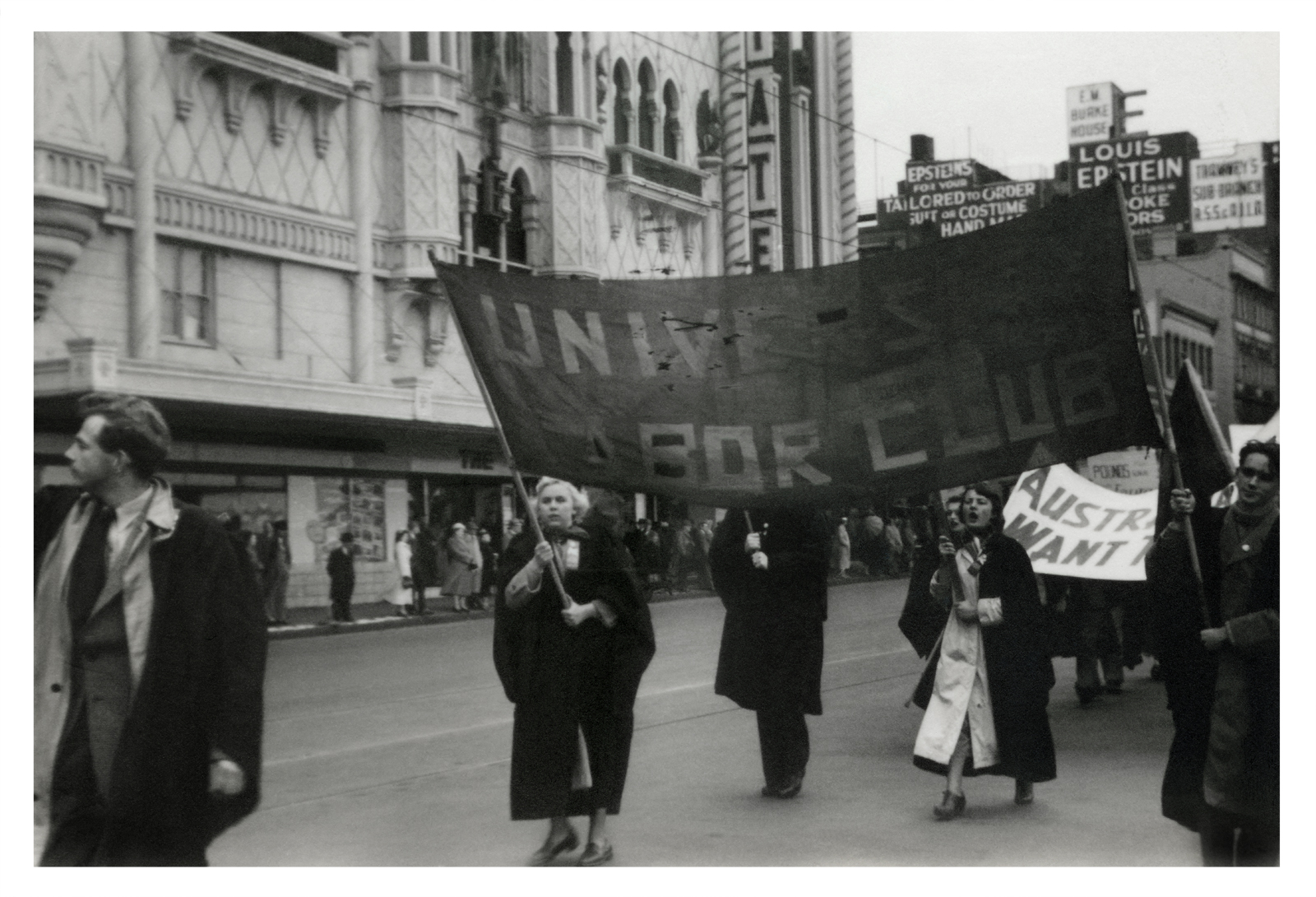
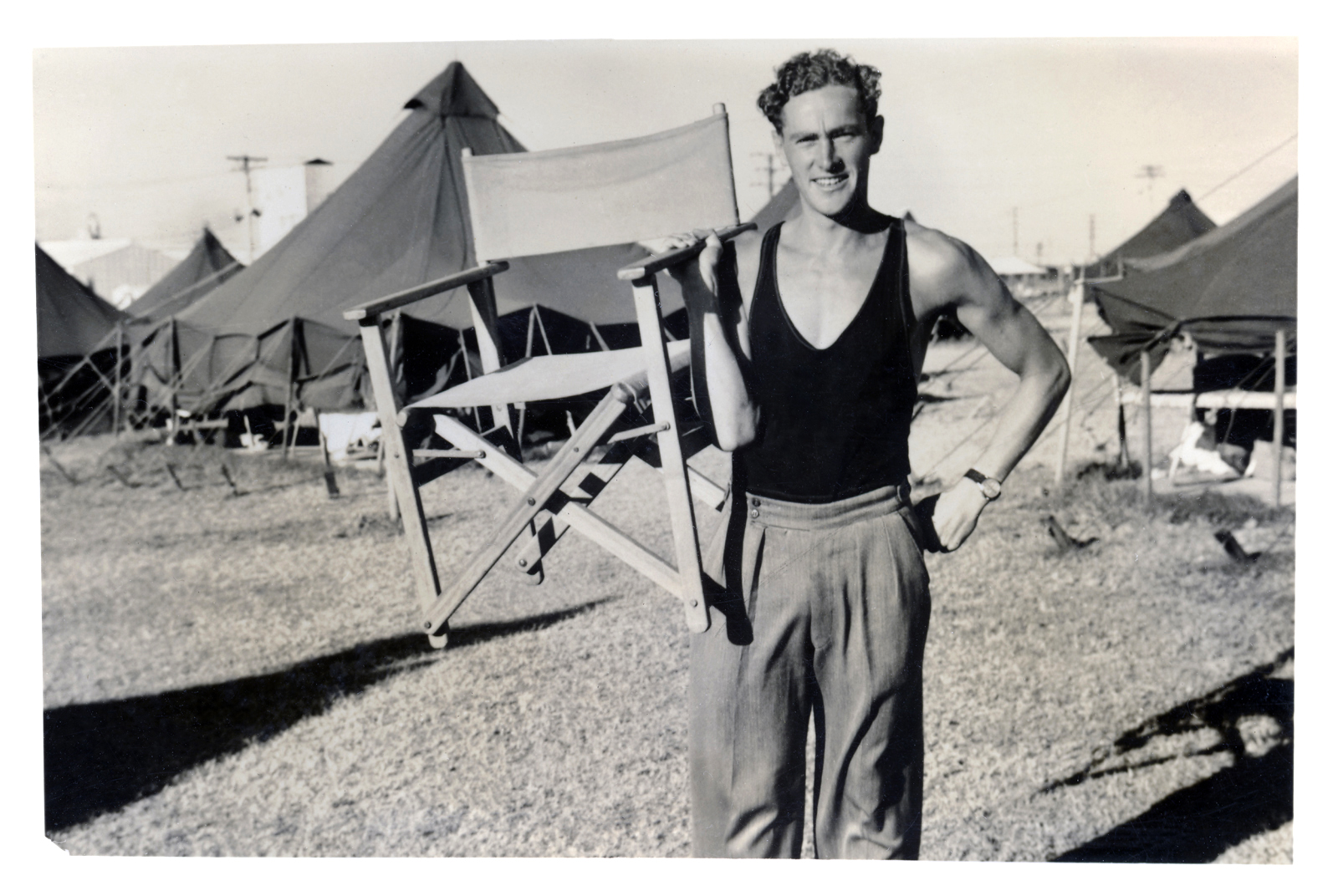
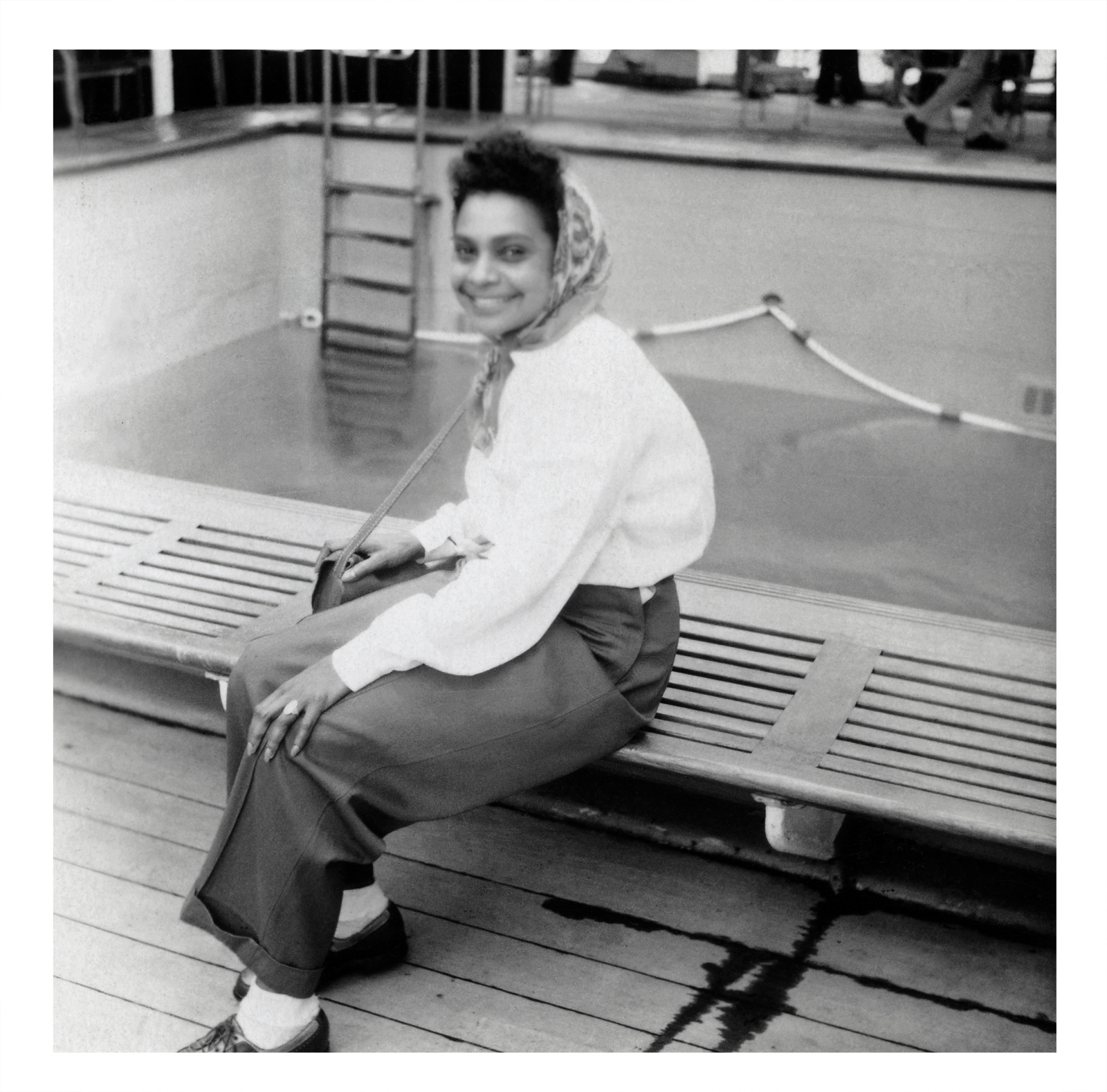
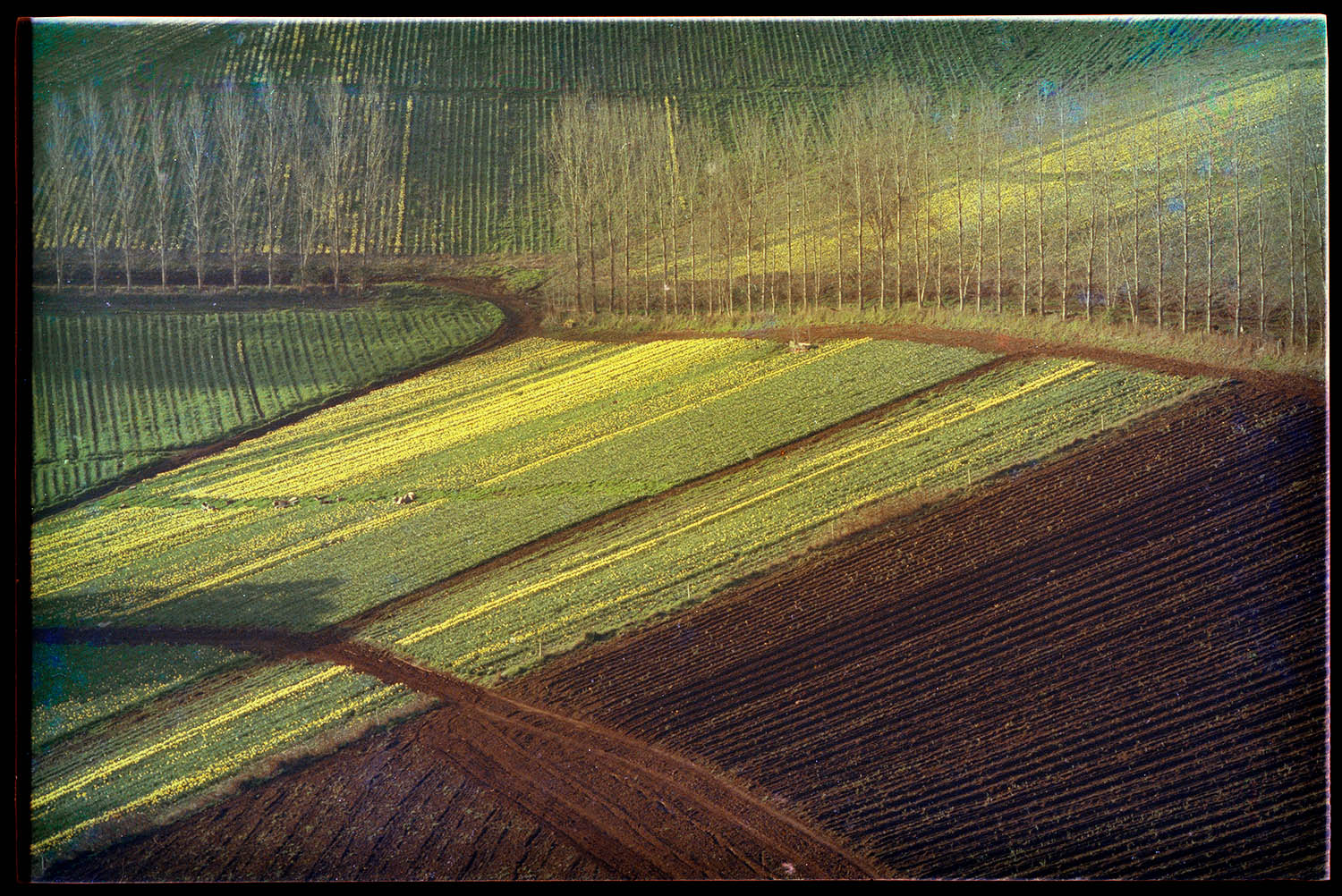
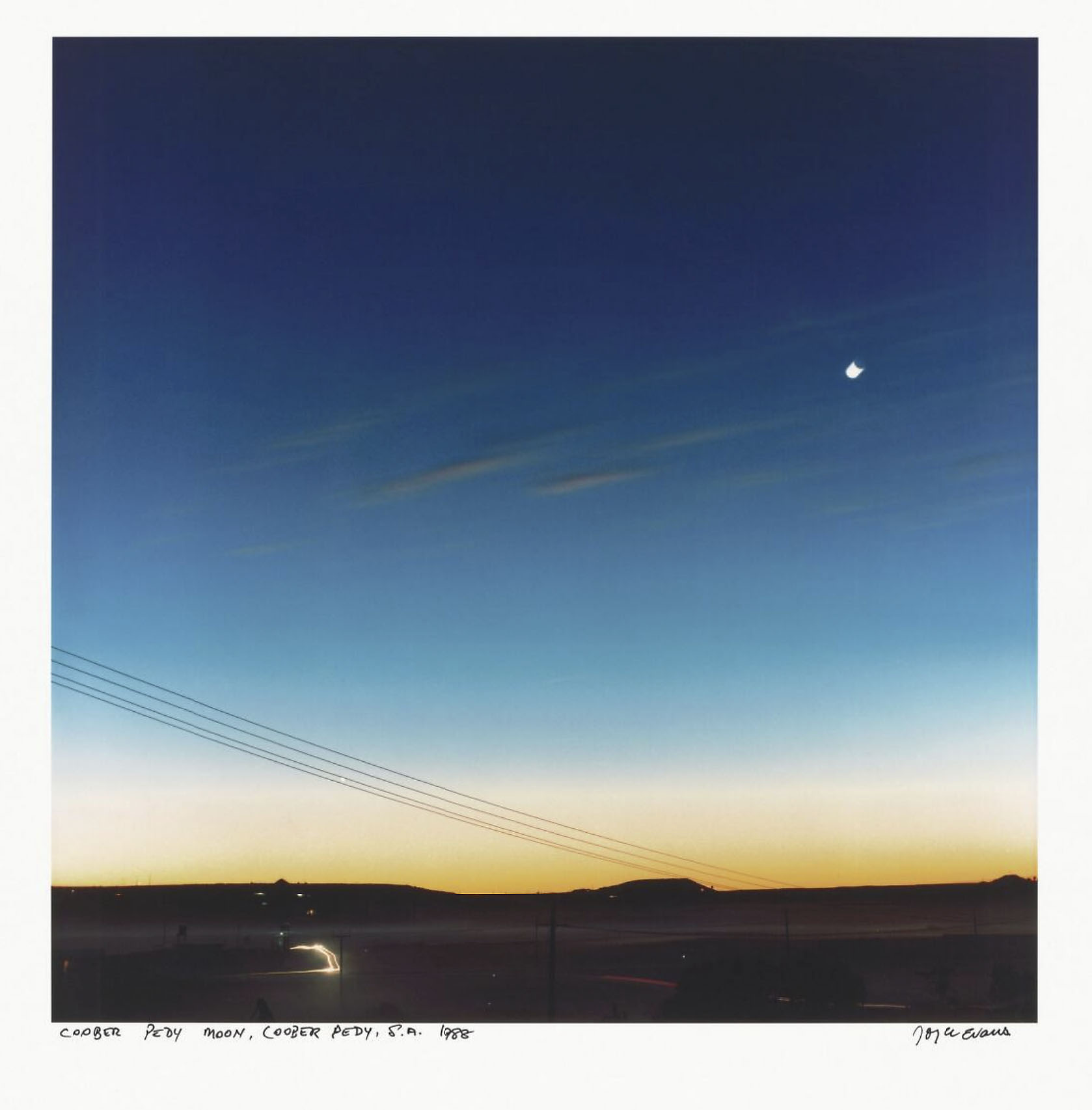
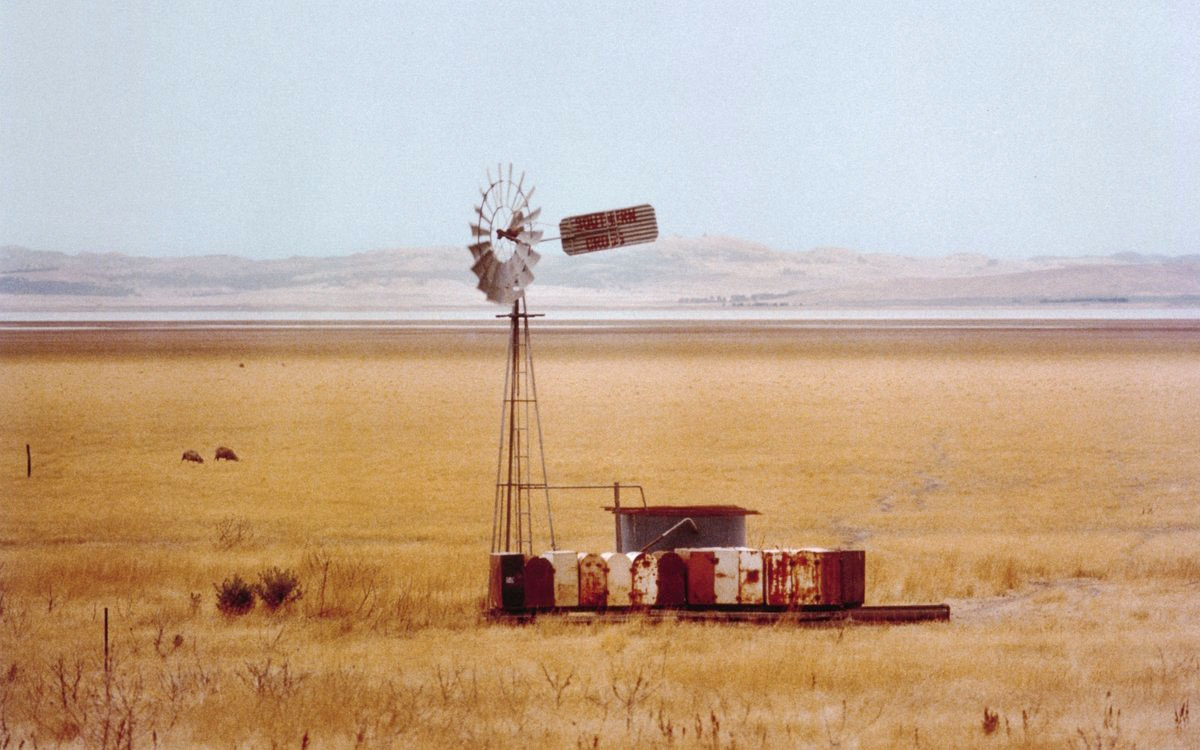
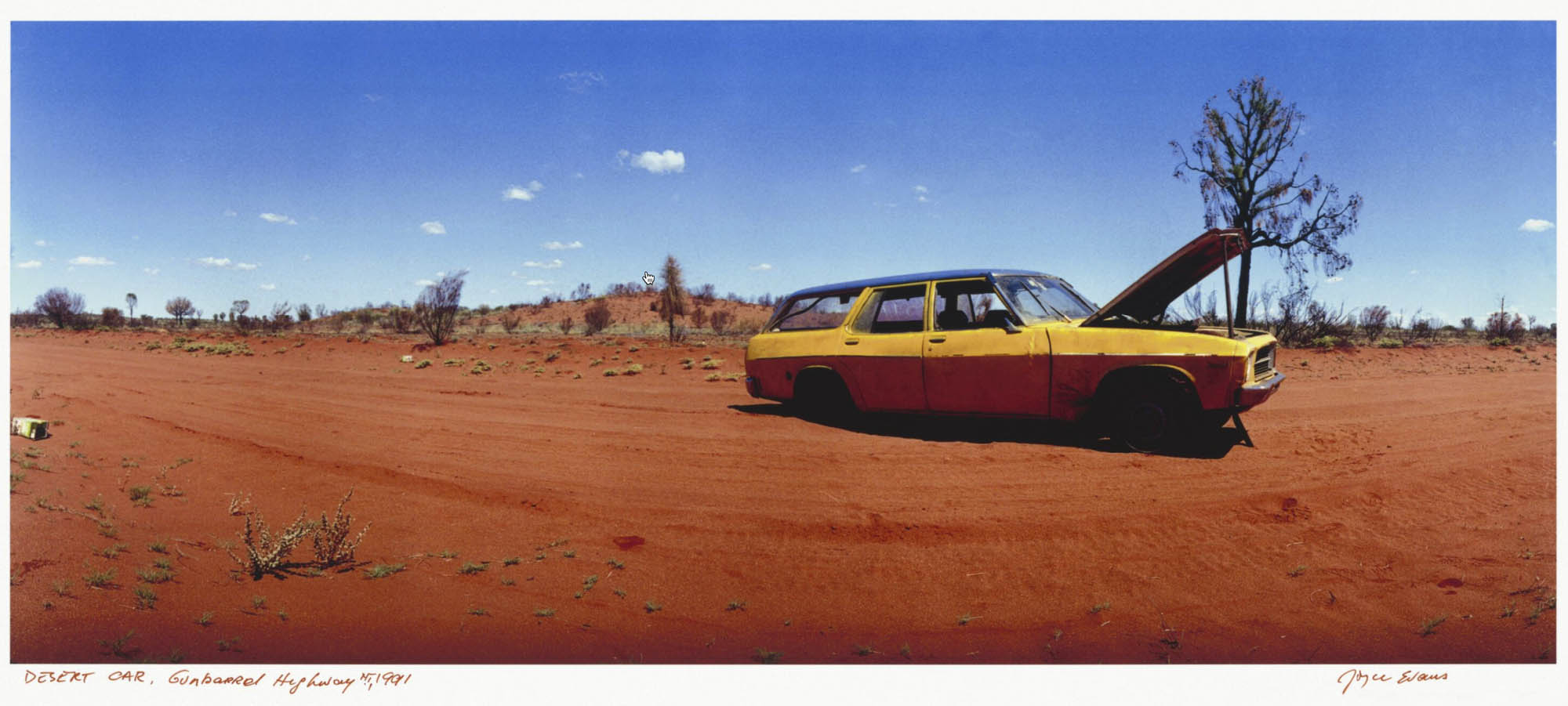
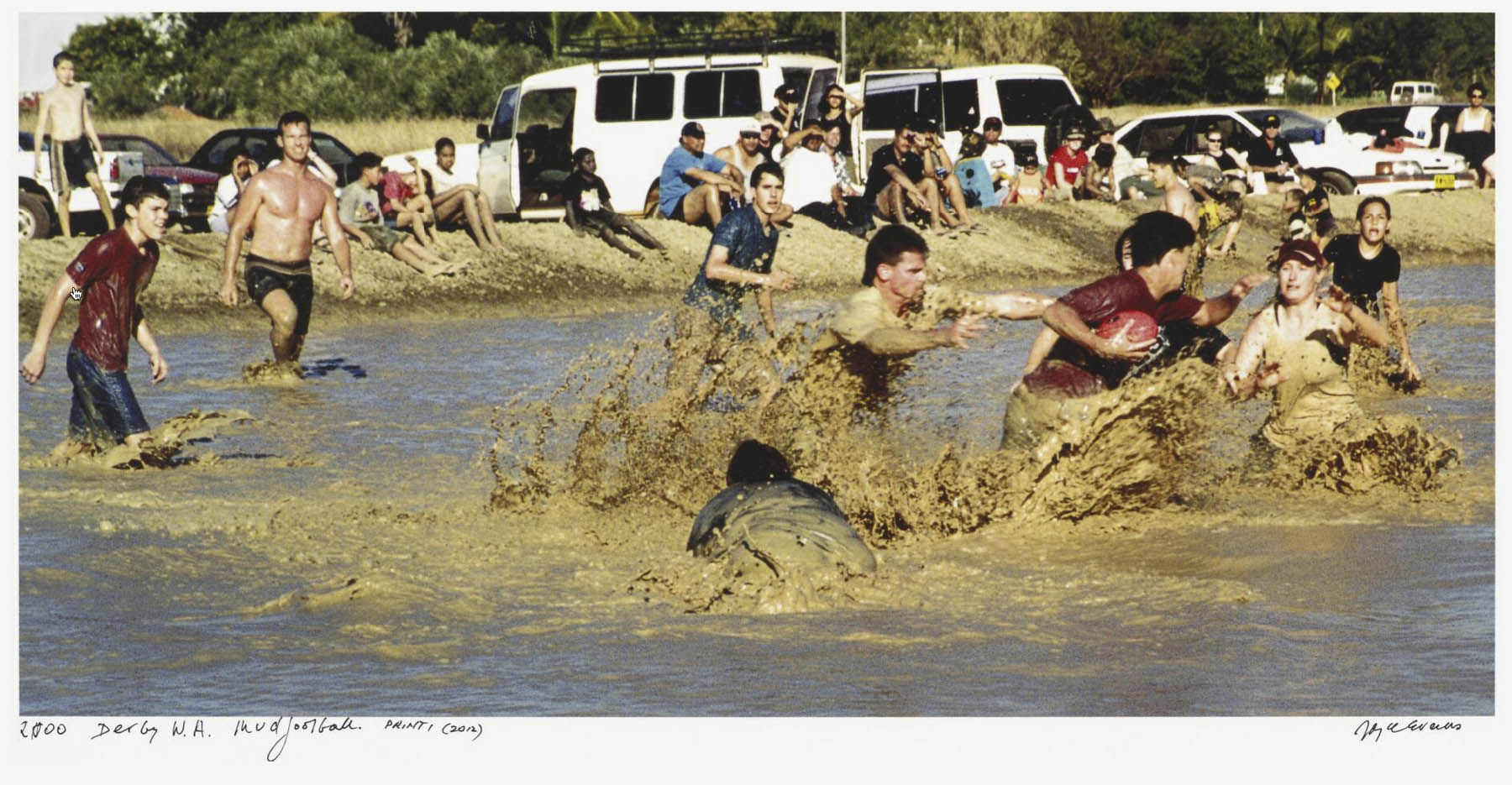
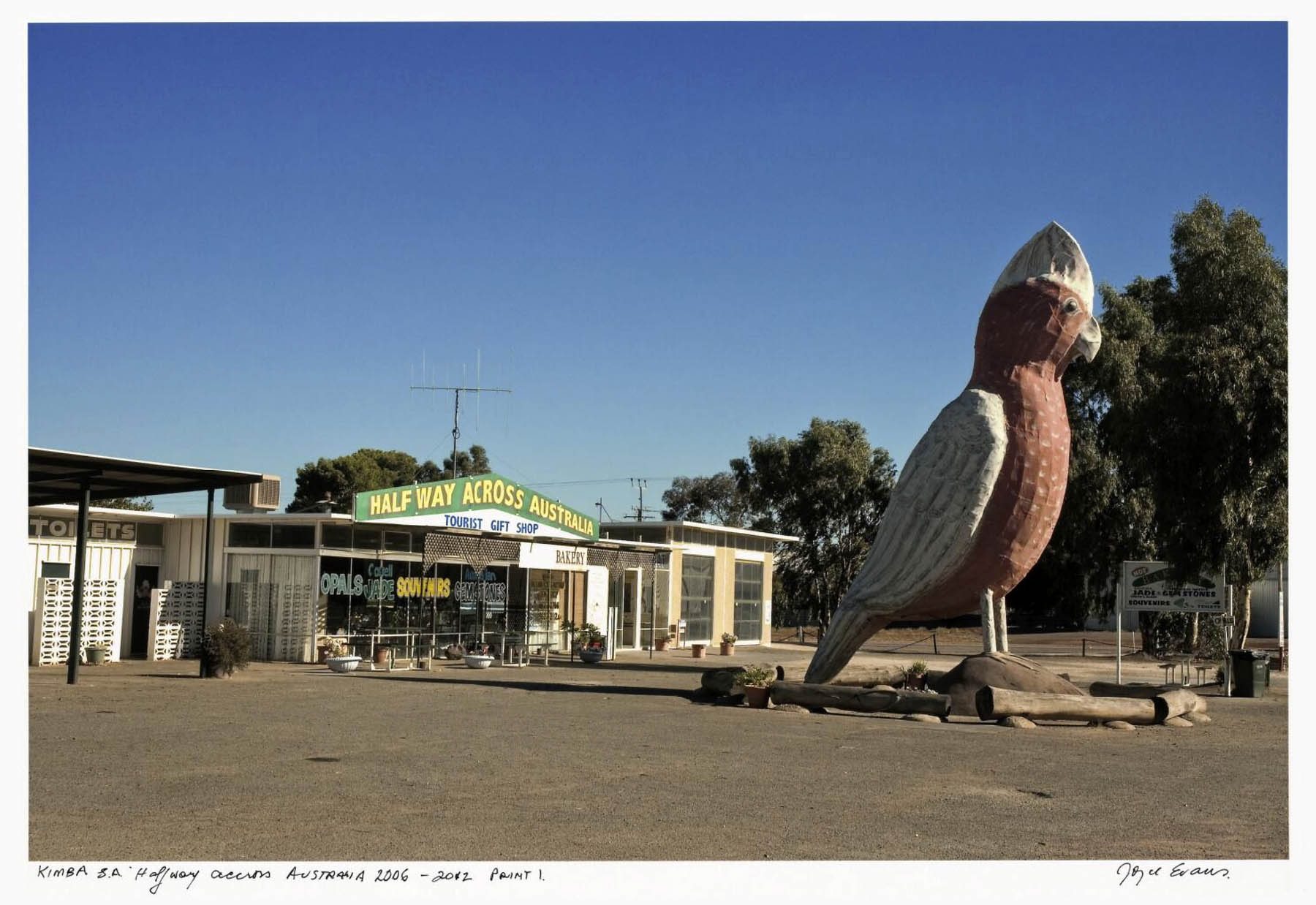
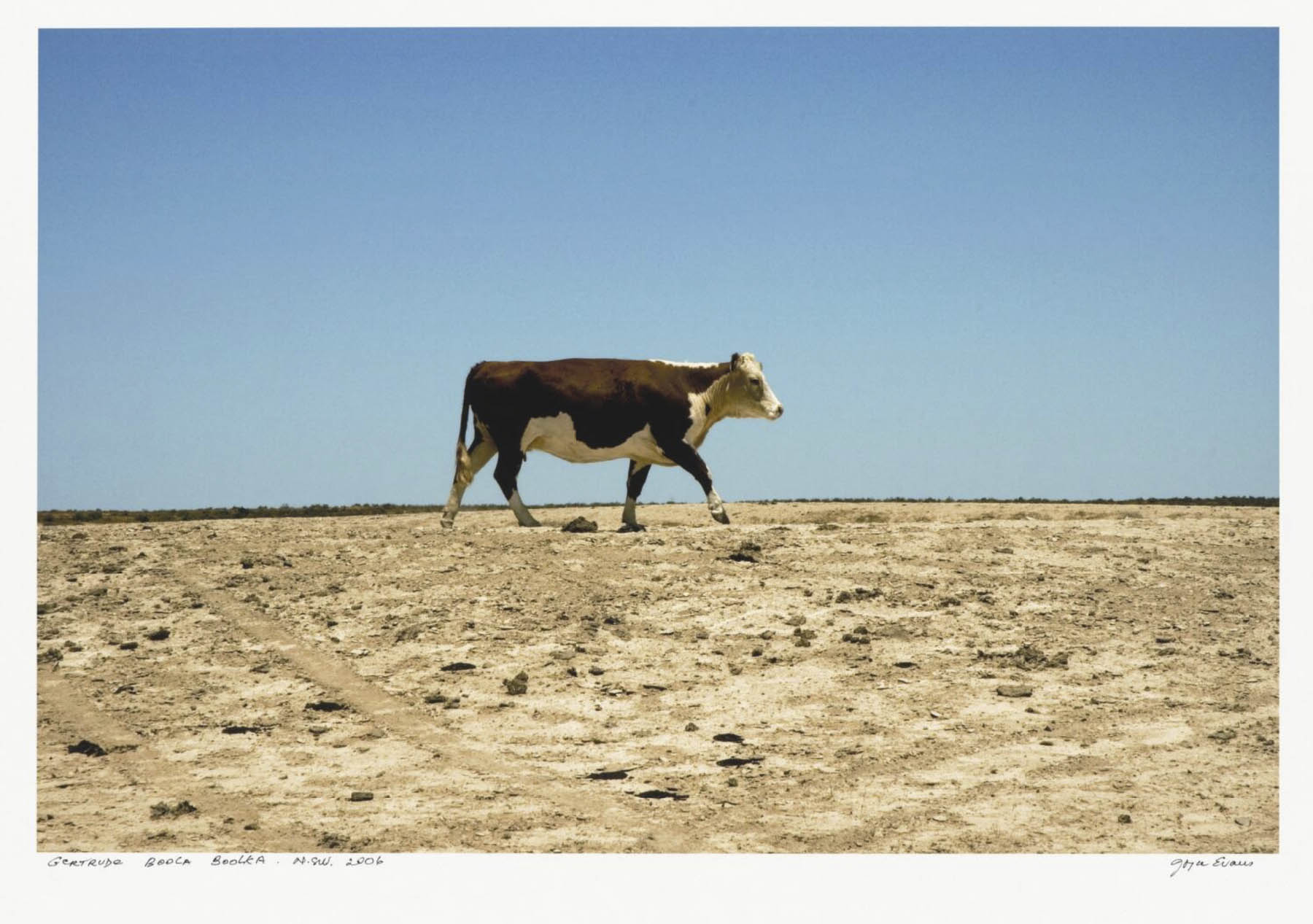
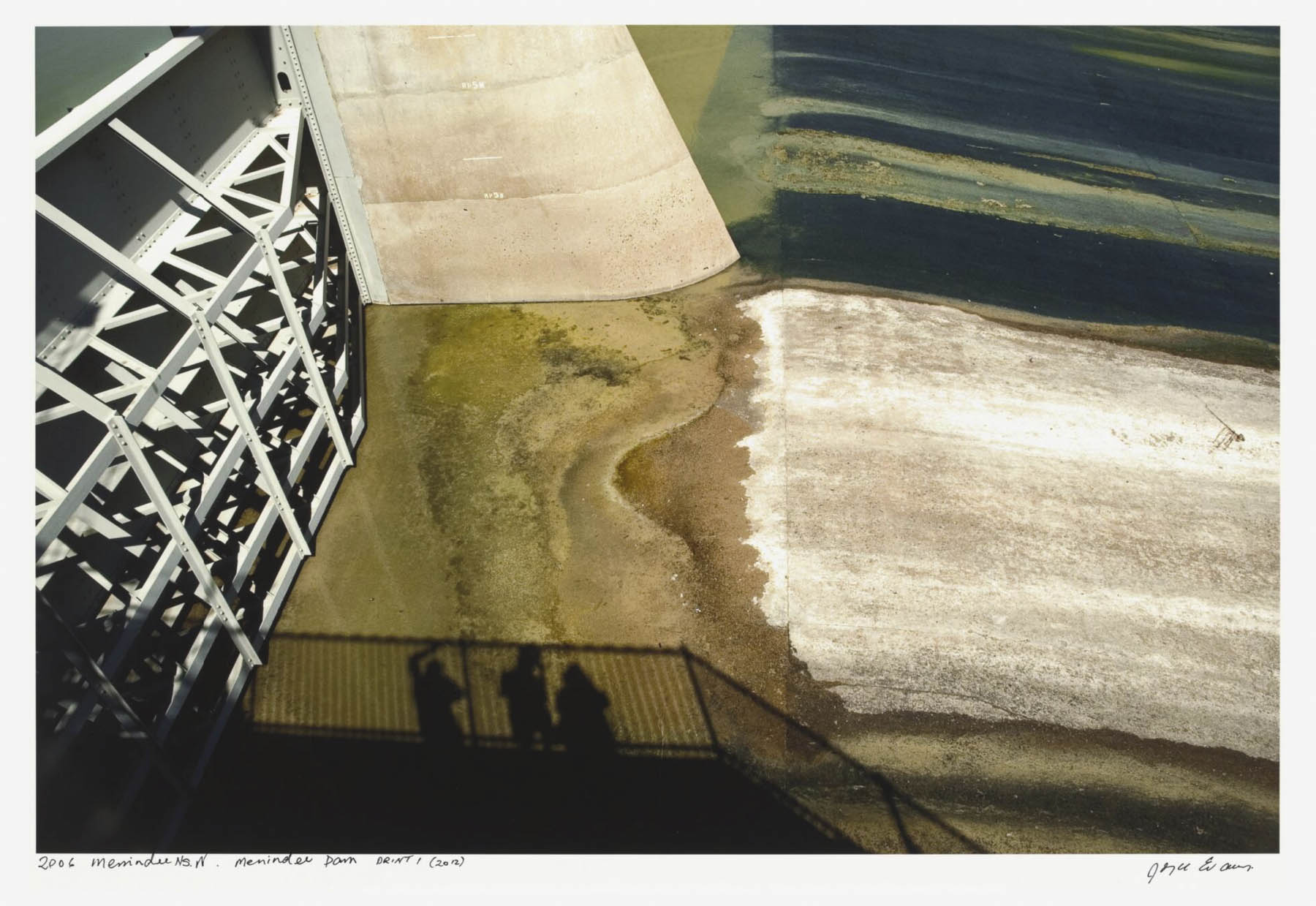
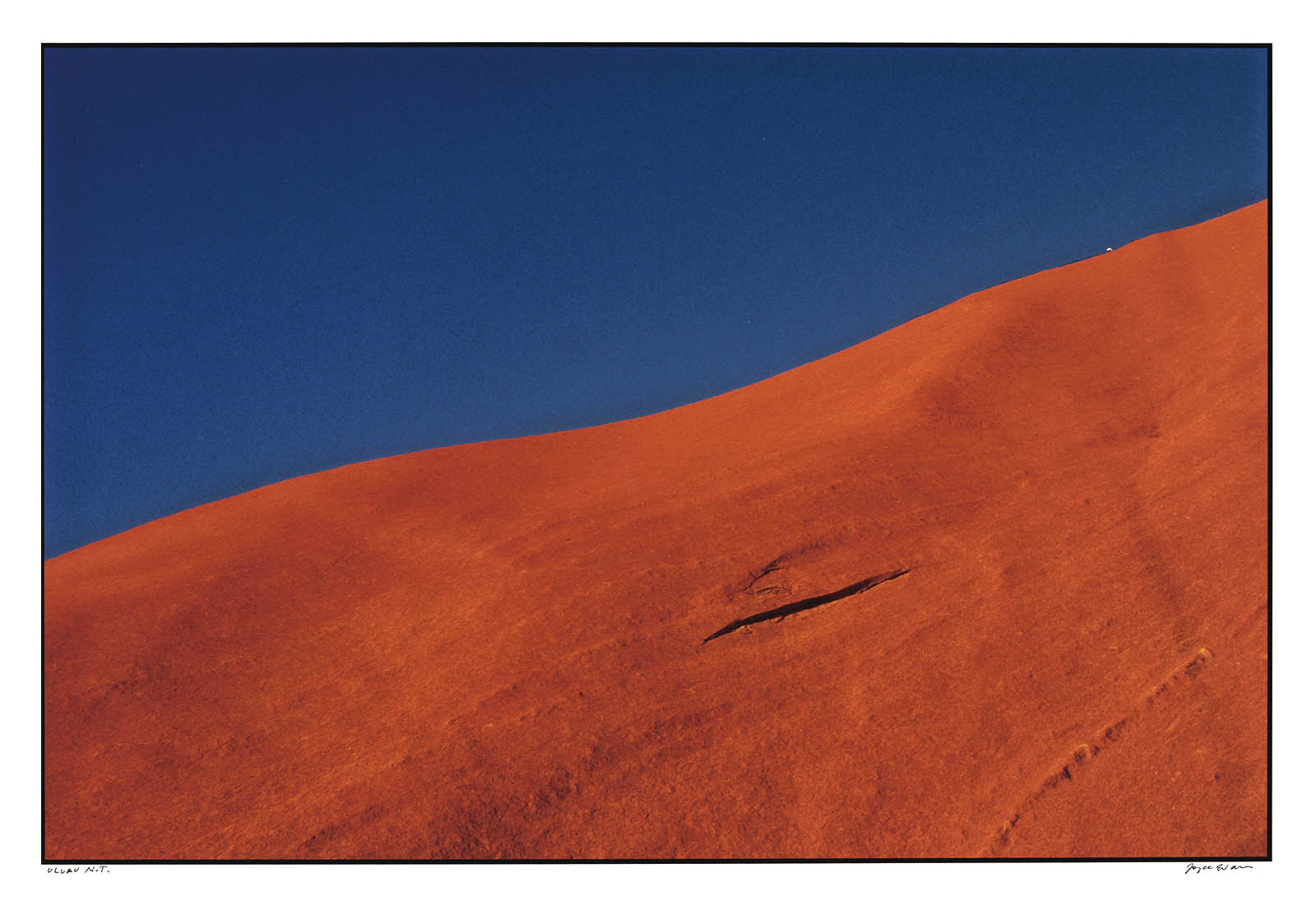
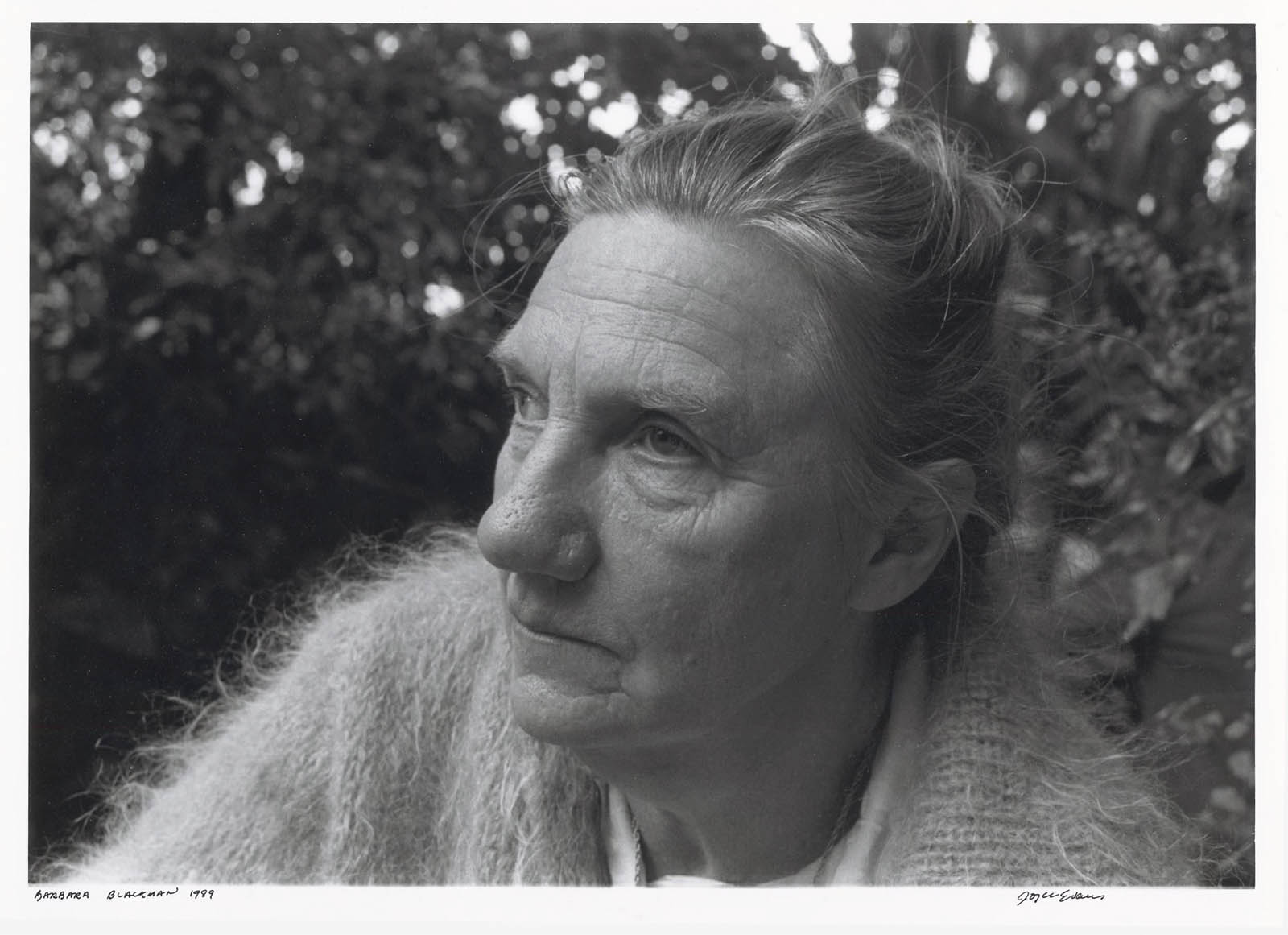
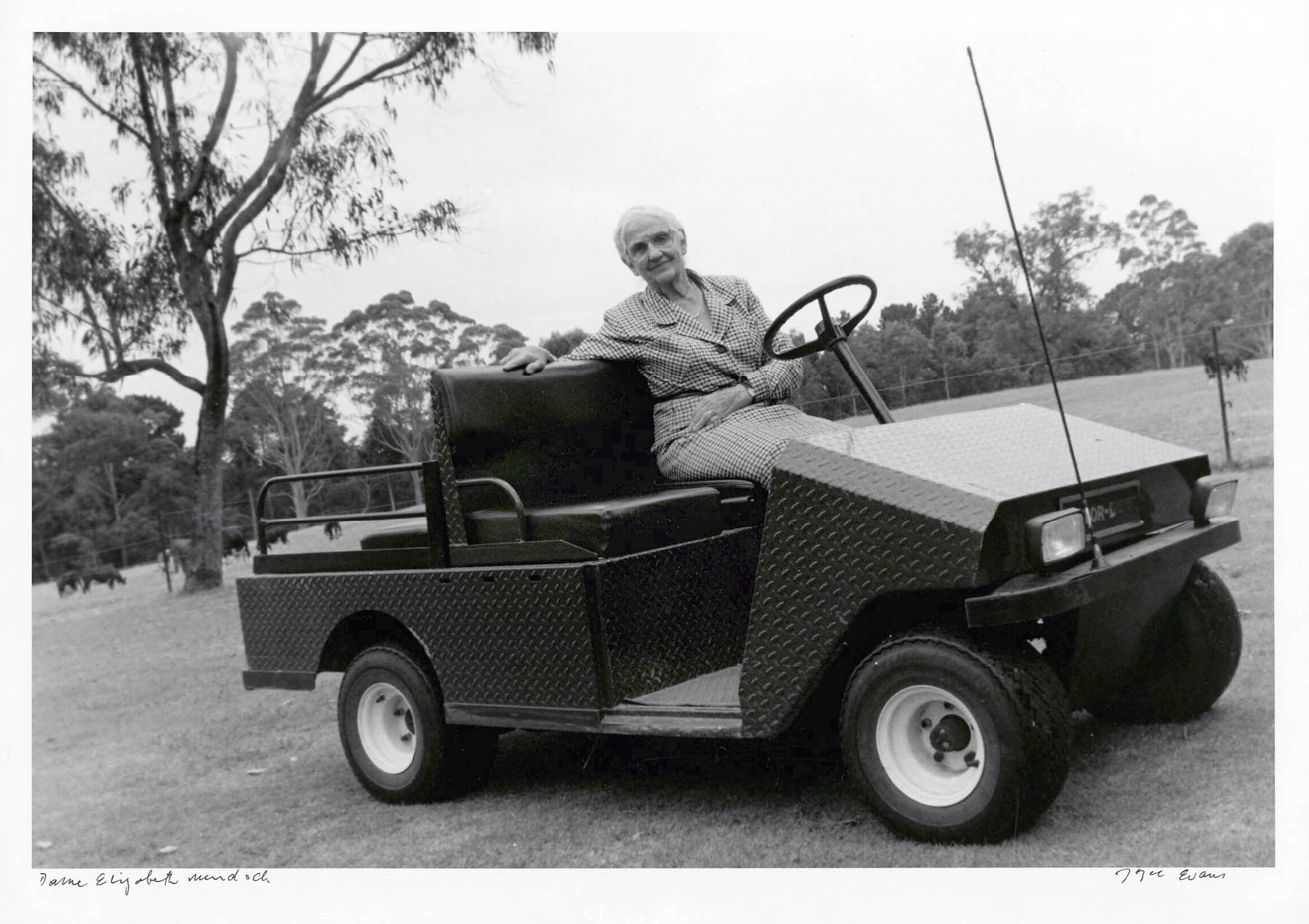
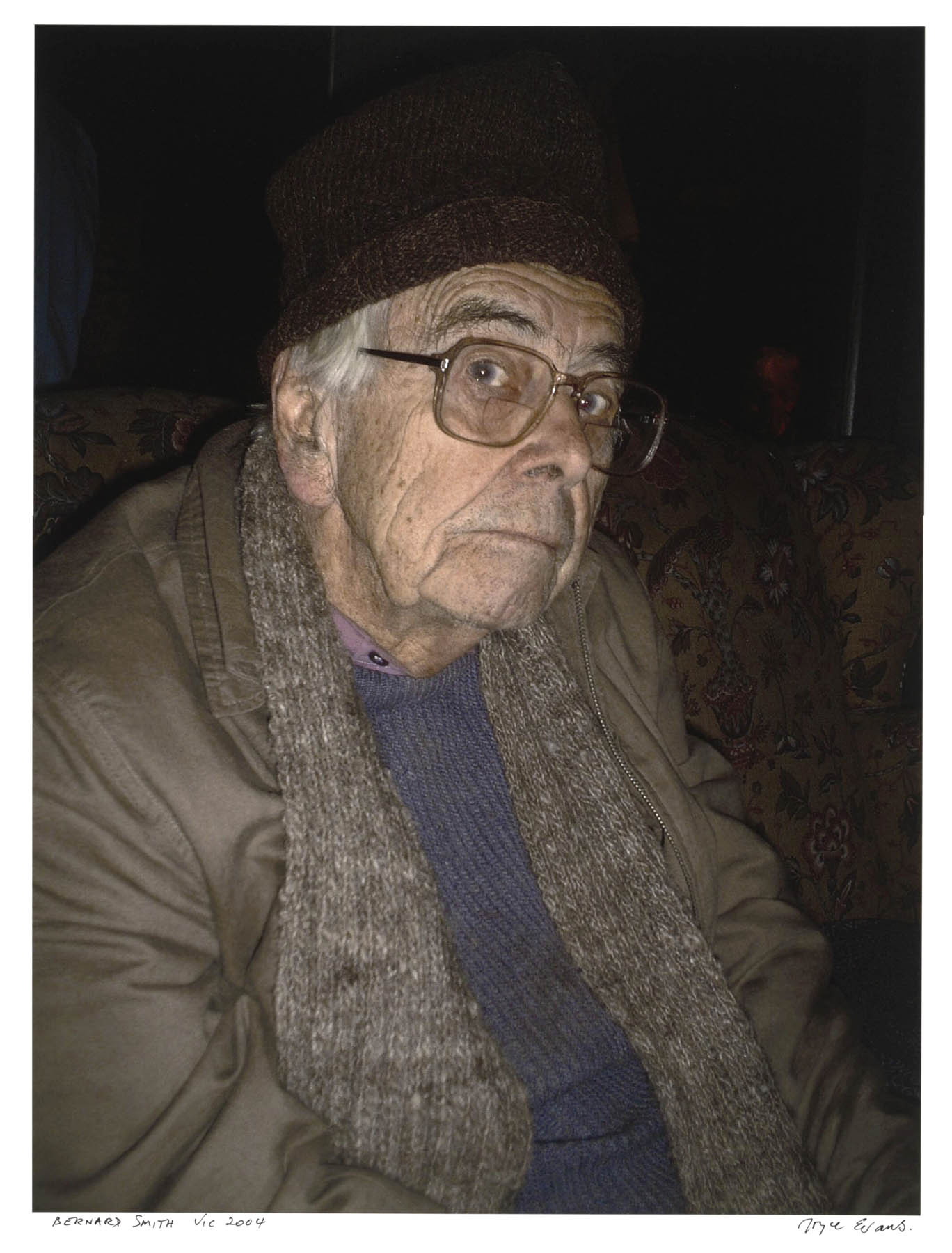
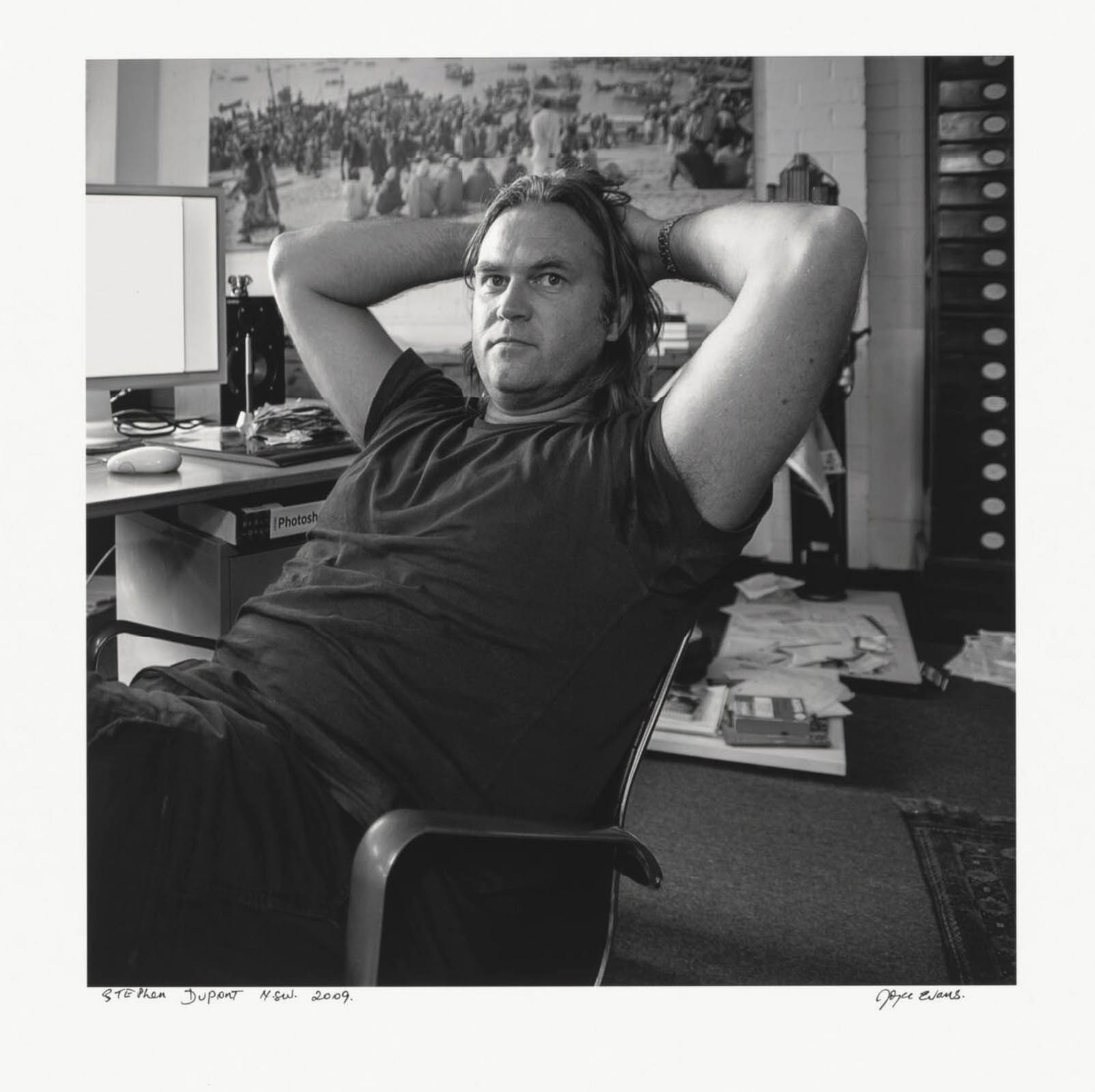
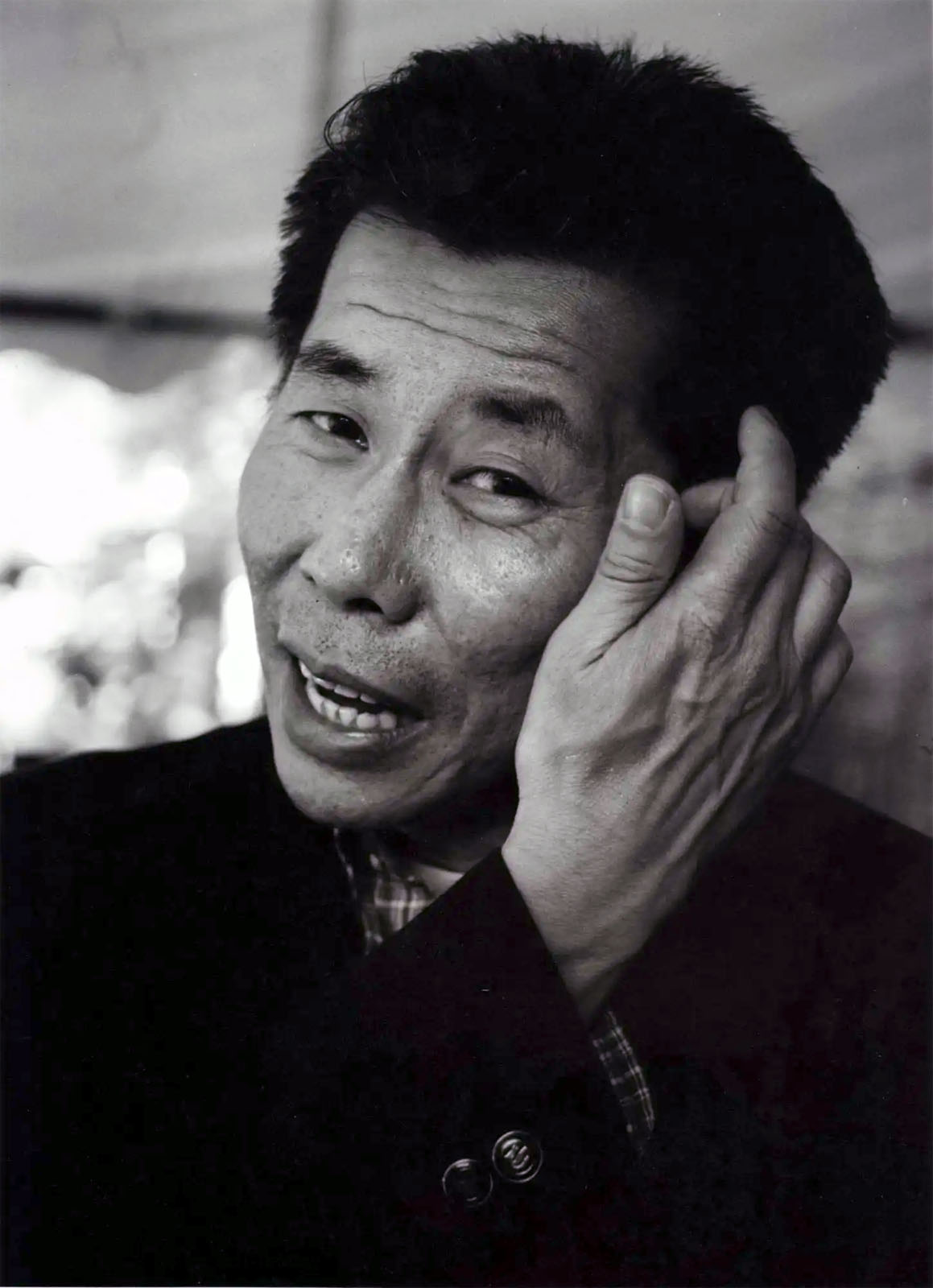
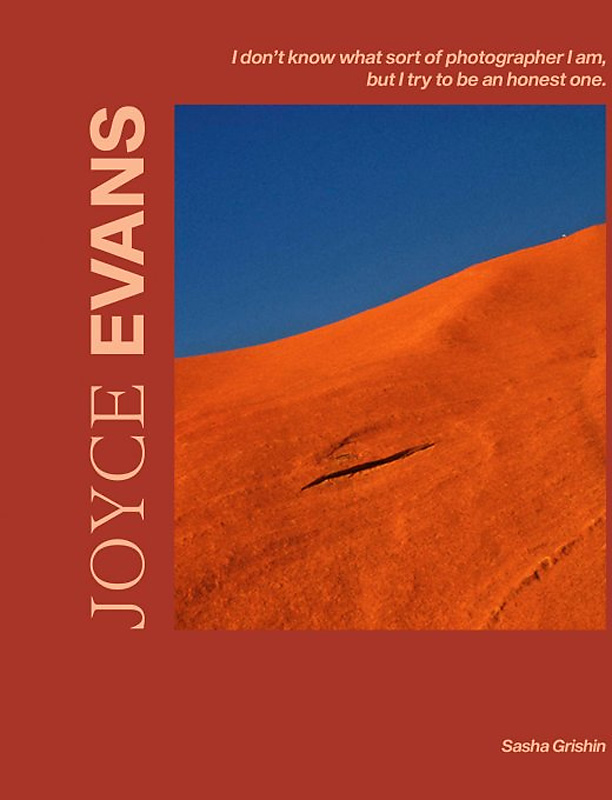


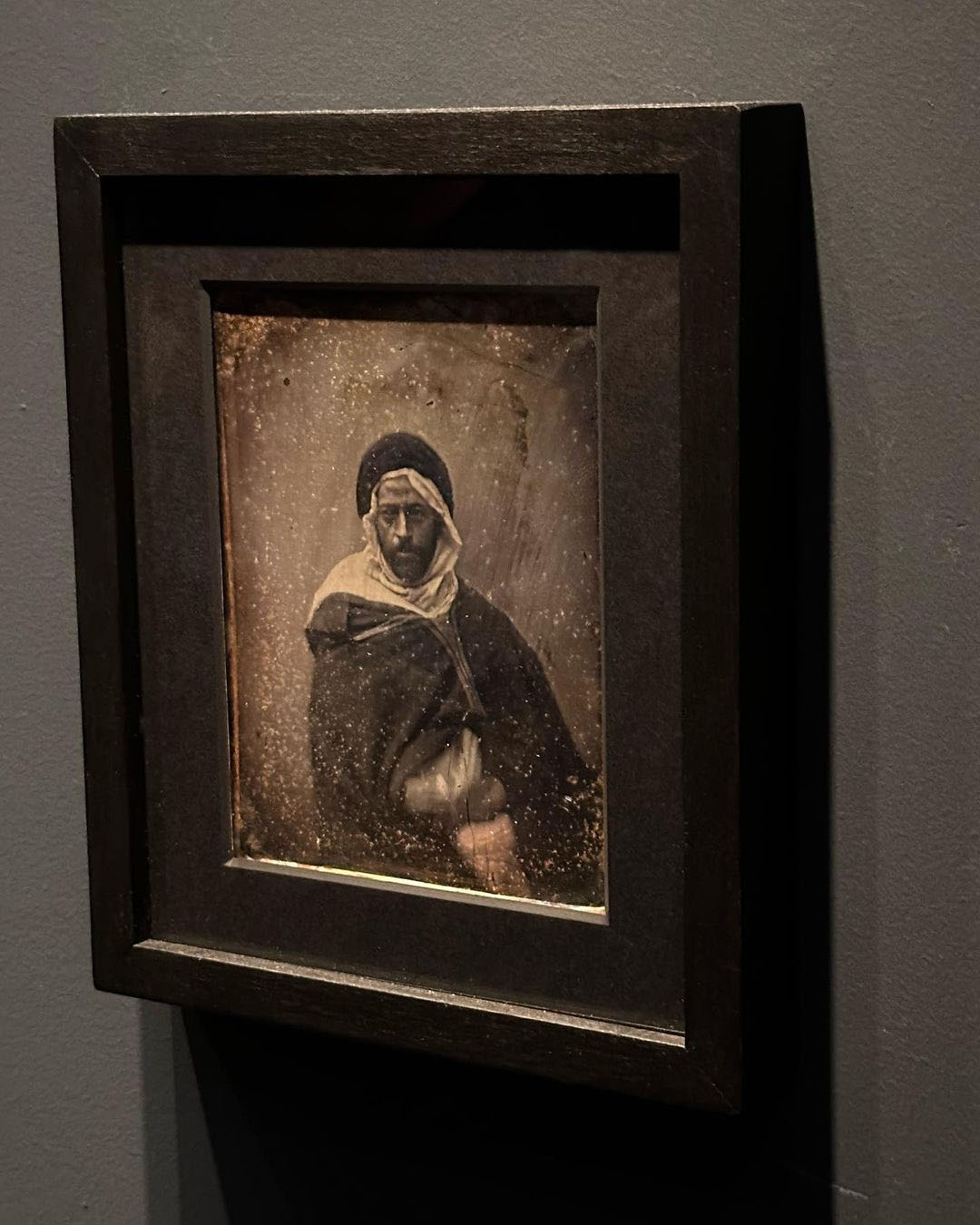
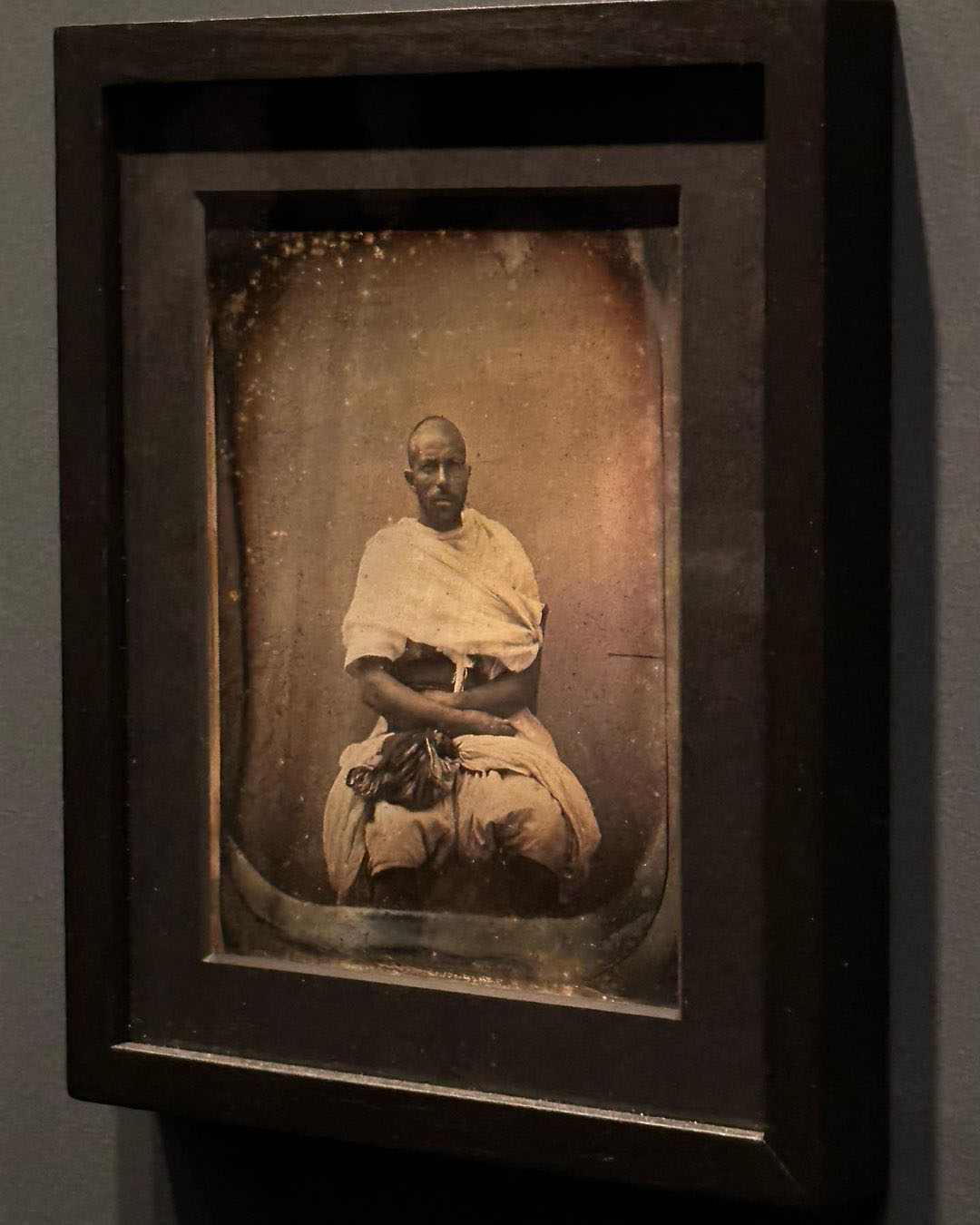
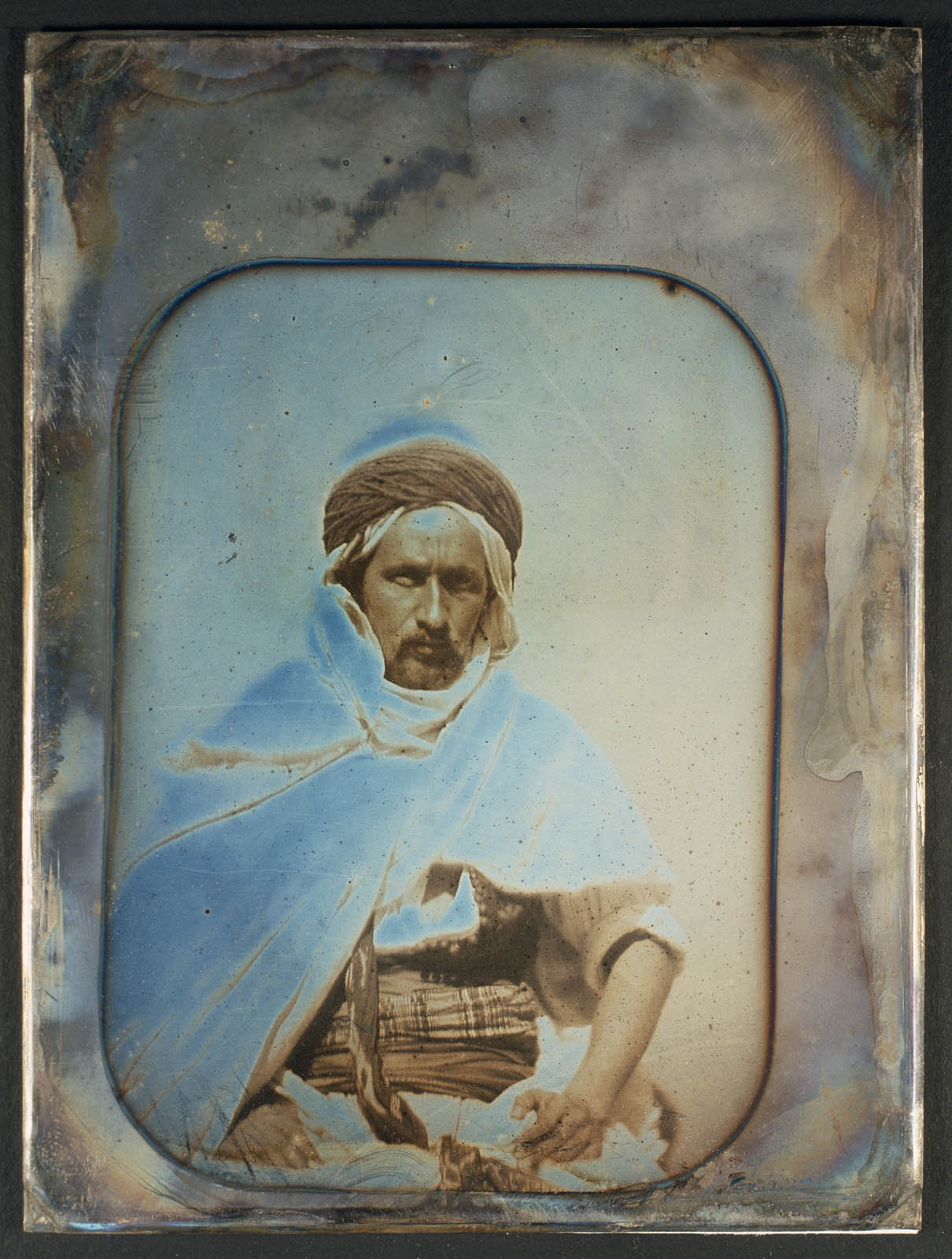

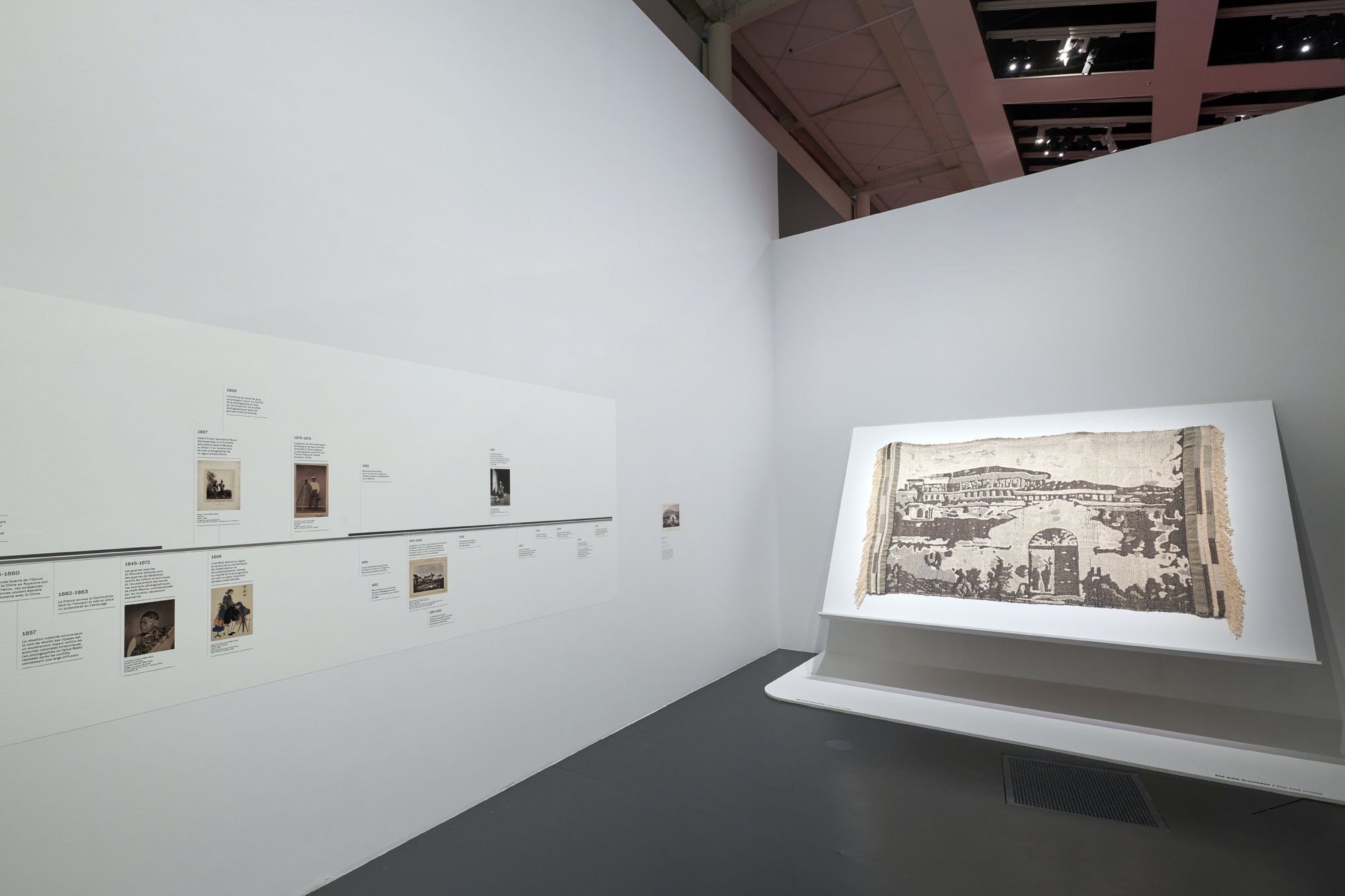


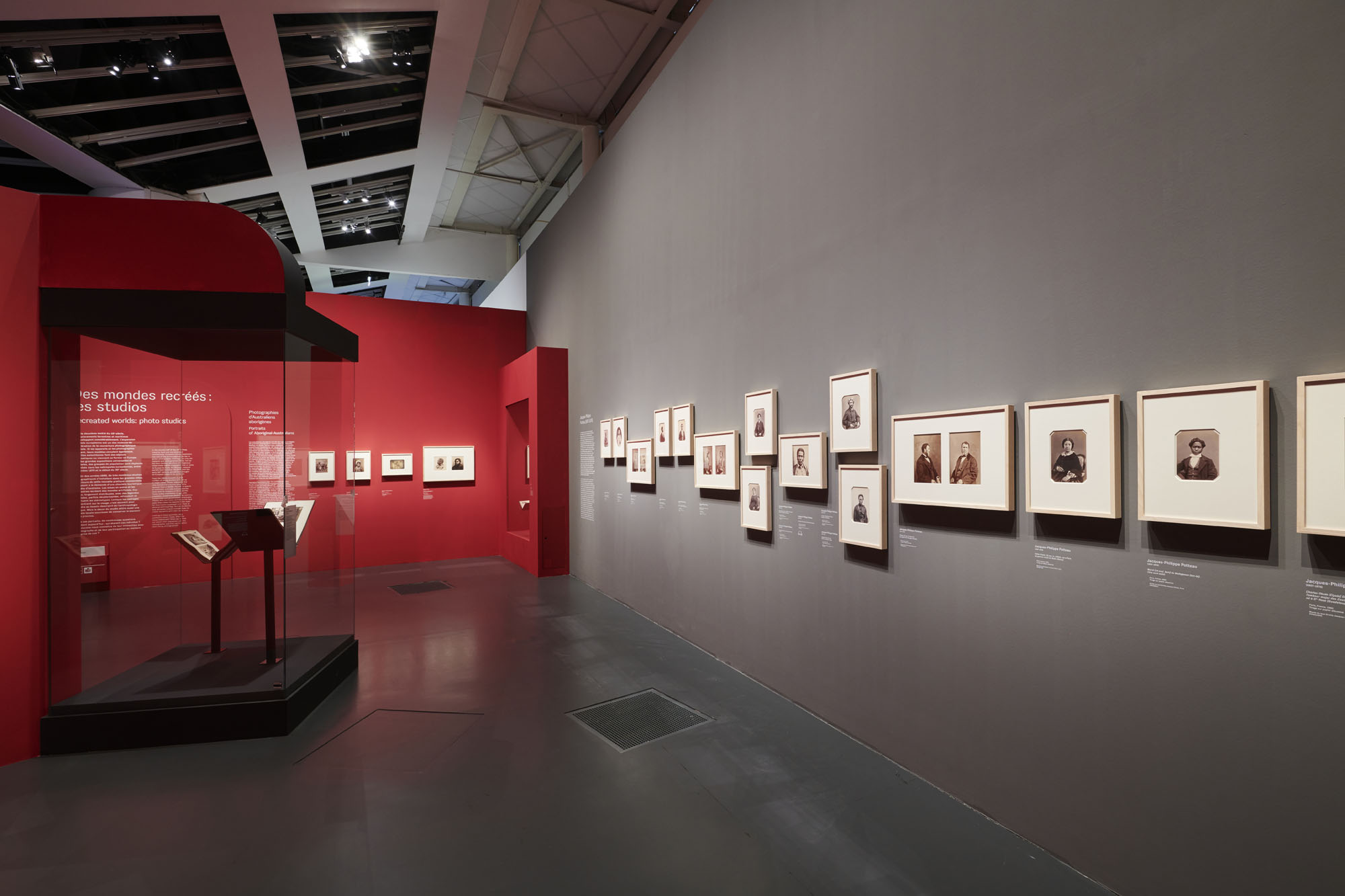
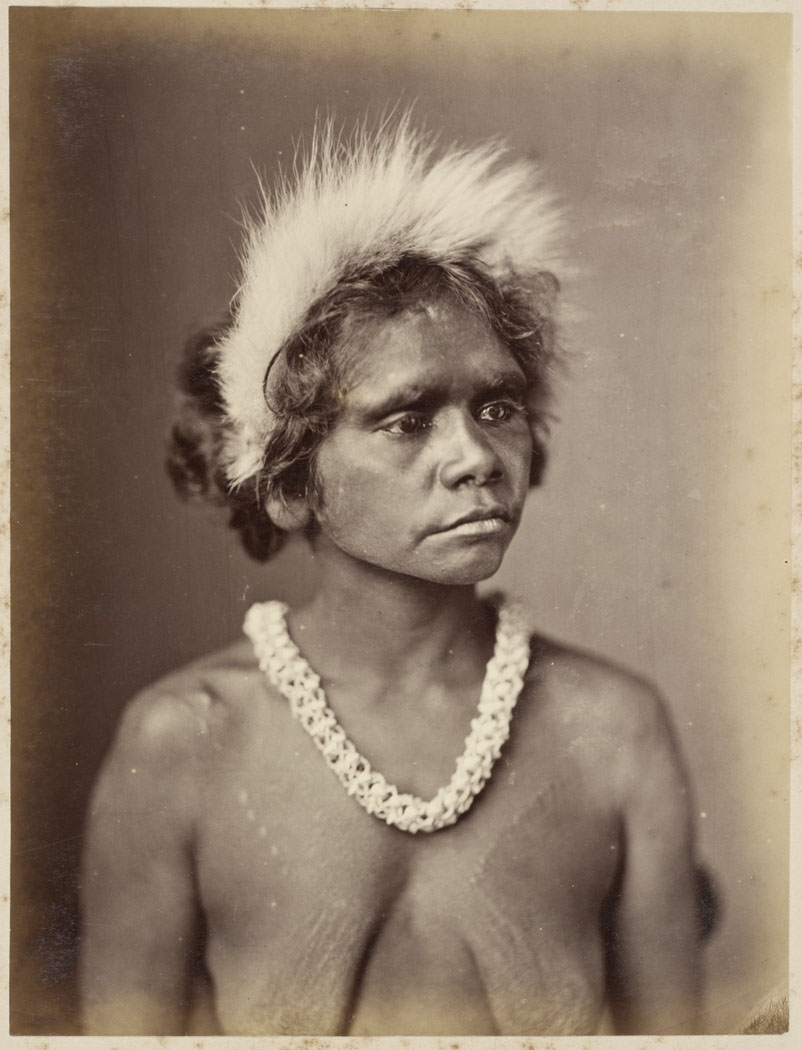
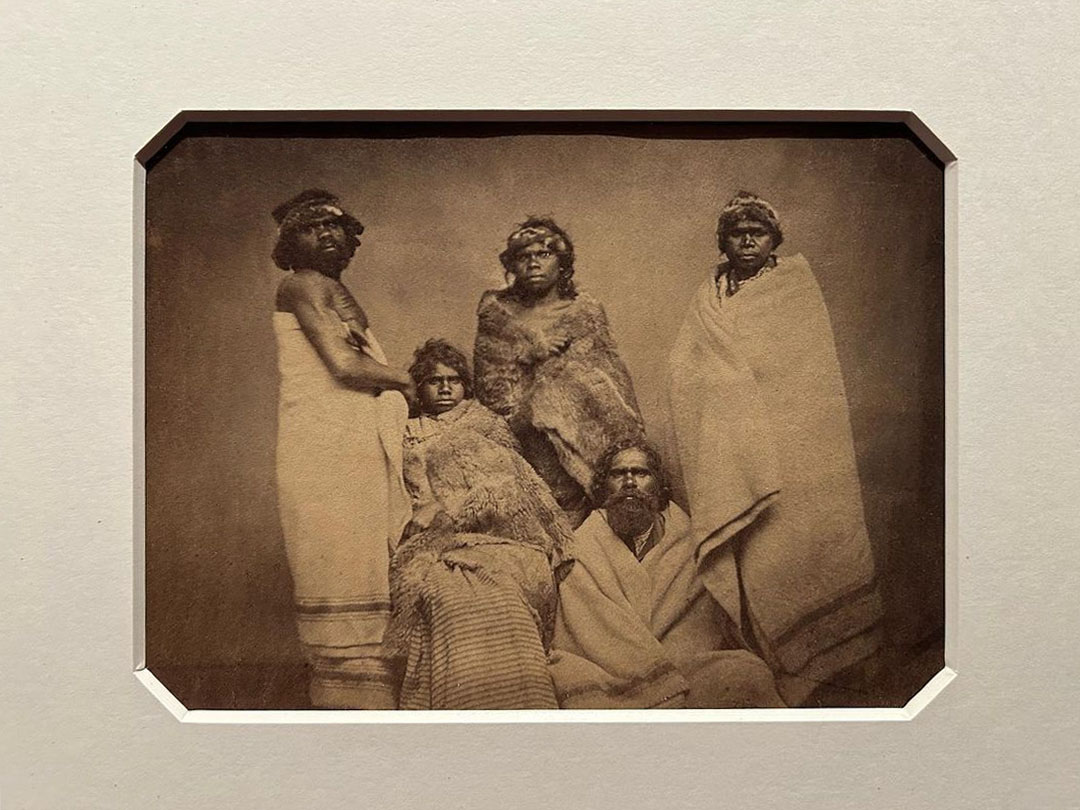
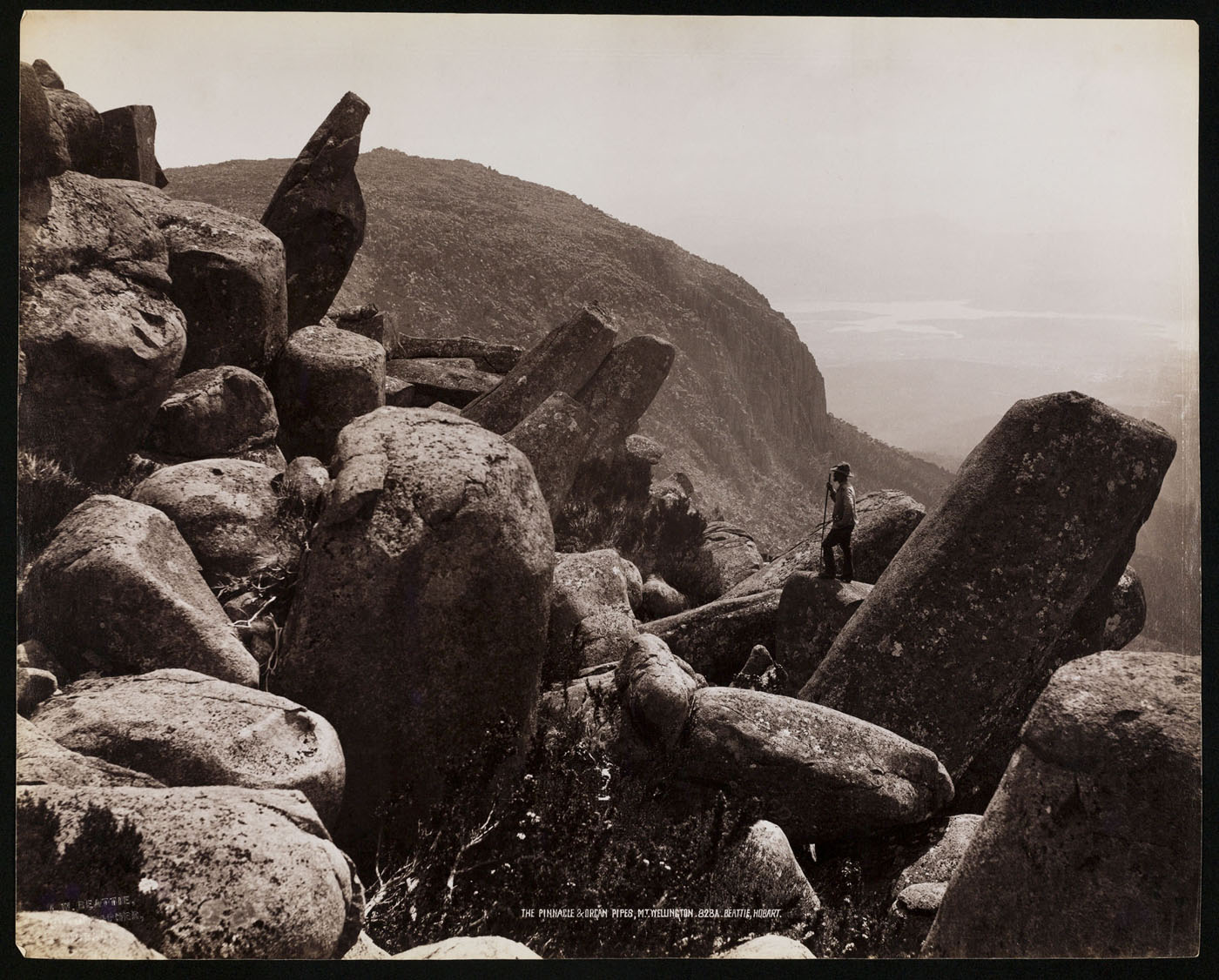


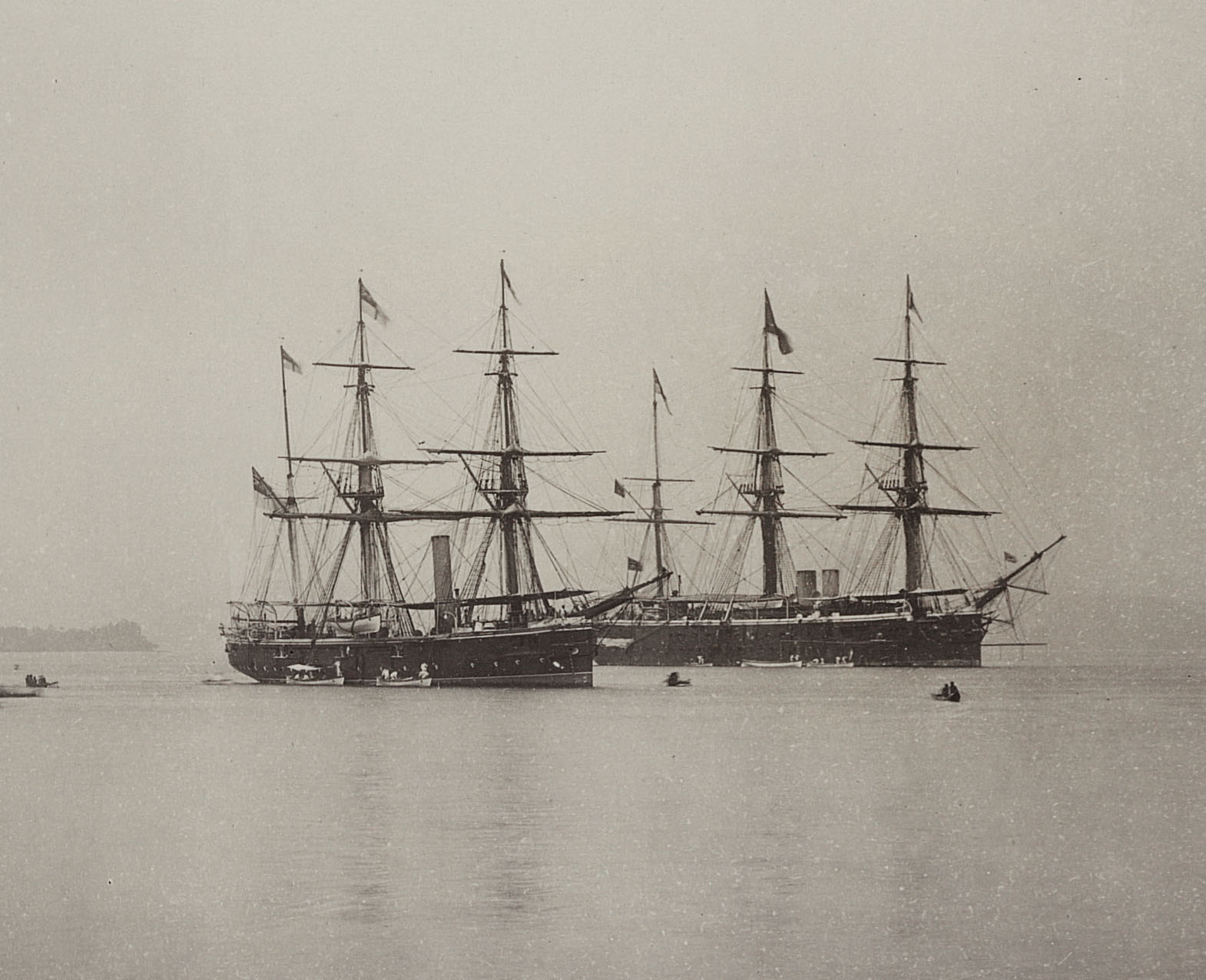


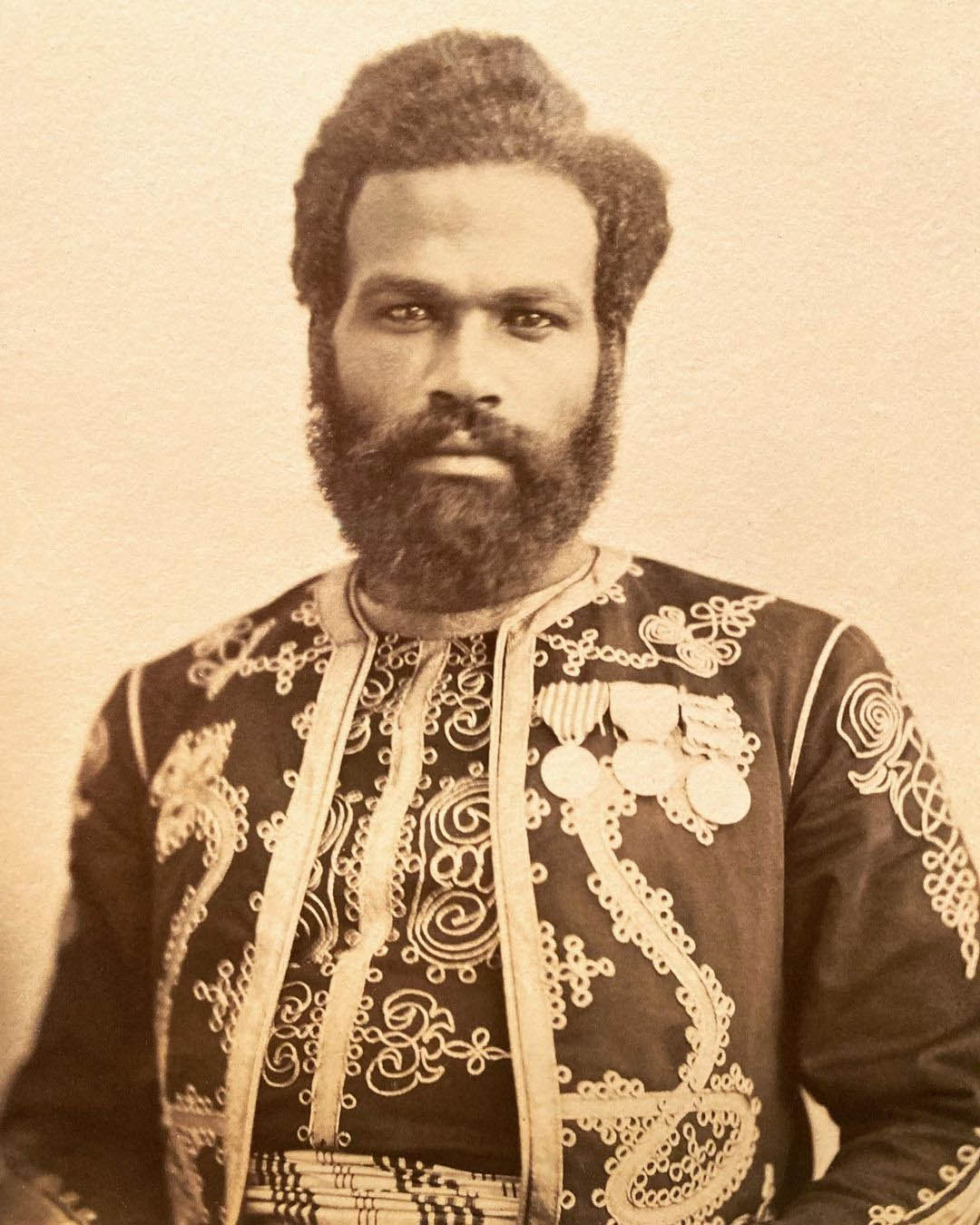
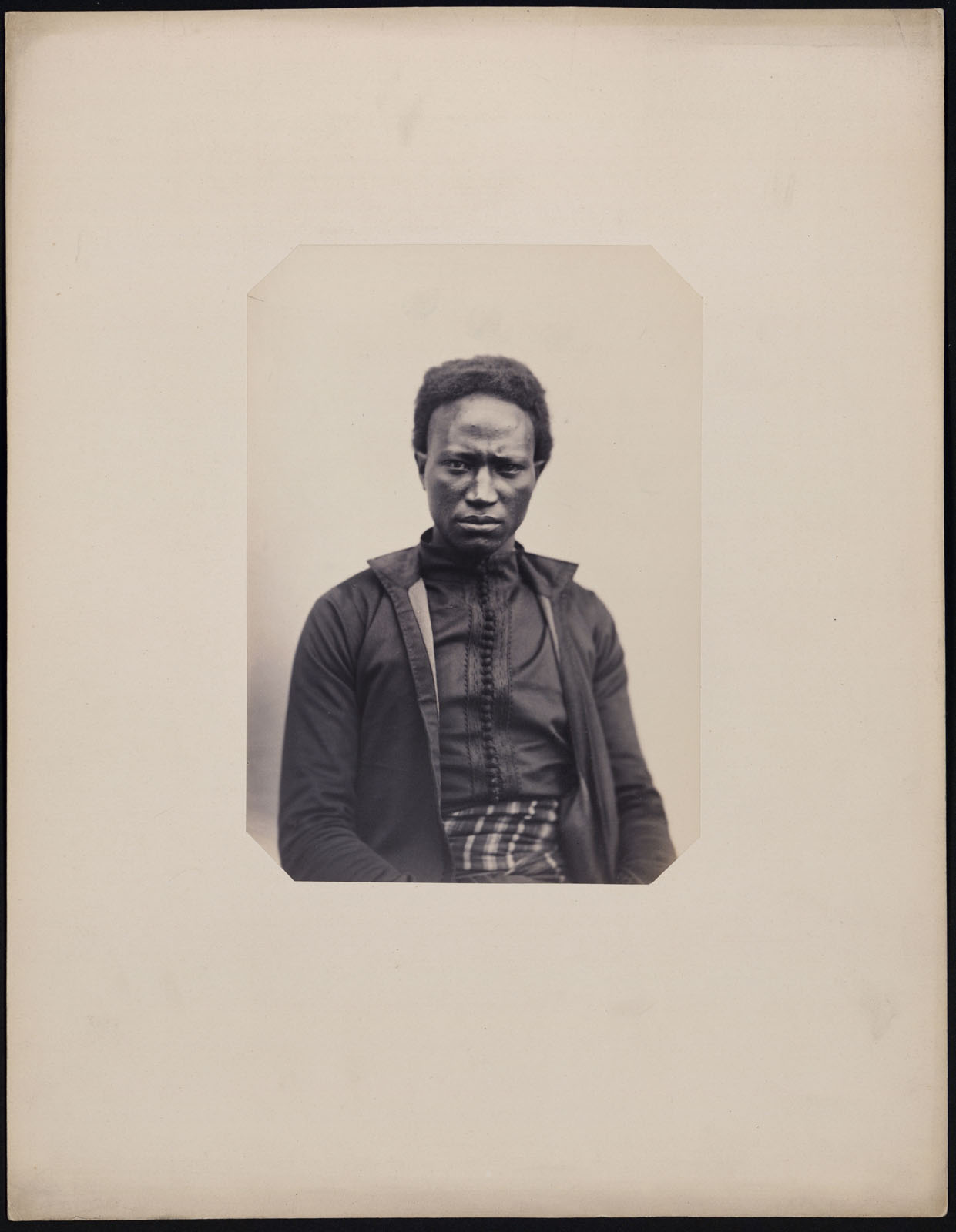

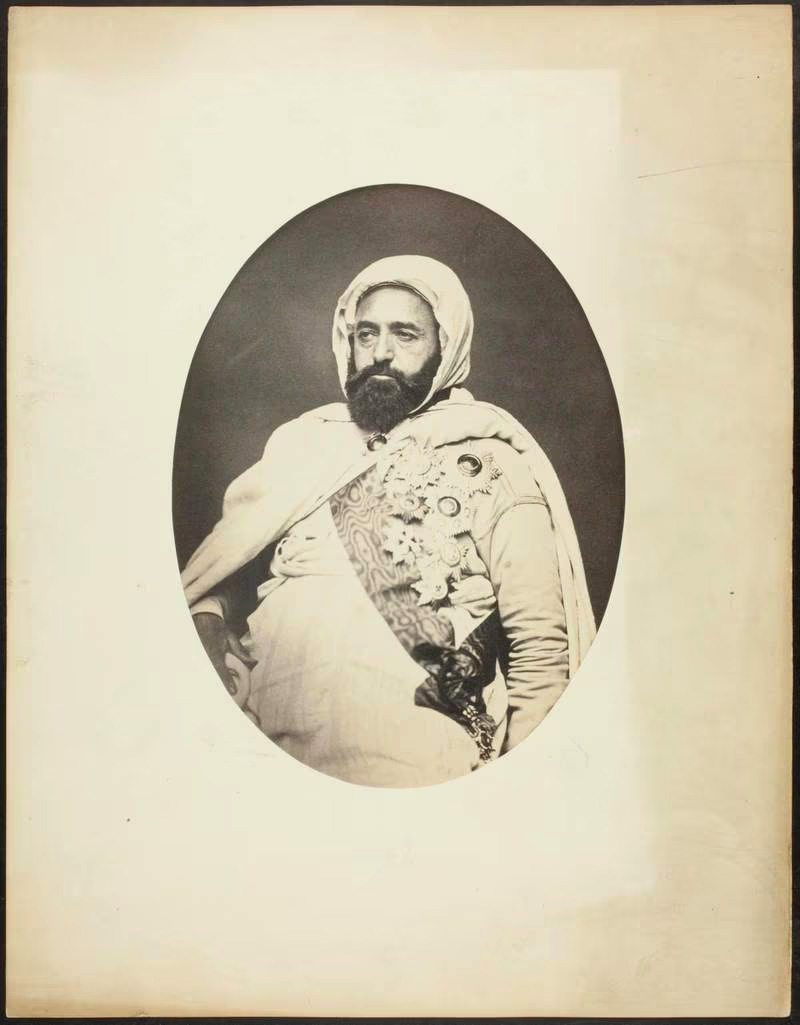

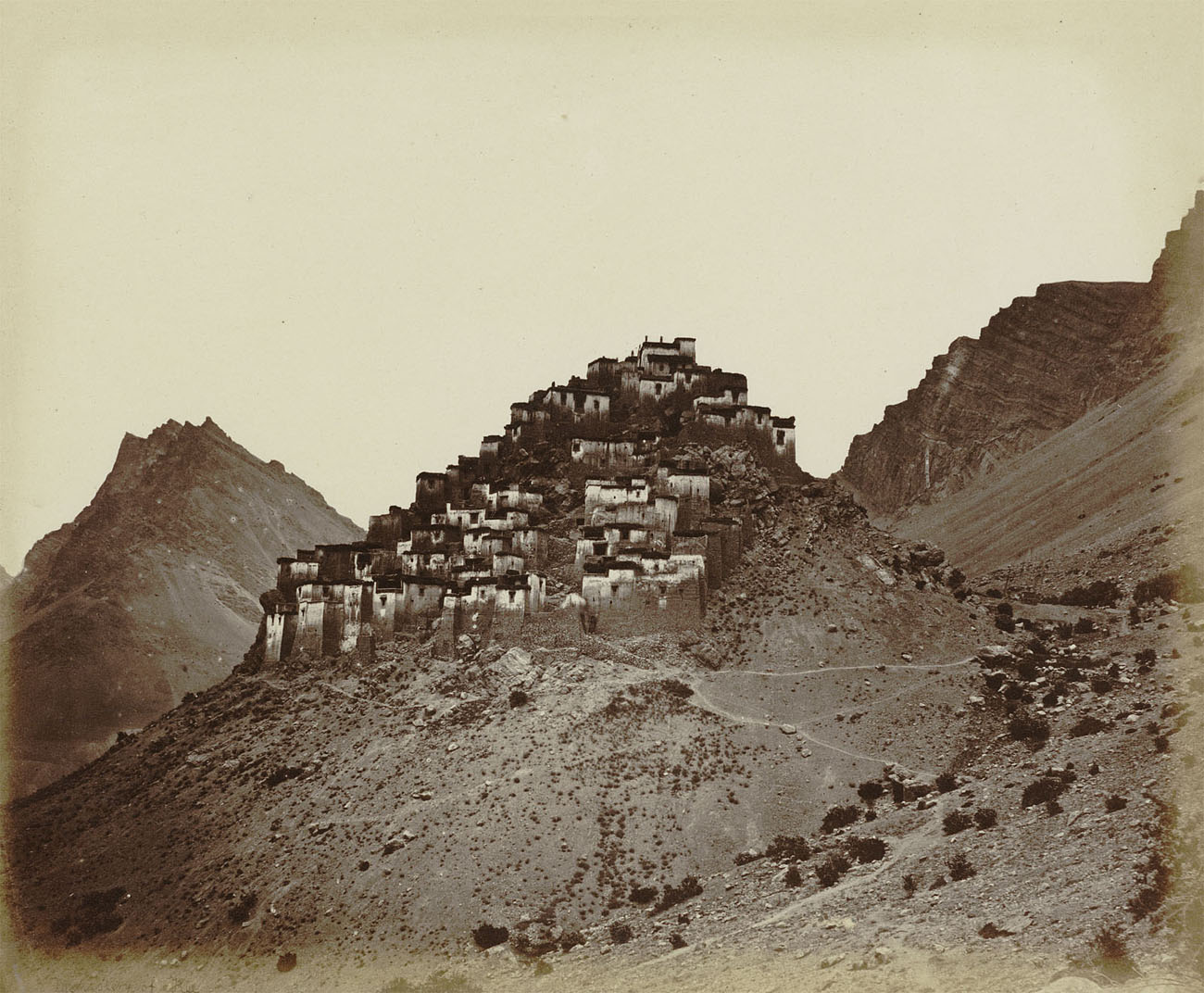


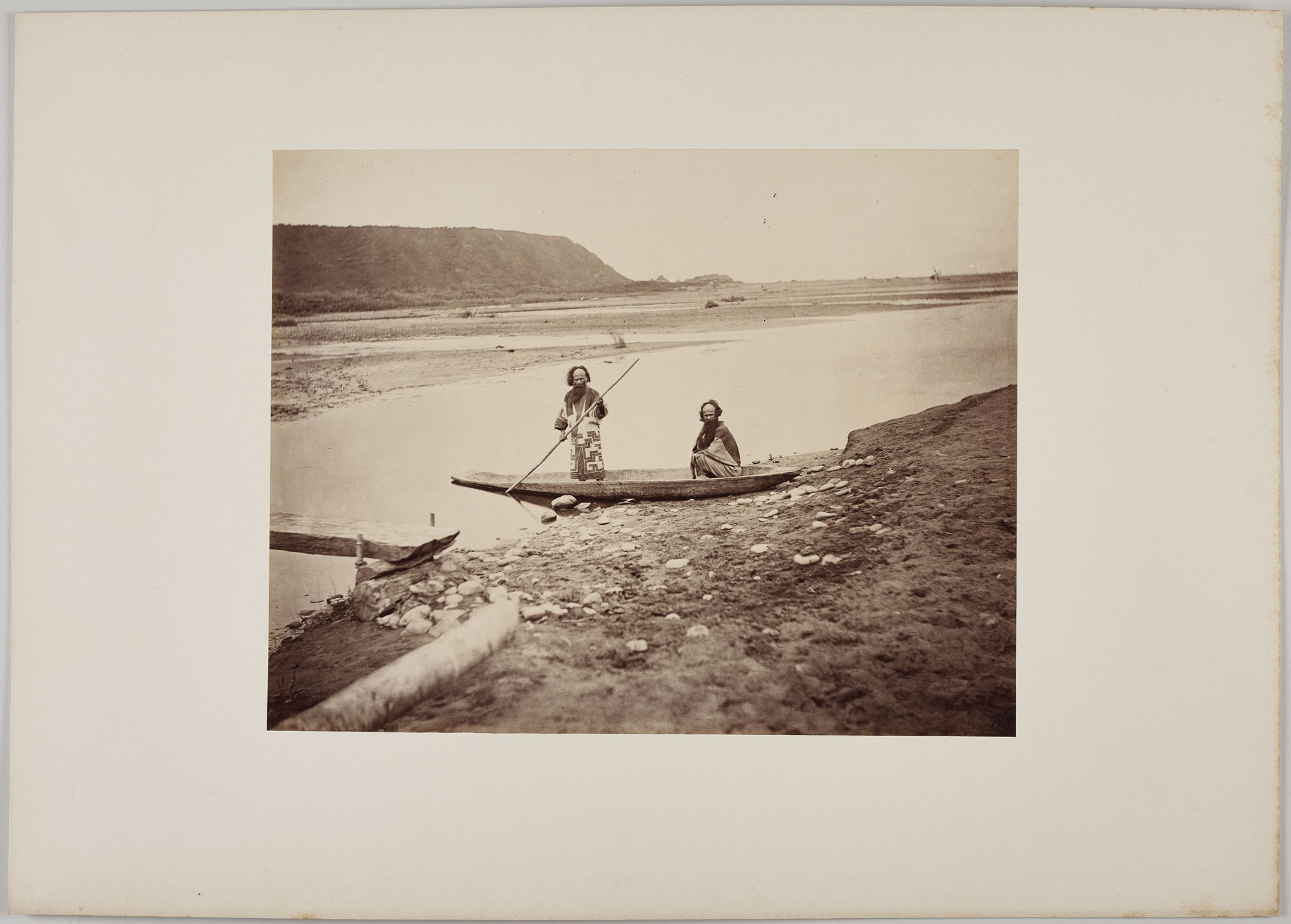


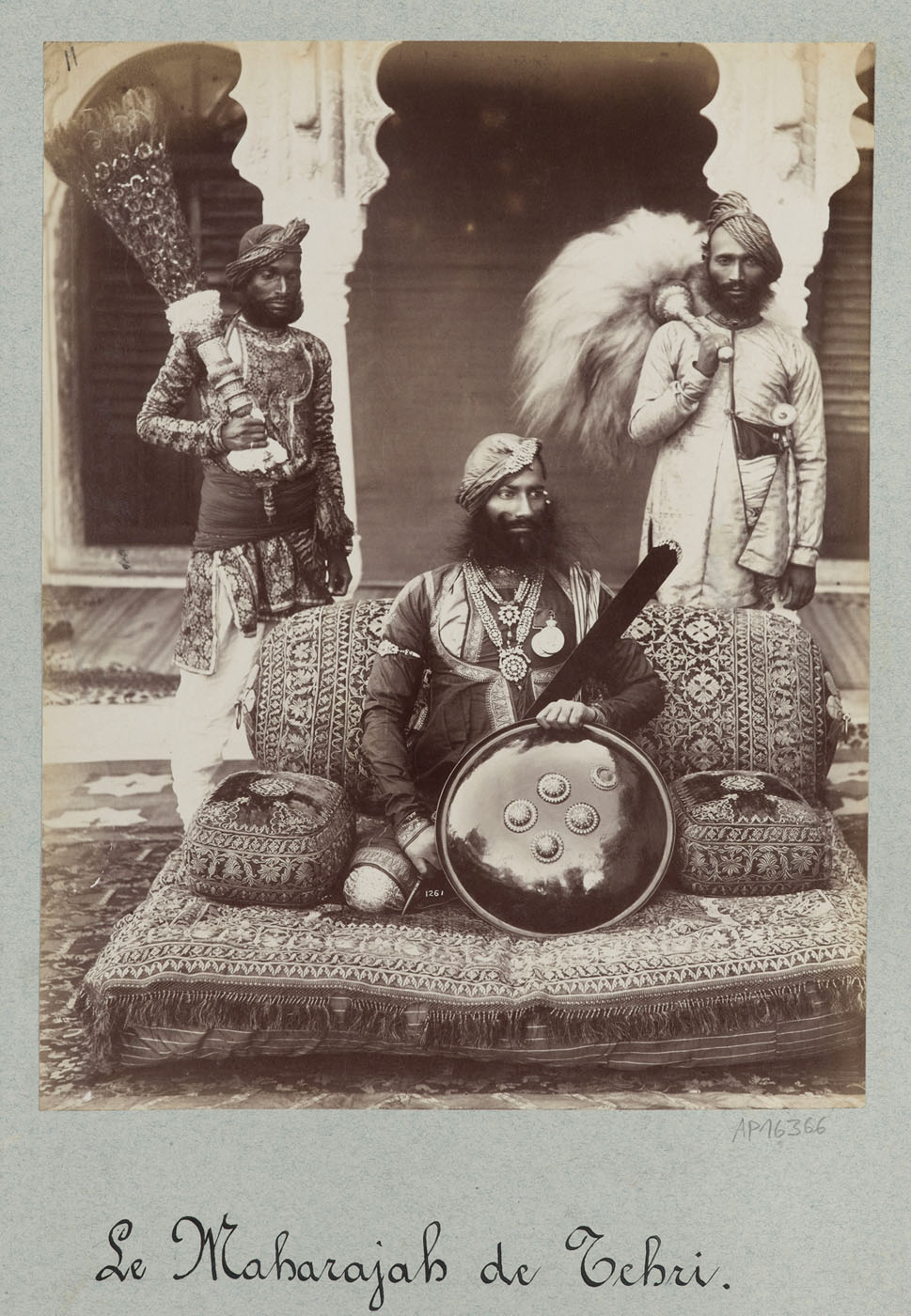

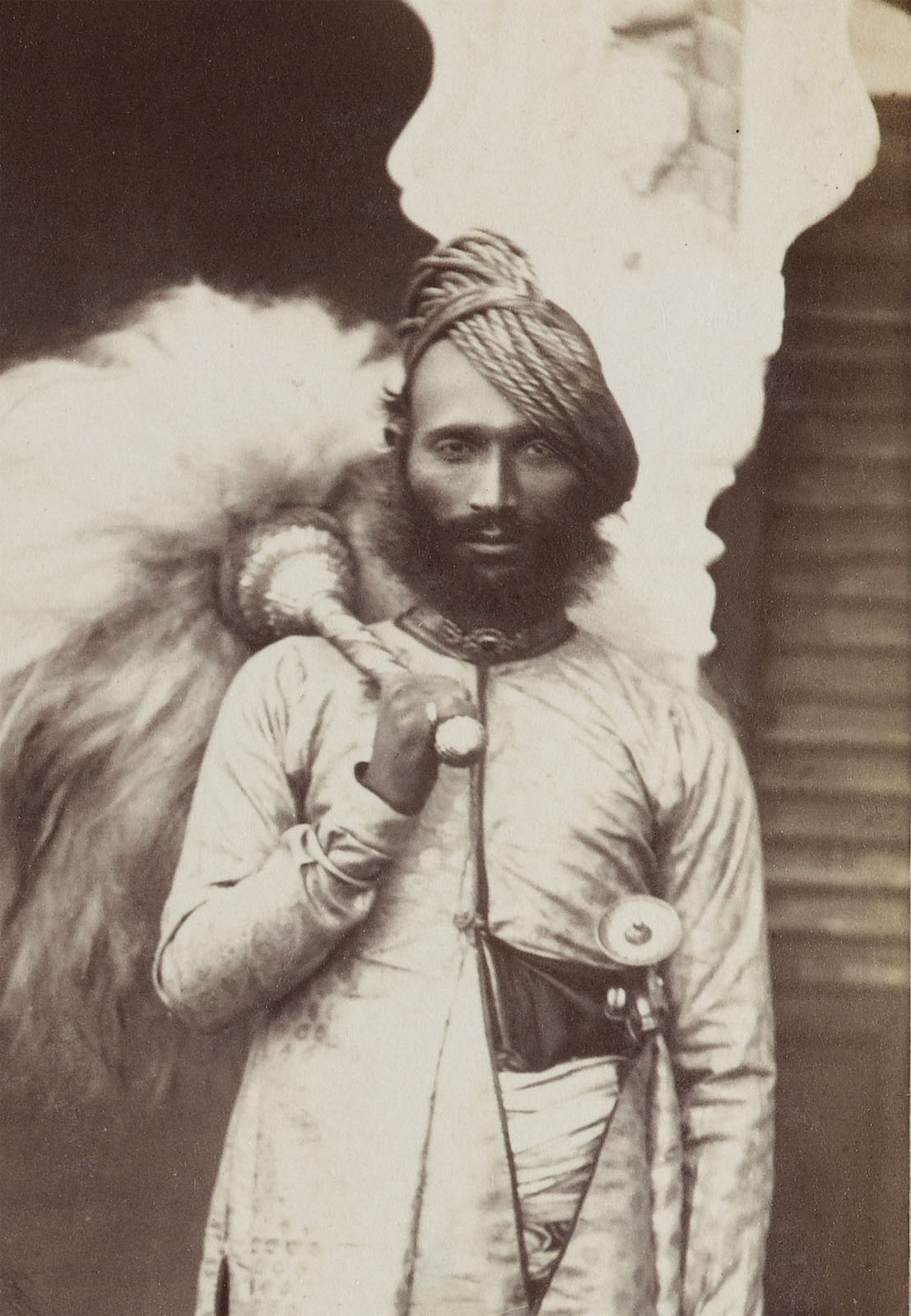


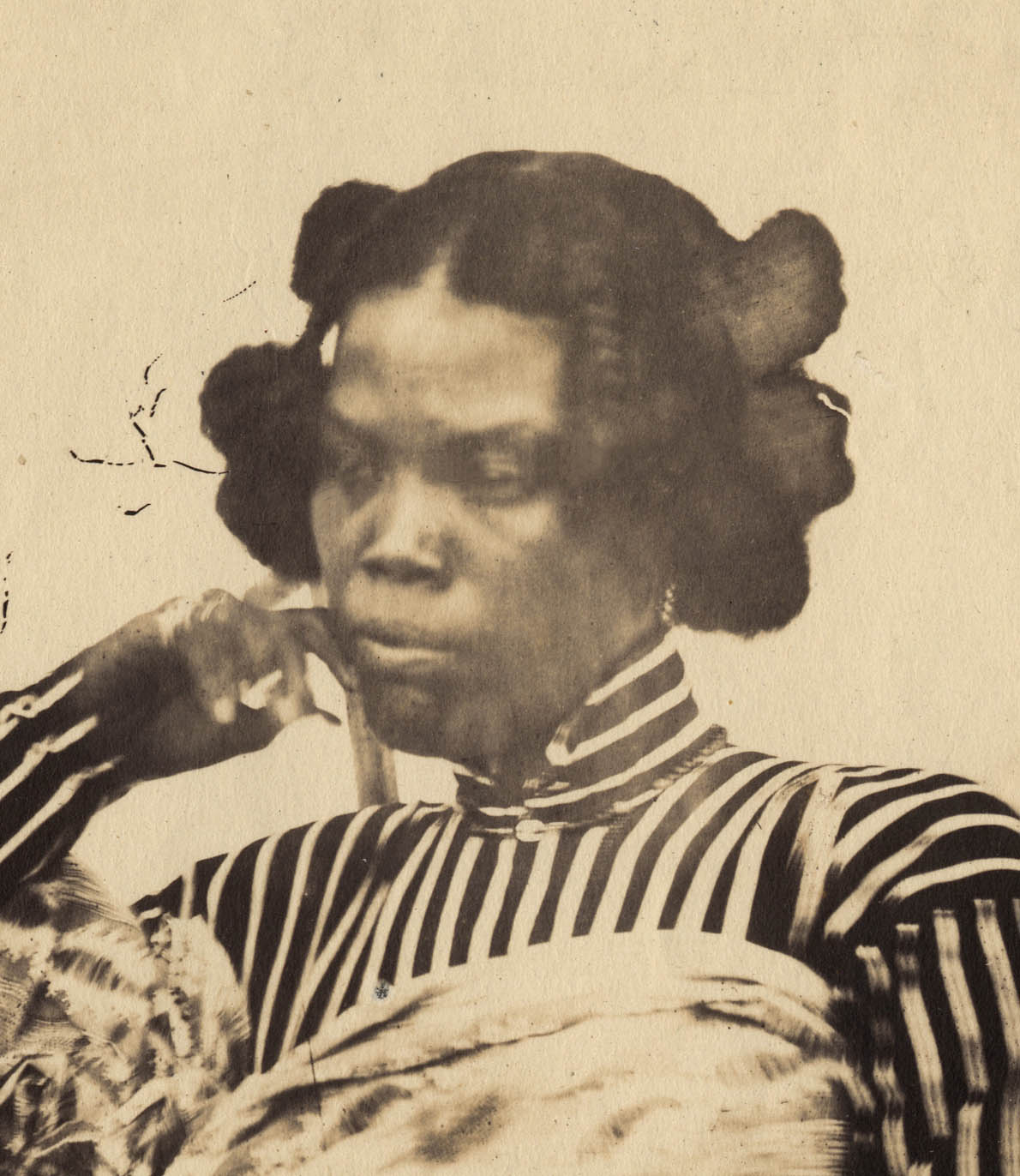
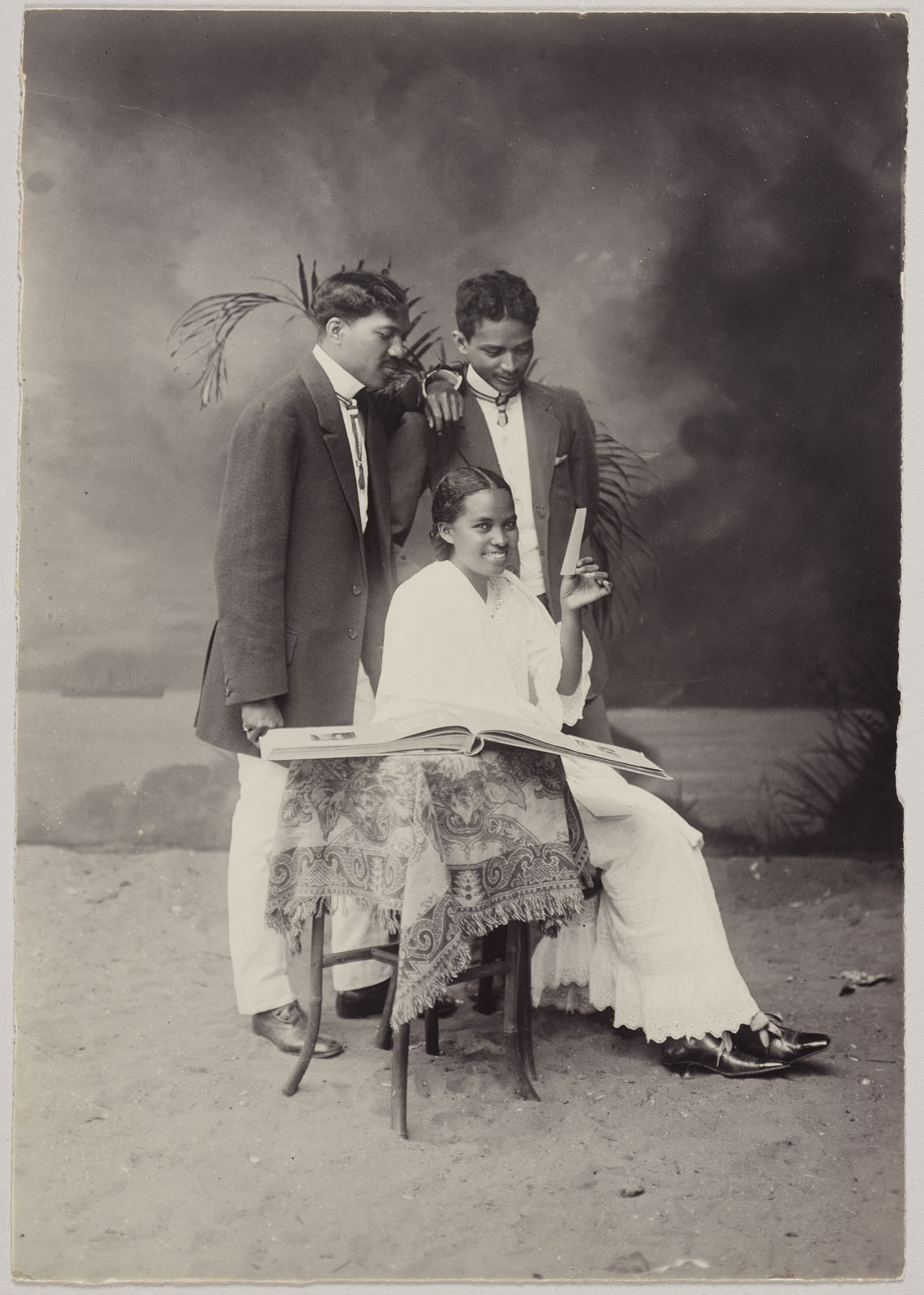
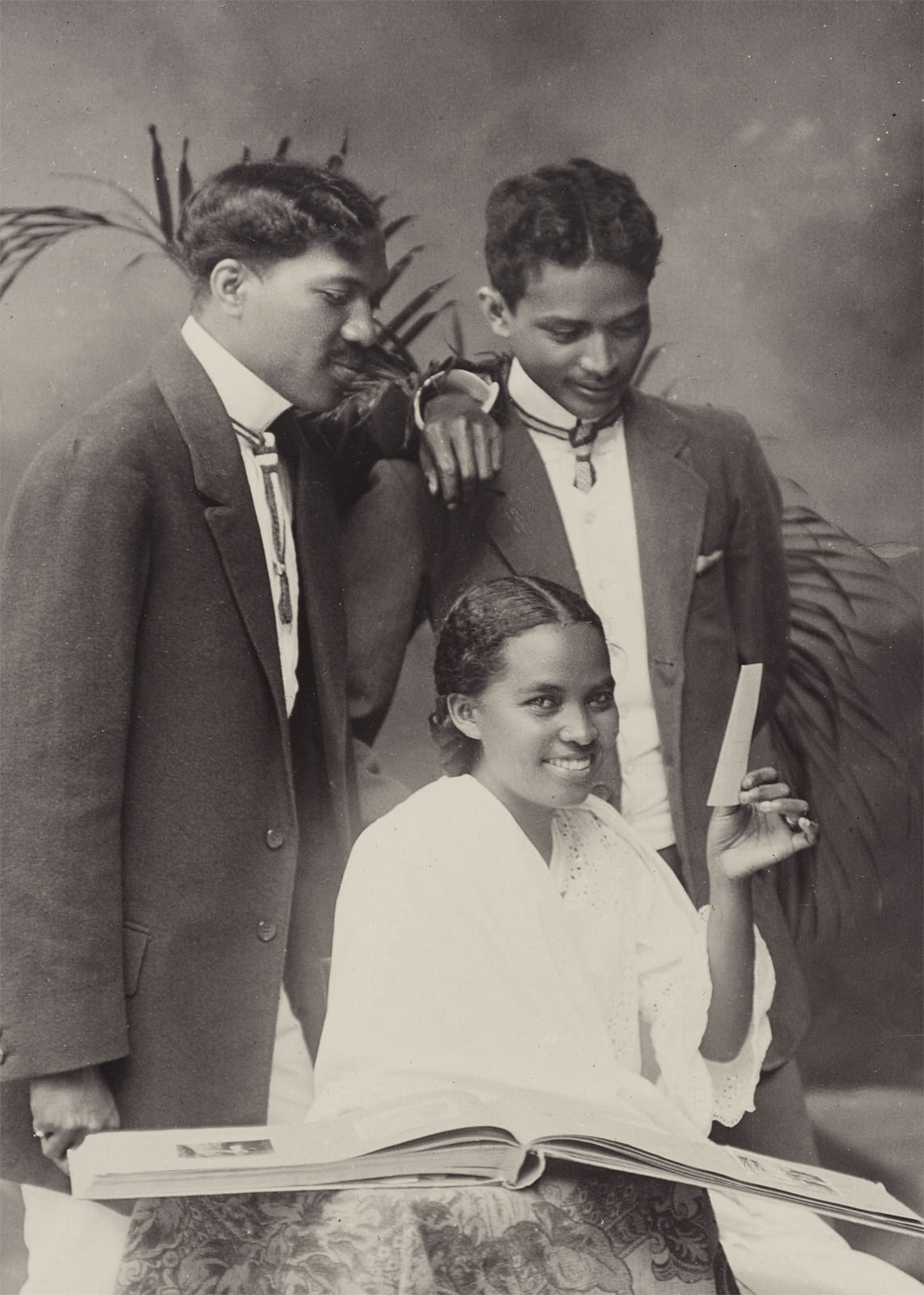

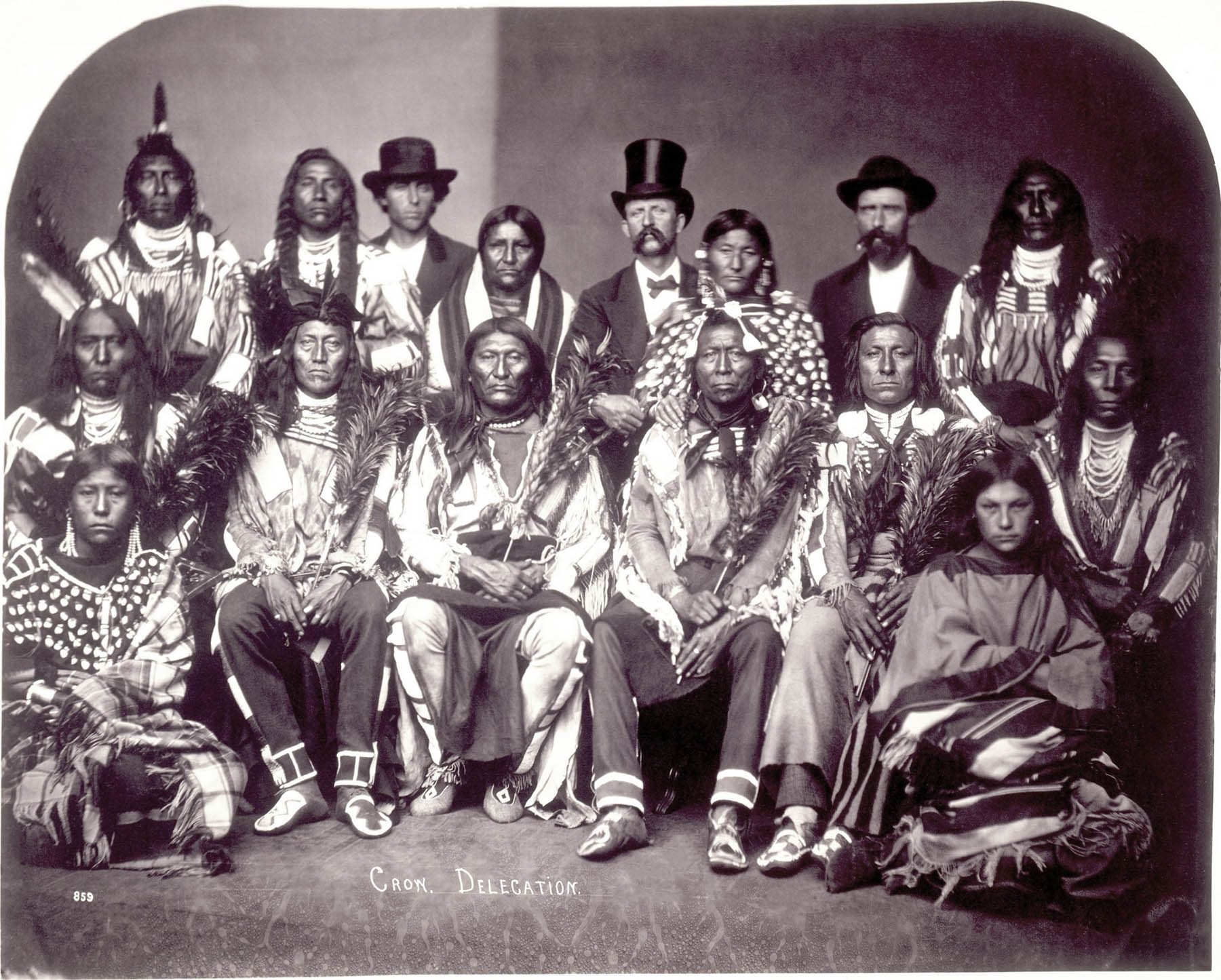
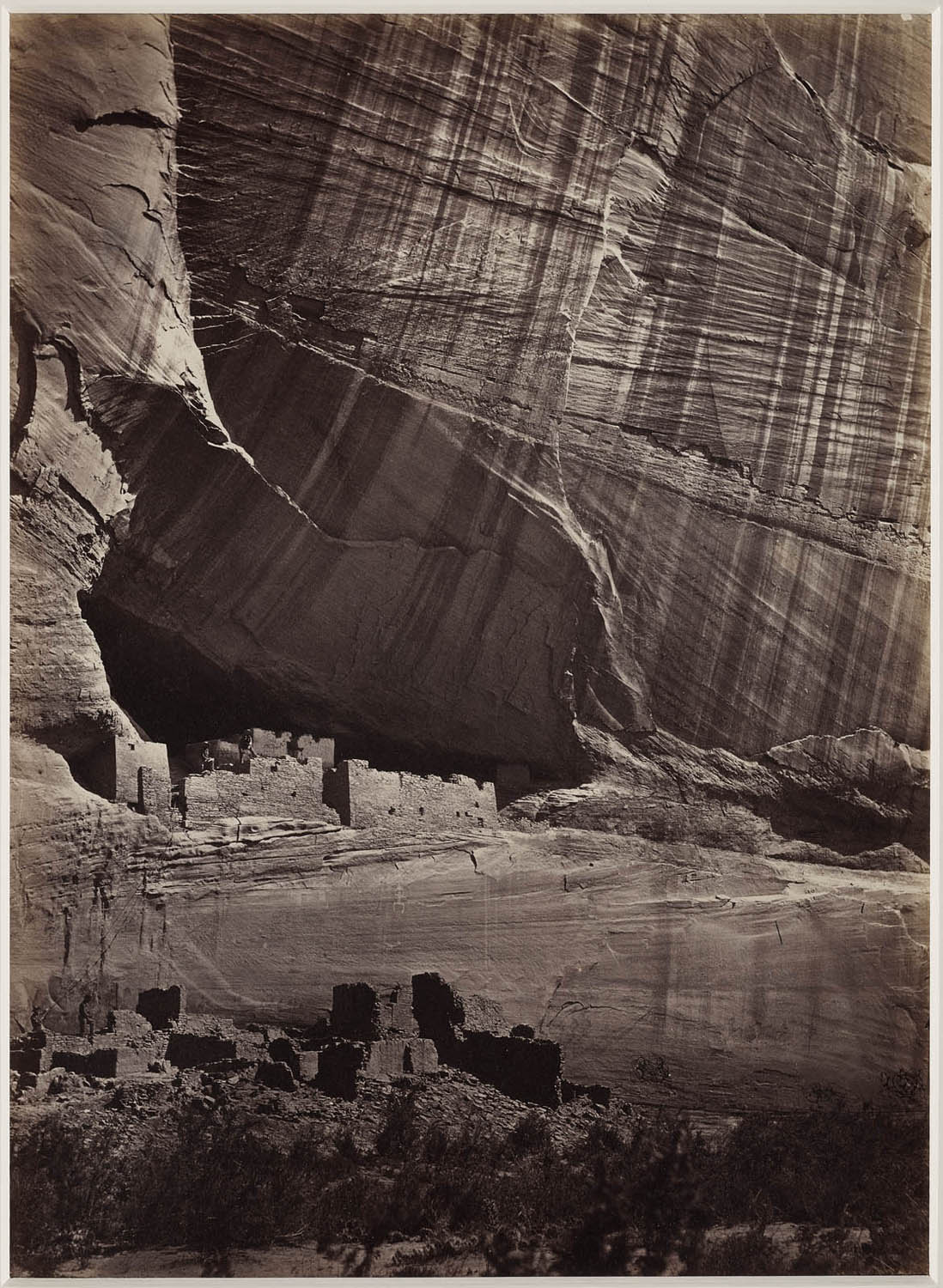


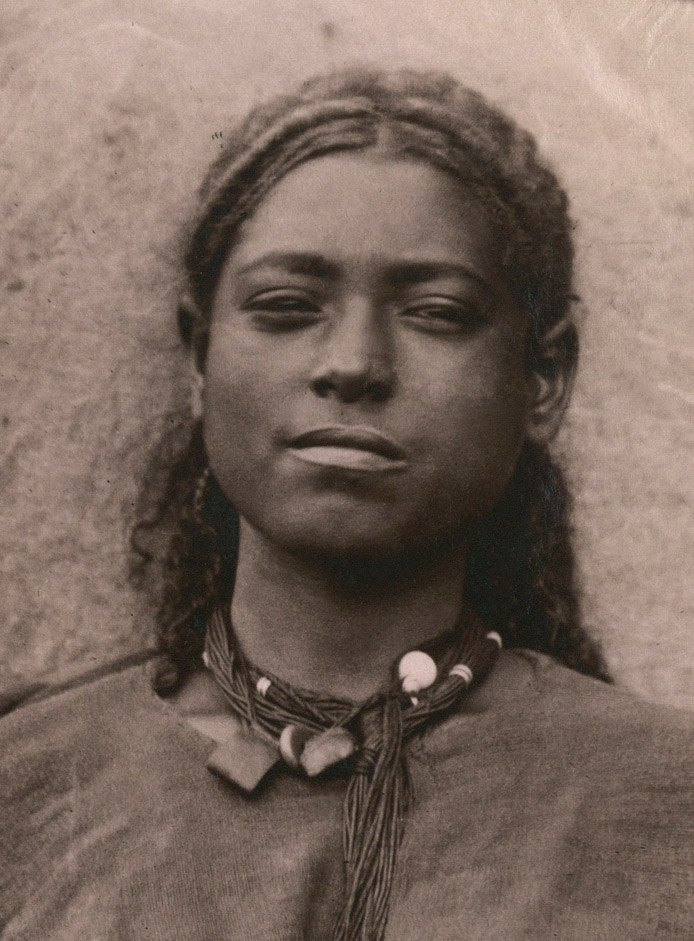


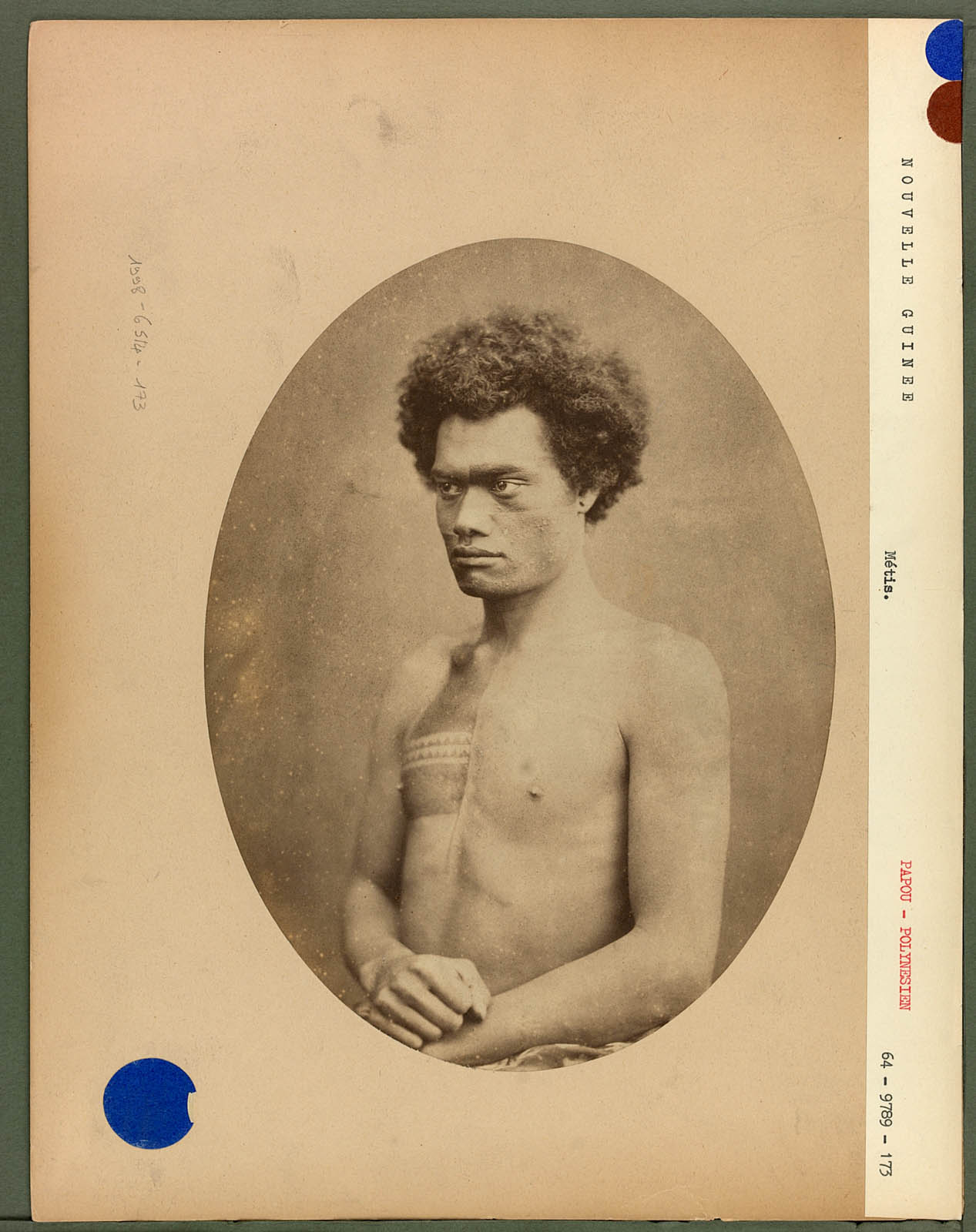

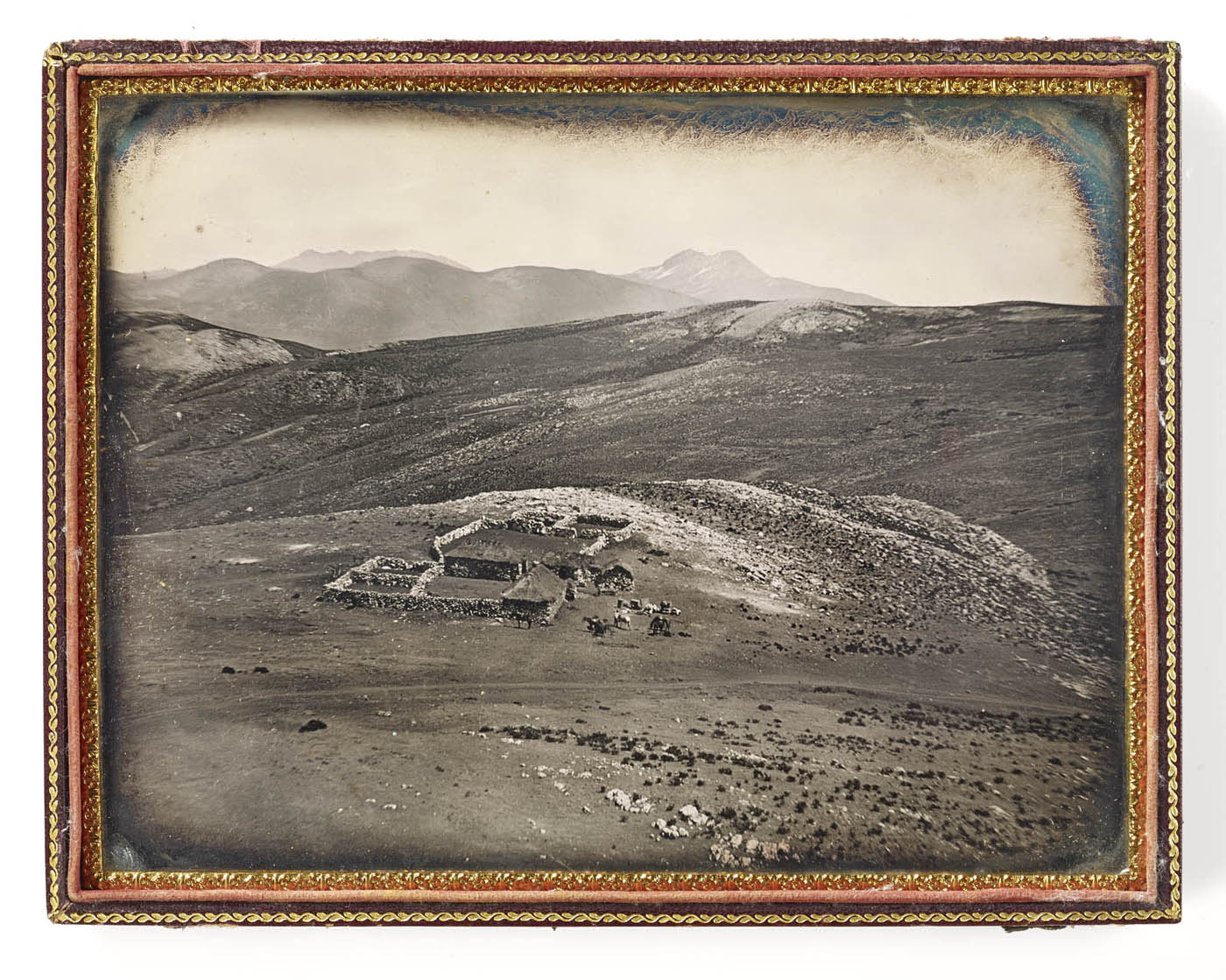


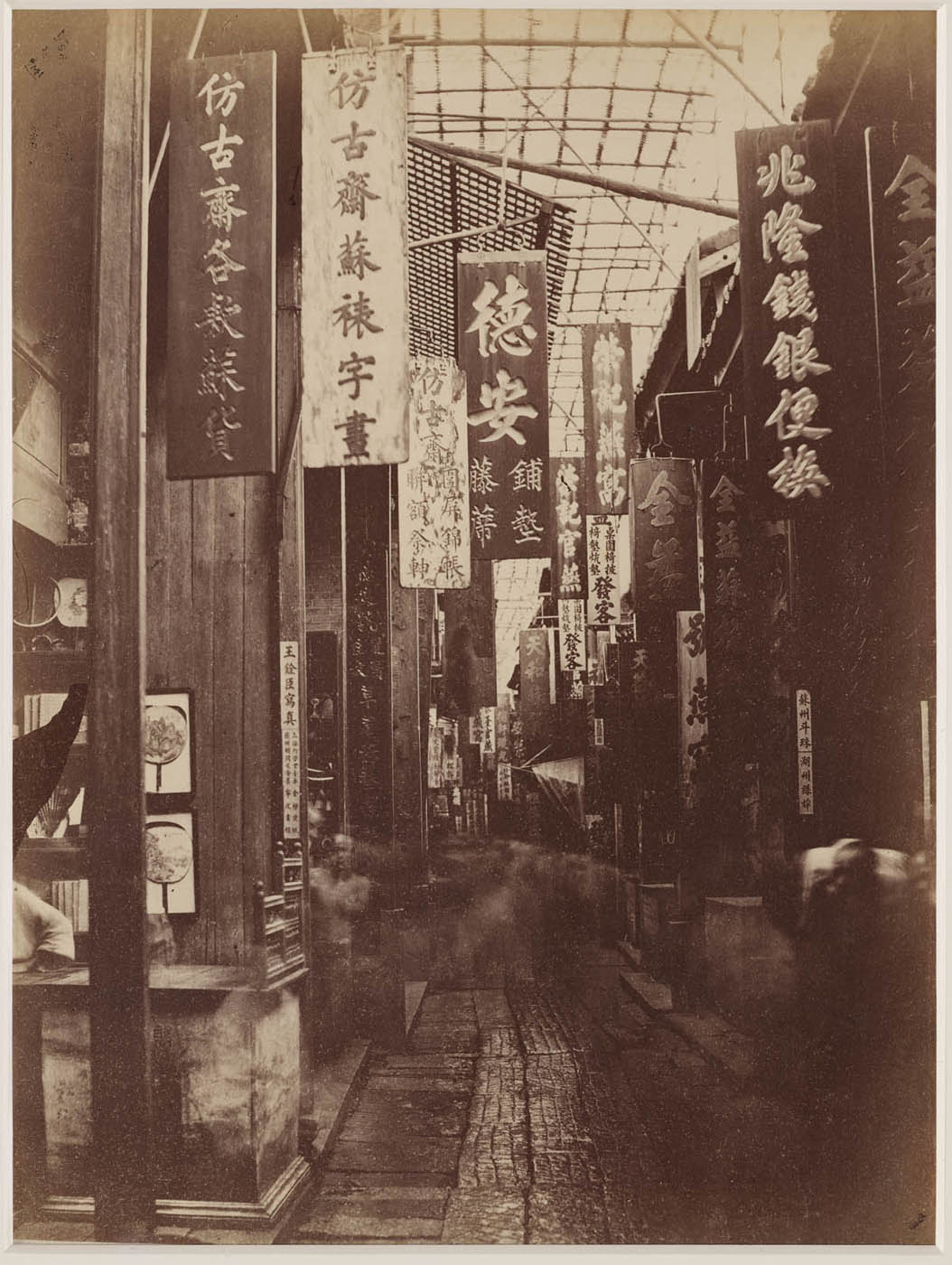

























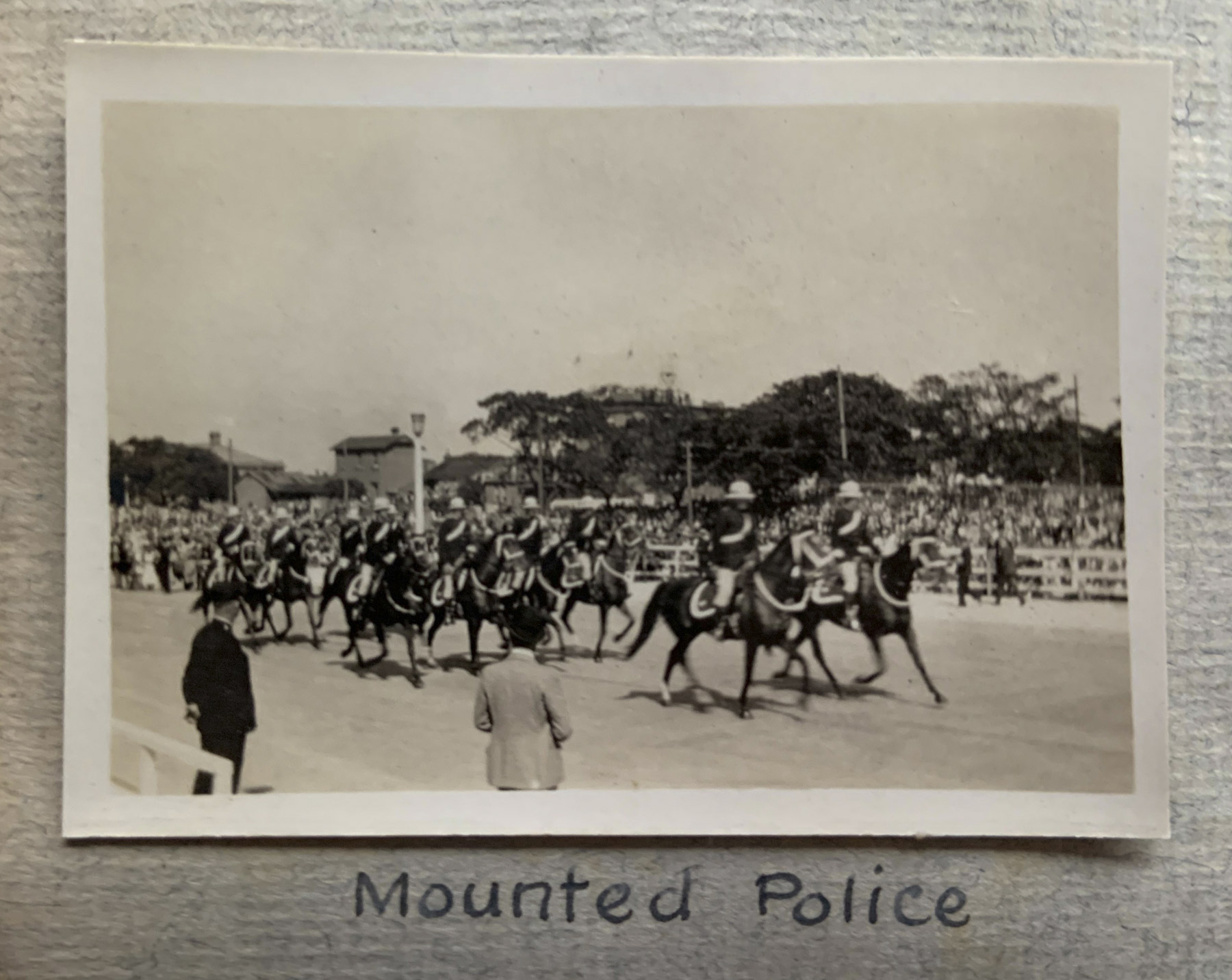
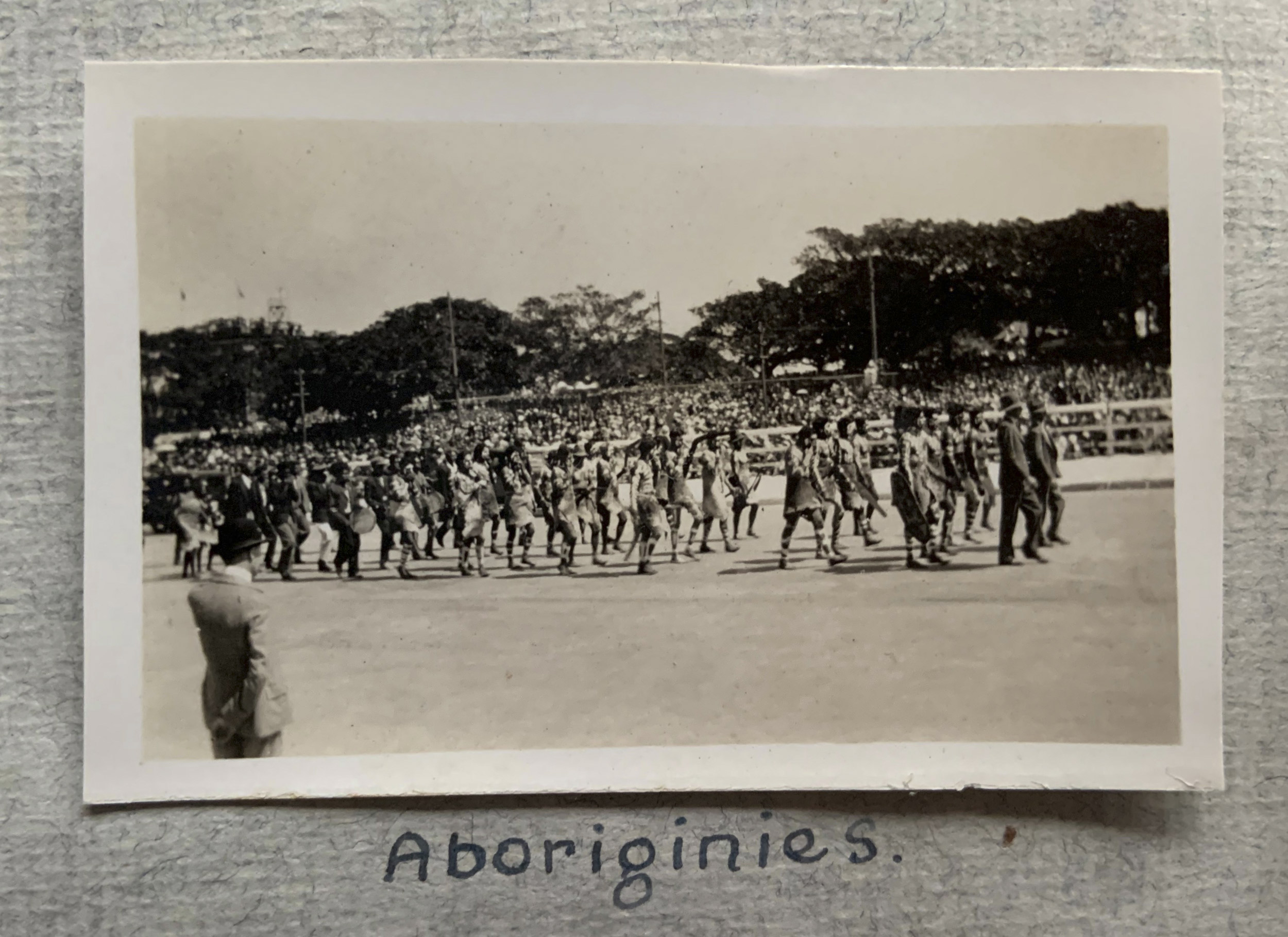




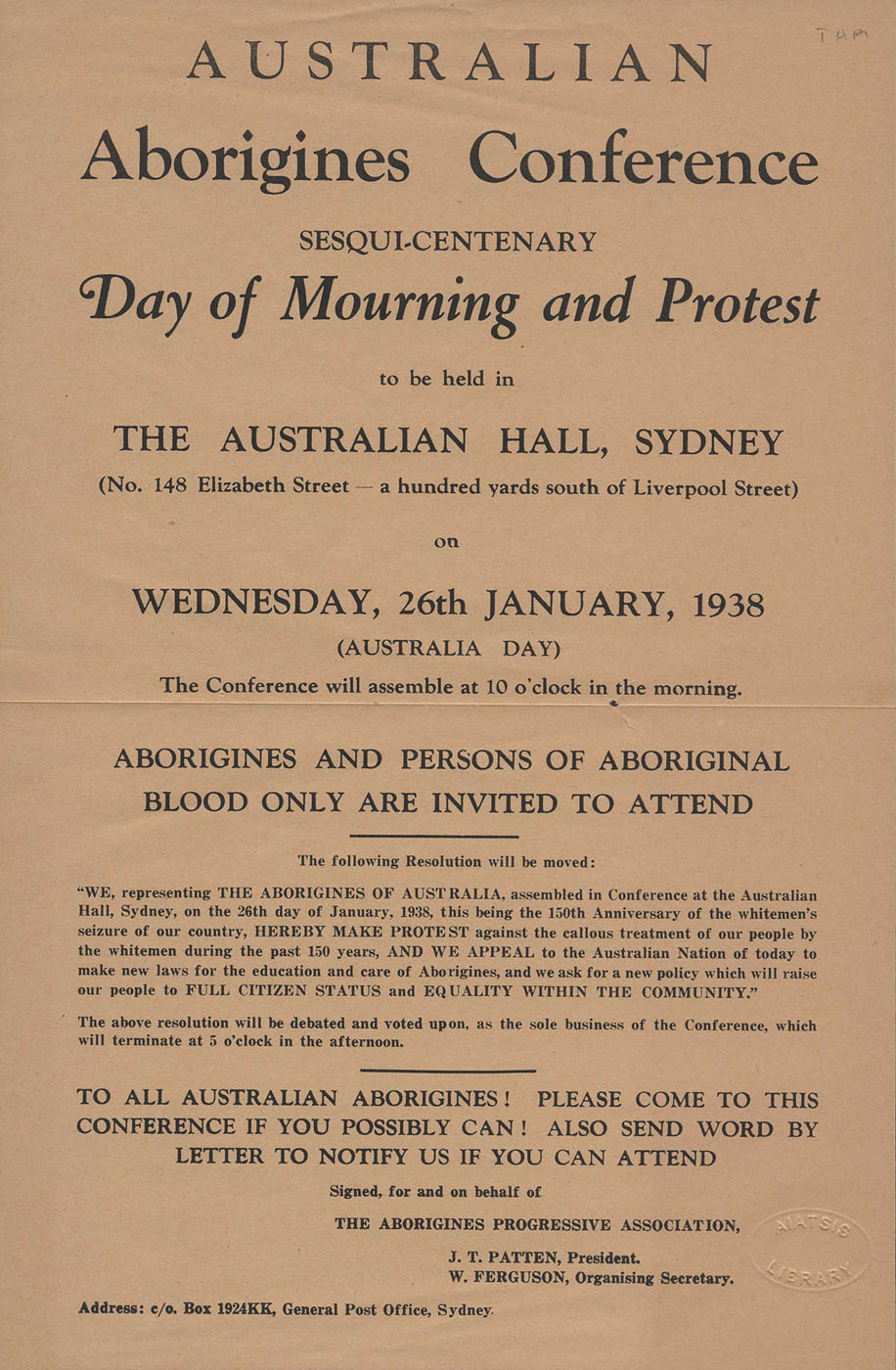

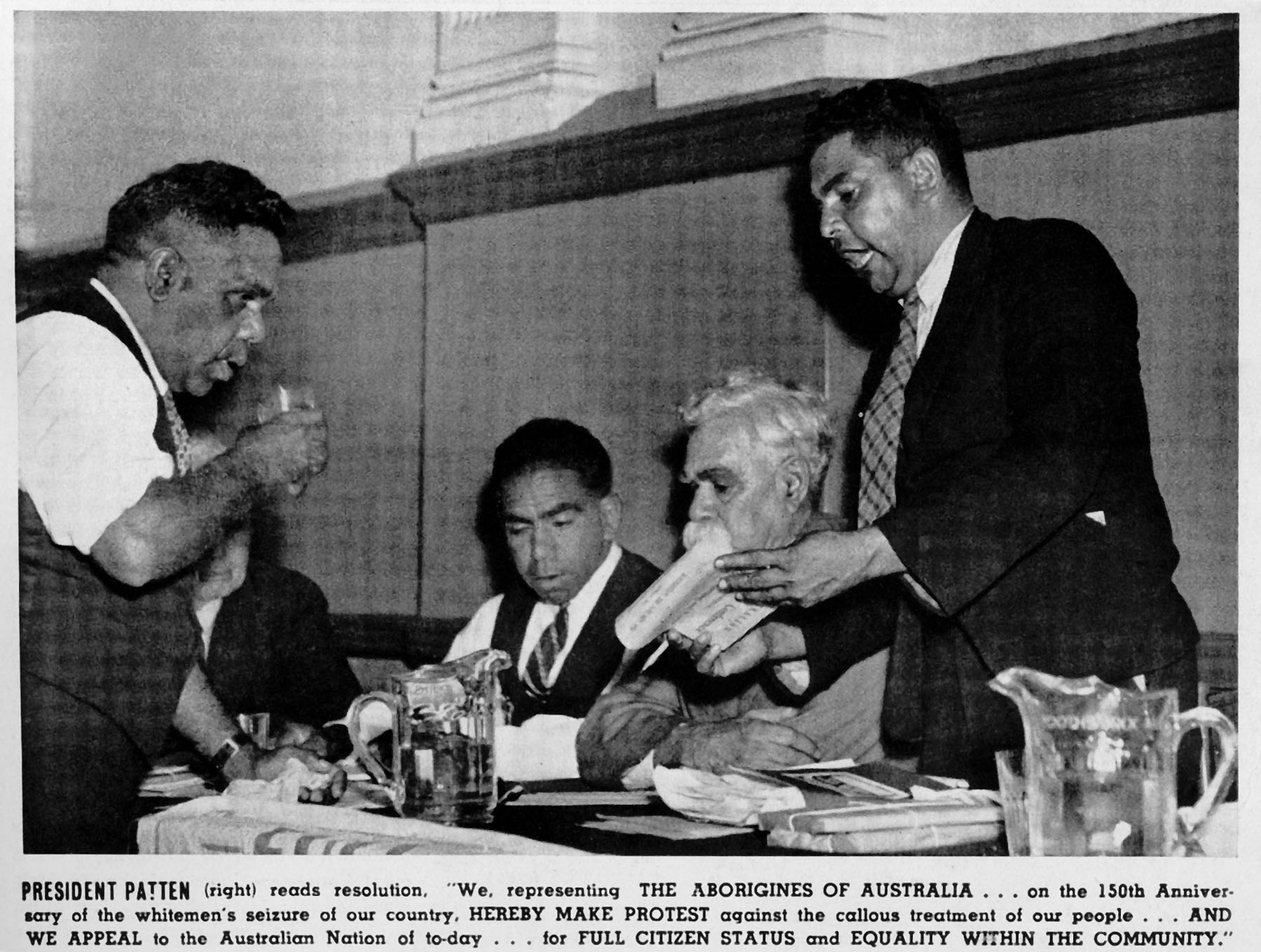








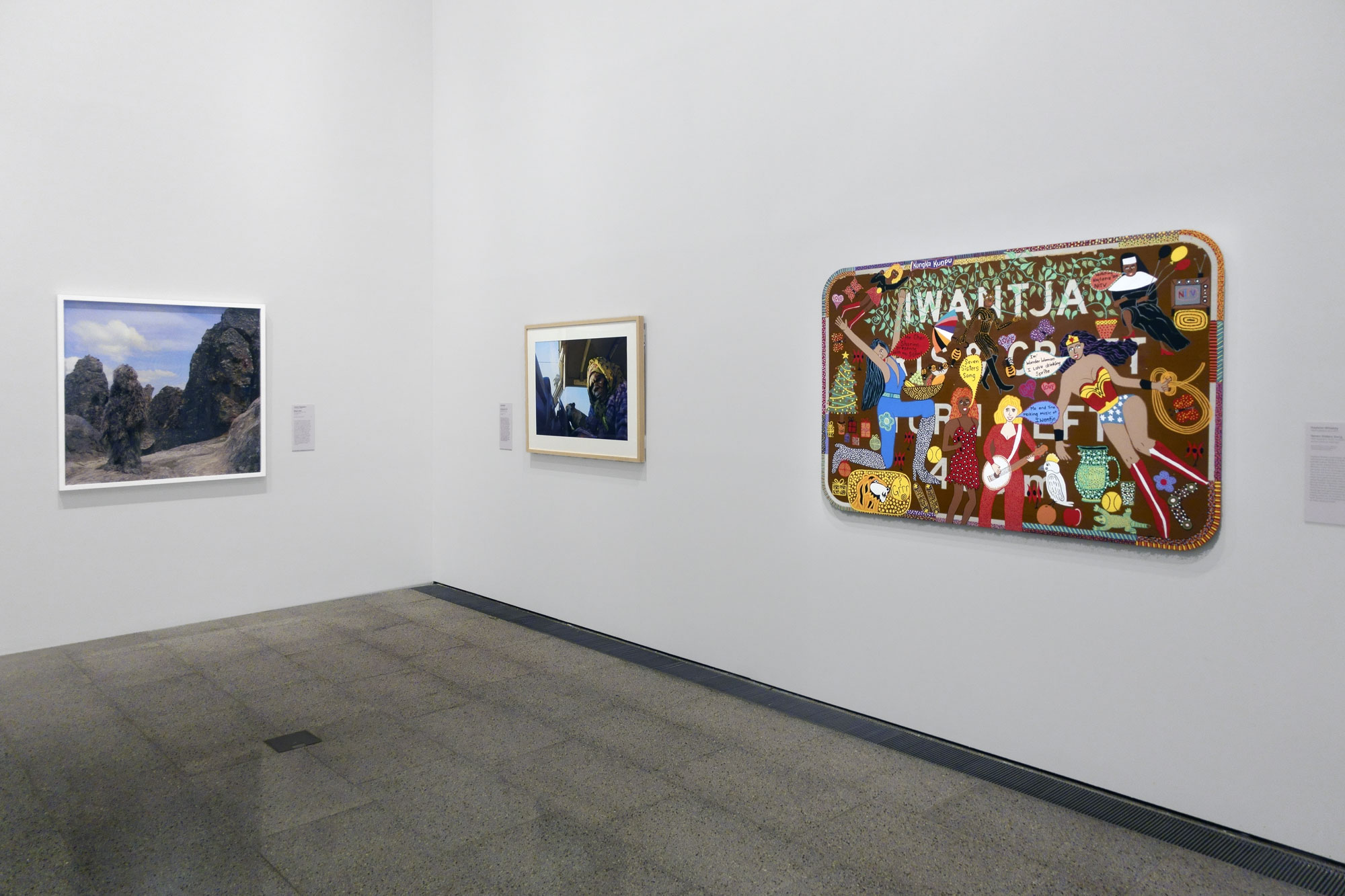
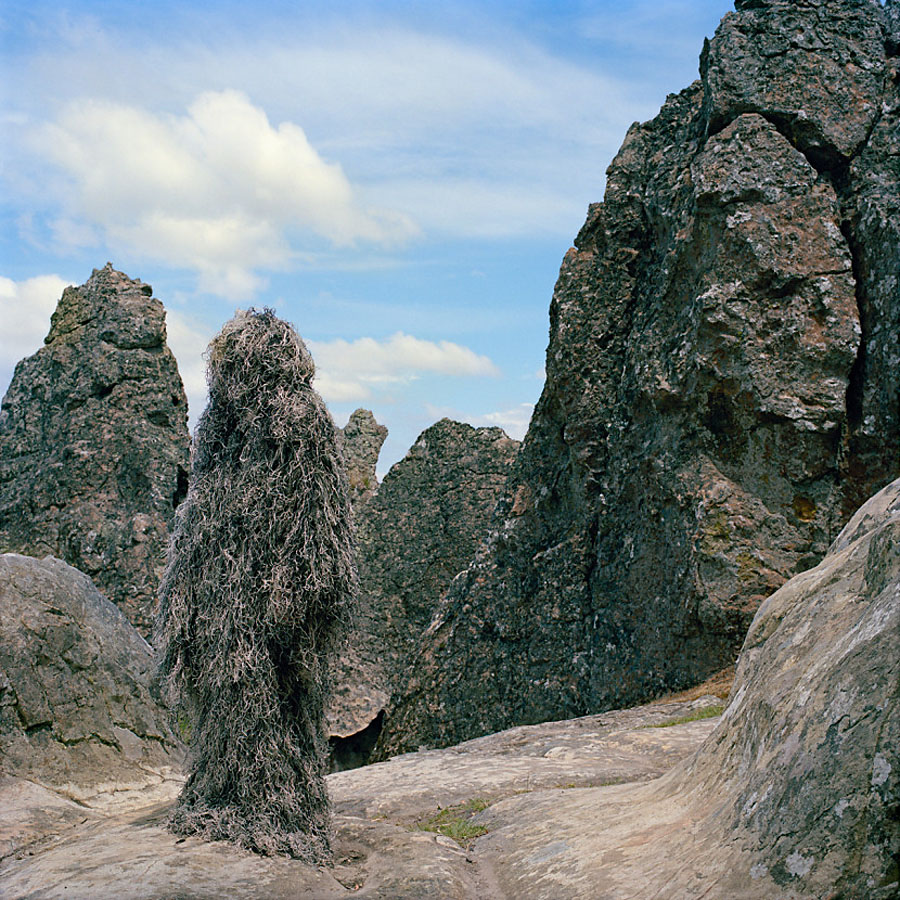












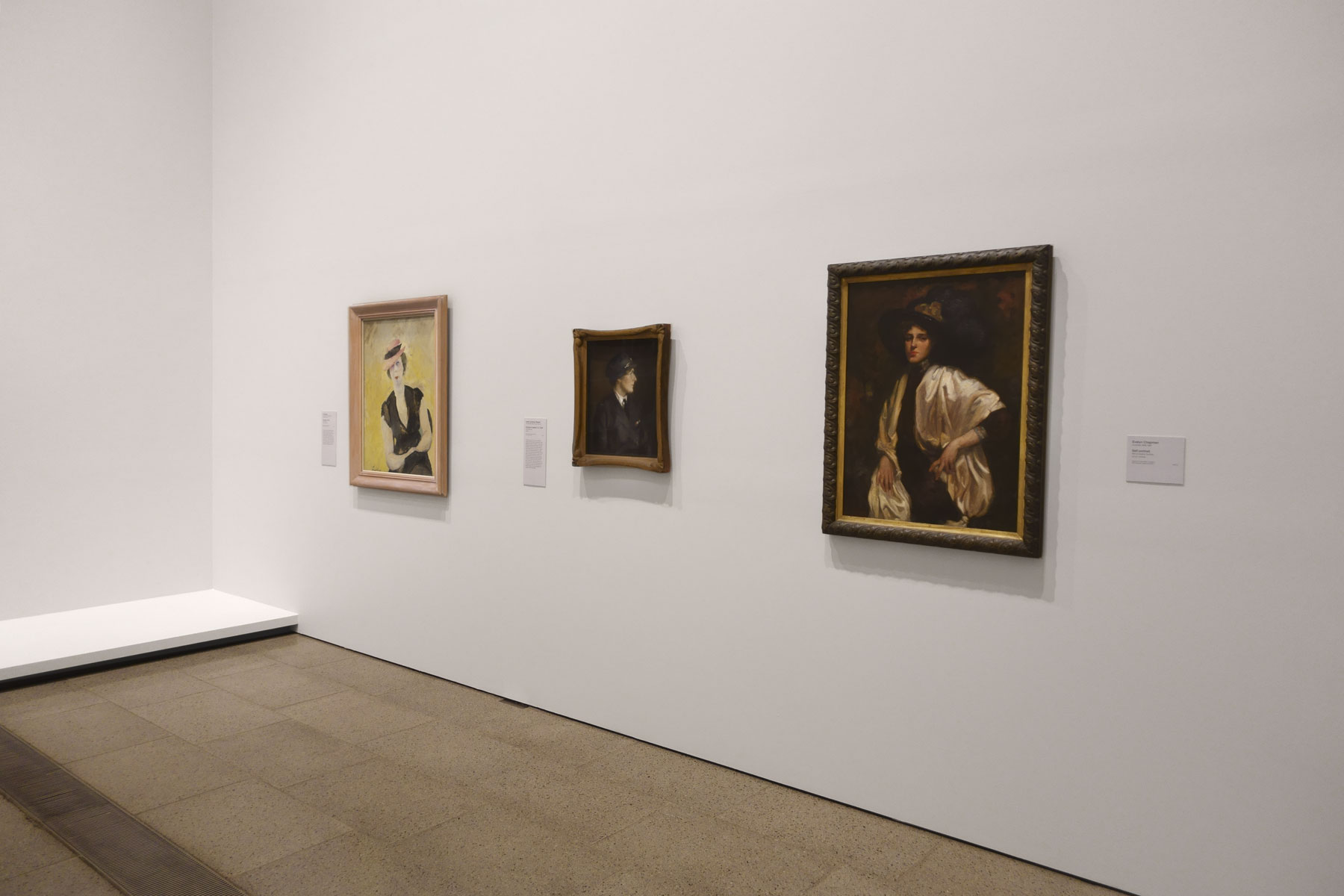


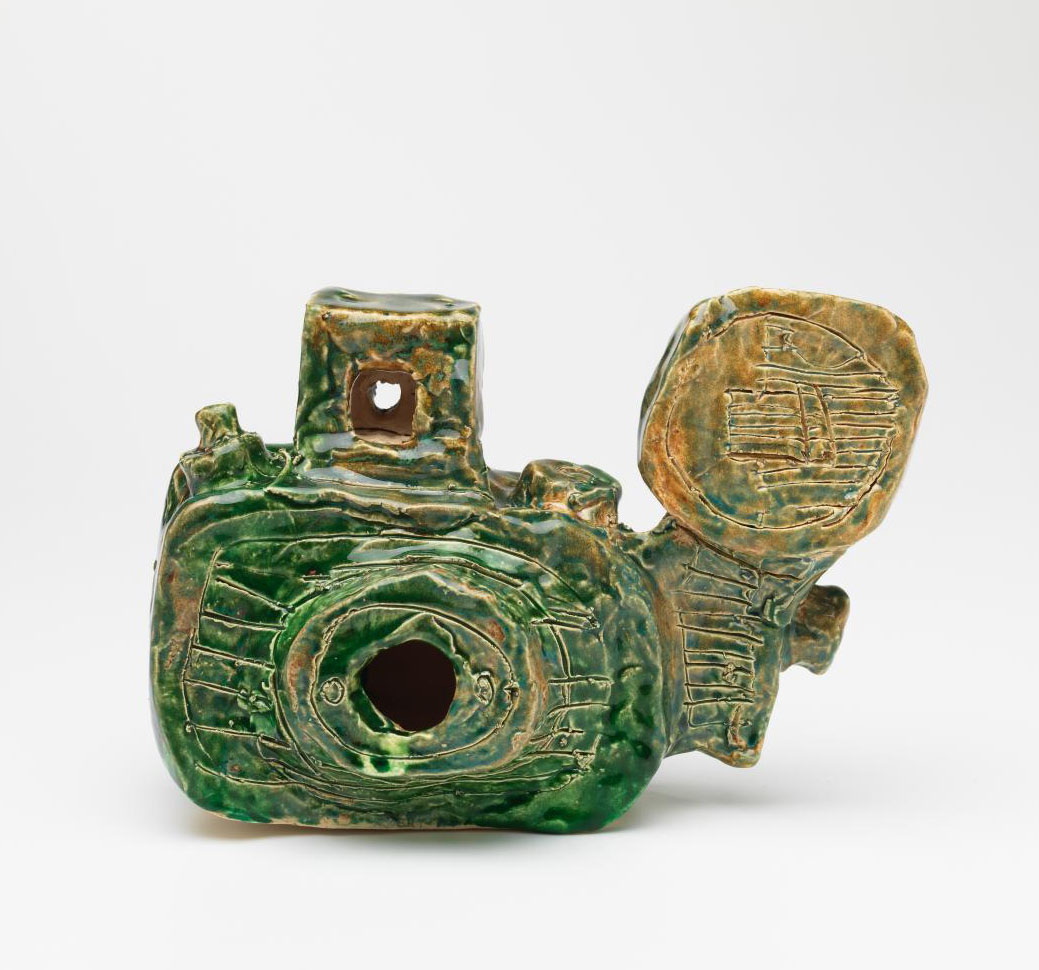
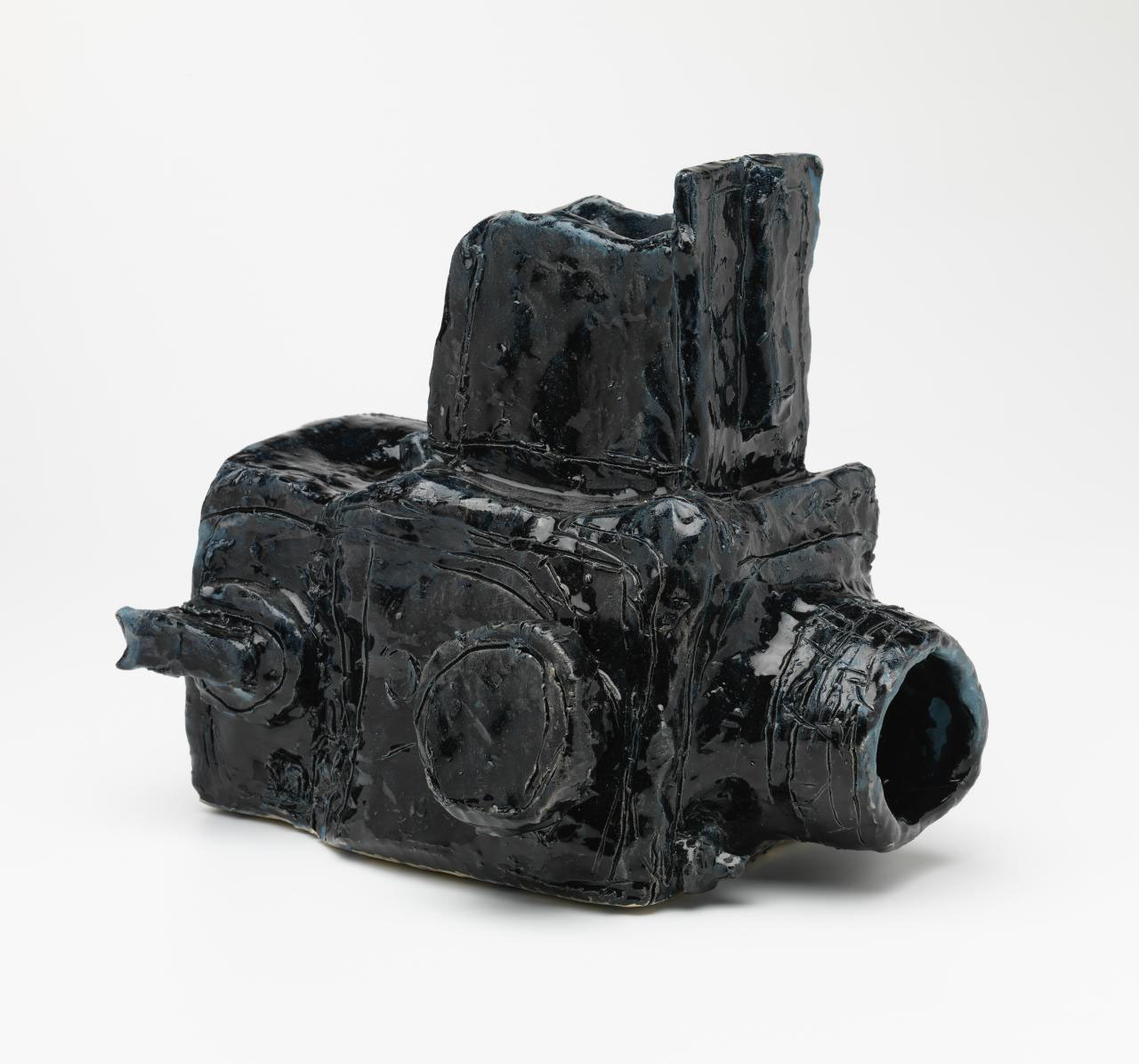


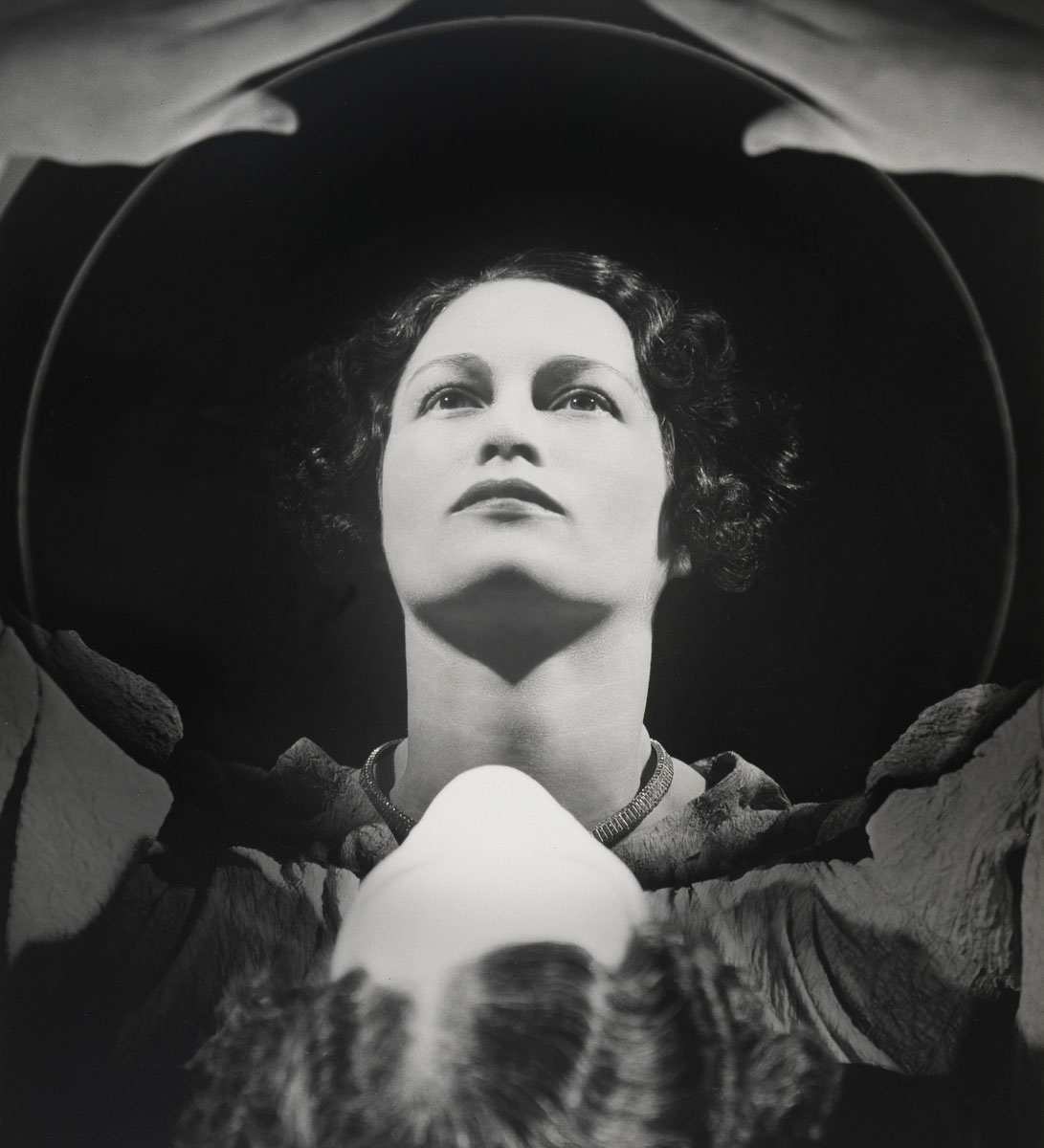














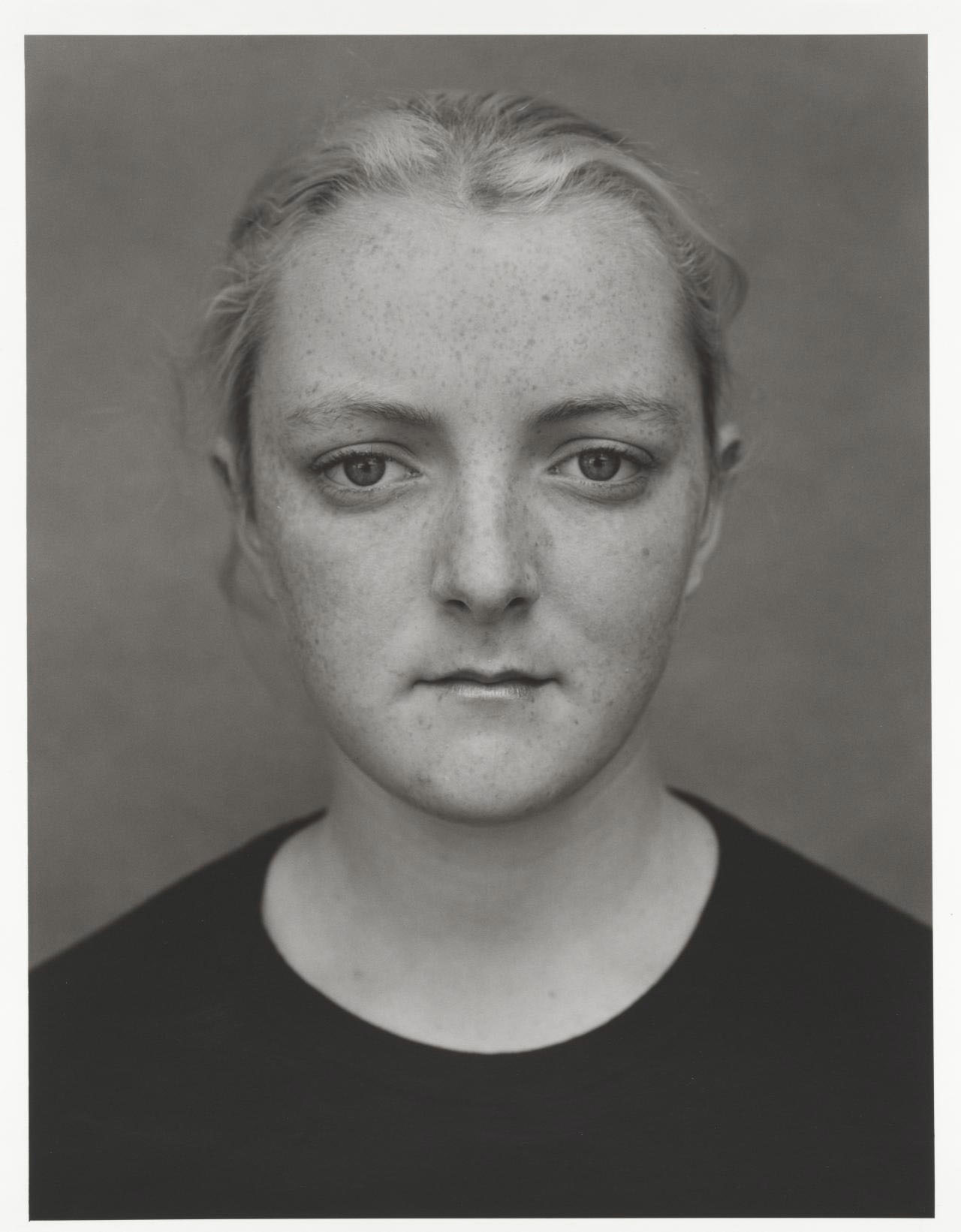
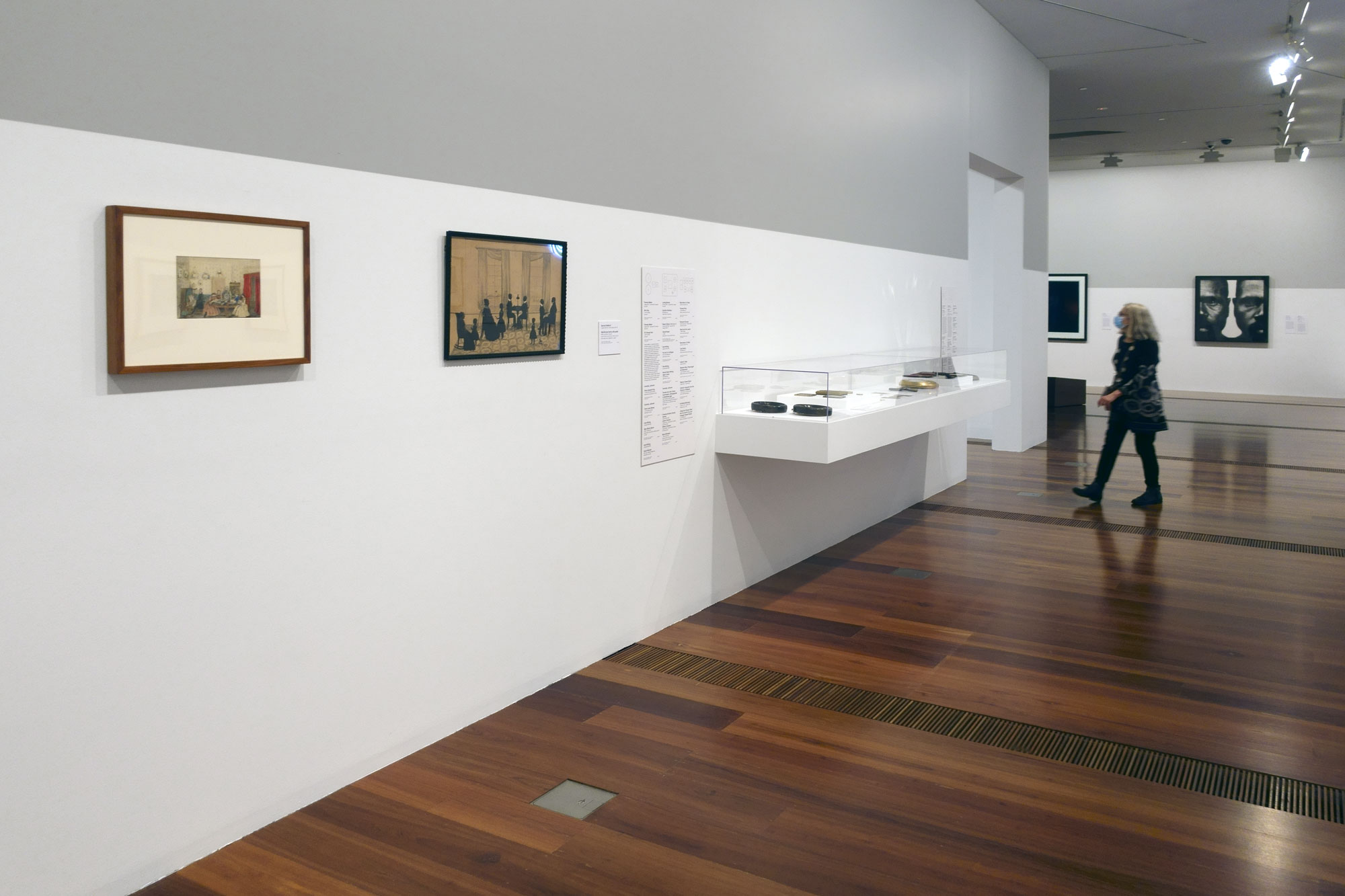


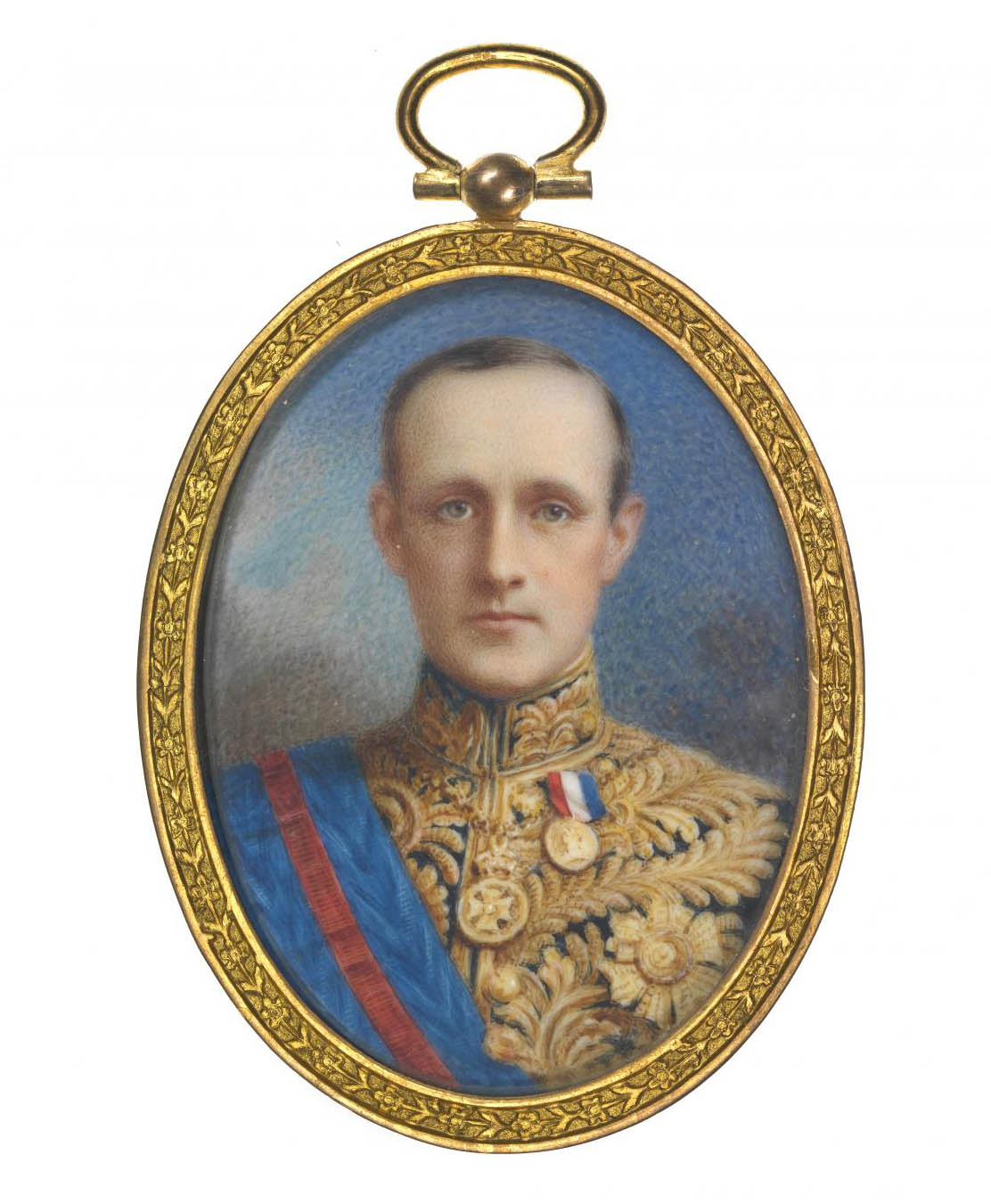
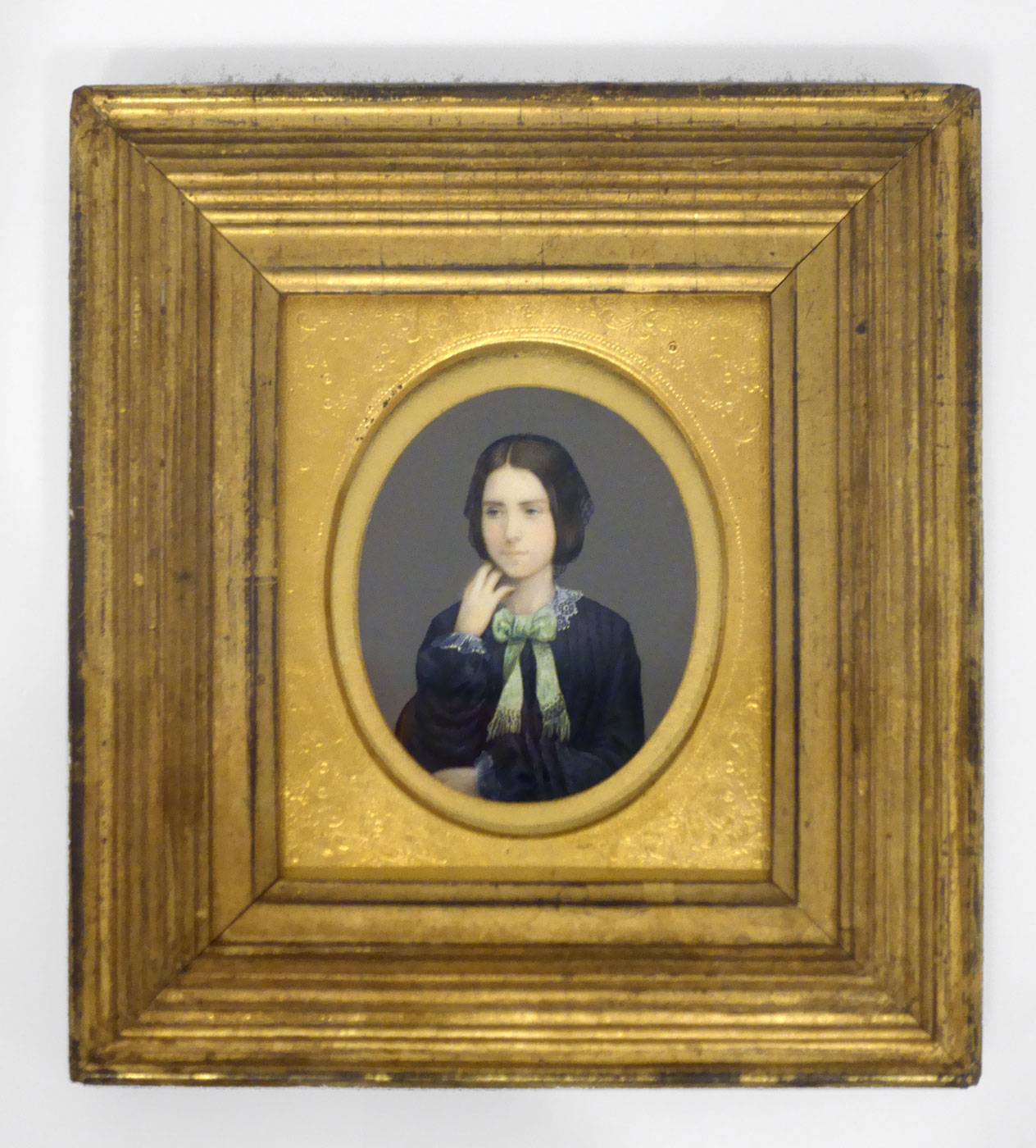


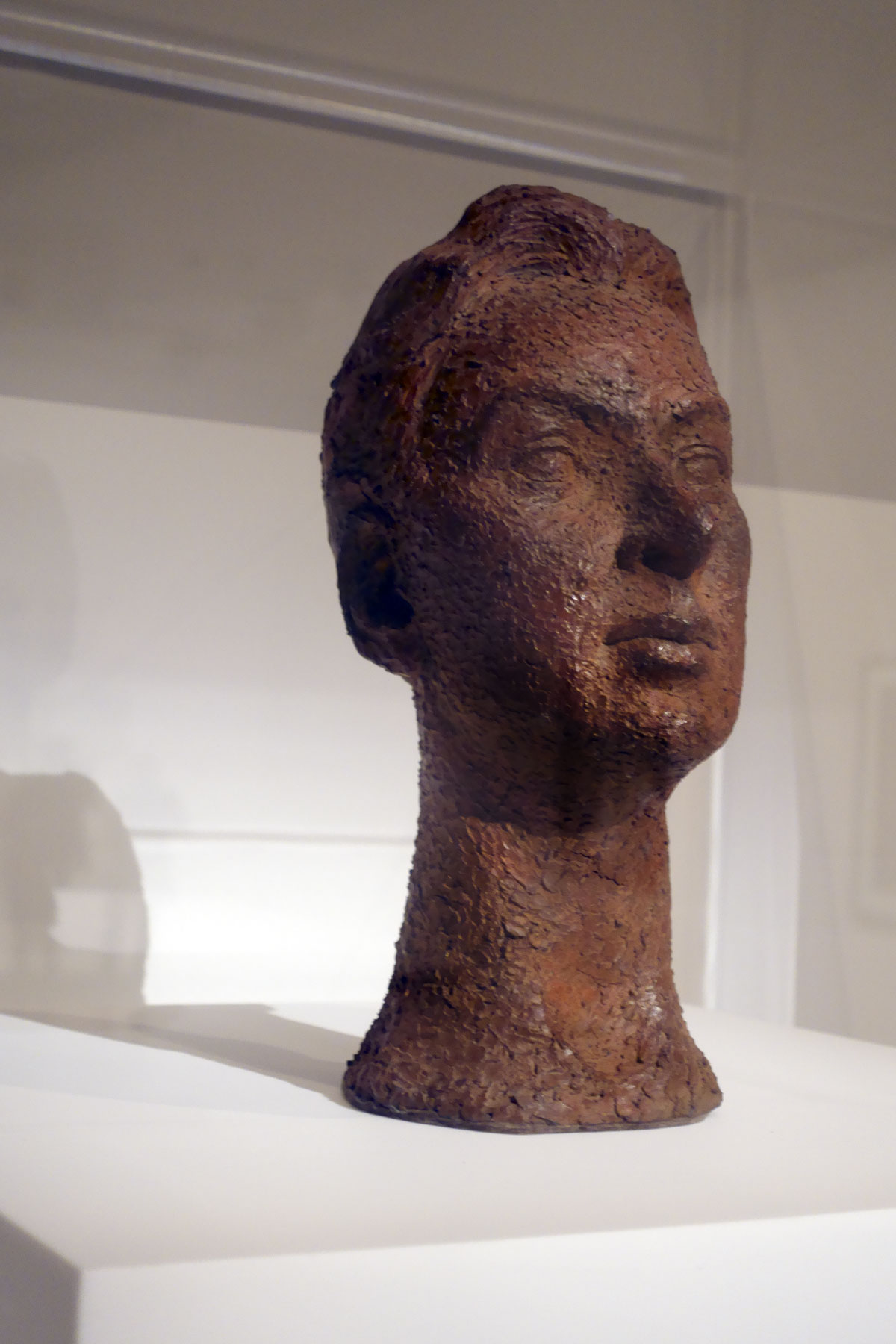


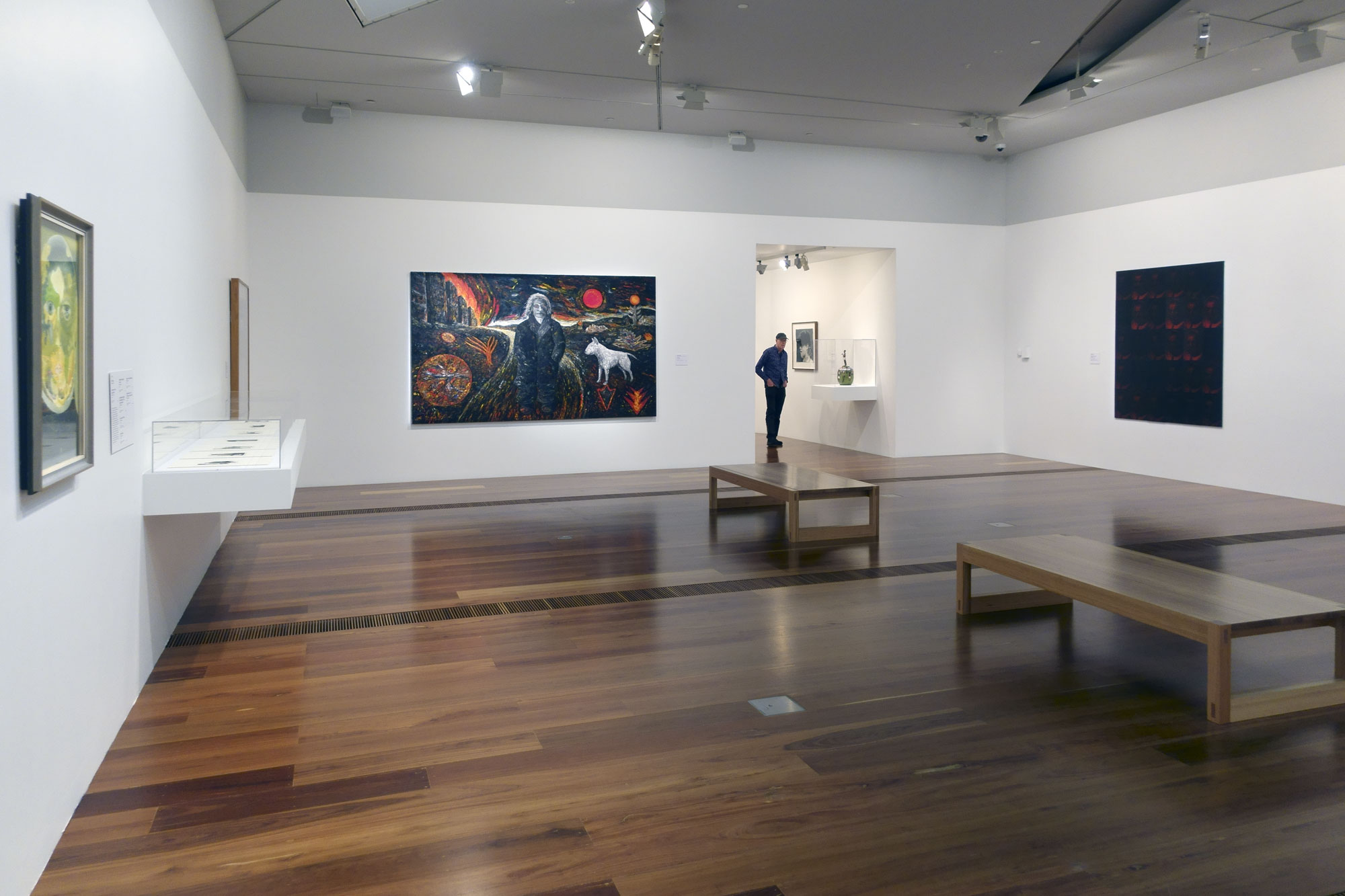


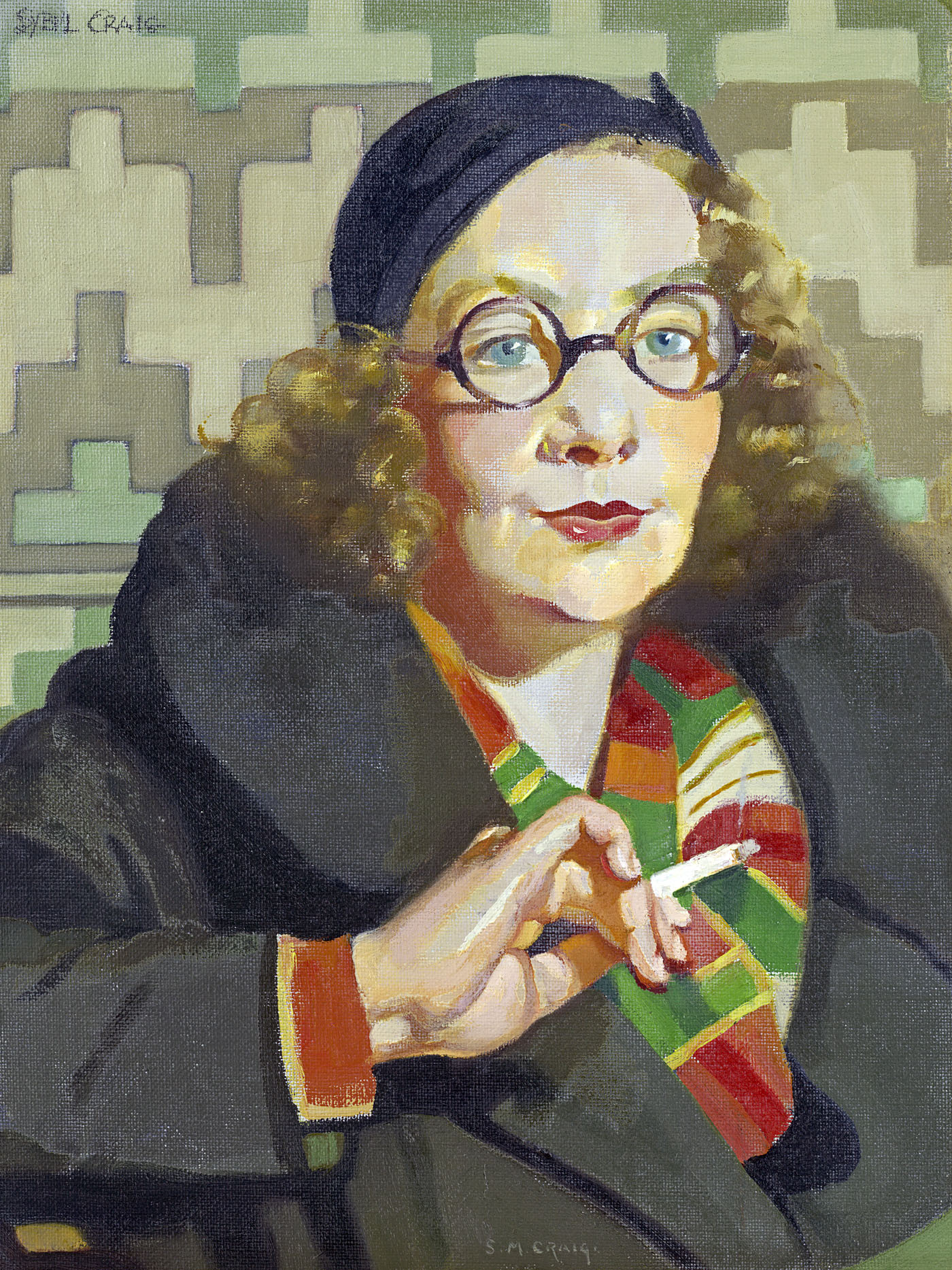


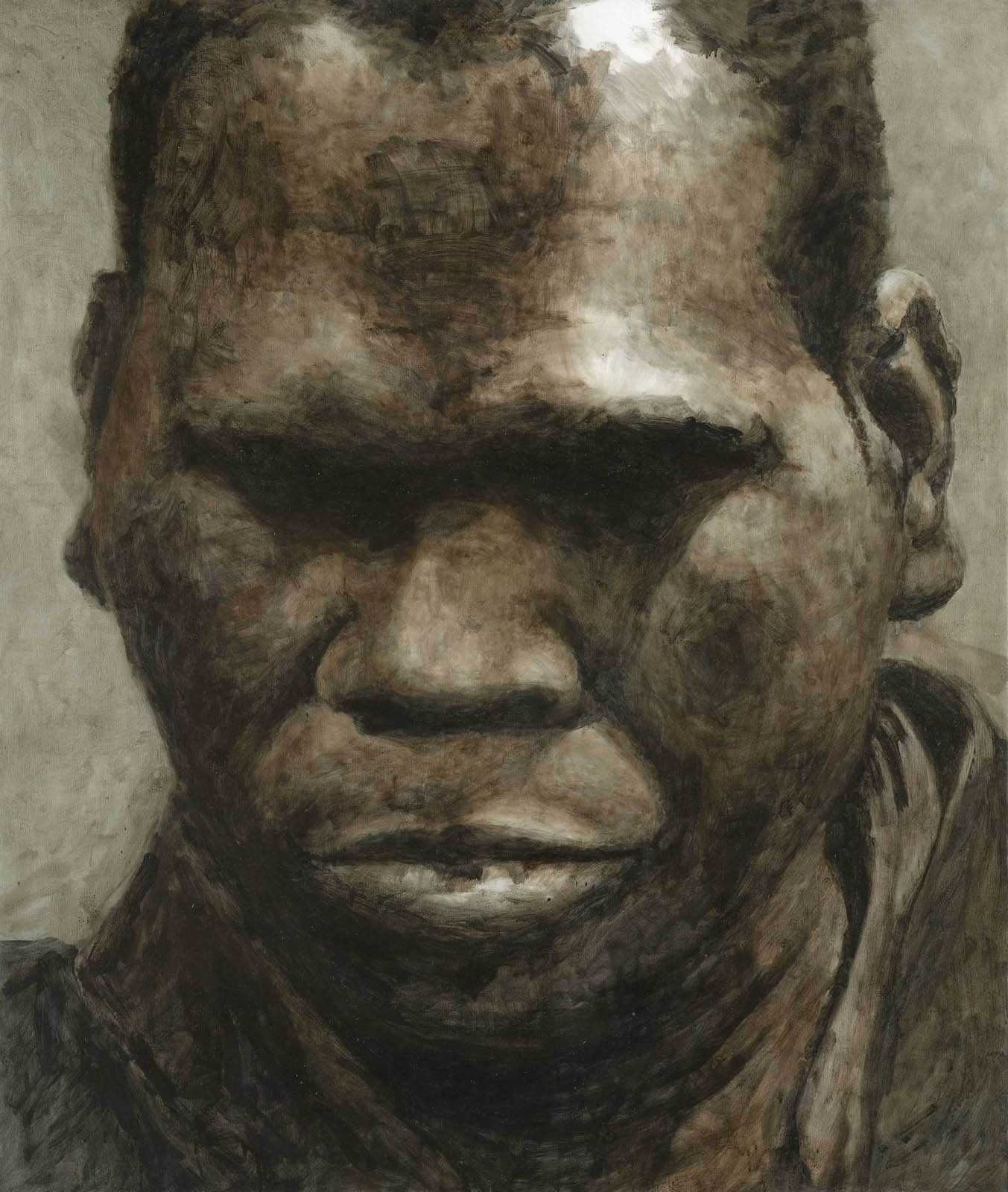















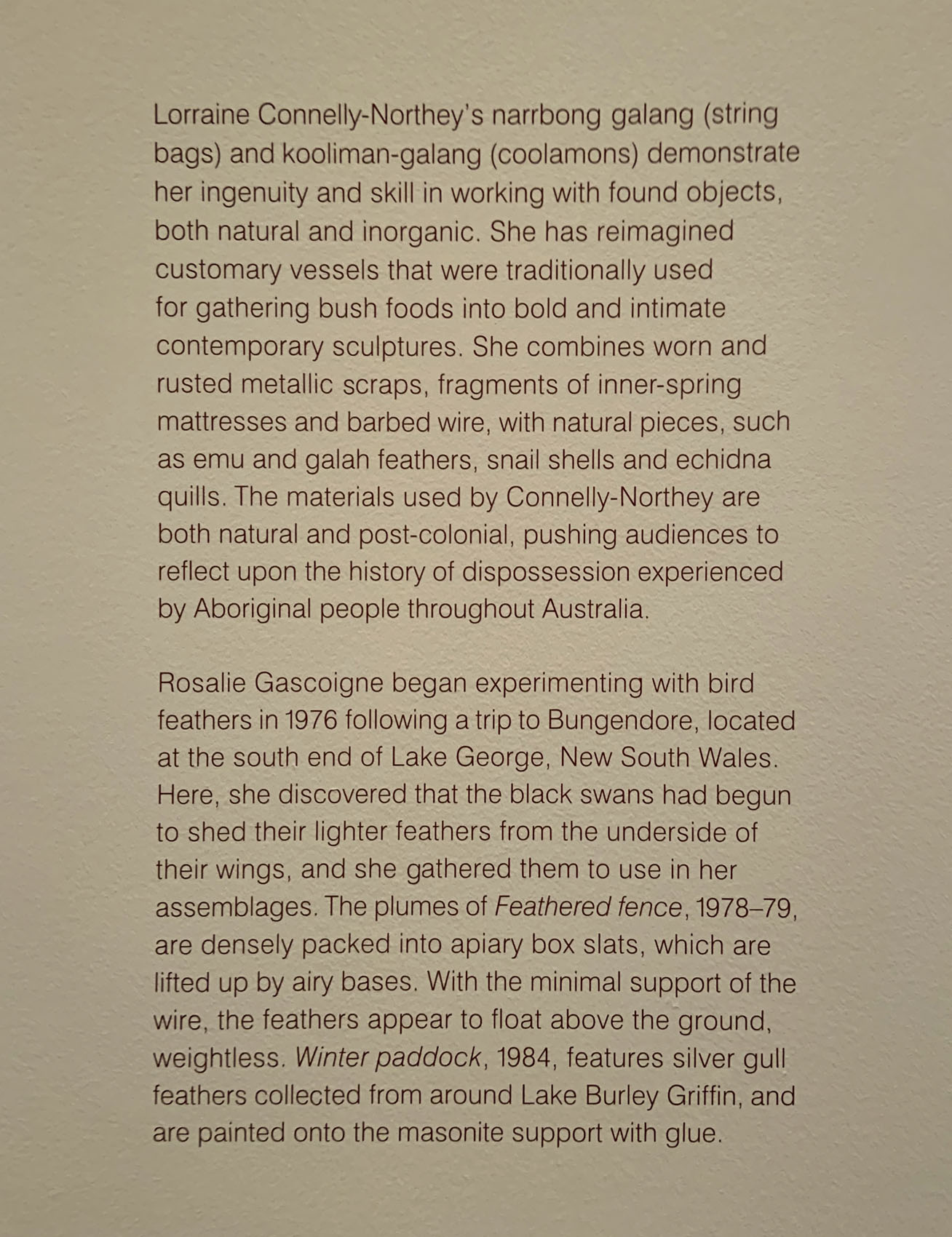

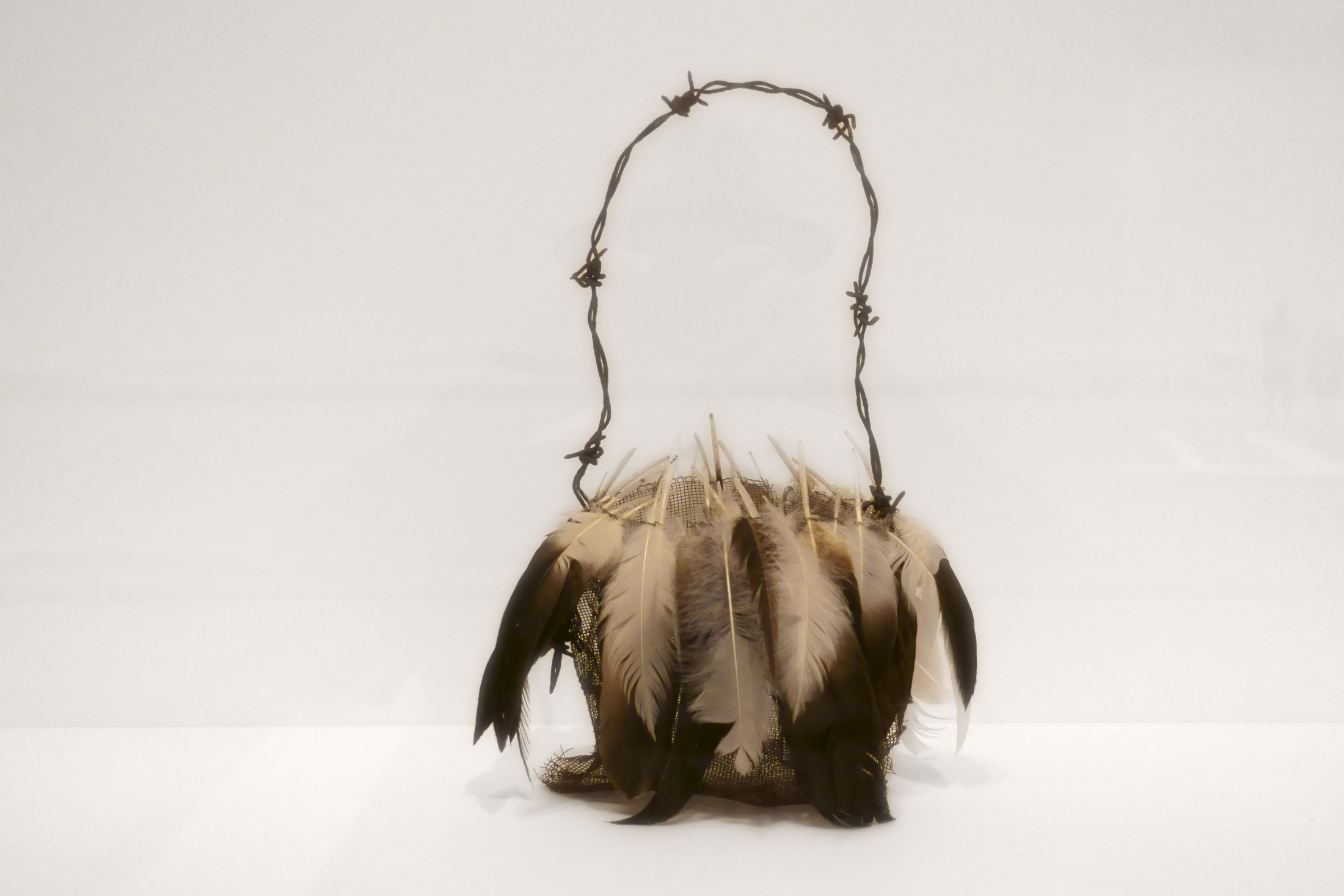


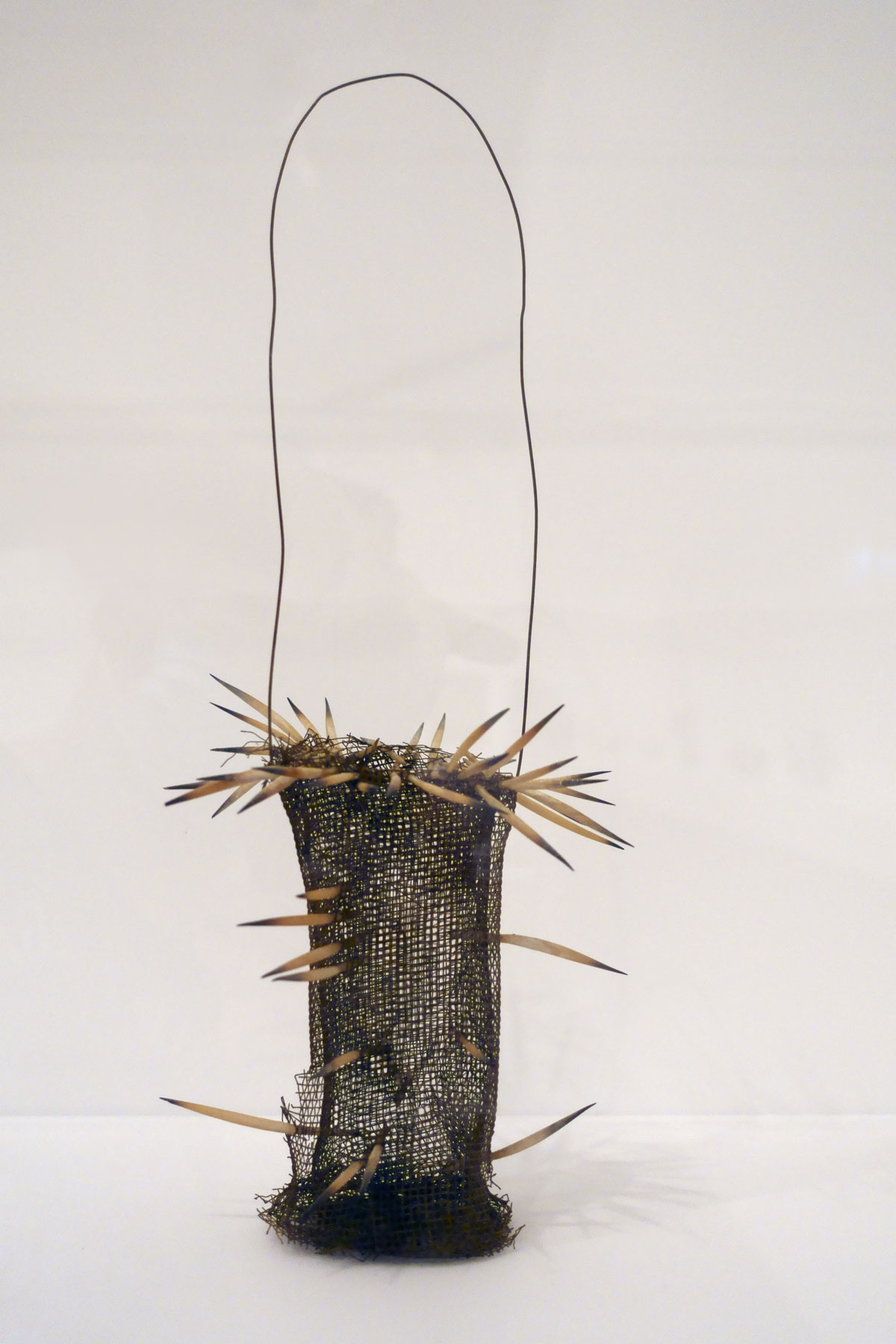


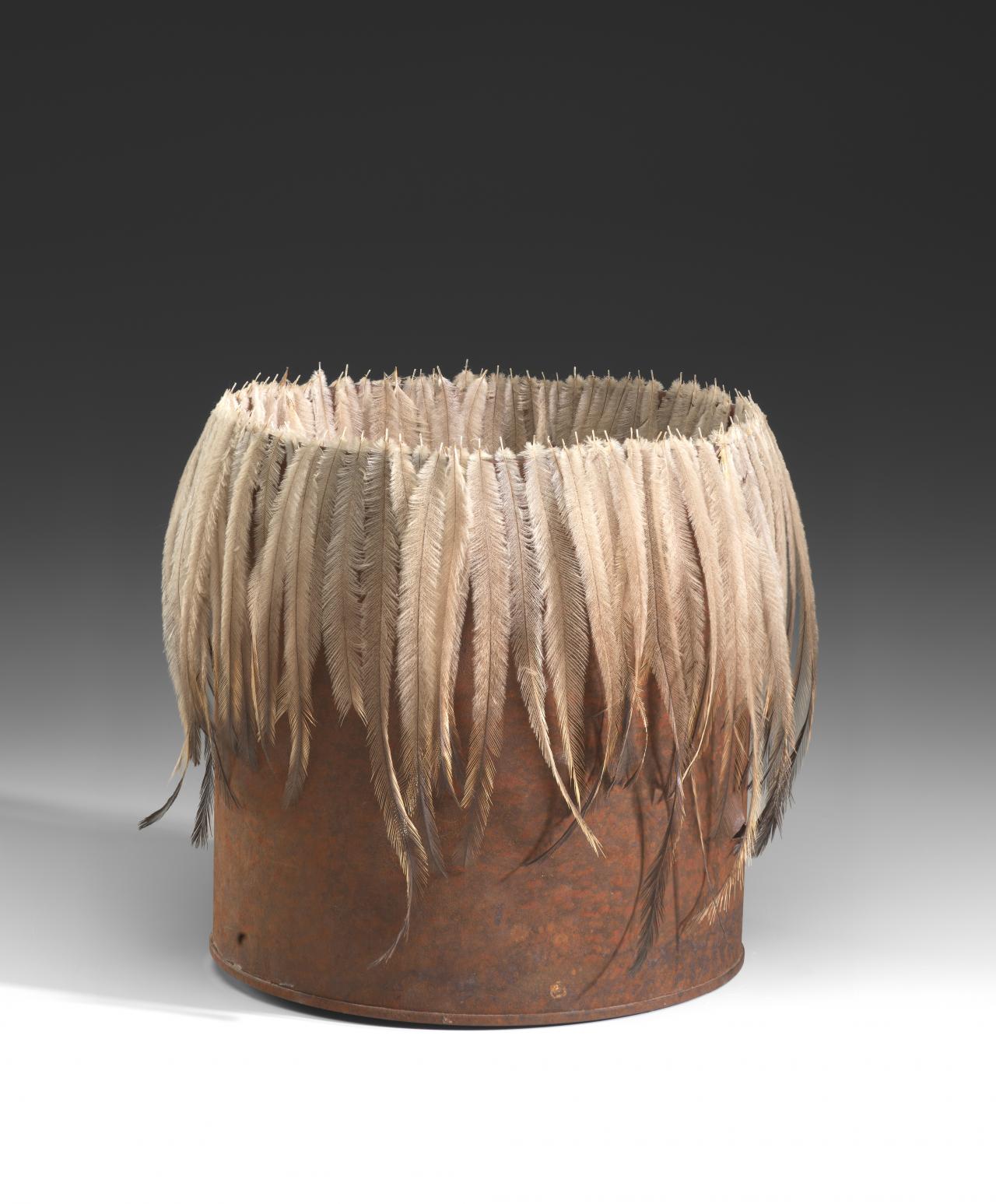












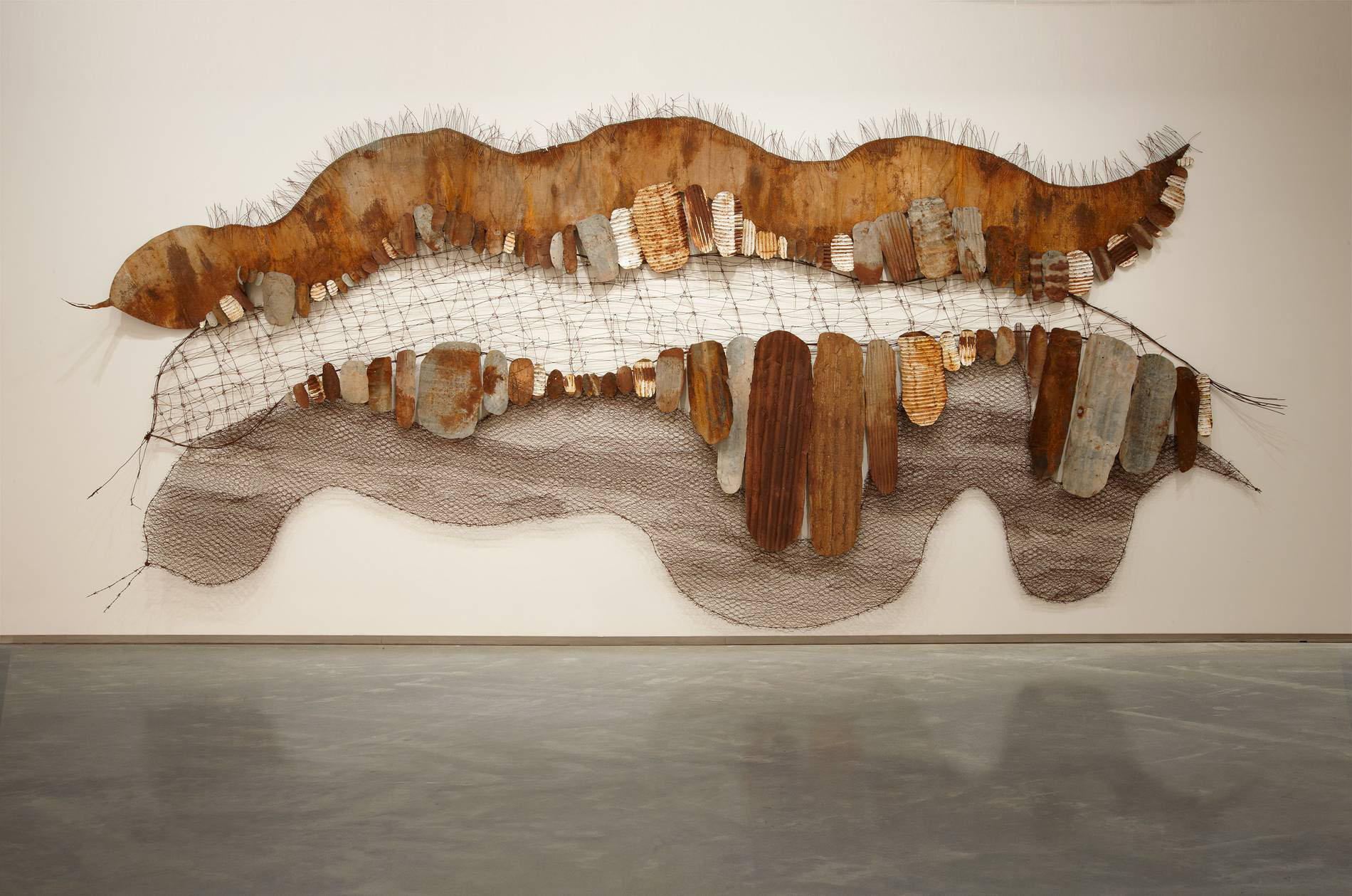


![Unknown photographer. 'Untitled [Australian Aborigines in chains]' Nd](https://artblart.com/wp-content/uploads/2017/11/australian-aborigines-c-web.jpg "Unknown photographer. 'Untitled [Australian Aborigines in chains]' Nd")
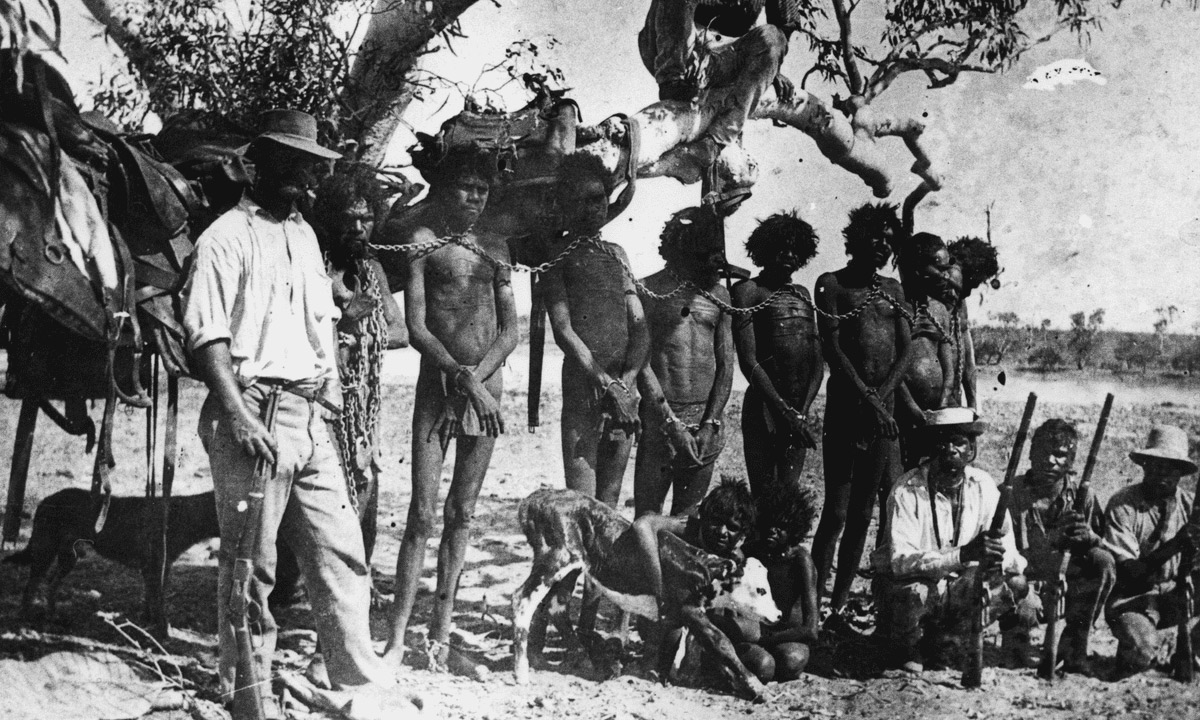



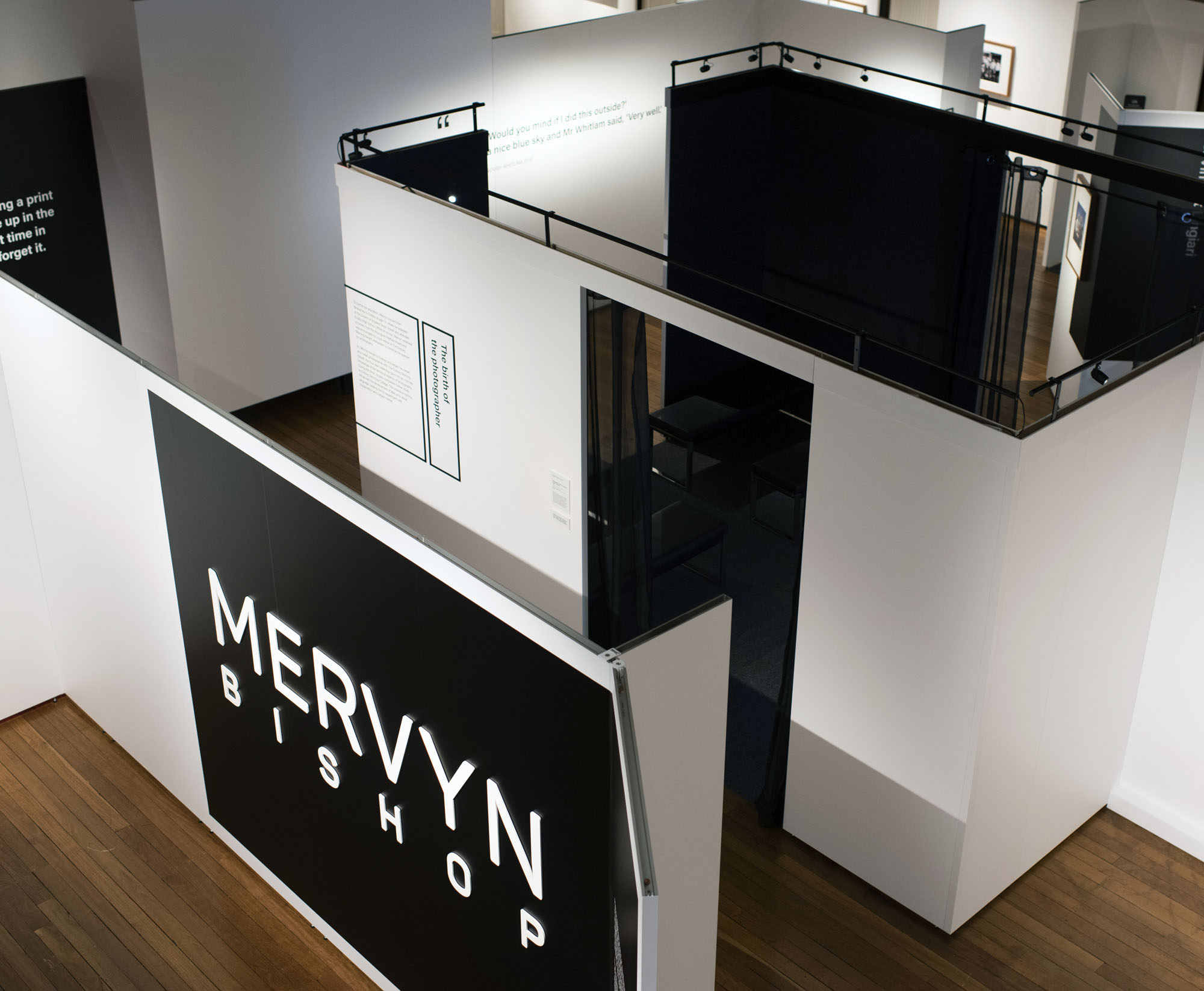


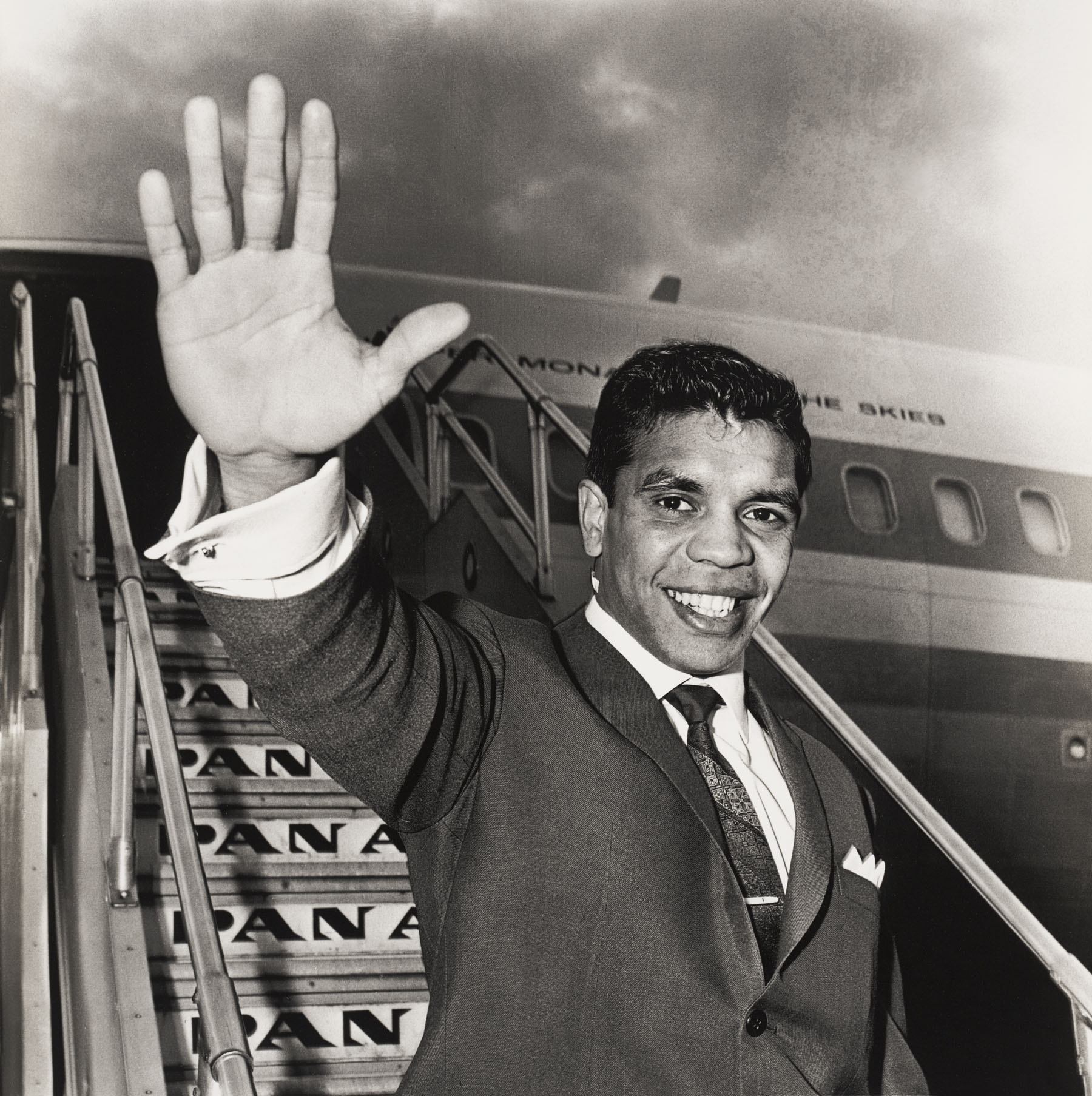
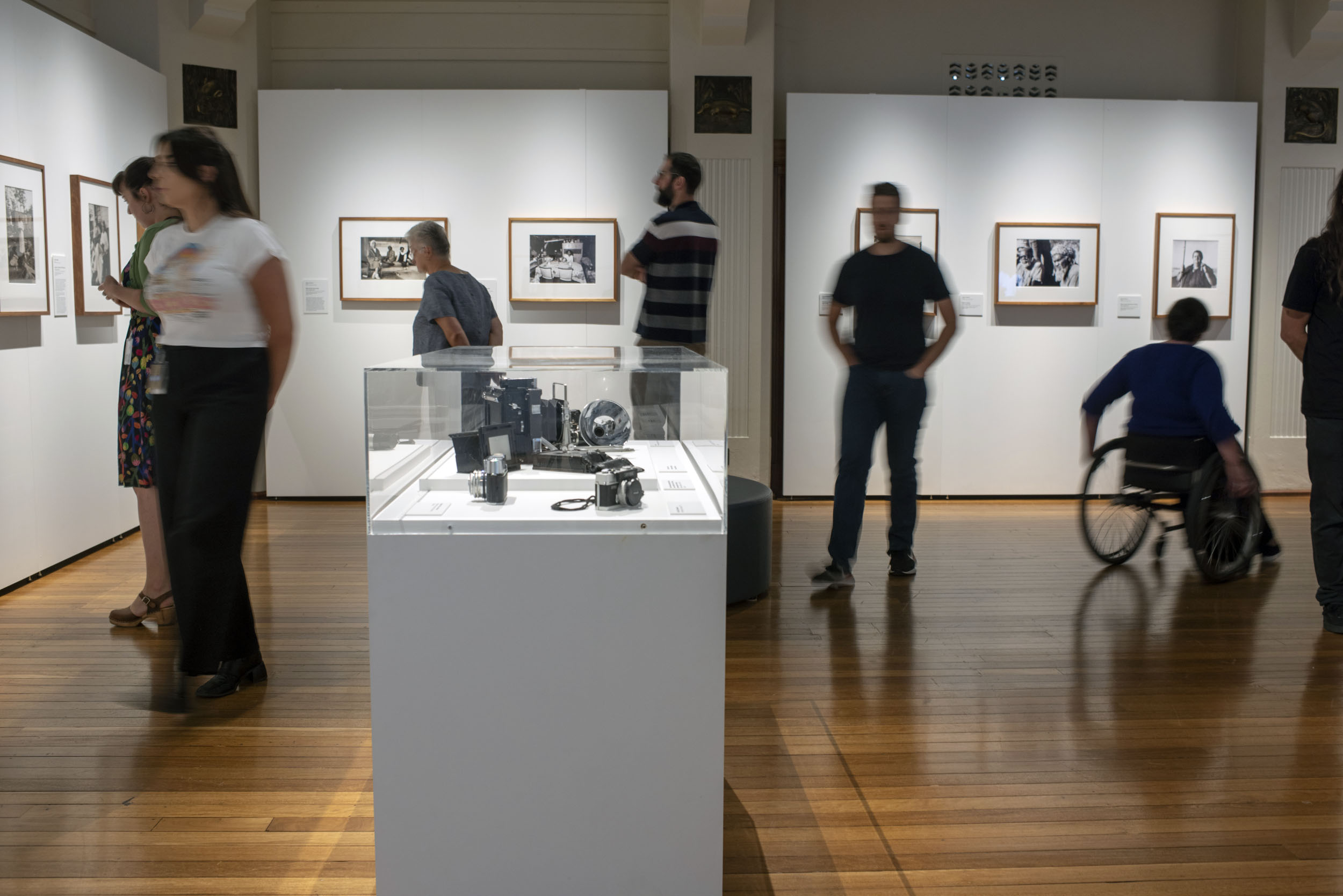


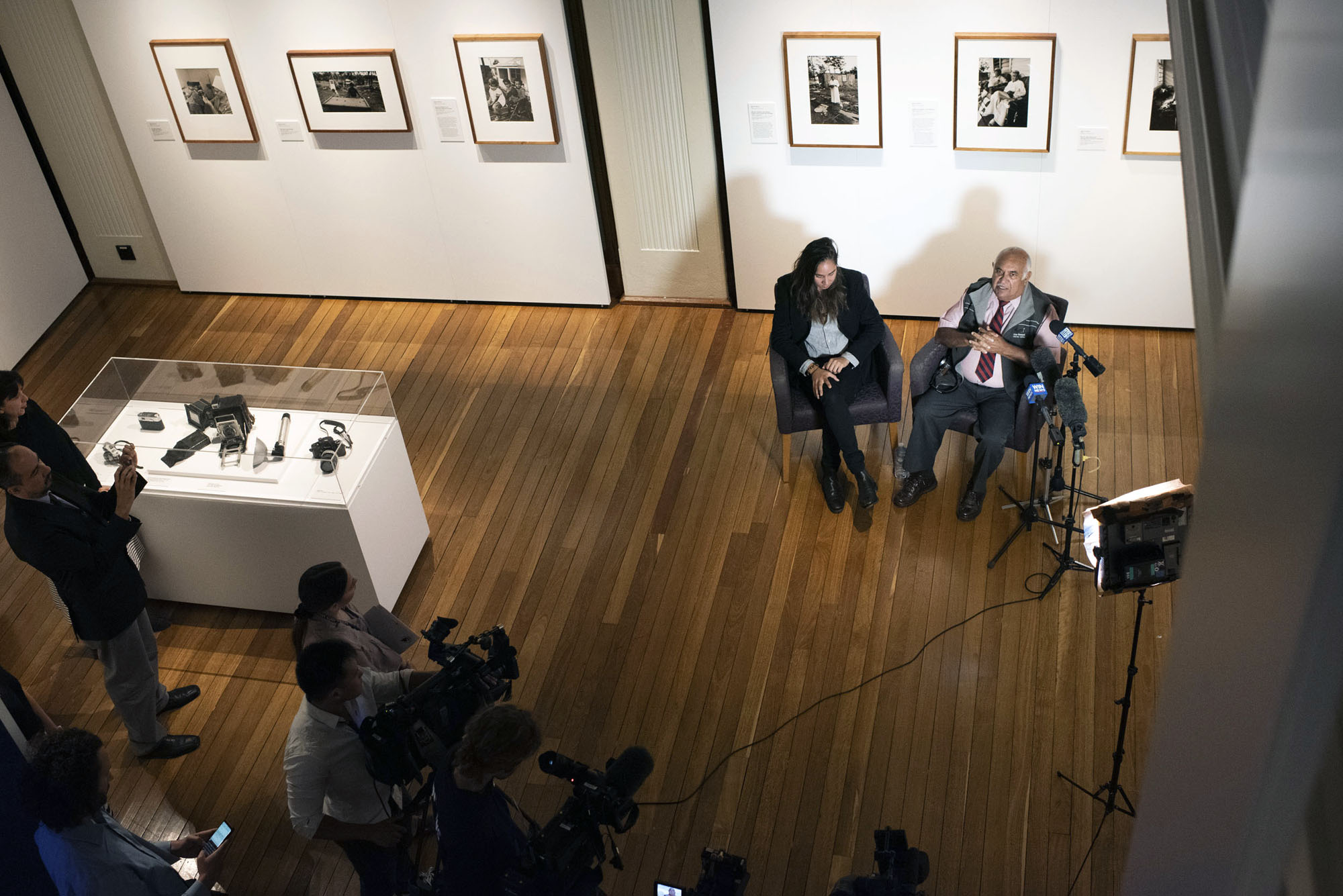


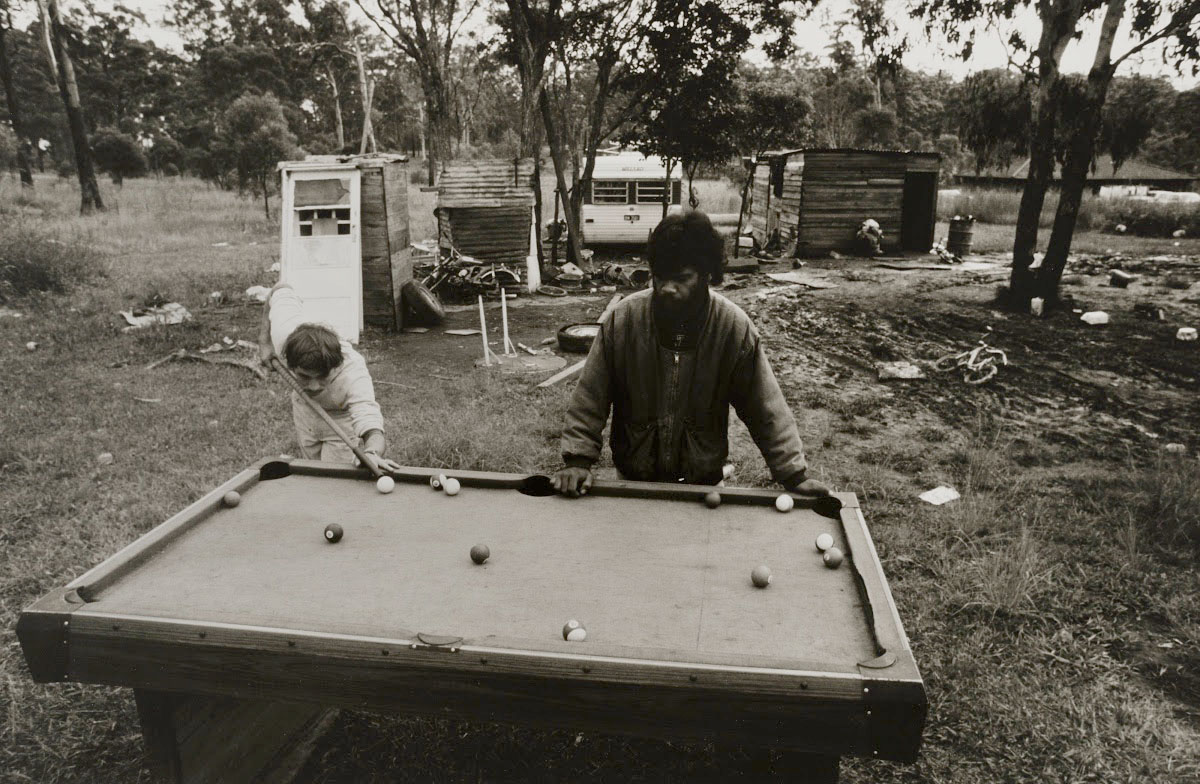


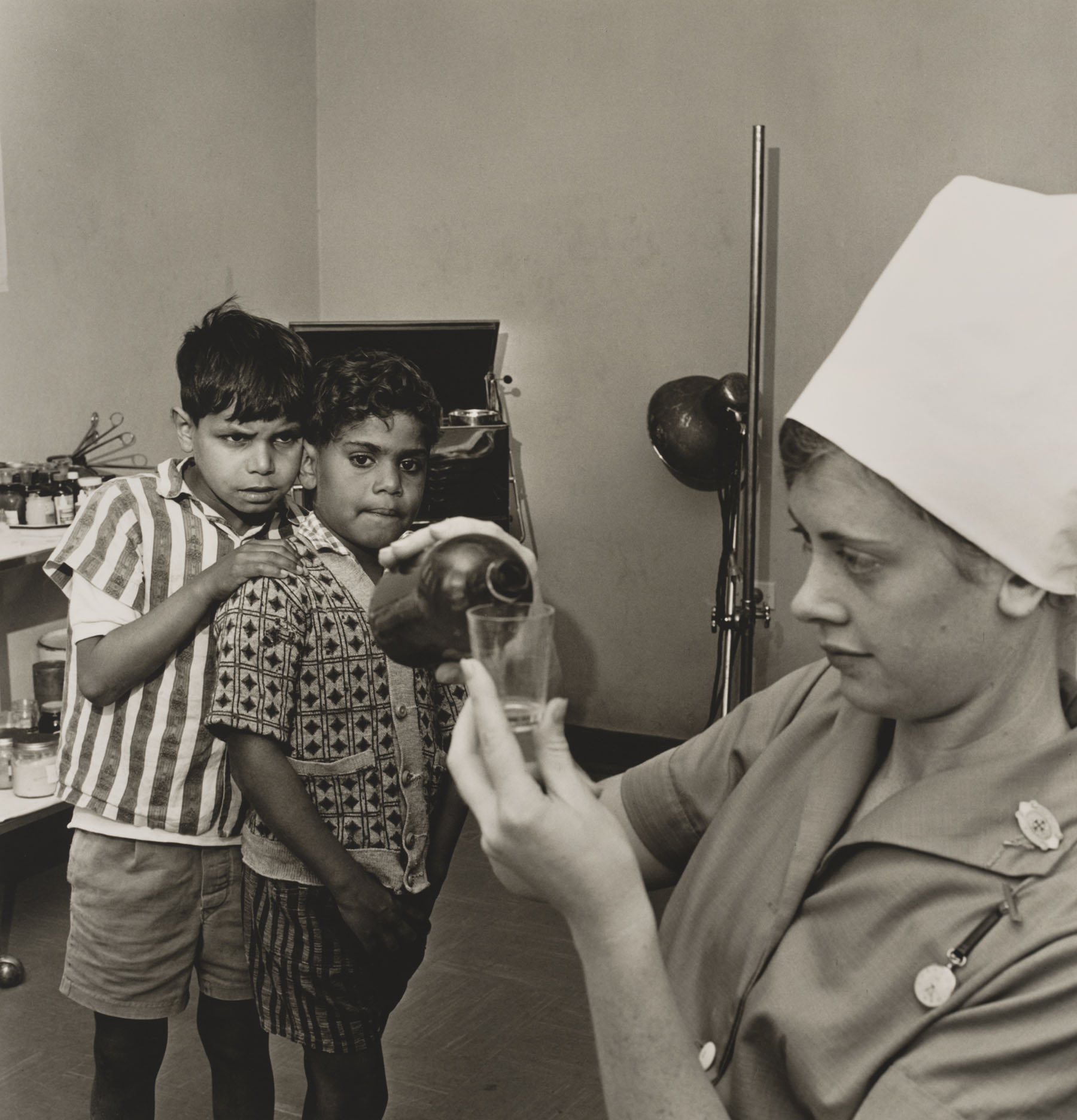


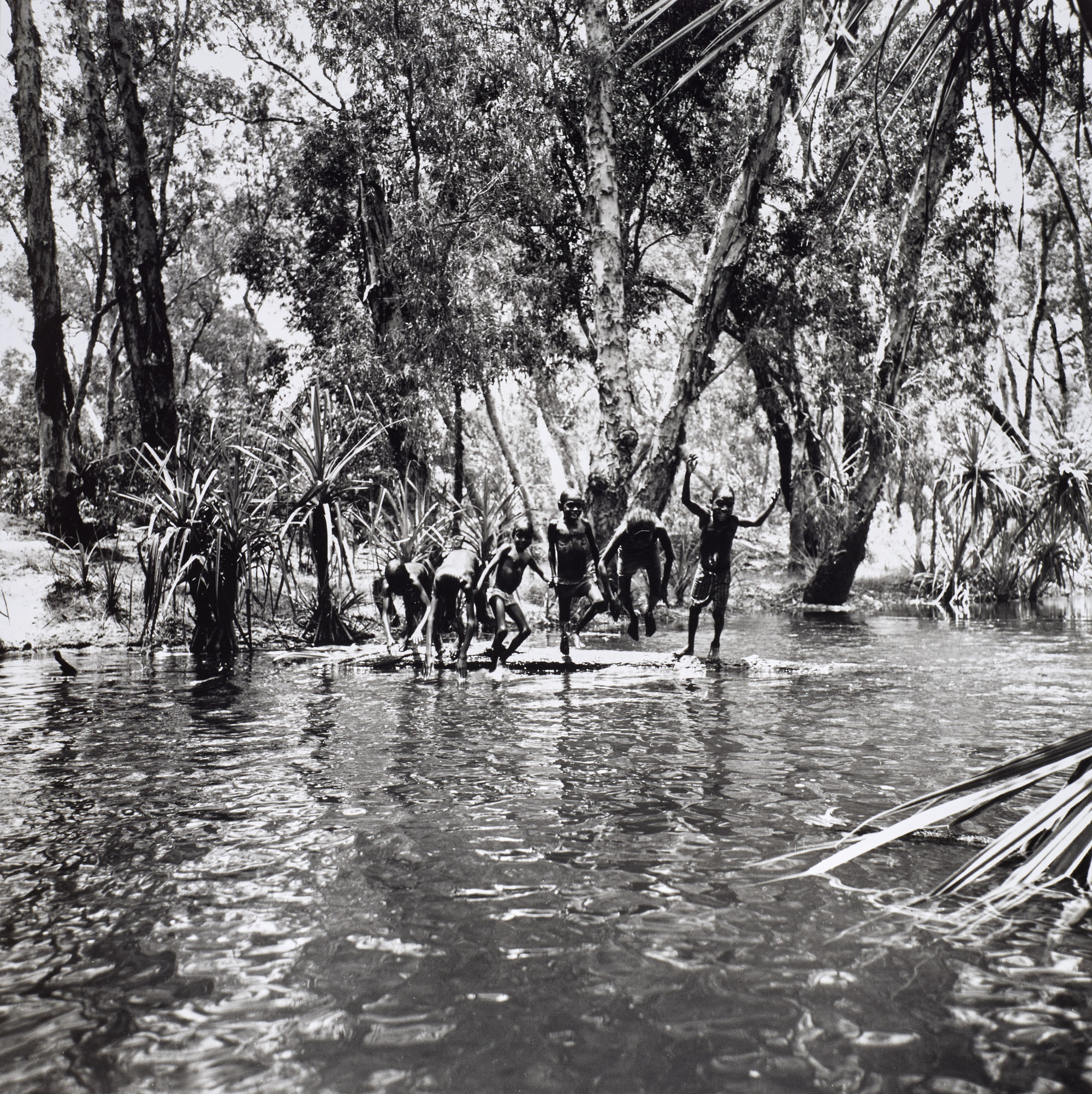
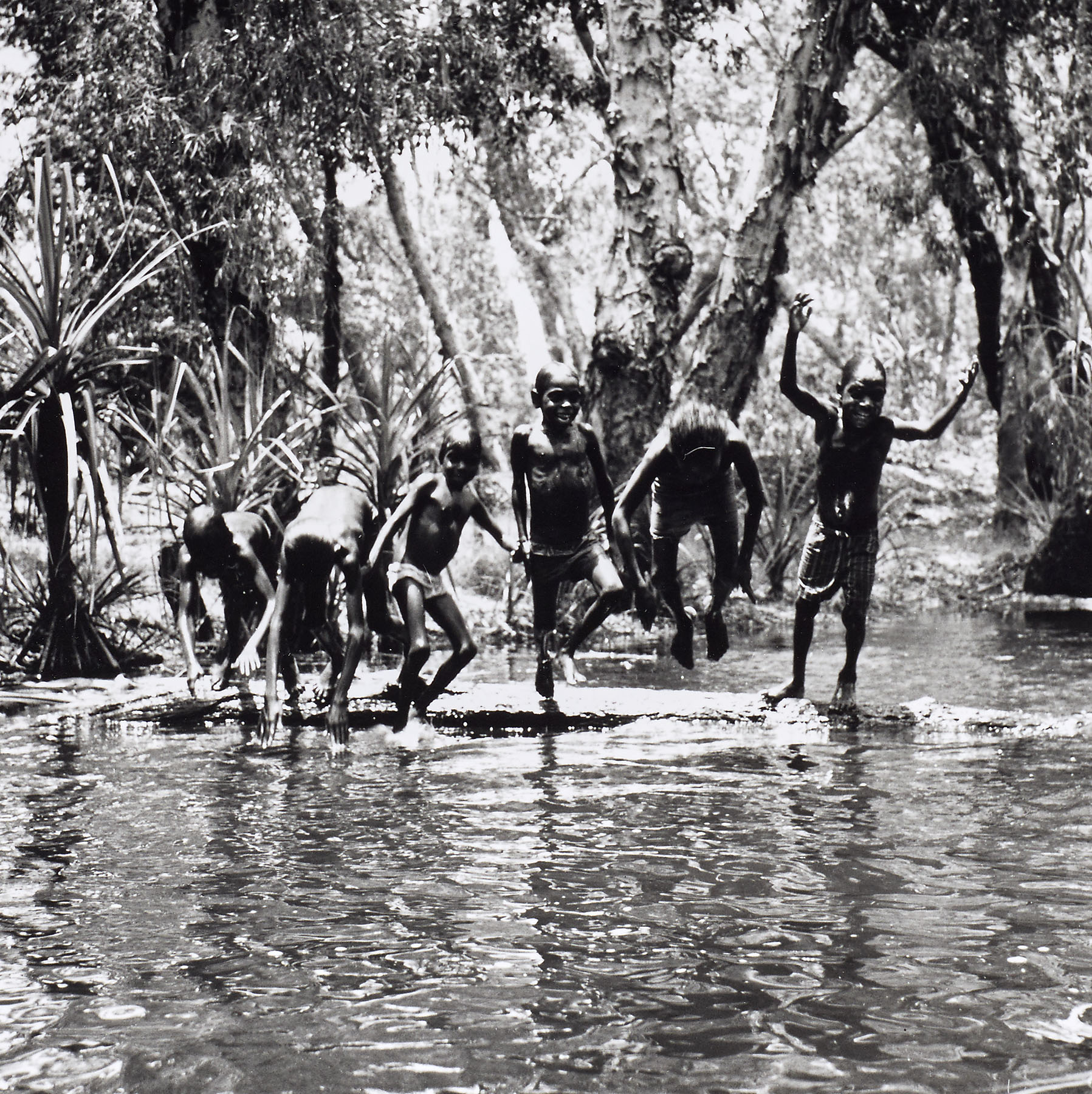


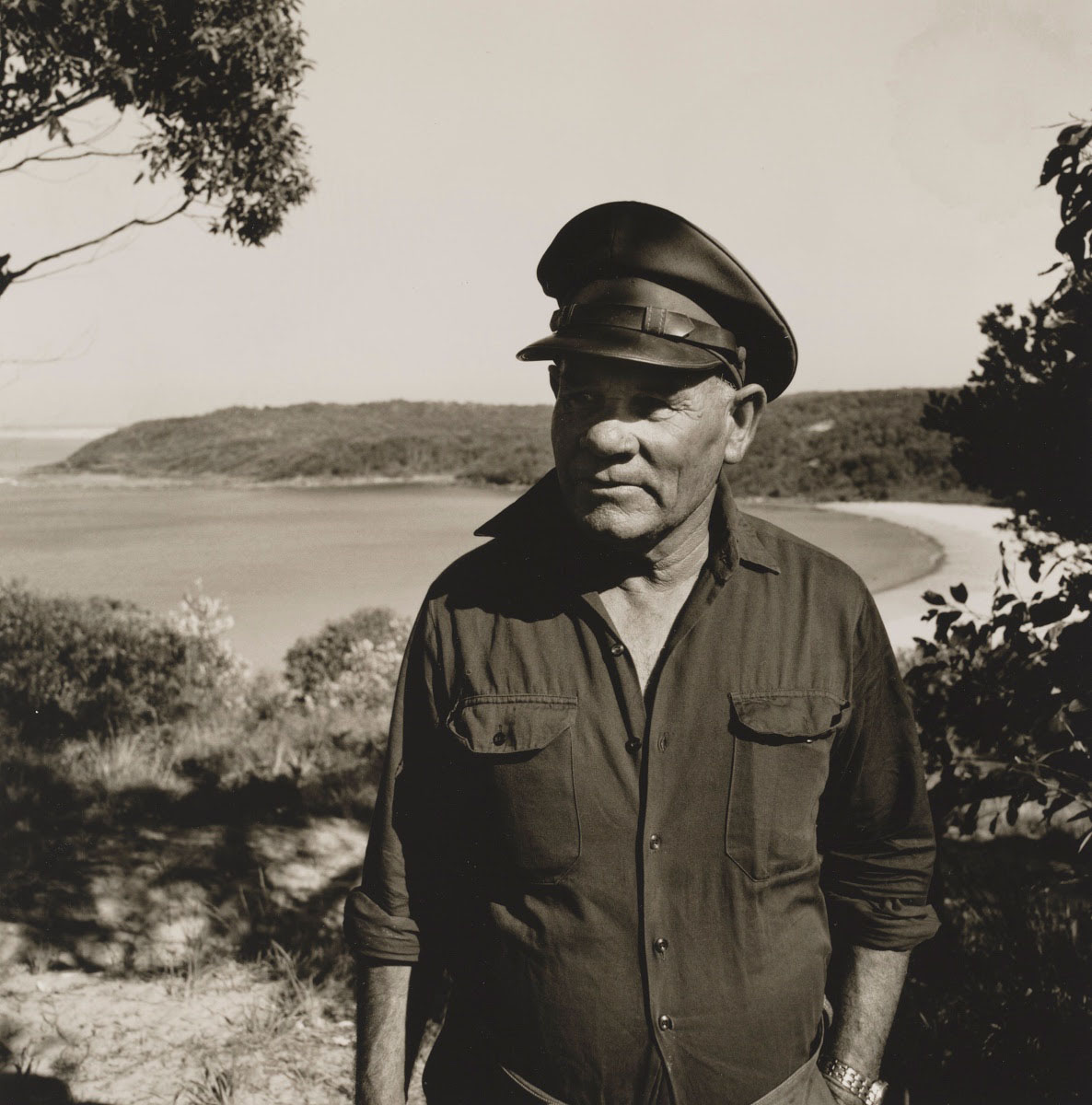

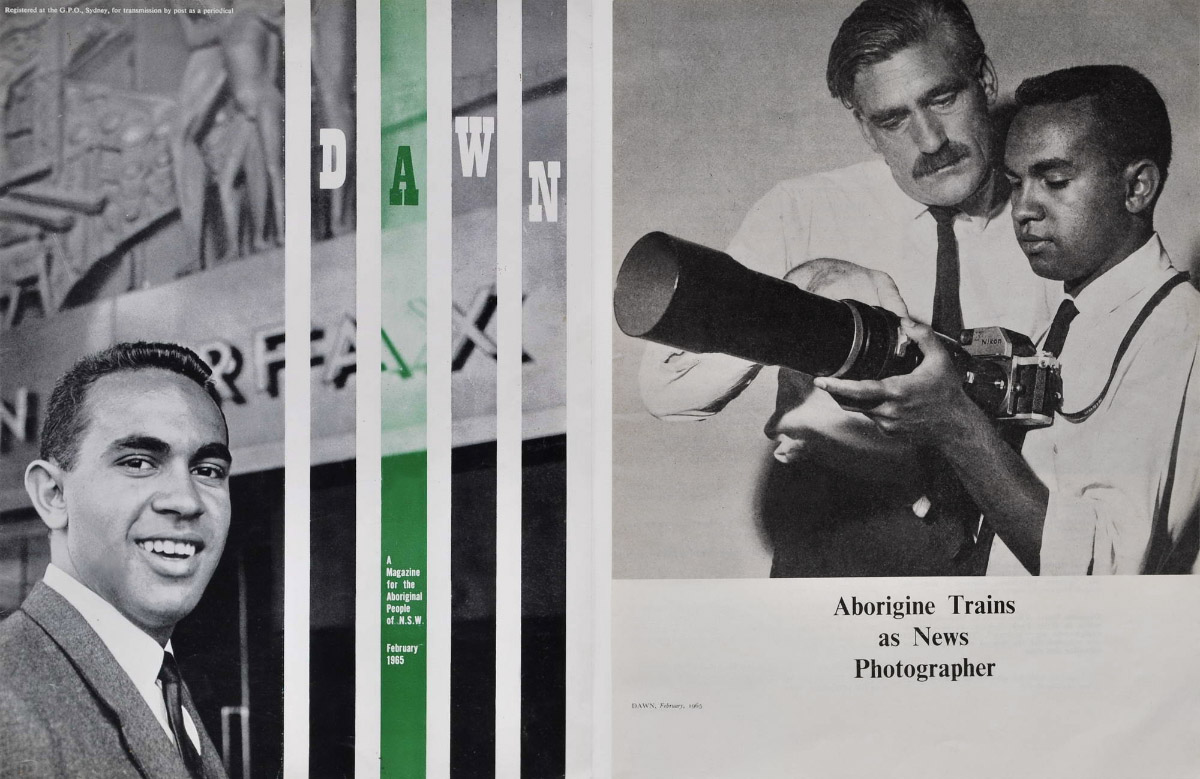


![Aboriginal Protection Board (1952-1969) (publisher) Department of Child Welfare and Social Welfare (1970-1975) "Untitled [Deb Ball]" Dawn magazine, October 1965 back cover](https://artblart.com/wp-content/uploads/2021/09/dawn-october-1965-back-cover.jpg "Aboriginal Protection Board (1952-1969) (publisher) Department of Child Welfare and Social Welfare (1970-1975) \"Untitled [Deb Ball]\" Dawn magazine, October 1965 back cover")


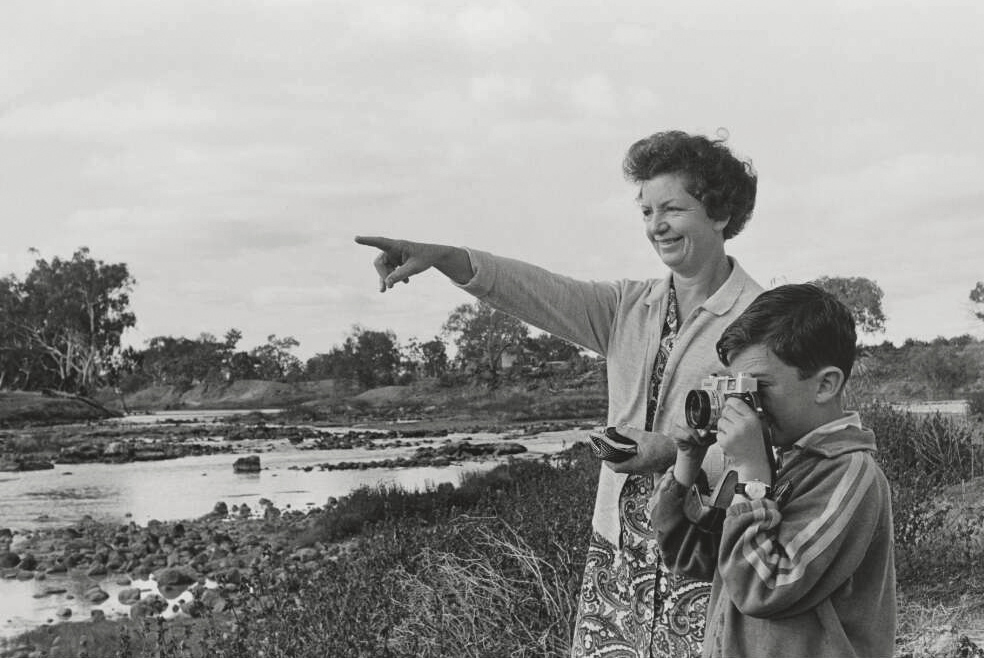
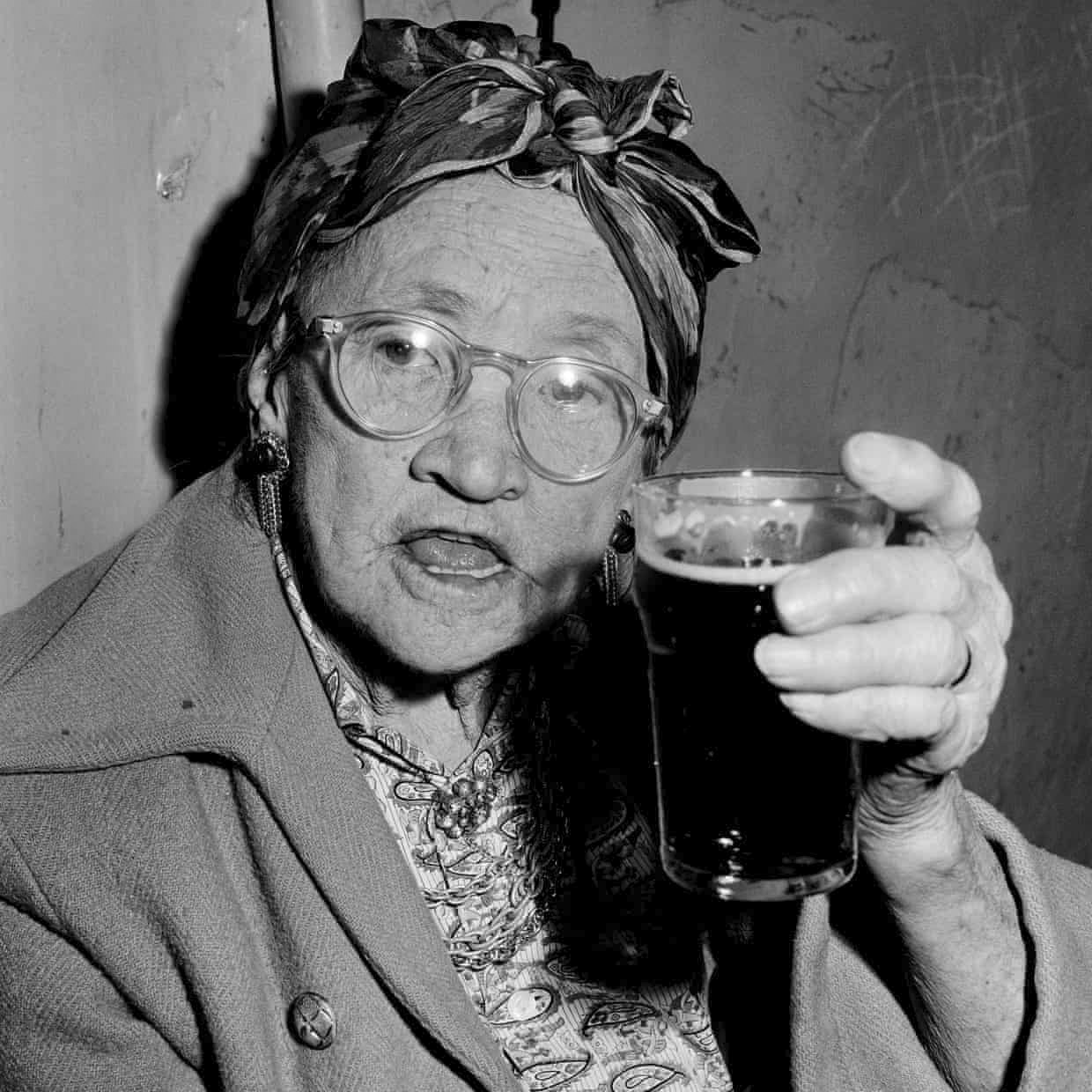


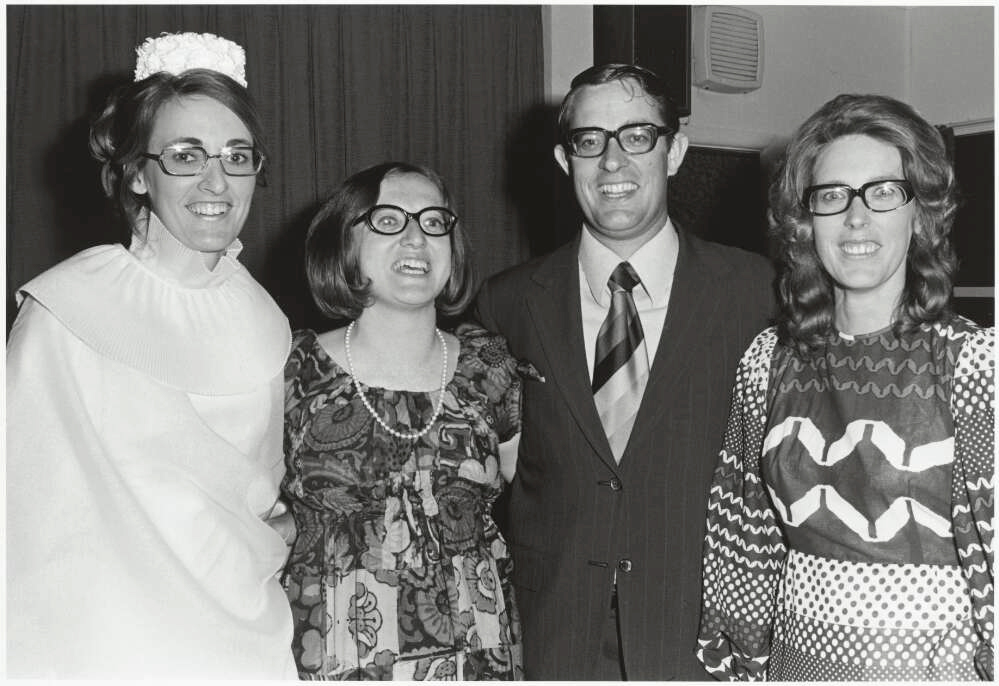

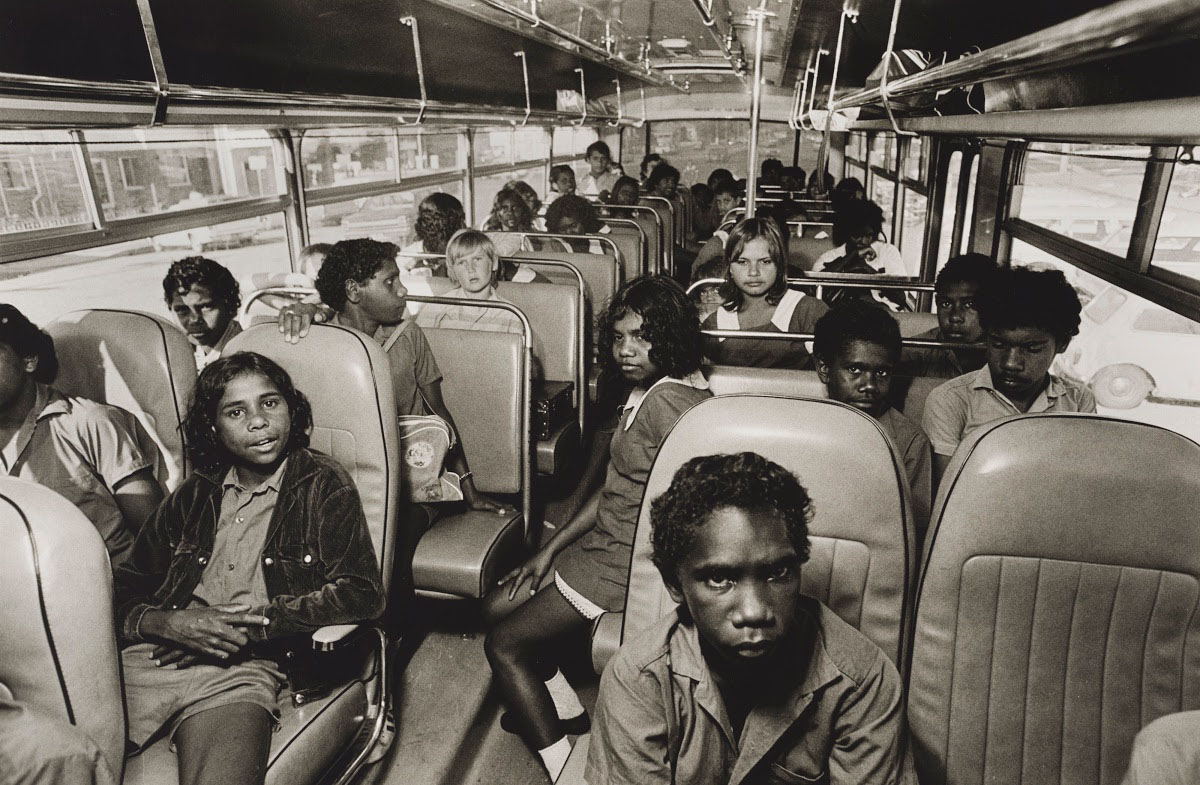
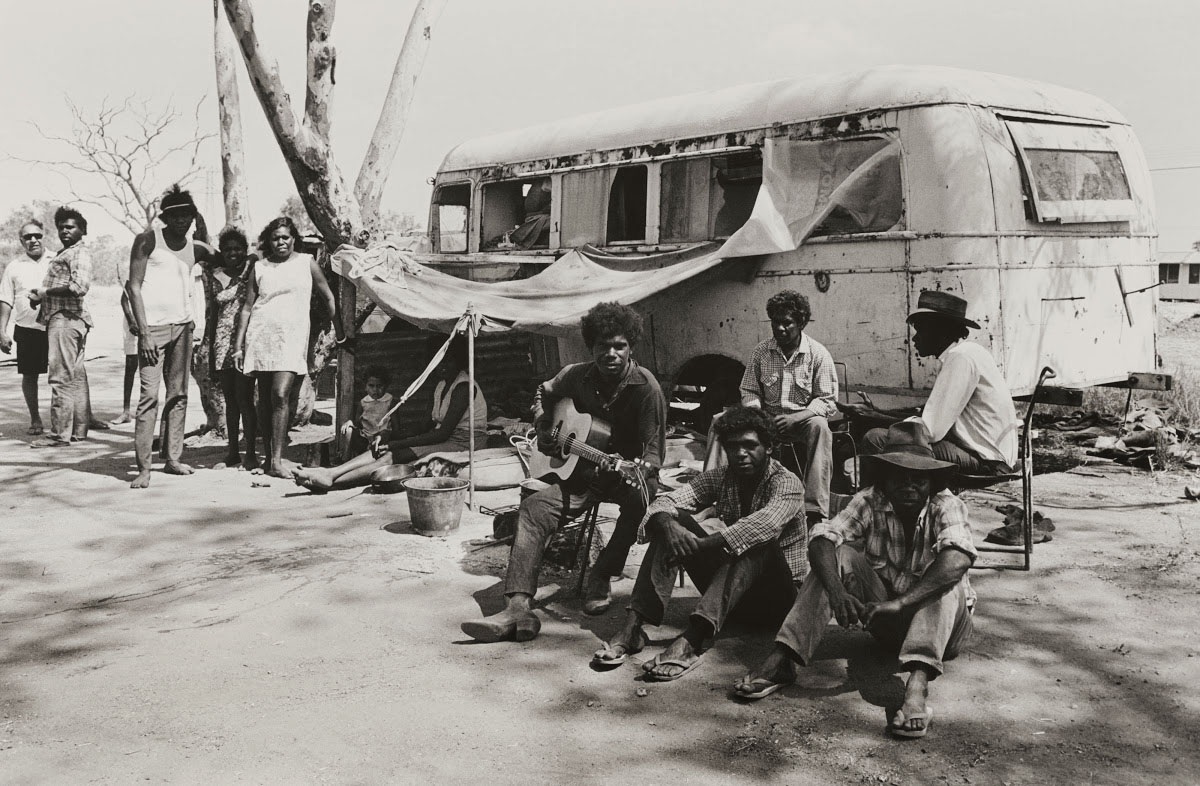
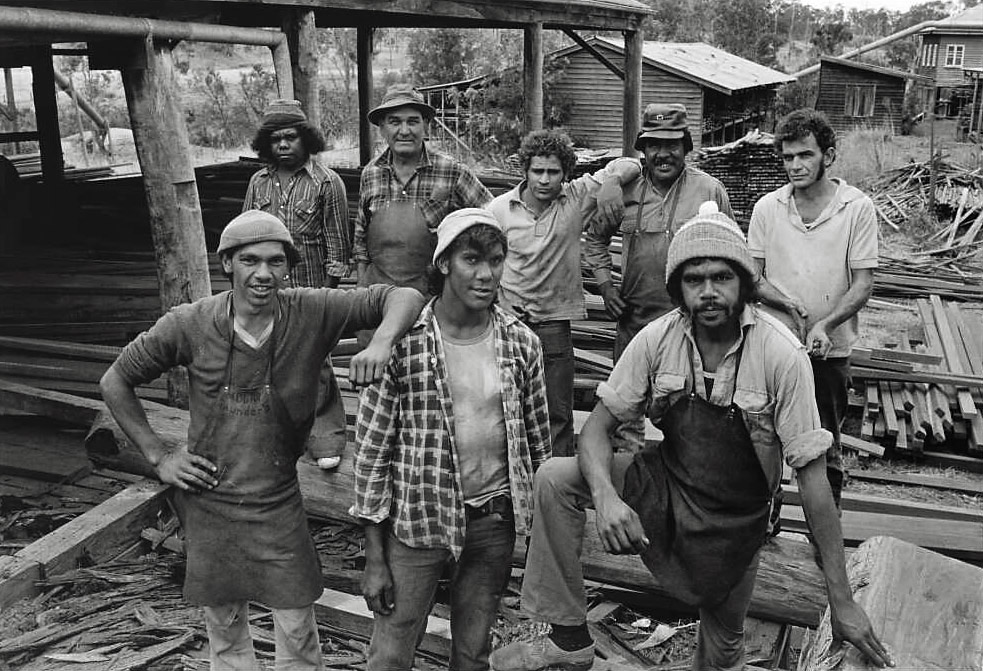


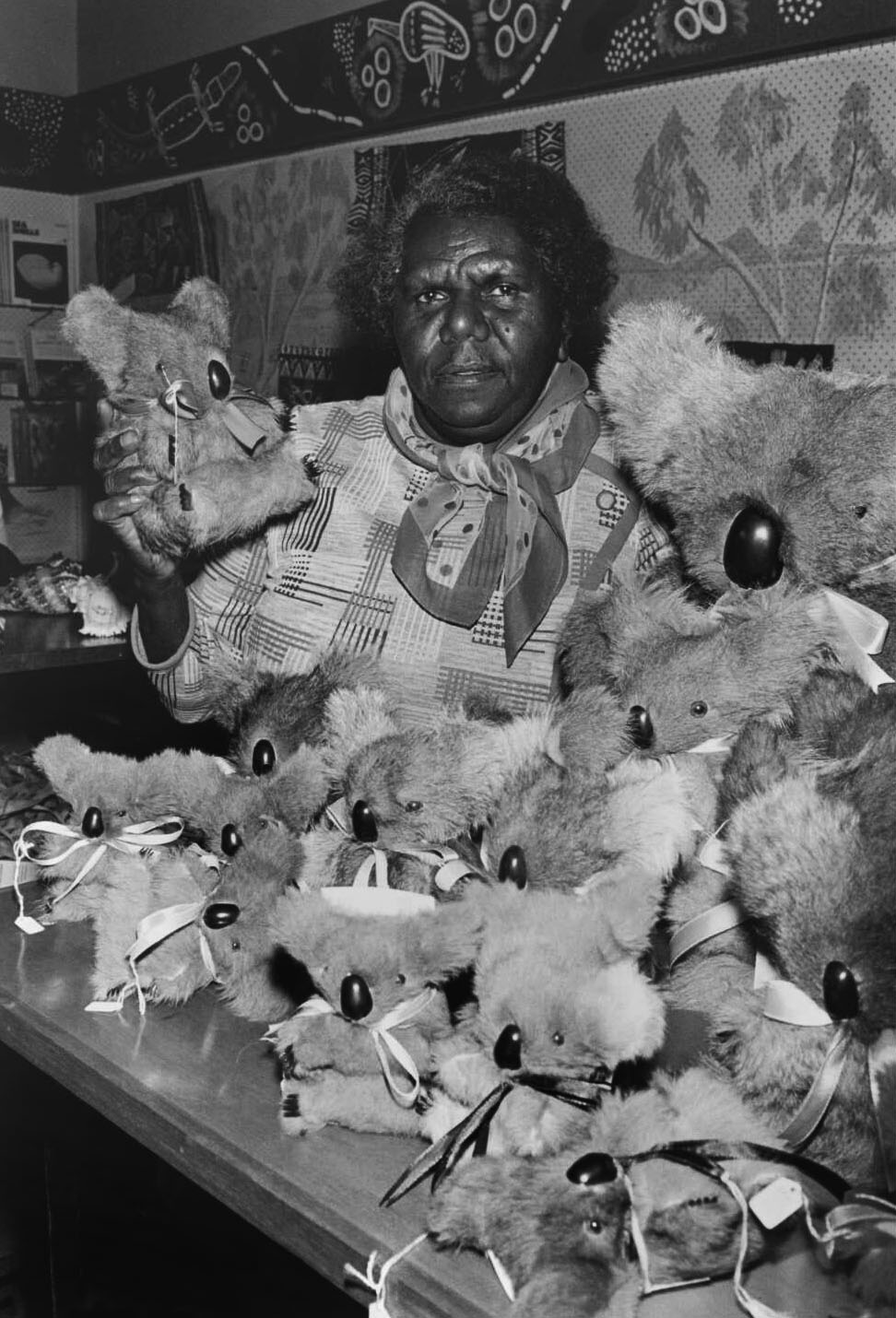
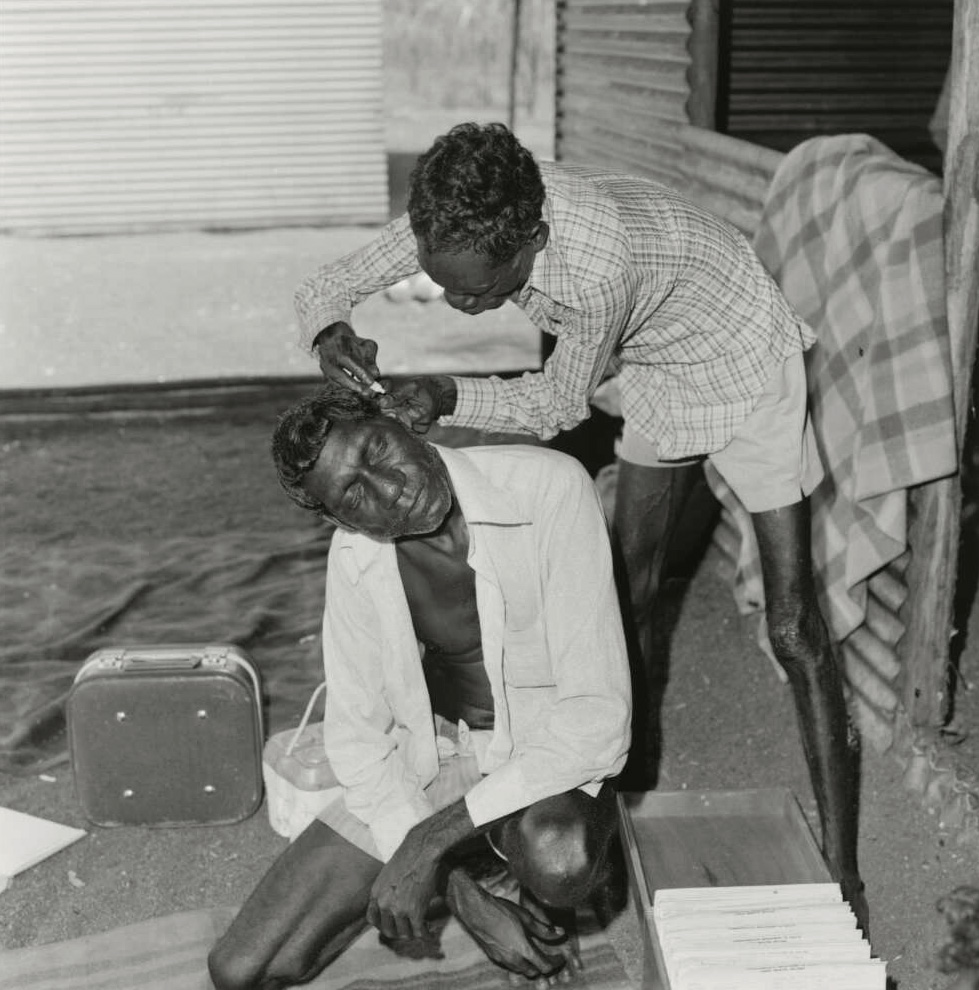
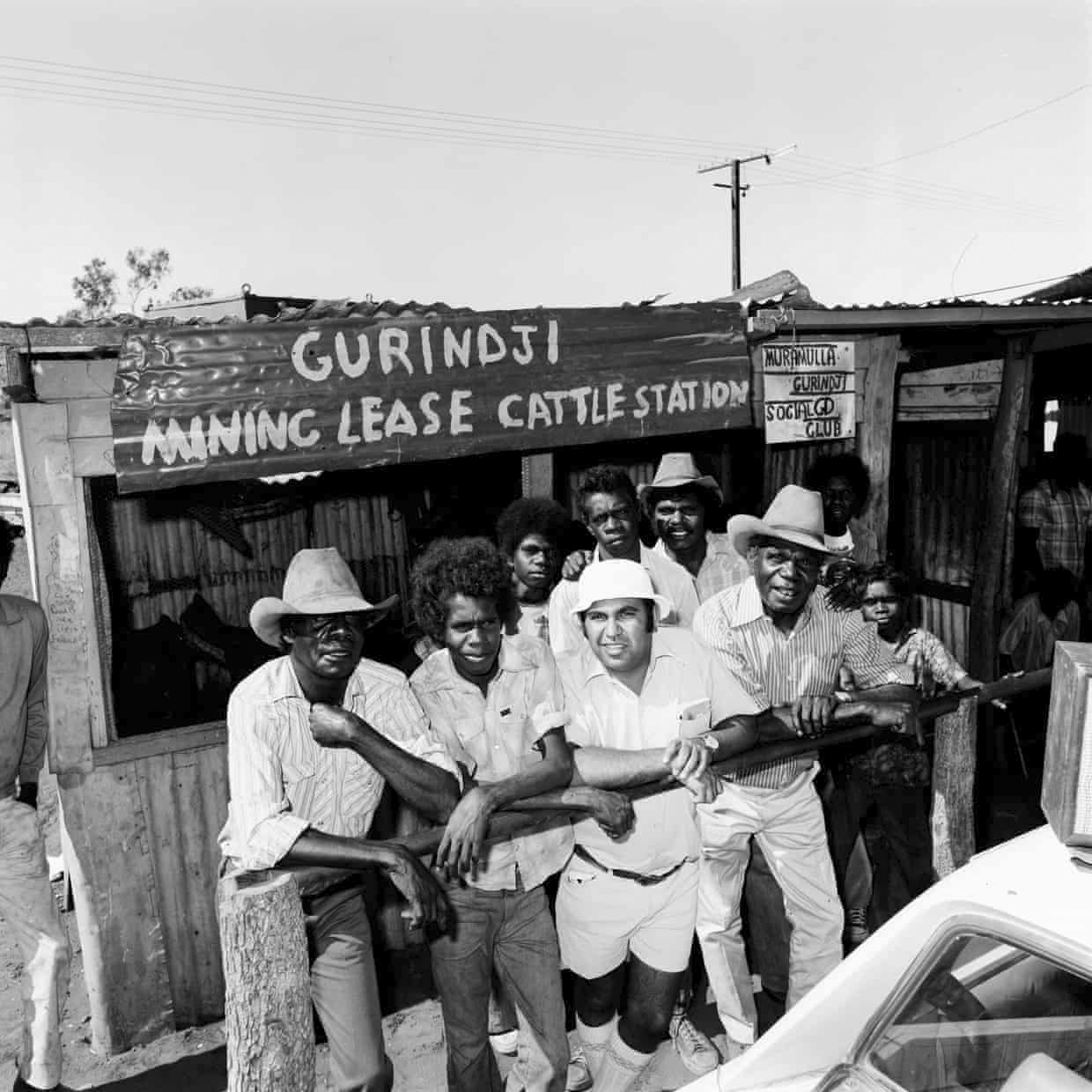
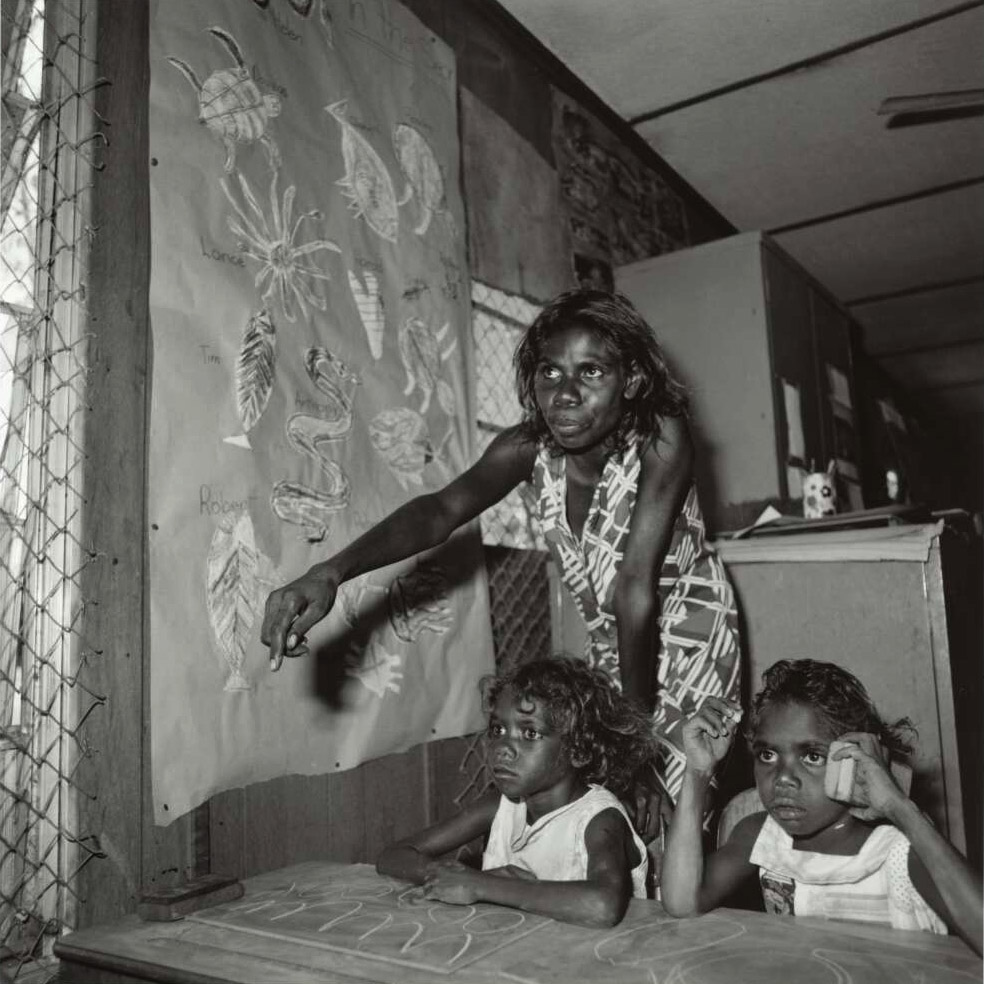

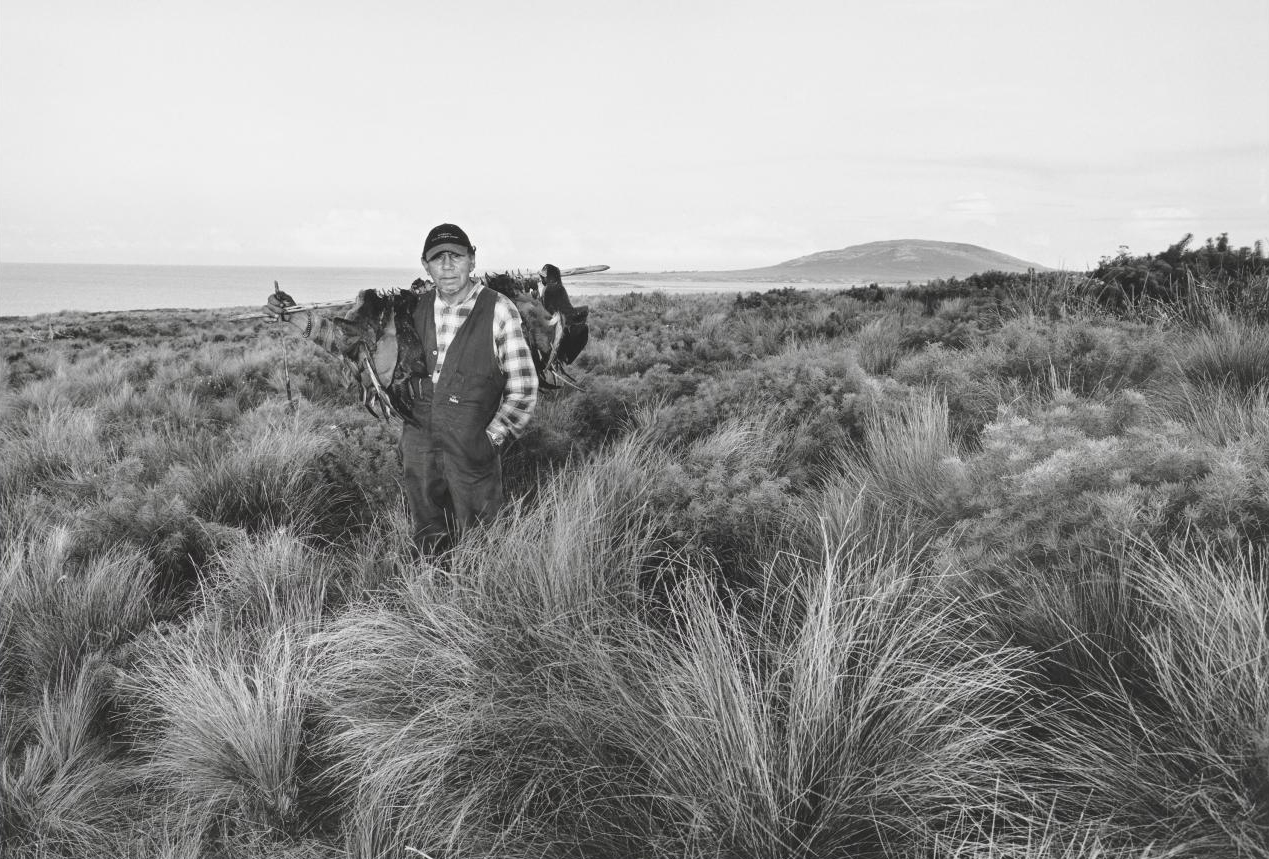

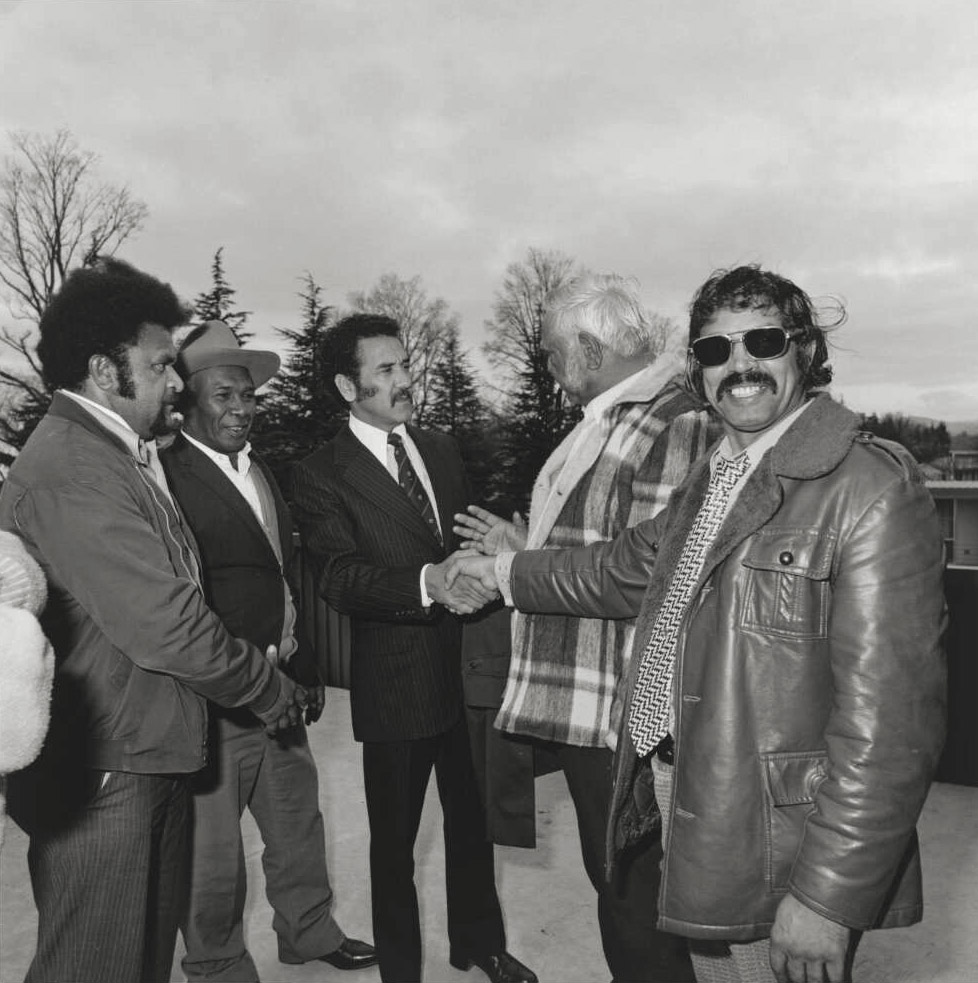
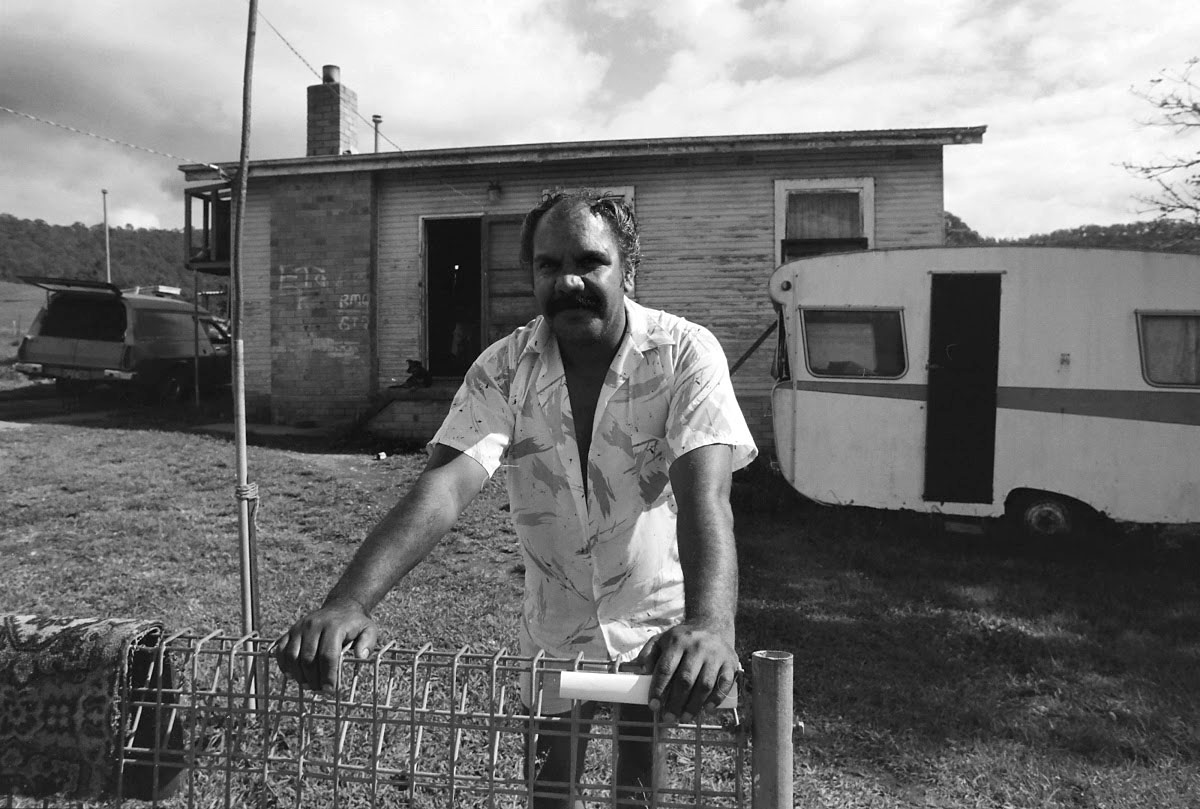


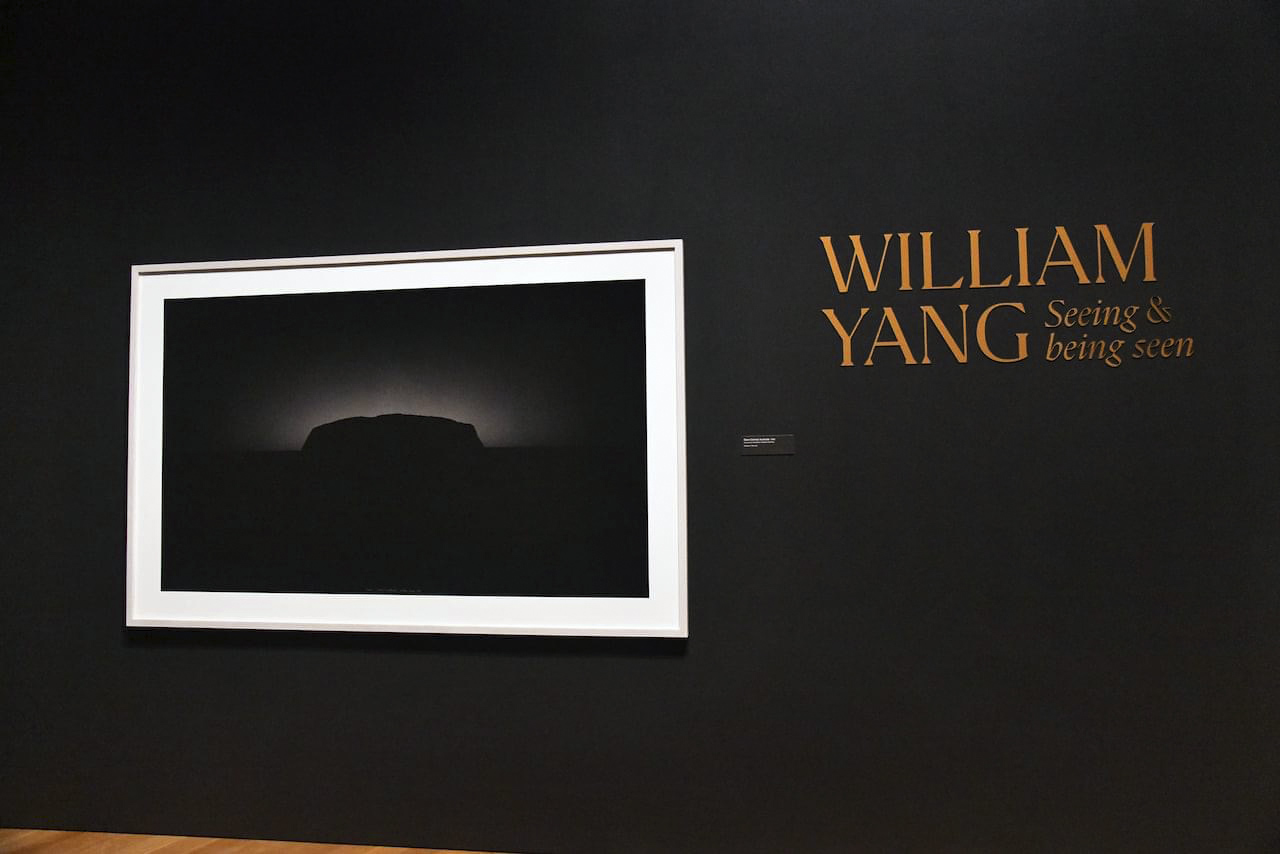

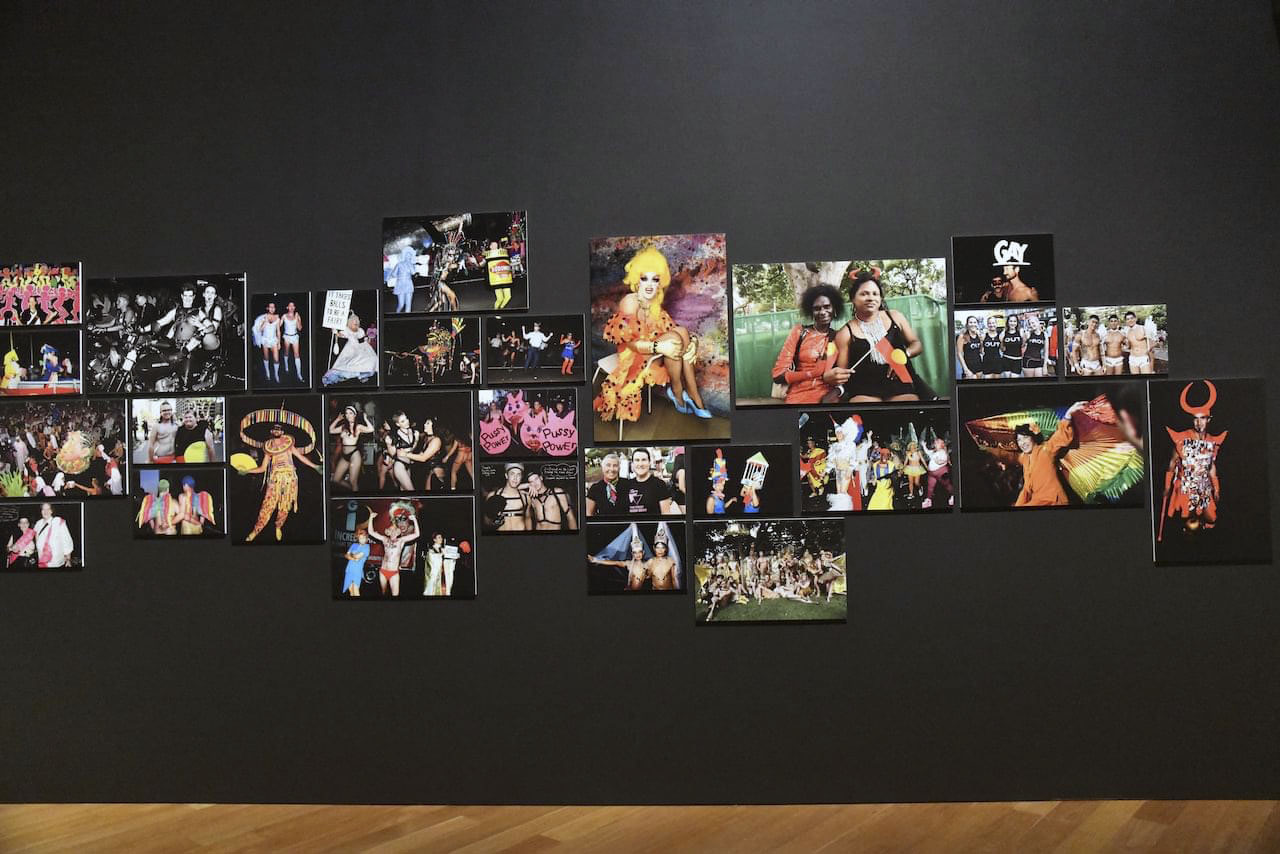


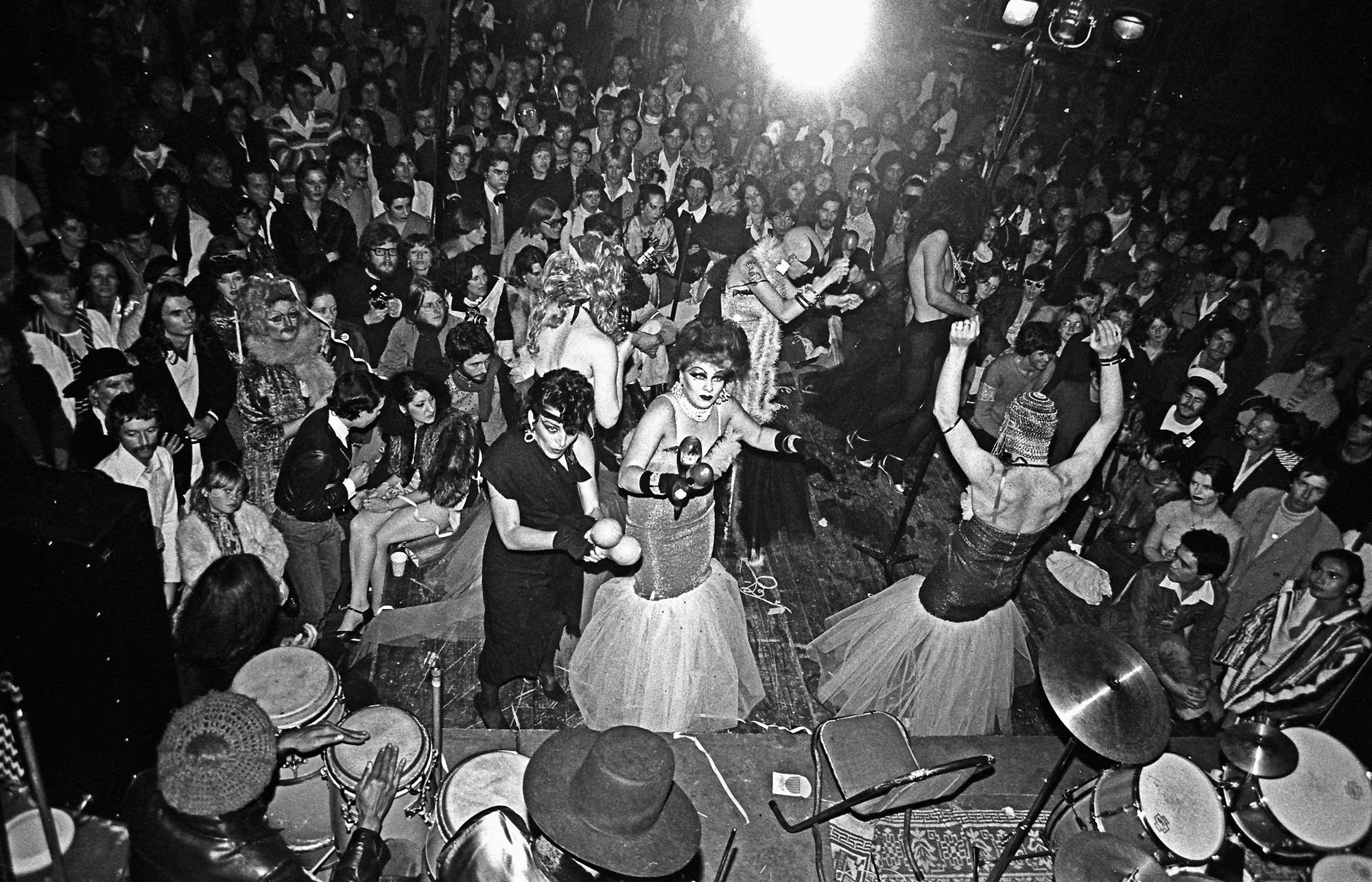


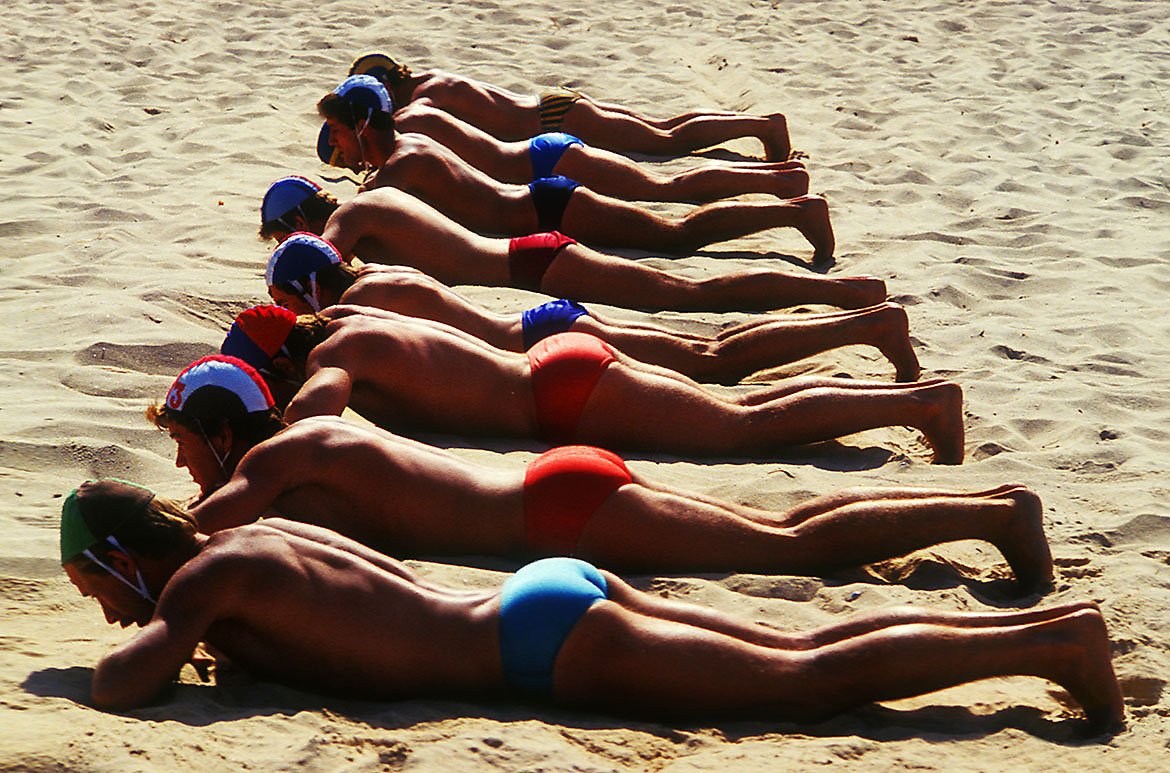
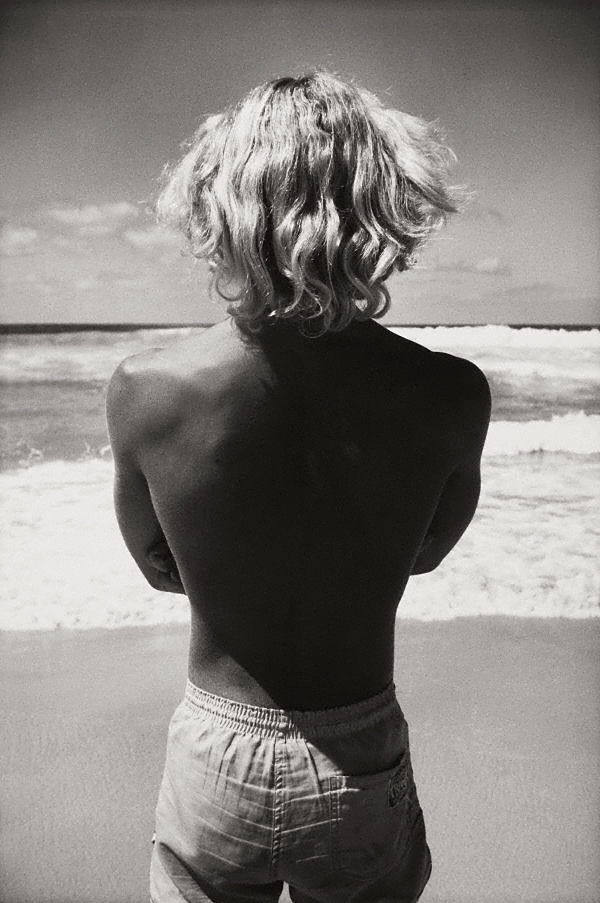




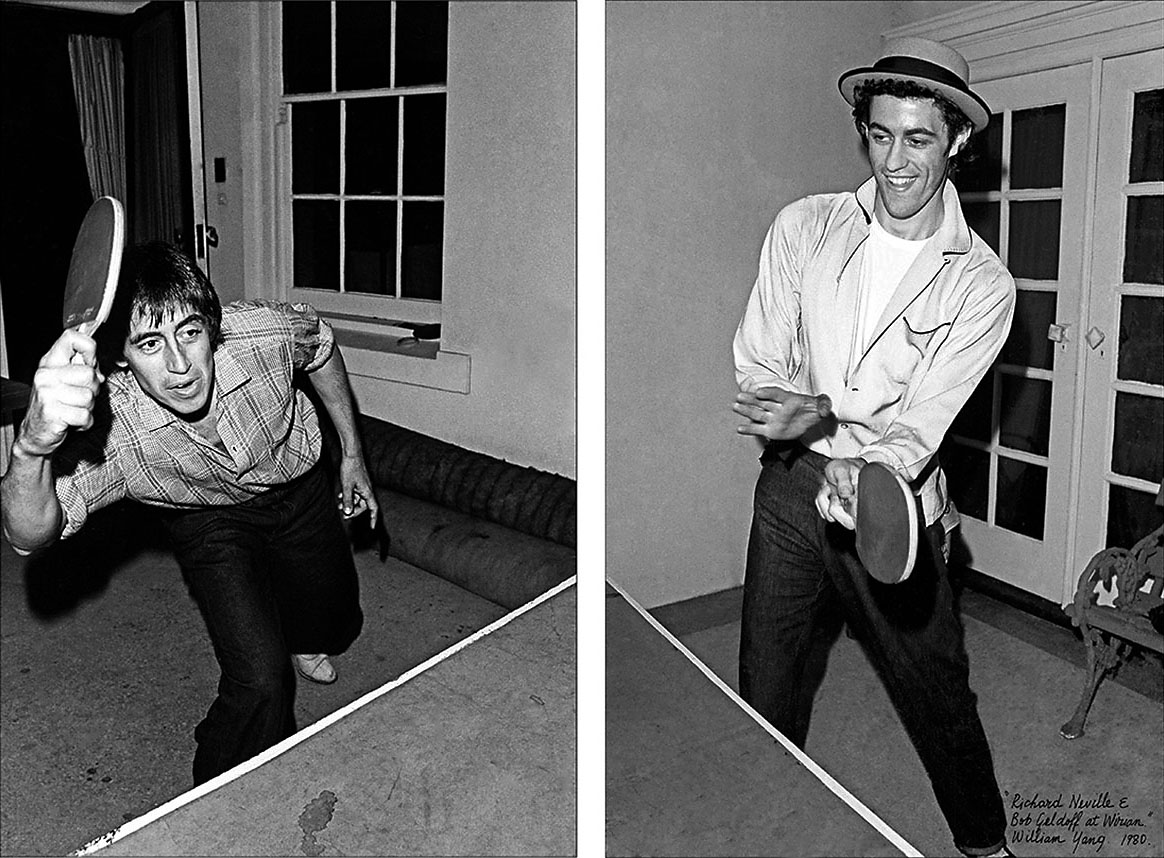


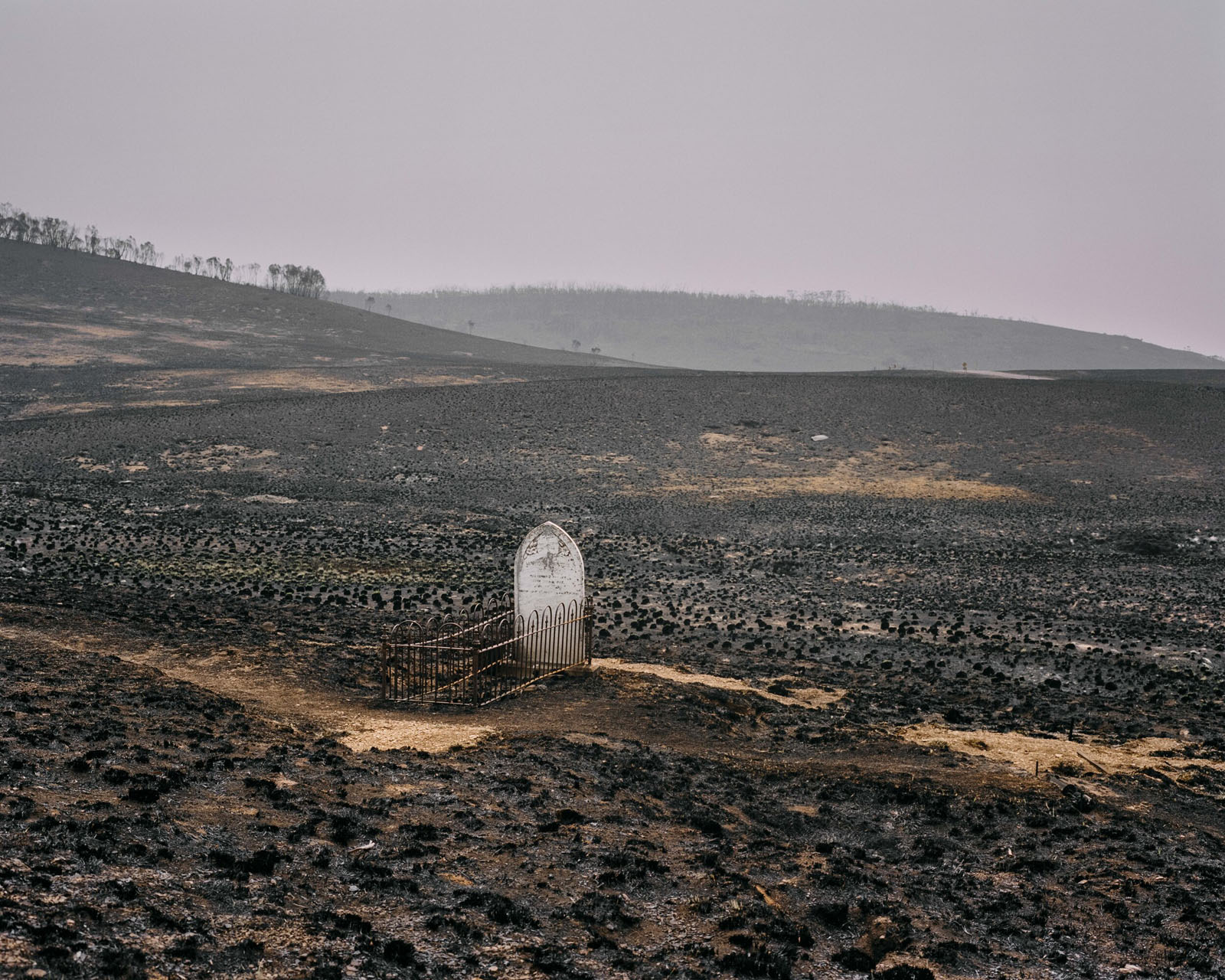
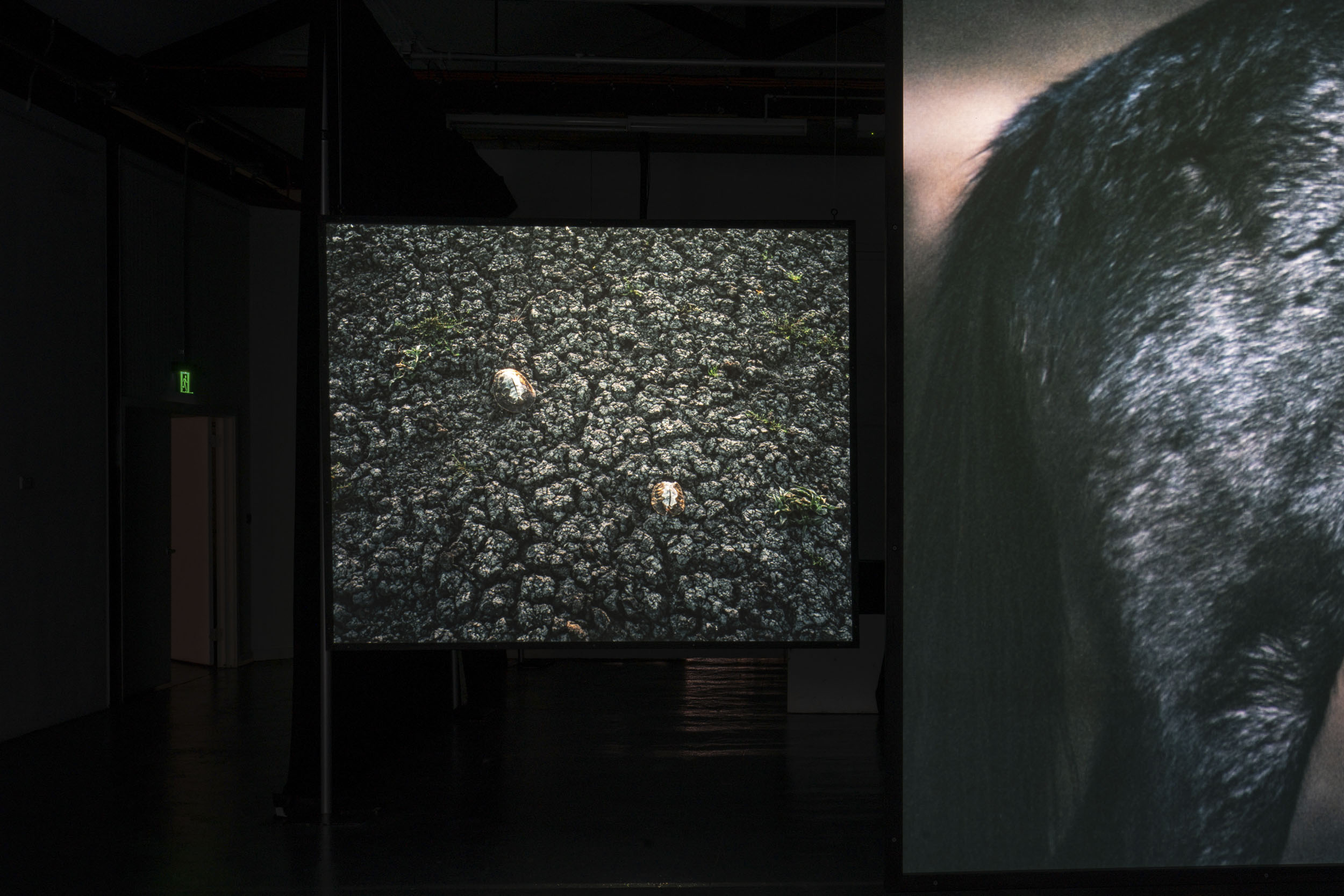
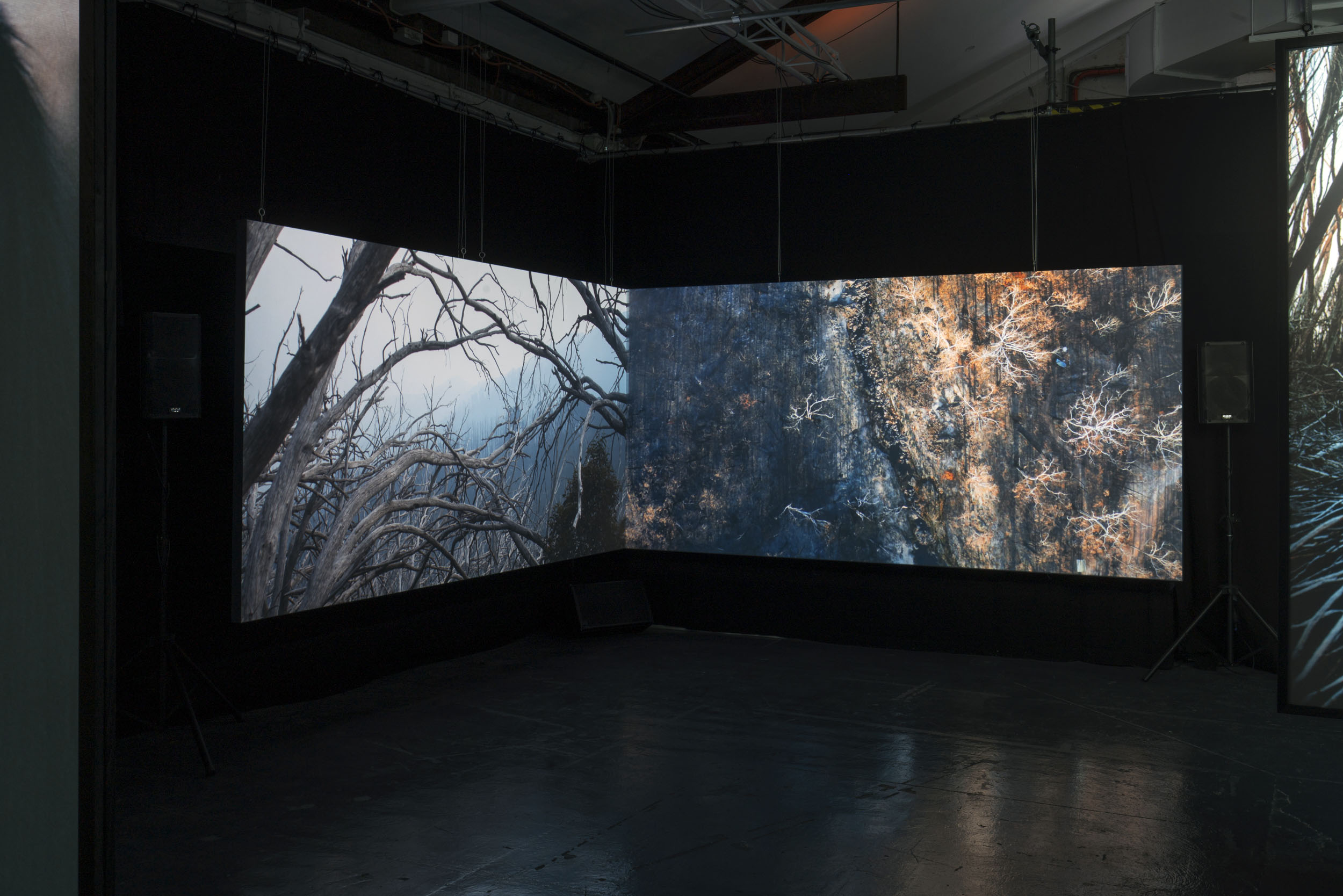
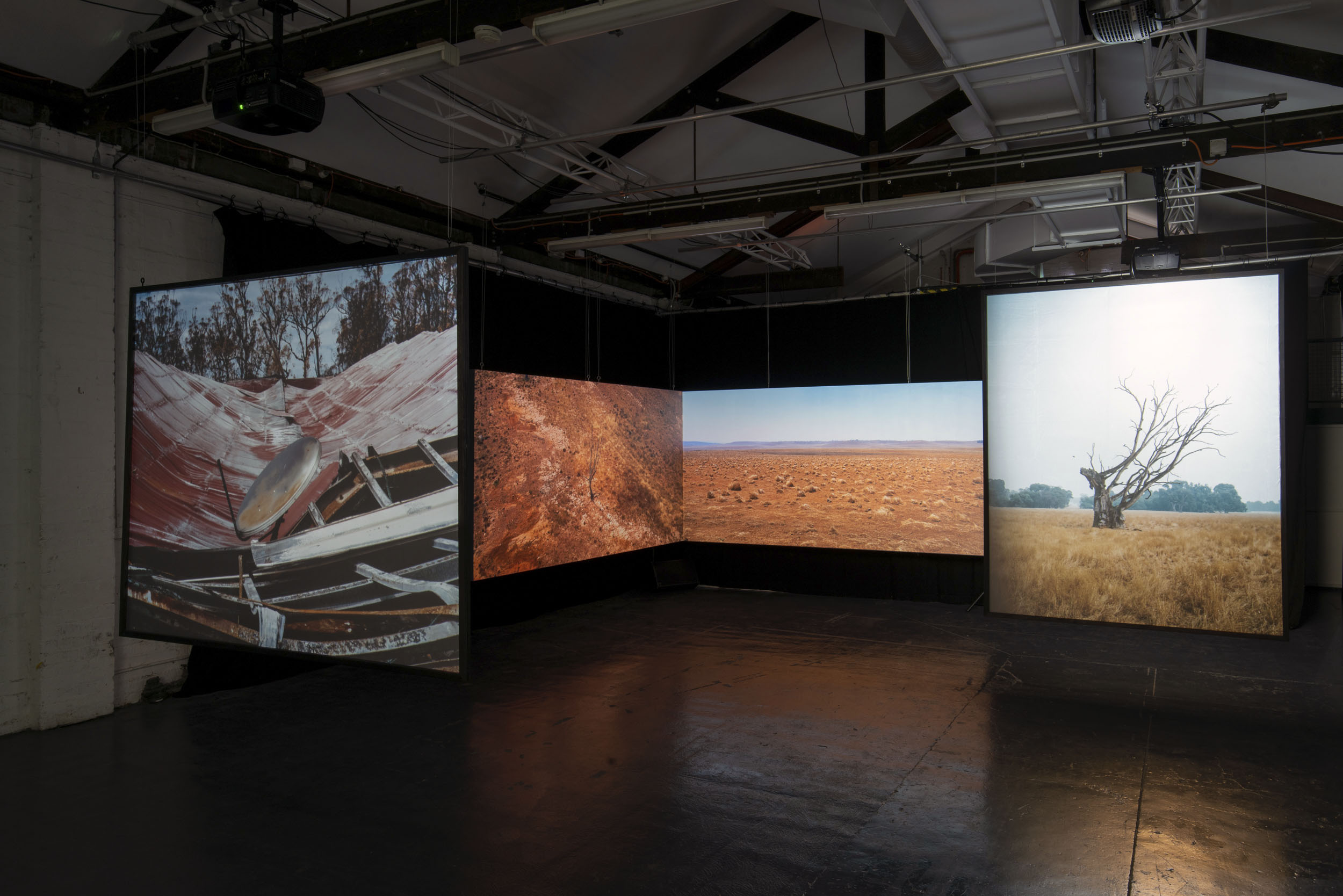
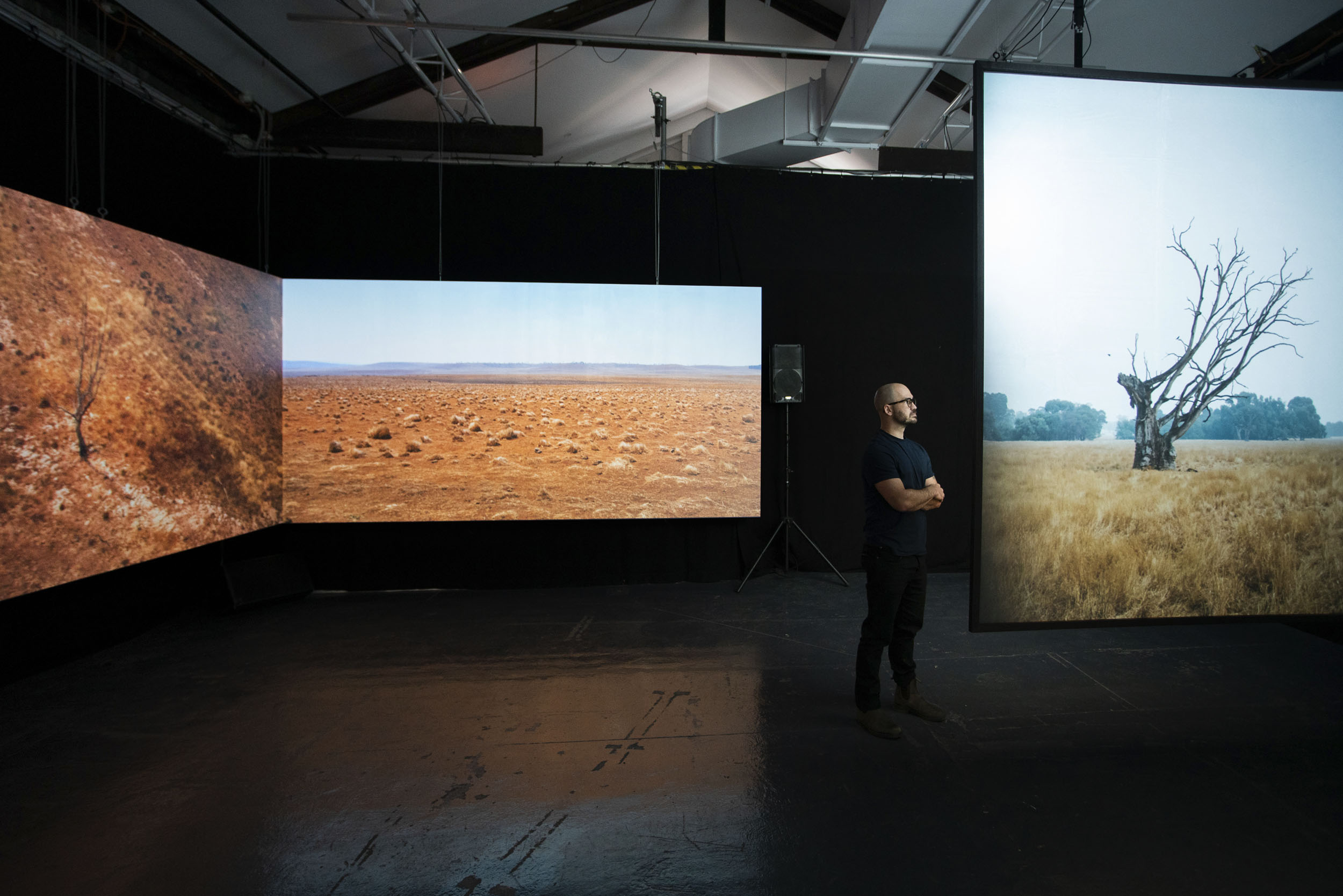
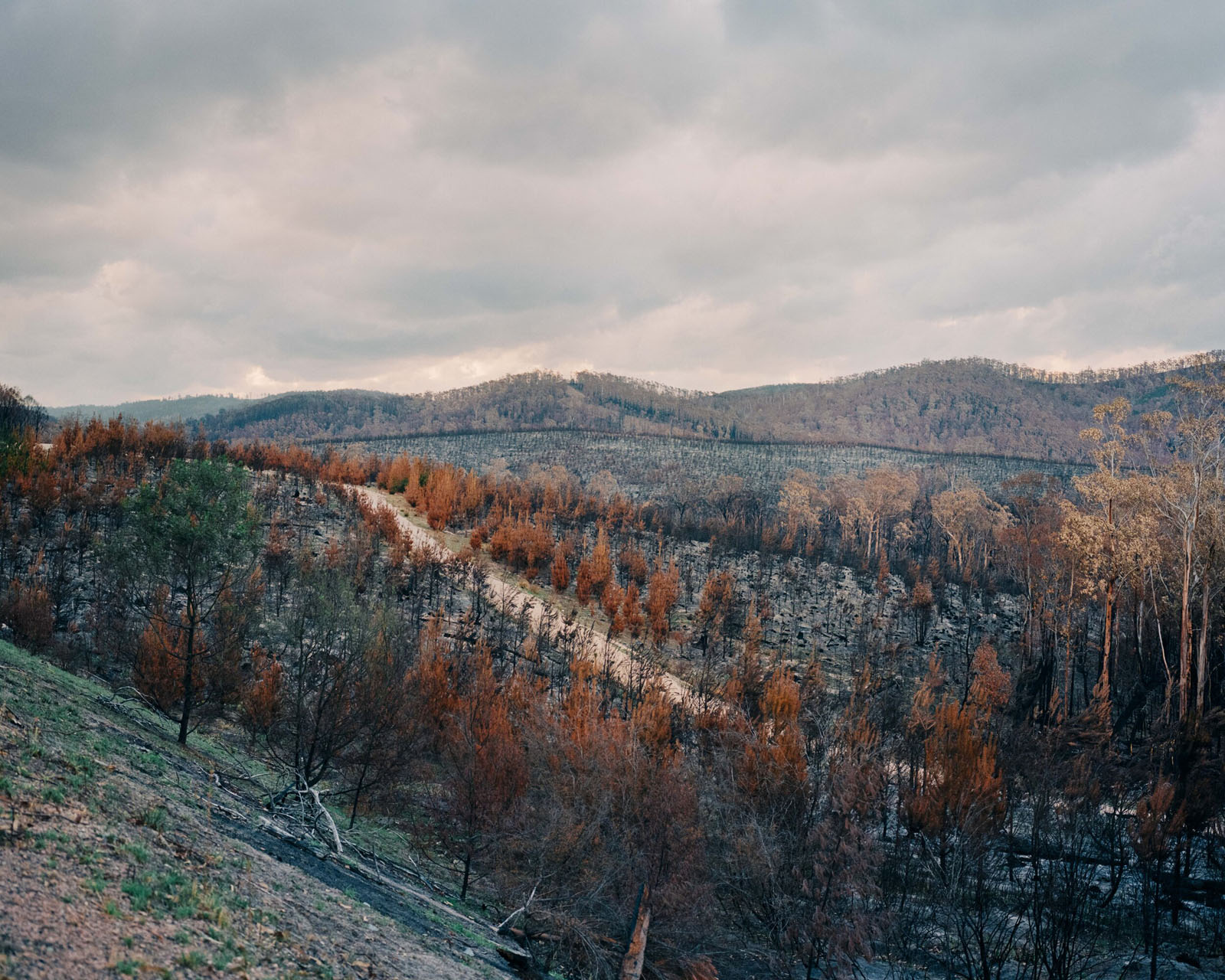
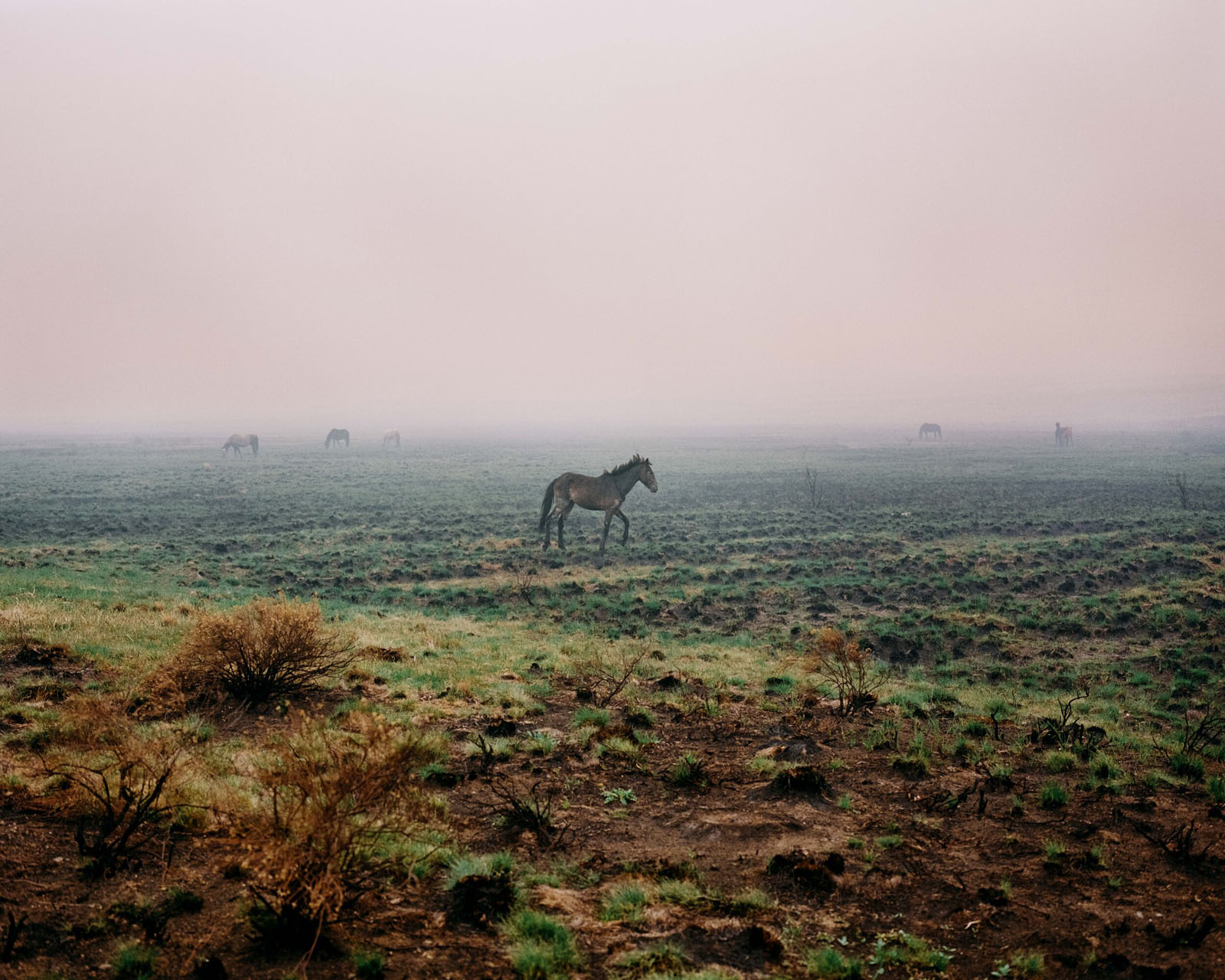
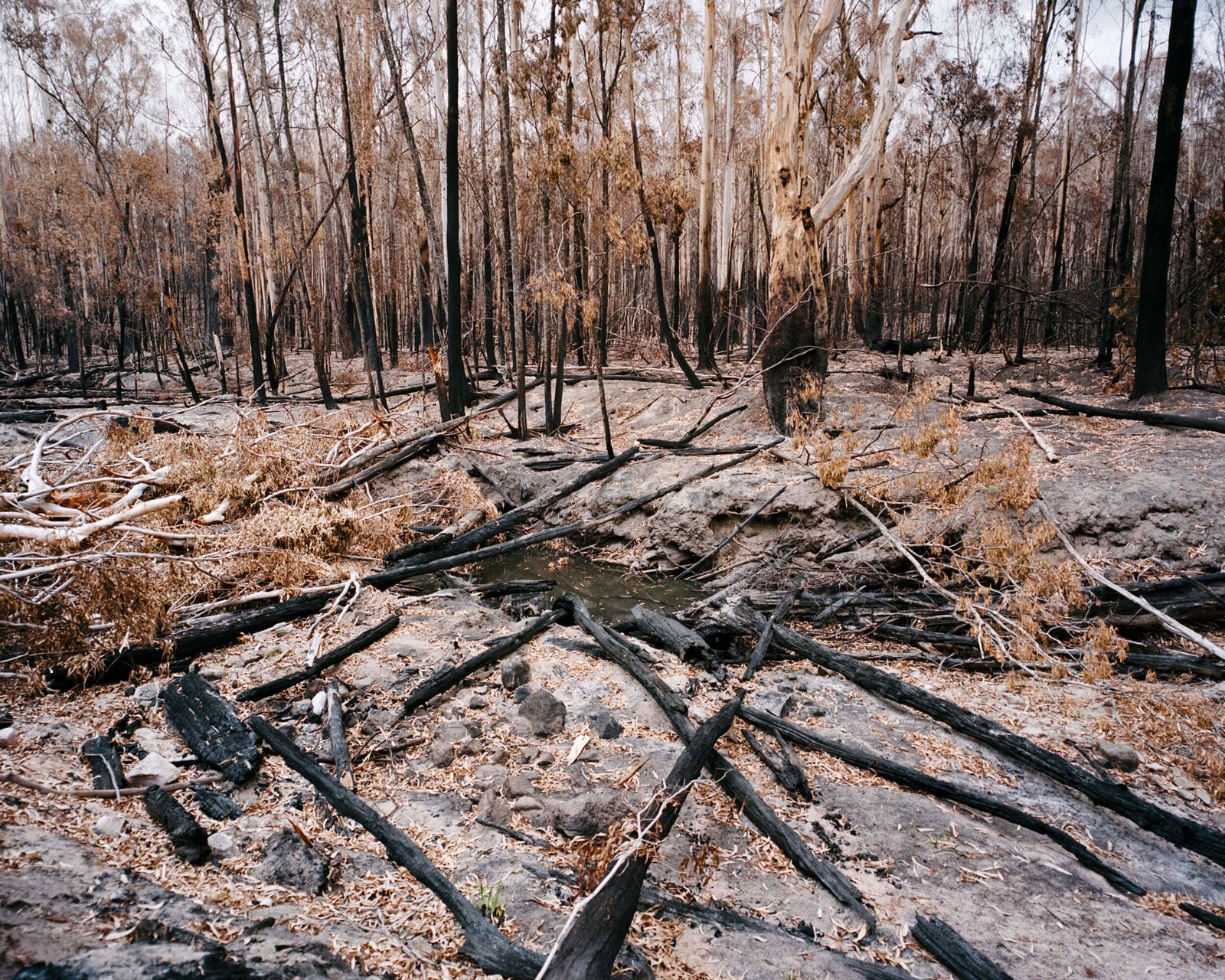
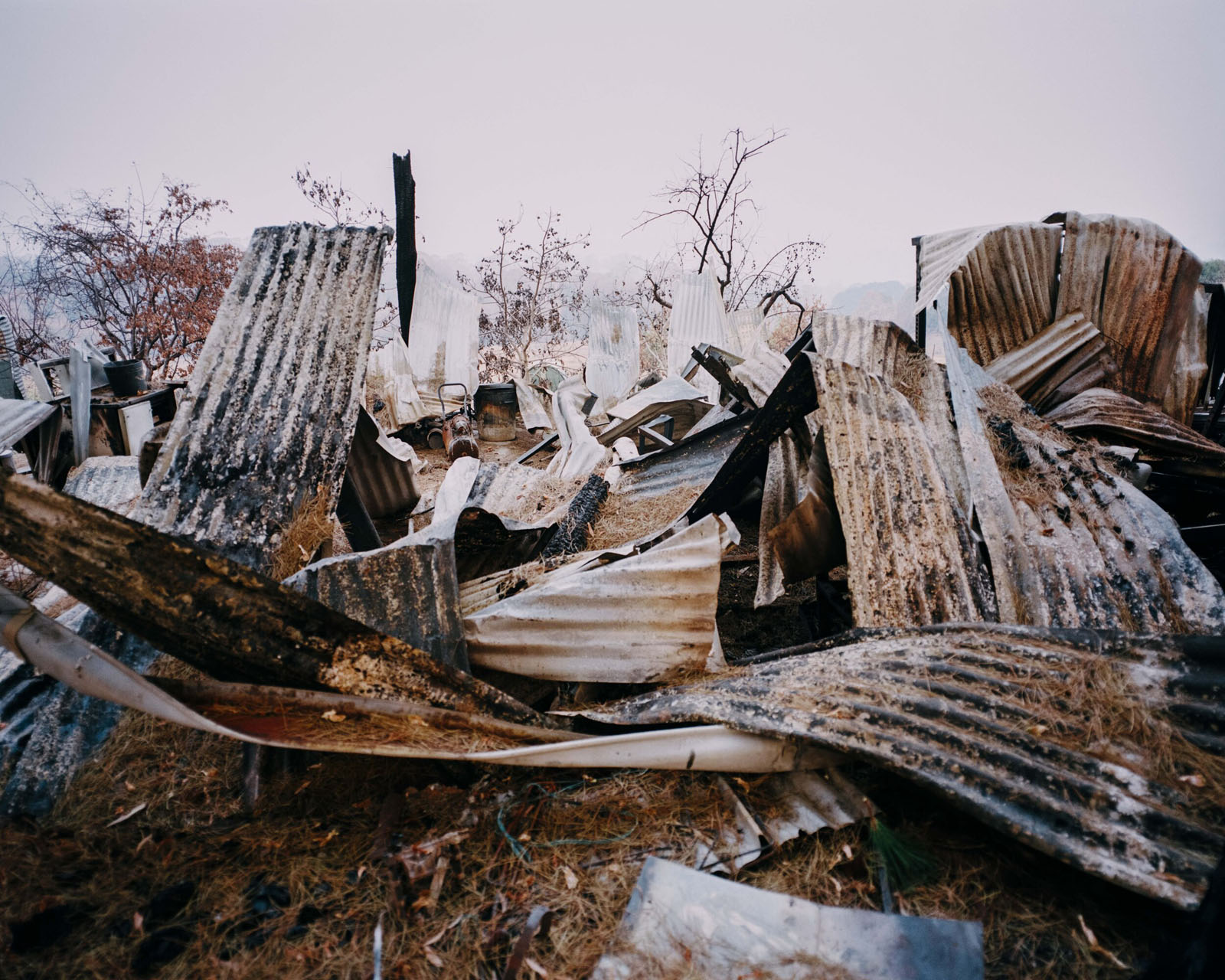
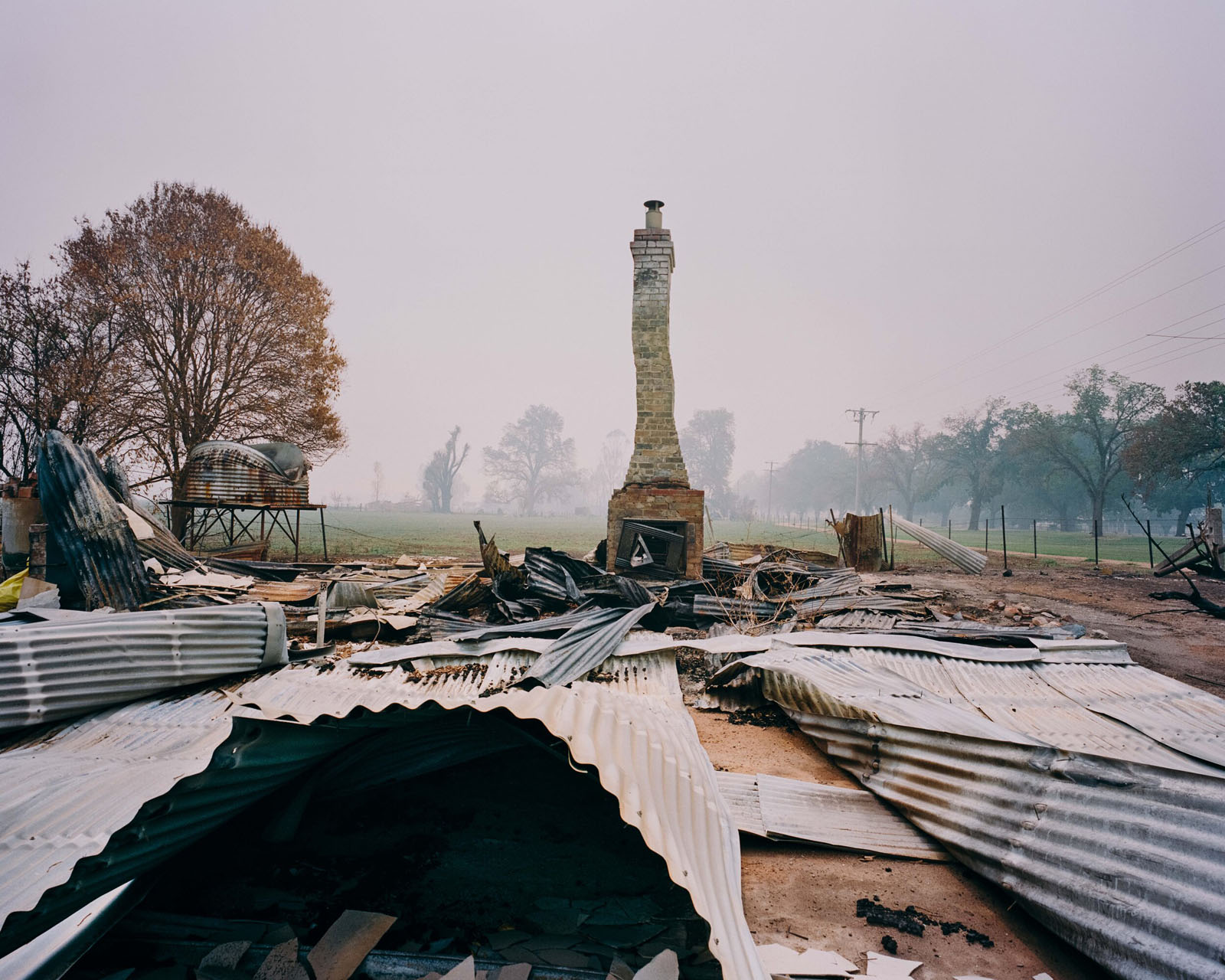
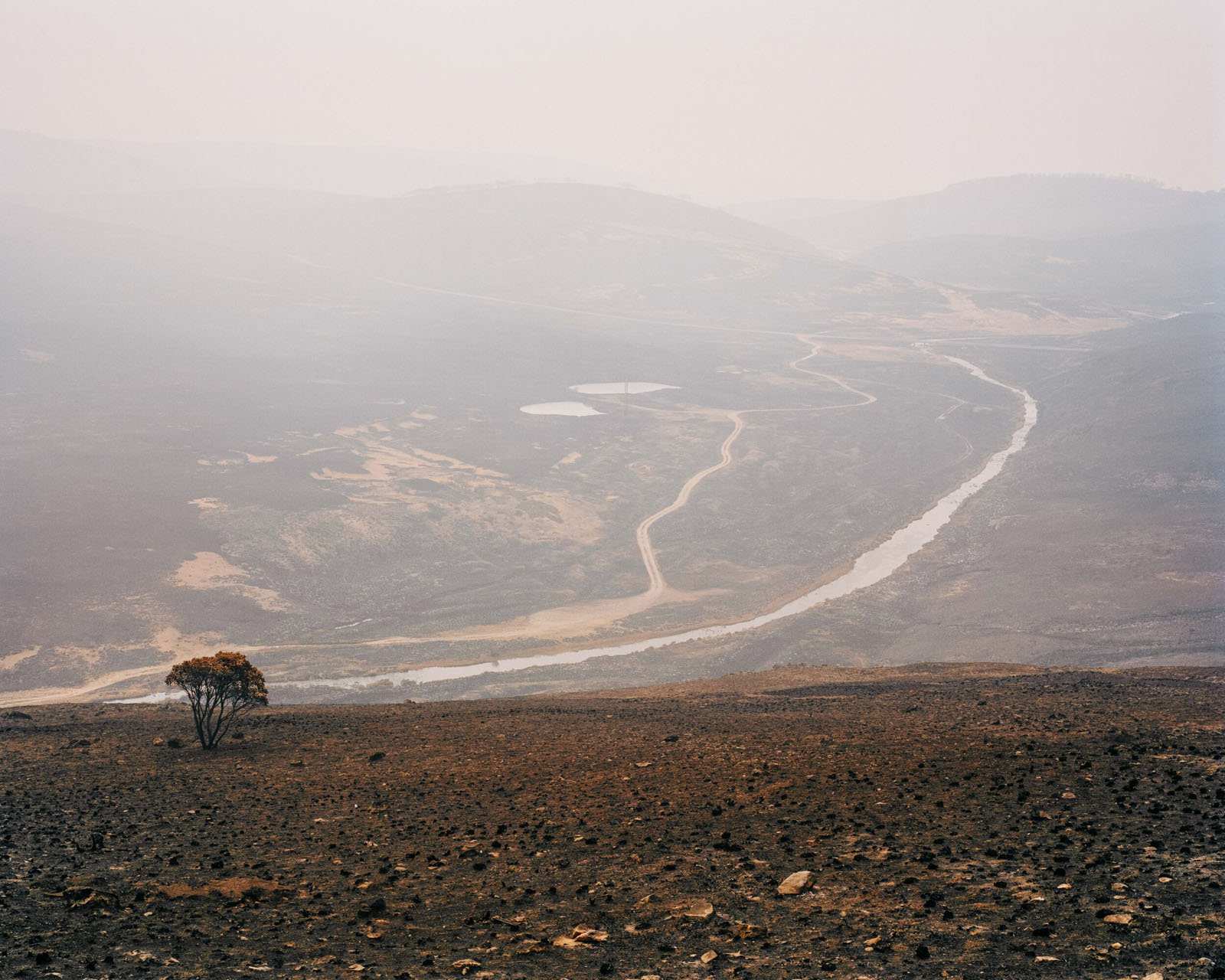
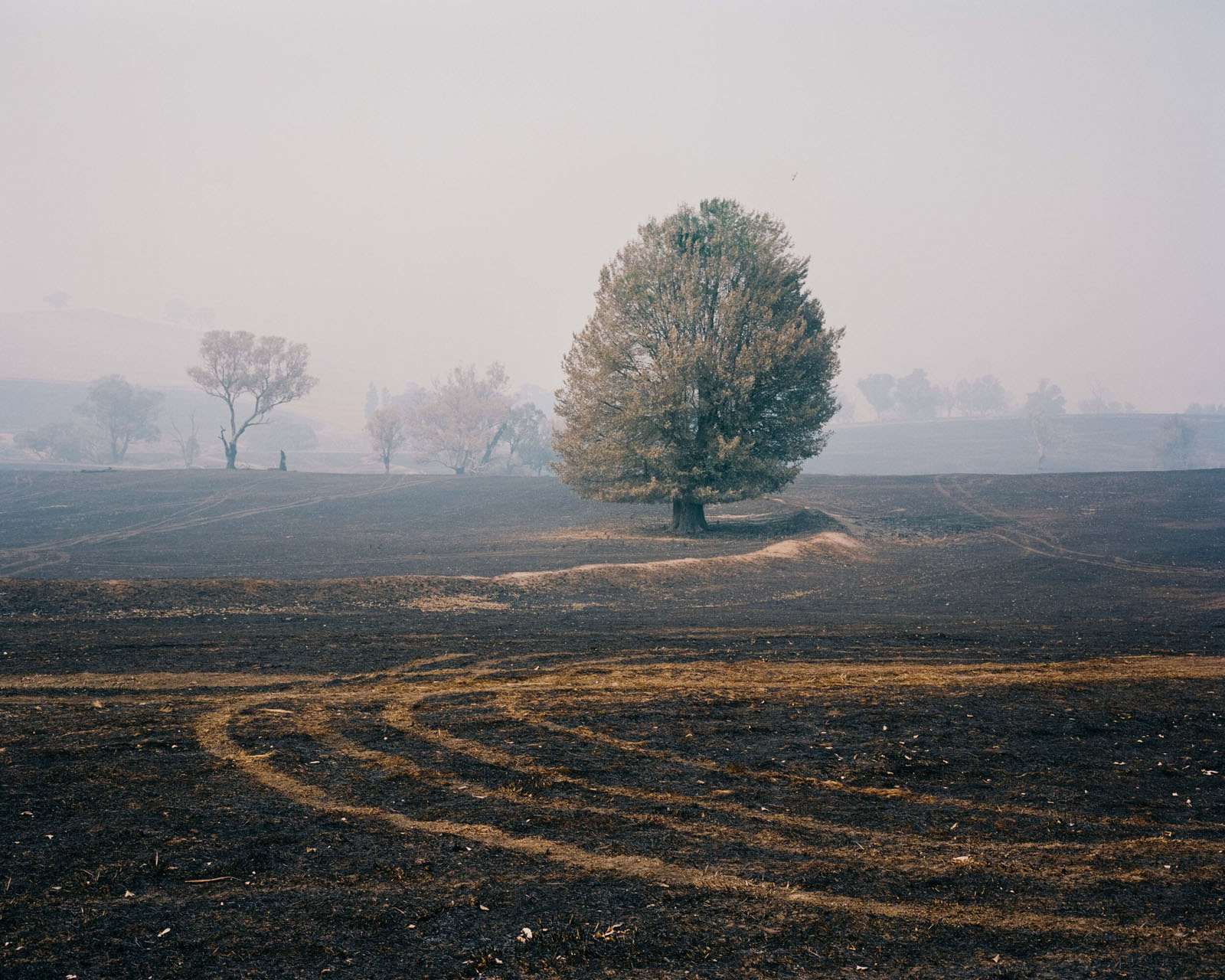
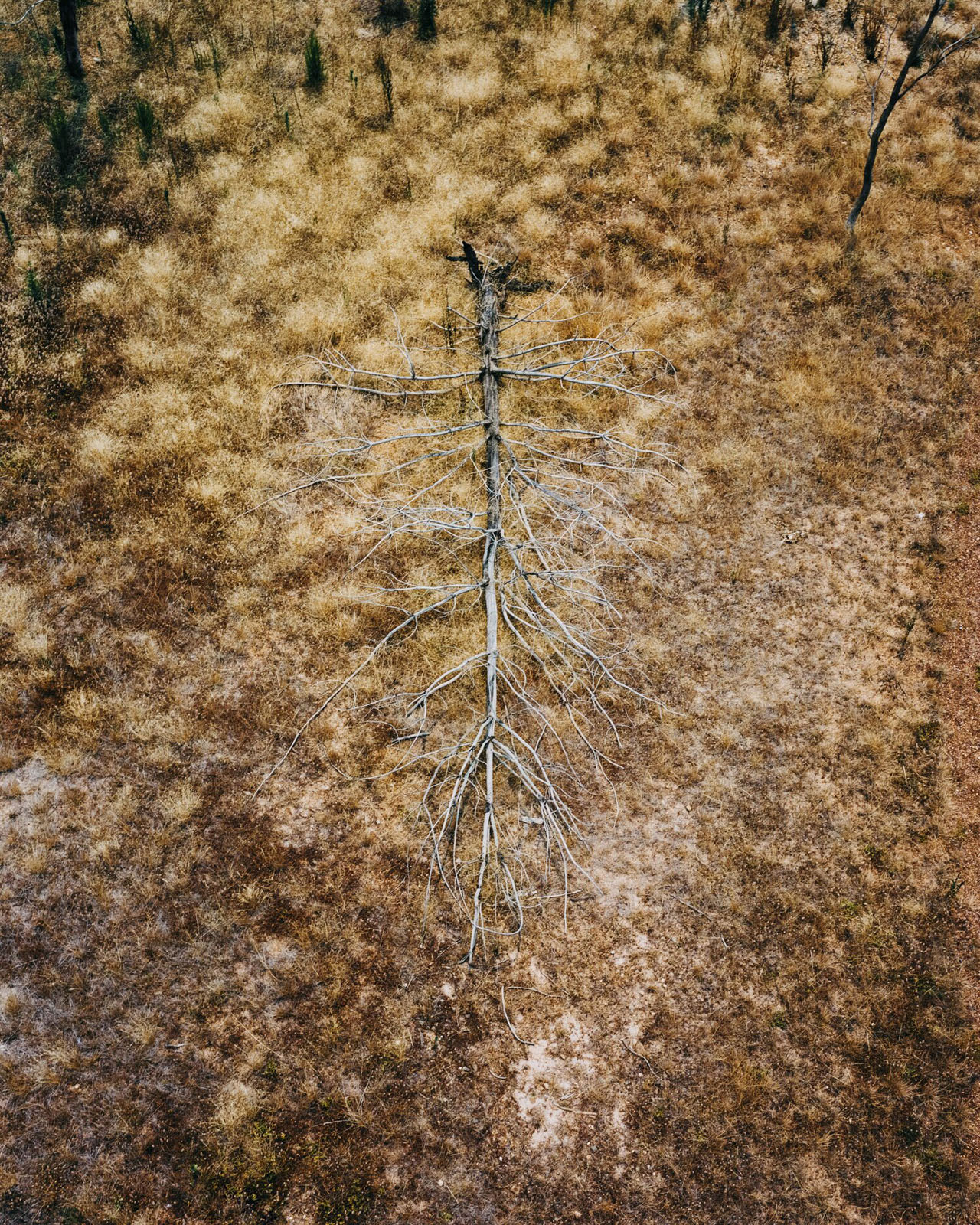


















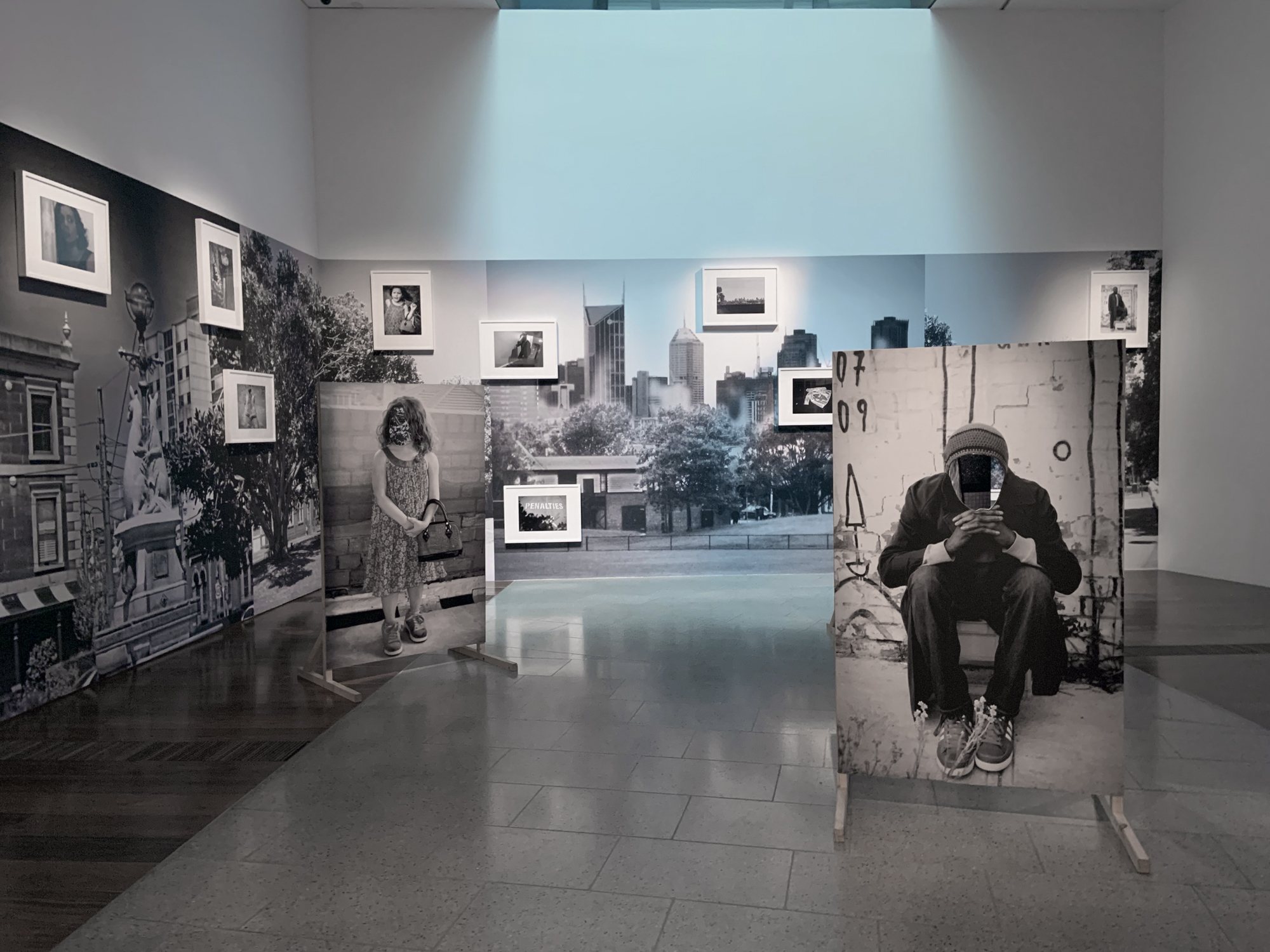
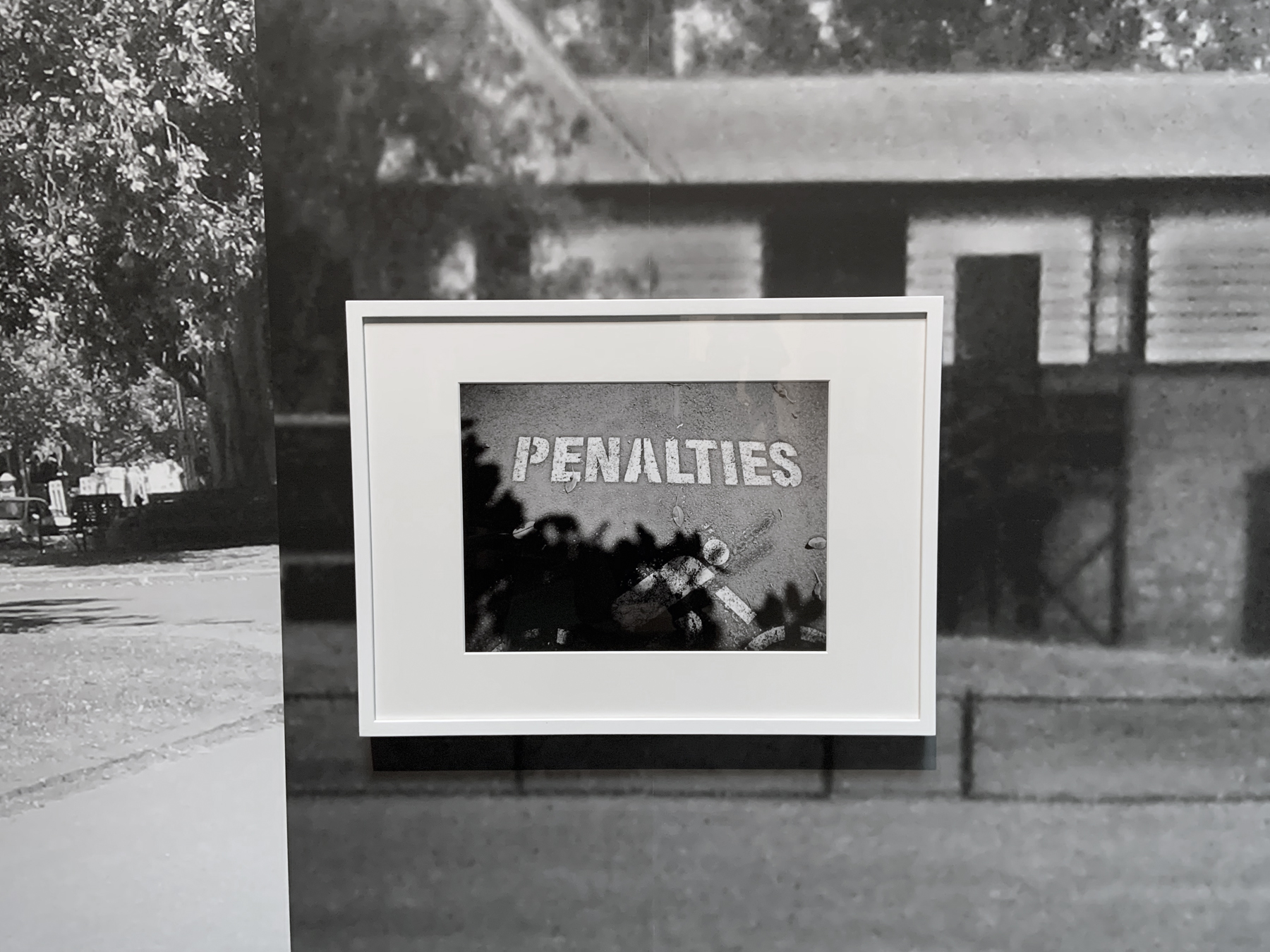
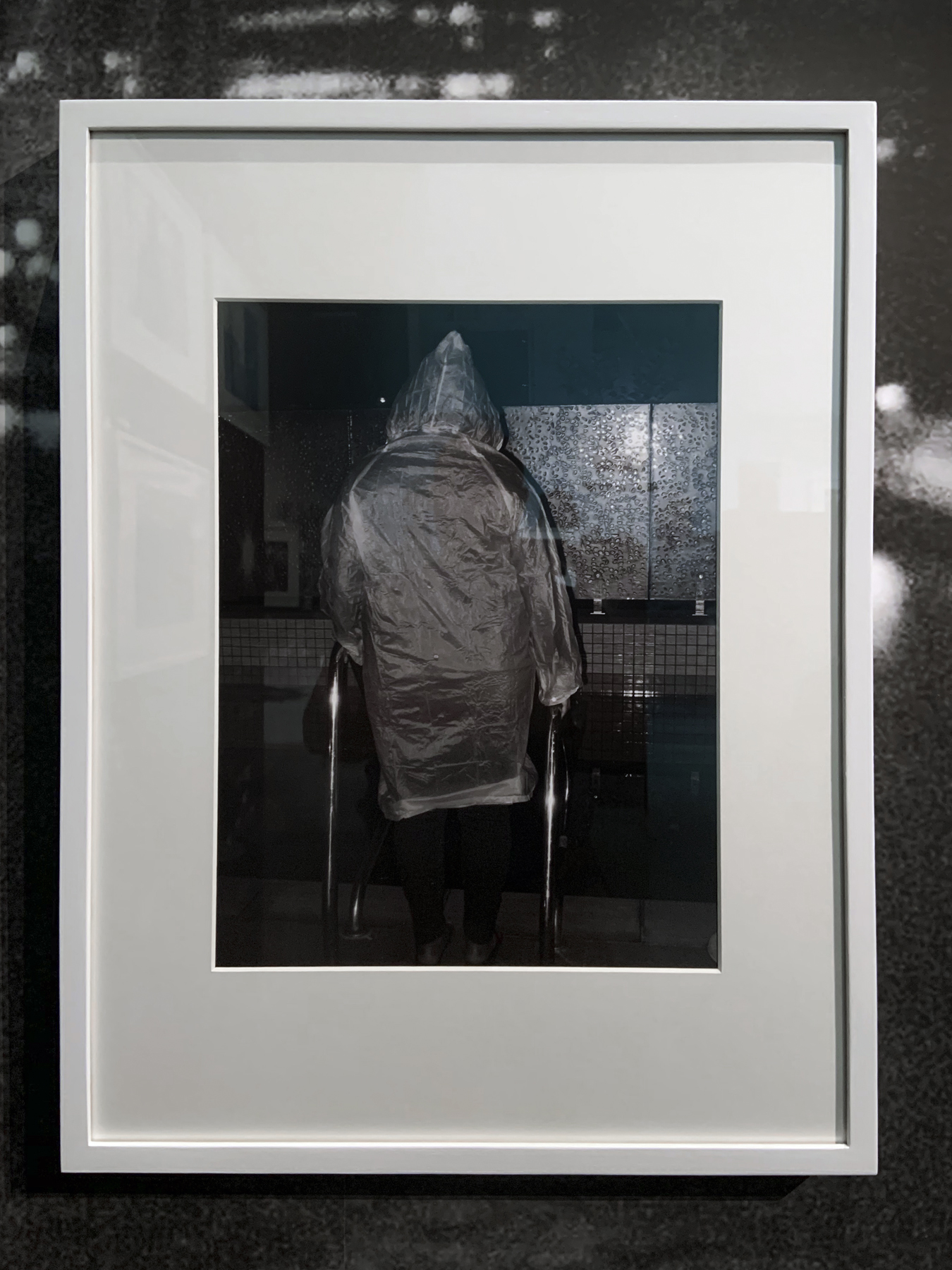
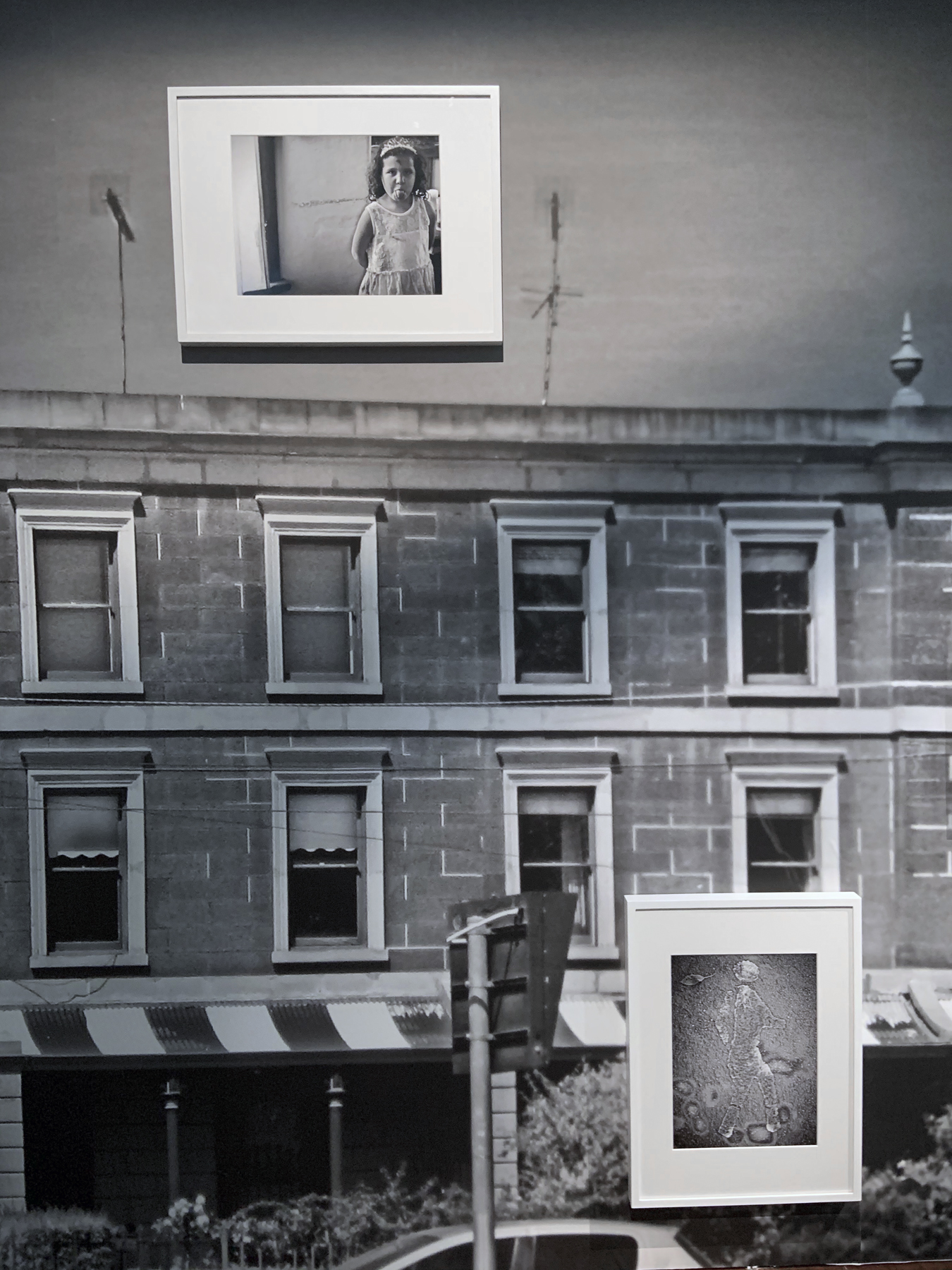

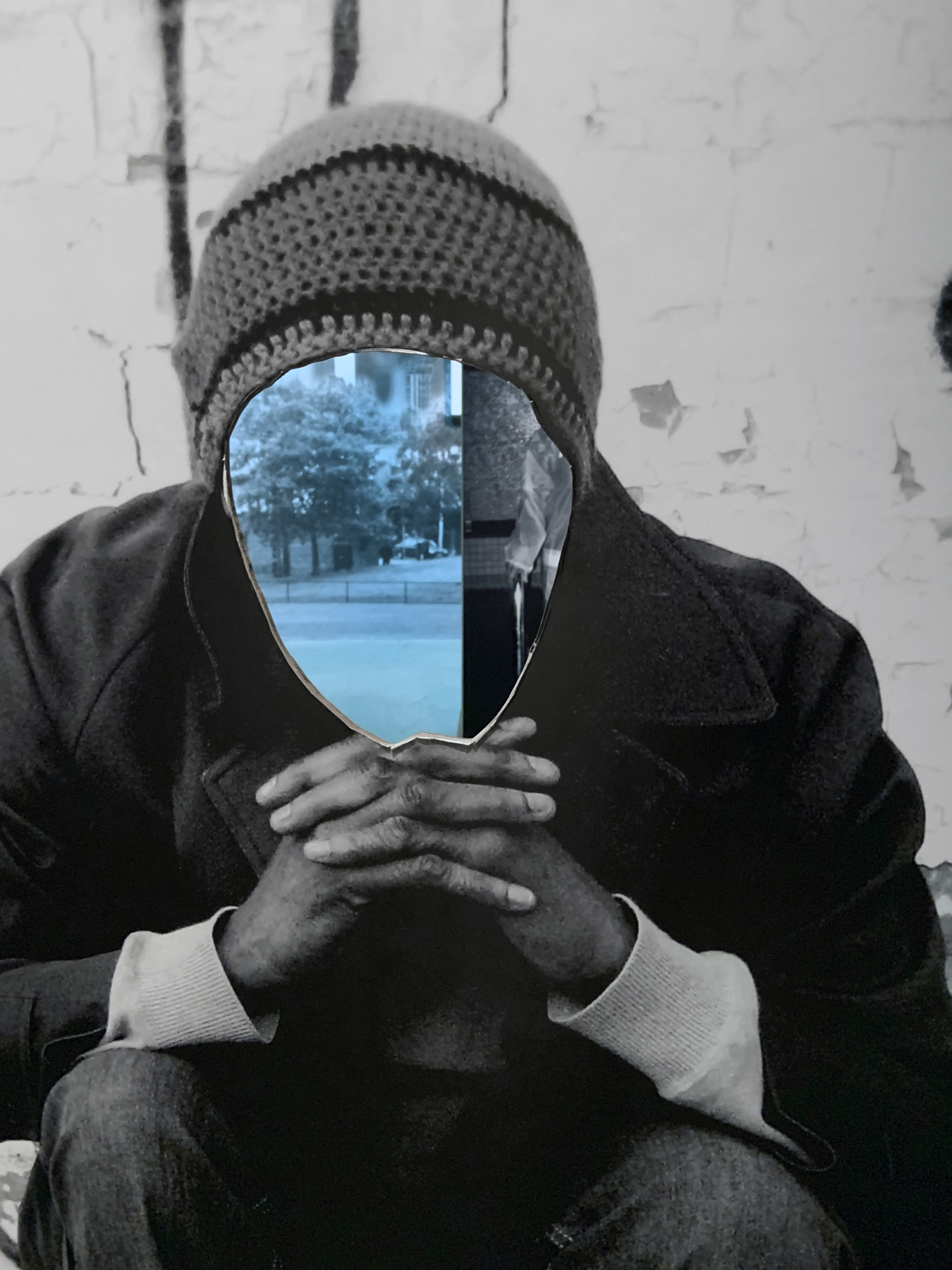

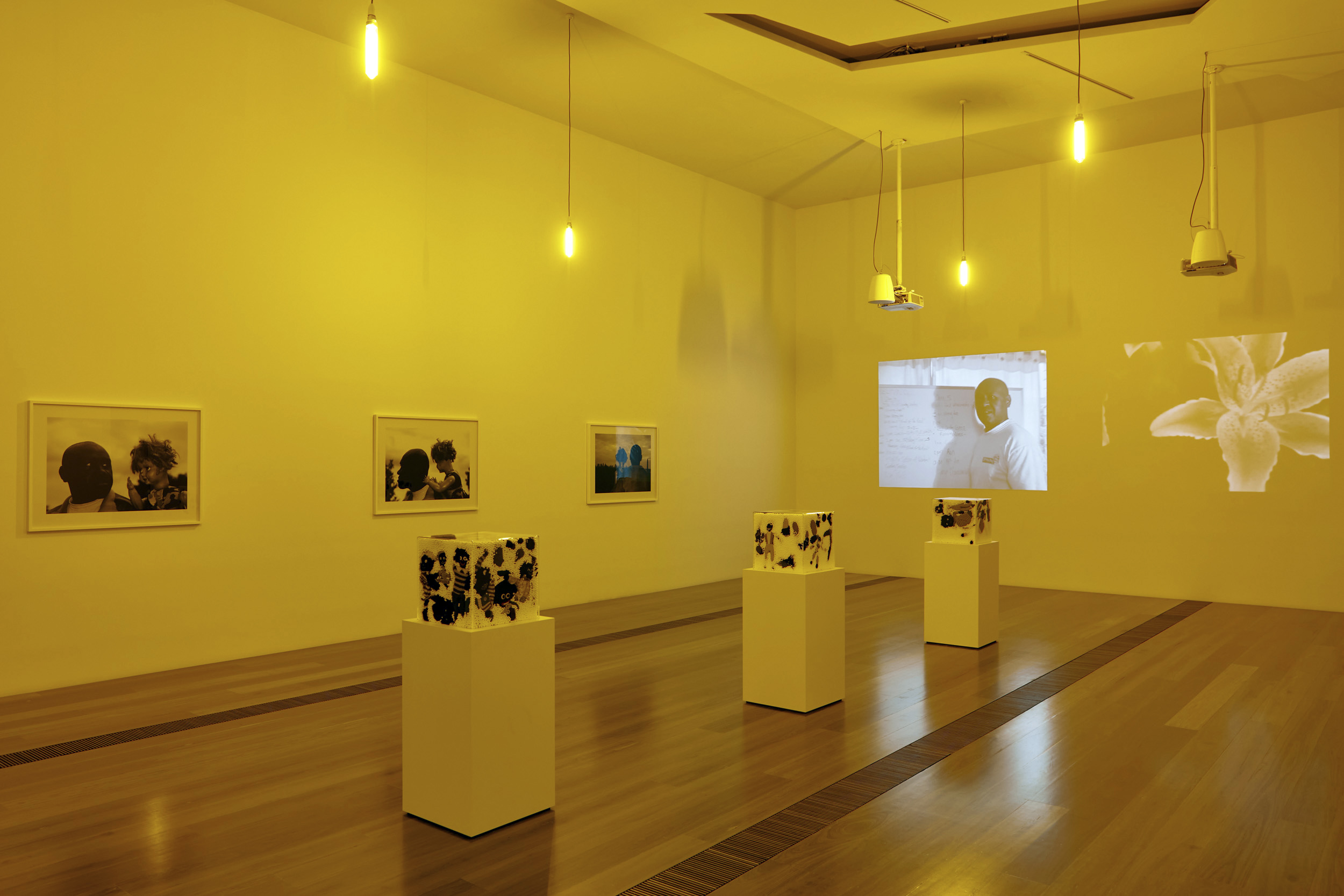
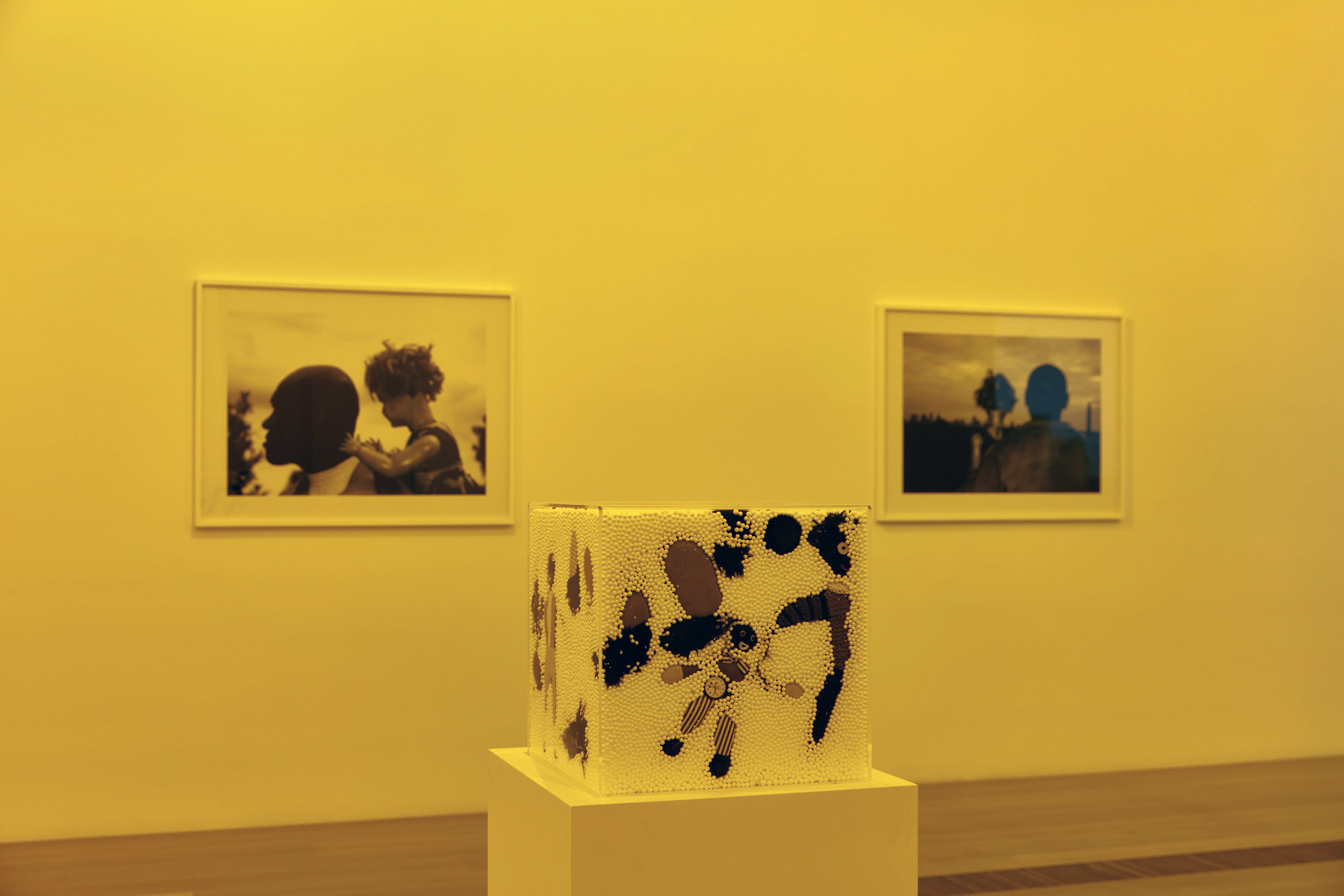
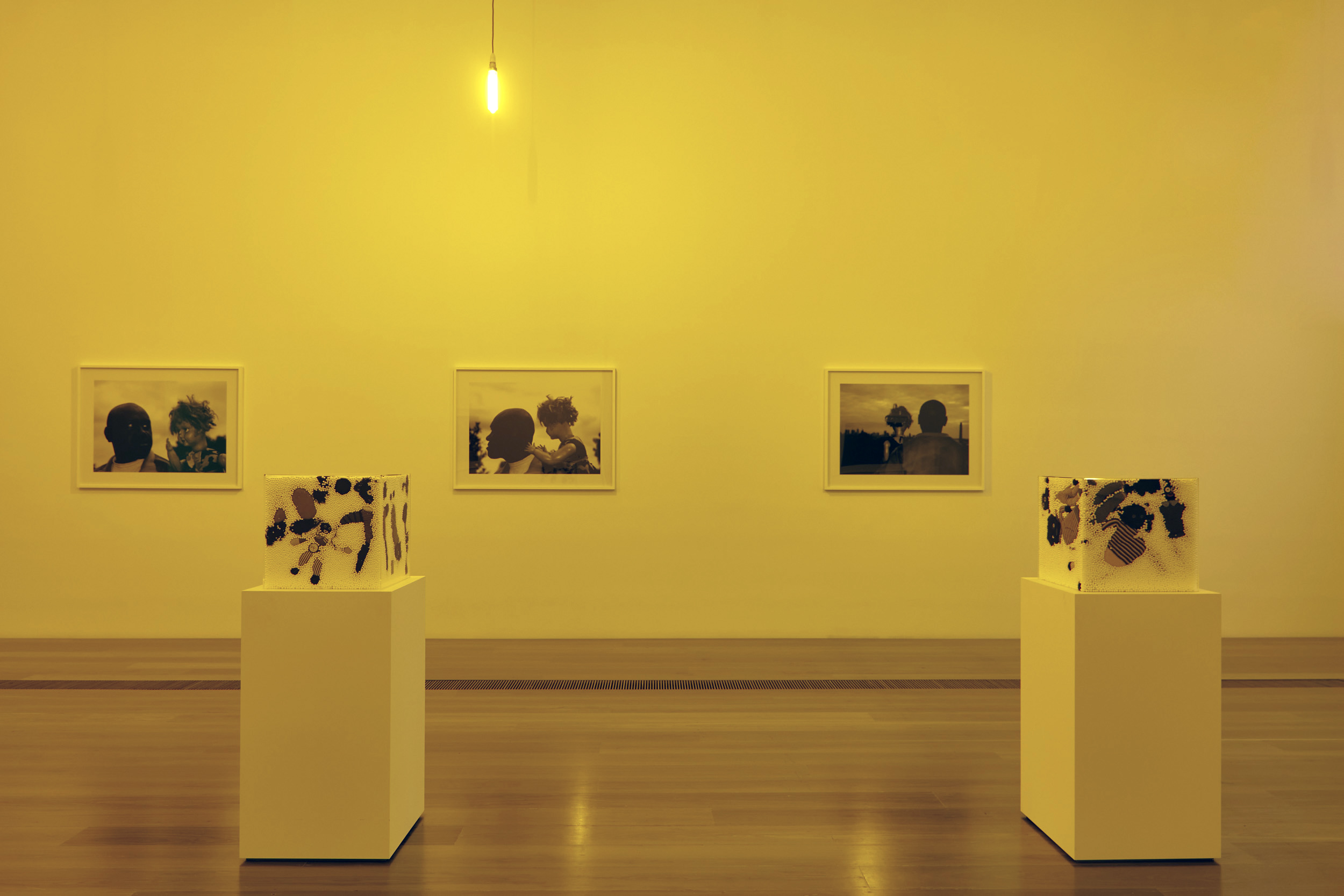
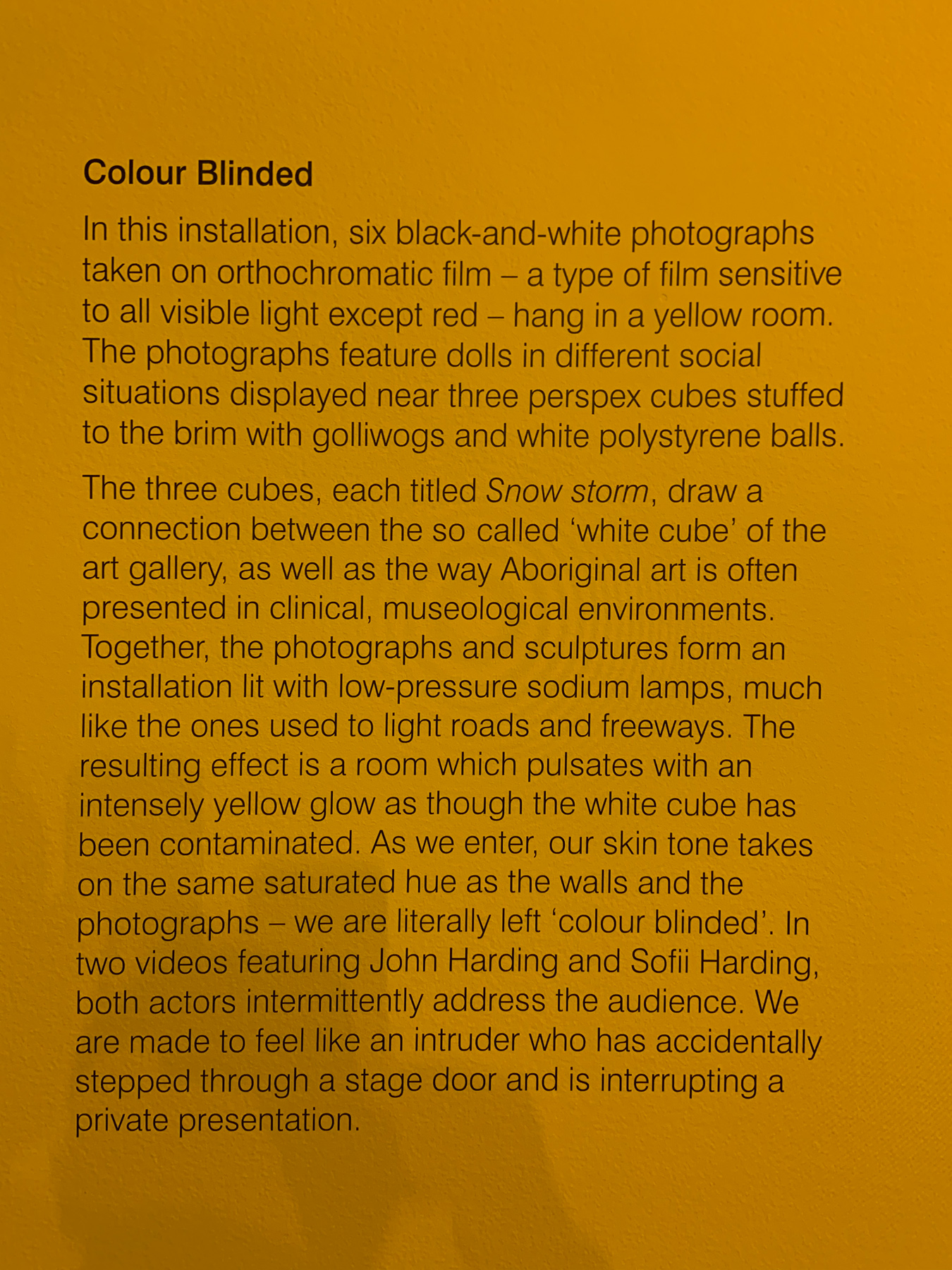
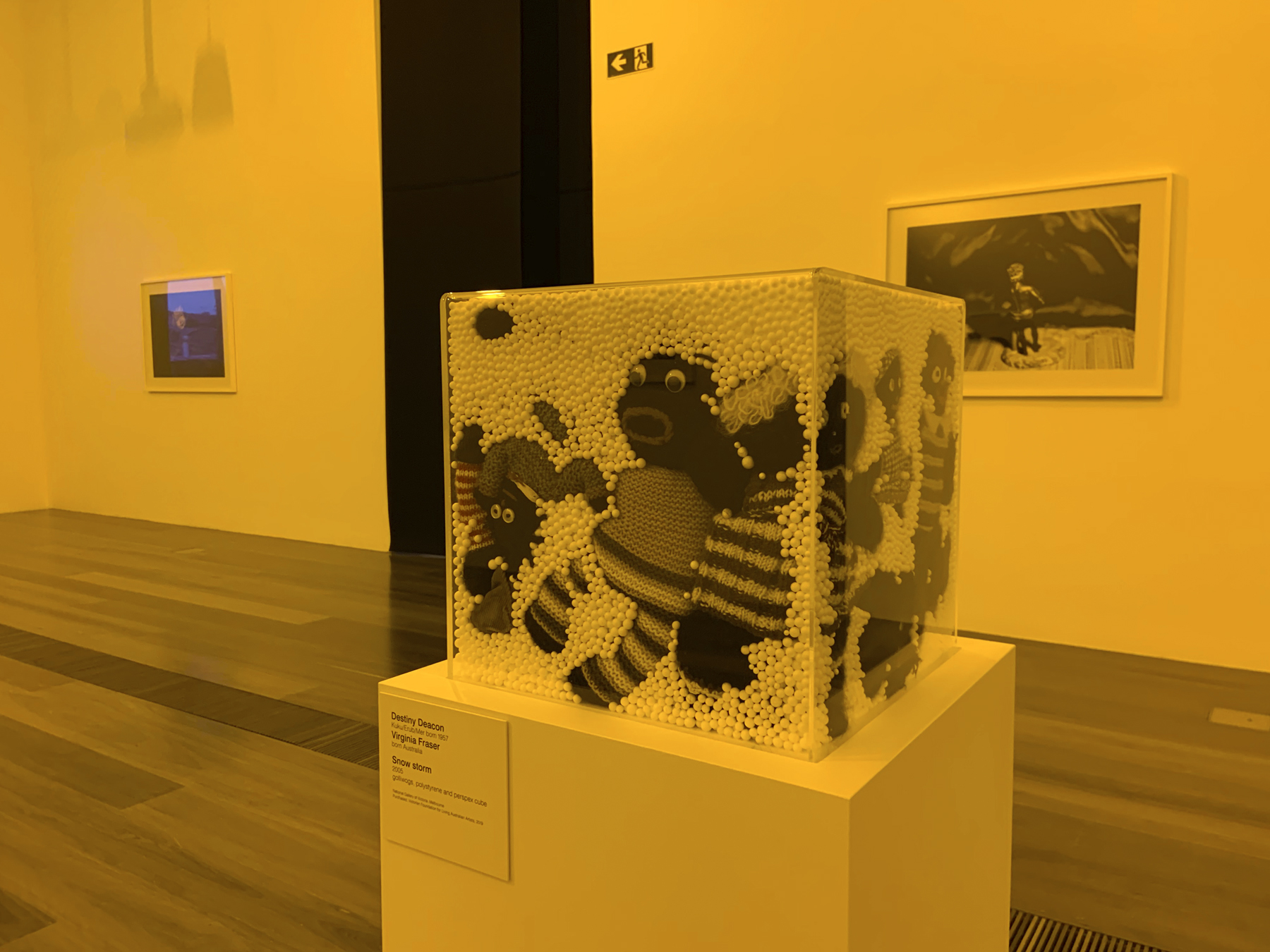

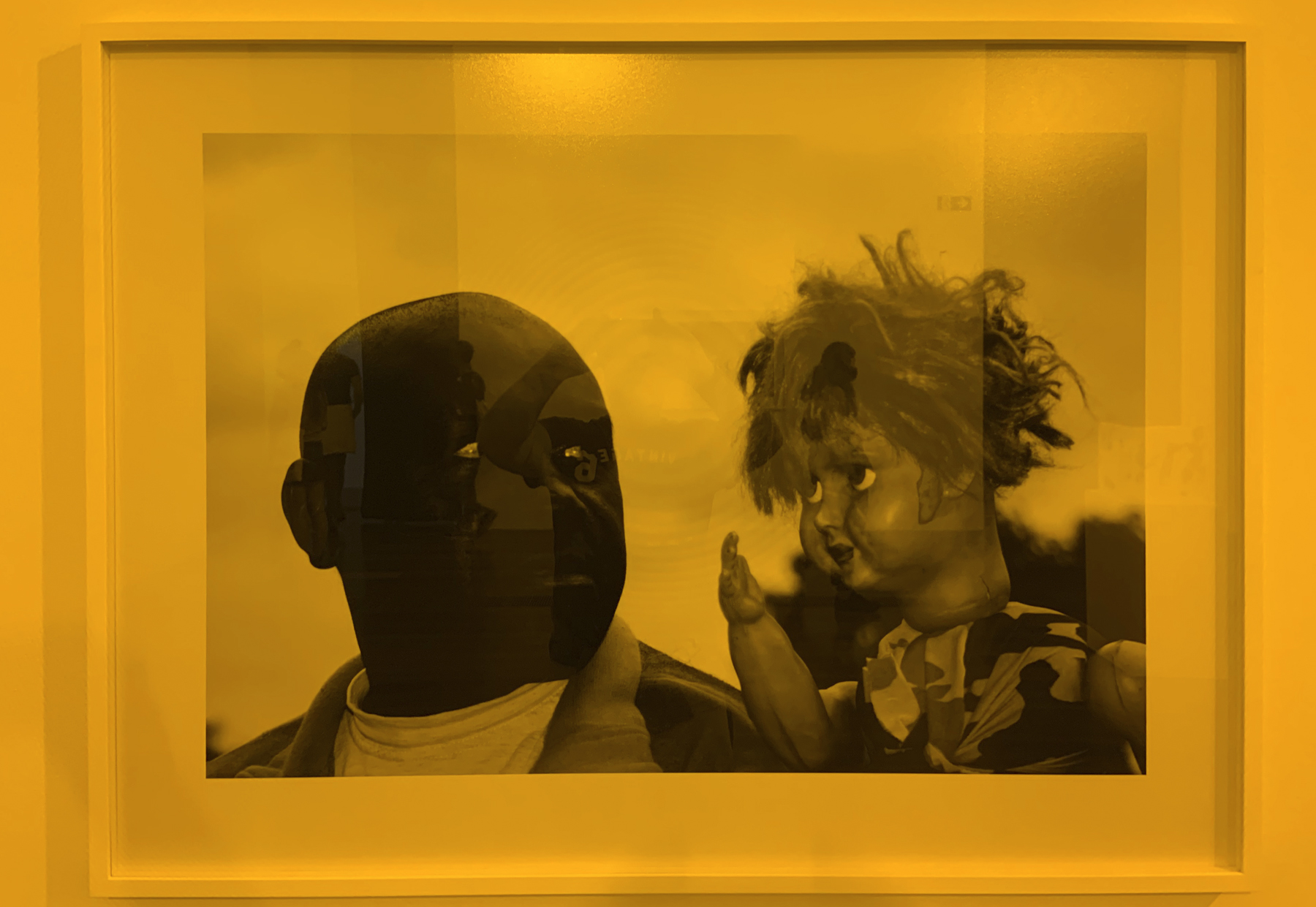


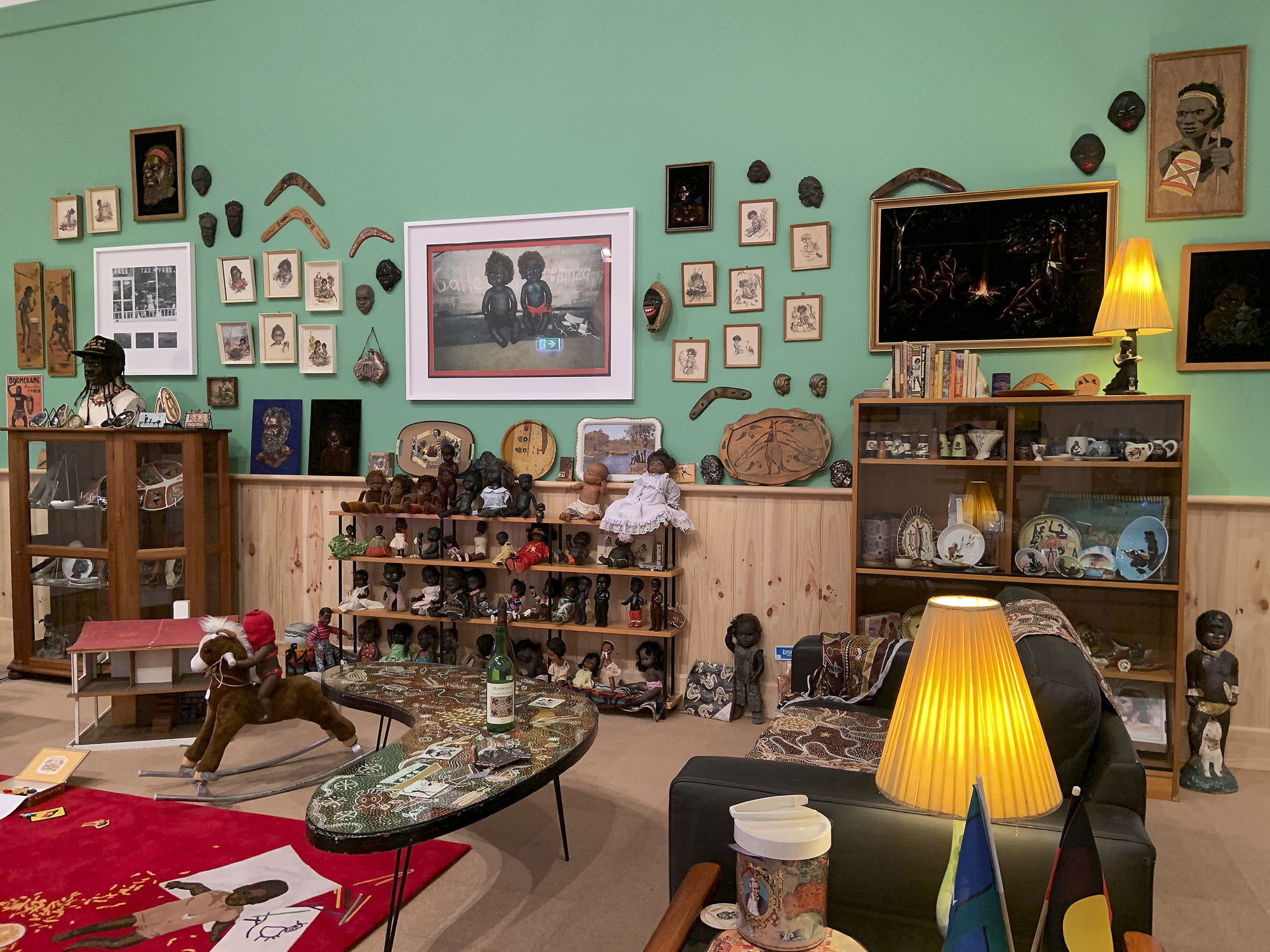



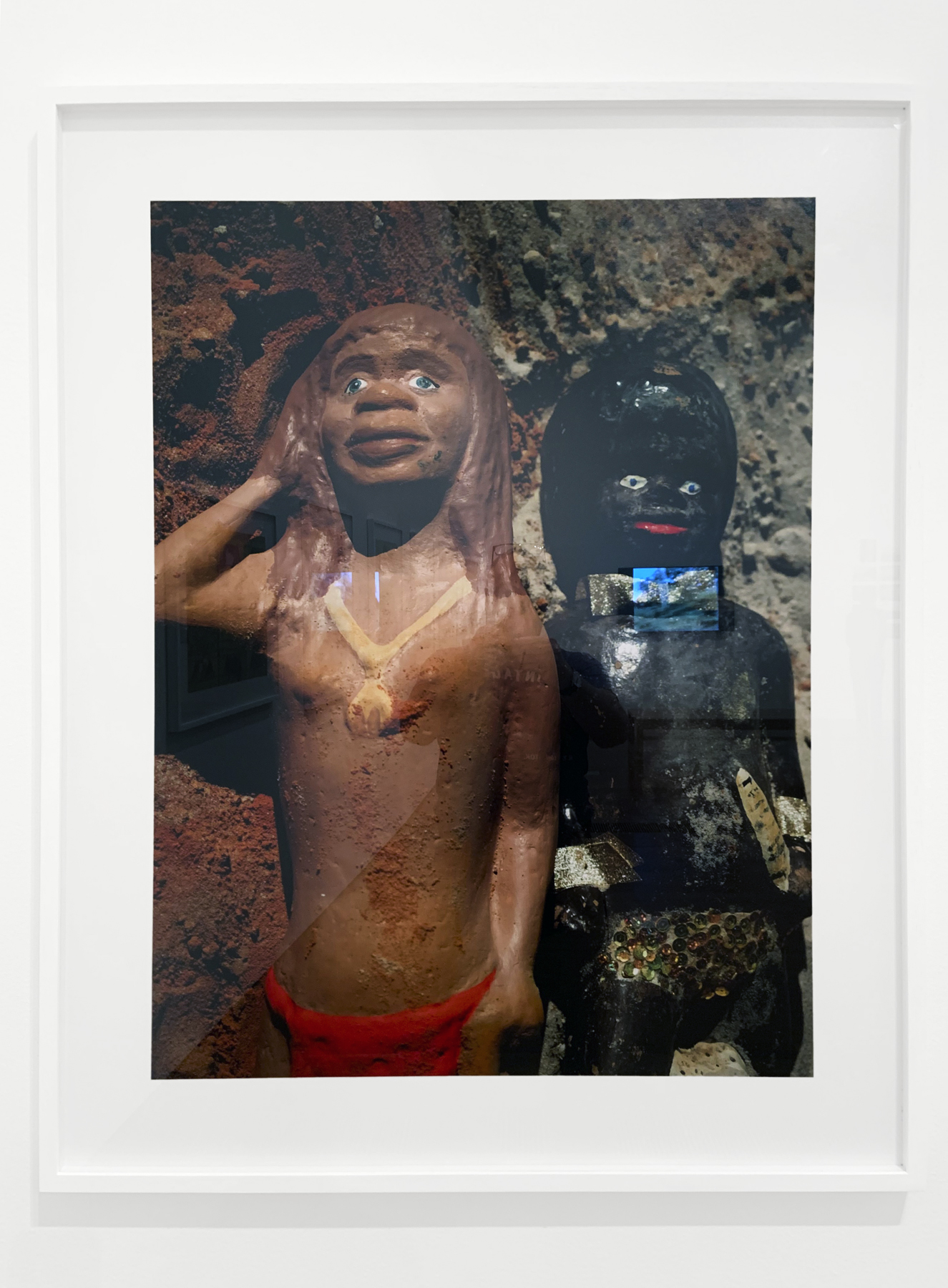

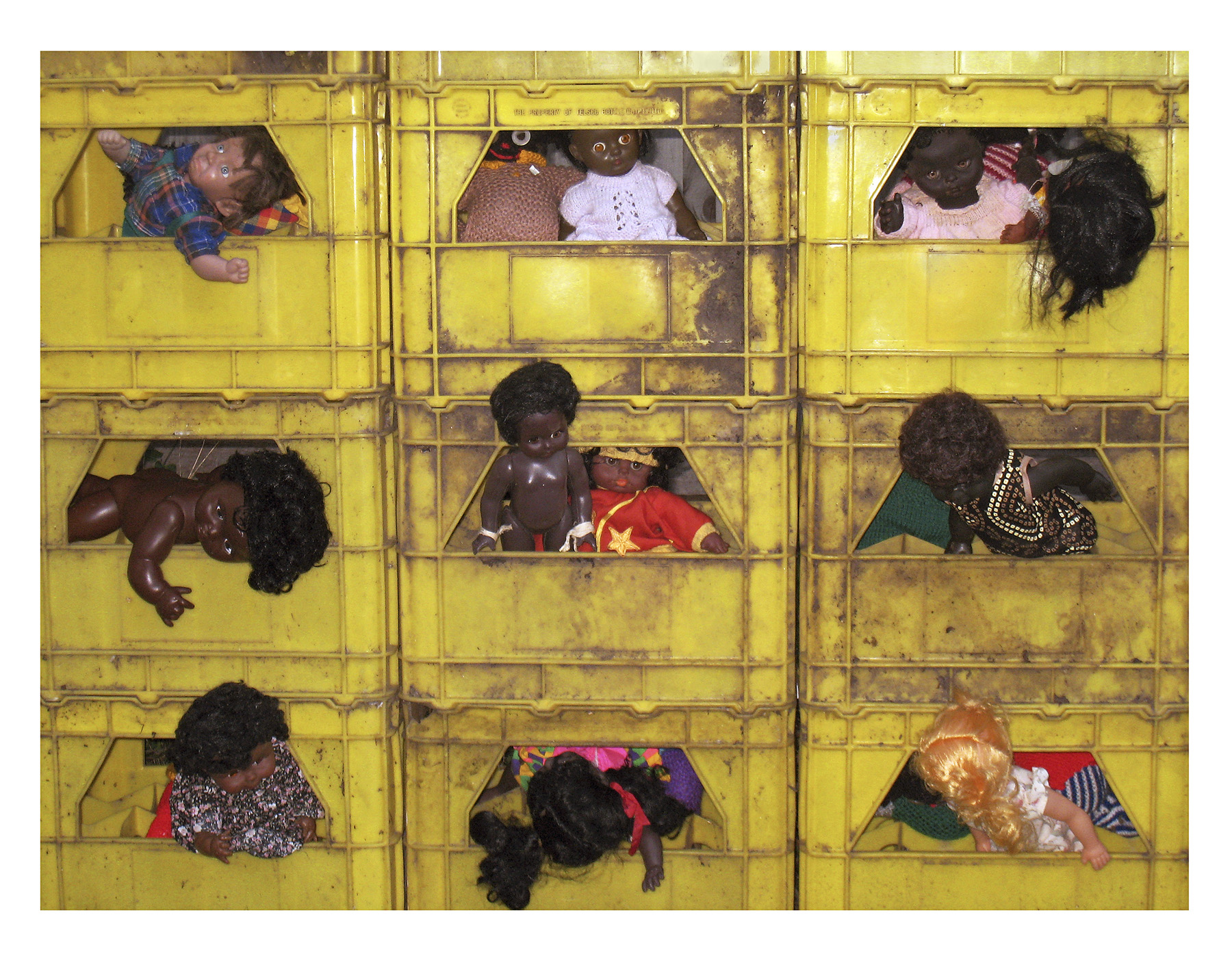
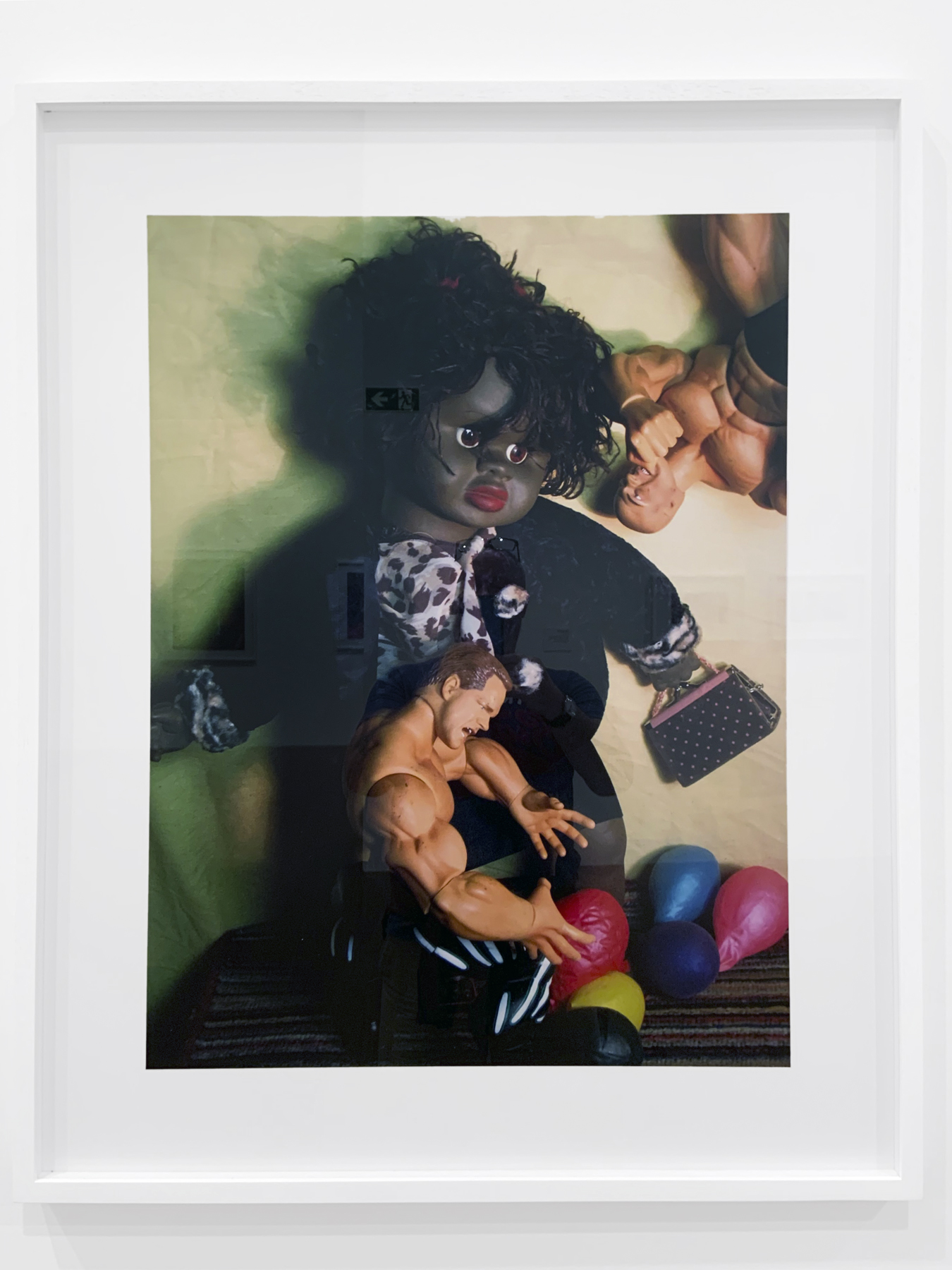

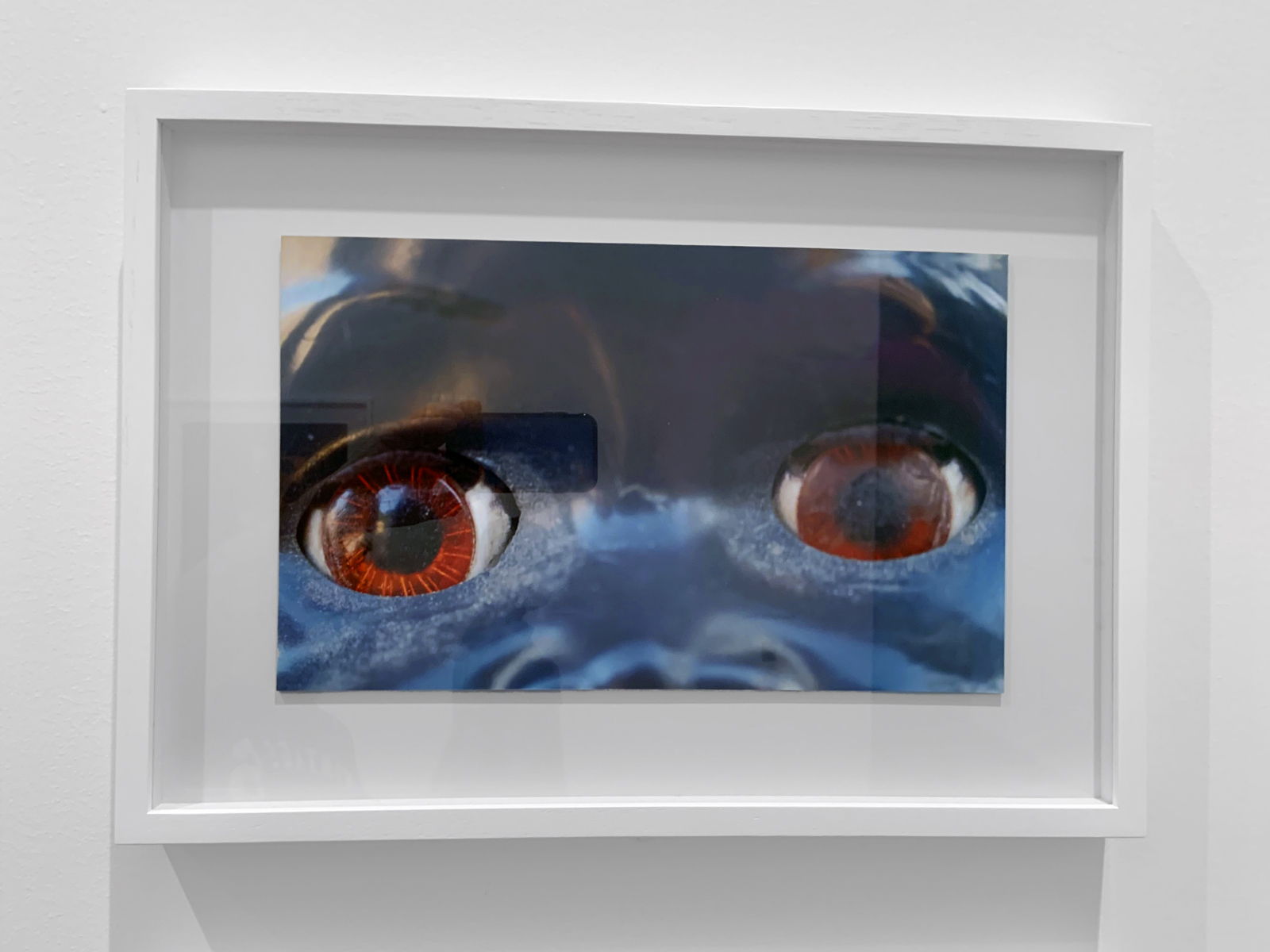

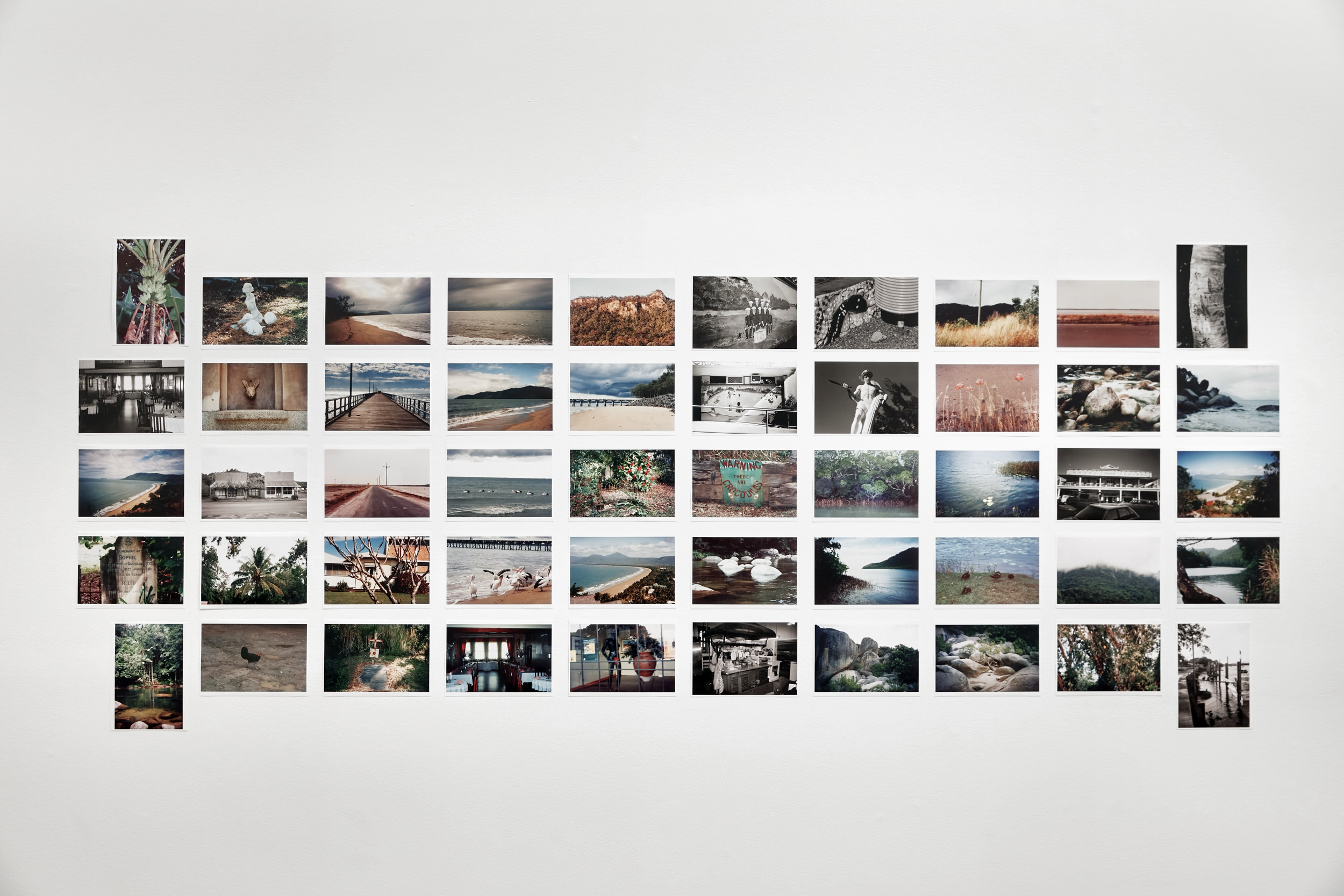
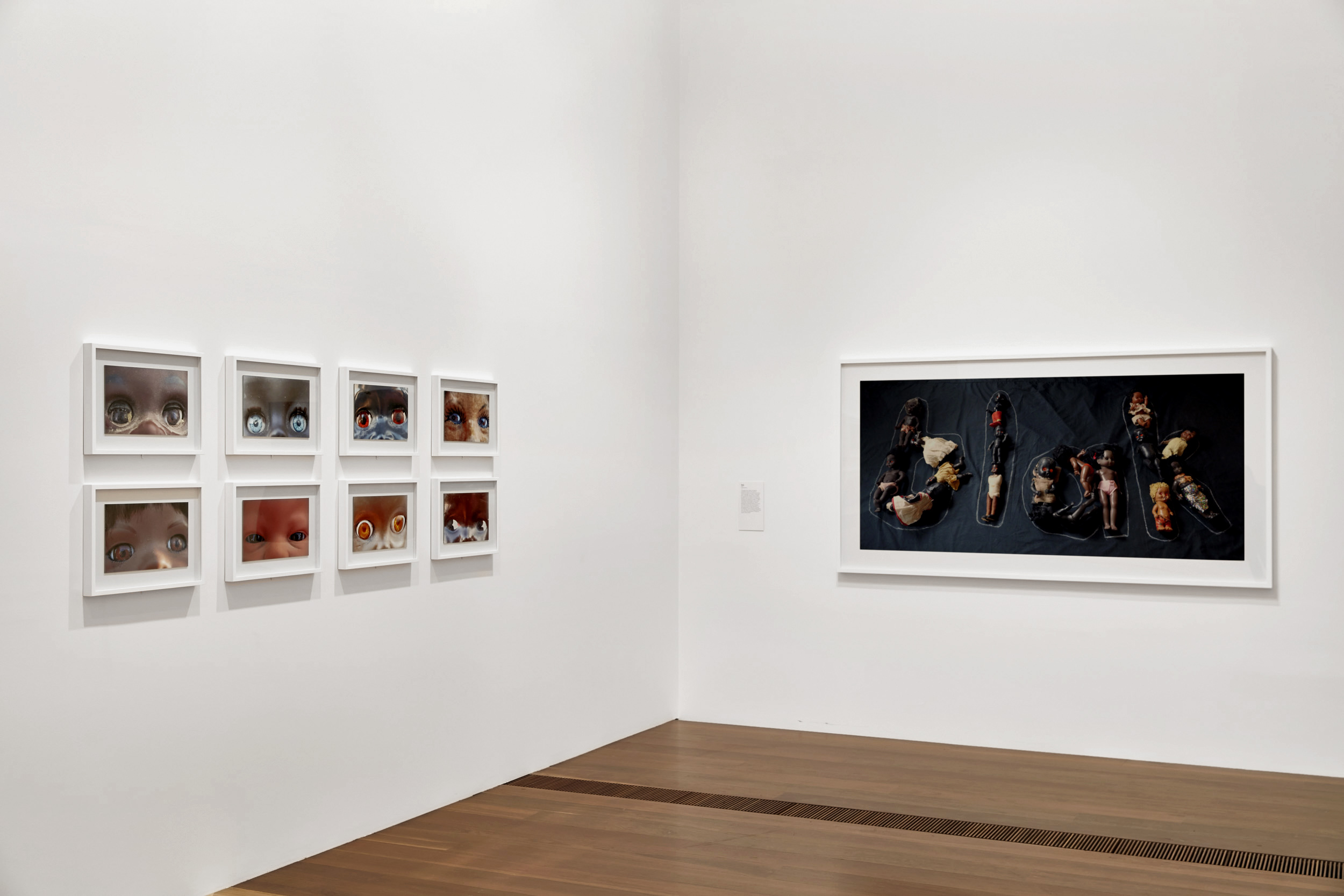


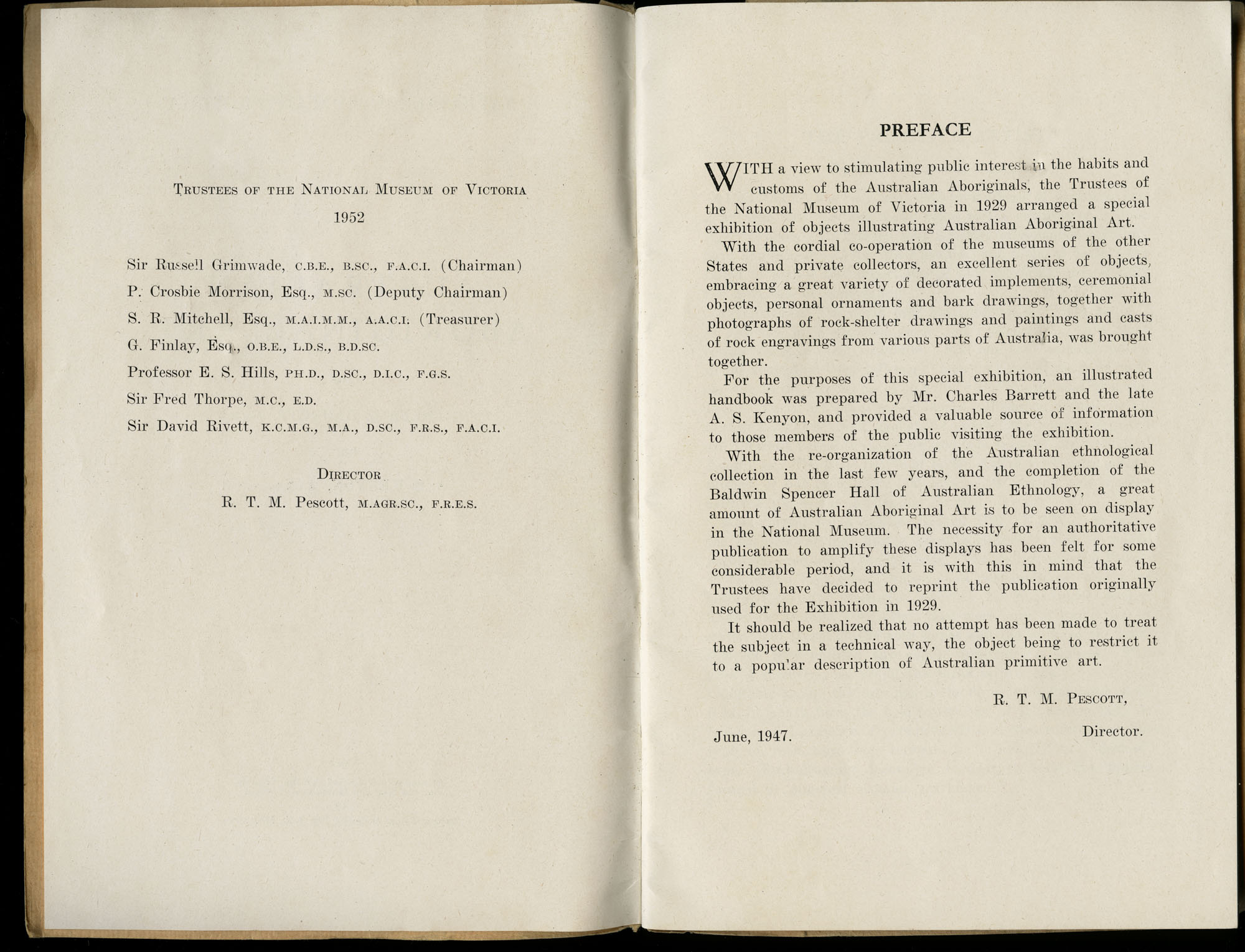

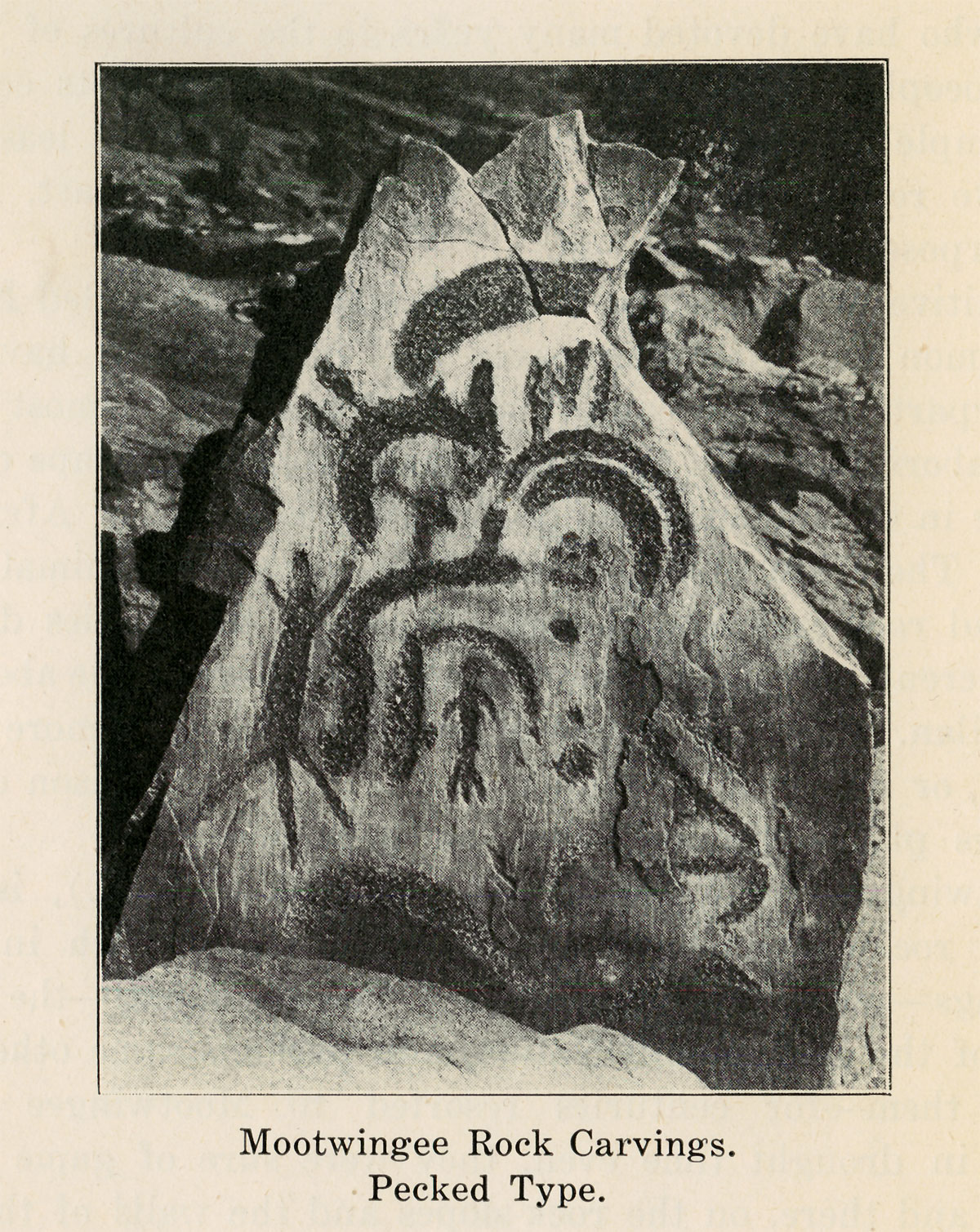

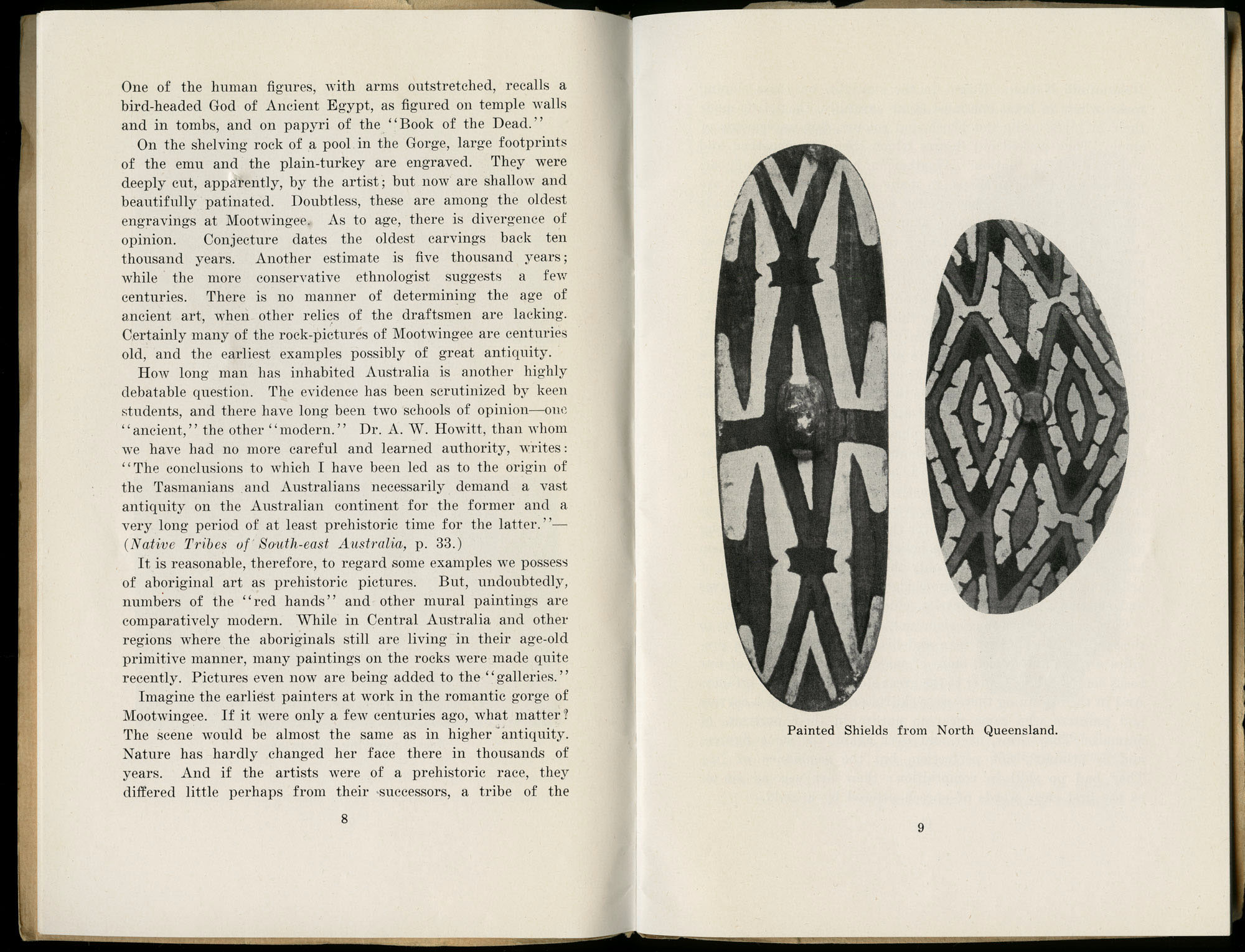

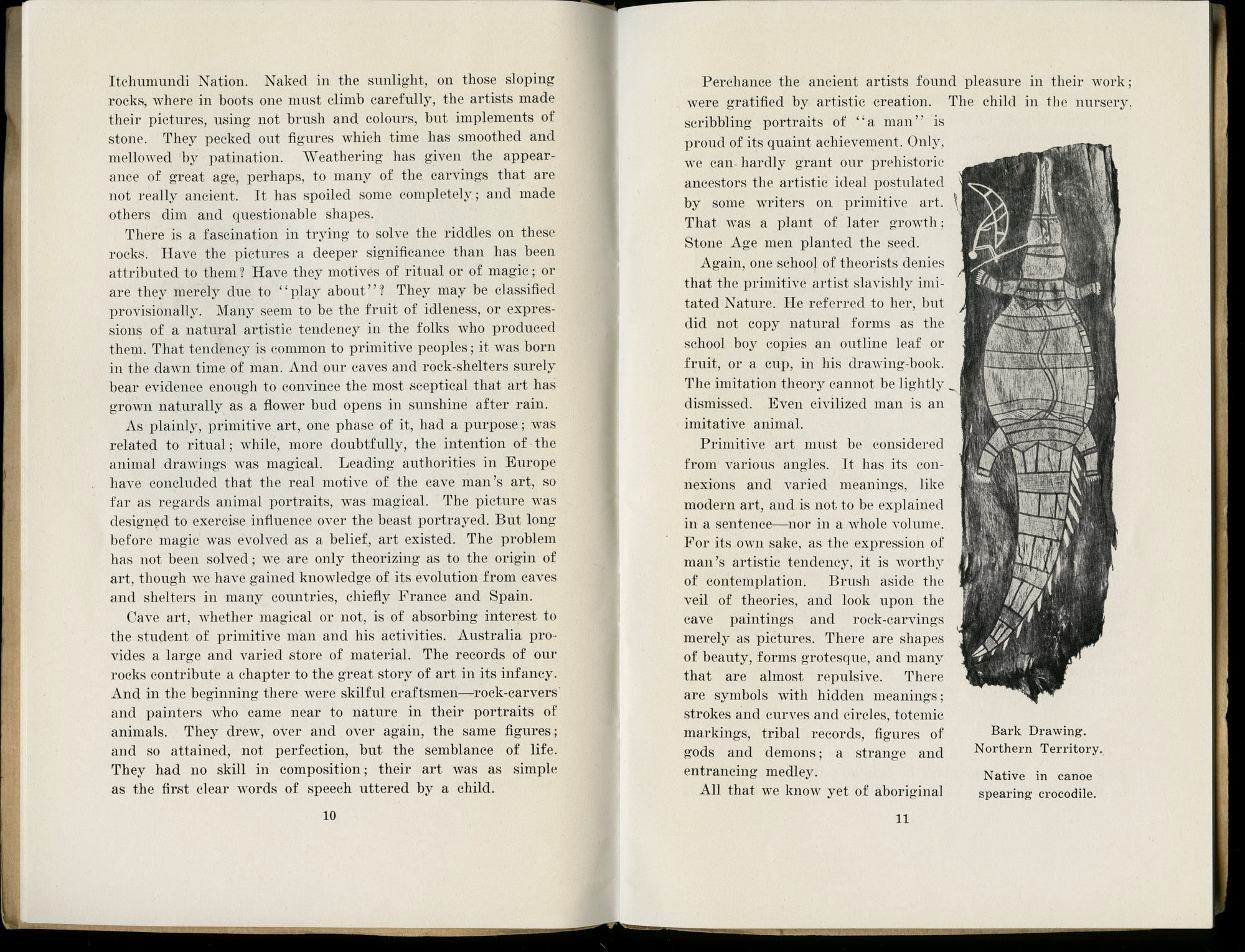
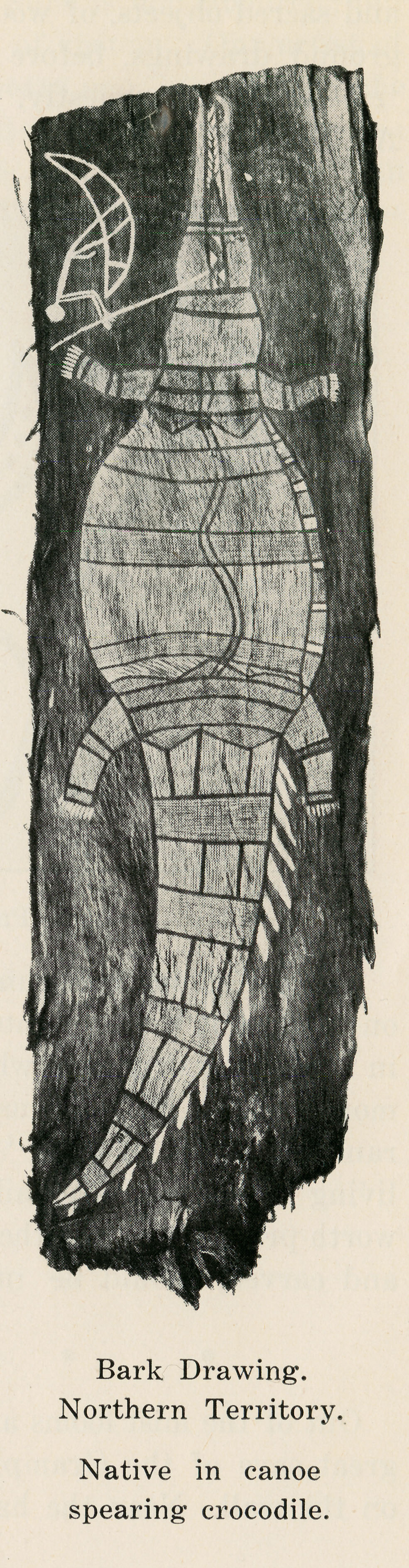
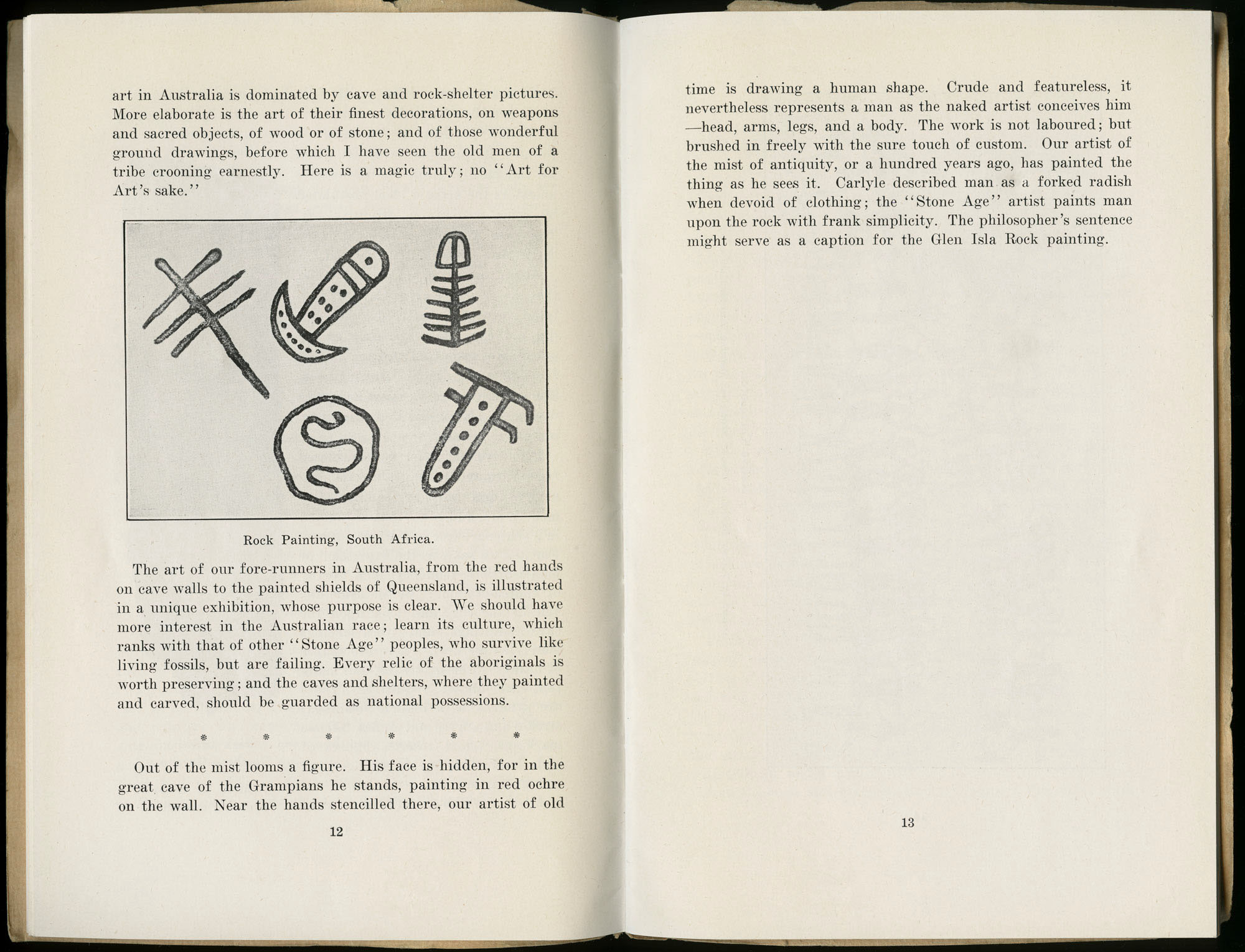

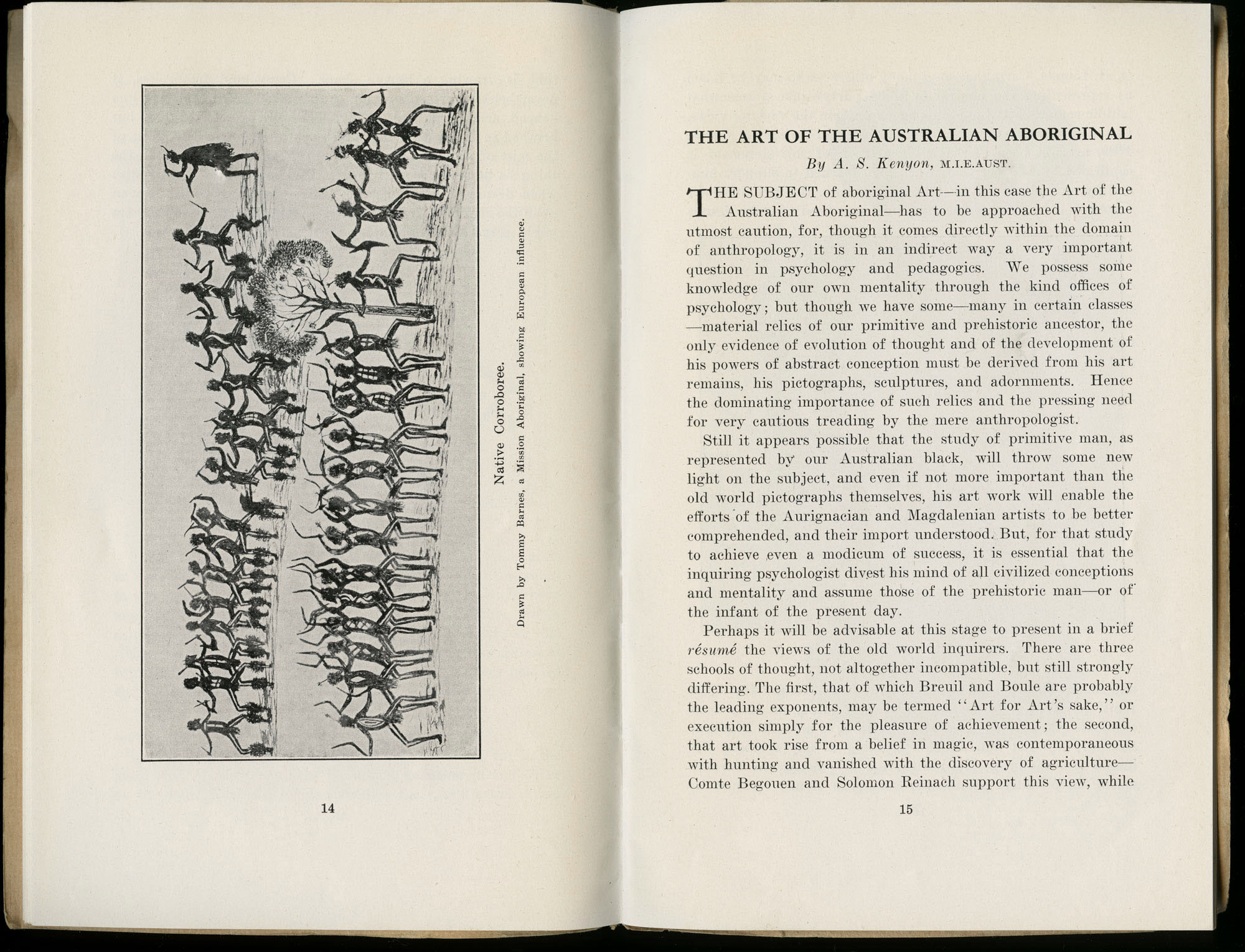

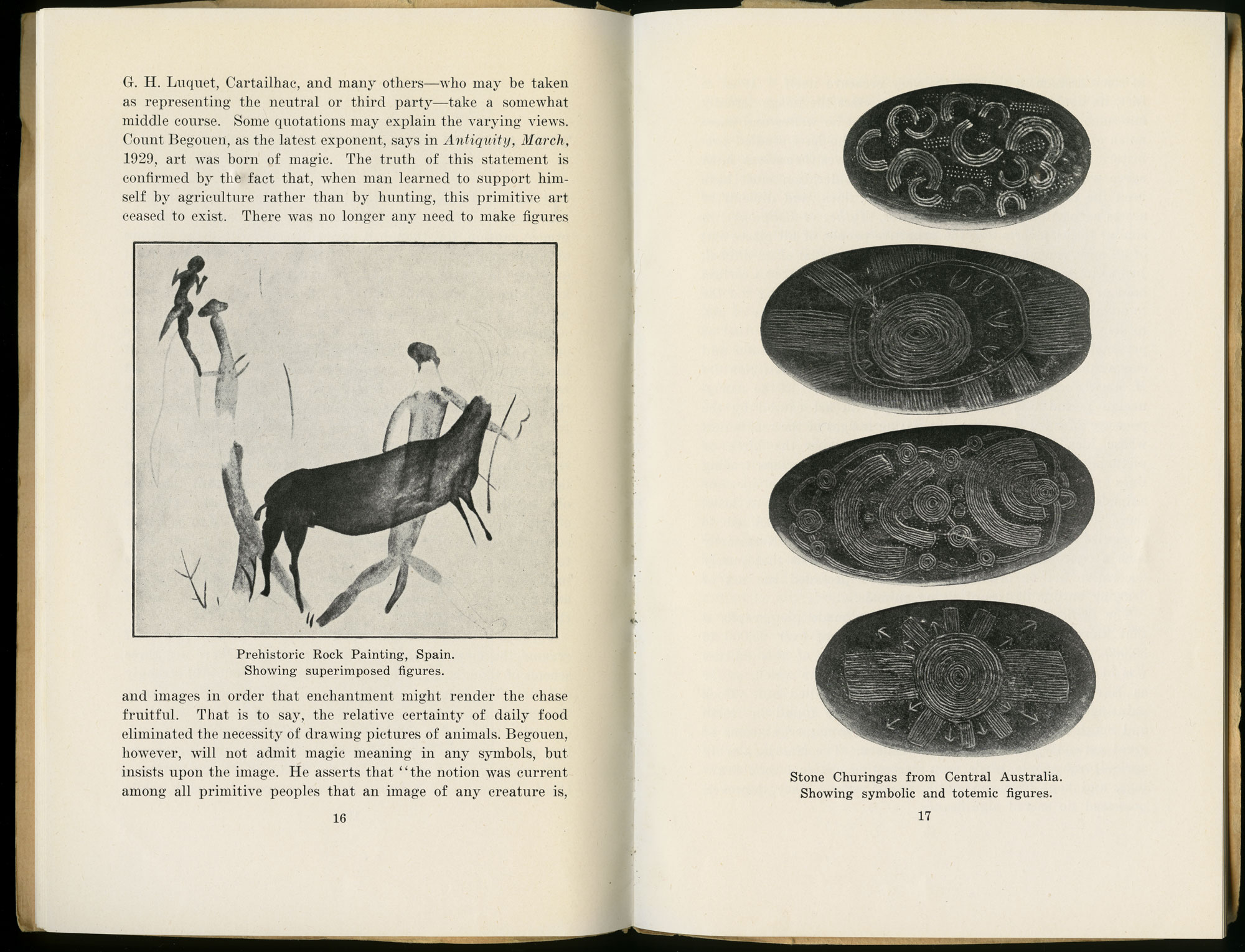
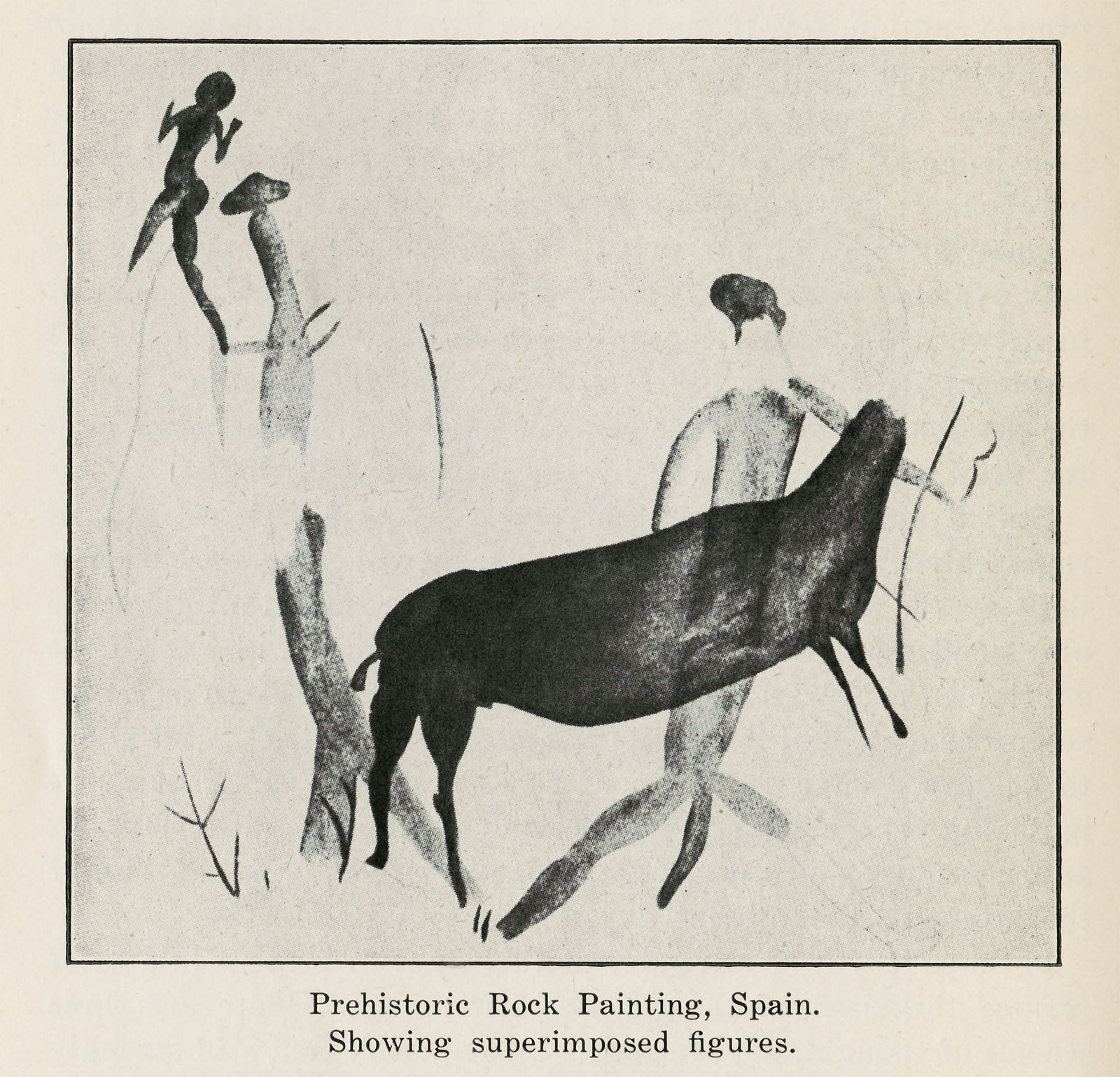


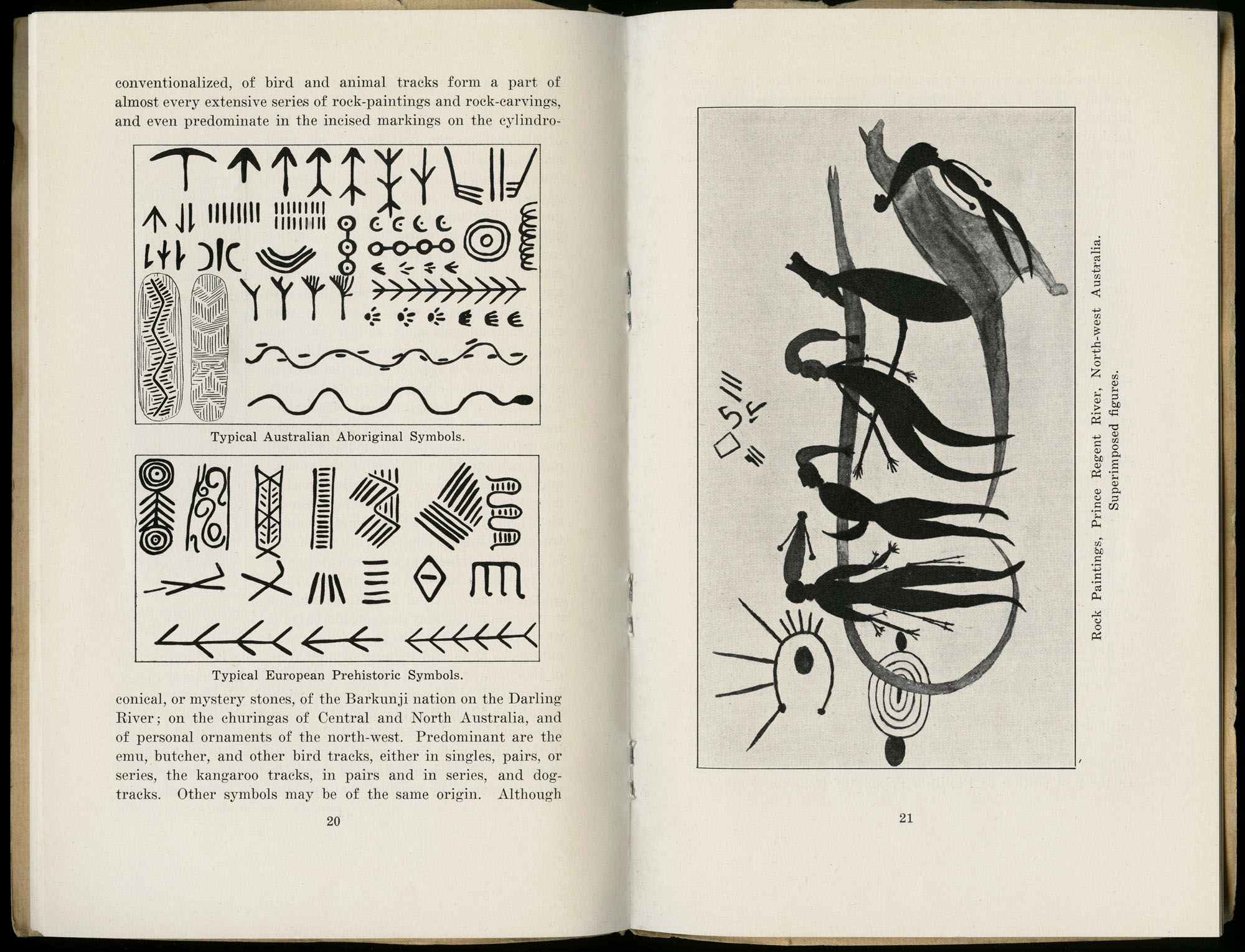
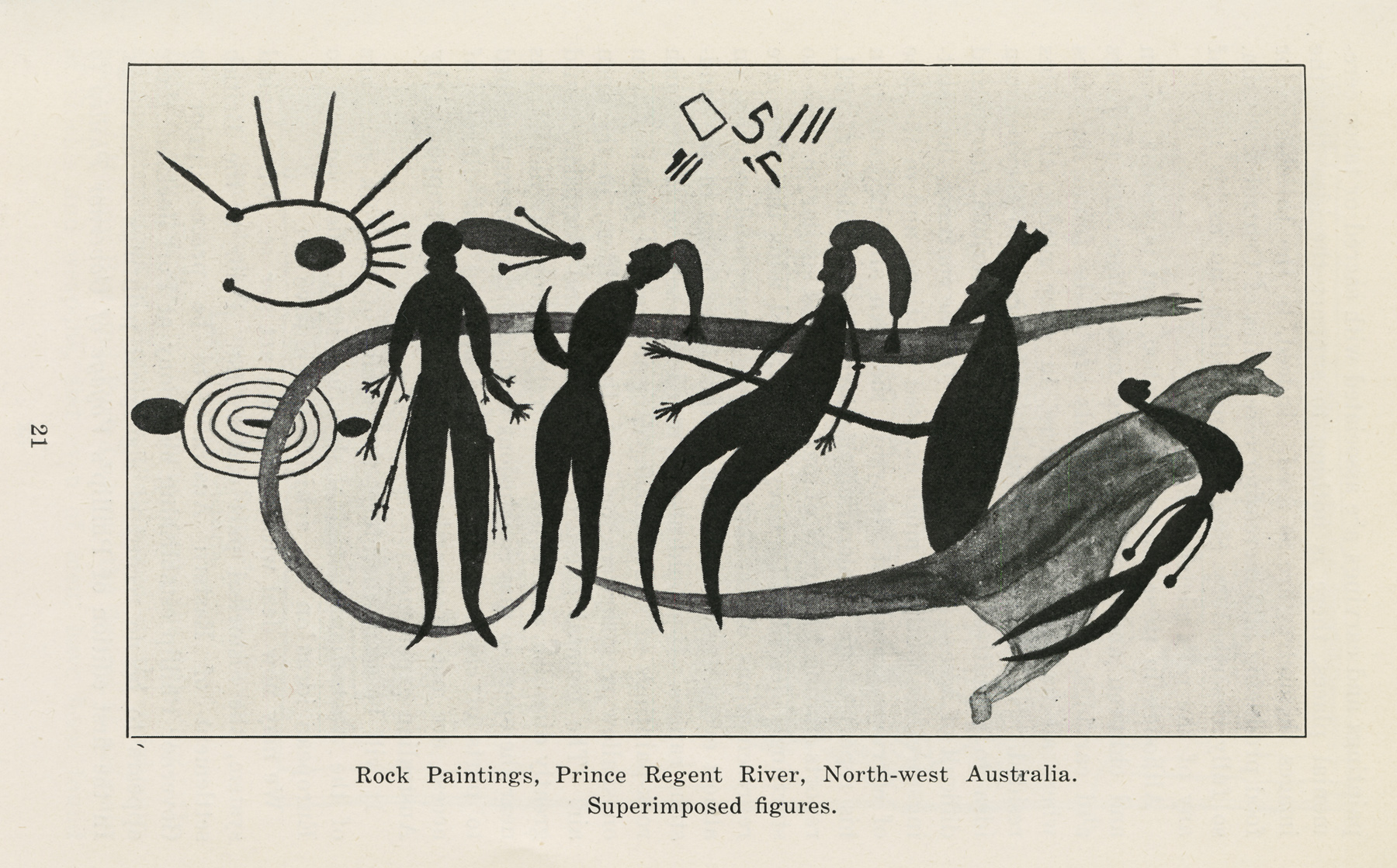






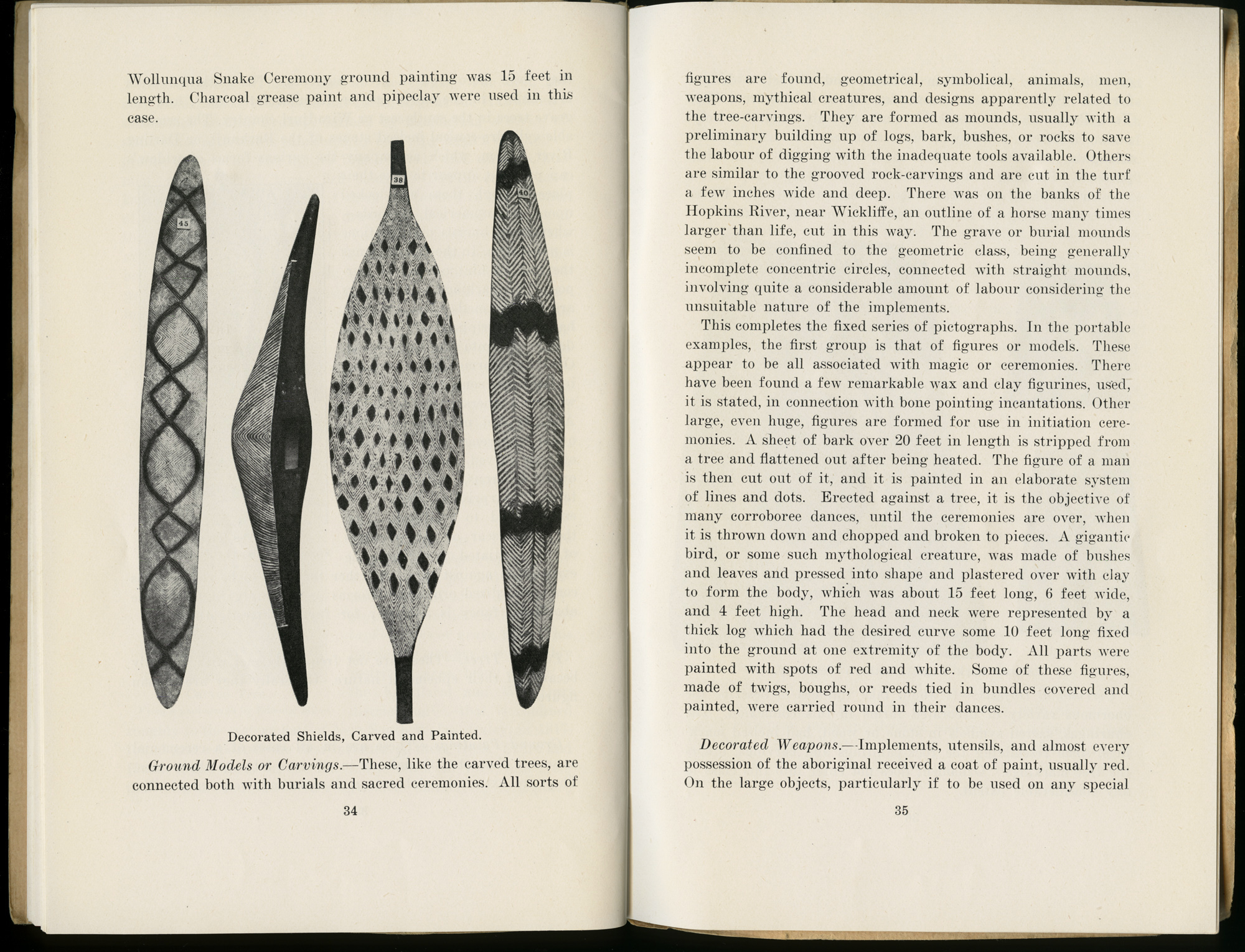

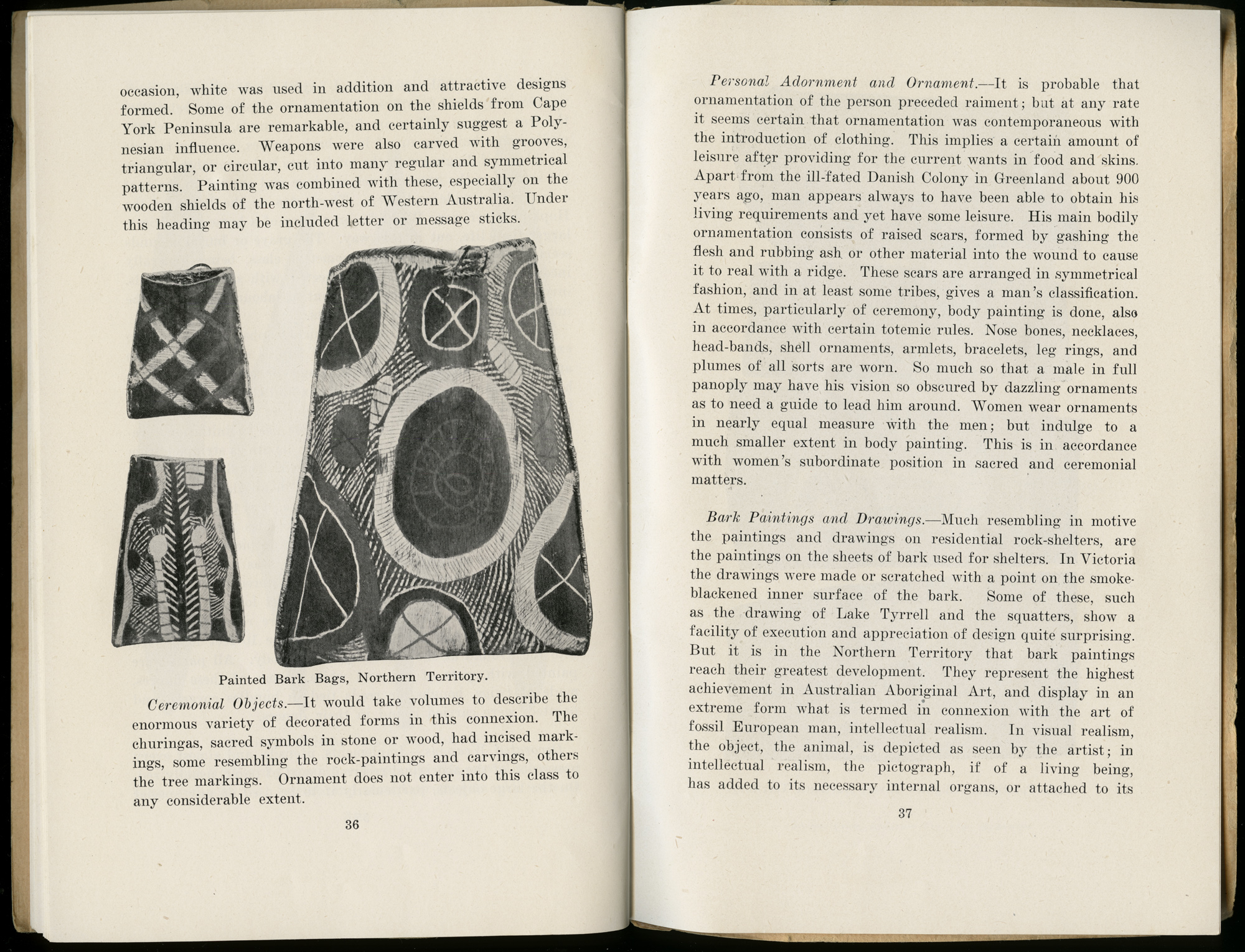

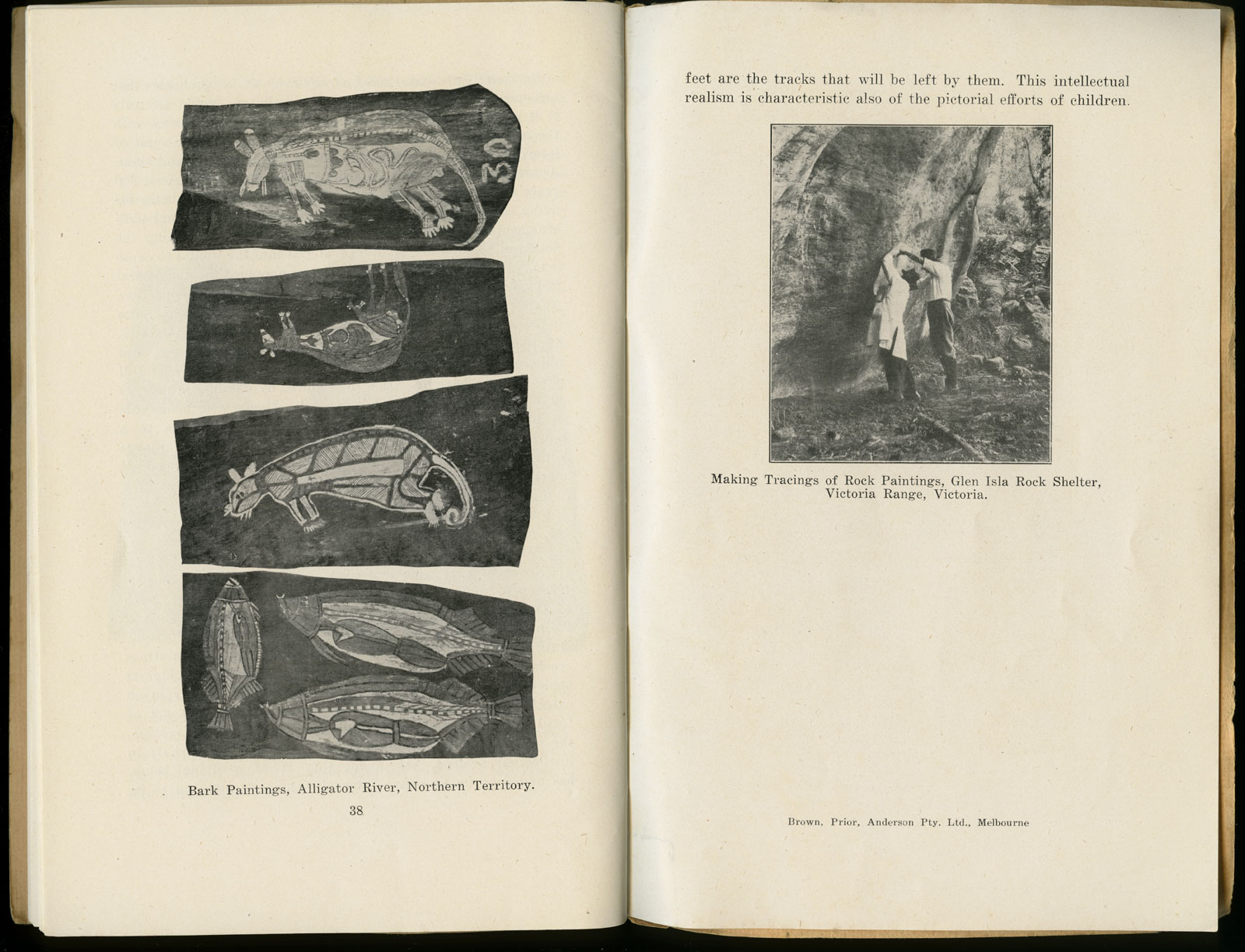

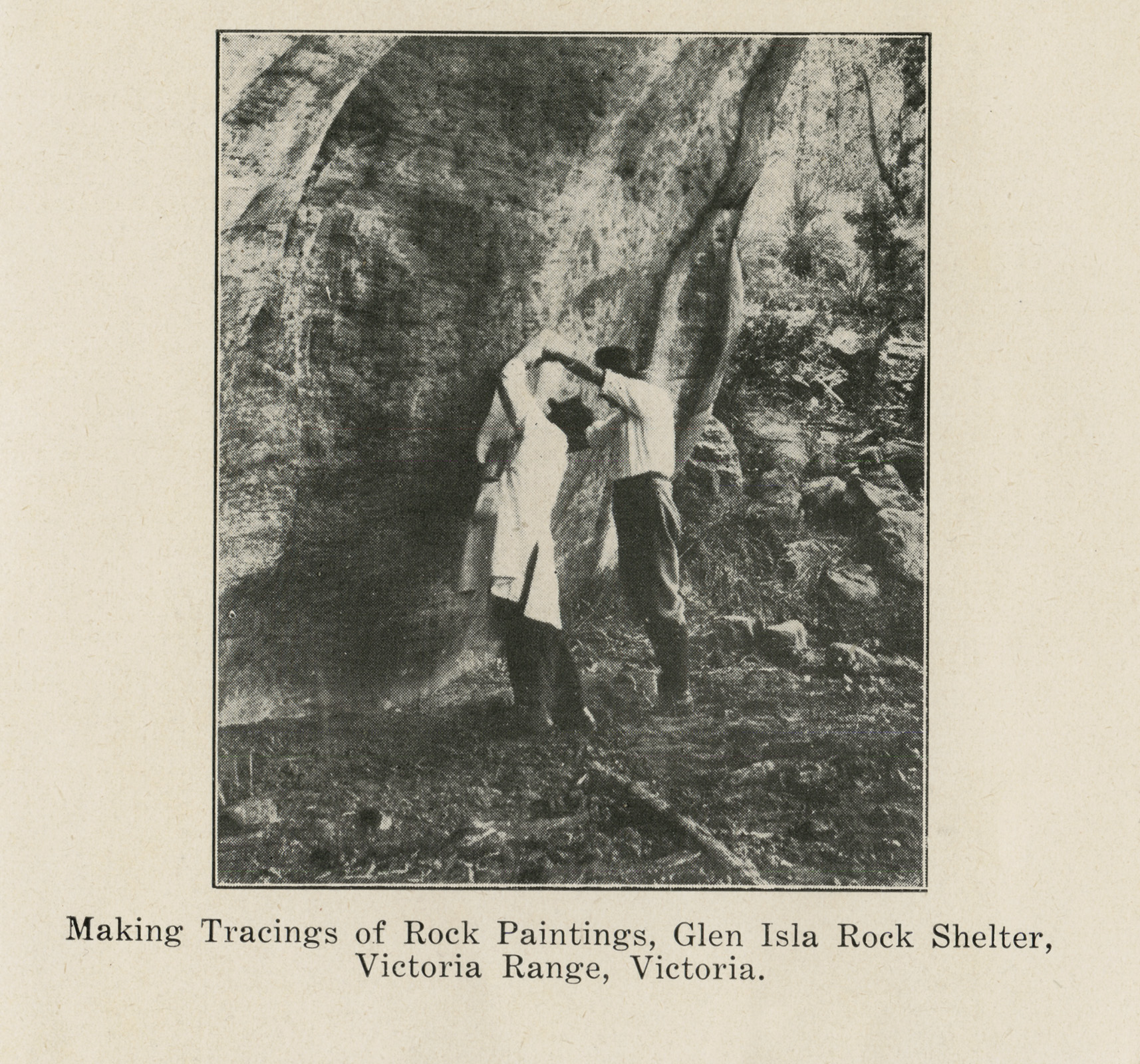
 Art Blart _ art and cultural memory archive
You must be logged in to post a comment.