“This is where I think that Siskind was less than happy with the results of his documentary photographs – that they weren’t giving him what he wanted out of his art: that interface of the image and imagination.” Dr Marcus Bunyan
July 2026
Aaron Siskind (American, 1902-1991) Boys in Empty Tenement c. 1935 Gelatin silver print
Image and imagination
I always find it fascinating to view the first few years of an artist’s journey, the golden path they take, for it more than likely informs all that is to come.
In the greatest abstract expressionist photographer the world has known, Aaron Siskind (American, 1902-1991), his starting point was as a straight documentary photographer, a member of the New York Photo League, a “left-leaning documentary collective, which prioritised using photography to advocate for social change.”
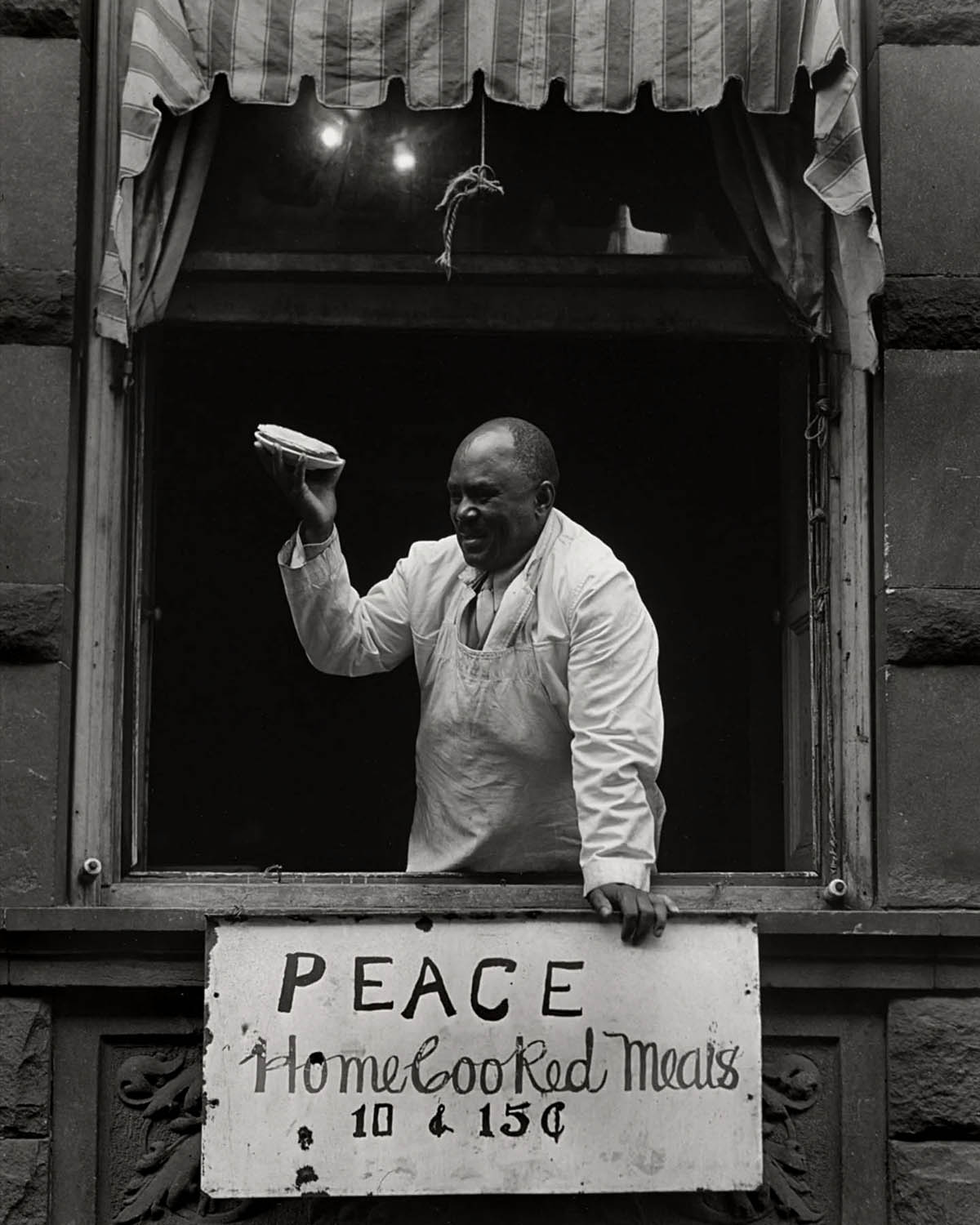
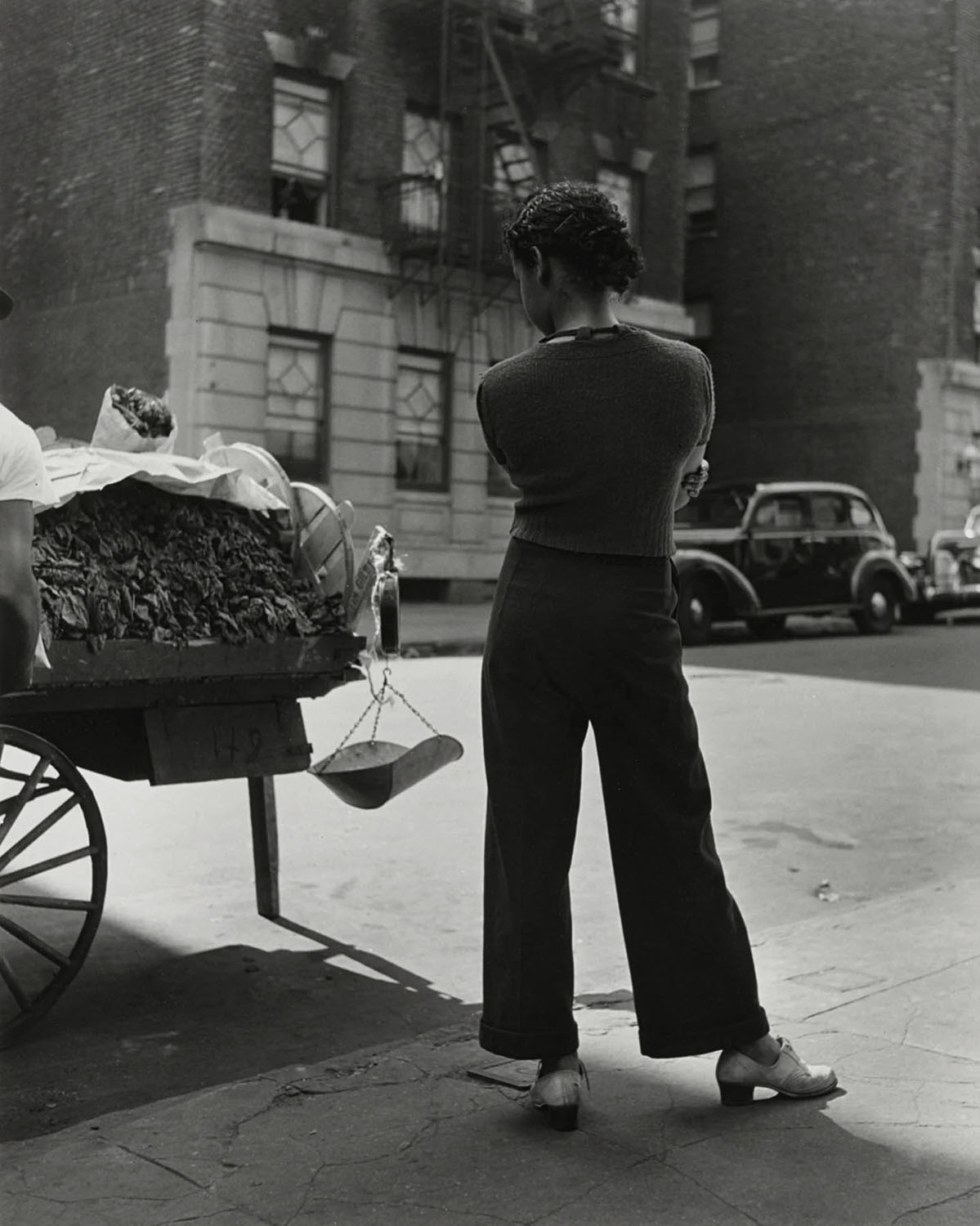
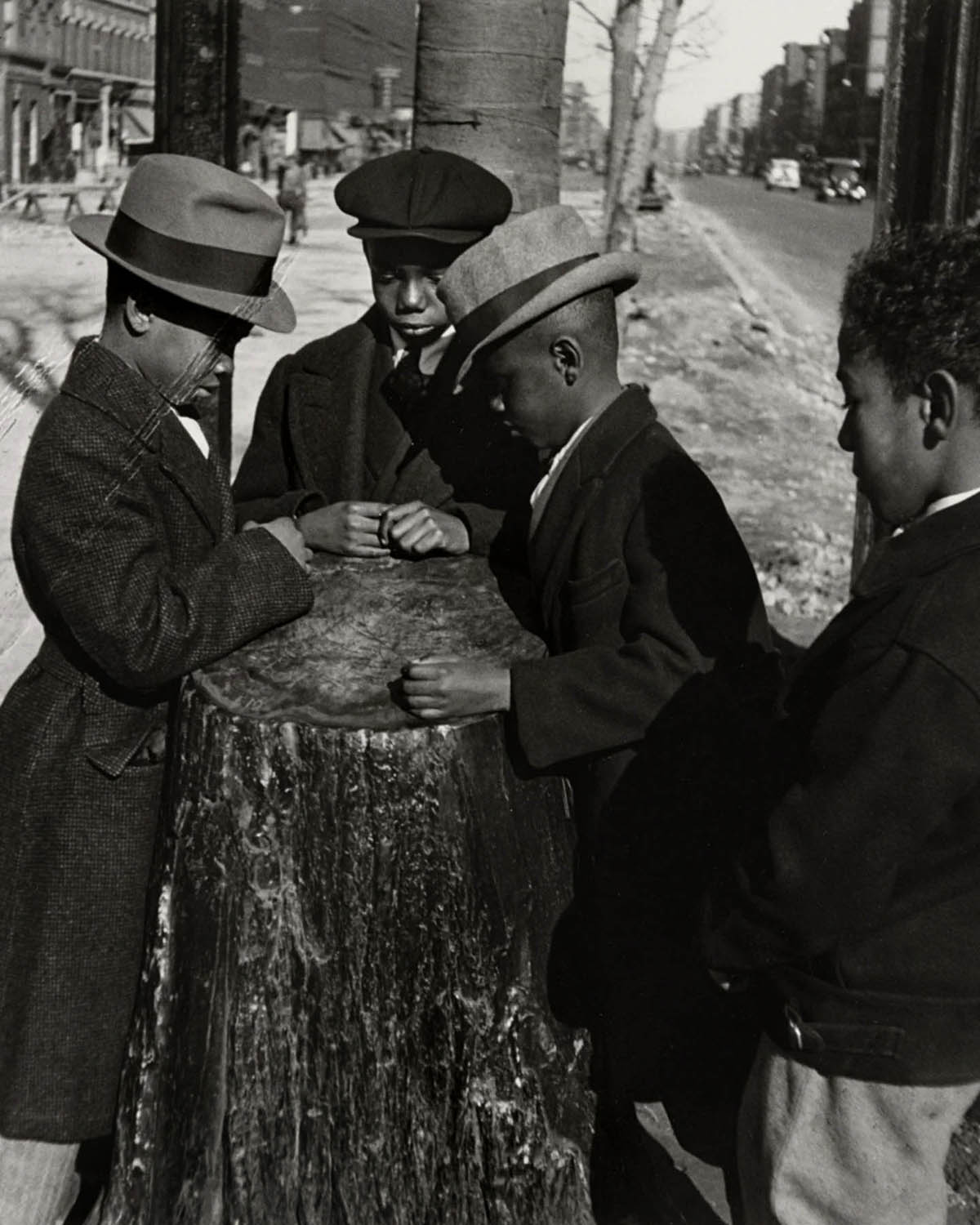
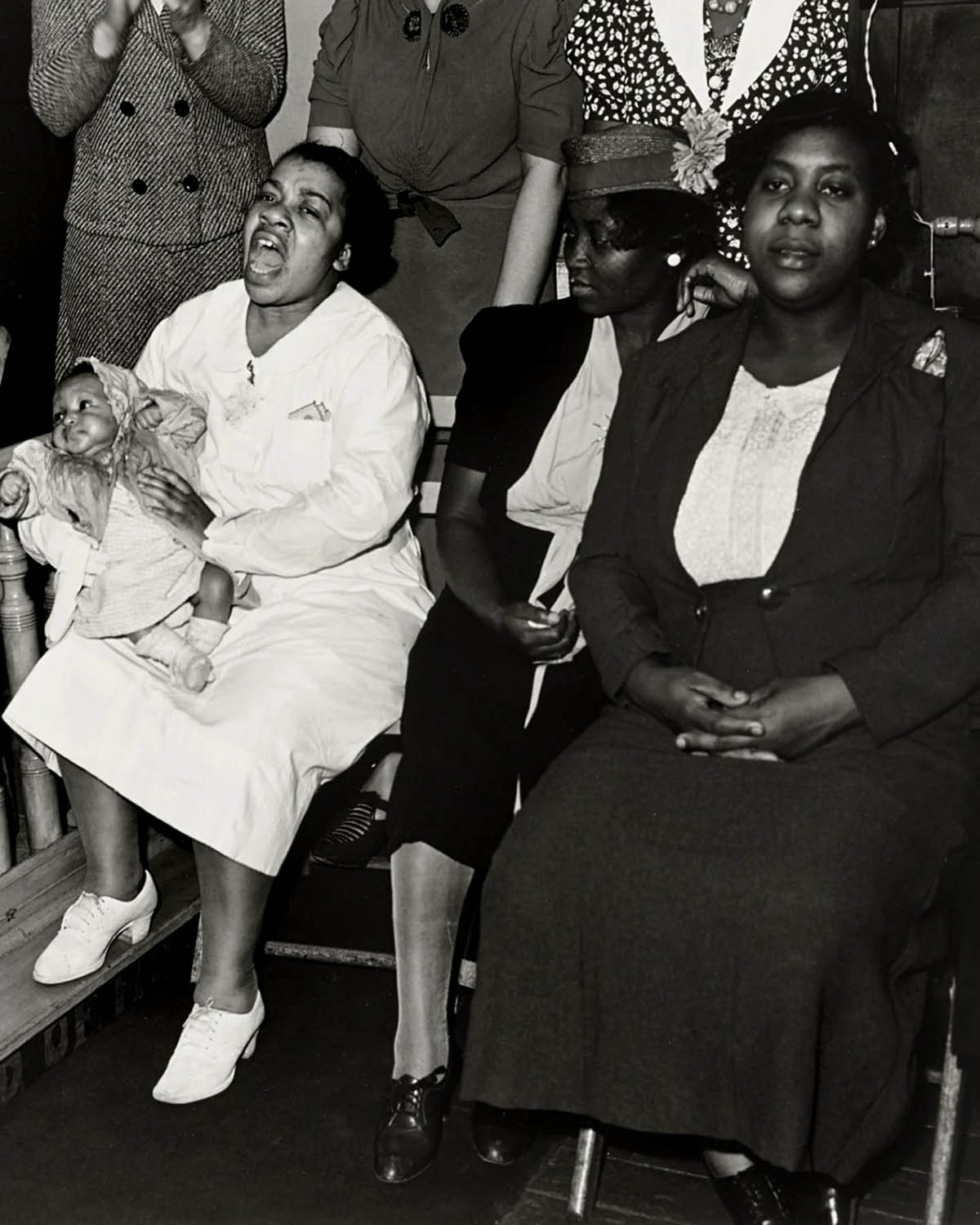
Using a large format camera and tripod Siskind, for his photo project Harlem Document, captured “the vibrancy, harsh realities, and daily life of the Black community in Harlem” – images which had their roots in American social documentary photography of the period and photographers such as Jacob Riis, Lewis Hine, Walker Evans, Dorothea Lange, Gordon Parks and the photographers of the Farm Security Administration (FSA) government program (1935-1944) which documented the struggles of rural Americans during the Great Depression.
As I have written in a 2023 text titled “Transcending reality”, “To my mind American photographers of the 1930s took photographs not only to document but also to honor what was greater and more interesting than they were. Not as a melding of reality-dream … but as an exploration of what is possible through the interface of the image and imagination, the interface as Ansel Adams put it “between the reality of the world and the reality of yourself”.”
This is where I think that Siskind was less than happy with the results of his documentary photographs – that they weren’t giving him what he wanted out of his art: that interface of the image and imagination.
“In working from the documentary approach, I had always tried to find what kind of meaning you could get in a picture of that kind, and was beginning to feel that I was not getting it. I felt I wasn’t getting anything really personal, really powerful and special…. My documentary pictures were very quiet and very formal.”1
Moving into the 1940s Siskind began experimenting with more abstract compositions (with their link to Abstract Expressionist painting). Evidence of this reorientation in his image making can already be seen in some of the documentary photographs in this posting. For example, the photographs Facades (1938, below) and Harlem (1938, below) both propose the flattening of the photographic surface with an interest in the geometry and abstraction of form – circle, oblong, square, diagonal, curve, line – within the pictorial plane, but with an attendant emphasis on light, texture and tone.
“Though he did not create the lines, shapes, rhythms and patterns in his images, he nonetheless expressed the lyricism of their relationships by harmoniously arriving at the perfect composition. And though his abstract photographs possessed undeniable content, he subverted that content by offering new interpretive possibilities based on the feelings the images conveyed.”2
Image and imagination.
Thus, Siskind was intelligent enough, was aware and informed enough, of his feelings towards the world and the cultural developments around him to approach a crossroads in his development as an artist, to recognise, that is the key word, to recognise the path he needed, he wanted to take.
And so we are forever grateful to have his abstract expressionist photographs that his spirit guided him towards, photographs that may also light our own path.
Dr Marcus Bunyan
PS. I have added relevant information on Siskind’s art practice, theatres, and ballrooms where possible and I have also included an extract from Gordon Parks’ forward to Siskind’s book Harlem Document.
1/ Jaromir Stephany unpublished interview with Aaron Siskind, February 1963. This interview is in the private papers of Jaormir Stephany quoted in Marcia Battle. “Harlem: A Document,” in Harlem Document: Photographs 1932-1940. Washington and London: Smithsonian Institution Press, 1990, pp. 4-6
Please click on the photographs for a larger version of the image.
“Photography has tremendous social value. Upon the photographer rests the responsibility and duty of recording a true image of the world as it is today. Moreover, he must not only show us how we live, but indicate the logical development of our lives.”
Photo Notes, newsletter of the Photo League, August 1938
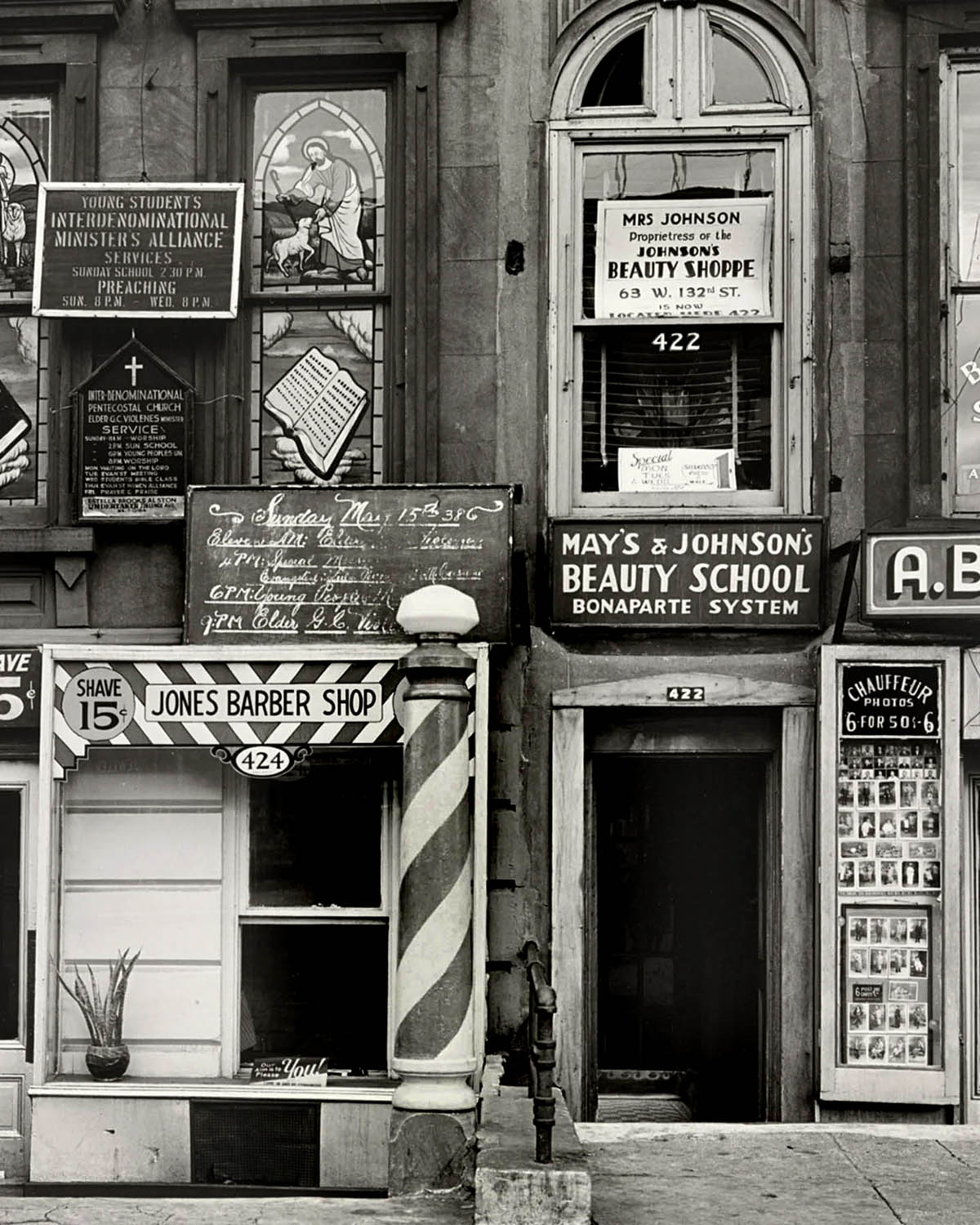
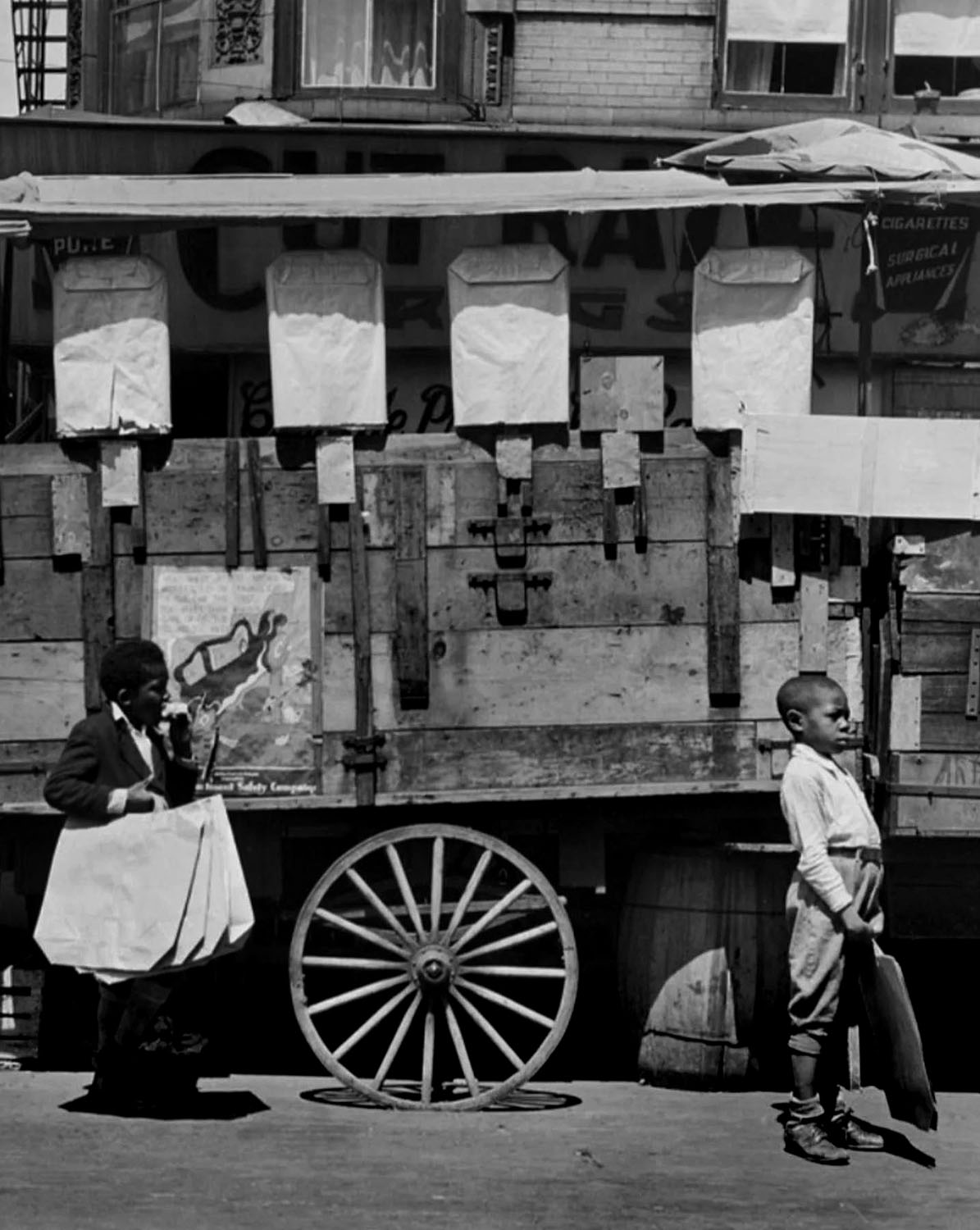
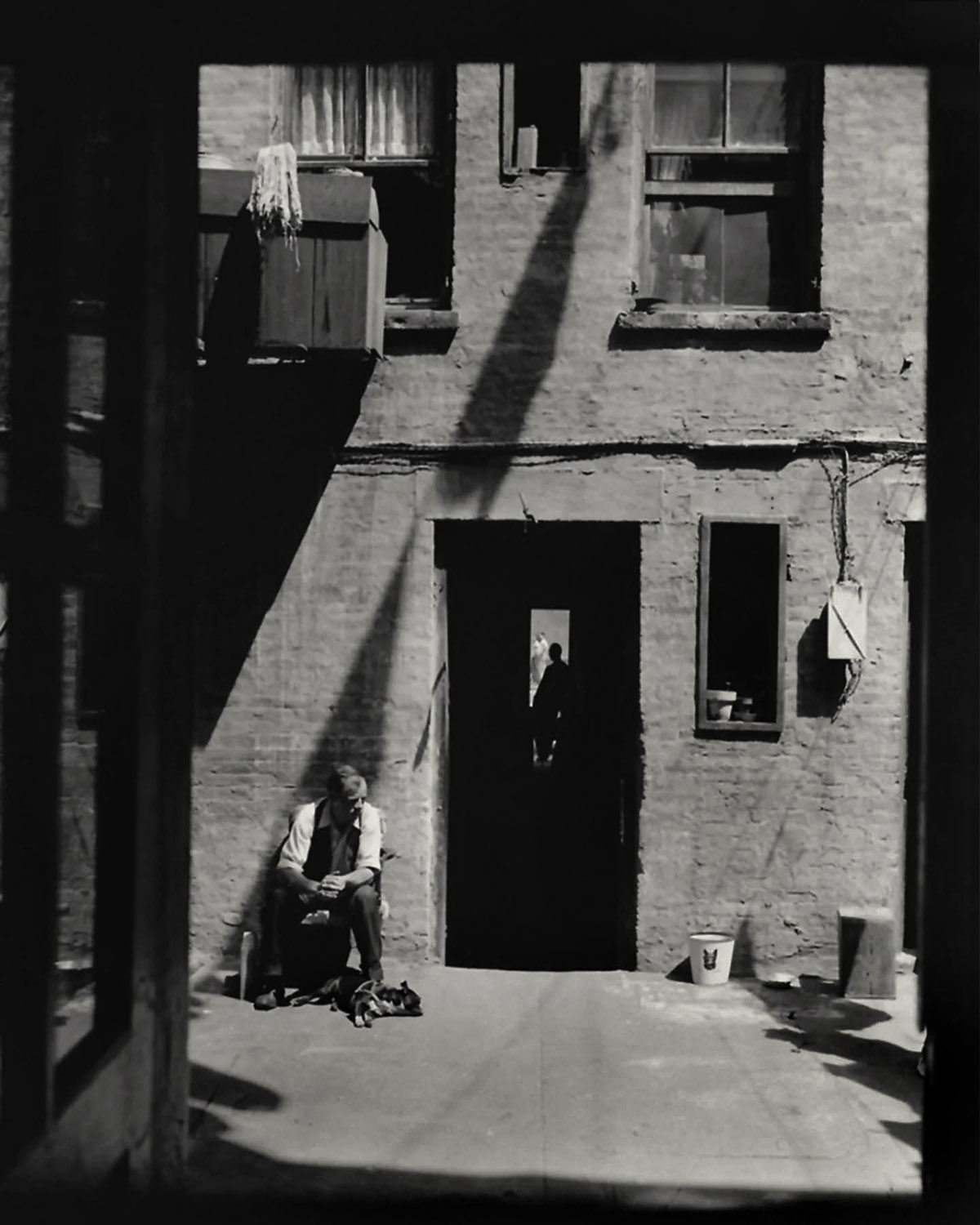
Aaron Siskind’s photographs from 1935-1940 form the core of the Harlem Document, a landmark sociological and visual study commissioned by the New York Photo League. Siskind headed the Feature Group of this radical, left-leaning documentary collective, which prioritised using photography to advocate for social change. The images capture the vibrancy, harsh realities, and daily life of the Black community in Harlem during the Great Depression.
Google AI
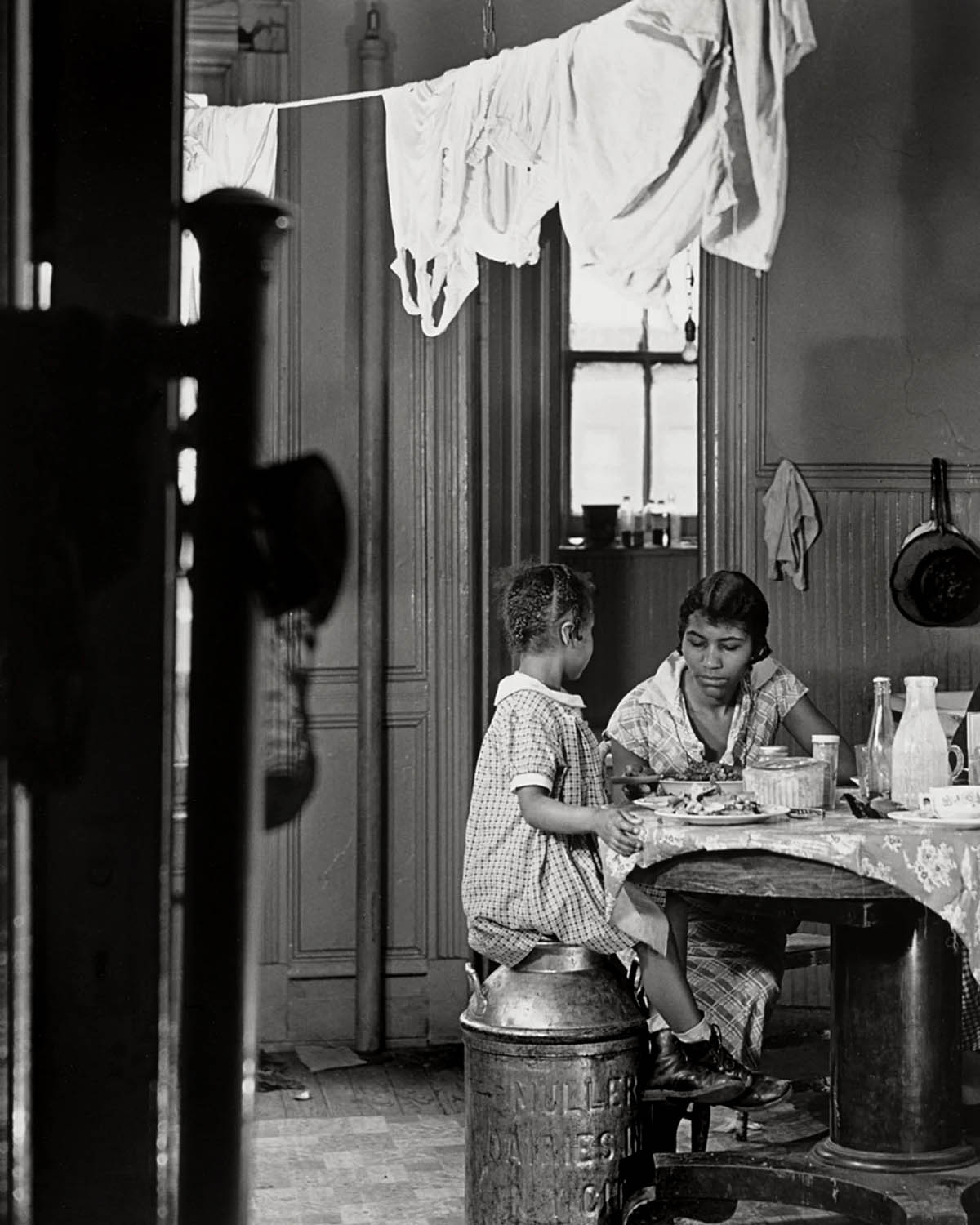
Aaron Siskind (American, 1902-1991) Kitchen Scene 1937 Gelatin silver print
From 1937 to 1944, Siskind took pictures in and around Harlem – of its businesses, domestic interiors, religious and social organisations, and nightlife. He did so as a member of the New York Photo League – a documentary photography collective with roots in radical leftist politics – and in collaboration with journalist and sociologist Michael Carter and other photographers as part of a cultural study of Harlem. In 1981 fifty-two of Siskind’s images were published in the book Harlem Document: Photographs 1932-1940 alongside first-person interviews conducted in the late 1930s by writers employed by the Federal Writers Project, including novelist and essayist Ralph Ellison.
MoMA Gallery label from 2024
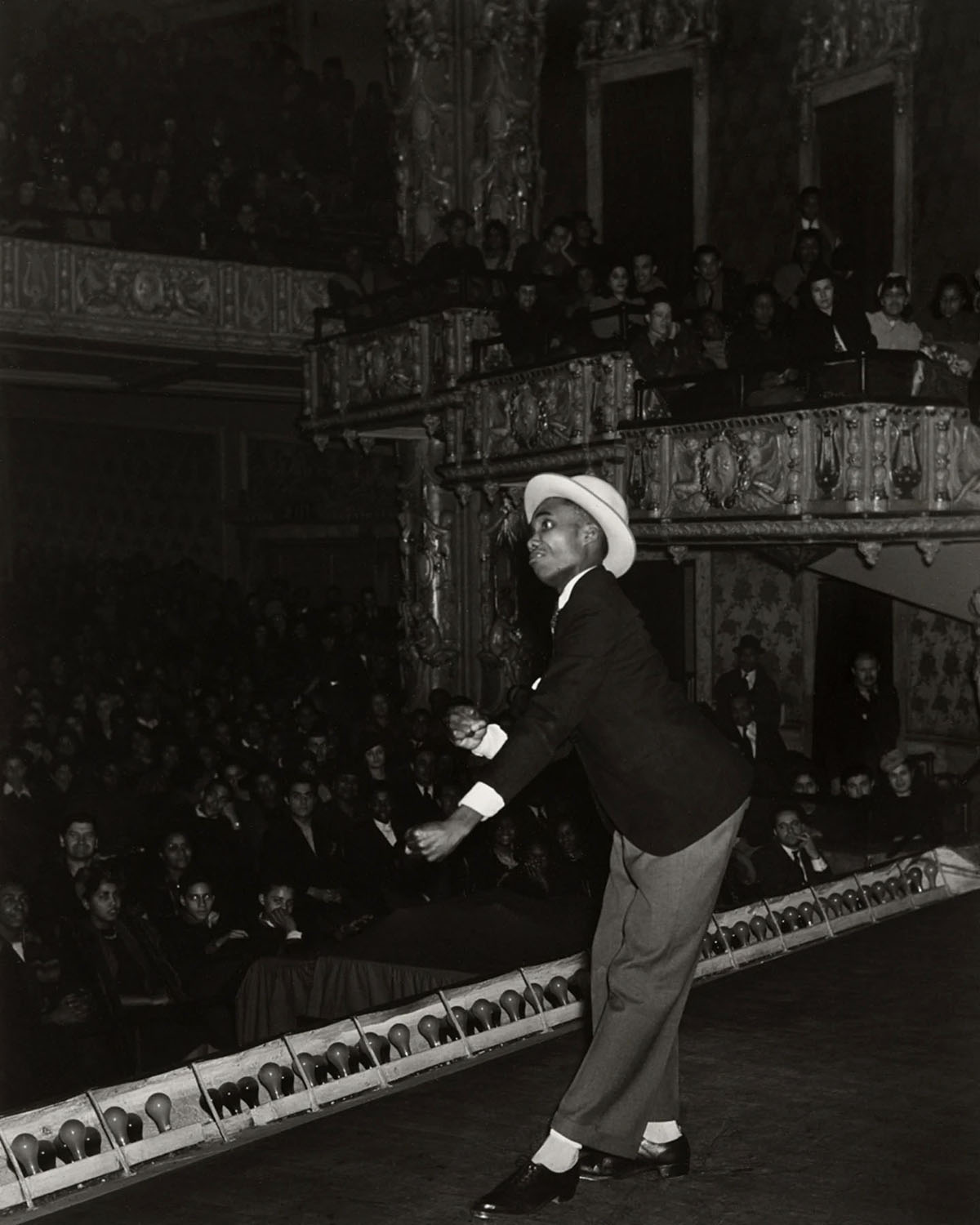
Aaron Siskind (American, 1902-1991) Apollo Theater 1937 Gelatin silver print
Apollo Theater
Since opening its doors in 1914 and introducing the first Amateur Night contests in 1934, The Apollo has played a major role in the emergence of jazz, swing, bebop, R&B, gospel, blues, and soul – all quintessentially American music genres. Ella Fitzgerald, Sarah Vaughan, Billie Holiday, Sammy Davis Jr., James Brown, Gladys Knight, Luther Vandross, D’Angelo, Lauryn Hill, and countless others began their road to stardom on the Apollo stage. Today, The Apollo is a respected nonprofit presenting concerts, theatrical and dance performances, film screenings, educational programs, and community outreach programs.
The neoclassical theater known today as The Apollo’s Historic Theater was designed by George Keister and first owned by Sidney Cohen. In 1914, Benjamin Hurtig and Harry Seamon obtained a thirty-year lease on the newly constructed theater, calling it Hurtig and Seamon’s New Burlesque Theater. Like many American theaters during this time, African-Americans were not allowed to attend as patrons or to perform.
In 1933, Fiorello La Guardia, who would later become New York City’s Mayor, began a campaign against burlesque, and Hurtig & Seamon’s was one of many theaters that would close down. Cohen reopened the building as the 125th Street Apollo Theatre in 1934 with his partner, Morris Sussman, serving as manager. Cohen and Sussman changed the format of the shows from burlesque to variety revues and redirected their marketing attention to the growing African-American community in Harlem.
Frank Schiffman and Leo Brecher took over The Apollo in 1935. The Schiffman and Brecher families would operate the Theater until the late 1970s. The Apollo reopened briefly in 1978 under new management then closed again in November 1979. In 1981, it was purchased by Percy Sutton, a prominent lawyer, politician, media and technology executive, and a group of private investors. Under Sutton’s ownership, the Theater was equipped with a recording and television studio.
Text from the Apollo Theater website. Used under fair use conditions for the purposes of education and research
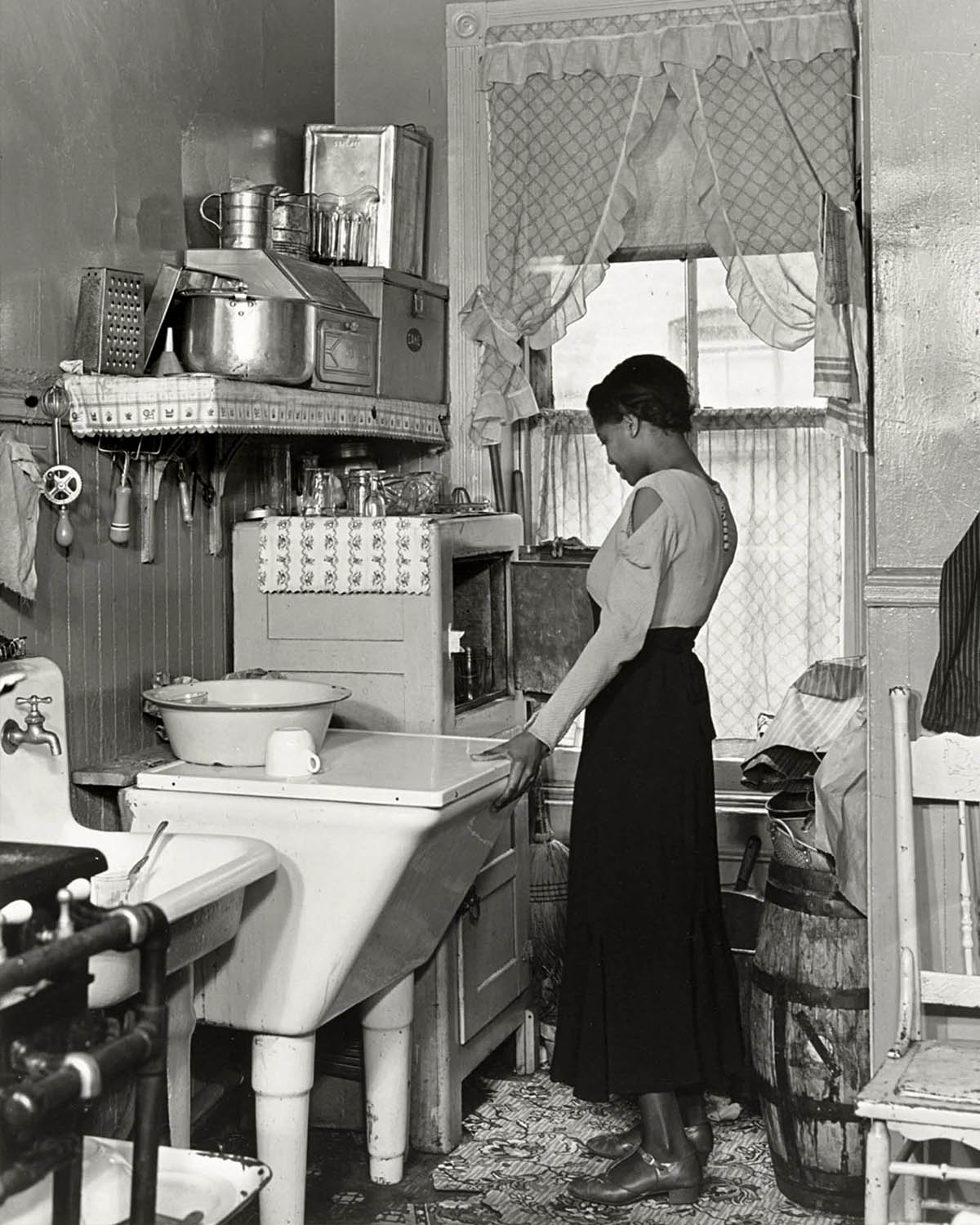
Aaron Siskind (American, 1902-1991) Lady In Kitchen 1937 Gelatin silver print
Aaron Siskind’s artistic trajectory parallels broader shifts within mid-20th-century American photography. In the 1930s he cut his teeth as a documentary photographer affiliated with the Workers Film and Photo League, an artists’ cooperative that strove to advance progressive political causes. The following decade saw him turn away from studies of society. For the remainder of his career, he created still lifes that aimed to articulate interior states through near-abstract visual fields. Of this dramatic shift in his practice, the artist said, “For some reason or other there was in me the desire to see the world clean and fresh and alive.”1
Siskind’s documentary work was carefully planned and researched in advance. He honed this approach at the Film and Photo League, which he joined in 1933, only three years after receiving his first camera as a honeymoon gift. Among this community of photographers and filmmakers – many of them, like Siskind, the New York-born children of Jewish immigrants – he found technical guidance and critical feedback. When the League’s photographers broke from its filmmakers to establish the standalone Photo League in 1936, Siskind helped form its Feature Group, a unit dedicated to creating photo essays like those appearing in LIFE magazine and being produced by the Farm Security Administration. Collaborative at its core, the Feature Group prioritised the free exchange of ideas: each project began with a discussion of how to approach photographing its subject and ended with the group assessing their effort collectively. “We discovered a relationship between the clarity of one’s thought and feeling and the clarity of picture-making,” Siskind recalled of these formative dialogues.2
Of the many projects the Feature Group completed during Siskind’s four years of leadership, its most extended and ambitious was Harlem Document. This expansive cultural study of Harlem, undertaken between 1937 and 1940 in close consultation with the sociologist Michael Carter, originally aimed to produce a photographically illustrated book authored by Carter. Although the publication never materialised, Siskind’s photographs for Harlem Document indicate the project’s ambitious scope, depicting street life, domestic interiors, and gathering spots ranging from churches to dance halls to theaters.
Samuel Allen, Curatorial Assistant, The Robert B. Menschel Department of Photography, 2025 on the MoMA website [Online] Cited 14/07/2026. Used under fair use conditions for the purposes of education and research
1/ Aaron Siskind, “The Drama of Objects,” Minicam Photography 8, no. 9 (June 1945), 23.
The Lafayette Theatre (1912–1951), known locally as “the House Beautiful”, was one of the most famous theaters in the Harlem neighbourhood of Manhattan in New York City. It was an entertainment venue located at 132nd Street and 7th Avenue. The first major theatre in New York to desegregate, in its early history the theatre was home to the African American repertory theatre company the Lafayette Players. This group was originally founded by Anita Bush as Anita Bush Stock Company in 1914 and became a part of the Lafayette Theatre in 1916 when the theatre bought the stock company. The Lafayette Players was a successful company from the 1910s through the 1930s; after which the company floundered. In 1951 the theatre closed and was sold to the Williams Institutional Christian Methodist Episcopal Church. The structure was demolished in 2013.
Aaron Siskind’s Harlem document, a mirror of my own past, speaks explicitly for itself. It is an ongoing memory of black people living in crowded kitchenettes; suffering the loneliness of rented bedrooms; prating in leftover churches, and grasping a patch of happiness whenever and wherever they could find it. It is a nostalgic look at a kind of past that threatens to hang around Harlem for a long time to come – to doom it to further frustration and unrest. Those same tenements that once imprisoned me are still there, refusing to crumble, holding other restless black boys for sentence without trial.
I remember swarms of slow-moving people, moving close together up on Lenox Avenue – past child shacks, rib joints, funeral parlours and storefront churches- knowing one another but seldom bothering to speak. A city of blackness crammed inside a white city where, when you walked our the door, you became a stranger. …
Harlem has meant a lot of things to a lot of people. For me, in those days, it meant hunger, cultural devastation, unrequited longing and disillusionment. To others it was the swinging, exciting capitol of the entire Black world, the exotic Mecca of melting music, good times and dancing feet. Yet, for some, it was a sanctuary where loftier dreams were fostered; where now and then some of those dreams were realised, but where mostly they were hopelessly spent. To just about everyone who has worked in the vital processes of its survival, whose life has been textured by its tradition, Harlem is a place that won’t give up. Wobbly now under the impact of the past decades, its history mirror those problems its mother country once endured.
Extract from Gordon Parks. “Foreword,” in Harlem Document: Photographs 1932-1940. Washington and London: Smithsonian Institution Press, 1990. Used under fair use conditions for the purposes of education and research
Aaron Siskind (American, 1902-1991) Street Scene 1937 Gelatin silver print
Aaron Siskind (American, 1902-1991) Wishing Tree 1937 Gelatin silver print
Aaron Siskind (American, 1902-1991) Church Interior 1938 Gelatin silver print
Aaron Siskind’s interest in photography developed after his experiences with both music and poetry when he was an English teacher in the New York public school system. His early pictures were said to have been attempts at transferring musical and poetic concepts into images.2 Later, as a young adult, Siskind did everything from making political speeches on soapboxes in Manhattan to becoming a member of the Junior Young People’s Socialist League (YPSL).3
A friend gave Siskind his first camera in 1930. He soon discovered his attraction for the instrument, and almost simultaneously he discovered and joined the Photo league. At the League he found people who shared his political and social concerns and who were capable and willing to discuss technical information about photography. Many of the members were children of Jewish immigrants and most, like Siskind, were well educated. Their exhibited images documented illiteracy, discrimination, and poverty and called for social reforms on behalf of the working classes. Before joining the League, Siskind had already photographed some of the poverty-stricken areas of Manhattan and was searching for reaction and criticism to these pictures. …
As a photographer Siskind explored symbols and metaphors to create a visual relationship that balanced aesthetic concerns with social documents. Throughout his career the contrast of subject and symbol have dominated. …
With his work in Harlem Siskind’s style may have been changing. “In working from the documentary approach, I had always tried to find what kind of meaning you could get in a picture of that kind, and was beginning to feel that I was not getting it. I felt I wasn’t getting anything really personal, really powerful and special…. My documentary picture were very quiet and very formal.”4
Extract from Marcia Battle. “Harlem: A Document,” in Harlem Document: Photographs 1932-1940. Washington and London: Smithsonian Institution Press, 1990, pp. 4-6. Used under fair use conditions for the purposes of education and research
2/ Carl Chiarenza, Aaron Siskind: Pleasures and Terrors (Little, Brown and Co.,), 6.
3/ Carl Chiarenza, “Form and Content in the Early Work of Aaron Siskind,” The Massachusetts Review 19:4 (Winter 1978): 810.
4/ Jaromir Stephany unpublished interview with Aaron Siskind, February 1963. This interview is in the private papers of Jaormir Stephany.
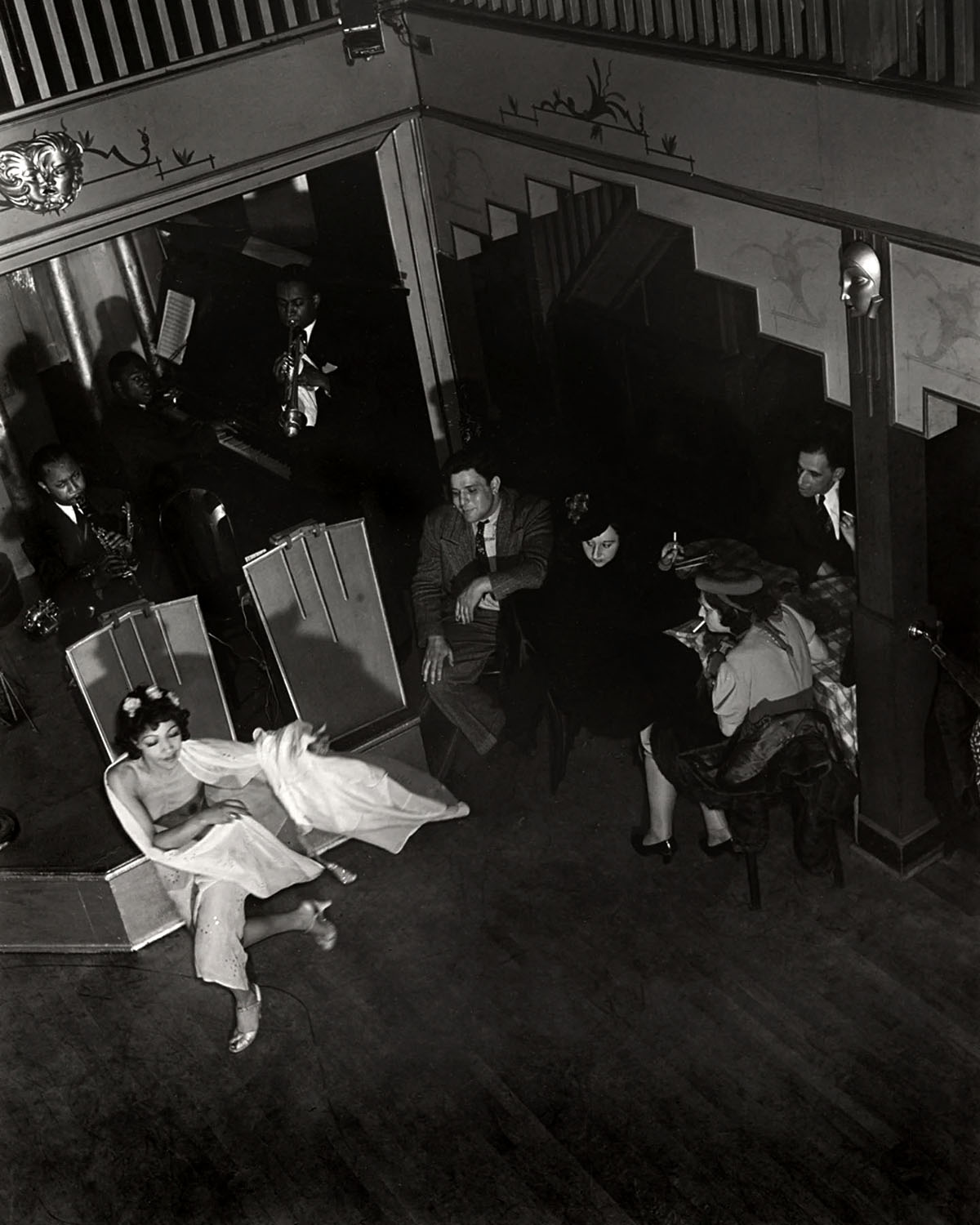
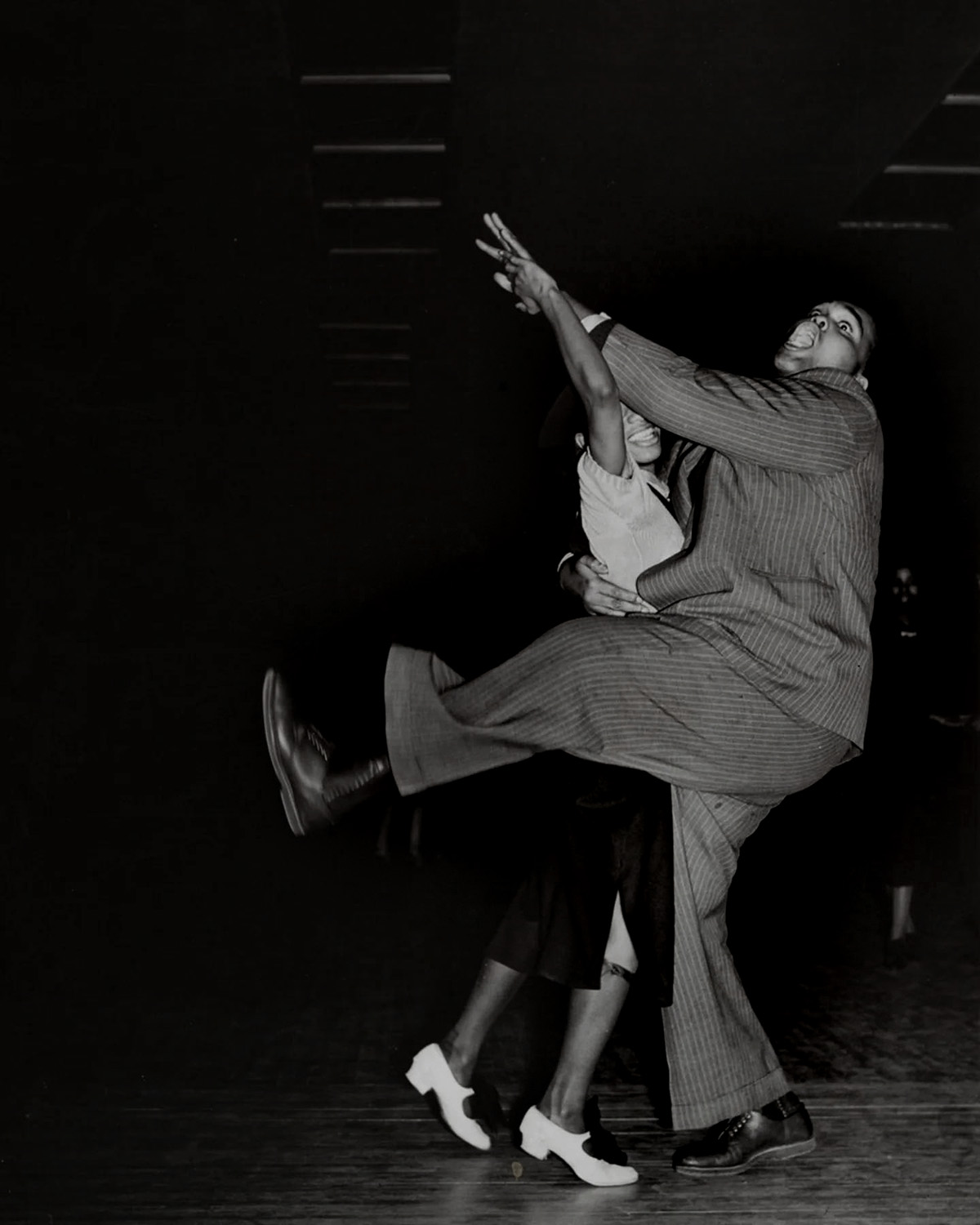
The “Savoy Dancers” refer to the pioneering African American dancers who developed the Lindy Hop and other swing dances at the legendary Savoy Ballroom in Harlem, New York. Open from 1926 to 1958, the integrated ballroom housed iconic performers like Frankie Manning and Norma Miller who defined the “home of happy feet”.
These legendary dancers revolutionised social dancing by bringing athleticism, airborne aerials, and improvisational jazz styling to the Lindy Hop. Their legacy continues to thrive through modern swing dance communities and archival footage preserved in documentaries like The Spirit Moves.
About the Savoy Ballroom
From 1926 to 1958, the Savoy Ballroom stood at 596 Lenox Avenue as one of the first racially integrated public spaces in the United States. Its 10,000-square-foot, spring-loaded dance floor welcomed thousands nightly and launched a global dance phenomenon. The Savoy hosted legendary artists including Chick Webb, Duke Ellington, Ella Fitzgerald, and Count Basie, cementing its place at the heart of Harlem’s cultural history.
Aaron Siskind (American, 1902-1991) St. Joseph’s House – The Catholic Worker Movement c. 1939 Gelatin silver print
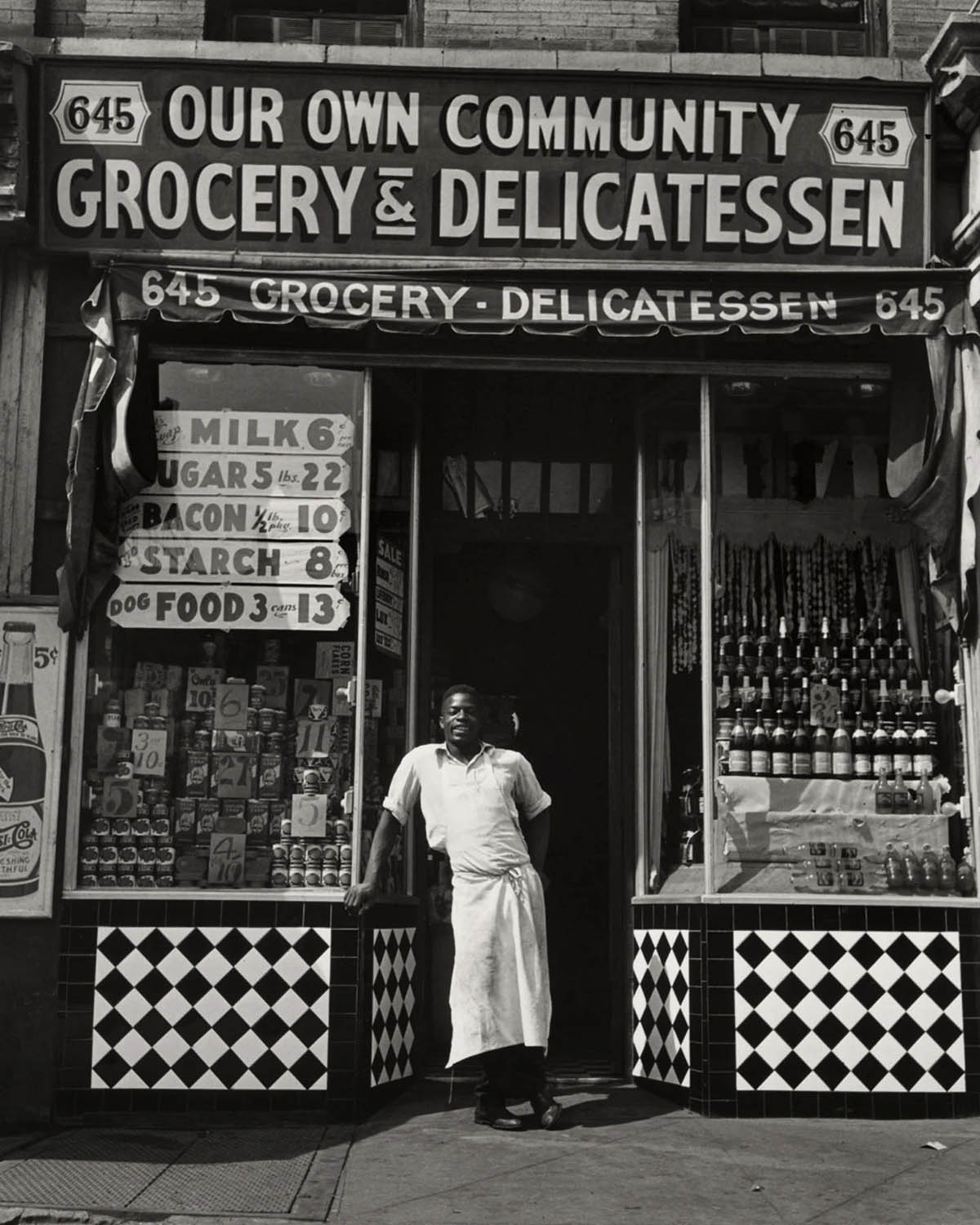
Aaron Siskind (American, 1902-1991) Grocery Store 1940 Gelatin silver print
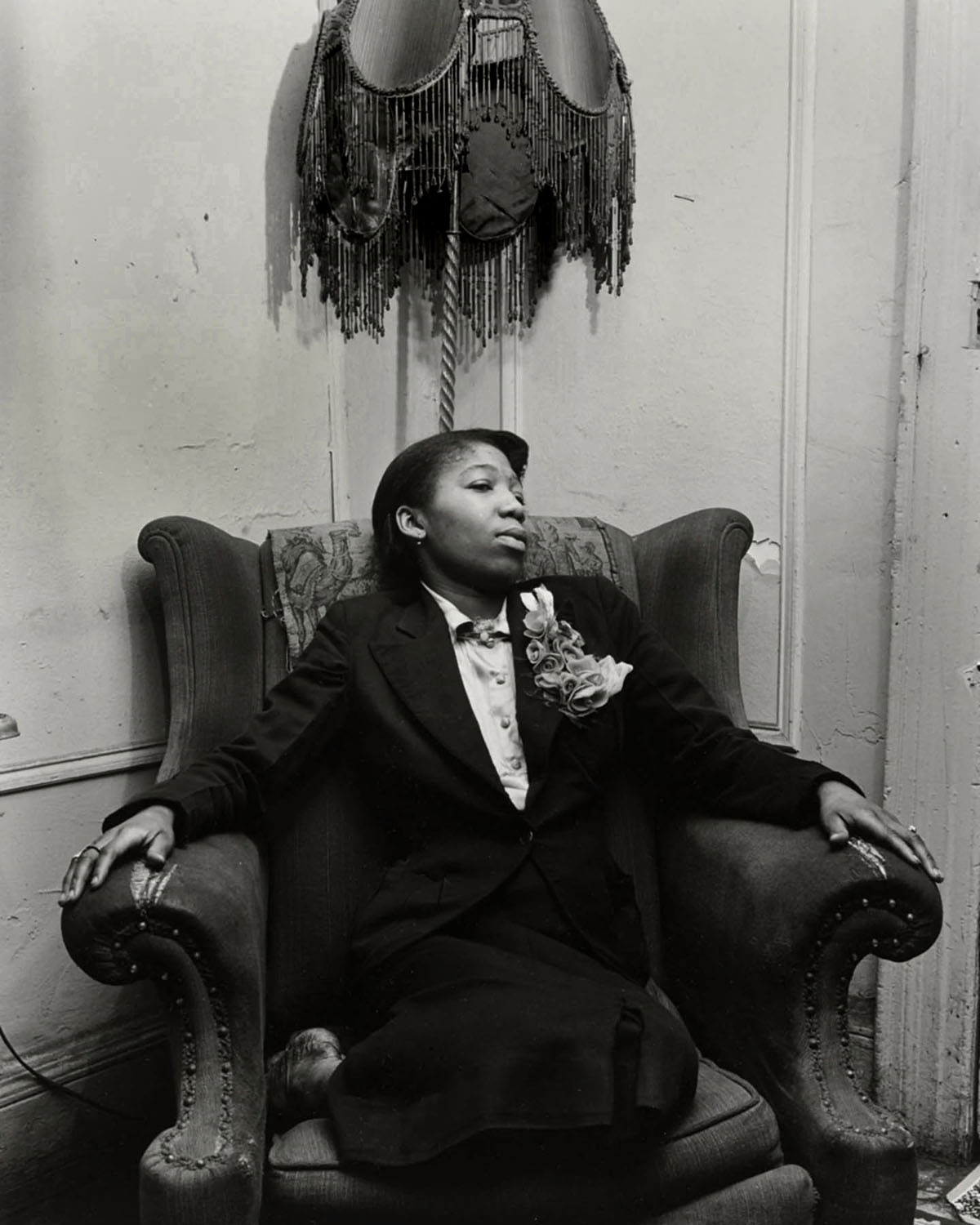
Aaron Siskind (American, 1902-1991) Lady and Lamp 1940 Gelatin silver print
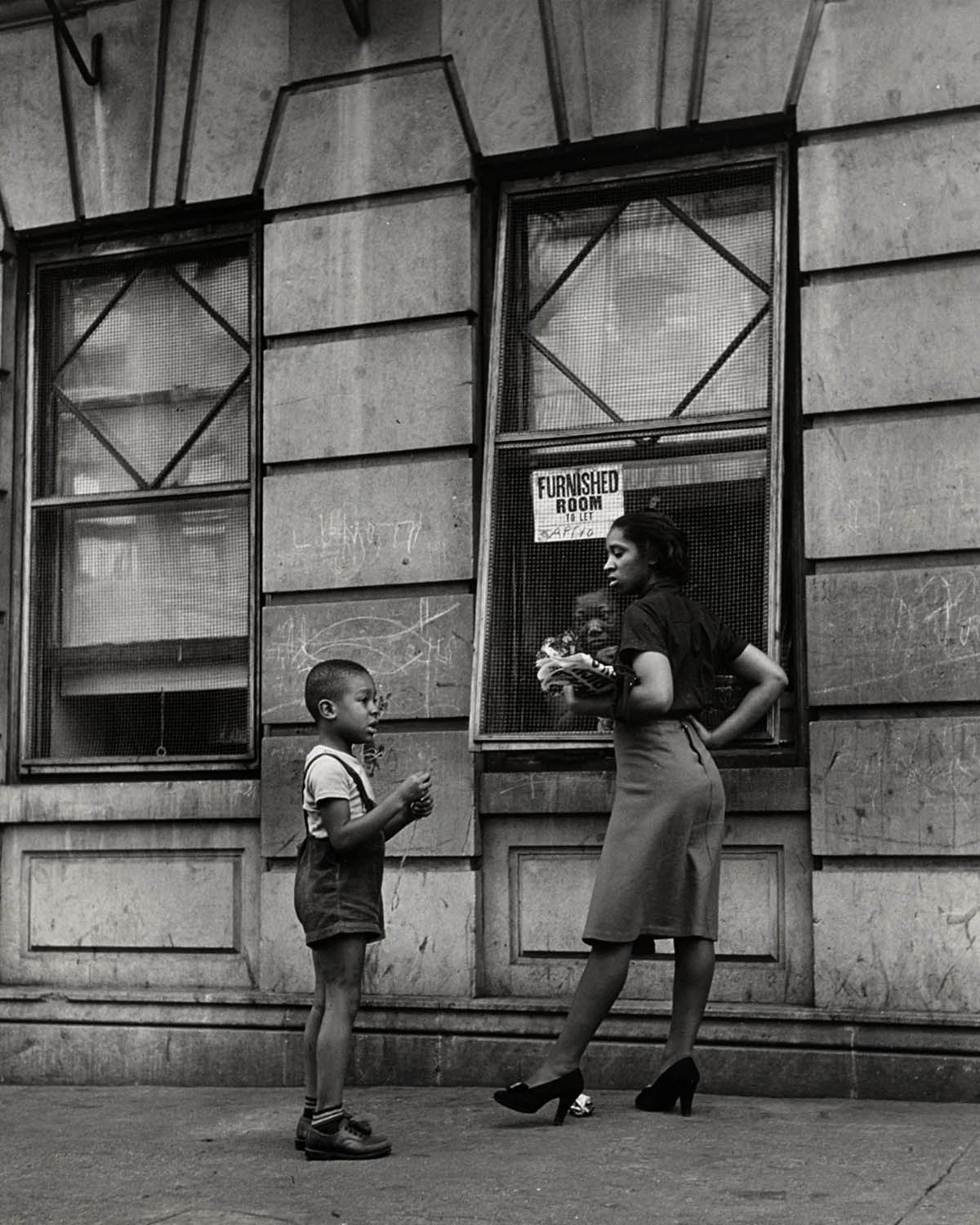
Aaron Siskind (American, 1902-1991) Street Scene 1940 Gelatin silver print
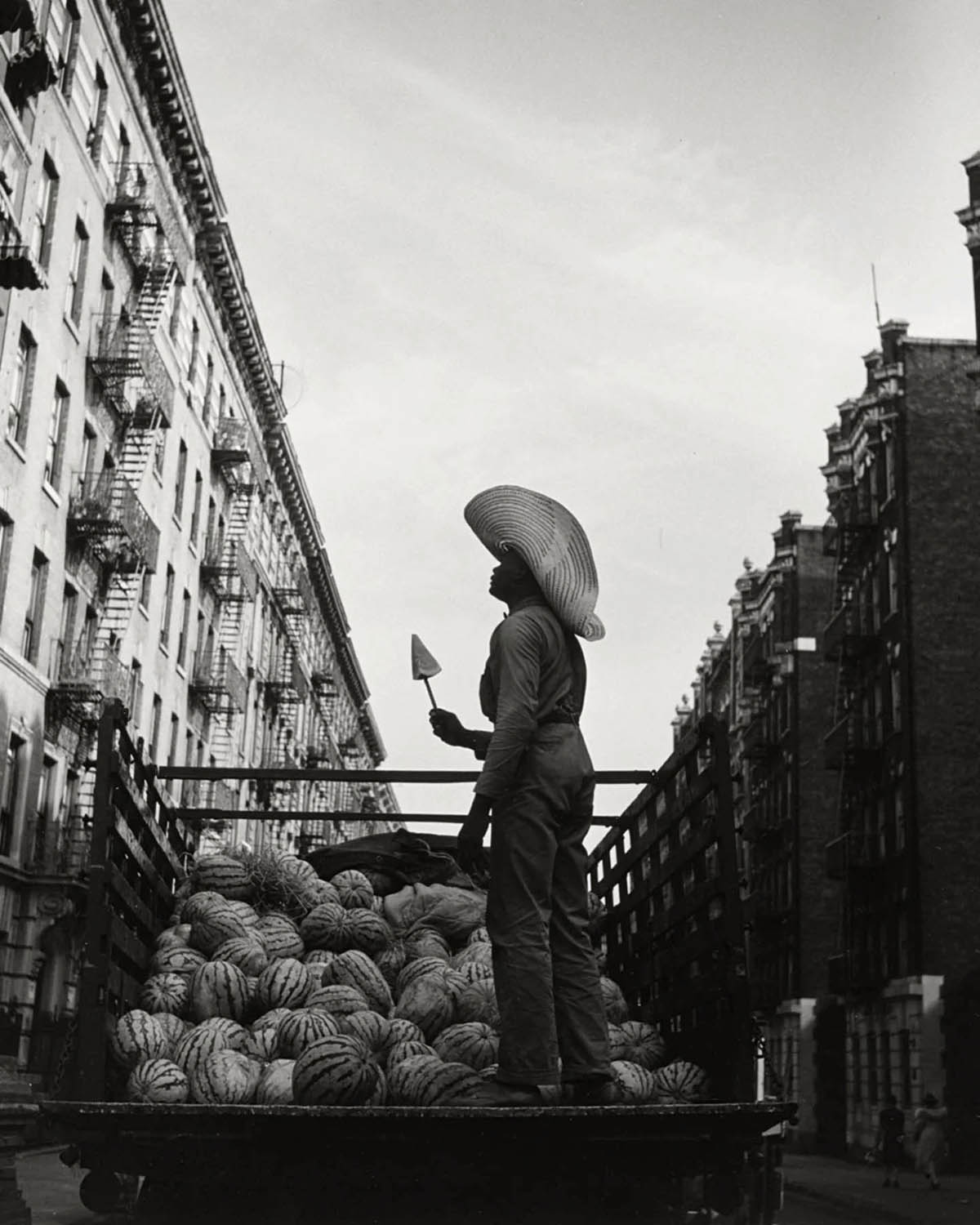
Aaron Siskind (American, 1902-1991) Watermelon Man 1940 Gelatin silver print
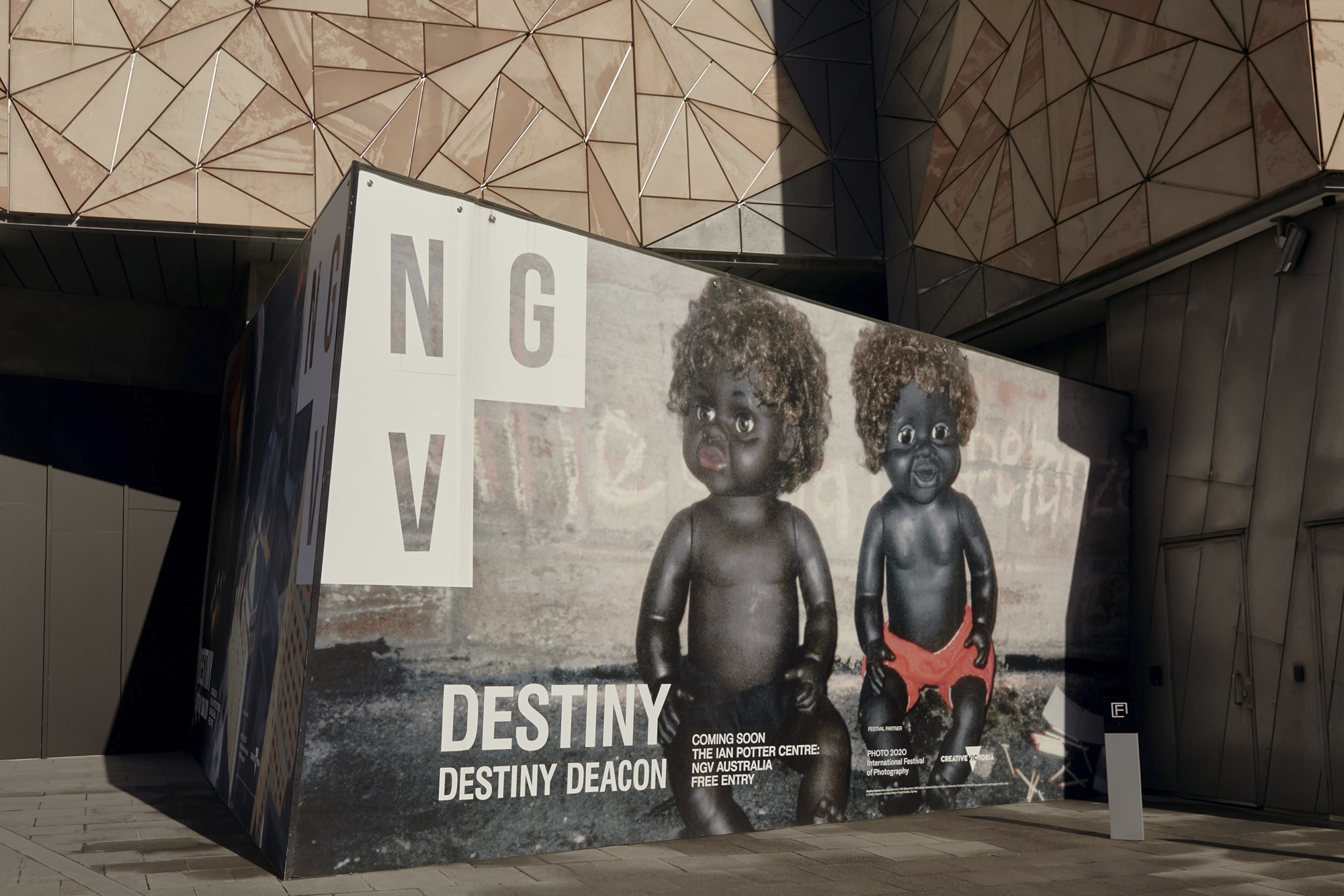
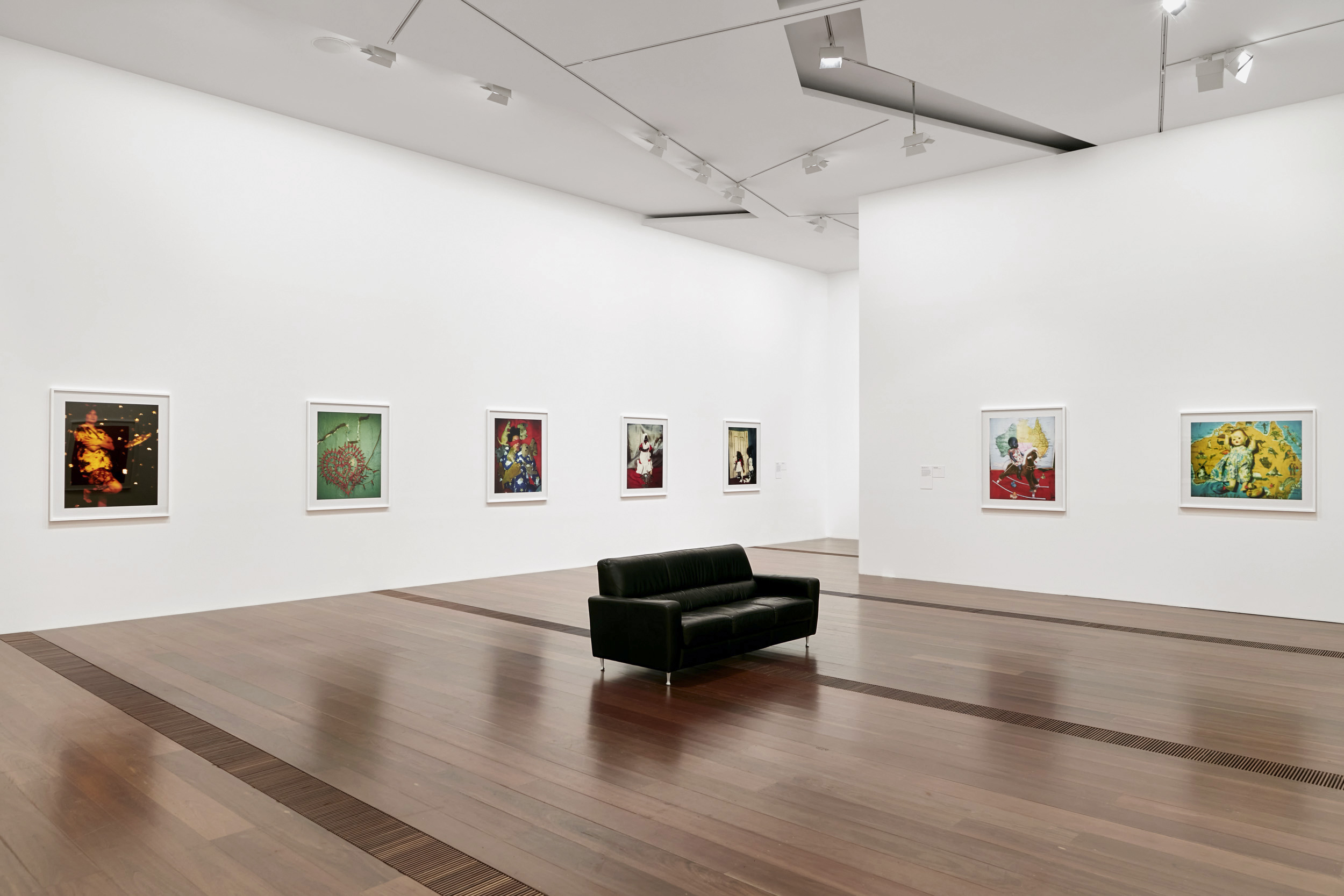
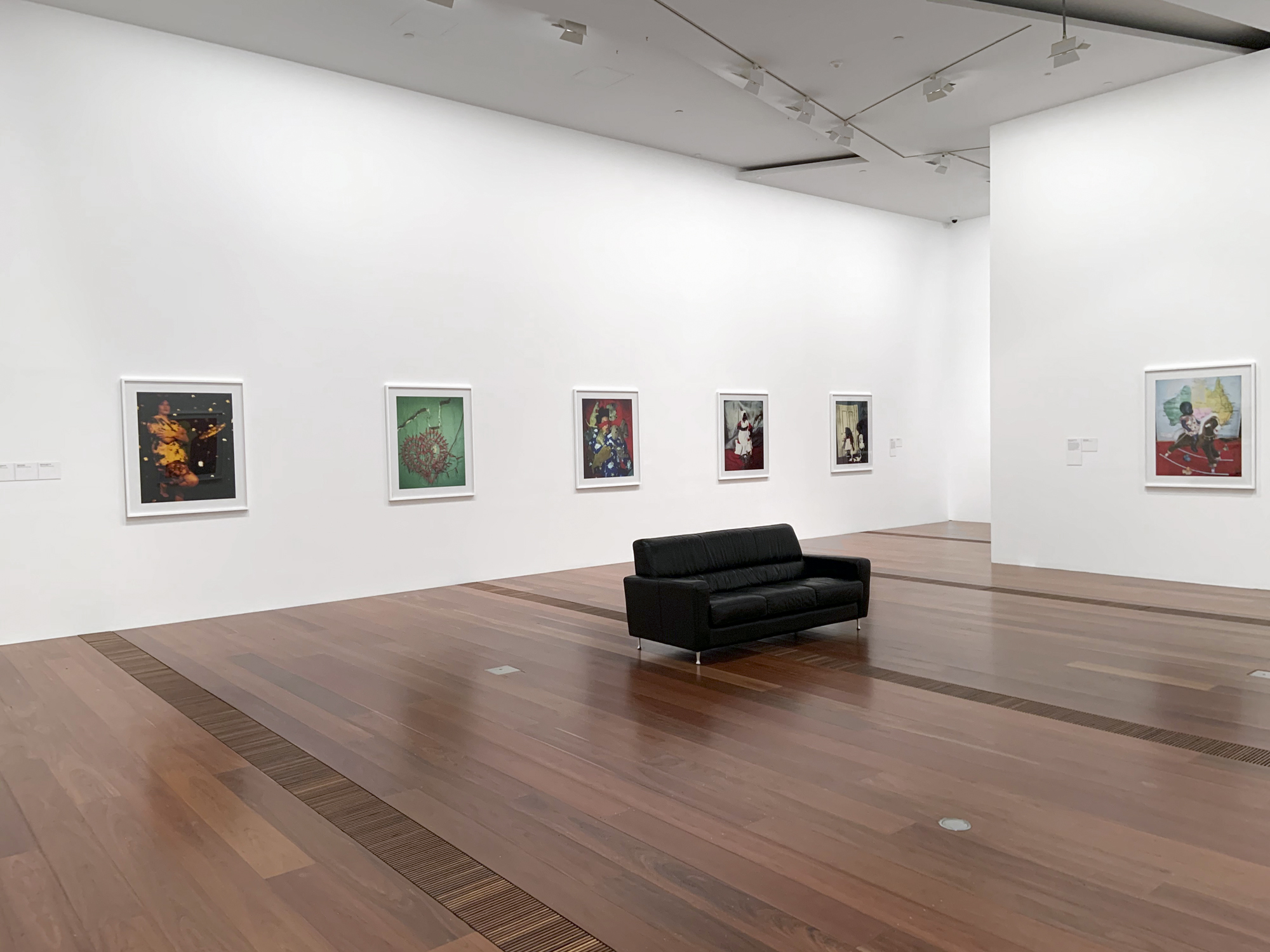
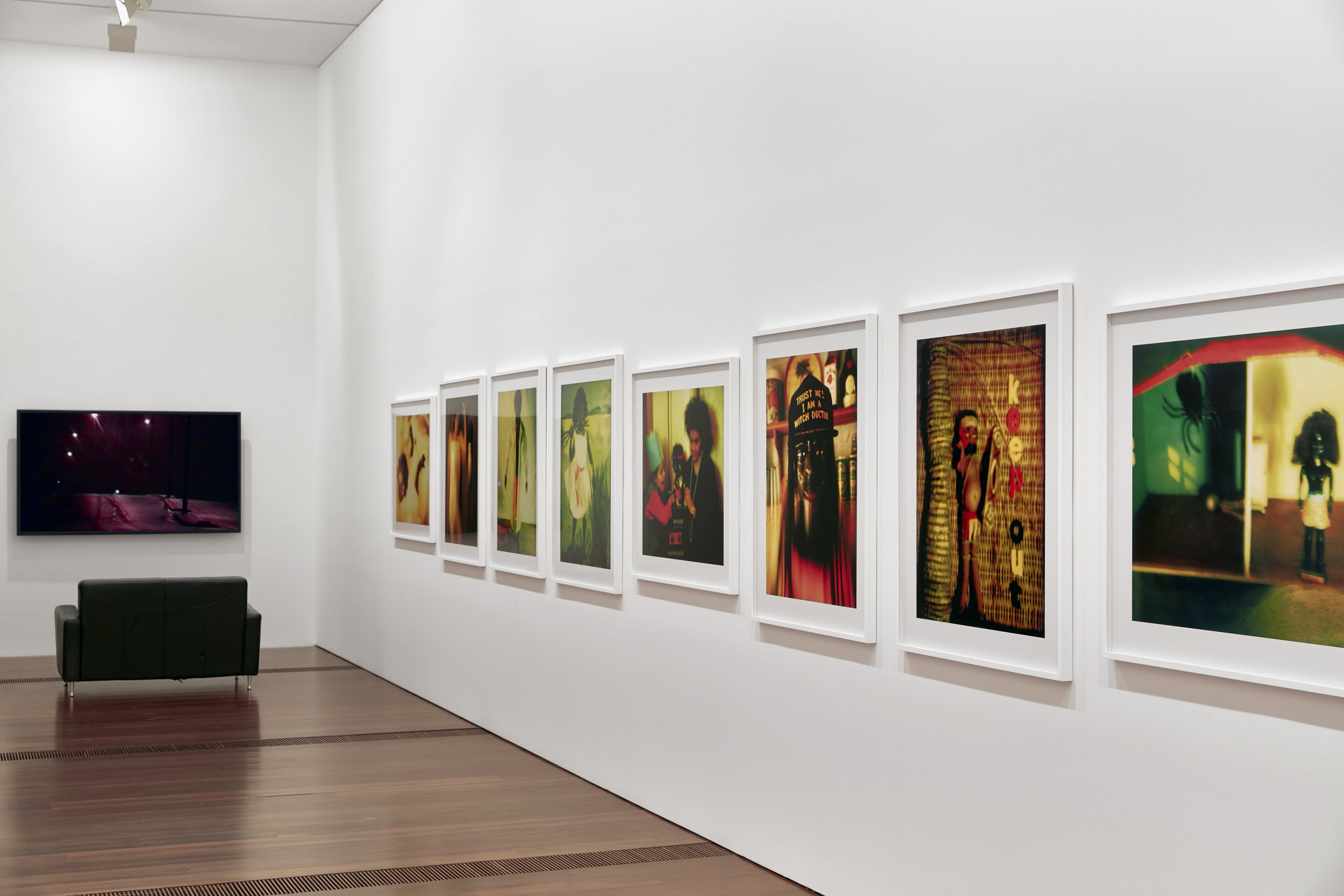
Installation view of DESTINY at The Ian Potter Centre: NGV Australia, Melbourne, 2020 Photo: Tom Ross
“There is no excuse for ignorance, and you should make an effort to understand what happens in our world. How else can you be contemporary?”
Destiny Deacon
Embodied Ab/origin
This is a strong, powerful if rather repetitive exhibition by Destiny Deacon at NGV Australia, Melbourne. It’s like being hit over the head with a blakly ironic blunt object many times over, just like Aboriginal people have had both physical and cultural violence enacted upon them many times over since the arrival of the white man in terra nullius, a misnomer if ever there was one.
“Drawing from her vast collection of Aboriginalia, Deacon interrogates the way in which Aboriginal people have been, and continue to be, misrepresented within popular culture.” Aboriginalia is repurposed “historicised, interpreted and recast through Aboriginal eyes”, especially through the use of white-appropriated and conceptualised Blak dolly models that allegedly “possess a liveliness and personality, making the violence enacted on to them all the more confronting.” Deacon photographs her reclaimed dollies using Polaroids from which colour prints are enlarged. Technically and aesthetically this means the photographs loose the uniqueness, size and aura of a Polaroid, perhaps not the best outcome for the use of the instant photography process in the making of memorable images.
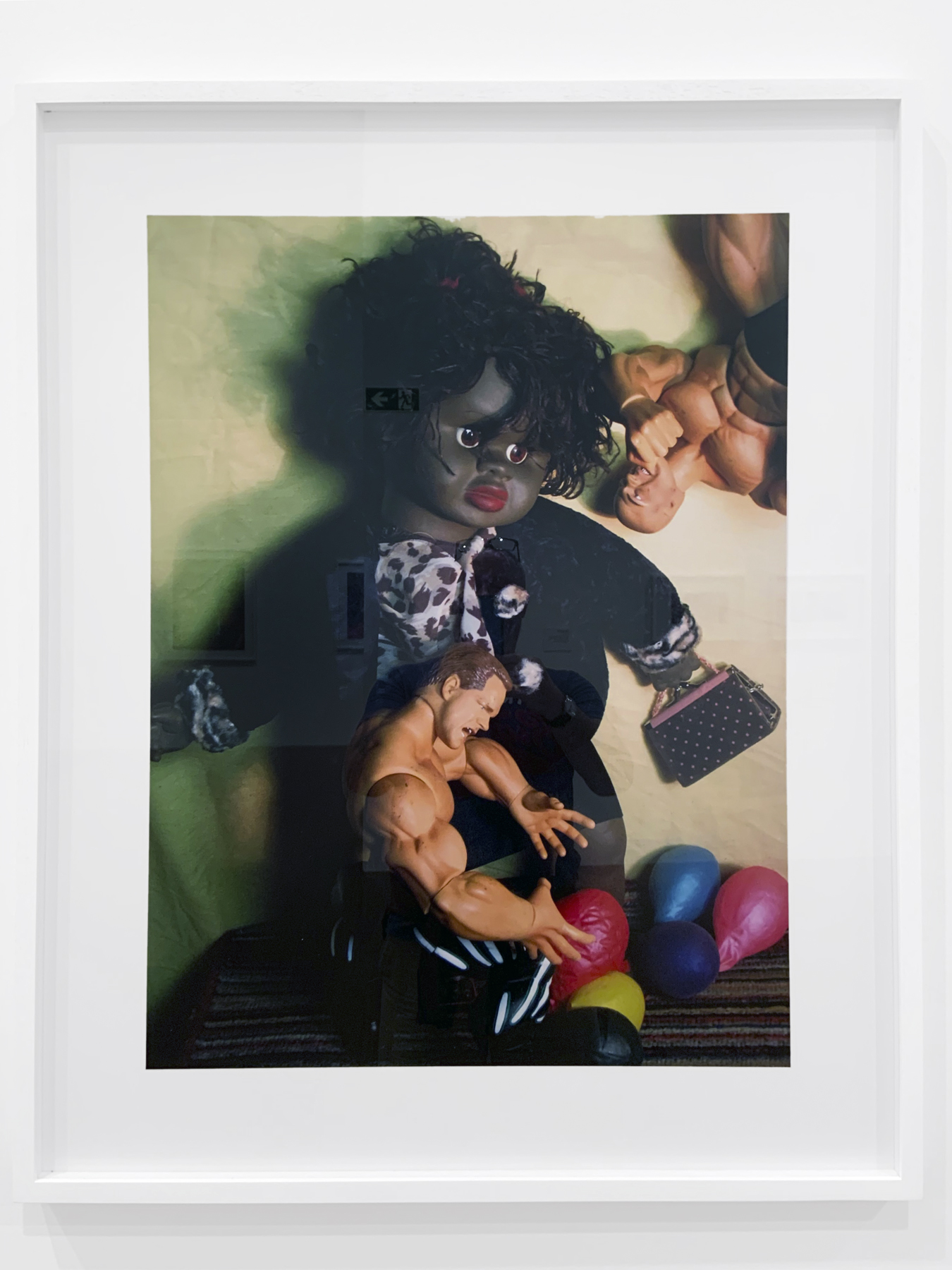
The exhibition never strays far from its theme: that whities will never understand the symbols of racism perpetrated against Blaks embedded in white culture, unless they are pointed out to them. This concept is expressed through the silent voice of the archetypal Blak doll – dis/embodied, headless, amputated, tied up, trapped in a blizzard, over the fence, adopted – inserted placelessly into whatever scenario bigotry and racism rears its head, a snatched headline of dispossession and grief. While the Blak dolls are a paradigm that Deacon uses to represent the “collective lives” of Aborigines under the heal of a repressive regime, no idea is ever investigated fully for the viewer is only given a snippet of information. Holistically, these snippets add up to a terrible indictment of a dominant race lording it over a vanquished one.
“Marcia Langton once described Destiny Deacon’s work as a ‘barometer of postcolonial anxiety’.” Personally, I don’t feel any sense of postcolonial anxiety when I look at Deacon’s work. I just feel sad, very sad and guilty. Sad for the invasion, sad and guilty for the lives lost, dispossession, poor health, shorter life spans, racism and inequality, the ongoing discrimination and neglect. It’s like sticking the knife in over and over again. I so wish it was different. We KNOW, if we are informed sentient beings, the injustices that Aboriginal people suffered and continue to suffer. As Deacon says, there is no excuse for ignorance. But this is preaching to the converted. How many Joe Public will come and see this exhibition to be informed and to change their mind? As a friend of mine succinctly said, “Don’t come to this exhibition if you don’t want your racism challenged.” Many will not bother. For others this will be a confronting exhibition. And in all this reclaiming of Aboriginalia, all this confrontation, all this looking back, the dredging up of every little inequality – it leaves me thinking: what is the future, where is the positiveness, where is the forward looking cultural creativity of a great people?
I believe that this contemporary reconceptualisation of history from a singular standpoint – that of a unified Ab/original people represented by Blak dolly – is pure hokum. Aboriginal culture is made up of many mobs, many voices, reflecting the difference in backgrounds and experiences of different communities which come together in diversity to present “a statement about the unity of Aboriginal people, the defiant continuity of their cultural traditions and the personal search of many individual artists for their own Aboriginal identity.”1 In this exhibition, where are the homosexual Aboriginals, the lesbian Aboriginals, the transgender Sista Girls, or an investigation into interracial marriages that are loving and kind, instead of just more and more works that reinforce injustices (of history) in the here and now, through the dis/embodied plastic body of a silent doll. Where is the positivity for the future, for example an acknowledgement of the thousands of people that attended Invasion Day rallies this year?
Collectively, the exhibition powerfully questions the processes of a problematic cultural assimilation using repurposed Aboriginalia but today Aboriginal identities, like all identities, are in a state of transformation and flux. I look at the work of contemporary African artists and I see joy, hope, colour, movement, new identities, new sites of conceptualisation in the evolving struggle to engage new definitions of nationhood in relation to the autonomous, self-governing body. They acknowledge history, discrimination, the struggle for freedom, but are more forward looking, more engaged with the possibilities of the future rather than the deficits of the past expressed in the inequalities of the present. When is a positive voice of embodied (not disembodied, decapitated) Ab/origin going to emerge in contemporary art?
Dr Marcus Bunyan
1/ Jennifer Isaacs. “Introduction,” in Jennifer Isaacs (ed.,). Aboriginality: Contemporary Aboriginal Paintings and Prints. University of Queensland Press, 1996, p. 8.
Many thankx to the NGV for allowing me to publish some of the photographs in the posting. All the other images, as noted, are iPhone images of the exhibition by Marcus Bunyan. Please click on the photographs for a larger version of the image.
Destiny Deacon is one of Australia’s boldest and most acclaimed contemporary artists. In the largest retrospective of her work to date, DESTINY marks the artist’s first solo show in over 15 years. Featuring more than 100 multi-disciplinary works made over a 30-year period, the exhibition includes the premiere of newly-commissioned works. Numerous early video works created with the late Wiradjuri / Kamilaroi photographer Michael Riley and West Australian performance artist Erin Hefferon are also on display.
A descendant of the Kuku and Erub / Mer people from Far North Queensland and Torres Strait, Deacon is internationally known for a body of work depicting her darkly comic, idiosyncratic worldview. Offering a nuanced, thoughtful and, at times, intensely funny snapshot of contemporary Australian life, Deacon reminds us that ‘serious’ art can also have a sense of humour.
Melbourne-based, Deacon works across photography, video, sculpture and installation to explore dichotomies such as childhood and adulthood, comedy and tragedy, and theft and reclamation. Her chaotic worlds, where disgraced dolls play out sinister scenes for audience amusement, subvert cultural phenomena to reflect and parody the environments around us.
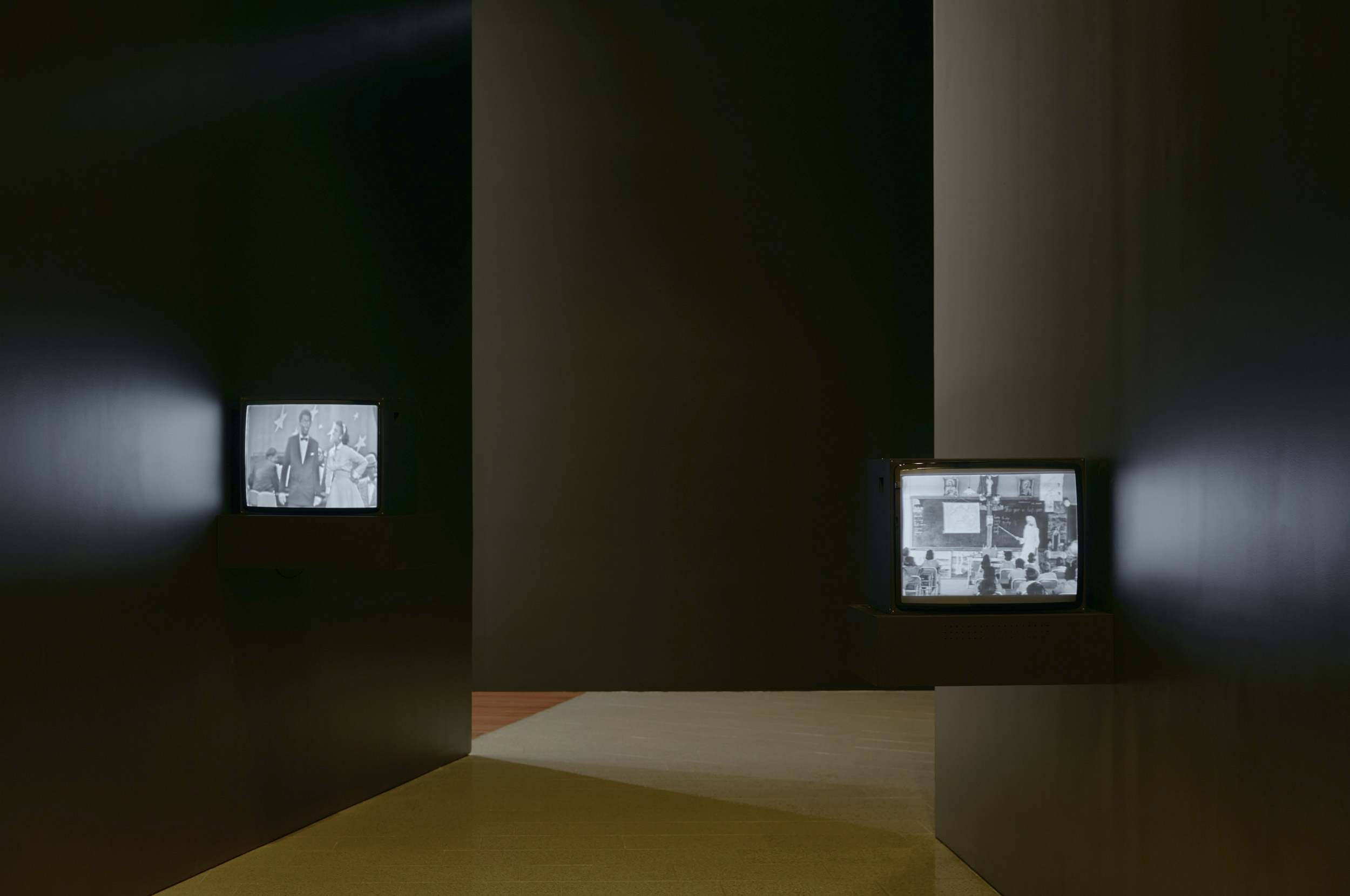
Installation view of Destiny Deacon and Virginia Fraser’s Abi see da classroom 2006 on display in DESTINY at The Ian Potter Centre: NGV Australia, Melbourne, 2020 Photo: Tom Ross
Destiny Deacon (Kuku/Erub/Mer b. Australia 1957-2024) Virginia Fraser (Australian, d. 2021) Abi see da classroom (stills) 2006 10 min. sound National Gallery of Victoria Photos: Marcus Bunyan
Abi see da classroom
For the fiftieth anniversary of the Australian Broadcasting Commission (ABC), Destiny Deacon and her long-time collaborator Virginia Fraser were given unrestricted access to the ABC’s archive, possibly the most significant collection of film and television held in Australia. By searching for any keywords that started with ‘Aborigin’ they were able to uncover a large assortment of videos.
In this installation, two CRT television screens play alongside each other, creating a mashup of noise and black-and-white moving images. The television on the right shows archival footage of Aboriginal children attending school, reading and playing musical instruments, while the television on the left presents a series of short clips of people in varying degrees of blackface. Switching from uncomfortable to distasteful, to overtly racist, the two channels juxtapose extreme versions of how Aboriginal people have historically been depicted on television. The footage is problematic and offensive; though, some might say ‘it was a different time’. The flashback to the 1950s prompts audiences to consider Australia’s legacy of televised racism and poses the question: how far have we actually come?
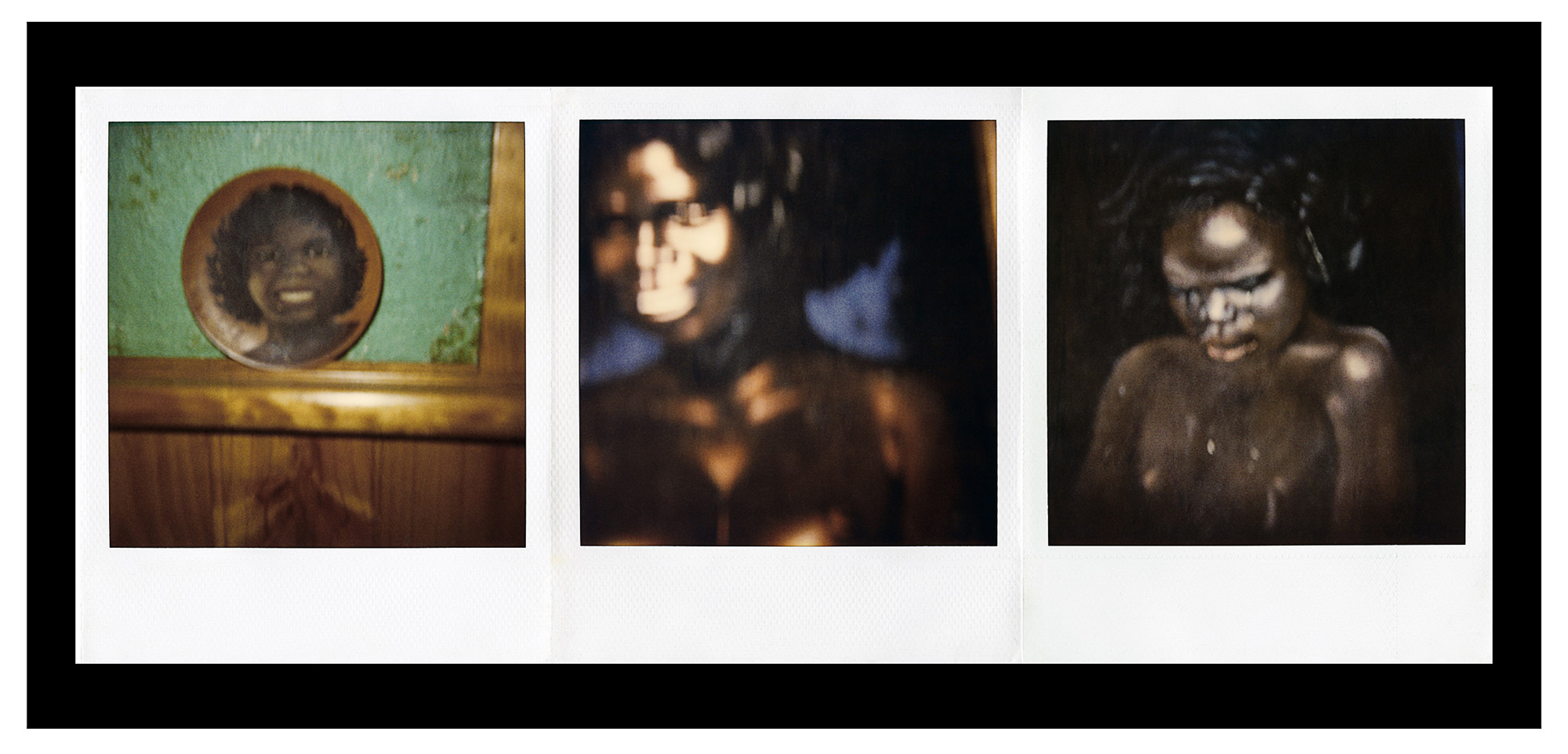
Installation view of Destiny Deacon’s Blak lik mi 1991 on display in DESTINY at The Ian Potter Centre: NGV Australia, Melbourne, 2020 Photo: Tom Ross
Historically photography has been used as a tool to categorise and document Aboriginal people and their lives. In this work Destiny Deacon reclaims three images taken from a 1960s reproduction of a 1957 Axel Poignant photograph, from his photo essay, originally titled Picaninny Walkabout, later renamed Bush Walkabout. Deacon turns the colonial gaze back on the coloniser, photographing the photograph, and subverting her position as both subject and photographer.
The title Blak lik mi is a reference to John Howard Griffin’s autobiographical novel, Black Like Me, in which Griffin took large doses of an anti-vitiligo drug and spent hour daily under an ultraviolet lamp in order to change the appearance of his skin so that he ‘passed’ as Black. Deacon’s work offers a window into her own interrogation about what constitutes her Aboriginal identity. On this, Deacon often jokes that she ‘took the c, out of black little c**t’. Rude words beginning with ‘c’, of which there are many, are often used as offensive slights, and Deacon recalls being taunted with these words as a child.
‘Blak’, unlike ‘Black’, was Deacon’s way of self-determining her identity, and originating a version of the self that comes entirely from within. The legacy of this work has been massive. Countless Aboriginal people now self-determine their identity as Blak, so much so that a Google search of ‘Blak’ returns a nearly all Australian Indigenous search result.
Installation view of DESTINY at The Ian Potter Centre: NGV Australia, Melbourne, 2020 Photo: Tom Ross
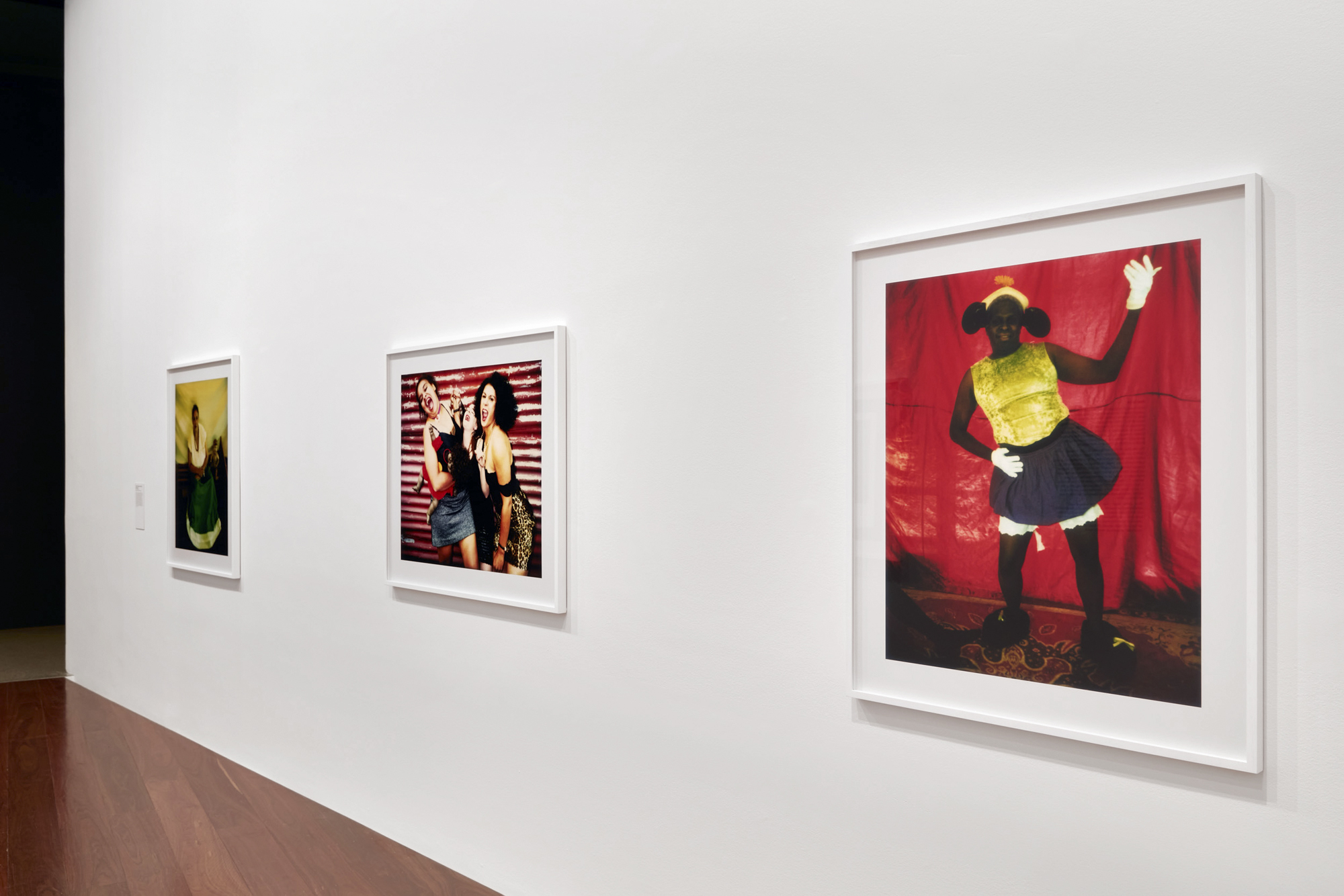
Installation view of Destiny Deacon’s Me and Virginia’s doll (Me and Carol) 1997 at left, Last laughs 1995 at centre, and Where’s Mickey 2002 at right, on display in DESTINY at The Ian Potter Centre: NGV Australia, Melbourne, 2020
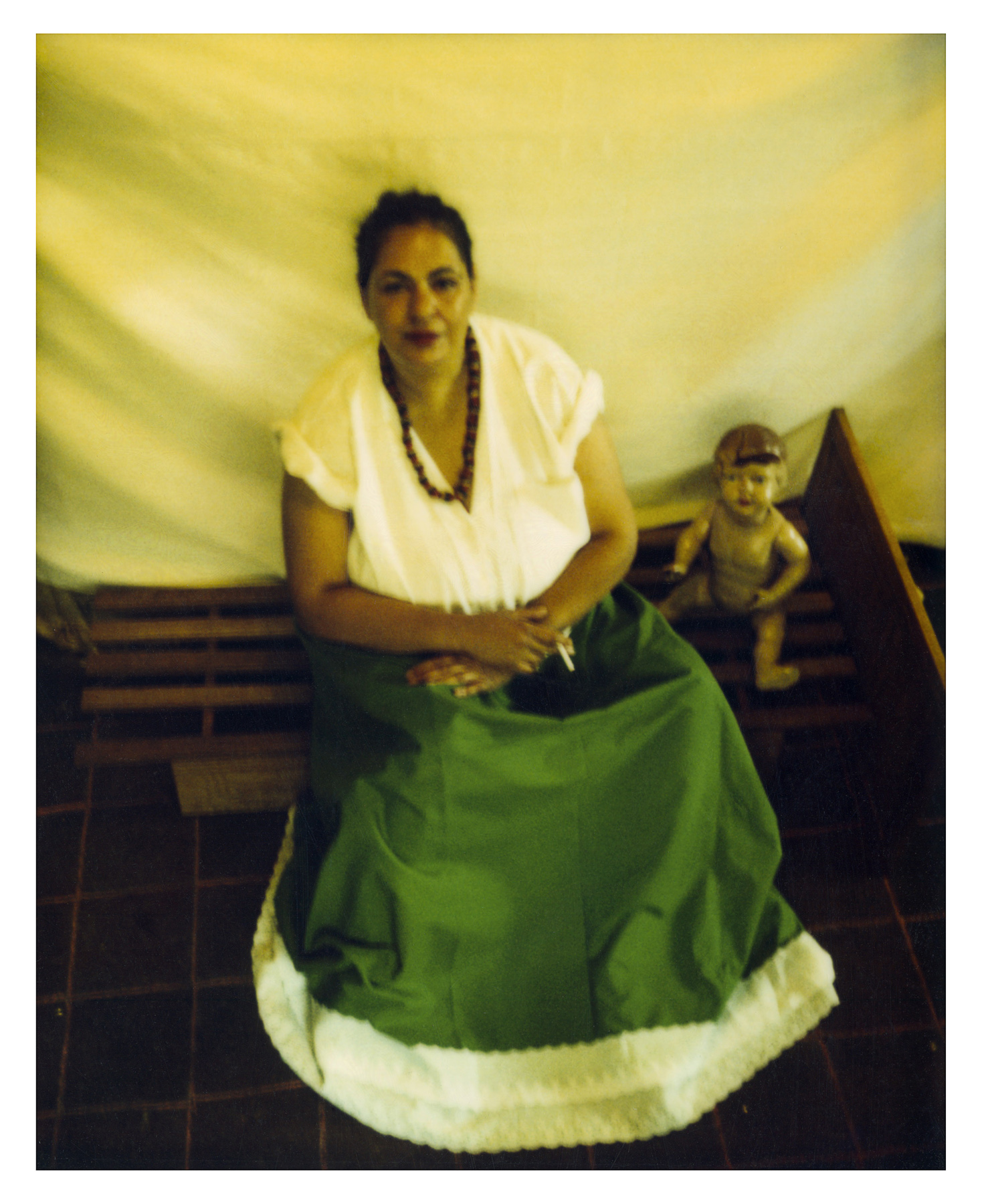
Destiny Deacon (Kuku/Erub/Mer b. Australia 1957-2024) Me and Virginia’s doll (Me and Carol) 1997, printed 2020 Lightjet print from Polaroid original
Destiny Deacon began her professional career in photography in her late thirties as a way to express herself and her political beliefs. A self-taught artist, Deacon is primarily known for her photographs and videos where she subverts familiar icons with humour and wit. Often when Deacon photographs people she poses them like paintings. In this image, Deacon presents herself as Frida, staging the image as an homage to Kahlo’s 1937 painting Me and my doll.
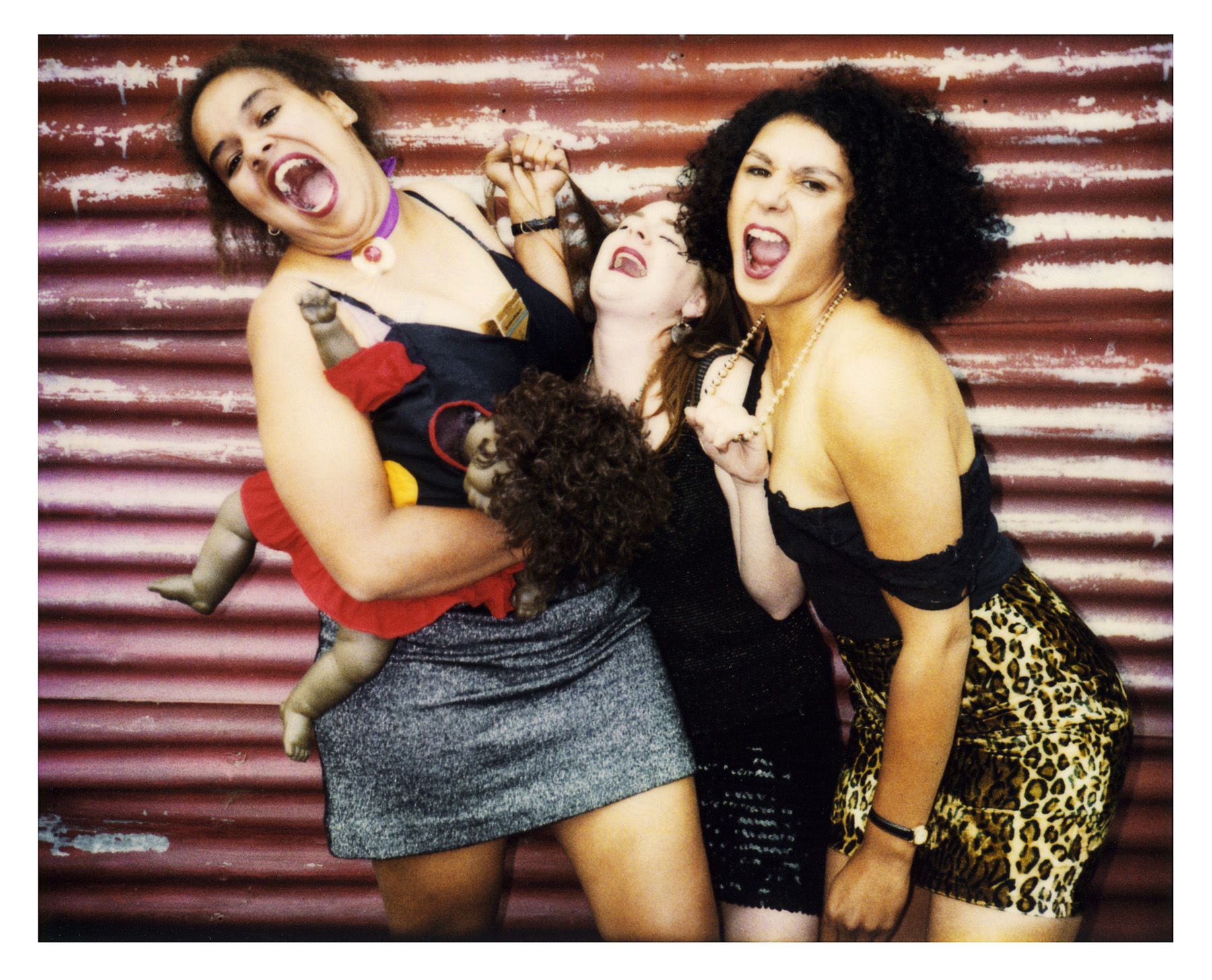
In this image Deacon both reclaims and ridicules a genre of colonial photography, which historically depicted Aboriginal women as a highly sexualised or exotic ‘other’. In the nineteenth century it was commonplace for Aboriginal women to appear naked in ethnographic photographs that were mass reproduced and distributed as souvenirs around the world. In Last laughs three Blak women pose for the camera, limbs intertwined, performing their sexuality. Unlike in the colonial photography it references, the subjects in this work are the ones in control.
Destiny Deacon (Kuku/Erub/Mer b. Australia 1957-2024) Where’s Mickey? 2002, printed 2016 Exhibition version printed 2020 Lightjet print from Polaroid original National Gallery of Victoria, Melbourne
Where’s Mickey? plays on the Australian slang phrase ‘Mickey Mouse’, used to refer to something that is substandard, poorly executed or amateurish. Mickey Mouse is also the archetypal figure of an (often white) American consumerist culture. In this portrait of Luke Captain, Deacon pokes fun at the cartoon icon, suggesting his animated spirit has possessed the body of an Aboriginal Australian man, who is dressed as a woman.
Installation view of DESTINY at The Ian Potter Centre: NGV Australia, Melbourne, 2020 showing at left, Where’s Mickey? 2002, and at right Meloncholy 2000 Photo: Tom Ross
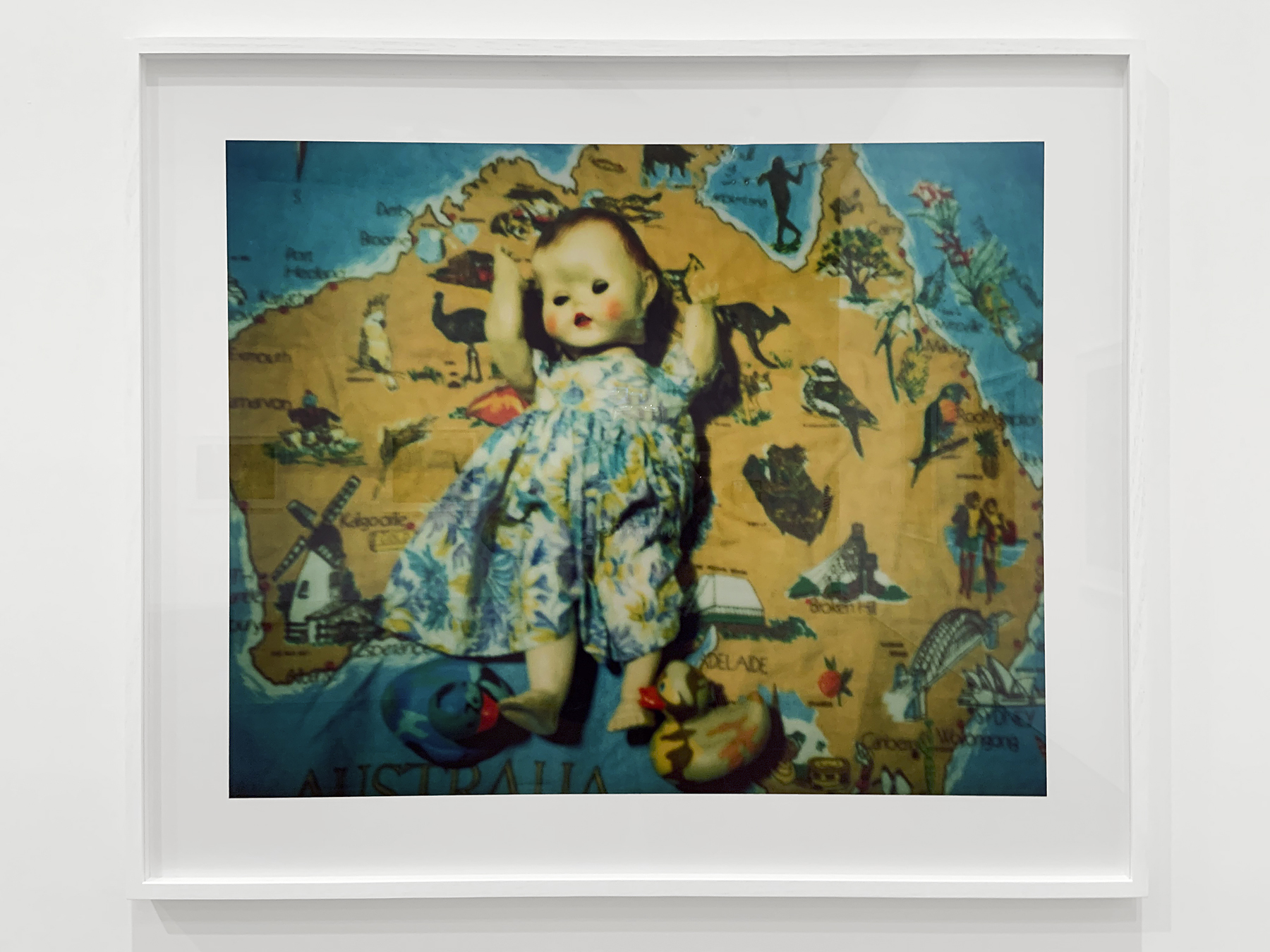
In 1970 African-American film director, Melvin Van Peebles released Watermelon Man, a movie in which a fictional, white insurance salesman wakes up one morning only to discover he has turned Black overnight. The film is inspired by John Howard Griffin’s autobiographical novel, Black Like Me. In this image Deacon gives the watermelon a double meaning. The emptied peel of the melon cradles the doll’s body, kind of like the coolamon [Coolamon is an anglicised NSW Aboriginal word used to describe an Australian Aboriginal carrying vessel], but it is also a fruit that has been severed from its skin. She challenges the relationship between identity, skin colour, and how the world perceives and responds to both Blackness and Blakness.
Destiny Deacon (Kuku/Erub/Mer b. Australia 1957-2024) Adoption (installation view) 2000; printed 2020 Lightjet print from Polaroid original Purchased, Victorian Foundation for Living Australian Artists, 2016; copy printed 2020 Photo: Marcus Bunyan
In this image Destiny Deacon has placed a collection of plastic, black toy babies into paper cupcake shells. Titled Adoption, this work directly references Australia’s shameful history of government-sanctioned Aboriginal child removal. In addition, Adoption also pokes fun at the deeply offensive misnomer of the nineteenth century that Aboriginal mothers were both infanticidal, as well as cannibals of their newborns. Deacon describes how she came to collect dolls, saying ‘in the beginning I wanted to rescue them, because otherwise they’d end up in a white home or something, somewhere no one would appreciate them’.
Destiny Deacon, one of Australia’s boldest and most acclaimed contemporary artists, will be celebrated in her largest retrospective to date opening at the National Gallery of Victoria on 23 November 2020.
DESTINY will mark Deacon’s first solo show in over 15 years, featuring more than 100 multi-disciplinary works made over a 30-year period, and including the premiere of newly-commissioned works created with the artist and her long-term collaborator Virginia Fraser. The exhibition will also feature a number of early video works created with the late Wiradjuri / Kamilaroi photographer Michael Riley and West Australian performance artist Erin Hefferon.
A descendant of the Kuku and Erub / Mer people from Far North Queensland and Torres Strait, Deacon is internationally known for a body of work depicting her darkly comic, idiosyncratic world view. Offering a nuanced, thoughtful and, at times, intensely funny snapshot of contemporary Australian life, Deacon reminds us that art can have both pathos and humour.
Melbourne-based, Deacon works across photography, video, sculpture, and installation to explore dichotomies such as childhood and adulthood, comedy and tragedy, and theft and reclamation. Her chaotic worlds, where disgraced dolls play out sinister scenes for audience amusement, subvert cultural phenomena to reflect and parody the environments around us.
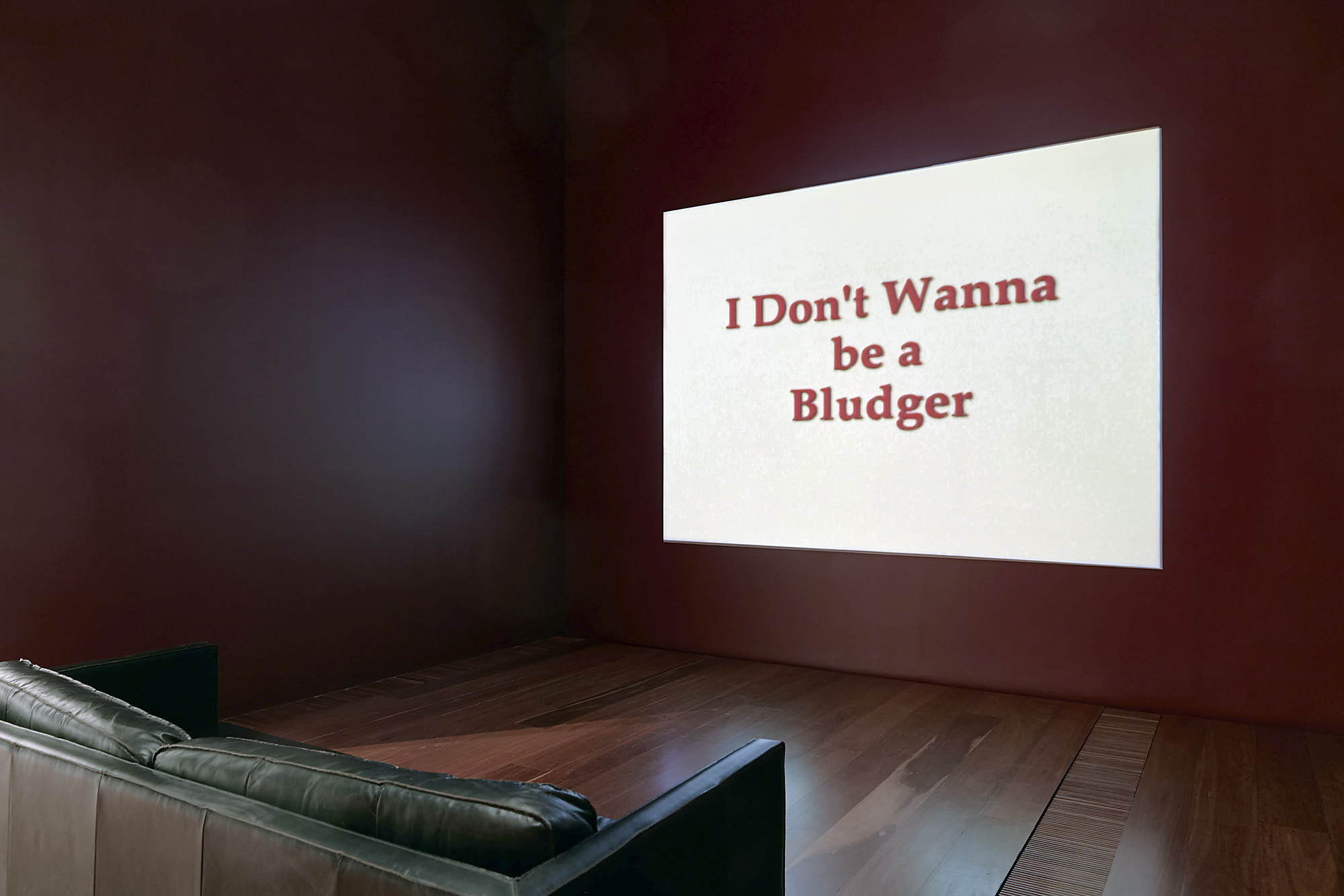
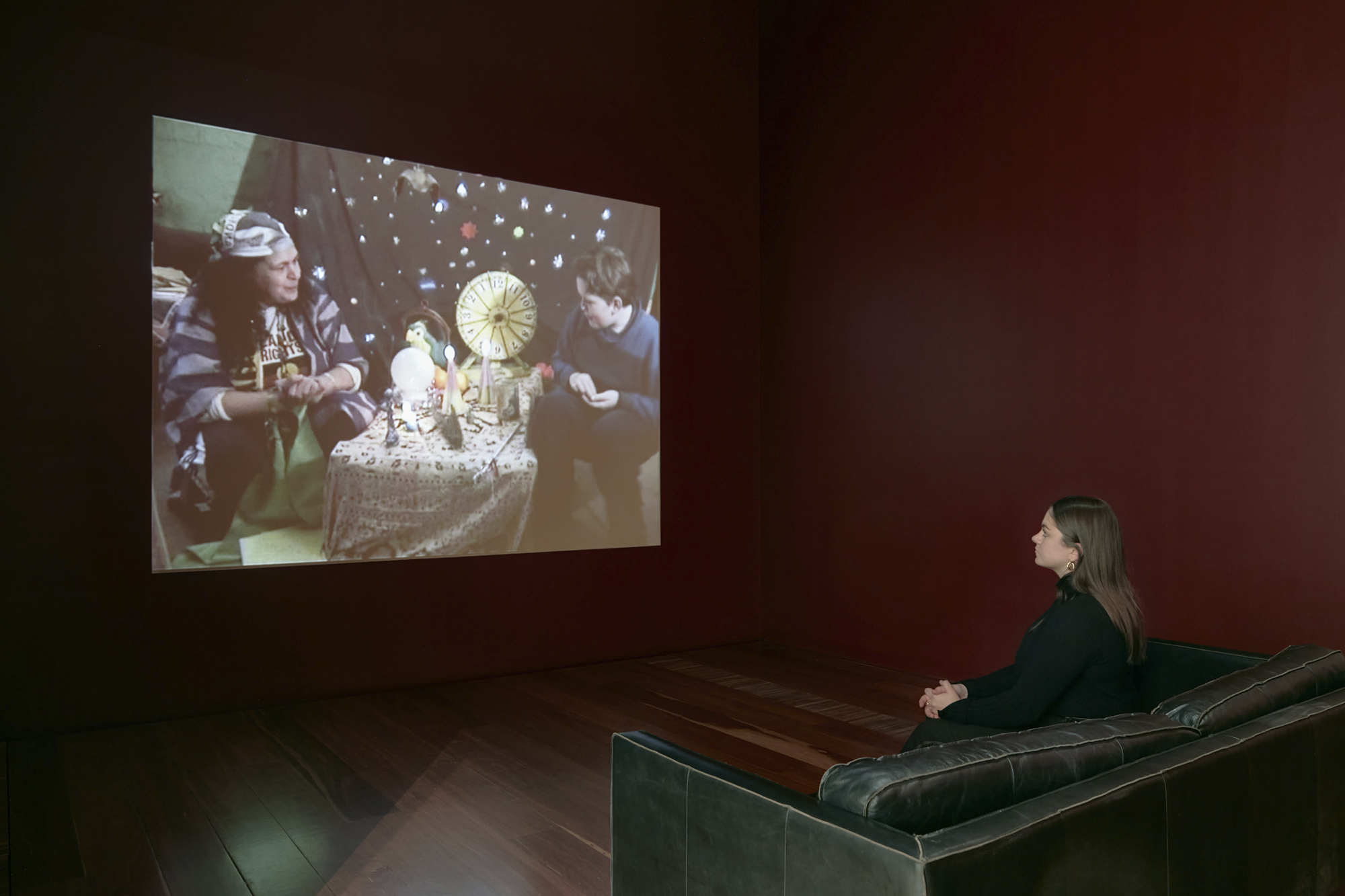
Featuring early videos which mock negative stereotypes of Aboriginal Australians – Home video 1987, Welcome to my Koori world 1992, I don’t wanna be a bludger 1999 – the exhibition will also feature an installation of a lounge room housing Deacon’s own collection of ‘Koori kitsch’. Deacon and Fraser’s highly acclaimed installation Colourblinded 2005 will also be on display. A powerful combination of photographs, sculptures, and video projections, this interactive work leaves the viewer both literally and metaphorically ‘colourblinded’.
“Featuring new NGV commissions and some of the highlights of Deacon’s 30-year career, the retrospective DESTINY pays tribute to an artist who has been challenging audiences for more than 30 years,” said Tony Ellwood AM, Director, National Gallery of Victoria. “Destiny Deacon has never shied away from confronting our country’s difficult history and her work continues to make a vital contribution to Australian cultural discourse,” said Ellwood.
Press release from the National Gallery of Victoria
Installation view of DESTINY at The Ian Potter Centre: NGV Australia, Melbourne, 2020 showing at second right, Meloncholy 2000 and at right, Over the fence 2000 Photo: Tom Ross
Destiny Deacon (Kuku/Erub/Mer b. Australia 1957-2024) Over the fence (installation view) 2000, printed 2000 Exhibition version printed 2020 From the Sad & Bad series Lightjet print from Polaroid original Purchased, Victorian Foundation for Living Australian Artists, 2016 Photo: Marcus Bunyan
The nostalgic qualities in Deacon’s poignant photograph Over the fence reinforce a narrative familiar to many Aboriginal people. Two segregated dollies peer at each other across a suburban, wooden fence, leaving the audience wondering who is fenced in, and who is fenced out? The image illustrates an ‘us’ and ‘them’ mentality towards race, which many Aboriginal people would recognise beneath this seemingly ‘friendly’ neighbourhood encounter.
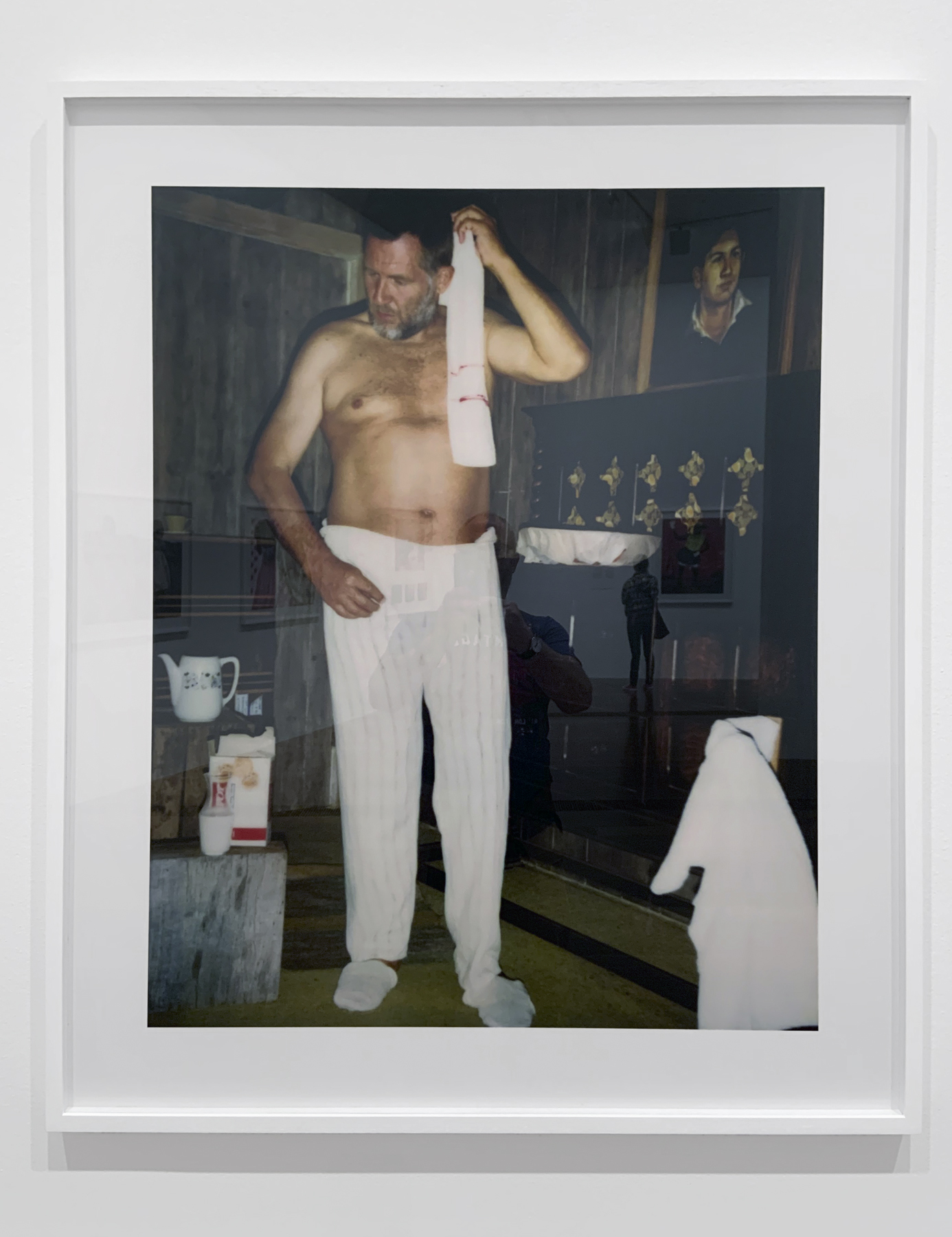
Destiny Deacon (Kuku/Erub/Mer b. Australia 1957-2024) Portrait of Peter Blazey, writer (installation view) 2004, printed 2020 Lightjet print from Polaroid original Photo: Marcus Bunyan
Peter Blazey, journalist, author and gay activist.
Blazey was born in Melbourne in 1939 and worked for The Australian, the National Times and as a regular columnist for OutRage, a gay magazine. He published a number of books, including a political biography of Henry Bolte, and was co-editor of the short fiction anthology, Love Cries. His personal memoir, Screw Loose, appeared after his death from AIDS in 1997.
“Peter was someone with a lion’s head of loose ends that could never fit into some ideologically sound and tidy space. Storyteller, mythomane, and one of the last great conversationalists in a country wary of the free flow of uncensored language, he was a comet who flashed his tail at everyone.” ~ Tim Herbert, OutRage, 1997.
Text from the University of Melbourne Scholarship website [Online] Cited 29/01/2021
Destiny Deacon (Kuku/Erub/Mer b. Australia 1957-2024) Portrait of Gary Foley, activist (installation view) 1995, printed 2020 Lightjet print from Polaroid original Photo: Marcus Bunyan
Often in Deacon’s portrait photography, sitters are posed like those in paintings. In these three images, Deacon presents Gary Foley, an Aboriginal Gumbainggir activist, academic, writer and actor; Peter Blazey, the late journalist, author and gay activist; and Richard Bell, and activist and artist of the Kamilaroi, Kooma, Jiman and Gurang Gurang communities. All three men are posed in a near identical way to the 1932 painting The boy at the basin by Australian landscape and portrait artist William Dobell.
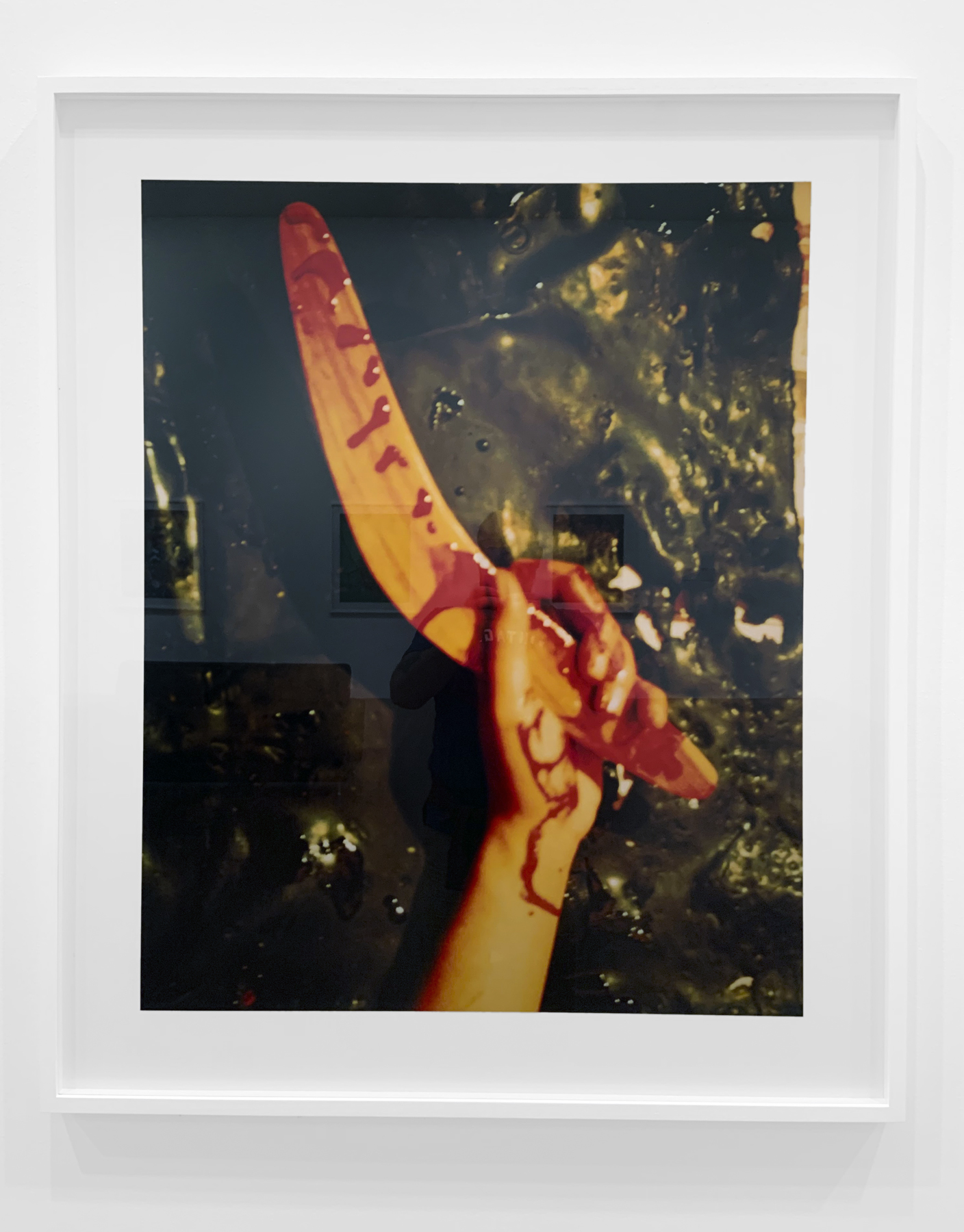
This image is a reference to Charlie Drake’s 1961 song ‘My Boomerang Won’t Come Back’. Drake sings in a halting and staccato manner, wildly grunting ‘ho’ and ‘ugh’ as he narrates the story of an effeminate young Aboriginal boy named Mac, who has been banished from his tribe because he is ‘a big disgrace to the Aborigine [sic] race’ because his ‘boomerang won’t come back’. A single hand (Lisa Bellear’s) reachers upward, grasping a bloody boomerang in front of a black background. Deacon suggests that Drake, whose song is at best a kind of vaudevillian blackface, has assassinated himself.
Destiny Deacon (Kuku/Erub/Mer b. Australia 1957-2024) Hear come the judge (installation view) 2006 Exhibition version printed 2020 Lightjet print from Polaroid original Photo: Marcus Bunyan
Deacon references the 1968 comedic funk song ‘Here Comes the Judge’ by American entertained Dewey ‘Pigmeat’ Markham, which is regarded by many to be the first recorded hip-hop song. Markham’s lyrics ridicule the formalities of courtroom etiquette by painting a picture of a make-believe world where justice is in the hands of Black people. Deacon’s photograph uses humour to disarm and interrogate something that is inherently unfunny. The Blak / Black judge is only comical because it is supposedly unbelievable, a notion Deacon challenges audiences to reconsider.
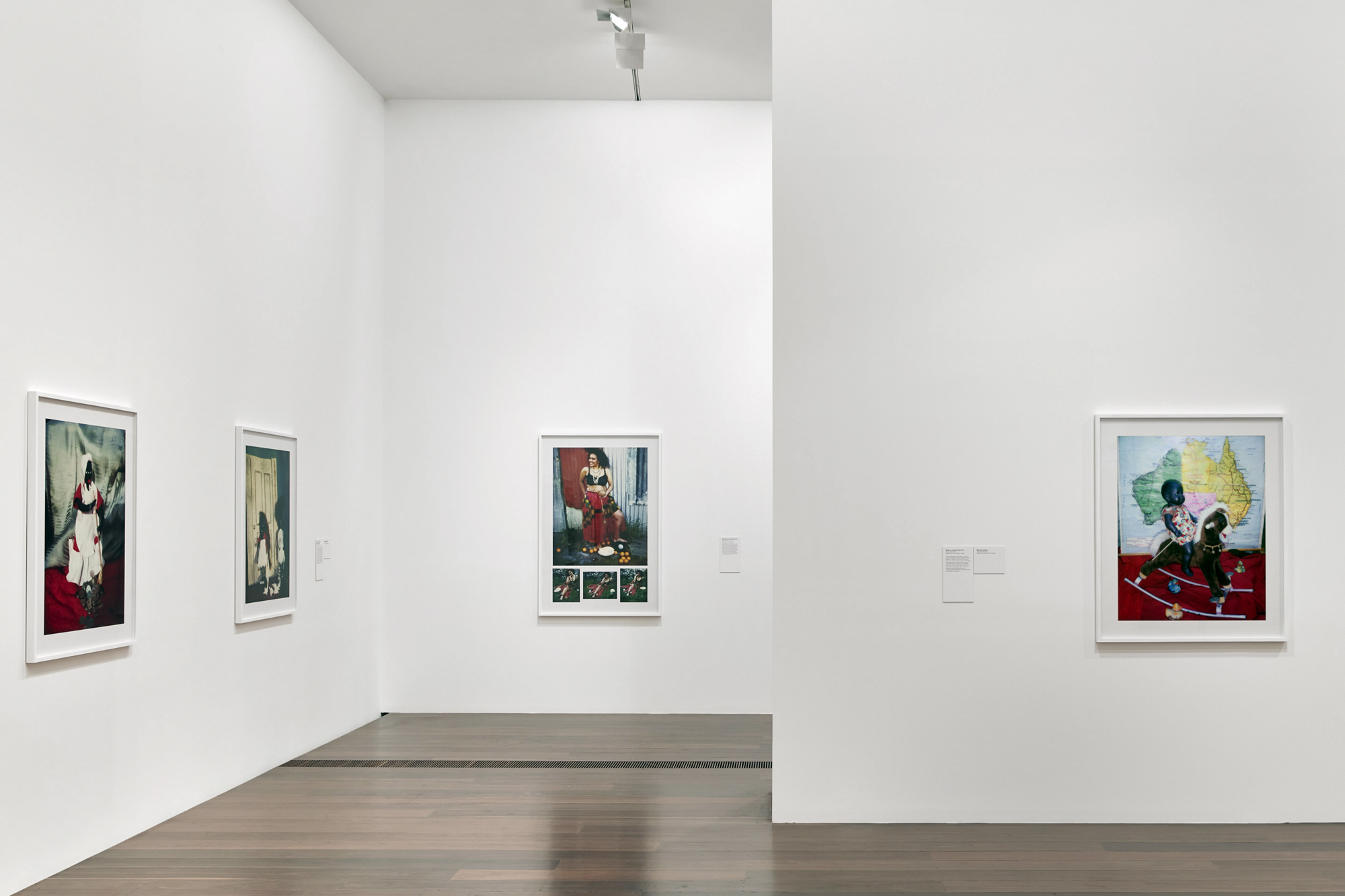
Destiny Deacon (Kuku/Erub/Mer b. Australia 1957-2024) Border patrol (installation view) 2006, printed 2020 Lightjet print from Polaroid original Photo: Marcus Bunyan
“And they figured a dispossessed people as racial types, suggesting that authentic Aboriginal identity was purely tribal and something to be trivialised as curios and knick-knacks…
But the figurines of a racialised people, of warriors, beautiful girls and adorable children, took this interest into a different realm of curiosity, namely objectification.
Elder women, who were often savagely vilified in popular newspapers as “unsightly frights”, never appear among these figurines. Lithe young women, deep-chested warrior tribesmen, dignified elder “noble savages” and sweetly smiling “piccaninnies” were particularly prized. In the early prints of artists Peg Maltby and Brownie Downing, endearing Aboriginal children are orphaned by the bush rather than being at home in the country of their birthright. They find playmates with baby native animals but are divested of family and community. They seem to be crying out for the care that only the state, it was thought, could properly provide. …
The figures found in Aboriginalia evoke a troubling presence, in which visual appeal, sometimes libidinal, stands in for the profound ambivalence at the heart of settler-colonialism, which has benefited from the violent dispossession of a people.
While townships were campaigning to exclude Aboriginal kids from schools, families from housing and adults from pubs, these nostalgic, perplexing images were being taken into white homes in the form of bric-a-brac.
Sociologist Adrian Franklin has described the “semiotic drenching” of souvenirs with Aboriginal motifs and argues “these objects became ‘repositories of recognition’ of what was often entirely absent, denied or undermined in the everyday political and policy spheres”.
These objects, he suggests, gave some expression to the sadness surrounding dispossession and removal. In more recent years, Indigenous artists such as Destiny Deacon and Tony Albert have repurposed Aboriginalia.
Thus it is finally being historicised, interpreted and recast through Aboriginal eyes.
Deacon uses dolls and kitsch ephemera from her own extensive collection to turn the tables on the uncritical consumption of racist imagery. In one of her best backhanders, she puts plastic, black babies in cupcake shells and titles the photograph Adoption.”
Extract from Dr Liz Conor. “Friday essay: the politics of Aboriginal kitsch,” on The Conversation website March 3, 2017 [Online] Cited 29/01/2021 CC
Installation views of DESTINY at The Ian Potter Centre: NGV Australia, Melbourne, 2020 showing at right Border patrol 2006 Photos: Tom Ross
Installation view of DESTINY at The Ian Potter Centre: NGV Australia, Melbourne, 2020 showing at second left, Heart broken 2006 Photo: Marcus Bunyan
This image takes its name from a cheeky nursery rhyme Deacon recalls learning when living in Port Melbourne as a child. The playful limerick teases audiences with the threat of a rude word: ‘Ask your mum for sixpence, to see the big giraffe, pimples on his whiskers, and pimples on his – ask your mum for sixpence’. The work was originally displayed in juxtaposition with a photograph of a half-built Crown Casino in Melbourne, challenging audiences to consider the dynamic between the main character, a Blak woman working in service sweeping up coins, and the multinational gambling corporation.
Installation views of Destiny Deacon and Michael Riley’s I don’t wanna be a bludger 1999 on display in DESTINY at The Ian Potter Centre: NGV Australia, Melbourne, 2020 Photos: Tom Ross
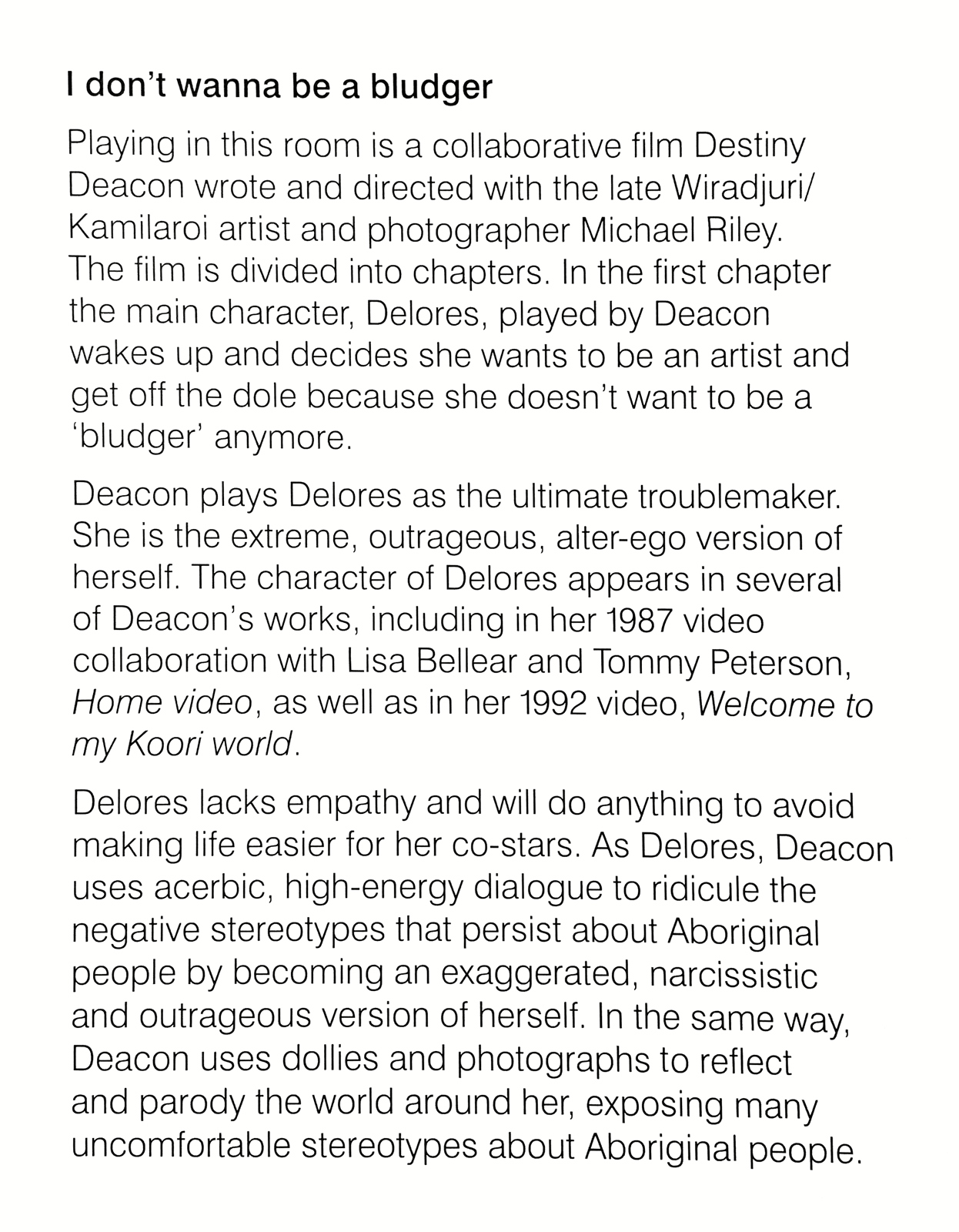
Wall text from the exhibition
Installation view of DESTINY at The Ian Potter Centre: NGV Australia, Melbourne, 2020 with at left, Whitey’s watching 1994; and at right, Moomba princess and Moomba princeling (both 2004) Photo: Tom Ross
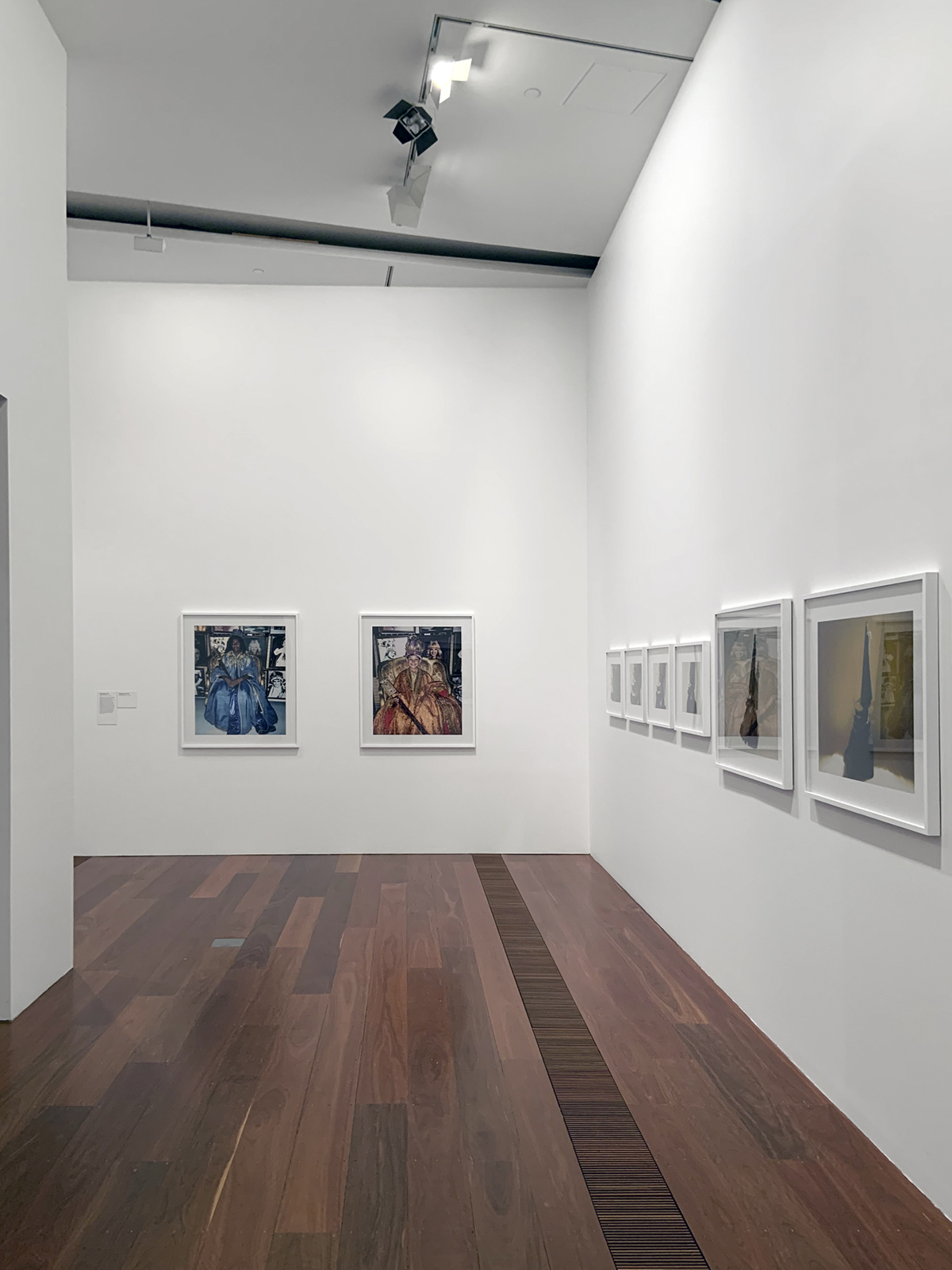
Installation view of DESTINY at The Ian Potter Centre: NGV Australia, Melbourne, 2020 showing at centre, Moomba princess and Moomba princeling (both 2004), and at right Thought cone (A-F) 1997 Photo: Marcus Bunyan
Destiny Deacon (Kuku/Erub/Mer b. Australia 1957-2024) Moomba princess (installation view) 2004, printed 2020 Lightjet print from Polaroid original Photo: Marcus Bunyan
Moomba princess and Moomba princeling show Deacon’s young niece and nephew dressed in the robes and regalia of Moomba sovereigns. Moomba is an annual parade and community festival held in Melbourne, which each year crowns a ‘Moomba monarch’. The portraits reference Elizabethan Armada portraiture, a style of painting which first depicted the Tudor queen seated in royal garb and surrounded by symbols against a backdrop depicting the defeat of the Spanish Armada in 1588. At first glance, the Moomba portraits can be read as innocent children playing dress ups, but by presenting two Aboriginal models in this type of colonial ceremonial dress, Deacon challenges audiences to consider the legacy and impact of British invasion.
Destiny Deacon (Kuku/Erub/Mer b. Australia 1957-2024) Moomba princeling (installation view) 2004, printed 2020 Lightjet print from Polaroid original Photo: Marcus Bunyan
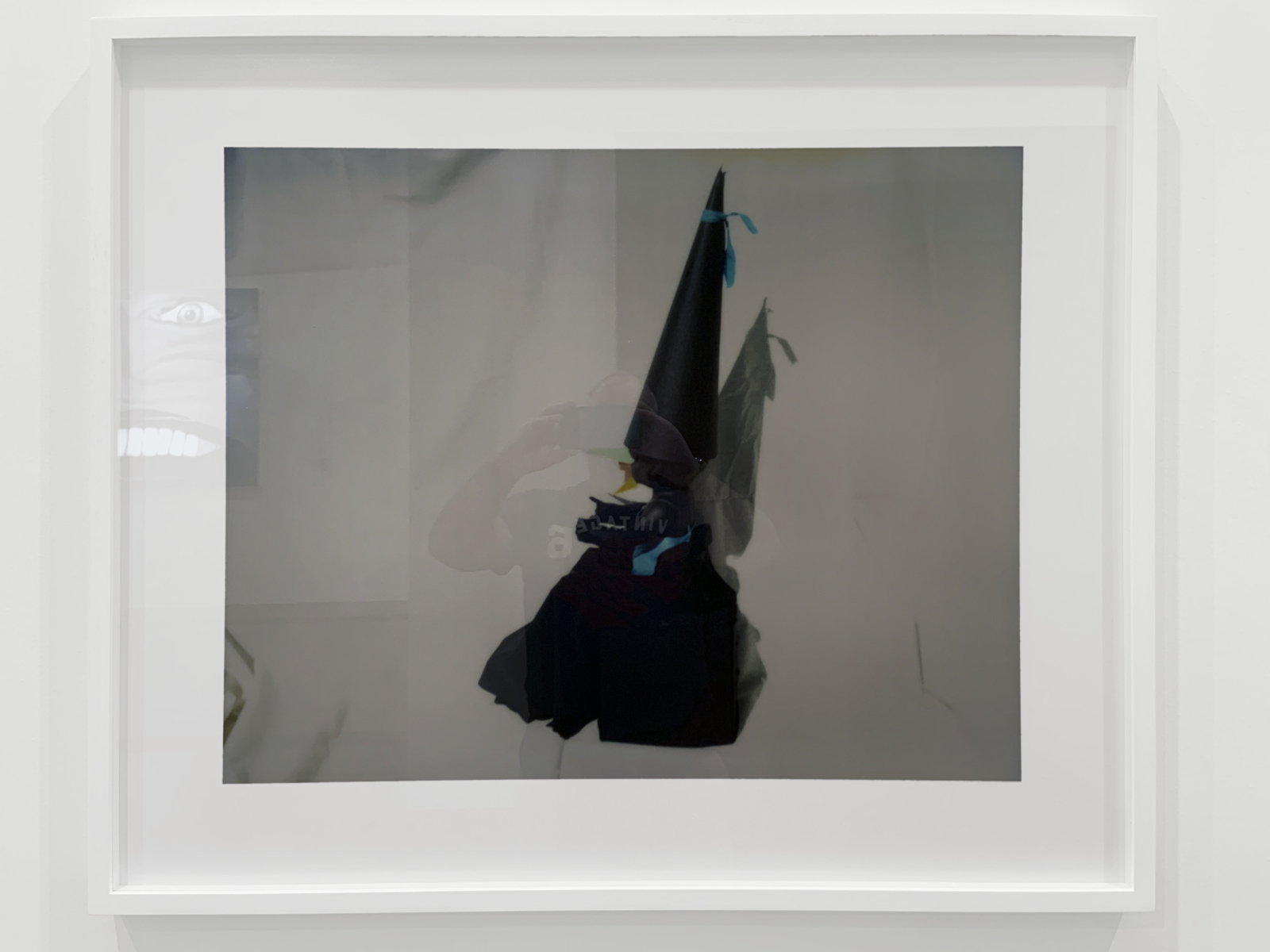
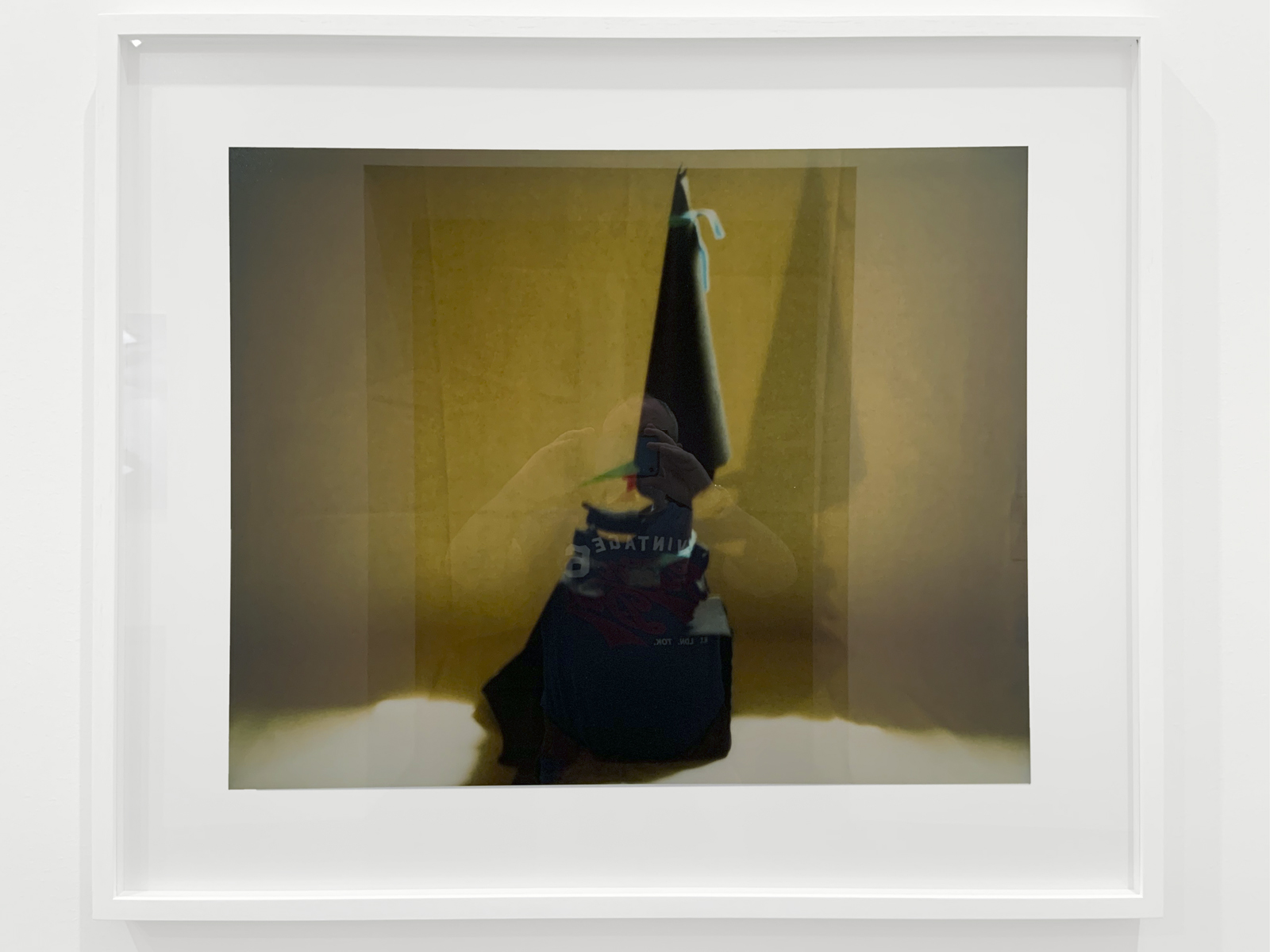
Destiny Deacon (Kuku/Erub/Mer b. Australia 1957-2024) Thought cone (A-F) (installation view details) 1997, printed 2020 Lightjet print from Polaroid original Photos: Marcus Bunyan
Installation view of Destiny Deacon’s Whitey’s watching 1994 on display in DESTINY at The Ian Potter Centre: NGV Australia, Melbourne, 2020 Photo: Tom Ross
Installation view of Destiny Deacon’s Whitey’s watching 1994 on display in DESTINY at The Ian Potter Centre: NGV Australia, Melbourne, 2020 Photo: Marcus Bunyan
For more than thirty years Destiny Deacon has forged a path as an international artist with a distinct brand of artistic humour unlike any other. Descended from the Kuku and Erub / Mer peoples of Far North Queensland and the Torres Strait, Deacon has been living and working in Melbourne since she arrived here as a small child.
Deacon’s work sits in the uncomfortable but compelling space between comedy and tragedy, and contrasts seemingly innocuous childhood imagery with scenes from the dark side of adulthood. She actively resists interpretation and so called ‘art speak’, instead choosing to let her work speak for itself. The more we look, the greater we understand that the world Deacon conjures is a complex one. Drawing from her vast collection of Aboriginalia, Deacon interrogates the way in which Aboriginal people have been, and continue to be, misrepresented within popular culture. Decapitated, amputated, pants down, tied up, trapped in a blizzard or flying through the air, the characters in Deacon’s world both reflect and parody the one in which we live.
Installation view of DESTINY at The Ian Potter Centre: NGV Australia, Melbourne, 2020 showing at right, Regal eagles (A-B) 1994 Photo: Tom Ross
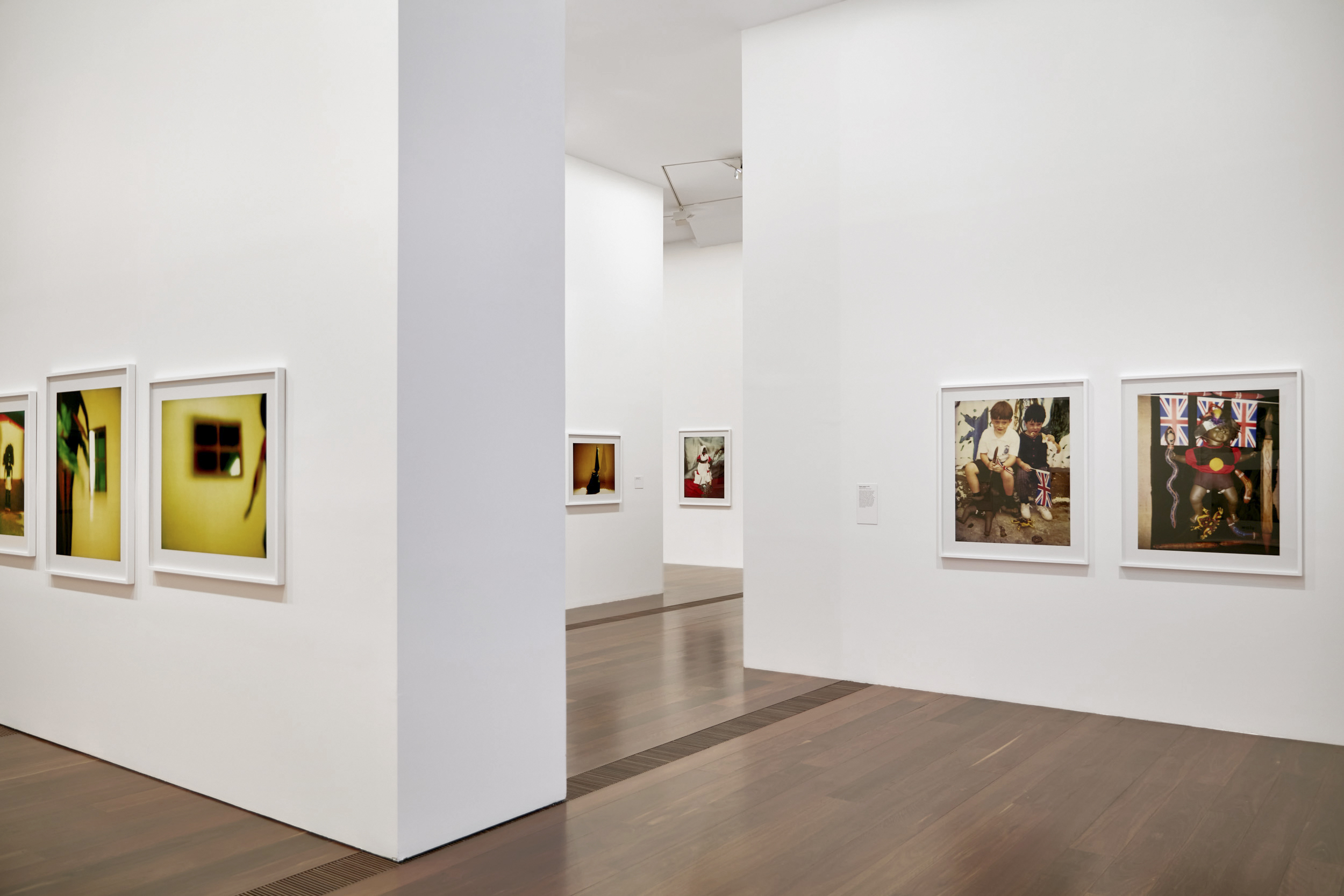
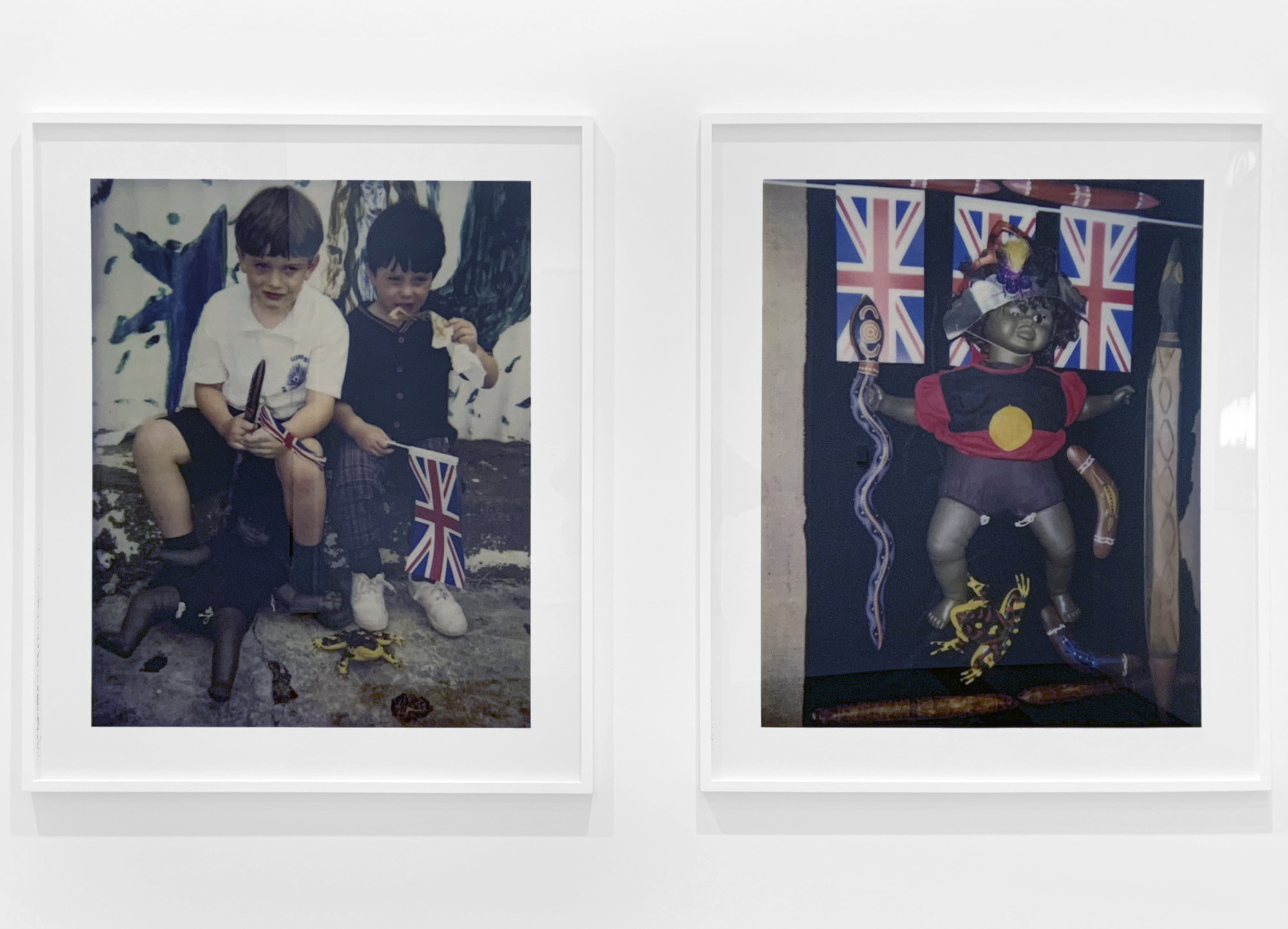
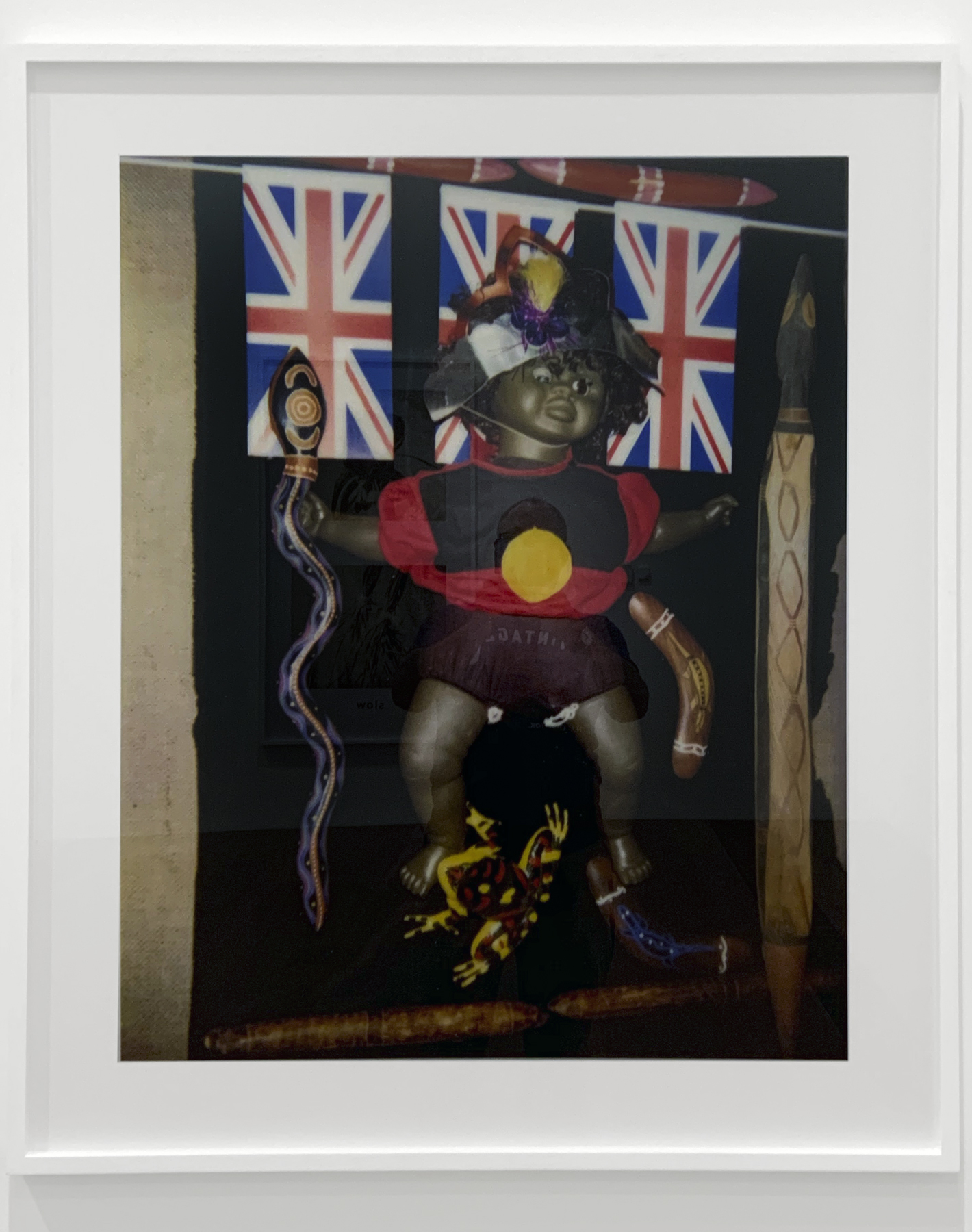
Destiny Deacon (Kuku/Erub/Mer b. Australia 1957-2024) Regal eagles (A-B) (installation views) 1994, printed 2020 Lightjet print from Polaroid original Photos: Marcus Bunyan
Academic, historian and Indigenous rights activist Marcia Langton once described Destiny Deacon’s work as a ‘barometer of postcolonial anxiety’. This diptych combines two congruent images: the photo on the left shows a pair of young, white boys holding plastic Union Jacks and eating in front of a disregarded, spread-eagled Black doll. The image on the right shows another Black dolly in a Koori flag T-shirt pinned onto a board surrounded by appropriated Aboriginalia. As always in Deacon’s work, the dolls possess a liveliness and personality, making the violence enacted on to them all the more confronting.
Installation views of DESTINY at The Ian Potter Centre: NGV Australia, Melbourne, 2020 Photos: Tom Ross
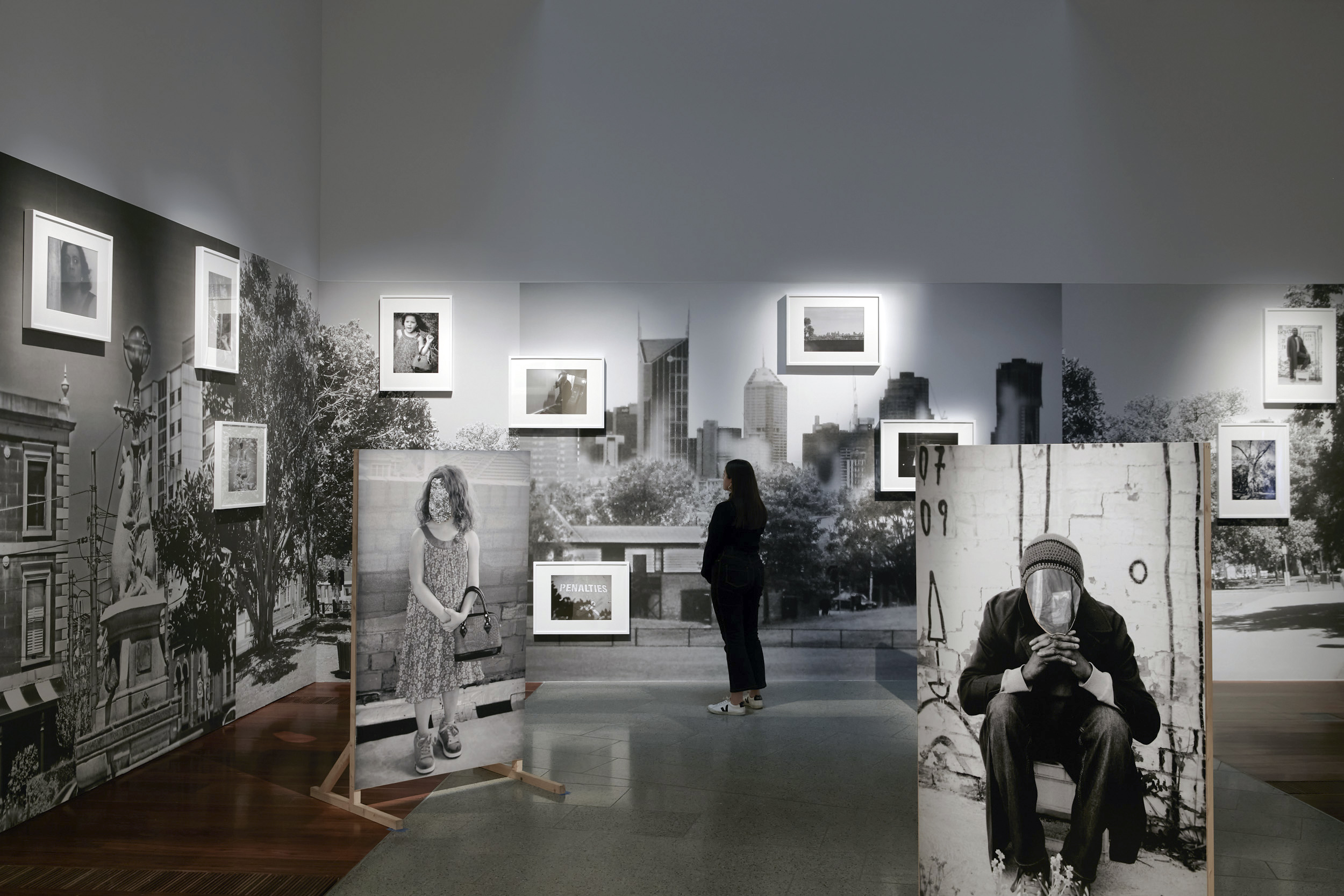
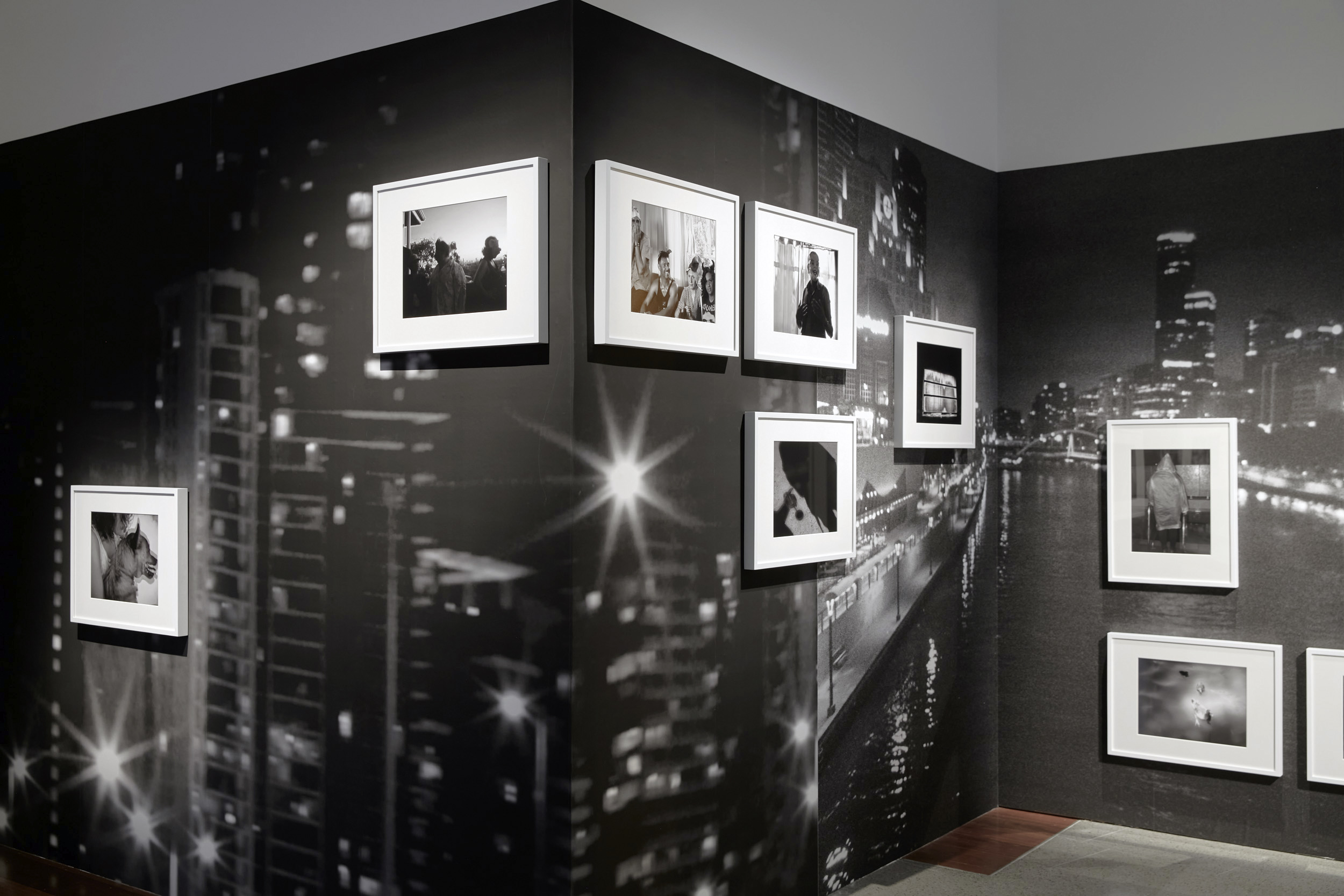
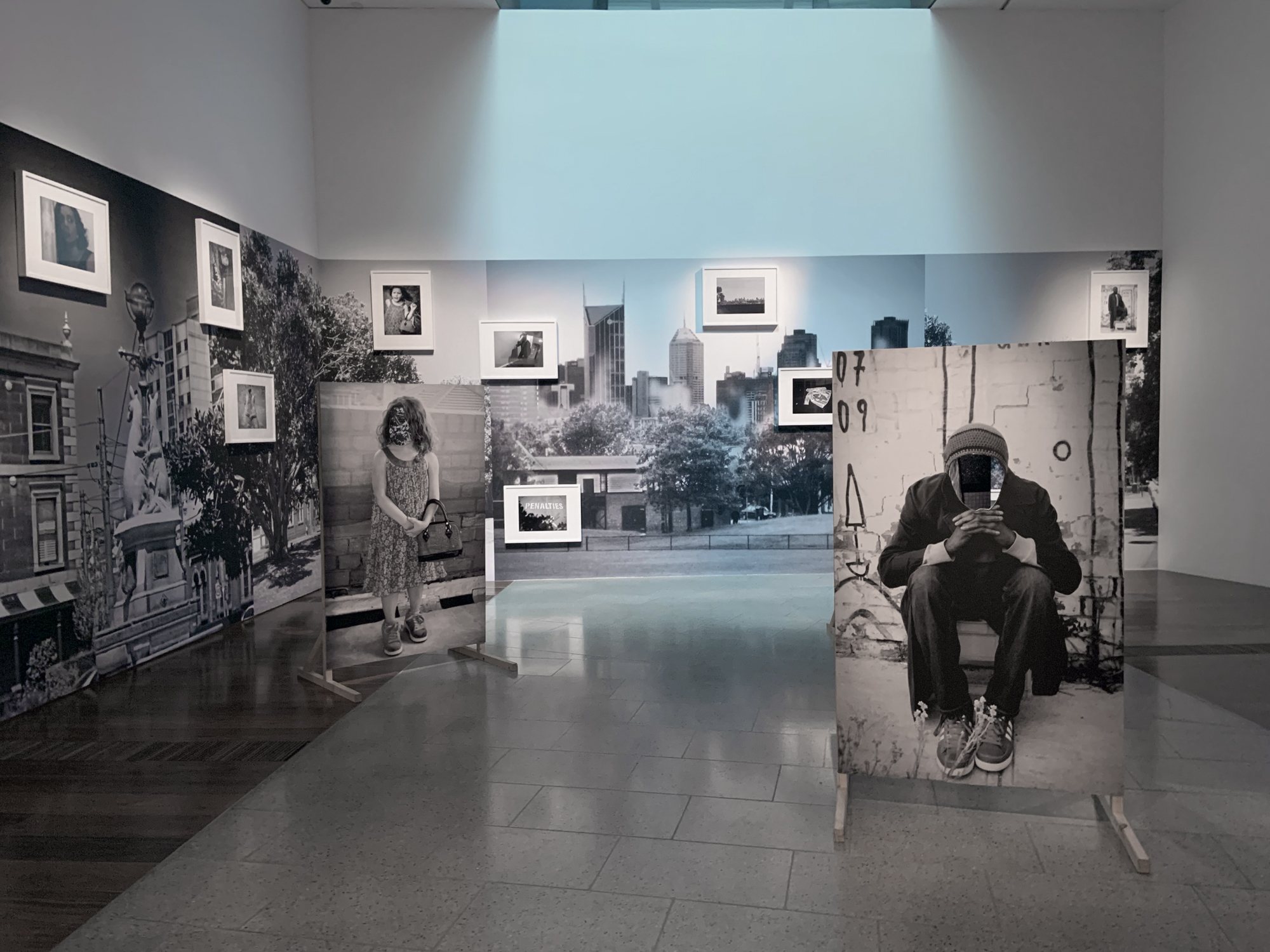
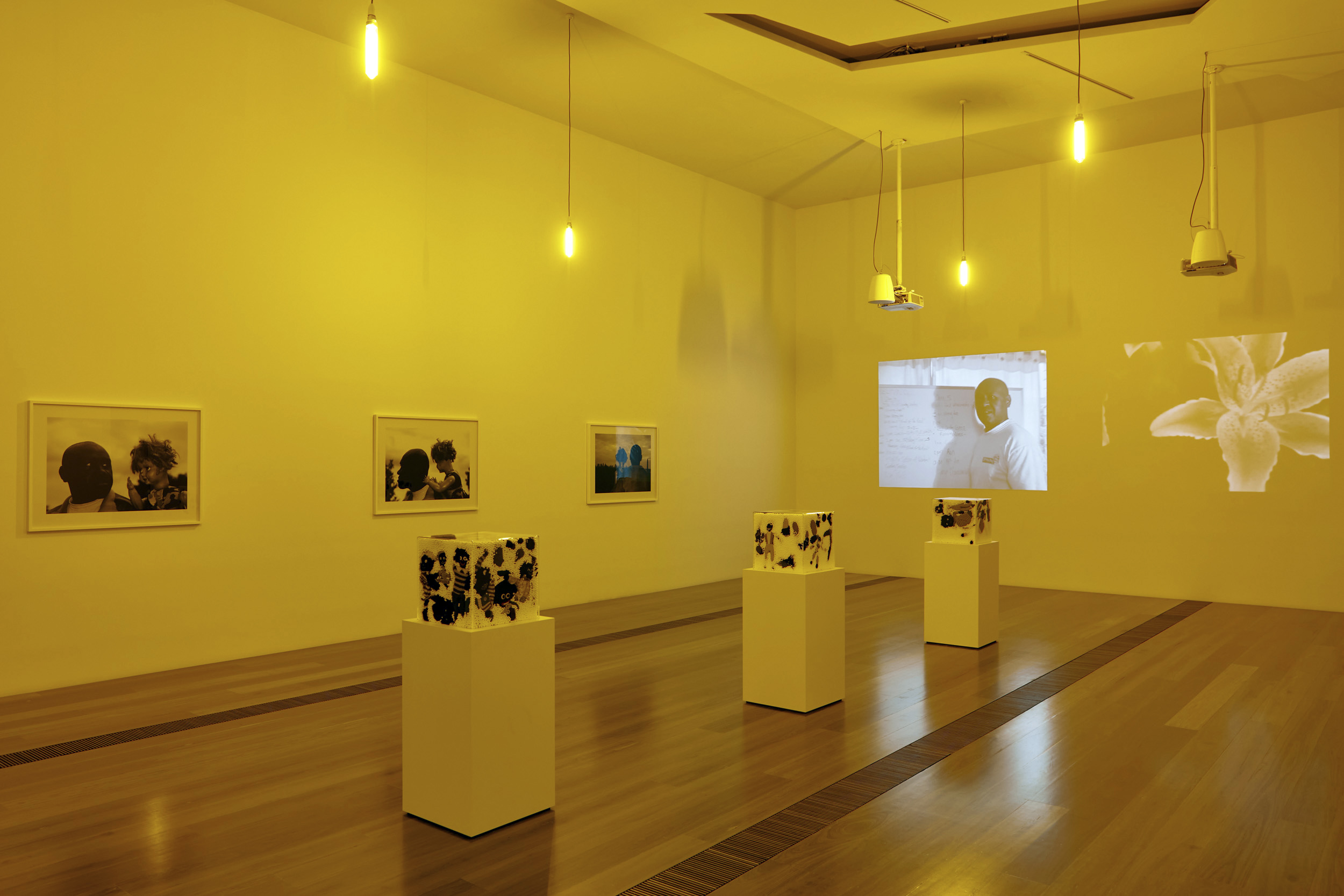
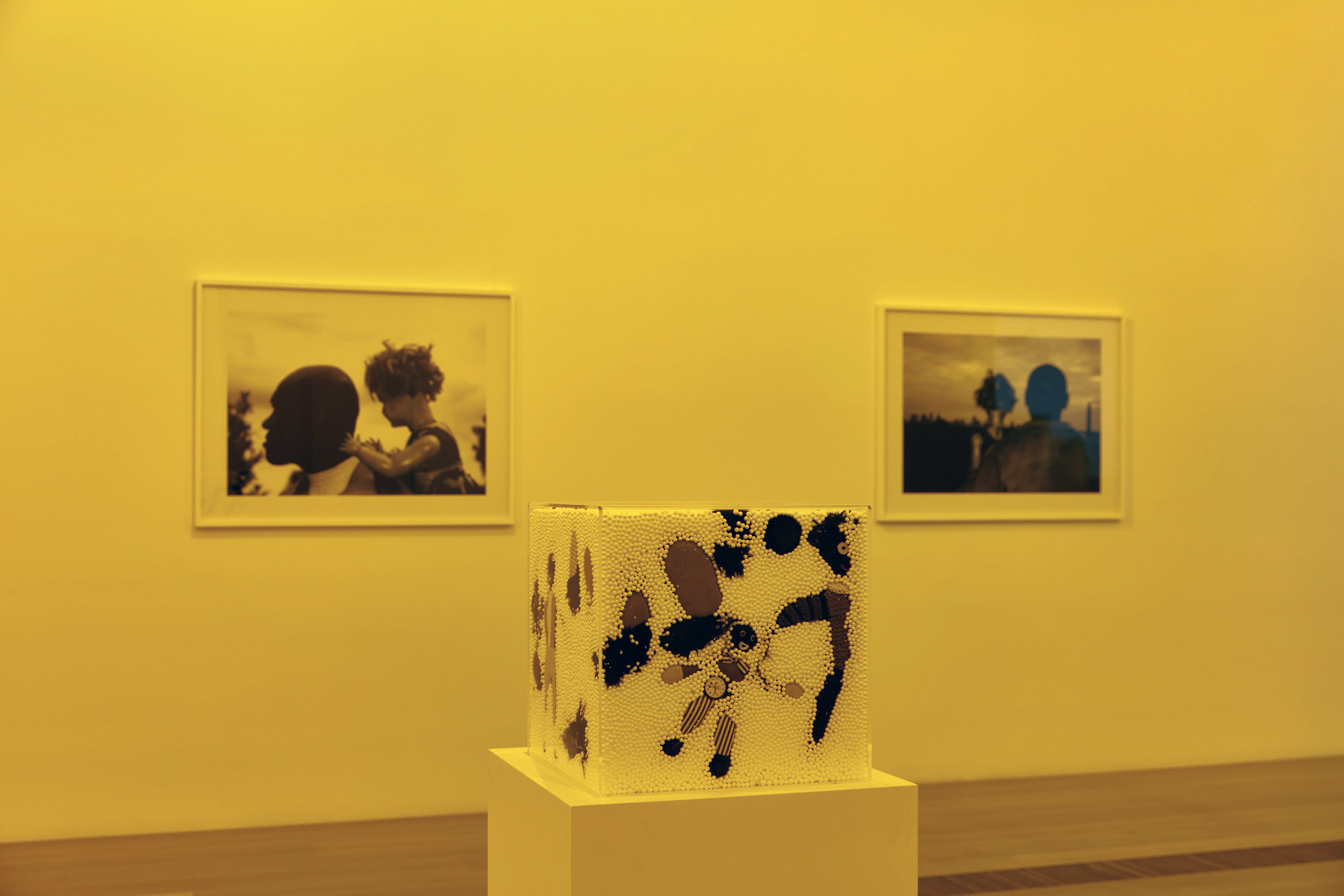
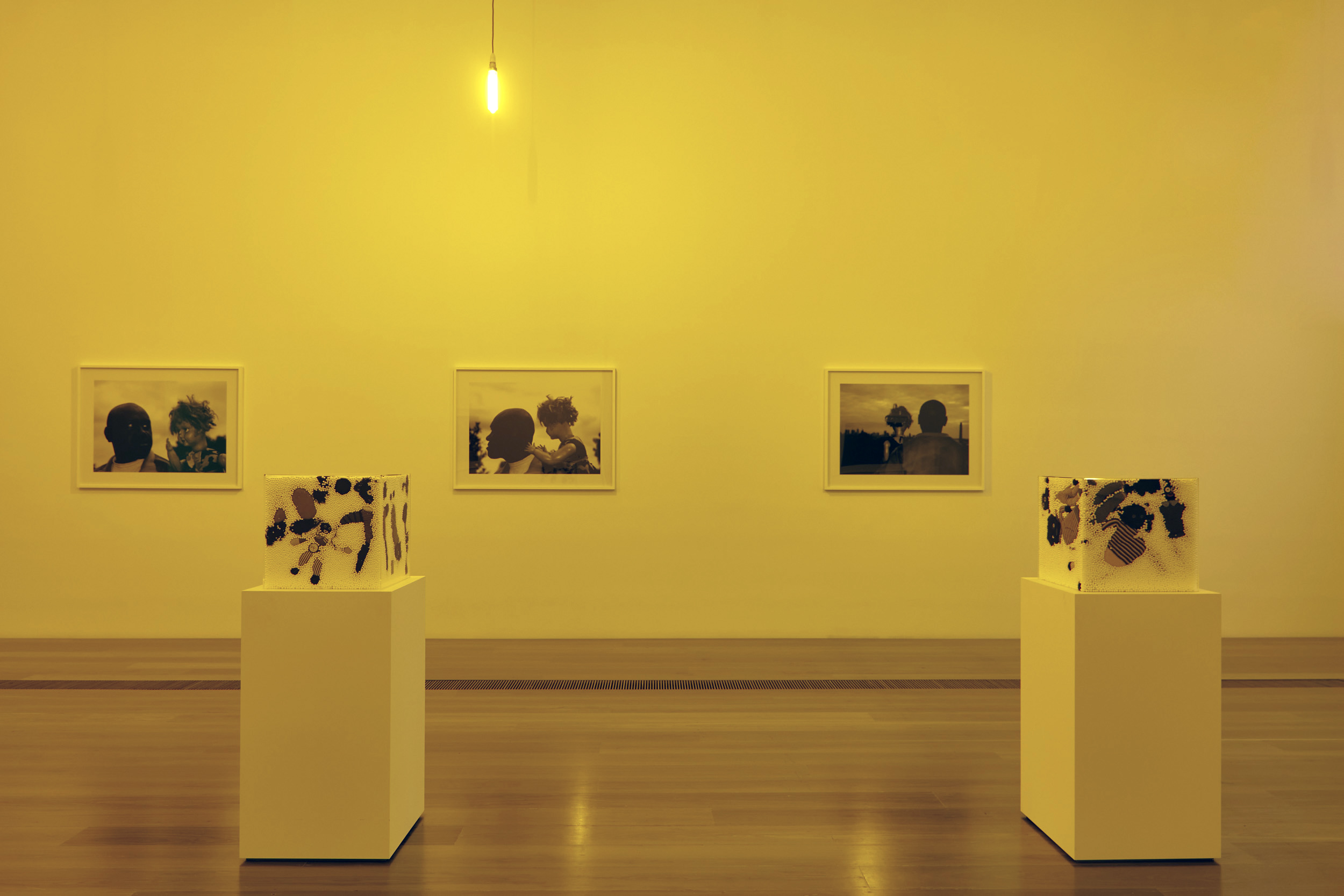
Installation views of DESTINY at The Ian Potter Centre: NGV Australia, Melbourne, 2020 showing Destiny Deacon and Virginia Fraser’s Melbourne Noir 2013 Photos: Tom Ross
Adapting the quotidian formats of snapshot photography, home videos, community TV and performance modes drawn from vaudeville and minstrel shows, Deacon’s artistic practice is marked by a wicked yet melancholy comedic and satirical disposition. In decidedly lo-fi vignettes, friends, family and members of Melbourne’s Indigenous community appear in mischievous narratives that amplify and deconstruct stereotypes of Indigenous identity and national history. For Melbourne Now, Deacon and Fraser present a trailer for a film noir that does not exist, a suite of photographs and a carnivalesque diorama. The pair’s playful political critiques underscore a prevailing sense of postcolonial unease, while connecting their work to wider global discourses concerned with racial struggle and cultural identity.
Installation views of DESTINY at The Ian Potter Centre: NGV Australia, Melbourne, 2020 showing Destiny Deacon and Virginia Fraser’s Melbourne Noir 2013 Photos: Marcus Bunyan
Digital prints, Digital prints on plywood, wood, gelatin silver photographs, high-definition video, sound National Gallery of Victoria, Melbourne
Wall text from the exhibition
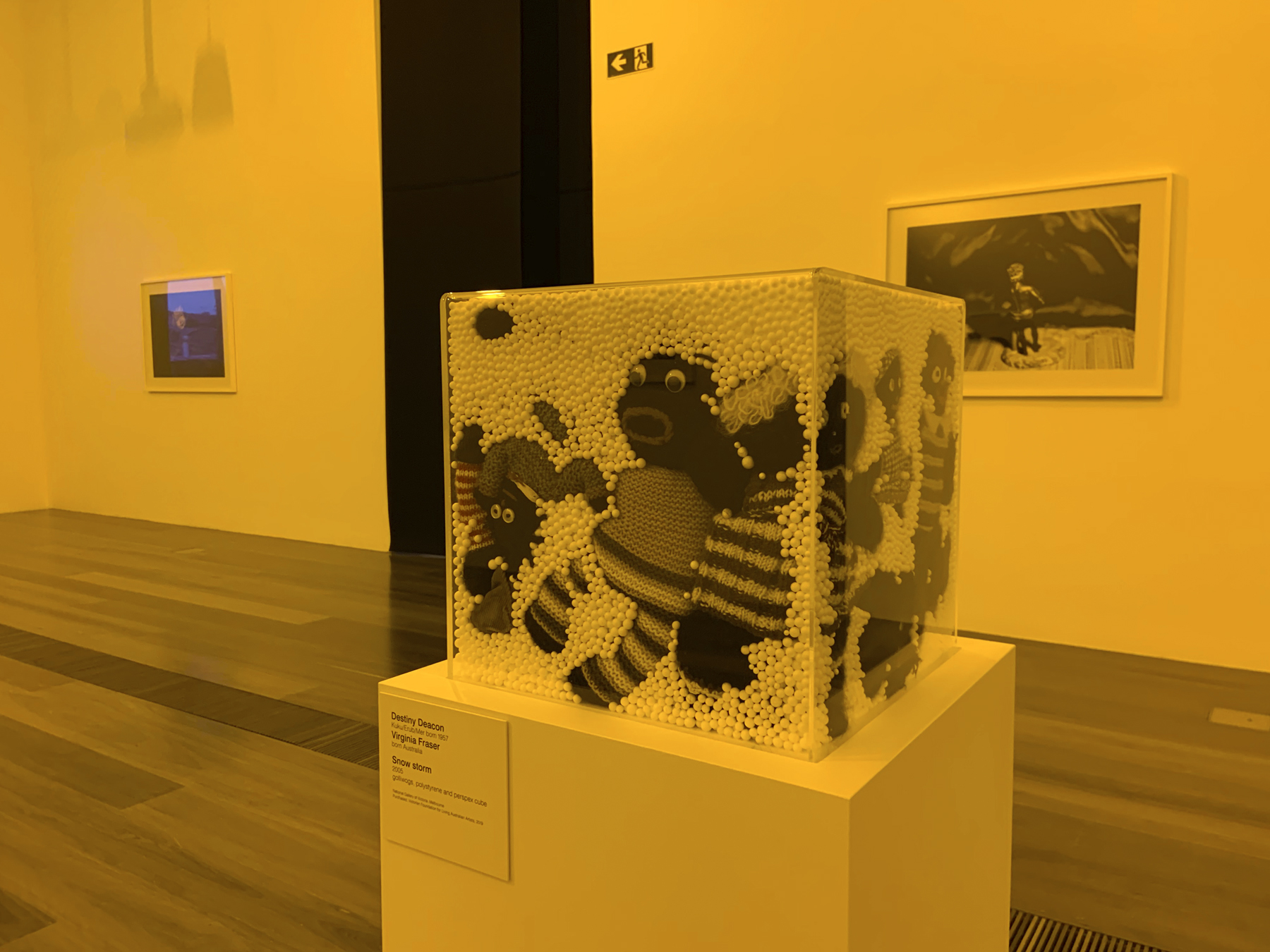
Installation views of DESTINY at The Ian Potter Centre: NGV Australia, Melbourne, 2020 showing in the foreground Snow storm 2005 Photos: Tom Ross
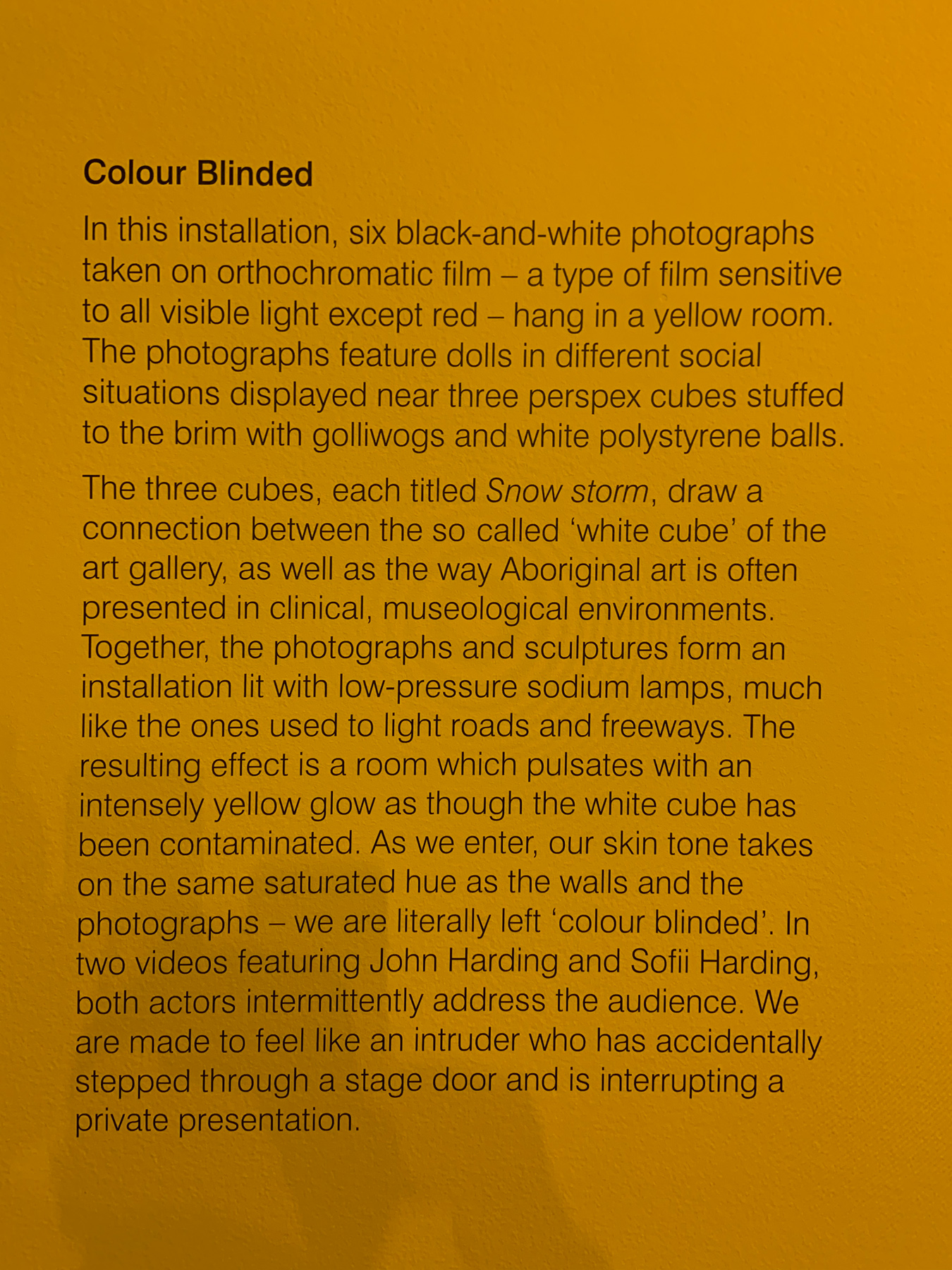
Colour Blinded
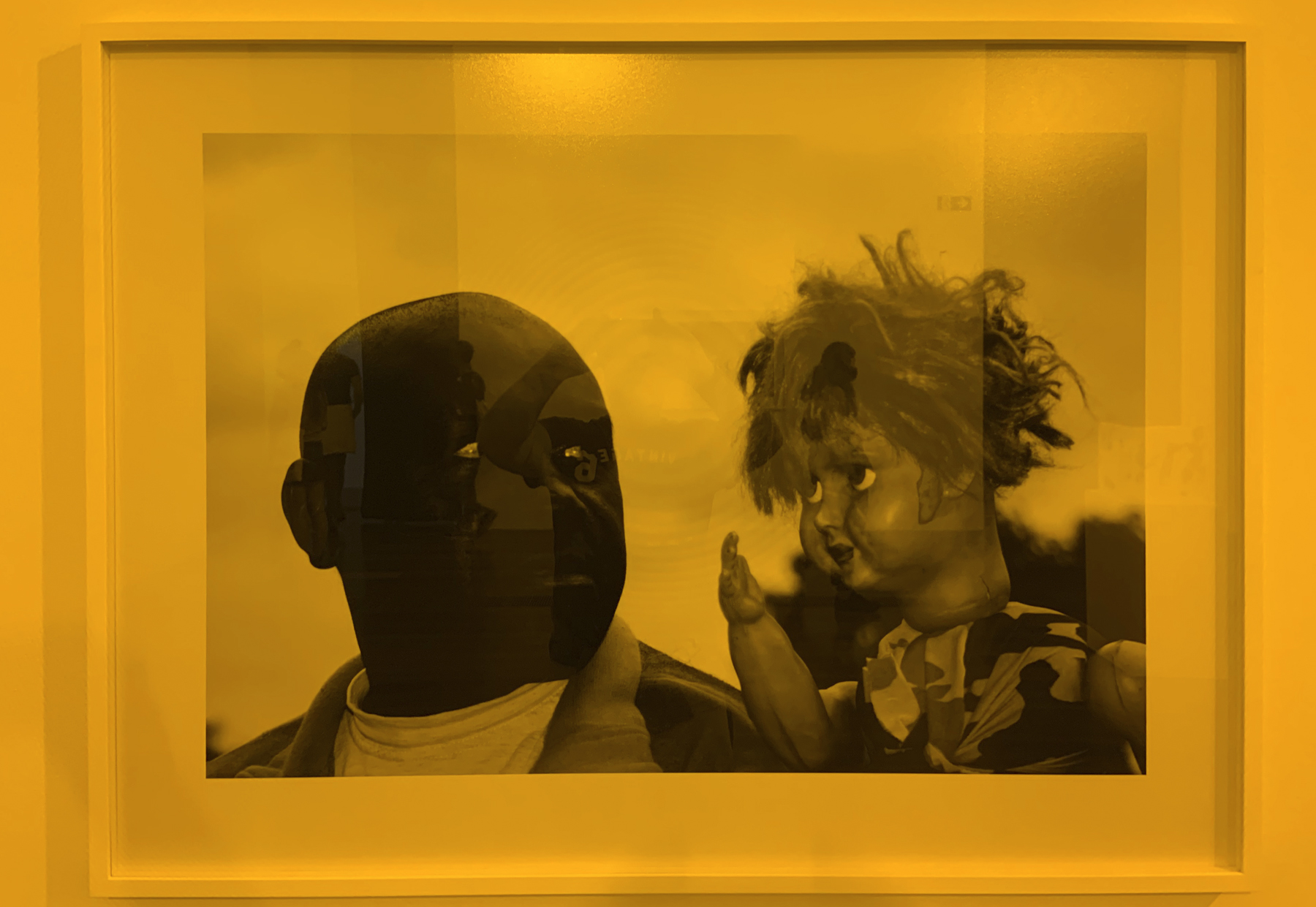
Man & doll (a) Man & doll (b) Man & doll (c) Baby boomer Back up Pacified 2005, printed 2020 Lightfoot print from orthochromatic film negative
Wall text from the exhibition
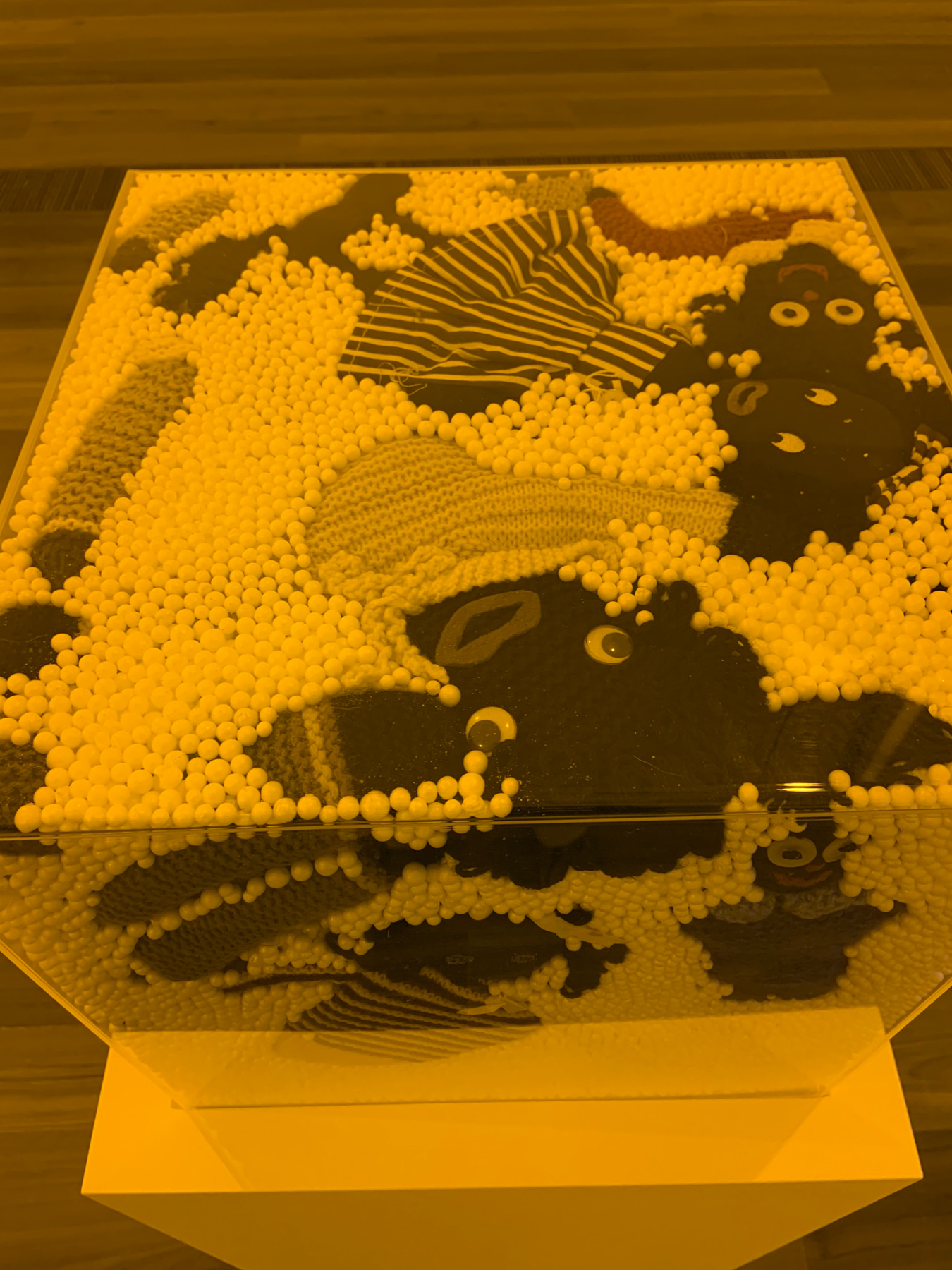
Destiny Deacon (Kuku/Erub/Mer b. Australia 1957-2024) Virginia Fraser (Australian) Snow storm (installation views) 2005 Golliwogs, polystyrene and perspex cube National Gallery of Victoria, Melbourne Photos: Marcus Bunyan
Destiny Deacon (Kuku/Erub/Mer b. Australia 1957-2024) Man & doll (installation view details) 2005, printed 2020 Lightfoot print from orthochromatic film negative Photos: Marcus Bunyan
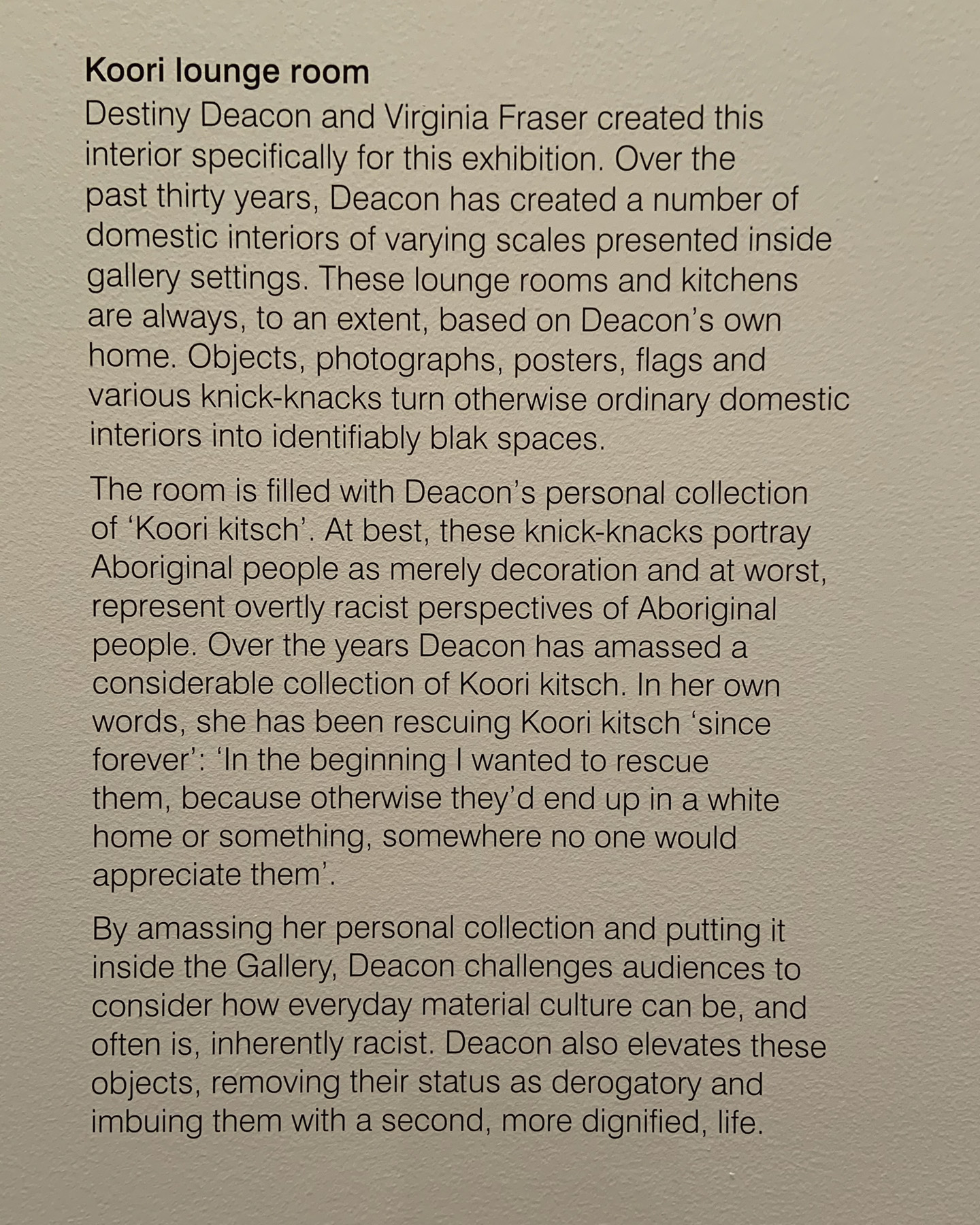
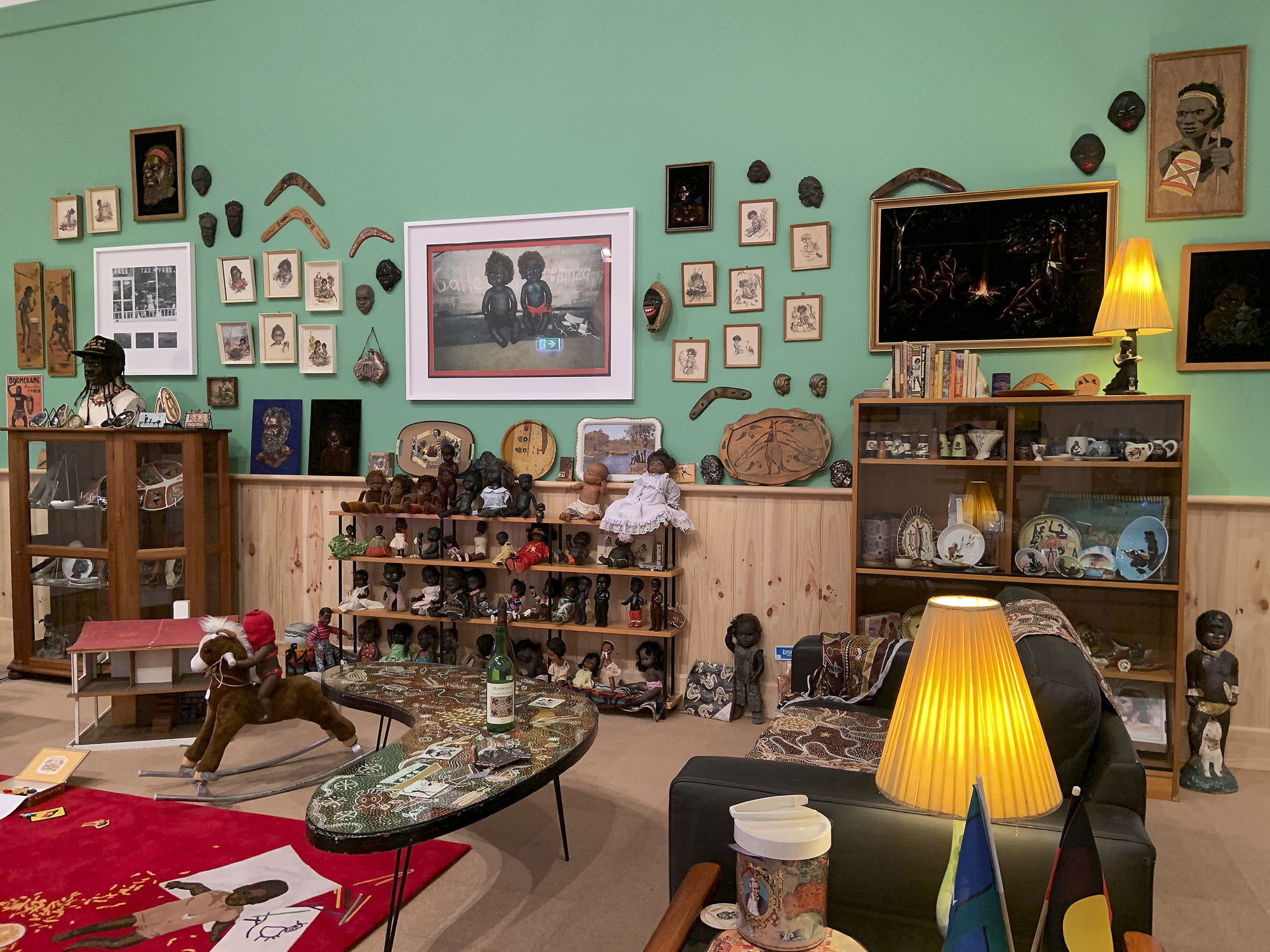
Installation views of DESTINY at The Ian Potter Centre: NGV Australia, Melbourne, 2020 showing Destiny Deacon and Virginia Fraser’s Koori lounge room 2021 Photos: Tom Ross
Wall text from the exhibition
Installation views of DESTINY at The Ian Potter Centre: NGV Australia, Melbourne, 2020 showing Destiny Deacon and Virginia Fraser’s Koori lounge room 2021 Photos: Marcus Bunyan
Destiny Deacon (Kuku/Erub/Mer b. Australia 1957-2024) Ebony and Ivy face race (installation view) 2016, printed 2020 Lightjet print Photo: Marcus Bunyan
Destiny Deacon (Kuku/Erub/Mer b. Australia 1957-2024) Sand minding / Sand grabs (installation views) 2017, printed 2020 Inkjet print from digital image on archival paper Photos: Marcus Bunyan
More than half of all mining projects in Australia are in close proximity to Indigenous communities. This relationship has long been, and continues to be, the source of much debate. In this work Deacon condemns the violence committed by the sand mining industry on the ecosystem, the land and its people. A latex-gloved hand makes an incision in a bag of soil, destructively releasing the sand inside. The white hand grasps the contents and takes a handful. Two disturbing characters look on with a seemingly perplexed expression, perhaps inviting us to consider the consequences of mining.
Installation views of DESTINY at The Ian Potter Centre: NGV Australia, Melbourne, 2020 showing at left, Arrears windows 2009; at centre, Sand minding / Sand grabs 2017; and in the background Koori lounge room 2021
Gossip walks Look out! Action men Arrears windows Come on in my kitchen
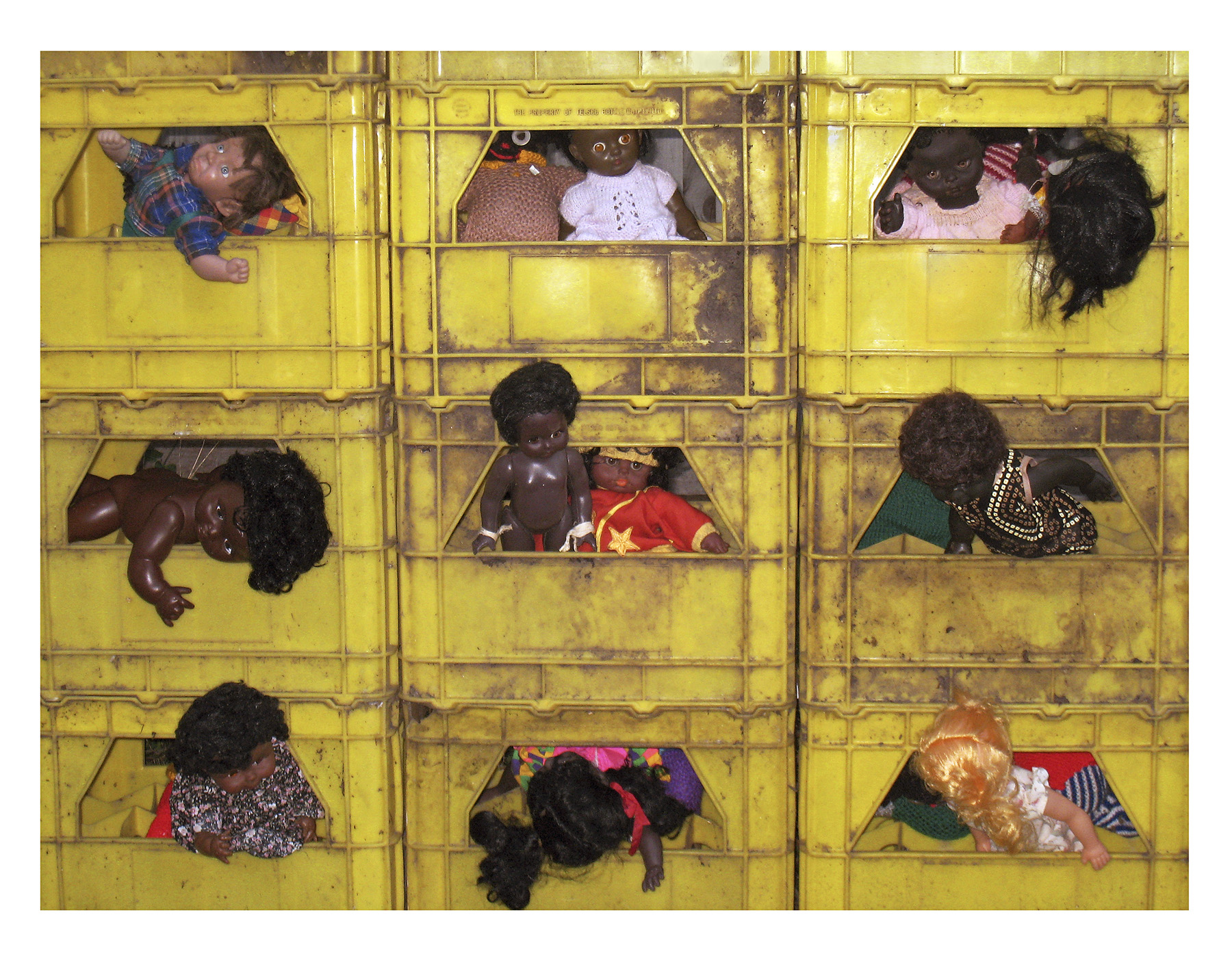
In 2009 Deacon produced the series Gazette. These now eerily familiar scenes appear like vignettes, offering windows into the lives of those living inside Melbourne’s public housing towers. Recent scenes from the news are echoed in Arrears windows, which shows Deacon’s collection of black and brown dolls crammed into yellow plastic tubs. The series draws attention to the individual lives and struggles of residents within these buildings, while also reminding viewers of the often-overcrowded conditions these residents live in. Each image brings to light Deacon’s idiosyncratic take on current global and national events with her semi-autobiographical edge.
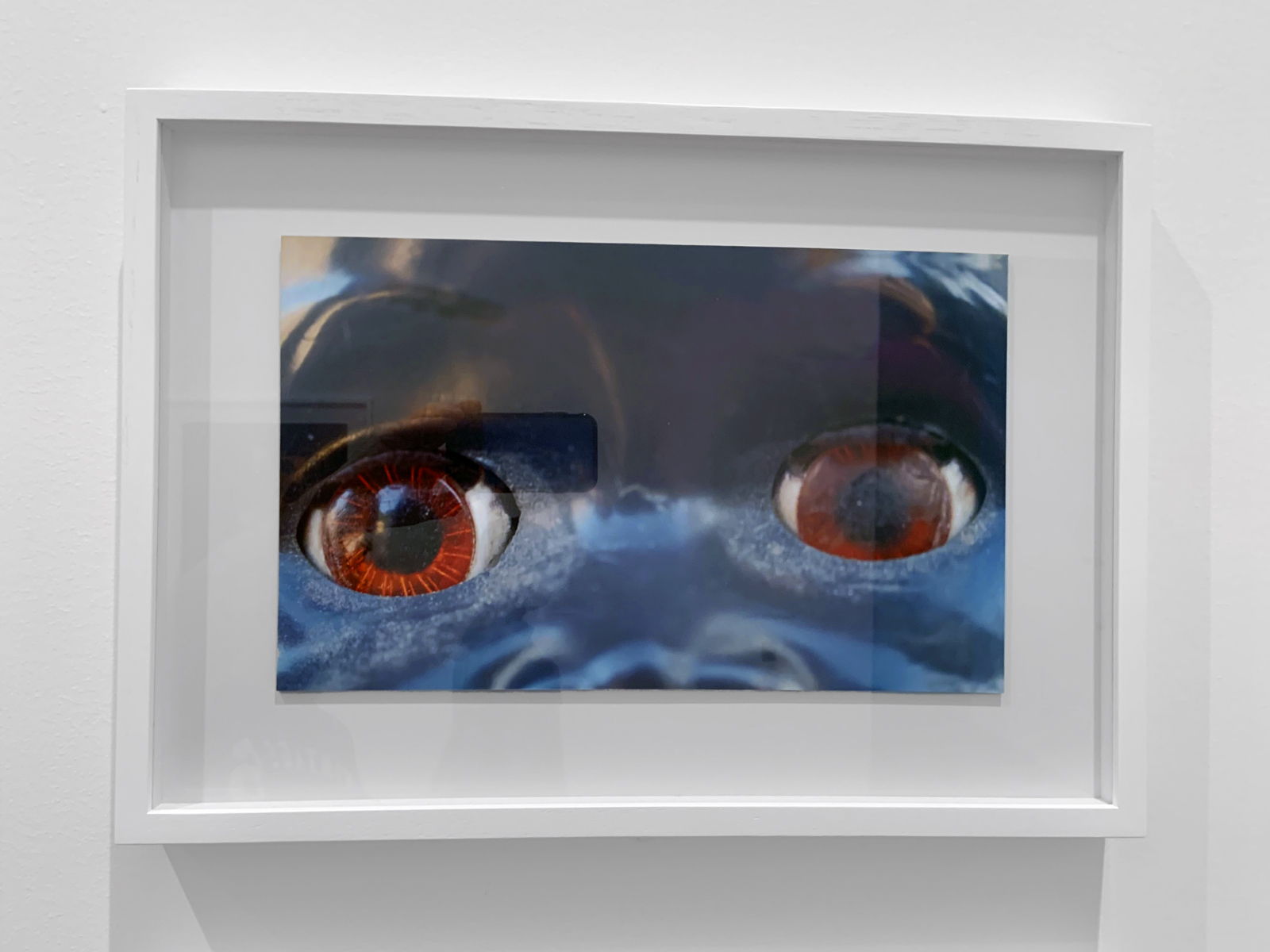
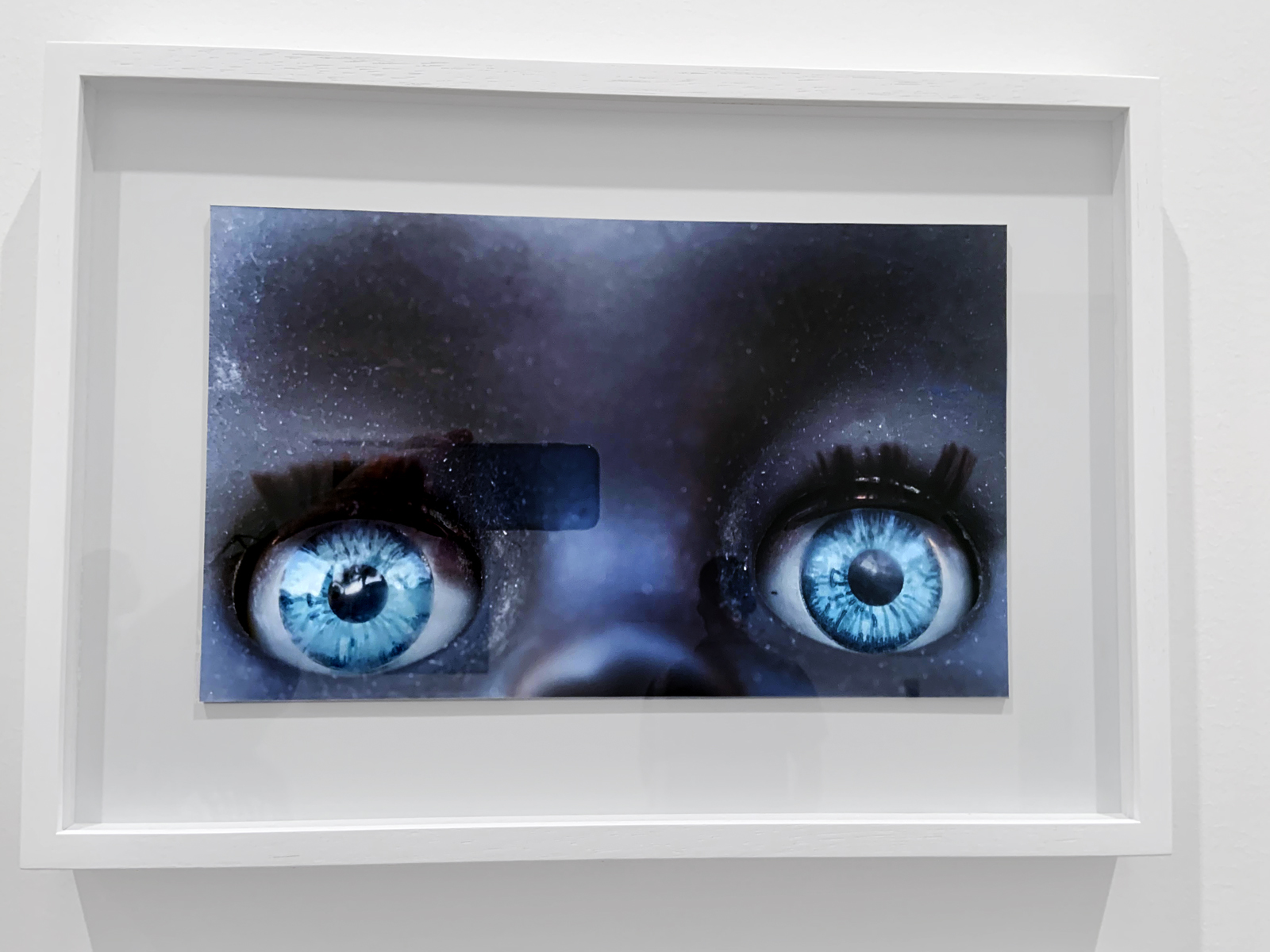
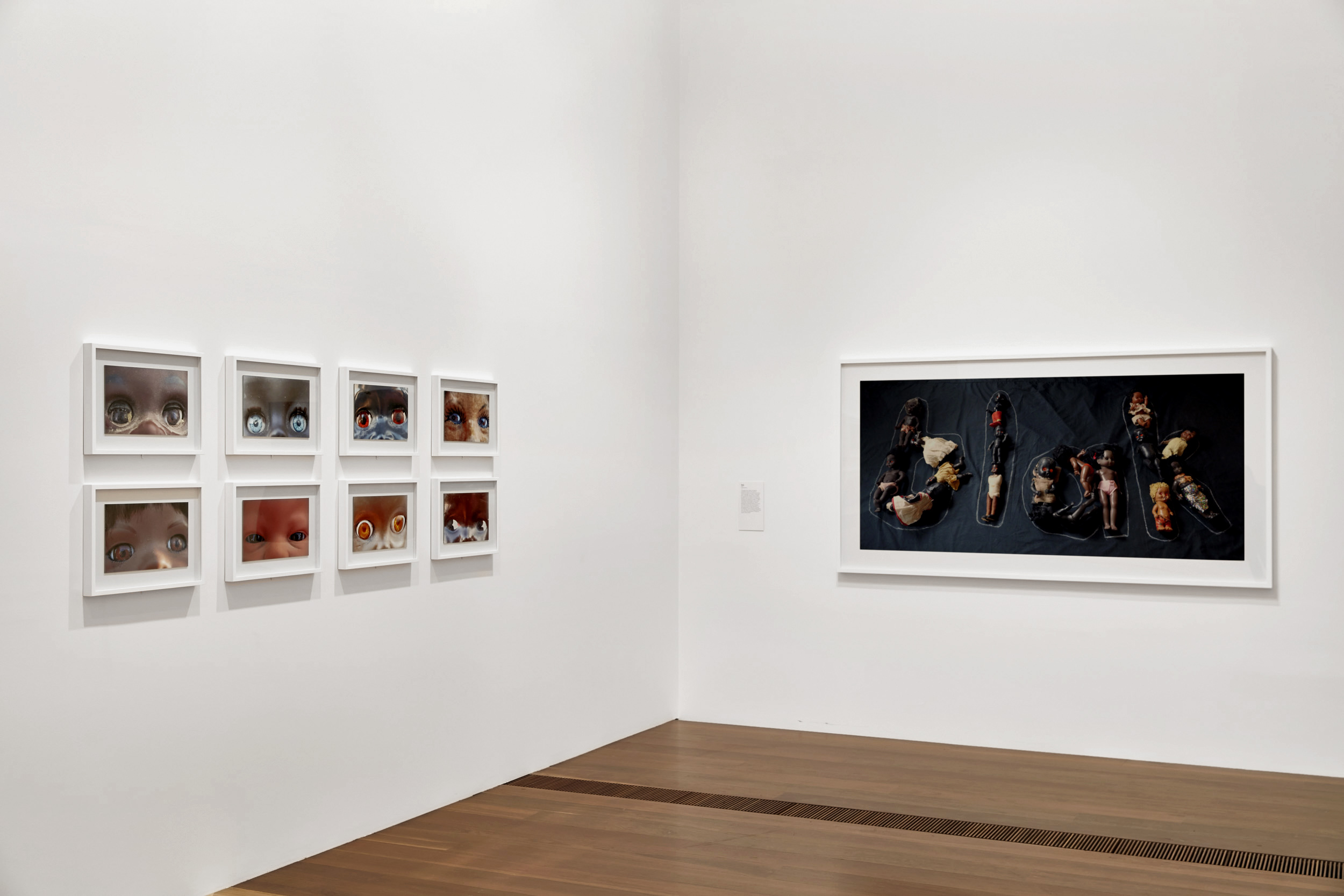
Destiny Deacon (Kuku/Erub/Mer b. Australia 1957-2024) Dolly eyes (A-H) 2020 Lightjet print Photos: Marcus Bunyan
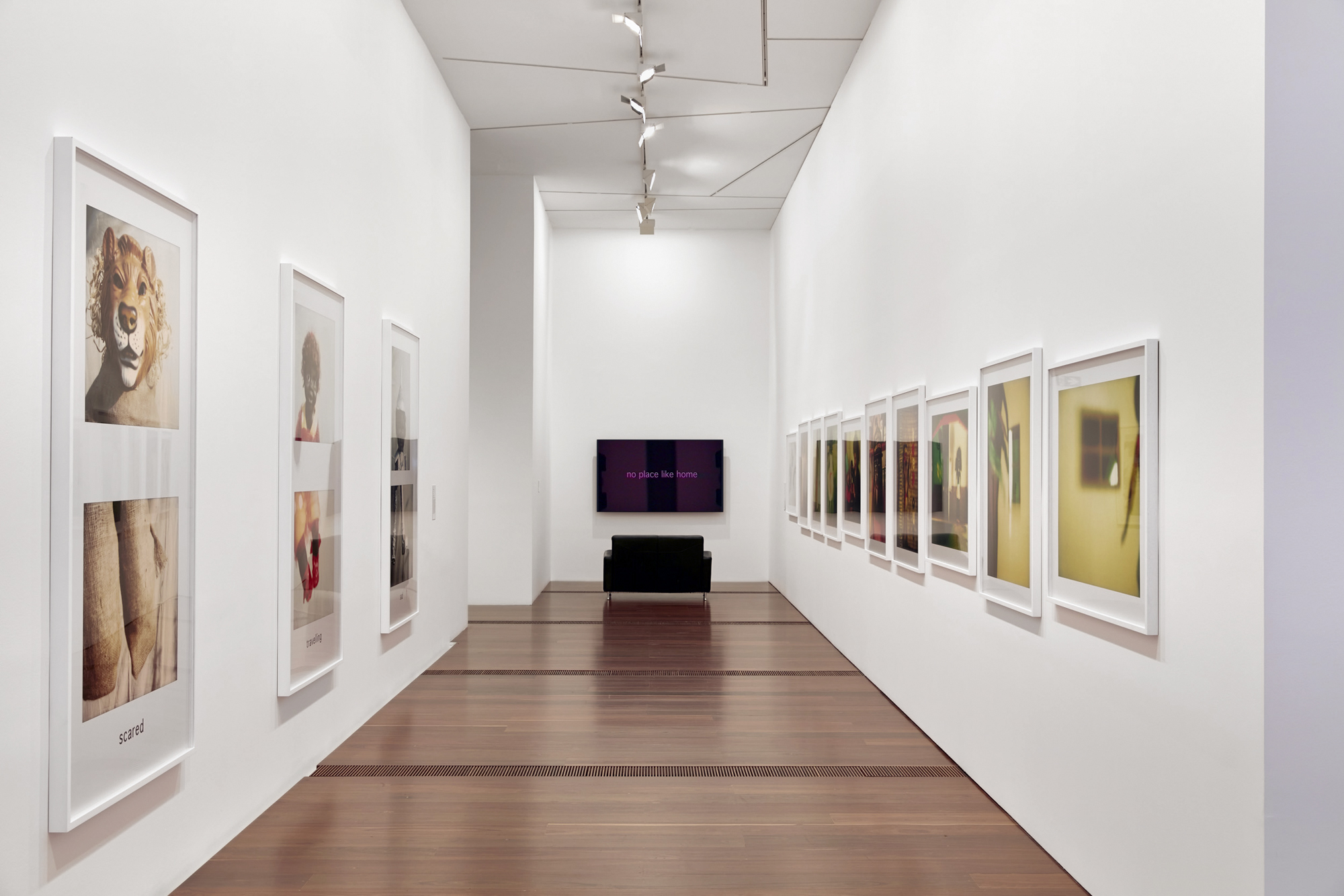
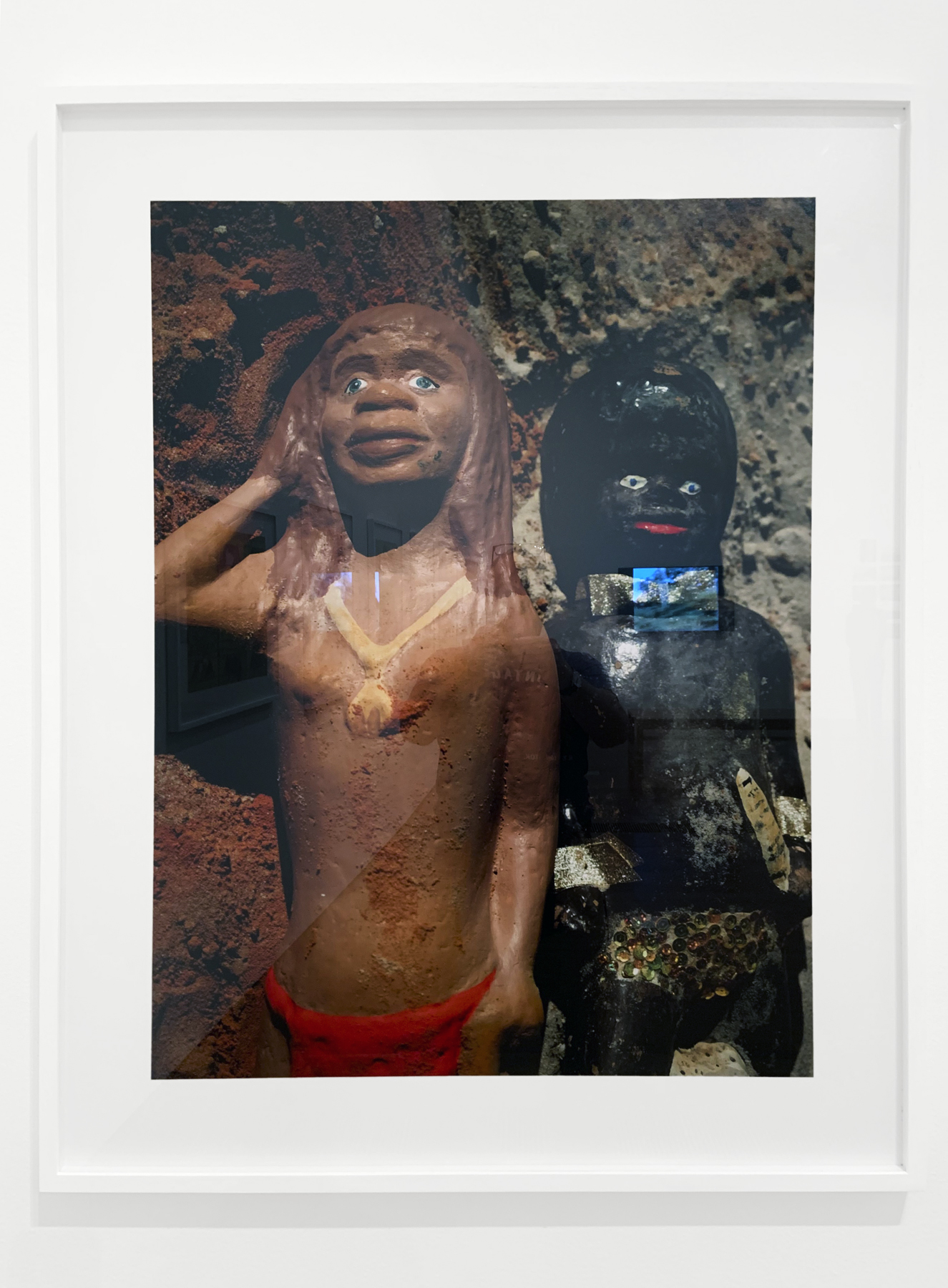
A doll with piercing blue eyes and dark brown skin is among the unblinking, manic faces that make up Destiny Deacon’s most recent series, Dolly Eyes, 2020. While people of colour can and do have an array of different-coloured eyes, blue eyes are often seen as a signifier of whiteness. Deacon’s tightly cropped images reduce these dollies to just eyes and skin tone, highlighting the problematic nature of using physical features to signify of racial identity.
Destiny Deacon (Kuku/Erub/Mer b. Australia 1957-2024) Dolly lips (A-E) 2017, printed 2020 Lightjet print Photo: Tom Ross
Dolly lips extracts surprising expressions from some of Deacon’s regular models. Some of these dolls have been posing for Deacon for decades, but these sensitive and suggestive images show them in a new light.
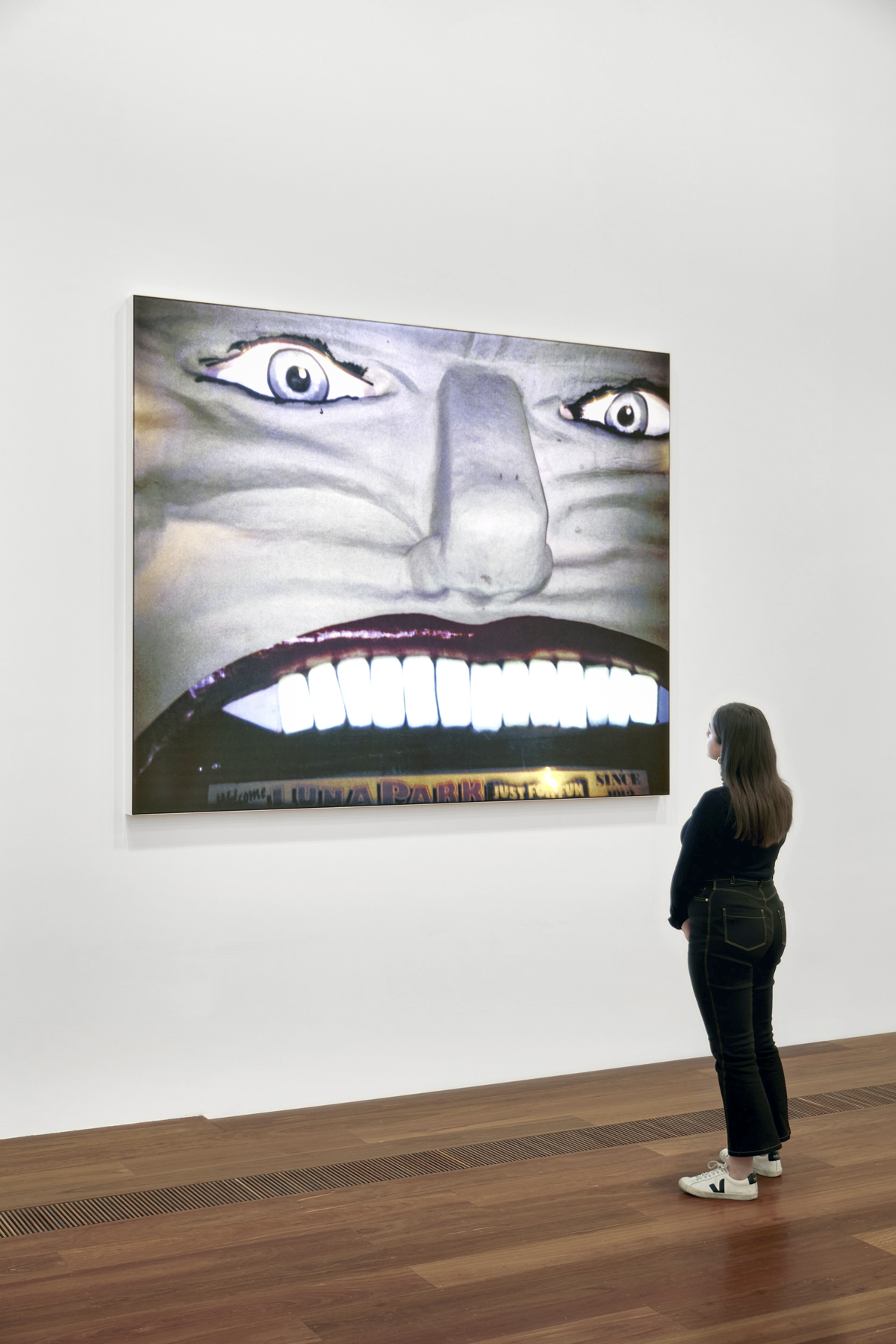
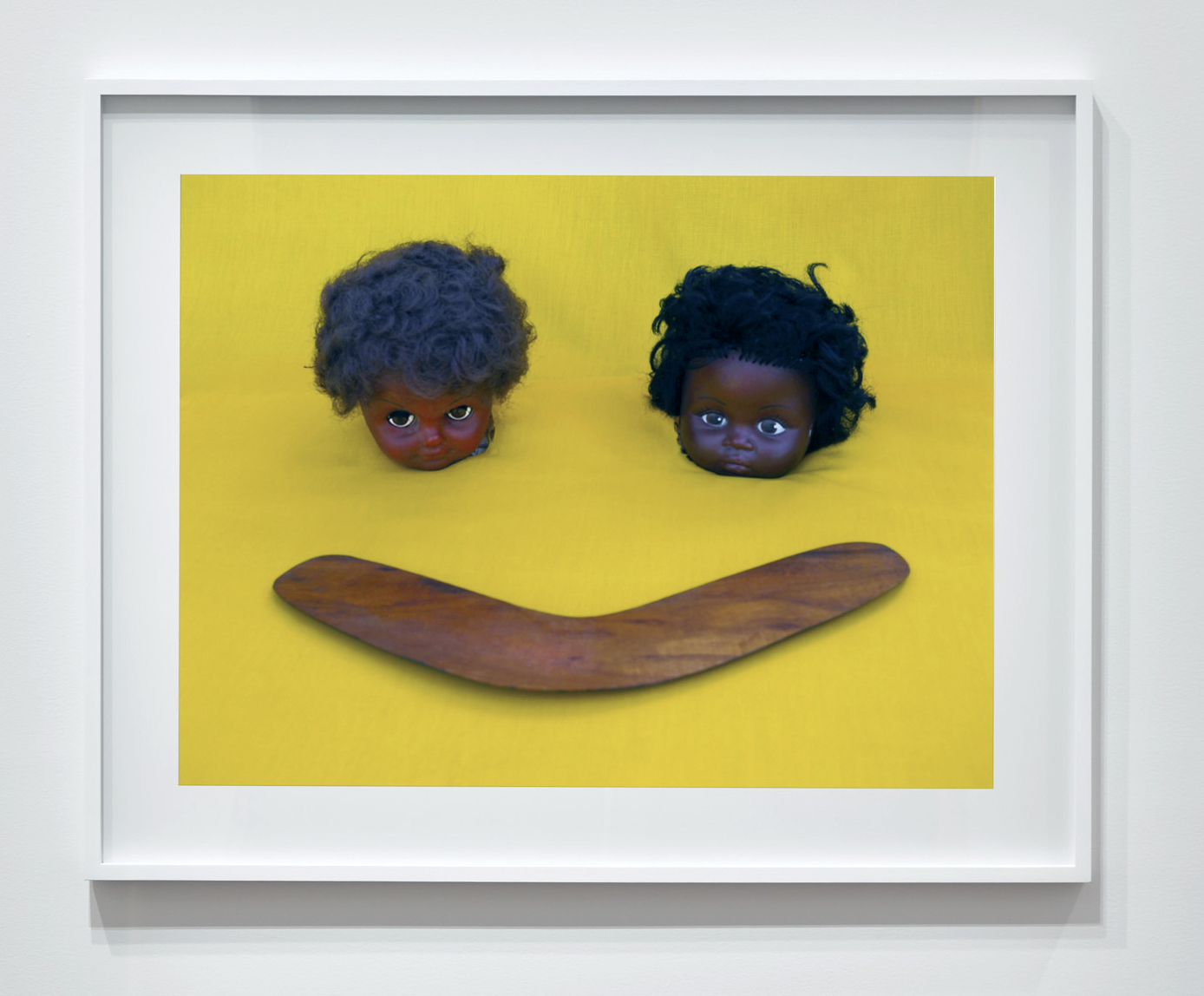
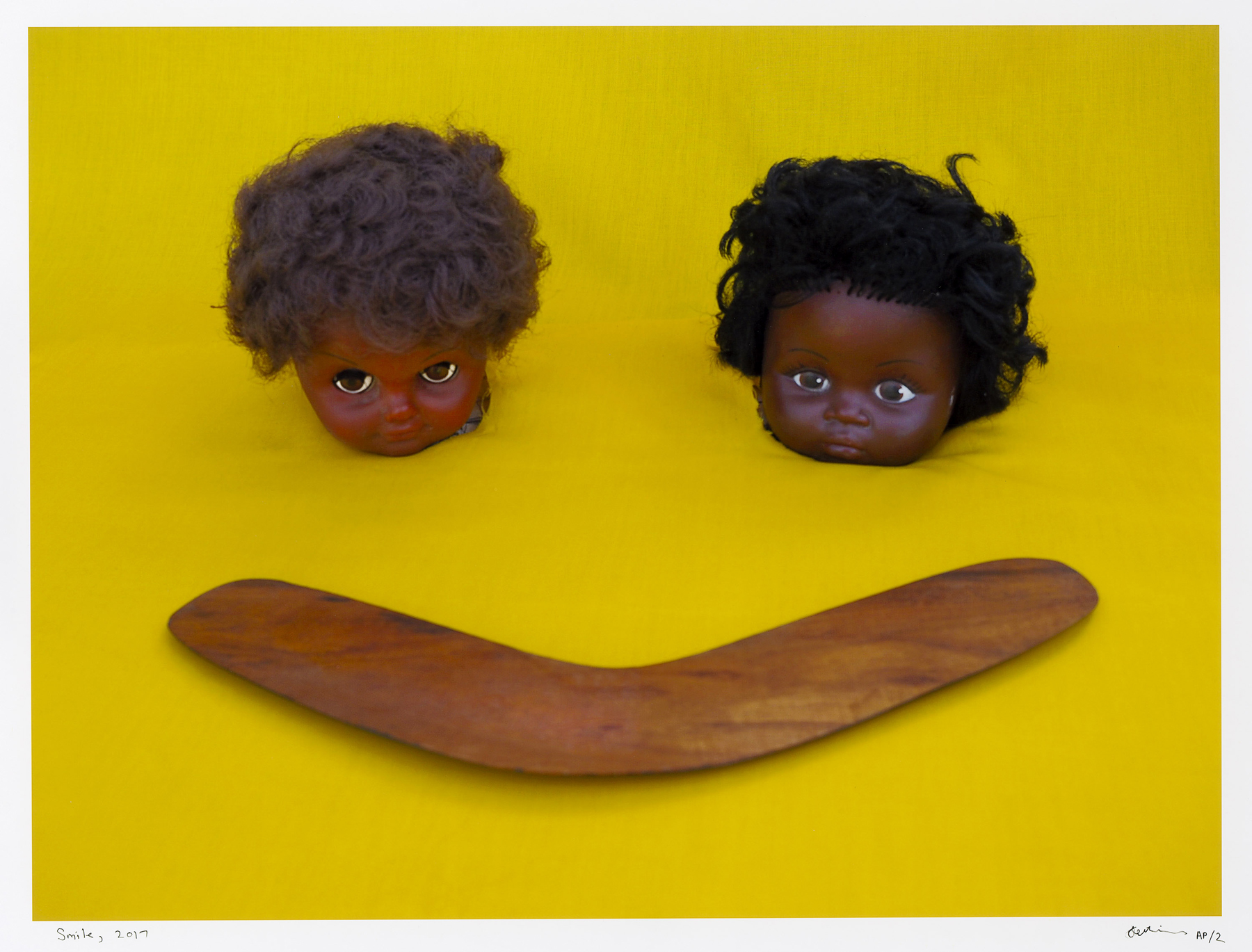
Installation view of Destiny Deacon’s Smile 2017 on display in DESTINY at The Ian Potter Centre: NGV Australia, Melbourne, 2020 Photo: Tom Ross
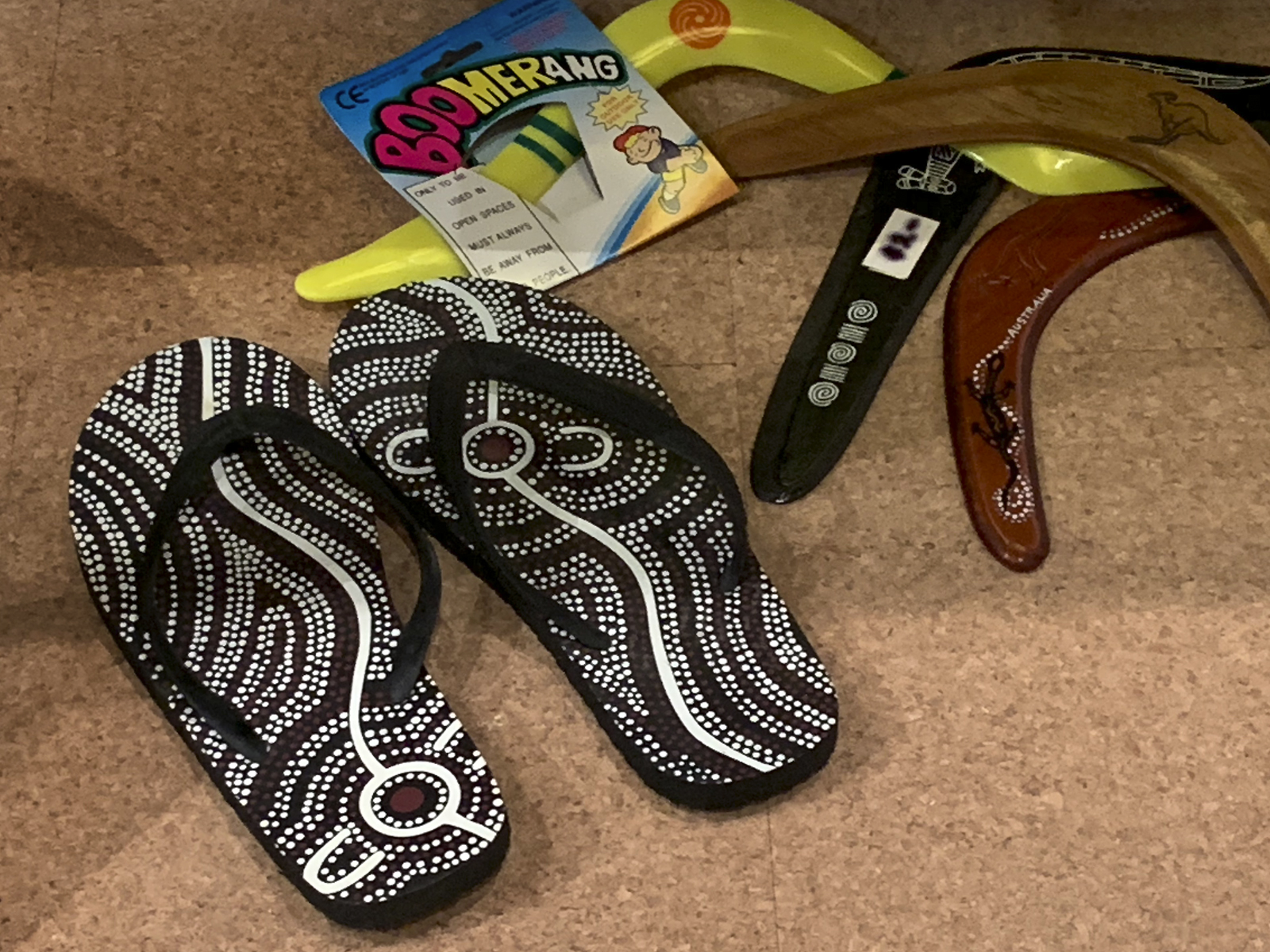
Deacon undercuts our trust in the innocuous smiley face emoji and prompts the viewer to look more closely at the everyday symbols that proliferate in our lives. The dolls appear decapitated, but perhaps even more ominously the disembodied heads are actually poking through a yellow sheet. Deacon uses an op-shop boomerang to complete the smile. When broken down, the individual features that make up the happy face are all racially charged. However, when viewed at a glance, all people see is the familiar smiley face emoji.
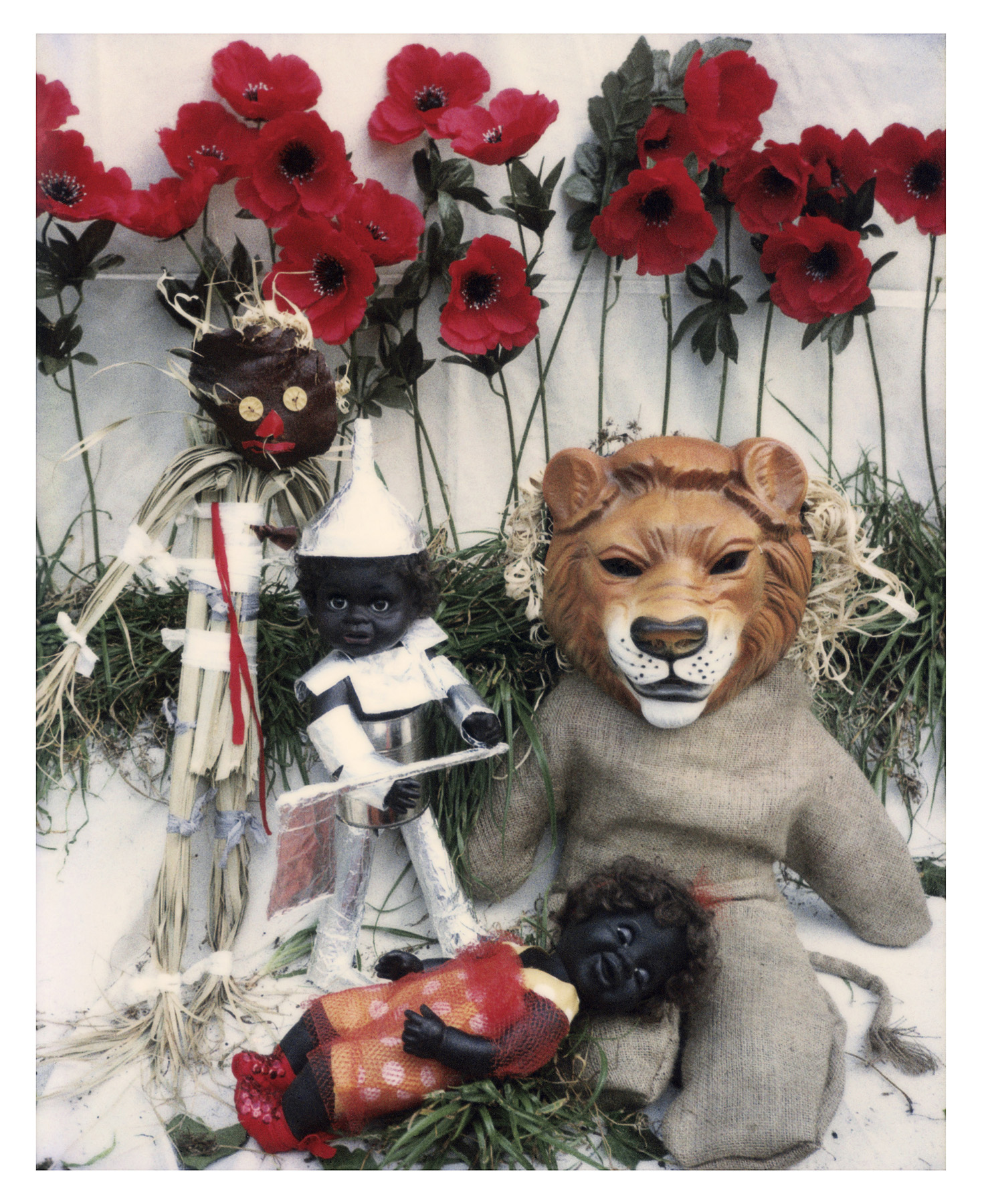
In the lead-up to the Sydney 2000 Olympics, Deacon produced Oz, a series of works parodying the 1939 film The Wizard of Oz. In the original film, Dorothy Gale is swept away from a farmhouse in Kansas to the magical land of Oz. In this series, Deacon transforms the journey undertaken by the original characters into a contemporary recognition of Aboriginality. Dorothy, now known as the ‘traveller’, appears alongside a ‘sad’ tin man, a ‘slow’ scarecrow in blackface and a ‘scared’ cowardly lion. The character’s quest for self-realisation resembles the personal journeys many Aboriginal people go through every day.
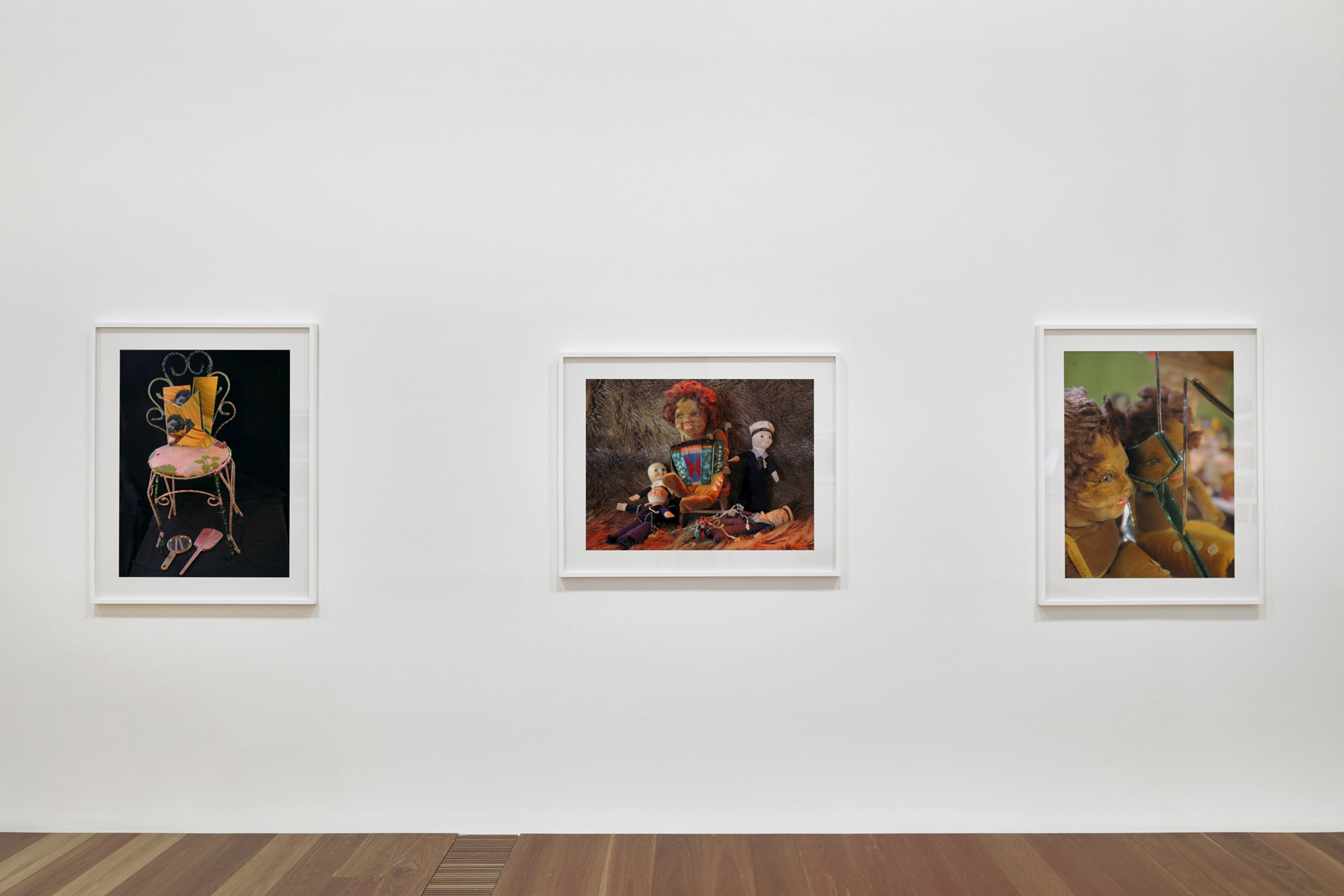
Installation views of DESTINY at The Ian Potter Centre: NGV Australia, Melbourne, 2020 showing at right, On reflection 2019 (below)
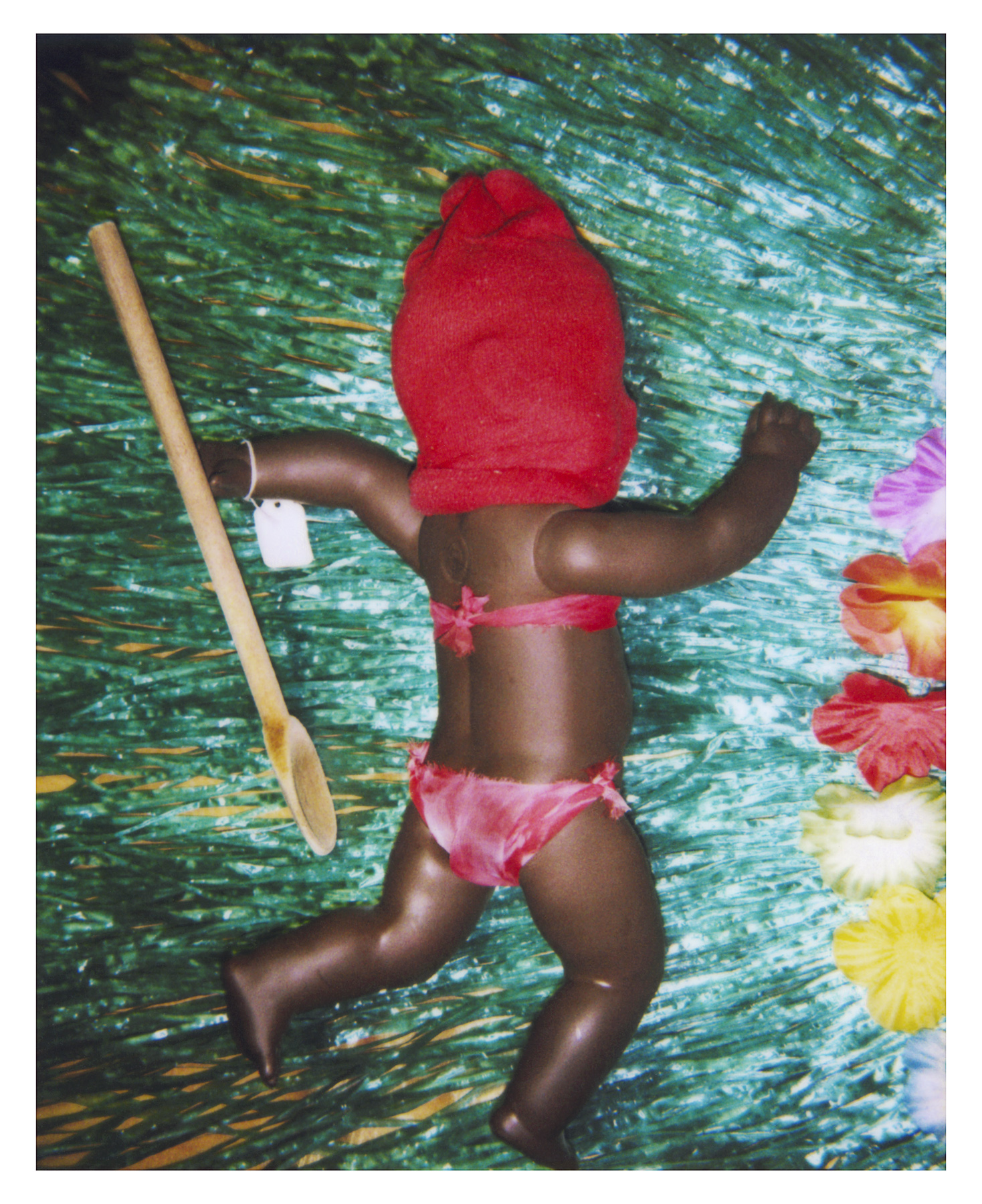
Escape – from the whacking spoon Whacked to sleep (B) Fence sitters (A) The goodie hoodie family Waiting for the bust Whacked & coming home
2007, printed 2020 Lightjet print
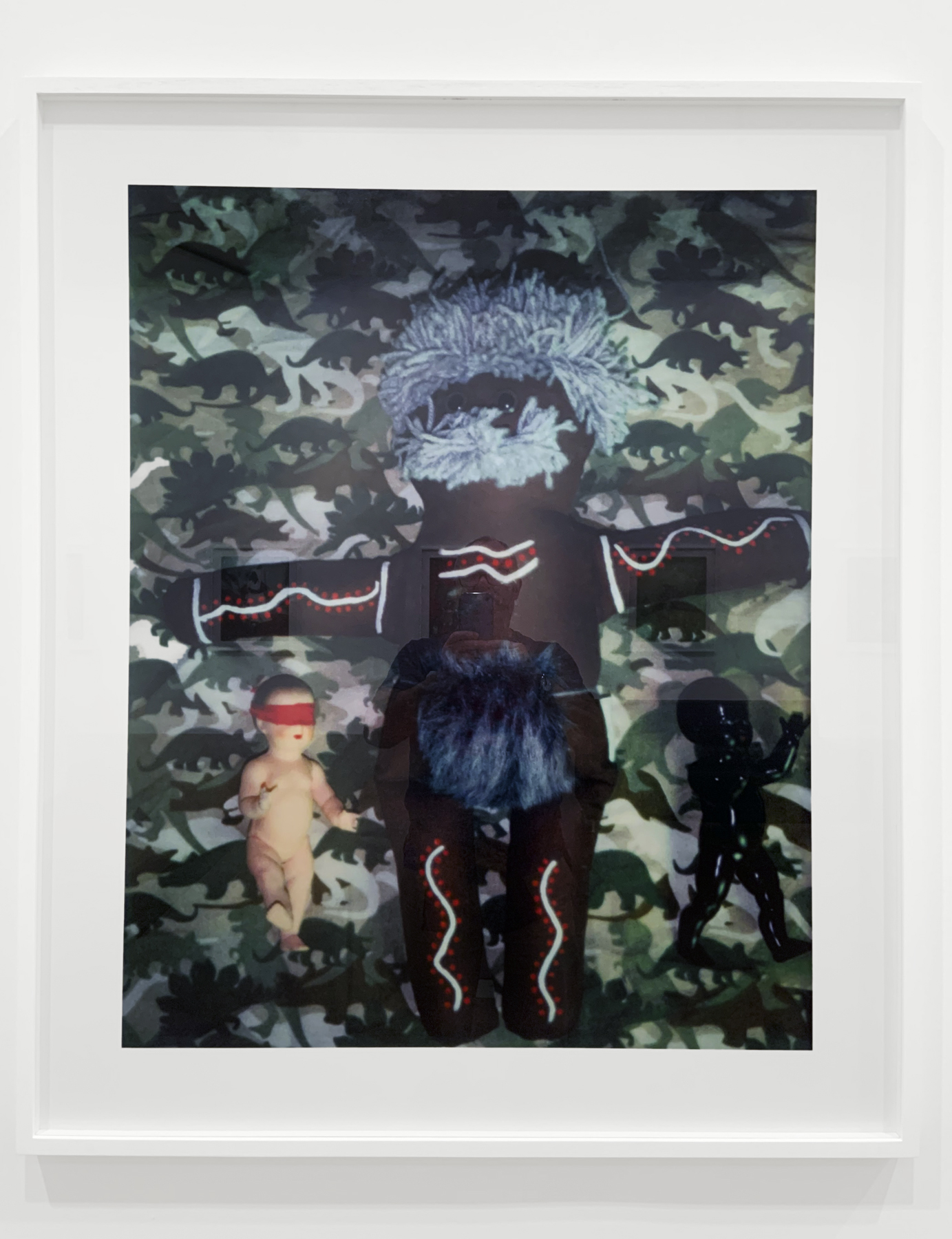
This series of photographs references familiar imagery from news media and contemporary culture, making a link between themes of terrorism, surveillance, suppression and Australian nationalism. Playing with stereotypes, Deacon and her friends have masked themselves in long johns with disturbing painted faces. The images use sinister humour to highlight shared similarities between fanatics around the world.
Installation view of Destiny Deacon’s Postcards from Mummy 1998 on display in DESTINY at The Ian Potter Centre: NGV Australia, Melbourne, 2020 Photo: Tom Ross
Installation view of DESTINY at The Ian Potter Centre: NGV Australia, Melbourne, 2020 showing at left Dolly eyes (A-H) 2020; and at right, Blak 2020 Photo: Tom Ross
Throughout her career, this cast of characters has become central to Deacon’s practice, as has her subversive use of language. For Deacon, language, and in particular spelling, has provided an opportunity to reframe and assert her identity on her own terms. In its deceptive simplicity the recasting of ‘Black’ to ‘Blak’ resonated with Aboriginal communities everywhere. What started as Deacon asserting her personal identity as a Kuku / Erub / Mer woman, has since morphed into a Community-owned declaration of Aboriginal pride. It is fitting to conclude this exhibition with a singular photographic work: the letters b-l-a-k emblazoned across the surface with seventeen of Deacon’s regular dolly models.
Destiny Deacon (Kuku/Erub/Mer b. Australia 1957-2024) Blak (installation view) 2020 Light jet print Photo: Marcus Bunyan
The Ian Potter Centre: NGV Australia
Federation Square Corner of Russell and Flinders Streets, Melbourne


































You must be logged in to post a comment.