Exhibition: ‘Broken Glass: Photographs of the South Bronx by Ray Mortenson’ at the Museum of the City of New York

Exhibition dates: 14th November, 2008 – 12th April, 2009


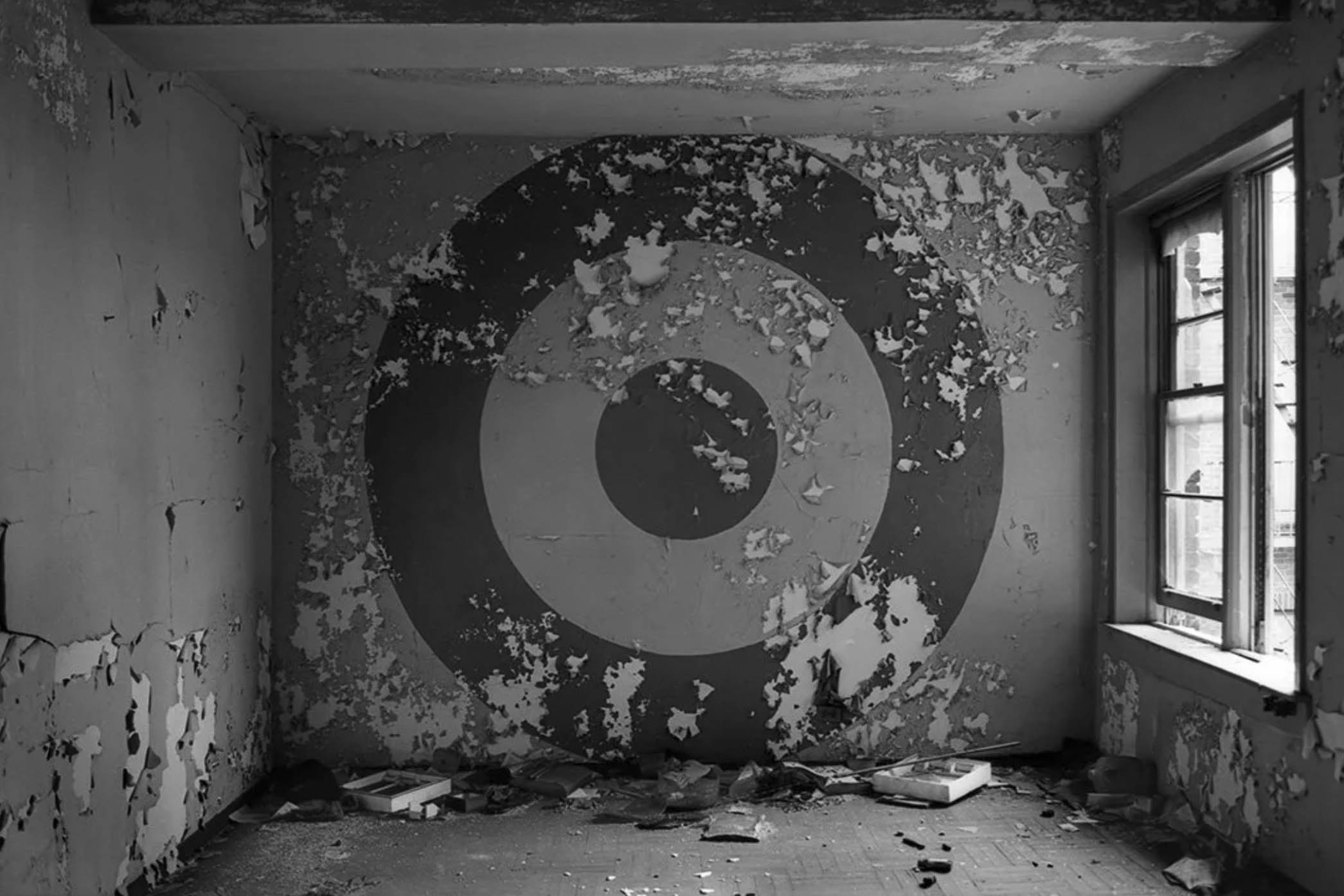
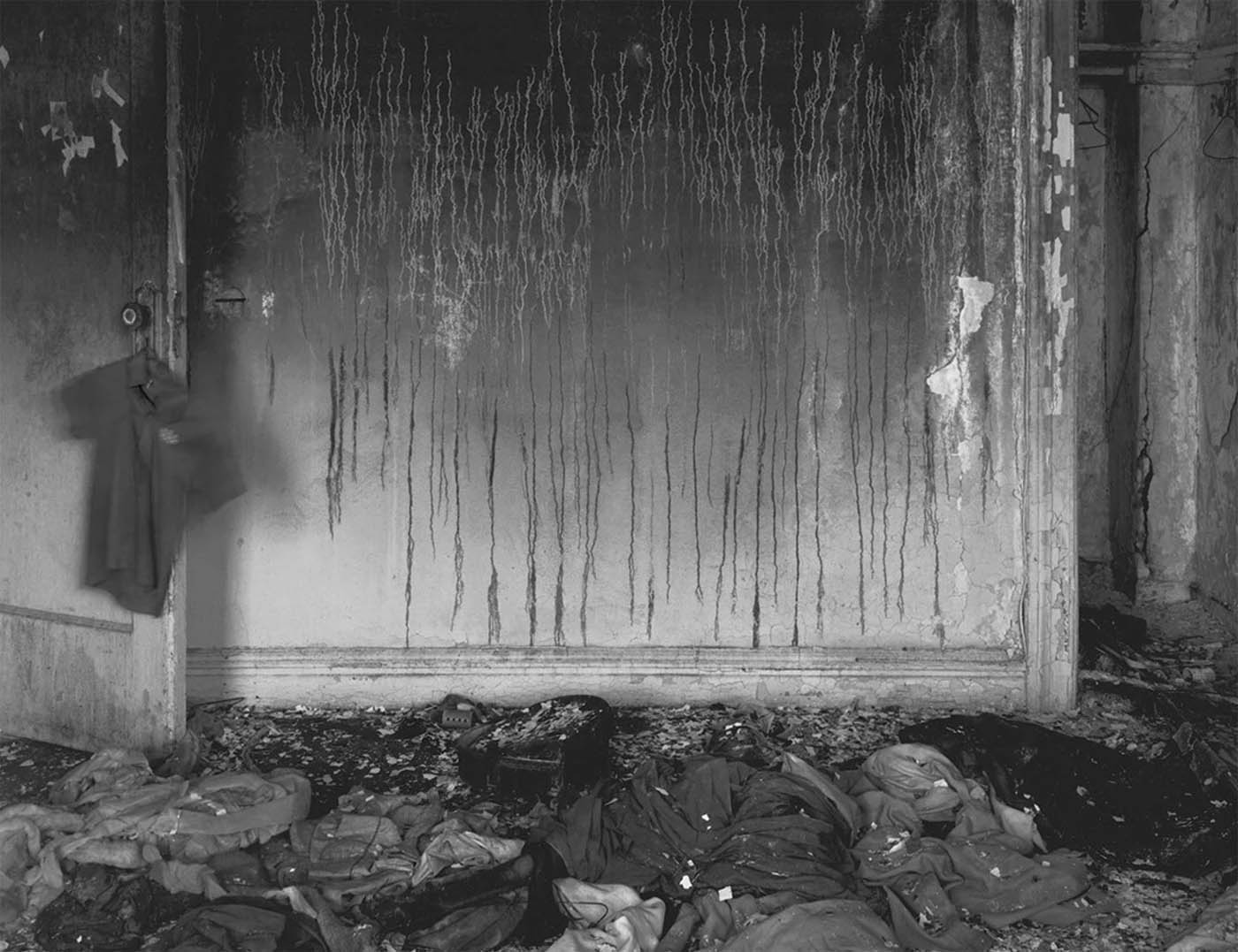
Ray Mortenson (American, b. 1944) 'Untitled (7-16-6)' 1984 from the exhibition 'Broken Glass: Photographs of the South Bronx by Ray Mortenson' at the Museum of the City of New York, Nov 2008 - April 2009


Ray Mortenson (American, b. 1944)
Untitled (7-16-6)
1984
Gelatin silver print
Courtesy of Janet Borden, Inc.


Documenting the abandoned, burnt out, and razed structures of entire city blocks in the South Bronx in the aftermath of the 1970s, during which this neighbourhood experienced dramatic decline, Broken Glass: Photographs of the South Bronx by Ray Mortenson will be on view at the Museum of the City of New York from November 14, 2008 through March 9, 2009. The 50 black and white cityscapes and interiors on view – five of which are large-scale – were taken between 1982 and 1984, and they vividly illustrate the results of a downslide that began in the Great Depression of the 1930s and accelerated with the construction of the Cross Bronx Expressway in the 1950s and the fiscal crisis of the 1970s. Broken Glass is Mortenson’s first museum exhibition in New York City, and it is the first presentation of the South Bronx photographs.

The 50 photographs on view, all black and white, range in size from the smallest at approximately 11″ by 14″, to the most monumental at 40″ by 60″. Each conveys a devastating silence, serving as a reminder that these city blocks were once the homes of individuals, families, and a large community. Mortenson has written, “The buildings were like tombs – sealed up, broken open and plundered. Inside, stairways with missing steps led up to abandoned apartments. Doors opened into rooms that were once bedrooms or kitchens. Small things left behind hint at who the occupants might have been – a hairbrush, photographs, or bits of clothing.” Ghostly remnants of the once prosperous and thriving neighbourhoods can be glimpsed in his images which document the extent and severity of the urban decline experienced in the South Bronx.

These photographs document an important chapter in the history of a New York City neighbourhood, augmenting their aesthetic power. The decline of the South Bronx began as early as the Great Depression when previously sustained development came to an abrupt halt. After World War II an exodus of New York’s middle class began and continued into the 1970s. This caused a population decline throughout the city, but the effects were particularly hard on the South Bronx as more than 200,000 residents left the community between 1970 and 1980. As entire communities left the city, Robert Moses’ road building and slum clearance, along with other urban renewal initiatives had dramatic effects on the lives of all who remained. In the 1970s New York City faced another economic crisis and virtual bankruptcy. City government was unable to maintain services in the South Bronx and “planned shrinkage” became an unofficial policy as services were slowly withdrawn. With little incentive for landlords to upgrade or even maintain their property, waves of arson and “insurance fires” decimated the by now largely minority community. Astonishingly, some 12,000 fires a year occurred through the 1970s, averaging more than 30 a day.

A successful resurrection of the South Bronx began in the mid-1980s, as grass roots organisations and community development corporations, along with financial reinvestment by the City, sparked its regeneration. The photographs on view stand in starkest contrast to today’s revitalised neighbourhood, which has been the result of the dedication of its citizens combined with government support. The photographs serve as a reminder of the ruins that once dominated the now-vibrant streets and that the balance between prosperity and urban decline can be fragile.

Brief Biography

Ray Mortenson was born in Wilmington, Delaware in 1944 and studied art at the Carnegie Institute of Technology and the San Francisco Art Institute. In the early 1970s, Mortenson moved to New York and began working with photography. His first significant photographic project was a comprehensive investigation of the industrial landscapes of New Jersey’s Meadowlands (1974-1982). Since then, Mortensen has continued to focus on landscape photography that is often interested in liminal places of transition, set apart from everyday life. His photographs have been accepted into the collections of The Metropolitan Museum of Art, New York; The Art Institute of Chicago, and the Bibliothèque Nationale, Paris.

Press release from the Museum of the City of New York website


Ray Mortenson (American, b. 1944) 'Untitled' 1983 from the exhibition 'Broken Glass: Photographs of the South Bronx by Ray Mortenson' at the Museum of the City of New York, Nov 2008 - April 2009


Ray Mortenson (American, b. 1944)
Untitled
1983
Gelatin silver print
Courtesy of Janet Borden, Inc.


Ray Mortenson (American, b. 1944) 'Untitled' 1984


Ray Mortenson (American, b. 1944)
Untitled
1984
Gelatin silver print
Courtesy of Janet Borden, Inc.


Ray Mortenson (American, b. 1944) 'Untitled' 1983


Ray Mortenson (American, b. 1944)
Untitled
1983
Gelatin silver print
Courtesy of Janet Borden, Inc.


Ray Mortenson (American, b. 1944) 'Untitled' 1984


Ray Mortenson (American, b. 1944)
Untitled
1984
Gelatin silver print
Courtesy of Janet Borden, Inc.


Ray Mortenson (American, b. 1944) 'Untitled' 1984


Ray Mortenson (American, b. 1944)
Untitled
1984
Gelatin silver print
Courtesy of Janet Borden, Inc.


Museum of the City of New York
1220 Fifth Avenue at 103rd Street
New York, NY 10029
Phone: 212-534-1672

Opening hours:
7 days a week 10.00am – 6.00pm

Museum of the City of New York website

LIKE ART BLART ON FACEBOOK

Back to top

Opening: Helen Britton ‘The things I see’ at Gallery Funaki, Melbourne

Exhibition dates: 11th November – 6th December, 2008

Opening: Tuesday 11th November, 2008


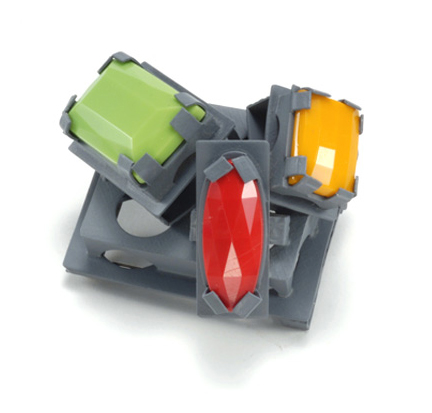
Helen Britton (Australian, b. 1966) 'Brooch' 2008 from the exhibition Helen Britton 'The things I see' at Gallery Funaki, Melbourne, Nov - Dec, 2008


Helen Britton (Australian, b. 1966)
Brooch
2008


Moving through Melbourne’s busy laneways from the Oleh Witer exhibition we arrive at the intimate, stylish Gallery Funaki to view the work of Australian artist Helen Britton who works with the form of contemporary jewellery. The crowd spilled onto the street and the small space was busy with an interesting crowd in attendance.

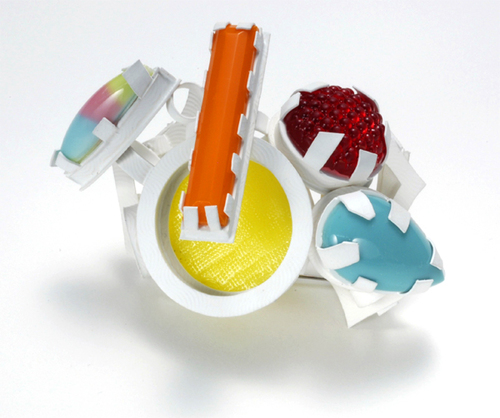
The exhibition presents brooches, earrings, rings and necklaces built with the artists trademark assemblages. Whilst the necklaces are more prosaic (movie like reels and slinks of melted plastic restrained within metal banding) it is the brooches that capture and hold the viewer’s attention. Sci-fi like grided circles collide with concave discs filled with glistening blue crystals; thrusters and steel from a miniature collapsed lunar landing vehicle vie with clusters of vibrant colours that appear to be imbedded into a lunar landscape: delicate crimped and folded metal landscapes with the appearance of collapsed geometric origami.

These are wonderfully inventive constructions, invigorating for their energy and exuberance. Britton has described her work as “industrial baroque”. Perhaps an equally pertinent description would be spatial, or ‘space baroque’ as the artist investigates the nexus, the cellular biology of matter, reality and the spaces we inhabit.

Dr Marcus Bunyan


Helen Britton (Australian, b. 1966) 'Brooch' 2008 from the exhibition Helen Britton 'The things I see' at Gallery Funaki, Melbourne, Nov - Dec, 2008


Helen Britton (Australian, b. 1966)
Brooch
2008


Gallery Funaki Sackville House Apartment 33 27 Flinders Lane Melbourne 3000 Australia

Opening hours: Wednesday – Friday 12 – 5pm Saturday on occasion (check our socials) or by appointment

Gallery Funaki website

LIKE ART BLART ON FACEBOOK

Back to top

Exhibition: ‘As far as no eye can see: panoramic photographs of Berlin, 1949-1952’ at the Berlinische Galerie Museum of Modern Art, Berlin

Exhibition dates: 2nd November, 2008 – 16th February, 2009


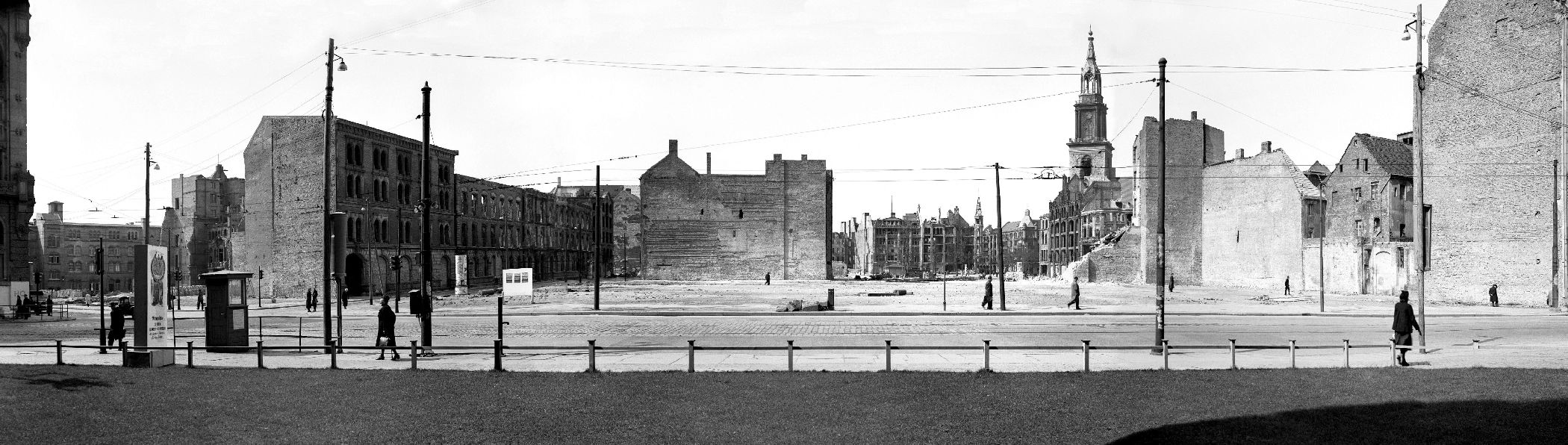
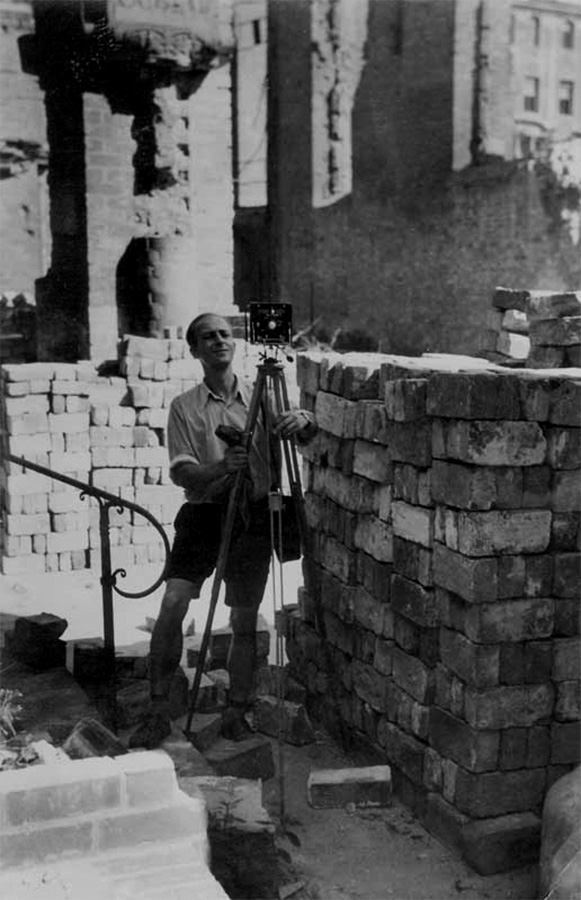
Fritz Tiedemann (German, 1915-2001) 'Pariser Platz, April 21, 1951' from the exhibition As far as no eye can see: panoramic photographs of Berlin, 1949-1952' at the Berlinische Galerie Museum of Modern Art, Berlin, Nov 2008 - Feb 2009


Fritz Tiedemann (German, 1915-2001)
Pariser Platz, April 21, 1951
1951
Reconstructed by Arwed Messmer 2008
1.25 x 5.84 metres
© Fritz Tiedemann / Arwed Messmer


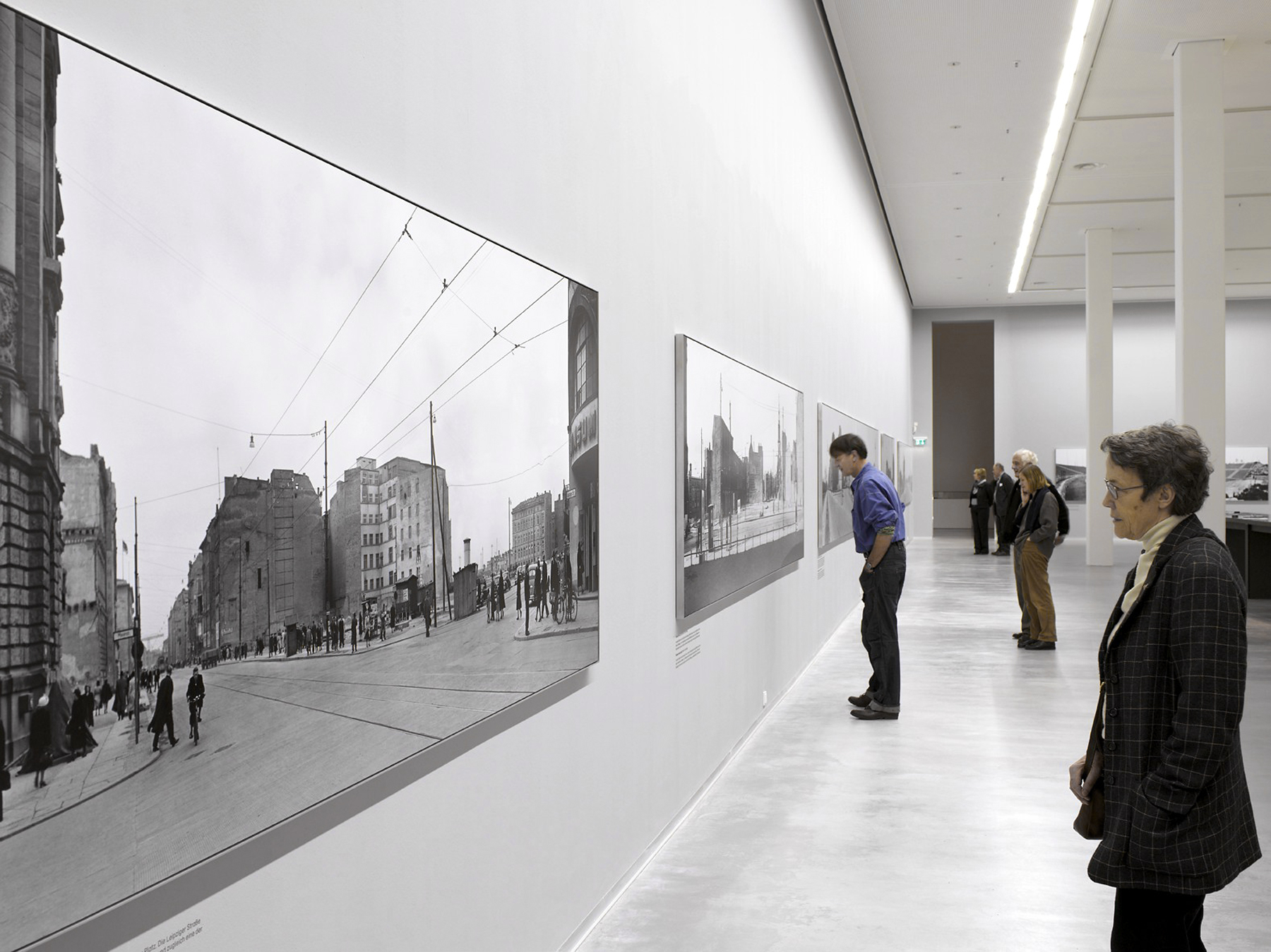
As far as the eye can see shows 13 reconstructed and digitally reassembled panorama photos by Tiedemann from his 1,500-footage work. The city views from the years 1949-1952 were enlarged to almost gigantic dimensions (up to 25.5 m in length) and thus provide a fascinating view of the destruction of the war and the reconstruction of Berlin.

Fritz Tiedemann (German, 1915-2001) was a trained surveying technician and was trained in the military as a photogrammeter (specialist for photographic measuring methods). He documented the city as a photographer at the Office of Preservation. The photographer Arwed Messmer came across Tiedemann’s photographs during research work for his book project “Anonyme Mitte – Berlin” in the Berlinische Galerie and then developed the idea for this exhibition.

After WW 2, rubble clearance had made considerable progress and rebuild had begun, a remarkable photographic inventory was done in East Berlin. By order of the magistrate of the capital of the GDR an – up to now – unknown photographer documented central places and areas that were of importance concerning the urban planning in the early 50s. He captured the Pariser Platz and the Schloßplatz area as well as the works on the Walter Ulbricht Stadium or a sand storage area in the outskirts. In order to adequately picture the void and the vastness of the destroyed city as well as the remaining urban structures, the photographer made horizontal turns with the camera and thus produced sequences that – once brought together – turned into panoramic pictures.

The concealed quality of these pictures was lately discovered by Berlin photographer Arwed Messmer. By means of digital mounting of the sequences he created synthetic large-size pictorial worlds that show the destroyed Berlin as an empty stage. Thus inspired, the Photo Archive of the East Berlin magistrate, preserved by the Berlinische Galerie and documented in the catalogue “Ost-Berlin und seine Bauten. Fotografien 1945-1990” / “East Berlin Architecture”, was searched through anew. Thus the exhibition operates at the interface between applied photography and new photographic technology as well as between collective memory and an unfamiliar optic experience.

Press release from the Berlinische Galerie Museum of Modern Art


Fritz Tiedemann (German, 1915-2001) 'Pariser Platz, April 21, 1951' (detail) from the exhibition As far as no eye can see: panoramic photographs of Berlin, 1949-1952' at the Berlinische Galerie Museum of Modern Art, Berlin, Nov 2008 - Feb 2009


Fritz Tiedemann (German, 1915-2001)
Pariser Platz, April 21, 1951 (detail)
1951
Reconstructed by Arwed Messmer 2008
1.25 x 5.84 metres
© Fritz Tiedemann / Arwed Messmer


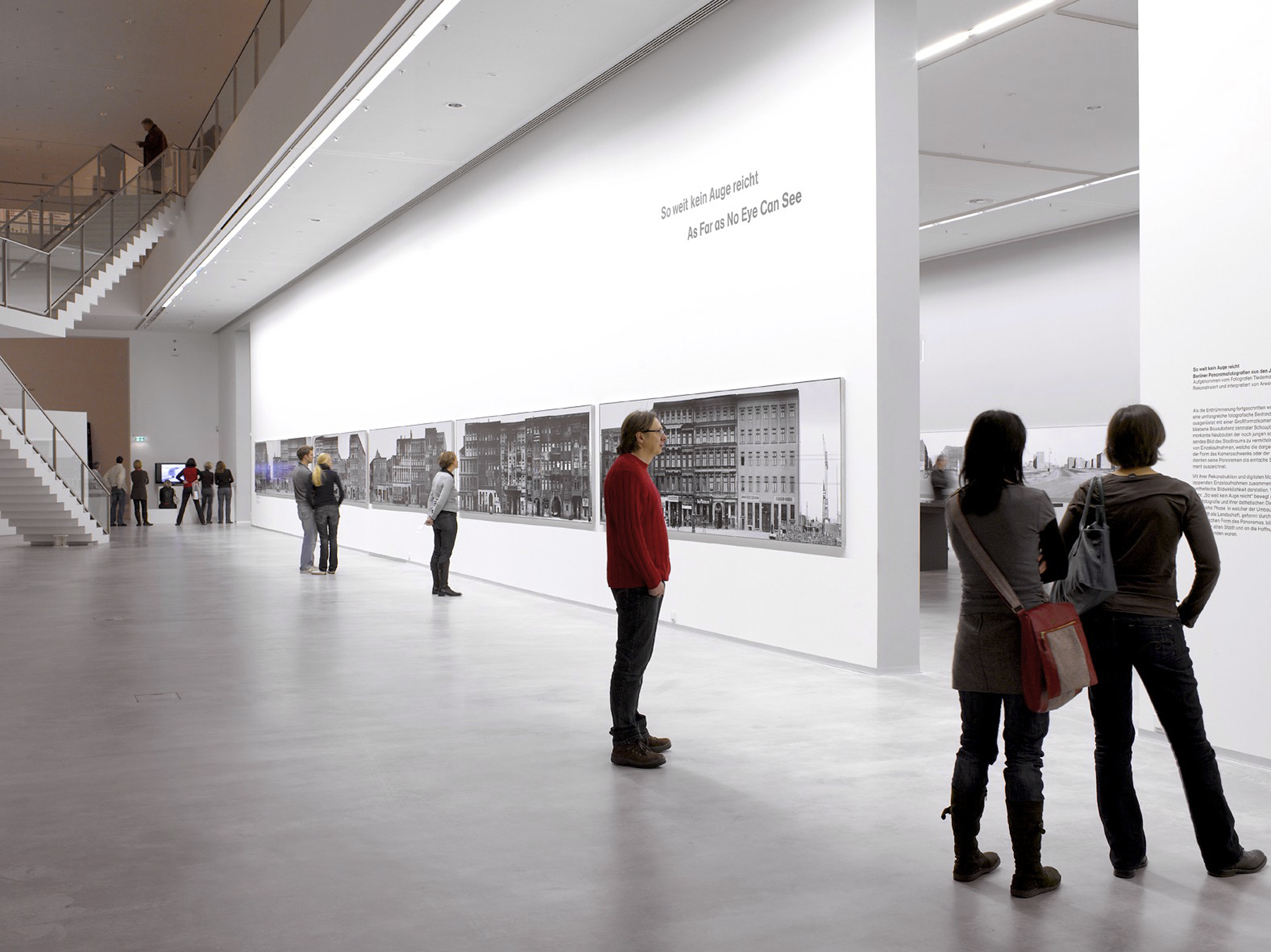
Installation view of the exhibition 'As far as the eye can see' at the Berlinische Galerie, Berlin

Installation view of the exhibition 'As far as the eye can see' at the Berlinische Galerie, Berlin


Installation views of the exhibition As far as the eye can see at the Berlinische Galerie, Berlin


Between 1948 and 1953, photographer and technical surveyor Fritz Tiedemann (German, 1915-2001) was commissioned by the urban administration of East Berlin to undertake extensive documentation of architecture and urban planning in the capital of the GDR. Many of his early visual documents are series of images conceived as panoramas, whereby the sweep of the camera gives a comprehensive impression of emptiness and the extent of war damage in the city. Processed as contact copies and stuck onto archive covers, his many photographs are one important, early basic collection of a photo archive that was extended consistently until 1990. It has been kept in the architectural collection of the Berlinische Galerie since 1992.

An in-depth study of the collection was facilitated with support from the Getty Foundation, Los Angeles, and the results were made available to the public in the shape of the publication “Ost-Berlin und seine Bauten” in 2006. In 2008 a selection of Tiedemann’s photographs was shown to the public in the exhibition So weit kein Auge reicht. Berliner Panoramafotografien aus den Jahren 1949-1952. Aufgenommen von Fritz Tiedemann. Rekonstruiert und interpretiert von Arwed Messmer (As far as no eye can see. Berlin panorama photographs from the years 1949-1952. Taken by Fritz Tiedemann. Reconstructed and interpreted by Arwed Messmer). A catalogue of the same name was also published; it has since been produced in a second, revised edition.

Text from the Berlinische Galerie Museum of Modern Art


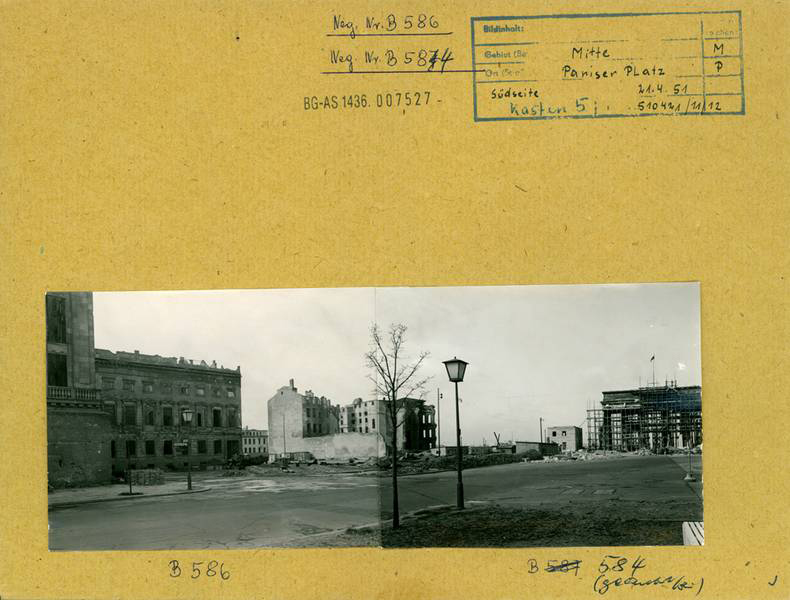
Fritz Tiedemann (German, 1915-2001) 'Pariser Platz (south side) April 21, 1951'


Fritz Tiedemann (German, 1915-2001)
Pariser Platz (south side), April 21, 1951
1951
Archive cover with contact copies of the original negatives
Silver gelatine paper on paper, 18.5 x 24.6cm
Taken over from the collections of the Urban Administration for Urban Development, Housing and Transport Berlin [East] via the Senate Administration for Building and Housing Berlin, 1991
© Berlinische Galerie Museum of Modern Art


Fritz Tiedemann short biography

14 February 1915 Hamburg – 23 November 2001 Münster, Westfalen

The identity behind the name “Tiedemann” could be clarified during the course of the exhibition. A former colleague of Fritz Tiedemann as well as descendents of the photographer learned about the exhibition due to the nationwide media coverage and contacted the museum.

As a professional surveying technician Fritz Tiedemann received additional specialist qualification as a topographer during his military service. His photographic skills and expertise were of great importance for the documentation of wartime damage and a visual basis for future urban planning. Indeed, his photographs can be considered as new documents showing the vastness and emptiness of the destroyed city.

In February 1948 he began working as a photographer for the Berlin Historic Buildings’ and Memorials’ Conservation Office. In October 1949 due to the political division of Greater Berlin he was to continue his work for the East Berlin government’s city planning office. Besides historical aspects the documentation then also focused on the architectural development of East Berlin as is also displayed by the exhibition’s panoramic photographs.

On February 28, 1953 Fritz Tiedemann was arrested by the East German police forces for his attempts to have West Berlin authorities share in those historically valuable photographs. He was tried and imprisoned and after the events of June 17, 1953 granted amnesty. Together with his family he subsequently fled to West Germany where he was acknowledged as political refugee. In January 1954 he took up work as a topographer with a company called Plan und Karte, later Hansa Luftbild, in Münster, Westphalia, where he remained employed until his retirement in 1978.

Photography had not only been part of Fritz Tiedmann’s professional activities, it was in fact his life-long passion, the results of which are considered by his family as a great heritage.

Text from the Berlinische Galerie Museum of Modern Art


Fritz Tiedemann (German, 1915-2001) 'Marx-Engels-Platz, April 20, 1951'


Fritz Tiedemann (German, 1915-2001)
Marx-Engels-Platz, April 20, 1951 [previously called Schloss-Platz]
1951
Reconstructed by Arwed Messmer 2008
© Fritz Tiedemann / Arwed Messmer


Fritz Tiedemann (German, 1915-2001) 'Am Friedrichshain, March 5, 1952'


Fritz Tiedemann (German, 1915-2001)
Am Friedrichshain, March 5, 1952
1952
Reconstructed by Arwed Messmer 2008
© Fritz Tiedemann / Arwed Messmer


Fritz Tiedemann (German, 1915-2001) 'Rathausstrasse, April 20, 1951'


Fritz Tiedemann (German, 1915-2001)
Rathausstrasse, April 20, 1951 [The Rathausstrasse overlooking the Marienkirche of Alexanderplatz]
1951
Reconstructed by Arwed Messmer 2008
© Fritz Tiedemann / Arwed Messmer


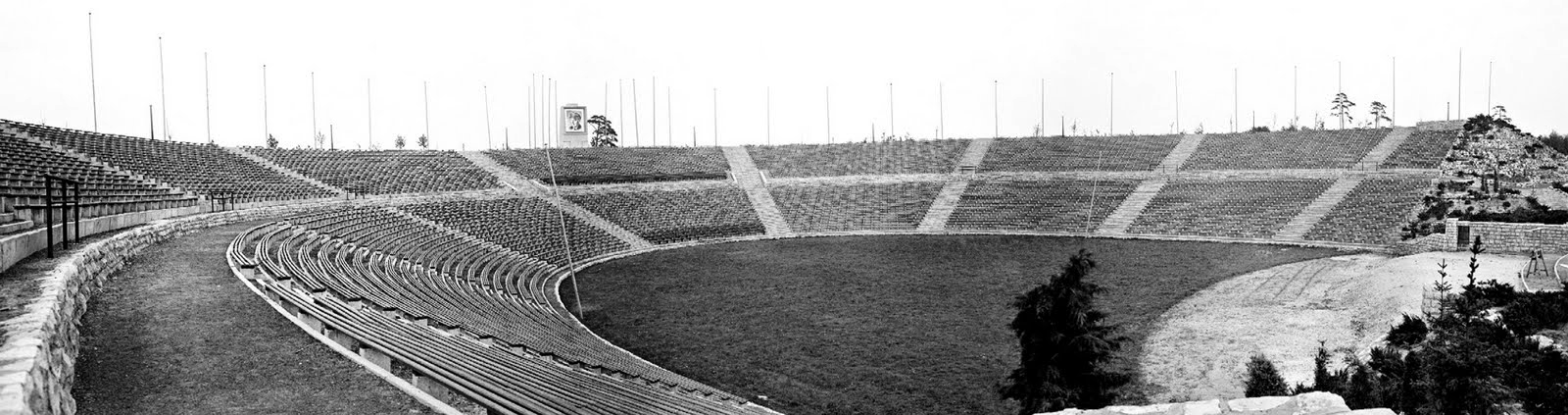
Fritz Tiedemann (German, 1915-2001) 'Outdoor scene in Wuhlheide, May 4, 1952'


Fritz Tiedemann (German, 1915-2001)
Outdoor scene in Wuhlheide, May 4, 1952
1952
Reconstructed by Arwed Messmer 2008
© Fritz Tiedemann / Arwed Messmer


Unknown photographer. 'Fritz Tiedemann' c. 1951


Unknown photographer
Fritz Tiedemann
c. 1951
Private collection


Berlinische Galerie Museum of Modern Art
Alte Jakobstraße 124-128
10969 Berlin Germany

Opening hours:
Wednesday – Monday 10am – 6pm
Closed on Tuesdays

Berlinische Galerie Museum of Modern Art website

LIKE ART BLART ON FACEBOOK

Back to top

Opening: Darren Wardle ‘Soft Target’ at Nellie Castan Gallery, Melbourne

Exhibition dates: 7th November – 29th November, 2008

Opening: Friday 7th November, 2008


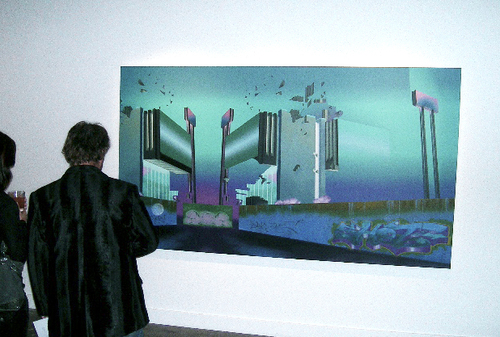
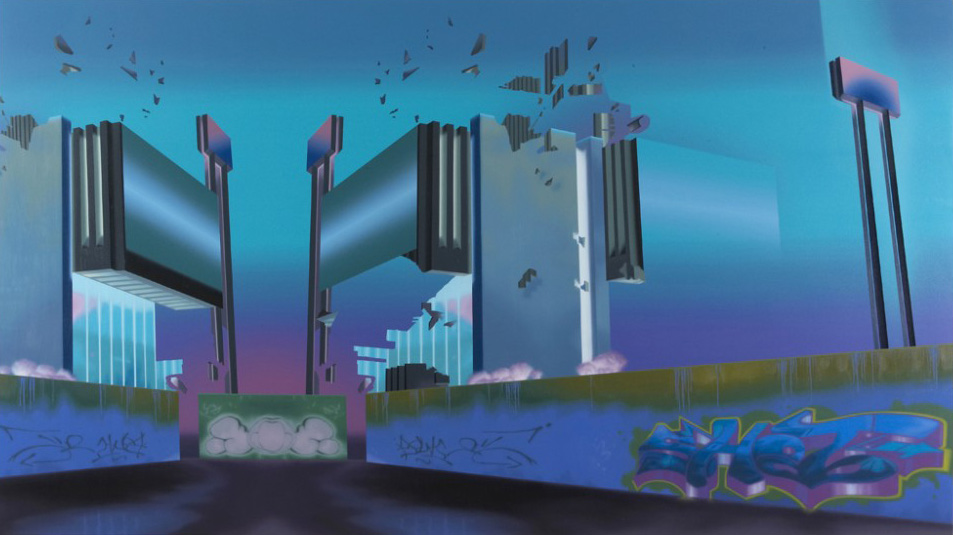
Darren Wardle (Australian, b. 1969) 'Frontier Psychology' 2008 from the exhibition Opening: Darren Wardle 'Soft Target' at Nellie Castan Gallery, Melbourne, Nov 2008


Darren Wardle (Australian, b. 1969)
Frontier Psychology
2008
Oil and acrylic on linen
153cm x 274cm
Private collection


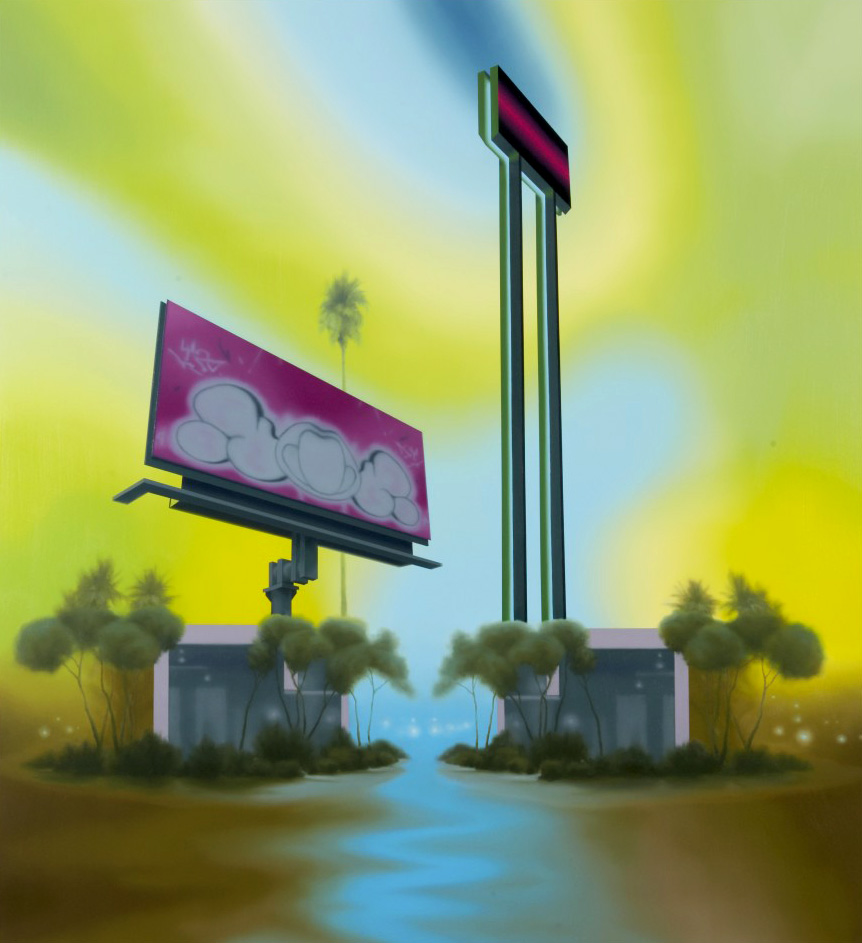
Six luminous oil and acrylic paintings by Darren Wardle greeted viewers in the front gallery at Nellie Castan in South Yarra. In his apocalyptic fractured pop coloured landscapes objects elide, disintegrate and vanish into thin air. Buildings, empty screens and advertising hoardings become the target of lost innocence, a metaphor for the dis-ease and disintegration of consumer society, a portent of things to come.

The titles of the paintings (such as Tipping Point, Faultline and Slanted) perfectly describe the conceptual themes explored in the work. Slinks of dripping paint pour down the canvas, canvases are cut in three through the use of fractured planes like a double exposure in photography and vegetation becomes purple and white, mutated and x-rayed. Some of the paint almost has a crystalline nature to it’s surface, a ‘surface tension’ that contrasts with flat gradated areas of colour in the backgrounds, as though the world is solidifying, cracking and about to fall apart.

An excellent show that is well hung: so many exhibitions have too many objects, too much noise crowding the walls. Here the work is given space to breathe and live and looks all the better for it. Highly recommended.

Dr Marcus Bunyan


Darren Wardle (Australian, b. 1969) 'Faultline' 2008 (installation view)


Darren Wardle (Australian, b. 1969)
Faultline (installation view)
2008
Oil and acrylic on canvas


Darren Wardle (Australian, b. 1969) 'Faultline' 2008 from the exhibition Opening: Darren Wardle 'Soft Target' at Nellie Castan Gallery, Melbourne, Nov 2008


Darren Wardle (Australian, b. 1969)
Faultline
2008
Oil and acrylic on canvas
153cm x 274cm
Private collection


Darren Wardle (Australian, b. 1969) 'Inland Empire' 2008


Darren Wardle (Australian, b. 1969)
Inland Empire
2008
Oil and acrylic on linen
183cm x 167cm
Private collection


Nellie Castan Gallery

This gallery is no longer open

LIKE ART BLART ON FACEBOOK

Back to top

Opening: Jamieson Miller ‘territories’ at Dickerson Gallery, Melbourne

Exhibition dates: 5th November – 23rd November, 2008


Jamieson Miller (Australian, b. 1965) 'The Last Drop' 2008 from the exhibition Jamieson Miller 'territories' at Dickerson Gallery, Melbourne, Nov 2008


Jamieson Miller (Australian, b. 1965)
The Last Drop
2008
Sheoak with ebonised stain
30 x 14 x 10cm


A small but lively crowd was in attendance for the opening of the exhibition territories featuring six small and six large floor standing wooden sculptures by the artist Jamieson Miller at the Dickerson Gallery in Oxford Street, Collingwood.

The work itself is of a fine craftsmanship showing exemplary design: different coloured woods and stains, wonderful joinery, the use of grain and different geometric and fluid shapes are all balanced harmoniously within the objects. A refined aesthetic sensibility is at work in their construction. This sensibility flows through to the conceptual themes of the work: the artist has created sometimes totemic but always lyrical poetic spaces within the corporeality of the work. The viewer enters enclosed intimate spaces (such as the funnels) or steps forward into steeped carved openings that open the way to visions of an inner world. Outer space becomes enclosed inner space as the viewer is at first intrigued, then drawn in and surrounded by the flickering shadows of Plato’s cave.

The new gallery is certainly an attractive modern warehouse space with vaulted roof. Unfortunately the large sculptures, although multi-dimensional and carved in the round, have been pushed to the edges of the space close to the walls. This makes it difficult to appreciate the totality of the form of the sculptures especially important with a work like Sight where the carved blackened wood shape on the ‘back’ of the sculpture is a vital counterpoint to the receding opening at the ‘front’ of the work. Make sure you also explore the reverse of the sculpture Lineage II to also comprehend the intimate space of the medieval window like opening to the front.

I really enjoyed the work of Jamieson Miller and recommend a visit to the gallery to see his refined worlds. The work is on show with the paintings of Jason Cordero.

Dr Marcus Bunyan


Jamieson Miller (Australian, b. 1965) 'Sight' 2008 (installation view)


Jamieson Miller standing next to his sculpture Sight on the opening night of his exhibition territories at Dickerson Gallery in Collingwood.

Cyprus pine with ebonised stain
180 x 100 x 30cm


Jamieson Miller (Australian, b. 1965) 'Resting Place' 2008 (detail)


Jamieson Miller (Australian, b. 1965)
Resting Place (detail)
2008
Elm with paint
203 x 42 x 30cm


Dickerson Gallery
34 Queen Street, Woollahra
Sydney NSW 2025
Phone: +61 2 9363 3358

Opening hours:
Tuesday – Saturday: currently by appointment only
Closed: Sunday and Monday

Jamieson Miller website

Dickerson Gallery website

LIKE ART BLART ON FACEBOOK

Back to top

Review: ‘Disintegration’ by Robbie Rowlands at Place Gallery, Melbourne

Exhibition dates: 22nd October – 15th November, 2008


Robbie Rowlands (Australian, b. 1968) 'Scored' 2008 from the exhibition Review: 'Disintegration' by Robbie Rowlands at Place Gallery, Melbourne, Oct - Nov, 2008


Robbie Rowlands (Australian, b. 1968)
Scored
2008
Goal post, steel
160cm x 130cm x 50cm
Photograph: Christian Capurro


“The philosopher Martin Heidegger argued that objects are often invisible to us gathered up as they are within a context of functionality and use. It is only when things break down that we become aware of them, seeing them with fresh eyes. In many ways Heidegger’s observation could form the basis of an approach to Robbie Rowlands’ work. Rowlands takes objects that are often forgotten, invisible or transparent to us, objects that exist on the verge of disappearance, and stages a kind of ‘breakdown’, inviting us to rediscover the object, poised somewhere between what it was and what it might become.”


Simon Cooper. Catalogue essay


Sitting in pools of light in the elegant modern space of Place Gallery in Richmond, six theatrically lit sculptures are presented by artist Robbie Rowlands. Made of everyday objects (a boom gate, desk, chair, single bed, electricity pole, desk and footy goalpost) they have been de/constructed by the artist and reformed into curved objects. With ironic titles such as Down for the felled electricity pole and Collapse for the dismembered chair Rowland’s work hovers between one fixed state and an’other’ transformative state of being.

While the catalogue essay by Simon Cooper suggests that all of these objects are abandoned or nearly forgotten sharing a context of quasi-obsolescence, this is not the case. These were objects of purpose and form, the acts of ritualised production of a consumer society that contained signs that symbolised their status. In his creativity Rowland has used these technologies of production, which permit us to produce, transform or manipulate things to create new sensual forms of life. Some of the sculptures such as Boom (the boom gate; 2008, below) and Scored (the goal post; 2008, above) remind me of creatures emerging from the recesses of the unconscious, curling and rearing up like monsters from the deep. One of the most beautiful forms is the constructed white chair where the function of the object has collapsed into the essence of the form, like the surreal spatiality of a poetic Miro. As Gaston Bachelard reminds use in The Poetics of Space:

“The grace of a curve is an invitation to remain. We cannot break away from it without hoping to return. For the beloved curve has nest-like powers; it incites us to possession, it is a curved corner, inhabited geometry.”1


Cooper suggests that the curved forms that Rowland creates were “already there in the original object, even as it was sat on, written on, or passed by on the way to work.” He rightly notes that the process used contains a certain violence, but that we remember and reconstruct the old form even as we respond to the new construction. For these sculptures are a construction not, I believe, inherent in the original form. This can be seen in the sculpture Boom (2008, below) for example, where Rowland has used additional pieces of metal to hold the curve of the boom gate in place. Without this skilfully added, hidden sub-structure the transformative shape would collapse onto the floor. Rowland inhabits and possesses his new geometry with as much technology as the original but not in such an obvious form.

At their best these sculptures are both poetic palimpsest and heterotopic objects of otherness that are neither here nor there. The work would have been stronger if only four pieces were presented in the gallery space – the sculptures needed more room to breathe (understanding the dictum that less is more). The sculptures themselves also needed greater thematic cohesiveness perhaps using the colour white as the unifying theme. But they are sensual and beautiful gestures and deserve the attention of your visit.

Dr Marcus Bunyan


1/ Bachelard, Gaston. The Poetics of Space. Boston: Beacon, 1969 [originally 1958] p. 146


Robbie Rowlands (Australian, b. 1968) 'Boom' 2008


Robbie Rowlands (Australian, b. 1968)
Boom
2008
Rail boom gate, wooden
160cm x 160cm x 130cm
Photograph: Wren


Place Gallery
120 Collins Street
Melbourne VIC 3000
Phone: (03) 9527 6378

Opening hours:
Daily: 9.30am – 6.00pm
Sunday & Holidays: Closed

Robbie Rowlands website

LIKE ART BLART ON FACEBOOK

Back to top

Opening: Rennie Ellis ‘No standing only dancing’ at The Ian Potter Centre: NGV Australia

Exhibition dates: 31st October, 2008 – 22nd February, 2009

Opening: 30th October, 2008


Rennie Ellis (Australian, 1940-2003) 'Girls' Night Out, Prahran' 1980 from the exhibition Rennie Ellis 'No standing only dancing' at The Ian Potter Centre: NGV Australia, Oct 2008 - Feb 2009


Rennie Ellis (Australian, 1940-2003)
Girls’ Night Out, Prahran
1980
Silver gelatin, selenium toned fibre based print


A very social and lively crowd gathered at The Ian Potter Centre: NGV Australia at Federation Square on the evening of 30th October to celebrate the life and work of the Australian social photographer Rennie Ellis.

After opening comments by the NGV Director Dr Gerard Vaughan there was a funny and erudite speech by Phillip Adams AO who had flown down from Sydney to open the exhibition. The crowd enjoyed the anecdotes about his relationship with Rennie and said he thought that dying was a good career move on Rennie’s behalf and that he would have loved the fact that he had a retrospective at the NGV. Adams observed that Ellis used to be everywhere, at every party and opening, using his astute eye to record and never to judge. Applause all round for a life well lived.

On entering the exhibition space viewers were treated to a simple but effective installation of his work, with overtones of the 1970’s-1980s interior decor with yellow and white circle graphics and hanging fabric chandelier. The curatorial staff at the NGV (notably Susan van Wyk) have chosen over 200 works from an archive of over half a million images for the exhibition in a process that has taken over two and a half years.

As an immigrant arriving in Australia in 1986 I remember 397 Club that used to be at 397 Swanston Street. After every other place had closed this club attracted people from every walk of life: pimps, prostitutes, drag queens, faggots, lesbians, straights and druggies. Rennie was probably there recording the scene. We were there just for a good time. It was fun and this is what Ellis’ photography is. Not burdened by overarching conceptual ideas Ellis recorded what he saw insightfully, balancing social commentary and spatial organisation in the construction of his images. The image Girls’ Night Out, Prahran 1980 (above) is a pearler (with the look on the woman’s face) and neatly encapsulates the magic of his image making.

Dr Marcus Bunyan


Opening of the exhibition 'No standing only dancing' by Rennie Ellis at The Ian Potter Centre: NGV Australia October 30th 2008

Opening of the exhibition 'No standing only dancing' by Rennie Ellis at The Ian Potter Centre: NGV Australia October 30th 2008

Opening of the exhibition 'No standing only dancing' by Rennie Ellis at The Ian Potter Centre: NGV Australia October 30th 2008

Opening of the exhibition 'No standing only dancing' by Rennie Ellis at The Ian Potter Centre: NGV Australia October 30th 2008

Opening of the exhibition 'No standing only dancing' by Rennie Ellis at The Ian Potter Centre: NGV Australia October 30th 2008

Opening of the exhibition 'No standing only dancing' by Rennie Ellis at The Ian Potter Centre: NGV Australia October 30th 2008

Opening of the exhibition 'No standing only dancing' by Rennie Ellis at The Ian Potter Centre: NGV Australia October 30th 2008

Opening of the exhibition 'No standing only dancing' by Rennie Ellis at The Ian Potter Centre: NGV Australia October 30th 2008


Opening of the exhibition No standing only dancing by Rennie Ellis at The Ian Potter Centre: NGV Australia October 30th 2008.
Photographs © Marcus Bunyan


The Ian Potter Centre: NGV Australia
Federation Square
Corner of Russell and 
Flinders Streets, Melbourne

Opening hours:
Daily 10am – 5pm
National Gallery of Victoria website

Rennie Ellis Photographic Archive

LIKE ART BLART ON FACEBOOK

Back to top