Exhibition dates: 30th August – 27th November, 2016
Curator: Karen Hellman, assistant curator of photographs at the J. Paul Getty Museum
Gustave Le Gray (French, 1820-1884) Pavillon Mollien Pavilion, the Louvre, Paris 1859 Albumen silver print from a glass negative 36.7 x 47.9cm (14 7/16 x 18 7/8 in.) The J. Paul Getty Museum, Los Angeles
The best fun I had was putting together Nadar’s Self-Portrait (c. 1855, below) with Henri Le Secq’s North Transept, Chartres Cathedral (Negative 1852; print 1870s, below). The relationship of the hands between the two prints is just delicious. I also love the waxed paper negative and salted paper prints: such a feeling of ephemerality can be obtained in the final image even though the photographs are rendering solid objects. According to my friend Ellie Young of Gold Street Studios who is an expert in early photographic processes, salted paper prints (and their relative, the Calotype) can be as light as a feather or as strong and solid as an albumen print. “Salt prints from Calotype negatives exhibit an expressive softness of tone much prized by early photographers.” With their use of chiaroscuro (from chiaro ‘clear, bright’ – from Latin clarus + oscuro ‘dark, obscure’ – from Latin obscurus), Gustave Le Gray’s seascapes, for which he is widely known and admired, are masterful.
Dr Marcus Bunyan
Many thankx to the J. Paul Getty Museum for allowing me to publish the photographs in the posting. Please click on the photographs for a larger version of the image.
Édouard Baldus (French born Germany, 1813-1889) Amphitheater, Nîmes 1850s Albumen silver print from a paper negative 33.3 x 43.3cm (13 1/8 x 17 1/16 in.) The J. Paul Getty Museum, Los Angeles
Calotypes and Waxed Paper Negatives
“The Calotype proper is a negative image (along with its offshoot the waxed paper negative), although its positive counterpart, the salted paper print, is the more common form in which it is encountered. Calotypes are made by brushing the best quality drawing or writing paper with a solution of silver nitrate, drying the paper, and then immersing it in a solution of potassium iodide to form a light-sensitive layer of silver iodide. Immediately before use the surface it treated with ‘gallo-nitrate of silver’ (a mixture of silver nitrate solution and gallic acid) to act as an accelerator. Exposure in a camera, where the paper must be held in a dark slide, produces a latent (invisible) image which is developed by washing in gallo-nitrate of silver, fixed in hypo and thoroughly washed. The translucency of Calotypes can be improved by waxing, and a positive can be made by repeating the original process or by ‘printing out’ the image in much the same way as making a Photogenic Drawing. When toned, in, for instance, gold chloride solution (to give it a purpleish tone), a positive produced in this way is known as a ‘salted paper print’.
With the exception perhaps of the waxed paper process, which was invented in 1851 by Gustave Le Gray (1820-1882) and extended the life of paper negatives into the 1870s, the first generation processes – the Daguerreotype, Photogenic Drawing and Calotype – were all extinct by the end of the 1850s, having given way to their own offspring: the wet collodion glass negative and the albumen print.”
Anonymous. “Calotypes,” on the University of Oxford Museum of the History of Science website [Online] Cited 11/11/2016. No longer available online
Salted Paper Print
Once a paper negative had been secured, any number of positive prints could be created by contact printing. Preparation involved soaking good quality paper in a sodium chloride solution (table salt) and then brushing it with a solution of silver nitrate to produce light-sensitive silver chloride. Exposure of the sensitised paper to sunlight, in contact with a negative held in a frame, resulted in the emergence of a visible image without subsequent development. This ‘printed-out’ image was then fixed and toned. Salt prints, unless subsequently coated, have a characteristically matt appearance, with the image embedded in the paper. Although lacking the sharpness of detail associated with the daguerreotype, salt prints from Calotype negatives exhibit an expressive softness of tone much prized by early photographers. This portrait of the Rev. Julius Wood is one of a large series taken by Hill and Adamson to serve as references for a group portrait of the founders of the Free Church of Scotland that Hill had been commissioned to paint. These portraits, with other scenes and views, were later issued in a small ‘edition’ of 12 known copies, entitled One Hundred Calotype Sketches.
Wet collodion negative
Frederick Scott Archer’s wet collodion process, announced in 1851, became the standard photographic negative process for both amateurs and professionals from the mid-1850s until the early 1880s. The glass negative, with its structureless film, fine grain and clear whites proved immediately popular and within a decade had superseded both the daguerreotype and the calotype processes. To prepare the negative for exposure, a sheet of glass was coated with a solution of iodised collodion (a syrupy liquid composed of soluble gun-cotton, ether and alcohol) and then made light-sensitive by immersion in a bath of silver nitrate. Known as a wet process because the glass negative required sensitising, exposing and processing while the chemicals were still damp, it required considerable manipulative skill, but produced a negative of unsurpassed sharpness and a broad tonal range. This view, on a 10 x 12 inch glass plate, is one of a large collection of photographs of architectural subjects commissioned from Lyon by the Madras and Bombay Governments in the late 1860s.
Albumen Print
The albumen print, announced by the French photographer and publisher Louis-Désiré Blanquard-Évrard in 1850, was the most widespread print medium in use between the mid-1850s and the 1890s. While the printing process was chemically similar to the salt print, the albumen print is generally distinguishable by the glossy sheen imparted by a preliminary sizing of the paper with albumen (egg white) and salt. This sealing of the paper created a surface layer on which the silver image was formed, and made possible much greater density, contrast and sharpness in the final image than had been possible with the plain salted paper print. After the albumen coating had been applied, the paper was made light sensitive by the addition of silver nitrate, and printed in contact with the negative. The fixed print could then be toned to create a wide variety of colours, ranging from purple-black to a rich chocolate brown. Although it continued to be used well into the twentieth century, its popularity declined after the mid-1890s, in favour of a variety of manufactured papers. This print is one of a series of studies of objects in the Royal Armoury at Madrid made around 1866 and is notable for its finely-controlled lighting and rich toning. The blacking-out of the background in this image isolates and increases the dramatic impact of the objects.
Anonymous. “Historic Photographs: Historic Processes,” on the British Library website [Online] Cited 11/11/2016
Henri Le Secq (French, 1818-1882) Tower of the Kings at Reims Cathedral Negative, 1851-1853; print, 1853 Salted paper print from a paper negative 35.1 x 25.9cm (13 13/16 x 10 3/16 in.) The J. Paul Getty Museum, Los Angeles
Édouard Baldus (French born Germany, 1813-1889) Tour Saint-Jacques, Paris 1852-1853 Salted paper print from a paper negative 42.9 x 34cm (16 7/8 x 13 3/8 in.) The J. Paul Getty Museum, Los Angeles
Henri Le Secq (French, 1818-1882) Small Dwelling in Mushroom Cave 1851 Salted paper print from a paper negative 35.1 x 22.7cm (13 13/16 x 8 15/16 in.) The J. Paul Getty Museum, Los Angeles
Charles Nègre (French, 1820-1880) Notre-Dame, Paris c. 1853 Waxed paper negative 33.6 x 24cm (13 1/4 x 9 7/16 in.) The J. Paul Getty Museum, Los Angeles
Charles Nègre (French, 1820-1880) Tarascon 1852 Waxed paper negative with selectively applied pigment 23.7 x 33.2cm (9 5/16 x 13 1/16 in.) The J. Paul Getty Museum, Los Angeles
Charles Nègre (French, 1820-1880) Tarascon c. 1852 Albumen silver print from paper negative
In the shadow of the political revolutions of 1848, an artistic revolution was also brewing in France within the young medium of photography. An unprecedented period of creativity and discovery among photographers emerged between the first French announcement of a paper negative process in 1847 and more mechanical processes for photographs in the 1860s, sparking debates about photography’s prospects in the divergent fields of art and science.
Organised around the Getty Museum’s rich holdings of early French photography and supplemented with important international loans, Real/Ideal: Photography in France, 1847-1860, on view August 30-November 27, 2016 at the J. Paul Getty Museum, Getty Center, highlights the work of four pioneering French photographers – Édouard Baldus (1813-1889), Gustave Le Gray (1820-1884), Henri Le Secq (1818-1882), and Charles Nègre (1820-1880) – alongside other artists who championed the paper and glass negative and contended with photography’s unprecedented “realism.”
“This exhibition tells a pivotal story about a short period – some 12 years – in the early history of photography; one that the Getty is uniquely positioned to tell given our extensive holdings of nineteenth-century French photographs,” explains Timothy Potts, director of the J. Paul Getty Museum. “It is also an opportunity to showcase – for the first time – an important, recent acquisition of paper negatives from the collection of Jay McDonald. The exhibition sheds light on the freedom that early photographers enjoyed as they explored new means for developing images, and as they balanced the ‘real’ recording of the world as it is with the ‘ideal’, creative possibilities of the medium.”
The Paper Negative and Possibilities
The first paper negatives, created by William Henry Fox Talbot in England in the 1830s, first inspired French photographers in the early 1840s. In 1847, a cloth manufacturer named Louis Désiré Blanquart-Evrard (1802-1872) published a method of improving the paper negative, a process which created a more refined positive image. Due to the political turmoil of 1848, his discovery went unnoticed by the French government, which had long favoured the hyper-real quality of the silver-plated daguerreotype invented by Louis Daguerre (French, 1787-1851) in 1839.
Without a national mandate or commercial viability, French photographers using the paper negative enjoyed a brief period of freedom and experimentation between 1847 and 1860. Gustave Le Gray’s innovation of the “waxed paper negative,” which involved the addition of a layer of wax before the negative was sensitised with photo chemistry, was particularly vital, rendering the negative more translucent and portable. Rare waxed paper negatives by these photographers from the Getty Museum’s collection and from the Médiathèque de l’architecture et du patrimoine and the Musée D’Orsay in Paris will be on view. The exhibition will also include a view of Montmartre from “barrière de Clichy,” a photographic school and studio that Le Gray founded in 1849, as well as other early prints from paper negatives by Hippolyte Bayard, Henri-Victor Regnault, and Humbert de Molard.
The Rise of Realism
Originally trained as painters, Baldus, Le Gray, Le Secq, and Nègre saw the creative potential of photography and became its greatest champions. They were founding members of the Société héliographique, the first professional group devoted to photography, which published an important journal, La lumière. Experimentation in photography coincided with an increasing interest in “realism” – a word first used by critics in reference to paintings exhibited by Gustave Courbet (French, 1819-1877) at the 1849 Salon des Beaux-Arts. Artists and writers were increasingly rejecting academic, idealist subjects for everyday ones, and vanguard photographers similarly turned their attention towards the common individual, the worker, and the everyday scene. Nègre’s staged genre scenes of figures posed on the streets of Paris demonstrate how photography could interweave the “real” and “ideal.” Additionally, in Baldus’s documentation of the southern French seaside town of Bandol the idealised landscape is abandoned for a more realistic view, including the rugged foreground and industrial elements that lead back to a recently-constructed railroad bridge far in the distance.
Commissions, Demolitions, and Renovations
The new photographers of the period increased their profile through commissioned work for the French government. The Mission héliographique, which formed in 1851, hired five photographers (Baldus, Le Gray, Le Secq, Auguste Mestral, and Hippolyte Bayard) to travel across France and record hundreds of significant historical monuments before they were transformed through restoration under the government of Napoléon III. Nègre also pursued a six-month project to document the Midi region of France. The exhibition features examples from these projects, including images of Reims Cathedral, Chateau of Chenonceaux, and St. Gabriel près Arles.
Upon returning from their respective photographic missions, Baldus, Le Secq, Le Gray, and Nègre turned their attention to documenting the transformations – through demolition and restoration – of Parisian monuments, including the Cathedral of Notre Dame, the Hotel de Ville, the Louvre Museum, the Place du Carrousel, and the Tour Saint-Jacques, images of which are also on view in the exhibition.
“Baldus and Nègre, who were friends as well as competitors, took a subject like the same cloister of Saint-Trophime in Arles and photographed it in different ways,” says Karen Hellman assistant curator of photographs at the J. Paul Getty Museum and curator of the exhibition. “Nègre captured a narrow, vertical section of the colonnade, while Baldus carefully joined ten negatives to create a more all-encompassing view of the space.”
The Rise of Commercial Photography
The administration of Napoléon III and its free-market policies led to an explosion of commercial activity in photography, which was becoming increasingly industrialised and commonplace. The use of the paper negative fell out of favour and was gradually replaced by the sharper and more sensitive glass plate negative. The Getty’s exhibition thus presents a rare insight into a brief yet important moment in the history of photography that was shaped by these four pioneering photographers.
Real/Ideal: Photography in France 1847-1860 is on view August 30-November 27, 2016 at the J. Paul Getty Museum, Getty Center. The exhibition is curated by Karen Hellman, assistant curator of photographs at the J. Paul Getty Museum. An accompanying publication, Real/Ideal: Photography in Mid-Nineteenth-Century France will be available, with essays by Sylvie Aubenas, Anne de Mondenard, Paul-Louis Roubert, Sarah Freeman and Karen Hellman. Also on view in the Center for Photographs will be Richard Learoyd: In the Studio, curated by Arpad Kovacs, assistant curator of photographs at the J. Paul Getty Museum.
Press release from the J. Paul Getty Museum
Gustave Le Gray (French, 1820-1884) Seascape with a Ship Leaving Port 1857 Albumen silver print from a glass negative 31.3 x 40.3cm (12 5/16 x 15 7/8 in.) The J. Paul Getty Museum, Los Angeles
Édouard Baldus (French born Germany, 1813-1889) Cloister of Saint-Trophime, Arles c. 1861 Albumen silver print from a glass negative 33.7 x 42.9cm (13 1/4 x 16 7/8 in.) The J. Paul Getty Museum, Los Angeles
Henri Le Secq (French, 1818-1882) Statue of Christ at Reims Cathedral Negative 1851; print 1870s Photolithograph 35 x 24.8cm (13 3/4 x 9 3/4 in.) The J. Paul Getty Museum, Los Angeles
Charles Nègre (French, 1820-1880) Organ Grinder at 21, Quai de Bourbon, Paris c. 1853 Salted paper print from a paper negative 10 x 8.3cm (3 15/16 x 3 1/4 in.) The J. Paul Getty Museum, Los Angeles
Charles Nègre (French, 1820-1880) Aisle of the Cloister of Saint-Trophime, Arles c. 1852 Salted paper print from a paper negative 32.4 x 23.2cm (12 3/4 x 9 1/8 in.) The J. Paul Getty Museum, Los Angeles
Henri Le Secq (French, 1818-1882) South Porch, Central Portal, Chartres Cathedral 1852 Waxed paper negative 34 x 24cm (13 3/8 x 9 7/16 in.) The J. Paul Getty Museum, Los Angeles
Édouard Baldus (French born Germany, 1813-1889) Viaduct, La Voulte-sur-Rhône c. 1861 Albumen silver print from a glass negative, from the album Chemins de Fer de Paris à Lyon et à la Méditerranée 31 x 42.7cm (12 3/16 x 16 13/16 in.) The J. Paul Getty Museum, Los Angeles
Nadar (Gaspard Félix Tournachon) (French, 1820-1910) Self-Portrait c. 1855 Salted paper print from a glass negative 20.5 x 17cm (8 1/16 x 6 11/16 in.) The J. Paul Getty Museum, Los Angeles
Henri Le Secq (French, 1818-1882) North Transept, Chartres Cathedral Negative 1852; print 1870s Photolithograph 33.3 x 22.9cm (13 1/8 x 9 in.) The J. Paul Getty Museum, Los Angeles
Nadar (Gaspard Félix Tournachon) (French, 1820-1910) Jean-François Philibert Berthelier, Actor 1856-1859 Salted paper print from a glass negative 24.2 x 18.9cm (9 1/2 x 7 7/16 in.) The J. Paul Getty Museum, Los Angeles
Nadar (Gaspard Félix Tournachon) (French, 1820-1910) George Sand (Amandine-Aurore-Lucile Dupin), Writer c. 1865 Albumen silver print from a glass negative 24.1 x 18.3 cm (9 1/2 x 7 1/4 in.) The J. Paul Getty Museum, Los Angeles
Jean-Louis-Marie-Eugène Durieu (French, 1800-1874) Possibly with Eugène Delacroix (French, 1798-1863) Draped Model c. 1854 Albumen silver print 18.6 x 13cm (7 5/16 x 5 1/8 in.) The J. Paul Getty Museum, Los Angeles
Gustave Le Gray (French, 1820-1884) The Sun at Its Zenith, Normandy 1856 Albumen silver print from a glass negative 32.5 x 41.6cm (12 13/16 x 16 3/8 in.) The J. Paul Getty Museum, Los Angeles
The J. Paul Getty Museum 1200 Getty Center Drive Los Angeles, California 90049
Curators: Timothy Potts, director of the J. Paul Getty Museum; Julian Brooks, curator of Drawings at the Getty Museum; and Elena Crippa , curator, Modern and Contemporary British Art at Tate.
While there are a selection of non-figurative paintings in this exhibition, I decided to focus this posting on the figurative work. It seemed a logical and strong thematic choice.
I love these British artists. They get to the essence of contemporary life and portray it in an embodied, emboldened way. As curator Julian Brooks observes, “By pursuing painting as an activity that records and revitalizes an intense sensory experience, these artists rendered the frailty and vitality of the human condition, translating life into art and reinventing the way in which their surroundings could be represented.”
For me, the fluidity and gravitas of the Bacon drawings are a standout, as are the distended faces of the early Freud paintings. It’s almost as if the artist had a fish eye lens to observe his sitters; apparently his approach to them at this time had distinct psychological and spatial aspects, as most of the work in this exhibition does. “The artist admits his early portraits emerged from his ‘visual aggression’ with sitters. He claimed, ‘I would sit very close and stare. It could be uncomfortable for both of us’.” Photography and film have a distinctive influence upon these artists.
Nearly all of the works radiate an evocative psychological intensity. These are feelings about life and the world that come from deep within and… erupt and explode into life. Whether controlled realism (Freud) or molten accretions (Auerbach) these essential works challenge how we inhabit the world and how we see that in/habit-ation. Demons, refugees, murder, rape, suicide (George Dyer), illness, building sites, fascist grotesque bather, surreal-automatic women, nude, self-portrait are all grist to the mill – helping portray certain philosophical or fundamental truths extant to the human condition. The body is destablised in space and destabilised in the landscape of human existence. Anything is possible as long as the artist (and we) recognise it and represent it as such.
These palimpsestic paintings superimpose a new rendition on earlier writings of the body (Velázquez, Titian, Muybridge, Durer etc…). They contain within them the very DNA of our being, now effaced, reused and altered but still bearing visible traces of its earlier form. These are deep and timeless paintings which upset our apparently secure equilibrium through the representation of a fundamental understanding of life in this very moment. Ego. Self. Other. Culture. Existence. They hold up a mirror to things that we would rather not see, an outsiders (mis)recognition of all that has gone before and all that is to come.
Dr Marcus Bunyan
Many thankx to the J. Paul Getty Museum for allowing me to publish the photographs in the posting. Please click on the photographs for a larger version of the image.
From the 1940s through the 1980s, a prominent group of London-based artists developed new styles and approaches to depicting the human figure and the landscape. These painters resisted the abstraction, minimalism, and conceptualism that dominated contemporary art at the time, instead focusing on depicting contemporary life through innovative figurative works.
On view at the J. Paul Getty Museum from July 26 to November 13, 2016, London Calling: Bacon, Freud, Kossoff, Andrews, Auerbach, and Kitaj represents the first major American museum exhibition to explore the leaders of this movement, often called the “School of London,” as central to a richer and more complex understanding of 20th century painting. The exhibition includes 80 paintings, drawings, and prints by Francis Bacon, Lucian Freud, Leon Kossoff, Michael Andrews, Frank Auerbach, and R.B. Kitaj.
“The majority of paintings and drawings in the Getty Museum’s collection are fundamentally concerned with the rendition of the human figure and landscape up to 1900,” says Timothy Potts, director of the J. Paul Getty Museum and one of the exhibition curators. “This significant exhibition shows an important part of ‘what happened next’, highlighting an innovative group of figurative artists at a time when abstraction dominated avant-garde discourse in the U.S. and much of Europe. Working with our partners at Tate in London, we have brought together a fabulous group of pictures that exemplify the radical approaches to figure and landscape pioneered by this influential coterie of artists, illuminating their crucial place in modern art history.”
London Calling is a collaboration between Tate and the J. Paul Getty Museum and is curated by Julian Brooks, curator of Drawings at the Getty Museum, Timothy Potts, and Elena Crippa, curator, Modern and Contemporary British Art at Tate. Drawn largely from the unrivalled holdings of Tate, the exhibition has been enriched by a number of loans from other museums and private collectors.
“By pursuing painting as an activity that records and revitalises an intense sensory experience, these artists rendered the frailty and vitality of the human condition, translating life into art and reinventing the way in which their surroundings could be represented,” said Brooks. “The ‘School of London’ artists doggedly pursued forms of figurative painting at a time when it was considered outmoded. In recent decades the work of these artists has rightly been reassessed. It is timely to look at them as a group and deepen our appreciation of their contribution.”
Francis Bacon (British, 1909-1992)
Francis Bacon was born in Dublin in 1909 to English parents. After traveling to Germany and France he settled in London. He received guidance from an older friend, the Australian artist Roy de Maistre, but was otherwise largely self-taught. In 1945, the showing of a number of his paintings at London’s Lefevre Gallery established his critical reputation, and he became central to an artistic milieu in Soho that included Lucian Freud and Michael Andrews. From the mid-1940s, he began taking as a starting point for his work reproductions of paintings, sculpture, photographs, and film stills, mostly relating to the imagery of angst that resonated with both historical and personal circumstances. From 1962 he expanded the range of his photographic sources by commissioning particular shots of models, mostly friends and lovers. For example, Portrait of Isabel Rawsthorne, 1966, on view in the exhibition, was based on a photo of his friend and regular subject, the artist Isabel Rawsthorne (1912-1992).
A highlight of the exhibition, Triptych – August 1972 forms part of a series of so-called “Black Triptychs,” which followed the suicide of Bacon’s longtime lover, George Dyer, in 1971. In the composition, Dyer appears on the left and Bacon himself is on the right. The image on the central panel is derived from a photograph of wrestlers by Eadweard Muybridge.
Bacon’s well-known Figure with Meat, 1954 belongs to a large series of works based on reproductions of Diego Velázquez’s Portrait of Pope Innocent X. In this version, Bacon depicts the Pope between two halves of a hanging animal carcass, a motif relating to the first portrait of Bacon taken by the photographer John Deakin, in 1952, in which the painter is stripped to the waist and holds a split carcass. In establishing a connection between the raw, butchered meat and human flesh, Bacon expresses a sense of emotional turmoil and reminds the viewer of the vulnerability of the human body.
Although no source has been identified it is likely that Collapsed Figure derived from sports photographs which, in a 1974 interview, Bacon specified as a valued stimulus: ‘I look all the time at photographs in magazines of footballers and boxers and all that kind of thing – especially boxers.’ He noted that he trawled them in the same way that he used Eadweard Muybridge’s stills of figures in motion.
These pages almost certainly came at the end of the dismembered sketchbook. They represent the most coherent programme of drawing through which Bacon explored compositional possibilities in a succession of images. The sense of structure of the body, as well as the degree of abstraction of form, are progressively modified across the ‘Crawling Figure’ images. They were probably achieved by tracing from one to the other. Although no related oil painting is known to survive, the extent to which the possibilities are explored testifies to the significant role of sketches within Bacon’s working process.
These two works on paper by Bacon are the only ones in the display in which the page has been filled. As the pose remains the same, they may have served as colour studies and may even be a response to Mark Rothko’s contemporary work (seen in London in 1959). The male nude, and the horizontal bands (derived from a sofa against a wall) are common to a series of Bacon’s oil paintings from 1959 and 1961. The sketches appear to be later, as an impression of writing from another sheet but visible on ‘Reclining Figure, no.1’ gives his address as ‘7 Reece Mews’, the studio which he occupied in the autumn of 1961.
This is one of a series based on the life mask of poet and painter William Blake. Bacon first saw the mask at the National Portrait Gallery in London, but he also used photographs and, at some point, he even acquired a cast of it. His response to the source is typical of his preference for a mediated image of the body. The painting is more complex than it seems: it is built up with delicate layers of paint against a rich black ground. One commentator wrote, ‘broad strokes of pink and mauve, with which Bacon establishes an equivocation between waxen mask and human flesh, drag pain and loneliness and imperturbable spirit in their wake’.
This work is generally considered one in a series of Black Triptychs which followed the suicide of Bacon’s lover, George Dyer. Dyer appears on the left and Bacon is on the right. The central group is derived from a photograph of wrestlers by Edward Muybridge, but also suggests a more sexual encounter. The seated figures and their coupling are set against black voids and the central flurry has been seen as ‘a life-and death struggle’. The artist’s biographer wrote: ‘What death has not already consumed seeps incontinently out of the figures as their shadows.’
This is one of a number of self-portraits painted by Freud during the 1940s. Freud has used a realistic, but emblematic, style which derives from Old Master paintings of the Northern Renaissance. The artist shows himself looking through a window at a spiky thistle resting on a ledge in the foreground. At the same time, the thistle may also be read as an emblem occupying flattened space at the bottom of the painting. This ambiguity allows the thistle to be interpreted as a real object, but also as a device which suggests the mood of the painting and Freud’s own psychological state.
In 1946-7 Freud traveled to Paris and Greece, returning to London in February 1947. Here he began a relationship with Kitty Garman, the eldest daughter of the sculptor Jacob Epstein and the model and collector Kathleen Garman. The subsequent marriage between Freud and Kitty was short-lived – they wed in the spring of 1948 and divorced in 1952 after having two daughters. Freud’s portraits of Kitty include four oil paintings – beginning with Girl in a Dark Jacket 1947 and finishing with Girl with a White Dog 1950-1 (Tate N06039) – as well as two etchings, a work in pastel, and a drawing in ink and crayon.
The portraits of Kitty Garman mark the culmination of Freud’s early portrait style, which evoked the tradition of Neue Sachlichkeit (New Objectivity) – a form of realist painting that emerged in Germany in the early 1920s, and was characterised by its sharp and unsentimental style. (Freud, grandson of the psychoanalyst Sigmund Freud, was born in Berlin in 1922 and came to Britain in 1933, and studied at a number of art schools during the war.) The intensity of Girl with a Kitten, and especially the manner in which Garman dominates the pictorial frame, might also stem from Freud’s approach to his sitters at this time, which had distinct psychological and spatial aspects. The artist admits his early portraits emerged from his ‘visual aggression’ with sitters. He claimed, ‘I would sit very close and stare. It could be uncomfortable for both of us.’ (Quoted in Michael Auping, ‘Freud from America’, in Howgate, Auping and Richardson 2012, p. 41.) By the mid-1950s Freud had abandoned the highly controlled style of portraiture seen in this work, and he began to paint in a looser and more viscous style.
Lee Hallman. “Girl with a Kitten,” on the Tate website January 2014 [Online] Cited 17/02/2023
In the late 1940s the publishers MacGibbon & Kee commissioned Freud to illustrate Rex Warner’s book Men and Gods on classical mythology. He produced four drawings for the book, of which Narcissus is one. The others are Man of Hyacinths (Colin St John Wilson Collection), Hercules (private collection) and Actaeon (private collection). The figures in all the drawings are in modern dress. The publishing house rejected the drawings because they did not illustrate the stories sufficiently, and instead chose Elizabeth Corsellis’s drawings for the book, which was published in 1950. Freud made illustrations for several other books during the 1940s, though few were ever selected for publication.
The close-up view and tight framing of Narcissus are typical of Freud’s many portraits of this early period, which frequently emphasize the subjects’ large, almond-shaped eyes. These are depicted in a meditative mood looking down, as in Narcissus, or looking upwards and away from the viewer. Reflection and mirroring were to become recurring themes in Freud’s work, particularly in his many self-portraits. The pose portrayed in Narcissus is later echoed in the painting Man’s Head (Self-Portrait I) 1963 (Whitworth Art Gallery, Manchester) in which the artist’s head, propped with one arm cutting aggressively into the frame, looks down at a mirror not included in the work. Another self-portrait, Interior with Hand Mirror (Self-Portrait) 1967 (private collection), shows the artist’s face isolated in a hand mirror propped between two sections of window. His expression is contorted in a winking grimace as though he is attempting to see, a reminder that viewing is central to Freud’s process as a painter. In this image the mirror’s cropping has cut off the viewing part of him from his body. In a similar manner, Narcissus shows the subject cut off from the viewer by the exclusion of his viewing eyes, omitted from the bottom of the image. A more recent image, the print Self-Portrait: Reflection 1996 (Tate P11509), again refers to this circular process of mirroring and interior looking which is emphasised in its title.
Elizabeth Manchester. “Narcissus,” on the Tate website March 2005 [Online] Cited 17/02/2023
The painting was made by the British artist Lucian Freud in his studio in London in 1950. To create this work Freud took a used copper etching plate and prepared it with a thick layer of white primer. He then employed sable paintbrushes (as opposed to hogshair, which he would use almost exclusively from 1956 onwards) to apply a smoothly blended mixture of oil paint and tempera to the copper plate in fine, even brushstrokes. The white primer was left exposed by Freud to produce the lighter areas of the painting, except for the very brightest parts, which he created using a fresh application of white paint.Freud used thin washes of grey and brown underpaint to create areas of shadow around the boy’s eyes and hair. Each section of the painting has been given equal focus by Freud, establishing a uniformity of detail and flatness, characteristics not present in many of the artist’s later portraits.
The oversized almond shaped eyes and the plump mouth in Boy Smoking are features that recur in the portraits Freud made early in his career, as can be seen in Girl with a Kitten 1947 (Tate T12617), Narcissus 1948 (Tate T11793) and Francis Bacon 1952 (Tate N06040). Furthermore, the subjects of these early head-and-shoulder portraits are all presented in isolation, divorced from any context, with no indication of their personal history or social status. In this sense, they evoke the tradition of Neue Sachlichkeit (New Objectivity), a form of realist painting that emerged in the early 1920s in Germany and was characterised by its unsentimental style. (Freud was born in Berlin in 1922 and moved to Britain in 1933, and studied at a number of art schools during the war.) According to the art historian and Freud biographer William Feaver, Freud painted portraits such as Boy Smoking by sitting uncomfortably near to his subjects, often knee-to-knee, staring at them intently for periods of up to eight hours at a time during multiple sittings that extended over a period of several months (Feaver 2002, p.26).
The boy in the painting has been identified as Charlie Lumley, a neighbour and friend of Freud’s whom the artist painted regularly while occupying a studio in Delamere Terrace near Paddington during the 1950s. The inhabitants of this part of London at the time have been characterised by curator Catherine Lampert as ‘costermongers, villains and thieves’ (Lampert 1993, p.15), a description that could be applied to Lumley, whom Freud first encountered when Lumley and his brother were attempting to break into Freud’s studio (see Wilson 2008, p.112).
Judith Wilkinson. “Boy Smoking,” on the Tate website October 2014 [Online] Cited 17/02/2023
This picture shows the artist’s first wife when she was pregnant. The style of the painting has roots in the smooth and linear portraiture of the great nineteenth-century French neoclassical painter, Ingres. This, together with the particular psychological atmosphere of Freud’s early work, led the critic Herbert Read to make his celebrated remark that Freud was ‘the Ingres of Existentialism’. The sense that Freud gives of human existence as essentially lonely, and spiritually if not physically painful, is something shared by his great contemporaries, Francis Bacon and the sculptor Alberto Giacometti.
Grandson of the creator of psychoanalysis Sigmund Freud (1856-1939), Lucian Freud was born in Berlin in 1922 and moved with his family to London in 1933 to escape Nazism. He trained at the Central School of Art in London and at the East Anglian School of Painting and Drawing in Dedham. Freud had his first solo exhibition in 1944 at London’s Lefevre Gallery. Throughout his career he focused on the human figure, rendered in a realist manner and imbued with a stark and evocative psychological intensity. He described his work as autobiographical, most of his work taking his surroundings and people he knew intimately as his subjects, as in the case of friends, lovers, and family members.
Between 1947 and 1951 Freud made eight portraits of his first wife Kathleen (“Kitty”) Garman (1926-2011). On view in the exhibition, Girl with a Kitten, 1947 is a psychologically charged composition featuring Garman holding a kitten by its neck in a tense grip, her white knuckles especially prominent. The precision in this work is achieved through the use of fine sable brushes on finely woven canvas.
One of Freud’s frequent subjects was the performance artist, designer, and nightclub personality Leigh Bowery (1961-1994). In an intimate and vulnerable small portrait from 1991 Freud depicts Bowery sleeping. In contrast, the monumental Leigh under the Skylight, 1994 renders his starkly naked form as theatrically statuesque.
This is a small portrait of the maverick gay performer and nightclub personality Leigh Bowery (1961-1994). It portrays Bowery’s head and naked upper torso framed against dark red upholstery. His bald head rests against his raised left shoulder, his eyes are closed and his cheeks and mouth hang loosely as though he is asleep. Freud’s manner of painting emphasises the fleshiness of Bowery’s face. This is achieved through the application of paint in different textures – in some areas relatively smooth, in others thickly but delicately built up. Apparently unconscious of the artist’s gaze, Bowery has a vulnerable appearance which belies the bulk of his physical form.
Freud was introduced to Bowery by their mutual friend, the artist Cerith Wyn Evans (born 1958), in 1988. He had recently seen Bowery’s performance at Anthony d’Offay Gallery, London. In his first public appearance in a fine art context, Bowery posed behind a one way mirror in the gallery for two hours a day over the period of a week. He was dressed in the flamboyant outfits he usually wore in the London nightclubs where he had become a leading figure in the underground scene, known for his outrageous and frequently offensive performances. Born and bred in Australia, he had come to London in 1980 in search of glamour. The extraordinary costumes he created for himself played on fashion, fetishism and carnival aesthetics and transformed his sixteen stones of flesh into an androgynous spectacle. Bowery used his body to construct an identity through which he could express aspects of his personality. This involved moulding and taping his torso, often quite masochistically, as though it were his sculptural material and masking his face or covering it with outlandish makeup. Holes in his cheeks, visible in Freud’s portrait, were pierced for the insertion of large safety-pins which would attach fake smiling lips to his face. Freud said of Bowery ‘I found him perfectly beautiful’ (quoted in Bernard, p. 19). He also commented ‘the way he edits his body is amazingly aware and amazingly abandoned’ (quoted in Feaver, p. 43). Bowery said of Freud: ‘I love the psychological aspect of his work – in fact I sometimes felt as if I had been undergoing psychoanalysis with him … His work is full of tension. Like me he is interested in the underbelly of things.’ (Quoted in Sue Tilley, Leigh Bowery: The Life and Times of an Icon, London 1997, p. 220.) …
Freud frames his subjects in the manner of a photographer; they are often viewed close-up and cropped dramatically. His treatment of bodies emphasises the tactile attributes of flesh almost to the point of viscerality. From his earliest paintings, his treatment of nudes was unorthodox and frequently viewed as shocking at the time of their making. At the age of fourteen he had painted a bearded, naked male figure Old Man Running 1936 (collection unknown), an irreverent representation of the patriarch whose nakedness is considered taboo in Western cultures. Man with Rat 1977 (Art Gallery of Western Australia) depicts a red-haired man lounging naked, legs splayed on a sofa and genitals almost painfully exposed, holding a black rat, the tail of which is draped sensuously over his thigh. Freud considers his paintings of nudes to be as much portraits as they refer to the traditional genre of the nude and it is significant that he chose to paint Bowery naked rather than in the costumes through which Bowery expressed his public identity. Rather than glorifying the body, Freud’s ‘realistic’ representation presents it in all the vulnerability of nakedness, emphasising his subject’s humanity.
Elizabeth Manchester. “Leigh Bowery,” on the Tate website March 2003 [Online] Cited 17/02/2023
Bowery posed regularly for Freud over a four year period. Freud’s first painting of him was Leigh Bowery (Seated) 1990 (private collection). To accommodate and emphasise Bowery’s enormous scale, it was one of the largest paintings Freud had ever made (2437 x 1830mm). In an even larger painting of Bowery, Leigh Under the Skylight 1994 (2972 x 1207mm, collection unknown), the model stands on a draped table towering over the artist and viewer as though he is a monumental sculpture. This contrasts markedly with the majority of Freud’s portraits and nudes which are almost exclusively painted looking down at his subject.
Leon Kossoff was born in London, where he still resides and works, to first-generation immigrants of Russian Jewish ancestry. He studied at Saint Martin’s (where he and Frank Auerbach became close friends), at Borough Polytechnic, and at the Royal College of Art. He had his first exhibition at London’s Beaux Arts Gallery in 1957. From the early 1950s, Kossoff began painting a close circle of family and friends, producing pictures in which they acquired a solid, material presence, similar to that of the buildings and streets of London that he knew intimately and to which he also constantly returned. He developed a painterly style with thickly applied, constantly reworked layers of paint in characteristic earth tones.
In the early 1950s, Kossoff and Auerbach were fascinated by building sites, abundant in London at the time as the bomb-damaged city was being rebuilt after the war. For these artists, they were places where the earth beneath the city was revealed, and ladders and scaffolding offered ready-made linear structures. Early drawings such as Building Site, Oxford Street, 1952 were intensively worked, as Kossoff constantly erased and restarted the image.
Children’s Swimming Pool, Autumn Afternoon, 1971, depicts a newly built swimming pool near the artist’s North London studio where he took his son to learn to swim. Kossoff made five large paintings of the pool and its light-filled space from 1969-1972, each distinguished by an expansive treatment of space and vibrant sense of energy.
Like his close friend Frank Auerbach Kossoff was fascinated by building sites during the 1950s. These abounded in London as its bomb-damaged fabric was rebuilt after the war. Perhaps they stood for the transient and ever-changing nature of the modern city. They were also places where the earth beneath the city was revealed. This drawing, like Auerbach’s painting on the same theme, shows how they also offered a ready-made linear structure for the artist’s picture.
Kossoff developed a manner of painting with exceptionally thick paint which is deposited on the board in places almost untouched, giving a sense of three-dimensional form. The model for this painting was the painter John Lessore, who sat for Kossoff once or twice a week for three years. For most of that time, Kossoff recalled, he concentrated on developing the subject through drawings. The discipline of drawing every day is at the heart of Kossoff’s practice.
‘Woman Ill in Bed, Surrounded by Family’ was painted at a time when there was illness in the artist’s family. In common with all his work Kossoff worked on the painting in his studio, basing it on drawings made from life. However, it departs from Kossoff’s usual practices in that the composition was based, not on preliminary sketches, but on an engraving of the Virgin in bed by Albrecht Durer. The sombre colours and great density of paint evoke vividly a sense of human suffering and the tragic nature of human existence, themes which are at the heart of Kossoff’s work.
Kossoff’s principal subjects are his immediate family and friends and the parts of London which he knows best. In the 1960s he set up a studio in Willesden, north London and in 1967 a swimming pool opened close by. He began taking his son there to teach him to swim, and the pool and its space provided him with a new subject. He made four large paintings of the pool between 1969 and 1972 of which this is one. All are distinguished by a lightness of touch and a sense of movement, noise and space.
This painting is a unique departure from Kossoff’s usual methods. Normally he works on paintings for months and even years, continually scraping back and repainting the image. Instead, Kossoff completed this work ‘in two or three hours. There are no other attempts on this board’. He sees it as ‘a direct urgent extension’ of two drawings made earlier the same day. The thread-like traces of paint resulted from the brush dripping onto the painting’s surface while it was in a horizontal position. Its subject is Kossoff’s parents – Jewish immigrants from Russia – who arrived in England as children early this century. Kossoff has painted his parents ‘all my painting life’.
This large and imposing oil painting belongs to a series of works – which began in 1976 and continued until the late 1980s – by the British painter Leon Kossoff depicting Kilburn Underground station in north-west London. In the foreground of this work, two men and three women walk through the station’s booking hall, and more shadowy human forms can be glimpsed on the staircase leading up to the platforms in the background and on the right-hand side of the painting. With the exception of the brighter clothing worn by some of the figures in the foreground, the palette is distinguished by cloudy blues, pinks and whites, and the painting seems filled with a distinct gloom, perhaps reflecting the drudgery of the daily commute. The figures are locked into a loose structure of vertical and diagonal lines formed by the booking hall’s roof and tilted-up floor.
Kossoff has said that, when painting public scenes such as Booking Hall, Kilburn Underground 1987, portraits of people close to him begin to appear within the crowds (see Rose 2013, p. 18). Without exactly specifying the figures, curator Paul Moorhouse has identified the group in the foreground of this painting as comprising Kossoff’s wife, Peggy, his brothers, and his long-time model and friend Fidelma (Moorhouse 1996, p. 24).
In common with much of Andrews’s work this picture is partly autobiographical. It was painted for his Diploma Examination shortly before leaving the Slade School of Art to face a period of uncertainty. He later commented that this painting was ‘about the complete upsetting of someone’s apparently secure equilibrium and about their most immediate efforts at recovery and their attempt to conceal that they have perhaps been badly hurt or upset’. This might explain why the man seems to grin instead of crying out in shock. The image of the body destabilised in space was of interest to a number of artists in the 1950s, including Francis Bacon and Anthony Caro.
Many of the works owned by Wilkie held a particular, often personal, significance for him. He was interested in philosophy and he saw the art he admired as expressing certain philosophical or fundamental truths. This painting by Michael Andrews demonstrates this principle. It portrays a tramp whom the artist sometimes saw when he occupied a communal studio in Digswell, Hertfordshire, in the late 1950s. Wilkie’s attitude to such social outcasts – outsiders looking in on society – was compassionate and respectful. He observed that characters like Digswell Man, as Andrews called him, ‘possess a true knowledge of human life… through their fundamental life’.
‘The Deer Park’ was inspired by Norman Mailer’s novel of the same title. For Andrews, the novel seemed to describe ‘the world of Soho’ whose clubs and bars he had frequented. Rather than illustrating the text, however, the painting creates a new, imaginary situation involving a cast of different characters. Its subject is social behaviour ‘where people are relaxed and project images close to themselves’. The figures are all based on photographs of people from show business and literary worlds, past and present. They include Marilyn Monroe, Brigitte Bardot and the poet Rimbaud. The background is based on ‘The Boar Hunt’ by Velasquez in the National Gallery, London.
Andrews studied painting under William Coldstream at the Slade School of Art between 1949 and 1953. Lucian Freud, who also taught at the school, was an important example and offered encouragement, while Francis Bacon visited to talk about his work, also making a memorable impression. His first solo exhibition was presented at London’s Beaux Arts Gallery in 1958. From the early 1950s photographs became important sources in the creation of his work. During this early period Andrews concentrated on portraits of his friends and contemporaries as well as party scenes, developing his characteristic combination of meticulous observation with imaginative elements and implied narrative. From the mid-1970s the landscape he encountered while traveling became the subject of many paintings. In the 1990s, after being diagnosed with terminal cancer, he chose the river Thames as his final, major subject.
The Deer Park, 1962 was inspired by Norman Mailer’s 1955 novel of the same title. For Andrews, the novel seemed to describe the world of the Soho clubs and bars he frequented. Rather than illustrating the text, however, the painting creates a new, imaginary situation involving a cast of different characters exhibiting various social behaviours and interactions. The figures are all based on photographs and film images of people from the entertainment and literary worlds, past and contemporary. They include Marilyn Monroe, Brigitte Bardot, and the poet Rimbaud. The background landscape is based on Diego Velasquez’s Philip IV Hunting Wild Boar (about 1632-1637) in the National Gallery, London.
Melanie and Me Swimming, 1978-1979 is a painting of Andrews and his daughter, then aged six, swimming together in a rock pool, based on a colour photograph taken by a friend while they were on holiday at Glenartney Lodge, in Scotland, in the summer of 1976. As with many of his paintings, this one is a combination of real elements and his own memories of the event.
Auerbach studied with Bomberg longer than anyone else. He started at Borough Polytechnic in January 1947 and went to evening classes there until 1953, while officially attending St Martin’s School of Art and the Royal College of Art. Auerbach said he learnt from Bomberg not technique but ‘a sense of the grand standards of painting.’ He developed a distinctive manner of painting in which thick paint is given an independent reality of its own, as well as being used as a means of representing a physical object.
Born in Berlin in 1931, Auerbach was sent to Kent, England at age seven to escape Nazism. In 1947 he moved to London, where he continues to live and work. After the war, he performed in small London theatres and studied painting at the Borough Polytechnic at Saint Martin’s School of Art and at the Royal College of Art. Auerbach’s early work focused on the human figure and numerous building sites in the British capital scarred by the war and undergoing reconstruction. In 1956 he had his first solo exhibition at the Beaux Arts Gallery. He quickly became known for his thick application of paint. In the 1960s he began employing brighter colours and scraping down entire canvases rather than working on top of previous attempts, often spending months or years on a single painting. Recurring subjects are regular portrait sitters, Primrose Hill (a part of Regent’s Park in north London), and the streets of Camden Town, where he has been living and working since 1954. He still draws and paints 365 days a year.
Mornington Crescent with the Statue of Sickert’s Father-in-Law, 1966, depicts the area of North London in which Auerbach works, an area that has long captivated other artists such as Walter Sickert and the Camden Town Group. While Auerbach acknowledges this, he has stated that he doesn’t paint this area to ally himself with such history, rather that he simply sees London as a raw unpainted city. A streetlight can be seen at upper right, and the multitude of railings and lampposts in this view give the composition an almost grid-like formal structure, animated by the bright, bold pigments that Auerbach began to favour during the 1960s.
One of the most recent paintings in the exhibition, Mornington Crescent – Summer Morning, 2004 refers to the same location and captures the intense process of its making, with the use of large brushes to apply the paint energetically and rapidly. Elements of the composition – such as the windows and edges of buildings, rooftops, cars, and passersby – are highlighted with thick strokes. These straight marks contrast with the gestural quality of the marks that build up the large areas of the sky, road, and buildings.
Both this painting and the related work, ‘Study after Titian I’, shown nearby, were inspired by Titian’s ‘Tarquin and Lucretia’. Although the original work exists in two versions, one being in the Fitzwilliam Museum in Cambridge, Wilkie specified that the version in question was the one in the Akademie der Bildenden Künst in Vienna. Titian’s subject is Tarquin’s rape of Lucretia. Auerbach created his versions of that image by working from a reclining female model who adopted the pose of Lucretia, and from a drawing made from a reproduction of the original work. In both works a gash in the paint surface forcefully conveys a sense of violence and violation.
The subject of this painting is Juliet Yardley Mills (JYM), Auerbach’s principal model since 1963. Auerbach has completed over seventy portraits and studies of Mills. This, the first of three paintings of her executed in 1981, was completed in about twenty sittings. As in nearly all his studies of her, Mills is shown looking out of the picture and is seen slightly from below. In contrast to Auerbach’s earlier paintings, in which the paint surface is built up to a thick accretion, this portrait demonstrates the freedom of drawing and fluid movement of paint which characterise his later style.
R. B. Kitaj was born in Cleveland. After high school Kitaj sailed extensively as a merchant seaman and served in the U.S. Army in Europe. Between those assignments he studied painting at Cooper Union and the Academy of Fine Art, Vienna. Following his army stint, he moved to England to attend the Ruskin School, Oxford, and the Royal College of Art, London. His first exhibition was held at Marlborough Fine Art in 1963. It was around this time that Kitaj met Andrews, Auerbach, Bacon, Freud, and Kossoff, who were also with the gallery. During the early 1960s Kitaj concentrated on combining figurative imagery with abstraction and began to incorporate collage into his paintings, drawing on photography and cinema and referring to historical events and political circumstances. In the mid-1970s he began to work increasingly from life, moving away from complex compositions to more straightforward figure studies. During the late 1980s he continued to read widely in Jewish culture – studying Walter Benjamin, Sigmund Freud, and Franz Kafka – and positioned himself more explicitly as a Jewish artist. In 1989 he published his First Diasporist Manifesto, analysing the Jewish dimension in his art and his role as an outsider. In 1997 he left London and moved to Los Angeles, where he died in 2007.
Cecil Court, London W.C.2. (The Refugees), 1983-1984 is set in the London thoroughfare famous for its secondhand bookshops and a favourite haunt of Kitaj. The artist is shown reclining on a sofa in the foreground, while figures from his life jump out in the background. Kitaj has explained that this theatrical composition was inspired by the peripatetic troupes of the Yiddisher Theatre in Central Europe, which he had learned about from his grandparents and from Kafka’s diaries.
The Wedding 1989-1993 is a major work by Kitaj that brings together crucial themes in his practice – including his Jewish identity and his friendships and associations as a School of London artist. Depicting Kitaj’s wedding to the American artist Sandra Fisher (1947-94), which took place in 1983, the painting prominently depicts School of London artists Freud, Kossoff, and David Hockney, painters who were linked by both friendship and shared artistic concerns.
The work’s title refers to the initial source for the image, a series of doodles the Dutch humanist scholar Desiderius Erasmus (1466-1536) made in the margins of a manuscript he was annotating. Kitaj encountered Erasmus’s scribbled faces in one of the first books he read while in Oxford, the biography of the scholar by the historian Johan Huizinga (1872-1945). Kitaj’s composition follows the grid-like arrangement imposed on Erasmus’s doodles in the reproduction in Huizinga’s book, and his faces have broadly the same exaggerated features as those drawn by Erasmus.
To Kitaj, Erasmus’s absent-minded doodles suggested a prefiguration of the method of automatic drawing (that is, drawing made without the intervention of reason) that would later be favoured by the surrealists. In Erasmus Variations, the artist employs a loose and gestural method of painting evocative of abstract expressionism. The work thus links the surrealist belief that automatic drawing provides an insight into the workings of the mind with a similar idea implied in gestural abstraction: that the artwork reveals the personality of the artist (Livingstone, 2010, pp. 16-7).
Kitaj derived the style and technique of painting that he used in Erasmus Variations specifically from the Dutch-born abstract expressionist painter Willem de Kooning (1904-97), in particular the images of female nudes de Kooning made in the late 1940s. Kitaj explained: ‘De Kooning’s surreal-automatic ‘Women’ were my favourite action paintings of the School of New York, a recalcitrant or truant of which I had been during my Manhattan years, and so I adapted something of that mode here; Double Dutch (Erasmus and De Kooning, both of Rotterdam).’ (Quoted in Livingstone, 2010, p. 232.)
Alice Sanger. “Erasmus Variations,” on the Tate website December 2010 [Online] Cited 17/02/2023
This is an early example of Kitaj’s many paintings on the theme of the unjust infliction of human suffering. Its ostensible subject is the murder in 1919 of the Jewish agitator and theoretician Rosa Luxemburg, who was killed by troops opposed to the revolutionary movement that swept Germany in the wake of the First World War. In the centre of this painting a figure holds Luxemburg’s corpse, while at top right is a collaged transcription of an account of the murder. Kitaj associated Luxemburg with his grandmother Helene, who was forced to flee Vienna in the 1930s. The veiled figure at top left represents his maternal grandmother, who fled Russia as a result of earlier pogroms of the Jewish people.
‘The central grotesque bather is the fascist. The bather at the left is the beautiful victim. The righthand bather is the ordinary European watching it all happen. A bomber appears in the upper left corner which will cross the English Channel and bring an end to it all one day.
‘The three figures were originally drawn on separate sheets of paper from women who posed for me in New York and London. Later, between 1975 and 1979, when I took it into my head to make a composition, I asked a few other women to assume the poses that would represent the bathers in fascist Europe. After the drawings were glued together, the images began to change many times.
Much of the drawing was ultimately invented but the pose of the righthand figure is based on a picture by the Cordoban painter Romero de Torres (d. 1930).’ ~ R. B. Kitaj
The method of fusing together drawings done on separate pieces of paper to produce a single image, which can be seen in several other pastels of this period … contributes to the ambiguous relationship, both physical and psychological, between the three figures… While one effect of this cutting and joining is to emphasise the fragmentary nature of the composition, Kitaj also makes use of the edges of the paper to reinforce contour and volume. When questioned about the extreme anatomical foreshortening in the torso of the left-hand bather the artist replied that it was in fact possible and that a source existed for it in a pornographic magazine. ‘The often unlikely joining’, Kitaj added, ‘of limbs and postures in Cézanne’s Bather compositions are also entrenched in one’s memory … but the pose was taken from the life.’
Anonymous. “The Rise of Fascism,” published in The Tate Gallery 1978-80: Illustrated Catalogue of Acquisitions, London 1981, on the Tate website Nd [Online] Cited 17/02/2023
This painting is set in Cecil Court, a street famous for its second-hand bookshops and a favourite haunt of the artist. It is one of many paintings made by Kitaj arising out of an increasing awareness of his own Jewishness. He wrote, ‘I have a lot of experience of refugees from Germany and that’s how this painting came about. My dad and grandmother … just barely escaped.’ The work shows the artist reclining on a sofa while figures from his life pop out of the street behind him. Kitaj has explained that this theatrical composition was inspired by the peripatetic troupes of the Yiddisher Theatre in Central Europe, which he had learned about from his grandparents and from in the diaries of the writer Franz Kafka.
This painting depicts the wedding of Kitaj and the American artist Sandra Fisher (1947-94) which took place in 1983, some six years before this painting was begun. The couple first met in Los Angeles, where Kitaj was teaching. Upon his return to London in 1972, they became reacquainted. Kitaj wrote the following text to accompany the painting’s exhibition in the 1994 Tate Gallery retrospective
“Sandra and I were married in the beautiful old Sephardic Synagogue founded in London by Rembrandt’s friend, Menasseh ben Israel. Under the chupa (canopy), aside from my children and the Rabbi in top hat, Freud is on the left, Auerbach in the middle, then Sandra and me, and Hockney (best man) is to the right of us. Kossoff appears at the far right, transcribed from a drawing by John Lessore. I worked on the painting for years and never learned how to finish it even though painter friends, including most of those in the picture, gave me good advice about it which I took up and changed things all the time. In the end, instead of finishing it, I finished with it and gave it away to a deserving old friend.”
Kitaj has described Picasso’s Les Demoiselles d’Avignon as ‘the most important influence’ on this picture, ‘not a source but a hovering presence’ (unpublished Board note presented to Tate Gallery Trustees, July 1993). The Wedding brings together several crucial themes in Kitaj’s art and thought, including his increasing awareness of his identity as a Jew. The prominent depiction of several of the so-called ‘School of London‘ artists relates to Kitaj’s identification of these artists as part of a group of painters who were linked by friendship, their response to great masters, their emphasis on drawing and their concern with the human subject.
Terry Riggs. “The Wedding,” on the Tate website October 1997 [Online] Cited 17/02/2023
For his 1994 Tate Gallery retrospective exhibition, Kitaj wrote the following text to accompany this picture:
“The three main actors represent myself in youth, middle age and old age. Behind them is a drop-curtain inscribed with historiated capital letters of cities where I’ve lived or loved. Over the course of a few years these capital letters (inspired by William Blake and the paintings of Victor Hugo) have been sublimated by white paint for the most part because they got too emphatic, so not they’re not too easy to read or even see, some of them representing faded (whitened) memories anyway. The idea for the painting comes from a page I’ve kept as long as I can remember, torn from a copy of the old American magazine Theater Arts, showing a scene from what is described as ‘an experimental drama’, ‘A Happy Journey to Trenton and Camden’ by Thornton Wilder. The catwalk stage upon which the figures tread and stumble through life becomes the roof of a baseball dugout in which I’ve tried half-heartedly to draw some of my demons (Don’t Ask!), colourless spectres only thinly isolated from the three leading players above as in a predella.”
The painting develops an idea in Kitaj’s 1960 A Reconstitution (private collection), whereby the map of the Americas is presented in a radically distorted form. In the earlier work, the map was prominent. In My Cities, however, it is virtually buried, running down the left side of the painting. The contour of the east coast of South America can be seen between the left and central figures. Although My Cities celebrates various places that were of special significance in Kitaj’s life, only the Americas are represented in map form…
Kitaj combines painting and drawing in a manner which recalls the techniques of Cézanne, Degas, Matisse and Giacometti. The lower or predella section of the picture relates to the theme of American baseball, which the artist views as a compelling human drama. The players sit in a limbo-like dugout, awaiting a call which may not come, or which, if it does, may lead to heaven or hell. Combined with the upper section, the predella contributes to a reading of the painting as an allegory of life.
Curators: Tanya Barson, Curator, Tate Modern with Hannah Johnston, Assistant Curator, Tate Modern
Alfred Stieglitz (American, 1864-1946) Untitled (O’Keeffe with sketchpad and watercolors) 1918 Silver gelatin print
A beautiful world
Briefly I can comment on the influence of photography, calligraphy and Japanese printmaking on the artistic practice of Georgia O’Keeffe.
With their flattened perspective, manipulation of scale, and forms shaped by light, her paintings are a synthesis, a synesthesia of interior and exterior e/motions linked to music and the modern. As Louisa Buck notes, “Texture and painterly qualities were not what was important in the depiction of her smoothed, abstracted forms… Tellingly, she once declared that “art must be a unity of expression so complete that the medium becomes unimportant.””
Important in that unity of expression is the flow of energy in time and space. Throughout a career that spanned many years O’Keeffe never lost that bravura rendition of energy that was present in her early watercolours. The concerns that were present in the first work, developed throughout her career, were still present at the very end in different form. O’Keeffe wasn’t obsessed with the power of the image but rather with insight into the condition of the image, and how it resolved and portrayed the world in its many forms. Texture was not necessary to this clear seeing… of beauty in the intricacy of nature, of Black Place / White Space, and of the faraway – “that memory or dream thing”. Far Away.
Dr Marcus Bunyan
Many thankx to Tate for allowing me to publish the art work in the posting. Please click on the artwork for a larger version of the image.
“When I started painting the pelvis bones I was most interested in the holes in the bones – what I saw through them – particularly the blue from holding them up against the sky… They were the most beautiful thing against the Blue – that Blue that will always be there as it is now after all man’s destruction is finished.”
“Whether you succeed or not is irrelevant, there is no such thing. Making your unknown known is the important thing – and keeping the unknown always beyond you.”
“Someone else’s vision will never be as good as your own vision of yourself. Live and die with it ’cause in the end it’s all you have. Lose it and you lose yourself and everything else. I should have listened to myself.”
Georgia O’Keeffe
“The radical cropping, and the use of fore- and background, but less so of a middle-ground, is clearly influenced by photography – in particular the work of her friend Paul Strand (1890-1976) – but it is disingenuous to suggest that her painting is just like photography, or that photography captures the scenery better (as has been said about some of the works in this exhibition) – since her painterly quality, despite the flatness of the surface, creates a vast sense of space in the composition, reflecting the monumentality of the landscape and a true sense of the expansive horizon. Her landscapes pulsate and, unlike photography, which captures one decisive moment, they are living and breathing. The colours she chooses reflect the atmosphere of the place – particularly the heat of the New Mexico desert – and it is this affinity to a place, this experience of a landscape, that O’Keeffe paints best…
Is it therefore correct that the first major exhibition of O’Keeffe’s work in the UK in 20 years – marking the centenary of her 1916 debut exhibition at 291 – should portray her as half of a co-dependent artistic duo? Of the 221 works in the show, from 71 lenders, only 115 are major O’Keeffes. The rest comprise works by Stieglitz, Strand, Ansel Adams (1902-84), and others – all men – from the sphere in which she was working. What male artist of this calibre would have nearly half the items in his major retrospective made up of works by women who had been working around him? …
Her initial representational painting would be done from life, out in the open air, then she would take the canvas home to her studio and work over it so that it took on an emotional resonance – something she described as: “that memory or dream thing I do that for me comes nearer reality than my objective kind of work”. She painted on canvas with a very fine weave and coated it with a special primer to make the surface extremely smooth, blending one colour into the next, making sure that the brushstrokes were invisible. Her colours remain rich and bright to this day – O’Keeffe was a painter who knew what she was doing on every level.”
Anna McNay, “Georgia O’Keeffe,” on the Studio International website 15 August 2016 [Online] Cited 17/02/2023
“The Texas country that I know is the plains. It was land like the ocean all the way around. Hardly anybody liked it, but I loved it. The wind blew too hard, the dust flew, and we had heavy dust storms. I’ve come in many times when I’d be the colour of the road. At night you could drive away from the town, right out into space. You didn’t have to drive on the road, and when the sunset was gone, you turned around and went back, lighted by the light of the town.”
Georgia O’Keeffe in the film Georgia O’Keeffe, produced and directed by Perry Miller Adato; a WNET/THIRTEEN production for Women in Art, 1977. Portrait of an Artist, no.1; series distributed by Films, Inc./Home Vision, New York.
“I was busy in the daytime and I made most of these drawings at night. I sat on the floor and worked against the closet door. Eyes can see shapes. It’s as if my mind creates shapes that I don’t know about. I get this shape in my head and sometimes I know what it comes from and sometimes I don’t. And I think with myself that there are a few shapes that I have repeated a number of times during my life and I haven’t known I was repeating them until after I had done it.”
Georgia O’Keeffe in the film Georgia O’Keeffe, produced and directed by Perry Miller Adato; a WNET/THIRTEEN production for Women in Art, 1977. Portrait of an Artist, no.1; series distributed by Films, Inc./Home Vision, New York.
Georgia O’Keeffe (American, 1887-1986) Untitled (Abstraction/Portrait of Paul Strand) 1917 Watercolour on paper
O’Keeffe was inspired by the European modernist movement and Kandinsky’s theories on how visual art can or should be pure patterns of form, colour and line as opposed to representing the material world. Blue and Green Music incorporates these ideas with O’Keeffe’s love of landscapes and the natural world.
Throughout her early work, O’Keeffe was influenced by the European modernist movement and how visual art could be pure patterns of form, colour and line as opposed to representing the material world. From the Lake No.1 clearly demonstrates these ideas, coupled with her enthusiasm for nature and her fascination with bodies of water.
O’Keeffe made many paintings during her regular trips to Lake George, New York, especially of the vibrant colours of the leaves and trees during autumn. Throughout her life she was deeply inspired by nature and was famous for painting natural objects such as flowers, shells and landscapes from areas she lived in throughout her life, or made painting trips to.
Tate Modern presents the largest retrospective of modernist painter Georgia O’Keeffe (1887-1986) ever to be shown outside of America. Marking a century since O’Keeffe’s debut in New York in 1916, it is the first UK exhibition of her work for over twenty years. This ambitious and wide-ranging survey reassesses the artist’s place in the canon of twentieth-century art and reveals her profound importance. With no works by O’Keeffe in UK public collections, the exhibition is a once-in-a-generation opportunity for European audiences to view her oeuvre in such depth.
Widely recognised as a founding figure of American modernism, O’Keeffe gained a central position in leading art circles between the 1910s and the 1970s. She was also claimed as an important pioneer by feminist artists of the 1970s. Spanning the six decades in which O’Keeffe was at her most productive and featuring over 100 major works, the exhibition charts the progression of her practice from her early abstract experiments to her late works, aiming to dispel the clichés that persist about the artist and her painting.
Opening with the moment of her first showings at ‘291’ gallery in New York in 1916 and 1917, the exhibition features O’Keeffe’s earliest mature works made while she was working as a teacher in Virginia and Texas. Charcoals such as Special No.9 1915 and Early No. 2 1915 are shown alongside a select group of highly coloured watercolours and oils, such as Sunrise 1916 and Blue and Green Music 1919. These works investigate the relationship of form to landscape, music, colour and composition, and reveal O’Keeffe’s developing understanding of synaesthesia.
A room in the exhibition considers O’Keeffe’s professional and personal relationship with Alfred Stieglitz (1864-1946); photographer, modern art promoter and the artist’s husband. While Stieglitz increased O’Keeffe’s access to the most current developments in avant-garde art, she employed these influences and opportunities to her own objectives. Her keen intellect and resolute character created a fruitful relationship that was, though sometimes conflictive, one of reciprocal influence and exchange. A selection of photography by Stieglitz is shown, including portraits and nudes of O’Keeffe as well as key figures from the avant-garde circle of the time, such as Marsden Hartley (1877-1943) and John Marin (1870-1953).
Still life formed an important investigation within O’Keeffe’s work, most notably her representations and abstractions of flowers. The exhibition explores how these works reflect the influence she took from modernist photography, such as the play with distortion in Calla Lily in Tall Glass – No. 2 1923 and close cropping in Oriental Poppies 1927. A highlight is Jimson Weed / White Flower No. 1 1932, one of O’Keeffe’s most iconic flower paintings.
O’Keeffe’s most persistent source of inspiration however was nature and the landscape; she painted both figurative works and abstractions drawn from landscape subjects. Black Mesa Landscape, New Mexico / Out of Black Marie’s II 1930 and Red and Yellow Cliffs 1940 chart O’Keeffe’s progressive immersion in New Mexico’s distinctive geography, while works such as Taos Pueblo 1929/34 indicate her complex response to the area and its layered cultures. Stylised paintings of the location she called the ‘Black Place’ are at the heart of the exhibition.
Georgia O’Keeffe is curated by Tanya Barson, Curator, Tate Modern with Hannah Johnston, Assistant Curator, Tate Modern. The exhibition is organised by Tate Modern in collaboration with Bank Austria Kunstforum, Vienna and the Art Gallery of Ontario, Toronto. It is accompanied by a catalogue from Tate Publishing and a programme of talks and events in the gallery.
While living in New York in the 1920s and 1930s O’Keefe made many paintings of the city inspired by the architecture and lifestyle. In Radiator Building – Night, New York O’Keeffe displays her keen eye for composition and uses colour sparingly, but expertly, to convey the atmosphere of the city at night.
O’Keeffe lived in New York during the 1920s and 30s and made many paintings of the city despite being told to ‘leave New York to the men’. She lived in The Shelton Hotel in Manhattan, for 11 years and this piece is a beautiful example of the studies she created of the city from above in her 30th floor apartment.
Georgia O’Keeffe (American, 1887-1986) Lake George 1922 Oil on canvas 16 1/4 in. x 22 in. Collection SFMOMA Gift of Charlotte Mack
Georgia O’Keeffe (American, 1887-1986) Black Iris 1926 Oil on canvas 91.4 x 75.9cm The Metropolitan Museum of Art, New York. Alfred Stieglitz Collection, 1969 Photo: Malcom Varon ? 2015 Image copyright The Metropolitan Museum of Art/ Art Resource/ Scala, Florence
O’Keeffe’s large close-up paintings of flowers were intended to ‘make even busy New Yorkers take time to see what I see of flowers’ who often didn’t take the time to engage with nature as she did. This detail of a black iris uses a subtle colour pallet to explore the intricacies of the flower petals and their contrasting tones.
Georgia O’Keeffe (American, 1887-1986) Abstraction Blue 1927 Oil on canvas 102.1 x 76cm The Museum of Modern Art, New York. Acquired through the Helen Acheson Bequest, 1979 ? 2015 Digital image, The Museum of Modern Art, New York / Scala, Florence
O’Keeffe experimented with abstraction in her early work, saying ‘it is only by selection, by elimination, by emphasis, that we get at the real meaning of things’. Her love of nature is evident in Abstraction Blue, which hints at flower petals, clouds, the sky and the streams, rivers and seashores she enjoyed making studies of.
O’Keeffe was fascinated with nature, and collected natural objects such as flowers, bones, shells and leaves to use as subjects in her paintings. Shell No.2 is unusual in the way O’Keeffe has arranged a collection of objects related to the sea, as her paintings typically show objects in isolation to their natural environment.
O’Keeffe was constantly inspired by nature and hoped that her paintings of enlarged flowers would draw the attention of busy New Yorkers and encourage them to appreciate the beauty in intricacy of nature that might otherwise pass them by. This piece depicts a close up of two lilies, a regularly repeated subject that earned O’Keeffe the nickname ‘The Lady of the Lily’, first coined by caricaturist Miguel Covarrubias in the New Yorker.
Georgia O’Keeffe (American, 1887-1986) Grey, Blue & Black – Pink Circle 1929 Oil on canvas 91.4 x 122cm Dallas Museum of Art, gift of The Georgia O’Keeffe Foundation
Originally painted in 1929, Grey Blue & Black – Pink Circle demonstrates O’Keeffe’s interest in the European modernist movement that concentrated on the idea that visual art could or should be purely patterns of form, colour and line. Using vivid colour palettes inspired by nature, she often abstracted natural objects such as flowers, trees and shells.
Georgia O’Keeffe (1887-1986) is widely recognised as a foundational figure within the history of modernism in the United States, and during her lifetime became an American icon. Her career spanned more than seven decades and this exhibition encompasses her most productive years, from the 1910s to the 1960s. It aims to dispel the clichés that persist about O’Keeffe’s painting, emphasising instead the pioneering nature and breadth of her career.
O’Keeffe was born in Sun Prairie, Wisconsin, the daughter of Irish and Dutch-Hungarian immigrants, and died in Santa Fe, New Mexico, at the age of 98. She decided to be an artist before she was 12 years old. She was the most prominent female artist in the avant-garde circle around the photographer and gallerist Alfred Stieglitz (1864-1946), later O’Keeffe’s husband. The first showing of her work was at Stieglitz’s New York gallery ‘291’ in 1916, now 100 years ago. Tate Modern’s exhibition therefore marks a century of O’Keeffe
The early years and ‘291’
“I have things in my head that are not like what anyone has taught me – shapes and ideas so near to me … I decided to start anew – to strip away what I had been taught… I began with charcoal and paper and decided not to use any other colour until it was impossible to do what I wanted to do in black and white.”
O’Keeffe’s earliest mature works were abstractions in charcoal, made while she was working as an art teacher in Virginia and Texas. These drawings, made on a comparatively large scale, were exhibited by Alfred Stieglitz at ‘291’ (evoked by this room) in O’Keeffe’s debut in 1916 and in her first solo exhibition in 1917. O’Keeffe had sent her drawings to Anita Pollitzer, a friend from her student days, who first showed them to Stieglitz. He exclaimed: ‘finally a woman on paper’.
This early period also reveals O’Keeffe to be a gifted colourist, skilled in watercolour. Strikingly vivid paintings of the mountain landscapes of Virginia and plains of Texas demonstrate her skilful handling of colour. Her early oil paintings also took their inspiration from the landscape and show an interest in synaesthesia, the stimulation of one sense by another, for example translating sounds such as cattle lowing into abstract forms
Abstraction and the senses
“I paint because colour is a significant language to me.”
After moving from Texas to New York in 1918, O’Keeffe turned with greater assurance to abstraction and to oil paint as a medium. Focusing on paintings from 1918 until 1930, this room shows the importance of abstraction in O’Keeffe’s work and how she took inspiration from sensory stimulation. Here, her paintings investigate the relationship of form to music, colour and composition, showing her understanding of synaesthesia and chromothesia, or as she said ‘the idea that music could be translated into something for the eye’. We also see her early flower-abstractions.
The critical response emphasised O’Keeffe’s identity as a woman artist and attributed essential feminine qualities to her work, often hinting heavily at erotic content. Stieglitz was a major source for such attitudes and supported them by introducing psychoanalytic interpretations of her paintings. Frustrated with this limited view, O’Keeffe began to transform her style and this room includes several less widely-known hard-edged or cubist-inspired abstractions.
“When people read erotic symbols into my paintings, they’re really talking about their own affairs.
O’Keeffe, Stieglitz and their circle
“I have been much photographed… I am at present prejudiced in favour of photography.”
This room takes a closer look at O’Keeffe’s creative and personal partnership with Alfred Stieglitz and the circle of artists, writers and cultural figures that congregated around him and the couple. Many of their personal acquaintances are pictured in Stieglitz’s photographs, figures who impacted on their professional and private lives. This was the generation of the ‘Progressive Era’, men and women who came of age in the late nineteenth and early twentieth century and who embodied an optimistic cultural nationalism, wanting to create a modern America.
Two major series of Stieglitz’s work are displayed here: his extended portrait of O’Keeffe, in which we can see her as both muse and collaborator, and his sky photographs titled Equivalents, several of which were also made as portraits of Georgia, linking the two series. Their personal and aesthetic exchange is continued in the painting A Celebration 1924, an image of clouds made by O’Keeffe the year they married. Other works by O’Keeffe can also be considered indirect portraits of Stieglitz.
New York cityscapes
When O’Keeffe first expressed an intention to paint New York, she said, ‘Of course, I was told it was an impossible idea – even the men hadn’t done too well with it’. She made her first painting of the city in 1925, continuing with the same subject for the rest of the decade. O’Keeffe’s paintings show views from street level, the tall buildings providing an urban parallel to her early depictions of canyons in Texas and later in New Mexico. O’Keeffe and Stieglitz lived on the 30th floor of a skyscraper, and she delighted in the vantage point it afforded of the city beneath.
“I know it is unusual for an artist to want to work way up near the roof of a big hotel, in the heart of a roaring city, but I think that’s just what the artist of today needs for stimulus… Today the city is something bigger, grander, more complex than ever before in history.”
O’Keeffe stopped painting New York not long after the Wall Street Crash of 1929, the year she made her first prolonged visit to New Mexico. With the onset of the Great Depression, the city’s utopian spirit vanished, and it no longer held her attention.
Lake George
“I wish you could see the place here – there is something so perfect about the mountains and the lake and the trees – sometimes I want to tear it all to pieces – it seems so perfect – but it is really lovely.”
The rural Northeast, through Lake George in upstate New York, as well as coastal Maine and Canada, contrasts both with New York City and, later, O’Keeffe’s travels to the Southwest. Lake George in particular, where the Stieglitz family had a summer home, enabled O’Keeffe to continue her investigation of abstraction from nature. O’Keeffe first visited Lake George as a student in 1908, but during her three-decade relationship with Stieglitz, she spent summer and autumn there. ‘Here I feel smothered with green’, she remarked, revealing her ambivalence towards the location. Nevertheless, the years she spent summering there were some of the most prolific of her career.
Lake George and the Northeast suggested a different palette to O’Keeffe. Her works made there range from soft blue and green to the red and purple of maple trees and the warm red of apples and autumn leaves. Like the images of New York, there are correlations between her works and Stieglitz’s photography – key motifs include the lake itself, trees, turbulent clouds, barns and still lifes of apples or leaves.
Flowers and still lifes
“Nobody sees a flower – really – it is so small – we haven’t time – and to see takes time… So I said to myself – I’ll paint what I see – what the flower is to me, but I’ll paint it big and they will be surprised into taking time to look at it – I will make even busy New Yorkers take time to see what I see of flowers… Well – I made you take time to look … and when you took time … you hung all your own associations with flowers on my flower and you write about my flower as if I think and see what you think and see of the flower – and I don’t.”
O’Keeffe is renowned for her flower paintings, which she made from the 1920s until the 1950s. At first her work tended towards imaginative, semi-abstract compositions inspired by flowers, or showing the entire form of the flower, as in her delicate calla lilies of the 1920s. They progressed to works with a greater photographic realism, focusing in close-up on the blooms themselves. This move to realism was partly motivated by her aim to dispel the sexual or bodily interpretations of her work made by critics, and O’Keeffe lamented that this view continued.
Black Cross with Stars and Blue demonstrates O’Keeffe’s passion for the New Mexico landscape with her talent for creating strong compositions and using a limited colour palette effectively. This early painting of New Mexico echoes her city paintings of the era, using the cross as a towering foreground for the even more monumental mountains behind.
This is one of O’Keeffe’s earliest paintings of the New Mexico landscape after she first visited the area in the summer of 1929. It’s a beautiful example of her early style of painting, with a focus on colour and contour, simplifying and refining the dessert terrain that truly inspired her.
“When I got to New Mexico, that was mine. As soon as I saw it, that was my country. I’d never seen anything like it before, but it fitted to me exactly. It’s something that’s in the air, it’s just different. The sky is different, the stars are different, the wind is different.”
Georgia O’Keeffe in the film Georgia O’Keeffe, produced and directed by Perry Miller Adato; a WNET/THIRTEEN production for Women in Art, 1977. Portrait of an Artist, no.1; series distributed by Films, Inc./Home Vision, New York.
Having made the first of many trips to New Mexico the previous year, O’Keeffe was constantly inspired by the distinctive red hills of the area, and made it her permanent home in later life. In Rust Red Hills, O’Keeffe uses a range of rich colours, exploring the natural form of the local landscape and the variation of colour within the rock formations.
Sangre de Cristo Mountains in Taos County, New Mexico, with Arroyo Hondo in the front
The arid desert terrain of New Mexico, where O’Keeffe spent many months in her Ghost Ranch house, was littered with animal bones which she often collected and painted. She frequently positioned these bones alongside flowers in her pieces to express how she felt about the desert she enjoyed so much.
The mountain Pedernal was visible from the front door of O’Keeffe’s Ghost Ranch house in New Mexico and is present in a vast amount of her paintings of the New Mexico landscape. O’Keeffe felt a deep connection with the area and described the flat top mountain as ‘my private mountain. It belongs to me’. She picked up animal skulls from the desert terrain and often used them as subjects for her paintings, which became some of her most iconic works.
“The first year I was out here I began picking up bones because there were no flowers. I wanted to take something home, something to work on… When it was time to go home I felt as if I hadn’t even started on the country and I wondered what I could take home that I could continue what I felt about the country and I couldn’t think of anything to take home but a barrel of bones. So when I got home with my barrel of bones to Lake George I stayed up there quite a while that fall and painted them. That’s where I painted my first skulls, from this barrel of bones.”
Georgia O’Keeffe in the film Georgia O’Keeffe, produced and directed by Perry Miller Adato; a WNET/THIRTEEN production for Women in Art, 1977. Portrait of an Artist, no.1; series distributed by Films, Inc./Home Vision, New York.
Georgia O’Keeffe (American, 1887-1986) From the Faraway, Nearby 1937 Oil in canvas Photograph: Georgia O’Keeffe/The Metropolitan Museum of Art/Art Resource/Scala, Florence
New Mexico: Taos and Alcalde
“When I got to New Mexico that was mine. As soon as I saw it that was my country. I’d never seen anything like it before, but it fitted to me exactly. It’s something that’s in the air – it’s different. The sky is different, the wind is different. I shouldn’t say too much about it because other people may be interested and I don’t want them interested.”
In 1929 O’Keeffe made her first prolonged visit to New Mexico in the Southwestern United States, a dry and arid high altitude desert region. Initially she was invited to stay with the socialite, art patron and writer Mabel Dodge Luhan in her house in Taos, a town already home to an established artistic community.
Over the next few years, O’Keeffe made repeated visits to New Mexico. Here she had found a landscape that was a contrast to the East coast but whose rural and expansive qualities felt familiar. O’Keeffe explored the specifics of the region, the adobe or earth-built architecture, the crosses, as well as views of the wide mesas or flat mountain plateaus, revealing its cultural complexity – the layering of Native American and Spanish colonial influences on the landscape
From the faraway, nearby: Skull Paintings
“When I found the beautiful white bones on the desert I picked them up and took them home… I have used these things to say what is to me the wideness and wonder of the world as I live in it.”
O’Keeffe began painting animal bones, principally skulls, around 1931, but had collected them since 1929. As she explained, “that first summer I spent in New Mexico I was a little surprised that there were so few flowers. There was no rain so the flowers didn’t come. Bones were easy to find so I began collecting bones.” Wanting to take something back with her she decided “the best thing I could do was to take with me a barrel of bones.”
Writers and painters at this time were searching for a specifically American iconography, or in O’Keeffe’s words ‘the Great American Thing’. In O’Keeffe’s paintings the bones, particularly when juxtaposed with the desert landscape of the Southwest, summarise the essence of America which she felt was not in New York but was the country west of the Hudson River, which symbolised what she called ‘the Faraway’
Ghost Ranch
“I wish you could see what I see out the windows – the earth pink and yellow cliffs to the north – the full pale moon about to go down in an early morning lavender sky behind a very long beautiful tree-covered mesa to the west – pink and purple hills in front and the scrubby fine dull green cedars – and a feeling of much space – It is a very beautiful world.”
O’Keeffe first discovered Ghost Ranch in 1934 – a ‘dude ranch’ for wealthy tourists to gain an experience of the ‘wild west’. Though O’Keeffe wanted nothing to do with the ranch’s patrons she stayed in an adobe house on the property from 1937, purchasing the house in 1940, her first home in New Mexico. During the later 1930s and 1940s O’Keeffe deepened her exploration of the distinctive landscape of the Southwest – the intense reds and pinks of the earth and cliffs, the desiccated trees, the Chama River and the Cerro Pedernal (‘flint hill’), which is the Spanish name for the flat-topped mesa viewed in the distance from Ghost Ranch. ‘It’s my private mountain. It belongs to me’, she said, half-jokingly. ‘God told me if I painted it enough, I could have it’.
The distinctive landscape of the New Mexico desert was a constant source of inspiration for O’Keeffe, from her first visit to the area in 1929. She discovered Ghost Ranch in 1934 where she made many painting trips and purchased a house there in 1940. O’Keeffe’s paintings of New Mexico terrain and the natural objects she found there became some of her best known works.
O’Keeffe was deeply inspired by the New Mexico landscape that she visited on painting trips from 1929 onwards. She bought a house at Ghost Ranch 1940 before moving there permanently in 1949 and never tired of the desert landscape that she made countless studies of. ‘It’s my private mountain. It belongs to me’, she said, half-jokingly ‘God told me if I painted it enough, I could have it’
The arid desert landscape of New Mexico, where O’Keeffe had a house at Ghost Ranch, was a constant inspiration for her paintings. Red Hills and Bones depicts the distinctive red hills of the local area, exaggerating their colours in contrast to the white animal bones, which in turn mirror the ridges of the landscape in the background.
“The Black Place is about one hundred and fifty miles from Ghost Ranch and as you come to it over a hill, it looks like a mile of elephants – grey hills all about the same size with almost white sand at their feet. When you get into the hills you find that all the surfaces are evenly crackled so walking and climbing are easy…
I don’t remember what I painted on my first trip over there. I have gone so many times. I always went prepared to camp. There was a fine little spot quite far off the road with thick old cedar trees with handsome trunks – not very tall but making good spots of shade…
Such a beautiful, untouched lonely-feeling place – part of what I call the Far Away.”
Georgia O’Keeffe in Georgia O’Keeffe (A Studio Book), published by Viking Press, New York, 1976
“I must have seen the Black Place first driving past on a trip into the Navajo country and, having seen it, I had to go back to paint – even in the heat of mid-summer. It became one of my favourite places to work … as you come to it over a hill, it looks like a mile of elephants – grey hills all about the same size.”
Two very specific locations recur frequently in O’Keeffe’s work. Their repetition allowed her to explore the various conditions of landscape through changing light and seasons, and its representation through degrees of abstraction. In one location, the ‘White Place’ – a site of grey-white cliffs in the Chama River valley – she explored the differing variations of light on the white limestone cliffs and contrasted this with vivid blue sky. In the more distant ‘Black Place’ – which is 150 miles west of Ghost Ranch – she progressively abstracted from observed, perceptual reality towards more intensely-coloured, non-naturalistic compositions, painted from memory.
In the ‘White Place’ and ‘Black Place’ paintings O’Keeffe also became more clearly engaged with seriality, obsessively returning to the same motif and working through it in its different permutations.
Georgia O’Keeffe (American, 1887-1986) In the Patio No IV 1948 Illustration: 2016 Georgia O’Keeffe Museum/ DACS, London
“Those little squares in the door paintings are tiles in front of the door; they’re really there, so you see the painting is not abstract. It’s quite realistic. I’m always trying to paint that door – I never quite get it… It’s a curse – the way I feel I must continually go on with that door. Once I had the idea of making the door larger and the picture smaller, but then the wall, the whole surface of that wonderful wall, would have been lost.”
Georgia O’Keeffe in Katherine Kuh, The Artist’s Voice: Talks with Seventeen Artists, published by Harper & Row, New York, 1961; quoted in Georgia O’Keeffe and Her Houses, 2012.
During her long stays in her Ghost Ranch house in New Mexico, O’Keeffe picked up bones from the desert floor and began to paint them. This piece is part of a series of paintings she made to show the sky as seen through the various holes in a pelvis bone she found.
“When I started painting the pelvis bones I was most interested in the holes in the bones – what I saw through them – particularly the blue from holding them up against the sky… They were the most beautiful thing against the Blue – that Blue that will always be there as it is now after all man’s destruction is finished.”
The series: Abiquiú Patios, pelvis bones and cottonwood trees
“When I started painting the pelvis bones I was most interested in the holes in the bones – what I saw through them – particularly the blue from holding them up in the sun against the sky… They were most beautiful against the Blue – that Blue that will always be there as it is now after all man’s destruction is finished.”
Working in series became an increasingly evident approach for O’Keeffe in the 1940s and 1950s. She developed three series simultaneously during this period, each one exploring a path towards abstraction, in parallel to developments in abstract painting in New York. They were also made against the backdrop of the Second World War (referred to in the quotation above), and of Stieglitz’s death in 1946. At the same time O’Keeffe’s work was becoming increasingly prominent, with major solo exhibitions at The Art Institute of Chicago and the Museum of Modern Art in New York.
O’Keeffe continued her investigation of bones, using pelvis bones rather than skulls, held up against the sky, or viewing a distant landscape through an aperture in the bone. Another motif was the patio of O’Keeffe’s house at Abiquiú, her second New Mexico home, with its distinctive door presented in varying degrees of naturalism and abstraction. Lastly the series of cottonwood trees reveals a more painterly approach to the serialised motif.
Tony Vaccaro (American, 1922-2022) Georgia O’Keeffe, Taos Pueblo, New Mexico 1960 1960 Gelatin silver print on paper 16.7 x 23.5cm Chrysler Museum of Art, Norfolk, VA; photo courtesy Michael A. Vaccaro Studios
“Where I was born and where and how I have lived is unimportant. It is what I have done with where I have been that should be of interest.”
O’Keeffe’s engagement with the Southwest was deep and enduring. This room includes drawings and sketches that reveal aspects of her working method as she immersed herself within the landscape or worked back in one of her two houses and their respective studios. It also includes photographs of O’Keeffe taken by Stieglitz in New York State, but with attributes that place her in the Southwest such as Native American blankets and her car – a sign of her independence. Other photographs are by her close friend Ansel Adams who shared her fascination with the Southwest, its landscape and cultures.
From her arrival in New Mexico and spanning the 1930s and 1940s, O’Keeffe also made a number of paintings of Native American ‘kachinas’ – figures of spirit beings carved in wood or modelled in clay and painted. These works make clear O’Keeffe’s awareness of the indigenous Native American cultures of the region and show her fascination with their ritual life. Painting the objects was for her a way of painting the country
Late abstracts and skyscapes
“One day when I was flying back to New Mexico, the sky below was a most beautiful solid white. It looked so secure that I thought I could walk right out on it to the horizon if the door opened. It was so wonderful I couldn’t wait to be home to paint it.”
This final room shows O’Keeffe’s late paintings of the 1950s and 1960s, focusing on two series that are inspired by aeroplane journeys she took in her later years. One series of the late 1950s takes its cue primarily from aerial views of rivers, which O’Keeffe transformed to create lyrical abstractions that hark back to her earliest works in oil, watercolour and charcoal from the 1910s. A second series of stylised near-abstractions represents the view from a plane over the clouds. Both reveal her awareness of contemporary abstract painting, particularly colour field painting, then dominating American art. O’Keeffe’s works were always rooted in a direct experience of the landscape and her emotional connection to it, and continued to be so until the end of her career.
“It is breathtaking as one rises up over the world one has been living in… It is very handsome way off into the level distance … like some marvellous rug patterns of maybe “Abstract Paintings”.”
Text from the Tate Modern website
Georgia O’Keeffe (American, 1887-1986) From the River – Pale 1959 Oil on canvas Photograph: 2016 Georgia O’Keeffe Museum/ DACS, London
A photographer I knew very little about before assembling this posting. The undoubted influence of Henri Cartier-Bresson can be seen in many images (such as Vendeurs de pain, Athènes 1958 and Village moderne de pêcheurs 1954, both below), while other images are redolent of Josef Koudelka (Marriage gitan, 1953) and Paul Strand (Jeune mineur, 1955).
Weiss strikes one as a solid photographer in the humanist, Family of Man tradition who doesn’t push the boundaries of the medium or the genre, nor generate a recognisable signature style.
Dr Marcus Bunyan
Many thankx to Jeu de Paume for allowing me to publish the photographs in the posting. Please click on the photographs for a larger version of the image.
Sabine Weiss – Jeu de Paume Château de Tours
“Sabine Weiss”: exhibition at Jeu de Paume Château de Tours from 18 June 2016 until 30 October 2016.
Sabine Weiss is the last representative of the French humanist school of photography, which includes photographers like Robert Doisneau, Willy Ronis, Édouard Boubat, Brassaï and Izis.
Still active at over 90 years of age, she has accepted for the first time to present her personal archives, thereby providing a privileged insight into her life and career as a photographer. The exhibition at the Château de Tours will showcase just a few milestones from her long career.
Through almost 130 prints, as well as numerous period documents – many of which are being shown for the first time – this exhibition provides visitors with an overview of the multiple facets of this prolific artist, for whom photography was first and foremost, a fascinating occupation.
Sabine Weiss is the last representative of the French humanist school of photography, which includes photographers like Robert Doisneau, Willy Ronis, Édouard Boubat, Brassaï and Izis.
Still active at over 90 years of age, she has accepted for the first time to present her personal archives, thereby providing a privileged insight into her life and career as a photographer. The exhibition at the Château de Tours will showcase just a few milestones from her long career. Through almost 130 prints, as well as numerous period documents – many of which are being shown for the first time – this exhibition provides visitors with an overview of the multiple facets of this prolific artist, for whom photography was first and foremost, a fascinating occupation.
Sabine Weiss is the last representative of the French humanist school of photography, which includes photographers like Robert Doisneau, Willy Ronis, Édouard Boubat, Brassaï and Izis.
Still active at over 90 years of age, she has accepted for the first time to present her personal archives, thereby providing a privileged insight into her life and career as a photographer. The exhibition at the Château de Tours will showcase just a few milestones from her long career. Through almost 130 prints, as well as numerous period documents – many of which are being shown for the first time – this exhibition provides visitors with an overview of the multiple facets of this prolific artist, for whom photography was first and foremost, a fascinating occupation.
Née Weber in Switzerland in 1924, Sabine Weiss was drawn to photography from a very early age and did her apprenticeship at Paul Boissonnas’ studio, a dynasty of photographers practising in Geneva since the late nineteenth century. In 1946, she left Geneva for Paris and became the assistant of Willy Maywald, a German photographer living in the French capital, specialising in fashion photography and portraits. She married the American painter Hugh Weiss in 1950, and at this time embarked upon a career as an independent photographer. She moved into a small Parisian studio with her husband – where she continues to live today – and socialised in the artistic circles of the post-war period. This allowed her to photograph Georges Braque, Joan Miró, Alberto Giacometti, André Breton and Ossip Zadkine, and later numerous musicians, writers and actors.
Circa 1952, Sabine Weiss joined the Rapho Agency thanks to Robert Doisneau’s recommendation. Her personal work met with immediate critical acclaim in the United States with exhibitions at the Museum of Modern Art in New York, the Art Institute of Chicago, the Walker Art Institute in Minneapolis and the Limelight Gallery, New York. Three of her photographs were shown as part of the famous exhibition “The Family of Man”, organised by Edward Steichen in 1955, and Sabine obtained long-lasting contracts with The New York Times Magazine, Life, Newsweek, Vogue, Point de vue-Images du monde, Paris Match, Esquire, and Holiday. From that time and up until the 2000s, Sabine Weiss continued to work for the international illustrated press, as well as for numerous institutions and brands, seamlessly passing from reportage to fashion features, and from advertising to portraits of celebrities or social issues.
In the late 1970s, her work returned to the spotlight thanks to a growing revival of interest in so-called humanist photography on behalf of festivals and institutions. This interest encouraged Sabine to return to black and white photography. At over sixty years of age, she began a new body of personal work, punctuated by her travels in France, Egypt, India, Reunion Island, Bulgaria and Burma, and in which a more sentimental melody may be heard, centred on the pensive and solitary moments of human existence. At the same time, Sabine became the focus of a growing number of tributes, all of which has contributed to her reputation as an independent and dynamic photographer, with a great humanist sensibility and an eye for the detail of everyday life.
Exhibition dates: 10th September – 28th October, 2016
George Tice (American, b. 1938) Jimmy’s Bar and Grill and Conmar Zipper Company, Newark, NJ, 1973 1973 Silver gelatin print
An American iconography
George Tice is a master photographer and an exceptional artist. Using a large format 8 x 10 camera this craftsman has created a “deeply-penetrating” photographic record of the American urban landscape, mainly based around the city of New Jersey where he has lived for most of his life.
Tice’s ongoing epic visual poem is at its strongest in his early period, from 1973-74. While his later 1990s work is qualified by simplified imagery and semiotic statements (for example Dorn’s Photoshop, Red Bank, NJ, 1999 and Lakewood Manor Motel, Lakewood, NJ, 1998, below) it is this early work that produces “attentive and quotidian descriptions of the everyday structures and places that define the American cultural landscape.” There seems to be a greater personal investment in these earlier images. Tice’s recognition of subject matter that mere mortals pass by is translated into beautiful, serene, tonal and dare I say, sensual images, that belie the complexity of their previsualisation. You only have to look at two images, Houses and Water Towers, Moorestown, NJ, 1973 and Hudson’s Fish Market, Atlantic City, NJ, 1973 (below) to understand that these photographs are visually complex, slightly surreal, affectionate images of places he personally knows so well. They possess a totally different feeling from the conceptual photography of the German school of Bernd and Hilla Becher. As Sanford Schwartz in The New York Times, on December 3, 1972 noted: “Tice’s pictures… show a remarkable blend of intimacy, affection and clear-sightedness.”
The almost tragic, objective renditions of a post-industrial landscape evidence a poetic intensity that has deep roots in the history of photography. Vivien Raynor, writing in The New York Times, said, “Finding precedents for Mr. Tice’s photography is easier than defining the personal qualities that make it so special. As others have remarked, his tranquil towns, usually deserted, could sometimes be those of Walker Evans updated; his industrial views are not unrelated to Charles Sheeler’s, and, for good measure, the stillness and silence of his compositions link him to Atget, the first great urban reporter.” Tice builds upon the lineage of other great artists but then, as any good artist should, he forges his own path, not reliant on the signature of others. As he himself observes, “… if you learn to see what photography is through one person’s eyes you become fixed in that one way of seeing.”
When I first started taking photographs in 1990, my heroes were Atget, Strand, Evans and Minor White. Looking at art, and looking at photographers, trained my eye. But as an artist, looking at the world is the most valuable education that you can have, for eventually you have to forge your own style, not copy someone else … and the signature that you create becomes your own. You know it’s a Mapplethorpe, just as you know it’s an Evans, or a Tice. Each piece of handwriting is unique. Nobody can teach that and it only comes with time and experience. As Paul Strand said, it takes 10 years to become an artist, 10 years to learn your craft, 10 years to drop ego away and find your own style. This is what the work of George Tice speaks to. He approaches the world with a clear mind, focused on a objective narrative that flips! exposing us (like his film), to a subjective, visceral charm all of his own making.
Dr Marcus Bunyan
Many thankx to the Joseph Bellows Gallery for allowing me to publish the photographs in the posting. Please click on the photographs for a larger version of the image.
“As I progressed further with my project, it became obvious that it was really unimportant where I chose to photograph. The particular place simply provided an excuse to produce work… you can only see what you are ready to see – what mirrors your mind at that particular time.”
“Documenting the place is principally what I do. The bulk of my photographs are of New Jersey. It may have been a subject series, like ice or aquatic plants, that could have been anywhere, but it was done in New Jersey. Most of my pictures are about place. I would say the Urban Landscape work is what is most distinctive about me.”
George Tice
George Tice (American, b. 1938) Houses and Water Towers, Moorestown, NJ, 1973 1973 Silver gelatin print
George Tice (American, b. 1938) Hudson’s Fish Market, Atlantic City, NJ, 1973 1973 Silver gelatin print
George Tice (American, b. 1938) Dorn’s Photoshop, Red Bank, NJ, 1999 1999 Silver gelatin print
George Tice (American, b. 1938) Lexington Avenue, Passaic, NJ, 1973 1973 Silver gelatin print
George Tice (American, b. 1938) Palace Funhouse, Asbury Park, 1995 1995 Silver gelatin print
George Tice (American, b. 1938) Railroad Bridge, High Bridge, NJ, 1974 1974 Silver gelatin print
George Tice (American, b. 1938) Route #440 Overpass, Perth Amboy, 1973 1973 Silver gelatin print
Joseph Bellows Gallery is pleased to announce an exhibition of photographs by one of the medium’s master photographers, George Tice. George Tice: Urban Landscapes will open with a book signing and reception with the artist on Saturday September, 10th from 6-8pm. The exhibition will continue through October 28th, 2016.
The exhibition will present a remarkable selection of forty exceptionally rare vintage 8 x 10 inch gelatin silver contact prints from the early period (1973-1974), of Tice’s ongoing epic visual poem of his native state of New Jersey. These unique vintage prints will be punctuated with larger photographs of some of artist’s most revered and significant images, as well as selections of more recent work from his extended New Jersey portrait.
Renowned for their attentive and quotidian descriptions of the everyday structures and places that define the American cultural landscape, Tice’s exquisitely printed photographs catalog a rich and layered journey that is both personal and universal. In the photographs that comprise Urban Landscapes, Tice defines a sense of America within a tradition rooted in the work of other American masters, namely Edward Hopper and Walker Evans. Tice’s photographs of New Jersey in the early to mid 1970’s describe a particular time and place; however, as the artist states, “It takes the passage of time before an image of a commonplace subject can be assessed. The great difficulty of what I attempt is seeing beyond the moment; the everydayness of life gets in the way of the eternal.” Now, with decades past, Tice’s observations have become even more poignant depictions, everlasting a specific era and landscape, as the artist intended.
As well as being one of the 20th Century’s most prominent photographers, Tice is revered as a master printer, having printed limited-edition portfolios of some of his favourite photographers, among them Edward Steichen, Edward Weston and Frederick H. Evans, as well as other important photographers including Francis Bruguiere, Ralph Steiner and Lewis Hine.
Press release from the Joseph Bellows Gallery
George Tice (American, b. 1938) Tenement Rooftops, Hoboken, NJ, 1974 1974 Silver gelatin print
George Tice (American, b. 1938) Steve’s Diner, Route 130, North Brunswick, 1974 1974 Silver gelatin print
George Tice (American, b. 1938) Ideal Diner, Perth Amboy, NJ, 1980 1980 Silver gelatin print
George Tice (American, b. 1938) White Castle, Route #1, Rahway, NJ, 1973 1973 Silver gelatin print
George Tice (American, b. 1938) Strand Theater, Keyport, NJ, 1973 1973 Silver gelatin print
George Tice (American, b. 1938) Industrial Landscape, Kearny, NJ, 1973 1973 Silver gelatin print
George Tice in conversation with Paul Caponigro
JPC You had said, “After a time you don’t want to have any photographic influences. It’s okay to be influenced by writers, poets, people in other fields but not okay by other photographers.”
GT You don’t want to be like anyone else. Like all those people who were influenced by Ansel Adams. I don’t think any of them will do better than he did.
JPC Not until they find their own voice. It’s impossible to successfully imitate someone else’s voice.
GT Right. And the natural landscape of the west, that’s not going to be better in the future, as the population increases and much of the wilderness gets erased. Timothy O’Sullivan probably had a better chance at it than Ansel Adams did. But you don’t want anyone to be too great an influence, like an apprenticeship. If I was to begin photography, study it, I wouldn’t want one teacher. I think one teacher is too great an influence. I’d rather have an education based on workshops. You draw some knowledge through every one of them. But if you learn to see what photography is through one person’s eyes you become fixed in that one way of seeing.
George Tice Conversations on the John Paul Caponigro “Illuminating Creativity” web page 07/01/1997 [Online] Cited 09/10/2016
George Tice (American, b. 1938) Jahos Brothers Clothing Store, Trenton, NJ, 1973 1973 Silver gelatin print
George Tice (American, b. 1938) Minnie’s Go-Go, Route 130, Merchantville, 1975 1975 Silver gelatin print
George Tice (American, b. 1938) Lakewood Manor Motel, Lakewood, NJ, 1998 1998 Silver gelatin print
George Tice (American, b. 1938) Esso Station and Tenement House, Hoboken, NJ, 1972 1972 Silver gelatin print
George Tice (American, b. 1938) Telephone Booth, 3 am, Railway, NJ, 1974 1974 Silver gelatin print
Joseph Bellows Gallery 7661 Girrard Avenue La Jolla, California Phone: 858 456 5620
Opening hours: Tuesday – Saturday 11am – 5pm and by appointment
The year was 1970. The year of the first Earth Day, the year that the United States invaded Cambodia, the year when National Guardsmen shot four student demonstrators at an antiwar rally at Kent State University. A year in the continuing fight for social and political rights, be they black, female or gay. As part of the larger push for Civil Rights in the 1970s these photographs, though mainly unpublished at the time, document that struggle. Today these important and joyful photographs taken by Mother Boats C.P. act as testament to the first-ever Gay Pride Parade in the world [because of the time zone], which was held in Los Angeles on June 28, 1970 to commemorate the one-year anniversary of the Stonewall Riots the previous year. Although one of several gay pride parades that took place that day around the United States, this was the only “street closing” gay pride parade held in 1970″1 The Advocate reported, “Over 1,000 homosexuals and their friends staged, not just a protest march, but a full blown parade down world-famous Hollywood Boulevard.”2 The photographs evidence that very first flowering of mass gay visibility and freedom the world had ever seen.
From a personal perspective, the scanning and digital cleaning of the images and the research that has gone into this posting has been a labour of love, as it should be, for something that you care deeply about and that is important to culture and community. I came out in London in 1975 only six short years after the Stonewall Riots and, looking at the these photographs, I know how strong and resolute these fellow human beings would have had to have been, to be out of the closet and be photographed in public at such a point in the fight for gay liberation
Early gay activism
For those people engaged in research into gay identity and gay and lesbian history there is an awareness of groups like the Mattachine Society3 (founded in 1950, one of the earliest gay rights organisations in the United States, probably second only to Chicago’s Society for Human Rights4) and the Daughters of Bilitis5 (founded in 1955, the first lesbian civil and political rights organisation in the United States), which formed part of the homophile moment pre-Stonewall and gay liberation. Following these early groups, there is a really interesting period in the mid- late 1960s where there is an increasing level of activism right across America. Now however, there seems to exist a simplified narrative of this period that is skewed towards New York when in actuality there were a lot of things happening prior to and leading up to Stonewall all over the United States. Of course, events that flow on from Stonewall stand alone, but I believe that there is not a broad public awareness of the nuances of what was happening across the country: for example, in Chicago, Philadelphia, Washington, D. C., San Francisco and Los Angeles.
In August 1966 there was the Compton’s Cafeteria riot in Los Angeles,6 which occurred in the Tenderloin district of San Francisco. This incident was one of the first recorded transgender riots in United States history, preceding the more famous 1969 Stonewall Riots in New York City; in April 1965 in Philadelphia an estimated 150 people participated in a sit-in when the manager of Dewey’s restaurant refused service to several people he thought looked gay and in July of that year in the same city demonstrators picketed at Independence Hall, returning each year through 1969 for what came to be known as the Annual Reminder7 beginning a new era in Philadelphia LGBT culture as a presence in the community8; while in April 1969 in San Francisco, quite a prominent event took place which was picked up by student newspapers across the country – “when gay activist and journalist Gale Whittington was fired by the States Steamship Company after coming out in print, a small group of activists operating under the name “Committee for Homosexual Freedom” (CHF) picketed the company’s San Francisco offices every workday between noon and 1.00pm for several weeks.”9 An incomplete list of LGBT actions in the United States prior to the Stonewall riots can be found on the Wikipedia website.1
Artist and photographs
Mother Boats C.P. (a.k.a. Brian Traynor) undertook journalism and photojournalism for a few semesters between 1962-66 using old flat plate cameras and top view 120 roll film cameras, developing his prints in the dark room. He went to Vietnam on active service in 1967: “There was duty free exchange and I got an Olympus SLR c. 1967. I had up to three cameras around my neck, one black and white, one colour, and I even had a 16mm spy camera.”11 When he got back from Vietnam in 1969 with his equipment shipped back in a cargo container he went to a Sexual Freedom League (SFL)12 meeting at the Bi Centre San Francisco, joined the league and started shooting everything he could until all his gear got ripped off in the back of a hippie van a year and a half later. As Boats states, “I shot whatever was happening.”13 He became a freelance writer for the Berkeley Barb, a weekly underground newspaper that was published in Berkeley, California, during the years 1965 to 1980 – “one of the first and most influential of the counterculture newspapers of the late 1960s.”14 By this time Brian had got new cameras and founded the darkroom and took photographs for the paper. At night he completed a year course at Lanny College in Oakland (TAFE) in printing and print camera dark room techniques.
“Leo Laurence then co-founded a militant group the Committee for Homosexual Freedom (CHF) with Gale Whittington, Mother Boats, Morris Kight and others. Gale Whittington a young man who had been fired from States Steamship Company for being openly gay, after a photo of him by Mother Boats appeared in the Berkley Barb, next to the headline “HOMOS, DON’T HIDE IT!”, the revolutionary article by Leo Laurence. The same month Carl Wittman, a member of CHF, began writing Refugees from Amerika: A Gay Manifesto, which would later be described as “the bible of Gay Liberation”. It was first published in the San Francisco Free Press and distributed nationwide, all the way to New York City, as was the Berkeley Barb with Leo’s stories on CHF’s gay guerilla militant initiatives and Mother Boats’ photographs. CHF was soon to become renamed as GLF (Gay Liberation Front).”15
Boats participated in the emerging gay liberation movement, becoming president of the Psychedelic Venus Church (Psyven) which was founded by Jefferson Poland in 1969. Organised sexual radicalism reached its zenith in the activities of the church, which fused group sex with marijuana consumption with Eastern mysticism and paganism. “”We believed,” Boats later recalled, “in breaking the chains of restriction, to liberate the body and turn it on and enjoy hedonistic comforts.” Under Boat’s guidance, Psyven became the epicentre of some of the most radical and performative sexual experimentation of the era.”16 Boats permanently left the United States in 1973, first for New Zealand and then Australia: “… he sailed off into the sunset with the mostly nude crew of the three-masted cargo schooner S.V. Sofia.“17
Turning to the photographs themselves, what is fascinating about them is the fluid energy that they embody. Up until this point, gay liberation protests had either been respectful pickets or small protests by a tight coterie of people. In the sense that this was an organised public event, gay people – on this day, with this march – became visible in large numbers. For gay people this was a new and unique experience. To be out in public, and to be “out” in public was for most a daring escapade, an escape from a denial of their existence. For a culture that had been hidden and oppressed for so long this venturing out in public (instead of “passing” in the shadows) was a first: there was no point of reference for what they were doing. The point of view of these photographs captures that feeling with élan. They capture the feeling of the possibility of sexual freedom and … they just feel so very alive with that energy.
This newfound freedom was a release from oppression, if only for a short period (Russian critic Mikhail Bakhtin’s “carnivalesque”). As Boats moves in an out of the parade, varying his camera height and angles (in some images almost seeming to hover above the crowd), the ephemeral, fluid, fleeting moments that he captures are like a performative dance, something different from the usual static parade photographs of the time. Boats’ point of view is vital and alive and his photographs are redolent of the beginning of an openly gay sensibility. In the crowd we observe African Americans, Hispanic and Latino Americans, young straight couples, hippies, young children and families, gay sons with their mothers, old men and elderly husbands and wives. Most seem to be laughing and having a good time. For example, in Untitled (June 1970, below) two middle-aged women, one in a white cardigan and patterned dress, the other in a check dress, clutching a raffia type handbag with neatly permed hair are accompanied by a man in glasses with his arms folded resting his behind on a car. All three are smiling broadly for the photographer, as are the couple at left and the man behind them. It is a wonderful portrait of the spectators enjoying the spectacle of the parade and perhaps the visage of the photographer. The group portrait is grounded by the feet, particularly the two pairs of white shoes of the women planted on the tarmac, one women’s shoes bisected by a large crack in the white paint that has been laid down on the road, perhaps a metaphor for the fractured society that lives and breathes in plain sight once the festivities are over.
As much as a parade is a spectacle and performance, these photographs capture the authenticity of the display. With their link to the indexical nature of photography (this happened, on this day, in this place) the photographs acknowledge that the multicultural crowd (in some photographs up to three deep) enjoyed the spectacle. And in so doing they, the spectators, move from objective observers to becoming active participants in the parade. The clear denouement of these photographs can be summed up as this: once that sense of freedom for gay people came into being in public (and was accepted by the crowd lining the parade route) – in future, that ecstatic feeling could not be so easily put back into the closet. The genie was out of the bottle.
Legacy
To date, we must acknowledge that most of the research and visual contextualisation has been based around the New York march and the vast majority of material available is from that city. If mention is made of the march in Los Angeles, it is essentially as a footnote to the march in New York which happened on the same day. But at the time, in the July 22-August 4, 1970 issue of The Advocate (below), we can see that the New York and Los Angeles marches were given equal billing on the front page. To this point, there has been little research into this documentation of the beginnings of Gay Liberation in California. Unfortunately, most of the people involved in this activism are now in their 80s or have passed on. This is why these mainly unpublished photographs of the Los Angeles march in June 1970 are so important: they bear witness to the people, the places and the event as it was taking place. They are now our visual memories, in which we too can celebrate the first anniversary of the Stonewall Riots as it took place around the country.
11/ Email to the author from Mother Boats C.P. 28/02/2016.
12/ “In 1965, Jefferson Poland returned to San Franciso from New York where he and Leo Koch had founded the New York City League for Sexual Freedom in 1964, an organisation to promote and conduct sexual activity among its members and to agitate for political reform. In San Francisco Poland “lent his support to the creation of the Sexual Freedom League (SFL), a West Coast analogue of the New York group. … Poland began hosting weekly lectures and discussion on topics such as “Sex in the Mental Hospital,” “How to Be Queer and Like It,” and “Sex and Civil Right.” … Part of his goal was to “free bohemia from monogamy, possessiveness, jealousy, and sexual ‘faithfulness.'”” John Sides. Erotic City: Sexual Revolutions and the Making of Modern San Francisco. Oxford: OUP, 2009, p. 70.
13/ Email to the author from Mother Boats C.P. 28/02/2016.
14/ Anonymous. “Berkeley Barb,” on the Wikipedia website [Online] Cited 08/10/2016.
15/ Anonymous. “Gay liberation,” on the Wikipedia website [Online] Cited 08/10/2016.
“If I could send back a message, it’s never give up. We had no way of knowing 45 years ago that we would affect the world by giving people the wherewithal to speak up in their own cultures. The majority of gay pride celebrations [around the world] are now gay pride parades. The bittersweet thing is, ‘Oh, if Morris [Kite] could have lived to see gay marriage before the Supreme Court.’ It’s funny to look back think that so much of this started from a gay pride parade in Los Angeles.”
“Reverend Bob Humphries, United States Mission founder, a gay welfare organisation; Morris Kight, Gay Liberation Front founder; and Reverend Troy Perry, Universal Fellowship of Metropolitan Community Churches founder; gathered at Rev. Perry’s home to discuss how to commemorate the one year anniversary of Stonewall. Before the three left that evening, Christopher Street West was born and calls went out, “We are going to have a parade!” Soon after, Rev. Perry stunned his congregation announcing that MCC and GLF would sponsor the parade. Aware that some identifying graphic was needed, Morris took a pop bottle and sketched out a pin. Rev. Humphries set about getting together a steering committee.
As Rev. Perry remembers, “We went to the Los Angeles Police Commission to secure a permit. When we got there, we met a policeman. He informed us that our hearing wouldn’t come up until about 3.00pm. If we wanted to leave, we could. He informed us that the Police Commission was having lunch with the Parks Commission and they were going to be late in getting started. When we came back around 2.15pm they’d already passed everything on the agenda, except us. The committee asked me to act as spokesperson for our group. I didn’t know that Edward M. Davis, the chief of police of the City of Los Angeles, was going to be there. They started questioning me. It seemed like an eternity. Chief Davis then spoke up. He said, ‘Did you know that homosexuality is illegal in the state of California?’ I looked at him, and I said, ‘No, sir, it’s not.’ We then debated the issue. And he said, ‘Well, I want to tell you something. As far as I’m concerned, granting a parade permit to a group of homosexuals to parade down Hollywood Boulevard would be the same as giving a permit to a group of thieves and robbers.’ Finally, the motion was made. One commissioner said, ‘There’ll be violence in the streets.’”
Rev. Perry recalls, “They debated among themselves. The commission was against it, but they said, ‘We’re going to give the permit, if you can post two bonds, one in the amount of $1 million, one in the amount of $500,000. And you will post in cash the amount of $1,500 to pay for the policemen that it will take to protect you. And, you must have at least 3,000 people marching. If not, you go to the sidewalks.’ I thanked them and left. We called the American Civil Liberties Union and they then entered the case. We were determined to hold that parade on June the 28th!” The next day Rev. Perry met with Herbert Selwyn, an ACLU attorney. They appeared at the Police Commission the following Friday. The Commission dropped all of its specifications except the requirement to pay $1,500 for police protection.
The following Monday the California Superior Court ordered that CSW was to receive the parade permit but also required the police to provide whatever protection needed to maintain an order. In making his ruling, the judge said “all citizens of the State of California are entitled to equal protection under its laws”. The Los Angeles Police Department was ordered to protect the participants as they would any other group, and CSW would not pay any extra taxes or fees.”
With the court order secured, the ambitious team had exactly two days to throw together a parade. It was decided to march down Hollywood Boulevard from an assembly area near Hollywood and Highland, east to Vine Street and then back to their starting point. The parade was an opportunity to be proud, see and be seen, and experience, in a public setting, that you were not alone. The parade kicked off with a VW Microbus playing some recordings of marches over an amplification system. The order ran the gamut of just about anything you could name, from the Advocate Magazine’s float with a carload of men in swimsuits, to a conservative gay group in business suits from extremely conservative Orange County.
The Gay Liberation Front came marching down the street carrying banners and shouting, “Two, four, six, eight, gay is just as good as straight.” Another organisation marching was a group of friends carrying a large sign reading, “Heterosexuals for Homosexual Freedom.” It was a direct, welcome, and reassuring gesture.
What they didn’t know at the time was that while other cities were hosting marches, it was Los Angeles that held the world’s first TLGB Pride Parade. The success of the 1970 parade led immediately to talk of making the parade an annual event. The 1971 and 1972 parades had entries that created controversies; and disagreements within the steering committee lead to no parade being produced in 1973.”
Text from the LA Pride website [Online] Cited 10/10/2016. No longer available online
“The Metropolitan Community Church (MCC), also known as the Universal Fellowship of Metropolitan Community Churches (UFMCC), is an international Protestant Christian denomination. There are 222 member congregations in 37 countries, and the Fellowship has a specific outreach to lesbian, gay, bisexual, and transgender families and communities.
The Fellowship has Official Observer status with the World Council of Churches. The MCC has been denied membership in the US National Council of Churches, but many local MCC congregations are members of local ecumenical partnerships around the world and MCC currently belongs to several statewide councils of churches in the United States…
The first congregation was founded in Huntington Park, California by Troy Perry on October 6, 1968. This was a time when Christian attitudes toward homosexuality were almost universally unfavourable. The first congregation originally met in Perry’s Huntington Park home. The church first gained publicity by ads taken out in the Advocate magazine.
In 1969 the congregation had outgrown Perry’s living room and moved to rented space at the Huntington Park Women’s Club. It was at this point in time membership in the church grew to about 200 people. Due to discrimination the church was forced to move, and had a hard time finding a permanent place. During this period during the spring and summer of 1969 the church moved first to the Embassy Auditorium, and then a United Methodist Church for two weeks. The church ended up renting out the Encore Theatre in Hollywood from 1969 through 1971.
Within months of the first worship service, Perry began receiving letters and visits from people who wanted to start Metropolitan Community Churches in other cities. MCC groups from eight U.S. cities were represented at the first General Conference in 1970: Los Angeles, San Francisco, San Diego, and Costa Mesa, California; Chicago, Illinois; Phoenix, Arizona; Kanohe, Hawaii; and Dallas, Texas. An MCC group existed in Miami, Florida, but did not send a delegate.
The church had its final move to a building it purchased at 2201 South Union Avenue in Los Angeles in early 1971. The building was consecrated on March 7, 1971. MCC worshiped there until January 27 of 1973, when the building was destroyed by what the Fire Department called a fire “of suspicious origin.”
The MCC has grown since then to have a presence in 37 countries with 222 affiliated churches. The largest presence is found in the United States, followed by Canada. The denomination continues to grow: In 2010, El Mundo reported that the first MCC congregation in Spain would be established in Madrid in October. It would be the first church to recognise and perform religious same-sex marriages in the country, as the Roman Catholic Church (the former state church) refuses to perform same-sex marriage ceremonies or adoptions.”
The Gay Liberation Front (GLF) was the name of a number of gay liberation groups, the first of which was formed in New York City in 1969, immediately after the Stonewall riots, in which police clashed with gay demonstrators.
The American Gay Liberation Front (GLF) advocated for sexual liberation for all people; they believed heterosexuality was a remnant of cultural inhibition and felt that change would not come about unless the current social institutions were dismantled and rebuilt without defined sexual roles. To do this, the GLF was intent on transforming the idea of the nuclear family and making it more akin to a loose affiliation of members without biological subtexts. Prominent members of the GLF also opposed and addressed other social inequalities between the years of 1969 to 1972 such as militarism, racism, and sexism, but because of internal rivalries the GLF officially ended its operations in 1972.
“Because we were all involved with the court case, we really didn’t have much of a parade planned! Well, we got on the phones and started calling everybody. And, my goodness, that Sunday afternoon when we marched – thank God – we had a lot of people marching. We had about 50,000 people on the sidewalks. I had never seen more people with hats and dark shades on in my life. I was surprised that more of them didn’t get in the streets with us, but people were worried. They had jobs. They were concerned about being on television, being photographed. And yet, it was the best feeling in the world.”
“The Boys in the Band is a 1970 American drama film directed by William Friedkin. The screenplay by Mart Crowley is based on his Off Broadway play of the same title. It is among the first major American motion pictures to revolve around gay characters and is often cited as a milestone in the history of queer cinema.
The ensemble cast, all of whom also played the roles in the play’s initial stage run in New York City, includes Kenneth Nelson as Michael, Peter White as Alan, Leonard Frey as Harold, Cliff Gorman as Emory, Frederick Combs as Donald, Laurence Luckinbill as Hank, Keith Prentice as Larry, Robert La Tourneaux as Cowboy, and Reuben Greene as Bernard. Model/actress Maud Adams has a brief cameo appearance as a fashion model in a photo shoot segment in the opening montage of scenes.
The film is set in an Upper East Side apartment in New York City in the late 1960s. Michael, a Roman Catholic sporadically-employed writer, and recovering alcoholic, is preparing to host a birthday party for his friend Harold. Another of his friends, Donald, a self-described underachiever who has moved from the city, arrives and helps Michael prepare. Alan, Michael’s (presumably straight) old college roommate from Georgetown, calls with an urgent need to see Michael. Michael reluctantly agrees and invites him to come over.
One by one, the guests arrive. Emory is a stereotypical flamboyant interior decorator; Hank, a soon-to-be-divorced schoolteacher, and Larry, a fashion photographer, are a couple, albeit one with monogamy issues; and Bernard is an amiable black bookstore clerk. Alan calls again to inform Michael that he won’t be coming after all, and the party continues in a festive manner. But, unexpectedly, Alan has decided to drop by after all, and his arrival throws the gathering into turmoil.
“Cowboy” – a male hustler and Emory’s “gift” to Harold – arrives. As tensions mount, Alan assaults Emory and in the ensuing chaos Harold finally makes his grand appearance. In the midst of the scuffle, Michael impulsively begins drinking again. As the guests become more and more intoxicated, hidden resentments begin to surface, and the party moves indoors from the patio due to a sudden downpour.
Michael, who believes Alan is a closeted homosexual, begins a telephone game in which the objective is for each guest to call the one person whom he truly believes he has loved. With each call, past scars and present anxieties are revealed. Bernard reluctantly attempts to call the son of his mother’s employer, with whom he’d had a sexual encounter as a teenager, while Emory calls a dentist on whom he’d had a crush while in high school; both Bernard and Emory immediately regret having made the phone calls. Hank and Larry attempt to call one-another (via two separate phone lines in Michael’s apartment). Michael’s plan to “out” Alan with the game appears to backfire when Alan calls his wife, not the male college friend Justin Stewart whom Michael had presumed to be Alan’s lover. As the party ends and the guests depart, Michael collapses into Donald’s arms, sobbing. When he pulls himself together, it appears his life will remain very much the same.”
The highly quotable campy gay classic from the last days of the era before the Stonewall Riots. Michael (Kenneth Nelson) throws a birthday party for Harold (Leonard Frey) and invites their crowd of gay friends. In attendance are Donald (Frederick Combs), whose homosexuality has put him into therapy; Emory (Cliff Gorman), a flaming queen; Bernard (Reuben Greene), a black bookstore clerk; Hank (Laurence Luckinbill), a teacher who’s separated from his wife; and Larry (Keith Prentice), his boyfriend, who doesn’t think their relationship should mean that he has to stop sleeping around. Things are complicated by the arrival of Alan (Peter White), Michael’s presumably straight friend from collegee, and Cowboy (Robert La Tourneaux), a prostitute who is Emory’s birthday present for Harold.
Written by Mart Crowley and based on his play of the same name, directed by William Friedkin, who went on to direct The Exorcist. Tragically, several of the cast members are now dead from AIDS. Rated R for a lot of sex talk and a brief bare butt shot.
“Morris Kight (born November 19, 1919 – died January 19, 2003) was an American gay rights pioneer and peace activist. He is considered one of the original founders of the gay and lesbian civil rights movement in the United States…
In 1958, Kight moved to Los Angeles, where he was the founder or co-founder of many gay and lesbian organisations. The first such organisation was the ‘militant’ Committee for Homosexual Freedom or CHF, with Leo Laurence, Gale Whittington, Mother Boats and others, later to be renamed the Gay Liberation Front (GLF) in October 1969, the third GLF in the country (after New York and Berkeley). The name was used to show solidarity with the Vietnamese National Liberation Front. By the next year, there were over 350 GLF organisations around the country. He also co-founded Christopher Street West gay pride parade in Los Angeles in 1970, Aid For AIDS in 1983, and the Gay Community Center in 1971, (now the Los Angeles Gay and Lesbian Center), the Stonewall Democratic Club in 1975, and many others. Kight remarked that creating the Community Center was the achievement of which he was most proud.
Kight brought his experiences in political action into the realm of gay rights. One of the first actions by the LA GLF was against a local eatery called Barney’s Beanery. The restaurant, located in West Hollywood, not only had a sign above bar that said “Fagots [sic] Stay Out”, but also printed up matchbook covers with the same saying. Kight, along with Troy Perry and 100 activists protested outside, sending in protesters occasionally to order coffee and take up space at the tables. The protest was initially successful – the owner eventually handed Kight the sign in front of news cameras. But after the media left the owner replaced the sign, where it remained until West Hollywood’s first lesbian mayor, Valerie Terrigno, took it down when the city council passed an anti-discrimination ordinance. Perry vowed at the initial protest to never set foot in the place again until the owner apologised, which finally happened in 2005…
(The owner John Anthony put up a sign among the old license plates and other ephemera along the wall behind the bar that read “FAGOTS [sic] – STAY OUT”. Though the owner was known to be antagonistic towards gays, going as far as posing (in front of his sign) for a picture in a 1964 Life article on “Homosexuality in America” over a caption where he exclaims “I don’t like ’em…”, the sign was ostensibly put up as a response to pressure from the police who had a tendency towards discriminatory practices against homosexuals and consequently establishments that catered to the group… After the then-mayor, Valerie Terrigno, the entire city council and gay rights activists marched into Barney’s and relieved the wall of the offending sign in December 1984, it was held by Morris Kight for many years and now rests in the ONE National Gay and Lesbian Archives.
In September 2001, he made a video documentary with West Hollywood Public Access host James Fuhrman called “Early Gay and Lesbian History in Los Angeles”, which included his recollections of the Beanery protest and other actions. He had a longtime companion named Roy Zucheran. Three days before his death, he donated his memorabilia and archives to the ONE National Gay and Lesbian Archives in Los Angeles. UCLA also has possession of some of his archives.”
“The International Imperial Court System (IICS) also known as the International Court System is one of the oldest and largest LGBT organisations in the world. The Imperial Court System is a grassroots network of organisations that works to build community relationships for equality and raise monies for charitable causes through the production of annual Gala Coronation Balls that invite an unlimited audience of attendees to be presented at Royal Court in their fanciest attire throughout North America along with numerous other fundraisers each year, all for the benefit of their communities. The Imperial Court System is the second largest LGBT organisation in the world, surpassed only by the Metropolitan Community Church.
The Imperial Court System in the United States was founded in San Francisco, California, in 1965 by José Sarria. Sarria, affectionately known as “Mama José” or similar among Imperial Court members, adopted the surname “Widow Norton” as a reference to Joshua Norton, a much-celebrated citizen of 19th-century San Francisco who had declared himself Emperor of the United States and Protector of Mexico in 1859. Sarria soon became the nexus of a fundraising group with volunteer members bearing titles of nobility bestowed by yearly elected figurehead leaders of Emperor and Empress. In the United States, the first court outside of San Francisco was in Portland, Oregon, which joined with San Francisco in 1971 to start the Court System, followed by Seattle, and then by Vancouver (by the self-proclaimed Empress of Canada, ted northe (who always spelled his name in the lower case), who founded the Canadian Court System in 1971, after being inspired by attending a ball in Portland OR, and thus became the International Court System). These empires operated and formed policies more-or-less independently until an Imperial Court Council led by Sarria was formed to prevent participation by groups that were not strictly and solely involved with charitable fundraising…
Titles
Each court holds an annual “coronation” (or “adornment” in the case of baronies and ducal courts) which is usually the chapter’s largest fundraiser and is attended by both local people and members of other chapters from across North America. The evening culminates with the ceremony in which the new monarch or monarchs are crowned. The method by which monarchs are selected varies from chapter to chapter, ranging from election by vote among the active membership in closed session to election by open vote of the community region in which individuals are residents… held between one week to up to six months before the coronation to election by all in attendance on the night of the ceremony.
The office of monarch is taken very seriously within the court system and requires a large commitment of the holder’s time and money. Accordingly, while the presence of an “imperial couple” is the norm, it is not uncommon for an emperor or empress to reign alone depending on the availability of suitably dedicated and charismatic candidates with the necessary resources to fulfil the requirements of a one-year reign.
In the most frequent case, several weeks after coronation the new monarch or monarchs present their court titles at a fundraiser called investitures. The titles given to members vary from one chapter to another and are primarily left to the discretion of the reigning monarch or monarchs, the fons honorum (fountain of honor) of their chapter. Typical titles awarded are Imperial Crown Prince, Grand Duchess, Marquess, Viscount, etc. Other appellations bestowed resemble offices or professions within a medieval or modern noble court rather than titles of nobility, such as “Court Jester” or “Chancellor of the Realm” and so forth. These titles may be as serious-sounding or as humorously campy as the monarchs wish.”
“It occurs to me that perhaps some (younger) people have heard the phrase “Beautiful Downtown Burbank” applied to Burbank, California, but aren’t aware of how the phrase got started.
It was first used on a television show, “Rowan and Martin’s Laugh-In,” which premiered in 1968 on the NBC television network. NBC is, of course, located in Burbank. Gary Owens served as the announcer for it, and coined the phrase from the beginning, so the phrase dates from 1968. (Short video here.) It soon caught on and put Burbank on the map with television viewers all across the country. It wasn’t long before postcards began to be printed with this phrase.
The joke, of course, is that beauty is in the eye of the beholder. While there are many who insist that Burbank is indeed beautiful, others, like Frank Zappa, have claimed that the San Fernando Valley is the ugliest and most charmless place in the country. Whether that is the case, you may decide.
On June 28, 1970 – a year and a day after the spontaneous protest that took place in New York after the raid on the Stonewall Inn – large-scale parades were held in N.Y., L.A., and Chicago.
“Two side-by-side articles from The Advocate, July 22-August 4, 1970, offer descriptions and photos of the first parades and celebrations following the one-year anniversary of the Stonewall riots. Nancy Tucker wrote of the New York march, “Some two to three thousand homosexuals from cities around the East Coast gathered here on June 28 and marched from Greenwich Village to Central Park to demonstrate for ‘Gay Pride’ and ‘Gay Power.'”
Covering the Los Angeles Pride Parade, an accompanying article states: “The Gay Community of Los Angeles made its contribution to Americana on June 28. Over 1,000 homosexuals and their friends staged, not just a protest march, but a full blown parade down world-famous Hollywood Boulevard.””
The first-ever Gay Pride Parade was held in Los Angeles on June 28, 1970 to commemorate the one-year anniversary of the Stonewall Riots at the Stonewall Inn on Christopher Street in New York City. The CSW parade was started by a number of Los Angeles gay activists, prominent among them Morris Kight, Reverend Troy Perry, and Bob Humphries. Although one of several gay pride parades that took place that day around the United States, this was the only “street closing” gay pride parade held in 1970 – something emulated by the other parades the following year. After several troubled years (no parade was held in 1973), the CSW parade returned in 1974, and originated yet another feature of the modern gay pride movement by adding a festival to its annual event. There was always a tense relationship between CSW, the businesses on Hollywood Boulevard and the Los Angeles Police Department (LAPD), so in 1979 the parade and festival were moved to the more friendly environs of Santa Monica Boulevard, in the soon-to-be-incorporated (1984) City of West Hollywood. CSW is now celebrated every June in West Hollywood, and involves an all-weekend festival. This poster was for the second Christopher Street West Parade held in Los Angeles. No offset printshop was willing to print this poster until organisers contacted Peace Press. A workers’ collective founded by anti-Viet Nam War activists in 1967, Peace Press not only printed this poster, but were also enthusiastic about printing pamphlets about gay rights when arrested, drafted, etc.
Anonymous. “Christopher St. West,” on the Centre for the Study of Political Graphics website [Online] Cited 10/10/2016. No longer available online
Troy Deroy Perry Jr (born July 27, 1940) founded the Metropolitan Community Church, a Christian denomination with a special affirming ministry with the lesbian, gay, bisexual, and transgender communities, in Los Angeles on October 6, 1968.
Founding the Metropolitan Community Church
In 1968, after a suicide attempt following a failed love affair, and witnessing a close friend being arrested by the police at the Black Cat Tavern, a Los Angeles gay bar, Perry felt called to return to his faith and to offer a place for gay people to worship God freely. Perry put an advertisement in The Advocate announcing a worship service designed for gays in Los Angeles. Twelve people turned up on October 6, 1968 for the first service, and “Nine were my friends who came to console me and to laugh, and three came as a result of the ad.” After six weeks of services in his living room, the congregation shifted to a women’s club, an auditorium, a church, and finally to a theatre that could hold 600 within several months. In 1971, their own building was dedicated with over a thousand members in attendance.
Being outspoken has caused several MCC buildings to be targeted for arson, including the original Mother Church in Los Angeles. Perry’s theology has been described as conservative, but social action was a high priority from the beginning of the establishment of the denomination. Perry performed same sex unions as early as 1970 and ordained women as pastors as early as 1972. MCC has over 300 congregations in 18 countries. The 2007 documentary film titled Call Me Troy is the story of his life and legacy, including the founding of MCC and his struggles as a civil rights leader in the gay community
Activism
Perry’s activism has taken many turns, including positions on a number of boards of gay, lesbian, bisexual, and transgender organisations. He held a seat on the Los Angeles County Commission on Human Relations in 1973. Perry worked in political arenas to oppose Anita Bryant in the Save the Children campaign in 1977, that sought to overturn an anti-discrimination ordinance passed by the city of Miami. Unsuccessful in Miami, he also worked to oppose the Briggs Initiative in California that was written to ensure gay and lesbian teachers would be fired or prohibited from working in California public schools. The Briggs Initiative was soundly defeated in 1978, due in large part to grass-roots organising, which Perry participated in. Perry also planned the National March on Washington for Lesbian and Gay Rights in 1979 with Robin Tyler.
In 1978 he was honoured by the American Civil Liberties Union Lesbian and Gay Rights Chapter with its Humanitarian Award. He holds honorary doctorates from Episcopal Divinity School in Boston, Samaritan College (Los Angeles), and La Sierra University in Santa Monica, California for his work in civil rights, and was recently lauded by the Gay Press Association with its Humanitarian Award. Rev. Perry was invited to the White House in 1977 by President Jimmy Carter to discuss gay and lesbian civil rights, and by President Bill Clinton in 1995 for the first White House Conference on HIV/AIDS. In 1997 he was invited to the first White House Conference on Hate Crimes. Perry was also a guest of the President that same year for breakfast in the state dining room in the White House, to be honoured with 90 other clergy for their work in American society.
On Valentine’s Day 2004 he spoke to a crowd of gay newlyweds at the Marriage Equality Rally at the California State Capitol. He retired as Moderator of the MCC in 2005, and the Reverend Elder Nancy Wilson succeeded him at an installation service on 29 October 2005. He remains active in public speaking and writing.
Reverend Bob Humphries founded the United States Mission, a non-sectarian religious organisation, in 1962 to provide social services to homeless residents of downtown Los Angeles. Branches of the Mission were also established in cities in the Southwest and Pacific Northwest. Beginning in the late-1960s the US Mission advocated for gay rights and social services in Southern California.
“Born on April 24, 1934, and raised in Bisbee, Arizona, Robert Humphries, was the kind of person who only comes along once in a 100 years. Finding an overwhelming need among the poor in Los Angeles he and a group of his friends, turned an ideal, into one of the oldest organisations still in existence in the Gay and Lesbian Community. Thus in 1962, the United States Mission was born. The Mission provides shelter, food, clothing, self-help, and transitional housing for those in need, as well as meals and other services to the elderly. His legacy lives on in facilities in Los Angeles, San Francisco, San Diego, San Jose, Sacramento, Salinas, Modesto, Portland, Oregon, Seattle Washington, San Antonio Texas, Houston Texas, Phoenix Arizona, Kansas City Missouri, Omaha Nebraska, Pahoa Hawaii and the Missions Corporate headquarters in Fresno California.
Rev. Humphries was a pioneer in supporting the Gay Liberation Movement, co-founding and participating in the Christopher Street West March, he became a force in the fight for Civil Rights for all. He was often interviewed about his beliefs, and his program of “People Helping People,” he stated, “It’s not our purpose to build ivory towers for ourselves.” He preserved in his beliefs, and found many others who helped make his program become larger and stronger, and become the first organisation of its kind to be officially commended, not only be the mayor of Los Angeles, but the city council, Human Relations Commission and the California State Assembly. He had a remarkable, ability not to judge or give up on any one, and as he leaves behind no blood relatives, he will be mourned and dearly missed by the family, his forty years of ministry created.”
Reverend Bob Humphries died in Fresno, California, on January 30, 2002. He was 67.
TAO (Transvestite/Transsexual Action Organization)
“Aside from the EEF, only one transsexual organization had a national presence in the early 1970s. Angela Douglas was the force behind the group. From the mid-1960s Douglas, still living as a man, had scraped by as an aspiring rock musician and gadabout hippie, frequently high on various drugs. In 1969, shortly after she began to dress publicly as a woman, she joined the Los Angeles Gay Liberation Front, even though she did not consider herself to be gay. (She considered herself transsexual. Both before and after she lived as a woman, she was attracted primarily to women). She traveled around the country and participated actively in gay liberation protests and demonstrations. She split with GLF when she discovered the “anti-transvestic” attitudes of the gay men she encountered and when she found that GLF ignored the transsexuals who wanted to push for a clinic in Los Angeles. “I’d had my fill,” she wrote, “of insults from gays, all demanding I be a man and stop messing as a woman.” As the sexual liberation movement splintered into distinct groups for gay men, lesbians, drag queens, and transsexuals, Douglas started her own militant organisation, TAO, in Los Angeles, first for transvestites and transsexuals and then for transsexuals only.
At its founding in 1970, TAO stood for Transvestite/Transsexual Action Organization, and a year later Transsexual Action Organization. It used the same militant tactics found in gay liberation and other radical social movements. With her countercultural style, Douglas had an outspoken, in-your-face approach to political activism, and under her leadership TAO called for confrontational protests and sets demonstrations. In an early action, Douglas and another transsexual “blocked the entrance” to the theater showing the film Myra Breckinridge to protest the exploitative and ill-informed portrayal of a transsexual and also the used of a non transsexual actor (Raquel Welch) to play the transsexual role. TAO also protested when Los Angeles welfare officials refused to continue aid to men who dressed as women… As part of the more radical “second wave,” it spoke out against sexism and worked with women’s liberation groups and also maintained contact with the Gay Liberation Front. “As I progress as a transsexual,” Douglas wrote to Harry Benjamin, “I find myself more attune[d] to Women’s Liberation, in particular, the demands and ideas of gay women.” In a letter to Playboy magazine, published in 1970, Douglas explained that TAO supported “both gay liberation and women’s liberation: we believe that all victims of prejudice and discrimination must work together to change this society.”
Joanne Meyerowitz. How Sex Changed: A History of Transsexuality in the United States. Cambridge, Mass., and London: Harvard University Press, 2002, pp. 237-238.
Just look. Really look. And then think about that looking.
Minute, democratic observations produce images which nestle, and take hold, and grow in the imagination.
No words are necessary. This is a looking that comes from the soul.
Dr Marcus Bunyan
Many thankx to the National Portrait Gallery, London for allowing me to publish the photographs in the posting. Please click on the photographs for a larger version of the image.
“A lot of these pictures I take are of very ordinary, unremarkable things. Can one learn to see? I don’t know. I think probably one is born with the ability to compose an image, in the way one is born with the ability to compose music. It is vastly more important to think about the looking, though, rather than to try to talk about a picture and what it means. The graphic image and words, well, they are two very different animals.”
William Eggleston
“Eggleston is someone who has always tried to maintain emotional detachment in his work, photographing landscapes and inanimate objects with the same attention he would apply to people. He does not believe a photograph is a ‘window on the soul’ as we so often have it, nor does he think a viewer can ever truly understand a photographer’s thoughts and feelings from the pictures they make. Instead, he photographs ‘democratically’, which is to say, he gives even the smallest observations equal weight. His usual method is to capture people going about their business unawares, often performing ordinary tasks like eating in a restaurant or pumping petrol at a filling station. He photographs everyone the same, whether they are a celebrity, a member of his family, or a stranger.”
Curator Phillip Prodger
William Eggleston is a pioneering American photographer renowned for his vivid, poetic and mysterious images. This exhibition of 100 works surveys Eggleston’s full career from the 1960s to the present day and is the most comprehensive display of his portrait photography ever. Eggleston is celebrated for his experimental use of colour and his solo show at the Museum of Modern Art, New York, in 1976 is considered a pivotal moment in the recognition of colour photography as a contemporary art form. Highlights of the exhibition will include monumental prints of two legendary photographs first seen forty years ago: the artist’s uncle Adyn Schuyler Senior with his assistant Jasper Staples in Cassidy Bayou, Mississippi, and Devoe Money in Jackson, Mississippi.
Also on display will be a selection of never-before seen vintage black and white prints from the 1960s. Featuring people in diners, petrol stations and markets in and around the artist’s home in Memphis, Tennessee, they help illustrate Eggleston’s unique view of the world.
For Eggleston this photo is highly personal. Jasper Staples, the figure on the right, had been around him for his whole life as his family’s “house man”. Here he is next to his employer, Eggleston’s uncle, at a funeral. His exact mimicking of his boss’s posture and their shared focus on an event happening off-camera gives them a moment of unity. Yet the composition of the shot, with their balance and the open car door suggesting some ongoing action, is highly theatrical and might even put us in mind of a TV detective show.
Fred Maynard. “William Eggleston, the reluctant portraitist,” on the 1843 Magazine / The Economist website July 26th, 2016 [Online] Cited 01/10/2016. No longer available online
One of Eggleston’s most famous images, this pictures shows why he is known as the man who brought colour photography into the artistic mainstream. The subject, Marcia Hare, floats on a cloud-like bed of soft-focus grass, the red buttons on her dress popping out like confectionary on a cake. The dye-transfer technique which Eggleston borrowed from commercial advertising and turned into his trademark gives such richness to the colour that we are brought out of the Seventies and into the realm of Pre-Raphaelite painting. The ghost of Millais’s “Ophelia” sits just out of reach, a connection which the inscrutable artist is happy, as ever, to neither confirm nor deny.
Fred Maynard. “William Eggleston, the reluctant portraitist,” on the 1843 Magazine / The Economist website July 26th, 2016 [Online] Cited 01/10/2016. No longer available online
“This is Devoe, a distant relative of mine (although I can’t remember exactly how), but also a friend. She is dead now, but we were very close. She was a very sweet and charming lady. I took this picture in the yard at the side of her house. I would often visit her there in Jackson. I remember I found the colour of her dress and the chair very exciting, and everything worked out instantly. I think this is the only picture I ever took of her, but I would say it sums her up. I didn’t pose her at all – I never do, usually because it all happens so quickly, but I don’t think I would have moved her in any way. I’m still very pleased with the photograph.”
“These two are strangers. I happened to be walking past and there it was, the picture. As usual I took it very rapidly and we didn’t speak. I think I was fortunate to catch that expression on the woman’s face. A lot of these pictures I take are of very ordinary, unremarkable things. Can one learn to see? I don’t know. I think probably one is born with the ability to compose an image, in the way one is born with the ability to compose music. It is vastly more important to think about the looking, though, rather than to try to talk about a picture and what it means. The graphic image and words, well, they are two very different animals.”
A previously unseen image of The Clash frontman Joe Strummer and a never-before exhibited portrait of the actor and photographer Dennis Hopper will be displayed for the first time in the National Portrait Gallery this summer. They will be included in the first museum exhibition devoted to the portraits of pioneering American photographer, William Eggleston it was announced today, Thursday 10 March 2016.
William Eggleston Portraits(21 July to 23 October) will bring together over 100 works by the American photographer, renowned for his vivid, poetic and mysterious images of people in diners, petrol stations, phone booths and supermarkets. Widely credited with increasing recognition for colour photography, following his own experimental use of dye-transfer technique, Eggleston will be celebrated by a retrospective of his full career, including a selection of never-before seen vintage black and white photographs from the 1960s taken in and around the artist’s home in Memphis, Tennessee.
The first major exhibition of Eggleston’s photographs in London since 2002 and the most comprehensive of his portraits, William Eggleston Portraits will feature family, friends, musicians and actors including rarely seen images of Eggleston’s own close relations. It will provide a unique window on the artist’s home life, allowing visitors to see how public and private portraiture came together in Eggleston’s work. It will also reveal, for the first time, the identities of many sitters who have until now remained anonymous. Other highlights include monumental, five foot wide prints of the legendary photographs of the artist’s uncle, Adyn Schuyler Senior, with his assistant Jasper Staples in Cassidy Bayou, Mississippi and Devoe Money in Jackson, Mississippi from the landmark book Eggleston’s Guide (1976).
Since first picking up a camera in 1957, Eggleston’s images have captured the ordinary world around him and his work is said to find ‘beauty in the everyday’. His portrayal of the people he encountered in towns across the American South, and in Memphis in particular, is shown in the context of semi-public spaces. Between 1960 and 1965, Eggleston worked exclusively in black and white and people were Eggleston’s primary subject, caught unawares while going about ordinary tasks. In the 1970s, Eggleston increasingly frequented the Memphis night club scene, developing friendships and getting to know musicians and artists. His fascination with club culture resulted in the experimental video ‘Stranded in Canton’, a selection of which will also be on view at the exhibition. ‘Stranded in Canton’ chronicles visits to bars in Memphis, Mississippi and New Orleans.
Eggleston’s 1976 show at the Museum of Modern Art, New York, is considered a pivotal moment in the recognition of colour photography as a contemporary art form. His work has inspired many present day photographers, artists and filmmakers, including Martin Parr, Sofia Coppola, David Lynch and Juergen Teller.
Dr Nicholas Cullinan, Director of the National Portrait Gallery, London, says: “William Eggleston makes memorable photographic portraits of individuals – including friends and family, musicians and artists – that are utterly unique and highly influential. More than this, Eggleston has an uncanny ability to find something extraordinary in the seemingly everyday. Combining well-known works with others previously unseen, this exhibition looks at one of photography’s most compelling practitioners from a new perspective.”
Curator Phillip Prodger, Head of Photographs at the National Portrait Gallery says, “Few photographers alive today have had such a profound influence on the way photographs are made and seen as William Eggleston. His pictures are as fresh and exciting as they were when they first grabbed the public’s attention in the 1970s. There is nothing quite like the colour in an Eggleston photograph – radiant in their beauty, that get deep under the skin and linger in the imagination.
Press release from the National Portrait Gallery, London
William Eggleston: Democratic Camera, Photographs and Video, 1961-2008
This candid interview with photographer William Eggleston was conducted by film director Michael Almereyda on the occasion of the opening of Eggleston’s retrospective William Eggleston: Democratic Camera, Photographs and Video, 1961-2008 at the Whitney Museum of American Art. A key figure in American photography, Eggleston is credited with helping to usher in the era of colour photography. Eggleston discusses his shift from black and white to colour photography in this video as, “it never was a conscious thing. I had wanted to see a lot of things in colour because the world is in colour”. Also included in this video are Eggleston’s remarks about his personal relationships with the subjects of many of his photographs.
Text from the YouTube website
According to Eggleston talking on the above video, this was his first successful colour negative.
The photo that made Eggleston’s name, this image of a grocery-store boy lining up shopping carts is a prime example of his ability to capture the humdrum reality of life in mid-century America. Yet it is also something more: the delicacy of his motion, the tension in his posture, the concentration on his brow evoke a master craftsman at work. Despite Eggleston’s presence, he seems entirely unselfconscious: caught in perfect profile and sun-dappled like a prime specimen of American youth. Eggleston, hovering between documentarian and sentimentalist, creates a semi-ironic paean to America.
Fred Maynard. “William Eggleston, the reluctant portraitist,” on the 1843 Magazine / The Economist website July 26th, 2016 [Online] Cited 01/10/2016. No longer available online
“I took this picture in front of the music school of the university in Memphis. She was waiting on an automobile to come pick her up. I remember she was studying the sheaves of music on her lap. Not one word was exchanged – I was gone before she had the chance to say anything to me and it happened so fast that she wasn’t even sure I had taken a picture. I didn’t make a point of carrying a camera, but I usually had one with me.”
The closest Eggleston came to taking traditional portraits was in a series he shot in bars in his native Memphis and the Mississippi Delta in 1973-4. The sitters in his Nightclub Portraits – anonymous figures plucked, slightly flushed, from their nights out – are not posing but instead are photographed mid-conversation, Eggleston capturing them at their most unguarded. What is remarkable about this example is the strange composure of the subject, the slightly ethereal sheen as the flash from the camera is reflected by her make-up. Eggleston’s precise focus picks out the individual threads of her cardigan. Something hyper-real and statuesque emerges from an ordinary night out.
Fred Maynard. “William Eggleston, the reluctant portraitist,” on the 1843 Magazine / The Economist website July 26th, 2016 [Online] Cited 01/10/2016. No longer available online
“I don’t know who this woman is, I simply saw her on the street. I never know what I am looking for until I see it. The images just seem to happen, wherever I happen to be. Was I attracted by the movement? I think I was attracted to the bright orange of her dress. She wasn’t raising her hand as a result of anything I did, but I think I must have been aware of the repeat made by her shadow in the frame – subconsciously at least – it needed to be in the picture.”
“Refusing to be pinned down to any viewpoint or agenda, Eggleston’s greatest strength is his almost enraging ambiguity. He is neither a sentimentalist nor a documentarian, neither subjective nor objective: he somehow captures that ephemeral moment we experience when we’re not quite sure why a memory sticks with us, why an otherwise mundane glance from a stranger seems to take on a greater significance.
His refusal to think of himself as a portraitist is what gives this exhibition such wry power. Here is a photographer who makes no distinctions, viewing every subject from cousins to coke cans with the same inscrutable gaze. When approached about the idea of a portrait show, the NPG’s Philip Prodger recalls, Eggleston expressed surprise because he didn’t “do” portraits. Prodger reframed the exhibition as a series of photos that just happened to have people in them. “That makes sense”, Eggleston deadpanned.
The unvarnished Americana for which he is so famous – brash logos and a hint of rust – can contain something uneasy, even threatening, precisely because Eggleston maintains a blithe poker-face about his feelings on his subjects. Walking through this exhibition is to meet more placards marked “Untitled” than you can handle. The names of previously anonymous sitters, revealed specially for this exhibition, are hardly likely to make things much more concrete for the viewer. Rather we are let in on an extraordinary experience, moving between the mysterious faces of a transitional moment in American history, not quite sure whether some greater revelation is bubbling under the surface.”
Extract from Fred Maynard. “William Eggleston, the reluctant portraitist,” on the 1843 Magazine / The Economist website July 26th, 2016 [Online] Cited 01/10/2016. No longer available online
Curators: Darcy Grimaldo Grigsby, Richard and Rhoda Goldman Distinguished Professor in the Arts and Humanities at UC Berkeley
Alexander Gardner (American born Scotland, 1821-1882) A group of Contrabands at Haxall’s Mill, Richmond, Virginia, on June 9, 1865 (detail) 1865 Stereo view
‘I Sell the Shadow to Support the Substance’
Former New York slave Sojourner Truth (which literally means “itinerant preacher”) strategically deployed photography as a form of political activism. This deployment is part of a long tradition of photography being used in the African American struggle for political change, from before the Civil War to the Civil Rights Movement.
Standing six feet tall and speaking with a thick Dutch accent (due to her having been born of slave parents owned by a wealthy Dutch patroon in Ulster County, New York) Sojourner Truth (c. 1797-1883), the name she adopted on June 1, 1843, devoted her life to women’s rights and the abolition of slavery. Driven by a deep religious conviction she was a evangelist, feminist and abolitionist who possessed enormous charisma – “Harriet Beecher Stowe attested to Truth’s personal magnetism, saying that she had never “been conversant with anyone who had more of that silent and subtle power which we call personal presence than this woman.” “During the Reconstruction period (1865-1877) after the American Civil War, “Truth barely supported herself by selling a narrative of her life as well as her “shadows,” photographs of herself.” (Sojourner Truth, Black History)
What is interesting, as author Nell Irvin Painter observes in the accompanying video in this posting, is how Truth controlled the dissemination of her own image – her shadow – as a means of self promotion. As the press release states, “Truth could not read or write, but she had her statements repeatedly published in the press, enthusiastically embraced new technologies such as photography, and went to court three times to claim her legal rights. Uniquely among portrait sitters, she had her photographic cartes de visite copyrighted in her own name and added the caption ‘I Sell the Shadow to Support the Substance’. Sojourner Truth, foregrounding her self-selected proper name, her agency, and her possession of self.” As the exhibition brochure observes, “Sojourner Truth’s very terms, “substance” and “shadow,” were economic as well as photographic metaphors in the fierce debates about money: shadow was aligned with the abolition of slavery, substance with proslavery and anti-black sentiment. Sojourner Truth knew this opposition very well.” Her speech, authorship, and recourse to law coexist with her image.
Her possession of self is intimately tied to the photographic depiction of her bodily form. She sells the photograph to support the body and, as her agency, the images become a form of self-actualisation. In this sense the image that she controls becomes her holistic body, for she never displays her injured hand or the scars on her back that she were inflicted on her during slavery. These photographs are how she would like to see herself, how she portrays and promotes herself to others and for this reason they are amazing documents to study. What a human being, to have that perspicacious nature – from Latin perspicax, perspicac- ‘seeing clearly’ – to clearly see her place in the world and to clearly understand how to project her image into the world using new technologies such as photography. For someone who could not read or write this clear seeing in the use of photography at such an early time in the history of photography is almost incomparable.
Dr Marcus Bunyan
Many thankx to the Berkeley Art Museum and Pacific Film Archive for allowing me to publish the photographs in the posting. Please click on the photographs for a larger version of the image.
Truth is powerful and it prevails.
I am not going to die, I’m going home like a shooting star.
Religion without humanity is very poor human stuff.
If women want any rights more than they’s got, why don’t they just take them, and not be talking about it.
It is the mind that makes the body.
Sojourner Truth
Cicely Tyson performs Sojourner Truth’s “Ain’t I a Woman?”, originally delivered extemporaneously in 1851 at the Ohio Women’s Rights Convention.
Unknown photographer (American) Carte de visite of Sojourner Truth with a photograph of her grandson, James Caldwell, on her lap 1863 Albumen print mounted on cardboard 4 x 2 1/2 in. UC Berkeley Art Museum and Pacific Film Archive, gift of Darcy Grimaldo Grigsby
On July 4, 1863, in the National Anti-Slavery Standard, Truth announced her grandson’s enlistment in the famous 54th Massachusetts Regiment, the first all-black volunteer infantry. “Her faith is strong that God’s hand is in this war, and that it will end in the destruction of slavery, which day she hopes to live to see. The enlisting of the coloured people she considers the most hopeful feature of the war.”
Truth was very proud of her grandson James Caldwell, whom she described as “a tall, able-bodied lad” determined to redeem white people from God’s curse and to save the nation. Truth also expressed her frustration that she herself could not lead “the coloured troops”; instead she “can only send you her shadow.” Even at this early date, Sojourner Truth conceived of her “shadows” as the means to raise money. The article ends: “We are sure that many of our readers will thank us for informing them that Sojourner will send her photograph by mail to any one who will write her enclosing 50 cents and a 3-cent stamp. Letters to be directed to Battle Creek, Michigan.”
Sojourner Truth believed in paper and words: the paper currency created by the Federal government to support the war; the newspapers in which she had her letters published; the cartes de visite that she sold to support herself, labeled and copyrighted; the stamps that could send her paper photographs across the country to supporters; the tax stamps that the government required again to raise funds on behalf of the Union cause.
Text from the exhibition brochure
Sojourner Truth Quotes, Speech, Biography, Education, Facts, History
Sojourner Truth (/soʊˈdʒɜːrnər ˈtruːθ/; born Isabella (“Bell”) Baumfree; c. 1797 – November 26, 1883) was an African-American abolitionist and women’s rights activist. Truth was born into slavery in Swartekill, Ulster County, New York, but escaped with her infant daughter to freedom in 1826. After going to court to recover her son, in 1828 she became the first black woman to win such a case against a white man.
She gave herself the name Sojourner Truth in 1843. Her best-known speech was delivered extemporaneously, in 1851, at the Ohio Women’s Rights Convention in Akron, Ohio. The speech became widely known during the Civil War by the title “Ain’t I a Woman?,” a variation of the original speech re-written by someone else using a stereotypical Southern dialect; whereas Sojourner Truth was from New York and grew up speaking Dutch as her first language. During the Civil War, Truth helped recruit black troops for the Union Army; after the war, she tried unsuccessfully to secure land grants from the federal government for former slaves.
In 2014, Truth was included in Smithsonian magazine’s list of the “100 Most Significant Americans of All Time”.
Text from the YouTube website
Synopsis
Born in New York circa 1797, Sojourner Truth was the self-given name, from 1843 onward, of Isabella Baumfree, an African-American abolitionist and women’s rights activist. Truth was born into slavery in Swartekill, New York, but escaped with her infant daughter to freedom in 1826. Her best-known speech on racial inequalities, “Ain’t I a Woman?” was delivered extemporaneously in 1851 at the Ohio Women’s Rights Convention.
Born into slavery
Born Isabella Baumfree circa 1797, Sojourner Truth was one of as many as 12 children born to James and Elizabeth Baumfree in the town of Swartekill, in Ulster County, New York. Truth’s date of birth was not recorded, as was typical of children born into slavery, but historians estimate that she was likely born around 1797. Her father, James Baumfree, was a slave captured in modern-day Ghana; Elizabeth Baumfree, also known as Mau-Mau Bet, was the daughter of slaves from Guinea. The Baumfree family was owned by Colonel Hardenbergh, and lived at the colonel’s estate in Esopus, New York, 95 miles north of New York City. The area had once been under Dutch control, and both the Baumfrees and the Hardenbaughs spoke Dutch in their daily lives.
After the colonel’s death, ownership of the Baumfrees passed to his son, Charles. The Baumfrees were separated after the death of Charles Hardenbergh in 1806. The 9-year-old Truth, known as “Belle” at the time, was sold at an auction with a flock of sheep for $100. Her new owner was a man named John Neely, whom Truth remembered as harsh and violent. She would be sold twice more over the following two years, finally coming to reside on the property of John Dumont at West Park, New York. It was during these years that Truth learned to speak English for the first time…
Fighting for abolition and women’s rights
On June 1, 1843, Isabella Baumfree changed her name to Sojourner Truth, devoting her life to Methodism and the abolition of slavery. In 1844, she joined the Northampton Association of Education and Industry in Northampton, Massachusetts. Founded by abolitionists, the organisation supported a broad reform agenda including women’s rights and pacifism. Members lived together on 500 acres as a self-sufficient community. Truth met a number of leading abolitionists at Northampton, including William Lloyd Garrison, Frederick Douglass and David Ruggles.
Although the Northampton community disbanded in 1846, Sojourner Truth’s career as an activist and reformer was just beginning…
Advocacy during the Civil War
Sojourner Truth put her reputation to work during the Civil War, helping to recruit black troops for the Union Army. She encouraged her grandson, James Caldwell, to enlist in the 54th Massachusetts Regiment. In 1864, Truth was called to Washington, D.C., to contribute to the National Freedman’s Relief Association. On at least one occasion, Truth met and spoke with President Abraham Lincoln about her beliefs and her experience.
True to her broad reform ideals, Truth continued to agitate for change even after Lincoln’s Emancipation Proclamation. In 1865, Truth attempted to force the desegregation of streetcars in Washington by riding in cars designated for whites. A major project of her later life was the movement to secure land grants from the federal government for former slaves. She argued that ownership of private property, and particularly land, would give African Americans self-sufficiency and free them from a kind of indentured servitude to wealthy landowners. Although Truth pursued this goal forcefully for many years, she was unable to sway Congress.
Death and legacy
Sojourner Truth died at her home in Battle Creek, Michigan, on November 26, 1883. She is buried alongside her family at Battle Creek’s Oak Hill Cemetery. Until old age intervened, Truth continued to speak passionately on the subjects of women’s rights, universal suffrage and prison reform. She was also an outspoken opponent of capital punishment, testifying before the Michigan state legislature against the practice. She also championed prison reform in Michigan and across the country. While always controversial, Truth was embraced by a community of reformers including Amy Post, Wendell Phillips, William Lloyd Garrison, Lucretia Mott and Susan B. Anthony – friends with whom she collaborated until the end of her life.
Truth is remembered as one of the foremost leaders of the abolition movement and an early advocate of women’s rights. Although she began her career as an abolitionist, the reform causes she sponsored were broad and varied, including prison reform, property rights and universal suffrage. Abolition was one of the few causes that Truth was able to see realized in her lifetime. Her fear that abolitionism would falter before achieving equality for women proved prophetic.
Text from “Sojourner Truth Biography: Civil Rights Activist, Women’s Rights Activist (c. 1797-1883),” on Biography.com website [Online] Cited 28/09/2016. No longer available online
Unknown photographer (American) Captioned carte de visite of Sojourner Truth (front) 1864 Albumen print mounted on cardboard 4 x 2 1/2 in. UC Berkeley Art Museum and Pacific Film Archive, gift of Darcy Grimaldo Grigsby
In 1864 Truth began to inscribe her cartes de visite with a caption, her name, and a copyright: “I Sell the Shadow to Support the Substance. SOJOURNER TRUTH.” Truth’s use of the first-person present tense “I sell” declares her ownership of her image: to sell it, she must own it. Most significantly, by using this caption Sojourner Truth knowingly aligned her photographs with paper money.
Sojourner Truth’s very terms, “substance” and “shadow,” were economic as well as photographic metaphors in the fierce debates about money: shadow was aligned with the abolition of slavery, substance with proslavery and anti-black sentiment. Sojourner Truth knew this opposition very well. She was making cheap paper notes, printed and reproduced in multiples, featuring her portrait. She had invented her own kind of paper currency, and for the same reasons as the government: in order to produce wealth dependent on a consensus that representation produces material results, to make money where there was none, and to do so partly in order to abolish slavery.
During the Civil War, a ferocious debate raged about whether paper could represent value like coin. Paper greenbacks – the first federally issued banknotes in American history – were attacked by those who believed that money was not a representation but a “substance.” Hard money advocates (naively) believed that gold was value, not its representation… Like paper bills, cartes de visite functioned during these years as currency and as clandestine political tokens.
The photographs of Sojourner Truth register only her appearance, not her commanding presence. They are shadows, and some are more elusive and mute than others. Yet the printed words – name, caption, and copyright – remain forthright: her speech, authorship, and recourse to law coexist with her image. Those printed words force us to acknowledge the illiterate woman’s authorship, as well as her eloquence, her agency, and her legal claim to property, even as we value these humble objects. [The image above and verso below] is one of two known cartes de visite of Sojourner Truth that bear not only the caption, name, and copyright, but also a tax stamp that dates the photograph to 1864. Tax stamps were created to raise money for the Union cause, although they were attached to only a very small percentage of purchased photographs.
In all her seated portraits, Truth carefully chose the items she held in her lap: initially, the photograph of her heroic missing grandson and thereafter, her knitting. We must take her choices seriously. During the Civil War knitting acquired new patriotic connotations. No longer merely a feminine domestic art, knitting had become a public duty; newspapers published pleas for sewing and knitting societies to devote themselves to serving the cause.
During the Civil War, Truth was determined to teach her skills to the emancipated slaves, often Southern field hands, living in Freedmen’s Villages. A Union officer reported that Truth would say, “Be clean, be clean, for cleanliness is a part of godliness.” He paraphrased Truth’s beliefs: “[T]hey must learn to be independent – learn industry and economy – and above all strive to show people that they could be something. She urged them to embrace for their children all opportunities of education and advancement. In fact, she talked to them as a white person could not, for they would have been offended with such plain truths from any other source […] She goes into their cabins with her knitting in her hand, and while she talks with them she knits. Few of them know how to knit, and but few know how to make a loaf of bread, or anything of the kind. She wants to teach the old people how to knit, for they have no employment, and they will be much happier if usefully employed.”
Truth associated knitting with industry and advancement, not gentility. With real savvy, she informally introduced the craft to freed slaves by demonstrating the skill, not just telling her audience to learn it. The many cartes de visite that feature her knitting sustain this demonstration.
Text from the exhibition brochure
Unknown photographer (American) Captioned carte de visite of Sojourner Truth (back) 1864 Albumen print mounted on cardboard 4 x 2 1/2 in. UC Berkeley Art Museum and Pacific Film Archive, gift of Darcy Grimaldo Grigsby
Unknown photographer (American) Captioned carte de visite of Sojourner Truth c. 1864-65 Albumen print mounted on cardboard 4 x 2 1/2 in. UC Berkeley Art Museum and Pacific Film Archive, gift of Darcy Grimaldo Grigsby
The University of California, Berkeley Art Museum and Pacific Film Archive (BAMPFA) presents , on view July 27 through October 23, 2016. The exhibition features a large selection of photographic cartes de visite of the famed former slave, as well as other Civil War era photographs and Federal currency, none of which have been exhibited before.
The exhibition is organised by Darcy Grimaldo Grigsby, Richard and Rhoda Goldman Distinguished Professor in the Arts and Humanities at UC Berkeley and author of “Enduring Truths. Sojourner’s Shadows and Substance” (University of Chicago Press, 2015), the first book to explore how Truth used her image, the press, the postal service, and copyright laws to support her activism and herself. Many of the photographs included in the exhibition were a recent gift from Professor Grigsby to BAMPFA.
Runaway slave Sojourner Truth gained renown in the nineteenth century as an abolitionist, feminist, and orator. This exhibition showcases the photographic carte de visite portraits of Truth that she sold at lectures and by mail as a way of making a living. First invented by French photographer André-Adolphe-Eugène Disdéri in 1854, cartes de visite are similar in size to the calling cards that preceded them, approximately two-and one-half by four inches, and consist of albumen photographs made from glass negatives glued onto cardboard mounts. By the end of the 1850s, the craze for the relatively inexpensive cartes de visite had reached the United States. Americans who could never have afforded a portrait could now have their likeness memorialised. Combined with the emergence of the new US postal system, these cards appealed to a vast nation of dispersed peoples.
Truth could not read or write, but she had her statements repeatedly published in the press, enthusiastically embraced new technologies such as photography, and went to court three times to claim her legal rights. Uniquely among portrait sitters, she had her photographic cartes de visite copyrighted in her own name and added the caption ‘I Sell the Shadow to Support the Substance’. Sojourner Truth, foregrounding her self-selected proper name, her agency, and her possession of self.
This exhibition places Truth’s cartes de visite in context by reconstructing the flood of paper federal banknotes, photographs, letters, autographs, stamps, prints, and newspapers that created political communities across the immense distances of the nation during the Civil War. Like the federal government that resorted to the printing of paper currency to finance the war against slavery, Truth was improvising new ways of turning paper into value in order to finance her activism as an abolitionist and advocate of women’s rights.
Sojourner Truth, Photography, and the Fight Against Slavery is organised by Darcy Grimaldo Grigsby, Richard and Rhoda Goldman Distinguished Professor in the Arts and Humanities at UC Berkeley, with the assistance of UC Berkeley undergraduate Ryan Serpa. The photographs included in the exhibition were a recent gift from Professor Grigsby to BAMPFA.
Press release from the Berkeley Art Museum and Pacific Film Archive
W. Arren (American, photographer/publisher?) Carte de visite of Frederick Douglass c. 1879 Albumen print mounted on cardboard 4 x 2 1/2 in. Courtesy Darcy Grimaldo Grigsby
Frederick Douglass (American, c. 1818 – 1895)
Frederick Douglass (born Frederick Augustus Washington Bailey, c. February 1818 – February 20, 1895) was an African-American social reformer, abolitionist, orator, writer, and statesman. After escaping from slavery in Maryland, he became a national leader of the abolitionist movement from Massachusetts and New York, gaining note for his dazzling oratoryand incisive antislavery writings. In his time he was described by abolitionists as a living counter-example to slaveholders’ arguments that slaves lacked the intellectual capacity to function as independent American citizens.Northerners at the time found it hard to believe that such a great orator had once been a slave.
Douglass wrote several autobiographies. He described his experiences as a slave in his 1845 autobiography, Narrative of the Life of Frederick Douglass, an American Slave, which became a bestseller, and was influential in promoting the cause of abolition, as was his second book, My Bondage and My Freedom (1855). After the Civil War, Douglass remained an active campaigner against slavery and wrote his last autobiography, Life and Times of Frederick Douglass. First published in 1881 and revised in 1892, three years before his death, it covered events during and after the Civil War. Douglass also actively supported women’s suffrage, and held several public offices. Without his approval, Douglass became the first African American nominated for Vice President of the United States as the running mate and Vice Presidential nominee of Victoria Woodhull, on the Equal Rights Party ticket.
Douglass was a firm believer in the equality of all peoples, whether black, female, Native American, or recent immigrant. He was also a believer in dialogue and in making alliances across racial and ideological divides, and in the liberal values of the American Constitution. When radical abolitionists under the motto “No Union With Slaveholders”, criticised Douglass’ willingness to dialogue with slave owners, he famously replied: “I would unite with anybody to do right and with nobody to do wrong.”
Frederick Douglass was also a runaway slave and eloquent abolitionist. Douglass and Truth both believed in the liberatory power of modernisation and both were confident that the new medium of photography would contribute to their society’s redefinition of the status of black men and women. Of all modern inventions, photography, Douglass argued, would have the most far-reaching impact. He devoted two public lectures to photography, in 1861 and 1865, arguing that self-possession requires recognition from others. Douglass had 160 portraits made between 1841 and 1895. Like most sitters and unlike Truth, Douglass allowed the photographer’s name to be printed at the bottom of this carte de visite instead of his own.
Text from the exhibition brochure
Unknown photographer (American) Carte de visite of John Sharper c. 1863 Albumen print mounted on cardboard 4 x 2 1/2 in. UC Berkeley Art Museum and Pacific Film Archive, gift of Darcy Grimaldo Grigsby
John N. Sharper, a printer by trade, enlisted in the 14th Rhode Island Heavy Artillery Regiment (Colored) at Providence, Rhode Island on October 30, 1863. He was listed as being 5-foot8, of “dark complexion,” with black hair and black eyes. He was born in New York State about 1841. He signed his own enlistment papers. The 14th Rhode Island was later re-designated the 11th U.S. Colored Artillery.
Sharper was born at Herkimer, New York (west of Albany) on May 24, 1841. In 1860, at age 18, he was still living in Herkimer with his parents, Samuel and Jane, and working as a printer’s apprentice. Sharper’s unit was assigned to the Department of the Gulf, where its elements were stationed in New Orleans, Port Hudson, Brashear City (now Morgan City), Louisiana and Fort Esperanza on Matagorda Island, Texas. In the winter of 1864-65 Sharper was detached from his unit to work at post headquarters as a printer. Sharper was discharged for disability at New Orleans on September 11, 1865 for phthisis pulmonalis, another term for consumption or tuberculosis. He died on April 5, 1866, and is buried at Oak Hill Cemetery in Herkimer.
His parents, Samuel and Jane, applied for a pension on as dependents of his. There is a page on Ancestry that shows Sharper married to an Esther Thomas (c. 1846 to c. 1929), but cites no documentation.
AndyHall. “Private John N. Sharper, 11th U.S. Colored Artillery,” on the Civil War Talk website May 31, 2014 [Online] Cited 01/10/2016
The Bureau of United States Colored Troops was established as a separate office within the War Department on May 22, 1863. Maj. Charles W. Foster was appointed the bureau chief, with the title assistant adjutant general. African-descent regiments organised before the new bureau was established were not the first regiments mustered into the Bureau of United States Colored Troops. Most would retain their state designation until 1864, when they would be designated United States Colored Troops. In June 1863, the first regiment was officially mustered into the Bureau of United States Colored Troops. Organised in Washington, D.C., the regiment was designated the 1st United States Colored Infantry.
Text from the Civil War Trust website
According to government archives, by the end of the Civil War some 179,000 black men had served in the US Army (constituting 10% of the Union Army) and 19,000 had served in the US Navy. 40,000 died during the war, often from infection and disease. When Sojourner Truth made the photograph in which she displays a framed portrait of her grandson, who had just joined the first all-black regiment, she offered an alternative to images, such as Nast’s, that mocked and emasculated the black men and boys who fought to end slavery. Photographic portraits made counter arguments, showing us alert and serious black men, even boys, who were determined to fix their likenesses as soldiers willing to lose their lives to win the war against slavery.
Portraits can socially elevate but painted portraits were not affordable for the majority of Americans. Nineteenth-century photography, especially cartes de visite and tintypes, brought portraiture within the reach of many more people. African Americans seized the opportunity to have their “likeness” made. Tintypes also made it possible to adorn sitters with precious gold jewellery applied as strokes of paint. Glistening paint ornamented sitters with sparkling accessories – gold rings, necklaces, buttons, military belt buckles – and fancy ornamental enclosures framed persons as worthy.
Text from the exhibition brochure
Unknown photographer (American) Carte de visite of amputee on chair late-19th century Albumen print mounted on cardboard 4 x 2 1/2 in. UC Berkeley Art Museum and Pacific Film Archive, gift of Darcy Grimaldo Grigsby
J. W. Black (American, photographer) Captioned carte de visite of Fannie Virginia Casseopia Lawrence 1863
Several extensive series of cartes de visite were made of rescued slave children, especially those who appeared to be white like this child, Fannie Virginia Casseopia Lawrence.
In the cartes de visite of the “redeemed slave child” Fannie Virginia Casseopia Lawrence, captions make claims to possession of the child and her portrait, claims problematically resembling slavery. If Sojourner Truth boldly filed a copyright in her own name, the 1863 copyright on these photographs is in the name of the child’s “redeemer,” Catherine S. Lawrence, who gave the fair-skinned little girl her surname (and also had her baptised by Harriet Beecher Stowe’s brother, Henry Ward Beecher). Catherine Lawrence had Fannie photographed at least a dozen times in a wide range of costumes and settings. Although most cartes show her lavishly dressed, one unusual example shows the little girl barefoot, as if in transition from her status as poor slave to affluent and “passing” adoptee. Like the word “redeem” itself, this carte de visite combines Christian, economic, and legal claims. Its extremely unusual copyright betrays the financial transaction that redefined the “redeemed” slave child as adoptee.
Text from the exhibition brochure
Unknown photographer (American) Captioned carte de visite of Frank, Frederick, and Alice 1865
On back: “The CHILDREN OF THE BATTLE FIELD. This is a copy of the Ferrotype found in the hands of Sergeant Humiston of the 154th N.Y. Volunteers as he lay dead on the Battle Field of Gettysburg. The copies are sold in furtherance of the National Sabbath School effort to found in Pennsylvania an Asylum for dependent Orphans of Soldiers; in memorial of our Perpetuated Union. Wenderoth, Taylor & Brown, 912-914 Chestnut Street, Philadelphia. This picture is private property, and can not be copied without wronging the Soldier’s Orphans for whom it is published. Philadelphia, Sept. 23, 1865. J. Frances Bourns.
As the text on the back of this card makes clear, this portrait of beloved offspring had initially been found without names on the body of an unidentified fallen soldier. The photograph was reproduced and circulated as a carte de visite in order to determine the soldier’s identity. This early form of mass communication ultimately worked and his family was found. Subsequently, new cartes de visite included the children’s names, Frank, Frederick, and Alice, and were circulated in order to raise money on behalf of a school for orphans.
Text from the exhibition brochure
Unknown photographer (American) Portrait of a Marshall Bachelder and Cornelia (Weatherby) Bachelder c. 1865 Tintype with hand-colouring 6 1/2 x 8 3/8 in. Courtesy Darcy Grimaldo Grigsby
“Marshall Bachelder was born in Holly, Orleans, NY state, August 31, 1835, and died July 30, 1921. He came to Michigan at the age of 17 with his parents and settled on a farm in Greenbush township, Clinton County. He enlisted in the 8th Michigan Infantry in 1861 and served until the end of the war. He was married to Cornelia Weatherby in 1864, who survives him.” (as of 1921).
Cartes de visite were multiples and allowed sitters to share their portraits with others, sometimes sending them by mail. By contrast, tintypes were unique images like daguerreotypes, but far less expensive. This haunting hand-coloured tintype portrait of a couple contrasts a remarkably vivid young woman with a pale ghost-like soldier whose body, hair, and eyes have been drawn in. Whether his image was radically retouched in order to dress him in uniform is unclear from the photograph itself. Tintypes were made by creating a direct positive on a thin sheet of metal covered with a dark lacquer or enamel – they were unique direct images (no negatives were used).
Text from the exhibition brochure
Unknown photographer (American) The Innocent Cause of the War (stereo view detail) c. 1865 Courtesy of Darcy Grimaldo Grigsby Stereo view
A Union soldier looks at a young black boy in tattered clothing leaning on a pole at left. The caption turns the boy into “the innocent cause” for which the Civil War was fought. Stereo views were two photographs made from slightly separated lenses, reproducing the two-and-one-half-inch distance between our eyes; when seen through a viewer, they suggest three-dimensional space. Fairly inexpensive, they were very popular from the Civil War era through the early twentieth century. Stereo views were collected by individuals, and they also served as educational tools in schools and libraries.
Text from the exhibition brochure
Unknown photographer (American) Carte de visite (Donation Cake) late-19th century Albumen print mounted on cardboard 4 x 2 1/2 in. Courtesy Darcy Grimaldo Grigsby
Little is known about this Civil War carte de visite except that it commemorates fundraising, a bake sale from one hundred and fifty years ago.
Sayre and Chase (Newark, Ohio) Pro-Union carte de visite commemorating the 76th Ohio Volunteer Infantry and Generals Charles Robert Woods and William Burnham Woods c. 1865 Albumen print mounted on cardboard 4 x 2 1/2 in. UC Berkeley Art Museum and Pacific Film Archive, gift of Darcy Grimaldo Grigsby
Most cartes de visite were portraits but some represented the war, depicting landscapes, battle sites, military prisons, and still lifes. This carte, made by Sayre and Chase of Newark, Ohio, displays the scarred battle flag of the 76th Ohio Volunteer Infantry as well as a sword, scabbard, and officer’s sash hanging from a line perfunctorily stretched across the studio. Leaning against the floorboards are two large, framed albumen photographs of Union generals, Charles Robert Woods (at right), who organised the 76th Ohio, and his brother William Burnham Woods. Both survived the war, and astonishingly both became Supreme Court justices. Within this scene, the framed photographic portraits are not cartes de visite but larger prints deemed worthy of frames, not merely inclusion in an album. Photography’s registration of “what has been” (its indexicality) serves as a form of evidence: here scarred inanimate objects testify to the violence of war and connote both courage and suffering.
Text from the exhibition brochure
The 76th Regiment, Ohio Volunteer Infantry (or 76th OVI) was an infantry regiment of the Union Army during the American Civil War. The regiment served in the Western Theater, primarily as part of the XV Corps in the Army of the Tennessee.
During its term of service, the 76th Regiment Ohio Volunteer Infantry participated in forty-four battles. While 270 men, including five officers, died from disease or accidents, an additional ninety-one men, including nine officers, received mortal wounds. Beyond these deaths, another 241 men suffered battlefield wounds but survived.
Charles Robert Woods (February 19, 1827 – February 26, 1885) was a career United States Army officer and a Union general during the American Civil War. He is noted for commanding the relief troops that first attempted to resupply Fort Sumter prior to the start of the conflict, and served with distinction during the war.
William Burnham Woods (August 3, 1824 – May 14, 1887) was a United States Circuit Judge and an Associate Justice of the United States Supreme Court as well as an Ohio politician and soldier in the Civil War.
J.P. Soule (American, photographer) John Sowle (publisher) Captioned carte de visite (Emancipation) c. 1863 Albumen print mounted on cardboard 4 x 2 1/2 in. UC Berkeley Art Museum and Pacific Film Archive, gift of Darcy Grimaldo Grigsby
The women abolitionists of Indiana who selected the costume Truth wears in the adjacent photograph (no. 5) may have been inspired by pictures of female personifications carrying flags. For example, this carte de visite, entitled Emancipation, personifies the nation as a white woman who wraps an immense flag around two kneeling slaves.
The printing press
During the Civil War, the printing press itself came to stand for the Republican cause. The printing of money was even represented in a number of cartes de visite. Rightly paranoid that his paper reproduction could be mistaken for a counterfeit bill despite its smaller size, the printer of the “Twenty-Dollar Bill” fills the card’s back with text establishing its credentials as an authorised – and copyrighted – “souvenir.”
In The Northern Star, four photographically reproduced, wrinkled one-dollar bills and one two-dollar bill rotate around the mirroring heads of Salmon Chase – Secretary of the Treasury, Republican, and abolitionist – and Abraham Lincoln. Between the two men’s heads at the centre of the card is a barely comprehensible poem that ends with the line: “And Chase the money makes you know.” In the spatial configuration of the image, Chase is the Northern Star, the moneymaker, yet the inverse is true as well: the money makes you know Chase. Each one-dollar bill spinning around the central axis features his profile portrait. By contrast The Southern Cross mocks the Confederacy for its lack of “change” to “meet their bills.”
Sojourner Truth was making a form of paper currency and her cheap paper notes, printed and reproduced in multiples, featured her portrait. This was no insignificant achievement. Like Chase she had put her face on paper that stood for economic value; like Chase she was publicising her self and her politics with her portrait. Truth had invented her own kind of paper money and for the same reasons as the Republican government: in order to produce wealth dependent on a consensus that representation produces material results, to make money where there was none, and to do so partly in order to abolish slavery.
Text from the exhibition brochure
Unknown photographer (American) Captioned carte de visite (Learning is Wealth. Wilson, Charley, Rebecca & Rosa, Slaves from New Orleans) c. 1864 Albumen print mounted on cardboard 4 x 2 1/2 in. Courtesy Darcy Grimaldo Grigsby
Part of the fundraising series devoted to the freed slaves of New Orleans, this carte de visite poses the formerly enslaved adult Wilson Chinn reading to Charley, Rebecca, and Rosa, freed children. Especially poignant is another paler, most likely later version, in which the caption is misspelled as ‘Lerning is Wealth’. Wealth, the caption proposes, derives from literacy, not slavery. Other cartes de visite of Wilson Chinn emphasize his abuse under slavery, displaying menacing chains at his feet and branded letters on his forehead, his former owner’s initials: “V. B. M.” The letters on Chinn’s forehead turn him into surface on which is inscribed the literacy of others. In this carte Wilson’s head is turned so we do not see that the man who reads from a book is likewise inscribed as a text; none of the children look to the alternative printing on his forehead.
Berkeley Art Museum and Pacific Film Archive
BAMPFA is located at 2155 Center Street between Oxford Street and Shattuck Avenue, in downtown Berkeley Phone: (510) 642-0808
Exhibition dates: 17th June – 25th September, 2016
Curator: Julian Cox
Danny Lyon (American, b. 1942) Self-portrait, Chicago 1965/1995 Gelatin silver print montage Image: 31.2 x 27.8cm (12 1/4 x 10 15/16 in.) Mount: 50.8 x 40.6cm (20 x 16 in.) Collection of the artist
This man is a living legend. What a strong body of socially conscious work he has produced over a long period of time. Each series proposes further insight into the human condition – and adds ‘value’ to series that have gone before. It is a though the artist possesses the intuition for a good story and the imagination to photograph it to best advantage, building the story over multiple encounters and contexts to form a thematic whole.
In a press release for a currently showing parallel exhibition titled Journey at Edwynn Houk Gallery the text states, “Continuing in the tradition of Walker Evans and Robert Frank, Lyon forged a new style of realistic photography, described as “New Journalism,” where the photographer immerses himself in his subject’s world.” This reference to immersion is reinforced by the second quotation below, where “the power of Lyon’s work has often derived from his willingness of immerse himself entirely in the cultures and communities he documents.”
While the observation is correct that the artist immerses himself in the cultures and communities he documents, this is different to the tradition of Robert Frank and to a lesser extent, Walker Evans. Frank was a Swiss man who imaged his impressions of America on a road trip across the country. His “photographs were notable for their distanced view of both high and low strata of American society” which pictured the culture as both alienating and strange, “skeptical of contemporary values and evocative of ubiquitous loneliness”. This is why The Americans had so much power and caused so much consternation when it was first released in 1959 in America, for it held up a mirror to an insular society, one not used to looking at itself especially from the position of an “outsider” – where the tone of the book was perceived as derogatory to national ideals – and it didn’t like what it saw. The American Walker Evans was also an outsider photographing outsiders, journeying through disparate towns and communities documenting his impressions how I can I say, subjectively with an objective focus, at one and the same time. He never immersed himself in the culture but was an active observer and documenter, never an insider.
Lyon was one of the first “embedded” social documentary photographers of the American street photography movement of the 1960s who had the free will and the social conscience to tell it like it is. His self-proclaimed “advocacy journalism” is much more than just advocacy / journalism. It is a vitality of being, of spirit, an inquiry of the mind that allows the artist to get close, both physically and emotionally, to the problems of others through becoming one with them – and then to picture that so that others can see their story, so that he can “change history and preserve humanity.” But, we must acknowledge, that humanity is mainly (good looking) males: outlaw motorcycle clubs, mainly male prisons, mainly male civil rights, tattoo shops, and male Uptown, Chicago. Women are seemingly reduced to bit-players at best, singular portraits or standing in the background at funerals. This is a man’s world and you better not forget it…
Having said that, can you imagine living the life, spending four years as a member of the Chicago Outlaw Motorcycle Club. How exhilarating, how enmeshed with the culture you would become – the people, the travel, the ups and downs, the life, the danger – and then when you get photographs like Funny Sonny Packing with Zipco, Milwaukee (1966, below) with the manic look in Funny Sonny’s eyes, how your heart would sing. If I had to nominate one image that is for me the epitome of America in the 1960s it would be this: Crossing the Ohio River, Louisville (1966, below): all Easy Rider (an 1969 American road movie) encapsulated in one image. The structure and modernism / of the two bridges frames / the speeding / wicked bike / helmet lodged over the headlight; the man / wearing a skull and crossbones emblazoned jacket / helmet-less / head turned / behind / hair flying in the wind / not looking where / he is going / as though his destiny: unknown.
Danny Lyon IS one of the great artists working in photography today. He is a rebel with his own cause. Through his vital and engaging images his message to the future is this: everyone has their own story, their own trials and tribulations, each deserving of empathy, compassion, and non-judgemental acceptance. Prejudice has no voice here, a lesson never more pertinent than for America today as it decides who to elect – a woman who has fought every inch of the way or a narcissistic megalomaniac who preaches hate to minorities.
Dr Marcus Bunyan
Many thankx to the Whitney Museum of American Art for allowing me to publish the photographs in the posting. Please click on the photographs for a larger version of the image.
“Closeness, both physical and emotional, is a recurring theme throughout the 175 works in “Message to the Future,” Lyon’s Whitney Museum retrospective, a quietly brilliant affair curated with panache by Julian Cox. (Later this year, the show will travel to the Fine Arts Museums in San Francisco, which organized it; Elisabeth Sussman oversaw the Whitney installation.) We see here a photographer who was witness to a changing America and, occasionally, other places in the world. Since the early ’60s, Lyon has been infiltrating outsider groups – talking to and photographing bikers, Texas prison inmates, and hippies, and learning from them by becoming close with them. It’s as if Lyon has no sense of personal space. That, as this revelatory show proves, is his greatest attribute…
Lyon is a deft stylist who cares deeply about his subjects, to the point of exchanging letters with them for years after taking their pictures. What results is something more intimate, more political, and, in some ways, better than traditional photojournalism – a fuller portrait of America since the ’60s.”
“Self-taught, and driven by his twin passions for social change and the medium of photography, the power of Lyon’s work has often derived from his willingness of immerse himself entirely in the cultures and communities he documents. This was evident early on in his series ‘Bikeriders’ (1968; reissued in 2003 by Chronicle Books), which evolved from four years spent as a member of the Chicago Outlaw Motorcycle Club. And ‘Conversations with the Dead’ derived from his close study of the Texas prison system; it also revealed Lyon’s novel and distinctive approach to the photobook, which often sees him splicing images with texts drawn from various sources, including interviews, letters, and even fiction.”
Text from the Edwynn Houk Gallery website [Online] Cited 21/09/2016. No longer available online
Danny Lyon (American, b. 1942) Self-Portrait, New Orleans, 1964 1964 Gelatin silver print 18.2 x 12.2cm (7 3/16 x 4 13/16 in.) Collection of the artist
In his 1981 book, “Danny Lyon: Pictures From the New World,” he wrote of starting out in the early ’60s. “Photography then seemed new and exciting, and all America, which I regarded with mystery and reverence, lay before me.”
That sense of newness and excitement fills the show. What we’re discovering now, Lyon was discovering then – not just seeing or observing, but discovering, with the sense of revelation that brings. Mystery and reverence are here, too, but complicatedly. Framing them – debating with them? – are the clarity of precision the camera affords and a skepticism born of a forthrightly ’60s sensibility. Several photographs of the Occupy movement attest to how vigorous that sensibility remains…
He was working as a documentarian but not a photojournalist. That’s an important distinction. These images are implicitly polemical – inevitably polemical, too. Rarely in our nation’s history has the distinction between what’s right and what’s wrong been as clear cut. Yet then as now, people matter more to Lyon than any ideological stance. Outsiders attract Lyon and populate the show: civil rights demonstrators, transgender people (in Galveston, Texas, of all places), lower Manhattan demolition crews, inmates, undocumented workers, Indians, Appalachian whites transplanted to Chicago, motorcycle gangs…
Enclosure and entrapment are not for Lyon – nor, for that matter, is the absence of people (a very rare condition in his work). A larger restlessness in Lyon’s career reflects the energy so often evident within the frame – within the frame being another form of enclosure and entrapment. The South, Chicago, lower Manhattan, Texas, New Mexico, China, Haiti, Latin America share space in the show. Even so, sense of place doesn’t signify as much for Lyon as a sense of a place’s inhabitants. More likely he’d say that the two are indistinguishable. Looking at his pictures, you can see why he’d think so.”
Danny Lyon (American, b. 1942) Arrest of Eddie Brown, Albany, Georgia 1962 Gelatin silver print Image: 22 x 31.7cm (8 5/8 x 12 1/2 in.) Sheet: 27.9 x 35.6cm (11 x 14 in.) Collection of the artist
Eddie Brown former gang leader and movement activist is arrested.
“The first sit-in arrests I see and photograph are those of Eddie Brown, a former Albany gang leader, and a visitor from the North. Both have volunteered to be arrested for the photographs. The picture of Eddie Brown, calmly being carried off by the Albany police, is widely distributed as the image of the classic non-violent arrest, Georgia.”
~ Danny Lyon
“Eddie Charles Brown, Jr., a great-souled human being committed to fighting the oppression of all people from Mississippi to South Africa, died at his home on November 23, 2011. In political circles, Ed was respected for his enduring commitment to our people. As a consequence of his tireless devotion to, and success in advancing the culture and economic progress of poor black folk, Ed Brown was widely recognised as among the most, incorruptible, responsible, resourceful and effective of the activist leaders of the Movement. As his SNCC colleagues said of him, “More than most, Ed’s life embodies and exemplifies to a remarkable degree, the principle of undying love for our people both here and in the Motherland.” …
A native of Louisiana, Ed was born on August 19, 1941, in New Orleans and raised in Baton Rouge to Thelma Warren and Eddie Charles Brown, Sr. Ed’s historical efforts to fight segregation and all forms of oppression as well as to empower Black people started in 1960 as a young student at Louisiana’s Southern University. He and 16 other classmates confronted the University and staged a sit-in protesting the racial segregation prevalent in Louisiana at the time. After he and the others were arrested, expelled and banned from enrolling in any university in Louisiana Ed began the ongoing struggle for justice, which would define his entire life. This expulsion led Ed to Howard University in Washington, D.C. in 1961, where he landed on the front line of the Civil Rights Movement. Ed was an active member of the Nonviolent Action Group, the SNCC affiliate at Howard.
As a leader and field secretary for the Student Nonviolent Coordinating Committee (SNCC) he fought to win constitutional rights for Blacks and all disenfranchised people. Ed always proclaimed that he was “fighting fire with a feather,” but he knew he would prevail because he often said, ironically, he was protected by “asbestos gloves.””
The most comprehensive retrospective of the work of American photographer, filmmaker, and writer Danny Lyon in twenty-five years debuts at the Whitney on June 17, 2016. The first major photography exhibition to be presented in the Museum’s downtown home, Danny Lyon: Message to the Future is organised by the Fine Arts Museums of San Francisco, where it will make its West Coast debut at the de Young Museum on November 5, 2016. The exhibition assembles approximately 175 photographs and is the first to assess the artist’s achievements as a filmmaker. The presentation also includes a rare look at works from Lyon’s archives, including vintage prints, unseen 16mm film footage made inside Texas prisons, and his personal photo albums. A leading figure in the American street photography movement of the 1960s, Lyon has distinguished himself by the personal intimacy he establishes with his subjects and the inventiveness of his practice.
Photographer, filmmaker, and writer Danny Lyon (b. 1942) has over the past five decades presented a charged alternative to the sanitised vision of American life presented in the mass media. Throughout, he has rejected the standard detached humanism of the traditional documentary approach in favour of a more immersive, complicated involvement with his subjects. “You put a camera in my hand,” he has explained, “I want to get close to people. Not just physically close, emotionally close, all of it.” In the process he has made several iconic bodies of work, which have not only pictured recent history but helped to shape it.
Lyon committed intensively to photography from the beginning. In 1962, while still a student at the University of Chicago, he hitchhiked to the segregated South to make a photographic record of the civil rights movement. He went on to photograph biker subcultures, explore the lives of the incarcerated, and document the architectural transformation of Lower Manhattan. He has travelled to Latin America and China, and has lived for years in New Mexico; the work he has made throughout these journeys demonstrates his respect for the people he photographs on the social and cultural margins.
Message to the Future, shaped in collaboration with the artist, incorporates seldom-exhibited materials from Lyon’s archive, including rare vintage prints, previously unseen 16mm film footage made inside the Texas prisons, his personal photo albums, and related documents and ephemera. In his roles as a photographer, filmmaker, and writer, Lyon has reinvented the expectations for how the still photographic image can be woven together with journalism, books, films, and collage to present a diverse record of social customs and human behaviour. His work, which he continues to make today, reveals a restless idealist, digging deep into his own life and those of his subjects to uncover the political in the personal and the personal in the political.
Text from the Whitney Museum of American Art
Civil rights
In the summer of 1962, Lyon hitchhiked to Cairo, Illinois, to witness demonstrations and a speech by John Lewis, chairman of the Student Nonviolent Coordinating Committee (SNCC), one of the most important organisations driving the civil rights movement of the early 1960s. Inspired to see the making of history firsthand, Lyon then headed to the South to participate in and photograph the civil rights movement. There, SNCC executive director James Forman recruited Lyon to be the organisation’s first official photographer, based out of its Atlanta headquarters. Traveling throughout the South with SNCC, Lyon documented sit-ins, marches, funerals, and violent clashes with the police, often developing his negatives quickly in makeshift darkrooms.
Lyon’s photographs were used in political posters, brochures, and leaflets produced by SNCC to raise money and recruit workers to the movement. Julian Bond, the communications director of SNCC, wrote of Lyon’s pictures, “They put faces on the movement, put courage in the fearful, shone light on darkness, and helped make the movement move.”
Danny Lyon (American, b. 1942) Student Nonviolent Coordinating Committee (SNCC) Sit-In, Atlanta 1963 Gelatin silver print Image: 16.1 x 24cm (6 3/8 x 9 1/2 in.) Sheet: 20.3 x 25.4cm (8 x 10 in.) Collection of the artist
Danny Lyon (American, b. 1942) The Leesburg Stockade, Leesburg, Georgia 1963 Gelatin silver print Image: 17.5 x 26cm (6 7/8 x 10 3/16 in.) Sheet: 27.9 x 35.6cm (11 x 14 in.) Collection of the artist
Danny Lyon (American, b. 1942) Abernathy, Shuttlesworth (SCLC), King and Wilkinson (NAACP) 1963 Gelatin silver print
Danny Lyon (American, b. 1942) Voting Rights Demonstration, Organized by the Student Nonviolent Coordinating Committee (SNCC), Selma, Alabama October 7, 1963 Gelatin silver print Image: 18.3 x 26.8cm (7 3/16 x 10 9/16 in.) Sheet: 27.8 x 35.4cm (10 15/16 x 13 15/16 in.) Whitney Museum of American Art, New York; purchase with funds from the Photography Committee
Danny Lyon (American, b. 1942) Sheriff Jim Clark Arresting Demonstrators, Selma, Alabama October 7, 1963 Gelatin silver print Image: 18.4 x 27cm (7 1/4 x 10 5/8 in.) Sheet: 27.8 x 35.4cm (10 15/16 x 13 15/16 in.) Whitney Museum of American Art, New York; purchased with funds from the Photography Committee
Danny Lyon (American, b. 1942) Stokely Carmichael, Confrontation with National Guard, Cambridge, Maryland 1964 Gelatin silver print Image: 16.5 x 22.2cm (6 1/2 x 8 3/4 in.) Sheet: 20.3 x 25.4cm (8 x 10 in.) Collection of the High Museum of Art, Atlanta; purchase with funds from Joan N. Whitcomb
Danny Lyon (American, b. 1942) Woman Holds Off a Mob, Atlanta 1963 Gelatin silver print
Danny Lyon (American, b. 1942) Bob Dylan behind the SNCC office, Greenwood, Mississippi 1963 Gelatin silver print
Danny Lyon (American, b. 1942) Arrest of Taylor Washington, Atlanta 1963 Gelatin silver print 24 x 16cm (9 7/16 x 6 1/4 in.) Collection of the artist
Atlanta, Georgia. High school student Taylor Washington is arrested at Lebs Delicatessen. His eighth arrest.
“One of Taylor Washington’s numerous arrests is immortalised as he yells while passing before me. The photograph became the cover of SNCC’s photo book, The Movement, and was reproduced in the former Soviet Union in Pravda, captioned “Police Brutality USA.””
~ Danny Lyon
The Civil Rights movement of the 1960’s was a widespread effort to end racial segregation and discrimination against African Americans. News coverage of sit-ins and freedom rides dominated the cultural and political landscape of the United States. At this time Danny Lyon was in his early 20s and an undergraduate student at the University of Chicago. After meeting John Lewis, the chairman of the Student Nonviolent Coordinating Committee’s (SNCC’s) in Cairo, Illinois, Lyon then traveled to Mississippi, to cover voter registrations, and soon he was present at almost all of the major SNCC events during the movement. Lyon served as SNCC’s photographer from 1962 to 1964 and later documented his experiences in his book Memories of the Southern Civil Rights Movement.
Text from the Minneapolis Institute of Art Collection website
Danny Lyon (American, b. 1942) The March on Washington August 28, 1963 Gelatin silver print 29.8 x 20.8cm (11 3/4 x 8 3/16 in.) Museum of Modern Art, New York; Gift of Anne Ehrenkranz
Galveston
Danny Lyon (American, b. 1942) Pumpkin and Roberta, Galveston, Texas 1967 Gelatin silver print Image: 23.8 x 16.1cm (6 3/8 x 9 3/8 in.) Sheet: 20.3 x 25.4cm (8 x 10 in.) Collection of the artist
Prisons
In 1967, Lyon applied to the Texas Department of Corrections for access to the state prisons. Dr. George Beto, then director of the prisons, granted Lyon the right to move freely among the various prison units, which he photographed and filmed extensively over a fourteen-month period. The result is a searing record of the Texas penal system and, symbolically, of incarceration everywhere.
Lyon’s aim was to “make a picture of imprisonment as distressing as I knew it to be in reality.” This meant riding out to the fields to follow prisoners toiling in the sun, as well as visiting the Wynne Treatment Centre, which housed primarily convicts with mental disabilities. He befriended many of the prisoners, listening to their stories and finding the humanity in their experiences, and still maintains contact with some of them.
Danny Lyon (American, b. 1942) Weight Lifters, Ramsey Unit, Texas 1968 Gelatin silver print Image: 22.4 x 33.2cm (8 7/8 x 13 1/16 in.) Sheet: 27.7 x 35.6cm (11 x 14 in.) Collection of the artist
Danny Lyon (American, b. 1942) New Arrivals from Corpus Christi, The Walls, Texas 1968 Gelatin silver print Image: 21.4 x 32cm (8 7/16 x 12 5/8 in.) Sheet: 27.9 x 35.6cm (11 x 14 in.) Collection of the artist
Danny Lyon (American, b. 1942) Contents of Arriving Prisoner’s Wallet, Diagnostic Unit, The Walls, Huntsville, Texas 1968 Gelatin silver print Image: 24.3 x 17.5cm (9 9/16 x 6 3/4 in.) Sheet: 25.4 x 20.3cm (10 x 8 in.) Collection of the artist
Danny Lyon (American, b. 1942) Six-Wing Cell Block, Ramsey Unit, Texas 1968 Gelatin silver print Image: 16 x 24cm (6 5/16 x 9 7/16 in.) Sheet: 20.3 x 25.4cm (8 x 10 in.) Collection of the artist
Danny Lyon (American, b. 1942) Charlie Lowe, Ellis Unit, Texas 1968 Gelatin silver print Image: 16.2 x 23.8cm (6 3/8 x 9 3/8 in.) Sheet: 20.3 x 25.4cm (8 x 10 in.) Collection of the artist
Danny Lyon (American, b. 1942) Shakedown, Ellis Unit, Texas 1968 Gelatin silver print 21.6 x 31.3cm (8 1/2 x 12 1/4 in.) Museum of Modern Art, New York; purchase
Danny Lyon (American, b. 1942) Shakedown, Ramsey Unit, Texas 1968 Gelatin silver print Image: 17 x 24.2cm (6 5/8 x 9 9/16 in.) Sheet: 20.3 x 25.4cm (8 x 10 in.) Collection of the artist
Danny Lyon (American, b. 1942) Convict With a Bag of Cotton, Texas 1968 Gelatin silver print
Danny Lyon (American, b. 1942) Two Inmates, Goree Unit, Texas 1968 Gelatin silver print Image: 16.8 x 24cm (6 5/8 x 9 91/6 in.) Sheet: 20.3 x 25.4cm (8 x 10 in.) Collection of the artist
The destruction of Lower Manhattan
In late 1966 and into the summer of 1967, starting from his loft at the corner of Beekman and William Streets near City Hall Park, Lyon documented the demolition of some sixty acres of predominantly nineteenth-century buildings below Canal Street in lower Manhattan. With funding from the New York State Council on the Arts, he photographed most of the buildings that would be torn down to make way for the World Trade Center. Lyon recalled later: “I wanted to inhabit [the buildings] with feelings and give them and their demise a meaning.”
Moving from the outside of the buildings to their deserted interiors, Lyon also took pictures of the workers involved in the demolition. The photographs, together with Lyon’s journal entries, became a book, published by Macmillan in 1969 and dedicated to his close friend, sculptor Mark di Suvero. The volume’s significance lies in part in its depiction of a city – and, more broadly, a culture – cannibalising its own architectural history for the sake of development.
Danny Lyon (American, b. 1942) View South from 100 Gold Street, New York 1967 Gelatin silver print 18.3 x 18.2cm (7 1/4 x 7 3/16 in.) Collection of Melissa Schiff Soros and Robert Soros
Danny Lyon (American, b. 1942) Self-Portrait in Susquehanna Hotel, Third-Floor Room with Grass, New York 1967 Gelatin silver print 18.2 x 18.2cm (7 3/16 x 7 3/16 in.) Collection of Melissa Schiff Soros and Robert Soros
Danny Lyon (American, b. 1942) Ruins of 100 Gold Street, New York 1967 Gelatin silver print 23.6 x 23.4cm (9 5/16 x 10 7/16 in.) Collection of Melissa Schiff Soros and Robert Soros
The Bikeriders
Lyon purchased his first motorcycle – a 1953 Triumph TR6 – in 1962, after spending weekends watching college friend and motorcycle racer Frank Jenner compete at informal dirt track races across the Midwest. When he returned to Chicago in 1965 after leaving SNCC, Lyon joined the hard-riding, hard-drinking Chicago Outlaws Motorcycle Club and began making photographs with a goal to “record and glorify the life of the American bike rider.” With clubs like the Hells Angels making headlines for their criminal and vigilante activities at the time, bike riders were simultaneously feared for their anarchism and romanticised for their independence.
Riding with the Outlaws, Lyon attempted to capture their way of life from the inside out. Their unapologetic pursuit of freedom and libertine pleasures compelled him to get close to them as people. Lyon’s images are intimate and familiar, whether taken during rides or at clubhouse meetings. He also used a tape recorder to document the bikers speaking for themselves, unobtrusively capturing their collective voice. The resulting photographs were gathered into the now classic book of the same name, published in 1968, combining his pictures with an edited transcription of the interviews.
Danny Lyon (American, b. 1942) Racer, Schererville, Indiana 1965 Gelatin silver print 13.9 x 20.3cm (5 1/2 x 8 in.) Silverman Museum Collection
Danny Lyon (American, b. 1942) Crossing the Ohio River, Louisville 1966 Gelatin silver print 20.3 x 31.8cm (8 x 12 1/2 in.) Silverman Museum Collection
Danny Lyon (American, b. 1942) Route 12, Wisconsin 1963 Gelatin silver print 15.6 x 23.8cm (6 1/8 x 9 1/8 in.) Silverman Museum Collection
Danny Lyon (American, b. 1942) Sparky and Cowboy, Schererville, Indiana 1965 Gelatin silver print Image: 16.1 x 23.9cm (6 3/8 x 9 3/8 in.) Sheet: 20.3 x 25.4cm (8 x 10 in.) Collection of the artist
Danny Lyon (American, b. 1942) Untitled (Close Up of Cal on the Road) 1966 Gelatin silver print
Danny Lyon (American, b. 1942) Renegade’s funeral, Detroit 1966 Gelatin silver print
Danny Lyon (American, b. 1942) Funny Sonny Packing with Zipco, Milwaukee 1966 Gelatin silver print
Danny Lyon (American, b. 1942) Kathy, Chicago 1965 (printed 1966) Gelatin silver print 25.8 x 25.5cm (10 1/8 x 10 1/16 in.) Collection of the artist
Danny Lyon (American, b. 1942) Cal on the Springfield Run, Illinois 1966 (printed 2003) Cibachrome print Image: 22.8 x 32.5cm (9 x 13 1/4 in.) Sheet: 27.9 x 35.6cm (11 x 14 in.) Collection of the artist
Danny Lyon (American, b. 1942) Cowboy, Rogue’s Picnic, Chicago 1966 Gelatin silver print Image: 23.5 x 15.9cm (9 1/4 x 6 1/4 in.) Mount: 50.8 x 40.6cm (20 x 16 in.) Collection of the artist
Danny Lyon (American, b. 1942) Benny, Grand and Division, Chicago 1965 Gelatin silver print 24.5 x 17.2cm (9 5/8 x 6 3/4 in.) Collection of the artist
New Mexico and the West
Lyon headed west from New York in 1969. Tired of the hectic pace of the big city and in search of new surroundings, he settled in Sandoval County, New Mexico. He developed a great admiration for the region’s close knit communities of Native Americans and Chicanos. Lyon’s photographs and, increasingly, his films reflected his growing understanding of the cross-cultural flow between these disparate groups and how they interacted with the geography of the Southwest.
With the help of his good friend, a migrant labourer named Eduardo Rivera Marquez, Lyon built a traditional adobe home for his family in Bernalillo, in the Rio Grande Valley just north of Albuquerque. As Lyon’s family grew, his children also became a frequent subject, often depicted against the dramatic Western landscape. Though Lyon moved back to New York in 1980, New Mexico would remain a centre of gravity for the artist, who returned every summer with his family to photograph and make films.
Danny Lyon (American, b. 1942) Eddie, New Mexico 1972 Gelatin silver print Image: 23 x 34.5cm (9 x 13 5/8 in.) Sheet: 27.9 x 35.6cm (11 x 14 in.) Collection of the artist
Danny Lyon (American, b. 1942) Navajo Boy, Gallup, New Mexico 1971 Gelatin silver print Image: 23.3 x 33.8cm (9 1/8 x 13 5/16 in.) Sheet: 27.9 x 35.6cm (11 x 14 in.) Collection of the artist
Danny Lyon (American, b. 1942) Maricopa County, Arizona 1977 Gelatin silver print Image: 22.8 x 33.5cm (9 x 13 3/16 in.) Sheet: 27.9 x 35.6cm (11 x 14 in.) Collection of the artist
Danny Lyon (American, b. 1942) Stephanie, Sandoval County, New Mexico 1969/1975 Gelatin silver print (decorated) Image: 16.7 x 25cm (6 9/16 x 9 3/4 in.) Sheet: 27.9 x 35.6cm (11 x 14 in.) Collection of the artist
Danny Lyon (American, b. 1942) El Paso, Texas 1975 (printed 2015) Pigmented inkjet print Image: 27.9 x 40.6cm (11 x 16 in.) Sheet: 33 x 45.7cm (13 x 18 in.) Collection of the artist
Danny Lyon (American, b. 1942) El Paso, Texas 1975
Films and montages
Lyon started making 16mm films in earnest in the 1970s, focusing on marginalised communities and injustice as he had in his photographs. His subjects included Colombian street kids in Los Niños Abandonados (1975) and undocumented workers from Mexico in El Mojado (1974) and El Otro Lado (1978). Lyon has explained that after leaving the Texas prisons he struggled to move forward, feeling that there were “no more worlds to conquer” in creating photography books. Filmmaking became the means by which he could continue to make sense of the beauty and inequality he saw in the world around him.
Lyon did not give up photography completely, however. He turned to assembling family albums and creating collaged works that he describes as montages, referencing the filmmaking practice of juxtaposing disparate images to form a continuous whole. Lyon’s montages combine multiple images and materials sourced from his archives. Initially meant as vehicles for reflection and, in the case of the albums, as family heirlooms, these deeply personal works bridge past generations of his family with his present.
Danny Lyon (American, b. 1942) Los Niños Abandonados 1975
Danny Lyon (American, b. 1942) El Mojado 1974 New Mexico, colour, 14 minutes [The Wetback] English and Spanish with subtitles A portrait of a hard-working undocumented labourer from Mexico produced by J.J. Meeker
Danny Lyon (American, b. 1942) El Otro Lado 1978 Mexico and Arizona, colour, 60 minutes [The Other Side] Spanish with English subtitles An honest film infused with poignant beauty, without political rhetoric
Danny Lyon (American, b. 1942) Dear Mark 1981, New York and France, colour and b&w, 15 minutes A comedy in which the artist’s voice has been replaced by Gene Autry’s Lyon’s homage to his friend, sculptor Mark di Suvero, from footage shot in 1965 and 1975.
Danny Lyon (American, b. 1942) Soc Sci 127 1969 Houston, color and b&w, 21 minutes A comedy – Danny Lyon’s first film with the late great Bill Sanders and his “painless” tattoo shop.
Danny Lyon (American, b. 1942) Willie 1985 New Mexico, color, b&w, 82 minutes Willie is a realistic film made in Bernalillo, home of Willie Jaramillo and filmmakers Danny and Nancy Weiss Lyon Defiantly individual and implacable in the face of authority, Willie is repeatedly thrown into jail for relatively minor offences. The filmmakers gain access to jail cells, day rooms, lunatic wards, and the worst cellblock in the penitentiary where Willie is locked up next to his childhood friend and convicted murderer, Michael Guzman.
Knoxville
Danny Lyon (American, b. 1942) Knoxville 1967 Gelatin silver print
Danny Lyon (American, b. 1942) Knoxville, Tennessee 1967 Gelatin silver print
Danny Lyon (American, b. 1942) Leslie, Downtown Knoxville 1967 Gelatin silver print Image: 28.7 x 19.1cm (11 1/4 x 7 1/2 in.) Mount: 56.2 x 45.7cm (22 1/8 x 18 in.) Art Institute of Chicago; gift of Mr. Danny Lyon
Tattoo
Danny Lyon (American, b. 1942) Bill Sanders, Tattoo Artist, Houston, Texas 1968 Gelatin silver print Image: 20.7 x 20.7cm (8 3/16 x 8 3/16 in.) Sheet: 35.6 x 27.9cm (14 x 11 in.) Collection of the artist
Chicago
Danny Lyon (American, b. 1942) Two youths in Uptown, Chicago, Illinois, a neighborhood of poor white southerners 1974
Danny Lyon (American, b. 1942) Children at an apartment entrance 1965 From series Uptown, Chicago Gelatin silver print
Danny Lyon (American, b. 1942) Kathy, Uptown, Chicago 1965 Gelatin silver print Image: 24.1 x 23.9cm (9 1/2 x 9 3/8 in.) Sheet: 35.6 x 27.9cm (14 x 11 in.) Collection of the artist
Danny Lyon (American, b. 1942) Uptown, Chicago 1965 Gelatin silver print Image: 16.4 x 16.4cm (6 1/2 x 6 1/2 in.) Mount: 50.8 x 40.6cm (20 x 16 in.) Collection of the artist
New York
Danny Lyon (American, b. 1942) Subway, New York 1966 (printed 2015) Pigmented inkjet print Image: 23.7 x 24.1cm (9 5/16 x 9 1/2 in.) Sheet: 28.8 x 29.2cm (11 5/16 x 11 1/2 in.) Collection of the artist
Danny Lyon (American, b. 1942) Self-Portrait in Mary Frank’s Bathroom, New York 1969 Gelatin silver print Image: 15.6 x 23.5cm (6 1/8 x 9 1/4 in.) Sheet: 20.3 x 25.2cm (8 x 9 15/16 in.) Whitney Museum of American Art, New York; purchase with funds from Joanna Leonhardt Casullo, Niko Elmaleh, Lauren DePalo, Julia Macklowe, and Fern Kaye Tessler
Danny Lyon (American, b. 1942) John Lennon and Danny Seymour, The Bowery, New York 1969 (printed c. 2005) Gelatin silver print, printed later Image: 22.3 x 33.3cm (8 13/16 x 13 1/8 in.) Sheet: 27.6 x 35.4cm (11 x 14 in.) Collection of the artist
Danny Lyon (American, b. 1942) Mark di Suvero and Danny Lyon, Hyde Park, Chicago 1965 Gelatin silver print Image: 23.9 x 16.2cm (9 3/8 x 6 3/8 in.) Sheet: 25.4 x 20.3cm (10 x 8 in.) Collection of the artist
Colombia
Danny Lyon (American, b. 1942) Mary, Santa Marta, Colombia 1972 Gelatin silver print Image: 17.1 x 25.3cm (6 3/4 x 10 in.) Sheet: 27.9 x 35.6cm (11 x 14 in.) Collection of the artist
Danny Lyon (American, b. 1942) Tesca, Cartagena, Colombia 1966 (printed 2008) Cibachrome print Image: 25.7 x 25.7cm (10 1/8 x 10 1/8 in.) Sheet: 35.6 x 27.9cm (14 x 11 in.) Collection of the artist
The most comprehensive retrospective of the work of American photographer, filmmaker, and writer Danny Lyon in twenty-five years debuted at the Whitney on June 17, 2016. The first major photography exhibition to be presented in the Museum’s downtown home, Danny Lyon: Message to the Future is organised by the Fine Arts Museums of San Francisco, where it will make its West Coast debut at the de Young Museum on November 5, 2016.
The exhibition assembles approximately 175 photographs and is the first to assess the artist’s achievements as a filmmaker as well as a photographer. The presentation also includes many objects that have seldom or never been exhibited before and offers a rare look at works from Lyon’s archives, including vintage prints, unseen 16mm film footage made inside Texas prisons, and his personal photo albums.
A leading figure in the American street photography movement of the 1960s, Lyon has distinguished himself by the personal intimacy he establishes with his subjects and the inventiveness of his practice. With his ability to find beauty in the starkest reality, Lyon has presented a charged alternative to the vision of American life presented in the mass media. Throughout, he has rejected the traditional documentary approach in favour of a more immersive, complicated involvement with his subjects. “You put a camera in my hand,” he has explained, “I want to get close to people. Not just physically close, emotionally close, all of it.” In the process he has made several iconic bodies of work, which have not only pictured recent history, but helped to shape it.
“We are delighted to partner with the Fine Arts Museums of San Francisco on Danny Lyon: Message to the Future,” stated Adam D. Weinberg, the Alice Pratt Brown Director of the Whitney Museum of American Art. “Since the early 1960s, Lyon’s photographs and films have upturned conventional notions of American life. The Whitney has long championed Lyon’s work and we are thrilled to present this retrospective, which encompasses more than half a century of important work.”
In 1962, while still a student at the University of Chicago, Lyon hitchhiked to the segregated South to make a photographic record of the Civil Rights movement. His other projects have included photographing biker subcultures, exploring the lives of individuals in prison, and documenting the architectural transformation of Lower Manhattan. Lyon has lived for years in New Mexico, and his commitment to personal adventure has taken him to Mexico and other countries in Latin America, China, and the less-traveled parts of the American West.
“Danny Lyon is one of the great artists working in photography today,” said Julian Cox, Founding Curator of Photography for the Fine Arts Museums of San Francisco and Chief Curator at the de Young Museum. “Lyon’s dedication to his art and his conviction to produce work underpinned by strong ethical and ideological motivations sets him apart from many of his peers.
Press release from the Whitney Museum of American Art
Ongoing activism
Lyon’s first encounter with Latin America was through a trip to Colombia in February 1966, during which he photographed extensively in and around Cartagena. In the 1970s and 1980s, Lyon’s self-described “advocacy journalism” took him to Bolivia, where he captured the hard lives of rural miners; Mexico, where he photographed undocumented workers moving back and forth across the U.S. – Mexico border; back to Colombia, where he made the film Los Niños Abandonados, chronicling the lives of street children; and to Haiti, where he witnessed firsthand the violent revolution overthrowing Jean-Claude Duvalier’s dictatorship.
More recently, Lyon made six trips between 2005 and 2009 to Shanxi province in northeast China. Aided by a guide, he photographed the people living in this highly polluted coal-producing region. As in his work in the civil rights movement and the Texas prisons, Lyon’s photographs from his travels are examples of his advocacy journalism, part of his effort to “change history and preserve humanity.”
Danny Lyon (American, b. 1942) Boulevard Jean-Jacques Dessalines, Port-au-Prince, Haiti February 7, 1986 Gelatin silver print Image: 21.3 x 32.1cm (8 3/8 x 12 5/8 in.) Sheet: 27.9 x 35.6cm (11 x 14 in.) Collection of the artist
Occupy
Danny Lyon (American, b. 1942) Occupy Demonstration on Broadway, Los Angeles 2011 Inkjet print Image: 24.5 x 32.9cm (9 5/8 x 12 15/16 in.) Sheet: 32.7 x 40cm (13 x 15 3/4 in.) Collection of the artist
Danny Lyon (American, b. 1942) Occupy Oakland, City Hall, Oakland 2011 Pigmented inkjet print Image: 24.6 x 33cm (9 3/4 x 13 in.) Sheet: 27.3 x 38cm (10 3/4 x 15 in.) Collection of the artist
Whitney Museum of American Art 99 Gansevoort Street New York, NY 10014 Phone: (212) 570-3600
Curators: Rossella Menegazzo, Professor of East Asian Art History at the University of Milan and Takeshi Fujimori, Japanese photographer and Artistic Director of the Ken Domon Museum of Photography
Ken Domon (Japanese, 1909-1990) Allenamento degli allievi del corpo della Marina [Students of the Navy training] 1936 Yokosuka 535 x 748mm Ken Domon Museum of Photography
Social Realism
I love most Japanese photography of the post-war period (1950s-1970s) and this artist’s work is no exception. What an absolute master of photography, not just of Japanese photography, he was.
Direct, focused, gritty, unflinching, the work of this initiator of social realist photography lays bare “the direct connection between the camera and the subject” in the most forthright way. While professing that the photographs are “an absolutely non-dramatic snapshot” (just like the Bechers professed that their gridded, ordered photographs were just about form and nothing else), this artist produced quality work that narrates a transcendent story of life in Japan. His images are music, and visions, from the heart of a nation. You only have to look at the photograph Gemella non vedente (1957, below) from the series Hiroshima to understand what I mean. There is just this feeling in your synapses about his pictures, as though you yourself were holding the camera …
In his portrait photographs there is quietness and contemplation; in his other work anger, sadness, joy, humour. A direct connection to reality is at the forefront of his understanding. This connection is miraculously (as in, something that apparently contravenes known laws governing the universe) transformed into other spaces and feelings – the twirling of umbrellas, the lizard on the head, the raised arms and white gloves of the traffic policeman (shot from a crouching position).
While he is not an artist who creates change he certainly documents the results of change in a magnificent way. I love them all.
Dr Marcus Bunyan
Many thankx to the Museo dell’Ara Pacis for allowing me to publish the photographs in the posting. Please click on the photographs for a larger version of the image.
Ken Domon (Japanese, 1909-1990) Esercitazioni delle crocerossine [Red Cross exercises] 1938 Azabu, Tokyo 535 x 748mm Ken Domon Museum of Photography
For the first time ever outside Japan, an exhibition of work by Ken Domon (1909-1990), recognised as a master of realism and one of the most important figures in the history of modern Japanese photography, is being held in Rome at the Museo dell’Ara Pacis. It features about 150 photographs taken in black and white as well as colour between the 1920s and the 1970s, which illustrate the author’s path towards social realism. From the first shots of the period before and during World War II, which display a vision linked to photojournalism and propaganda, through photography of the social sphere, the exhibit follows Ken Domon’s production up to the crucial work documenting the tragedy of Hiroshima, which the photographer undertook as though in response to a call and a humanitarian duty.
Regarded as an absolute master of Japanese photography and initiator of the realistic movement, Ken Domon marked a pivotal chapter in the history of post-war Japanese photography, laying the foundations for contemporary photographic production and remaining a constant point of reference for Japanese enthusiasts. According to Domon, “The fundamental gift of quality work lies in the direct connection between the camera and the subject.” The master’s aim was indeed always to capture a wholly realistic image devoid of drama. Against the background of the renewed spirit of the post-war period, he focused on society in general and everyday life: “I am immersed in the social reality of today but at the same time in the classical culture and traditions of Nara and Kyoto. This twofold involvement has the common denominator of a search for the point at which the two realities are linked to the destinies of people, the anger, sorrow and joy of the Japanese people.”
The realistic photograph, described as “an absolutely non-dramatic snapshot”, therefore plays the leading part in an exhibition thematically laid out to illustrate the master’s vast production, transversally encompassing the whole of Japanese culture. From the early work of a photojournalistic nature and at the service of pre-war propaganda and the cultural promotion of Japan overseas (Photojournalism and Pre-War Propaganda; The Post-War Period: Towards Social Realism) to a focus on recording everyday life and the city’s transformation and westernisation with ever-greater attention to social themes. His social realismis expressed in particular through two series emblematic of this period, namely Hiroshima (1958), regarded by the Nobel laureate Kenzaburō Ōe as the first great modern work of Japan, and The Children of Chikuhō, a series on poverty in the mining villages of southern Japan with a broad range of lively portraits of children encountered in the streets.
This is followed by Portraits, comprising photographs of famous figures in the worlds of art, literature, culture and science such as Yukio Mishima, Jun’ichirō Tanizaki, Tarō Okamoto and Yusaku Kamekura. The final section is devoted to his most important series, Pilgrimage to Ancient Temples, photographs of Buddhist sculptures, buildings and treasures as well as views of landscapes taken on journeys throughout Japan in search of the beauty of the sacred places of the past. Landscapes that conjure up the fascination of cultural diversity and the exotic.
Ken Domon’s work can be described as autobiographical, documentation that is private rather social, always selected on personal criteria that transform the shot into a moment of dialogue with the subject. His vision of the subject, be it a landscape, a sculpture, a person or an object, is a vehicle of the universal beauty seen through the lens, which does not omit the physical characteristics of the form captured. A multifaceted figure whose photography embraces the whole of Japanese culture before and after the war, Ken Domon is also the first photographer to have a personal museum devoted entirely to his vast work in his hometown of Sakata, inaugurated in 2003. Together with friends and other leading figures in the Japanese world of art, he initiated the cultural renewal that enabled Japan to emerge definitively from the defeat in war and led to the contemporary aesthetic that is still a point of reference for the entire world.
The show is part of a vast programme of eventsthat will represent the cultural and technological world of Japan in Italy all through 2016: major exhibitions of art, productions from the great tradition of Noh and puppet theatre (bunraku), concerts, performances of modern and traditional dance, film festivals, exhibits of architecture, design, comics, literature, sport and so much else. The occasion is the celebration of the 150th anniversary of the first treaty of friendship and trade between Italy and Japan, signed on 25 August 1866, which initiated diplomatic relations between the two countries.
Press release from the Museo dell’Ara Pacis
Ken Domon (Japanese, 1909-1990) Pesca all’ayu 1936 Izu, Prefettura di Shizuoka 457 x 560mm Ken Domon Museum of Photography
Ken Domon (Japanese, 1909-1990) Bambini che fanno roteare gli ombrelli [Kids twirling umbrellas] c. 1937 Dalla serie Bambini (Kodomotachi) From the series Children (Kodomotachi) Ogōchimura 535 x 748mm Ken Domon Museum of Photography
The pre-war period
From photojournalism to propaganda photography
Domon began to work in photography in 1933 at the age of 24, carrying out the humble duties of an apprentice at Miyauchi Kōtarō’s studio in Ueno. Right from the start he won prizes and began to write for photography magazines and journals, publishing his first photo in Asahi Camera in August 1935. The 10th of October of the same year marked an important turning point in his career. He replied to an advertisement published by the Nippon Kōbō studio in Ginza, which was looking for a photo technician. Founded by Natori Yōnosuke (1910-1962) when he returned from his experience in Berlin at the Berliner Illustrierte Zeitung, the studio spread in Japan for the first time concepts such as editing and reporting and a new system of production based on the collaboration between photographer and graphic designer under the supervision of an art director, which led to the large-scale diffusion of photojournalism.
Domon began his first reportage for the magazine Nippon, published in English in order to promote Japanese culture abroad with a mix of information and propaganda. The first photographic reportage was on the traditional Shichigosan Festival on the occasion of the presentation of children in the Meiji Jingu shrine, realised with his model C Leica. This was followed by services that presented handicrafts, traditions, industrial and military progress and the progressive aspects of Japan, which in the 1930s had become increasingly nationalistic.
The war years and the bunraku puppet theatre
During the years of maximum Japanese expansion in the Pacific, immediately prior to the Second World War, even photography had to comply with the strict rules of military policy. Only few selected professional photographers could obtain photographic materials for assignments deemed to be “essential”, and naturally the “essential” photographic services were subject to the requirements of government propaganda, the Ministry of Foreign Affairs, the International Tourism Agency and the International Cultural Relations Company.
Thus many photographic publications were discontinued, with economic repercussions for photographers. In fact, Domon had difficulty maintaining a family of seven. He also had the added anxiety of the probable arrival of a “red card” that would have called him to arms and probably to the front in a group of photo-reporters. In response to this critical situation, Domon decided to retire from the public scene, dedicating himself to culture, in particular to Buddhist temples and the bunraku puppet theatre.
On the 8th of December, 1941 he was in the backstage of the Yotsubashi Bunraku Theatre in Osaka when he read the special edition of a newspaper announcing the declaration of war to the United States. It was not easy to gain the respect and collaboration of the master puppeteers – national living treasures such as Yoshida Bungorō, Yoshida Eiza and Kiritake Monjūrō – in the key moment of taking the shot with a camera that did not go unnoticed due to its size and long exposure times. However, by 1943 he had shot about 7,000 negatives, which were collected in the book entitled Bunraku published in 1972.
Ken Domon (Japanese, 1909-1990) Esercitazioni delle crocerossine [Red Cross exercises] 1938 Azabu, Tokyo 535 x 748mm Ken Domon Museum of Photography
Ken Domon (Japanese, 1909-1990) Foto commemorativa della cerimonia di diploma del corpo della Marina [Commemorative photo of the Marine Corp graduation ceremony] 1944 Tsuchiura, Ibaragi 1047 x 747mm Ken Domon Museum of Photography
Ken Domon (Japanese, 1909-1990) Vigile urbano a Ginza 4-chōme [Traffic policeman in Ginza 4-chōme] 1946 Tokyo 457 x 560mm Ken Domon Museum of Photography
The postwar period
The affirmation of realism in photography
The tragic events related to the Second World War and to the defeat of Japan, marked by the atrocities of the atomic bomb, revealed the great deception of the war propaganda. Defeat led to the collapse of the imperial myth and state Shintoism, which had been the basis of military ideology.
If on the one hand, by the end of the 1940s there had been considerable intellectual rebirth leading to a rapid resumption of the diffusion of magazines, publications, exhibitions and artistic circles, on the other hand there was no language that seemed suitable for expressing such a tragic reality. There was a need to document a society undergoing profound change and in this sense Domon became the promoter of realistic photography, becoming a landmark for amateur photographers. He embraced the western trends that had taken over the city, but also the alleys and the poorest sectors of the population.
The high point of the realist tendency was reached around 1953, thanks to the exhibition, Photography Today: Japan and France, held in 1951 at the National Museum of Modern Art in Tokyo, provided the opportunity to make comparisons with names such as Cartier Bresson, Brassai, Doisneau. Domon’s last word on realism appeared in the magazine Photo Art in 1957 with an article that debated the two fundamental concepts of photography: jijitsu, reality, and shinjitsu, truth.
Ken Domon (Japanese, 1909-1990) Pescatrici di perle (ama san) [Pearl fisherwomen] 1948 457 x 559mm Ken Domon Museum of Photography
Ken Domon (Japanese, 1909-1990) Donne a passeggio [Women walking] 1950 Sendai 457 x 560mm Ken Domon Museum of Photography
Ken Domon (Japanese, 1909-1990) L’attrice Yamaguchi Yoshiko [The actress Yoshiko Yamaguchi] 1952 535 x 748mm Ken Domon Museum of Photography
Yoshiko Yamaguchi (Japanese, 1920-2014)
Yoshiko Yamaguchi (山口 淑子, Yamaguchi Yoshiko, February 12, 1920 – September 7, 2014) was a Japanese singer, actress, journalist, and politician. Born in China, she made an international career in film in China, Hong Kong, Japan and the United States.
Early in her career, the Manchukuo Film Association concealed her Japanese origin and she went by the Chinese name Li Hsiang-lan (李香蘭), rendered in Japanese as Ri Kōran. This allowed her to represent China in Japanese propaganda movies. After the war, she appeared in Japanese movies under her real name, as well as in several English language movies under the stage name, Shirley Yamaguchi.
After becoming a journalist in the 1950s under the name Yoshiko Ōtaka (大鷹 淑子, Ōtaka Yoshiko), she was elected as a member of the Japanese parliament in 1974, and served for 18 years. After retiring from politics, she served as vice president of the Asian Women’s Fund.
Ken Domon (Japanese, 1909-1990) Sit-in studentesco a Tachikawa contro l’ampliamento della base americana [Student sit-in in Tachikawa against the expansion of US base] 1955 Tokyo 457 x 560mm Ken Domon Museum of Photography
Ken Domon (Japanese, 1909-1990) Sorelline orfane, Rumie e Sayuri [Orphan sisters, Rumie and Sayuri] 1959 Dalla serie I bambini di Chikuhō (Chikuhō no kodomotachi) From the series Children of Chikuhō 457 x 560mm Ken Domon Museum of Photography
Children and miners’ villages
Domon adored children. His first services for Nippon were focused on the Shichigosan Festival and then on children fishing in Izu. But in 1952 he began to photographing children all over Japan, capturing the vitality of the streets and of the poorer neighbourhoods in Tokyo, Ginza, Shinbashi, Nagoya and Osaka and in particular in the Kōtō area where he lived. Probably due to the loss of his second child in 1946 in an accident, Domon moved increasingly toward a realist if not a socialist approach, which allowed him to deal with current themes in an indirect way through the innocent eyes of children.
Several books were dedicated to this theme: The Children of Kōtō (Kōtō no kodomotachi), whose publication was stopped by Domon himself, dissatisfied with his work in 1956; The Children of Chikuhō (Chikuhō no kodomotachi), published in January 1960, and its continuation which followed in November, The Father of Little Rumie is Dead (Rumie chan has otōsan ga shinda), which showed the miserable conditions of children in the villages of the mining area on the island of Kyūshū, and in particular the story of two orphan sisters, whose story moved Japan becoming a best seller. Lastly, the collection Children (Kodomotachi), published in 1976 by master of graphics and friend, Yūsaku Kamekura, and published by Nikkor Club, the amateur photographers’ association linked to Nikon and Domon.
Ken Domon (Japanese, 1909-1990) Rumie 1959 Dalla serie I bambini di Chikuhō (Chikuhō no kodomotachi) From the series Children of Chikuhō 457 x 560mm Ken Domon Museum of Photography
Ken Domon (Japanese, 1909-1990) Lucertola [Lizard] 1955 Dalla serie I bambini di Kōtō (Kōtō no kodomotachi) From the series Children of Chikuhō Tokyo 457 x 560mm Ken Domon Museum of Photography
Ken Domon (Japanese, 1909-1990) Pioggerella [Drizzle] 1952-1954 Dalla serie Bambini (Kodomotachi) From the series Children (Kodomotachi) Atami 457 x 560mm Ken Domon Museum of Photography
Ken Domon (Japanese, 1909-1990) Bagno presso il fiume davanti allo Hiroshima Dome [Bath at the river in front of the Hiroshima Dome] 1957 From the series Hiroshima 535 x 748mm Ken Domon Museum of Photography
Hiroshima
Published in March 1958, the year prior to the first brain haemorrhage to strike Domon Ken, the Hiroshima collection presents 180 photographs introduced by a short explanatory essay. The work, completed thirteen years after the dropping of an atomic bomb on Hiroshima and then on Nagasaki, focused the attention of the world once again on the still open but almost forgotten wounds of Hiroshima, with a strong social impact.
The importance of this event in the life of the photographer is also evidenced by Domon’s recording in his notebook in the day and time of his arrival: July 23rd, 1957, 2.40 pm. From then until November he went there six times, for thirty-six days, producing more than 7,800 negatives, of which Hiroshima is only the synthesis. Domon realised that until then he had ignored and been afraid of what Hiroshima had actually meant. With his 35mm camera he revealed the places and people directly and indirectly affected by the atomic bomb, coldly recording with tears in his eyes the material damage, physical injuries, scars, deformations, and the plastic surgery and transplants undergone by the victims of the bomb, dedicating 14 pages at the beginning of the book to the progress made in the field of plastic surgery, which became a real photographic dossier.
The public shock that followed the publication of the dossier made him the object of harsh criticism that, however, failed to undermine his determination to represent reality. In an article published in the magazine Shinchō in 1977 the Nobel Prize winner Ōe Kenzaburō defined Hiroshima as the first work of modern art that dealt with the theme of the atomic bomb, talking about the living instead of the dead.
Ken Domon (Japanese, 1909-1990) La morte di Keiji [The death of Keiji] 1957 From the series Hiroshima 457 x 560mm Ken Domon Museum of Photography
Ken Domon (Japanese, 1909-1990) Paziente in ospedale [Hospital patient] 1957 From the series Hiroshima 457 x 560mm Ken Domon Museum of Photography
Ken Domon (Japanese, 1909-1990) Donna in cura per le lesioni da bomba atomica [Women being treated for injuries from atomic bomb] 1957 From the series Hiroshima 457 x 560 mm Ken Domon Museum of Photography
Ken Domon (Japanese, 1909-1990) Gemella non vedente [Blind twin (female)] 1957 From the series Hiroshima 457 x 560mm Ken Domon Museum of Photography
Ken Domon (Japanese, 1909-1990) Autoritratto [Self-portrait] Published in the November issue of the magazine Sankei Camera 457 x 560mm Ken Domon Museum of Photography
Portraits (Fūbō)
In 1953 the publication of the Portraits (Fūbō) collection of photographs, which came out in paperback the following year, concluded fifteen years of work dedicated to the portrait that had begun with the first photograph in May 1936 portraying the writer Takeda Rintarō, continuing during the war and until the year in which the collection was published. Domon gathered in a single volume 83 portraits of friends and acquaintances, personalities from the world of entertainment, literature, theatre and politics, stressing in the introduction that they were ” […] people I respect and like and am close to […] The choice of people was surprisingly subjective and random and no claim to any strictly historical or cultural meaning can be made.”
It seems that the initial choice of the faces to be included in the collection was made by Domon with a list written in ink on a sliding door on the second floor of his house in 1948. This list was subjected to the comments and opinions of friends and publishers who went to his house and subsequently underwent substitutions and changes. Through familiar faces and less well-known personalities, Domon bears witness to a crucial era in Japan, one of great writers such as Mishima, Kawabata and Tanizaki, of actors and directors of the caliber of Mifune and Ozu, of great artists who were often his friends and gave rise to a new important artistic trends in the country, such as the sculptor Noguchi, the graph artist Kamekura, the founder of the Ikebana School, Sōgetsu Teshigahara, or painters like Fujita, Umehara, Okamoto. Each picture is accompanied by the name of the subject, their occupation and the date it was taken. There are also short texts describing the relationship between Domon and the person depicted, in addition to the atmosphere created during the shooting.
Sometimes subjects were exasperated by the professional stubbornness of Domon, as is clear in the portrait of Umehara that reveals an air of irritation close to intolerance. Outrightness and instantaneousness, which were always Domon’s objectives, became easier to achieve thanks to technological developments. He passed from a camera assembled for cabinet card portraits – with a dry plate and flash that worked with magnesium powder, used before the war – to a small Leica in the post-war period.
Ken Domon (Japanese, 1909-1990) Shiga Naoya (scrittore/writer) 1951 457 x 560mm Ken Domon Museum of Photography
Naoya Shiga (志賀直哉, Shiga Naoya, February 20, 1883 – October 21, 1971) was a Japanese writer active during the Taishō and Shōwa periods of Japan, whose work was distinguished by its lucid, straightforward style and strong autobiographical overtones.
Ken Domon (Japanese, 1909-1990) Shiga Kiyoshi (medico ricercatore/medical researcher) 1949 457 x 560mm Ken Domon Museum of Photography
Kiyoshi Shiga (志賀 潔, Shiga Kiyoshi, February 7, 1871 – January 25, 1957) was a Japanese physician and bacteriologist. He had a well-rounded education and career that led to many scientific discoveries. In 1897, Shiga was credited with the discovery and identification of the Shigella dysenteriae microorganism which causes dysentery, and the Shiga toxin which is produced by the bacteria. He conducted research on other diseases such as tuberculosis and trypanosomiasis, and made many advancements in bacteriology and immunology.
Ken Domon (Japanese, 1909-1990) Takami Jun (scrittore/writer) 1948 457 x 560mm Ken Domon Museum of Photography
Jun Takami (Japanese, 1907-1965)
Jun Takami (高見 順, Takami Jun, 30 January 1907 – 17 August 1965) was the pen-name of a Japanese novelist and poet active in Shōwa period Japan. His real name was Takami Yoshio.
Takami was interested in literature from youth, and was particularly attracted to the humanism expressed by the Shirakaba writers. On entering Tokyo Imperial University he joined a leftist student arts group, and contributed to their literary journal (Sayoku Geijutsu). After graduation, he went to work for Columbia Records, and continued his activities as a Marxist writer, as part of the proletarian literature movement.
In 1932, he was arrested with other communists and suspected members of the Japan Communist Party under the Peace Preservation Laws, and was released six months later after being coerced into recanting his leftist ideology. An auto-biographical account of his experience appeared in Kokyu Wasureubeki (“Should Auld Acquaintance Be Forgot”, 1935), which, although considered wordy, was nominated for the first Akutagawa Prize. The theme of ironic self-pity over the weakness that led to his “conversion” and his subsequent intellectual confusion were recurring themes in his future works.
He gained a popular following in the pre-war years with Ikanaru Hoshi no Moto ni (“Under Whatever Star”, 1939-1940)., a story set in the Asakusa entertainment district of Tokyo.
During and immediately after World War II, Takami served as Director of the Investigation Bureau of the Japanese Literature Patriotic Association. After the war, he suffered from poor health, but continued to write poetry from his sickbed.
In 1962, Takami helped establish the Museum of Modern Japanese Literature. In 1964, his poetry collection Shi no Fuchi yori (“From the Abyss of Death”, 1964) won the Noma Prize. The same year, he also published, Takami Jun Nikki, (“The Diaries of Takami Jun”), an extremely detailed account of over 3000 pages, in which he described his experiences during the war and immediately afterwards.
Takami Jun lived in Kamakura, Kanagawa prefecture from 1943 until his death of esophageal cancer. His grave is at the temple of Tōkei-ji in Kamakura.
Ken Domon (Japanese, 1909-1990) Kuga Yoshiko (attrice/actress) and Ozu Yasujirō (regista/director) 1958 457 x 560mm Ken Domon Museum of Photography
Yoshiko Kuga (Japanese, 1931-2024)
Yoshiko Kuga (久我 美子, Kuga Yoshiko, 1931-2024) is a Japanese actress. Kuga was born in Tokyo, Japan. Her father, Michiaki Koga (久我通顕), was a marquis and a member of the House of Peers.
In 1946, while still attending Gakushuin Junior High School, she became an actress for Toho studios. In June 1946, Toho had sponsored a search for “new faces”, choosing Kuga as one of 48 new actresses and actors from 4,000 applicants. In 1947, she made her debut as one of the lead actresses in the omnibus movie Four Love Stories (四つの恋の物語, Yottsu no Koi no Monogatari). She was one of the actors active in the 1948 union strike at Toho studios. In the 1950s, she started working independently and starred in many productions of the Shochiku studios under the direction of Keisuke Kinoshita. Other important directors include Kenji Mizoguchi (The Woman in the Rumor), Yasujirō Ozu (Equinox Flower), and Tadashi Imai (An Inlet of Muddy Water). In 1954, she co-founded the film production company Ninjin Club (Bungei purodakushon ninjin kurabu) with actresses Keiko Kishi and Ineko Arima to enable better working conditions for actors within the studio system. Since the 1970s, she appeared mainly on television and on stage.
Kuga was married to actor Akihiko Hirata from 1961 until his death in 1984.
Yasujirō Ozu (小津 安二郎, Ozu Yasujirō, 12 December 1903 – 12 December 1963) was a Japanese film director and screenwriter. He began his career during the era of silent films, and his last films were made in colour in the early 1960s. Ozu first made a number of short comedies, before turning to more serious themes in the 1930s. The most prominent themes of Ozu’s work are family and marriage, and especially the relationships between generations. His most widely beloved films include Late Spring (1949), Tokyo Story (1953), and An Autumn Afternoon (1962).
Widely regarded as one of the world’s greatest and most influential filmmakers, Ozu’s work has continued to receive acclaim since his death. In the 2012 Sight & Sound poll, Ozu’s Tokyo Story was voted the third-greatest film of all time by critics world-wide. In the same poll, Tokyo Story was voted the greatest film of all time by 358 directors and film-makers world-wide.
Ken Domon (Japanese, 1909-1990) Ushi (Bue), dai dodici guardiani (jūnishinshō) del Murōji [Ushi (Ox), one of the twelve guardians (jūnishinshō) of Muroji] 1941-1943 Murōji, Nara 535 x 748mm Ken Domon Museum of Photography
Pilgrimage to the ancient temples (Kojijunrei)
Murōji
The Murōji temple, small and immersed in the greenery of the Nara mountains, was for Domon the first stage of a “pilgrimage to the ancient temples”, a sort of journey of the soul that accompanied him throughout his life and from which came the encyclopaedic work Kojijunrei (Pilgrimage to the Ancient Temples). It all began in 1939 with a simple excursion, suggested by friend and art historian Mizusawa Sumio (1905-1975): an experience that changed his life. In the first year alone he returned more than forty times and on many more occasions over the course of the following years.
At first Domon focused his photographic work on buildings, from the five-story pagoda – the smallest in Japan – to the architectural details, focusing on the sculptures inside, but also on the imposing profile of the Miroku Buddha of Ōnodera, excavated on the rocky wall facing the river along the road that leads to Murōji. Later he concentrated on wooden statues (kōninbutsu) of the Heian era (794-1185) inside the temple and starting with wide, overall shots he then moved on to capture the most minute details of the wood, so as to emphasize the folds and hems of the vestments and the gestures of the hands and eyes. His favourite statue was of Buddha Shaka, enthroned Mirokudō, who with his “beautiful and compassionate face” was, he claimed, the “most beautiful man on earth.”
For this particular job he used a basic Konishiroku (now Konika) camera made of wood, especially suitable for cabinet card portraits that he had purchased in 1941, but also an Eyemo with a tripod, often carried by his assistants. Evidence of Domon’s numerous pilgrimages and countless photographs can be found in the 1954 Murōji collection. The expanded, definitive edition of this work, Nyonin Takano Murōji, was published in 1978 and includes photographs taken subsequently with the new post-war techniques.
Around the temples
The thousands of shots that Domon took in 39 temples from 1939 to the seventies made up the Pilgrimage to the Ancient Temples (Kojijunrei), the masterpiece of his career for which, even today, he is known worldwide. It consists of five volumes published over a number of years (the first in 1963, the second in 1965, the third in 1968, the fourth in 1971 and the fifth in 1975) which put together 462 colour pictures and 325 photogravures of temples and statues built between the seventh and the sixteenth century, following a subjective criterion and not expecting such large proportions. It is first and foremost a work that documents the beauty of architecture, sculpture, gardens and landscapes around the temples and shrines selected by Domon. And yet it is also a testimony of the progression of photographic technique in those years, such as the transition to colour film of 1958, and of Domon’s health problems that influenced his choices.
In December 1959 he suffered a brain haemorrhage that paralysed the right part of his body, thus making it impossible to hold the camera, even after a long period of rehabilitation. Therefore, he resolved to use a tripod. He suffered a second haemorrhage on the June 22nd, 1968, which this time confined him to a wheelchair. And even with this umpteenth misfortune he did not stop taking photographs. With the help of assistants and by moving his point of view further down, he continued to work. He had a third haemorrhage in 1979, followed by a long stay in hospital and his death on the September 15th, 1990.
Ken Domon (Japanese, 1909-1990) Hitsuji (Pecora), dai dodici guardiani (jūnishinshō) del Murōji [Hitsuji (Sheep), one of the twelve guardians (jūnishinshō) of Muroji] 1941-1943 Murōji, Nara 535 x 748mm Ken Domon Museum of Photography
Ken Domon (Japanese, 1909-1990) Buddha Shaka ligneo a figura intera presso il Mirokudō del Murōji [Buddha Shaka wooden full-length at the Mirokudō Muroji] c. 1943 Nara 457 x 560mm Ken Domon Museum of Photography
Ken Domon (Japanese, 1909-1990) Ōnodera, campana e ciliegi [Onodera, bell and cherry trees] 1977 Nara 535 x 748mm Ken Domon Museum of Photography
Ken Domon (Japanese, 1909-1990) Pagoda del Murōji con la neve [Pagoda Muroji with snow] 1978 Nara 535 x 748mm Ken Domon Museum of Photography

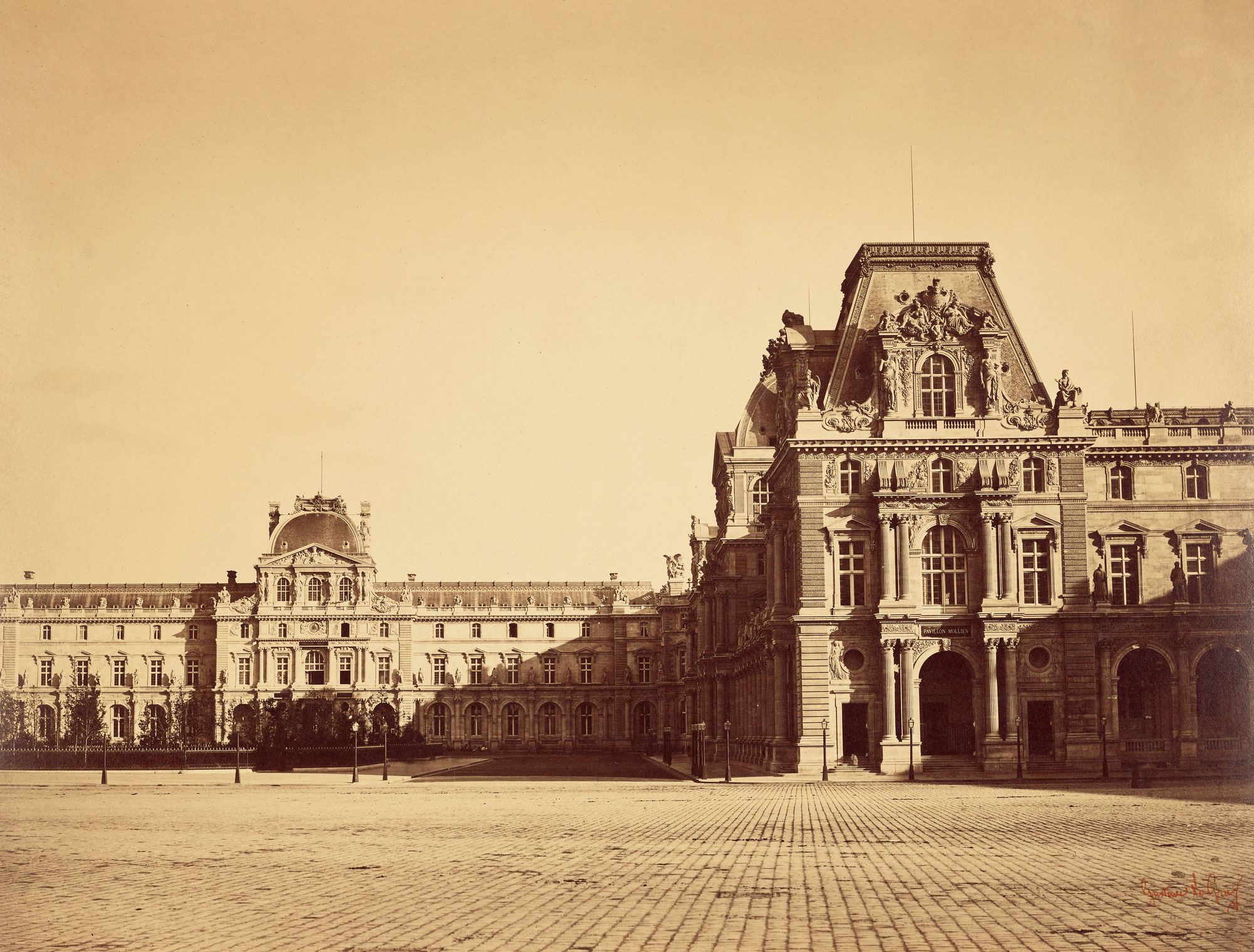
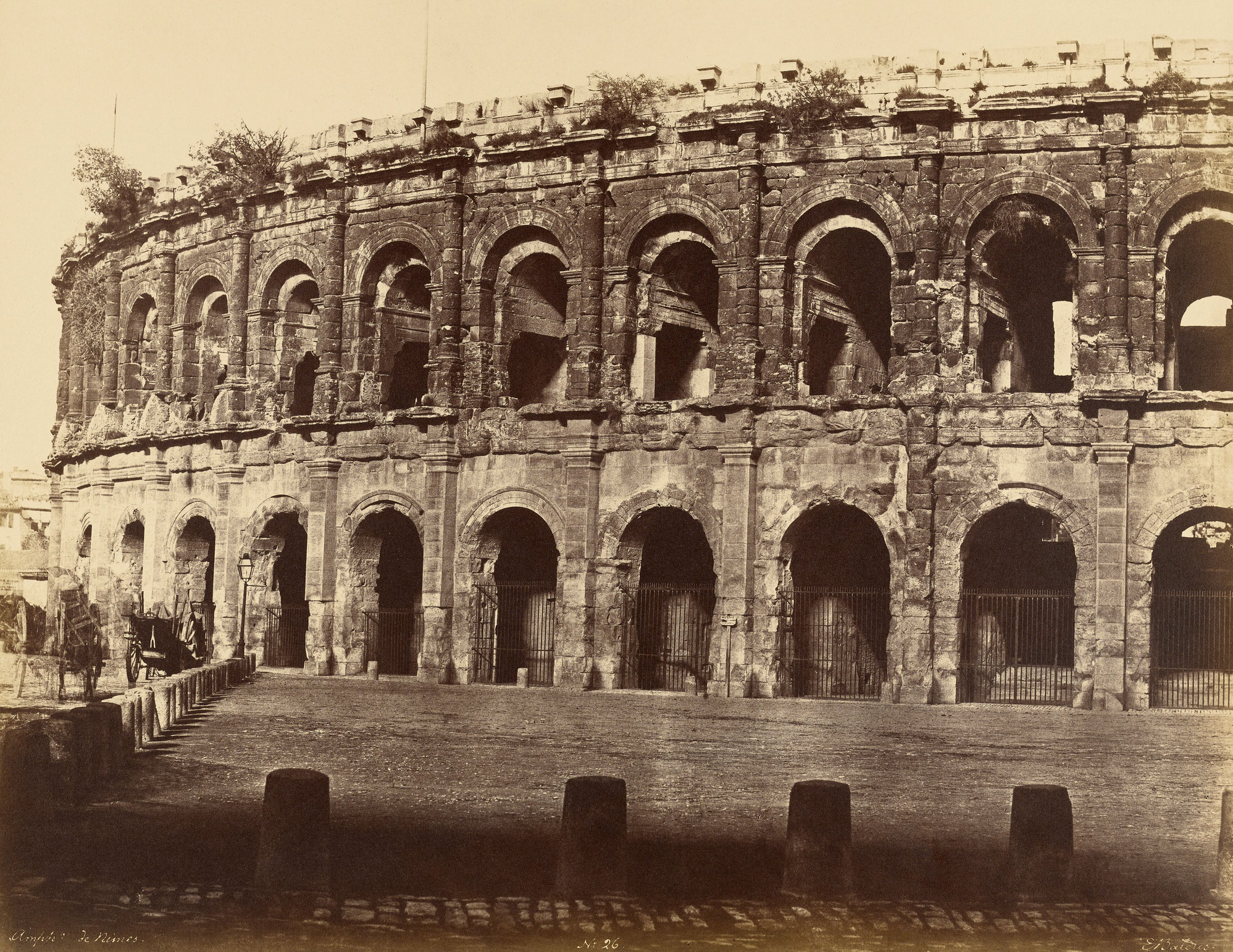
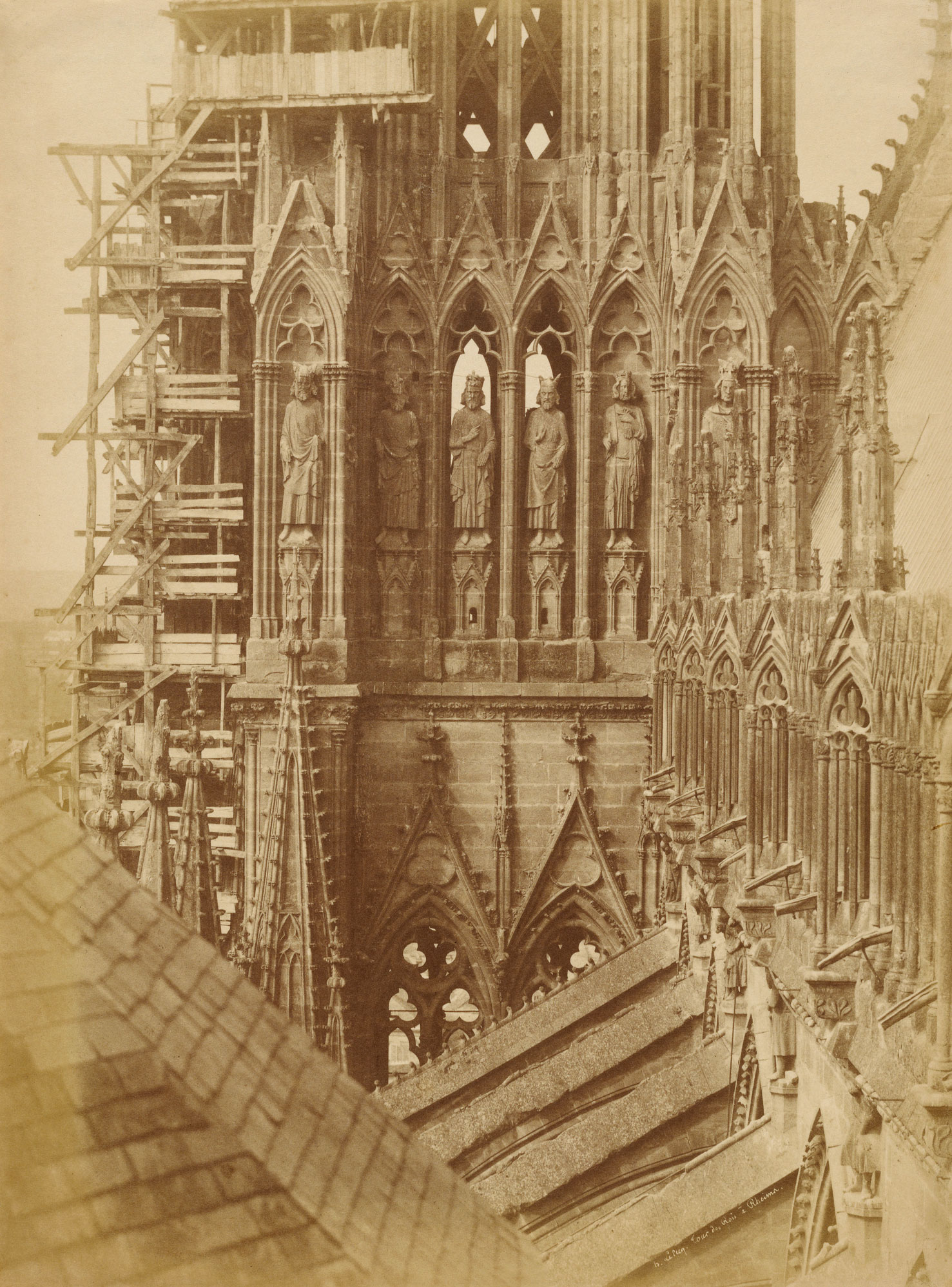


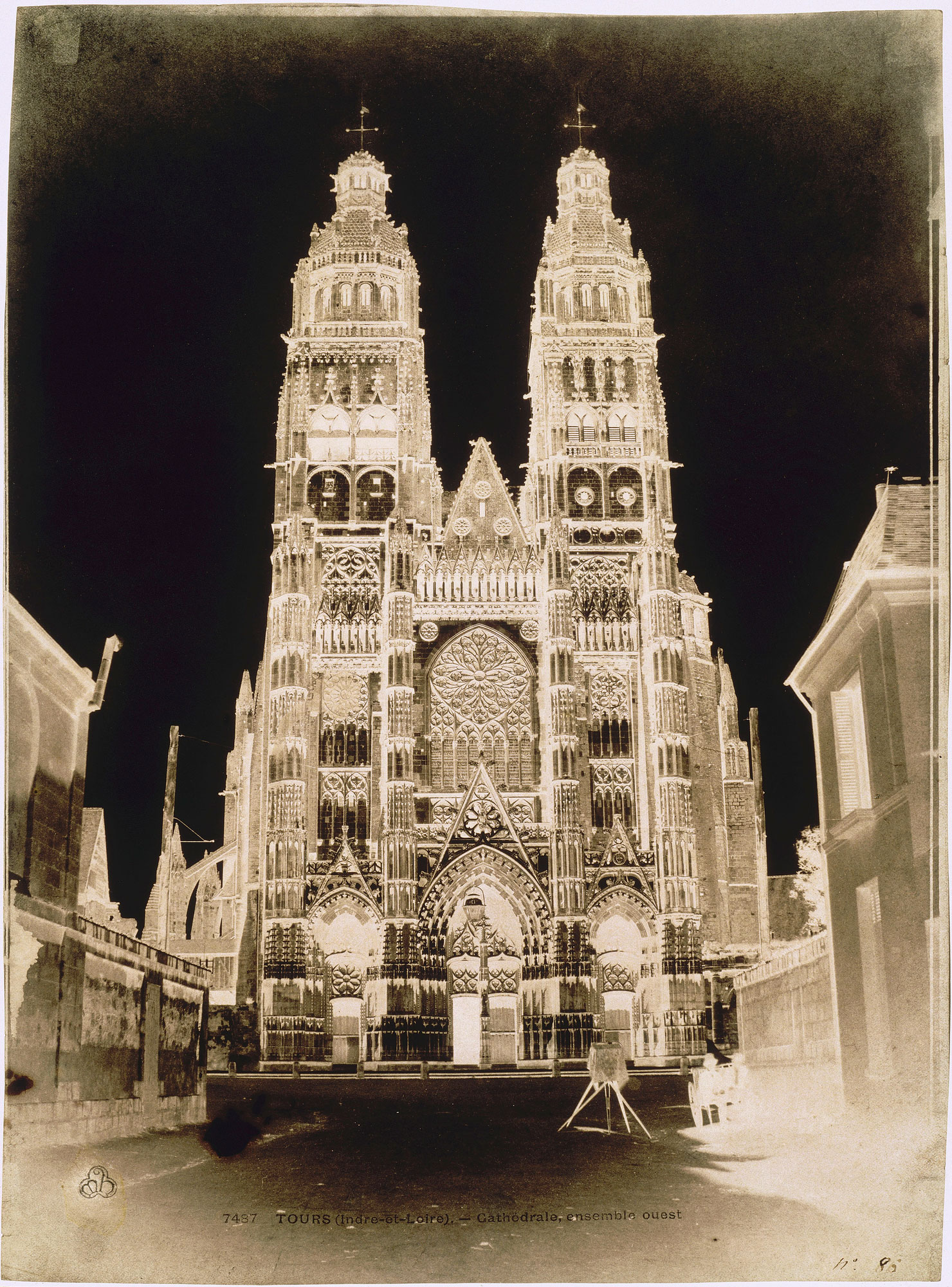
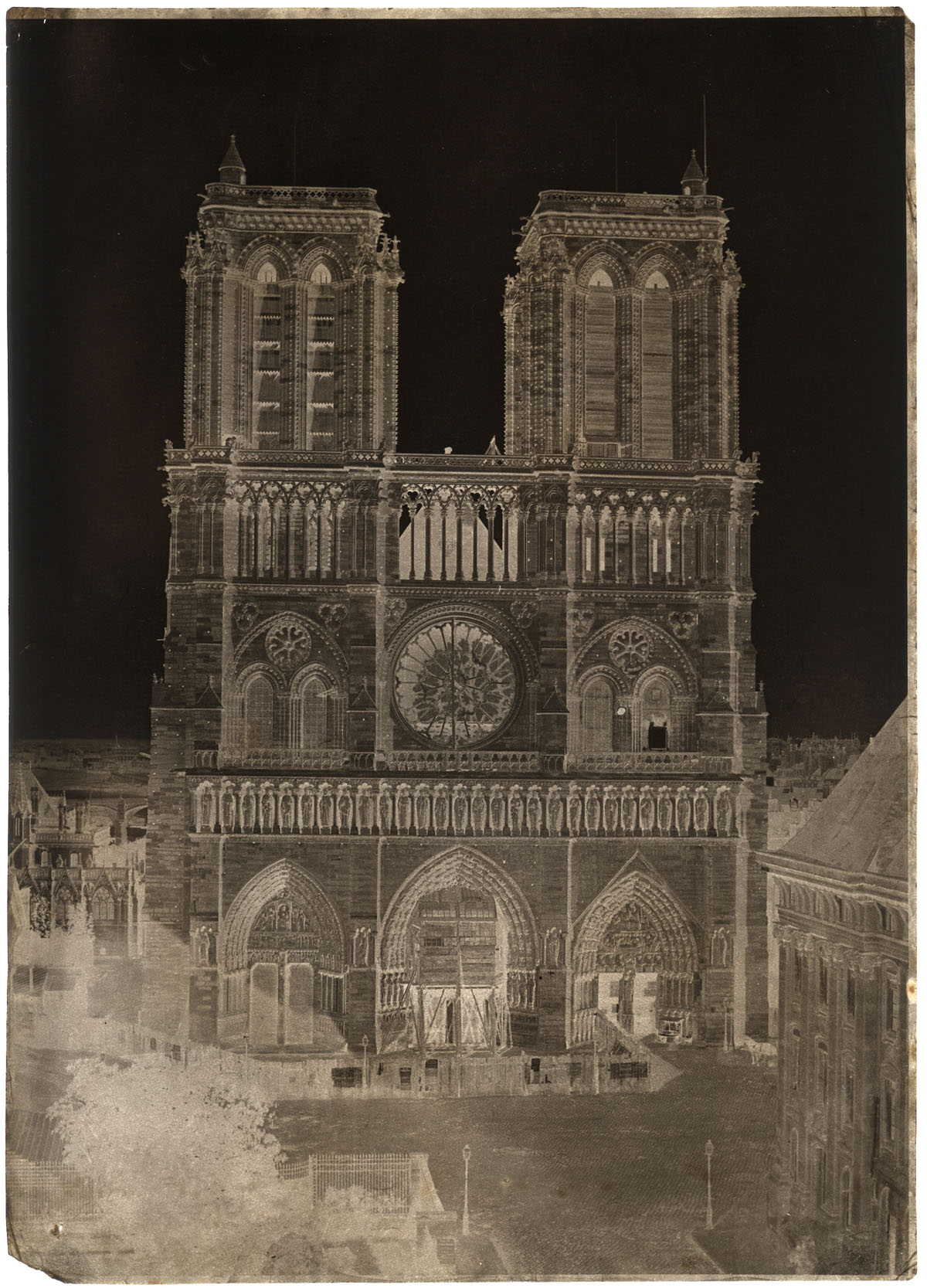

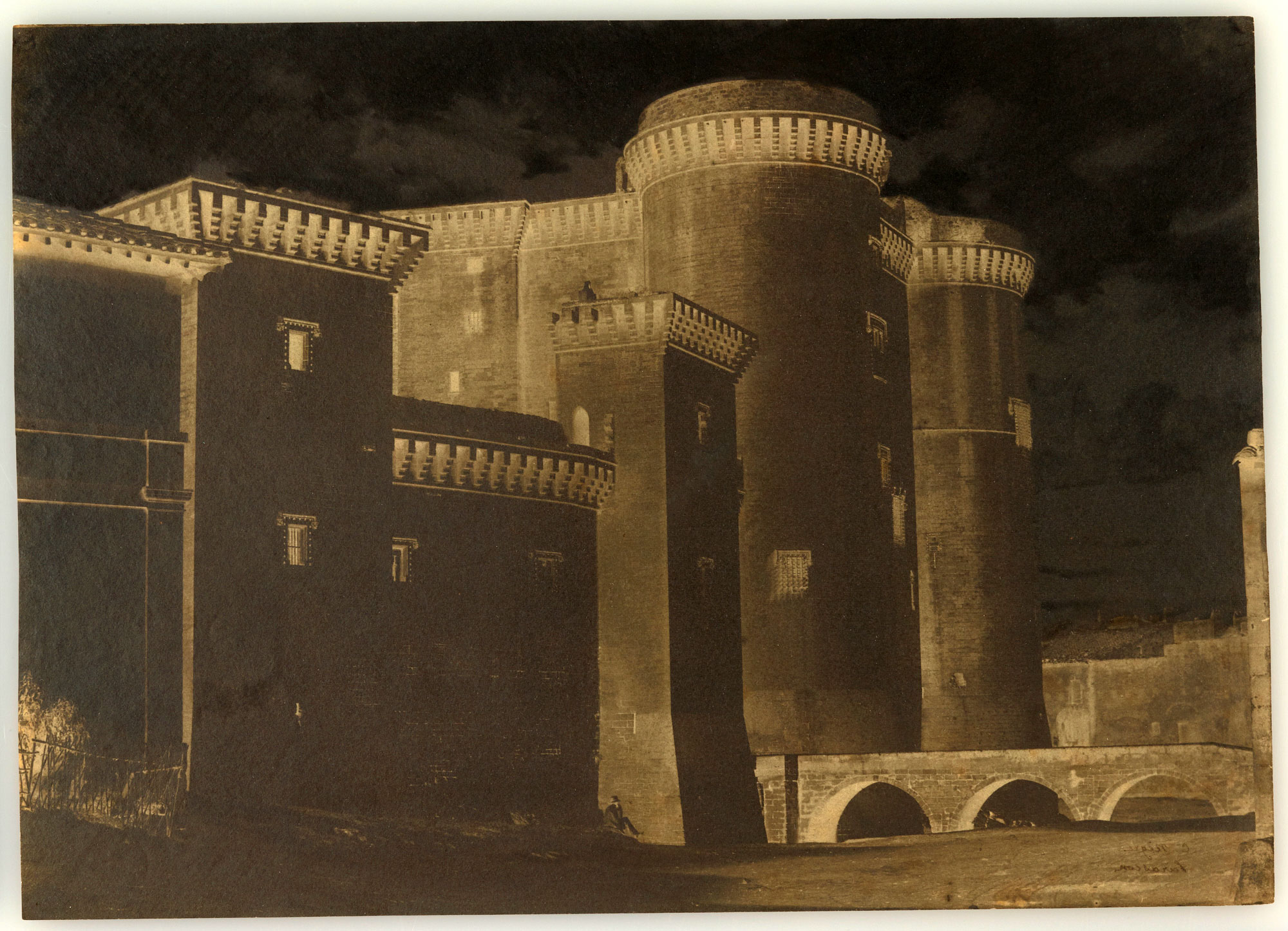
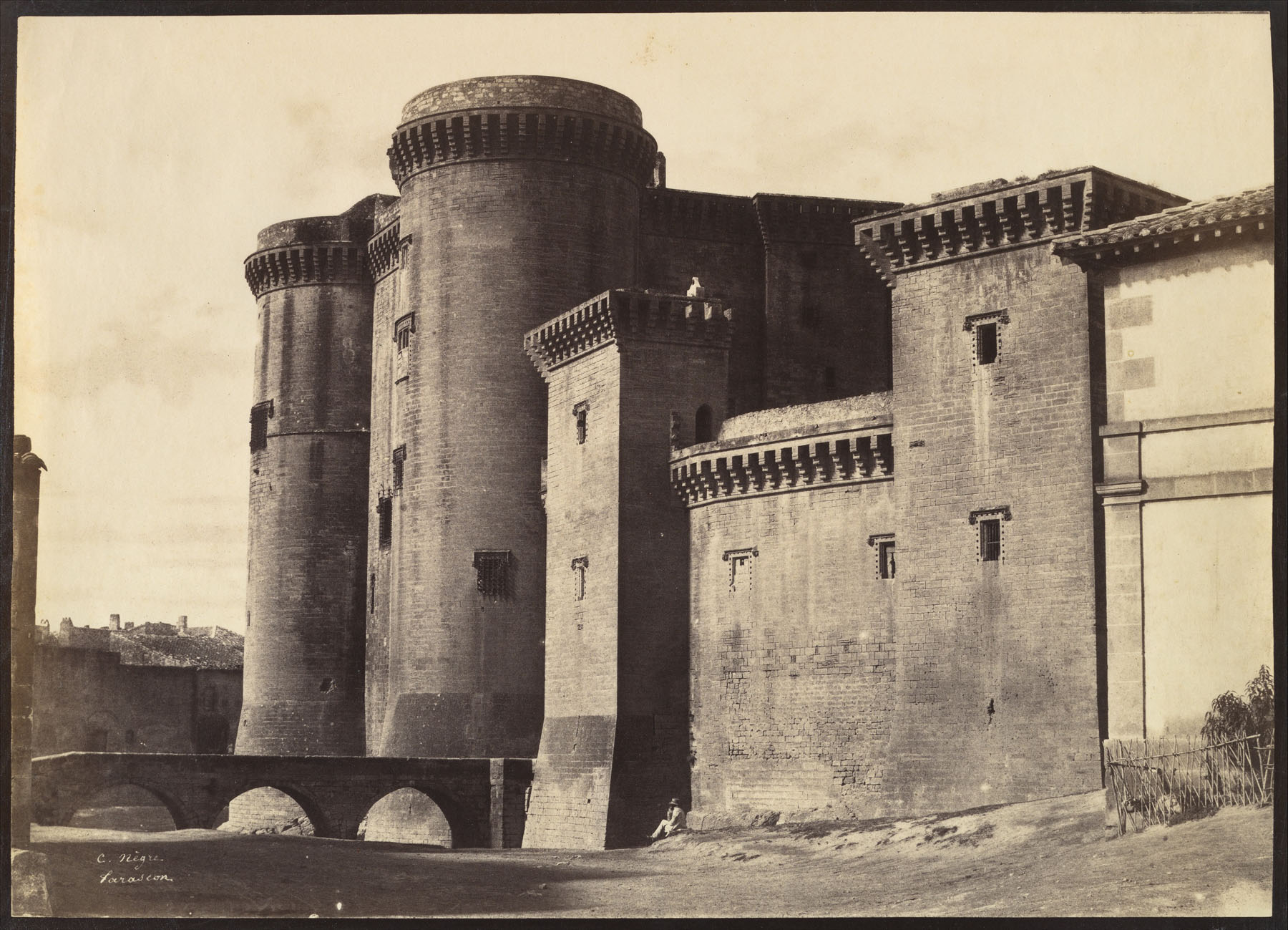

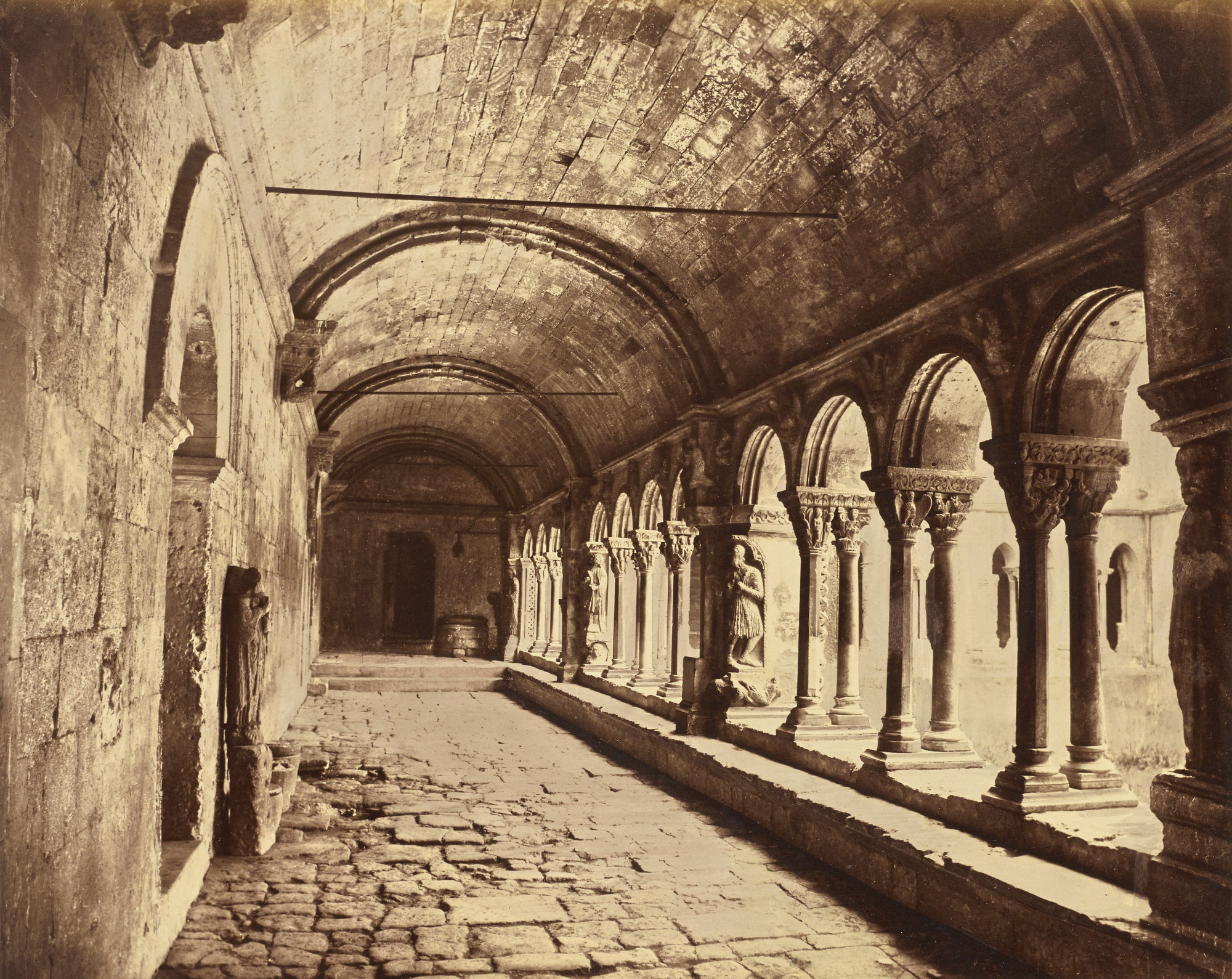
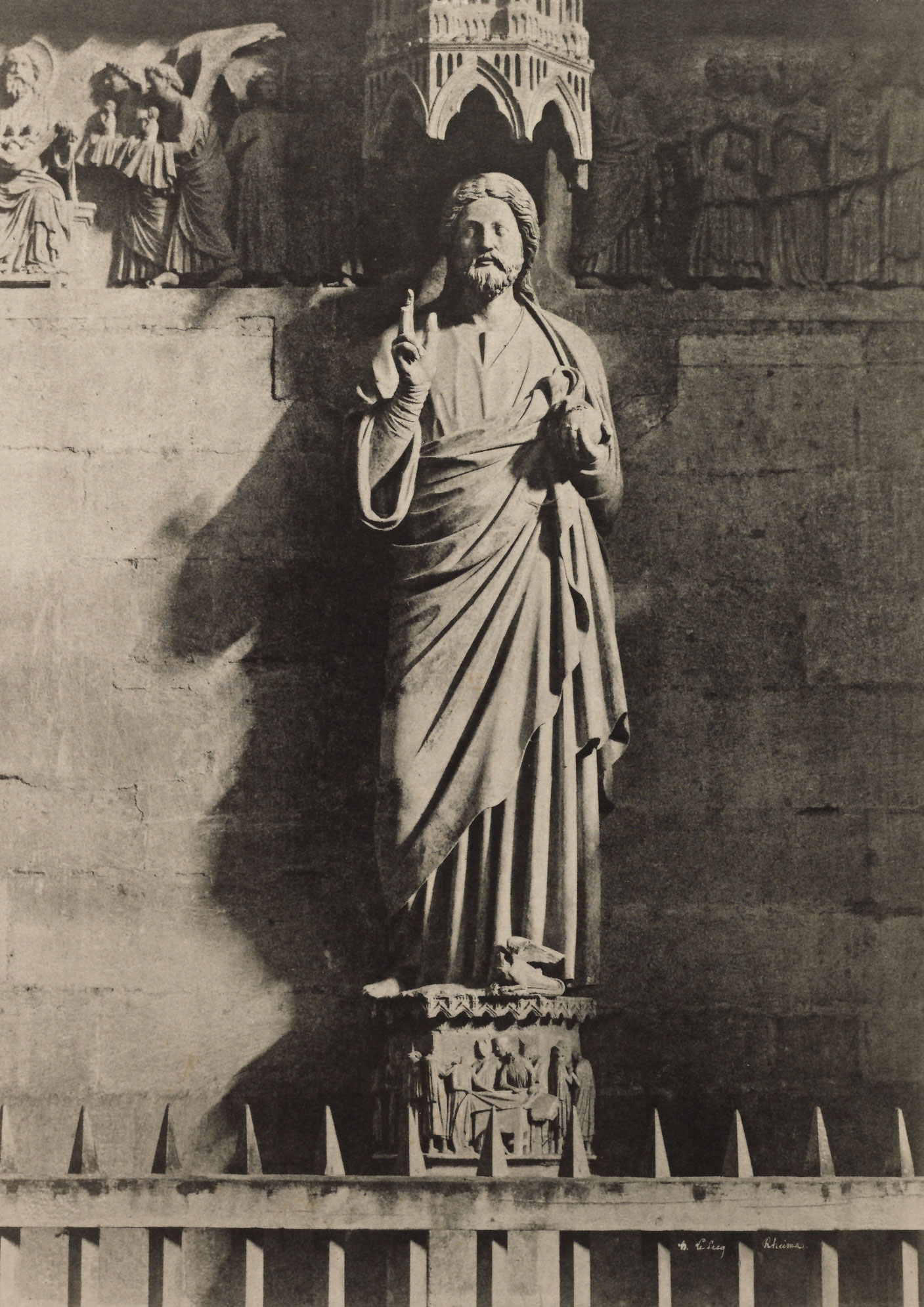
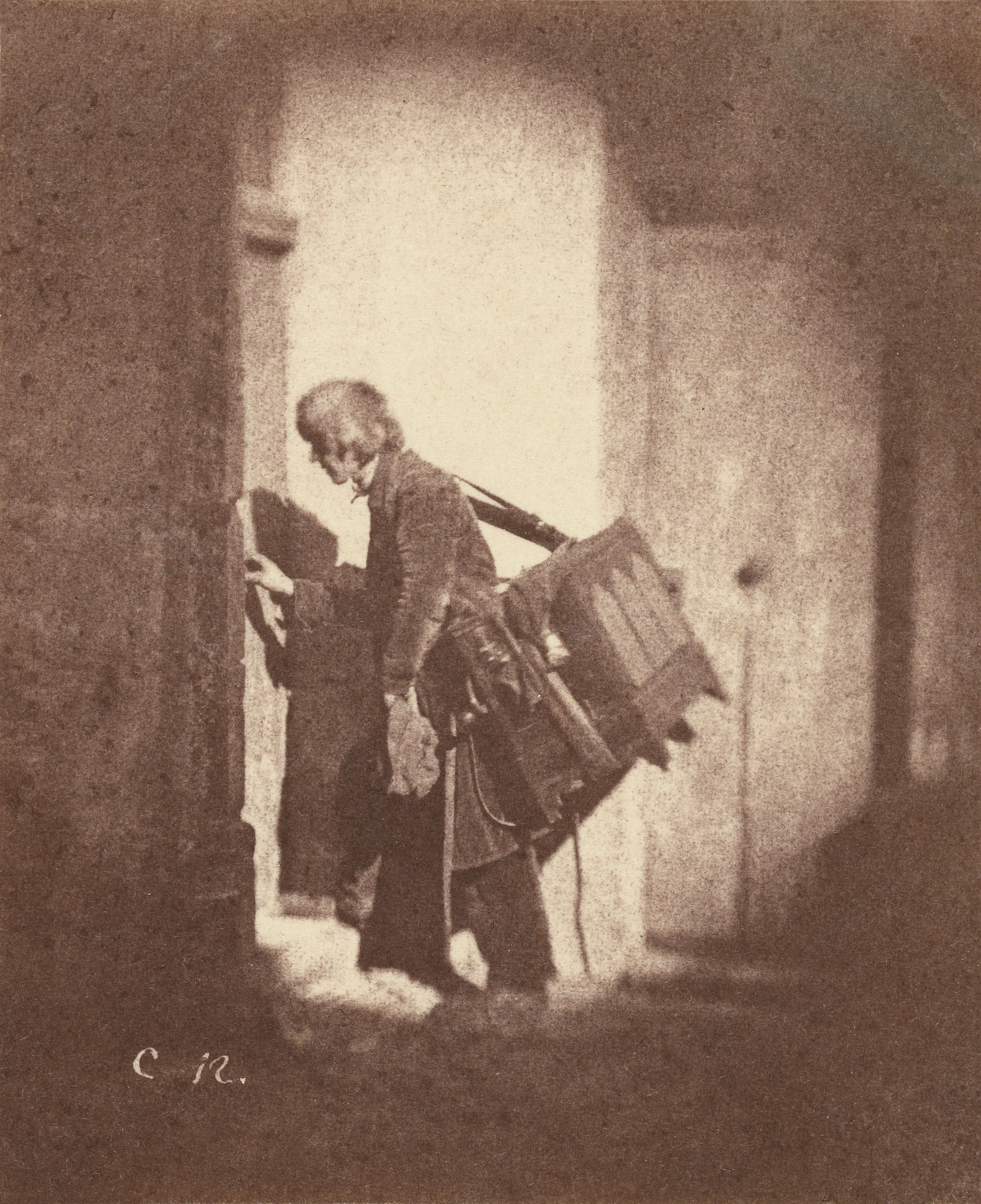
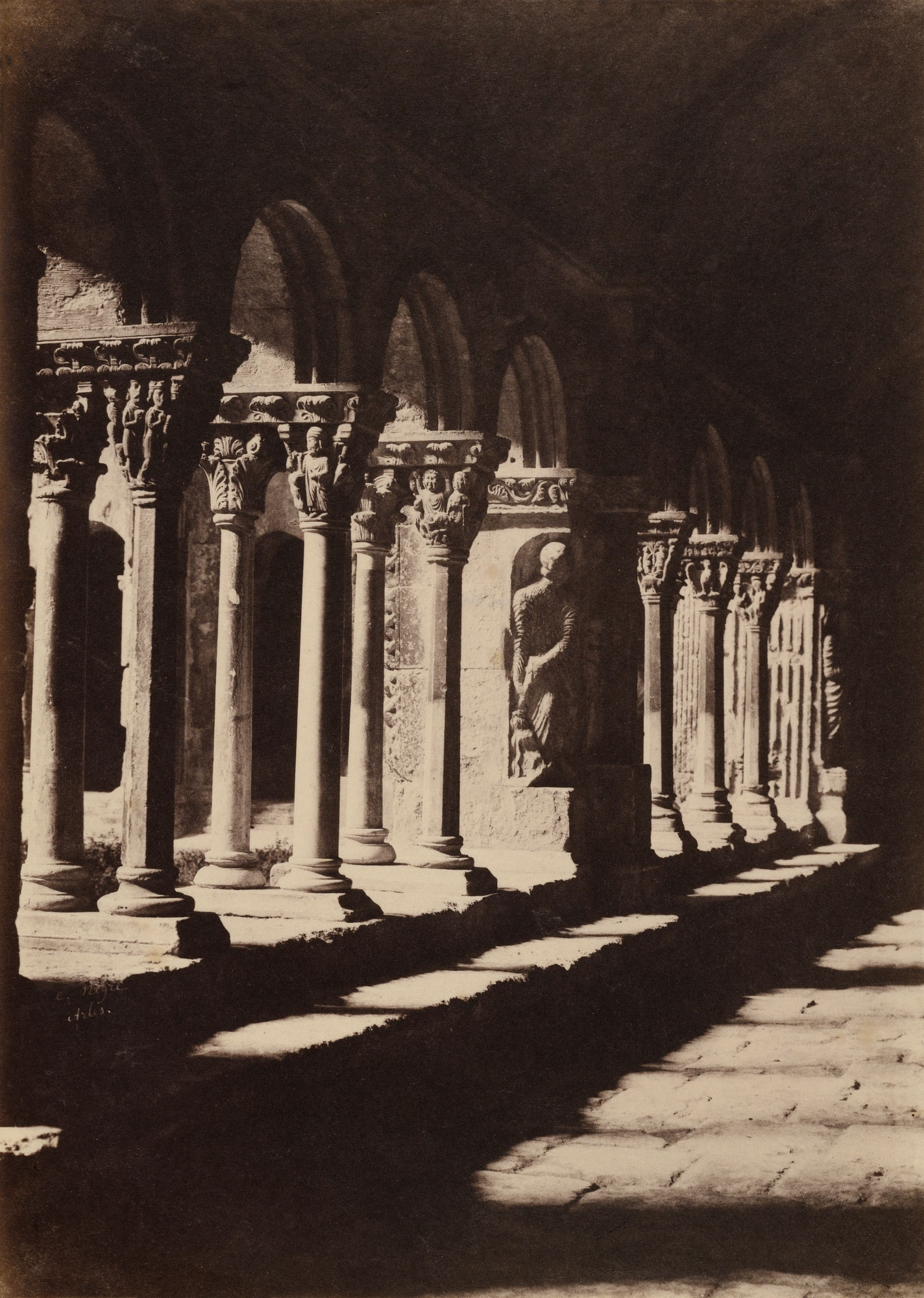

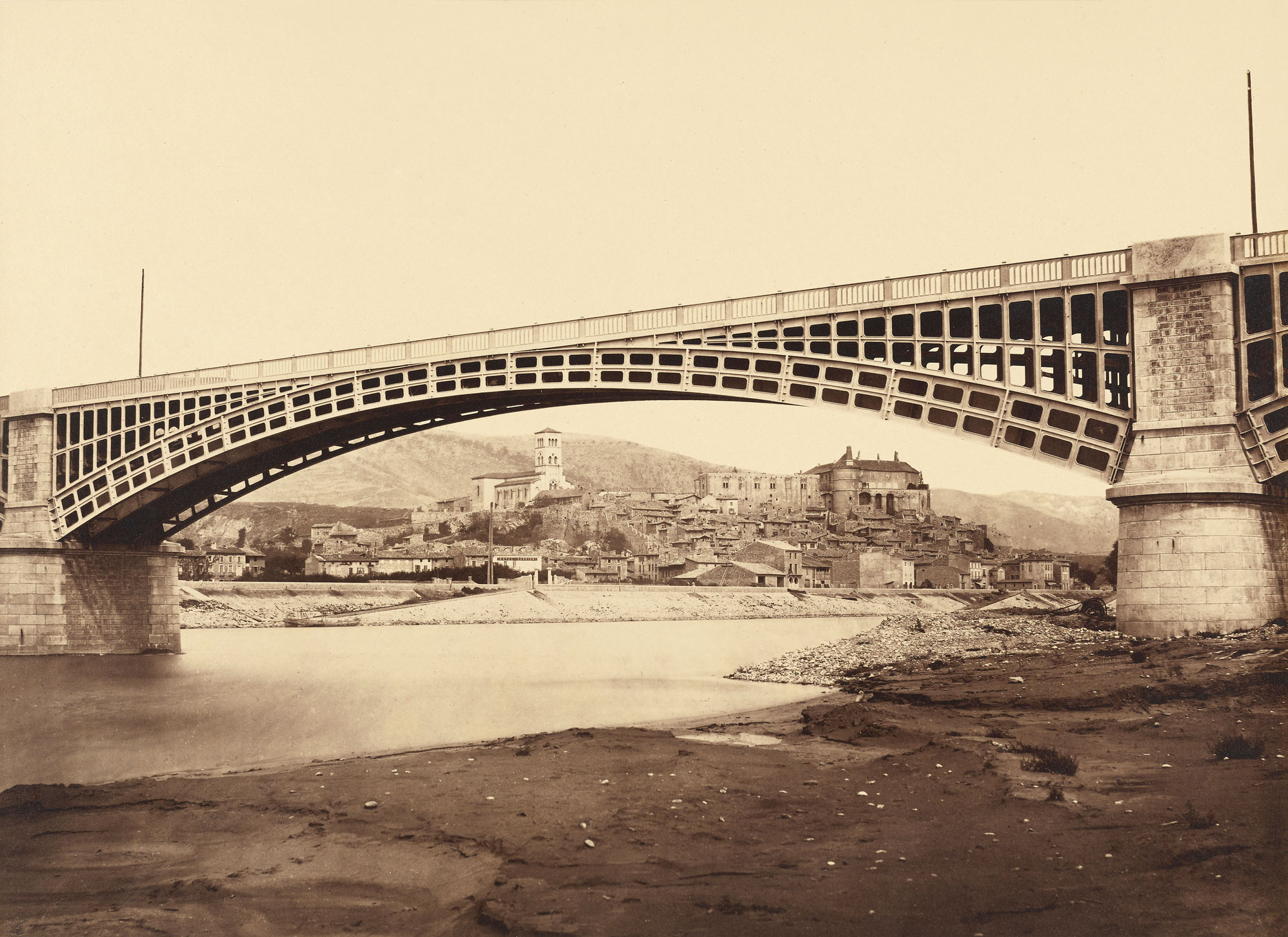
![Nadar [Gaspard Félix Tournachon] (French, 1820-1910) 'Self-Portrait' c. 1855](https://artblart.com/wp-content/uploads/2016/10/realideal12-web.jpg "Nadar [Gaspard Félix Tournachon] (French, 1820-1910) 'Self-Portrait' c. 1855")
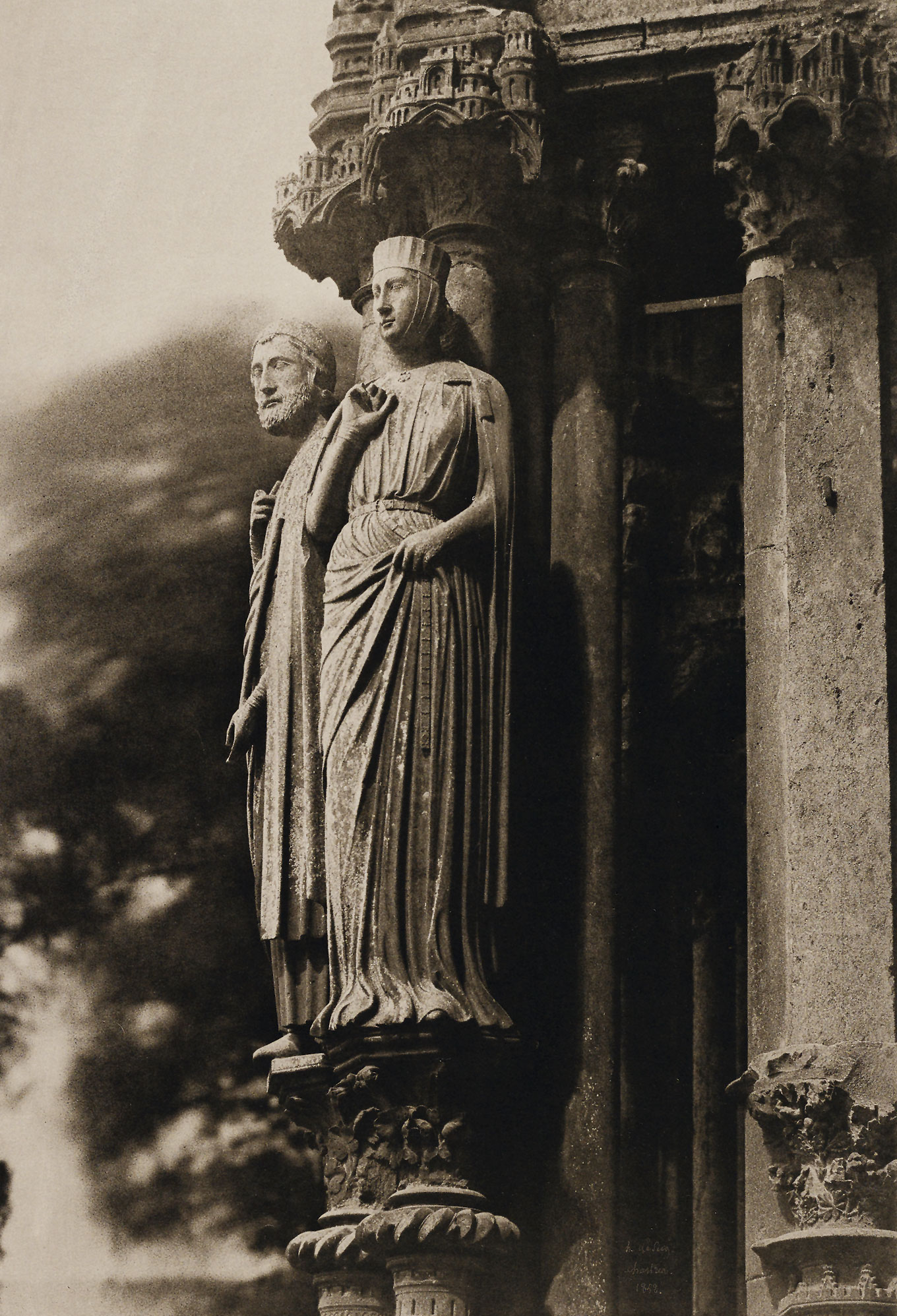
![Nadar [Gaspard Félix Tournachon] (French, 1820-1910) 'Jean-François Philibert Berthelier, Actor' 1856-1859](https://artblart.com/wp-content/uploads/2016/10/realideal21-web.jpg "Nadar [Gaspard Félix Tournachon] (French, 1820-1910) 'Jean-François Philibert Berthelier, Actor' 1856-1859")
![Nadar [Gaspard Félix Tournachon] (French, 1820-1910) 'George Sand (Amandine-Aurore-Lucile Dupin), Writer' c. 1865](https://artblart.com/wp-content/uploads/2016/10/realideal5-web.jpg "Nadar [Gaspard Félix Tournachon] (French, 1820-1910) 'George Sand (Amandine-Aurore-Lucile Dupin), Writer' c. 1865")
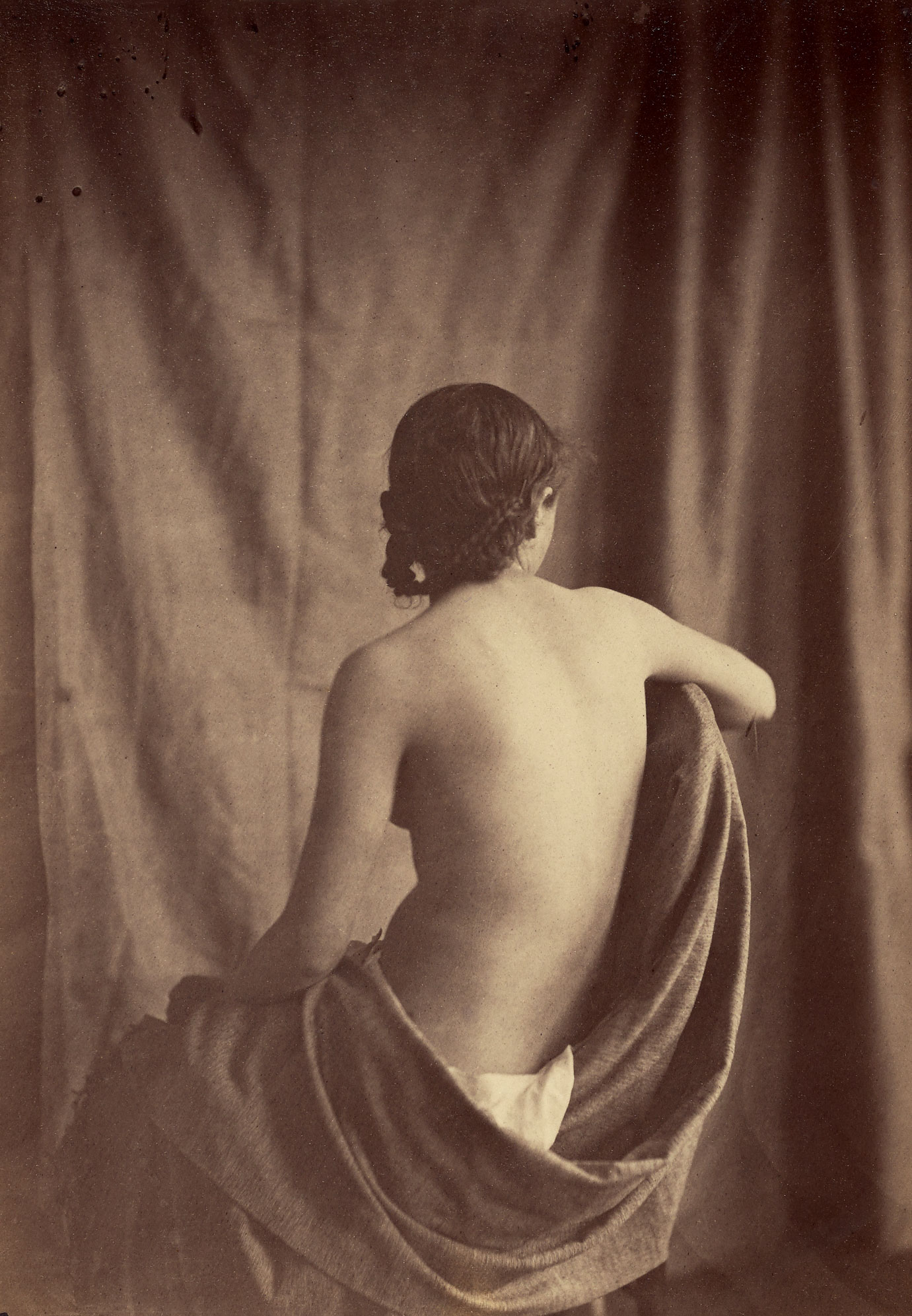
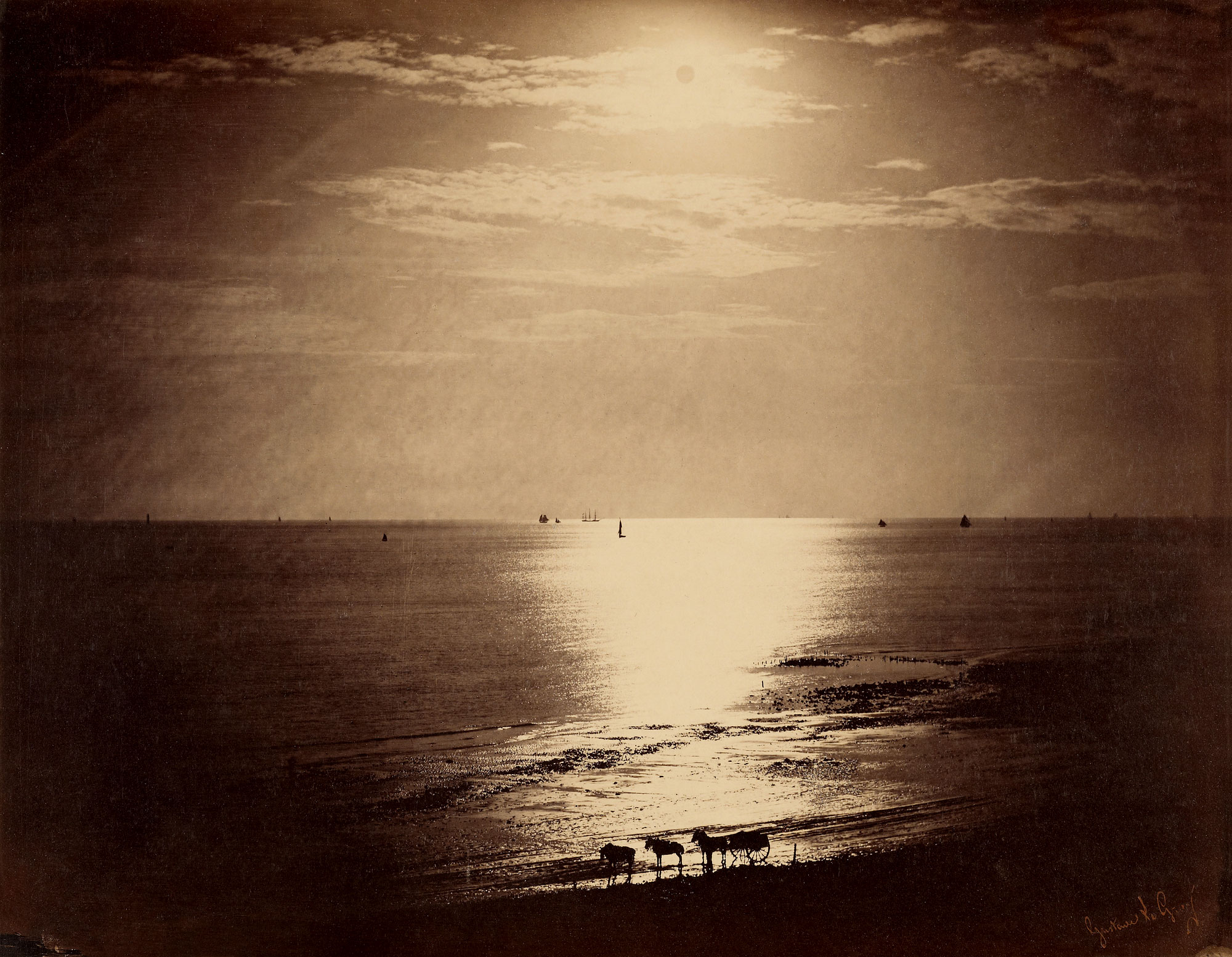

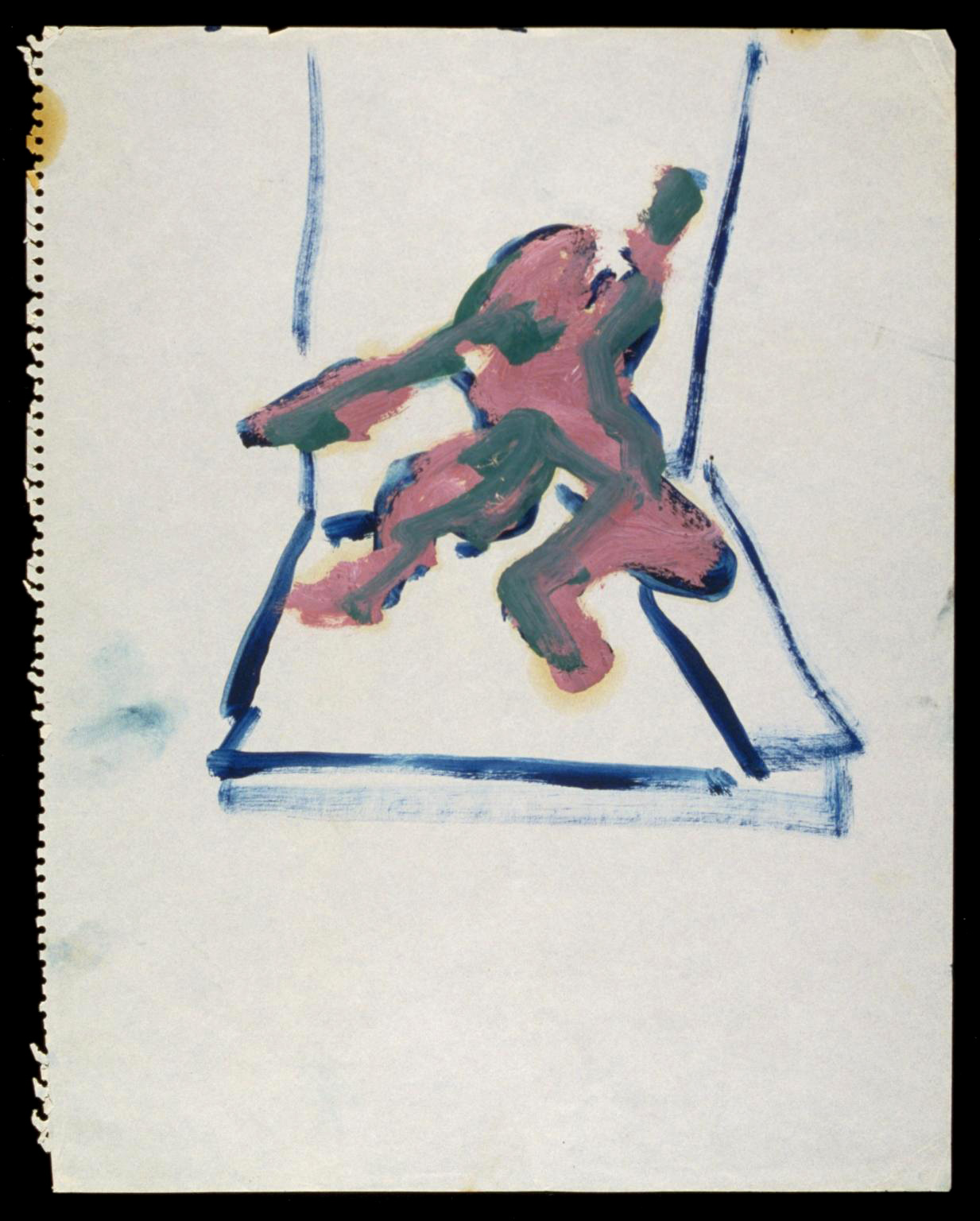

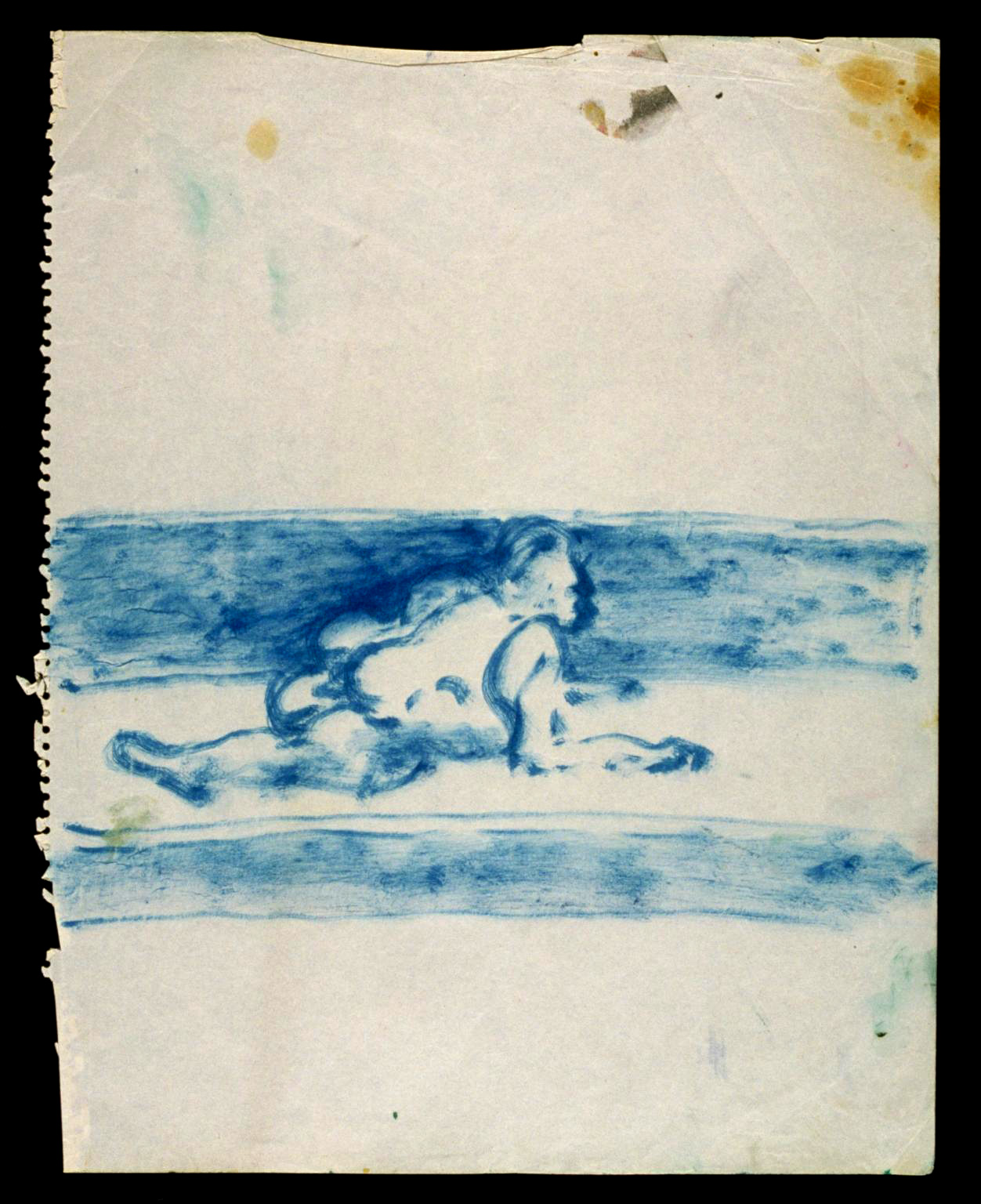


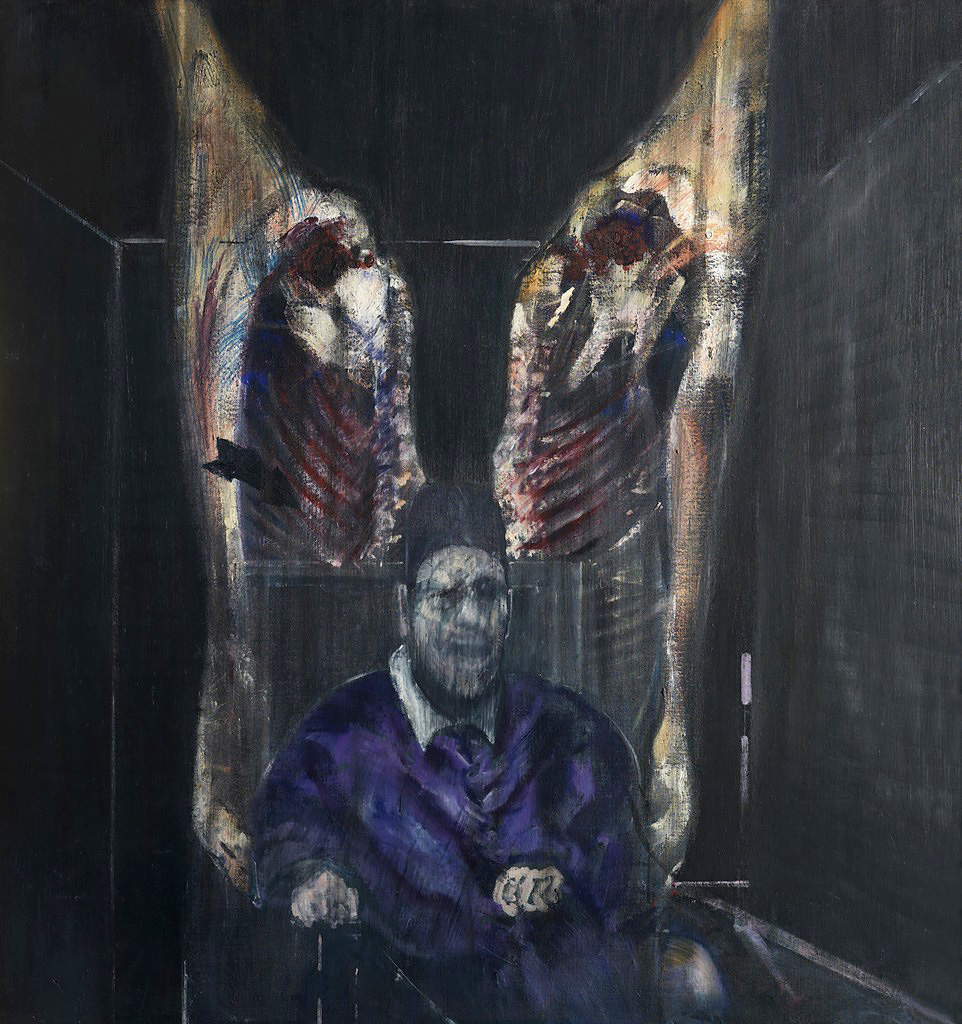
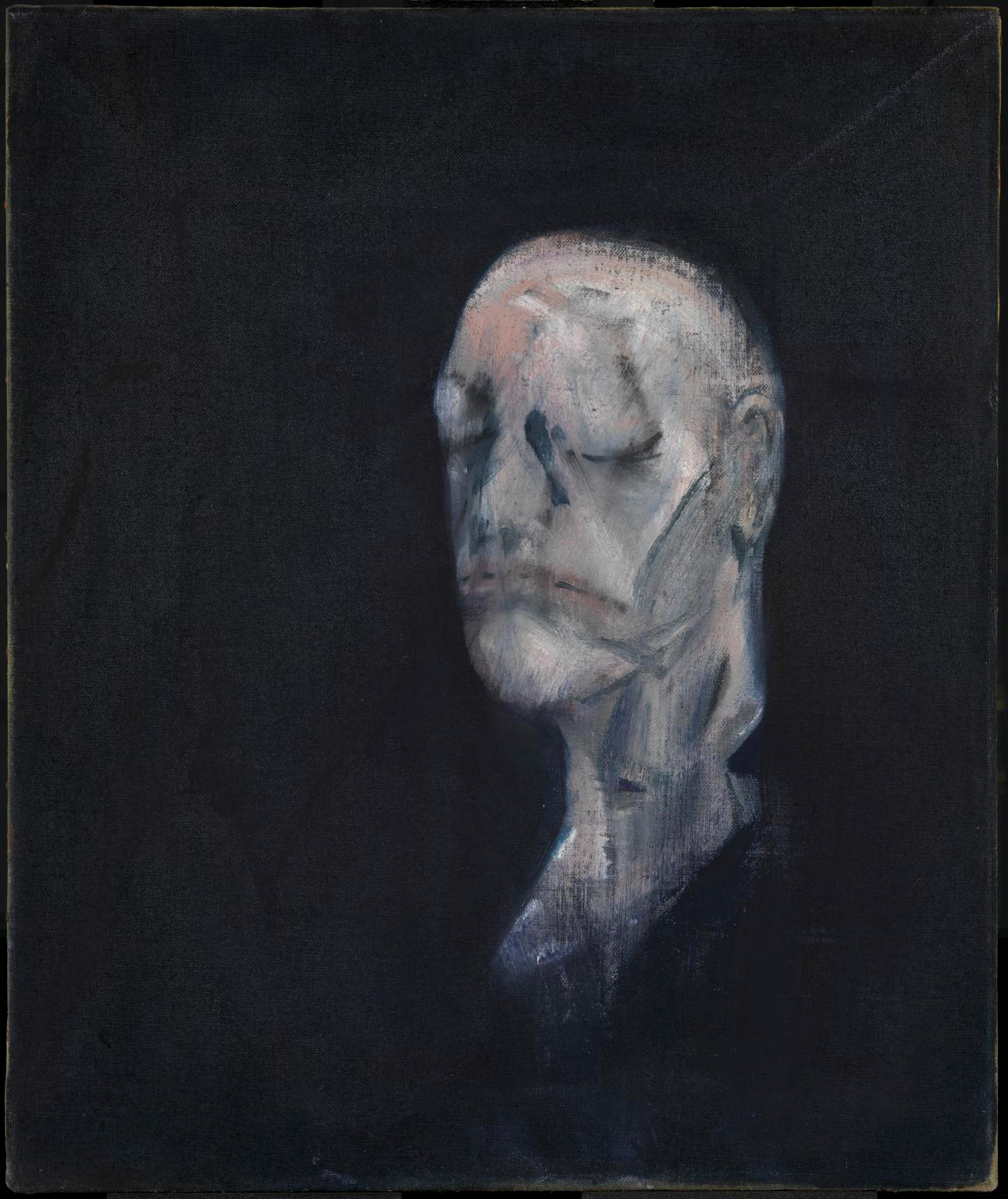
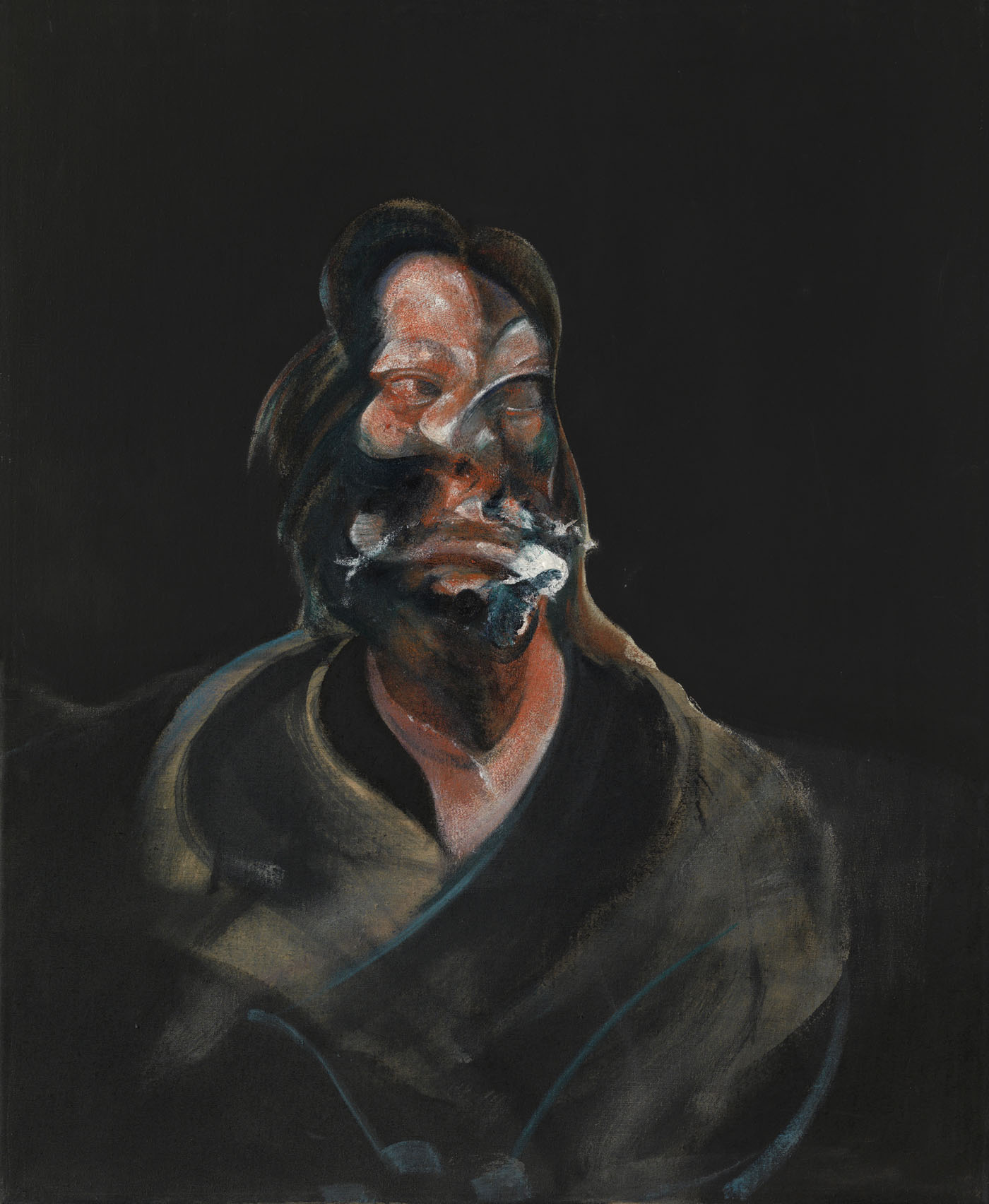


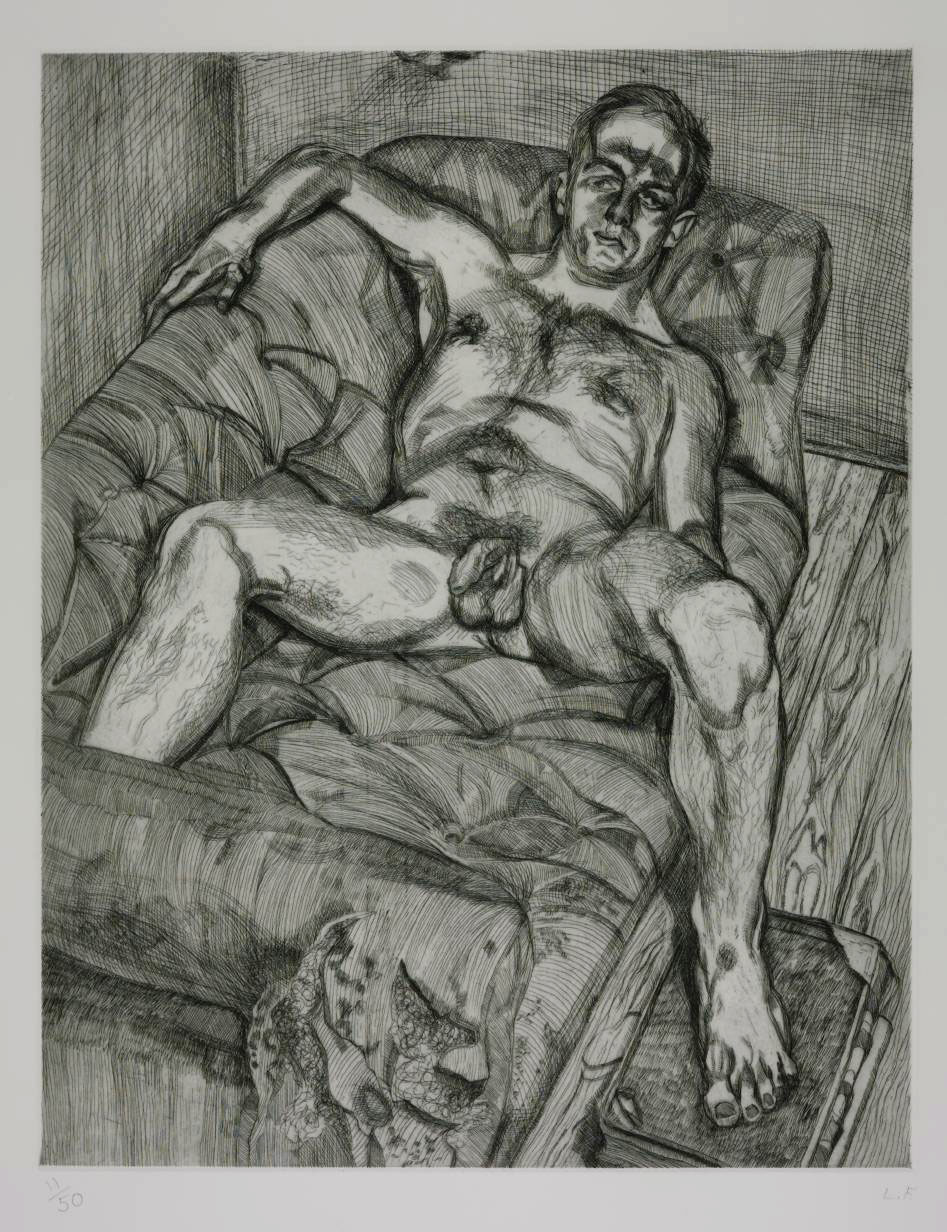


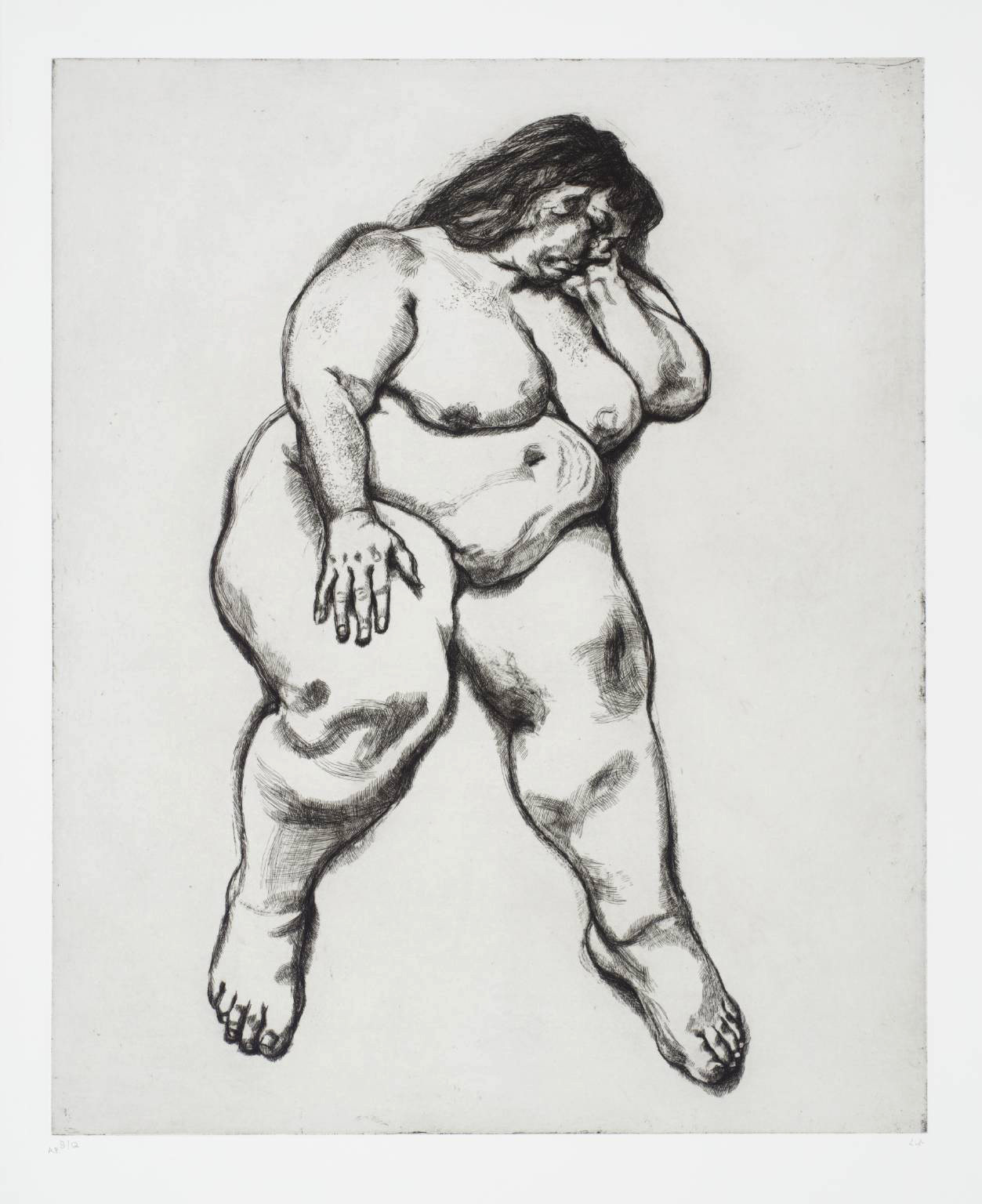


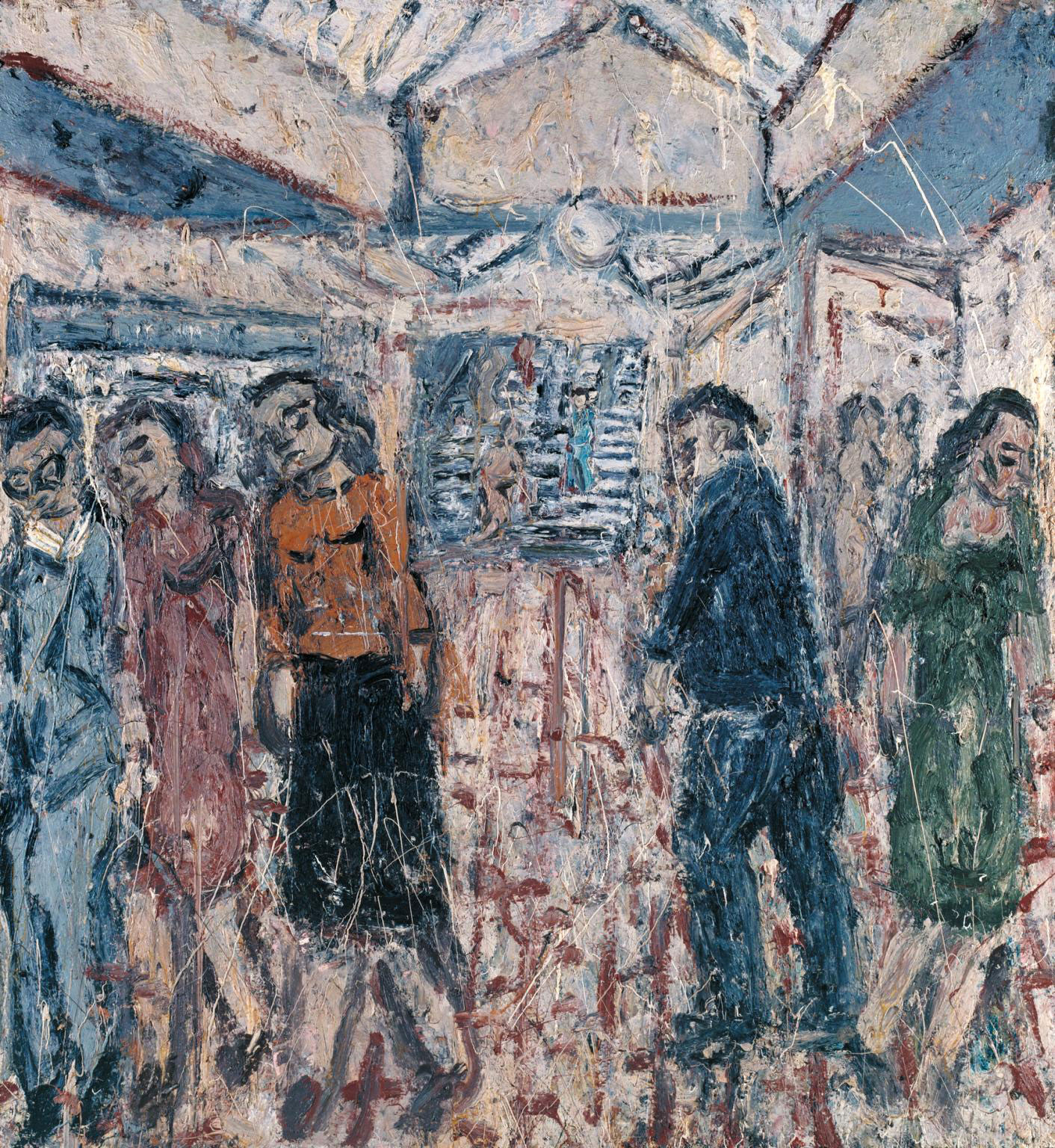

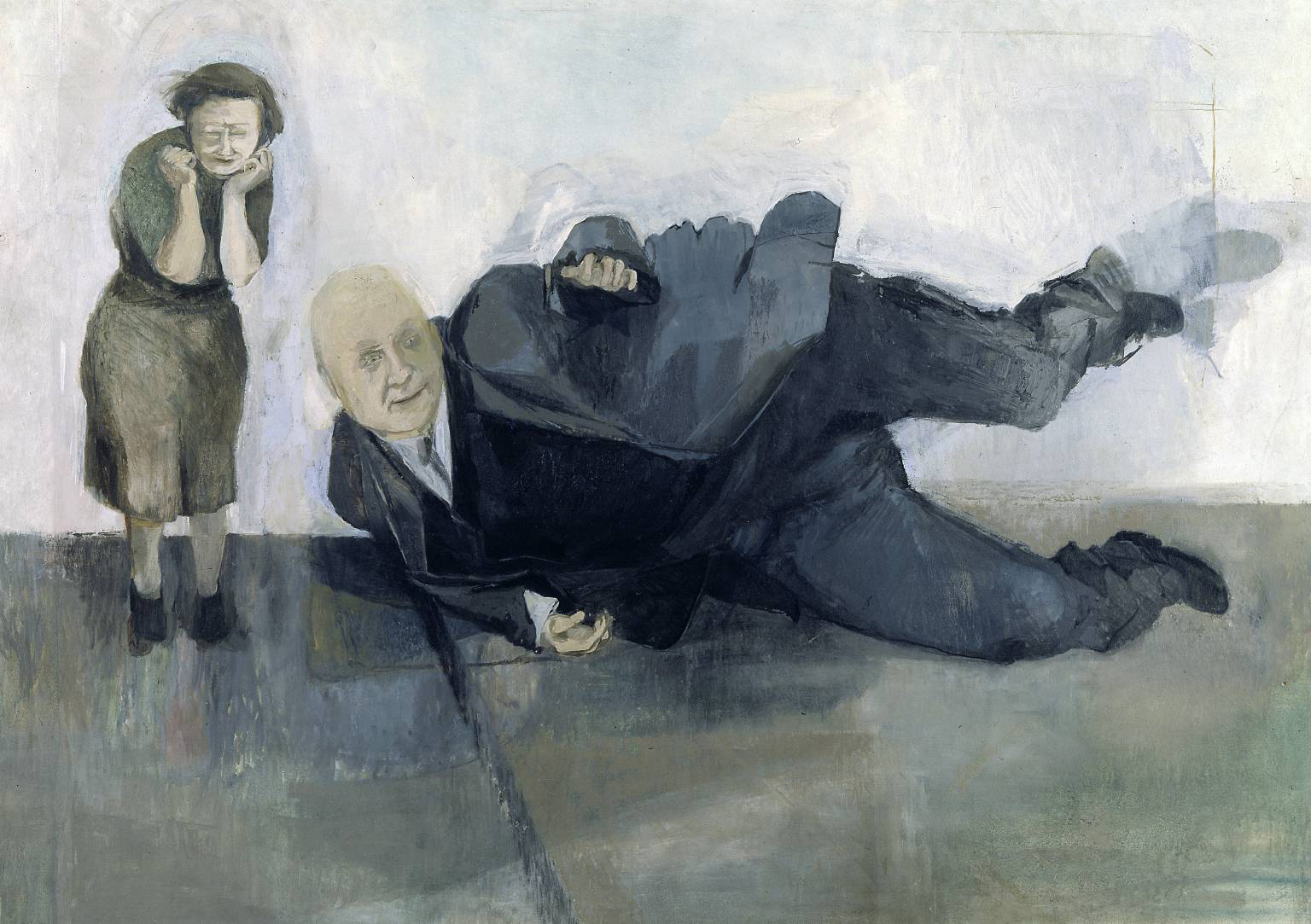


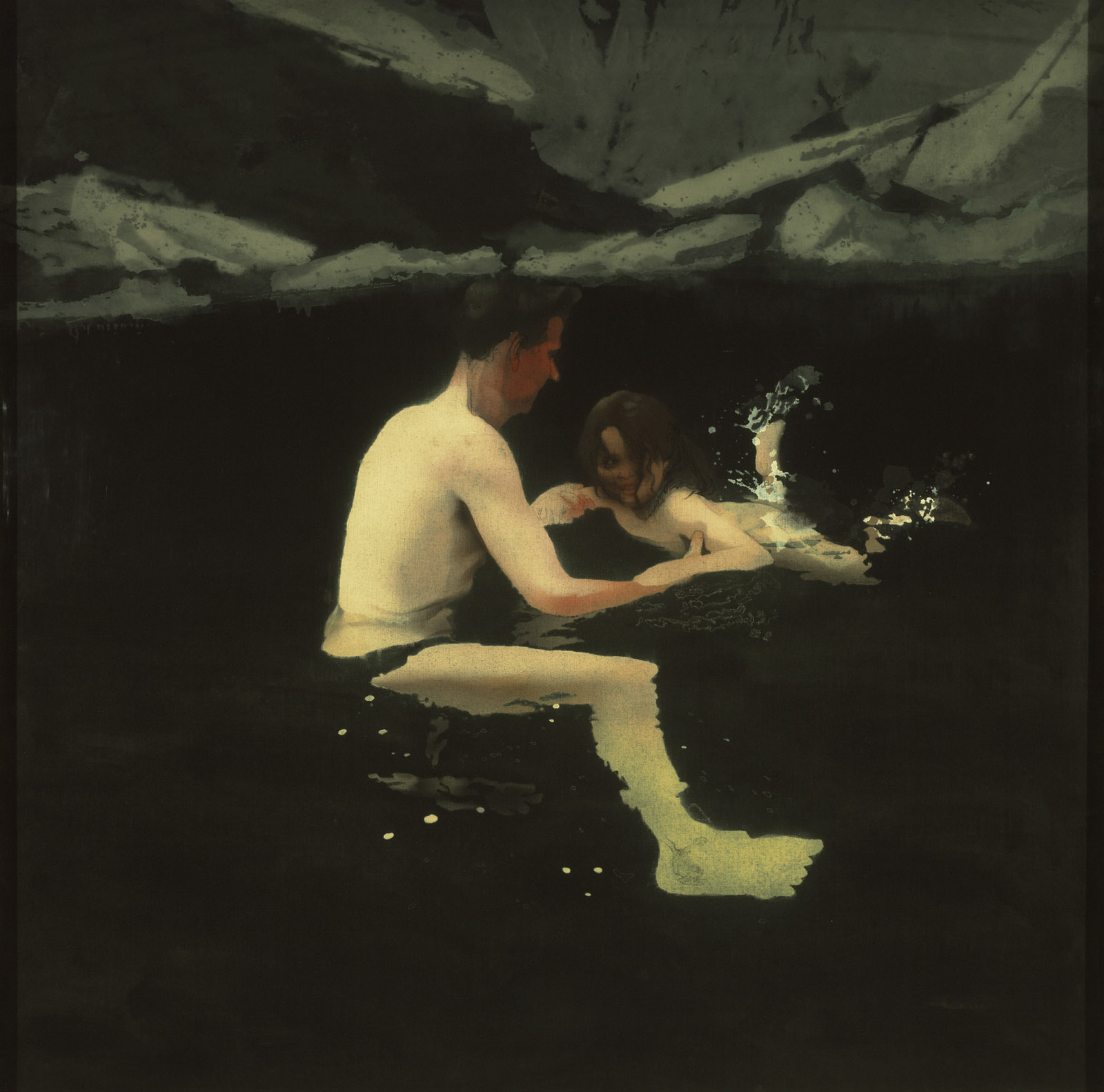


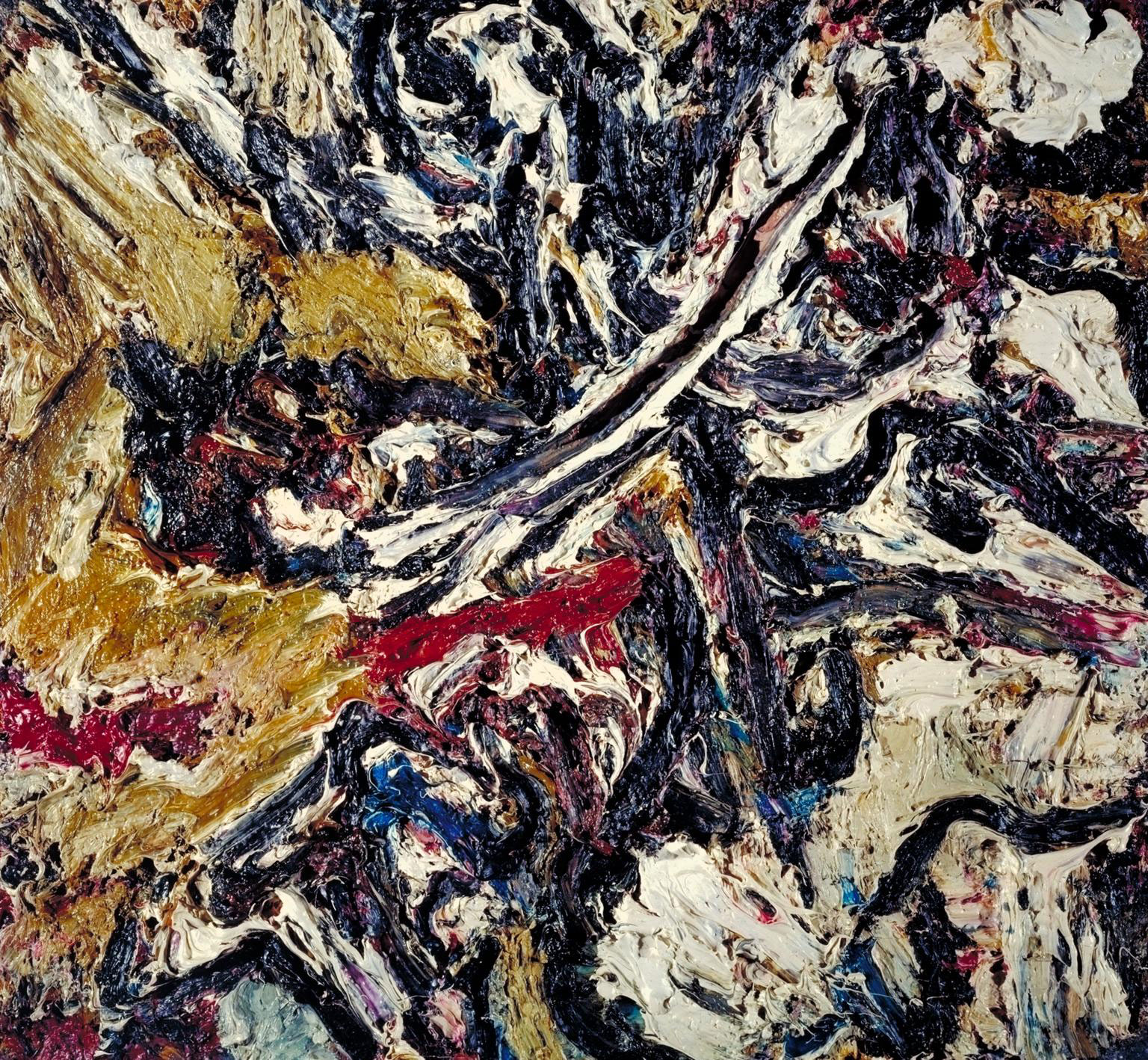

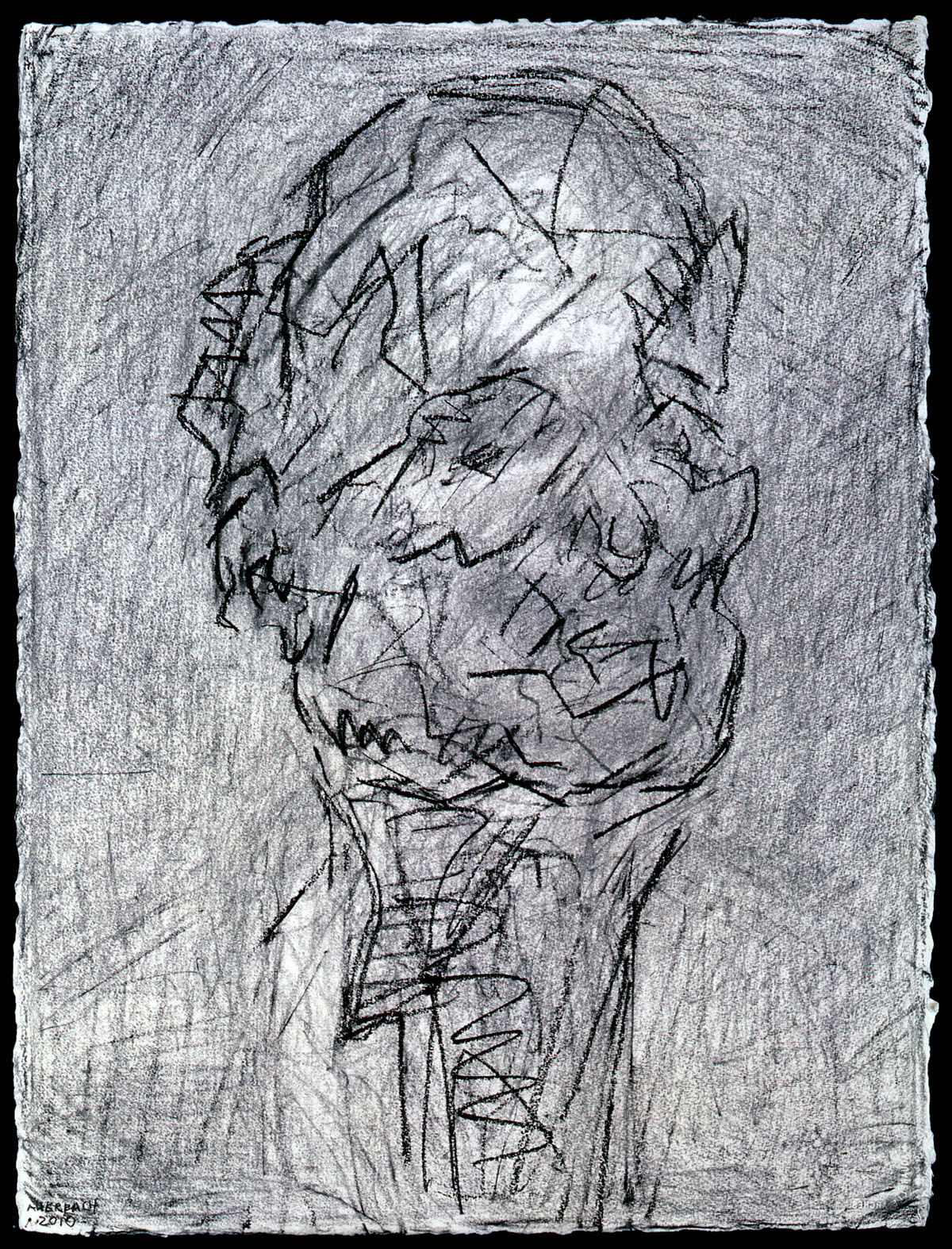
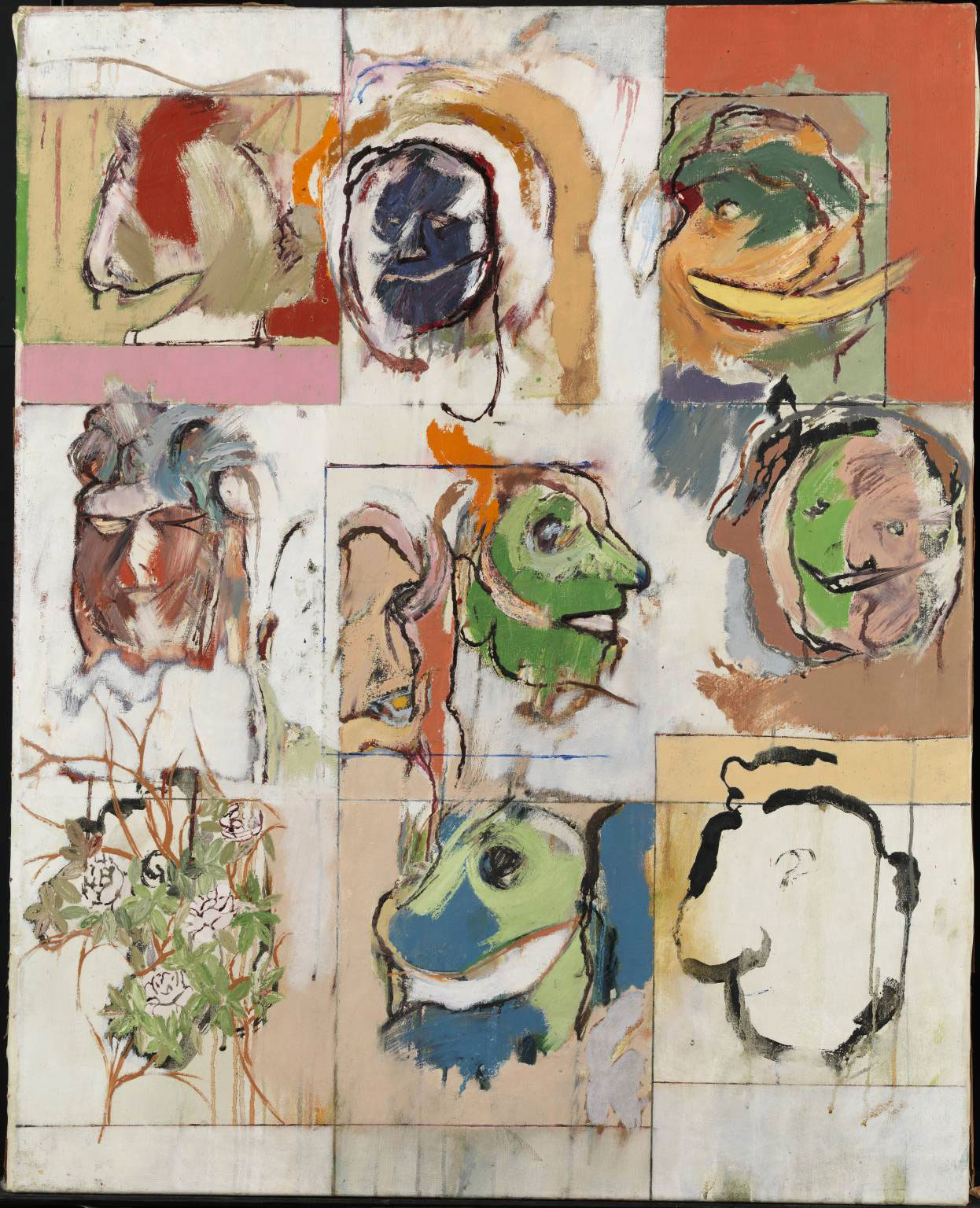
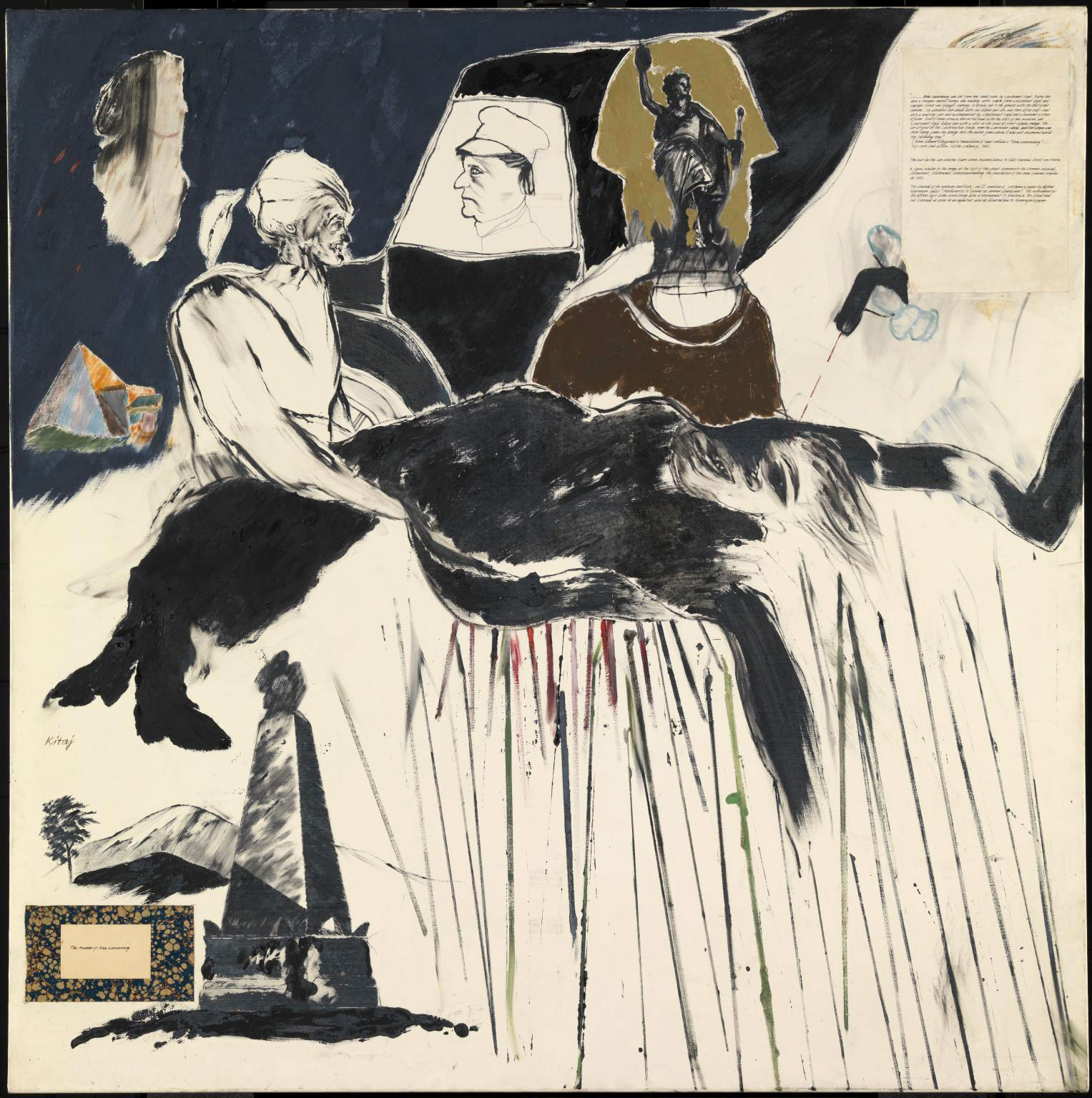


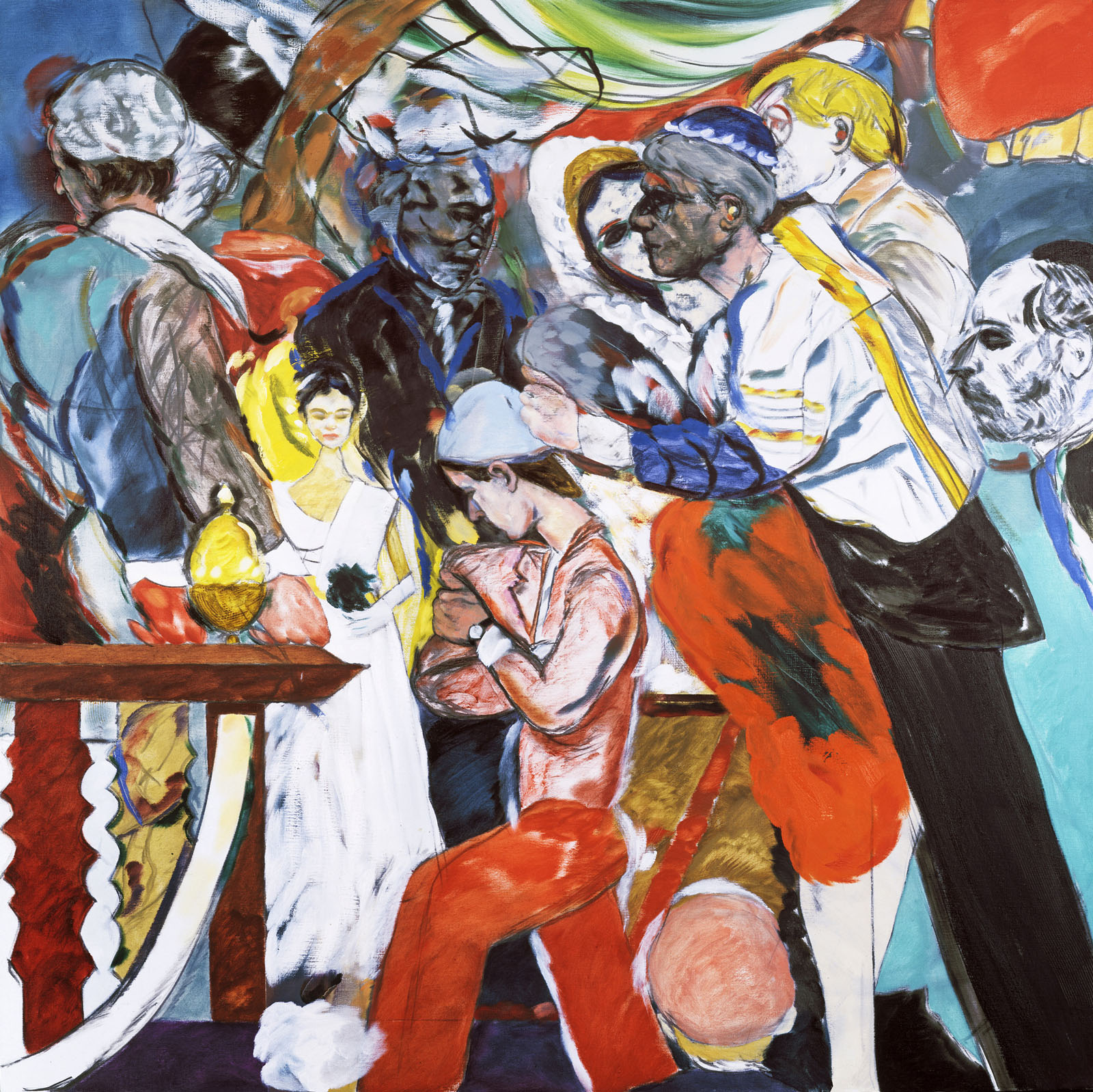

![Alfred Stieglitz (American, 1864-1946) 'Untitled [O'Keeffe with sketchpad and watercolors]' 1918 from the exhibition 'Georgia O'Keeffe' at Tate Modern, London, July - Oct, 2016](https://artblart.com/wp-content/uploads/2016/10/georgia_okeeffe_by_stieglitz_1918-web.jpg "Alfred Stieglitz (American, 1864-1946) 'Untitled [O'Keeffe with sketchpad and watercolors]' 1918 from the exhibition 'Georgia O'Keeffe' at Tate Modern, London, July - Oct, 2016")
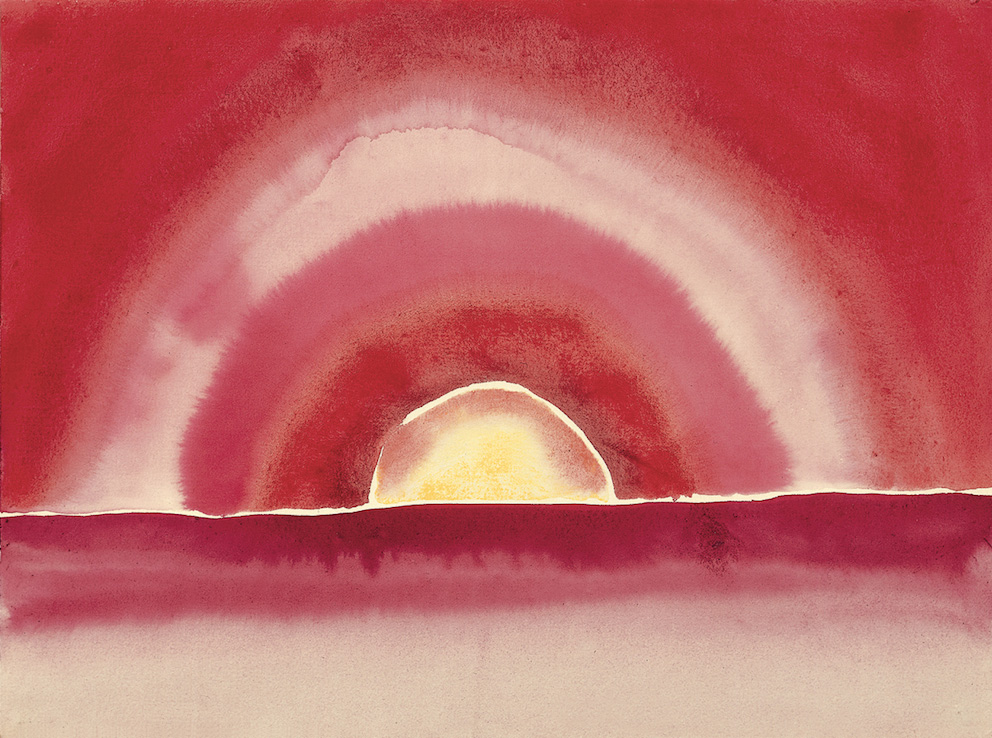

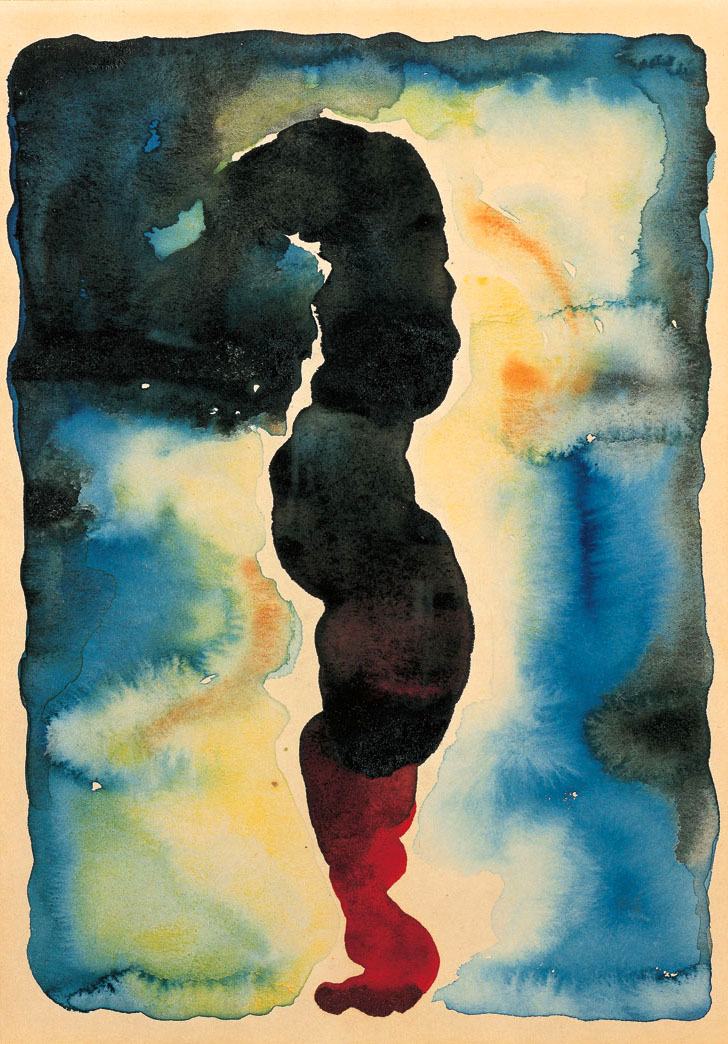
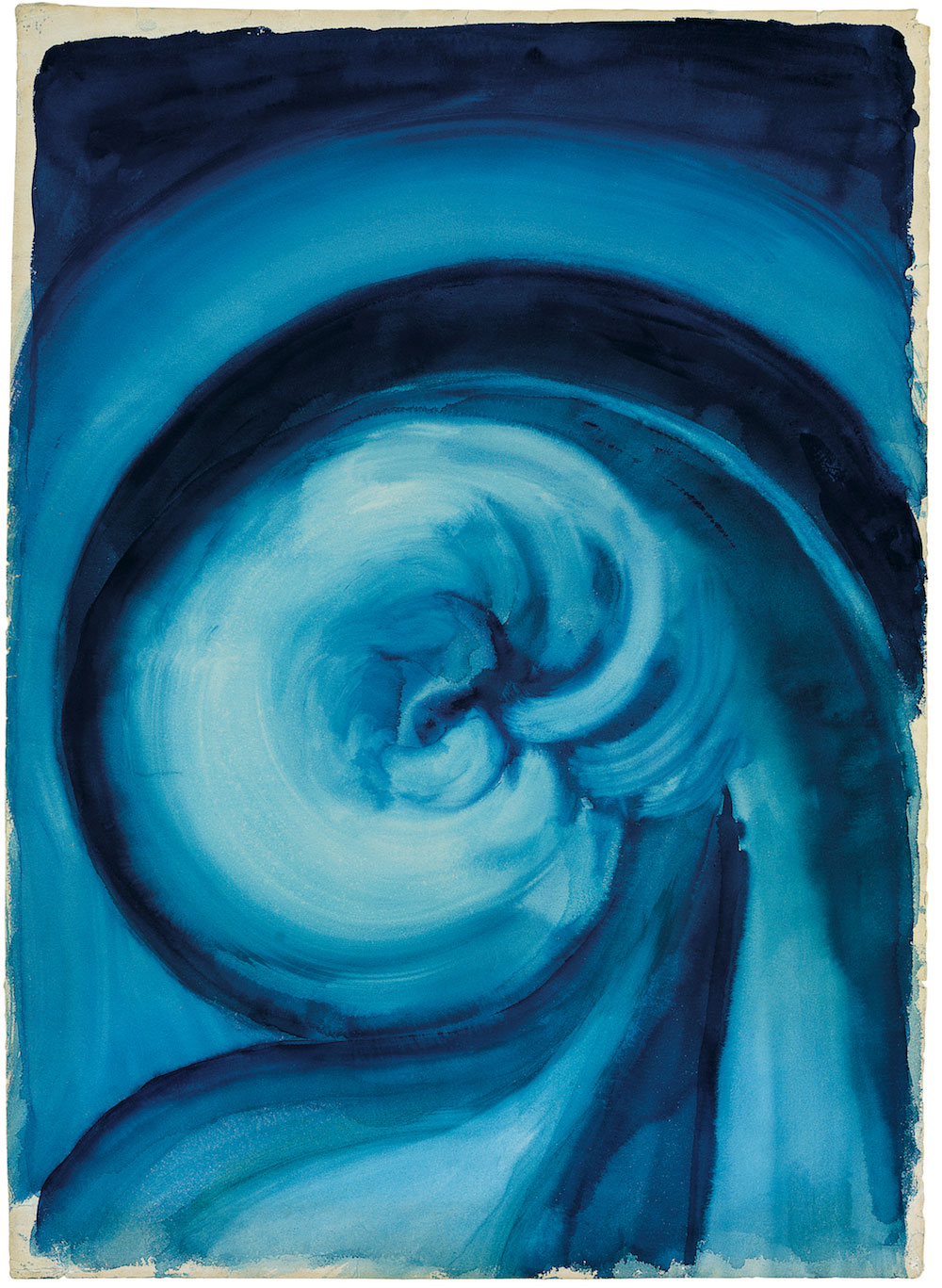


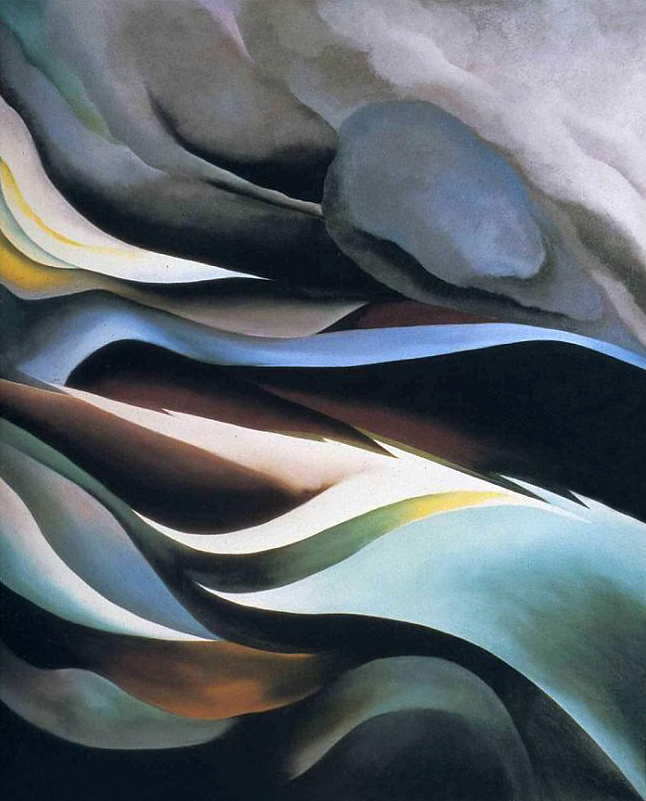

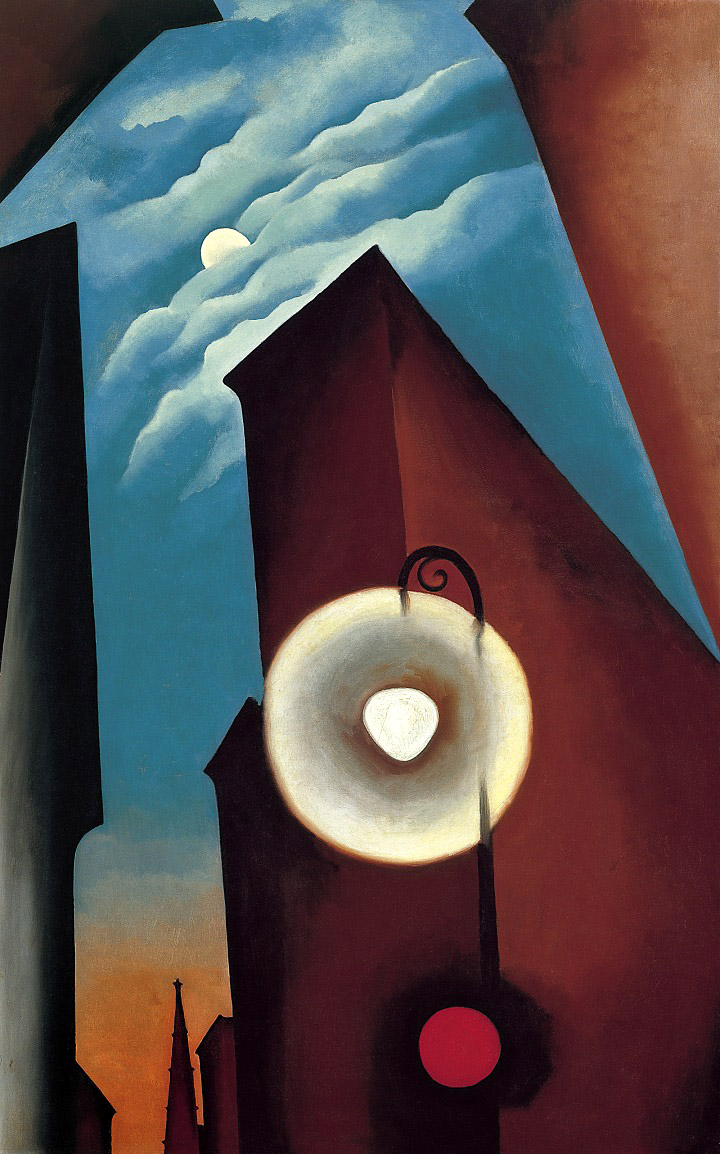
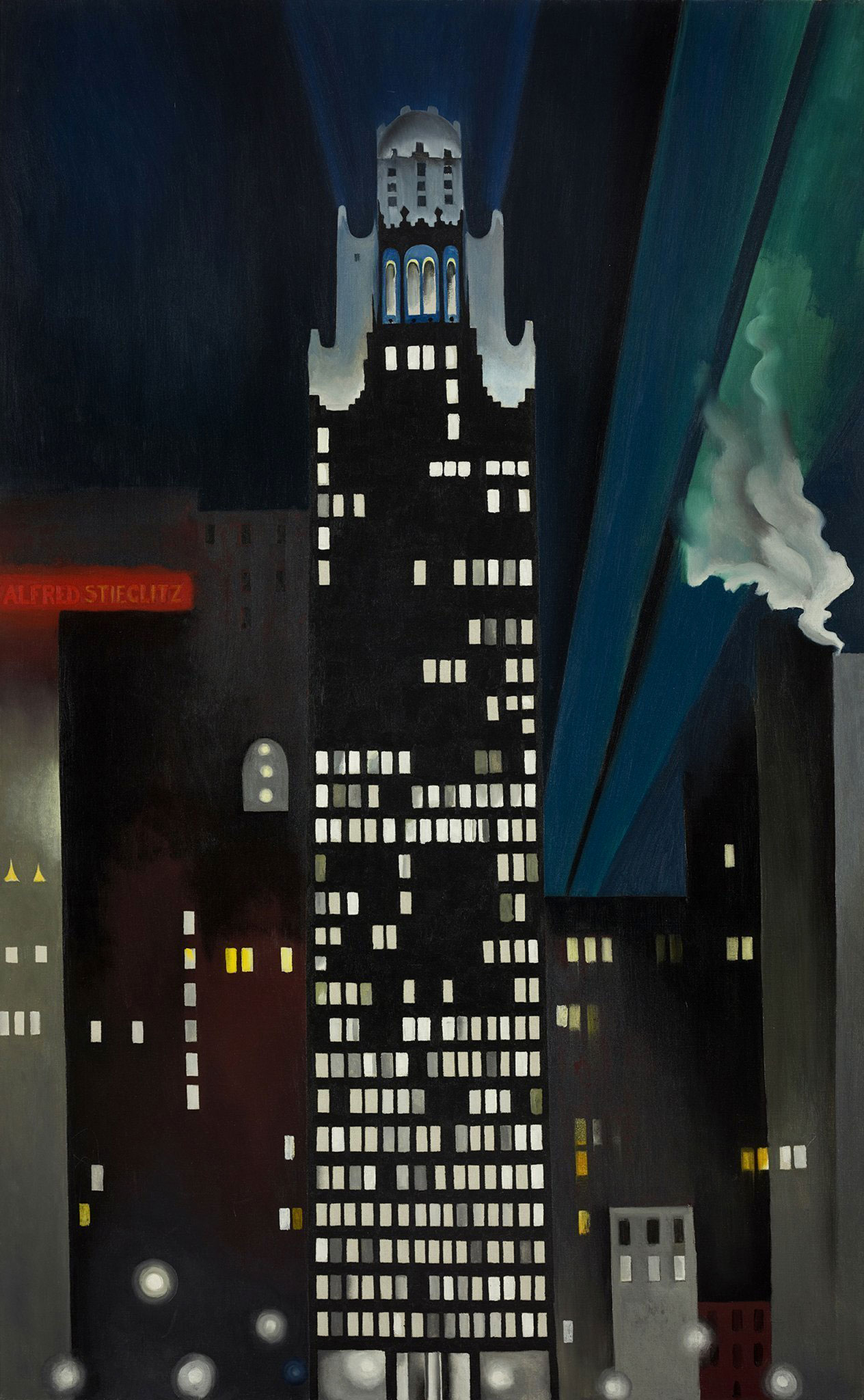

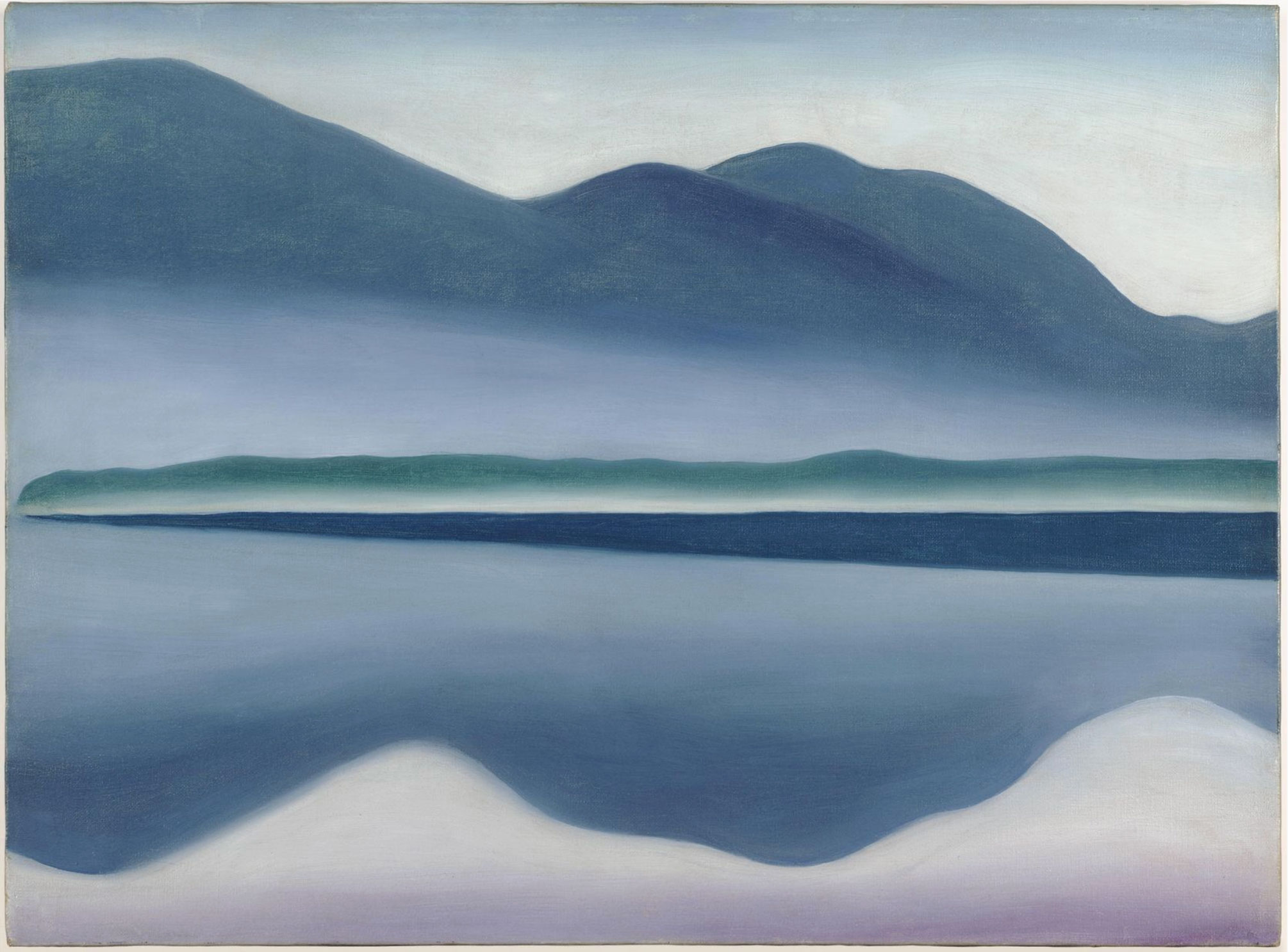
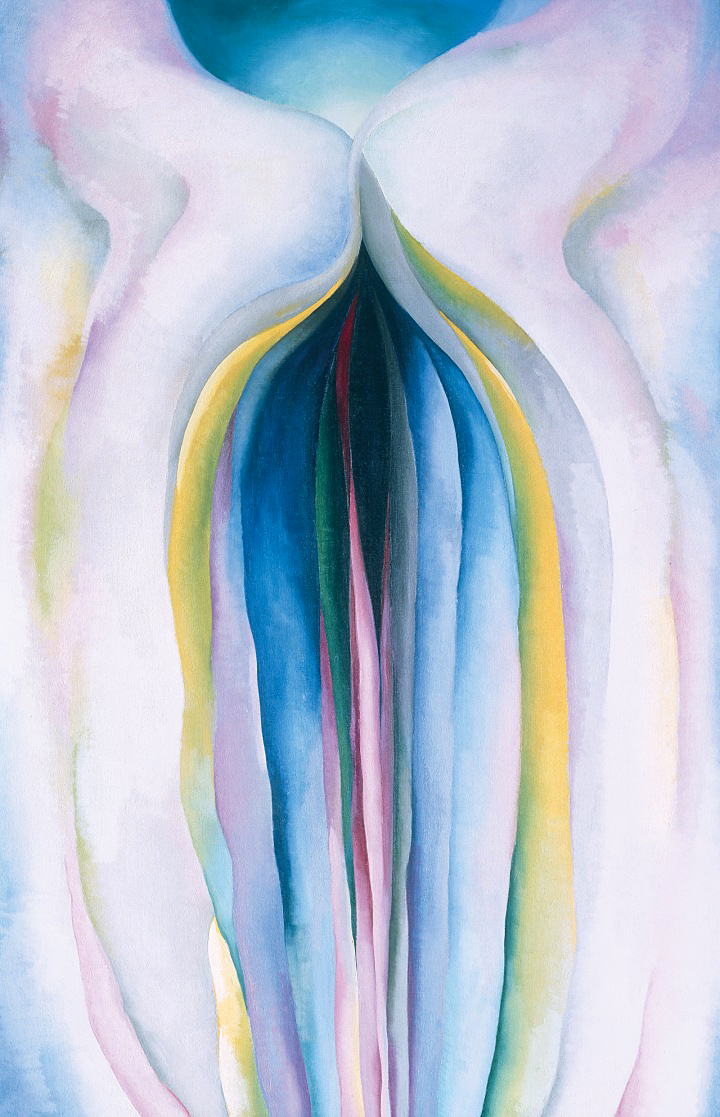

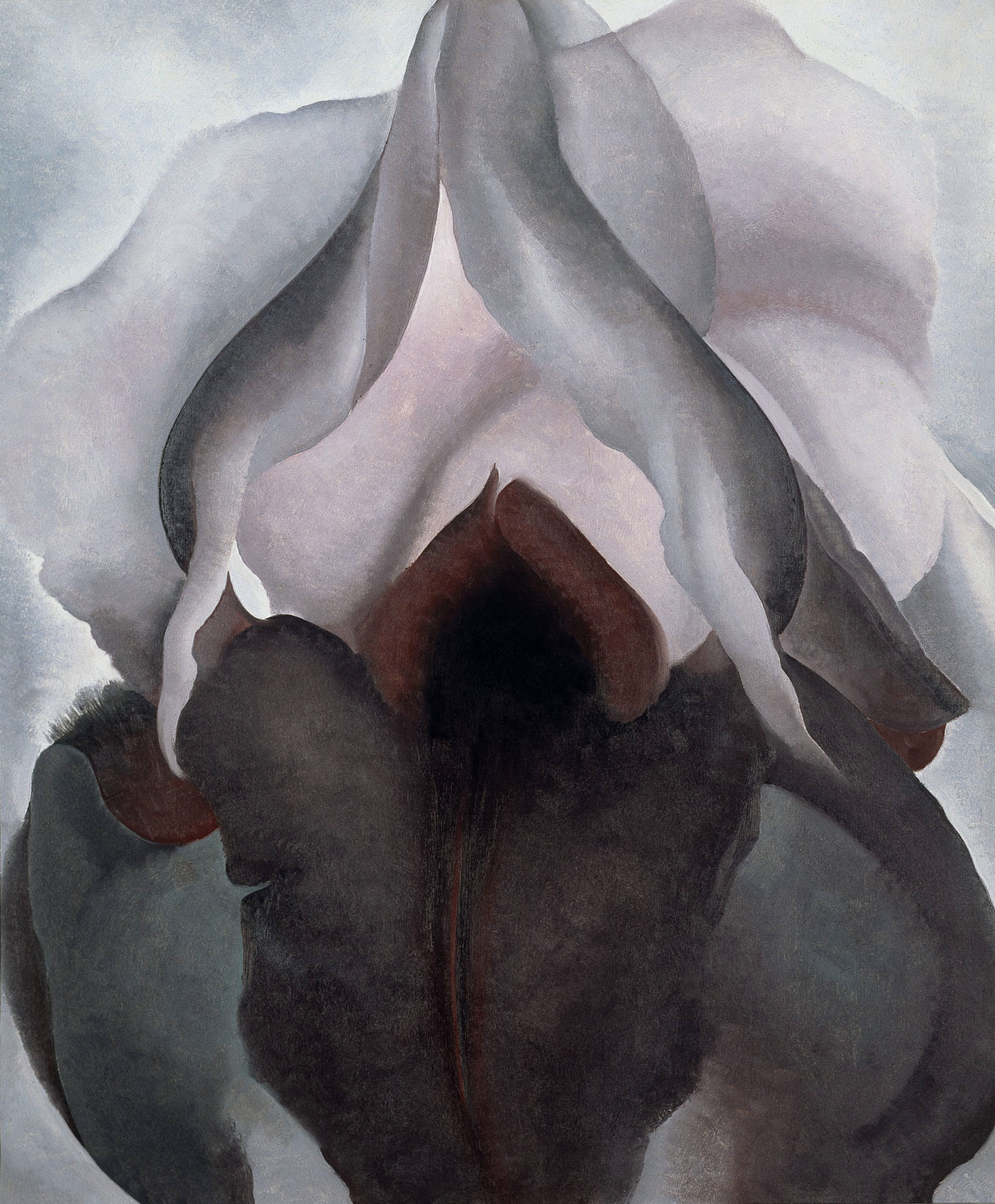
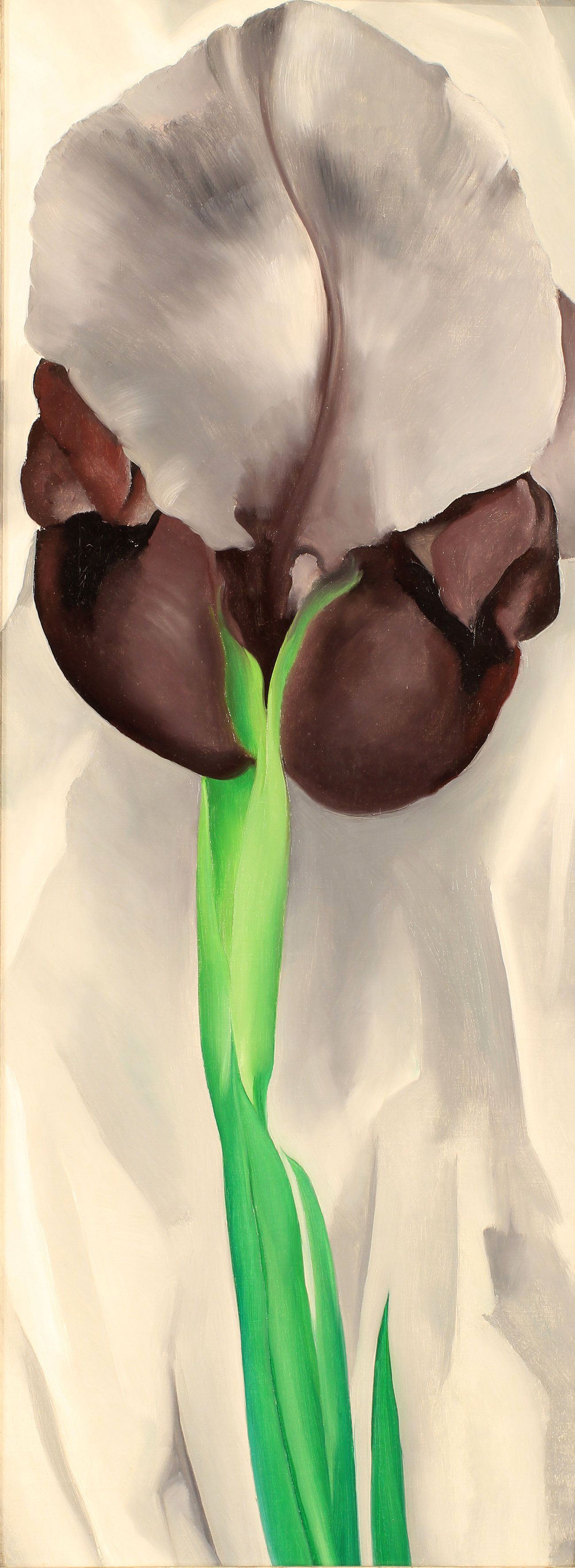

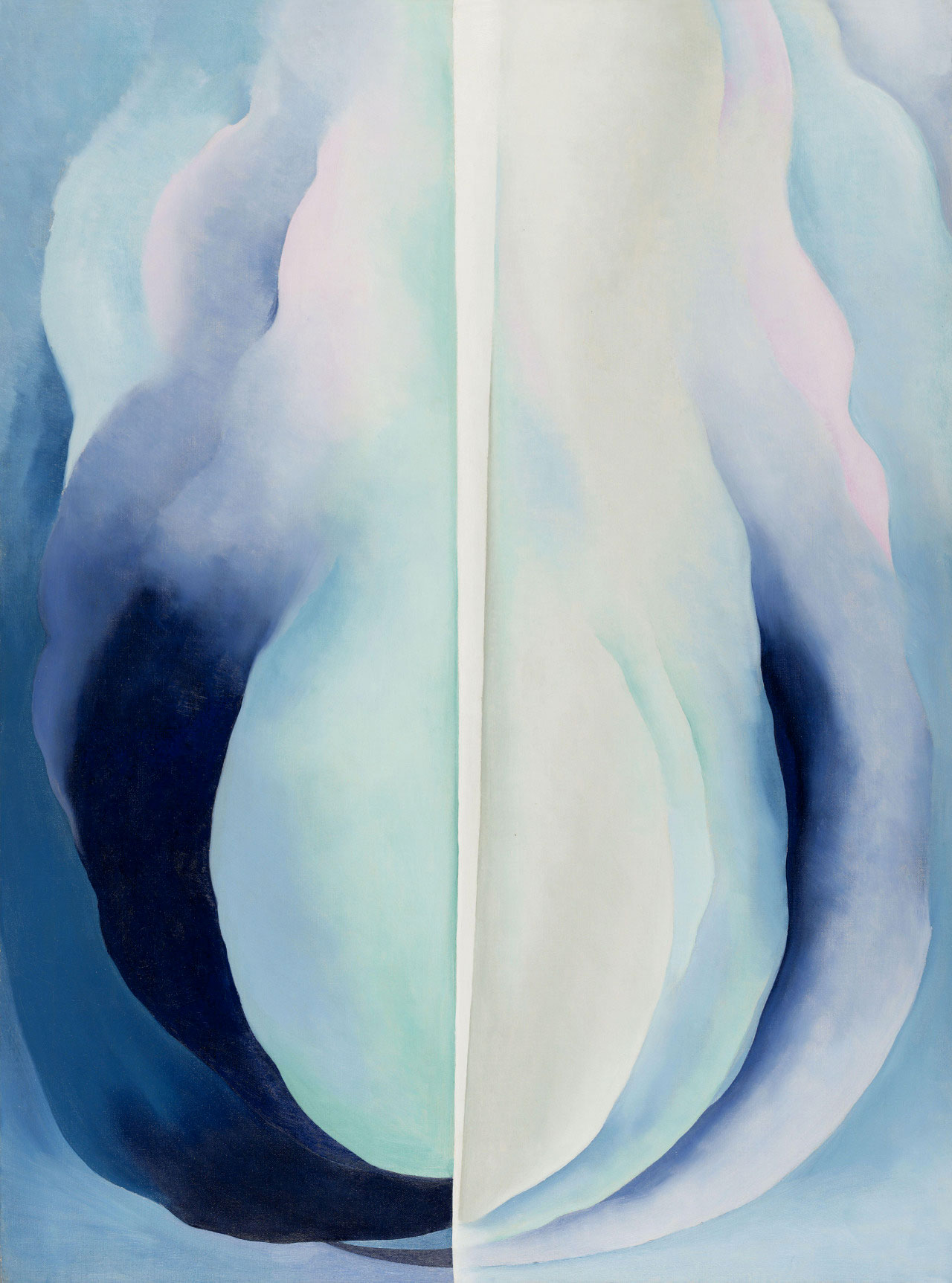

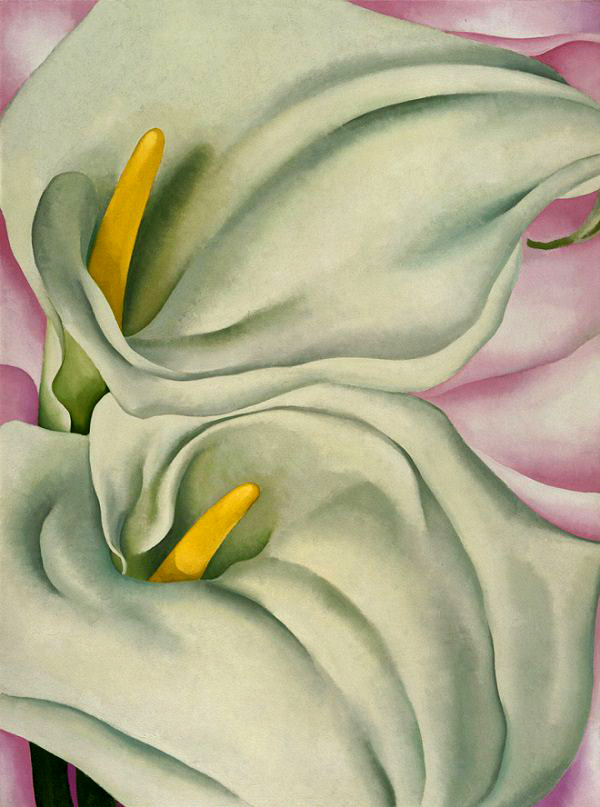

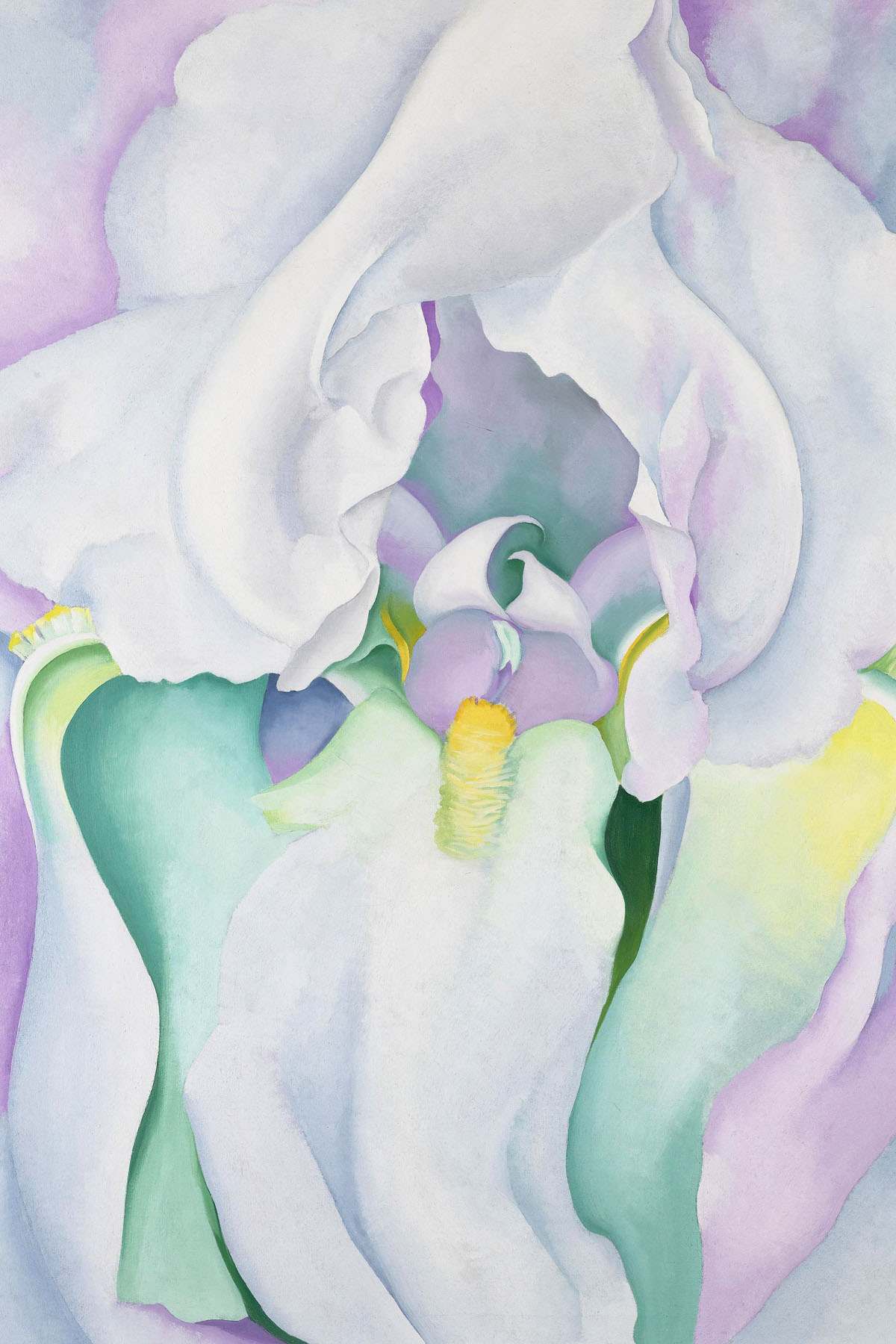
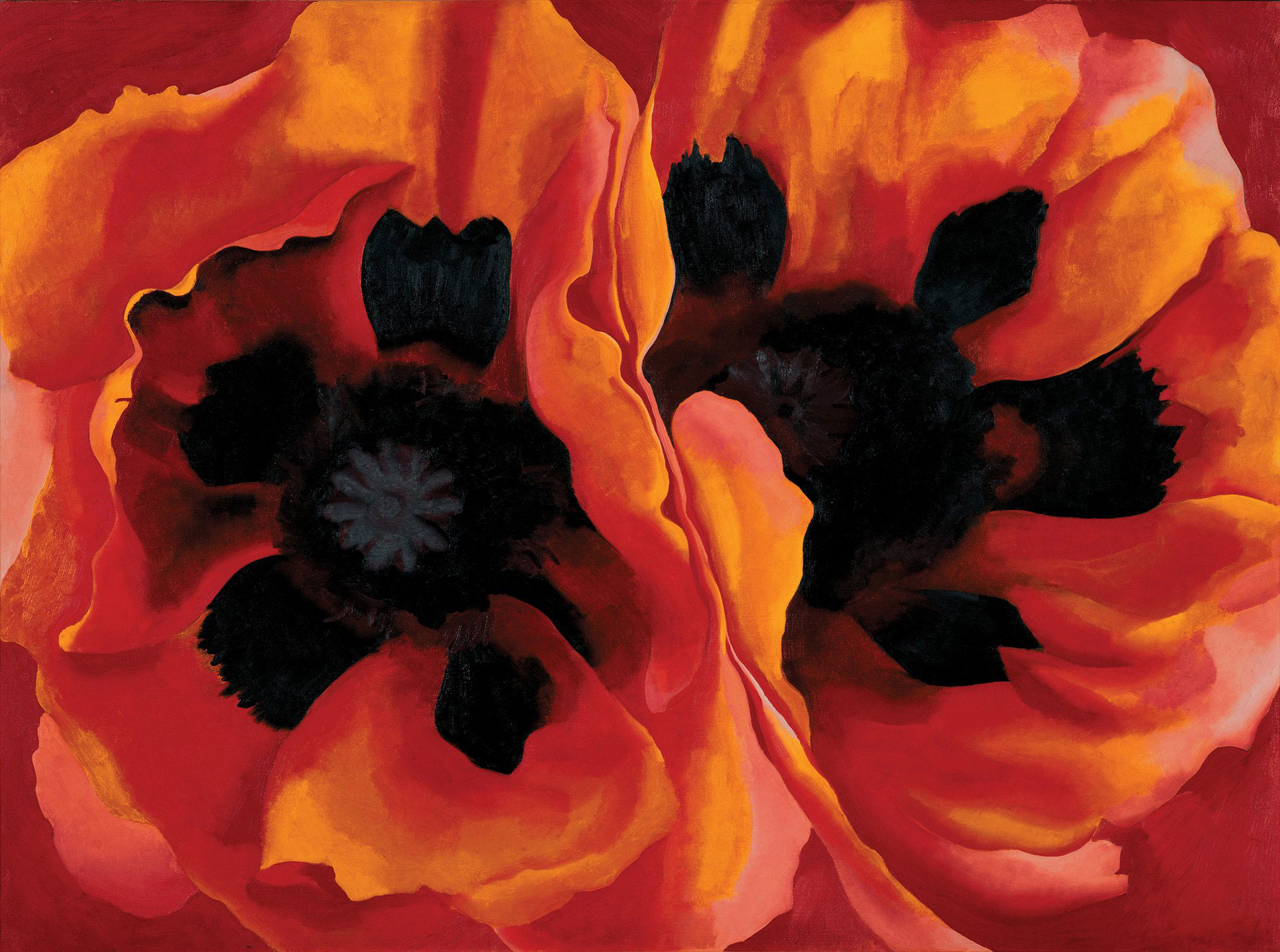
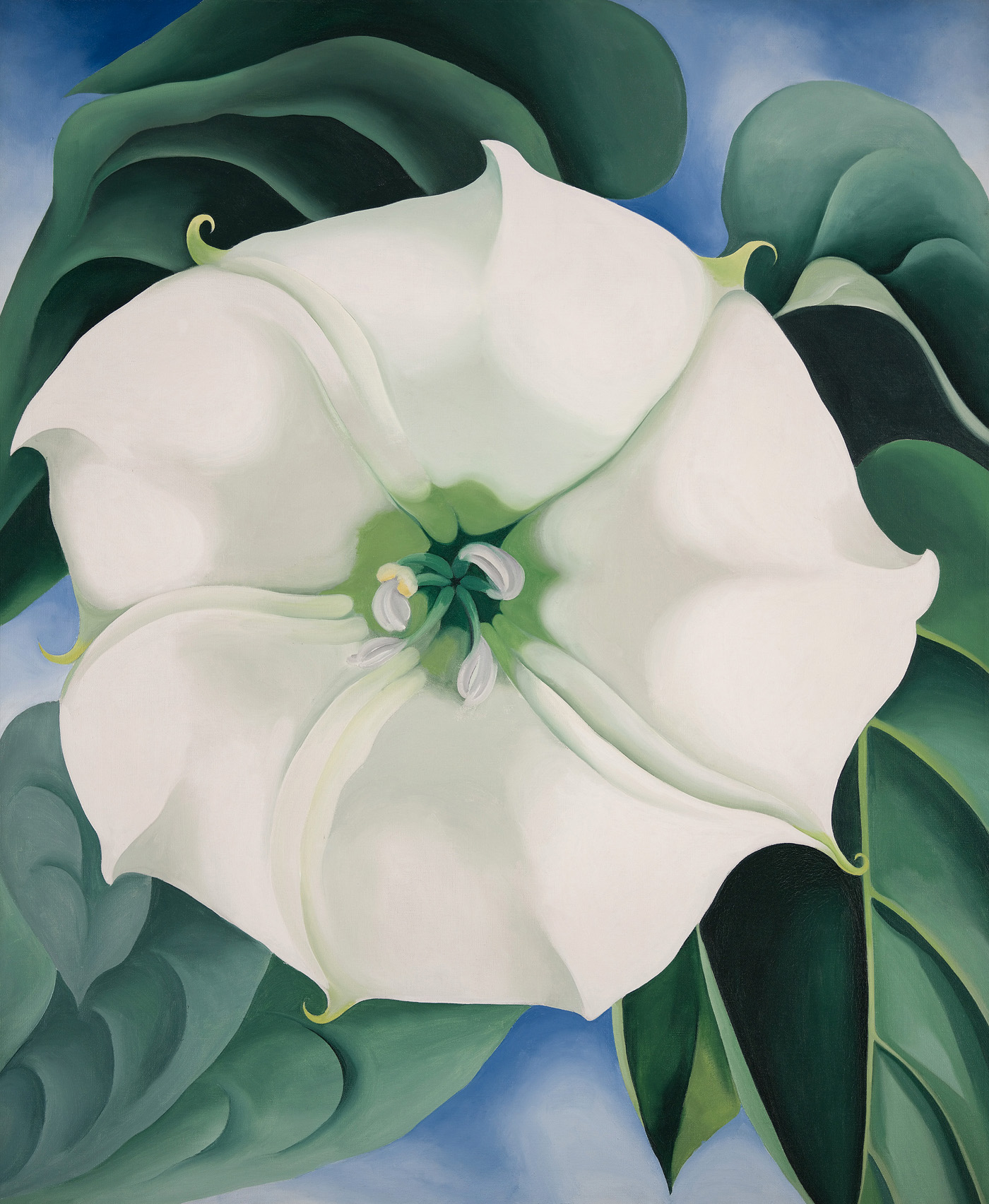
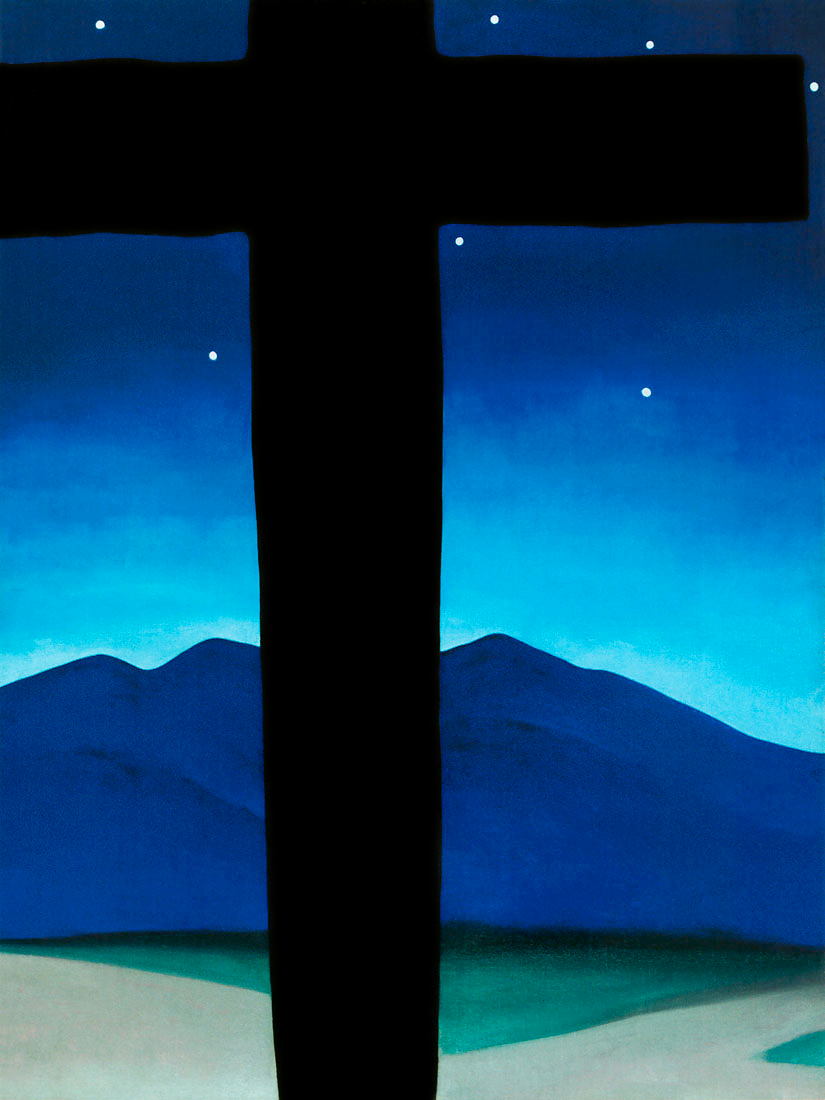
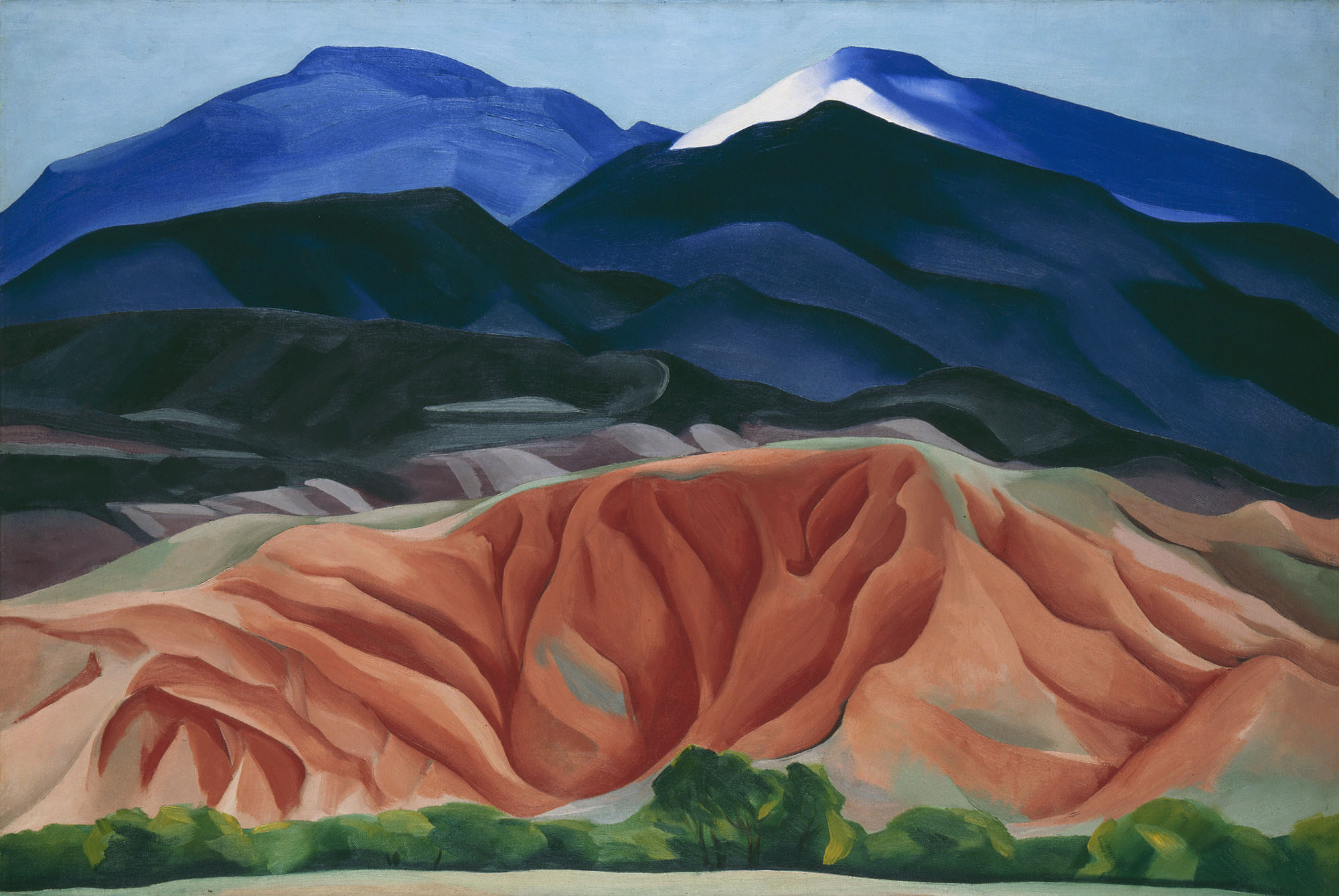
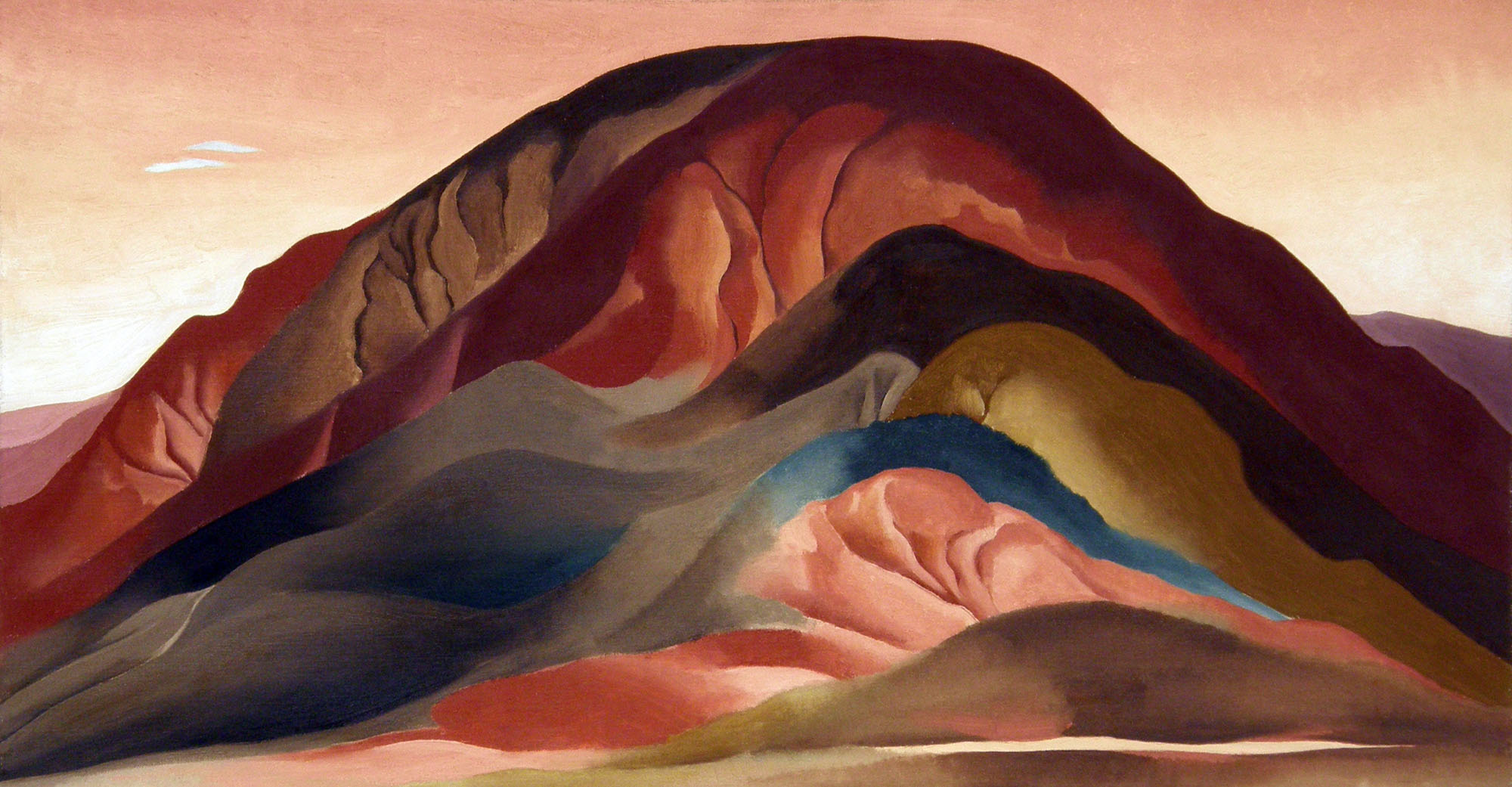
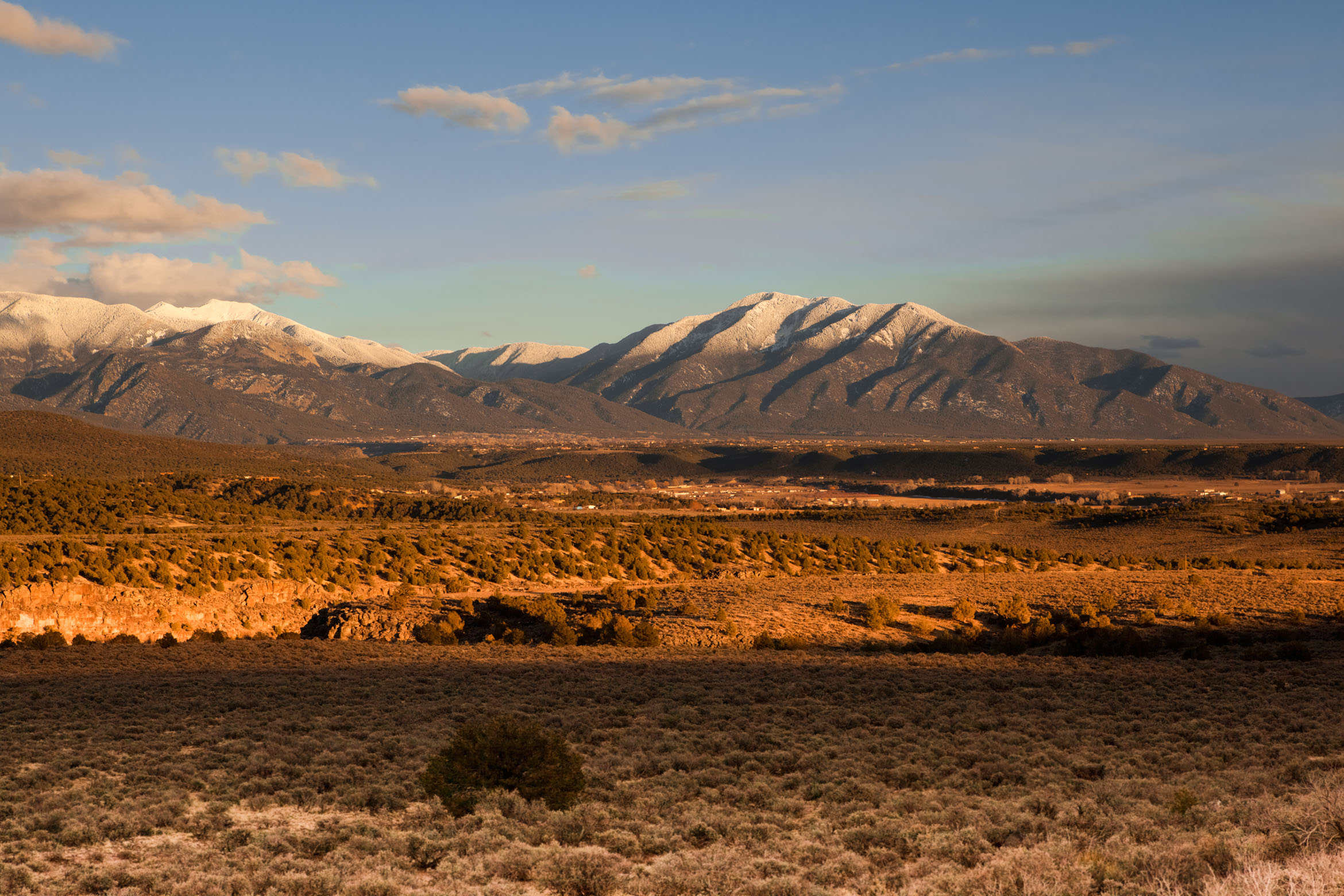
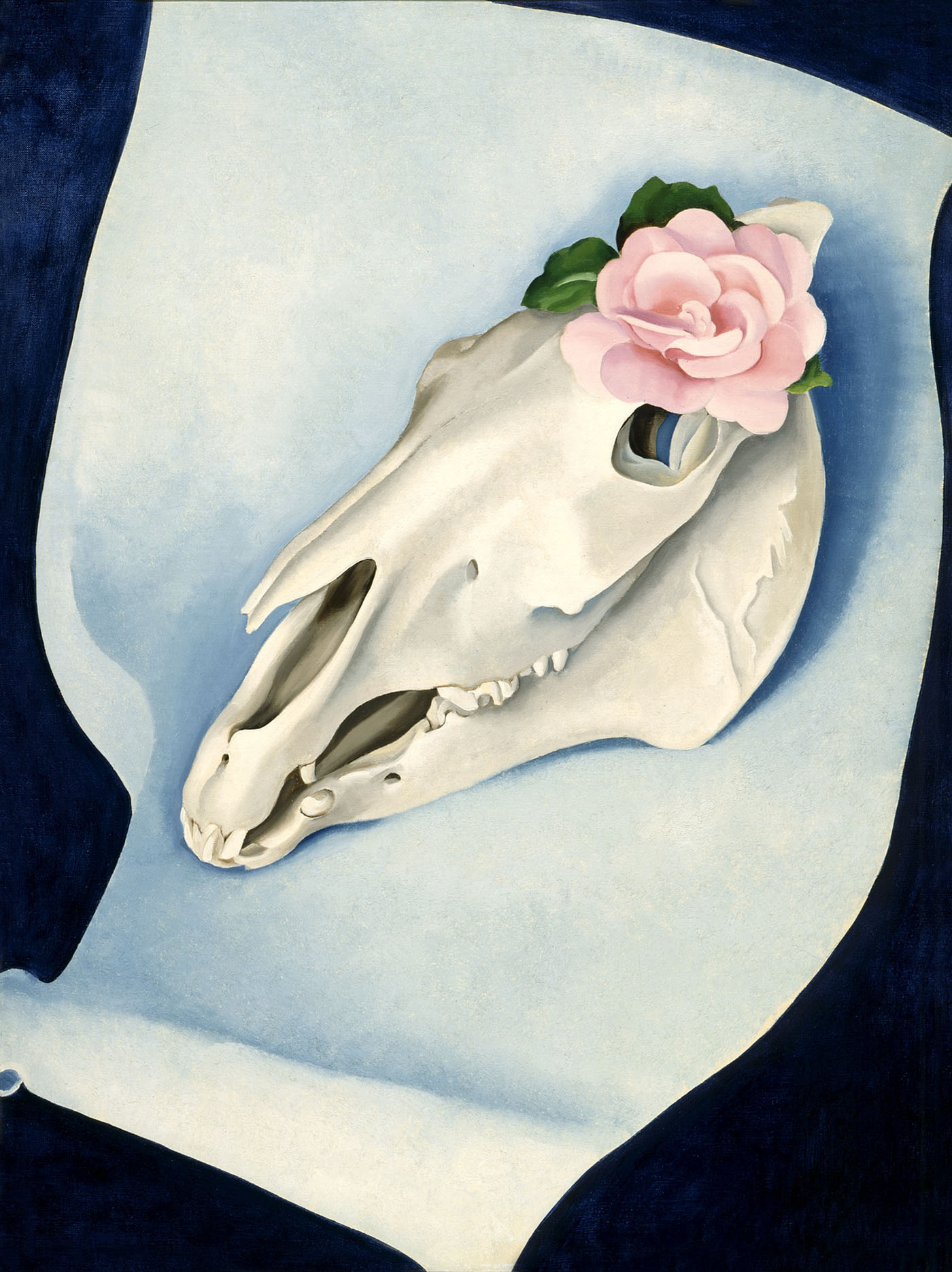
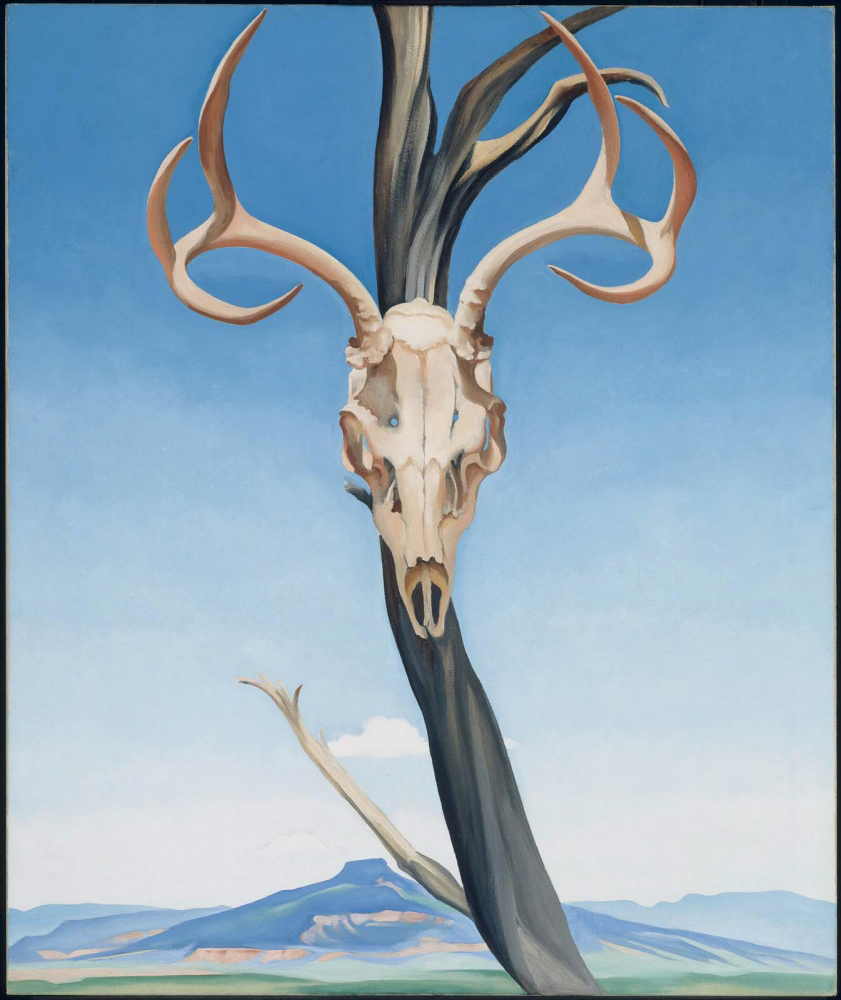
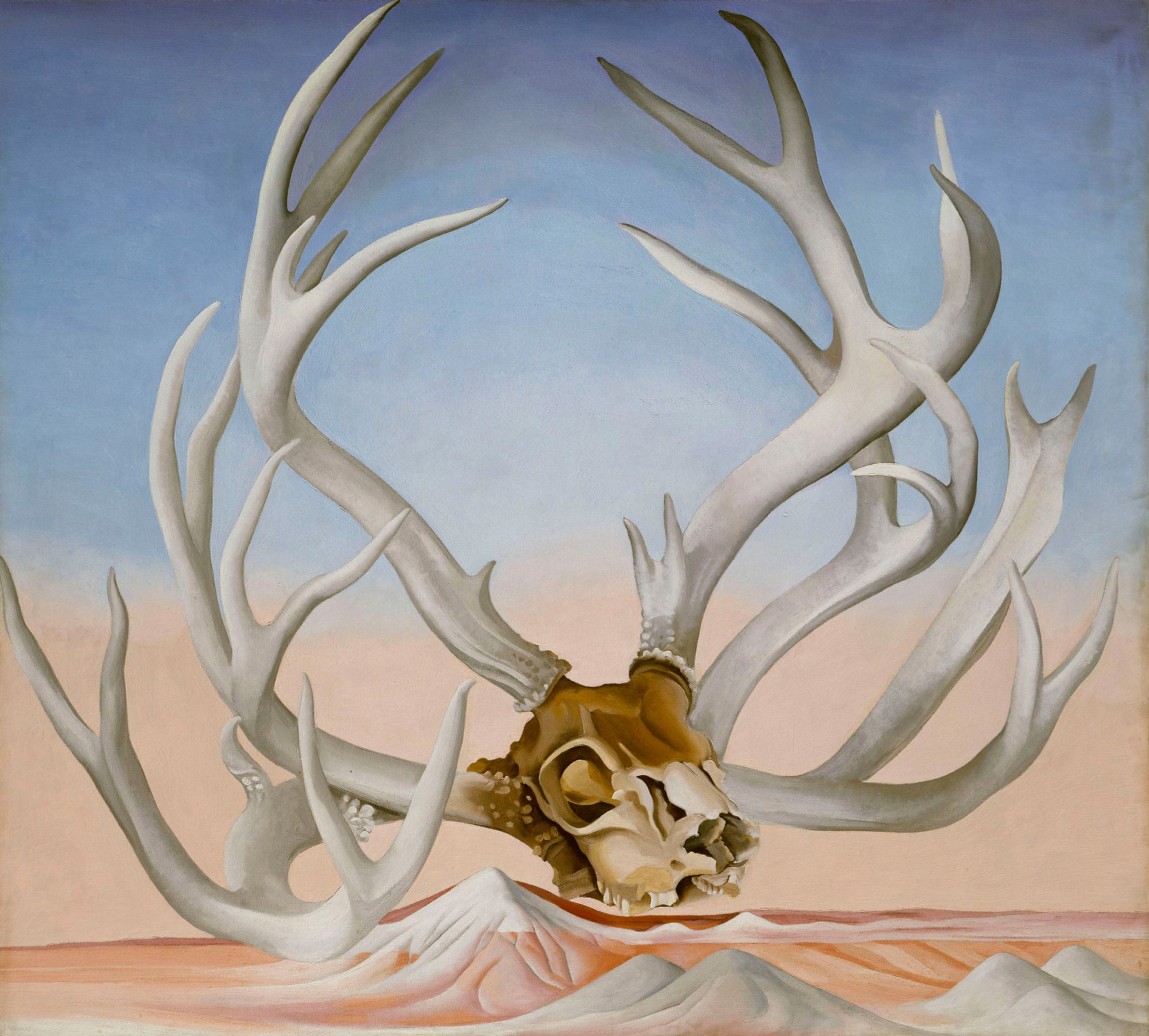
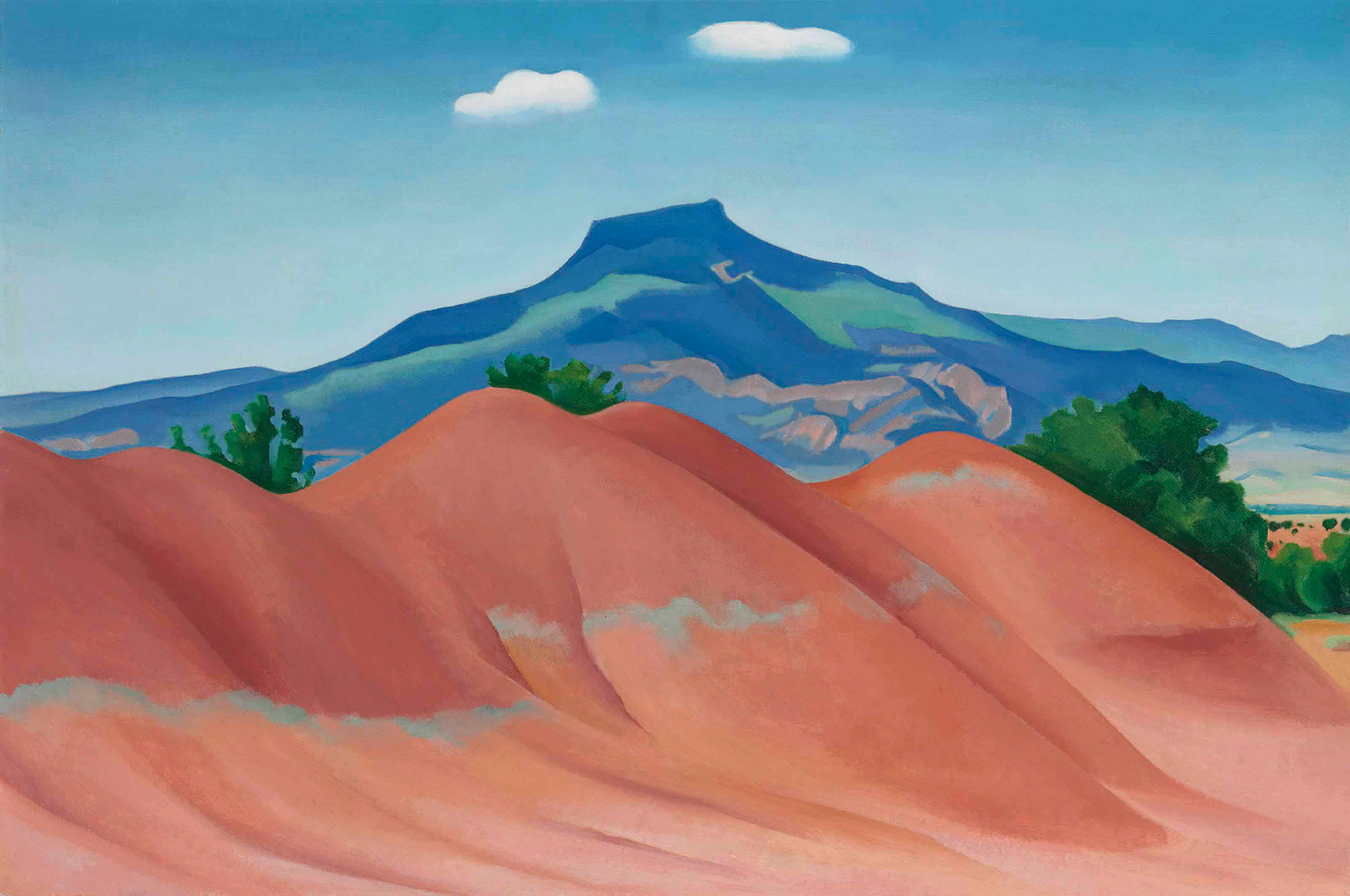
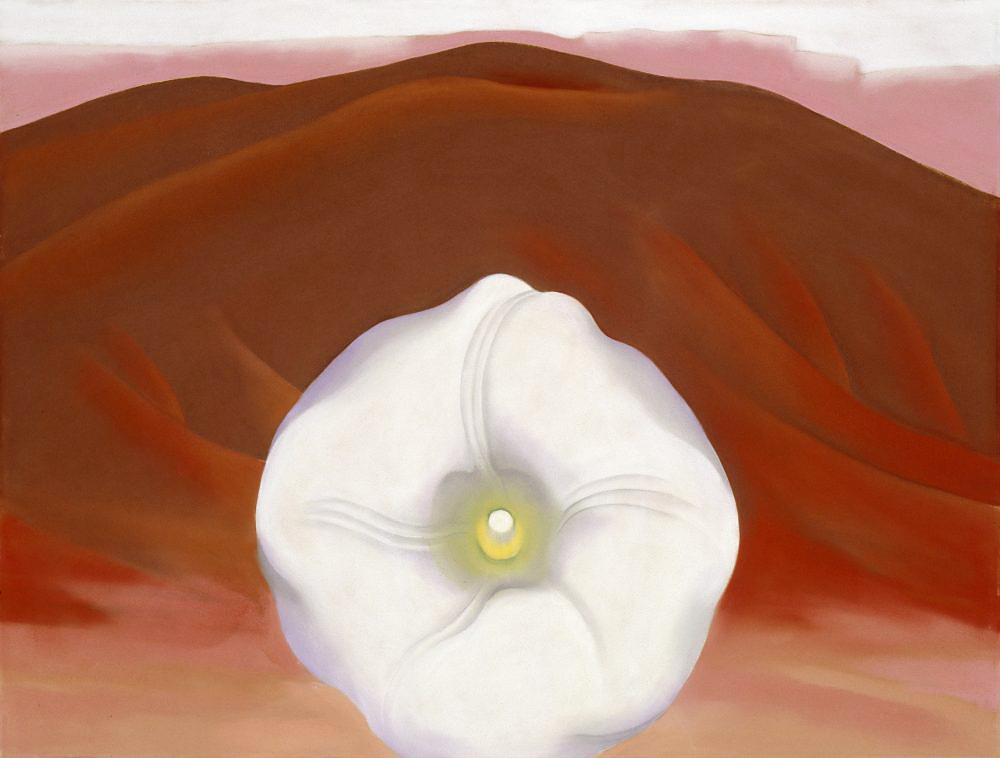
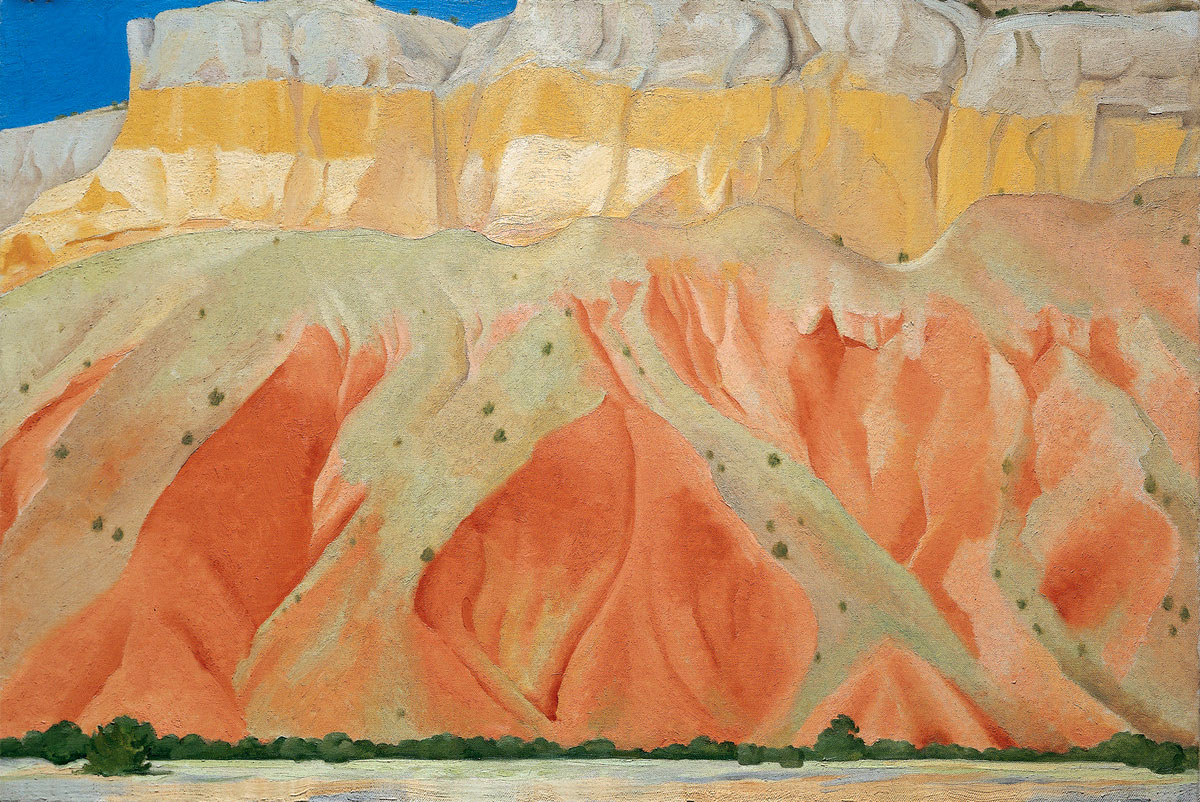
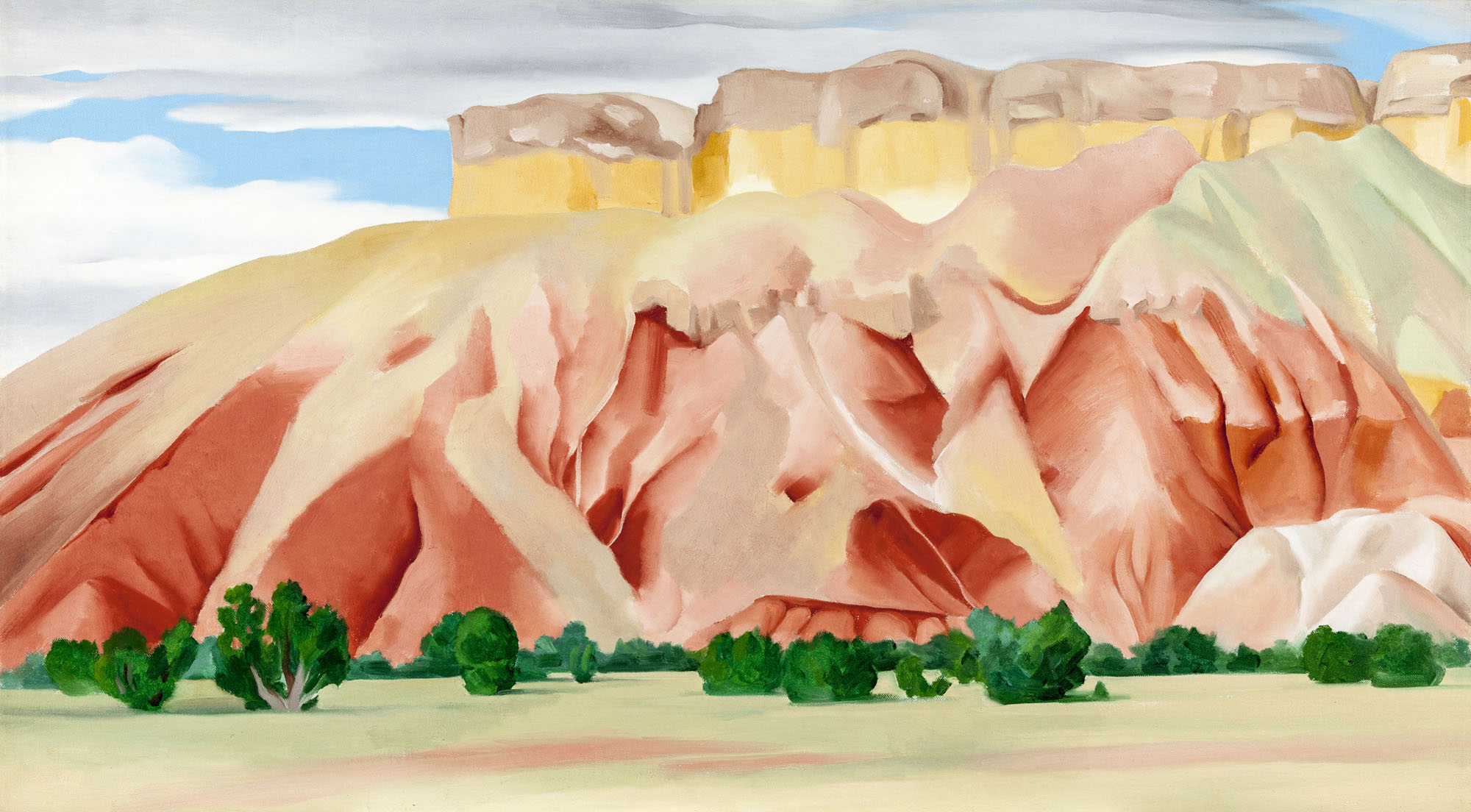
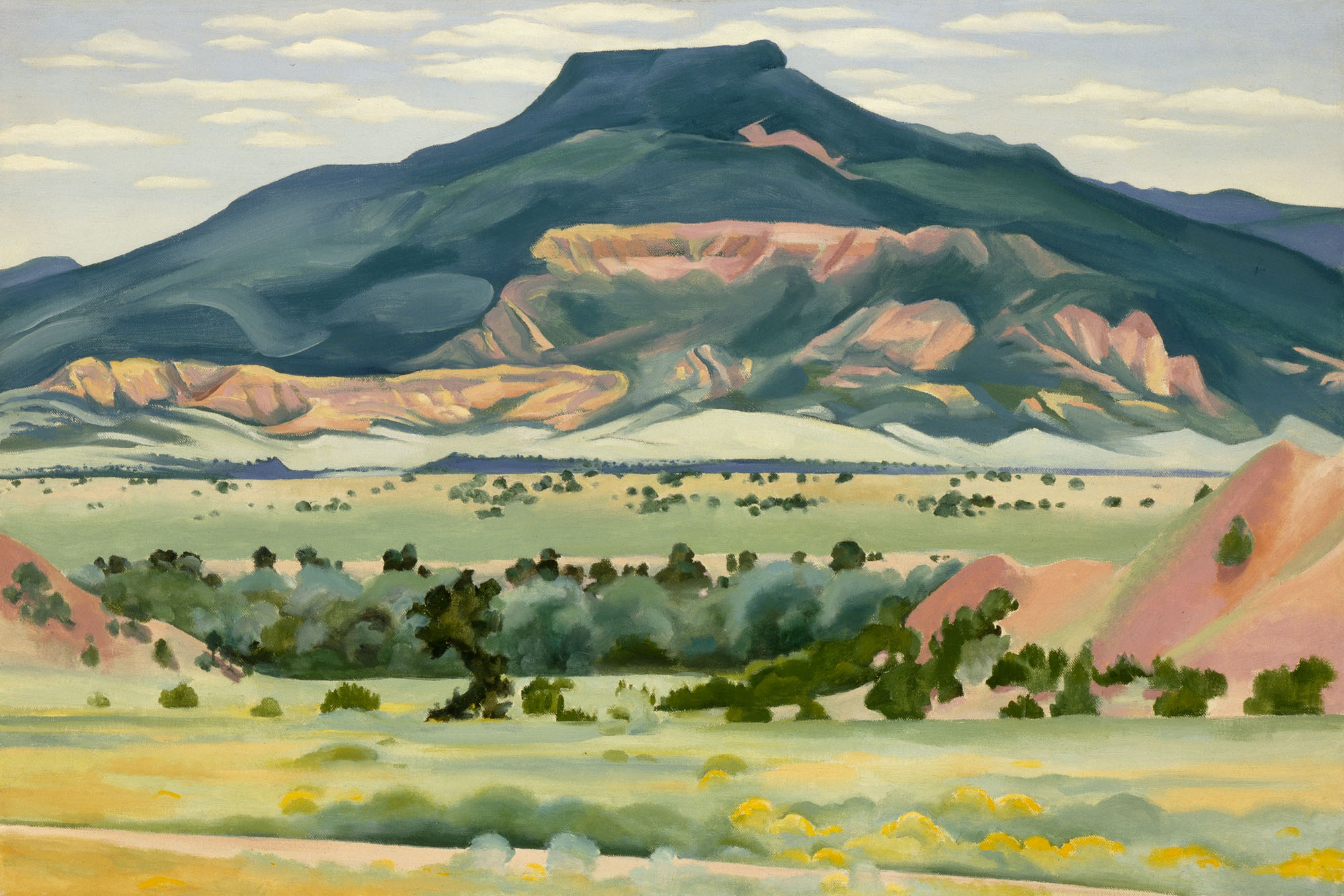
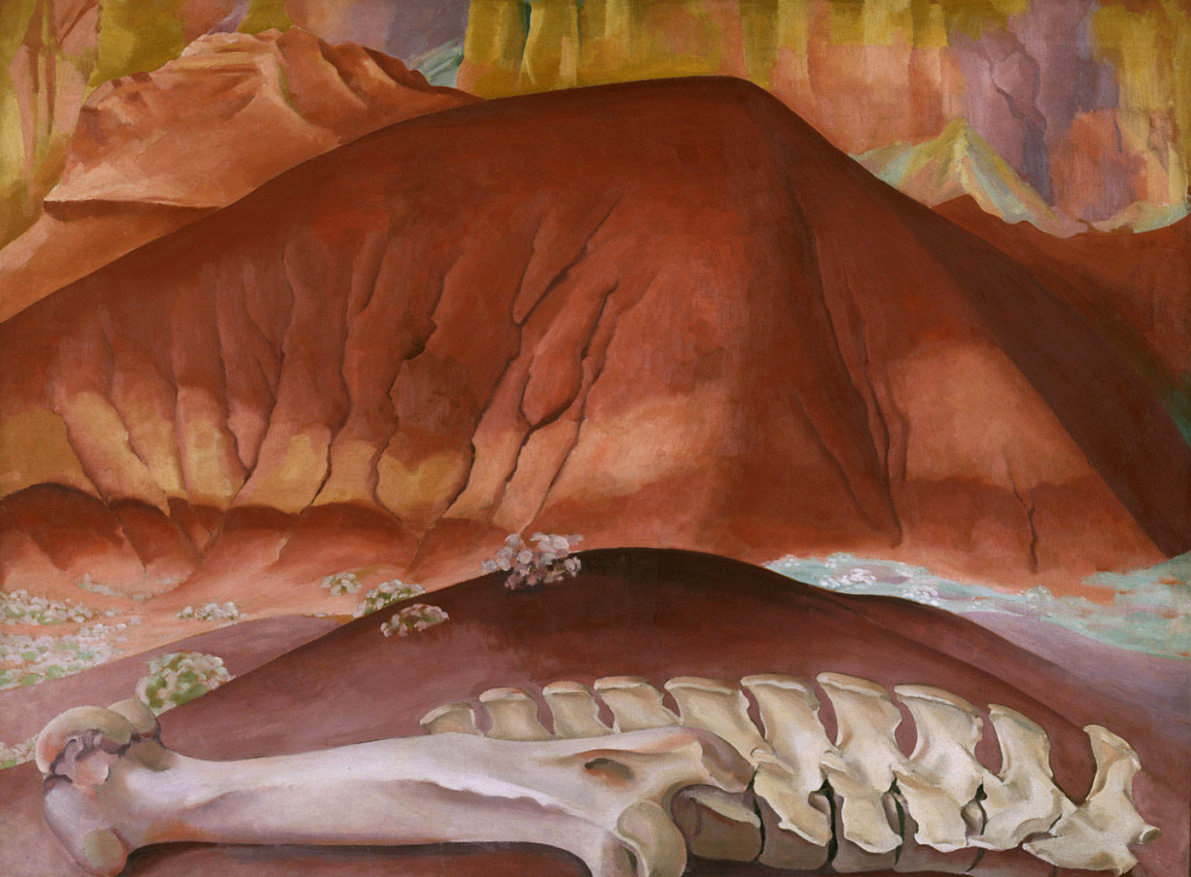

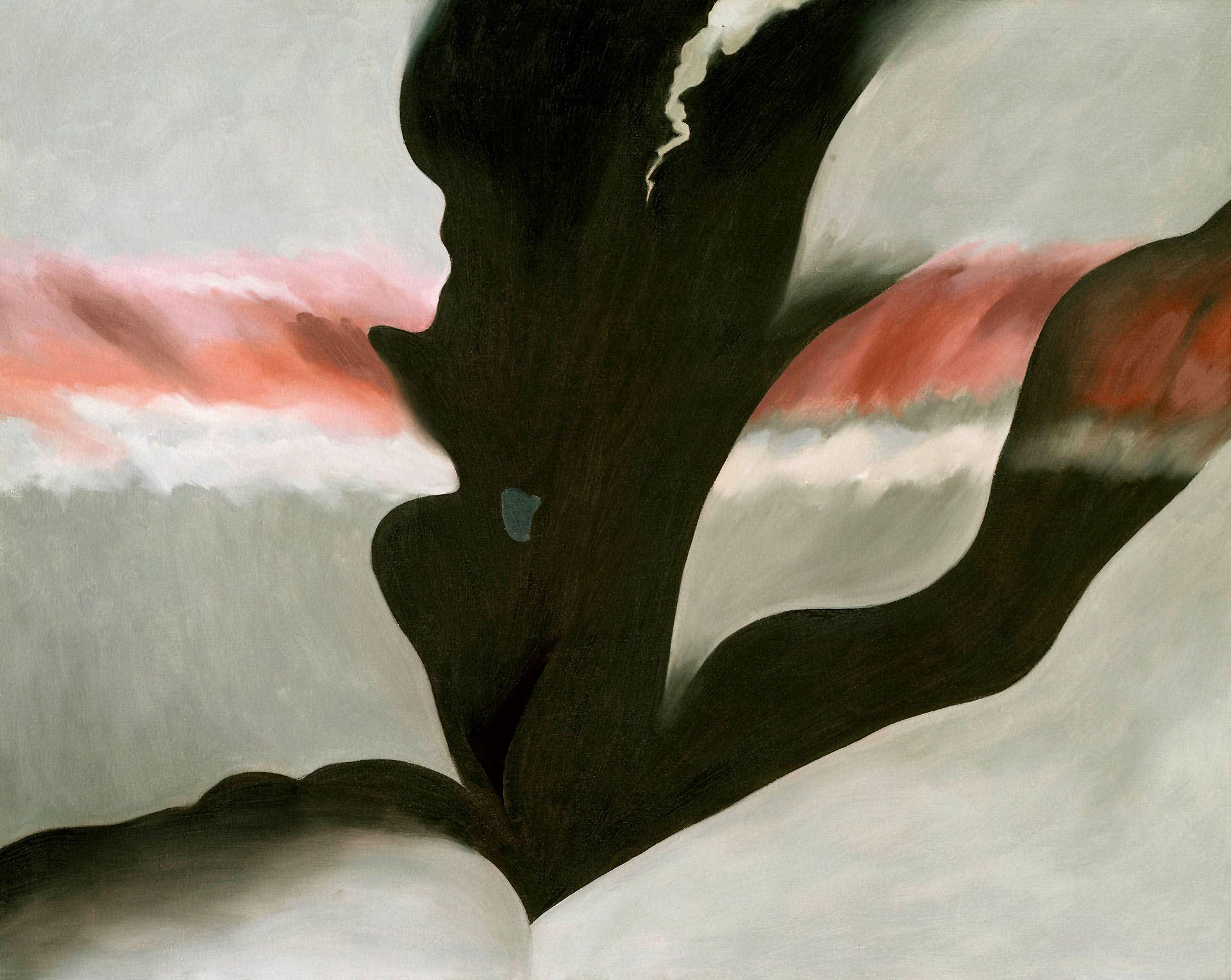



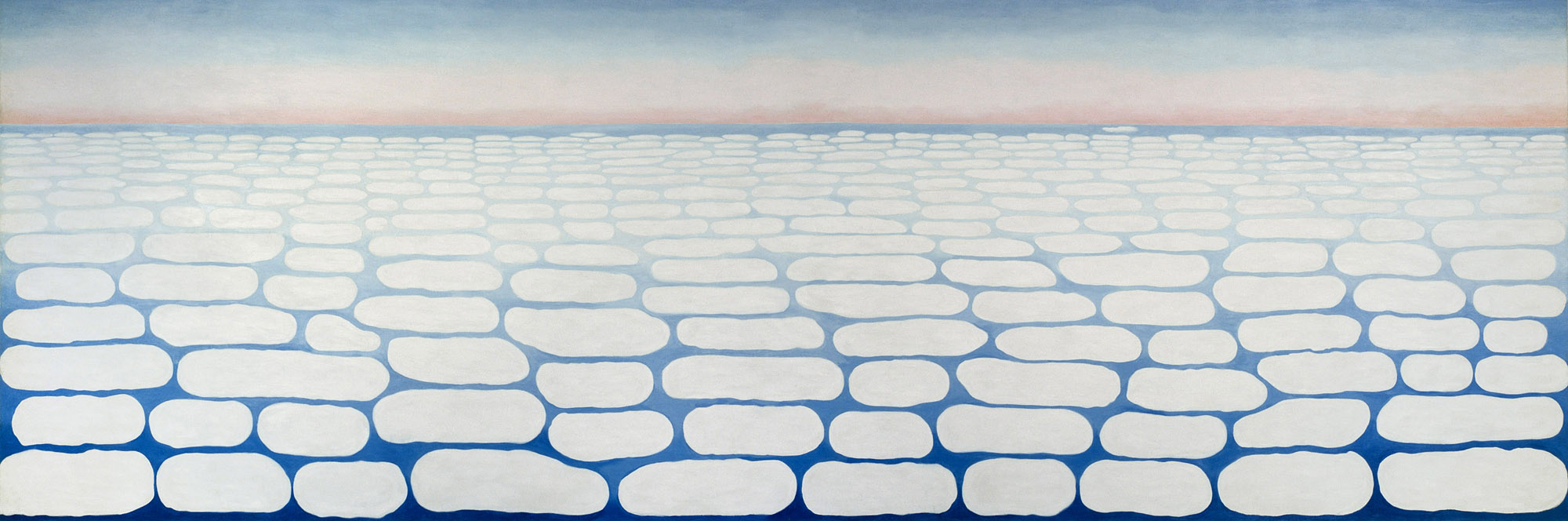





![Sabine Weiss (Swiss-French, 1924-2021) 'Enfants jouant, rue Edmond-Flamand' [Children playing, rue Edmond-Flamand] Paris, 1952](https://artblart.com/wp-content/uploads/2016/10/weiss-children-playing-web.jpg "Sabine Weiss (Swiss-French, 1924-2021) 'Enfants jouant, rue Edmond-Flamand' [Children playing, rue Edmond-Flamand] Paris, 1952")
![Sabine Weiss (Swiss-French, 1924-2021) 'Anna Karina pour la marque Korrigan' [Anna Karina for the brand Korrigan] 1958](https://artblart.com/wp-content/uploads/2016/10/weiss-karina-web.jpg "Sabine Weiss (Swiss-French, 1924-2021) 'Anna Karina pour la marque Korrigan' [Anna Karina for the brand Korrigan] 1958")









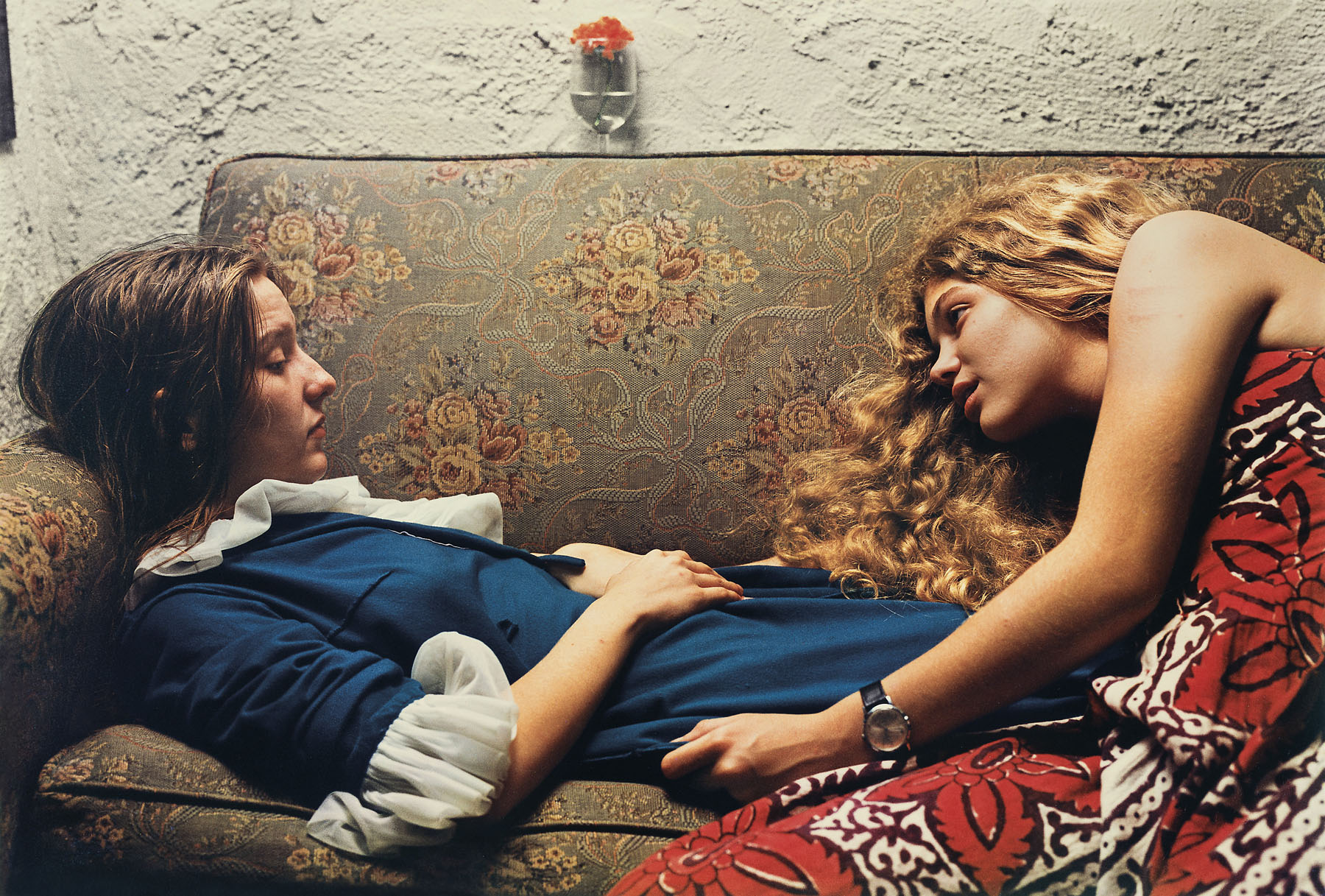


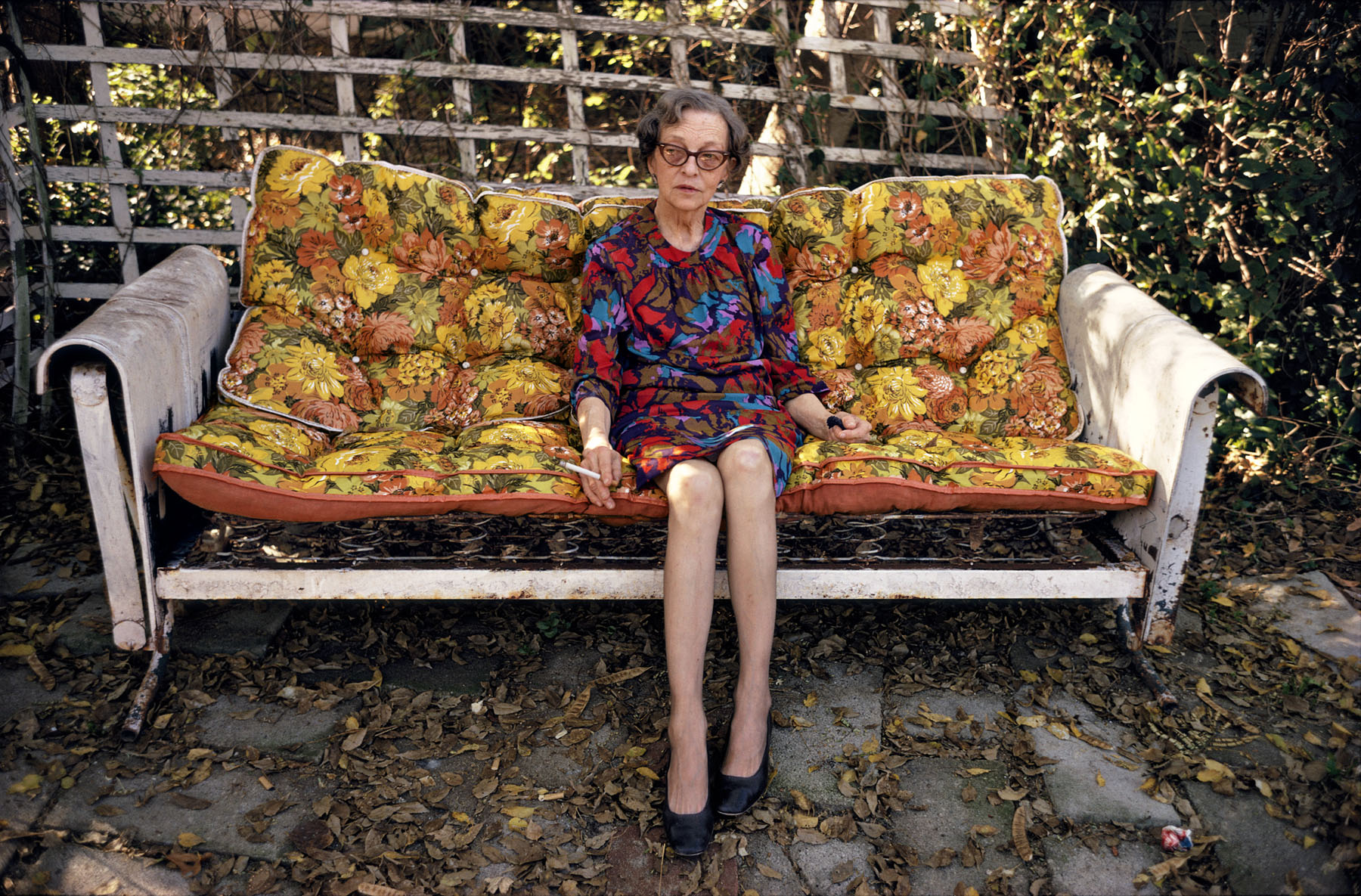
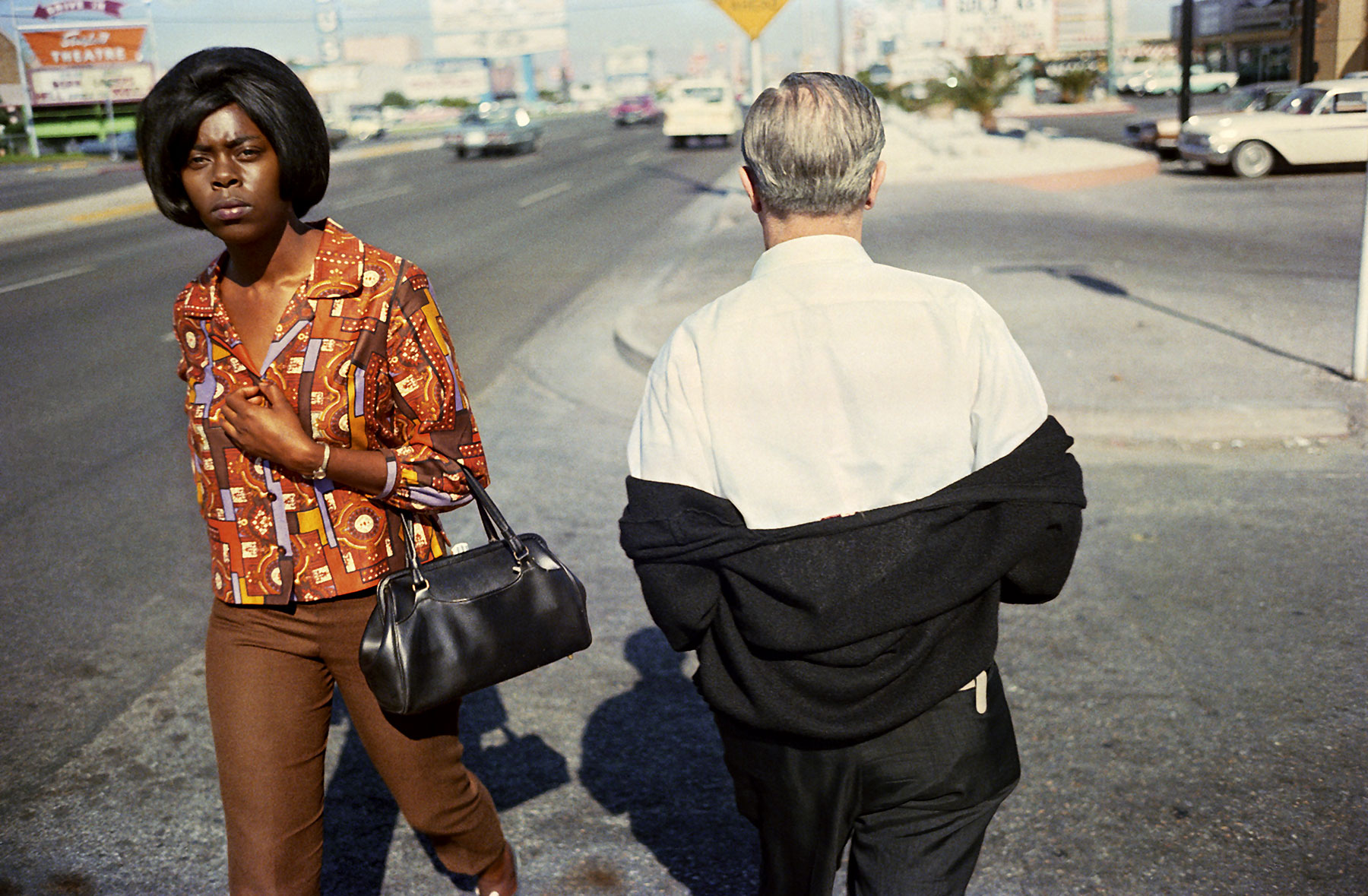
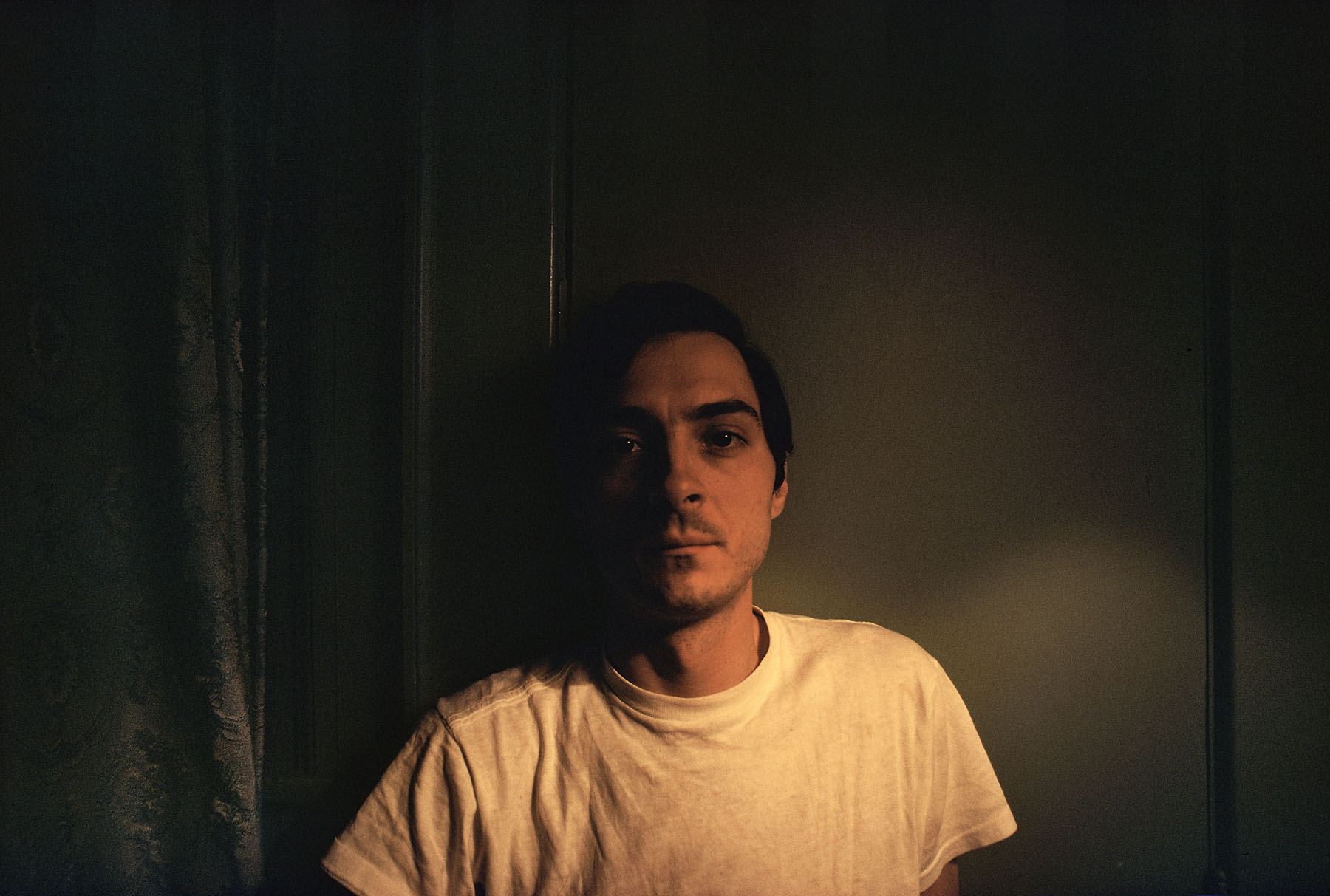



























![Ken Domon (Japanese, 1909-1990) 'Allenamento degli allievi del corpo della Marina [Students of the Navy training]' 1936 from the exhibition 'Ken Domon: Master of Japanese Realism' at the Museo dell'Ara Pacis, Rome, May - Sept, 2016](https://artblart.com/wp-content/uploads/2016/08/2-domon-ken-web.jpg "Ken Domon (Japanese, 1909-1990) 'Allenamento degli allievi del corpo della Marina [Students of the Navy training]' 1936 from the exhibition 'Ken Domon: Master of Japanese Realism' at the Museo dell'Ara Pacis, Rome, May - Sept, 2016")
![Ken Domon (Japanese, 1909-1990) 'Esercitazioni delle crocerossine' [Red Cross exercises] 1938 from the exhibition 'Ken Domon: Master of Japanese Realism' at the Museo dell'Ara Pacis, Rome, May - Sept, 2016](https://artblart.com/wp-content/uploads/2016/08/3-domon-ken-web.jpg "Ken Domon (Japanese, 1909-1990) 'Esercitazioni delle crocerossine' [Red Cross exercises] 1938 from the exhibition 'Ken Domon: Master of Japanese Realism' at the Museo dell'Ara Pacis, Rome, May - Sept, 2016")

![Ken Domon. 'Bambini che fanno roteare gli ombrelli [Kids twirling umbrellas]' c. 1937](https://artblart.com/wp-content/uploads/2016/08/15-domon-ken-web.jpg "Ken Domon. 'Bambini che fanno roteare gli ombrelli [Kids twirling umbrellas]' c. 1937")
![Ken Domon (Japanese, 1909-1990) 'Esercitazioni delle crocerossine [Red Cross exercises]' 1938](https://artblart.com/wp-content/uploads/2016/08/4-domon-ken-web.jpg "Ken Domon (Japanese, 1909-1990) 'Esercitazioni delle crocerossine [Red Cross exercises]' 1938")
![Ken Domon (Japanese, 1909-199 'Foto commemorativa della cerimonia di diploma del corpo della Marina' [Commemorative photo of the Marine Corp graduation ceremony] 1944](https://artblart.com/wp-content/uploads/2016/08/5-domon-ken-web.jpg "Ken Domon (Japanese, 1909-199 'Foto commemorativa della cerimonia di diploma del corpo della Marina' [Commemorative photo of the Marine Corp graduation ceremony] 1944")
![Ken Domon (Japanese, 1909-1990) 'Vigile urbano a Ginza 4-chōme' [Traffic policeman in Ginza 4-chōme] 1946](https://artblart.com/wp-content/uploads/2016/08/6-domon-ken-web.jpg "Ken Domon (Japanese, 1909-1990) 'Vigile urbano a Ginza 4-chōme' [Traffic policeman in Ginza 4-chōme] 1946")
![Ken Domon (Japanese, 1909-1990) 'Pescatrici di perle (ama san)' [Pearl fisherwomen] 1948](https://artblart.com/wp-content/uploads/2016/08/9-domon-ken-web.jpg "Ken Domon (Japanese, 1909-1990) 'Pescatrici di perle (ama san)' [Pearl fisherwomen] 1948")
![Ken Domon (Japanese, 1909-1990) 'Donne a passeggio' [Women walking] 1950](https://artblart.com/wp-content/uploads/2016/08/7-domon-ken-web.jpg "Ken Domon (Japanese, 1909-1990) 'Donne a passeggio' [Women walking] 1950")
![Ken Domon (Japanese, 1909-1990) 'L'attrice Yamaguchi Yoshiko' [The actress Yoshiko Yamaguchi] 1952](https://artblart.com/wp-content/uploads/2016/08/8-domon-ken-web.jpg "Ken Domon (Japanese, 1909-1990) 'L'attrice Yamaguchi Yoshiko' [The actress Yoshiko Yamaguchi] 1952")
![Ken Domon (Japanese, 1909-1990) 'Sit-in studentesco a Tachikawa contro l'ampliamento della base americana' [Student sit-in in Tachikawa against the expansion of US base] 1955](https://artblart.com/wp-content/uploads/2016/08/10-domon-ken-web.jpg "Ken Domon (Japanese, 1909-1990) 'Sit-in studentesco a Tachikawa contro l'ampliamento della base americana' [Student sit-in in Tachikawa against the expansion of US base] 1955")
![Ken Domon (Japanese, 1909-1990) 'Sorelline orfane, Rumie e Sayuri' [Orphan sisters, Rumie and Sayuri] 1959](https://artblart.com/wp-content/uploads/2016/08/12-domon-ken-web.jpg "Ken Domon (Japanese, 1909-1990) 'Sorelline orfane, Rumie e Sayuri' [Orphan sisters, Rumie and Sayuri] 1959")

![Ken Domon (Japanese, 1909-1990) 'Lucertola [Lizard]' 1955](https://artblart.com/wp-content/uploads/2016/08/13-domon-ken-web.jpg "Ken Domon (Japanese, 1909-1990) 'Lucertola [Lizard]' 1955")
![Ken Domon (Japanese, 1909-1990) 'Pioggerella' [Drizzle] 1952-1954](https://artblart.com/wp-content/uploads/2016/08/14-domon-ken-web.jpg "Ken Domon (Japanese, 1909-1990) 'Pioggerella' [Drizzle] 1952-1954")
![Ken Domon (Japanese, 1909-1990) 'Bagno presso il fiume davanti allo Hiroshima Dome' [Bath at the river in front of the Hiroshima Dome] 1957](https://artblart.com/wp-content/uploads/2016/08/16-domon-ken-web.jpg "Ken Domon (Japanese, 1909-1990) 'Bagno presso il fiume davanti allo Hiroshima Dome' [Bath at the river in front of the Hiroshima Dome] 1957")
![Ken Domon (Japanese, 1909-1990) 'La morte di Keiji' [The death of Keiji] 1957](https://artblart.com/wp-content/uploads/2016/08/20-domon-ken-web.jpg "Ken Domon (Japanese, 1909-1990) 'La morte di Keiji' [The death of Keiji] 1957")
![Ken Domon (Japanese, 1909-1990) 'Paziente in ospedale' [Hospital patient] 1957](https://artblart.com/wp-content/uploads/2016/08/17-domon-ken-web.jpg "Ken Domon (Japanese, 1909-1990) 'Paziente in ospedale' [Hospital patient] 1957")
![Ken Domon (Japanese, 1909-1990) 'Donna in cura per le lesioni da bomba atomica' [Women being treated for injuries from atomic bomb] 1957](https://artblart.com/wp-content/uploads/2016/08/18-domon-ken-web.jpg "Ken Domon (Japanese, 1909-1990) 'Donna in cura per le lesioni da bomba atomica' [Women being treated for injuries from atomic bomb] 1957")
![Ken Domon (Japanese, 1909-1990) 'Gemella non vedente' [Blind twin (female)] 1957](https://artblart.com/wp-content/uploads/2016/08/19-domon-ken-web.jpg "Ken Domon (Japanese, 1909-1990) 'Gemella non vedente' [Blind twin (female)] 1957")
![Ken Domon (Japanese, 1909-1990) 'Autoritratto' [Self-portrait] 1958](https://artblart.com/wp-content/uploads/2016/08/21-domon-ken-web.jpg "Ken Domon (Japanese, 1909-1990) 'Autoritratto' [Self-portrait] 1958")


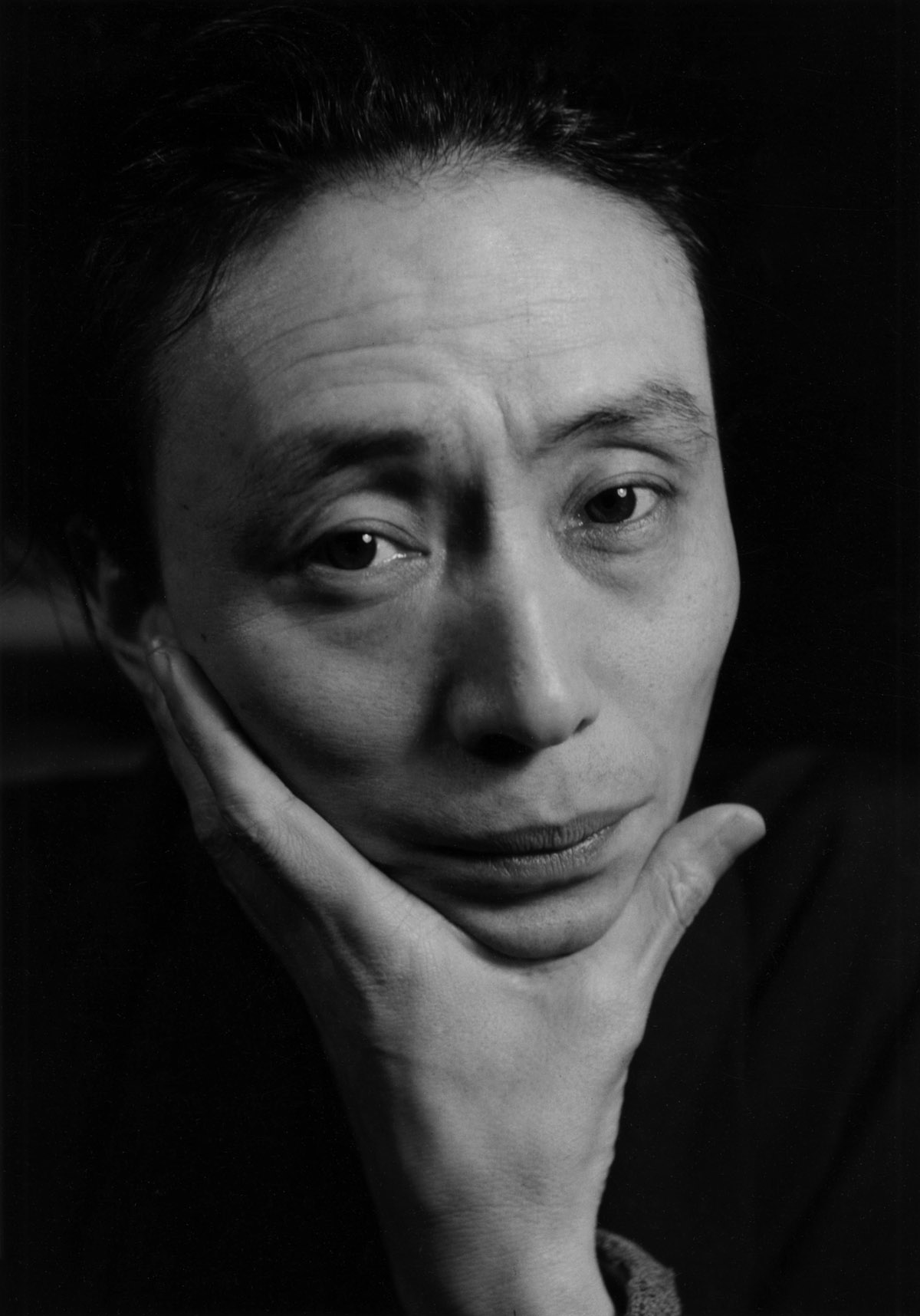

![Ken Domon (Japanese, 1909-1990) 'Ushi (Bue), dai dodici guardiani (jūnishinshō) del Murōji' [Ushi (Ox), one of the twelve guardians (jūnishinshō) of Muroji] 1941-1943](https://artblart.com/wp-content/uploads/2016/08/26-domon-ken-web.jpg "Ken Domon (Japanese, 1909-1990) 'Ushi (Bue), dai dodici guardiani (jūnishinshō) del Murōji' [Ushi (Ox), one of the twelve guardians (jūnishinshō) of Muroji] 1941-1943")
![Ken Domon (Japanese, 1909-1990) 'Hitsuji (Pecora), dai dodici guardiani (jūnishinshō) del Murōji' [Hitsuji (Sheep), one of the twelve guardians (jūnishinshō) of Muroji] 1941-1943](https://artblart.com/wp-content/uploads/2016/08/27-domon-ken-web.jpg "Ken Domon (Japanese, 1909-1990) 'Hitsuji (Pecora), dai dodici guardiani (jūnishinshō) del Murōji' [Hitsuji (Sheep), one of the twelve guardians (jūnishinshō) of Muroji] 1941-1943")
![Ken Domon (Japanese, 1909-1990) 'Buddha Shaka ligneo a figura intera presso il Mirokudō del Murōji [Buddha Shaka wooden full-length at the Mirokudō Muroji]' c. 1943](https://artblart.com/wp-content/uploads/2016/08/30-domon-ken-web.jpg "Ken Domon (Japanese, 1909-1990) 'Buddha Shaka ligneo a figura intera presso il Mirokudō del Murōji [Buddha Shaka wooden full-length at the Mirokudō Muroji]' c. 1943")
![Ken Domon (Japanese, 1909-1990) 'Ōnodera, campana e ciliegi [Onodera, bell and cherry trees]' 1977](https://artblart.com/wp-content/uploads/2016/08/28-domon-ken-web.jpg "Ken Domon (Japanese, 1909-1990) 'Ōnodera, campana e ciliegi [Onodera, bell and cherry trees]' 1977")
![Ken Domon (Japanese, 1909-1990) 'Pagoda del Murōji con la neve [Pagoda Muroji with snow]' 1978](https://artblart.com/wp-content/uploads/2016/08/29-domon-ken-web.jpg "Ken Domon (Japanese, 1909-1990) 'Pagoda del Murōji con la neve [Pagoda Muroji with snow]' 1978")
 Art Blart _ art and cultural memory archive
You must be logged in to post a comment.