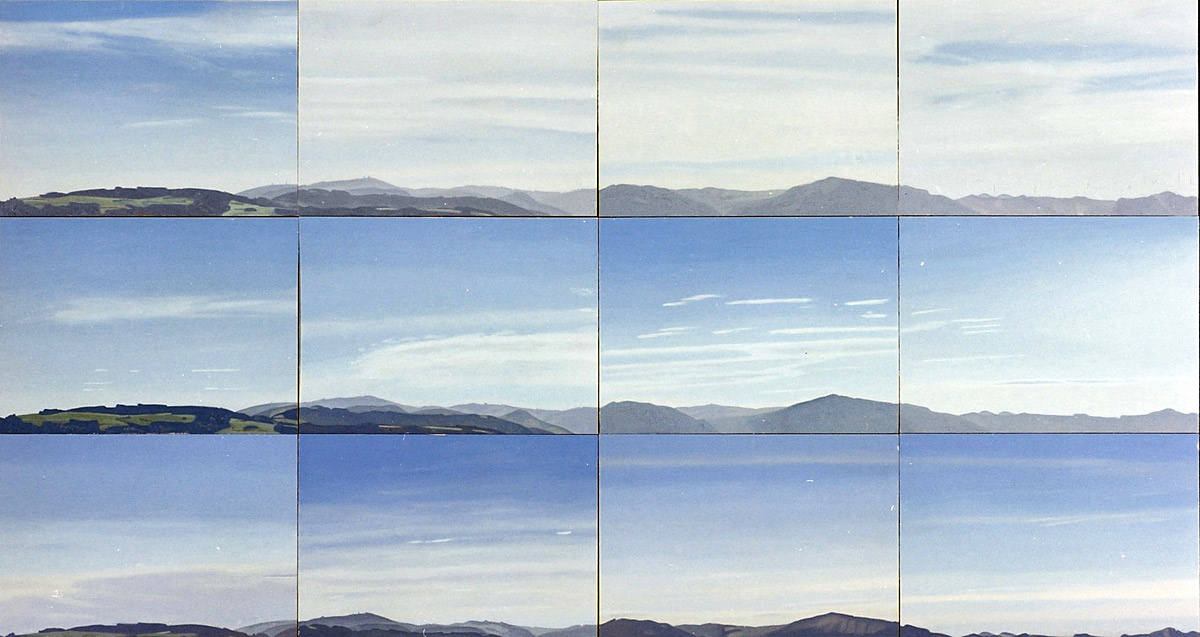
Peter Dreher (German, b. 1932) Schöne Tage im Hochschwarzwald 1999 Oil on canvas
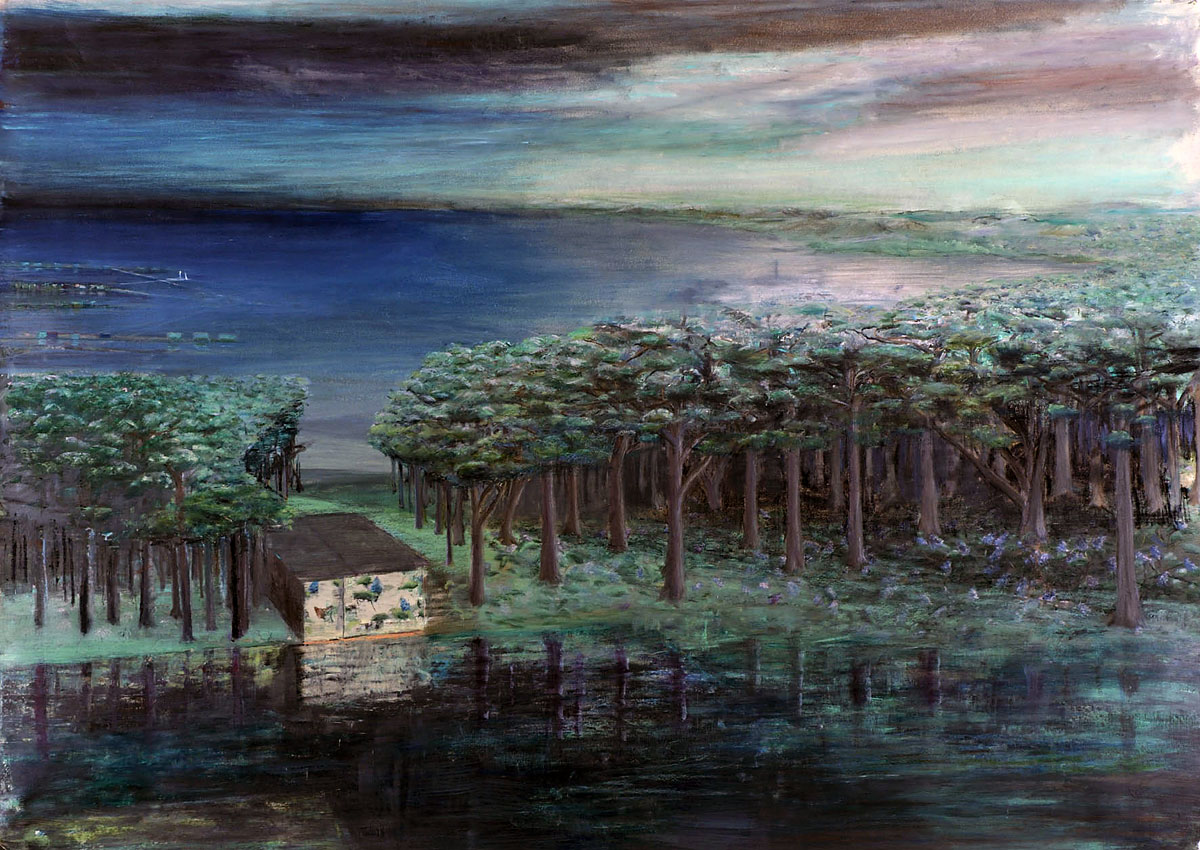
Friederike Jokisch (German, b. 1981) Domizil 2009 Pastel
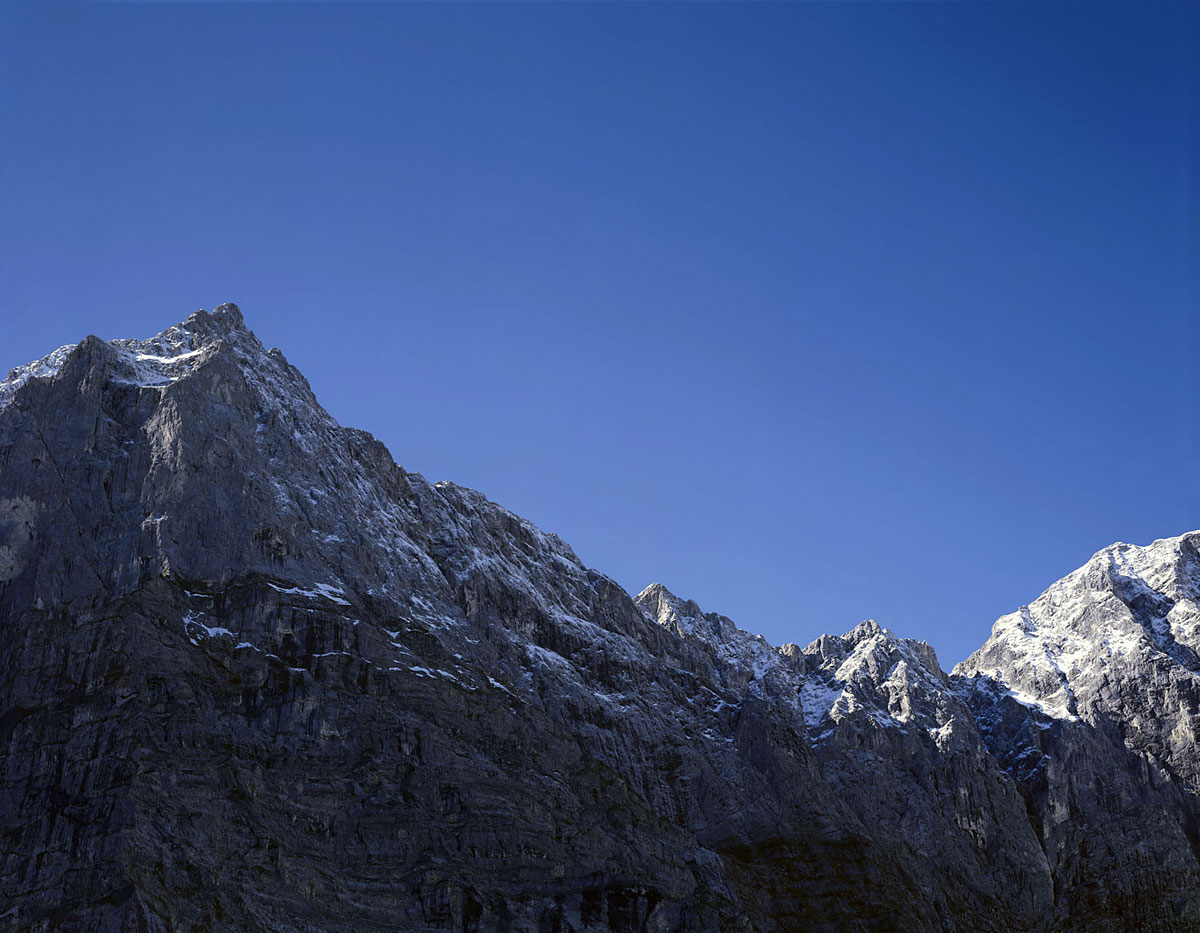
Josef Schulz (Polish, b. 1966) Felswand #3 2008 Type C print Diasec
Nature became landscape long ago. Since the Romantic period landscape has furthermore been an aesthetic position. But what is landscape for the modern human being? The thematic exhibition “Open Landscape” at the Galerie Wagner + Partner provides a juxtaposition of multigenerational photographic and pictorial approaches to this question. The reference point for all participating artists is the real landscape.
The works of Thomas Wrede and Joseph Schulz increase their charm through friction between photorealistic representation extended through staging and intervention. Wrede, in his series entitled “Real Landscapes” combines the natural beauty of landscape with constructed miniature models. The landscapes photographed in this way appear seductively plausible and exaggerate the romantic projection.
Schulz similarly aims for an aesthetic exaggeration and idealisation through digital intervention in his nature photographs of the series “Terraform”. Through the elimination of human traces he reconstructs the lost primordial state of nature and creates people’s “internal” images of the landscape.
Similarly originating from actual landscape, Peter Dreher’s “Schwarzwaldlandschaft” (Black Forest Landscape) appears idealistic. It almost appears to be based on the tradition of “Heimatmalerei” (patriotic landscape painting). Viewed in close proximity however, the picture’s elements are ordered according to days and time. Each single picture documents what the artist saw and captured at precisely this point in time. Only when viewed as a whole an abstract picture of landscape as space-time-construct appears.
The central theme of Neo Rauch-student Friederike Jokisch is the landscape beyond the established idyll. Her large format pastel paintings make the process of transformation from nature to landscape tangible. In striking pictures “landscape” is demystified and instead ruptures and alienations between culture and nature become central themes.
The exhibition consciously poses more questions, attempts to find fewer answers. At the same time it continues the theme of the previous exhibition “The Nightingale’s Secret Garden”.
Text from the Galerie Wagner + Partner website [Online] Cited 14/07/2010 no longer available online
Thomas Wrede (German, b. 1963) Drive In Theatre 2009 Lambda Print Diasec
Thomas Wrede (German, b. 1963) In the Tertiary Valley 2008 Lambda Print Diasec
Open Landscape exhibition view at Galerie Wagner + Partner, 2010
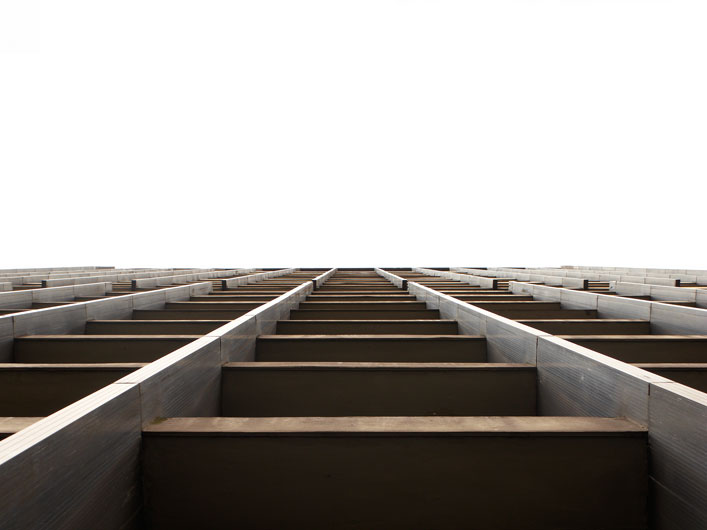
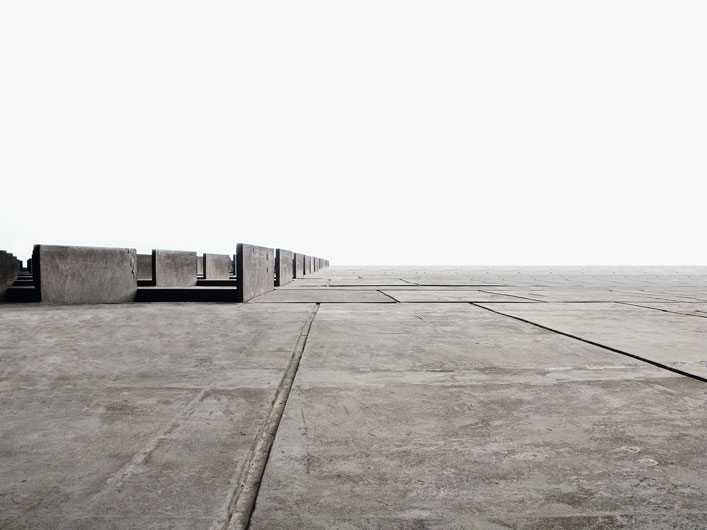
Bruno Cals (Brazilian, b. 1967) Avenida Paulista 01 2009
I love these photographs – the perspective, framing and lighting of a subject matter seen in a utterly unique way.
Marcus
Many thankx to Andrew Klug and 1500 Gallery for allowing me publish the photographs in the posting. Please click on the photographs for a larger version of the image.
Bruno Cals (Brazilian, b. 1967) Avenida Paulista 02 2009
Bruno Cals (Brazilian, b. 1967) Avenida Paulista 03 2009
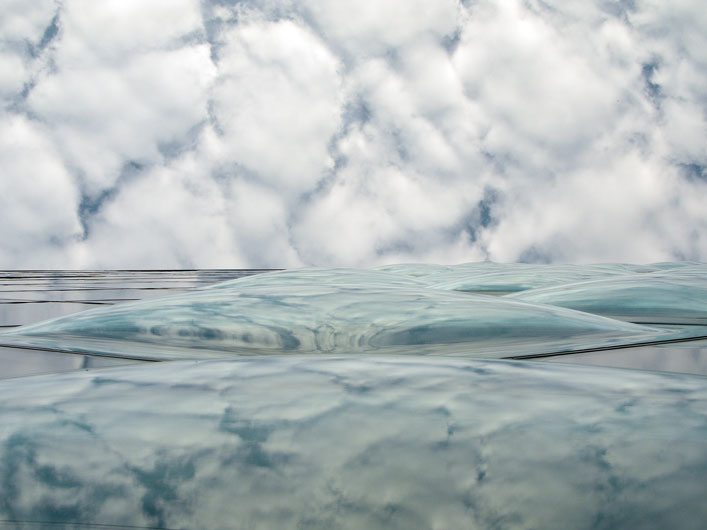
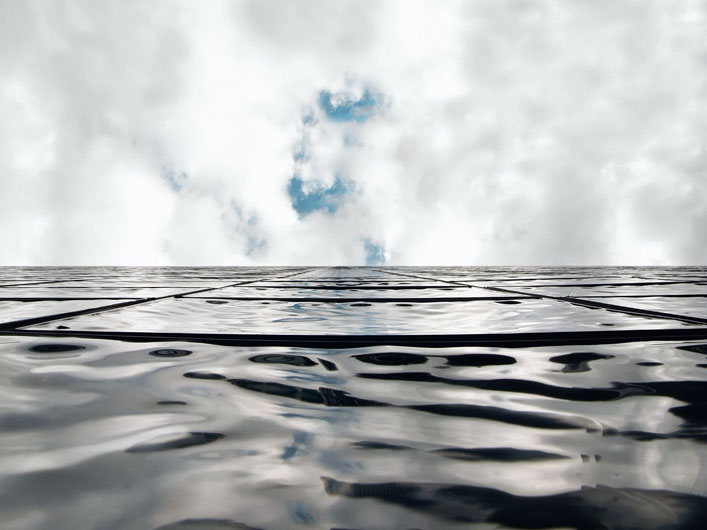
Bruno Cals (Brazilian, b. 1967) Prada 2009
Bruno Cals (Brazilian, b. 1967) Hermès 2009
Horizons, a series of architectural photographs by Brazilian photographer Bruno Cals, will be on view at 1500 Gallery from May 6 – July 31, 2010. The photographs in the exhibition are part of a personal artistic project that Cals, a well-known fashion / advertising photographer based in Sao Paulo, Brazil, has been working on since 2008. There will be an opening reception at the gallery on May 13 from 6-8 pm.
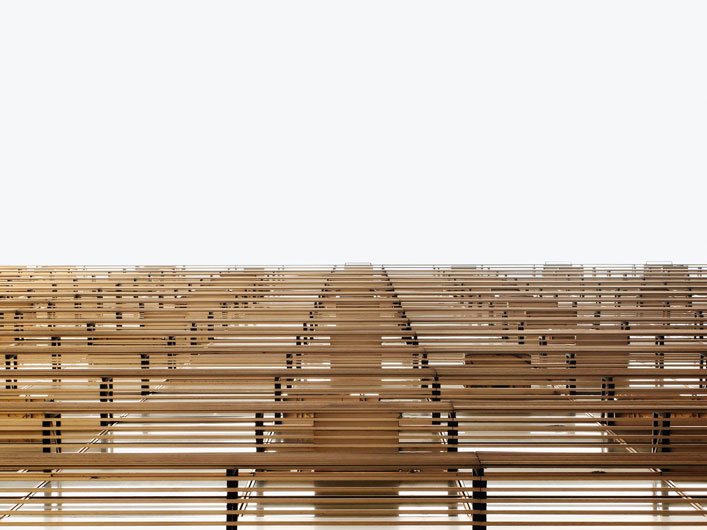
The photographs in the Horizons series are suggestive of something beyond the record presented. The images of the buildings in São Paulo, Tokyo and Buenos Aires explore the limits of two-dimensionality, and articulate a radically different perspective on a commonplace visual scenario. In expressing this fresh point of view, Bruno Cals has invoked contrasting themes of possibility versus impossibility, presence versus emptiness, and search versus satisfaction.
About Bruno Cals
Bruno Cals was born in Rio de Janeiro in 1967. At age 19, Cals moved to Paris and began a successful career as a fashion model. At age 26, he decided that he wanted to be a photographer and returned to Brazil where he began shooting professionally. Initially a fashion photographer, Cals worked for Vogue and Elle and Visionaire. Since then, he has become a successful advertising photographer, working for the largest advertising agencies in Brazil. He has won several awards, including three at the Cannes Lions International Advertising Festival.
About 1500 Gallery
Alexandre Bueno de Moraes and Andrew S. Klug founded 1500 Gallery in 2010. The gallery specialises in Brazilian photography and is the first gallery in the world with this explicit focus. 1500 interprets the notion of “Brazilian photography” to comprise photography made by Brazilian photographers, as well as images bearing a conceptual or thematic relationship to Brazil. 1500 represents the work of 17 artists, both emerging and established: 6 of 1500’s photographers are represented in the Sao Paulo Museum of Art’s Collection of Photography. 1500’s collection of images includes both contemporary and vintage photography.
Text from the 1500 Gallery website [Online] 05/10/2010 no longer available online
Bruno Cals (Brazilian, b. 1967) Palermo 01 2009
Bruno Cals (Brazilian, b. 1967) Palermo 02 2009
Bruno Cals (Brazilian, b. 1967) Quartier 2009
Bruno Cals (Brazilian, b. 1967) Safra 2009
Bruno Cals (Brazilian, b. 1967) Tokyo Midtown 2009
A huge gallery crawl on Wednesday last saw me take in exhibitions at Nellie Castan Gallery (Malleus Melficarum: strong sculptural work by James and Eleanor Avery; Broken Canon: vibrant mixed media collages by Marc Freeman); Anita Traverso Gallery (Peristereonas: sculptures, photographs and mixed media by Barry Thompson); John Buckley Gallery (Perpetua by Emma can Leest, beautiful cut paper works; rather mundane paintings by Christian Lock); Karen Woodbury Gallery (Every breath you take: wonderful galaxy-like paintings, perhaps as seen by the Hubble telescope, with a geometric / cellular base by Lara Merrett); The Centre for Contemporary Photography (Event horizon: a group exhibition that “engages the horizon as a means to establish a physical locality with relation to the Earth’s surface and more broadly to the universe of which it is a miniscule component.” An exhibition that left me rather cold); and ACCA (Towards an elegant solution by Peter Cripps, again a singularly unemotional engagement with the precise, contained work: interesting for how the work explores spatial environments but in an abstract, intellectual way).
The stand out work from this mammoth day was Jill Orr: Vision at Jenny Port Gallery. Simply put, it was the strongest, most direct, most emotionally powerful work that I saw all day.
Dr Marcus Bunyan
Many thankx to Amelia Douglas and Jenny Port Gallery for allowing me to publish the photographs in this posting.
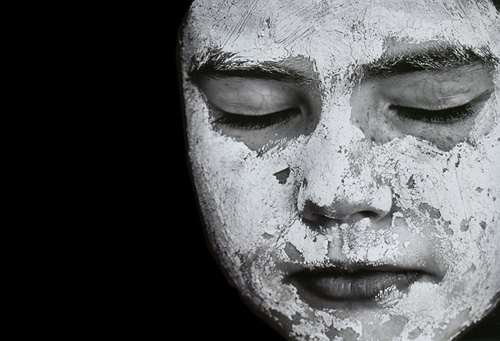
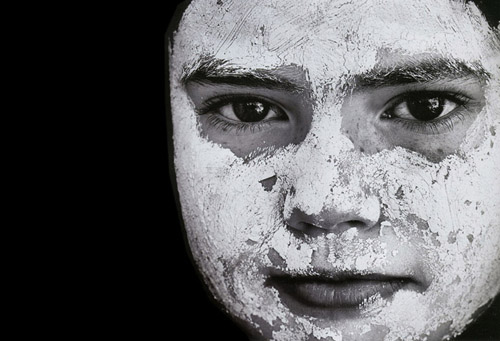
Jill Orr (Australian, b. 1952) Megan 2009
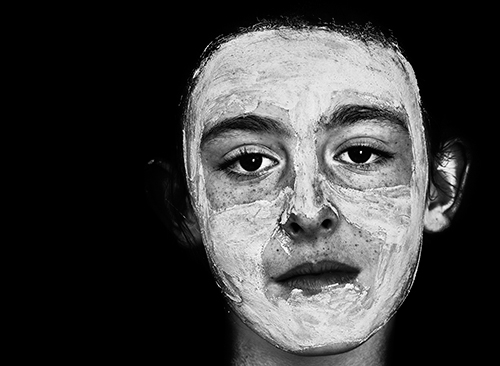
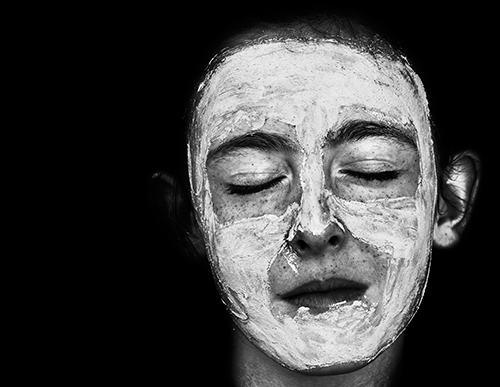
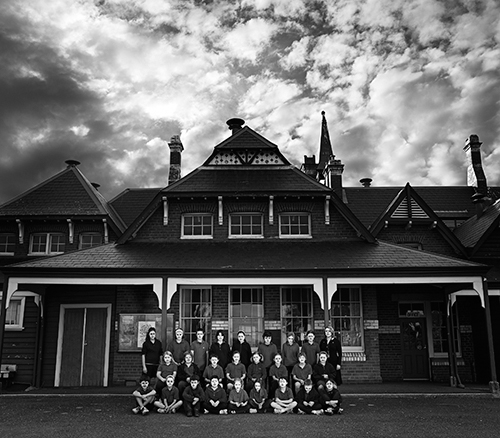
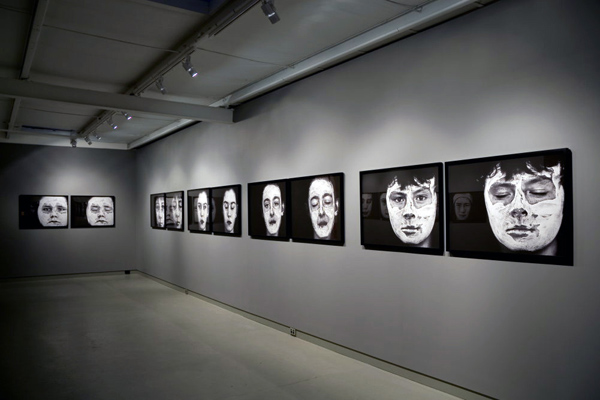
Jill Orr’s new participatory performances are photographs of children from Avoca Primary School painted with white clay from the area, displayed in pairs. The children are photographed once with eyes open, once with eyes closed. Orr asked the children to imagine their future life when they had their eyes closed. The key to the work is a group photograph of the ghostly children outside the primary school where everyone is isolated from each other (see photograph below).
“White faces loom up out of a dark ground, described by Orr as a void. On the surface these portraits are finely crafted, the skin of masked face becomes one with the digital file to create a facial landscape. The materiality of the face and the photographic file are exposed for the viewer. Titling the series ‘vision’ Orr ventures into a ‘haptic visuality’ where “vision itself can be tactile, as though one were touching a film with one’s eyes.”
From the catalogue essay by Professor Anne Marsh, Monash University
In the performance, the ritual of being photographed, Orr instructs the children who are placed under the surveillance of the camera. “We are confronted with the pose, the conscious composition of the image to be photographed, the inherent constructedness of the posed photograph.”1 The child assumes the pose by which they wish to be memorialised. The gaze (of the camera, of the viewer) is returned / or not in this spectacle.
Something happens when we look at these photographs. The text of the photographs becomes intertextual, producing as Barthes understands a “plurality of meanings and signifying / interpretive gestures that escape the reduction of knowledge to fixed, monological re-presentations, or presences.”2 This is because, as Foucault observes, texts “are caught up in a system of references to … other texts, other sentences: it is a node within a network … Its unity is variable and relative.”3
The photographs invite us to share not only the mapping of the surface of the skin and the mapping of place (the history of white people living on the land in country Australia) and identity but the sharing of inner light, the light of the imaginary as well – and in this observation the images become unstable, open to reinterpretation. The distance between viewer and subject is transcended through an innate understanding of inner and outer light. The photographs seduce, meaning, literally, to be led astray.
As American photographer Minor White, who photographed in meditation hoping for a revelation in spirit though connection between person > subject > camera > negative > print, observes in one of his Three Canons
When the image mirrors the man And the man mirrors the subject Something might take over 4
Here the power of the photographer acting in isolation, the modernist tenet of authorship, is overthrown. In it’s place, “White supposes a relationship with subject that is a two way street: by granting the world some role in its own representation we create a photograph that is not so much a product solely of individual actions as it is the result of a negotiation in which the world and all its subjects might participate.”5 The autobiography of a soul born in the age of mechanical reproduction. This is the power of these photographs for something intangible within the viewer does take over. I found myself looking at the photographs again and again for small nuances, the detail of hairs on the head, the imagining of what the person was thinking about with their eyes closed: their future, their fears, their hopes, the ‘active imagination as a means to visualise sustainable futures’ (Orr, 2010).
These photographs seem to lengthen or protract time through this haptic touching of inner light. As Pablo Helguera observes in his excellent essay How To Understand the Light on a Landscape that examines different types of light (including experiental light, somber light, home light, ghost light, the light of the deathbed, protective light, artificial light, working light, Sunday light, used light, narrated light, the last light of day, hotel light, transparent light, after light, the light of the truly blind and the light of adolescence but not, strangely, inner light)
“Experience is triggered by light, but not exclusively by the visible light of the electro-magnetic spectrum. What the human eye is incapable to perceive is absorbed by other sensory parts of the body, which contribute to the perception that light causes an effect that goes beyond the merely visual …
There is the LIGHT OF ADOLESCENCE, a blinding light that is similar to the one we feel when we are asleep facing the sun and we feel its warmth but don’t see it directly. Sometimes it marks the unplace, perhaps the commonality of all places or perhaps, for those who are pessimists, the unplaceness of every location …
We may choose to openly embrace the darkness of light, and thus let ourselves through the great gates of placehood, where we can finally accept the unexplainable concreteness of our moments for what they are.”6
In the imagination of the darkness that lies behind these children’s closed eyes is the commonality of all places, a shared humanity of memory, of dreams. These photographs testify to our presence and ask us to decide how we feel about our life, our place and the relation to that (un)placeness where we must all, eventually, return.
Dr Marcus Bunyan
1/ Feiereisen, Florence and Pope, Daniel. “True Fiction and Fictional Truths: The Enigmatic in Sebald’s Use of Images in The Emigrants” in Patt, Lise (ed.,). Searching for Sebald: Photography after W.G. Sebald. Los Angeles: The Institute of Cultural Inquiry, 2007, p. 175.
2/ Barthes, Roland. “From Work to Text” in Image, Music, Text. trans. S. Heath. New York: Hill and Wang, 1977 quoted in Thumlert, Kurt. Intervisuality, Visual Culture, and Education. [Online] Cited 10/08/2006. www.forkbeds.com/visual-pedagogy.htm (link no longer active)
3/ Foucault, Michel. The Order of Things: An Archeology of the Human Sciences. New York: Vintage, 1973 quoted in Thumlert, Kurt. Intervisuality, Visual Culture, and Education. [Online] Cited 10/08/2006. www.forkbeds.com/visual-pedagogy.htm (link no longer active)
4/ White, Minor. Mirrors, Messages and Manifestations. Aperture, 1969
5/ Leo, Vince. Review of Mirrors, Messages and Manifestations on the Amazon website [Online] Cited 26/06/2010
6/ Helguera, Pablo. “How to Understand the Light on a Landscape,” in Patt, Lise (ed.,). Searching for Sebald: Photography after W.G. Sebald. Los Angeles: The Institute of Cultural Inquiry, 2007, pp. 110-119
Jill Orr (Australian, b. 1952) Jacinta 2009
Jill Orr (Australian, b. 1952) Avoca Primary School 2009
Jill Orr’s work centres on issues of the psycho-social and environmental where she draws on land and identities. Grappling with the balance and discord that exists between the human spirit, art and nature, Orr has, since the 1970s, delighted, shocked and moved audiences through her performance installations.
This current body of work involved children from the Avoca Primary School as active participants in Orr’s performance for the camera. The result is a series of high contrast black and white photographic portraits, which are shown as diptychs portraying the different states of seeing both outwardly and inwardly. One of each pair frames the child looking directly at the camera. The gaze meets the viewer. Who is looking at whom? The second captures the child whose eyes are closed. An inner world is intimated, but not accessible to the viewer.
In terms of the ‘gaze’, these works turn to the child as conveyer of the imaginary engaging both within and without. “I have found that creative acts require the visionary sensibilities of both the inner and outer world to operate simultaneously, consciously and unconsciously as dual aspects of the one action. In this instance the action is that of active imagination as a means to visualise sustainable futures.” (Jill Orr, 2010). The portraits also reflect the present relationship to place that is etched into the faces of youth as already kissed by the harsh Australian sun.
Avoca is one of many townships that has been socially, economically and environmentally affected by drought and climate change. The portraits are created against this background.
Text from the Jenny Port Gallery website [Online] Cited 26/06/2010 no longer available online
Jill Orr (Australian, b. 1952) Vision installation photographs at Jenny Port Gallery June 2010 Photos: Marcus Bunyan
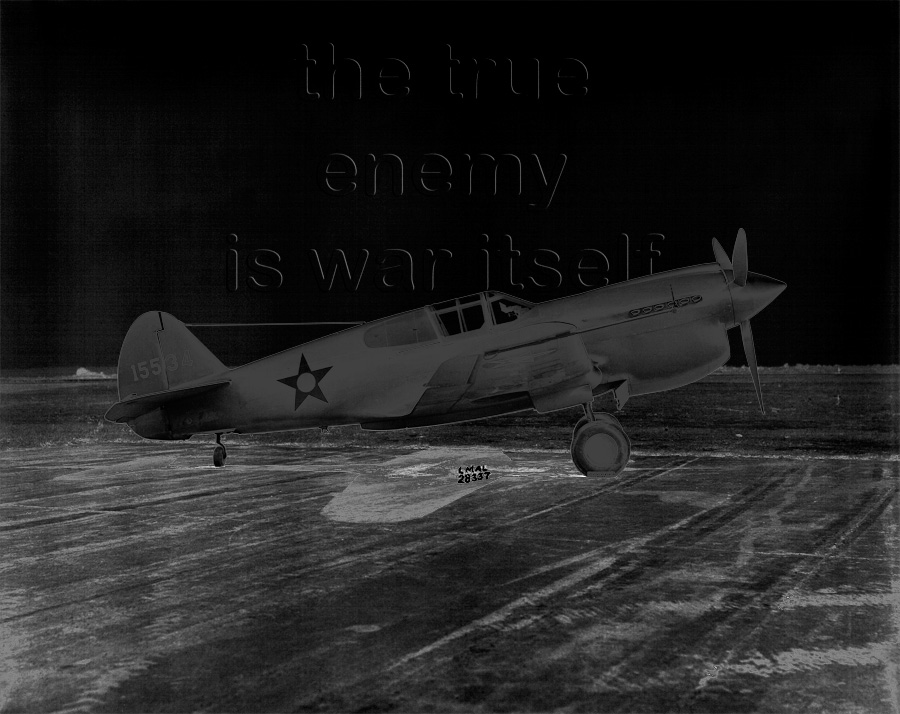
Marcus Bunyan (Australian, b. 1958) Missing in Action (dark kenosis) No.16 2010 Digital photograph
Missing in Action (dark kenosis)
Several people have asked me for some text to help describe the themes that my work investigates.
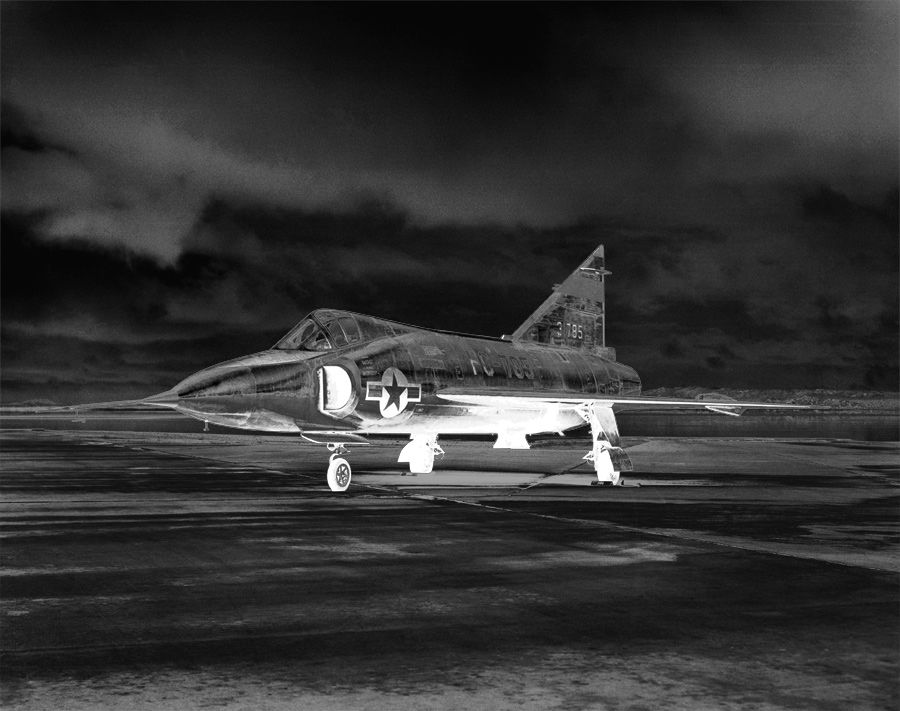
My work has always investigated the spaces and environments that people inhabit. Over the last few years the work has come to focus on fighter aircraft and the people (usually men) who fly them – the reason to fly such war machines, to fight for freedom, democracy, to bomb, to kill – the moral and ethical choices that human beings make, to undertake one action over another.
I have returned to childhood influences: I remember as a kid making toy models by Airfix and Tamiya of tanks and fighter planes and flying the planes from my bedroom ceiling. The work is strongly anti-war. Most of the work features shifts in texture, of light and dark and the occasional use of text to illuminate personal feelings. Text that is hidden among this particular body of work includes:
~ “The true enemy is war itself” from the anti-war movie Crimson Tide (1995) ~ “The destiny of man is in his own soul” Herodotus (484-420BC) ~ “We are all of us children of earth” Franklin D. Roosevelt: Flag Day Address June 13, 1942
Conceptually the work is based upon an investigation into Foucault’s ‘technologies of the self’ and the paradoxes of such (self) determination:
“Technologies of the self (also called care of the self or practices of the self) are what Michel Foucault calls the methods and techniques (“tools”) through which human beings constitute themselves. Foucault argued that we as subjects are perpetually engaged in processes whereby we define and produce our own ethical self-understanding. According to Foucault, technologies of the self are the forms of knowledge and strategies that “permit individuals to effect by their own means or with the help of others a certain number of operations on their own bodies and souls, thoughts, conduct, and way of being, so as to transform themselves in order to attain a certain state of happiness, purity, wisdom, perfection, or immortality.””1
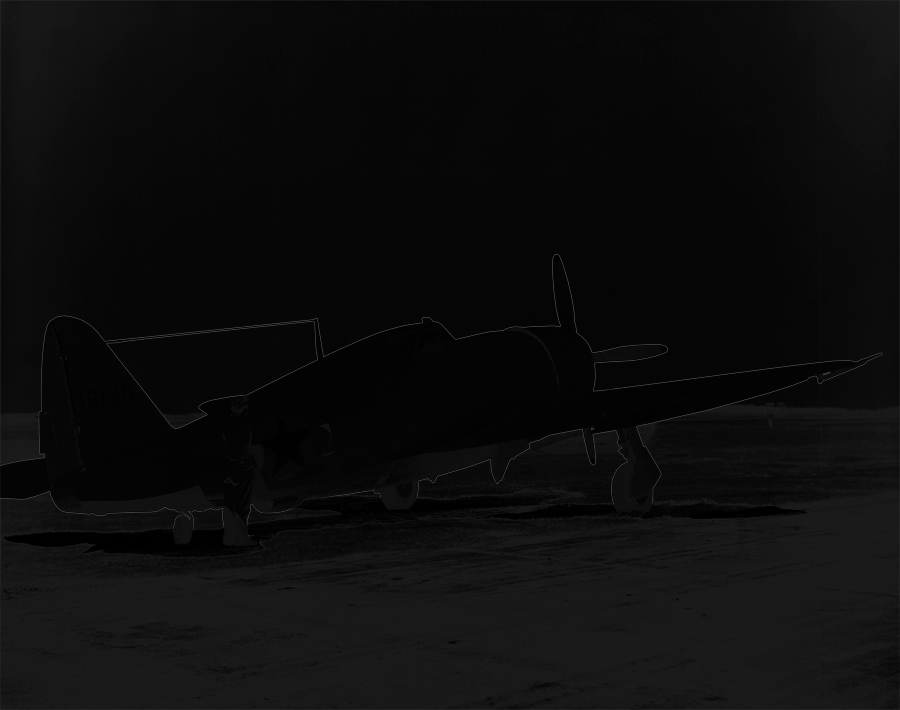
The next series are the same planes with a red colour (red kenosis) and after that I have some silhouette aircraft recognition cards – just the black shapes of the jet fighters – with colours behind, should be a good series!
Dr Marcus Bunyan
1/ Foucault, M. (1988) “Technologies of the self,” in L. H. Martin, H. Gutman and P. H. Hutton (eds.,). Technologies of the self. Amherst: University of Massachusetts Press, page 18 quoted on Wikipedia.“Technologies of the Self.” [Online] Cited 23/06/2010.
Photographs are available from this series for purchase. As a guide, a digital colour 16″ x 20″ costs $1000 plus tracked and insured shipping. For more information please see my Store web page.
Many thankx to Fenna Lampe and the Foam Fotografiemuseum Amsterdam for allowing me to publish the photographs in the post. Please click on the photographs for a larger version of the image.
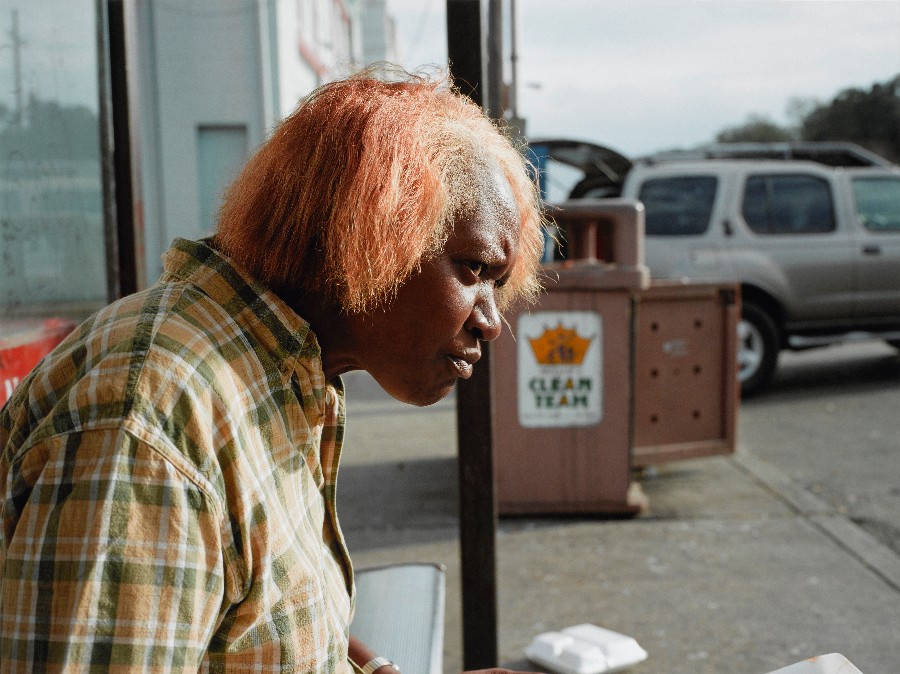
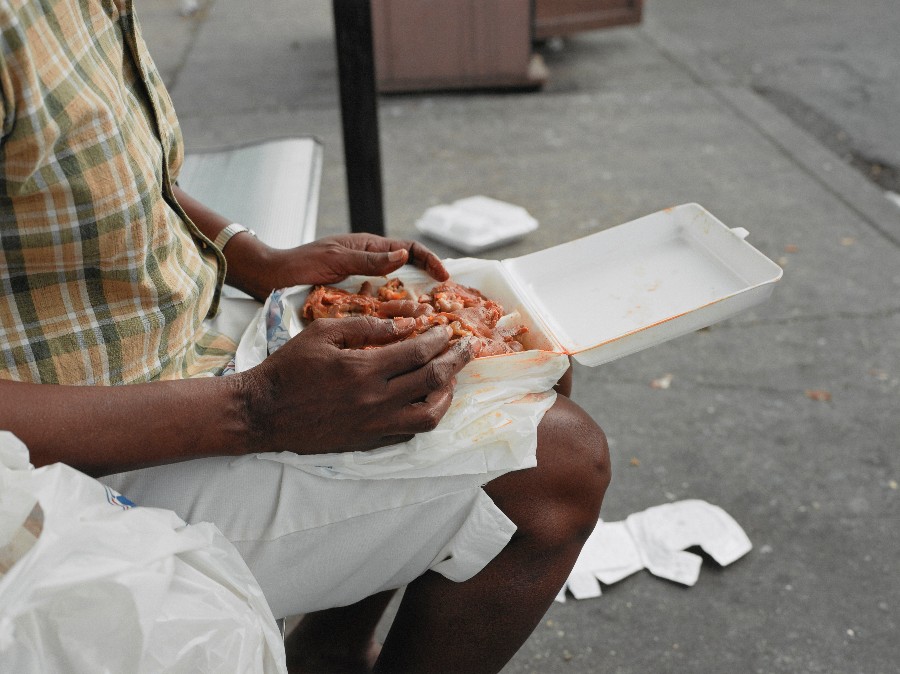
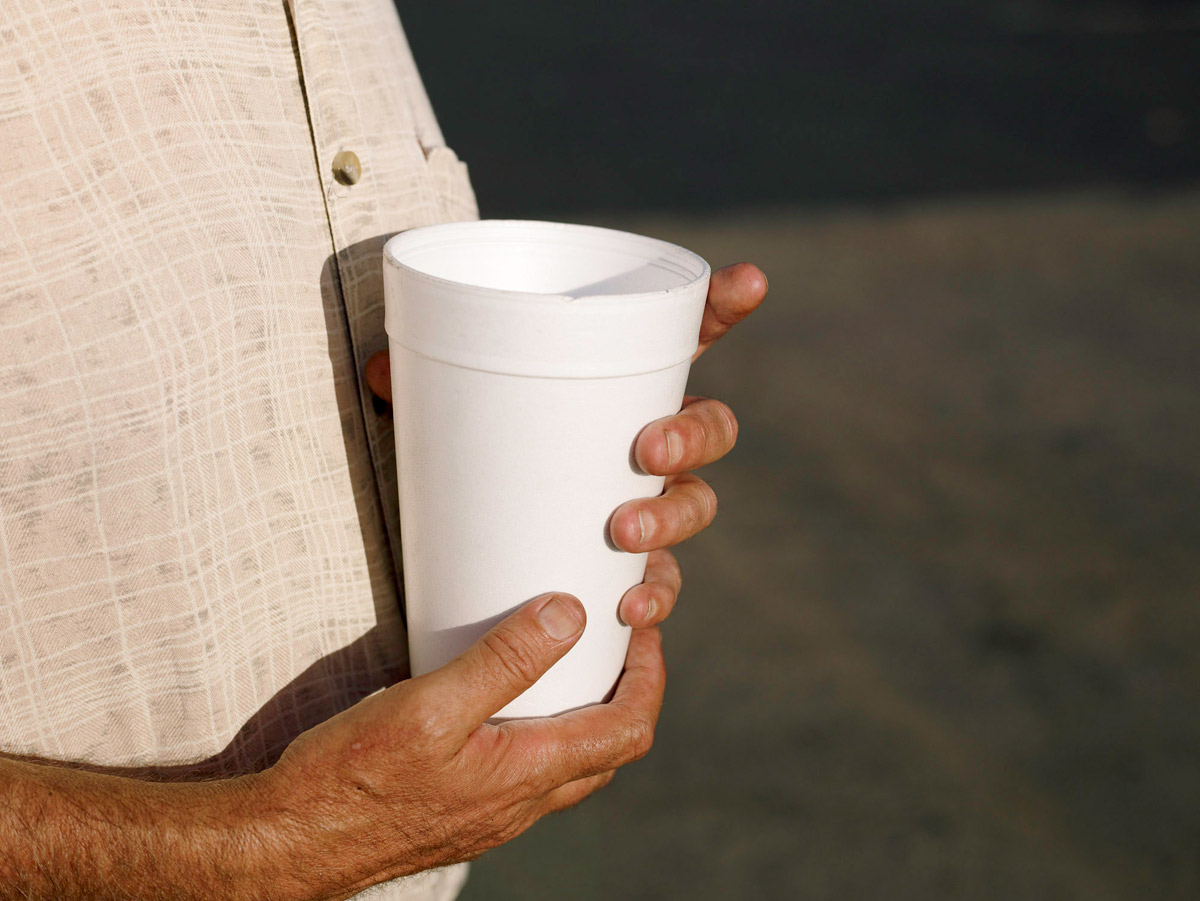
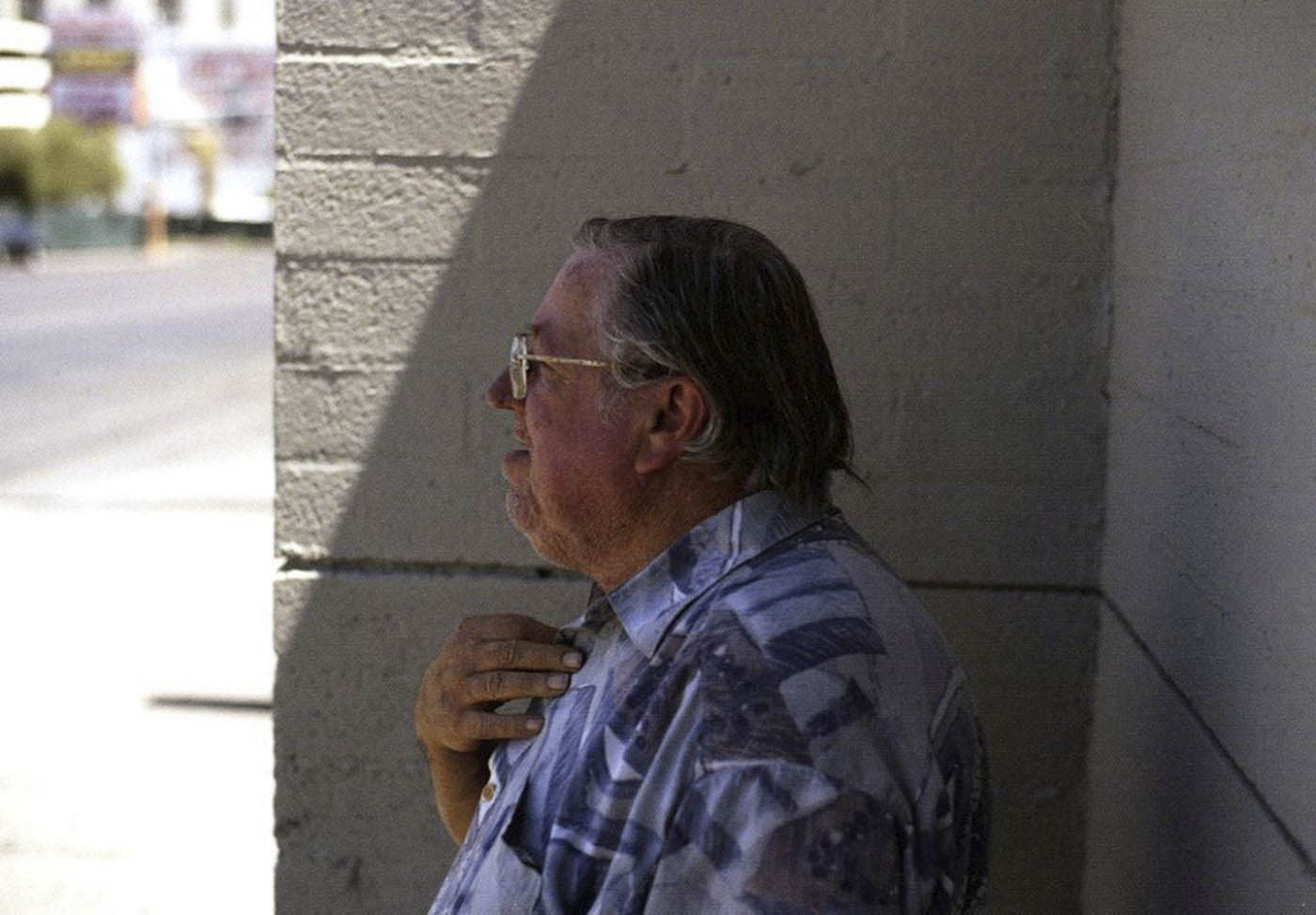
a shimmer of possibility is the latest project by influential British photographer Paul Graham. This work was created during Graham’s many travels through the United States since 2002. a shimmer of possibility consists of twelve sequences varying in number: from just a few images to more than ten. Each sequence offers an informal look at the life of ordinary, individual Americans – from a woman eating to a man waiting for the bus. The sequences focus attention on very ordinary things, which Graham has photographed with affection and curiosity.
Each sequence is a short, casual encounter, where we consider for a moment something that attracts our attention. Then life goes on, full of new possibilities. The way Graham presents the diverse sequences in the exhibition is crucial. Instead of being shown in a linear fashion, a sequence fans out over the wall like a cloud. Due to the carefully considered and inventive structure, no viewing direction or predominant hierarchy is imposed on the individual images. The eye of the viewer wanders over the photos, offering the opportunity to make personal connections in an associative manner.
a shimmer of possibility can be seen as the ultimate antithesis of what Henri Cartier-Bresson called ‘the decisive moment’. This French master endeavoured to record exactly those moments where subject matter and formal aspects combined perfectly in a single image. Paul Graham, by contrast, defends how we normally look around us. We move through the world and look from left to right, see something that grabs our attention, move towards it, glance to the side while en route, pass that by and continue on our way. Observation is a never-ending series of ‘non-decisive moments’, full of potential for anyone who is open to see it.”
Text from the Foam website [Online] Cited 06/06/2010 no longer available online
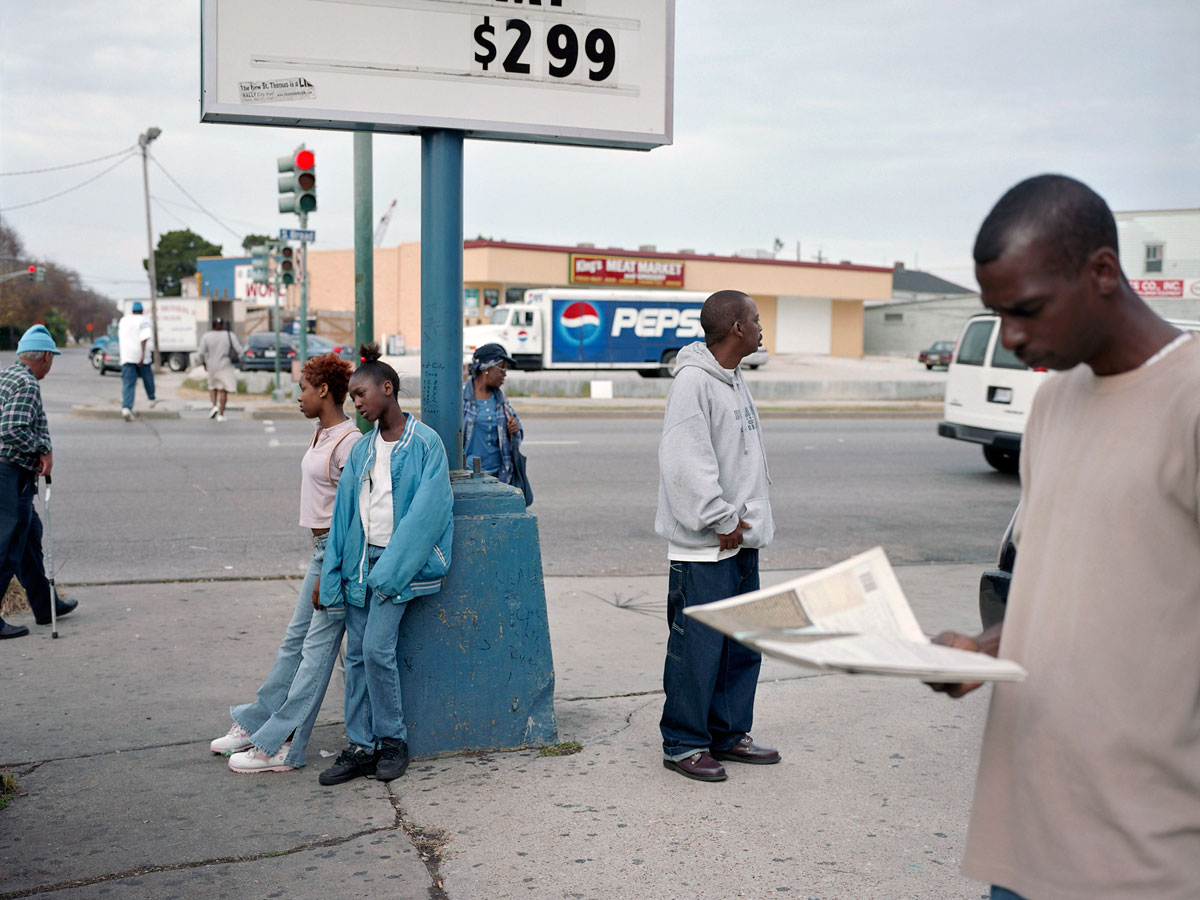
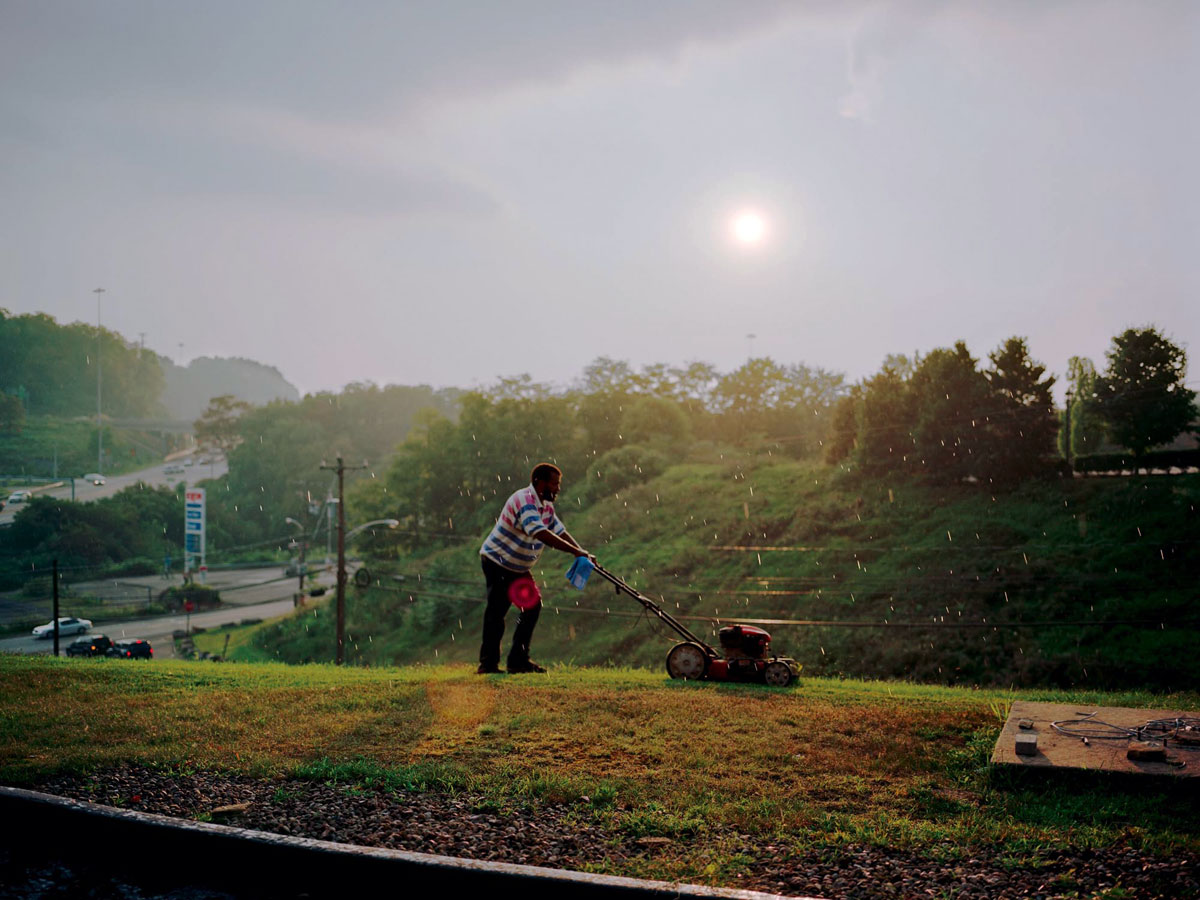
Graham walked the streets of residential neighbourhoods in Massachusetts, Pennsylvania, and Louisiana, and the sidewalks of New Orleans, Las Vegas, and New York, and when he encountered someone who caught his eye, he photographed them: an older woman retrieving her mail; a young man and woman playing basketball at dusk; a couple returning from the supermarket. Graham followed people navigating their way through crowded city sidewalks, and tracked and photographed lone figures crossing a busy roadway, unaware of the camera.
Reviewing several trips’ worth of photographs on the large, flat screen of his computer, Graham realised that the more or less randomly gathered pictures could be united into multipart works. As in a poem, where language and rhythm organise words, lines, and stanzas into an imaginative interpretation of a subject, Graham’s imposed yet open-ended structures imply – through close-ups, crosscutting, and juxtapositions of people and nature-specific narratives and overarching ideas. Images of people placed in tandem with other people and with nature suggest the flow of life, pointing to the unknown and the possibility of change, with nature acting as a balm, whether as raindrops, trees silhouetted against a burning sunset, or the bright green grass on a highway meridian.
In his reconstruction of the world in pictures, Graham describes an America at odds with itself, filled with contradictions and inconsistencies. Yet, through the gloom, the small felicities of life peek through. Fluid, filled with desire, and marked by extremes, his view is what the late curator, critic, and photographer John Szarkowski called, in another context, a “just metaphor” for our times.
Inspired by Chekhov’s short stories – and by his own contagious joy in the book form – photographer Paul Graham has created A Shimmer of Possibility, comprised of 12 individual books, each a photographic short story of everyday life. Some are simple and linear – a man smokes a cigarette while he waits for a bus in Las Vegas, or the camera tracks an autumn walk in Boston. Some entwine two, three or four scenes – while a couple carry their shopping home in Texas, a small child dances with a plastic bag in a garden. Some watch a quiet narrative break unexpectedly into a sublime moment – as a man cuts the grass in Pittsburgh it begins to rain, until the low sun breaks through and illuminates each drop. Graham’s filmic haikus shun any forceful summation or tidy packaging. Instead, they create the impression of life flowing around and past us while we stand and stare, and make it hard not to share the artist’s quiet astonishment with its beauty and grace. The 12 books gathered here are identical in trim size, but vary in length from just a single photograph to 60 pages of images made at one street corner.
Text from the Mack website [Online] Cited 14/08/2019
a shimmer of possibility by Paul Graham 12 volumes 376 pages, 167 colour plates 24.2 cm x 31.8 cm 12 cloth covered hardbacks Limited edition of 1,000 sets MACK ISBN: 9783865214836 Publication date: October 2007
Marcus Bunyan (Australian, b. 1958) Missing in Action (dark kenosis) No.11 2010 Digital photograph
Missing in action (dark kenosis)
A new body of work Missing in Action (dark kenosis) 2010 is now online on my website.
There are eighty-two images in the series which are like a series of variations in music with small shifts in tone and colour. Below are a selection of images from the series. Please click on the photographs for a larger version of the image.
Many thankx to the people who have emailed me saying how much they like the new series of work.
Dr Marcus Bunyan
Photographs are available from this series for purchase. As a guide, a digital colour 16″ x 20″ costs $1000 plus tracked and insured shipping. For more information please see my Store web page.
Kenosis
“In Christian theology, Kenosis is the concept of the ‘self-emptying’ of one’s own will and becoming entirely receptive to God and his perfect will.”
Marcus Bunyan (Australian, b. 1958) Missing in Action (dark kenosis) No.19 2010 Digital photograph
Marcus Bunyan (Australian, b. 1958) Missing in Action (dark kenosis) No.35 2010 Digital photograph
Marcus Bunyan (Australian, b. 1958) Missing in Action (dark kenosis) No.46 2010 Digital photograph
Marcus Bunyan (Australian, b. 1958) Missing in Action (dark kenosis) No.49 2010 Digital photograph
Marcus Bunyan (Australian, b. 1958) Missing in Action (dark kenosis) No.67 2010 Digital photograph
Marcus Bunyan (Australian, b. 1958) Missing in Action (dark kenosis) No.71 2010 Digital photograph
Marcus Bunyan (Australian, b. 1958) Missing in Action (dark kenosis) No.76 2010 Digital photograph
Paul Ogier (Australia born New Zealand, b. 1974) Saint Stephen 2009 Courtesy of the artist
Mark Hislop from the Monash Gallery of Art (MGA) has asked me to post details of the William and Winifred Bowness Photography Prize 2010. More than happy too. To see the standard take a look at the 2009 Finalists online. Details on how to enter are posted below. Have a go, get your entries in, you never know who will win!
Many thankx to the MGA for allowing me to publish the photographs in the posting. Please click on the photographs for a large version of the image.
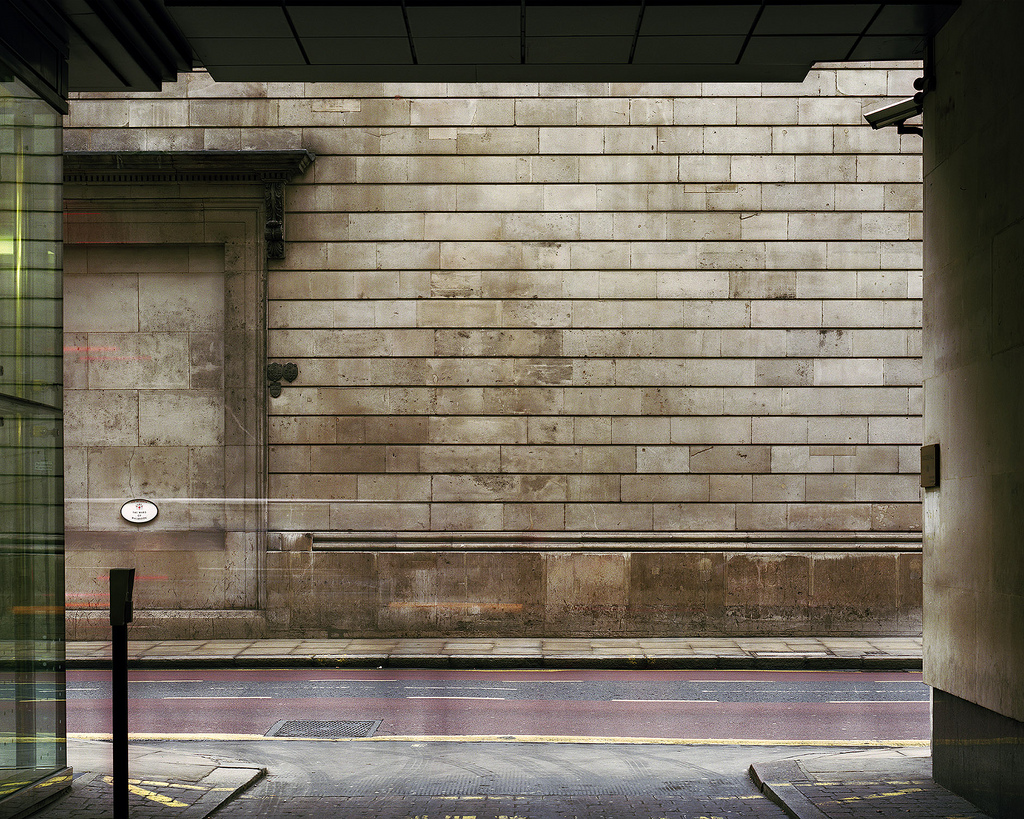
Simon Terrill (Australian, b. 1969) Bank of England 9AM 2009 Courtesy of the artist
The Monash Gallery of Art Foundation is pleased to announce the CALL FOR ENTRIES for the William and Winifred Bowness Photography Prize 2010.
The MGA Foundation will once again showcase the work of Australia’s best photographers in Australia’s most coveted photography award. Photographers from all over Australia are encouraged to submit entries to this year’s Bowness Photography Prize. Each year, finalists are drawn from the breadth of Australian photographic practice: editorial, commercial, street and fine art.
In recognition of the support shown the prize by Australian photographers, prize money for this year’s award has increased substantially. Last year, a record 459 photographers submitted entries in anticipation of the $20,000 non-acquisitive first prize. In 2010, photographers will be competing for $25,000 first prize and $1,000 People’s Choice Award.
The winner of the 2010 Bowness Photography Prize and Honourable Mentions will be announced on Thursday night 23 SEP 2010 during a cocktail party held at MGA. Winners and finalists will enjoy unprecedented visibility for their work. All finalists will be published on MGA’s flickr page and included in a substantial catalogue. The winner will receive the $25,000 first prize. And in recognition of the strength of the prize and MGA’s commitment to promoting the best of contemporary Australian photography, Honourable Mentions will have the opportunity to stage an exhibition at MGA.
This year’s entries will be judged by Gael Newton, Senior Curator of Photographs, National Gallery of Australia, Max Pam, Australian photographer, and Shaune Lakin, Director of MGA.
About the BOWNESS Photography Prize
Established in 2006 to promote excellence in photography, the annual non-acquisitive William and Winifred Bowness Photography Prize is an initiative of the MGA Foundation. The Bowness Photography Prize has quickly become Australia’s most coveted photography prize. It is also one of the country’s most open prizes for photography. In the past, finalists have included established and emerging photographers, art and commercial photographers. All film-based and digital work from amateurs and professionals is accepted. There are no thematic restrictions.
The 2009 Bowness Prize recipient was Paul Knight. Since winning the Prize, Knight has received an Australia Council for the Arts Skills and Development Grant and is currently presenting new work at the prestigious international artfair Art Cologne.
Jane Burton (Australian, b. 1966) Ivy # 3 2009 Courtesy of the artist and Karen Woodbury Gallery, Melbourne
Owen Leong (Australian, b. 1979) Justin 2009 Courtesy of the artist and Anna Pappas Gallery, Melbourne
Paul Knight (Australian, b. 1976) 14 months # 01 2008 Courtesy of the artist and Neon Parc, Melbourne Winner of the William and Winifred Bowness Photography Prize 2009
Monash Gallery of Art 860 Ferntree Gully Road Wheelers Hill Victoria 3150 Phone: +61 3 8544 0503
Many thankx to the Blanton Museum of Art for allowing me to reproduce images from the exhibition in the post. Please click on the photographs for a larger version of the image.
Marcus
Olaf Breuning (Swiss, b. 1970) Brian 2008 C-print 60 x 70 inches Courtesy the artist and Metro Pictures, New York
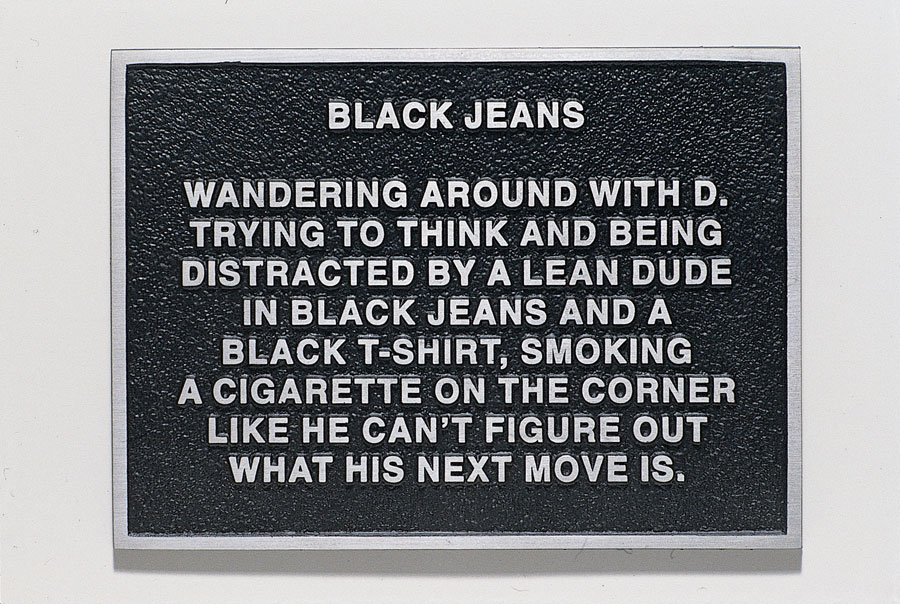
Glenn Ligon (American, b. 1960) Lest We Forget 1998 Series including cast aluminium or bronze plaques, colour photographs of plaques on site Courtesy the artist and Luhring Augustine Gallery, New York
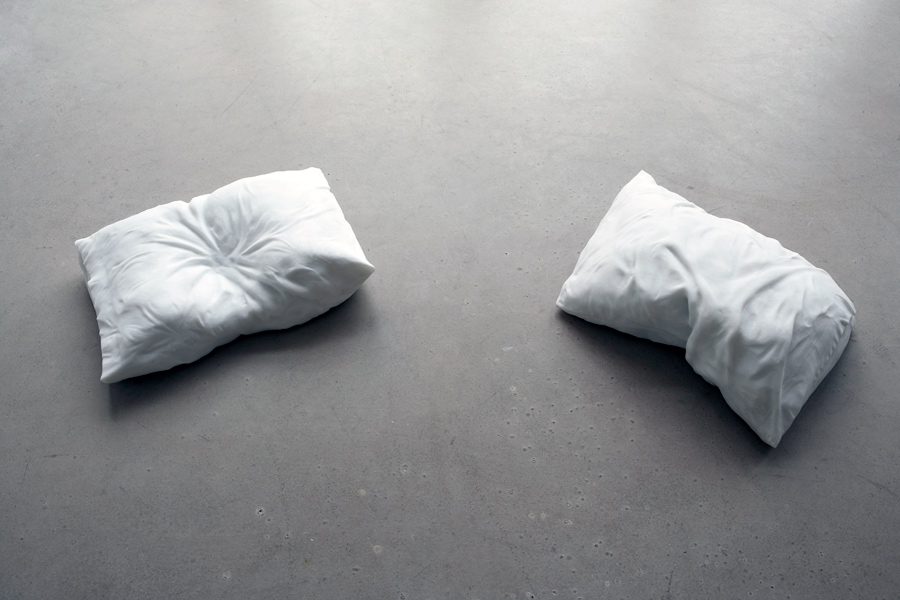
Valeska Soares (Brazilian, b. 1957) Duet 2008 Hand-carved white marble Installation dimensions variable Private Collection
Tracey Emin (English, b. 1963) You Should Have Loved Me 2008 Warm white neon Courtesy of Lehmann Maupin Gallery, New York
This February, The Blanton Museum of Art at The University of Texas at Austin investigates the notion of desire in an exhibition of the same name. Curated by Annette DiMeo Carlozzi, Blanton curator of American and contemporary art and director of curatorial affairs, the exhibition features over fifty works from an international group of contemporary artists working in all media, including Glenn Ligon, Marilyn Minter, Petah Coyne, Bill Viola, Tracey Emin, Isaac Julien and many others. The accompanying illustrated catalogue will contain texts by art critics, fiction writers, poets, performing and visual artists, all written in direct response to the works of art in the exhibition.
Carlozzi states, “”Desire” is a complex human emotion and a driving force in our lives from childhood through old age. We all can recall examples of literature, film, and music that are rife with expressions of physical desire, but how do contemporary visual artists portray it, and all its attendant psychological states – anticipation, arousal, longing, regret, and so on? “Desire” assembles a really broad range of compelling works that together present a surprisingly diverse portrait of the experience.”
One provocative aspect of the exhibition is not its imagery, per se, but the manner by which many of the works translate intimate experiences into art a public expression. Marilyn Minter’s Crystal Swallow would seem to capture a private moment of visceral response, yet in such detail and exaggerated scale that it becomes a grotesque advertisement for arousal. Glenn Ligon’s series, Lest We Forget, commemorates those flickers of romantic fantasy that sometimes occur while people watching. And Tracey Emin’s You Should Have Loved Me is an accusation from a lover scorned, created with the neon light of public signage as if to broadcast raw feeling to an uncaring world.
Works by Kalup Linzy, William Villalongo, Olaf Breuning, James Drake, Petah Coyne, Gajin Fugita, Georganne Deen, Adam Pendleton, Peter Saul, Valeska Soares, Danica Phelps, Miguel Angel Rojas, Mads Lynnerup, Rochelle Feinstein, Richard Prince, Laurel Nakadate, Jesse Amado, Isabell Heimerdinger, Alejandro Cesarco, Eve Sussman, Robert Kushner, Luisa Lambri, Chris Doyle, and a dozen others, provide an engaging multi-generational exploration of desire. In addition, an informed selection of works of art from The Blanton’s print collection will add a historic counterpoint to the contemporary works on view.
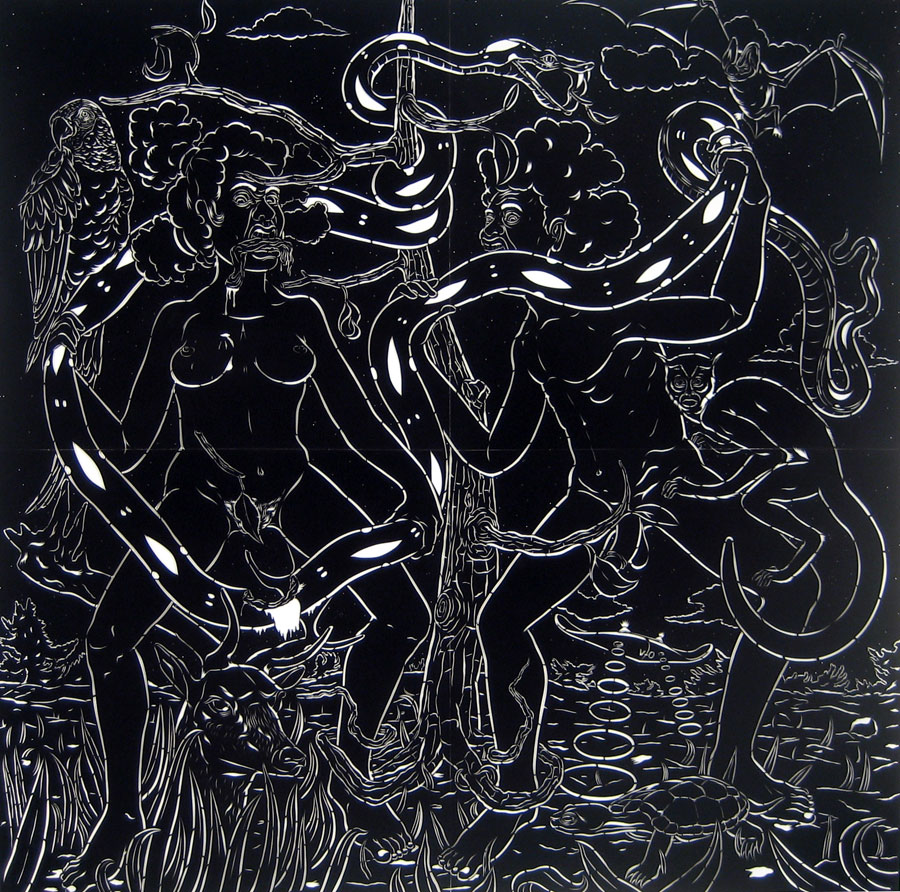
Will Villalongo (American, b. 1975) The Last Days of Eden 2009 Cut velour paper Courtesy the artist and Susan Inglett Gallery, New York
William Villalongo (born December 14, 1975 in Hollywood, Florida) is an American artist working in painting, printmaking, sculpture, and installation. Currently based in Brooklyn, New York, Villalongo is also a professor at the Cooper Union School of Art in New York.
Villalongo typically focuses in his works on the politics of historical erasure, with a particular focus on the artistic reassessment of Western, American, and African Art histories. The artist states that his intention toward these reassessments evolves in part from the West’s histories of “taking African art objects and placing them on the side of the sofa to decorate, although that is not their purpose. We are obsessed with fitting a narrative, a story.”
His works engage with the black body, examining the influences of socialisation, history, occupation, dress, and speech on it. In many of his portraits, bodies emerge from “a tumult of white negative space cut out of black velour paper,” in ways that evoke leaves, branches, feathers, or slashes.
Villalongo is also influenced by Pablo Picasso, who incorporated African masks into his primitivist works, and Aaron Douglas who he credits as inspiring him. Villalongo reexamines the power dynamics of history and representation in his own pieces. “It’s problematic and interesting, and I wanted to think about how to use it and tell a story.”
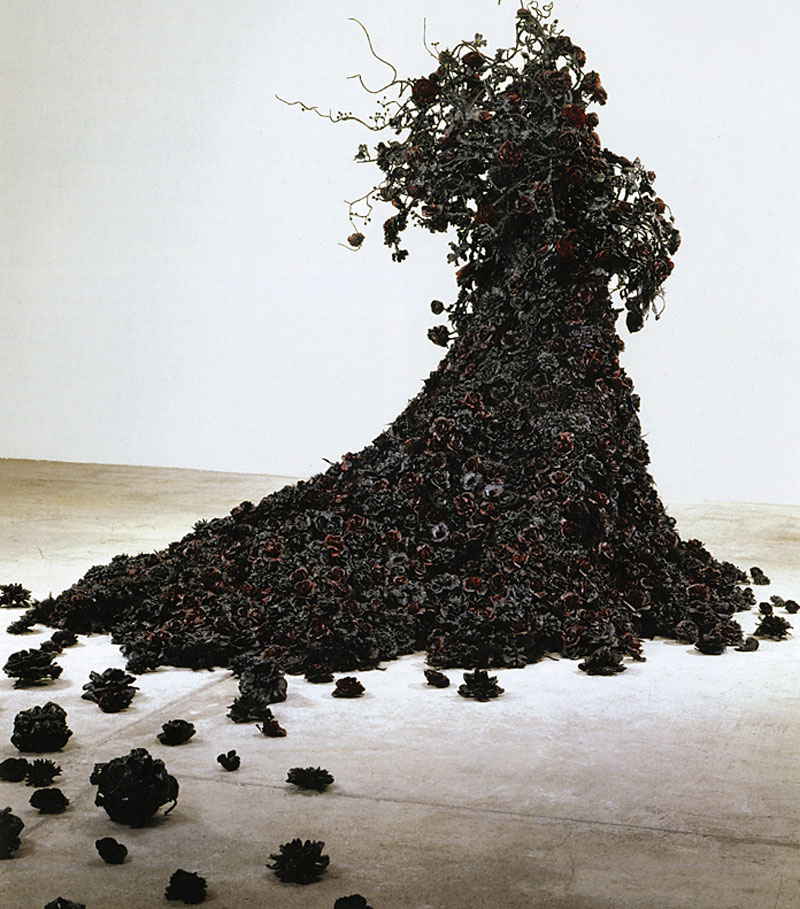
Petah Coyne (American, b. 1953) Untitled #1103 (Daphne) 2002-2003 Mixed media 77 x 83 x 86 inches Collection of Julie and John Thornton
Petah Coyne (born 1953) is an American sculptor and photographer. She is known for her large-scale sculptures composed of unconventional, and often organic, materials, such as clay, silk, wax, and hair.
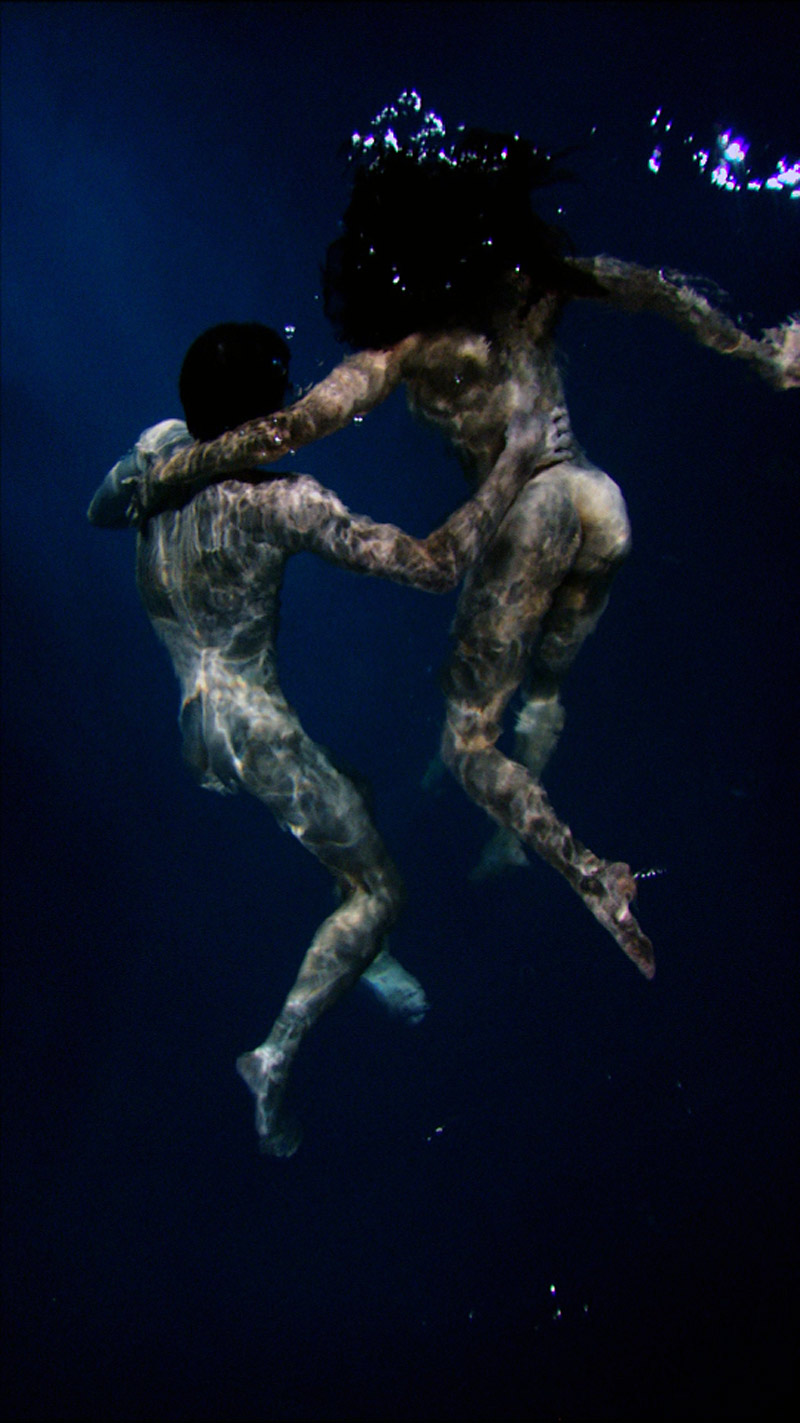
Bill Viola (American, 1951-2024) Becoming Light (still) 2005 Colour High-Definition video on plasma display mounted on wall 47.6 in x 28.5 in x 4 in (121 x 72.5 x 10.2cm) Performers: John Hay, Sarah Steben Photo: Kira Perov Courtesy Bill Viola Studio
Marilyn Minter (American, b. 1948) Crystal Swallow 2006 Enamel on metal Promised gift of Jeanne and Michael Klein, 2007
Blanton Museum of Art MLK at Congress (200 East MLK) Austin, Texas 78701
Here’s my pick of the twelve best exhibitions in Melbourne for 2009 that featured on Art Blart (in no particular order) – and a few honourable mentions that very nearly made the list!
1. The Water Hole by Gerda Steiner and Jorg Lenzlinger at ACCA (Australian Centre for Contemporary Art)
Gerda Steiner (Swiss, b. 1967) and Jorg Lenzlinger (Swiss, b. 1964) The Water Hole 2009
“The most effective bed has a small meteorite suspended in a net bag above it. The viewer slides underneath the ‘rock’ placing the meteorite about a foot or so above your face. The meteorite is brown, dark and heavy, swinging slightly above your ‘third eye’. You feel its weight pressing down on your energy, on your life force and you feel how old this object is, how far it has traveled, how fragile and mortal you are. It is a sobering and enlightening experience but what an experience it is!”
This was a magical and poignant exhibition that was a joy for children and adults alike. Children love it running around exploring the environments. Adults love it for it’s magical, witty and intelligent response to the problems facing our planet and our lives. A truly enjoyable interplanetary collision.
2. Ocean Without A Shore video installation by Bill Viola at The National Gallery of Victoria
Installation photograph of Ocean Without A Shore at the National Gallery of Victoria, Melbourne
The resurrected are pensive, some wringing the hands, some staring into the light. One offers their hands to the viewer in supplication before the tips of the fingers touch the wall of water – the ends turning bright white as they push through the penumbrae of the interface. As they move forward the hands take on a stricken anguish, stretched out in rigour. Slowly the resurrected turn and return to the other side. We watch them as we watch our own mortality, life slipping away one day after another. Here is not the distraction of a commodified society, here is the fact of every human life: that we all pass.
The effect on the viewer is both sad but paradoxically uplifting. I cried …
These series of encounters at the intersection of life and death are worthy of the best work of this brilliant artist. He continues to astound with his prescience, addressing what is undeniable in the human condition. Long may he continue.
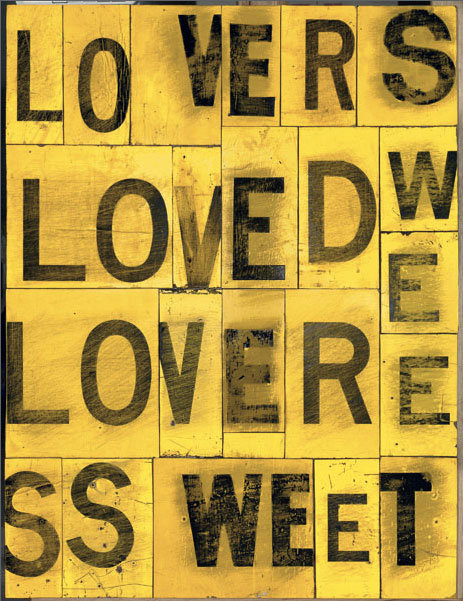
Rosalie Gascoigne (Australian born New Zealand, 1917-1999) Sweet lovers 1990
This was a wonderful exhibition. Gascoigne rightly commands a place in the pantheon of Australian stars. She has left us with a legacy of music that evokes the rhythms, the air, the spaces and colours of our country. As she herself said,
“Look at what we have: Space, skies. You can never have too much of nothing.”
Dale Frank (Australian, b. 1959) Ryan Gosling 2008/2009
The artist offered the viewer the ability to generate their own resonances with the painting, to use the imagination of ‘equivalence’ to suggest what these paintings stand for – and also what else they stand for. States of being, of transformation, wonder and joy emerged in the playfulness of these works.
Ryan Gosling was a tour de force. With the poetic structure of an oil spill, the varnish forms intricate slick upon slick contours that are almost topographical in their mapping. The black oozes light, becomes ‘plastic’ black before your eyes, like the black of Rembrandt’s backgrounds, illusive, illuminative and hard to pin down – perpetually hanging there in two dripping rows, fixed but fluid at one and the same time (you can just see the suspensions in the photograph above).
This painting was one of the most overwhelming syntheses of art and nature, of universal forces that I have seen in recent contemporary art. This exhibition was an electric pulsating universe of life, landscape and transformation. Magnificent!
5. So It Goes by Laith McGregor at Helen Gory Galerie
Laith McGregor (Australian, b. 1977) The Last Bastion (detail) 2009
Simply spectacular!
I had never seen such art made using a biro before: truly inspiring. Inventive, funny, poignant and outrageous this was a must see show of 2009.
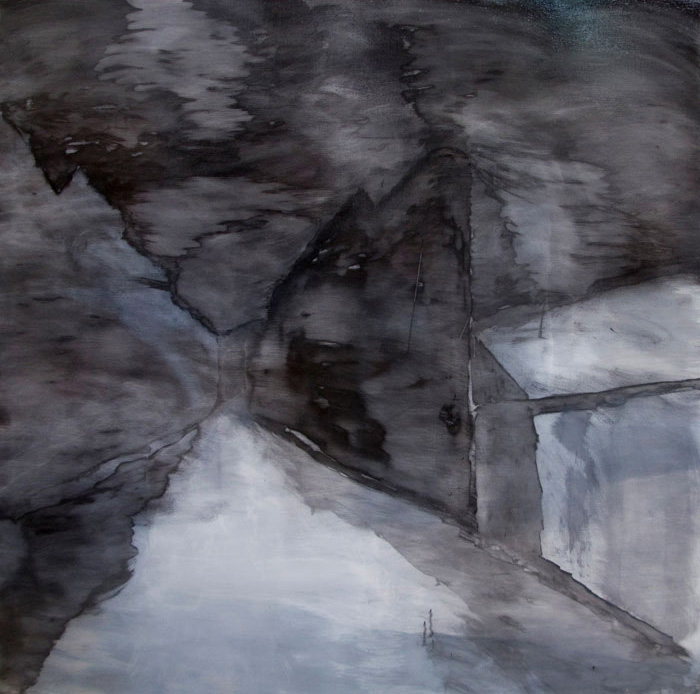
Domenico de Clario (Australian born Italy, b. 1947) o (la grande maison blanche – snow clouds massing) 2008/09
Painted in a limited colour palette of ochres, greys and blacks the works vibrate with energy. Cezanne like spatial representations are abstracted and the paint bleeds across the canvas forming a maze of buildings. Walls and hedges loom darkly over roadways, emanations of heads and figures float in the picture plane and the highlight white of snow hovers like a spectral figure above buildings. These are elemental paintings where the shadow has become light and the light is shadow, meanderings of the soul in space.
de Clario feels the fluid relationship between substance and appearance; he understands that Utrillo is embedded in the position of each building and stone, in the cadences and rhymes of the paintings of Montmarte. de Clario interprets this knowledge in a Zen like rendition of shadow substance in his paintings. Everything has it’s place without possession of here and there, dark and light.
For my part it was my soul responding to the canvases. I was absorbed into their fabric. As in the dark night of the soul my outer shell gave way to an inner spirituality stripped of the distance between viewer and painting. I felt communion with this man, Utrillo, with this art, de Clario, that brought a sense of revelation in the immersion, like a baptism in the waters of dark light. For art this is a fantastic achievement.
These heterogeneous paintings were a knockout with their wonderful, layered presence – they really command the viewer to look at them and celebrate the characters within them. Whimsical, ironic and full of humour these phantasmagorical images of creatures cast adrift with the night sky as background are fabulous assemblages of colour, form and storytelling.
My friend and I really enjoyed this exhibition. We were captivated by these songs, going back to the work again and again to tease out the details, to feel connection to the work. These are not lonely isolated figures but sublime emanations of inner states of being expertly rendered in glorious colour. And they made us laugh – what more could you ask for!
8. Tacita Dean at Australian Centre for Contemporary Art (ACCA)
Tacita Dean (English, b. 1965) Michael Hamburger [Still] 16mm colour anamorphic, optical sound 28 minutes 2007
“One can see echoes of Sebald’s work in that of Tacita Dean – the personal narratives accompanied by mythical and historical stories and pictures. The tactility of Hamburger’s voice and hands, his caressing of the apples with the summary justice of the tossing away of rotten apples to stop them ruining the rest of the crop is arresting and holds you transfixed. Old varieties and old hands mixed with the old technology of film make for a nostalgic combination … Dean implicitly understands how objects can be elegies for fleeting lives.”
Tacita Dean is a fantastic artist whose work examines the measure of things, the vibrations of spirit in the FLUX of experience. Her work has a trance-like quality that is heavy with nostalgia and memory and reflects the machine-ations of contemporary life. In her languorous and dense work Dean teases out the significance of insignificant actions/events and imparts meaning and life to them. This is no small achievement!
As an exhibition this was an intense and moving experience.
9. Ivy photographs by Jane Burton at Karen Woodbury Gallery
Jane Burton (Australian, b. 1966) Ivy #2 2009
I feel that in these photographs with their facelessness and the non-reflection of the mirror investigate notions of ‘Theoria’ – a Greek emphasis on the vision or contemplation of God where theoria is the lifting up of the individual out of time and space and created being and through contemplative prayer into the presence of God. In fact the whole series of photographs can be understood through this conceptualisation – not just remembrances of past time, not a blind contemplation on existence but a lifting up out of time and space into the an’other’ dark but enlightening presence.
The greatest wonder of this series is that the photographs magically reveal themselves again and again over time. Despite (or because of) the references to other artists, the beauty of Burton’s work is that she has made it her own. The photographs have her signature, her voice as an artist and it is an informed voice; this just makes the resonances, the vibrations of energy within the work all the more potent and absorbing. I loved them.
eX de Medici (Australia, b. 1959) Tooth and claw (detail) 2009
In other less skilled artist’s hands the subject matter could become cliched and trite but here de Medici balances the disparate elements in her compositions and brings the subject matter alive – sinuously jumping off the paper, entwining the viewer in their delicious ironies, all of us sweetly complicit in the terror war (send more meat, send more meat!), fighting tooth and nail to keep urban realities at arm’s length. The dark desires that these works contain possess an aesthetic beauty that swallows us up so that we, too, become ‘Barbarians All’.
The paintings were painted horizontally (like the painter Jackson Pollock who intuitively accessed the spiritual realm) and evidence a horizontal consciousness not a hierarchical one. Knowledge is not privileged over wisdom. There is a balance between knowledge and wisdom – the knowledge gained through a life well lived and the wisdom of ancient stories that represent the intimacy of living on this world. The patterns and diversities of life compliment each other, are in balance.
Wisdom comes from the Indo-European root verb weid, “to see,” the same root from which words like vision come. In this sense these are “Vedic” paintings in that they are ancient, sacred teachings, Veda meaning literally “I have seen.”
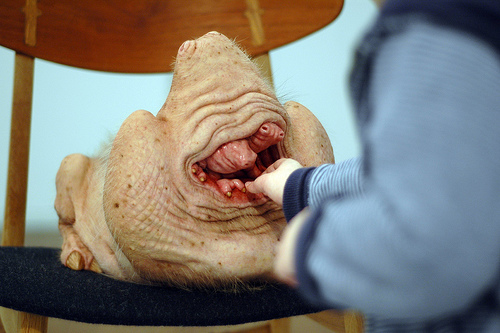
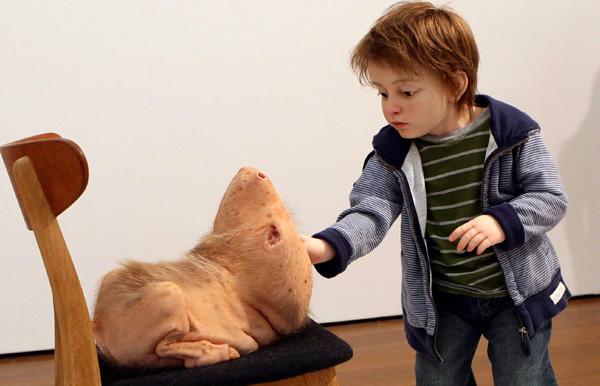
Patricia Piccinini (Australian, b. 1965) Doubting Thomas (detail) 2008
Patricia Piccinini (Australian, b. 1965) Doubting Thomas Silicone, fibreglass, human hair, clothing, chair 2008
The terrains the Piccinini interrogates (nature and artifice, biogenetics, cloning, stem cell research, consumer culture) are a rematerialisation of the actual world through morphological ‘mapping’ onto the genomes of the future. Morphogenetic fields seem to surround the work with an intense aura; surrounded by this aura the animals and children become more spiritual in their silence. Experiencing this new world promotes an evolution in the way in which we conceive the future possibilities of life on this earth, this brave but mutably surreal new world.
This was truly one of the best exhibitions of the year in Melbourne.
Honorable mentions
~ Climbing the Walls and Other Actions by Clare Rae at the Centre for Contemporary Photography In these photographs action is opposed with stillness, danger opposed with suspension; the boundaries of space, both of the body and the environment, the interior and the exterior, memory and dream, are changed.
~ Johannes Kuhnen: a survey of innovation at RMIT Gallery We stood transfixed before this work, peering closely at it and gasping in appreciation of the beauty, technical proficiency and pure poetry of the pieces.
~ Double Infinitives by Marco Fusinato at Anna Schwartz Gallery The images are literally ripped from the matrix of time and space and become the dot dot dot of the addendum. What Fusinato does so excellently is to make us pause and stare, to recognize the flatness of these figures and the quietness of violence that surrounds us.
~ all about … blooming by JUNKO GO at Gallery 101 Go’s musings on the existential nature of our being are both full and empty at one and the same time and help us contemplate the link to the breath of the sublime.
~ Mood Bomb by Louise Paramor at Nellie Castan Gallery They are dream states that allow the viewer to create their own narrative with the title of the works offering gentle guides along the way. These are wonderfully evocative paintings.
~ New 09 at Australian Centre for Contemporary Art (ACCA) Finally you sit on the aluminium benches and contemplate in silence all that has come before and wonder what just hit you in a tidal wave of feelings, immediacies and emotions. The Doing and Undoing of Things.
~ My Jesus Lets Me Rub His Belly by Martin Smith at Sophie Gannon Gallery At the end of days, when all is said and done, the funny diatribes with their ambiguous photographs are homily and heretic and together form a more inclusive body of bliss: ‘And also with you and you and you and you’.
This is a strange survey exhibition of photographs by Malaysian-born Australian artist Simryn Gill at the Centre for Contemporary Photography, Melbourne – photographs that form distinctive bodies of work that support the artist’s other conversations in art but do not form the main backbone to her practice. Perhaps this is part of the problem and part of the beauty of the work. While the work investigates the concepts of presence and absence, space, place and identity and the cultural inhabitation of nature there is a feeling that this is the work of an artist not used to putting images together in a sequence or body of work, not connecting the dots between ideas and image. Intrinsically there is nothing wrong with the conceptual ideas behind the photographs or the individual photographs themselves. The photographs don’t strike one as particularly memorable and they fail to mark the mind of the viewer in their multitudinous framings of reality.
In the series Forest (1996-1998, see photograph above and below) a selective vision of nature is invaded by cultural texts, torn pages of books mimicking natural forms such as roots, flowers and variegated leaves. The ‘natural’ context is inhabited by the cultural con-text to form a double inhabitation – “this strange hybrid nature before the paper rots away, suggestive of how nature is culturally inscribed and the futility of this attempt at containment.”1
This is a nice idea but the photographs fail to hold the attention of the viewer mainly because of the inability of the viewer to read the text that has been grafted onto the natural forms. I literally needed more from the work to hang my hat on and this is how I felt about much of this work presented here. This feeling persists with another series Vegetation (1999, see photographs below). Mundane landscapes are inhabited by faceless human beings, their absence/presence marking the landscape while at the same time nature marks them. A good idea that needed to be pushed much further.
The main body of work in the exhibition is the series Dalam (2001, see photographs below), a 258 strong series of colour photographs presented in the gallery space in gridded formation (Dalam, in Malay, can mean ‘inside’, ‘interior’ or ‘deep’). Featuring a photographic record of the interior of numerous Malaysian homes these clinical yet someone hobby-like photographs record the minutiae of domestica – the intimacy of the interior balanced by a sense of isolation and loneliness through the absence of human presence. Here, “the living room may be seen here as a cultural and social mask for its inhabitants. It’s the space into which others are welcomed on our own terms and onto which we project a portrayal of ourselves.”3 Although the work asks us “to rethink our concepts of spaces and domesticity in relation to various aspects such as socio-cultural identities, history and memory,” as presented in the gallery space the viewer is initially overwhelmed by the number, colour and construction of the interiors.
Personally I found that in the mundanity / individuality of the repetition I soon lost interest in looking intimately at the work. The photographs lack a certain spark, a certain clarity of vision in the actual taking of the images. None of the wonderful angles and intelligence of camera positioning of Eugene Atget here and maybe this is the point – the stifling ‘personality’ and banality of human habitation echoed in the photographs – but I would have rather have looked at a single monumentally intimate, magical image by Candida Hofer than all of these photographs put together!
Unfortunately in this survey exhibition there is only one photograph from what I regard as Simryn Gill’s best body of work, A small town at the turn of the century (1999-2000, see photograph below). Perhaps this was an oversight as this series would seem to bind the others more holistically together. Photographs of this excellent series can be viewed on the Roslyn Oxley9 Gallery website and their presence in this exhibition would have certainly raised the bar in terms of the artist’s vision of nature, place and identity. The square colour format, the interior/exterior of the environments and naturalness of the photographs and their the fruitful bodies really have an eloquent power that most of the work at the Centre for Contemporary Photography seems to lack. Other than the last body of work, Inland (2009, see photograph below) that is.
In the smallest most intimate space at the CCP are some of the most intimate images of Australian place that you will ever see. Spread out on a table in small stacks of jewel-like black and white and Cibachrome images the viewer is asked to done white gloves (ah, the delicious irony of white hands on the Australian land!) to view the empty interiors, landscapes and (hands holding) rocks of the interior. These are beautifully seen and resolved images. The rocks are most poignant.
Gill digs beneath the surface of this thing called Australian-ness and exposes not the vast horizons, decorous landscapes or rugged people (as Naomi Cass states below) but small intimacies of space and place, identity and memory. In the ability to shuffle the deck of cards, to reorder the photographs to make their own narrative the viewer becomes as much the author of the story being told as the artist herself – an open-ended intertextual narrative guided by the artist that investigates the very root of what it is to be Australian on a personal level. I enjoyed this reordering, this subjective experience very much.
Dr Marcus Bunyan
Many thankx to the CCP for allowing me to publish the photographs in the posting. Please click on the photographs for a larger version of the image.
2/ Gill, Simryn. “May 2006,” in Off the Edge, Merdeka 50 years issue no. 33, September 2007, p. 83
3/ Day, Kate. “After Image: Photography at the Fruit Market Gallery,” on Culture 24 website. [Online] Cited 6th December 2009 no longer available online
“Both populating and haunting the patches of now feral vegetation evoking a sense of foreign/alien source that has been strained, even lost in the act of transplantation. It also parodies the fear of rampant occupation that historically imbues aspects of Australian to Northern neighbours.”10
In Rampant Gill photographed outbursts of introduced plant species in the Australian landscape such as bamboo and sugar cane, which now grow wild and uncontrolled in subtropical northern New South Wales. Again Gill incorporates performative elements, interacting with nature through ‘dressing’ the plants in garments such as lungis and sarongs which were worn by immigrant workers who harvested these crops. Gill explores of the connections between botany, geography and the idea of plants as ‘humanised’ entities – seen in these strange single or groups of ‘figures’ appearing displaced within the Australian landscape.
Text from the education resource for the exhibition Simryn Gill: Inland at the Centre for Contemporary Photography, Fitzroy [Online] Cited 12/05/2019
Upon close inspection, this series of large scale black and white photographs of lush tropical plants reveal strips of paper and fragments of text which are embedded into tree trunks, covering leaf surfaces, transforming into aerial mangrove roots, weaving their way up walls and mimicking banana flowers.
The artist states: “I decided I needed to echo my situation in my art activities, and started making small interventions in the very rare wild places around where we lived, like gardens of unoccupied houses, roadside growths of tapioca and yam”.7
Returning from Australia to Singapore with her family, Gill went into overgrown gardens and open spaces she was familiar with to construct these site interventions, armed with glue and a range of books – some given to her by friends, others sourced from garage sales – including the colonial texts of Charles Darwin’s The Origin of Species and Daniel Defoe’s Robinson Crusoe, and an Indonesian version of the Hindu tale Ramayana. These works were explorations by Gill into her personal sense of place and history, as an outsider in Singapore. Works in the same series were created in other similar environments in countries such as Malaysia. Although they originate from specific locations, they can be read as anywhere in the tropics.
The process of entering these ‘little bits of jungle’ to construct these works was referred to by Gill as her ‘guerrilla activities’,8 and were temporary site specific interventions which she sought to document.
Her friend and fashion photographer Nicholas Leong, chose the camera and film which required long exposure, suiting Gill’s requirements to create large, dense flat tonal images. Together they documented the works before the paper was to rot away and return nature. This introduced Gill to analogue photography and its slow processing, which she values and continues to use.
Text from the education resource for the exhibition Simryn Gill: Inland at the Centre for Contemporary Photography, Fitzroy [Online] Cited 12/05/2019
… In these works which were begun at a residency at Artpace in Texas, Gill begins the process of masking and disguising, of naturalising human figures into the landscape (in this case herself) through obscuring their heads with fruit and vegetation, that was to be so important in her later bodies of work such as A small town at the turn of the century.
Curator Sharmini Pereira has written: “In this series of photographs, her self-portrait dominates but only as a stream of disguises involving plants in various geographic locations; tumbleweed and aloe in Texas, mangrove and black boy in Australia, and bird’s nest fern in Singapore. The images bear an uncanny resemblance to a sequence of B-movie stills, where vengeful alien-plant-people threaten to over run the planet. Many Hollywood films have of course played out such narratives as a projection of Cold War anxieties fearful about the threat of Communist contamination. But if Vegetation represents the future through some fear located in the past, it does so through a mimetic representation of the present… Vegetation parodies the camera’s framing of today’s culture contact.
Beyond their still pathos, the enchanting appeal of these photographs lies in their somersaulting between the mythical moment of first contact and its reversal, which the mimetic moment of secondary contact ushers forth. The artist, “unrecognisable” in her jeans and desert boots and wearing her new plant hairstyle, lampoons the power of mimicry as a means of being both alien and indigenous at one and the same time. In as much as Vegetation offers us the chance to poke fun at the natives, it is also an image of the new 21st-century native – able to deliver the laughs rather than be controlled by them. It is here that we observe the breadth of relief that resides in the welcome opportunity to view imitation as a way of moving beyond the imitated…”
in “Simryn Gill – Selected Work”, AGNSW, 2002
Text from the Art Gallery of New South Wales website [Online] Cited 12/05/2019
“Nature becomes just another clichéd signifier of place and of localness, which one may adopt while passing through a ‘strange’ place, or migrating to a new place, or indeed as a cover for invasion.”9
In these small framed photographs, Gill is now the subject within the natural environment. The series was started in San Antonia, Texas in 1999 and was part of a two-month residency during which time she produced a new body of work. Gill was wondering if – in this mimicry of nature – she actually could ‘disappear into the landscape’. On field trips she collected a range of desert plant matter, including aloe and tumble weed and took this back to the studio to construct headdresses. Again, using Nicholas Leong as the photographer, Gill then went back to the location to shoot the series. She continued to work on the series in Singapore using the mangrove and in Australia, the grass tree occasionally referred to as a ‘black boy’. The series is closely related to A small town at the turn of the century in its playfulness and parody of ethnographic portraits.
Text from the education resource for the exhibition Simryn Gill: Inland at the Centre for Contemporary Photography, Fitzroy [Online] Cited 12/05/2019
Simryn Gill: Inland is a survey of photography and takes place in a photography gallery. It is important to declare at the outset, that while photography forms a significant and wondrous part of her practice, Simryn Gill does not consider herself a photographer; “For me, the taking of photographs is another tool in my bag of strategies, in that awkward pursuit of coherence we sometimes call art.”2 Simryn Gill: Inland embraces this conundrum as an entry point for considering Gill’s photography, and how photography might function more broadly as a way of engaging with the world.
Seven major series wind almost chronologically through the gallery – in this first survey of Gill’s photography – following a path, quite literally, from outside to inside, from found in nature to found in culture and back. Commencing with three series located outdoors, Forest (1996-1998), Rampant (1999) and Vegetation (1999), the survey moves to Gill’s sweeping interior series Dalam (2001). On the cusp of outside and inside is Power station (2004), which makes a curious and visceral analogy between the interior of her childhood home in Port Dickson, Malaysia and the interior of an adjacent power station. Like a medieval Book of Hours, the hand-sized concertina work Distance (2003-2009) is an attempt by Gill to convey the interior of her home in Marrickville, Sydney to someone residing outside Australia.
Gill’s most recent work Inland (2009), commissioned for this survey and photographed during a road trip from northern New South Wales to South Australia and across the bight to Western Australia, is at the heart of the exhibition. Gill’s only moving image work, Vessel (2004), commissioned for SBS Television, closes the exhibition’s journey with the almost imperceptible passage of a small fishing vessel across the horizon. To ground the exhibition, or perhaps to oversee our journey, one image is selected from Gill’s highly regarded series, A small town at the turn of the century (1999-2000).
Seeking an understanding of the politics of place informs her recent series. Inland confounds what is normally expected from photographs of Australia’s interior and eschews decorous landscapes, vast horizons or smiling rugged people, for modest interiors of homes. Indeed there are no people present, only the houses they have inhabited as evidence of their subjectivity.
Inland consists in piles of small jewel-like Cibachrome and black and white prints sitting on a table for viewers to peruse, heightening the provisional nature of its description, leaving open-ended the question of what can be known through photographic representation.
Naomi Cass, Exhibition Curator and Director Centre for Contemporary Photography
Dalam (Malay for ‘deep’, or ‘within’) is a suite of 260 photographic images, the result of Malaysian artist Simryn Gill’s sojourn across her home country over an eight-week period. She went up to the homes of complete strangers and asked to photograph their living spaces. Dalam is an expansive yet uncannily intimate survey of Malaysia at the turn of the century, a mélange of disparate ethnicities, religions, ideologies and allegiances. The title itself alludes to the depiction of interior spaces as signifiers of the individual lives that inhabit and activate them, but, even more importantly, it suggests an exploration of the social fabric of contemporary Malaysia. As the artist observes: “In conceiving the work I had wondered what the ‘inside’ of a place might look like. Do lots of people held together by geography add up to the idea of a nation or single unified group?” Dalam questions what historian Benedict Anderson famously dubbed “the imagined community”, or the various divergent structures that shape the modern nation-state.
Text from the Singapore Art Museum website [Online] Cited 12/05/2019
Dalam (Malay for deep; inside; interior), is a series of two hundred and sixty colour photographs arranged in grid formation on the gallery walls.
“Gill deliberately began Dalam with the intention to document the living rooms of residents of the Malay peninsula, and her focus in each photograph is to capture the sense of place conveyed by the living room of the occupants.”11
Accompanied by a close friend, Gill took these over an eight-week period as they travelled across the Malaysian Peninsula. In towns mainly outside the city regions she knocked on the doors of strangers and asked if she could enter their houses to photograph their living rooms. Surprisingly, almost everyone agreed, and the resulting series gives a fascinating insight into the character of the Malaysian Peninsula, made up of a broad mix of people from diverse cultural backgrounds. Gill was again exploring her conflicting experience of being both insider and outsider; raised in Malaysia but also having lived outside for a very long time.
Text from the education resource for the exhibition Simryn Gill: Inland at the Centre for Contemporary Photography, Fitzroy [Online] Cited 12/05/2019
How We Are in the World: The Photography of Simryn Gill
Simryn Gill: Inland is a survey of photography and takes place in a photography gallery. It is important to declare at the outset, that while photography forms a significant and wondrous part of her practice, Simryn Gill does not consider herself a photographer; “For me, the taking of photographs is another tool in my bag of strategies, in that awkward pursuit of coherence we sometimes call art”.1 Simryn Gill: Inland embraces this conundrum as an entry point for considering Gill’s photography, and how photography might function more broadly as a way of engaging with the world.
Seven major series wind almost chronologically through the gallery – in this first survey of Gill’s photography – following a path, quite literally, from outside to inside, from found in nature to found in culture and back. Commencing with three series located outdoors, Forest (1996-1998), Rampant (1999) and Vegetation (1999), the survey moves to Gill’s sweeping interior series Dalam (2001). On the cusp of outside and inside is Power station (2004), which makes a curious and visceral analogy between the interior of her childhood home in Port Dickson, Malaysia and the interior of an adjacent power station. Like a medieval Book of Hours, the hand-sized concertina work Distance (2003-2008) is an attempt by Gill to convey the interior of her home in Marrickville, Sydney to someone residing outside Australia. Gill’s most recent work Inland (2009), commissioned for this survey and photographed during a road trip from northern New South Wales to South Australia and across the bight to Western Australia, is at the heart of the exhibition. Gill’s only moving image work, Vessel (2004), screened on SBS Television, closes the exhibition’s journey with the almost imperceptible passage of a small fishing vessel across the horizon. To ground the exhibition, or perhaps to oversee our journey, one image is selected from Gill’s highly regarded series, A small town at the turn of the century (1999-2000).
Gill’s photography takes place within a broader practice that curator Russell Storer describes as “… subjecting found objects, books, local materials and sites – each of which carry specific meanings and histories – to a range of processes including photographing, collecting, erasing, casting, tearing, arranging, stitching, rubbing, wrapping and engraving”.2 Gill takes humble things in the world and shifts them; rearranges them with seemingly endless patience, craft and grace, to communicate something about how the object has come into being. This is not a matter of changing context to appreciate formal qualities as might a connoisseur, but rather a quest for understanding place.
Always evident in the found object is some kind of story that, as Gill gathers the item, is folded into the meaning of her work. The constituent parts of her installations – be they items found on the shore or collected from around her studios in Port Dickson or Sydney, or indeed a particular site Gill photographs – are gathered for their ability to evoke a history. Movement across the globe, of people and vegetation, both enforced and deliberate, if not the subject of her work is certainly a link. While not a unique story, resettlement is part of Gill’s individual and familial history. Her parents originally moved from India to Malaya prompted by the range of human predicaments, from political and economic upheaval, through to adventure and marriage. The displacement of objects echoes the journeys of people.
Naomi Cass Exhibition Curator and Director Centre for Contemporary Photography, extract from catalogue essay [Online] Cited 12/05/2019
A small town at the turn of the century 1999-2000 is a series of 40 type C photographs taken by Gill in the town the artist grew up in. The documentation of the people and place of ones past could be highly nostalgic. Added to this is the moment at which Gill chose to document – the turn of the 20th into the 21st century. Such references to time and memory, the past and the present are potent but Gill has covered each of her subjects’ heads with tropical fruit. Rather than being absurd or ironical the head coverings move the images away from being portraits and into the broader realm of context. The context however is not necessarily as revealing as the viewer might wish. There are numerous variations on dress, interiors, exteriors, pose, and accoutrements that suggest activities (whether work or play). While it is usually clear that the environment is tropical (because of the fruit and foliage) the images provoke a complex set of reactions to the possible messages. Faceless, Gill’s subjects are ciphers constructed by external objects, presented with affection.
Text from the Art Gallery of New South Wales website [Online] Cited 12/05/2019
Simryn Gill (Australian born Singapore, 1959) Distance 2003-2008 Artist book Installation views, Centre for Contemporary Photography
Distance (2003-2008)
Distance, an artist’s book of small colour photographs is produced as a hand-sized concertina work in an edition of just five. This beautiful work is “like a medieval Book of Hours”12 and is displayed in an elegant museum-like cabinet with a protective perspex covering. Distance was produced after many conversations Gill had with friends and family overseas and is an attempt to show them what her home is like. She took one hundred and thirty photographs, using a medium format camera, of everything in the interior of her home in Marrickville, Sydney; however the results seemed to fail in producing a truthful representation of her home, as Gill says, “the final result is almost like an incoherence, it’s too close, there is too much information”.13. Naomi Cass wrote with reference to this, ‘While Distance fails to communicate the gestalt of home, it is remarkable in its details and beauty’.14
Text from the education resource for the exhibition Simryn Gill: Inland at the Centre for Contemporary Photography, Fitzroy [Online] Cited 12/05/2019
Simryn Gill (Australian born Singapore, 1959) Inland 2009 Cibachrome and silver gelatin photographs Photographs (quantity variable) 13 x 13cm (each)
Inland (2009)
“Through an extraordinary ability to engage with strangers, Gill and her fellow traveller Mary Maguire photographed the living rooms of eighty homes ranging in geographical location, socio-economic and cultural background.”15
Inland (2009) is a new series, which was commissioned for this exhibition. Using the same process to produce Dalam, Gill photographed this series on a road trip; however this time in Australia, from northern New South Wales to South Australia and across the bight to Western Australia. The photographs include views of the horizon, skyscapes, interior still life compositions and close ups of stones collected by Gill during her travels. Inland is at the heart of the exhibition and the mode of presentation differs to all other series in the exhibition, as these precious handmade small scale colour and black and white images are assembled on a table in piles for the visitor to examine, with white gloves.
Text from the education resource for the exhibition Simryn Gill: Inland at the Centre for Contemporary Photography, Fitzroy [Online] Cited 12/05/2019
Centre for Contemporary Photography Level 2, Perry St Building Collingwood Yards, Collingwood Victoria 3066




















 Art Blart _ art and cultural memory archive
You must be logged in to post a comment.