Notes from a Conversation with Mari Funaki. Exhibition: ‘Mari Funaki, Works 1992-2009’ at Art Gallery of Western Australia, Perth

Exhibition dates: 27th June – 18th October, 2009


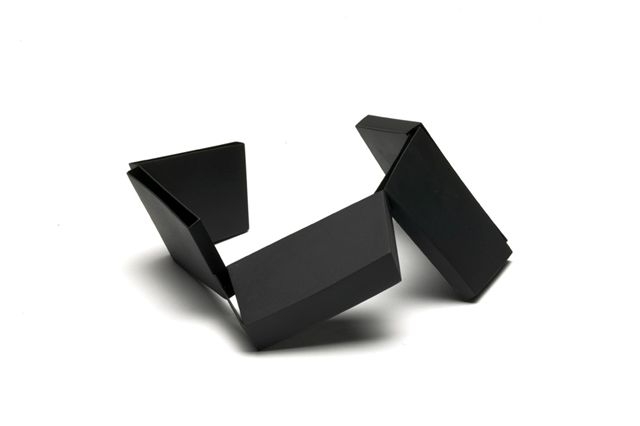
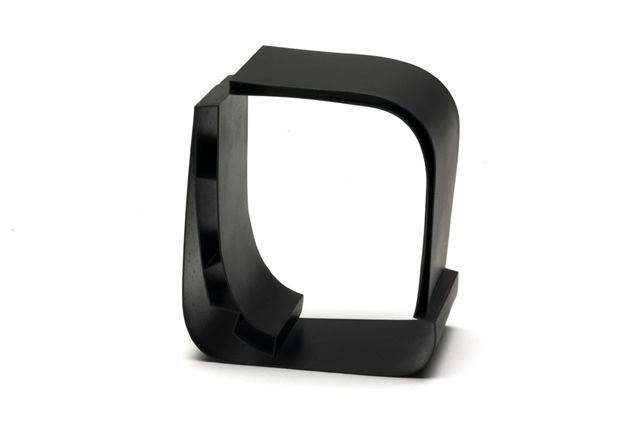
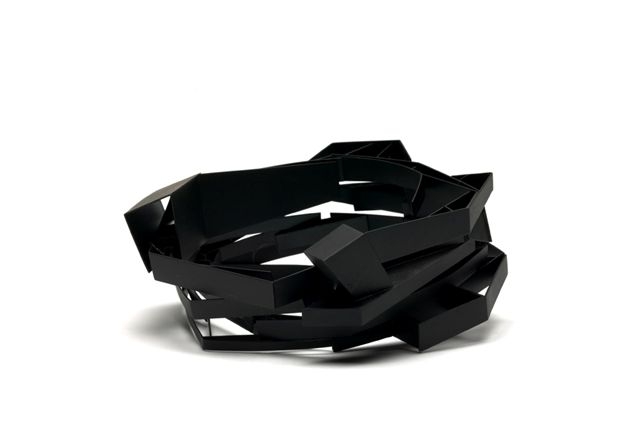
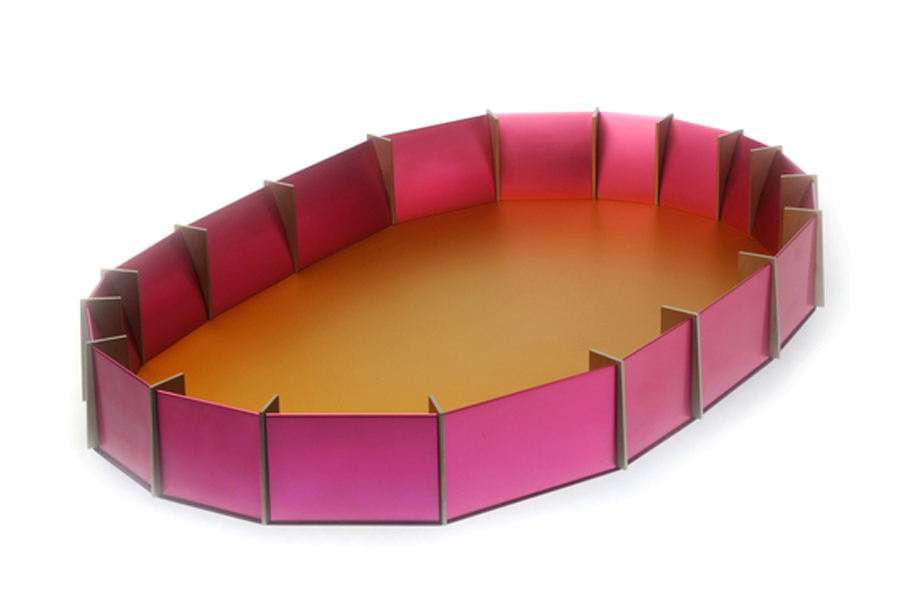
Mari Funaki (Australian, 1950-2010) 'Bracelet 1' from ‘Space between’ heat-coloured mild steel 2005-2006 from the exhibition 'Mari Funaki, Works 1992-2009' at Art Gallery of Western Australia, Perth. June - Oct, 2009


Mari Funaki (Australian, 1950-2010)
Bracelet 1 from Space between
2005-2006
Heat-coloured mild steel


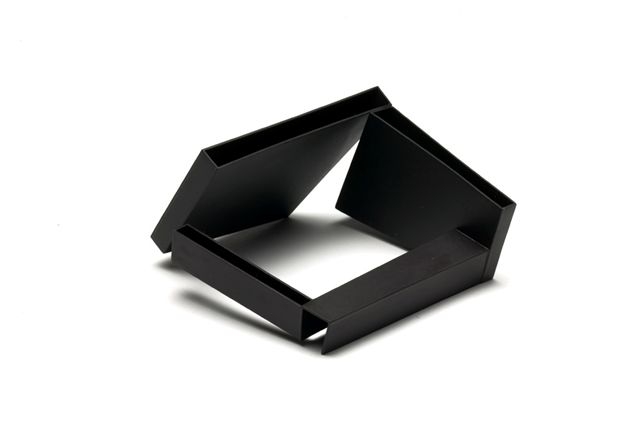
Mari Funaki (Australian, 1950-2010) 'Bracelet 2' from ‘Space between’ heat-coloured mild steel 2005-2006 from the exhibition 'Mari Funaki, Works 1992-2009' at Art Gallery of Western Australia, Perth. June - Oct, 2009


Mari Funaki (Australian, 1950-2010)
Bracelet 2 from Space between
2005-2006
Heat-coloured mild steel


Mari Funaki is one of Australia’s leading jewellers. This exhibition celebrates her considerable achievements between 1992 and the present day. Her first major show in a state gallery, it includes nearly fifty works and will be the first time Perth audiences have seen her work in such depth. Many of these are new works produced especially for this show.

The exhibition will focus on rings, containers and bracelets. These forms have been the core of her practice, the foundation of her intricate material experimentations. Her sheer intensity of focus has seen her hone these forms into objects of extreme power and beauty. Funaki’s is no simple beauty, however. It is sharp, complicated. There is always a sense of danger in her work, as the spindly legs of her insect-like containers support unlikely, unwieldy torsos, and as her rings and bracelets cultivate miniature monoliths that play with scale and weight in fascinating ways.

This exhibition will frame these unique objects in such a way as to acknowledge Funaki’s ability to work with space and matter to form entrancing works that adorn the imagination in the same they adorn the body.

Text from the Art Gallery of Western Australia website [Online] Cited 10/08/2009. No longer available online


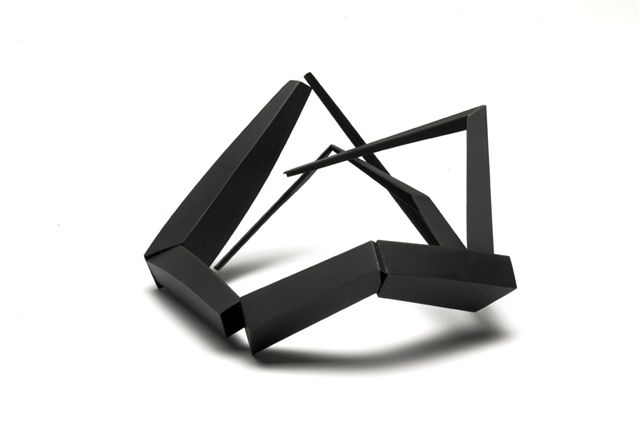
Mari Funaki (Australian, 1950-2010) 'Bracelet 3' from ‘Space between’ heat-coloured mild steel 2005-2006


Mari Funaki (Australian, 1950-2010)
Bracelet 3 from Space between
2005-2006
Heat-coloured mild steel


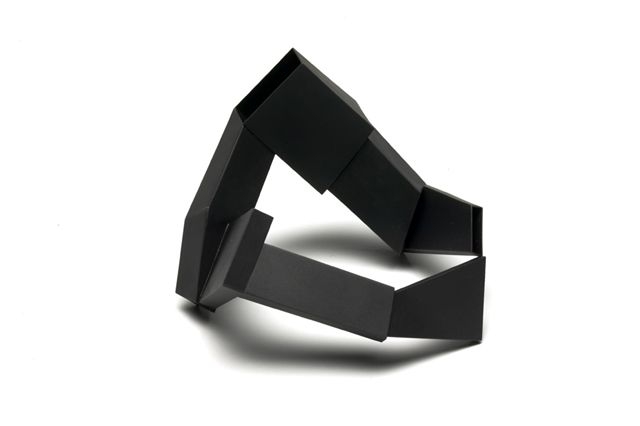
Mari Funaki (Australian, 1950-2010) 'Bracelet 4' from ‘Space between’ heat-coloured mild steel 2005-2006


Mari Funaki (Australian, 1950-2010)
Bracelet 4 from Space between
2005-2006
Heat-coloured mild steel


Notes from a Conversation with Mari Funaki, July 2006

Mari Funaki’s initial response comes from the environment – the response is part random, part constructed idea.

Funaki likes the ‘animated’ response from the viewer – allowing them to make their own associations with the work and their own meaning. The making of the work doesn’t emerge out of nothing but through the development of ideas over a long period of time.

Mari starts with a flat drawing – this approach comes from an Eastern perspective in the history of art making i.e. screens, woodcuts and scrolls. Initially when starting with the idea Mari is mentally thinking in two dimensions – then drawing out onto paper in two dimensions the ideas.

When actually making the work Mari then starts working and thinking in three dimensions – starting with a base piece of metal and working physically and intuitively around the object, to form a construction that evidences her feelings about what she wants to create. She likes the aesthetic beauty but uneasy aspect of a dead insect for example (like the Louise Bourgeois Maman spider outside the Guggenheim in Bilbao).

Now collaborating with architect Nonda Kotsalidis, Mari is working to produce her sculptural objects on a larger scale, up to 6 metres high. She needs the objects to have an emotional and physical impact on the viewer – both beautiful and threatening at one and the same time. How will her objects translate to a larger scale? Very well I think.

Funaki likes the physical distortion of space – and she likes telling a story to the viewer. She is working on a building where the facade is really strongly geometric and then she is embedding an emotion into the front of the building – constructing a narrative – constructing an emotional response with the viewer and establishing a relationship with the building. Here she is working from photographs of the space, her own recognition and remembrance of that space. She is having to work physically in 3D from the beginning for the first time, but still uses drawings to sketch out her ideas.

Several of Funaki’s pieces in the Cecily and Colin Rigg Contemporary Design Award (2006) at the NGV Federation Square were inspired by the work of Bernd and Hilla Becher. Their photographs of factories and gasworks, specifically the facades of such buildings (see image below), were the jumping off point for the development of the objects (the bracelets). Funaki takes the front of these buildings, a 3D structure ‘in reality’ but pictorially imaged on a 2D plane, and then twists and distorts their structure back into a 3D environment. The facades move up and around, as though a body is twisting around its own axis, pirouetting around an invisible central spine.

Each piece is created and then the next one is created in relation to the previous, or to each other. Each individual piece has its own character and relation to each other. They are never variations of the same piece with small differences – each is a separate but fully (in)formed entity.

Dr Marcus Bunyan


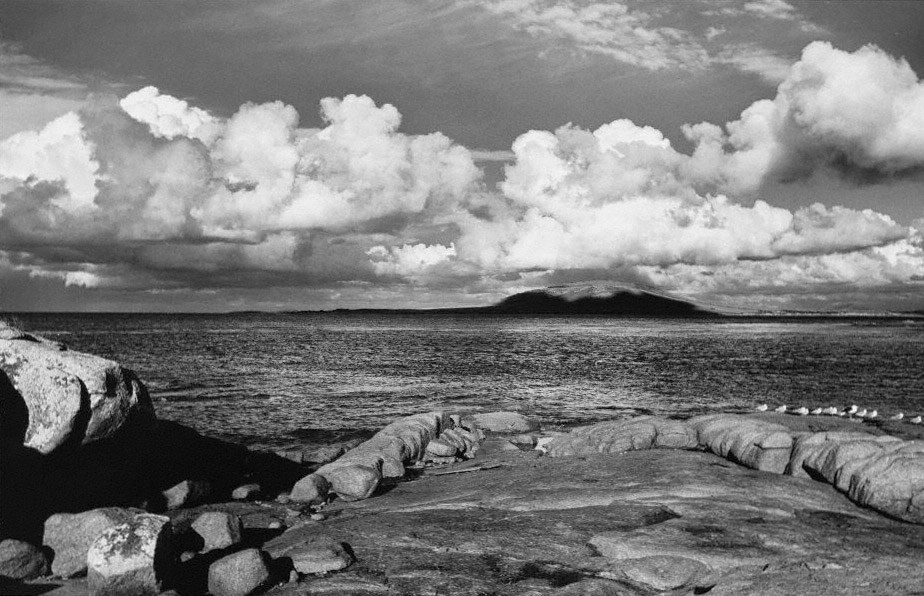
Bernd and Hiller Becher (German, 1931-2007 and 1934-2015) 'Water Towers' 1980


Bernd and Hiller Becher (German, 1931-2007 and 1934-2015)
Water Towers
1980
Gelatin silver prints


“Black. Sharp, shifting contours. Familiar and alien. Confident, expressive and agile, it is easy to take the existence of these works for granted – and it is hard enough to trace in one’s mind the physical evolution back through heat colouring, sandblasting, soldering, assembling and cutting, to unremarkable, thin sheets of mild steel – let alone comprehend their conception and resolution.

They inhabit space in a way that is difficult to describe – the edge between each object and the space that encloses it is shockingly sudden.

How can something human-made be so insanely artificial and natural at the same time? It must be no accident that I described them as articulate – ambiguous and wide ranging in the breadth of associations and allusions, they can tell you everything and nothing at the same time.”

Sally Marsland, 2006

Text from the Gallery Funaki website [Online] Cited 10/08/2009 no longer available online


Mari Funaki (Australian, 1950-2010) 'Bracelet 5' from ‘Space between’ heat-coloured mild steel 2005-2006


Mari Funaki (Australian, 1950-2010)
Bracelet 5 from Space between
2005-2006
Heat-coloured mild steel


Mari Funaki (Australian, 1950-2010) 'Bracelet 6' from ‘Space between’ heat-coloured mild steel 2005-2006


Mari Funaki (Australian, 1950-2010)
Bracelet 6 from Space between
2005-2006
Heat-coloured mild steel


Art Gallery of Western Australia
Perth Cultural Centre
Perth WA 6000

Opening hours:
Wednesday – Monday 10am – 5pm
Closed Tuesdays.

Art Gallery of Western Australia website

Gallery Funaki website

LIKE ART BLART ON FACEBOOK

Back to top

Review: ‘Intersections’ by Sarah Amos at Gallery 101, Melbourne

Exhibition dates: 22nd July – 15th August, 2009


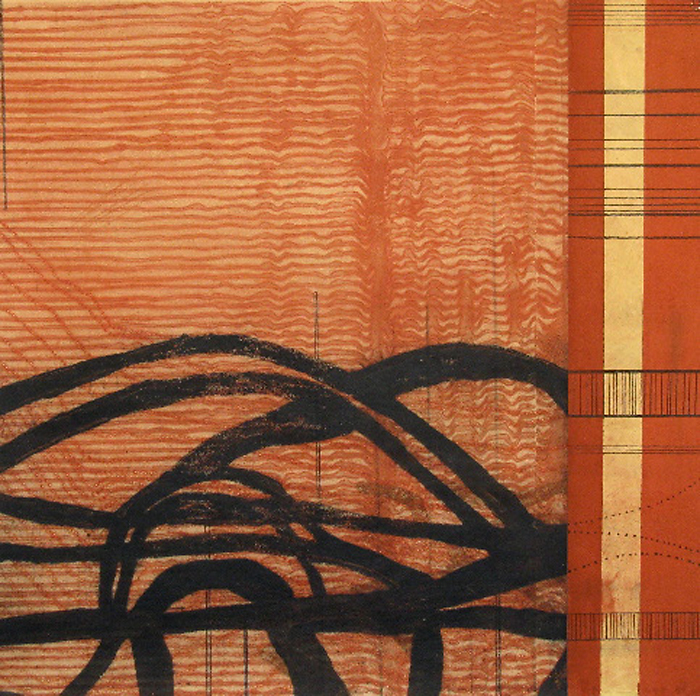
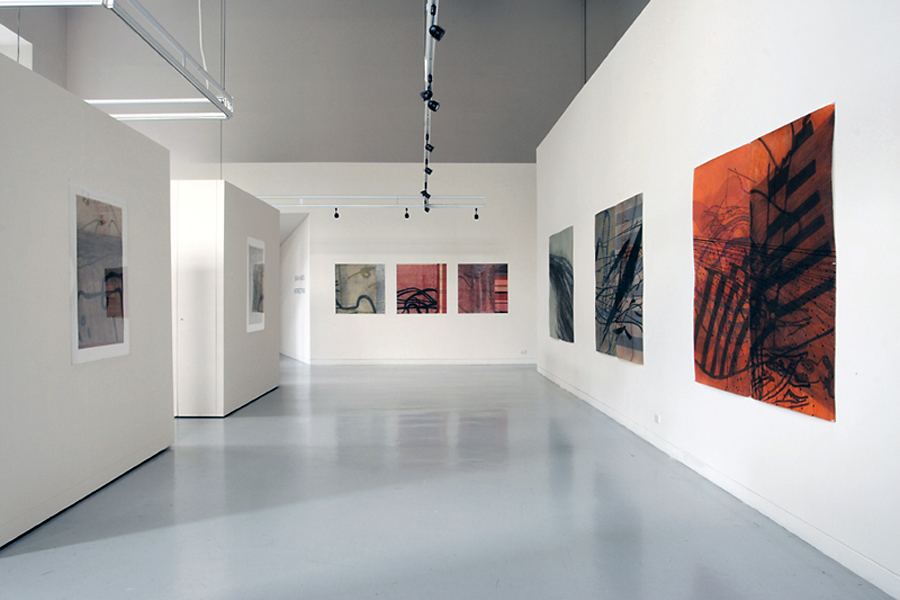
Sarah Amos (Australian, b. 1965) 'Red Walk' 2009 from the exhibition 'Intersections' by Sarah Amos at Gallery 101, Melbourne, July - August, 2009


Sarah Amos (Australian, b. 1965)
Red Walk
2009
Collagraph and Monoprint


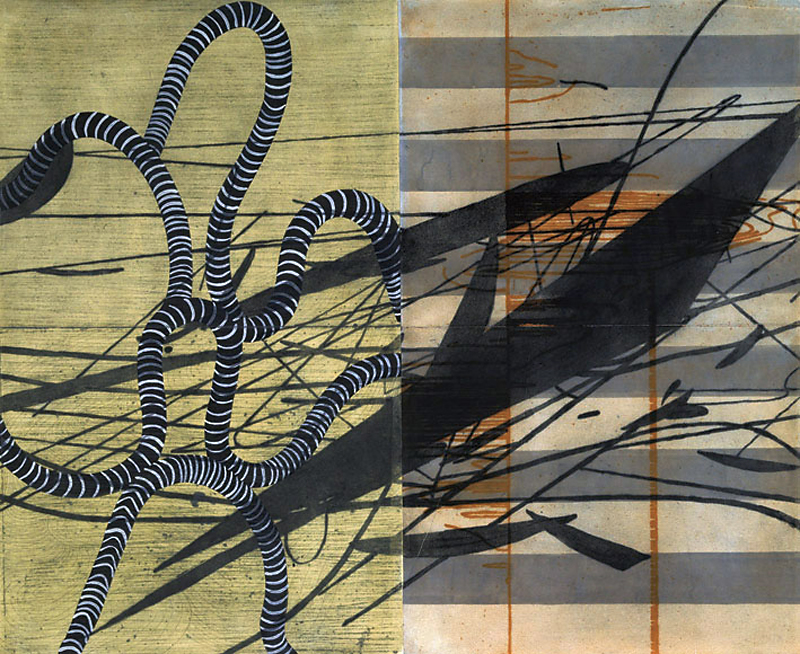
An interesting exhibition of Collagraphs (a type of collage printmaking)1 and etchings is presented by Sarah Amos at Gallery 101, Melbourne, work that is full of delicate coloured layering, topographical mapping and nodal, rhizomic and Spirogyra-type structures.

The ‘flux’ of the work, it’s musical cadence if you like, is the fusion of palimpsestic markings as viewed from the air – the dotted contours, the ploughed fields, the beautiful spatial layering that has an almost Kandinsky-like effect – with the aesthetics of Japanese paper, matt black colour (that subtly glistens on close inspection) and the tactility of the surface of the work. These intersections produce images that have some outstanding resonances: vibrations of energy that ebb and flow around the gallery space. These works are captivating!

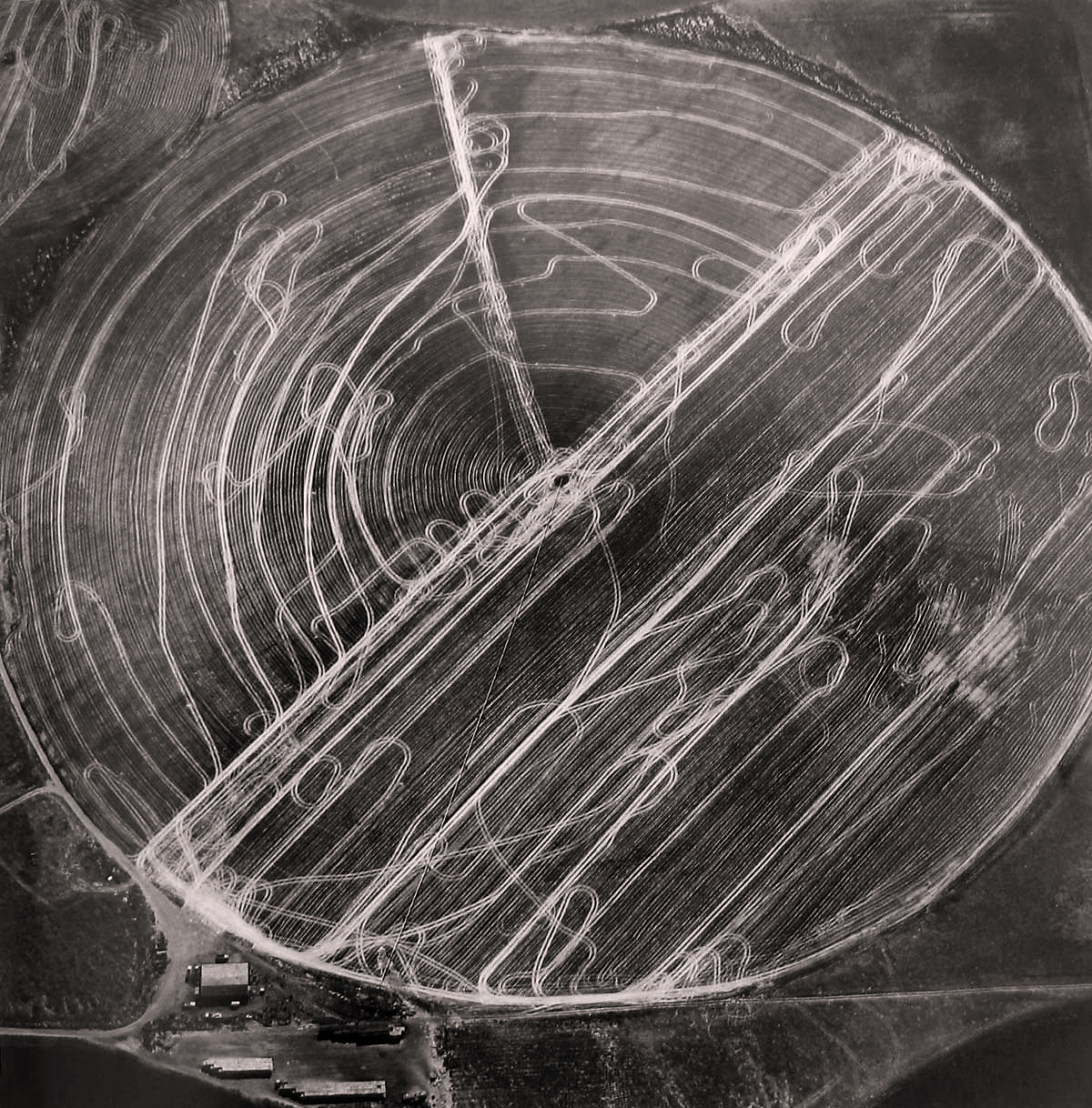
For me the simpler images were the more successful especially the series named Intersections with their muted tonalities, shifting colours and topographical structure. They also reminded me of the black and white aerial landscape photography of Emmet Gowin (see below).

While I am unsure of the validity of the ‘landscape’/’urban lens’ ‘urban temperature’ references (which I found unnecessary and slightly irrelevant) these works and their synaptic interfaces must be experienced. For the viewer they hold a strange attraction as you stand before them drawn, inexorably, into their penumbral spaces. Recommended.

Dr Marcus Bunyan


Many thankx to gallery 101 for allowing me to publish the art work in the posting. Please click on the photographs for a larger version of the image.


1/ “A Collagraph print is a collage printmaking technique and is a form of Intaglio printing. The collagraph plate is printed in the same way as etchings, but also include the basic principle of relief printing and can be printed either as intaglio or relief.

The term collagraph refer to a collage board where the materials are assembled on a flat base or plate (matrix) to form a relief block with different surface levels and textures.

Collagraph plates are created by sticking and gluing materials like textured paper or fabric onto the plate and then coat it with varnish or acrylic medium afterwards to protect the materials.

Anonymous. “Printmaking: Collagraphs/Collage Blocks,” on the ArtistTerms.com website [Online] Cited 03/08/2009. No longer available online


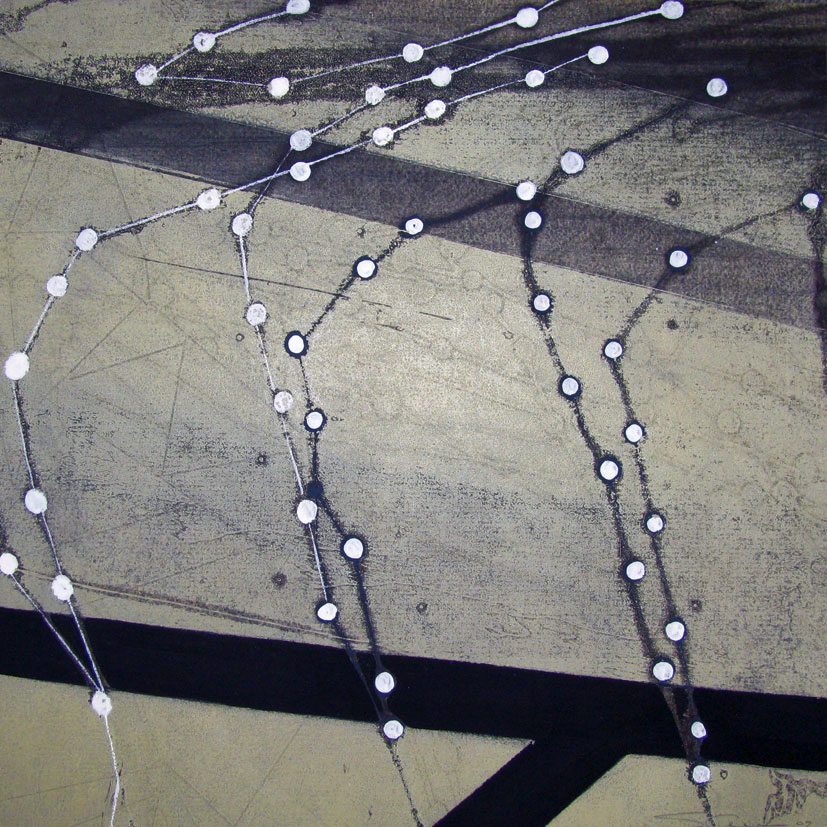
Sarah Amos (Australian, b. 1965) 'Storm Loading' 2009 from the exhibition 'Intersections' by Sarah Amos at Gallery 101, Melbourne, July - August, 2009


Sarah Amos (Australian, b. 1965)
Storm Loading
2009
Etching and hand drawing on Shiramine Japanese paper


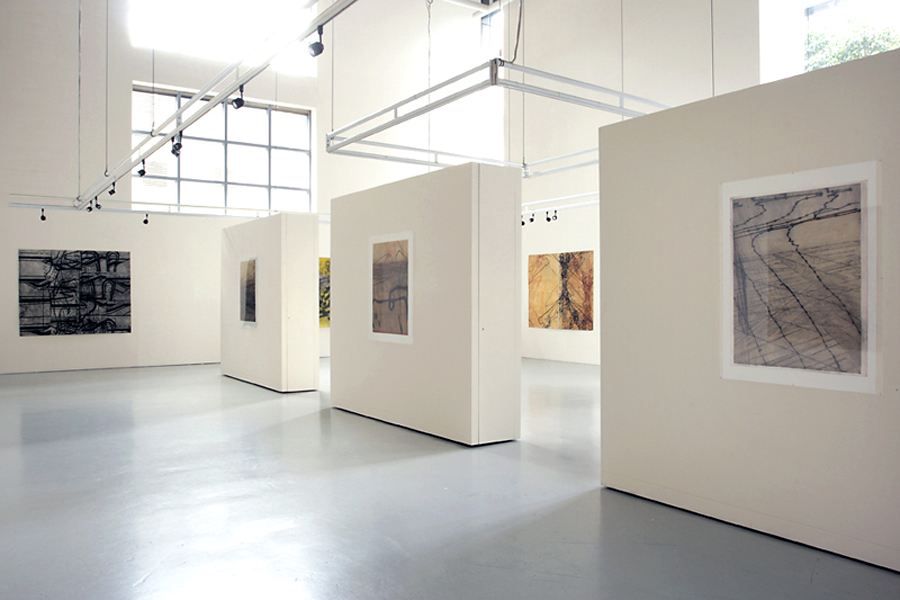
Installation view of 'Intersections' by Sarah Amos at Gallery 101, Melbourne

Installation view of 'Intersections' by Sarah Amos at Gallery 101, Melbourne


Installation views of Intersections by Sarah Amos at Gallery 101, Melbourne
Photos: Marcus Bunyan


Emmet Gowin (American, b. 1941) 'Harvest traffic over agricultural pivot near Hermiston, Orgeon, 1991' 1991


Emmet Gowin (American, b. 1941)
Harvest traffic over agricultural pivot near Hermiston, Orgeon, 1991
1991
Gelatin silver print


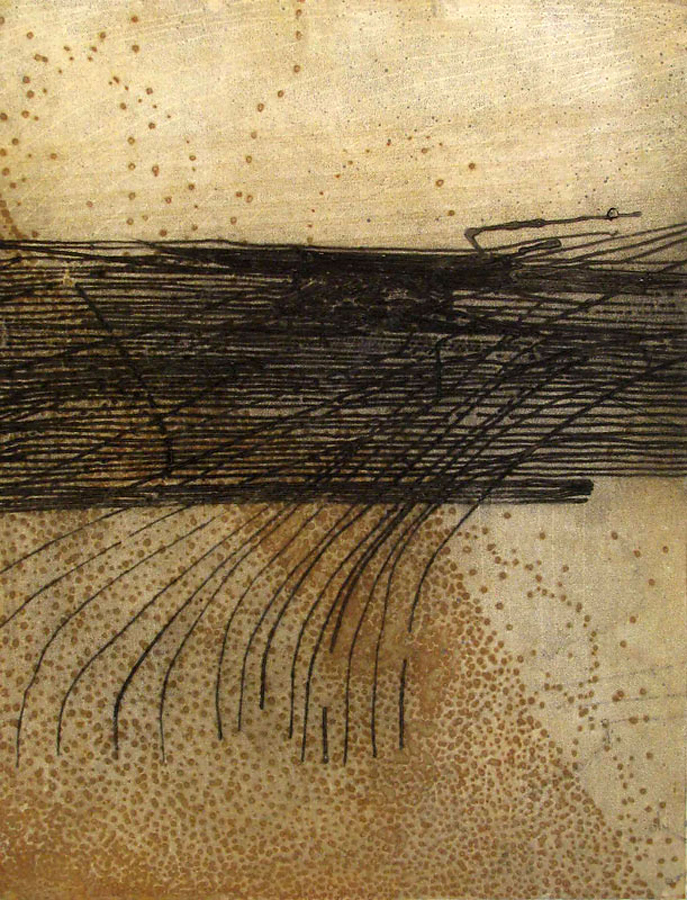
Sarah Amos (Australian, b. 1965) 'Intersections 8' 2009


Sarah Amos (Australian, b. 1965)
Intersections 8
2009
Collagraph with gouache


“(Flux) – where a total electric or magnetic field passes through a surface.”

 
My work is a fusion of both land and cityscape. I am interested in interpreting spatially dynamic, real and half forgotten landscapes through an urban lens. New to this body of work is my interest in the visual graphics of scientific diagrams in which dynamic and informative landscapes are drafted into linear minimal lines. I have absorbed this distilled language, translating it into an architectural and organic landscape where the intersections of line, volume and space are constantly in flux. This obscure knowledge is pared down, simplified and ordered into a clean analysis ready for instant translation.

The Australian landscape is central to my work and influences my use of colour, idiosyncratic marks and open space. These works are personalised maps of accumulated information, like printed histories, that record the duelling intersections where the weathers of the landscape and the urban temperature have begun to take on new and vital immediacy.”

Sarah Amos, 2009

Text from the Gallery 101 website [Online] Cited 01/08/2009. No longer available online


Sarah Amos (Australian, b. 1965) 'Lute' 2009


Sarah Amos (Australian, b. 1965)
Lute
2009
Collagraph


Gallery 101

This gallery is no longer open.ppp

Sarah Amos website

LIKE ART BLART ON FACEBOOK

Back to top

Review: ‘Double Infinitives’ by Marco Fusinato at Anna Schwartz Gallery, Melbourne

Exhibition dates: 25th June – 25th July, 2009


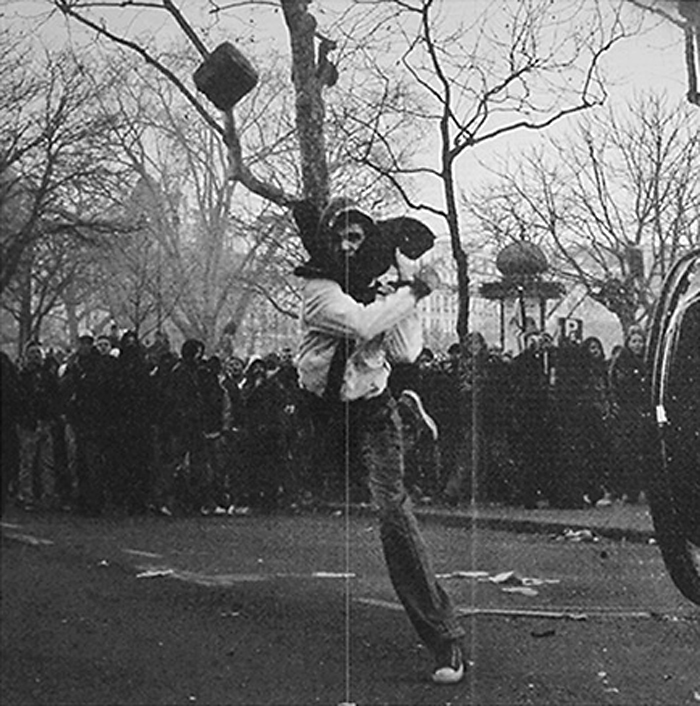
Marco Fusinato (Australian, b. 1964) 'Double Infinitive 3' 2009


Marco Fusinato (Australian, b. 1964)
Double Infinitive 3
2009


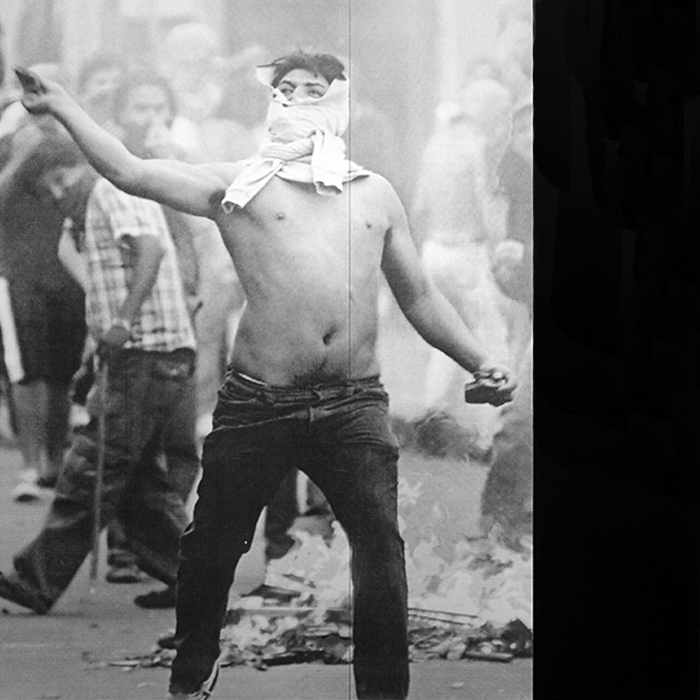
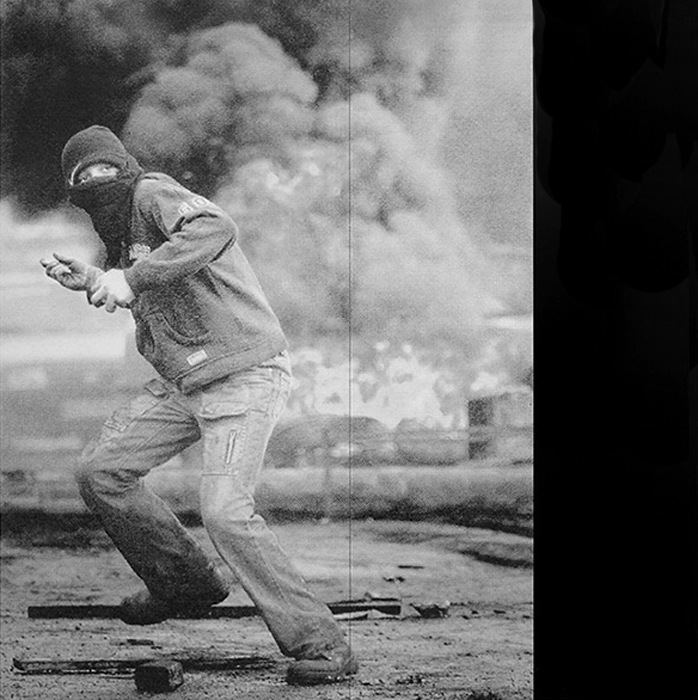
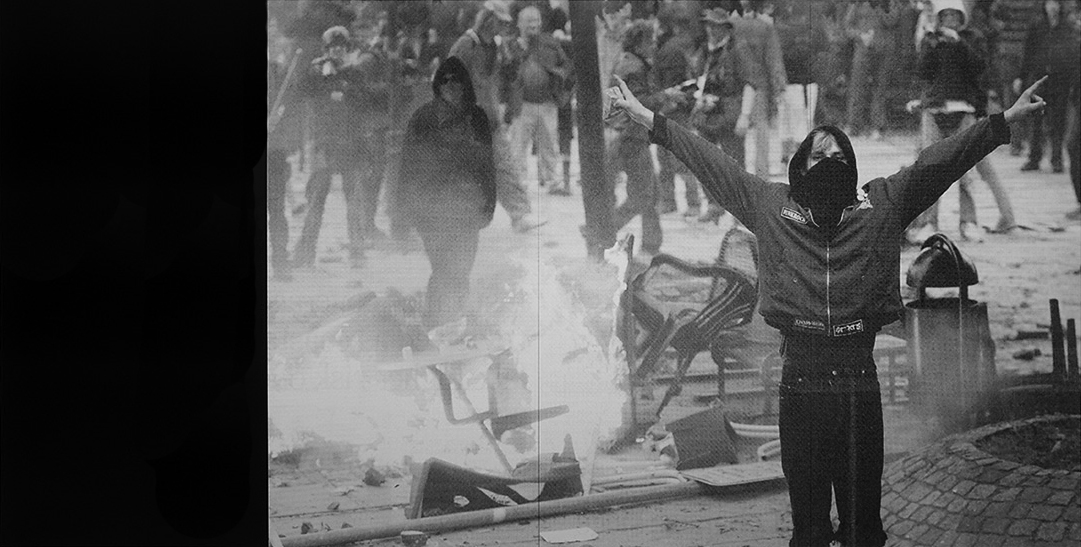
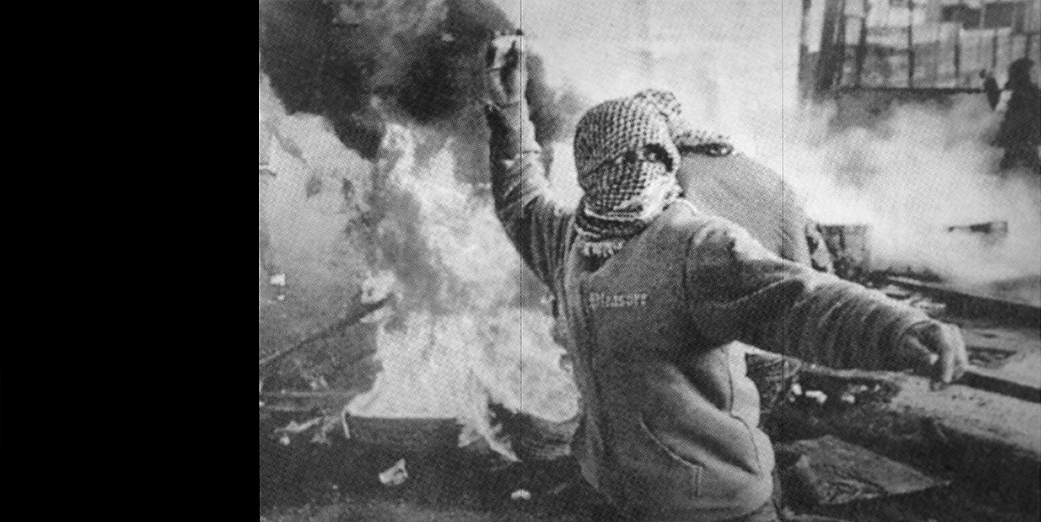
Double Infinitives by Marco Fusinato at Anna Schwartz Gallery, Melbourne is an excellent exhibition of large UV ink on aluminium images sourced by Fusinato from the print media.

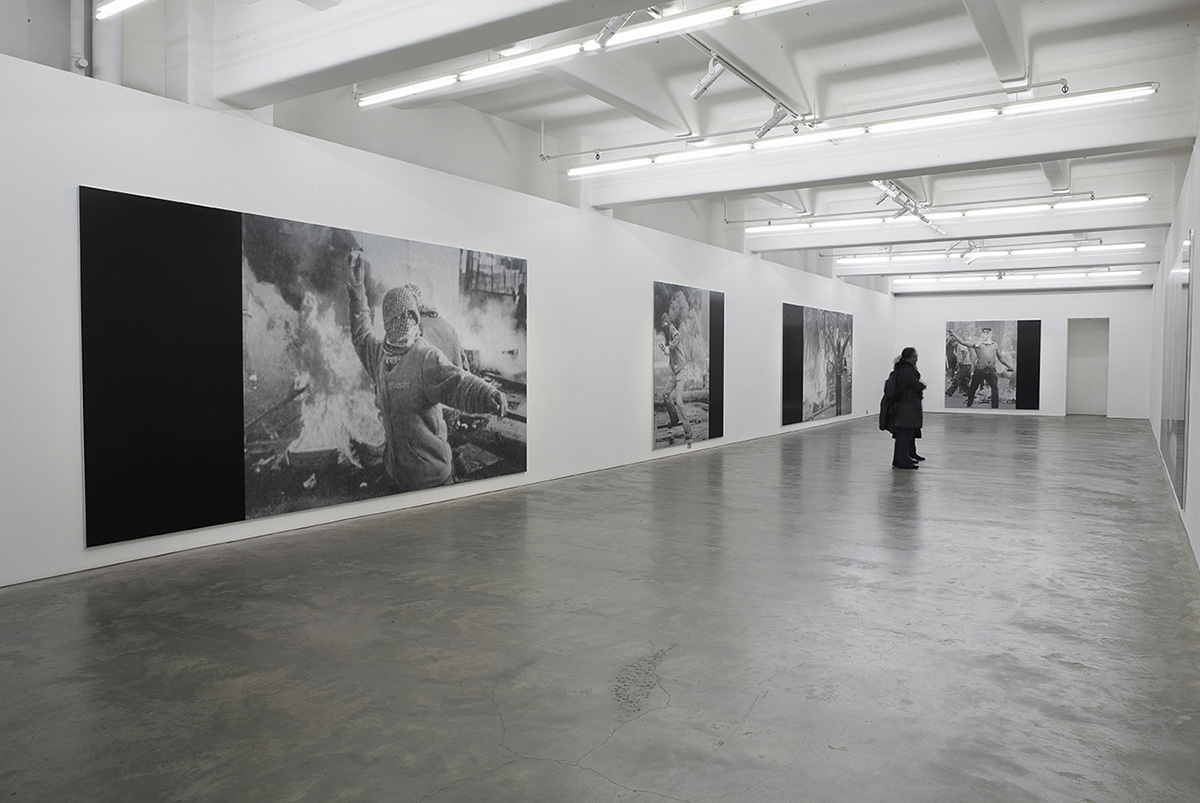
The images are made up of a dot pattern familiar to those who have examined photographs in the print media closely. Larger and smaller clusters of dots form the light and shade of the image. As you move closer to the works they dissolve into blocks of dots and become and optical illusion like Op Art from the 1960s. Fusinato contrasts this dot structure with the inclusion of flat panels of black ink to the left and right hand side of the images. The section lines that run through the images (for they are not one single image but made up of panels) also adds to the optical nature of the work as the lines cut the conflagrations, literally stitching the seams/scenes together.

Each image contains an individual holding a rock enclosed in the milieu and detritus of a riot; the figures are grounded in the earth and surrounded by fire but in their obscurity, in the veiling of their eyes, the figures seem present but absent at one and the same time. They become ghosts of the fire.

Fire consumes the bodies. The almost cut out presence of the figures, their hands clutching, throwing, saluting become mute. Here the experience of the sound, colour and movement of an actual riot is silenced in the flatness and smoothness of the images. The images possess the intensity of a newspaper reality ‘blown up’ to a huge scale by Fusinato (see the installation photograph below to get an idea of the effect). The punctum of the riot, that prick of consciousness that Barthes so liked, is translated into a silenced studium of the aluminium surface; an aural history (the sound) / oral history (the telling of the story) trapped in the structure of silence.

There is a double jeopardy – the dissolution of the image into dots and the disintegration of the body into fire. In one of the images the upraised arm and hand of one of the rioters holds a rock with what appears to be a figure on it, surrounded by fire. To me the arm turned into one of the burning Twin Towers with smoke and fire pouring from it (see the first photograph in the installation photograph below).

My only concern about the images were the black panels, perhaps too obvious a tool for the purpose the artist intended. Maybe the needed some small texture, like a moire pattern to reference the contours of a map and continue the topographical and optical theme. Perhaps they just needed to be smaller or occasionally placed as thin strips down the actual image itself but these are small quibbles. Overall this is an fantastic exhibition that I enjoyed immensely. The images are literally ripped from the matrix of time and space and become the dot dot dot of the addendum. What Fusinato does so excellently is to make us pause and stare, to recognise the flatness of these figures and the quietness of violence that surrounds us.

Music – Noise  – Silence
Flatness – Advertising – Earth – Fire
Rock – Space – Memory

Dr Marcus Bunyan


Many thankx to Anna Schwartz Gallery for allowing me to publish the photographs in the posting. Please click on the photographs for a larger version of the image.


Marco Fusinato (Australian, b. 1964) 'Double infinitive I' 2009


Marco Fusinato (Australian, b. 1964)
Double infinitive 1
2009


Marco Fusinato (Australian, b. 1964) 'Double Infinitive 4' 2009


Marco Fusinato (Australian, b. 1964)
Double Infinitive 4
2009


A selection of images from the print media of the decisive moment in a riot in which a protagonist brandishes a rock against a backdrop of fire. Each image is from a different part of the world, from the early twenty-first century, and is blown up to history-painting scale using the latest commercial print technologies.

Text by Marco Fusinato on his website


Installation of Marco Fusinato 'Double Infinitives' exhibition at Anna Schwartz Gallery, Melbourne


Installation of Marco Fusinato Double Infinitives exhibition at Anna Schwartz Gallery, Melbourne


Double Infinitives

“Unheard music is better than heard.”

Greek proverb of late antiquity


“That music be heard is not essential – what it sounds like may not be what it is.”

Charles Ives, Essays Before a Sonata


“The proposition of Jacques Attali’s Noise is different. He says that while noise is a deadly weapon, silence is death.”

David Rattray, “How I Became One of the Invisible,” Semiotext(e), 1992.


The explosive communal act of rioting is most commonly delivered to an audience suspended in the stillness and silence of a photographic image. Noise is not removed in this process, it is almost amplified: the sound and action that deliver this singularly captured moment into existence are infinite, as all things remain while they are imagined, before they are anchored down by express articulation.

Photographic representation can easily be accused of subverting the truth of events, not because what is seen in the image has not transpired, but because static images leave so much space around them for multiple narratives to be constructed. The still image is totally contingent on the consciousness that confronts it. By contrast, the near-totality of videos can give too much away …

Sourced by Fusinato from print media published in the last few years, these images of rioting all contain an individual clutching a rock, bathed in the refractory glow of a nearby fire. The image has become prototypical, so much so that it lacks the sensation of spontaneity requisite to produce a riot. (Apropos to this predictability, Fusinato would check global newspapers after every forum or conference of global financial authorities, often finding the image he was looking for).

Double Infinitives is a succinct allegory for the reluctance to compromise comfort overpowering radical impulses. Conversations suggest this is a conflict frequently experienced by artists. Deprived of a volatile political reality, we experience radicalism through images that act as small ruptures, reminders that the world we live in might be more severely charged than our individual experiences allow. Fusinato’s works flatten these images of volatility onto a smooth slate: they are similar and radiate with the vexed beauty of sameness. A riot is a mad and brutal spectacle, a theatre that is often documented as if it were a play. Hugely expanded in scale and rendered in the suffused gloss of advertising, the real possibility of violence that these works infer deepens the layers of the fiction rather than comprising an indicator of human concern. Those things with which we come into such gentle contact that their thorns barely prick …

Liv Barrett
June 2009

Text from the Anna Schwartz Gallery website [Online] Cited 10/07/2009. No longer available online


Marco Fusinato (Australian, b. 1964) 'Double Iinfinitive 2' 2009


Marco Fusinato (Australian, b. 1964)
Double Iinfinitive 2
2009


Marco Fusinato (Australian, b. 1964) 'Double Iinfinitive 2' 2009 (detail)


Marco Fusinato (Australian, b. 1964)
Double Iinfinitive 2 (detail)
2009


Marco Fusinato (Australian, b. 1964) 'Double Iinfinitive 5' 2009


Marco Fusinato (Australian, b. 1964)
Double Iinfinitive 5
2009


Anna Schwartz Gallery
185 Flinders Lane
Melbourne, Victoria 3000

Opening hours:
Tuesday – Friday 12 – 5pm
Saturday 1 – 5pm

Anna Schwartz Gallery website

LIKE ART BLART ON FACEBOOK

Back to top

Exhibition: ‘Ricky Maynard: Portrait of a Distant Land’ at Museum of Contemporary Art (MCA), Sydney

Exhibition dates: 4th June – 23rd August, 2009


Many thankx to the MCA for allowing me to publish the photographs in the posting. Please click on the photographs for a larger version of the image.


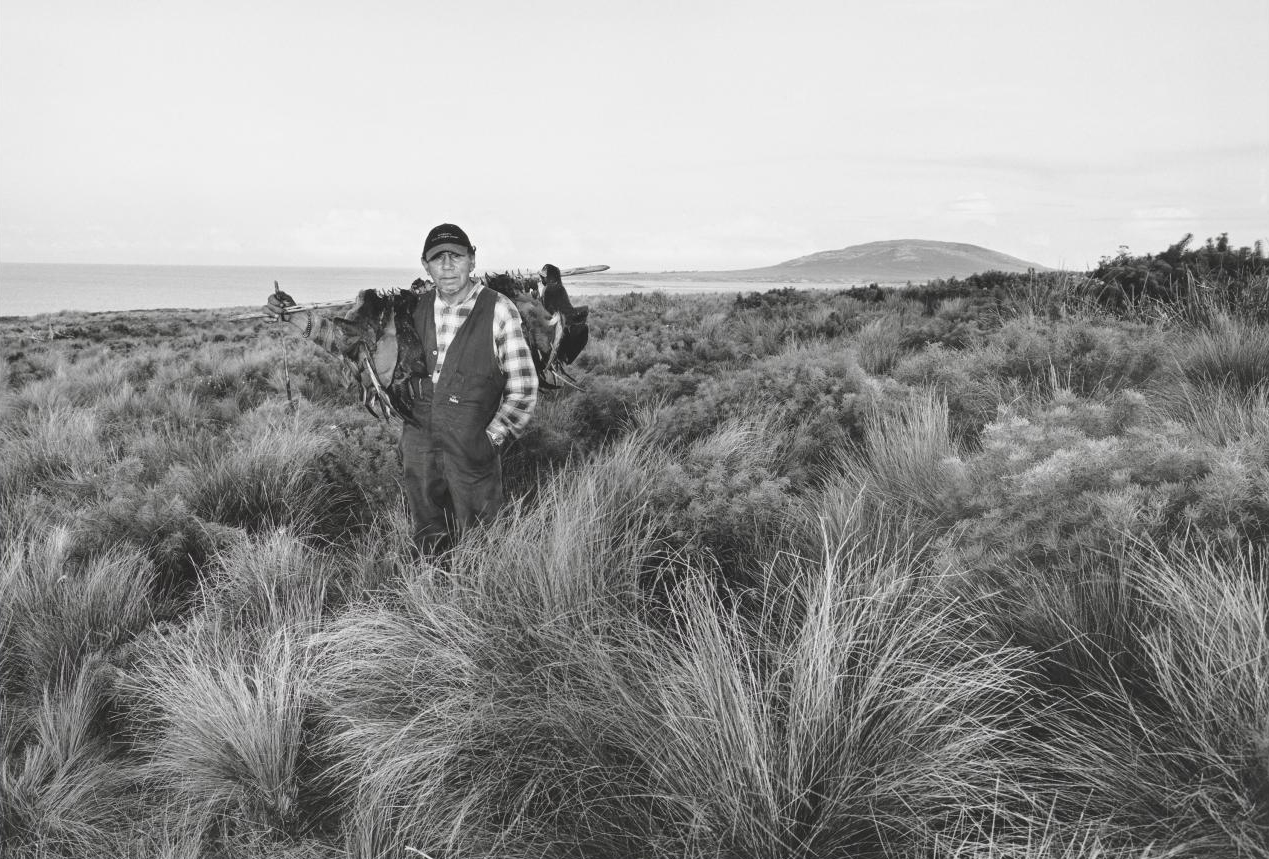
Ricky Maynard (Australian, b. 1953)
'Coming Home' 2005


Ricky Maynard (Australian, b. 1953)
Coming Home
2005
From the series Portrait of a Distant Land
Gelatin silver photograph, selenium toned
37.4 × 54.1cm
© Ricky Maynard


I can remember coming here as a boy in old wooden boats to be taught by my grandparents and my parents. I’ll be 57 this year and I have missed only one year when my daughter Leanne was born. Mutton birding is my life. To me it’s a gathering of our fellas where we sit and yarn, we remember and we honour all of those birders who have gone before us. Sometimes I just stand and look out across these beautiful islands remembering my people and I know I’m home. It makes me proud to be a strong Tasmanian black man. This is something that they can never take away from me.

Murray Mansell, Big Dog Island, Bass Strait, 2005


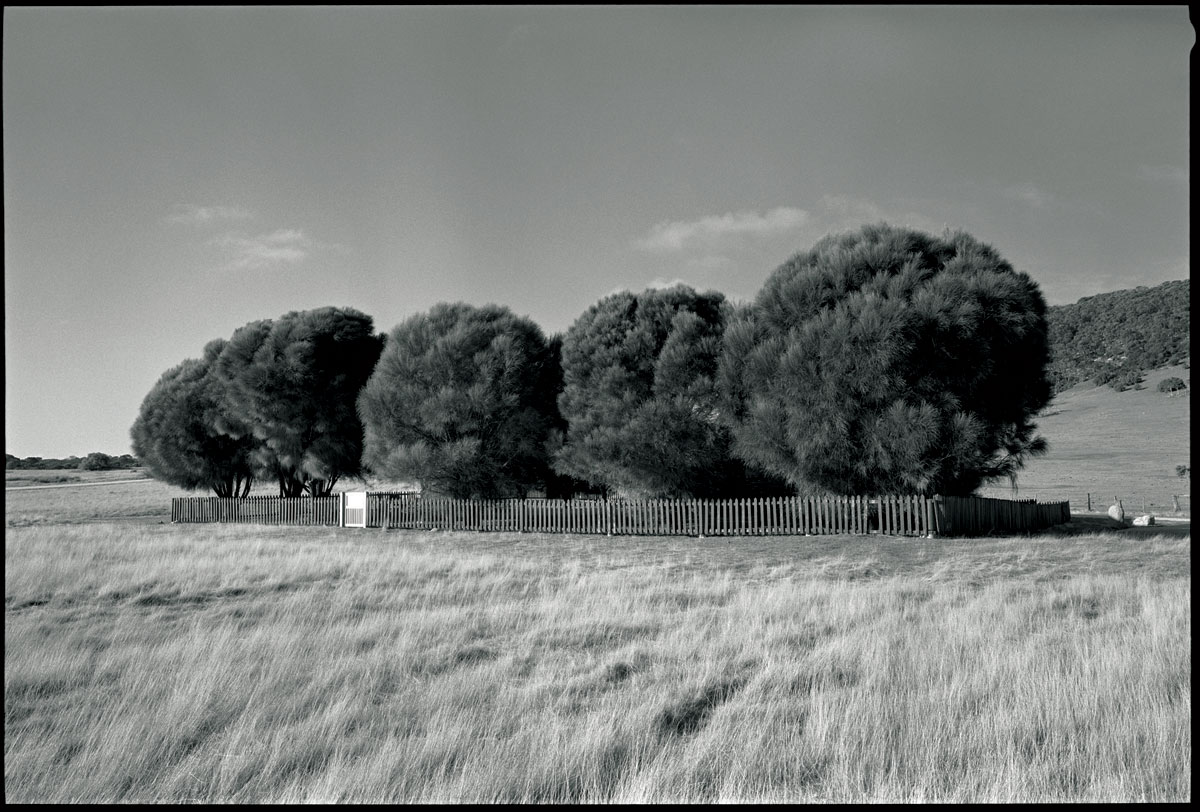
Ricky Maynard (Australian, b. 1953) 'The Healing Garden, Wybalenna, Flinders Island, Tasmania' 2005


Ricky Maynard (Australian, b. 1953)
The Healing Garden, Wybalenna, Flinders Island, Tasmania
2005
From the series Portrait of a Distant Land
Gelatin silver photograph, selenium toned
34.0 x 52.0 cm
© Ricky Maynard


This winter the Museum of Contemporary Art presents a major survey of photographic works by documentary photographer Ricky Maynard, encompassing more than two decades of the artist’s practice.

Portrait of a Distant Land features more than 60 evocative and captivating photographic works, drawn from six bodies of work, which document the lives and culture of Maynard’s people, the Ben Lomond and Cape Portland peoples of Tasmania.

The exhibition is curated by MCA Aboriginal and Torres Strait Islander Programs Keith Munro and is presented at the MCA from 4 June until 23 August 2009. Born in Launceston, Tasmania in 1953 Maynard is a self taught documentary photographer now based on Flinders Island in the Bass Strait between Tasmania and mainland Australia.

Maynard first came to prominence in the late 1980s with a photographic essay about Aboriginal mutton bird farmers and he has continued to document physical and social landscapes which form a visual record and representation of Aboriginal and Torres Strait Islander people in Australia.

“For me, photographs have always been personal and I hope to convey the intimacy of a diary. Photography has the ability to tell stories about the world and how the photograph has power to frame a culture,” said Maynard, describing his practice.

The works presented in Portrait of a Distant Land survey a broad range of themes and issues facing Aboriginal and Torres Strait Islander people today. It includes photographs which document sites significant to Maynard’s people: ranging from serenely beautiful landscapes which follow the song lines, tribal movements and historical displacement routes of his ancestors, to the confrontational and emotionally-charged images of Indigenous people incarcerated in the South Australian prison system.

The six photographic series by Maynard which are featured in the exhibition are The Moonbird People (1985-1988), No More Than What You See (1993), Urban Diary (1997), In The Footsteps of Others (2003), Returning To Places That Name Us (2000) and Portrait of a Distant Land (2005- ). Together these works create a form of visual diary of multiple landscapes derived from collective oral histories of Maynard’s people.”

Press release from the MCA website [Online] Cited 05/07/2009. No longer available online


Ricky Maynard (Australian, b. 1953) ‘Arthur, Wik elder’ from the series ‘Returning to places that name us’ 2000


Ricky Maynard (Australian, b. 1953)
Arthur, Wik Elder
2000
From the series Returning to Places that Name Us
Gelatin silver photograph
96.1 x 121.4cm
© Ricky Maynard


The owner of an enviable collection of antique cameras, Maynard is a lifelong student of the history of photography, particularly of the great American social reformers Jacob Riis, Lewis Hines, Dorothea Lange and Walker Evans. He is interested in the power of the uninflected image – of sheer veracity – as an agent of record and change. Maynard’s images cut through the layers of rhetoric and ideology that inevitably couch black history (particularly Tasmanian history) to present images of experience itself. ‘To know the meaning of a culture you must recognise the limits and meaning of your own,’ the artist explains. ‘You can see its facts but not its meaning. We share meaning by living it.’ Maynard’s photographs are, he says, about ‘leaving proof’ – about ‘… life in passing and in complicated times’.

The word ‘Wik’ has come to denote a historic decision of the High Court of Australia rather than the name of the Indigenous peoples from the western Cape York Peninsula in northern Queensland. In his intimate portraits of elders from these communities, Maynard aims to unpick this abstraction. Etched on each face is the complexity of an unspoken life story, delineated, one imagines, by hardship, perseverance and the burden – and wealth – of an extraordinary living memory. As he wrote in his artist’s statement for the exhibition Returning to Places that Name Us in 2001, ‘… I wanted a presence and portraits that spoke, and through this process to present an idea, rather than preach messages’. In this series, Maynard achieves his aim of capturing meanings that no other medium could convey.

Hannah Fink in ‘Tradition today: Indigenous art in Australia’, Art Gallery of New South Wales, Sydney, 2004

© Art Gallery of New South Wales. Text from the Art Gallery of New South Wales website [Online] Cited 14/03/2019


Ricky Maynard (Australian, b. 1953) 'Gladys Tybingoomba' 2001


Ricky Maynard (Australian, b. 1953)
Gladys Tybingoomba
2001
From the series Returning To Places That Name Us
Gelatin silver photograph
© Ricky Maynard


Ricky Maynard (Australian, b. 1953) 'Custodians' from the series 'Portrait of a Distant Land' 2005


Ricky Maynard (Australian, b. 1953)
Custodians
2005
From the series Portrait of a Distant Land
Gelatin silver photograph, selenium toned
43.0 x 41.2cm
© Ricky Maynard


Ricky Maynard (Australian, b. 1953) 'Vansittart Island' from the series 'Portrait of a Distant Land' 2007


Ricky Maynard (Australian, b. 1953)
Vansittart Island
2007
From the series Portrait of a Distant Land
Gelatin silver photograph, selenium toned
33.9 x 52.1cm
© Ricky Maynard


Ricky Maynard (Australian, b. 1953) 'The Spit' from the series 'Portrait of a Distant Land' 2007


Ricky Maynard (Australian, b. 1953)
The Spit
2007
From the series Portrait of a Distant Land
Gelatin silver photograph, selenium toned
41.8 x 50.4cm
© Ricky Maynard


Ricky Maynard (Australian, b. 1953) 'The Mission' 2005 From the series 'Portrait of a Distant Land'


Ricky Maynard (Australian, b. 1953)
The Mission
2005
From the series Portrait of a Distant Land
Gelatin silver photograph, selenium toned
43.0 x 41.2cm
© Ricky Maynard


Maynard is a lifelong student of the history of photography, particularly of the great American social reformers Jacob Riis, Lewis Hines, Dorothea Lange and Walker Evans. Maynard’s images cut through the layers of rhetoric and ideology that inevitably couch black history (particularly Tasmanian history) to present images of experience itself. His visual histories question ownership; he claims that ‘the contest remains over who will image and own this history… we must define history, define whose history it is, and define its purpose as well as the tools used for the telling it’.

In Portrait of a distant land Maynard addresses the emotional connection between history and place. He uses documentary style landscapes to illustrate group portraits of Aboriginal peoples’ experiences throughout Tasmania. Each work combines several specific historical events, creating a narrative of shared experience – for example The Mission relies on historical records of a small boy whom Europeans christened after both his parents died in the Risdon massacre. This work highlights the disparity between written, oral and visual histories, as Maynard attempts to create ‘a combination of a very specific oral history as well as an attempt to show a different way of looking at history in general’.

Text from the Art Gallery of New South Wales website [Online] Cited 14/03/2019


Museum of Contemporary Art (MCA)
140 George Street
The Rocks, Sydney, Australia

Opening hours: 10am – 5pm daily

MCA website

LIKE ART BLART ON FACEBOOK

Back to top

Review: ‘Morphed’ by Emma Davies at Craft Victoria, Melbourne

Exhibition dates: 19th June – 25th July, 2009


Emma Davies (Australian, b. 1968) 'Sekai' (be humorous') 2009


Emma Davies (Australian, b. 1968)
Sekai (meaning ‘be humorous’)
2009


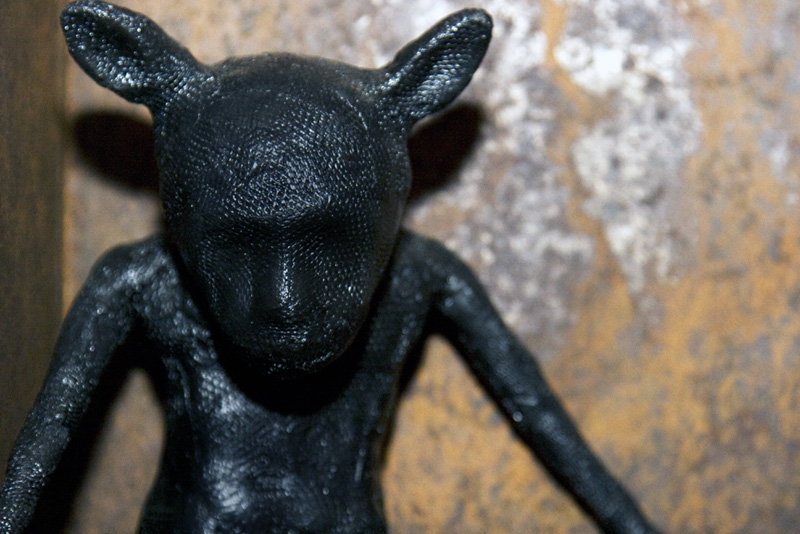
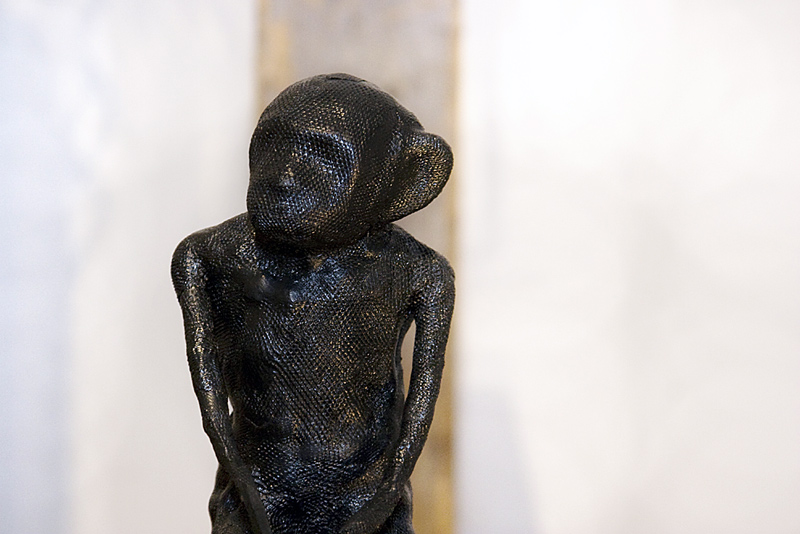
A stimulating exhibition by Emma Davies at Craft Victoria of polypropylene industrial netting and packaging that has been heated, moulded, sculpted and literally morphed into these fantastical sculptures, inspired by the artist’s experiences when visiting Johannesburg in South Africa as part of the South Project. Davies evokes the mysterious and the bizarre in her figures, making the commonplace into something uncommon, taking her themes from the relics of bush medicine present in the street markets: the medicine market of Johannesburg full of dried animal bones, skulls, skins and bottles of alchemistic objects.

Despite their comforting South African names (translated into English as ‘hope’, ‘faith’, ‘quiet, tranquil’, ‘lady’, ‘chief’, ‘prince’ for example) these extremely individual figurative ‘presences’ have a powerful melancholic affect on the viewer. Their elongated long legged and armed, no necked forms create dark eyeless creatures that crouch in rusted boxes or sit on wooden posts with their legs and arms hanging, folded. They seem lonely and sad despite their titles, perhaps reflecting the harsh realities of a life of poverty on the streets of Soweto.

Two figures on wooden blocks seem to walk aimlessly, placed on large rough industrial tables with huge wheels while another figure sits up a rusted ladder propped against the wall. A group of figures are clustered together on top of large wooden posts of different heights, some with arms round each other for comfort, others with black or red feathers sprouting from shoulders, legs or wearing a red feathered skirt. These creatures create a marvellous group of contemplative wandering minstrels while behind them their eerie shadows fall on the gallery wall.

The crystalline nature to the surface of the creatures, like sparkling coal, reminds me of the work of William Kentridge, his white industrial protagonist Felix haunted by images of black workers deep underground mining coal (see Mine (1991) where his coffee plunger goes down into the ground through the bodies of black people). Some of the figures bat like ears also bring to mind the work of Francisco de Goya and specifically his work Los Caprichos (The Whims), plate 43 from the series of 80 etchings published in 1799 titled The Dream of Reason Produces Monsters. The artist described the collection as an exposé of “the innumerable foibles and follies to be found in any civilised society, and from the common prejudices and deceitful practices which custom, ignorance, or self-interest have made usual.”

As Goya began to sympathise with the suffering of the peasants so Davies seems to have been transformed by what she saw around her during her visit, trying to make sense of a foreign culture, dreaming the sleep of reason but surrounded and invaded by a world in which the natural and unnatural has fused and morphed.

I really liked this exhibition and the presence of these figures. I am obviously not alone as the show is almost sold out. A visit to these disturbing, enfolding creatures is recommended.

Dr Marcus Bunyan


All photographs courtesy of Craft Victoria (thankyou Amy Brand!) and taken by their photographer Alexia Skok. Please click on the photographs for a larger version of the image.


Emma Davies (Australian, b. 1968) 'Tariro' (means 'hope') 2009


Emma Davies (Australian, b. 1968)
Tariro (meaning ‘hope’)
2009


Emma Davies (Australian, b. 1968) 'Rutendo' (detail - means 'faith') 2009


Emma Davies (Australian, b. 1968)
Rutendo (detail – meaning ‘faith’)
2009


Francisco de Goya (Spanish, 1746-1828) 'Los Caprichos', plate 43 from the series 'El sueño de la razón produce monstros' 1799


Francisco de Goya (Spanish, 1746-1828)
Los Caprichos plate 43 from the series El sueño de la razón produce monstros
1799
Etching and aquatint
Height: 21.3cm (8.3″)
Width: 15.1cm (5.9″)
Museo del Prado, Madrid


Emma Davies (Australian, b. 1968) 'Zola' (detail - means 'quiet, tranquil') 2009


Emma Davies (Australian, b. 1968)
Zola (detail – meaning ‘quiet, tranquil’)
2009


Emma Davies (Australian, b. 1968) Group with from left to right: Enitan (person of story), Ntombi (lady), Kgosi (chief), Nkosana (prince), Lucky and Alaba (second child after twins)
2009


Emma Davies (Australian, b. 1968)
Group with from left to right: Enitan (person of story), Ntombi (lady), Kgosi (chief), Nkosana (prince), Lucky and Alaba (second child after twins)
2009


Emma Davies (Australian, b. 1968) 'Nkosana' (detail - means 'prince') 2009


Emma Davies (Australian, b. 1968)
Nkosana (detail – meaning ‘prince’)
2009


Craft Victoria
Watson Place, off Flinders Lane,
Melbourne 3000
Phone: 03 9650 7775

Opening hours:
Tuesday – Friday 11am – 6pm
Saturday 11am – 4pm

Craft Victoria website

Emma Davies website

LIKE ART BLART ON FACEBOOK

Back to top

Exhibition: ‘Johannes Kuhnen: a survey of innovation’ at RMIT Gallery, Melbourne

Exhibition dates: 5th June – 18th July 2009


Johannes Kuhnen (Australian born Germany, b. 1952) 'Rings' 1971


Johannes Kuhnen (Australian born Germany, b. 1952)
Rings
1971


This is a superlative exhibition, one of the highlights of the year so far in Melbourne.

The exhibition presents work from the early 1970s to contemporary work and evidences the breadth of vision of this master craftsman and artist, the arc of his investigation showing a consistency of feeling for the energy and form of his materials over many decades. Technically the work is superb; conceptually the work transcends the boundaries of jewellery and becomes something else altogether: it becomes magical.

Kuhnen’s use of colour in his favoured anodised aluminium material is exquisite, the perfection of his forms flawless. His fabulous Vessels reminding me of the ancient Neolithic standing stone circles at Stonehenge in their shape and use of vertical buttresses in different materials (such stainless steel and granite) that intersect the oval forms. His Boxes are like small ancient reliquaries, objects for holding ashes worked with a delicacy, simplicity and feeling for form and colour that is absolutely beautiful and consistent with the containment of energy within their structure.

I went with Marianne Cseh a jeweller friend of mine. We stood transfixed before this work, peering closely at it and gasping in appreciation of the beauty, technical proficiency and pure poetry of the pieces. This exhibition is highly recommended and not to be missed!

Now showing with the international SCHMUCK jewellery exhibition from Germany.

A book to accompany the exhibition is available from the RMIT Gallery.

Dr Marcus Bunyan


Many thankx to RMIT Gallery for allowing me to publish the photographs in the posting. Please click on the photographs for a larger version of the image.


Johannes Kuhnen (Australian born Germany, b. 1952) 'Ring' 1973


Johannes Kuhnen (Australian born Germany, b. 1952)
Ring
1972
Stainless steel, synthetic ruby disc


Johannes Kuhnen (Australian born Germany, b. 1952) 'Brooch and ring' 2003 and 1972


Johannes Kuhnen (Australian born Germany, b. 1952)

Brooch
2003
Anodised aluminium, monel

Ring
1972
Stainless steel, synthetic ruby disc


Johannes Kuhnen (Australian born Germany, b. 1952) Boxes 1980


Johannes Kuhnen (Australian born Germany, b. 1952)
Boxes
1980


Johannes Kuhnen (Australian born Germany, b. 1952) 'Box and pendant' 1980


Johannes Kuhnen (Australian born Germany, b. 1952)
Box and pendant
1980


Johannes Kuhnen (Australian born Germany, b. 1952) 'Tray' 1986


Johannes Kuhnen (Australian born Germany, b. 1952)
Tray
1986
Anodised aluminium, titanium, stainless steel


Johannes Kuhnen (Australian born Germany, b. 1952) 'Centrepiece' 1987


Johannes Kuhnen (Australian born Germany, b. 1952)
Centrepiece
1987


Johannes Kuhnen (Australian born Germany, b. 1952) 'Centrepiece' 1991


Johannes Kuhnen (Australian born Germany, b. 1952)
Centrepiece
1991
Anodised aluminium, silver, monel: fabricated


In his work as a jeweller, object maker and photographer, Johannes Kuhnen is engaged with the interpretation and manipulation of a precise visual language of forms. The dramatic curvilinear shape of this centrepiece has been designed to emphasise the particular visual qualities of its materials and to fulfil its role as a low, but commanding central presence on a table. The vivid, iridescent colour of its anodised aluminium rim is designed to interact with differing light conditions, while the technical and precious qualities of its monel and silver elements play against each other. This orchestration of metals is underpinned with an unseen but precise and ingenious inner structure, giving this object weight and functional strength.

Text © National Gallery of Australia, Canberra [Online] Cited 10/03/2019


Johannes Kuhnen has made a pioneering contribution to Australian design and gold and silver smithing through his commitment as a generous educator and innovative practitioner. This exhibition will create linkages between his earlier works, some of which was made in Germany prior to migrating to Australia and new work specifically produced for this exhibition and this will be done both with objects and through a catalogue / monograph to be launched at the opening venue. The exhibition will borrow from Australian public and private collections to facilitate the demonstration of connecting design elements in the work from both significant streams in Kuhnen’s work in jewellery and hollowware.

Text from the RMIT Gallery website [Online] Cited 02/07/2009. No longer available online


Johannes Kuhnen (Australian born Germany, b. 1952) 'Vessel' 2007

Johannes Kuhnen (Australian born Germany, b. 1952) 'Vessel' 2007


Johannes Kuhnen (Australian born Germany, b. 1952)
Vessel
2007
Anodised aluminium, titanium, stainless steel
11.2 h x 84.5 w x 21.0 d cm
Weight 14 kg


Johannes Kuhnen (Australian born Germany, b. 1952) 'Vessel' 2008


Johannes Kuhnen (Australian born Germany, b. 1952)
Vessel
2008
Anodised aluminium, titanium, stainless steel


Johannes Kuhnen (Australian born Germany, b. 1952) 'Vessel' 2009

Johannes Kuhnen (Australian born Germany, b. 1952) 'Vessel' 2009


Johannes Kuhnen (Australian born Germany, b. 1952)
Vessel
2009
Anodised aluminium, titanium, stainless steel


Johannes Kuhnen (Australian born Germany, b. 1952) 'Armring' 1981


Johannes Kuhnen (Australian born Germany, b. 1952)
Armring
1981
Anodised aluminium
9.8 h x 10.4 w cm


Johannes Kuhnen (Australian born Germany, b. 1952) 'Armring' 1990


Johannes Kuhnen (Australian born Germany, b. 1952)
Armring
1990
Armring, anodised aluminium, gold 750, granite


RMIT Gallery
344 Swanston St
, Melbourne
Phone: +61 3 9925 1717

Opening hours:
Tuesday – Friday 11am – 5pm
Saturday 12.30 – 5pm
Closed public holidays, Sundays and Mondays.

RMIT Gallery website

LIKE ART BLART ON FACEBOOK

Back to top

Review: ‘Apocrypha’ photographs by Julie Davis and Alex Rizkalla at Place Gallery, Richmond

Exhibition dates: 17th June – 11th July 2009


Apocrypha (from the Greek word ἀπόκρυφα, meaning “those having been hidden away”) are texts of uncertain authenticity, or writings where the authorship is questioned.

Definition from the Wikipedia website


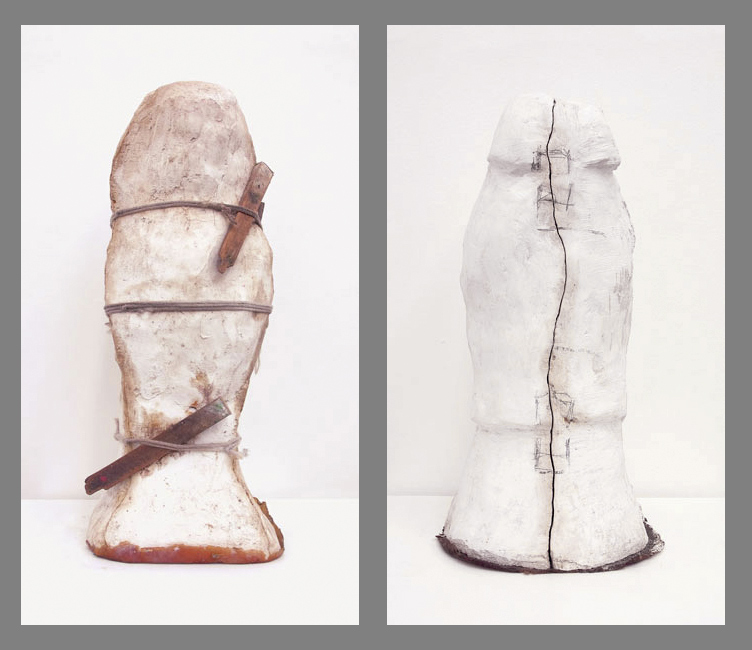
Julie Davis (Australian, b. 1959) and Alex Rizkalla (Australian, b. 1950) 'Apocrypha #1' (left) and 'Apocrypha #4' (right) 2008


Julie Davis (Australian, b. 1959) and Alex Rizkalla (Australian, b. 1950)
Apocrypha #1 (left) and Apocrypha #4 (right)
2008


“Intuitively we know the definition of the output from this process lies hidden within each object, seemingly carved into the underside of their skin, although we cannot see it. But actually it is not carved, it is the three-dimensional tracing of the original. The original becomes a throw-away. It is obsolete. The point of origin lies no longer within an object but at the heart of the creative impulse.”


Vanessa Mooney


Apocrypha is an interesting, if slight, exhibition of eleven photographs by Julie Davis and Alex Rizkalla at Place Gallery in Richmond. Conceptually the work is resolved if not pushed to any great depth, the small photographs of sarcophagi like casements and moulds addressing issues surrounding the absence / presence of the original object and the subsequent loss of identity. In their masking, the objects photographed hide an inner identity that has gone missing; the headless figures, like faceless mummies, protect something that has existed since early man – the inner spiritual machinations of belief – that are embedded within the existential nature of our being. Identity has been rubbed out and spirit is splitting apart the moulds trying to escape the confines of mortality, only held in check by the wooden pegs and ropes.

Like the sutures of the human skull, the marks on the casements (see below right image) try to align form across space and time but these objects are grounded in a contextless backgrounds, seemingly floating free of earthly constraints. Here we have a double tracing – that of the tracing of the original object that has been thrown away (see Vanessa Mooney quotation above) and the tracing of the indexicality of the object by the photograph – the re-presentation of an original that no longer exists. There is a double loss through this re-retracing that fits perfectly with the title Apocrypha – as the photographs become texts of uncertain authenticity.

Where the exhibition is less successful is in the physical presence of the photographs and their aesthetic qualities. While Vanessa Mooney asserts that the photographs are “meticulous in their detail and exact in their depth and texture” this assertion is untrue. From a technical point of view the photographs are soft in focus and lack depth of field. The ropes are fuzzy and the lack of depth of field in the focus plane from front to back adds to a lack of presence that the photographs needed to counterbalance the conceptual idea of apocrypha. I am also unsure about the scale of the photographs – there seems something in-between about the size of the images, neither here nor there. Aesthetically they needed either more presence (through being bigger), or more intensity through a jewel like nature in being smaller, again to counterbalance the conceptual themes. Finally, being surrounded by these eleven photographs in the gallery gives you the feeling of a ‘one shot’ idea that needed further investigation and refinement, an idea that needed to be pushed further. While the actual ideas themselves are interesting the work itself is too simple, too slight to hold the attention and reveal layers of meaning over time.

Dr Marcus Bunyan


Many thankx to Place Gallery for allowing me to publish the photographs in the posting.


Julie Davis (Australian, b. 1959) and Alex Rizkalla (Australian, b. 1950) 'Apocrypha #5' (left) and 'Apocrypha #7' (right) 2008


Julie Davis (Australian, b. 1959) and Alex Rizkalla (Australian, b. 1950)
Apocrypha #5 (left) and Apocrypha #7 (right)
2008


The Father, The Son And Apocrypha

We all have faith that we must lodge somewhere: you; the microscope, me; the earth, and the artist? There are two stories present. The first is Apocrypha, a series of works by Davies and Rizkalla and the second is something you cannot see but will soon know.

Davies and Rizkalla present to us Apocrypha; a series of photographs that are meticulous in their detail and exact in their depth and texture. It is an evocative title and encapsulates the resonance of the objects. What we can see is clear – plaster moulds used by someone, somewhere for casting objects. The clarity of the details of rope, wedges of wood and the depth of the seam tell us of the real working nature of them. The inversion here from background process to foreground subject matter is not for irony’s sake but to evoke the simultaneous banality and sacredness of the transformative creative process. It is documented honestly before the viewer, and yet, the mystery remains. Intuitively we know the definition of the output from this process lies hidden within each object, seemingly carved into the underside of their skin, although we cannot see it. But actually it is not carved, it is the three-dimensional tracing of the original. The original becomes a throw-away. It is obsolete. The point of origin lies no longer within an object but at the heart of the creative impulse.

Tony Scalzo, my father-in-law, was drawn to this process. While the creation of a religious icon amused his communist leanings the irresistible pull of the transformation from dust and water to artefact must have, I feel, fulfilled a greater need to live through making. Countless times he would present to us his recent army of saints or holy persons (Padre Pio was a boom time) to be sold through his community, and would scoff and laugh at how he could make an object that to others was an icon. He would point to the shed, the latex, the plaster dust as if to dispel the mystery, and yet the mystery remained.

Perhaps the final mystery is the process, the collaboration that has come about since Tony passed away and his son Stefano came into possession of the simple and unusual collection. Stefano like his father is drawn to the creative process. So innately aware of the artist, his father, he approached Julie and Alex with these as gifts that are, in a way, not his to give. As a custodian might he passed on the objects and communicated his intuitive knowledge of their meaning. One plus one equals three. The result, Apocrypha, is like a window that was obscured and now has been opened. We can see with clarity what was unseen, but known, before. Apocrypha silently demonstrates the entwining of faith and mystery in the creative life of all.”

Vanessa Mooney

Text from the Place Gallery website [Online] Cited 09/03/2019. No longer available online


Julie Davis (Australian, b 1959) and Alex Rizkalla (Australian, b. 1950) 'Apocrypha #8' (left) and 'Apocrypha #9' (right) 2008


Julie Davis (Australian, b 1959) and Alex Rizkalla (Australian, b. 1950)
Apocrypha #8 (left) and Apocrypha #9 (right)
2008


Place Gallery
20, Tennyson Street, Richmond

Openng hours:
Wednesday – Saturday 11.00am – 5.00pm
Closed Sundays

Place Gallery website

LIKE ART BLART ON FACEBOOK

Back to top

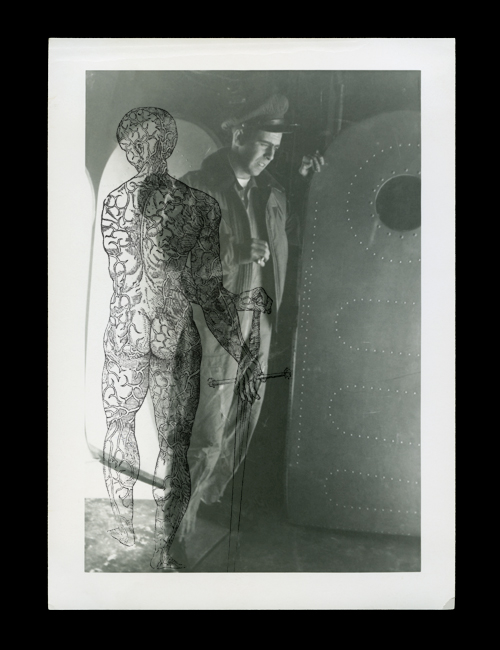
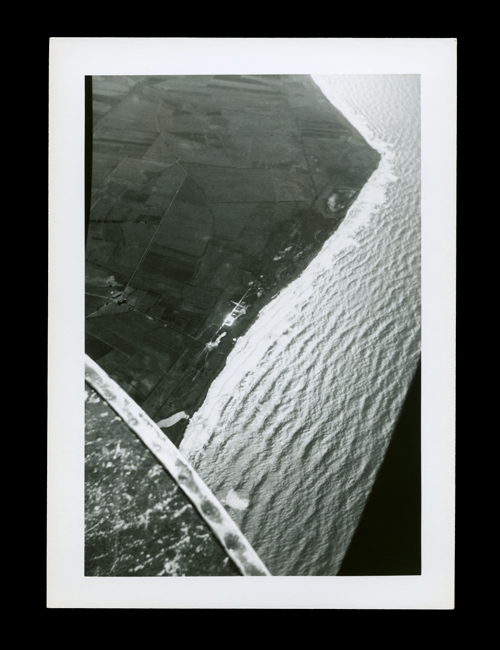
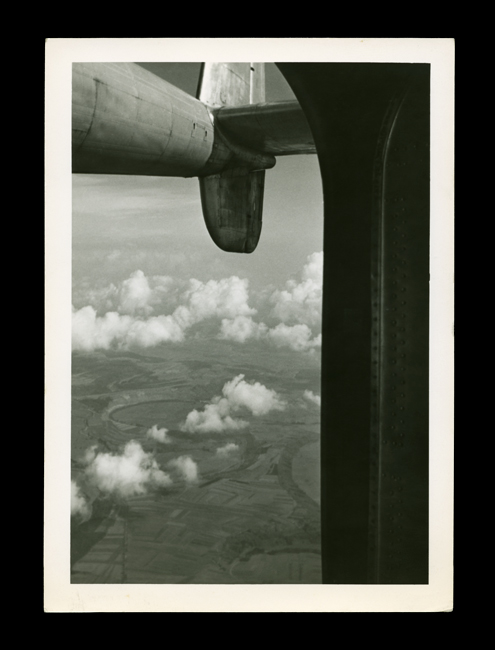
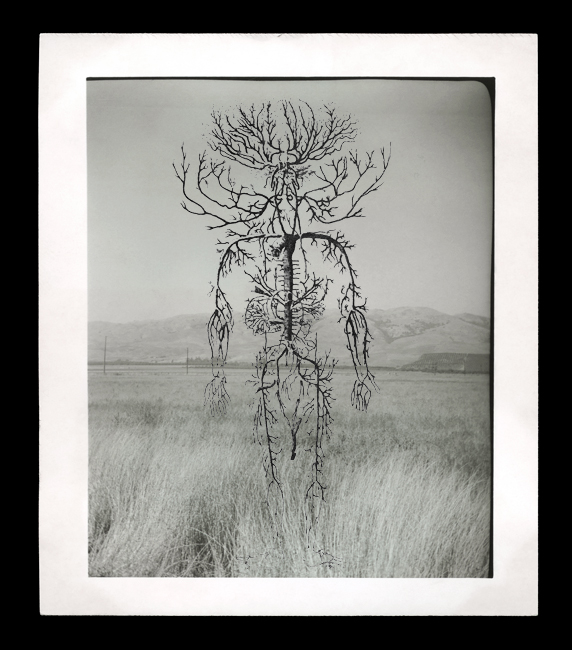
Photographs: Marcus Bunyan. ‘The Shape of Dreams’ 2009

June 2009


Marcus Bunyan (Australian, b. 1958) 'Spire of der Dom, 1 - 52' 2009 from the series 'The Shape of Dreams'


Marcus Bunyan (Australian, b. 1958)
Spire of der Dom, 1 – 52
2009
From the series The Shape of Dreams
Gelatin silver print


The Shape of Dreams

I am pleased to announce a body of work, the second for 2009, is now online on my website.

The photographs are a sequence: one tone follows another (much like a piece of music) until the final coda. With this in mind please view the work sequentially. Below are a selection of photographs from the whole work.

Dr Marcus Bunyan


Please click on the photographs for a larger version of the image.

Photographs are available from this series for purchase. As a guide, a digital colour 16″ x 20″ costs $1000 plus tracked and insured shipping. For more information please see my Store web page.


Photographs from the series The Shape of Dreams 2009


“the form of formlessness
the shape of dreams”


Marcus Bunyan (Australian, b. 1958) 'Untitled' from the series 'The Shape of Dreams' 2009


Marcus Bunyan (Australian, b. 1958)
Untitled
2009
From the series The Shape of Dreams
Gelatin silver print


Marcus Bunyan (Australian, b. 1958) 'Untitled' from the series 'The Shape of Dreams' 2009


Marcus Bunyan (Australian, b. 1958)
Untitled
2009
From the series The Shape of Dreams
Gelatin silver print


Marcus Bunyan (Australian, b. 1958) 'Untitled' from the series 'The Shape of Dreams' 2009


Marcus Bunyan (Australian, b. 1958)
Untitled
2009
From the series The Shape of Dreams
Gelatin silver print


Marcus Bunyan (Australian, b. 1958) '9/24/52' from the series 'The Shape of Dreams' 2009


Marcus Bunyan (Australian, b. 1958)
9/24/52
2009
From the series The Shape of Dreams
Gelatin silver print


Marcus Bunyan (English-Australian, b. 1958) 'Untitled' from the series 'The Shape of Dreams' 2009


Marcus Bunyan (Australian, b. 1958)
Untitled
2009
From the series The Shape of Dreams
Gelatin silver print


Marcus Bunyan (Australian, b. 1958) 'Navy Base, Unidentified' from the series 'The Shape of Dreams' 2009


Marcus Bunyan (Australian, b. 1958)
Navy Base, Unidentified
2009
From the series The Shape of Dreams
Gelatin silver print


Marcus Bunyan (Australian, b. 1958) 'Untitled' from the series 'The Shape of Dreams' 2009


Marcus Bunyan (Australian, b. 1958)
Untitled
2009
From the series The Shape of Dreams
Gelatin silver print


Marcus Bunyan (Australian, b. 1958) 'Part of the French Riviera taken while Whit held me at the door!' from the series 'The Shape of Dreams' 2009


Marcus Bunyan (Australian, b. 1958)
Part of the French Riviera taken while Whit held me at the door!
2009
From the series The Shape of Dreams
Gelatin silver print


Marcus Bunyan (Australian, b. 1958) 'Untitled' from the series 'The Shape of Dreams' 2009


Marcus Bunyan (Australian, b. 1958)
Untitled
2009
From the series The Shape of Dreams
Gelatin silver print


Marcus Bunyan (Australian, b. 1958) 'Untitled' from the series 'The Shape of Dreams' 2009


Marcus Bunyan (Australian, b. 1958)
Untitled
2009
From the series The Shape of Dreams
Gelatin silver print


All the photographs from the series are now on my website.


Marcus Bunyan website

LIKE ART BLART ON FACEBOOK

Back to top

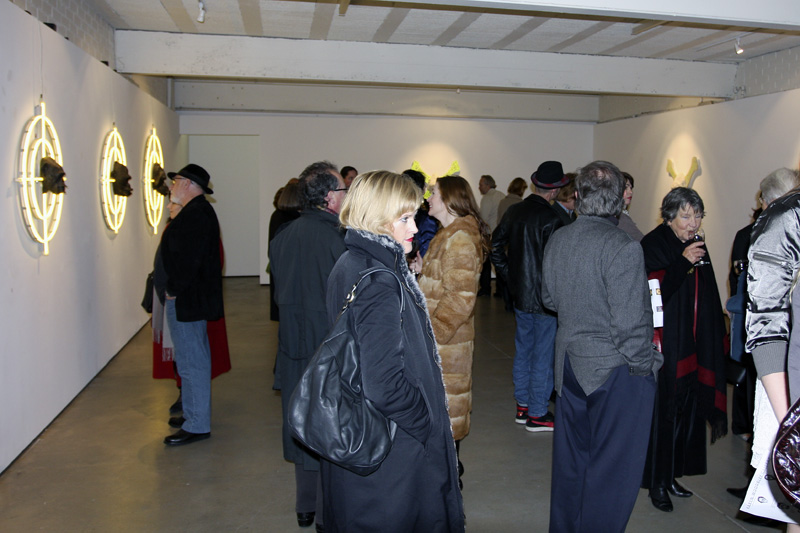
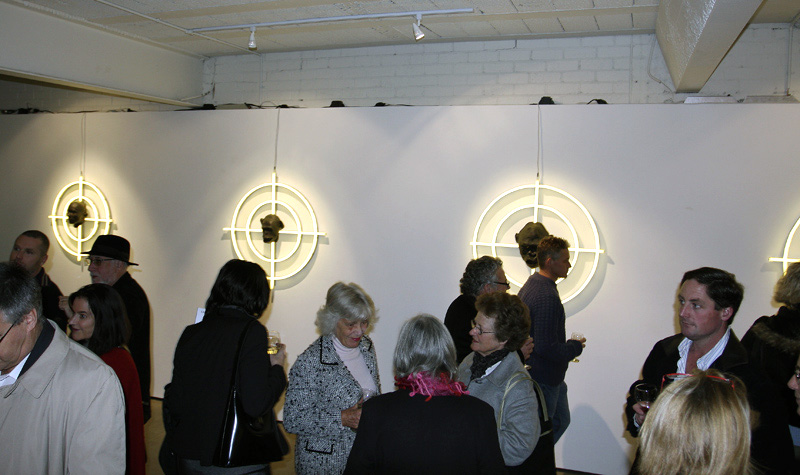
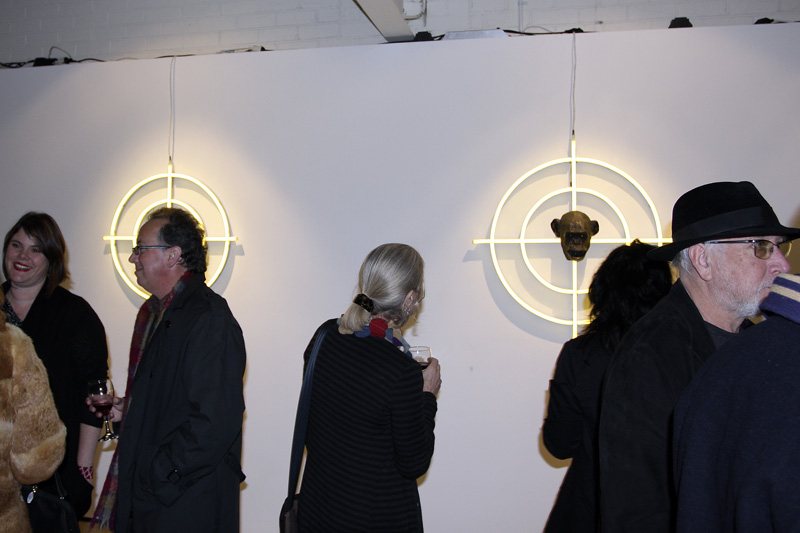
Opening 2: ‘In-Sight’ by Lisa Roet at Karen Woodbury Gallery, Melbourne

Exhibition dates: 17th June – 11th July, 2009

Opening 17th June, 2009


'In-Sight' by Lisa Roet opening at Karen Woodbury Gallery, Melbourne

'In-Sight' by Lisa Roet opening at Karen Woodbury Gallery, Melbourne

'In-Sight' by Lisa Roet opening at Karen Woodbury Gallery, Melbourne


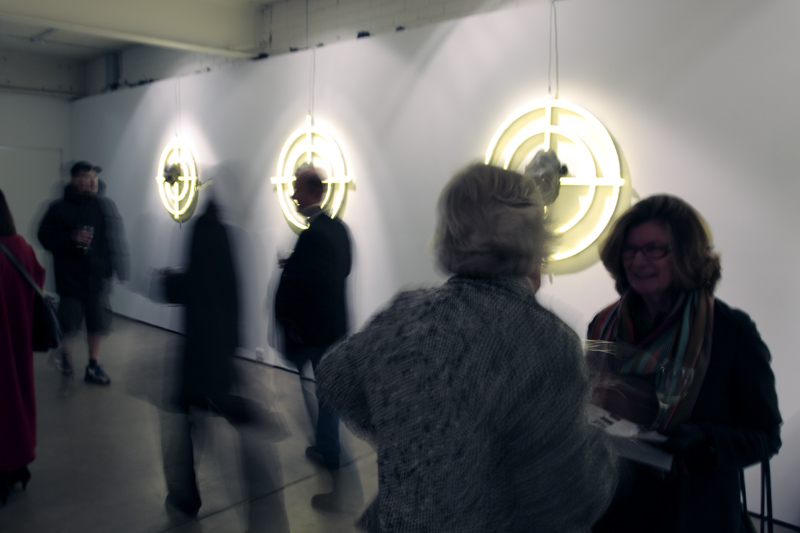
Opening night crowd in front of the work In-Sight (2009) by Lisa Roet at Karen Woodbury Gallery, Melbourne


Another excellent opening this time of the work of the delightful Lisa Roet. If you visit the gallery don’t forget the upstairs exhibition space with further work by the artist including a marvellous large bronze Orangutan Foot.

Dr Marcus Bunyan


Many thankx to Karen Woodbury Gallery for allowing me to publish the photographs in the posting. Please click on the photographs for a larger version of the image. All photographs © Marcus Bunyan


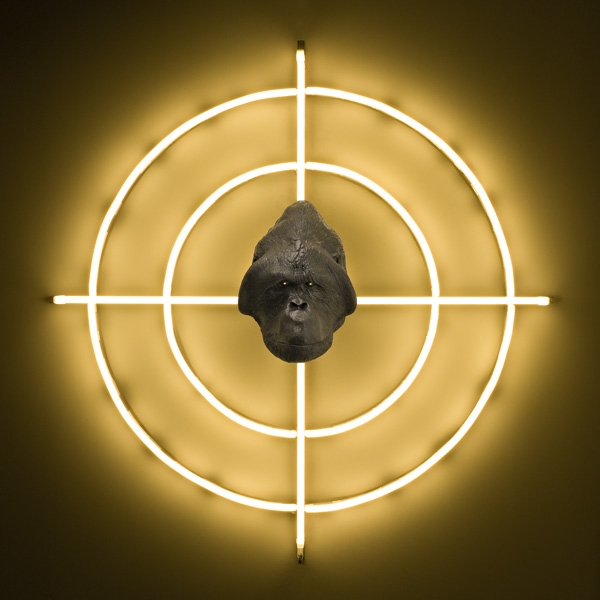
Lisa Roet (Australian, b. 1967) 'In-Sight 1' 2009


Lisa Roet (Australian, b. 1967)
In-Sight 1
2009
Polyurethane & Neon/LED
60.0 x 60.0cm
Edition: 3


Lisa Roet (Australian, b. 1967) 'In-Sight 4' 2009


Lisa Roet (Australian, b. 1967)
In-Sight 4
2009
Polyurethane & Neon/LED
120.0 x 120.0cm
Edition: 3


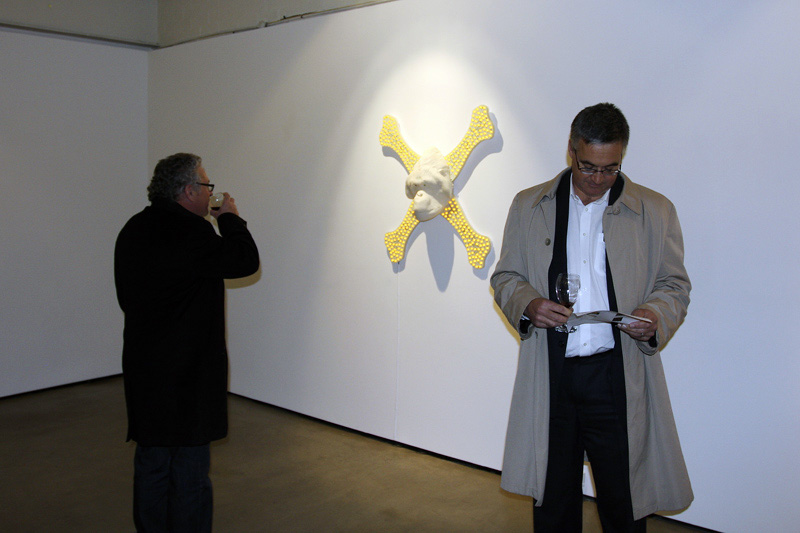
Installation view of Lisa Roet's work 'Cross Bones' (2009)

Installation view of Lisa Roet's work 'Cross Bones' (2009)


Installation view of Lisa Roet's work 'Cross Bones' (2009)

The artist Lisa Roet in front of one of her works 'Cross Bones' (2009)


The artist Lisa Roet in front of one of her works Cross Bones (2009)


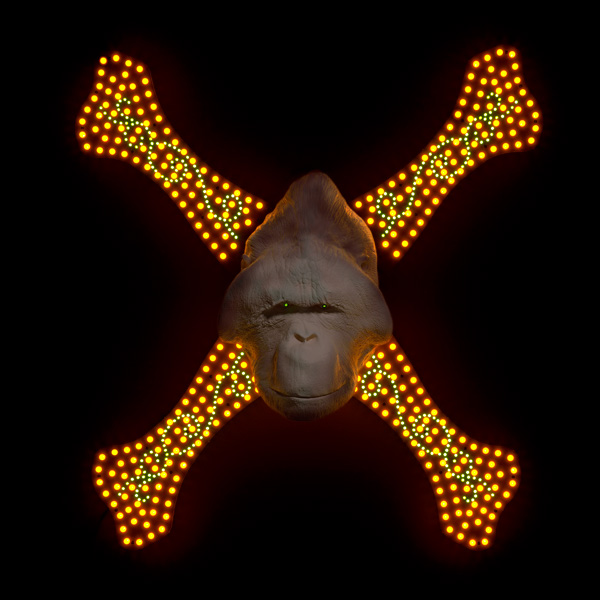
Lisa Roet (Australian, b. 1967) 'Cross Bones' 2009


Lisa Roet (Australian, b. 1967)
Cross Bones
2009
Led, Perspex, Polyurethane
95 x 70 x 30cm


'Orangutan Foot' (2007/08) by Lisa Roet at the opening of 'In-Sight' exhibition at Karen Woodbury Gallery, Melbourne


Installation view of the work Orangutan Foot (2007/08) by Lisa Roet at the opening of In-Sight exhibition at Karen Woodbury Gallery, Melbourne


Opening night crowd in front of the work In-Sight (2009) by Lisa Roet at Karen Woodbury Gallery, Melbourne


Karen Woodbury Gallery

This gallery is now closed.

LIKE ART BLART ON FACEBOOK

Back to top

Opening 1: ‘Gareth Sansom’ at John Buckley Gallery, Melbourne

Exhibition dates: 17th June – 4th July, 2009

Opening 17th June, 2009


Gareth Sansom opening at John Buckley Gallery, Melbourne

Gareth Sansom opening at John Buckley Gallery, Melbourne


Opening night crowd with the artist Gareth Sansom third from right


A very busy opening at John Buckley Gallery in Richmond for the paintings of Gareth Sansom. Nice to meet the artist and catch up with artist Gavin Brown and manager of Abbotsford Convent Brenton Geyer. A big thank you to Daniel for allowing me to take the photographs!

Dr Marcus Bunyan


Please click on the photographs for a larger version of the image. All photographs © Marcus Bunyan


Opening night crowd in front of Gareth Sansom's painting 'Alchemy' 2008/09


Opening night crowd in front of Gareth Sansom’s painting Alchemy 2008/09


From left to right Brenton Geyer, the artist of the night Gareth Sansom, artist Gavin Brown and Jenny Rees


From left to right Brenton Geyer, the artist of the night Gareth Sansom, artist Gavin Brown and Jenny Rees


Gareth Sansom opening at John Buckley Gallery, Melbourne

Gareth Sansom opening at John Buckley Gallery, Melbourne


John Buckley Gallery

This gallery is now closed

LIKE ART BLART ON FACEBOOK

Back to top