Here is another woman photographer with an strong, passionate, objective but sensitive eye who seems to have slipped through the cracks of time, history and recognition. Would you believe it, this is the first comprehensive survey of the work of photographer Hildegard Heise (German, 1897-1979).
At first New Objectivity, New Vision to the fore… multiples, rows and grids. Carousel horses shot from below, town hall towers as a medieval encampment, and a mass of herring barrels so perfect in their unity higher than the surrounding buildings. An then my favourite, the mass and floating weight of the leaves of the Victoria Regia… the rigour of the composition, its cadences, and the tonality and feeling of the image are just superb. I could go on: the cactus, the crystal, the china – so pure and clean. Followed by glorious almost breathless landscape photographs – Wintry trees, Hamburg (1955, below) and Blossoming apple trees (1961, below). Where has this woman been?
The star of the show has to be her portrait photography. THIS is how you take a portrait, unlike those modestly proficient evocations we saw from Man Ray in the last posting. In these portraits Heise shows her strength and understanding of subject matter, she grasps the essence of the person she is photographing… the whimsy of Alfred Mahlau with film strips (1928-1933, below); the sensitivity of the hands of Carpet weaver Alen Müller-Hellwig at work (1930, below); the windswept bravura of Siegfried Leber, cow hand in Neuendorf on Hiddensee (1934-1938, below); and the composure of the mother in Mother and child on the inter-island steamer (1938, below) with the shadow of the hat covering her face, and the placement of the hands of both mother and child. You could almost pick these people out of the photo and shake them, ask them about their lives, empathise with them. They have true presence. Call me an old romantic, but I could rave on and on about this photographer’s work.
And to top it all off, we have a self-knowing, all-knowing self-portrait where Hildegard (which is a female name derived from the Old High German hild (‘war’ or ‘battle’) and gard (‘enclosure’ or ‘yard’), and means ‘battle enclosure’) appears as if a Sander archetype, staring directly at the camera like a Wagnerian god/ess, both masculine and feminine at the same time. A true enunciation of Gesamtkunstwerk, where art, design, creative process and life combine to create a single cohesive whole.
I take a lovely enjoyment, finally, in her success (Freudenfreude).
Dr Marcus Bunyan
Many thankx to the Museum fur Kunst und Gewerbe Hamburg for allowing me to publish the photographs in the posting. Please click on the photographs for a larger version of the image.
It was in the 1920s, a decade when new career prospects were opening up for women, that Hildegard Heise discovered her passion for photography.
Photography during this period reflected the upheavals and transformation of society in the wake of the First World War. Heise found innovative ways to picture these developments, often choosing unusual perspectives. In line with the “new” genre of object photography, which showcased the world of things, she emphasised the structure, surfaces and form of her subjects. Heise for example shot the “bathing machines” in the French beach town of Carolles from a plunging angle to highlight their graphic structures, and focused in on the shiny surfaces of technical vessels produced by a Berlin porcelain manufactory.
Heise found portrait models all around her, photographing mainly children and artists. In 1937 she took a long trip through the Caribbean, portraying people in their communities, their home settings and landscapes. A precise observer, she succeeded in painting a multifaceted picture of a foreign, still little-travelled region. Even at an advanced age, Heise was still capturing landscapes with her camera; her last pictures show the view out her window of passing cloud formations.
The Museum für Kunst und Gewerbe Hamburg (MK&G) is proud to present the first comprehensive survey of the work of photographer Hildegard Heise (1897-1979). The photographs she produced between 1928 and the early 1970s are nothing less than a revelation. In 1930, Heise exhibited alongside avant-garde photographers such as Max Burchartz, Andreas Feininger, Hans Finsler, Hein Gorny and Anneliese Kretschmer at the “Internationale Ausstellung – Das Lichtbild” in Munich. But this buoyant period of bright prospects was followed after 1945 by a systematic side-lining of women artists. Heise continued to privately pursue photography, but her work fell into oblivion and was little researched. With around 160 images on view, the exhibition now pays delayed tribute to this important photographer. As an exponent of the New Objectivity, Heise often focused in closely on details and emphasised the structure, surfaces and form of her subjects. Her images span the areas of object photography, portraiture, in particular portraits of children, city scenes, travel photography and landscapes. Heise lived in Lübeck until 1933 and in Hamburg from 1945 to 1959, where she helped shape the city’s cultural life together with her husband, Carl Georg Heise, director of the Hamburger Kunsthalle from 1945. The couple counted among their close friends the painter Anita Rée, the graphic artist and painter Alfred Mahlau, and the photographer Albert Renger-Patzsch. Heise did a number of portraits while in Hamburg, for example of Oskar Kokoschka, Karl Schmidt-Rottluff and the weaver Alen Müller-Hellwig. Hildegard Heise’s estate, comprising around 3000 photographs and 2500 negatives, is housed at MK&G.
The exhibition is organised along Heise’s major areas of focus. In her OBJECT PHOTOGRAPHY she highlighted graphic structures and the formal qualities of the objects depicted. In 1930, for example, she photographed the “bathing machines” in the French town of Carolles from an unusual camera angle and showed the turrets lined up atop Lübeck’s town hall. She devoted the same attention to the worn surfaces of Much-Loved Dolls (1928) as she did to the immaculate exteriors of technical vessels produced by a Berlin porcelain manufactory [see below].
Heise found models for her PORTRAITS all around her, for example among her friends or artists such as Oskar Kokoschka, Karl Schmidt-Rottluff and Alfred Mahlau. These are often half-length portraits concentrating on the sitter’s face, manifesting the great preoccupation during this period with physiognomy. Children’s portraiture – mainly the realm of women photographers at the time – became a specialty that Heise continued to pursue over the years. She did such portraits on commission but also in her circle of friends, where she proved to be an attentive observer, seemingly capturing candid moments.
From 1934 to 1936 Heise created an extensive CITY PORTRAIT of Emden that interweaves photographs of people, the cityscape and the northern German dike landscape. Her study of Emden combines shots of boatmen, carters and other occupational groups with scenes of the harbour with its herring factory and views of the Hanseatic city’s architecture and cultural monuments. Heise would continue in the following decades to work with the stylistic device of linking varied perspectives.
In 1937-1938, Heise and her husband took an extended trip to the islands of St. Thomas, St. Croix, Jamaica and Hispaniola in search of traces of her Caribbean grandmother. The PHOTOGRAPHIC TRAVEL REPORTAGE she created during the journey conjoins portraits with scenes of the landscape and built environment. In addition to the sea, exotic vegetation and architecture, she evinced a keen interest in the people she encountered and the different ways of life of the various social classes. Her subjects include the wife of a priest, an elegantly dressed Caribbean lady she spied on a ferry as well as a chambermaid in a grand hotel and the children of market vendors. By addressing everyday human experiences, Heise’s work thus anticipates the humanist photography of the post-war period. After the war, Heise’s travel photography became even more spontaneous and situational. In Naples in the 1960s, she captured the colourful comings and goings at the harbour, and in 1969 she observed the process of wood being loaded onto ships at a port in Finland. The photographer’s pronounced interest in painting a broad portrait of society with its different classes and cultures is in evidence once more in her images of New York’s Central Park (1970).
Another consistent theme in Heise’s work is LANDSCAPE PHOTOGRAPHY. Until an advanced age, she engaged in an almost meditative contemplation of trees and their root systems, remaining true to her matter-of-fact, objective approach. Her nature observations intensified even further after she moved to Nußdorf am Inn, where starting in 1960 she produced extensive series of scenes of the Upper Bavarian winter landscape surrounding her new home. Photography would remain an important means of expression for her until the very last; she was still photographing passing clouds from the window of the residential home where she spent her final years.
Hildegard Heise, born in Lübeck in 1897, initially trained during the First World War as a kindergarten teacher, baby nurse and social worker, unusual occupations for a woman from the upper middle class that testify to her social commitment. After marrying Carl Georg Heise in 1922, she gave up these activities and took up photography, studying in 1928 with her contemporary Albert Renger-Patzsch, a friend of the couple who was at the time a museum director in Lübeck. She accompanied Renger-Patzsch to Holland and Alsace as his assistant. From 1929 to 1930 she continued her training with Hans Finsler (head of the photography class at the Burg Giebichenstein School of Art in Halle) and spent three months working in Grete Kolliner’s portrait studio in Vienna. In 1930 Heise exhibited at the “Internationale Ausstellung – Das Lichtbild” in Munich. Thereafter she participated in a showing of the “Kurt Kirchbach Collection” at the Hamburger Kunstverein in 1932 and in an exhibition on “Contemporary German Photography” at Mills College in California around 1934. Her photographs were featured in magazines including Atlantis, Das Deutsche Familienblatt and the Allgemeiner Wegweiser. Heise sold her pictures through the photography agencies Bavaria and kind-foto and accepted commissions to document works of art and decorative art and architecture, including for the publication Das Lübecker Orgelbuch (1931). From 1945 until the early 1970s, Heise continued to pursue her artistic activities in private.
Press release from the Museum fur Kunst und Gewerbe Hamburg
“I can no longer find my way in such a world, to which I no longer belong and I have no desire but to leave it. What is the point – without a family, without the once loved art and without any people – to continue to vegetate alone in such an indescribable, madness-riddled world … ?”
Anita Rée in her farewell letter to her sister before committing suicide in 1933
Anita Clara Rée (born 9 February 1885 in Hamburg, died 12 December 1933 in Kampen) was a German avant-garde painter during the Weimar Republic. After she took her own life the anti-Semitic government declared her work degenerate. Her works were saved by a groundskeeper. …
In 1930, she received a commission to create a triptych for the altar at the new Ansgarkirche in Langenhorn. The church fathers were not happy with her designs, however, and the commission was withdrawn in 1932 over “religious concerns”. Meanwhile, the Nazis had denounced her as a Jew and the Hamburg Art Association called her an “alien”. Shortly after, she moved to Sylt.
She was a suicide in 1933, partly as a result of having been subjected to such hostility and continuing harassment by antisemitic forces, partly due to disappointments on the personal level. In a note to her sister, she decried the insanity of the world. In 1937, the Nazis designated Rée’s work as “Degenerate art” and began purging it from museum collections. Wilhelm Werner, a groundskeeper at the Kunsthalle Hamburg preserved many of Rée’s paintings by hiding them in his apartment.
Anita Rée is one of the most fascinating and enigmatic artist of the 1920s. In many respects she lived a life in between worlds: as an independent woman in an art world on the verge between tradition and Modernism, as a regional artist with international aspirations, as a native from Hamburg brought up as a Protestant, with South American and Jewish roots. The works of Anita Rée (1885-1933) also reflect the at times radical changes in modern society at the beginning of the 20th century. Yet their main focus lies on the search for one’s own identity that is still highly topical and existential.
In hauntingly intense paintings, Rée depicts both people of different origins and the self as a foreign being. Her intimate female nudes continue to touch us today. Portraits of society gentlemen, the southern landscape as a place of yearning, worldly figure paintings with religious overtones or lone animals in stark dunes mirror the wide variety of her motives.
Text from the Hamburger Kunsthalle website [Online] Cited 12/02/2022. No longer available online
Alfred Mahlau (21 June 1894 – 22 January 1967) German painter, illustrator and teacher.
Alfred Mahlau was born in Berlin on 21 June 1894. He was best known for his graphical work and illustrations, and for the large stained glass window, Dance of Death, in the Lübeck Marienkirche (St. Mary’s Church in Lübeck), which paid homage to a famous mural of the Dance of Death in the church that was destroyed in the bombing of Lübeck during World War II. His books include a number of works with paintings and drawings of Hamburg and the Hamburg port. In the 1920s Mahlau created packaging design for Niederegger, and in 1927 he created the company profile that it still uses today.
During the Third Reich he was a celebrated artist, and was drafted only at a very late stage, to Berlin in April of 1945. He was captured by the Soviets, and held in custody for a couple of months. After the war he became a professor in 1946 at the Hamburg Academy of Fine Arts in Lerchenfeld.
Alen Müller-Hellwig, née Müller ( October 7, 1901 in Lauenburg in Pomerania – December 9, 1993 in Lübeck) was a German weaver.
Alen Müller learned hand weaving and embroidery, first at the Hamburg School of Applied Arts as a student of Paul Helms and Maria Brinckmann, then at the Munich School of Applied Arts with Else Jaskolla. In 1925 she passed the master’s examination as an embroiderer and in 1928 as a hand weaver.
From 1926 to 1991 she had a workshop for hand weaving in Lübeck. In 1934 she was given the castle gate (tower and the customs officer’s house to the east ) as a place to work and live. She had been married to the violin maker Günther Hellwig (1903-1985) since 1937, who also moved his workshop here and devoted himself specifically to building the viola da gamba .
As one of the first weavers, she created a tapestry using only undyed sheep’s wool, working solely with the natural shades and material appeal of the undyed and partially unwashed wool. When Der Baum, her first work of this kind, was exhibited in the Grassi Museum in Leipzig in autumn 1927, it caused a sensation. She was then invited to all major exhibitions of German arts and crafts abroad.
Her style came close to the ideas of the Bauhaus. She “invented constructive motifs from the technique of warp and weft.” With the exhibition Handwoven Carpets from the Best German Weaving Mills in the Behnhaus, Carl Georg Heise offered her the first great opportunity to present herself in Lübeck and showed her work again in the Hallway of the Behnhaus on the occasion of the major Lübeck Carl Milles exhibition in 1929. From 1929, Mies van der Rohe and Lilly Reich ordered a series of monochrome, hand-knotted sheep’s wool carpets from her for the Villa Tugendhat, the Barcelona pavilionand buildings in Paris and Milan. In 1931 she received the honorary award of the city of Berlin. She took part in the world exhibitions in Chicago in 1933 and in Paris in 1937. In Paris she received a gold medal.
Alfred Mahlau, Robert Pudlich and Ervin Bossányi, among others, provided designs for their carpets. A template by Bossányi was her first figurative weaving motif. In 1932 she was the only woman to co-found the artist group Werkgruppe Lübeck with the painters Curt Stoermer and Hans Peters, the graphic artist Alfred Mahlau, the garden architect Harry Maasz and the architects Wilhelm Bräck and Emil Steffann.
From 1934 to 1939, 70 carpets were made based on designs by Alfred Mahlau, mainly on behalf of the Reich Air Ministry, but also for municipalities and private individuals. This kept the growing workshop busy. In 1935 it comprised ten looms, a wool washer, a spinning mill with nine spinning wheels, a showroom and an office and sales room and employed three journeymen, four apprentices, two clerks, three unskilled workers, nine homeworkers and two interns. The first carpet in this series was the curtain Drei Möwen for Kiel-Holtenau Airport. Most of the works from this period have been destroyed or lost. Some examples including the cycle However, the four elements from 1939 have been preserved because they were acquired by Walter Passarge for the Kunsthalle Mannheim. The cooperation with Mahlau ended in 1940 because Alen Müller-Hellwig wanted to support Hildegard Osten, who had worked for many years, after opening her own workshop. In March 1942, during the German occupation, an exhibition was held in the Reichsmuseum Amsterdam under the title Exhibition of modern tapestries based on designs by Alfred Mahlau and Alen Müller-Hellwig Lübeck. fabrics and embroidery. Alfred Mahlau Lübeck. Cardboard boxes for tapestries from the workshop of Alen Müller Hellwig.
Alen Müller-Hellwig turned back to her own designs and created until 1942 a series of tapestries with plant motifs such as Foxglove Meadow (1940), Spiraea, Bear’s Hogweed and Mullein. Also after the air raid on Lübeck on March 29, 1942, where her workshop remained undamaged, she continued to run it in the Lübeck Burgtor (she brought her two children Friedemann and Barbara to safety in Timmendorfer Strand). After the end of the war, the work was expanded to include textiles for everyday use (bed linen, towels, tablecloths) and employed numerous women, especially from East Germany, e.g. Spinners from East Prussia. After the industrial production of textiles got going again, she limited her work to decorative pieces and floor carpets. In 1954 she received the Art Prize of the State of Schleswig-Holstein. Alen Müller-Hellwig ran her workshop until 1990.
Her last trainee Ruth Löbe (1959-2016) took over the workshop in 1992 and continued it until her death in January 2016.
A consistent theme in Hildegard Heise’s work is landscape photography.Up until old age, the photographer repeatedly dealt with trees and roots in an almost meditative repetition, while remaining true to her objective, sober approach.After moving to Nußdorf am Inn, she intensified her engagement with nature observation, where from 1960 extensive series about the Upper Bavarian winter landscape in the vicinity of her new place of residence were created.Photography remained Heise’s most important means of expression until the end of her life.From around 1965, Hildegard Heise photographed simultaneously in black and white and with colour slides.Heise photographed the passing clouds from the window of the residential home where she lived between 1973 and 1975.
Esther Ruelfs on the Museum fur Kunst und Gewerbe Hamburg website Nd [Online] Cited 11/02/2022
I remember many many years ago (2004) the National Gallery of Victoria held a major exhibition of the work of Man Ray, the first large-scale exhibition of Man Ray’s photography to have been presented in Australia. The exhibition was organised by the Art Gallery of New South Wales where it set an attendance record for photography exhibitions, with over 52,000 visitors, before travelling to Brisbane and Melbourne – which exhibitions did in those days between state capitals, alas no longer.
All these years later I still remember being impressed by the technical, almost scientific element – and elemental – aspect of Man Ray’s photography, the sheer intensity of his images, and their small, jewel-like size. I was less impressed by the lack of feeling the photographs gave me, as though the photographs were scientific experiments which emphasised “his techniques of framing, cropping, solarising and use of the photogram in order to present a new, ‘surreal’ way of seeing” and which, to my young photographic eyes, saw their lush and enigmatic beauty subsumed in an unemotional technical exercise.
Concentrating on his portrait photographs during his Paris years, this exhibition includes more than 100 portrait photographs made by the artist in Paris between 1921 and 1940. “In choosing portraits for the exhibit, the curator’s objective was to present the complete picture of Man Ray’s pantheon of cultural luminaries… “Since this exhibition is all about storytelling, we wanted to highlight the femme moderne and tell the public of their fierce individuality and creativity,” [Michael] Taylor says, explaining that the women’s inclusion makes for a more dynamic and meaningful exhibition. “These are musicians, models and performers whose contributions have been marginalized due to the legacy of colonialism and racism.” … The portraits chosen for “Man Ray: the Paris Years” reflect not only the staggering range of techniques Ray employed during his Parisian years, but also the fascinating people who inhabited his world. “Innovative, groundbreaking, experimental and completely original, Ray’s portraits are unlike the work of any of his contemporaries,” Taylor says.”1
But to my mind Man Ray’s other photography during this period, such as his 1922 album Champs Délicieux which contained 12 Dada inspired Rayographs (some of his first), his surreal photographic solarisations and his portfolio, Électricité (Electricity) (1931) are more expressive and revolutionary avant-garde statements of the creative power of photography than ever his portraits are.
And while his portrait photographs may be experimental and groundbreaking – all about technique – are they good portraits? That’s the key question. To my eyes his portraits have a “lumpy” quality to them, a kind of enigmatic blankness that never reveals much of the sitters personality. The doll-like beauty of Kiki de Montparnasse (c. 1924, below) becomes a later abstract wistfulness both photographs revealing nothing; a tough, shielded Gertrude Stein (at Home) (1922, below) is not a patch on Imogen Cunningham’s engaging, challenging portrait of 1934; and the portrait of Elsie Houston (1933, below) is just plain uncomfortable in its placement of the bandaged head and hand in the pictorial frame.
Apparently, Man Ray “was in league with the surrealists and, in even his most classical-seeming portraits, revealed a predilection for unexpected juxtapositions, visual rhymes and piercing expressions that can transport you instantaneously to the lip of a volcanic unconscious.” Allegedly.
A volcanic unconscious. Who writes this stuff? I often feel I am looking at different photographs than the ones other people are writing about. Again, “Man Ray’s photography doesn’t simply capture the image of a person, or the ghost that inhabits them. It captures the whole of creative expression – the surreal and sorrowful, the conflict and music, the desperation and freedom that comprise the human narrative.” No it doesn’t… I don’t even think he is a very good portrait photographer! Compared to a Weston, Sander or Lange, a Stieglitz, Arbus or Julia Margaret Cameron, Man Ray’s portraits are modestly proficient evocations at best.
“To be ‘done’ by Man Ray and Berenice Abbott meant that you rated as somebody,” wrote Sylvia Beach, owner of Shakespeare and Company, the legendary bookstore and lending library established in Paris after World War I by the American expatriate. You had made it… immortalised in the negative, promoted in the positive. There is the key. To be worthy, to be “fashion” able. After all, Man Ray was running a commercial photographic studio with Berenice Abbott as his assistant in order to make a living. After Man Ray fired her in 1926 Abbott set up her own studio and they became business rivals.
The two most enticing portrait photographs in the posting are both wistful visages of the female: the slightly out of focus, low depth of field beauty of the direct Lee Miller, an ex-lover of Man Ray, staring down the desiring male gaze, like the most glamorous and scientifically symmetrically perfect “mug shot” you have ever seen; and the soft sfumato (which translated literally from Italian means “vanished or evaporated”) background to the contemporary Mona Lisa that is the vulnerable, tender Berenice Abbott surrounded by vanished shadows and evaporated space. “Leonardo has studied the sky, the elements, the atmosphere, and the light. He takes the approach of a scientist, but translates it into the painting with superb delicacy and finesse. For him the painting doesn’t count. What counts is the knowledge,” observes Louvre Curator Jean-Pierre Cuzin.2
Science, knowledge and atmosphere. Only in this portrait of Berenice Abbott does Man Ray take his love of science and knowledge and approach what Preston Duncan observes: “It is through this aperture that we find the abiding sense that, in all the weight, the struggle, the limitations of our physical form, is an ongoing moment of release.”
A final thought emerges in my consciousness. I wondered whether there is a photograph of Man Ray by Berenice Abbott? Not that I can find…
Dr Marcus Bunyan
1/ Karen Newton. “Storytelling Portraits,” on the Style Weekly website August 31, 2021 [Online] Cited 20/02/2022
Many thankx to the Virginia Museum of Fine Arts for allowing me to publish the photographs in the posting. Please click on the photographs for a larger version of the image.
“The story of Man Ray and Paris has been told, but it’s usually been told through the lens – pardon the pun, it’s a photography show – of Man Ray’s innovations; the Rayograph, Solarization, his friendships, and his network. But what about the subjects?” says Chief Curator, Dr. Michael Taylor. “We took inspiration from the photograph on the cover of this show. It’s the first work you see in the exhibition. This is actually Man Ray taking your portrait. In other words, […] even though it’s called a self-portrait, a camera is photographing him, but he is looking at you with his camera. So we started to think about not just telling Man Ray’s story, which is fascinating, but the story of the sitters, the subjects, the models. …
While the primary focus of the exhibit is on portraiture and the radical expressiveness of his subjects – from the vanguards of femme moderne culture to aerialists in drag – there are some detours into avant-garde Rayography and cinema. This diversity of expression is resonant with Man Ray’s professional dedication to dismantling boundaries – those of gender, race, and national identity, as well as artistic traditionalism and aesthetic philosophy. …
Man Ray’s photography doesn’t simply capture the image of a person, or the ghost that inhabits them. It captures the whole of creative expression – the surreal and sorrowful, the conflict and music, the desperation and freedom that comprise the human narrative. It is through this aperture that we find the abiding sense that, in all the weight, the struggle, the limitations of our physical form, is an ongoing moment of release. It confronts us with the fact we are all winging this strange dance, contributing our solitary note to an overture that is entirely improvised, sharing in the simple hope that we may, for an instant, hear the enormity of the score.”
Preston Duncan. “The View From Paris,” on the RVA website November 3, 2021 [Online] Cited 02/02/2022
All the men of the age are there: Igor Stravinsky, James Joyce, Andre Breton, Picasso and Braque. Equally present are the era’s modern women, including Bernice Abbott, the rarely-as-well-photographed Gertrude Stein, Lee Miller and Virginia Woolf. The real stars, however, are the unknowns. Or rather, those unknown-to-us. “Man Ray used photography to challenge the artistic traditions and break boundaries, including fixed gender roles and racial barriers,” says Michael Taylor, the museum’s chief curator, who conceived the exhibition.
Alice Ernestine Prin (2 October 1901 – 29 April 1953), nicknamed the Queen of Montparnasse, and often known as Kiki de Montparnasse, was a French artist’s model, literary muse, nightclub singer, actress, memoirist and painter. She flourished in, and helped define, the liberated culture of Paris in the 1920s.
Alice Prin was born in Châtillon-sur-Seine, Côte d’Or. An illegitimate child, she was raised in abject poverty by her grandmother. At age twelve, she was sent to live with her mother in Paris in order to find work. She first worked in shops and bakeries, but by the age of fourteen, she was posing nude for sculptors, which created discord with her mother.
Adopting a single name, “Kiki”, she became a fixture in the Montparnasse social scene and a popular artist’s model, posing for dozens of artists, including Sanyu, Chaïm Soutine, Julian Mandel, Tsuguharu Foujita, Constant Detré, Francis Picabia, Jean Cocteau, Arno Breker, Alexander Calder, Per Krohg, Hermine David, Pablo Gargallo, Mayo, and Tono Salazar. Moïse Kisling painted a portrait of Kiki titled Nu assis, one of his best known.
Her companion for most of the 1920s was Man Ray, who made hundreds of portraits of her. She can be considered his muse at the time and the subject of some of his best-known images, including the surrealist image Le violon d’Ingres and Noire et blanche (see below).
She appeared in nine short and frequently experimental films, including Fernand Léger’s Ballet mécanique without any credit.
A painter in her own right, in 1927 Prin had a sold-out exhibition of her paintings at the Galerie au Sacre du Printemps in Paris. Signing her work with her chosen single name, Kiki, she usually noted the year. Her drawings and paintings comprise portraits, self-portraits, social activities, fanciful animals, and dreamy landscapes composed in a light, slightly uneven, expressionist style that is a reflection of her easy-going manner and boundless optimism. …
A symbol of bohemian and creative Paris and of the possibility of being a woman and finding an artistic place, at the age of twenty-eight she was declared the Queen of Montparnasse. Even during difficult times, she maintained her positive attitude, saying “all I need is an onion, a bit of bread, and a bottle of red [wine]; and I will always find somebody to offer me that.”
She left Paris to avoid the occupying German army during World War II, which entered the city in June 1940. …
Prin died in 1953 after collapsing outside her flat in Montparnasse, at the age of fifty-one, apparently of complications of alcoholism or drug dependence. A large crowd of artists and fans attended her Paris funeral and followed the procession to her interment in the Cimetière parisien de Thiais. Her tomb identifies her as “Kiki, 1901-1953, singer, actress, painter, Queen of Montparnasse.” Tsuguharu Foujita has said that, with Kiki, the glorious days of Montparnasse were buried forever.
Long after her death, Prin remains the embodiment of the outspokenness, audacity, and creativity that marked that period of life in Montparnasse. She represents a strong artistic force in her own right as a woman. In 1989, biographers Billy Klüver and Julie Martin called her “one of the century’s first truly independent women.” In her honour, a daylily has been named Kiki de Montparnasse.
Imogen Cunningham (American, 1883-1976) Gertrude Stein, Writer 1934 Gelatin silver print Image: 7 9/16 × 6 11/16 in. Frame: 22 5/8 x 16 5/8 x 1 3/8 in. The J. Paul Getty Museum, Los Angeles
In 1926 Peggy Guggenheim, who often lent her financial support to the Paris colony of artists and writers, telephoned Man Ray to arrange a studio appointment to have her portrait taken, not by Man Ray himself, but by Berenice. Afterwards Man Ray was livid, he now realised that Berenice had become a serious business rival, and the next day he fired her. Berenice immediately made plans to have a studio of her own and friends of Berenice stepped forward to help her. When she made arrangements to purchase a view camera – Peggy Guggenheim lent her the money to pay for it. As partial repayment, Berenice later photographed Peggy’s children. In 1926, she had her first solo exhibition (in the gallery “Au Sacre du Printemps”) and started her own studio on the rue du Bac.
Photographed during the year in which her liaison with Edward VIII became public and he abdicated the throne of the British Empire.
The Virginia Museum of Fine Arts announces its upcoming exhibition, Man Ray: The Paris Years, on view in Richmond from October 30, 2021, through February 21, 2022. Organised by Dr. Michael Taylor, VMFA’s Chief Curator and Deputy Director for Art and Education, the exhibition includes more than 100 compelling portrait photographs made by the artist in Paris between 1921 and 1940, featuring cultural luminaries such as Barbette, André Breton, Jean Cocteau, Marcel Duchamp, Ernest Hemingway, Miriam Hopkins, James Joyce, Henri Matisse, Méret Oppenheim, Alice Prin (Kiki de Montparnasse), Elsa Schiaparelli, Erik Satie, Wallis Simpson and Gertrude Stein.
The son of Russian-Jewish immigrants, Emmanuel “Manny” Radnitzky grew up in New York and adopted the pseudonym Man Ray around 1912. A timely sale of paintings to Ferdinand Howald, an art collector from Columbus, Ohio, provided Man Ray with funds for a trip to Paris, and he arrived in the French capital on July 22, 1921. Although the artist worked in a variety of media over the next two decades, including assemblage, film, sculpture and painting, photography would be his primary means of artistic expression in Paris.
Shortly after moving to France, Man Ray embarked on a sustained campaign to document the international avant-garde in a series of remarkable portraits that established his reputation as one of the leading photographers of his era. Man Ray’s portraits often reflect a dialogue or negotiation between the artist’s vision and the self-fashioning of his subjects. Whether they had their portrait taken to promote their work, affirm their self-image, project their desires, fulfil their dreams or create a new identity, Man Ray’s sitters were not inanimate objects, like blocks of marble to be shaped and coerced, but were instead highly creative cultural and thought leaders who were active participants in the creative act. By telling the stories of his respective sitters and the innovative techniques he used to create their portraits, Man Ray: The Paris Years empowers the subjects portrayed in these photographs and gives them an agency and voice that is not typically realised in monographic accounts of modern artists.
“Timed to coincide with the 100th anniversary of the artist’s arrival in the French capital and, coincidentally, the near-centennial anniversary of the Spanish flu pandemic, Man Ray: The Paris Years will prove to be a visually provocative and especially relevant exhibition,” said Alex Nyerges, VMFA’s Director and CEO. “This is an opportunity to better understand the lives of his subjects and see Man Ray in a different light.”
“Man Ray used photography to challenge artistic traditions and break boundaries, including fixed gender roles and racial barriers,” said Taylor. “His portraits went beyond recording the mere outward appearance of the person depicted and aimed instead to capture the essence of his sitters as creative individuals, as well as the collective nature and character of Les Années folles (the crazy years) of Paris between the two world wars.”
Man Ray’s radical portraits also capture an important constituency of the avant-garde at this time, namely the femme moderne (modern woman). Adventurous, ambitious, assertive, daring, enterprising and self-assured modern women like American photographers Berenice Abbott and Lee Miller, French artist Suzanne Duchamp and American sculptor Janet Scudder took full advantage of their unprecedented freedom and access to educational and professional opportunities to participate as equals to their male counterparts in the Parisian avant-garde. Although these women came from different classes and economic backgrounds, they shared a collective goal in the 1920s and 1930s to be creatively, financially and intellectually independent.
“Rejecting traditional gender roles and expectations, modern women were interested in erasing sexual differences,” said Taylor. “They often embraced the symbolic trappings and autonomy of their male counterparts including wearing men’s clothes, driving fast cars, smoking cigarettes and sporting tightly cropped ‘bobbed’ haircuts.”
The exhibition also tells the important stories of Black subjects such as Henry Crowder, Adrienne Fidelin and Ruby Richards, whose contributions have often been unfairly relegated to the margins of modernism due to the legacy of colonialism and racism. The artist’s series of portraits of the dancer and singer Ruby Richards, who was born in St. Kitts in the British West Indies and grew up in Harlem, New York, brings to light an important performer whose work with Man Ray has never been acknowledged in previous accounts of his work. Richards moved to Paris in 1938 to replace the legendary African American performer Josephine Baker as the star attraction at the Folies Bergère, and the famous cabaret music hall commissioned Man Ray to help introduce her to French audiences through his portrait photographs.
Many of the subjects portrayed in Man Ray’s photographs were born in Spanish-speaking countries such as Argentina, El Salvador, Peru and Spain, including famous modern artists like Salvador Dalí and Pablo Picasso, as well as the flamenco dancer Prou del Pilar and the pianist Ricardo Viñes. As a state art museum that has free general admission and is open 365 days a year, VMFA is committed to representing the cultural and linguistic diversity of our community. According to recent data from the U.S. Census Bureau, more than 7 percent of Virginia’s 8.5 million residents speak Spanish at home. This data has informed the museum’s decision to incorporate dual-language labels throughout the Man Ray: The Paris Years exhibition, as well as the audio tour and gallery guide. Recognising that English is not the native language of everyone who visits the exhibition, VMFA is offering content in both Spanish and English to create a more accessible, inclusive and welcoming experience for all of our visitors.
Informed by extensive archival research, this exhibition and accompanying catalogue offers a more complete account of Man Ray’s Paris years by focusing not just on his achievement as a photographer and his superb gifts as a portraitist, but also on the friendships and exchange of ideas that took place between the artist and his subjects in Paris between the two world wars.
Mossé was a surrealist artist and performer in a lesbian cabaret.
Ray’s double portraits are among his most spellbinding. Two feature Nusch Éluard, the actress, acrobat and hypnotist’s assistant who married the surrealist poet Paul Éluard. One shows Nusch with the openly bisexual actress, singer, surrealist and model Sonia Mossé. Taken in 1937, the photograph trembles with the intimacy and uncanniness of the culminating scenes in Ingmar Bergman’s “Persona,” where the face of Bibi Andersson begins to merge with that of Liv Ullmann. …
To try to square Man Ray’s magical, tender double portrait with Mossé’s subsequent life, as sketched in by Taylor in the catalogue, is to feel the 20th century – stretched to breaking point by the contrary forces of personal liberation and vicious repression – suddenly snap, like the shutter of a camera taking a photograph no one can bear to look at.
Mossé, writes Taylor, was romantically involved with the French dramatist Antonin Artaud. Best known for conceptualising the Theater of Cruelty movement, Artaud had tried to break off their relationship in 1939 “via handwritten malediction” (a letter in which he wrote curses – e.g., “You will live dead” – in an envelope containing drawings and burned holes).
But Mossé would never receive it. War had broken out. And on Feb. 11, 1943, Mossé and her stepsister Esther were denounced as Jews to the Gestapo. They were taken to the Drancy internment camp in a northeastern suburb of Paris and then to the Sobibór extermination camp in occupied Poland, where Mossé was murdered in a gas chamber.
The American Surrealist Man Ray made a number of portraits of Picasso over the years, beginning with this photograph that appeared in the July 1922 issue of Vanity Fair. It was taken on the second floor of Picasso’s apartment at 23 rue de La Boëtie in Paris, where he established a studio in November 1918 and completed many of the Cubist paintings that form the background of this portrait. Man Ray’s portrait brilliantly captures both sides of Picasso’s personality at this time, since the proud and successful artist is also shown to be emotionally distant and seemingly uncomfortable with his newfound wealth and fame.
Man Ray (American, 1890-1976) Ruby Richards with Feathers (installation view) 1938 Gelatin silver print
Ruby Richards (aka The Black Pearl) was a singer and dancer born in Saint Christopher Island (Saint Kitts) in the West Indies.
In 1938 the dancer and singer moved to Paris to replace Josephine Baker as the star attraction at the Folies Bergère. The famous cabaret music hall commissioned Man Ray to help introduce Richards to French audiences through his innovative portrait photographs.
Louis Jordan Soundie: Fuzzy Wuzzy
Featuring Louis Jordan and His Tympany Band with dancer Ruby Richards (recorded on New Year’s Eve 1942).
Man Ray (American, 1890-1976) Ruby Richards (installation view) 1938 Gelatin silver print
He called her his “little black sun.” Born in Guadeloupe, Adrienne Fidelin was the American artist’s partner in Paris before World War II tore them apart. She appears in almost 400 of the renowned artist’s photographs, and in 1937 became the first Black model to be featured in a leading U.S. fashion magazine. However, she was pushed to the sidelines of history. …
Man Ray himself only mentions Fidelin fleetingly in his autobiography. This marginalisation continues today, despite current efforts to recognise the stories of people of colour throughout history…
Adrienne Fidelin was born on March 4, 1915, in Pointe-à-Pitre. At the age of 13, she lost her mother in a hurricane that devastated Guadeloupe, and her father died a few years later. The orphaned teenager joined other members of her family living in Paris in the early 1930s. At the time, the French capital was under the thrall of the Colonial Exposition and obsessed with France’s far-flung colonies. At the Bal Blomet, a cabaret in the 15th arrondissement, the West Indian diaspora and the artistic avant-garde partied to the sounds of Creole biguine music, and Fidelin joined a Guadeloupean dance company.
This is most likely where she and Man Ray first set eyes on each other. She was 19, he was 44. In a diary entry dated December 29, 1934, the artist simply wrote “Ady.” Wendy Grossman discovered this valuable evidence of their first meeting in the Man Ray archives at the Getty Center in Los Angeles. The following year, he wrote down her number (“Odéon 79-95”) and photographed her wearing a simple white tank top. The artist and the dancer were inseparable. On May 13, 1937, Man Ray combined their names in a tender Surrealist pairing, writing “Manady” and “Adyman” in his diary. …
On September 15, 1937, a full-page portrait photo of Fidelin taken by Man Ray was published in the U.S. magazine Harper’s Bazaar – a first in segregated America. However, captured “wearing a tiger-tooth necklace, an ivory arm bracelet, and a Belgian Congo headdress, and adopting a seductive pose, Fidelin was presumed to represent the sensual African ‘native’ identified in the article’s title,” writes Wendy Grossman. “The article shows how the Surrealist movement exoticised ‘the other.'”
Man Ray found a partner in Fidelin, but their relationship was asymmetrical. “She stops me from sinking into pessimism,” he wrote. “She does everything: shining my shoes, making me breakfast, and painting the backdrops on my large canvases.” Fidelin also danced in the “negro clubs” on the Champs-Elysées and worked with photographers and directors looking for “exotic girls.” …
The couple was torn apart when the Wehrmacht entered Paris in June 1940. After trying – and failing – to flee to the Côte d’Azur together, Man Ray returned to the United States alone. The lovers continued writing each other for a few months, but the war severely impacted the postal service and Man Ray soon fell in love with another dancer in Hollywood. Fidelin remained in Paris, married another man in 1957, and died in a retirement home a few miles outside Albi in Southern France [February 5, 2004].
If, in the early 1920s, you happened to walk into Shakespeare and Company, the legendary bookstore and lending library established in Paris after World War I by the American expatriate Sylvia Beach, you would have noticed that the walls were covered with photographic portraits by Man Ray and Berenice Abbott.
“To be ‘done’ by Man Ray and Berenice Abbott meant that you rated as somebody,” wrote Beach. The habitues of Shakespeare and Company famously included such somebodies as Ernest Hemingway, Gertrude Stein, Djuna Barnes, T.S. Eliot, Ezra Pound, Hilda Doolittle and F. Scott Fitzgerald.
In 1922, Beach commissioned Ray (1890-1976) to make a publicity photograph of James Joyce, the Irish novelist whose book “Ulysses” she was about to publish (to her everlasting glory). That same year, Ray photographed Marcel Proust on his deathbed (below).
“It comes so soon, the moment when there is nothing left to wait for.”
~ Marcel Proust
Ravaged by bronchitis and pneumonia, Marcel Proust spent the last night of his life dictating manuscript changes for a section of his famous novel Remembrance of Things Past.
Man Ray did not know Proust, but he had become such an important photographer that mutual friends dispatched him to the celebrated French author’s bedside to make a final portrait two days after his death. The side view associates Man Ray’s photograph with a tradition of postmortem photography dating back to the inception of the medium.
Text from the J. Paul Getty Museum website
At the urging of his friend Jean Cocteau, Man Ray rushed to photograph the author of Remembrance of Things Past on his deathbed. In the October / November issue of Les Nouvelles Littéraires, Cocteau wrote:
Those who have seen this profile of calm, of order, of plenitude, will never forget the spectacle of an unbelievable recording device come to a stop, becoming an art object: a masterpiece of repose next to a heap of notebooks where our friend’s genius continues to live on like the wristwatch of a dead soldier.
“Houston sang Brazilian folk songs by candlelight in Paris. She moved to New York in 1939, where she performed as a possessed woman muttering “voodoo” incantations and playing the drums. She died in her home in 1943, an empty vial of sleeping pills by her bedside. In Ray’s photograph, her smile is soft. Her head tilts in line with her elongated hand. That hand is adorned with a piece of jewellery in the shape of a spotted disc, which rhymes with her hoop earring and the arches of her eyebrows. The cool, clean contrasts of her white turban and dark clothes make the portrait one of Ray’s finest.”
Elsie Houston (22 April 1902 – 20 February 1943) was a Brazilian singer.
Houston figured in the Brazilian literary/art/music scene during a critical time in its history. It was an era of tremendous creative energy. In addition to Mário de Andrade and Pagu, Houston knew others famous members of this artists movement, including the composer Heitor Villa-Lobos, the painters Flavio de Carvalho, Anita Malfatti and Tarsila do Amaral, and the leader of Brazilian modernism, Oswald de Andrade.
Houston moved to Germany and studied with Lilli Lehmann a renowned voice teacher. She then studied with another famed soprano, Ninon Vallin, first in Argentina and then in Paris. Houston’s relationship with Heitor Villa Lobos began in her teens. Houston was definitely a soloist at Villa Lobos’s 1927 Paris concerts. In 1928 she married Benjamin Péret, French surrealist poet, with whom she lived in Brazil from 1929 to 1931. Their son, Geyser, was born in Rio de Janeiro in 1931.
By the late 1930s, Houston had moved to New York City. She was a brilliant singer, particularly skilled in the interpretation of Brazilian songs. The New York Times during this era praised for her performances. She was also an active supporter of young Latin American composers, performing early pieces by composers such as Jayme Ovalle and Camargo Guarnieri.
She died in 1943. Her death was listed as an apparent suicide.
Ray learned from the history of painting as much as from other photographers. He borrowed from Rembrandt’s tenebrism (his dramatic use of engulfing shadow), the slanting light and perspectival structure in Vermeer’s interiors, and the directness of Hans Holbein (strong light on the face, minimal backgrounds). But of course, he was in league with the surrealists and, in even his most classical-seeming portraits, revealed a predilection for unexpected juxtapositions, visual rhymes and piercing expressions that can transport you instantaneously to the lip of a volcanic unconscious.
Ray’s 1929 portrait of Lee Miller is a good example – surely one of the most mesmerising photographic portraits ever taken. What is the source of its uncanny power? It’s not just that Miller – herself a great photographer who for several years was Ray’s lover – is so beautiful; or that her direct gaze is simultaneously so trusting and challenging; or even that her unblemished skin and the symmetry of the whole composition suggest something impossibly pristine and inviolate. It’s because the image is slightly out of focus. The effect of the blur is to slow one’s response, as smoke rings slow the mind – and to trigger a dream state.
Man Ray (American, 1890-1976) Emak Bakia (Leave Me Alone) 1926
But you may be less familiar with some of Ray’s other subjects, including Germaine Tailleferre, the female composer who changed her name from Taillefesse, Taylor writes, “partly to spite her father, who refused to support her musical studies, but also because she disliked the connotations of the name Taillefesse, which translates as buttock in English”; Janet Scudder, an American sculptor, whose partner was the children’s author and suffragist Marion Cothren; and Barbette (below), the high-wire performer who presented as a graceful woman, but at the end of her act removed her wig and revealed herself as a man.
Personae like these – and Ray’s always inventive approach to their portraits – make this show more than just a roll call of famous names. They make it revelatory. The show is further enhanced by the inclusion of Ray’s wonderful 1926 film, “Emak-Bakia” (he called it a “cinépoème”), and a portfolio of semiabstract photographs he made for a Paris Electricity Co. marketing campaign. Both are remarkable.
Vander Clyde Broadway (December 19, 1899 – August 5, 1973), stage name Barbette, was an American female impersonator, high-wire performer, and trapeze artist born in Texas. Barbette attained great popularity throughout the United States but his greatest fame came in Europe and especially Paris, in the 1920s and 1930s.
Barbette began performing as an aerialist at around the age of 14 as one-half of a circus act called The Alfaretta Sisters. After a few years of circus work, Barbette went solo and adopted his exotic-sounding pseudonym. He performed in full drag, revealing himself as male only at the end of his act.
Following a career-ending illness or injury (the sources disagree on the cause), which left him in constant pain, Barbette returned to Texas but continued to work as a consultant for motion pictures as well as training and choreographing aerial acts for a number of circuses. After years of dealing with chronic pain, Barbette committed suicide on August 5, 1973. Both in life and following his death, Barbette served as an inspiration to a number of artists, including Jean Cocteau and Man Ray. …
“Barbette,” writes Cocteau,
“transforms effortlessly back and forth between man and woman. His female glamour and elegance Cocteau likens to a cloud of dust thrown into the eyes of the audience, blinding it to the masculinity of the movements he needs to perform his acrobatics. That blindness is so complete that at the end of his act, Barbette does not simply remove his wig but instead plays the part of a man. He rolls his shoulders, stretches his hands, swells his muscles… And after the fifteenth or so curtain call, he gives a mischievous wink, shifts from foot to foot, mimes a bit of an apology, and does a shuffling little street urchin dance – all of it to erase the fabulous, dying-swan impression left by the act.”
Cocteau calls upon his fellow artists to incorporate deliberately this effect that he believes for Barbette is instinctive.
Cocteau commissioned a series of photographs of Barbette by the Surrealist artist Man Ray, which captured not only aspects of Barbette’s performance but also his process of transformation into his female persona.
In 1931, Man Ray was commissioned by the Compagnie Parisienne de Distribution d’Electricite (CPDE) to produce a series of pictures promoting the private consumption of electricity. The resulting portfolio, Électricité (Electricity), comprises rayographs reproduced as photogravures. Le Monde (The World), a picture of the moon above an electrical cord, suggests that even celestial bodies rely on the CPDE for their illumination; the photogravure Électricité equates the electric charge of the electron with the erotic beauty of a nude female figure; and Le Souffle (Breeze) combines spinning fan blades with the weblike stimuli of electrical current.
Gallery label from The Shaping of New Visions: Photography, Film, Photobook, April 16, 2012 – April 29, 2013 on the MoMA website [Online] Cited 03/02/2022
Man Ray’s innovations are not excluded. A whole section of the exhibition is devoted to his light-bending portfolio Électricité (1931), a commercial project commissioned by the Paris Electric Company to promote the use of electrically powered household appliances. Comprised of ten “Rayographs” (another name for photograms), the portfolio pulses with kinetic energy. Fans spin with an otherworldly force, a fowl is perfectly cooked as by magic rays, and the Eiffel Tower swims in hi-wattage advertisements.
Synergy. Now’s there’s an interesting word. It means “the interaction or cooperation of two or more organisations, substances, or other agents to produce a combined effect greater than the sum of their separate effects.” It derives from mid 19th century: from Greek sunergos ‘working together’, from sun- ‘together’ + ergon ‘work’. Thus, this glorious exhibition brings together two artists metaphorically “working together” under the Australian sun… even as they are separated by culture, location, time and space.
Their work comes together in a confluence of ideas of approximately equal width – one grounded in stories of family and Country thousands of years old, the artist investigating post-colonial settlement and the industrial world and interpreting Australian Indigenous objects of ritual and culture; the other not so much grounded but playing with Western ideas of pattern and randomness, belonging, and the metaphysical space of the landscape of the Monaro, in the southwest of New South Wales. Both points of view are equally valid and have important things to say about our various relationships to the land (both Indigenous and colonial) and the “creation” of a contemporary Australian national identity.
Both artists use found objects in their work, but as Russell-Cook points out, “I think that what unites the two artists is the shared materials they use, but not a ‘shared-use of materials.’ They are both fascinated by the artistic possibilities of found objects, but they use those materials to tell contrasting stories.” Connelly-Northey uses her experience of living on Country and her gleaning of discarded objects in Country to gather up the threads of her multiple heritages and Aboriginal custodianship of the land to picture – through the merging of organic and inorganic forms – the disenfranchisement of her people but also to celebrate their deep roots in Country. Gascoigne on the other hand is the more ethereal of the two artists, concerned as she is with light, land, spirit of place and the rightness of materials being used. Hers is a very structured and formal art practice grounded in her training in the Japanese art of ikebana and her understanding of Minimalism. Sympathetically, through their individual creativity both artists transmute (to change in form, nature, or substance) the reality of the materials they work with, the raw material of experience transmuted into stories. As Rozentals and Russell-Cook observe, “Both Connelly-Northey and Gascoigne’s work is defined by, and yet transcends, its sense of materiality.”
Two things jar slightly. Connelly-Northey is ‘a bit anxious’ that her Indigenous originality won’t be recognised and that “I’ve worked too hard for people to think I borrowed it all from Rosalie. Our use of corrugated iron is the only thing we have in common.”
Connelly-Northey can have no fear that her Indigenous originality won’t be recognised because every pore of her strong work speaks to her cultural being. Her spiky, brittly astringent, barbed and feathered works take you to Country, posing the viewer uncomfortable questions about “soft” assertions of history and the hard reality of contemporary Indigenous life: metal as string, desecration of sacred sights, barbed wire handles, “hunters and gatherers whose remains have been upturned by settled Australian societies.” She weaves her stories well.
If the second statement has not been taken out of context, it shows a heap of unnecessary defensive aggression by Connelly-Northey towards Gascoigne’s work. It’s a silly, uninformed statement which hints at a lack of confidence in the strength of her own work. Patently, their use of corrugated iron is not the only thing they have in common.
Both speak towards a love of the Australian land whether from an ancient Aboriginal custodianship perspective or from a Western colonial perspective. Both use scavenging, gathering and gleaning in order to recycle the refuse of society in their art making, Connelly-Northey using weaving to bring together that which is disparate; Gascoigne assembling her formal compositions with an attention to order and randomness. Both artists love to move through the space and time of the land, exploring its idiosyncrasies, “disassociating objects from their original function via a system of obsessive collecting and gathering, while simultaneously reflecting their individual experiences of being immersed in the bush environment.” As Rozentals and Russell-Cook comment, “Despite their careers having been separated by time, and coming from vastly different backgrounds, in both artists we see a singular vision that is immediately recognisable, and unmistakably them. And yet there is a sympathetic connection between their practices that is undeniable.”
Conjoined by more than corrugated iron, more than land, air and clan, their common union is the journey of two creative souls on that golden path of life and the connection of those souls to the cosmos.
“Although they are often compared, Gascoigne and Connelly-Northey are separated conceptually and chronologically. For a start, despite being two Australian women artists working with landscape, they never met. This fact is less surprising when one remembers that Connelly-Northey’s practice only matured towards the later stages of Gascoigne’s life. Gascoigne came to prominence late and rapidly, with her first exhibition in 1974, when she was fifty-seven years old, and it was only eight years later that she represented Australia at the Venice Biennale. Connelly-Northey started exhibiting seriously in the mid-nineties, shortly before Gascoigne passed away in 1999. However, Connelly-Northey has herself commented on a nuanced relationship to the historical comparison with Gascoigne, pointing out in a recent conversation with Jeremy Eccles that “I’ve worked too hard for people to think I borrowed it all from Rosalie. Our use of corrugated iron is the only thing we have in common.” In some ways, then, the fact they never met may have been fortuitous, with both artists driven to probe their subject matter in distinct and complete ways. …
Surrounding built and natural environments are a recurring prompt for Connelly-Northey, who often merges organic and inorganic forms. She investigates the intricate dilemmas and complexities that arise when two cultures meet. Co-curator Myles Russell-Cook explains that the artist “is using her work to explore the connection between her multiple heritages, as well as her experience living on Country. Take her work On Country, 2017; in that installation, Connelly-Northey explores the relationship between the twin cities of Albury and Wodonga, depicting the river a living being, which she imagines as a snake repurposed out of chicken wire and rusted and industrial scrap metal. It’s a dioramic representation of the landscape, but it is also so embedded with references to Aboriginal custodianship of Country.” As a result, Russell-Cook argues, Connelly-Northey proposes “a really different way of being in Australian landscape.”
Beyond these conceptual and chronological differences, however, Russell-Cook points out that “I think that what unites the two artists is the shared materials they use, but not a ‘shared-use of materials.’ They are both fascinated by the artistic possibilities of found objects, but they use those materials to tell contrasting stories.” As Rozentals notes, for Gascoigne, “the objects had to be just right – what she collected, for instance, with shells. There could be no cracks and they had to be of a particular colour and a particular shine; she would collect the feathers of different species of birds from particular locations.” For Russell-Cook, “At the heart of what Connelly-Northey does, is the act of cleaning up Country: going out and collecting up bits of discarded and refuse machinery, and then working with that to create customary forms. She makes a lot of possum-skin cloaks, narrbong-galang, which are a type of string bag, as well as koolimans (coolamons), lap-laps, and other types of cultural objects … she repurposes them to create a juxtaposition between cultural memories.”
Extract from Rose Vickers. “Found and Gathered: Lorraine Connelly-Northey and Rosalie Gascoigne,” in Artist Profile, Issue 57, 2021 [Online] Cited 01/02/2022
Installation view of the exhibition Found and Gathered at The Ian Potter Centre NGV Australia Photo: Tom Ross NGV
Wall text from the exhibition
Entrance to the exhibition Found and Gathered at The Ian Potter Centre NGV Australia Photo: Marcus Bunyan
Lorraine Connelly-Northey (Australian / Waradgerie, b. 1962) Lap Lap (various numbers) (installation views) 2011 Mixed media Murray Art Museum Albury, commissioned 2011 Photos: Marcus Bunyan
Animal skins and woven plant fibres are preferred natural resources for making cloaks, belts, skirts and lap laps. Worn by both males and females, lap laps were created for a simple covering of the groin. Also considered a body adornment, the wearing of a lap lap has different significance between Nations. Connelly-Northey constructed these lap laps from hard and harsh materials, such as rusted industrial objects including an axe head, a cut-down rabbit trap, barbed fencing wire along with copper sheeting. Metaphorically, Connelly-Northey’s lap laps both expose and draw attention to the difficult and ‘barbed’ sexual relations thats existed between Aboriginal women and settlers, post-European arrival.
Wall text from the exhibition
Installation view of Rosalie Gascoigne’s Step through (1977 – c. 1979-1980) at the exhibition Found and Gathered at The Ian Potter Centre NGV Australia Photos: Marcus Bunyan
Rosalie Gascoigne (Australian born New Zealand, 1917-1999) Step through (installation view) 1977 – c. 1979-1980 Linoleum on plywood on wood National Gallery of Australia, Canberra Photo: Marcus Bunyan
In 1977, Rosalie Gascoigne commenced making sculptures out of discarded linoleum, which she sourced primarily from rubbish dumps. Step through features torn pieces of floral linoleum glued to plywood which are mounted on wooden blocks, and she used a jigsaw to cut around the shapes. Although linoleum is associated with domestic interiors, for Gascoigne it was about outdoor spaces. This work references untidy vacant blocks in the city, which one might ‘step-through’ as a short cut. Gascoigne’s floor-based works are intended to be experienced from all angles, and the arrangement of the blocks at different heights creates a rhythm, drawing the eyes to wander up and across the installation.
Rosalie Gascoigne (Australian born New Zealand, 1917-1999) Smoko (installation views) 1984 Weathered wood, dried grass (possibly African lovegrass, Eragrostis curvula) Private collection, Tasmania Photos: Marcus Bunyan
Installation views of Rosalie Gascoigne’s Pieces to walk around (1981, foreground) at the exhibition Found and Gathered at The Ian Potter Centre NGV Australia Photos: Marcus Bunyan
Rosalie Gascoigne (Australian born New Zealand, 1917-1999) Pieces to walk around (installation view detail) 1981 Saffron thistle sticks (Carthamus lanatus) Museum of Contemporary Art, Sydney Photo: Marcus Bunyan
‘This is a piece for walking around and contemplating. It is about being in the country with its shifting light and shades of grey, its casualness and it prodigality. The viewer’s response to the landscape may differ from mine, but I hope this picture will convey some sense of the countryside that produced it: and that an extra turn or two around the work will induce in the viewer the liberating feeling of being in the open country.’ ~ Rosalie Gascoigne, 1981
Piece to Walk Around is a microcosm of the landscape of the Monaro, in the southwest of New South Wales, where Rosalie Gascoigne lived from 1943. This environment provided the experiences and the materials that shaped her work, found on her journeys through it. Piece to Walk Around refers directly to the experience of moving through the Australian landscape, titled to draw attention to the changing visual effects as one circles the work and the shifting play of light on the natural material.
Comprised of a patchwork of bundles of saffron thistle stalks arranged in 20 squares lying on the floor in alternating directions, it resembles the undulating countryside, the ordering of agriculture and industry, and the mottled effects of light and shadow upon it. The work conveys a sense of the infinite expansiveness and liberation experienced in the country, as manifested in the grid’s open-ended structure to which additional bundles of thistles could theoretically be added or subtracted.
Gascoigne’s work from the early-1980s reveal a sophisticated aesthetic – an engagement with Minimalism’s orderliness and pre-occupation with the grid, and an almost Japanese mixture of formal composition and attention to nature. It was this sense of ‘order with randomness’ which Gascoigne recognised as an essential feature of the Monaro-Canberra region, and which resonates in the ‘careful-careless’ effect of this assemblage. Created only seven years after her first solo show in 1974, this work has a remarkable maturity and balance, achieved through a lifetime of looking at the landscape.
Anonymous text from the Museum of Contemporary Art Australia website Nd [Online] Cited 01/02/2022
Rosalie Gascoigne (Australian born New Zealand, 1917-1999) Takeover bid (installation view) 1981 Found window frames, thistle stems Heide Museum of Modern Art, Melbourne Photo: Marcus Bunyan
Rosalie Gascoigne (Australian born New Zealand, 1917-1999) Takeover bid (installation view detail) 1981 Found window frames, thistle stems Heide Museum of Modern Art, Melbourne Photo: Marcus Bunyan
Rosalie Gascoigne (Australian born New Zealand, 1917-1999) Balance (installation view) 1984 Weathered plywood Collection of Justin Miller, Sydney Photo: Marcus Bunyan
Rosalie Gascoigne (Australian born New Zealand, 1917-1999) Balance (installation view detail) 1984 Weathered plywood Collection of Justin Miller, Sydney Photo: Marcus Bunyan
Rosalie Gascoigne (Australian born New Zealand, 1917-1999) Graven image (installation view) 1982 Weathered wood and plywood Private collection, Canberra Photo: Marcus Bunyan
Rosalie Gascoigne perceived wood as being distinctly different to the manufactured materials she incorporated in her art, such as tin, aluminium and iron. Wood, like the shells, dried grasses and plants she also worked with across her career, came from nature. Gascoigne gathered wood that had been weathered, including window frames and fence palings, preferring pieces that had been bleached by the sun until they were almost grey in colour. Gascoigne would use wood either as the main component of a composition, or as the backing from another work.
Installation view of Rosalie Gascoigne’s Feathered Fence (1978-1979, foreground) with Winter paddock (1984, back left) and Afternoon (1996, back right) at the exhibition ‘Found and Gathered’ at The Ian Potter Centre NGV Australia Photo: Marcus Bunyan
Rosalie Gascoigne (Australian born New Zealand, 1917-1999) Feathered fence (installation view details) 1978-1979 Swan (Cygnus atratus) feathers, galvanised wire mesh, metal win nuts, synthetic polymer paint on wood National Gallery of Australia, Canberra Gift of the artist, 1994 Photos: Marcus Bunyan
Rosalie Gascoigne (Australian born New Zealand, 1917-1999) Afternoon (installation views) 1996 Painted weathered plywood on backing boards TarraWarra Museum of Art, Healesville Gift of Eva Besen AO and Marc Besen AC Photos: Marcus Bunyan
One of Rosalie Gascoigne’s late works, Afternoon, created for the exhibition In Place (Out of Time), held at the Museum of Modern Art in Oxford, comprises twenty-seven panels of weathered plywood organised in a grid-like configuration. Looking out from her vantage point at the top of Mount Stromlo across the countryside, Gascoigne was in awe of the view, the vast sky, and te sense of emptiness. The sections of lights applied white paint and areas of exposed timer of Afternoon are suggestive of passing clouds, and communicates her experiences and enduring recollections of being in the landscape.
As perhaps the most archetypal form of modernist abstraction, the grid has been employed as a formal, compositional device in countless artworks over the past century.
In ‘Grids’ (1979), Rosalind Krauss’ seminal essay on the subject, she describes this structural device as: ‘[f]lattened, geometricized, ordered, it is antinatural, antimimetic, antireal. It is what art looks like when it turns its back on nature’.(1) However, for Rosalie Gascoigne, the grid was employed as a compositional method in order to generate highly personal and experiential evocations of natural phenomena in ways which transcended the more rigid, impersonal qualities associated with its geometry.
In one of her late works entitled Afternoon (1996), Gascoigne assembled 27 individual panels of found painted timber in roughly similar sizes in a grid-like formation. At a surface level the serial repetition of components arranged and balanced according to vertical and horizontal axes corresponds to a reductive Minimalist sensibility. However, it is the heavily weathered timber with its faded white paint which infuses the work with a resonant and suggestive force. As the artist traversed the open countryside she deliberately sought out materials that she felt were ‘invested with the spirit of the place’ and capable of recalling ‘the feeling of an actual moment in the landscape’.(2) In this light, the vital materiality of the reclaimed painted timber is not only inscribed with the effects of its prolonged exposure to the elements, but it also speaks directly to Gascoigne’s deep and abiding memories of her experiences in the landscape. In Afternoon, the richly allusive quality of the individual boards is suggestive of passing clouds, evoking the ephemeral and transitory phenomena of nature in continuous metamorphosis. Contemplated as a unified pictorial whole, this humble assemblage of discarded and deteriorating matter assumes a metaphysical dimension bordering on the ineffable, one which resoundingly accords with the artist’s desire to ‘capture the “nothingness” of the countryside, those wide open spaces … the great Unsaid … the silence that often only visual beauty transcends’.(3)
2/ Quoted in Deborah Edwards, Rosalie Gascoigne: Material as Landscape, (exh. cat.), Sydney: Art Gallery of New South Wales, 1997, p. 8.
3/ Ibid, p. 16.
Anonymous text. “Rosalie Gascoigne,” on the Culture Victoria website Nd [Online] Cited 01/02/2022
Rosalie Gascoigne (Australian born New Zealand, 1917-1999) Afternoon 1996 Painted weathered plywood on backing boards TarraWarra Museum of Art, Healesville Gift of Eva Besen AO and Marc Besen AC
Rosalie Gascoigne (Australian born New Zealand, 1917-1999) Winter paddock (installation view) 1984 Weathered and painted wood, painted plywood, silver gull (Chroicocephalus novaehollandiae) feathers Parliament House Art Collection, Canberra Acquired 1985 Photo: Marcus Bunyan
Rosalie Gascoigne (Australian born New Zealand, 1917-1999) Winter paddock (installation view detail) 1984 Weathered and painted wood, painted plywood, silver gull (Chroicocephalus novaehollandiae) feathers Parliament House Art Collection, Canberra Acquired 1985 Photo: Marcus Bunyan
Found and Gathered: Rosalie Gascoigne | Lorraine Connelly-Northey brings attention to the shared materiality at the heart of the practices of Rosalie Gascoigne (1917-1999) and Lorraine Connelly-Northey (b. 1962). Both artists are known for their transformative use of found and discarded objects to create works of art that challenge our understanding of the landscape, and Country.
New Zealand–born Rosalie Gascoigne is recognised for her textural works assembled from items that she had collected, including corrugated iron, feathers, wood and wire, as well as her distinctive wall-mounted pieces formed from retro-reflective road signs and soft-drink cases. Gascoigne moved to Mount Stromlo Observatory, a remote community on the outskirts of Canberra in 1943. Describing the area as being ‘all air, all light, all space, all understatement’, the surrounding region where Gascoigne regularly searched for materials greatly inspired her artistic practice. Her first exhibition was held in 1974 when she was 57 years old, and in 1982, Gascoigne was selected as the inaugural female artist to represent Australia at the Venice Biennale.
Lorraine Connelly-Northey was born and raised at Swan Hill in western Victoria, on the traditional lands of the Wamba Wamba people. Much of her work is inspired by her maternal Waradgerie (also known as Wiradjuri) heritage. Connelly-Northey gathers and uses materials often associated with European settlement and industrialisation, and repurposes them into sculptural works that reference traditional weaving techniques and Indigenous cultural objects. Through her work, Connelly-Northey explores the relationship between European and Indigenous ways of being and draws attention to the dynamic and resilient ways that Aboriginal people have been, and continue to be, custodians of Country.
Through a major display of more than 75 wall-based and sculptural works, Found and Gathered highlights each artist’s unique and significant place within Australian art, while also illuminating the sympathetic relationships between their works. Continuing the popular series of paired exhibitions hosted by NGV, this is the first exhibition in this series focused on the work of two women.
Held at The Ian Potter: NGV Australia, this exhibition includes works by both artists held in the NGV Collection as well as works from major public institutions and private collections around Australia.
Text from the NGV Australia website
Wall text from the exhibition
Lorraine Connelly-Northey (Australian / Waradgerie, b. 1962) Magpie bag (installation view) 2002 From the Koolimans and String Bags series Wire mesh, magpie feathers 27.8 × 33.5 × 10.0cm National Gallery of Victoria, Melbourne Purchased with funds donated by Supporters and Patrons of Indigenous Art, 2003 Photo: Marcus Bunyan
Lorraine Connelly-Northey (Australian / Waradgerie, b. 1962) Pelican bag (installation view) 2002 From the Koolimans and String Bags series Wire, pelican feathers 31.4 × 29.7 × 10.6cm National Gallery of Victoria, Melbourne Purchased with funds donated by Supporters and Patrons of Indigenous Art, 2003 Photo: Marcus Bunyan
Lorraine Connelly-Northey (Australian / Waradgerie, b. 1962) Narrbong (String bag) (installation view) 2005 Wire, wire mesh National Gallery of Victoria, Melbourne Purchased with funds donated by Supporters and Patrons of Indigenous Art, 2005 Photo: Marcus Bunyan
Lorraine Connelly-Northey (Australian / Waradgerie, b. 1962) Narrbong (String bag) (installation view) 2005 Wire mesh, feathers 26.5 × 10.5 × 11.5cm National Gallery of Victoria, Melbourne Purchased with funds donated by Supporters and Patrons of Indigenous Art, 2005 Photo: Marcus Bunyan
Lorraine Connelly-Northey (Australian / Waradgerie, b. 1962) Narrbong (String bag) (installation view) 2005 Wire, wire mesh, emu feathers 17.8 × 8.7 × 8.5cm National Gallery of Victoria, Melbourne Purchased with funds donated by Supporters and Patrons of Indigenous Art, 2005 Photo: Marcus Bunyan
Lorraine Connelly-Northey reproduces the form of traditional cultural objects with a range of gathered materials found on the side of the road, in illegal rubbish dumps, or decaying on farms. As she explains: ‘We Aboriginal people only take what we need when we need it. I do a lot of travelling to spot something and it can take up a lot of time. The beauty is that I always work from leftovers and if I don’t use a material, I take it back. Also, in the sculpting process, I try to not alter the material too much’.
Lorraine Connelly-Northey (Australian / Waradgerie, b. 1962) Narrbong (Container) 2005 Iron, emu feathers 30.5 × 34 × 35.5cm National Gallery of Victoria, Melbourne Gift of Robert Cirelli, through the Australian Government’s Cultural Gifts Program, 2019 Photo: NGV
Found and Gathered
By Beckett Rozentals and Myles Russell-Cook
Found and Gathered: Rosalie Gascoigne | Lorraine Connelly-Northey brings to attention the work of two artists, both who are well known for their transformative use of found and discarded objects to create works of art. Lorraine Connelly-Northey is a contemporary artist and Waradgerie (Wiradjuri) woman living on Wamba Wamba Country. Rosalie Gascoigne was born in Aotearoa (New Zealand), and moved to Mount Stromlo Observatory, a remote community in the Australia Capital Territory on the lands of Ngunawal people, in 1943. Both are celebrated as two of Australia’s pioneering contemporary artists.
Gascoigne passed away in 1999 not long after Connelly-Northey first began exhibiting. They never met, and it was not until many years after first showing as an artist that Connelly-Northey became aware of Gascoigne and her work. Despite never meeting, some enduring parallels between their work are evidence of their shared love for the natural sophistication of found objects. Found and Gathered: Rosalie Gascoigne | Lorraine Connelly-Northey is the first major exhibition to unite these artists, providing a conversation between artists and across time. Together these inspiring sculptors challenge our understanding of found materials, of seeing the landscape, and of being on Country.
Rosalie Gascoigne is recognised for textural works assembled from collected items, including corrugated iron, wire, feathers and wood, as well as her distinctive wall-mounted pieces formed from split soft-drink cases and brightly coloured yellow and red road signs. Producing work primarily about the landscape, Gascoigne’s art practice stemmed from her appreciation of humble found objects and weathered materials. Gascoigne sourced objects from the Southern Tablelands and the Monaro district, unique natural environments that lie close to Canberra, describing the regions as ‘all air, all light, all space, all understatement’,1 as well as building sites, refuse and recycling centres.
Born in 1962 and raised at Swan Hill in western Victoria, on the traditional lands of the Wamba Wamba people, today Lorraine Connelly-Northey is known for gathering and utilising industrial remnants associated with European settlement. Her practice is founded in the union of her father’s Irish heritage with her mother’s Waradgerie2 heritage. Since 1990, Connelly-Northey’s strong desire to undertake traditional Aboriginal weaving has resulted in a rediscovery of her childhood bush environments of the Mallee and along the Murray River, to learn more about Aboriginal lifestyle prior to European settlement.
Gascoigne commenced classes in the Japanese art of ikebana in 1962, studying under Tokyo-trained Norman Sparnon, who taught the modern Sogetsu school. Ikebana was to significantly inform the basis of her sculptural works. Looking towards line and form over colour, Gascoigne commenced making assemblages in 1964, her first works created from discarded rural machinery. In a similar way, the materials that Connelly-Northey works with are both natural and inorganic, combining items such as discarded wire, metal and scraps of old housing, with wood, shells, feathers and other naturally occurring media. In bringing together disparate materials, Connelly-Northey also uses her work to push audiences to consider the relationships between First Peoples and settler societies, and critiques the ongoing dispossession that is experienced by Aboriginal people throughout Australia.
Gascoigne’s first solo exhibition was held at Macquarie Galleries, Canberra, in 1974 when she was fifty-seven years old. Gascoigne quickly rose to prominence as one of Australia’s most admired artists, and four years later, she was the focus of Survey 2: Rosalie Gascoigne held at the National Gallery of Victoria, Melbourrne. In 1982, Gascoigne was the first female artist to represent Australia at the Venice Biennale. Following her distinguished career, a retrospective of Gascoigne’s work opened at The Ian Potter Centre: NGV Australia in 2008.3
Exhibited at the Venice Biennale in 1982 was Gascoigne’s first iron work, Pink window, 1975, an assemblage comprising a window frame and painted corrugated galvanised iron. Gascoigne stated of the work that
The pink and the shape and everything was actually as I found it, and I didn’t do a thing to it. It was only after quite some months I realised it could sit on that window frame. At the time I was on about the emptiness of the Australian landscape, and I kept thinking of a woman stuck out there on the plains standing at her window. She looks out, what does she see? Nothing. It spoke of loneliness or something … and it got happier as time went on. The pink carries it … the pink is very beautiful.4
Across her career, Gascoigne gathered wood, with a preference for pieces that had been weathered, such as fence palings and apiary boxes, as well as a dozen abandoned pink primed window frames, including the one featured in Pink window.
For Connelly-Northey, gathering her materials and ‘cleaning up’ the landscape is one in the same. She describes the act of ‘gathering’, as an act of ‘taking back Country’. Caring for lands and waterways and the importance of preserving culture are two things that were instilled in her from a young age, by both her mother and father, who encouraged her to reuse discarded materials, and taught her handiwork and craft.
Many of Connelly-Northey’s sculptures take the form of classical Aboriginal cultural objects, such as narrbong-gallang (string bags), kooliman-gallang (coolamons), possum-skin cloaks and lap laps. These objects can be rendered simply, such as her rectangular sheets of metal with bent wire handles and her drawings with cable wire, or as elaborately constructed pictorial installations, which combine a variety of mixed media. Connelly-Northey uses the title A Possum Skin Cloak as a way of introducing the cultural stories that appear within her more dioramic installations. Presented for the first time in this exhibition, Connelly-Northey unites four of her most ambitious possum skin cloak installations: A Possum Skin Cloak: Three rivers country, 2010 (Museum of Contemporary Art, Sydney); A Possum Skin cloak: Blackfella road, 2011-2013 (National Gallery of Victoria, Melbourne); A Possum Skin Cloak: On Country, 2017 (Murray Art Museum Albury); and her most recent work, A Possum Skin Cloak: Hunter’s Duck Net, 2021 (courtesy of the artist).
A Possum Skin Cloak: Hunter’s Duck Net depicts a traditional duck net cut from oxidised, corrugated iron, that hangs, framed between two majestic river red gums, one a scarred ‘canoe’ tree. Traditionally, when using duck nets, Aboriginal hunters would throw a boomerang, no doubt a returning one, overhead like a predatory hawk to the startle the ducks, forcing them to fly low and into the net strung across the tributary of the river. The ducks in Connelly-Northey’s work appear animated, some still on the water’s surface, others in mid-flight before being either trapped or escaping the net. The encircling boomerang can be seen at the top of this dioramic scene giving audiences a sense of the action at the moment just before the ducks become ensnared.
Gascoigne is perhaps most well known for her unique assemblages constructed from cut up and rearranged retro-reflective road signs that flash and flicker in the light. The first signs she found were discovered face down in the mud at a roadside dump and, by chance, had already been cut up into squares. Gascoigne, taken by the way the material responded to the light, began salvaging signs no longer in use, collecting examples abandoned on the side of the road and also at road maintenance depots.
Gascoigne’s use of the boldness of the retro-reflective road signs to reveal her ongoing interest in the expressive possibilities of the grid is exemplified in Flash art, 1987. In this work, Gascoigne has explored all aspects of the featured lettering and negative space, creating whole words, as well as including sections and fragments of text. The title references the reflective quality of the material, with Gascoigne stating that: ‘It was the most blasting of the retro-reflectives I ever did, because it was eight feet by eight feet, it had road tar on it, and when it lit up, boy, it was every bushfire’.5 The gestural smears of black tar across the bright yellow surface additionally links the work back to the roads and highways where the signs were once positioned in the landscape.
The customary shapes and forms that appear and reappear throughout Connelly-Northey’s work most often reference the cultural objects of her ancestors, and the stories embedded within Country. Connelly-Northey has dedicated a great deal of her life to researching and exploring how these cultural objects, as well as knowledge associated with Aboriginal custodianship of Country can be reimagined using materials associated with colonisation.
One of Connelly-Northey’s most ambitious installations, A Possum Skin Cloak: On Country, overflows across two adjoining walls. This major diorama features a series of blue, white and brown koolimans representing the twin cities Albury and Wodonga. Albury was originally known by the Waradgerie as Bungambrawatha, meaning Homeland. Wodonga retained its original name, which refers to a type of plant called cumbungi, a bush potato that is also commonly known as bulrush. Within the installation are two canoes placed on the body of the barbed-wire snake that represents the Murray River.
The large possum skin cloak that adjoins to the central installation represents the land of the grass seed people, the Waradgerie. Connelly-Northey has rendered her cloak in rusted iron and sections of pressed tin that were salvaged from Albury’s former town hall ceiling during the renovations of the Murray Art Museum Albury. It is distorted and undulates, creating a sense of folded fabric.
Both Connelly-Northey and Gascoigne’s work is defined by, and yet transcends, its sense of materiality. Gascoigne perceived the wood, shells, feathers and dried grasses that she collected as being markedly different to the industrial objects incorporated in her art, such as tin, aluminium and iron. Instead, these materials came from nature itself. Connelly-Northey views the act of gathering as one of the central inspirations behind her practice. Rather than drawing attention to the differences between collected materials, Connelly-Northey uses traditional weaving, not assemblage, as a way of bringing together that which is disparate.
Gascoigne and Connelly-Northey each dissociate objects from their original function, while simultaneously reflecting their individual experiences of being immersed in the bush environment. Despite their careers having been separated by time, and coming from vastly different backgrounds, in both artists we see a singular vision that is immediately recognisable, and unmistakably them. And yet there is a sympathetic connection between their practices that is undeniable.
Beckett Rozentals and Myles Russell-Cook
Notes
1/ Rosalie Gascoigne, interview with Peter Ross, ABC, 1990.
2/ ‘Waradgerie’, also known as ‘Wiradjuri’, is the artist’s preferred spelling.
3/ For further reading on the artist’s career and exhibition history, see Martin Gascoigne, Rosalie Gascoigne: Catalogue Raisonné, ANU Press, Canberra, 2019.
4/ Rosalie Gascoigne, interview with Ian North, Canberra, 9 Feb. 1982. Transcript held in National Gallery of Australia Research Library, Canberra, and Rosalie Gascoigne papers, box 21, National Library of Australia, Canberra.
5/ Rosalie Gascoigne quoted in Viki MacDonald, Rosalie Gascoigne, Regaro Pty Ltd, Paddington, Sydney, 1998, p. 76.
Rosalie Gascoigne (Australian born New Zealand, 1917-1999) Country air (installation view) 1977 Painted and corrugated galvanised iron, weathered wood, plywood National Gallery of Australia Purchased 1979 Photo: Marcus Bunyan
Rosalie Gascoigne began incorporating both sheet and corrugated iron in her work between 1973 and 1974. Gascoigne viewed galvanised iron as a very ‘Australian’ material, and she continued using iron until 1998, experimenting with different weights and colours of the pieces she collected. Country air comprises four heavy, weathered and dented corrugated sheets, which Gascoigne found at the Canberra Brickworks in 1976, and are presented in the state that she found them. Encased in the simple timber frames, the ripples and bent pieces of iron have the illusion of curtains gently blowing in a breeze.
Rosalie Gascoigne (Australian born New Zealand, 1917-1999) Country air (installation view detail) 1977 Painted and corrugated galvanised iron, weathered wood, plywood National Gallery of Australia Purchased 1979 Photo: Marcus Bunyan
Installation view of Rosalie Gascoigne’s Crop 2 (1982, foreground) and Lorraine Connelly-Northey’s A Possum Skin cloak: Blackfella road (2011-2013, background) at the exhibition Found and Gathered at The Ian Potter Centre NGV Australia Photo: Marcus Bunyan
Rosalie Gascoigne (Australian born New Zealand, 1917-1999) Crop 2 (installation views) 1982 Salsify (Tragopogon porrifolius), galvanised wire, corrugated iron National Gallery of Victoria Gift of Ben Gascoigne AO Photos: Marcus Bunyan
Crop 2 comprises a piece of chicken wire that seems to float over a sheet of galvanised iron. The two are connected by hundreds of dried salsify heads (Tragopogon porrifolius – part of the daisy family), which are stripped of their leaves and threaded through the holes in the wire. The resulting effect is a poetic evocation of cultivated land, and of order imposed on the natural environment. Evident in Crop 2 is the influence of the artist’s training in Sogetsu ikebana, as it is based on a knowing combination of intuition and discipline, and a concentrated search for an essential form.
Lorraine Connelly-Northey (Australian / Waradgerie, b. 1962) A Possum Skin cloak: Blackfella road (installation view) 2011-2013 Rusted iron and tin, fencing and barbed wire, wire National Gallery of Victoria, Melbourne Purchased with funds donated by Supporters and Patrons of Indigenous Art, 2014 Photo: Marcus Bunyan
Lorraine Connelly-Northey (Australian / Waradgerie, b. 1962) A Possum Skin cloak: Blackfella road (installation view) 2011-2013 Rusted iron and tin, fencing and barbed wire, wire National Gallery of Victoria, Melbourne Purchased with funds donated by Supporters and Patrons of Indigenous Art, 2014 Photo: NGV
Wall text from the exhibition
Lorraine Connelly-Northey (Australian / Waradgerie, b. 1962) A Possum Skin cloak: Blackfella road (installation view details) 2011-2013 Rusted iron and tin, fencing and barbed wire, wire National Gallery of Victoria, Melbourne Purchased with funds donated by Supporters and Patrons of Indigenous Art, 2014 Photo: Marcus Bunyan
Lorraine Connelly-Northey (Australian / Waradgerie, b. 1962) A Possum Skin cloak (installation view) 2005-2006 From the Hunter-gatherer series Rusted corrugated iron 119.5 × 131.5 × 5.0cm National Gallery of Victoria, Melbourne Purchased with funds donated by Supporters and Patrons of Indigenous Art, 2006 Photo: Marcus Bunyan
Lorraine Connelly-Northey (Australian / Waradgerie, b. 1962) A Possum Skin cloak (installation view) 2005-2006 From the Hunter-gatherer series Steel, Chinese chicken feathers 148.0 × 132.0 × 10.0cm National Gallery of Victoria, Melbourne Purchased with funds donated by Supporters and Patrons of Indigenous Art, 2006 Photo: Marcus Bunyan
Lorraine Connelly-Northey (Australian / Waradgerie, b. 1962) A Possum Skin cloak (installation view detail) 2005-2006 From the Hunter-gatherer series Steel, Chinese chicken feathers 148.0 × 132.0 × 10.0cm National Gallery of Victoria, Melbourne Purchased with funds donated by Supporters and Patrons of Indigenous Art, 2006 Photo: Marcus Bunyan
Installation view of Rosalie Gascoigne’s Milky way (1982, far left) and her Lantern (1990, third right) and Vintage (1990, second right) at the exhibition Found and Gathered at The Ian Potter Centre NGV Australia Photo: Marcus Bunyan
Rosalie Gascoigne (Australian born New Zealand, 1917-1999) Milky way (installation view) 1995 Painted wood TarraWarra Museum of Art, Healesville Gift of Eva Besen AO and Marc Besen AC Photo: Marcus Bunyan
Rosalie Gascoigne moved to Mount Stromlo Observatory in 1943 to marry astronomer Ben Gascoigne, who she had previously met while studying at university in Auckland. The first of their three children was born later that year. It was also in 1943 that Gascoigne started exploring the region on foot, bringing home objects she discovered on her journeys. Milky way is one of just two works Gascoigne produced directly related to an astrological theme. Following his wife’s passing, Ben Gascoigne stated that although Gascoigne had many chances, at no time did she look through te telescopes at the Observatory during they years they lived there.
Rosalie Gascoigne (Australian born New Zealand, 1917-1999) Lantern (installation view) 1990 Sawn plywood retro-reflective road signs on plywood backing TarraWarra Museum of Art, Healesville Gift of Eva Besen AO and Marc Besen AC Photo: Marcus Bunyan
Rosalie Gascoigne (Australian born New Zealand, 1917-1999) Vintage (installation view) 1990 Sawn plywood reflective road signs on composition board Private collection, Canberra Photo: Marcus Bunyan
Installation view of the exhibition Found and Gathered at The Ian Potter Centre NGV Australia showing at right, Rosalie Gascoigne’s Yellow beach (1984) Photo: Marcus Bunyan
Rosalie Gascoigne (Australian born New Zealand, 1917-1999) (Yellow beach) (installation view) 1984 Scallop shells, painted wood, plywood Private collection, Canberra Photo: Marcus Bunyan
Rosalie Gascoigne (Australian born New Zealand, 1917-1999) Red beach (installation view) 1984 Wood, nails, shells, paint Private collection, Canberra Photo: Marcus Bunyan
Rosalie Gascoigne was an avid shell collector, often focusing on gathering just one type of shell at a time, and storing them in boxes, jars and bowls. Discerning in her selection, she brought home only shells she deemed to be of good colour and with no chips. The Tasmanian scallop shells used in Red beach, (Yellow beach) and (Twenty-five scallop shells) were collected by Gascoigne’s son, Toss, who was living in Hobart at the time. He gathered them from Seven Mile beach, just near Hobart Airport, which the family used to visit.
Rosalie Gascoigne (Australian born New Zealand, 1917-1999) Red beach (installation view) 1984 Wood, nails, shells, paint Private collection, Canberra Photo: Marcus Bunyan
Rosalie Gascoigne (Australian born New Zealand, 1917-1999) Twenty-five scallop shells (installation view) c. 1984-1986 Scallop shells, wood Private collection, Canberra Photo: Marcus Bunyan
Rosalie Gascoigne (Australian born New Zealand, 1917-1999) Twenty-five scallop shells (installation view detail) c. 1984-1986 Scallop shells, wood Private collection, Canberra Photo: Marcus Bunyan
Rosalie Gascoigne (Australian born New Zealand, 1917-1999) Turn of the tide (installation view) 1983 Painted wood, galvanised iron, shells Private collection, Sydney Photo: Marcus Bunyan
Rosalie Gascoigne (Australian born New Zealand, 1917-1999) Turn of the tide (installation view detail) 1983 Painted wood, galvanised iron, shells Private collection, Sydney Photo: Marcus Bunyan
Installation view of Lorraine Connelly-Northey’s On Country (2017) at the exhibition Found and Gathered at The Ian Potter Centre NGV Australia Photo: Marcus Bunyan
The installation On Country overflows onto the adjoining wall with this possum skin cloak. This component on On Country represents the land of the grass seed people, the Waradgerie. The object has been rendered in rusted iron and sections of pressed tin, and the cloak is fringed with white and brown koolimans of varying scales, which were salvaged from Albury’s former town hall ceiling during renovations of the Murray Art Museum Albury. The rusted sheet is distorted and undulates over the entire object creating a sense of folded fabric.
In Inland sea, 1986 (above), sixteen large sheets of corrugated tin hover above the floor in a loose grid arrangement. The grid format unifies the separate parts of the composition, and also enhances the expressive power of different visual elements through repetition. The shapes and lines repeated across the buckling sheets of tin create a powerful sense of the gentle movement of wind or water.
The strong visual rhythms and movement evident in Gascoigne’s compositions are often achieved through the repetition of different visual elements. Step through, 1980 (above), is made from fifteen separate parts, each made from a torn piece of brightly coloured, floral patterned linoleum mounted on a block of wood. The blocks sit at different angles creating different levels within the installation. The spaces between the different parts create a meandering path for the viewer to explore, highlighting the importance of movement through and across space in Gascoigne’s work.
“I was thinking about the unkempt empty blocks in built up city areas … usually covered in rank grasses and flowering weeds … rubble, old tins and bottles. One steps through them gingerly and, with possible snakes in mind, lifts one’s knees high.” ~ Vici MacDonald, Rosalie Gascoigne, Regaro Pty Ltd, Sydney, 1998, p. 48
Text from the NGV Rosalie Gascoigne Education Kit
Rosalie Gascoigne (Australian born New Zealand, 1917-1999) Honey flow 1985 Painted and stencilled wood, nails on plywood backing Collection of Justin Miller, Sydney
Some of the most eye-catching and striking board pieces by Rosalie Gascoigne are her compositions created out of distinctive yellow Schweppes soft-drink boxes. In 1985m Gascoigne created her first all-yellow-soft-drink box work, Honey flow, which was the same year she made her first all-yellow retro-reflective work. With both these materials, Gascoigne explored all aspects of the featured lettering and negative space, including whole words, sections of texts and letters, and isolated shapes. She also experimented with different degrees of weathering and shading of her materials.
Rosalie Gascoigne (Australian born New Zealand, 1917-1999) All summer long 1996 Sawn painted and stencilled wood from soft-drink boxes Bendigo Art Gallery, Bendigo
One of Rosalie Gascoigne’s largest wall-base pieces, All summer long was included in an exhibition of her all-yellow works held at the Adelaide Festival in 1996. The title references the long hot summer days experienced in Adelaide and its surrounds – the sunburnt landscape turning yellow. The slivers of black text once read ‘Schweppes screw top 32 fl. oz’, and the areas of split and broken text rise and fall against the expanses of the muted golden tones, drawing the eye steadily across the composition.
Rosalie Gascoigne (Australian born New Zealand, 1917-1999) Flash art 1987 Tar on reflective synthetic polymer film on wood National Gallery of Victoria, Melbourne Purchased with funds donated by the Loti and Victor Smorgon Fund, 2010
Created from cut-up road signs that have been rearranged and organised in a grid configuration, the scratched panels and fragments of disconnected text form a striking abstract field of flickering letters against a bright yellow background. This work exemplifies Rosalie Gascoigne’s poetic use of found objects, particularly those containing text. The open structure and repetitive patterns evoke a sense of expansiveness and space, while the weather-beaten surface with gestural smears of tar connects it to a particular idea of place.
Wall text from the exhibition
Rosalie Gascoigne (Australian born New Zealand, 1917-1999) Suddenly the lake 1995 FSC-coated plywood formboard, painted galvanised iron sheet, synthetic polymer paint on composition board National Gallery of Australia, Canberra Given by the artist in memory of Michael Lloyd, 1996
Suddenly the lake is based on the view of Lake George at Gearys Gap, New South Wales, seen while driving along the Federal Highway out of Canberra. The parallel hills also reference the work of New Zealand artist, Colin McCahon, who Gascoigne greatly admired. Gascoigne referred to the curved piece of formboard used in the work as her ‘Ellsworth Kelly curve’ as it reminded Gascoigne of American artist Kelly’s Orange curve, 1964-1965 (below), which she had viewed at the National Gallery of Australia, Canberra.
Ellsworth Kelly (American, 1923-2015) Orange curve 1964-1965 Oil on canvas National Gallery of Australia, Canberra
Rosalie Gascoigne (Australian born New Zealand, 1917-1999) Clouds III 1992 Weathered painted composition board on plywood (a-d) 75.4 × 362.2cm (installation) National Gallery of Victoria, Melbourne Purchased 1993
Evocative of clouds shifting and transforming shape across the horizon, the hand-torn masonite shapes incorporated into Clouds III speak to the transience of natural phenomena. The metaphysical quality Rosalie Gascoigne imbued in everyday materials that had been discarded enabled her to, as she articulated it, ‘capture the “nothingness” of the countryside, those wide-open spaces … the great Unsaid … the silence that often only visual beauty transcends’. Clouds III was originally displayed as part of an installation of three Cloud works at Roslyn Oxley9, Sydney, in 1992.
“Three rivers country pays homage to my mother’s knowledge of water on country. The work is my interpretation of an opossum skin cloak with incisions depicting rivers and koolimans. The work represents the land of the ‘Waradgerie Winnowers’, my mother’s tribal boundary, Waradgerie Country.”
Lorraine Connelly-Northey, 2010
In Lorraine Connelly-Northey’s A Possum Skin Cloak: Three rivers country, she challenges conventioanl historical narratives, employing the objects of Western industry to map Waradgerie Country. Waradgerie Country, in central New South Wales, is often referred to as ‘Three rivers country’, because the Wambool (the Macquarie), the Kalari (the Lachlan) and the Murrumbidjeri (Murrumbidgee) rivers course through it. As the artist states: ‘Three rivers country pays homage to my mother’s tribal boundary, Waradgerie Country, along with the peoples known as the grass seed people who created koolimans to winnow their seed for seed cake making’.
Waradgerie (Wiradjuri) country in central New South Wales is vast, with hills in the east, river floodplains and grasslands in the interior and mallee to the west. It is known as Three Rivers Country, as the Murrumbidgee, Kalari (Lachlan) and Wambool (Macquarie) rivers course through it, teeming with life. But as the colonial frontier spread west from Bathurst in the early 1800s, the Three Rivers Country was surveyed and cleared, dissected and demarcated, and kilometres of fencing spread through Waradgerie land like cracks through ice.
In her epic installation Three rivers country Lorraine Connelly-Northey wrestles with this history, employing the objects of western industry to map her country. The materials she uses marry the two foundations of her practice: the heritage of her Waradgerie mother and the heritage of her Irish father. While her father encouraged her use of discarded materials, it was as a young child with her mother that she honed her fine handiwork skills through crocheting and sewing. As Connelly-Northey explains: ‘I set out to ensure that however my art developed it would represent my parents equally.’1
In this work the snaking rivers dominate, shifting from rusted rippled iron and the delicate open weave of agricultural fencing to the familiar lacework of rabbit-proof wire. Tying these forms together are coolamons: oval-shaped bowls that form both the riverbanks and the great, cultivated plains of the interior. The work, says Connelly-Northey, ‘pays homage to my mother’s knowledge of water on country … [and represents] the land of the “Waradgerie Winnowers”.’ But it also speaks to her mother’s life experience, ‘born and raised on the banks of freshwater rivers’ in shanties patch worked together with discarded materials like those Connelly-Northey uses in her works of art.
Notes
1/ Lorraine Connelly-Northey quoted in Julian Bowron, Lorraine Connelly-Northey: Waradgerie weaver, exh. cat., Swan Hill Regional Art Gallery, Victoria, unpaginated.
2/ Lorraine Connelly-Northey, artist’s statement, in Carly Lane and Franchesca Cubillo (eds.,), unDisclosed: 2nd National Indigenous Art Triennial, exh. cat., National Gallery of Australia, Canberra, 2012, p. 39.
Anonymous text. “Lorraine Connelly-Northey: Three rivers country, 2010,” on the Museum of Contemporary Art website [Online] Cited 28/12/2021. No longer available online
Aboriginal Nations / Languages in NSW and ACT – Mount Stromlo is in the ACT (Canberra on the map)
The Ian Potter Centre: NGV Australia
Federation Square Corner of Russell and Flinders Streets, Melbourne
There is a free exhibition space available for all 2D artists at my wonderful local café, Neighbours, 42 Chapel Street, St Kilda, Melbourne.
The wall space consists of approximately 4.5m in the main body of the cafe and 10m in the extension out back (see photos)
The extension out back is probably not so good in the summer for photographs because of the heat and corrugated roof.
Dominic is the contact. He wants to have an exhibition change over every 2 months, so 6 shows a year and for the café to become a hub for art, to draw people together in the local area. He is very passionate about art being in our lives on an everyday basis, for it to be part of our daily visual interaction. Good stuff.
Curated by Sarah Meister, former Curator, Department of Photography, The Museum of Modern Art, New York and Quentin Bajac, Director, Jeu de Paume, with Jane Pierce, Carl Jacobs Foundation Research Assistant, The Museum of Modern Art, New York. Organised by the Museum of Modern Art, New York
A huge posting today that took hours to compile and all I can think of to say is – wow, I want them all in my collection!
If I had to specify one era of photography that is my favourite it would be the experimental, avant-garde photographs from the interwar period. There was such freedom, revolution and danger in the air which encouraged artists to produce radical art that defined a generation (and which ideological others found offensive and degenerate).
The tremendous diversity of “modern” photography is on show in the different sections of the exhibition – from portraiture to perspective, from science to magic realism, from interiority and surrealist dreams to new objective visions of self and the landscape – the works investigating how photographs transcend their conventional function of documentation through their social, psychological, and metaphysical implications.
I have added relevant biographical details and salient book covers and pages from the exhibition catalogue to enhance the viewing experience. My particular favourites in the posting are Willi Ruge’s vertiginous Seconds before Landing (1931, below); Stanisław Ignacy Witkiewicz’s unforgettable portrait of Anna Oderfeld, Zakopane (1911-1912, below); Lyonel Feininger’s almost-there, atmos/sphere Bauhaus (February 26, 1929 below); and Gertrud Arndt’s masterpiece, At the Masters’ Houses (1929-1930, below).
I hope you enjoy your Sunday looking at these stunning images.
Dr Marcus Bunyan
Many thankx to Jeu de Paume for allowing me to publish the photographs in the posting. Please click on the photographs for a larger version of the image.
Maurice Tabard (French, 1897–1984) Untitled (Self-Portrait with Roger Parry) c. 1936 Gelatin silver print 9 1/4 × 6 5/8″ (23.5 × 16.8cm) Thomas Walther Collection. Gift of Thomas Walther
Roger M. Parry (French, 1905-1977)
Born and educated in Paris, Roger Parry was originally interested in painting and worked as a draftsman after graduation. In 1928 he met Maurice Tabard, who taught him photography and for whom Parry worked as a darkroom assistant. Parry published his photographs in Art et Métiers Graphiques, a photographic annual, and Banalités, a book of poems. These publications gained the attention of André Malraux, with whom Parry became associated around 1930.
Parry worked for Malraux and the Gallimard publishers for more than forty years. In 1934 Gallimard published Parry’s photographs of Tahiti. During World War II Parry was a photography war correspondent for the news agency L’Express. He eventually became head of photography and art director for the Gallimard publication Nouvelle Revue Française.
Text from the J. Paul Getty website [Online] Cited 25/01/2022
Francis Lederer (November 6, 1899 Prague – May 25, 2000) was a Czech-born American film and stage actor with a successful career, first in Europe, then in the United States. His original name was Franz (Czech František) Lederer.
In 2001 and 2017, The Museum of Modern Art in New York acquired more than 350 photographs from the collector Thomas Walther. This collection, which is now one of the pillars of MoMA’s modern collection, is presented for the first time in France in an exhibition of some 230 images.
Comprising iconic works from the first half of the twentieth century, the exhibition provides a history of the European and American photographic avant-gardes. Through the works of a hundred or so photographers, from Berenice Abbott to Karl Blossfeldt, from Claude Cahun to El Lissitzky, from Edward Weston to André Kertész, this fusion of masterpieces and lesser-known images traces the history of modernity in photography. Mixing genres and approaches – architecture and urban landscapes, portraits and nudes, reportage, photomontage, experimentation, etc. – the exhibition delves deep into the artistic networks of the inter-war period, from the Bauhaus to Surrealist Paris, via Moscow and New York.
In their visually radical inventiveness, these images capture perfectly the utopian spirit of those who wanted to change images in order to change the world; now we fully understand the words of the photographer and theoretician Lázló Moholy-Nagy who, a century ago, stated that “the illiterate of the future will be ignorant of the camera and the pen alike.”
The Exhibition
Life as an artist
While it is true that throughout the 20th century photographers took great pleasure in portraiture, the Thomas Walther Collection also illustrates the spirit of freedom that characterised the lives of these artists and the circles they moved in.
Marcel Duchamp once described the Paris of the 1920s as home to the first truly international community of artists. The body of photographs by André Kertész assembled by Thomas Walther offers a fine summary of the photographer’s affinities, empathies and networking during his Parisian years, while also reflecting his interest in abstract and post-Cubist art and the play of light on highly geometric volumes.
The period between the two World Wars saw the affirmation of a collective artistic adventure most strikingly evidenced by the Bauhaus – one of the main axes of the Thomas Walther collection. From Florence Henri to Lotte Beese and Umbo, many of the artists represented in the collection spent time there; and all of them practiced photography without necessarily being photographers. Thus the works relating to the Bauhaus here are essentially snapshots of documentary interest. Lázsló Moholy-Nagy and Lucia Moholy were both very active photographers, but while Lázsló’s work attracted considerable critical attention, this is less true of his wife, who, although not an official member of the school, took numerous photographs of architecture and portraits.
Similarly, Lyonel Feininger, a trained painter and head of the engraving workshop, and Gertrud Arndt and Lotte Beese, students in the weaving workshop, acquired skills through an intense photographic activity that went far beyond the official teaching.
Experiments with night photography, high- and low-angle shots, multiple exposures, distorting reflections: a large part of the vocabulary of the avant-gardes can be found at the Bauhaus.
The third body of work in this section documents these artistic networks and communities in a different way. The self-portrait plays a predominant role here, revealing the shaping of a new identity for the photographer via an emphasis on the camera that underscored photography’s mechanical character – an aspect often skirted by the art photographers of the previous generation.
Now, whether on a tripod or in the hand, the camera was omnipresent, to the point where it merged completely with the user as an artificial extension of the eye.
El Lissitzky redefined photography as a mental activity and the photographer as a “constructor”, a producer of images who must unify the work of eye and hand, in a context of photography become inseparable from graphics.
Here comes the new photographer!
Photography was the ideal medium for catching the feel of modern life in the aftermath of the First World War: looking both up and down – from planes, bridges and skyscrapers – photographers discovered unparalleled views and a new, dynamic visual language, free of convention.
A new thirst for photographic images took hold of the illustrated press between the wars, a period that saw the advent of reports and magazines built entirely around the photographic image. Another feature of this period was its passion for sport and speed. Advances in the sensitivity of photographic film and paper and the development of more manageable cameras allowed artists to capture movement as never before.
Totally unexpected points of view were thus created. One of the most famous is doubtless the aerial view, where the aviator embodies this new sporting modernity, as does the racing driver.
A sense of weightlessness and lightness is found in the images of Kate Steinitz and John Gutmann, both influenced by Dada and European Surrealism. Alexander Rodchenko’s images of divers emphasise the space that the body travels through as well as the athlete himself.
Their out-of-kilter framing, pushing the bodies into the corners of the image, attempts to summarise a rapid, complex movement in a single still image. While using an overtly avant-garde photographic grammar – high-angle, low angle – the themes of these photographs seem to be fully in line with the political context of the Soviet Union in the 1930s. Lissitzky too was fascinated by the figure of the athlete: his photomontage Rekord (Record), a model of a project for the photographic decoration of a sports club in Moscow, offers a modernist yet dreamlike vision in which the entire illuminated metropolis mutates into a sports arena.
Finally, this exaltation of a new humanity underlies in a much more literal way Leni Riefenstahl’s images of the 1936 Berlin Olympic Games. Armed with impressive technical and financial resources, photographer / filmmaker Riefenstahl directed Olympia, commissioned by the Hitler regime to hymn the new Aryan type. In images markedly avant-garde in style, one finds many features of the aesthetics of the Third Reich, from the references to antiquity to the celebration of the athlete-hero and the geometrisation and perfect synchronisation of figures in movement.
Discovering photography
In 1925, László Moholy-Nagy asserted that although photography had been invented a hundred years earlier, its true aesthetic potential had only just been discovered when he and other members of avant-garde circles adopted the medium. With their brief history and no connection to traditional fine arts disciplines, photography and film became true modernist instruments.
Moving away from the efforts of the art photographers of the previous generation, out to obscure the mechanical nature of the photographic print through various subterfuges – timeless subjects, use of blur, etc. – the photographic avant-gardes of the early 20th century drew on images from non-art spheres: X-rays, astronomy, medicine and science provided them with representations of the invisible; photojournalism revealed forms in motion, improbably frozen by the snapshot; amateur photography offered a repertoire of strange viewpoints and aberrations of perspective. See differently, that was the maxim.
They experimented every which way, playfully and undeterred by reversion to archaic forms and processes. The photogram is probably the best illustration of this new language. This camera-less technique, which simply prints images of objects directly onto sensitised paper that has been exposed to light, is the origin of photography. It was practiced by all of photography’s pioneers before falling into disuse except as a mere laboratory exercise. It was only after the First World War that it was rediscovered by a few enthusiasts and became a major avant-garde gambit.
Appreciated for its simplicity, playfulness, and undeniable visual impact, it also became a much appreciated tool in the field of applied photography. Moreover, in addition to the photogram as such, advertising, Industry, and publishing were becoming broadly receptive to the new avant-garde photographic language, just as photography was gradually beginning to oust graphic techniques in their respective fields.
At the same time the laboratory began to function as a venue for exploration of both the negative and the print. The stretching of exposure times, with the resultant blurring of movement, allows the representation of time to be modified by embedding duration and movement in the still image. In some cases – think Albert Renger-Patzsch and Jean Painlevé – the precision of a simple close-up framing a particular being or thing as closely as possible, sufficed to imbue the subject with fresh presence and reality.
Last but not least, the avant-gardes revelled in the construction of composite images, notably through collage and photomontage, using all the resources made available to them by the illustrated press and publishing of the time. To these image games we should add the multiple exposure, long considered as no more than a photographer’s failure. In this sense, this generation was the first to practice borrowing and reusing images and forms on such a scale, attesting to the – already – rapid circulation of images within the European avant-garde.
Magic Realisms
In the mid-1920s, members of European art movements ranging from Surrealism to New Objectivity moved away from a realist approach, seeking instead to highlight the strangeness of everyday life or to bring together dreams and unusual states of consciousness. Echoes of these preoccupations, centred on the human figure, can be found throughout the Thomas Walther collection.
The images in this section hijack two traditional photographic genres, the portrait and the nude, with the aid of various processes: close-ups, inversion of negative-positive values through solarisation, photograms, overprints. Many of the techniques employed by photographers close to Surrealism aimed to transform reality by pushing technique to the point of destroying the human form. The diffuse influence of Surrealism is of course particularly evident among Parisian photographers, as can be seen in the numerous, often virtuoso laboratory games of commercial, advertising or fashion photographers like Maurice Tabard or Aurel Bauh, and even André Kertész in the early 1930s. The “distortions” Kertész produced, using the countless optical possibilities offered by deforming mirrors, are part of a photographic tradition that goes back to the 19th century, but also remind us of the representation and deformation of the human body undertaken by Picasso and Dalí in the same years.
The press of the 1920s was fond of optical visual games, transforming the human body in line with a certain objectification: loss of scale and reference points, oddness induced by a detail or the texture of skin. Of all the parts of the body, it was undoubtedly the eye, the organ of sight, that attracted the attention of distinction between the real and the fantastic – and created interplay between the animate and the inanimate by approaching the human body through substitutes such as dolls, mannequins, or masks.
Symphony of a Great City
Like the cinema, photography in the first half of the 20th century achieved a fragmentation and recomposition of an increasingly insistent urban reality. In an era of rapidly advancing urbanisation, the big city was the stamping ground par excellence for photographers and filmmakers.
The period saw the emergence of a large number of films that treated the city as a living organism: Paul Strand’s Manhattan, Charles Sheeler on New York and Berlin, Walther Ruttmann’s Symphony of a Great City. Often consisting of short, rapidly edited shots, these films have obvious links with the photography of the time: the German photographer Umbo was involved in the making of Ruttmann’s film. The four images on display here play on some of the optical games dear to the avant-garde: the derealisation effected by the bird’s-eye view and cast shadows, the simultaneous transparency and reflection of store windows, and the repetitive geometry of certain urban spaces.
The advent of an architecture of mobility was exactly contemporary with that of the first Kodak-type cameras, which allowed the operator a hitherto unknown freedom and mobility. Photographers would take full advantage of all the new possibilities open to them by favouring symbols and places emblematic of the contemporary: factory chimneys and industry at work; the iron architecture of buildings like the Eiffel Tower in Paris or the Brooklyn Bridge in New York; subjects and objects in movement, such as cyclists caught in urban traffic; newly pullulating public spaces; and, of course, the omnipresent street. The city was indeed this dynamic organism, the locus of human encounters, of incongruous objects and visual signs, captured at random in its streets. Constantly on the lookout, the pedestrian-photographer of the inter-war period appears as a modern version of the Baudelairean flâneur of the preceding century. With its unprecedented vertical extension, the modern city offers a multitude of new points of view, high-angle or low-angle, magnifying the impression of vertigo or crushing weight.
The city allowed for all kinds of new visual and optical experiments. Iron architecture, by erasing the boundaries between interior and exterior, offered countless possibilities for framing, as in the work of Germaine Krull, a photographer particularly attentive to these exercises in “framing within the frame”. Night shots, which gave pride of place to lighting effects, renewed the experience of nocturnal vision to a point of near-abstraction, simple luminous inscriptions of objects in movement.
But the fragmenting dear to Walter Benjamin is probably nowhere more perceptible than in photomontage, with its fantasised, idealised or monstrous version of the urban and industrial universe. The visual chaos of Paul Citroën’s Metropolis, composed of some two hundred images pasted together, is a perfect example. Citroën evokes a city not in ruins but in pieces, a cacophonous space, all the elements piled up in an incoherent spirit close to Dada.
High fidelity
At a time when, in Europe, experimentation was being put forward as a core concept by the photographic avant-gardes, the Americans seem to have put more emphasis on a search for a truth of the world through exact representation. “High fidelity”, a term borrowed from the world of acoustics, was used to designate this approach and its taste for a clear and faithful image.
Pure photography is a discipline in search of perfection and technical mastery at all stages of the production of the image. It is in this near-contradictory tension between the “highly detailed” and the “abstract”, between the use of a large format camera combining an almost hyper-realistic rendering with simplified shooting strategies, that lies one of the main characteristics of a certain American modernist approach. It seems logical, then, that this aesthetic of attention to object, texture and form, quickly pervaded various spheres of American commercial photography of the time.
At Film und Foto, the flagship exhibition of the international photographic avant-garde, some people remarked on the extent to which the American section, with its “refined technique that can rightly be described as cultivated”, contrasted with the more raw work of the Europeans.
However, while straight photography remained a very American movement, it also had ramifications in Europe. In Germany, in the late 1920s and early 1930s, voices began to be raised in photographic circles against the expressive experiments of the previous decade, urging respect for reality and greater objectivity. Karl Blossfeldt’s direct and unmanipulated approach to plants, produced for documentary purposes as part of his teaching at the Berlin School of Applied Arts, was praised. At the same time, it was the sweeping aerial views of Germany taken by balloonist Robert Petschow that aroused the enthusiasm of avant-garde circles, which exhibited them and celebrated both their quasi-abstract singularity and their informative content, blended in the manner of a topographical survey.
The essence of New Vision photography is pointedly expressed in this picture, commonly known as The Constructor, which puts the act of seeing at center stage. Lissitzky’s hand, holding a compass, is superimposed on a shot of his head that explicitly highlights his eye: insight, it expresses, is passed through the eye and transmitted to the hand, and through it to the tools of production. Devised from six different exposures, the picture merges Lissitzky’s personae as photographer (eye) and constructor of images (hand) into a single likeness. Contesting the idea that straight photography provides a single, unmediated truth, Lissitzky held instead that montage, with its layering of one meaning over another, impels the viewer to reconsider the world. It thus marks a conceptual shift in the understanding of what a picture can be.
Gallery label from The Shaping of New Visions: Photography, Film, Photobook, April 16, 2012 – April 29, 2013
Aleksandr Rodchenko (Russian, 1891-1956) Demonstration 1932 Gelatin silver print 11 5/8 × 9″ (29.6 × 22.8cm) Thomas Walther Collection Gift of Shirley C. Burden, by exchange
Germaine Krull was a pioneer in the fields of avant-garde photomontage, the photographic book, and photojournalism, and she embraced both commercial and artistic loyalties. Born in Wilda-Poznań, East Prussia, in 1897, Krull lived an extraordinary life lasting nine decades on four continents – she was the prototype of the edgy, sexually liberated Neue Frau (New Woman), considered an icon of modernity and a close cousin of the French garçonne and the American flapper. She had a peripatetic childhood before her family settled in Munich in 1912. She studied photography from 1916 to 1918 at Bayerische Staatslehranstalt für Lichtbildwesen (Instructional and Research Institute for Photography), and in 1919 opened her own portrait studio. Her early engagement with left-wing political activism led to her expulsion from Munich. Then, on a visit to Russia in 1921, she was incarcerated for her counterrevolutionary support of the Free French cause against Hitler. In 1926, she settled in Paris, where she became friends with artists Sonia and Robert Delaunay and intellectuals André Malraux, Jean Cocteau, Colette, and André Gide, who were also subjects of her photographic portraits.
Krull’s artistic breakthrough began in 1928, when she was hired by the nascent VU magazine,the first major French illustrated weekly. Along with photographers André Kertész and Éli Lotar, she developed a new form of reportage rooted in a freedom of expression and closeness to her subjects that resulted in intimate close-ups, all facilitated by her small-format Icarette, a portable, folding bed camera. During this period, she published the portfolio, Metal (Métal) (1928), a collection of 64 pictures of modernist iron giants, including cranes, railways, power generators, the Rotterdam transporter bridge, and the Eiffel Tower, shot in muscular close-ups and from vertiginous angles. Krull participated in the influential Film und Foto, or Fifo, exhibition (1929-1930), which was accompanied by two books, Franz Roh’s and Jan Tschichold’s Foto-Auge (Photo-Eye) and Werner Gräff’s Es kommt der neue Fotograf! (Here Comes the New Photographer!). Fifo marked the emergence of a new critical theory of photography that placed Krull at the forefront of Neues Sehen or Neue Optik (New Vision) photography, a new direction rooted in exploring fully the technical possibilities of the photographic medium through a profusion of unconventional lens-based and darkroom techniques. After the end of World War II, she traveled to Southeast Asia, and then moved to India, where, after a lifetime dedicated to recording some of the major upheavals of the twentieth century, she decided to live as a recluse among Tibetan monks.
Introduction by Roxana Marcoci, Senior Curator, Department of Photography, 2016, text from the MoMA website [Online] Cited 01/02/2022
The creative possibilities explored through photography were never richer or more varied than in the years between the two world wars, when photographers tested the medium with unmatched imaginative fervor. This moment of inventive approaches to documentary, abstract, and architectural subjects is dramatically captured in the more than three hundred and fifty photographs that constitute the Thomas Walther Collection at The Museum of Modern Art. The Museum acquired these photographs from Thomas Walther’s private collection, which includes exceptionally striking prints by towering figures in the field alongside lesser known treasures by more than one hundred other practitioners. This exhibition also highlights the artists whose work Walther collected in depth, including André Kertész, Germaine Krull, Franz Roh, Willi Ruge, Maurice Tabard, Umbo, and Edward Weston. Made on the street and in the studio, intended for avant-garde exhibitions and the printed page, these photographs provide unique insight into the radical objectives of their creators. The transatlantic circulation of ideas, images, objects, and people stimulated vibrant dialogues concerning the transformation of vision, and the varied uses and capacities of photography. Organised to explore thematic connections between the works, the exhibition testifies to the dynamic experience of modernity through genres such as portraiture, expressions of the urban experience, and techniques of estrangement and experimentation, including unfamiliar points of view and distortions.
Purisms
Beginning in the 1890s, in an attempt to distinguish their efforts from those of the growing ranks of professionals and the new hordes of Kodak-wielding amateurs, “artistic” photographers referred to themselves as Pictorialists. They embraced soft focus and painstakingly wrought prints to encourage an awareness of the preciousness of their photographs as objects, often emulating strategies from contemporary fine-art prints and drawings and choosing subjects that underscored the ethereal effects of their methods. Before long, however, some avant-garde photographers came to celebrate precise and distinctly photographic qualities as virtues, and by the early twentieth century, photographers on both sides of the Atlantic were transitioning from Pictorialism to Modernism – and occasionally blurring the distinction. Modernist photographers made exhibition prints using precious platinum or palladium, or, particularly after World War I, matte surfaces that mimicked those materials. These techniques are in evidence in the work of Edward Weston, whose suite of prints in the Walther Collection suggests the range of appearances achievable with unadulterated contact prints from large-format negatives.
Edward Weston (United States, 1886-1958)
In 1922, en route from his home in Los Angeles to New York City, where he planned to meet Alfred Stieglitz, Weston stopped to visit his sister in Ohio. There he made a series of pictures of the Armco Steel factory that signalled a break from the ethereal portrait practice that characterised his early professional work and an embrace of pure, industrial form. The following year Weston relocated to Mexico City, where he expanded his modernist vocabulary in the company of his apprentice, lover, and muse, the photographer Tina Modotti. In 1926, Weston returned to the United States, where he received increasingly international recognition for the formal rigour of his distilled subjects and the expressive luminosity of his prints.
The extraordinary fecundity of the photographic medium between the First and Second World Wars can be persuasively attributed to the dynamic circulation of people, ideas and images that was a hallmark of that era in Europe and the United States. Migration, a profusion of publications distributed and read on both sides of the Atlantic, and landmark exhibitions that brought artistic achievements into dialogue with one another all contributed to a period of innovation that was a creative peak both in the history of photography and in the field of arts and letters. Overall, only a small number of European photobooks made their way to the United States, but their significance was evidently appreciated by those Americans who encountered them. These publications signalled a recognition of the artistic potential of photography while also cementing its centrality in the popular imagination, as well as providing the opportunity to discover photographic works no matter the artist’s place of origin. Photographs also circulated in Europe and America through various types of publications such as avant-garde magazines and more widely circulated periodicals. The vast majority of magazines and reviews founded in the 1910s and 1920s did not survive the economic crisis of the end of the decade. This is not to say that the era of photographs in magazines was over – far from it. Life was founded in 1936, and its extraordinary success was followed, if not matched, by dozens of other magazines in the United States and Europe. These, however, did not embrace the experimental artistic and literary practices that had flourished on the pages of magazines and journals in the first quarter of the twentieth century.
Cover of László Moholy-Nagy (Hungarian, 1895-1946) Painting, Photography, Film (Malerei, Fotografie, Film) Munich: Albert Langen Verlag, 1925
Malerei Photographie Film (Painting Photography Film) marked the beginning of an explosively creative and influential decade of photography books. The book features the work of Walther Collection artists Paul Citroen, Georg Muche, and István Kerny in addition to Moholy-Nagy, and was the eighth in the Bauhausbücher (Bauhaus Books) publications series, which was edited by Moholy-Nagy and Walter Gropius, the German art school’s founding director. Although photography was central to the thinking of Moholy-Nagy and his fellow Bauhaus teacher Josef Albers, and each incorporated it into the school’s preliminary course, the medium was not formally made a part of the curriculum until 1929, when the Bauhaus hired photographer Walter Peterhans. Peterhans balanced a rigorous attention to technical detail with the reputational benefits of having his work circulate in publications and exhibitions, and he was responsible for teaching a significant number of Walther Collection photographers – from the Argentine Horacio Coppola to the German Umbo.
In 1922, Laszlo Moholy-Nagy published the short article “Produktion-Reproduktion” in the Dutch journal De Stijl, identifying the potential for the relatively new mediums of photography and film to transcend their conventional function of documentation. He advocated for their creative application – through multiple exposures, typographic interventions, montage, and oblique perspectives – to produce “new, as yet unfamiliar relationships” in the visual field. In the first half of the twentieth century, publications featuring photography were one of the primary outlets for expressing these new ways of seeing. Viewing these books and journals today provides a richer understanding of modernist photography and its impact on other mediums.
Text from the MoMA website
Cover of Werner Gräff (German, 1901-1978) Es kommt der neue Fotograf! (Here comes the new photographer!) Berlin: H. Reckendorf, 1929
Es kommt der neue Fotograf! (Here Comes the New Photographer!) features eleven artists (and four artworks) of the Walther Collection, and was likewise designed as a primer for those interested in but unfamiliar with the experimental front lines of its medium. “The purpose of this book is to break down barriers, not create them,” wrote the author of the book Werner Gräff. He declared his bias in favour of “unconventional photographs,” including photomontage, which is featured in a dedicated section.
Foto-Auge (Photo-Eye) features on its cover El Lissitzky’s work Self-Portrait (The Constructor), a complex photomontage that collapses pictorial and graphic space, merging image with text, geometry with human form, and the act of seeing with, as the title suggests, constructing. In 1931, just two years after it appeared, Foto-Auge was recognised as a vital publication by the American photographer Walker Evans. Evans wrote, “Photo-Eye is a nervous and important book. Its editors call the world not only beautiful but exciting, cruel, and weird. In intention social and didactic, this is an anthology of the ‘new’ photography; yet its editors knew where to look for their material, and print examples of the news photo, aerial photography, microphotography, astronomical photography, photomontage and the photogram, multiple-exposure and the negative print.”
Cover from August Sander (German, 1876-1964) and Alfred Döblin (German, 1878-1957) Antlitz der Zeit. Sechzig Aufnahmen Deutscher Menschen Des 20. Jahrhunderts (Face of our time: Sixty portraits of twentieth-century Germans) Munich: Transmare Verlag, 1929
By the mid-1920s, August Sander had fixed on a wildly ambitious (if not intentionally impossible) goal of publishing a synthetic portrait – Menschen des 20. Jahrhunderts (People of the Twentieth Century) – comprising hundreds of individual portraits of his fellow Germans. Although this project of capturing “an absolutely faithful historical picture of our time” would remain unrealised in his lifetime, Antlitz der Zeit (Face of Our Time), published in Munich in 1929, distilled his vision into a suite of sixty photographs accompanied by an essay by novelist Alfred Doblin.
Cover of Albert Renger-Patzsch (German, 1897-1966) Die Welt ist schön 1928 Munich: Kurt Wolff Verlag, 1928
Left: Albert Renger-Patzsch. Kauper, von unten gesehen. Hochofenwerk. Herrenwyk (Cowper, Seen from below. Blast furnace plant. Herrenwyk). Right: Albert Renger-Patzsch. Bügeleisen für Schuhfabrikation (Iron shoe for fabrication).
Albert Renger-Patzsch’s Die Welt ist schön (The World Is Beautiful) and Karl Blossfeldt’s Urformen der Kunst (Art Forms in Nature) both appeared in 1928, published in Munich and Berlin, respectively. Renger-Patzsch and Blossfeldt represented two threads of the New Vision: the former was committed to unadulterated photographic depiction as the essence of a modern way of seeing, while the latter explored the intersection of mechanical processes and natural form. Neither chose the path of experimentation that Moholy-Nagy had defined earlier in the decade with Malerei Photographie Film, but in their embrace of the camera’s mechanical capacity, their work resonated with avant-garde practices.
Albert Renger-Patzsch was one of the most important promoters of modern photography in Weimar Germany. Die Welt ist Schön (The World is Beautiful) is his most well-known book, and the one that has come to define his career. It contains 100 closeup photographs of natural and man-made objects which are sequenced in progression from plants, animals, people, and the natural landscape, to turbines, girders, and other elements of industry before ending with a pair of hands clasped in prayer. The book was hugely popular at the time but received some criticism, particularly over the title which has contributed to a possible misreading of the work. In A Short History of Photography, Walter Benjamin wrote: ‘Therein is unmasked a photography which is able to relate a tin of canned food to the universe, yet cannot grasp a single one of the human connections in which that tin exists.’ Renger-Patzsch himself maintains that he would have preferred to have used the title Die Dinge (Things), which is more in keeping with his straight documentary approach. He maintained that his aesthetic arose from an interest in the precise nature of scientific photography and an interest in the composition of visual structures of the outside world, rather than from a desire to create a harmonic universal design. In a 1930 letter to Franz Roh he expressed his concern that Die Welt ist Schön was being interpreted philosophically, holding it up instead as his declared belief in optimism. To the end of his life Renger-Patzsch rejected any attempts to push photography toward total abstraction. He maintained his belief that photography was not an art but a means of documenting and recording, and that any attempt to compete with the graphic arts would cause photography to lose it own inherent characteristics of nuance and detail.
Text from the Oliver Wood Books website [Online] Cited 26/01/2022
Artist’s Life
Photography is particularly well suited to capture the distinctive nuances of the human face, and photographers delighted in portraiture throughout the twentieth century. In the Thomas Walther Collection, portraits and self-portraits of artists – as varied as the individuals portrayed – are complemented by works that convey a free-spirited sense of artists’ lives and communities, generously represented here through photographs made by André Kertész in Paris, and by students and faculty at the Bauhaus. When the Hungarian-born Kertész moved to the French capital in 1925, large sheets of photographic paper were a luxury he couldn’t afford. Choosing less expensive postcard stock instead, he made intimate prints that function as miniature windows into the lives of his bohemian circle of friends. The group of photographs made at the Bauhaus in the mid-1920s, before the medium was formally integrated into the school’s curriculum, includes playful and spontaneous snapshot-like pictures, as well as more considered compositions in which students explore their relationship to the architecture of the school and other aspects of their coursework.
Between 1924 and 1930, Moholy photographed dozens of Bauhaus students, masters, and their families, creating often startlingly close views with her large-format camera. Within very narrow parameters, Moholy conveys her sensitivity to her sitters. Having printed many enlargements for her husband, László Moholy-Nagy, she was well aware of the visual impact afforded by large prints, and she had the experience and talent required to produce them.
The glass plate negative from which this image was made is the largest Moholy used, exposed in a large wooden camera on a tripod. The advantage to working with these fragile and cumbersome glass plates is their exceptionally high resolution, as well as the possibility that one could retouch directly on the negative. Indeed, this print reveals extensive retouching, both in the negative and on the print.
At the Bauhaus in Dessau, all members of the Feininger family (Lyonel, his wife, Julia, and their sons, Andreas, Laurence, and Theodore Lux) were active photographers. In 1927, Andreas built a darkroom in the Feininger basement. The year after, his father also took up photography, initially as an activity to enliven his long, solitary evening walks. Bauhaus is a view of the workshop wing of the school, carefully trimmed, retouched, and inscribed on the verso with the time and place it was taken. Feininger chose a matte paper that invites the eye to sink into the velvety blacks and allows the gradual discrimination of degrees of darkness within this nocturne.
In 1926, Lyonel Feininger, accompanied by his wife, Julia, and their adolescent sons, Andreas, Laurence, and Theodore Lux, moved into one of the double Masters’ Houses at the Dessau Bauhaus. In the other half of the house – designed by Walter Gropius, the director of the school – lived the photographer Lázsló Moholy-Nagy with his wife, Lucia Moholy, a skilled professional photographer. Moholy-Nagy enthusiastically advocated photography as the essential modern language, a message he broadcast in his influential book Malerei, Fotographie, Film (Painting, Photography, Film), which was published by the school in 1925 and reprinted in 1927. Feininger initially considered Moholy’s vigorous embrace of camera optics, new perspectives, and recombinant techniques to be outside the realm of art, but after a few years of living in the same house he changed his views: Moholy’s ideas and vitality had proved irresistible not only to the painter but to his three sons as well.
From the Feininger basement, where Andreas built a darkroom in 1927, emerged lively photographs of Bauhaus theatre productions, of the Bauhaus jazz band in which T. Lux and other students played, and of their friends involved in all manner of events. To enlarge their images, the young Feiningers fabricated a projector from a wood box, four lightbulbs, and a camera lens. They secured a glass negative to the front of the device and projected the negative’s image onto sheets of unexposed photographic paper pinned to an easel. The only signs of this procedure in the prints are the tiny white lines of shadow cast by the pins, which blocked the paper’s exposure to the light.
Prior to his arrival at the Bauhaus, in 1919, Feininger had shown his paintings with the artist group Blaue Reiter (Blue Rider), at the Galerie der Sturm and at the Galerie Dada. Because of these and other accomplishments, Gropius deferred to the somewhat older master and let him give up teaching and devote himself entirely to painting. In 1928 Feininger also took up photography, initially as an activity to enliven his long, solitary evening walks. Bauhaus is a view of the workshop wing of the school printed from a 4.5 by 6 centimeter (1 3/4 by 2 3/8 inch) glass-plate negative using the projection technique worked out by his sons. Feininger carefully trimmed, retouched, and inscribed this large print on the verso with the time and place it was taken.
In making his prints Feininger drew from his experience as a printmaker who knew the critical role of craft and materials – of inks and papers – and Lucia Moholy’s fine printing may also have made him especially attentive to print quality. Feininger chose a thin matte paper with a high rag content, which instead of reflecting light, as glossy papers do, absorbs it. This invites the viewer’s eye to sink into the velvety blacks and allows the gradual discrimination of degrees of darkness within these meditative nocturnes.
Trained first as a graphic artist and introduced to photography only upon enrolling at the Bauhaus in 1930, Rose applied his talents with both disciplines to generate this superimposition made from two different negatives: the distinctive facade of the Bauhaus in Dessau circumscribed by a self-portrait. Photography was formally integrated into the Bauhaus curriculum with the appointment of Walter Peterhans to the faculty in 1929, and this image may have been Rose’s response to a Peterhans assignment. Like the school’s curriculum, the picture weaves together photography, graphic design, and architecture into a unique, instructive whole, suggesting the collective nature of the school and the inculcation of Constructivist ideals in the individuals that made up the student body.
Lucy Schwob was a writer, actress, and outspoken member of the lesbian community of Paris between the two world wars. She and her half-sister, Suzanne Malherbe, became partners in life, love, and art, and took the ambiguously gendered pseudonyms Claude Cahun and Marcel Moore for their theatrical and photographic works. These mostly depict Cahun, and sometimes Moore, in a variety of masculine, androgynous, and feminine personas in minimally staged scenes in their home. This cropped image shows just Cahun’s head. In the full negative she appears full-length as a dandy in a man’s evening suit, her stance brazen, with hand on hip and improper cigarette in hand.
Lucy Schwob was a writer, actress, and outspoken member of the Parisian lesbian community between the two world wars. She and Suzanne Malherbe, her stepsister, became partners in life, love, and art, and took the ambiguously gendered pseudonyms Claude Cahun and Marcel Moore for their collaborative theatrical and photographic works. The images they made mostly depict Cahun, and sometimes Moore, in a variety of masculine, androgynous, and feminine personas set in minimally staged scenes in their home.
This print is an enlargement from a negative that was cropped to frame Cahun’s face and torso; the full-length image reveals a dandy in a men’s evening suit, her stance brazen, with hand on hip and cigarette in hand. Cahun erased the visible traces of her femininity by shaving her head, wearing masculine clothes, and avoiding jewellery and makeup. Through her wide variety of self-portrayals, she undercut the notion of a fixed identity and challenged the concept of a strict gender binary. Cahun and Moore’s writings – particularly their 1930 book Aveux non avenus (Disavowals), where this photograph was reproduced – also explored a shifting, malleable concept of personhood. Cahun considered their self-imaging project to be never-ending, explaining, “Under this mask another mask. I will never finish removing all these faces.”
In 1920, collector-philanthropist Katherine Dreier and Marcel Duchamp cofounded the Société Anonyme, an organisation intended to promote and exhibit modern European and American art in New York. Various other artists assisted in this enterprise, including Man Ray, who photographed the art and artists for publicity and postcards, and the Italian Futurist Joseph Stella, who helped to select and hang the early exhibitions.
The presence of Stella and Duchamp together on the couch in this image reflects their close association with Dreier at this moment. Stella contrasts in joviality and girth with the monkish intensity of Duchamp; combined with the photograph of the woman smoking on the wall (an image also taken by Man Ray) this incidental pairing was just the sort of delicious, lightly barbed nonsense that delighted Man Ray. He referred to portrait photography, with which he would earn his living in Paris, as “taking heads”; that he considered the picture of the woman an essential part of this image is indicated by his title, Three Heads.
Around 1910 Sander began producing his monumental project, Menschen des 20. Jahrhunderts (People of the Twentieth Century): a photographic catalogue of the German people that traces the country’s transformation from agrarian society into modern industrialised nation, organised in seven categories: farmers, workers, women, professionals, artists, urbanites, and the “last people,” or those individuals on the fringe of society. In 1929, he published Antlitz der Zeit (Face of Our Time), a group of sixty of these photographs that outlined his ideas about the existing social order, but the project’s incompatibility with Nazi ideology eventually caught the attention of Third Reich censors, who destroyed the printing plates in 1936. This portrait appeared in Antlitz der Zeit, and was classified in Menschen des 20. Jahrhunderts as a representative image of a modern high school student.
Atelier Stone. Sasha Stone (Russian, 1895-1940) and Cami Stone (born Wilhelmine Schammelhout, Belgian 1892-1975) Woman Smoking 1928 Gelatin silver print 23 1/16 × 16 5/16″ (58.6 × 41.4cm) Thomas Walther Collection. Committee on Photography Fund
Atelier Stone was a photography studio founded in Berlin by Sasha and Cami Stone, a married couple who collaborated professionally. Their pictures were disseminated in German magazines throughout the 1920s, and in 1929 their photographs were included in the exhibition Film und Foto. This large-scale print was almost certainly made for display, rather than reproduction. Oozing cool confidence, the figure portrayed here is emblematic of the Weimar-era “neue Frau,” or “new woman,” a social type whose independence, feminist outlook, and daring style challenged traditional gender expectations.
Magic Realisms
In the mid-1920s, members of European artistic movements ranging from Surrealism to New Objectivity shifted away from a realist approach, instead seeking to highlight the strangeness of everyday life or to mingle dreams and conscious states. Echoes of these concerns, centred on the human figure, can be found throughout the Walther Collection. Some photographers used anti-naturalistic methods – capturing hyperreal, close-up details, playing with scale, or rendering the body as landscape – to challenge the viewer’s perception. Others, in line with Sigmund Freud’s definition of “the uncanny” in 1919 as an effect resulting from the blurring of distinctions between the real and the fantastic, offered plays on life and the lifeless, the animate and the inanimate, engaging the human body through surrogates in the form of dolls, mannequins, and masks. Photographers influenced by Surrealism, such as Maurice Tabard, subjected the human figure to distortions and transformations by experimenting with photographic techniques while capturing the image or developing prints in the darkroom.
Maurice Tabard (France, 1897-1984)
Although he started out as a more conventional portrait photographer in the United States, Tabard made his name internationally as a magician of solarisation – a method that creates a hybrid image (part negative, part positive) by interrupting the development process to expose the image to an additional flash of light – and other darkroom manipulations. From 1928 to 1931 he was director of the photography lab at the Parisian type foundry Deberny & Peignot, which was at the forefront of the printing, advertising, and magazine trades, bringing him into contact with leading writers and artists of the day.
In the case of the Germans Herbert Bayer and John Guttman, it is the photographer’s own body that is the object of this doubling. In his Humanly Impossible – part of a series of photomontages titled Man and Dream – Bayer calls up the themes of the double and the ancient. Mingling disbelief and horror, the photographer watches himself performing his own amputation. The reflection in the mirror shows him his own body turned into a statue, his own flesh transformed into marble, and the present reverting to antiquity.
From 1925 to 1928 Bayer led the workshop in printing and advertising at the Bauhaus. In 1928, he relocated to Berlin, where he became the art director of the German edition of Vogue magazine and of Dorland Studio, an international advertising agency. It is at that time that he started creating dramatic montages, including this one, in which Bayer observes his reflected double in a mirror. A slice of his arm is severed from his torso. Although the picture is playful, reflecting both Dada humour and Surrealist dream states, the horror on Bayer’s face could reflect something darker, perhaps the physical and psychological traumas of World War I and the growing fears that such a cataclysmic nightmare might recur.
A key Berlin-based Dadaist, Hausmann exhibited assemblage sculptures, collages, and photomontages made with magazines and newspaper clippings between 1918 and 1922. By the late 1920s he had taken up photography in earnest, making straight camera-based images of landscapes and plants before turning to more experimental works on light and optics. Hausmann made this untitled image during these years of intense focus on photography. The model is his second wife, Hedwig Mankiewitz-Hausmann. The reflection in the shaving mirror magnifies the organ of vision, the eye, a strategy popular in avant-garde photography of that period. The round mirror becomes a metaphor for the camera’s mechanical lens, which enables the operator to see the world literally larger than life.
Jindřich Štyrský (Czech, 1899-1942) Untitled 1934-1935 From Na jehlách těchto dní. On the Needles of These Days Gelatin silver print 3 9/16 × 3 3/8″ (9 × 8.5cm) Thomas Walther Collection. Abbott-Levy Collection funds, by exchange
Štyrský – an avant-garde poet, photographer, editor, painter, and collagist – was among the many avant-garde artists between the two world wars who were interested in the mannequin motif. Like the Surrealists in France, he was drawn to the bizarre, erotic, and morbid, and to the symbolic forms in which they appeared in popular culture. Štyrský trawled the streets of Paris and Prague, looking for such subjects. In 1941, in occupied Czechoslovakia, he published a clandestine edition of On the Needles of These Days, a book of photographs accompanied by Jindřich Heisler’s poems. This print of a mannequin in the window of a Prague shop comes from a maquette for the book.
“Na Jehlach Techto Dni (On the Needles of These Days)” published by Fr. Borovy v Praze, Prague in 1945 was preceded by the extremely scarce clandestine self-published edition of 1941 with original tipped-in silver gelatin prints. In “The Photobook: A History”, Parr and Badger write, “This remains a haunting photobook, 50 years after the war. It is a prime example of one of the photobook’s great truths – it’s not necessarily the individual pictures that count, but what you do with them”. Commenting in the book, “The Book of 101 Books: Seminal Photographic Books of the Twentieth Century”, Vince Aletti states, “On the Needles of These Days” is a Surrealist meditation on war and resistance the book’s aura of alienation, repression, and anxiety not only captured the war’s home front theatre of the absurd, it anticipated the depth of postwar pessimism.” Cited in all three reference books on photobooks: “The Book of 101 Books: Seminal Photographic Books of the Twentieth Century” by Andrew Roth and “The Photobook: A History”, by Parr and Badger, and “The Open Book” by Andrew Roth.
At the time of his association with Surrealism in the 1930s, Ubac distinguished himself with deft darkroom manipulations, creating complex photographs through multiple experimental techniques. This image is from a series that has come to be associated with the legend of Penthesilea, the mythical queen of the Amazons. To construct this picture, Ubac carefully lit and posed his wife, Agui, and a friend in the studio. The resulting images were collaged into a new composition, which he rephotographed and solarised (exposed to an additional flash of light) to partially annihilate their forms. Recalling the transformative rituals of secret societies, the tangled mass of naked flesh and hair evokes unconscious sexual and aggressive drives, while the title suggests secret societies and subterfuge.
Stanisław Ignacy Witkiewicz (Polish, 1885-1939) Anna Oderfeld, Zakopane 1911-1912 Gelatin silver print 6 11/16 × 4 3/4″ (17 × 12.1 cm) Thomas Walther Collection. Gift of Mrs. Willard Helburn, by exchange
Writer, painter, and philosopher, Witkiewicz made extraordinary close-up portraits of himself, his parents, and his friends, including this elusive portrait of his lover, Anna Oderfeld. This photograph is an intimate record of a young man’s romantic obsession, yet the blurred image and extremely tight cropping look nothing like a traditional portrait of a sweetheart. As evidenced by the dark oval left by a negative clip in the top right corner, this is a contact print, and the light source – a paned window – is reflected in the dark of the subject’s eyes. Witkiewicz’s embrace of these technical “flaws” was not merely a signal of creative license; he was keenly attuned to their social, psychological, and metaphysical implications.
Trained in architecture at the Tokyo School of Arts but disenchanted with architectural practice in his native country, Yamawaki applied to study architecture and interior design at the Bauhaus in Dessau. Once in Germany, however, he turned to photography, creating images of architecture, people, furniture, and objects. This image is a prime example of the exquisite sculptural quality Yamawaki could achieve in his photographs. Involved in designing and producing theatre and dance at the school, Yamawaki employed theatrical lighting to emphasise the voluminous forms of a commonly available artist’s mannequin.
Experiments in Form
In 1925 László Moholy-Nagy asserted that although photography had been invented one hundred years earlier, its true aesthetic possibilities were only then being discovered, as he and others in his avant-garde circles adopted the medium. As products of technological culture, with short histories and no connection to the old fine-art disciplines, photography and cinema were truly modern instruments with the greatest potential for transforming visual habits – a key goal of the New Vision, the movement of young photographers synthesised through Moholy’s writing. These ideas were distilled in widely circulated publications by Moholy-Nagy, Franz Roh, and others who deployed innovative combinations of text and image. From the photogram to solarisation, from negative prints to double exposures, New Vision photographers explored the medium in countless ways, rediscovering older techniques and inventing new ones. Echoing the cinematic experiments of the same period, their emerging photographic vocabulary was adopted by the advertising industry, which was quick to exploit the visual efficiency of its bold graphic simplicity.
Franz Roh (Germany, 1890-1965)
Roh was an art historian and a pioneering critic of the twentieth-century avant-garde, with a special interest in photography. In 1927, encouraged by his friend László Moholy-Nagy, whom he had visited at the Bauhaus in Dessau the year before, he started making his own experimental photos. Some of Roh’s favourite techniques were photomontage, which he often used to combine shots of nudes and of architecture in nonsensical compositions; negative printing; and sequenced contact prints that suggest a film-like narrative. He coauthored the seminal photography book Foto-Auge with the Dutch graphic designer Jan Tschichold in 1929 and launched Fotothek (Photo Library), a short-lived series of small books about new photographers, in 1930.
Henri arrived at the Bauhaus in Dessau in 1927 as a painter and left a few short months later as a photographer. Back in Paris in 1928 and influenced by Lucia Moholy’s ideas about photography, Henri started a series of still lifes with mirrors, playing with photography’s usual perspective. Every adjustment of mirrors and objects yielded fascinating new perceptions in this elastic environment. These images circulated in avant-garde magazines and major photography exhibitions of the day, including the 1929 exhibition Film und Foto.
“With photography, what I really want to do is compose the image, as I do in painting,” the artist Florence Henri has said about her artistic approach. “The volumes, lines, shadows and light should submit to my will and say what I would like them to say. All of this under the strict control of the composition, because I do not claim to be able to explain the world or to explain my own thoughts.” …
Henri turned to photography after spending a semester at the Bauhaus in Dessau, Germany, in 1927. Even though photography wasn’t introduced into the curriculum until 1929, it had already been used on campus for documentary, publicity, and experimental purposes for years. Henri’s professor, László Maholy-Nagy said, “With Florence Henri’s photos, photographic practice enters a new phase, the scope of which would have been unimaginable before today… Reflections and spatial relationships, superposition and intersections are just some of the areas explored from a totally new perspective and viewpoint.”
Though photography is a medium that uses light to capture the surfaces of physical objects, she manipulated light and manipulated objects to create a dialogue between realism and abstraction. Henri frequently experimented with mirror, angling them to create surreal still lives and self-portraits marked by spatial ambiguity. She also manipulated her images via photomontage, multiple exposures, and negative printing. This experimental work exemplified the New Vision movement (a term coined by Moholy-Nagy), and it earned its place on the walls of the prominent international photography exhibitions of the time, including Fotografie der Gegenwart (1929), Film und Foto (1929), and Das Lichtbild (1930).
In 1929, Henri established her own successful studio in Paris, and she taught photography to artists such as Gisèle Freund and Lisette Model. During the Nazi occupation, photographic supplies became difficult to acquire, and Henri’s experimental style was in danger of being deemed “degenerate” by the regime. Henri returned to painting, but it was her photographs, taken mainly between 1927 and 1940, that left lasting impressions on her contemporaries and later generations alike.
Jane Pierce, Carl Jacobs Foundation Research Assistant, Department of Photography. “Florence Henri,” on the MoMA website Nd [Online’ Cited 292/01/2022
The Modern World
Even before the introduction of the handheld Leica camera in 1925, photographers were avidly exploring the unique experience of capturing the world through a camera’s lens. Photography was ideally suited to express the tenor of modern life in the wake of World War I: looking both up and down (from airplanes, bridges, and skyscrapers), photographers found unfamiliar points of view and a new dynamic visual language, freed from convention. Improvements in the light sensitivity of photographic films and papers meant that photographers could capture motion as never before. At the same time, technological advances in printing resulted in an explosion of opportunities for photographers to present their work to ever-widening audiences. From inexpensive weekly magazines to extravagantly produced journals, periodicals exploited the potential of photographs and imaginative layouts to tell a story. It wasn’t just photojournalists like Willi Ruge whose work appeared in magazines and newspapers; the illustrated press was a primary means of distribution and circulation for most photographers of this era.
Leni Riefenstahl (German, 1902-2003) Schönheit im Olympischen Kampf Berlin: Deutschen Verlag 1937
Having enjoyed success as a dancer and actress, Riefenstahl pivoted to directing films in the 1930s. Although never a formal member of the Nazi Party, she infamously made propaganda films for the Nazi Party and cultivated a close personal and professional relationship with Hitler. With the assistance of various cameramen Riefenstahl extensively documented the 1936 Olympics in Berlin in both still photography and film, using her technical virtuosity to craft an image of German triumph for an international audience. The resultant 1938 film Olympia broke ground with its innovative cinematography, and many photographs of the games taken by her and her team, including this one, were compiled in the 1936 multilingual publication Schönheit im Olympischen Kampf (Beauty in the Olympic Games) [above]. During post-war denazification proceedings, Riefenstahl was classified as a Nazi sympathiser.
In 1931, the photojournalist Willi Ruge took a series of photographs during a parachute jump over Berlin, using a camera attached to his waist. The reportage was backed up by a number of more conventional shots from another plane and from the ground. The story was published in the Berliner Illustrierte Zeitung, at the time Germany’s leading magazine using photography. Such was the success of the story that it was subsequently picked up by other magazines ranging from England to the United States.
Oscillating between documentation and entertainment stunt, this series depicts a parachute jump made by press photographer Ruge in 1931 from the Staaken airfield, near Berlin. In addition to the photographs Ruge made during his descent using a camera strapped to his belt, published accounts included pictures made from a second plane, and by at least one other photographer on the ground before and after the jump. The images Ruge produced while jumping echo many of the concerns and qualities put forward by New Vision photographers, including taking a more personal and almost amateur approach; unusual, dynamic vantage points; unexpected cropping; fractured, collage-like images; and the exaltation of modern sporting heroism. Distributed by the Berlin-based press agency Fotoaktuell, the pictures were published in a variety of magazines, first in Germany and then in Great Britain.
Jeu de Paume 1, Place de la Concorde 75008 Paris métro Concorde Phone: 01 47 03 12 50


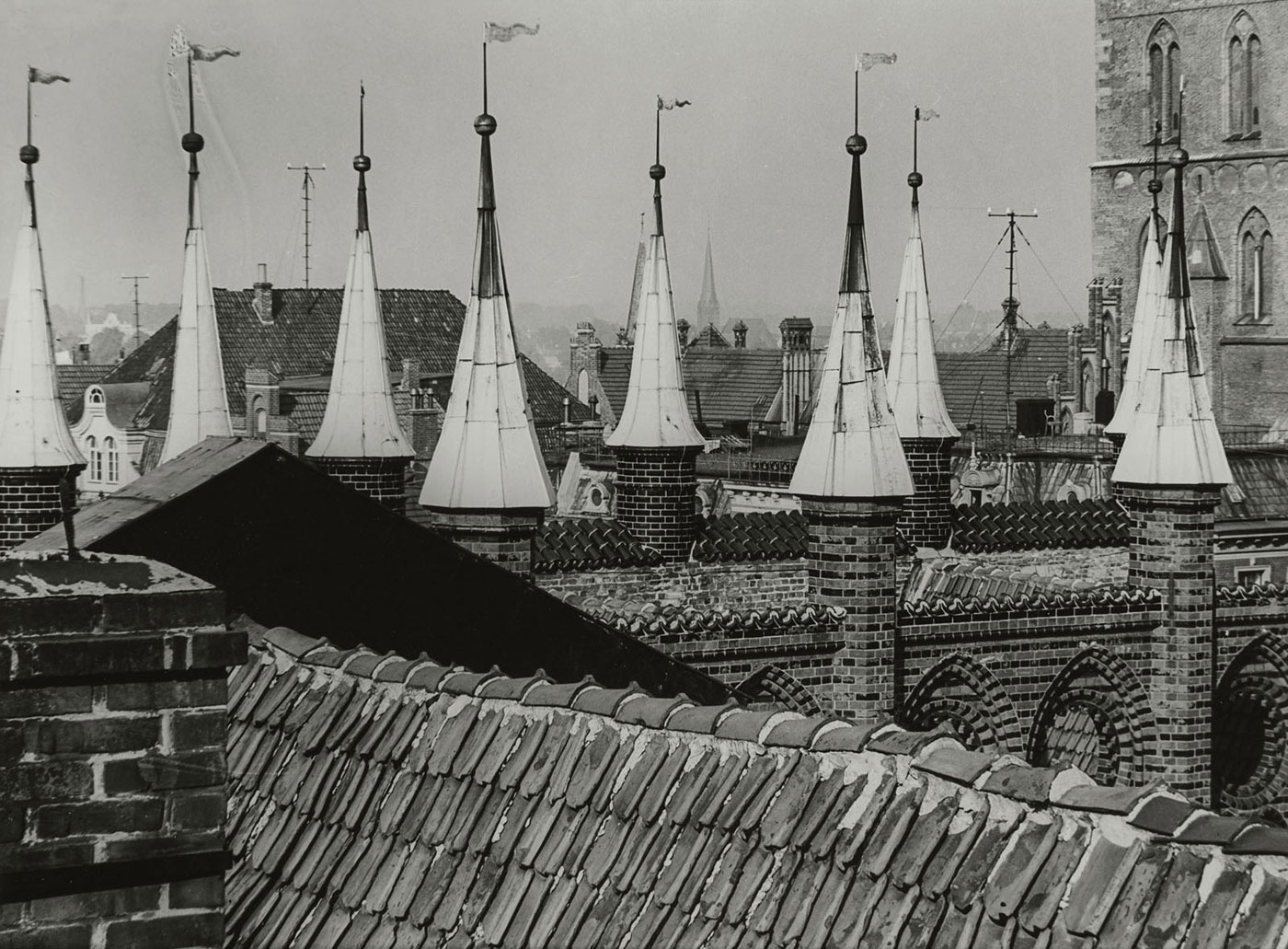


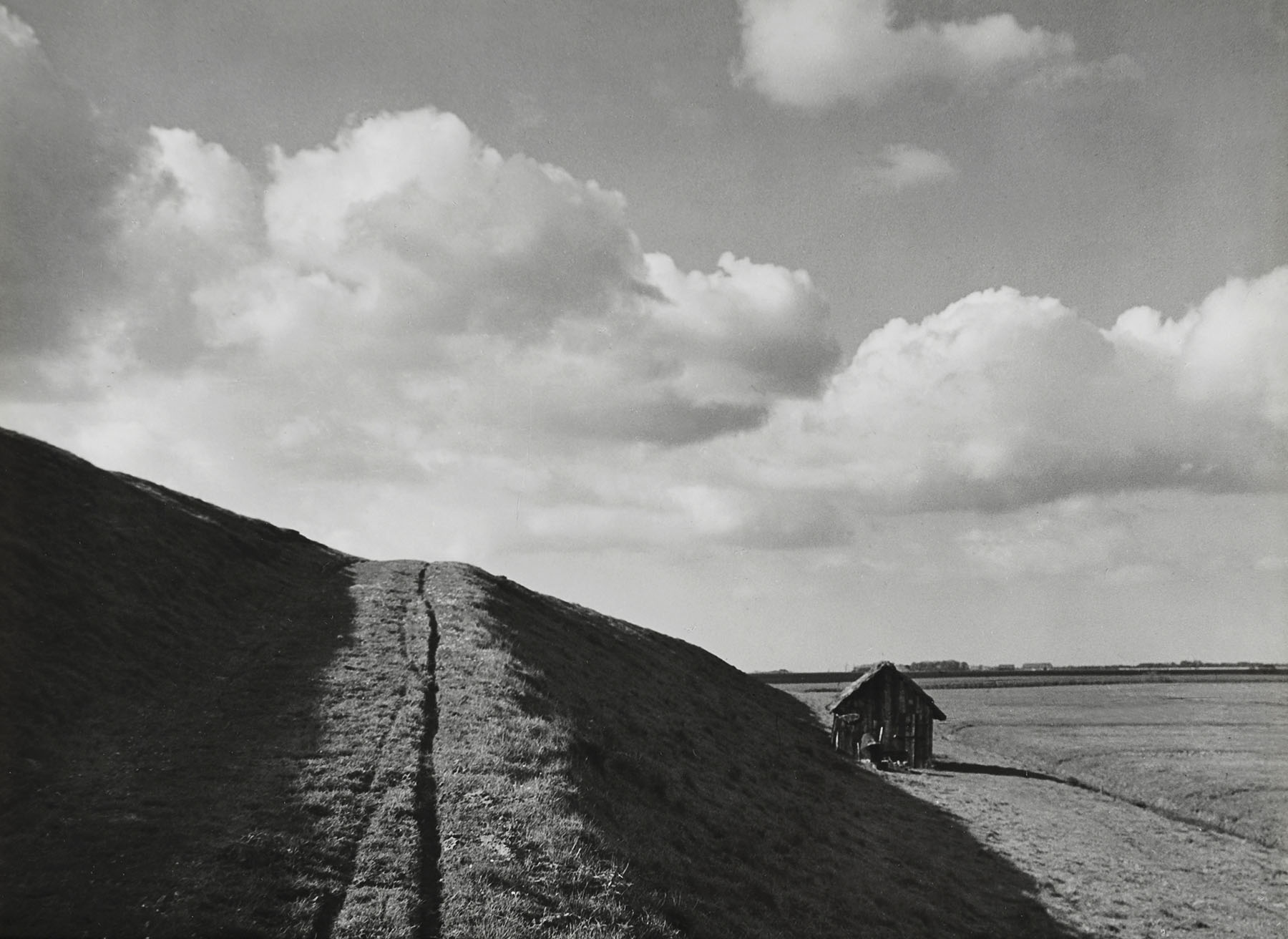

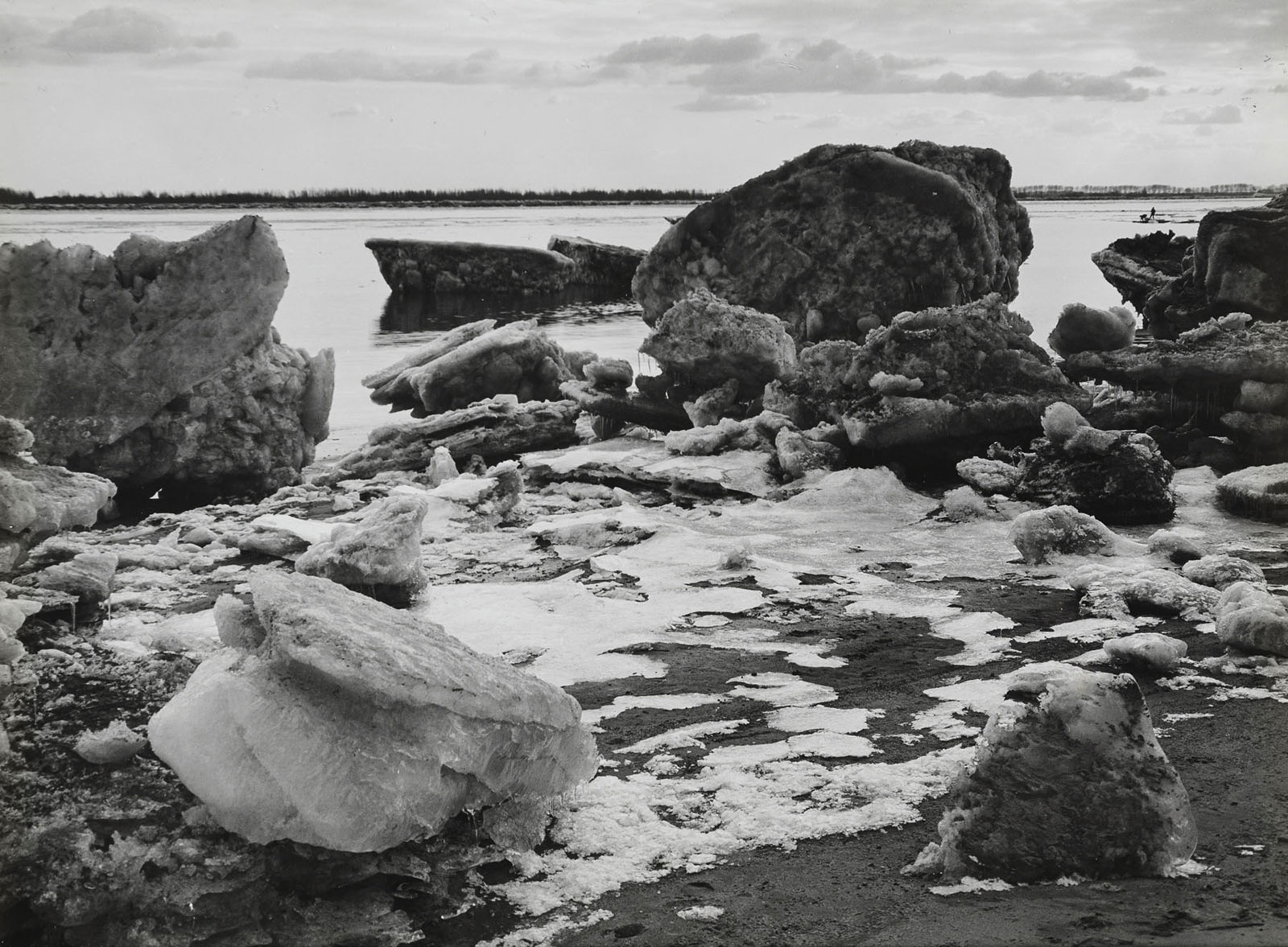
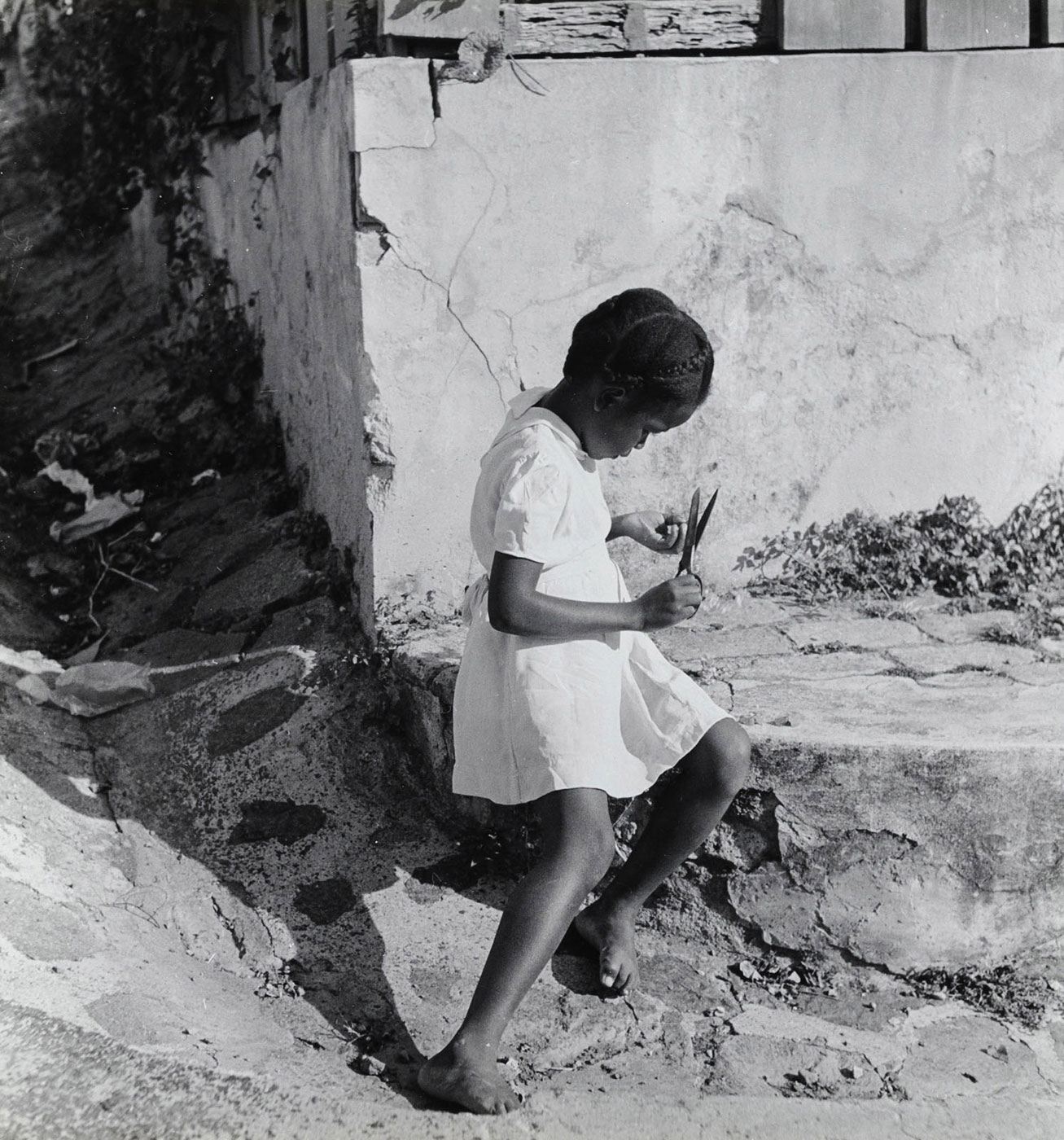


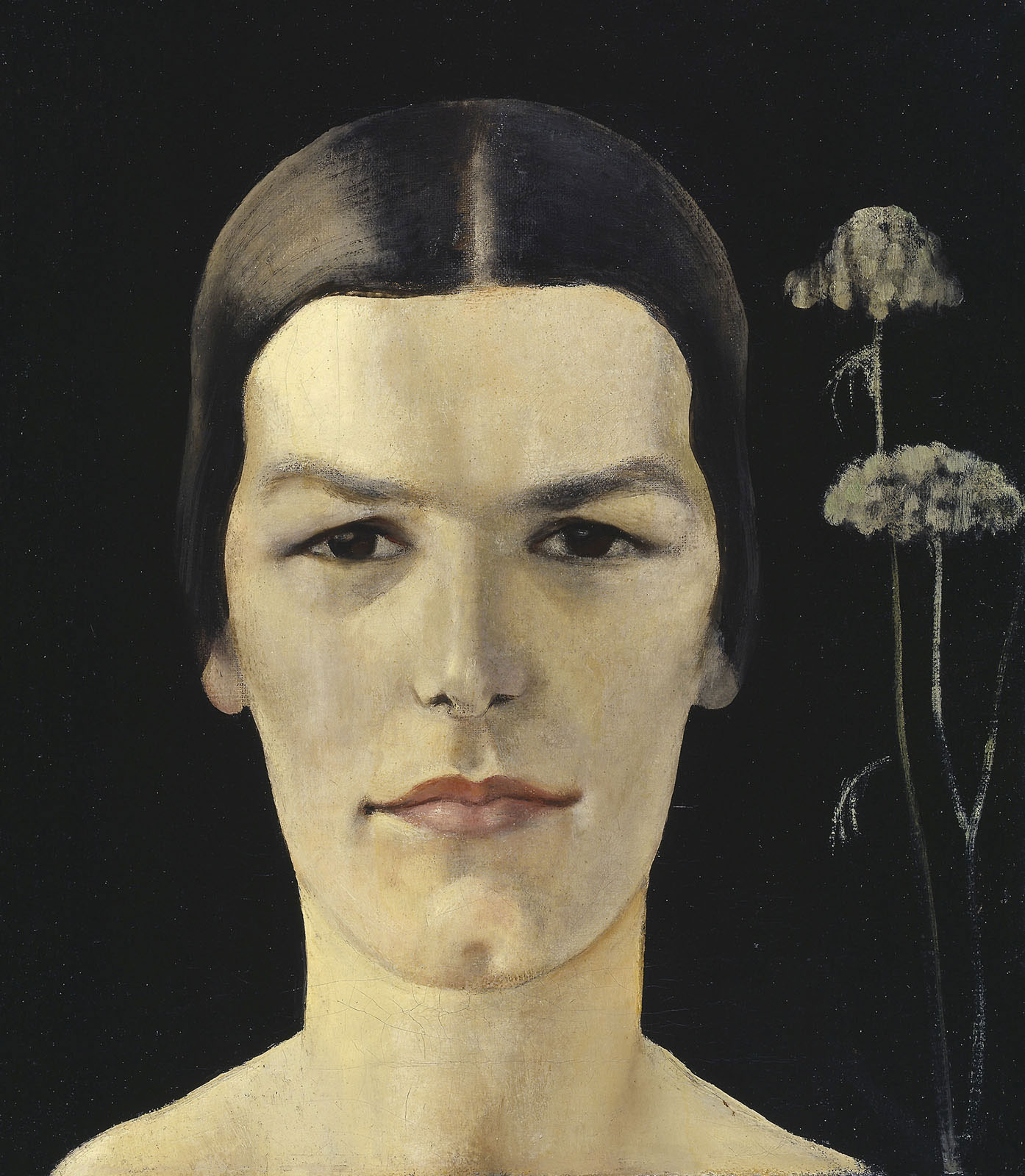


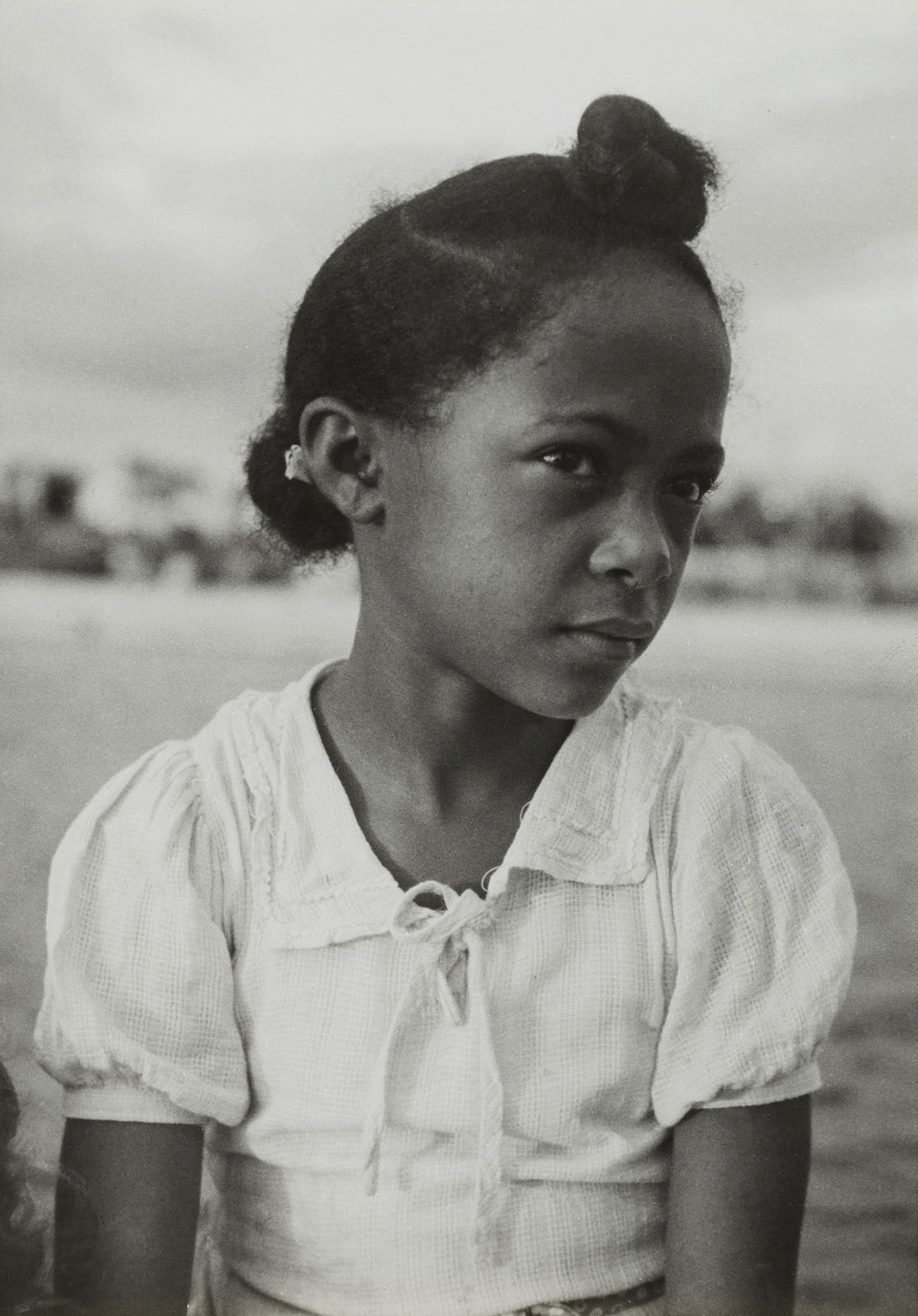


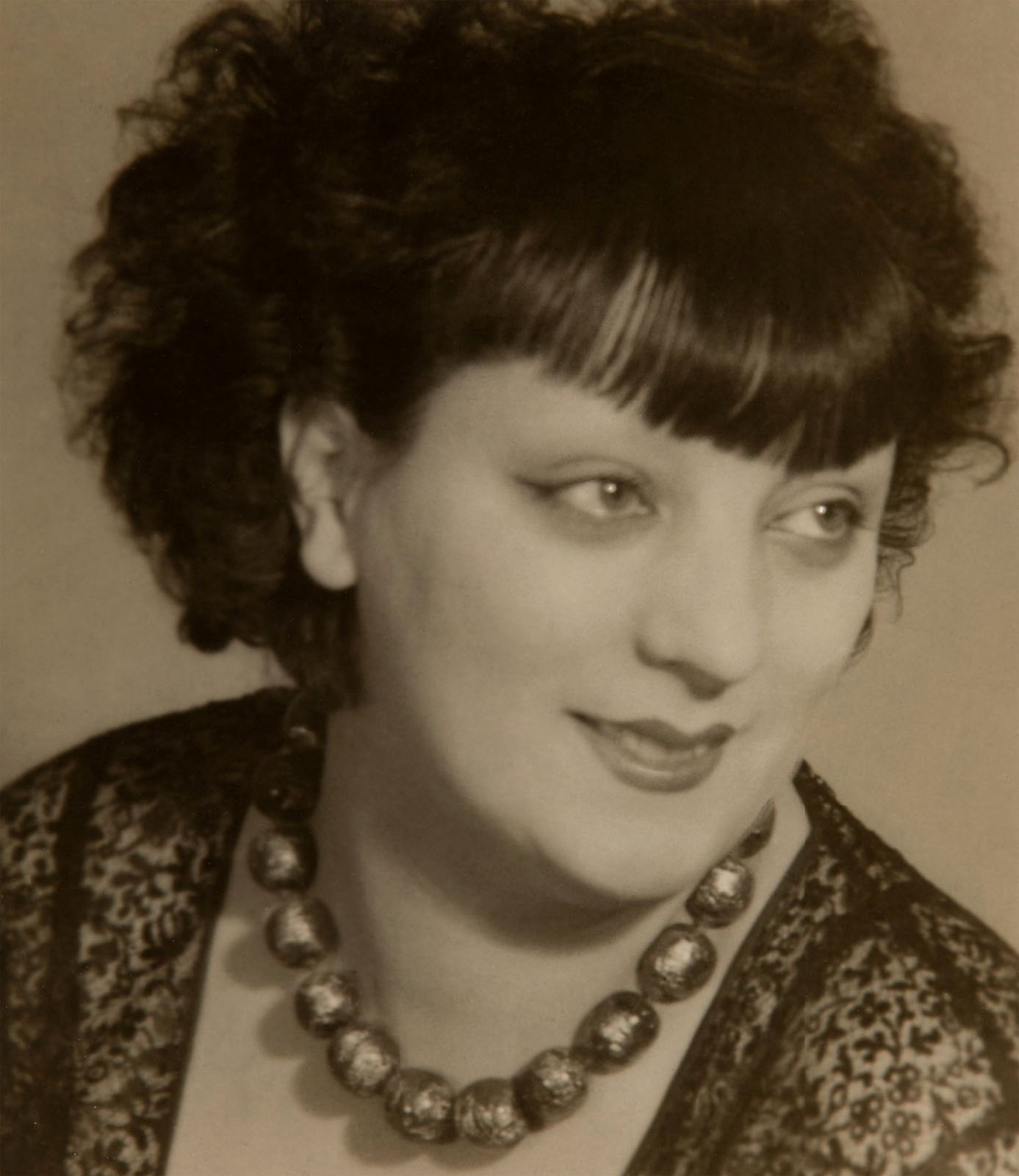


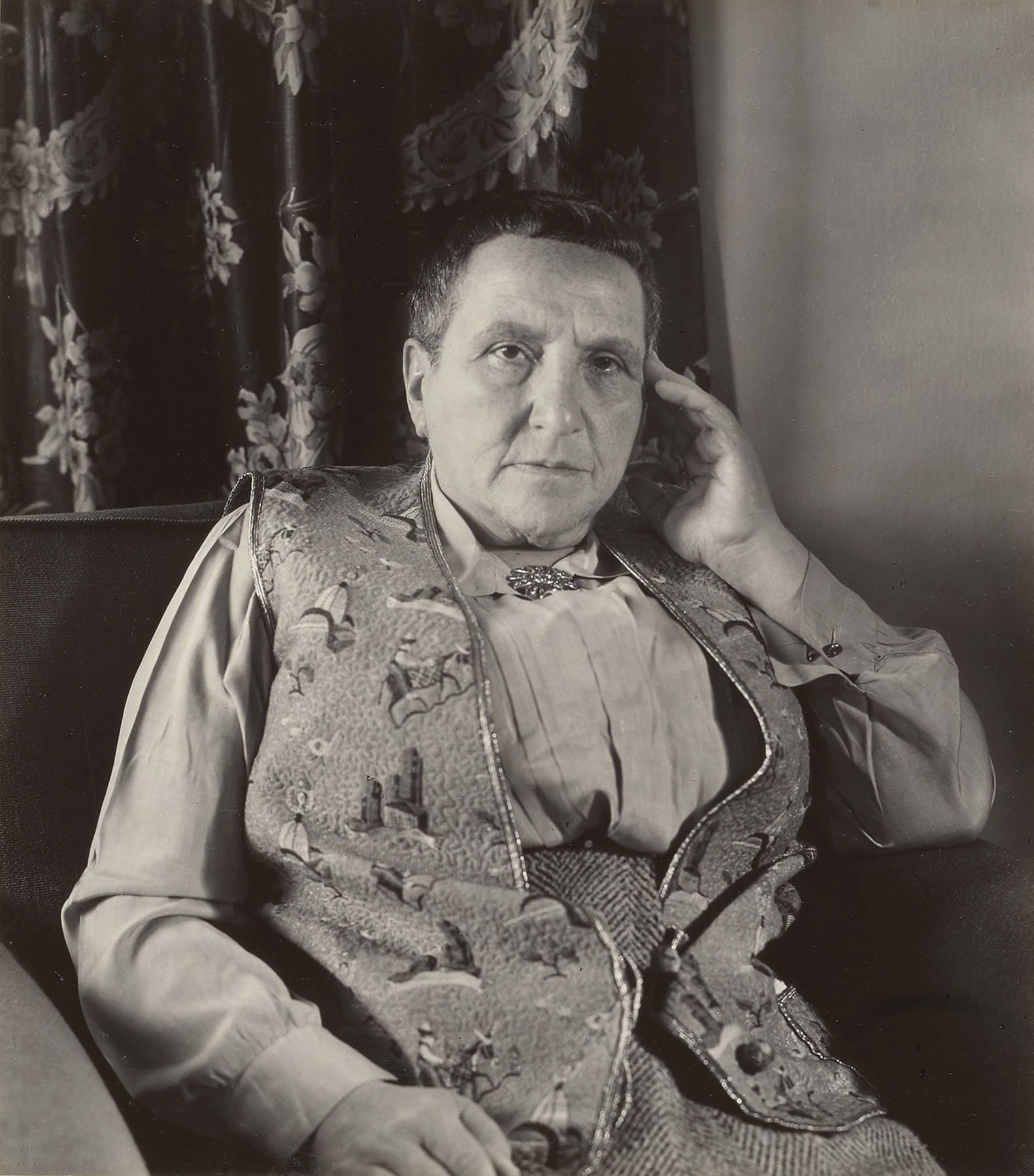

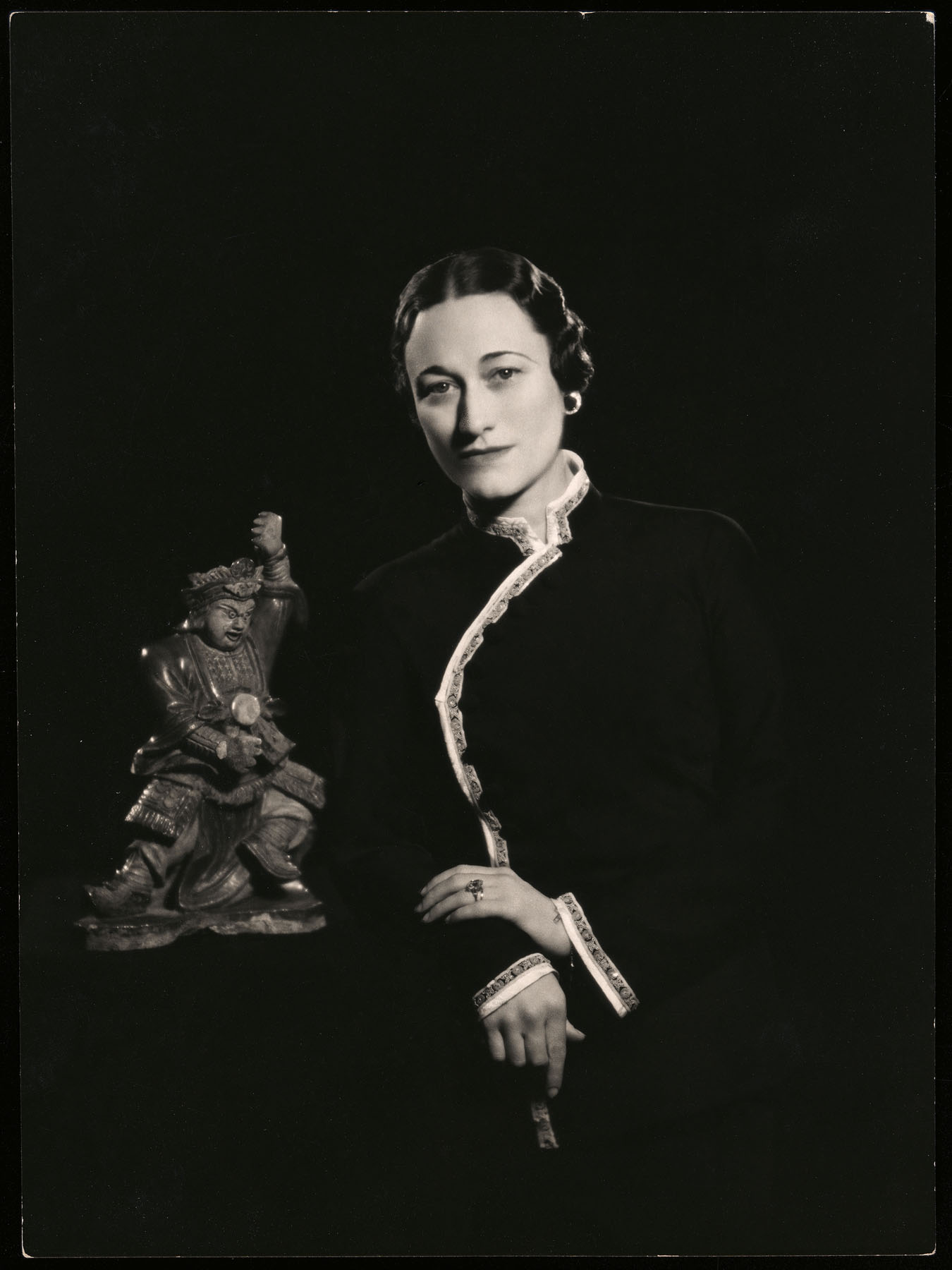


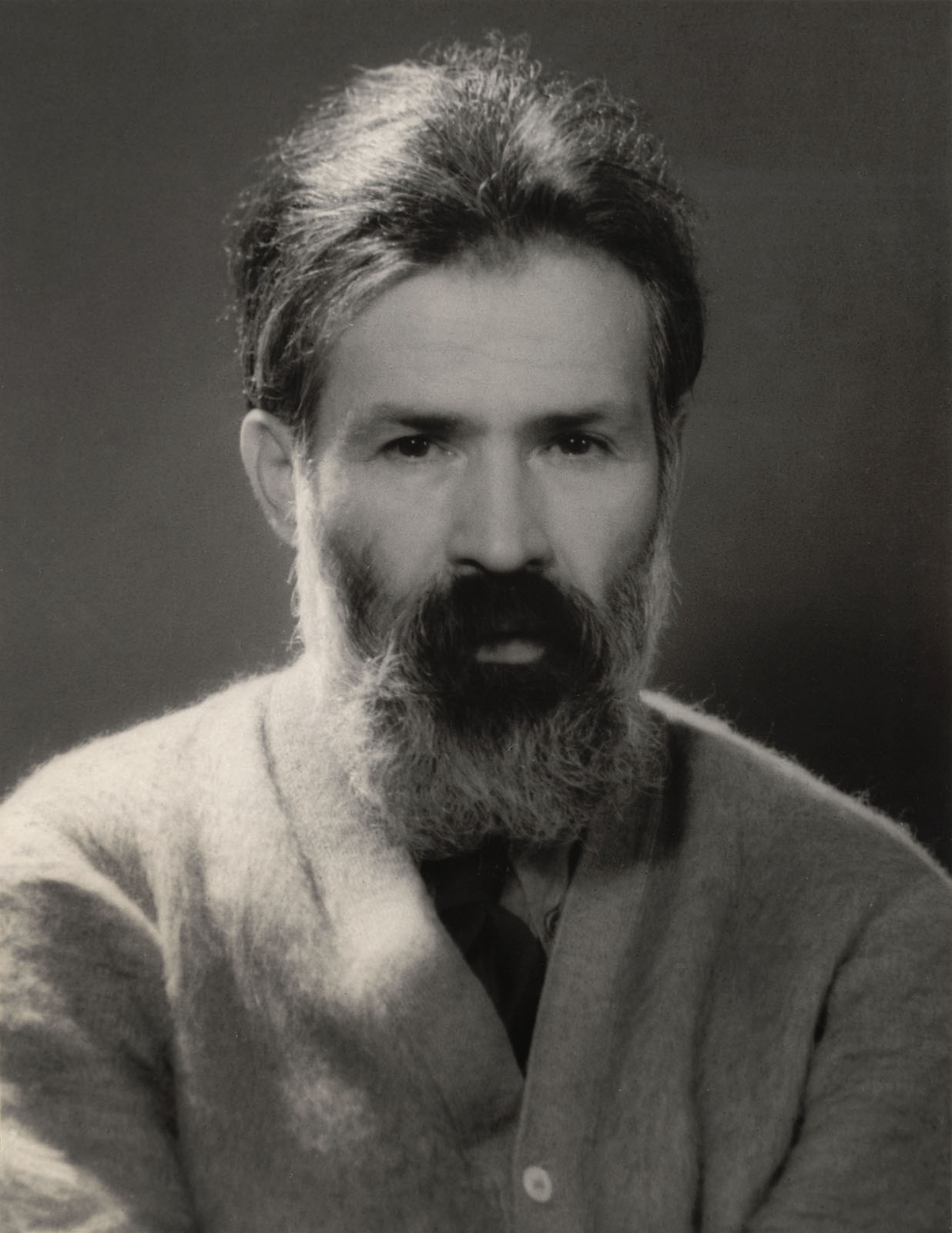


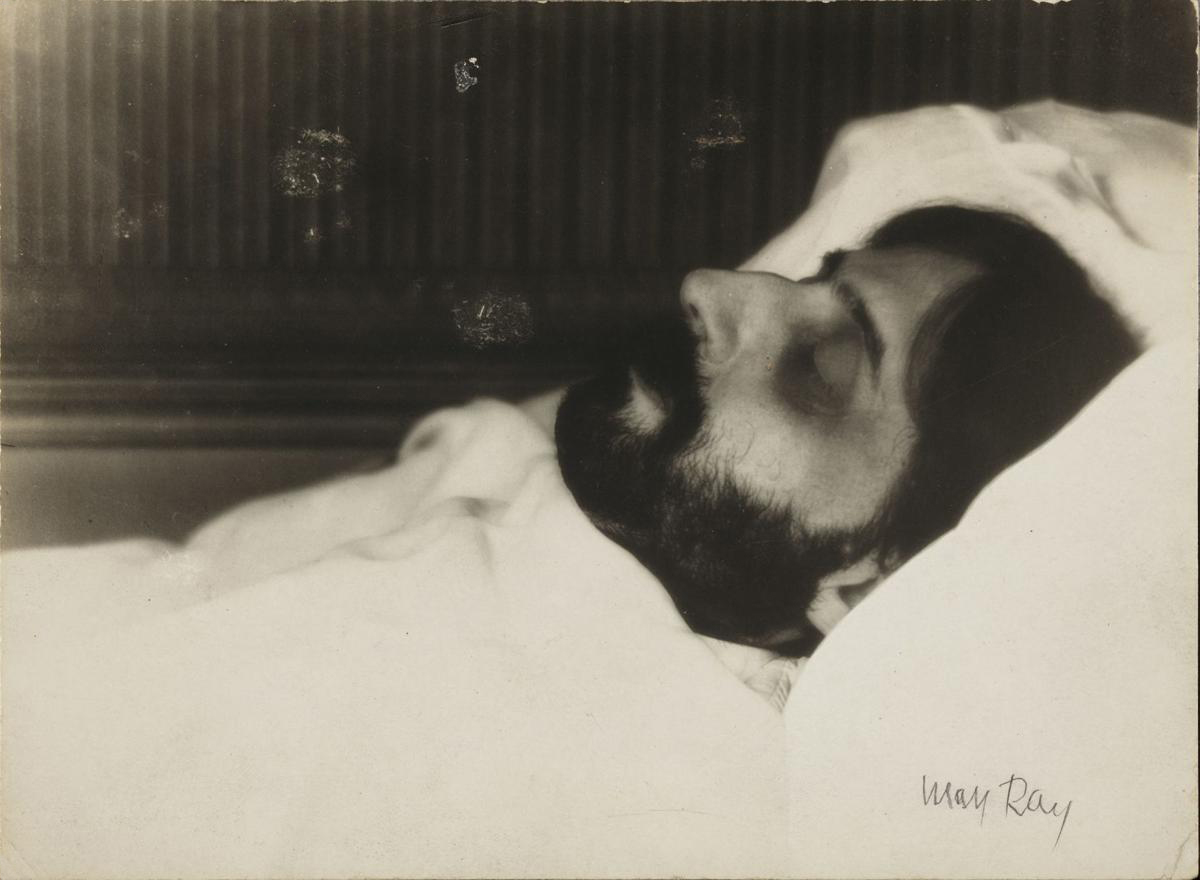


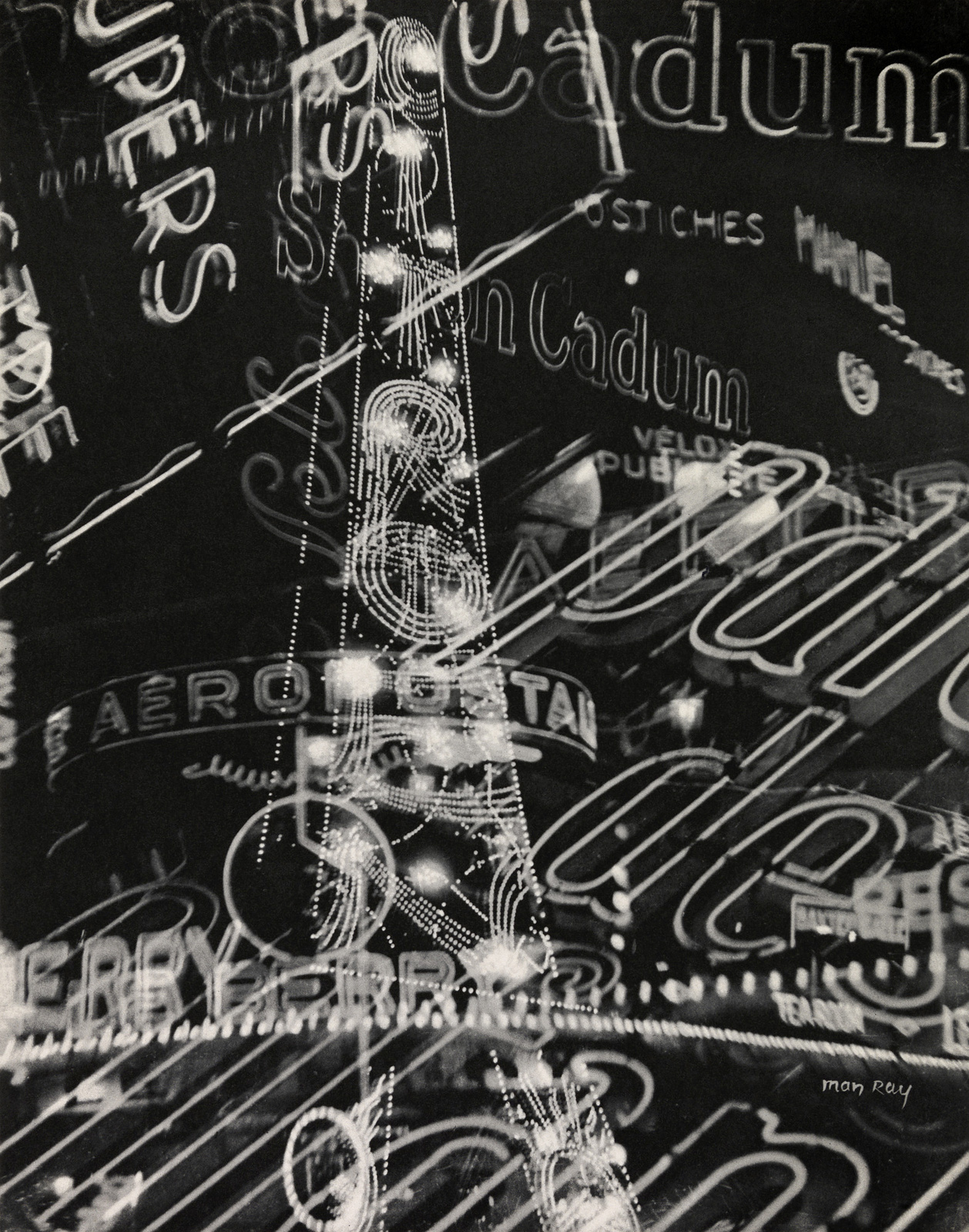


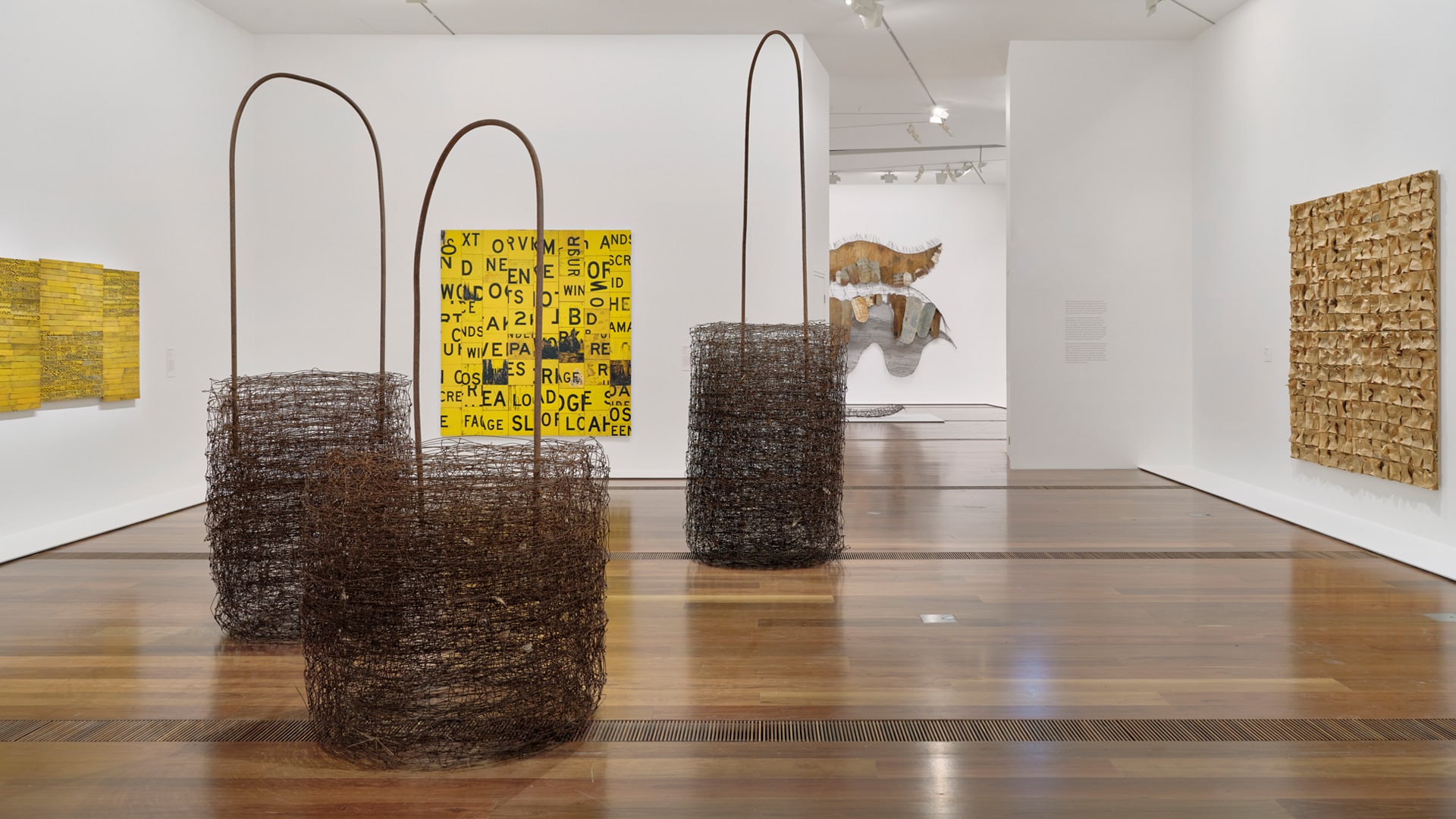
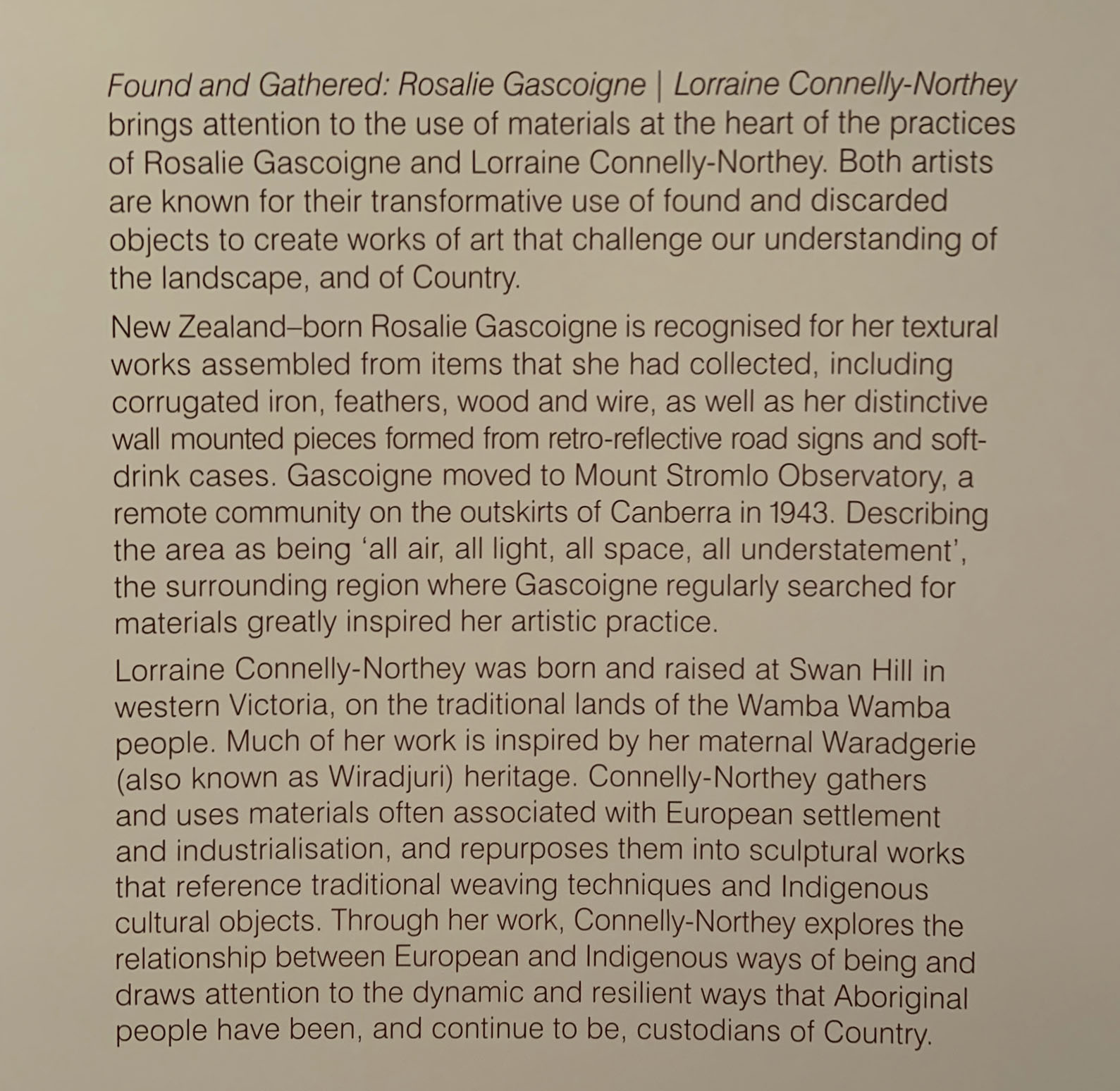


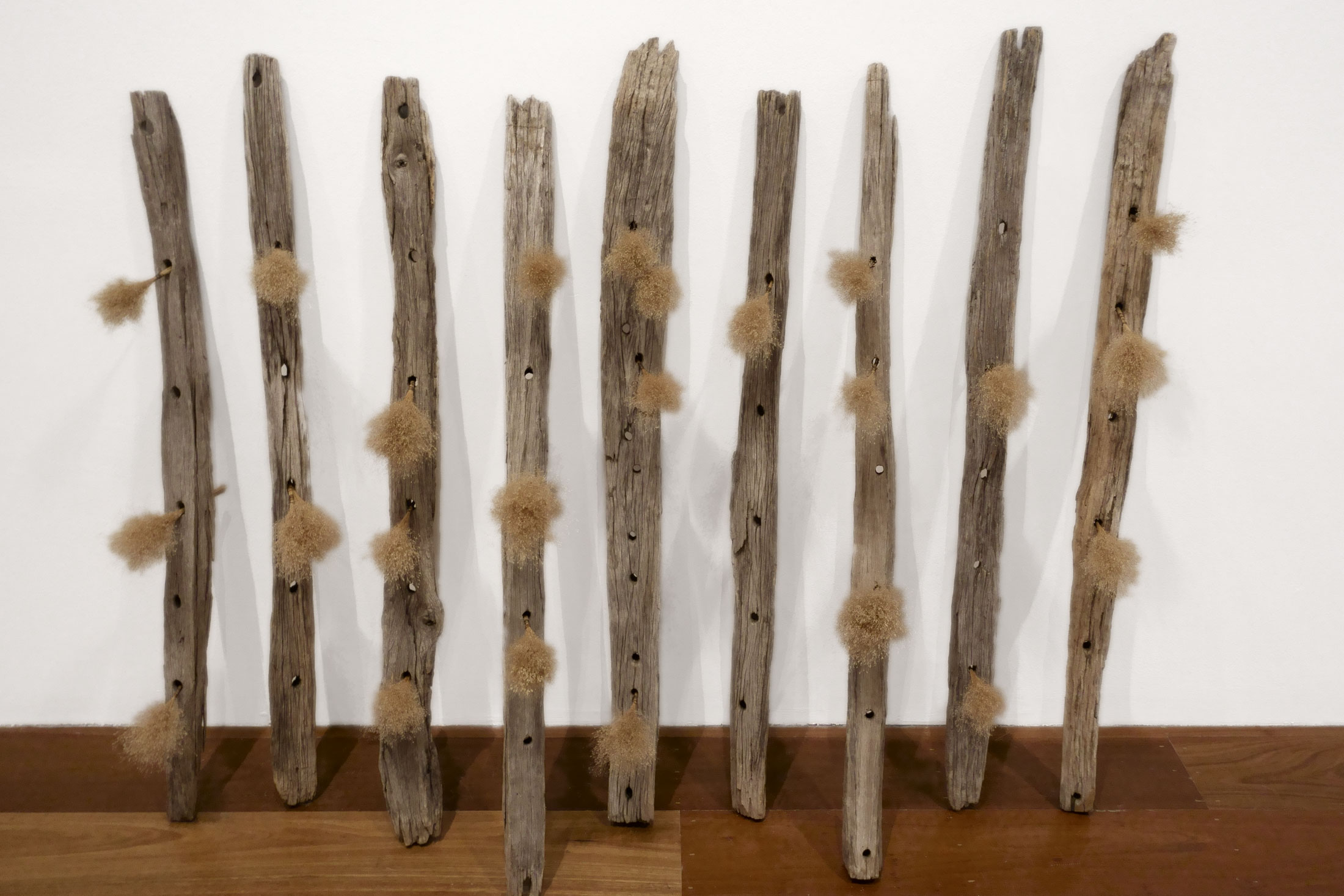
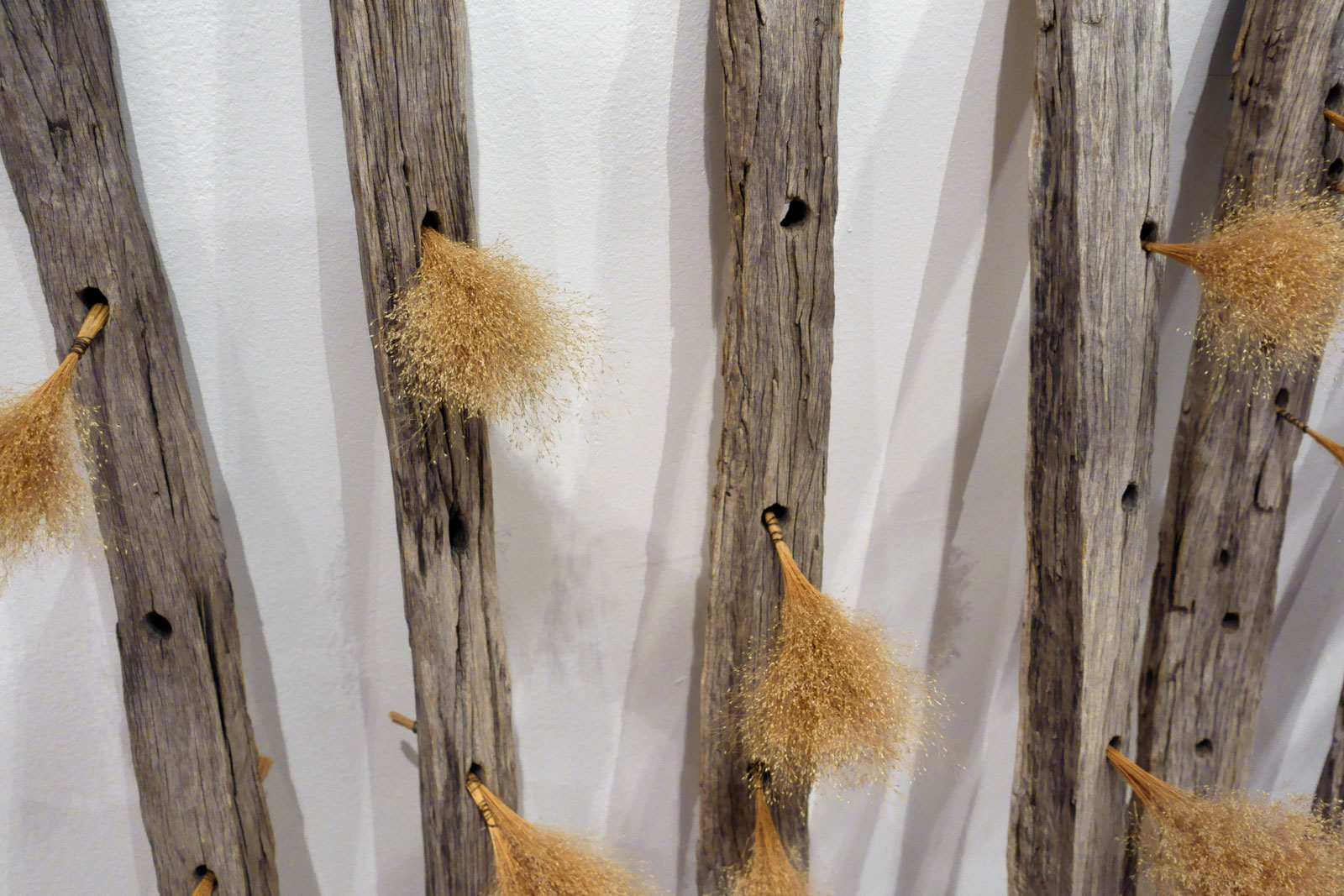

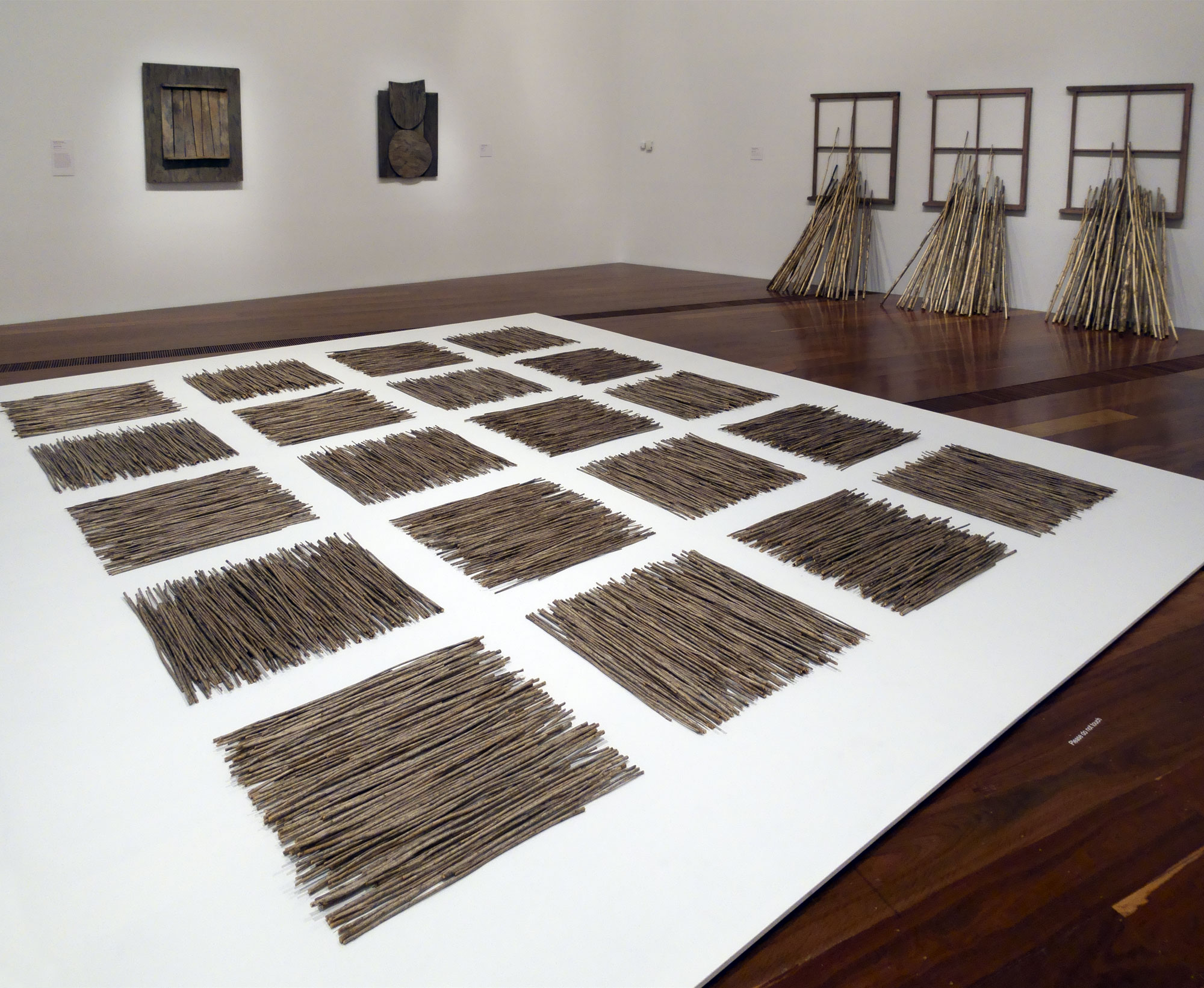


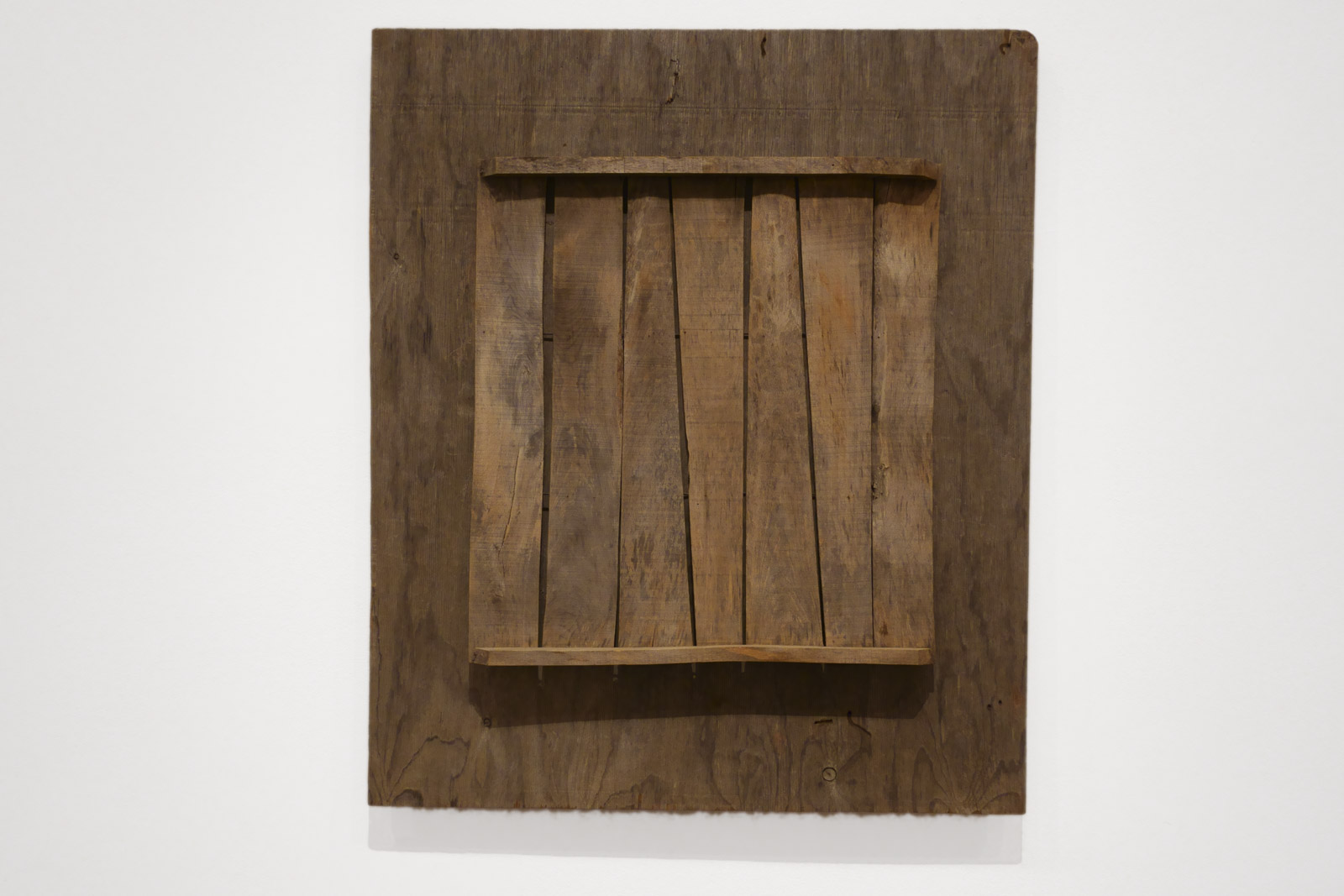
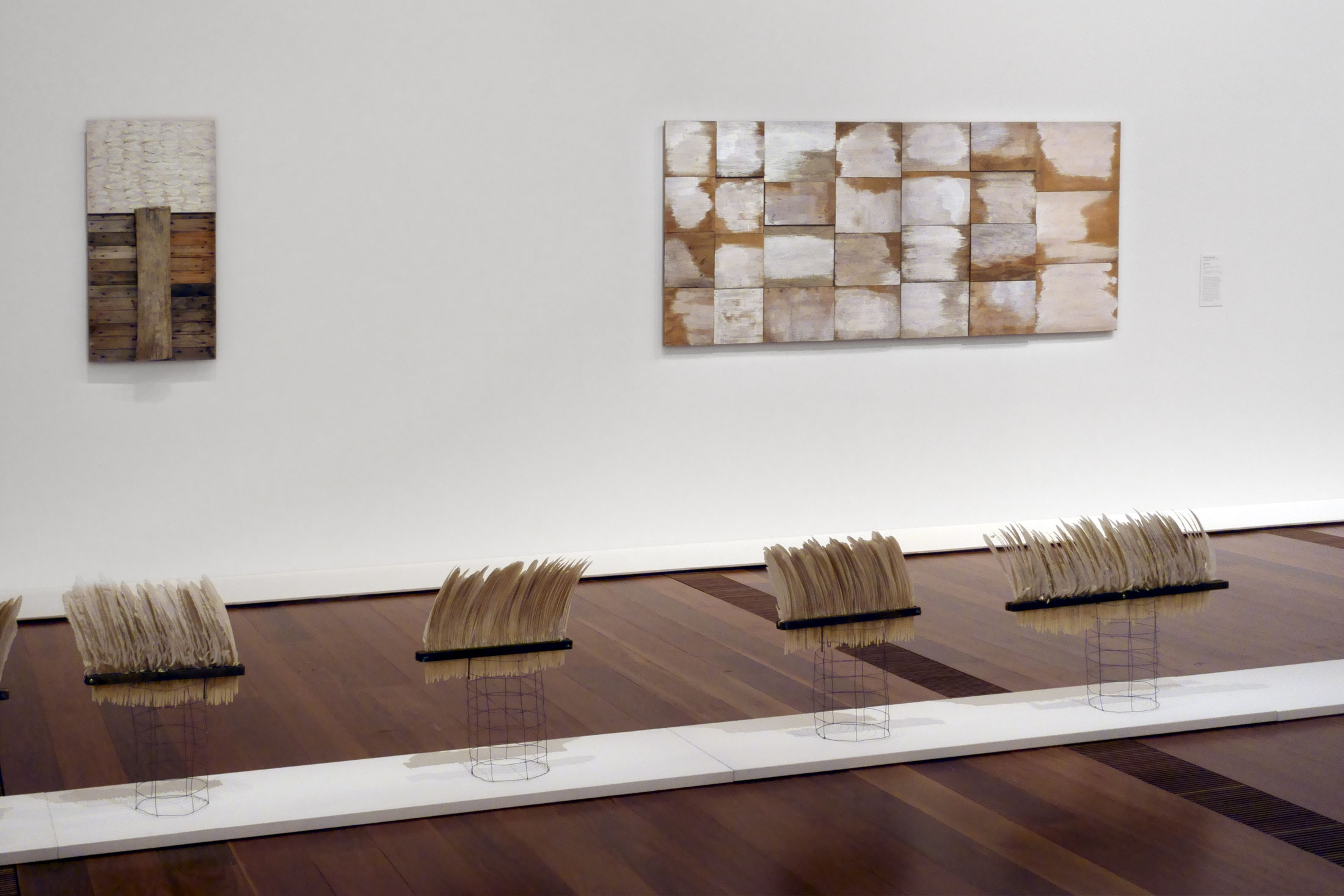
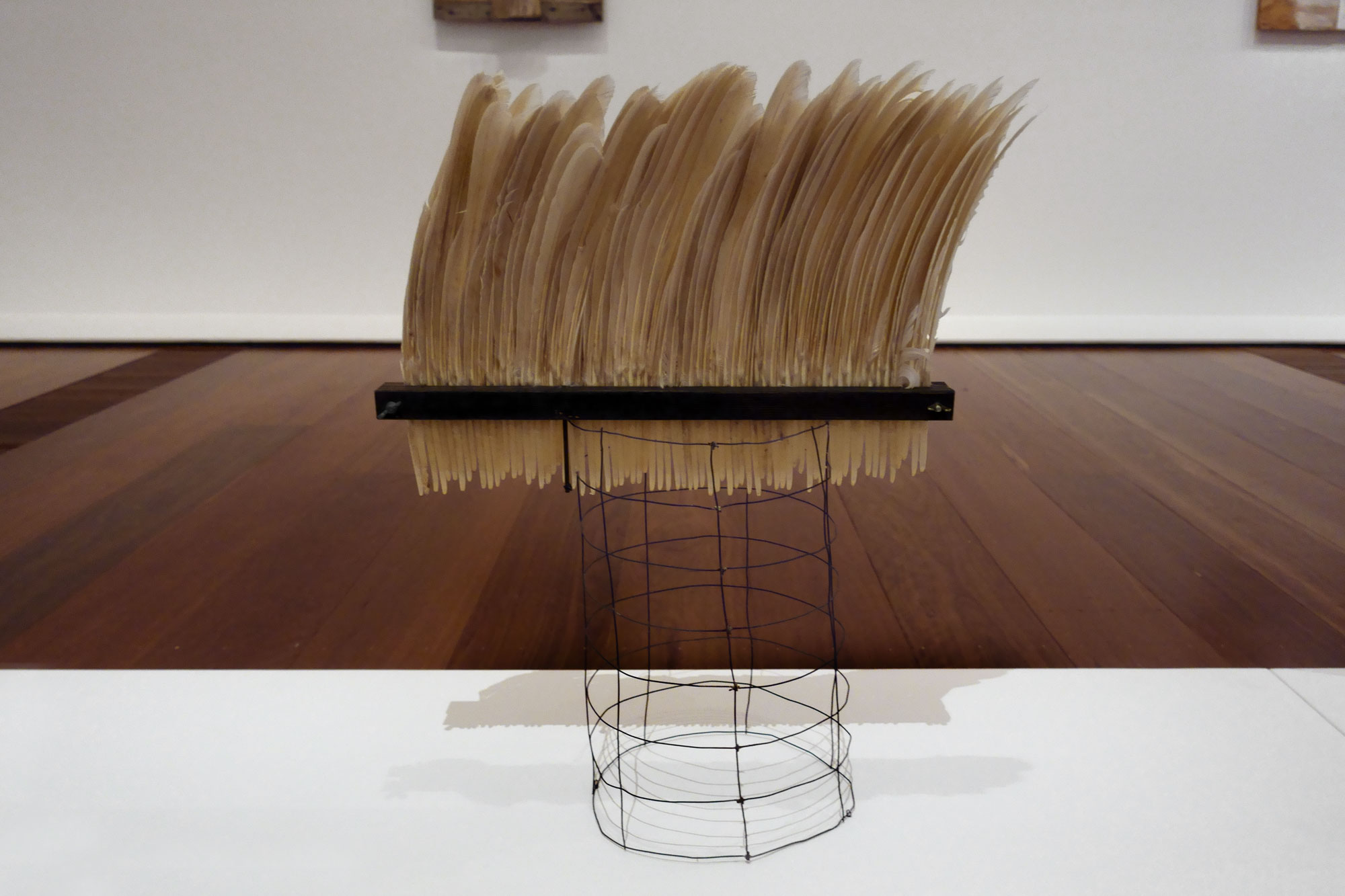


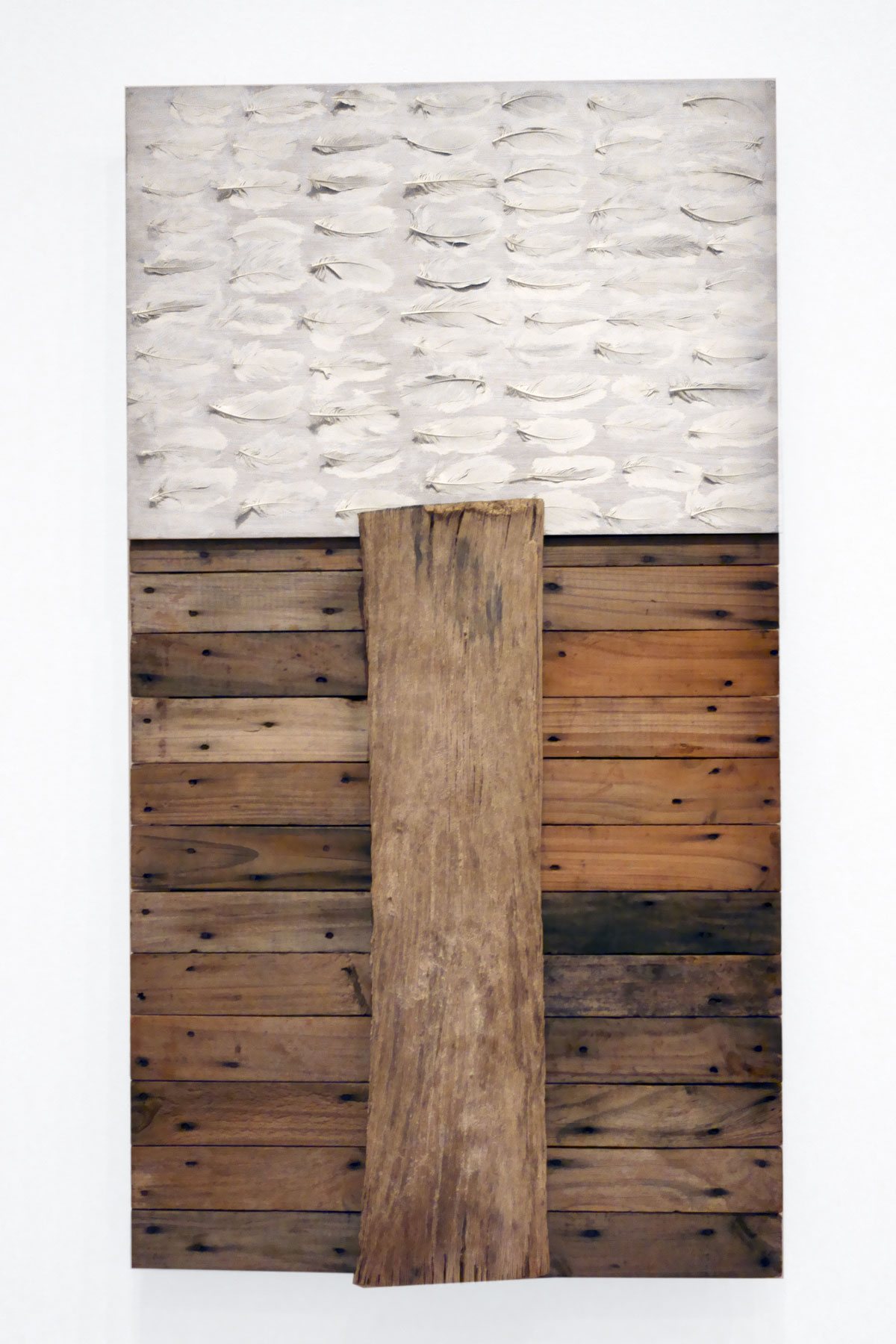

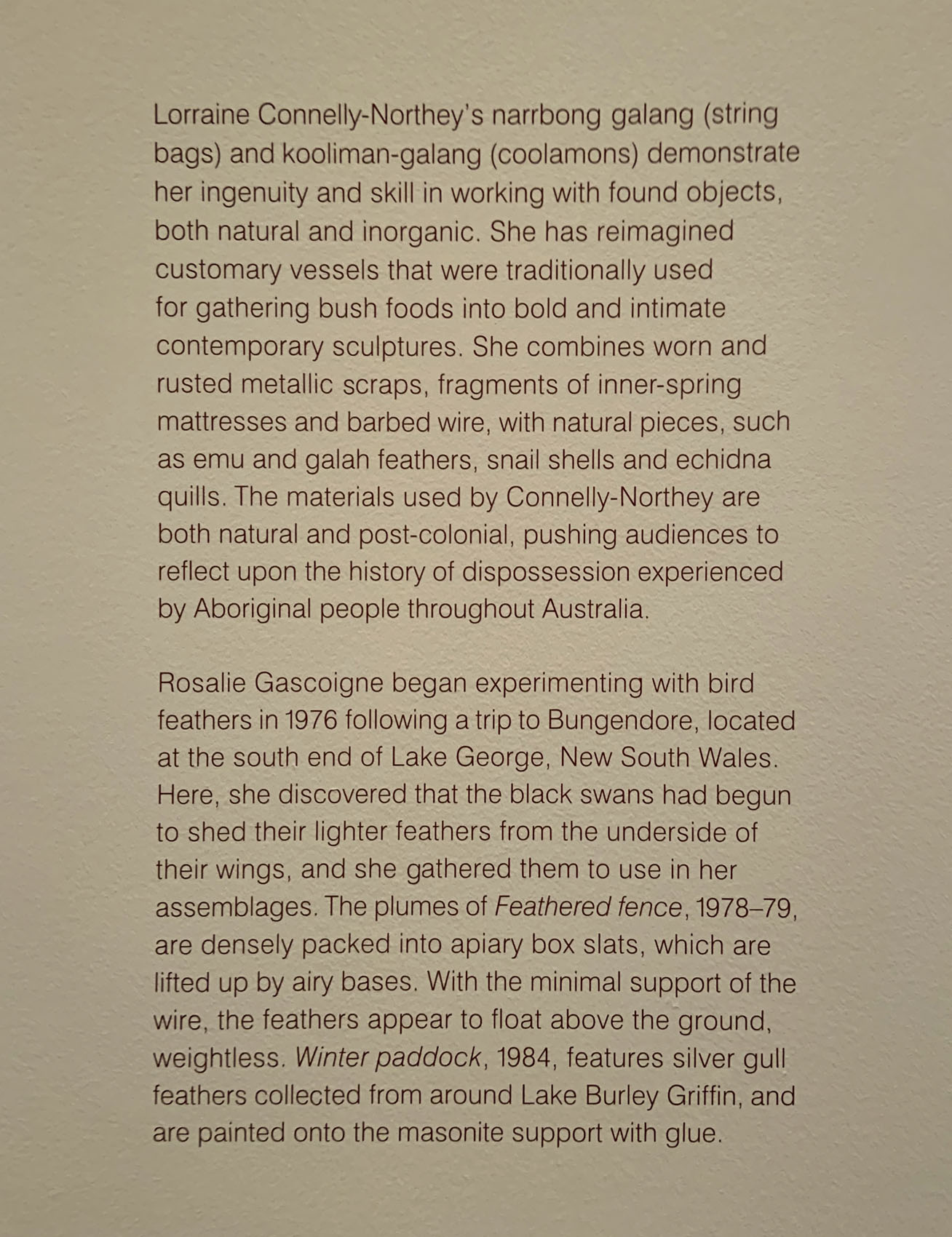

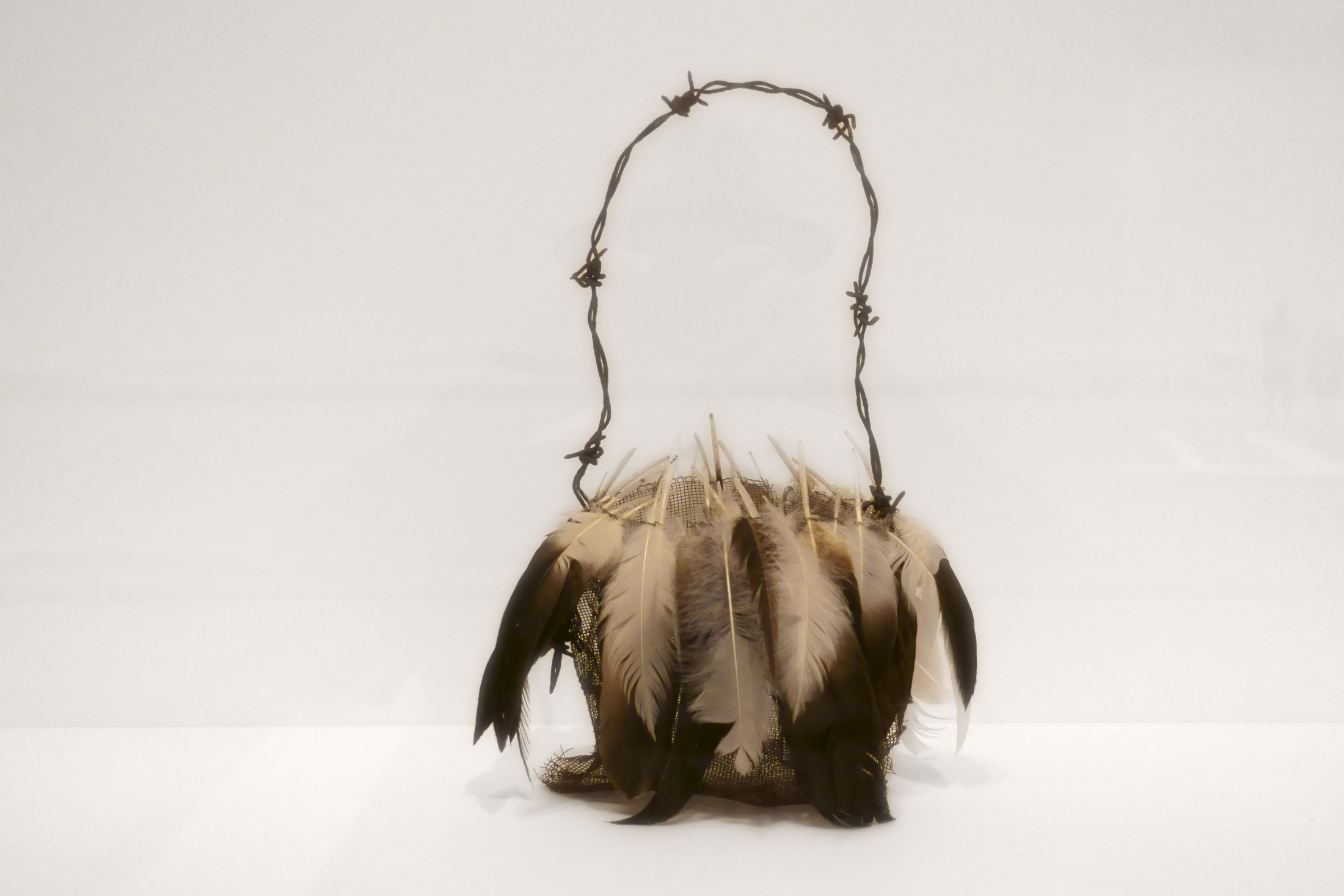


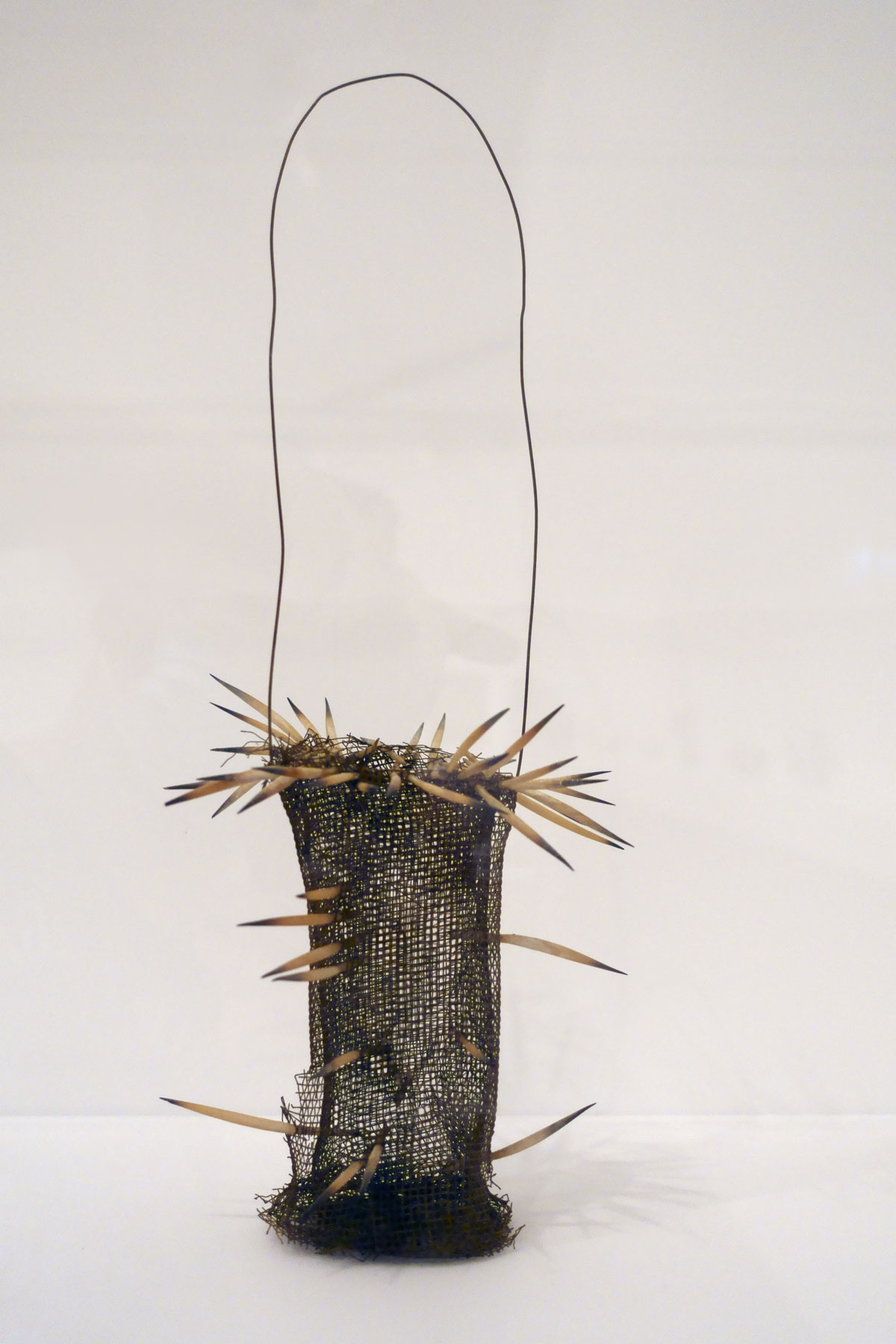


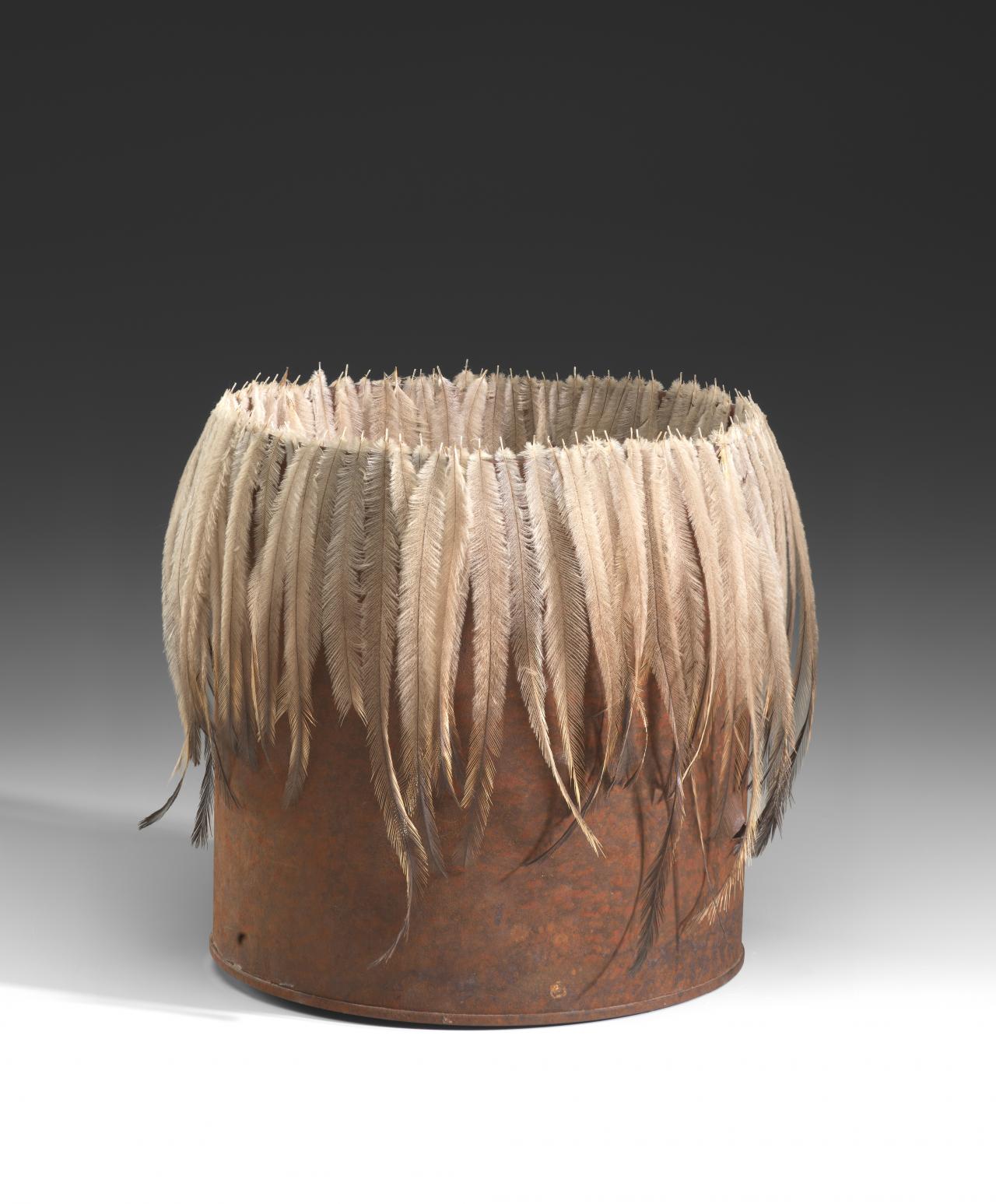
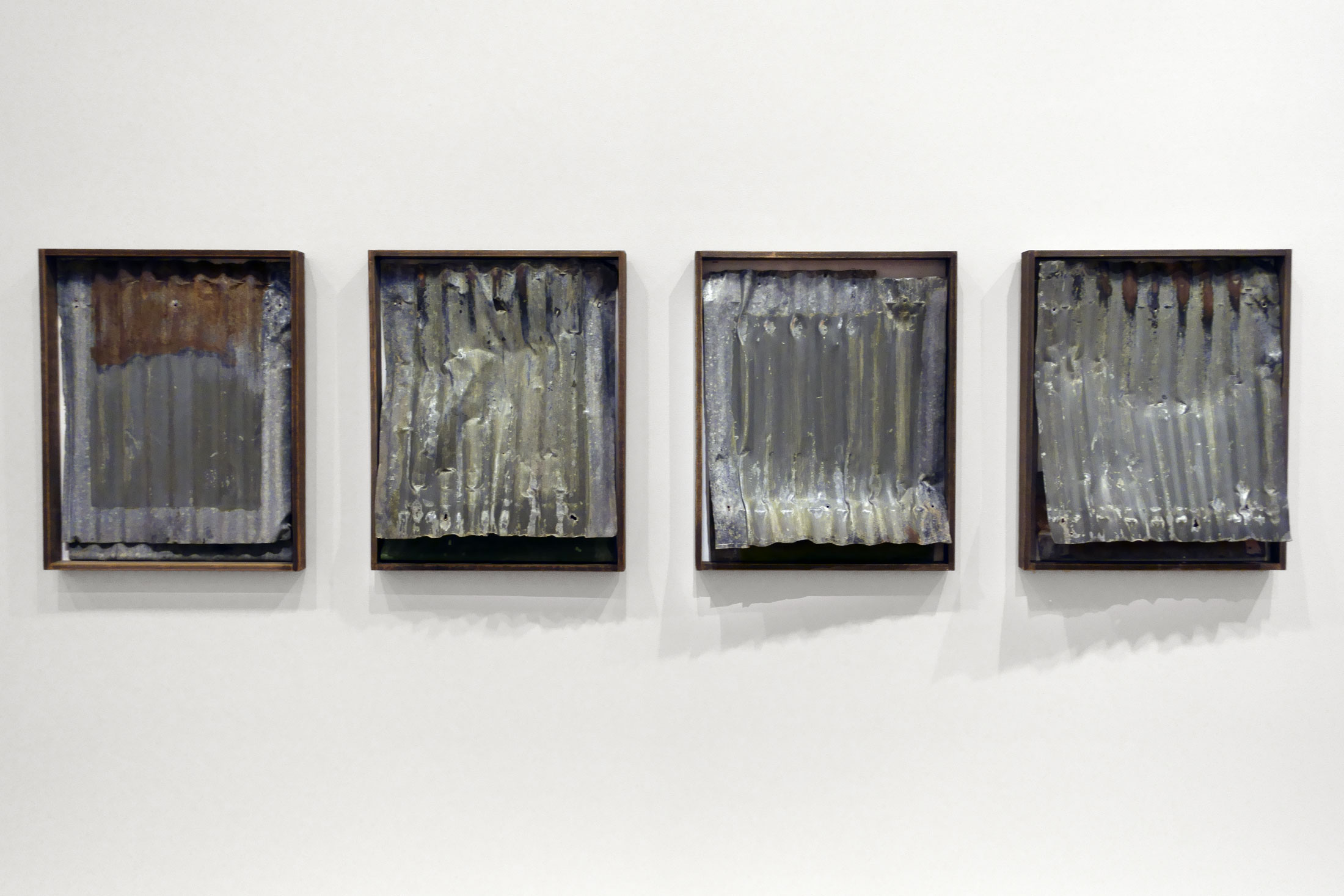


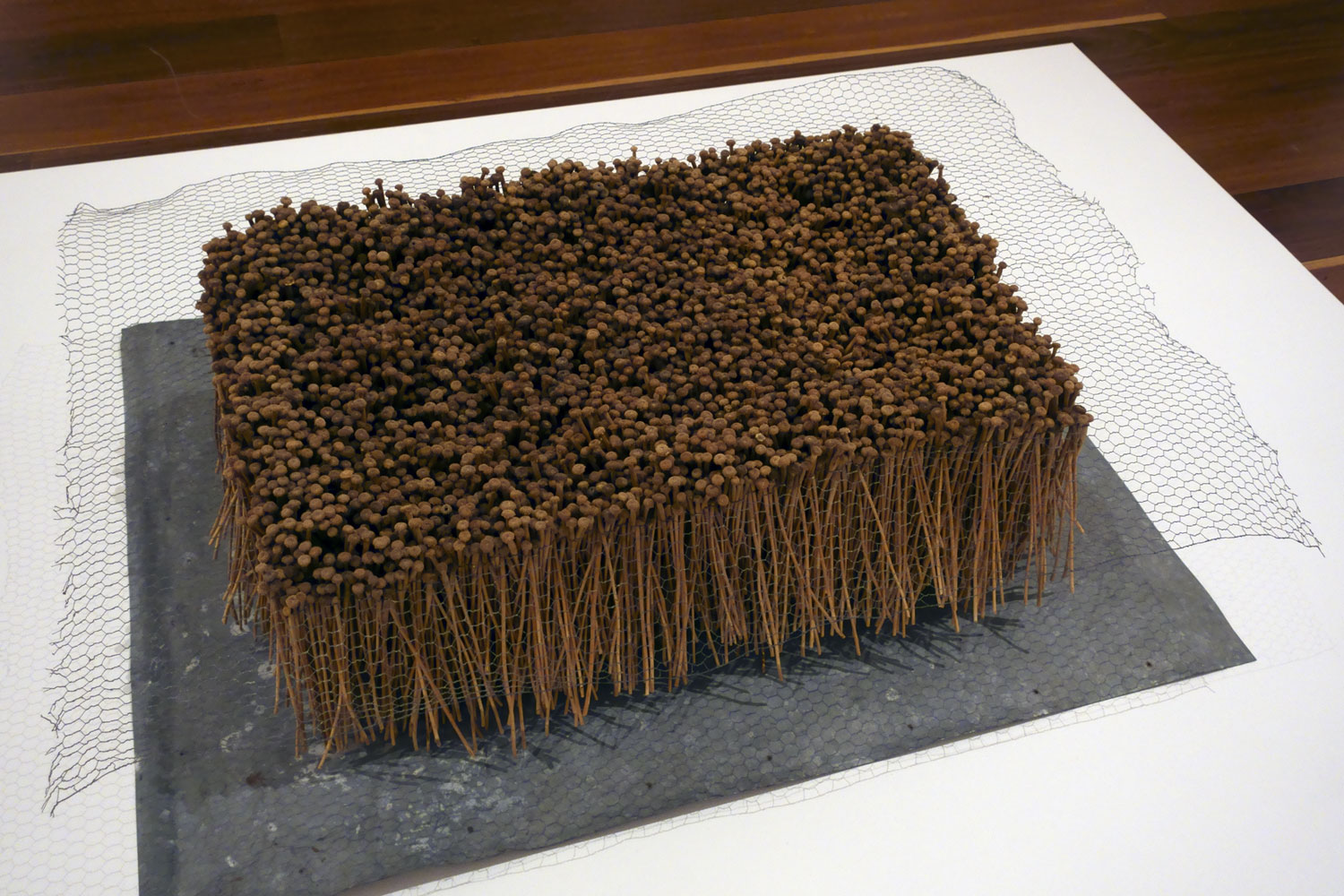
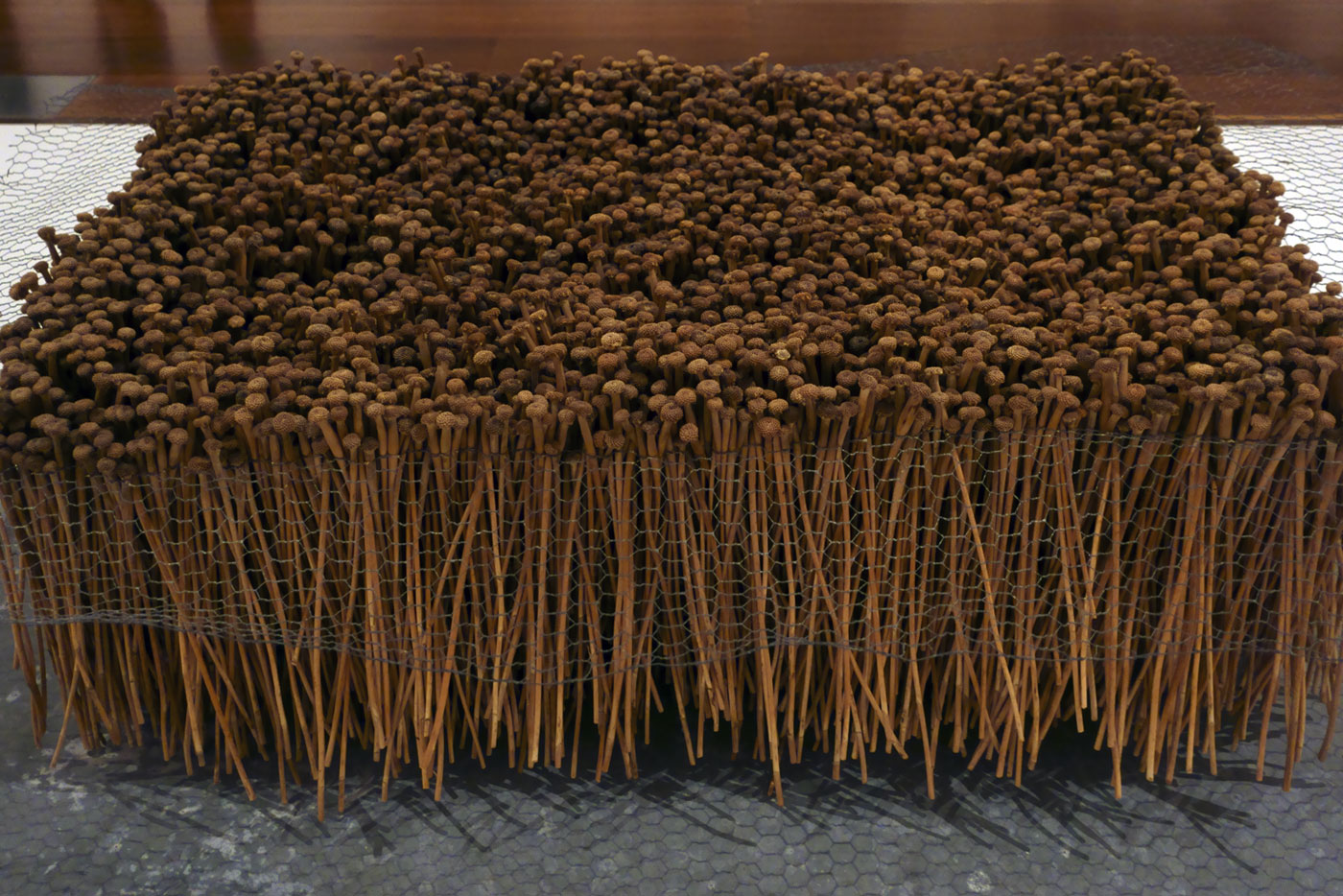


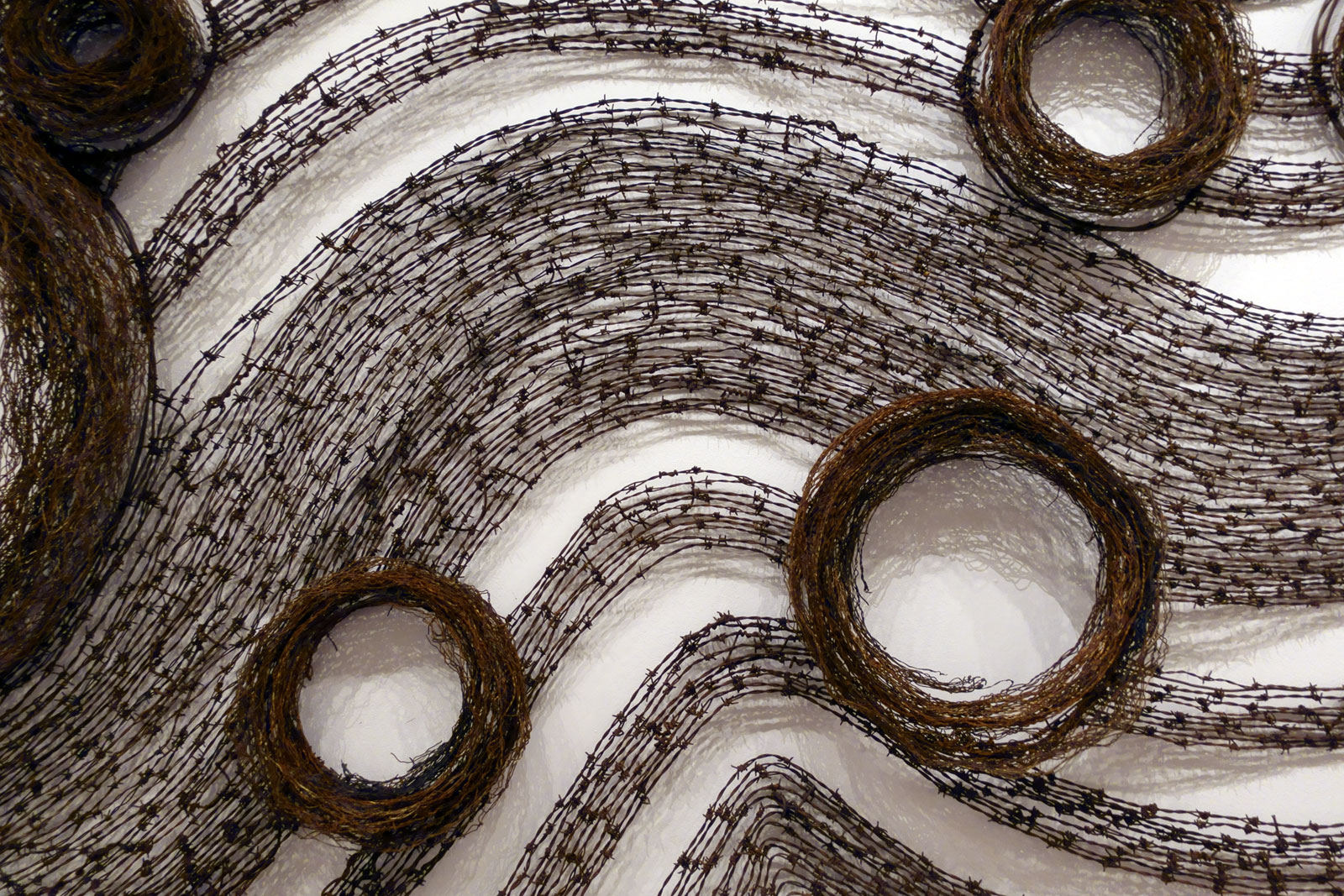


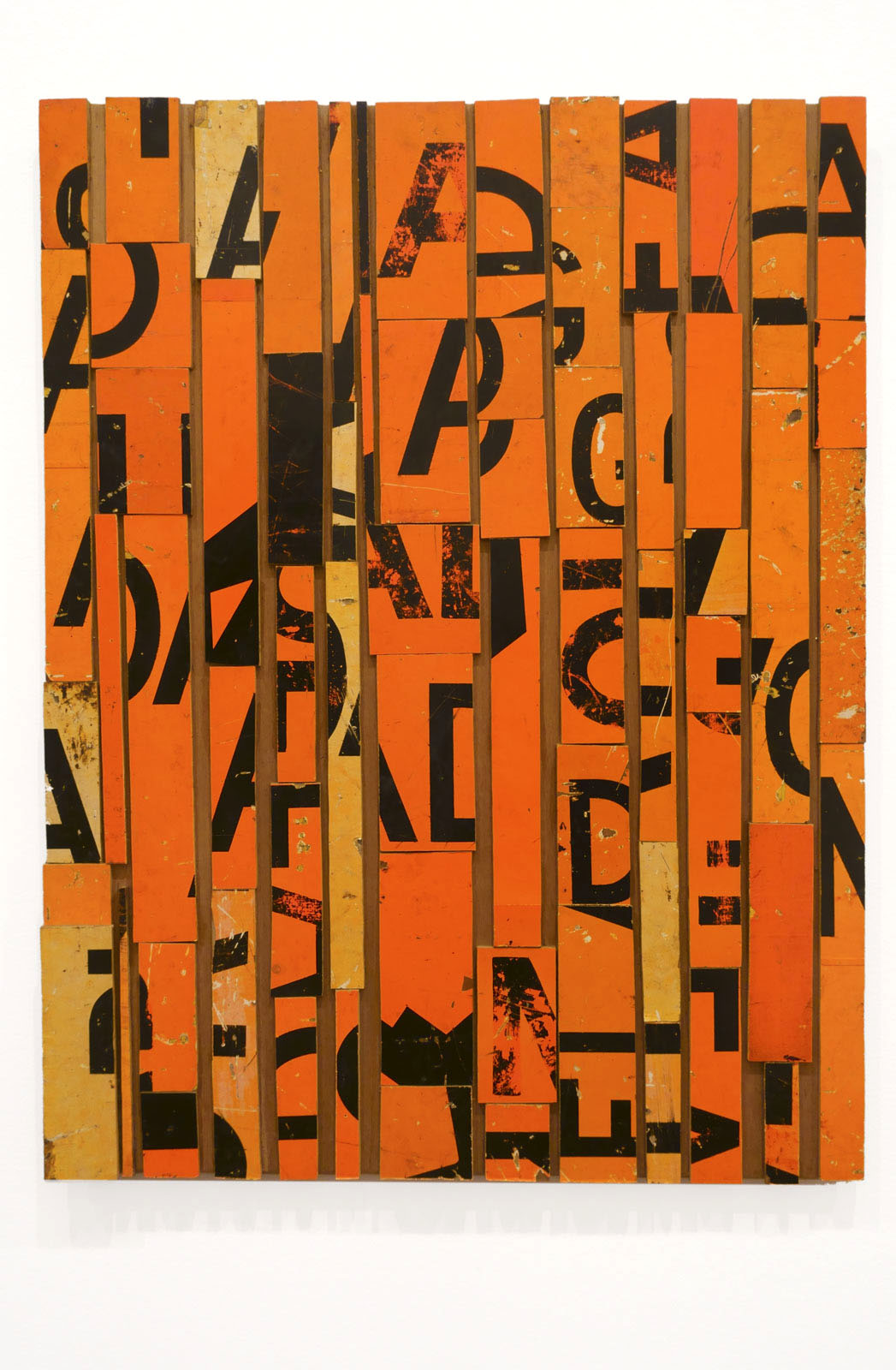


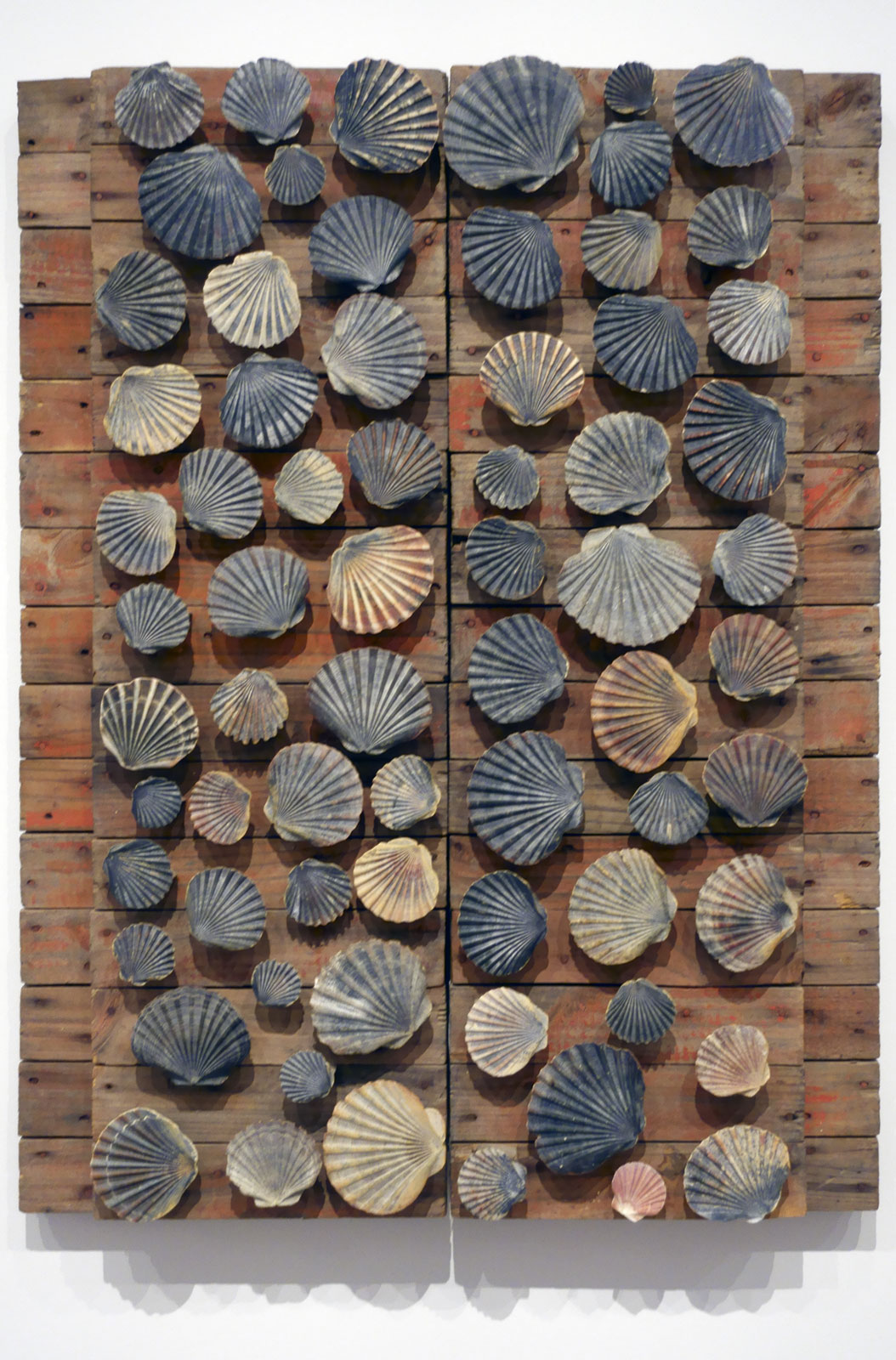
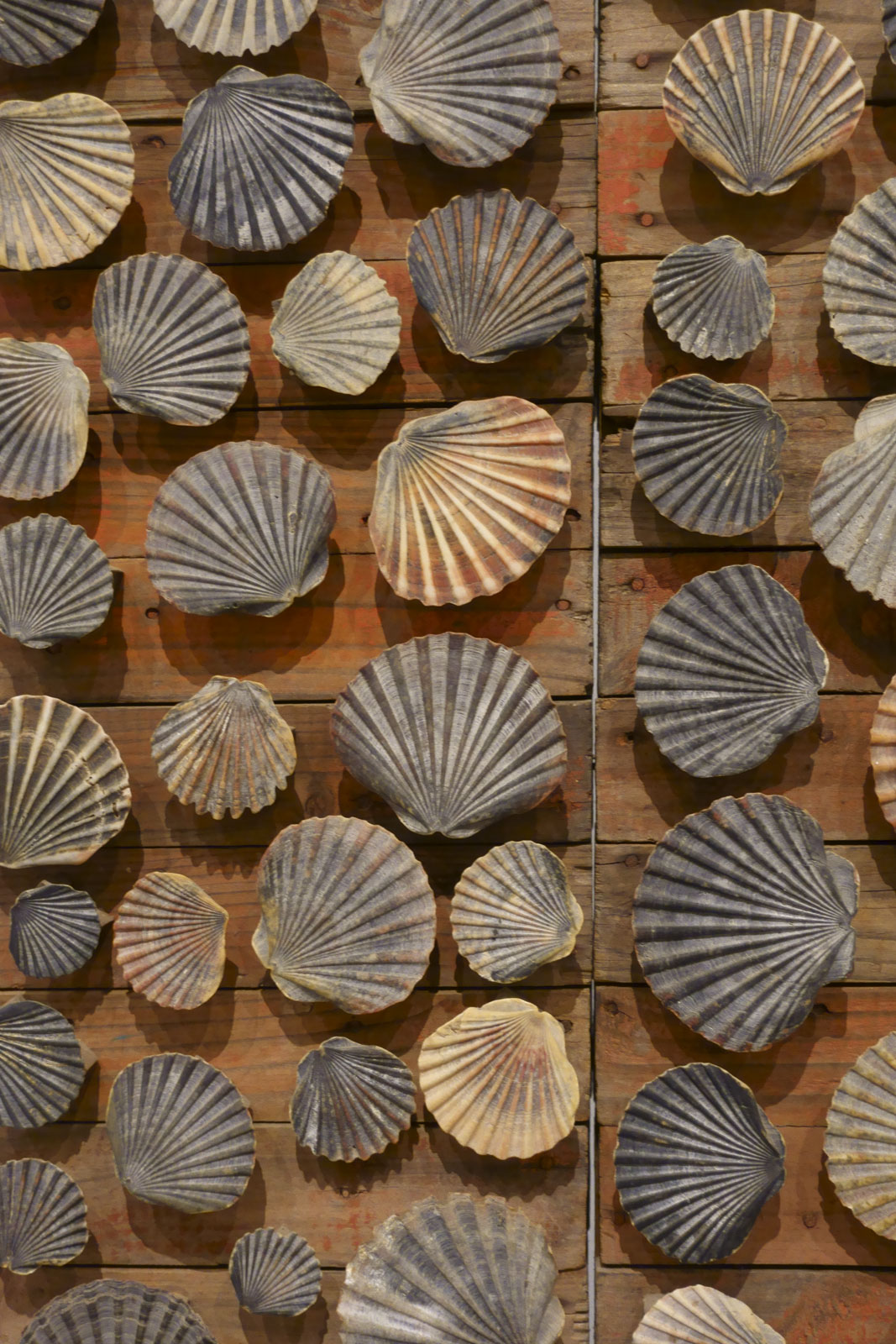


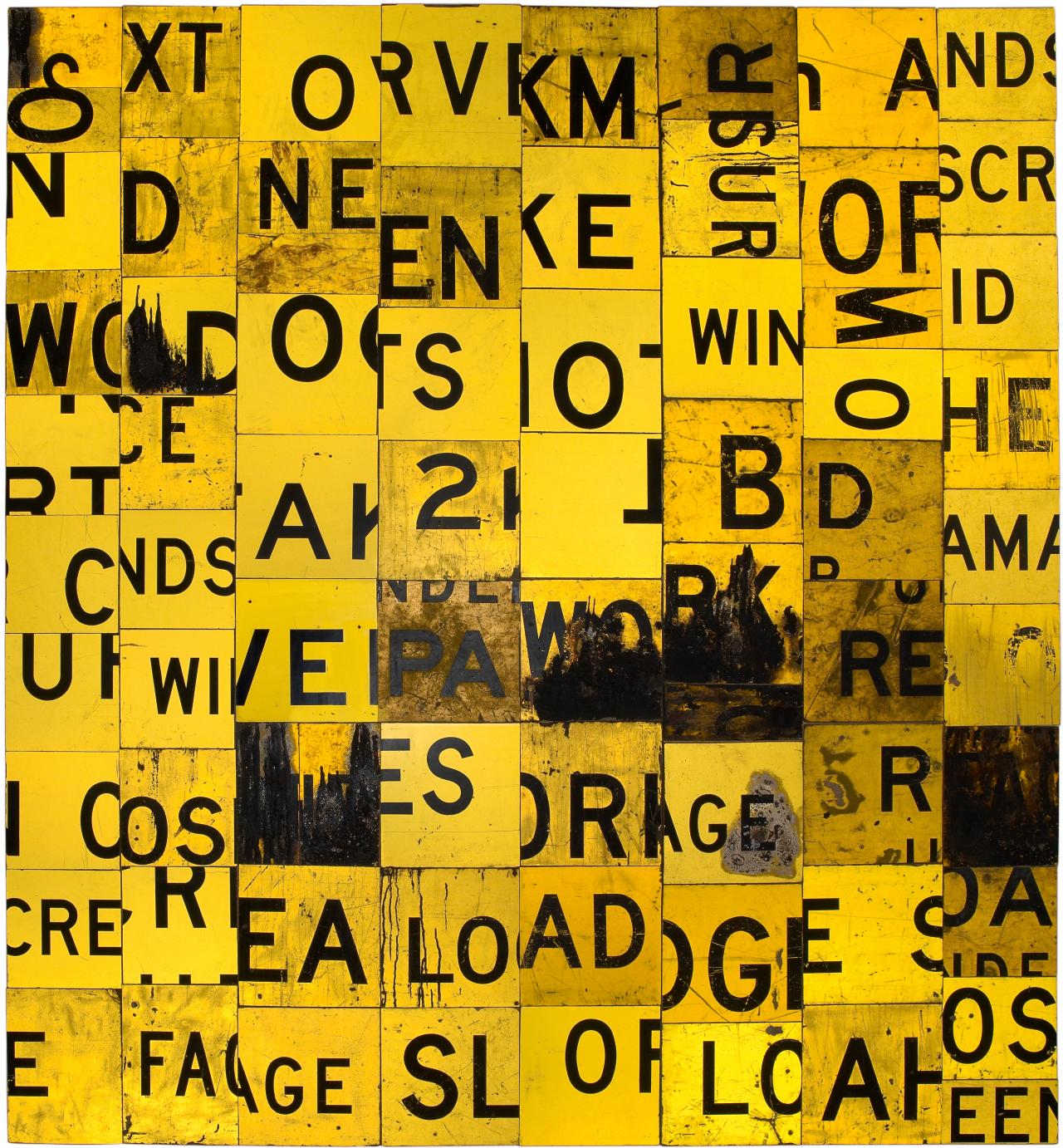


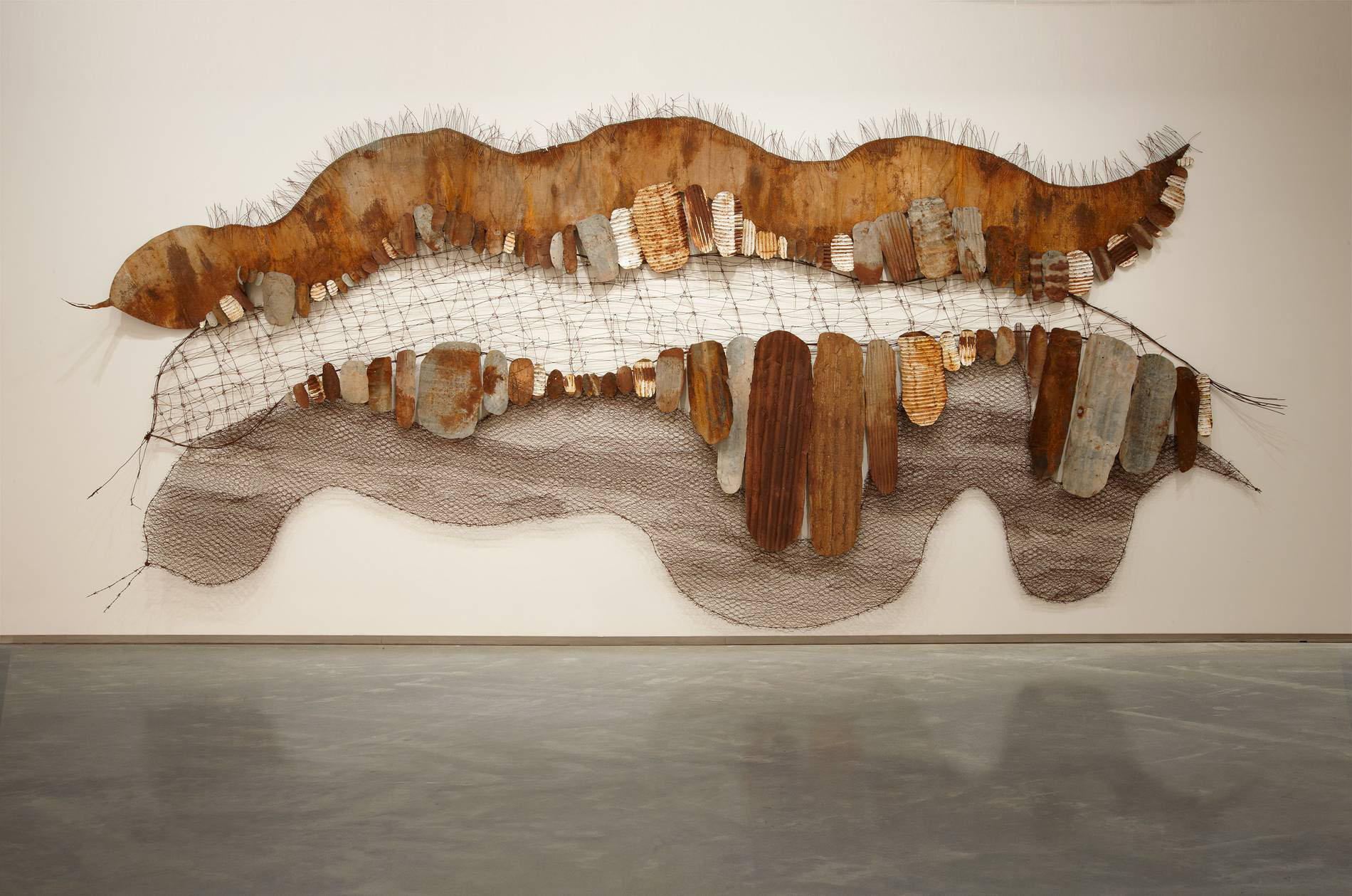



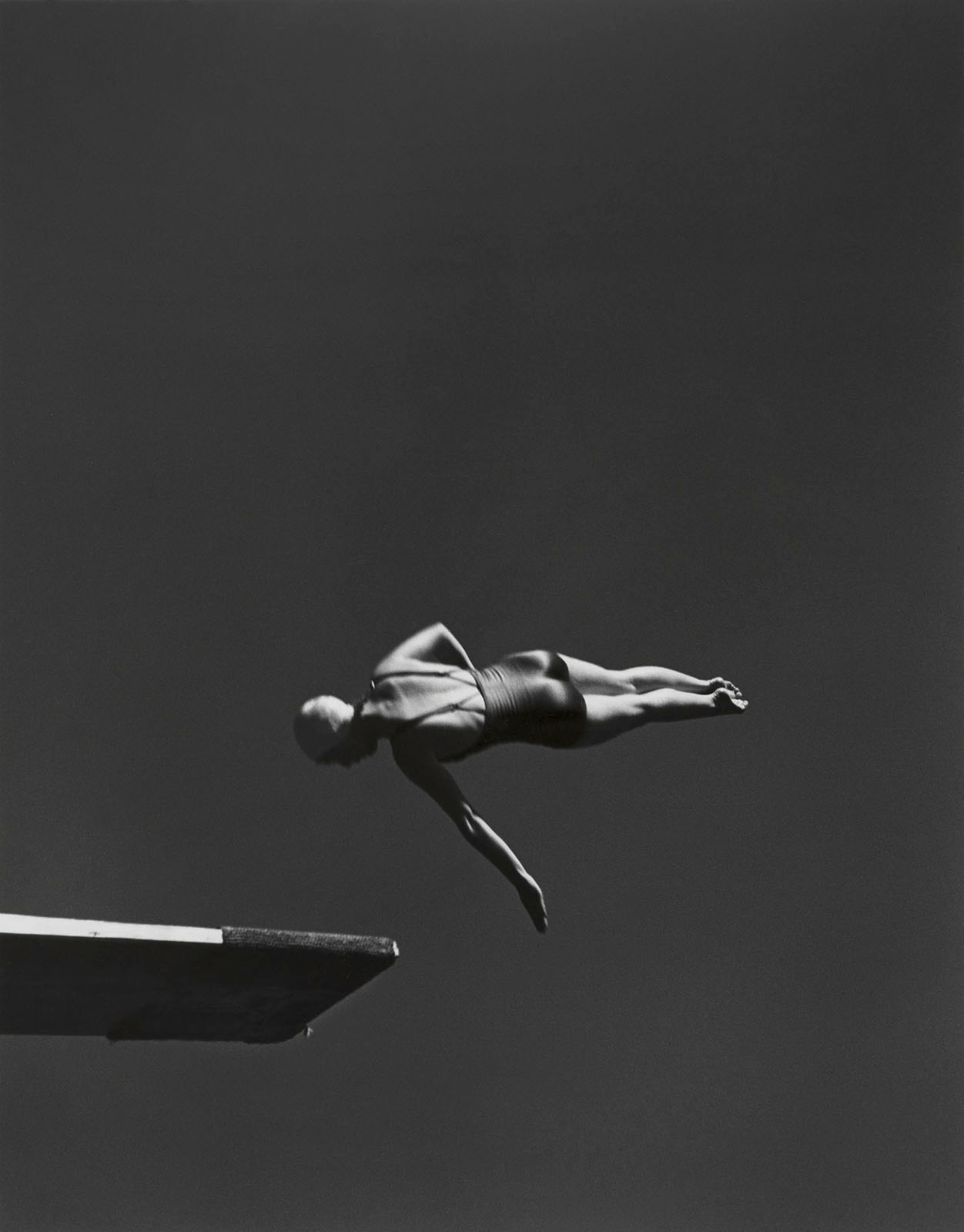
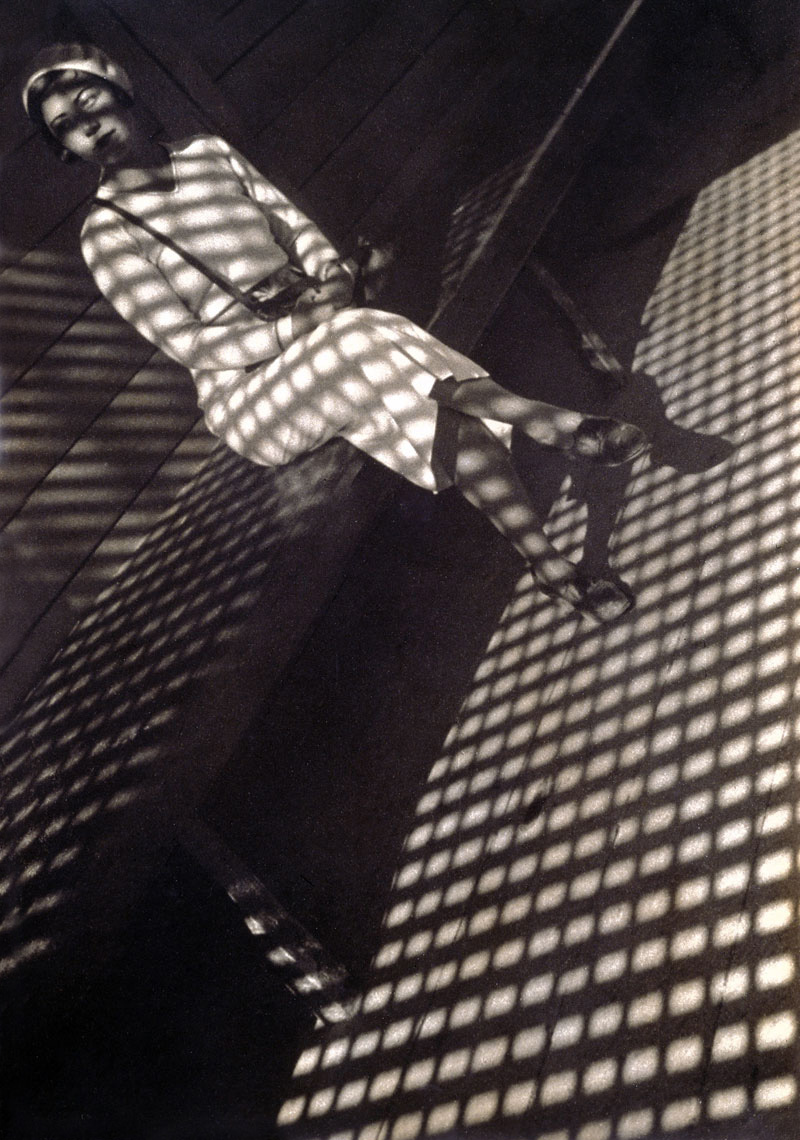
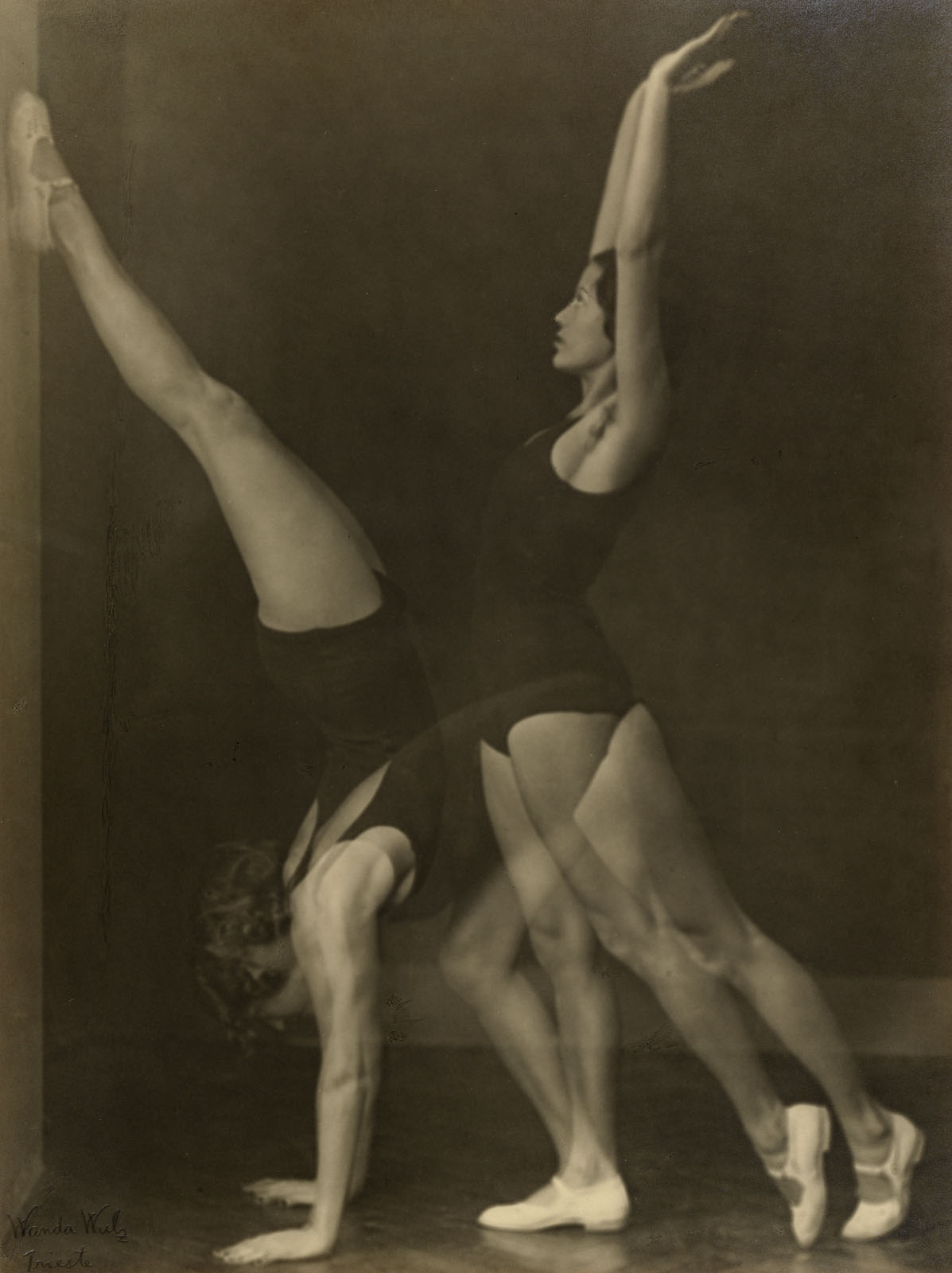


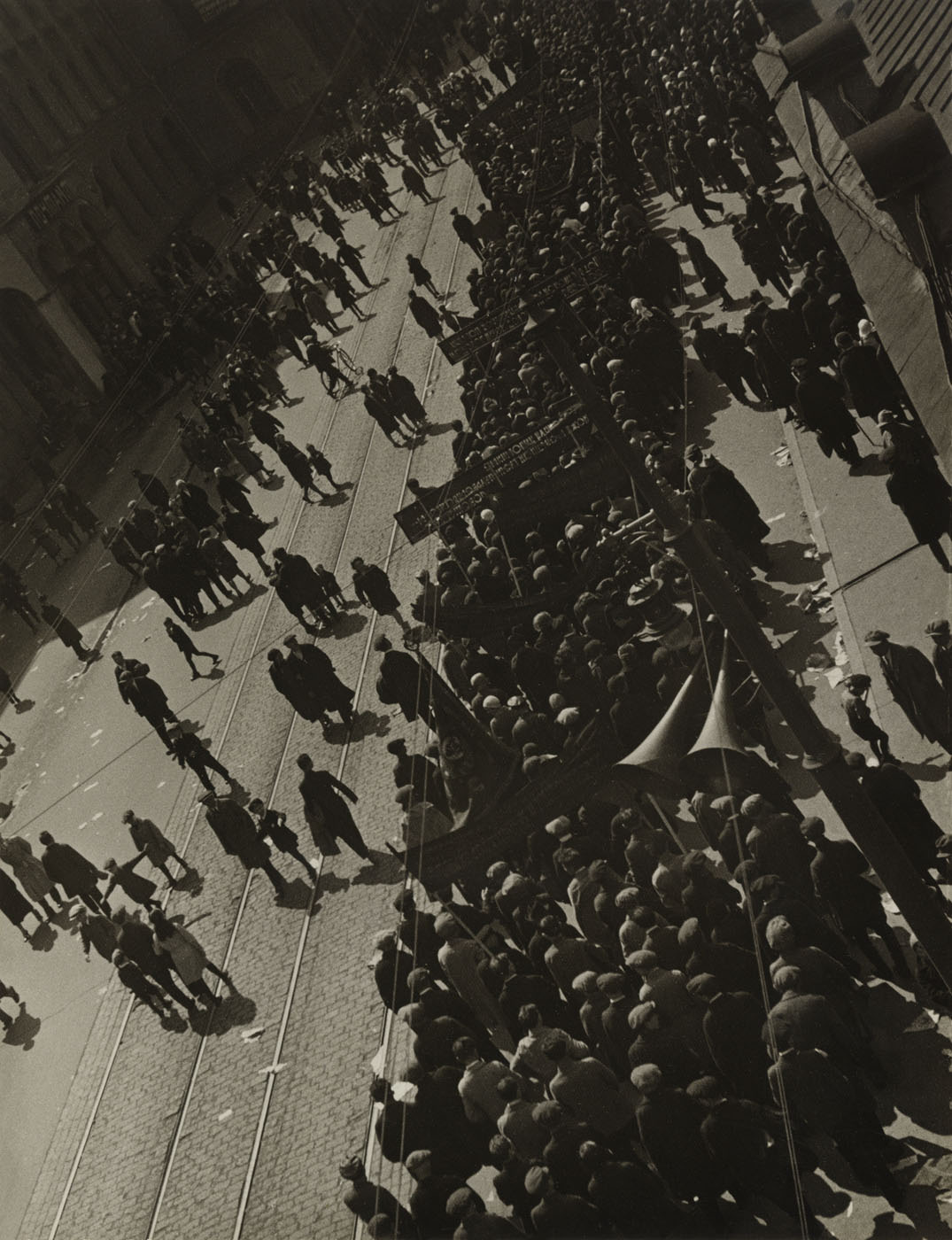


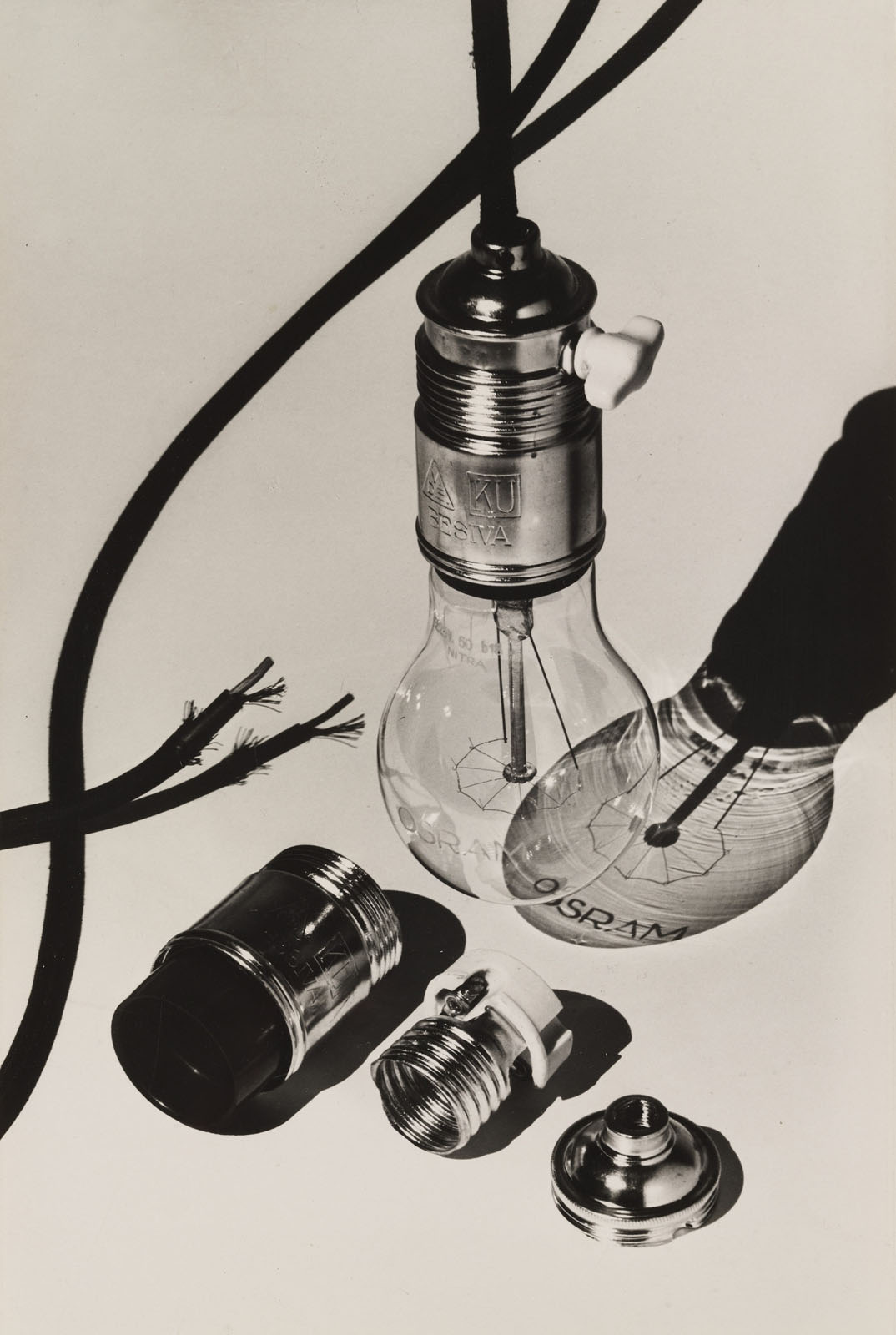

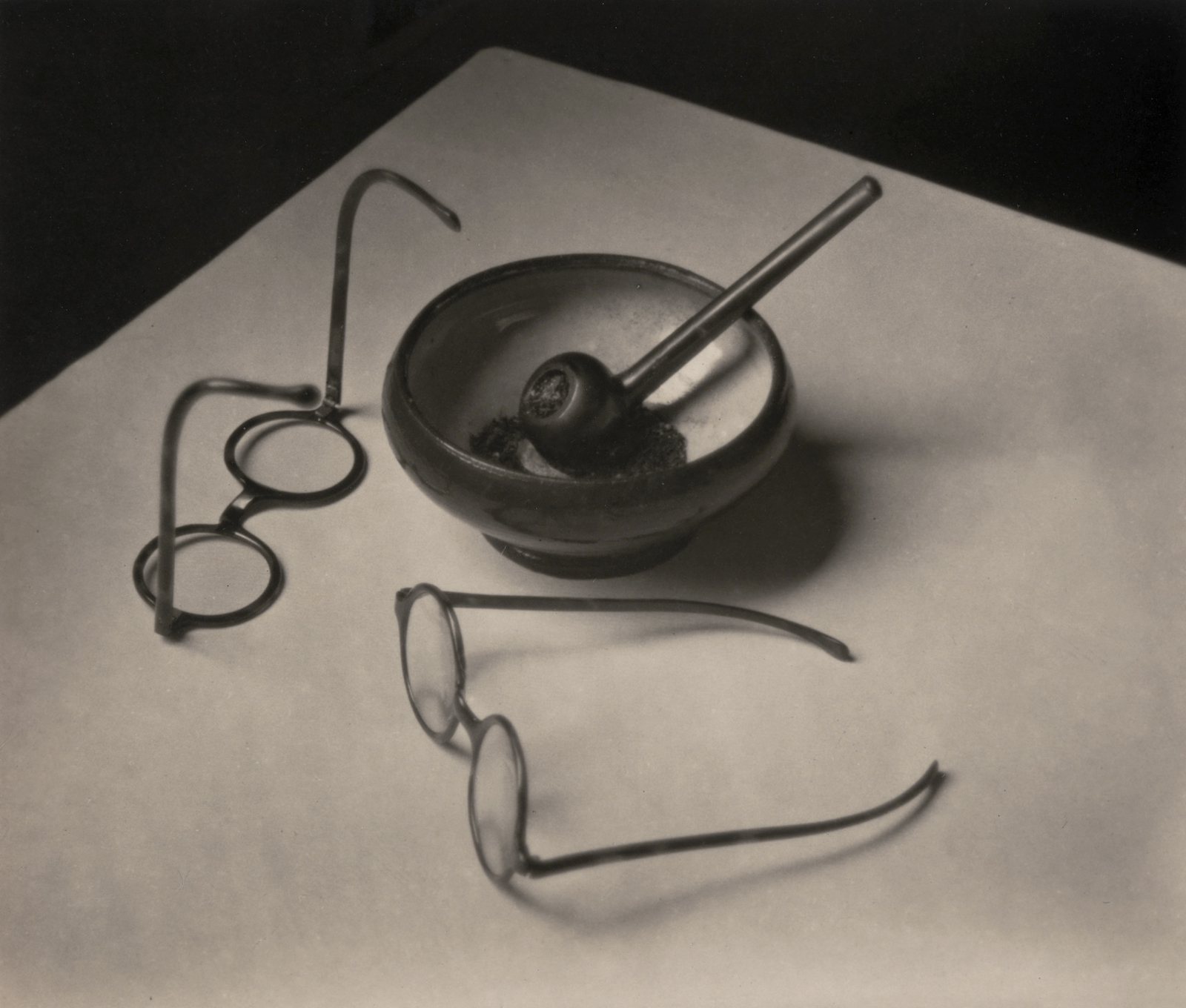


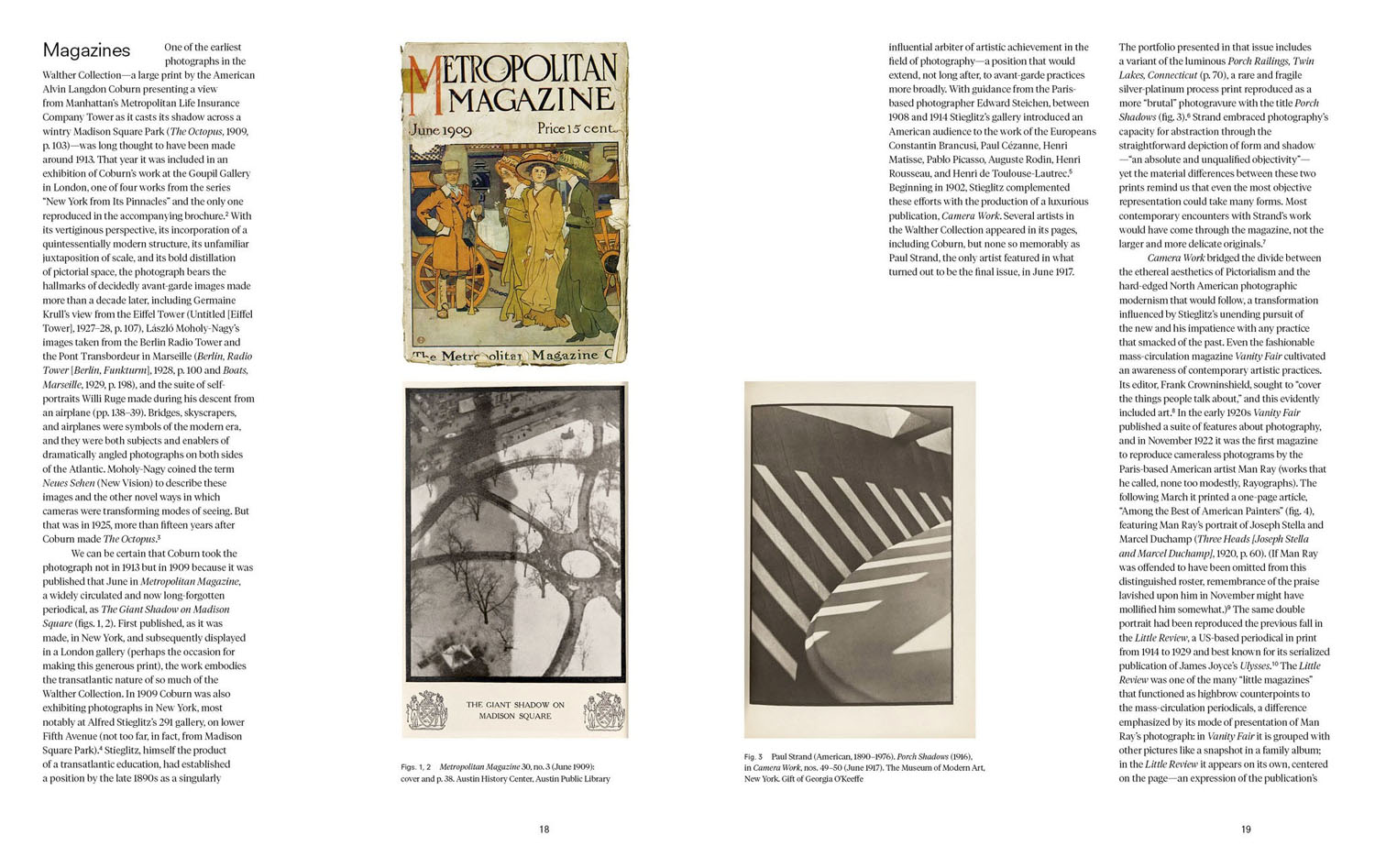


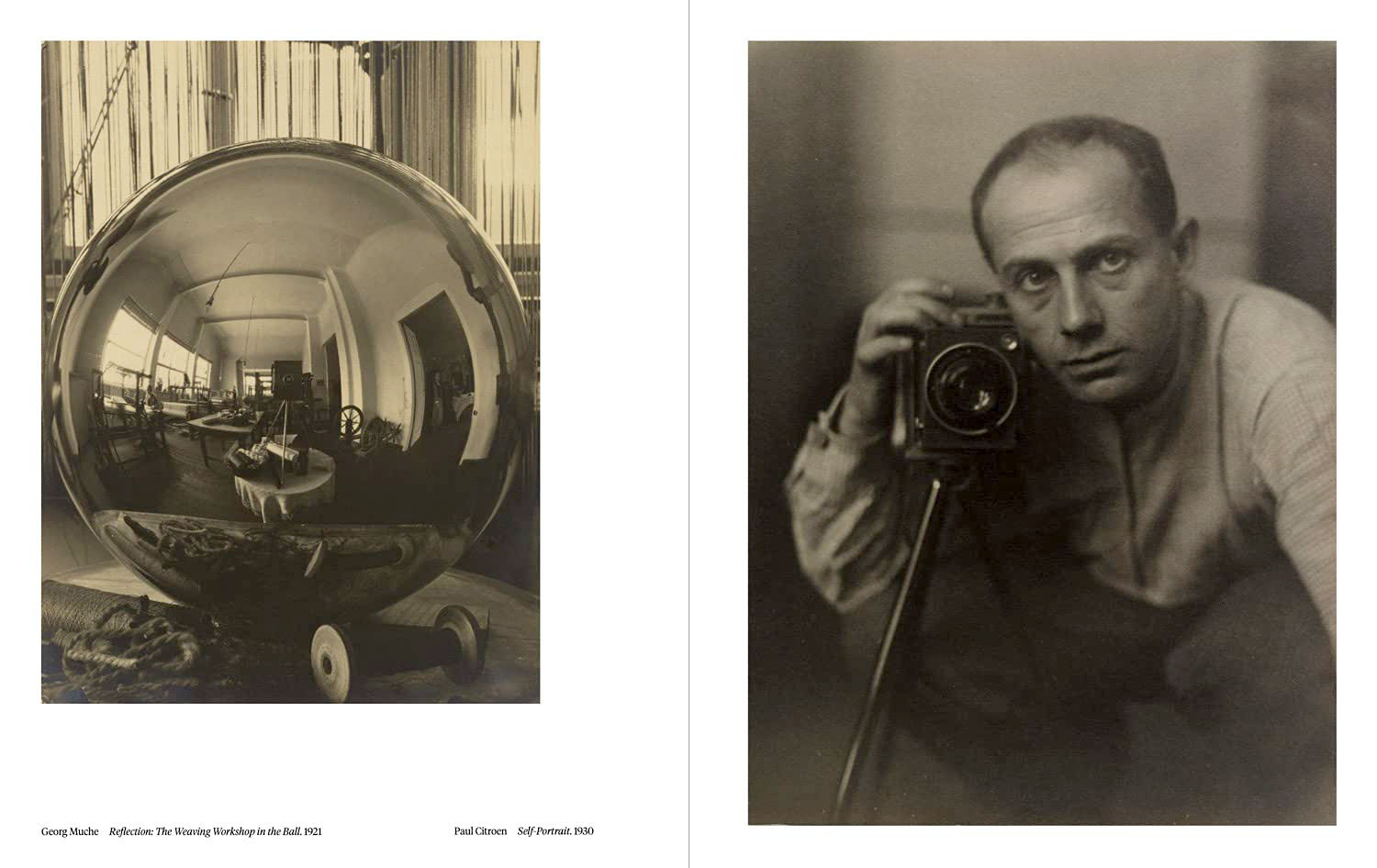


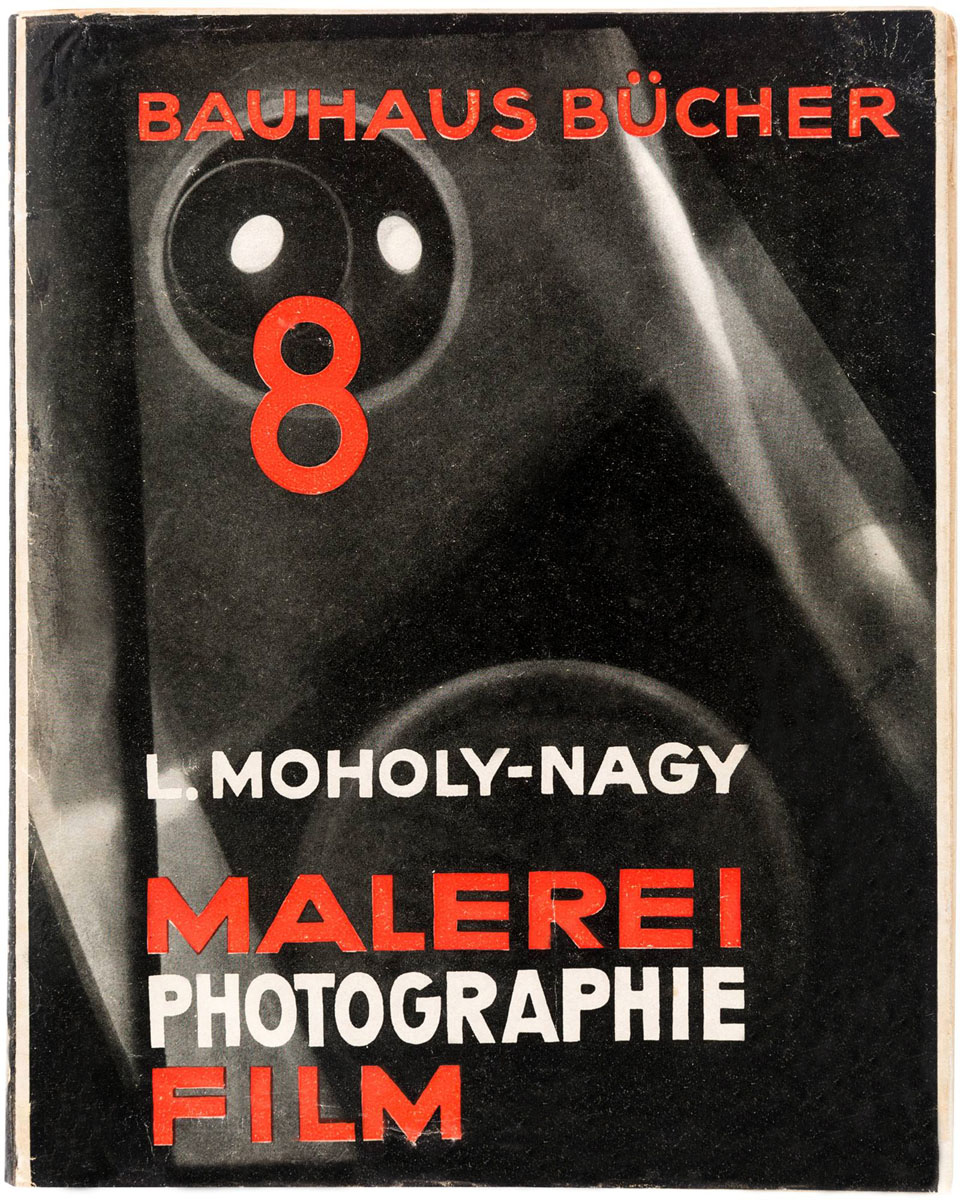


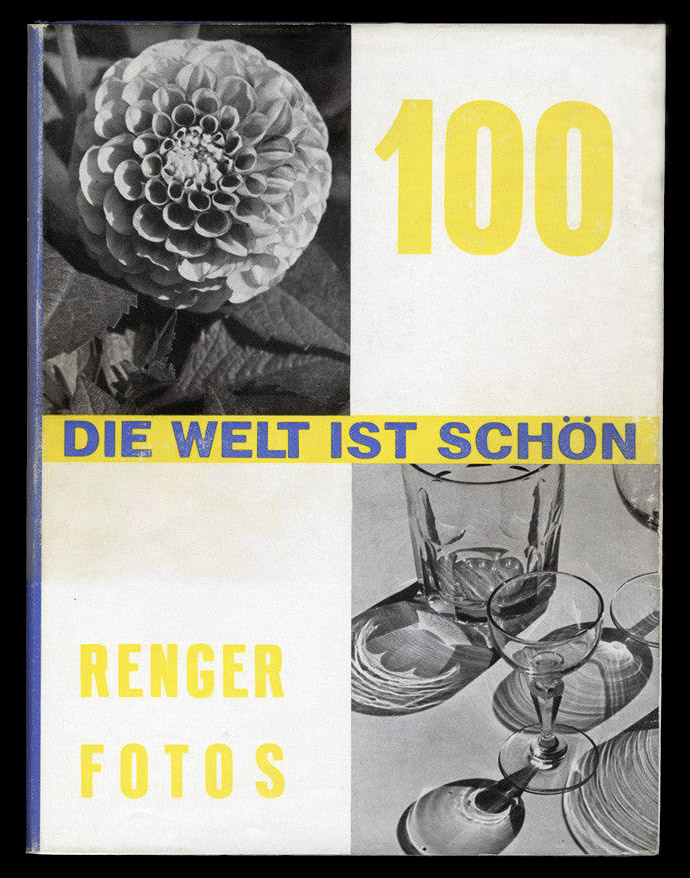

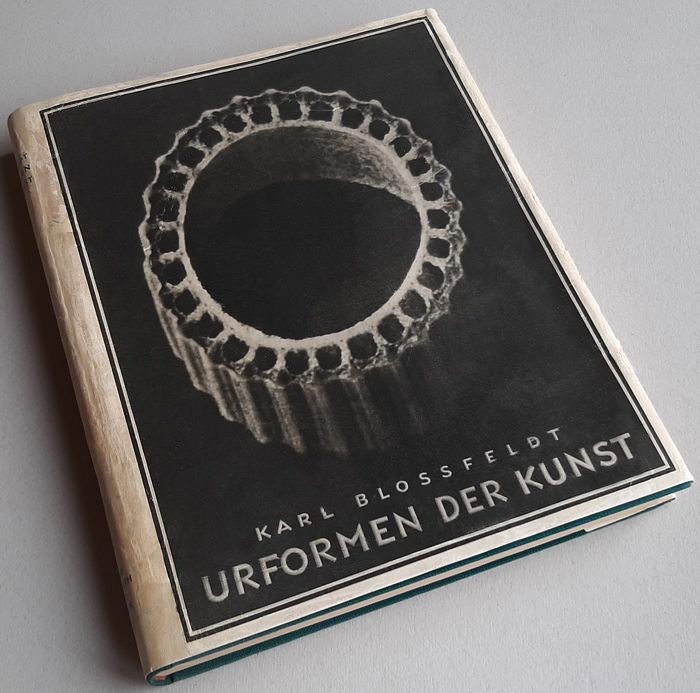


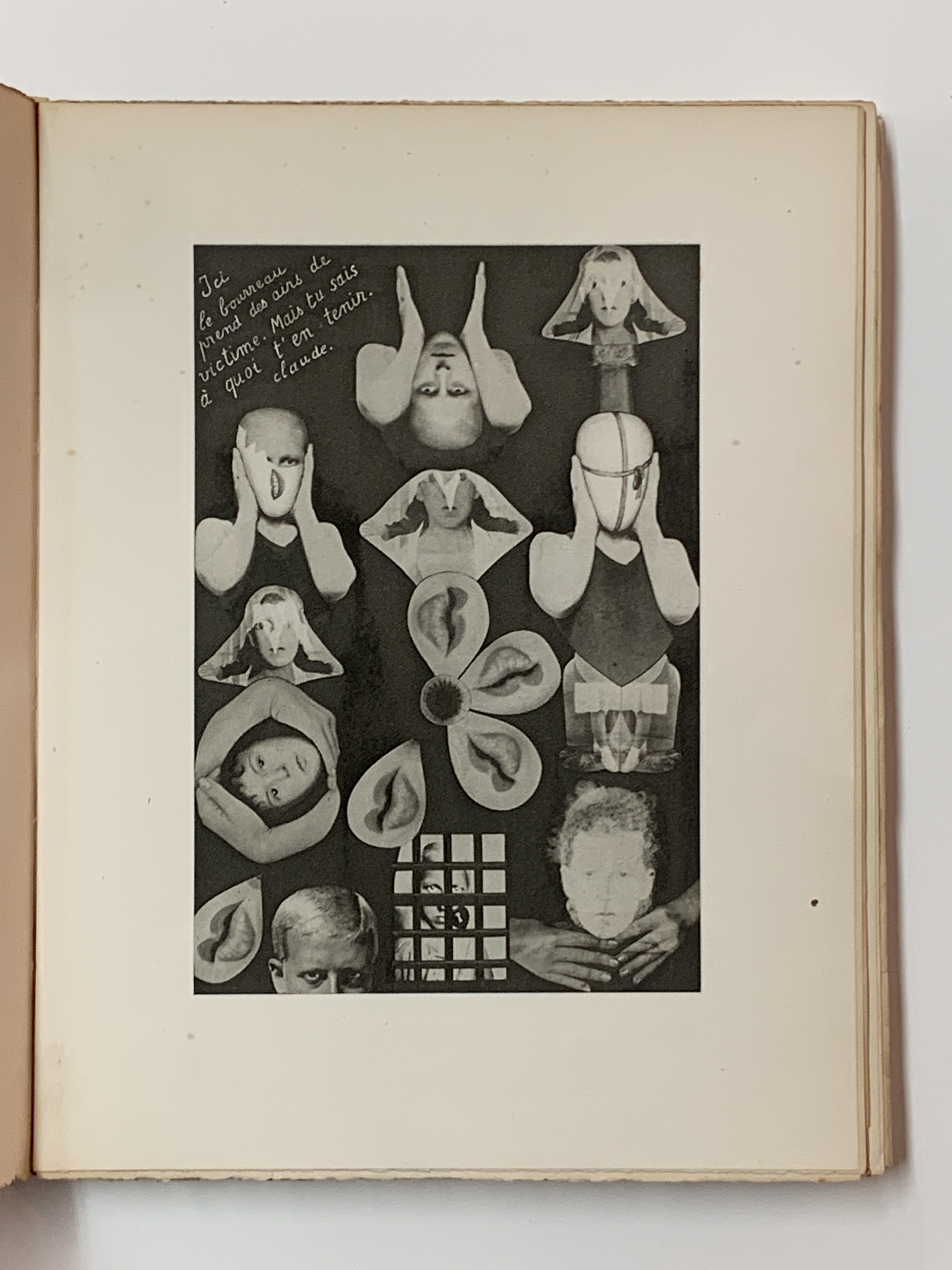


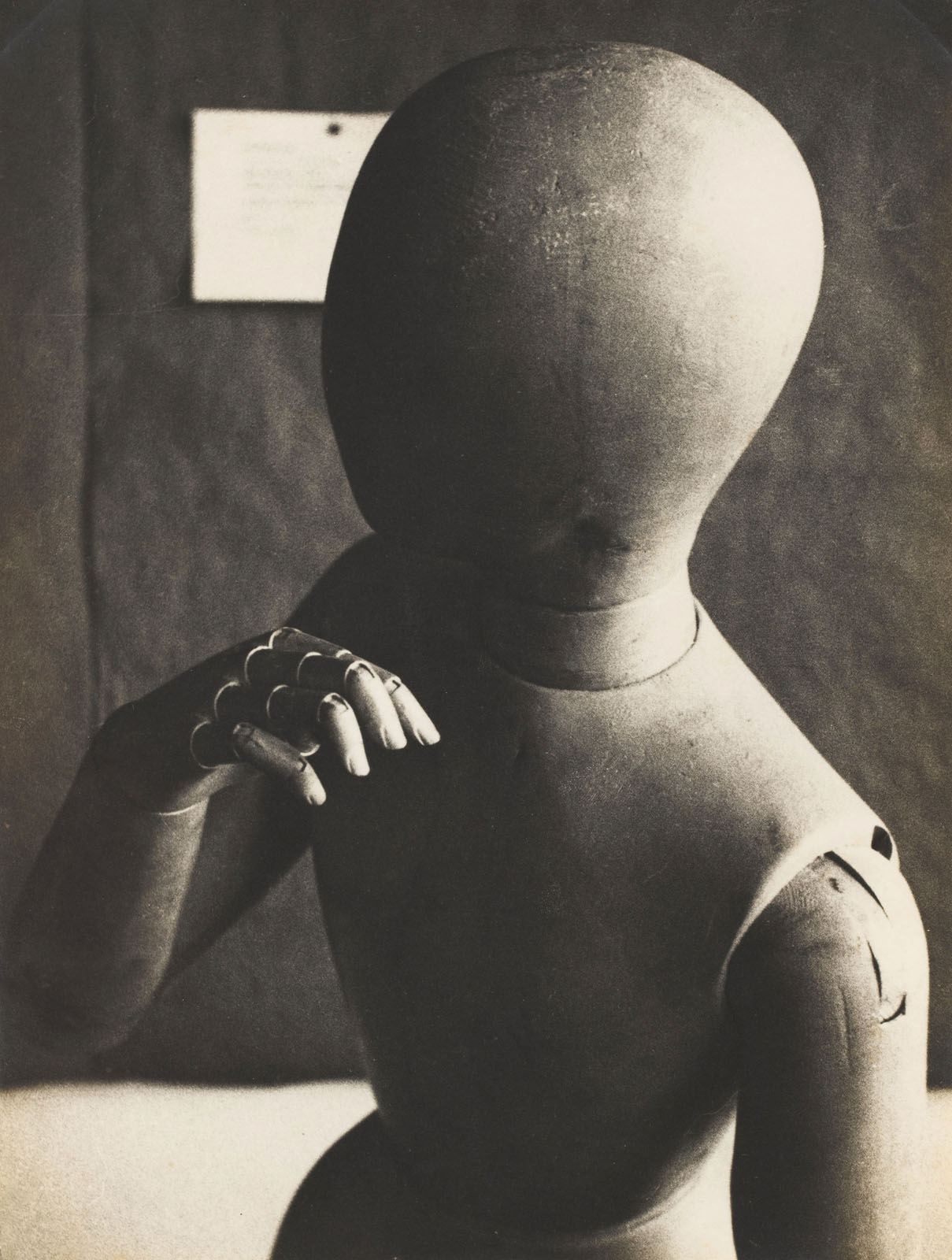


 Art Blart _ art and cultural memory archive
You must be logged in to post a comment.