Exhibitions: ‘Coney Island: Visions of an American Dreamland, 1861-2008’ and ‘Forever Coney: Photographs from the Brooklyn Museum Collection’ at the Brooklyn Museum, New York

Exhibition dates: 20th November 2015 – 13th March 2016

Curator of Coney Island exhibition: Dr Robin Jaffee Frank


Samuel S. Carr (American, 1837-1908). 'Beach Scene' c. 1879


Samuel S. Carr (American, 1837-1908)
Beach Scene
c. 1879
Oil on canvas
12 x 20 in. (30.5 x 50.8cm)
Smith College Museum of Art, Northampton, Massachusetts; Bequest of Annie Swan Coburn (Mrs. Lewis Larned Coburn)


The first posting of 2016, and it is a doozy – a multimedia extravaganza of sight and sound showcasing exhibitions that focus on that eclectic playground, Coney Island.

Featuring images supplied by the gallery – plus videos, other art work featured in the exhibitions and texts that I sourced myself – this posting documents “the luridness of the sideshow acts, the drunk sailors, the amorous couples and the scantily dressed bathers who were so much a part of the allure and menace of Coney Island.” I spent many hours scouring the internet, undertaking research and cleaning poor quality images to bring this selection to you.

The exhibition is divided into five sections, and I have attempted to keep the posting in this chronological order.

~ Down at Coney Isle, 1861-1894
~ The World’s Greatest Playground, 1895-1929
~ The Nickel Empire, 1930-1939
~ A Coney Island of the Mind, 1940-1961
!~ Requiem for a Dream, 1962-2008


There are some interesting art works in both exhibitions. The correspondence between elephant / handler and mural is delightful in Edgar S. Thomson’s Coney Island (1897, below), while Joseph Stella’s Battle of Lights, Coney Island, Mardi Gras (1913-1914, below) is a revelation to me, considering the date of production and the portrayal of contemporary life which is akin to our own. Walker Evans’ Couple at Coney Island, New York (1928, below) seems staged and confused in its pictorial construction, not one of his better photographs, while Edward J. Kelty’s photographs of sideshow revues including a “coloured revue” are interesting for their social context and formalism.

Paul Cadmus’ satirical view of American vacationers Coney Island (1934, below) is a riot of colour, movement and social commentary, including references to homosexuality and Hitler, while his friend Reginald Marsh’s effusive Coney Island paintings play with “reimagined bathers and sideshow audiences in poses derived from Michelangelo and Rubens” packed into compressed, collage like spaces. Particular favourites are photographs by Garry Winograd, Bruce Davidson, Diane Arbus and Robert Frank. Surprise of the posting are the black and white photographs of Morris Engel.

Dr Marcus Bunyan


Many thankx to the Brooklyn Museum for allowing me to publish the photographs in the posting. Please click on the photographs for a larger version of the image.


“The mixed-media exhibit captures Coney Island’s campy, trippy aesthetic with a hodgepodge of photographs by the likes of Walker Evans, Weegee, Bruce Davidson, and Diane Arbus (since Coney Island was basically tailor-made for a Diane Arbus photo shoot). Also on view are pastoral seascapes from the 1800s; sideshow posters galore; a turn-of-the-century gambling wheel and carousel animals presented like sculpture; film stills from Woody Allen’s Annie Hall and Darren Aronofsky’s Requiem for a Dream; and a modernist abstract composition by Frank Stella. With red and yellow stripes around a blue square, Stella distills the sand and sea and sun into a primary-colored flag for Brooklyn’s most famous destination.

In these pictures, Coney Island serves as a microcosm of American mass culture as a whole, and the chronology of 140 art objects here chart major societal shifts, from the dawn of the Great Depression to desegregation. “The modern American mass-culture industry was born at Coney Island, and the constant novelty of the resort made it a seductively liberating subject for artists,” Dr Robin Jaffee Frank, curator of the exhibit, which Wadsworth Athenaeum helped organize, said in a statement. “What these artists saw from 1861 to 2008 at Coney Island, and the varied ways in which they chose to portray it, mirrored the aspirations and disappointments of the era and the country. Taken together, these tableaux of wonder and menace, hope and despair, dreams and nightmares become metaphors for the collective soul of a nation.”

Carey Dunne. “Dreamland as Muse: A Look Back at 150 Years of Coney Island Art, Photography, and Film,” on the Brooklyn Magazine website 17/08/2015 [Online] Cited 02/01/2016


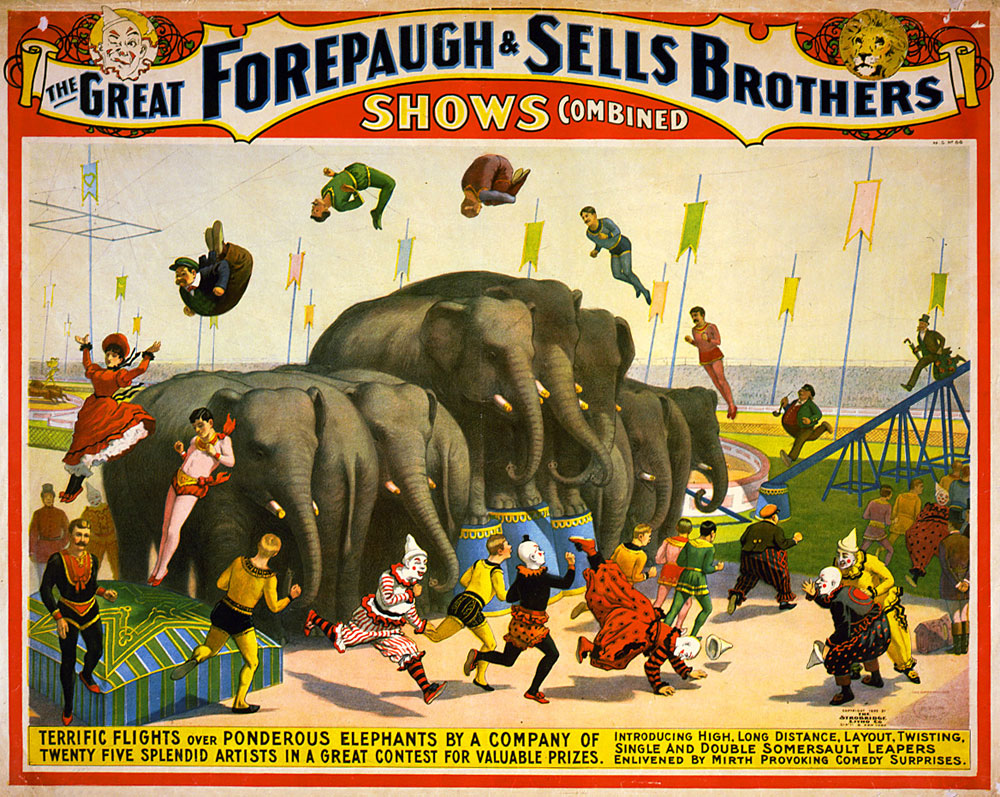
Strobridge Lithographing Company. 'The great Forepaugh & Sells Brothers shows combined' c. 1899


Strobridge Lithographing Company
The great Forepaugh & Sells Brothers shows combined. Terrific flights over ponderous elephants by a company of twenty five splendid artists in a great contest for valuable prizes, introducing high, long distance, layout, twisting, single and double somersault leapers, enlivened by mirth provoking comedy surprises.
c. 1899
Promotional poster for Forepaugh & Sells Brothers circus
Colour lithograph poster


Strobridge Lithographing Company. 'The Barnum & Bailey Greatest Show on Earth /The Great Coney Island Water Carnival /Remarkable Head-Foremost Dives from Enormous Heights into Shallow Depths of Water' 1898


Strobridge Lithographing Company
The Barnum & Bailey Greatest Show on Earth /The Great Coney Island Water Carnival /Remarkable Head-Foremost Dives from Enormous Heights into Shallow Depths of Water
1898
Colour lithograph poster
30 1/6 x 38 3/4 in. (76.6 x 98.4 cm)
Cincinnati Art Museum; Gift of the Strobridge Lithographing Company
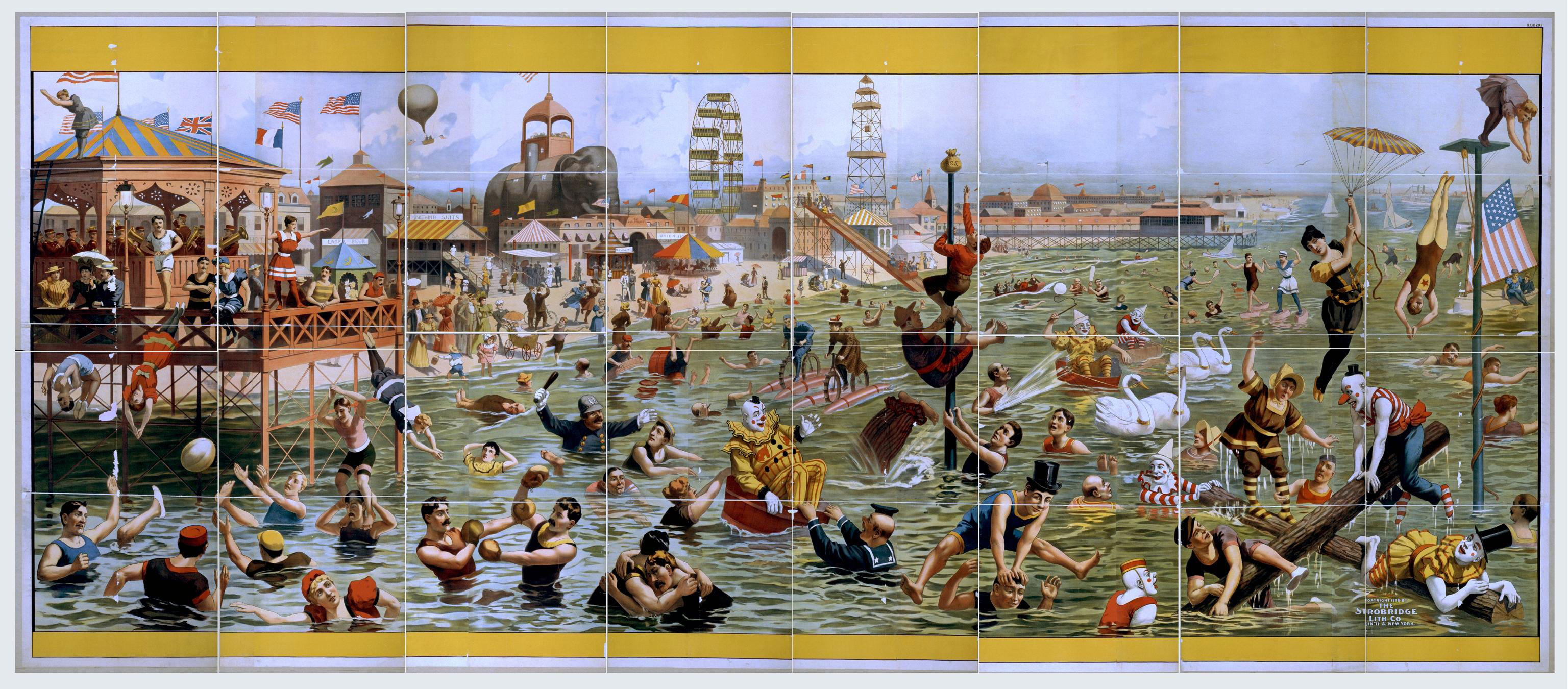
 

Strobridge Lithographing Company. 'Beach and boardwalk scenes, Coney Island' c. 1898


Strobridge Lithographing Company
Beach and boardwalk scenes, Coney Island
c. 1898
Colour lithograph foldout poster
approx. 21 feet long


George Bradford Brainerd (American, 1845-1887). 'Bathers, Steel Pier, Coney Island' c. 1880–1885


George Bradford Brainerd (American, 1845-1887)
Bathers, Steel Pier, Coney Island
c. 1880-1885, printed 1940s
Gelatin silver photograph
7 5/8 x 12 in. (19.4 x 30.5cm)
Brooklyn Museum, Brooklyn Museum Collection
Photo: Sarah DeSantis, Brooklyn Museum
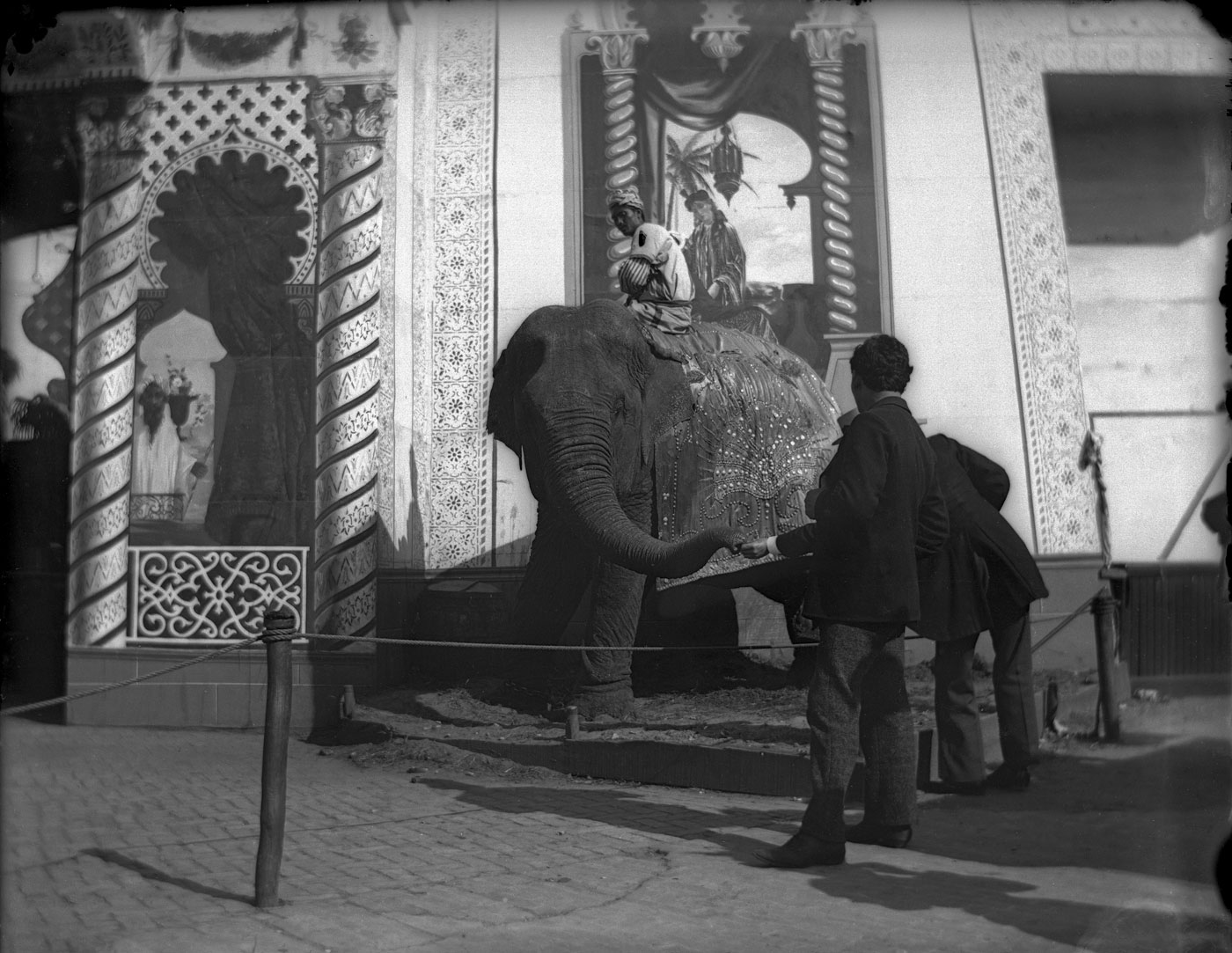
 

Edgar S. Thomson (American, active 1890s-1900s) 'Coney Island' 1897


Edgar S. Thomson (American, active 1890s-1900s)
Coney Island
1897
Gelatin dry glass plate negative
4 x 5 in. (10.2 x 12.7cm)
Brooklyn Museum, Brooklyn Museum/Brooklyn Public Library, Brooklyn Collection
Photo: Althea Morin, Brooklyn Museum
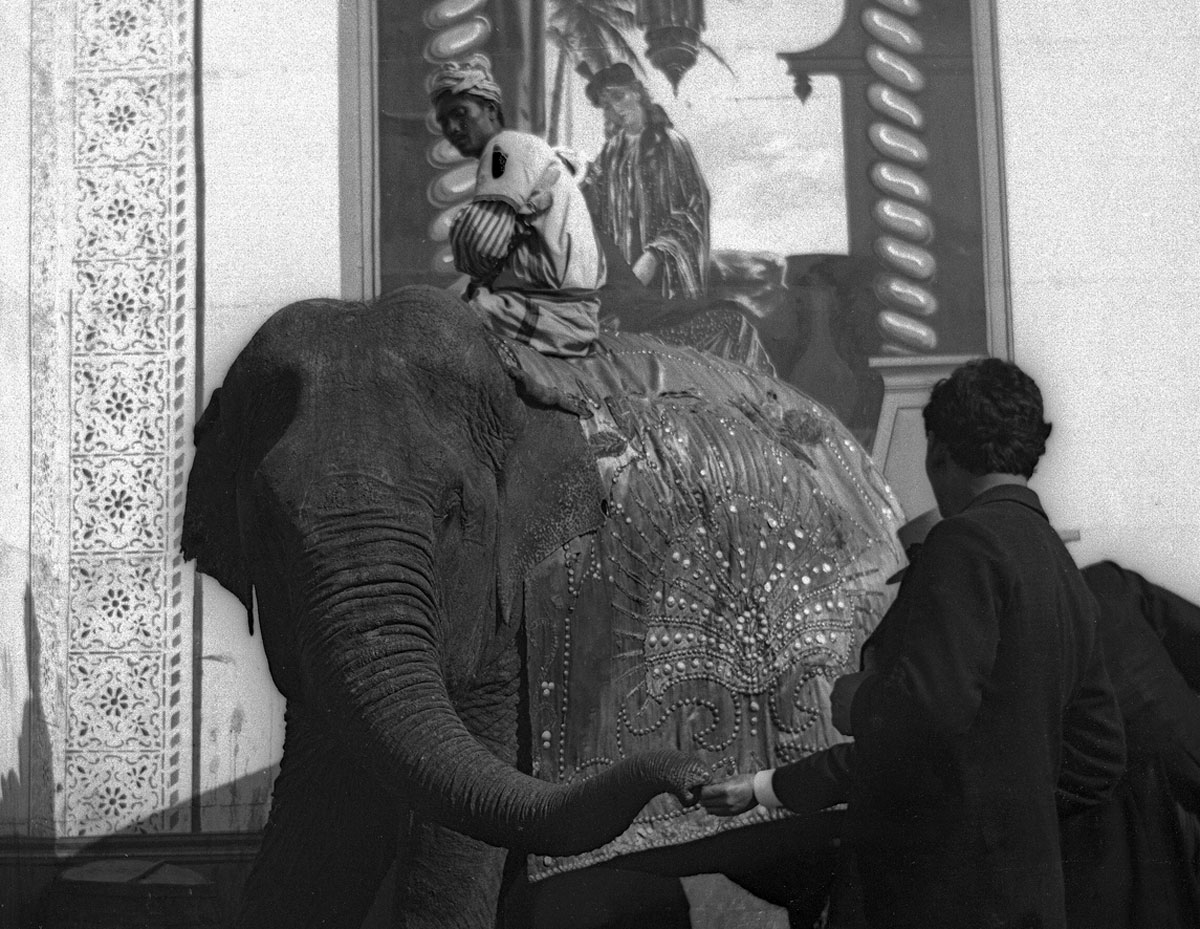
 

Edgar S. Thomson (American, active 1890s-1900s) 'Coney Island' 1897 (detail)


Edgar S. Thomson (American, active 1890s-1900s)
Coney Island (detail)
1897
Gelatin dry glass plate negative
4 x 5 in. (10.2 x 12.7cm)
Brooklyn Museum, Brooklyn Museum/Brooklyn Public Library, Brooklyn Collection
Photo: Althea Morin, Brooklyn Museum


William Merritt Chase (American, 1849-1916). 'Landscape, near Coney Island' c. 1886


William Merritt Chase (American, 1849-1916)
Landscape, near Coney Island
c. 1886
Oil on panel
8 1/8 x 12 5/8 in. (20.6 x 32cm)
The Hyde Collection, Glens Falls, New York; Gift of Mary H. Beeman to the Pruyn Family Collection
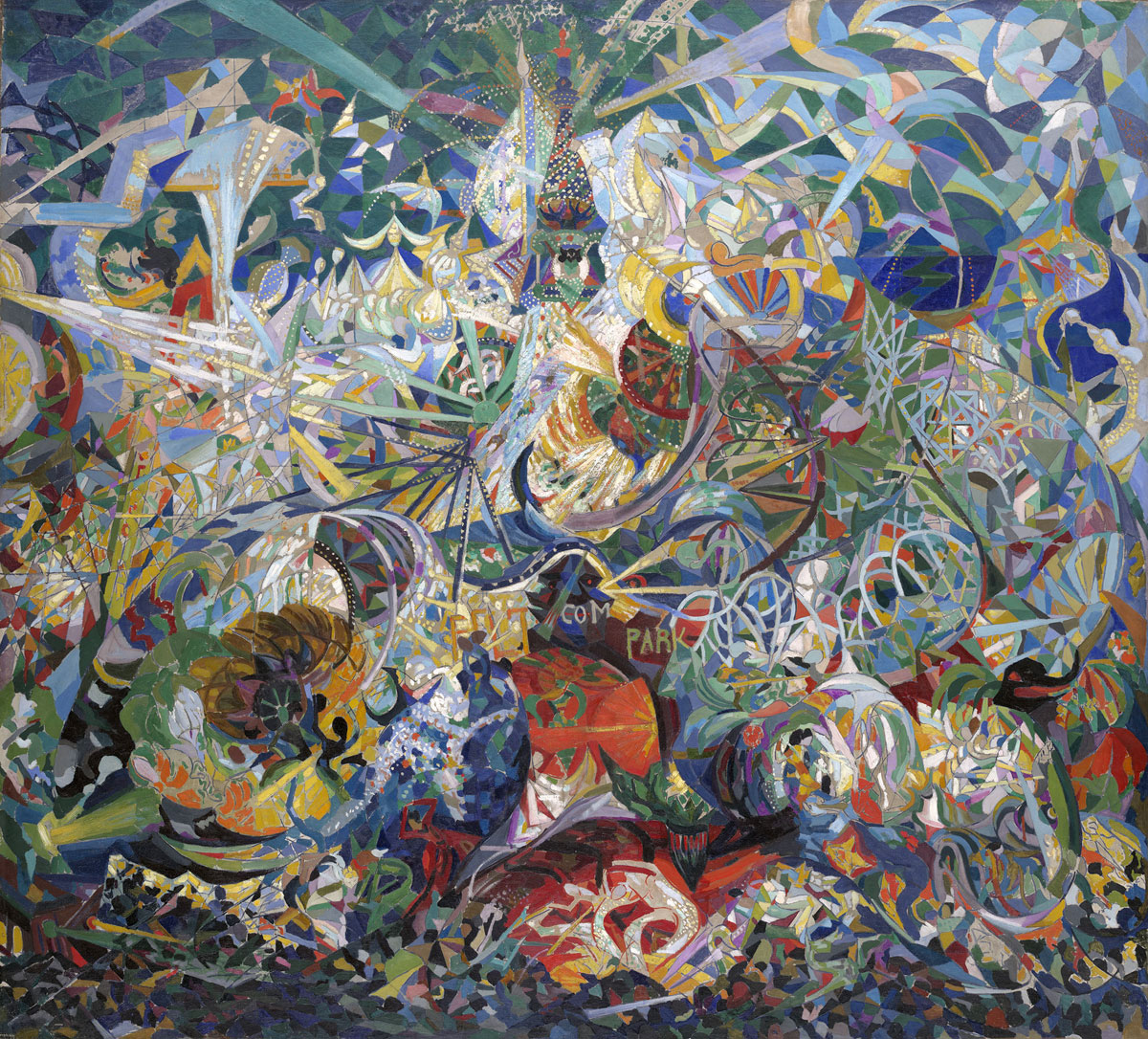
 

Joseph Stella (American born Italy, 1877-1946) 'Battle of Lights, Coney Island, Mardi Gras' 1913-1914


Joseph Stella (American born Italy, 1877-1946)
Battle of Lights, Coney Island, Mardi Gras
1913-1914
Oil on canvas
77 by 84 3/4 inches
Yale University Art Gallery, New Haven, Conn.


“In 1913, to celebrate Mardi Gras, Joseph Stella took a bus ride to Coney Island that changed his life. The Italian immigrant painter remembered that up until this point he had been “struggling … working along the lines of the old masters, seeking to portray a civilization long since dead.” He continued:

“Arriving at the Island I was instantly struck by the dazzling array of lights. It seemed as if they were in conflict. I was struck with the thought that here was what I had been unconsciously seeking for so many years… On the spot was born the idea for my first truly great picture.” (Joseph Stella, “I Knew Him When (1924),” in Barbara Haskell, ed., Joseph Stella, New York, Whitney Museum of American Art, distributed by Harry N. Abrams, 1994, p. 206)


The result of Stella’s revelation, the enormous oil painting Battle of Lights, Coney Island, Mardi Gras (1913-1914), was the inspiration for the traveling exhibition Coney Island: Visions of an American Dreamland, 1861-2008

If the broken planes and neon coloring of Stella’s painting suggest the exhilaration of contemporary life, they also express dislocation and alienation. Stella himself spoke of the “dangerous pleasures” of Coney Island, implying that its unleashing of desires could provoke anxiety (Joseph Stella, “Autobiographical Notes (1946),” in Barbara Haskell, ed., Joseph Stella, p. 213). And yet for all of the dynamism of Stella’s aesthetic, his painting’s sweeping arabesques are checked by the rectangle of the picture plane, and its decorative unity distances the disruptive power of its discordant subjects. The contained anarchy of Stella’s painting is the perfect metaphor for Coney Island’s manipulation and control of the unruly masses, who, at the end of the day, go back to their homes and their ordered existence.

Looking closely at Battle of Lights we might be able to make out fragments of actual rides and even shapes that suggest people, but Stella’s abstraction obscures the luridness of the sideshow acts, the drunk sailors, the amorous couples and the scantily dressed bathers who were so much a part of the allure and menace of Coney Island.”

Text from Jonathan Weinberg “Coney Island Forever,” on the Art in America website, October 1st 2015 [Online] Cited 14/12/2015.


Irving Underhill (American, 1872-1960). 'Luna Park and Surf Avenue, Coney Island' 1912


Irving Underhill (American, 1872-1960)
Luna Park and Surf Avenue, Coney Island
1912
Gelatin dry glass plate negative
Brooklyn Museum, Brooklyn Museum/Brooklyn Public Library, Brooklyn Collection
Photo: Althea Morin, Brooklyn Museum
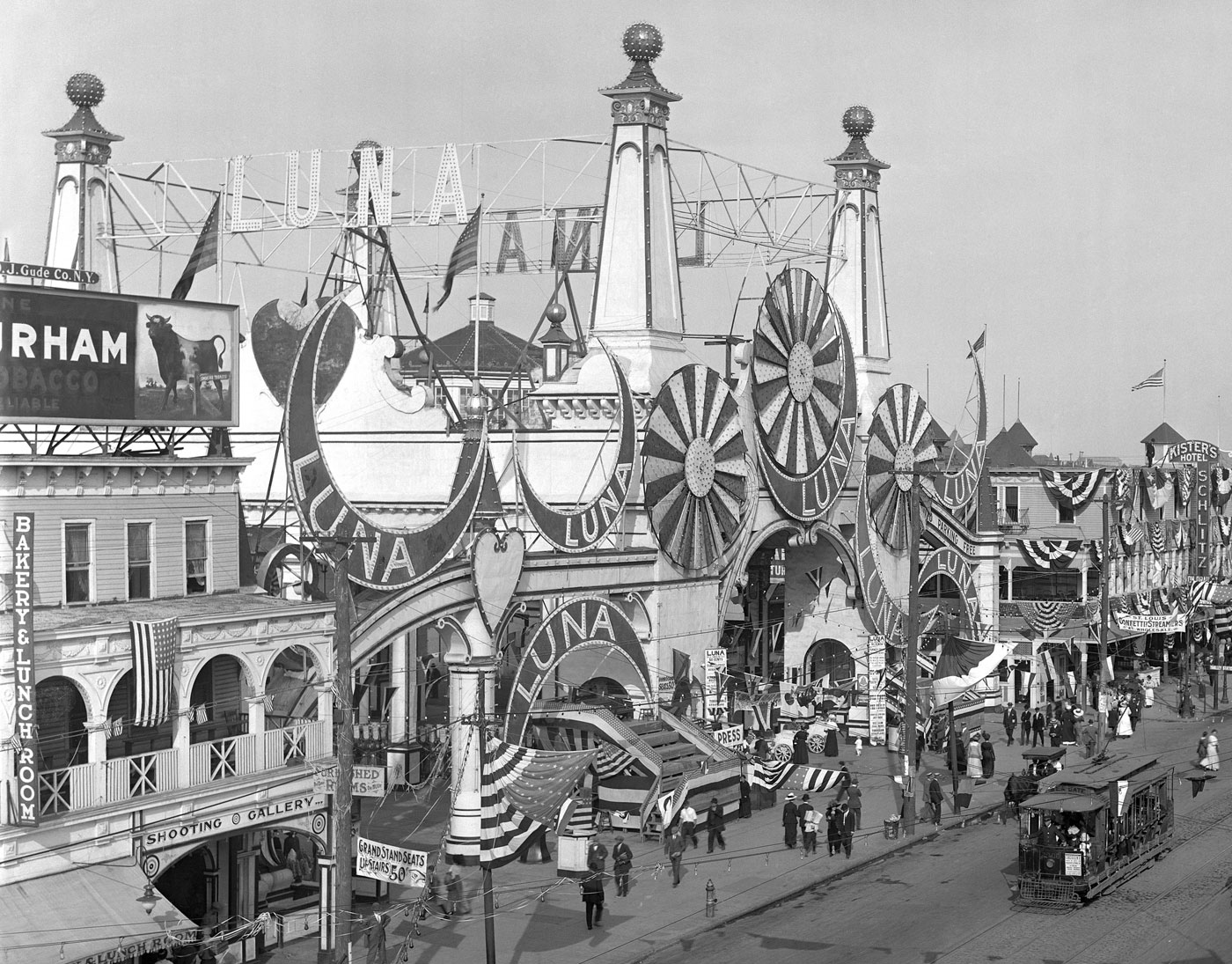
 

Irving Underhill (American, 1872-1960). 'Luna Park and Surf Avenue, Coney Island' 1912 (detail)


Irving Underhill (American, 1872-1960)
Luna Park and Surf Avenue, Coney Island (detail)
1912
Gelatin dry glass plate negative
Brooklyn Museum, Brooklyn Museum/Brooklyn Public Library, Brooklyn Collection
Photo: Althea Morin, Brooklyn Museum


Roscoe Fatty Arbuckle (director)
Fatty Arbuckle and Buster Keaton (actors)
Coney Island
1917
25 mins – short, comedy


The 5th film starring the duo of Buster Keaton & Fatty Arbuckle, who also directed. Taking place at the Coney Island amusement park of New York City, it’s notable as the only film where Buster Keaton is seen laughing as this is before he developed his “Great Stoneface” persona.


Gambling Wheel, 1900-1920


Gambling Wheel
1900-1920
Wood, glass, metal
65 x 14 in. (165.1 x 35.6cm)
Collection of The New-York Historical Society; Purchase
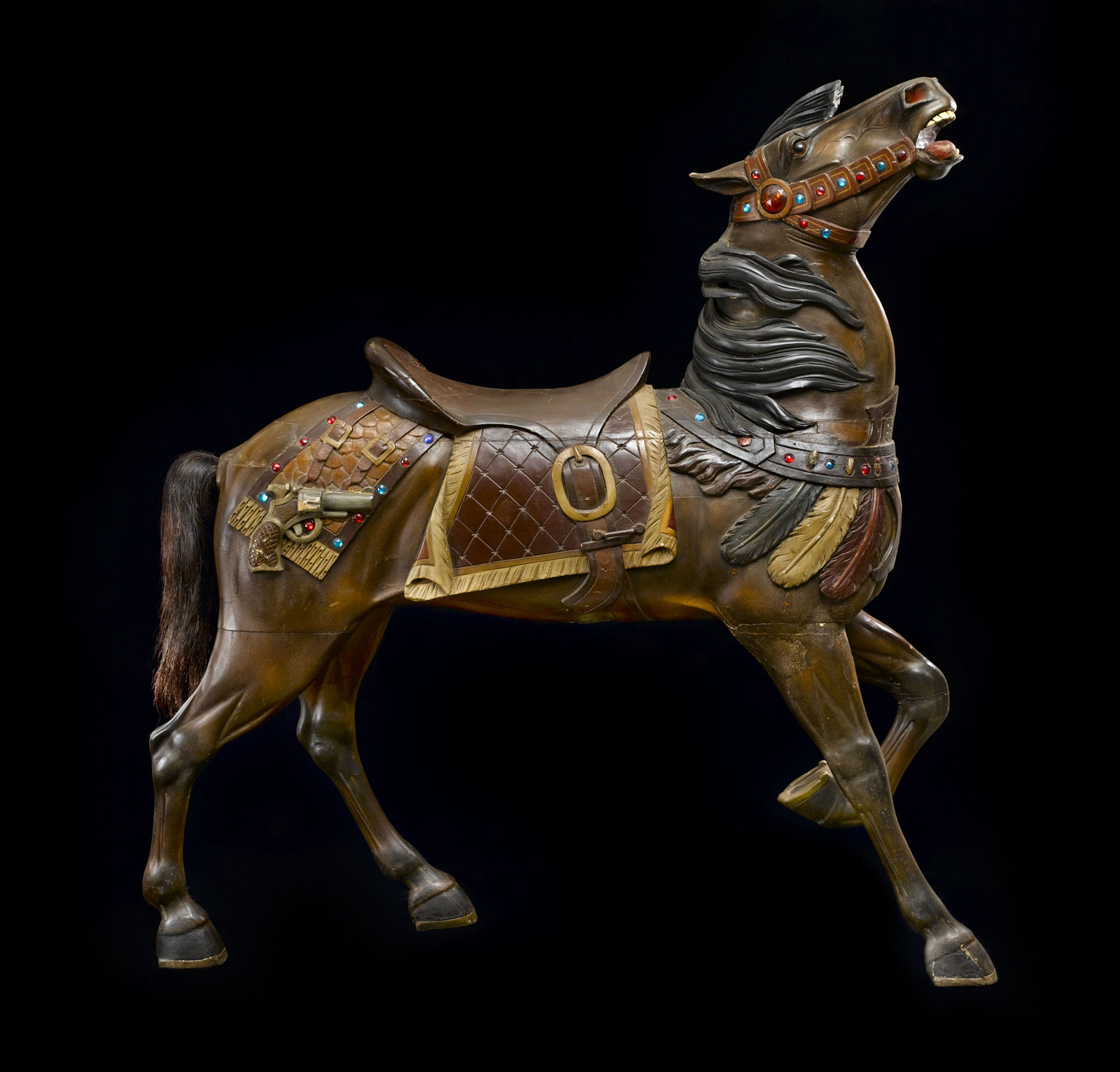
 

Charles Carmel (American born Russia, 1865-1931) 'Carousel Horse with Raised Head, Coney Island, Brooklyn, New York' c. 1914


Charles Carmel (American born Russia, 1865-1931)
Carousel Horse with Raised Head, Coney Island, Brooklyn, New York
c. 1914
Paint on wood, jewels, glass eyes, horsehair tail
62 x 58 x 14 in. (157.5 x 147.3 x 36.6cm)
Collection of American Folk Art Museum, New York; Gift of Laura Harding


Born in Russia in 1865, Charles Carmel and his young bride immigrated to the U.S. in 1883 and lived in Brooklyn for most of their lives. Charles was a perfectionist in his work and a disciplinarian with his family. Their home was located close to Prospect Park and its stable of riding horses, which served as a source of inspiration for Charles’ carousel horse carving work. It is generally accepted that Charles Carmel carved carousel horses from 1905 to 1920, and sold his work to all of the major carousel manufacturers of the time including Dolle, Borelli, Murphy, and Mangels.

In 1911 Charles invested most of his money in a newly constructed carousel that he intended to operate on Coney Island. The day before the park was to open, a fire totally destroyed the amusement park along with the uninsured carousel. This was a devastating financial blow to the Carmel family. Later his health deteriorated due to diabetes and arthritis until Charles closed his shop and carved a few hours a day at home, filling orders. Charles died in 1933 of cancer, but his legacy lives on with the exquisite carousel animals that he produced throughout his life.

Text from the Gesa Carousel of Dreams website [Online] Cited 01/01/2016. No longer available online
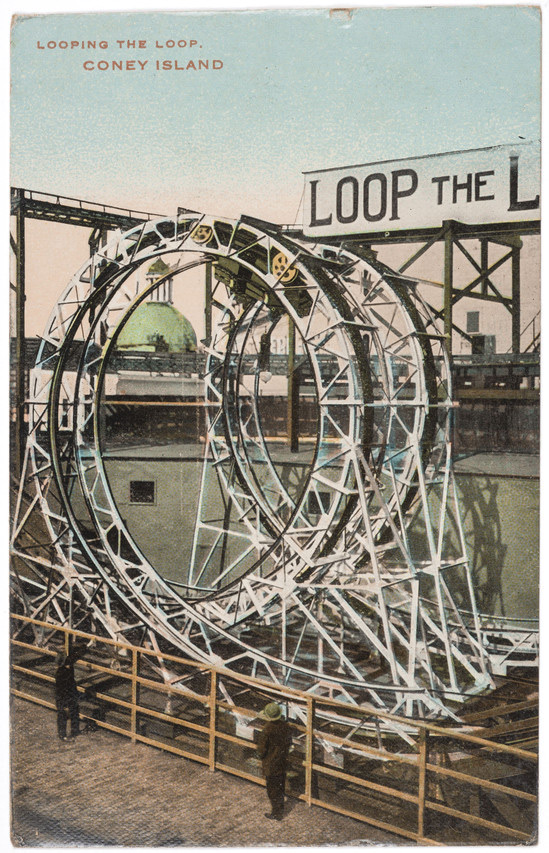
 

Anonymous artist. 'Looping the Loop, Coney Island' 1901-1910


Anonymous artist
Looping the Loop, Coney Island
1901-1910
Postcard
Private Collection
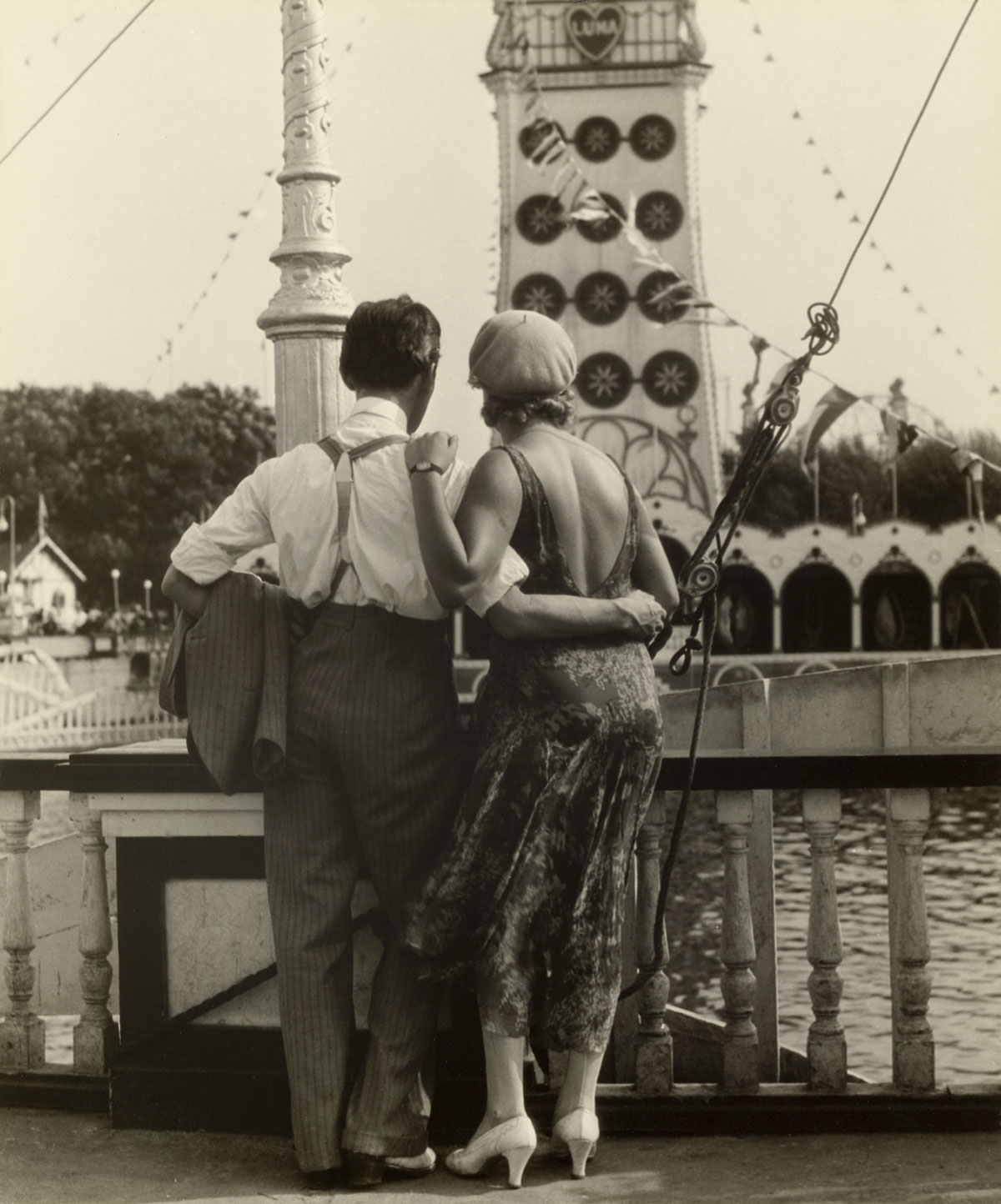
 

Walker Evans (American, 1903-1975) 'Couple at Coney Island, New York' 1928


Walker Evans (American, 1903-1975)
Couple at Coney Island, New York
1928
Gelatin silver print
8 x 5 13/16 inches
The Metropolitan Museum of Art, New York, Ford Motor Company Collection. Gift of Ford Motor Company and John C. Waddell, 1987
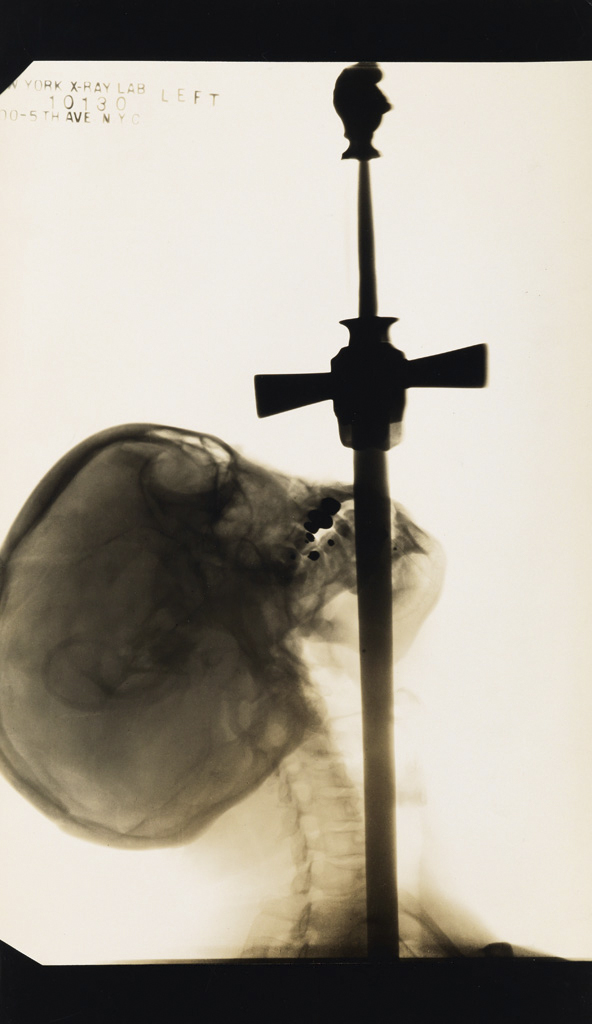
 

Edward J. Kelty (American, 1888-1967) 'X-ray of Ajax, the sword swallower' 1928


Edward J. Kelty (American, 1888-1967)
X-ray of Ajax, “The Sword Swallower”
1928
20 x 20 inches
Collection of Ken Harck


Edward J. Kelty (American, 1888-1967) 'Wonderland Circus Sideshow, Coney Island' 1929


Edward J. Kelty (American, 1888-1967)
Wonderland Circus Sideshow, Coney Island
1929
Collection of Ken Harck
© Edward J. Kelty
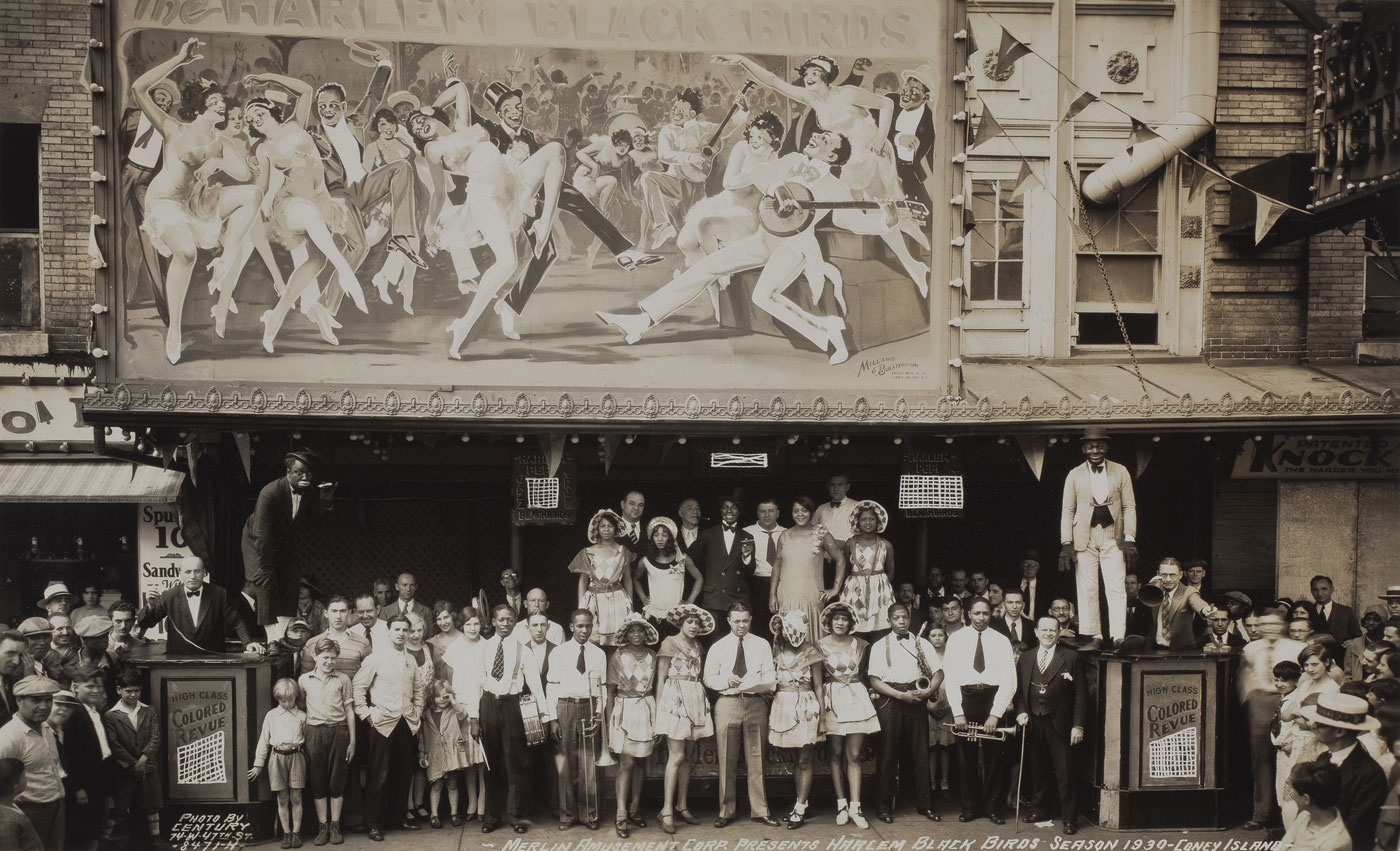
 

Edward J. Kelty (American, 1888-1967) 'Harlem Black Birds, Coney Island' 1930


Edward J. Kelty (American, 1888-1967)
Harlem Black Birds, Coney Island
1930
12 x 20 in. (30.5 x 50.8cm)
Collection of Ken Harck
© Edward J. Kelty


Edward J. Kelty (American, 1888-1967) 'Harlem Black Birds, Coney Island' 1930 (detail)


Edward J. Kelty (American, 1888-1967)
Harlem Black Birds, Coney Island (detail)
1930
12 x 20 in. (30.5 x 50.8cm)
Collection of Ken Harck
© Edward J. Kelty
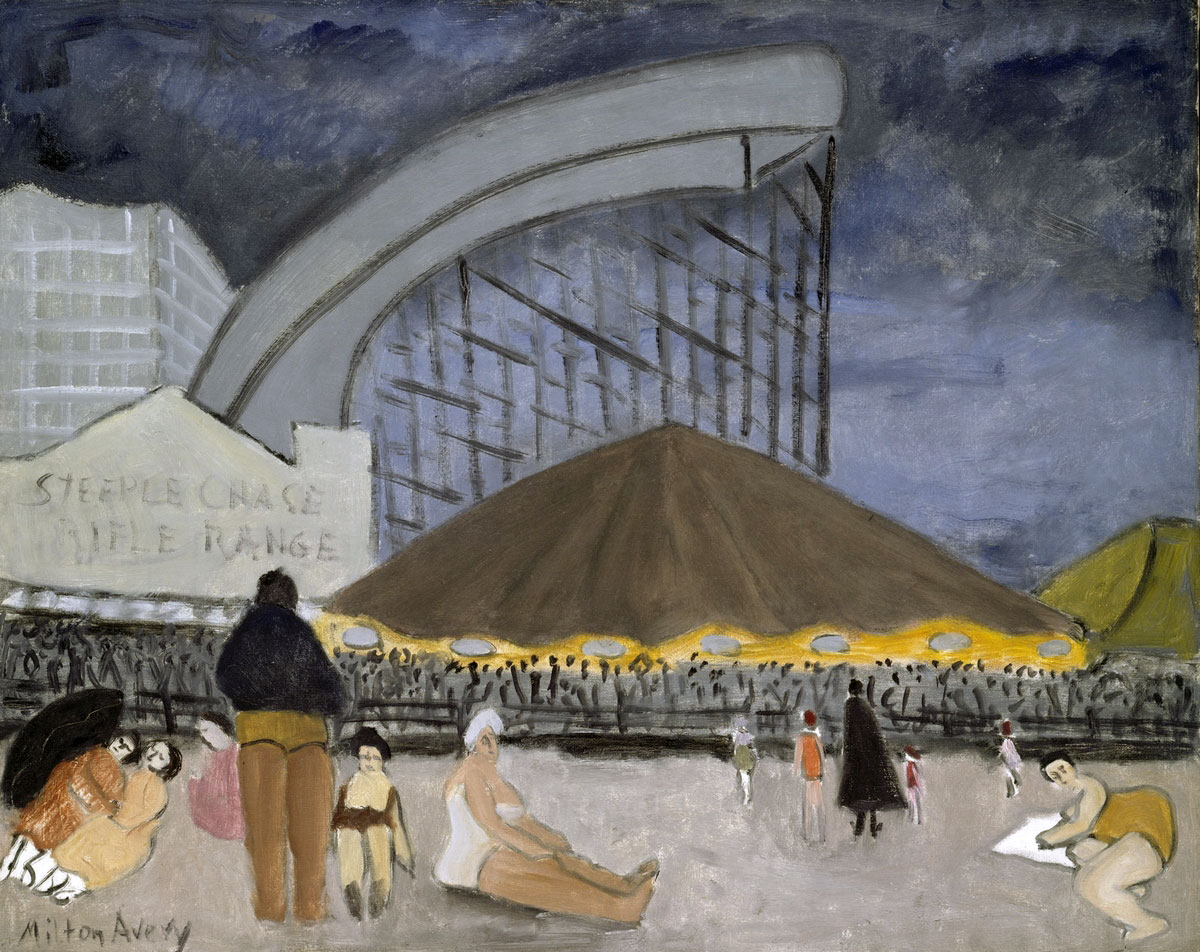
 

Milton Avery (American, 1885-1965) 'The Steeplechase, Coney Island' 1929


Milton Avery (American, 1885-1965)
The Steeplechase, Coney Island
1929
Oil on canvas, 32 x 40 in. (81.3 x 101.6cm)
The Metropolitan Museum of Art, New York; Gift of Sally M. Avery, 1984
Photo: © The Metropolitan Museum of Art, courtesy of Art Resource, New York
© 2013 Milton Avery Trust/Artists Rights Society (ARS), New York
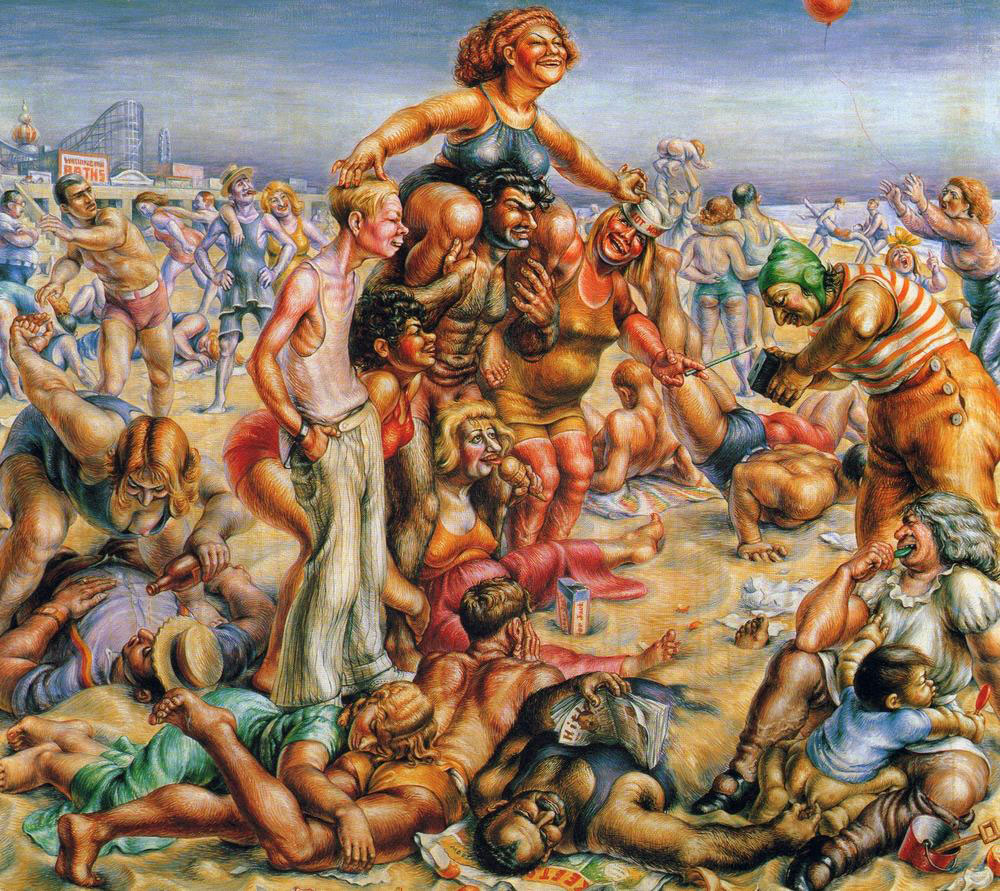
 

Paul Cadmus (American, 1904-1999) 'Coney Island' 1934


Paul Cadmus (American, 1904-1999)
Coney Island
1934
Oil on canvas
32 7/16 x 36 5/16 inches
Los Angeles County Museum of Art. Gift of Peter Paanakker


Paul Cadmus’s “Coney Island” takes a satirical view of American vacationers. The fleshy members of the human pyramid seem carefree and frivolous in light of the ominous rise to power of the Nazi Party in Germany (Hitler’s face can be seen printed on the magazine resting on the sleeping man’s chest at the bottom of the painting).


“… Paul Cadmus, who shared Marsh’s use of old-master forms and techniques but not his heterosexuality, filled his beach painting with purposely ugly women and mostly beautiful men. The main action in Cadmus’s Coney Island (1934) is the human pyramid of men and women at its center. And yet the Adonis who lies on his stomach in the foreground has no interest in this heterosexual game. Instead, he looks off at another muscular youth farther down the beach. For Marsh, Cadmus and their fellow Coney Island artists, the chance to gaze unabashedly at the body of a stranger was one of the great pleasures of the milieu.

… traditional figuration, like that of Cadmus and Marsh, is so dominant that the exhibition arguably offers an alternate history of American art – one in which the modernist painting of Milton Avery or Frank Stella seems like a sideshow. Breaking out of the canon of modernism, “Coney Island” puts new focus on neglected realist painters like Harry Roseland, Robert Riggs, George Tooker and a particular favorite of mine, Henry Koerner.”

Text from Jonathan Weinberg “Coney Island Forever,” on the Art in America website, October 1st 2015 [Online] Cited 14/12/2015.


Curator notes

Coney Island was the first painting Cadmus made after he ceased working for the federally sponsored Public Works of Art Project. It is typical of his paintings of the period in both theme and form. Cadmus viewed the prosaic activity of bathing on a beach in devastatingly satirical terms. Poking fun at the bathers’ carefree pleasures, Cadmus accumulated an odd assortment of bulging, burnt bodies. The bathers are oblivious to their ridiculous appearance and uncouth behaviour. Swarming the beach, their bodies are strangely intertwined, their faces smiling inanely. Everything is exaggerated, the color verging on the garish to intensify their grossness. In the 1930s Cadmus used oil paint almost as if it were a graphic medium, consequently Coney Island looks more like a tinted drawing than a painting. His small, exacting brushstrokes impart a flickering quality to the surface, which intensifies the impression that the figures are in constant motion. Cadmus actually began to sketch the scene on Martha’s Vineyard, before he visited Coney Island. He was attracted to the Brooklyn beach because it offered him the opportunity to delineate the human figure with as little clothing as possible. Moreover, he considered the beach scene to be a classical subject. His treatment, however, is rather baroque.

As was his friend Reginald Marsh, Cadmus was attracted to the elaborate compositions of old master paintings. Coney Island, with its seminude figures arranged in complex groupings, their bodies twisted and in constant motion, was for Cadmus the twentieth-century version of a baroque allegorical composition. Cadmus claimed that his intent was not to be sensational, but when the painting was exhibited in the Whitney Museum of American Art’s second biennial, it suffered the same hostile reception as did his earlier The Fleet’s In!. The Coney Island Showmen’s League, a local trade group, denounced the painting as offensive and inaccurate and threatened a libel suit if the painting was not removed from the exhibition. According to the artist’s incomplete records, it seems that the painting was rejected from several annual exhibitions to which it was submitted soon after it was shown at the Whitney biennial, probably because of the controversy it stirred. In 1935 Cadmus produced an etching from a photograph of the painting in the hope that it would reach a larger public. In the etching the image is reversed but otherwise differs only in a few minor details.

Exhibition Label, 1997

Cadmus was one of the most controversial American artists of the 1930s. His satirical perspective made people uncomfortable, and consequently reviewers sometimes questioned the decency of his rollicking scenes of New York City life. Coney Island, with its amusement park and beach on the south shore of Brooklyn, was a favourite destination of working-class people. Rather than glamorise labourers enjoying their day off, Cadmus poked fun at these beachgoers and their bulging, entangled bodies. They seem oblivious to their sunburnt flesh and the silliness of their activities. Coney Island met a particularly hostile reception when it was first exhibited. A businessman organisation associated with the amusement park denounced the painting as offensive, resulting in its rejection from subsequent exhibitions. Cadmus’s meticulous painting technique – pigments applied with thin, pencil like strokes – enabled him to delineate minute detail. For example, the viewer can read the headline about Hitler in the newspaper held by the reclining man in the foreground. This subtle reference to the horrifying political developments abroad underscores the inanities of the beachgoers. Carved in wood, this simple frame was rubbed with pigment rather than gilded, a treatment that came into fashion during World War I, as gold became scarce.

Text from the LACMA website [Online] Cited 01/01/2016.
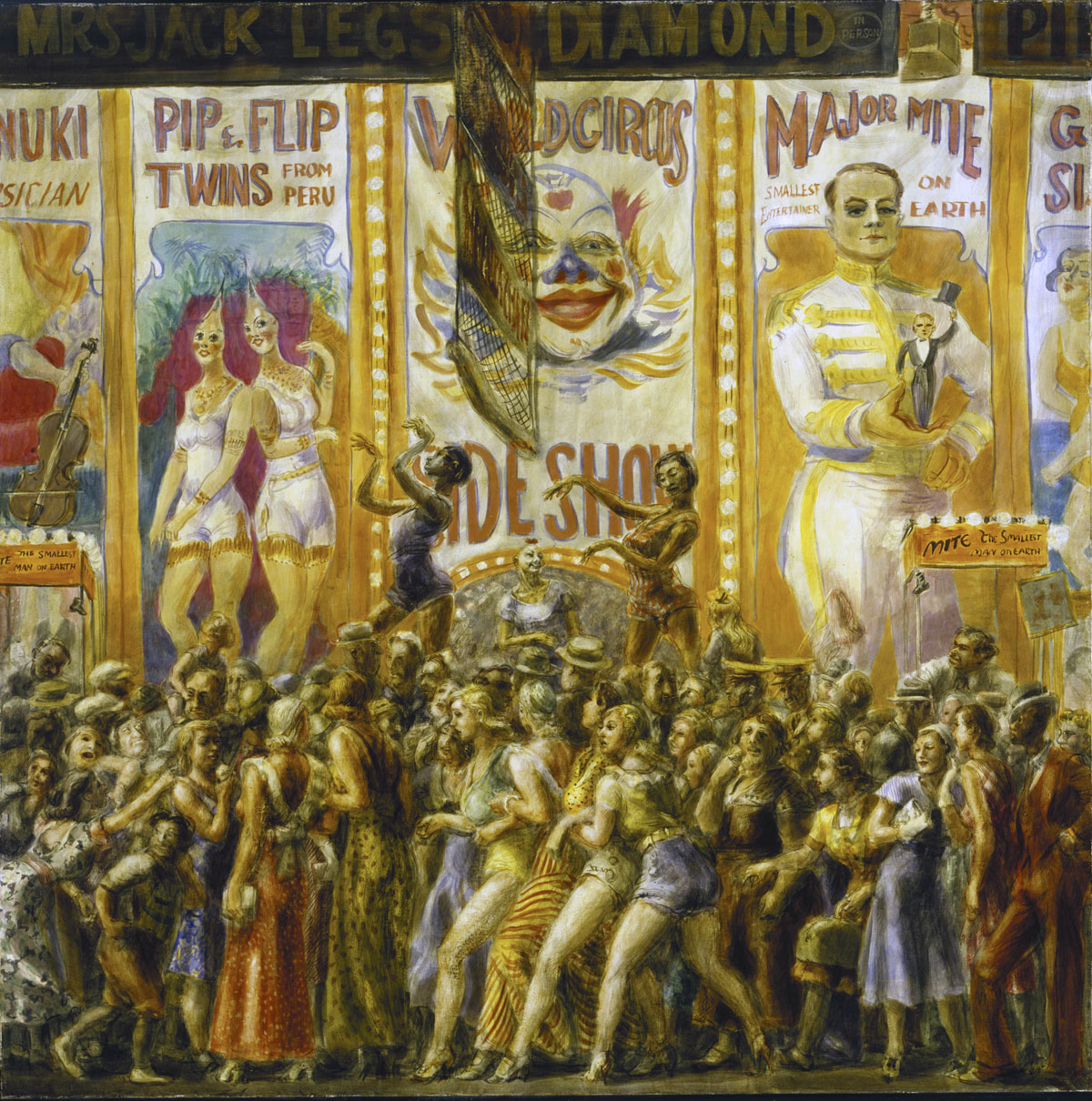
 

Reginald Marsh (American, 1898-1954) 'Pip and Flip' 1932


Reginald Marsh (American, 1898-1954)
Pip and Flip
1932
Tempera on paper mounted on canvas
48 1/4 x 48 1/4 in.
Terra Foundation for American Art, Chicago
Daniel J. Terra Collection


“Such bodies were the great subjects of Reginald Marsh. Instead of Stella’s spirals of lights abstracted and seen from a distance, Marsh’s George C. Tilyou’s Steeplechase Park (1936) gives us a close-up view of the Human Roulette Wheel where young women are spun into all kinds of unladylike postures. For the Yale-educated Marsh, Coney Island was a chance to go “slumming,” to mingle with the lower classes on the beach and in the amusement parks. Hostile to modernism and abstract art, he reimagined bathers and sideshow audiences in poses derived from Michelangelo and Rubens. And yet, like Stella, Marsh overpacked his Coney Island paintings so that every inch is activated and in motion like a carnival ride. The highly compressed space of a Marsh painting like Pip and Flip (1932, above)with its collage-like play of rectangular billboards advertising human-oddity sideshows, would be unthinkable without the precedent of Cubism that he supposedly detested.”

Text from Jonathan Weinberg “Coney Island Forever,” on the Art in America website, October 1st 2015 [Online] Cited 14/12/2015.


Human Roulette Wheel at Steeplechase Park, Coney Island, early 1900s


Reginald Marsh (American, 1898-1954). 'Wooden Horses' 1936


Reginald Marsh (American, 1898-1954)
Wooden Horses
1936
Tempera on board, 24 x 40 in. (61 x 101.6cm)
Wadsworth Atheneum Museum of Art, Hartford, Connecticut; The Dorothy Clark Archibald and Thomas L. Archibald Fund, The Krieble Family Fund for American Art, The American Paintings Purchase Fund, and The Ella Gallup Sumner and Mary Catlin Sumner Collection Fund
Photo: © 2013 Estate of Reginald Marsh/Art Students League, New York/Artists Rights Society (ARS), New York
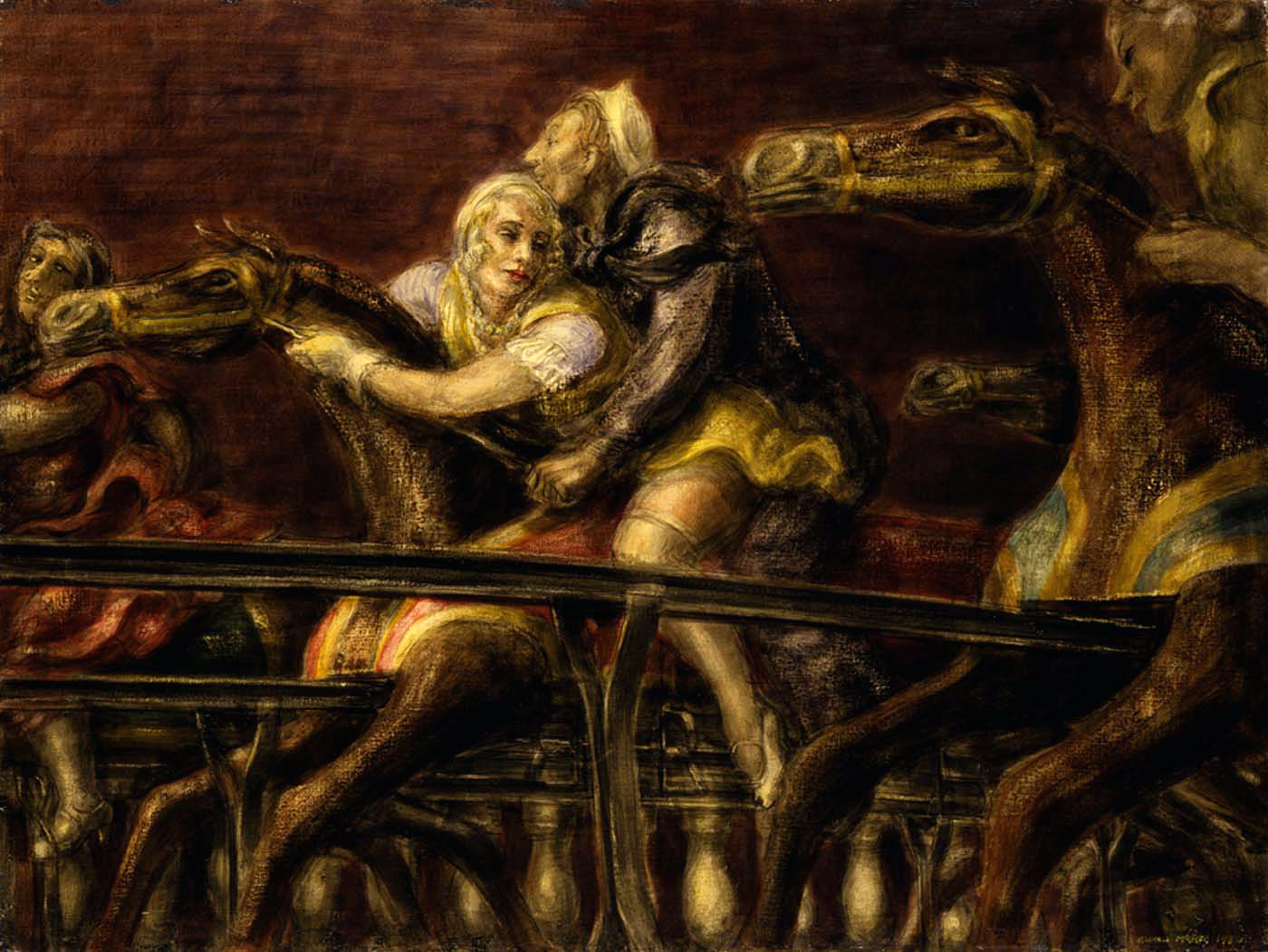
 

Reginald Marsh (American, 1898-1954) 'George Tilyou's Steeplechase Park' 1936


Reginald Marsh (American, 1898-1954)
George Tilyou’s Steeplechase Park
1936
Oil and egg tempera on linen mounted on fiberboard
30 1/8 x 40 1/8 in. (76.5 x 101.8cm)
Smithsonian American Art Museum
Gift of the Sara Roby Foundation


Steeplechase Mechanical Horse Ride at Steeplechase Park, Coney Island, early 1900s


The spirit of Coney Island comes alive with Coney Island: Visions of an American Dreamland, 1861-2008 on view at the Brooklyn Museum. The exhibition traces the evolution of the Coney Island phenomenon from tourist destination during the Civil War to the World’s Greatest Playground to a site of nostalgia. Covering a period of 150 years, the exhibition features 140 objects, including paintings, drawings, photographs, prints, posters, artefacts, carousel animals, ephemera, and film clips. Also on view is Forever Coney, 42 photographs from the Brooklyn Museum collection.

An extraordinary array of artists have viewed Coney Island as a microcosm of the American experience and used their works to investigate the area as both a place and an idea. Coney Island: Visions of an American Dreamland offers up early depictions of “the people’s beach” by Impressionists William Merritt Chase and John Henry Twachtman; modernist depictions of the amusement park by Joseph Stella; Depression-era scenes of cheap thrills by Reginald Marsh; photographs by Walker Evans, Diane Arbus, Weegee, and Bruce Davidson; and contemporary works by Daze and Swoon.

“The modern American mass-culture industry was born at Coney Island, and the constant novelty of the resort made it a seductively liberating subject for artists,” said Dr Robin Jaffee Frank, exhibition curator. “What these artists saw from 1861 to 2008 at Coney Island, and the varied ways in which they chose to portray it, mirrored the aspirations and disappointments of the era and the country. Taken together, these tableaux of wonder and menace, hope and despair, dreams and nightmares become metaphors for the collective soul of a nation.”

Coney Island: Visions of an American Dreamland, 1861-2008 is organised by the Wadsworth Atheneum Museum of Art, Hartford, Connecticut. The Brooklyn presentation is organised by Connie H. Choi, Assistant Curator, Arts of the Americas and Europe, Brooklyn Museum. A fully illustrated 304-page catalogue, co-published by Yale University Press and the Wadsworth Athenaeum, incorporates the first continuous visual analysis of great works of art about Coney Island by Dr Frank as well as essays by distinguished cultural historians.

Forever Coney

As one of America’s first seaside resorts, Coney Island has attracted adventurous visitors and undergone multiple transformations, inspiring photographers since the mid-nineteenth century. Forever Coney: Photographs from the Brooklyn Museum Collection features forty-two images that celebrate the people and places that make up Coney Island. The earliest works, taken by photographers such as George Bradford Brainerd and Irving Underhill, document the resort from the post-Civil War period through the turn of the twentieth century. Later artists such as Harry Lapow and Stephen Salmieri have photographed the many personalities that have passed through the site.

The photographers included in this exhibition are George Bradford Brainerd, Lynn Hyman Butler, Anita Chernewski, Victor Friedman, Kim Iacono, Sidney Kerner, Harry Lapow, Nathan Lerner, Jack Lessinger, H.S. Lewis, John L. Murphy, Ben Ross, Stephen Salmieri, Edgar S. Thomson, Arthur Tress, Irving Underhill, Breading G. Way, Eugene Wemlinger, and Harvey R. Zipkin. Forever Coney: Photographs from the Brooklyn Museum Collection is organized by Connie H. Choi, Assistant Curator of American Art, Brooklyn Museum. It is presented in conjunction with the exhibition Coney Island: Visions of an American Dreamland, 1861-2008.

Text from the Brooklyn Museum website


Morris Engel (American, 1918-2005). 'Coney Island Embrace, New York City' 1938


Morris Engel (American, 1918-2005)
Coney Island Embrace, New York City
1938
Gelatin silver print
10 9/16 x 11 1/2 inches
Orkin/Engel Film and Photo Archive, New York
© Morris Engel


Morris Engel (American, 1918-2005) 'Mother with Children' 1938


Morris Engel (American, 1918-2005)
Mother with Children
1938
Gelatin silver print
8 x 10 inches
Orkin/Engel Film and Photo Archive, New York


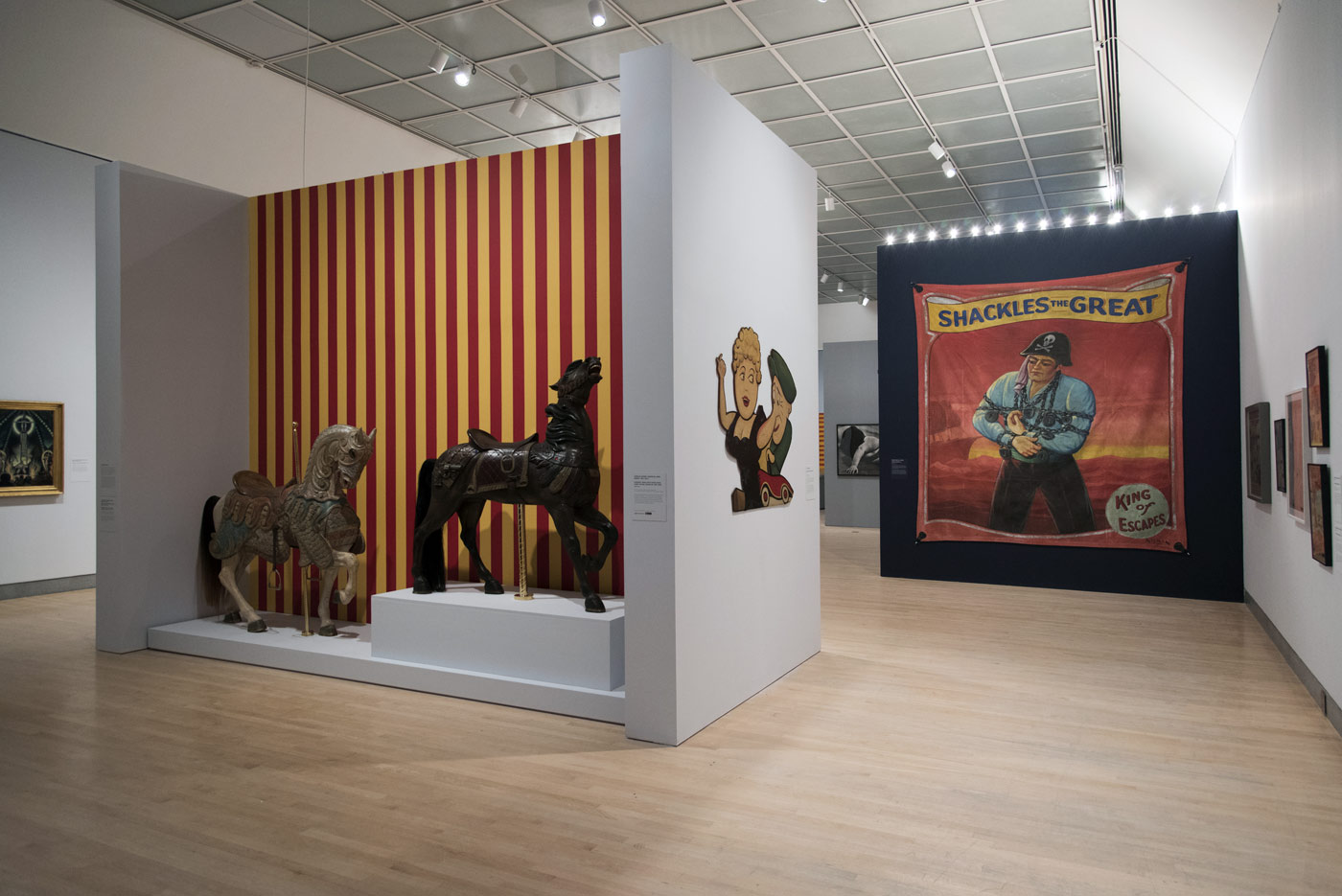
Nieman Studios, Inc., Chicago. 'Shackles the Great' 1940


Nieman Studios, Inc., Chicago
Shackles the Great
1940
Sideshow banner
118 x 108 inches
Collection of Ken Harck
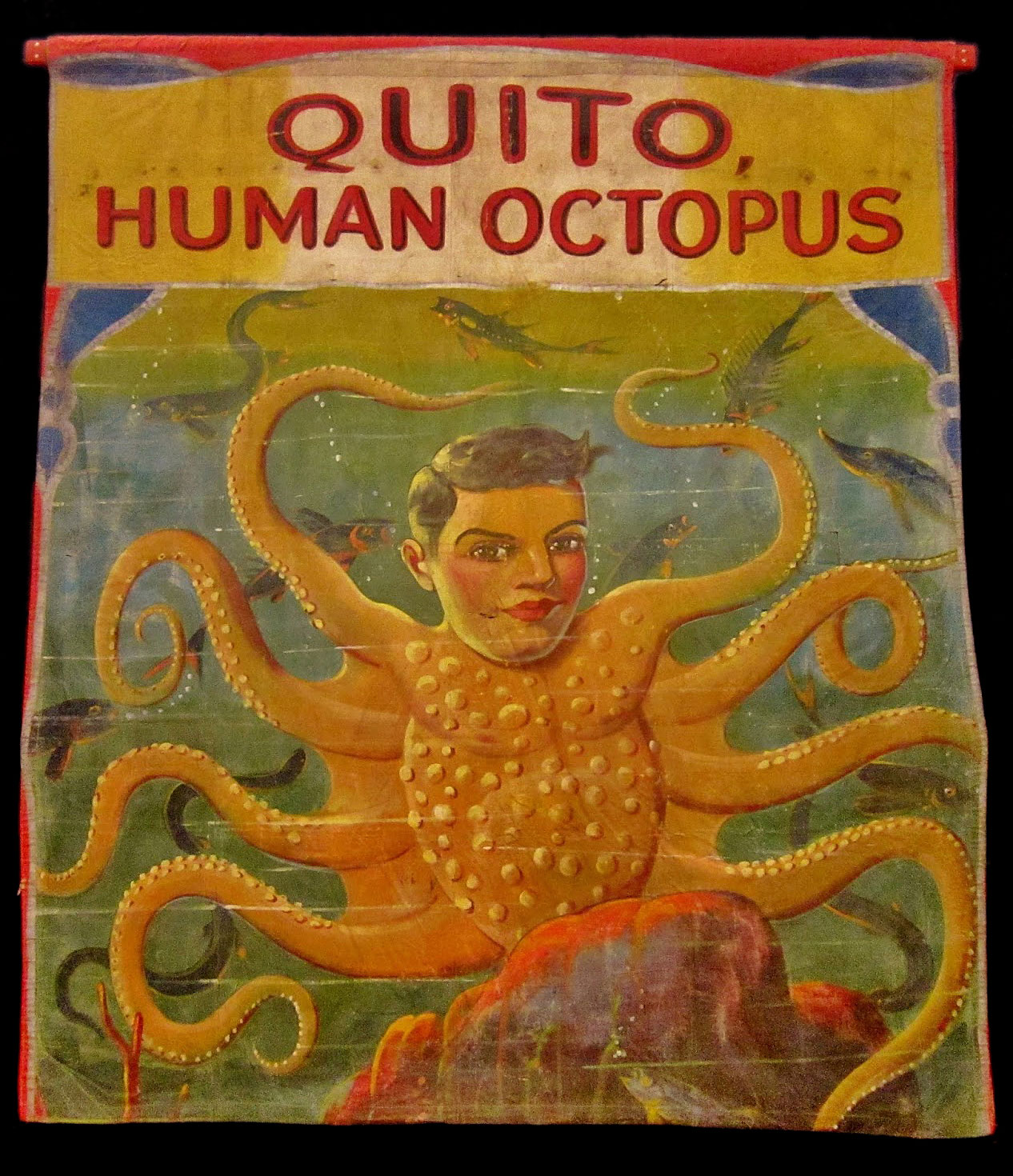
 

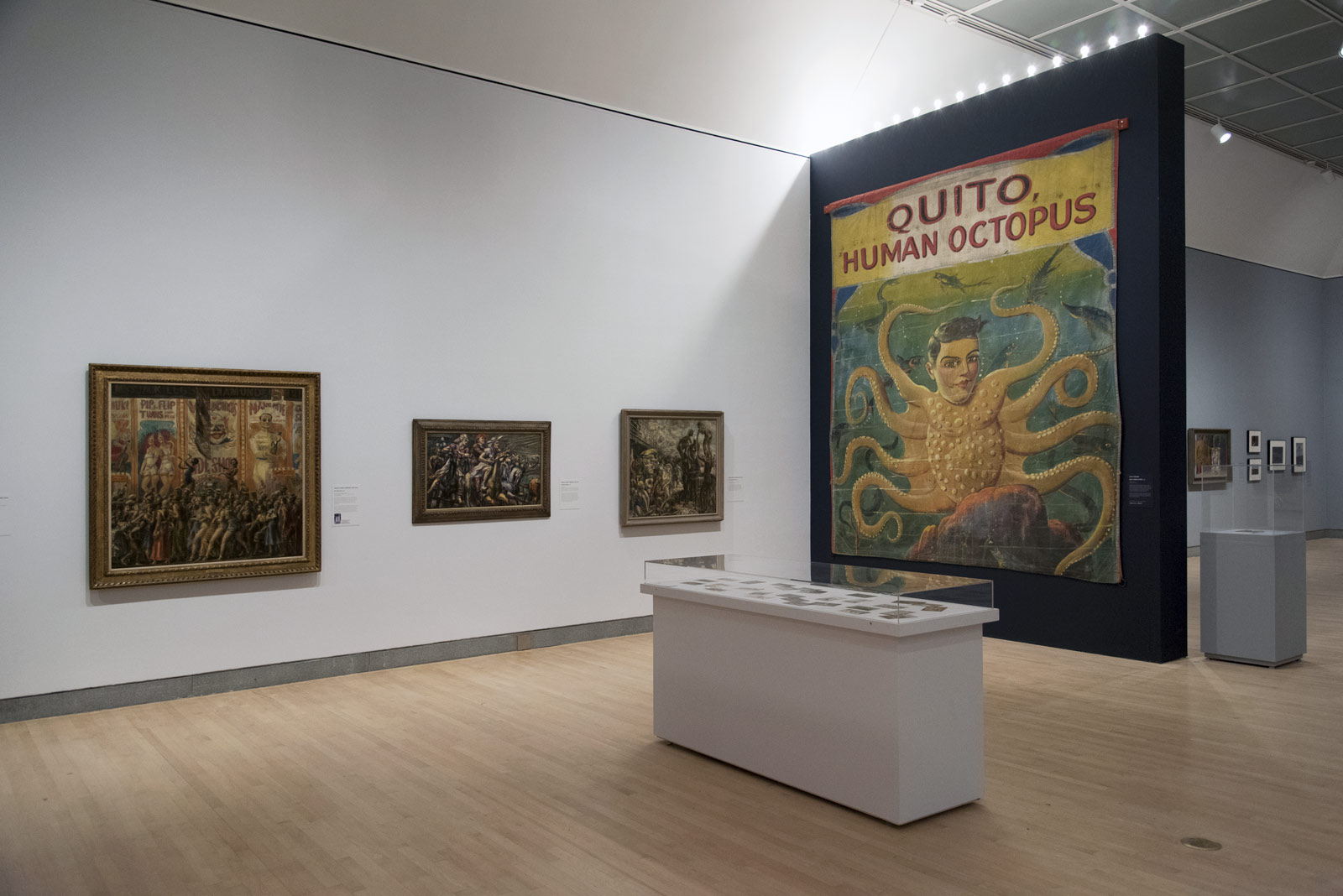
'Quito, Human Octopus' 1940


Quito, Human Octopus
1940
Sideshow banner
140 x 117 inches
Collection of Ken Harck


Anonymous maker. 'Steeplechase Funny Face' Nd


Steeplechase Funny Face
Nd
Painted metal
23 inches
Collection of Ken Harck


Henry Koerner (American born Austria, 1915-1991) 'The Barker’s Booth' 1948-1949


Henry Koerner (American born Austria, 1915-1991)
The Barker’s Booth
1948-1949
Oil on Masonite
26 x 40 1/2 in. (66 x 102.9cm)
Collection of Alice A. Grossman
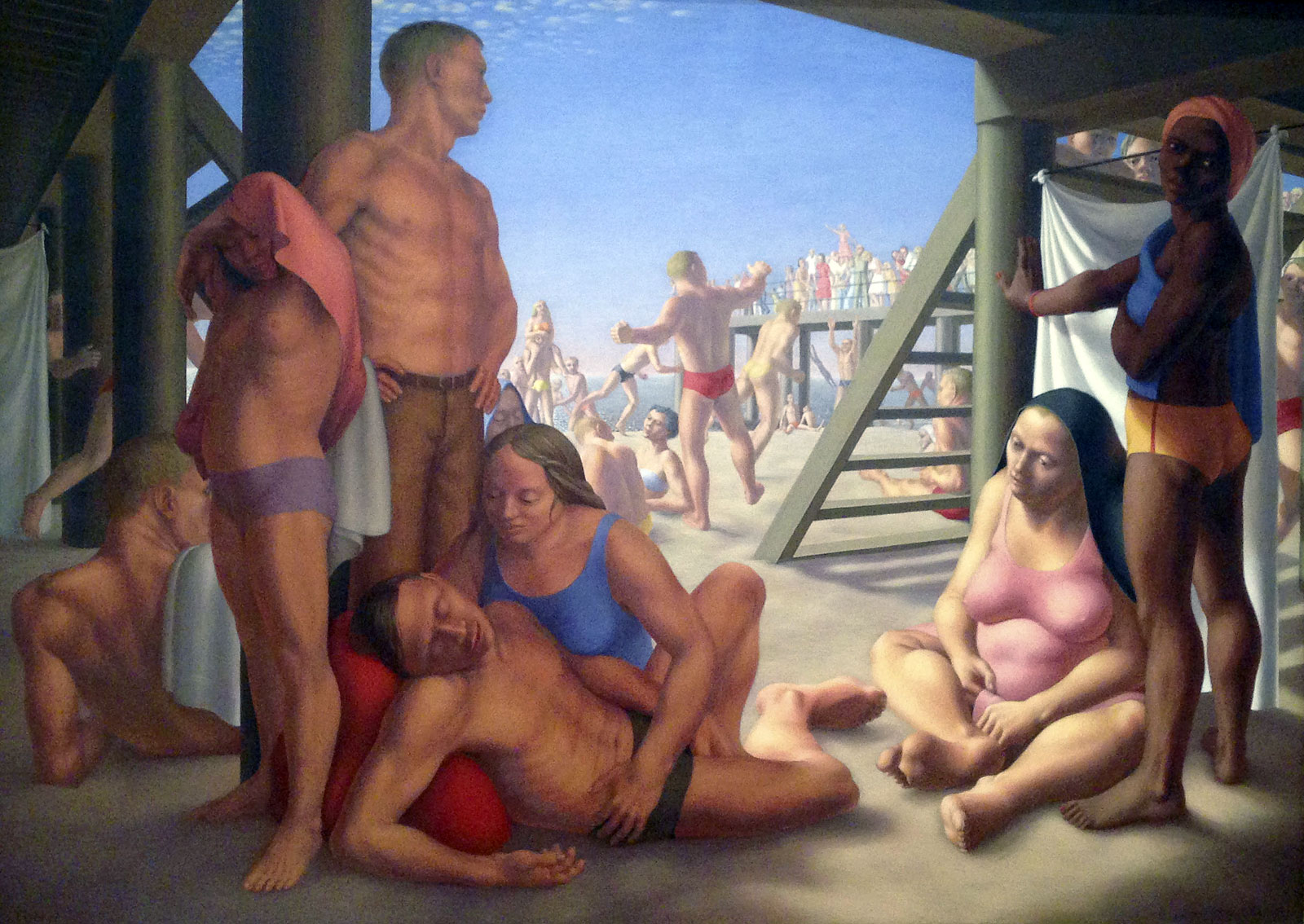
 

George Tooker (American, 1920-2011) 'Coney Island' 1948


George Tooker (American, 1920-2011)
Coney Island
1948
Egg tempera on gesso panel
19 1/4 x 26 1/4 inches
Curtis Galleries, Minneapolis


George Tooker’s thought-provoking “Coney Island” places traditional beach goers in a Pietà tableau.
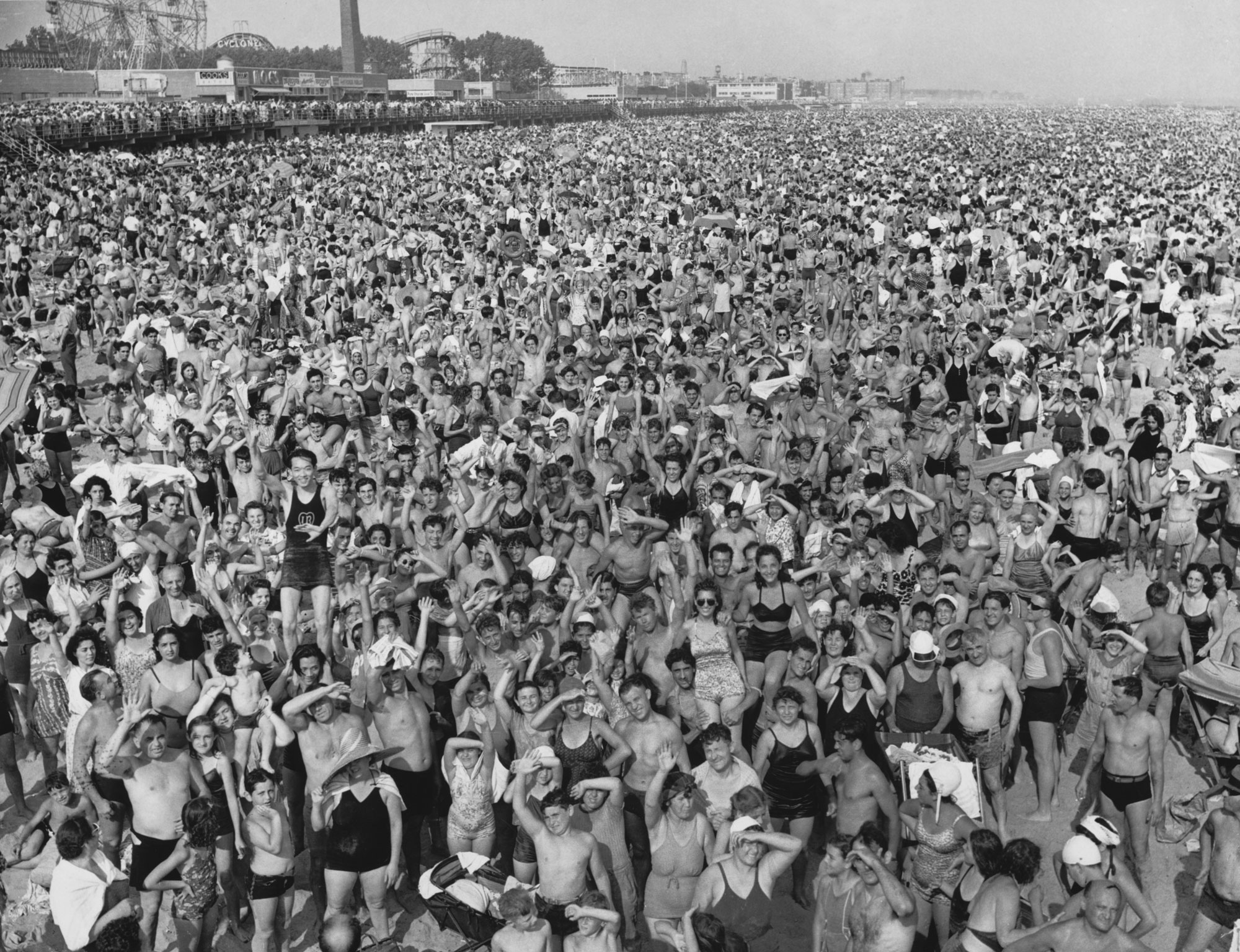
 

Weegee (Arthur Fellig) (American, 1899-1968) 'Coney Island' 1940


Weegee (Arthur Fellig) (American, 1899-1968)
Coney Island Beach
1940
Gelatin silver print
8 1/8 x 10 inches
The Metropolitan Museum of Art, New York. Ford Motor Company Collection, Gift of Ford Motor Company and John C. Waddell, 1987


Looking at Weegee’s photograph, it is easy to be carried away with longing for what seems like a simpler and happier time. Undoubtedly, the picture’s sense of naïve jubilation was part of its appeal for Red Grooms, who essentially copied the image in paint for Weegee 1940 (1998-1999). And yet, like much at Coney Island, Weegee’s photograph is an illusion. Taken when Europe was already at war and the Depression had not yet ended, its merriment was only a momentary respite.

Text from Jonathan Weinberg “Coney Island Forever,” on the Art in America website, October 1st 2015 [Online] Cited 14/12/2015.


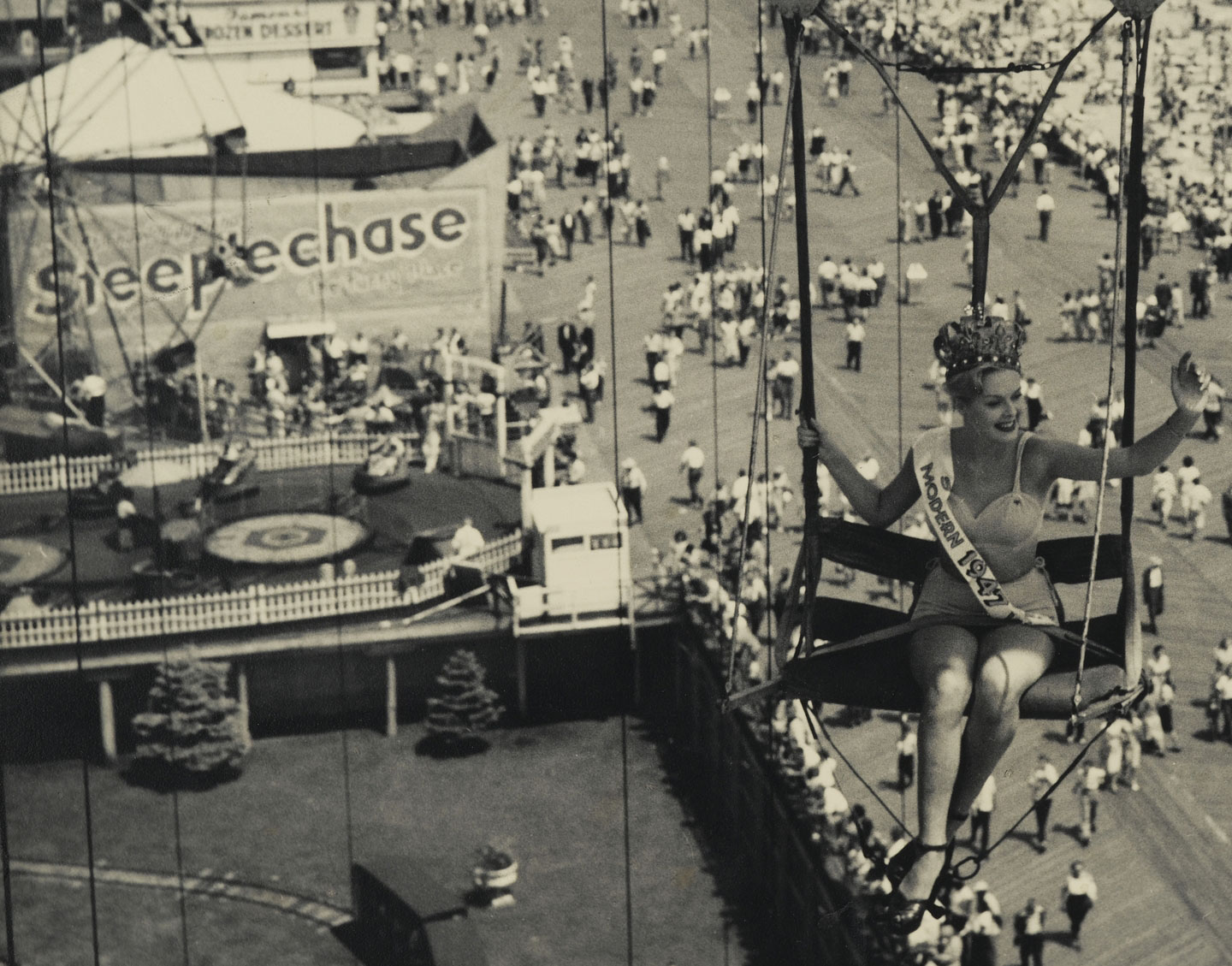
Unknown artist. 'Modern Venus of 1947' Coney Island, 1947


Unknown artist
Modern Venus of 1947
Coney Island, 1947
Gelatin silver photograph
10 3/4 x 13 7/8 in. (27.3 x 35.2cm)
Brooklyn Museum, Brooklyn Museum Collection
Photo: Christine Gant, Brooklyn Museum
 

Unknown artist. 'Modern Venus of 1947, Coney Island, 1947' (detail)


Unknown artist
Modern Venus of 1947 (detail)
Coney Island, 1947
Gelatin silver photograph
10 3/4 x 13 7/8 in. (27.3 x 35.2cm)
Brooklyn Museum, Brooklyn Museum Collection
Photo: Christine Gant, Brooklyn Museum
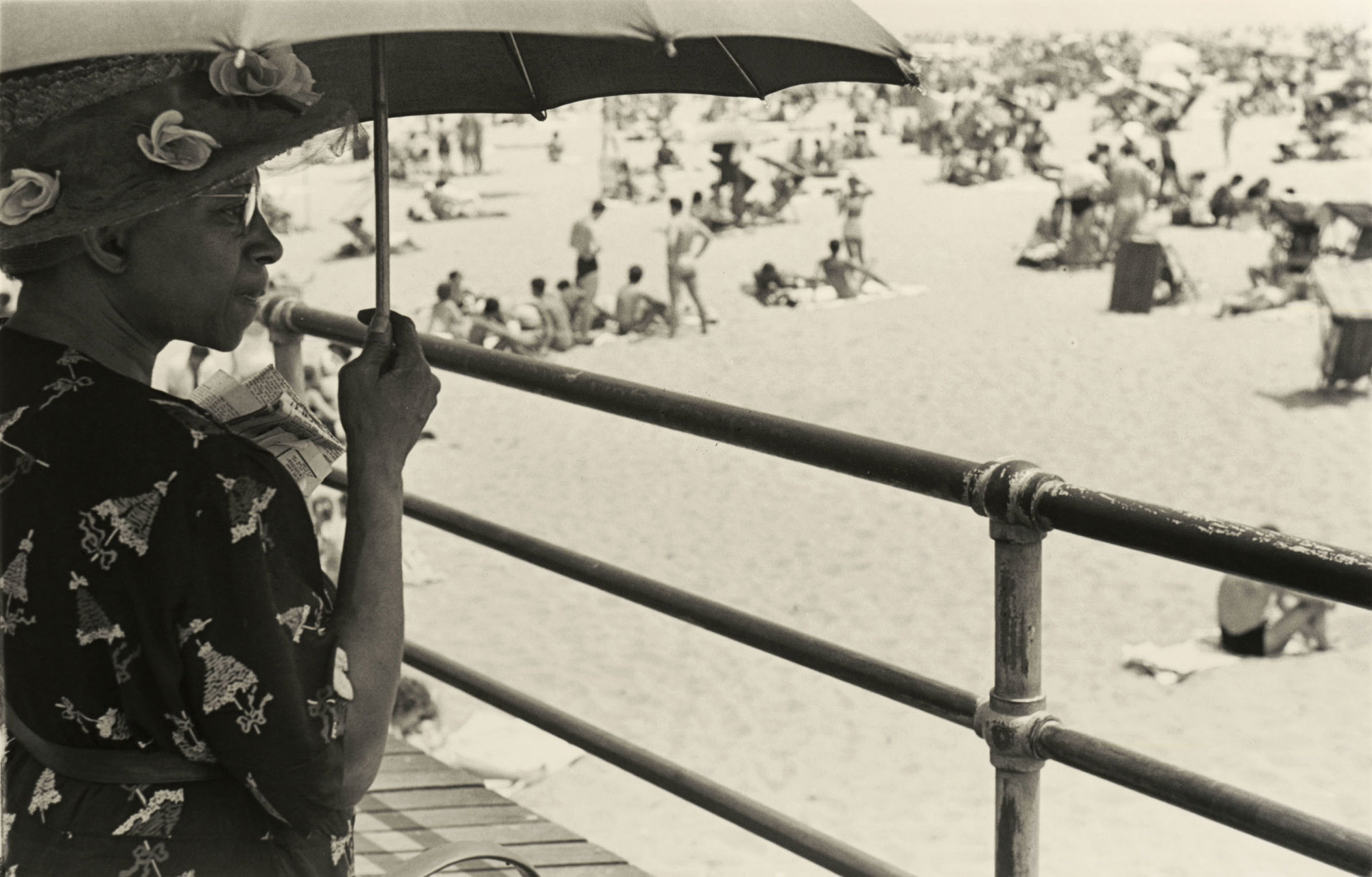
 

Homer Page (American, 1918-1985). 'Coney Island' July 30, 1949


Homer Page (American, 1918-1985)
Coney Island
July 30, 1949
Gelatin silver print
11 x 14 in. (27.9 x 35.6cm)
The Nelson-Atkins Museum of Art, Kansas City, Missouri; Gift of the Hall Family Foundation
© Homer Page
Photo: John Lamberton
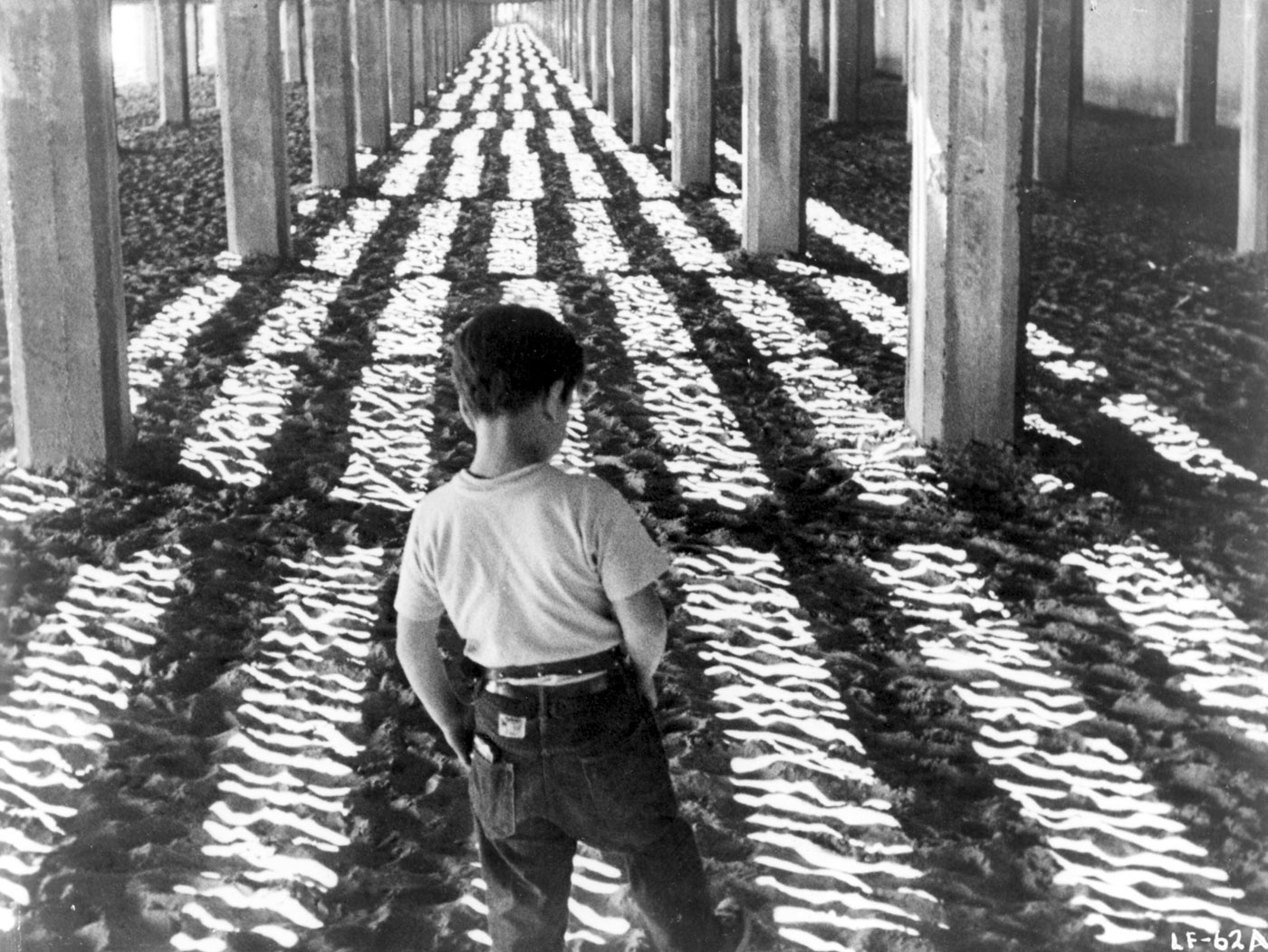
 

Morris Engel (American, 1918-2005) 'Little Fugitive', production still, 1953


Morris Engel (American, 1918-2005)
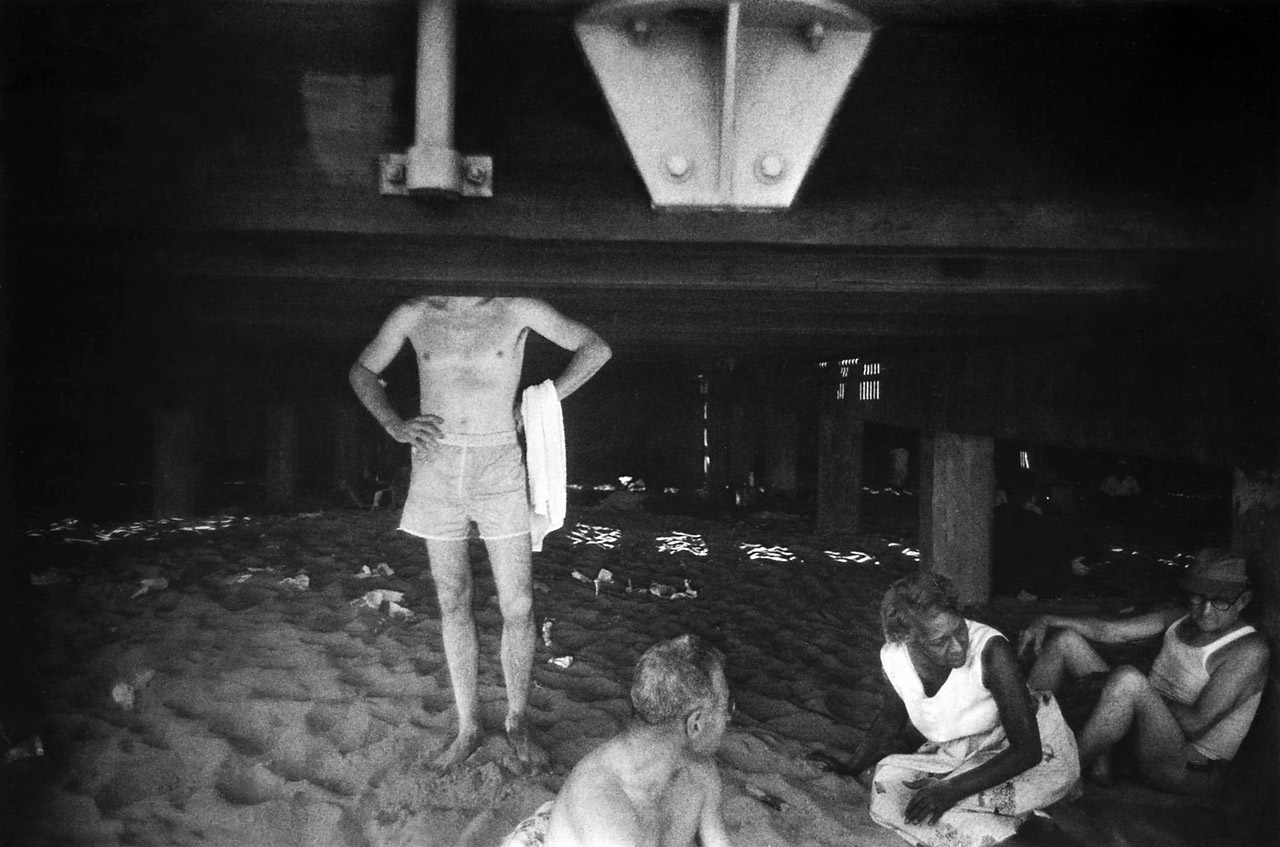
Under the Boardwalk, Coney Island [Production still from Little Fugitive]
1953
Gelatin silver print
8 x 10 inches
Orkin/Engel Film and Photo Archive, New York


Raymond Abrashkin (as “Ray Ashley”), Morris Engel and Ruth Orkin (directors)
Little Fugitive
1953


Joey, a young boy, runs away to Coney Island after he is tricked into believing he has killed his older brother. Joey collects glass bottles and turns them into money, which he uses to ride the rides.

Little Fugitive (1953), one of the most beautiful films featured in the exhibition, conveys the feeling of moving through the enormous crowds in Weegee’s photographThe creation of two master still photographers, Morris Engel and Ruth Orkin, and writer Ray Ashley, the film tells the story of Joey, a seven-year-old boy who runs away to Coney Island. But if Joey initially exalts in the freedom of being lost in the crowd, he feels abandoned when the amusement park closes down. Robert Frank’s photograph from the same year of a man asleep on a deserted beach with the Parachute Tower at his back [see below] echoes the film’s invocation of the resort’s fleeting joys. When Coney Island empties out it reveals the superficiality and pathos of the fantasies it evokes. In 1894, even before the big amusement parks were built, Stephen Crane mused about how in winter the “mammoth” hotels became “gaunt and hollow, impassively and stolidly suffering from an enormous hunger for the public.” (Stephen Crane, “Coney Island’s Failing Days,” in A Coney Island Reader, p. 69).”

Text from Jonathan Weinberg “Coney Island Forever,” on the Art in America website, October 1st 2015 [Online] Cited 14/12/2015.
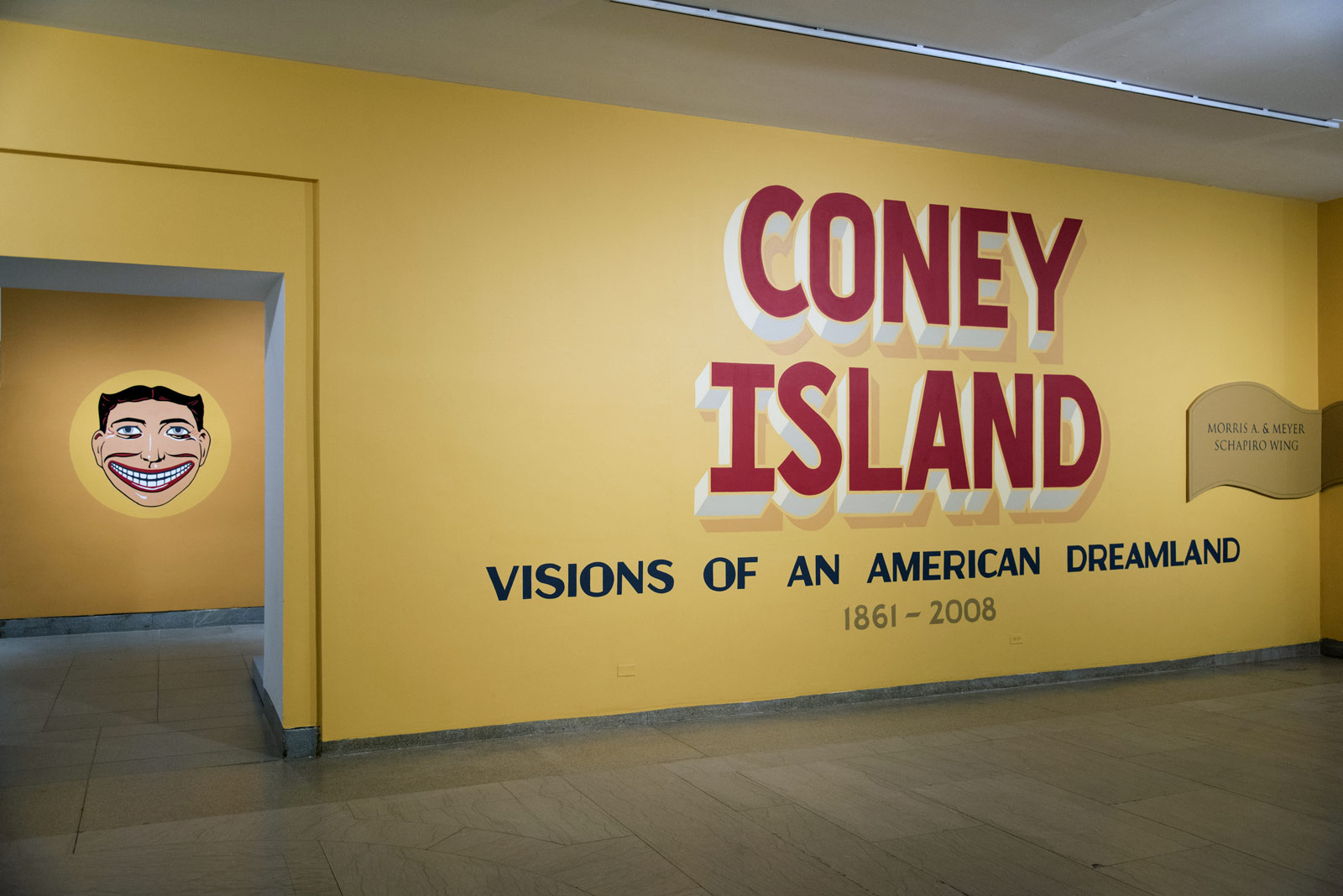
 

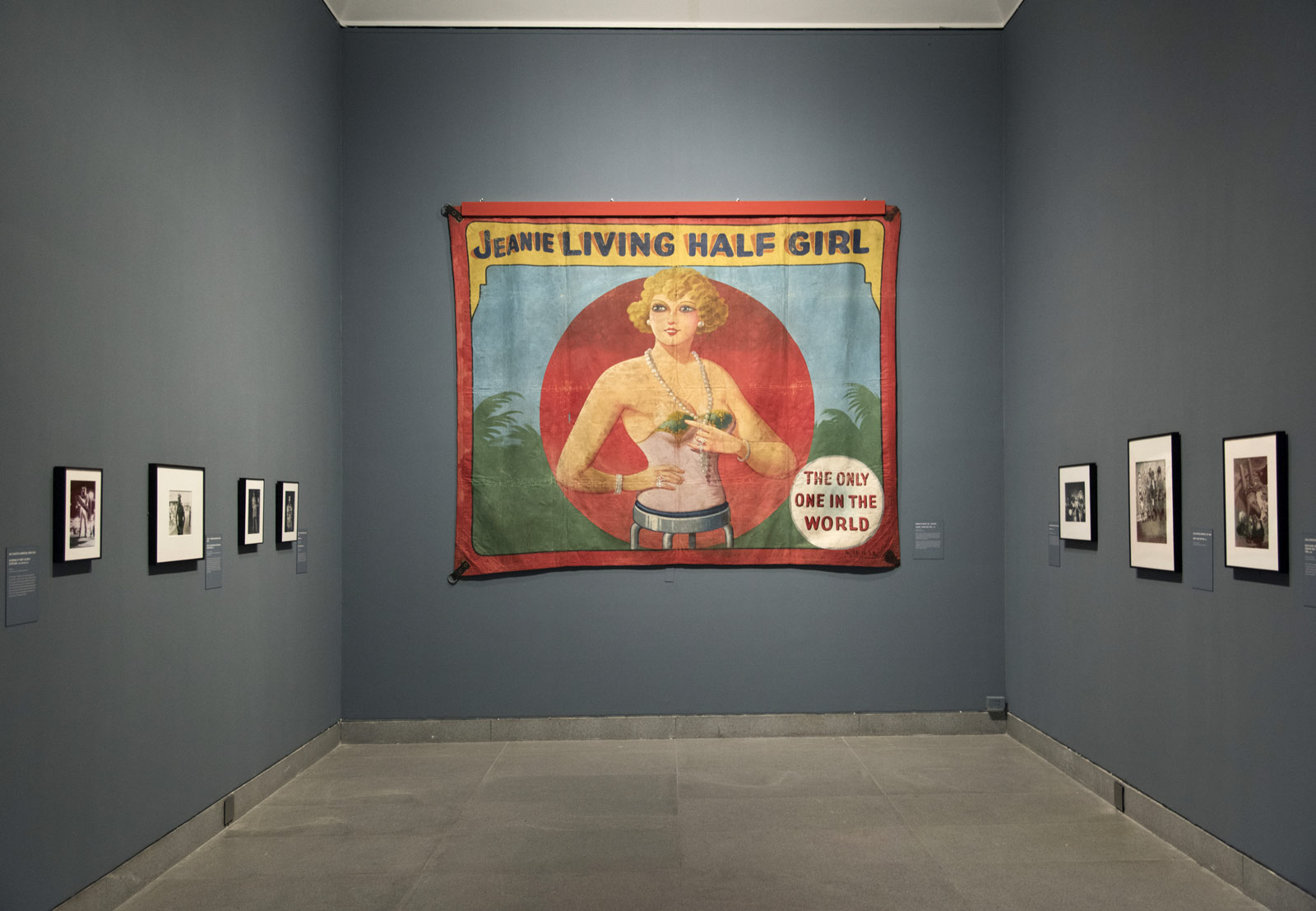
Installation of view of the exhibition 'Coney Island: Visions of an American Dreamland, 1861-2008' at the Brooklyn Museum

Installation of view of the exhibition 'Coney Island: Visions of an American Dreamland, 1861-2008' at the Brooklyn Museum

Installation of view of the exhibition 'Coney Island: Visions of an American Dreamland, 1861-2008' at the Brooklyn Museum

Installation of view of the exhibition 'Coney Island: Visions of an American Dreamland, 1861-2008' at the Brooklyn Museum

Installation of view of the exhibition 'Coney Island: Visions of an American Dreamland, 1861-2008' at the Brooklyn Museum

Installation of view of the exhibition 'Coney Island: Visions of an American Dreamland, 1861-2008' at the Brooklyn Museum

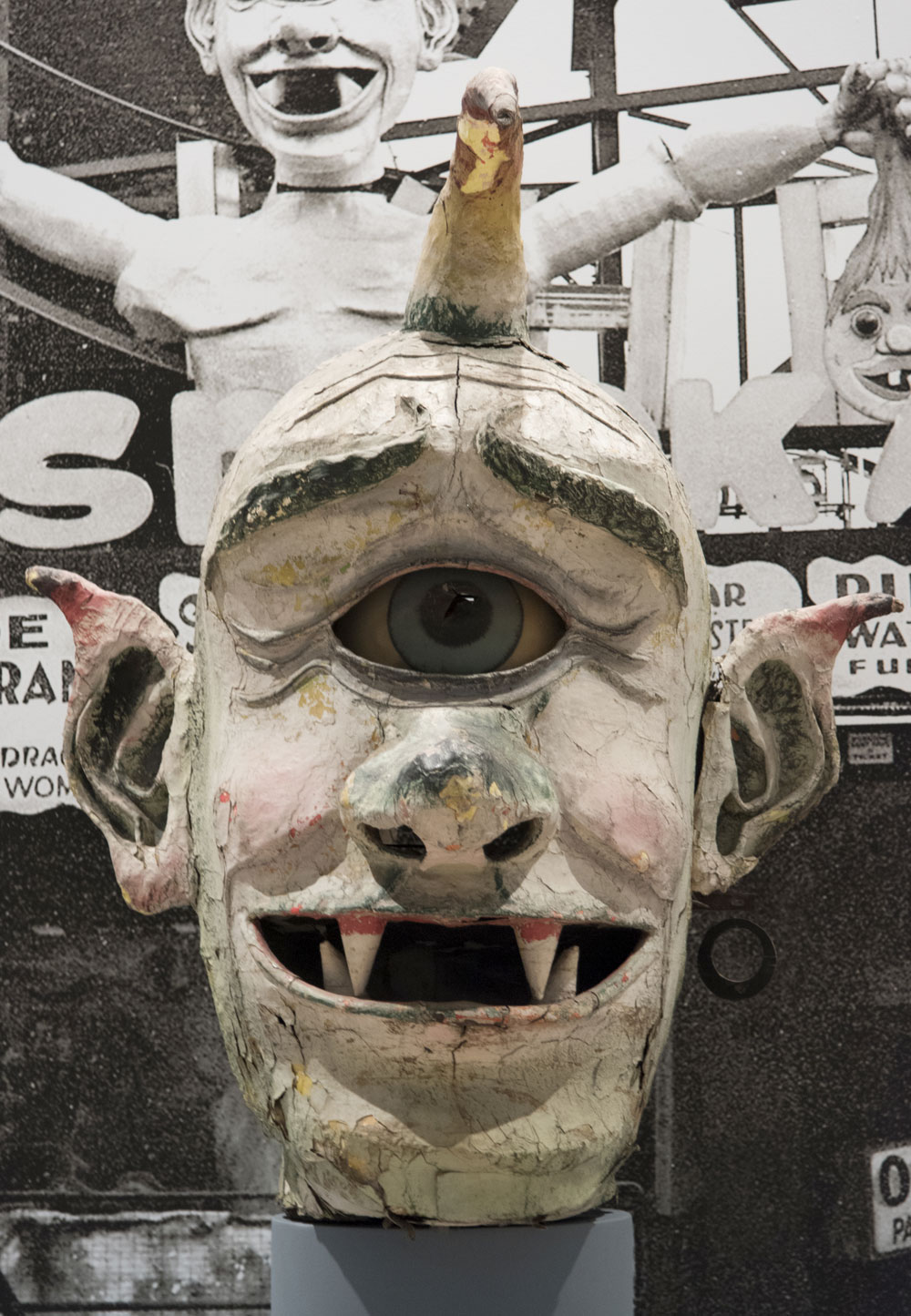
Installation of view of the exhibition 'Coney Island: Visions of an American Dreamland, 1861-2008' at the Brooklyn Museum showing at centre left, 'Cyclops Head from Spook-A-Rama' c. 1955

Installation of view of the exhibition 'Coney Island: Visions of an American Dreamland, 1861-2008' at the Brooklyn Museum showing 'Cyclops Head from Spook-A-Rama' c. 1955


Installation of views of the exhibition Coney Island: Visions of an American Dreamland, 1861-2008 at the Brooklyn Museum, New York


Cyclops Head from Spook-A-Rama
c. 1955
Mixed media
60 x 47 x 42 inches
The Vourderis Family. Deno’s Wonder Wheel


Garry Winogrand (American, 1928-1984) 'Coney Island, New York City, N.Y.,' 1952


Garry Winogrand (American, 1928-1984)
Coney Island, New York City, N.Y.,
1952
Silver bromide
8 1/2 x 13 inches
Yale University Art Gallery, New Haven, Conn. Gift of Barbara and James L. Melcher


Bruce Davidson (American, b. 1933) 'Two Youths, Coney Island'From the series 'Brooklyn Gang, 1958' print c. 1965


Bruce Davidson (American, b. 1933)
Untitled (Cathy and Cigarette Machine), from the series Brooklyn Gang
1959, printed later
Gelatin silver print
Image: 8 3/8 x 12 5/8
Sheet: 11 x 14 inches
Yale University Art Gallery, New Haven, Conn. The Heinz Family Fund


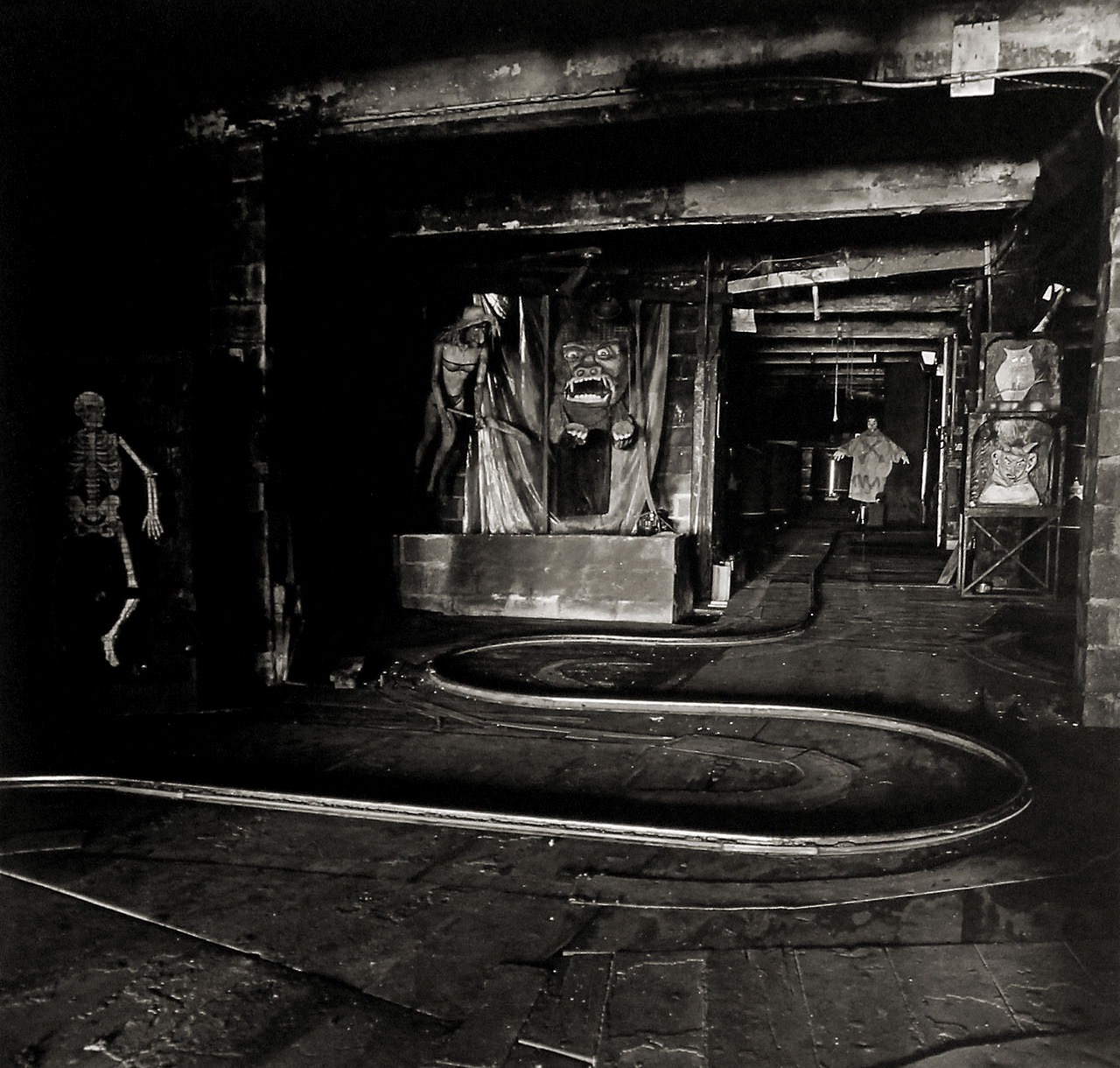
Diane Arbus (American, 1923-1971) ‘The House of Horrors’ 1961


Diane Arbus (American, 1923-1971)
The House of Horrors
1961
Gelatin silver print
14 1/2 x 14 inches
Fraenkel Gallery, San Francisco


“As its carnival rides and sideshows became increasingly dated in the 1960s, Coney Island was unable to maintain even the phony thrills that Miller derided in the 1930s. In Diane Arbus’s The House of Horrors (1961)the fake skeleton and the cartoon ape mask aren’t as scary as the ride’s sorry state and the impression that something terrible has driven all the people away. (The 1970 low-budget slasher film Carnival of Blood, not included in the exhibition, brilliantly uses this seediness to create a sense of uncanny doom.) In Arnold Mesches’s painting Anomie 1991: Winged Victory (1991), the creaky rides mingle with images of war, turning dreamland into an apocalyptic nightmare.”

Text from Jonathan Weinberg “Coney Island Forever,” on the Art in America website, October 1st 2015 [Online] Cited 14/12/2015.
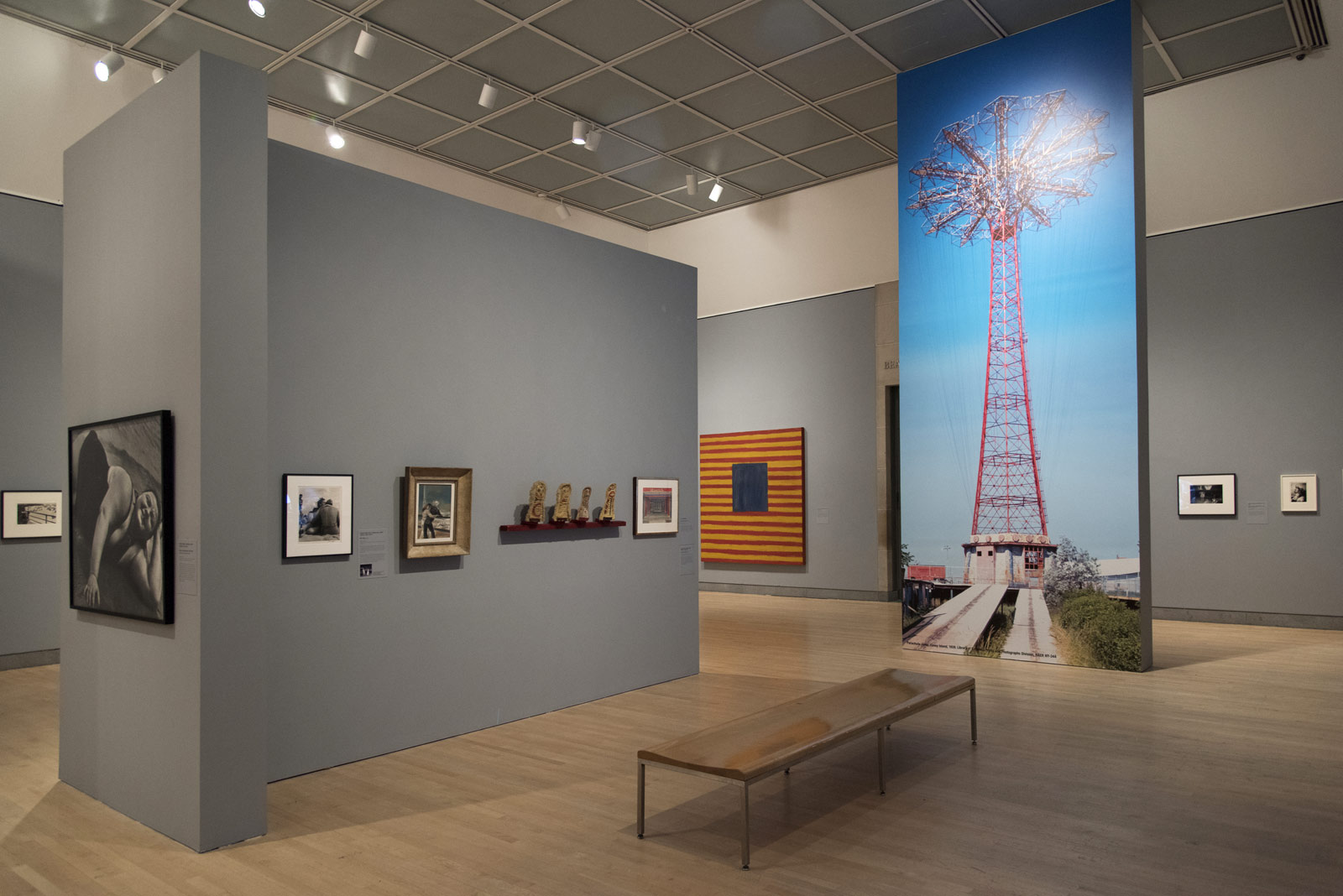
 

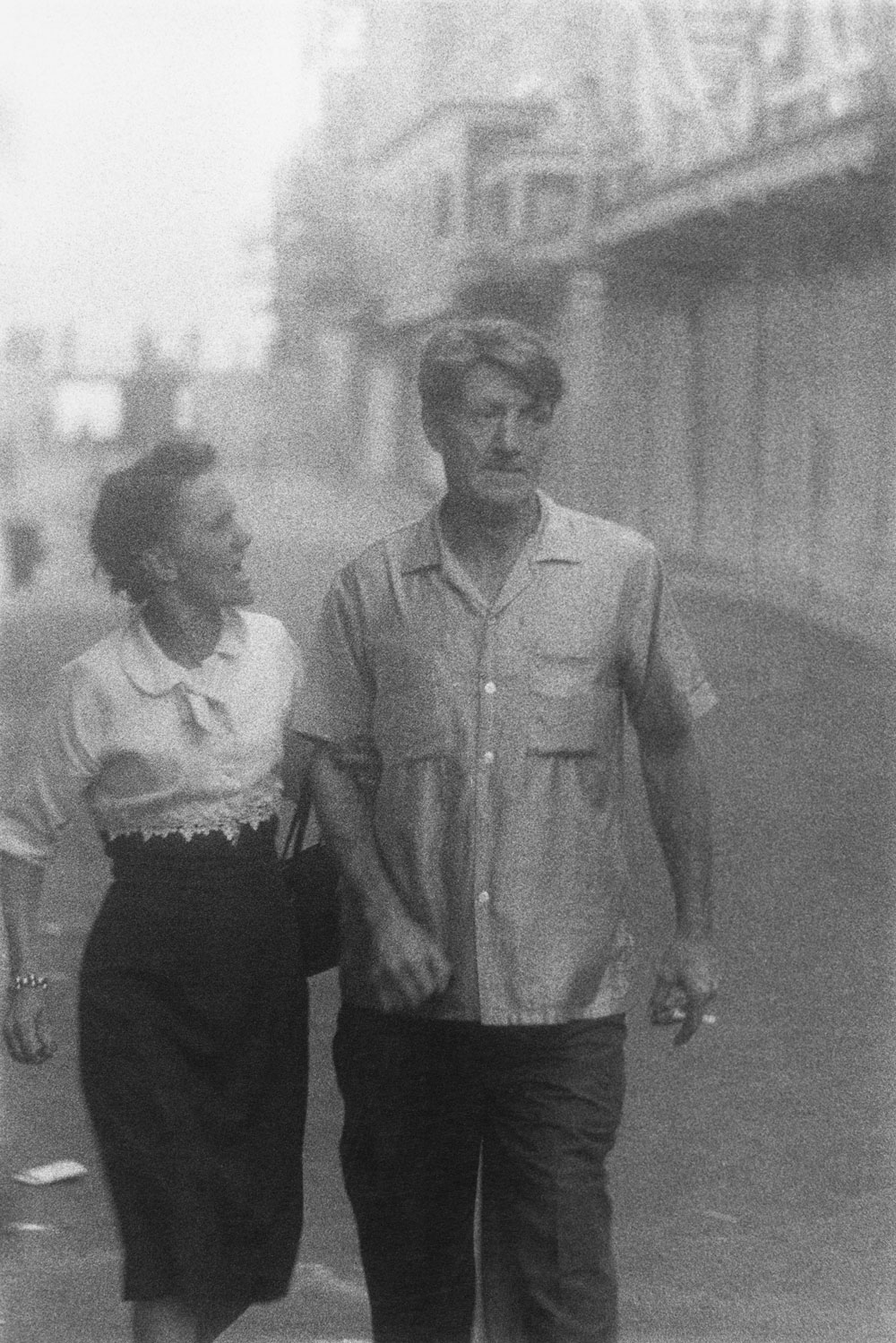
Diane Arbus (American, 1923-1971) 'Couple Arguing, Coney Island, N.Y.,' 1960


Diane Arbus (American, 1923-1971)
Couple Arguing, Coney Island, N.Y.,
1960
Vintage gelatin silver print
Image: 8 1/2 x 6 5/8 inches
Sheet: 14 x 11 inches
Collection Thomas H. Lee and Ann Tenenbaum


Robert Frank (American, 1924-2019) ‘Coney Island' 4th of July, 1958


Robert Frank (American, 1924-2019)
Coney Island
July 4, 1958
15 5/8 x 11 9/16 inches
Gelatin silver print
National Gallery of Art, Washington, D.C., Robert Frank Collection. Gift of the Richard Florsheim Art Fund and an Anonymous Donor
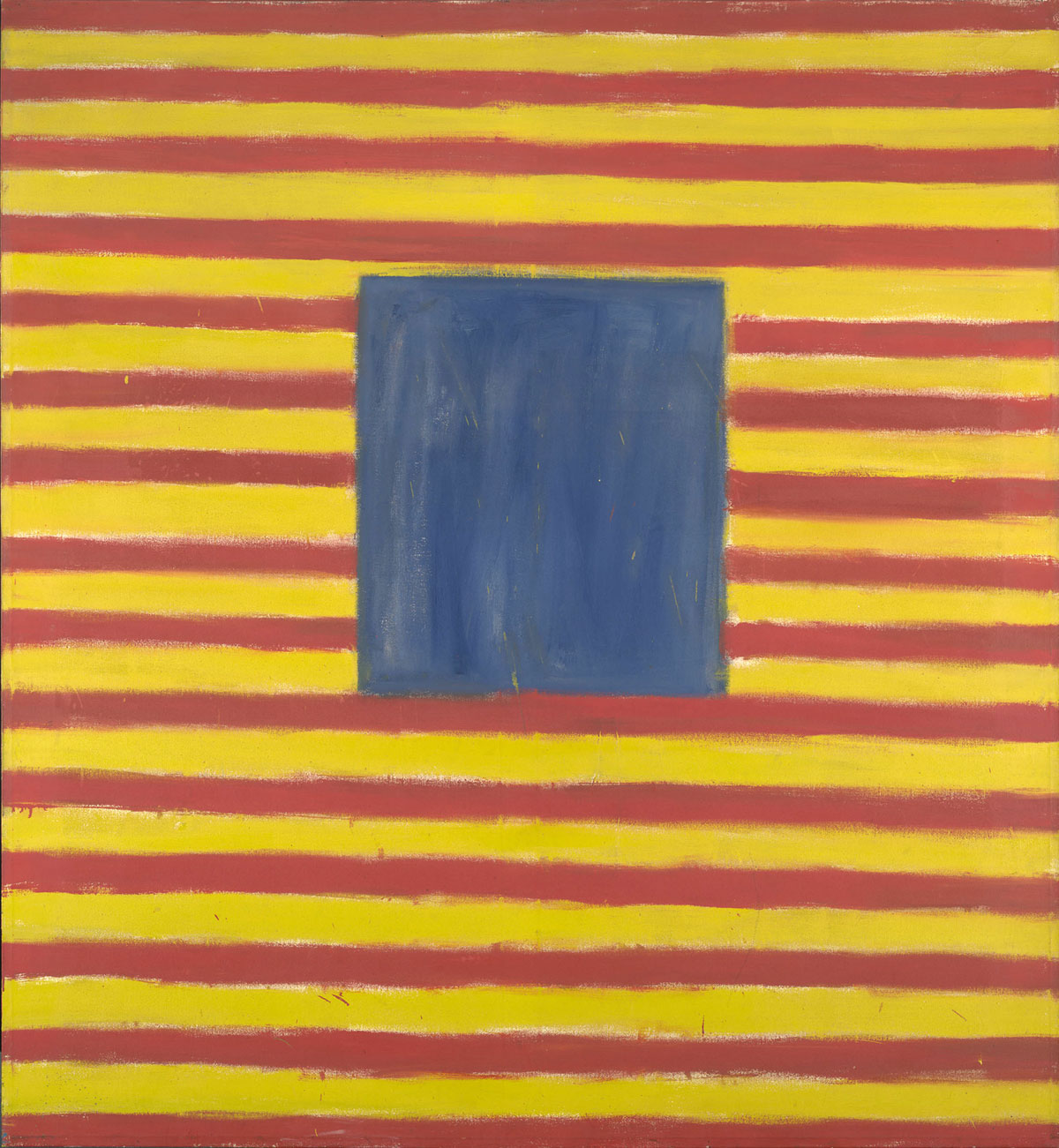
 

Frank Stella (American, b. 1936) 'Coney Island' 1958


Frank Stella (American, b. 1936)
Coney Island
1958
Oil on canvas
85 1/4 x 78 3/4 inches
Yale University Art Gallery, New Haven, Conn. Gift of Larom B. Munson, B.A. 1951
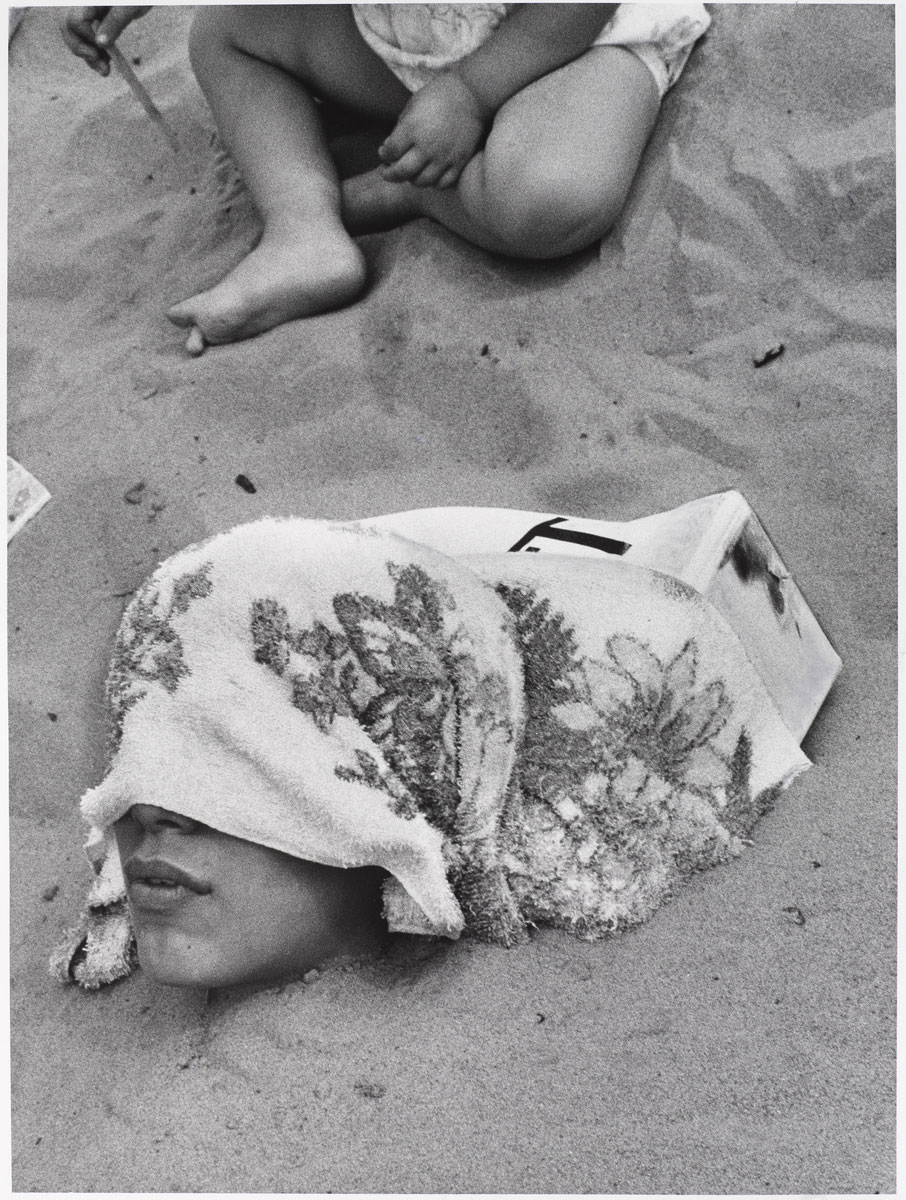
 

Harry Lapow (American, 1909-1982) 'Untitled (Buried Alive)' c. 1960s or 1970s


Harry Lapow (American, 1909-1982)
Untitled (Buried Alive)
c. 1960s or 1970s
Gelatin silver photograph
12 1/8 x 9 1/16 in. (30.8 x 23cm)
Brooklyn Museum, Gift of the artist
© Estate of Harry Lapow
Photo: Sarah DeSantis, Brooklyn Museum


Harry Lapow began frequenting Coney Island to capture quirks of the beach and boardwalk after receiving a Ciroflex camera on his forty-third birthday. He was intrigued by the camera’s ability to isolate details and fleeting moments of everyday life. Here, a toddler’s crossed legs appear above the head of a buried woman whose eyes are covered by a floral towel. In cropping this beach sighting, Lapow crafts a surprising juxtaposition, forming an unlikely dynamic between the lively child and the masked adult.
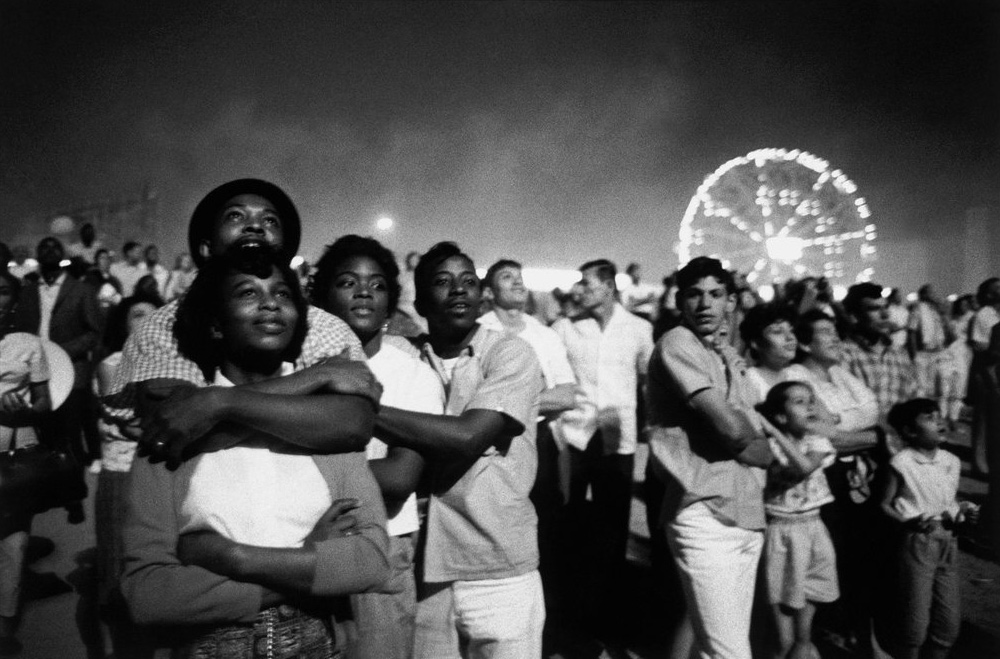
 

Bruce Davidson (American, b. 1933) 'Untitled' July 4, 1962


Bruce Davidson (American, b. 1933)
Untitled
July 4, 1962
Gelatin silver print
11 x 14 inches
Howard Greenberg Gallery, New York


Stephen Salmieri (American, b. 1945) 'Coney Island' 1971


Stephen Salmieri (American, b. 1945)
Coney Island
1971
Gelatin silver photograph
8 x 10 1/8 in. (20.3 x 25.7cm)
Brooklyn Museum, Gift of Edward Klein
© Stephen Salmieri
Photo: Sarah DeSantis, Brooklyn Museum
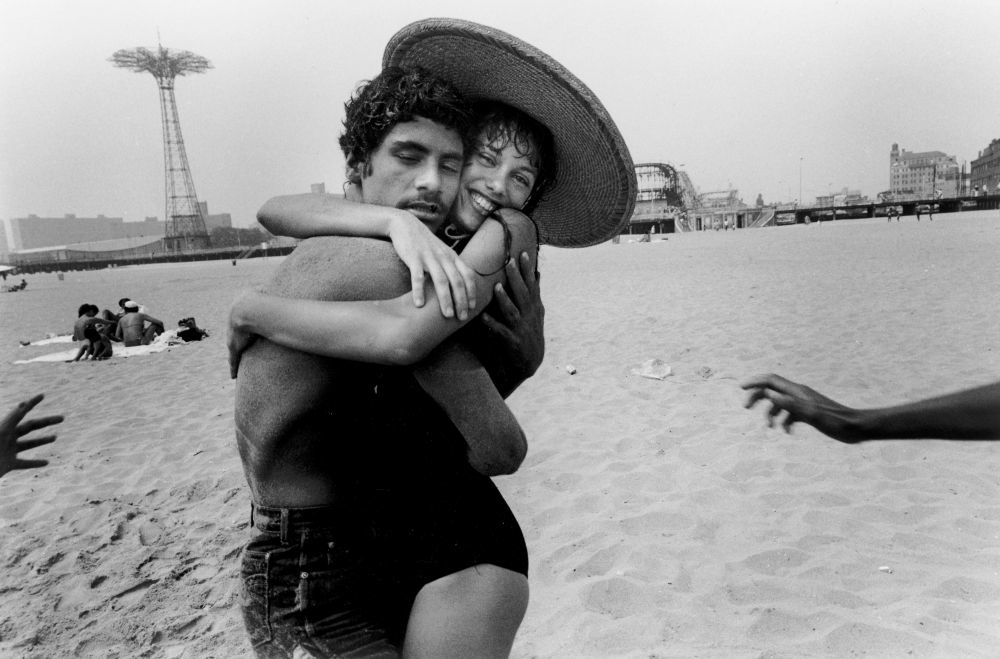
 

Harvey Stein (American, b. 1941) 'The Hug: Closed Eyes and Smile' 1982


Harvey Stein (American, b. 1941)
The Hug: Closed Eyes and Smile
1982
Digital, inkjet archival print
13 x 19 in. (33 x 48.3cm)
Collection of the artist
© Harvey Stein, 2011


Red Grooms (American, b. 1937) 'Weegee 1940' 1998-1999


Red Grooms (American, b. 1937)
Weegee 1940
1998-1999
Acrylic on paper
56 1/8 x 62 in. (142.6 x 157.5cm)
Private Collection
© 2013 Red Grooms/Artists Rights Society (ARS), New York
Photo: Courtesy of Marlborough Gallery, New York
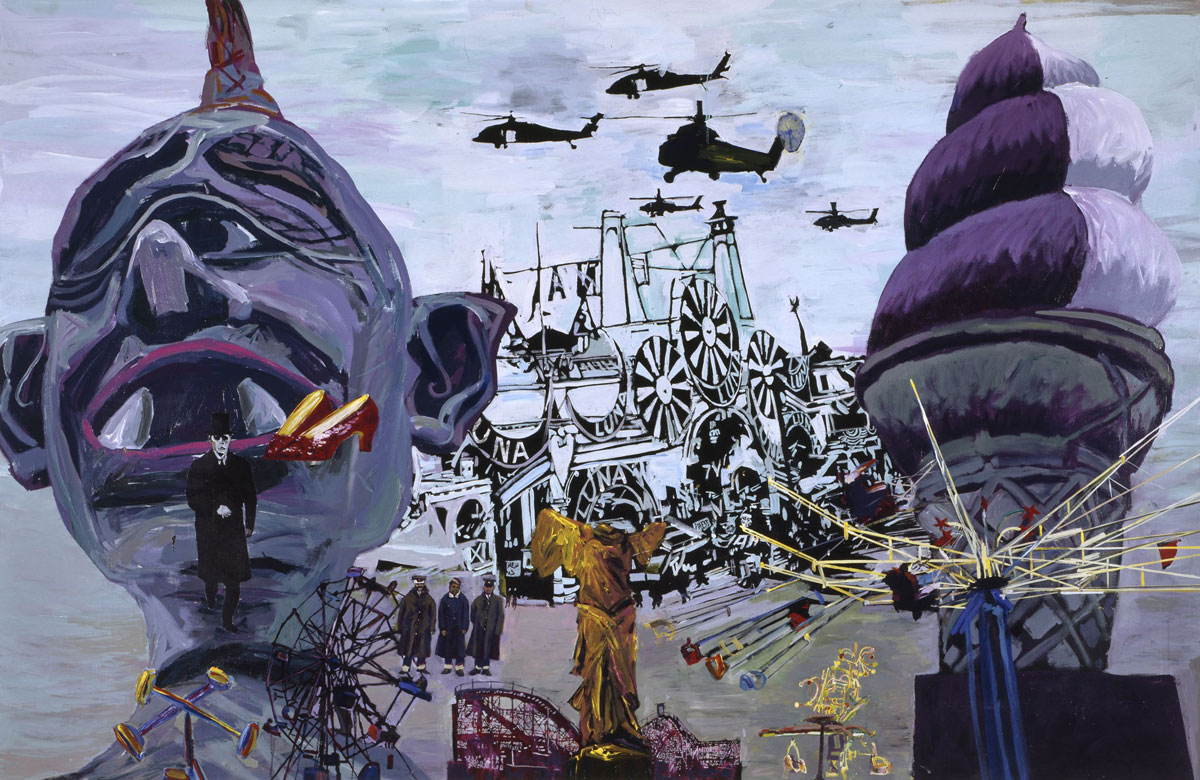
 

Arnold Mesches (American, 1923-2016) 'Anomie 1991: Winged Victory' 1991


Arnold Mesches (American, 1923-2016)
Anomie 1991: Winged Victory
1991
Acrylic on canvas
92 x 135 in. (233.7 x 342.9cm)
The San Diego Museum of Art; Museum purchase with partial funding from the Richard Florsheim Art Fund
© 2013 Arnold Mesches


Daze (American, b. 1962) 'Coney Island Pier' 1995


Daze (American, b. 1962)
Coney Island Pier
1995
Oil on canvas
60 x 80 in. (152.4 x 203.2cm)
Collection of the artist
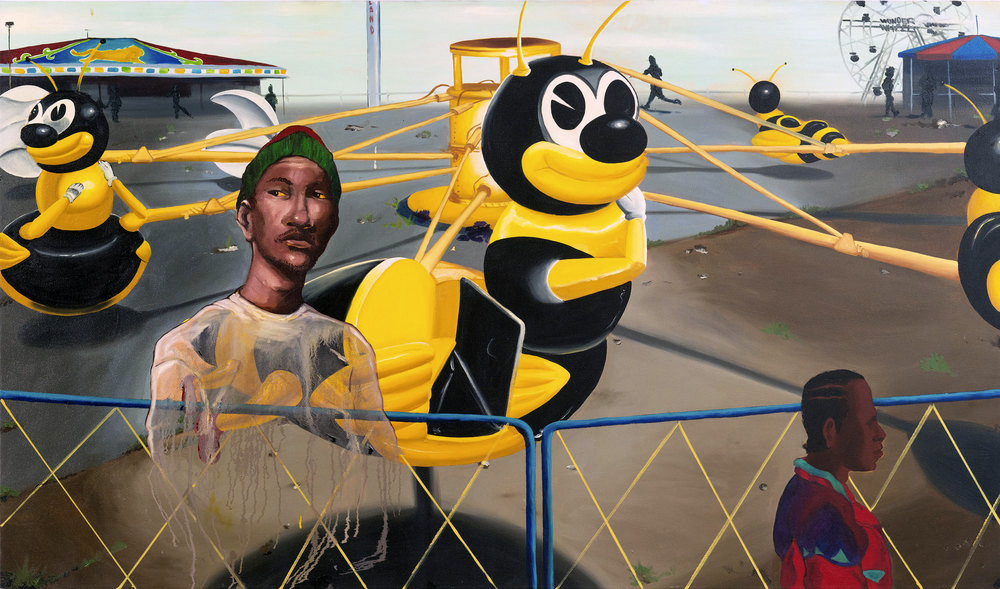
 

Daze (American, b. 1962) 'Kiddlyand Spirits' 1995


Daze (American, b. 1962)
Kiddyland Spirits
1995
Oil on canvas
42 x 71 inches
Collection of the artist
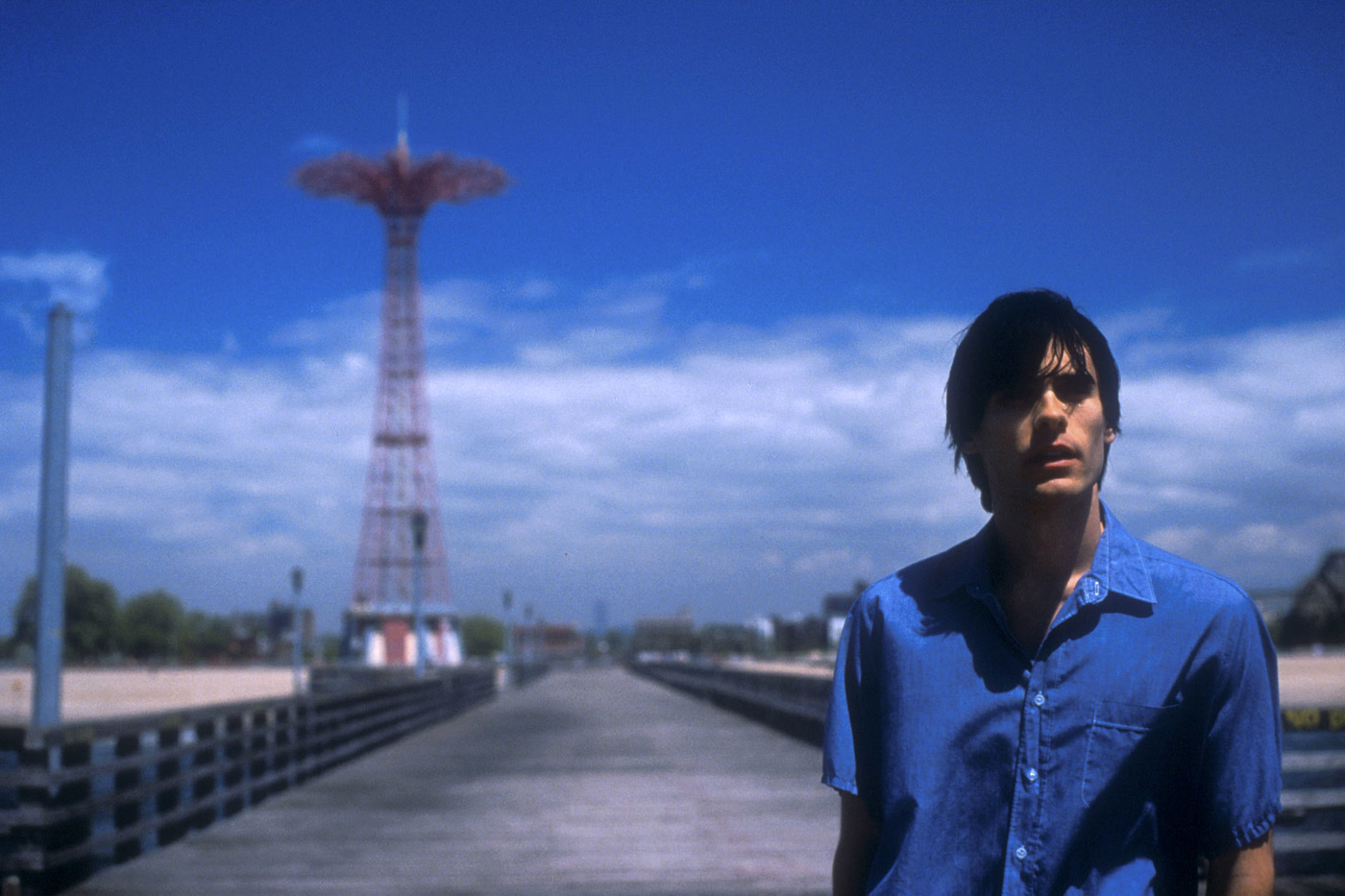
 

'Requiem for a Dream', production still, directed by Darren Aronofsky, 2000


Requiem for a Dream, production still, directed by Darren Aronofsky, 2000


Marie Roberts (American, b. 1954) 'A Congress of Curious Peoples' 2005


Marie Roberts (American, b. 1954)
A Congress of Curious Peoples
2005
Acrylic on unstretched canvas
84 x 120 in. (213.4 x 304.8cm)
Collection of Liz and Marc Hartzman
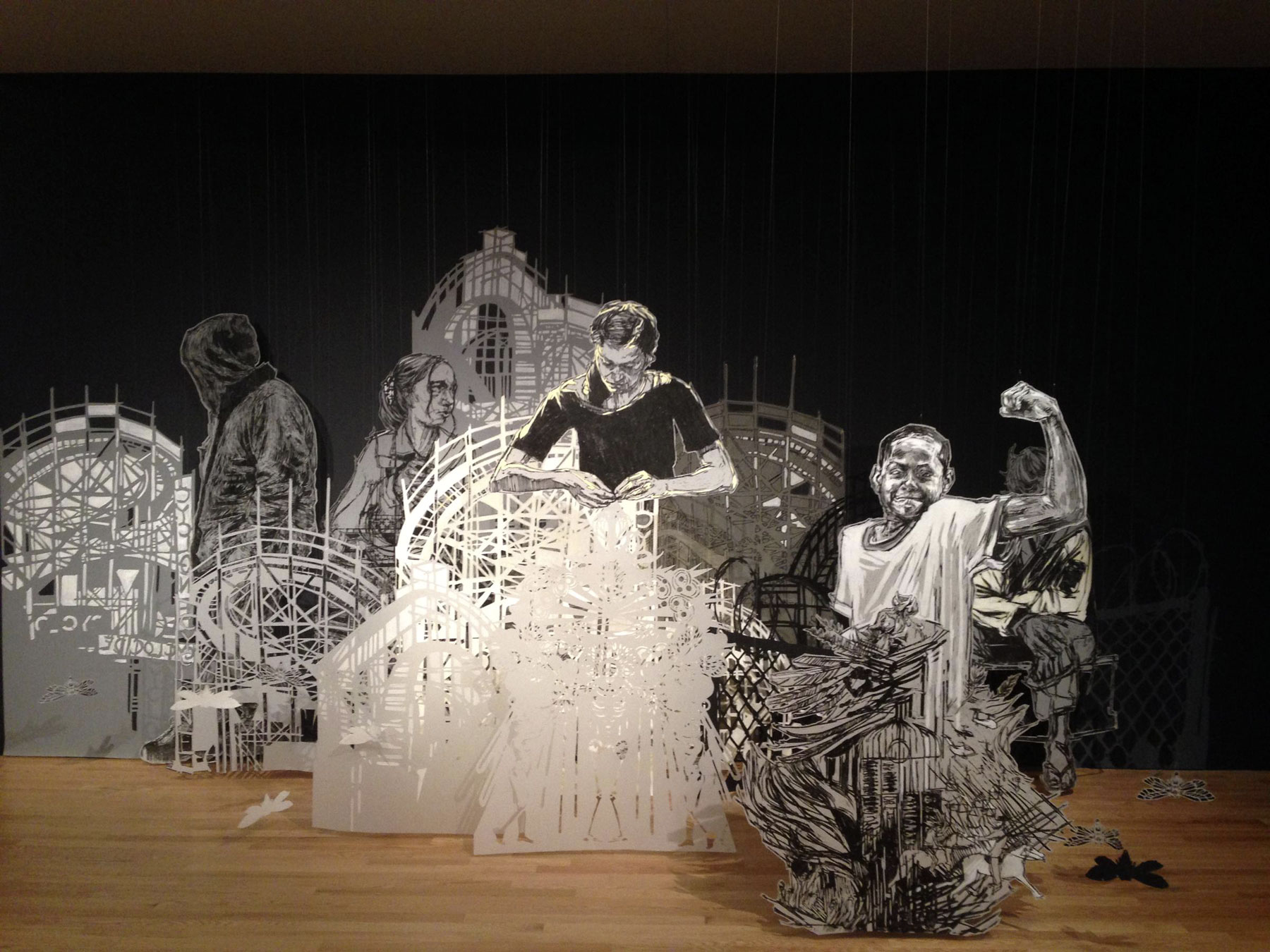
 

Swoon. 'Coney, Early Evening' 2005


Swoon
Coney, Early Evening
2005
Linoleum print on Mylar
Variable; overall: 213 x 39 x 113 inches
Brooklyn Museum. Healy Purchase Fund B, Emily Winthrop Miles Fund, and Designated Purchase Fund


Swoon’s “Coney, Early Evening” suspends youthful figures intertwined throughout the iconic tracks of a Coney Island roller coaster.
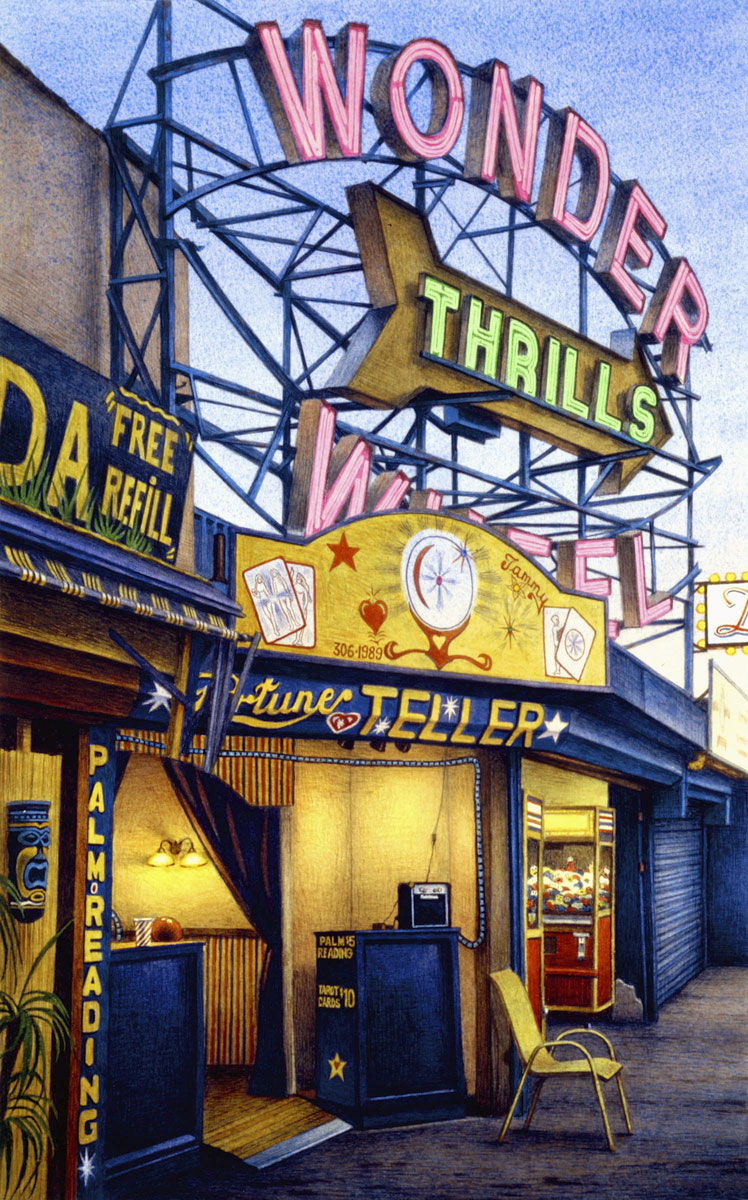
 

Frederick Brosen (American, b. 1954) 'Fortune Teller, Jones Walk, Coney Island' 2008


Frederick Brosen (American, b. 1954)
Fortune Teller, Jones Walk, Coney Island
2008
Watercolor over graphite on paper
17 7/8 x 11 1/4 in. (45.4 x 28.6cm)
Courtesy of Hirschl & Adler Modern, New York
© 2013 Frederick Brosen/Artists Rights Society (ARS), New York
Photo: Joshua Nefsky, courtesy of Hirschl & Adler Modern, New York


Brooklyn Museum
200 Eastern Parkway
Brooklyn, NY 11238-6052
Phone: (718) 638-5000

Opening hours:
Wednesday – Sunday 11am – 5pm
Closed Thanksgiving, Christmas, and New Year’s Day

Brooklyn Museum website

LIKE ART BLART ON FACEBOOK

Back to top

Exhibition: ‘In Focus: Play’ at the J. Paul Getty Museum at the Getty Center, Los Angeles

Exhibition dates: 23rd December 2014 – 10th May 2015

Curator: organised by assistant curator Arpad Kovacs in the Department of Photographs at the J. Paul Getty Museum


Herman F. Nielson (American, active Niagara Falls, New York 1883 - early 1900s) 'View of Niagara Falls in Winter' c. 1885


Herman F. Nielson (American, active Niagara Falls, New York 1883 – early 1900s)
View of Niagara Falls in Winter
c. 1885
Gelatin silver print
19.1 x 24.3cm (7 1/2 x 9 9/16 in.)
The J. Paul Getty Museum, Los Angeles


The J. Paul Getty Museum always puts on the most interesting photography exhibitions. This looks to be no exception.

Marcus


Many thankx to the J. Paul Getty Museum for allowing me to publish some of the photographs in the posting. Please click on the photographs for a larger version of the image.


Platt D. Babbitt (American, 1823-1879, active Niagara Falls, New York 1853-1870) '[Scene at Niagara Falls]' c. 1855


Platt D. Babbitt (American, 1823-1879, active Niagara Falls, New York 1853-1870)
[Scene at Niagara Falls]
c. 1855
Whole plate daguerreotype
The J. Paul Getty Museum
CC This work is in the public domain


In the 1800s Prospect Point at Niagara Falls was a popular destination for travellers in search of a transcendent encounter with nature. The falls were revered as a sacred place that was recognised by the Catholic Church in 1861 as a “pilgrim shrine,” where the faithful could contemplate the landscape as an example of divine majesty. Two well-dressed couples are seen from behind as they stand on the shore downstream from the falls, gazing at its majestic splendour. The silhouetted forms – women wearing full skirts and bonnets and carrying umbrellas and men in stovepipe hats – are sharply outlined against the patch of shore and expansive, white foam. Platt D. Babbitt would customarily set up his camera in an open-sided pavilion and photograph groups of tourists admiring the falls without their knowledge, as he appears to have done here. Later he would sell the unsuspecting subjects their daguerreotype likenesses alongside the natural wonder.


Roger Fenton (English, 1819-1869) 'The Billiard Room, Mentmore' c. 1858


Roger Fenton (English, 1819-1869)
The Billiard Room, Mentmore
c. 1858
Albumen silver print
Height: 303mm (11.93 in)
Width: 306mm (12.05 in).
The J. Paul Getty Museum
CC This work is in the public domain


A group of fashionable men and women enjoy a game of billiards in a richly furnished salon. The recently completed billiards room, which was designed as a conservatory, is flooded with sunlight, illuminating the lavish interior and creating a dramatic pattern of light and shadows. Indoor photography was rare in the mid-1800s, but the abundance of light and Fenton’s skill with the wet-collodion process created a remarkably detailed portrait of the space and its inhabitants. Behind the woman standing in the doorway at the very far end of the salon, a marble bust, mantelpiece, and mirror can be seen in an adjacent room.

Mentmore House was a country residence of the wealthy Rothschild family, but little is known as to how Fenton came to photograph its interior or who the depicted individuals might be. Fenton accepted commissions to document several other country homes, and his surviving photographs of Mentmore House – both interior and exterior views – may have formed part of a commissioned album. Like Fenton’s Orientalist scenes, this image reveals a high degree of staging. Only one figure actually holds a cue stick, and several of the women wear hats that seem unusual for the indoor setting.


Camille Silvy (French, 1834-1910, active in London) 'Group of their Royal Highnesses the Princess Clementine de Saxe Cobourg Gotha, her Sons and Daughter, the Duke d'Aumale, the Count d'Eu, the Duke d'Alencon, and the Duke de Penthievre [in England]' 1864


Camille Silvy (French, 1834-1910, active in London)
Group of their Royal Highnesses the Princess Clementine de Saxe Cobourg Gotha, her Sons and Daughter, the Duke d’Aumale, the Count d’Eu, the Duke d’Alencon, and the Duke de Penthievre [in England]
1864
Albumen silver print
10.2 x 17cm (4 x 6 11/16 in.)


Camille Silvy (French, 1834-1910, active in London) 'Group of their Royal Highnesses the Princess Clementine de Saxe Cobourg Gotha, her Sons and Daughter, the Duke d'Aumale, the Count d'Eu, the Duke d'Alencon, and the Duke de Penthievre [in England]' 1864 (detail)


Camille Silvy (French, 1834-1910, active in London)
Group of their Royal Highnesses the Princess Clementine de Saxe Cobourg Gotha, her Sons and Daughter, the Duke d’Aumale, the Count d’Eu, the Duke d’Alencon, and the Duke de Penthievre [in England] (detail)
1864
Albumen silver print
10.2 x 17cm (4 x 6 11/16 in.)


Man Ray (American, 1890-1976) '[Marcel Duchamp and Raoul de Roussy de Sales Playing Chess]' 1925


Man Ray (American, 1890-1976)
[Marcel Duchamp and Raoul de Roussy de Sales Playing Chess]
1925
Gelatin silver print
16.7 x 22.5cm (6 9/16 x 8 7/8 in.)
The J. Paul Getty Museum, Los Angeles
© Man Ray Trust ARS-ADAGP


Weegee (Arthur Fellig) (American born Austria, 1899-1968) '[Summer, The Lower East Side, New York City]' Summer 1937


Weegee (Arthur Fellig) (American born Austria, 1899-1968)
[Summer, The Lower East Side, New York City]
Summer 1937
Gelatin silver print 26.5 x 33.3cm (10 7/16 x 13 1/8 in.)
The J. Paul Getty Museum, Los Angeles
© International Center of Photography


André Kertész (American born Hungary, 1894-1985) '[Underwater Swimmer]' Negative 1917; print 1970s


André Kertész (American born Hungary, 1894-1985)
[Underwater Swimmer]
Negative 1917; print 1970s
Gelatin silver print 17 x 24.7cm (6 11/16 x 9 3/4 in.)
The J. Paul Getty Museum, Los Angeles
© Estate of André Kertész


In Focus: Play, on view at the J. Paul Getty Museum at the Getty Center from December 23, 2014 through May 10, 2015, presents photographs that explore how notions of leisure and play have been represented over the course of the medium’s history. The nearly thirty works from the Museum’s permanent collection highlight a wide range of amusing activities, from quiet games like chess to more boisterous forms of recreation like skateboarding and visits to amusement parks and circuses. All of the photographs included in the exhibition illustrate the many ways people have chosen to spend their free time. The images also demonstrate inventive and improvised approaches, like unusual vantage points and jarring juxtapositions that photographers have employed to help capture the spontaneity of playfulness.

Organised by assistant curator Arpad Kovacs in the Department of Photographs at the J. Paul Getty Museum, this exhibition spans almost 175 years of the medium’s history and features the work of a variety of well-known and lesser-known photographers, including Diane Arbus, Henri Cartier-Bresson, Imogene Cunningham, Larry Fink, T. Lux Feininger, Roger Fenton, Andre Kertész, Man Ray, Alexander Rodchenko, Masato Seto, Camille Silvy, and Weegee, among others.

“Capturing our everyday lives has been one of photography’s central themes ever since its invention in the mid-nineteenth century,” says Timothy Potts, Director of the J. Paul Getty Museum. “So it is no surprise that images of people playing games and having fun is a rich seam within the history of photography that this exhibition and accompanying book bring to life brilliantly. This is photography at its entertaining and uplifting best.”

The introduction of photography in 1839 coincided with a bourgeoning culture of leisure. Changes in working and living conditions brought on by the Industrial Revolution created an unprecedented amount of free time for large numbers of people in Europe and the United States. In the 1850s, photographic studios began to capitalize on the development and growth of the tourism industry, promoting recreation as a photographic subject. Technological advancements in film and camera equipment during the early twentieth century facilitated the recording of dynamic activities such as sports and visits to amusement parks. Domestic and public spaces alike became sites where people performed for the camera and documented a break from daily routines.

During the nineteenth century, the eminent photographer Roger Fenton, who was widely recognised for visually documenting the Crimean War (1853-1856), also photographed intimate scenes that reflected casual pastimes. Included in the exhibition is his photograph from 1858 entitled, The Billiard Room, Mentmore House, in which a group of six people act out a scene of domestic amusement in a billiard room lined with a row of large windows.

The desire for pictures of everyday life flourished during the early twentieth-century. The illustrated press, which had grown in popularity in the United States and Europe since the 1920s, was especially interested in photographs of recreation and leisure. Photojournalists often searched for high-impact images that could tell compelling or amusing stories. Weegee (Arthur Fellig), a well-known tabloid photographer, kept his camera focused on New York City’s neighbourhoods. In the photograph Summer, Lower East Side, New York City, 1937, he recorded the ecstatic faces of boys and girls cooling off in the water from an open fire hydrant as they briefly co-opted a street for their own delight.

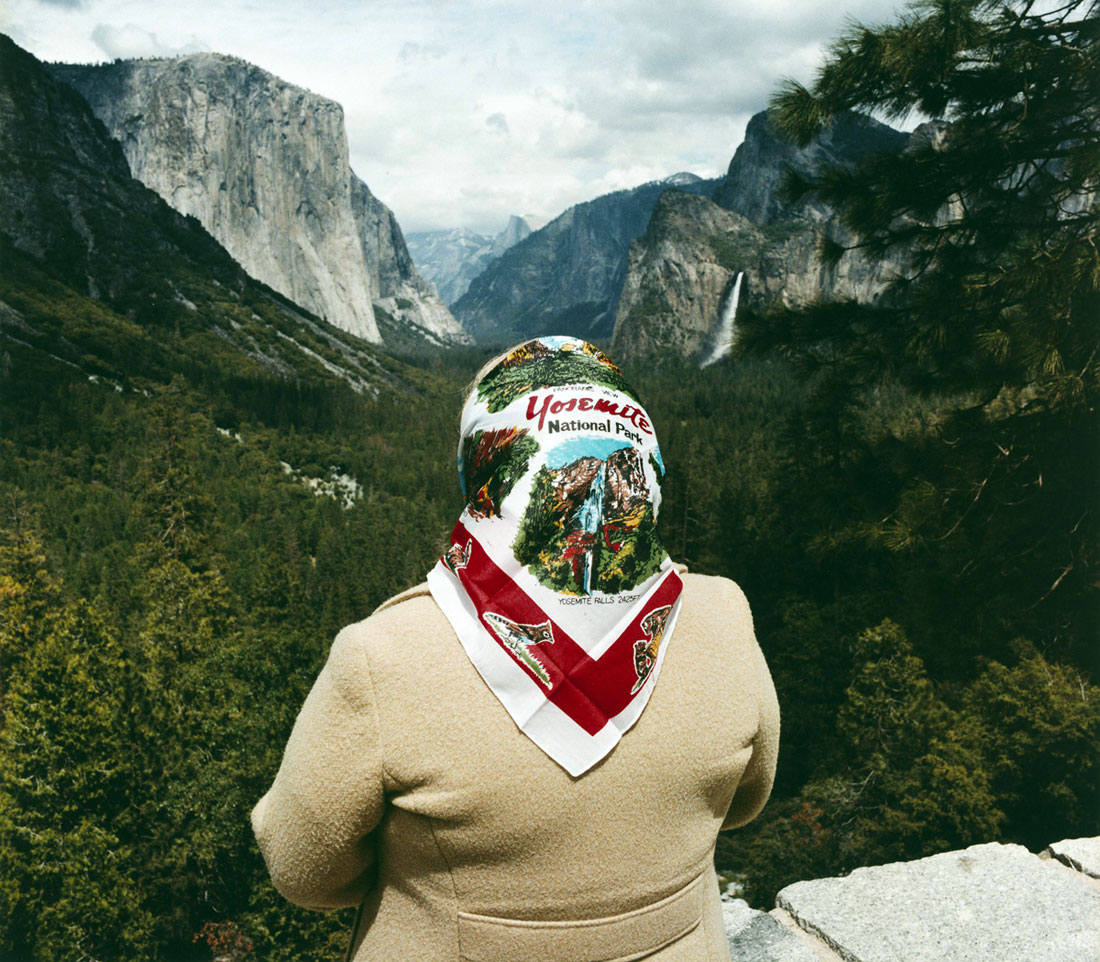
Tourist destinations with sweeping vistas, like Niagara Falls and Yosemite Valley, had been attracting photographers continuously since the 1850s. In a 1980 photograph from his Sightseer series, Roger Minick comments on the phenomenon of taking in the sights through visual juxtaposition. A tourist, seen from behind, obstructs the famous view of Yosemite Valley from Inspiration Point, a spot that is practically synonymous with photography. The woman wears a souvenir headscarf illustrated with views of the valley, underscoring the commodification of nature that pervades modern life.

In the 1990s, the photographer Lauren Greenfield began an ambitious project documenting various subcultures in Los Angeles. These works examine the social pecking order and rites of passage associated with youth culture. In her photograph “Free Sex” Party Crew Party, East Los Angeles, 1993, one gets a glimpse into the potential dangers associated with these wild demonstrations of unrestricted freedom and machismo.

“The photographs chosen for this exhibition demonstrate the wide range of approaches photographers have employed to capture people at play, along with a variety of sites that have traditionally signalled leisure and entertainment,” said Kovacs. “Visiting a museum would be included on that list of leisure-time activities. I can’t think of a better way to spend an afternoon.”

In Focus: Play is on view at the J. Paul Getty Museum at the Getty Center beginning December 23, 2014, through May 10, 2015.

Press release from the J. Paul Getty Museum


Unknown photographer. '[Barnum and Bailey Circus Tent in Paris, France]' 1901-1902


Unknown photographer
[Barnum and Bailey Circus Tent in Paris, France]
1901-1902
Gelatin silver print
22.2 x 58.1cm (8 3/4 x 22 7/8 in.)
The J. Paul Getty Museum, Los Angeles


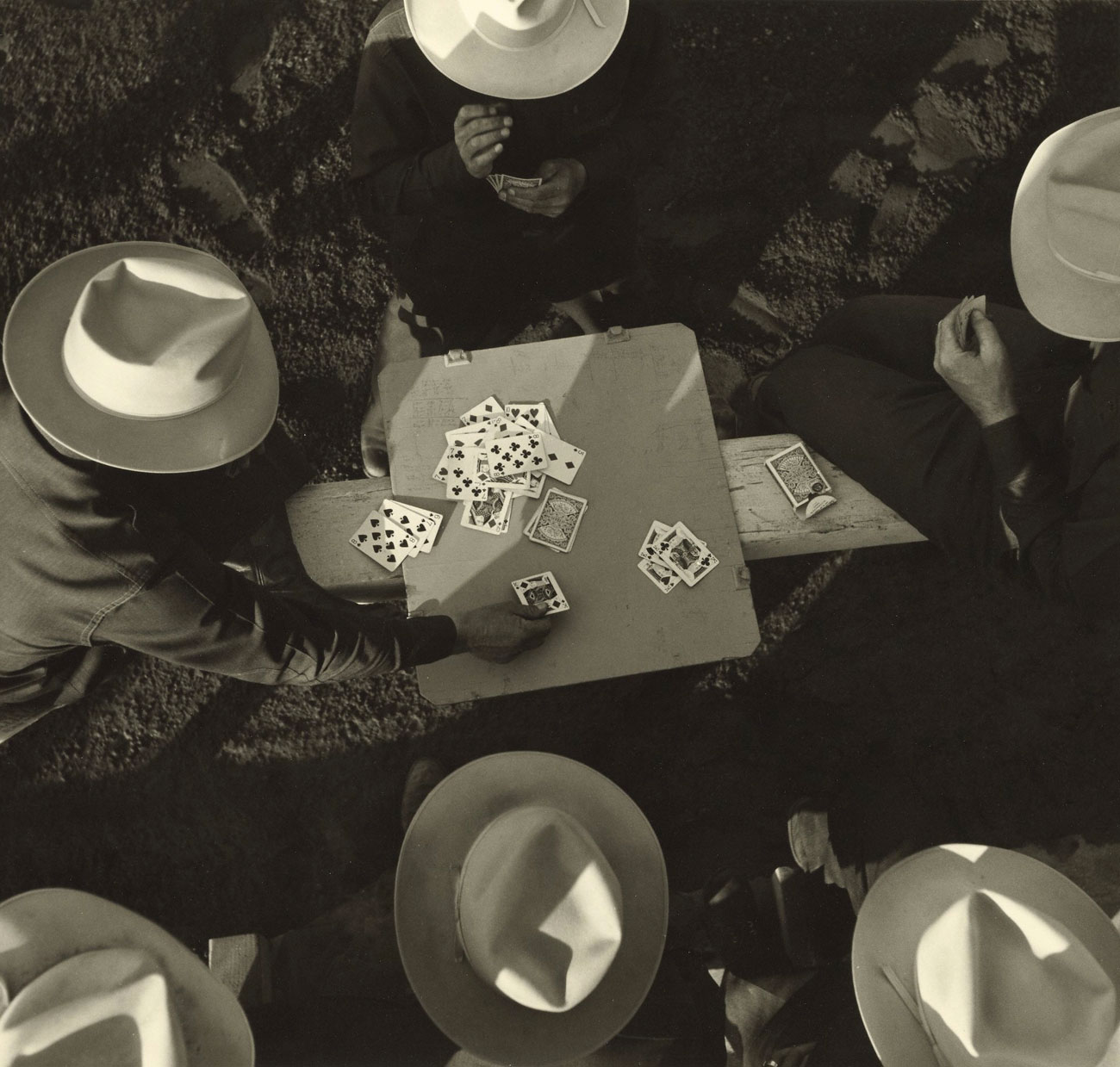
Max Yavno (American, 1911-1985) 'Card Players, Los Angeles, California' 1949


Max Yavno (American, 1911-1985)
Card Players, Los Angeles, California
1949
Gelatin silver print
26.5 x 27.9cm
© 1988 Center for Creative Photography, The University of Arizona Foundation


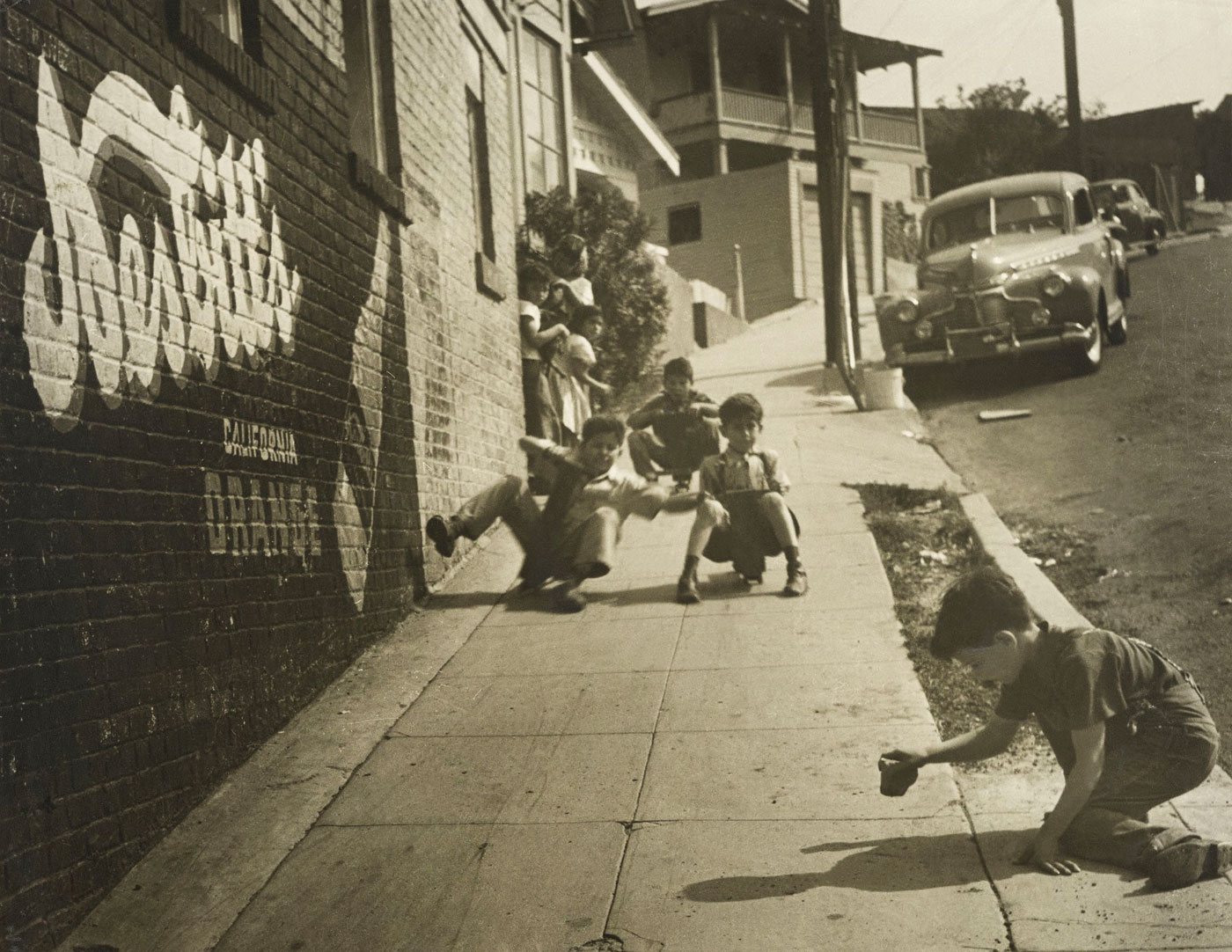
Joe Schwartz (American, 1913-2013) 'East L.A. Skateboarders' 1950s


Joe Schwartz (American, 1913-2013)
East L.A. Skateboarders
1950s
Toned gelatin silver print
30.2 x 39cm (11 7/8 x 15 3/8 in.)
The J. Paul Getty Museum, Los Angeles
© Joe Schwartz


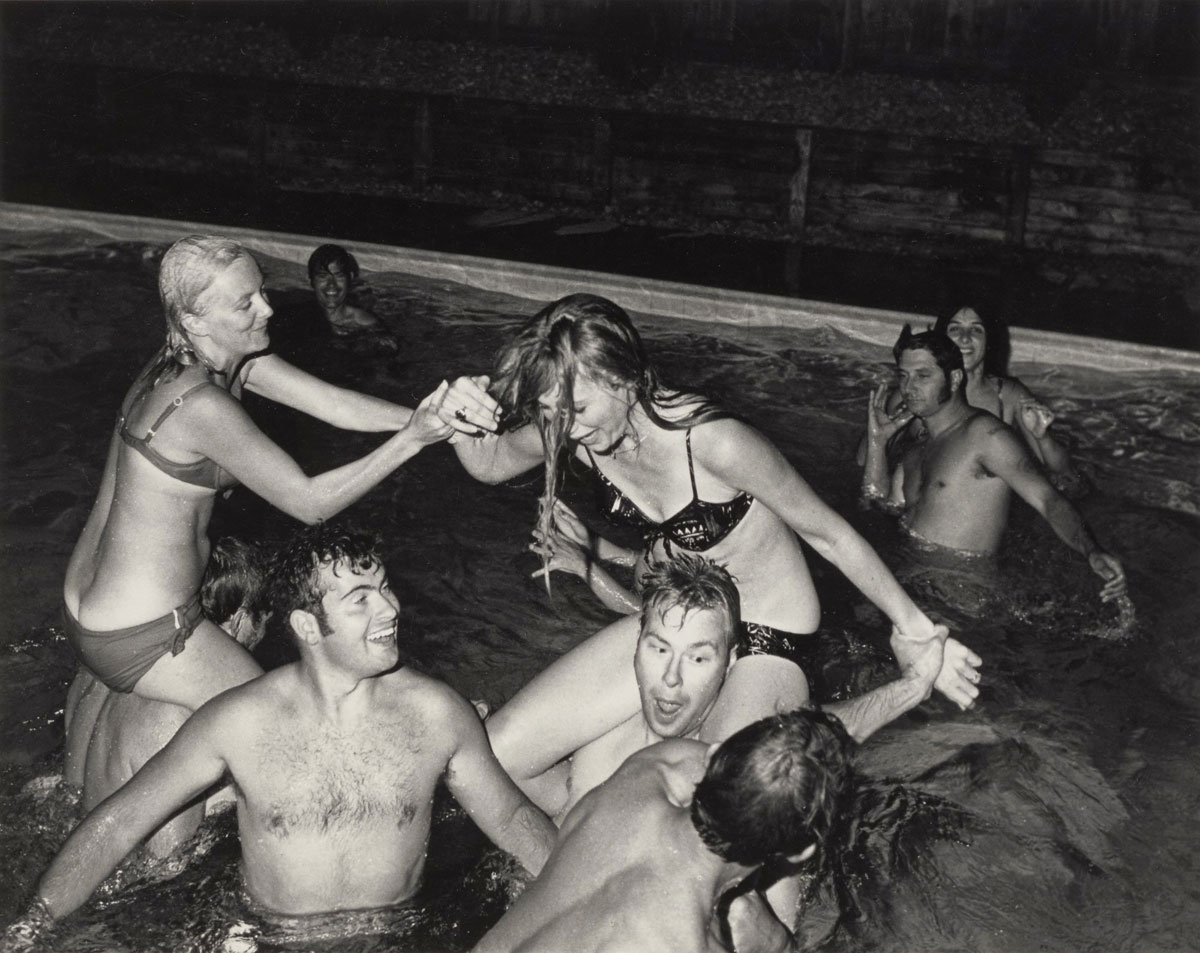
Bill Owens (American, b. 1938) 'Untitled (Swimming Pool)' 1973 or before


Bill Owens (American, b. 1938)
Untitled (Swimming Pool)
1973 or before
Gelatin silver print
17.1 x 21.5cm (6 3/4 x 8 7/16 in.)
The J. Paul Getty Museum, Los Angeles, Gift of Robert Harshorn Shimshak and Marion Brenner
© Bill Owens


Hiromi Tsuchida (Japanese, b. 1939) 'Counting Grains of Sand, Tsuruga' Negative 1985; print May 15, 1990


Hiromi Tsuchida (Japanese, b. 1939)
Counting Grains of Sand, Tsuruga
Negative 1985; print May 15, 1990
Gelatin silver print
28.1 x 42.5cm (11 1/16 x 16 3/4 in.)
The J. Paul Getty Museum, Los Angeles
© Hiromi Tsuchida


Roger Minick (American, b. 1944) 'Woman with Scarf at Inspiration Point, Yosemite National Park' 1980


Roger Minick (American, b. 1944)
Woman with Scarf at Inspiration Point, Yosemite National Park
1980
Chromogenic print
38.1 x 43.5cm (15 x 17 1/8 in.)
The J. Paul Getty Museum, Los Angeles
© Roger Minick


Lauren Greenfield (American, b. 1966) '"Free Sex" Party Crew Party, East Los Angeles' 1993


Lauren Greenfield (American, b. 1966)
“Free Sex” Party Crew Party, East Los Angeles
1993
Dye destruction print
32.4 x 48.9cm (12 3/4 x 19 1/4 in.)
The J. Paul Getty Museum, Los Angeles, Gift of Allison Amon & Lisa Mehling
© Lauren Greenfield/INSTITUTE


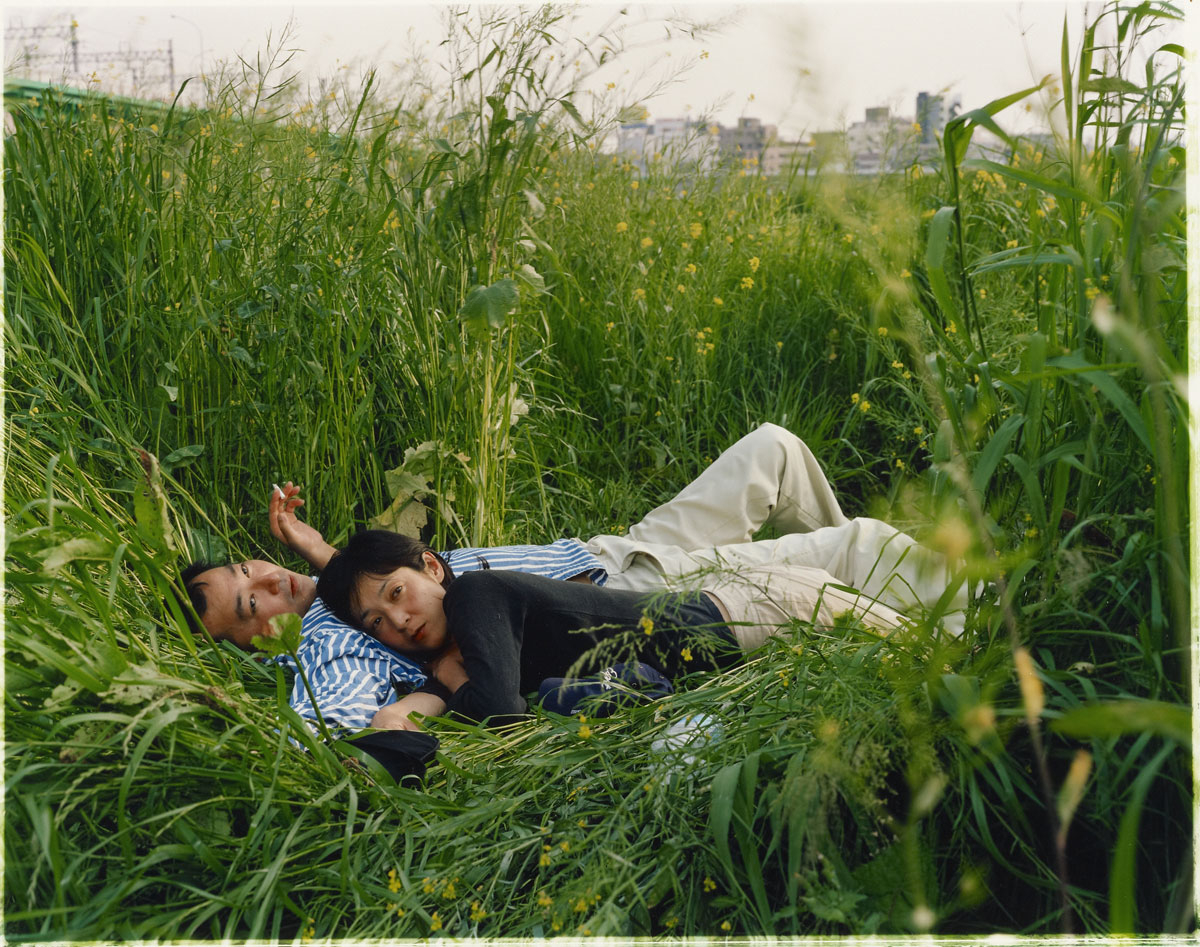
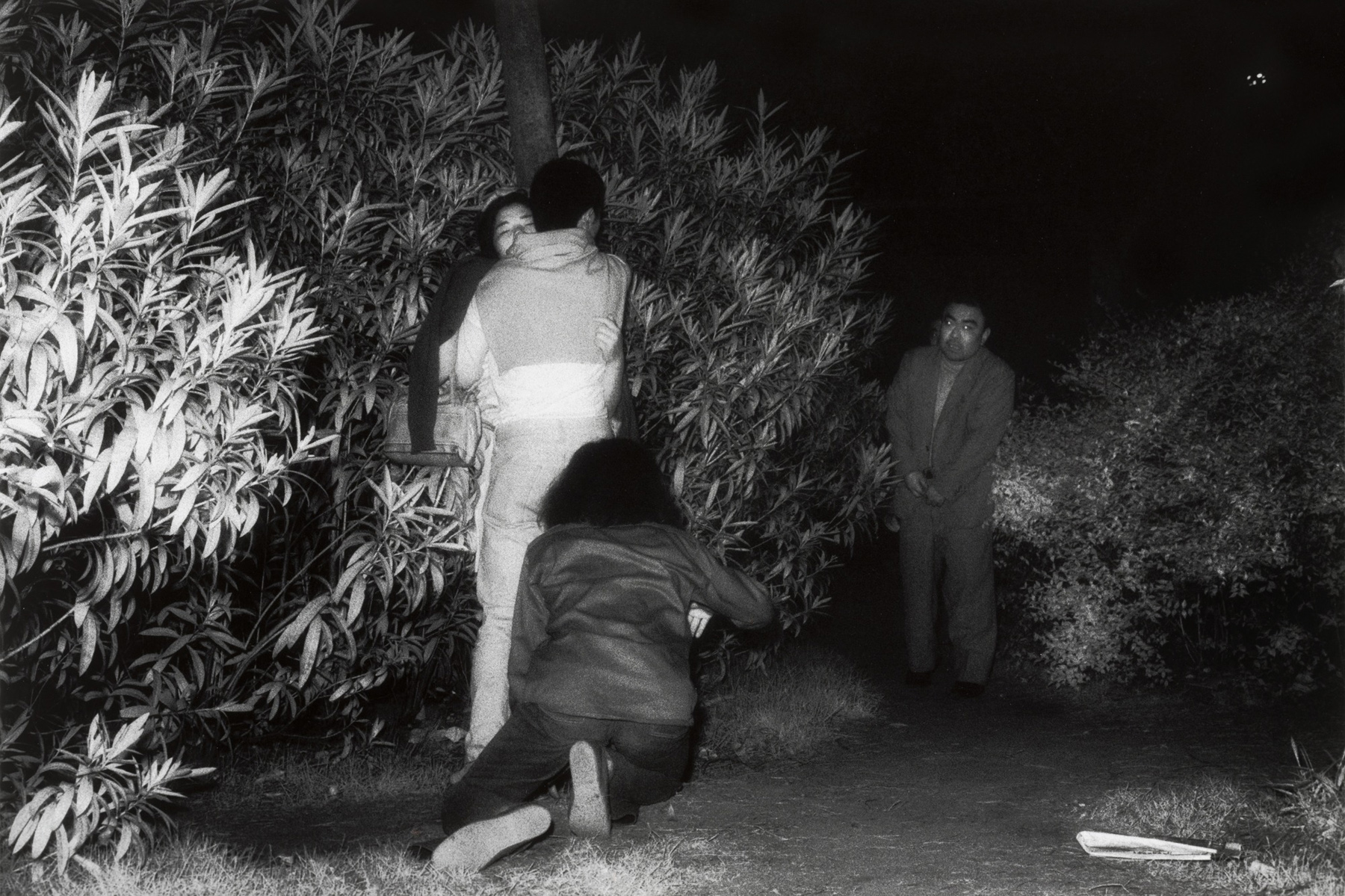
Masato Seto (Japanese born Thailand, b. 1953) 'picnic #32' 2005


Masato Seto (Japanese born Thailand, b. 1953)
picnic #32
2005
From the series picnic
Silver-dye bleach print
43.2 x 55cm
© Masato Seto


Photographer Masato Seto’s series picnic, produced between 1996 and 2005, takes a particularly intimate approach. Seto’s photographs get inside Tokyo’s private pockets of outdoor space, a highly coveted respite from the busy thrum of the Japanese urban lifestyle. They give us a glimpse of the hard-won leisure of local couples escaping the cramped quarters of high-rise living for the scarce green space of public parks.

The couples’ reactions to the camera’s intrusion range from shielding their faces to outright defiance, to simple staring curiosity. We feel like we’ve caught them in the act of doing something that we shouldn’t see. Representing one family, couple, or individual at a time, Seto situates his subjects in a detached reality of their own. He creates what critic Hiro Koike referred to as “invisible rooms” – plots of grass often defined by the customary plastic sheet – in which intimate moments have been openly displayed and captured.

Melissa Abraham, “An Intimate View of Tokyo,” on The Getty Iris blog, August 5, 2014 [Online] Cited 03/03/2015


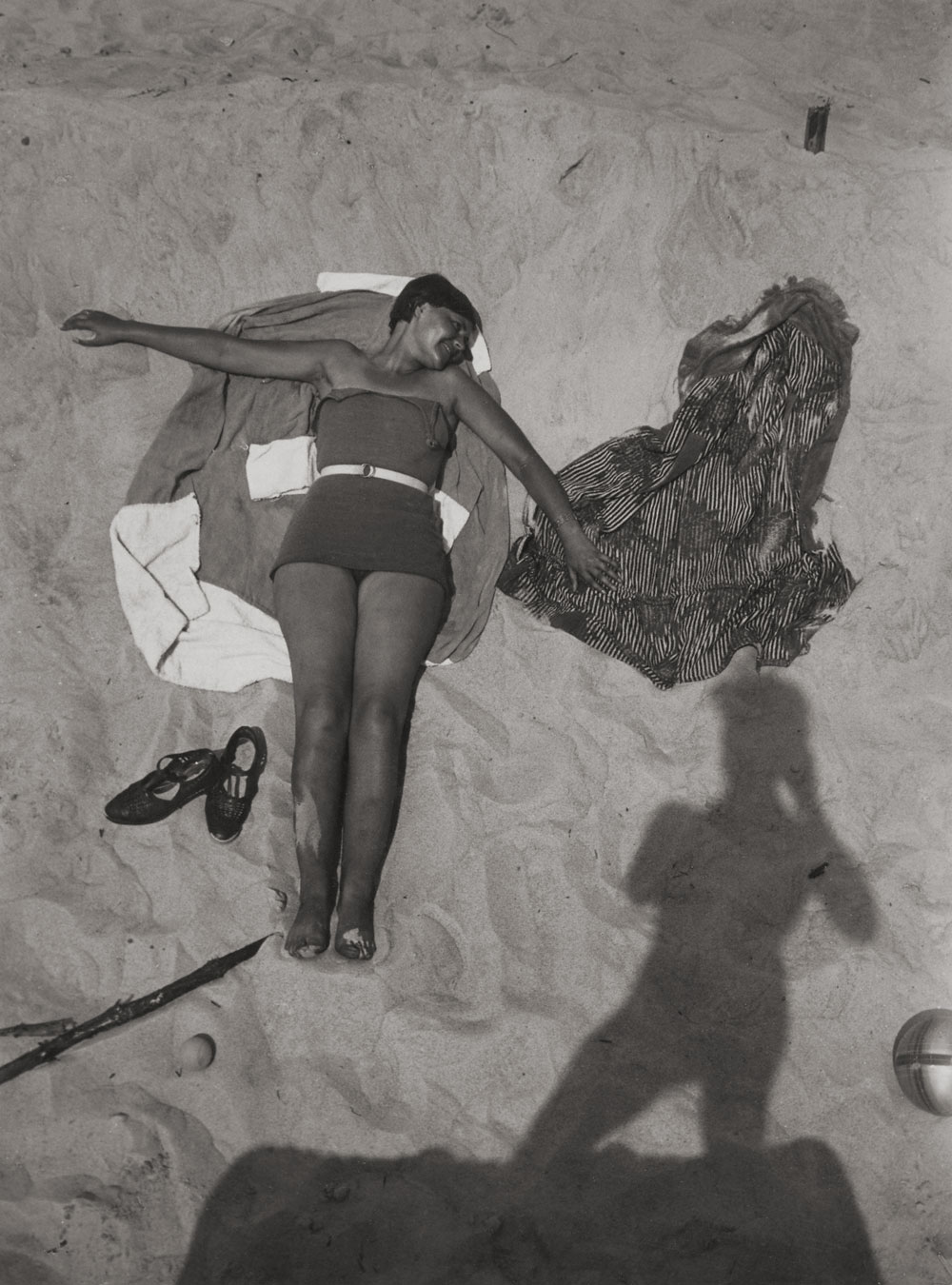
T. Lux Feininger (American born Germany, 1910-2011) 'Am Strand (On the Beach)' c. 1929


T. Lux Feininger (American born Germany, 1910-2011)
Am Strand (On the Beach)
c. 1929
Gelatin silver print
23.8 x 17.8cm (9 3/8 x 7 in.)
The J. Paul Getty Museum, Los Angeles
© Estate of T. Lux Feininger


Brassaï (French born Hungary, 1899-1984) 'Kiss on the Swing' 1935-1937


Brassaï (French born Hungary, 1899-1984)
Kiss on the Swing
1935-1937
Gelatin silver print
29.7 x 23.3cm
© Estate Brassaï-RMN


Imogen Cunningham (American, 1883-1976) 'Self-Portrait with Grandchildren in Funhouse' 1955


Imogen Cunningham (American, 1883-1976)
Self-Portrait with Grandchildren in Funhouse
1955
Gelatin silver print
22.2 x 18.5cm (8 3/4 x 7 5/16 in.)
The J. Paul Getty Museum, Los Angeles
© Imogen Cunningham Trust


The J. Paul Getty Museum
1200 Getty Center Drive
Los Angeles, California 90049

Opening hours:
Daily 10am – 5pm

The J. Paul Getty Museum website

LIKE ART BLART ON FACEBOOK

Back to top

Exhibition: ‘Now You See It: Photography and Concealment’ at the Metropolitan Museum of Art, New York

Exhibition dates: 31st March – 1st September 2014


Many thankx to the Metropolitan Museum of Art for allowing me to publish the photographs in the posting. Please click on the photographs for a larger version of the image.


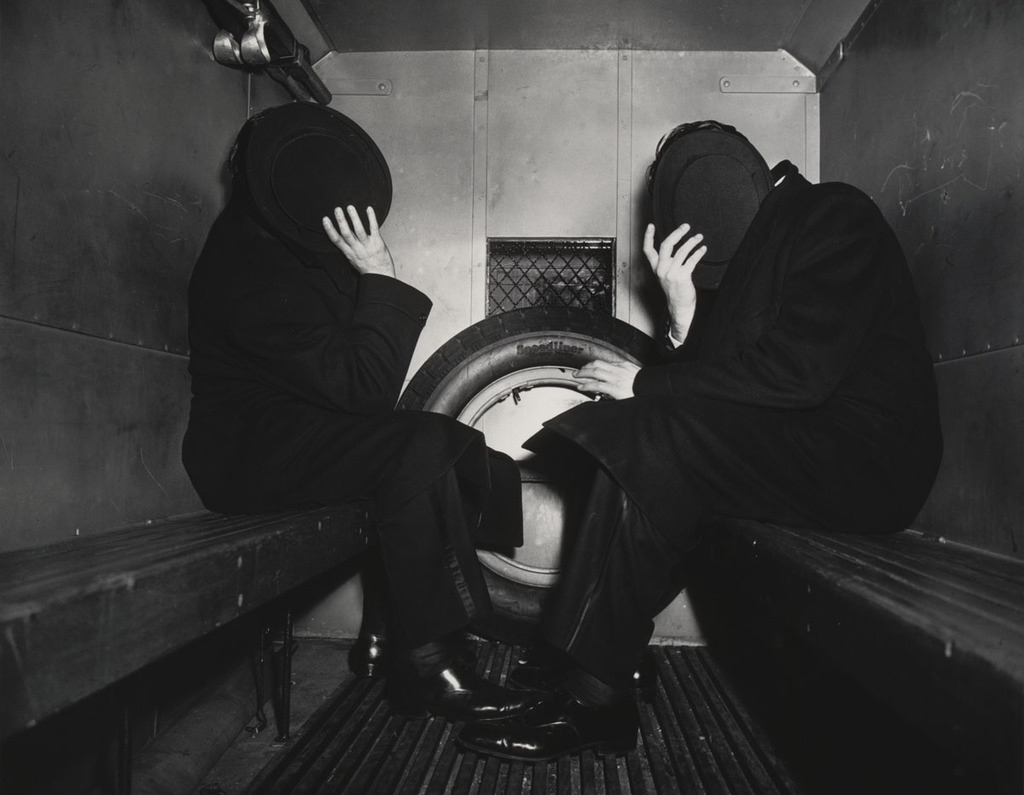
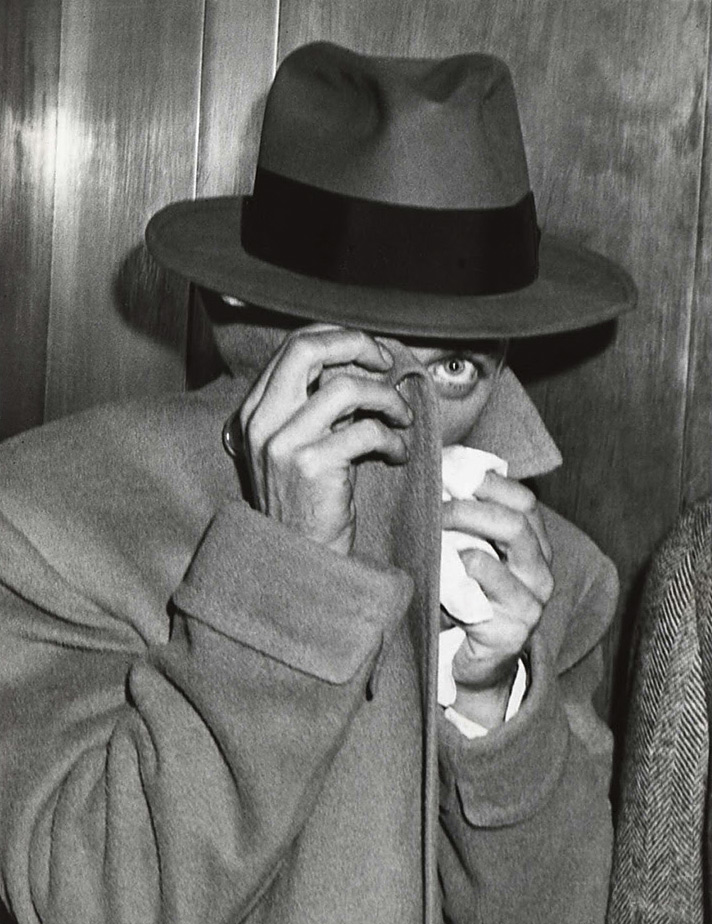
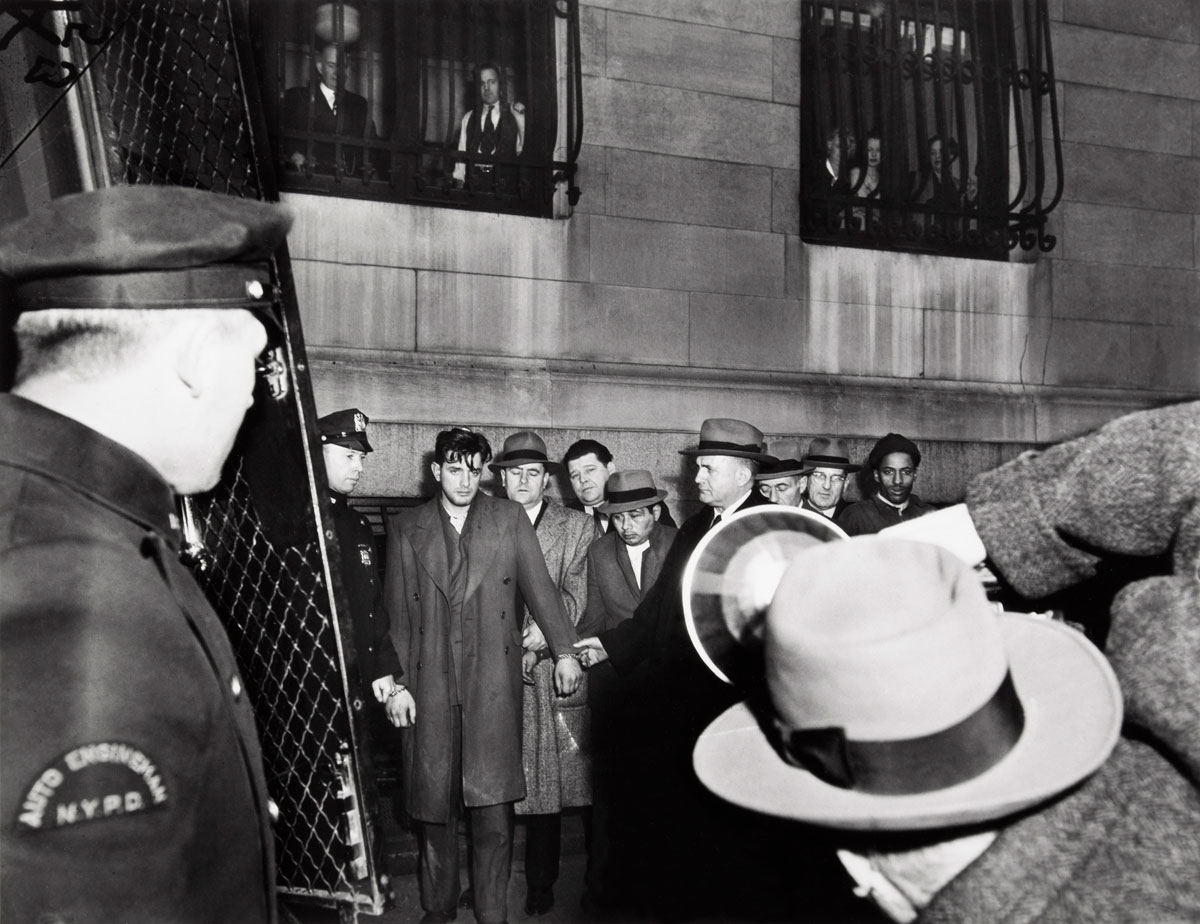
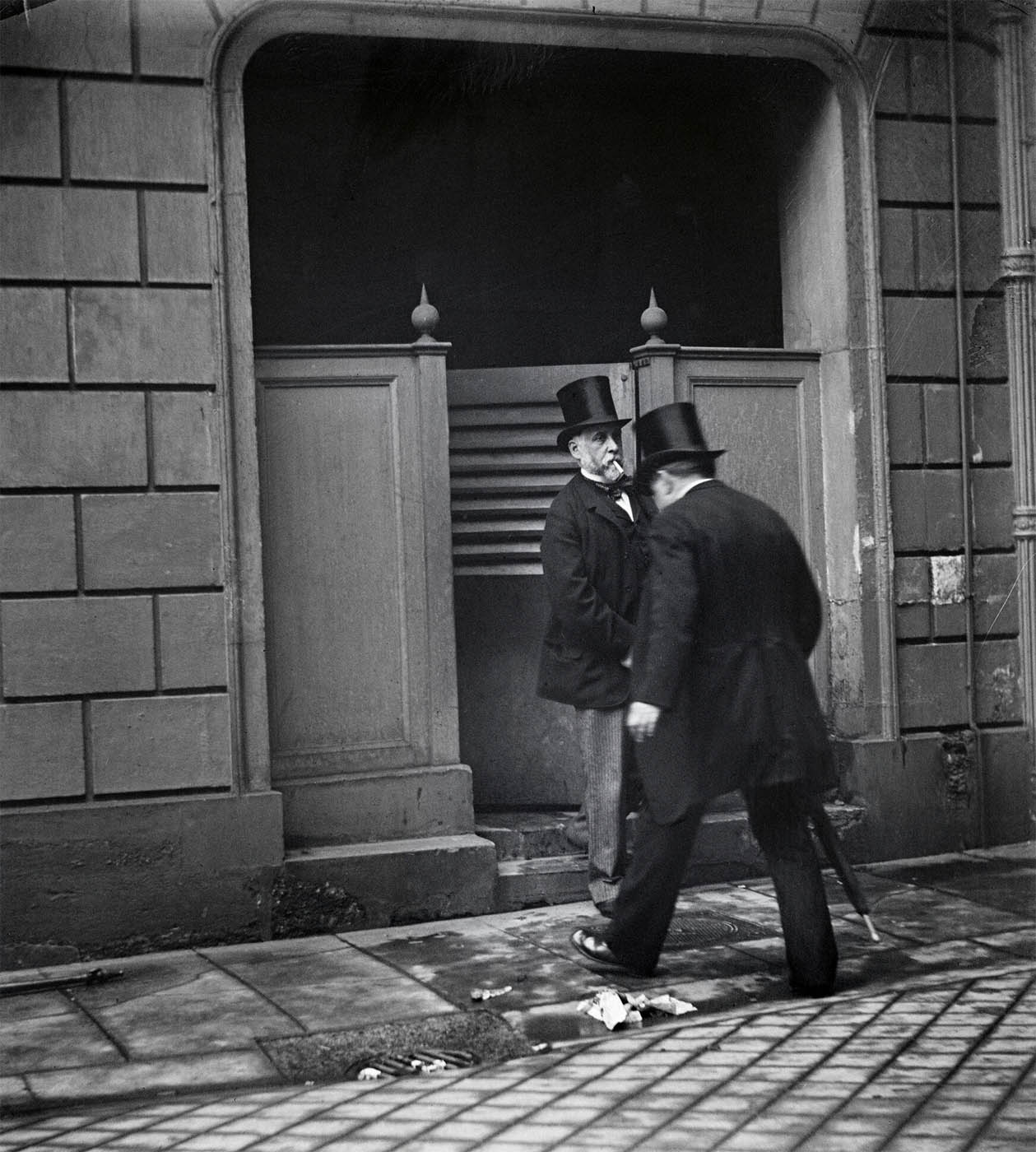
Weegee (American, born Ukraine (Austria), Złoczów (Zolochiv) 1899-1968 New York) 'Charles Sodokoff and Arthur Webber Use Their Top Hats to Hide Their Faces' January 27, 1942, printed c. 1983


Weegee (American born Ukraine (Austria), Złoczów (Zolochiv) 1899-1968 New York)
Charles Sodokoff and Arthur Webber Use Their Top Hats to Hide Their Faces
January 27, 1942, printed c. 1983
Gelatin silver print
31.8 x 41.4cm (12 1/2 x 16 5/16 in.)
Gift of Aaron and Jessica Rose, 1983
Rights and Reproduction: © Weegee / International Center of Photography


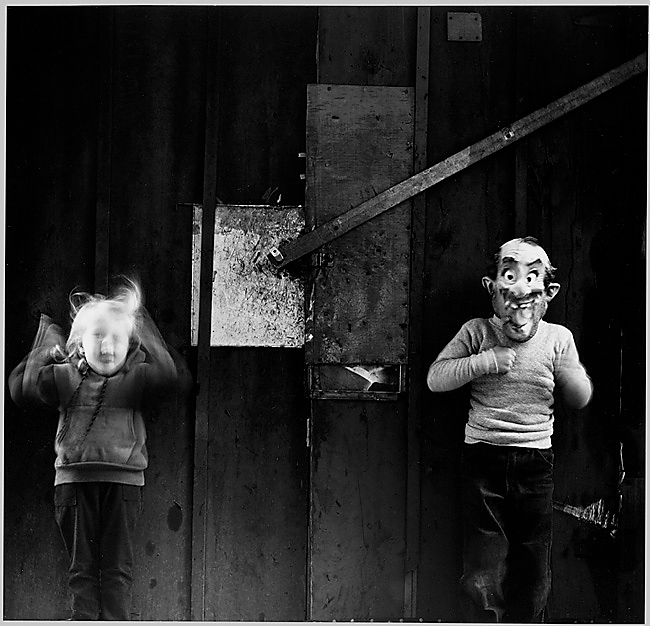
Ralph Eugene Meatyard (American, 1925-1972) 'Occasion for Diriment' 1962


Ralph Eugene Meatyard (American, 1925-1972)
Occasion for Diriment
1962
Gelatin silver print
18.0 x 18.7cm (7 1/16 x 7 3/8 in.)
Rogers Fund, 1967
© The Estate of Ralph Eugene Meatyard, Courtesy Fraenkel Gallery, San Francisco


Ralph Eugene Meatyard was a photographer and optician who spent the last two decades of his life in Lexington, Kentucky, producing an eccentric body of work at some remove from the photographic mainstream. He often posed his family and friends in enigmatic tableaux with props such as dolls and rubber masks, imbuing his images with a haunting Surrealist sensibility. The curious title of this photograph stems from Meatyard’s passion for odd names, puns, and peculiar words and phrases. Diriment is a made-up word, a Lewis Carroll-like compound of “dire” and “merriment” that suggests a mood of high-spirited fun and hilarity fraught with anxious undertones.


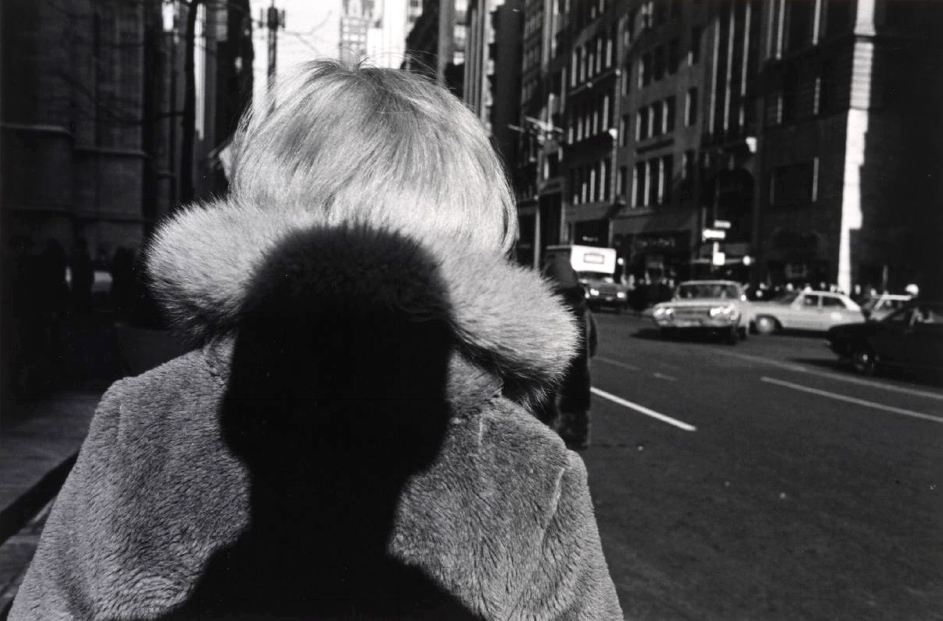
Lee Friedlander (American, born Aberdeen, Washington, 1934) 'Shadow, New York City' 1966, printed 1973


Lee Friedlander (American born Aberdeen, Washington, 1934)
Shadow, New York City
1966, printed 1973
Gelatin silver print
16.0 x 24.1cm (6 5/16 x 9 1/2 in.)
Purchase, The Horace W. Goldsmith Foundation Gift, through Joyce and Robert Menschel, 1990


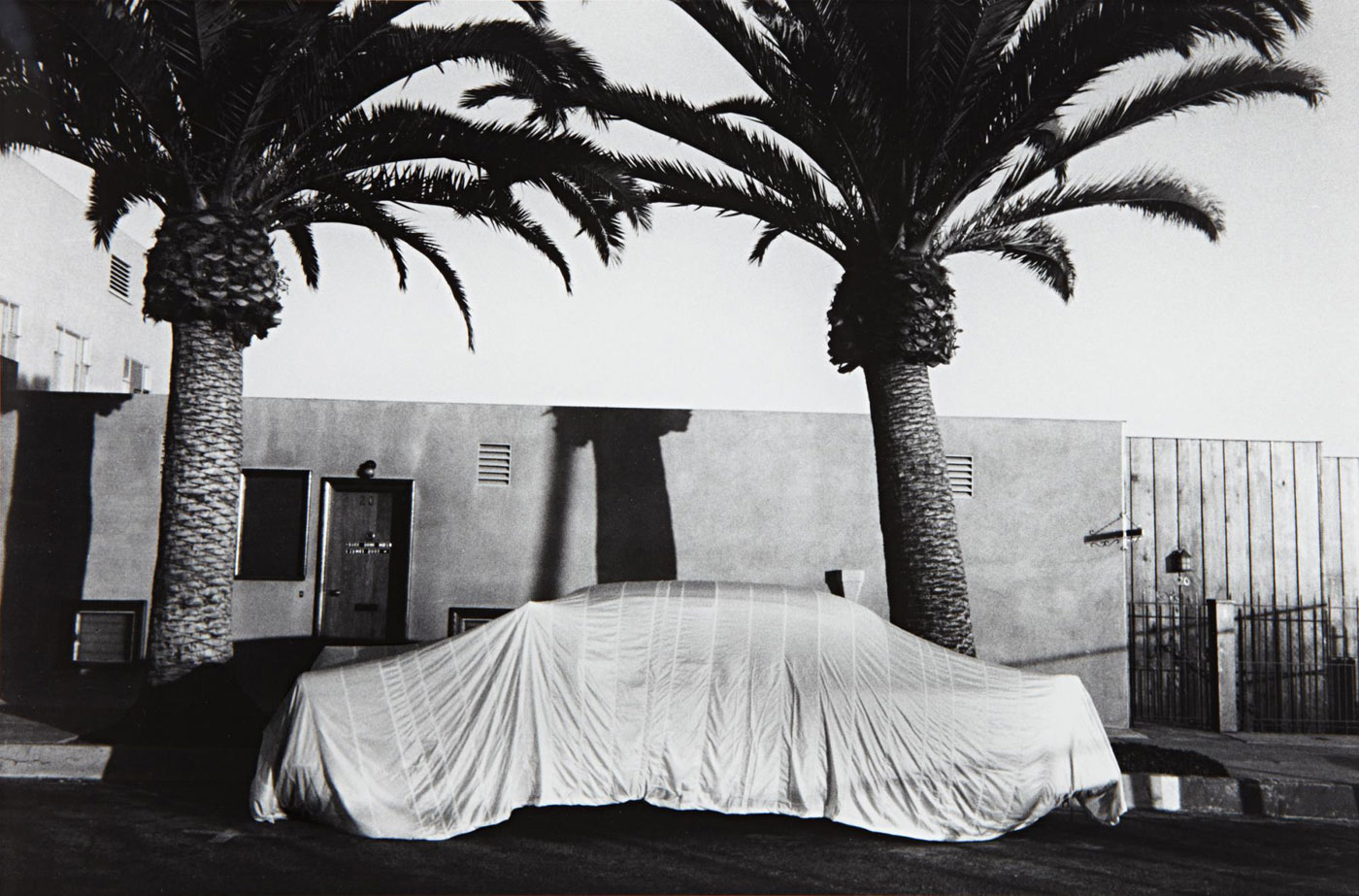
Robert Frank (American, born Zurich, 1924) 'Covered Car - Long Beach, California' 1955


Robert Frank (American born Zurich, 1924-2019)
Covered Car – Long Beach, California
1955
Gelatin silver print
21.4 x 32.7cm (8 7/16 x 12 7/8 in.)
Gilman Collection, Purchase, Ann Tenenbaum and Thomas H. Lee Gift, 2005


Photography is a medium prized for its capacity to expose, lay bare, make visible. For many artists, the camera is, above all, a tool for revealing what would otherwise remain unnoticed. As Diane Arbus once said: “I really believe there are things which nobody would see unless I photographed them.” At the root of this artistic impulse is a keen fascination with that which is hidden, obscure, or hitherto unseen. This exhibition presents a selection of contemporary photographs and video from the permanent collection that variously explores the medium’s dynamic interplay between concealment and revelation.

Some of the artists featured here use the camera to reveal subjects or places ordinarily hidden, as in Vera Lutter’s majestic view of the interior of a Pepsi-Cola bottling plant or Miguel Rio Branco’s lush image of a tapestry’s seamy underside. Others address instances of geopolitical obfuscation: Fazal Sheikh’s aerial photographs of the Negev desert in southern Israel record the traces of Bedouin villages that have been transformed into forests or farmland, while Mishka Henner collects images of stylishly censored high-security sites on Google Earth. In Vault (2011), Thomas Demand takes his inspiration from current events, meticulously re-creating a storeroom in which thirty missing works of art were discovered during a recent police raid.

The tension between publicity and privacy – the simultaneous desire to be looked at and to evade the merciless gaze of the camera – animates the work of artists as diverse as Arbus, Lutz Bacher, Jack Pierson, and Taryn Simon. In her video, The Nightingale (2003), Grace Ndiritu explores the tradition of the veil and its complex poetics of exposure and effacement. Complementing the contemporary works on view is a selection of earlier photographs in which the primary subject is hidden or obscured – a brief anthology of playfulness, shame, and seduction.


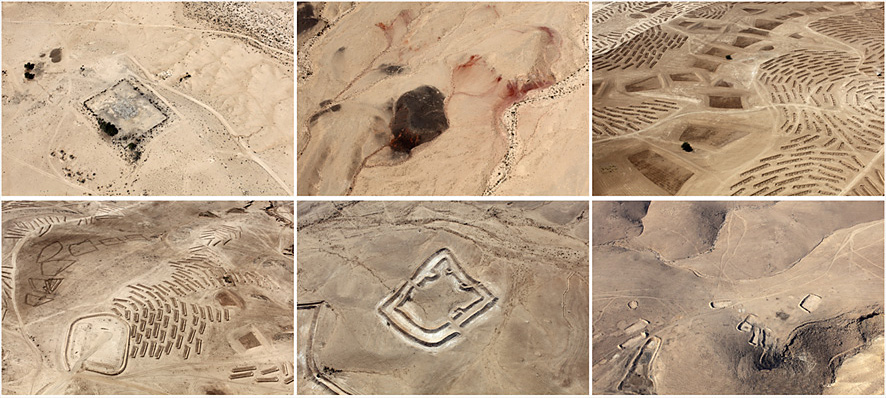
Fazal Sheikh (American, born 1965) 'Desert Bloom' (various numbers) 2011


Fazal Sheikh (American, b. 1965)
Desert Bloom (various numbers)
2011
Excerpt from the Erasure Trilogy
Inkjet print
Image: 40 × 60cm (15 3/4 × 23 5/8 in.) Sheet: 52.1 × 72.1cm (20 1/2 × 28 3/8 in.)
Frame: 73.7 × 53.3cm (29 × 21 in.)
Purchase, Jane P. Watkins Gift, 2013


In 2011 the French photographer Frederic Brenner invited eleven prominent photographers to spend six months in residence in Israel and the Occupied Territories, or West Bank, to explore the area’s complexity and to create bodies of work that might broaden and reframe the conversation about the region. Among those invited was Sheikh, an artist best known for his sensitive black-and-white portraits of people living in displaced and marginalised communities around the world. Sheikh’s project takes the form of a trilogy titled Erasure, of which Desert Bloom is the central part. The images were made during several months of flying above the Negev desert and are intended to articulate the rapid transformation of the region. On the one hand, they invoke the Israeli endeavour to “make the desert bloom,” and on the other, they reveal traces of the Negev’s history: the construction of towns for the Bedouin, the natural erosion of the land, the demolition of local dwellings, the remains of military installations, the afforestation campaigns of the Jewish National Fund (JNF), and the transformation of nomadic desert regions into farmland.


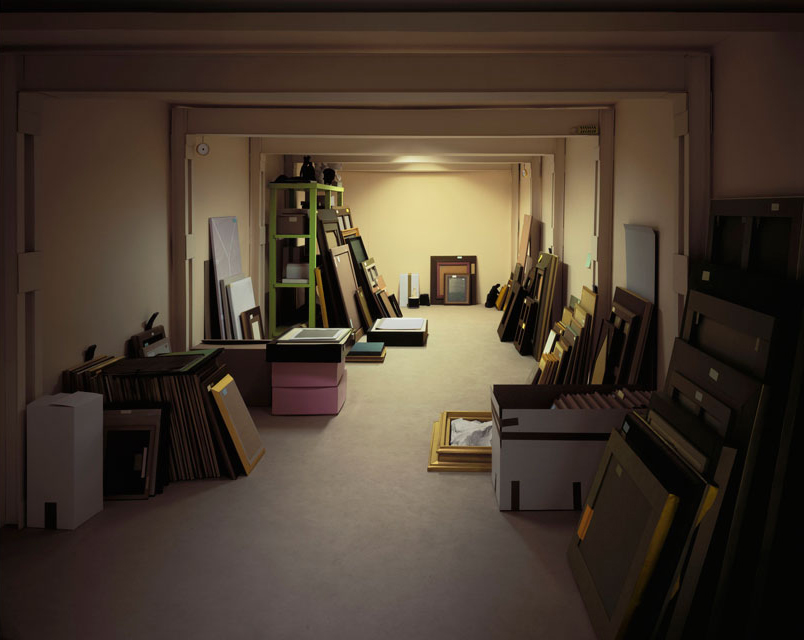
Thomas Demand (German, b. 1964) 'Vault' 2012


Thomas Demand (German, b. 1964)
Vault
2012
Chromogenic print
220 x 276.9cm (86 5/8 x 109 in.)
Purchase, Louis V. Bell Fund; Alfred Stieglitz Society, The Fledgling Fund, through Diana Barrett and Robert Vila, Joseph M. and Barbara Cohen Foundation Inc. and Hideyuki Osawa Gifts, 2013
© Thomas Demand / Artist’s Rights Society (ARS), New York


Demand’s photographs of the paper constructions he builds in his studio are typically based on photographs related to politically charged real-world events. He begins with an existing image, usually culled from the news media, which he translates into a three-dimensional life-sized model made of coloured paper and cardboard. The models are then carefully lit and photographed, after which they are destroyed. Three times removed from the scenes they depict, Demand’s works are masterpieces of pictorial ambiguity that occupy a mesmerising middle ground between reality and artifice.

Vault is based on a police photograph of a storeroom at the Wildenstein Institute in Paris, where thirty paintings and sculptures that had been missing for decades were discovered during a police raid in 2011. The missing artworks belong to the heirs of a French Jewish family displaced during the Holocaust. In Demand’s picture, as in the photograph on which it is based, the framed paintings – which include works by Degas, Manet, and Morisot – are turned to face the walls and remain tantalisingly hidden from view.


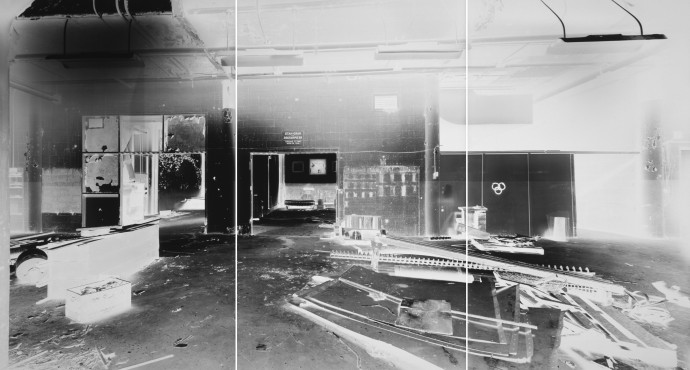
Vera Lutter (German, born Kaiserslautern, 1960) 'Pepsi Cola Interior II: July 6-13, 2000' 2000


Vera Lutter (German, b. 1960)
Pepsi Cola Interior II: July 6-13, 2000
2000
Gelatin silver print
Overall installation: 90 3/4 in. × 14 ft. 3/4 in. (230.5 × 428.6cm)
Sheet (A): 90 in. × 55 3/4 in. (228.6 × 141.6cm)
Sheet (B): 90 in. × 55 3/4 in. (228.6 × 141.6cm)
Sheet (C): 90 in. × 55 3/4 in. (228.6 × 141.6cm)
Frame (each): 90 3/4 × 56 1/4 in. (230.5 × 142.9cm)
Purchase, Joseph M. and Barbara Cohen Foundation Inc. Gift, 2001
© Vera Lutter


While the basis for Lutter’s technique – the camera obscura – is older than photography itself, her images and subject matter are wholly modern. This enormous negative print was made inside a room-sized pinhole camera that Lutter built in a derelict Pepsi-Cola bottling plant on the East River in Hunters Point, Queens. After pinning three huge sheets of photographic paper opposite the camera’s pinhole aperture, she worked inside the camera to monitor and manipulate the light during the weeklong exposure. The bottling plant itself closed in 1999 and was later demolished.


Mishka Henner (British, b. 1976) 'Staphorst Ammunition Depot, Overijssel' 2011, printed 2014


Mishka Henner (British, b. 1976)
Staphorst Ammunition Depot, Overijssel
2011, printed 2014
From the series Dutch Landscapes
Inkjet print
31 1/2 × 35 7/16 in. (80 × 90cm)
Purchase, Vital Projects Fund Inc. Gift, through Joyce and Robert Menschel, 2014
© Mishka Henner


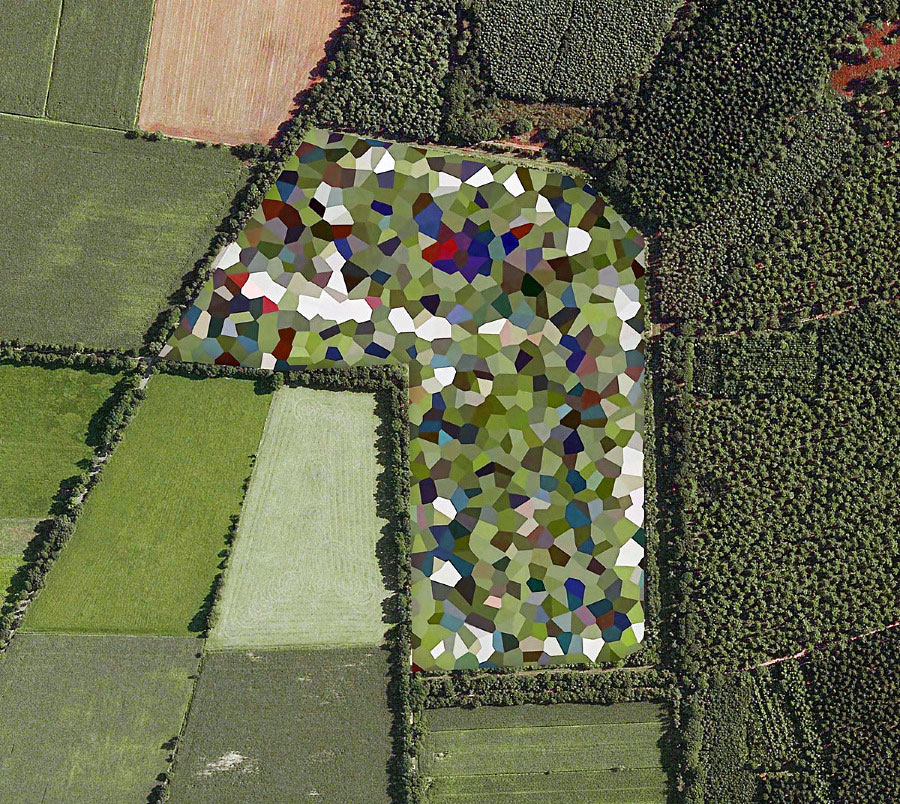
In his “Dutch Landscapes” series, Henner selects and reproduces images of the Netherlands found on Google Earth. The multicoloured shapes punctuating these landscapes were created not by the artist but at the behest of the Dutch government. When Google Earth was introduced in 2005, satellite imagery of the entire planet became freely accessible to anyone with an Internet connection. This sudden visibility created concerns among many governments, who required Google – or its image suppliers – to obscure the details of sites deemed vital to national security. While most nations employed standard techniques, such as blurring, pixilation, or digital cloning, the Dutch chose to conceal hundreds of sites – including royal palaces, army barracks, and fuel depots – with bold, multicoloured polygons. “There is of course an absurdity to these censored images,” Henner has written, “since their overt, bold and graphic nature only draws attention to the very sites that are meant to be hidden. Yet this contradiction seems perfectly apt for the absurd fear of terror that has come to dominate the cultural landscape of the last decade.”


Now You See It: Photography and Concealment, an installation of 25 works at The Metropolitan Museum of Art, focuses on the dynamic interplay between concealment and revelation in contemporary photography and video art. The featured works, all from the Museum’s Department of Photographs, range from a late 19th-century photograph by Pierre-Louis Pierson to a recently acquired work by Thomas Demand.

The installation presents works by artists who use the camera to reveal subjects or places ordinarily hidden from view, as well as works that explore broader themes of secrecy and obscured or partial vision. A highlight of Now You See It is Thomas Demand’s photograph Vault (2012). The image is based on a police photograph of a storeroom at the Wildenstein Institute in Paris, where 30 paintings and sculptures that had been missing for decades were discovered during a police raid in 2011. In Demand’s picture, as in the photograph on which it is based, the framed art works are turned to face the walls, remaining tantalisingly hidden from view. Other highlights include Vera Lutter’s haunting view of the seldom seen interior of the Pepsi Cola bottling plant in Queens, New York, Pepsi Cola Interior II: July 6-13 (2000), and Fazal Sheikh’s Desert Bloom (2011), a series of aerial photographs of the Negev desert. In Grace Nditru’s acclaimed video The Nightingale (2003), the artist explores the tradition of the veil and its complex associations of exposure and effacement. Accompanied by a recording of the Senegalese singer Baaba Maal, Ndiritu evokes a rapid-fire series of cultural references as she performs a hypnotic, Scheherazade-like series of gestures and movements with a piece of fabric, swiftly transforming it from turban to blindfold, and do-rag to noose to niqab. The tension between publicity and privacy, inherent in the field of photography, is explored in works by artists as diverse as Diane Arbus, Lutz Bacher, Jack Pierson, and Taryn Simon. The 20th-century photographs on view present the theme of concealment in a literal way and include Weegee’s Charles Sodokoff and Arthur Webber Use Their Top Hats to Hide Their Faces (January 27, 1942) and Helen Levitt’s Kids in a Box, on the Street, New York City (c. 1942).

Now You See It: Photography and Concealment is organised by Mia Fineman, Associate Curator in the Department of Photographs at The Metropolitan Museum of Art.


Helen Levitt (American, 1913-2009) [Kids in a Box, on the Street, New York City] c. 1942


Helen Levitt (American, 1913-2009)
[Kids in a Box, on the Street, New York City]
c. 1942
Gelatin silver print
Image approx.: 9 × 6 in. (22.9 × 15.2cm)
Promised Gift of Mrs. Robert O. Levitt
© Estate of Helen Levitt


Helen Levitt (American, 1913-2009) [Kids on the Street Playing Hide and Seek, New York City] c. 1942


Helen Levitt (American, 1913-2009)
[Kids on the Street Playing Hide and Seek, New York City]
c. 1942
Gelatin silver print
9 3/4 × 6 3/4 in. (24.8 × 17.1cm)
Promised Gift of Mrs. Robert O. Levitt
© Estate of Helen Levitt


Attributed to Juliette Alexandre-Bisson (French, 1861-1956) [Birth of Ectoplasm During Séance with the Medium Eva C.] 1919-1920


Attributed to Juliette Alexandre-Bisson (French, 1861-1956)
[Birth of Ectoplasm During Séance with the Medium Eva C.]
1919-1920
Gelatin silver print
11.8 x 8.9cm (4 5/8 x 3 1/2 in.)
Gilman Collection, Purchase, The Howard Gilman Foundation Gift, 2001


Bill Wasilevich (American, active 1940s) 'Jimmy "One Eye" Collins After Arraignment' 1946


Bill Wasilevich (American, active 1940s)
Jimmy “One Eye” Collins After Arraignment
1946
Gelatin silver print
18.6 x 14.4cm (7 5/16 x 5 11/16 in.)
Twentieth-Century Photography Fund, 2008
© Steve Schapiro/Corbis


Grace Ndiritu (British, born 1976)
The Nightingale
2003
Video
Gift of the artist, 2009
© 2003 Grace Ndiritu, Courtesy Grace Ndiritu and LUX, London


Before a camera fixed on her face and neck and accompanied by a recording of the Senegalese singer Baaba Maal, Ndiritu performs a hypnotic, Scheherazade-like series of gestures and movements with a piece of fabric, swiftly transforming it from turban to blindfold, from do-rag to noose to niqab. Both jubilant and unsettling, the video evokes a rapid-fire series of cultural references, counterposing the enforced modesty of the Islamic world with Western fantasies of exoticism. Ndiritu, who studied textiles at the Winchester School of Art, acquired this simple red-and-white scarf while traveling in India and carried it with her as a talisman through years of global exploration.


Jack Pierson (American, b. 1960) 'The Lonely Life' 1992


Jack Pierson (American, b. 1960)
The Lonely Life
1992
Chromogenic print
Frame: 76.2 × 101.6cm (30 × 40 in.)
Purchase, The Horace W. Goldsmith Foundation Gift, through Joyce and Robert Menschel, 2000
© Jack Pierson


In 1994, Pierson was invited by the Whitney Museum of American Art to show his photographs alongside a group of works by Edward Hopper (1882-1967) that the artist selected from their vast holdings. Like Hopper, Pierson creates works that are inherently cinematic in their scope and effects; both are primarily concerned with mood, atmosphere, and exhibit a particularly urban kind of melancholy. His greatest asset, however, is an almost overwhelmingly lush palette, which he uses to depict objects of desire or scenes that are unabashedly sensual and emotional. An excellent example of the artist’s high-key chromaticism, The Lonely Life describes the unique brand of loneliness shared by the performer and the fan, both of whom (like Pierson) are doomed to experience existence solely through the intoxications of art.


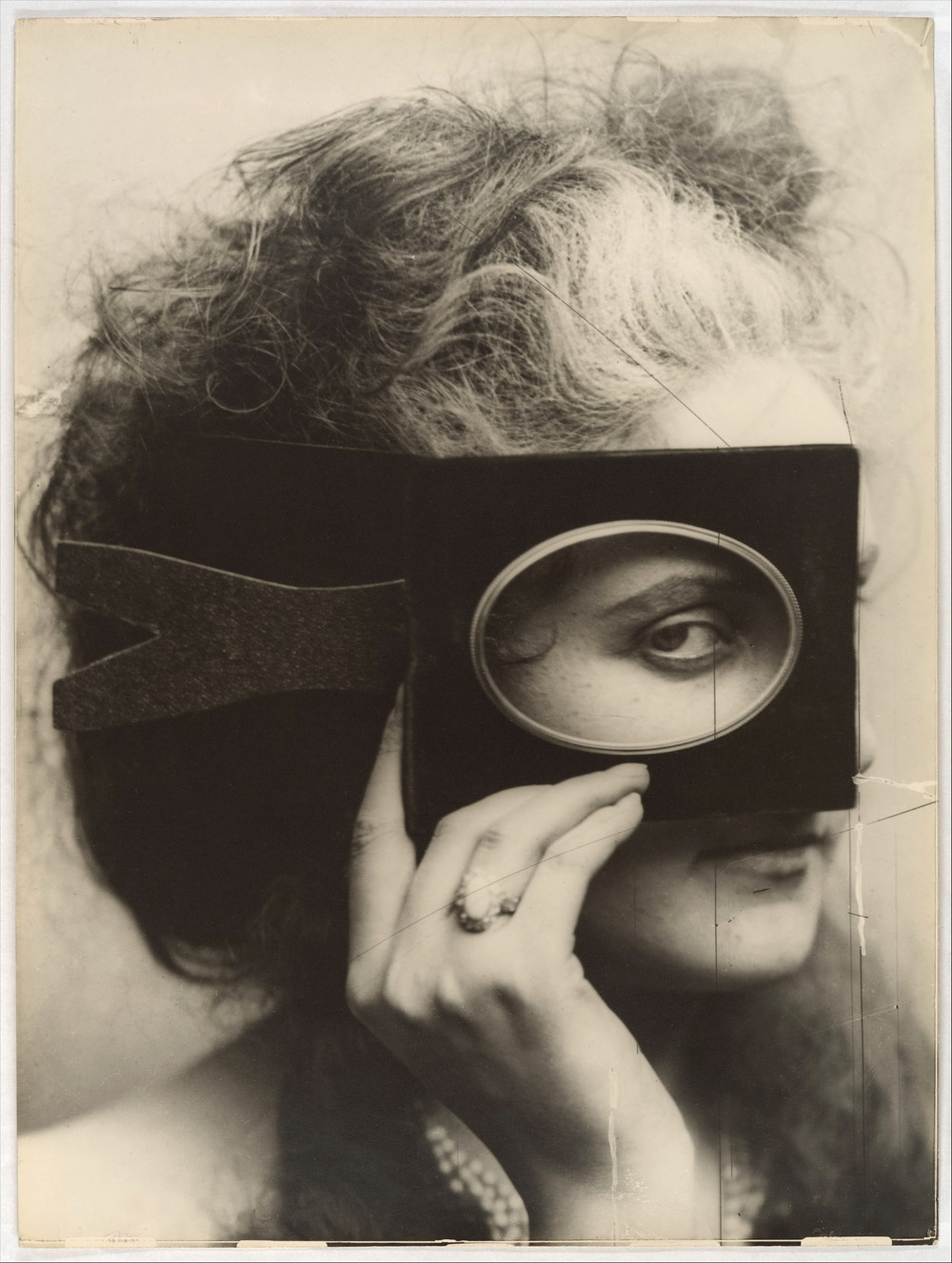
Pierre-Louis Pierson (French, 1822-1913) 'Scherzo di Follia' 1861-1867, printed c. 1930


Pierre-Louis Pierson (French, 1822-1913)
Scherzo di Follia
1861-1867, printed c. 1930
Gelatin silver print from glass negative
39.8 x 29.8cm (15 11/16 x 11 3/4 in.)
Gilman Collection, Gift of The Howard Gilman Foundation, 2005


Virginia Oldoini, Countess Verasis de Castiglione (1837-1899), created a sensation when she appeared on the social scene in Paris in 1855, having been sent by the Italian statesman Cavour to secretly win Napoleon III over to the cause of Italian unity by “any means she chose.” Within months, the statuesque beauty was the mistress of Napoleon III and a much-talked-about ornament of the lavish balls so prevalent during the period. After the fall of the Second Empire in 1870, she led an increasingly secluded existence, which gave rise to fantastic speculation about her affairs. As the years went by, her mental stability declined and she ventured out only at night, shrouded in veils.

The countess’s raging narcissism found in photography the perfect ally; Pierre-Louis Pierson produced over seven hundred different images of her. In a reversal of roles, the sitter would direct every aspect of the picture, from the angle of the shot to the lighting, using the photographer as a mere tool in her pursuit of self-promotion and self-expression.


The Metropolitan Museum of Art
1000 Fifth Avenue at 82nd Street
New York, New York 10028-0198
Phone: 212-535-7710

Opening hours:
Sunday – Tuesday and Thursday 10am – 5pm
Friday and Saturday 10am – 9pm
Closed Wednesday

The Metropolitan Museum of Art website

LIKE ART BLART ON FACEBOOK

Back to top

Exhibition: ‘The Radical Camera: New York’s Photo League, 1936-1951’ at The Norton Museum of Art, West Palm Beach, Florida

Exhibition dates: 14th March – 16th June 2013


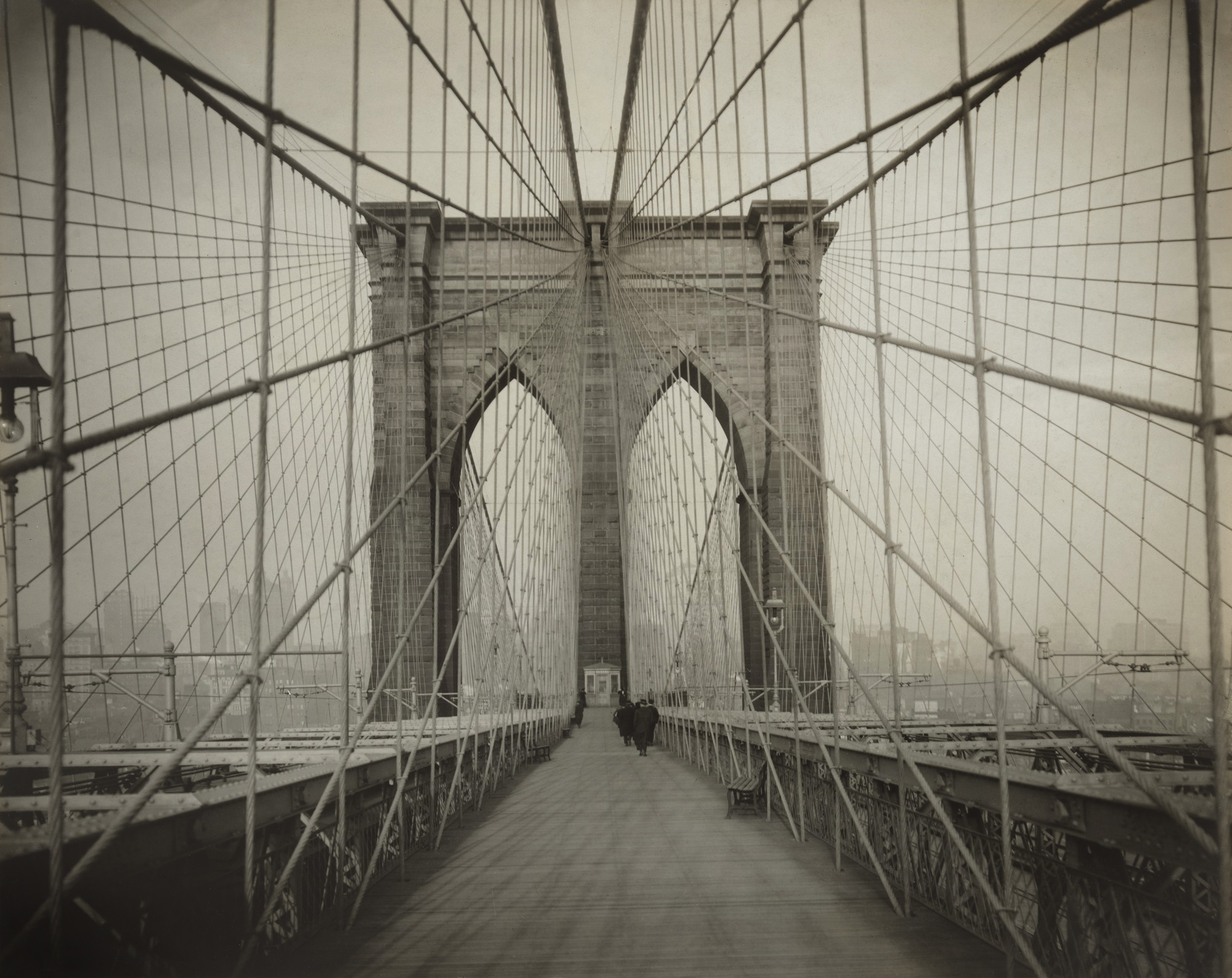
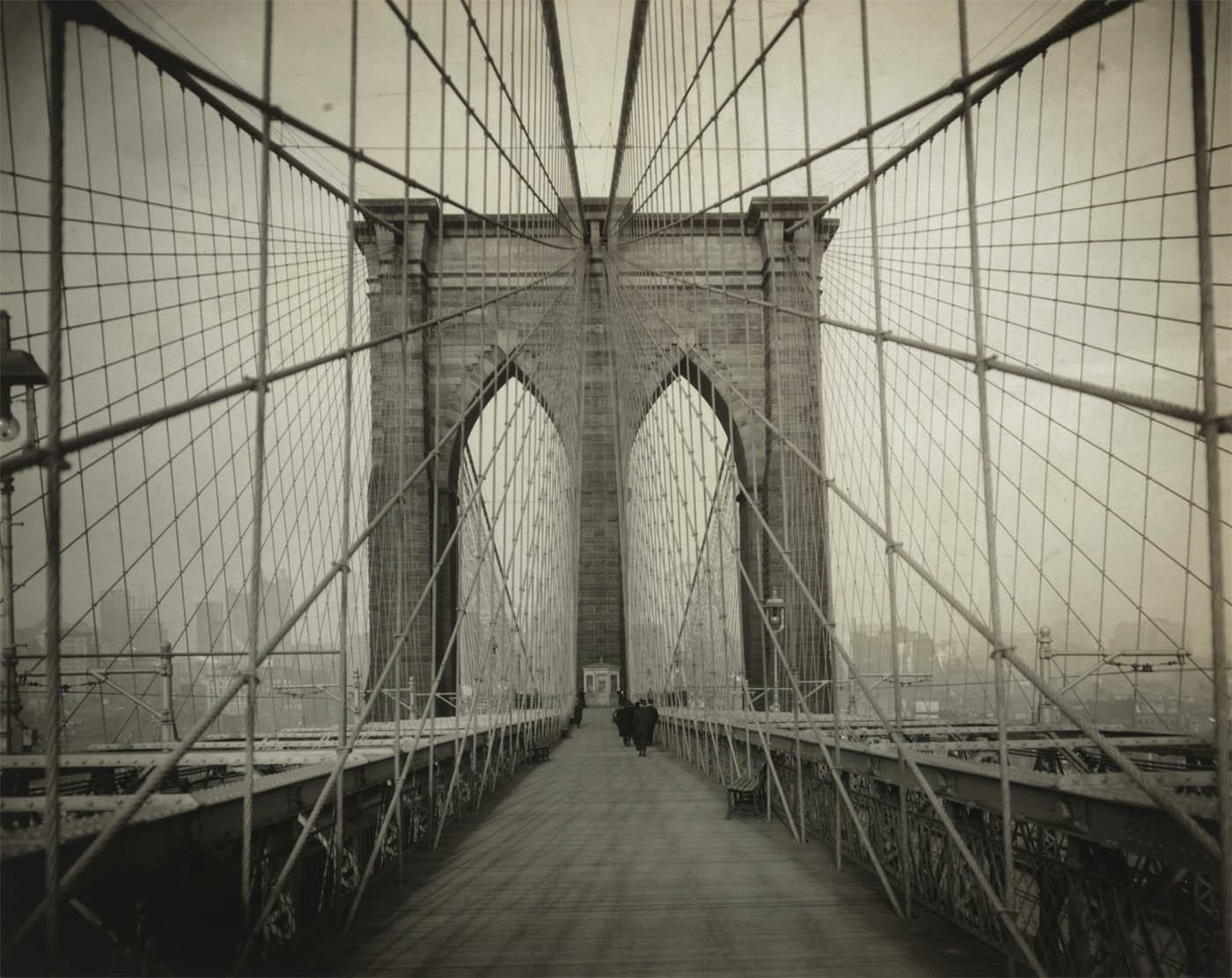
Alexander Alland (Ukranian-American, 1902-1989, born Sevastopol, Ukraine) 'Untitled (Brooklyn Bridge)' 1938


Alexander Alland (Ukranian-American, 1902-1989, born Sevastopol, Ukraine)
Untitled (Brooklyn Bridge)
1938
Gelatin silver print
The Jewish Museum, New York
Purchase: William and Jane Schloss Family Foundation Fund


Conscience of the brave

Bradley Manning.
A slight, bespectacled, intelligent gay man.
A man who has the courage of his convictions.
He revealed truth at the heart of the world’s largest “democracy.”

There is something insidious about the American nation. Not its citizens, not its place, but its government. This government has perpetrated evil in the name of its people. Think of Iraq and Afghanistan, invasions in the name of freedom, the support of puppet governments, the assassinations, the military advisors on the ground, the profits made.

The torture. The deaths.

Bradley Manning revealed all of this because he has a mighty moral compass. He knows right from wrong. He was not afraid to expose the hypocrisy that for many years has beaten, unfettered, in the breast of a nation. The home of the brave and the free is sadly under attack from within. In the name of its people.

And why is this text relevant to this posting?

So often in the history of America, dissension is shut down because of some imagined menace, from within or without. Here another group of people (photographers documenting American social conditions) were persecuted for standing up for social causes, for the freedom to expose injustice where it lives. The paranoia of patriotism.

As Harold Pinter has so pithily observed,

“The crimes of the United States have been systematic, constant, vicious, remorseless, but very few people have actually talked about them. You have to hand it to America. It has exercised a quite clinical manipulation of power worldwide while masquerading as a force for universal good. It’s a brilliant, even witty, highly successful act of hypnosis.”

Except the hypnotist is a deranged psychopath, a divided split personality arraigning god, greed and guns. Out of one, many sins.

Dr Marcus Bunyan


Many thankx to The Norton Museum of Art for allowing me to publish the photographs in the posting. Please click on the photographs for a larger version of the image.


“When the persecution of an individual who has exposed an evil is pursued so ruthlessly and yet the evil itself is studiedly ignored, all of us know that there is something very wrong with the way that our society is conducting itself. And if we do not protest in the strongest terms about what is being done in our name, then we become complicit.”


Alan Moore


“The US has shown remarkable energy in its pursuit of alleged whistleblowers. Has it investigated the deaths of those innocent civilians with the same vigour? With any vigour whatsoever? And which would you consider a crime? To conceal the deaths of innocent civilians, or to reveal them? I know what my answer would be.”


Les Barker


“To suggest that lives were put in danger by the release of the WikiLeaks documents is the most cynical of statements. Lives were put in danger the night we invaded the sovereign nation of Iraq, an act that had nothing to do with what the Bradley Mannings of this country signed up for: to defend our people from attack. It was a war based on a complete lie and lives were not only put in danger, hundreds of thousands of them were exterminated. For those who organised this massacre to point a finger at Bradley Manning is the ultimate example of Orwellian hypocrisy.”


Michael Moore


“Private Manning is the world’s pre-eminent prisoner of conscience, having remained true to the Nuremberg principle that every soldier has the right to ‘a moral choice.’ His suffering mocks the notion of the land of the free.”


John Pilger


Louis Stettner (American, 1922-2016) 'Coming to America' c. 1951


Louis Stettner (American, 1922-2016)
Coming  to America
c. 1951
Gelatin silver print The Jewish Museum, New York
Purchase: Photography Acquisitions Committee Fund


Louis Stettner

Louis Stettner (November 7, 1922 – October 13, 2016) was an American photographer of the 20th century whose work included streetscapes, portraits and architectural images of New York and Paris. His work has been highly regarded because of its humanity and capturing the life and reality of the people and streets. Starting in 1947, Stettner photographed the changes in the people, culture, and architecture of both cities. He continued to photograph New York and Paris up until his death. …

Back from the war Stettner joined the Photo League in New York. Stettner visited Paris in 1946 and in 1947 moved there. From 1947 to 1949 he studied at the “Institut des Hautes Études Cinématographiques” in Paris and received a Bachelor of Arts in Photography & Cinema. He went back and forth between New York and Paris for almost two decades and finally settled permanently in Saint-Ouen, near Paris, in 1990. Stettner still frequently returned to New York.

Stettner’s professional work in Paris began with capturing life in the post-war recovery. He captured the everyday lives of his subjects. In the tradition of the Photo League, he wanted to investigate the bonds that connect people to one another. In 1947 he was asked by the same Photo League to organise an exhibition of French photographers in New York. He gathered the works of some of the greatest photographers of the era, including Doisneau, Brassaï, Boubat, Izis, and Ronis. The show was a big success and was largely reviewed in the annual issue of U.S. Camera. Stettner had begun a series of regular meetings with Brassaï who was a great mentor and had significant influence on his work. In 1949, Stettner had his first exhibition at the “Salon des Indépendants” at the Bibliothèque Nationale, Paris.

In 1951 his work was included in the famous Subjektive Fotografie exhibition in Germany. During the 1950s he free-lanced for Time, Life, Fortune, and Du (Germany). While in Paris he reconnected with Paul Strand, who had also left New York because of the political intolerance of the McCarthy era – Strand had been a founder of the Photo League that would be blacklisted and then banned during those years.

In the 1970s Stettner spent more time in New York City, where he taught at Brooklyn College, Queens College, and Cooper Union.

Text from the Wikipedia website


Erika Stone (born 1924, Frankfurt, Germany) 'Lower Eastside Facade' 1947


Erika Stone (German, b. 1924)
Lower Eastside Facade
1947
Gelatin silver print
Columbus Museum of Art, Ohio, Photo League Collection
Museum purchase with funds provided by Elizabeth M. Ross, the Derby Fund,
John S. and Catherine Chapin Kobacker, and the Friends of the Photo League


Stone’s adroit cropping of this image emphasises the coy upward gaze of the woman in the advertisement, away from the laundry line (emblem of poverty), and suggests the social mobility of the postwar era.


Erika Stone’s documentary photographs reflect her long, active career as a photo journalist and magazine photographer. In the 40’s, Stone was a member of the legendary Photo League, an organisation of photo documentarians which she feels most influenced her approach to her personal photographic work. It was during the years as a League member that she developed her interest in documenting people and at the age of seventeen, produced her Bowery series.

Although she considers herself mostly self-taught, she studied at the New School of Social Research with Bereniece Abbott and George Tice.

Stone was a stringer for both Time and Der Spiegel magazines and worked as a general photojournalist until 1960. After the birth of her two sons, she made photographing children and family her specialty. Her photographs have been and are widely published in magazines and textbooks around the world.

Anonymous. “Erika Stone,” on the American Photography Archives Group website Nd [Online] Cited 13/07/2024


Marvin E. Newman (American, 1927-2023) 'Halloween, South Side' 1951


Marvin E. Newman (American, 1927-2023)
Halloween, South Side
1951
Gelatin silver print
The Jewish Museum, New York
Purchase: Photography Acquisitions Committee Fund


Marvin Newman

Born in New York; Newman attended Brooklyn College, where he studied sculpture with Burgoyne Diller and photography with Walter Rosenblum. Following Rosenblum’s suggestion, he joined the Photo League in 1948, taking classes with John Ebstel. The Photo League, founded in 1936, blazed a trail for serious photographers for 15 years, providing a forum for ideas, cheap darkroom space, and the vision of using the art of picture taking to change the world. Newman then attended the Institute of Design, Chicago (1949-52), where, after studying with Harry Callahan and Aaron Siskind, he received one of the first MS degrees in photography (1952).

During this time, Newman won national contests, including one sponsored by American Photography (1950) and another by Time, Inc. (1951). His work appeared in the Always a Young Stranger exhibition at the Museum of Modern Art, New York, and in a one-man show at Roy De Carava’s A Photographer’s Gallery (1956). Well-known as a photojournalist, Newman has been a major contributor to Sports Illustrated since its inception (1953), as well as to Life, Look, Newsweek, and Smithsonian magazines. In addition, he has been the national president of the American Society of Magazine Photographers, authored or coauthored eight books on photography, and received the Art Director’s Gold Medal for Editorial Photography.


Ida Wyman (American, 1926-2019) 'Spaghetti 25 Cents, New York' 1945


Ida Wyman (American, 1926-2019)
Spaghetti 25 Cents, New York
1945
Gelatin silver print
The Jewish Museum, New York
Purchase: Photography Acquisitions Committee Fund


This Italian restaurant was near the offices of Acme Newspictures, where Wyman became the company’s first female photo printer in 1943. After the war she lost her job at the agency. The “Ladies Invited” sign on the window is a reminder of a time when unescorted women were not always welcome in public dining establishments.

Ida Wyman

When I began working in the 1940s, few women were doing magazine photography in a field that was almost exclusively male. As I progressed from box camera to Speed Graphic (my first professional camera), and then to a Rolleiflex, I stopped thinking about the mechanics of film speed, f-stops, shutter speed, and began focusing on subject matter that interested me. What interested me so much were ordinary people and their everyday activities. Early on, I had documented children’s games and unusual architectural details in my Bronx neighbourhood. I decided to expand, to go elsewhere, taking the subway to Harlem, Chinatown, and lower Manhattan, exploring those neighbourhoods and looking for photos.

I became a member of the Photo League in 1946. I considered myself a documentary photographer and the League’s philosophy of honest photography appealed to me. I also began to understand the power of photos to help improve the social order by showing the conditions under which many people lived and worked. Even after leaving the League the following year, I continued to emphasise visual and social realities in my straightforward photographs.

Beginning with my earliest photos seeing New York City with my feet, and in whatever part of the country I was in, I continued my own walkabout, learning the area, engaging my subject, listening, and respecting their dignity. This continued to be my approach when taking photos. My photographs depicted daily life in America’s modern metropolitan centres, including Chicago and Los Angeles as well as New York.


Aaron Siskind (American, 1903-1991) 'The Wishing Tree' 1937


Aaron Siskind (American, 1903-1991)
The Wishing Tree
1937, printed later
from Harlem Document, 1936-40
Gelatin silver print
The Jewish Museum, New York
Purchase: Lillian Gordon Bequest


Harlem’s legendary Wishing Tree, bringer of good fortune, was once a tall elm that stood outside a theatre at 132nd Street and Seventh Avenue. When it was cut down in 1934 Bill “Bojangles” Robinson, the celebrated tap dancer, moved the stump to a nearby block and planted a new Tree of Hope beside it to assume wish granting duties. A piece of the original trunk is preserved in the Apollo Theatre on 125th Street, where performers still touch it for luck before going onstage.


Sonia Handelman Meyer (American, 1920-2022) 'Hebrew Immigration Aid Society' c. 1946


Sonia Handelman Meyer (American, 1920-2022)
Hebrew Immigration Aid Society
c. 1946
Gelatin silver print
The Jewish Museum, New York
Purchase: Mimi and Barry J. Alperin in memory of Max Alperin


The efforts of the New York­ based Hebrew Immigration Aid Society (HIAS) to rescue European Jews during the war were severely hampered by US immigration laws. After the war it aided in the resettlement of some 150,000 displaced persons, including, presumably, these three, whom Handelman Meyer has chosen to photograph in close-­up. She conveys both their common suffering and their individuality, emphasising differences in body language and dress.

Sonia Handelman Meyer

I first heard of the Photo League from Lou Stoumen in Puerto Rico in 1942. I was working for the U.S. Army Signal Corps and Lou was preparing to join Yank Magazine. When I returned to New York City, I walked up the rickety stairs to League Headquarters and took a beginners class with Johnny Ebstel. I bought a used Rolleicord for a precious $100, and dared to go out on the city streets to photograph the life around me. Soon the guys began to come back from the war and the heady life of Photo League workshops, exhibits, lectures, photo hunts, and committee assignments intensified. I took eye-heart-soul opening workshops with Sid Grossman, worked as the paid (!) secretary for a year or so, and worked on the Lewis Hine Committee under Marynn Ausubel.

I photographed in Spanish Harlem, Greenwich Village, midtown Manhattan, at the Hebrew Immigration Aid Society, at an anti-lynching rally in Madison Square Park, at a Jehovah’s Witness convention in Yankee Stadium, and on Coney Island. Mostly, I photographed children and reflections of my city – rough-edged, tender, and very beautiful in its diversity. Some of this work was shown in the major 1949 exhibition, This is the Photo League.

The heartbreaking end of the League coincided with a huge change in my personal life. I got married and my husband began to go to college and we were out of NY for a while. And then the biggest change: our own family arrived and the joys of our son, and later our daughter, absorbed my time. Prints and negatives were stashed away in boxes and I lost track of all the old friends at the League. After so many years of being in the shadows, you can imagine my pleasure, at 90+ years of age, to have my photographs out of their boxes and onto walls where they can be seen, thought about, and enjoyed – and perhaps again take their place in the history of the Photo League.


Arthur Leipzig (American, 1918-2014) 'Chalk Games, Prospect Place, Brooklyn' 1950


Arthur Leipzig (American, 1918-2014)
Chalk Games, Prospect Place, Brooklyn
1950
Gelatin silver print
The Jewish Museum, New York
Purchase: Rictavia Schiff Bequest


Arnold Eagle (Hungarian-American, 1909-1992) 'Chatham Square Platform, New York City' c. 1939


Arnold Eagle (Hungarian-American, 1909-1992)
Chatham Square Platform, New York City
c. 1939
Silver gelatin print


Joe Schwartz (American, 1913-2013) 'Slums Must Go! May Day Parade, New York' c. 1936


Joe Schwartz (American, 1913-2013)
Slums Must Go! May Day Parade, New York
c. 1936
Gelatin silver print
Columbus Museum of Art, Ohio, Photo League Collection
Museum Purchase with funds provided by Elizabeth M. Ross, the Derby Fund, John S. and Catherine Chapin Kobacker, and the Friends of the Photo League


Morris Huberland (Polish-American, 1909-2003 born Warsaw, Poland) 'Union Square, New York' c. 1942


Morris Huberland (Polish-American, 1909-2003 born Warsaw, Poland)
Union Square, New York
c. 1942
Gelatin silver print
The Jewish Museum, New York
Purchase: Mimi and Barry J. Alperin Fund


The Norton Museum of Art’s newest special exhibition, The Radical Camera: New York’s Photo League, 1936-1951, is a formidable survey of the League’s history, and its artistic, cultural, social, and political significance. Opening March 14 and on view through June 16, 2013, this striking exhibition includes nearly 150 vintage photographs from Photo League collections at the Columbus Museum of Art, Ohio, and The Jewish Museum in New York City.

The exhibition is organised by Mason Klein, Curator of Fine Arts at The Jewish Museum and Catherine Evans, the William and Sarah Ross Soter Curator of Photography of the Columbus Museum of Art. It premiered in at The Jewish Museum in 2011 to rave reviews. The New York Times called The Radical Camera a “stirring show,” and the New York Photo Review hailed it as “nothing short of splendid.” The New Yorker named the exhibition one of the top 10 photography exhibitions of 2011. The Norton is the final venue on the exhibition’s tour.

The exhibition explores the fascinating blend of aesthetics and social activism at the heart of the Photo League. League members were known for capturing sharply revealing, compelling moments from everyday life. The League focused on New York City and its vibrant streets – a shoeshine boy, a brass band on a bustling corner, a crowded beach at Coney Island. Many of the images are beautiful, yet harbour strong social commentary on issues of class, race, and opportunity. The organisation’s members included some of the most noted photographers of the mid-20th century – W. Eugene Smith, Weegee (Arthur Fellig), Lisette Model, Berenice Abbott and Aaron Siskind, to name a few.

In 1936, a group of young, idealistic photographers, most of them Jewish, first-generation Americans, formed an organisation in Manhattan called the Photo League. Their solidarity centred on a belief in the expressive power of the documentary photograph, and on a progressive alliance in the 1930s of socialist ideas and art. (The Photo League also helped validate photography as a fine art, presenting student work and guest exhibitions by established photographers.) The Radical Camera presents the development of the documentary photograph during a tumultuous period that spanned the New Deal reforms of the Depression, World War II, and the Cold War. Offering classes, mounting exhibitions, and fostering community, members of the Photo League focused on social reform and the power of the photograph to motivate change. At the height of their influence, their membership included the most important photographers of their day including Berenice Abbot, Aaron Siskind, Barbara Morgan, Sid Grossman, Weegee (Arthur Fellig), and Lisette Model. Featuring more than 175 works by these artists as well as many more Photo League members, The Radical Camera traces the organisation’s interests, attitudes toward photography, and impact during its 15-year lifespan.

The innovative contributions of the Photo League during its 15-year existence (1936-1951) were significant. As it grew, the League mirrored monumental shifts in the world starting with the Depression, through World War II, and ending with the Red Scare. Born of the worker’s movement, the Photo League was an organisation of young, idealistic, first-generation American photographers, most of them Jewish, who believed in documentary photography as an expressive medium and powerful tool for exposing social problems. It was also a school with teachers such as Sid Grossman, who encouraged students to take their cameras to the streets and discover the meaning of their work as well as their relationship to it. The League had a darkroom for printing, published an acclaimed newsletter called Photo Notes, offered exhibition space, and was a place to socialise.

The Photo League helped validate photography as a fine art, presenting student work and guest exhibitions by established photographers such as Eugène Atget, Henri Cartier-Bresson, and Edward Weston, among others. These affecting black and white photographs show life as it was lived mostly on the streets, sidewalks and subways of New York. Joy and playfulness as well as poverty and hardship are in evidence. In addition to their urban focus, “Leaguers” photographed rural America, and during World War II, took their cameras to Latin America and Europe. The exhibition also addresses the active participation of women who found rare access and recognition at the League. The Radical Camera presents the League within a critical, historical context. Developments in photojournalism were catalysing a new information era in which photo essays were appearing for the first time in magazines such as Life and Look. As time went on, its social documentary roots evolved toward a more experimental approach, laying the foundation for the next generation of street photographers.

In 1947, the League came under the pall of McCarthyism and was blacklisted for its alleged involvement with the Communist Party. Ironically, the Photo League had just begun a national campaign to broaden its base as a “Center for American Photography.” Despite the support of Ansel Adams, Beaumont and Nancy Newhall, Paul Strand, and many other national figures, this vision of a national photography centre could not overcome the Red Scare. As paranoia and fear spread, the Photo League was forced to disband in 1951. The Radical Camera: New York’s Photo League, 1936-1951 has been organised by The Jewish Museum, New York, and the Columbus Museum of Art, Ohio. Major support was provided by the Phillip and Edith Leonian Foundation, the National Endowment for the Arts, and Limited Brands Foundation.”

Press release from The Norton Museum of Art website


Sy Kattelson (American, 1923-2018) 'Untitled (Subway Car)' 1949


Sy Kattelson (American, 1923-2018)
Untitled (Subway Car)
1949
Gelatin silver print
The Jewish Museum, New York
Purchase: The Paul Strand Trust for the benefit of Virginia Stevens Gift


Jerome Liebling (American, 1924-2011) 'Butterfly Boy, New York' 1949


Jerome Liebling (American, 1924-2011)
Butterfly Boy, New York
1949
Gelatin silver print
The Jewish Museum, New York, Purchase: Mimi and Barry J. Alperin Fund
© Estate of Jerome Liebling


Lee Sievan (American, 1907-1990) 'Salvation Army Lassie in Front of a Woolworth Store' c. 1940


Lee Sievan (American, 1907-1990)
Salvation Army Lassie in Front of a Woolworth Store
c. 1940
Gelatin silver print
The Jewish Museum, New York
Purchase: Horace W. Goldsmith Foundation Fund


This is a classic photograph. Look at the triangle that forms the central part of the image, from the girl at left looking with disdain at the matriarch singing then down to the look on the organ players face. Notice the girl at right covering her ears so she cannot hear the racket. Imagine the legs of the organ player going up and down, pumping air into the organ; and finally observe the shadow of a man’s face captured by reflection in the shop window as he walks past the scene. Magic.


Rosalie Gwathmey (American, 1908-2001) 'Shout Freedom, Charlotte, North Carolina' c. 1948


Rosalie Gwathmey (American, 1908-2001)
Shout Freedom, Charlotte, North Carolina
c. 1948
Gelatin silver print
The Jewish Museum, New York
Purchase: Gay Block and Malka Drucker Fund of the Houston Jewish Community Foundation


Weegee (Arthur Fellig) (American born Ukraine, 1899-1968) 'Max Is Rushing in the Bagels to a Restaurant on Second Avenue for the Morning Trade' c. 1940


Weegee (Arthur Fellig) (American born Ukraine, 1899-1968)
Max Is Rushing in the Bagels to a Restaurant on Second Avenue for the Morning Trade
c. 1940
Gelatin silver print
The Jewish Museum, New York
Purchase: Joan B. and Richard L. Barovick Family Foundation and Bunny and Jim Weinberg Gifts


Bernard Cole (English, 1911-1992, born London, England) 'Shoemaker’s Lunch' 1944


Bernard Cole (English, 1911-1992, born London, England)
Shoemaker’s Lunch
1944
Gelatin silver print
The Jewish Museum, New York,
Purchase: The Paul Strand Trust for the benefit of Virginia Stevens Gift


Rebecca Lepkoff (American, 1916-2014) 'Broken Window on South Street, New York' 1948


Rebecca Lepkoff (American, 1916-2014)
Broken Window on South Street, New York
1948
Gelatin silver print
The Jewish Museum, New York
Purchase: Esther Leah Ritz Bequest


Arthur Leipzig (American, 1918-2014) 'Ideal Laundry' 1946


Arthur Leipzig (American, 1918-2014)
Ideal Laundry
1946
Gelatin silver print
The Jewish Museum, New York
Purchase: Esther Leah Ritz Bequest


Consuelo Kanaga (American, 1894-1978) 'Untitled (Tenements, New York)' c. 1937


Consuelo Kanaga (American, 1894-1978)
Untitled (Tenements, New York)
c. 1937
Gelatin silver print
The Jewish Museum, New York
Purchase: The Paul Strand Trust for the benefit of Virginia Stevens Gift


Leftist political activism was a strong element in Kanaga’s work, beginning with her photographs of a labor strike in San Francisco in 1934. She provided photographs for progressive publications such as New Masses, Labor Defender, and Sunday Worker. Underlying this formal study of tenement laundry lines (a common motif in League imagery) is Kanaga’s empathy for the living conditions of the working class.


Ruth Orkin (American, 1921-1985) 'Boy Jumping into Hudson River' 1948


Ruth Orkin (American, 1921-1985)
Boy Jumping into Hudson River
1948
Gelatin silver print The Jewish Museum, New York
Purchase: Horace W. Goldsmith Foundation Fund


Sol Prom (Solomon Fabricant) (American, 1906-1989) 'Untitled (Dancing School)' 1938


Sol Prom (Solomon Fabricant) (American, 1906-1989)
Untitled (Dancing School)
1938
from Harlem Document, 1936-40
Gelatin silver print
The Jewish Museum, New York
Purchase: Horace W. Goldsmith Foundation Fund


Mary Bruce opened a dancing school in Harlem in 1937. For fifty years she taught ballet and tap, giving free lessons to those who could not afford them. Her illustrious pupils included Katherine Dunham, Nat King Cole, Ruby Dee, and Marlon Brando.


The Norton Museum of Art
1451 S. Olive Avenue
West Palm Beach, FL 33401
Phone: (561) 832-5196

Opening hours:
Thursday – Tuesday 10am – 5pm
Closed Wednesdays

Norton Museum of Art website

LIKE ART BLART ON FACEBOOK

Back to top

Exhibition: ‘Weegee: Murder Is My Business’ at the International Center of Photography, New York

Exhibition dates: 20th January – 2nd September 2012


Weegee (Arthur Fellig) (American, 1899-1968) 'Untitled [Anthony Esposito, booked on suspicion of killing a policeman, New York]' January 16, 1941


Weegee (Arthur Fellig) (American, 1899-1968)
Untitled [Anthony Esposito, booked on suspicion of killing a policeman, New York]
January 16, 1941
Silver gelatin photograph
© Weegee/International Center of Photography


If you want a good read about the life and times of Weegee then Mark Svetov’s ‘Life and Death (Mostly Death) in the Streets’ (2010) on American Suburb X website is the way to go. I can’t really add much to this excellent piece of writing in terms of the history of the man and the social milieu in which he surrounded himself. What I can comment on are my personal feelings about his photographs.

Weegee’s photographs are no masterpiece of fine art printing, they are rough and direct, and I love them all the more for this quality. Their roughness – all sellotaped over, edges cut at odd angles, drawn and written on – only adds to their power and immediacy. If you can call photographs of dead bodies in the street vibrant and alive, then these photographs are just that. Svetov sees Weegee as the quintessential noir photographer; I see him not so much as that but as a sensitive, formalist photographer, a wonderful collagist and an artist who is a precursor to the pop art of the mid-late 1950s (think Warhol’s screen prints of the electric chair, or his mangled car crash series).

In the installation photographs of the exhibition Weegee: Murder Is My Business at the Photo League, New York (1941, see below) you get a sense of this master of assemblage, the animator and promoter (another pop trait!) at work. The large prints are casually pinned to the back board, surrounded by drawings of guns with smoke emanating from their barrels, cause of death certificates, photographs of Weegee himself “On the Spot”, Weegee’s press pass, newspaper clippings about the man and his work (including a photograph of his tiny bedroom) where Weegee “introduces” himself to his audience. The photographs flow around the room, from Faces, to Murder and Society. People are drawn into the aura of these photographs, you can see them leaning forward to take in every detail. They peer intently at the them trying to decipher every nuance of the narrative being told (the frequent hats lying about, the discarded pistols, the hand emerging from underneath the draped sheet).

As Svetov notes, Weegee’s news pictures were never haphazard snapshots, for they always seem perfectly arranged. Underneath the spontaneity and the humanism imparted by the artist is that fact that Weegee is a master of formalism. He knows exactly how to structure the picture plane as a classical pianist knows how to bring alive the themes of a Mozart sonata. Usually arriving before any other photographer because he lived opposite the police station and had a police radio in his car, Weegee “cased the joint” as I would put it, prowling quickly around the scene to get the best angle, the best shot before other photographers arrived or the scene was closed off by police. This instinctive framing only comes through having a good eye and training that eye so that what to shoot and how to crop the scene “in camera” becomes second nature.

Evidence of the formal structure implicit in Weegee’s photographs can be seen in my analysis of two photographs Line-Up for Night Court (c. 1941, below) and Police officer and assistant removing body of Reception Hospital ambulance driver Morris Linker from East River, New York (August 24, 1943, below). In the first image the epicentre (or the enigma if you like) of the photograph is the dance of hands at the lower centre of the image, formed by two triangles and emphasised by two radial diagonals. The top points of the upper triangle are anchored by the men and women at both windows (see detail photographs), the patriarchal men in suit and tie at one window – a detective, a chief of police? – separated from the woman at another. Weegee’s splits this triangle with his frieze of faces showing the depths of human despair, despondency and ambivalence.

The second image has a much more complicated structure. In the first analysis we observe the different horizontal, vertical and diagonal planes as they march up the photograph. The “heart” of this image, where the yellow lines cross, is actually a point of absence. Look at the real photograph: it is the heart shaped empty space between the man’s outstretched hands that form the emotional centre of the image. In the second analysis we can simplify this down into a zigzagging line that passes directly through this point. To see this, to assess this and visualise the flowing movement in a split second is in any visual language outstanding. Weegee wasn’t averse to manipulating his images to achieve the desired result. The photograph Hold up man killed (November 24, 1941, below) shows his notations over the top of the image, the crop he envisaged and the words “Take out hat” and “Make sock black” so that he achieved the desired dynamic within the photograph.

Weegee was a master of flash and the use of foreshortening – to create atmosphere in the first instance and used as a visual entre into the photographs in the second. Sometimes he combines both. The policeman at left in Line-Up for Night Court is both out of focus and the highlights (his face) are blown out by the flash. Does this matter: not one iota, for the policeman “grounds” the whole left hand side of the image. Again, in Murder (c. 1940, below) the backside of the policeman is blown out by the flash but this only leads the eye of the viewer to the foreshortened body of the murder victim nestled in the crook of his knee and then onto the starkly lit pram, beyond. Finally, in Hold up man killed (November 24, 1941, below) the feet of the hold up man actually lead the viewer into the space between the two policeman’s shoes were the Surgeon from Gouverneur Hospital crouches over the body. Weegee also loved to weave detail into his images, so that even though the story is about human content, as Svetov observes, it is just as much about human materiality as well: notice the reflection of people in the car bonnet in At an East Side Murder (1943, below) at lower left and then the procession of worn shoes and the bagginess of the trousers – I didn’t realised they wore their trousers so baggy in the 1940s!

Svetlov sees Weegee’s photographs as containing an almost sacred squalor, a brash but anguished cry in an endless nightscape with nothing judgemental or distanced about them. I concur with the last part for Weegee was a man of the people whom he photographed. On the other points I am less sure: to me they are about light not darkness. They are about the aftermath of atrocity, of living, human beings dealing with death and its consequences. I see nothing sacred about this squalor. The photographs are about shining a light into darkness, the darkness that every human being must confront: the fact that we all have to die, somewhere, sometime, in the end.

Dr Marcus Bunyan


Many thankx to the International Center of Photography for allowing me to publish the photographs in the posting. Please click on the photographs for a larger version of the image.


“People are so wonderful that a photographer has only to wait for that breathless moment to capture what he wants on film… and when that split second of time is gone, it’s dead and can never be brought back.”

“For the pictures… I was on the scene; sometimes drawn there by some power I can’t explain, and I caught the New Yorkers with their masks off… not afraid to Laugh, Cry, or Make Love. What I felt I photographed, laughing and crying with them.”


Arthur Fellig (aka Weegee, 1899-1968)


“Weegee’s work is connected by an umbilical cord to darkness; his images emerged from Gotham City’s nocturnal penumbra, spectrally streaked by streetlights, lit brightly only where there was a human focus, a tabloid John Alton at work.

Weegee called it his “Rembrandt light” as he caught the human protagonists in the white glare of his photo flash, the scene otherwise enveloped in darkness. Weegee’s news pictures were never haphazard snapshots, albeit they were taken by a man who had happenstance and chance as his helpmates; he and his camera, with its flash, seem to have a fateful meeting with his human subjects; pictures seem perfectly arranged, and what we focus on is their human content. Weegee is the quintessential noir photographer.”


Mark Svetov. “Life and Death (Mostly Death) in the Streets (2010)” on American Suburb X website May 2012 [Online] Cited 28/08/2012


Weegee (Arthur Fellig) (American, 1899-1968) 'The dead man's wife arrived... and then she collapsed' c. 1940


Weegee (Arthur Fellig) (American, 1899-1968)
The dead man’s wife arrived… and then she collapsed
c. 1940
Silver gelatin photograph
© Weegee/International Center of Photography


Weegee (Arthur Fellig) (American, 1899-1968) 'Girl jumped out of car, and was killed, on Park Ave.,' c. 1938


Weegee (Arthur Fellig) (American, 1899-1968)
Girl jumped out of car, and was killed, on Park Ave.,
c. 1938
Silver gelatin photograph
© Weegee/International Center of Photography


Weegee (Arthur Fellig) (American, 1899-1968) 'Untitled [Installation view of "Weegee: Murder Is My Business" at the Photo League, New York]' 1941

Weegee (Arthur Fellig) (American, 1899-1968) 'Untitled [Installation view of "Weegee: Murder Is My Business" at the Photo League, New York]' 1941

Weegee (Arthur Fellig) (American, 1899-1968) 'Untitled [Installation view of "Weegee: Murder Is My Business" at the Photo League, New York]' 1941

Weegee (Arthur Fellig) (American, 1899-1968) 'Untitled [Installation view of "Weegee: Murder Is My Business" at the Photo League, New York]' 1941


Weegee (Arthur Fellig) (American, 1899-1968)
Untitled [Installation view of “Weegee: Murder Is My Business” at the Photo League, New York]
1941
Silver gelatin photographs
© Weegee/International Center of Photography


Text and captions from the original Murder Is My Business exhibition:

~ “Introducing Weegee”
~ “Due to an increase in MURDERS The Photo League presents 2nd Edition of “MURDER IS MY BUSNESS” by Weegee”
~ “Weegee Lives For His Work And Thinks Before Shooting” (newspaper headline on the “Weegee” board at left)
~ “This space reserved for the latest muders”
~ “MURDER Manhattan bloodbath”
~ “Arthur Fellig Photographer / Do not disturbe / Except in case of Fire, Murder or Snow Storm” (caption underneath photograph)
~ “Why did you kill your Sweetie”?  (caption underneath photograph)
~ “HUMAN BODY MINUS HEAD FOUND ON STREET” (caption underneath photograph)
~ “Cop & human head in package” (caption underneath photograph)
~ “Killed her husband after drinking brawl” (caption underneath photograph)
~ “Just a cheap murder” (caption underneath photograph)
~ “My man” (caption underneath photograph)
~ “Who done that” (caption underneath photograph)


“Weegee’s captions provided a visceral vernacular for the almost-sacred squalor of his imagery (see “Weegee’s Words” for a sampling). Taken together, they packed more than a mere punch; they were a brash but anguished cry in an endless nightscape. More than mere documents of a violent era, they also exuded a humanity that could only come from the photographer himself. There was nothing judgmental or distanced in Weegee’s work; he was the antithesis of the “slickers” who worked for glossy magazines. He remained a man essentially from the same New York working-class as the people he chose to photograph.”


Mark Svetov. “Life and Death (Mostly Death) in the Streets (2010)” on American Suburb X website May 2012 [Online] Cited 28/08/2012


Weegee (Arthur Fellig) (American, 1899-1968) 'Untitled ["Ruth Snyder Murder" wax display, Eden Musée, Coney Island, New York]' c. 1941


Weegee (Arthur Fellig) (American, 1899-1968)
Untitled [“Ruth Snyder Murder” wax display, Eden Musée, Coney Island, New York]
c. 1941
Silver gelatin photograph
© Weegee/International Center of Photography


Unidentified Photographer. 'On the Spot' December 9, 1939


Unidentified Photographer
On the Spot
December 9, 1939
© Weegee/International Center of Photography


Weegee (Arthur Fellig) (American, 1899-1968) 'Line-Up for Night Court' c. 1941


Weegee (Arthur Fellig) (American, 1899-1968)
Line-Up for Night Court
c. 1941
Silver gelatin photograph
© Weegee/International Center of Photography


Construction of the pictorial plane in 'Line-Up for Night Court'


Construction of the pictorial plane in Line-Up for Night Court


Weegee (Arthur Fellig) (American, 1899-1968) 'Line-Up for Night Court' c. 1941 (detail)

Weegee (Arthur Fellig) (American, 1899-1968) 'Line-Up for Night Court' c. 1941 (detail)


Weegee (Arthur Fellig) (American, 1899-1968)
Line-Up for Night Court (details)
c. 1941
Silver gelatin photograph
© Weegee/International Center of Photography


Weegee (Arthur Fellig) (American, 1899-1968) 'At an East Side Murder' 1943


Weegee (Arthur Fellig) (American, 1899-1968)
At an East Side Murder
1943
Silver gelatin photograph
© Weegee/International Center of Photography


Weegee (Arthur Fellig) (American, 1899-1968) 'At an East Side Murder' 1943 (detail)

Weegee (Arthur Fellig) (American, 1899-1968) 'At an East Side Murder' 1943 (detail)

Weegee (Arthur Fellig) (American, 1899-1968) 'At an East Side Murder' 1943 (detail)


Weegee (Arthur Fellig) (American, 1899-1968)
At an East Side Murder (details)
1943
Silver gelatin photograph
© Weegee/International Center of Photography


Weegee (Arthur Fellig) (American, 1899-1968) 'Untitled [Hats in a pool room, Mulberry Street, New York]' c. 1943


Weegee (Arthur Fellig) (American, 1899-1968)
Untitled [Hats in a pool room, Mulberry Street, New York]
c. 1943
© Weegee/International Center of Photography


Gangland murders, gruesome car crashes, and perilous tenement fires were for the photographer Weegee (1899-1968) the staples of his flashlit black-and-white work as a freelance photojournalist in the mid­-1930s. Such graphically dramatic and sometimes sensationalistic photographs of New York crimes and news events set the standard for what has since become known as tabloid journalism. In fact, for one intense decade, between 1935 and 1946, Weegee was perhaps the most relentlessly inventive figure in American photography. A surprising new exhibition at the International Center of Photography (1133 Avenue of the Americas at 43rd Street), titled Weegee: Murder Is My Business and organised by ICP Chief Curator Brian Wallis, will present some rare examples of Weegee’s most famous and iconic images, and will consider his early work in the context of its original presentation in historical newspapers and exhibitions, as well as Weegee’s own books and films.

Taking its title from Weegee’s self-curated exhibition at the Photo League in 1941, Murder Is My Business looks at the urban violence and mayhem that was the focus of his early work. As a freelance photographer at a time when New York City had at least eight daily newspapers and when wire services were just beginning to handle photos, Weegee was challenged to capture unique images of newsworthy events and distribute them quickly. He worked almost exclusively at night, setting out from his small apartment across from police headquarters when news of a new crime came chattering across his police-band radio receiver. Often arriving before the police themselves, Weegee carefully cased each scene to discover the best angle. Murders, he claimed, were the easiest to photograph because the subjects never moved or got temperamental.

Weegee’s rising career as a news photographer in the 1930s coincided with the heyday of Murder Inc., the Jewish gang from Brownsville who served as paid hitmen for The Syndicate, a confederation of mostly Italian crime bosses in New York. As a wave of governmental and legal crackdowns swept the city between 1935 and 1941, the rate of organised murders of small-time wiseguys and potential stool pigeons increased dramatically. Weegee often worked closely with the police but also befriended high-profile criminals like Bugsy Siegel, Lucky Luciano, and Legs Diamond. Weegee called himself the “official photographer for Murder Inc.” and claimed to have covered 5,000 murders, a count that is perhaps only slightly exaggerated. In asserting the true nature of his business, Weegee proudly displayed his check stub from LIFE magazine that paid him $35 for two murders, slightly more, he said, for the one that used more bullets.

Selling his photographs to a variety of New York newspapers in the 1930s, and later working as a stringer for the short-lived daily newspaper PM (1940-1948), Weegee established a highly subjective approach to both photographs and texts that was distinctly different from that promoted in most dailies and picture magazines. Utilising other distribution venues, Weegee also wrote extensively (including his autobiographical Naked City, published in 1945) and organised his own exhibitions at the Photo League, the influential photographic organisation that promoted politically committed pictures, particularly of the working classes. In 1941, Weegee installed two back-to-back exhibitions in the League’s headquarters. This visibility helped promote Weegee’s growing reputation as a news photographer, and he began stamping his prints “Weegee the Famous.” The general acceptance of his punchy photographic style, which did not shy away from lower-class subjects and humanistic narratives, led to the acquisition of his work by the Museum of Modern Art and inclusion in two group shows there, in 1943 and 1945.

“Weegee has often been dismissed as an aberration or as a naive photographer, but he was in fact one of the most original and enterprising photojournalists of the 1930s and ’40s. His best photographs combine wit, daring, and surprisingly original points of view, particularly when considered in light of contemporaneous press photos and documentary photography. He favoured unabashedly low-culture or tabloid subjects and approaches, but his Depression-era New York photographs need to be considered seriously alongside other key documentarians of the thirties, such as Dorothea Lange, Robert Capa, Walker Evans, and Berenice Abbott,” said Wallis.

The exhibition will feature over 100 original photographs, drawn primarily from the comprehensive Weegee Archive of over 20,000 prints at ICP, as well as period newspapers, magazines, and films. It will also include partial reconstructions of Weegee’s studio and his Photo League exhibition. The four galleries will each feature a touch-screen monitor allowing visitors to explore further details regarding the images and artefacts in that room.

Press release from the ICP


Weegee (Arthur Fellig) (American, 1899-1968) 'Untitled [Body of Dominick Didato, Elizabeth Street, New York]' August 7, 1936


Weegee (Arthur Fellig) (American, 1899-1968)
Untitled [Body of Dominick Didato, Elizabeth Street, New York]
August 7, 1936
Silver gelatin photograph
© Weegee/International Center of Photography


Weegee (Arthur Fellig) (American, 1899-1968) 'Murder' c. 1940


Weegee (Arthur Fellig) (American, 1899-1968)
Murder
c. 1940
Silver gelatin photograph
© Weegee/International Center of Photography


Weegee (Arthur Fellig) (American, 1899-1968) 'Untitled [Police officer and lodge member looking at blanket-covered body of woman trampled to death in excursion-ship stampede, New York]' August 18, 1941


Weegee (Arthur Fellig) (American, 1899-1968)
Untitled [Police officer and lodge member looking at blanket-covered body of woman trampled to death in excursion-ship stampede, New York]
August 18, 1941
Silver gelatin photograph
© Weegee/International Center of Photography


Weegee (Arthur Fellig) (American, 1899-1968) 'Hold up man killed' November 24, 1941


Weegee (Arthur Fellig) (American, 1899-1968)
Hold up man killed
November 24, 1941
Silver gelatin photograph
© Weegee/International Center of Photography


Weegee (Arthur Fellig) (American, 1899-1968) 'Untitled [Police officer and assistant removing body of Reception Hospital ambulance driver Morris Linker from East River, New York]' August 24, 1943


Weegee (Arthur Fellig) (American, 1899-1968)
Untitled [Police officer and assistant removing body of Reception Hospital ambulance driver Morris Linker from East River, New York]
August 24, 1943
Silver gelatin photograph
© Weegee/International Center of Photography


Pictorial construction of Police officer and assistant removing body of Reception Hospital ambulance driver Morris

Pictorial construction of Police officer and assistant removing body of Reception Hospital ambulance driver Morris


Pictorial construction of Police officer and assistant removing body of Reception Hospital ambulance driver Morris


International Center of Photography
79 Essex Street, New York, NY 10002
between Delancey Street and Broome Street

Opening hours:
Wednesday – Monday 11am – 7pm
Tuesday closed

International Center of Photography website

LIKE ART BLART ON FACEBOOK

Back to top

Exhibition: ‘Exposed: Voyeurism, Surveillance & the Camera’ at Tate Modern, London

Exhibition dates: 28th May – 3rd October 2010


Many thankx to Rose Dahlsen and the Tate Modern for allowing me to publish the photographs in the posting. Please click on the photographs for a larger version of the image.


Harry Callahan (American, 1912-1999)
 'Untitled (Atlanta)' 1984 from the exhibition 'Exposed: Voyeurism, Surveillance & the Camera' at Tate Modern, London, May - Oct 2010 from the exhibition 'Exposed: Voyeurism, Surveillance & the Camera' at Tate Modern, London, May - Oct 2010


Harry Callahan (American, 1912-1999)
Untitled (Atlanta)
1984
Dye transfer print 
9 7/16 x 14 5/16 in. (23.97 x 36.35cm)
San Francisco Museum of Modern Art
© The Estate of Harry Callahan, courtesy Pace/MacGill Gallery, New York


Jonathan Olley. 'Golf Five Zero watchtower (known to the British Army as 'Borucki Sanger'), Crossmaglen Security Force Base, South Armagh' 1999 from the exhibition 'Exposed: Voyeurism, Surveillance & the Camera' at Tate Modern, London, May - Oct 2010


Jonathan Olley (British, b. 1967)
Golf Five Zero watchtower (known to the British Army as ‘Borucki Sanger’), Crossmaglen Security Force Base, South Armagh
1999
Gelatin silver bromide print
Coutesy Diemar/Noble Photography, London
© J.Olley


Philip-Lorca diCorcia (American, b. 1951) 'Head #23' 2001 from the 'Head' series


Philip-Lorca diCorcia (American, b. 1951)
Head #23
2001
From the Head series


Examining photography as an invasive act immediately confronts the complacency with which we accept these invasions, encourage them even in our curiosity, and though it falters in parts and overwhelms in others (this is a huge exhibition), EXPOSED successfully addresses a number of the social, cultural and psychologically motivating factors behind these kinds of images – why we take them and why we look at them. Critical to this engagement is the wall text at the beginning, which states that most of the hundreds of photographs on display were taken without the subject’s knowledge. It is a distinctly creepy start.

Philip-Lorcia diCorcia’s Head series perhaps best embodies this conundrum. Visually they are not terribly shocking or even necessarily interesting. Theatrical lighting catches the head of someone in a crowd and the effect is of a staged encounter. In fact, these people, denominated variously as Head #23 or Head #4, were photographed without their knowledge by a series of hidden cameras, the flash triggering as they walked by. Famously, one of diCorcia’s unwitting targets tried to take legal action against him but the landmark ruling defended the artist and his right to self-expression over any right the subject might have over their own image. It is difficult to know which is worse – to be censored or to be spied upon.

Jo Higgins. “Review: Exposed: Voyeurism, Surveillance & the Camera, Tate Modern, London,” on the Jo Higgins website, July 5, 2010 [Online] Cited 22/03/2025


Benjamin Lowy (American, b. 1979) 'Iraq Perspective II' 2003-2007 from the exhibition 'Exposed: Voyeurism, Surveillance & the Camera' at Tate Modern, London, May - Oct 2010


Benjamin Lowy (American, b. 1979)
Iraq Perspective II
2003-2007


US soldiers go on a late night raid with Iraqi Sunni Concerned citizens leading the way and identifying potential AQi targets. Due to a high level of IEDs in the area the company size raiding party walked 5 kilometres to the target in complete darkness, raided the target houses, detained questionable suspects and walked 5 kilometres back to waiting humvees.


Sophie Calle (French, b. 1953) 'The Hotel, Room 47' (L'Hôtel, Chambre 47) 1981


Sophie Calle (French, b. 1953)
The Hotel, Room 47 (L’Hôtel, Chambre 47)
1981
2 works on paper, photographs and ink
2140 x 1420 mm
Tate
Presented by the Patrons of New Art through the Tate Gallery Foundation 1999


This is a two-part framed work comprising photographs and text. In the upper part, the title Room 47 is printed below a colour photograph of elegantly carved wooden twin head-boards behind a bed covered in rich brown satin. Below it, three columns of italic text are diary entries describing findings in the hotel room between Sunday 22 February 1981 and Tuesday 24. In the lower frame a grid of nine black and white photographs show things listed in the text above. This work is part of a project titled The Hotel, which the artist has defined:

“On Monday, February 16, 1981, I was hired as a temporary chambermaid for three weeks in a Venetian hotel. I was assigned twelve bedrooms on the fourth floor. In the course of my cleaning duties, I examined the personal belongings of the hotel guests and observed through details lives which remained unknown to me. On Friday, March 6, the job came to an end.” (Quoted in Calle, pp. 140-141.)

Each of the twelve rooms gave rise to a diptych of similar structure following the occupancy of one or more guests during the period of the artist’s employment at the hotel. Some rooms feature more than once as a second set of guests occupied them, giving rise to a total of twenty-one diptychs in the series. Calle’s descriptions of the hotel rooms and their contents combine factual documentation along with her personal response to the people whose lives she glimpsed by examining their belongings. Each text begins with the chambermaid / artist’s first entry into the room and a notation of which bed or beds have been slept in, with a description of the nightwear the guests have left. A list of objects usually follows, as the artist transcribes her activities in the room. Calle is unashamedly voyeuristic, reading diaries, letters, postcards and notes written or kept by the unknown guests, rummaging in suitcases, and looking into wardrobes and drawers. She sprays herself with their perfume and cologne, makes herself up using the contents of a vanity case, eats food left behind and salvages a pair of women’s shoes left in the bin. Outside the room, she listens at doors, recording the occupants’ conversations or any other sounds she may overhear, and even peers into a room when the floor-waiter opens the door to catch a glimpse of the unknown guests.

The absent occupants described in Room 47 are a family of four – two parents and two children – as revealed by their four pairs of slippers. Calle does not go through their suitcase, commenting: ‘I am already bored’. From their passports she discovers that the parents are a married couple from Geneva and she copies out four postcards one of them has written. Words on one of these hint at problems within the family.

Calle began her artistic projects in 1979 on returning to Paris after seven years’ travel abroad. Disorientated, she felt like a stranger in her own city, not knowing how to occupy her time. She started to follow random passers-by and spend her days as they did. Eventually she picked up the camera she had been experimenting with during her time abroad and photographed the strangers, writing diaristic notes of their movements. From this she has developed a particular way of working, collecting information about people who are absent and investigating her subjects like a detective. The Hotel follows directly from a project the artist undertook the previous year entitled Suite Venetienne 1980, which evolved from a chance encounter with a man she had been following in Paris. He told her he was going to Venice, so she followed him there in disguise, documenting her observations. After a year of planning and waiting, she returned to Venice in 1981 as a chambermaid.

The Hotel diptychs were produced in an edition of four in English and four in French. Tate’s copy of Room 47 (22 February) is the first in the English edition. Another version of Room 47 exists for the period 2-6 March.

Elizabeth Manchester
June 2005

Text from the Tate website [Online] Cited 26/12/2019


Unknown photographer / Bain News Service, publisher. 'Mrs. Wm. Thaw, veiled, on street, White Plains, N.Y.'
1909


Unknown photographer
Bain News Service, publisher

Mrs. Wm. Thaw, veiled, on street, White Plains, N.Y.
1909
From a glass negative
Library of Congress Prints and Photographs Division Washington, D.C.


Tom Howard (American, 1894 - 1961) '[Electrocution of Ruth Snyder, Sing Sing Prison, Ossining, New York]' 1928


Tom Howard (American, 1894-1961)
[Electrocution of Ruth Snyder, Sing Sing Prison, Ossining, New York]
1928
Gelatin silver print
Collection SFMOMA, Accessions Committee Fund purchase


In 1925, Ruth Snyder, a housewife from Queens, New York, took a lover, Judd Gray, a corsetmaker from upstate. Already married to Albert Snyder, an arts editor at MotorBoating magazine, she hid the affair for nearly three years. But on March 12, 1927, she and Gray planned a murder. After taking out a forged insurance policy, the two killed Ruth’s husband and staged a burglary scene. It didn’t take long for law enforcement to connect the dots, and a few months later, Gray and Snyder found themselves charged with first degree murder.
The court case was front page news and both Ruth and Judd found themselves constantly photographed for ever-evolving stories. Sing Sing, not one to change policy for press, reinstated that no photographers were to be present at the execution. But the public wanted to see.

The New York Daily News knew that the prison was familiar with many journalists from their staff, so they hired someone from out of town, Tom Howard, a then-unknown local photographer from the Chicago Tribune. Knowing he would never be allowed in with a camera, Howard strapped a single-use camera to his right ankle and wired a trigger release up his pant leg. Remarkably, he was allowed in. From across the room, Howard pointed his toe at the chair and took but one photo as Snyder took her last breaths.

The camera was rushed to the city and the film developed overnight. Editors and writers marveled at what was to be one of the most shocking photographs ever made: Snyder in the chair, the legs of the prison guard to the right. The image, shot on an angle, was cropped and published immediately with the headline: Dead!

The black-and-white image was shocking to the U.S. and international public alike. There sat a 32-year-old wife and mother, killed for killing. Her blurred figured seemed to evoke her struggle, as one can imagine her last, strained breaths. Never before had the press been able to attain such a startling image – one not made in a faraway war, one not taken of the aftermath of a crime scene, but one capturing the very moment between life and death here at home.

Erica Fahr Campbell. “The First Photograph of an Execution by Electric Chair,” on the TIME website, April 10,2024 [Online] Cited 24/03/2025


Erich Salomon (German Jewish, 1886-1944) 'Hague Conference (Second Hague Conference on Reparations, January 1930, in the early morning hours)' 1930


Erich Salomon (German Jewish, 1886-1944)
Hague Conference (Second Hague Conference on Reparations, January 1930, in the early morning hours)
1930
Promised gift of Paul Sack to the Sack Photographic Trust of the San Francisco Museum of Modern Art


Henri Cartier Bresson (French, 1908-2004) 'Hyeres, France' 1932


Henri Cartier Bresson (French, 1908-2004)
Hyeres, France
1932
Gelatin silver print


Ben Shah (American, 1898-1969) 'Post Office, Crossville, Tennesse' 1937


Ben Shah (American, 1898-1969)
Post Office, Crossville, Tennesse
1937
Gelatin silver print


Ben Shahn visible using his right-angled lens in the window reflection


Walker Evans (American, 1903-1975) 'Subway Passengers, New York' 1938


Walker Evans (American, 1903-1975)
Subway Passengers, New York
1938
Gelatin silver print


Walker Evans (American, 1903-1975) 'Subway portrait' 1938-1941


Walker Evans (American, 1903-1975)
Subway Passengers, New York
1938-1941
Gelatin silver print


Weegee (Arthur H. Fellig) (American, 1899-1968) 'Their First Murder' Before 1945


Weegee (Arthur H. Fellig) (American, 1899-1968)
Their First Murder
Before 1945
Gelatin silver print


“Brooklyn School Children see Gambler Murdered in Street
Pupils were leaving P.S. 143, [Sixth Ave. and Roebling St.] in the Williamsburg section of Brooklyn, at 3:15 yesterday when Peter Mancuso, 22, described by police as a small time gambler, pulled up in a 1931 Ford at a traffic light a block from the school. Up to the car stepped a waiting gunman, who fired twice and escaped through the throng of children. Mancuso, shot through the head and heart, struggled to the board and collapsed dead on the pavement. Above are some of the spectators. The older woman is Mancuso’s aunt, who lives in the neighborhood, and the boy tugging at the hair of the girl in front of him is her son, hurrying away from her. Below is what they saw as a priest, flanked by an ambulance doctor and a detective, said the last rites of the Church over the body.”
PM Daily, October 9, 1941, Vol. II, No. 82, p. 15

Text from the International Center of Photography website


Weegee (Arthur H. Fellig) (American, 1899-1968) 'Audience in the Palace Theatre' c. 1943


Weegee (Arthur H. Fellig) (American, 1899-1968)
Audience in the Palace Theatre
c. 1943
Gelatin silver print
© Weegee/International Center of Photography/Getty Images


Weegee (Arthur Fellig) (American, born Austria, 1899-1968) '[Lovers at the Movies, Times Square]' c. 1953


Weegee (Arthur Fellig) (American born Austria, 1899-1968)
[Lovers at the Movies, Times Square]
c. 1953
Gelatin silver print
26.7 × 35.4cm (10 1/2 × 13 15/16 in)
© International Center of Photography


Robert Frank (American, 1924-2019)
'New York City' 1955 From 'The Americans'


Robert Frank (American, 1924-2019)
New York City
1955
From The Americans
Gelatin silver print


Tazio Secchiaroli (Italian, 1925-1998) 'Anita Ekberg and Husband Anthony Steel, Vecchia, Roma' 1958


Tazio Secchiaroli (Italian, 1925-1998)
Anita Ekberg and Husband Anthony Steel, Vecchia, Roma
1958
Gelatin silver print
SFMOMA, Accessions Committee Fund purchase


Abraham Zapruder (American born Ukraine, 1905-1970) 'Assassination of John F. Kennedy, November 22, 1963' 1963


Abraham Zapruder (American born Ukraine, 1905-1970)
Assassination of John F. Kennedy, November 22, 1963
1963
Collection SFMOMA, Accessions Committee Fund purchase
© The Sixth Floor Museum at Dealey Plaza


United Press International. 'Suffolk, Virginia, Race Confrontation, May 6, 1964' 1964


United Press International
Suffolk, Virginia, Race Confrontation, May 6, 1964
1964
Collection SFMOMA, Accessions Committee Fund purchase
© United Press International, Inc. All Rights Reserved


Lee Friedlander (American, b. 1934) 'New York City' 1966


Lee Friedlander (American, b. 1934)
New York City
1966
Gelatin silver print


Vito Acconci (Italian, 1940-2017)
'Following Piece' 1969


Vito Acconci (Italian, 1940-2017)
Following Piece
1969
Gelatin silver prints


Exposed offers a fascinating look at pictures made on the sly, without the explicit permission of the people depicted. With photographs from the late nineteenth century to present day, the pictures present a shocking, illuminating and witty perspective on iconic and taboo subjects.

Beginning with the idea of the ‘unseen photographer’, Exposed presents 250 works by celebrated artists and photographers including Brassaï’s erotic Secret Paris of the 1930s images; Weegee’s iconic photograph of Marilyn Monroe; and Nick Ut’s reportage image of children escaping napalm attacks in the Vietnam War. Sex and celebrity is an important part of the exhibition, presenting photographs of Liz Taylor and Richard Burton, Paris Hilton on her way to prison and the assassination of JFK. Other renowned photographers represented in the show include Guy Bourdin, Henri Cartier-Bresson, Philip Lorca DiCorcia, Walker Evans, Robert Frank, Nan Goldin, Lee Miller, Helmut Newton and Man Ray.

The UK is now the most surveyed country in the world. We have an obsession with voyeurism, privacy laws, freedom of media, and surveillance – images captured and relayed on camera phones, YouTube or reality TV.

Much of Exposed focuses on surveillance, including works by both amateur and press photographers, and images produced using automatic technology such as CCTV. The issues raised are particularly relevant in the current climate, with topical debates raging around the rights and desires of individuals, terrorism and the increasing availability and use of surveillance. Exposed confronts these issues and their implications head-on.

Text from the Tate Modern website [Online] Cited 21/09/2010 no longer available online


Kohei Yoshiyuki (Japan, b. 1946)
'Untitled' 1971 From the series 'The Park'


Kohei Yoshiyuki (Japan, b. 1946)
Untitled
1971
From the series The Park
Gelatin silver print


Kohei Yoshiyuki (Japan, b. 1946) 'Untitled' 1971 From the series 'The Park'


Kohei Yoshiyuki (Japan, b. 1946)
Untitled
1971
From the series The Park
Gelatin silver print


Sandra Phillips on Surveillance – Exposed at Tate Modern

SFMOMA’s Curator of Photography Sandra Phillips describes how contemporary artists like Sophie Calle and Benjamin Lowry have started to talk back to surveillance.


Ron Galella (American, b. 1931) 'What Makes Jackie Run? Central Park, New York City, October 4, 1971' 1971


Ron Galella (American, 1931-2022)
What Makes Jackie Run? Central Park, New York City, October 4, 1971
1971
Gelatin silver print
7 3/8 in x 9 7/8 in (18.73 x 25.08cm)
© Ron Galella


Ronald Edward Galella (January 10, 1931 – April 30, 2022) was an American photographer, known as a pioneer paparazzo. Dubbed “Paparazzo Extraordinaire” by Newsweek and “the Godfather of the U.S. paparazzi culture” by Time magazine and Vanity Fair, he is regarded by Harper’s Bazaar as “arguably the most controversial paparazzo of all time”. He photographed many celebrities out of the public eye and gained notice for his feuds with some of them, including Jacqueline Onassis and Marlon Brando. Despite the numerous controversies and claims of stalking, Galella’s work was praised and exhibited in art galleries worldwide.

Text from the Wikipedia website


Garry Winogrand (American, 1928-1984) 'Couple Kissing, Girl Staring at Camera, Tortilla Factory, New York' 1969


Garry Winogrand (American, 1928-1984)
Couple Kissing, Girl Staring at Camera, Tortilla Factory, New York
1969
Gelatin silver print
© Garry Winogrand/Fraenkel Gallery, San Francisco


Nan Goldin (American, b. 1953) 'Nan and Brian in Bed, New York City' 1983


Nan Goldin (American, b. 1953)
Nan and Brian in Bed, New York City
1983
Chromogenic print
Nan Goldin and Matthew Marks Gallery, NYC


Denis Beaubois (Mauritian, b. 1970) 'In the event of Amnesia the city will recall…' 1996-1997 (still)


Denis Beaubois (Mauritian, b. 1970)
In the event of Amnesia the city will recall... (still)
1996-1997
DVD
9 mins 30 secs
Courtesy the artist


Denis Beaubois (Mauritian, b. 1970) 'In the event of Amnesia the city will recall…' 1996-1997 (still)


Denis Beaubois (Mauritian, b. 1970)
In the event of Amnesia the city will recall… (still)
1996-1997
DVD
9 mins 30 secs
Courtesy the artist


Alison Jackson (English, b. 1960)
'The Queen plays with her corgis' 2007


Alison Jackson (English, b. 1960)
The Queen plays with her corgis
2007
From the series Confidential
Chromogenic print
Courtesy the artist and Hamiltons Gallery, London
© Alison Jackson, Hamiltons Gallery, London


Giuseppe Primoli (Italian, 1851-1927)
'Edgar Degas emerging from a Parisian public toilet' 1889


Giuseppe Primoli (Italian, 1851-1927)
Edgar Degas emerging from a Parisian public toilet
1889
Gelatin silver print


Walker Evans (American, 1903-1975) 'Street Scene, New York' 1929


Walker Evans (American, 1903-1975)
Street Scene, New York
1928
Gelatin silver print
San Francisco Museum of Modern Art
© Walker Evans Archive, The Metropolitan Museum of Art


Georges Dudognon (French, 1922-2001) 'Greta Garbo in the Club St. Germain, Paris' c. 1950s


Georges Dudognon (French, 1922-2001)
Greta Garbo in the Club St. Germain, Paris
c. 1950s
Gelatin silver print
7 1/16  x 7 1/8 in. (17.94 x 18.1cm)
San Francisco Museum of Modern Art, Members of Foto Forum, 2005.200
© Estate of Georges Dudognon


The face in the paparazzi image above is actually The Face: Greta Garbo. One of the most famous and admired women in the world, Garbo became a New York recluse after retiring from films at the beginning of the 1940s. Sightings of her were rare, and this 1950s image captures the conflict between a movie star’s public persona and private life. Now older and with her face obscured, Garbo is unrecognisable, but once understood to be her it becomes a contrasting reference to all those images of her as an icon of beauty and stardom.

Christian Hayes. “Exposed: Voyeurism, Surveillance and the Camera,” on The Classic Film Show website, June 15, 2010 [online] Cited 24/03/2025


Weegee (Arthur H. Fellig) (American, 1899-1968) '[Marilyn Monroe]' c. 1950s


Weegee (Arthur H. Fellig) (American, 1899-1968)
[Marilyn Monroe]
c. 1950s
Gelatin silver print
International Center of Photography, New York, Gift of Wilma Wilcox, 1993
© Weegee / International Center of Photography / Getty Images


Richard Avedon (American, 1923-2004) 'And Warhol' 1969
Screenshot


Richard Avedon (American, 1923-2004)
And Warhol
1969
Gelatin silver print


Shizuka Yokomizo (Japanese, b. 1966) 'Stranger No. 1' 1998


Shizuka Yokomizo (Japanese, b. 1966)
Stranger No. 1
1998
Chromogenic print
50 x 42 1/2 in. (127 x 108 cm)
© Shizuka Yokomizo


Shizuka Yokomizo (Japanese, b. 1966)
'Stranger No. 2' 1998


Shizuka Yokomizo (Japanese, b. 1966)
Stranger No. 2
1998
Chromogenic print
SFMOMA, Accessions Committee Fund purchase
© Shizuka Yokomizo


Tate Modern
Bankside
London SE1 9TG
020 7887 8888

Opening hours:
Daily 10.00 – 18.00

Tate Modern website

LIKE ART BLART ON FACEBOOK

Back to top

Exhibition: ‘Picturing New York: Photographs from The Museum of Modern Art’ at the Irish Museum of Modern Art, Dublin

Exhibition dates: 25th November, 2009 – 7th February, 2010


Many thankx to Monica Cullinane and the Irish Museum of Modern Art for allowing me the reproduce photographs from the exhibition. Please click on the photographs for a larger version of the image.

Marcus


Times Wide World Photos (American, active 1919-1941) 'Mr. and Mrs. Joe Louis Out for a Stroll' September 25, 1935 from the exhibition 'Picturing New York: Photographs from The Museum of Modern Art' at the Irish Museum of Modern Art, Dublin, November 2009 - February 2010


Times Wide World Photos (American, active 1919-1941)
Mr. and Mrs. Joe Louis Out for a Stroll
September 25, 1935
Gelatin silver print
8 3/4 x 6 5/8″ (22.2 x 16.8cm)
The Museum of Modern Art, New York. The New York Times Collection


Cindy Sherman (American, b. 1954) 'Untitled Film Still #21' 1978 from the exhibition 'Picturing New York: Photographs from The Museum of Modern Art' at the Irish Museum of Modern Art, Dublin, November 2009 - February 2010


Cindy Sherman (American, b. 1954)
Untitled Film Still #21
1978
Gelatin silver print
7 1/2 x 9 1/2″ (19.1 x 24.1cm)
The Museum of Modern Art, New York
Horace W. Goldsmith Fund through Robert B. Menschel


Each of Sherman’s sixty-nine Untitled Film Stills (1977-1980), presents a female heroine from a movie we feel we must have seen. Here, she is the pert young career girl in a trim new suit on her first day in the big city. Among the others are the luscious librarian (#13), the chic starlet at her seaside hideaway (#7), the ingenue setting out on life’s journey (#48), and the tough but vulnerable film noir idol (#54). To make the pictures, Sherman herself played all of the roles or, more precisely, played all of the actresses playing all of the roles. In other words, the series is a fiction about a fiction, a deft encapsulation of the image of femininity that, through the movies, took hold of the collective imagination in postwar America – the period of Sherman’s youth, and the crucible of our contemporary culture.

In fact, only a handful of the Untitled Film Stills are modelled directly on particular roles in actual movies, let alone on individual stills of the sort that the studios distribute to publicise their films. All the others are inventive allusions to generic types, and so our sure sense of recognition is all the more telling. It tells us that, knowingly or not, we have absorbed the movie culture that Sherman invites us to examine as a powerful force in our lives.

Publication excerpt from The Museum of Modern Art, MoMA Highlights, New York: The Museum of Modern Art, revised 2004, originally published 1999, p. 295.


Helen Levitt (American, 1913-2009) 'New York' 1982 from the exhibition 'Picturing New York: Photographs from The Museum of Modern Art' at the Irish Museum of Modern Art, Dublin, November 2009 - February 2010


Helen Levitt (American, 1913-2009)
New York
1982
Gelatin silver print
9 9/16 x 6 7/16″ (24.3 x 16.4cm)
The Museum of Modern Art, New York
Gift of Marvin Hoshino in memory of Ben Maddow
© 2009 The Estate of Helen Levitt, courtesy Fraenkel Gallery, San Francisco


Louis Stettner (American, born 1922) 'Manhattan from the Promenade, Brooklyn, New York' 1954


Louis Stettner (American, 1922-2016)
Manhattan from the Promenade, Brooklyn, New York
1954
Gelatin silver print
12 1/4 x 18 1/4″ (31.1 x 46.4cm)
The Museum of Modern Art, New York. Gift of the photographer in memory of his brother, David Stettner
© 2009 Louis Stettner, courtesy Bonni Benrubi Gallery, New York


Diane Arbus (American, 1923-1971) 'Woman with Veil on Fifth Avenue, N.Y.C' 1968


Diane Arbus (American, 1923-1971)
Woman with Veil on Fifth Avenue, N.Y.C.
1968
Gelatin silver print
The Museum of Modern Art, New York


An exhibition of 145 masterworks from the photographic collection of The Museum of Modern Art (MoMA) in New York , celebrating the architecture and life of that unique city from the 1880s to the present day, opens to the public at the Irish Museum of Modern Art on Wednesday, November 25, 2009. “Picturing New York” draws on one of the most important collections of modern and contemporary photography in the world to celebrate the long tradition of photographing New York, a tradition that continues to frame and influence our perception of the city to this day. Presenting the work of some 40 photographers including such influential figures as Berenice Abbott, Diane Arbus, Garry Winogrand, Lisette Model, Alfred Stieglitz and Cindy Sherman, the exhibition features both the city and its inhabitants, from its vast, overwhelming architecture to the extraordinary diversity of its people.

The exhibition reflects photographers’ ongoing fascination with New York, a city whose vitality, energy, dynamism and sheer beauty have also inspired innumerable artists, writers, filmmakers and composers. New York’s unique architecture is explored, from elegant skyscrapers to small shop fronts; likewise the life of its citizens, from anonymous pedestrians to celebrities and politicians. The city’s characteristic optimism is caught time and again in these images, even in those taken in difficult times. Together, they present a fascinating history of the city over more than a century, from Jacob Riis’s 1888 view of bandits on the Lower East Side to Michael Wesely’s images taken during the recent expansion at MoMA.

The photographs reveal New York as a city of contrasts and extremes through images of towering buildings and tenements, party-goers and street-dwellers, hurried groups and solitary individuals. “Picturing New York” suggests the symbiosis between the city’s progression from past to present and the evolution of photography as a medium and as an art form. Additionally, these photographs of New York contribute significantly to the notion that the photograph, as a work of art, is capable of constructing a sense of place and a sense of self.

“I am thrilled that ‘Picturing New York’ will be presented in Dublin – a city whose vitality, grit, and vibrant artistic community resonates with that of New York ,” said Sarah Meister, Curator in MoMA’s Department of Photography, who organised the exhibition. “In addition, the layout and scale of the galleries at IMMA will allow this story – of New York and photography becoming modern together throughout the twentieth century – to unfold as if chapter by chapter.”

Press release from the Irish Museum of Modern Art website [Online] Cited 26/01/2010. No longer available online


Jacob Riis (Danish-American, 1849-1914) 'Bandit's Roost at 59½ Mulberry Street' 1888


Jacob Riis (Danish-American, 1849-1914)
Bandit’s Roost at 59½ Mulberry Street
1888
Gelatin silver print, printed 1958
19 3/16 x 15 1/2″ (48.7 x 39.4cm)
The Museum of Modern Art, New York
Gift of the Museum of the City of New York


Late 19th-century New York City was a magnet for the world’s immigrants, and the vast majority of them found not streets paved with gold but nearly subhuman squalor. While polite society turned a blind eye, brave reporters like the Danish-born Jacob Riis documented this shame of the Gilded Age. Riis did this by venturing into the city’s most ominous neighbourhoods with his blinding magnesium flash powder lights, capturing the casual crime, grinding poverty and frightful overcrowding. Most famous of these was Riis’ image of a Lower East Side street gang, which conveys the danger that lurked around every bend. Such work became the basis of his revelatory book How the Other Half Lives, which forced Americans to confront what they had long ignored and galvanised reformers like the young New York politician Theodore Roosevelt, who wrote to the photographer, “I have read your book, and I have come to help.” Riis’ work was instrumental in bringing about New York State’s landmark Tenement House Act of 1901, which improved conditions for the poor.

Anonymous. “Bandit’s Roost, 59½ Mulberry Street,” on the Time 100 Photos website [Online] Cited 09/06/2019 no longer available online


Paul Strand (American, 1890-1976) 'Wall Street, New York' 1915


Paul Strand (American, 1890-1976)
Wall Street
1915
Gelatin silver print
The Museum of Modern Art, New York


Lewis W. Hine (American, 1874-1940) 'Welders on the Empire State Building' c. 1930


Lewis W. Hine (American, 1874-1940)
Welders on the Empire State Building
c. 1930
Gelatin silver print
10 5/8 x 13 5/8″ (27 x 34.6cm)
The Museum of Modern Art, New York. Committee on Photography Fund


Dan Weiner (American, 1919-1959)
'New Year's Eve, Times Square' 1951


Dan Weiner (American, 1919-1959)
New Year’s Eve, Times Square
1951
Gelatin silver print
9 1/4 x 13 3/16″ (23.5 x 33.5cm)
The Museum of Modern Art, New York. Gift of Sandra Weiner
© 2009 Estate of Dan Weiner


Bruce Davidson (American, b. 1933) 'Untitled' from the 'Brooklyn Gang' series 1959


Bruce Davidson (American, b. 1933)
Untitled from the Brooklyn Band series
1959
Gelatin silver print
6 3/4 x 10″ (17.1 x 25.4cm)
The Museum of Modern Art, New York. Purchase
© 2019 Magnum Photos, Inc. and Bruce Davidson


Weegee (Arthur Fellig) (American born Austria, 1899-1968) 'Coney Island' 1940


Weegee (Arthur Fellig) (American born Austria, 1899-1968)
Coney Island
c. 1939
Gelatin silver print
10 5/16 x 13 11/16″ (26.2 x 34.8cm)
The Museum of Modern Art, New York. Anonymous gift


Unknown photographer. 'Brooklyn Bridge' c. 1914


Unknown photographer (American)
Brooklyn Bridge
c. 1914
Gelatin silver print
7 5/8 x 9 9/16″ (19.4 x 24.3cm)
The Museum of Modern Art, New York, The New York Times Collection


Ted Croner (American, 1922-2005) 'Central Park South' 1947-1948


Ted Croner (American, 1922-2005)
Central Park South
1947-1948
Gelatin silver print
The Museum of Modern Art, New York


Walker Evans (American, 1903-1975)
'Girl in Fulton Street, New York' 1929
Screenshot


Walker Evans (American, 1903-1975)
Girl in Fulton Street, New York
1929
Gelatin silver print
7 5/16 × 4 5/8″ (18.6 × 11.7cm)
Museum of Modern Art
Gift of the artist


Bernice Abbott (American, 1898-1991) 'Night View, New York City' 1932


Bernice Abbott (American, 1898-1991)
Night View, New York City
1932
Gelatin silver print
The Museum of Modern Art, New York


Lee Friedlander (American, b. 1934)
'New York City' 1980


Lee Friedlander (American, b. 1934)
New York City
1980
Gelatin silver print
The Museum of Modern Art, New York


Irish Museum of Modern Art/Áras Nua-Ealaíne na hÉireann
Royal Hospital
 Military Road
Kilmainham
Dublin 8
Ireland
Phone: +353-1-612 9900

Opening hours:
Tuesday, Thursday – Saturday: 10.00am – 5.30pm
Wednesday: 11.30am – 5.30pm
Sundays and Bank Holidays: 12pm – 5.30pm

Irish Museum of Modern Art website

LIKE ART BLACK ON FACEBOOK

Back to top

Exhibition: ‘Portraits of New York: Photographs from the MoMA’ at La Casa Encendida, Madrid

Exhibition dates: 27th March – 14th June, 2009

Curator: Sarah Hermanson Meister, associate curator of MoMA’s Department of Photography


Many thankx to La Casa Encendida for allowing me to publish the photographs in the posting. Please click on the photograph for a larger version of the image.


Paul Strand (American, 1890-1976) 'Wall Street, New York' 1915 from the exhibition 'Portraits of New York: Photographs from the MoMA' at La Casa Encendida, Madrid, March - June, 2009


Paul Strand (American, 1890-1976)
Wall Street
1915
Platinum palladium print


Wall Street is a platinum palladium print photograph by the American photographer Paul Strand taken in 1915. There are currently only two vintage prints of this photograph with one at the Whitney Museum of American Art (printed posthumously) and the other, along with negatives, at the Philadelphia Museum of Art. This photograph was included in Paul Strand, circa 1916, an exhibition of photographs that exemplify his push toward modernism.

It depicts a scene of everyday life in Manhattan’s Financial District. Workers are seen walking past the J.P. Morgan & Co. building in New York City on the famous Wall Street, of which the photograph takes its name. The photograph is famous for its reliance on the sharpness and contrast of the shapes and angles, created by the building and the workers, that lead to its abstraction. This photograph is considered to be one of Strand’s most famous works and an example of his change from Pictorialism to straight photography. Strand moved from the posed to portraying the purity of the subjects. It is one of several images that stand as marks of the turn to modernism in photography. …

Technique

This photograph depicts the J.P. Morgan building in New York City. Strand photographed “people hurrying to work past the banking building” situated on Wall Street, from which the photo takes its name. the subject depicted is a real-life subject without manipulation. The depiction of the real nature of the medium and the subject is an example of straight photography. There is no focal point, with the lines converging off of the frame of the image. The financial building take majority of the frame. Emphasis is placed on the strong shapes created by the architecture of the building. The workers are included in the image, but are faceless and are trumped in size by the massive square shapes from the building they walk past. Also, the workers are captured in motion which on film makes them appear blurry. This aesthetic that Strand creates in Wall Street is his break toward the modern, the straight photography, demonstrating that Pictorialism is no longer part of his aesthetic. Strand captured the building with clean, sharp lines. The building is covered in the high contrast, chiaroscuro. It is heavily in the shadows, but still creates an overwhelming presence over the people that walk past it. These people are also shrouded in the contrast made evident with the clean lines and black and white nature of his photos and photography as a medium. The people jump from their places, being the dark figures in the light of the sun that beams in from the left of the frame.

Strand fills the image with his recognisable aesthetic. The photo is platinum print, one of the materials frequently used by photographers of the time. Strand was unique in how he printed his photos. As stated on the George Eastman House website section Notes on Photography, Strand would make large prints from small negatives. He also left them in their matte condition that was inherent with platinum print. With his printing techniques, he “added a richness to the image.” As with the time, the photo is entirely black and white. There is a heavy contrast with the black and white areas of the photo. Strand creates diagonal shapes that pull emphasis to subject of the building and away from the people.

Aspects

Having taken Hine’s class at the Ethical Culture Fieldston School, social change became important to Strand and appeared often in his art. As a pupil of Hine, Strand learned of the social aspect his work could have. With Wall Street, he sought to portray a social message. He captured the faceless people next to the looming financial building in order to give a warning. Strand shows “the recently built J.P. Morgan Co. building, whose huge, dark recesses dwarf the passersby with the imposing powers of uniformity and anonymity.” The people cannot escape the overwhelming power that this modern establishment will have on their future and the future of America. He warns us to not be the small people that look almost ant-like next to this building that has a massive amount of control over the American economy.

Text from the Wikipedia website


Unidentified photographer. 'Brooklyn Bridge' c. 1914


Unidentified photographer
Brooklyn Bridge
c. 1914
Gelatin silver print
7 5/8 × 9 9/16″ (19.4 × 24.3cm)
Museum of Modern Art, New York
The New York Times Collection


La Casa Encendida presents an exhibition organised by the Museum of Modern Art (MoMA), New York, which showcases a fundamental part of the institution’s assets: its photography collection. Portraits of New York: Photographs from the MoMA offers an overview of the history of photography against the backdrop of this iconic metropolis through the work of more than 90 artists.

For the show’s curator Sarah Hermanson Meister, associate curator of the MoMA’s Department of Photography, “Portraits of New York amply reflects the history of synergies between this medium and the Big Apple during a period of important transformations for both. The photographs generated by the restless and constant commitment of numerous photographs to New York City have played a fundamental role in determining how New Yorkers perceive the city and themselves. These photographs have also defined the city’s image in the world’s imagination.”

Featured artists include Berenice Abbott, Diane Arbus, Richard Avedon, Margaret Bourke-White, Henri Cartier-Bresson, Harry Callahan, Walker Evans, Andreas Feininger, Larry Fink, Robert Frank, Lee Friedlander, Lewis W. Hine, William Klein, Irving Penn, Cindy Sherman, Edward Steichen, Thomas Struth and Garry Winogrand.

Text from the La Casa Encendida website


Lewis Wickes Hine (American, 1874-1940) 'Welders on the Empire State Building' c. 1930


Lewis Wickes Hine (American, 1874-1940)
Welders on the Empire State Building
c. 1930
Gelatin silver print
10 5/8 × 13 5/8″ (27 × 34.6cm)
Museum of Modern Art, New York
Committee on Photography Fund


Ted Croner (American, 1922–2005) 'Central Park South' 1947-1948 from the exhibition 'Portraits of New York: Photographs from the MoMA' at La Casa Encendida, Madrid, March - June, 2009


Ted Croner (American, 1922–2005)
Central Park South
1947-1948
Silver gelatin print
10 15/16 x 13 3/4″ (27.8 x 34.9cm)
Gift of the photographer
Museum of Modern Art, New York


Ted Croner (1922-2005) was an American photographer, described as an influential member of the New York school of photography during the 1940s and 1950s. His images are said to represent the best example of this movement.

Born in Baltimore in 1922 and raised in North Carolina, Croner developed an interest in photography while in high school. He honed his skills while serving as an aerial photographer in World War II before settling in New York City in 1947. At the urging of fashion photographer Fernand Fonssagrives, he enrolled in Alexey Brodovitch’s class at The New School where he studied with Diane Arbus, Richard Avedon and Lisette Model. During this period he produced many of his most memorable images including “Taxi, New York Night, 1947-48”, which appears on the cover of Bob Dylan’s 2006 album, Modern Times. Another of Croner’s photographs was used on the cover of Luna’s album Penthouse.

Croner also had a successful career as a fashion and commercial photographer – his work was published in Harper’s Bazaar and Vogue. He also worked extensively with corporations such as Coca-Cola and Chase Manhattan Bank. Croner is best known for his haunting night images of New York City taken in the 1940s and 1950s. He was one of several important photographers who belonged to the New York school of photography.

Text from the Wikipedia website


Arthur Fellig (Weegee) (American, 1899-1968) 'Coney Island' 1940


Arthur Fellig (Weegee) (American, 1899-1968)
Coney Island
July 22, 1940
Silver gelatin print
10 5/16 x 13 11/16″ (26.2 x 34.8cm)
Anonymous gift
Museum of Modern Art, New York
© 2019 Weegee/ICP/Getty Images


Photographs from the MoMA, which will provide an in-depth look at an essential component of the MoMA’s assets: its photography collection. Curated by Sarah Hermanson Meister, associate curator of the museum’s department of photography, the exhibition offers an overview of the history of photography through the work of over 90 artists, with the iconic city as a backdrop. It includes some of the most prestigious names in photography, such as Berenice Abbott, Diane Arbus, Harry Callahan, Henri Cartier-Bresson, Walter Evans, Lee Friedlander, Helen Levitt, Cindy Sherman, Irving Penn and Alfred Stieglitz.

For Sarah Hermanson Meister, associate curator of the MoMA’s Department of Photography, “Portraits of New York amply reflects the history of synergies of this medium and of the Big Apple during a period of important transformations for both. The photographs generated by the restless and constant commitment of numerous photographers to the city of New York have played a fundamental role in determining how New Yorkers perceive the city and themselves. These photographs have also defined the city’s image in the world’s imagination.

[…] The urban landscape of the city is a combination of the old and the new in constant evolution, and these physical transformations are repeated in the demographic changes that have characterised the city since the 1880s, when massive waves of immigrants began to arrive. This same diversity can be seen in the photography of New York of the past four decades. Just as its architects are inspired and limited by surrounding structures and building codes, and just as its inhabitants learn and rub up against each other and previous generations, so too the photographers of New York transport the visual memory of a an extensive and extraordinary repertoire of images of the city. They take on the challenge of creating new works that go beyond traditions and respond to what is new in New York.”

The exhibition curator continues: “Throughout the 20th century, numerous artists have felt inspired by New York’s combination of glamour and rawness. The city – which acquired its modernity at the same pace as photography, and in an equally impetuous and undisciplined way – has always been a theme of particular vitality for photographers, both those who have visited the city and those who live in it. On one occasion, faced with the challenge of capturing the essence of New York with a camera, the photographer Berenice Abbott wondered, “How shall the two-dimensional print in black and white suggest the flux of activity of the metropolis, the interaction of human beings and solid architectural constructions, all impinging upon each other in time?” Each of the photographs reproduced here is a unique response to that question.

New York may not be the capital of the United States, but it prides itself on being the capital of the world. Its inhabitants are intimate strangers, its avenues are constantly teeming and its buildings are absolutely unmistakeable, though they are packed so close together that it is impossible to see just one. The New York subway runs twenty-four hours a day, which has earned it the sobriquet of “the city that never sleeps.” It is the model for Gotham City, the disturbing metropolis that Batman calls home, and a symbol of independence and a wellspring of opportunities in a wide variety of films, from Breakfast at Tiffany‘s to Working Girl. And this is just a sample of the captivating and abundant raw material that the city offers to artists, regardless of the medium in which they work. However, it is the convergence of photographers in this city – in this place that combines anonymity and community, with its local flavour and global ambitions – that has created the ideal setting for the development of modern photography.

Text from the La Casa Encendida website [Online] Cited 28/04/2009. No longer available online


Bruce Davidson (American, b. 1933) 'Untitled' from the 'Brooklyn Gang' series 1959


Bruce Davidson (American, b. 1933)
Untitled from the Brooklyn Gang series
1959
Silver gelatin print
6 3/4 x 10″ (17.1 x 25.4cm)
Museum of Modern Art, New York
© 2019 Magnum Photos, Inc. and Bruce Davidson


Cindy Sherman (American, b. 1954)
'Untitled Film Still #21' 1978


Cindy Sherman (American, b. 1954)
Untitled Film Still #21
1978
Silver gelatin print
7 1/2 x 9 1/2″ (19.1 x 24.1cm)
Horace W. Goldsmith Fund through Robert B. Menschel
Museum of Modern Art, New York
© 2019 Cindy Sherman


Each of Sherman’s sixty-nine Untitled Film Stills (1977-80), presents a female heroine from a movie we feel we must have seen. Here, she is the pert young career girl in a trim new suit on her first day in the big city. Among the others are the luscious librarian (#13), the chic starlet at her seaside hideaway (#7), the ingenue setting out on life’s journey (#48), and the tough but vulnerable film noir idol (#54). To make the pictures, Sherman herself played all of the roles or, more precisely, played all of the actresses playing all of the roles. In other words, the series is a fiction about a fiction, a deft encapsulation of the image of femininity that, through the movies, took hold of the collective imagination in postwar America – the period of Sherman’s youth, and the crucible of our contemporary culture.

In fact, only a handful of the Untitled Film Stills are modelled directly on particular roles in actual movies, let alone on individual stills of the sort that the studios distribute to publicise their films. All the others are inventive allusions to generic types, and so our sure sense of recognition is all the more telling. It tells us that, knowingly or not, we have absorbed the movie culture that Sherman invites us to examine as a powerful force in our lives.

Publication excerpt from The Museum of Modern Art, MoMA Highlights, New York: The Museum of Modern Art, revised 2004, originally published 1999, p. 295.


Diane Arbus (American, 1923-1971) 'Woman with Veil on Fifth Avenue, N.Y.C' 1968


Diane Arbus (American, 1923-1971)
Woman with Veil on Fifth Avenue, N.Y.C
1968
Silver gelatin print
Museum of Modern Art, New York


Nickolas Muray (American, 1892-1965) 'Babe Ruth' c. 1927


Nickolas Muray (American, 1892-1965)
Babe Ruth
c. 1927
Gelatin silver print
13 3/8 × 10 7/16″ (33.9 × 26.5cm)
Museum of Modern Art, New York
Gift of Mrs. Nickolas Muray


Berenice Abbott (American, 1891-1991) 'Night View, New York City' 1932


Berenice Abbott (American, 1891-1991)
Night View, New York City (New York at Night)
1932
Silver gelatin print
12 7/8 x 10 9/16″ (32.7 x 26.9cm)
Museum of Modern Art, New York
© 2019 Berenice Abbott/Commerce Graphics


La Casa Encendida
Ronda Valencia, 2 28012 Madrid

Opening hours:
La Casa Encendida is open from Monday to Sunday from 10am to 10pm every day of the year except national and Community of Madrid holidays

La Casa Encendida website

LIKE ART BLART ON FACEBOOK

Back to top