Exhibition: ‘Saul Leiter’ at Kunst Haus Wien, Vienna

Exhibition dates: 31st January – 26th May 2013


Saul Leiter (American, 1923-2013) 'From the El' c. 1955


Saul Leiter (American, 1923-2013)
From the El
c. 1955
© Saul Leiter / Courtesy Howard Greenberg Gallery, New York


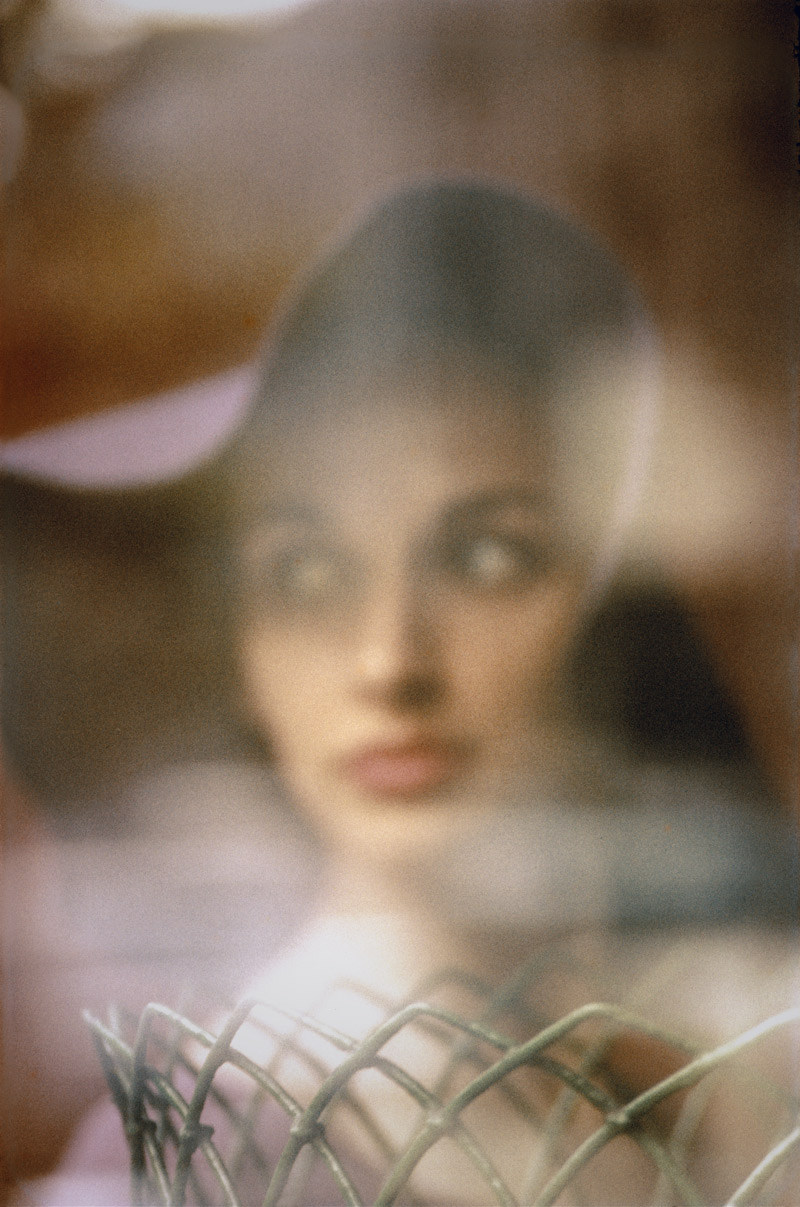
“I like it when one is not certain of what one sees.
We don’t know why the photographer has taken such a picture.
If we look and look, we begin to see and are still left with the pleasure of uncertainty.”


“It is not where it is or what it is that matters, but how you see it.”


“After the age of 75 you should not be photographed.
You should be painted by Rembrandt or Hals, but not by Caravaggio.”


Saul Leiter


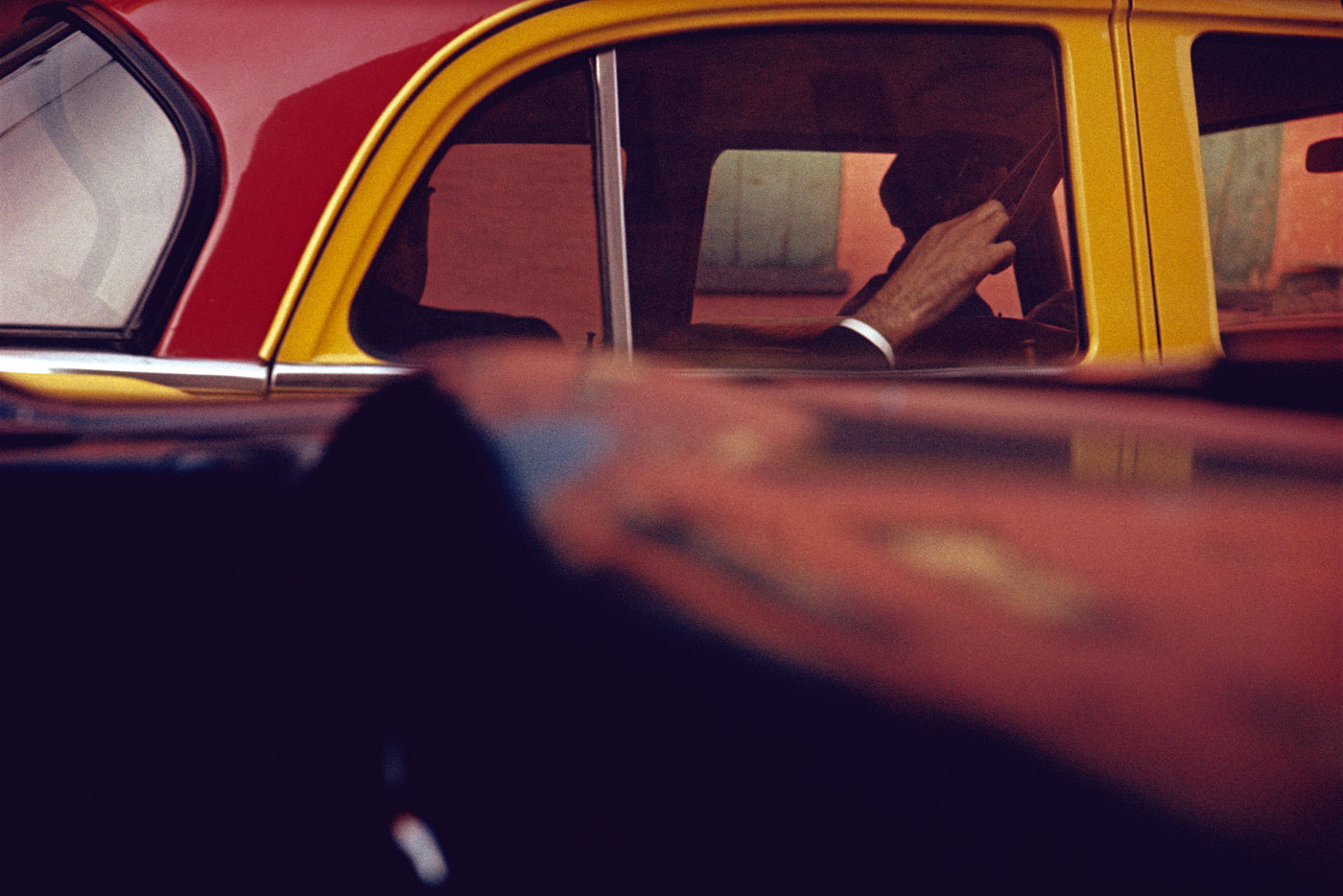
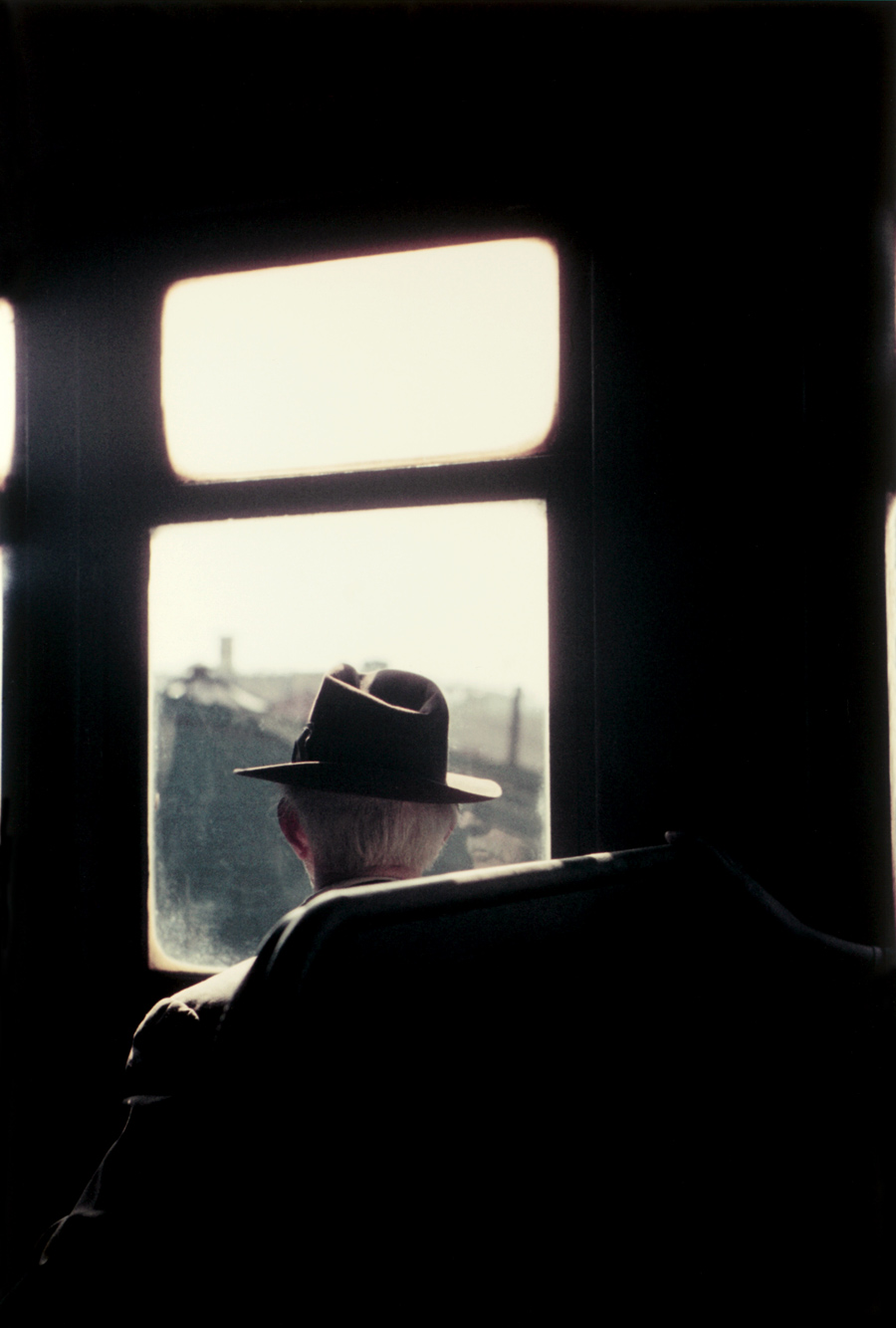
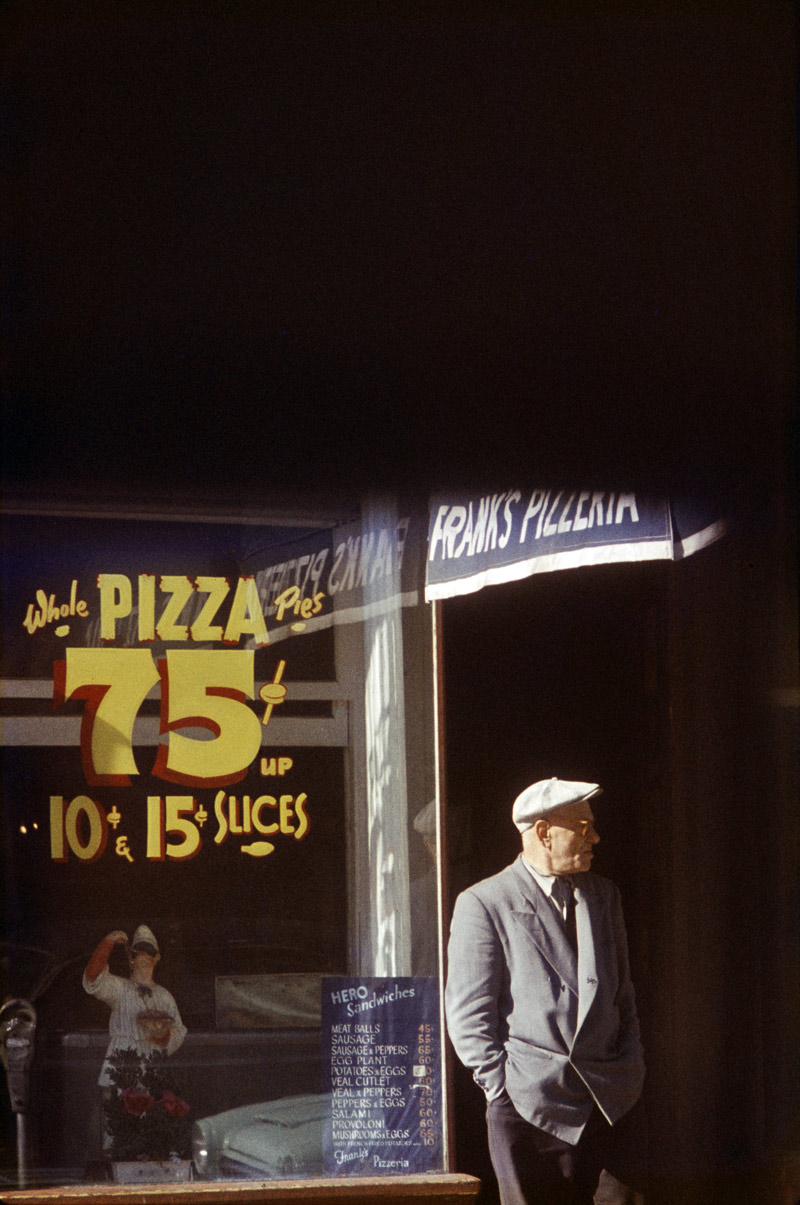
How brave was the photographer, occluding most of the colour image in darkness, something that had never been done before and has rarely been seen since. Look at the last three photographs in this posting to understand what I mean.

Considering that Saul Leiter’s colour photography predates William Eggleston and Stephen Shore by a couple of decades, it can truly be said that he is one of the early masters of colour photography. As the curator Ingo Taubhorn comments, “The older aesthetic views on the hegemony of black-and-white photography and the historical dating of the first artistic use of colour photography to the early 1970s need to be critically reviewed. Saul Leiter’s oeuvre essentially rewrites the history of photography.”

Well said.

Dr Marcus Bunyan


Many thankx to the Kunst Haus Wein for allowing me to publish the photographs in the posting. Please click on the photographs for a larger version of the image.


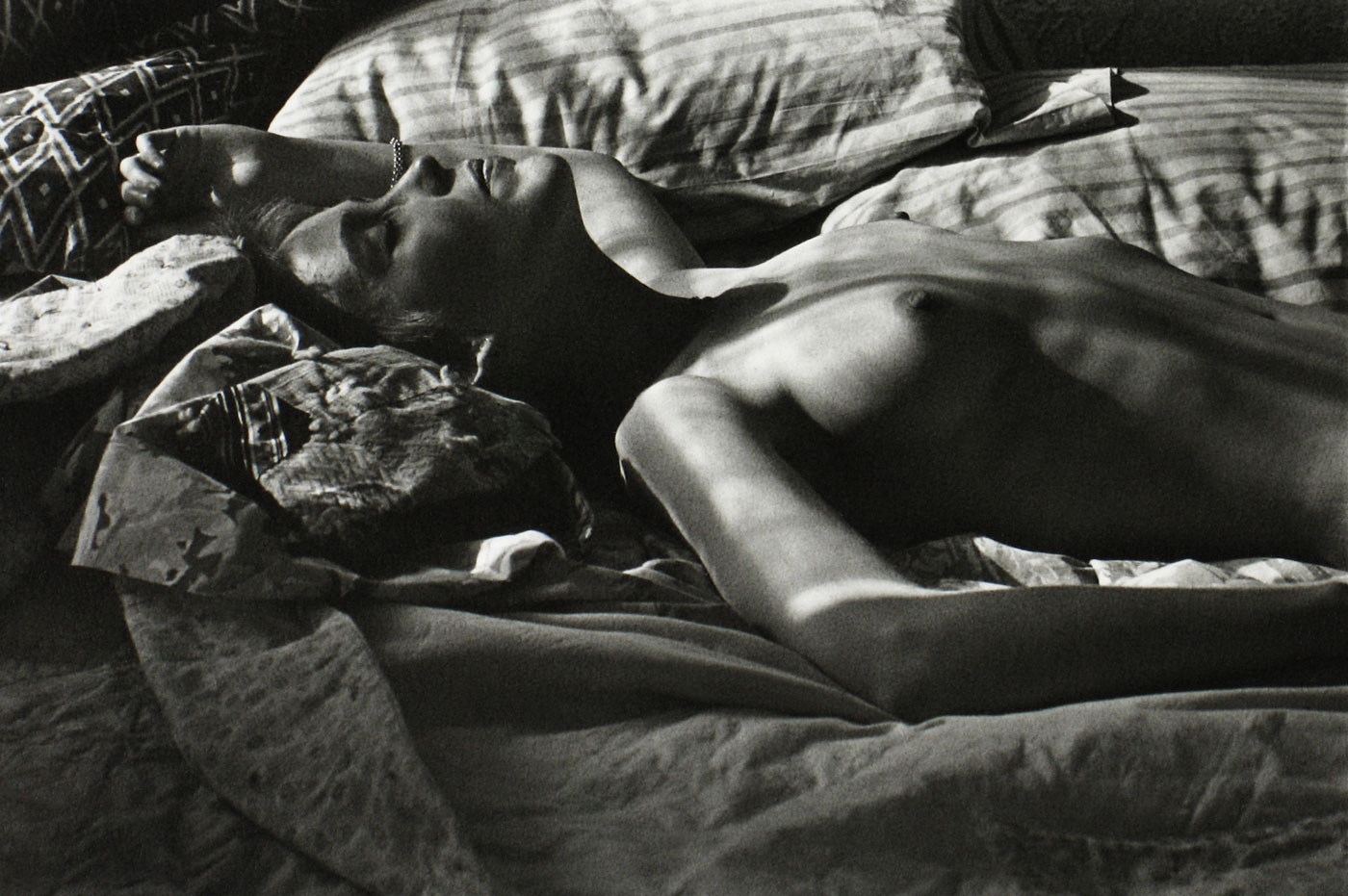
Saul Leiter (American, 1923-2013) 'Nude' 1970s


Saul Leiter (American, 1923-2013)
Nude
1970s
© Saul Leiter / Courtesy Howard Greenberg Gallery, New York


Saul Leiter (American, 1923-2013) 'Taxi' c. 1957


Saul Leiter (American, 1923-2013)
Taxi
c. 1957
© Saul Leiter / Courtesy Howard Greenberg Gallery, New York


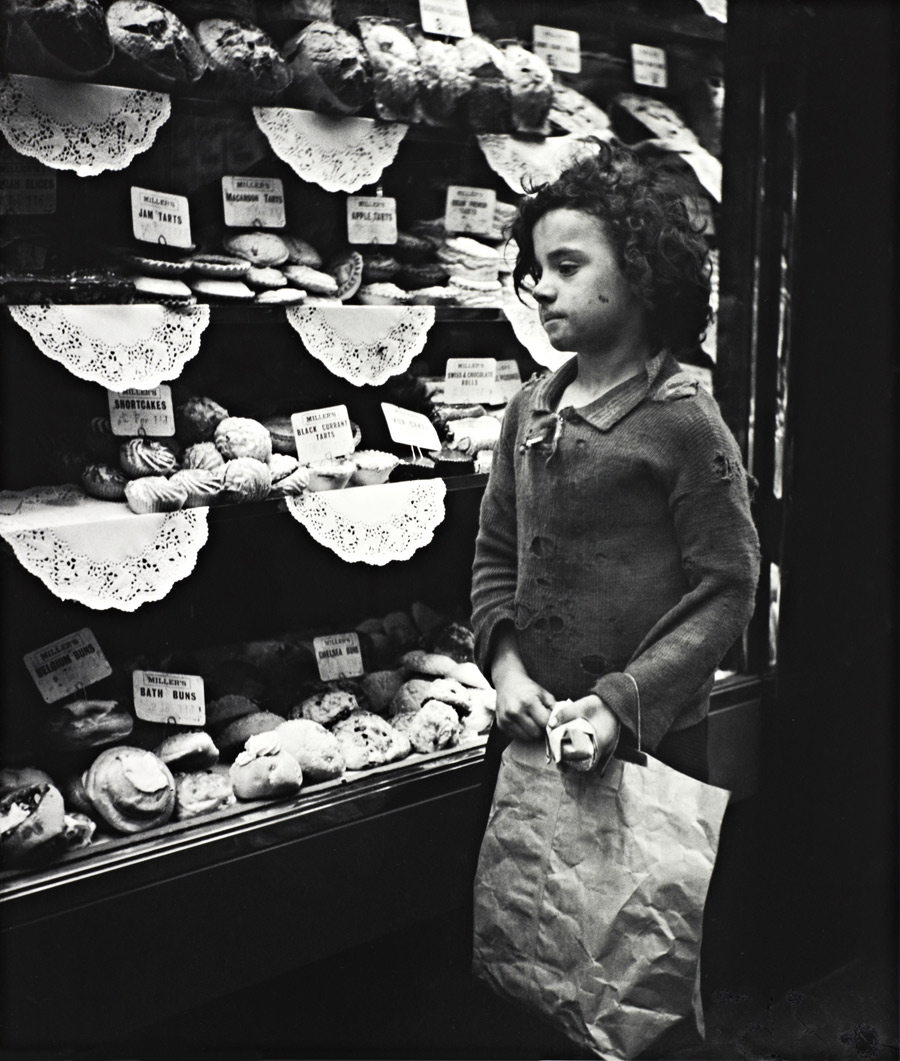
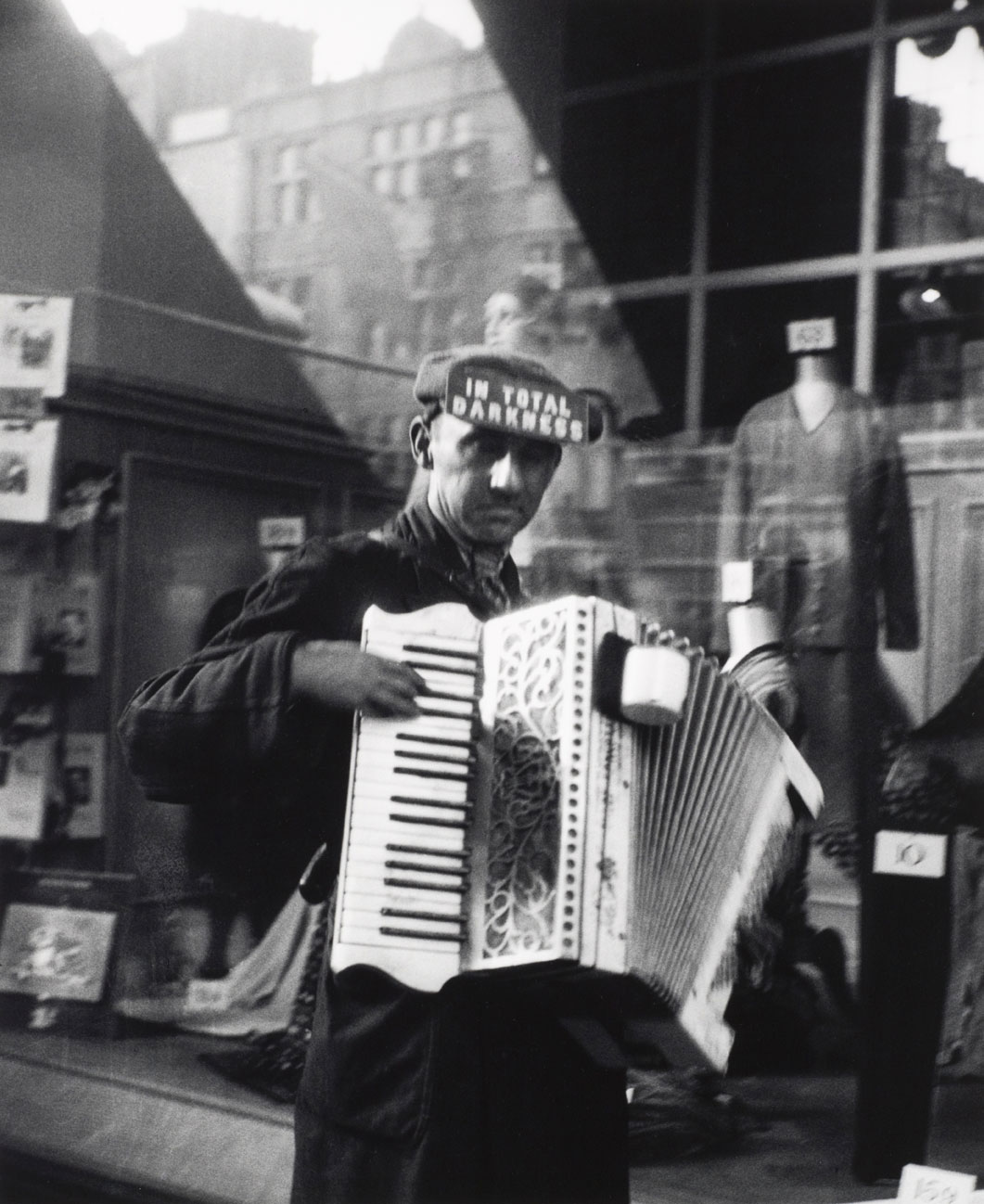
KUNST HAUS WIEN is devoting a major retrospective to the oeuvre of the 89-year-old photographer and painter Saul Leiter. The exhibition, which was developed in cooperation with House of Photography / Deichtorhallen Hamburg, presents the wide range of this versatile artist’s works, including early black-and-white and colour photographs, fashion images, painted photographs of nudes, paintings and a number of his sketchbooks. One section of the exhibition is devoted to Saul Leiter’s most recent photographs, which he continues to take on the streets of New York’s East Village.

It is only in the last few years that Saul Leiter has received due recognition for his role as one of the pioneers of colour photography. As early as 1946, and thus well before the representatives of the so-called “new colour” photography in the 1970s, such as William Eggleston and Stephen Shore, he was one of the first to use colour photography for artistic shots, despite its being frowned upon by other artists of the day. “The older aesthetic views on the hegemony of black-and-white photography and the historical dating of the first artistic use of colour photography to the early 1970s need to be critically reviewed. Saul Leiter’s oeuvre essentially rewrites the history of photography,” comments curator Ingo Taubhorn.

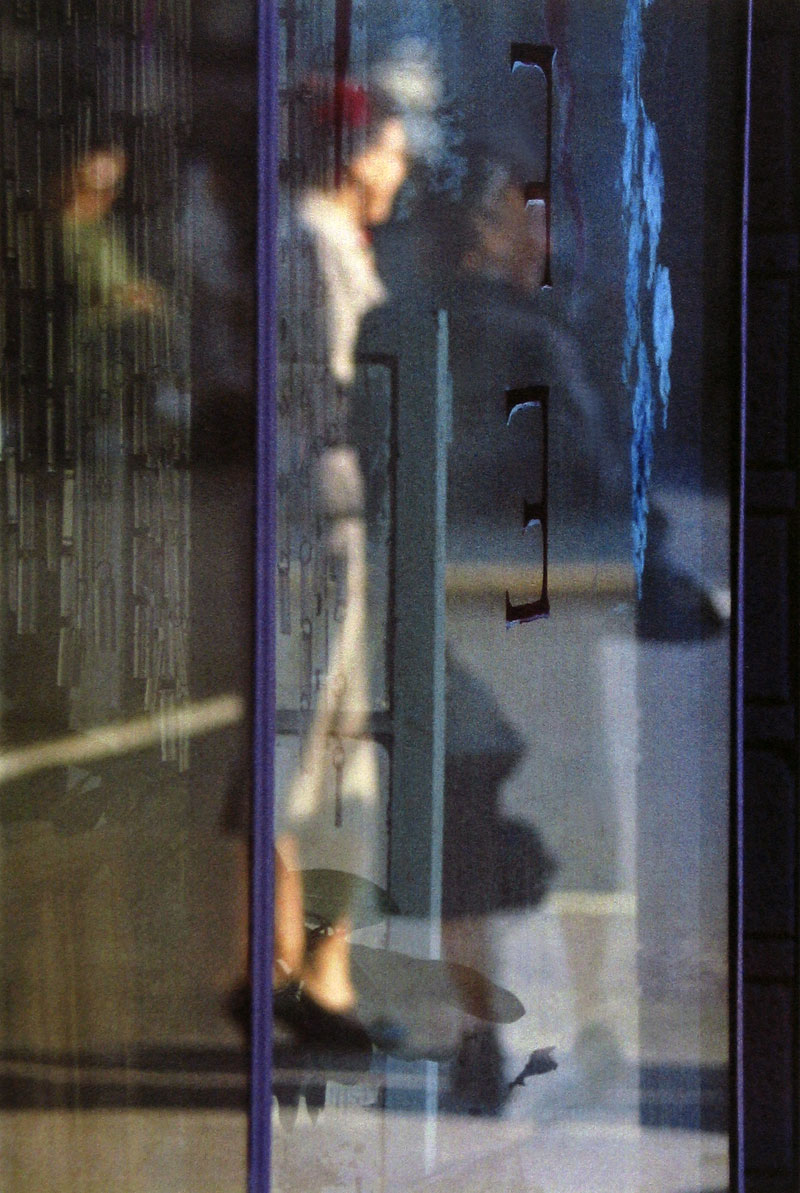
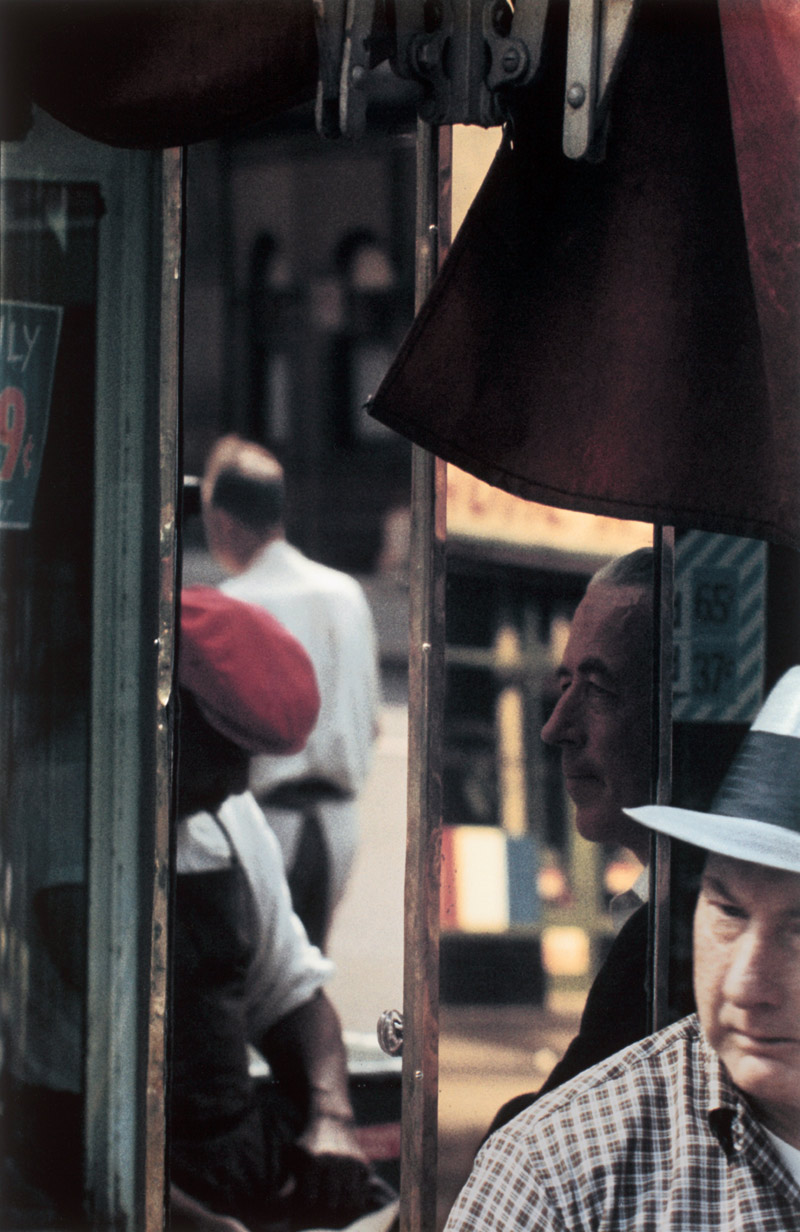
Saul Leiter has always considered himself both a painter and a photographer. In his painting and in his photographs he clearly tends towards abstraction and two-dimensionality. One often finds large deep-black areas, produced by shadows, taking up as much as three quarters of his photographs. Passers-by are not presented as individuals, but as blurred clouds of colour, filtered through misty panes of glass or wedged in between walls of buildings and traffic signs. The boundaries between the abstract and the representational in his paintings and photographs are virtually fluid. Saul Leiter’s street photography – a genre in which his work is matchless – is, in essence, painting metamorphosed into photography.

In Leiter’s works, the genres of street photography, portraiture, still life, fashion photography and architectural photography coalesce. He finds his motifs, such as shop windows, passers-by, cars, signs and – time and again – umbrellas, in the direct vicinity of his apartment in New York, where he has now lived for almost 60 years. The indeterminateness of detail, the blurring of movement and reduced depth of field, the use of shadows or deliberate avoidance of the necessary light, as well as the alienation caused by photographing through windows or as reflections, all combine to create the muted colour vocabulary of a semi-real, semiabstract urban space. These are the works of an as yet almost undiscovered modern master of colour photography.

About Saul Leiter

Saul Leiter discovered his passion for art at an early age and started painting as a teenager at the end of the 1940s. His family did not support him in his artistic endeavours; his father, a renowned Talmudic rabbi and scholar, had always hoped his son Saul would one day follow him in the family tradition and become a rabbi. Leiter was self-taught, but by no means uneducated. He read and learned a great deal about art, so that his knowledge and understanding constantly grew. In this way, he made sure that his own ideas and artistic works were duly related to the historical context.

In 1946, shortly after he had moved to New York, Leiter became acquainted with Richard Poussette-Dart, who introduced him to photography, a medium that appealed to Leiter very much and that he quickly made his own. Leiter soon resolved to use photography not only as a means of making art but as a way of earning a living. He started taking fashion photographs, and thanks to his good eye, his playful sense of humour, and his pronounced sense of elegance, swiftly emerged as an extraordinary fashion photographer. In the 1950s, Life magazine published photo spreads of Saul Leiter’s first black-and-white series. He took part in exhibitions, for example “Always the Young Strangers” (1953) curated by Edward Steichen at the Museum of Modern Art. From 1958 to 1967, Leiter worked for Harper’s Bazaar. Altogether he spent some 20 years photographing for various classic magazines as well as more recent ones: after Esquire and Harper’s he also worked for Show, Elle, British Vogue, Queen and Nova.


Saul Leiter (American, 1923-2013) 'New York' 1950s


Saul Leiter (American, 1923-2013)
New York
1950s
© Saul Leiter / Courtesy Howard Greenberg Gallery, New York


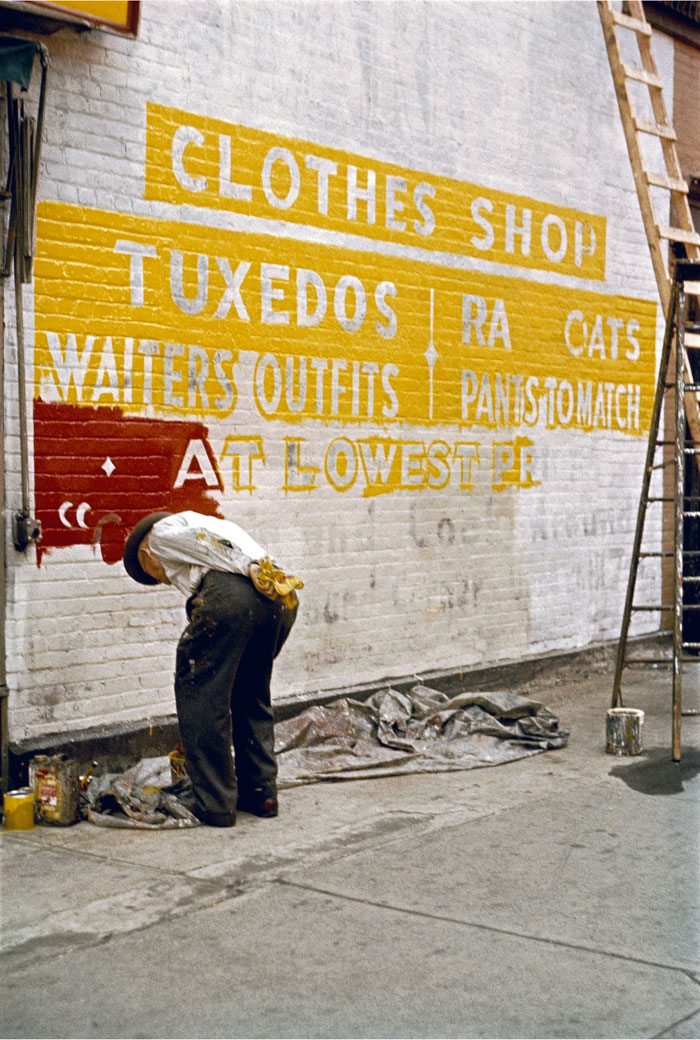
Saul Leiter (American, 1923-2013) 'Sign Painter' 1954


Saul Leiter (American, 1923-2013)
Sign Painter
1954
© Saul Leiter / Courtesy Howard Greenberg Gallery, New York


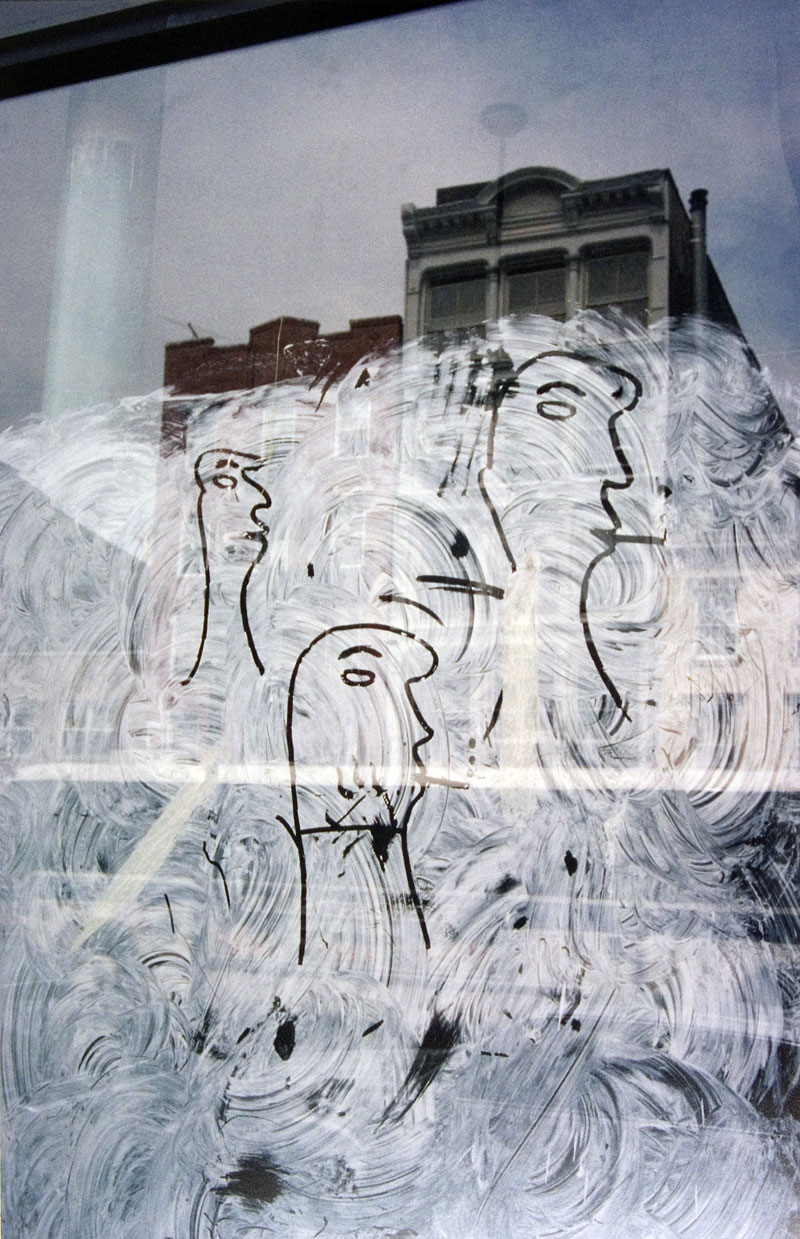
Saul Leiter (American, 1923-2013) 'Graffiti Heads' 1950


Saul Leiter (American, 1923-2013)
Graffiti Heads
1950
© Saul Leiter / Courtesy Howard Greenberg Gallery, New York


Saul Leiter (American, 1923-2013) 'Shirt' 1948


Saul Leiter (American, 1923-2013)
Shirt
1948
© Saul Leiter / Courtesy Howard Greenberg Gallery, New York


Saul Leiter (American, 1923-2013) 'Harlem' 1960


Saul Leiter (American, 1923-2013)
Harlem
1960
© Saul Leiter / Courtesy Howard Greenberg Gallery, New York


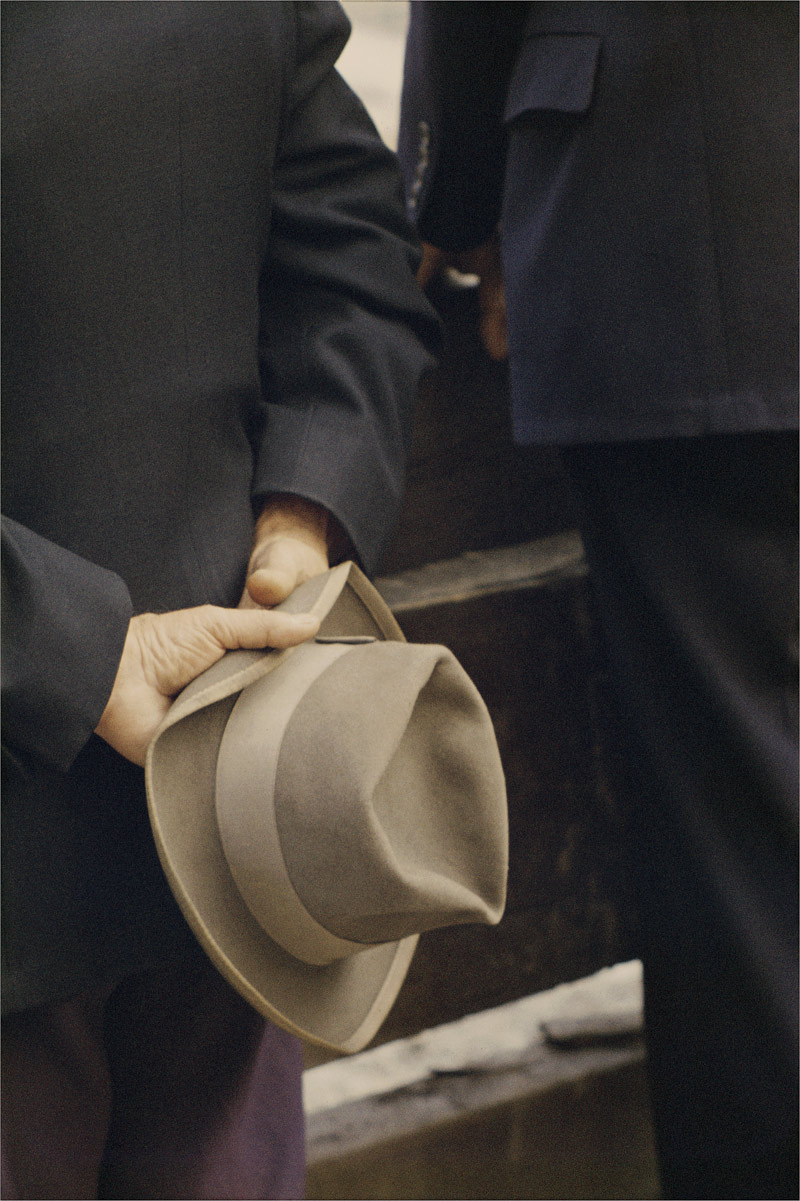
Saul Leiter (American, 1923-2013) 'Hat' 1956


Saul Leiter (American, 1923-2013)
Hat
1956
© Saul Leiter / Courtesy Howard Greenberg Gallery, New York


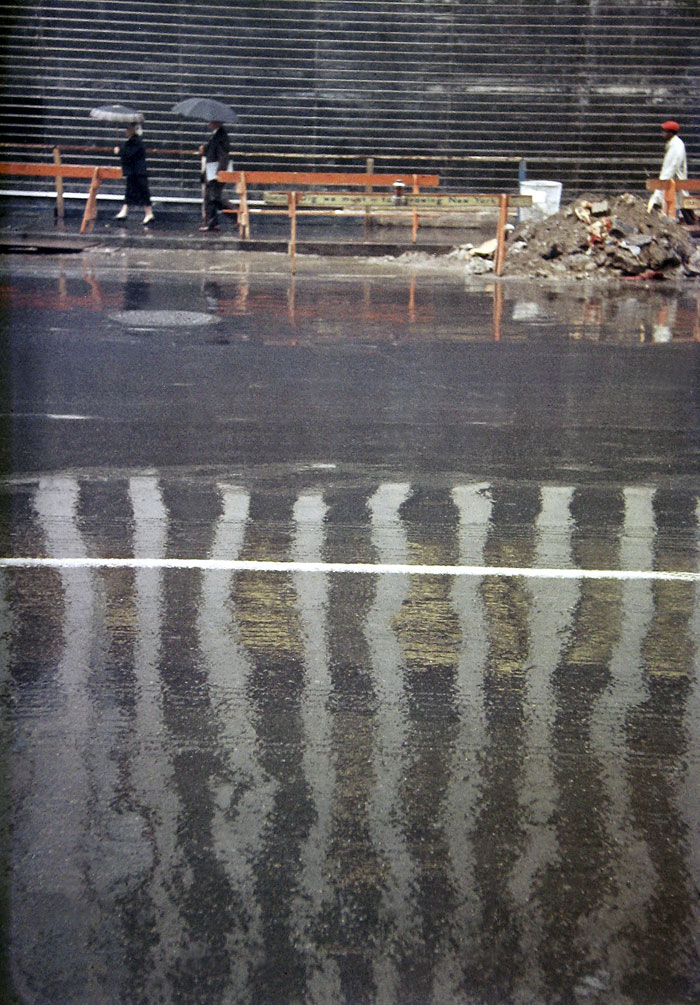
Saul Leiter (American, 1923-2013) 'Street Scene' 1957


Saul Leiter (American, 1923-2013)
Street Scene
1957
© Saul Leiter / Courtesy Howard Greenberg Gallery, New York


The exhibition chapters

Abstract Painting

Although his photographic oeuvre has dominated his image as an artist, Saul Leiter sees himself first and foremost as a painter. He began his artistic career as a painter, and while working as a photographer he never stopped painting and drawing. Leiter’s passion for art began when he was just a child, even though his ambitions received no support from his family. As a teenager he spent many hours in libraries studying art books. He found inspiration in the paintings of such artists as Vermeer, Bonnard, Vuillard and Picasso, as well as in Japanese graphic art. Leiter, who was self-taught, painted his first pictures in 1940. Most of them were lyrical, abstract compositions that reflected his admiration for the new American avant-garde. His ardent feeling for colour is recognisable even in these early paintings, as is his lifelong predilection for painting small format pastels and watercolours on paper.

After moving to New York in 1946, he sometimes presented his works together with abstract expressionist painters such as Willem de Kooning and Philip Guston. His studio was located on 10th Street in the East Village, which at that time was a neighbourhood very popular with avant-garde artists. Leiter shared these artists’ interest in abstraction and the use of colour, gesture and the element of chance, but he chose a radically different format for his works. Whereas many of his contemporaries, such as Jasper Johns or Franz Kline, painted wall-sized paintings that physically filled the beholder’s entire field of vision, Leiter worked in an intimate, small format. His works were also exhibited at the Tanager Gallery, one of the most important artist-run cooperatives in the East Village at that time. After switching the main focus of his work to photography in the late 1940s, however, Leiter stopped exhibiting his paintings.

Figurative Painting

Saul Leiter’s abstract painting frequently unites qualities of intimacy and familiarity with a sense of space reminiscent of an open landscape. Occasionally he also makes figurative sketches. Often these give mere intimations of a face or a body, perhaps a pointed nose, eyes and a mouth. Some of his male figures wear hats, similar to those worn by the religious Jews that peopled Leiter’s world in his youth. Most of these works focus on a single figure; only occasionally do we see a couple, or several figures grouped together. The quality of the line and the subtle suggestion of figures or heads in these paintings are reminiscent of paintings by Édouard Vuillard and Pierre Bonnard, in which facial features are hinted at through lines and fine shadings of colour rather than being defined by careful modelling.

Street Photography

When, in 1947, Saul Leiter attended an exhibition of works by the French photographer Henri Cartier-Bresson, he became convinced of the creative potential of this medium. He bought himself a 35mm Leica camera at a bargain and began, without any previous training, to take photographs on the streets of New York. At first he used only black-and-white film, but in 1948 he also started using colour film. His black-and-white photographs exhibit some elements of documentary photography but are nevertheless far removed from a photojournalistic style. Rather, they are subjective observations, often concentrating on a single individual in the big city. Leiter’s complex, multilayered works evoke feelings of alienation, melancholy and tension. Leiter underscores this impression by experimenting with strong contrasts, light and shadow, and asymmetrical compositions containing large areas in which the images are blurred.

Thematically and stylistically, there are great similarities between Leiter’s works and the works of other representatives of New York street photography of the same era, for example Ted Croner, Leon Levinstein, Louis Faurer and later Robert Frank and William Klein, today generally known as the New York School. Their radical new, subjective photography had a psychological component that revealed an unusual sensitivity to social turbulences and the uncertainty felt by many Americans during the years following the Second World War.

Colour Photography

Until well into the 1970s, colour photography was used almost exclusively for advertising and fashion magazines. Many photographers considered the vivid colours unsuitable for artistic expression. Moreover, they were unable to develop their colour film themselves, which made it a very expensive undertaking. It was not until 1976 that the Museum of Modern Art in New York gave its first exhibition devoted to colour photography, when it presented “Photographs by William Eggleston”.

Saul Leiter was one of the few photographers who did not reject colour photography. As a painter, he took a particular interest in street photography as a genre in which to experiment with colour film. As early as 1948, at the beginning of his career, he bought his first roles of 35mm Kodachrome colour slide film, which had been on the market since 1936. In order to save money, he often used film that had passed its sell-by date. Leiter particularly liked the resulting pictures with their delicate, muted colours.

The innumerable early colour photographs that Leiter took between 1948 and 1960 are of a unique painterly and narrative quality. They stand in contrast to the works of other photographers, in which colour is often the defining element of the composition. This circumstance, coupled with Leiter’s tendency towards abstraction, links Leiter’s photography with his painting. But in contrast to his painting (and his black-and-white photographs), his colour photographs are highly structured. It is the incomparable beauty of these works that has brought Leiter recognition as one of the masters of 20th-century photography.

Fashion Photography

In the late 1950s, Saul Leiter worked successfully in the fields of fashion photography and advertising. From the very first, his style was unmistakeable. His images were multilayered and complex, characterised by soft, impressionistic qualities and cubist changes of perspective. He was given his first commercial assignment in 1958 by Henry Wolf, at that time the new Art Director of Harper’s Bazaar, with whom Leiter became friends. Harper’s Bazaar was one of the leading American fashion magazines, presenting trail-blazing fashion series by photographers such as Richard Avedon or Lillian Bassman.

Subsequently, Leiter was given more and more prestigious assignments, and over the years began to spend almost all his time doing commercial work. Apart from Harper’s Bazaar, his fashion and advertising photos appeared in Elle and Show, in British Vogue and Queen and also in Nova. The amazing thing is that during this period, Leiter managed to retain his own narrative, stylised aesthetic, whereas other fashion photographers favoured a rather brittle, graphic style. In the 1970s, partly due to his own dwindling interest in commercial photography, Leiter received fewer and fewer assignments. In 1981 he gave up his studio on Fifth Avenue and in the following years led a quiet life far from the public eye.


Saul Leiter (American, 1923-2013) 'Carol Brown, 'Harper's Bazaar'' c. 1958


Saul Leiter (American, 1923-2013)
Carol Brown, ‘Harper’s Bazaar’
c. 1958
© Saul Leiter / Courtesy Howard Greenberg Gallery, New York


Saul Leiter (American, 1923-2013) 'Soames Bantry, 'Nova'' 1960


Saul Leiter (American, 1923-2013)
Soames Bantry, ‘Nova’
1960
© Saul Leiter / Courtesy Howard Greenberg Gallery, New York


Saul Leiter (American, 1923-2013) 'Walking' 1956


Saul Leiter (American, 1923-2013)
Walking
1956
© Saul Leiter / Courtesy Howard Greenberg Gallery, New York


Saul Leiter (American, 1923-2013) 'Reflection' 1958


Saul Leiter (American, 1923-2013)
Reflection
1958
© Saul Leiter / Courtesy Howard Greenberg Gallery, New York


“I spent a great deal of my life being ignored. I was always very happy that way. Being ignored is a great privilege. That is how I think I learnt to see what others do not see and to react to situations differently. I simply looked at the world, not really prepared for anything.”


Saul Leiter


Art critic Roberta Smith wrote in 2005: “Mr. Leiter was a photographer less of people than of perception itself. His painter’s instincts served him well in his emphasis on surface, spatial ambiguity and a lush, carefully calibrated palette. But the abstract allure of his work doesn’t rely on soft focus, a persistent, often irritating photographic ploy, or the stark isolation of details, in the manner of Aaron Siskind or early Harry Callahan. Instead, Mr. Leiter captured the passing illusions of everyday life with a precision that might almost seem scientific, if it weren’t so poetically resonant and visually layered.”

Text from the Lens Culture website [Online] Cited 15/05/2013 no longer available online


Saul Leiter (American, 1923-2013) 'Shopping' c. 1953


Saul Leiter (American, 1923-2013)
Shopping
c. 1953
© Saul Leiter / Courtesy Howard Greenberg Gallery, New York


Saul Leiter (American, 1923-2013) 'Kutztown' 1948


Saul Leiter (American, 1923-2013)
Kutztown
1948
© Saul Leiter / Courtesy Howard Greenberg Gallery, New York


Saul Leiter (American, 1923-2013) 'Pizza, Patterson' 1952


Saul Leiter (American, 1923-2013)
Pizza, Patterson
1952
© Saul Leiter / Courtesy Howard Greenberg Gallery, New York


KUNST HAUS WIEN
Museum Hundertwasser
Untere Weißgerberstraße 13
1030 Vienna
Phone: +43-1-712 04 91

Opening hours:
Daily, 10am – 7pm

Kunst Haus Wein website

LIKE ART BLART ON FACEBOOK

Back to top

Exhibition: ‘XTRAVAGANZA. Staging Leigh Bowery’ at Kunsthalle Wien, Vienna

Exhibition dates: 19th October 2012 – 3rd February 2013


Installation view of 'XTRAVAGANZA. Staging Leigh Bowery', Kunsthalle Wien


Installation view of XTRAVAGANZA. Staging Leigh Bowery, Kunsthalle Wien
Foto: Stephan Wyckoff
Kostüme: Leigh Bowery
Kostümpräsentation: Klaus Mayr
Courtesy Estate of Leigh Bowery


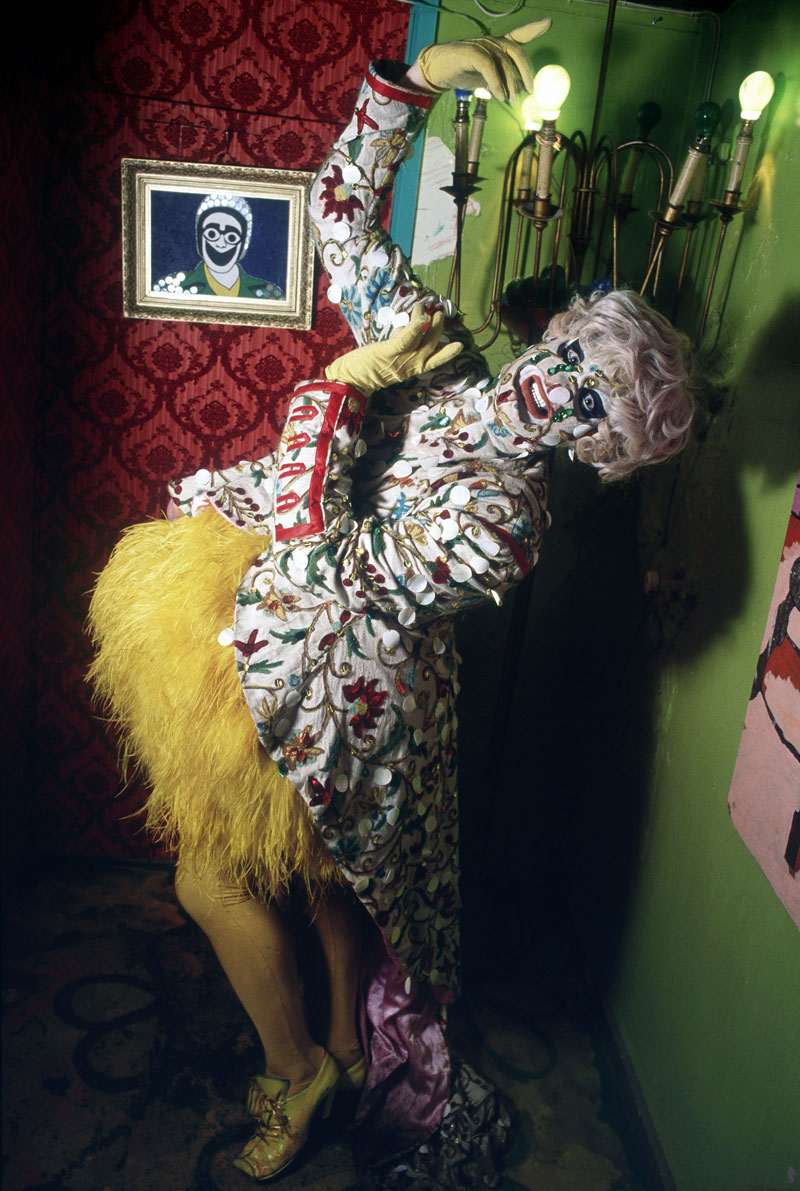
I can die happy now that I have had the opportunity to do a posting on this amazing man. He challenged social stereotypes turning his body into an every changing, ever challenging work of art. He used his body as a canvas and inscribed narratives upon it. He used these narratives to challenge the dominant discourse, offering himself as material evidence to facilitate new perspectives. His body became a performance, the self as performance, one that was not fully pre-determined, for you never knew what he would do next, what social outrage he would offer up.

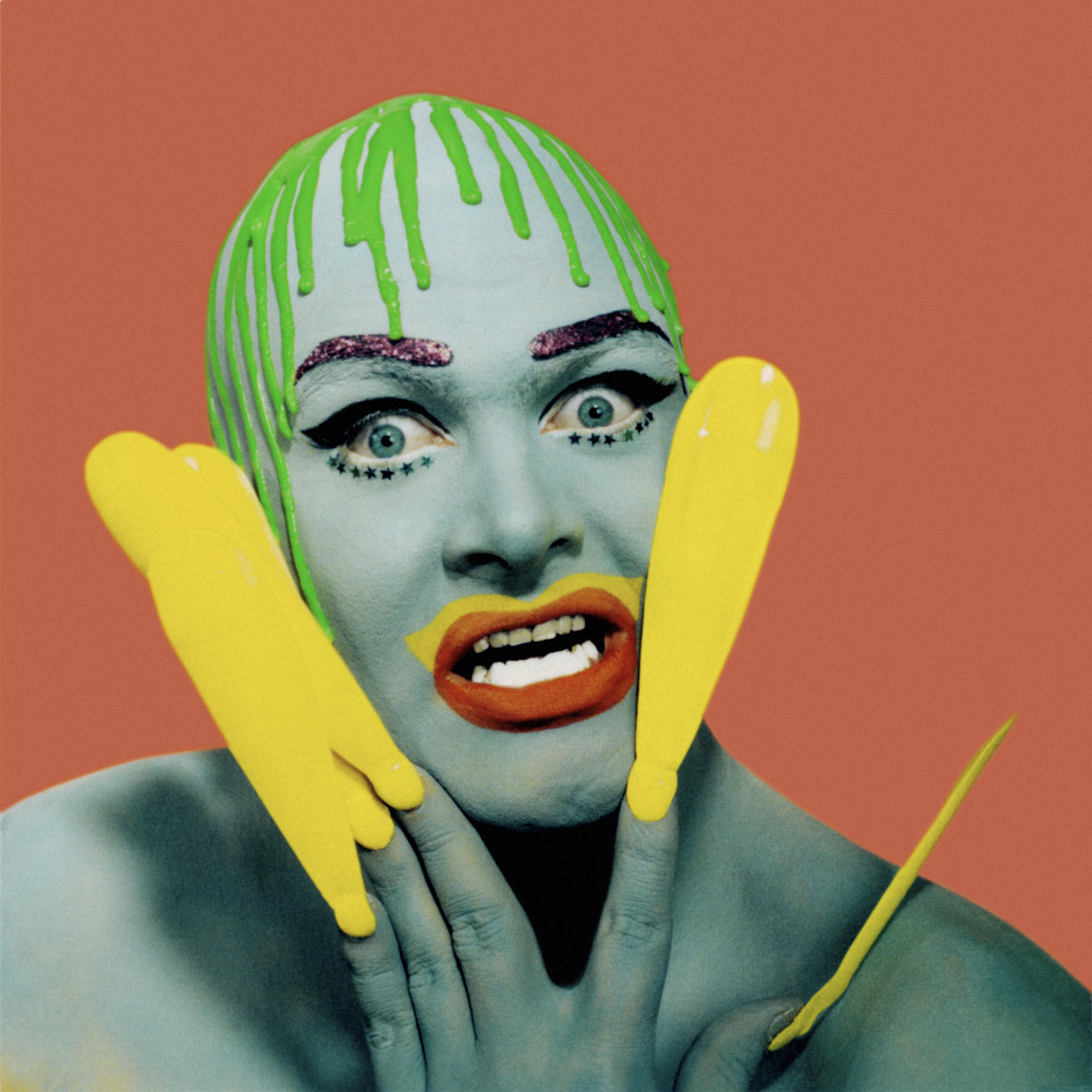
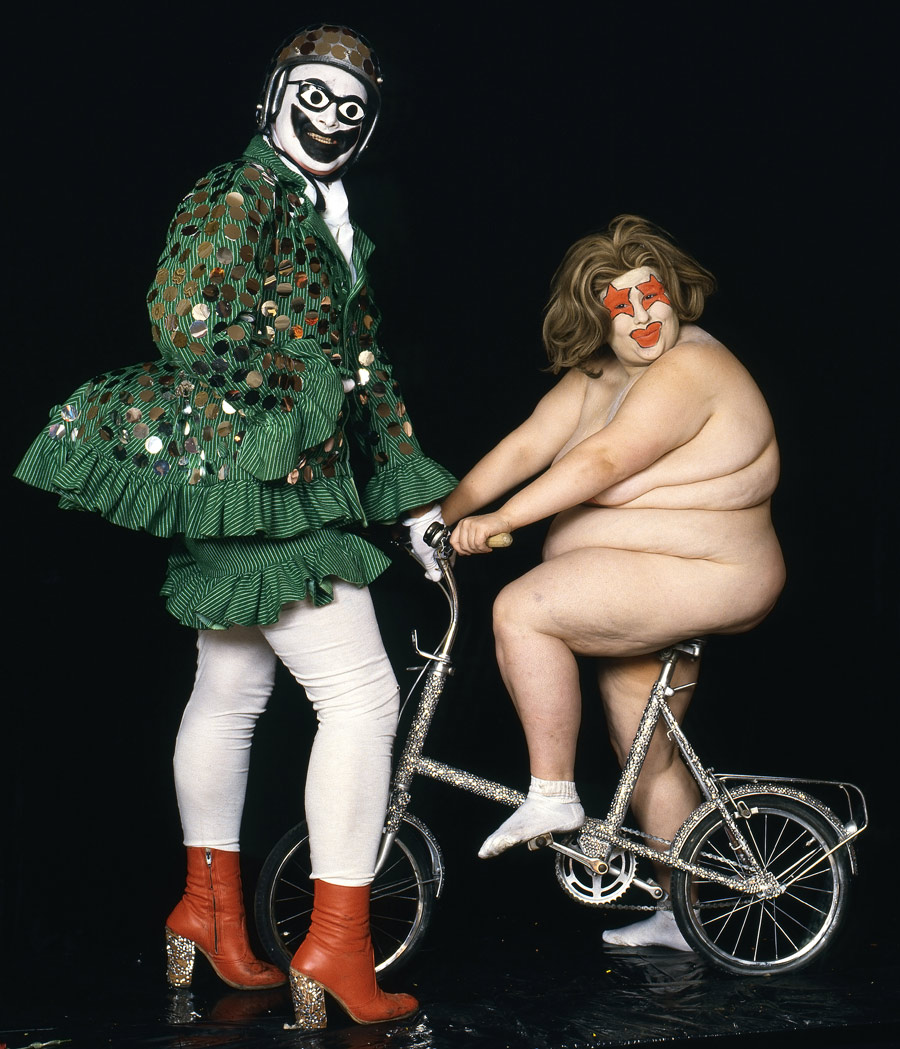
Through masks, makeup, wigs and body modification, Bowery confronted the viewer with an/other field of existence, one that promoted an encounter with the face of the other, causing an emotional response in the audience, the viewer. As Wendy Garden observes, “Being faced with another provokes a reaction: it makes an appeal, demands an engagement.”1 We cannot look away for we do not know what Bowery will do next. He used his large body, its bulk and presence to bring the viewer face-to-face with an/other. The magnification of his size and the emphasis and manipulation of his face, especially the mouth and eyes, rescales his presence in front of the viewer – at his performances, in the photographs of Bowery. For example, look at his creation Evening Wear – Andrew Logan’s 1986 Alternative Miss World (1986, below). Impossibly high and luridly coloured boots, leggings, a bustled and bedazzled jacket / skirt combo, crash helmet and the most maniacal black and white face you will ever see. Bowery unbalances the fixity of the single perspective and through his transgression destabilises the mastering gaze.

I was living in London at the time Leigh Bowery, Boy George, Marilyn and Divine were strutting their stuff in the nightclubs of London town. What a time. Maggie Thatcher (and I can hardly bring myself to type her name) was Prime Minister of a right wing Conservative government from 1979-1990, a period of social oppression of minorities, the breaking of the trade unions, the beginning of HIV/AIDS. Think Boy George’s famous song No Clause 28 that protested against a local government act that “shall not intentionally promote homosexuality or publish material with the intention of promoting homosexuality” or “promote the teaching in any maintained school of the acceptability of homosexuality as a pretended family relationship.” Bowery was a child of his time, a prescient, sentient being who was out there doing his thing, challenging the dominant paradigms of a patriarchal society. He burned like a comet, bright in the sky, and then was gone all too early. But he will never be forgotten. What a man.

Dr Marcus Bunyan


1/ Garden, Wendy. “Ethical witnessing and the portrait photograph: Brook Andrew,” in Journal of Australian Studies Vol. 35, No. 2, June 2011, p. 261.


Many thankx to Kunsthalle Wien for allowing me to publish the photographs in the posting. Please click on the photographs for a larger version of the image.


“I believe that fashion (where all girls have clear skin, blue eyes, blonde blow-waved hair + a size 10 figure, and where all men have clear skin, a moustache, short blow-waved hair, a masculine physique + appearance) STINKS”


Leigh Bowery


The Legend of Leigh Bowery 2002


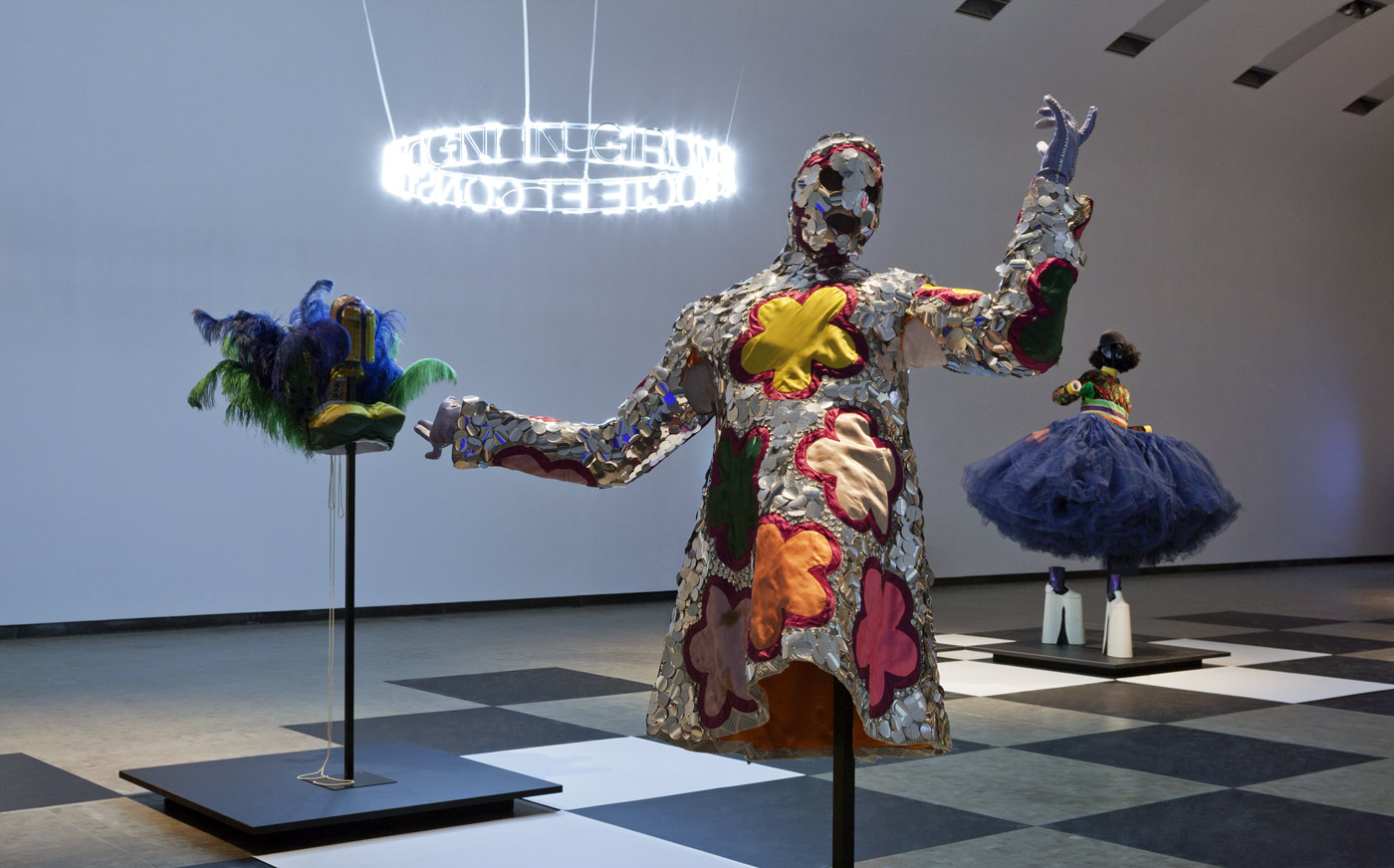
Installation view of 'XTRAVAGANZA. Staging Leigh Bowery', Kunsthalle Wien


Installation view of XTRAVAGANZA. Staging Leigh Bowery, Kunsthalle Wien
Foto: Stephan Wyckoff
Kostüme: Leigh Bowery
Kostümpräs: Klaus Mayr
Courtesy Estate of Leigh Bowery; Cerith Wyn Evans, In Girum Imus Nocte Et Consumimur Igni, 2008
Courtesy Cerith Wyn Evans und White Cube


Installation view of 'XTRAVAGANZA. Staging Leigh Bowery', Kunsthalle Wien


Installation view of XTRAVAGANZA. Staging Leigh Bowery, Kunsthalle Wien
Foto: Stephan Wyckoff
Kostüme: Leigh Bowery
Kostümpräsentation: Klaus Mayr
Courtesy Estate of Leigh Bowery


Charles Atlas. 'Teach' 1992-1998


Charles Atlas
Teach
1992-1998
Video still
© Charles Atlas, Courtesy Vilma Gold, London


Werner Pawlok (German, b. 1953) 'Portrait Leigh Bowery 3' 1988


Werner Pawlok (German, b. 1953)
Portrait Leigh Bowery 3
1988
Courtesy Werner Pawlok


“I think of myself as a canvas,” fashion pioneer Leigh Bowery once said about himself. If there were a formula to describe this enfant terrible who refused all categorisation throughout his life, this would be it: turning oneself into a work of art. Presenting himself in the most garish ways that defied all conventions and stylising himself as a walking work of art, Leigh Bowery, who was born in Australia in 1961, stirred up London’s sub-culture of the 1980s in the wake of post punk and New Romanticism. Being friends with stars of the scene like Michael Clark and Cerith Wyn Evans, he continuously reinvented himself on the manifold stages of the metropolis.

The show highlights Leigh Bowery’s life and work between fashion, performance, music, dance, and sculpture by presenting rarely exhibited costumes, numerous films, photographs, music videos, talk shows, and magazines. It approaches Bowery by way of artistic descriptions, reflections, and documentations in the work of friends, supporters, and colleagues, whose source of inspiration, entertainer, and muse he was: Bowery’s performative enactments oscillating between masquerade and radical self-expression were captured by filmmakers such as Charles Atlas, Dick Jewell, Baillie Walsh, and John Maybury. It took Fergus Greer a number of sessions that stretched over six years to shoot the legendary photo series Looks. As Charles Atlas’s Teach shows, Leigh Bowery developed his unmistakable outfits, gestures, and poses in multiple forms of self-reflection under his companions’ critical eye. Bowery’s one-week performance in the Anthony d’Offay Gallery in London (1988) involved a two-way mirror: while the public could watch Leigh Bowery changing his outfits for hours on end, he saw only his own mirror image and remained inescapably confronted with himself and his movements. Though Bowery claimed that he had had to fight his shame initially and hid his room-filling physique behind conspicuous materials such as tulle, glitter, paint, and satin, his performances were anything but embarrassing: “The rest of us used drag and make-up to disguise our blemishes and physical defects. Leigh made them the focal point of his art,” Boy George once remarked. The nightclubs of London provided Bowery with catwalks on which to flaunt his visions of himself and let him always come out on top in terms of maximum attention. Lucian Freud, the British prince of painters, took great pleasure in Leigh Bowery’s fascinating personality and the fullness of his naked body. Bowery became one of his most important models, and the artist depicted him as he could never be seen in public: natural, intimate, and vulnerable.

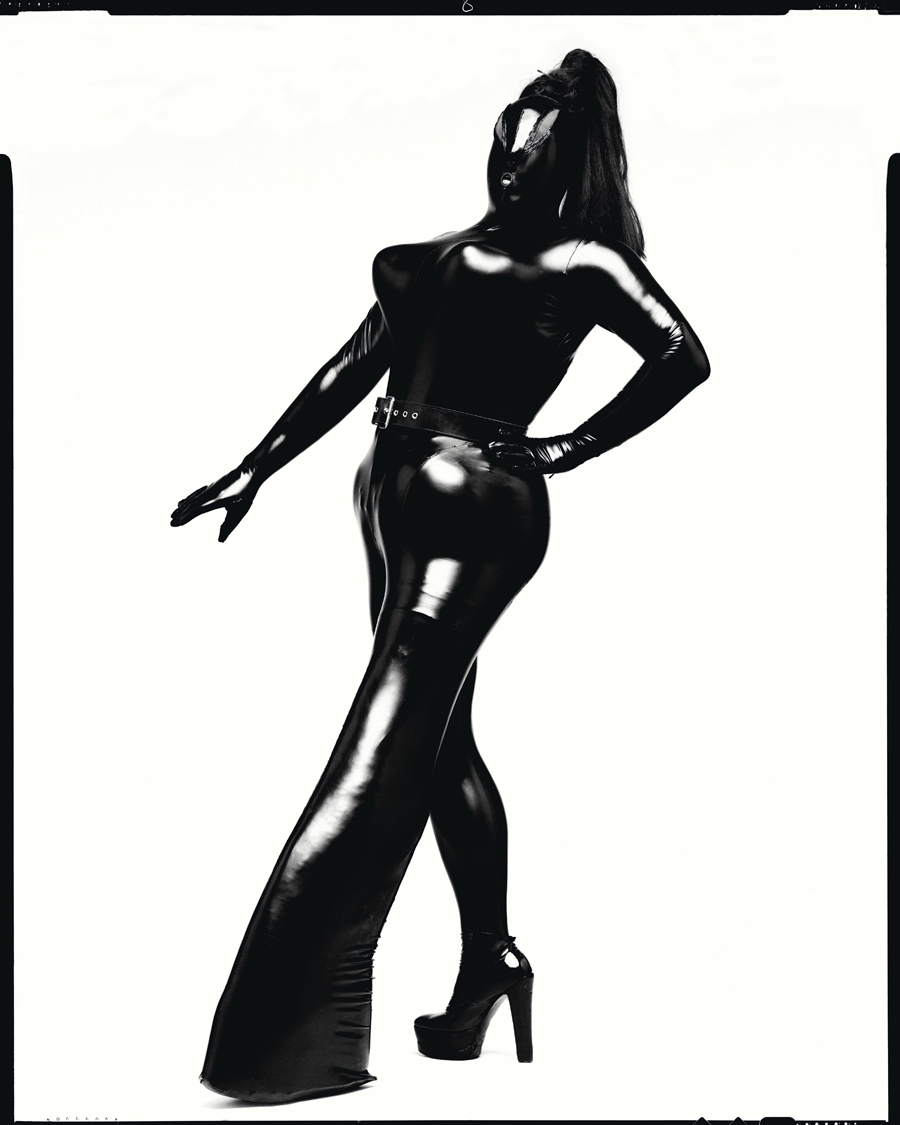
Leigh Bowery’s art clearly differs from the designs, presentation patterns, and distribution channels of fashion designers. With Trash and Bad Taste irony, Bowery, like his idol John Waters and his main actor Divine, abandoned all conventions and stylistic doctrines in a both cynical and humorous way. His craftsmanship in tailoring and his creative potential constitute the core of an expressive self-stylisation which did not depend on encouraging the public through marketing strategies or offers of consumer goods. His vestimentary creations were based on the work with his own body, which he regarded as a malleable material and workable mass and which was to play an increasingly central part in his late oeuvre. Regarded as inexorably deficient, his body became the origin of those manifold appearances and kaleidoscopic diversifications that we find most astounding when confronted with Bowery’s work. He experimented with second skins of black latex, exaggerated the size and volume of his body with sweeping tulle attires, and made himself look taller with platform shoes. Bowery sabotaged glamorous, ornamental and transparent materials with steel helmets, toilet seats, and skulls. He fastened artificial lips in his cheeks with safety pins and wore flesh-coloured velvet suits that transformed his body into a vagina. Using adhesive tape and a bodice, he shaped his flesh into an artificial bosom, and he concealed his member behind pubic hair toupees or overemphasised it as he did in one of the Michael Clark Company’s dance performances. He disparaged unequivocal gender definitions and transcended their socially informed attributions – Gender Trouble: everything was a look. By and by, Bowery turned into what has been called “the self as performance.”

Leigh Bowery’s existence was the epitome of extremes. He looked for exceptional emotional and physical states like pain and ecstasy that would release him from the mediocrity of everyday life, like in the performance The Laugh of No.12 in Fort Asperen on June 4, 1994. Suspended on one foot, stark naked, wearing a black face mask, and displaying some clothespins on his genitals, he swung through the air uttering a sprechgesang, before he smashed a pane of glass with his bulky body. Exposing himself to his vulnerability in his performances, Bowery overcame physical injuries by showcasing them. His sometimes sadomasochist appearances and provocative lifestyle culminated in an attitude that crystallised into a sociopolitical approach in his statement “I like doing the opposite of what people expect.” Far from nocturnal footlights and kindred spirits’ protection, he – who was “larger than life” in every respect – strained the social limits of propriety with his big and exalted appearance. He enjoyed causing offence and holding up a mirror to the dictatorship of conformism, unmasking its heteronomy.

After an excessive life, Leigh Bowery died from AIDS at the age of 33. He was more than an extraordinary peripheral figure making his mark in the urban arena of exhibitionism and voyeurism. His virtuoso works have influenced haute couture collections by such fashion stars as Rei Kawakubo, John Galliano, Walter van Beirendonck, and Alexander McQueen. In spite of its simplicity, the latest fall/winter collection of Comme des Garçons shows obvious parallels to Leigh Bowery’s designs.

Press release from the Kunsthalle Wien website


Robin Beeche (Australian, 1945-2015) 'Evening Wear - Andrew Logan's 1986 Alternative Miss World' 1986


Robin Beeche (Australian, 1945-2015)
Evening Wear – Andrew Logan’s 1986 Alternative Miss World
1986
Courtesy Robin Beeche


Nick Knight (British, b. 1958) 'Untitled (Leigh Bowery with Scull)' 1992


Nick Knight (British, b. 1958)
Untitled (Leigh Bowery with Scull)
1992
© Nick Knight


Ole Christiansen (Danish) 'Farrel House' 1989


Ole Christiansen (Danish)
Farrel House
1989
Courtesy Ole Christiansen


Fergus Greer (British) 'Leigh Bowery, Session VII, Look 38, June 1994' 1994


Fergus Greer (British)
Leigh Bowery, Session VII, Look 38, June 1994
1994
Courtesy Fergus Greer
© Fergus Greer


Kunsthalle Wien
Museumsplatz 1
A-1070 Vienna

Opening hours:
Daily 10am – 7pm
Thursday 10am – 10pm

Kunsthalle Wien website

LIKE ART BLART ON FACEBOOK

Back to top

Exhibition: ‘The Body as Protest’ at the Albertina, Vienna

Exhibition dates: 5th September – 2nd December 2012


Ishiuchi Miyako (Japanese, b. 1947) '1906#38' Nd


Ishiuchi Miyako (Japanese, b. 1947)
1906#38
Nd
Courtesy by The Third Gallery Aya


“The past neglect of the body in social theory was a product of Western mind-body dualism that divided human experience into bodily and cognitive realms. The knowledge-body distinction identifies knowledge, culture, and reason with masculinity and identifies body, nature, and emotion with femininity. Viewing human reason as the principal source of progress and emancipation, it perceives “the rational” as separate from, and exalted over, the corporeal. In other words, consciousness was grasped as separate from and preceding the body (Bordo 1993; Davis 1997). Following feminist thinking about women’s bodies in patriarchal societies, contemporary social theories shifted focus from cognitive dimensions of identity construction to embodiment in the constitution of identities (Davis 1997). Social construction theories do not view the body as a biological given but as constituted in the intersection of discourse, social institutions, and the corporeality of the body. Body practices, therefore, reflect the basic values and themes of the society, and an analysis of the body can expose the intersubjective meaning common to society. At the same time, discourse and social institutions are produced and reproduced only through bodies and their techniques (Frank 1991, 91). Thus, social analysis has expanded from studying the body as an object of social control and discipline “in order to legitimate different regimes of domination” (Bordo 1993; Foucault 1975, 1978, 1980) to perceiving it as a subject that creates meaning and performs social action (Butler 1990). The body is understood as a means for self-expression, an important feature in a person’s identity project (Giddens 1991), and a site for social subversiveness and self-empowerment (Davis 1997).”


Orna Sasson-Levy and Tamar Rapoport. “Body, Gender, and Knowledge in Protest Movements: The Israeli Case,” in ‘Gender & Society’ 17, 2003, p. 381. No longer available online


Despite my great admiration for John Coplans’ photographs of his body, on the evidence of these press photographs and the attached video, this exhibition seems a beautiful if rather tame affair considering the subject matter. Of course these photographs of the body can be understood as a means for self-expression and self-empowerment but there seems little social subversiveness in the choice of work on display.

The two Mapplethorpe’s are stylised instead of stonkingly subversive. The exhibition could have been taken photographs from his ‘X’ portfolio (the self portrait of him with a bull whip up his arse would have been particularly pleasing to see in this context). The exhibition could also have included some of the many artists using the body as protest during the AIDS crisis (perhaps some photographs by David Wojnarowicz or William Yang’s Sadness), the famous Burning Monk – The Self-Immolation (1963) by Malcolm Browne, photographs by Stellarc, Arthur Tress, Duane Michals, Nan Goldin, Diane Arbus, Francesca Woodman, Sally Mann, Cindy Sherman to name but a few; even the Farm Security Administration photographs of share cropper families by Walker Evans and Dorothea Lange would have had more impact than some of the photographs on display here.

Having not seen the entire exhibition it is hard to give an overall reading, but on the selection presented here it would seem that this was a missed opportunity, an exhibition where the body did not protest enough.

Dr Marcus Bunyan


Many thankx to the Albertina, Vienna for allowing me to publish the photographs in the posting. Please click on the photographs for a larger version of the image.


theartVIEw – The Body as Protest at ALBERTINA


Bruce Nauman (American, b. 1941) 'Studies for Holograms' Siebdruck, 1970


Bruce Nauman (American, b. 1941)
Studies for Holograms
Siebdruck, 1970
© VBK, Wien 2012
Foto: © Rheinisches Bildarchiv Köln


Ketty La Rocca (Italian, 1938-1976) 'Le mie parole e tu' 1974


Ketty La Rocca (Italian, 1938-1976)
Le mie parole e tu
1974
Courtesy Private Collection, Austria


Robert Mapplethorpe (American, 1946-1989) 'Vincent' 1981


Robert Mapplethorpe (American, 1946-1989)
Vincent
1981
Silbergelatinepapier
© Robert Mapplethorpe Foundation


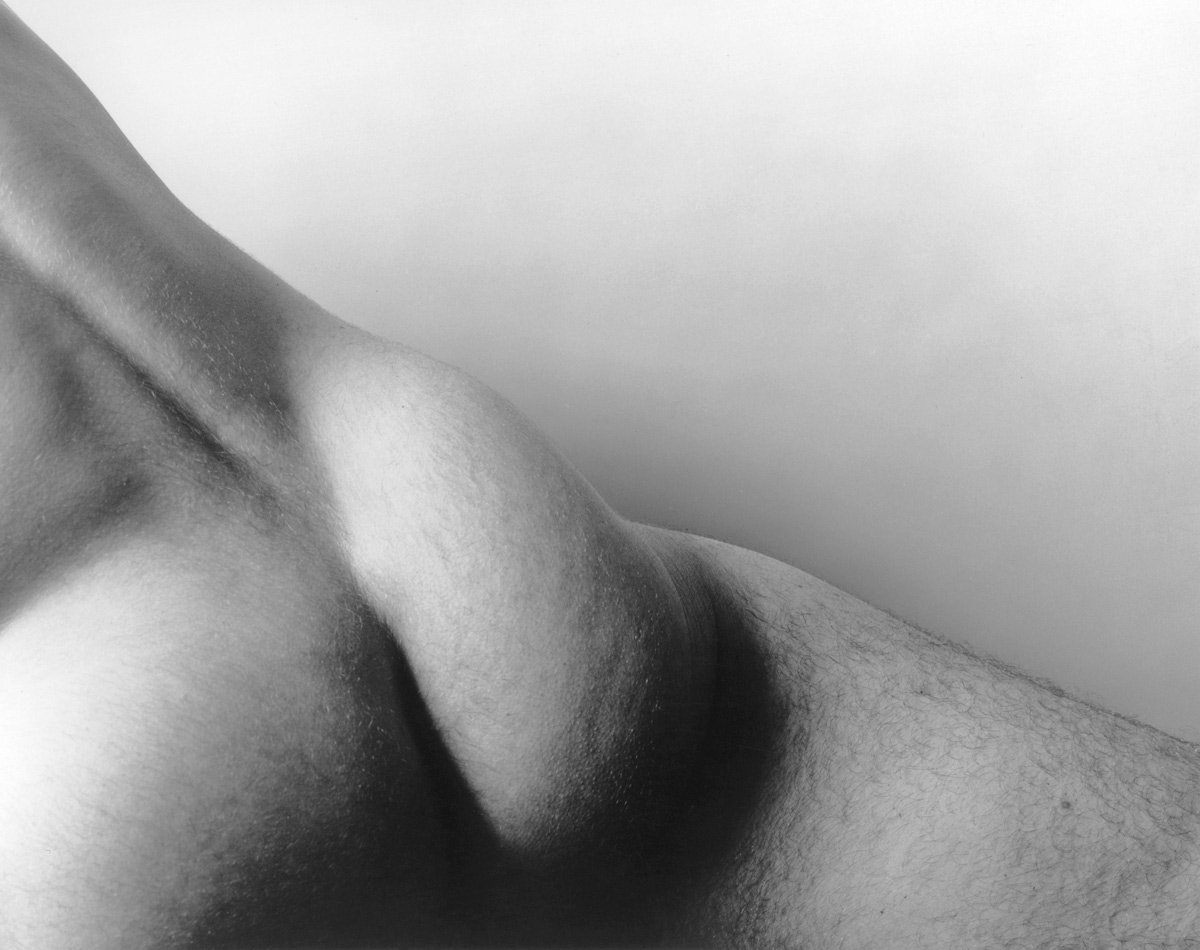
Hannah Villiger (Swiss, b. 1974) 'Block XXX' 1993-1994


Hannah Villiger (Swiss, b. 1974)
Block XXX
1993-1994
© The Estate of Hannah Villiger


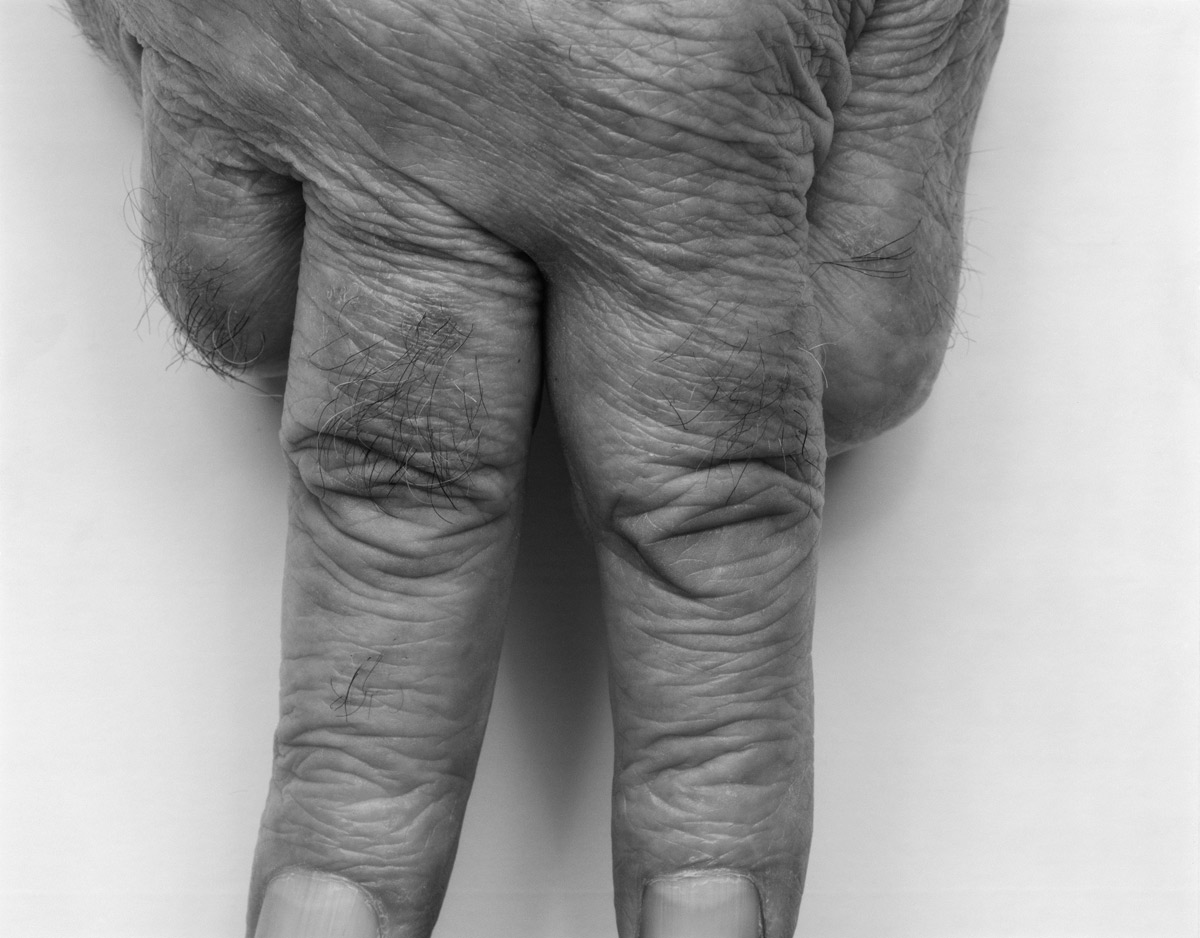
John Coplans (British, 1920-2003) 'Self Portrait Interlocking Fingers No 6' 1999


John Coplans (British, 1920-2003)
Self Portrait Interlocking Fingers No 6
1999
Silbergelatinepapier
Albertina, Wien


The exhibition The Body as Protest highlights the photographic representation of the human body – a motif that has provided a wide variety of photographers with an often radical means of expression for their visual protest against social, political, but also aesthetic norms.

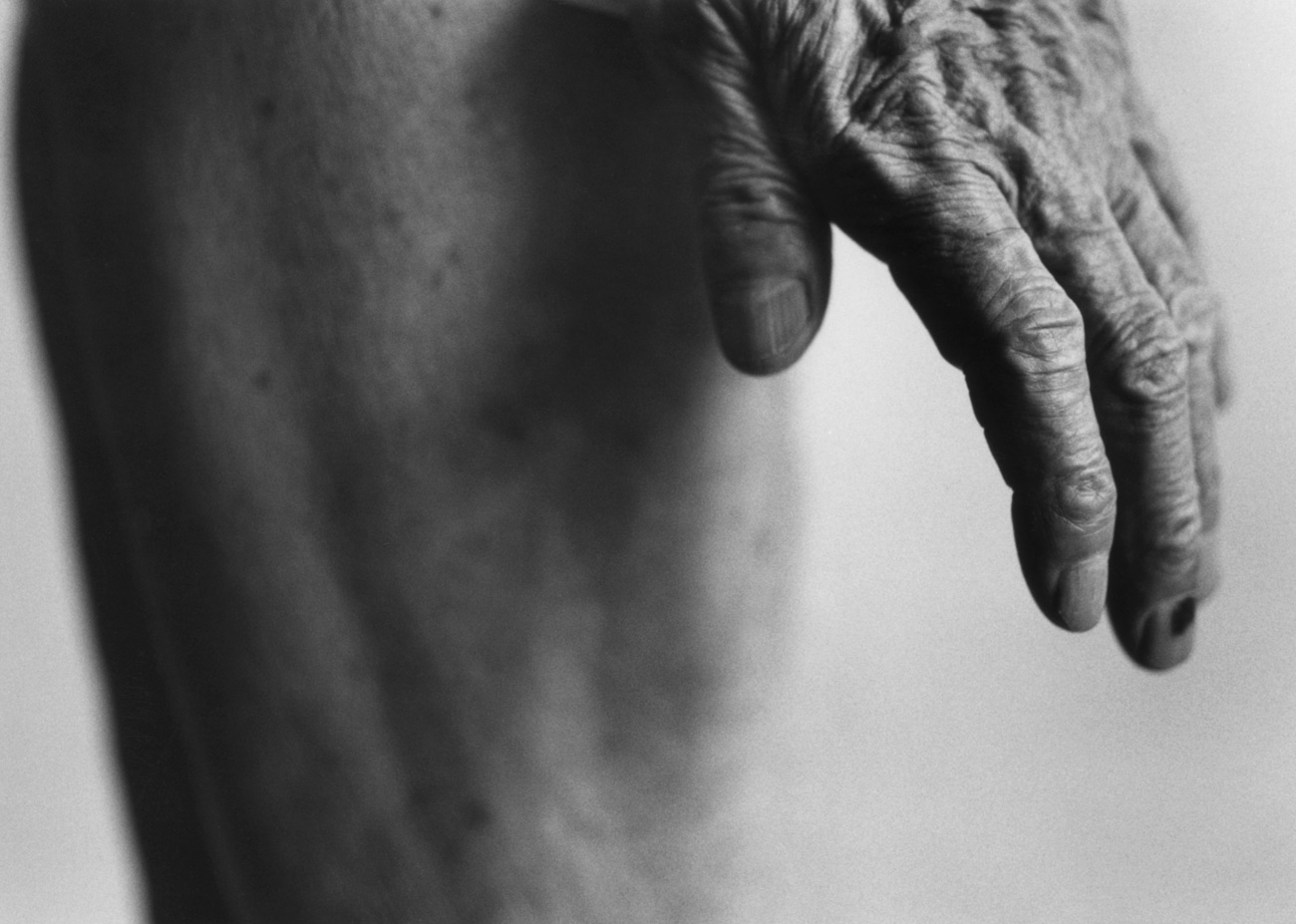
The show centres on an outstanding group of works by the artist John Coplans from the holdings of the Albertina. In his serially conceived large-format pictures, the photographer focused on the rendering of his own nude body, which he defamiliarised through fragmentation far from current forms of idealisation. Relying on extremely sophisticated lighting, he presented himself in a monumental and sculptural manner over many years. His photographs can be understood as amalgamations of theoretical and artistic ideas, which in the show are accentuated through selective juxtapositions with works by other important exponents of body-related art.

The body also features prominently in the work of other artists such as Hannah Wilke, Ketty La Rocca, Hannah Villiger, Vito Acconci, Bruce Nauman, Robert Mapplethorpe, and Miyako Ishiuchi. By means of these positions, such diverse themes as self-dramatisation, conceptual photography, feminism, body language, and even transience are analysed within an expanded artistic range. Moreover, the exhibition offers a differentiated view of the critical depiction of the human body as it has been practiced since 1970.

Text from the Albertina website


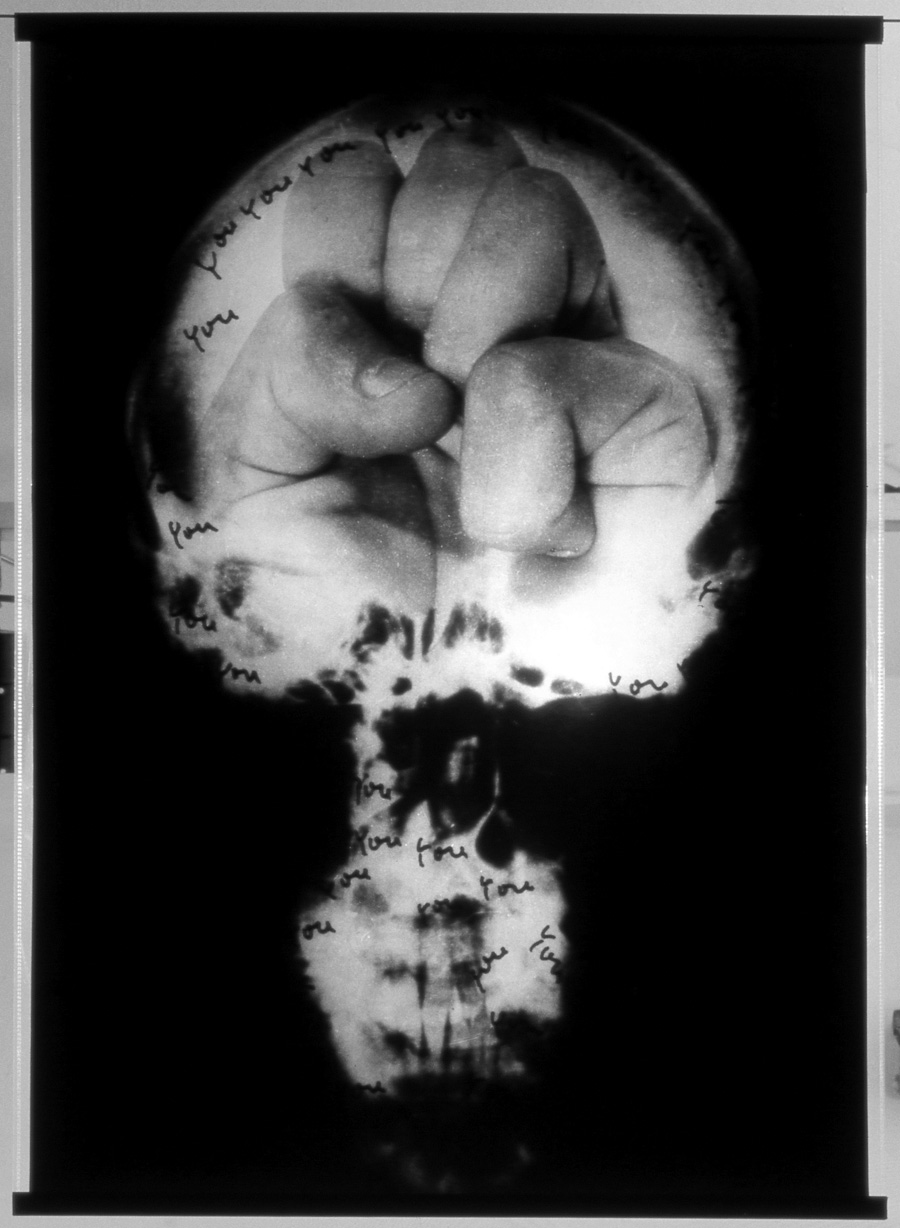
Ketty La Rocca (Italian, 1938-1976) 'Craniologia' 1973


Ketty La Rocca (Italian, 1938-1976)
Craniologia
1973
Radiografie mit überblendeter Fotografie
SAMMLUNG VERBUND


Hannah Wilke (American, 1940-1993) 'Gestures' 1974-1976 (stills)


Hannah Wilke (American, 1940-1993)
Gestures (stills)
1974-1976
Basierend auf der gleichnamigen
Video Performance von 1974
(35:30 min, b&w, sound)
Silbergelatinepapier
12 Blatt je 12,7x 17,8 cm
© Marsie, Emanuelle, Damon and Andrew Scharlatt, The Hannah Wilke Collection & Archive, L.A./ VBK, Wien 2012


Robert Mapplethorpe (American, 1946-1989) 'Thomas' 1986


Robert Mapplethorpe (American, 1946-1989)
Thomas
1986
Silbergelatinepapier
© Robert Mapplethorpe Foundation


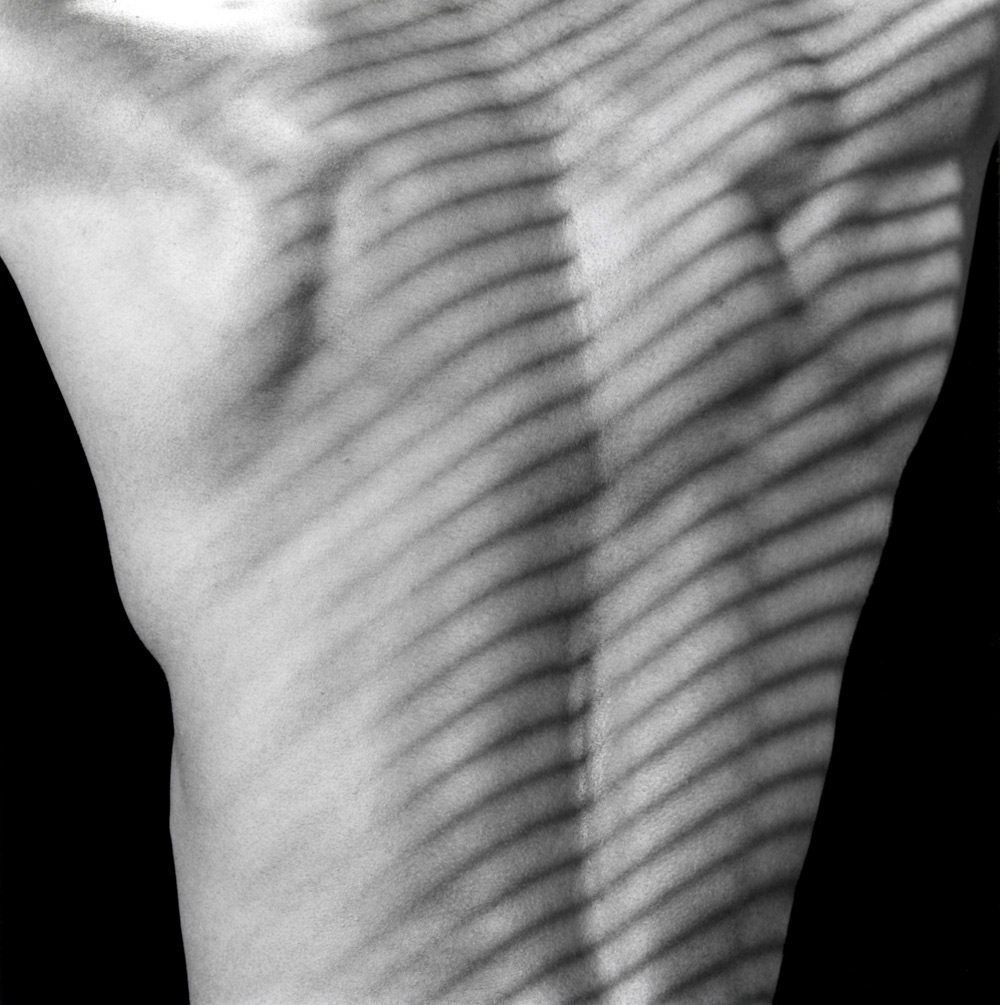
John Coplans (British, 1920-2003) 'Back with Arms Above' 1984


John Coplans (British, 1920-2003)
Back with Arms Above
1984
Silbergelatinepapier
© The John Coplans Trust


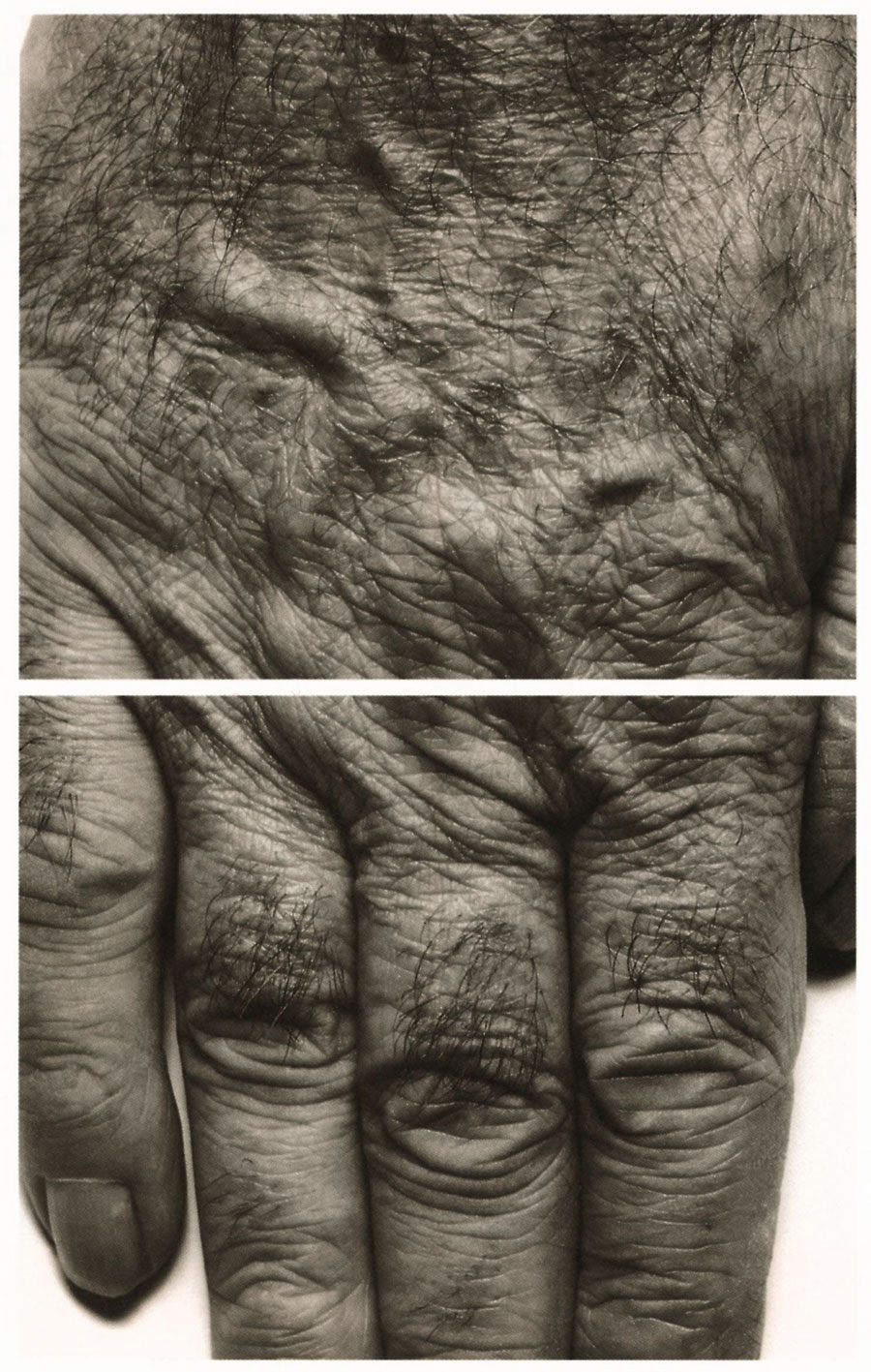
John Coplans (British, 1920-2003) 'Self Portrait (Hands)' 1988


John Coplans (British, 1920-2003)
Self Portrait (Hands)
1988
Silbergelatinepapier
Albertina, Wien


John Coplans (British, 1920-2003) 'Frieze No. 6' 1994


John Coplans (British, 1920-2003)
Frieze No. 6
1994
Silbergelatinepapier
Albertina, Wien


John Coplans (British, 1920-2003) 'Self Portrait Interlocking Fingers No 17' 2000


John Coplans (British, 1920-2003)
Self Portrait Interlocking Fingers No 17
2000
Silbergelatinepapier
Albertina, Wien


Albertina
Albertinaplatz 1
1010 Vienna, Austria
Phone: +43 (0)1 534 83-0

Opening hours:
Daily 10am – 6pm
Wednesday 10am – 9pm

Albertina website

LIKE ART BLART ON FACEBOOK

Back to top

Exhibition: ‘Joel Sternfeld: Colour photographs since 1970’ at Albertina, Vienna

Exhibition dates: 27th June – 7th October 2012


Many thankx to the Albertina for allowing me to publish the photographs in the posting. Please click on the photographs for a larger version of the image.


Joel Sternfeld (American, b. 1944) 'A Railroad Artifact, 30th Street, May 2000' 2000


Joel Sternfeld (American, b. 1944)
A Railroad Artifact, 30th Street, May 2000
2000
© Courtesy of the artist, Luhring Augustine, New York and The Friends of the High Line, New York


Joel Sternfeld (American, b. 1944) 'Ken Robson's Christmas Tree, January 2001' 2001


Joel Sternfeld (American, b. 1944)
Ken Robson’s Christmas Tree, January 2001
2001
© Courtesy of the artist, Luhring Augustine, New York and The Friends of the High Line, New York


Joel Sternfeld (American, b. 1944) 'After A Flash Flood, Rancho Mirage, California 1979' 1979


Joel Sternfeld (American, b. 1944)
After A Flash Flood, Rancho Mirage, California 1979
1979
© Courtesy of the artist and Luhring Augustine, New York, 2012


Joel Sternfeld (American, b. 1944) 'Wet 'n Wild Aquatic Theme Park, Orlando, Florida, September 1980' 1980


Joel Sternfeld (American, b. 1944)
Wet ‘n Wild Aquatic Theme Park, Orlando, Florida, September 1980
1980
© Courtesy of the artist and Luhring Augustine, New York, 2012


Joel Sternfeld (American, b. 1944) 'The Space Shuttle Columbia Lands at Kelly Lackland Air Force Base, San Antonio, Texas, March 1979' 1979


Joel Sternfeld (American, b. 1944)
The Space Shuttle Columbia Lands at Kelly Lackland Air Force Base, San Antonio, Texas, March 1979
1979
© Courtesy Buchmann Galerie Berlin, Luhring Augustine, New York and  the artist


Joel Sternfeld (American, b. 1944) 'McLean, Virginia, December 1978' 1978


Joel Sternfeld (American, b. 1944)
McLean, Virginia, December 1978
1978
© Courtesy of the artist and Luhring Augustine, New York, 2012


This exhibition offers the first survey of the US artist Joel Sternfeld’s work in Austria. The Albertina shows eleven series by the photographer dating from between the early 1970s and 2007. Influenced by William Eggleston, but also by the colour theories of the Bauhaus, Joel Sternfeld, who was born in New York in 1944, began to experiment with colour photography in the 1970s and soon developed his own style. He brought colour to bear on a subject that had a long photographic tradition in the United States: the American social landscape. A critical observer, Sternfeld travelled across the USA for years, capturing the country and its inhabitants in all their peculiarities and contradictions. Most of his pictures explore political and social issues by representing their subjects’ relationship to nature or the landscape around them. Sternfeld’s photographs combine a documentary objective with an artist’s view. Their visual language has its predecessors in Walker Evans and Robert Frank, who were advocates of black-and-white photography, though. Seen against this background, Sternfeld’s photographs are to be understood not only as a chronicle of the last forty years’ American history, but also evidence a development process in the course of which colour came to bring forth an entirely specific visual language.

Nags Head

Next to William Eggleston and Stephen Shore, Joel Sternfeld ranks among the most important representatives of New Color Photography, a quite heterogeneous group of photographers who have relied on colour as a stylistic device for artistic photography since the 1970s. A perfectly natural means of expression today, colour was frowned upon in artistic photography in those days. While colour was used in popular photography, like in the fields of advertising and fashion, traditional artistic photographs were black-and-white. William Eggleston’s exhibition in the Museum of Modern Art New York in 1976, which was regarded as scandalous when it opened, proved to be a landmark event for the recognition of colour photography. Dating from 1975, Joel Sternfeld’s series Nags Head clearly testifies to the role of colour as a means of artistic expression. Precise colour areas are as important for the pictures’ composition as the motifs the photographer encountered on the beach of the town Nags Head in North Carolina.

First Pictures

Next to Nags Head, two series of colour photographs from the 1970s, Happy Anniversary Sweetie Face! and Rush Hour, stand for Joel Sternfeld’s early work. Following in the tradition of street photography, these series explore various scenes of American everyday culture in a humorous vein, capturing them in a seemingly spontaneous and random visual language. Supposed exposure mistakes and blurs as well as angles fragmentising the subjects suggest an intuitive and dynamic view of the world. The instantaneous character of the photographs manifests itself in the Rush Hour series in a particularly striking manner. Using a manual flash lighting up the faces of the passers-by for his compositions, Sternfeld emphasises the fleeting moment a photograph snatches from the continuum of time.

Colour proves to be key for the composition. Rich and full colour areas not only rhythmise and structure the arrangement, but represent pictorial values in their own right, which are not integrated in a homogeneous whole. This kind of photography which connects everyday motifs with the autonomy of colour has been influenced not least by William Eggleston, whom Sternfeld got to know in Harvard in 1976.

American Prospects

Sternfeld shot the series American Prospects while travelling through the United States in a Volkswagen bus for some years. Dating from between 1978 and 1987, the pictures explore people’s relationship to the American landscape as formed and informed by them. The microcosm of often bizarre everyday events that becomes visible here does more than just illustrate man’s problematic use and transformation of the landscape: it also offers a possibility for drawing conclusions on contemporary political and social conditions in the United States.

In American Prospects, Sternfeld frequently renders critical contents by relying on the sovereign use of sublime, vivid colour values and contrasts that seem to contradict the depicted serious circumstances. Colour, format, and static composition are grounded in Sternfeld’s use of a large-format camera. While he photographed his early series with a small-format camera, which allowed flexible movements and, thus, a spontaneous visual language, the more complicated handling of a large-format camera slows down the picture-taking process. Sternfeld selected his motifs very carefully and precisely planned his pictures’ composition in advance. Both the composition and the general motif of people in a landscape were essentially inspired by solutions of traditional painting like Pieter Bruegel the Elder’s and Jacob van Ruisdael’s.

Stranger Passing

Photographed within a period of fourteen years starting in 1987, Joel Sternfeld’s series Stranger Passing makes the human portrait its crucial issue. Depicted in situ, the subjects are characterised through their outward appearance, their clothes and poses, and the environs in which they present themselves. The pictures show a wide variety of social groups and milieus and centre on different life styles. Maintaining a reserved and detached view throughout, Sternfeld keeps a visible distance from his motifs and does not express a judgment – an artistic strategy already pursued by August Sander in his famous photographic project Menschen des 20. Jahrhunderts (People of the 20th Century) in the 1920s. But whereas Sander subsumed his models under their professional functions, Sternfeld focuses on representing the portrayed people’s individuality. Their often bizarre (self-) representation visualises comprehensive social contexts which, in total, offer a manifold and differentiated portrait of American society.

On This Site

Between 1993 and 1996, Joel Sternfeld photographed crime scenes hidden behind apparently everyday places. By depicting such places of destiny, Sternfeld has retrieved suppressed, concealed, or deliberately buried events for the collective memory and thus dismantled patriotic self-presentations of the US. The pictures reveal a conceptual approach to documentary photography. The comparatively neutral and detached shots show “only” the crime scenes and do not offer any details on the sequence of events. The particulars of the crime are to be found in a text which is part of the work. Image and text provide different contents, which the viewer is asked to put together.

Oxbow Archive

In Oxbow Archive (2005-2007), Sternfeld has made the scenery his sole subject by photographing an area near Northampton in Massachusetts through the changing seasons. The work explores the tradition of cultural norms and phenomena of US culture: the representation of landscapes in pictures has always been an essential dimension of American identity and cultural self-understanding. Wilderness and pristine nature are frequently depicted in stunning, idealised views – for which Ansel Adams and Edward Weston may be cited as examples. A famous painting by the American artist Thomas Cole from 1836 renders the region shown in Oxbow Archive as a heroic landscape in dramatic weather conditions seen from an elevated point of view. Sternfeld clearly rejects this visual language: he documents the uniqueness of the seasons’ changes beyond the sublime and picturesque of traditional landscape pictures from a low point of view and confronts the viewer with the clearly visible effects of man’s intervention in nature.

When it changed

After Sternfeld’s early series had already been informed by a socio-critical attitude, the projection When it changed unmistakably shows the photographer to be a documentarist with great political engagement. When it changed comprises fifty-three portraits of participants in a United Nations conference on climate change in Montreal in 2005. A text with prognoses and statements on climate change by scientists from the last twenty years provides a comment on the persons’ often serious and pessimistic faces.

Treading on Kings

For his project Treading on Kings Joel Sternfeld photographed the protests during the G8 summit in Genoa in 2001. During this meeting of the eight most powerful industrial nations in the world, which was accompanied by severe clashes between the demonstrators and the police, numerous protesters were wounded and one of the activists, Carlo Giuliani, was killed. Sternfeld’s thirty-three photographs portray the scenes of the confrontation as well as the protesters themselves. Accompanying texts offer statements by various participants of the demonstrations and explain the reasons for their engagement.

Walking the High Line

Walking the High Line (2000-2001) examines landscape as an indicator of ecologic and social transformations from a new perspective. The High Line is an abandoned railroad track in Manhattan, New York, a little over two kilometres long, which the photographer describes as a motific contrast between apparently untouched nature and urban development. While Sternfeld’s earlier series visualise the colonisation of nature by man, the relationship is reverted here. Nature has reconquered an urban space, the only sporadically visible rails hinting at the once busy traffic. In the case of Walking the High Line, the socio-political dimension characteristic of all of Sternfeld’s works has produced concrete results: the disused track was transformed into a public park in 2009 not least because of Sternfeld’s successful photographs.

Sweet Earth

The series Sweet Earth from 2006 shows Joel Sternfeld pursuing his photographic investigation of the American social landscape. Informed by the atmosphere of the 1990s, of the period immediately following the collapse of the Communist states, the photographs confront us with models of alternative communities. Texts provide us with information on the social experiments and their political, ecological, or religious reasons. By visualising historical and contemporary utopias, the artist offers a historical survey spanning from nineteenth-century communities to the counterculture of the 1960s and today’s new forms of living together. By confronting the viewer with heterogeneous life plans, Sternfeld not only fathoms the different values of present-day American society, but also questions the background and development of social norms and conventions.

Press release from the Albertina website


Joel Sternfeld (American, b. 1944) 'Washington D.C., August 1974' 1974


Joel Sternfeld (American, b. 1944)
Washington D.C., August 1974
1974
© Courtesy of the artist and Luhring Augustine, New York, 2012


Joel Sternfeld (American, b. 1944) 'Summer Interns Having Lunch, Wall Street, New York, August 1987' 1987


Joel Sternfeld (American, b. 1944)
Summer Interns Having Lunch, Wall Street, New York, August 1987
1987
© Courtesy of the artist and Luhring Augustine, New York, 2012


Joel Sternfeld (American, b. 1944) 'New York City (#1)' 1976


Joel Sternfeld (American, b. 1944)
New York City (#1)
1976
© Courtesy of the artist and Luhring Augustine, New York, 2012


Joel Sternfeld (American, b. 1944) 'Young Man Gathering Shopping Carts, Huntington, New York, July 1993' 1993


Joel Sternfeld (American, b. 1944)
Young Man Gathering Shopping Carts, Huntington, New York, July 1993
1993
© Courtesy of the artist and Luhring Augustine, New York, 2012


Joel Sternfeld (American, b. 1944) 'A Woman at Home in Malibu After Exercising, California, August 1988' 1988


Joel Sternfeld (American, b. 1944)
A Woman at Home in Malibu After Exercising, California, August 1988
1988
© Courtesy of the artist and Luhring Augustine, New York, 2012


Joel Sternfeld (American, b. 1944) 'A Woman Out Shopping with Her Pet Rabbit, Santa Monica, California, August 1988' 1988


Joel Sternfeld (American, b. 1944)
A Woman Out Shopping with Her Pet Rabbit, Santa Monica, California, August 1988
1988
© Courtesy of the artist and Luhring Augustine, New York, 2012


Albertina
Albertinaplatz 1
1010 Vienna, Austria
Phone: +43 (0)1 534 83-0

Opening hours:
Daily 10am – 6pm

Albertina website

LIKE ART BLART ON FACEBOOK

Back to top

Exhibition: ‘Elliott Erwitt. Retrospective’ at Kunst Haus Wein, Vienna

Exhibition dates: 14th June – 30th September 2012


Elliott Erwitt (American, 1928-2023) 'USA. Fort Dix, New Jersey. 1951' 1951


Elliott Erwitt (American, 1928-2023)
USA. Fort Dix, New Jersey. 1951
1951
Gelatin silver print
© Elliott Erwitt/Magnum Photos


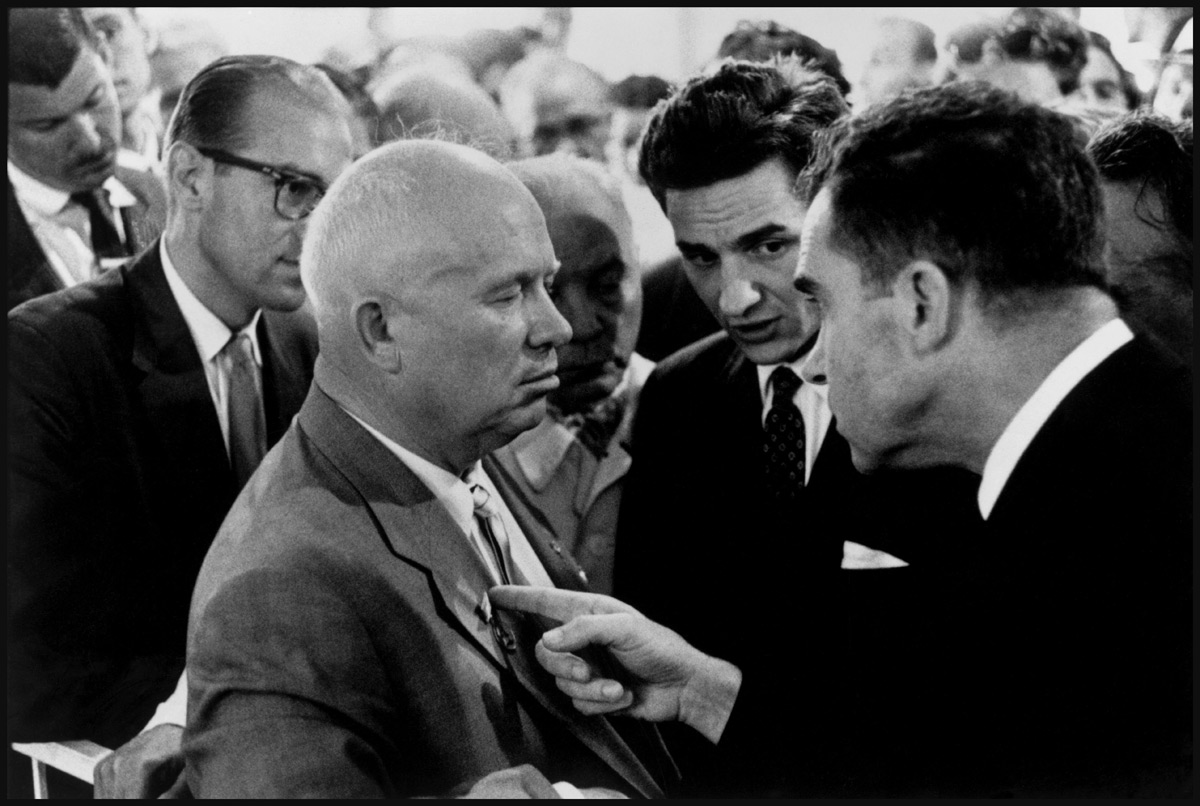
There is something whimsical and abidingly Chaplinesque about Elliott Erwitt’s photographs (see the feet in FRANCE. Paris. 1989, below) – that is until he lands a knockout blow flush on the chin with a devastatingly serious, weighty image like USSR. Moscow. 1959. Nikita Khrushchev and Richard Nixon (even though the two protagonists were apparently talking about banalities). Erwitt’s “art of observation” is a gift of the eye and the mind, where the artist must be truly aware of the world around them in order to capture the mosaic of reality.

As the press release astutely observes, “Erwitt has a gift that few photographers possess, the gift of conveying a subtext with each photo: sentiment, anger, a little happiness; an emotion that can only be recognised by looking very closely; a “before” and an “after”. Erwitt himself calls this the “essence of what happens”. For Erwitt, photography is about really seeing things: “You either see, or you don’t see.”

Very perceptive and so very true.

Dr Marcus Bunyan


Many thankx to the Kunst Haus Wein, Vienna for allowing me to publish the photographs in the posting. Please click on the photographs for a larger version of the image.


“It’s not the subject, it’s how you treat the subject.”

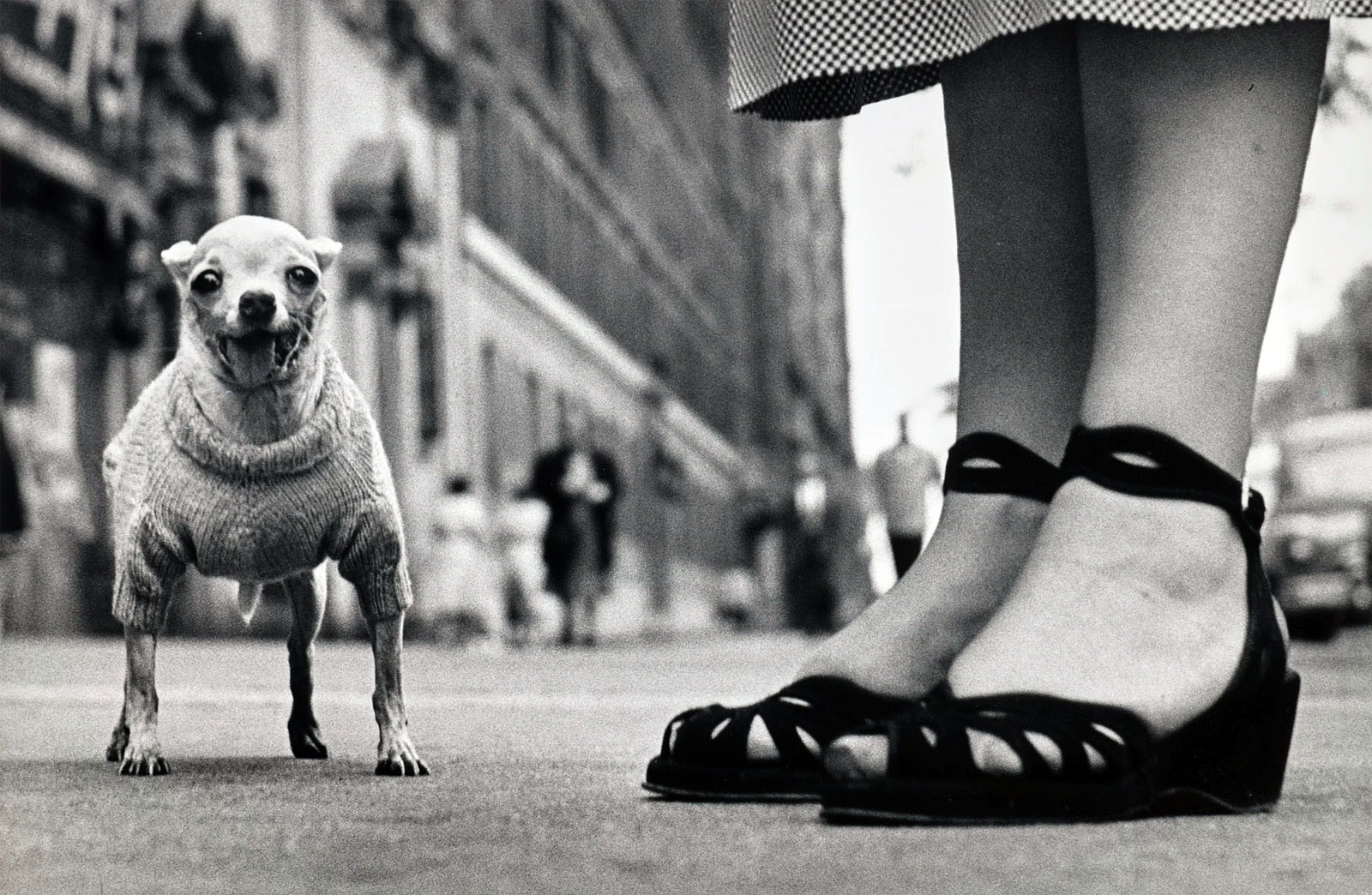
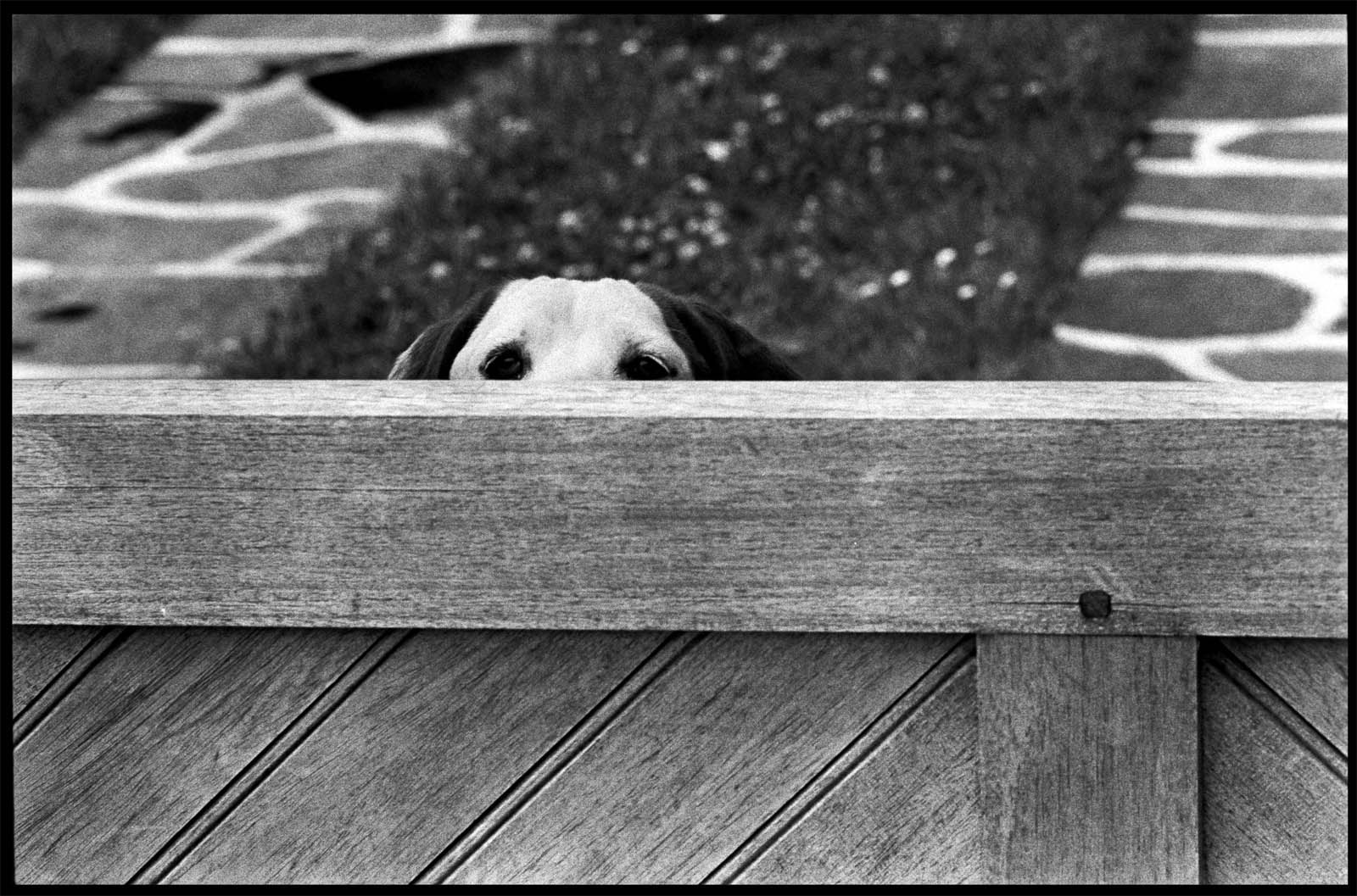
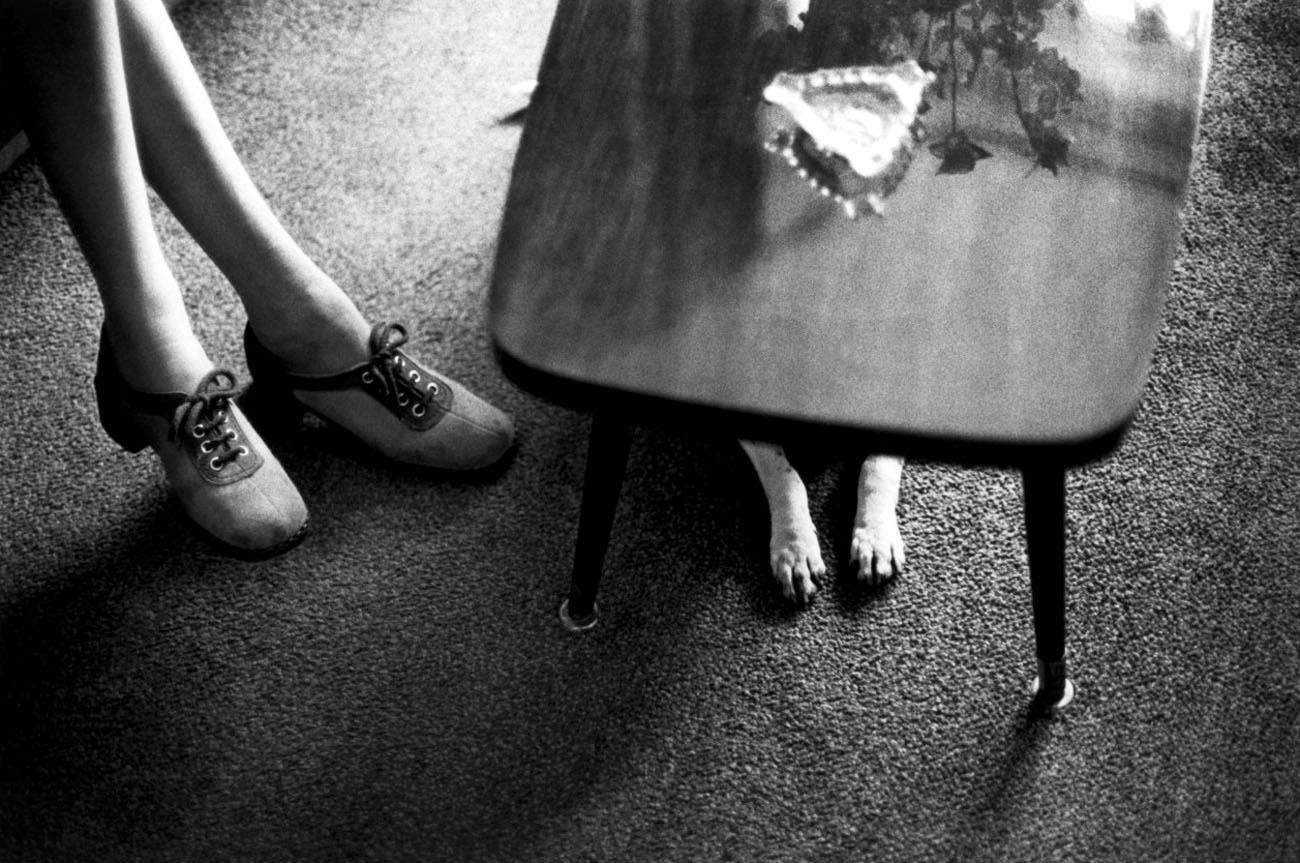
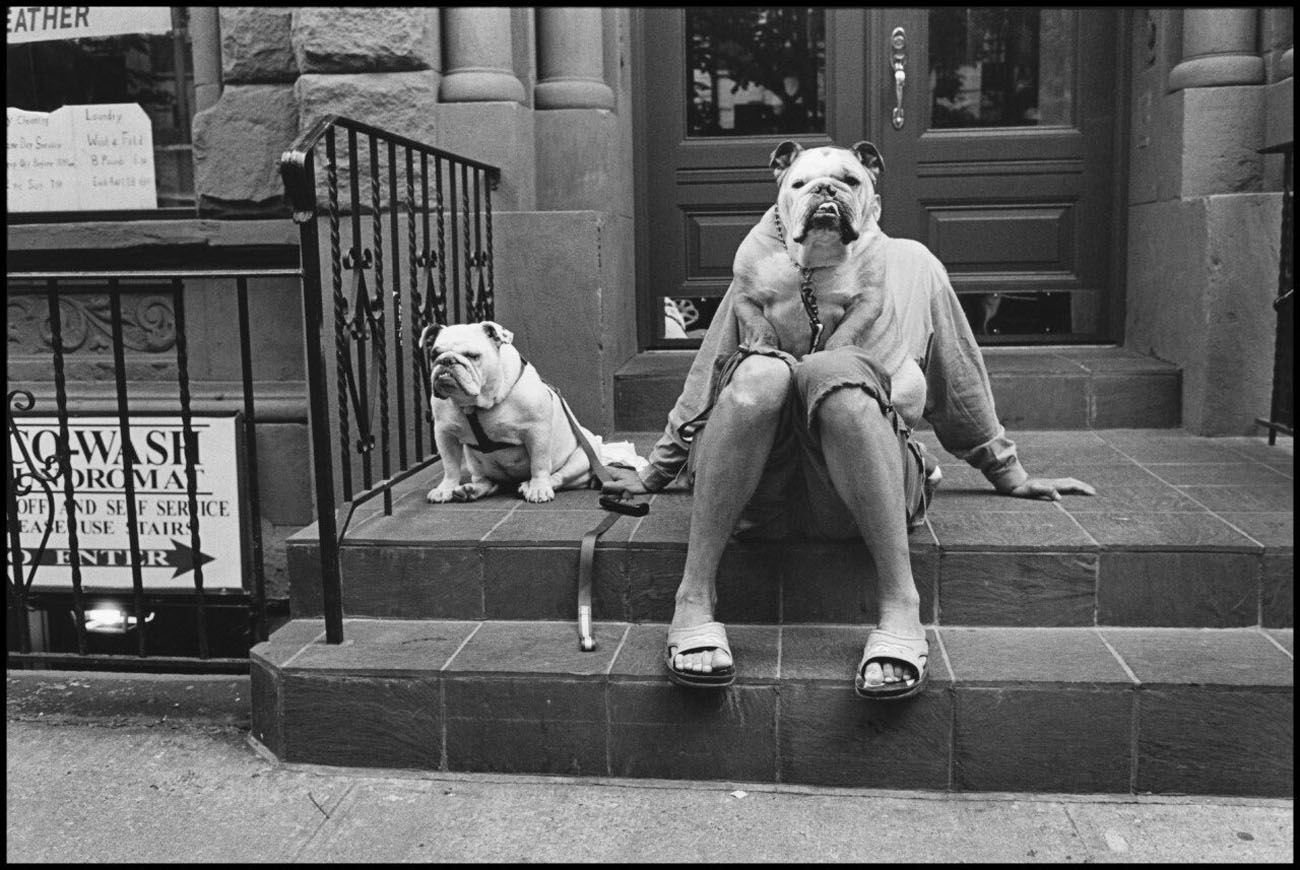
“I take a lot of pictures of dogs because I like dogs and because they don’t object to being photographed and they also don’t ask for prints.”


Elliott Erwitt


Elliott Erwitt @ Kunst Haus Wien


Elliott Erwitt (American, 1928-2023) 'Small dog standing by woman, New York City' 1946


Elliott Erwitt (American, 1928-2023)
Small dog standing by woman, New York City
1946
Gelatin silver print
© Elliott Erwitt/Magnum Photos


Elliott Erwitt (American, 1928-2023) 'ENGLAND. Brighton. 1956. Elizabeth Allan' 1956


Elliott Erwitt (American, 1928-2023)
ENGLAND. Brighton. 1956. Elizabeth Allan
1956
Gelatin silver print
© Elliott Erwitt/Magnum Photos


Elliott Erwitt (American, 1928-2023) 'France' 1965


Elliott Erwitt (American, 1928-2023)
France
1965
Gelatin silver print
© Elliott Erwitt/Magnum Photos


Elliott Erwitt (American, 1928-2023) 'Netherlands' 1973


Elliott Erwitt (American, 1928-2023)
Netherlands
1973
Gelatin silver print
© Elliott Erwitt/Magnum Photos


Elliott Erwitt (American, 1928-2023) 'USA. New York. 1974. Felix, Gladys and Rover' 1974


Elliott Erwitt (American, 1928-2023)
USA. New York. 1974. Felix, Gladys and Rover
1974
Gelatin silver print
© Elliott Erwitt/Magnum Photos


Elliott Erwitt (American, 1928-2023) 'FRANCE. Paris. 1989' 1989


Elliott Erwitt (American, 1928-2023)
FRANCE. Paris. 1989
1989
Gelatin silver print
© Elliott Erwitt/Magnum Photos


Elliott Erwitt (American, 1928-2023) 'New York City, USA' 2000


Elliott Erwitt (American, 1928-2023)
New York City, USA
2000
Gelatin silver print
© Elliott Erwitt/Magnum Photos


Elliott Erwitt, the “Woody Allen of photography”, who views his subjects with his heart as much as with his eye, captures human – sometimes all-too-human – situations in his oeuvre. Kunst Haus Wien presents pieces of the mosaic that is Erwitt’s reality, taken from over half a century of his photographic work. This comprehensive retrospective includes about 150 works by a highly active photographer. Erwitt embodies a type of photographer that has become extremely rare, one who views his subjects with his heart as much as with his eye and thereby sees things that most people rarely notice: the little humorous situations and passions of everyday life, the tiny moments in which gestures and facial expressions say more than a thousand words.

Erwitt is one of the leading photographers of his generation. Extremely versatile, with a broad spectrum of interests, he points his camera at human – sometimes all-too-human – situations: Some of them involve animals, others are political, still others capture a touching moment. Photography, for Erwitt, is above all an “art of observation” that depends first and foremost on the special way in which one views the world. In our world of fast-moving TV images and digitally enhanced pictorially compositions in advertising and fashion, Erwitt’s works restore to the photographic medium its original power. His snapshots are pieces of the mosaic of reality. Erwitt has a gift that few photographers possess, the gift of conveying a subtext with each photo: sentiment, anger, a little happiness; an emotion that can only be recognised by looking very closely; a “before” and an “after”. Erwitt himself calls this the “essence of what happens”. For Erwitt, photography is about really seeing things: “You either see, or you don’t see.”

Kitchen Debate

The ability to tell a whole story in one picture is Elliott Erwitt’s strength – as in the summer of 1959, when US Vice President Richard Nixon met Soviet leader Nikita Khrushchev at the American National Exhibition in Moscow. Erwitt’s snapshot documents how Capitalism and Socialism collided head-on in the form of the volatile Nixon and the surly Khrushchev. Actually, what he photographed was – as he later discovered – merely a conversation about banalities between two politicians during the Cold War, and yet this turned out to be the political photograph that would make him famous. Erwitt’s photo of the so-called Kitchen Debate cemented Nixon’s image as a hardliner and Erwitt’s own reputation as a journalistic photographer who had the qualities of an “invisible insider”.

Dogging Dogs

Erwitt has always taken photographs for his own pleasure as well: street scenes, people – and dogs. The photographer relates to dogs on a very friendly basis; he barks at them and photographs them in situations that show how “human” they can be. He takes some of these photos on walks in Central Park in New York, others at dog fairs and dog pageants. Erwitt’s dog photos have filled whole books and he could probably pride himself on having created the first image of dogs as cultural creatures.

Museum Watching

The “art of observation” has led Erwitt to take numerous photographs of people in museums: He portrays people in their silent dialogue with art when they pause – engrossed or sceptical – to take a closer look at an artwork. The particular environment of the museum is an ideal one for his sharp and at the same time affectionately ironic eye for people.

Naked

When Elliott Erwitt mingles with nudists and takes photographs, the result is very different from the usual photographs of nudes. Erwitt shows people unclothed and undisguised, far from ideals of beauty and staged poses. These photos form a kind of sociogram of nudist culture and are perhaps Erwitt’s most extreme attempt to capture the “conditio humana” in photographs.

Personal Exposures

Between politics and irony, between concerned photography and street photography, these works reveal touching moments that Erwitt has encountered and observed. These photographs allow room for intimacy. They include pictures of his family as well as famous portraits of actors and artists.

Photographs and Anti-Photographs

Elliott Erwitt, the son of Russian émigrés, was born in 1928 in Paris. After his birth, the family moved to Milan, where Elliott spent the first ten years of his life. In 1938, the Erwitts fled the Italian fascists and returned to Paris, after which they escaped the Nazis on the last passenger ship to the USA. The family landed in New York, but Elliot’s father soon decided he did not want to stay there. The family travelled all the way across the USA to California and started a new life in Los Angeles. Today, Elliott Erwitt lives in New York.

As a photographer, Erwitt has always worked for the advertising industry and at the same time realised his own photographic projects. This double context of assignment photography and authorship photography has typified his entire career, although the borders between the two fields have often been fuzzy. In 1948, Erwitt met the photographic legend Robert Capa, who invited him to join Magnum Photos. In 1954 he became a full member of the agency, where he soon felt completely at home. He served as President of Magnum Photos from 1966 to 1969.

Elliott Erwitt is one of an elite group of photographers whose pictorial language has heavily influenced American photojournalism. In decades of successful work as a photographer and as a director of documentaries and television films, Erwitt has always also remained an “amateur” – in the sense of its Latin root, meaning “lover” – of photography. In his photos he combines irony with insight and lightness with profundity, thereby creating humorous images that can often make life just a little bit easier for the beholder.

Press release from Kunst Haus Wein, Vienna


Elliott Erwitt (American, 1928-2023) 'USA. Pennsylvania. Pittsburgh. 1950' 1950


Elliott Erwitt (American, 1928-2023)
USA. Pennsylvania. Pittsburgh. 1950
1950
Gelatin silver print
© Elliott Erwitt/Magnum Photos


Elliott Erwitt (American, 1928-2023) 'Eric Ambler' 1952


Elliott Erwitt (American, 1928-2023)
Eric Ambler
1952
Gelatin silver print
© Elliott Erwitt/Magnum Photos


Elliott Erwitt (American, 1928-2023) 'USSR. Moscow. 1959. Nikita Khrushchev and Richard Nixon' 1959


Elliott Erwitt (American, 1928-2023)
USSR. Moscow. 1959. Nikita Khrushchev and Richard Nixon
1959
Gelatin silver print
© Elliott Erwitt/Magnum Photos


Elliott Erwitt (American, 1928-2023) 'Shreveport, LA' 1962


Elliott Erwitt (American, 1928-2023)
Shreveport, LA
1962
Gelatin silver print
© Elliott Erwitt/Magnum Photos


Elliott Erwitt (American, 1928-2023) 'USA. California. Pasadena. 1963' 1963


Elliott Erwitt (American, 1928-2023)
USA. California. Pasadena. 1963
1963
Gelatin silver print
© Elliott Erwitt/Magnum Photos


Elliott Erwitt (American, 1928-2023) 'USA. New York. 1963. 57th Street Gallery' 1963


Elliott Erwitt (American, 1928-2023)
USA. New York. 1963. 57th Street Gallery
1963
Gelatin silver print
© Elliott Erwitt/Magnum Photos


Elliott Erwitt (American, 1928-2023) 'USA. California. Elliott Erwitt. 1976' 1976


Elliott Erwitt (American, 1928-2023)
USA. California. Elliott Erwitt. 1976
1976
Gelatin silver print
© Elliott Erwitt/Magnum Photos


Elliott Erwitt (American, 1928-2023) 'London, England' 1978


Elliott Erwitt (American, 1928-2023)
London, England
1978
Gelatin silver print
© Elliott Erwitt/Magnum Photos


Elliott Erwitt (American, 1928-2023) 'USA. California. Bakersfield. 1983' 1983


Elliott Erwitt (American, 1928-2023)
USA. California. Bakersfield. 1983
1983
Gelatin silver print
© Elliott Erwitt/Magnum Photos


Elliott Erwitt (American, 1928-2023) 'Rio de Janeiro, Brazil' 1984


Elliott Erwitt (American, 1928-2023)
Rio de Janeiro, Brazil
1984
Gelatin silver print
© Elliott Erwitt/Magnum Photos


Elliott Erwitt (American, 1928-2023) 'GB. ENGLAND. Kent. 1984' 1984


Elliott Erwitt (American, 1928-2023)
GB. ENGLAND. Kent. 1984
1984
Gelatin silver print
© Elliott Erwitt/Magnum Photos


KUNST HAUS WIEN
Museum Hundertwasser
Untere Weißgerberstraße 13
1030 Vienna
Phone: +43-1-712 04 91

Opening hours:
Daily 10am – 6pm

Kunst Haus Wein website

LIKE ART BLART ON FACEBOOK

Back to top

Exhibition: ‘Vienna – Art & Design’ at the National Gallery of Victoria, Melbourne

Exhibition dates: 18th June – 9th October 2011


Media preview for 'Vienna - Art & Design' at the National Gallery of Victoria


Media preview for Vienna – Art & Design at the National Gallery of Victoria
Photo: Marcus Bunyan


A subtle pleasure

The delicate paintings are smaller with a flatness of texture and a sombreness than I had not imagined; magnificent in their subtlety. However, the real stars of this wonderful exhibition are the design pieces.

Whether silver, wood, ceramic, glass or jewellery the designs are balanced by a glorious aesthetic. Never has a tea service looked so ravishing or decadent.

This is not a wham bang show like Dali or that other King of some fame showing elsewhere. This is for a discerning audience – one that can take time (between pots of tea) to study and go ooh and aah!

Dr Marcus Bunyan


Many thankx to the National Gallery of Victoria for inviting me and for allowing me to publish the photographs in the posting. Please click on the photographs for a larger version of the image. All photographs © Marcus Bunyan 2011 except the photographs of the full paintings which come from the NGV press CD ROM.


Installation view of the exhibition 'Vienna - Art & Design' at the National Gallery of Victoria


I just couldn’t help myself!
Photo: Marcus Bunyan


Installation view of first room of the exhibition 'Vienna - Art & Design' at the National Gallery of Victoria


Installation view of first room of the exhibition Vienna – Art & Design at the National Gallery of Victoria
Photo: Marcus Bunyan


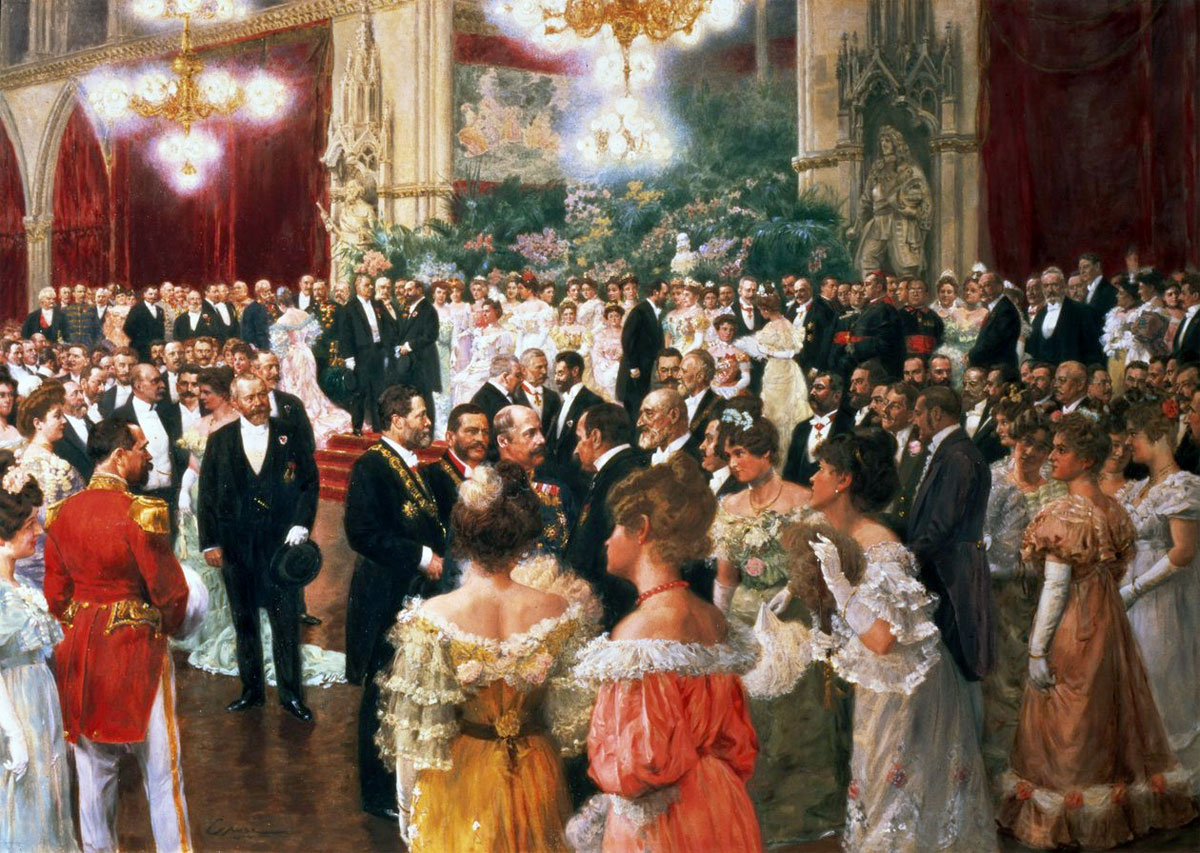
Wilhelm Gause (Germany 1853-1916) 'Vienna Municipal Ball' 1904


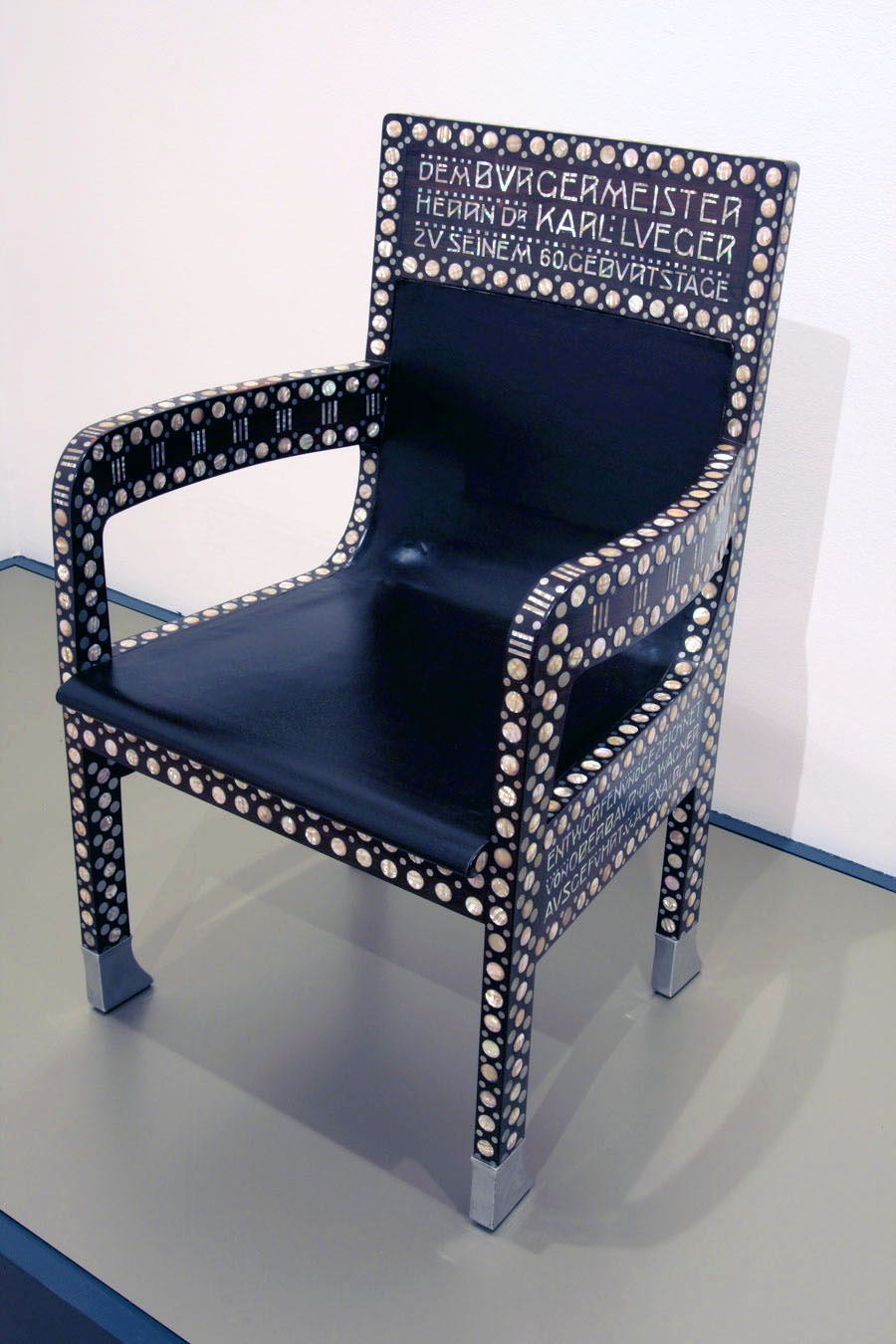
Installation view of first room of the exhibition Vienna – Art & Design at the National Gallery of Victoria showing at left:

Otto Wagner (architect) (Austrian, 1841-1918)
Alexander Albert (manufacturer) Austria active c. 1904
Chair for Dr Karl Lueger
1904
Rosewood (Dalbergia sp.), mother-of-pearl, leather
98.5 x 63 x 59.5cm
Wien Museum, Vienna
Estate of Karl Lueger, 1910

at right:

Wilhelm Gause (Germany 1853-1916)
Vienna Municipal Ball
1904
Watercolour and oil on cardboard
62 x 88cm
Wien Museum, Vienna
Commissioned by the City of Vienna, 1904
Photo: Marcus Bunyan


Wilhelm Gause (Germany 1853-1916) 'Vienna Municipal Ball' 1904


Wilhelm Gause (Germany 1853-1916)
Vienna Municipal Ball
1904
Watercolour and oil on cardboard
62 x 88cm
Wien Museum, Vienna
Commissioned by the City of Vienna, 1904


Stylish, provocative, rebellious, and unforgettable – the world has seen nothing like Vienna in 1900. A century ago, a group of radical young artists, architects, writers, musicians, designers and thinkers overturned all the rules and created a brave new world. Gustav Klimt, Egon Schiele, Josef Hoffmann and Adolf Loos were central to this artistic revolution which transformed Vienna into a dynamic metropolis at the forefront of ground-breaking modernism.

Vienna at the dawn of the twentieth century was opulent, elegant and daring. Casting aside outmoded social mores and moralities, private life became public spectacle. Cabarets, coffee houses, and nightclubs teemed with radical debate and artistic abandon. Gustav Klimt’s society portraits immortalise the chic women who presided over this creative ferment. Josef Hoffmann and the Vienna Workshops created the bold new interior design and the household objects with which these women furnished their elegant homes, establishing the modern ‘look’. As Sigmund Freud defined sexual fragmentation and erotic obsession for a new millennium, Egon Schiele explored human sexuality in images of unparalleled and startling frankness.

Vienna: Art & Design will explore this extraordinary period of artistic and intellectual genius, bringing together more than 250 works of art, including painting, drawing, graphic and decorative art, furniture, fashion, jewellery and photography, most never before seen in Australia. Visitors will experience the inventiveness and brilliance of a unique generation who laid the foundations for life in the twentieth century – a legacy still vividly alive today.

Text from the National Gallery of Victoria website Nd [Online] Cited 22/07/2022


Otto Wagner (Austrian, 1841-1918)(architect) Alexander Albert (Austria active c. 1904) (manufacturer) 'Chair for Dr Karl Lueger' 1904


Otto Wagner (Austrian, 1841-1918) (architect)
Alexander Albert (Austria active c. 1904) (manufacturer)
Chair for Dr Karl Lueger
1904
Rosewood (Dalbergia sp.), mother-of-pearl, leather
98.5 x 63 x 59.5cm
Wien Museum, Vienna
Estate of Karl Lueger, 1910
Photo: Marcus Bunyan


Josef Hoffmann (Austrian, 1870-1956) (designer) J. & J. Kohn, Vienna (manufacturer) 'Adjustable-back chair' (Sitzmaschine) 1908


Josef Hoffmann (Austrian, 1870-1956) (designer)
J. & J. Kohn, Vienna (manufacturer)
Adjustable-back chair (Sitzmaschine)
1908
Ebonised Beech (Fagus sp.), plywood, steel
(a-b) 110.8 x 68.1 x 83.7cm (overall)
National Gallery of Victoria, Melbourne
Purchased through The Art Foundation of Victoria with the assistance of Jardine Matheson Australia, Fellow, 1983
© Estate of Josef Hoffmann


Josef Hoffmann (Austrian, 1870-1956) (designer) Wiener Werkstätte, Vienna (commissioning workshop) J. Soulek, Vienna (manufacturer) 'Bureau, from the Gallia apartment boudoir' 1913


Josef Hoffmann (Austrian, 1870-1956) (designer)
Wiener Werkstätte, Vienna (commissioning workshop)
J. Soulek, Vienna (manufacturer)
Bureau, from the Gallia apartment boudoir
1913
Painted wood, gilt, glass, silk, brass
(a-m) 179.4 x 110.9 x 64.6cm (overall)
National Gallery of Victoria, Melbourne
Samuel E. Wills Bequest, 1976
© Estate of Josef Hoffmann


Otto Wagner (Austria 1841-1918) (architect) Reconstruction of facade for 'Die Zeit' 1902 designed, 1985 made


Otto Wagner (Austria 1841-1918) (architect)
Reconstruction of facade for Die Zeit (installation view)
1902 designed, 1985 made
Iron, aluminium, nickel-plated iron, glass
450 x 332cm
Wien Museum, Vienna
Commissioned by the Historisches Museum der Stadt Wien, 1985
Photo: Marcus Bunyan


Otto Wagner (Austria 1841-1918) (architect) Reconstruction of facade for 'Die Zeit' 1902 designed, 1985 made (installation detail)


Otto Wagner (Austria 1841-1918) (architect)
Reconstruction of facade for Die Zeit (installation detail)
1902 designed, 1985 made
Iron, aluminium, nickel-plated iron, glass
450 x 332cm
Wien Museum, Vienna
Commissioned by the Historisches Museum der Stadt Wien, 1985
Photo: Marcus Bunyan


Otto Wagner objects including shelving, stool, chair and hot air blower (rear) in the exhibition 'Vienna - Art & Design' at the National Gallery of Victoria


Otto Wagner objects including shelving, stool, chair and hot air blower (rear) in the exhibition Vienna – Art & Design at the National Gallery of Victoria
Photo: Marcus Bunyan


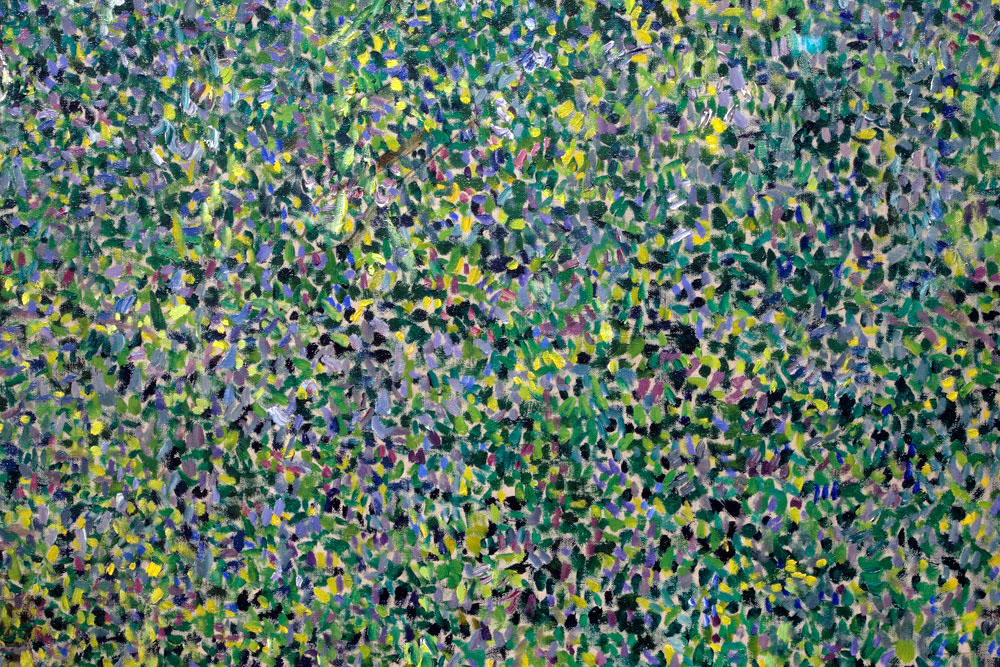
Gustav Klimt (Austria 1862-1918) 'The Park' 1909 (installation detail)


Gustav Klimt (Austria 1862-1918)
The Park (installation detail)
1909
Oil on canvas
Photo: Marcus Bunyan


Gustav Klimt (Austria 1862-1918) The Park' 1909 (installation detail)


Gustav Klimt (Austria 1862-1918)
The Park (installation detail)
1909
Oil on canvas
Photo: Marcus Bunyan


Installation view part of the second room of the exhibition 'Vienna - Art & Design' at the National Gallery of Victoria


Installation view part of the second room of the exhibition Vienna – Art & Design at the National Gallery of Victoria
Photo: Marcus Bunyan


Wilhelm Otto List. 'Young lady in black and white' 1904 (installation detail)


Wilhelm Otto List
Young lady in black and white (installation detail)
1904
Oil on canvas
Photo: Marcus Bunyan


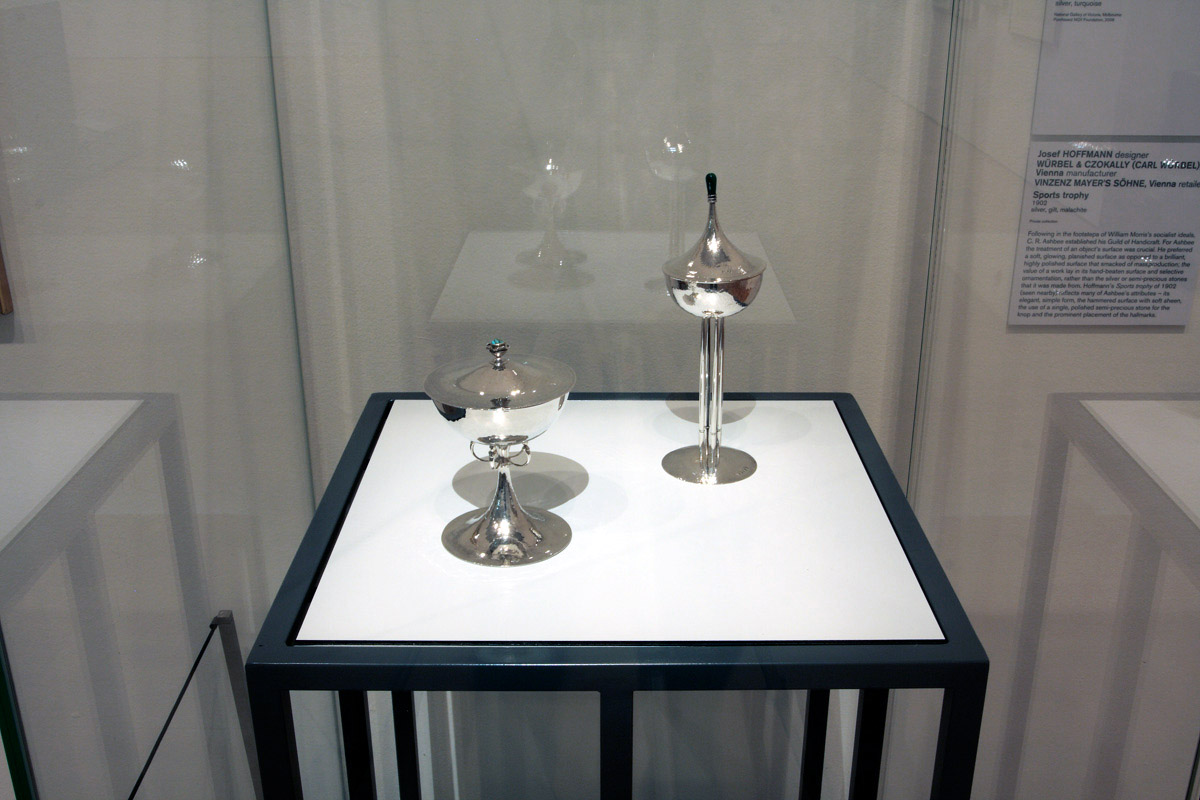
Charles Robert Ashbee (designer) 'Standing cup and cover' 1901 and Josef Hoffmann. 'Sports Trophy' 1902 (installation view)


Charles Robert Ashbee (designer) (British, 1863-1942)
Standing cup and cover (installation view)
1901
Silver, turqoise

Josef Hoffmann (designer) (Austria-Hungary 1870-1956)
Sports Trophy (installation view)
1902
Silver, gilt, malachite
Photo: Marcus Bunyan


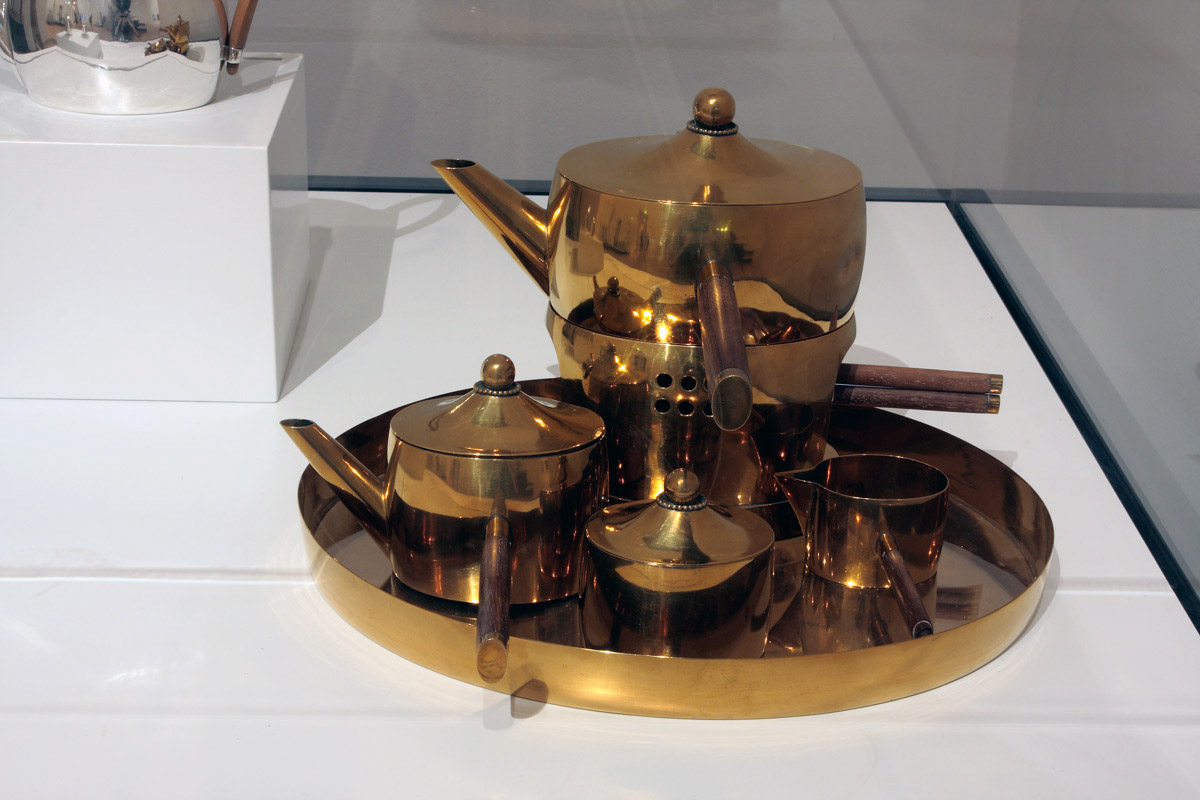
Josef Hoffmann (Austria-Hungary 1870-1956) (designer) Wiener Werkstätte, Vienna (manufacturer) (Austria-Hungary 1903-1932) 'Tea service' (c. 1909-1911) (installation view)


Josef Hoffmann (Austria-Hungary 1870-1956) (designer)
Wiener Werkstätte, Vienna (manufacturer) (Austria-Hungary 1903-1932)
Tea service (installation view)
c. 1909-1911
Silver-gilt, wood
(1.A-E) 21.5 x 29.0 x 26.8cm (overall) (kettle, stand and burner)
(2) 10.8 x 15.4 x 20.2cm (teapot)
(3.A-B) 8.7 x 8.8 x 6.8cm (overall) (sugar basin and lid)
(4) 4.8 x 8.5 x 15.6cm (milk jug)
(5) 3.4 x 36.3 x 29.9cm (tray)
National Gallery of Australia, Canberra
Purchased, 1985
Photo: Marcus Bunyan


Installation view of room three of the exhibition 'Vienna - Art & Design' at the National Gallery of Victoria showing part of Gustave Klimt's 'Beethoven Frieze: Central wall' 1901-02 (detail at top)


Installation view of room three of the exhibition Vienna – Art & Design at the National Gallery of Victoria showing part of Gustave Klimt’s Beethoven Frieze: Central wall 1901-1902 (detail at top)
Photo: Marcus Bunyan


Max Klinger (German, 1857-1920) 'Beethoven' c. 1902 (installation view)


Max Klinger (German, 1857-1920)
Beethoven (installation view)
c. 1902
Plaster
Photo: Marcus Bunyan


Installation view of room four of the exhibition 'Vienna - Art & Design' at the National Gallery of Victoria


Installation view of room four of the exhibition Vienna – Art & Design at the National Gallery of Victoria with at right, Gustav Klimt’s painting Emilie Flöge (1902)
Photo: Marcus Bunyan


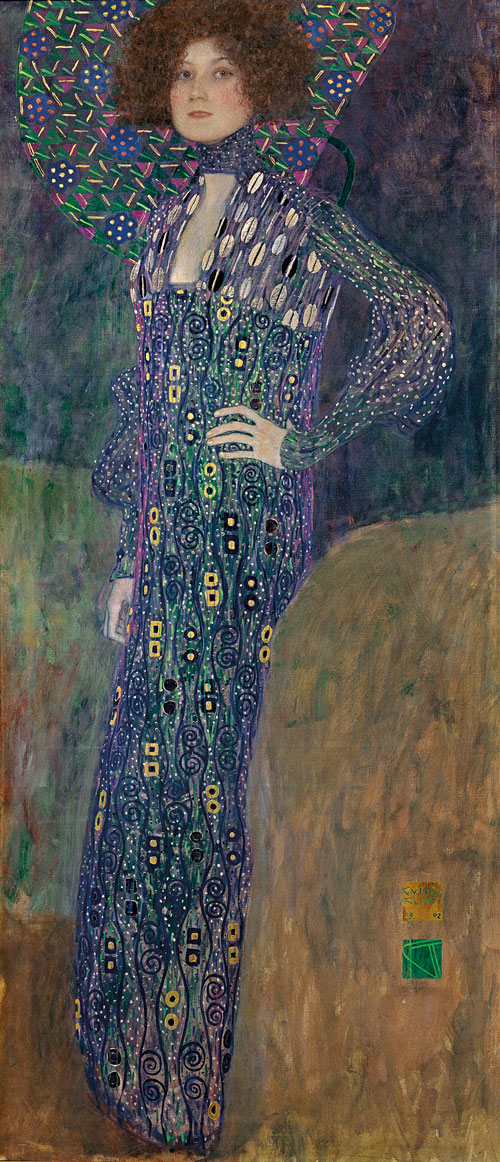
Gustav Klimt (Austria 1862-1918) 'Emilie Flöge' 1902


Gustav Klimt (Austrian, 1862-1918)
Emilie Flöge
1902
Oil on canvas
178.0 x 80.0cm
Wien Museum, Vienna


Gustav Klimt (Austria 1862-1918) 'Emilie Flöge' 1902 (installation detail)


Gustav Klimt (Austrian, 1862-1918)
Emilie Flöge (installation detail)
1902
Oil on canvas
178.0 x 80.0cm
Wien Museum, Vienna
Photo: Marcus Bunyan


Installation view of room five of the exhibition 'Vienna - Art & Design' at the National Gallery of Victoria


Installation view of room five of the exhibition Vienna – Art & Design at the National Gallery of Victoria
Photo: Marcus Bunyan


Koloman Moser (designer) 'Armchair' 1903 and Josef Hoffmann (designer) 'Collapsible library steps' 1905 (installation view)


Installation view of first room of the exhibition Vienna – Art & Design at the National Gallery of Victoria showing at right:

Koloman Moser (Austrian, 1868-1918) (designer)
Armchair (installation view)
1903
Painted beech

at second right

Josef Hoffmann (Austrian, 1870-1956) (designer)
Collapsible library steps (installation view)
1905
Photo: Marcus Bunyan


Gustav Klimt (Austria 1862-1918) 'Fritza Riedler' 1906 (installation detail)


Gustav Klimt (Austrian, 1862-1918)
Fritza Riedler (installation detail)
1906
Oil on canvas
Photo: Marcus Bunyan


Gustav Klimt (Austria 1862-1918) 'Fritza Riedler' 1906


Gustav Klimt (Austrian, 1862-1918)
Fritza Riedler
1906
Oil on canvas
152.0 x 134.0cm
Belvedere, Vienna


Installation view of room six of the exhibition 'Vienna - Art & Design' at the National Gallery of Victoria

Installation view of room six of the exhibition 'Vienna - Art & Design' at the National Gallery of Victoria


Installation views of room six of the exhibition Vienna – Art & Design at the National Gallery of Victoria
Photos: Marcus Bunyan


Josef Hoffmann (Austrian, 1870-1956) 'Tea and coffee service' 1909 (installation view)


Josef Hoffmann (Austrian, 1870-1956)
Tea and coffee service (installation view)
1909
Silver, ivory
Photo: Marcus Bunyan


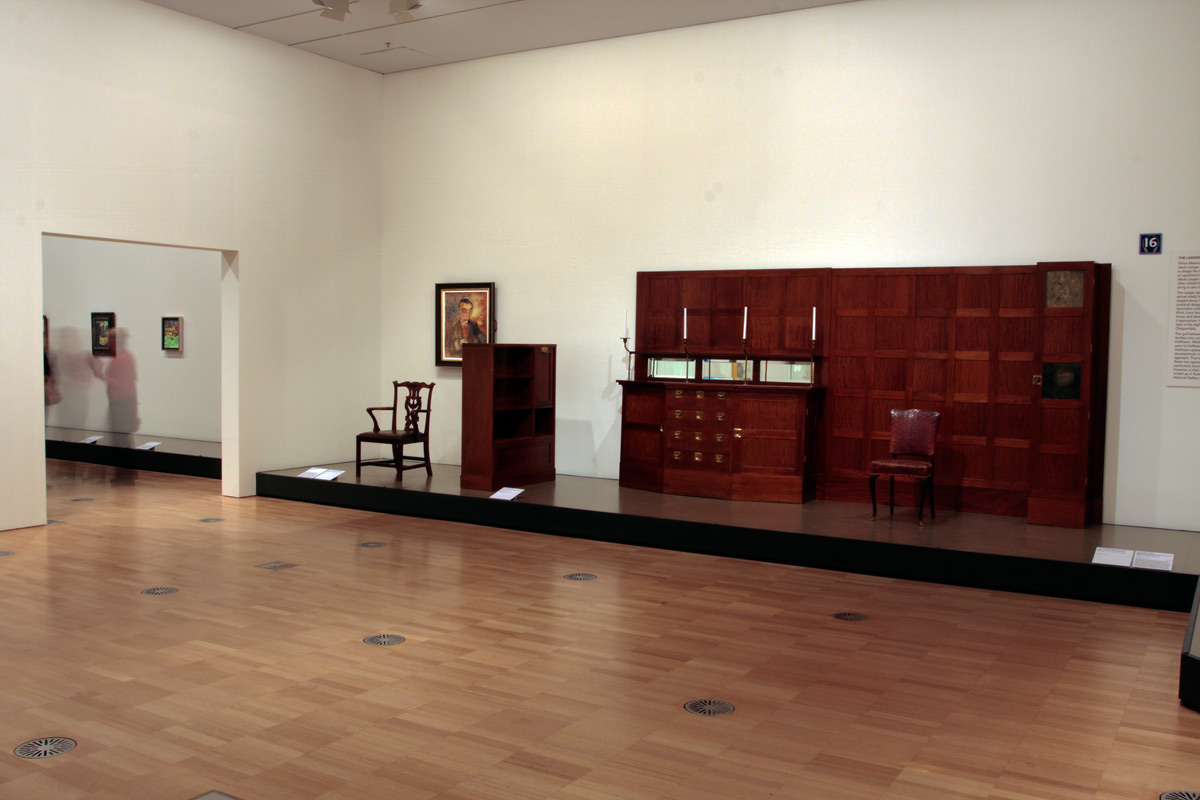
Installation view of room seven of the exhibition 'Vienna - Art & Design' at the National Gallery of Victoria showing Adolf Loos (Austrian, 1870-1933) (designer) 'Sideboard, from the Langer apartment' 1903


Installation view of room seven of the exhibition Vienna – Art & Design at the National Gallery of Victoria with, against the wall,

Adolf Loos (Austrian, 1870-1933) (designer)
Sideboard, from the Langer apartment
1903
Mahogany (Swietenia sp.), mirror, brass
Photo: Marcus Bunyan


Adolf Loos (Austrian, 1870-1933) (designer) Johann Heeg (manufacturer) 'Clock' 1906-1907


Adolf Loos (Austrian, 1870-1933) (designer)
Johann Heeg (manufacturer)
Clock
1906-1907
Brass, glass, clock mechanism, enamel paint, steel
(a-b) 42.7 x 43.0 x 32.7cm (overall) (c) 7.4 x 5.5 x 0.8cm (key)
National Gallery of Victoria, Melbourne
Purchased through The Art Foundation of Victoria with the assistance of Waltons Limited, Fellow, 1987


Installation view of room seven of the exhibition 'Vienna - Art & Design' at the National Gallery of Victoria


Installation view of room seven of the exhibition Vienna – Art & Design at the National Gallery of Victoria
Photo: Marcus Bunyan


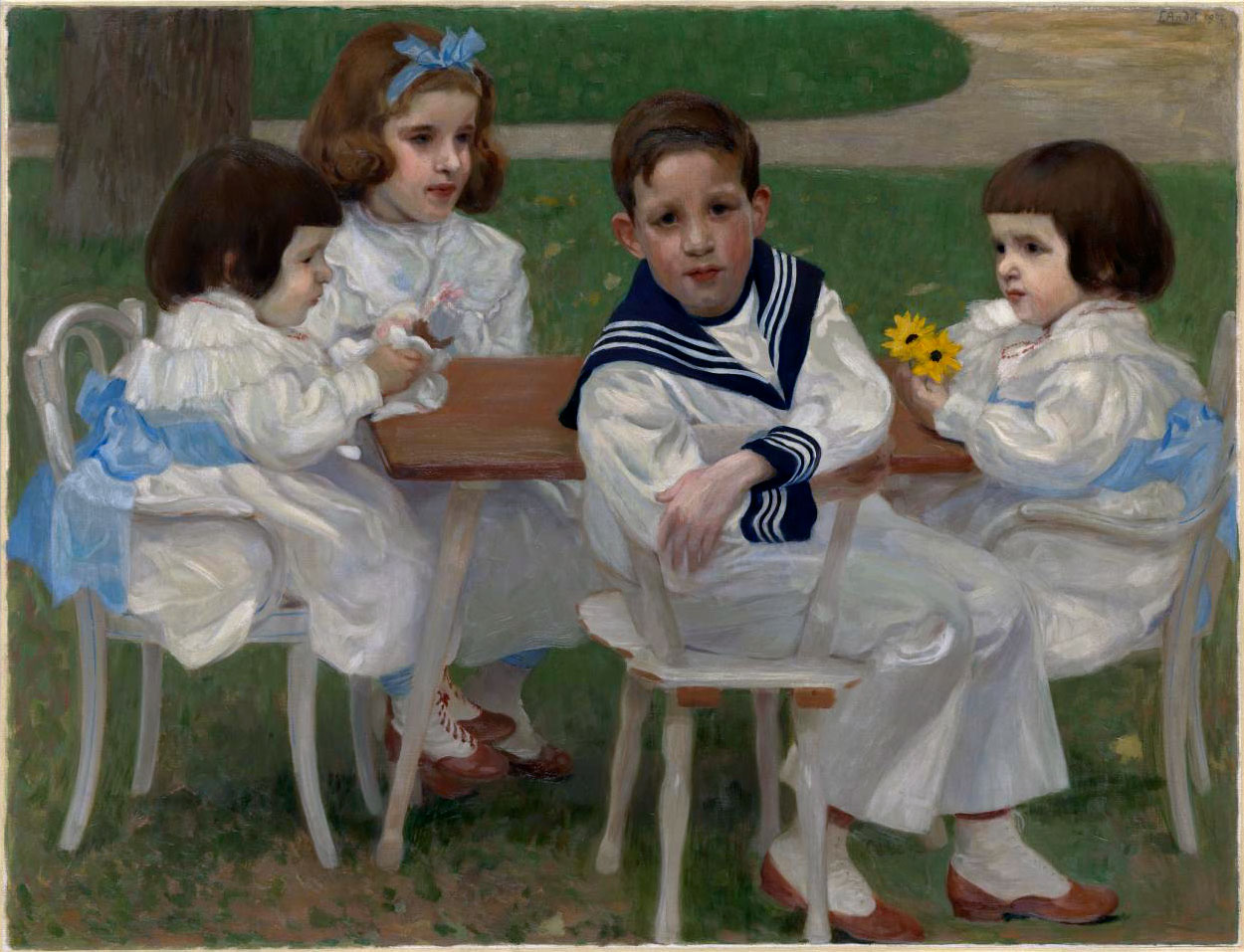
Ferdinand Andri (Austrian, 1871-1956) 'The Gallia children' 1901 (installation view)


Ferdinand Andri (Austrian, 1871-1956)
The Gallia children (installation view)
1901
Oil on canvas

with Josef Hoffmann furniture in the foreground
Photo: Marcus Bunyan


Ferdinand Andri (Austrian, 1871-1956) 'The Gallia children' 1901


Ferdinand Andri (Austrian, 1871-1956)
The Gallia children
1901
Oil on canvas
100.4 × 130.8cm
National Gallery of Victoria, Melbourne
Presented by the family of Moriz and Hermine Gallia, 1976
© the artist’s estate


Gustave Klimt (Austrian, 1862-1918) 'Portrait of Hermine Gallia' 1904 (installation view detail)


Gustave Klimt (Austrian, 1862-1918)
Portrait of Hermine Gallia (installation view detail)
1904
Oil on canvas
Photo: Marcus Bunyan


Pieces of Josef Hoffmann and Koloman Mosser silver in the exhibition 'Vienna - Art & Design' at the National Gallery of Victoria


Pieces of Josef Hoffmann and Koloman Mosser silver in the exhibition Vienna – Art & Design at the National Gallery of Victoria
Photo: Marcus Bunyan

Love the reflected light!


Installation view of room eight of the exhibition 'Vienna - Art & Design' at the National Gallery of Victoria

Installation view of room eight of the exhibition 'Vienna - Art & Design' at the National Gallery of Victoria


Installation views of room eight of the exhibition Vienna – Art & Design at the National Gallery of Victoria
Photos: Marcus Bunyan


Objects by Dagobert Peche (left, right and second right) and Josef Hoffmann in the exhibition 'Vienna - Art & Design' at the National Gallery of Victoria


Objects by Dagobert Peche (left, right and second right) and Josef Hoffmann in the exhibition Vienna – Art & Design at the National Gallery of Victoria
Photo: Marcus Bunyan


Egon Schiele (Austria 1890-1918) 'Portrait of a boy (Portrait of Herbert Rainer aged approximately six)' 1910 (installation detail)


Egon Schiele (Austrian, 1890-1918)
Portrait of a boy (Portrait of Herbert Rainer aged approximately six (installation detail)
1910
Oil on canvas
Photo: Marcus Bunyan


Egon Schiele (Austria 1890-1918) 'Portrait of a boy (Portrait of Herbert Rainer aged approximately six)' 1910


Egon Schiele (Austrian, 1890-1918)
Portrait of a boy (Portrait of Herbert Rainer aged approximately six)
1910
Oil on canvas
101.0 x 101.5cm
Belvedere, Vienna


NGV International
180 St Kilda Road

Opening hours:
Daily 10am – 5pm

National Gallery of Victoria website

LIKE ART BLART ON FACEBOOK

Back to top

Exhibition: ‘Michelangelo: The Drawings of a Genius’ at Albertina, Vienna

Exhibition dates: 8th October 2010 – 9th January, 2011


Michelangelo Buonarroti (Italian, 1475-1564) 'Male Nude Seen From the Back With a Flag Staff' c. 1504 from the exhibition 'Michelangelo: The Drawings of a Genius' at Albertina, Vienna


Michelangelo Buonarroti (Italian, 1475-1564)
Male Nude Seen From the Back With a Flag Staff
c. 1504
© Albertina, Vienna


The delineation of the body, the curvature and compression of muscles, the texture like that of rubbing the thumb and fingers together, the colour, the tension between form and space – all glorious!

Dr Marcus Bunyan


Many thankx to the Albertina for allowing me to publish the fabulous drawings in the posting. Please click on the drawings for a larger version of the image.


Michelangelo Buonarroti (Italian, 1475-1564) 'Standing Male Nude Seen From Behind' 1501-1504 from the exhibition 'Michelangelo: The Drawings of a Genius' at Albertina, Vienna


Michelangelo Buonarroti (Italian, 1475-1564)
Standing Male Nude Seen From Behind
1501-1504
© Albertina, Vienna


Michelangelo Buonarroti (Italian, 1475-1564) 'Study of a Seated Young Man and Two Studies of the Right Arm' (Recto), around 1511 from the exhibition 'Michelangelo: The Drawings of a Genius' at Albertina, Vienna


Michelangelo Buonarroti (Italian, 1475-1564)
Study of a Seated Young Man and Two Studies of the Right Arm (Recto)
around 1511
© Albertina, Vienna


Michelangelo Buonarroti (Italian, 1475-1564) 'Four Studies for the Figure of the Crucified Haman (recto)' c. 1512 from the exhibition 'Michelangelo: The Drawings of a Genius' at Albertina, Vienna


Michelangelo Buonarroti (Italian, 1475-1564)
Four Studies for the Figure of the Crucified Haman (recto)
c. 1512
Red chalk
© The British Museum, London


Michelangelo Buonarroti (Italian, 1475-1564) 'Pietà' around 1530-1536 from the exhibition 'Michelangelo: The Drawings of a Genius' at Albertina, Vienna


Michelangelo Buonarroti (Italian, 1475-1564)
Pietà
around 1530-1536
© Albertina, Vienna


Michelangelo Buonarroti (Italian, 1475-1564) 'The Risen Christ' c. 1532 from the exhibition 'Michelangelo: The Drawings of a Genius' at Albertina, Vienna


Michelangelo Buonarroti (Italian, 1475-1564)
The Risen Christ
c. 1532
The Royal Collection
© 2009, Her Majesty Queen Elizabeth II


Michelangelo Buonarroti (Italian, 1475-1564) 'Study for a Lamentation of Christ and Two Skeches of a Right Arm' 1533/1534 from the exhibition 'Michelangelo: The Drawings of a Genius' at Albertina, Vienna


Michelangelo Buonarroti (Italian, 1475-1564)
Study for a Lamentation of Christ and Two Skeches of a Right Arm
1533/1534
Black chalk, traces of white hightening
© Musée du Louvre, Paris


Michelangelo Buonarroti (Italian, 1475-1564) 'Christ on the Cross with the Virgin Mary and Saint John' 1555-1564 from the exhibition 'Michelangelo: The Drawings of a Genius' at Albertina, Vienna


Michelangelo Buonarroti (Italian, 1475-1564)
Christ on the Cross with the Virgin Mary and Saint John
1555-1564
Black chalk, heightened with white (oxidized)
© The British Museum, London


In a major exhibition scheduled for autumn and winter 2010, the Albertina will present around one hundred of the most beautiful drawings by Michelangelo. Precious works from the Graphic Arts Collection of the Albertina, as well as important loans from museums and private collections in Europe and the United States, will offer a hitherto unparalleled overview of the great Florentine’s entire oeuvre. 
The focus will be on the figural drawings by Michelangelo, who will be introduced here as the genius of a period of change, with his versatile talents as a draftsman, painter, architect, and sculptor. 
The show traces Michelangelo’s career from the artist’s juvenile works and designs for The Battle of Cascina to the world-famous frescoes in the Sistine Chapel, the ingenious drawings he presented to Tommaso de’ Cavalieri, and the Crucifixion scenes dating from the artist’s late period, when he was almost eighty years old. At the same time, new clues as to the dating of individual works will be provided. Projections of the monumental ceiling frescoes, the incorporation of plaster casts of Michelangelo’s sculptures, as well as paintings by other artists based on the master’s designs are meant to illustrate the dimensions and impact of his art. New paths of didactic presentation will be forged through a documentation of contemporary history and the artist’s environment.

Between 8 October 2010 and 9 January 2011, the Albertina presents the first major Michelangelo exhibition in more than twenty years. This display of 120 out of the artist’s most precious drawings offers a comprehensive insight into the work of this great genius. The sheets come from the Albertina’s own holdings, as well as from important European and American museums – the Uffizi and the Casa Buonarroti in Florence, the Louvre in Paris, the Metropolitan Museum of Art in New York, the Teylers Museum in Haarlem, the Royal Library in Windsor Castle (property of the British monarch) and the British Museum in London – and private collections.

It was three years ago that curator Dr Achim Gnann began his preparations for this exhibition. His goal is to review those datings of Michelangelo’s drawings that have sometimes been considered controversial and elaborate on the evolution of the artist’s style with utmost clarity.

Text from the Albertina website


Michelangelo Buonarroti (Italian, 1475-1564) 'Three Men Standing in Wide Coats Turned Towards the Left' around 1492-1496 from the exhibition 'Michelangelo: The Drawings of a Genius' at Albertina, Vienna


Michelangelo Buonarroti (Italian, 1475-1564)
Three Men Standing in Wide Coats Turned Towards the Left
around 1492-1496
Quill pen in brown
© Albertina, Vienna


Michelangelo Buonarroti (Italian, 1475-1564) 'Bust of the Virgin Mary in Profile, the Child Reclining on a Cushion, and Other Studies' 1503/1504 from the exhibition 'Michelangelo: The Drawings of a Genius' at Albertina, Vienna


Michelangelo Buonarroti (Italian, 1475-1564)
Bust of the Virgin Mary in Profile, the Child Reclining on a Cushion, and Other Studies
1503/1504
Pen and brown ink
© Staatliche Museen, Kupferstichkabinett, Berlin


Michelangelo Buonarroti (Italian, 1475-1564) 'Studies for the Libyan Sibyl' (recto) 1511-1512 from the exhibition 'Michelangelo: The Drawings of a Genius' at Albertina, Vienna


Michelangelo Buonarroti (Italian, 1475-1564)
Studies for the Libyan Sibyl (recto)
1511-1512
Metropolitan Museum of Art, New York
© 2007. The Metropolitan Museum of Art/Art Resource/Scala, Florence


Michelangelo Buonarroti (Italian, 1475-1564) 'Madonna and Child' 1520-1525 from the exhibition 'Michelangelo: The Drawings of a Genius' at Albertina, Vienna


Michelangelo Buonarroti (Italian, 1475-1564)
Madonna and Child
1520-1525
© Casa Buonarroti, Florence


Michelangelo Buonarroti (Italian, 1475-1564) 'Study of an Inclined head and Detailed Eye Study' c. 1529 from the exhibition 'Michelangelo: The Drawings of a Genius' at Albertina, Vienna


Michelangelo Buonarroti (Italian, 1475-1564)
Study of an Inclined head and Detailed Eye Study
c. 1529
Red chalk
35.5 x 27cm
© Florenz, Fondazione Casa Buonarroti


Michelangelo Buonarroti (Italian, 1475-1564) 'Half-Length Figure of Cleopatra' (recto) c. 1533 from the exhibition 'Michelangelo: The Drawings of a Genius' at Albertina, Vienna


Michelangelo Buonarroti (Italian, 1475-1564)
Half-Length Figure of Cleopatra (recto)
c. 1533
© Casa Buonarroti, Florence


Michelangelo Buonarroti (Italian, 1475-1564) 'Study of a Male Nude, Separate Study of his Head' (recto) 1534-1536 v


Michelangelo Buonarroti (Italian, 1475-1564)
Study of a Male Nude, Separate Study of his Head (recto)
1534-1536
© Teylers Museum, Haarlem


Albertina
Albertinaplatz 1
1010 Vienna, Austria
Phone: +43 (0)1 534 83-0

Opening hours:
Daily 10am – 6pm
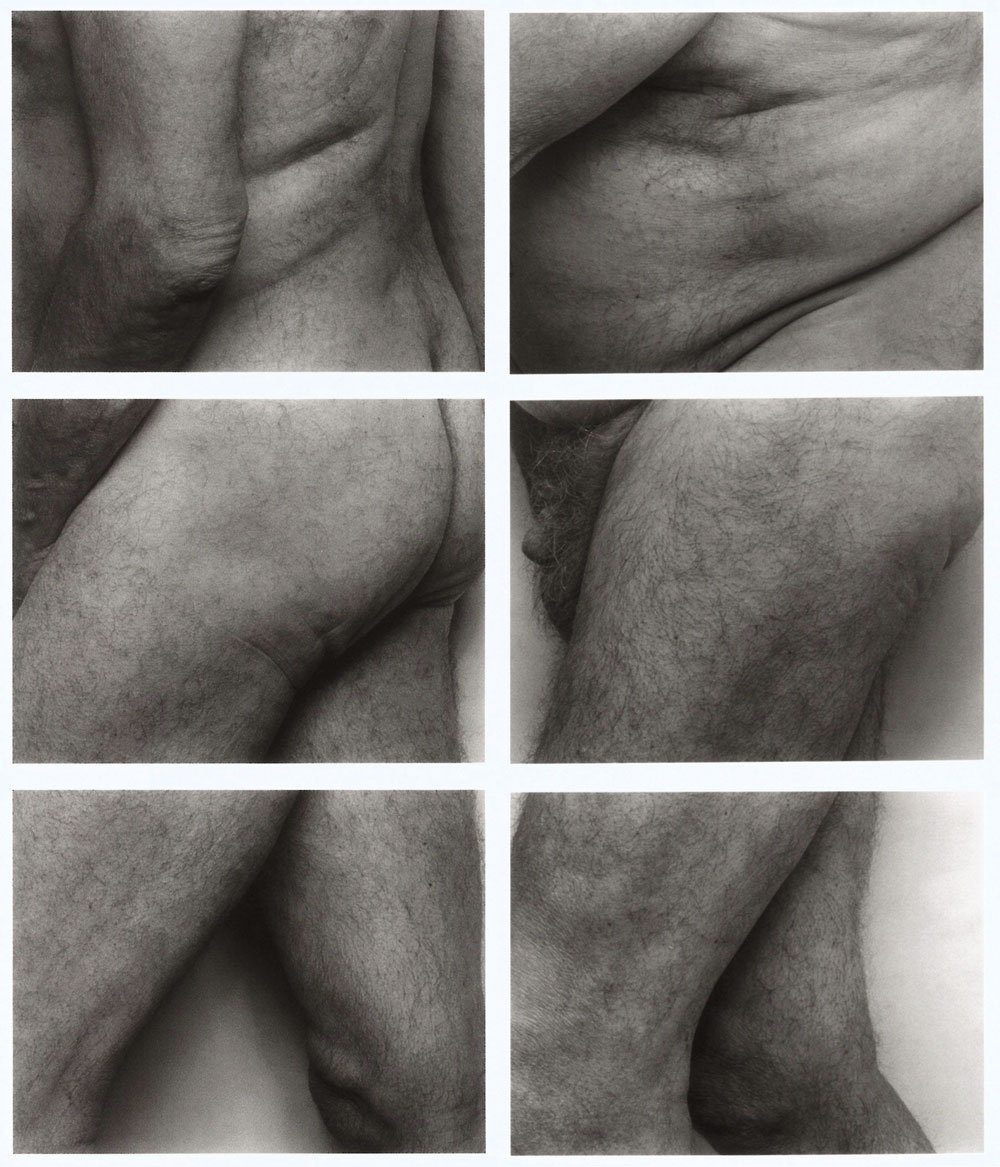
Wednesday and Friday 10am – 9pm
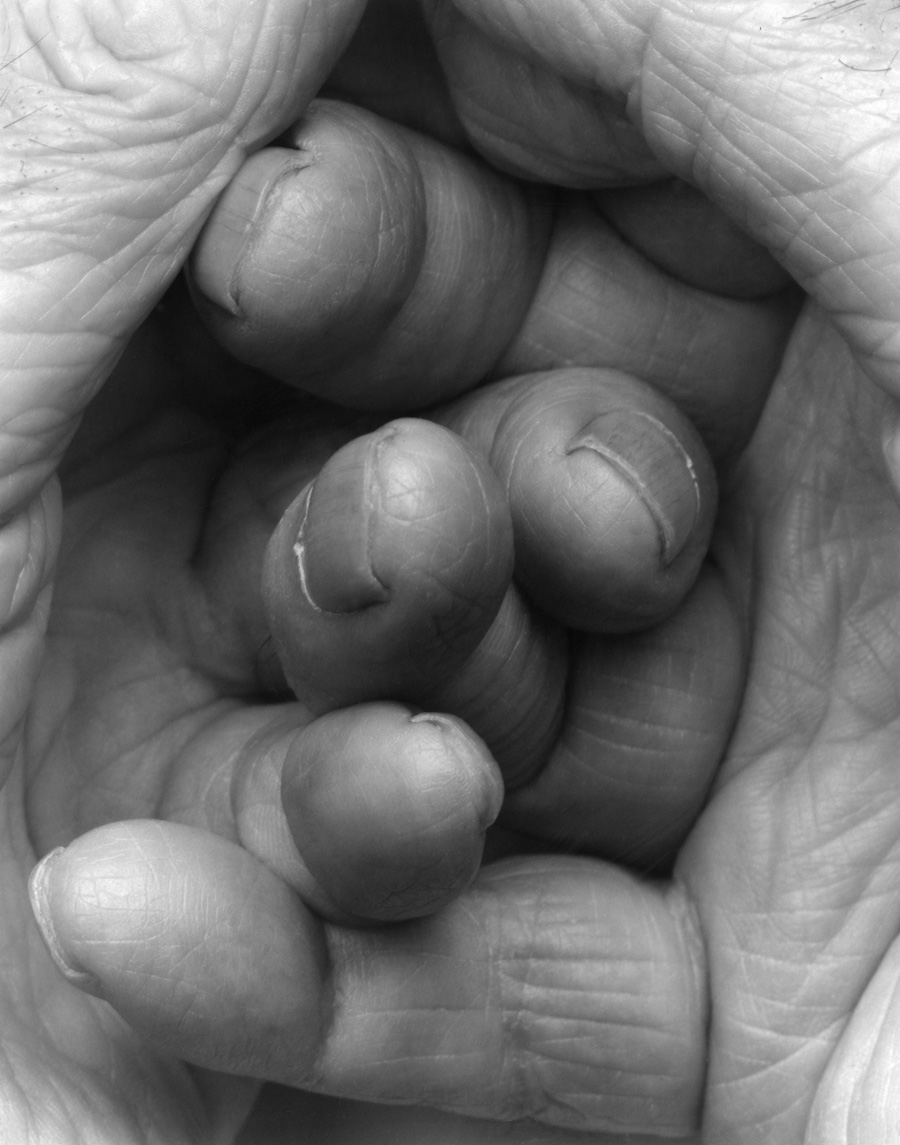
Albertina website

LIKE ART BLART ON FACEBOOK

Back to top

Exhibition: ‘Thomas Ruff. Surfaces, Depths’ at Kunsthalle Wien, Vienna

Exhibition dates: 21st May – 13th September, 2009


Thomas Ruff (German, b. 1958) 'Interieur 2D (Tegernsee)' 1982 from the exhibition 'Thomas Ruff. Surfaces, Depths' at Kunsthalle Wien, Vienna, May - Sept, 2009
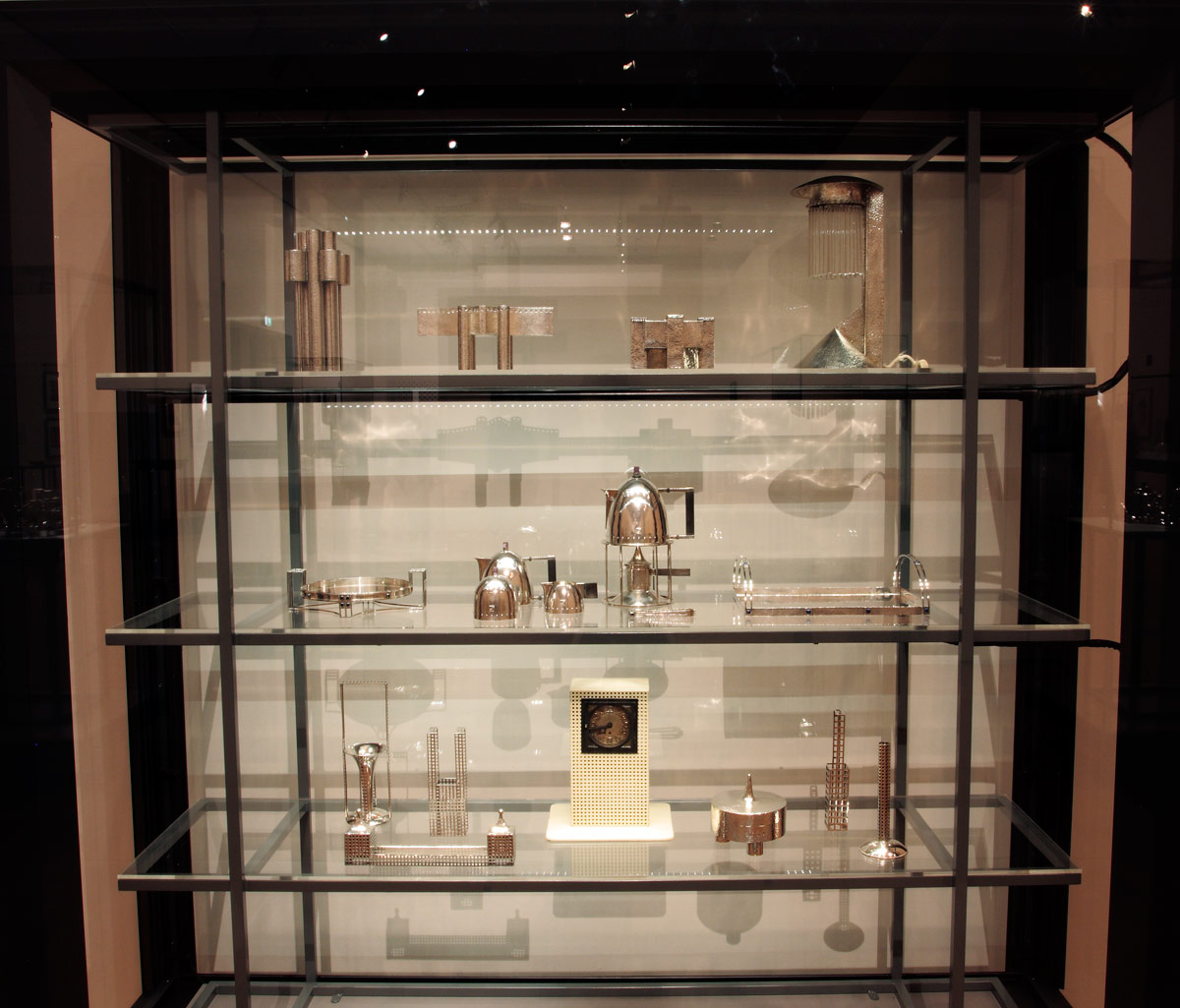
 

Thomas Ruff (German, b. 1958)
Interieur 2D (Tegernsee)
1982
Chromogenic print
Courtesy der Künstler / the artist
© VBK, Wien 2009


An exhibition of the work of the renowned photographer Thomas Ruff that concentrates on his new Cassini and Zycles series. His clinical photographs with their catatonic rigidity promote stupor in the viewer. The viewer becomes complicit in a platonic relationship (of forms) with the non-reality presented by the camera, directed by Ruff’s ironic, surgical gaze. Ruff corrupts and disturbs traditional binaries of presence / absence, truth / reality, surfaces / depths to challenge the very basis of seeing, the very basis of photography’s link to indexicality and presence in a contemporary digital world, something that William Eggleston seems to have lost the art of doing (please see the previous post).

As Maurice Blanchot has observed,

“The image has nothing to do with signification, meaning, as implied by the existence of the world, the effort of truth, the law and the brightness of the day. Not only is the image of an object not the meaning of that object and of no help in comprehending it, but it tends to withdraw it from its meaning by maintaining it in the immobility of a resemblance that it has nothing to resemble.”1


There is no single truth; there are only competing narratives and interpretations of a world that cannot be wholly, accurately described.2 In the splitting apart of image and meaning there is a crisis in control: it becomes illusory and is marked by doubt.

In Ruff’s photographs the relationship between image and context, between cause and effect becomes further layered until the very act of seeing is no longer framed or presupposed through relations of distance or perspective.3 Ruff’s photographs become a struggle of and for positionality in the physical, mental and emotional conflicts evidenced in the viewer as we look, askance? with a paradoxical intent? at these unemotional images.

Dr Marcus Bunyan


1/ Blanchot, Maurice. The Gaze of Orpheus. New York: Barrytown, 1981, p. 85

2/ Townsend, Chris. Vile Bodies: Photography and the Crisis of Looking. Munich: Prestel, 1998, p. 10

3/ Burnett, Ron. Cultures of Vision: Images, Media, & the Imaginary. Bloomington: Indiana University Press, 1995, pp. 137-138


Many thankx to Kunsthalle Wien for allowing me to publish the photographs in the posting. Please click on the photographs for a larger version of the image.


Thomas Ruff (German, b. 1958) 'Zycles 3048' 2008 from the exhibition 'Thomas Ruff. Surfaces, Depths' at Kunsthalle Wien, Vienna, May - Sept, 2009


Thomas Ruff (German, b. 1958)
Zycles 3048
2008
Chromogenic print
Courtesy der Künstler / the artist
© VBK Wien, 2009


Thomas Ruff (German, b. 1958) 'Zycles 3045' 2008


Thomas Ruff (German, b. 1958)
Zycles 3045
2008
Chromogenic print
Courtesy der Künstler / the artist
© VBK Wien, 2009


Thomas Ruff (German, b. 1958) 'Cassini 01' 2008


Thomas Ruff (German, b. 1958)
Cassini 01
2008
Chromogenic print
Courtesy der Künstler / the artist and Mai 36 Galerie, Zürich
© Thomas Ruff


Thomas Ruff (German, b. 1958) 'Cassini 06' 2008


Thomas Ruff (German, b. 1958)
Cassini 06
2008
Chromogenic print
Courtesy der Künstler / the artist and Mai 36 Galerie, Zürich
© Thomas Ruff


Thomas Ruff (German, b. 1958) 'Cassini 08' 2008


Thomas Ruff (German, b. 1958)
Cassini 08
2008
Chromogenic print
Courtesy der Künstler / the artist and Mai 36 Galerie, Zürich
© Thomas Ruff


Thomas Ruff (German, b. 1958) 'Cassini 03' 2008


Thomas Ruff (German, b. 1958)
Cassini 03
2008
Chromogenic print
Courtesy der Künstler / the artist and Mai 36 Galerie, Zürich
© Thomas Ruff


Yet Ruff has always treated the medium of photography with skepticism: for him, the photographic surface is a thin foil which tricks the viewer with its illusion of extreme realism and at the same time reveals the fundamental impossibility of experiencing the world in our digital age. Ruff’s images seem emphatically to deny photography’s main attribute – that is, the offer of a reliable record of reality. Instead, through his mute images devoid of all emotion, Ruff presents us with a contemporary subjectivity defined by amnesia.

Text from the Castello di Rivoli website [Online] Cited 24/05/2009. No longer available online


Thomas Ruff (German, b. 1958) 'Portrait (A. Siekmann)' 1987


Thomas Ruff (German, b. 1958)
Portrait (A. Siekmann)
1987
Chromogenic print
210 x 165cm (82 11/16 x 64 15/16 in.)
Courtesy der Künstler / the artist
© VBK, Wien 2009


During the late 1980s Ruff photographed his fellow students at the Düsseldorf Academy of Art, combining the typological mode of his teacher Bernd Becher with the serial progressions and primary structures of Minimalism. The large scale and technical perfection of Ruff’s portraits refer to both the museum and the street – to billboards and heroic painting – while elevating the anonymous sitter to the stature and visibility of a public figure. Instead of presuming to depict the transcendent, individual essence of the sitter, however, Ruff’s portraits deliberately assume the neutrality of the mug shot, physiognomic study, and identity card, and, by extension, the entire brightly lit world of surveillance in which his subjects were raised. The age and milieu of his sitters are crucial to the pictures’ meaning: these young media-savvy people are not threatened by the camera eye but adjust themselves comfortably yet firmly to its probing vision. The results are both seductive and subtly disquieting, like studying a human specimen whose every pore and hair is available for careful study, yet whose thoughts and feelings are always just out of reach.

Text from the Metropolitan Museum of Art website


Thomas Ruff (German, b. 1958) 'Portrait (A. Kachold)' 1987


Thomas Ruff (German, b. 1958)
Portrait (A. Kachold)
1987
Chromogenic print
Courtesy der Künstler / the artist
© VBK, Wien 2009


Thomas Ruff (German, b. 1958) 'Portrait (S. Weirauch)' 1988


Thomas Ruff (German, b. 1958)
Portrait (S. Weirauch)
1988
Chromogenic print
Courtesy der Künstler / the artist
© VBK, Wien 2009


“The reality in front of the camera is reality of the first degree, the representation of the reality in front of the camera is reality of the second degree, and then come any number of possible gradations and distortions.”

“The difference between my predecessors and me is that they believed to have captured reality and I believe to have created a picture. We all lost, bit by bit, the belief in this so-called objective capturing of real reality.”


Thomas Ruff


“To try to see more and better is not a matter of whim or curiosity or self-indulgence. To see or to perish is the very condition laid upon everything that makes up the universe, by reason of the mysterious gift of existence.”


Teilhard de Chardin, “Seeing” 1947


The work of Thomas Ruff, who numbers among today’s most important photographers, focuses our attention on such diverse everyday subjects as people, architecture, the universe, and the Internet. With its extensive solo presentation with a total of about 150 exhibits from 11 groups of works, Kunsthalle Wien offers a first comprehensive survey of the artist’s manifold oeuvre in Austria.

Thomas Ruff studied at the Dusseldorf Academy of Arts, graduating as a student of Bernd and Hilla Becher besides Andreas Gursky, Candida Höfer, Axel Hütte, and Thomas Struth, all of them celebrating an international career these days. The photographer strikes us as a sharp and concentrated observer of his motifs. To him, objectivity is nothing neutral though, but has to be redefined with each new photograph. The series of large-scale portraits which Ruff started working on in 1986 and for which he became known internationally, for example, fascinates us because of the determined detachment with which he captured his models that were mostly acquainted with him. This approach makes for a hyper-precise, chirurgic gaze reproducing everything down to the last detail as equivalent. It also demonstrates the degree of the artist’s interest in the history of photography, how critically he considers its subject, and the skeptical attitude he sometimes adopts toward the medium.

From his stereoscopic views of the urban development myth of Brasilia and his apparently anti-essayistic architectural photographs of buildings by Herzog & de Meuron, which are based on instructions, to his digital processing of images of the planet Saturn available free of charge on the NASA website, the artist explores the concepts of the exemplary, of objectivity, of reality, and of zeitgeist. Based on half of his about twenty thematic groups of works created so far, the exhibition examines the concept pair surface / depth, which seems to be quite simple at first sight, but reveals itself as strongly discursive on closer inspection, and focuses the attention on formal aspects one comes upon again and again in his entire oeuvre.

Right in time for the International Year of Astronomy 2009, Thomas Ruff presents works from his most recent series Cassini – subtly manipulated pictures of Saturn and its moons taken by the Cassini spacecraft. It was the Italian astronomer Galileo Galilei who opened a window to the skies with his telescope 400 years ago. He thus revolutionised man’s image of himself in regard to the universe, but also his understanding of and his way of dealing with the concepts of nearness and distance, surface and depth.

Thomas Ruff. Surfaces, Depths conveys what these concepts, translated into pictures, do to the viewer on a phenomenological level and how they challenge him. The curves of Ruff’s zycles, distorted into the three-dimensional sphere, unfold the sensory experience of roaming virtual depths only reserved to the human eye. Yet, gazing at the represented motifs also elucidates the artist’s contextual objective of providing a critical comment on the various possibilities of the photographic apparatus to depict and manipulate reality.

Press release from the Kunsthalle Wien website [Online] Cited 24/05/2009. No longer available online


Thomas Ruff numbers among today’s most important photographers, his oeuvre encompassing such diverse subject areas as people, architecture, the universe, and the Internet. With its extensive solo exhibition presenting a total of about 150 works, the Kunsthalle Wien offers the first comprehensive survey of the artist’s manifold production in Austria.

Thomas Ruff strikes us as a sharp and concentrated observer rendering his motifs with a hyper-precise, chirurgic gaze. To him, the objective representation of reality is no neutral process, but something questioned with each new photograph. Running through the exhibition like a thread is the apparent pair of opposites of surface and depth and its highly variable manifestations. Next to his series of large-format portraits from the 1980s, for which Ruff received international acclaim, and his architectural photographs of buildings by Herzog & de Meuron, which are based on instructions, the show focuses on his most recent cassini and zycles series. Digitally processing images of the planet Saturn and its moons from the NASA website, the artist explores the notions of the exemplary, of reality, and of zeitgeist. Also depicting the pair of concepts surfaces/depths, the seemingly three-dimensional curves of Ruff’s zycles unfold the sensory experience of roaming virtual depths reserved to the human eye alone.

Text from the Kunsthalle Wien website


Thomas Ruff (German, b. 1958) 'Herzog & de Meuron, Ricola Mulhouse' 1994


Thomas Ruff (German, b. 1958)
Herzog & de Meuron, Ricola Mulhouse
1994
Chromogenic print
Courtesy der Künstler / the artist
© Thomas Ruff


Thomas Ruff (German, b. 1958) 'House Nr. 11 III' 1990


Thomas Ruff (German, b. 1958)
House Nr. 11 III
1990
Chromogenic print
Courtesy der Künstler / the artist
© VBK, Wien 2009


Thomas Ruff first became known through his portraits of houses and factory buildings, as well as the night sky, portrayed in a natural and objective manner. Ruff photographed the buildings either in strict frontality or at right angles to one another, always paying attention to regular sharpness and neutral lighting, and from the same standpoint. With his controversially discussed nudes of erotic, sometimes pornographic scenes from the Internet, which he projected onto unsharp large formats, he expanded the borders of photography in 1999. Since then, his Internet blow-ups with clearly emphasised pixel structures have been regarded as his ‘trademark’. Thomas Ruff started concerning himself with the medium of the image at the very beginning of his artistic career. In addition to self-produced analogue and digital photographs, he worked from the basis of existing pictures. He liked working with unspectacular, historically typical motifs and elaborated the images on the computer, whereby he was particularly interested in the technical side of photography. Often, a new group of works would start with the choice of a specific technique, for example, the night sky pictures from 1992 to 1995 which were made with the help of a camera and a night vision enhancer. Since the night vision enhancer is a visual instrument developed for the Gulf War, this series is a subliminal play on the medial dimension created by this war.

After digitally creating the Substrat series of 2002 abstract, psychedelic colour images from Manga comics, he began his latest zycles series, in which he worked with far more complexly abstract dimensions. These consisted of large-format inkjet prints on canvas that already created a furore at this year’s Art Unlimited in Basel. It is hard to believe that these compositions, which consisted of curved lines and were spread all over the image, originated in mathematics, or more precisely, in antiquated 19th century books on electro-magnetism that portrayed magnetic fields on copperplates. Thomas Ruff was particularly interested in translating these drawings into three-dimensional space. For this he used a 3D computer programme that translated mathematic formulas into complex, three-dimensional linear structures. Ruff recorded different detailed views from these virtually produced linear structures. The weave of lines developed in front of an open space of unspecified depth, sometimes filigree, sometimes accentuated. Their dynamics are reminiscent of the lines of magnetic fields, but also of informal line drawings. Either way, they invite the viewers to play with their own perceptions.

Text by Dominique von Burg; translation: Maureen Oberli-Turner from the Mai 36 Galerie website [Online] Cited 24/05/2009. No longer available online


Thomas Ruff (German, b. 1958) 'Jpeg icbm05' 2007


Thomas Ruff (German, b. 1958)
Jpeg icbm05
2007
Chromogenic print


Kramer has argued that appropriating images helps Ruff draw attention to the materiality of pictures, writing in his introduction to his book that doing so accentuates “the conceptual knowledge gain, since it is not the ‘artistic’ picture, but the structures and characteristics of the medium itself that come into focus.” Ruff, for his part, says appropriating images allows him to investigate contemporary photographic practice, in an era where images are more numerous, and more easily shared, than ever before. He started his nudes in 1999, for example, just as the internet was coming into more widespread usage, bringing online pornography into the mainstream.

“What I always want to do is comment on the state of where photography is right now,” he says. “So if the structure of photography changes from grain to pixel, yes I will make a research on the structure of the image. But if you have the pixel as the smallest element the construction of a picture, you also have [the fact that] if you compress the image you can send it easily out into the world via email. So we have the distribution too. We not only have the structure of the image, there are several issues to pull out. That’s one of the things I want to make obvious or visible.”

Diane Smyth. “From the BJP Archive: Thomas Ruff,” originally published April 2012 on the British Journal of Photography website 27th September, 2017 [Online] Cited 14/07/2025


Thomas Ruff (German, b. 1958) 'Jpeg rl104' 2007


Thomas Ruff (German, b. 1958)
Jpeg rl104
2007
Chromogenic print


Kunsthalle Wien
Museumsplatz 1
A-1070 Vienna

Opening hours:
Tuesday – Sunday 11am – 7pm
Thursdays 11am – 9pm

Mai 36 Galerie, Zurich website

Kunsthalle Wien website

LIKE ART BLART ON FACEBOOK

Back to top