Review: ‘Gregory Crewdson: Cathedral of the Pines’ at The Photographers’ Gallery, London

Exhibition dates: 23rd June – 8th October, 2017
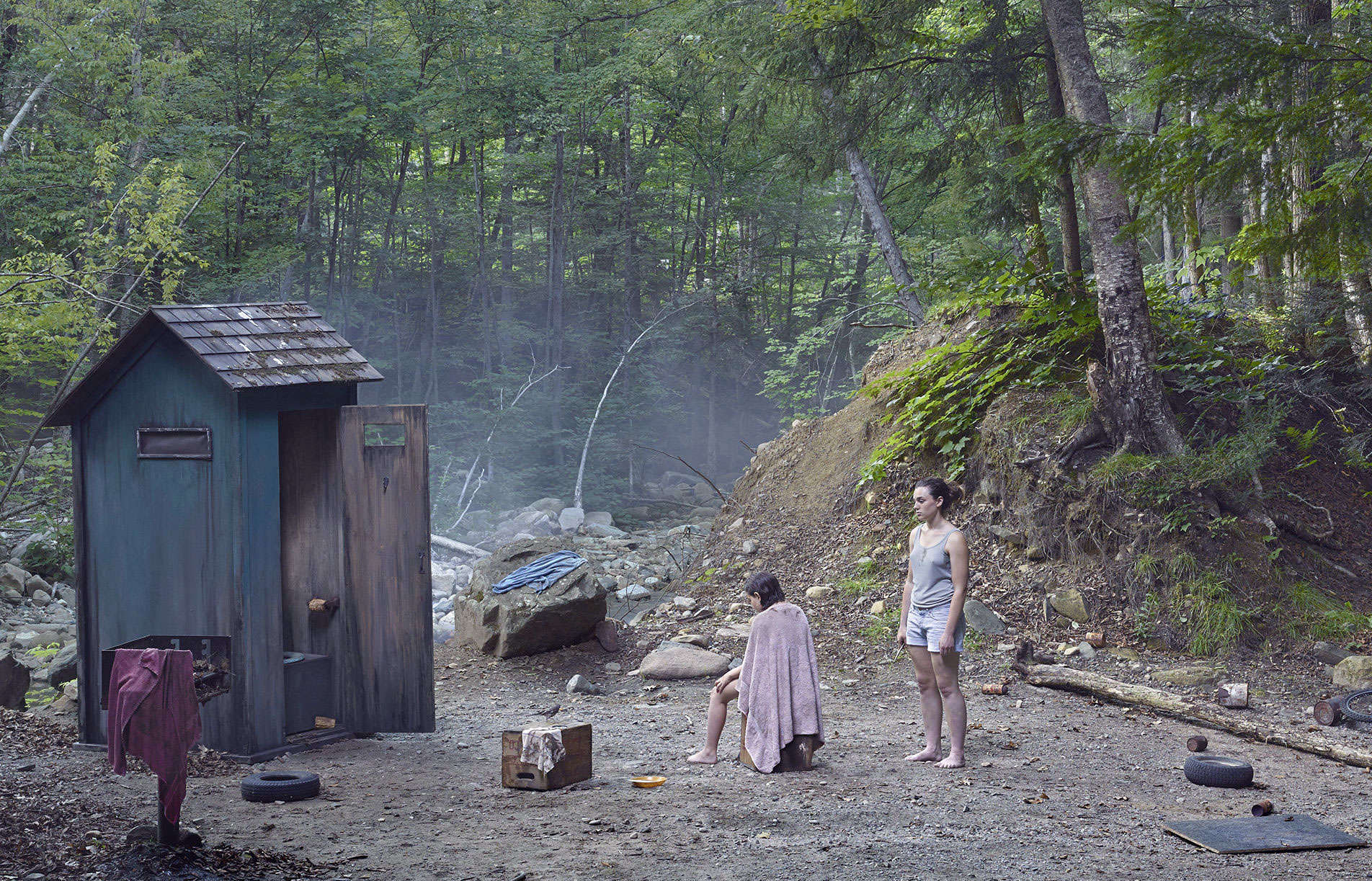


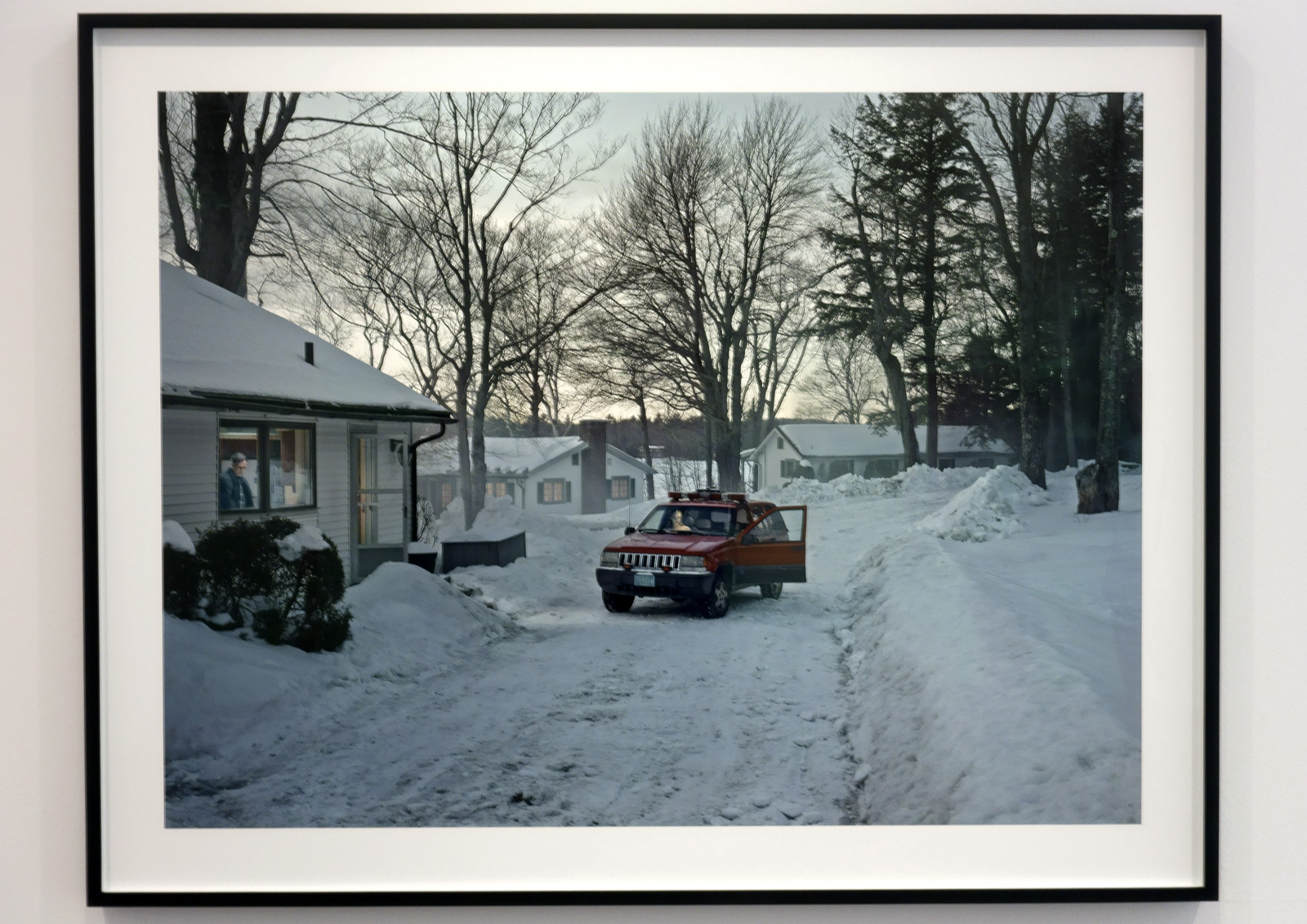
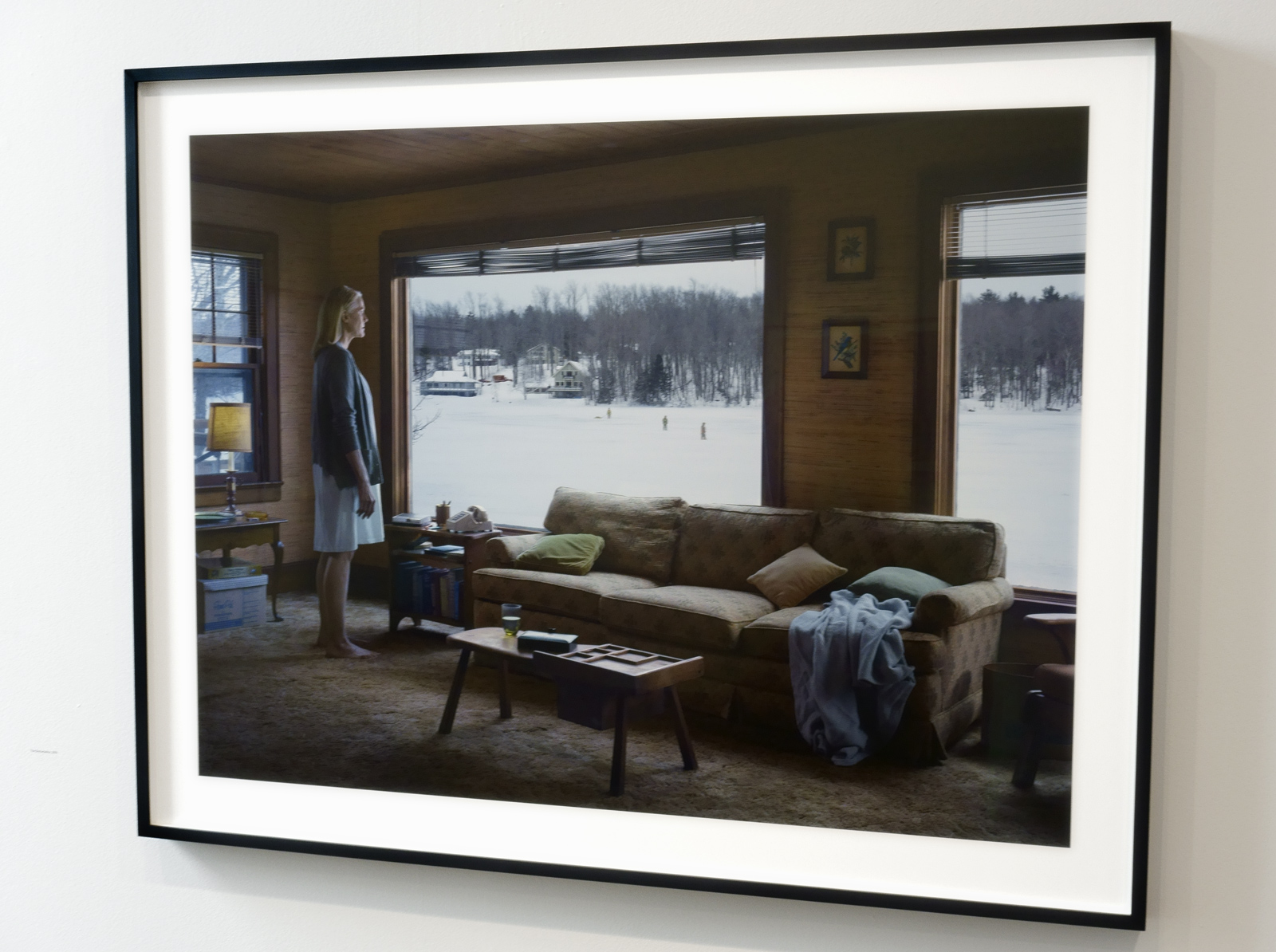
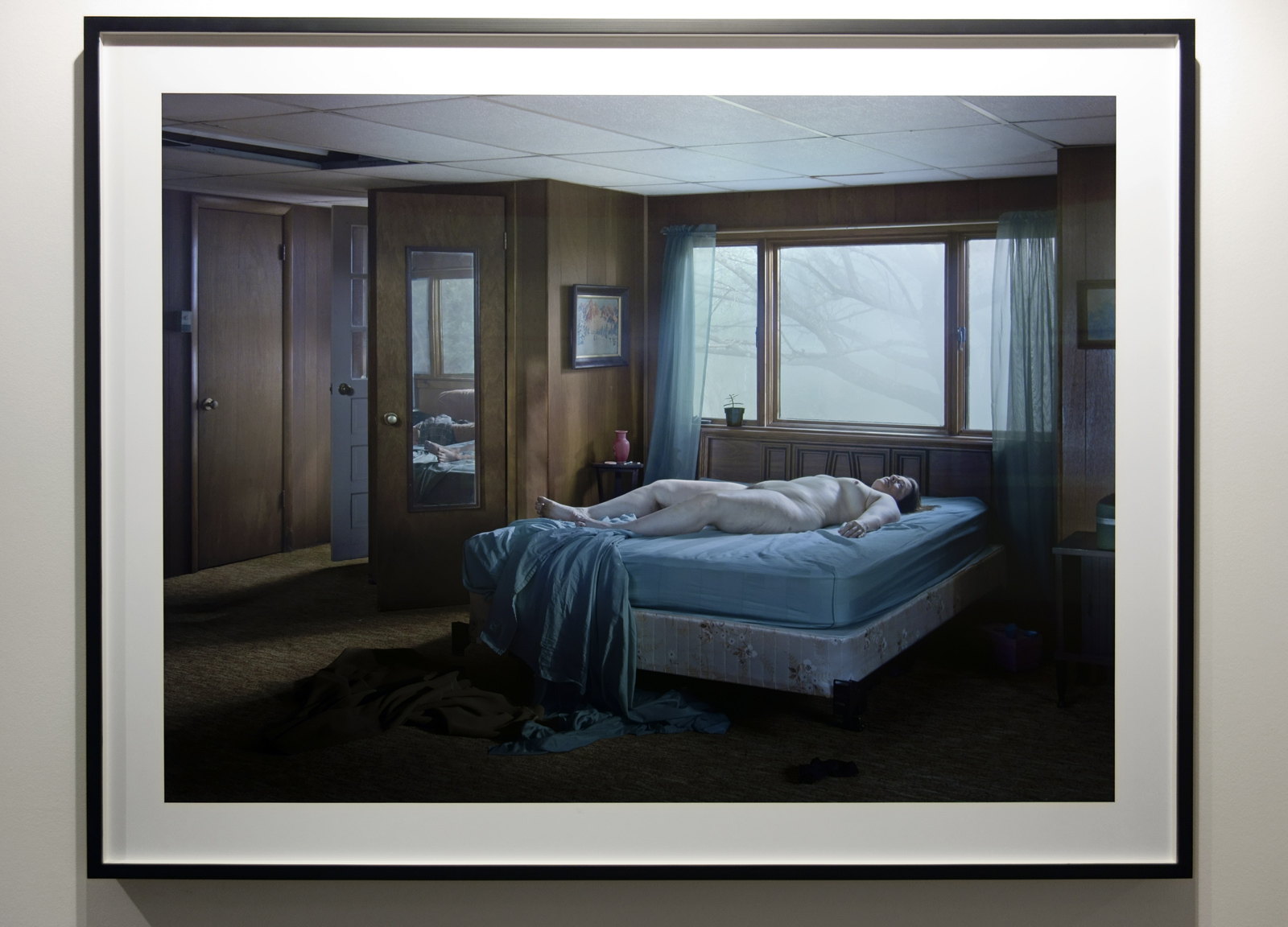
Gregory Crewdson (American, b. 1962) 'The Haircut' 2014 from the exhibition 'Gregory Crewdson: Cathedral of the Pines' at The Photographers' Gallery, London, June - October, 2017


Gregory Crewdson (American, b. 1962)
The Haircut
2014
© Gregory Crewdson. Courtesy Gagosian


End of days

I have written critically and glowingly of Crewdson’s work in the past (see my review of his exhibition at the Centre for Contemporary Photography, Melbourne 2012). With the exhibition Gregory Crewdson: Cathedral of the Pines the same elements are extant: life in the back woods of America, the tableaux beautifully staged and presented in large photographic prints throughout the three floors of the expansive spaces of the Photographers’ Gallery, London. And yet there is something particularly “icky”, if I can use that word, about this new body of work. What made me feel this way?

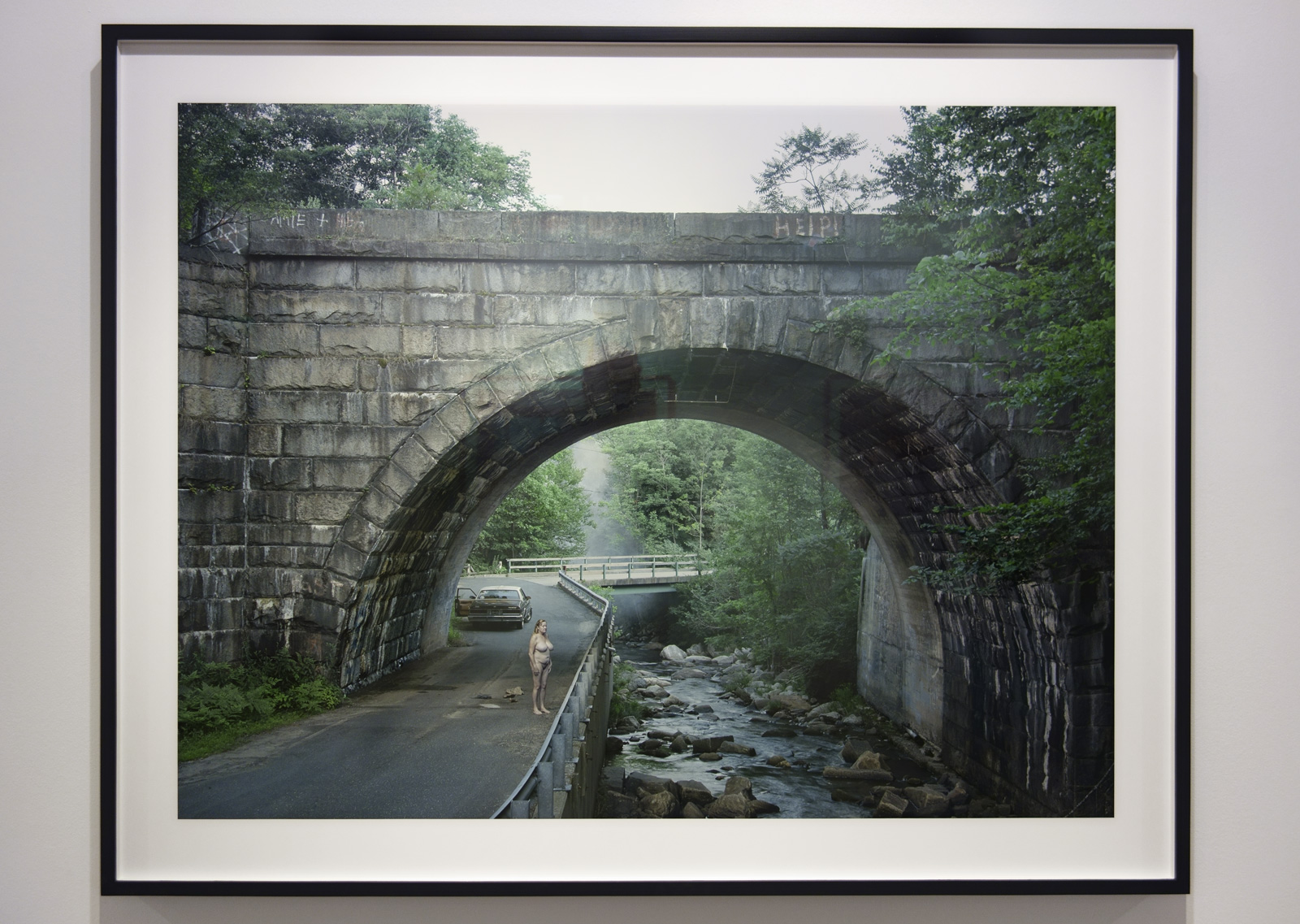
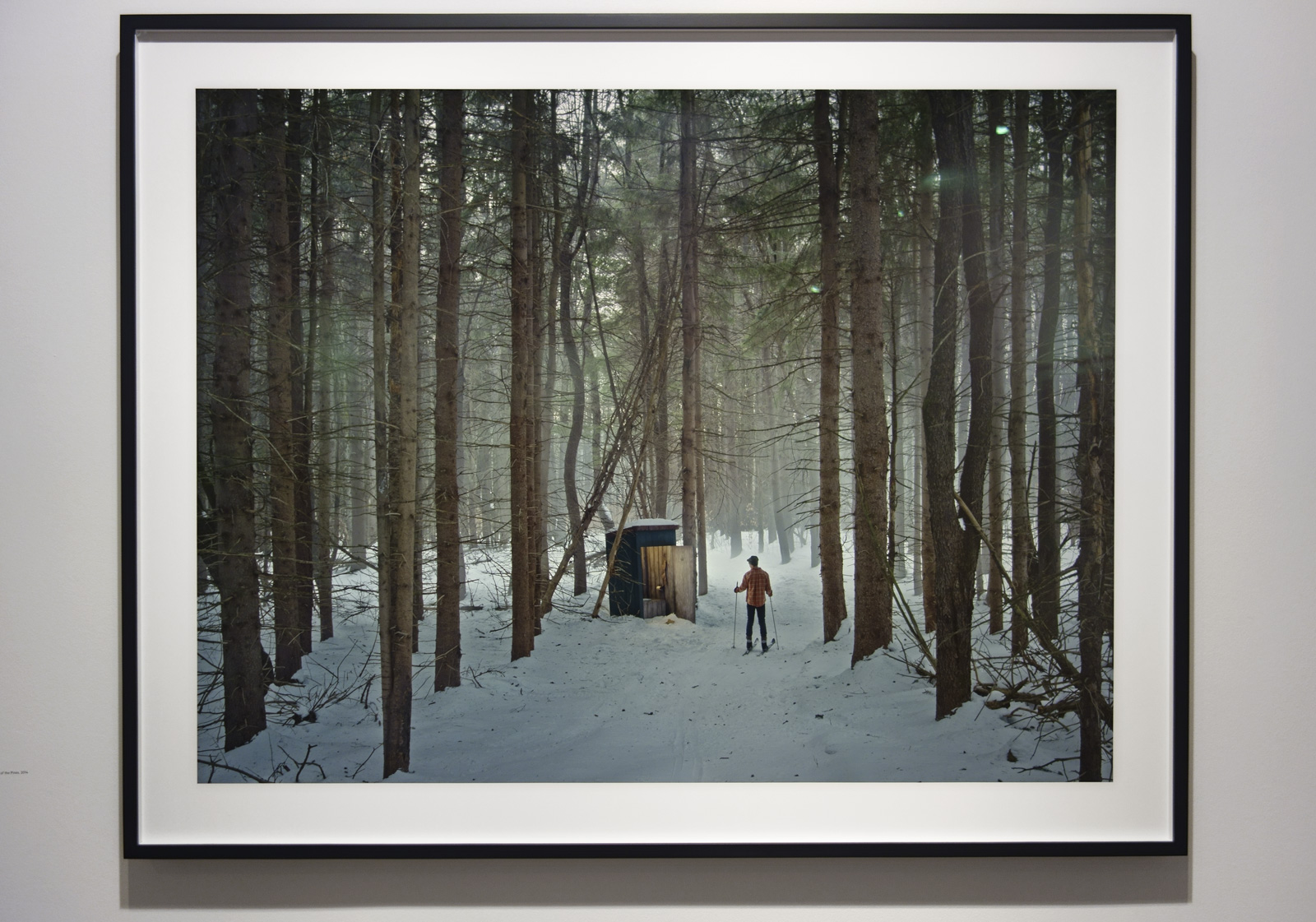
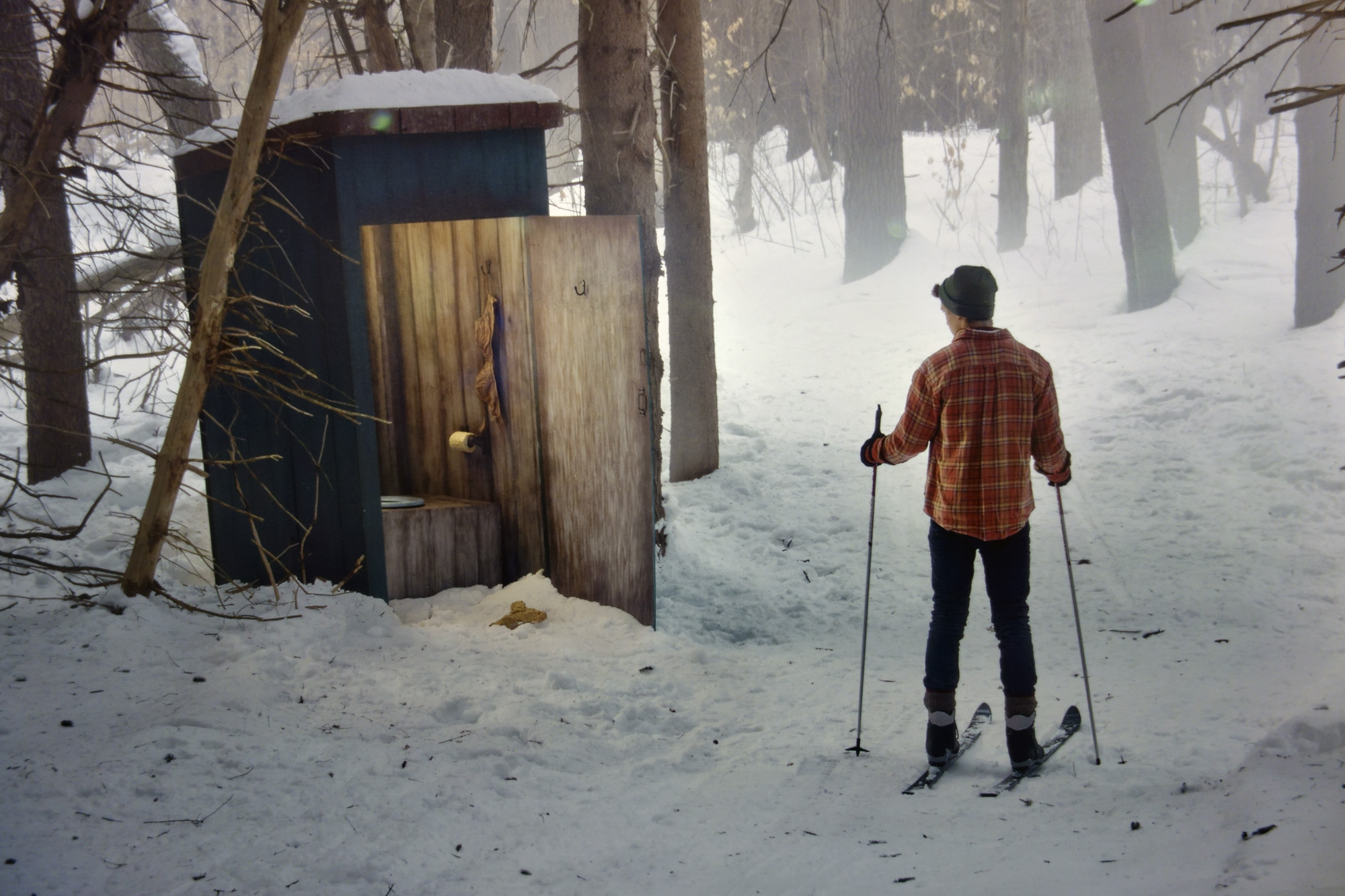
Firstly, I was uncomfortable with the number of naked or half-naked females (compared to men) in the photographs, all looking vulnerable, melancholic and isolated in small, rural town America. If this is how Crewdson sees women in the microcosms he creates – vulnerable women “pictured” in forest and cabin settings – this incessant observation is objectionable to me. These are not powerful, strong, independent women, far from it. These are stateless women who peer endlessly out of windows, or sit on the end of beds looking downcast. It is almost degrading to females that these woman are so passive and objectified. Reinforcing the theme of isolation and desperation is the word “HELP!” painted on the bridge above a naked woman standing on a roadway; reinforcing the feeling of voyeurism is a woman’s bra hanging in a toilet being observed by a man on a pair of skis.

Secondly, compared to the earlier series, the spaces in these new photographs seem to be completely dead. The photographs look handsome enough but they have a very different feel from the previous work. While externally referencing a sense of space and uncertainty present in B grade movies, European and American 19th century landscape paintings (where the human figure is dwarfed by the supposed sublime), and the paintings of Edward Hopper – the spaces in these new works feel closed, locked down and a bit scary. Nothing is real (and never has been) in Crewdson’s work but this time everything seems to be over directed. As my friend Elizabeth Gertsakis observed, “The environmental context is chilling. The palette is extremely cold, there is no warmth at all. The viewer is not welcome, because there is nothing to be welcome to… even for curiosity’s sake. No one is real here – everything is silent.” Or dead. Or lifeless.

The whole series seems apathetic. That is, apathy with extreme effort. While Crewdson observes that the darkness lifted, leading to a reconnection with his artistic process and a period of renewal and intense creativity, this work is clearly at the end of something. As Elizabeth comments, “An invisible wall has come down here… and there is absolutely no entry. This body of work is so much more pervy because it is so obvious and wooden. The camera here is well and truly in the mortuary and the photographer is the undertaker as well as the man who makes dead faces look ‘human’.” But he doesn’t make them human, and there’s the rub. Which all begs the question: where is this work going?

While Crewdson continues to move down a referential and associative path, the work fails to progress conceptually even as the work ultimately stagnates, both visually and emotionally. These wooden mise en scène are based on a very tired conceptual methodology, that of the narrative of the B grade movie which, if you have the money, time and willingness to invest in, can seem sufficiently sophisticated. Of course, buyers want to keep buying a signatory technique or idea that is easily recognisable and this adds to the cachet of the art… but as a critic you have to ask where the work is going, if an artist keeps repeating the same thing over and over and over again in slightly different contexts.

Imagine if Degas had kept painting ballet dancers using the same lighting, the same perspective, the same colour palette, the same psychological investigation painting after painting… what we would be saying about the resulting work? Sure, there is great technical proficiency contained in Crewdson’s work, but is he pushing the work anywhere more interesting?

And the simple answer to that question is, no he isn’t.

No wonder he has been having a tough time reconnecting with his artistic process.

Dr Marcus Bunyan


All installation photographs Â© Dr Marcus Bunyan, The Photographers’ Gallery and the artist. Please observe that there are reflections in the installation photographs of the surrounding gallery.


“It was deep in the forests of Becket, Massachusetts that I finally felt darkness lift, experienced a reconnection with my artistic process, and moved into a period of renewal and intense creativity.”


Gregory Crewdson


Room 1


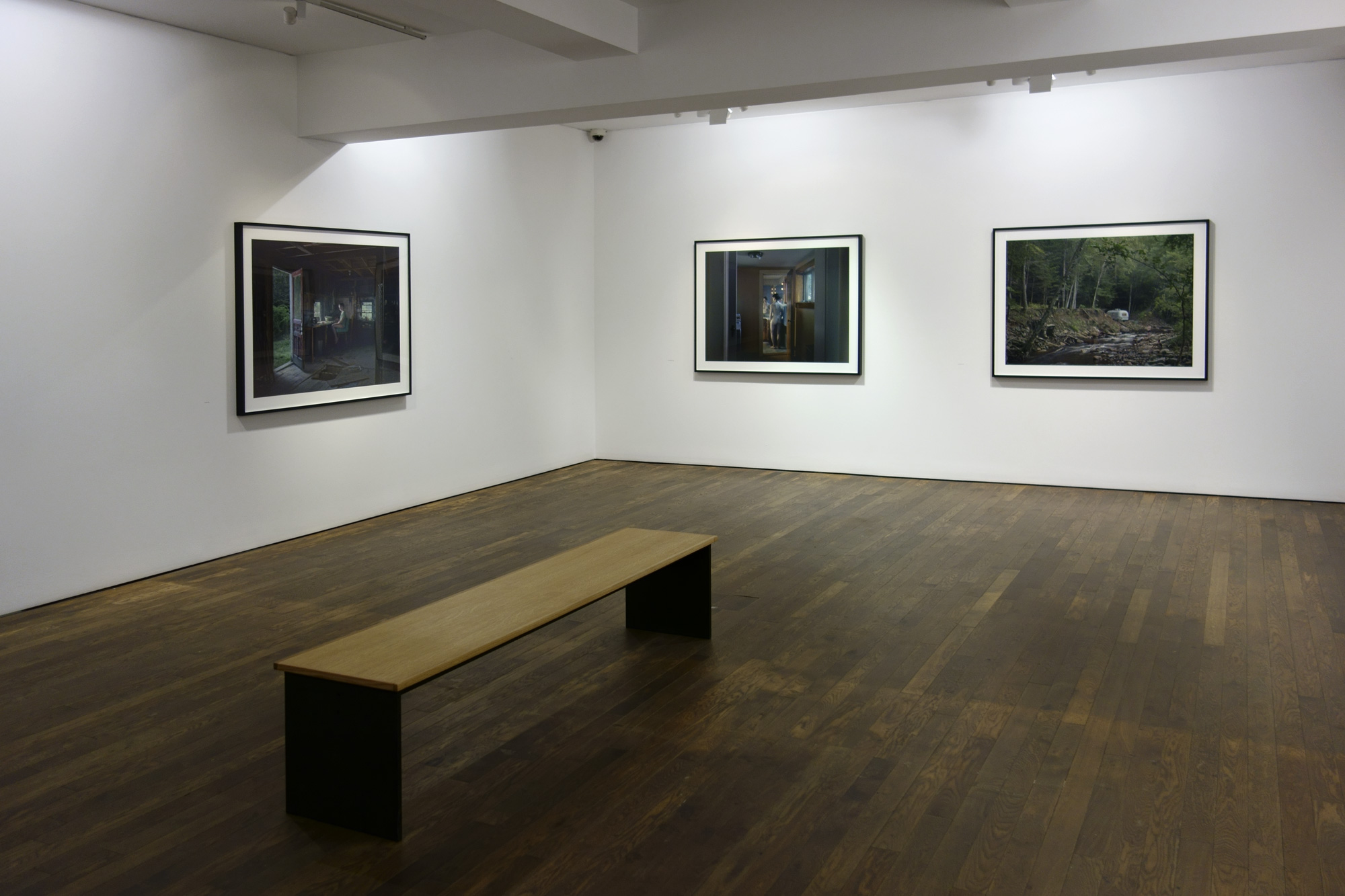
Installation view of Room 1 of 'Gregory Crewdson: Cathedral of the Pines' at The Photographers' Gallery

Installation view of Room 1 of 'Gregory Crewdson: Cathedral of the Pines' at The Photographers' Gallery showing 'Woman at Sink' 2014

Gregory Crewdson. Woman at Sink 2014
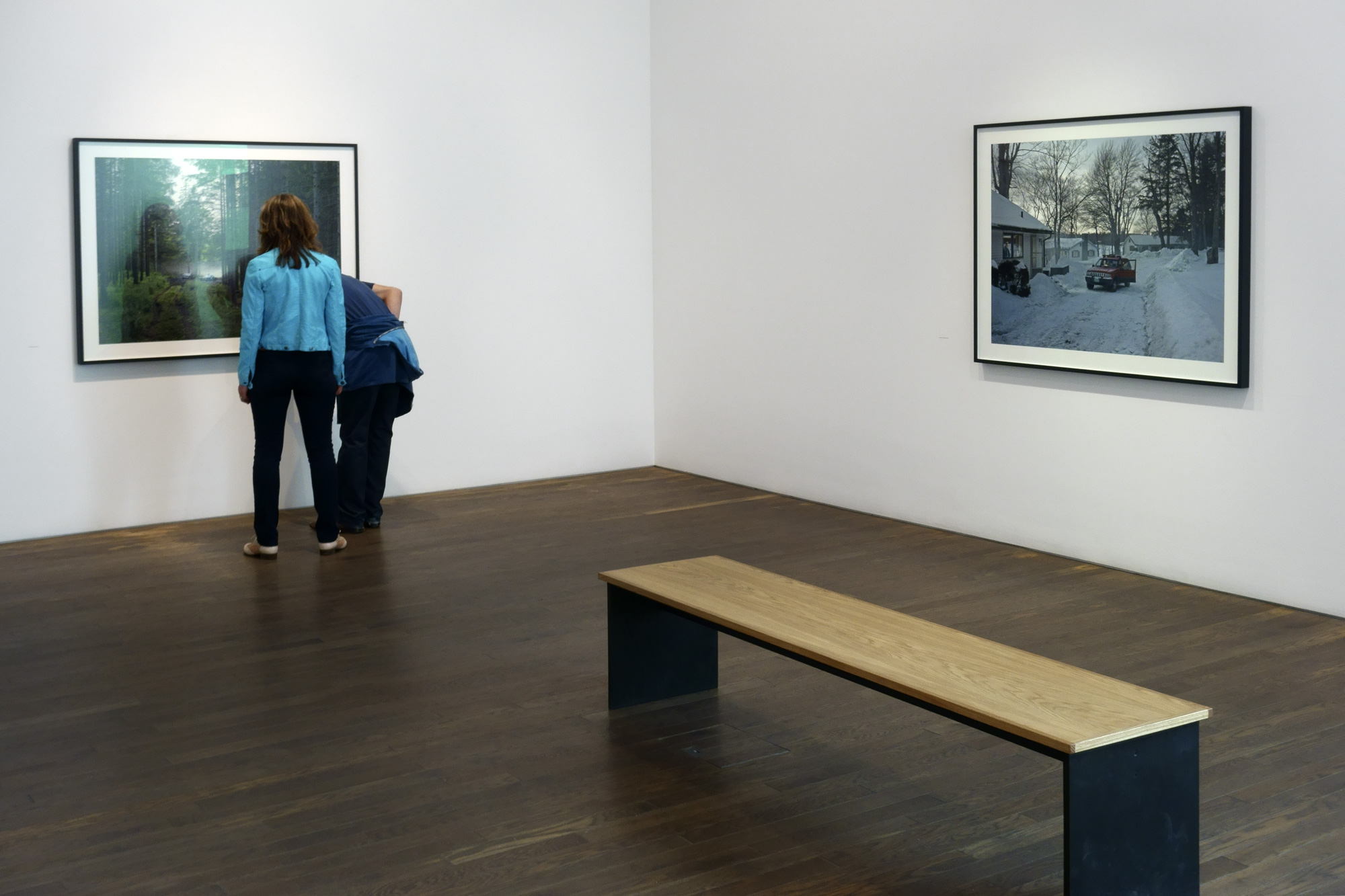
Installation view of Room 1 of 'Gregory Crewdson: Cathedral of the Pines' at The Photographers' Gallery

Installation view of Room 1 of 'Gregory Crewdson: Cathedral of the Pines' at The Photographers' Gallery showing 'Woman in Parked Car' 2014

Gregory Crewdson. Woman in Parked Car 2014
Installation view of Room 1 of 'Gregory Crewdson: Cathedral of the Pines' at The Photographers' Gallery showing 'The Basement' (2014)

Installation view of Room 1 of 'Gregory Crewdson: Cathedral of the Pines' at The Photographers' Gallery


Installation views of Room 1 of Gregory Crewdson: Cathedral of the Pines at The Photographers’ Gallery, London showing in the bottom two images, The Basement (2014)
Photos: © Dr Marcus Bunyan


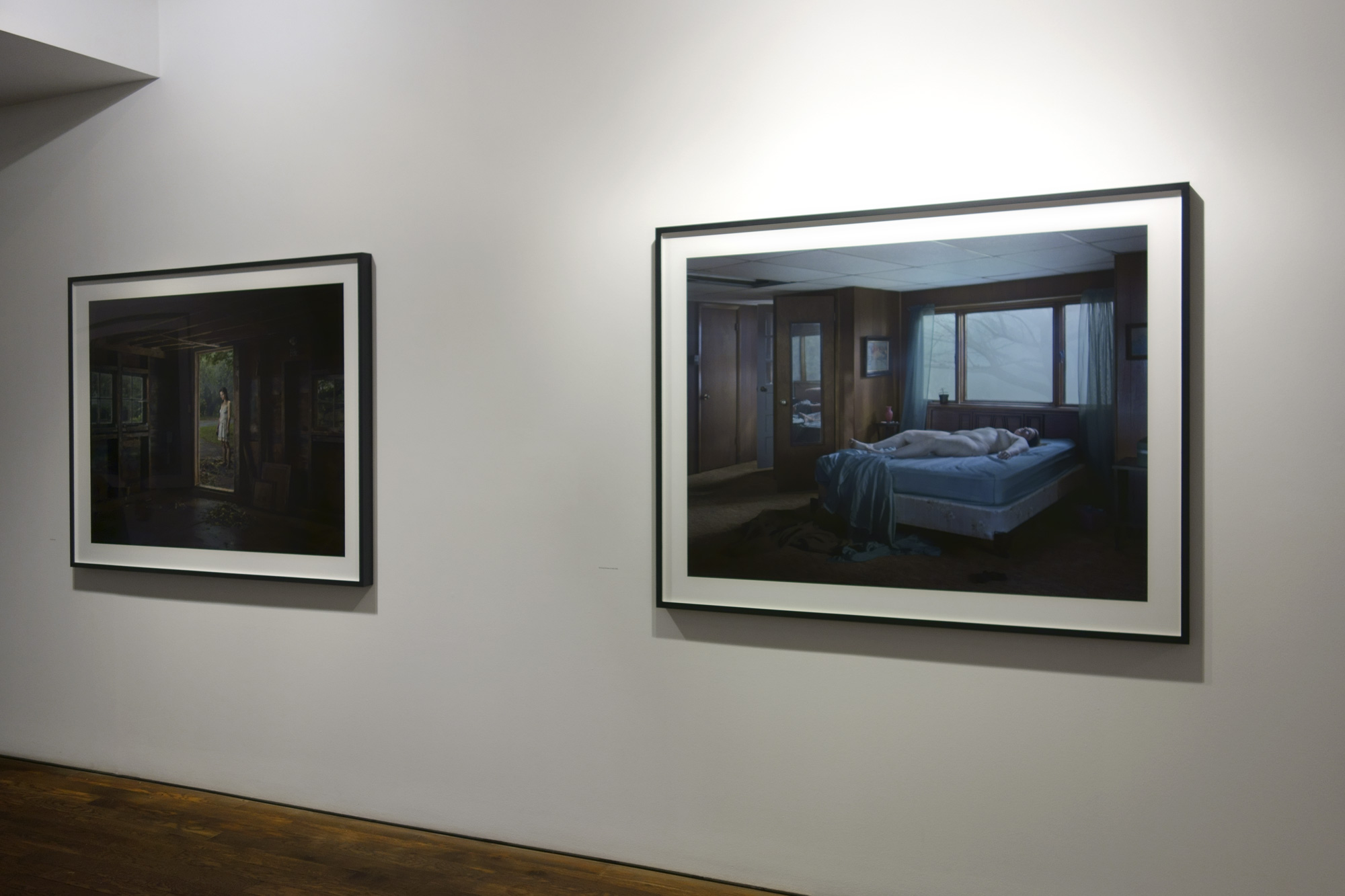
Gregory Crewdson (American, b. 1962) 'The Basement' 2014 from the exhibition 'Gregory Crewdson: Cathedral of the Pines' at The Photographers' Gallery, London, June - October, 2017


Gregory Crewdson (American, b. 1962)
The Basement
2014
© Gregory Crewdson. Courtesy Gagosian


This is the first UK exhibition of Cathedral of the Pines, a new body of work by acclaimed American artist Gregory Crewdson, and it is also the first time The Photographers’ Gallery has devoted all three of its gallery spaces to one artist.

With this series, produced between 2013 and 2014, Crewdson departs from his interest in uncanny suburban subjects and explores human relations within more natural environments. In images that recall nineteenth-century American and European paintings, Crewdson photographs figures posing within the small rural town of Becket, Massachusetts, and its vast surrounding forests, including the actual trail from which the series takes its title. Interior scenes charged with ambiguous narratives probe tensions between human connection and separation, intimacy and isolation.

Crewdson describes this project as ‘his most personal’, venturing to retrieve in the remote setting of the forest, a reminiscence of his childhood. The images in Cathedral of the Pines, located in the dystopian landscape of the anxious American imagination, create atmospheric scenes, many featuring local residents, and for the first time in Crewdson’s work, friends and family. In Woman at Sink, a woman pauses from her domestic chores, lost in thought. In Pickup Truck, Crewdson shows a nude couple in the flatbed of a truck in a dense forest – the woman seated, the man turned away in repose. Crewdson situates his disconsolate subjects in familiar settings, yet their cryptic actions – standing still in the snow, or nude on a riverbank – hint at invisible challenges. Precisely what these challenges are, and what fate awaits these anonymous figures, are left to the viewer’s imagination.

Crewdson’s careful crafting of visual suspense conjures forebears such as Diane Arbus, Alfred Hitchcock, and Edward Hopper, as well as the influence of Hollywood cinema and directors such as David Lynch. In Cathedral of the Pines, Crewdson’s persistent psychological leitmotifs evolve into intimate figurative dramas. Visually alluring and often deeply disquieting, these tableaux are the result of an intricate production process: For more than twenty years, Crewdson has used the streets and interiors of small-town America as settings for photographic incarnations of the uncanny.

Maintaining his trademark elaborate production processes, Crewdson works with a large crew to produce meticulously staged images with an obsessive attention to detail. Situated between Hollywood cinema and nineteenth-century American and European Romantic landscape painting, these scenes are charged with ambiguous narratives, which prove tensions between human connection and separation, intimacy and isolation.

Text from The Photographers’ Gallery website and wall text


Room 2


Installation view of Room 2 of 'Gregory Crewdson: Cathedral of the Pines' at The Photographers' Gallery

Installation view of Room 2 of 'Gregory Crewdson: Cathedral of the Pines' at The Photographers' Gallery

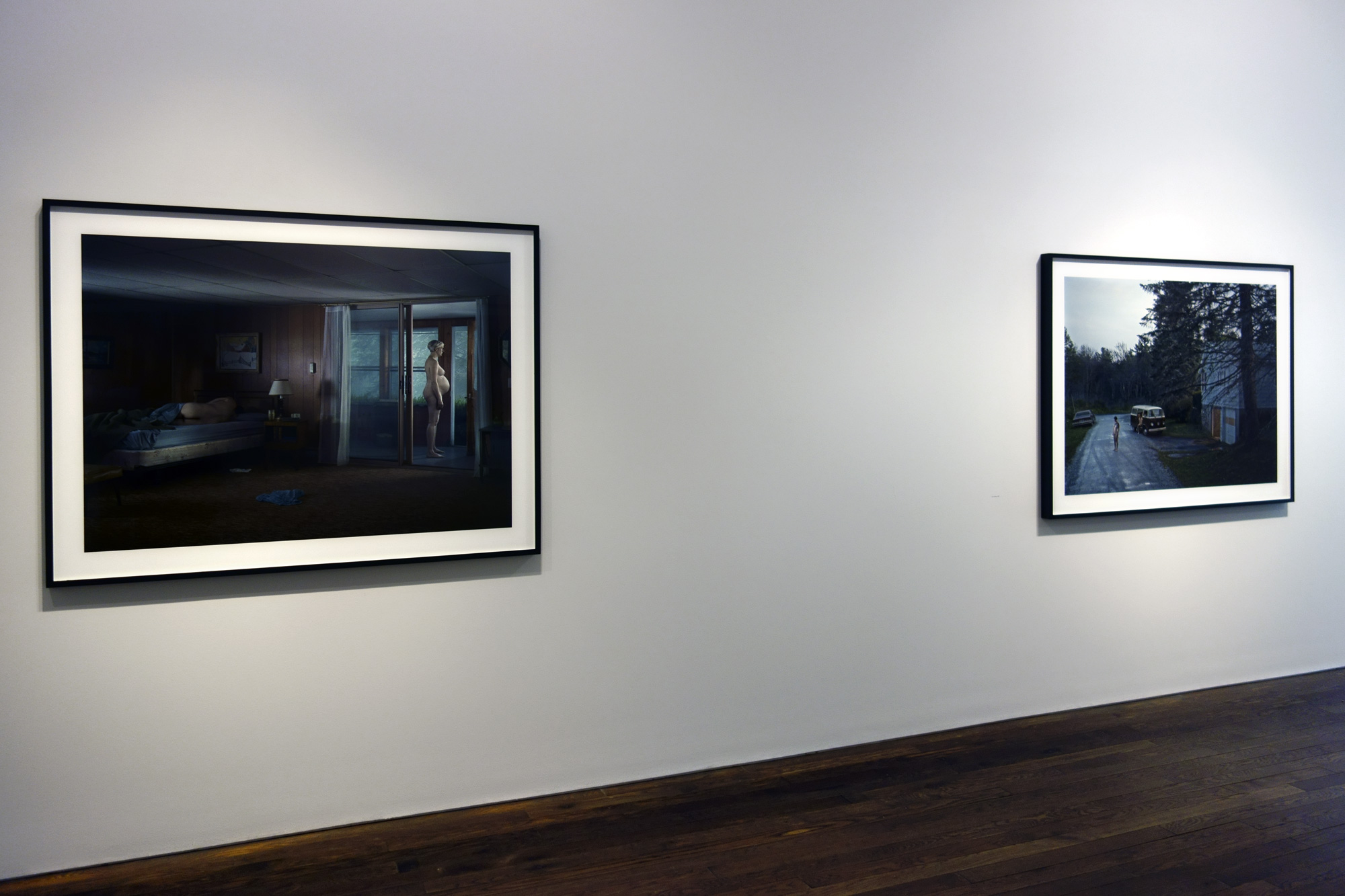
Installation view of Room 2 of 'Gregory Crewdson: Cathedral of the Pines' at The Photographers' Gallery showing 'The VW Bus' 2013

Gregory Crewdson. The VW Bus 2013
Installation view of Room 2 of 'Gregory Crewdson: Cathedral of the Pines' at The Photographers' Gallery showing 'Pregnant Woman on Porch' 2013

Gregory Crewdson. Pregnant Woman on Porch 2013
Installation view of Room 2 of 'Gregory Crewdson: Cathedral of the Pines' at The Photographers' Gallery

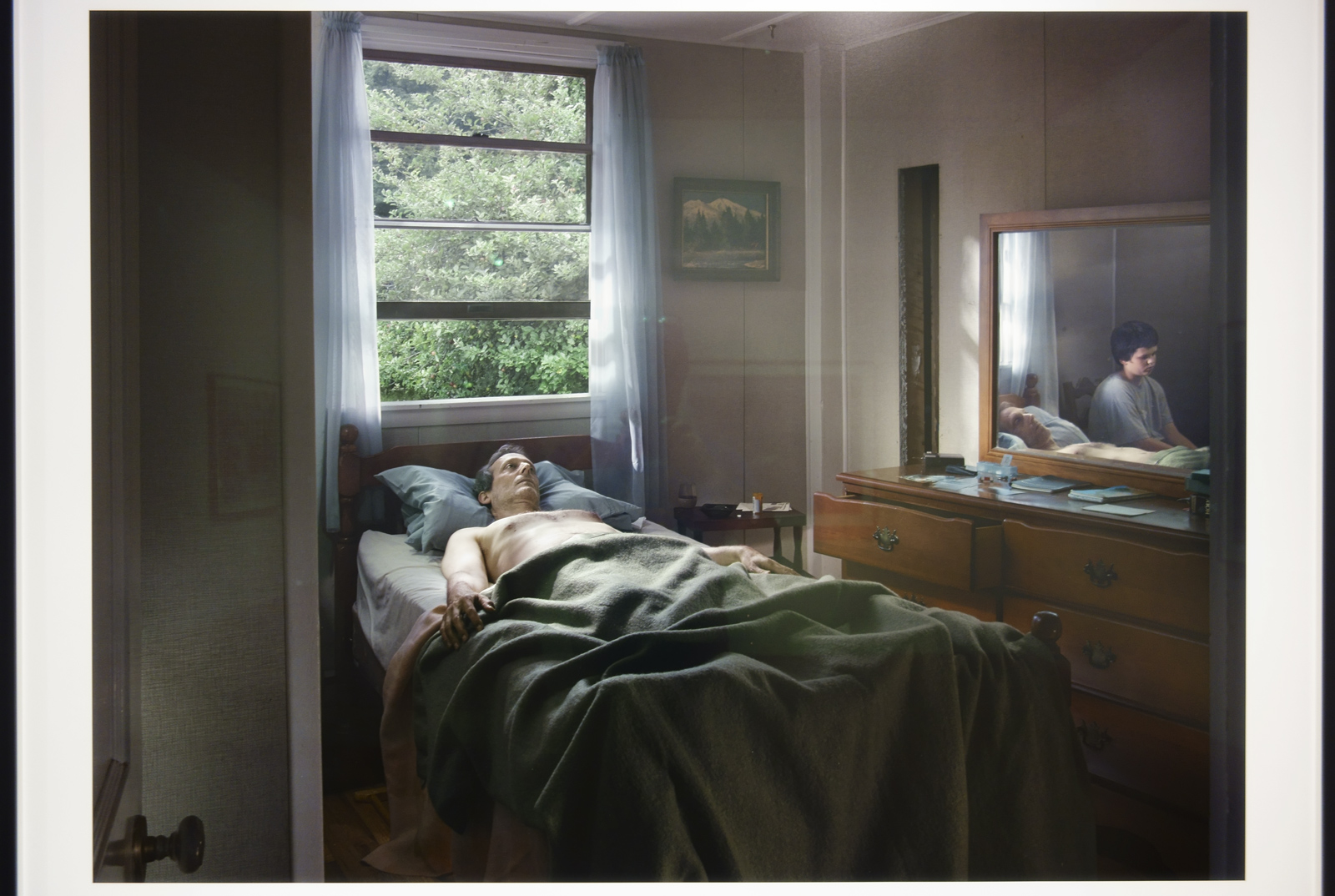
Installation view of Room 2 of 'Gregory Crewdson: Cathedral of the Pines' at The Photographers' Gallery showing 'Father and Son' 2013

Gregory Crewdson. Father and Son 2013
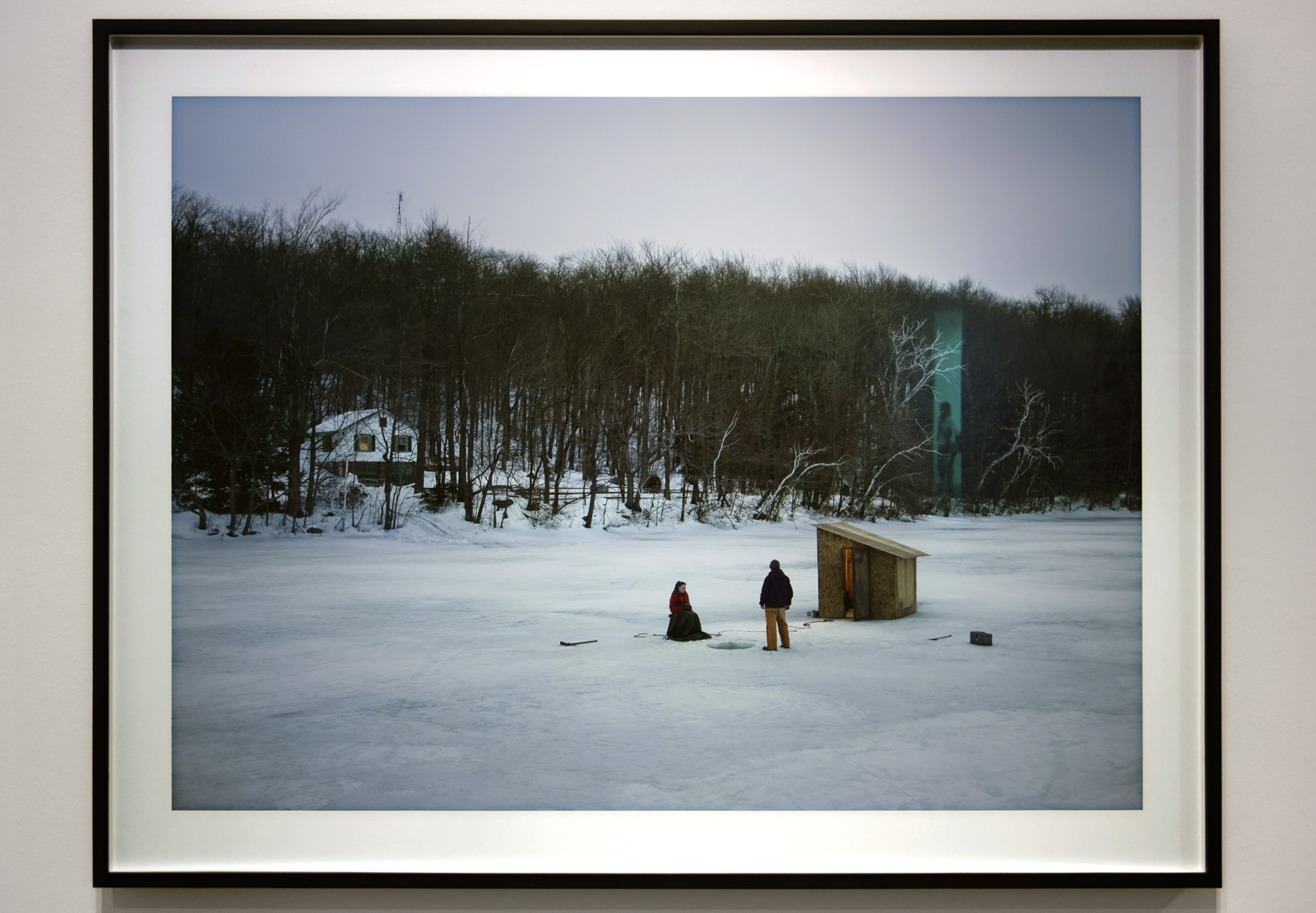
Installation view of Room 2 of 'Gregory Crewdson: Cathedral of the Pines' at The Photographers' Gallery showing 'The Ice Hut' 2014

Gregory Crewdson. The Ice Hut 2014
Installation view of Room 2 of 'Gregory Crewdson: Cathedral of the Pines' at The Photographers' Gallery

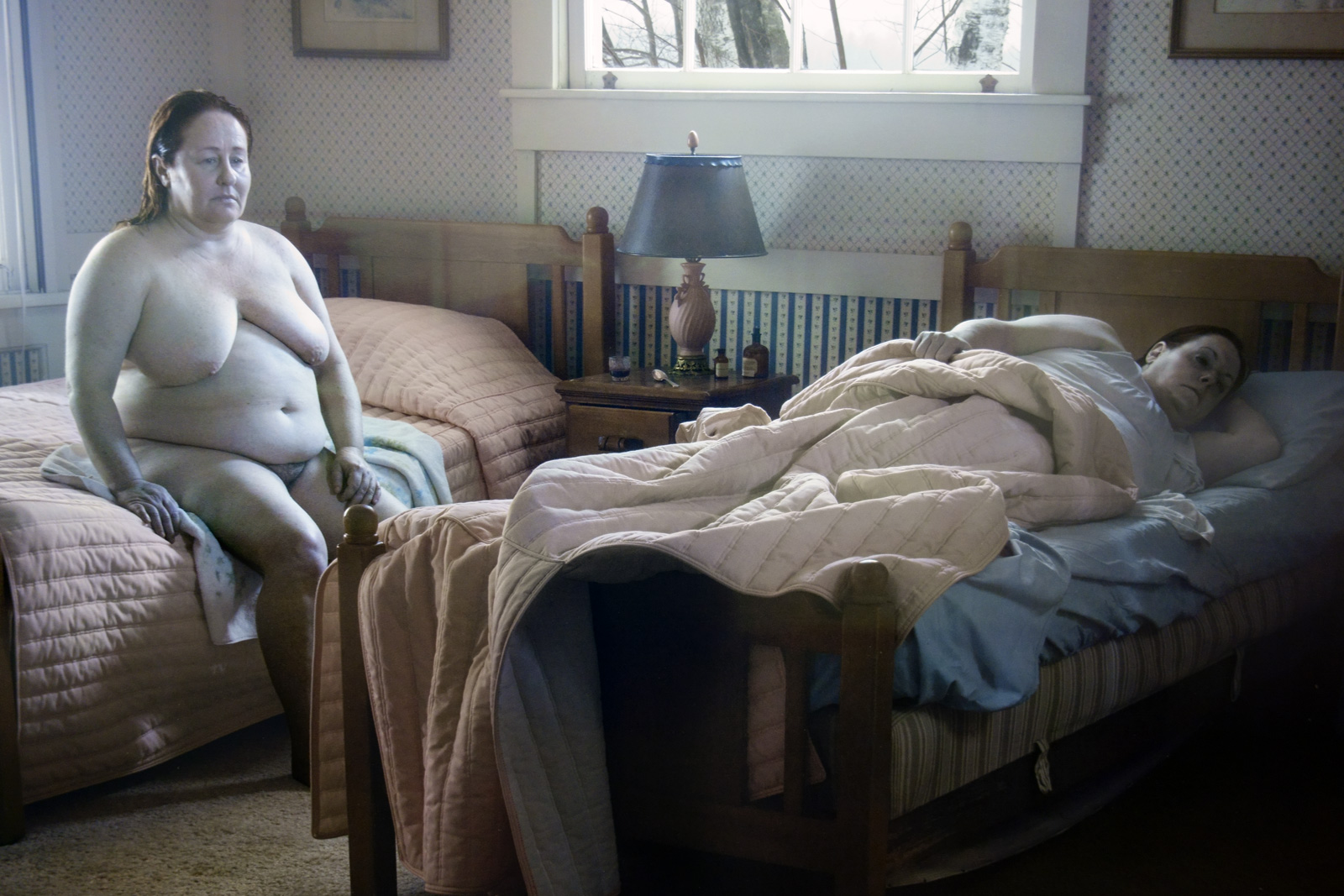
Installation view of Room 2 of 'Gregory Crewdson: Cathedral of the Pines' at The Photographers' Gallery showing 'Sisters' 2014

Gregory Crewdson. Sisters 2014
Installation view of Room 2 of 'Gregory Crewdson: Cathedral of the Pines' at The Photographers' Gallery showing 'Sisters' 2014 (detail)

Gregory Crewdson. Sisters 2014 (detail)
Installation view of Room 2 of 'Gregory Crewdson: Cathedral of the Pines' at The Photographers' Gallery

Installation view of Room 2 of 'Gregory Crewdson: Cathedral of the Pines' at The Photographers' Gallery showing 'The Disturbance' 2014

Gregory Crewdson. The Disturbance 2014 (detail below)
Installation view of Room 2 of 'Gregory Crewdson: Cathedral of the Pines' at The Photographers' Gallery showing 'The Disturbance' 2014 (detail)


Installation views of Room 2 of Gregory Crewdson: Cathedral of the Pines at The Photographers’ Gallery, London showing in the bottom two images, The Disturbance 2014
Photos: © Dr Marcus Bunyan
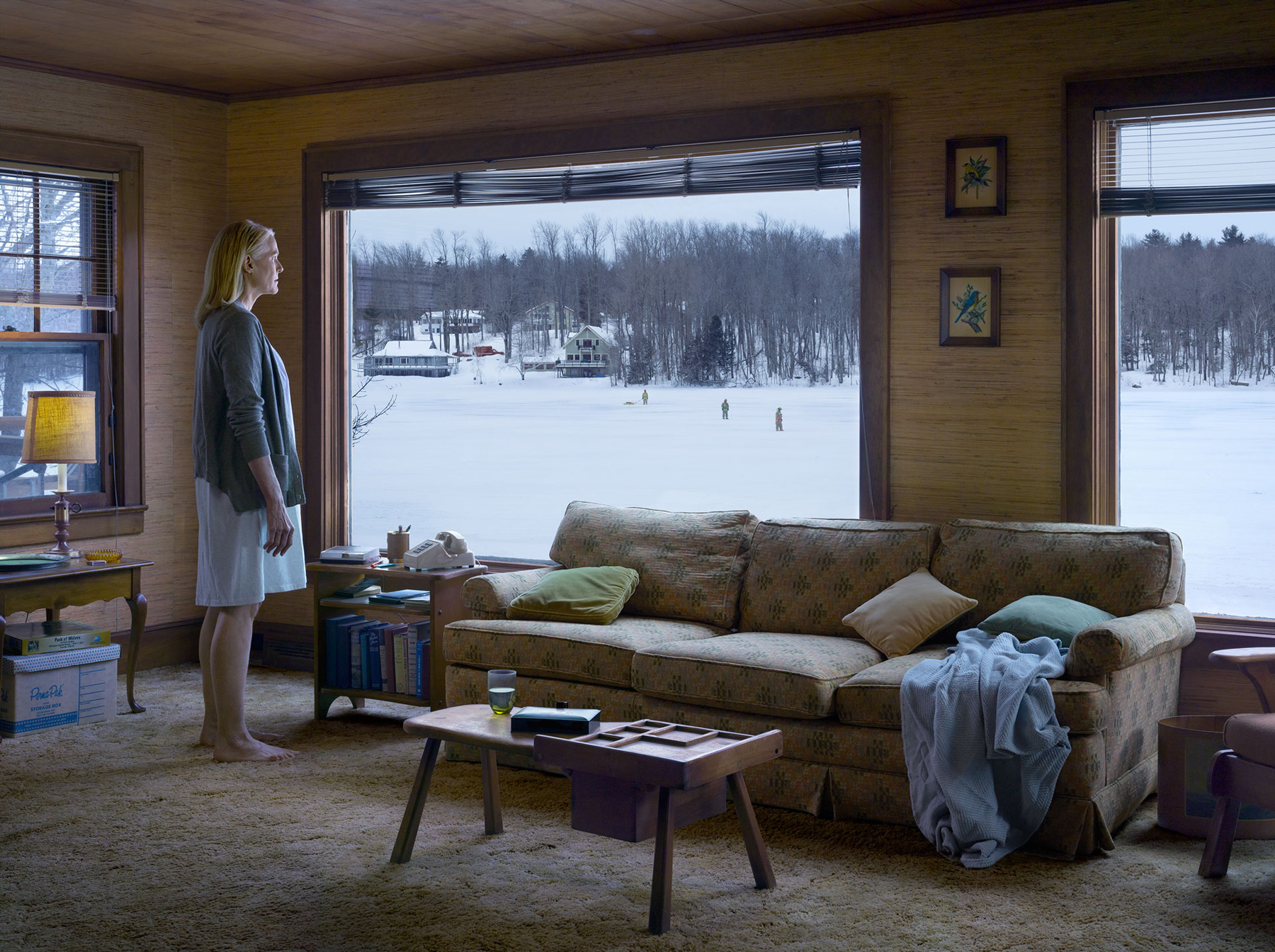
 

Gregory Crewdson (American, b. 1962) 'The Disturbance' 2014 from the exhibition 'Gregory Crewdson: Cathedral of the Pines' at The Photographers' Gallery, London, June - October, 2017


Gregory Crewdson (American, b. 1962)
The Disturbance
2014
© Gregory Crewdson. Courtesy Gagosian


Room 3
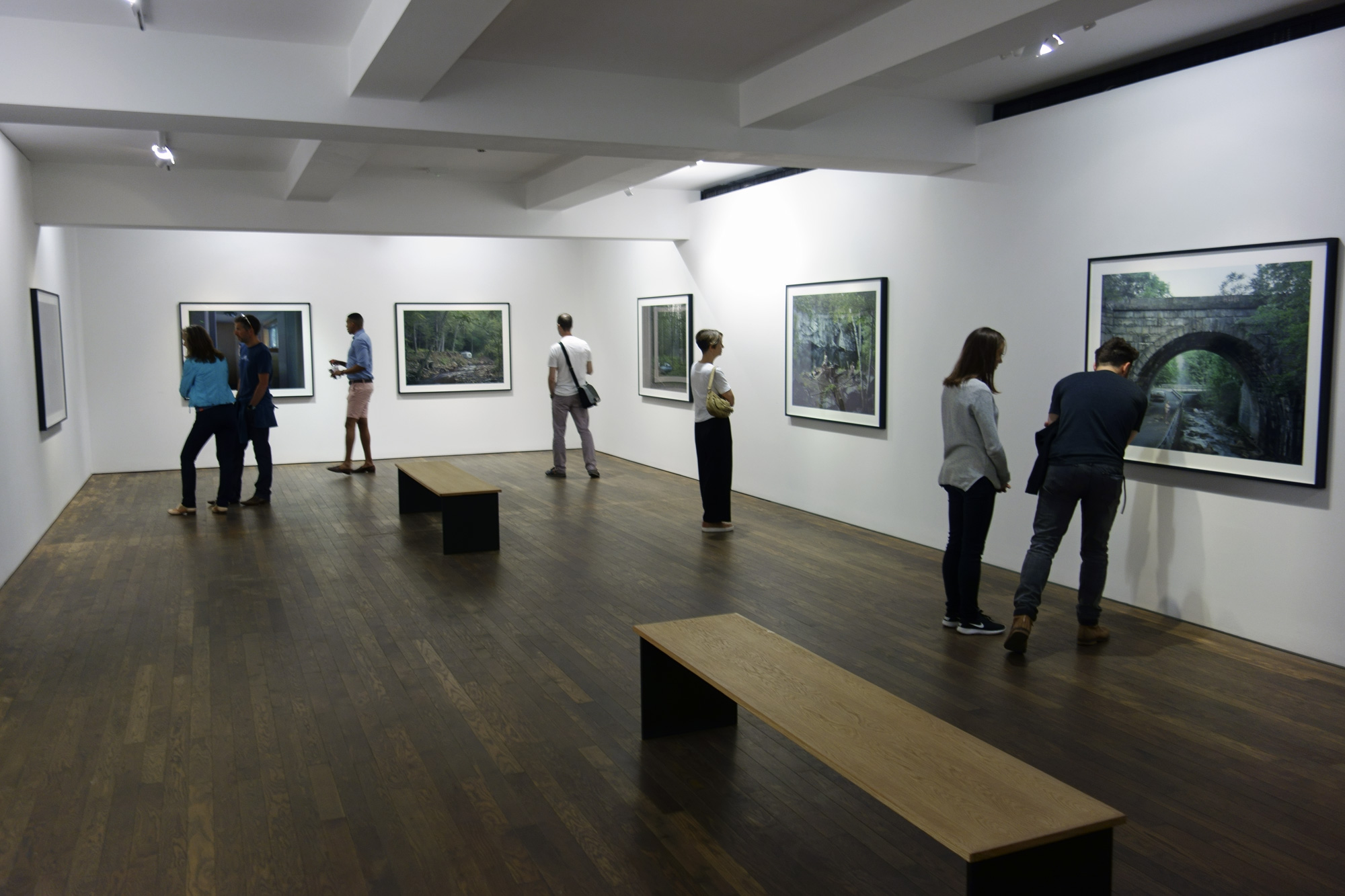
 

Installation view of Room 3 of 'Gregory Crewdson: Cathedral of the Pines' at The Photographers' Gallery

Installation view of Room 3 of 'Gregory Crewdson: Cathedral of the Pines' at The Photographers' Gallery showing 'Woman on Road' 2014

Gregory Crewdson. Woman on Road 2014
Installation view of Room 3 of 'Gregory Crewdson: Cathedral of the Pines' at The Photographers' Gallery

Installation view of Room 3 of 'Gregory Crewdson: Cathedral of the Pines' at The Photographers' Gallery

Installation view of Room 3 of 'Gregory Crewdson: Cathedral of the Pines' at The Photographers' Gallery

Installation view of Room 3 of 'Gregory Crewdson: Cathedral of the Pines' at The Photographers' Gallery

Installation view of Room 3 of 'Gregory Crewdson: Cathedral of the Pines' at The Photographers' Gallery

Installation view of Room 3 of 'Gregory Crewdson: Cathedral of the Pines' at The Photographers' Gallery


Installation views of Room 3 of Gregory Crewdson: Cathedral of the Pines at The Photographers’ Gallery, London
Photos: © Dr Marcus Bunyan


The Photographers Gallery
16-18 Ramillies Street
London
W1F 7LW

Opening hours:
Monday – Wednesday: 10.00 – 18.00
Thursday and Friday: 10.00 – 20.00
Saturday: 10.00 – 18.00
Sunday: 11.00 – 18.00

The Photographers’ Gallery website

LIKE ART BLART ON FACEBOOK

Back to top

Exhibition and videos: ‘Richard Mosse: The Enclave’ – winner of Deutsche Börse Photography Prize 2014 at The Photographers’ Gallery, London

Exhibition dates: 11th April – 22nd June, 2014

Curators: the exhibition was curated by the prize jury, which included Kate Bush (curator), Jitka Hanzlová (artist), Thomas Seelig (Fotomuseum Winterthur), and Anne-Marie Beckmann (Art Collection Deutsche Börse).


Richard Mosse (Ireland, b. 1980) 'Man-size, North Kivu, eastern Congo' 2012 from the exhibition 'Richard Mosse: The Enclave' - winner of Deutsche Börse Photography Prize 2014 at The Photographers' Gallery, London, April - June, 2014


Richard Mosse (Ireland, b. 1980)
Man-size, North Kivu, eastern Congo
2012
Digital C print
72 x 90 inches


Men are bastards. War is bastardry.

Bastardry: the unpleasant behaviour of a bastard (objectionable person).


“Beauty is effective, the sharpest tool in the box. If you can seduce the viewer and you can make them feel aesthetic pleasure regarding a landscape in which human rights violations happen all the time, then you can put them into a very problematic place for themselves – they feel ethically compromised and they feel angry with themselves and the photographer for making them feel that. That moment of self awareness is a very powerful thing.”


Richard Mosse


“Ultimately, Mosse’s photographs are about what we cannot see, what is not seen, what is not acknowledged by documentary photography. What I find so striking about this work is that it not only challenges the conventions of war photography, but that everything daring is translated into the colour of the resultant image. Where war photography is usually done by journalists and photographers used to bullets whistling past their ears, who scurry around with the soldiers, Mosse’s are made together with rebels who have no visible enemy, rebels who actually perform for the camera, creating the drama in their poses where it is otherwise invisible to the eye. And in turn, Mosse’s images visually penetrate and make manifest the insidious spread of disease, war and violence, all of which is begun by greed.


Frances Guerin. “Richard Moss, The Enclave,” on the Fx Reflects blog Wednesday, June 18, 2014 [Online] Cited 05/04/2021.


Richard Mosse: The Impossible Image

Artist and photographer Richard Mosse reveals the stories behind the making of his latest film, The Enclave (2013), in the Democratic Republic of Congo. The film was shown in the Irish Pavilion at the 55th Venice Biennale and was the 2014 winner of the Deutsche Börse Photography Prize.


Mosse documents a haunting landscape touched by appalling human tragedy in eastern Democratic Republic of Congo (DRC), where 5.4 million people have died of war related causes since 1998. Shot on discontinued military surveillance film, the resulting imagery registers an invisible spectrum of infrared light, and renders the jungle warzone in disorienting psychedelic hues. At the project’s heart are the points of failure of documentary photography, and its inability to adequately communicate this complex and horrific cycle of violence, “through six monumental double-sided screens ‘forcing’ the viewer to interact from an array of different viewpoints.”


Biennale Arte 2013 – Ireland 

This desperate situation echoes the barbarity of the Belgian occupation of the Congo that provided the backdrop for Joseph Conrad’s Heart of Darkness (1899) … Mosse had Conrad’s allusiveness in mind when he chose to employ a type of infrared film called Aerochrome, developed during the Cold War by Kodak in consultation with the United States government…

Mosse renders the viewer’s point-of-view identical with that of the camera, immersing us in these scenes, while Frost’s score leaves a buzzing, ringing sound in our ears. Occasionally we stumble across a body lying on the ground in a village, or by the side of a road like a dead animal. It would be gruesome, perhaps unbearable, if it weren’t for the views of the tropical landscape and the ubiquitous pink that gives the action such an unearthly touch.

Even as we feel the looming violence of this place the pink backdrop transforms each segment into a stage set, in a deliberate refusal of the ‘realism’ claimed by conventional photojournalism. Instead of the black-and-white certainties of a world in which good and evil are easily identified, we are plunged into a bright pink nightmare, our every move fraught with danger.

Mosse is seeking to engage the senses, not simply the intellect, but that flood of pink sends mixed messages. It’s an ingratiating colour – a colour that tries too hard, lapsing into camp and kitsch. Such impressions are difficult to reconcile with the subject matter of this installation but Mosse makes no attempt to ease our disorientation. The work is his response to a bewildering, intractable conflict that doesn’t recognise anybody’s rules.”

Extract from John McDonald. “Richard Mosse & William Kentridge,” on the John McDonald website May 10, 2014 [Online] Cited 29/10/2022. Used under fair use conditions for the purposes of education and research


Jonh Kelly meet Richard Mosse, an artist whose beautiful, provocative film installations and photographs are challenging the accepted norms of war photography.


Richard Mosse (Ireland, b. 1980) 'Safe From Harm, North Kivu, Eastern Congo' 2012 from the exhibition 'Richard Mosse: The Enclave' - winner of Deutsche Börse Photography Prize 2014 at The Photographers' Gallery, London, April - June, 2014


Richard Mosse (Ireland, b. 1980)
Safe From Harm, North Kivu, Eastern Congo
2012
Digital C print
48 x 60 inches


The uniqueness of the military film stock is its register of an invisible spectrum of infrared light, turning green landscape into an array of glaring colours… The result is that Mosse’s landscapes appear cancerous, we notice that life is extinct, that something deadly has swept through an otherwise idyllic world…

The Congolese National Army, rebel militia, and warring tribes fight over ownership of the land, their violence extending to rape of women, murdering civilian populations, all in the interests of staking a claim to the land. A struggle that is never actually seen in Mosse’s photographs is nevertheless made undeniable by the aesthetic struggle of unnatural colours in what might otherwise be an untouched world. These hills are blanketed in violence and corruption…

Mosse’s images visually penetrate and make manifest the insidious spread of disease, war and violence, all of which is begun by greed.”

Frances Guerin. “Richard Moss, The Enclave,” on the Fx Reflects blog Wednesday, June 18, 2014 [Online] Cited 05/04/2021. Used under fair use conditions for the purposes of education and research


Richard Mosse (Ireland, b. 1980) 'Platon, North Kivu, Eastern Congo' 2012


Richard Mosse (Ireland, b. 1980)
Platon, North Kivu, Eastern Congo
2012
Digital C print


Richard Mosse (Ireland, b. 1980) 'Men of Good Fortune, North Kivu, Eastern Congo' 2011


Richard Mosse (Ireland, b. 1980)
Men of Good Fortune, North Kivu, Eastern Congo
2011
Digital C print


Richard Mosse (Ireland, b. 1980) 'Nowhere To Run, South Kivu, Eastern Congo' 2010


Richard Mosse (Ireland, b. 1980)
Nowhere To Run, South Kivu, Eastern Congo
2010
Digital C print


The photograph I was initially drawn to in the exhibition, Men of Good Fortune (2011), is a picturesque composition of gentle grassy slopes, pastoral figures and trees that might have been artfully placed by a Capability Brown. These hills were originally inhabited by Congolese tribes who grew crops and hunted for bush meat, until they were driven out by pastoralists who cut down the forest for grazing. Richard Mosse’s camera renders this landscape’s history of intimidation and human rights abuses in shocking pink, like superficially healthy teeth subjected to a plaque disclosing tablet. Nowhere to Run (2010) shows another vista of unearthly pink hills, which seem to have undergone the kind of transformation J. G. Ballard described in The Crystal World. This rose quartz-coloured terrain is, according to the caption, ‘rich in rare earth minerals like gold, cassiterite and coltan, which are extracted by artisanal miners who must pay taxes to the rebels.’

Of course one question these photographs raise is whether the aesthetic pleasure they provide is a distraction from what is really happening in The Enclave.

Andrew Ray. “The Enclave” on the Some Landscapes blog Tuesday June 17, 2014 [Online] Cited 05/04/2021. Used under fair use conditions for the purposes of education and research


Richard Mosse (Ireland, b. 1980) 'Ruby Tuesday, North Kivu, Eastern Congo' 2011


Richard Mosse (Ireland, b. 1980)
Ruby Tuesday, North Kivu, Eastern Congo
2011
Digital C print


Richard Mosse (Ireland, b. 1980) 'Of Lillies and Remains' 2012


Richard Mosse (Ireland, b. 1980)
Of Lillies and Remains
2012
Digital C print


Richard Mosse (Ireland, b. 1980) 'Suspicious Minds' 2012


Richard Mosse (Ireland, b. 1980)
Suspicious Minds
2012
Digital C print


Richard Mosse (Ireland, b. 1980) 'A Dream That Can Last' 2012


Richard Mosse (Ireland, b. 1980)
A Dream That Can Last
2012
Digital C print


Richard Mosse (Ireland, b. 1980) 'We Hate It When Our Friends Become Successful, North Kivu, Eastern Congo' 2010


Richard Mosse (Ireland, b. 1980)
We Hate It When Our Friends Become Successful, North Kivu, Eastern Congo
2010
Digital C print


Richard Mosse (Ireland, b. 1980) 'Even Better Than The Real Thing, North Kivu, Eastern Congo' 2011


Richard Mosse (Ireland, b. 1980)
Even Better Than The Real Thing, North Kivu, Eastern Congo
2011
Digital C print


Richard Mosse (Ireland, b. 1980) 'Only Love Can Break Your Heart' 2012


Richard Mosse (Ireland, b. 1980)
Only Love Can Break Your Heart
2012
Digital C print


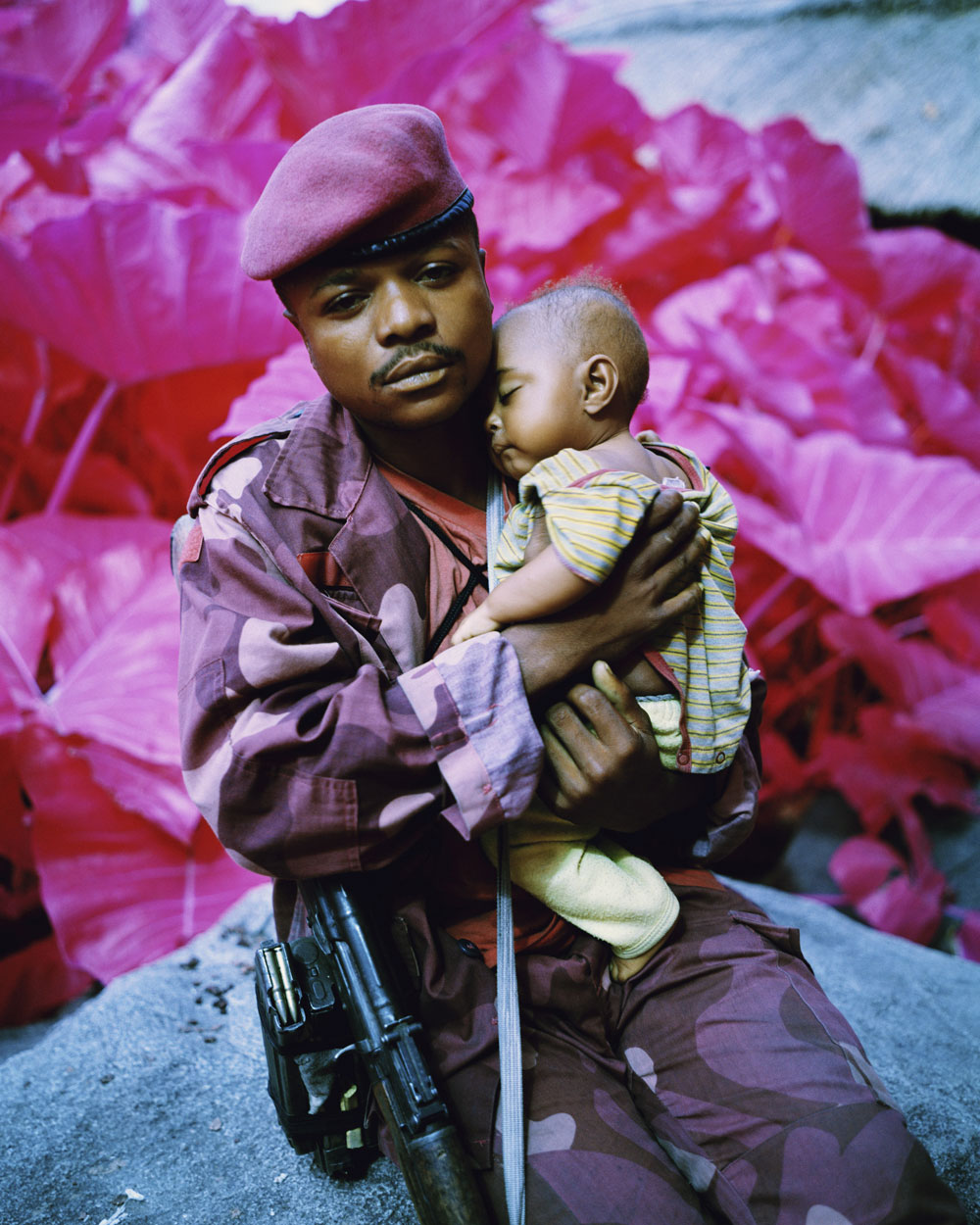
Richard Mosse (Ireland, b. 1980) 'Madonna and Child, North Kivu, Eastern Congo' 2012


Richard Mosse (Ireland, b. 1980)
Madonna and Child, North Kivu, Eastern Congo
2012
Digital C print
35 x 28 inches


The Photographers’ Gallery
16-18 Ramillies Street
London
W1F 7LW

Opening hours:
Mon – Wed: 10.00 – 18.00
Thursday – Friday: 10.00 – 20.00
Saturday: 10.00 – 18.00
Sunday: 11.00 – 18.00

The Photographers’ Gallery website

LIKE ART BLART ON FACEBOOK

Back to top

Vale Dr John Cato (1926-2011)

February 2011


It is with much sadness that I note the death of respected Australian photographer and teacher Dr John Cato (1926-2011). Son of Australian photographer Jack Cato, who wrote one of the first histories of Australian photography (The Story of the Camera in Australia (1955)), John was apprentice to his father before setting up a commercial studio with Athol Shmith that ran from 1950-1971. Dr Cato then joined Shmith at the fledgling Prahran College of Advanced Education photography course in 1974, becoming head of the course when Shmith retired in 1979, a position he held until John retired in 1991.

I was fortunate enough to get to know John and his vivacious wife Dawn. I worked with him and co-curatored his retrospective with William Heimerman, ‘…and his forms were without number’ at The Photographers’ Gallery, South Yarra, in 2002. My catalogue essay from this exhibition is reproduced below.

John was always generous with his time and advice. His photographs are sensitive, lyrical renditions of the Australian landscape. He had a wonderful ear for the land and for the word, a musical lyricism that was unusual in Australian photographers of the early 1970s. He understood how a person from European background could have connection to this land, this Australia, without being afraid to express this sense of belonging; he also imaged an Aboriginal philosophy (that all spirits have a physical presence and everything physical has a spiritual presence) tapping into one of the major themes of his personal work: the mirror held up to reveal an’other’ world – the language of ambiguity and ambivalence (the dichotomy of opposites e.g. black / white, masculine / feminine) speaking through the photographic print.

His contribution to the art of photography in Australia is outstanding. What are the precedents for a visual essay in Australian photography before John Cato? I ask the reader to consider this question.

It would be fantastic if the National Gallery of Victoria could organise a large exhibition and publication of his work, gathering photographs from collections across the land, much like the successful retrospective of the work of John Davis held in 2010. Cato’s work needs a greater appreciation throughout Australia because of it’s seminal nature, containing as it does the seeds of later development for Australian photographers. His educational contribution to the development of photography as an art form within Australia should also be acknowledged in separate essays for his influence was immense. His life, his teaching and his work deserves nothing less.

Dr Marcus Bunyan


‘… and his forms were without number’

John Cato: A Retrospective of the Photographic Work 1971-1991

This writing on the photographic work of Dr John Cato from 1971-1991 is the catalogue essay to a retrospective of his work held at The Photographers’ Gallery in Prahran, Melbourne in 2002. Dr Cato forged his voice as a photographic artist in the early 1970s when photography was just starting to be taken seriously as an art form in Australia. He was a pioneer in the field, and became an educator in art photography. He is respected as one of Australia’s preeminent photographers of the last century.


With the arrival of ‘The New Photography’1 from Europe in the early 1930’s, the formalist style of Modernism was increasingly adopted by photographers who sought to express through photography the new spirit of the age. In the formal construction of the images, the abstract geometry, the unusual camera angles and the use of strong lighting, the representation ‘of the thing in itself’2 was of prime importance. Subject matter often emphasised the monumentality of the factory, machine or body/landscape. The connection of the photographer with the object photographed was usually one of sensitivity and awareness to an external relationship that resulted in a formalist beauty.

Following the upheaval and devastation of the Second World War, photography in Australia was influenced by the ‘Documentary’ style. This “came to be understood as involved chiefly with creating aesthetic experiences … associated with investigation of the social and political environment.”3 This new movement of social realism, “… a human record intimately bound with a moment of perception,”4 was not dissimilar to Henri Cartier-Bresson’s ‘decisive moment’ (images a la sauvette) where existence and essence are in balance.5

The culmination of the ‘Documentary’ style of photography was The Family of Man exhibition curated by Edward Steichen that toured Australia in 1959.6 This exhibition, seen many times by John Cato,7 had a theme of optimism in the unity and dignity of man. The structure of the images in ‘Documentary’ photography echoed those of the earlier ‘New Photography’.

Max Dupain “stressed the objective, impersonal and scientific character of the camera; the photographer could reveal truth by his prerogative of selection.”8 This may have been an objective truth, an external vocalising of a vision that concerned itself more with exterior influences rather than an internal meditation upon the subject matter.


John Cato (Australian, 1926-2011) 'Untitled' from the series 'Essay I, Landscapes in a Figure' 1971-1979


John Cato (Australian, 1926-2011)
Untitled from the series Essay I, Landscapes in a Figure
1971-1979
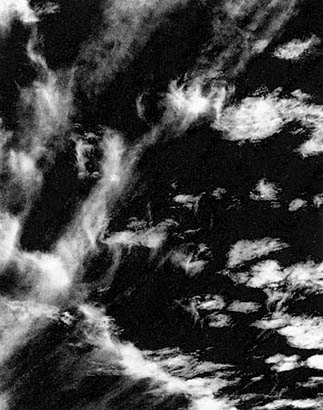
Silver gelatin photograph


In 1971, John Cato’s personal photographic work was exhibited for the first time as part of the group show Frontiers at the National Gallery of Victoria, Melbourne.9 Earth Song emerged into an environment of social upheaval inflamed by Australian involvement in the Vietnam War. It provided a group of enthusiastic people who were beginning to be interested in photography as art, an opportunity to see the world, and photography, through a different lens. The 52 colour photographic prints in Earth Song, were shown in a sequence that used melodic line and symphonic form as its metaphoric basis, standing both as individual photographs and as part of a total concept.10

In the intensity of the holistic vision, in the connection to the subconscious, the images elucidate the photographers’ search for a perception of the world. This involved an attainment of a receptive state that allowed the cracks, creases and angles inherent in the blank slate of creation to become meaningful. The sequence contained images that can be seen as ‘acts of revelation’,11confirmed and expanded by supporting photographs, and they unearthed a new vocabulary for the discussion of spiritual and political issues by the viewer. They may be seen as a metaphor for life.

The use of sequence, internal meditation and ‘revelation’, although not revolutionary in world terms,12 were perhaps unique in the history of Australian photography at that time. During the production of Earth Song, John Cato was still running a commercial studio in partnership with the photographer Athol Shmith and much of his early personal work was undertaken during holidays and spare time away from the studio. Eventually he abandoned being a commercial photographer in favour of a new career as an educator, but found this left him with even less time to pursue his personal work.13

Earth Song (1970-1971) was followed by the black and white sequences:


 Tree – A Journey18 images1971-1973 
 Petroglyphs14 images1971-1973 
 Seawind14 images1971-1975 
 Proteus18 images1974-1977 
 Waterway16 images1974-1979 


Together they form the extensive series Essay I, Landscapes in a Figure, parts of which are held in the permanent photography collection of the National Gallery of Victoria.14


John Cato (Australian, 1926-2011) 'Untitled' from the series 'Essay I, Landscapes in a Figure' 1971-1979


John Cato (Australian, 1926-2011)
Untitled from the series Essay I, Landscapes in a Figure
1971-1979
Silver gelatin photograph


The inspiration for Essay I and later personal work came from many sources. An indebtedness to his father, the photographer Jack Cato, is gratefully acknowledged. Cato also acknowledges the influence of literature: William Shakespeare (especially the Sonnets, and As You Like It), William Blake, Walt Whitman (Leaves of Grass), Lewis Carroll (Through the Looking Glass), the Bible; and of music (symphonic form), the mythology of the Dreamtime and Aboriginal rock paintings.15 Each body of work in Essay I was based on an expression of nature, the elements and the Creation. They can be seen as Equivalents16 of his most profound life experiences, his life philosophy illuminated in physical form.

John Cato was able to develop the vocabulary of his own inner landscape while leaving the interpretation of this landscape open to the imagination of the viewer. Seeing himself as a photographer rather than an artist, he used the camera as a tool to mediate between what he saw in his mind’s eye, the subjects he photographed and the surface of the photographic negative.17 Photographing ‘in attention’, much as recommended by the teacher and philosopher Krishnamurti,18 he hoped for a circular connection between the photographer and the subject photographed. He then looked for verification of this connection in the negative and, eventually, in the final print.

Essay II, Figures in a Landscape, had already been started before the completion of Essay I and it consists of three black and white sequences:


 Alcheringa11 images1978-1981 
 Broken Spears11 images1978-1983 
 Mantracks22 images in pairs1978-1983 


The photographs in Essay II seem to express “the sublimation of Aboriginal culture by Europeans”19 and, as such, are of a more political nature. Although this is not obvious in the photographs of Alcheringa, the images in this sequence celebrating the duality of reality and reflection, substance and shadow, it is more insistent in the symbology of Broken Spears and Mantracks. Using the metaphor of the fence post (white man / black man in Broken Spears) and contrasting Aboriginal and European ‘sacred’ sites (in pairs of images in Mantracks), John Cato comments on the destruction of a culture and spirit that had existed for thousands of years living in harmony with the land.

In his imaging of an Aboriginal philosophy (that all spirits have a physical presence and everything physical has a spiritual presence) he again tapped one of the major themes of his personal work: the mirror held up to reveal an’other’ world. Cato saw that even as they are part of the whole, the duality of positive / negative, black / white, masculine / feminine are always in conflict.20 In the exploration of the conceptual richness buried within the dichotomy of opposites, Cato sought to enunciate the language of ambiguity and ambivalence,21 speaking through the photographic print.

The theme of duality was further expanded in his last main body of work, Double Concerto: An Essay in Fiction:


 Double Concerto (Pat Noone)30 images1984-1990 
 Double Concerto (Chris Noone)19 images1985-1991 


Double Concerto may be seen as a critique of the power of witness and John Cato created two ‘other’ personas, Pat Noone and Chris Noone, to visualise alternative conditions within himself. The Essay explored the idea that if you send two people to the same location they will take photographs that are completely different from each other, that tell a distinct story about the location and their self:

“For the truth of the matter is that people have mixed feelings and confused opinions and are subject to contradictory expectations and outcomes, in every sphere of experience.”22

This slightly schizophrenic confusion between the two witnesses is further highlighted by Pat Noone using single black and white images in sequence. Chris Noone, on the other hand, uses multiple colour images joined together to form panoramic landscapes that feature two opposing horizons. The use of colour imagery in Double Concerto, with its link to the colour work of Earth Song, can be seen to mark the closing of the circle in terms of John Cato’s personal work. In Another Way of Telling, John Berger states that …

“Photography, unlike drawing, does not possess a language. The photographic image is produced instantaneously by the reflection of light; its figuration is not impregnated by experience or consciousness.”23


But in the personal work of John Cato it is a reflection of the psyche, not of light, that allows a consciousness to be present in the figuration of the photographic prints. The personal work is an expression of his self, his experience, his story and t(his) language, is our language, if we allow our imagination to speak.

Dr Marcus Bunyan 2002


Footnotes

1/ Newton, Gael. Shades of Light: Photography and Australia 1839-1988. Sydney: Australian National Gallery, William Collins, 1988, p. 109

2/ Newton, Gael. Max Dupain. Sydney: David Ell Press,1980, p. 34

3/ Ibid., p. 32

4/ Greenough, Sarah (et al). On the Art of Fixing a Shadow: 150 Years of Photography. Boston: National Gallery of Art, Bullfinch Press, 1989, p. 256

5/ Ibid., p. 256

6/ Newton, Gael. Shades of Light: Photography and Australia 1839-1988. Sydney: Australian National Gallery, William Collins, 1988, p. 131

7/ Ibid., p. 131

8/ Newton, Gael. Max Dupain. Sydney: David Ell Press, 1980, p. 32

9/ Only the second exhibition by Australian photographers at the National Gallery of Victoria, Melbourne

10/ Shmith, Athol. Light Vision No.1. Melbourne: Jean-Marc Le Pechoux (editor and publisher), Sept 1977, p. 21

11/ Berger, John and Mohr, Jean. Another Way of Telling. New York: Pantheon Books, 1982, p. 118

12/ Hall, James Baker. Minor White: Rites and Passages. New York: Aperture, 1978

13/ Conversation with the photographer 29/01/1997, Melbourne, Victoria

14/ Newton, Gael. Shades of Light: Photography and Australia 1839-1988. Sydney: Australian National Gallery, William Collins, 1988, p. 135, Footnote 7; p. 149

15/ Conversation with the photographer 22/01/1997, Melbourne, Victoria

16/ Norman, Dorothy. Alfred Stieglitz. New York: Aperture, 1976, p. 5

17/ Ibid.,

18/ Krishnamurti. Beginnings of Learning. London: Penguin, 1975, p. 131

19/ Strong, Geoff. Review. The Age. Melbourne, 28/04/1982

20/ Conversation with the photographer 22/01/1997, Melbourne, Victoria

21/ The principal definition for ambiguity in Websters Third New International Dictionary is: “admitting of two or more meanings … referring to two or more things at the same time.”
That for ambivalence is “contradictory and oscillating subjective states.”
Quoted in Davis, Fred. Fashion, Culture and Identity. Chicago: University of Chicago Press, 1992, p. 21.

22/ Levine, Donald. The Flight From Ambiguity. Chicago: University of Chicago Press, 1985

23/ Berger, John and Mohr, Jean. Another Way of Telling. New York: Pantheon Books, 1982, p. 95


LIKE ART BLART ON FACEBOOK

Back to top

Lecture/Performance: Hans Aarsman at The Photographers Gallery, London

Date: 21st January 2009


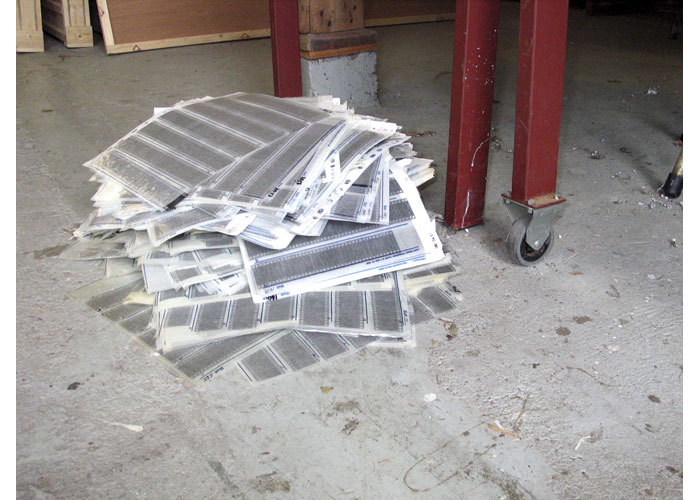
Hans Aarsman (Dutch, b. 1951) 1236 sheets of negatives from the 1980s, thrown away on 19 August 2004


Hans Aarsman (Dutch, b. 1951)
1236 sheets of negatives from the 1980s, thrown away on 19 August 2004
2004


Hans Aarsman presents From Ugly to Pretty and Back Again. The Mysterious Ways of Beauty in Photography.

In this lecture Hans Aarsman examines the myriad of questions involved in taking photographs for purposes as varied as advertising, documentation and personal mementos. How does our understanding of the beauty in these images differ depending their final resting place, be it Ebay, family album, specialist magazines or museums collections. Through his own experiences Aarsman asks if, and how, artistic ambitions, aesthetics and useful photography can coincide.

Hans Aarsman (b. 1951, NL) worked as a photojournalist until 1994. He currently works as a writer, in particular on photography, and is co-founder of the magazine Useful Photography. Aarsman displayed, and invited contributions to, his project Photography Against Consumerism here at The Photographers’ Gallery last July. He is based in Amsterdam.

£5.00/ £3.50 concessions


The Photographers Gallery
16-18 Ramillies Street
London
W1F 7LW

Opening hours:
Monday – Saturday: 10.00 – 18.00
Thursday: 10.00 – 20.00 during exhibitions
Sunday: 11.00 – 18.00

The Photographers Gallery website

LIKE ART BLART ON FACEBOOK

Back to top