Exhibition: ‘Richard Avedon ‘In the American West’ 1979-1984′ at the Fondation Henri Cartier-Bresson, Paris

Exhibition dates: 30th April – 12th October, 2025

Curator: Clément Chéroux, Director, Fondation Henri Cartier-Bresson


Richard Avedon (American, 1923-2004) 'Sandra Bennett, twelve year old, Rocky Ford, Colorado, August 23, 1980' 1980


Richard Avedon (American, 1923-2004)
Sandra Bennett, twelve year old, Rocky Ford, Colorado, August 23, 1980
1980
Gelatin silver print
© The Richard Avedon Foundation


Myths of the American West

This is a magnificent exhibition of the 103 photographs that form American photographer Richard Avedon’s series and subsequent book of the same name, In The American West 1984.

“Avedon spent the next six years, from 1979 to 1984, traveling to 189 towns in 17 states – Arizona, California, Colorado, Idaho, Iowa, Kansas, Montana, Nebraska, Nevada, New Mexico, North Dakota, Oklahoma, Oregon, South Dakota, Texas, Utah, and Wyoming – and even up into Canada. He conducted 752 sittings, exposing 17,000 sheets of film through his large-format view camera.”1

“For five years, Avedon photographed miners, drovers, showmen, vendors, and vagabonds, alone or in small groups, in front of his view camera against a white background that enhanced their features, postures, and expressions. He thus created a striking portrait of this region and its residents, a departure from traditional representations and glorifications of the myth of the American West.”2

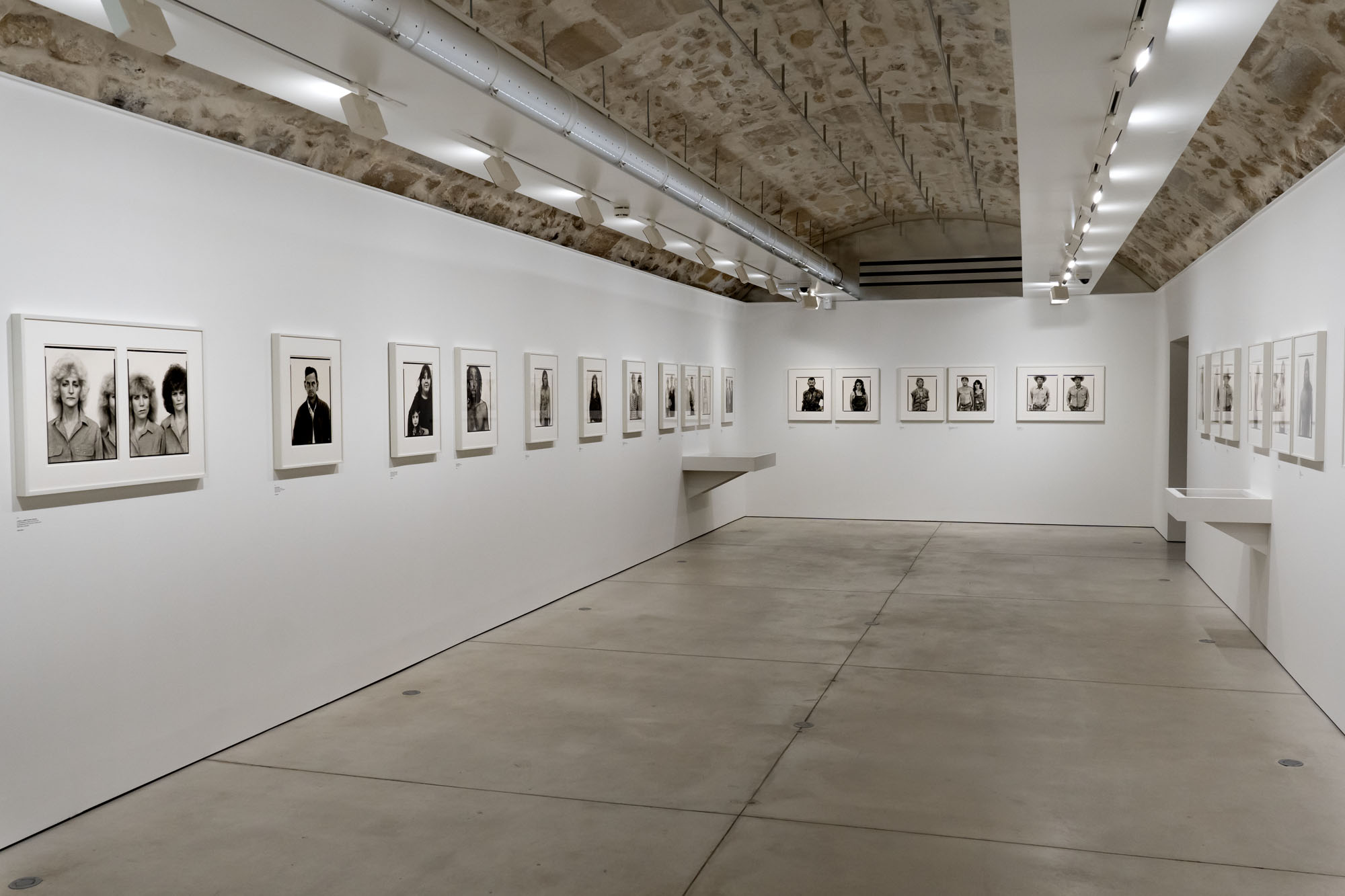
Using relatively small reference prints (40 x 50cm) not originally intended for exhibition made by the photographer at the time to produce the prints for his book, the hanging of this exhibition “on the line”, “follows the book, from the first to the last image… The blank pages are represented on the wall by a gap equivalent to the width of a frame, like a half-space. We have thus reproduced the rhythm of someone leafing through the book. We can see through this that Richard Avedon and Marvin Israel (1924-1984), artistic director, have constructed the rhythm of these images in a very precise manner”3, one which follows “the dynamics of the photograph on the page, and the inter-relationships, scaling and sequencing of groups of photographs.”


Breaking with the code of social documentary photography, Avedon brings to this project all his undoubted skill as a New York fashion photographer, reassigned to the artistic sphere: clarity of purpose, simplicity of representation, aesthetic beauty, clinical detail and contextless backgrounds.

While there is a long history of the use of plain backgrounds in portrait photography dating back to the infancy of the medium, Avedon was one of the first to employ such a technique in contemporary (I’d like to say postmodern) photo-portraits, where the subject is disassociated from their location, job, culture and is posed by the director of the theatrical show.

Over the five years of the project, Avedon worked closely with his subjects, often advertising for people to be photographed, street-casting his sitters, paying them for their time and providing prints of the resultant photographs. He or one of his assistants “took a Polaroid photograph of each of the models intended to pose. Clément Chéroux (curator of the exhibition) notes that, “Comparing these polaroids with Avedon’s portraits shows his ability to transcend the appearance of his models.”4

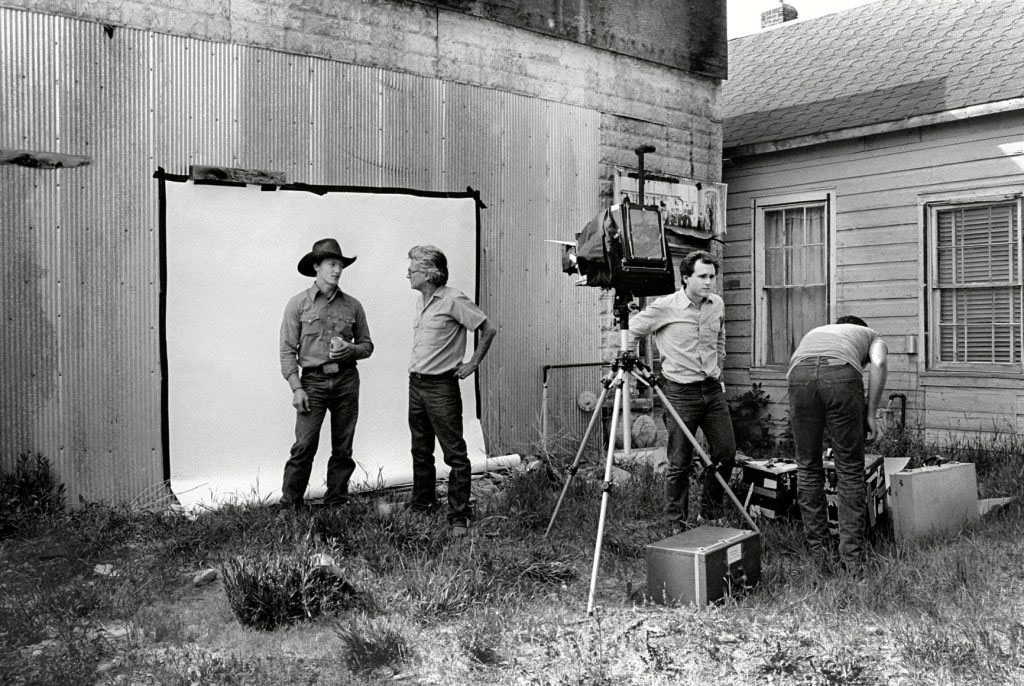
During the photographic sessions Avedon shot not from behind his camera but to the side, like the director of a play in rehearsal, front of stage. “He had a strong connection with his subjects, mimicking their position, and asking them to respond to a very small gesture by showing himself moving in one direction or another, and I think a lot of the work is in this relationship that he was establishing with the subject. Photographic literature usually focuses on the framing, the composition, but for me, this kind of interaction he was able to develop with the subject is where the work is, where he’s transforming the people that he met into a Richard Avedon photograph.”5

“A conductor of his own composition, Richard Avedon was able to weave an unparalleled fusional relationship with his models, while implacably directing them through his gaze, gestures or voice.”6

Thus, through his imagination, his direction and his creative experience Avedon conjured a subjective view of the American West every bit as much as myth as those cowboys in John Wayne movies, a kind of counter-mythology undercutting the eulogising of the American West, but a staged, fabricated, youthful, desolate, mysterious mythology none the less – a series which captures the ethos of the era (global recession, disease, dis/ease) counter to the one hoped for, “representing a sad, unsmiling America, which does not correspond to the one dreamed of.”7

Think that damned foreigner Robert Frank and his book The Americans, pointing the bone at the belly of the United States of America, holding a mirror up to their reflection8 and they certainly not liking what they saw. Indeed Avedon, while American and respectful of his subjects, could be seen as an interloper from New York exposing through his photographs the underbelly of this vast country colonised through divine providence and Manifest Destiny.

Avedon, while undercutting the myth of the American West through his storytelling, doesn’t seek to document, exploit or misrepresent his subjects, but to subjectively present them as on a theatrical set devoid of scenery – where their very appearance becomes scene / seen. As he himself said, “My concern is… the human predicament; only what I consider the human predicament may simply be my own.”

“Richard Avedon showed his own America, those we do not see, those we pass by without pausing, those who do the work, those who make America work.”9


Neither the series nor the exhibition are without fault, however.

While I believe that Avedon’s exceptional magnum opus In The American West has become one of the truly iconic photographic portrait series of the 20th century it can also be seen as problematic, not in the photographic sense, but in the sense that the photographs did not reflect the diverse reality of the West’s population. While the series may be Avedon’s subjective mythologising of the American West some people, myself included, find the lack of representation of Black Americans, Asian Americans and other ethnicities that have been integral to the development of the American West a point of contention. Are they not those that also do the work, those who also make America work, as much as those Avedon chose to photograph? Indeed there is a “significant demographic blind spot” in the whole series…

The other blind spot is the inability of commentators such as myself to publish some of the preparatory Polaroids that Avedon and his assistants took before posing his subjects. I asked the Fondation Henri Cartier-Bresson for some of the Polaroids to illustrate this posting and they said that none were available. Since the exhibition promotes the presence of these unpublished documents and the curator Clément Chéroux notes their importance for their ability to compare them with Avedon’s finished portraits, showing “his ability to transcend the appearance of his models,” they become vital to understanding Avedon’s creative process … and it would have been great to see the visualisation of his subjects from beginning to end.

Examples of these Polaroids are rare online but some can be seen in the article “Before And After: Polaroids then Magic from Richard Avedon, In the American West,” on the Flashbak website June 9, 2025.

Finally, in the juxtaposition of Polaroid and finished portrait we can begin to perceive the magical transformation and artistry and humanism of the man, Avedon, as he visualises his ode to the American West, composing his subjects so that they engage with the viewer directly from the photographic frame – the dynamics of the photographs creating iconic images of memorable characters, collectively constructing the rhythm of these images (from dark to light, from sublime to industrial) into an unforgettable sequence of photographs.

Bravo Richard Avedon!

Dr Marcus Bunyan

Word count: 1,254


1/ Text from the Amon Carter Museum of American Art website [Online] Cited 10/10/2025

2/ Text from the YouTube website translated from the French by Google Translate [Online] Cited 23/09/2025

3/ Nathalie Dassa. “Richard Avedon: The Living Forces of the American West,” on the Blind Magazine website, May 12, 2025 [Online] Cited 22/09/2025

4/ Karen Strike. “Before And After: Polaroids then Magic from Richard Avedon, In the American West,” on the Flashbak website June 9, 2025 [Online] Cited 10/10/2025

5/ Clément Chéroux quoted in Christina Cacouris. “Richard Avedon’s Rugged American West Comes to Paris,” on the Aperture website, June 26, 2025 [Online] Cited 23/09/2025

6/ Justine Grosset. “Richard Avedon, In the American West,” on the Phototrend website May 5, 2025 [Online] Cited 10/10/2025

7/ Nathalie Dassa, op.cit.,

8/ Holding a mirror up to their reflection, i.e. to hold something up to scrutiny, to reveal an unpleasant truth, or to show something for what it truly is, often with the intent of providing insight or understanding.

9/ Nathalie Dassa, op.cit.,


Many thankx to the Fondation Henri Cartier-Bresson for allowing me to publish the photographs in the posting. Please click on the photographs for a larger version of the image.


“I don’t think the West in these portraits is any more accurate than John Wayne’s West.”


Richard Avedon at the exhibition opening in 1985


“Avedon’s most compelling photographs are about performance – his performance as well as his subjects’ – and depend on the engagement of their personalities. For this reason it is difficult to separate the photographer from the man. Indeed it is partly owing to the ineluctable presence of Avedon’s own psychology that his portraits transcend the mainstream of cultural history.”


Anonymous. “Body of Evidence,” on the Frieze website, 06 March 1994 [Online] Cited 23/09/2025


“Listen carefully to the stories of others and they may tell us something of ourselves. The story of any person exists first in the mind of its teller, perpetually renewing itself as, like smoke in wind, it is constantly shaped and reshaped in the flux of daily life. Narratives constructed from various facts, memories and rumours are added to, subtracted from, come together and fall apart in a continuous reassembling of experience and imagination. The human mind is a place where fact meets fiction, where reality and fantasy mingle easily and endlessly with fabrication, half-truths and invention. As they say, looking at something is no guarantee you will actually see it.”


Glenn Busch from A Man Holds A Fish 2024


Richard Avedon – In the American West

To mark the 40th anniversary of Richard Avedon’s iconic work, In The American West, the Fondation Henri Cartier-Bresson presents, from April 30 to October 12, 2025, in collaboration with the Richard Avedon Foundation, an exceptional exhibition entirely dedicated to this iconic series.

Between 1979 and 1984, at the request of the Amon Carter Museum of American Art in Fort Worth, Texas, Richard Avedon traveled the American West and photographed more than 1,000 of its inhabitants. For five years, Avedon photographed miners, drovers, showmen, vendors, and vagabonds, alone or in small groups, in front of his view camera against a white background that enhanced their features, postures, and expressions.

He thus created a striking portrait of this region and its residents, a departure from traditional representations and glorifications of the myth of the American West. The sheer power of the 103 works that make up the final series and the book of the same name make In The American West a pivotal moment in Avedon’s work and a major milestone in the history of photographic portraiture.

The exhibition presented at the Fondation Henri Cartier-Bresson from April 30 to October 12, 2025, displays for the very first time in Europe all the images that appear in the original work, accompanied by previously unpublished documents.

Text from the YouTube website translated from the French by Google Translate [Online] Cited 23/09/2025


Richard Avedon photographing for 'In The American West'


Richard Avedon photographing for In The American West


“We have some testimonies about the way that Avedon was working, and we know that he was not behind his camera, he was standing next to it. He had a strong connection with his subjects, mimicking their position, and asking them to respond to a very small gesture by showing himself moving in one direction or another, and I think a lot of the work is in this relationship that he was establishing with the subject. Photographic literature usually focuses on the framing, the composition, but for me, this kind of interaction he was able to develop with the subject is where the work is, where he’s transforming the people that he met into a Richard Avedon photograph.”

Clément Chéroux quoted in Christina Cacouris. “Richard Avedon’s Rugged American West Comes to Paris,” on the Aperture website, June 26, 2025 [Online] Cited 23/09/2025


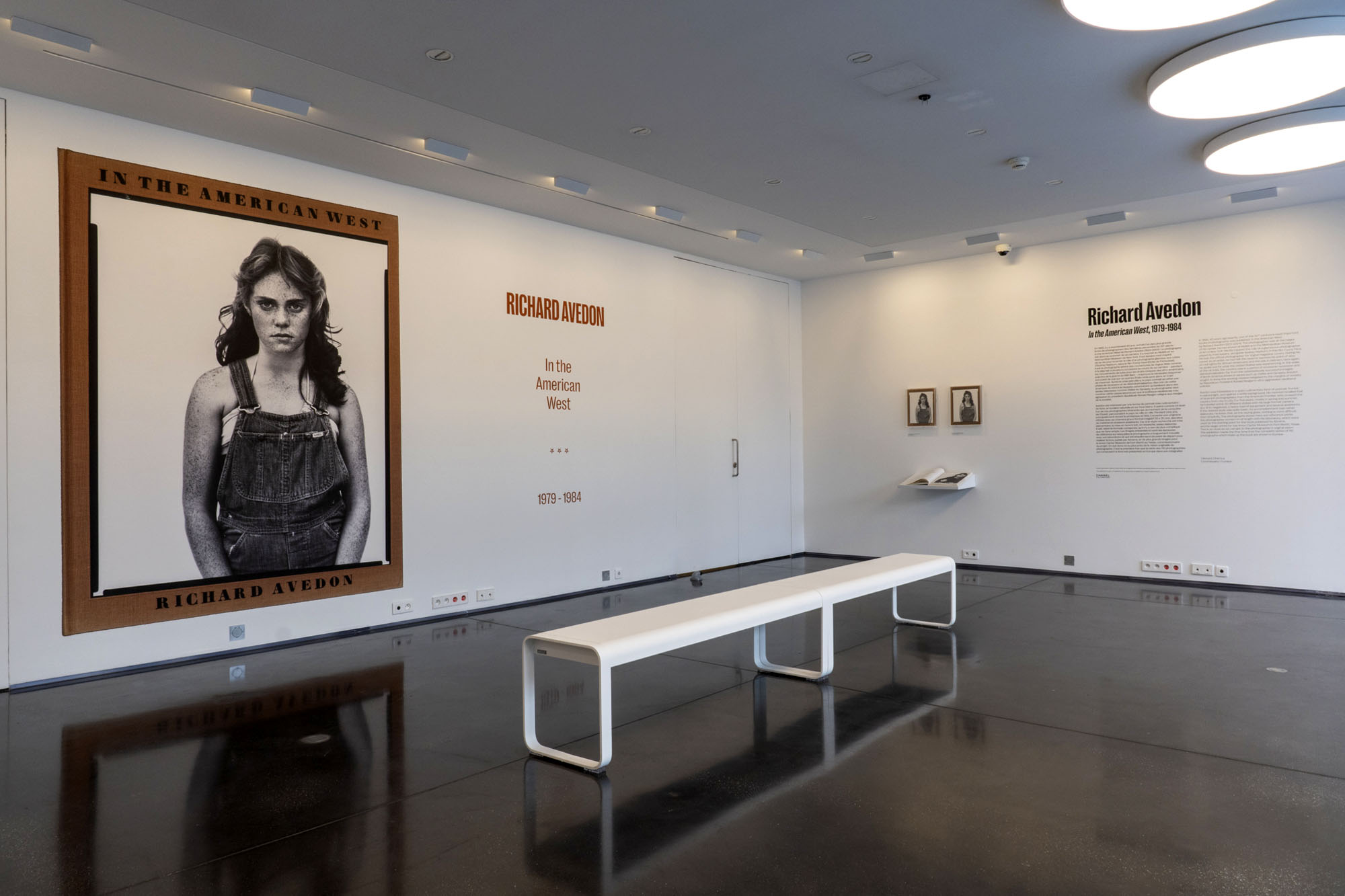
Installation view of the exhibition Richard Avedon 'In the American West' at the Fondation Henri Cartier-Bresson, Paris, April - October 2025


Installation view of the exhibition Richard Avedon ‘In the American West‘ at the Fondation Henri Cartier-Bresson, Paris, April – October 2025


“The hanging follows the book, from the first to the last image,” explains Clément Chéroux. “The blank pages are represented on the wall by a gap equivalent to the width of a frame, like a half-space. We have thus reproduced the rhythm of someone leafing through the book. We can see through this that Richard Avedon and Marvin Israel (1924-1984), artistic director, have constructed the rhythm of these images in a very precise manner.”

Nathalie Dassa. “Richard Avedon: The Living Forces of the American West,” on the Blind Magazine website, May 12, 2025 [Online] Cited 22/09/2025


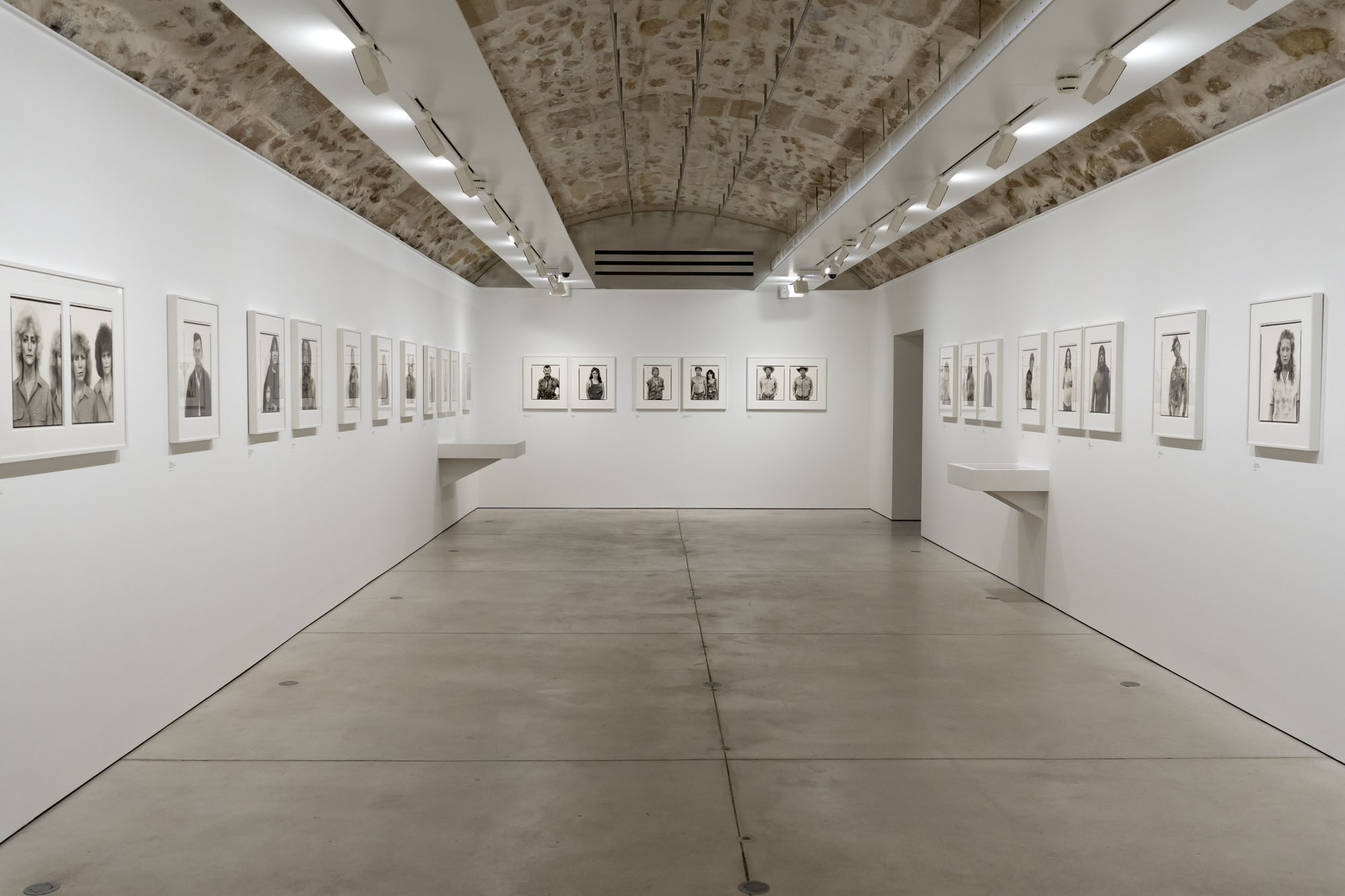
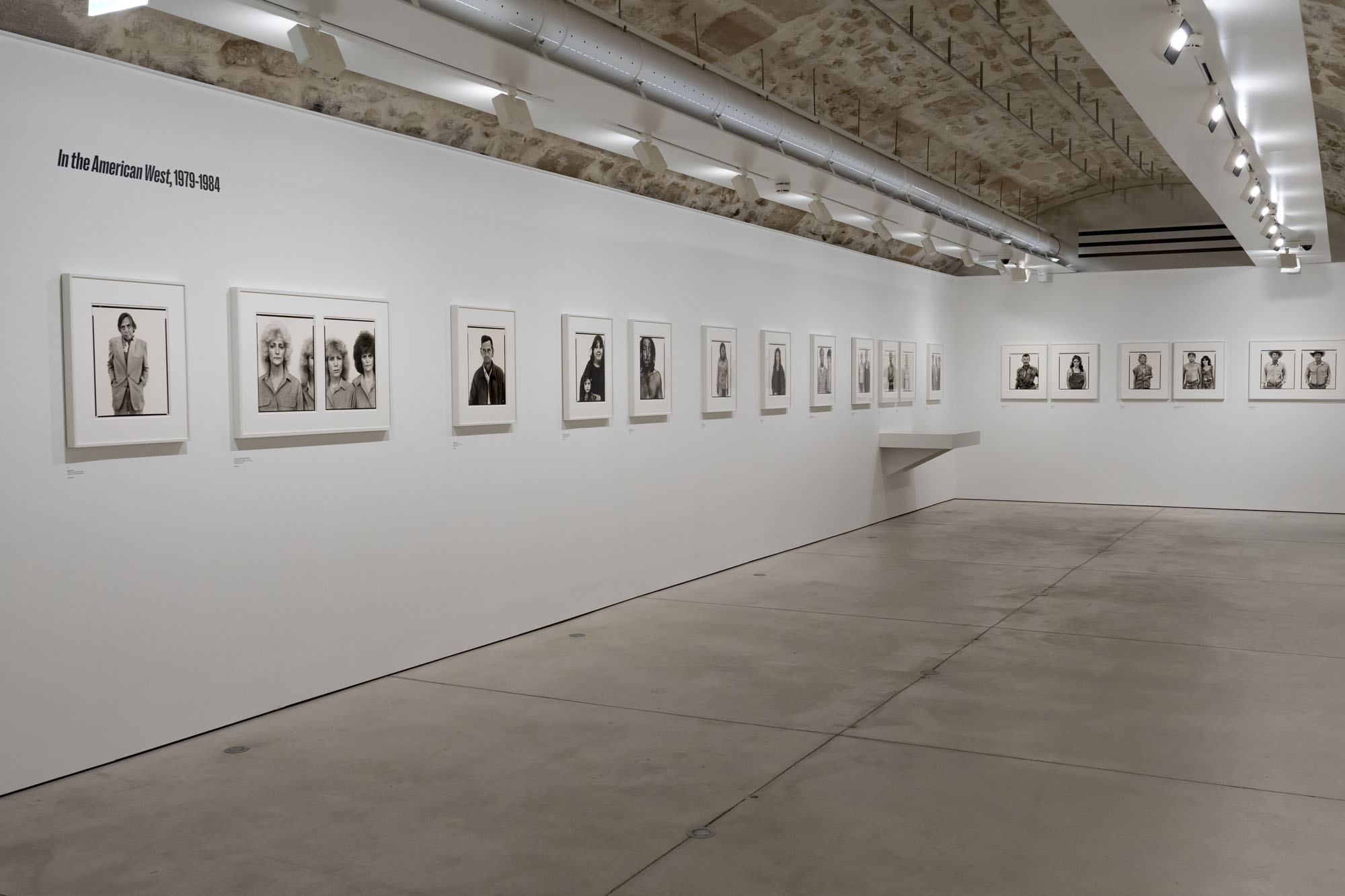
“Here, the works are displayed throughout the building in classic fashion – in a single line – and in unusually small formats (40 × 50 centimetres). “These are the reference prints, made by the photographer at the time, to produce the prints for his book and the enlargements shown in his exhibitions,” explained Clément Chéroux, the foundation’s director. These prints were not intended for exhibition, but nonetheless their remarkable quality allows the public − for the first time in Europe − to discover this exceptional work in its entirety.”

Claire Guillot. “Richard Avedon’s photographs of the American West at Paris’s Fondation Henri Cartier-Bresson,” on the Le Monde website, August 13, 2025 [Online] Cited 23/09/2025


Installation view of the exhibition Richard Avedon 'In the American West' at the Fondation Henri Cartier-Bresson, Paris, April - October 2025


Installation views of the exhibition Richard Avedon ‘In the American West‘ at the Fondation Henri Cartier-Bresson, Paris, April – October 2025


To mark the 40th anniversary of Richard Avedon’s iconic work In the American West, the Fondation Henri Cartier-Bresson, in collaboration with the Richard Avedon Foundation, presents an exclusive exhibition focused on this emblematic series. 

Between 1979 and 1984, commissioned by the Amon Carter Museum of American Art in Fort Worth, Texas, Richard Avedon traveled across the American West to photograph over 1,000 of its inhabitants. For five years, Avedon photographed miners, herdsmen, showmen, salesmen and transient people, amongst others with rich histories, alone or in small groups, before his camera, against a white background that enhanced their features, postures and expressions, for a striking portrait of the territory and its residents, in stark contrast to traditional depictions and glorifications of the legend of the American West. The force of the 103 works that compose the book makes In the American West a pivotal event in Avedon’s career, and a milestone in the history of photographic portraits. 

For the first time in Europe, the exhibition at the Fondation Henri Cartier-Bresson presents the whole series of images included in the original publication, while also showcasing the stages of its production and reception. The exhibition includes a full selection of engravers prints, which served as reference materials for both the exhibition and the 1985 book, as well as previously unpublished documents, such as preparatory Polaroids, test prints annotated by the photographer, and correspondence between the artist and his models. 

To mark this anniversary, Abrams, the book’s original publisher, is reissuing the long out-of-print book.

Richard Avedon short biography

Richard Avedon was born to parents of Russian Jewish heritage in New York City. As a boy, he learned photography, joining the YMHA Camera Club at the age of twelve. Avedon joined the armed forces in 1942 during World War II, serving as Photographer’s Mate Second Class in the Merchant Marine. Making identification portraits of the crewmen with his Rolleiflex twin lens camera – a gift from his father – Avedon advanced his technical knowledge of the medium and began to develop a dynamic style. After two years of service he left the Merchant Marine to work as a photographer, making fashion images and studying with art director Alexey Brodovitch at the Design Laboratory of the New School for Social Research. 

In 1945, Avedon set up his own studio and worked as a freelance photographer for various magazines. He quickly became the preeminent photographer used by Harper’s Bazaar.

From the beginning, Avedon made portraits for editorial publication as well: in the pages of Harper’s Bazaar, in Theater Arts, and in Life and Look magazines. From the outset, he was fascinated by photography’s capacity for suggesting the personality and evoking the life of his subjects. Only rarely did he idealize people; instead, he presented the face as a kind of landscape, with total clarity. 

Avedon continued to make portraiture and fashion photography for magazine publications throughout his career. After parting ways with Harper’s Bazaar in 1965, he began a long-term relationship with Vogue that continued through 1988. In later years, he established formidable creative partnerships with the French publication Egoiste, and with The New Yorker. In the pages of these periodicals, Avedon reinvigorated his formalist style, investing his imagery with dynamism and theatricality. In addition, he supported his studio by making innovative advertising work for print and broadcast – defining the look of brands like Calvin Klein, Versace, and Revlon. 

As his reputation grew and his signature aesthetic evolved, Avedon remained dedicated to extended portraiture projects as a means for exploring cultural, political, and personal concerns. In 1963-1964, he examined the civil rights movement in the American South. During the Vietnam War, he photographed students, countercultural artists and activists, and victims of the war, both in the United States and in Vietnam. In 1976, on a commission for Rolling Stone magazine, he produced The Family, a composite portrait of the American power elite at the time of the country’s Bicentennial election. 

In 1985, Avedon created his magnum opus – In the American West. He portrayed members of the working class: butchers, coal miners, convicts, and waitresses, all photographed with precisionist detail, using the large format camera and plain white backdrop characteristic of his mature style. Despite their apparent minimalism and objectivism, however, Avedon emphasised that these portraits were not to be regarded as simple records of people; rather, he said, “the moment an emotion or a fact is transformed into a photograph it is no longer a fact but an opinion.”

Publication

Richard Avedon’s acclaimed work In the American West was first published in 1985 by American publishing house Abrams. For its 40th anniversary, Abrams is republishing the work in its original format.

Text from the Fondation Henri Cartier-Bresson


Richard Avedon (American, 1923-2004)
'Roger Tims, Jim Duncan, Leonard Markley, Don Belak, coal miners, Reliance, Wyoming, August 29, 1979' 1979


Richard Avedon (American, 1923-2004)
Roger Tims, Jim Duncan, Leonard Markley, Don Belak, coal miners, Reliance, Wyoming, August 29, 1979
1979
Gelatin silver print
© The Richard Avedon Foundation


“This was the beginning of his emblematic project “In the American West” that took him across 17 US states, where he photographed nearly 1,000 people from 1979 to 1984 and revealed a poor, hardworking America, far removed from the clichés and the myth of the glorious American West. He carried out this series with neither sociological intent nor a concern for objectivity. “This is a fictional West,” he said. “I don’t think the West of these portraits is any more conclusive than the West of John Wayne.””

Claire Guillot. “Richard Avedon’s photographs of the American West at Paris’s Fondation Henri Cartier-Bresson,” on the Le Monde website, August 13, 2025 [Online] Cited 23/09/2025


Richard Avedon (American, 1923-2004) 'Ronald Fischer, beekeeper, Davis, California, May 9, 1981' 1981


Richard Avedon (American, 1923-2004)
Ronald Fischer, beekeeper, Davis, California, May 9, 1981
1981
Gelatin silver print
© The Richard Avedon Foundation


“He needed to create disjunctions,” says Clément Chéroux. “The beekeeper remains a great image of the 20th century. After placing an ad, he chose this man suffering from alopecia, who no longer had any hair, no eyebrows. He took him to an entomologist who covered him with queen pheromones to attract bees. Through this staging, he wanted to make the audience understand that nothing is more complex than simplicity.”

Nathalie Dassa. “Richard Avedon: The Living Forces of the American West,” on the Blind Magazine website, May 12, 2025 [Online] Cited 22/09/2025


“The subjective part of the project is clear. And most of the photographs were from encounters where he photographed people he met as they were. He also stated very clearly that a few photographs were set up, and the photograph of the Bee Man is a good example of that. He first published an advertisement in the American Bee Journal to find the type of person he was interested in – we have the advertisement in the exhibition, we found the original magazine where it was published. So, he looked for that person and made some drawings in preparation for the shoot. He clearly had a dream of a specific image that he wanted to realize. And he made clear that he wanted to have this photograph to show the subjective part of the project, that it was not exclusively a documentary project. I think the Bee Man shows us that there isn’t truth on one side and fiction on the other. It’s much more complex.” …

“Just before the Bee Man, we have the coal miners, these very strong dark images and then suddenly you have the white body of Ronald Fisher with all these little bees. We wanted to respect this in the exhibition, the sense that it was not just a collection of twentieth-century photographs of Americans, but it was a group of images, a full sentence.”

Clément Chéroux quoted in Christina Cacouris. “Richard Avedon’s Rugged American West Comes to Paris,” on the Aperture website, June 26, 2025 [Online] Cited 23/09/2025


Richard Avedon (American, 1923-2004) 'David Beason, shipping clerk, Denver, Colorado, July 25, 1981' 1981


Richard Avedon (American, 1923-2004)
David Beason, shipping clerk, Denver, Colorado, July 25, 1981
1981
Gelatin silver print
© The Richard Avedon Foundation


“The year after [Glenn Busch’s] Working Men was published came fashion photographer Richard Avedon‘s In the American West (New York: Abrams, 1985), the consistent theme of which, as Richard Bolton in Afterimage argues,  sees “human experience as manifested in [no]thing but style,” a quality, less sombre, but equally arch, exoticising and stereotyping that is found also in the Small Trades studio series of 1950-51 by Irving Penn.”

James McArdle. “October 8: Prosopography,” on the On This Date In Photography website 08/10/2025 [Online] Cited 08/10/2025


Richard Avedon (American, 1923-2004)
'Jesse Kleinsasser, pig man, Hutterite Colony, Harlowton, Montana, June 23, 1983' 1983


Richard Avedon (American, 1923-2004)
Jesse Kleinsasser, pig man, Hutterite Colony, Harlowton, Montana, June 23, 1983
1983
Gelatin silver print
© The Richard Avedon Foundation


Richard Avedon (American, 1923-2004)
'Ruby Mercer, publicist, Frontier Days, Cheyenne, Wyoming, July 31, 1982' 1982


Richard Avedon (American, 1923-2004)
Ruby Mercer, publicist, Frontier Days, Cheyenne, Wyoming, July 31, 1982
1982
Gelatin silver print
© The Richard Avedon Foundation


“Avedon was aware of the subjectivity of what he presents. He was also very familiar with art history and pictorial references, such as those of Rembrandt. He made carcasses of sheep and cattle appear like hallucinations among the workers. His photography is therefore no more objective than that of John Wayne’s westerns. And that is what he had been criticised for: representing a sad, unsmiling America, which does not correspond to the one dreamed of. These are the people that Walker Evans and the traveling photographers sought out during the conquest of the West. He demonstrated this paradox. And this is the term Roland Barthes uses for him: the paradox of all great art. Richard Avedon showed his own America, those we do not see, those we pass by without pausing, those who do the work, those who make America work.”

Nathalie Dassa. “Richard Avedon: The Living Forces of the American West,” on the Blind Magazine website, May 12, 2025 [Online] Cited 22/09/2025


Richard Avedon (American, 1923-2004)
'Petra Alvarado, factory worker, on her birthday, El Paso, Texas, April 22, 1982' 1982


Richard Avedon (American, 1923-2004)
Petra Alvarado, factory worker, on her birthday, El Paso, Texas, April 22, 1982
1982
Gelatin silver print
© The Richard Avedon Foundation


Richard Avedon (American, 1923-2004)
'Boyd Fortin, thirteen year old rattlesnake skinner, Sweetwater, Texas, March 10, 1979' 1979


Richard Avedon (American, 1923-2004)
Boyd Fortin, thirteen year old rattlesnake skinner, Sweetwater, Texas, March 10, 1979 
1979
Gelatin silver print
© The Richard Avedon Foundation


Avedon took this portrait in 1979 in Texas during the annual snake hunt in the small town of Sweetwater.


The portraits from In the American West may not be romantic images – no pomp and circumstance – but they are dignified. Coal miners, cotton farmers, and cowboys stand tall and proud. Avedon worked quickly, street-casting his subjects alongside his assistant Laura Wilson, setting up white paper backdrops and shooting instinctively. Post-production was another matter entirely: Chéroux’s exhibition showcases the meticulous care that went into each print, with Avedon’s instructions for dodging and burning scrawled across pictures.

Christina Cacouris. “Richard Avedon’s Rugged American West Comes to Paris,” on the Aperture website, June 26, 2025 [Online] Cited 23/09/2025


Richard Avedon (American, 1923-2004) 'Richard Garber, drifter, Interstate 15, Provo, Utah, August 20, 1980' 1980


Richard Avedon (American, 1923-2004)
Richard Garber, drifter, Interstate 15, Provo, Utah, August 20, 1980
1980
Gelatin silver print
© The Richard Avedon Foundation


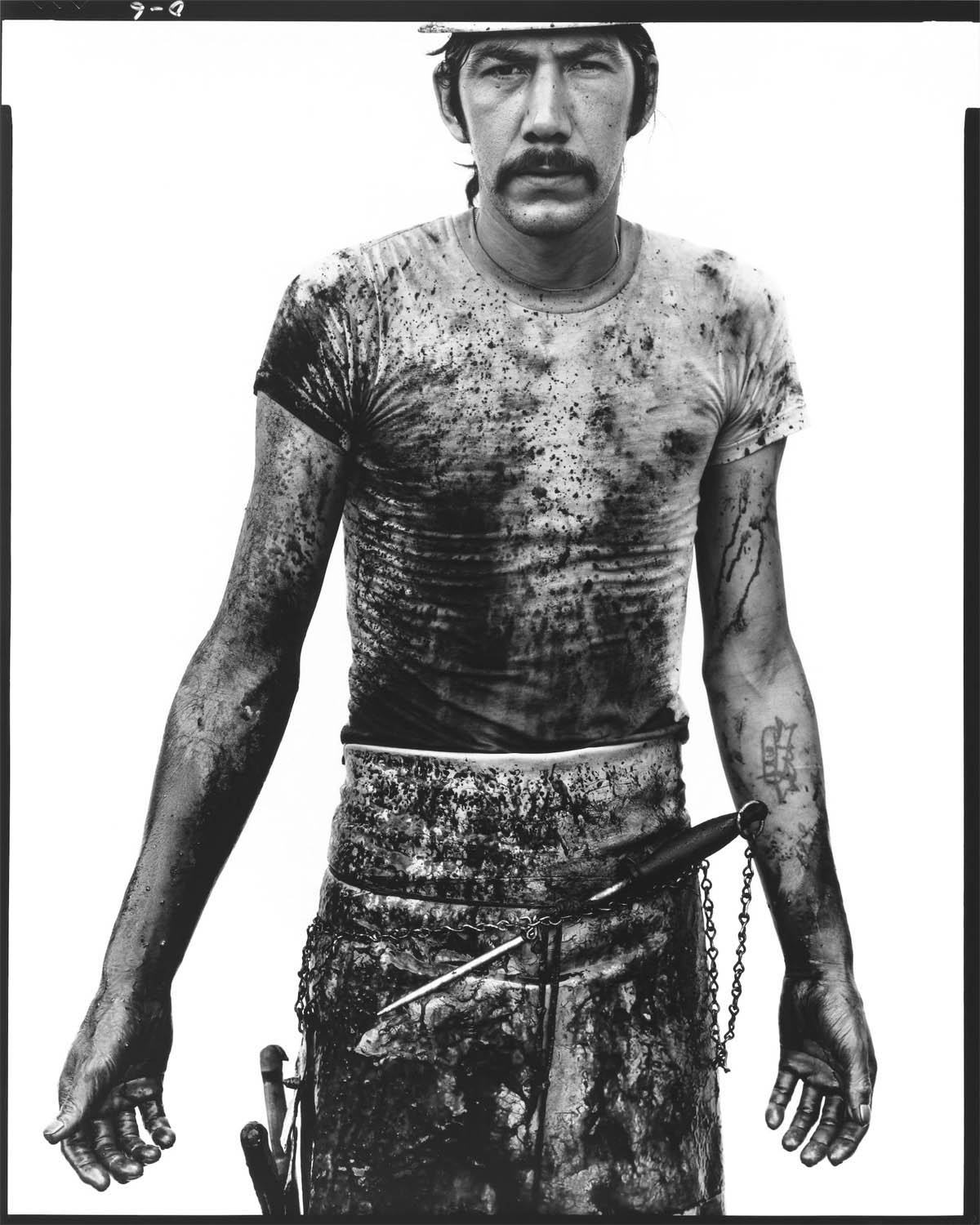
Richard Avedon (American, 1923-2004) 'Blue Cloud Wright, slaughterhouse worker, Omaha, Nebraska, August 10, 1979' 1979


Richard Avedon (American, 1923-2004)
Blue Cloud Wright, slaughterhouse worker, Omaha, Nebraska, August 10, 1979
1979
Gelatin silver print
© The Richard Avedon Foundation


Cover of Richard Avedon's book 'In The American West'


Cover of Richard Avedon’s book In The American West


Fondation Henri Cartier-Bresson
79 rue des Archives
75003 Paris

Opening hours:
Tuesday – Sunday
11am – 7pm
Closed on Mondays

Fondation Henri Cartier-Bresson website

LIKE ART BLART ON FACEBOOK

Back to top

Exhibition: ‘Still Performing: Costume, Gesture, and Expression in 19th Century European Photography’ at the Nelson-Atkins Museum of Art, Kansas City

Exhibition dates: 24th August, 2024 – 12th January, 2025


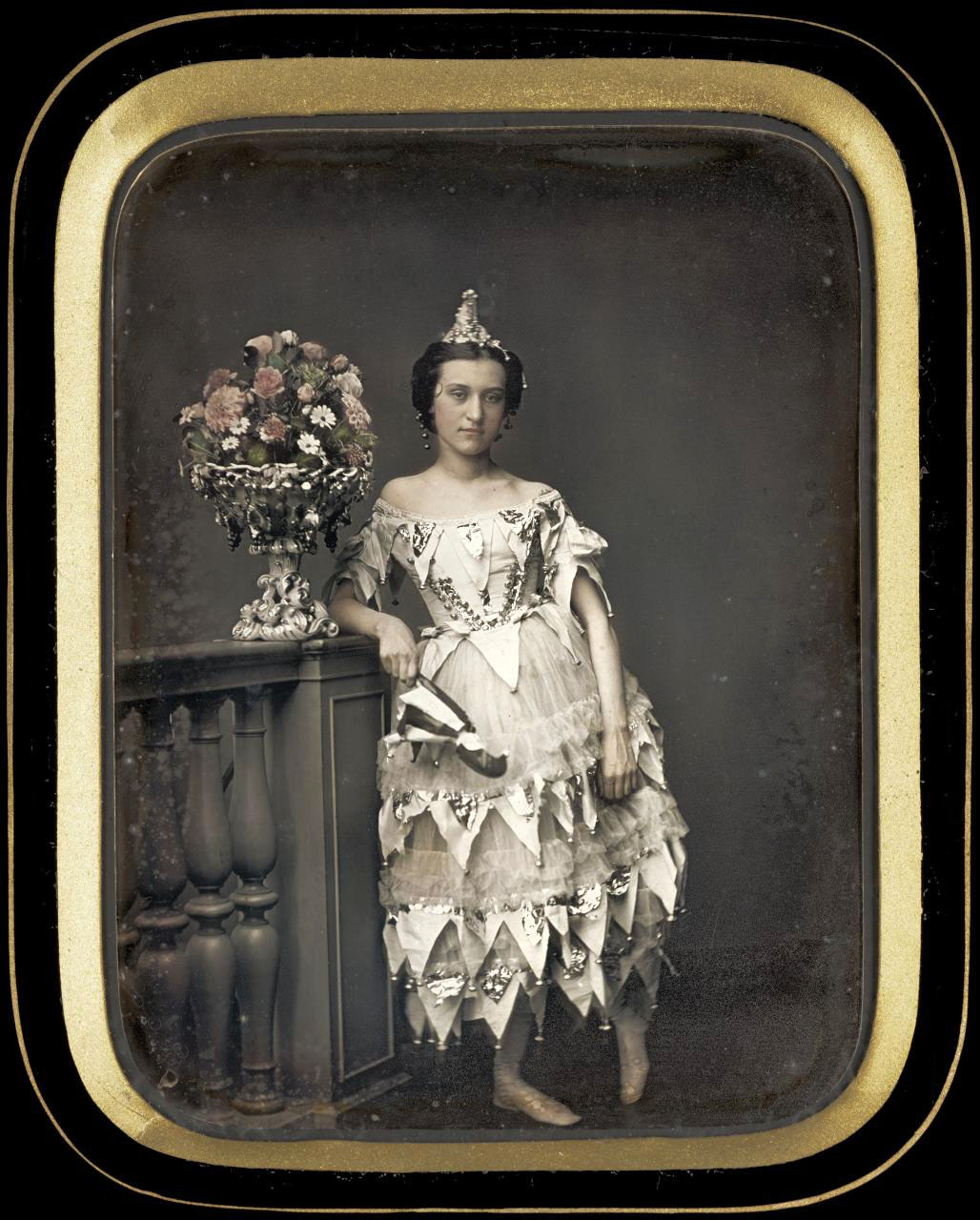
Victor Plumier (Belgian, 1820-1878) 'Lady in Costume' About 1850 from the exhibition 'Still Performing: Costume, Gesture, and Expression in 19th Century European Photography' at the Nelson-Atkins Museum of Art, Kansas City


Victor Plumier (Belgian, 1820-1878)
Lady in Costume
About 1850
Daguerreotype, half plate
5 1/2 × 4 1/2 inches
The Nelson-Atkins Museum of Art
Gift of the Hall Family Foundation


Past present

Magnificent photographs that bring past presence into present consciousness.

Costume. variedly, the term “costume,” indicating clothing exclusively from the eighteenth century onward, can be traced back to the Latin consuetudo, meaning “custom” or “usage.”

Gesture. late Middle English: from medieval Latin gestura, from Latin gerere ‘bear, wield, perform’. The original sense was ‘bearing, deportment’, hence ‘the use of posture and bodily movements for effect in oratory’.

Expression. the action of making known one’s thoughts or feelings. a look on someone’s face that conveys a particular emotion. late Middle English: from Latin expressio(n- ), from exprimere ‘press out, express’.


The emotions and the sentiments, the gestures and the expressions.

The actor and the stage, the photographer and the sitter.

The staged photograph and the tableaux vivant.

The Self and the Other.


Today, something happens when we look at these photographs. Today, the social spaces, gestures and expressions in these photographs are not fixed, monological re-presentations or presences. Our experience of the photographs enables them to be seen as nodes within a network caught up in a system of social and cultural references, whose unity is variable and relative.1

Thus,

” …in my reading (of the photograph), I relied upon a number of semiological systems, each one being a social / cultural construct: the sign language of clothes, of facial expressions, of bodily gestures, of social manner, etc. Such semiological systems do indeed exist and are continually being used in the making and reading of images. Nevertheless the sum total of these systems cannot exhaust, does not begin to cover, all that can be read in appearances.”2

The intertextuality of images.

Dr Marcus Bunyan


1/ Roland Barthes. “From Work to Text” and Michel Foucault. The Order of Things: An Archeology of the Human Sciences in Kurt Thumlert. Intervisuality, Visual Culture, and Education. [Online] Cited 10/08/2006. No longer available online

2/ John Berger and Jean Mohr. Another Way of Telling. New York: Pantheon Books, 1982, p. 112


Many thankx to the Nelson-Atkins Museum for allowing me to publish the photographs in the posting. Please click on the photographs for a larger version of the image.


“There is no perfection, no infinite completeness. But always, there is a way to move toward being whole. The capital letter, the Self is a wholeness that does not and will never exist. It is a direction that I move toward no matter the meanders of my feet.”


Kendrick VanZant


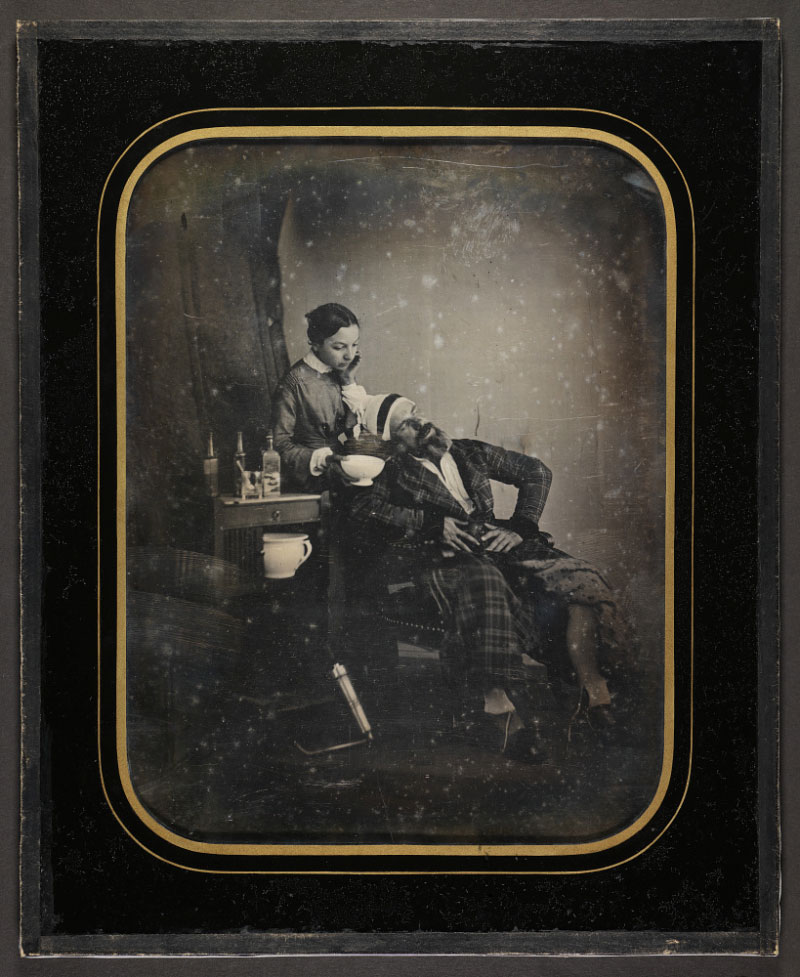
Camille Dolard (French, 1810-1884) 'Self-portrait as ailing man' c. 1843-1845


Camille Dolard (French, 1810-1884)
Self-portrait as ailing man
c. 1843-1845
Daguerreotype
Plate (whole): 8 1/2 × 6 1/2 inches (21.59 × 16.51cm)
Mat: 10 3/8 × 8 3/8 inches (26.37 × 21.29cm)
The Nelson-Atkins Museum of Art
Gift of the Hall Family Foundation


French painter Camille Dolard briefly embraced photography in the 1840s as an innovative creative tool. This daguerreotype, and the one in the next case, are from a group of three theatrical self-portraits created by Dolard in his studio. Here, the artist performs for the camera, posing with props and costumes as a patient in the care of his attentive wife. In the other plate, he uses a similarly theatrical approach, depicting himself smoking a hookah (a water pipe used to smoke tobacco) while lounging on a patterned rug.

Text from the Nelson-Atkins Museum website


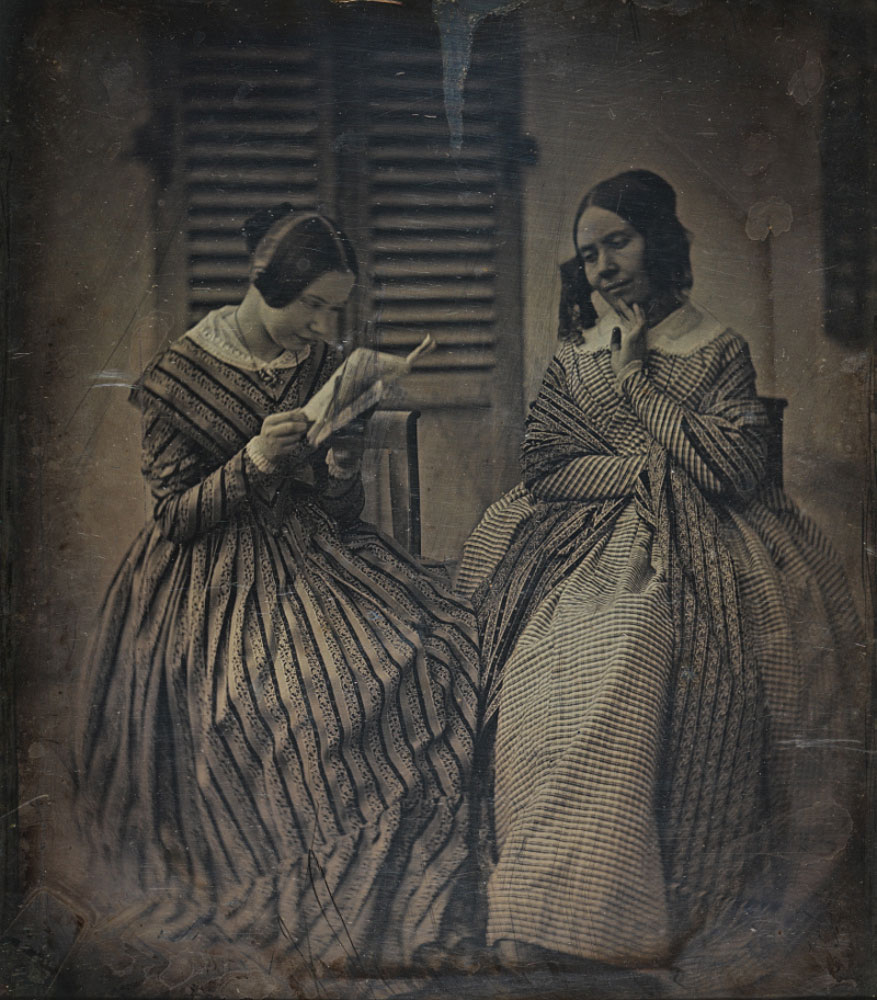
Jean-Pierre Thierry (French, 1810-1870) 'Two ladies reading a letter' c. 1845


Jean-Pierre Thierry (French, 1810-1870)
Two ladies reading a letter
c. 1845
Daguerreotype
Plate (quarter): 4 1/4 × 3 1/4 inches (10.8 × 8.26 cm)
Mat: 6 1/16 × 5 1/8 inches (15.39 × 13.03 cm)
The Nelson-Atkins Museum of Art
Gift of the Hall Family Foundation


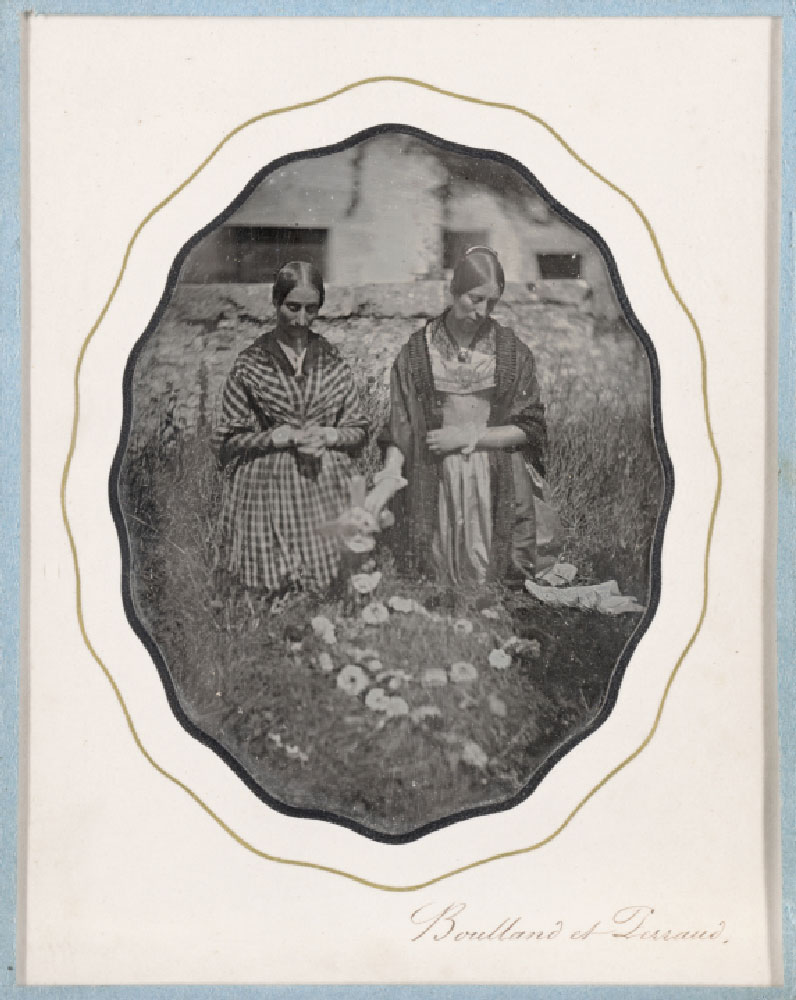
Philibert Perraud (French, 1815 - after 1863) 'Deux femmes se recueillent sur la tombe d'une etre cher ...' (Two women at the grave of a loved one) c. 1845


Philibert Perraud (French, 1815 – after 1863)
Deux femmes se recueillent sur la tombe d’une etre cher … (Two women at the grave of a loved one)
c. 1845
Daguerreotype
Plate (quarter): 4 1/4 × 3 1/4 inches (10.8 × 8.26cm)
 Mount: 5 1/8 × 4 1/8 inches (13.02 × 10.48cm)
The Nelson-Atkins Museum of Art
Gift of the Hall Family Foundation


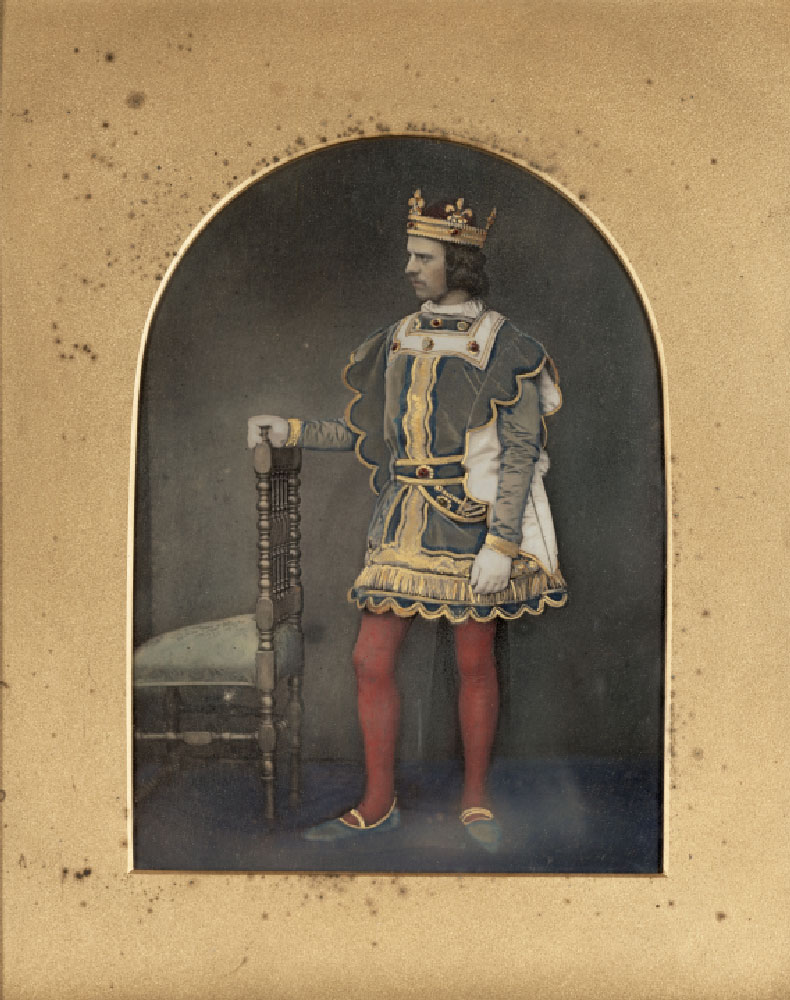
Unknown photographer. 'Actor in Costume' c. 1850 from the exhibition 'Still Performing: Costume, Gesture, and Expression in 19th Century European Photography' at the Nelson-Atkins Museum of Art, Kansas City


Unknown photographer
Actor in Costume
c. 1850
Daguerreotype
Plate (three-quarter): 6 × 4 1/2 inches (15.24 × 11.43 cm)
Case (open): 8 1/8 × 13 1/4 × 3/8 inches (20.64 × 33.66 × 0.95 cm)
Case (closed): 8 1/8 × 6 5/8 × 5/8 inches (20.64 × 16.83 × 1.59 cm)
The Nelson-Atkins Museum of Art
Gift of the Hall Family Foundation


Though the pose and expression in this photograph are stiff, the extensive hand-colouring enlivens the portrait, drawing attention to the fine details in the actor’s costume. Sitting for a daguerreotype portrait in the 1850s required patience and a certain degree of stamina. Photographic exposure times – which varied according to plate sensitivity and studio lighting – typically ranged from three to 30 seconds. Studio props, such as chairs and head braces, were used to help sitters remain as motionless as possible for the duration of the exposure.

Text from the Nelson-Atkins Museum website


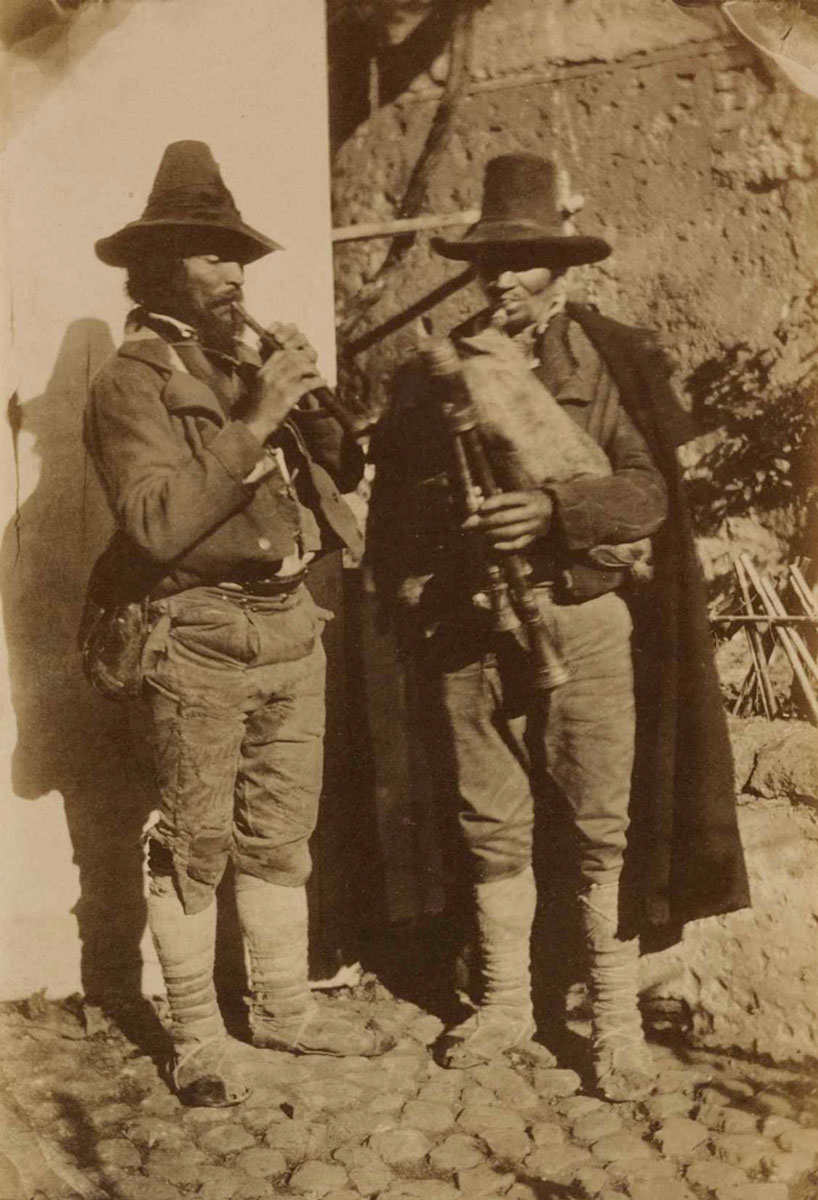
Giacomo Caneva (Italian, 1813-1865) 'Two Pifferari' c. 1850s


Giacomo Caneva (Italian, 1813-1865)
Two Pifferari
c. 1850s
Salt print
Image: 8 3/8 × 5 11/16 inches (21.27 × 14.45cm)
Sheet: 11 3/16 × 5 11/16 inches (28.42 × 14.45cm)
The Nelson-Atkins Museum of Art
Gift of the Hall Family Foundation


Nothing summed up picturesque modern Italy as well as the Pifferari; described by Hector Berlioz (1803-1869) in 1832: ‘These are strolling musicians who, towards Christmas, come down from the mountains in groups of four or five, armed with bagpipes and ‘pifferi’ (a sort of oboe), to play in homage before statues of the Madonna. They are generally dressed in large brown woollen coats and the pointed hats that brigands sport, and their whole appearance is instinct with a kind of mystic savagery that is most striking’. He admits that close to the music is ‘overpoweringly loud, but at a certain distance the effect of this strange ensemble of instruments is haunting and few are unmoved by it’.

Text from the Royal Collection Trust website


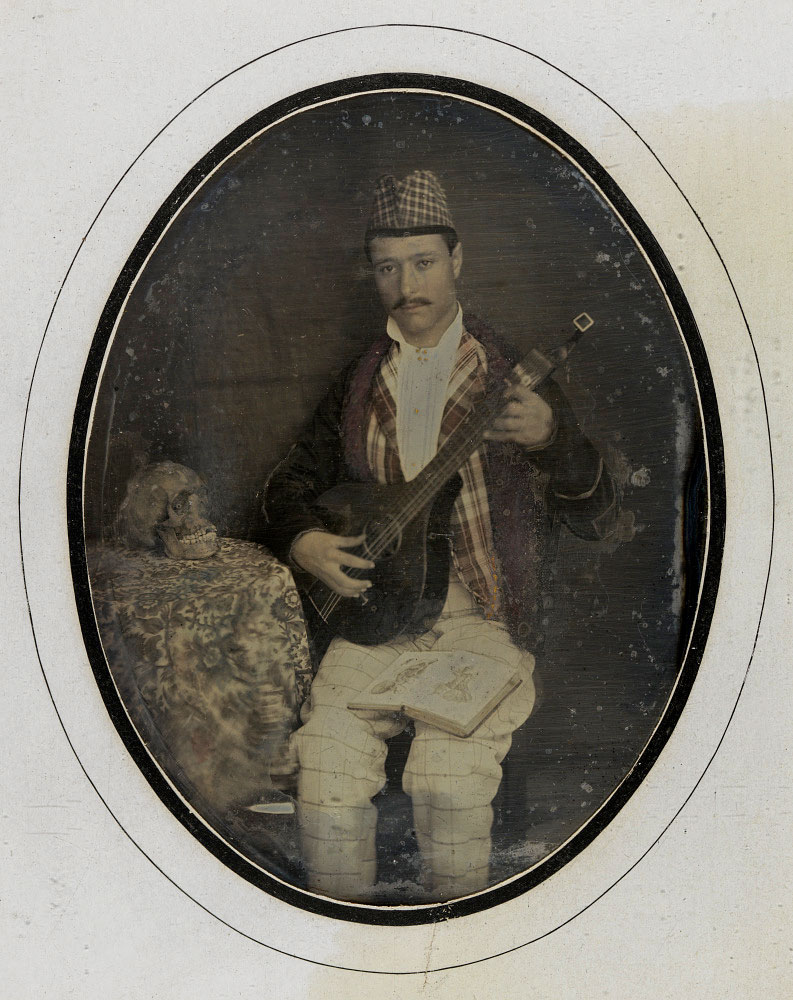
José Maria Blanco (Spanish, active c. 1850) 'Man with mandolin' 1851 from the exhibition 'Still Performing: Costume, Gesture, and Expression in 19th Century European Photography' at the Nelson-Atkins Museum of Art, Kansas City


José Maria Blanco (Spanish, active c. 1850)
Man with mandolin
1851
Daguerreotype
Plate (quarter): 4 × 3 1/4 inches (10.16 × 8.26cm)
Mat: 5 5/8 × 4 7/8 inches (14.29 × 12.38cm)
The Nelson-Atkins Museum of Art
Gift of the Hall Family Foundation


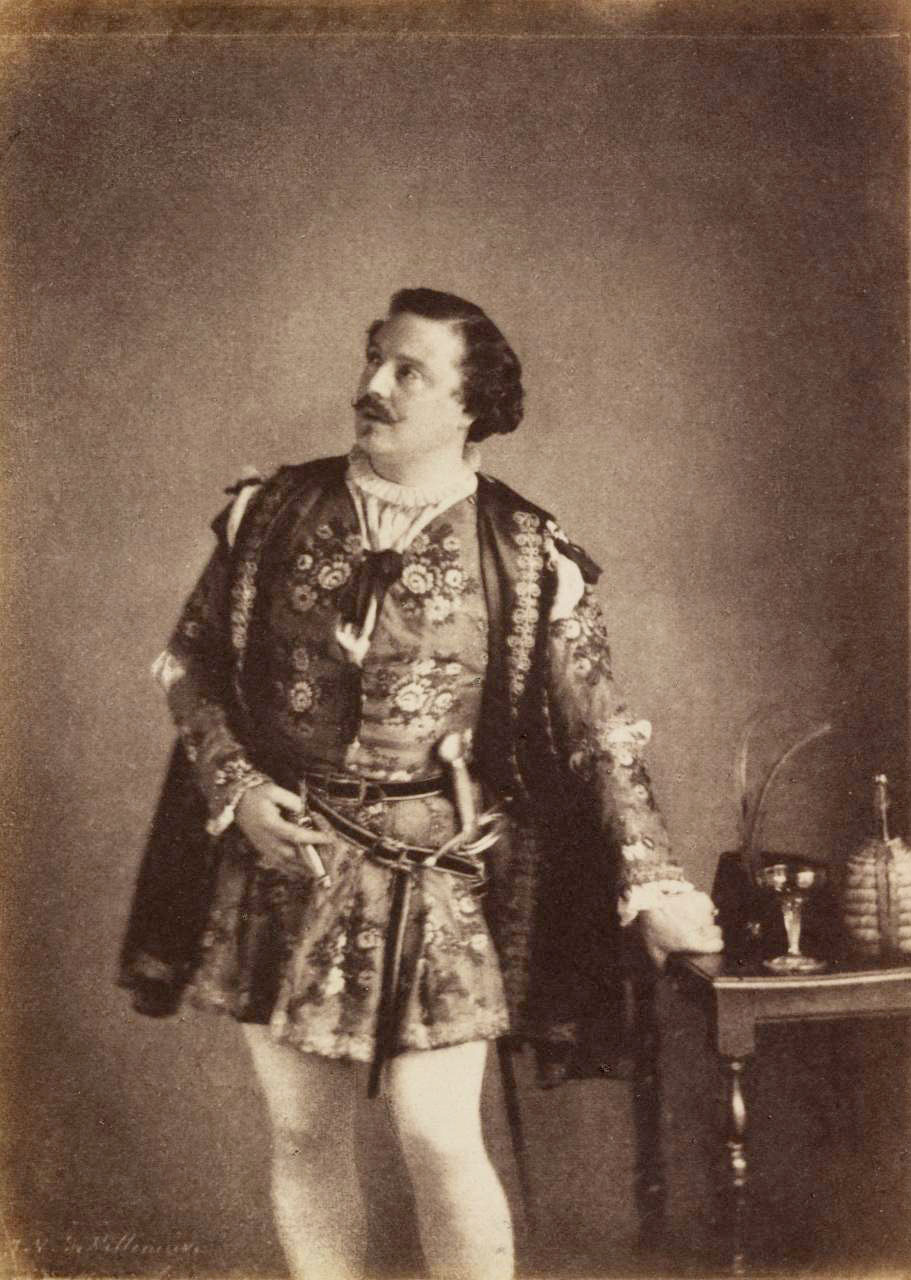
Julien Vallou de Villeneuve (French, 1795-1866) 'Portrait of Edouard Brindeau' 1853


Julien Vallou de Villeneuve (French, 1795-1866)
Portrait of Edouard Brindeau
1853
Salt print
6 1/4 × 4 5/8 inches
The Nelson-Atkins Museum of Art
Gift of the Hall Family Foundation


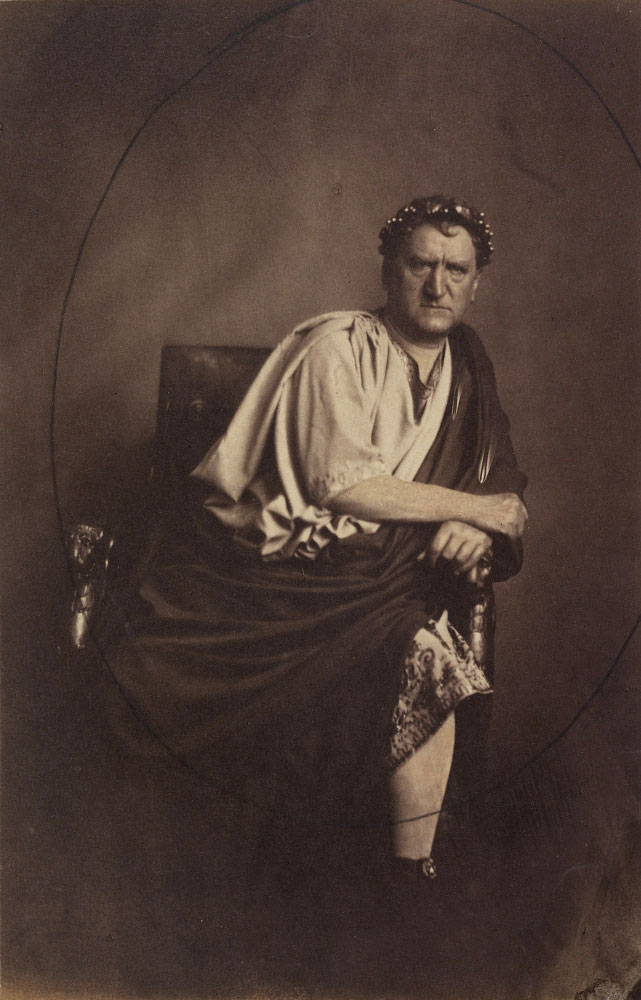
Julien Vallou de Villeneuve (French, 1795-1866) 'Portrait of Jean-Baptiste Provost, in the role of the emperor Claude in the play Valeria' 1853


Julien Vallou de Villeneuve (French, 1795-1866)
Portrait of Jean-Baptiste Provost, in the role of the emperor Claude in the play Valeria
1853
Portraits of Actors from the Comédie Française
Salt print
Image and sheet: 6 7/16 × 4 1/8 inches (16.35 × 10.48cm)
The Nelson-Atkins Museum of Art
Gift of the Hall Family Foundation


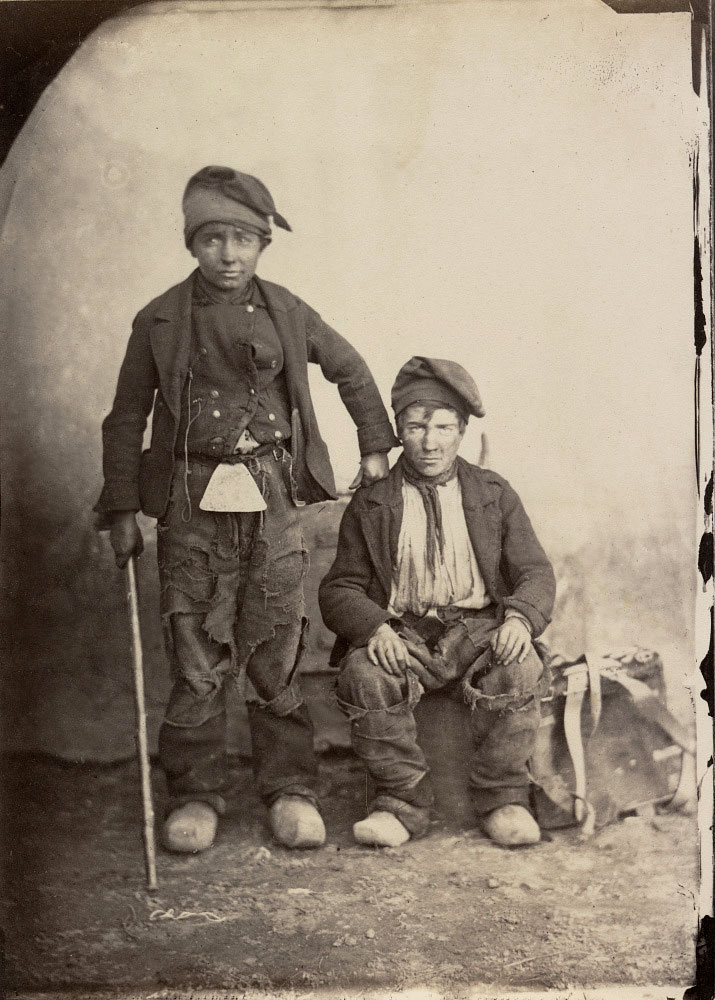
Charles Nègre (French, 1820-1880) 'Two Small Savoyards' c. 1853 from the exhibition 'Still Performing: Costume, Gesture, and Expression in 19th Century European Photography' at the Nelson-Atkins Museum of Art, Kansas City


Charles Nègre (French, 1820-1880)
Two Small Savoyards
c. 1853
Albumen print
Image and sheet: 7 × 5 3/16 inches (17.78 × 13.12cm)
Mount: 17 × 15 inches (43.18 × 38.1cm)
The Nelson-Atkins Museum of Art
Gift of the Hall Family Foundation


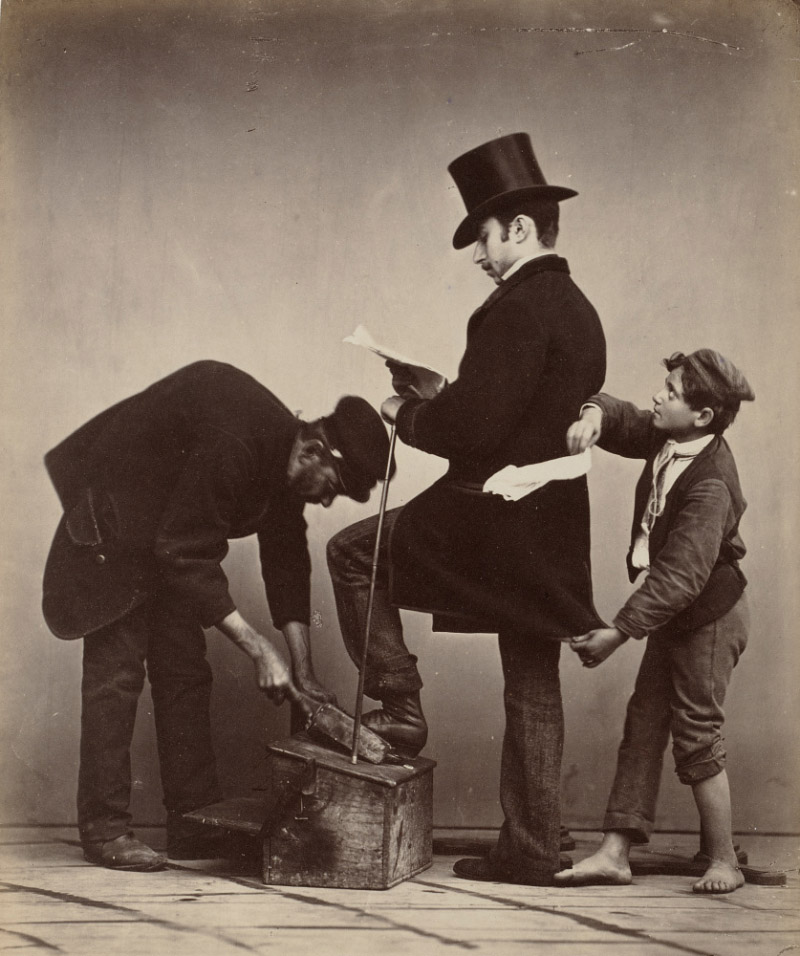
Charles Nègre refers to the threadbare young men in this photograph as “Savoyards” (originating from the Savoy region of France). Impoverished, migrant Savoyards have appeared in European art since the 1700s, and Nègre’s title could be shorthand for a certain type of person seen in the streets of Paris, regardless of the two boys’ actual place of origin. A painter and a photographer, Nègre practiced the two mediums side-by-side. Like other artists of his time, he ascribed nobility to the poor, seeking to convey their “truth, warmth, and life.”

Text from the Nelson-Atkins Museum website


Alban-Adrien Tournachon (French , 1825-1903) and Nadar [Gaspard Félix Tournachon] (French, 1820-1910) 'Pierrot Yawning' 1854 from the exhibition 'Still Performing: Costume, Gesture, and Expression in 19th Century European Photography' at the Nelson-Atkins Museum of Art, Kansas City


Alban-Adrien Tournachon (French , 1825-1903) and Nadar [Gaspard Félix Tournachon] (French, 1820-1910)
Pierrot Yawning
1854
Salt print
11 1/4 × 8 1/2 inches
The Nelson-Atkins Museum of Art
Gift of the Hall Family Foundation


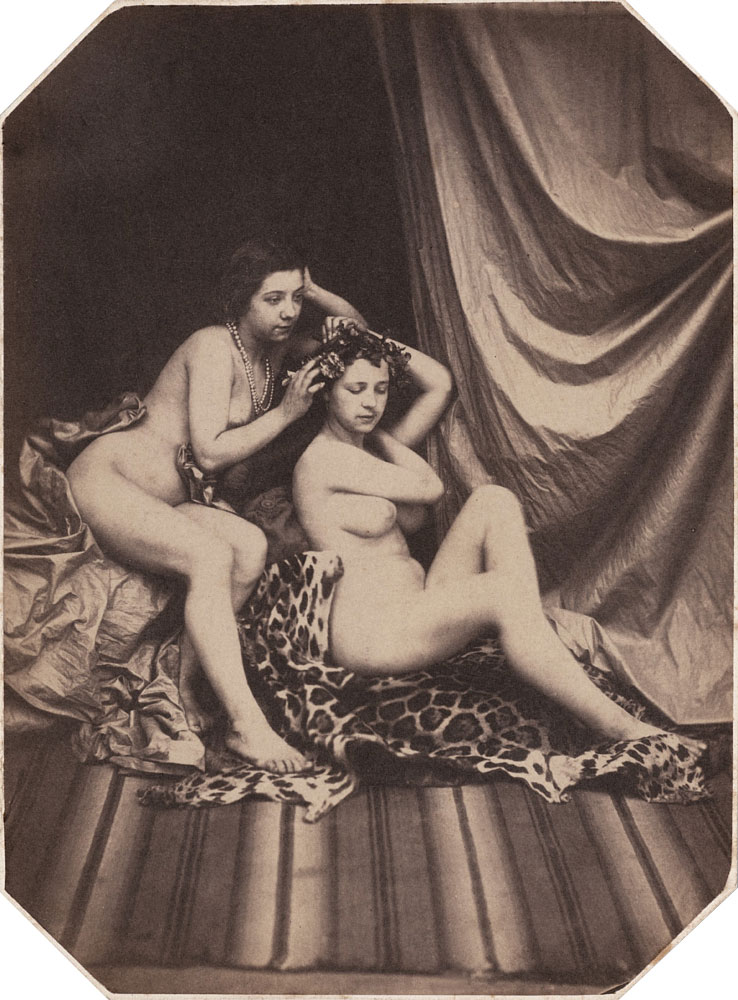
Auguste Belloc (French, 1805 -1873) 'Une étude de nu de deux femmes' c. 1855


Auguste Belloc (French, 1805 -1873)
Une étude de nu de deux femmes
c. 1855
Salt print
Image and sheet: 8 5/16 × 6 1/8 inches (21.11 × 15.56cm)
The Nelson-Atkins Museum of Art
Gift of the Hall Family Foundation


A masterful printer, Auguste Belloc created nudes that surpassed the typical erotic fare found in Parisian markets. In this scene, Belloc strategically positions the models and surrounding drapery to make the photograph appear more artistic than pornographic. Though nude paintings, drawings, and sculptures were immensely common, at this time photography was treated far more harshly by censors. In October 1860, the French government seized some 5,000 of Belloc’s photographs, declaring them obscene, and by 1868 he had abandoned his photographic studio.

Text from the Nelson-Atkins Museum website


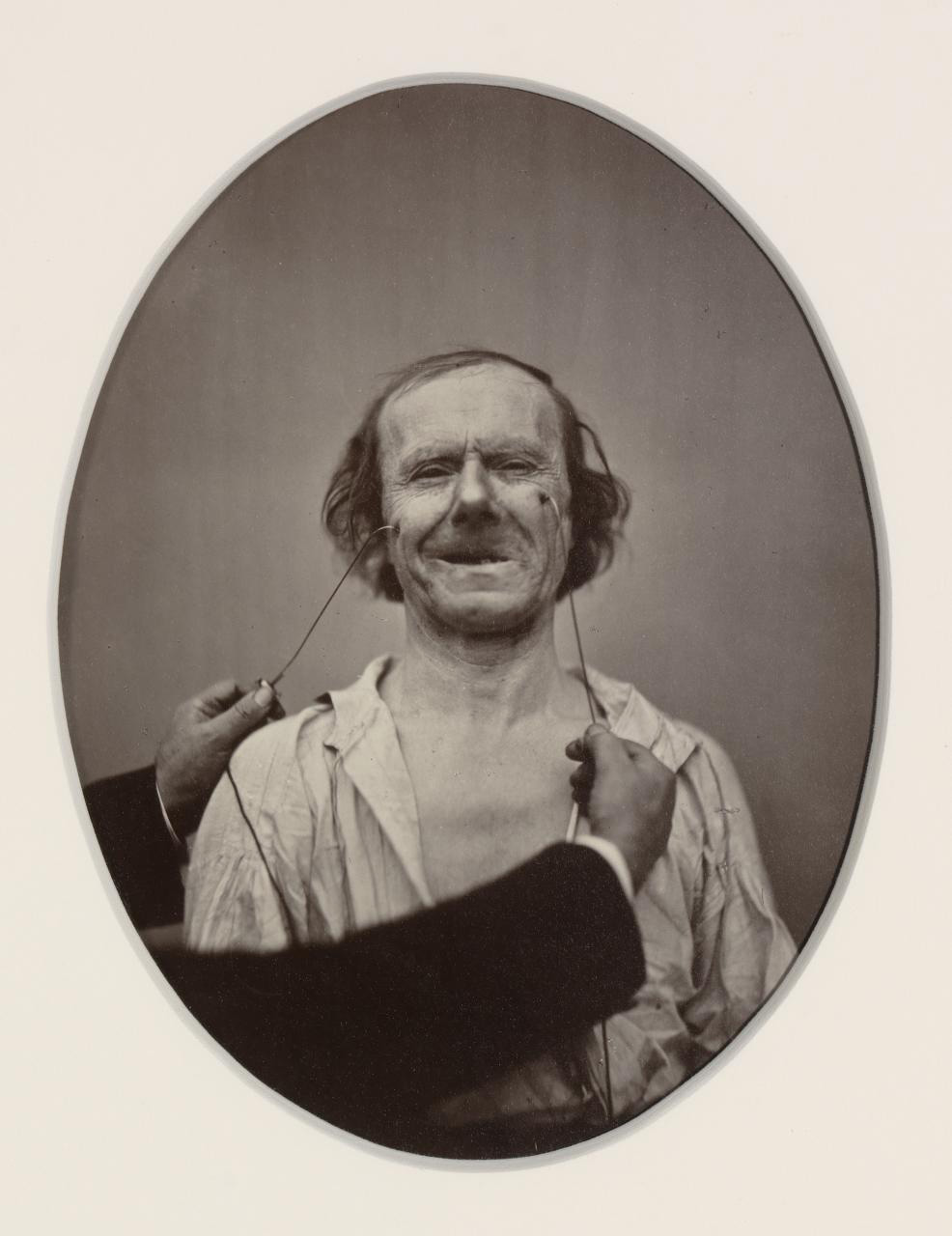
Guillaume-Benjamin-Amand Duchenne de Boulogne (French, 1806-1875) and Alban-Adrien Tournachon (French, 1825-1903) 'The Muscles of Weeping and Whimpering' About 1855-1857


Guillaume-Benjamin-Amand Duchenne de Boulogne (French, 1806-1875) and Alban-Adrien Tournachon (French, 1825-1903)
The Muscles of Weeping and Whimpering
About 1855-1857
Albumen print
9 1/16 × 6 15/16 inches
The Nelson-Atkins Museum of Art
Gift of the Hall Family Foundation


Facial expressions and their corresponding emotions have been studied by artists for centuries. In the 1850s, Dr. Guillaume-Benjamin-Amand Duchenne de Boulogne used photography to document the facial expressions produced by localised electric shock. Working in partnership with photographer Adrien Alban Tournachon, Duchenne felt these photographs truthfully recorded his experiments and that “none shall doubt the facts presented here.” Praising photography for its accurate rendering of the subject’s deep wrinkles, he wrote, “the distribution of light is in perfect harmony with the passions represented by these expressive lines. Thus, the face depicting the dark, concentric passions – aggression, wickedness, suffering, pain, dread, torture mixed with fear – gain an uncommon amount of energy.”

Text from the Nelson-Atkins Museum website


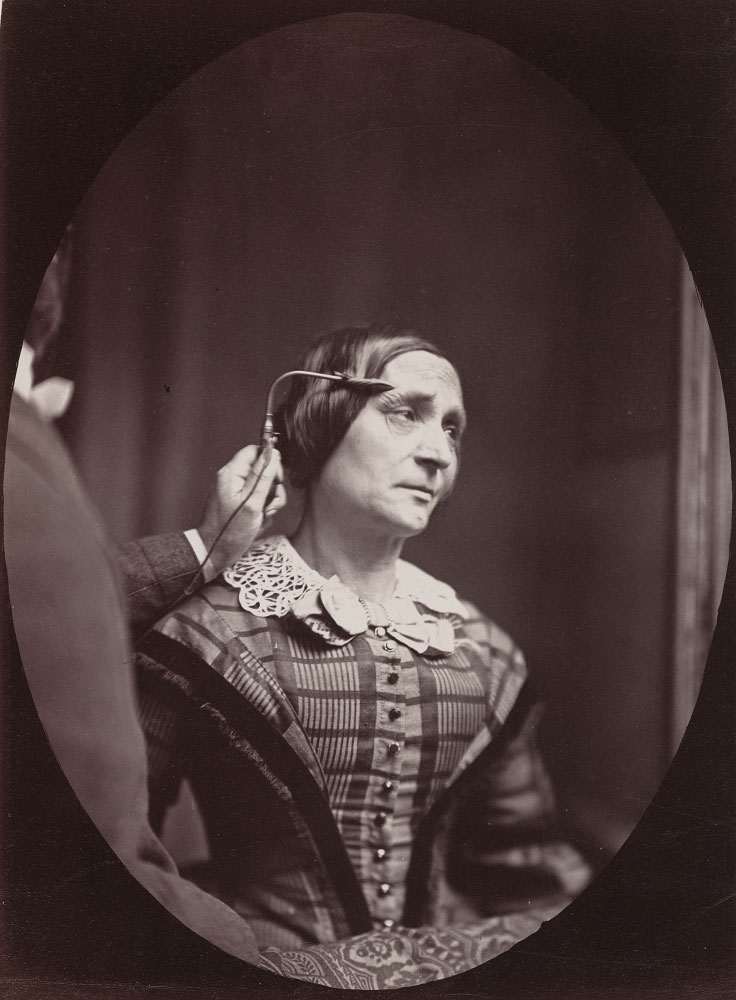
Guillaume-Benjamin-Amand Duchenne de Boulogne (French, 1806-1875) and Alban-Adrien Tournachon (French, 1825-1903) 'The Muscle of Pain' c. 1854-1857


Guillaume-Benjamin-Amand Duchenne de Boulogne (French, 1806-1875) and Alban-Adrien Tournachon (French, 1825-1903)
The Muscle of Pain
c. 1854-1857
Figure 27, plate 63 from The Mechanism of Human Facial Expression
Albumen print
Image and sheet: 9 1/16 × 6 5/8 inches (23.01 × 16.84cm)
Mount: 16 1/16 × 10 13/16 inches (40.79 × 27.51cm)
The Nelson-Atkins Museum of Art
Gift of the Hall Family Foundation


In this uncanny double portrait, the physiologist Dr. Guillaume-Benjamin-Amand Duchenne de Boulogne holds a mechanical device to the face of a 52-year-old, Italian-born woman believed to have been institutionalised in a Parisian asylum. Duchenne asserted that localised electric shock could force facial muscles to “contract to speak the language of the emotions and the sentiments.” “Armed with electrodes,” he wrote, “one would be able, like nature herself, to paint the expressive lines of the emotions of the soul on the face of man.”

Text from the Nelson-Atkins Museum website


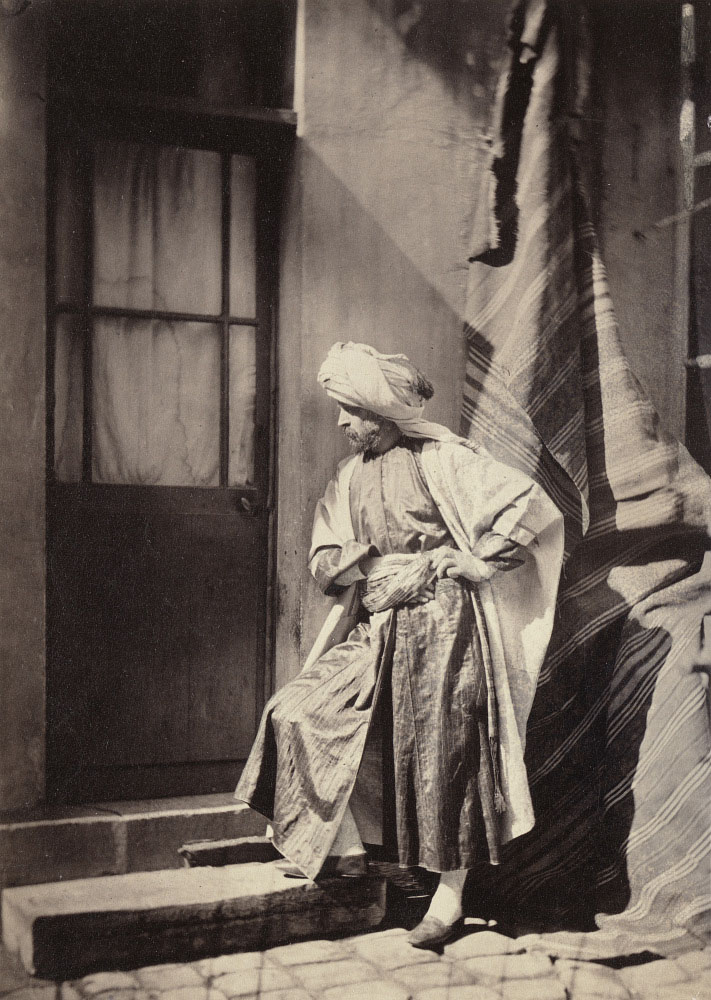
Roger Fenton (English, 1819-1869) 'Self-portrait as a Zouave' 1855


Roger Fenton (English, 1819-1869)
Self-portrait as a Zouave
1855
Salt print:
Image and sheet: 7 13/16 × 6 7/16 inches (19.84 × 16.35cm)
Mount: 22 1/8 × 16 1/8 inches (56.2 × 40.96cm)
The Nelson-Atkins Museum of Art
Gift of the Hall Family Foundation


Cocking a rifle and smoking a pipe, with alcohol by his side, Roger Fenton poses for his camera with bravado. Wearing the distinctive baggy uniform of a Zouave (skilled infantry soldiers from the French army in Algeria), Fenton fashions himself as a hardened, glowering soldier, though he never fought in any war. Fenton did, however, photograph the Crimean War (1853-1856) from a great distance. The war brought together an alliance of soldiers from England, Croatia, Algeria, Turkey, Egypt, and France whom Fenton encountered while photographing the conflict.

Text from the Nelson-Atkins Museum website


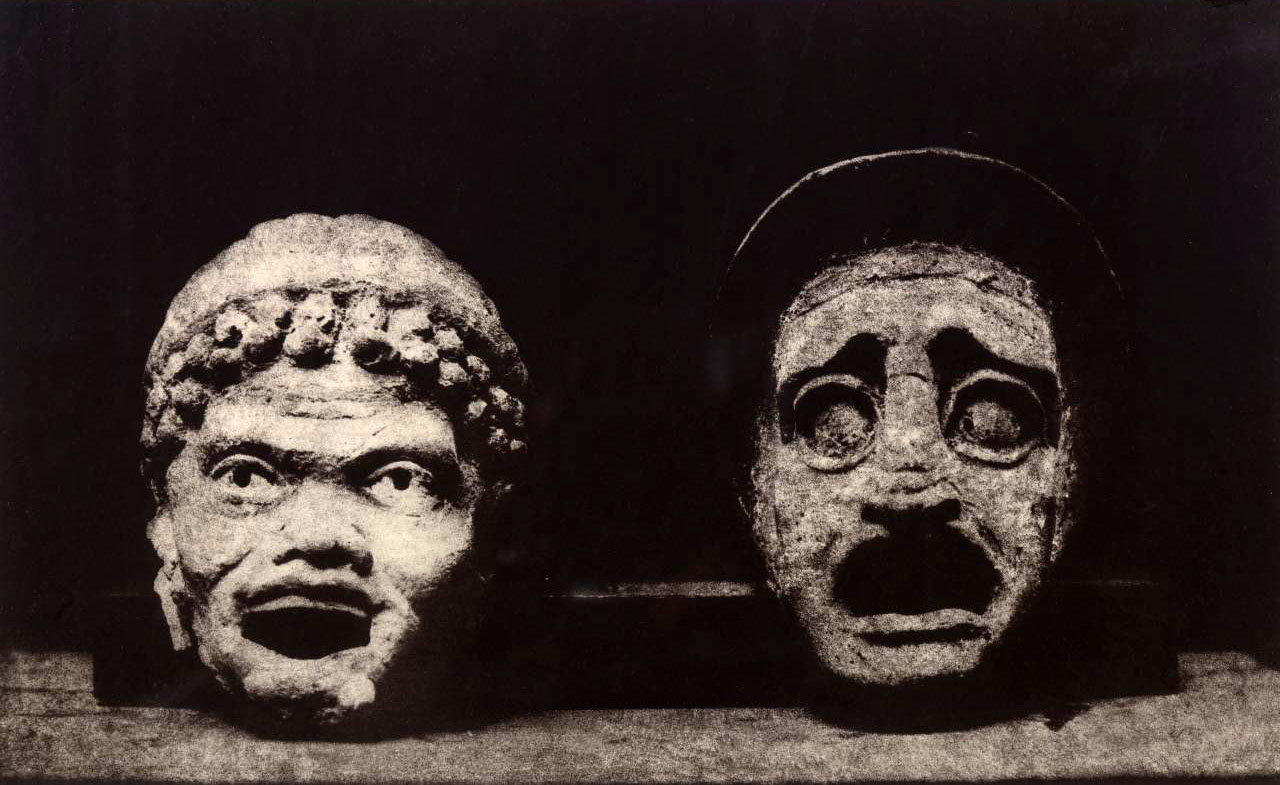
Marcel Gustave Laverdet (French, 1816-1886) 'Masks from the album Selection of Ancient Terra Cotta from the Collection of M. Le Vicomte H. de Janzé' 1857


Marcel Gustave Laverdet (French, 1816-1886)
Masks from the album Selection of Ancient Terra Cotta from the Collection of M. Le Vicomte H. de Janzé
1857
Photolithograph
8 15/16 × 14 9/16 inches
The Nelson-Atkins Museum of Art
Gift of the Hall Family Foundation


Charles Nègre (French, 1820-1880) 'Self-portrait' About 1855-1860


Charles Nègre (French, 1820-1880)
Self-portrait
About 1855-1860
Salt print
7 5/8 × 5 7/16 inches
The Nelson-Atkins Museum of Art
Gift of the Hall Family Foundation


Early photography is ripe with creative fictions. Actors, children, aristocrats, models, artists, psychiatric patients, maids, and all manner of the working class posed in front of cameras and were transformed into figures from history, literature, the Bible, or into an idealised version of themselves. Still Performing: Costume, Gesture, and Expression in 19th Century European Photography, which opens at The Nelson-Atkins Museum of Art in Kansas City Aug. 24, celebrates the unique and compelling ways 19th century European photographers used the medium to explore and document performance, transforming the photographer’s studio into a theatrical stage. The exhibition runs through Jan. 12, 2025.

“The subjects in this exhibition were highly influenced by popular entertainment – live theatre, tableaux vivant, and dioramas – as well as tastes and trends in painting, drawing, and sculpture,” said Julián Zugazagoitia, Director & CEO of the Nelson-Atkins. “These works were made in a time of anxiety about photography’s relationships to the fine arts and reflect a close intermingling between the worlds of the ‘high’ and the ‘low’.”

Visiting a photographer’s studio in Europe in the mid to late 1800s was like going behind the scenes of a theatrical production. Props, backdrops, costumes, curtains, and controlled lighting converted otherwise ordinary portrait sessions into staged productions. Whether working in their homes or commercial studios, photographers cast themselves, friends, actors, models, and strangers in their photographs, transforming them into all types of characters, from young pickpockets to ancient Greek gods.

“These portraits are so fascinating, and I think our guests are going to be amazed at the rich creative complexity found in European photography’s first 50 years,” said Marijana Rayl, Assistant Curator, Photography.

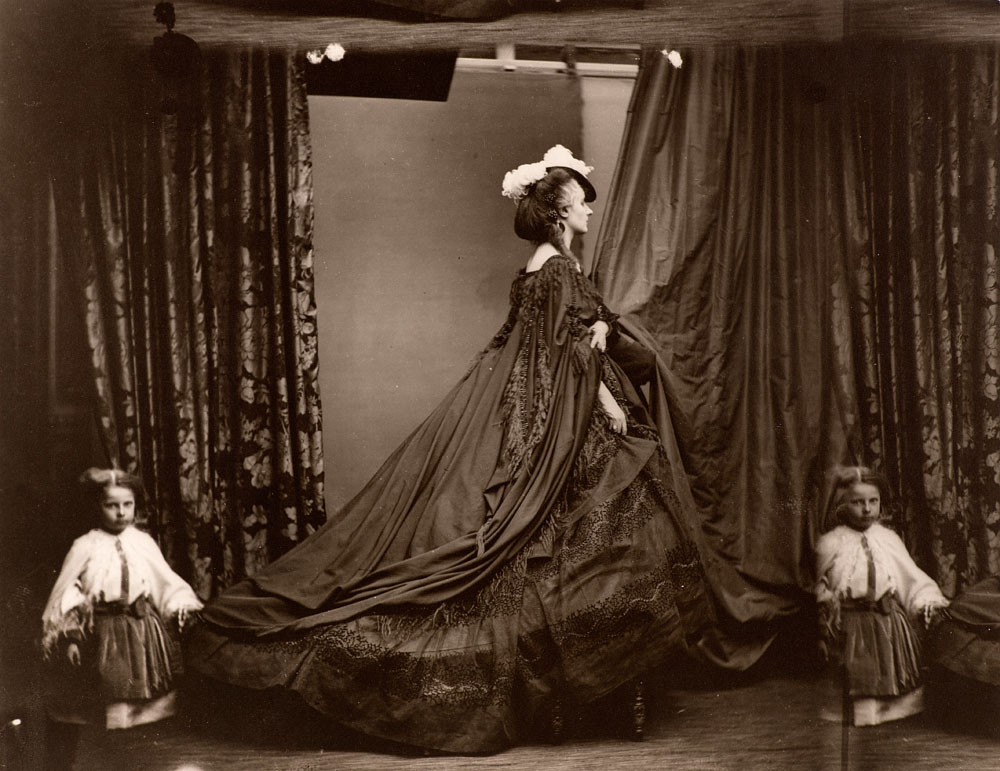
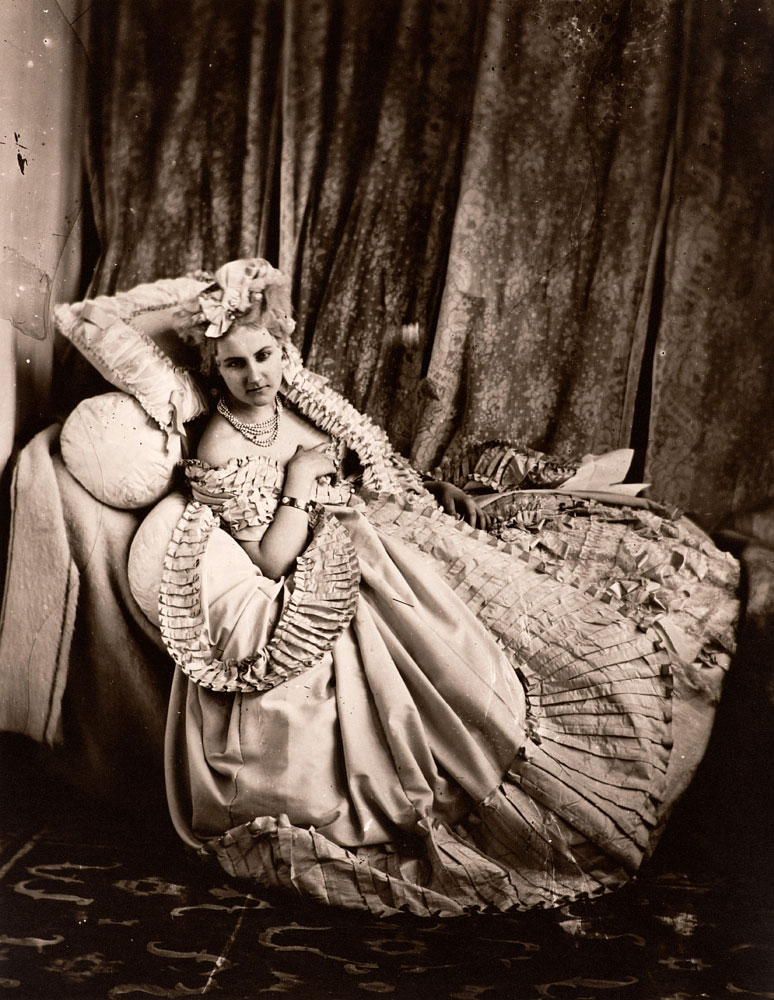
Deliberately made, not casually taken, these staged photographs are often the result of collaborative efforts between photographer and sitter, such as with a series of portraits of Virginia Oldoini, the Countess of Castiglione. A prodigious narcissist, or perhaps just ahead of her time, the countess collaborated with the photographer Pierre-Louis Pierson to produce hundreds of portraits, directing every aspect of the picture-making process. Included in Still Performing is a very rare, hand-coloured portrait of the countess.

The resulting photographs are an outstanding array of complex and compelling fictions showcasing the medium’s early creative potential.

Press release from the Nelson-Atkins Museum


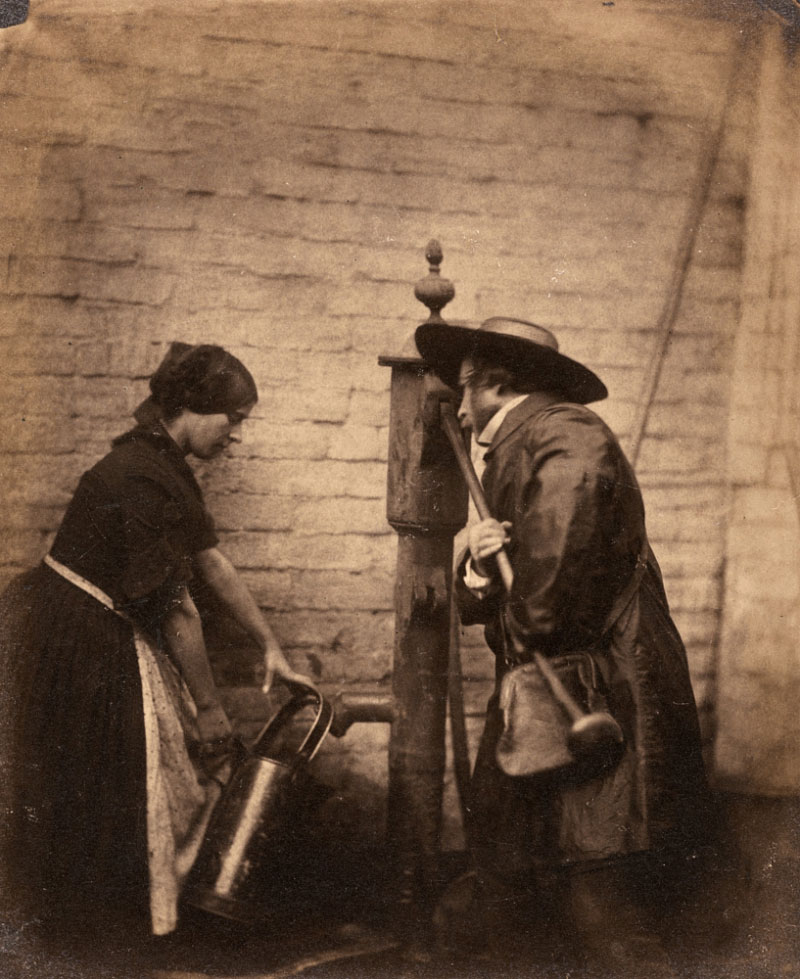
Oscar Gustav Rejlander (English born Sweden, 1813-1875) 'Drawing Water from a Well (O.G. Rejlander and model)' c. 1858


Oscar Gustav Rejlander (English born Sweden, 1813-1875)
Drawing Water from a Well (O.G. Rejlander and model)
c. 1858
Salt print
Image and sheet: 7 15/16 × 6 1/2 inches (20.16 × 16.51cm)
Mount: 14 1/16 × 11 5/16 inches (35.72 × 28.73cm)
The Nelson-Atkins Museum of Art
Gift of the Hall Family Foundation


Oscar Rejlander occasionally cast himself in staged photographs like this one, which was made to appear like a candid image of ordinary people going about their daily lives. Here he poses, turned away from the camera, as though he is helping a peasant woman retrieve water from a well. These kinds of genre scenes were immensely popular in the 1800s across painting, drawing, printmaking, and photography. Rejlander passionately advocated for photography to be treated as a fine art, believing that it must emulate painting.

Text from the Nelson-Atkins Museum website


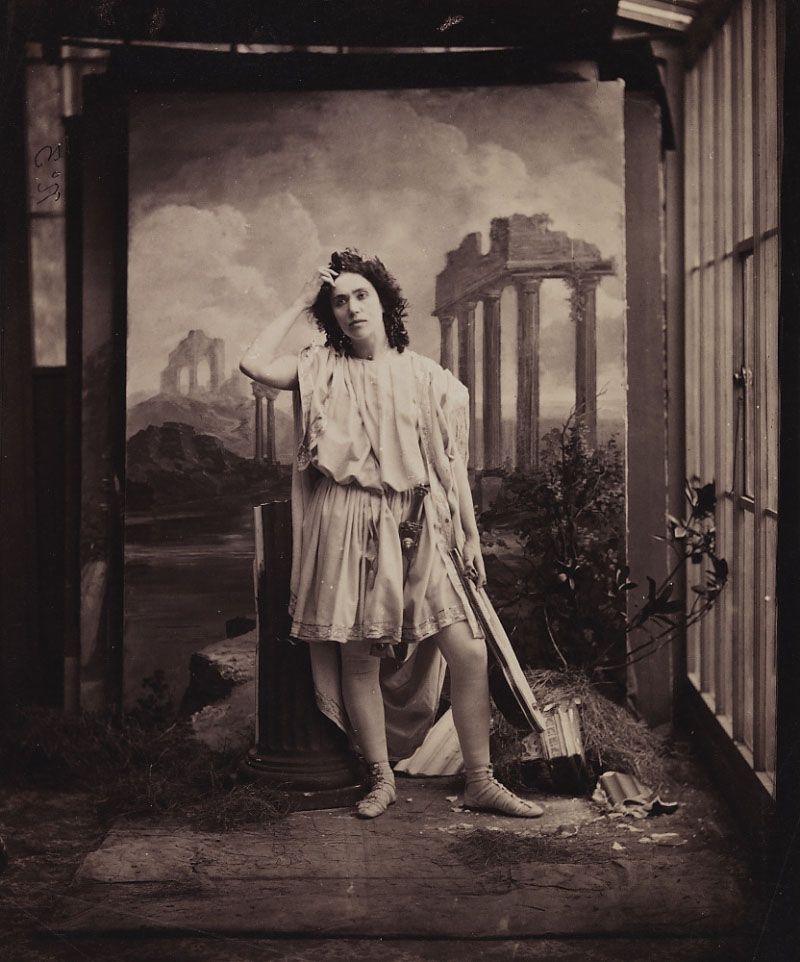
Camille Silvy (French, 1834-1910) 'Actress Rosa Csillag in the Role of Orpheus' 1860


Camille Silvy (French, 1834-1910)
Actress Rosa Csillag in the Role of Orpheus
1860
Albumen print
9 3/16 × 7 5/8 inches
The Nelson-Atkins Museum of Art
Gift of the Hall Family Foundation


Pierre-Louis Pierson (French, 1822-1913) 'The Countess de Castiglione' 1860s


Pierre-Louis Pierson (French, 1822-1913)
The Countess de Castiglione
1860s
Gelatin silver print (printed about 1930)
10 15/16 x 14 1/8 inches
The Nelson-Atkins Museum of Art
Gift of the Hall Family Foundation


Pierre-Louis Pierson (French, 1822-1913) 'The Countess de Castiglione' 1860s


Pierre-Louis Pierson (French, 1822-1913)
The Countess de Castiglione
1860s
Gelatin silver print (printed about 1930)
Image: 14 3/16 x 11 inches (36.04 x 27.94cm)
Sheet: 14 3/16 x 11 inches (36.04 x 27.94cm)
The Nelson-Atkins Museum of Art
Gift of the Hall Family Foundation


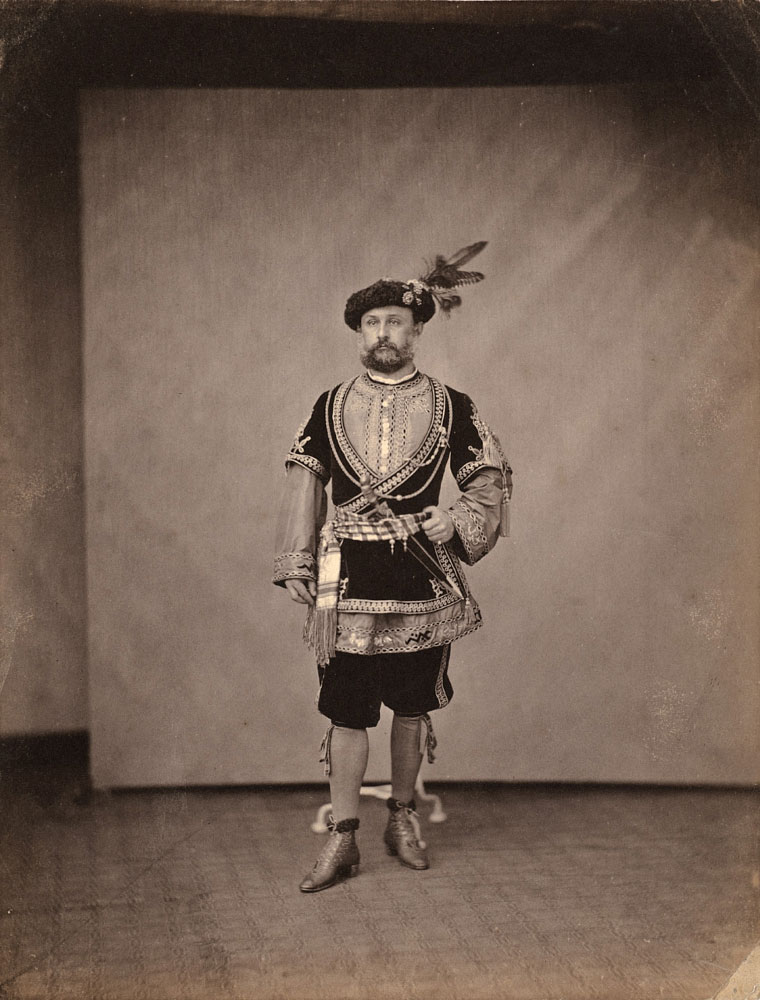
Pierre-Louis Pierson (French, 1822-1913) 'Bal en Costume, Royaume de Belgique' c. 1860


Pierre-Louis Pierson (French, 1822-1913)
Bal en Costume, Royaume de Belgique
c. 1860
Salt print
Image and sheet: 11 1/2 × 8 3/4 inches (29.21 × 22.23cm)
The Nelson-Atkins Museum of Art
Gift of the Hall Family Foundation


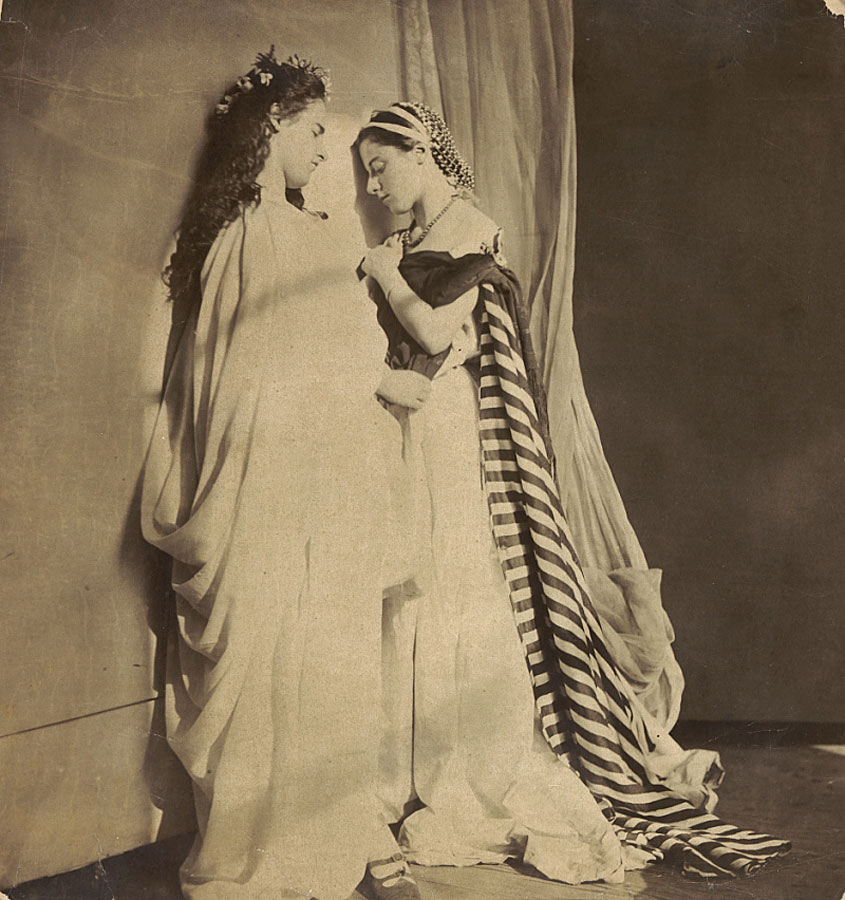
Lady Clementina Hawarden (English, born Scotland, 1822-1865) 'Clementina Maude and Isabella Grace' c. 1863


Lady Clementina Hawarden (English, born Scotland, 1822-1865)
Clementina Maude and Isabella Grace
c. 1863
Albumen print
Image and sheet: 9 13/16 × 9 11/16 inches (24.97 × 24.61cm)
The Nelson-Atkins Museum of Art
Gift of the Hall Family Foundation


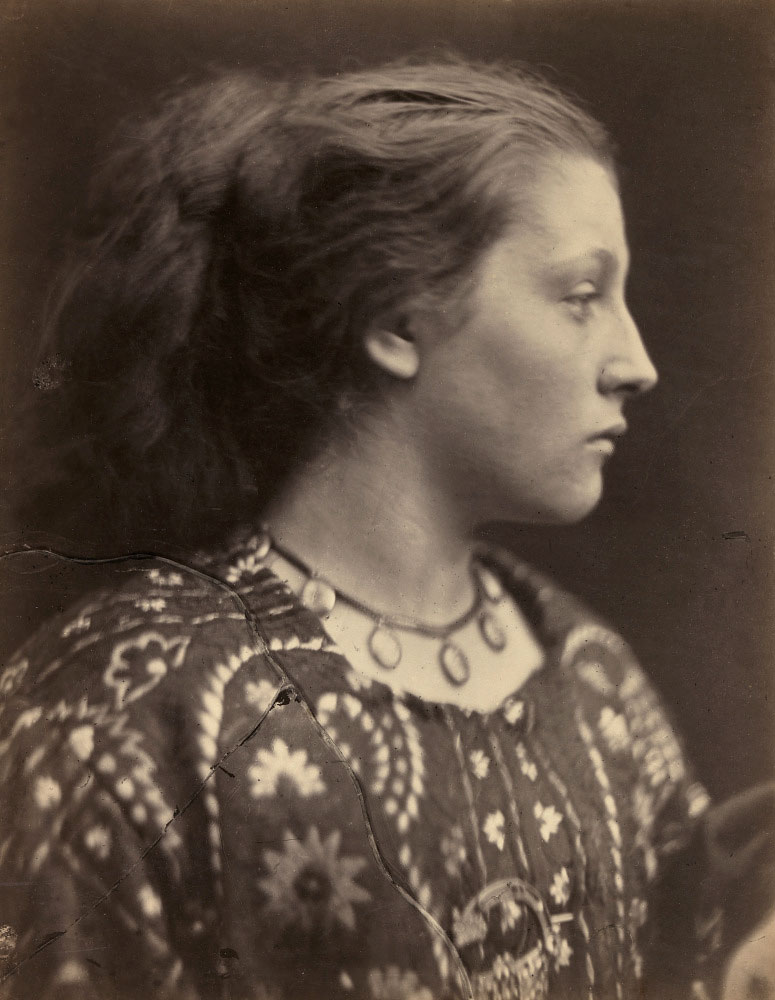
Julia Margaret Cameron (English, born India, 1815-1879) 'Sappho (Mary Hillier)' 1865


Julia Margaret Cameron (English, born India, 1815-1879)
Sappho (Mary Hillier)
1865
Albumen print
Image and sheet: 12 15/16 × 10 1/8 inches (32.86 × 25.72cm)
Mount: 20 13/16 × 16 13/16 inches (52.86 × 42.7cm)
The Nelson-Atkins Museum of Art
Gift of the Hall Family Foundation


Giorgio Sommer (Italian born Germany, 1834-1914) 'The Pickpocket' About 1865


Giorgio Sommer (Italian born Germany, 1834-1914)
The Pickpocket
About 1865
Albumen print
9 3/8 × 7 5/8 inches
The Nelson-Atkins Museum of Art
Gift of the Hall Family Foundation


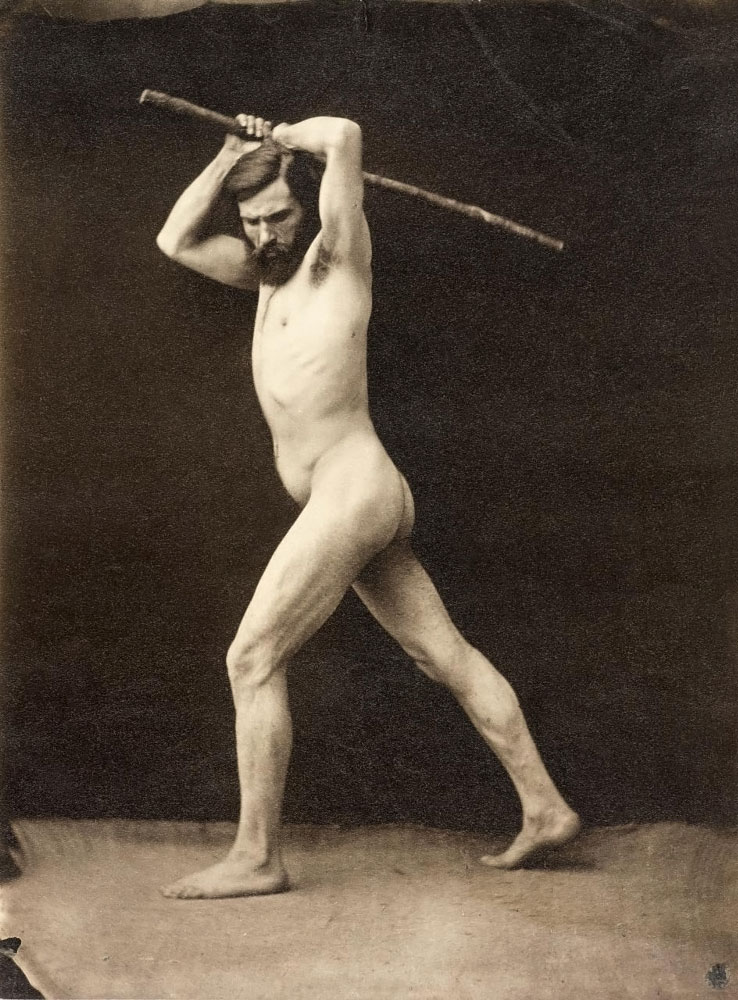
Gaudenzio Marconi (French born Switzerland, 1842-1885) 'Male nude for artist' c. 1870


Gaudenzio Marconi (French born Switzerland, 1842-1885)
Male nude for artist
c. 1870
Albumen print
Image and sheet: 8 5/8 × 6 3/8 inches (21.91 × 16.19cm)
Mount: 12 9/16 × 9 3/4 inches (31.91 × 24.77cm)
The Nelson-Atkins Museum of Art
Gift of the Hall Family Foundation


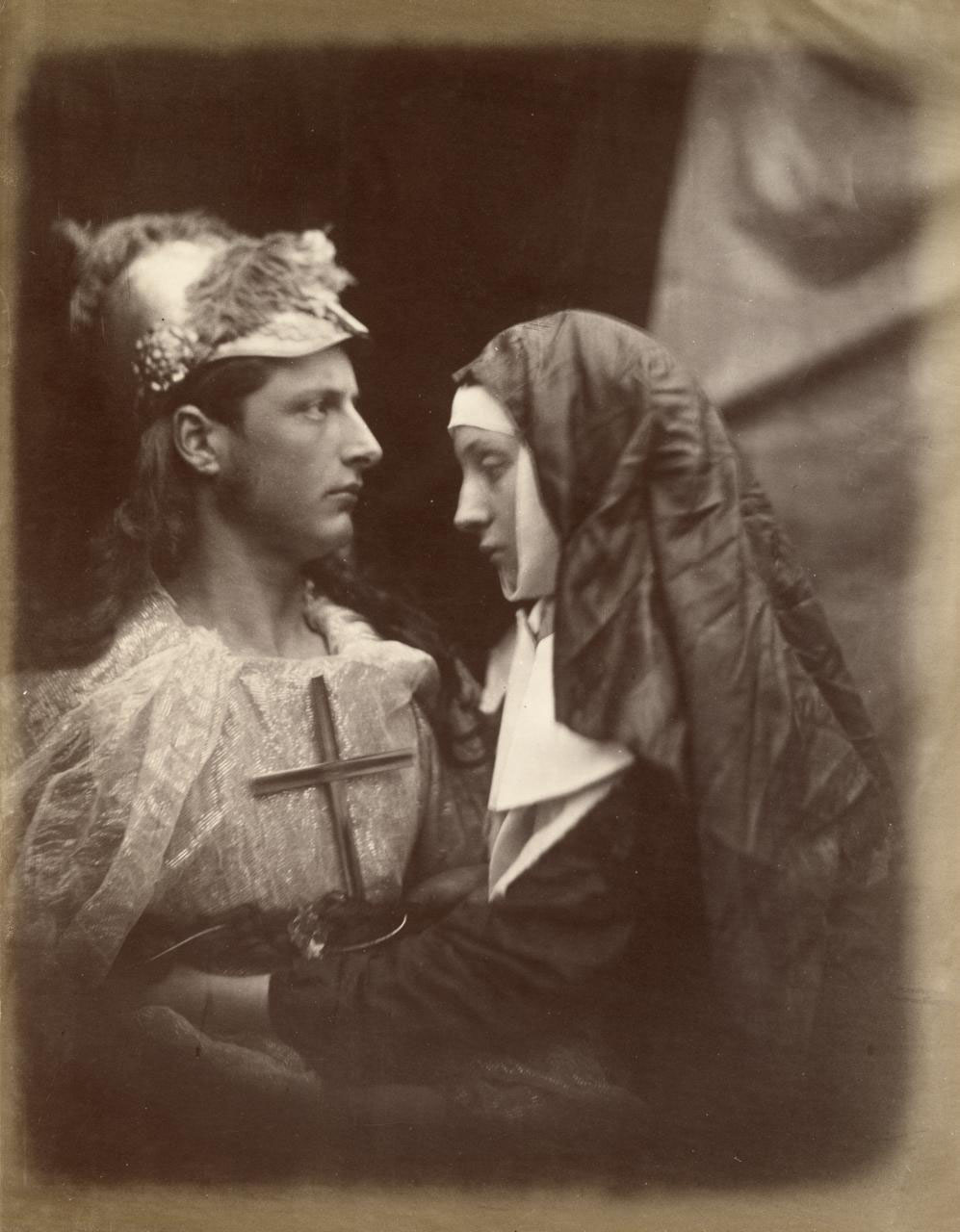
Julia Margaret Cameron (English born India, 1815-1879) 'Sir Galahad and the Pale Nun' 1874


Julia Margaret Cameron (English born India, 1815-1879)
Sir Galahad and the Pale Nun
1874
Albumen print
13 7/16 × 10 1/2 inches
The Nelson-Atkins Museum of Art
Gift of the Hall Family Foundation


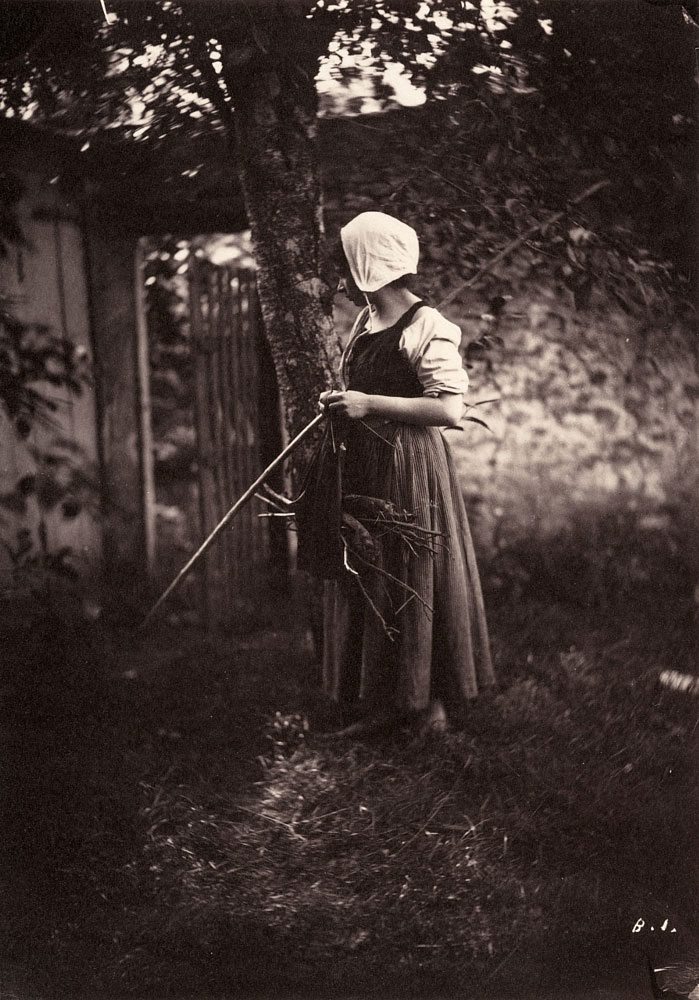
Giraudon's Artist (French, active c. 1875) 'Woman with bundle of twigs' c. 1875-1880


Giraudon’s Artist (French, active c. 1875)
Woman with bundle of twigs
c. 1875-1880
Albumen print
Image and sheet: 6 5/8 × 4 11/16 inches (16.83 × 11.91cm)
The Nelson-Atkins Museum of Art
Gift of the Hall Family Foundation


Pierre-Louis Pierson (French, 1822-1913) 'Portrait of the Countess of Castiglione from Série des Roses' 1895


Pierre-Louis Pierson (French, 1822-1913)
Portrait of the Countess of Castiglione from Série des Roses
1895
Albumen cabinet card
Image and sheet: 5 15/16 × 3 15/16 inches (15.06 × 9.98cm)
Mount: 6 3/8 × 4 1/4 inches (16.21 × 10.8cm)
The Nelson-Atkins Museum of Art
Gift of the Hall Family Foundation


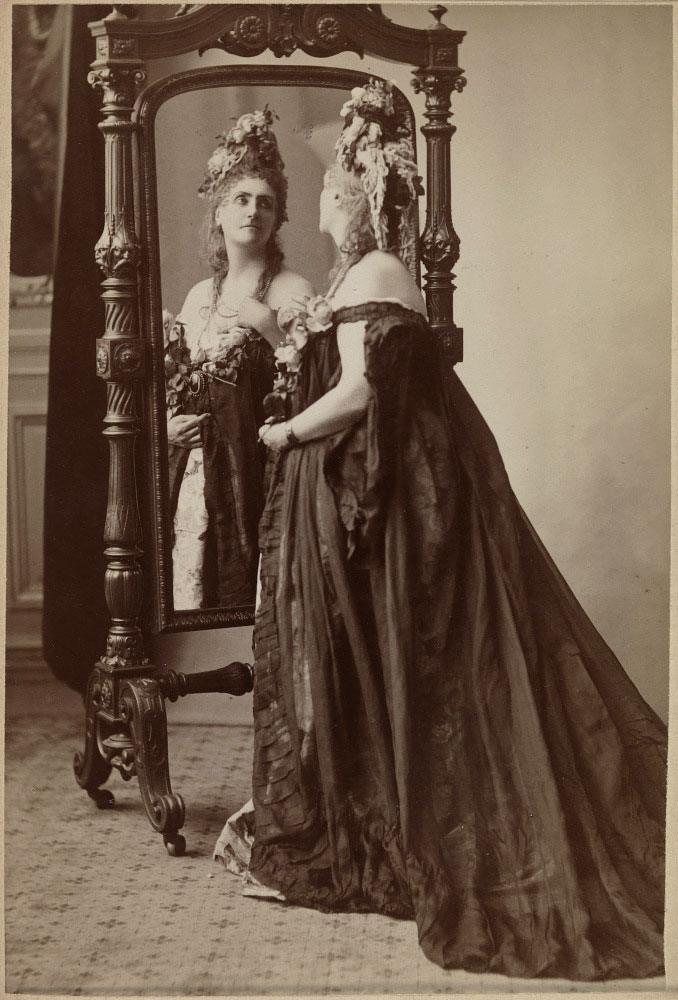
The Countess of Castiglione became reclusive with age, rumored to only leave her home at night, hidden behind veils. Social chroniclers of the time claimed that she removed all mirrors from her home to avoid her appearance; however, this portrait seems to contradict her alleged displeasure. Taken toward the end of her life, the countess admires her reflection in the mirror, donning a youthful blond wig elaborately decorated with roses.

Text from the Nelson-Atkins Museum website


The Nelson-Atkins Museum of Art
4525 Oak Street
Kansas City, MO 64111

Opening hours:
Thursday – Monday 10am – 5pm
Closed Tuesdays and Wednesdays

The Nelson-Atkins Museum of Art website

LIKE ART BLART ON FACEBOOK

Back to top

Exhibition: ‘Gregory Crewdson. Retrospective’ at the Albertina Museum, Vienna

Exhibition dates: 29th May – 8th September 2024

Curators: Walter Moser and Astrid Mahler


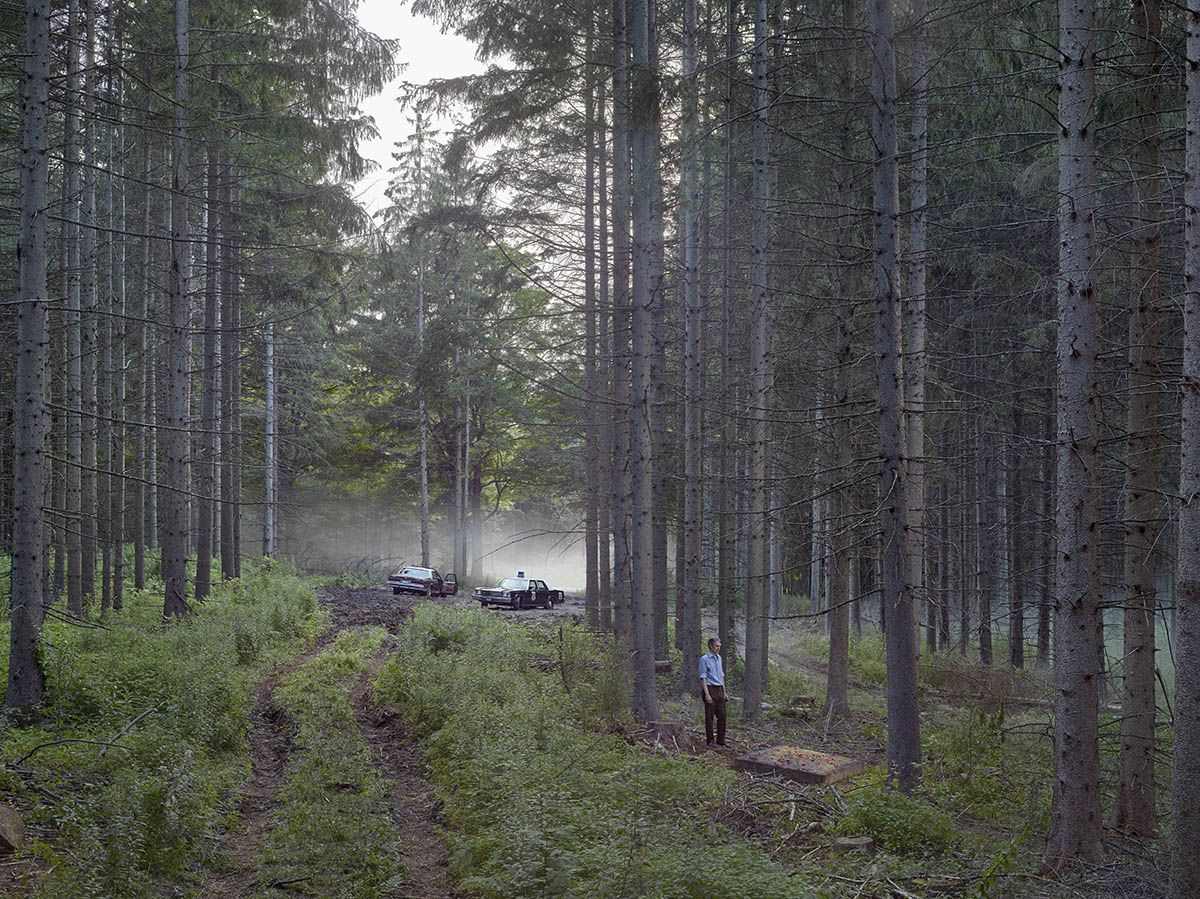
Gregory Crewdson (American, b. 1962) 'Untitled' From the series 'Early Work' 1986-1988 from the exhibition 'Gregory Crewdson. Retrospective' at the Albertina Museum, Vienna, May - Sept 2024


Gregory Crewdson (American, b. 1962)
Untitled
From the series Early Work, 1986-1988
Digital pigment print
39 x 58cm
The Albertina Museum, Vienna
Permanent loan, Private Collection
© Gregory Crewdson


I have so many exhibitions to post within the next few weeks that you get two postings this weekend and next weekend!

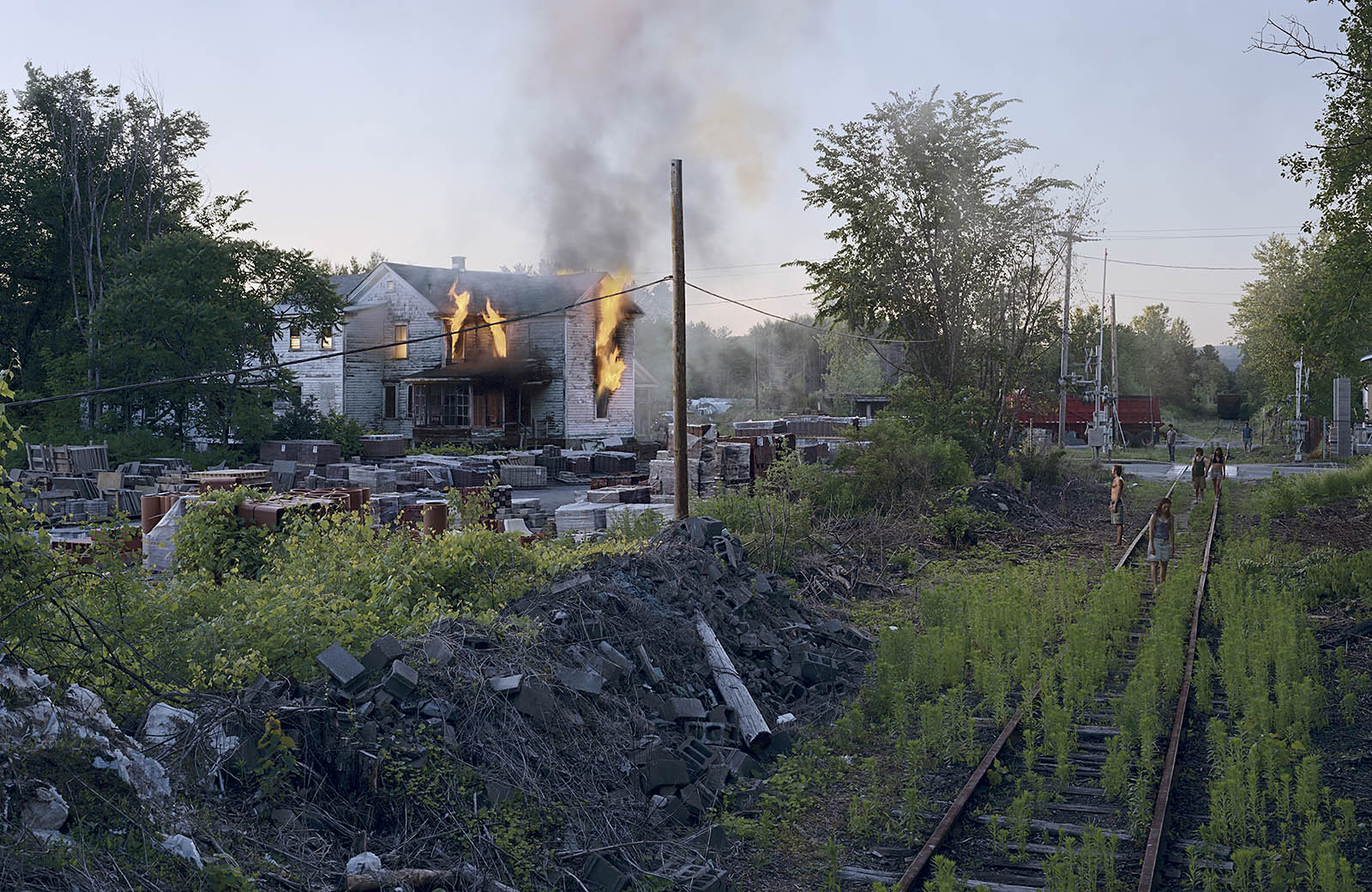
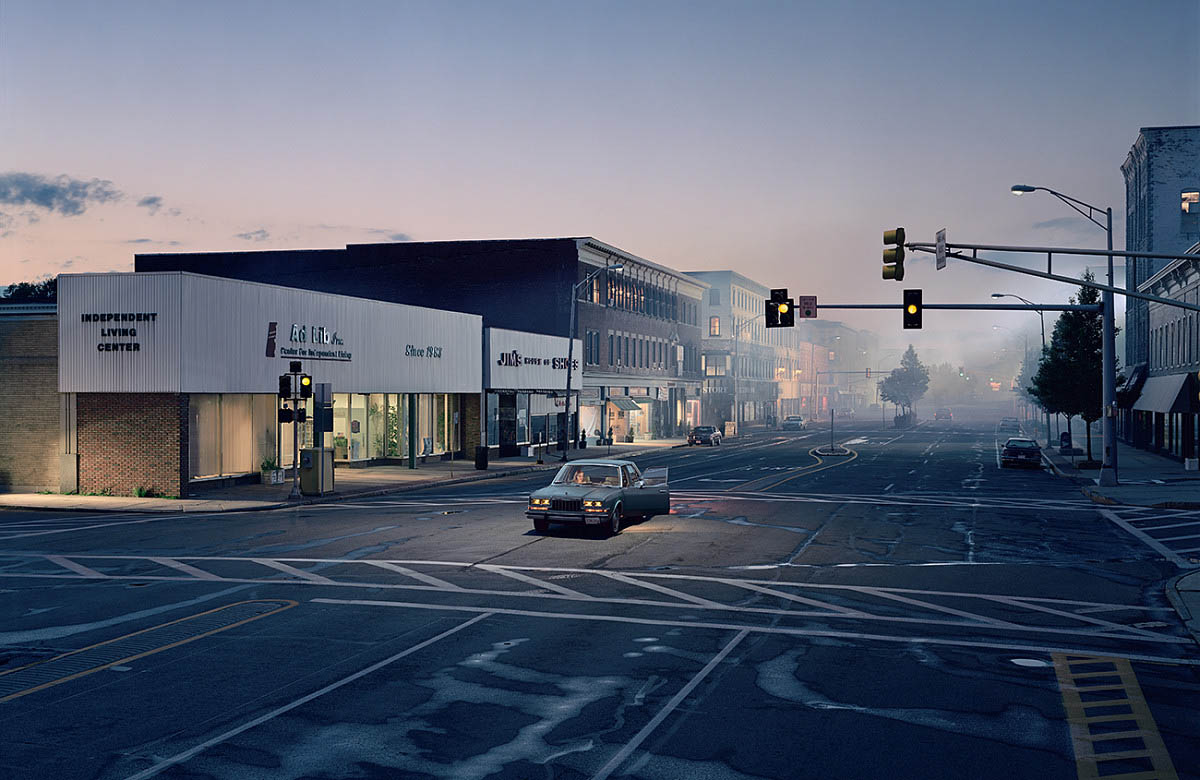
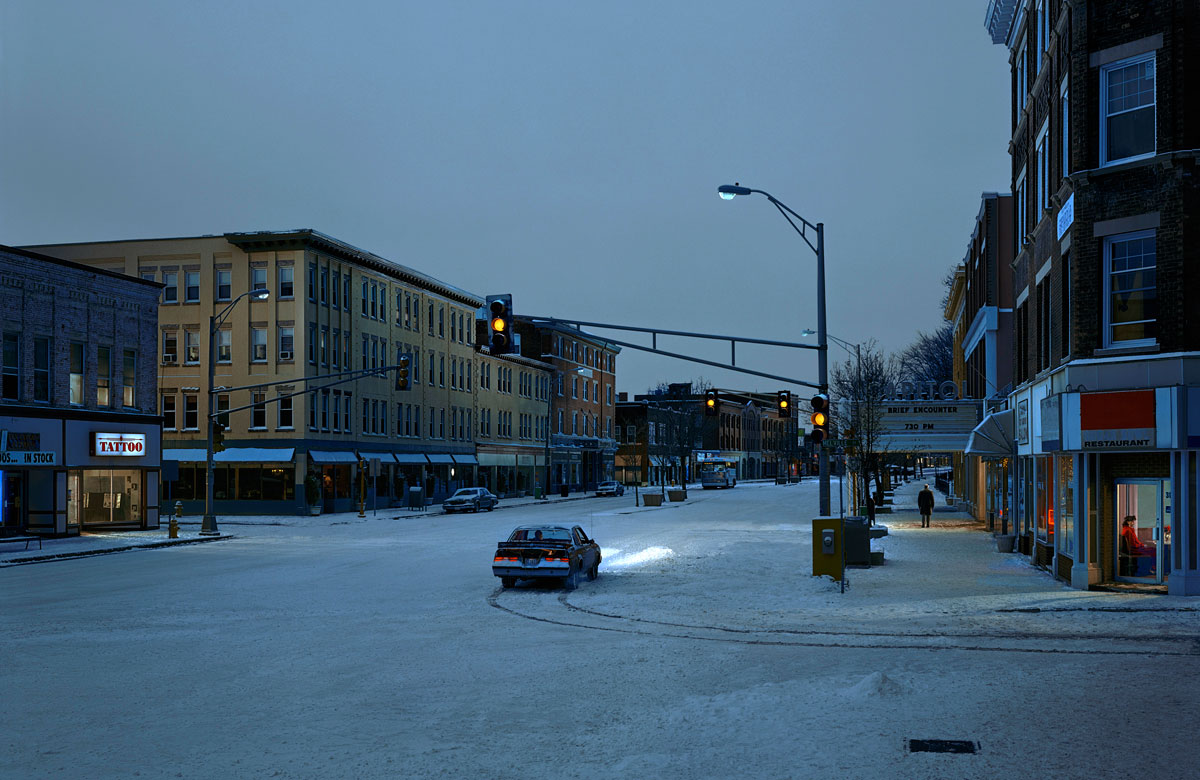
It’s always a pleasure to see the work of Gregory Crewdson – stylish, stylised, hyperreal, dead pan, cinematic, panoramic large-scale transcendent photographs.

For an analysis of Crewdson’s work please see my text Downfall of a dream: (n)framing the enigma in Gregory Crewdson’s Beneath the Roses (2012)

Dr Marcus Bunyan


Many thankx to the Albertina Museum for allowing me to publish the photographs for the posting. Please click on the photographs for a larger version of the image.


Gregory Crewdson. Retrospective

Gregory Crewdson (American, b. 1962) is one of the world’s most renowned photographers. Since the mid-1980s, Crewdson has been using the backdrop of small American towns and film sets to create, like a director, technically brilliant and colourfully seductive photographs that focus on human isolation and the abysses of society. The enigmatic scenes self-reflexively raise questions about the boundary between fact and fiction but can also be related to socio-political developments.

Watch this emotional video of the artist in the middle of his exhibition at the Albertina Museum.


Gregory Crewdson. Retrospektive | Mit Kurator Walter Moser

Curator Walter Moser on Cregory Grewdson’s unique work


Gregory Crewdson | Mit Co-Kuratorin Astrid Mahler

“Gregory Crewdson’s latest series is set in the fictional small town of ‘Eveningside’. It is the last part of a trilogy in which Crewdson addresses the socio-political conditions of his country and the failure of the American Dream,” says co-curator Astrid Mahler about the last part of our major retrospective of the world-famous photographer Gregory Crewdson.


What I am interested in is that moment of transcendence, where one is transported into another place, into a perfect, still world.


Gregory Crewdson


Gregory Crewdson (American, b. 1962) is one of the world’s most renowned photographers. Since the mid-1980s, Crewdson has been using the backdrop of small American towns and film sets to create, like a director, technically brilliant and colourfully seductive photographs that focus on human isolation and the abysses of society. The enigmatic scenes self-reflexively raise questions about the boundary between fact and fiction but can also be related to socio-political developments.

The retrospective at the Albertina comprises a total of nine groups of works, created over the last three and a half decades and conceived serially. Starting with his Early Work (1986-1988), the exhibition includes Crewdson’s best-known series such as Twilight (1998-2002), which depicts scenes shaped by cinematic language, with people being confronted by unexplainable phenomena in their everyday lives. The impressive, mysterious large-scale scenes from the Beneath the Roses series (2003‒2008) deal with people’s isolation and alienation from their environment. The most recently completed group of works Eveningside (2021-2022) portrays an unheroic image of a fictional small town of the same name in atmospheric black and white. Following Cathedral of the Pines (2013-2014) and An Eclipse of Moths (2018-2019), Eveningside represents the final part of a trilogy through which the artist examines the social decline of society far removed from the American dream.

Crewdson’s large-scale pictures are preceded by months of planning; they are created with the participation of hundreds of people from casting, wardrobe and art departments, plus technical specialists. Production photographs taken in parallel illustrate the highly elaborate process of design, culminating in an extensive post-production process in which the final photographs are assembled from multiple shots.

As a generous gesture, the exhibition is accompanied by a significant donation to the Albertina’s photo collection. This extensive assimilation of works strengthens the focus of the collection on contemporary photography.

Text from the Albertina Museum website


Gregory Crewdson (American, b. 1962) 'Untitled' From the series 'Natural Wonder' 1991-1997 from the exhibition 'Gregory Crewdson. Retrospective' at the Albertina Museum, Vienna, May - Sept 2024


Gregory Crewdson (American, b. 1962)
Untitled
From the series Natural Wonder, 1991-1997
Digital pigment print
30 x 39 7/8 in.
The Albertina Museum, Vienna
Permanent loan, Private Collection

© Gregory Crewdson


Gregory Crewdson (American, b. 1962) 'Untitled' From the series 'Hover' 1996-1997 from the exhibition 'Gregory Crewdson. Retrospective' at the Albertina Museum, Vienna, May - Sept 2024


Gregory Crewdson (American, b. 1962)
Untitled
From the series Hover, 1996-1997
Digital pigment print
51 x 61cm
The Albertina Museum, Vienna
Permanent loan, Private Collection
© Gregory Crewdson


Gregory Crewdson (American, b. 1962) 'Untitled' From the series 'Twilight' 1998-2002


Gregory Crewdson (American, b. 1962)
Untitled
From the series Twilight, 1998-2002
Digital pigment print
122 x 152cm
The Albertina Museum, Vienna
Permanent loan, Private Collection
© Gregory Crewdson


Gregory Crewdson (American, b. 1962) 'Untitled' From the series 'Twilight' 1998-2002


Gregory Crewdson (American, b. 1962)
Untitled
From the series Twilight, 1998-2002
Digital pigment print
The Albertina Museum, Vienna
Permanent loan, Private Collection
© Gregory Crewdson


Gregory Crewdson (American, b. 1962)'Untitled' From the series 'Beneath the Roses' 2003-2008


Gregory Crewdson (American, b. 1962)
Untitled
From the series Beneath the Roses, 2003-2008
Digital pigment print
144 x 223cm
The Albertina Museum, Vienna
Permanent loan, Private Collection
© Gregory Crewdson


Gregory Crewdson (American, b. 1962) 'Untitled' From the series 'Beneath the Roses' 2003-2008


Gregory Crewdson (American, b. 1962)
Untitled
From the series Beneath the Roses, 2003-2008
Digital pigment print
144 x 123cm
The Albertina Museum, Vienna
Permanent loan, Private Collection
© Gregory Crewdson


Gregory Crewdson (American, b. 1962) 'Untitled' From the series 'Beneath the Roses' 2003-2008


Gregory Crewdson (American, b. 1962)
Untitled
From the series Beneath the Roses, 2003-2008
Digital pigment print
144 x 123cm
The Albertina Museum, Vienna
Permanent loan, Private Collection
© Gregory Crewdson


Gregory Crewdson (American, b. 1962) 'Untitled' From the series 'Beneath the Roses' 2003-2008


Gregory Crewdson (American, b. 1962)
Untitled
From the series Beneath the Roses, 2003-2008
Digital pigment print
144 x 223cm
The Albertina Museum, Vienna
Permanent loan, Private Collection
© Gregory Crewdson


Exhibition Texts

Early Work, 1986-1988

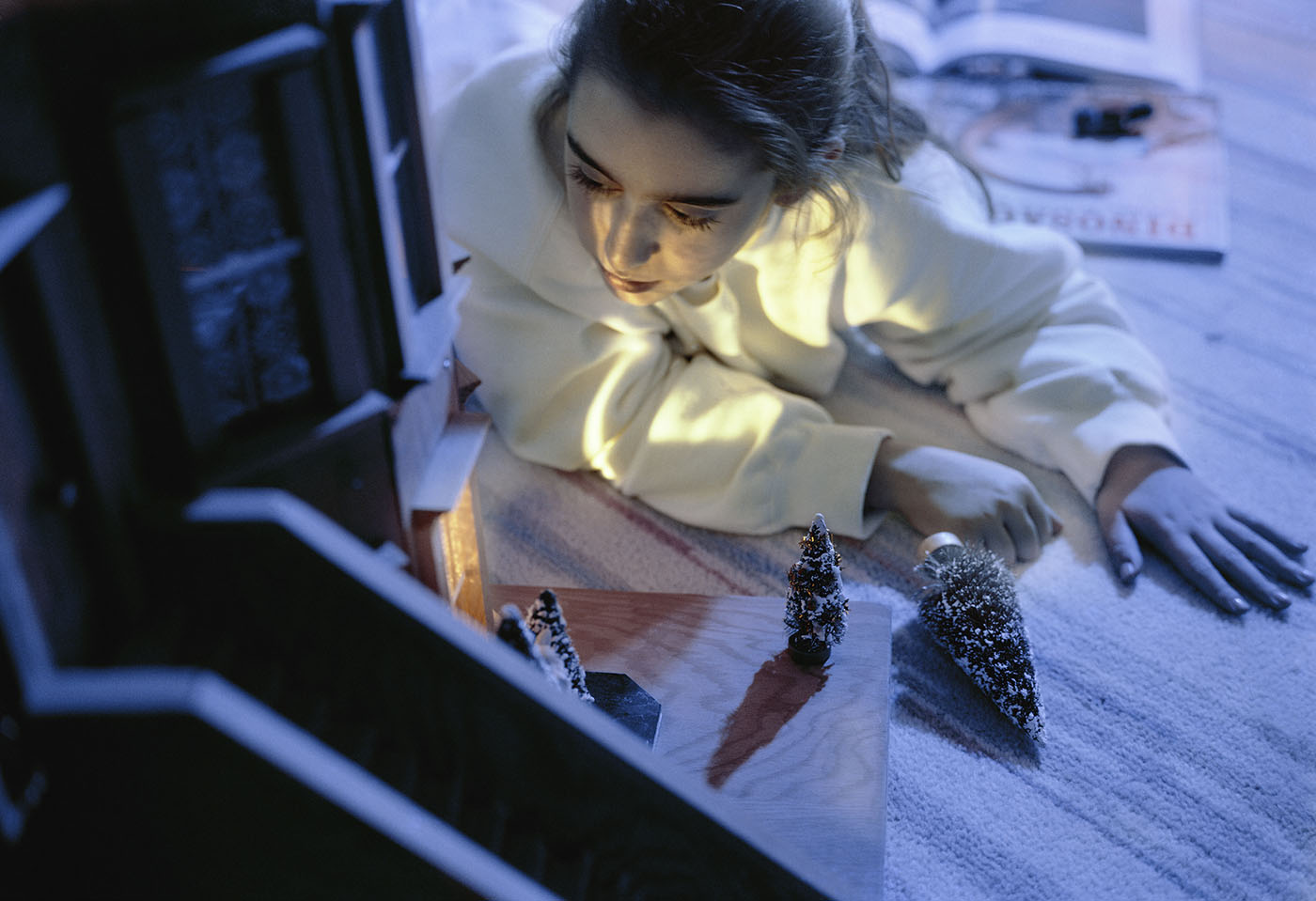
Early Work was created as Crewdson’s final project at Yale University’s School of Art. Among other places, Gregory Crewdson photographed the series in the US state of Massachusetts, mostly in the small town of Lee, which is very close to the family’s summer home. Due to his personal connection to this region, the artist still realises almost all of his photographic projects in the Massachusetts area. In the photographs, Crewdson arranged the town’s residents in the context of their domestic settings. Using relatively modest technical devices at the time, he transformed the real places into mysterious, uncanny scenes with the help of artificial lighting. Introverted protagonists rendered in tightly cropped views present typically American suburbs as places of human isolation and oppression. David Lynch’s surreal masterpiece Blue Velvet, in which the main character encounters human abysses behind the idyllic façade of a small town, served as a major model. The film, which came out in 1986, turned out to be stylistic inspiration for Crewdson and also became an important source of reference for his subsequent series. Crewdson also dealt with more documentary positions, such as those of Stephen Shore and William Eggleston. On their journeys across the United States, they enhanced everyday motifs with symbolic meaning through close-up views and vibrant colours. Especially Eggleston employed these means to allude to disconcerting aspects in society.

Natural Wonder, 1991-1997

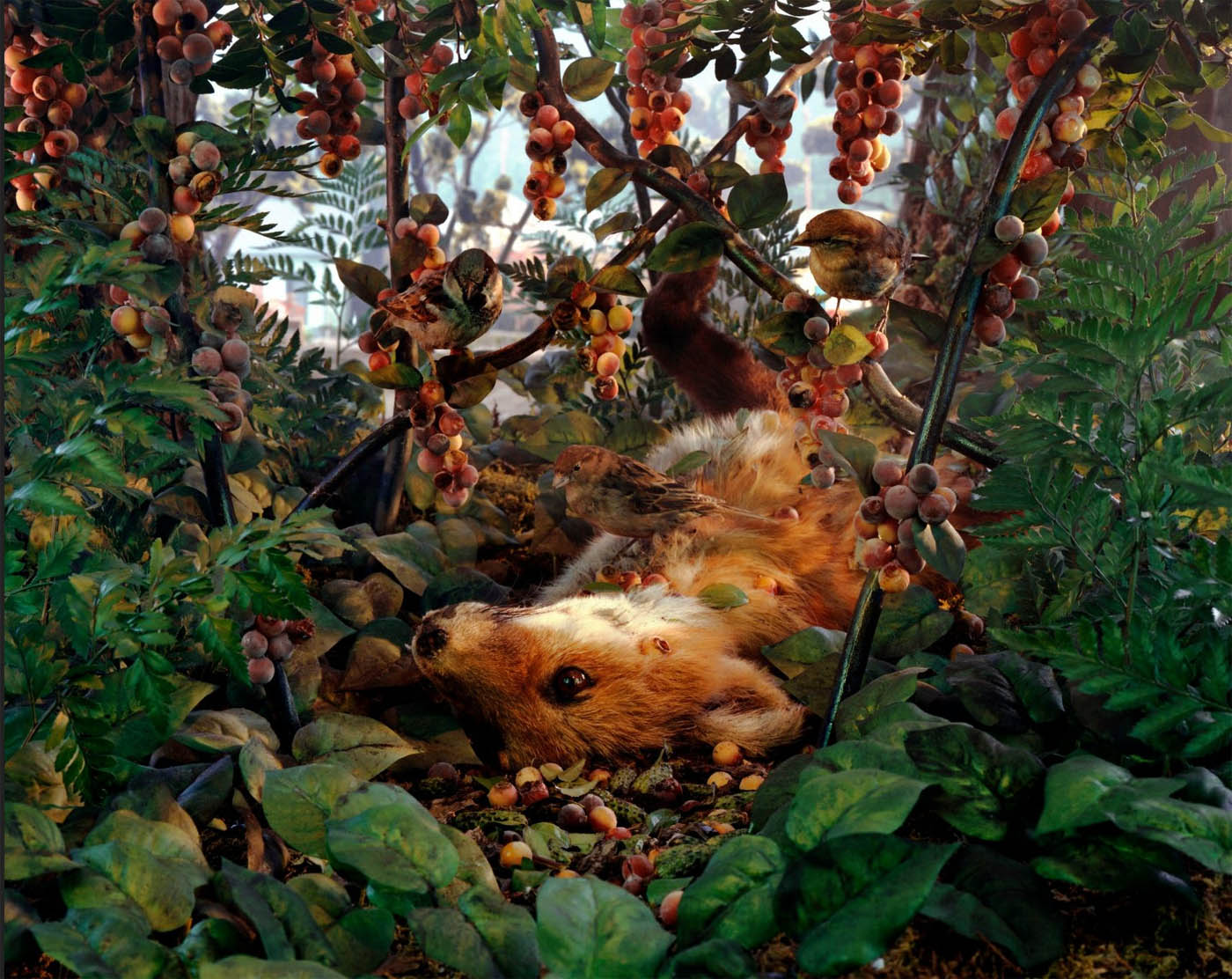
Inspired by the dioramas in natural history museums, for Natural Wonder Gregory Crewdson built three-dimensional models in his studio, which he then photographed. The pictures show enigmatic rituals and cruel incidents happening in nature, which take place against the backdrop of the suburbs without people realising. For example, birds sit around a mysterious circle of eggs, or nature takes possession of a decaying animal carcass. As a metaphor for suppressed anxieties and traumas, the depicted landscape functions as a mirror of the unconscious and the human psyche. In Crewdson’s series, autobiographic elements – his father was a psychoanalyst – and overriding social themes characteristically coincide. The symbolism of Natural Wonder has essentially been inspired by cinematography: in Alfred Hitchcock’s film The Birds (1963), the eponymous animals, suddenly infesting an idyllic world, symbolise dysfunctional relationships and human fears. In Blue Velvet (1986), David Lynch eliminates the line between reality and illusion, between the familiar and the eerie, between idyll and violence through the motif of a prepared robin or of a severed human ear covered with ants, which is found in a meadow.

Hover, 1996/1997

In Hover, his third series, Gregory Crewdson abandons the aesthetic achievements of earlier works: he takes pictures in black and white from a bird’s-eye view with the help of a crane. The strategy characteristic of Crewdson’s work to merely adumbrate a narrative while abstaining from resolving it and keeping it in mysterious suspense reaches an early climax in Hover. With a distanced, objectifying gaze he shows familiar occurrences in a small town as they tip over into the unusual. The recurring motif of the circle refers not only to popular science fiction movies and works of land art, but also quotes Alfred Hitchcock’s film Vertigo (1958), in which the circle is considered a metaphor for romantic obsession.

Gregory Crewdson now began to plan his sessions in advance and in great detail. As were other series, Hover was shot in the real place of Lee with the aid of residents performing as protagonists. Occasionally, Crewdson still resorted to improvisation; for example, he called the police for the purpose of integrating the police car into the photograph.

Twilight, 1998-2002

Twilight is one of Gregory Crewdson’s most well-known works. It is informed by cinema even more than earlier series. In its scenes, which are mostly set at dusk, Crewdson resorts to the fantastic as the principal theme. Inexplicable phenomena intrude into everyday life. Familiar objects are repurposed, and people give the impression of being exposed and unprotected because of their nudity.

Similar to a film production, a crew of about sixty took part in Twilight. In this series, Crewdson arrived at his characteristic repertoire of motifs, such as open cars, windows, and mirrors, which he varied and put together like vocabulary and would also use for subsequent works. Crewdson began to fully concentrate on the mise-en-scène, leaving the technical implementation of the shots to Richard Sands for the first time – a practice continued to this day. This high-profile director of photography from the world of cinema has worked with Steven Spielberg and Francis Ford Coppola, among others.

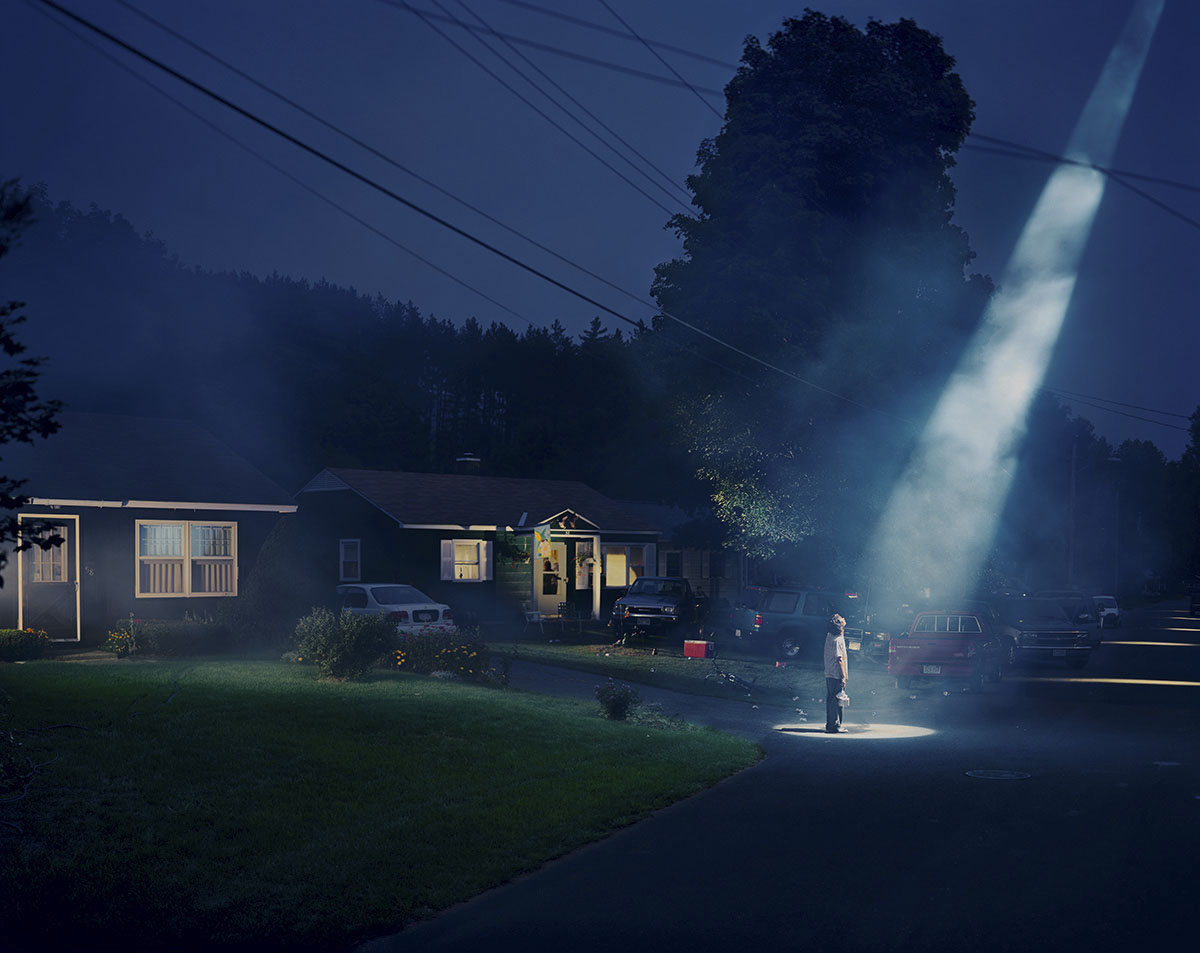
The photographs, which Crewdson refers to as “single-frame movies,” contain multiple references to classical painting and popular culture, a telling example of the latter being Steven Spielberg’s science fiction film Close Encounters of the Third Kind (1977). Gregory Crewdson’s postmodern approach becomes manifest in these images: starting out from the idea that reality is no longer “authentic” but merely experienced through the media, the recognisable references reveal the staging they are based on.

Beneath the Roses, 2003-2008

In Beneath the Roses, the surreal, uncanny atmosphere of earlier series gives way to an essentially melancholic and psychologising key tone. The protagonists, captured in desolate surroundings, are shown frozen and motionless. Lonely, isolated, and without interacting, they appear totally alienated. Especially for his interior shots, Gregory Crewdson borrows from Edward Hopper’s painting. Situations of human introspection in anonymous, everyday architectural settings that both suggest intimacy and accommodate a voyeuristic gaze are unmistakable parallels.

Beneath the Roses is the most elaborate series in Gregory Crewdson’s oeuvre, which he originally developed as an idea for a film and to which more than one hundred specialists from casting, costume design, technical, and art departments contributed over the extensive period during which the series was realised. As in Twilight, he staged the interior shots in studios, whereas outdoor shots were taken in real places he had profoundly transformed according to his ideas. The artist meticulously prepared the shoot with architectural models, storyboards, scene scripts, and location shots. The focus was particularly on the choice of props, which appear both quintessentially American and timeless. Using different aperture settings, Crewdson took multiple photographs of each scene. In postproduction, which lasted over several months, he combined forty to fifty negatives, so that the constant depth of field in the final picture gives a hyperrealist impression.

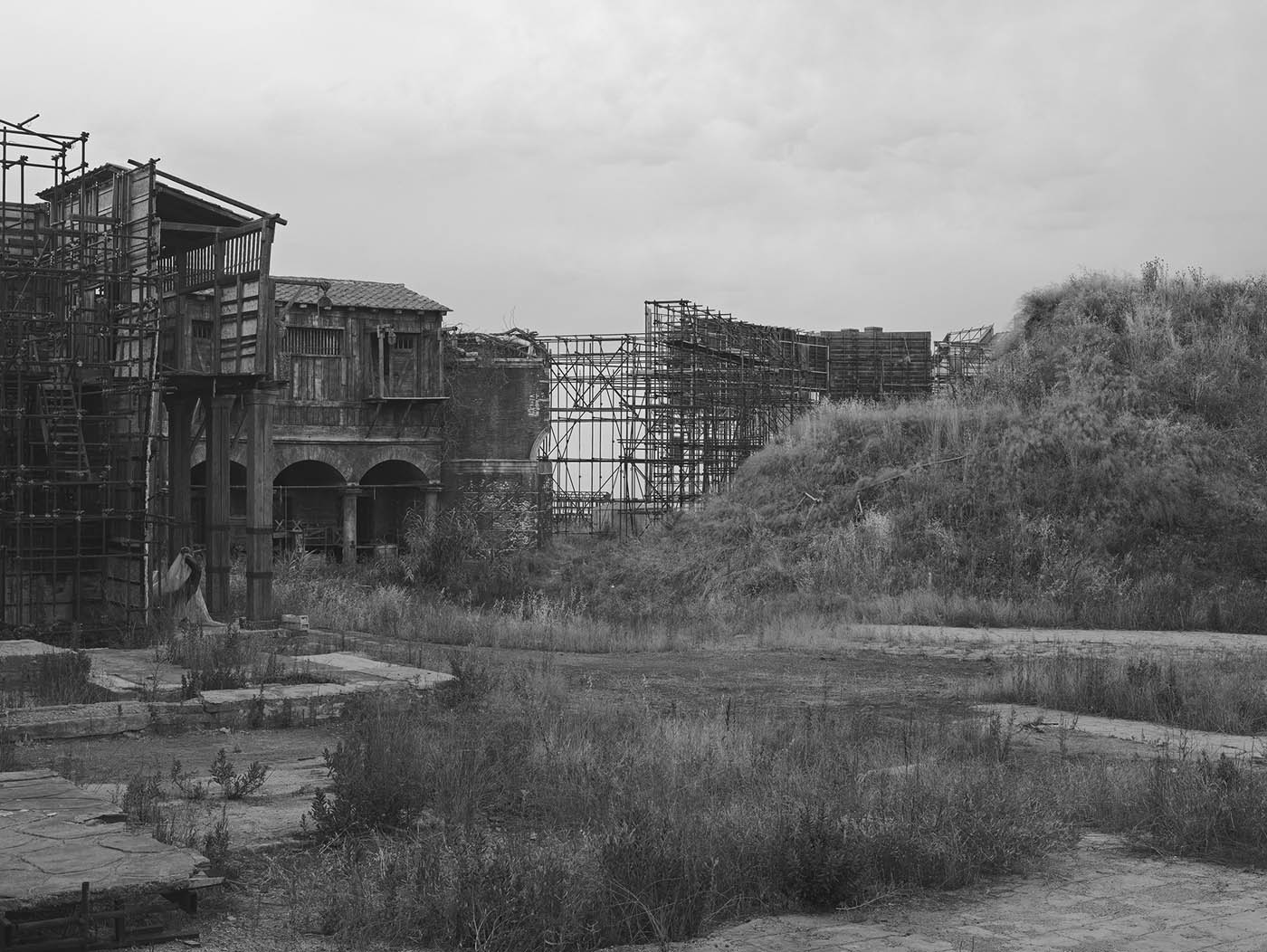
Sanctuary, 2009

Sanctuary was created after the monumental large-scale project Beneath the Roses (2003-2008). The series marks a period of transition during which Gregory Crewdson put new artistic approaches to the test. When staying in Rome in 2009, he visited the Italian city of cinematography Cinecittà, where, in its film sets, his first group of works was realised outside the United States. He completed the project within two months with a small team and little technical and financial input. In Sanctuary, Crewdson heightened the tension between reality and fiction known from earlier series by making the sets as such the actual subject. The black-and-white photography accentuates the morbid appeal of the sets as ruins. In contrast to Crewdson’s usual practice of conveying loneliness and isolation with the aid of performers, in Sanctuary he creates an essentially melancholic atmosphere through the complete absence of people. In particular, the artist makes palpable the discrepancy between the hustle and bustle of past film shoots and the now ghostly desolation.

Cathedral of the Pines, 2013/2014

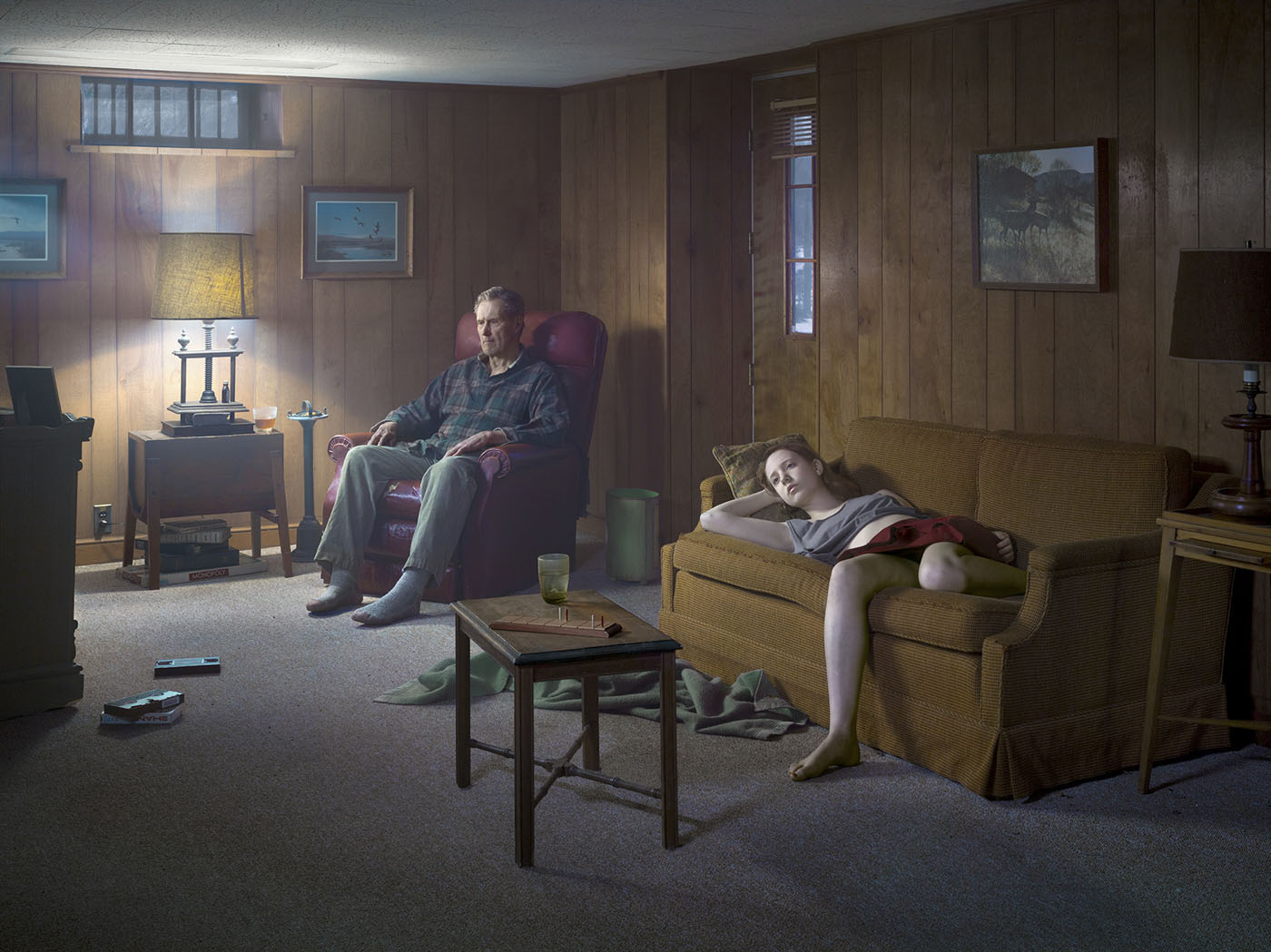
Cathedral of the Pines was created after a period of personal and artistic crisis. In the midst of the mighty pine forests near the city of Becket in Massachusetts, where Gregory Crewdson has lived since 2010, he discovered the eponymous path that became the starting point for this series. Cathedral of the Pines is one of the artist’s most personal groups of work. For the first time, he engaged persons from his family and circle of friends as performers. Moreover, he staged his interiors in real houses, working with a comparatively small team and a minimum of artificial light.

Cathedral of the Pines examines the subject of the human condition through the relationship between human beings and landscape. The nocturnal atmosphere of earlier series gives way to cool daylight and cold colours: completely in the nude or only partially covered and staring absent-mindedly, his performers seem frozen and withdrawn into their own emotional worlds. By placing windows prominently, Crewdson contrasts the relationship between interior and exterior space, as well as interior and exterior light. With its references to the Romanticism of the early nineteenth century – such as compositions by Caspar David Friedrich – or seventeenth-century Dutch painting – such as the art of Jan Vermeer – the motif of the window is also in the tradition of a symbol of contemplation and unfulfilled yearning.

An Eclipse of Moths, 2018/2019

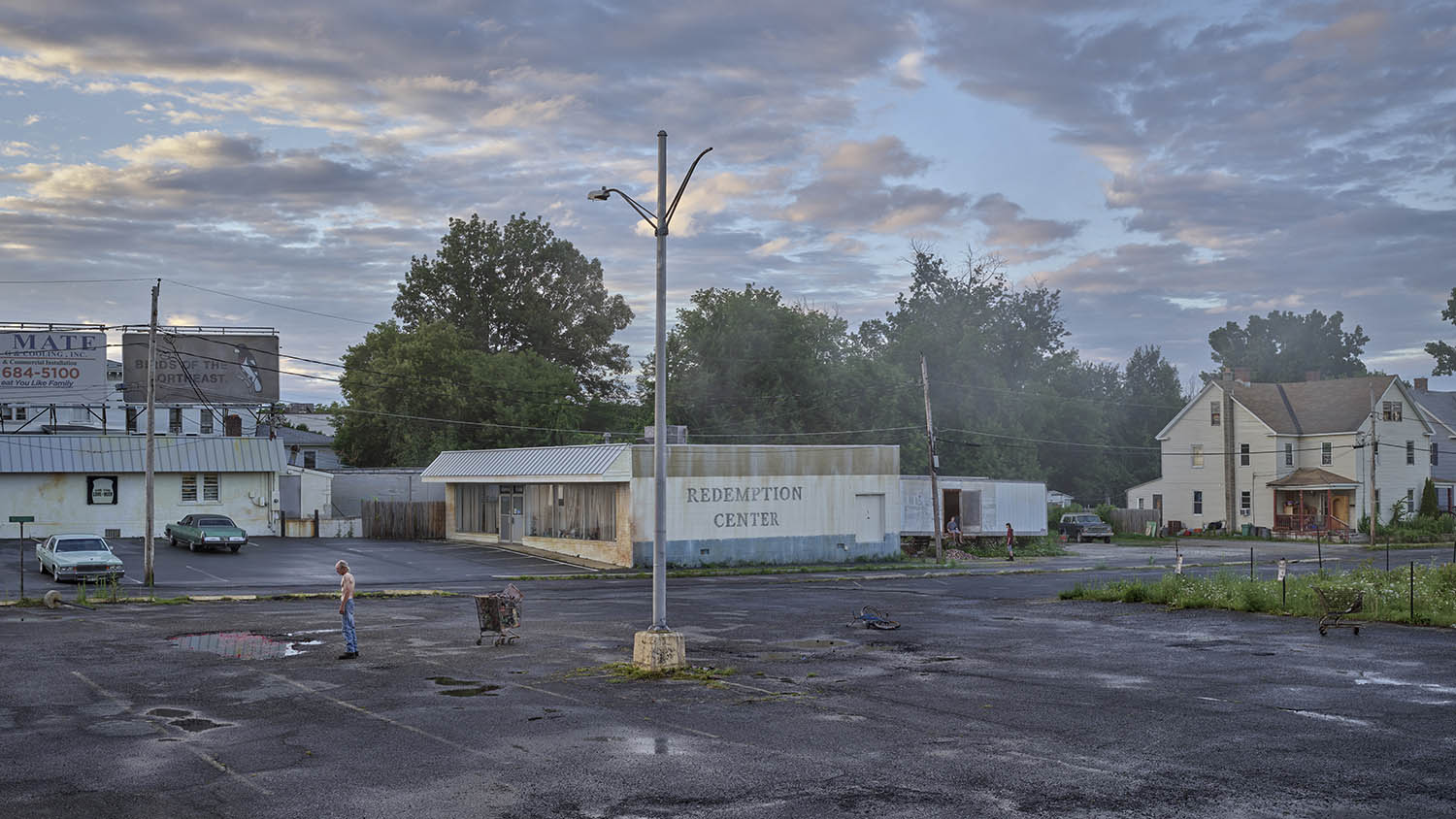
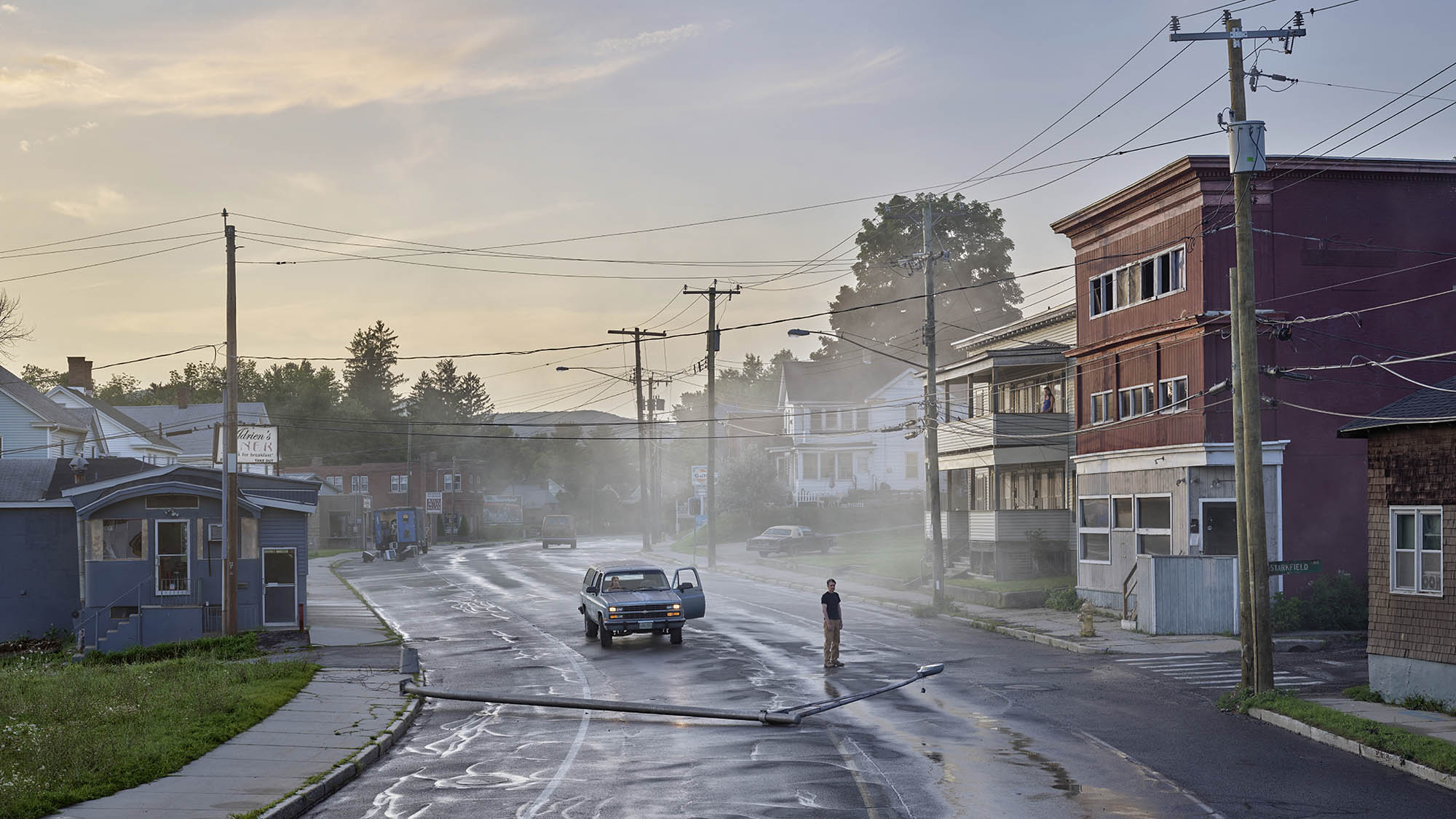
Gregory Crewdson photographed An Eclipse of Moths during Donald Trump’s presidency, thus formulating his analysis of society as sociopolitical criticism. In the city where the series was shot, Pittsfield in Massachusetts, the majority of the population had worked for the local General Electric plant and many lost their jobs after the firm had closed down. In addition to high unemployment, the company left behind a devastated environment. Crewdson describes the situation of neglected postindustrial places through the contrast between light atmospheres rendered in vibrant colours and desolate motifs of everyday life. Potholed streets or dilapidated houses symbolise the fragility and frailty of a society that has lost its footing.

Different from Cathedral of the Pines (2013/2014), his previous series, in An Eclipse of Moths Crewdson returned to the cinematographic widescreen format. The artist depicted his protagonists as small figures in proportion to their surroundings and at a distance from one another. He frequently arranged his seemingly disoriented protagonists around street lamps, comparable to the eponymous moths circling around the light in the darkness. Apart from a multitude of props, he also used smoke and artificially sprinkled streets for this series so as to masterfully stage his light effects.

Eveningside, 2021/2022

Gregory Crewdson’s most recent series is set in a fictitious small town called Eveningside. Its imaginary geography is made up of various places in western Massachusetts the artist had used as scenes for earlier works. After Cathedral of the Pines (2013/2014) and An Eclipse of Moths (2018/2019), this atmospheric work in black and white constitutes the final part of Crewdson’s trilogy, which deals with the sociopolitical dark sides of a society removed from the American dream. In Eveningside, the artist often depicts people going about their work. Frozen in absolute standstill, they seem caught in their respective social contexts.

Crewdson’s arrangements ingeniously position the protagonists in space through lighting influenced by film noir and motifs like shopwindow and mirror. The artist shows their faces in reflections from irritating and slightly shifted perspectives with the aid of montage. Windows frame the protagonists as pictures within the picture und underscore the act of image-making as a self-reflexive practice.

Text from The Albertina Museum press release


Gregory Crewdson (American, b. 1962) 'Untitled' From the series 'Sanctuary' 2009


Gregory Crewdson (American, b. 1962)
Untitled
From the series Sanctuary, 2009
Digital pigment print
72 x 90cm
The Albertina Museum, Vienna
Permanent loan, Private Collection
© Gregory Crewdson


Gregory Crewdson (American, b. 1962) 'The Mattress' From the series 'Cathedral of the Pines' 2013-2014


Gregory Crewdson (American, b. 1962)
The Mattress
From the series Cathedral of the Pines, 2013-2014
Digital pigment print
94 x 127cm
The Albertina Museum, Vienna
Permanent loan, Private Collection
© Gregory Crewdson


Gregory Crewdson (American, b. 1962) 'The Basement' From the series 'Cathedral of the Pines' 2013-2014


Gregory Crewdson (American, b. 1962)
The Basement
From the series Cathedral of the Pines, 2013-2014
Digital pigment print
94 x 127cm
The Albertina Museum, Vienna
Permanent loan, Private Collection
© Gregory Crewdson


Gregory Crewdson (American, b. 1962) 'Redemption Center' From the series 'An Eclipse of Moths' 2018-2019


Gregory Crewdson (American, b. 1962)
Redemption Center
From the series An Eclipse of Moths, 2018-2019
Digital pigment print
127 x 225cm
The Albertina Museum, Vienna
Permanent loan, Private Collection
© Gregory Crewdson


Gregory Crewdson (American, b. 1962) 'Starkfield Lane' From the series 'An Eclipse of Moths' 2018-2019


Gregory Crewdson (American, b. 1962)
Starkfield Lane
From the series An Eclipse of Moths, 2018-2019
Digital pigment print
127 x 225cm
The Albertina Museum, Vienna
Permanent loan, Private Collection
© Gregory Crewdson


Gregory Crewdson (American, b. 1962) 'Madeline's Beauty Salon' From the series 'Eveningside' 2021-2022


Gregory Crewdson (American, b. 1962)
Madeline’s Beauty Salon
From the series Eveningside, 2021-2022
Digital pigment print
88 x 117cm
The Albertina Museum, Vienna
Permanent loan, Private Collection
© Gregory Crewdson


The Albertina Museum
Albertinaplatz 1
1010 Vienna
Phone: +43 (0)1 534 83 0

Daily 10am – 6pm
Except Wednesday and Friday 10am – 9pm

The Albertina Museum website

LIKE ART BLART ON FACEBOOK

Back to top

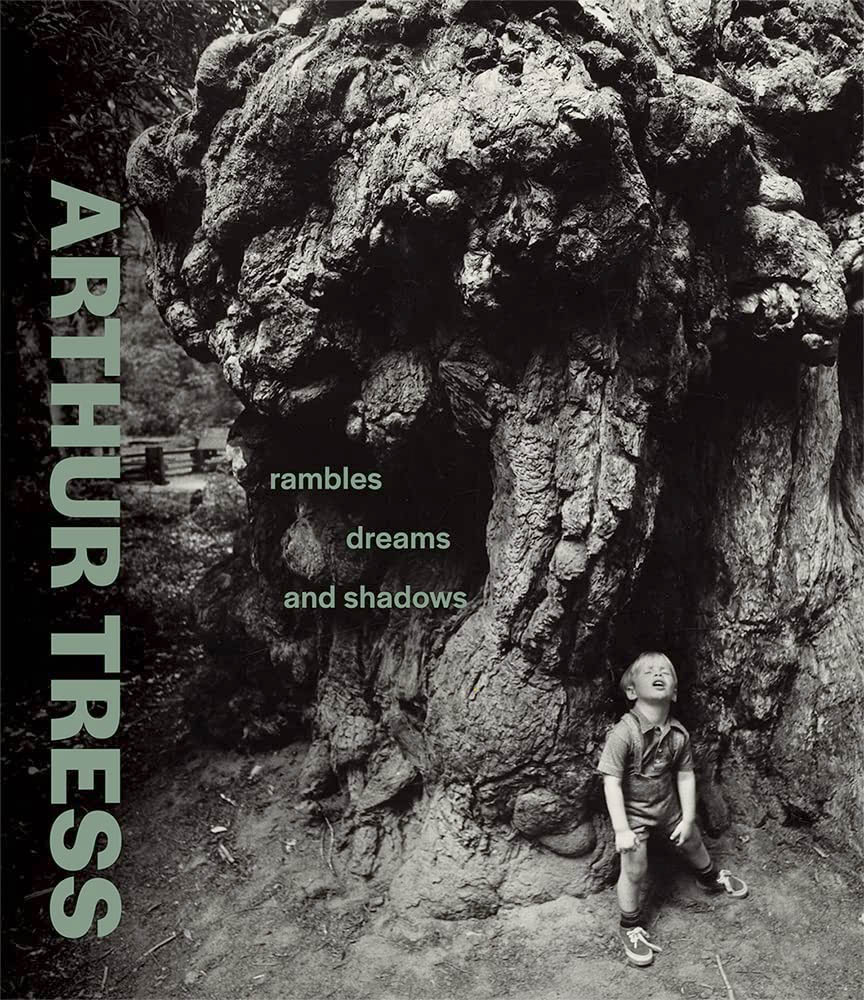
Exhibition: ‘Arthur Tress: Rambles, Dreams, and Shadows’ at the J. Paul Getty Museum, Los Angeles

Exhibition dates: 31st October, 2023 – 18th February, 2024

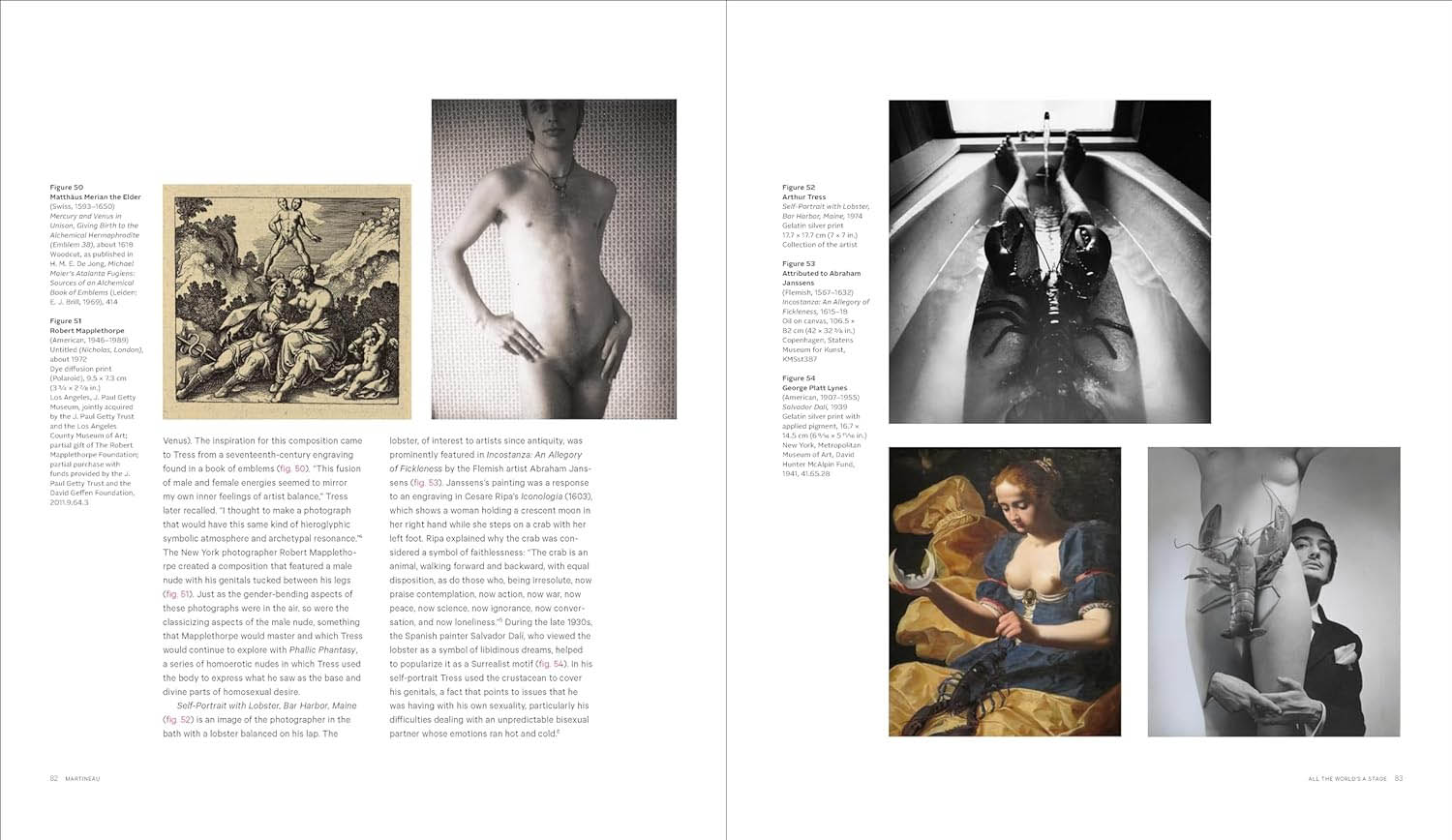
Warning: This posting contains photographs of male nudity and sexual activity.


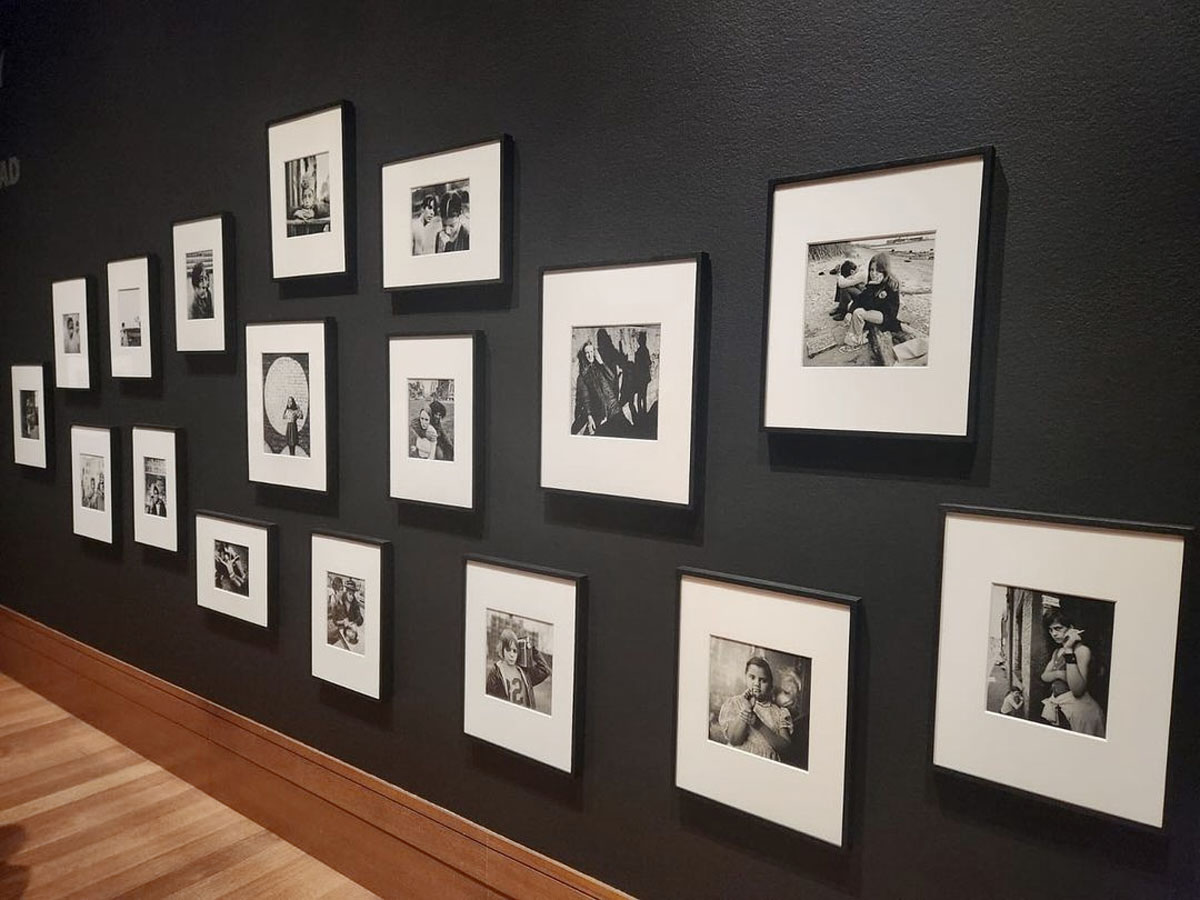
Installation view of the exhibition 'Arthur Tress: Rambles, Dreams, and Shadows' at the J. Paul Getty Museum, Los Angeles showing the work 'Boy in Flood Dream, Ocean City, Maryland' 1971


Installation view of the exhibition Arthur Tress: Rambles, Dreams, and Shadows at the J. Paul Getty Museum, Los Angeles showing the work Boy in Flood Dream, Ocean City, Maryland 1971


Arthur Tress: fantastical photographer

Definition of ‘fantastical’
1. strange, weird, or fanciful in appearance, conception, etc.
2. created in the mind; illusory.


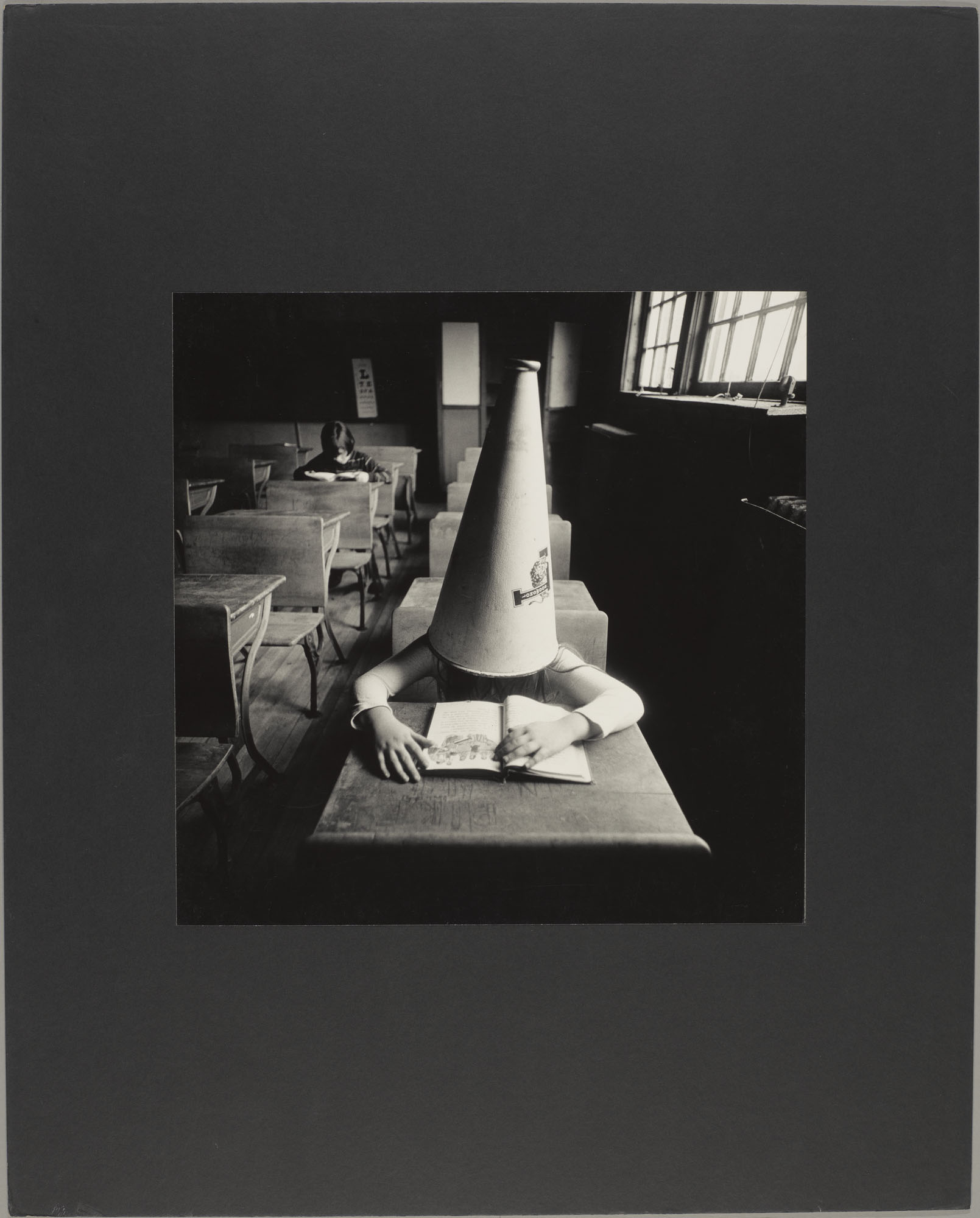
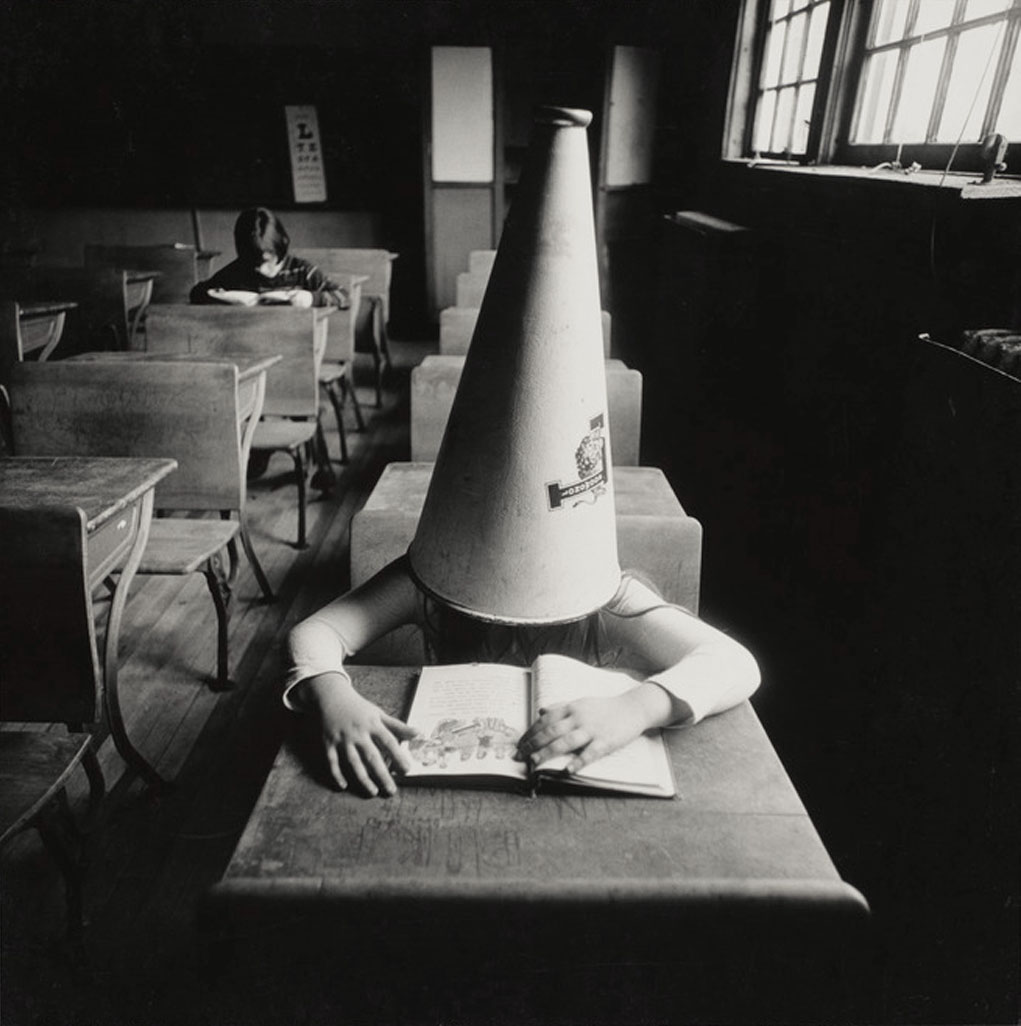
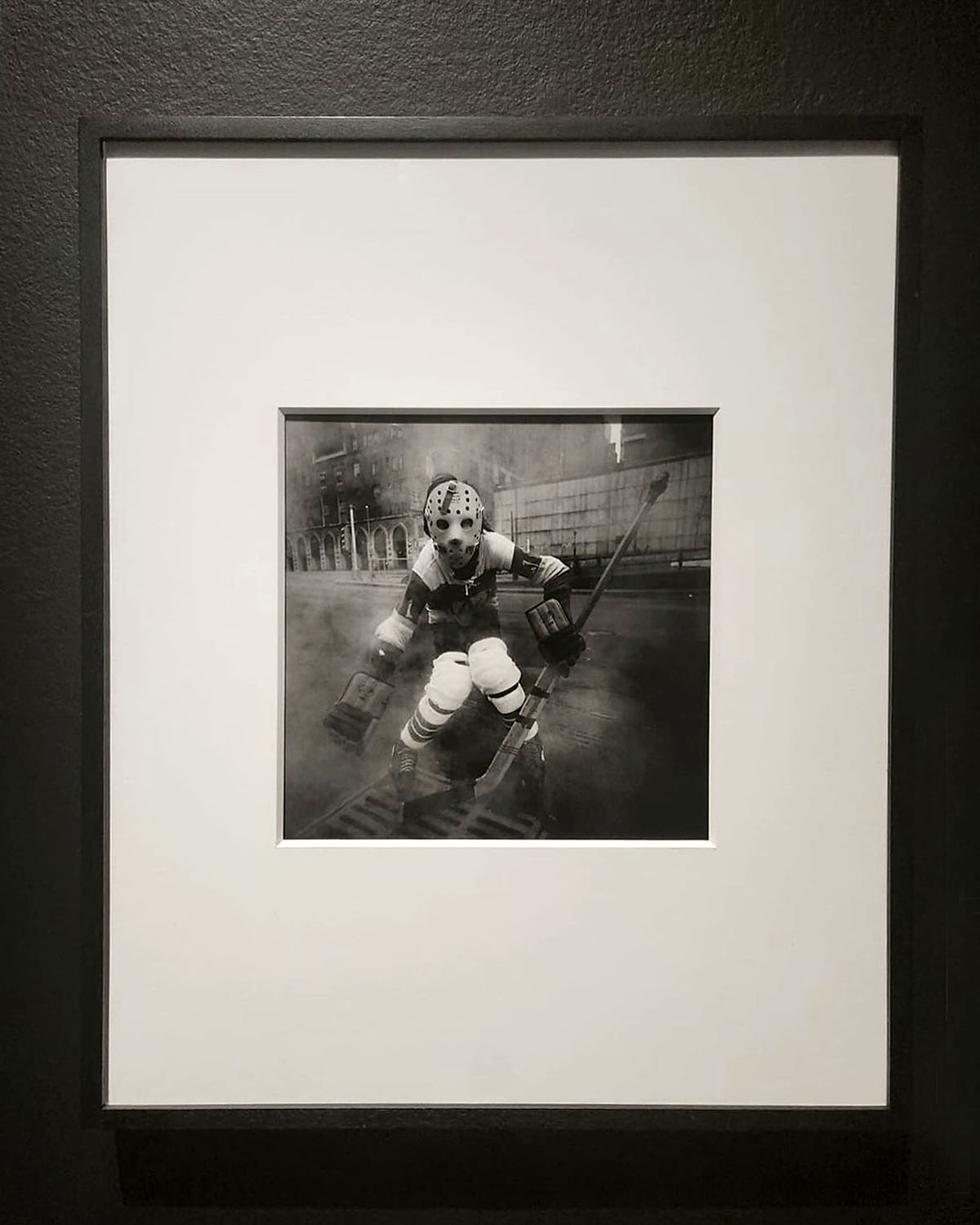
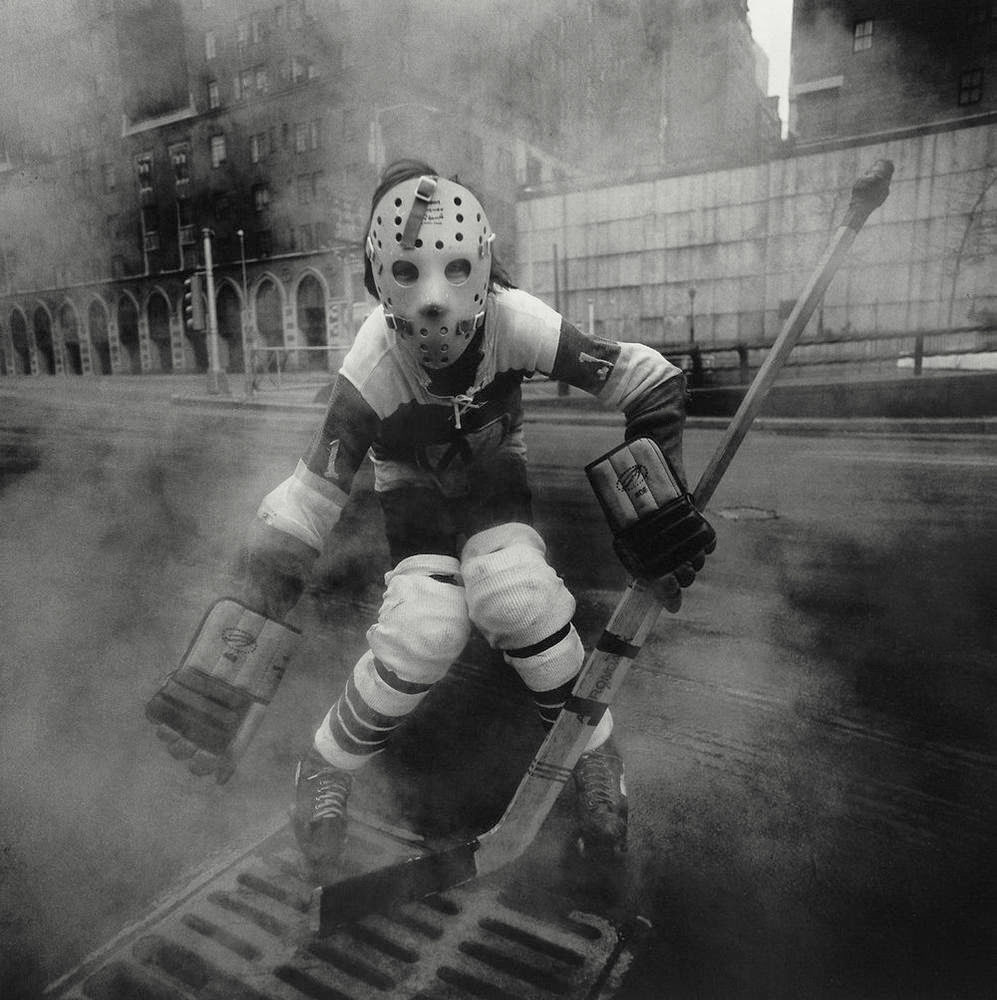
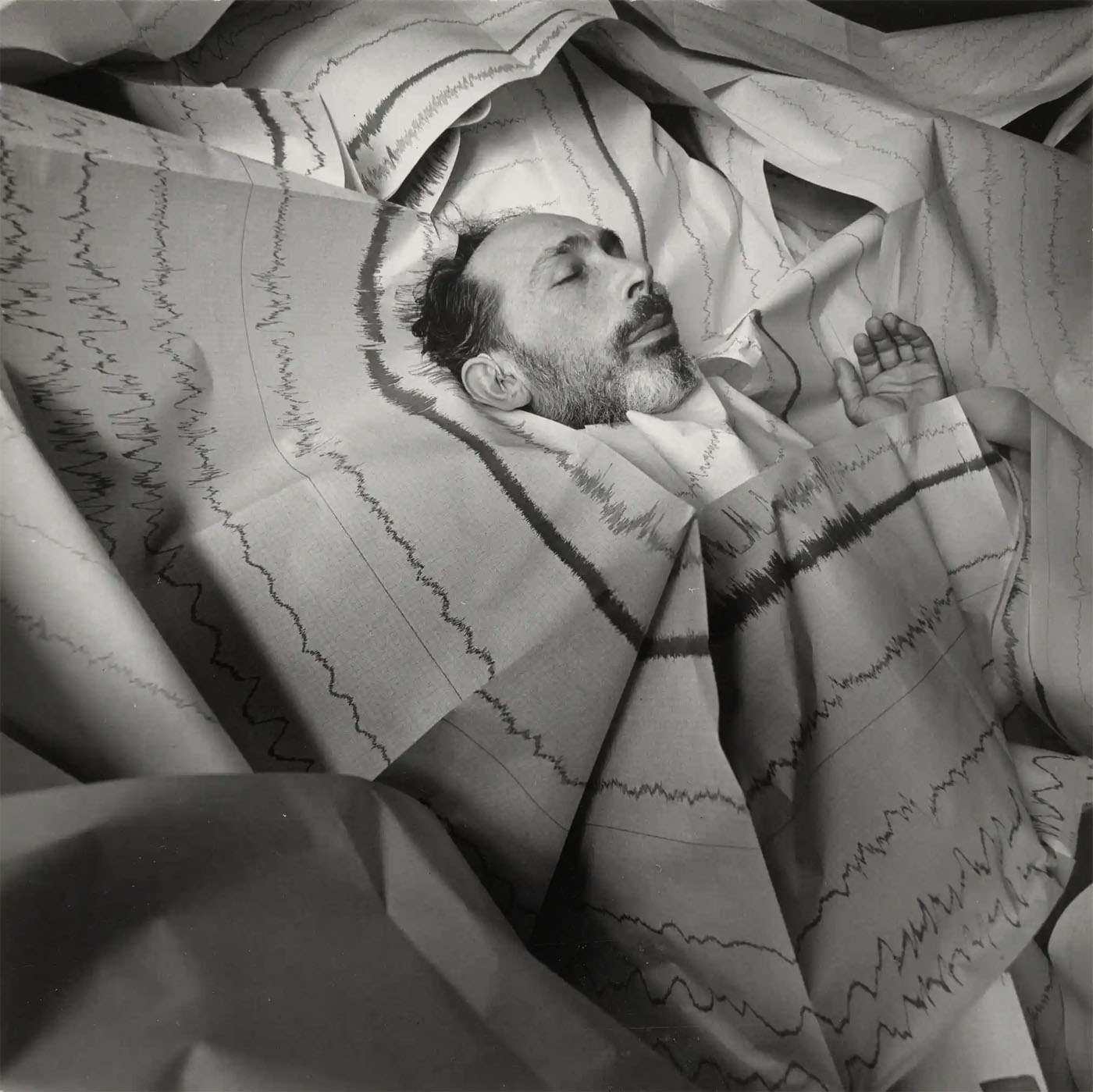
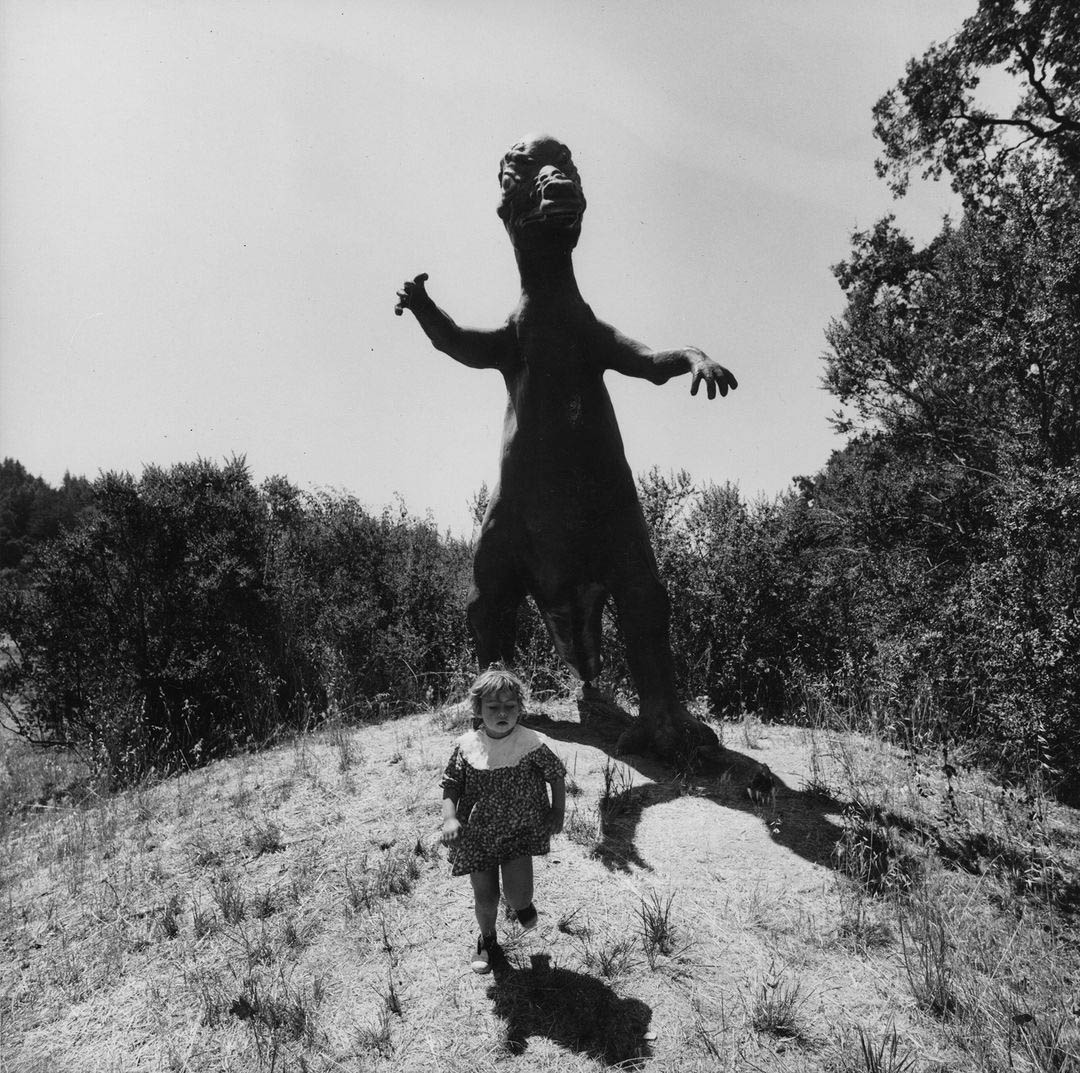
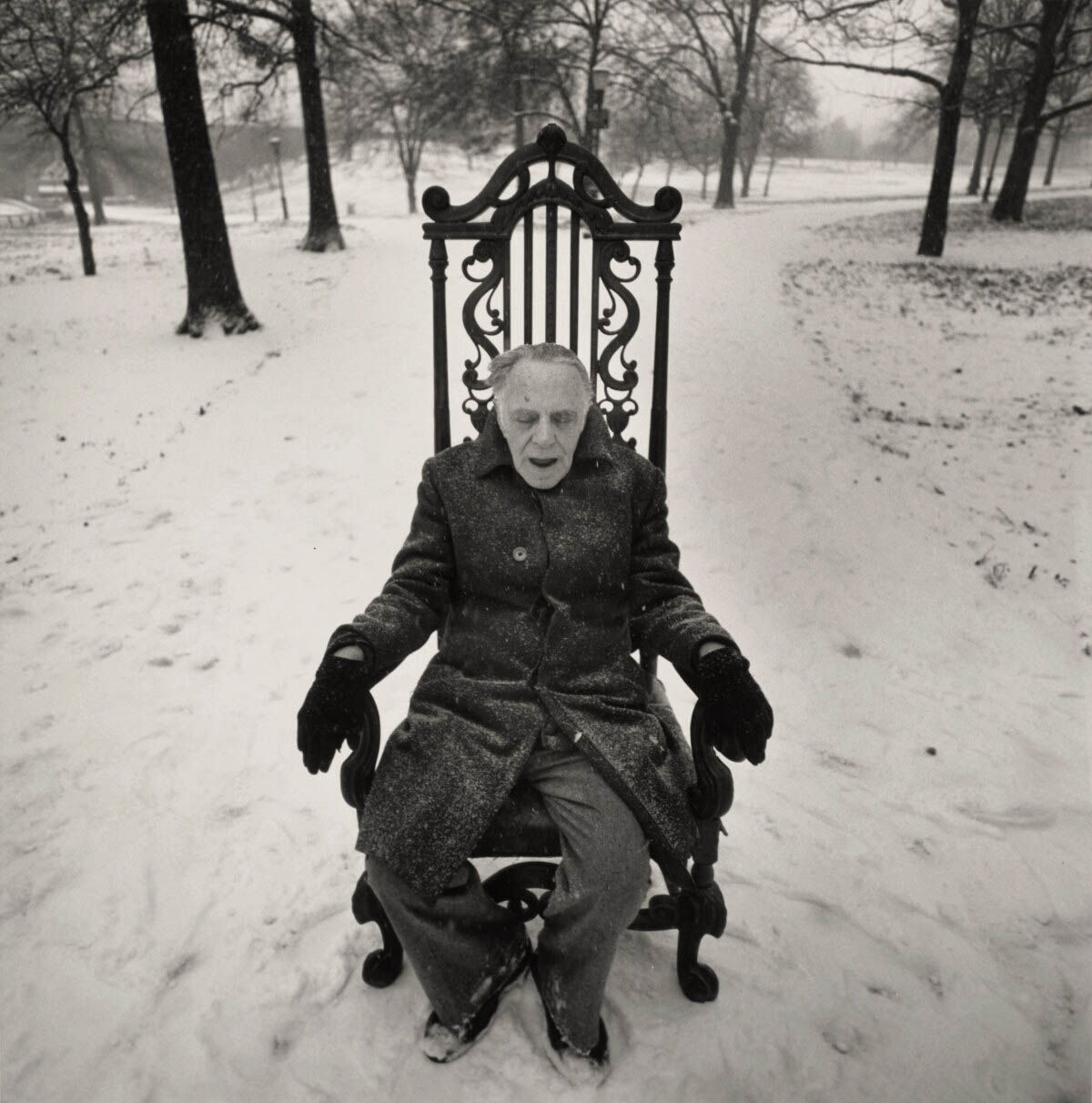
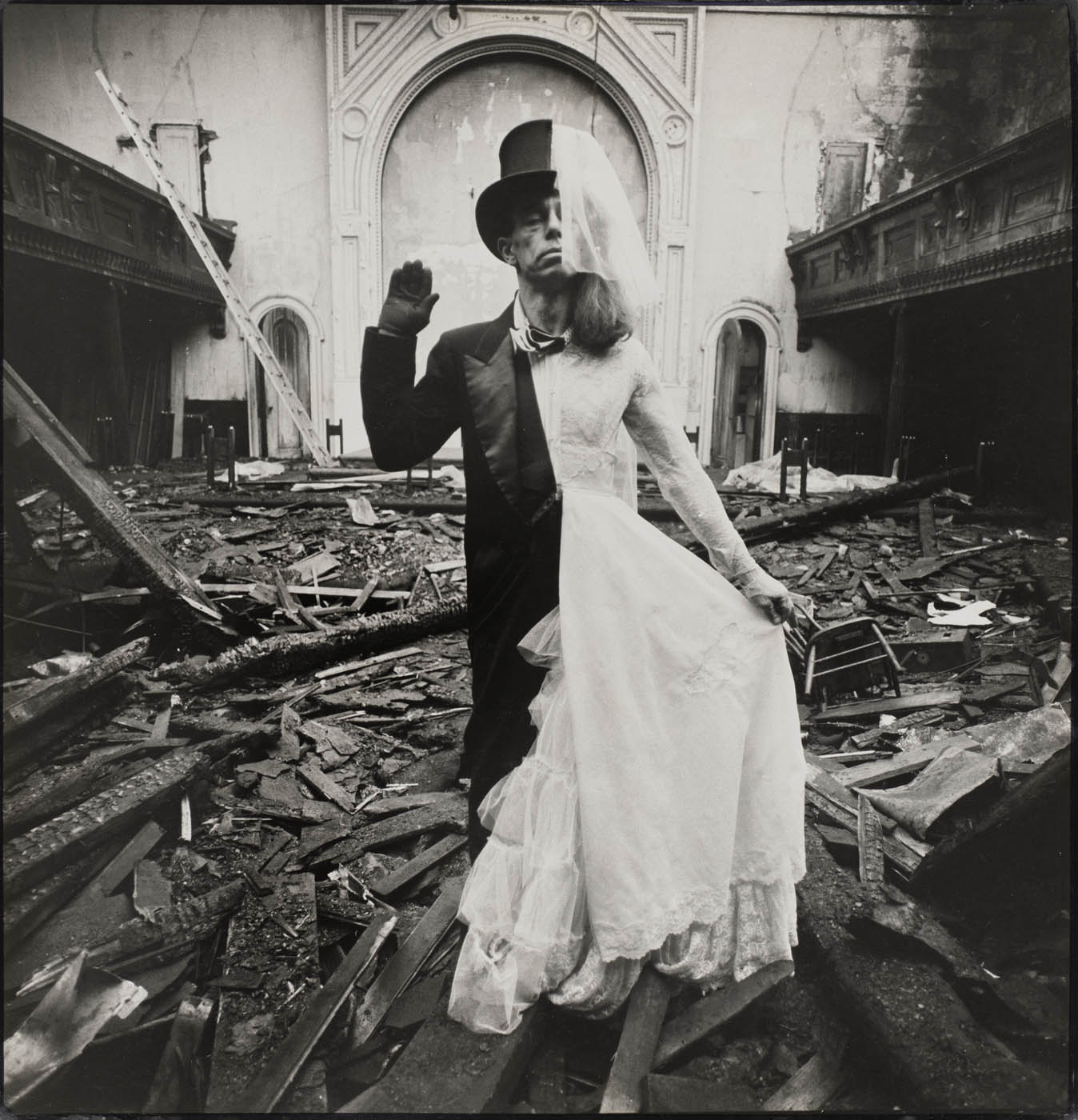
I honour the work of Arthur Tress. Strange and wonderful, like something out of a fairytale or a nightmare, Arthur Tress’ ‘imaginary’ stories take the viewer out of themselves and into a different realm of being and believing. His staged, performative “magic realism” photographs – featuring the inclusion of fantastic or mythical elements into seemingly realistic fiction – emerge from the psyche of the artist, from his deepest thoughts, feelings and dreams.

Taking advice from that another gay photographer, American Duane Michals (who works in sequences of images to tell stories), Michals told Tress that “a photograph can be anything”. As Michals insightfully observes,

“I believe in the imagination. What I cannot see is infinitely more important than what I can see…

Everything we experience is in our mind. It is all mind. What you are reading now, hearing now, feeling now…

There is not one photography. There is no photography. The only value judgment is the work itself. Does it move, touch, fill me?”1


It’s all in the mind.

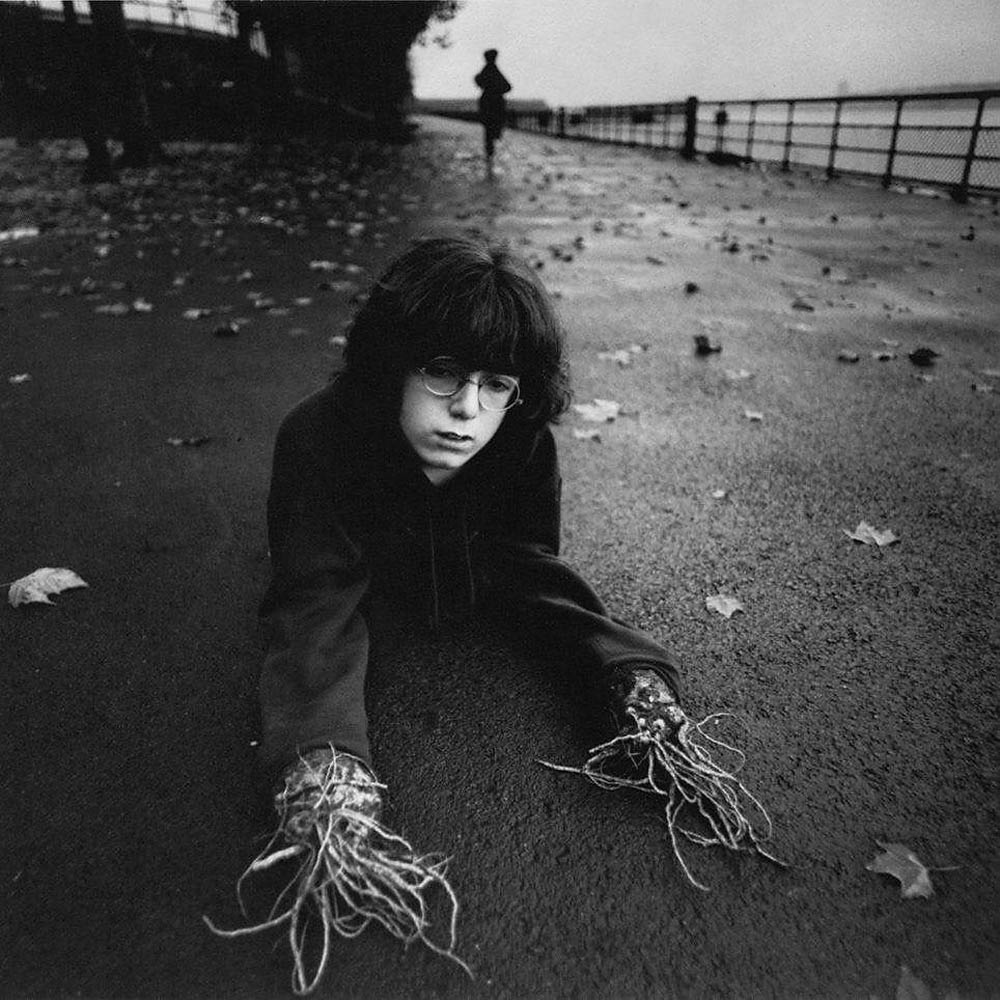
Tress discovered his own way to tell stories, his own signature style, that was completely different from anything being accomplished in New York at the time by (for example) Robert Mapplethorpe, Peter Hujar, Diane Arbus, David Wojnarowicz, or Nan Goldin. Through the transmutation of metal into gold, or dream into photograph, Tress placed himself outside the trendy happenings of the Big Apple. In images such as the early Woman with Coin Operated Binoculars, Coit Tower, San Francisco (1964, below) – redolent of what was to follow – the disturbing Boy with Root Hands, New York (1970, below), Bride and Groom, New York, New York (1970, below) and Boy in Flood Dream, Ocean City, Maryland (1971, below), Tress reaches out an illuminates the dreams, desires and fears of children and adults.

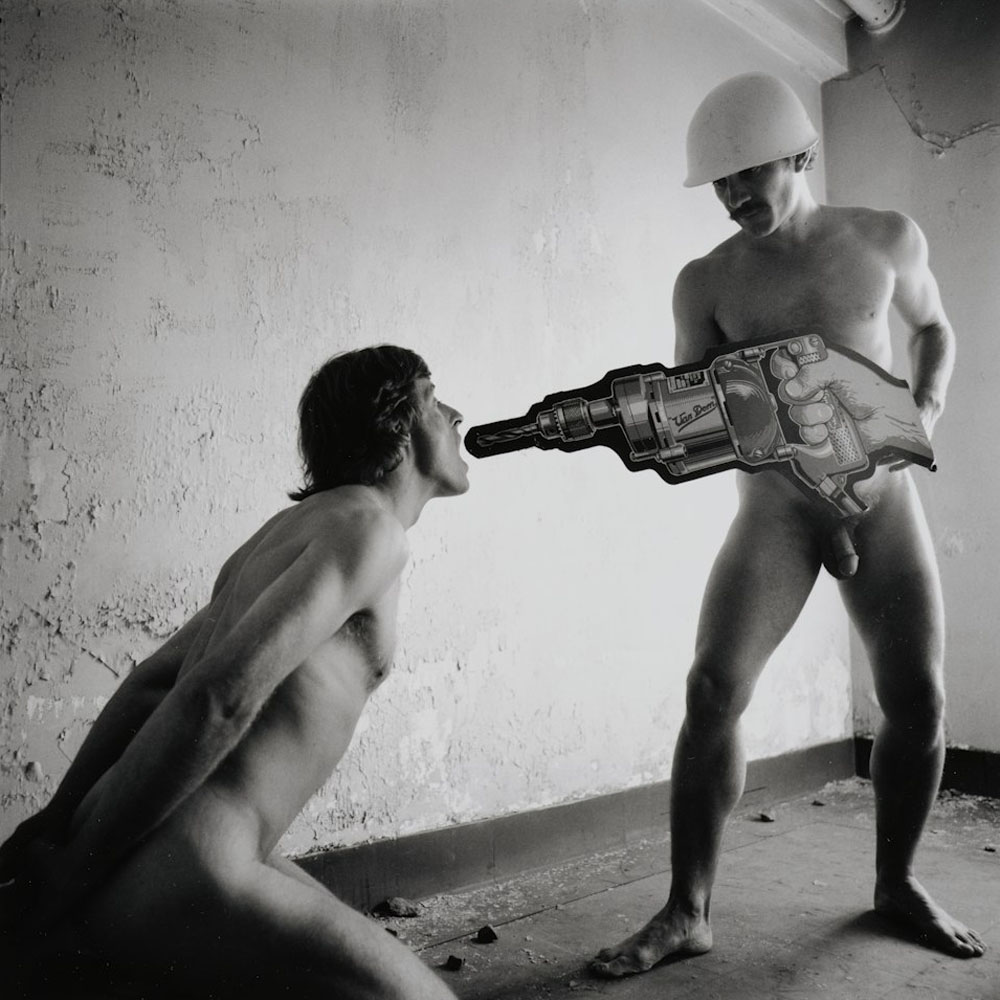
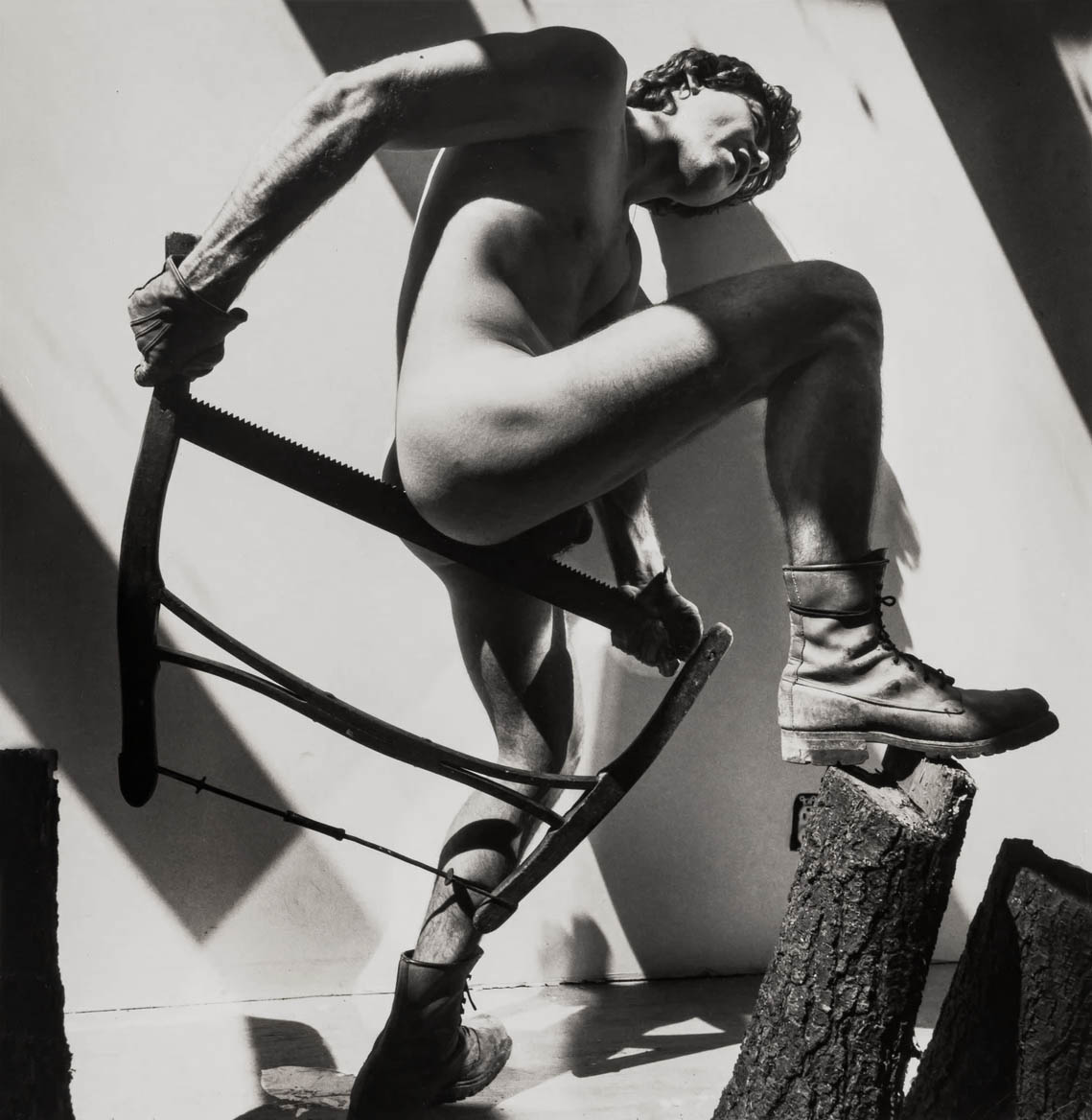
What is disappointing is that neither the media images nor the accompanying text include any images from or text about what I feel is one of Tress’ strongest bodies of work, his photographs of gay fantasies. Can we not include these images for fear of upsetting delicate conservative sensibilities? I don’t know whether there were any included in the exhibition either, having not seen the presentation in person.

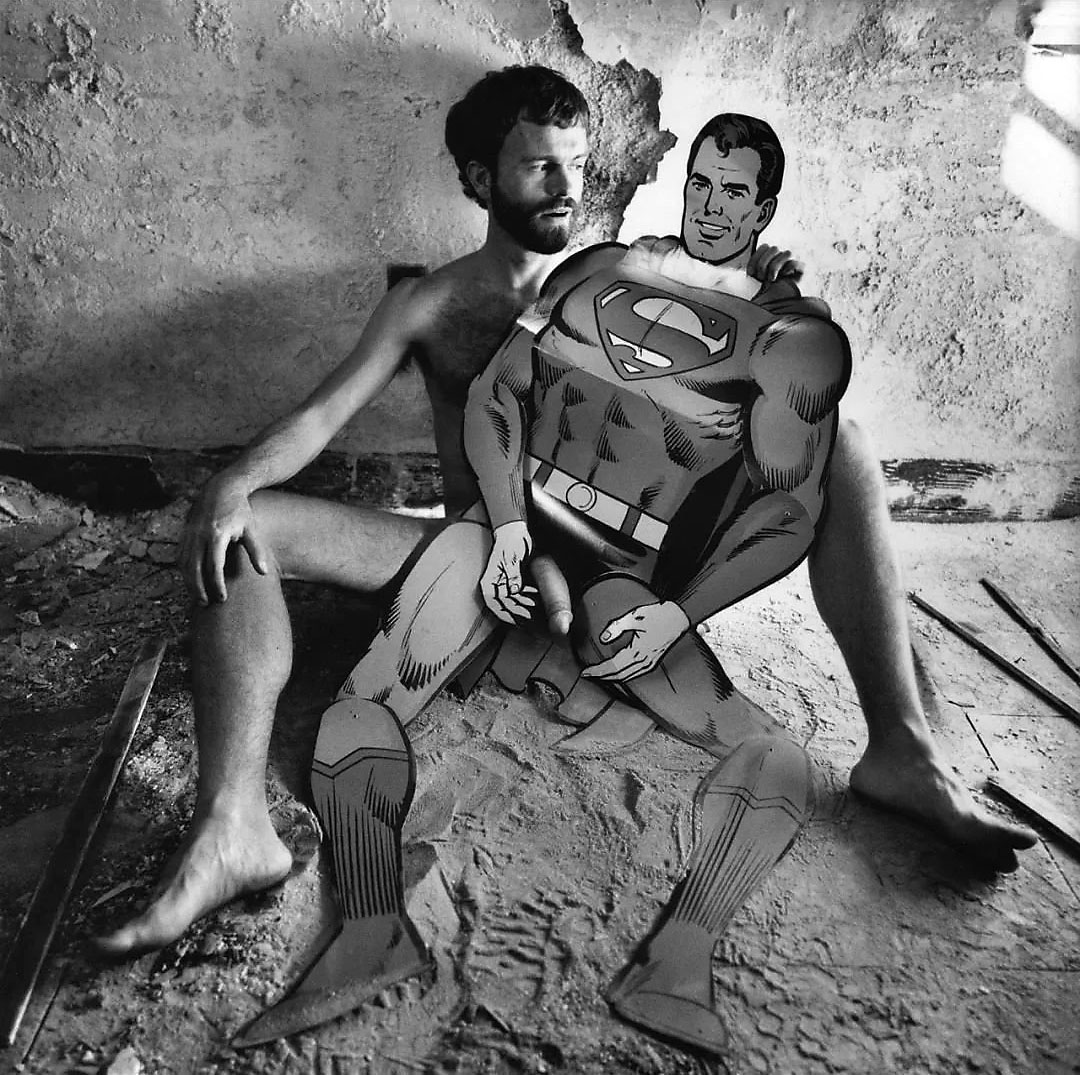
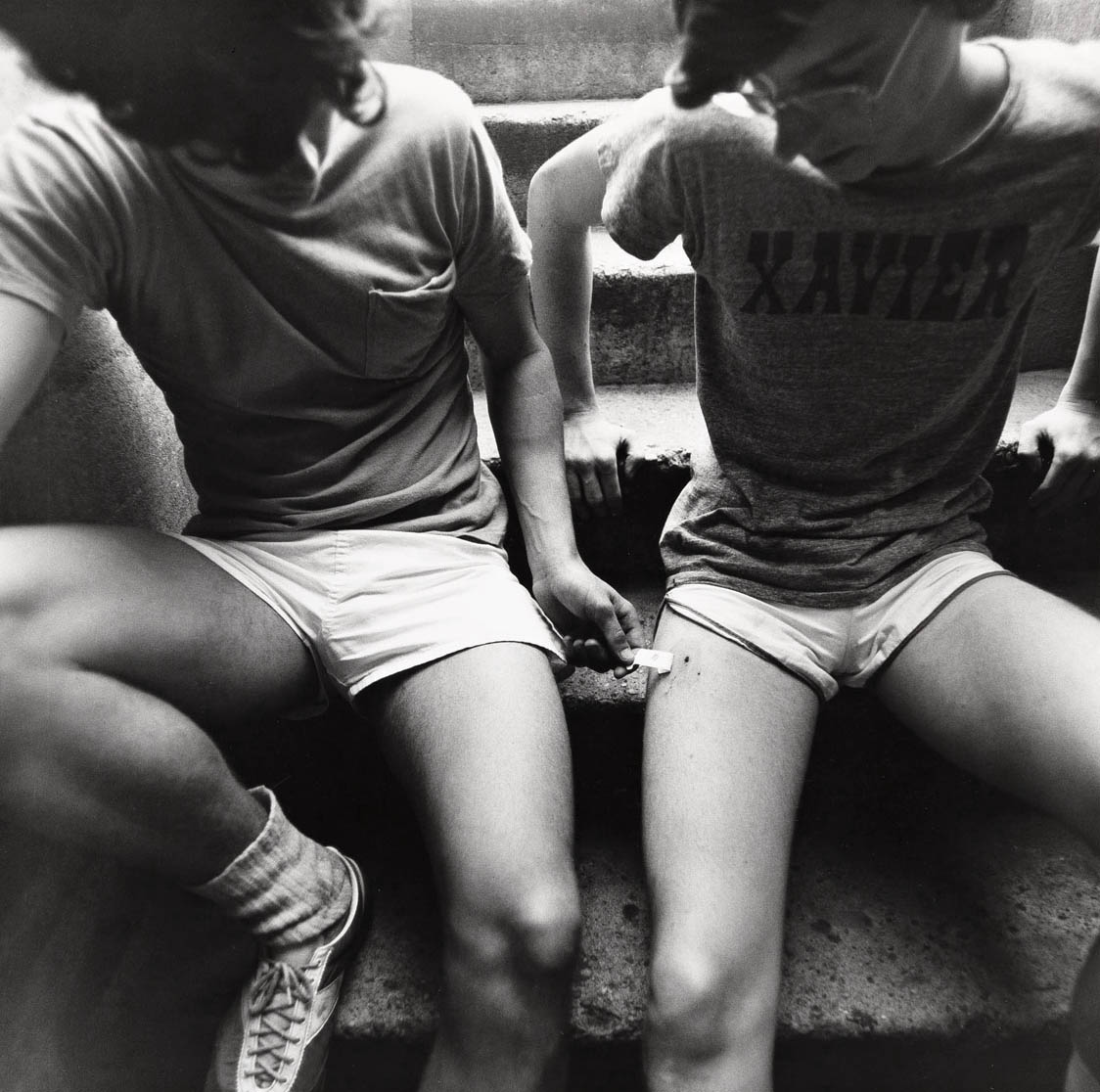
Again, created from the artist’s fantasies and imagination these works posses a tremendous élan vital, a celebration of sexuality and life. They also possess intelligence and wit a plenty. Witness, Band-aid Fantasy (1978, below) which is clever and sensitive in its fetishisation of the removal of a Band-aid from a friend; or the look on the face of Superman and the male subject in Superman Fantasy (1977, below) where one cock belongs to both: the penis of the male “standing” in for that of the super man, standing in for the always hidden power of Superman’s cock represented by the (irony: cut-out cardboard) phallic armoured body of the hyper-masculine hero, desired by the male with his lustful look. The photograph makes me laugh. If you are so further inclined, there are six pages of these wonderful gay fantasies on the Stanford Libraries Arthur Tress Photograph Collection web pages. Well worth a visit.

To my mind, Arthur Tress has always been an underrated artist. A courageous and dedicated photographer who forged an extra-ordinary magical path, it is a pleasure to see his work exhibited at the Getty.

Dr Marcus Bunyan


1/ Duane Michals June 20, 1976 September 1, 1976


Many thankx to the J. Paul Getty Museum for allowing me to publish the photographs in the posting. Please click on the photographs for a larger version of the image.


“Tress credits his friend and fellow photographer Duane Michals with opening his eyes to the possibilities of his chosen medium in the 1960s, back when Tress’ photographs hewed more closely to the prevalent “documentary” style of the day. “He said a photograph can be anything,” Tress says, describing Michals’ approach. “It can be a sequence, you can write on the photograph, paint on it, make collages, tell a story. In the ’60s, that was revolutionary.”

As it turned out, Tress was a receptive audience for Michals’ manifesto. By the time the Brooklyn native had secured his breakthrough assignment in 1969 to photograph what he describes as the “endangered folk cultures” of Appalachia, Tress was already pushing against the dispassion of the documentary style.”

Ben Marks. “How One Artist Makes New Art From Old Coloring Books and Found Photos,” on the Collectors Weekly website August 26th, 2021 [Online] Cited 10/11/2023


The first exhibition to chronicle the early career of Arthur Tress, one of the most innovative American photographers of the postwar era. During his first decade as an emergent professional in the New York photography world (1968-1978), his artistic practice evolved from being rooted in the social documentary tradition to a bold new approach drawing inspiration from the inner worlds of fantasies, daydreams, and nightmares.


Arthur Tress (American, b. 1940) 'Boy in Flood Dream, Ocean City, Maryland' 1971


Arthur Tress (American, b. 1940)
Boy in Flood Dream, Ocean City, Maryland
1971
From the series Dream Collector
Gelatin silver print
J. Paul Getty Museum, Los Angeles
© Arthur Tress Archive LLC


One of Tress’s best known images from his Dream Collectors photobook, the photograph depicts a child emerging out of a discarded roof on a pier in Ocean City, Maryland. The effectiveness of this composition is remarkable given that Tress stumbled on the site and the subject by chance.

Wall label


Installation view of the exhibition Arthur Tress: Rambles, Dreams, and Shadows at the J. Paul Getty Museum, Los Angeles showing 'Boy in Flood Dream, Ocean City, Maryland' (1971)


Installation view of the exhibition Arthur Tress: Rambles, Dreams, and Shadows at the J. Paul Getty Museum, Los Angeles showing Boy in Flood Dream, Ocean City, Maryland (1971, above)


Installation view of the exhibition 'Arthur Tress: Rambles, Dreams, and Shadows' at the J. Paul Getty Museum, Los Angeles showing works from his 'Shadows' series

Installation view of the exhibition 'Arthur Tress: Rambles, Dreams, and Shadows' at the J. Paul Getty Museum, Los Angeles


Installation views of the exhibition Arthur Tress: Rambles, Dreams, and Shadows at the J. Paul Getty Museum, Los Angeles showing works from his Shadows series in the bottom image


Arthur Tress’s Magic Realism Comes to Getty

Drawn from his imagination, dreams, and queer identity, Arthur Tress’s photography presents a surrealist world with fantastical subjects In the field of staged photography, Arthur Tress (American, born 1940) was a trailblazer, directing his subjects in fictional and often surreal scenes.

The first exhibition to chronicle his early career, Arthur Tress: Rambles, Dreams, and Shadows, on view October 31, 2023 – February 18, 2024 at the Getty Center, examines how his artistic practice evolved from being rooted in the social documentary tradition to a bold new approach drawing inspiration from fantasies, daydreams, and nightmares.

“Tress’s early work from his Dream Collector and other related series constitutes a remarkable artistic achievement and a major contribution to the history of post-war photography and the photo book,” says Timothy Potts, Maria Hummer-Tuttle and Robert Tuttle Director of the J. Paul Getty Museum. “In a series of increasingly radical projects, Tress delved deeply into the worlds of surrealism and the unconscious, establishing himself as one of the most interesting mavericks of his generation.”

Born in Brooklyn, New York, Tress began his career as a documentary photographer in the late 1960’s, focusing his lens on the people of New York and the Appalachian region of the eastern United States. Initially concerned with such societal issues as poverty, pollution, and lack of open space for urban recreation, by the mid-1970s he began channeling his creative energy into more personal artistic projects that reflected his imagination, dreams, and his own queer identity.

This exhibition presents highlights from Tress’s major photographic projects dating from 1968 to 1978: Appalachia: The Disturbed Land; Open Space in the Inner City; The Dream Collector; Shadow; Theater of Mind; and The Ramble.

Tress’s early work is rooted in the social documentary tradition, recalling photographs made by Depression-era artists for the U.S. government. Tress’s Appalachia: The Disturbed Land captures scenes of poverty and environmental degradation in coal mining communities. The work was originally exhibited at the Sierra Club’s gallery in New York where it garnered positive reviews.

Tress’s next major project, Open Space in the Inner City, also reflects his concern for the environment as well as his interest in documenting problems facing young people. Set primarily in New York City and its environs, the photographs show polluted streetscapes and waterways, housing projects, junkyards, factories, and parking lots, and include both candid and posed images of children, families, and commuters. A central theme of the series is the general lack of open space for recreation.

Appearing as his first major photo book in 1972, The Dream Collector visualises children’s fantasies and nightmares. This body of work cemented Tress’s reputation for staging macabre and fantastic subjects at a time when the photography world was largely dedicated to prosaic realism.

Between 1972 and 1975 Tress created a series of photographs centered on his own shadow. The images reproduced in his photobook Shadow trace the mystical dream journey of an individual soul through birth, death, and enlightenment. Tress chose to use a wide-angle lens that alters the perspective and imparts a dreamlike quality. His only light source was the sun, which made early morning or late afternoon the ideal times to shoot, as the raking light lengthened the shadows, making them more dramatic.

In Theater of the Mind Tress explored his personal anxieties as well as the complexities of family relationships. He convinced his subjects to play out dramatic and sometimes disturbing scenes for the camera which were informed by the artist’s own psychic intuitions. Afterwards, when he shared the photographs with them, his sitters often remarked on his having illuminated an important but hitherto hidden aspect of their family dynamic.

One of Tress’s most personal bodies of work is an extraordinary series depicting the Ramble, a wooded section of Central Park in New York City known as a gay cruising ground. The Ramble was a personal photographic project that he did not exhibit or publish, as doing so could have exposed his subjects to embarrassment, harassment, or violence. Tress was still struggling with his sexuality at this time and making these pictures helped allay his anxieties, giving him something else to focus on in the Ramble aside from his own furtive sexual encounters.

“By revisiting an energetic decade of professional and personal work from 1968 to 1978, this exhibition enabled me to see more clearly how these early explorative years marked the beginning of a very personal vision, unique to myself, as an emerging photo artist – a peculiar combination of documentary realism and emotional responsiveness to the hidden mysteries of everyday life,” says Arthur Tress.

“I’m excited to have this amazing opportunity both in our exhibition and its accompanying catalogue to share an extraordinary body of work that is not well known to the general public, and to narrate the remarkable story behind Tress’s early career that has remained untold,” says Jim Ganz, senior curator in the Getty Museum’s Department of Photographs.

Arthur Tress: Rambles, Dreams, and Shadows is curated by Jim Ganz with Paul Martineau, curator in the Department of Photographs. Related programming includes Magic Realism: An Evening with Arthur Tress, where Tress will discuss his bold approach to photography, and the world premiere of Arthur Tress: Water’s Edge, an immersive journey into the life and unique vision of acclaimed photographer Arthur Tress. The exhibition is also accompanied by a catalogue, Arthur Tress: Rambles, Dreams, and Shadows.

Anonymous. “Arthur Tress’s Magic Realism Comes to Getty,” on the Getty website Oct 18, 2023 [Online] Cited 28/10/2023


Arthur Tress: Water’s Edge – Trailer

Trailer for feature length documentary about fantasist/surrealist photographer Arthur Tress. Directed by Stephen B. Lewis


Arthur Tress (American, b. 1940) 'Woman with Coin Operated Binoculars, Coit Tower, San Francisco' 1964


Arthur Tress (American, b. 1940)
Woman with Coin Operated Binoculars, Coit Tower, San Francisco
1964
Gelatin silver print
© Arthur Tress Archive LLC

Not sure whether this photograph is in the exhibition. Used under fair use conditions for the purpose of education, research, review and comment


Arthur Tress (American, b. 1940) 'Girl and Moon Dream, New York, New York' 1968


Arthur Tress (American, b. 1940)
Girl and Moon Dream, New York, New York
1968
Gelatin silver print
J. Paul Getty Museum, Los Angeles
© Arthur Tress Archive LLC


Arthur Tress (American, b. 1940) 'Girl with Doll's Head, Capels, West Virginia' 1968


Arthur Tress (American, b. 1940)
Girl with Doll’s Head, Capels, West Virginia
1968
From the series Appalachia: The Disturbed Land
Gelatin silver print
20.4 × 15.7cm (8 1/16 × 6 3/16 in.)
J. Paul Getty Museum, Los Angeles
Gift of the Ottersons
© Arthur Tress Archive LLC


Arthur Tress 'Appalachia: The Disturbed Land' proof sheet 1968


Arthur Tress Appalachia: The Disturbed Land proof sheet 1968


Arthur Tress (American, b. 1940) 'Boy with Hockey Gloves (Hockey Glove Fantasy)' 1968


Arthur Tress (American, b. 1940)
Boy with Hockey Gloves (Hockey Glove Fantasy)
1968
Gelatin silver print
© Arthur Tress Archive LLC


A Kind of Magic

Photographer Arthur Tress’s “shaman vision quest dream journey”

Photographer Arthur Tress revels in the weird and fantastic – a hand sticking out of a bus seat, boys blending in with trees, children and adults playing against backdrops of rubble and trash – dark, spooky, unnerving images.

Tress, who spent time in his early career as a documentary photographer and traveled widely, staged his photographs to set a mood and tell a story.

Tress is one of the foremost practitioners of staged photography. He’s well known for his surreal photobooks, especially The Dream Collector (1972), but his career began earlier, in the 1960s, with commercial projects that encouraged his artistic development and anticipated his later fantastical works.

Arthur Tress: Rambles, Dreams, and Shadows (out now from Getty) looks closely at the artist’s early career, from 1968 to 1978, from his travels abroad through his return to the United States, stopping in Sweden, Russia, Appalachia, New York, San Francisco, and many other places. The images and quotations below are drawn from the exhibition catalog and take you into his world.

Tress traveled to Appalachia several times early in his career, and he became increasingly passionate about accurately representing the character of the destitute yet beautiful region and its people. Photographs curator Mazie Harris writes that the twisted branches and lonely image reflect the region’s “barren future.”

In 1969 Tress photographed “the Ramble,” known as a gay cruising ground in New York’s Central Park. But he never published this work, says photographs curator James Ganz, “because doing so could have exposed the photographer and his subjects to embarrassment or harassment.” Even the act of taking these pictures was dangerous at the time. This body of work is a deeply personal, intimate expression and probing of Tress’s identity as a gay man and also reflects much about the culture of the time and the anxieties, fears, and longings experienced by members of his community.

The image Hobby Horses, Harlem River, Bronx, New York (1970, below) is part of Tress’s series Open Space in the Inner City (1969-1971). It shows his environmentalism, which he cultivated throughout his travels, especially in his exploration of Appalachia. Having settled in New York after living in Sweden, Tress was shocked by the rampant urban blight and crowding in the city and how few open spaces there were for people to play, thrive, and live. His series helped bring attention to this widespread civic issue and was shown by institutions like the Sierra Club and the New York State Council on the Arts.

While Tress was at work on what would become his Dream Collector series, he sought the advice of famed children’s author Maurice Sendak, who is most widely known for the book Where the Wild Things Are. At the end of their visit, Tress offered Sendak the choice of one of Tress’s photographs, and Sendak picked Wild Man of the Forest, Central Park, New York (1969, below) which “evoke[s] the archetypal figure of the medieval wild man of the woods.”

Between 1972 and 1975 Tress created a series and photobook called Shadow. The work Shadow, Cannes, France (negative 1974; print 1975, below), featuring the artist and shadows cast by a sculpture of birds, appeared toward the end of the book in a section titled “Magic Flight.” Curator of photographs Paul Martineau says this picture – juxtaposed with other images of imprisoned shadows – symbolises freedom and “traces a mystical dream journey of an individual soul from the past to the present and into the future, through birth, death, and enlightenment.”

“[This] photograph of my father in a snowstorm is, in fact, a kind of surrogate self-portrait that mirrors my own hollow fearfulness about my own body’s decline and disappearance into a cold emptiness,” Tress wrote in a 2022 letter to curator Paul Martineau. [Last Portrait of My Father, New York, New York, 1978 below]

In 1970 Tress wrote about the magical properties of a photograph, and, surely, he is a visual magician, an artist possessed of a creative vision and intuition that allows him to connect to his subjects in a deep, revelatory way. Tress’s images pull you into his imagined, constructed worlds. His work is mysterious, surprising, surreal, and dreamlike. His images, the product of personal experiences and feelings, are universal in their play on and exploration of human fears, desires, and longings. He once described his series Shadow as a “shaman vision quest dream journey.”

Rachel Barth. “A Kind of Magic,” on the Getty website Nov 07, 2023 [Online] Cited 10/11/2023


Arthur Tress (American, b. 1940) 'My Face in Store Window, New York, New York' 1969


Arthur Tress (American, b. 1940)
My Face in Store Window, New York, New York
1969
Gelatin silver print
Collection David Knaus
© Arthur Tress Archive LLC


Arthur Tress (American, b. 1940) 'Cemetery, Queens, New York' 1969


Arthur Tress (American, b. 1940)
Cemetery, Queens, New York
1969
Gelatin silver print
J. Paul Getty Museum, Los Angeles
© Arthur Tress Archive LLC


Arthur Tress (American, b. 1940) 'Boy in Burnt-Out Furniture Store, Newark, New Jersey' 1969


Arthur Tress (American, b. 1940)
Boy in Burnt-Out Furniture Store, Newark, New Jersey
1969
Gelatin silver print
© Arthur Tress Archive LLC


In July 1969, while photographing the site of the Newark race riots that had occurred two summers earlier, Tress wrote to his sister that the police took him in for questioning. “They could have arrested me for being in the abandoned buildings – so I was very polite to them.”

Wall label


Arthur Tress (American, b. 1940) 'Wild Man of the Forest, Central Park, New York' 1969


Arthur Tress (American, b. 1940)
Wild Man of the Forest, Central Park, New York
1969
Gelatin silver print
13 3/4 x 10 3/4 in.
J. Paul Getty Museum, Los Angeles
Gift of Trixy Castro
© Arthur Tress Archive LLC


While Tress was at work on what would become his Dream Collector series, he sought the advice of famed children’s author Maurice Sendak, who is most widely known for the book Where the Wild Things Are. At the end of their visit, Tress offered Sendak the choice of one of Tress’s photographs, and Sendak picked Wild Man of the Forest, Central Park, New York, which “evoke[s] the archetypal figure of the medieval wild man of the woods.”


Arthur Tress (American, b. 1940) 'Woman in Railroad Yard, Brooklyn, New York' 1969


Arthur Tress (American, b. 1940)
Woman in Railroad Yard, Brooklyn, New York
1969
From the series Open Space in the Inner City
Gelatin silver print
J. Paul Getty Museum, Los Angeles
Gift of David A. Cohen and Laurie K. Cohen
© Arthur Tress Archive LLC


Arthur Tress (American, b. 1940) 'Boy on Bike Crossing Williamsburg Bridge, New York' 1969


Arthur Tress (American, b. 1940)
Boy on Bike Crossing Williamsburg Bridge, New York
1969
From the series Open Space in the Inner City
Gelatin silver print
40.2 × 50cm (15 13/16 × 19 11/16 in.)
J. Paul Getty Museum, Los Angeles
Gift of Gregory V. Gooding
© Arthur Tress Archive LLC


Arthur Tress (American, b. 1940) 'Two Men Cruising, Central Park, New York' 1969


Arthur Tress (American, b. 1940)
Two Men Cruising, Central Park, New York
1969
From the series The Ramble
Gelatin silver print
Collection David Knaus
© Arthur Tress Archive LLC


Arthur Tress (American, b. 1940) 'Dog Walker, Central Park, New York' 1969, printed 2007


Arthur Tress (American, b. 1940)
Dog Walker, Central Park, New York
1969, printed 2007
From the series The Ramble
Gelatin silver print
Collection David Knaus
© Arthur Tress Archive LLC


Arthur Tress (American, b. 1940) 'Young Man in Woods, Central Park, New York' 1969


Arthur Tress (American, b. 1940)
Young Man in Woods, Central Park, New York
1969
Gelatin silver print
9 3/4 x 7 3/4 in.
J. Paul Getty Museum, Los Angeles
© Arthur Tress Archive LLC


Arthur Tress (American, b. 1940) 'Boy in Central Park (Rambles), New York City' 1969


Arthur Tress (American, b. 1940)
Boy in Central Park (Rambles), New York City
1969
Gelatin silver print
© Arthur Tress Archive LLC


Arthur Tress (American, b. 1940) 'Gay Activists at First Gay Pride Parade, Christopher Street, New York' Negative 1970


Arthur Tress (American, b. 1940)
Gay Activists at First Gay Pride Parade, Christopher Street, New York
Negative 1970
Gelatin silver print
J. Paul Getty Museum, Los Angeles
© Arthur Tress Archive LLC


Arthur Tress (American, b. 1940) 'Bruce at Dawn, Paper Flower Maker, East Village, New York' 1970


Arthur Tress (American, b. 1940)
Bruce at Dawn, Paper Flower Maker, East Village, New York
1970
Gelatin silver print
J. Paul Getty Museum, Los Angeles
© Arthur Tress Archive LLC


Arthur Tress (American, b. 1940) 'Friends Playing Cards, Sheepshead Bay, Brooklyn, New York' 1970


Arthur Tress (American, b. 1940)
Friends Playing Cards, Sheepshead Bay, Brooklyn, New York
1970
Gelatin silver print
J. Paul Getty Museum, Los Angeles
© Arthur Tress Archive LLC


Arthur Tress (American, b. 1940) 'Boy with Root Hands, New York' 1970


Arthur Tress (American, b. 1940)
Boy with Root Hands, New York
1970
From the series Dream Collector
Gelatin silver print
J. Paul Getty Museum, Los Angeles
© Arthur Tress Archive LLC


Arthur Tress (American, b. 1940) 'Teenage Boys, Bronx High School of Science, Bronx, New York' 1970, printed later


Arthur Tress (American, b. 1940)
Teenage Boys, Bronx High School of Science, Bronx, New York
1970, printed later
From the series Open Space in the Inner City
Gelatin silver print
J. Paul Getty Museum, Los Angeles
Gift of Jon and Ellen Vein Family
© Arthur Tress Archive LLC


Arthur Tress (American, b. 1940) 'Hobby Horses, Harlem River, Bronx, New York' 1970


Arthur Tress (American, b. 1940)
Hobby Horses, Harlem River, Bronx, New York
1970
Gelatin silver print
8 7/8 x 7 13/16 in.
J. Paul Getty Museum, Los Angeles
Gift of J. Patrick and Patricia A. Kennedy
© Arthur Tress Archive LLC


The above image is part of Tress’s series Open Space in the Inner City (1969-1971). It shows his environmentalism, which he cultivated throughout his travels, especially in his exploration of Appalachia. Having settled in New York after living in Sweden, Tress was shocked by the rampant urban blight and crowding in the city and how few open spaces there were for people to play, thrive, and live. His series helped bring attention to this widespread civic issue and was shown by institutions like the Sierra Club and the New York State Council on the Arts.


Arthur Tress (American, b. 1940) 'Boy with Basketball, Bronx, New York' 1970


Arthur Tress (American, b. 1940)
Boy with Basketball, Bronx, New York
1970
From the series The Dream Collector
Gelatin silver print
34 × 26.6cm (13 3/8 × 10 1/2 in.)
J. Paul Getty Museum, Los Angeles
© Arthur Tress Archive LLC


Arthur Tress (American, b. 1940) 'Woman in Shopping Center Parking Lot, Lackawanna, New York' 1970


Arthur Tress (American, b. 1940)
Woman in Shopping Center Parking Lot, Lackawanna, New York
1970
From the series Open Space in the Inner City
Gelatin silver print
23.3 × 19.6cm (9 3/16 × 7 11/16 in.)
J. Paul Getty Museum, Los Angeles
Gift of J. Patrick and Patricia A. Kennedy
© Arthur Tress Archive LLC


Arthur Tress (American, b. 1940) 'Minette as Gloria Swanson in Ruins of Fox Theater, Brooklyn, New York' 1971


Arthur Tress (American, b. 1940)
Minette as Gloria Swanson in Ruins of Fox Theater, Brooklyn, New York
1971
Gelatin silver print
J. Paul Getty Museum, Los Angeles
© Arthur Tress Archive LLC


Arthur Tress (American, b. 1940) 'Boy in Tin Cone, Bronx, New York' 1972


Arthur Tress (American, b. 1940)
Boy in Tin Cone, Bronx, New York
1972
From the series The Dream Collector
Gelatin silver print
J. Paul Getty Museum, Los Angeles
© Arthur Tress Archive LLC


Arthur Tress (American, b. 1940) 'Hand on Train, Staten Island, New York' 1972


Arthur Tress (American, b. 1940)
Hand on Train, Staten Island, New York
1972
From the series The Dream Collector
Gelatin silver print
J. Paul Getty Museum, Los Angeles
© Arthur Tress Archive LLC


Arthur Tress (American, b. 1940) 'Girl With Dunce Cap, P.S. 3, New York, New York' 1972 (installation view)


Arthur Tress (American, b. 1940)
Girl With Dunce Cap, P.S. 3, New York, New York
1972
From the series The Dream Collector
Gelatin silver print
26.4 × 26.4cm (10 3/8 × 10 3/8 in.)
J. Paul Getty Museum, Los Angeles
© Arthur Tress Archive LLC


Arthur Tress (American, b. 1940) 'Girl With Dunce Cap, P.S. 3, New York, New York' 1972


Arthur Tress (American, b. 1940)
Girl With Dunce Cap, P.S. 3, New York, New York
1972
From the series The Dream Collector
Gelatin silver print
26.4 × 26.4cm (10 3/8 × 10 3/8 in.)
J. Paul Getty Museum, Los Angeles
© Arthur Tress Archive LLC


Installation view of the exhibition Arthur Tress: Rambles, Dreams, and Shadows at the J. Paul Getty Museum, Los Angeles showing 'Hockey Player, New York' (1972)


Installation view of the exhibition Arthur Tress: Rambles, Dreams, and Shadows at the J. Paul Getty Museum, Los Angeles showing Hockey Player, New York (1972, below)


Arthur Tress (American, b. 1940) 'Hockey Player, New York' 1972


Arthur Tress (American, b. 1940)
Hockey Player, New York
1972
Gelatin silver print
© Arthur Tress Archive LLC


Arthur Tress (American, b. 1940) 'Shadow, Cannes, France' Negative 1974; print 1975


Arthur Tress (American, b. 1940)
Shadow, Cannes, France
Negative 1974; print 1975
Gelatin silver print,
19.4 × 19.2cm (7 5/8 × 7 9/16 in.)
J. Paul Getty Museum, Los Angeles
Gift of John V. and Laure M. Knaus
© Arthur Tress Archive LLC


Between 1972 and 1975 Tress created a series and photobook called Shadow. The above work, featuring the artist and shadows cast by a sculpture of birds, appeared toward the end of the book in a section titled “Magic Flight.” Curator of photographs Paul Martineau says this picture – juxtaposed with other images of imprisoned shadows – symbolises freedom and “traces a mystical dream journey of an individual soul from the past to the present and into the future, through birth, death, and enlightenment.”


Arthur Tress (American, b. 1940) 'Dream Therapist, Harold Ellis, New York, New York' 1975


Arthur Tress (American, b. 1940)
Dream Therapist, Harold Ellis, New York, New York
1975
Gelatin silver print
J. Paul Getty Museum, Los Angeles
© Arthur Tress Archive LLC


Arthur Tress (American, b. 1940) 'Girl Running Away from Dinosaur, Santa Cruz, CA' Nd


Arthur Tress (American, b. 1940)
Girl Running Away from Dinosaur, Santa Cruz, CA
Nd
Gelatin silver print
© Arthur Tress Archive LLC


Arthur Tress (American, b. 1940) 'Last Portrait of My Father, New York, New York' 1978


Arthur Tress (American, b. 1940)
Last Portrait of My Father, New York, New York
1978
Gelatin silver print
15 1/8 x 14 7/8 in.
Collection of David Knaus
© Arthur Tress Archive LLC


“[This] photograph of my father in a snowstorm is, in fact, a kind of surrogate self-portrait that mirrors my own hollow fearfulness about my own body’s decline and disappearance into a cold emptiness,” Tress wrote in a 2022 letter to curator Paul Martineau.

In 1970 Tress wrote about the magical properties of a photograph, and, surely, he is a visual magician, an artist possessed of a creative vision and intuition that allows him to connect to his subjects in a deep, revelatory way. Tress’s images pull you into his imagined, constructed worlds. His work is mysterious, surprising, surreal, and dreamlike. His images, the product of personal experiences and feelings, are universal in their play on and exploration of human fears, desires, and longings. He once described his series Shadow as a “shaman vision quest dream journey.”

Rachel Barth. “A Kind of Magic,” on the Getty website Nov 07, 2023 [Online] Cited 10/11/2023


Installation view of the exhibition 'Arthur Tress: Rambles, Dreams, and Shadows' at the J. Paul Getty Museum, Los Angeles showing the work 'Bride and Groom, New York, New York' 1970


Installation view of the exhibition Arthur Tress: Rambles, Dreams, and Shadows at the J. Paul Getty Museum, Los Angeles showing the work Bride and Groom, New York, New York 1970 (below)


Arthur Tress (American, b. 1940) 'Bride and Groom, New York, New York' 1970


Arthur Tress (American, b. 1940)
Bride and Groom, New York, New York
1970
From the series Theater of the Mind
Gelatin silver print
41.7 × 40.2cm (16 7/16 × 15 13/16 in.)
J. Paul Getty Museum, Los Angeles
Gift of Gregory V. Gooding
© Arthur Tress Archive LLC


Arthur Tress (American, b. 1940) 'Hermaphrodite between Venus and Mercury, East Hampton, New York' 1973


Arthur Tress (American, b. 1940)
Hermaphrodite between Venus and Mercury, East Hampton, New York
1973
Gelatin silver print
© Arthur Tress Archive LLC

Used under fair use conditions for the purpose of education, research, review and comment


Arthur Tress (American, b. 1940) 'Self-Portrait with Lobster, Bar Harbor, Maine' 1974


Arthur Tress (American, b. 1940)
Self-Portrait with Lobster, Bar Harbor, Maine
1974
Gelatin silver print
17.7 x 17.7cm
Collection of the artist


Arthur Tress (American, b. 1940) 'Boot Fantasy, New York' 1977


Arthur Tress (American, b. 1940)
Boot Fantasy, New York
1977
Gelatin silver print
26 x 26cm
J. Paul Getty Museum, Los Angeles
Gift of David Knaus


Arthur Tress (American, b. 1940) 'Superman Fantasy' 1977


Arthur Tress (American, b. 1940)
Superman Fantasy
1977
Gelatin silver print
© Arthur Tress Archive LLC

Used under fair use conditions for the purpose of education, research, review and comment


Arthur Tress (American, b. 1940) 'Drill Fantasy' 1977


Arthur Tress (American, b. 1940)
Drill Fantasy
1977
Gelatin silver print
© Arthur Tress Archive LLC

Used under fair use conditions for the purpose of education, research, review and comment


Arthur Tress (American, b. 1940) 'Two Men, Two Rooms' 1977


Arthur Tress (American, b. 1940)
Two Men, Two Rooms
1977
Gelatin silver print
© Arthur Tress Archive LLC

Used under fair use conditions for the purpose of education, research, review and comment


Arthur Tress (American, b. 1940) 'Band-aid Fantasy' 1978


Arthur Tress (American, b. 1940)
Band-aid Fantasy
1978
Gelatin silver print
© Arthur Tress Archive LLC

Used under fair use conditions for the purpose of education, research, review and comment


Arthur Tress (American, b. 1940) 'Lumberjack Fantasy' 1980


Arthur Tress (American, b. 1940)
Lumberjack Fantasy
1980
Gelatin silver print
© Arthur Tress Archive LLC

Used under fair use conditions for the purpose of education, research, review and comment


Arthur Tress (American, b. 1940) 'Two Surfers, Ft. Lauderdale' 1980


Arthur Tress (American, b. 1940)
Two Surfers, Ft. Lauderdale
1980
Gelatin silver print
J. Paul Getty Museum, Los Angeles
© Arthur Tress Archive LLC


Arthur Tress (American, b. 1940) 'Child's Dream of Redwood Monster, Santa Cruz, California' 1971


Arthur Tress (American, b. 1940)
Child’s Dream of Redwood Monster, Santa Cruz, California
1971
From the series The Dream Collector
Gelatin silver print
J. Paul Getty Museum, Los Angeles
© Arthur Tress Archive LLC


'Arthur Tress: Rambles, Dreams, and Shadows' book Edited by James A. Ganz


Child’s Dream of Redwood Monster, Santa Cruz, CA, 1971 on the cover


Arthur Tress: Rambles, Dreams, and Shadows book

Edited by James A. Ganz, with contributions by Mazie M. Harris and Paul Martineau

This richly illustrated volume is the first critical look at the early career of Arthur Tress, a key proponent of magical realism and staged photography.

Arthur Tress (b. 1940) is a singular figure in the landscape of postwar American photography. His seminal series, The Dream Collector, depicts Tress’s interests in dreams, nightmares, fantasies, and the unconscious and established him as one of the foremost proponents of magical realism at a time when few others were doing staged photography.

This volume presents the first critical look at Tress’s early career, contextualising the highly imaginative, fantastic work he became known for while also examining his other interrelated series: Appalachia: People and Places; Open Space in the Inner City; Shadow; and Theater of the Mind. James A. Ganz, Mazie M. Harris, and Paul Martineau plumb Tress’s work and archives, studying ephemera, personal correspondence, unpublished notes, diaries, contact sheets, and more to uncover how he went from earning his living as a social documentarian in Appalachia to producing surreal work of “imaginative fiction.” This abundantly illustrated volume imparts a fuller understanding of Tress’s career and the New York photographic scene of the 1960s and 1970s.

This volume is published to accompany an exhibition on view at the J. Paul Getty Museum at the Getty Center from October 31, 2023, to February 18, 2024.

James A. Ganz is senior curator in the Department of Photographs at the J. Paul Getty Museum.

“Along with several others of his cohort, Arthur Tress spearheaded the resurgence of the directorial mode in the 1970s, as well as his generation’s engagement with previously taboo subject matter. With his unique blend of documentary and surrealist approaches, he has made a major contribution to his medium.”

~ A. D. Coleman, photography critic and historian

264 pages
9 1/2 x 11 inches
17 color and 198 b/w illustrations
ISBN 978-1-60606-861-8
hardcover

Getty Publications
Imprint: J. Paul Getty Museum


Arthur Tress book cover


Arthur Tress: Rambles, Dreams, and Shadows book cover


Tress Rambles pp. 30-31


Arthur Tress: Rambles, Dreams, and Shadows pp. 30-31


Tress Rambles pp. 40-41


Arthur Tress: Rambles, Dreams, and Shadows pp. 40-41


Tress Rambles pp. 82-83


Arthur Tress: Rambles, Dreams, and Shadows pp. 82-83


The J. Paul Getty Museum
1200 Getty Center Drive
Los Angeles, California 90049

Opening hours:
Daily 10am – 5pm

The J. Paul Getty Museum website

LIKE ART BLACK ON FACEBOOK

Back to top

Exhibition: ‘Dawoud Bey & Carrie Mae Weems: In Dialogue’ at the J. Paul Getty Museum, Los Angeles

Exhibition dates: 4th April – 9th July, 2023


Dawoud Bey (American, b. 1953) 'Two Women at a Parade' 1978 from the exhibition 'Dawoud Bey & Carrie Mae Weems: In Dialogue' at the J. Paul Getty Museum, Los Angeles, April-  July, 2023


Dawoud Bey (American, b. 1953)
Two Women at a Parade
1978
Gelatin silver print
Grand Rapids Art Museum, Michigan Museum purchase
© Dawoud Bey
Courtesy of Stephen Daiter Gallery


Engaging each other in light

Dialogue: Old English dialogas (plural), from Latin from Greek dialogos, from dia ‘through’ + logos ‘word’

“As we define it, dialogue is “a communicative process in which people with different perspectives seek understanding.” To be in dialogue means that participants are not only engaging each other in light of their different views, but they are also striving to achieve a degree of mutual understanding.”

Jason Combs. “What is Dialogue?” on the University of Dayton website Monday October 28, 2019 [Online] Cited 01/07/2023


Short and sweet because I’m not feeling well.

What an inspired pairing for an exhibition. “Each [artist] addresses race, class, representation, and systems of power in their work, creating photographic series grounded in Black history and realities that speak to the human condition.”

From street-based photographs of everyday life to conceptual excavations of Black Histories, they produce incisive thought provoking works “that intermingle past and present, referenc[ing] African Americans whose lives and stories have been co-opted or lost.”

I love them both for their commitment to and passion for life in all its different forms. Bringing people together. Expressing a degree of mutual understanding.

#BlackLivesMatter #AllLivesMatter

Dr Marcus Bunyan


Many thankx to the J. Paul Getty Museum for allowing me to publish the photographs in the posting. Please click on the photographs for a larger version of the image.


Dawoud Bey and Carrie Mae Weems have been friends and colleagues for more than 40 years. Each addresses race, class, representation, and systems of power in their work, creating photographic series grounded in Black history and realities that speak to the human condition. This exhibition sheds light on their unique trajectories and modes of presentation, and their shared consciousness and principles. Organised by the Grand Rapids Art Museum.


Dawoud Bey (American, b. 1953) 'The Woman in the Light, Harlem, NY' 1980 from the exhibition 'Dawoud Bey & Carrie Mae Weems: In Dialogue' at the J. Paul Getty Museum, Los Angeles, April-  July, 2023


Dawoud Bey (American, b. 1953)
The Woman in the Light, Harlem, NY
1980
Gelatin silver print
© Dawoud Bey
Courtesy of Stephen Daiter Gallery


Dawoud Bey (American, b. 1953) 'Self and Shadow, New York, NY' 1980 from the exhibition 'Dawoud Bey & Carrie Mae Weems: In Dialogue' at the J. Paul Getty Museum, Los Angeles, April-  July, 2023


Dawoud Bey (American, b. 1953)
Self and Shadow, New York, NY
1980
Gelatin silver print
© Dawoud Bey
Courtesy of Stephen Daiter Gallery


Dawoud Bey (American, b. 1953) 'A Young Man Resting on an Exercise Bike, Amityville, NY' 1988


Dawoud Bey (American, b. 1953)
A Young Man Resting on an Exercise Bike, Amityville, NY
1988
Gelatin silver print
© Dawoud Bey
Courtesy of Stephen Daiter Gallery


Dawoud Bey (American, b. 1953) 'Couple in Prospect Park, Brooklyn, NY' 1990


Dawoud Bey (American, b. 1953)
Couple in Prospect Park, Brooklyn, NY
1990
Gelatin silver print Getty Museum
© Dawoud Bey


In 1976 I had been making photographs for a couple of years. I had certainly been looking at a lot more photographs than I had actually made. From looking at photographs in books and magazines and going to exhibitions of pictures by Mike Disfarmer at MoMA, Richard Avedon at Marlborough, and haunting whatever other places there were to see photographs in New York in the early 1970s, I had begun to educate myself, with the intent of adding something to the conversation through my own pictures.

The artist Janet Henry, who was from the same Jamaica, Queens neighborhood that I lived in, had gotten a job in the Education Department at the Studio Museum in Harlem, then located above a Kentucky Fried Chicken on 125th Street and Fifth Avenue in a large second floor loft space. When Frank Stewart, the museum’s staff photographer and photo teacher, left to do a commissioned project in Cuba, Janet called me and asked if I would take over the class. On the first day of class a few students straggled in. One of them, a seemingly shy woman with big expressive eyes, introduced herself, “Hi, my name is Carrie. Do you think I could be a photographer?” she asked, holding her Leica camera in her hand. That began what has now been 33 years of friendship and camaraderie with one of the most brilliant people I know.

From the very beginning, Carrie Mae Weems has had a sharp intelligence that was looking for a way into the world. From her early documentary photographs to the more expansive and materially varied recent works, she has consistently set out to visually define the world on her own terms and to redefine for all of us the nature of the world that we are in. After all these years I still anticipate her work with a fresh sense of wonderment, knowing that her restless search for the deeper meaning of things will yield a continuing rich trove of objects and images. On a Sunday morning in May I called from my home in Chicago to reconnect with my dear friend while she was traveling in Seville, Spain.

Dawoud Bey quoted in “Carrie Mae Weems by Dawoud Bey,” on the BOMB Magazine website July 1, 2009 [Online] Cited 18/06/2023


Dawoud Bey (American, b. 1953) 'Taneesha' 1999


Dawoud Bey (American, b. 1953)
Taneesha
1999
Dye diffusion prints
Collection of Jack and Sandra Guthman
© Dawoud Bey
Courtesy of Stephen Daiter Gallery


Dawoud Bey (American, b. 1953) 'The Birmingham Project: Wallace Simmons and Eric Allums' 2012


Dawoud Bey (American, b. 1953)
The Birmingham Project: Wallace Simmons and Eric Allums
2012
Inkjet prints
Rennie Collection, Vancouver
© Dawoud Bey
Courtesy of Stephen Daiter Gallery


Dawoud Bey (American, b. 1953) 'The Birmingham Project: Taylor Falls and Deborah Hackworth' 2012


Dawoud Bey (American, b. 1953)
The Birmingham Project: Taylor Falls and Deborah Hackworth
2012
Inkjet prints
Rennie Collection, Vancouver
© Dawoud Bey
Courtesy of Stephen Daiter Gallery


Dawoud Bey (American, b. 1953) 'Braxton McKinney and Lavone Thomas, Birmingham, AL' 2012


Dawoud Bey (American, b. 1953)
The Birmingham Project: Braxton McKinney and Lavone Thomas
2012
Inkjet prints
Rennie Collection, Vancouver
© Dawoud Bey
Courtesy of Stephen Daiter Gallery


Dawoud Bey (American, b. 1953) 'Betty Selvage and Faith Speights, Birmingham, AL' 2012


Dawoud Bey (American, b. 1953)
The Birmingham Project: Betty Selvage and Faith Speights
2012
Inkjet prints
Rennie Collection, Vancouver
© Dawoud Bey
Courtesy of Stephen Daiter Gallery


Dawoud Bey (American, b. 1953) 'Boy on Skateboard, Harlem, NY' 2014


Dawoud Bey (American, b. 1953)
Boy on Skateboard, Harlem, NY
2014
Inkjet print
© Dawoud Bey
Courtesy of Stephen Daiter Gallery


Dawoud Bey (American, b. 1953) 'Former Renaissance Ballroom Site, Harlem, NY' 2015


Dawoud Bey (American, b. 1953)
Former Renaissance Ballroom Site, Harlem, NY
2015
Inkjet print
© Dawoud Bey
Courtesy of Stephen Daiter Gallery


Dawoud Bey (American, b. 1953) 'Untitled #15 (Forest with Small Trees)' 2017


Dawoud Bey (American, b. 1953)
Untitled #15 (Forest with Small Trees)
2017
Gelatin silver print
Getty Museum, purchased with funds provided by the Photographs Council
© Dawoud Bey


Since meeting at the Studio Museum in Harlem in 1977, Dawoud Bey and Carrie Mae Weems have been intellectual colleagues and companions.

From the outset of their careers, both have operated from a deep social commitment to participate in, describe, and define culture. In seeking to express themselves fully, each has expanded possibilities within photography and video to address their chosen subjects.

Dawoud Bey & Carrie Mae Weems: In Dialogue, on view April 4 through July 9, 2023, brings together for the first time a focused selection of work from a period of over 40 years by two of today’s most important and influential photo-based artists. Each grapples with issues of race, class, and representation in their work, making art grounded in the experiences and realities of Black Americans while also speaking to the broader human condition.

“The Museum’s Department of Photographs has made great strides in recent years in building an exhibitions program that highlights more expansive narratives of photographic history,” says Timothy Potts, Maria Hummer-Tuttle and Robert Tuttle Director of the J. Paul Getty Museum. “Dawoud Bey and Carrie Mae Weems are two artists who reframe American traumas that have been ignored or simplified in the national historical record. We are proud to showcase their work in dialogue with one another.”

Jim Ganz, senior curator of photographs, adds, “These artists are two of the most dynamic and insightful of our time. As presented in this extraordinary exhibition, their eloquent dialogue gives unique perspective on their shared concerns as image makers.”

Dawoud Bey (American, born 1953) creates photographs that focus on individuals, communities, and important but often overlooked American histories. His carefully composed images convey the dignity and rich inner lives of his subjects. Carrie Mae Weems (American, born 1953) first gained recognition in the 1980s for exploring identity, race, power, and history, themes that still fuel her art. Over her career, Weems has turned increasingly to staged photography and the use of text to heighten the emotional intensity of her work.

This exhibition is divided into five sections, starting with early pictures that both artists made in the photodocumentary tradition and followed by ambitious, groundbreaking explorations of the medium as it developed technologically and artistically. The exhibition then focuses on how both artists moved beyond candid pictures of everyday life and began making larger scale work that is more planned than spontaneous. Bey’s portraiture evolved from street-based glimpses of the world made with a handheld camera to portraits that are formal but intimate, in which his subjects appear at ease and engage directly with the lens. With her Kitchen Table Series, Weems transitioned from representing real people in their natural environments to creating staged photo essays. For each artist, the techniques developed in this period became the foundation for future projects.

In Resurrecting Black Histories, each artist addresses the 19th century and its legacies in distinctive ways. Bey’s carefully composed landscapes evoke the experience of fleeing along the Underground Railroad, the clandestine network that helped enslaved people escape the South. Weems, by incorporating texts that intermingle past and present, references African Americans whose lives and stories have been co-opted or lost.

In Memorial & Requiem, Bey and Weems reference traumatic 20th-century events. They worked with community partners to stage scenes meant to reinvigorate discussion of the American legacy of racial violence. Each photographer also created a related video, bringing their own sensibility – Bey’s searching, intimate gaze; Weems’ choreographed social commentary – to the moving image, using sequencing and sound to deepen engagement with American history.

The exhibition ends with Revelation in the Landscape, where both Bey and Weems contemplate the built environments in which we live and how those spaces affect our perceptions of the world and ourselves. Bey returns to the Harlem neighbourhoods he photographed in the late 1970s, tracking the changes wrought by gentrification. Weems photographs imposing sites in Rome, inserting herself into historical places imbued with power and legacy. Both series reveal the economic and institutional forces that shape daily life.

In conjunction with the exhibition Getty has created a community program inspired by the exhibition, L.A.: In Dialogue. This program brings Dawoud Bey & Carrie Mae Weems: In Dialogue to a wider Los Angeles community, furthering the influence of the two artists and introducing their work to a new generation of artists and viewers. The artist-led program will host educational workshops for local teens and young adult photographers, and will teach participants techniques in black-and-white photography and the artistic practice of capturing portraiture and place. They will explore themes from the exhibition, collaborate with peers, and explore their local communities: Culver City (Black Image Center), South L.A. (LA Commons), Downtown L.A. (Inner-City Arts), and Venice Beach (Venice Arts). This program will result in a satellite exhibition that will open in June 2023.

Related programming includes Dawoud Bey and Carrie Mae Weems in Conversation on Tuesday, April 4 at 4pm. That evening at 7pm, the Museum presents master saxophonist David Murray in concert with his newly formed quartet as part of the exhibition programming.

Press release from the J. Paul Getty Museum


Carrie Mae Weems (American, b. 1953) 'First Self Portrait' 1975 from the exhibition 'Dawoud Bey & Carrie Mae Weems: In Dialogue' at the J. Paul Getty Museum, Los Angeles, April-  July, 2023


Carrie Mae Weems (American, b. 1953)
First Self Portrait
1975
Gelatin silver print
© Carrie Mae Weems
Courtesy of the artist and Jack Shainman Gallery, New York


Carrie Mae Weems (American, b. 1953) 'Harlem Street' 1976-1977 from the exhibition 'Dawoud Bey & Carrie Mae Weems: In Dialogue' at the J. Paul Getty Museum, Los Angeles, April-  July, 2023


Carrie Mae Weems (American, b. 1953)
Harlem Street
1976-1977
Gelatin silver print
© Carrie Mae Weems
Courtesy of the artist and Jack Shainman Gallery, New York


Carrie Mae Weems (American, b. 1953) 'Woman in Shorts, Boardwalk, Santa Monica' 1980-1982


Carrie Mae Weems (American, b. 1953)
Woman in Shorts, Boardwalk, Santa Monica
1980-1982
Gelatin silver print
© Carrie Mae Weems
Courtesy of the artist and Jack Shainman Gallery, New York


Carrie Mae Weems (American, b. 1953) 'Reclining Girl, Fiji' 1982-1983


Carrie Mae Weems (American, b. 1953)
Reclining Girl, Fiji
1982-1983
Gelatin silver print
© Carrie Mae Weems
Courtesy of the artist and Jack Shainman Gallery, New York


Carrie Mae Weems (American, b. 1953) 'Untitled (Woman and daughter with children)' 1990


Carrie Mae Weems (American, b. 1953)
Untitled (Woman and daughter with children)
1990
Gelatin silver print
© Carrie Mae Weems
Courtesy of the artist and Jack Shainman Gallery, New York


Carrie Mae Weems (American, b. 1953) 'Untitled (Woman standing alone)' 1990


Carrie Mae Weems (American, b. 1953)
Untitled (Woman standing alone)
1990
Gelatin silver print
© Carrie Mae Weems
Courtesy of the artist and Jack Shainman Gallery, New York


Carrie Mae Weems (American, b. 1953) 'Untitled (Woman and Daughter with Makeup)' 1990


Carrie Mae Weems (American, b. 1953)
Untitled (Woman and Daughter with Makeup)
1990
Gelatin silver print
© Carrie Mae Weems
Courtesy of the artist and Jack Shainman Gallery, New York


Carrie Mae Weems (American, b. 1953) 'See No Evil' 1991


Carrie Mae Weems (American, b. 1953)
See No Evil
1991
Dye diffusion print (Polaroid Polacolor)
61 × 50.5cm (24 × 19 7/8 in.)
The J. Paul Getty Museum, Los Angeles, Gift of Daniel Greenberg and Susan Steinhauser
© Carrie Mae Weems


Carrie Mae Weems (American, b. 1953) 'Road Sign' 1991-1992


Carrie Mae Weems (American, b. 1953)
Road Sign
1991-1992
Gelatin silver print
© Carrie Mae Weems
Courtesy of the artist and Jack Shainman Gallery, New York


Carrie Mae Weems (American, b. 1953) 'Untitled (Ebo Landing)' 1992


Carrie Mae Weems (American, b. 1953)
Untitled (Ebo Landing)
1992
Two gelatin silver prints and one screenprinted text panel
© Carrie Mae Weems
Courtesy of the artist and Jack Shainman Gallery, New York


Carrie Mae Weems (American, b. 1953) 'You Became a Scientific Profile / An Anthropological Debate / A Negroid Type / A Photographic Subject' 1995-1996


Carrie Mae Weems (American, b. 1953)
You Became a Scientific Profile / An Anthropological Debate / A Negroid Type / A Photographic Subject
1995-1996
From From Here I Saw What Happened and I Cried
© Carrie Mae Weems
Courtesy of the artist and Jack Shainman Gallery, New York


Carrie Mae Weems (American, b. 1953) 'The Edge of Time – Ancient Rome' 2006


Carrie Mae Weems (American, b. 1953)
The Edge of Time – Ancient Rome
2006
Chromogenic print
© Carrie Mae Weems


Carrie Mae Weems (American, b. 1953) 'The Tragedy of Hiroshima' 2008


Carrie Mae Weems (American, b. 1953)
The Tragedy of Hiroshima
2008
Inkjet print
© Carrie Mae Weems
Courtesy of the artist and Jack Shainman Gallery, New York


The pose of the figures, other than the obvious reference to the Pieta, reminds me of that famous and most moving Eugene W. Smith photograph Tomoko and Mother in the Bath (1971)


The J. Paul Getty Museum
1200 Getty Center Drive
Los Angeles, California 90049

Opening hours:
Daily 10am – 5pm

The J. Paul Getty Museum website

LIKE ART BLACK ON FACEBOOK

Back to top

Exhibition: ‘Erwin Olaf’ at the Kunstmuseum Den Haag and Fotomuseum Den Haag / the Hague Museum of Photography

Exhibition dates: 16th February – 16th June, 2019

Curators: Wim van Sinderen with the assistance of Hanneke Mantel (both of Gemeentemuseum Den Haag and The Hague Museum of Photography)


Erwin Olaf (Netherlands, 1959-2023) 'Joy' 1985 from the exhibition 'Erwin Olaf' at the Kunstmuseum Den Haag and Fotomuseum Den Haag / the Hague Museum of Photography, Feb - June, 2019


Erwin Olaf (Netherlands, 1959-2023)
Squares, Joy
1985
Gelatin silver print


As a storyteller, Erwin Olaf is a contemporary photographer whose work addresses most current concerns of the world – discrimination, gender, sexuality, taboo, climate change, reality, equality, power, racism, freedom of expression and democracy – through staged studio and outdoor photographs of incredible technical and visual skill.

The key to his work is the twist that he gives his cinematic, perfect worlds – the hidden crack in the facade, the unhinging of the link between reality and representation. These not so perfect worlds are often inspired by stories of the past, whether those stories may be present in the works of Vermeer, the still lives of the Dutch painters of the 16th and 17th century, Caravaggio, the Olympic Games of 1936, Norman Rockwell paintings, film noir, or clothes of the 1950s and 1960s.

The stillness and silence of the photographs subjects let the viewer examine the details of the mise en scène… the perfectly placed Coke bottle and apple, the shredded American flag in Palm Springs, The Kite (2018); the bandaged knee, the dripping ice cream in Rain, The Ice Cream Parlour (2004); and also admire the beautiful textures and lighting of the finished “product”, for Olaf’s aesthetic riffs on subverting theatrical performances and magazine fashion shoots.

Olaf let’s the viewer’s eye move without restraint across the terrain of the photographs, letting them soak up the atmosphere of his hyperreal tableau vivant. Both seductive and disturbing, his photographs challenge us to interrogate our own story – who are we, what do we really believe in, and what can we do to change prejudice and bigotry in a hostile world.

Dr Marcus Bunyan


Many thankx to the Gemeentemuseum den Haag for allowing me to publish the photographs in the posting. Please click on the photographs for a larger version of the image.


“What I want to show most of all is a perfect world with a crack in it. I want to make the picture seductive enough to draw people into the narrative, and then deal the blow.”


Erwin Olaf


“In 1982, I saw an exhibition of Robert Mapplethorpe in Amsterdam that blew me off the socks. I just had a Hasselblad, I was inspired by his craftsmanship and the beautiful prints, and I thought: this is what I want too. In the series ‘Squares’ (1983-1993) you clearly see his influence. I started asking people that I knew from the nightlife if they wanted to pose for me in my studio, which I had decorated in a squat of a friend. For example, the boy with the champagne bottle worked in the wardrobe of my favourite disco.”


Erwin Olaf (excerpt from the book ‘Erwin Olaf – I am’)


“My earliest work reflects my life in that time. I was a moth – I really loved the nightlife. In the late seventies, the early eighties was a hedonistic period: Disco and the beginning of the punk, the sexual revolution. I loved watching people play with gender, the theatrical of the nightlife, all the roles they could take.”


Erwin Olaf


“The camera offered me a possibility to enter a world that was not mine. I was able to hide behind the camera, but also be part of what I saw. As a photographer, you can look at people. You’re observing. I wanted to focus my gaze on groups that were outside the ‘normal’ society. One of my first photography assignments for school had as a theme ‘what’s normal?’. I still ask myself that.”


Erwin Olaf (excerpt from the book ‘Erwin Olaf – I am’)


Gemeentemuseum Den Haag and The Hague Museum of Photography are to honour one of the Netherlands’ most famous photographers, Erwin Olaf (b. 1959), with a double exhibition. Olaf, whose recent portraits of the royal family drew widespread admiration, will turn sixty this year – a good moment to stage a major retrospective. The Hague Museum of Photography will focus on Olaf’s love of his craft and his transition from analogue photojournalist to digital image-maker and storyteller. Olaf will himself bring together some twenty photographs by famous photographers of the past who have been a vital source of inspiration to him. Gemeente Museum Den Haag will show non-commissioned work by Olaf from 2000 to his most recent series, including the work he produced in Shanghai and his most recent series Palm Springs, on display for the first time. Olaf will be showing his photography in the form of installations, in combination with film, sound and sculpture.


Erwin Olaf – Palm Springs: behind the scenes


Erwin Olaf (Netherlands, 1959-2023) 'First Aids Benefit Club Flora Palace Amsterdam, I' 1983 from the exhibition 'Erwin Olaf' at the Kunstmuseum Den Haag and Fotomuseum Den Haag / the Hague Museum of Photography, Feb - June, 2019


Erwin Olaf (Netherlands, 1959-2023)
First Aids Benefit Club Flora Palace Amsterdam, I
1983
Gelatin silver print


Erwin Olaf (Netherlands, 1959-2023) 'First Aids Benefit Club Flora Palace Amsterdam, II' 1983


Erwin Olaf (Netherlands, 1959-2023)
First Aids Benefit Club Flora Palace Amsterdam, II
1983
Gelatin silver print


Erwin Olaf (Netherlands, 1959-2023) 'Squares, Pearls' 1986


Erwin Olaf (Netherlands, 1959-2023)
Squares, Pearls
1986
Gelatin silver print


Erwin Olaf (Netherlands, 1959-2023) 'Chessmen, XVII' 1988


Erwin Olaf (Netherlands, 1959-2023)
Chessmen, XVII
1988
© Erwin Olaf
Courtesy Hamiltons Gallery, London / Edwynn Houk Gallery, New York


“Chessmen was inspired by a chance meeting with my former photography teacher at the School for Journalism. A few years after I graduated there, I met him on the street. When I showed him my work in my studio, he said, “Say, would you like to publish a book?” He had recently taken over a publishing house for a pittance. The only problem was that I didn’t have enough work for a book. “Oh,” he said, “you only need sixty-four pages. And if you leave a page white next to each photo, you will need thirty-two photos. “At home I thought about it while listening to the radio – a chess program was just going on. At one point the presenter said: “This is an attacking game with thirty-two pieces. A war game. “I knew immediately: I’m going to make chess pieces. Those few words on the radio were all I needed; I had a clear picture in mind. Earlier I had been thinking about how I could do something with the theme of power. Power is something weird. Why do people abuse their power? Or why do you want it? Why do some people allow others to exercise power over them? From those questions came the idea of ​​a power game and the people who play it. “

Erwin Olaf (excerpt from the book Erwin Olaf – I Am)


Erwin Olaf (Netherlands, 1959-2023) 'Chessmen, XXIV' 1988


Erwin Olaf (Netherlands, 1959-2023)
Chessmen, XXIV
1988
© Erwin Olaf
Courtesy Hamiltons Gallery, London / Edwynn Houk Gallery, New York


Erwin Olaf (Netherlands, 1959-2023) 'Blacks, Esmeralda' 1990


Erwin Olaf (Netherlands, 1959-2023)
Blacks, Esmeralda
1990
© Erwin Olaf
Courtesy Hamiltons Gallery, London / Edwynn Houk Gallery, New York


“The Blacks series is largely inspired by Janet Jackson’s album Rhythm Nation 1814. In one song, she sings: “In complete darkness we are all the same / It is only our knowledge and wisdom that separates us / Don’t let your eyes deceive you.” A few years earlier I had been hitchhiking to Paris and southern France, together with a friend with an Indonesian background. I was admitted without problems in all kinds of clubs, but they refused him at the door. At that time I became much more aware of the fact that the amount of pigment in your skin can have serious consequences. So when I heard Janet Jackson sing, I thought: this is my theme. I can create a group of people where everyone is equal.”

Erwin Olaf (excerpt from the book Erwin Olaf – I Am)


Journalistic training

Erwin Olaf was studying journalism in Utrecht in the 1980s when, having noticed that he was unhappy, one of his lecturers pressed a camera into his hands. ‘I loved the thing right from the word go,’ says Olaf, ‘the weight, the cool metal in my hand. It felt so natural. And when I took my first photographs, I knew I had found my calling.’ Olaf began taking journalistic photographs of theatre performances, worked for progressive magazines and volunteered for COC Nederland (which represents LGBTI interests). In his early work Olaf often depicted the human body quite graphically, breaching the restrictions on sexuality, the body and gender. He describes himself at that time as an angry adolescent, though his taboo-breaking work was highly significant in terms of visual freedom in the Netherlands.

Early work at The Hague Museum of Photography

The exhibition at The Hague Museum of Photography will start with his early work. Chessmen (1987-1988) was one of Olaf’s first non-commissioned series, which came about when he was given the opportunity to produce a photobook. He had to fill 32 pages and he wanted to focus on the theme of power. He had heard an item on the radio about chess, a game of war consisting of 32 pieces. Olaf portrayed the game in a series of provocative images, featuring visible genitals, small half-naked people with kinky attributes, and extremely fat women in bondage outfits. The series did not go unnoticed. He received criticism for it, but also the Young European Photographers Prize.

Skill

Another early series shows the engagement that has remained important throughout Olaf’s career. Blacks (1990) is based on a song by Janet Jackson with the line, ‘In complete darkness we are all the same. It is only our knowledge and wisdom that separates us’. The series reflects Olaf’s battle for equality, and also his technical skill. In these baroque portraits, literally everything is black as coal, yet Olaf managed to give the images a rich tonality, both with his camera and in the developing process. A self-taught photographer, he has shown himself to be a master, not only of old-fashioned darkroom processes, but also of new techniques that have emerged in rapid succession since the digital revolution. He did pioneering work with Photoshop in the famous series Royal Blood (2000). Thanks to this new technique, he is even better able to experiment to his heart’s delight in his staged photography.

Sources of inspiration

Besides his own work, at The Hague Museum of Photography Erwin Olaf will be bringing together some twenty photographs by photographers who are his most important sources of inspiration, ranging from a vintage still life with roses by the late nineteenth-century photographer Bernard Eilers to self-portraits by Robert Mapplethorpe and Rineke Dijkstra. The work of these photographers inspired him, made him look in a different way at his own artistic practice, or pushed his photography in a new direction. By showing these pictures alongside his early work, which is imbued with his love of his craft, Olaf will give visitors to the Museum of Photography an idea of what has shaped him as a photographer.

Gemeentemuseum Den Haag

The exhibition at the Gemeentemuseum will begin, even before the entrance to the galleries, with the life-sized installation Keyhole (2012). The exterior has two long walls with panelling above which framed photographs hang, as in a classic interior. But visitors can watch two films through the keyhole in the doors on either side of the installation. It will be immediately apparent that the Gemeentemuseum is highlighting a new development in the work of Erwin Olaf. Here, he is going one step further, presenting his photography in exciting combinations of film, sound and sculpture.

Social engagement

Erwin Olaf’s work has always been highly personal and socially engaged. The clearest influence on the development of his work has been the events surrounding 9/11. Since then, the bombastic, baroque staging of his previous work has made way for more vulnerability and serenity. This has produced images that are very popular with the public: highly stylised film scenes staged perfectly down to the smallest detail, often bathed in light as if they were paintings, with an uncomfortable underlying message. As in the series Rain (2004), which appears to capture the moment between action and reaction after a shocking event. The series Grief (2007), shot in a 1960s setting, is about the first moment of response, the first tear.

Recent events are also reflected in Olaf’s work. He made the Tamed & Anger self-portraits (2015) in response to the Charlie Hebdo attack. In other works he addresses issues like the position of the individual in a globalising world, the exclusion and stereotyping of certain groups of people, and taboos associated with gender and nudity. The exhibition at the Gemeentemuseum will thus afford a glimpse inside Olaf’s turbulent and sometimes dark mind. A visit to the exhibition will be like wandering through his head.

Palm Springs: final part of a triptych

Erwin Olaf’s most recent series, Palm Springs (2018), will premiere at the exhibition in the Gemeentemuseum. It is part of a triptych about cities undergoing change, the other two parts being Berlin (2012) and Shanghai (2017). The Berlin series was produced in a period when dark clouds were gathering above Europe. It highlights Olaf’s concerns about freedom of expression and democracy, and the transfer of power from an older to a new generation. Shanghai is a hypermodern metropolis in China with a population of 24 million. The series made in this city explores what happens to the individual in an environment like this. In Palm Springs, Olaf again focuses on topical issues. One of the key themes is climate change, though at the same time the images also recall the America of the 1960s. In a beautiful series of portraits, landscapes – this was the first time Olaf had photographed landscapes – still lifes and filmic scenes he refers to issues like teenage pregnancy, discrimination, religious abuses and polarisation. The series tells the story of people withdrawing into gated communities as reality invades their paradise.

Photographs of royal family

A very special addition to the double exhibition will be Erwin Olaf’s photographs of the Dutch royal family. As part of the exhibition at the Gemeentemuseum he will bring together many of the photographs that the Government Information Service commissioned him to take of the royal family. He also took the picture that the family used as a Christmas greeting last December. ‘I’m proud of the royal family,’ says Olaf, ‘because they are a binding factor in a democracy that is sometimes very divided. I’m happy to be able to contribute to that.’

Successful artist

The double exhibition will show how Erwin Olaf has developed from angry provocateur to one of the Netherland’s most famous and popular photographers. His work now features in the collections and exhibitions of museums the world over, including China, Russia, The United States of America and Brazil. In 2008 The Hague Museum of Photography showed his Rain, Hope, Grief and Fall series. In 2011 he won the prestigious Johannes Vermeer Prize, and in 2018 the Rijksmuseum purchased almost 500 photographs and videos by Erwin Olaf.

Biggest retrospective to date

Together, the exhibitions at the Gemeentemuseum and the Museum of Photography will constitute the biggest retrospective of Olaf’s work ever staged, spanning the period from the early 1980s to his most recent work. In the words of Erwin Olaf: celebrating 40 years of visual freedom.

The double exhibition has been curated by Wim van Sinderen with the assistance of Hanneke Mantel (both of Gemeentemuseum Den Haag and The Hague Museum of Photography), and has come about in close collaboration with Erwin Olaf and his studio.

Press release from the Gemeentemuseum Den Haag website [Online] Cited 04/05/2019


Erwin Olaf (Netherlands, 1959-2023) 'Royal Blood, Di, †1997' 2000


Erwin Olaf (Netherlands, 1959-2023)
Royal Blood, Di, †1997
2000
© Erwin Olaf
Courtesy Hamiltons Gallery, London / Edwynn Houk Gallery, New York


“I made the Royal Blood series to celebrate Photoshop as the new craft. I wanted to make something that was clearly fiction and would be impossible without Photoshop. A theme that was in the air at the time was that violence was suddenly identified with glamor. I never understood why criminals, even murderers, have fans. People worship them! And every cinema is chock full of people watching violence every week. I wanted to expose the attraction of blood, violence and celebrity – that live fast, that young ideal. Now I could no longer do this type of work. The emotion behind it has disappeared – I have already told that story. But it remains an important part of my legacy.”

Erwin Olaf (excerpt from the book Erwin Olaf – I am)


Erwin Olaf (Netherlands, 1959-2023) 'Rain, The Ice Cream Parlour' 2004


Erwin Olaf (Netherlands, 1959-2023)
Rain, The Ice Cream Parlour
2004
© Erwin Olaf
Courtesy Hamiltons Gallery, London / Edwynn Houk Gallery, New York


Erwin Olaf (Netherlands, 1959-2023) 'Hope, The Hallway' 2005


Erwin Olaf (Netherlands, 1959-2023)
Hope, The Hallway
2005
© Erwin Olaf
Courtesy Hamiltons Gallery, London / Edwynn Houk Gallery, New York


Erwin Olaf (Netherlands, 1959-2023) 'Berlin, Freimaurer Loge Dahlem, 22nd of April, 2012' 2012


Erwin Olaf (Netherlands, 1959-2023)
Berlin, Freimaurer Loge Dahlem, 22nd of April, 2012 [Masonic Lodge Dahlem]
2012
© Erwin Olaf
Courtesy Hamiltons Gallery, London / Edwynn Houk Gallery, New York


Erwin Olaf (Netherlands, 1959-2023) 'Keyhole #6' 2012


Erwin Olaf (Netherlands, 1959-2023)
Keyhole #6
2012
© Erwin Olaf
Courtesy Hamiltons Gallery, London / Edwynn Houk Gallery, New York


Erwin Olaf (Netherlands, 1959-2023) 'Shanghai, Huai Hai 116, Portrait #2' 2017


Erwin Olaf (Netherlands, 1959-2023)
Shanghai, Huai Hai 116, Portrait #2
2017
© Erwin Olaf
Courtesy Hamiltons Gallery, London / Edwynn Houk Gallery, New York


Erwin Olaf (Netherlands, 1959-2023) 'Palm Springs, The Kite' 2018


Erwin Olaf (Netherlands, 1959-2023)
Palm Springs, The Kite
2018
Courtesy Hamiltons Gallery, London / Edwynn Houk Gallery, New York
© Erwin Olaf


Erwin Olaf (Netherlands, 1959-2023) 'Palm Springs, The Family Visit - Portrait I' 2018


Erwin Olaf (Netherlands, 1959-2023)
Palm Springs, The Family Visit – Portrait I
2018
© Erwin Olaf
Courtesy Hamiltons Gallery, London / Edwynn Houk Gallery, New York


Kunstmuseum Den Haag
Stadhouderslaan 41, 2517 HV Den Haag

Opening hours:
Tuesday – Sunday 10.00 – 17:00

Kunstmuseum Den Haag website

Fotomuseum Den Haag
Stadhouderslaan 43
2517 HV Den Haag

Opening hours:
Tuesday – Sunday 11.00 – 17.00
The museum is closed on Mondays
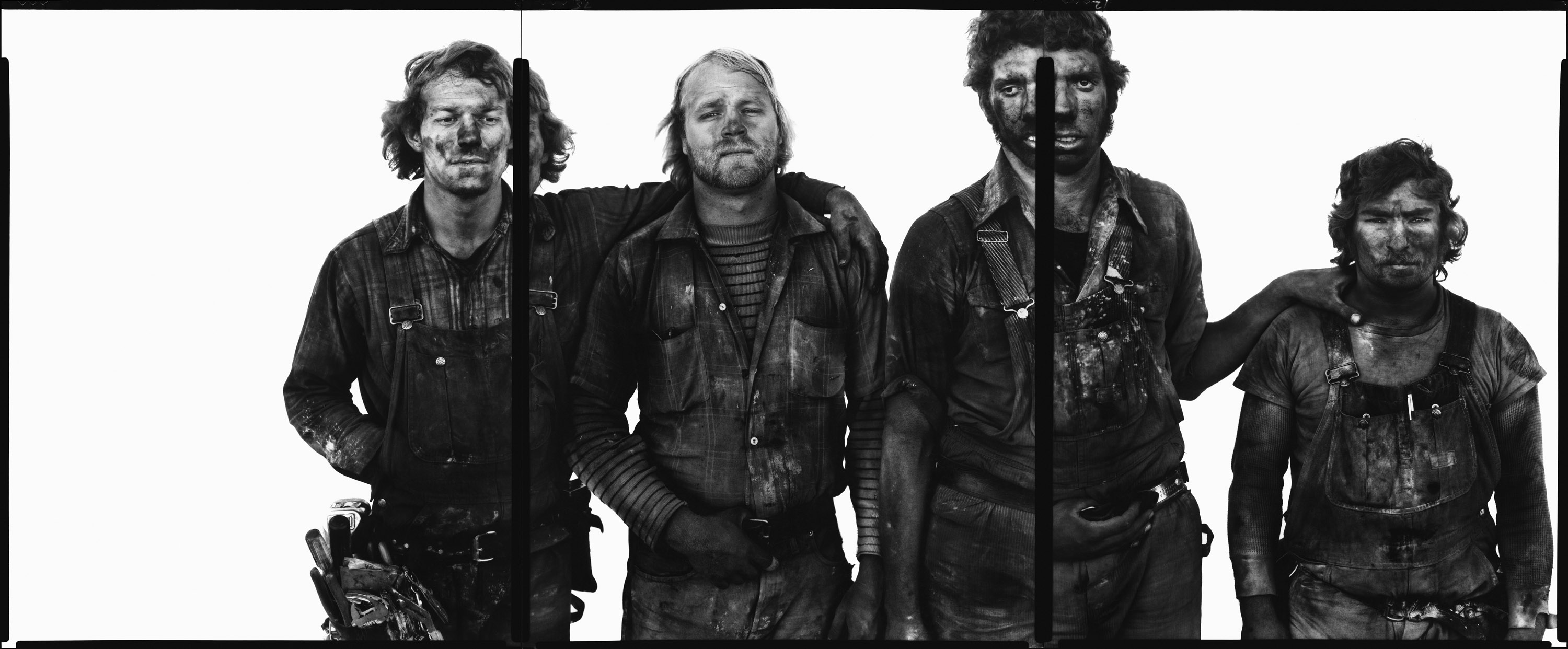
Fotomuseum Den Haag website

LIKE ART BLART ON FACEBOOK

Back to top

Photographs: ‘F. Holland Day (1864-1933) – The Seven Last Words’ 1898

April 2019


F. Holland Day (American, 1864-1933) 'The Seven Last Words' 1898


F. Holland Day (American, 1864-1933)
The Seven Last Words
1898
Seven platinum prints in original frame
H x W (overall with frame): 8 1/2 x 35 1/2 in. (21.6 x 90.2cm)
Barbara M. Marshall Fund, Frank B. Bemis Fund, Otis Norcross Fund, William E. Nickerson Fund, Lucy Dalbiac Luard Fund, and funds by exchange from a Gift of James Lawrence, Dorothy Mackenzie and John E. Lawrence, and funds donated by Michael and Elizabeth Marcus, Charles W. Millard III, and Scott Nathan and Laura DeBonis
Photo: © Museum of Fine Arts, Boston


Where Do We Come From / What Are We / Where Are We Going

I went to see one of my best friends for the last time in hospital today.

Joyce Evans has been like a surrogate mother to me for the last eight years. She has been wise counsel, friend, support, teacher, reconciler, adventurer and philosopher to this sometimes lost man. We had many adventures to exhibitions and openings, to our favourite restaurant Caffe e Cucina to have dinner, or going to see “Our Julia”, an exhibition of her favourite photographer Julia Margaret Cameron at the Art Gallery of New South Wales in Sydney. It is so sad in this life that we have to loose the wisdom of age only for the mistakes of past generations to be repeated over and over again.

Both Joyce and I do not believe in traditional, dogmatic religion. Both of us cannot stand the hypocrisy, baloney and proselytising that religion undertakes in the name of an “imaginary friend.” Religion is a crutch for the dogmatic who then impose their beliefs, and discrimination, on others.

But we both believe in spirit, that ineffable quality of experience where you obtain communion with the energy of the cosmos. A feeling, an emotional energy of connection to body, spirit and soul. Something noumenal, something that we have knowledge of, but that we can’t completely describe.

Strip away the baggage of religion from these photographs and you are left with a man being tortured and his spirit suffering. I wonder what this man was like when he was a baby? Who did he talk to growing up, what did he say, who did he meet. What was his essential journey to get to this place? Imagine Pontius Pilate not washing his hands of him, but sitting down with him and having a philosophical discussion on the nature of existence and being.

I felt immense love and sadness, hope and sorrow when I saw Joyce for the last time on this earth. I wished her a good journey and told her that I would see her soon.

I will miss her strength, intelligence, and beautiful spirit. But above all I will miss her love.

Dr Marcus Bunyan


These photographs are used under fair use conditions for the purpose of education and research. Please click on the photographs for a larger version of the image.


If we can find out what we are… that is the artist.

And then, this goes to the core element of your being:

If the core part of your life is the search for the truth then that becomes a core part of your identity for the rest of your life,

and the core element of your enquiry remains the same.

It becomes embedded in your soul.


Joyce Evans


F. Holland Day (American, 1864-1933) 'The Seven Last Words' 1898 (detail)

Father forgive them they know not what they do


F. Holland Day (American, 1864-1933) 'The Seven Last Words' 1898 (detail)

Today thou shalt be with me in Paradise


F. Holland Day (American, 1864-1933) 'The Seven Last Words' 1898 (detail)

Woman behold thy son: Son thy mother


F. Holland Day (American, 1864-1933) 'The Seven Last Words' 1898 (detail)

My God my God why hast thou forsaken me


F. Holland Day (American, 1864-1933) 'The Seven Last Words' 1898 (detail)

I thirst


F. Holland Day (American, 1864-1933) 'The Seven Last Words' 1898 (detail)

Into thy hands I commend my spirit


F. Holland Day (American, 1864-1933) 'The Seven Last Words' 1898 (detail)

It is finished


From 1895 to 1898 Day undertook a project that was without precedent: an extended series – some 250 negatives – showing scenes of the life of Christ, from the Annunciation to the Resurrection, in which he played the title role. In 1890 Day had traveled to Oberammergau to see the famous once-a-decade Passion Plays and may well have seen a similar multimedia presentation that toured the East Coast, including Boston, later in the 1890s. For his own production, Day starved himself, let his beard grow long, and imported cloth and a cross from Syria. Just prior to the reenacted Crucifixion, he made this series of close-up self-portraits – the most powerful images in his entire series – which represent Christ’s seven last words:

FATHER FORGIVE THEM; THEY KNOW NOT WHAT THEY DO.

TODAY THOU SHALT BE WITH ME IN PARADISE.

WOMAN, BEHOLD THY SON; SON, THY MOTHER

MY GOD, MY GOD, WHY HAST THOU FORSAKEN ME?

I THIRST.

INTO THY HANDS I COMMEND MY SPIRIT.

IT IS FINISHED.


For many people, Day’s self-portraits as Christ were – and remain – unsettling, as one tries to reconcile their fact and fiction. Day defended the use of photography for sacred subjects as a matter of artistic freedom, and Steichen wrote, “Few paintings contain as much that is spiritual and sacred in them as do the ‘Seven Words’ of Mr. Day. … If we knew not its origin or its medium how different would be the appreciation of some of us, and if we cannot place our range of vision above this prejudice the fault lies wholly with us. If there are limitations to any of the arts, they are technical; but of the motif to be chosen the limitations are dependent on the man – if he is a master he will give us great art and ever exalt himself.”

Text from The Metropolitan Museum of Art website [Online] Cited 26/03/2019


Edward Steichen (American born Luxembourg, 1879-1973) 'Solitude (Portrait of F. Holland Day)' 1901


Edward Steichen (American born Luxembourg, 1879-1973)
Solitude (Portrait of F. Holland Day)
1901
Platinum print
Barbara M. Marshall Fund, Frank B. Bemis Fund, Otis Norcross Fund, William E. Nickerson Fund, Lucy Dalbiac Luard Fund, and funds by exchange from a Gift of James Lawrence, Dorothy Mackenzie and John E. Lawrence, and funds donated by Michael and Elizabeth Marcus, Charles W. Millard III, and Scott Nathan and Laura DeBonis
Photo: © Museum of Fine Arts, Boston


Widely considered one of the masterpieces of photographic history, the monumental self portrait depicts Day as Christ in a series of seven platinum prints set in a frame designed by the artist. The work is a high point of Pictorialism – the turn-of-the-century movement advocating the artistic merit of photography. With few prints ever made by the artist and a tragic fire destroying his studio, Day’s photographs are tremendously rare. The Museum also acquired the crown of thorns worn by Day in The Seven Last Words and three important portraits of Day taken by photographers Edward Steichen, James Craig Annan and Clarence H. White. They were kept by the artist as part of his personal archive.

“The Seven Last Words is one of the most significant images in the history of photography, a work that reverberates with iconic importance and one that influenced subsequent artists significantly,” said Anne E. Havinga, Estrellita and Yousuf Karsh Senior Curator of Photographs at the MFA.

Born into an affluent family in Norwood, F. Holland Day was a turn-of-the-century Bostonian with an ultra-refined aesthetic sensibility and a multitude of interests, particularly in art and literature. He was a member of the “Boston Bohemians,” a circle of friends with whom he shared a love for the Arts and Crafts movement, sophisticated wit and Symbolist literature and art. He was also an admirer of old master painting and classical sculpture, and collected Japanese decorative arts and drawings. His interests led him into a career as a fine book publisher and photographer.

Day became interested in photography in the mid 1880s, joining the Pictorialist crusade to prove that photography could be a fine art, and within a decade he had become one of the most important figures in the international movement. While Day championed the same goals promoted by fellow photographers, he also defended religious imagery and the male nude – subjects that had previously been the domain of painting and sculpture. The seriousness of Day’s approach to artistic photography and his heightened sense of symbolism, enhanced by the subtle, low-keyed tonalities of his prints, were an inspiration to other photographers of the time.

In 1898, Day began exploring religious themes in his photographs. His “Sacred Studies,” as he called them, were widely acclaimed for their high-art aspirations – as seen in their relation to old master religious painting – and their unquestionable daring. The Seven Last Words was one of Day’s most expressive and best-known pieces and continues to be admired by many contemporary artists, especially those who explore identity, role play and staged photography in their work. Each of the seven photographs in the work, set in a frame designed by the artist, represents one of the last phrases spoken by Christ:

Father forgive them they know not what they do.
Today thou shalt be with me in Paradise.
Woman behold thy son: Son thy mother.
My God my God why hast thou forsaken me.
I thirst.
Into thy hands I commend my spirit.
It is finished.


Only two other versions of the work exist today: one is in the Metropolitan Museum of Art (without the artist-designed frame) and a third is owned by a private collector (with an altered frame). The MFA’s version is in tremendous condition and is in its original, un-altered frame.

Text from the Museum of Fine Arts Boston website [Online] Cited 26/03/2019


LIKE ART BLART ON FACEBOOK

Back to top

Vale Polixeni Papapetrou (1960-2018)

April 2018


Polixeni Papapetrou (Australian, 1960-2018) 'Drag queen wearing cut out dress' 1993


Polixeni Papapetrou (Australian, 1960-2018)
Drag queen wearing cut out dress
1993
From the series Drag Queens 1988-1999
Gelatin silver photograph
28.5 x 28.5cm
Courtesy the artist and Nellie Castan Gallery, Melbourne and Stills Gallery, Sydney


My god, what a loss.

I am very sorry to hear of the passing of Polixeni Papapetrou. Sadness indeed…

Poli was a wonderful spirit and an incredibly gifted artist. Condolences to Robert Nelson and all of the family.

A selection of some of my favourite Papapetrou images are posted below – but really, there are so many memorable images, she leaves behind an indelible and lasting legacy.

From an earlier posting:

“What we should do is honour this talented and determined artist for creating so many memorable images over the years, for following her passion and her heart with courage and conviction. For the rest of my life I will always remember the spaces, the ambiguous vistas, the fantastical archetypes, the fables of her work. Images of drag queens and Dreamkeepers, Ghillies and goblins are etched in my memory. I will always remember them. You can’t ask much more from the work of an artist than that.”


You can kill the dreamer, but you cannot kill the dream.

Dr Marcus Bunyan


“Art does not reproduce the visible; rather, it makes visible.”


Paul Klee. Creative Credo (Schöpferische Konfession) 1920


Polixeni Papapetrou (Australian, 1960-2018) 'Three young men paying homage to Elvis on the 13th anniversary of Elvis’ death, Elvis Memorial Melbourne' 1990


Polixeni Papapetrou (Australian, 1960-2018)
Three young men paying homage to Elvis on the 13th anniversary of Elvis’ death, Elvis Memorial Melbourne
1990
From the series Elvis Immortal 1987-2002
Selenium toned gelatin silver photograph
40.7 x 40.7cm
Courtesy the artist and Nellie Castan Gallery, Melbourne and Stills Gallery, Sydney


Polixeni Papapetrou (Australian, 1960-2018) 'Mr Wrestling' 1992


Polixeni Papapetrou (Australian, 1960-2018)
Mr Wrestling
1992
From the series Wrestlers 1992
Pigment ink print
100 x 100cm


Polixeni Papapetrou (Australian, 1960-2018) 'Indian Brave' 2002


Polixeni Papapetrou (Australian, 1960-2018)
Indian Brave
2002
From the series Phantomwise 2002-2003
Pigment ink print
85 x 85cm
Courtesy the artist and Nellie Castan Gallery, Melbourne and Stills Gallery, Sydney


Polixeni Papapetrou (Australian, 1960-2018) 'Lost' 2005


Polixeni Papapetrou (Australian, 1960-2018)
Lost
2005
From the series Fairy Tales 2004-2014
Type C print
100 x 100cm
Courtesy the artist, Michael Reid Gallery, Sydney + Berlin and Jarvis Dooney Galerie, Berlin
Reproduced with permission


Polixeni Papapetrou (Australian, 1960-2018) 'In the Wimmera 1864 #1' 2006


Polixeni Papapetrou (Australian, 1960-2018)
In the Wimmera 1864 #1
2006
From the series Haunted country 2006
Pigment ink print
105 x 105cm
Geelong Gallery Collection


In the Wimmera 1864 #1 from the Haunted country series is amongst the earliest works by the artist to have been staged in the Australian landscape and is one in which she explores the narrative of the ‘lost child’. The work references the story of three children lost in Mallee scrub near their home outside Horsham in the Wimmera District and is reminiscent, as the artist intends, of Frederick McCubbin’s late 19th century paintings of children lost or at least wandering absent-mindedly through the Australia bush.

Text from the Culture Victoria website


Polixeni Papapetrou (Australian, 1960-2018) 'Hanging Rock 1900 #3' 2006


Polixeni Papapetrou (Australian, 1960-2018)
Hanging Rock 1900 #3
2006
From the series Haunted country 2006
Pigment ink print
105 x 105cm


Polixeni Papapetrou (Australian, 1960-2018) 'The Provider' 2009


Polixeni Papapetrou (Australian, 1960-2018)
The Provider
2009
From the series Between Worlds 2009-2012
Pigment print
105 x 105cm


Polixeni Papapetrou (Australian, 1960-2018) 'The Mourner' 2012


Polixeni Papapetrou (Australian, 1960-2018)
The Mourner
2012
From the series Between Worlds 2009-2012
Pigment print
105 x 105cm


Polixeni Papapetrou (Australian, 1960-2018) 'The Joy Pedlars' 2011 from 'The Dreamkeepers' 2011


Polixeni Papapetrou (Australian, 1960-2018)
The Joy Pedlars
2011
From the series The Dreamkeepers 2012
Pigment print
105 x 105cm


Polixeni Papapetrou (Australian, 1960-2018) 'The Wanderer No. 3', 2012 from 'The Dreamkeepers'


Polixeni Papapetrou (Australian, 1960-2018)
The Wanderer No. 3
2012
From the series The Dreamkeepers 2012
Pigment print
105 x 105cm


Polixeni Papapetrou (Australian, 1960-2018) 'Ocean Man' 2013


Polixeni Papapetrou (Australian, 1960-2018)
Ocean Man
2013
From the series The Ghillies 2013
120 x 120cm
National Gallery of Victoria, Melbourne
Purchased NGV Foundation, 2013


Polixeni Papapetrou (Australian, 1960-2018) 'Scrub Man' 2012


Polixeni Papapetrou (Australian, 1960-2018)
Scrub Man
2012
From the series The Ghillies 2013
120 x 120cm
National Gallery of Victoria, Melbourne
Purchased NGV Foundation, 2013


Review of the exhibition Polixeni Papapetrou: Lost Psyche at Stills Gallery, 2014

When “facing” adversity, it is a measure of a person’s character how they hold themselves, what face they show to the world, and how their art represents them in that world. So it is with Polixeni Papapetrou. The courage of this artist, her consistency of vision and insightful commentary on life even while life itself is in the balance, are inspiring to all those that know her.

Papapetrou has always created her own language, integrating the temporal dissemination of the historical “case” into a two-dimensional space of simultaneity and tabulation (the various archetypes and ancient characters), into an outline against a ground of Cartesian coordinates.1 In her construction, in her observation and under her act of surveillance, Papapetrou moves towards a well-made description of the states of the body in the tables and classification of the psychological landscape. Her tableaux (the French tableau signifies painting and scene (as in tableau vivant), but also table (as in a table used to organise data)) are a classification and tabulation that is an exact “portrait” of “the” illness, the lost psyche of the title. Her images lay out, in a very visible way, the double makeover: of the outer and inner landscape.

These narratives are above all self-portraits. The idea that image, archetype and artist might somehow be one and the same is a potent idea in Papapetrou’s work. What is “rendered” visible in her art is her own spirit, for these visionary works are nothing less than concise, intimate, focused self-portraits. They speak through the mask of the commedia dell’arte of a face half turned to the world, half immersed in imaginary worlds. The double skin (as though human soul, the psyche, is erupting from within, forcing a face-off) and triple skin (evidenced in the lack of depth of field of the landscape tableaux) propose an opening up, a revealing of self in which the anatomy (anatemnein: to tear, to open a body, to dissect) of the living is revealed. The images become an autopsy on the living and the dead: “a series of images, that would crystallise and memorise for everyone the whole time of an inquiry and, beyond that, the time of a history.”2

Papapetrou’s images become the “true retina” of seeing, close to a scientific description of a character placed on a two dimensional background (notice how the stylised clouds in The Antiquarian, 2014 match the fur hat trim). In the sense of evidence, the artist’s archetypes proffer a Type that is balanced on the edge of longing, poetry, desire and death, one that the objectivity of photography seeks to fix and stabilise. These images serve the fantasy of a memory: of a masked archetype in a made over landscape captured “exact and sincere” by the apparatus of the camera. A faithful memory of a tableau in which Type is condensed into a unique image: the visage fixed to the regime of representation,3 the universal become singular. This Type is named through the incorporated Text, the Legend: I am Day Dreamer, Immigrant, Merchant, Poet, Storyteller.

But even as these photographs seek to fix the Type, “even as the object of knowledge is photographically detained for observation, fixed to objectivity,”4 the paradox is that this kind of knowledge slips away from itself, because photography is always an uncertain technique, unstable and chaotic, as ever the psyche. In the cutting-up of bodies, cutting-up on stage, a staging aimed at knowledge – the facticity of the masked, obscured, erupting face; the corporeal surface of the body, landscape, photograph – the image makes visible something of the movements of the soul. In these heterotopic images, sites that relate to more stable sites, “but in such a way as to suspect, neutralise, or invert the set of relations that they happen to designate, mirror or reflect,”5 Papapetrou’s psyche, “creates the chain of tradition which passes a happening on from generation to generation.”6 In her commedia dell’ arte, an improvised comedy of craft, of artisans (a worker in a skilled trade), the artist fashions the raw material of experience in a unique way.7 We, the audience, intuitively recognise the type of person being represented in the story, through their half masks, their clothing and context and through the skilful dissemination of collective memory and experience.

Through her storytelling Papapetrou moves towards a social and spiritual transformation, one that unhinges the lost psyche. Her landscape narratives are a narrative of a recognisable, challenging, unstable non-linear art, an art practice that embraces “the speculative mystery of ancient roles… They’re all souls with divided emotions, torn between dream and reality, who like us, converge on the collective stage that is the world.” They are archetype as self-portrait: portraits of a searching, erupting, questioning soul, brave and courageous in a time of peril. And the work is for the children (of the world), for without art and family, extinction.

Dr Marcus Bunyan


Footnotes

1/ Adapted from Didi-Huberman, Georges. Invention of Hysteria: Charcot and the Photographic Iconography of the Salpetriere (trans. Alisa Hartz). Cambridge, Mass.: MIT Press, 2003, p. 24-25. I am indebted to the ideas of Georges Didi-Huberman for his analysis of the ‘facies’ and the experiments of Jean-Martin Charcot on hysteria at the Hôpital Salpêtrière in Paris in the 1880s.
2/ Ibid., p. 48
3/ Ibid., p. 49
4/ Ibid., p. 59
5/ Foucault, Michel. “Of Other Spaces,” in Diacritics Spring 1986, p. 24 quoted in Fisher, Jean. “Witness for the Prosecution: The Writings of Coco Fusco,” in Fusco, Coco. The Bodies That Were Not Ours. London: Routledge, 2001, pp. 226-227
6/ Fisher, Ibid., p. 227-228
7/ “One can go on and ask oneself whether the relationship of the storyteller to his material, human life, is not in itself a craftsman’s relationship, whether it is not his very task to fashion the raw material of experience, his own and that of others, in a solid, useful, and unique way.”
Benjamin, Walter. Illuminations (trans. by Harry Zohn; edited by Hannah Arendt). New York: Schocken Books, 1968 (2007), p. 108


Polixeni Papapetrou (Australian, 1960-2018) 'The Immigrant' 2014


Polixeni Papapetrou (Australian, 1960-2018)
The Immigrant
2014
From the series Lost Psyche 2014
Pigment print
100 x 150cm


Polixeni Papapetrou (Australian, 1960-2018) 'The Storyteller' 2014


Polixeni Papapetrou (Australian, 1960-2018)
The Storyteller
2014
From the series Lost Psyche 2014
Pigment print
100 x 150 cm


Polixeni Papapetrou website

LIKE ART BLART ON FACEBOOK

Back to top

Review: ‘Gregory Crewdson: Cathedral of the Pines’ at The Photographers’ Gallery, London

Exhibition dates: 23rd June – 8th October, 2017


Gregory Crewdson (American, b. 1962) 'The Haircut' 2014 from the exhibition 'Gregory Crewdson: Cathedral of the Pines' at The Photographers' Gallery, London, June - October, 2017


Gregory Crewdson (American, b. 1962)
The Haircut
2014
© Gregory Crewdson. Courtesy Gagosian


End of days

I have written critically and glowingly of Crewdson’s work in the past (see my review of his exhibition at the Centre for Contemporary Photography, Melbourne 2012). With the exhibition Gregory Crewdson: Cathedral of the Pines the same elements are extant: life in the back woods of America, the tableaux beautifully staged and presented in large photographic prints throughout the three floors of the expansive spaces of the Photographers’ Gallery, London. And yet there is something particularly “icky”, if I can use that word, about this new body of work. What made me feel this way?

Firstly, I was uncomfortable with the number of naked or half-naked females (compared to men) in the photographs, all looking vulnerable, melancholic and isolated in small, rural town America. If this is how Crewdson sees women in the microcosms he creates – vulnerable women “pictured” in forest and cabin settings – this incessant observation is objectionable to me. These are not powerful, strong, independent women, far from it. These are stateless women who peer endlessly out of windows, or sit on the end of beds looking downcast. It is almost degrading to females that these woman are so passive and objectified. Reinforcing the theme of isolation and desperation is the word “HELP!” painted on the bridge above a naked woman standing on a roadway; reinforcing the feeling of voyeurism is a woman’s bra hanging in a toilet being observed by a man on a pair of skis.

Secondly, compared to the earlier series, the spaces in these new photographs seem to be completely dead. The photographs look handsome enough but they have a very different feel from the previous work. While externally referencing a sense of space and uncertainty present in B grade movies, European and American 19th century landscape paintings (where the human figure is dwarfed by the supposed sublime), and the paintings of Edward Hopper – the spaces in these new works feel closed, locked down and a bit scary. Nothing is real (and never has been) in Crewdson’s work but this time everything seems to be over directed. As my friend Elizabeth Gertsakis observed, “The environmental context is chilling. The palette is extremely cold, there is no warmth at all. The viewer is not welcome, because there is nothing to be welcome to… even for curiosity’s sake. No one is real here – everything is silent.” Or dead. Or lifeless.

The whole series seems apathetic. That is, apathy with extreme effort. While Crewdson observes that the darkness lifted, leading to a reconnection with his artistic process and a period of renewal and intense creativity, this work is clearly at the end of something. As Elizabeth comments, “An invisible wall has come down here… and there is absolutely no entry. This body of work is so much more pervy because it is so obvious and wooden. The camera here is well and truly in the mortuary and the photographer is the undertaker as well as the man who makes dead faces look ‘human’.” But he doesn’t make them human, and there’s the rub. Which all begs the question: where is this work going?

While Crewdson continues to move down a referential and associative path, the work fails to progress conceptually even as the work ultimately stagnates, both visually and emotionally. These wooden mise en scène are based on a very tired conceptual methodology, that of the narrative of the B grade movie which, if you have the money, time and willingness to invest in, can seem sufficiently sophisticated. Of course, buyers want to keep buying a signatory technique or idea that is easily recognisable and this adds to the cachet of the art… but as a critic you have to ask where the work is going, if an artist keeps repeating the same thing over and over and over again in slightly different contexts.
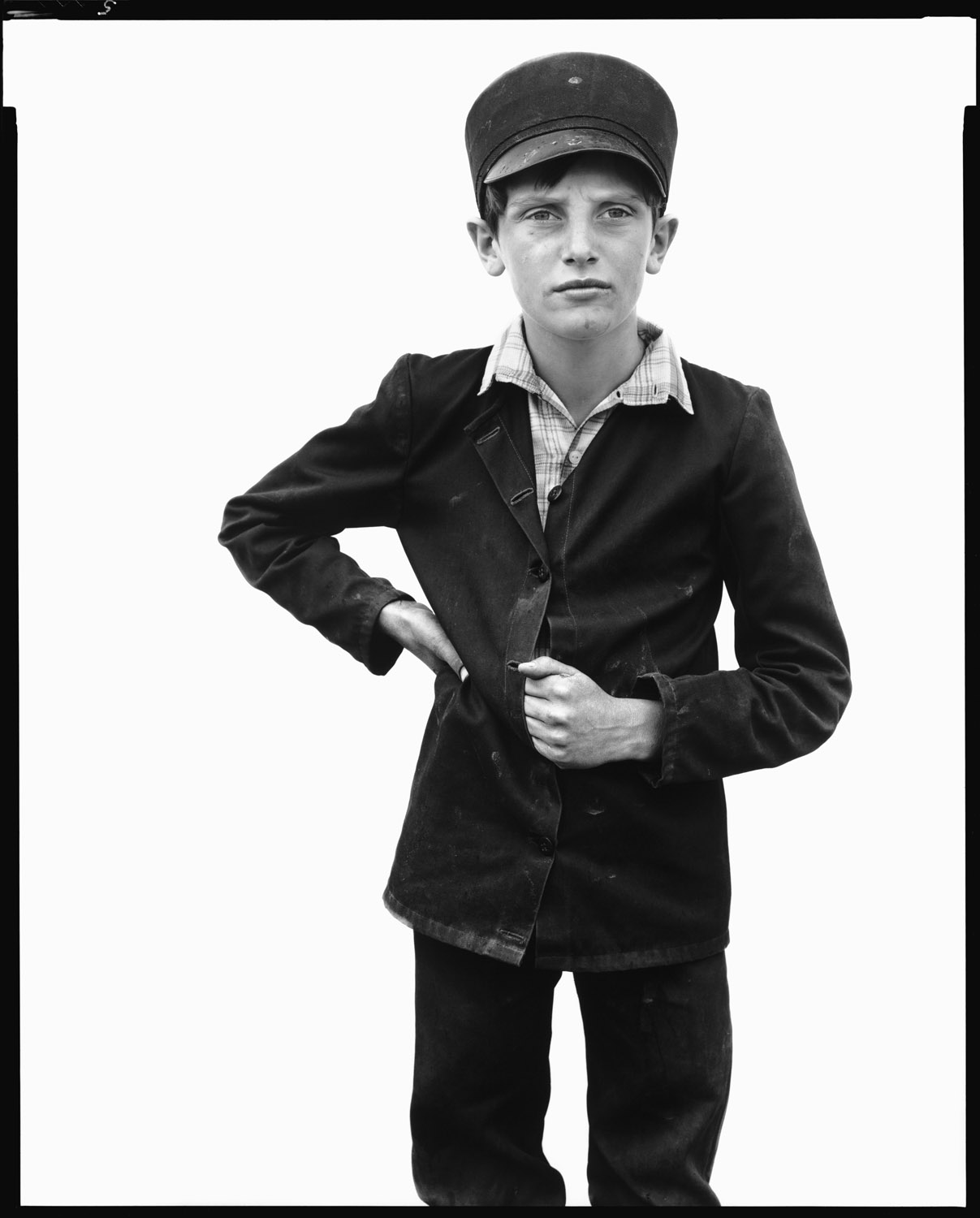
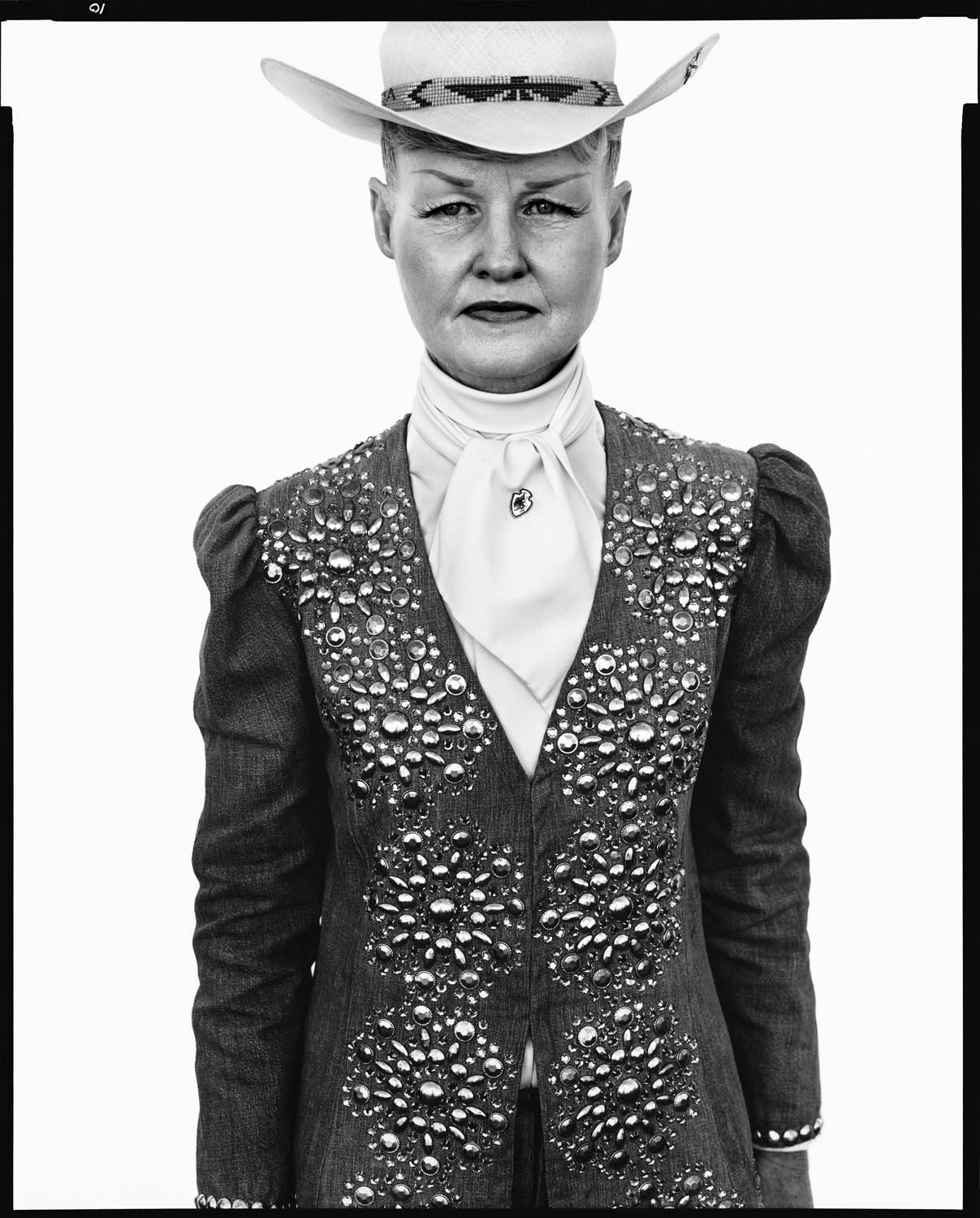
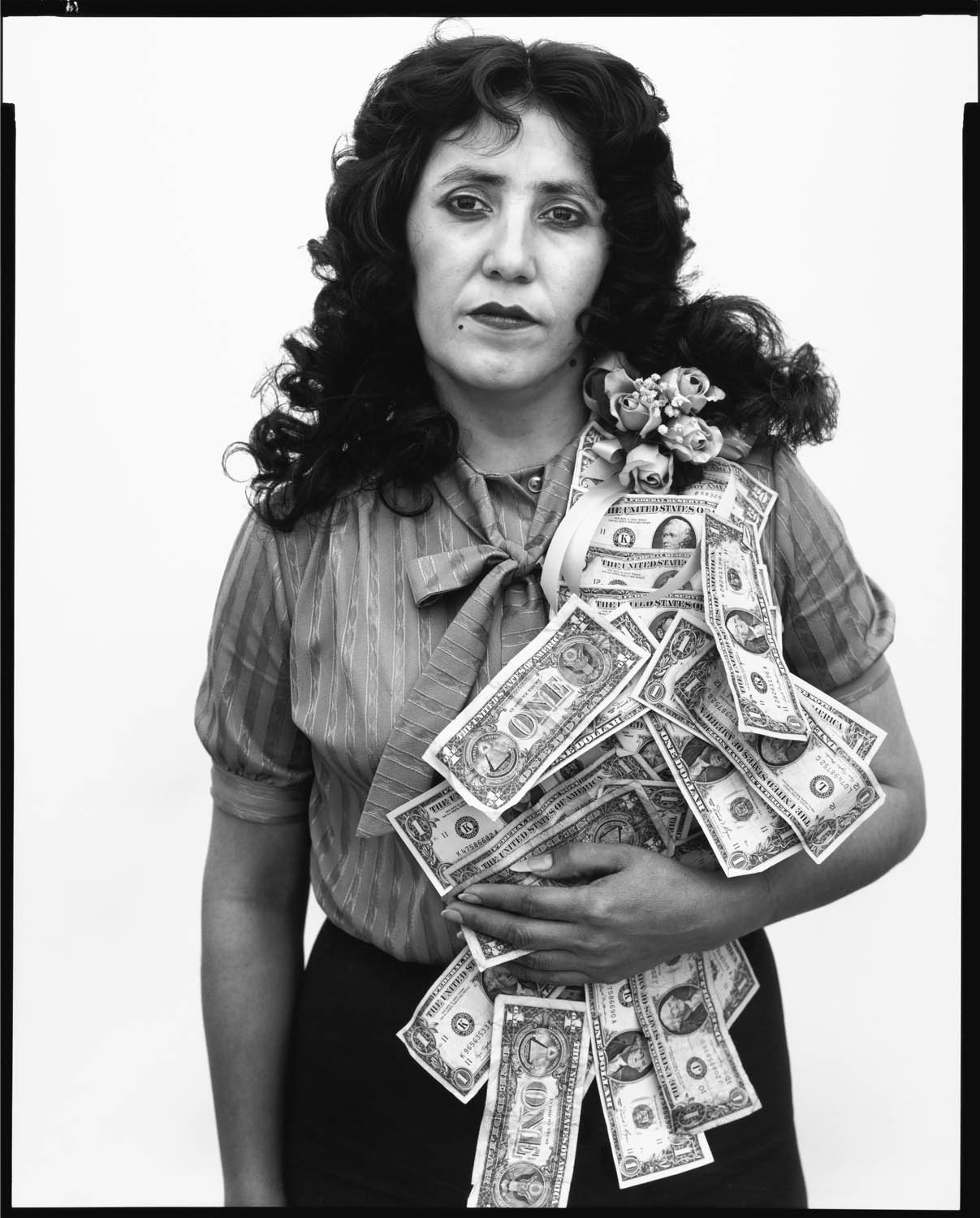
Imagine if Degas had kept painting ballet dancers using the same lighting, the same perspective, the same colour palette, the same psychological investigation painting after painting… what we would be saying about the resulting work? Sure, there is great technical proficiency contained in Crewdson’s work, but is he pushing the work anywhere more interesting?

And the simple answer to that question is, no he isn’t.

No wonder he has been having a tough time reconnecting with his artistic process.

Dr Marcus Bunyan


All installation photographs © Dr Marcus Bunyan, The Photographers’ Gallery and the artist. Please observe that there are reflections in the installation photographs of the surrounding gallery.


“It was deep in the forests of Becket, Massachusetts that I finally felt darkness lift, experienced a reconnection with my artistic process, and moved into a period of renewal and intense creativity.”


Gregory Crewdson


Room 1


Installation view of Room 1 of 'Gregory Crewdson: Cathedral of the Pines' at The Photographers' Gallery

Installation view of Room 1 of 'Gregory Crewdson: Cathedral of the Pines' at The Photographers' Gallery showing 'Woman at Sink' 2014

Gregory Crewdson. Woman at Sink 2014
Installation view of Room 1 of 'Gregory Crewdson: Cathedral of the Pines' at The Photographers' Gallery

Installation view of Room 1 of 'Gregory Crewdson: Cathedral of the Pines' at The Photographers' Gallery showing 'Woman in Parked Car' 2014

Gregory Crewdson. Woman in Parked Car 2014
Installation view of Room 1 of 'Gregory Crewdson: Cathedral of the Pines' at The Photographers' Gallery showing 'The Basement' (2014)

Installation view of Room 1 of 'Gregory Crewdson: Cathedral of the Pines' at The Photographers' Gallery


Installation views of Room 1 of Gregory Crewdson: Cathedral of the Pines at The Photographers’ Gallery, London showing in the bottom two images, The Basement (2014)
Photos: © Dr Marcus Bunyan


Gregory Crewdson (American, b. 1962) 'The Basement' 2014 from the exhibition 'Gregory Crewdson: Cathedral of the Pines' at The Photographers' Gallery, London, June - October, 2017


Gregory Crewdson (American, b. 1962)
The Basement
2014
© Gregory Crewdson. Courtesy Gagosian


This is the first UK exhibition of Cathedral of the Pines, a new body of work by acclaimed American artist Gregory Crewdson, and it is also the first time The Photographers’ Gallery has devoted all three of its gallery spaces to one artist.

With this series, produced between 2013 and 2014, Crewdson departs from his interest in uncanny suburban subjects and explores human relations within more natural environments. In images that recall nineteenth-century American and European paintings, Crewdson photographs figures posing within the small rural town of Becket, Massachusetts, and its vast surrounding forests, including the actual trail from which the series takes its title. Interior scenes charged with ambiguous narratives probe tensions between human connection and separation, intimacy and isolation.

Crewdson describes this project as ‘his most personal’, venturing to retrieve in the remote setting of the forest, a reminiscence of his childhood. The images in Cathedral of the Pines, located in the dystopian landscape of the anxious American imagination, create atmospheric scenes, many featuring local residents, and for the first time in Crewdson’s work, friends and family. In Woman at Sink, a woman pauses from her domestic chores, lost in thought. In Pickup Truck, Crewdson shows a nude couple in the flatbed of a truck in a dense forest – the woman seated, the man turned away in repose. Crewdson situates his disconsolate subjects in familiar settings, yet their cryptic actions – standing still in the snow, or nude on a riverbank – hint at invisible challenges. Precisely what these challenges are, and what fate awaits these anonymous figures, are left to the viewer’s imagination.

Crewdson’s careful crafting of visual suspense conjures forebears such as Diane Arbus, Alfred Hitchcock, and Edward Hopper, as well as the influence of Hollywood cinema and directors such as David Lynch. In Cathedral of the Pines, Crewdson’s persistent psychological leitmotifs evolve into intimate figurative dramas. Visually alluring and often deeply disquieting, these tableaux are the result of an intricate production process: For more than twenty years, Crewdson has used the streets and interiors of small-town America as settings for photographic incarnations of the uncanny.

Maintaining his trademark elaborate production processes, Crewdson works with a large crew to produce meticulously staged images with an obsessive attention to detail. Situated between Hollywood cinema and nineteenth-century American and European Romantic landscape painting, these scenes are charged with ambiguous narratives, which prove tensions between human connection and separation, intimacy and isolation.

Text from The Photographers’ Gallery website and wall text


Room 2


Installation view of Room 2 of 'Gregory Crewdson: Cathedral of the Pines' at The Photographers' Gallery

Installation view of Room 2 of 'Gregory Crewdson: Cathedral of the Pines' at The Photographers' Gallery

Installation view of Room 2 of 'Gregory Crewdson: Cathedral of the Pines' at The Photographers' Gallery showing 'The VW Bus' 2013

Gregory Crewdson. The VW Bus 2013
Installation view of Room 2 of 'Gregory Crewdson: Cathedral of the Pines' at The Photographers' Gallery showing 'Pregnant Woman on Porch' 2013

Gregory Crewdson. Pregnant Woman on Porch 2013
Installation view of Room 2 of 'Gregory Crewdson: Cathedral of the Pines' at The Photographers' Gallery

Installation view of Room 2 of 'Gregory Crewdson: Cathedral of the Pines' at The Photographers' Gallery showing 'Father and Son' 2013

Gregory Crewdson. Father and Son 2013
Installation view of Room 2 of 'Gregory Crewdson: Cathedral of the Pines' at The Photographers' Gallery showing 'The Ice Hut' 2014

Gregory Crewdson. The Ice Hut 2014
Installation view of Room 2 of 'Gregory Crewdson: Cathedral of the Pines' at The Photographers' Gallery

Installation view of Room 2 of 'Gregory Crewdson: Cathedral of the Pines' at The Photographers' Gallery showing 'Sisters' 2014

Gregory Crewdson. Sisters 2014
Installation view of Room 2 of 'Gregory Crewdson: Cathedral of the Pines' at The Photographers' Gallery showing 'Sisters' 2014 (detail)

Gregory Crewdson. Sisters 2014 (detail)
Installation view of Room 2 of 'Gregory Crewdson: Cathedral of the Pines' at The Photographers' Gallery

Installation view of Room 2 of 'Gregory Crewdson: Cathedral of the Pines' at The Photographers' Gallery showing 'The Disturbance' 2014

Gregory Crewdson. The Disturbance 2014 (detail below)
Installation view of Room 2 of 'Gregory Crewdson: Cathedral of the Pines' at The Photographers' Gallery showing 'The Disturbance' 2014 (detail)


Installation views of Room 2 of Gregory Crewdson: Cathedral of the Pines at The Photographers’ Gallery, London showing in the bottom two images, The Disturbance 2014
Photos: © Dr Marcus Bunyan


Gregory Crewdson (American, b. 1962) 'The Disturbance' 2014 from the exhibition 'Gregory Crewdson: Cathedral of the Pines' at The Photographers' Gallery, London, June - October, 2017


Gregory Crewdson (American, b. 1962)
The Disturbance
2014
© Gregory Crewdson. Courtesy Gagosian


Room 3


Installation view of Room 3 of 'Gregory Crewdson: Cathedral of the Pines' at The Photographers' Gallery

Installation view of Room 3 of 'Gregory Crewdson: Cathedral of the Pines' at The Photographers' Gallery showing 'Woman on Road' 2014

Gregory Crewdson. Woman on Road 2014
Installation view of Room 3 of 'Gregory Crewdson: Cathedral of the Pines' at The Photographers' Gallery

Installation view of Room 3 of 'Gregory Crewdson: Cathedral of the Pines' at The Photographers' Gallery

Installation view of Room 3 of 'Gregory Crewdson: Cathedral of the Pines' at The Photographers' Gallery

Installation view of Room 3 of 'Gregory Crewdson: Cathedral of the Pines' at The Photographers' Gallery

Installation view of Room 3 of 'Gregory Crewdson: Cathedral of the Pines' at The Photographers' Gallery

Installation view of Room 3 of 'Gregory Crewdson: Cathedral of the Pines' at The Photographers' Gallery


Installation views of Room 3 of Gregory Crewdson: Cathedral of the Pines at The Photographers’ Gallery, London
Photos: © Dr Marcus Bunyan


The Photographers Gallery
16-18 Ramillies Street
London
W1F 7LW

Opening hours:
Monday – Wednesday: 10.00 – 18.00
Thursday and Friday: 10.00 – 20.00
Saturday: 10.00 – 18.00
Sunday: 11.00 – 18.00

The Photographers’ Gallery website

LIKE ART BLART ON FACEBOOK

Back to top

Exhibition: ‘Acting for the Camera’ at the Albertina, Vienna

Exhibition dates: 10th March – 5th June, 2017

Featured artists (selection): Ottomar Anschütz | Bill Brandt | Brassaï | Günter Brus | John Coplans | Hugo Erfurth | Trude Fleischmann | Seiichi Furuya | Eikoh Hosoe | Martin Imboden | Dora Kallmus | Rudolf Koppitz | Johann Victor Krämer | Heinrich Kühn | Helmar Lerski | O. Winston Link | Will McBride | Arnulf Rainer | Henry Peach Robinson | Otto Schmidt | Rudolf Schwarzkogler | Franz Xaver Setzer | Anton Josef Trčka | Erwin Wurm


Anonymous photographer. 'The Sculptor Hans Gasser and Workshop Assistants at Work' 1855-1857 from the exhibition 'Acting for the Camera' at the Albertina, Vienna, March - June, 2017


Anonymous photographer
The Sculptor Hans Gasser and Workshop Assistants at Work
1855-1857
Daguerreotype
Albertina, permanent loan of the Höhere Graphische Bundes-Lehr-und Versuchsanstalt, Vienna


I made this posting way before my operation, but have been unable to post until now because of my ongoing recuperation.

While the exhibition may have finished, I am so enamoured of the theme of the exhibition, the people and artists, that I think it’s valuable to have the posting, images and the additional research I did online. I especially like the striking work of Helmar Lerski and the “Aktionen” of Rudolf Schwarzkogler which reflect on the hurtfulness of the world, but remind me of the yet to come political art of the first wave of HIV/AIDS. What a beautiful installation as well…

Dr Marcus Bunyan


Many thankx to the Albertina for allowing me to publish the photographs in the posting. Please click on the photographs for a larger version of the image.


Ottomar Anschütz (German, 1846-1907)
Elektrischer Schnellseher
1886


Anton Josef Trčka (Czech, 1893-1940) 'Egon Schiele' 1914 from the exhibition 'Acting for the Camera' at the Albertina, Vienna, March - June, 2017


Anton Josef Trčka (Czech, 1893-1940)
Egon Schiele
1914
Gelatin silver print
Albertina, Vienna


Josef Anton Trčka, Antios (7. September 1893 Vienna – 16. March 1940), was a Czech photographer , painter, sculptor, draftsman, designer of tapestries and silver jewellery, collector of folk art Moravian, occasional antiquarian, poet and philosopher. He was a representative of Viennese Modernism, Art Movement, which influenced European culture of the 20th century…

Around 1910 the Trčka decided to study at the professional school of photography Lehr- Graphische und Versuchsanstalt in Vienna, one of the best in Europe. Coincidentally, at the school was Professor Karel Novák, in his time one of the most important personalities of the beginnings of art photography. In 1914 he got the opportunity to portray several leading personalities of Viennese Modernism. Among them was Gustav Klimt, Peter Alternberg and the 50 year old Josef Svatopluk Machar. However, the highlight for Trčka prewar contracts were the photographic series of portraits of Egon Schiele, which focused on facial expressions and hand gestures.


Franz Xaver Setzer (Austrian, 1886-1939) 'Conrad Veidt' 1919


Franz Xaver Setzer (Austrian, 1886-1939)
Conrad Veidt
1919
Gelatin Silver Print
Albertina, Vienna


Franz Xaver Setzer, actually Franz Anton Adolf (6 August 1886 in Vienna – 10 January 1939) was an Austrian photographer.

Hans Walter Conrad Veidt (22 January 1893 – 3 April 1943) was a German actor best remembered for his roles in films such as The Cabinet of Dr. Caligari (1920), The Man Who Laughs (1928), and, after being forced to migrate to Britain by the rise of Nazism in Germany, his English-speaking roles in The Thief of Bagdad (1940), and, in Hollywood, Casablanca (1942). After a successful career in German silent film, where he was one of the best-paid stars of Ufa, he left Germany in 1933 with his new Jewish wife after the Nazis came to power. They settled in Britain, where he participated in a number of films before emigrating to the United States around 1941…

He starred in a few films, such as George Cukor’s A Woman’s Face (1941) where he received billing just under Joan Crawford’s and Nazi Agent (1942), in which he had a dual role as both an aristocratic German Nazi spy and as the man’s twin brother, an anti-Nazi American. His best-known Hollywood role was as the sinister Major Heinrich Strasser in Casablanca (1942), a film which was written and began pre-production before the United States entered the war.

In 1943, at the age of fifty, he died of a massive heart attack while playing golf at the Riviera Country Club in Los Angeles. In 1998, his ashes were placed in a niche of the columbarium at the Golders Green Crematorium in north London.

Text from the Wikipedia website


Dora Kallmus (Madame d'Ora) (Austrian, 1881-1963), Arthur Benda (German, 1885-1969) 'Anita Berber and Sebastian Droste in their dance Märtyrer [Martyrs]' 1922


Dora Kallmus (Madame d’Ora) (Austrian, 1881-1963), Arthur Benda (German, 1885-1969)
Anita Berber and Sebastian Droste in their dance Märtyrer [Martyrs]
1922
Gelatin silver print
Albertina, Vienna


Dora Philippine Kallmus (20 March 1881 – 28 October 1963), also known as Madame D’Ora or Madame d’Ora, was an Austrian fashion and portrait photographer.

In 1907, she established her own studio with Arthur Benda in Vienna called the Atelier d’Ora or Madame D’Ora-Benda. The name was based on the pseudonym “Madame d’Ora”, which she used professionally. D’ora and Benda operated a summer studio from 1921 to 1926 in Karlsbad, Germany, and opened another gallery in Paris in 1925. She was represented by Schostal Photo Agency (Agentur Schostal) and it was her intervention that saved the agency’s owner after his arrest by the Nazis, enabling him to flee to Paris from Vienna.

Her subjects included Josephine Baker, Coco Chanel, Tamara de Lempicka, Alban Berg, Maurice Chevalier, Colette, and other dancers, actors, painters, and writers.

Text from the Wikipedia website


Arthur Benda (23 March 1885, in Berlin – 7 September 1969, in Vienna) was a German photographer. From 1907 to 1938 he worked in the photo studio d’Ora in Vienna, from 1921 as a partner of Dora Kallmus and from 1927 under the name d’Ora-Benda as the sole owner. …

In 1906, Arthur Benda met photographer Dora Kallmus, who also trained with Perscheid. When she opened the Atelier d’Ora on Wipplingerstrasse in Vienna in 1907, Benda became her assistant. The Atelier d’Ora specialised in portrait and fashion photography. Kallmus and Benda quickly made a name for themselves and soon supplied the most important magazines. The peak of renown was reached when Madame d’Ora photographed the present nobility in 1916 on the occasion of the coronation of Emperor Charles I as King of Hungary.

In 1921, Arthur Benda became a partner in Atelier d’Ora, which also ran a branch in Karlovy Vary during the season. In 1927 Arthur Benda took over the studio of Dora Kallmus, who had run a second studio in Paris since 1925, and continued it under the name d’Ora-Benda together with his wife Hanny Mittler. In addition to portraits, he mainly photographed nudes that made the new company name known in men’s magazines worldwide. A major order from the King of Albania Zogu I, who had himself and his family photographed in 1937 for three weeks by Arthur Benda in Tirana secured Arthur Benda financially. In 1938 he opened a new studio at the Kärntnerring in Vienna, which he continued to operate under his own name after the Second World War.

Text from the Wikipedia website


Anita Berber (10 June 1899 – 10 November 1928) was a German dancer, actress, and writer who was the subject of an Otto Dix painting. She lived during the time of the Weimar Republic. …

Her hair was cut fashionably into a short bob and was frequently bright red, as in 1925 when the German painter Otto Dix painted a portrait of her, titled “The Dancer Anita Berber”. Her dancer friend and sometime lover Sebastian Droste, who performed in the film Algol (1920), was skinny and had black hair with gelled up curls much like sideburns. Neither of them wore much more than low slung loincloths and Anita occasionally a corsage worn well below her small breasts.

Her performances broke boundaries with their androgyny and total nudity, but it was her public appearances that really challenged taboos. Berber’s overt drug addiction and bisexuality were matters of public chatter. In addition to her addiction to cocaine, opium and morphine, one of Berber’s favourites was chloroform and ether mixed in a bowl. This would be stirred with a white rose, the petals of which she would then eat.

Aside from her addiction to narcotic drugs, she was also a heavy alcoholic. In 1928, at the age of 29, she suddenly gave up alcohol completely, but died later the same year. She was said to be surrounded by empty morphine syringes.

Text from the Wikipedia website


Rudolf Koppitz (Austrian, 1884-1936) 'In the Arms of Nature' 1923


Rudolf Koppitz (Austrian, 1884-1936)
In the Arms of Nature [self-portrait]
1923
Multicolour gum bichromate print
Albertina, permanent loan of the Höhere Graphische Bundes-Lehr-und Versuchsanstalt, Vienna


Rudolf Koppitz (4 January 1884 – 8 July 1936), often credited as Viennese or Austrian, was a Photo-Secessionist whose work includes straight photography and modernist images. He was one of the leading representatives of art photography in Vienna between the world wars. Koppitz is best known for his works of the human figure including his iconic Bewegungsstudie, “Motion Study” and his use of the nude in natural settings. …

After the [First World] war, Koppitz returned to the Institute to teach photography where in 1923 he took the nude self-portrait, In the Bosom of Nature [above], in which he framed himself by tree trunks, rocks, snowy mountains, and is posed to convey a dreamlike harmony reminiscent of a symbolist painting and graphic art. In c. 1925 Koppitz created his masterpiece, Bewegungsstudie, “Motion Study” in which he photographed dancers from the Vienna State Opera; the nude dancer, credited to be the Russian Claudia Issatschenko but is more likely, her daughter, ballet dancer and choreographer, Tatyana Issatschenko Gsovsky, with her head thrown dramatically back and flanked by three dark-robed women, lends Bewegungsstudie to the highly decorative and symbolist tradition of the Viennese Jugendstil.

Text from the Wikipedia website


Rudolf Koppitz (Austrian, 1884-1936) 'Movement Study' 1925


Rudolf Koppitz (Austrian, 1884-1936)
Bewegungsstudie (Motion Study)
1926
Multicolor gum bichromate print
Albertina, permanent loan of the Höhere Graphische Bundes-Lehr-und Versuchsanstalt, Vienna


Rudolf Koppitz (4 January 1884 – 8 July 1936), often credited as Viennese or Austrian, was a Photo-Secessionist whose work includes straight photography and modernist images. He was one of the leading representatives of art photography in Vienna between the world wars. Koppitz is best known for his works of the human figure including his iconic Bewegungsstudie, “Motion Study” and his use of the nude in natural settings….

Koppitz’s work is marked by a pronounced awareness of form, line, and the surface play of light and shadow. Early in his career, Koppitz was known for staging groups of subjects in the style of the Vienna Secession, the most well known example of this being his Bewegungsstudie, “Motion Study”.

Bewegungsstudie (Motion Study) is surely the most widely published and best known image in Austrian photography from the early decades of the last century. This is for good reason, as no photograph better captures the cultural strands that characterized the Austrian avant-garde at that time. Here one can see a graphic strength and compositional clarity that reflects the modernist ambitions initiated in the fine as in the applied arts by the Secession and by the Wiener Werkstätte. But what gives the image its power is the aura of mystery, of symbolist sensuality that resonates through this enigmatic grouping of the three uniformly coiffed and draped figures and the one single naked figure.” ~ Christies

Bewegungsstudie’s languid nude, elaborately robed women and undeniable sensuality, in the context of its rigorous and artistic composition, bring to mind the sexual morbidity of Viennese artists like Gustav Klimt and Alphonse Mucha, as well as the Swiss symbolist painter Ferdinand Hodler and has made it as unforgettable then as it is today. It has become the Koppitz’s signature image, and was also his best-seller. Prints of the image were purchased by, among others, the Toledo Museum of Art; the New York Camera Club notable Joseph Bing, head of that club’s print committee; and the Englishman Stephen Tyng, who published it in a small portfolio of works from his collection.

His earliest works show evidence of influence by Gustav Klimt, Japanese art, Art Nouveau and Constructivism. During the First World War, Koppitz’s photographs took on a documentary quality when his photographs became more simple and direct in their subject matter and composition. Koppitz’s work came of age during the inter-war period when most of Austria’s photographers were supporters of art photography. Photographs from that time are full of symbolic meanings often capturing nude and clothed dancers as well as liberal use of both male and female, many of which were of Koppitz himself and female nudes placed in elements of nature and posed to give the impression of a Greek or Roman statue…

Although he did not possess a consistent style, Koppitz was a virtuoso of the dark room, seemingly determined to make the photograph as much of an art object as possible. His beautifully grainy, subtly tinted images align him with American Pictorialists like Edward Steichen and Clarence Smith. Koppitz’s work, much of it using the gum bichromate process, reflected his links with modern artists such as Gustav Klimt and Egon Schiele, and their involvement with the ‘life reform’ movement including; nudism, sun culture, and expressive dance popular in Central Europe from the early 1900s as well as agrarian romanticism. Koppitz’s extraordinary mastery of pictorial processes – pigment, carbon, gum, and bromoil process of transfer printing – gained the respect of his colleagues throughout the world and garnered mention in the Encyclopædia Britannica of 1929.

Text from the Wikipedia website


Trude Fleischmann (American born Austria, 1895-1990) 'Actress and Dancer Lucy Kieselhausen' c. 1925


Trude Fleischmann (American born Austria, 1895-1990)
Actress and Dancer Lucy Kieselhausen
c. 1925
Gelatin silver print
Albertina, Vienna


Trude Fleischmann (22 December 1895 – 21 January 1990) was an Austrian-born American photographer. After becoming a notable society photographer in Vienna in the 1920s, she re-established her business in New York in 1940. …

In 1920, at the age of 25, Fleischmann opened her own studio close to Vienna’s city hall. Her glass plates benefitted from her careful use of diffuse artificial light. Photographing music and theatre celebrities, her work was published in journals such as Die Bühne, Moderne Welt, ‘Welt und Mode and Uhu. She was represented by Schostal Photo Agency (Agentur Schostal). In addition to portraits of Karl Kraus and Adolf Loos, in 1925 she took a nude series of the dancer Claire Bauroff which the police confiscated when the images were displayed at a Berlin theatre, bringing her international fame. Fleischmann also did much to encourage other women to become professional photographers.

With the Anschluss in 1938, Fleischmann was forced to leave the country. She moved first to Paris, then to London and finally, together with her former student and companion Helen Post, in April 1939 to New York. In 1940, she opened a studio on West 56th Street next to Carnegie Hall which she ran with Frank Elmer who had also emigrated from Vienna. In addition to scenes of New York City, she photographed celebrities and notable immigrants including Albert Einstein, Eleanor Roosevelt, Oskar Kokoschka, Lotte Lehmann, Otto von Habsburg, Count Richard von Coudenhove-Kalergi and Arturo Toscanini. She also worked as a fashion photographer, contributing to magazines such as Vogue. She established a close friendship with the photographer Lisette Model.

Text from the Wikipedia website


Lucy Kieselhausen was born in 1897 in Vienna, Austria. She was an actress, known for Tausend und eine Frau. Aus dem Tagebuch eines Junggesellen (1918), Erdgeist (1923) and Die siebente Großmacht (1919). She was a student of Grete Wiesenthal and was celebrated as a successful dancer at the beginning of the 20th century who had great successes on German stages. Besides her dancing activity she also wrote the dance drama “Salambo”, which was set to music by Heinz Tiessen. She died in December 1926 in Berlin, Germany.

“Around 1915 another Viennese, Lucy Kieselhausen (1897-1927), began specializing in performing waltzes. She, too, had evolved out of ballet culture, but her embodiment of the waltz was virtually opposite that of Wiesenthal. She favoured luxuriously decorative hothouse costumes and the utmost refinement of movement. For her the waltz was not a lyrical expansion of space into the freedom of nature but an almost perfumed distillation of the stirrings within an opulent boudoir, with its scenography of exquisite privileges and voluptuous secrets. An adroit sense of irony shaded her movements with a abruptly “bizarre and jerky” rhythms; “her joyfully flashing temperament did not hover on a smooth surface but over a shadowy abyss from which issued her fool’s dance with its slumbering, half-animal rapture.” Her curious appropriation of the waltz ended suddenly when she died in a benzine explosion.”

Karl Eric Toepfer. Empire of Ecstasy: Nudity and Movement in German Body Culture, 1910-1935. University of California Press, 1997, pp. 161-162.


Hugo Erfurth (German, 1874-1948) 'Clotilde von Derp-Sacharoff' c. 1928


Hugo Erfurth (German, 1874-1948)
Clotilde von Derp-Sacharoff
c. 1928
Gelatin silver print
Albertina, Vienna – permanent loan of the Austrian Ludwig Foundation for Art and Science


Hugo Erfurth (14 October 1874 – 14 February 1948) was a German photographer known for his portraits of celebrities and cultural figures of the early twentieth century. …

During the next ten years [after 1896] he ran the Schröder studio, then established his own studio, art gallery, and home in the Palais Lüttichau. He became a member of the German Werkbund and was appointed an honorary member of the London’s Royal Photographic Society and of Munich’s Süddeutsche Photographen-Verein. He married Helene Reuther in 1898 and fathered three children over the next 6 years. He photographed for the Royal Playhouse in Dresden from 1913-1919.

During this time, Dresden was home to a cultural elite that included Otto Dix, Erich Heckel, Paul Klee, and Oskar Kokoschka. These artists and writers, who considered Erfurth their creative equal, frequented his studio to have their portraits taken. He also photographed opera and dance performers, did work in industrial photography, and experimented with photograms and photomontage.

In 1922, Erfurth opened a gallery under the name “Graphisches Kabinett Hugo Erfurth” with an exhibition of works by Oskar Kokoschka. In 1925, works by Emil Nolde were shown and the exhibition “7 Bauhaus Masters” was organised, with works by Paul Klee and Wassily Kandinsky, among others. The gallery also supported young Dresden artists such as Hans Grundig, Wilhelm Lachnit, and Kurt Schütze.

By the late 1920s, Erfurth had established himself as one of Germany’s leading portraitists and was known for a broad range of work around photography…

Text from the Wikipedia website


Clotilde von Derp, stage name of Clotilde Margarete Anna Edle von der Planitz (5 November 1892 – 11 January 1974), was a German expressionist dancer, an early exponent of modern dance. Her career was spent essentially dancing together with her husband Alexander Sakharoff with whom she enjoyed a long-lasting relationship…

Among her admirers were artists such as Rainer Maria Rilke and Yvan Goll. For his Swiss dance presentations, Alexej von Jawlensky gave her make-up resembling his abstract portraits. From 1913, Clotilde appeared with the Russian dancer Alexander Sacharoff with whom she moved to Switzerland during the First World War. Both Sacharoff and Clotilde were known for their transvestite costumes. Clotilde’s femininity was said to be accentuated by the male attire. Her costumes took on an ancient Greek look which she used in Danseuse de Delphes in 1916. Her style was said to be elegant and more modern than that achieved by Isadora Duncan. Their outrageous costumes included wigs made from silver and gold coloured metal, with hats and outfits decorated with flowers and wax fruit.

They married in 1919 and. with the financial support of Edith Rockefeller, appeared at the Metropolitan Opera in New York but without any great success. They lived in Paris until the Second World War. Using the name “Les Sakharoff”. Their 1921 poster by George Barbier to advertise their work was seen as showing a “mutually complementary androgynous couple” “united in dance” joined together in an act of “artistic creation.”

They toured widely visiting China and Japan which was so successful that they returned again in 1934. They and their extravagant costumes visited both North and South America. They found themselves in Spain when France was invaded by Germany. They returned to South America making a new base in Buenos Aires until 1949. They toured Italy the following year and they took up an invitation to teach in Rome by Guido Chigi Saracini. They taught at the Accademia Musicale Chigiana in Siena for Saracini and they also opened their own dance school in Rome. She and Sakharoff stopped dancing together in 1956. They both continued to live in Rome until their deaths. Clotilde gave and sold many of their writings and costumes, that still remained, to museums and auctions. She eventually sold the iconic 1909 painting of her husband by Alexander Jawlensky. In 1997 the German Dance Archive Cologne purchased many remaining items and they have 65 costumes, hundreds of set and costume designs and 500 photographs.

Text from the Wikipedia website


Martin Imboden (Swiss, 1893-1935) 'The Dancer Gertrud Kraus' c. 1929


Martin Imboden (Swiss, 1893-1935)
The Dancer Gertrud Kraus
c. 1929
Gelatin silver print
Albertina, Vienna


Martin Imboden (born November 10, 1893 in Stans, Nidwalden; died August 19, 1935 in Zurich ) was a Swiss photographer. …

Born into a Swiss working-class family, Imboden first trained as a cabinetmaker 1909-1912 and worked as a carpenter in Switzerland and in France 1913-1917 then in Basel and Zurich 1918-1929. It was only in 1923 that he began to take photographs.

In 1929 Imboden moved to Vienna, where he began to work as a freelance architectural photographer, at the same time undertaking courses at the Urania (opened in 1910 by Franz Joseph I of Austria as an educational facility with a public observatory and named after the Muse Urania who represents Astronomy) and at the Photosezession which had inspired Steiglitz’s 1902 American version.

Imboden had arrived in the city during the peak of Red Vienna (1918 to 1934) when the Socialist Workers’ Party of German Austria repeatedly won absolute majorities in the elections to parliament and local council. The Socialists undertook extensive multi-storey social housing projects on the back of a fiscal policy that brought bold reforms in the social, health and education policies. He photographed many of these municipal buildings.

At this time he encountered Gertrud Kraus and her New School of Arts which she had opened in 1927 in Vienna. It was a private school for rhythmic gymnastics and artistic dance. In this rare group of images he documents Kraus’s own energetic and expressionist performances.

Interest in modern, or ‘free’, dance was not uncommon, especially in the German area, but also worldwide, in the first half of the 20th century given the popularity of physical culture Körperkultur, the hygiene and care of one’s own body.

Kraus devised training particularly to improve the physical health of women. Through her program many young women, including Jula Isenburger and Mia Slavenska, ventured into and found success in a career in dance and movement. Imboden’s photography pays tribute to their strength of personality and physical presence through this series of portraits.

His approach is clearly experimental, though it is Photo-Secessionist rather than Modernist in spirit. The lighting is appropriately theatrical, intensifying the performative nature of these portraits in which the self-contained concentration of each young woman is paramount. He used bromoil and carbon printing, favourite printing techniques of the Pictorialist photographers, which enable adjustment of lights and intensification of darks through the application of a brush during development, with a painterly quality and warmth, often on hand-laid papers. There is no sense that these women are posing for a male gaze (the gaze of only one meets the lens) and in fact it is hard to find full-length photographs of these individuals by Imboden…

James McArdle. “November 10: Dance,” on the On This Date In Photography website 10/11/2016 [Online] Cited 19/12/2021


Gertrud Kraus (Hebrew: גרטרוד קראוס‎; 5 May 1901 – 13 November 1977) was an Israeli pioneer of modern dance in Israel. …

In the 1920s, Gertrud Kraus’s style was known as expressionistic dance, or German dance. In 1929 Gertrud Kraus, together with Gisa Geert, was chief assistant to Rudolf von Laban, director of a trade union parade during the “Vienna Festival” in Vienna.

In 1930, an impresario invited her to perform in Mandate Palestine. Her tour was a great success and she was invited back the following season. In 1933, her company performed her work Die Stadt wartet (“The City Waits”), presenting the modern metropolis as a fascinating but dangerous place. It was based on a short story by Maxim Gorki. On the night that Adolf Hitler was elected chancellor of Germany, Kraus’s company performed this piece on the open-air stage in the Burg-garden next to the Hofburg.

In 1933, while she was in Prague performing for the Zionist Congress, leaders of a Czech communist cell contacted her and tried to recruit her for their purposes. The next day, she went to the Palestine Office in Prague, and applied for immigration. Kraus moved to Tel Aviv in 1935, first living with friends and then renting a basement that became her studio. She formed a modern dance company affiliated with the Tel Aviv Folk Opera, which was probably the only one of its kind in the world. In 1949, she won a scholarship to travel to the United States to learn the newest trends in modern dance.

In 1950-1951, she founded the Israel Ballet Theatre, and became its artistic director. The company folded after a year due to financial difficulties. Until her death in 1977, Kraus devoted herself to teaching dance, as well as painting and sculpture.

Text from the Wikipedia website


Installation view of the exhibition 'Acting for the Camera' at the Albertina, Vienna, March - June 2017

Installation view of the exhibition 'Acting for the Camera' at the Albertina, Vienna, March - June 2017 showing at left, Rudolph Koppitz's 'Bewegungsstudie (Motion Study)' 1926

In the above image at left, Rudolph Koppitz’s Bewegungsstudie (Motion Study) 1926
Installation view of the exhibition 'Acting for the Camera' at the Albertina, Vienna, March - June 2017 showing at centre, Rudolph Koppitz's 'In the Arms of Nature [self-portrait]' 1923

In the above image at centre, Rudolph Koppitz’s In the Arms of Nature [self-portrait] 1923
Installation view of the exhibition 'Acting for the Camera' at the Albertina, Vienna, March - June 2017 showing at left and centre, the work of Jan Coplans

In the above image at left and centre, the work of Jan Coplans
Installation view of the exhibition 'Acting for the Camera' at the Albertina, Vienna, March - June 2017 showing at right, Erwin Wurm's 'One Minute Sculptures'

In the above image, Erwin Wurm’s One Minute Sculptures at right
Installation view of the exhibition 'Acting for the Camera' at the Albertina, Vienna, March - June 2017


Installation views of the exhibition Acting for the Camera at the Albertina, Vienna, March – June 2017


With circa 120 works from the Albertina’s Photographic Collection, the exhibition Acting for the Camera examines the diverse ways in which models are staged or stage themselves before the camera. The featured photographic works, created between the 1850s and the present, represent a cross-section of photographic history as well as the diversity of the Albertina’s own holdings. The present selection is divided between six thematic emphases: motion studies, models for artists, dance, picture stories, portraits of actresses and actors, and Viennese Actionist stagings of the body.

All of these photographs arose from diverse and multi-layered forms of collaboration between the model before and the photographer behind the camera lens. Some of the models are staged according to their photographers’ instructions, while other shots originated via a creative process in which model and photographer collaborated on an equal footing. And in some cases, the pictures were even taken according to highly specific instructions given by the model.

Beginnings

It was photographic studies done in the interest of scientific research that made it possible for the first time to visually analyse the processes of human locomotion in high detail. Anonymous models, such as in the photographs taken by Ottomar Anschütz beginning around 1890, made themselves available in order to render understandable processes such as spear-throwing. The individuals seen in such works act according to the exact instructions of the photographer. Series of this type were used to compare the motion patterns of “healthy” and “unhealthy” bodies as well as undergird medical theories with visual evidence.

While such motion studies occasionally doubled as working studies for artworks by other artists, there was also a category of works created specifically for this purpose such as Johann Victor Krämer’s staged studio photographs as well as Otto Schmidt’s nudes, and some of these were also sold “under the table” as pornography.

Expressive Gestures

A strong and likewise mutually influential relationship arose between photography and dance. At the beginning of the 20th century, modern expressionist dance was an avant-garde art form, and dancers would work together closely with photographers in order to document and disseminate their performances. Such partnerships made possible expressive stagings that helped define the styles of that era. The expressive gestures often seen therein were also taken up by Anton Josef Trčka, who had Egon Schiele pose with a hand position reminiscent of something one might see in dance.

Portraits of well-known actors such as a laughing Romy Schneider, along with role-portraits for film productions, were created in Viennese studios by photographers such as Trude Fleischmann and Madame d’Ora, and these iconic pictures represent yet another emphasis in this presentation.

Bodies as Photographic Material

Much like the way in which classic portraits convey the personalities of those being portrayed, photography can also stage the body in the opposite way, as something purely material. Helmar Lerski, for example, treated the human face as a landscape that could be modelled by light and shadow. John Coplans, on the other hand, explored his own naked body centimetre by centimetre, portraying himself without his head and thus questioning stagings of masculinity and social norms.

In Viennese Actionism, the artists likewise placed themselves front and centre as pictorial subjects. Rudolf Schwarzkogler, who wrapped himself like a mummy in muslin bandages during the late 1960s, as well as his Actionist colleague Günter Brus, staged performances specifically for the photographic camera. And the newest works in Acting for the Camera are as recent as Erwin Wurm’s One Minute Sculptures, for which the artist had models assume ridiculous poses with everyday objects.

Following Black & White (2015) and Landscapes & People (2016), this is the third large-scale presentation of the Albertina’s Photographic Collection. The Albertina, as a treasure trove of visual knowledge, began collecting photographs all the way back in the mid-19th century – but it was only upon the establishment of the Photographic Collection in 1999 that these fascinating works were rediscovered.

Press release from the Albertina


Helmar Lerski (Swiss, 1871-1956) 'Metamorphosis 601' (Metamorphose 601) 1936


Helmar Lerski (Swiss, 1871-1956)
Metamorphosis through Light #601 (Metamorphose 601)
1936
Gelatin silver print


Helmar Lerski (Swiss, 1871-1956) 'Metamorphosis through Light #587' 1935-1936


Helmar Lerski (Swiss, 1871-1956)
Metamorphosis through Light #587
1935-36
Gelatin silver print


Helmar Lerski: Metamorphosis

… In 1915 Lerski returned to Europe and started a career in cinematography. For over ten years, he worked as a cameraman, lighting technician and expert on special effects for numerous expressionistic silent films in Berlin, among others Fritz Lang’s “Metropolis” (1925/26). At the end of the 1920s, he turned his attention once again to portrait photography and took part in the avant-garde movement that was trying to effect radical changes in the language of the photographic image. At the legendary Werkbund exhibition “Film und Foto” (1929), at which the New Photography made its greatest appearance at first in Stuttgart and subsequently in Zurich, Lerski – who had in the meantime become the best-known portrait photographer of his time – was well represented with 15 photographs.

But Lerski’s pictures were only partly in line with the maxims of the New Photography, and they questioned the validity of pure objectivity. The distinguishing characteristics of his portraits included a theatrical-expressionistic, sometimes dramatic use of lighting inspired by the silent film. Although his close-up photographs captured the essential features of a face – eyes, nose and mouth –, his primary concern was not individual appearance or superficial likeness but the deeper inner potential: he emphasised the changeability, the different faces of an individual. Lerski, who sympathised with the political left wing, thereby infiltrated the photography of types that was practised (and not infrequently misused for racist purposes) by many of Lerski’s contemporaries.

In his book “Köpfe des Alltags” (1931), a milestone in the history of photographic books, Lerski clearly expressed his convictions: he showed portraits of anonymous people from the underclass of the Berlin society, presenting them as theatrical figures so that professional titles such as “chamber maid”, “beggar” or “textile worker” appeared as arbitrarily applied roles. Thus his photographs may be interpreted as an important opposite standpoint to the work of August Sander, who was at the same time working on his project “Menschen des 20. Jahrhunderts” – that large-scale attempt at a social localisation of various representatives of the Weimar society.

But Helmar Lerski’s attitude was at its most radical in his work entitled “Metamorphosis”. This was completed within a few months at the beginning of 1936 in Palestine, to where Lerski and his second wife Anneliese had immigrated in 1932. In “Verwandlungen durch Licht” (this is the second title for this work), Lerski carried his theatrical talent to extremes. With the help of up to 16 mirrors and filters, he directed the natural light of the sun in constant new variations and refractions onto his model, the Bernese-born, at the time out-of-work structural draughtsman and light athlete Leo Uschatz. Thus he achieved, in a series of over 140 close-ups “hundreds of different faces, including that of a hero, a prophet, a peasant, a dying soldier, an old woman and a monk from one single original face” (Siegfried Kracauer). According to Lerski, these pictures were intended to provide proof “that the lens does not have to be objective, that the photographer can, with the help of light, work freely, characterise freely, according to his inner face.” Contrary to the conventional idea of the portrait as an expression of human identity, Lerski used the human face as a projection surface for the figures of his imagination. We are only just becoming aware of the modernity of this provocative series of photographs.

Peter Pfrunder. “Helmar Lerski: Metamorphosis,” on the Fotostiftung Schweiz 2005 [Online] Cited 17/12/2021. No longer available online


Wall texts

Motion Studies

Photographs taken in the context of scientific experimental arrangements visualise the different phases of human and animal locomotion sequences. Several cameras are mounted one after another, their shutters release at short intervals while the model is moving. Shortly after Eadweard Muybridge, who makes a name for himself with motion studies of racehorses in 1877, achieves his first successes, the physician Étienne-Jules Marey and the photographers Ottomar Anschütz and Albert Londe also dedicate themselves to capturing movement sequences photographically. Londe works with Jean-Martin Charcot, a neurologist at the Pitié-Salpêtrière psychiatric hospital in Paris. Anonymous models have to perform certain movements defined by the scientists. The photographs are used to compare the movement patterns of “healthy” and”unhealthy” people and to provide visual evidence for medical theories. Artists interested in the anatomically correct representation of movements use the photographs as models.

Models for Artists

Photographs are used as a workaround in the fine arts quite early on; special collections are compiled. Photographs of models in motion, for example, come to replace preparatory drawings after nature. The expanding demand for photographic material creates a new market for professional studios. The Viennese photographer and publisher Otto Schmidt produces body and facial expression studies as well as nudes (so-called academies). Since these photographs, thanks to their erotic pictorial repertoire, enjoy great popularity not only with artists, Schmidt’s circle of customers keeps growing.

The reduction in price and the easier handling of the photographic material increases the number of artists that take up a camera themselves. The painter Johann Victor Krämer has his models pose in front of half-finished paintings to check or complete their posture and gestures. Grids drawn on the photographs sometimes help to transfer subjects to the canvas.

Dance

Germany’s and Austria’s cultural scenes of the early twentieth century see the triumphant progress of modern expressionist dance. Many dancers develop choreographies and movement vocabularies of their own. They visit photographic studios, commissioning presentation and promotion materials. The artists present themselves in the costumes of the performances they currently star in on the stage.

Photographers resort to various possibilities for their dance studies. Hugo Erfurth relies on sequences to convey the flow of movements. The emphasis is on the dancer’s pose in these photographs from the early days of modern dance. Shadows are eliminated by massive retouches, since the pictures were to be reproduced in the book Der Künstlerische Tanz unserer Zeit (The Artistic Dance of Our Time, 1928), published by Langewiesche. Martin Imboden, on the other hand, focuses on the expression of the artistic performance in his static suggestive photographs.

Picture Stories

Restaging paintings and other works of art is a favourite pastime of the upper middle classes and the aristocracy in the nineteenth century. Costumed amateur actors adopting rigid poses for a few moments present the “living pictures” at certain events. The emergence of photography makes it possible to reenact these fleeting performances in the studio and to preserve them for the long term. The theatrical group photos are sold as editions on the art market or used as models to emulate.

Henry Peach Robinson is one of those who devote themselves to staging photographs in a way that lean on the tradition of tableaux vivants. Brassaï’s and Bill Brandt’s photo reportages, which seem to document nocturnal scenes the photographers chanced upon, are actually staged for the occasion. Brandt, for example, has members of his family embody precisely conceived parts in his mysteriously toned series A Night in London. The American O. Winston Link, who shows a penchant for steam engines, plans his pictures in every detail. Relying on an elaborate flash technique and the use of spotlights, his photographs, taken in the open and by night, exhibit a filmic aesthetic.

Portraits of Actresses and Actors

In Vienna, Madame d’Ora, Franz Xaver Setzer, and Trude Fleischmann specialise in portraits of performing artists from the 1910s to the 1930s. They not only catered to the public’s great demand; focusing on the cultural scene’s clientele also ties in with the personal interest of the studios’ owners. The models collaborate with the photographers to realise the desired notions regarding their appearance and the interpretation of their look. Stars from the theatre world choose the costume, make-up, and pose they prefer for their photographic portraits. Some of the character portraits and scenic representations show sweepingly theatrical gestures. Film actresses and actors are only rarely captured in traditional character portraits in the early days of the medium. Setzer’s portrait of Conrad Veidt, who stars in The Cabinet of Dr. Caligari in 1919, is an exception. The lighting and styling as well as his facial expression and the expressive gesture of his hand mirror the film’s Expressionism.

Actionist Stagings of the Body

The Actionist art gaining momentum from the 1960s on shows itself inseparably bound up with photography. Next to film, photography is the only way to provide live documentations of performances. Some actions are specifically staged for the photo camera. From about the mid-1960s on, the Viennese Actionist artists Günter Brus and Rudolf Schwarzkogler realise constellations of bodies and objects for photographs that are intended as visual works of art.

Arnulf Rainer, whose grimaces, like the Vienna Actionists’s works, are aimed at criticising the socially standardised body, also poses for a photographer. The photographer was not supposed to pursue an artistic approach of his own but to neutrally capture the given representations of the body. After the pictures were taken, Rainer defines the final image area and overpaints the photos by relying on gestural techniques that emphasise physical and emotional moments of expression.

John Coplans combines observations on the representation of the body with reflections on the nature of media. Using a straightforward and precise exposure technique and keen on obtaining sharp pictures, he confronts the viewer with defamiliarised views of his body transforming it into sculptural fragments. The humorous and absurd poses in which models present themselves for Erwin Wurm’s One Minute Sculptures with the help of everyday objects are often based on drawn studies and are captured in factual photographs lending the ephemeral performances durability.


Will McBride (American, 1931-2015) 'Romy Schneider in Paris' 1964, printed 2001


Will McBride (American, 1931-2015)
Romy Schneider in Paris
1964, printed 2001
Gelatin Silver Print
Albertina, Vienna
© Will McBride Estate/Berlin


Rudolf Schwarzkogler (Austrian, 1940-1969) '2nd Action' 1965


Rudolf Schwarzkogler (Austrian, 1940-1969)
2nd Action
1965
Gelatin Silver Print


Rudolf Schwarzkogler (Austrian, 1940-1969) '3rd Action' 1965


Rudolf Schwarzkogler (Austrian, 1940-1969)
3rd Action
1965
Gelatin Silver Print


Rudolf Schwarzkogler (Austrian, 1940-1969) '4th Action' 1965


Rudolf Schwarzkogler (Austrian, 1940-1969)
4th Action
1965
Gelatin Silver Print


Rudolf Schwarzkogler (13 November 1940, Vienna – 20 June 1969, Vienna) was an Austrian performance artist closely associated with the Viennese Actionism group that included artists Günter Brus, Otto Mühl, and Hermann Nitsch.

He is best known today for photographs depicting his series of closely controlled “Aktionen” featuring such iconography as a dead fish, a dead chicken, bare light bulbs, coloured liquids, bound objects, and a man wrapped in gauze. The enduring themes of Schwarzkogler’s works involved experience of pain and mutilation, often in an incongruous clinical context, such as 3rd Aktion (1965) in which a patient’s head swathed in bandages is being pierced by what appears to be a corkscrew, producing a bloodstain under the bandages. They reflect a message of despair at the disappointments and hurtfulness of the world.

Schwarzkogler devoted himself entirely to free art from 1965 and quit his job. He started out with horse betting and was interested in winning systems. In 1968 he took part in film projects. In 1969, he died after falling from the window of his apartment. He was buried at the Vienna Central Cemetery.

Text from the Wikipedia website


Seiichi Furuya (Japanese, b. 1950) 'Christine Furuya Gössler' 1983; printed 1988


Seiichi Furuya (Japanese, b. 1950)
Christine Furuya Gössler
1983; printed 1988
Gelatin silver print
Albertina, Vienna


Seiichi Furuya (古屋 誠一, Furuya Seiichi, born 1950) in Izu, Shizuoka is a Japanese photographer.

As a student Furuya studied architecture and then spent two years at Tokyo College of Photography. In 1973 he left his studies and his native Japan and traveled, ending up, according to Arthur Ollman in his book, The Model Wife, “a man in exile. He wears alienation like an obligation.” In Austria where he lived since 1982 he met and married Christine Gössler. From 1984 to 1987 he lived in East Berlin and worked as translator. Christine was to become the primary subject of his photography until her suicide in 1985. His last pictures of her are of her shoes, neatly placed by the window she had just jumped out of, and her body, shot from the same window, on the ground, nine stories below.

Text from the Wikipedia website


“The other person is absent as a point of reference but present as an addressee. This strangely warped situation causes an unbearable presence: You are gone (which I lament); you are here (because I am turning to you).”

~ Roland Barthes, A Lover’s Discourse

“If you consider the taking of photographs to be in a sense a matter of fixing time and space, then this work – the documenting of the life of one human being – is exceptionally thrilling… in facing her, in photographing her, and looking at her in photographs, I also see and discover “myself.””

~ Seiichi Furuya, 1979

Seiichi Furuya and Christine Gössler would soon marry, and they would later have a child, Komyo. Throughout their seven years together, Christine would plunge in and out of depressions and psychiatric institutions. And one Sunday in October of 1985, she would jump to her death from the 9th floor of their apartment building in East Berlin. Furuya photographed her throughout, to the very end. And this faithful and macabre portrait making would become his artistic and philosophical project.

Stacey Platt. “The Art of Losing Love, pt.2: Seiichi Furuya and Christine Gössler,” on the space in between website October 28, 2004 [Online] Cited 17/12/2021. No longer available online


Erwin Wurm (Austrian, b. 1954) 'One Minute Sculpture' 1997


Erwin Wurm (Austrian, b. 1954)
One Minute Sculpture
1997
Silver dye bleach print
Albertina, Vienna


Erwin Wurm (born 1954) is an Austrian artist born in Bruck an der Mur, Styria, Austria. He lives and works in Vienna and Limberg, Austria. …

Since the late 1980s, he has developed an ongoing series of One Minute Sculptures, in which he poses himself or his models in unexpected relationships with everyday objects close at hand, prompting the viewer to question the very definition of sculpture. He seeks to use the “shortest path” in creating a sculpture – a clear and fast, sometimes humorous, form of expression. As the sculptures are fleeting and meant to be spontaneous and temporary, the images are only captured in photos or on film.

To make a One Minute Sculpture, the viewer has to part with his habits. Wurm’s instructions for his audience are written by hand in a cartoon-like style. Either Wurm himself or a volunteer follow the instructions for the sculpture, which is meant to put the body in an absurd and ridiculous-looking relationship with everyday objects. Whoever chooses to do one of Wurm’s One Minute Sculptures holds the pose for a minute, or the time it takes to capture the scene photographically. These positions are often difficult to hold; although a minute is very short, a minute for a One Minute Sculpture can feel like an eternity.

Text from the Wikipedia website


Erwin Wurm (Austrian, b. 1954) 'One Minute Sculpture' 1997


Erwin Wurm (Austrian, b. 1954)
One Minute Sculpture
1997
Silver dye bleach print
Albertina, Vienna


Albertina
Albertinaplatz 1
1010 Vienna, Austria
Phone: +43 (0)1 534 83-0

Opening hours:
Daily 10am – 6pm
Wednesday 10am – 9pm

Albertina website

LIKE ART BLART ON FACEBOOK

Back to top