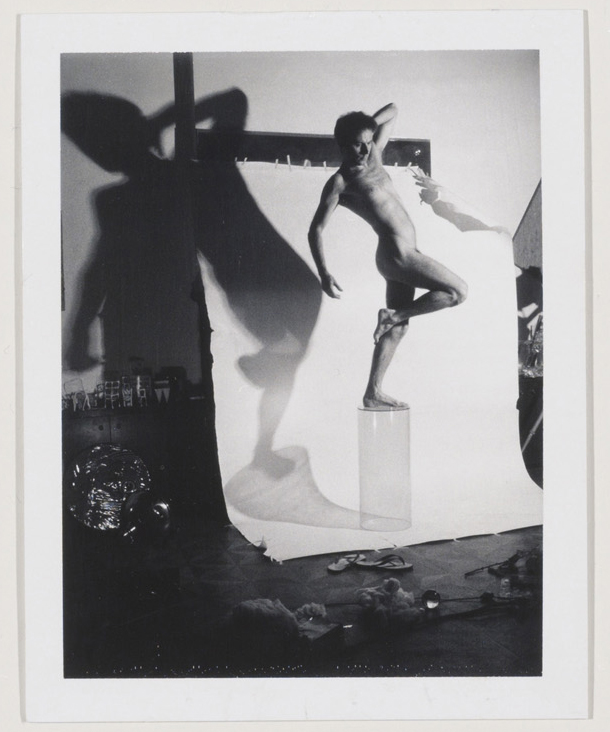
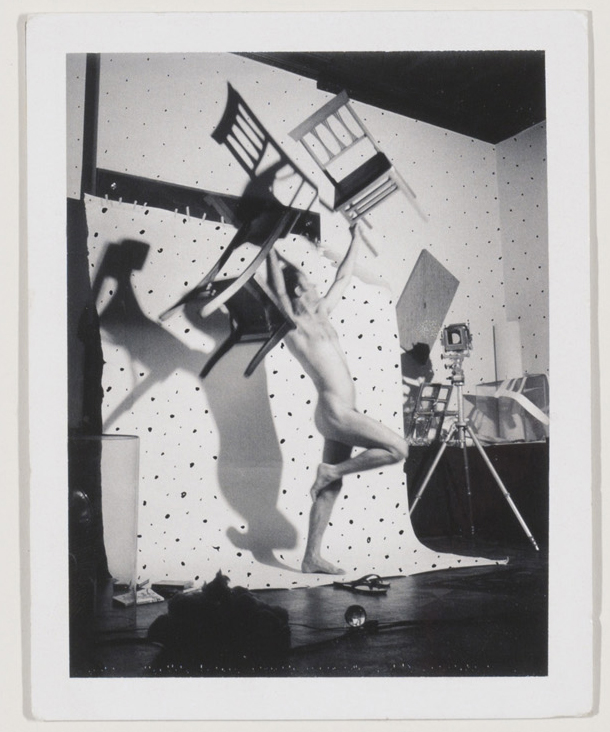
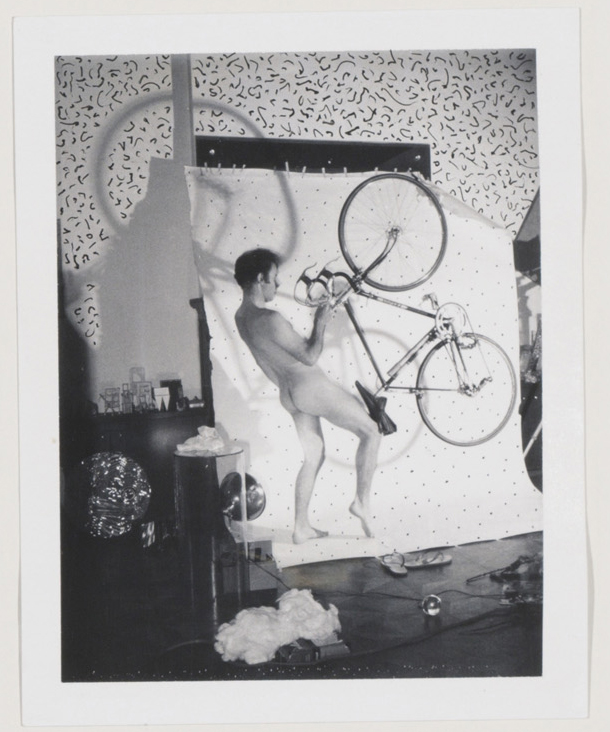
Exhibition: ‘Jimmy DeSana: Submission’ at the Brooklyn Museum, New York

Exhibition dates: 11th November , 2022 – 16th April, 2023

Curator: Drew Sawyer, Phillip Leonian and Edith Rosenbaum Leonian Curator of Photography, Brooklyn Museum
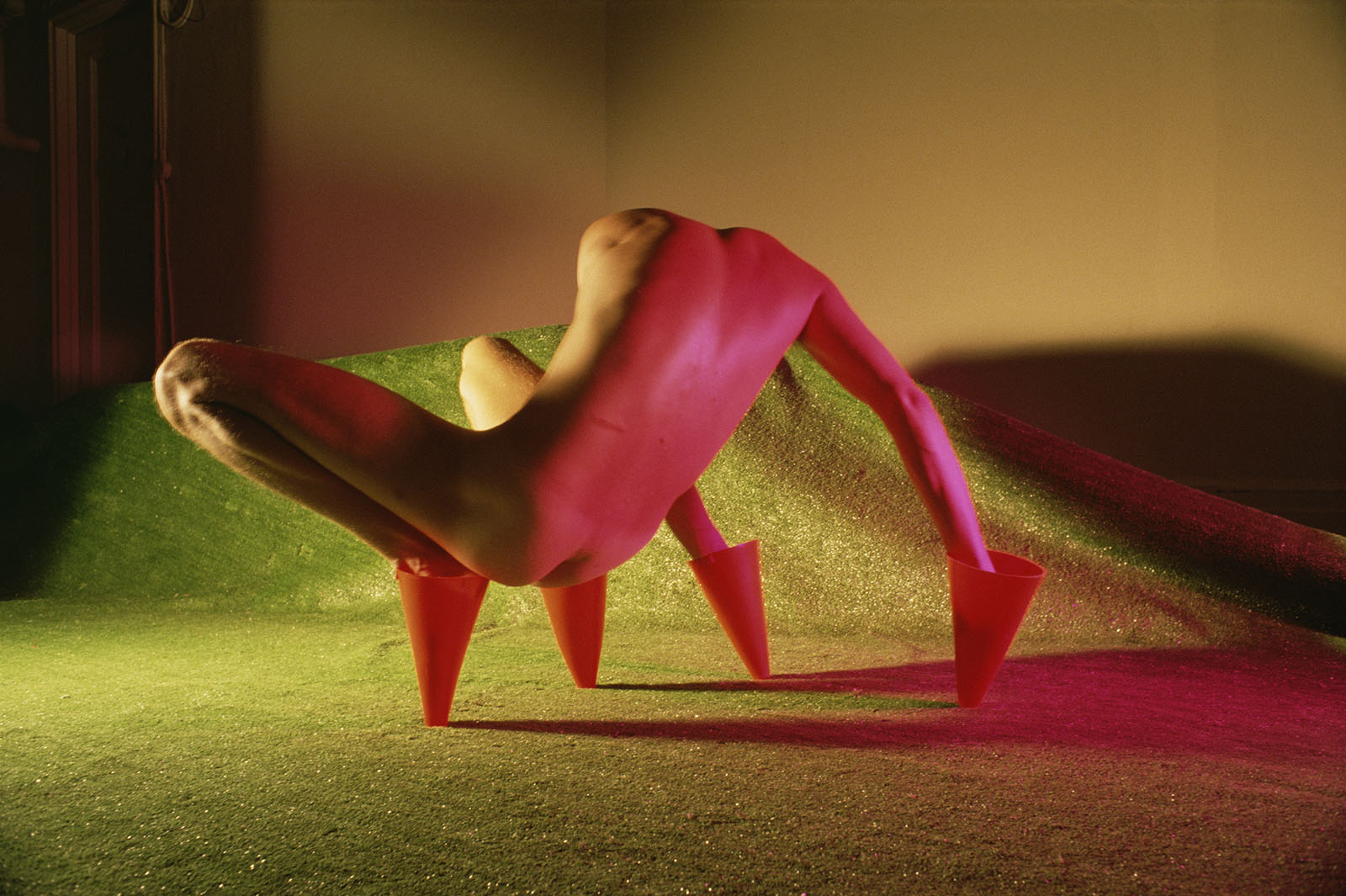
 

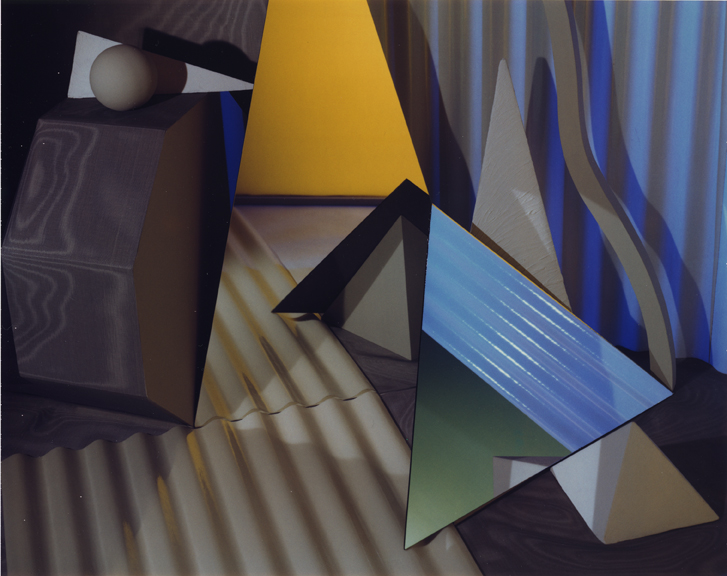
Jimmy DeSana (American, 1949-1990) 'Marker Cones' 1982


Jimmy DeSana (American, 1949-1990)
Marker Cones
1982
Chromogenic print
14 1/4 × 18 1/2 in. (36.2 × 47cm)
Courtesy of the Jimmy DeSana Trust and P·P·O·W Gallery, New York
© Estate of Jimmy DeSana
Photo: Courtesy of the Jimmy DeSana Trust and P·P·O·W Gallery, New York)


As DeSana developed his Suburban series in the early 1980s, gender and sexuality became increasingly ambiguous in his images. Here, photographed from behind, the body is a headless, unidentifiable creature composed of shapes. The marker cones evoke a similar indeterminacy: they are socially gendered “feminine” as makeshift stilettos and “masculine” as signifiers of roadside construction or sports, perhaps pointing to DeSana’s own experiences or ideas about the disciplining of bodies. A glittering field of bright-green artificial grass adds to this surreal composition, evoking the Astroturf surface of a football field.

Exhibition label


FORGET ME NOT

I have to be honest and say that before I started constructing this posting I had never heard of the artist Jimmy DeSana. You can’t know everything.

But now, having spent many hours reading about his life and his art, now I am at least a little more informed… and stand in awe and wonder at what this artist achieved before he died. It has been a real privilege and honour to imbibe at the fountain of DeSana.

I am still processing the work and what I have learnt about it but it would seem to me that what DeSana left behind is a body of work that is challenging, vital, full of ideas, paradoxes and questions about the human condition. Not who are we, but who can we be if we follow the path of our imagination and our soul.

Written by many other commentators, I have distilled their thoughts about his life, work, subject matter and the concepts he investigated into a few words:

1/ To play and dream
2/ punk rebel, the queer visionary, the wry interpreter of consumerism and media cultures, and the sometime transgressor of “good taste” in photography
3/ masquerades =
4/ the body as object
5/ peeled back the veneer of suburban life
6/ discrepancy between the public and private lives of post-war Americans
7/ queer and radical
8/ surrealistic, S/M-tinged, staged photos
9/ absurdist and unsettling
10/ vagaries of the human heart and the human psyche
11/ his central subject was always himself, and especially his sexual and emotional identity
12/ address the basic enigmas of identity
13/ Punk Provocateur
14/ Fierce
15/ Downtown /East Village scene
16/ post-punk New York
17/ fetishistic work about human bodies, very poetic
18/ mail art
19/ negative prints, double exposures and luridly coloured lighting
20/ psychological portraits, sexually charged tableaux and still lifes
21/ the body as a playground, gender as an ongoing invention, and domestic interiors as surreal constructions
22/ potential to push boundaries
23/ autoerotic asphyxiation
24/ visceral, more lo-fi, and more voyeuristic
25/ Transgressive Vision of Life and Desire
26/ Surrealism, Fluxus, punk and pure Pop
27 queer visibility
28/ strangeness
29/ suburban life
30/ Stonewall
31/ Gay Liberation
32/ interconnectedness of art and life
33/ Pictures Generation
34/ sexual, political, degenerated, ungendered
35/ sexual and emotional identity
36/ AIDS, sexuality and death


But these words tell what the work is about, they don’t tell you how the art makes you feel!

The art makes me feel dis/embodied and at the same time emboldened and strong. It makes me feel queer (in its original sense, when it was primarily used to mean strange, odd, peculiar or eccentric). Personally, it opens up a new vision for exploring my ordered place in the world, pushing boundaries of who I am and who I could be. Never settling for something that you don’t want to be. I love the “queerness” of the art (in the recent use of the word, used to describe a broad spectrum of non-normative sexual or gender identities and politics). I love its panache and bravado, its sensitivity and camp, it raunchiness and colour. The colour of life. Being different.

Sadly, we lost so many people, so many artists during the first wave of the HIV/AIDS epidemic, supremely talented artists such as Peter Hujar, David Wojnarowicz, Stephen Varble, Robert Mapplethorpe and Jimmy DeSana. I would like to have met Jimmy, to have talked to him about his passion, his love, his vision of the world that surrounded him. From a distance in time and space he seems to have a certain magic energy within him.

In the vitality of the work lies his im/mortality. And it is because of this energy that we will never lose the remembrance of Jimmy DeSana. Forget him not.

Dr Marcus Bunyan


Many thankx to the Brooklyn Museum for allowing me to publish the photographs in the posting. Please click on the photographs for a larger version of the image.


“My dear, it’s all so Christian and medieval and gloomy. Precisely. Jimmy DeSana, your intrepid photographer, has witnessed and preserved for posterity the unspeakable rights of these benighted natives, rites as clearly derived from Christianity as a black mass”


William Burroughs, 1979


“DeSana’s camera was as dear to him as his sexual life; the two were mutually constitutive, and his engagement with the BDSM subculture provided boundless inspiration to him, both as an artist and as a gay man.”

“As a gay man, a photographer, an artist of the AIDS era, a lover, a son, and a friend, DeSana is as beautifully complex as his work. After he died of AIDS in 1990, DeSana left his estate to his best friend and muse, the artist Laurie Simmons. Simmons told me, “I gave myself twenty years to sort out a lifetime’s worth of breathtaking material. I also felt certain that the work would look as fresh twenty years later as it did at the time of its making.” The resurgence of DeSana’s revolutionary career could not come at a more opportune moment; his oeuvre is exemplary of new outlets for reconstituting the Pictures Generation with queer modes of vision and critique.”


William J. Simmons. “Surreal Sexuality,” in Aperture Issue 218, “Queer” on the Aperture website January 18, 2017 [Online] Cited 20/03/2023
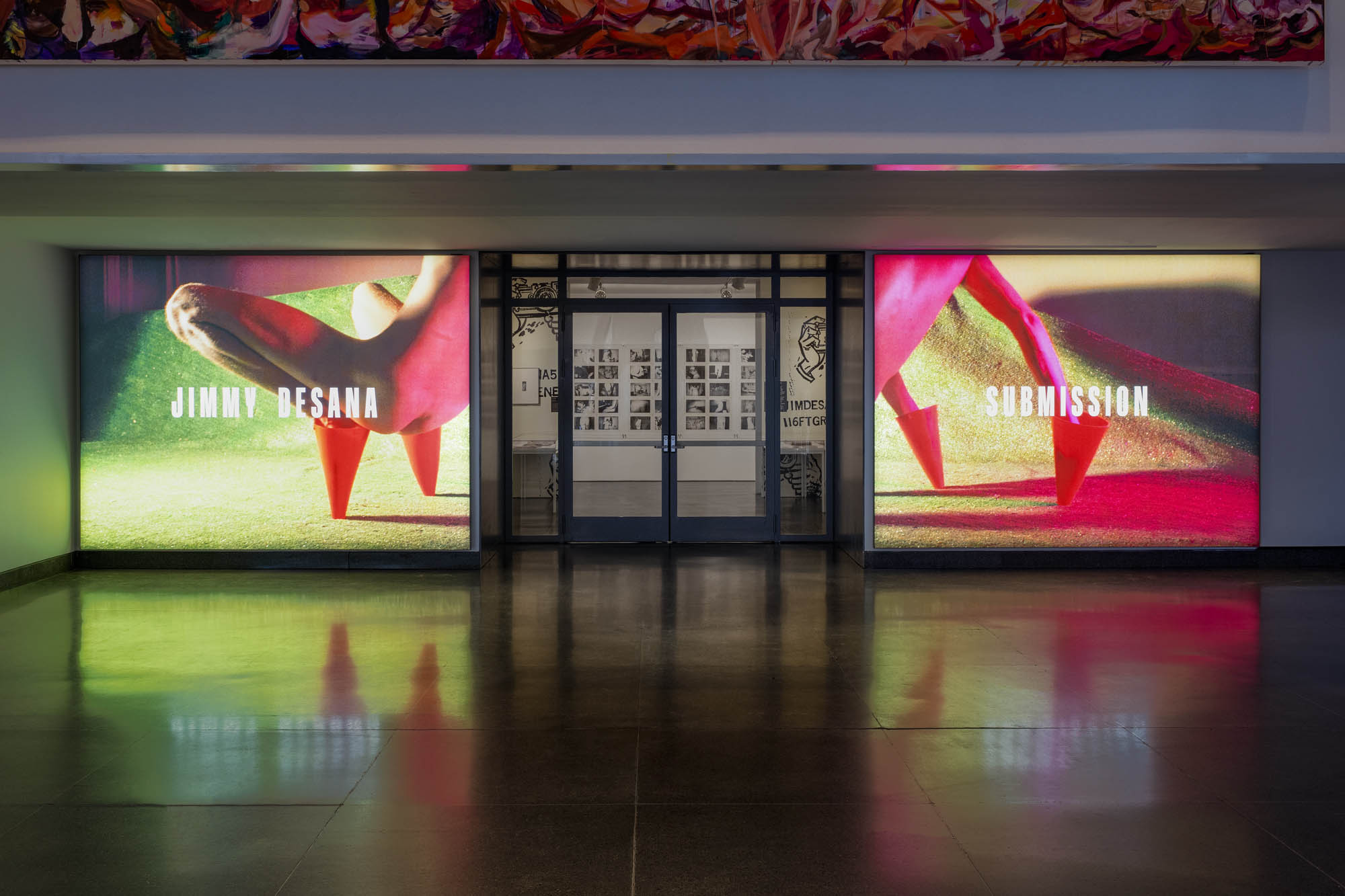
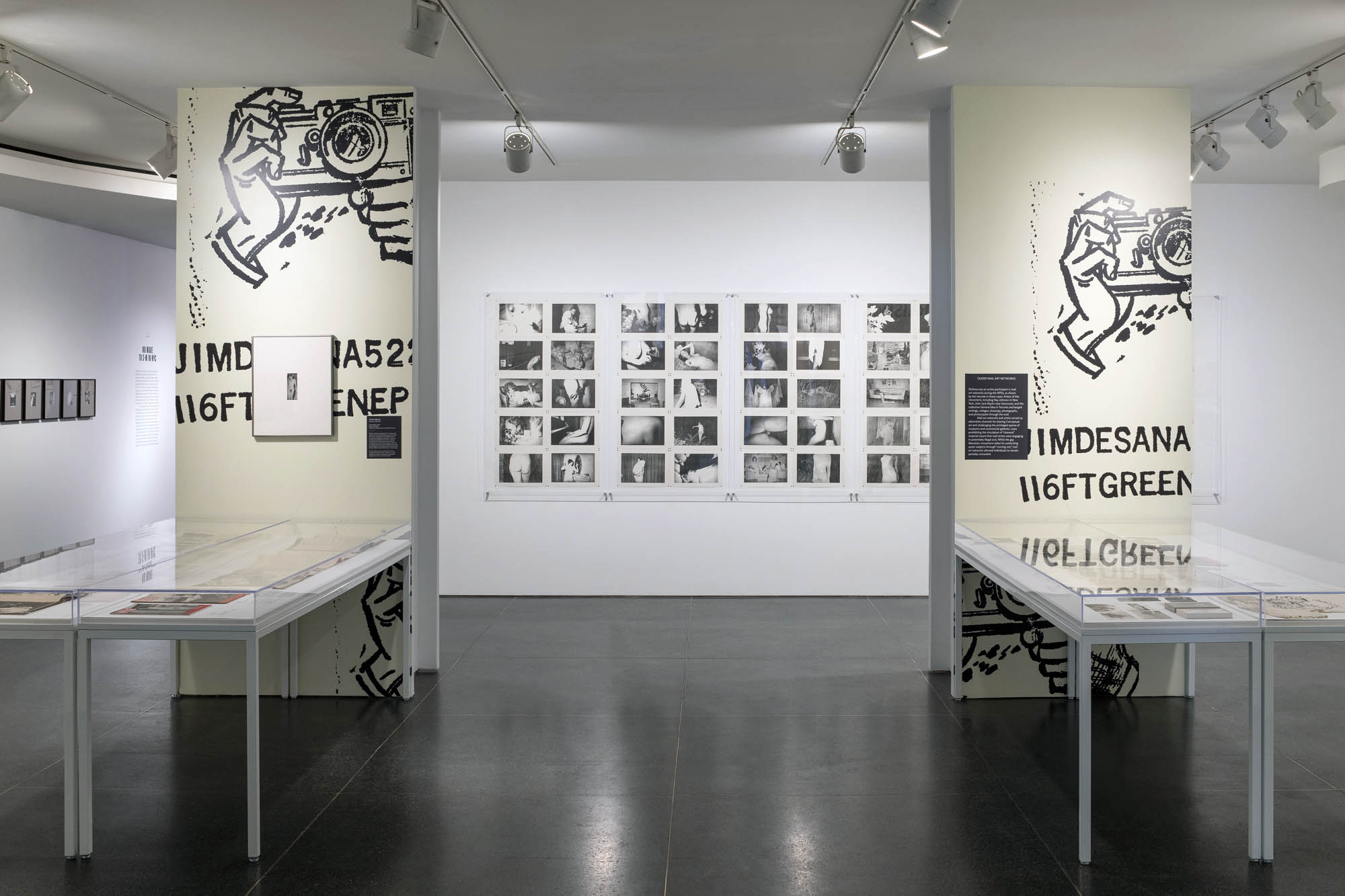


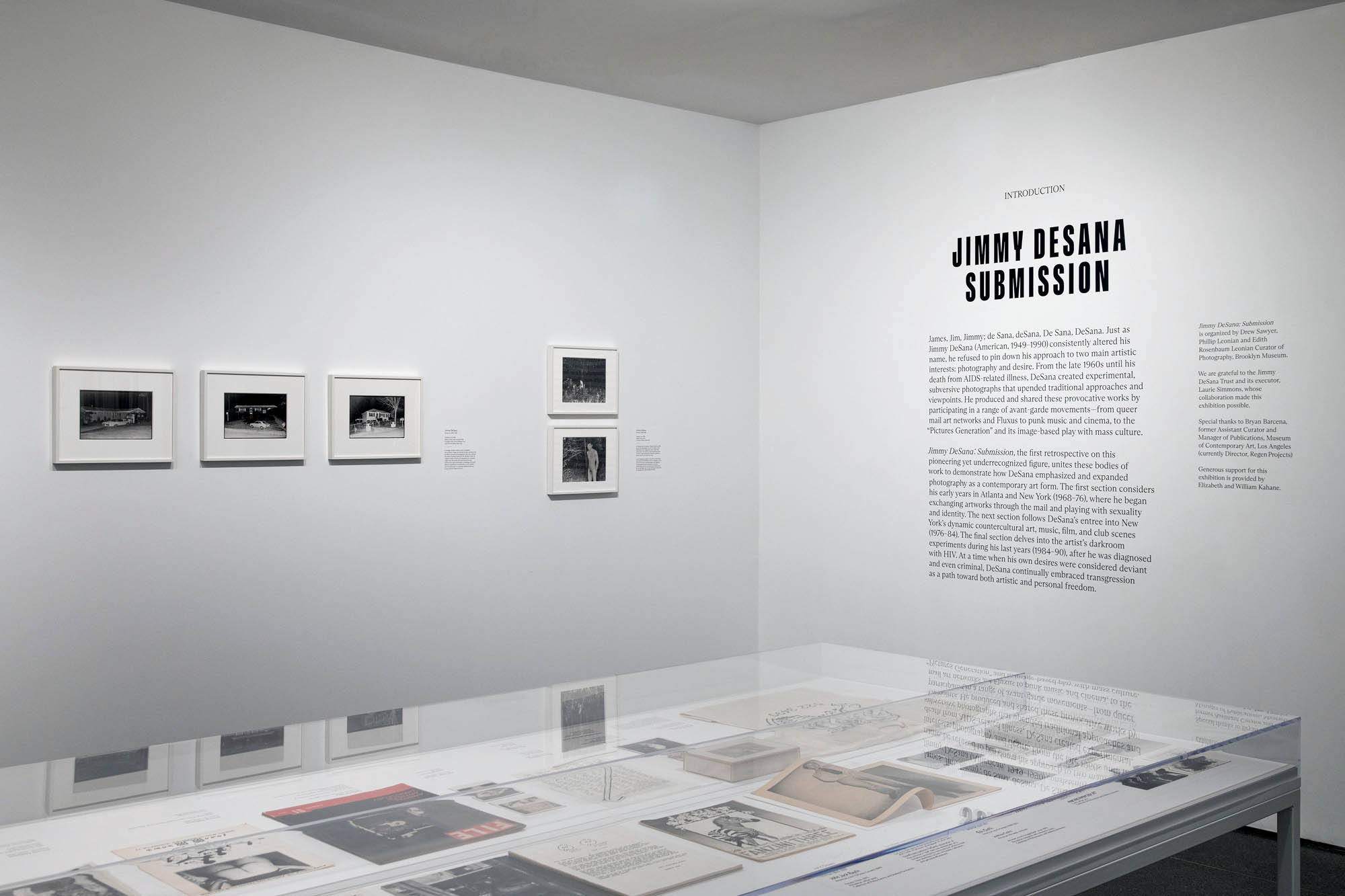
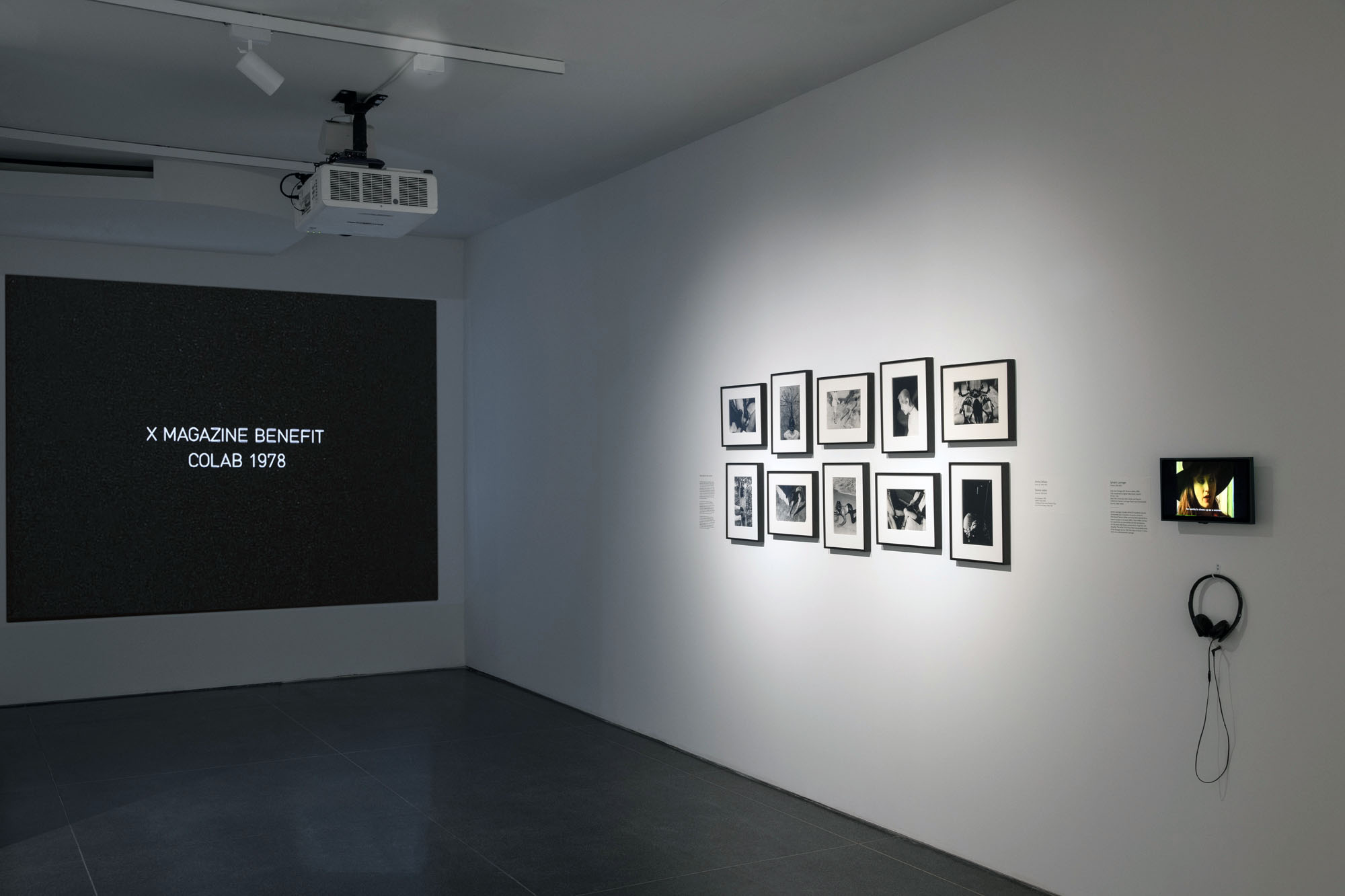
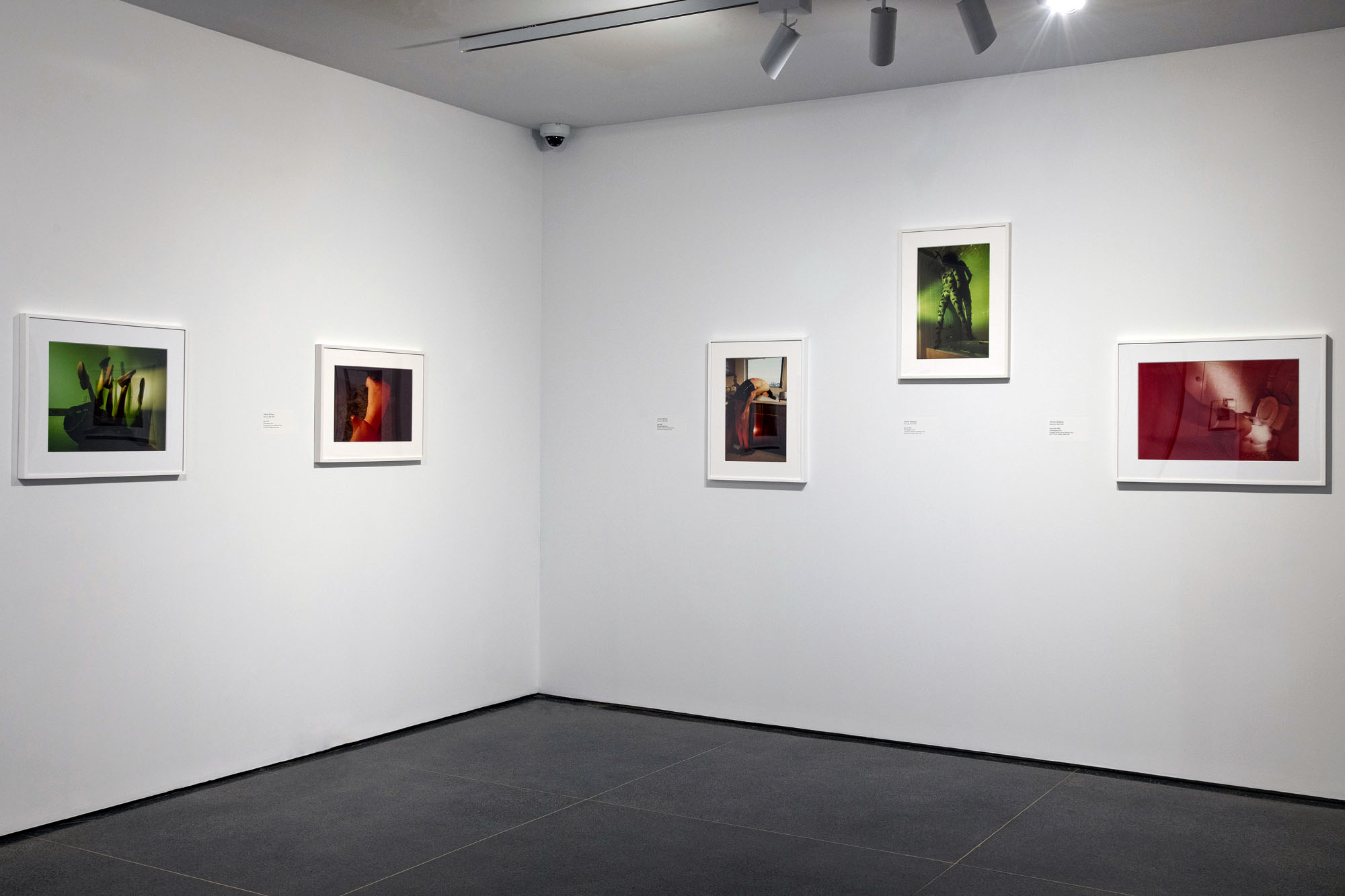
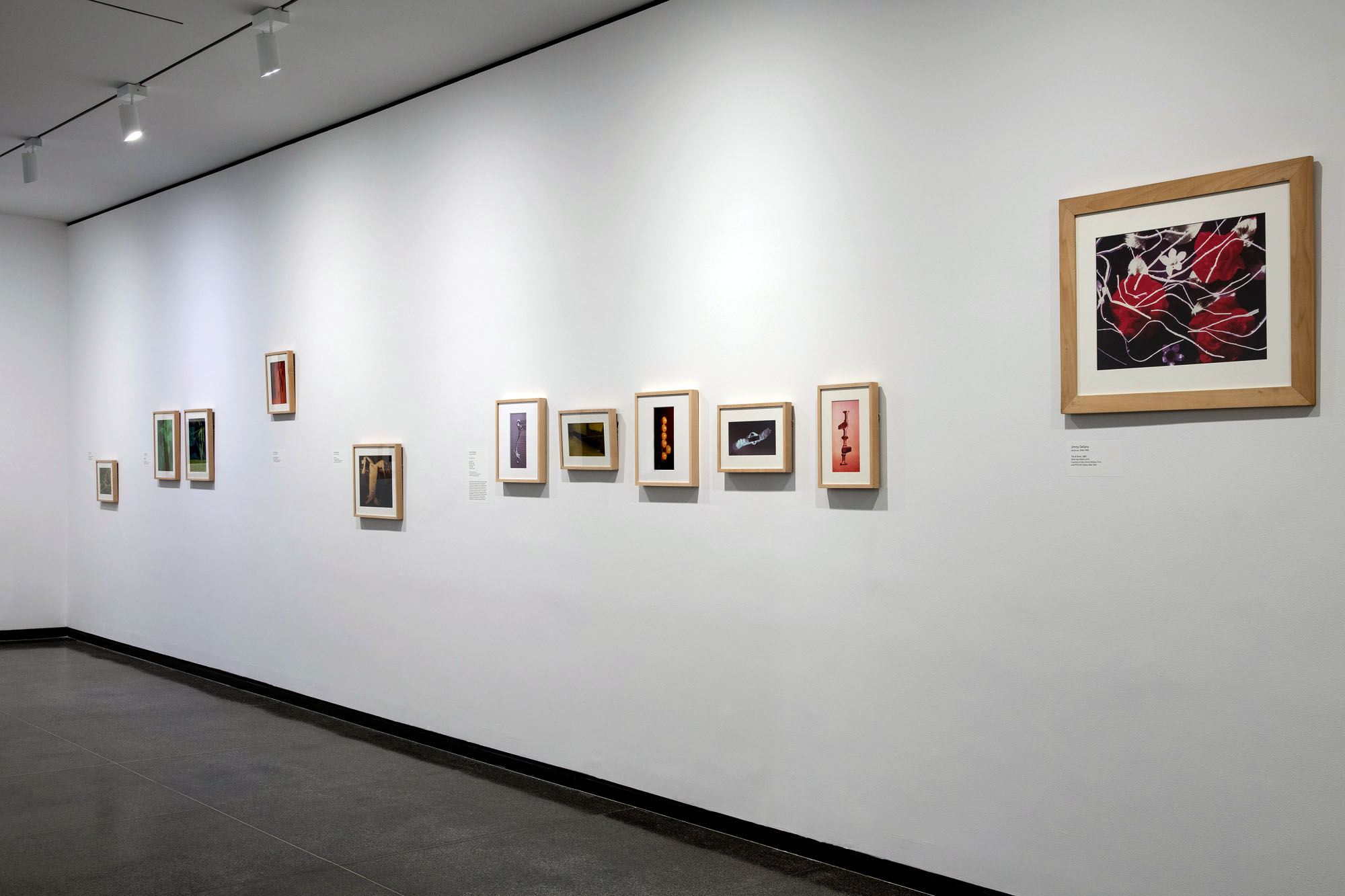
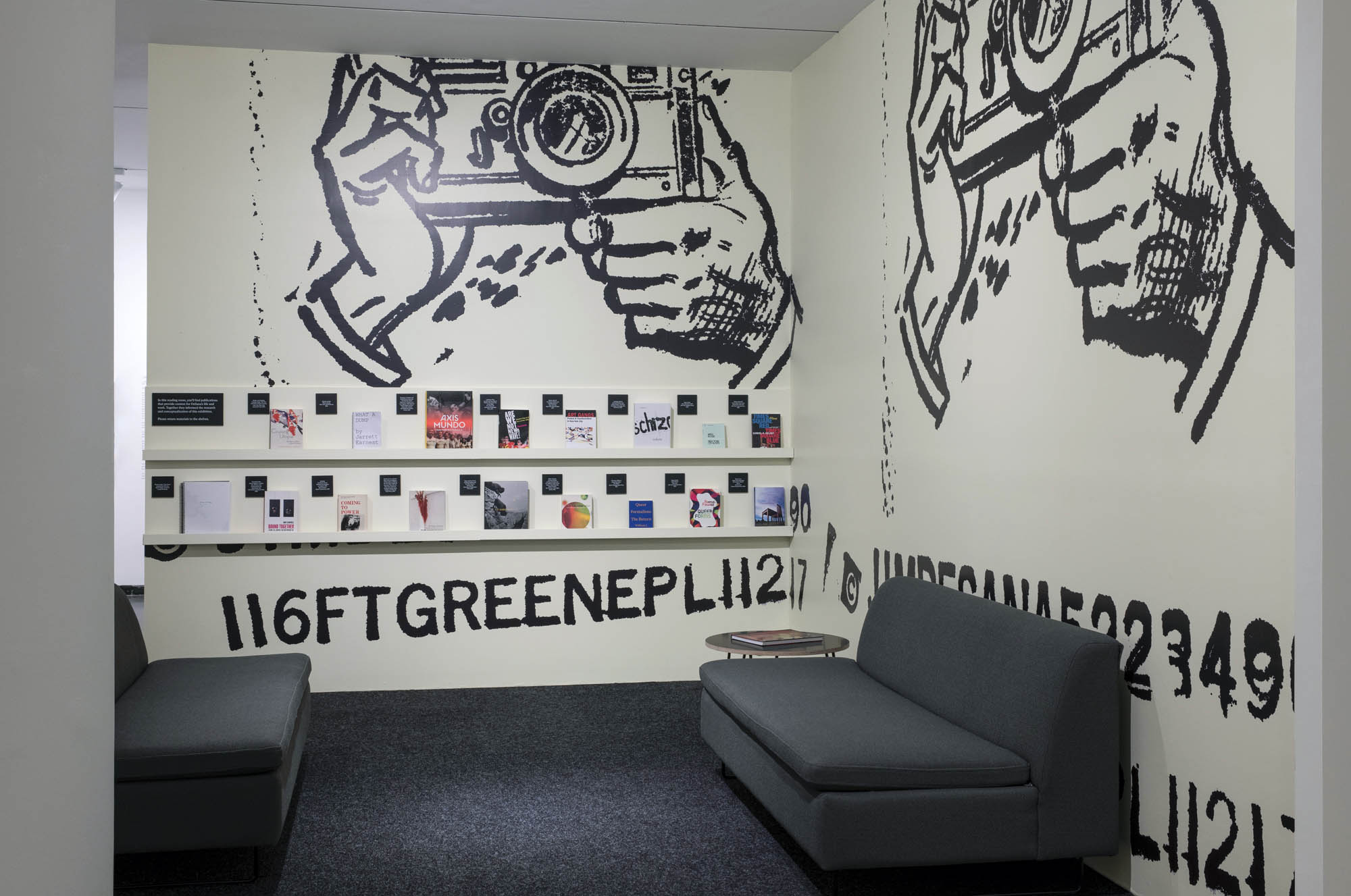
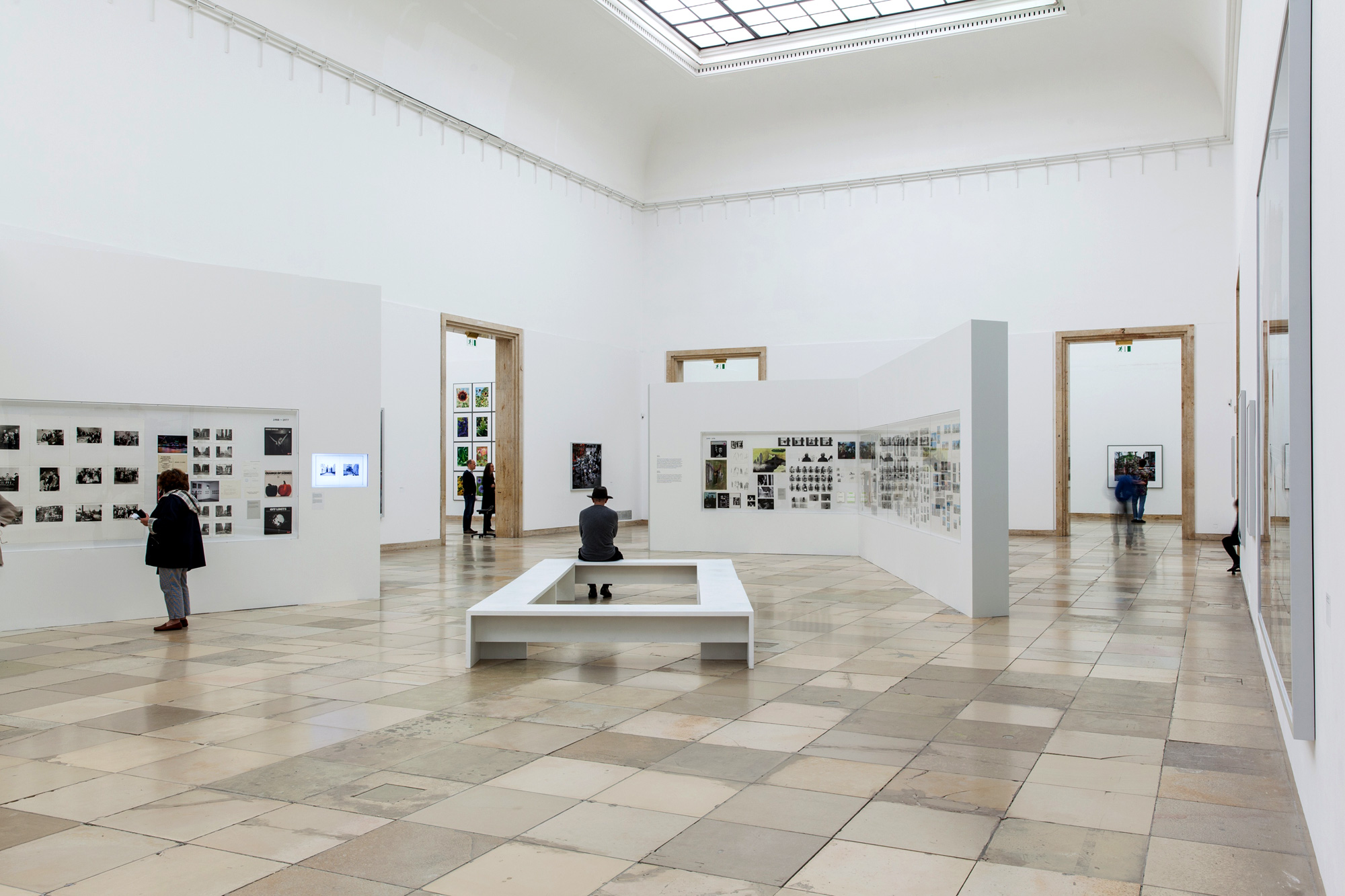
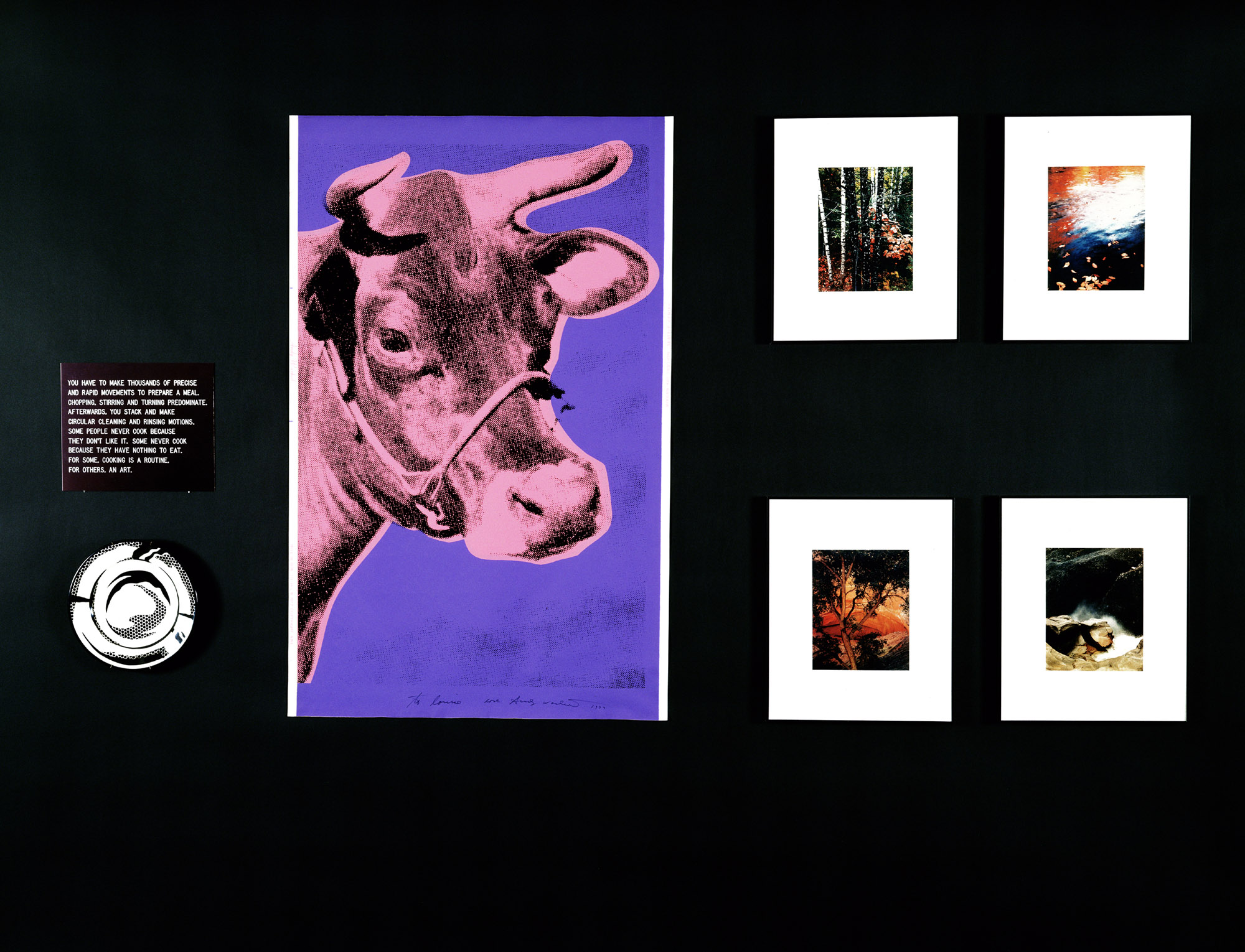
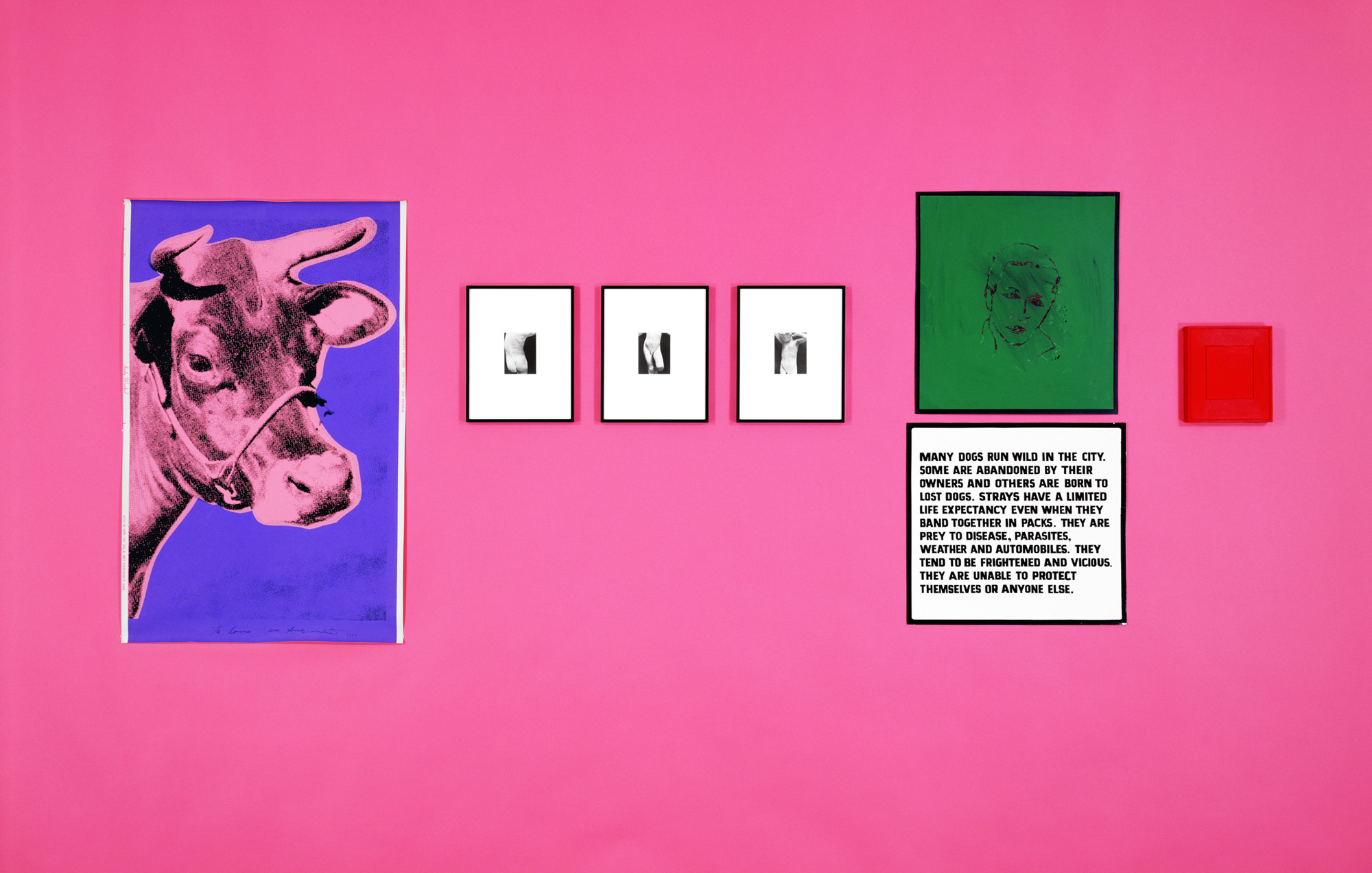
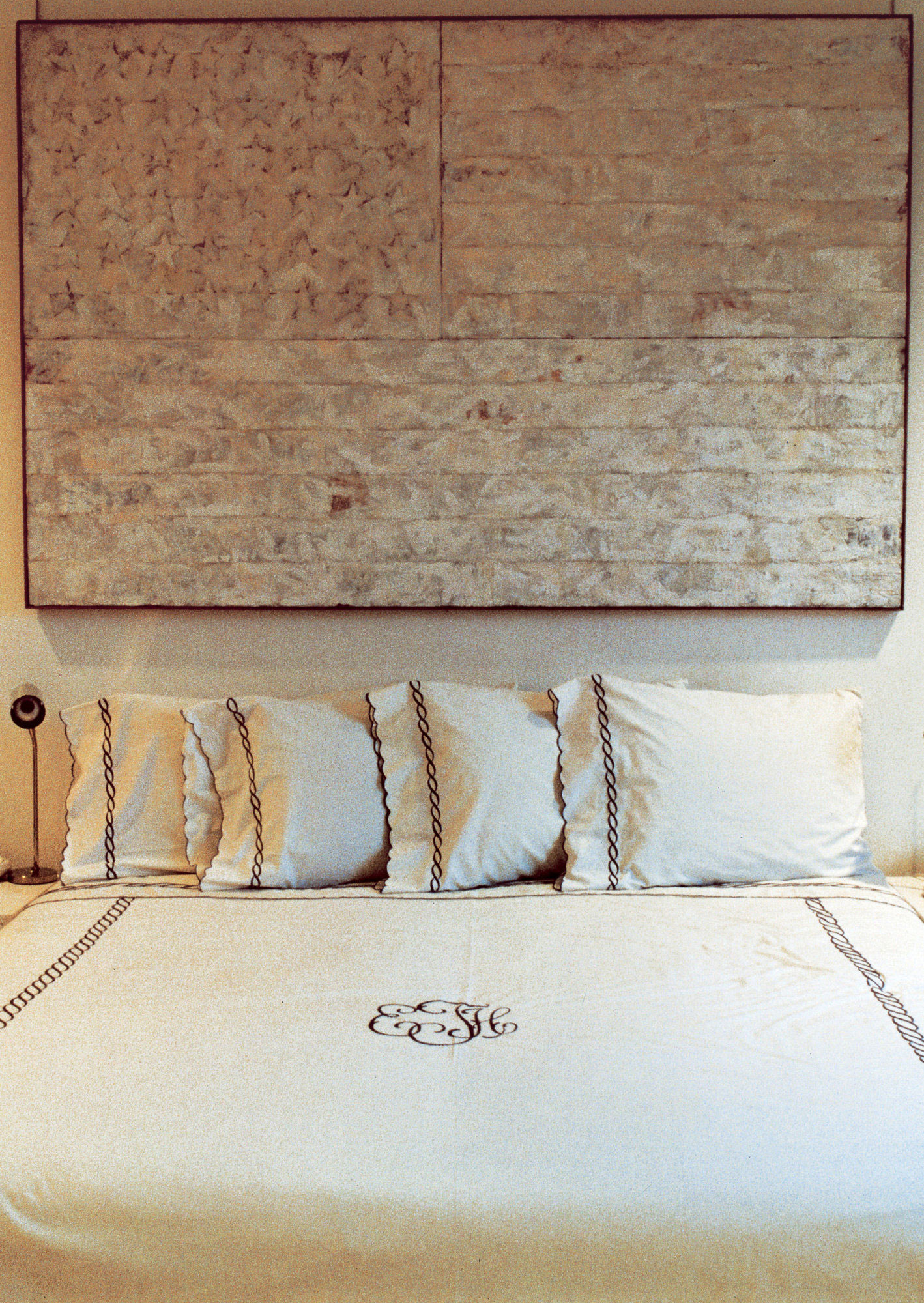
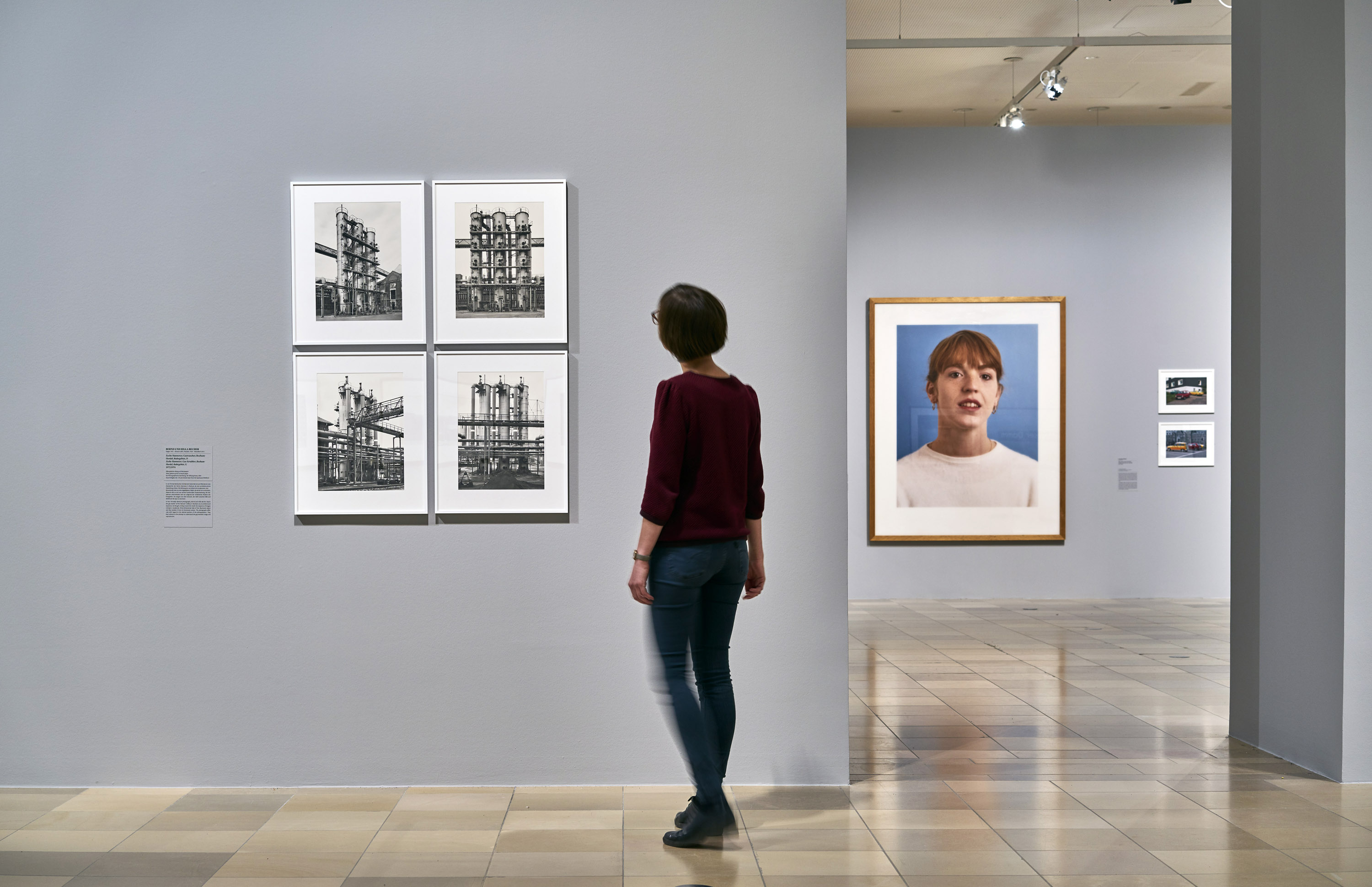
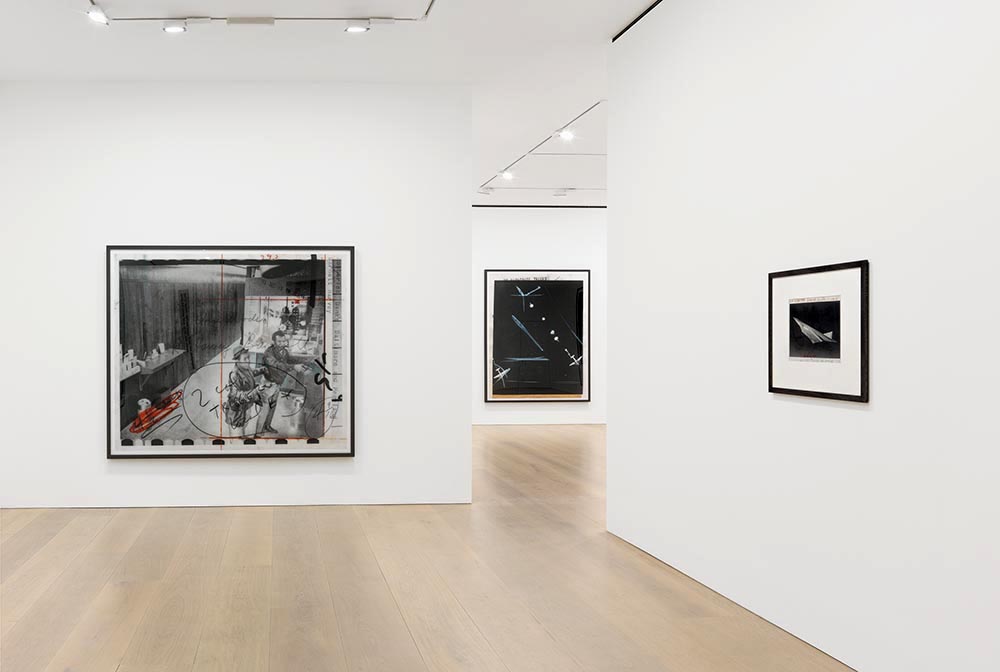
Installation view of the exhibition 'Jimmy DeSana: Submission' at the Brooklyn Museum, New York

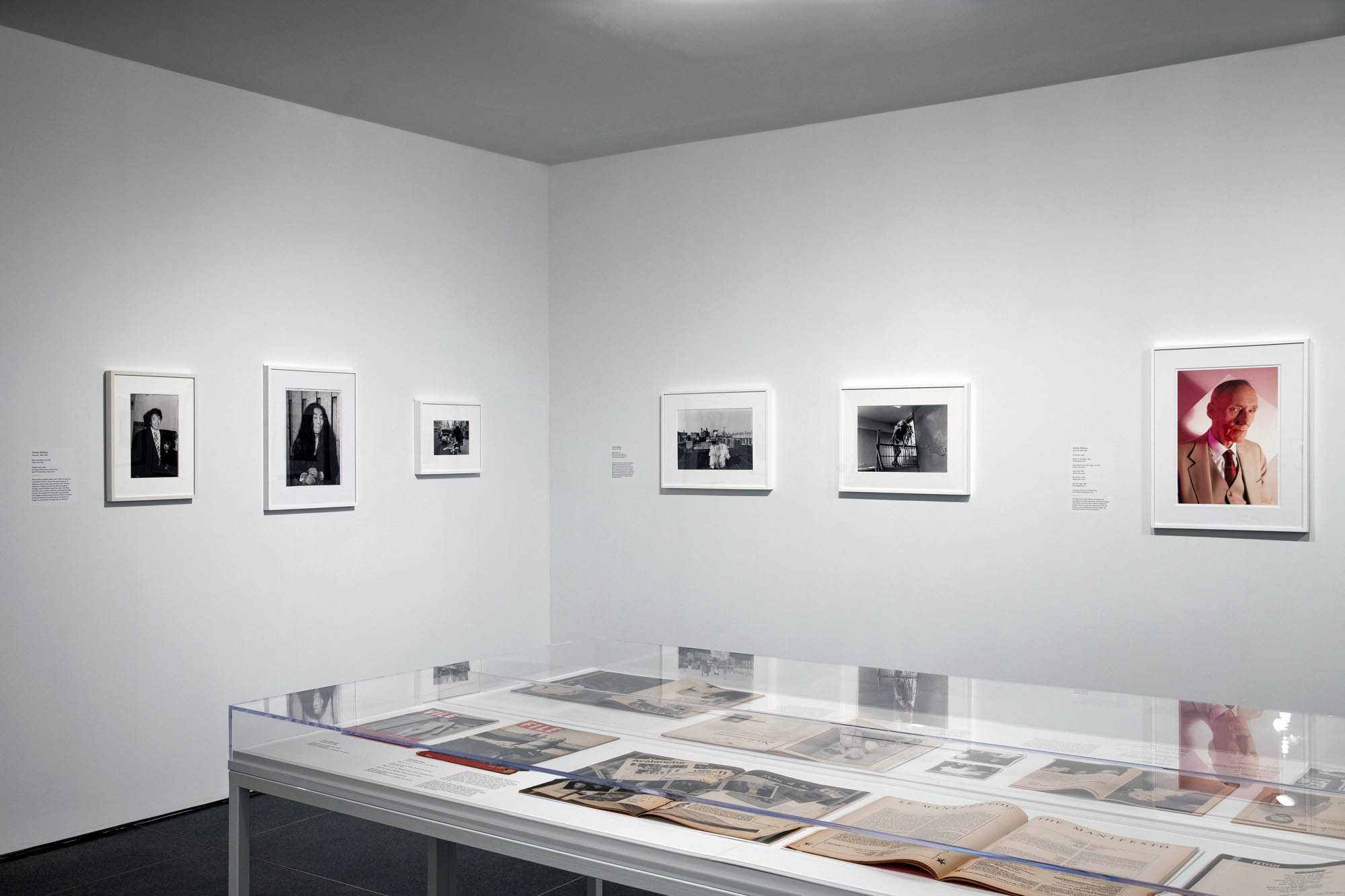
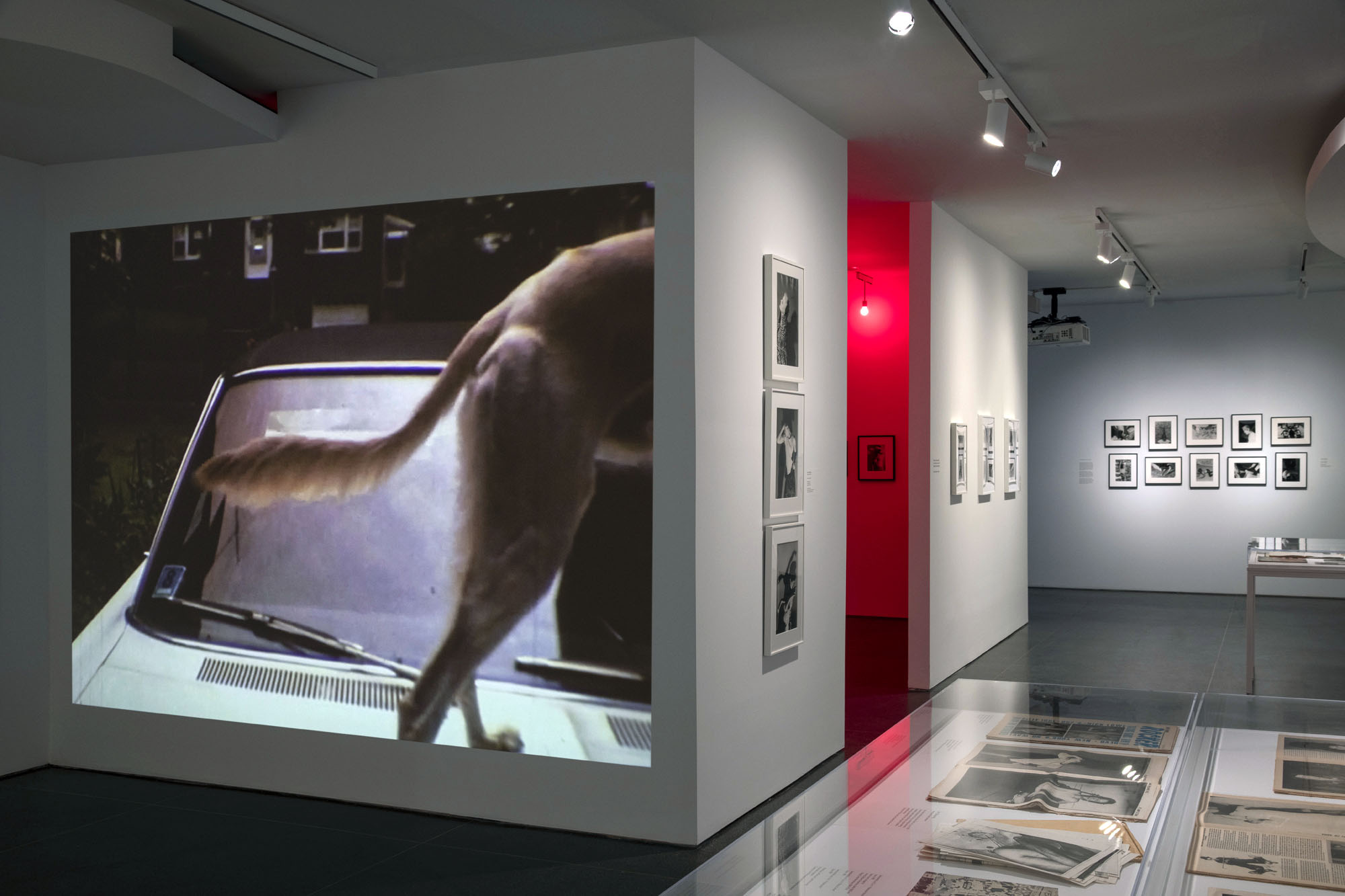
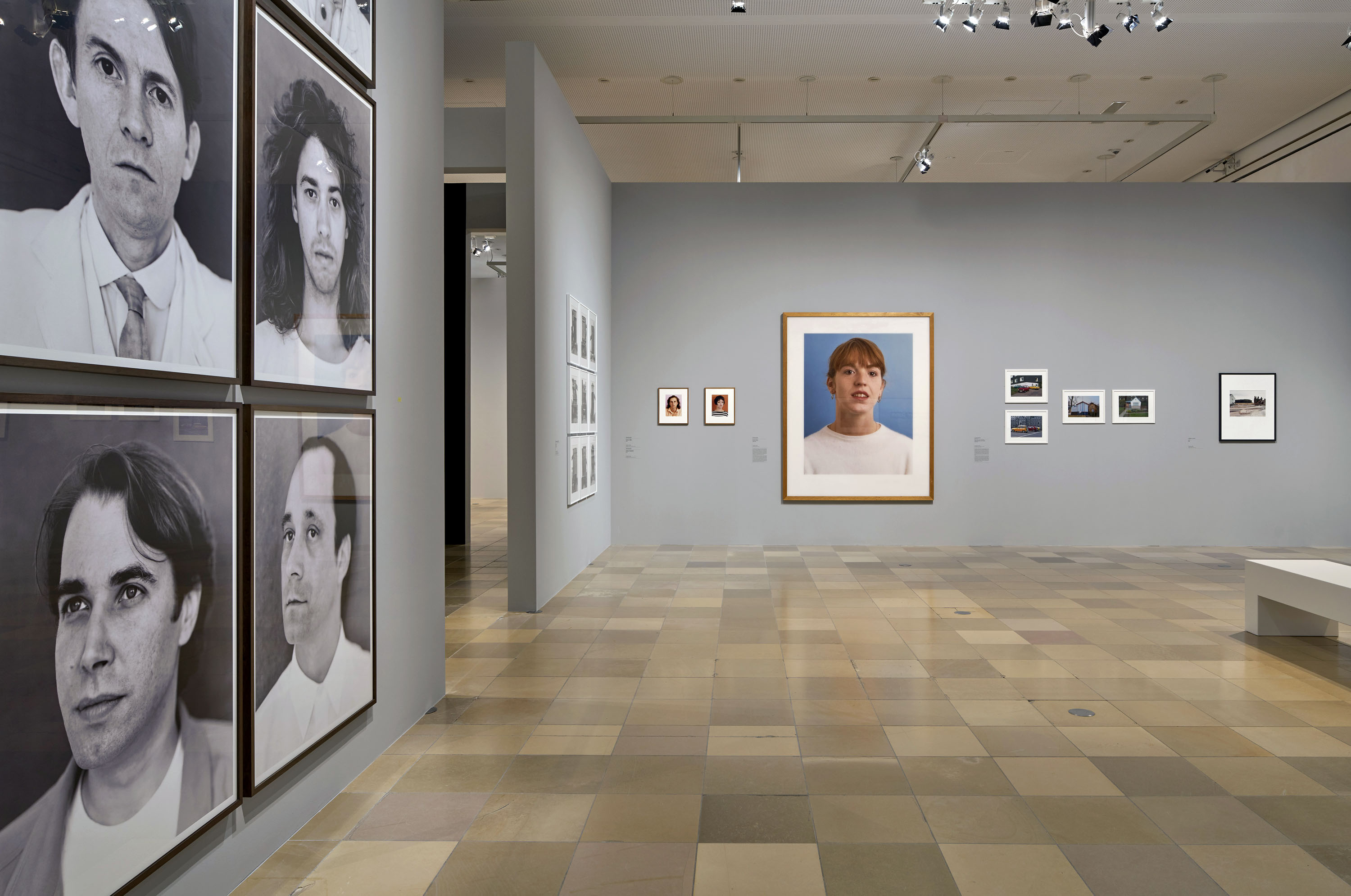
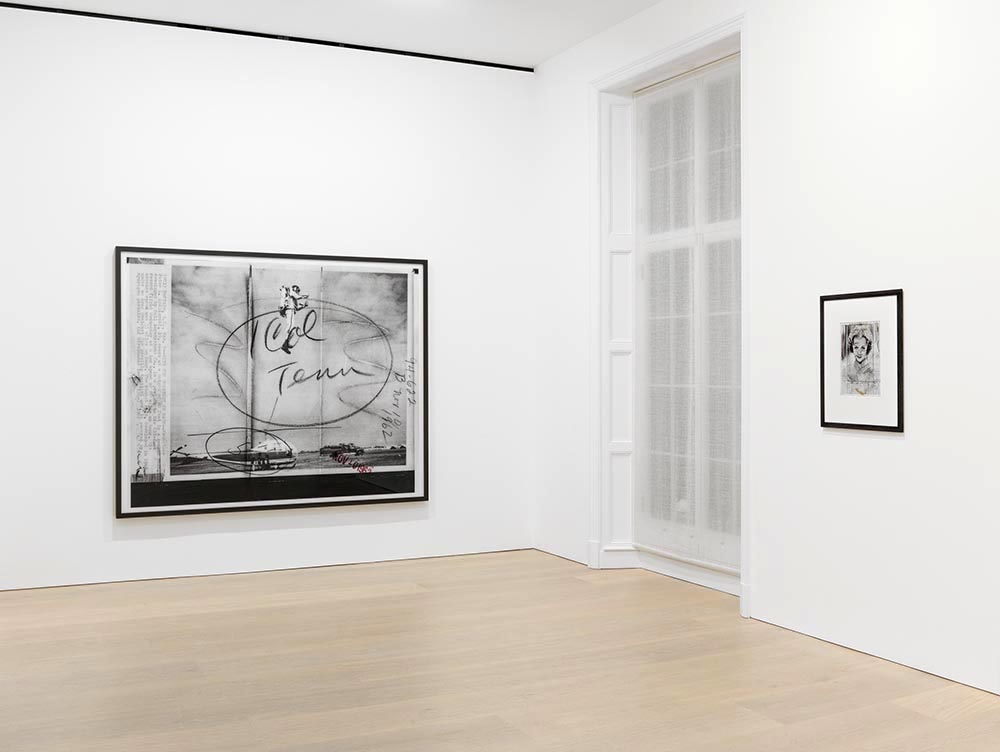
Installation view of the exhibition 'Jimmy DeSana: Submission' at the Brooklyn Museum, New York

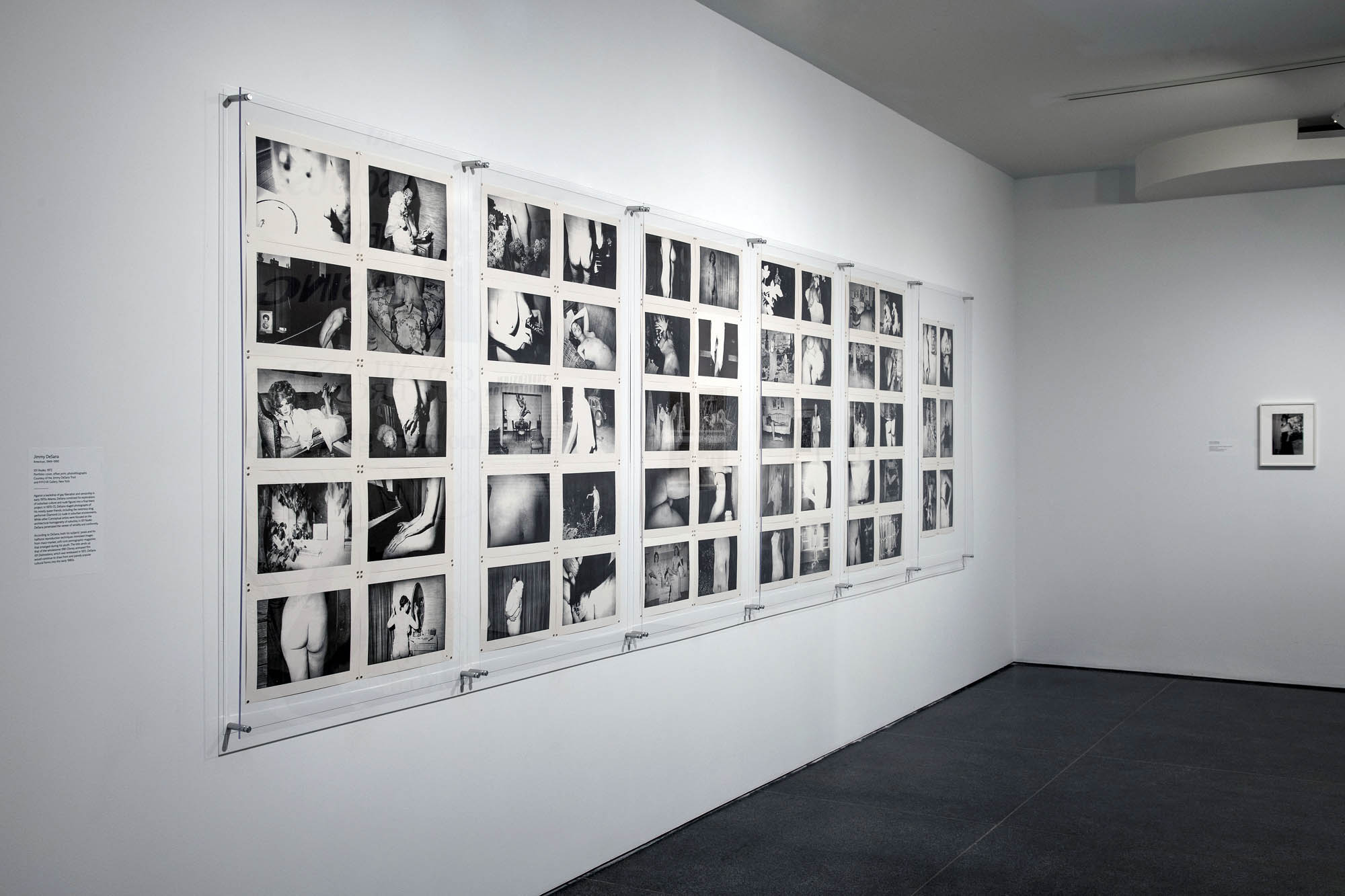
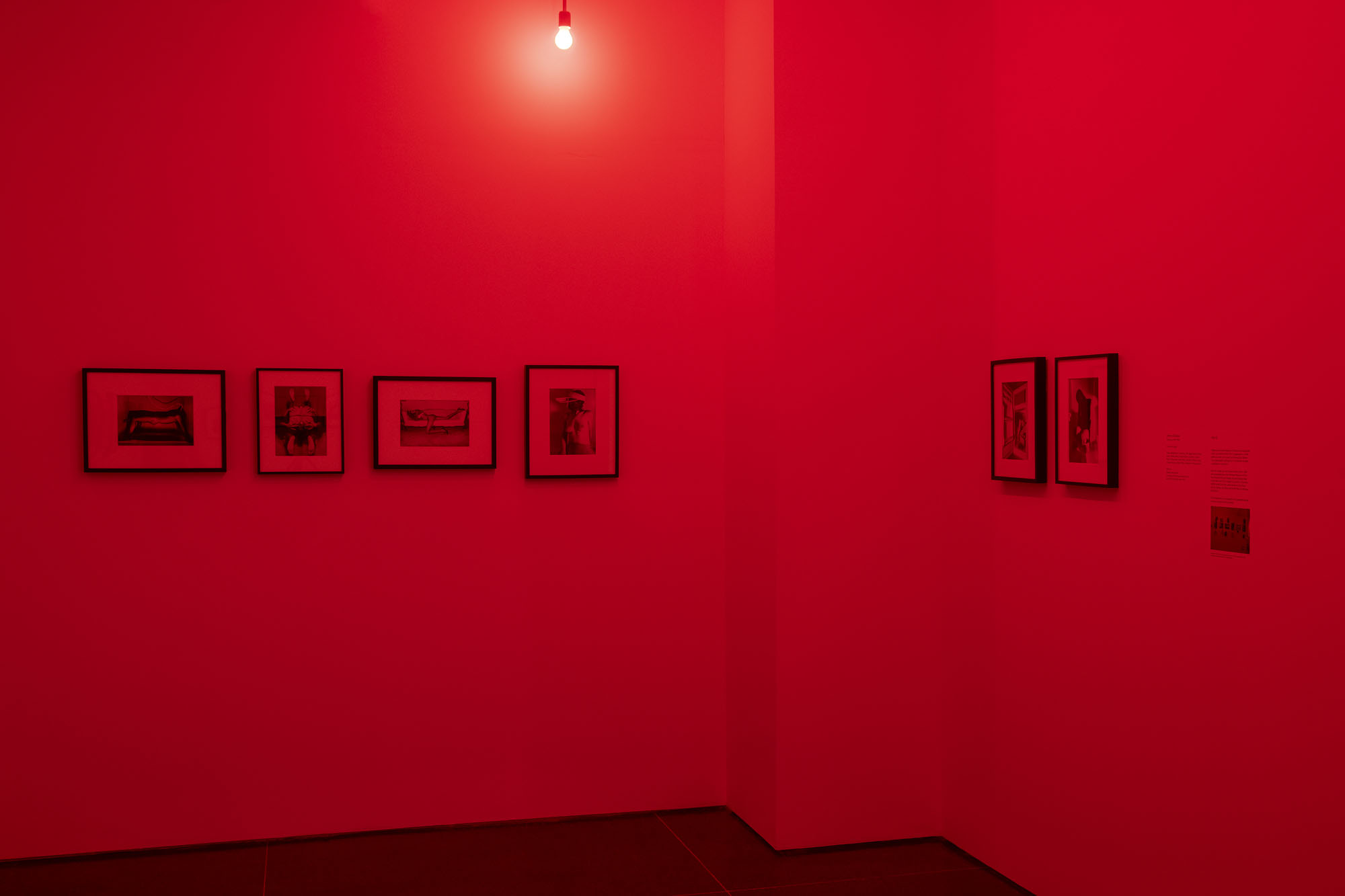
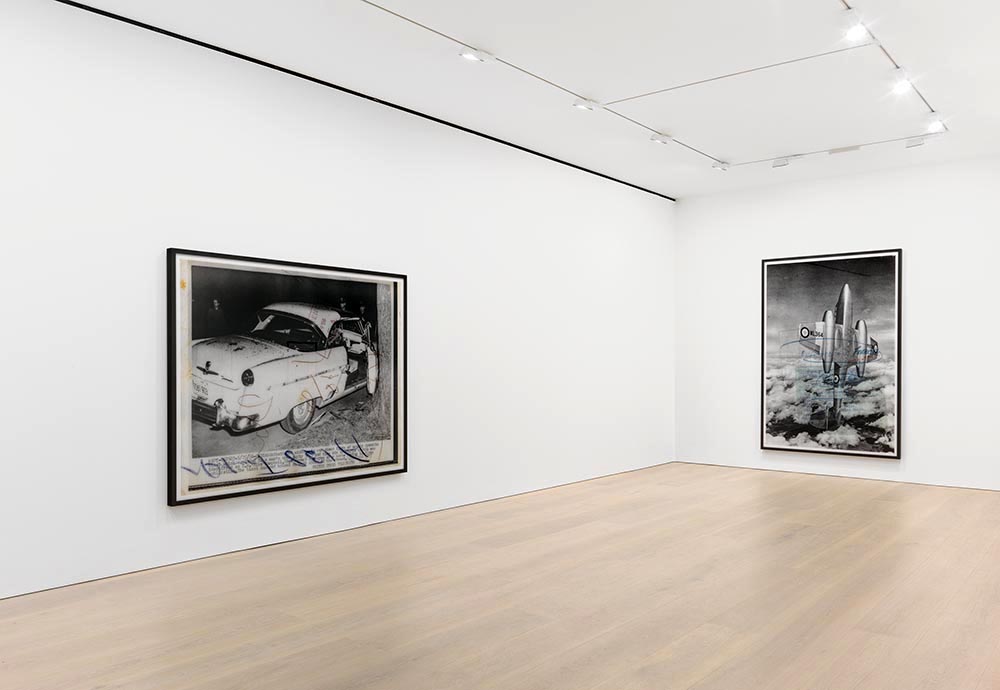
Installation view of the exhibition 'Jimmy DeSana: Submission' at the Brooklyn Museum, New York

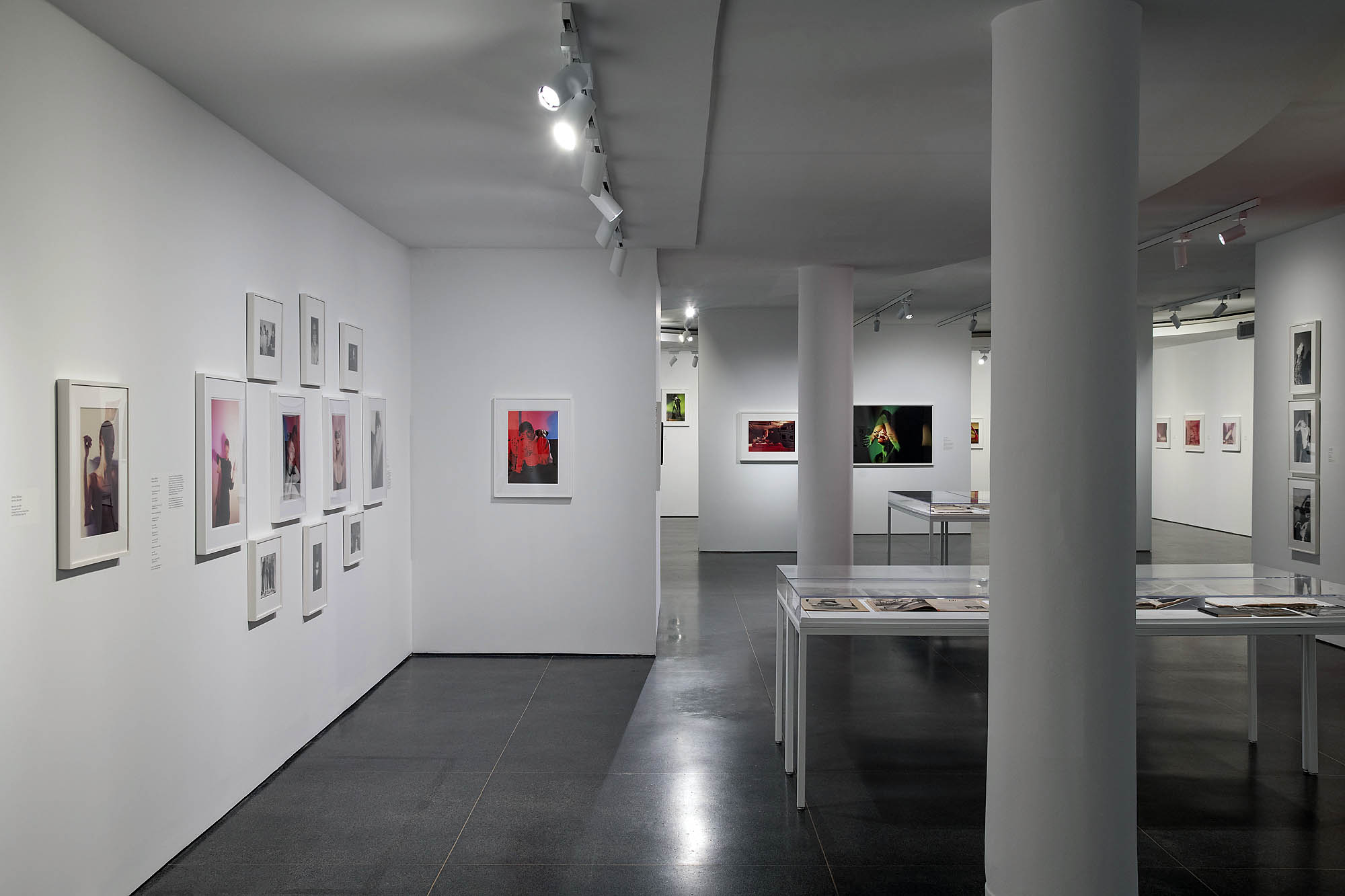
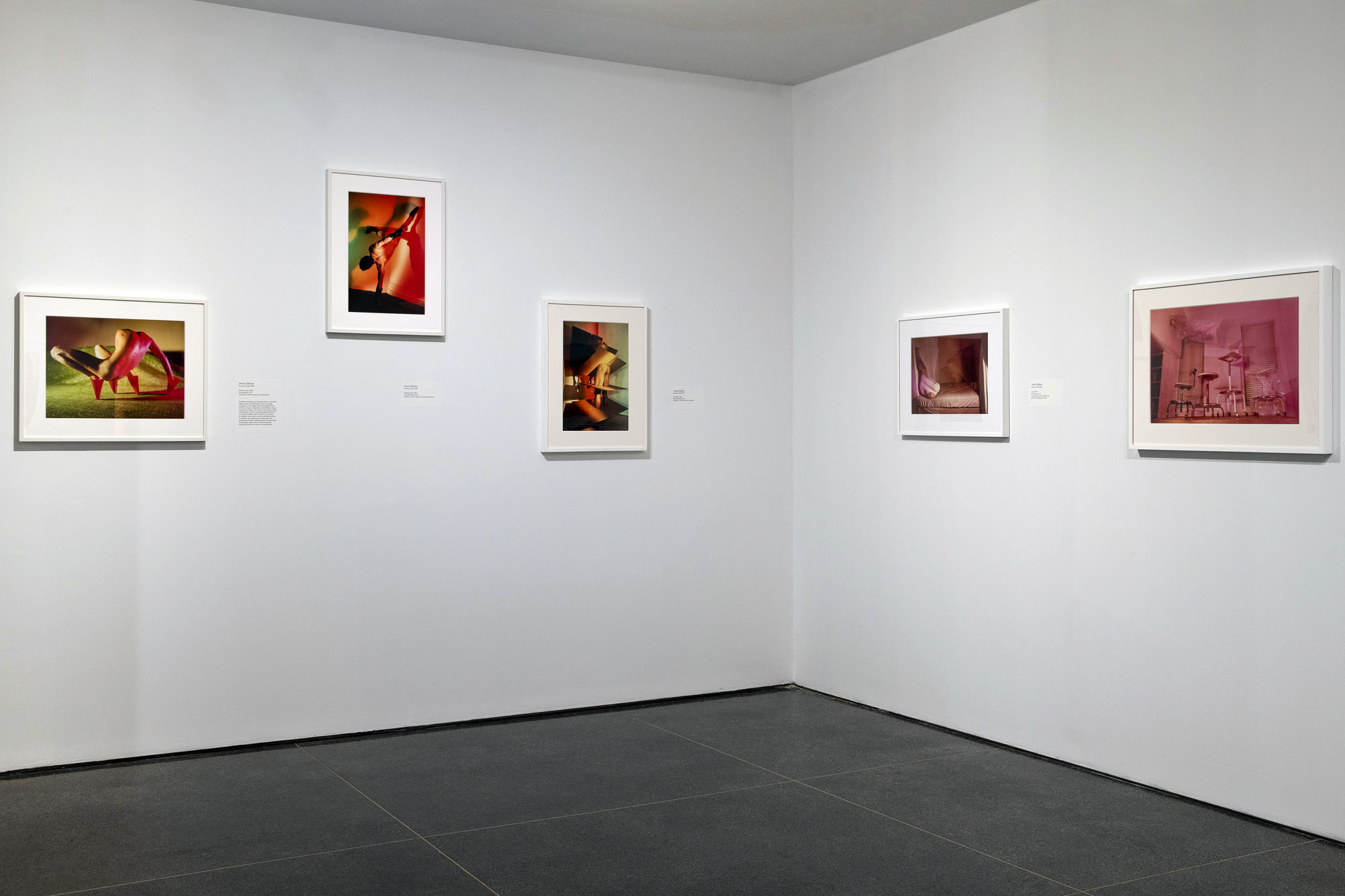
Installation view of the exhibition 'Jimmy DeSana: Submission' at the Brooklyn Museum, New York

Installation view of the exhibition 'Jimmy DeSana: Submission' at the Brooklyn Museum, New York

Installation view of the exhibition 'Jimmy DeSana: Submission' at the Brooklyn Museum, New York

Installation view of the exhibition 'Jimmy DeSana: Submission' at the Brooklyn Museum, New York

Installation view of the exhibition 'Jimmy DeSana: Submission' at the Brooklyn Museum, New York

Installation view of the exhibition 'Jimmy DeSana: Submission' at the Brooklyn Museum, New York

Installation view of the exhibition 'Jimmy DeSana: Submission' at the Brooklyn Museum, New York

Installation view of the exhibition 'Jimmy DeSana: Submission' at the Brooklyn Museum, New York

Installation view of the exhibition 'Jimmy DeSana: Submission' at the Brooklyn Museum, New York

Installation view of the exhibition 'Jimmy DeSana: Submission' at the Brooklyn Museum, New York


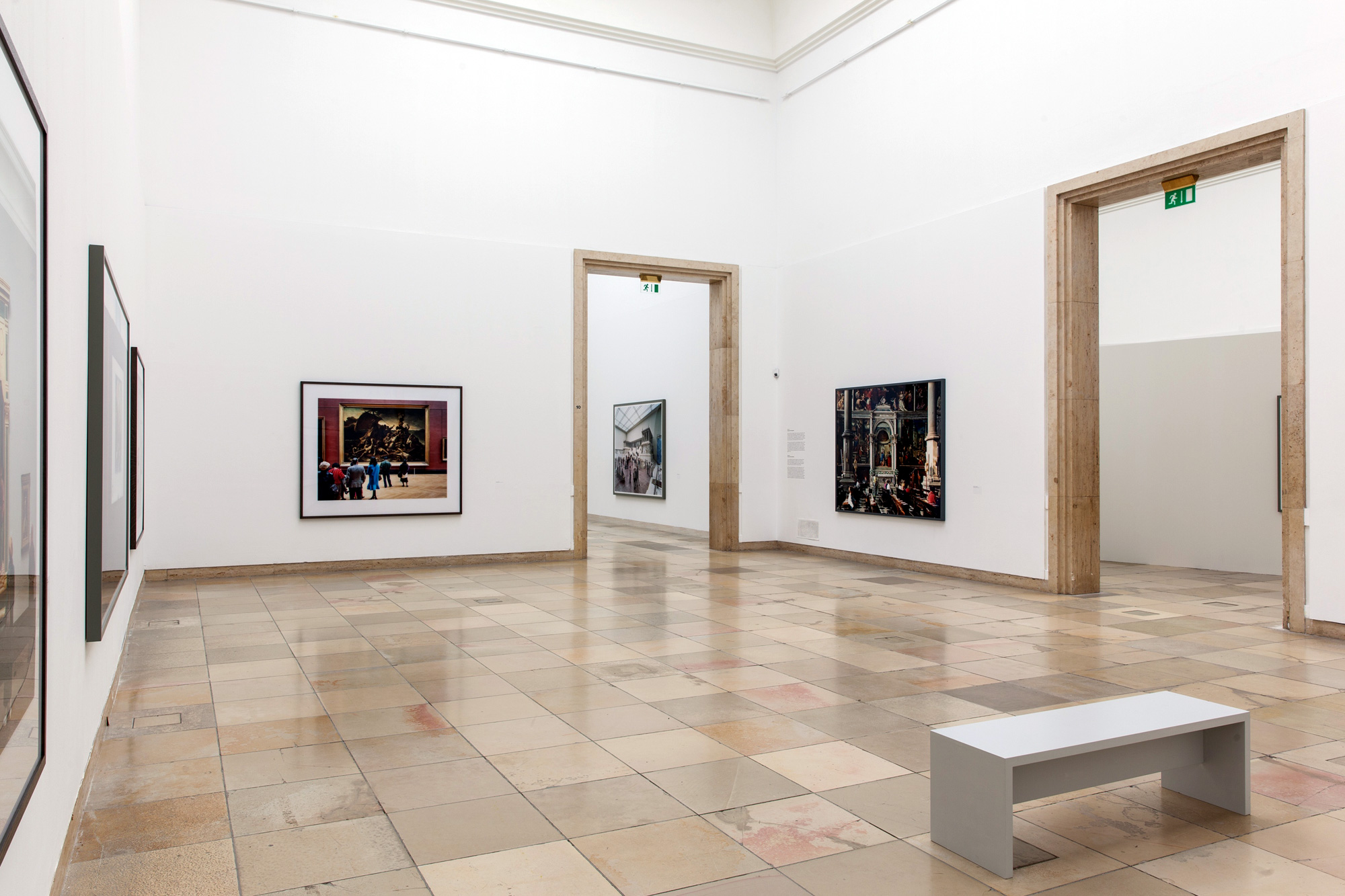
Installation views of the exhibition Jimmy DeSana: Submission at the Brooklyn Museum, New York


The first comprehensive exhibition and book on the surreal, queer and humorous photographic art of Jimmy DeSana, a central figure in New York’s art and music scenes of the 1970s and ’80s

This is the first overview of the work of Jimmy DeSana, a pioneering yet under recognised figure in New York’s downtown art, music and film scenes during the 1970s and 1980s. The book situates DeSana’s work and life within the countercultural and queer contexts in the American South as well as New York, through his involvement in mail art, punk and No Wave music and film, and artist collectives and publications.

DeSana’s first major project was 101 Nudes, made in Atlanta during the city’s gay liberation movement. After moving to New York in 1973, DeSana became immersed in queer networks, collaborating with General Idea and Ray Johnson on zines and mail art, and documenting the genderqueer street performances of Stephen Varble.

By the mid-1970s, DeSana was a fixture in New York’s No Wave music and film scenes, serving as portraitist for much of the period’s central figures and producing album covers for Talking Heads, James Chance and others. His book Submission, made with William S. Burroughs, humorously staged scenes out of a S&M manual that explored the body as object and the performance of desire. DeSana was also an early adopter of colour photography, creating his best-known series, Suburban, in the late 1970s and early 1980s. This body of work explores relationships between gender, sexuality and consumer capitalism in often humorous, surreal ways. After DeSana became sick as a result of contracting HIV, he turned to abstraction, using experimental photographic techniques to continue to push against photographic norms.

Text from the Amazon website Nd [Online] Cited 15/03/2023


Introduction

James, Jim, Jimmy; de Sana, deSana, De Sana, DeSana. Just as Jimmy DeSana (American, 1949-1990) consistently altered his name, he refused to pin down his approach to two main artistic interests: photography and desire. From the 1960s until his death from AIDS-related illness, DeSana created experimental, subversive photographs that upended traditional approaches and viewpoints. He produced and shared these provocative works by participating in a range of avant-garde movements – from queer mail art networks to Fluxus [a loose international group of rebellious artists, poets, and musicians with a shared impulse to integrate art and life] to punk music and cinema, to the “Pictures Generation” and its image-based play with mass culture.

Jimmy DeSana: Submission, the first retrospective on this pioneering yet under recognised figure, unites these bodies of work to demonstrate how DeSana emphasised and expanded photography as a contemporary form. The first section considers his early years in Atlanta and New York (1968-1976), where he began exchanging artworks through the mail and playing with sexuality and identity. The next section follows DeSana’s entree into New York’s dynamic countercultural art, music, film, and club scenes (1976-1984). The final section delves into the artist’s darkroom experiments during his last years (1984-1990), after he was diagnosed with HIV. At a time when his own desires were considered deviant and even criminal, DeSana continually embraced transgression as a path toward both artistic and personal freedom.
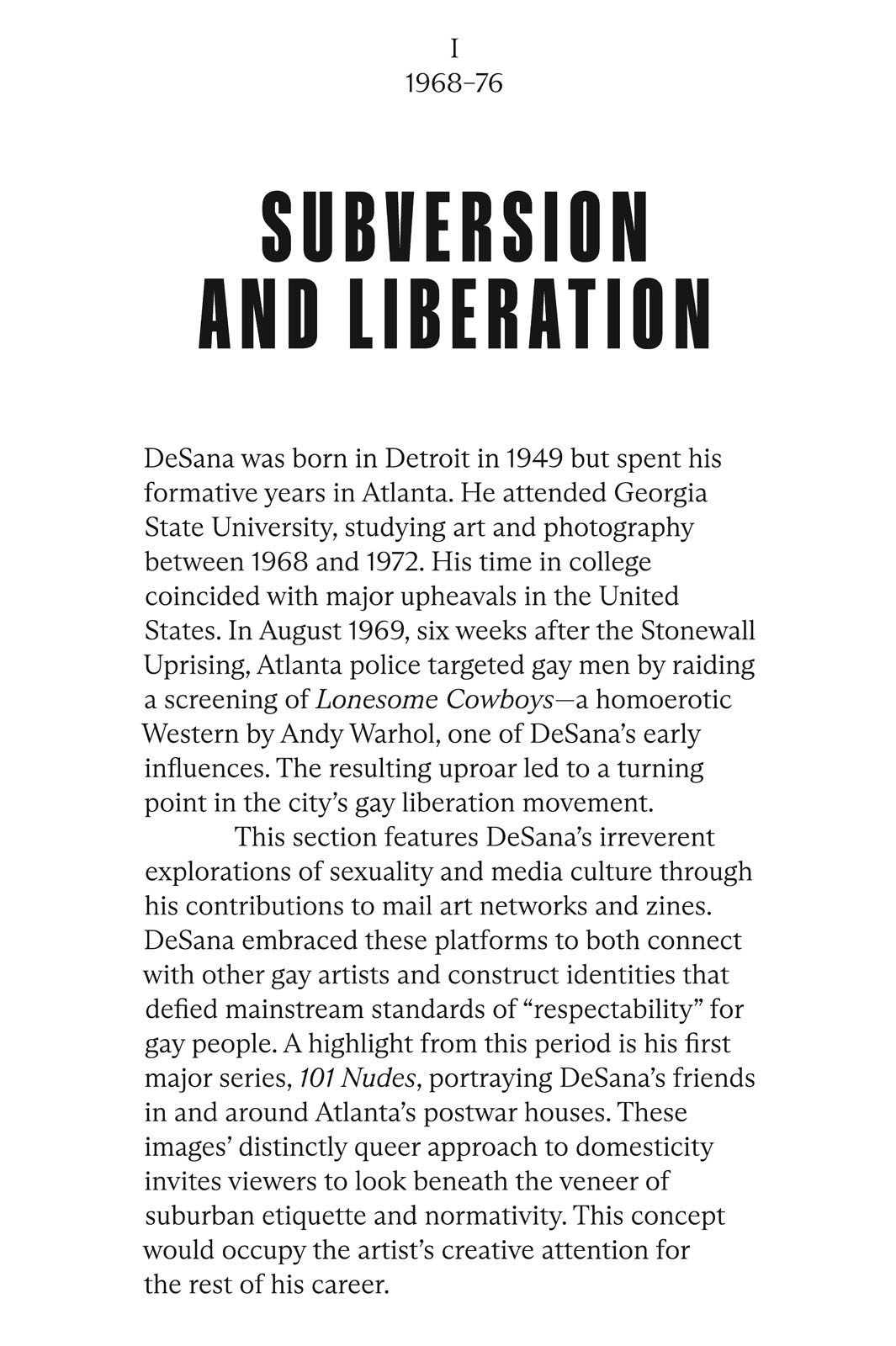
 

Jimmy DeSana Subversion and Liberation wall text


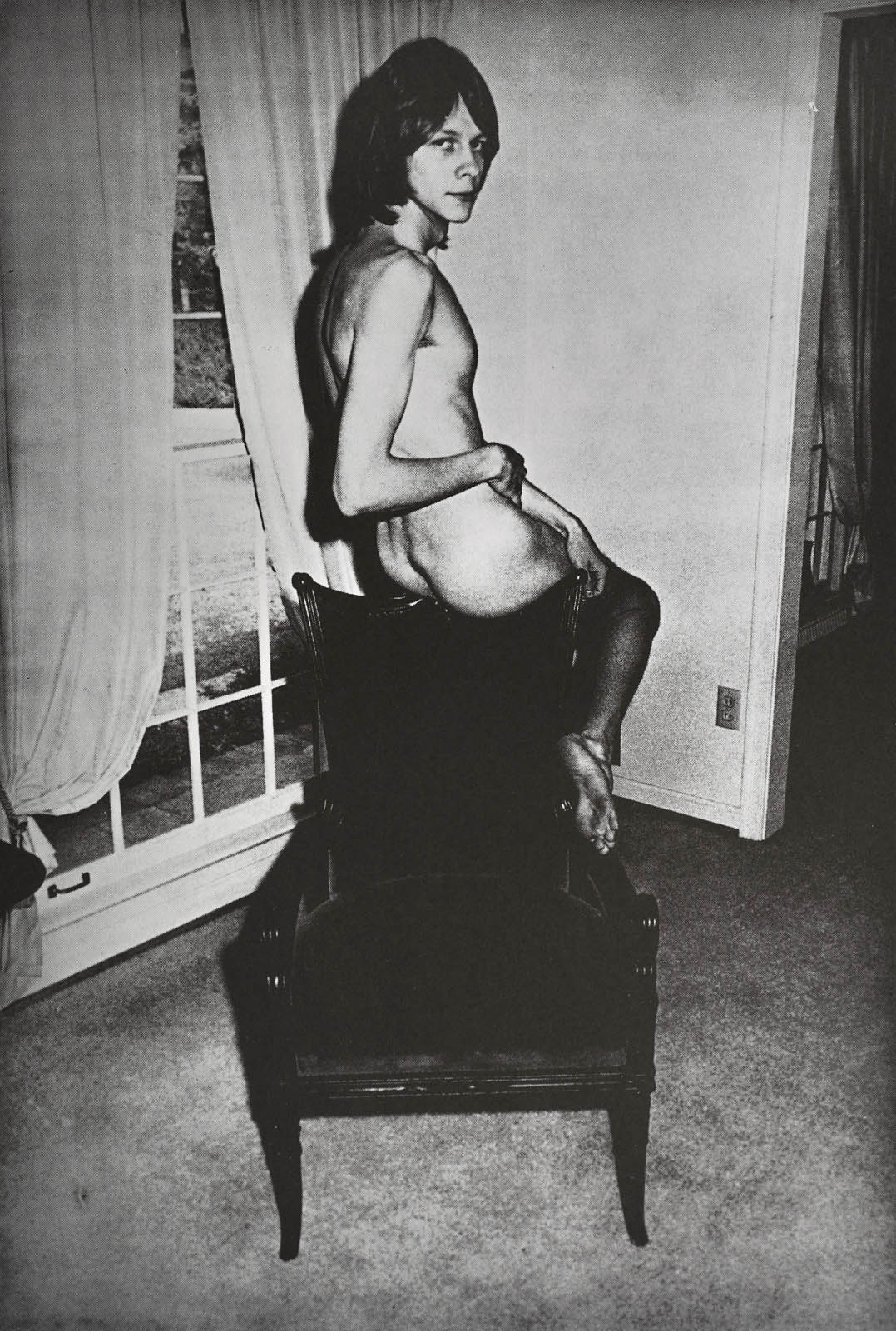
Jimmy DeSana (American, 1949-1990) 'Untitled' 1972


Jimmy DeSana (American, 1949-1990)
Untitled
1972
From the series 101 Nudes
Offset print
12 3/4 × 8 1/2 in. (32.4 × 21.6cm)
Courtesy of the Jimmy DeSana Trust and P·P·O·W Gallery, New York
© Estate of Jimmy DeSana
Photo: Allen Phillips


DeSana was born in Detroit in 1949 to middle-class suburbanites, who raised him and his brother in Atlanta. His mother was a strict Methodist; his father abandoned the family as DeSana entered adulthood. While studying art at Georgia State University, DeSana began making precocious, conceptual photography of suburban houses, generally banal, and of his friends, often naked. But his final thesis, 101 Nudes (1972), is a landmark. Likely taken with a Leica IIIf and lit by a flash, as Sawyer notes in his catalog essay, the portraits form a kind of fanzine of queer friends. DeSana shows off their muscles like he’s making Physique Pictorial, or crouches and crops their bodies like a funnier Man Ray. A drag queen looks right into the camera, bold; a man shoves his face into a pillow, ass beckoning. Bodies are unstable, and DeSana captures how funny, and how frightening, that can be, and how those two emotions comprise desire. Sawyer hangs these prints on the wall like Teen Beat posters in a teenage bedroom. It’s hard not to be a fan. …

Jesse Dorris. “Jimmy DeSana’s Transgressive Vision of Life and Desire,” on the Aperture website December 14, 2022 [Online] Cited 02/04/2023
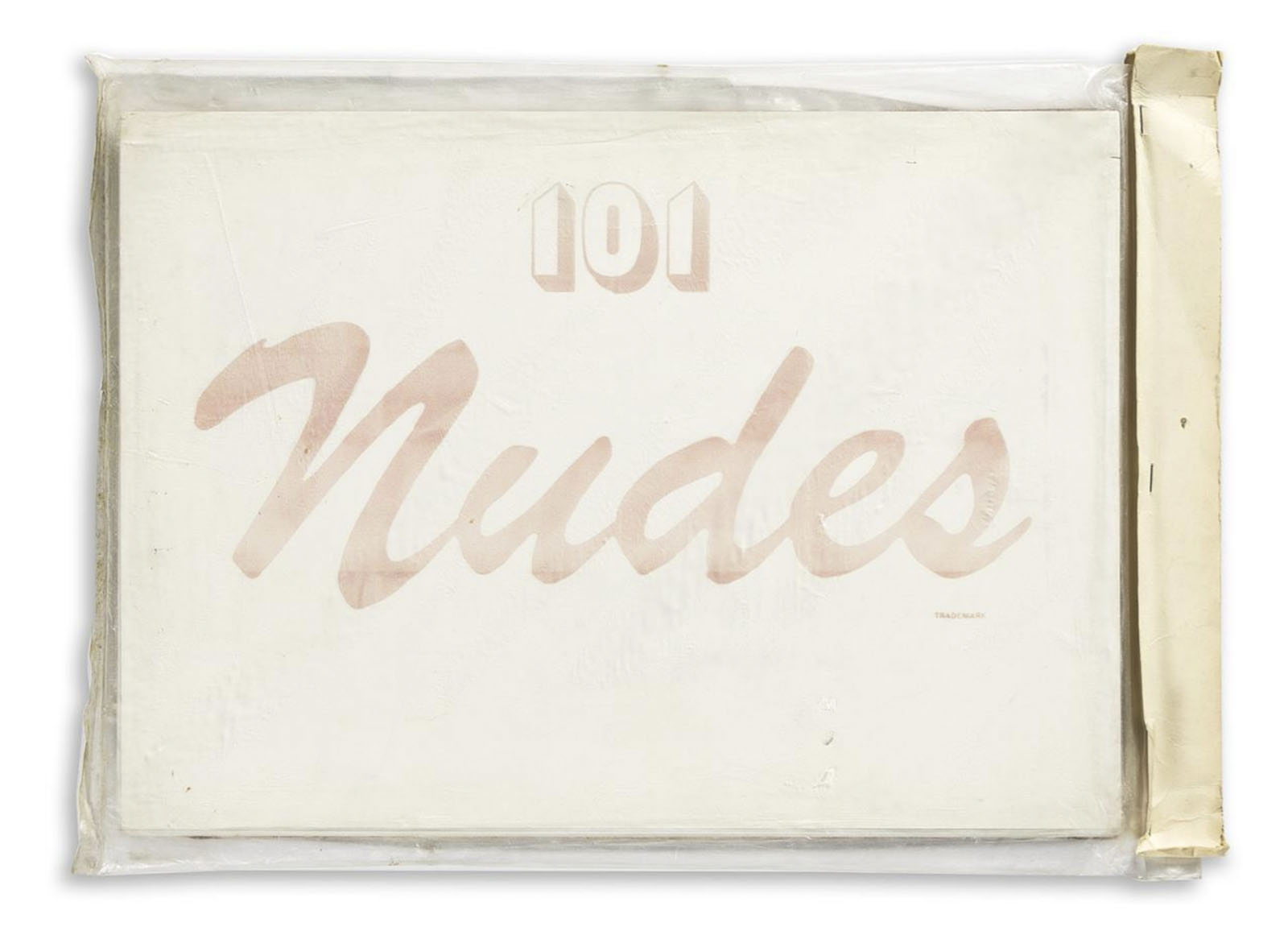
 

Jimmy DeSana (American, 1949-1990) Cover from the series '101 Nudes' 1972


Jimmy DeSana (American, 1949-1990)
Cover from the series 101 Nudes
1972
Offset prints in custom portfolio box, fifty-six parts
Each: 11 × 14 inches (27.9 × 35.6cm)
Courtesy of the Jimmy DeSana Trust and P·P·O·W Gallery, New York
© Estate of Jimmy DeSana


Photographer Jimmy De Sana was part of the countercultural “punk” community of artists and musicians living in New York’s East Village in the 1970s and ’80s. Among his best-known works are portraits of important figures from that scene, including Debbie Harry and Billy Idol, though these constitute only a small part of his practice. With work that is personal, surrealistic, and often shocking in its treatment of sexuality, De Sana helped raise the standing of photography in the art world and increased critical respect for the medium.

101 Nudes comprises 56 halftone black-and-white photographs of nude and partially nude figures posing inside or just outside homes. The artist was 20 years old and attending college in Atlanta when he first printed the series in 1972. The figures, which include De Sana’s friends as well as himself, are photographed from a variety of viewpoints. Although the series shows the influence of “grainy” pornography from the 1950s, the postures of the figures do not seem to suggest or invite sexual engagement; the artist noted that they are “without eroticism.” Sometimes the photographs feature only a fragment of the body, such as the pelvic area or buttocks. De Sana’s engagement with the history of surrealism has been noted, and these partial views in particular recall the surrealist photography of artists such as Man Ray, who in the 1920s photographed the body parts of friends and lovers in ways that removed them from their context and made them into almost abstract images.

Anonymous. “101 Nudes,” on the ICA website Nd [Online] Cited 20/03/2023


When De Sana (1950-1990) shot and self-published the 56 halftone images that would make up the “101 Nudes” series, he was just 20 years old and still a college student in Atlanta. Using his friends as models, he constructed each photograph as an insight into the possibilities of form, capturing with his flash-camera something both artful and sincere. His subjects (nearly all of them naked) were “without eroticism” as De Sana has said, the series as much about isolation as it is sexuality. The careful, strange postures of his figures, collapsed across a couch or balanced on a dining-room table, often had a touch of the surreal. His later work, in particular the S&M series that came to comprise his 1980 book “Submission” (also on display), explored sexuality and digression front-on in the spirit of William Burroughs, whose writing was a significant influence on the artist from a young age. De Sana created these images – which pre-dated Mapplethorpe’s fetish work – with an even stronger sense for composition, all the while seeking the boundaries of comfort through the bizarrely positioned, leather-bound figures.

Anonymous. “Jimmy De Sana, “101 Nudes and Other Works”,” on the NY Art Beat website 2011 [Online] Cited 20/03/2023. No longer available online


One year later, on June 28, 1969, police raided the Stonewall Inn, the gay bar in New York’s Greenwich Village, sparking an uprising that would launch the modern gay liberation movement. This spark of rebellion and hope made its way to Atlanta’s Ansley Mall Mini Cinema, where Andy Warhol’s homoerotic underground film, “Lonesome Cowboys,” was showing. Fifteen minutes into the film’s only screening, police officers raided the cinema and confiscated the reels. Many of the audience members were harassed, photographed and arrested.

DeSana may or may not have been in the audience that night, but he was certainly aware that his classmates and professors experienced censorship from school officials and the city. In the catalog accompanying the Brooklyn exhibition, curator Sawyer writes that in 1972, DeSana’s teacher, photographer John McWilliams, organized Atlanta’s annual arts festival where he displayed nudes made by his students and invited the highly regarded photographer Frederick Sommer to judge the exhibition.

“Sommer awarded prizes to several of the students, but within days there were letters and reviews in Atlanta’s daily papers complaining of the exhibition’s pornography,” writes Sawyer.

Against this backdrop of censorship and taboos, DeSana turned his perceptions of suburbia into his final thesis project, “101 Nudes,” spoofing the title of Walt Disney’s “101 Dalmations.”

The 56 humorous black-and-white images in “101 Nudes” are all fairly innocent scenes carefully posed in middle-class American homes. It’s kink for beginners: a nude perches on the edge of an overstuffed sofa; another plunges face-first into cushions; a goofy-looking naked boy stands on one leg on a dining room table. There are even close-up shots of buttocks, breasts and genitals, yet, as DeSana himself noted, they are “without eroticism,” adding, “that is the way the suburbs are, in a sense.”

As Jean Cocteau said of a Jean Genet poem, “His obscenity is never obscene.”

Jessica Robinson. “The Prurient Punk Surrealism of Photographer Jimmy DeSana,” on the Brooklyn website December 12, 2022 [Online] Cited 15/03/2023
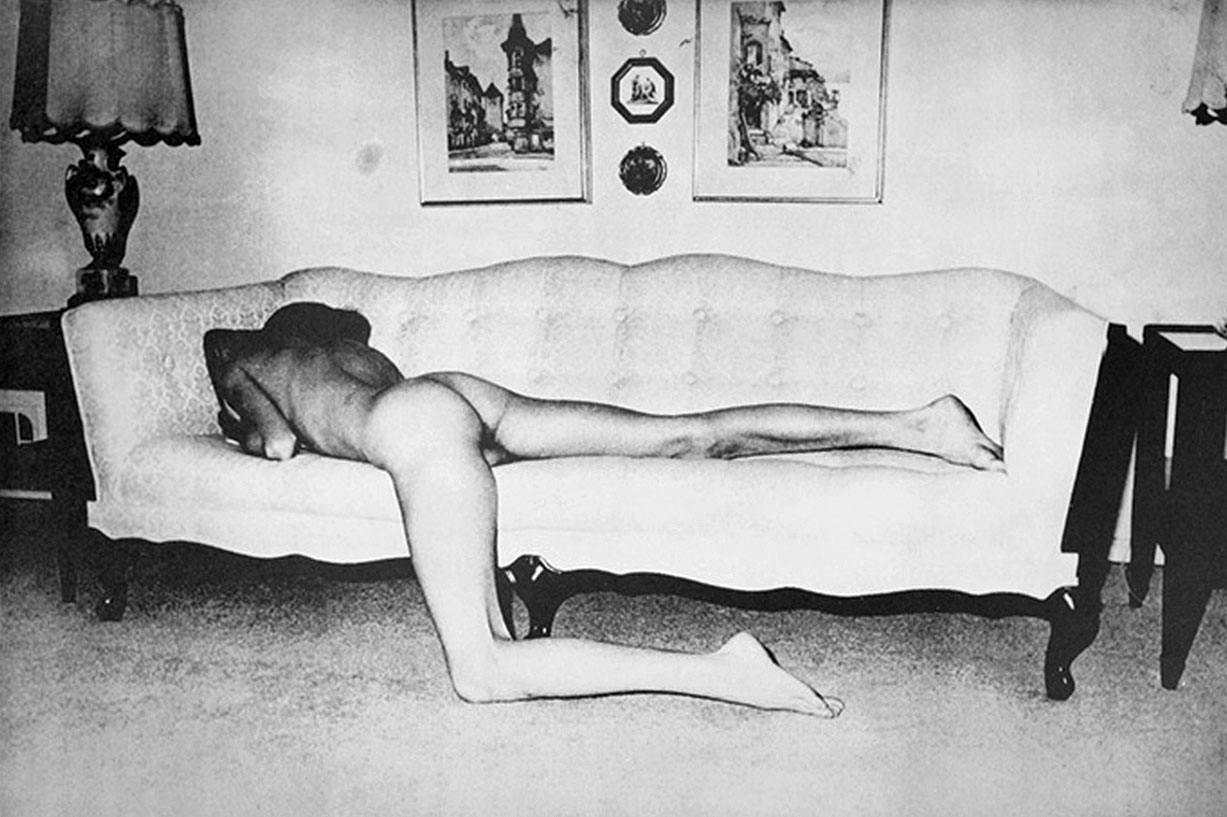
 

Jimmy DeSana (American, 1949-1990) 'Untitled' 1972 From the series '101 Nudes'


Jimmy DeSana (American, 1949-1990)
Untitled
1972
From the series 101 Nudes
Offset prints in custom portfolio box, fifty-six parts
Each: 11 × 14 inches (27.9 × 35.6cm)
Courtesy of the Jimmy DeSana Trust and P·P·O·W Gallery, New York
© Estate of Jimmy DeSana
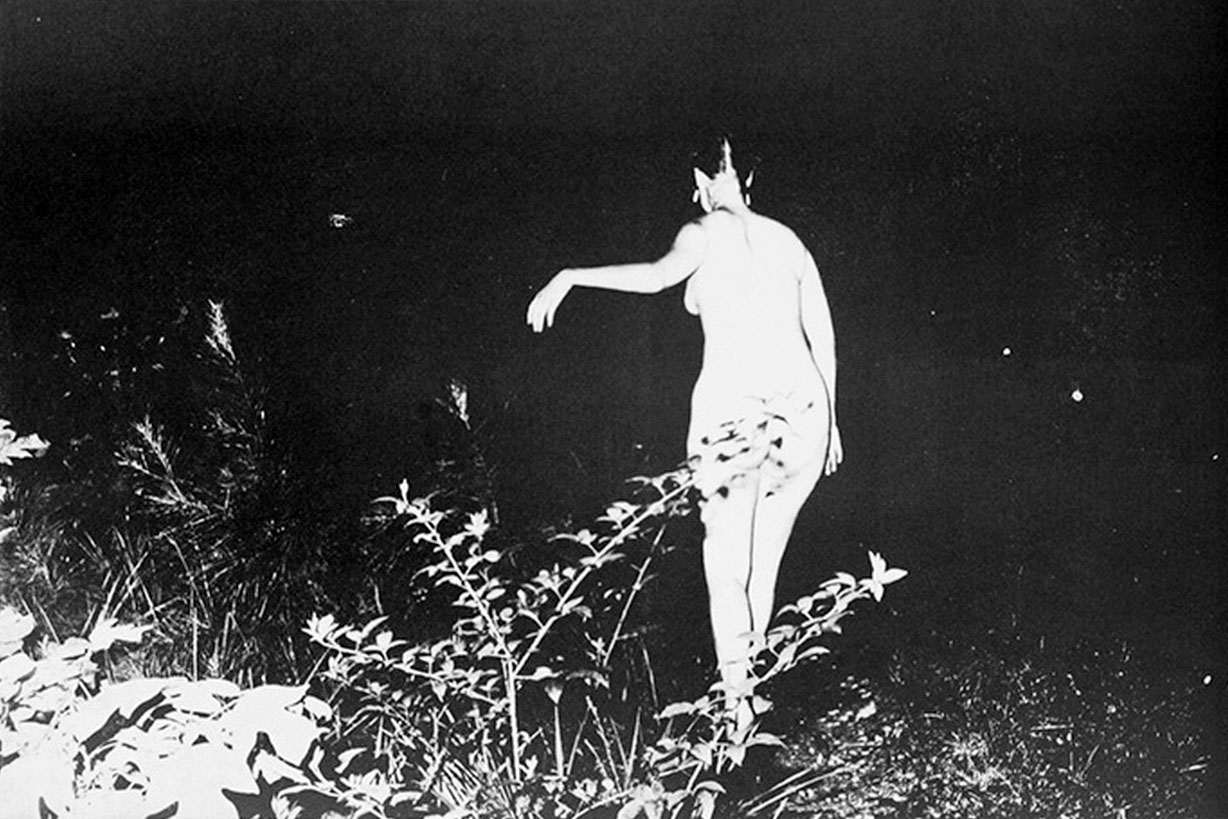
 

Jimmy DeSana (American, 1949-1990) 'Untitled' 1972 From the series '101 Nudes'


Jimmy DeSana (American, 1949-1990)
Untitled
1972
From the series 101 Nudes
Offset prints in custom portfolio box, fifty-six parts
Each: 11 × 14 inches (27.9 × 35.6cm)
Courtesy of the Jimmy DeSana Trust and P·P·O·W Gallery, New York
© Estate of Jimmy DeSana


Against a backdrop of gay liberation and censorship in early 1970s Atlanta, DeSana combined his explorations of suburban culture and nude figures into a final thesis project. In 1970-1972, DeSana staged photographs of his mostly queer friends, including the notorious drag performer Diamond Lil, nude in suburban environments. While other Conceptual artists were focused on the architectural homogeneity of suburbia, in 101 Nudes DeSana penetrated the veneer of seriality and conformity.

According to DeSana, both his subjects’ poses and his halftone reproduction techniques mimicked images from mass-market, soft-core pornographic magazines that emerged during his youth. The title sends up that of the wholesome 1961 Disney animated film 101 Dalmatians, which was rereleased in 1972. DeSana would continue to draw from and parody popular cultural forms into the early 1980s.

Exhibition label
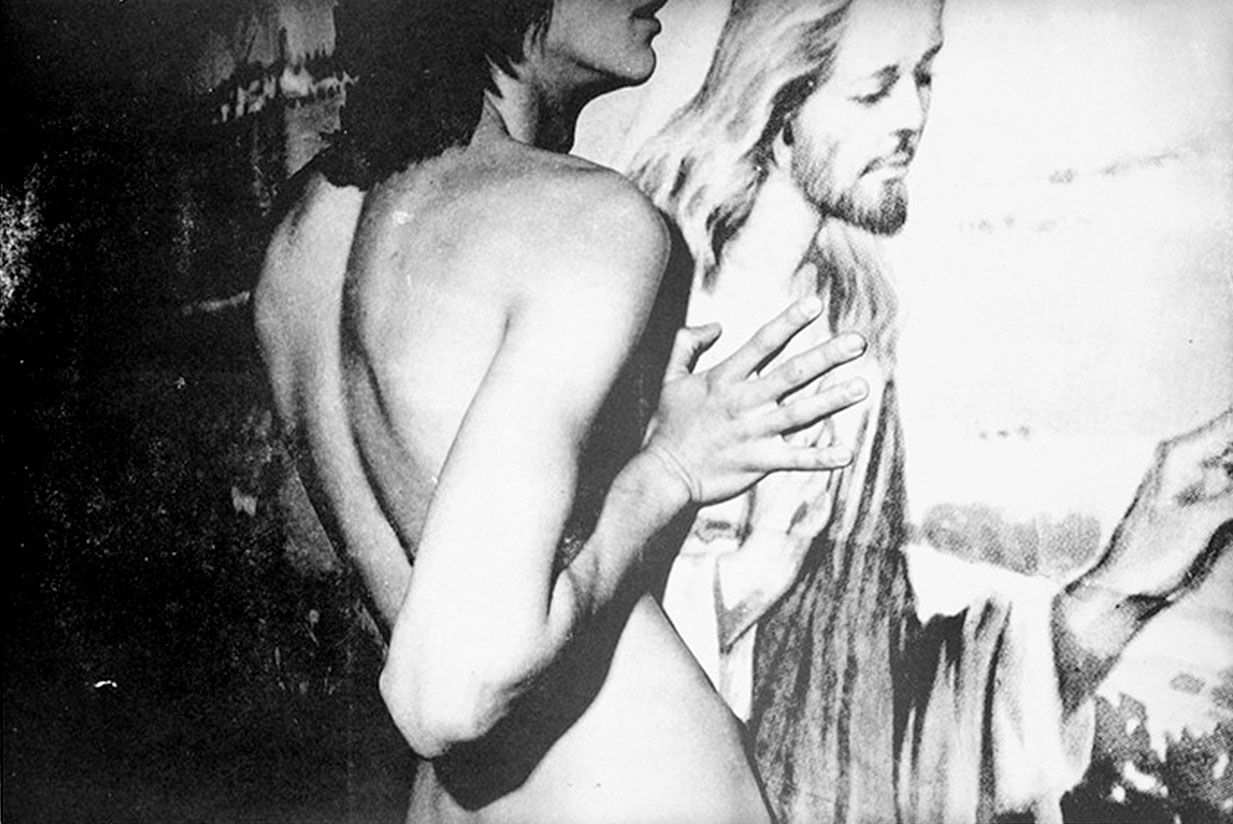
 

Jimmy DeSana (American, 1949-1990) 'Untitled' 1972 From the series '101 Nudes'


Jimmy DeSana (American, 1949-1990)
Untitled
1972
From the series 101 Nudes
Offset prints in custom portfolio box, fifty-six parts
Each: 11 × 14 inches (27.9 × 35.6cm)
Courtesy of the Jimmy DeSana Trust and P·P·O·W Gallery, New York
© Estate of Jimmy DeSana
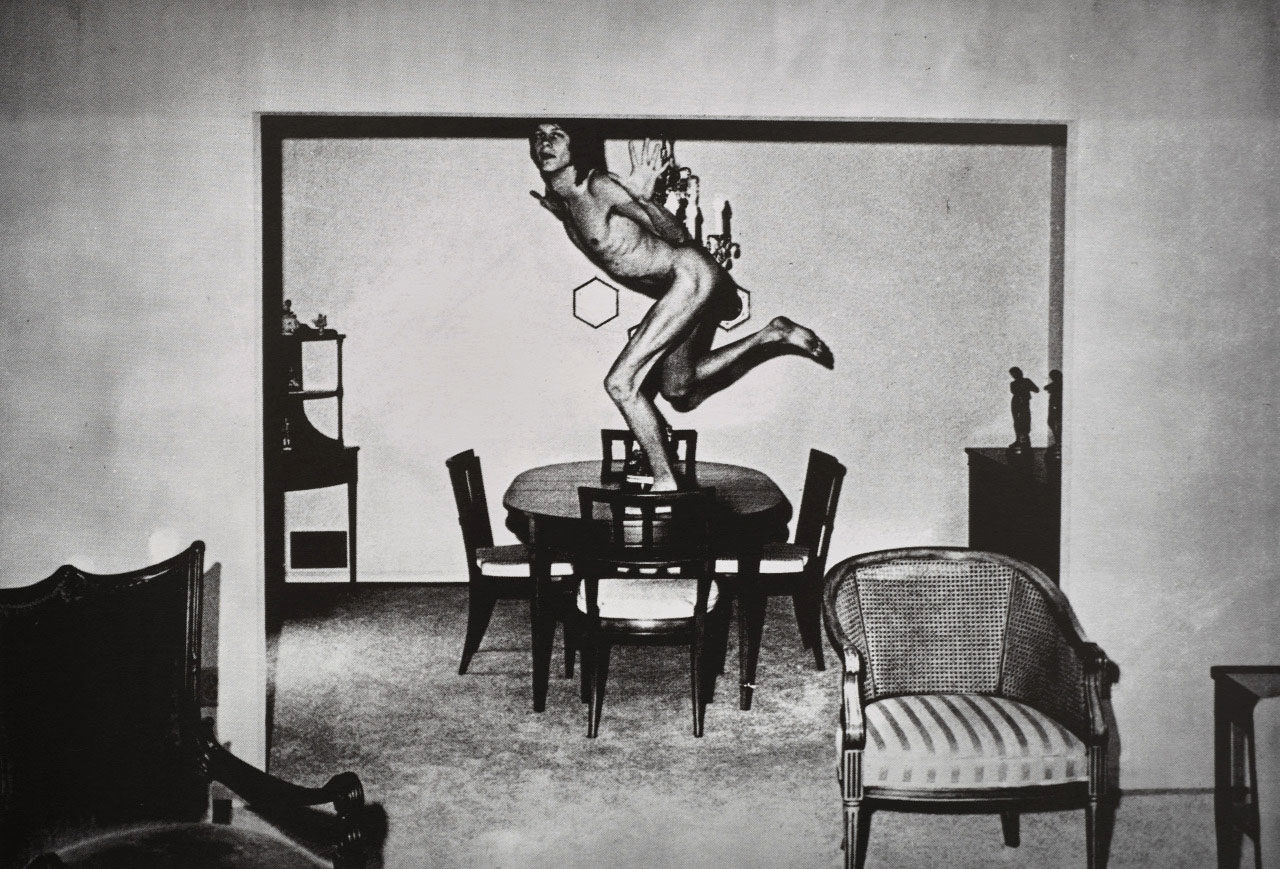
 

Jimmy DeSana (American, 1949-1990) 'Untitled' 1972 From the series '101 Nudes'


Jimmy DeSana (American, 1949-1990)
Untitled
1972
From the series 101 Nudes
Offset print
12 3/4 × 8 1/2 in. (32.4 × 21.6 cm)
Courtesy of the Jimmy DeSana Trust and P·P·O·W Gallery, New York
© Estate of Jimmy DeSana
Photo: Allen Phillips


Against a backdrop of policing, censorship, and gay liberation in early 1970s Atlanta, DeSana staged photographs of his mostly queer friends, including the notorious drag performer Diamond Lil, nude in suburban environments. While other Conceptual artists using photography like Dan Graham were focused on the architectural homogeneity of suburbia, in “101 Nudes,” a portfolio of 56 photolithographic prints, DeSana penetrated the veneer of seriality and conformity.

Both his subjects’ poses and his halftone reproduction techniques mimicked images from mass-market, soft-core pornographic magazines that emerged during the artist’s youth. The title sends up that of the wholesome 1961 Disney animated film 101 Dalmatians, which was rereleased in 1972.

DeSana eventually sent copies of the portfolio through the mail, which served as an alternative channel for sharing Conceptual art and challenging the privileged spaces of museums and commercial galleries during these years. He embraced “correspondence art” in part to connect with other gay artists and construct identities that defied mainstream standards of “respectability” for gay people.

Text from the Brooklyn Museum Tumblr website
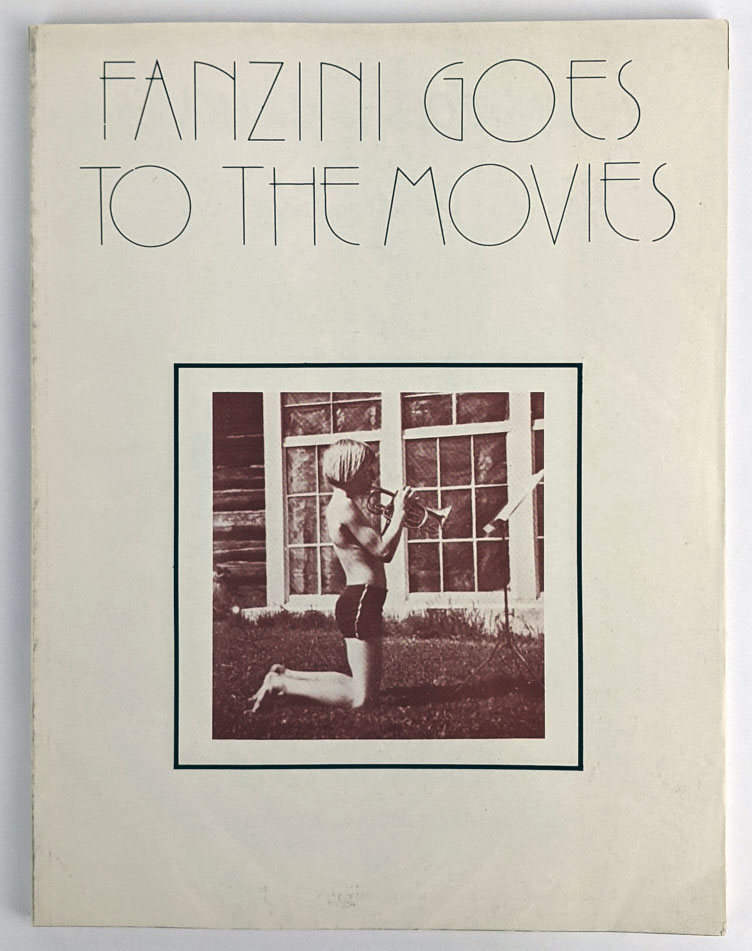
 

John Jack Baylin 'Fanzini Goes to the Movies' 1974


John Jack Baylin
Fanzini Goes to the Movies
1974
Periodical; offset print
11 × 8 1/2 in. (27.9 × 21.6cm)
Courtesy of Philip Aarons and Shelley Fox Aarons
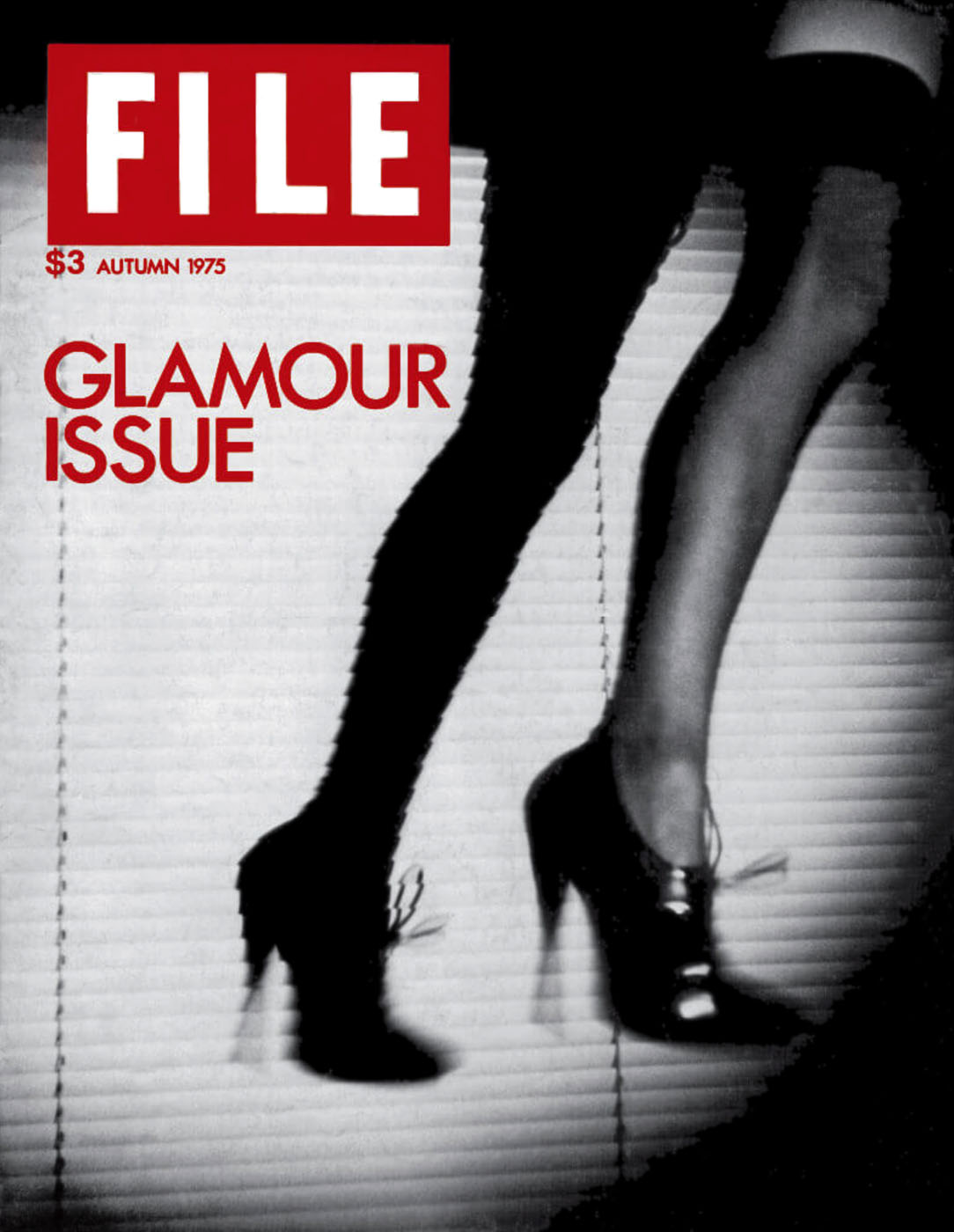
 

General Idea, Canadian, 1969-1994. 'File, vol. 3, no. 1, "Glamour" issue' Autumn 1975


Publisher: General Idea, Canadian, 1969-1994
File, vol. 3, no. 1, “Glamour” issue
Autumn 1975
Periodical; off-set print, staple bound, illustrated wrappers
14 × 10 11/16 in. (35.6 × 27.1cm)
Collection of Philip Aarons and Shelley Fox Aarons
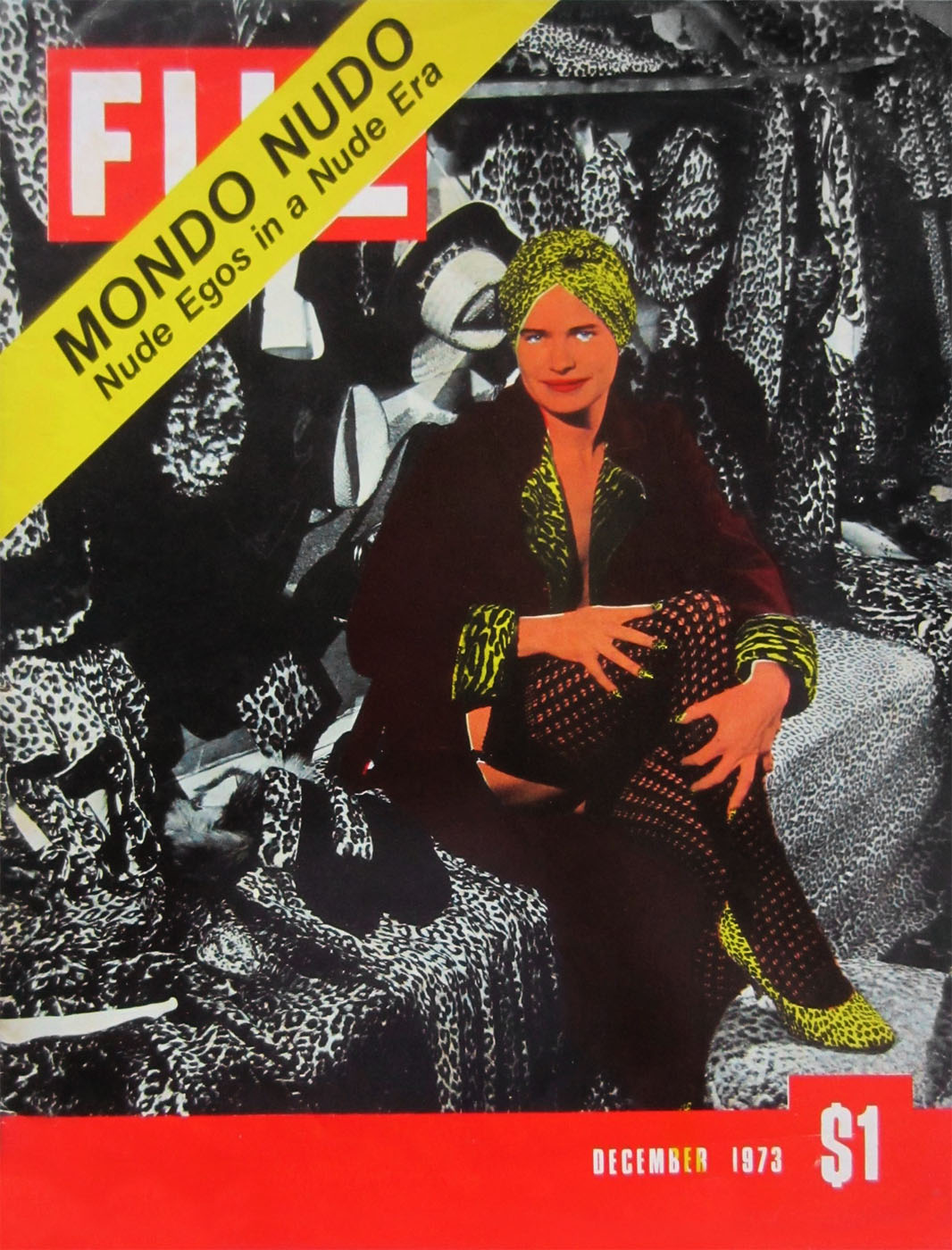
 

General Idea, Canadian, 1969-1994. 'File, vol. 2, no. 4, "Mondo Nudo" issue' December 1973


Publisher: General Idea, Canadian, 1969-1994
File, vol. 2, no. 4, “Mondo Nudo” issue
December 1973
Periodical; offset print, staple bound, illustrated wrappers
14 × 10 3/4 in. (35.6 × 27.3cm)
Collection of Philip Aarons and Shelley Fox Aarons
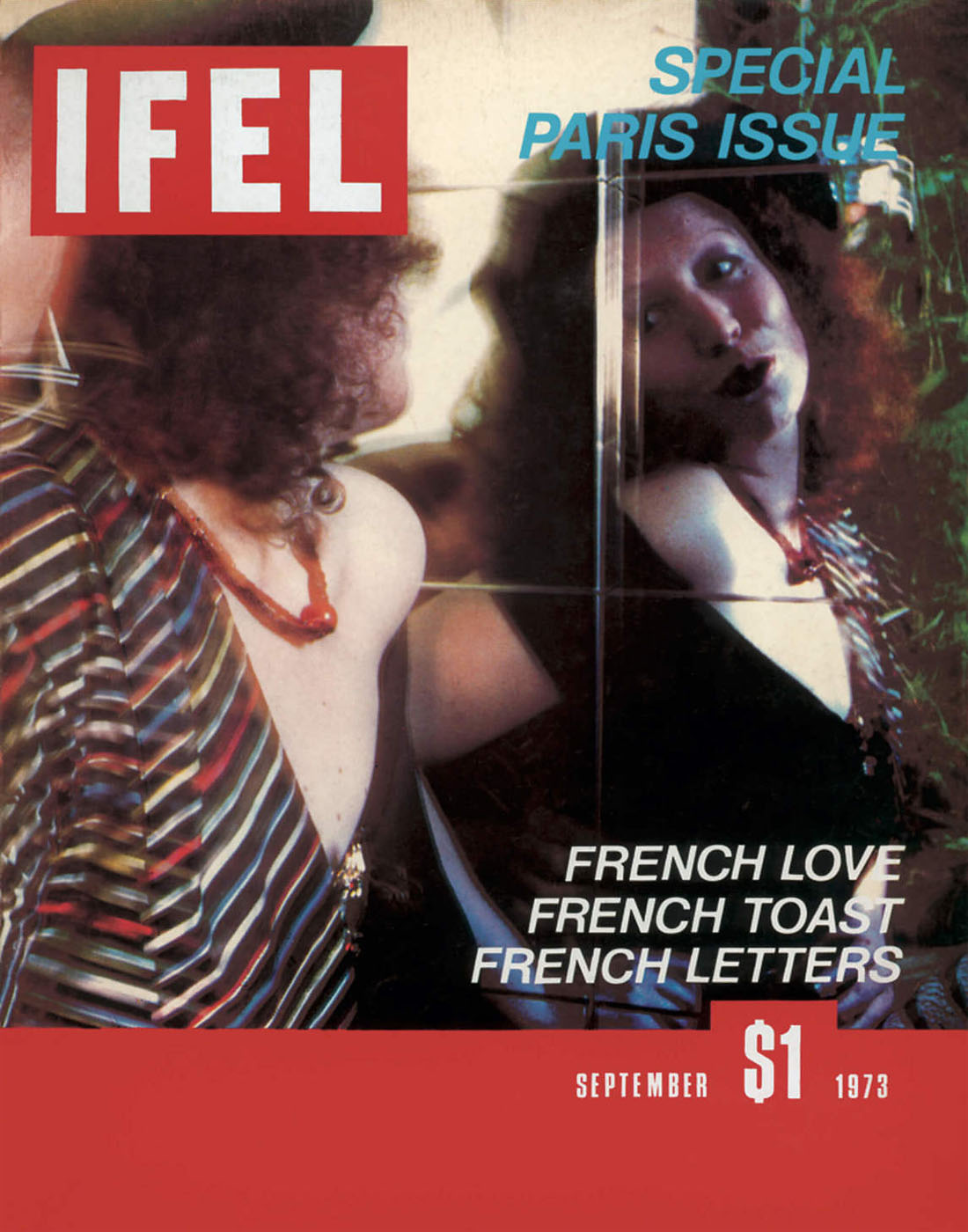
 

General Idea, Canadian, 1969-1994 'File, vol. 2, no. 3, "Paris" issue' September 1973


Publisher: General Idea, Canadian, 1969-1994
File, vol. 2, no. 3, “Paris” issue
September 1973
Periodical; offset print, staple bound, illustrated wrappers
14 × 11 in. (35.6 × 27.9cm)
Collection of Philip Aarons and Shelley Fox Aarons
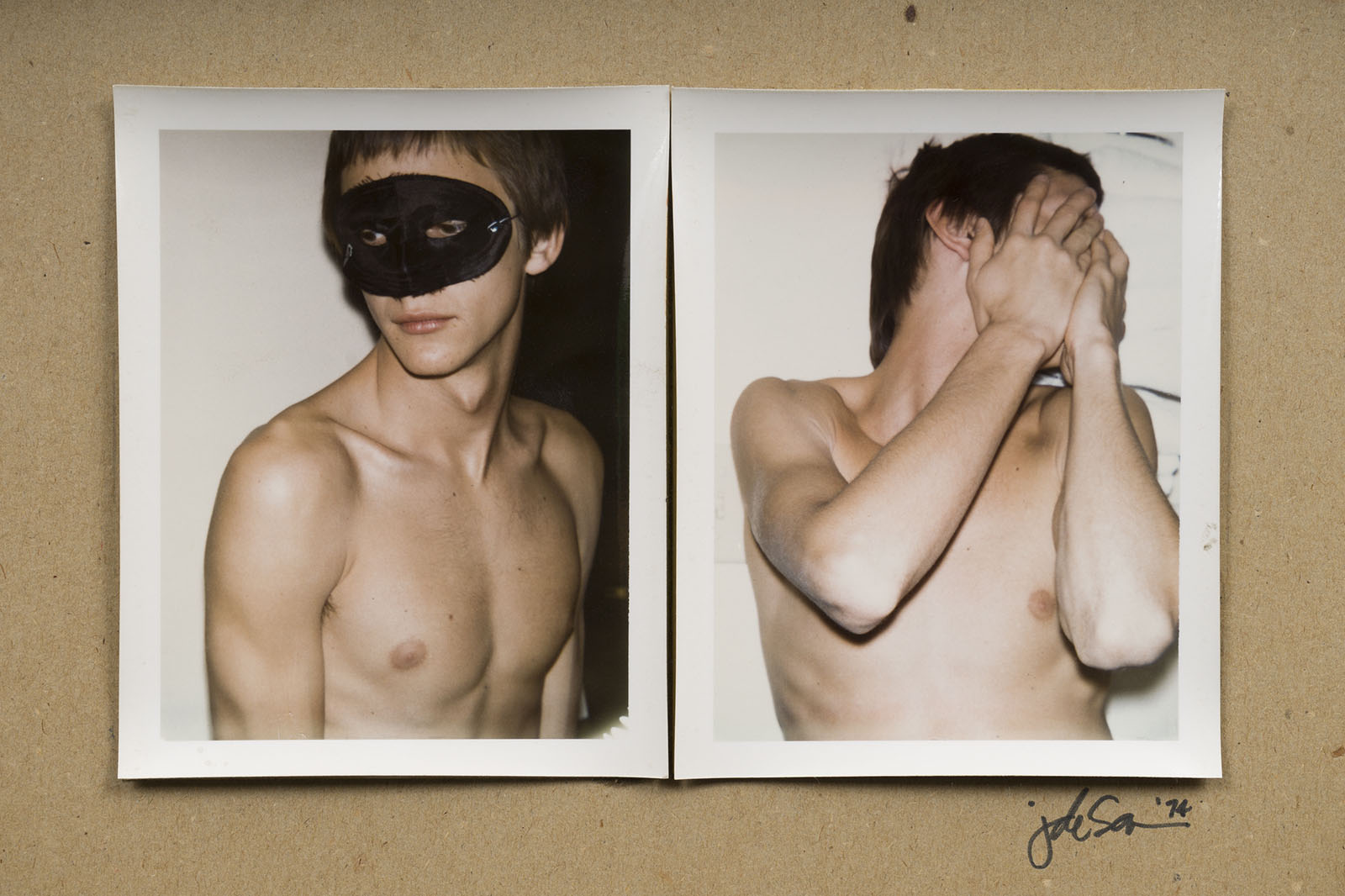
 

Jimmy DeSana (American, 1949-1990) 'Untitled' 1974


Jimmy DeSana (American, 1949-1990)
Untitled
1974
Dye diffusion transfer prints
Each 4 1/4 × 3 3/8 in. (10.8 × 8.6cm)
Collection of Philip Aarons and Shelley Fox Aarons
© Estate of Jimmy DeSana
Photo: David Vu
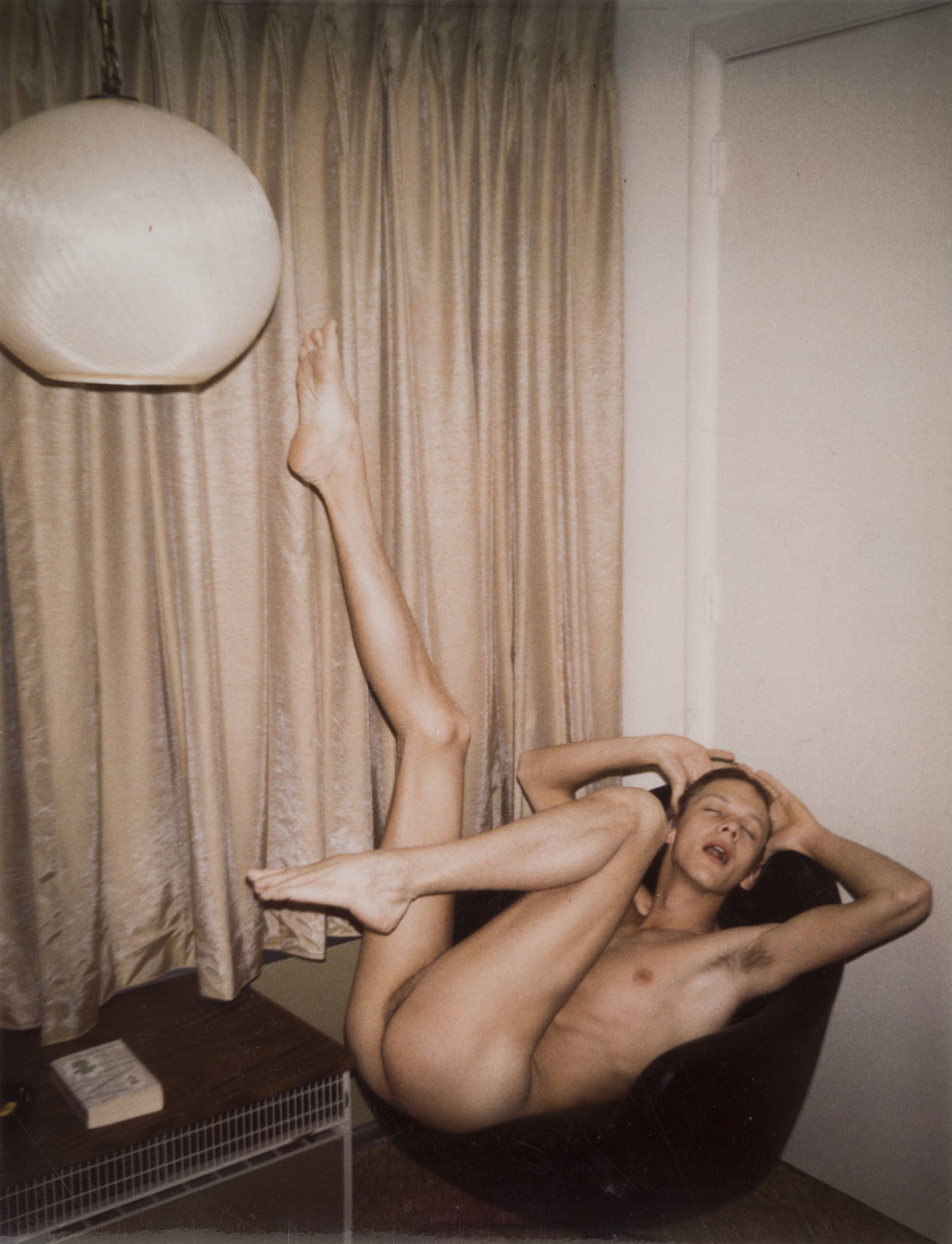
 

Jimmy DeSana (American, 1949-1990) 'Untitled' 1974


Jimmy DeSana (American, 1949-1990)
Untitled
1974
Dye diffusion transfer print
4 1/4 × 3 3/8 in. (10.8 × 8.6cm)
Collection of Philip Aarons and Shelley Fox Aarons
© Estate of Jimmy DeSana
Photo: David Vu


Fluxus and Dada Daddies
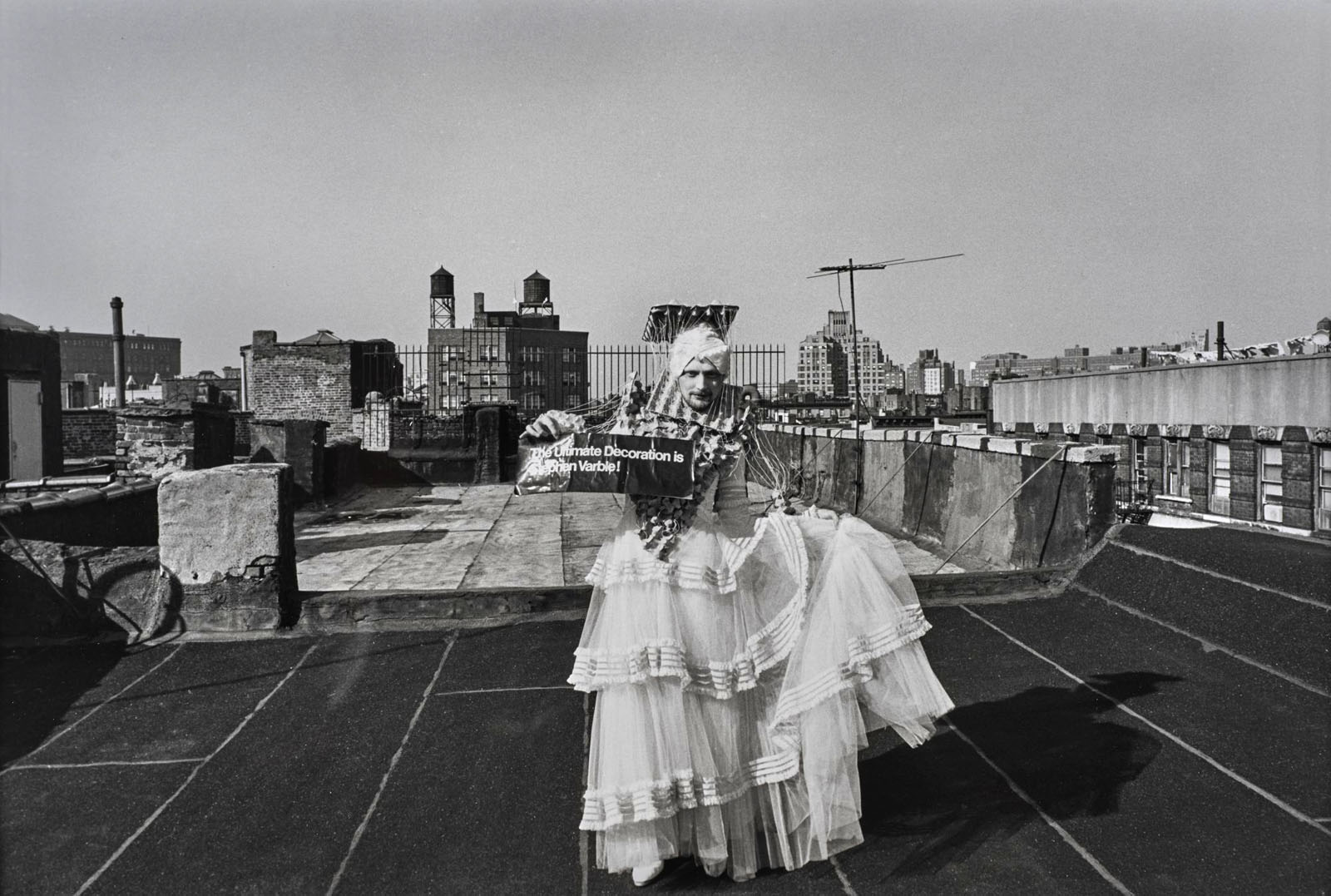
 

Jimmy DeSana (American, 1949-1990) 'Stephen Varble' 1975


Jimmy DeSana (American, 1949-1990)
Stephen Varble
1975
Gelatin silver print
11 1/4 × 16 1/2 in. (28.6 × 41.9cm)
Courtesy of the Jimmy DeSana Trust and P·P·O·W Gallery, New York
© Estate of Jimmy DeSana
Photo: Allen Phillips


During the golden age of downtown performance art in the 1970s, Jimmy DeSana documented the work of numerous artists, sometimes for income.

In 1975, he photographed public interventions by Stephen Varble, an artist who performed his “Gutter Art” in the streets of Soho and Midtown, while wearing his signature gender-bending ensembles. As the critic Gregory Battcock put it, Varble came to be “considered by some the embarrassment of SoHo, and by others the only touch of real genius south of Houston Street.” DeSana’s photographs of Varble appeared in publications during this time, including General Idea’s FILE Megazine.

DeSana’s photographs are invaluable records of an ephemeral practice, which has only recently been given its proper due thanks in part to the work of art historian David Getsy.

Text from the Brooklyn Museum Tumblr website
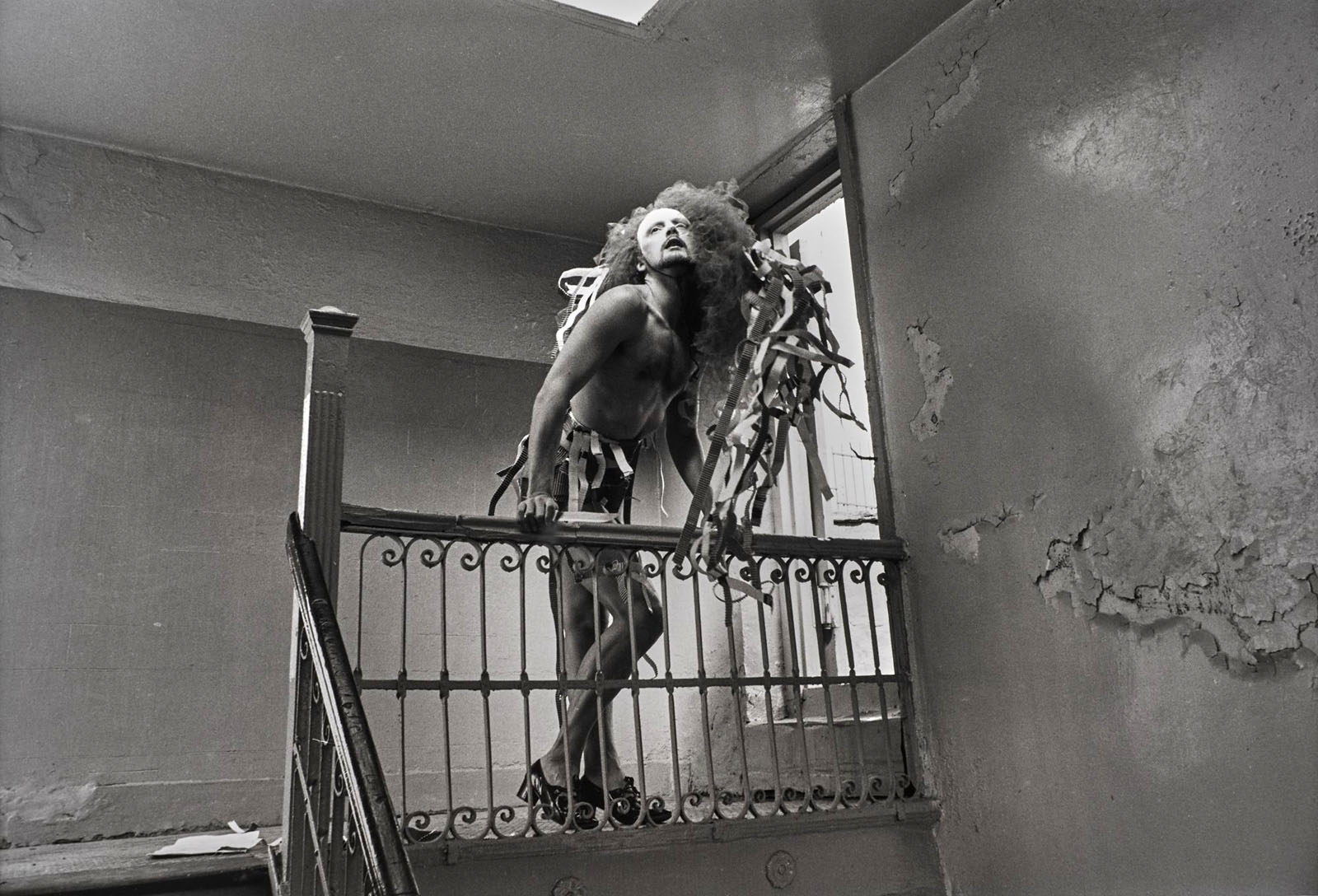
 

Jimmy DeSana (American, 1949-1990) 'Stephen Varble' 1975


Jimmy DeSana (American, 1949-1990)
Stephen Varble
1975
Gelatin silver print, printed later
18 1/4 × 23 3/4 in. (46.4 × 60.3cm)
Courtesy of the Jimmy DeSana Trust and P·P·O·W Gallery, New York
© Estate of Jimmy DeSana
Photo: Allen Phillips


Throughout the 1970s, Jimmy DeSana created campy portraits of his extended circle of friends and collaborators in New York, which included musicians, filmmakers, writers, artists, critics, and curators.

Performance artist and fixture of New York City’s downtown scene Stephen Varble, shown here, was one of DeSana’s repeat subjects. DeSana captured many of the performances staged by Varble whose guerilla practices served as commentary on gender identity, class, and capitalism. These performance-based and ephemeral events would continue to inform DeSana’s work in photography throughout the 1970s and 1980s.
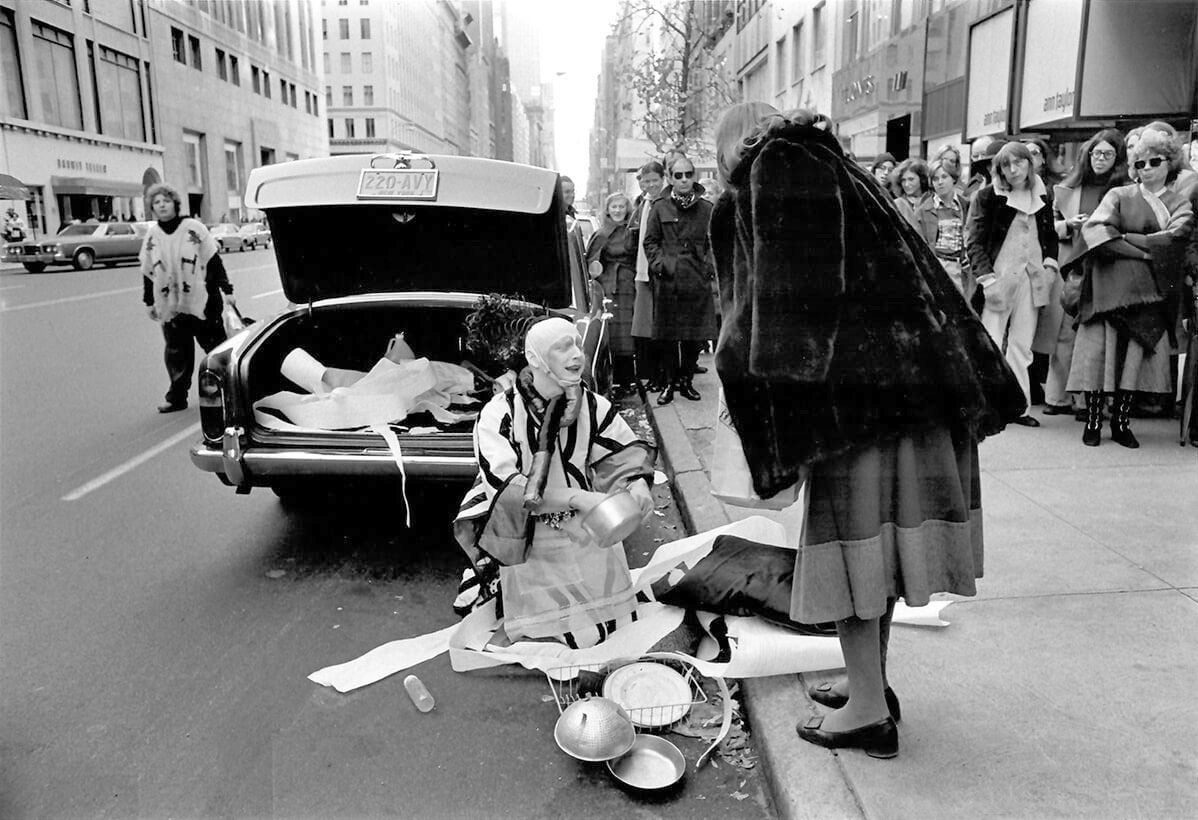
 

Jimmy DeSana (American, 1949-1990) 'Stephen Varble' 1975


Jimmy DeSana (American, 1949-1990)
Stephen Varble
1975
Gelatin silver print
8 × 10 in. (20.3 × 25.4cm)
Courtesy of the Jimmy DeSana Trust and P·P·O·W, New York
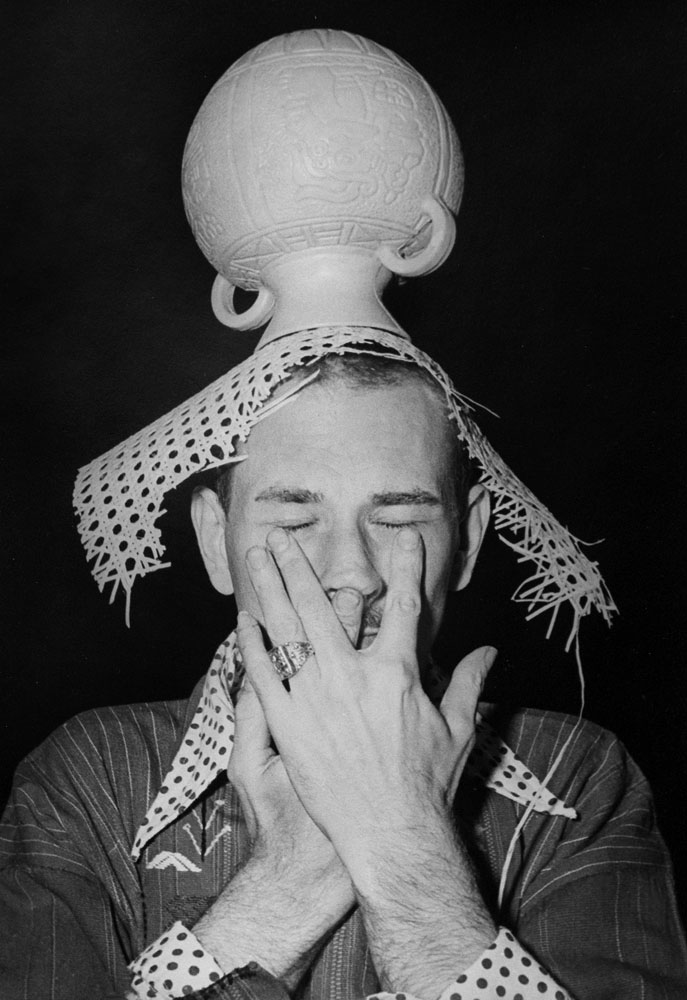
 

Jimmy DeSana (American, 1949-1990) 'Jack Smith' c. 1976


Jimmy DeSana (American, 1949-1990)
Jack Smith
c. 1976
Gelatin silver print
7 × 6 in. (17.8 × 15.2 cm)
Courtesy of the Jimmy DeSana Trust and P·P·O·W, New York
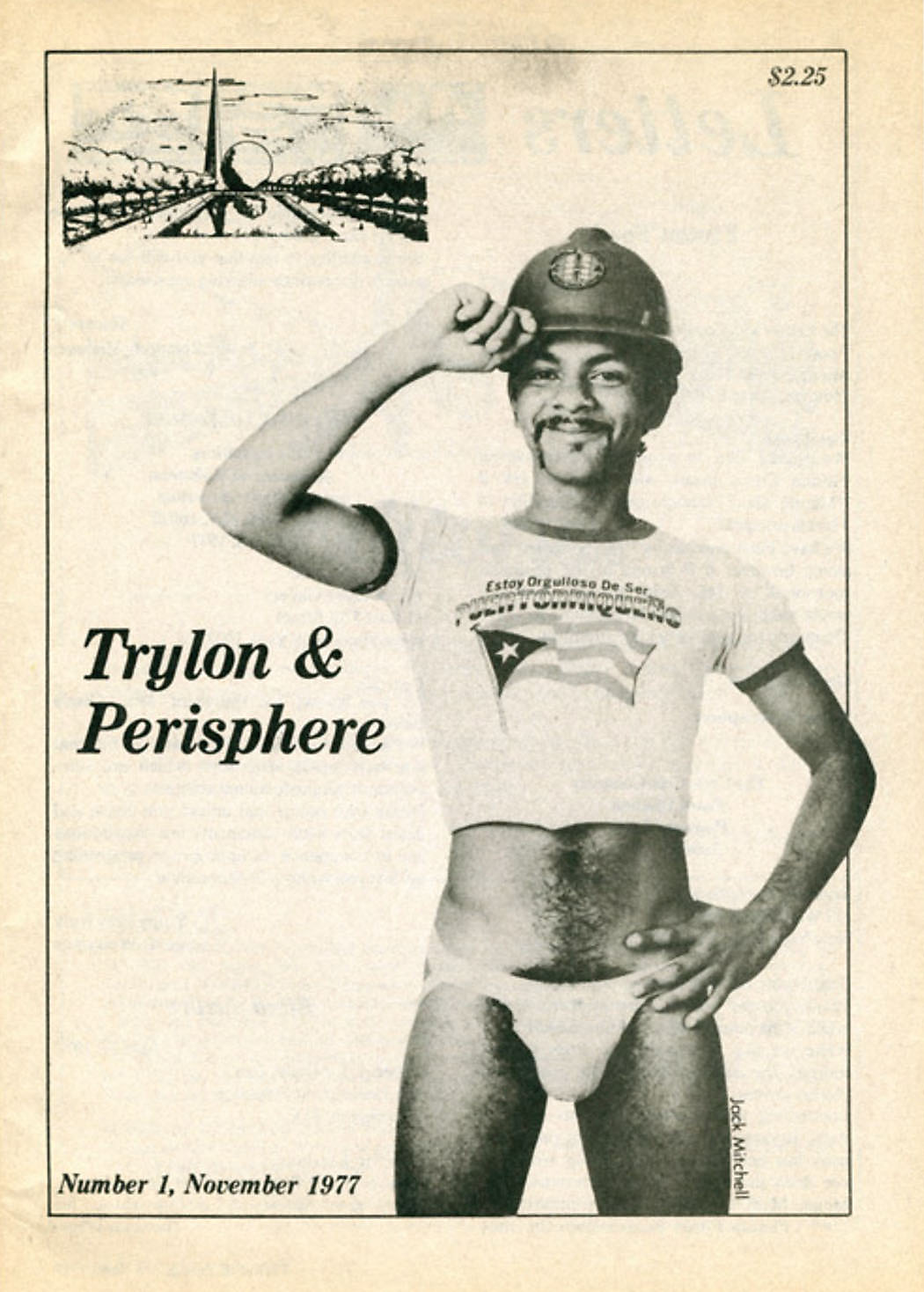
 

Gregory Battcock. 'Trylon and Perisphere, No. 1' December 1977


Gregory Battcock
Trylon and Perisphere, No. 1
December 1977
Periodical, offset print, saddle stitched, illustrated wrappers
10 × 7 in. (25.4 × 17.8cm)
Courtesy of Philip Aarons and Shelley Fox Aarons
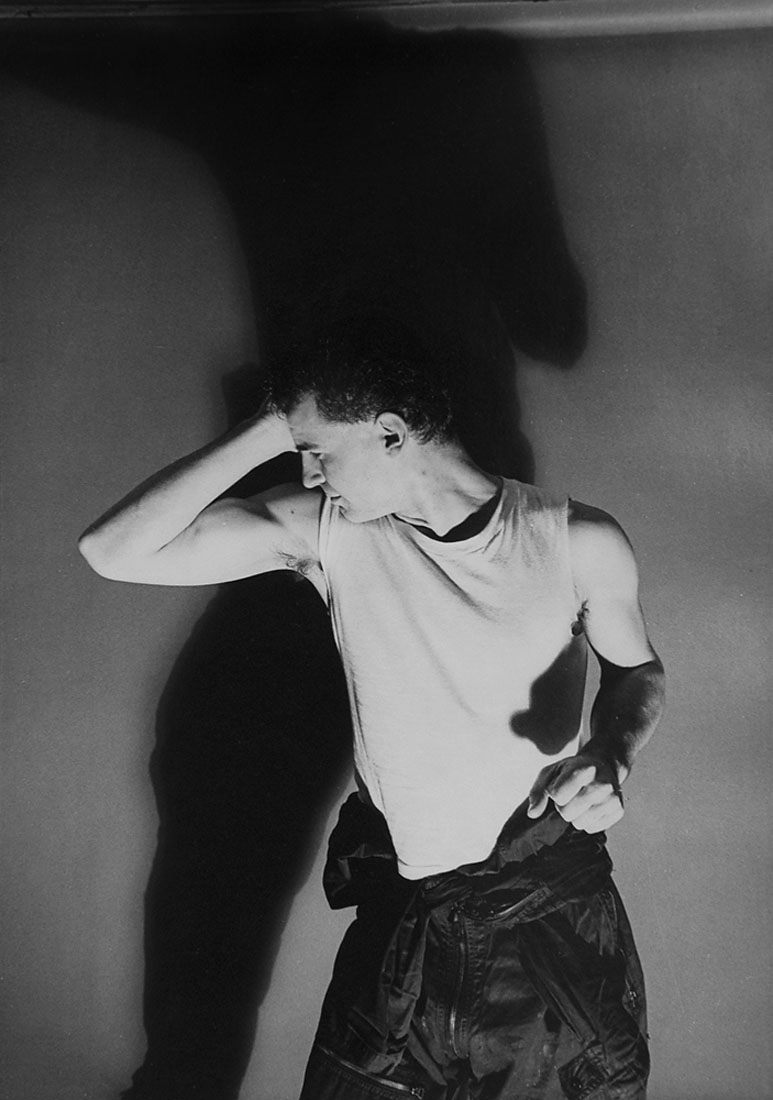
 

Jimmy DeSana (American, 1949-1990) 'Eric Mitchell' 1977


Jimmy DeSana (American, 1949-1990)
Eric Mitchell
1977
Gelatin silver print
15 3/4 × 11 1/2 in. (40 × 29.2cm)
Courtesy of the Jimmy DeSana Trust and P·P·O·W, New York
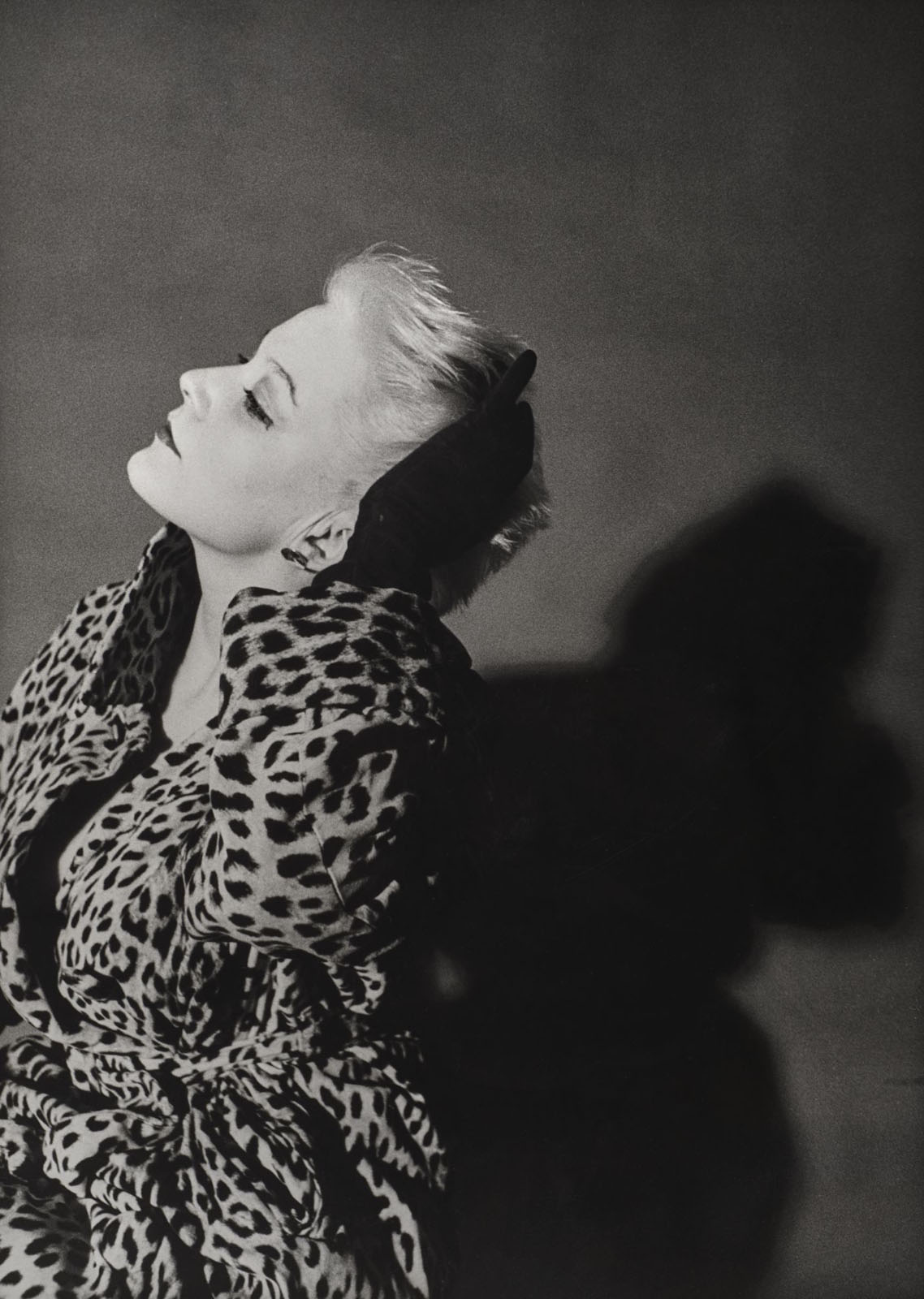
 

Jimmy DeSana (American, 1949-1990) 'Patti Astor' 1977


Jimmy DeSana (American, 1949-1990)
Patti Astor
1977
Gelatin silver print
15 7/8 × 11 1/2 in. (40.3 × 29.2cm)
Courtesy of the Jimmy DeSana Trust and P·P·O·W Gallery, New York
© Estate of Jimmy DeSana. (Photo: Allen Phillips)
 

Jimmy DeSana Submission wall text


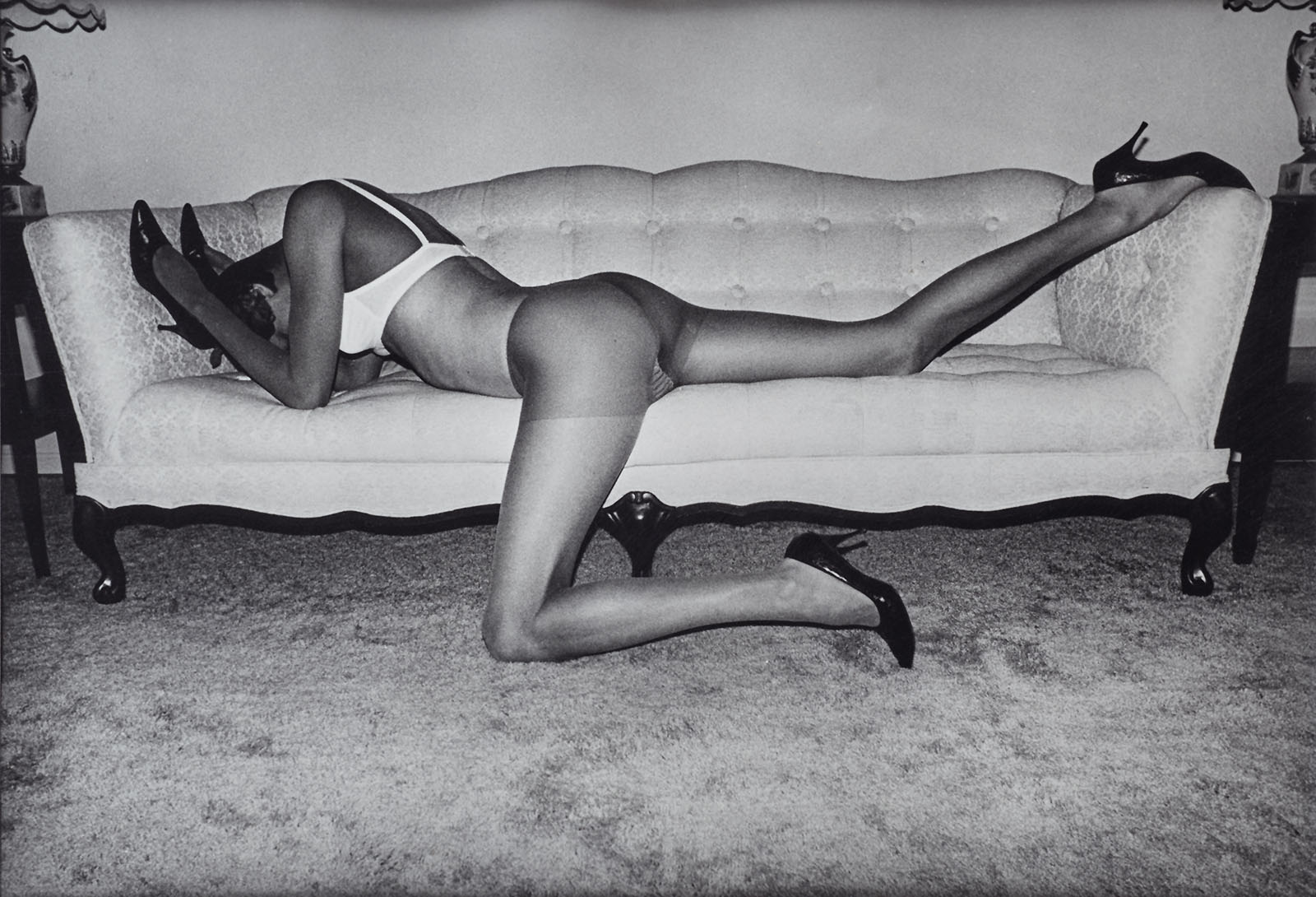
Jimmy DeSana (American, 1949-1990) 'Sofa' 1977-1978


Jimmy DeSana (American, 1949-1990)
Sofa
1977-1978
Gelatin silver print
6 1/2 × 9 1/2 in. (16.5 × 24.1cm)
Courtesy of the Jimmy DeSana Trust and P·P·O·W Gallery, New York
© Estate of Jimmy DeSana
Photo: Allen Phillips


Throughout the 1970s, Jimmy DeSana created theatrical, often comic photographs related to his sexual S-M experiences.

Like other artists in his circle, such as Laurie Simmons and AA Bronson, he parodied advertising and fashion photography, as well as the disciplinary nature of heteronormativity and consumerism in the United States. He eventually published some of these photographs in his first book, Submission (1980), which included an introduction by the punk icon William Burroughs.

The photographs in this series typically feature nude, masked individuals eccentrically interacting with domestic interiors and objects. DeSana staged most images in his studio or the homes of friends and family. He used his signature lighting to create a heightened sense of drama and horror, calling attention to the images’ artifice. DeSana later observed: “I was trying to push sexuality to the limit. As long as I could come up with an idea that related to bizarre sexuality and still make an interesting statement about a product, the photo was successful for me.”

Text from the Brooklyn Museum Tumblr website
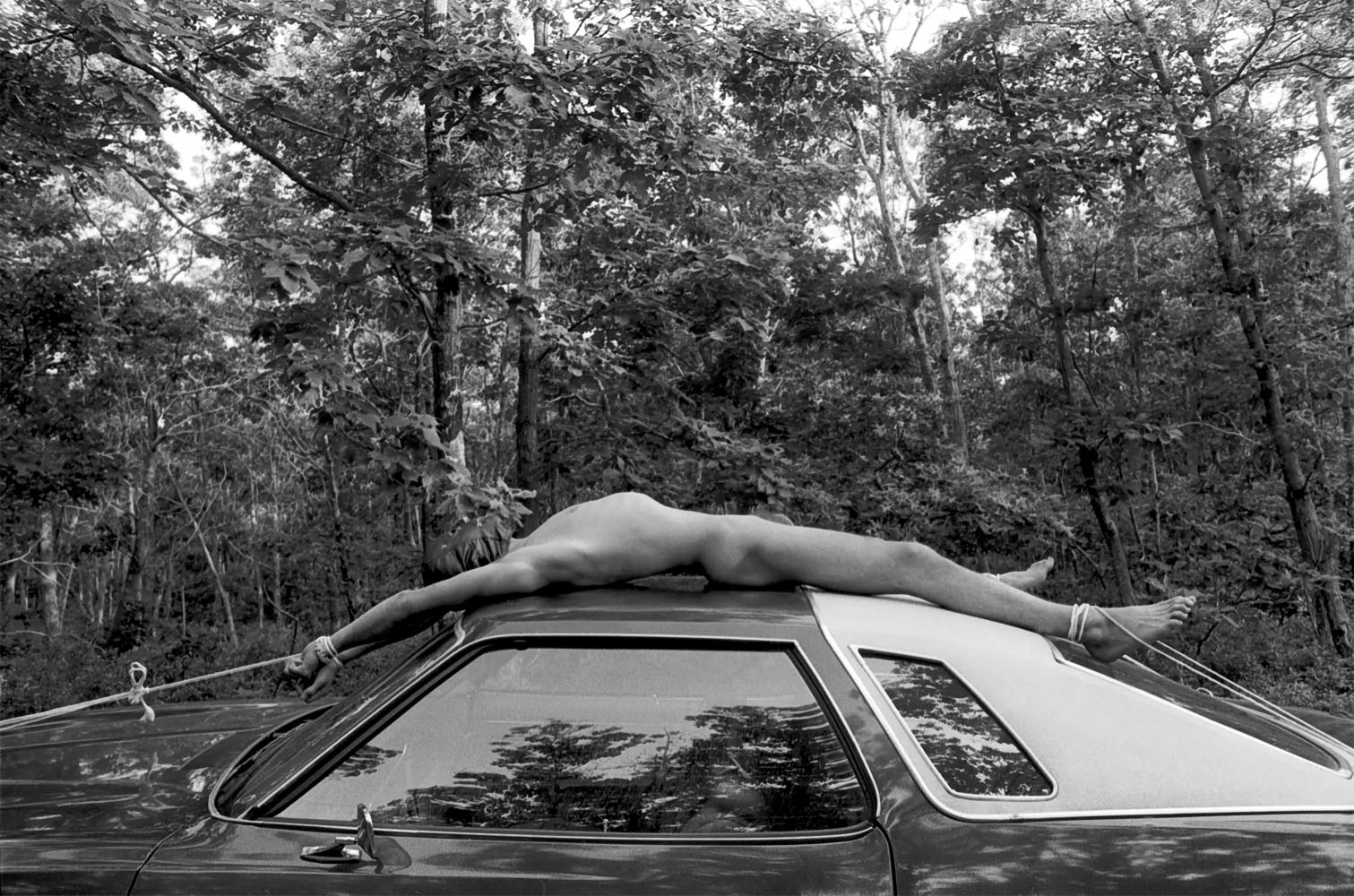
 

Jimmy DeSana (American, 1949-1990) 'Auto' 1978


Jimmy DeSana (American, 1949-1990)
Auto
1978
Gelatin silver print
6 3/4 × 9 9/16 in. (17.1 × 24.3cm)
Courtesy of the Jimmy DeSana Trust and P·P·O·W, New York
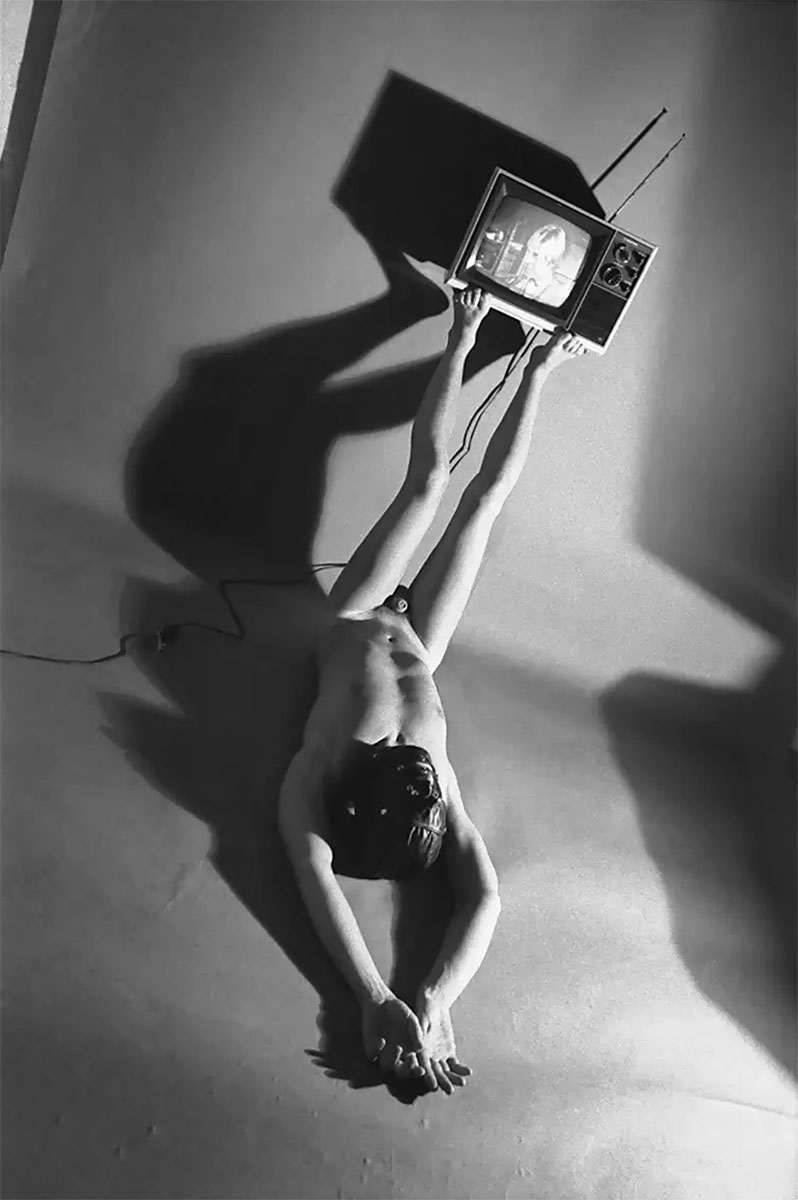
 

Jimmy DeSana (American, 1949-1990) 'Television' 1977-1978


Jimmy DeSana (American, 1949-1990)
Television
1977-1978
Gelatin silver print
12 1/4 × 8 1/4 in. (31.1 × 21cm)
Courtesy of the Jimmy DeSana Trust and P·P·O·W, New York
 

Jimmy DeSana No Wave to S-M in NYC wall text


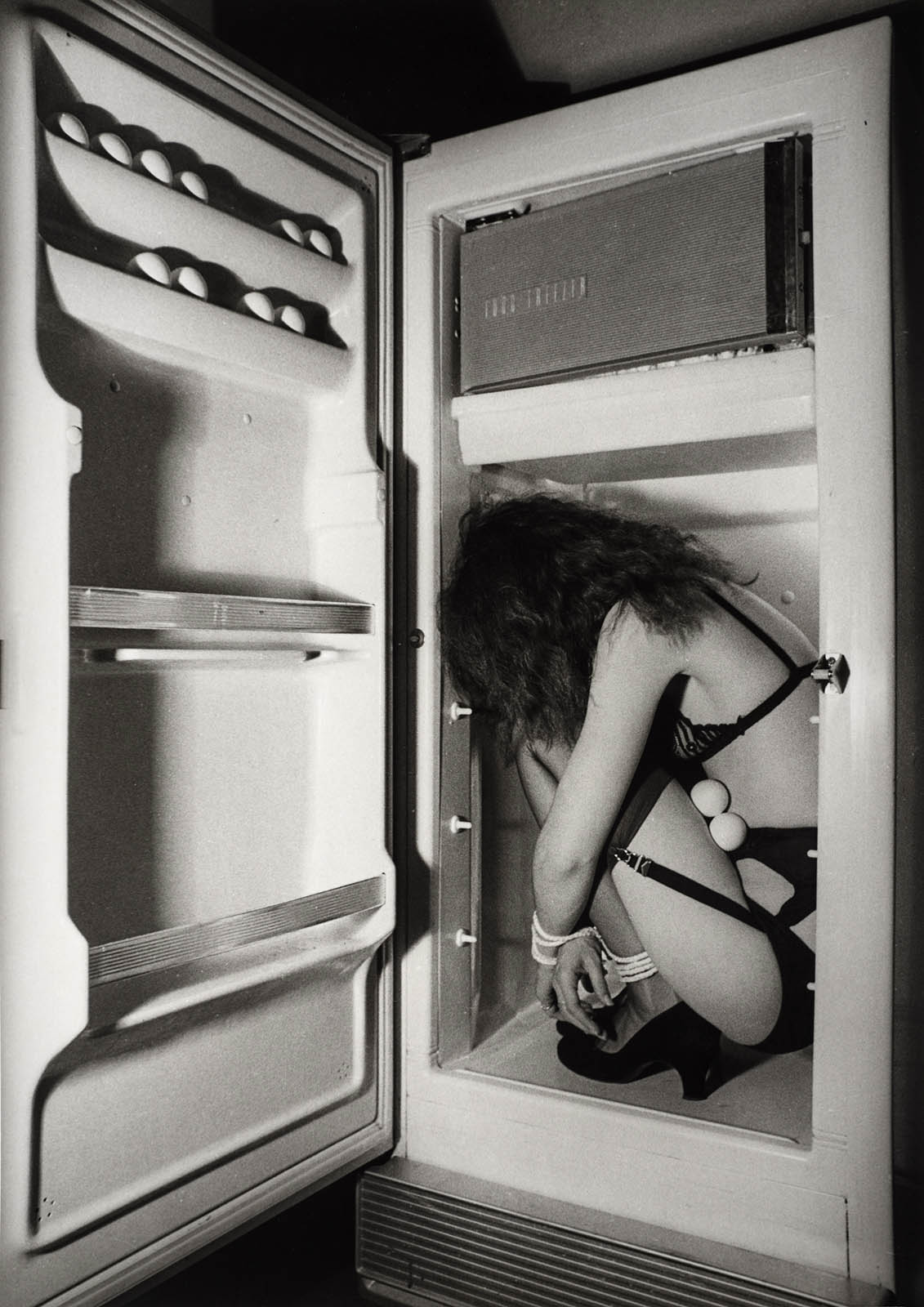
Jimmy DeSana (American, 1949-1990) 'Refrigerator' 1978


Jimmy DeSana (American, 1949-1990)
Refrigerator
1978
Gelatin silver print
9 1/2 × 6 3/4 in. (24.1 × 17.1cm)
Courtesy of the Jimmy DeSana Trust and P·P·O·W Gallery, New York
© Estate of Jimmy DeSana
Photo: Allen Phillips
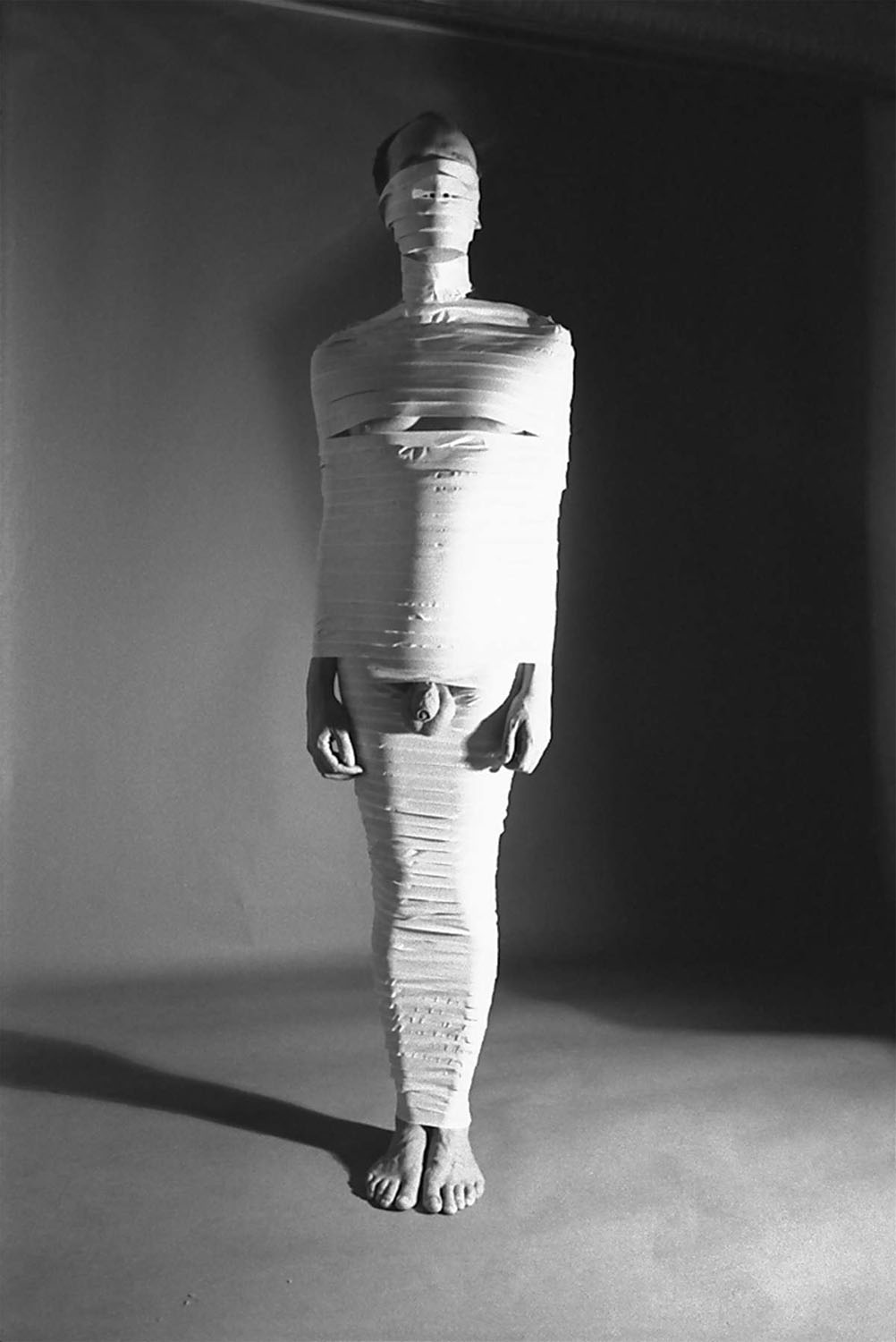
 

Jimmy DeSana (American, 1949-1990) 'Masking Tape' 1977-1978


Jimmy DeSana (American, 1949-1990)
Masking Tape
1977-1978
Gelatin silver print
9 1/2 × 6 1/2 in. (24.1 × 16.5cm)
Courtesy of the Jimmy DeSana Trust and P·P·O·W, New York
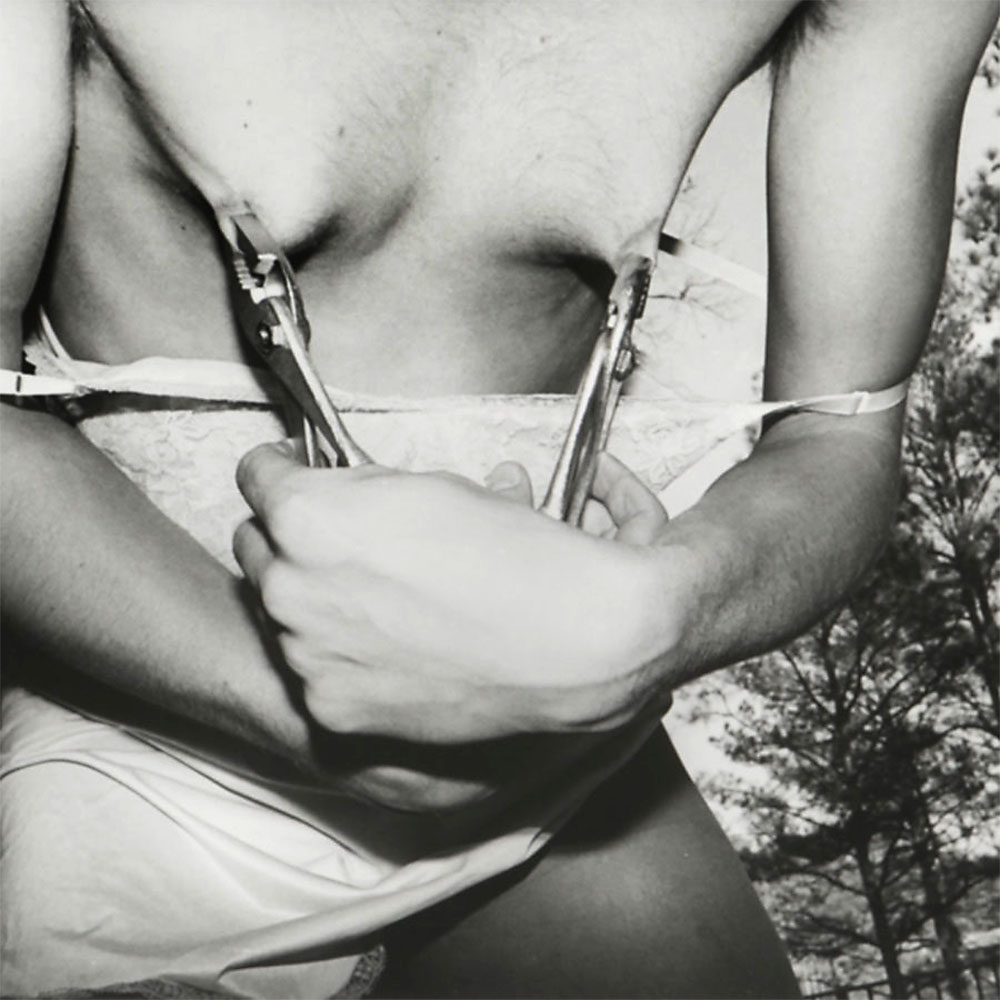
 

Jimmy DeSana (American, 1949-1990) 'Pliers' 1977-1978


Jimmy DeSana (American, 1949-1990)
Pliers
1977-1978
Gelatin silver print
6 3/4 × 9 1/4 in. (17.1 × 23.5cm)
Courtesy of the Jimmy DeSana Trust and P·P·O·W, New York
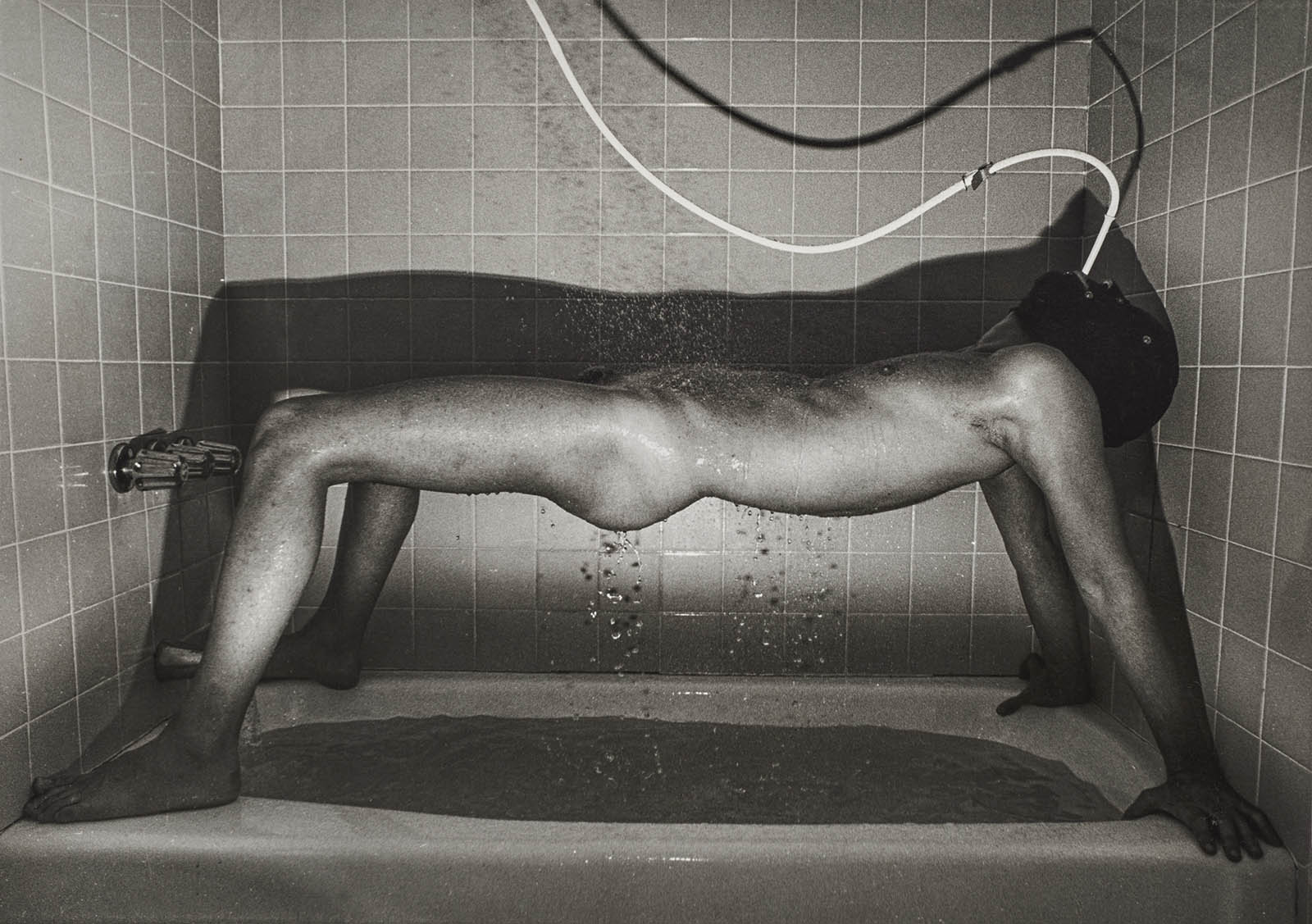
 

Jimmy DeSana (American, 1949-1990) 'Enema' 1977-1978


Jimmy DeSana (American, 1949-1990)
Enema
1977-1978
Gelatin silver print
Courtesy of the Jimmy DeSana Trust and P·P·O·W Gallery, New York
© Estate of Jimmy DeSana


Sadomasochism, Then and Now

DeSana’s photographs and Terence Sellers’s writings engage with a variety of often erotic practices known then as S-M (sadomasochism) and more commonly now as BDSM (bondage, dominance, and submission / sadomasochism). The term “sadomasochism” is derived from the names of two European authors: the Marquis de Sade (1740-1814), who wrote about his exploits and fantasies of deriving pleasure from inflicting pain, and Leopold von Sacher-Masoch (1836-1895), who wrote of the erotic enjoyment he experienced while being dominated and punished.

In the 1970s, DeSana and Sellers were among a growing group of practitioners, writers, artists, and activists attempting to redefine “acceptable” behaviour and desires, as well as sexual and gender identities. In exploring S-M through an aesthetic lens, Sellers and DeSana also joined a long lineage of artists and thinkers who had engaged with these practices to encourage debate on freedom of expression and power.

It was not until 2010 that the American Psychiatric Association announced it would no longer diagnose consenting adults practicing BDSM as mentally ill, which had perpetuated stigmatisation that could lead to legal and social repercussions. More recently, studies have suggested that BDSM can provide therapeutic tools to investigate control and release, and to reclaim one’s sexuality after traumatic experiences.

Exhibition label
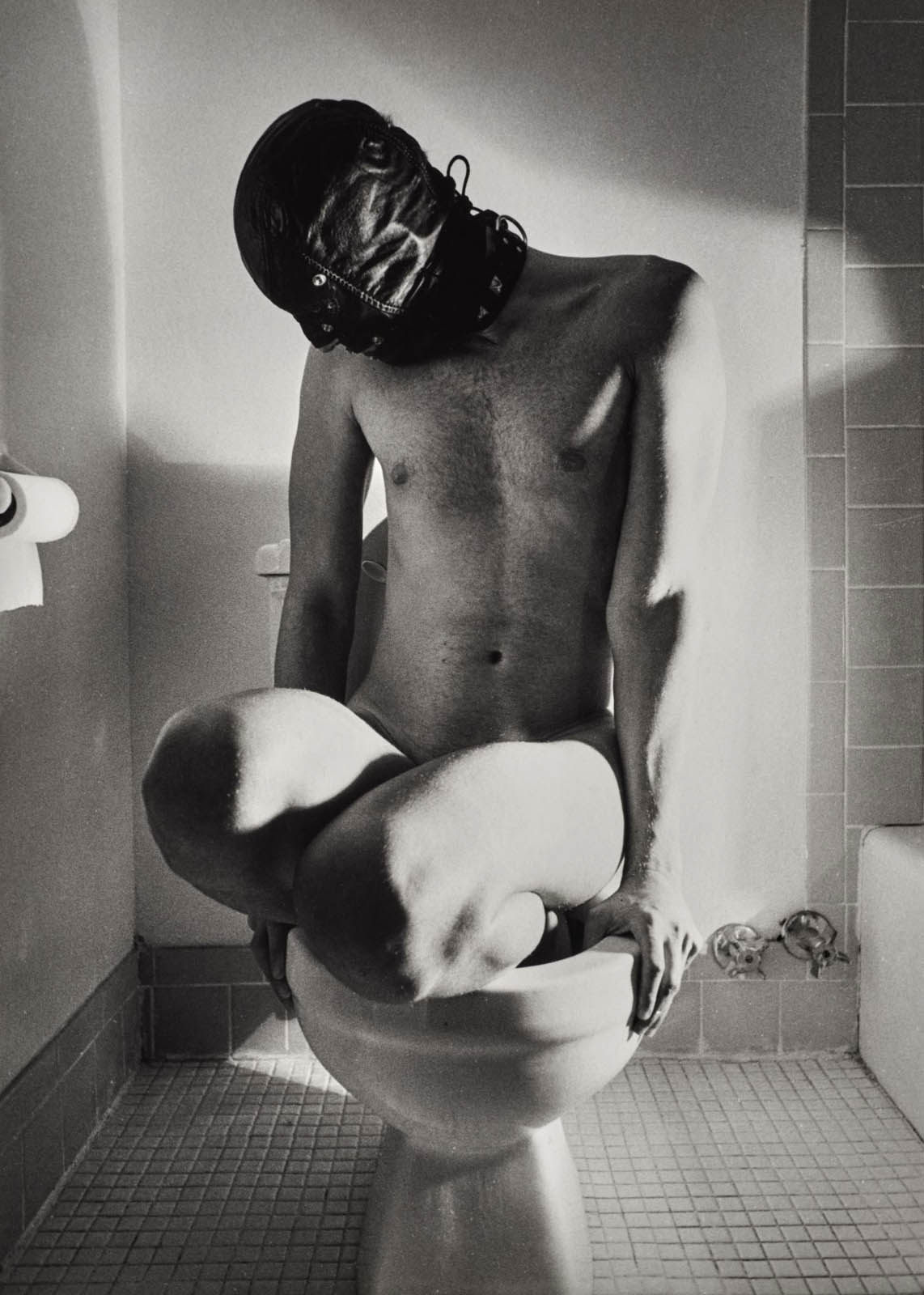
 

Jimmy DeSana (American, 1949-1990) 'Toilet' 1977-1978


Jimmy DeSana (American, 1949-1990)
Toilet
1977-1978
Gelatin silver print
9 9/16 × 6 3/4 in. (24.3 × 17.1cm)
Courtesy of the Jimmy DeSana Trust and P·P·O·W Gallery, New York
© Estate of Jimmy DeSana
Photo: Allen Phillips


“The very word ‘submission’ contains the paradox of wanting and not wanting,” William S. Burroughs wrote in the introduction of Jimmy DeSana’s 1980 book Submission.

For the photogragraphic series featured in the publication, made between 1977 and 1978, DeSana built on 101 Nudes (1972) and his work for File Megazine by creating theatrical and often comic photographs that push the limits of respectability and explore domestic confinement, consumer affluence, and social conformity. He was also mocking the recent trend of S-M scenarios in fashion photography and advertisements.

He titled many of the images after the objects depicted in them – Toilet, Coffee Table, Television, Shoes, Shower – rather than sex acts or the names of the individuals shown, who are always anonymous and often wearing masks. This strategy not only protected the identity of his models, many of whom were friends, but also contrasted with his better-known portrait work during this period, which he did to make money. Many of the photographs comically equate practices of everyday life and consumerism (washing dishes, taking a shower, driving a car) with forms of bondage and discipline.

In exploring S-M through an aesthetic and performative lens, DeSana joined a long history of twentieth-century avant-gardes that engaged with these practices in order to compel debate on freedom of expression and power.

Text from the Brooklyn Museum Tumblr website
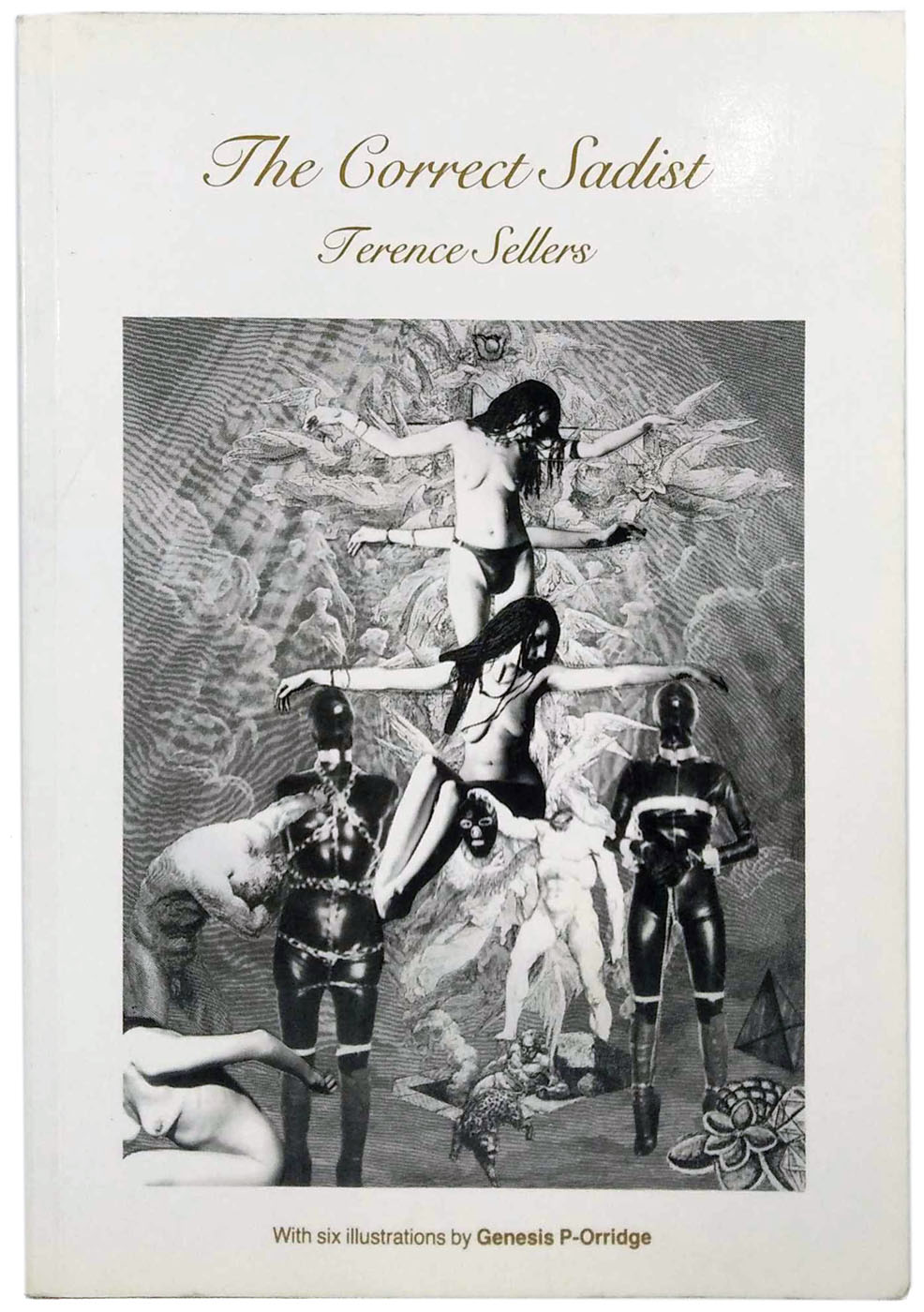
 

Terence Sellers (American, 1952-2016) 'The Correct Sadist: The Memoirs of Angel Stern' 1983


Terence Sellers (American, 1952-2016)
The Correct Sadist: The Memoirs of Angel Stern
1983
Book
8 1/2 × 5 9/16 in. (21.6 × 14.1 cm)
Private collection
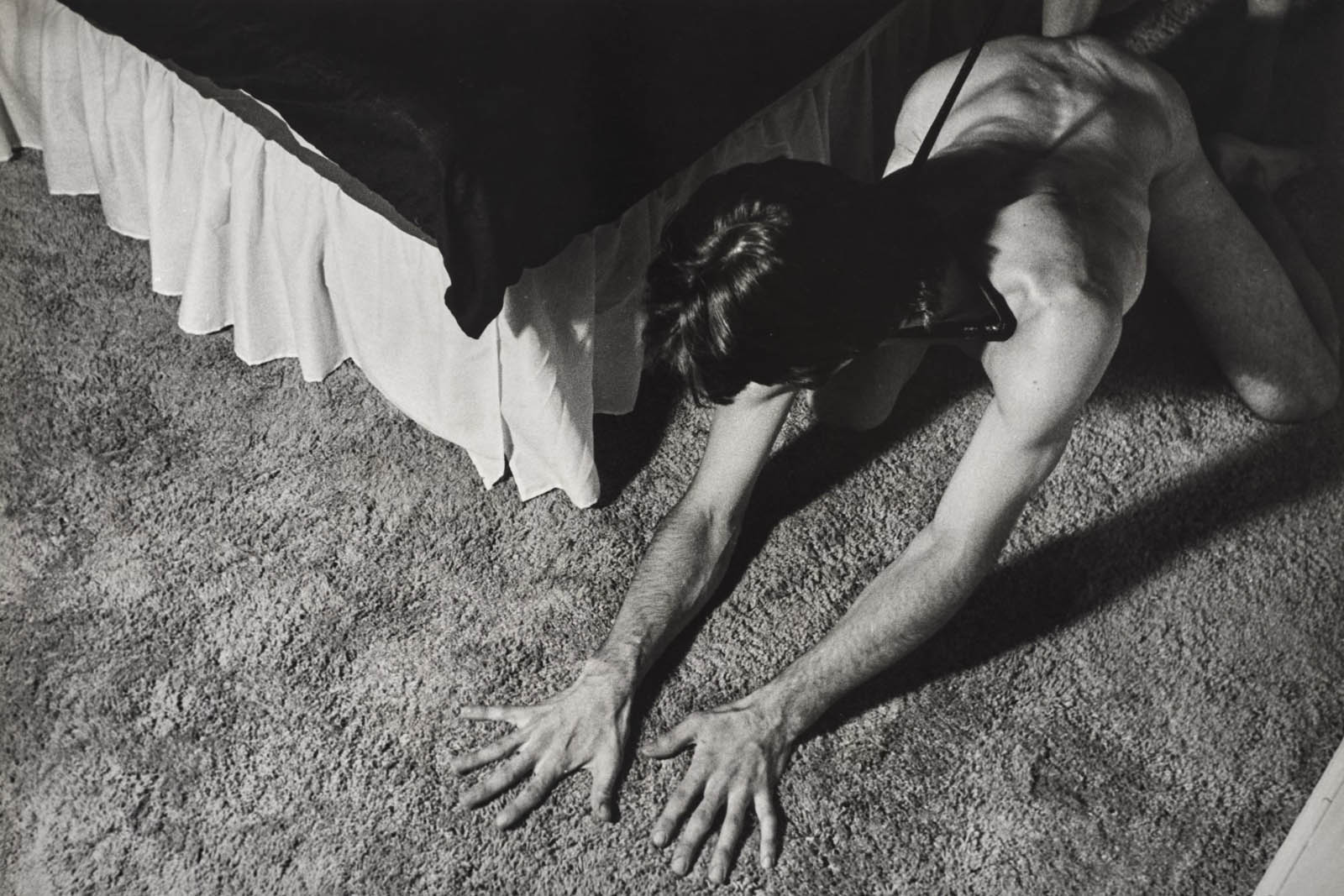
 

Jimmy DeSana (American, 1949-1990) 'Untitled' 1978


Jimmy DeSana (American, 1949-1990)
Untitled
1978
From the series The Dungeon
Gelatin silver print
6 1/2 × 9 5/8 in. (16.5 × 24.4cm)
Courtesy of the Jimmy DeSana Trust and P·P·O·W Gallery, New York
© Estate of Jimmy DeSana
Photo: Allen Phillips
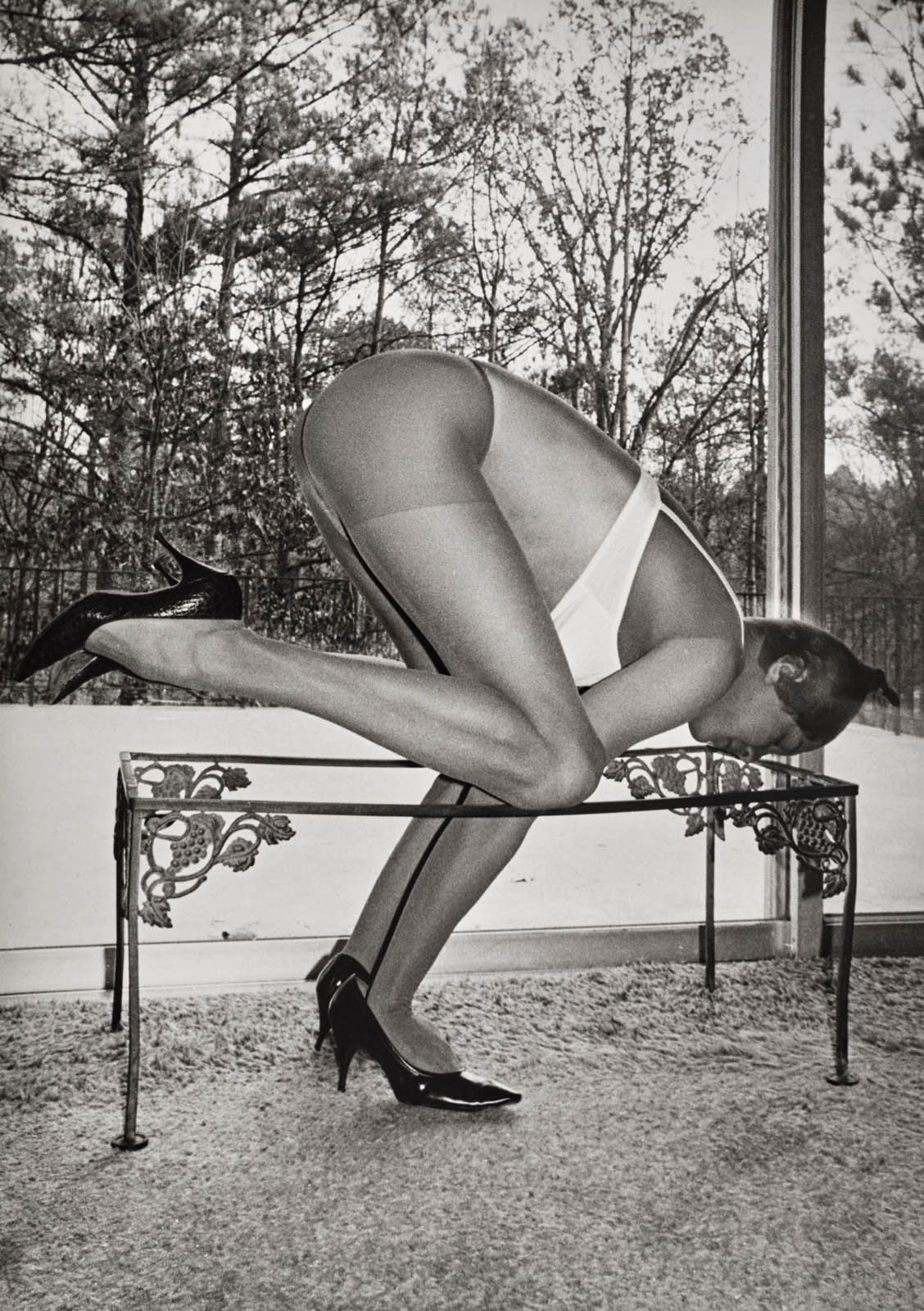
 

Jimmy DeSana The Dungeon 1978 wall text


Jimmy DeSana (American, 1949-1990) 'Coffee Table' 1977-1978


Jimmy DeSana (American, 1949-1990)
Coffee Table
1977-1978
Gelatin silver print
9 1/2 × 6 1/2 in. (24.1 × 16.5cm)
Courtesy of the Jimmy DeSana Trust and P·P·O·W Gallery, New York
© Estate of Jimmy DeSana
Photo: Allen Phillips
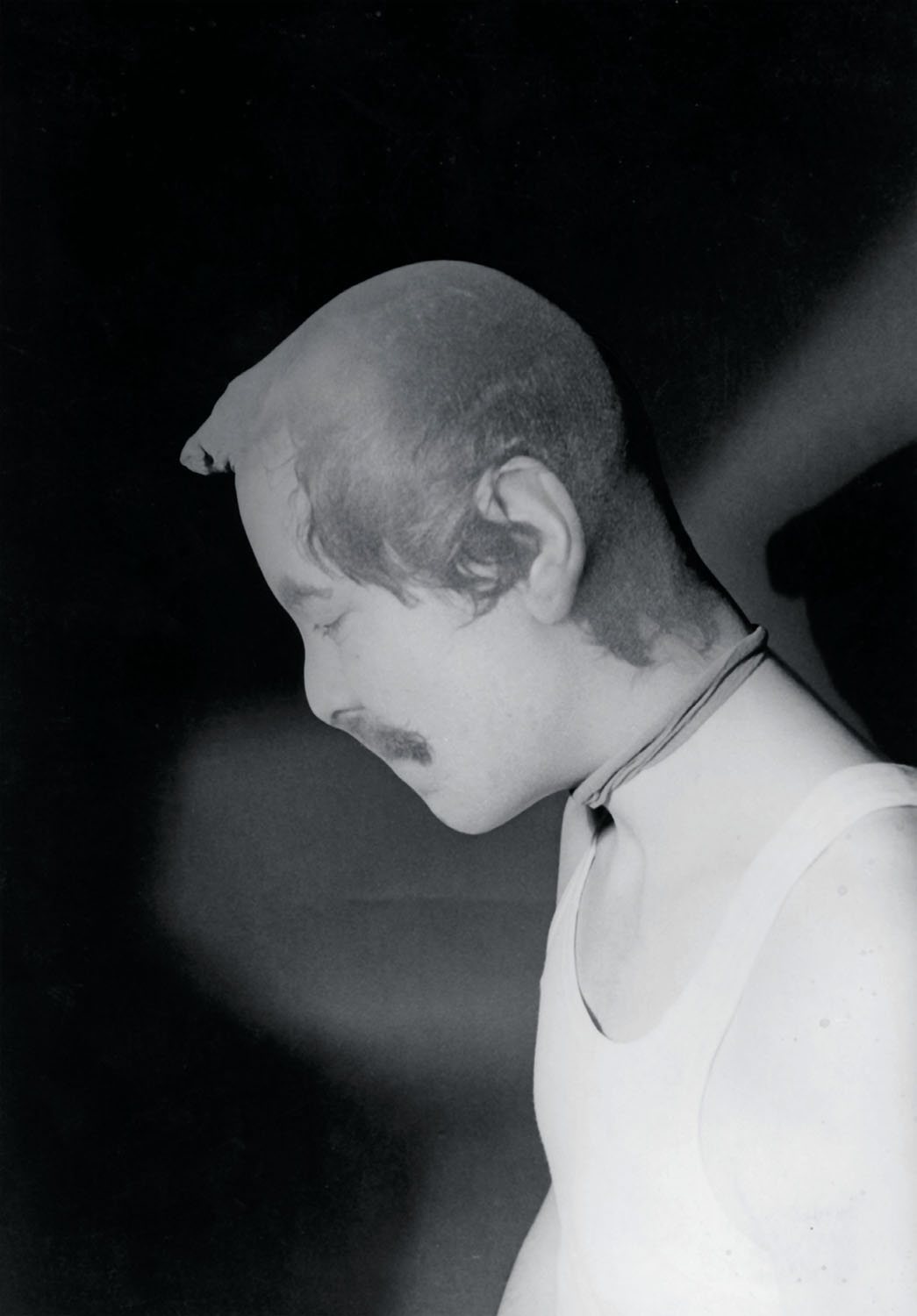
 

Jimmy DeSana (American, 1949-1990) 'Untitled' 1978 From the 'Dungeon' series


Jimmy DeSana (American, 1949-1990)
Untitled
1978
From the Dungeon series
Gelatin silver print
9 1/2 × 6 5/8 in. (24.1 × 16.8cm)
Courtesy of the Jimmy DeSana Trust and P·P·O·W, New York
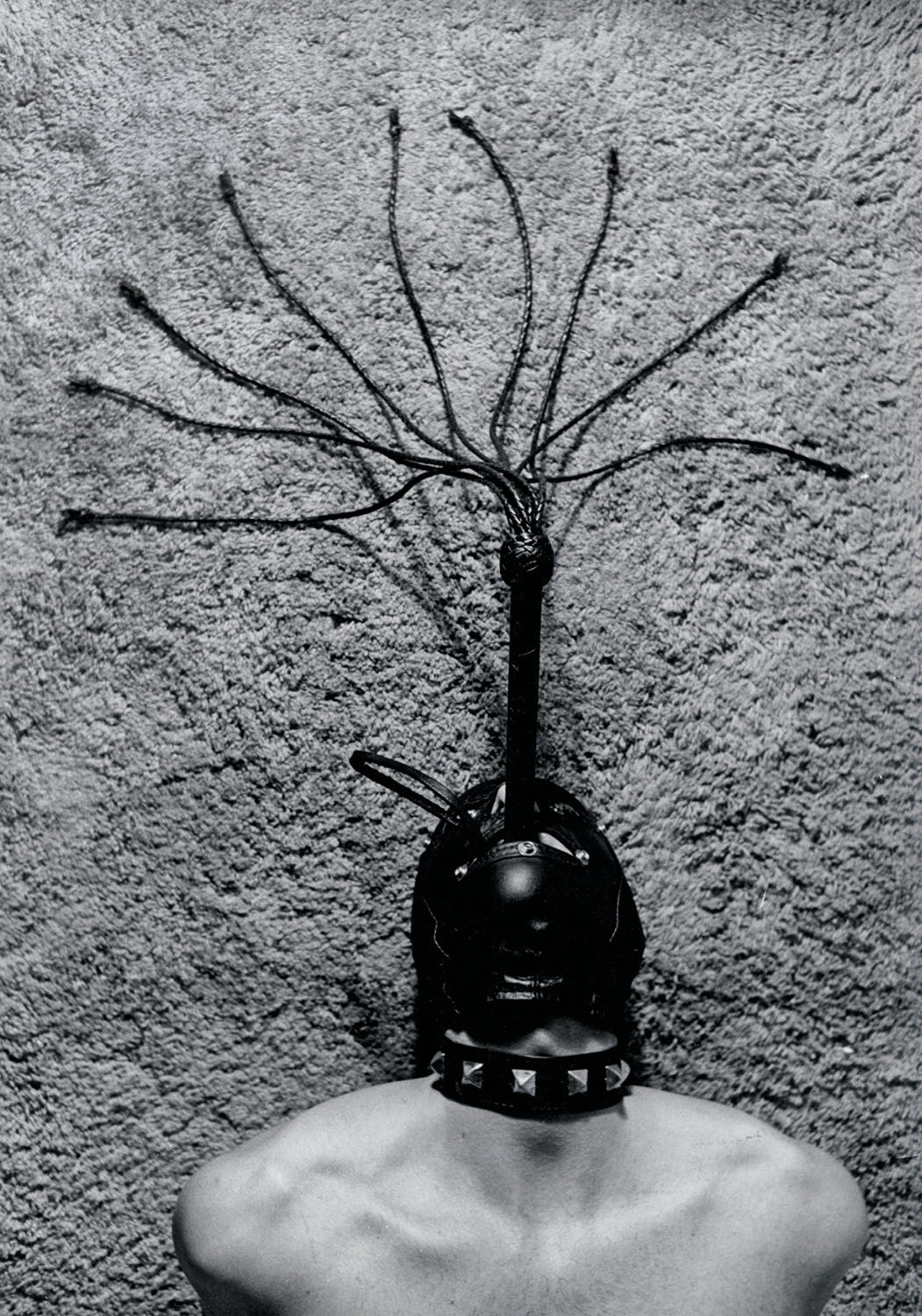
 

Jimmy DeSana (American, 1949-1990) 'Untitled' 1978 From the 'Dungeon' series


Jimmy DeSana (American, 1949-1990)
Untitled
1978
From the Dungeon series
Gelatin silver print
9 1/2 × 6 5/8 in. (24.1 × 16.8cm)
Courtesy of the Jimmy DeSana Trust and P·P·O·W, New York
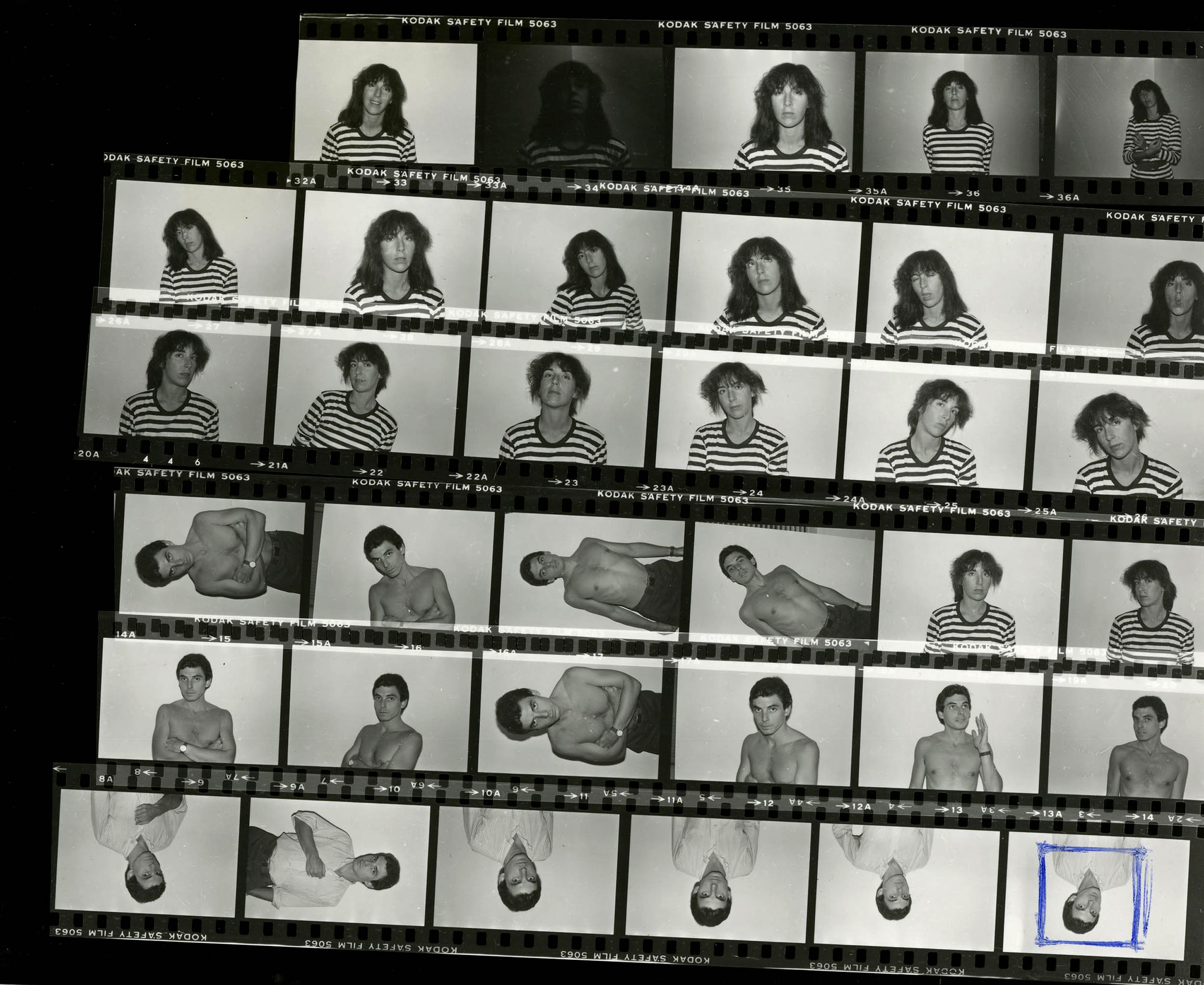
 

Jimmy DeSana (American, 1949-1990) 'Contact Sheet of Portraits of Jimmy DeSana and Laurie Simmons' c. 1978


Jimmy DeSana (American, 1949-1990)
Contact Sheet of Portraits of Jimmy DeSana and Laurie Simmons
c. 1978
New York University, Fales Library, Jimmy DeSana Papers, MSS.202, Box 66
Photo: Courtesy of Fales Library at NYU


In 1973, shortly after moving to New York, Jimmy DeSana met fellow artist Laurie Simmons while riding the A train to Far Rockaway.

The two soon shared a SoHo loft with twin photographic darkrooms. Simmons has often acknowledged that DeSana, who received a BFA in photography, taught her most of what she knows about the medium, acting as a friend, mentor, and interlocutor until his death in 1990. Simmons also became a model and muse for DeSana’s work.

Now the executor of the Jimmy DeSana Trust for several decades, Simmons writes, “I am immensely grateful for every moment Jimmy and I spent together, for every freezing second I floated naked in a pool or held an awkward pose for way too long, for this was my graduate program in photography – this is really where I learned to make a picture… standing within Jimmy’s quiet but determined force field, emulating his laser-like focus and his ultimate belief that making art was a space to play and dream.”

Text from the Brooklyn Museum Tumblr website
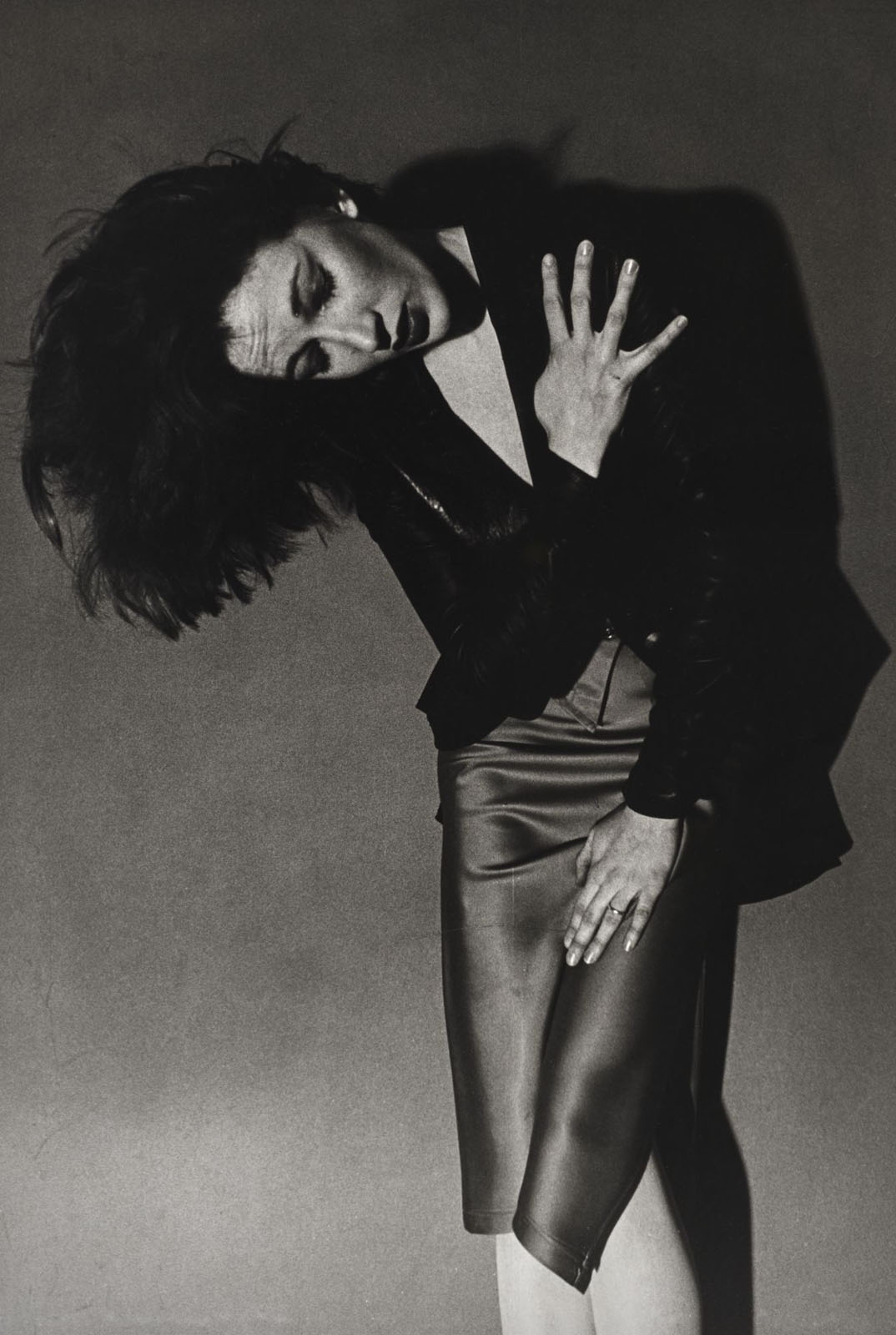
 

Jimmy DeSana (American, 1949-1990) 'Terence Sellers' 1978


Jimmy DeSana (American, 1949-1990)
Terence Sellers
1978
Gelatin silver print
9 5/8 × 6 1/2 in. (24.4 × 16.5cm)
Courtesy of the Jimmy DeSana Trust and P·P·O·W Gallery, New York
© Estate of Jimmy DeSana. (Photo: Allen Phillips)
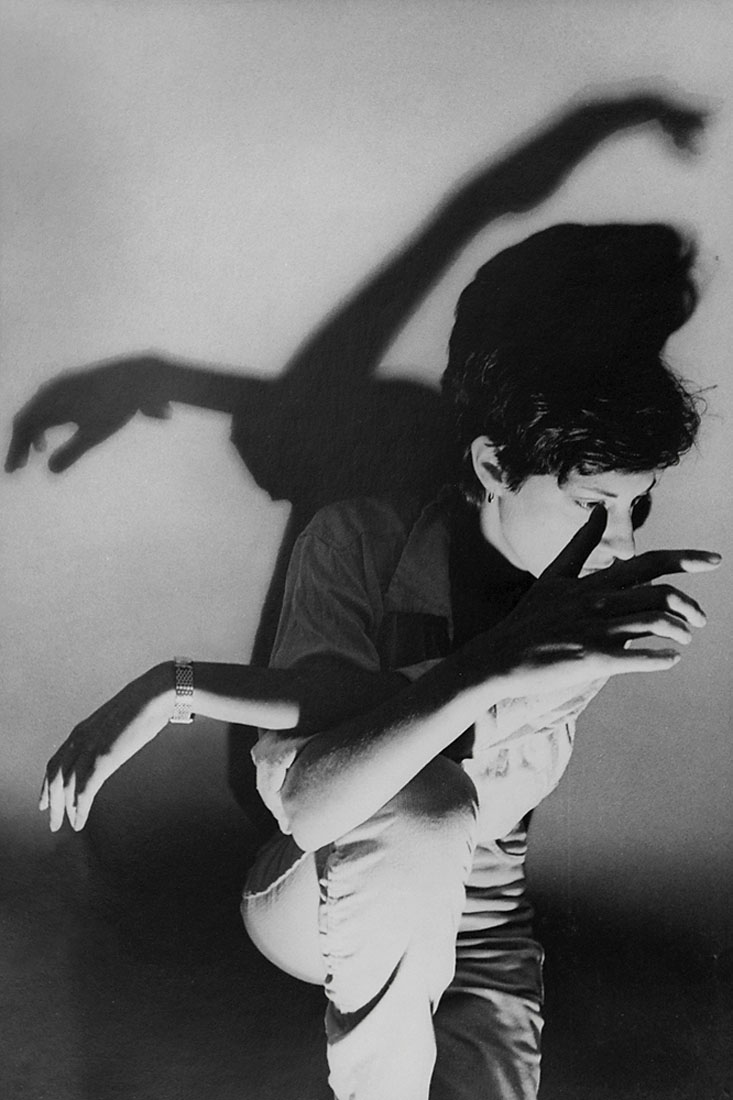
 

Jimmy DeSana (American, 1949-1990) 'Betsy Sussler' 1978


Jimmy DeSana (American, 1949-1990)
Betsy Sussler
1978
Gelatin silver print
15 7/8 × 11 in. (40.3 × 27.9cm)
Courtesy of the Jimmy DeSana Trust and P·P·O·W, New York
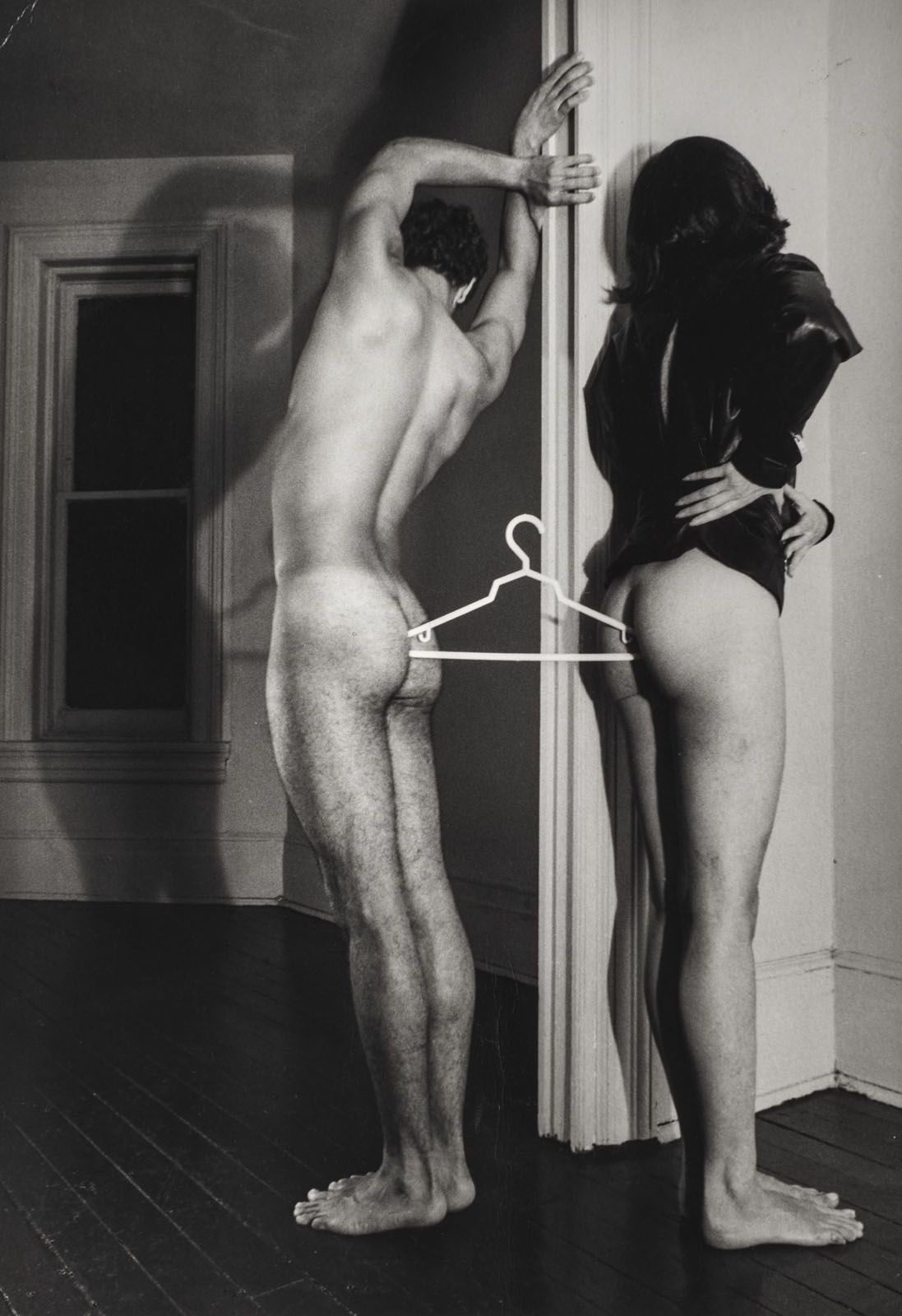
 

Jimmy DeSana (American, 1949-1990) 'Coat Hanger' 1979


Jimmy DeSana (American, 1949-1990)
Coat Hanger
1979
Gelatin silver print
9 9/16 × 6 5/8 in. (24.3 × 16.8cm)
Courtesy of the Jimmy DeSana Trust and P·P·O·W Gallery, New York
© Estate of Jimmy DeSana
Photo: Allen Phillips


The Brooklyn Museum Presents Jimmy DeSana: Submission, the First Museum Survey of Work by the Pioneering Queer, Punk Photographer. The exhibition features more than two hundred works, which trace a career that bridged mail art networks, New York’s 1970s punk and No Wave subcultures, the illuminating image-play of the “Pictures Generation,” and the various artistic and affective responses to the beginning of the HIV/AIDS epidemic.

Jimmy DeSana: Submission is the first museum survey of work by a major yet overlooked figure in the histories of photography, LGBTQ artists, and New York City. Among his many significant contributions, Jimmy DeSana (American, 1949-1990) reintroduced the body and sexuality into the conceptual photographic practices of the late 1960s and early 1970s, helping to elevate the medium within the contemporary art world. The exhibition traces the artist’s brief but prolific career through more than two hundred works on display (some for the first time), created during a time of profound cultural and political transformation in the United States. From his early days photographing suburban landscapes in Atlanta, Georgia, to his time as a key figure in the New York art and music scenes of the 1970s and 1980s, DeSana conveyed the radical spirit of his era and a pointed, ironic critique of the American Dream and its images. Jimmy DeSana: Submission opens November 11, 2022, and is organised by Drew Sawyer, Phillip Leonian and Edith Rosenbaum Leonian Curator of Photography, Brooklyn Museum.

“This retrospective, the first since DeSana’s death from AIDS-related complications in 1990, will enable so many to view for the first time the full breadth of his iconoclastic artistic output, positioning his more well-known series within his interdisciplinary and collaborative practice in mail art, zines, performance, and film,” says Sawyer. “DeSana drew upon punk, Camp, sadomasochism, dreamworlds, performance art, experimental film, club culture, and the legacy of twentieth-century avant-gardes in ways that make his work unique among his peers. Jimmy DeSana: Submission brings together these multiple themes to show why his work is so relevant to artistic practices today.”

Along with his friends and peers, Jimmy DeSana sought to forge arts communities outside of traditional institutions (and the concurrent gentrification that displaced artists from Lower Manhattan). Instead, he chose to display his work via collectives, artist-run spaces, and the informal groupings of the underground nightclub scene, as well as the more democratised dissemination systems of mail art networks. Submission prominently features examples of DeSana’s contributions to early queer zines throughout the 1970s – from General Idea’s File magazine to John Jack Baylin and John Dowd’s Fanzini to Gregory Battcock’s Trylon & Perisphere – as well as his first major series, 101 Nudes (1972), which was circulated through mail art networks. DeSana published this portfolio of photolithographic prints, portraying his friends posing nude in the bland interiors of Atlanta’s postwar houses, at the height of the Gay Liberation Movement and the city’s reactive censorship. These formative images employ a distinctly queer approach to domesticity and invite viewers to look beneath the veneer of suburban propriety, a concept that would capture the artist’s creative attention for the rest of his career.

The exhibition also contains selections from Submission (1980), DeSana’s book of BDSM-related photographs that play with liberation and conformity, and ideological power alongside the myths of postwar capitalism. This section also includes related photographs from a collaboration with writer and sex worker Terence Sellers (American, 1952-2016) that were intended for her first book, The Correct Sadist (1983). Most of these photographs have not been previously displayed or published.

Continuing the survey is DeSana’s series Suburban (1979-1984), perhaps the artist’s best-known photographs and his first in colour. Building off of 101 Nudes, DeSana used a cast of friends and collaborators to explore the queerness of postwar suburban culture by placing nude bodies, often abstracted and contorted, in suburban backyards, wood-panelled living rooms, and tiled bathrooms. Using vivid gel-lighting to produce its characteristic heavily saturated, candy-coloured prints, Suburban mimics the seductive, materialist aesthetics of fashion photography and the set design of television advertisements – strategies that were similarly deployed by his friends and peers during this period, including model and artist Laurie Simmons. The images are often skewed and shot from oblique angles, further destabilising the viewer’s perception of the subjects.

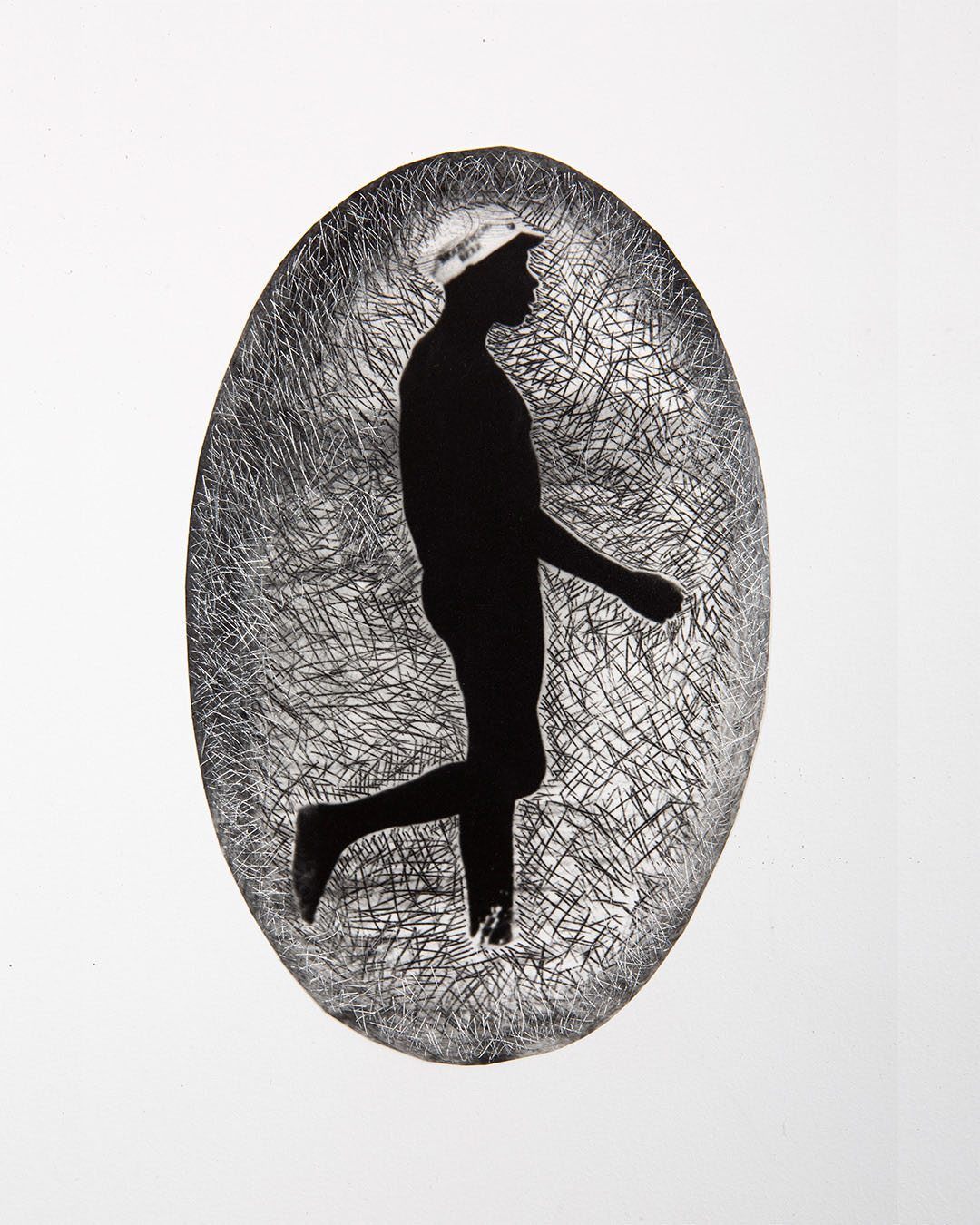
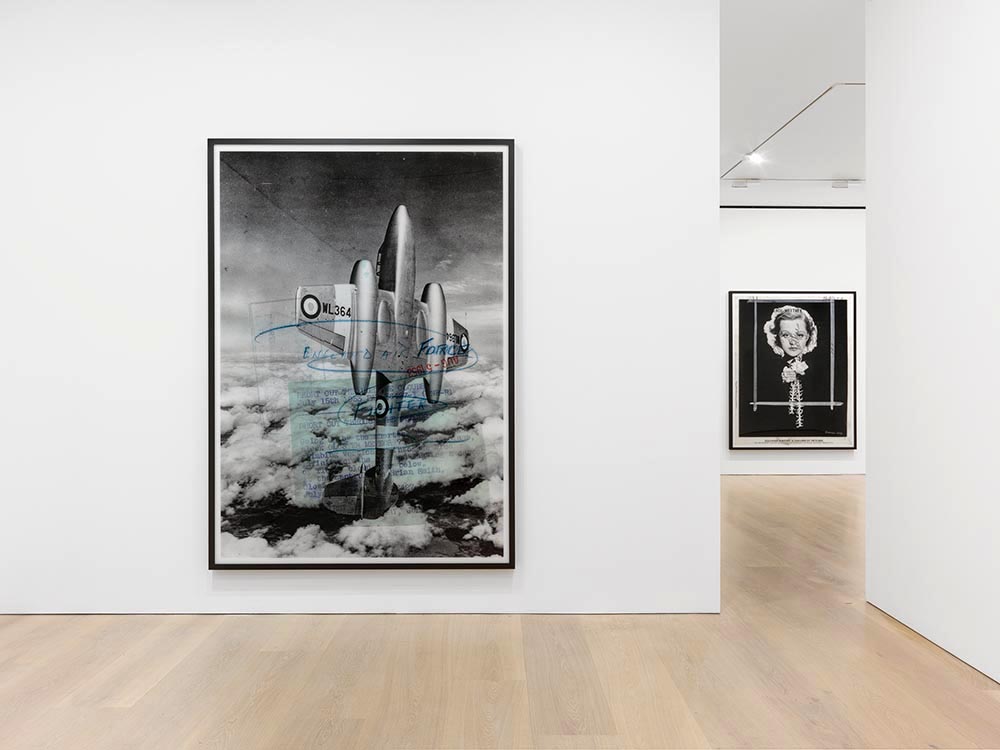
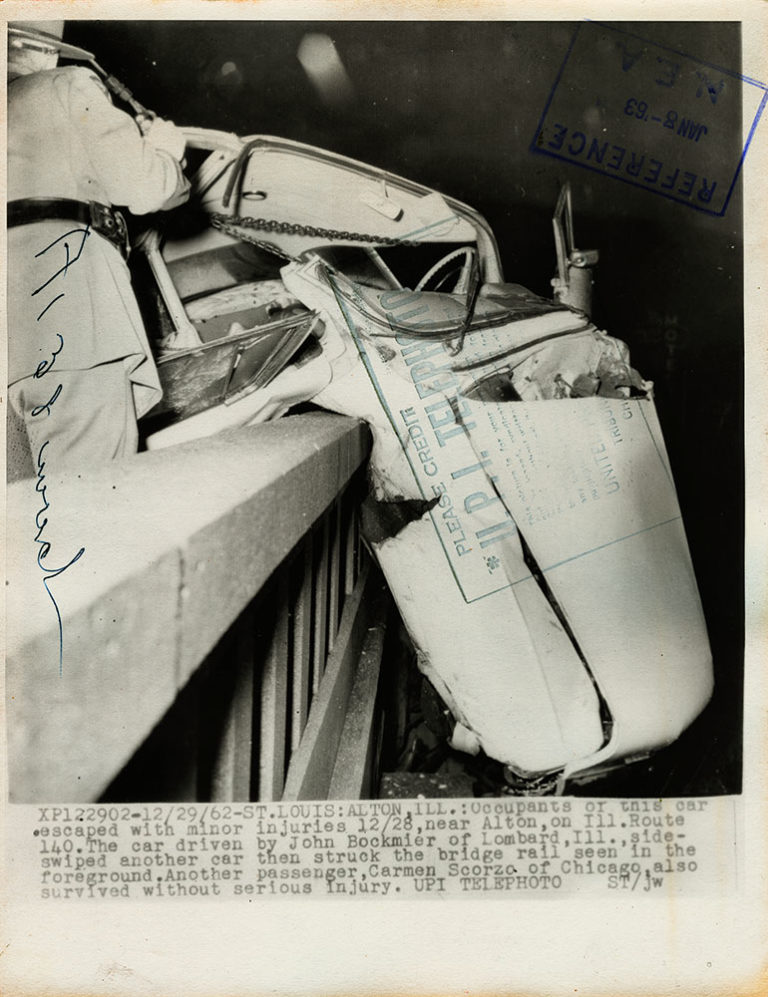
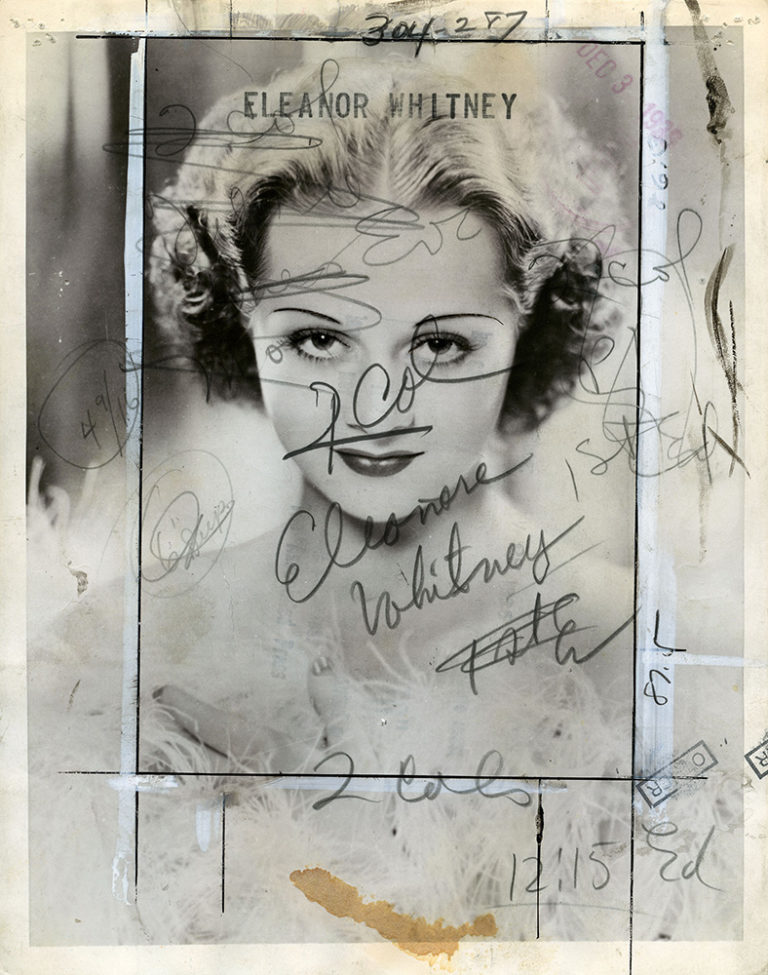
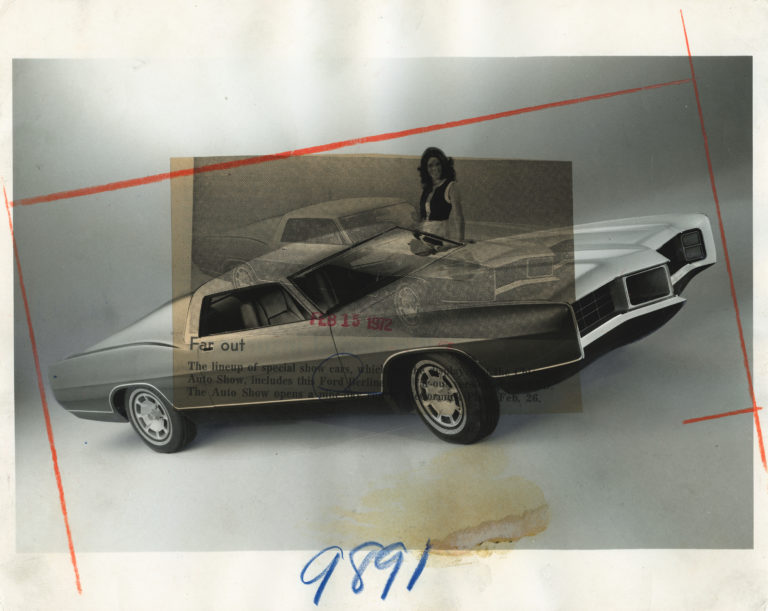
Accompanying the dreamlike colour photographs of the Suburban series are some of DeSana’s subsequent, more abstract efforts from the late 1980s. Made after 1984, when DeSana underwent spleen removal surgery after contracting HIV, the works superimpose warped colour images of everyday objects with collage elements, text, and fragments of figures in motion. DeSana turned away from directly representing the body during this period – in the early years of the ongoing HIV / AIDS epidemic, when gay artists in particular were expected to make work about the epidemic in reaction to government inaction and neglect or misinformation by dominant media.

DeSana was seemingly omnipresent in New York’s punk and No Wave scenes during the late 1970s and 1980s, joining other artists who engaged in symbolic forms of resistance through visual art, literature, music, and film. DeSana photographed a number of prominent figures in those subcultures; the survey will be the first to feature his portraits of art and music luminaries such as Kathy Acker, Laurie Anderson, Kenneth Anger, Patti Astor, David Byrne, John Giorno, Debbie Harry, and Richard Hell. Additionally, the exhibition will highlight DeSana’s photographic contributions to collectives like Collaborative Projects (including their groundbreaking exhibitions and publication, X Motion Picture Magazine), periodicals such as the New York Rocker and Semiotext(e), and No Wave Cinema, in which he was involved as both an actor and a director.

The exhibition will be accompanied by the first scholarly publication on DeSana’s work, featuring essays by Sawyer and artist Laurie Simmons as well as more than two hundred images, co-published with DelMonico Books. Jimmy DeSana: Submission is organised by Drew Sawyer, Phillip Leonian and Edith Rosenbaum Leonian Curator of Photography, Brooklyn Museum.

Press release from the Brooklyn Museum
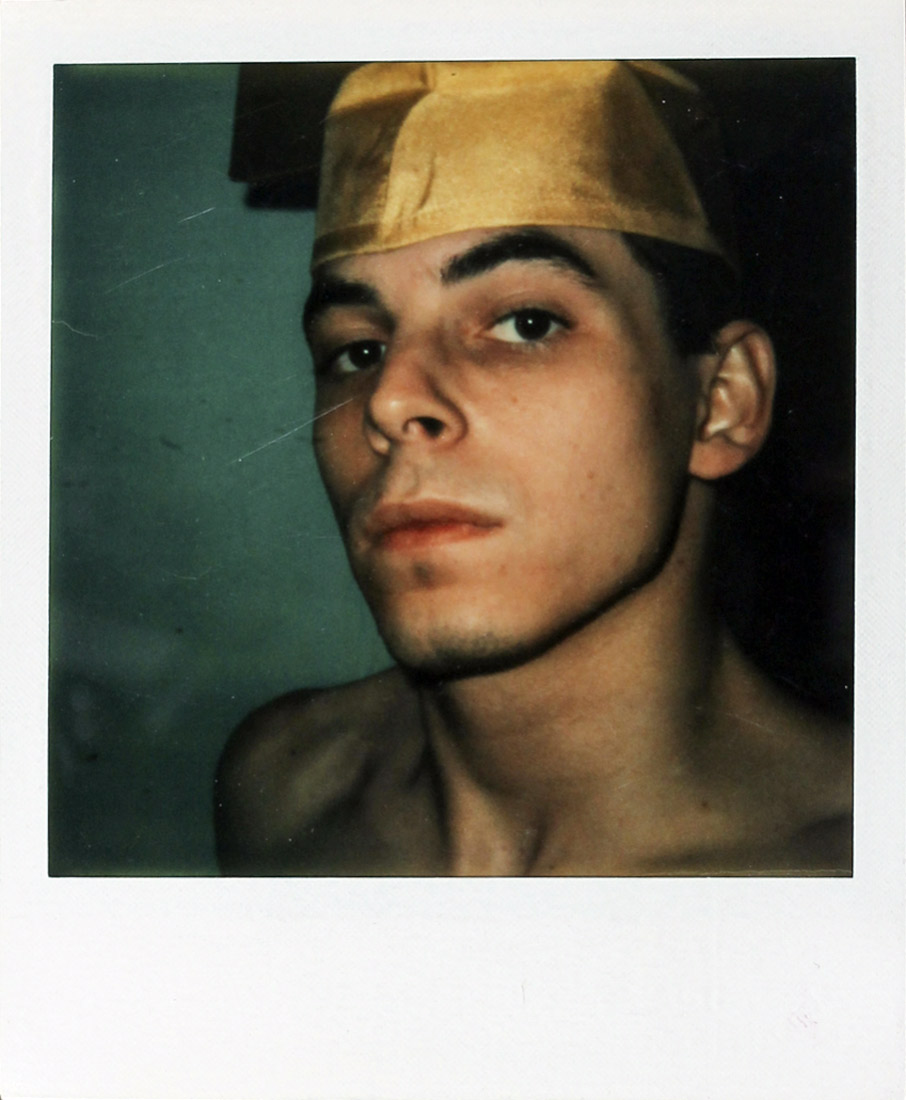
 

Jimmy DeSana (American, 1949-1990) 'Untitled (Self-Portrait w/ Graduation Cap)' 1978


Jimmy DeSana (American, 1949-1990)
Untitled (Self-Portrait w/ Graduation Cap)
1978
Polaroid
Cornell University, Division of Rare and Manuscript Collections, Diego Cortez No Wave Collection, 1972-1981, Collection Number: 8120, Box 1, Folder 17
Photo: Courtesy of Cornell University


James, Jim, Jimmy; de Sana, deSana, De Sana, DeSana. Just as Jimmy DeSana rarely stuck with one version of his name, he refused to limit two of his main artistic engagements – photography and the theme of desire – to fixed identities.⁠

Born in Detroit on November 12, 1949, James Arthur DeSana Jr. developed an early involvement in photography when he received a Kodak camera for Christmas at age seven. After graduating with a BFA in photography from Georgia State University in 1972, DeSana moved to New York, where he became involved in correspondence art, collectives and alternative publications, post-punk music, underground film, and queer nightlife. ⁠

During this time, DeSana amassed a large collection of hats, like the graduation cap he’s wearing in this Polaroid self-portrait. This fervid interest in hats coincided with DeSana’s use of masquerade and invented personae in his mail artworks; he would go on to make use of the hats in his self-portraits throughout the 1970s and 1980s, continuing his subversion of identity.

Text from the Brooklyn Museum Tumblr website
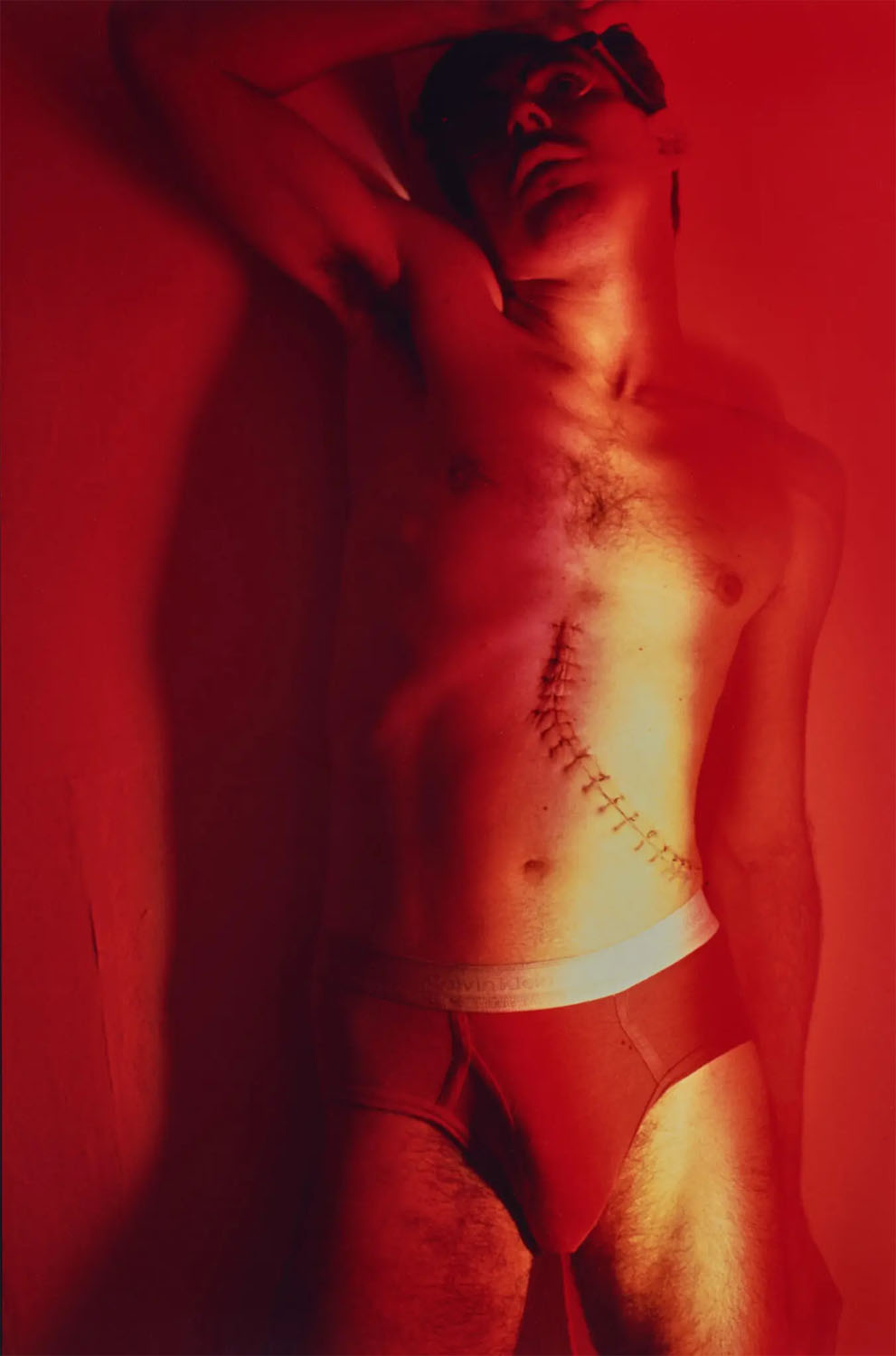
 

Jimmy DeSana (American, 1949-1990) 'Stitches' 1984


Jimmy DeSana (American, 1949-1990)
Stitches
1984
Silver dye bleach print
18 3/4 × 12 5/8 in. (47.6 × 32.1cm)
Courtesy of the Jimmy DeSana Trust and P·P·O·W, New York


He was extending the legacy of the Surrealist photographers of the period between the World Wars. Man Ray in particular presented his subjects with a disorienting spin: He inverted the head of a female smoker whose cigarette looks like a chimney, cast dark shadows to make the naked torso of a woman with upheld arms resemble the head of a bull, and shot his lover, the photographer Lee Miller, from an extreme lower angle so that her neck and chin take on a phallic form. He mixed genders, even species, with gleeful abandon. DeSana joined in the game.

But a 1984 DeSana self-portrait pointed to the painful direction his life was about to take. He photographed himself in red Calvin Klein briefs illuminated in a red glow, one hand on his forehead, his eyes upturned and his expression concerned. A bright beam of white light is directed toward two dozen surgical stitches running from his sternum down his left side. His spleen had just been removed, an early warning of H.I.V. infection. The diagnosis of AIDS came a year later.

Arthur Lubow. “Jimmy DeSana, Downtown Pioneer and Provocateur, Goes Mainstream,” on the New York Times website Nov. 8, 2022 [Online] Cited 02/04/2023
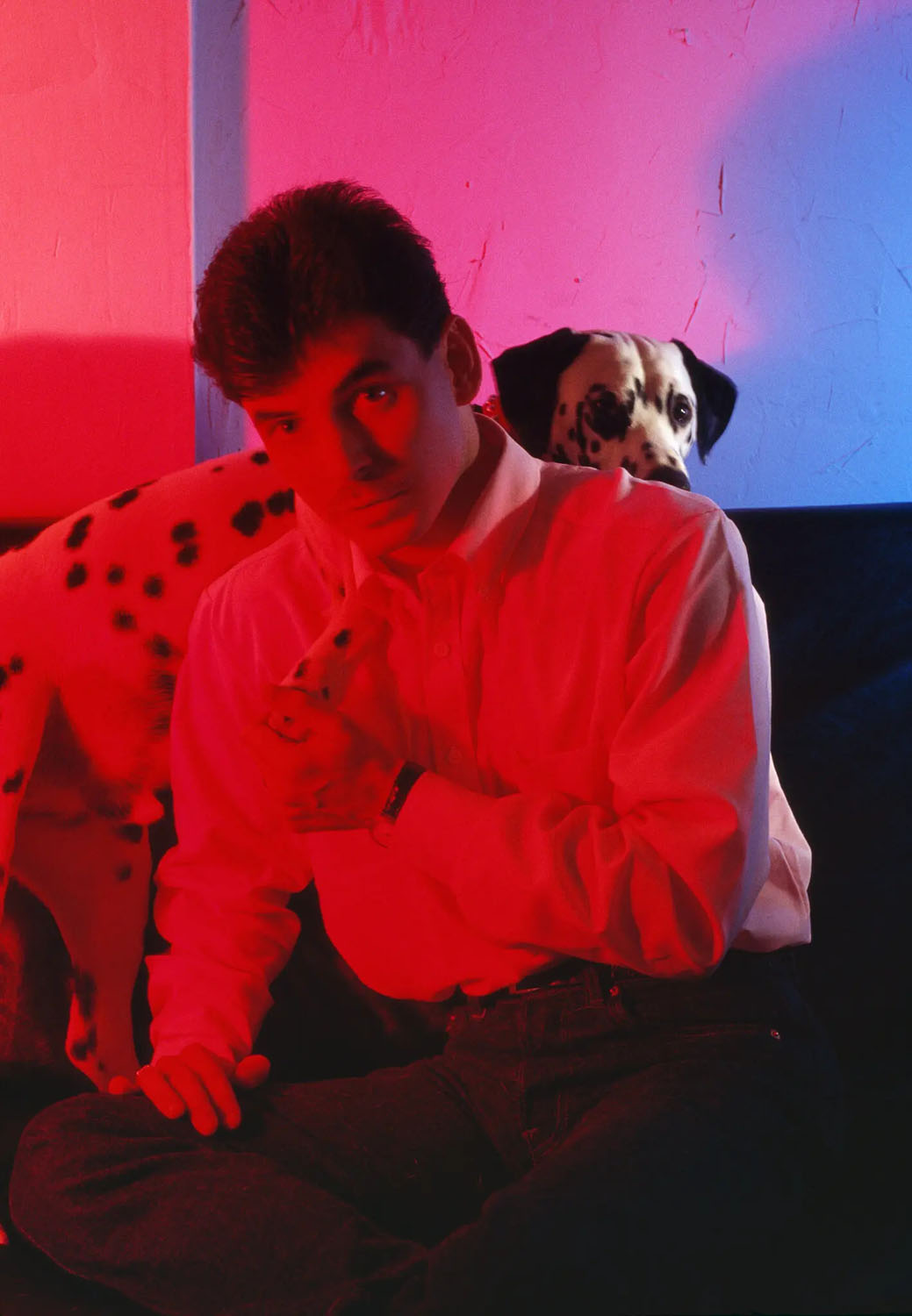
 

Jimmy DeSana (American, 1949-1990) 'Portrait with Dog' Undated


Jimmy DeSana (American, 1949-1990)
Portrait with Dog
Undated
Chromogenic print
20 × 14 in. (50.8 × 35.6cm)
Courtesy of the Jimmy DeSana Trust and P·P·O·W, New York
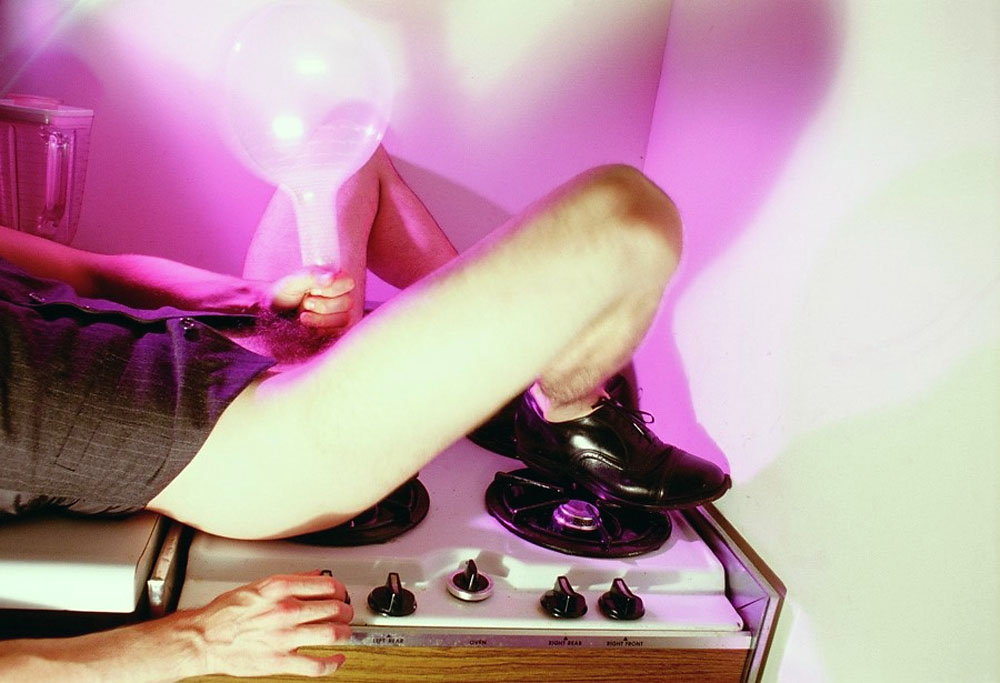
 

Jimmy DeSana 'Suburban' 1979-1984


Jimmy DeSana (American, 1949-1990) 'Condom' 1979


Jimmy DeSana (American, 1949-1990)
Condom
1979
Cibachrome print
12 1/4 × 18 3/4 in. (31.1 × 47.6cm)
Courtesy of the Jimmy DeSana Trust and P·P·O·W, New York
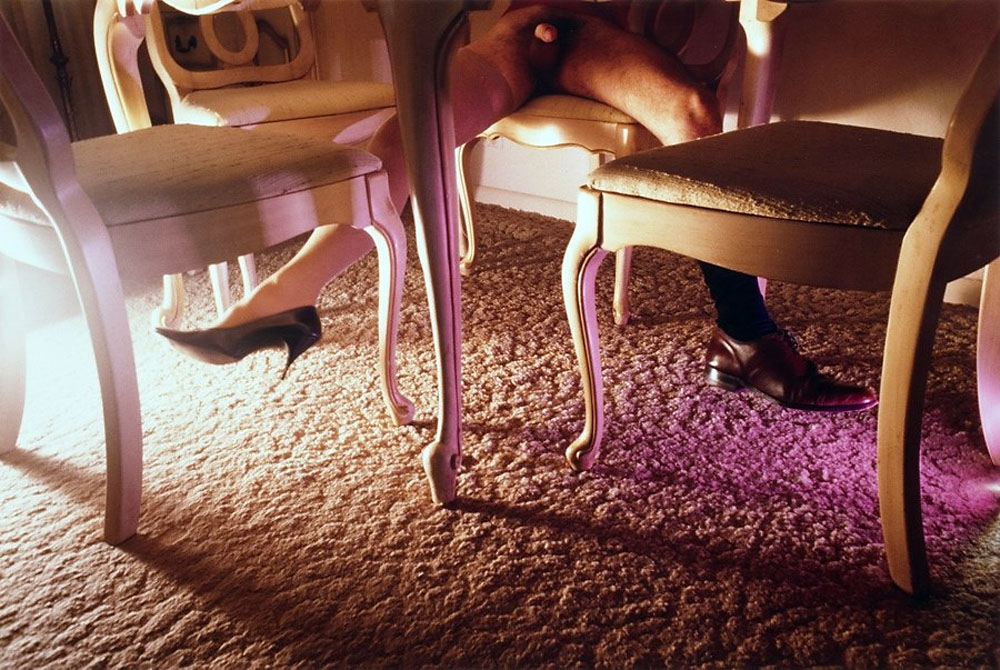
 

Jimmy DeSana (American, 1949-1990) 'Shoes' 1979


Jimmy DeSana (American, 1949-1990)
Shoes
1979
Chromogenic print
15 1/4 × 23 1/2 in. (38.7 × 59.7cm)
Courtesy of the Jimmy DeSana Trust and P·P·O·W, New York
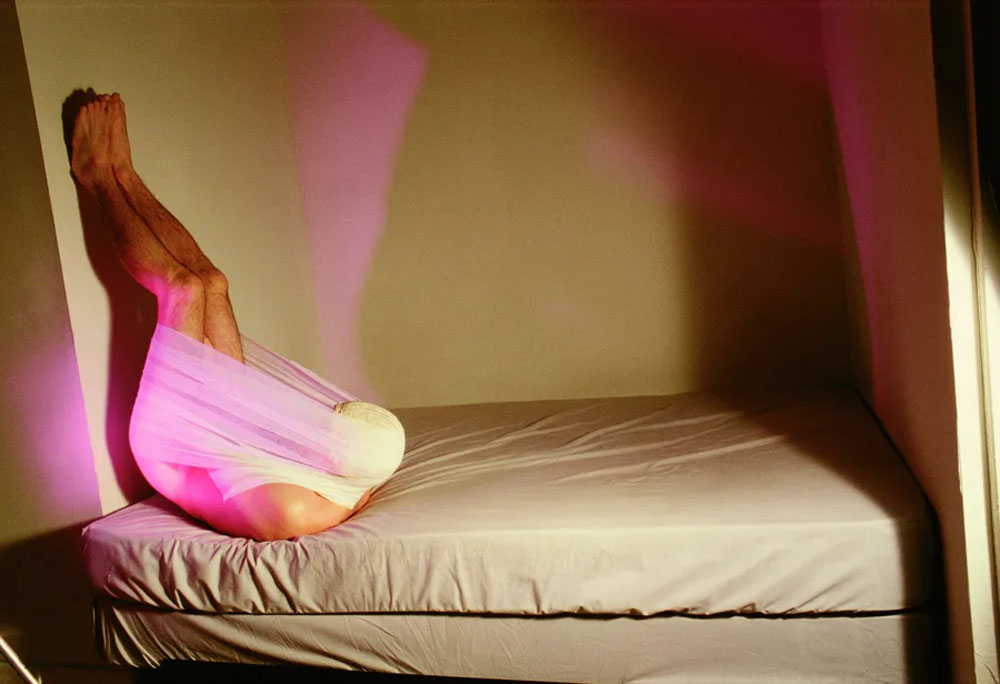
 

Jimmy DeSana (American, 1949-1990) 'Gauze' 1979


Jimmy DeSana (American, 1949-1990)
Gauze
1979
Chromogenic print
12 3/4 × 19 in. (32.4 × 48.3cm)
Courtesy of the Jimmy DeSana Trust and P·P·O·W, New York
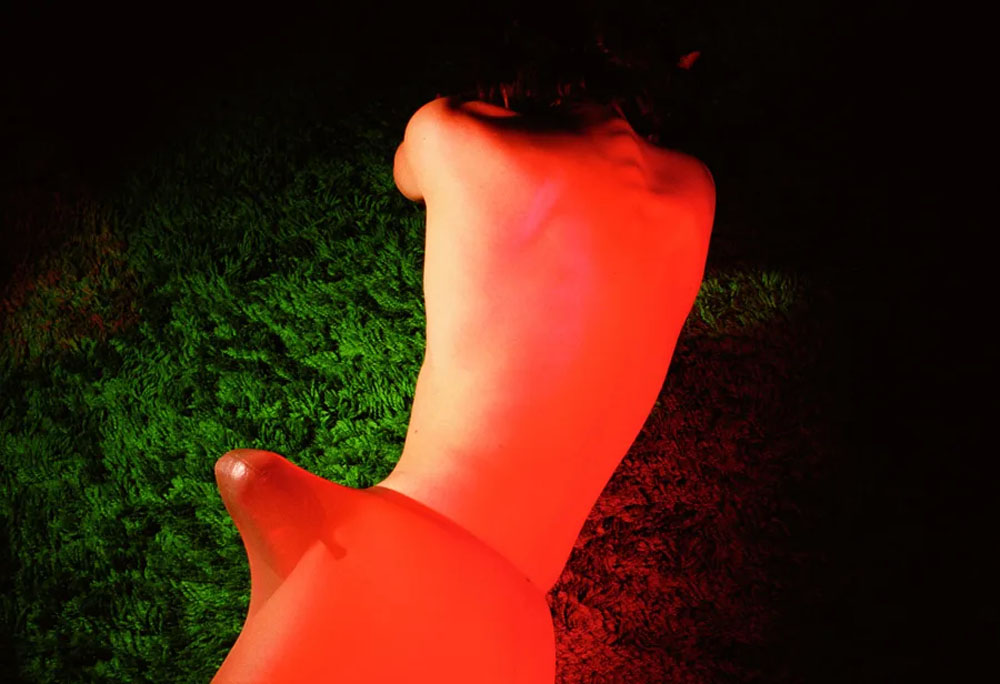
 

Jimmy DeSana (American, 1949-1990) 'Shoe' 1979


Jimmy DeSana (American, 1949-1990)
Shoe
1979
Chromogenic print
13 × 19 in. (33 × 48.3cm)
Courtesy of Jimmy DeSana Trust and PPOW
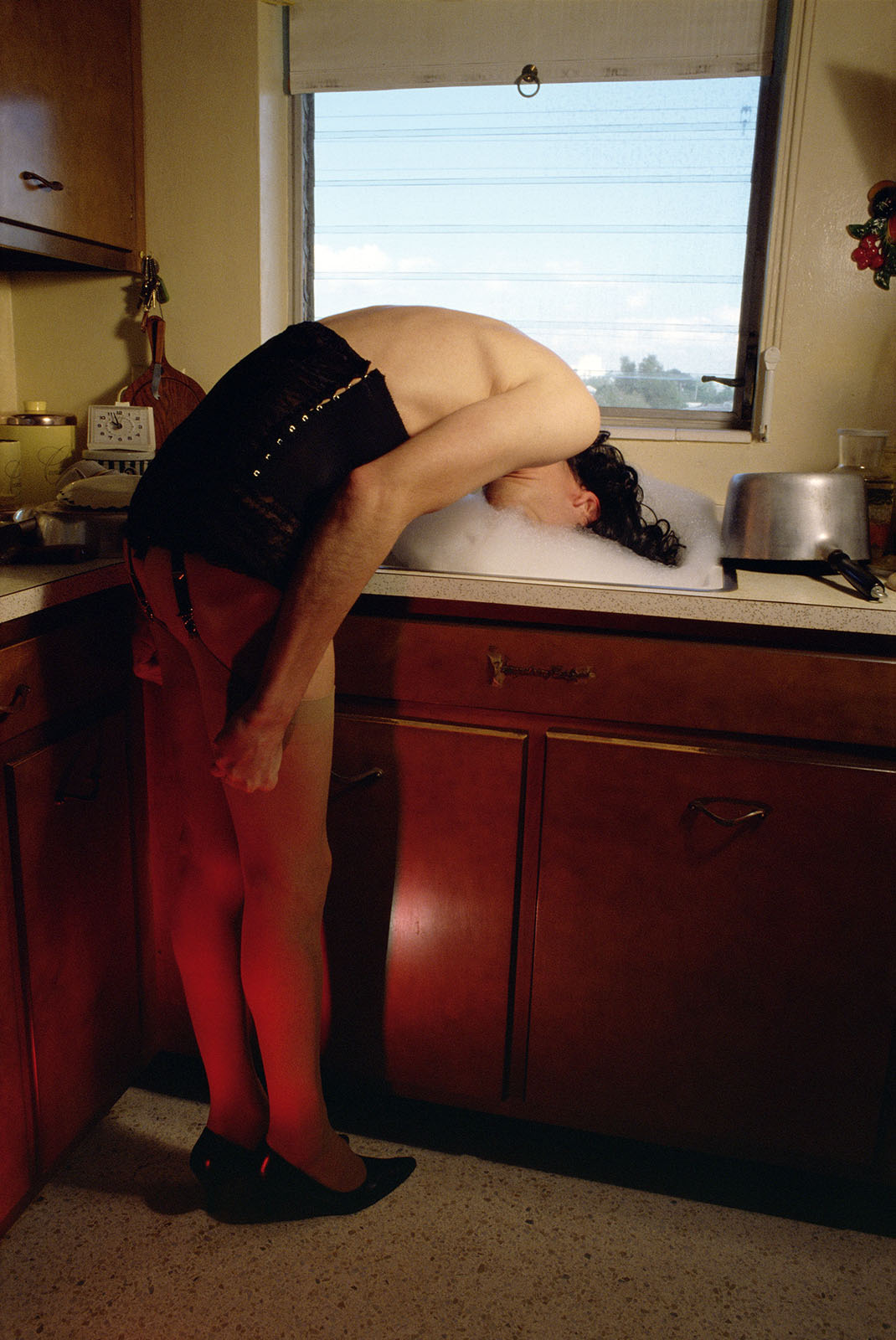
 

Jimmy DeSana (American, 1949-1990) 'Sink' 1979


Jimmy DeSana (American, 1949-1990)
Sink
1979
Silver dye bleach print
19 × 12 5/8 in. (48.3 × 32.1cm)
Courtesy of the Jimmy DeSana Trust and P·P·O·W Gallery, New York
© Estate of Jimmy DeSana
Photo: Courtesy of the Jimmy DeSana Trust and P·P·O·W Gallery, New York


Many of the photographs in Jimmy DeSana’s “Suburban” series explore themes of domestic confinement and social conformity through consumer goods and rituals.

In “Sink” (1979), shown here, an anonymous figure wearing a corset and heels leans over, head dunked in a kitchen sink filled with soap suds. DeSana allows contradictions – between agency and conformity, critique and complicity, punishment and pleasure – to remain open-ended in his work, enabling them to identify and “disidentify” with dominant culture.

Text from the Brooklyn Museum Tumblr website
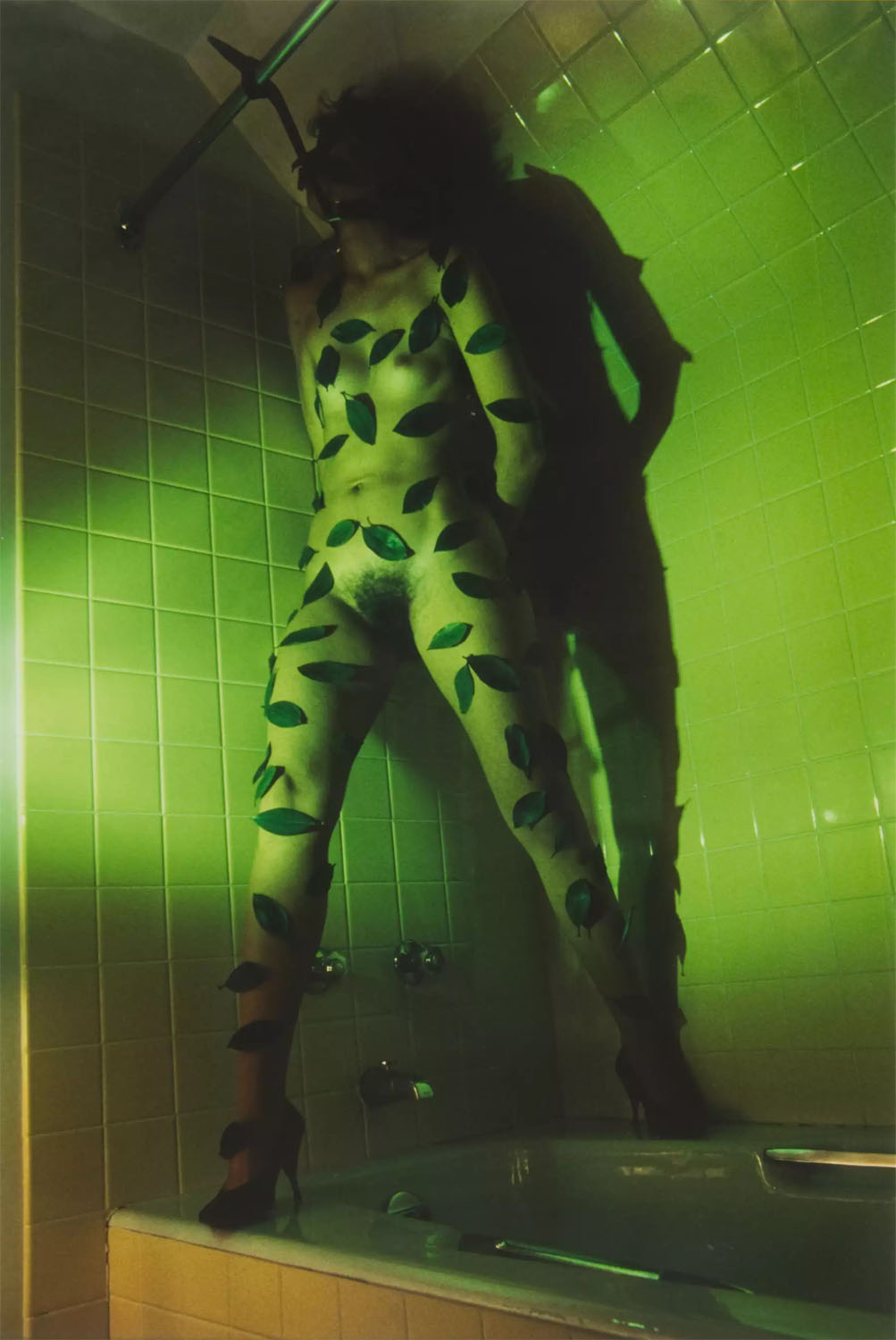
 

Jimmy DeSana (American, 1949-1990) 'Leaves' 1979


Jimmy DeSana (American, 1949-1990)
Leaves
1979
Chromogenic print
18 3/4 × 12 1/2 in. (47.6 × 31.8cm)
Courtesy of the Jimmy DeSana Trust and P·P·O·W, New York
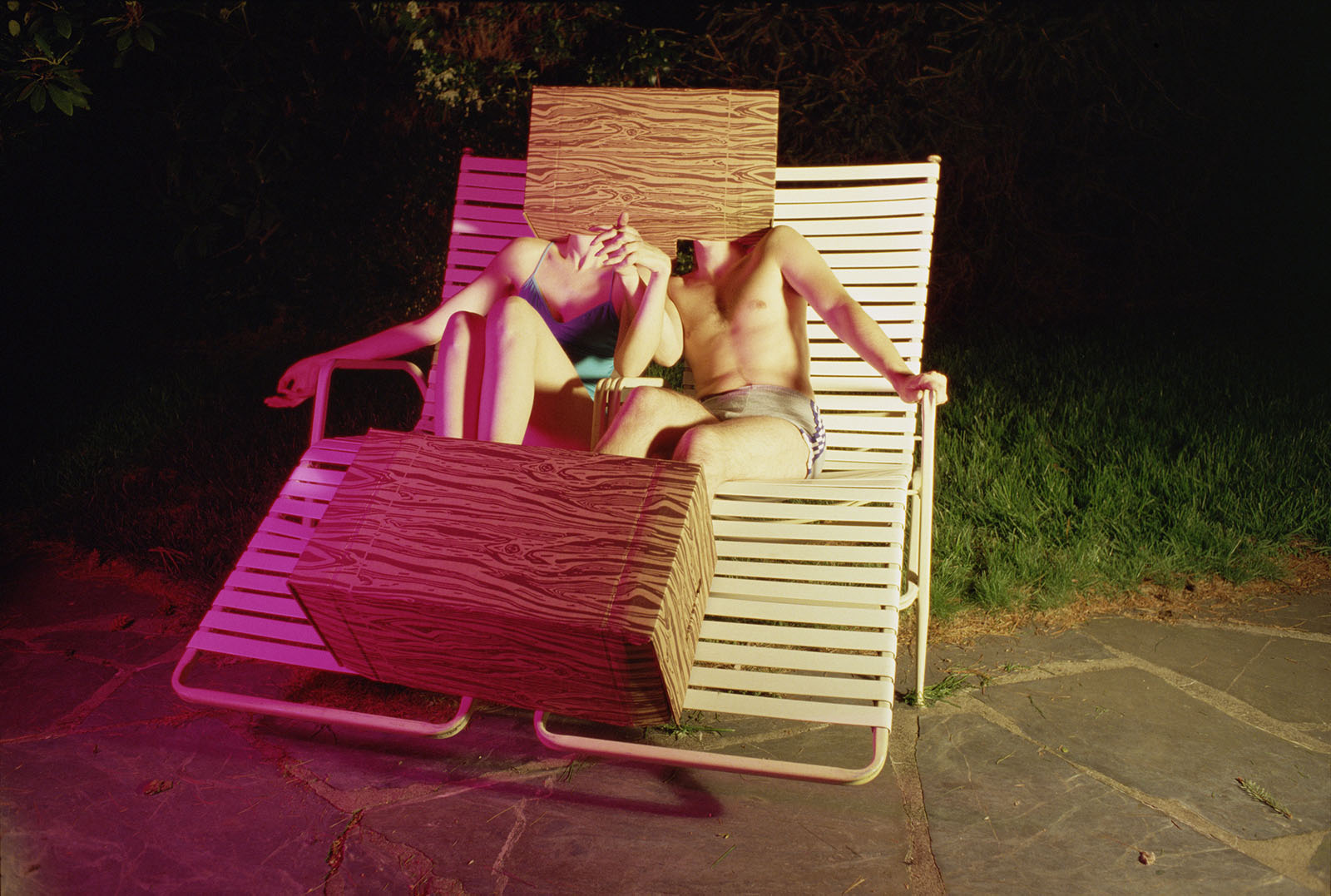
 

Jimmy DeSana (American, 1949-1990) 'Storage Boxes' 1980


Jimmy DeSana (American, 1949-1990)
Storage Boxes
1980
Inkjet print, printed 2022
15 1/2 × 23 1/2 in. (39.4 × 59.7cm)
Courtesy of the Jimmy DeSana Trust and P·P·O·W Gallery, New York
© Estate of Jimmy DeSana
Photo: Courtesy of the Jimmy DeSana Trust and P·P·O·W Gallery, New York


In the late 1970s, the status of colour photography was still disputed within the spaces of museums and art galleries, in part because of its associations with commercial and vernacular uses of the medium, such as fashion photography, advertisements, and home snapshots.

Perhaps even more than the content of his photographs, Jimmy DeSana’s use of gels and tungsten lights to create garish pinks, greens, reds, and oranges flew in the face of accepted taste and allowed him to utilise the medium in decidedly unconventional ways.

In “Storage Boxes” (1980), shown here, a pair of figures sit poolside in lounge chairs, holding hands but with their heads and feet encased in boxes. While many of the figures in his work from this time appear to be confined or dominated by objects, their performances look not like a limitation so much as a relational space that generates a capacity for self-knowledge and pleasure.

Exhibition label
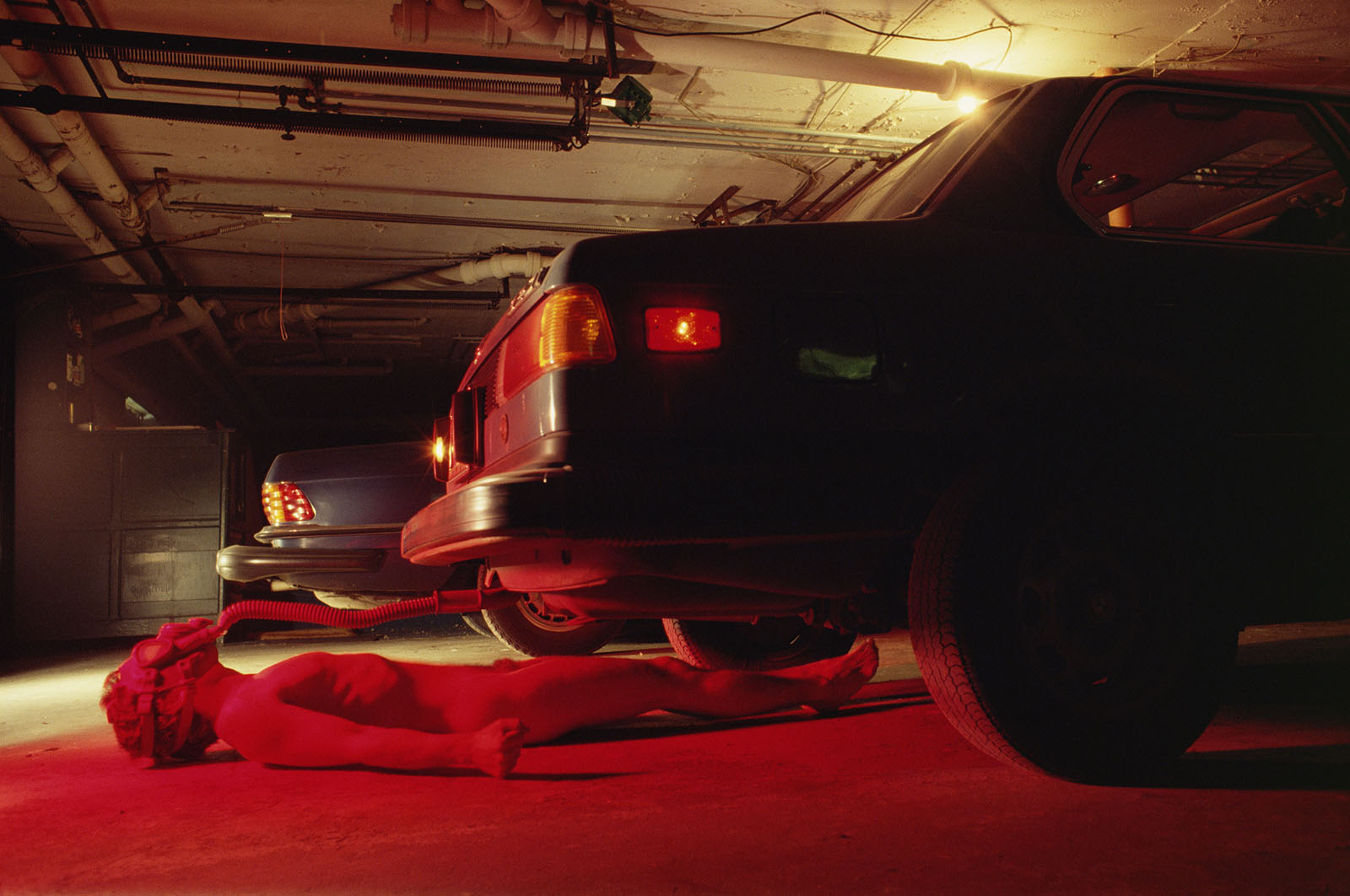
 

Jimmy DeSana (American, 1949-1990) 'Auto' 1980


Jimmy DeSana (American, 1949-1990)
Auto
1980
Chromogenic print
15 5/16 × 22 7/8 in. (38.9 × 58.1cm)
Courtesy of the Jimmy DeSana Trust and P·P·O·W Gallery, New York
© Estate of Jimmy DeSana
Photo: Courtesy of the Jimmy DeSana Trust and P·P·O·W Gallery, New York


DeSana’s photographs frequently feature visual puns. Here, a nude person, perhaps DeSana himself, lies beneath a car with a breathing tube connecting his gas mask to the exhaust pipe. The image appears to be a visual play on “autoerotic asphyxiation,” or the intentional restriction of oxygen to the brain for the purposes of sexual arousal. The image could also be interpreted as a metaphor for America’s subservience to car culture and the harm that automobiles cause us, the red glow adding an ominous tone.

Exhibition label
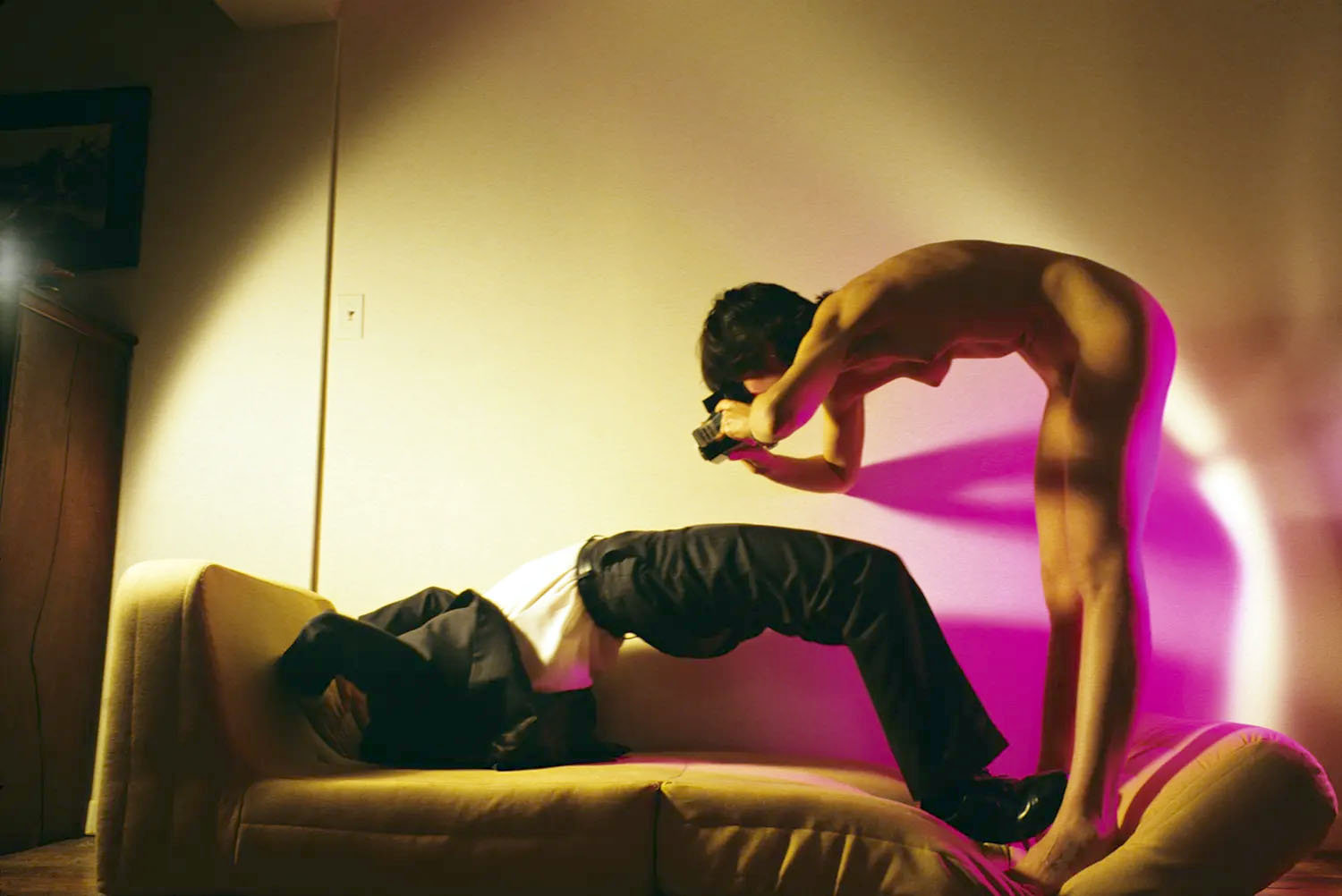
 

Jimmy DeSana (American, 1949-1990) 'Instant Camera' 1980


Jimmy DeSana (American, 1949-1990)
Instant Camera
1980
Chromogenic print
15 1/8 × 23 in. (38.4 × 58.4 cm)
Courtesy of the Jimmy DeSana Trust and P·P·O·W, New York
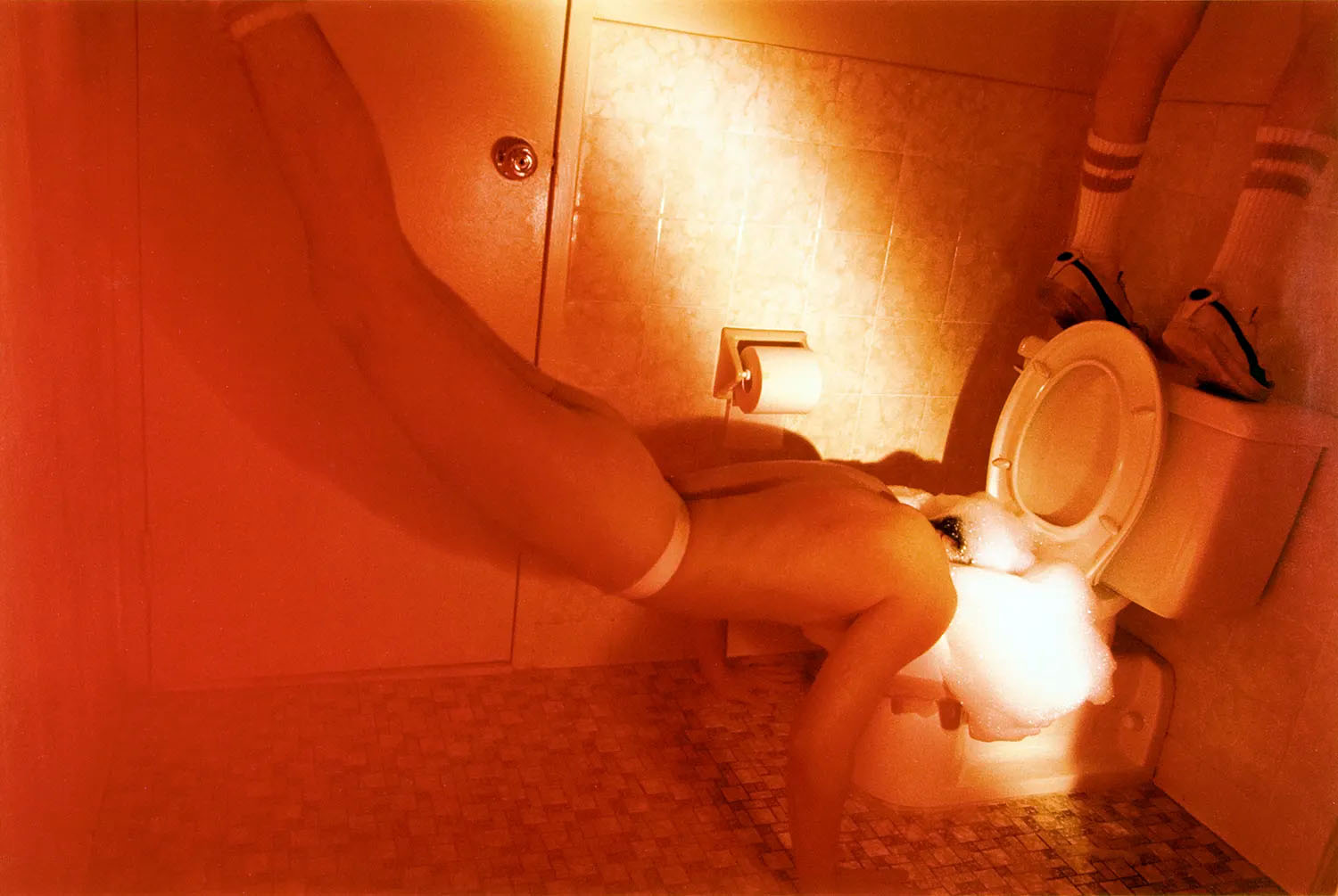
 

Jimmy DeSana (American, 1949-1990) 'Soap Suds' 1980


Jimmy DeSana (American, 1949-1990)
Soap Suds
1980
Chromogenic print
15 1/8 × 22 3/4 in. (38.4 × 57.8cm)
Courtesy of the Jimmy DeSana Trust and P·P·O·W, New York
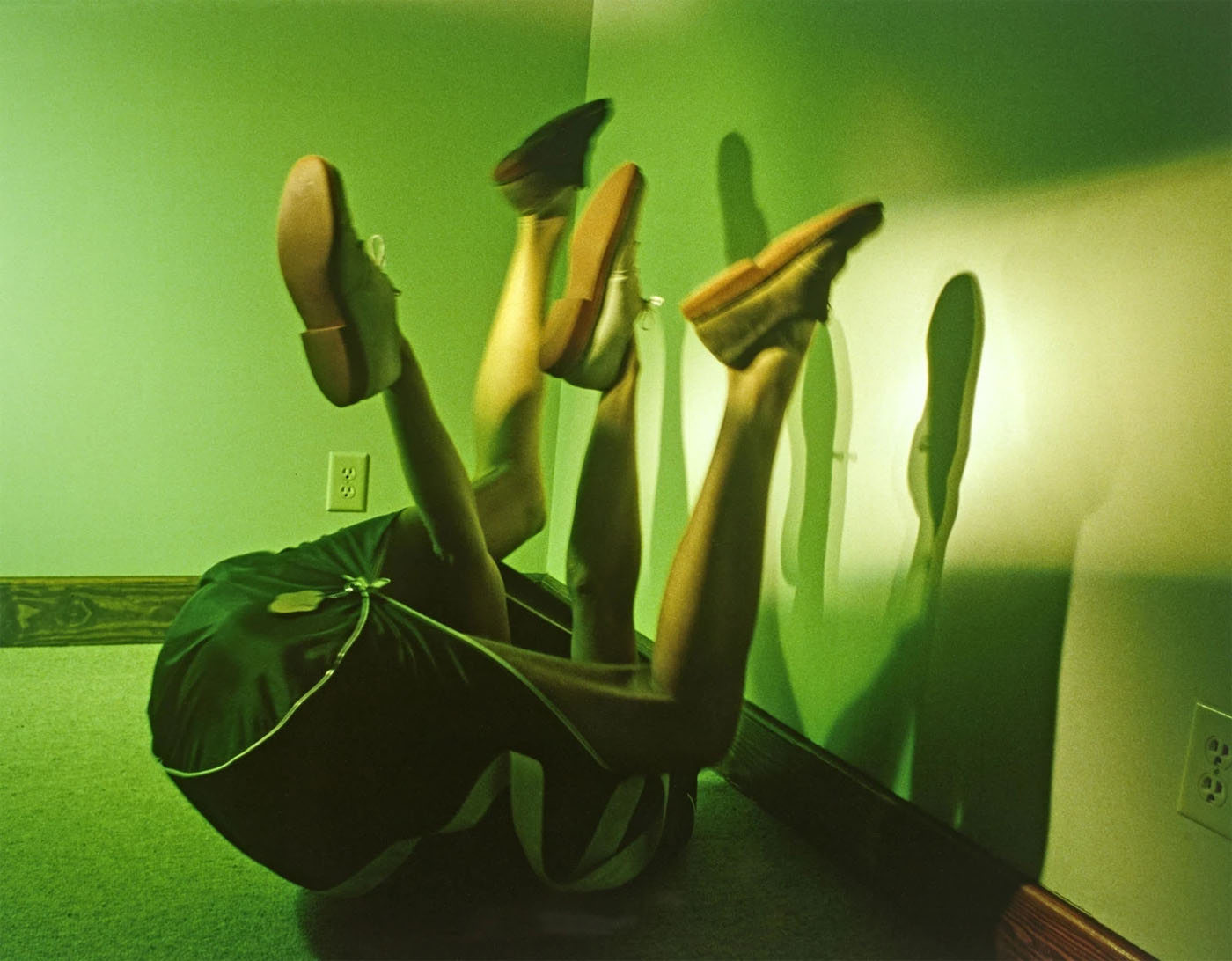
 

Jimmy DeSana (American, 1949-1990) 'Four Legs with Shoes' 1980


Jimmy DeSana (American, 1949-1990)
Four Legs with Shoes
1980
Chromogenic print
14 3/4 × 18 7/8 in. (37.5 × 47.9cm)
Courtesy of the Jimmy DeSana Trust and P·P·O·W, New York
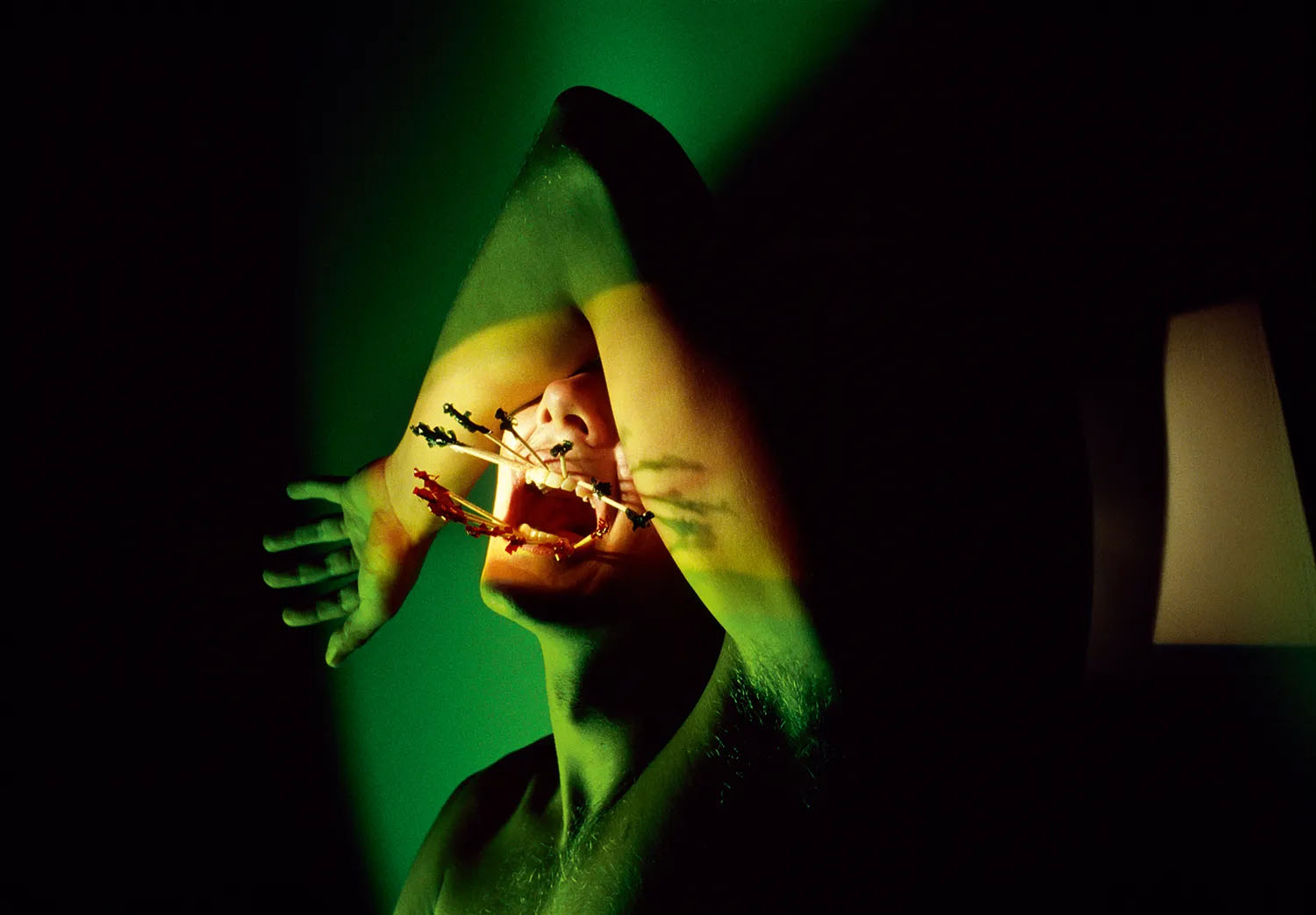
 

Jimmy DeSana (American, 1949-1990) 'Party Picks' 1981


Jimmy DeSana (American, 1949-1990)
Party Picks
1981
Inkjet print, printed 2013
32 3/4 × 49 1/2 in. (83.2 × 125.7cm)
Courtesy of the Jimmy DeSana Trust and P·P·O·W, New York
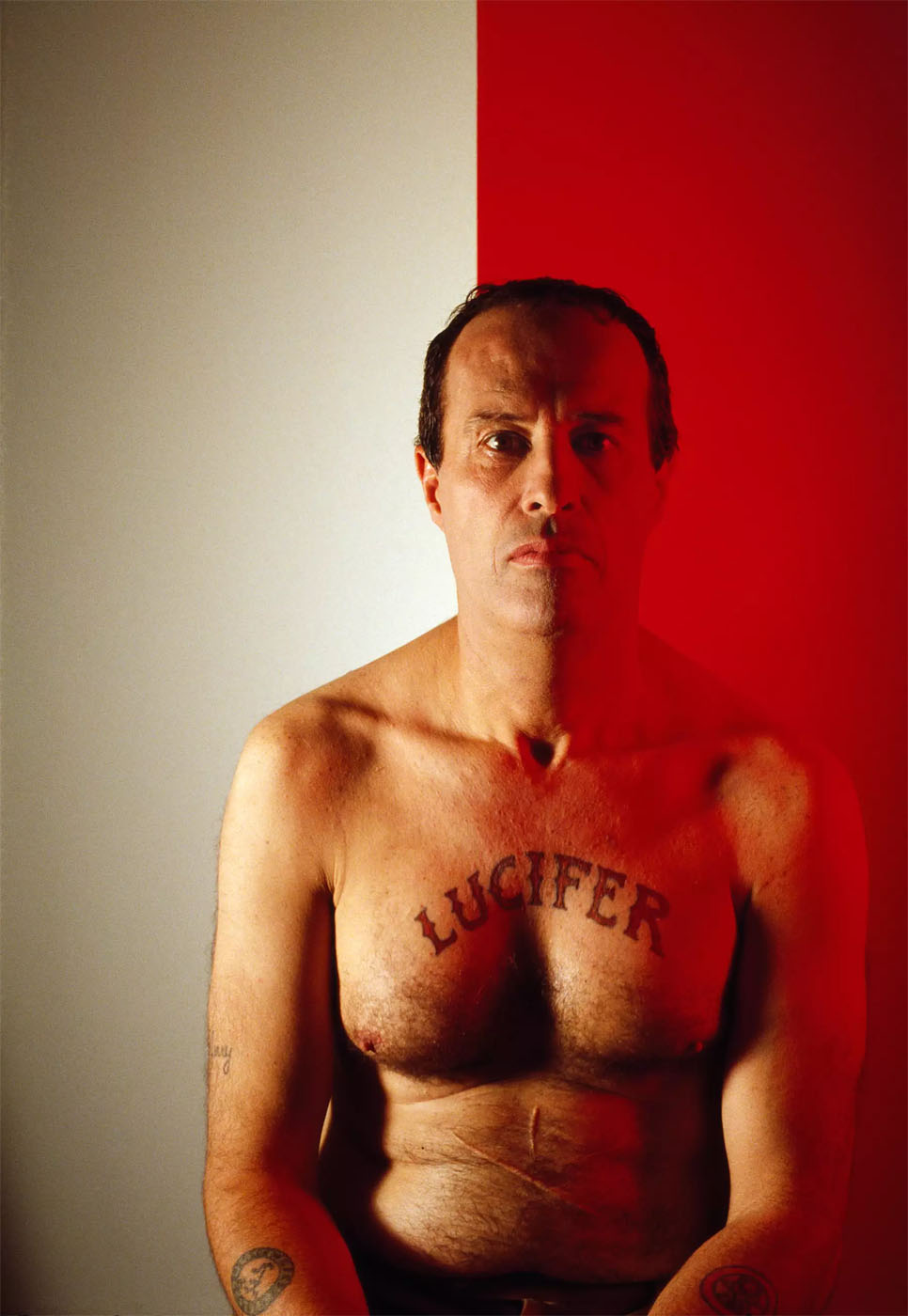
 

Jimmy DeSana (American, 1949-1990) 'Kenneth Anger' 1980


Jimmy DeSana (American, 1949-1990)
Kenneth Anger
1980
Chromogenic print
20 × 13 1/2 in. (50.8 × 34.3 cm)
Courtesy of the Jimmy DeSana Trust and P·P·O·W, New York
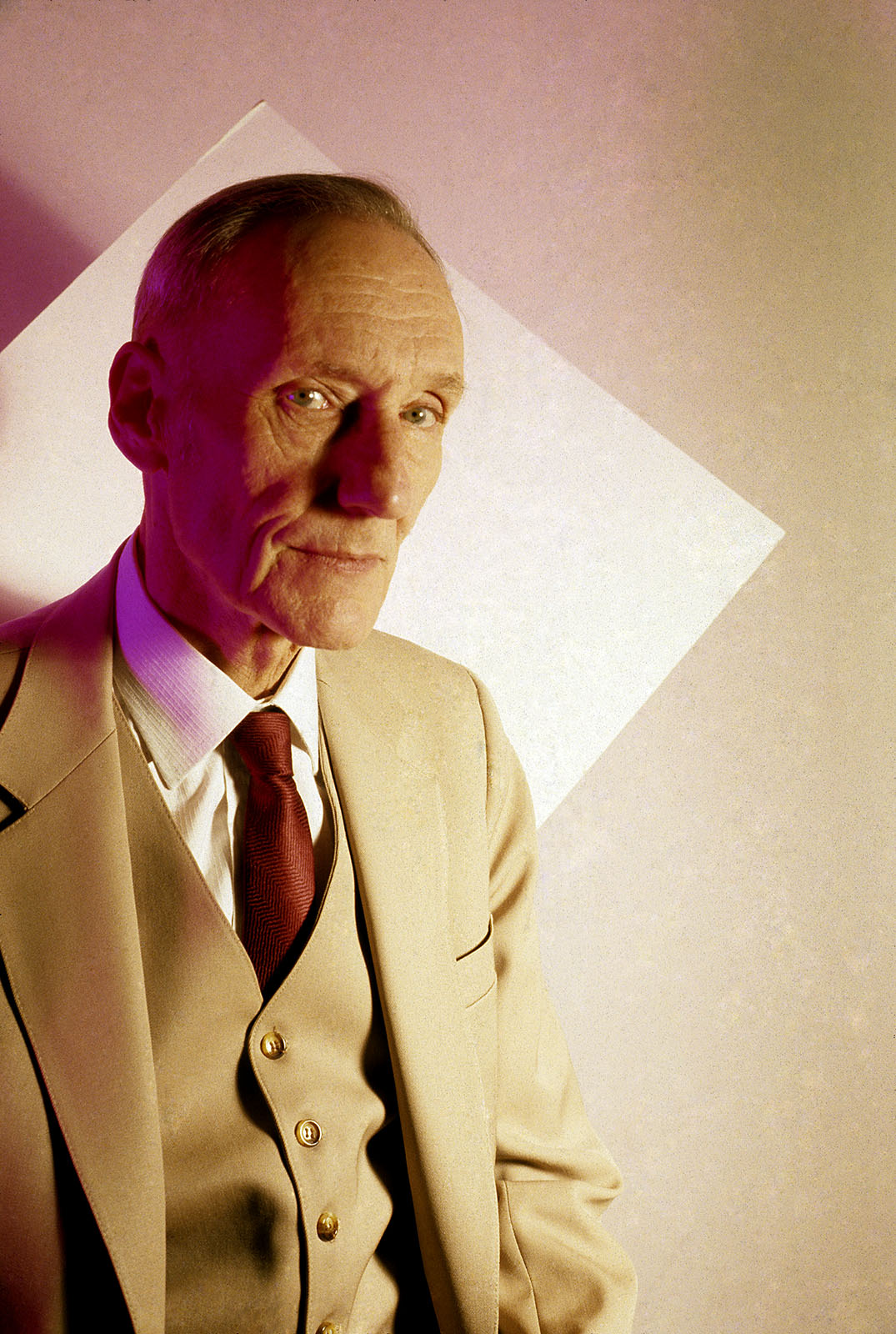
 

Jimmy DeSana (American, 1949-1990) 'William S. Burroughs' 1981


Jimmy DeSana (American, 1949-1990)
William S. Burroughs
1981
Chromogenic print
20 × 13 1/2 in. (50.8 × 34.3cm)
Courtesy of the Jimmy DeSana Trust and P·P·O·W Gallery, New York
© Estate of Jimmy DeSana
Photo: Courtesy of the Jimmy DeSana Trust and P·P·O·W Gallery, New York


Throughout his career, DeSana befriended and photographed an older generation of pioneering queer male artists and writers who similarly transgressed societal norms through their work and life. Also like DeSana, many subverted pop culture imagery and operated outside of official institutions.

Exhibition label
 

Jimmy DeSana Queering Histories 1984-1990


Jimmy DeSana (American, 1949-1990) 'Bubblegum (Self-Portrait)' 1984


Jimmy DeSana (American, 1949-1990)
Bubblegum (Self-Portrait)
1984
Silver dye bleach print
19 5/8 × 15 1/2 in. (49.8 × 39.4cm)
Courtesy of the Jimmy DeSana Trust and P·P·O·W Gallery, New York
© Estate of Jimmy DeSana
Photo: Allen Phillips


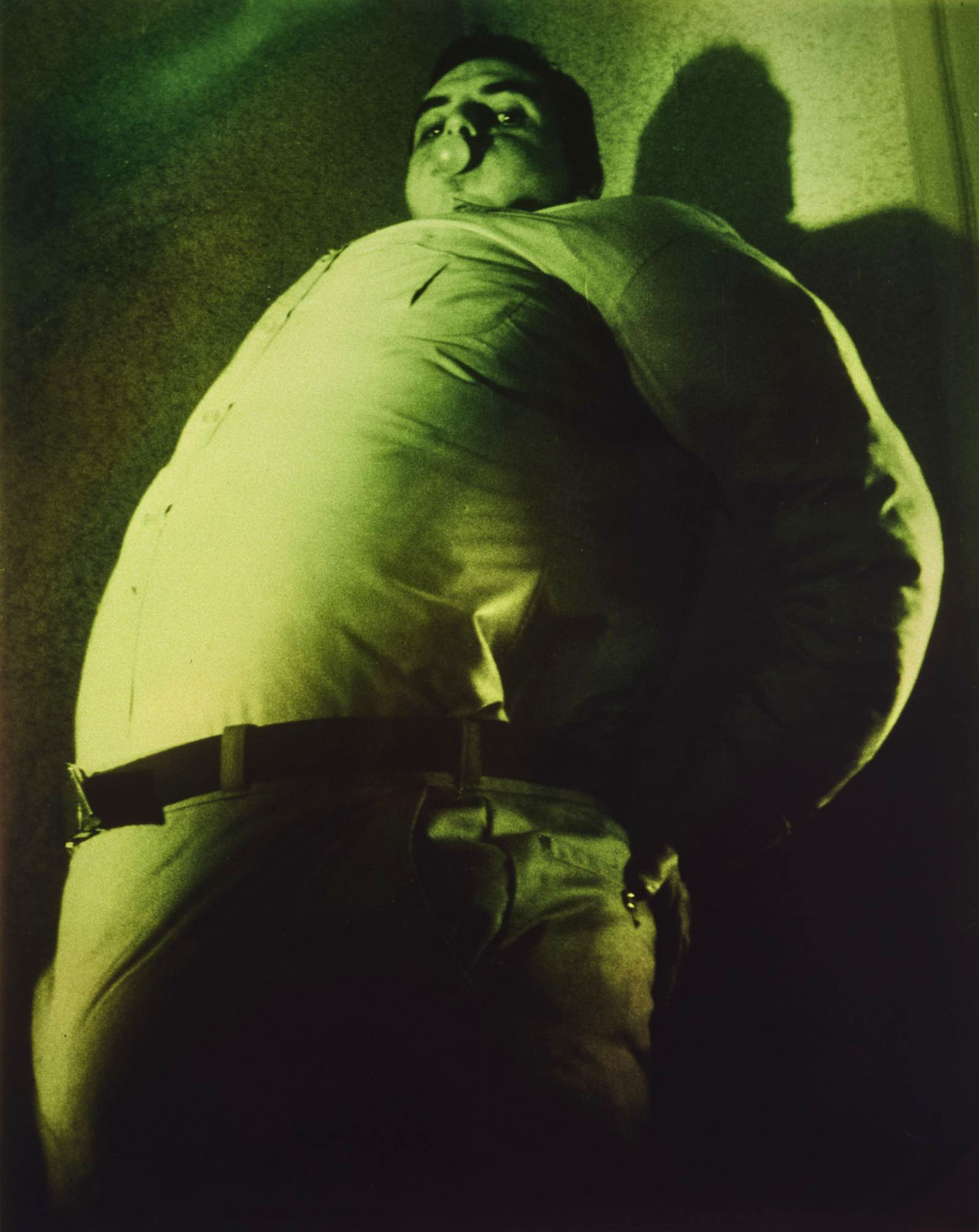
In a group of photographs from 1984 and 1985, DeSana explored America’s obsession with fat and dieting, tying it in with his own interest in consumption and forms of discipline and pleasure. Bubblegum, for example, is a self-portrait with his cheeks puffed out, blowing a bubble, his oversize shirt and pants bursting at the seams from stuffing and his back slightly arched to emphasise his protruding belly. He printed this image in numerous colours, including bright pink and acid green.

Exhibition label
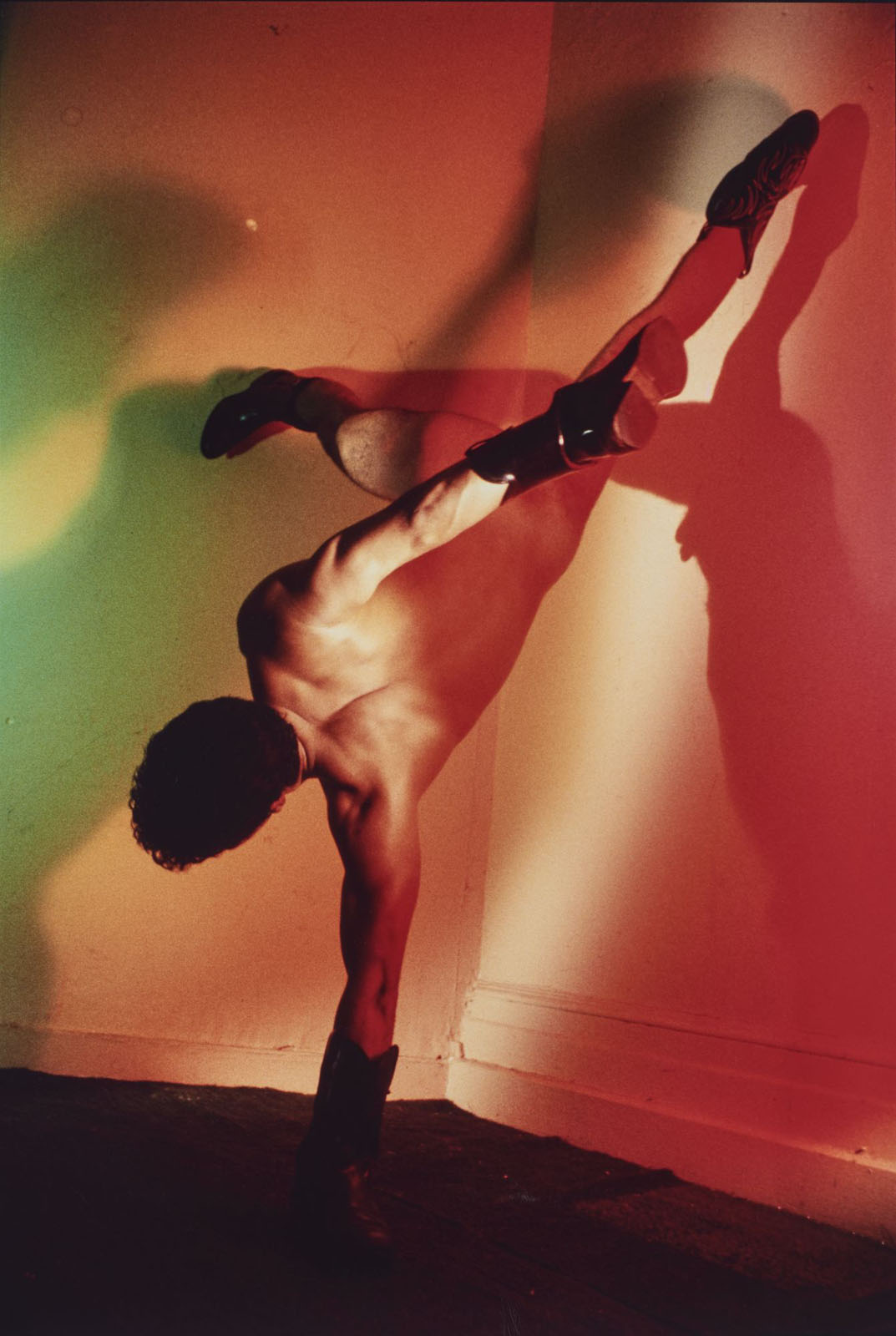
 

Jimmy DeSana (American, 1949-1990) 'Cowboy Boots' 1984


Jimmy DeSana (American, 1949-1990)
Cowboy Boots
1984
Silver dye bleach print
20 × 16 in. (50.8 × 40.6cm)
Courtesy of the Jimmy DeSana Trust and P·P·O·W Gallery, New York
© Estate of Jimmy DeSana
Photo: Courtesy of the Jimmy DeSana Trust and P·P·O·W Gallery, New York


With a wink to the commonalities of darkrooms and backrooms, Sawyer built a red-light district for DeSana’s extensive investigations of BDSM, in which piss is expelled and enjoyed, and gimp-masked figures kneel in toilets or near dog bowls. In Party Picks (1981 above), toothpicks stuck into gums between teeth make a crown of thorns around a gasping mouth, or maybe make that mouth St. Sebastian’s wound. Cardboard (1985 below) offers a room with a single, lurid red band of light and corrugated cardboard that slices a bending body. In such a place, you might think of Samuel Steward’s card catalog of his conquests, or if Flavin’s work is really about its shadows, or what to do with that butt. DeSana’s frisky, familiar portraits reject the po-faced posing of Mapplethorpe and the social-climbing sadism of Helmut Newton. He gets that such proclivities are mind games played with bodies and bets you might want to play them too.

Jesse Dorris. “Jimmy DeSana’s Transgressive Vision of Life and Desire,” on the Aperture website December 14, 2022 [Online] Cited 02/04/2023
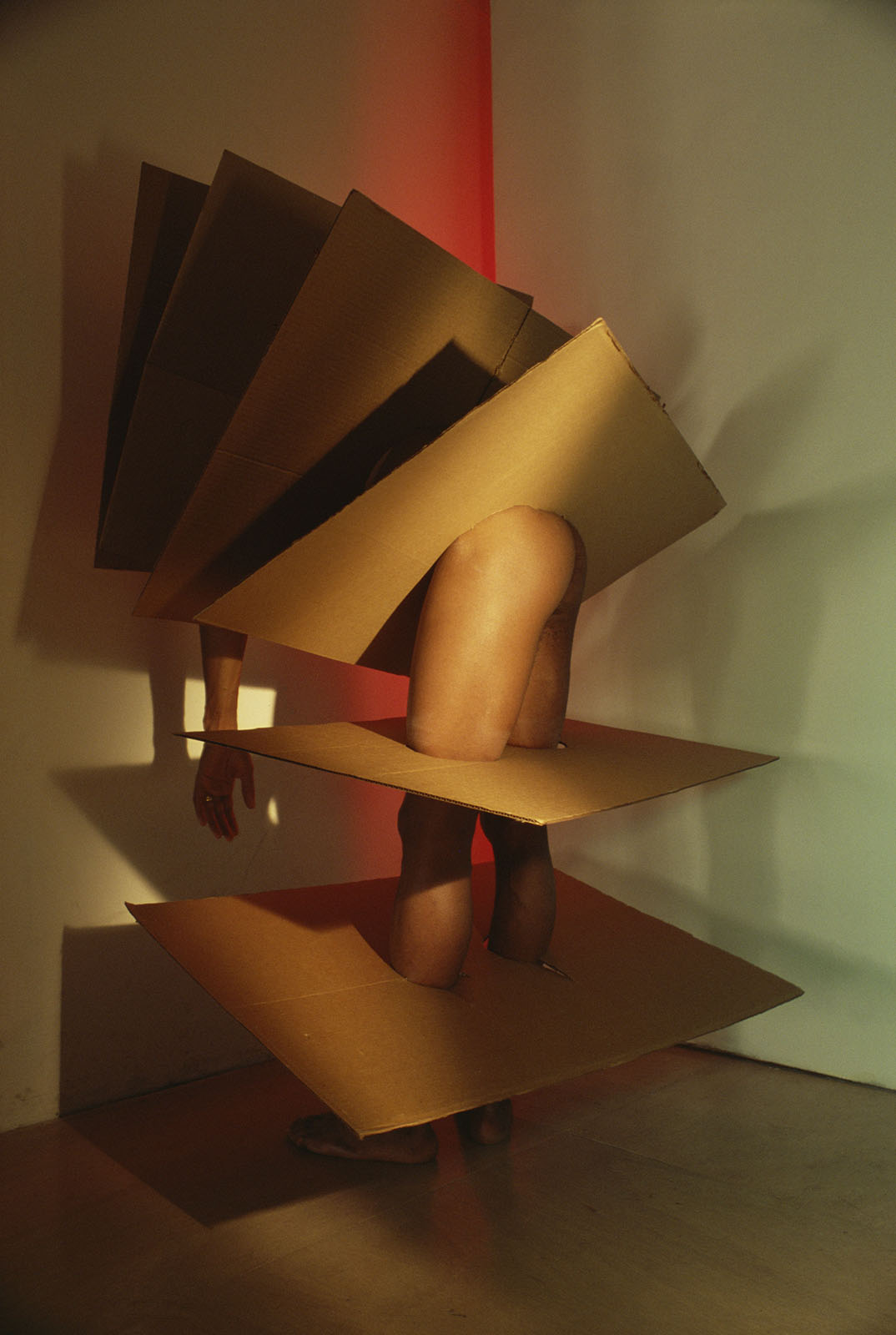
 

Jimmy DeSana (American, 1949-1990) 'Cardboard' 1985


Jimmy DeSana (American, 1949-1990)
Cardboard
1985
Silver dye bleach print
19 × 12 3/4 in. (48.3 × 32.4cm)
Courtesy of the Jimmy DeSana Trust and P·P·O·W Gallery, New York
© Estate of Jimmy DeSana
Photo: Courtesy of the Jimmy DeSana Trust and P·P·O·W Gallery, New York


In his series of photographs titled Suburban, Jimmy DeSana continued to photograph anonymous nude figures while making a more explicit connection between S-M and everyday life.

Many of the photographs comically equate attachments to the objects and ideals of postwar suburban life in the U.S. (washing dishes, taking a shower, driving a car) with forms of bondage and discipline. In Cardboard, from 1985 (shown here), a nude figure is intersected by sheets of cardboard.

Lit with tungsten lights and candy-coloured gels, his collaborators often turned their backs to the camera or buried their heads in purses, sinks, toilets, etc. rather than wearing leather masks. This not only protected the identity of his nude models, many of whom were friends, but also contrasted with his better-known portrait work during this period. Perhaps most important, these images continued his subversion of subjectivity. While all the photographs in the Suburban series feature nude figures, DeSana did not intend for the work to be erotic.

Text from the Brooklyn Museum Tumblr website
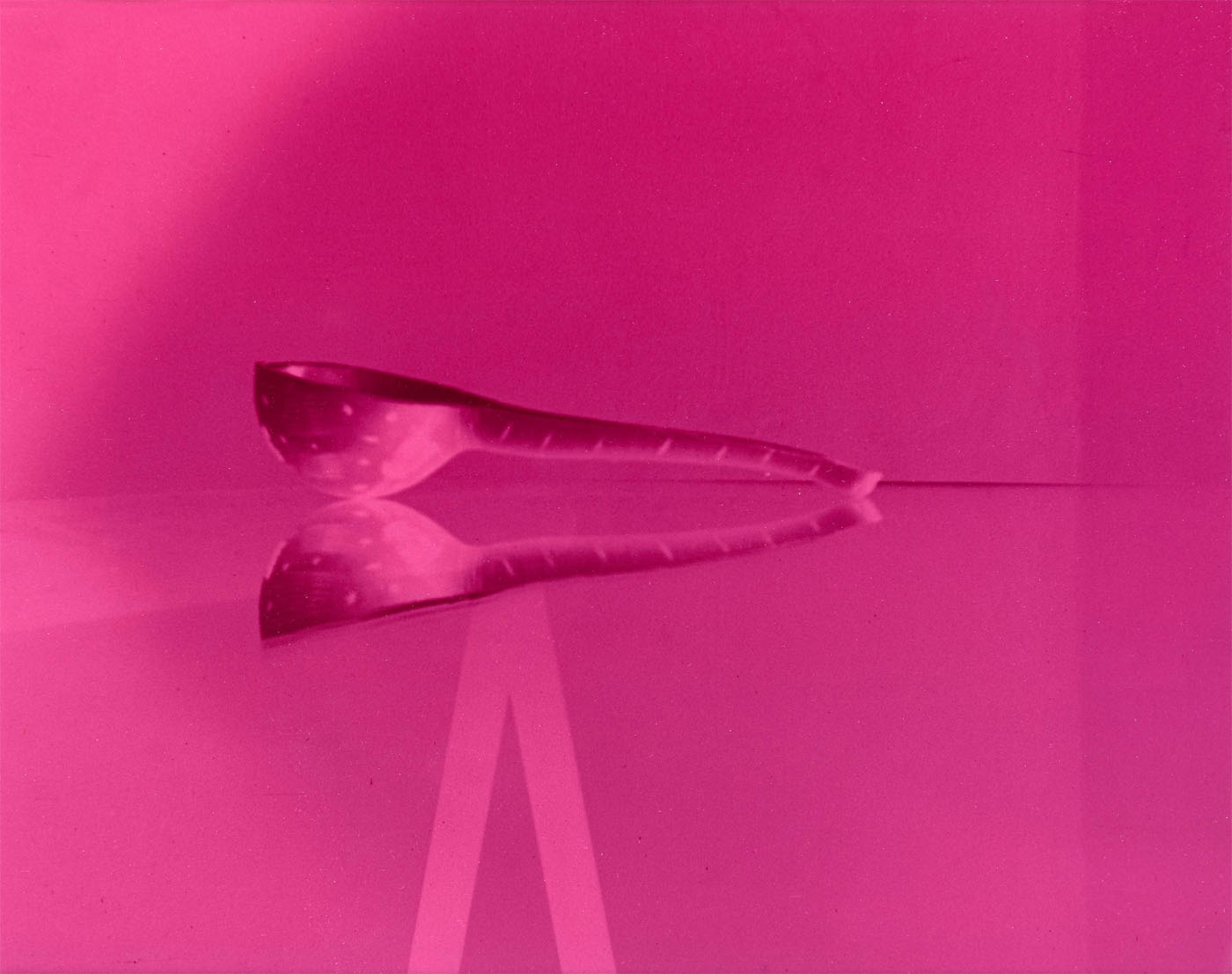
 

Jimmy DeSana (American, 1949-1990) 'Spoon' 1985


Jimmy DeSana (American, 1949-1990)
Spoon
1985
Silver dye bleach print
7 1/2 × 9 1/2 in. (19.1 × 24.1 cm)
Courtesy of the Jimmy DeSana Trust and P·P·O·W, New York
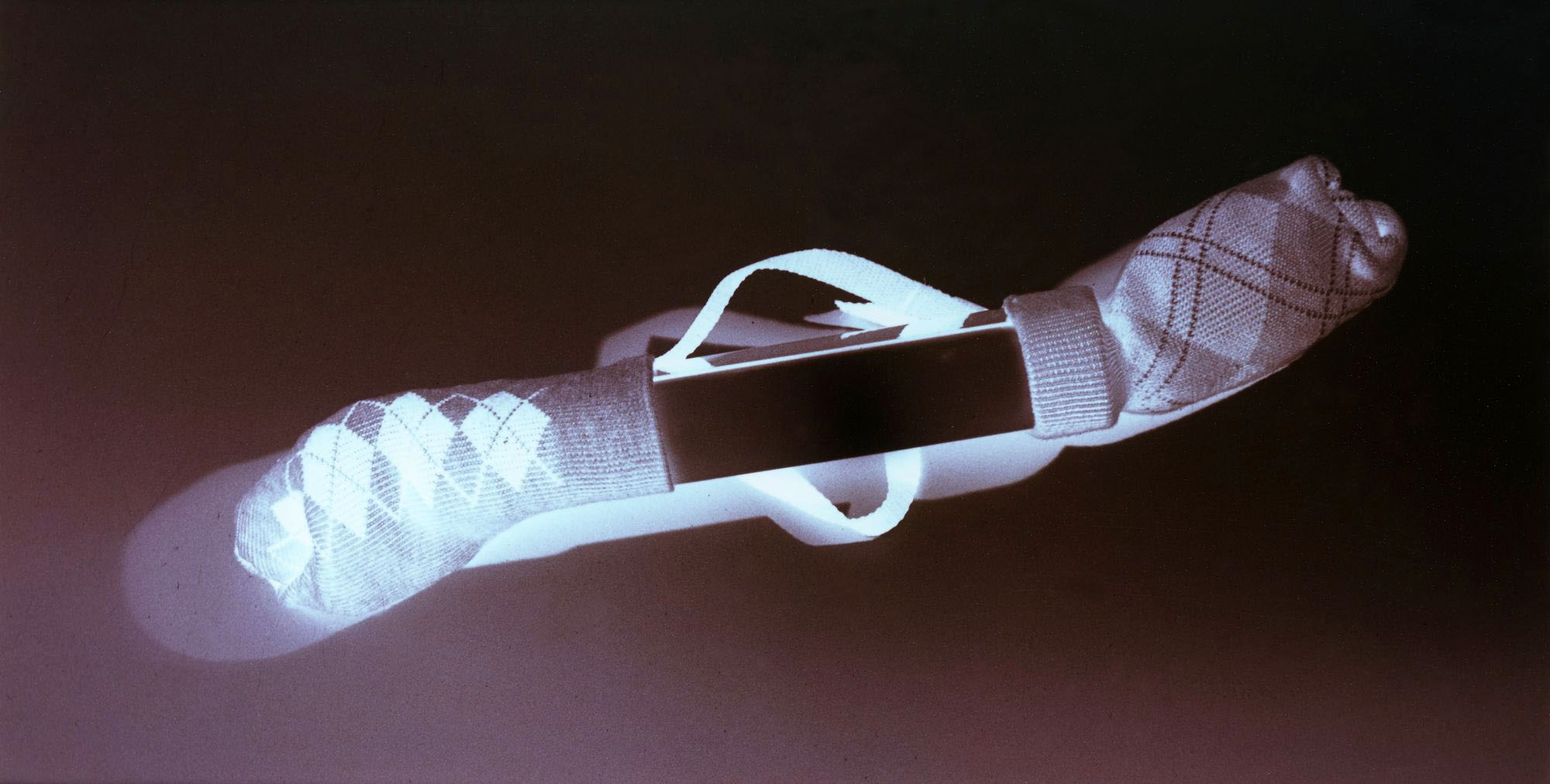
 

Jimmy DeSana (American, 1949-1990) 'Socks' 1986


Jimmy DeSana (American, 1949-1990)
Socks
1986
Silver dye bleach print
4 3/4 × 9 1/2 in. (12.1 × 24.1cm)
Courtesy of the Jimmy DeSana Trust and P·P·O·W, New York
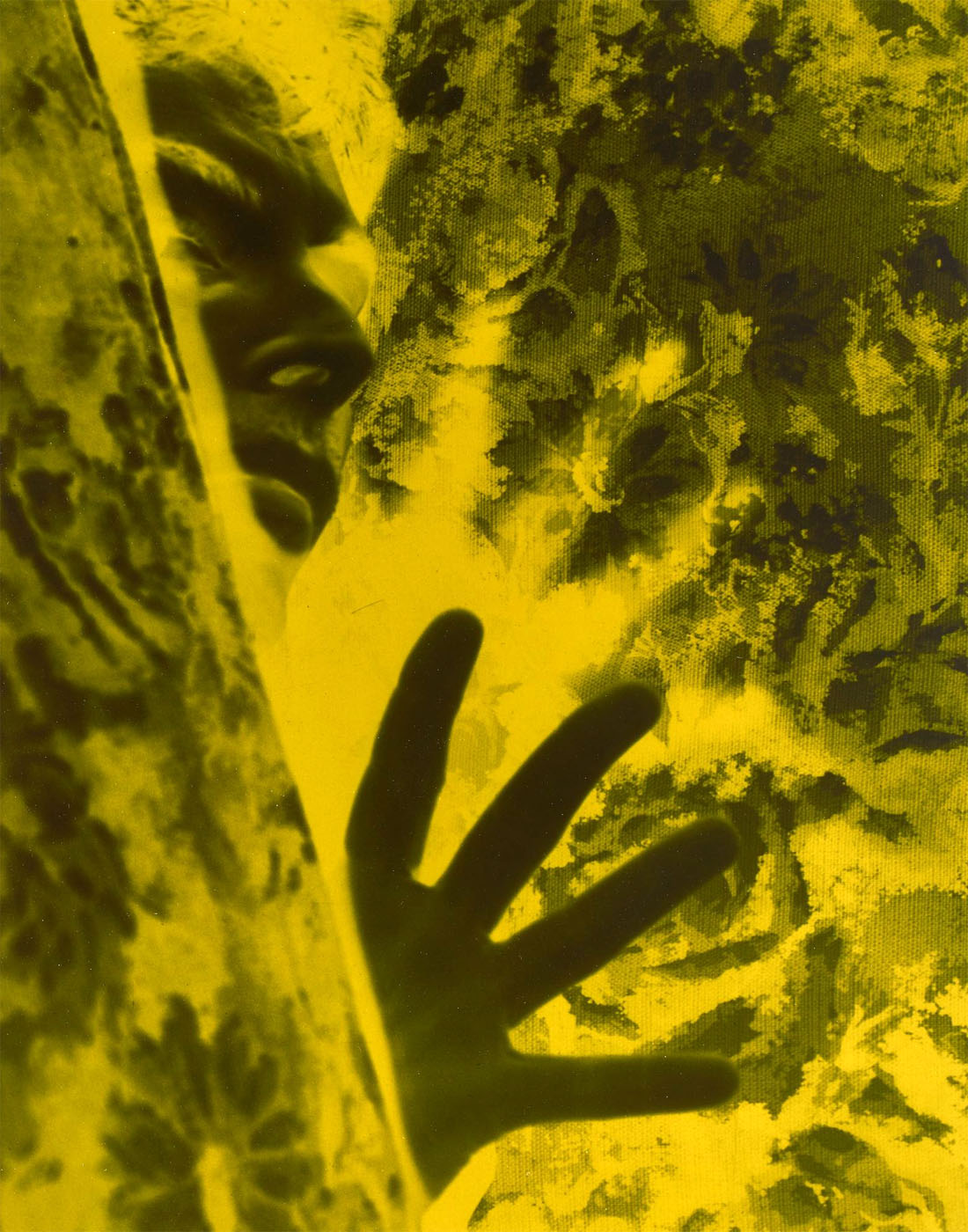
 

Jimmy DeSana (American, 1949-1990) 'Untitled (Self Portrait Sleeping)' 1985


Jimmy DeSana (American, 1949-1990)
Untitled (Self Portrait Sleeping)
1985
Silver dye bleach print
9 1/2 × 7 1/2 in. (24.1 × 19.1cm)
Courtesy of the Jimmy DeSana Trust and P·P·O·W, New York
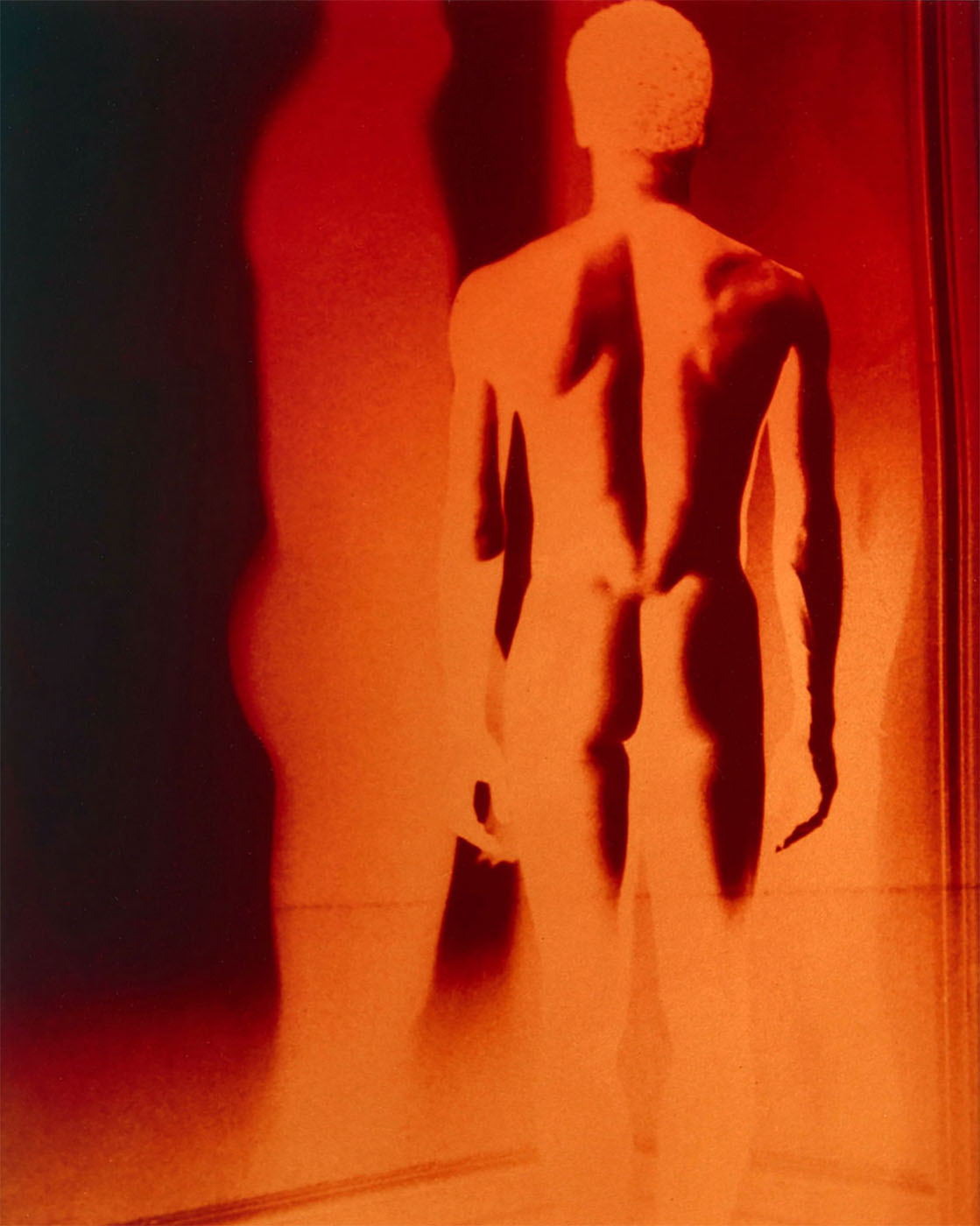
 

Jimmy DeSana (American, 1949-1990) 'Untitled (Male Nude)' 1985


Jimmy DeSana (American, 1949-1990)
Untitled (Male Nude)
1985
Silver dye bleach print
9 1/2 × 7 1/2 in. (24.1 × 19.1cm)
Courtesy of the Jimmy DeSana Trust and P·P·O·W, New York
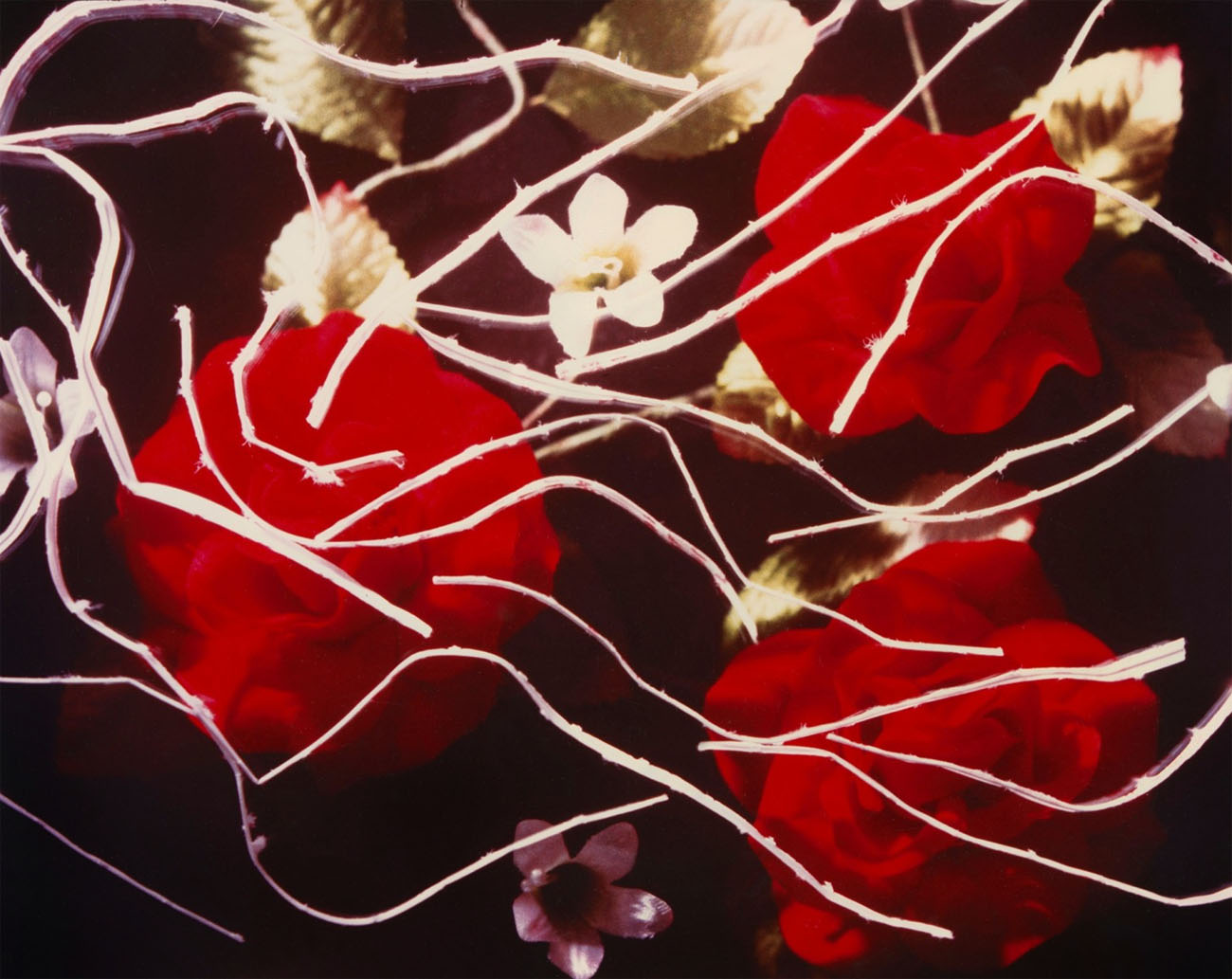
 

Jimmy DeSana (American, 1949-1990) 'Ties & Roses' 1986


Jimmy DeSana (American, 1949-1990)
Ties & Roses
1986
Silver dye bleach print
14 3/4 × 19 1/4 in. (37.5 × 48.9cm)
Courtesy of the Jimmy DeSana Trust and P·P·O·W, New York
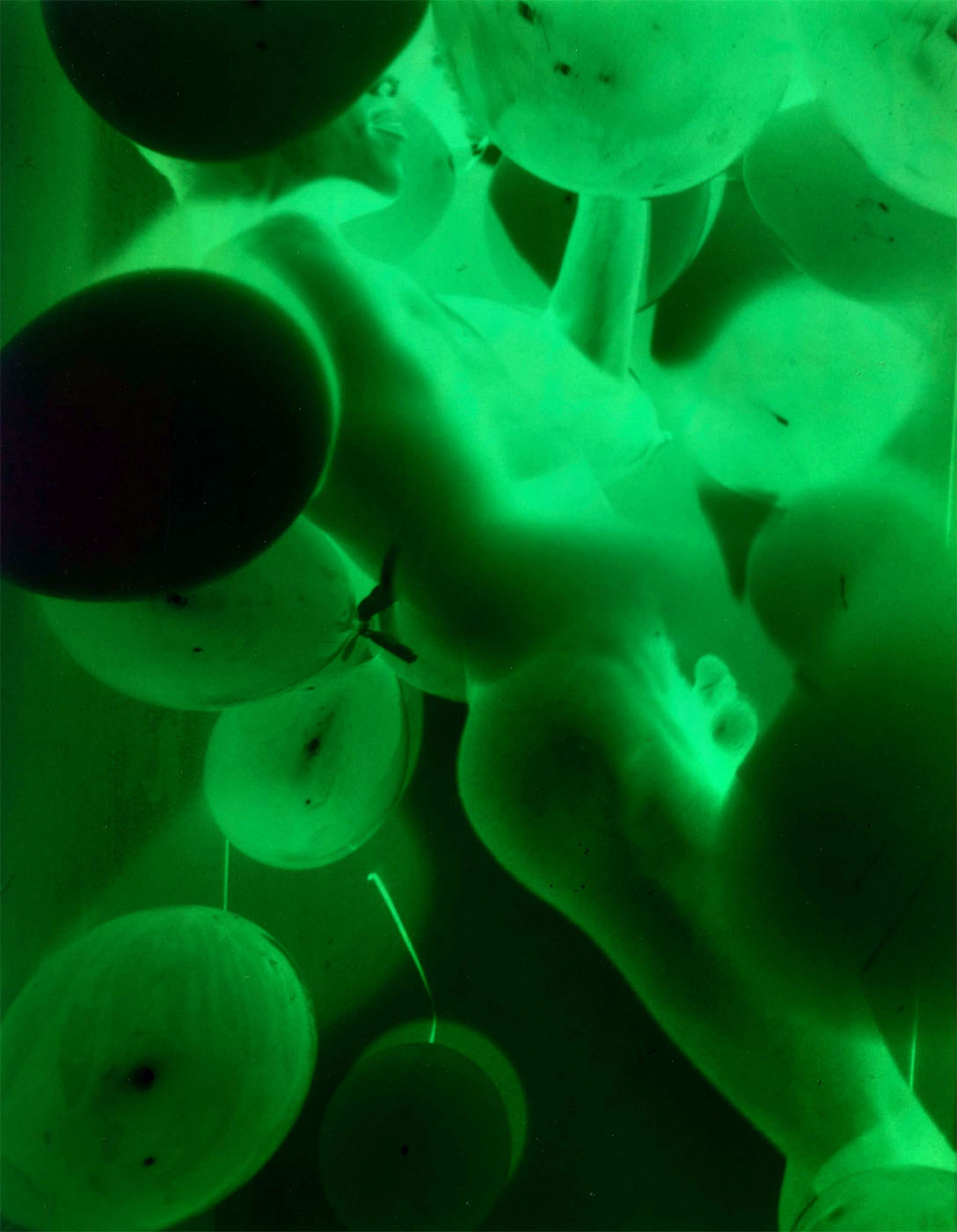
 

Jimmy DeSana (American, 1949-1990) 'Balloons' 1985


Jimmy DeSana (American, 1949-1990)
Balloons
1985
Silver dye bleach print
13 1/4 × 10 1/4 in. (33.7 × 26 cm)
Courtesy of the Jimmy DeSana Trust and P·P·O·W, New York
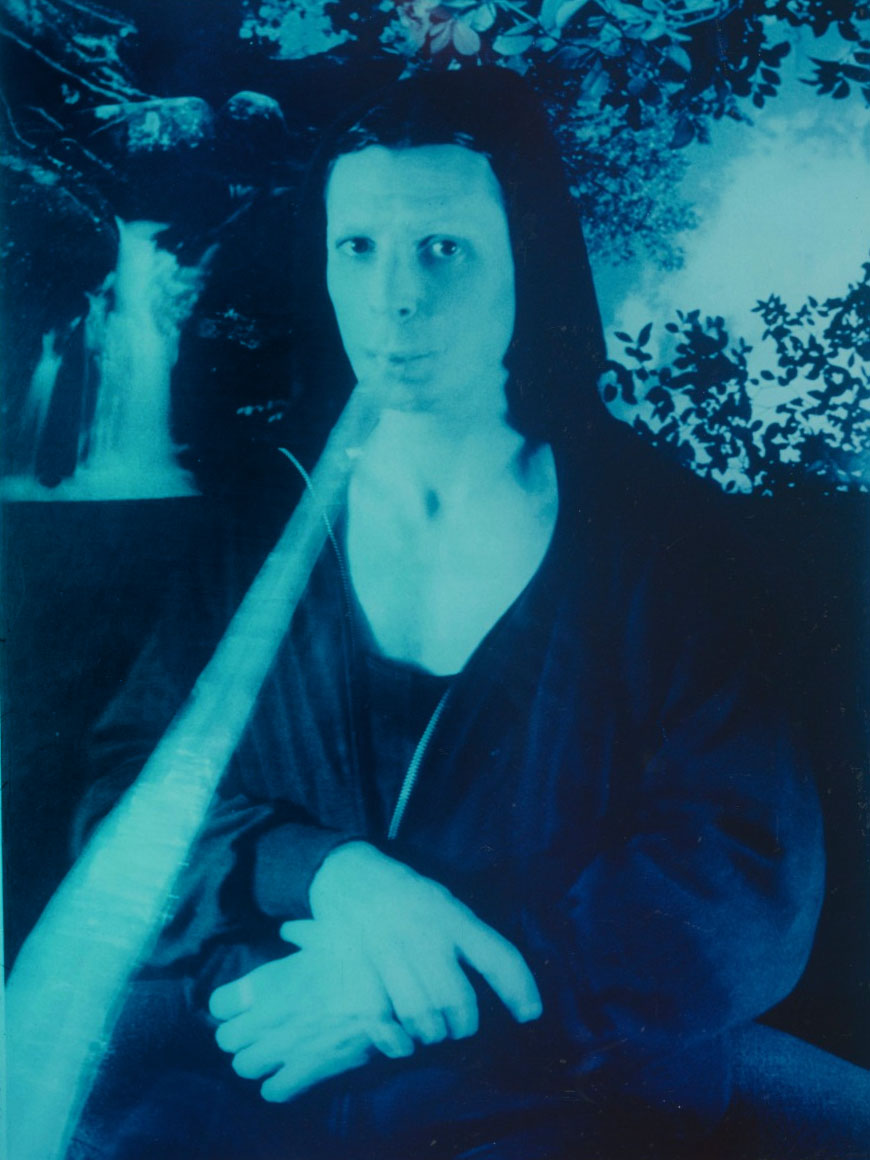
 

Jimmy DeSana (American, 1949-1990) 'Cellophane Tape' 1985


Jimmy DeSana (American, 1949-1990)
Cellophane Tape
1985
Silver dye bleach print
13 15/16 × 10 1/2 in. (35.4 × 26.7cm)
Courtesy of the Jimmy DeSana Trust and P·P·O·W, New York
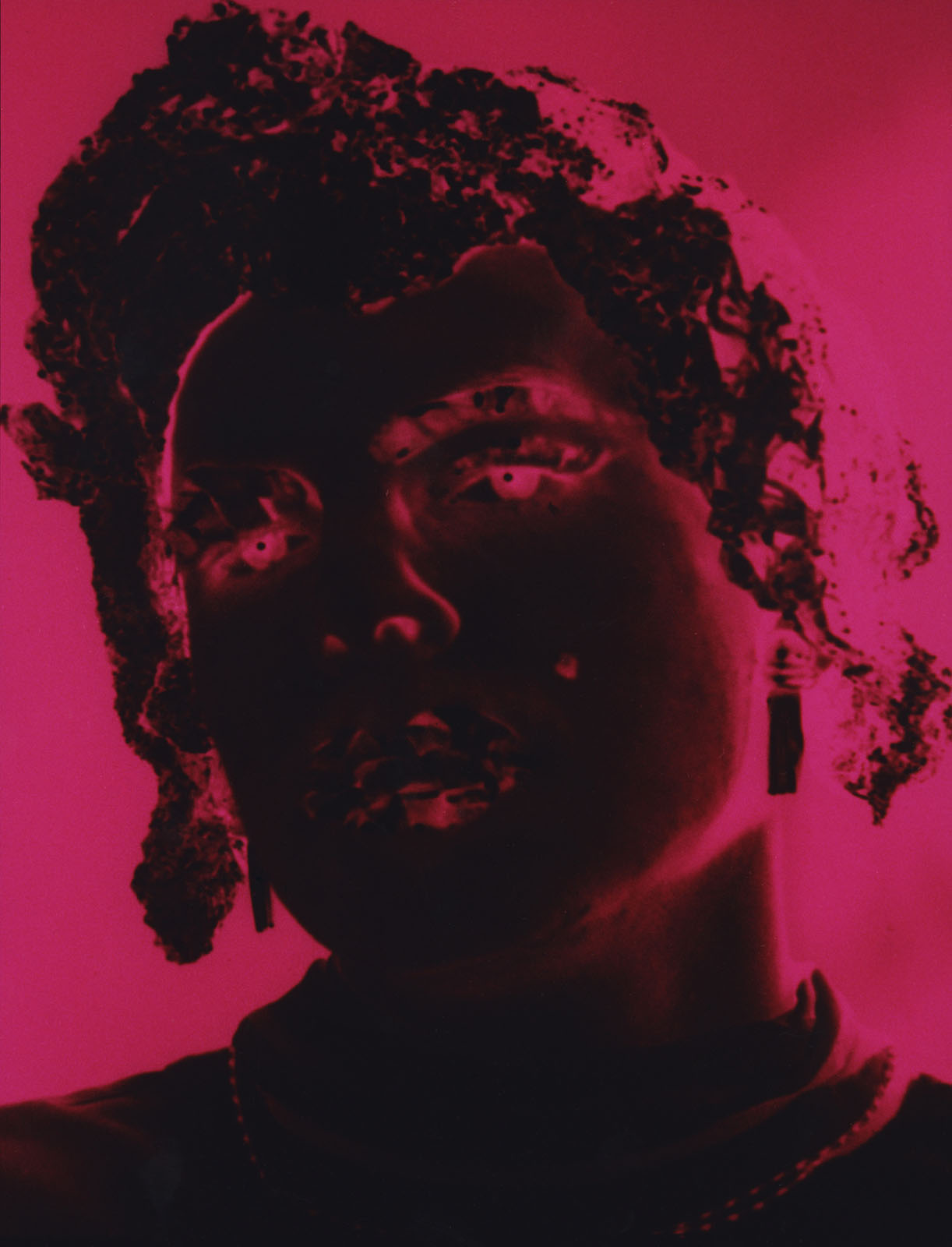
 

Jimmy DeSana (American, 1949-1990) 'Aluminum Foil #4 (Self-Portrait)' 1985


Jimmy DeSana (American, 1949-1990)
Aluminum Foil #4 (Self-Portrait)
1985
Silver dye bleach print
10 × 8 in. (25.4 × 20.3cm)
Courtesy of the Jimmy DeSana Trust and P·P·O·W Gallery, New York
© Estate of Jimmy DeSana
Photo: Courtesy of the Jimmy DeSana Trust and P·P·O·W Gallery, New York


In a series of “auto-portraits” from around 1985, DeSana assumed the guise of figures in famous portraits, such as Andy Warhol’s Marilyn Monroe and Leonardo da Vinci’s Mona Lisa. This body of work developed from DeSana’s previous experiments with role-playing, performance, and concealment.

Building on his engagement with colour photography, DeSana transformed these black-and-white negatives by enlarging them with dyed gels and colour dials. After exposing the colour photographic paper, he took the prints to a lab to finish the developing process.

Exhibition label
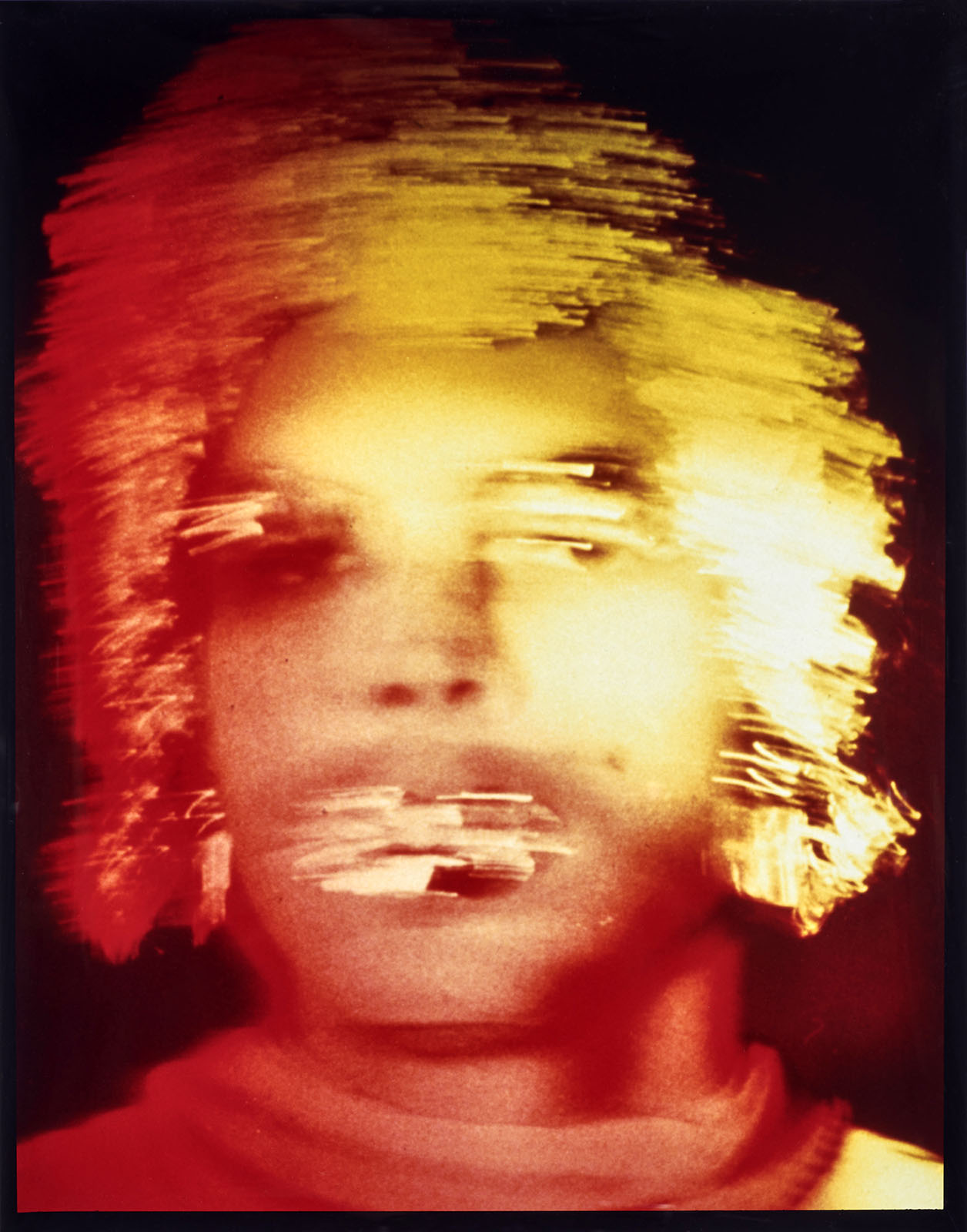
 

Jimmy DeSana (American, 1949-1990) 'Aluminum Foil #1 (Self-Portrait)' 1985


Jimmy DeSana (American, 1949-1990)
Aluminum Foil #1 (Self-Portrait)
1985
Silver dye bleach print
13 1/2 × 10 1/2 in. (34.3 × 26.7cm)
Courtesy of the Jimmy DeSana Trust and P·P·O·W Gallery, New York
© Estate of Jimmy DeSana
Photo: Allen Phillips


The vivid colour profiles of the Suburban series are riotous, yet the scenes are often subdued, serious, even melancholic. These acid-toned prints are more sinister, more surreal, and less eager to please than the images we often associate with the Pictures Generation. It’s easier to draw a line between DeSana and the surrealist photography of Man Ray and Hans Bellmer than to Cindy Sherman’s plucky film tests or the crisp portraits by Robert Mapplethorpe or Peter Hujar. Further distancing his work from that of his contemporaries, DeSana almost never reveals the identity of his sitters. Faces are almost invariably obscured by a prop: a stocking, a helmet, soap suds, or even the camera itself. The viewers’ innate desire to know the subject is stymied by the unrecognisability of these exploded, contorted anonymous bodies. By making chairs, coat hangers, helmets, and even an iguana an extension of the body, the photographs propose a flattening of the hierarchy between prop and actor, blurring the distinction between stage and sitter, foreground and background, organic and artificial. In much the same way that subjugation and compliance are fundamental to BDSM culture, here the camera becomes dominant, imploring the body to perform for the photographer. DeSana uses these bodies are props, stripping them of agency and compelling them serve the needs of the composition.

DeSana made a career of piercing through the realm of the banal and conventional with the queer and radical. His works suggest that the home itself and the objects within it are in themselves a prop to conceal an arena of libidinal play. For DeSana, the camera acts as catalyst and instigator, a tool used to coerce a performance, a device that invites us to subjugate our egos in the service of latent desires.

Bryan Barcena. “Suburban/Submission,” Focus Essay from FOAM exhibition 09.01.2019 on the Salon 94 website [Online] Cited 20/03/2023
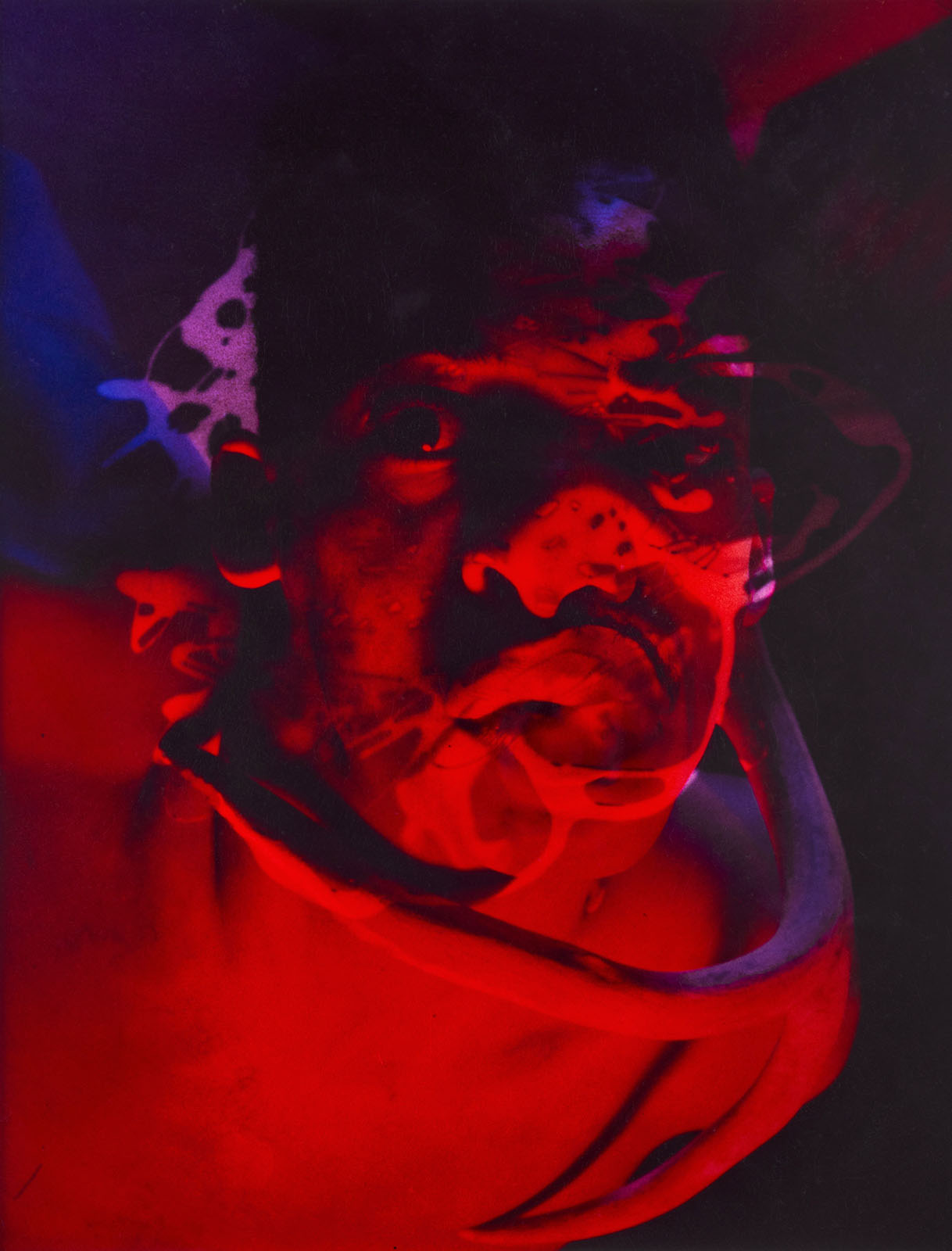
 

Jimmy DeSana (American, 1949-1990) 'Untitled (Man with Antler)' 1985


Jimmy DeSana (American, 1949-1990)
Untitled (Man with Antler)
1985
Silver dye bleach print
13 1/4 × 10 1/4 in. (33.7 × 26cm)
Courtesy of the Jimmy DeSana Trust and P·P·O·W Gallery, New York
© Estate of Jimmy DeSana
Photo: Allen Phillips


In a 1986 interview with Diego Cortez, Jimmy DeSana remarked on the mutability and transgressive potential of photography: “A photograph is how much you want to lie, how far you want to stretch the truth about the object. And, as photography is always based on real objects, it lends itself, by means of technique or manipulation, to explorations of what may appear to be an absence of reality, balancing on an ambiguous line between concrete and abstract space, between reality and illusion, in a way that no other medium is able to do.”

In a series of “portraits” from the mid 1980s, DeSana played with this tension by obscuring and transforming faces through collage and darkroom techniques. His movement into abstraction – in works that nonetheless address his experience living with HIV / AIDS – was in part a reaction to dilemmas over representations of sexuality and queer bodies during the first decade of the AIDS epidemic, from media bias to conservative censorship to activist demands. Critics recognised DeSana’s masquerades and darkroom experiments in colour as tributes to Surrealist photography of the 1920s and 1930s, which still had the power to confound expectations around photography and realism.

Text from the Brooklyn Museum Tumblr website


Skilled in the art of negation, DeSana staged intimate scenes that tease out the erotic – in Pants, 1984, a model arches his muscular, shirtless back under bold lighting – yet the artist routinely undermined and lampooned this sexual content: The model’s extremely large pants are filled with stuffing, comically emphasizing his ass and thighs. In this sense, DeSana’s work seems to parody Robert Mapplethorpe’s deadpan oeuvre. In 1979, DeSana published Submission, a photobook poking fun at notions of the body as a sexualized, gendered object. As the title implies, a power dichotomy is at play in the series – the camera assumes the dominant role, forcing the models into the passive ‘sub’ position. The photos … are black-and-white, giving them a self-serious quality, yet, as in his other work, DeSana punctured that effect with dark comedy. In Masking Tape, 1978, a latex bodysuit is traded for the household adhesive, with which a male model has been mummified head to toe – scrotum, penis, nipples, and nostrils excluded. Despite occasional comic absurdity, the photographs still retain a beguiling frisson. DeSana also ably mocked the supposed dangers of sexual alterity by allowing it a certain humanity – a melancholy picture of a hog-tied woman in black lingerie and high heels crouched in a refrigerator (empty save for a dozen eggs) exudes pathos and surprising sophistication. In Television, 1978, real danger in the form of electrocution threatens the supine and masked nude performer (DeSana himself) balancing a TV on his feet. Through this action, DeSana drew out the allure of mass media but underscored its potential for propagating constricting ideologies.

The introduction of beautifully jarring, chromatic lighting to DeSana’s post-Submission scenarios amplifies their urgency and defines his work’s signature aesthetic: slick and otherworldly yet proudly homemade. Thrown against domestic spaces and active bodies, strawberry reds and lysergic greens reverberate wildly. One such multi-hued image, Cowboy Boots, 1984, depicts a nude man in the midst of a one-armed handstand, his four splayed limbs straddling a corner of an apartment, feet and hands covered in tooled-leather cowboy boots. This hybridized body à la Hans Bellmer, not quite an object but a morphing being, defies the behavioural dicta of society. Representing a poignant act of shape-shifting, Bubblegum (Self-Portrait), 1985, an image printed with light-pink dye and made five years before the artist’s AIDS-related death, shows DeSana with his cheeks puffed up while blowing a bubble, his oversize shirt and pants bursting at the seams from stuffing. Such a transformation wryly suggests our physical mutability and the unknown extent to which our bodies and selves might evolve – grossly enlarge, wither away.

Beau Rutland. “Jimmy DeSana,” on the Art Forum website 2013 [Online] 20/03/2023
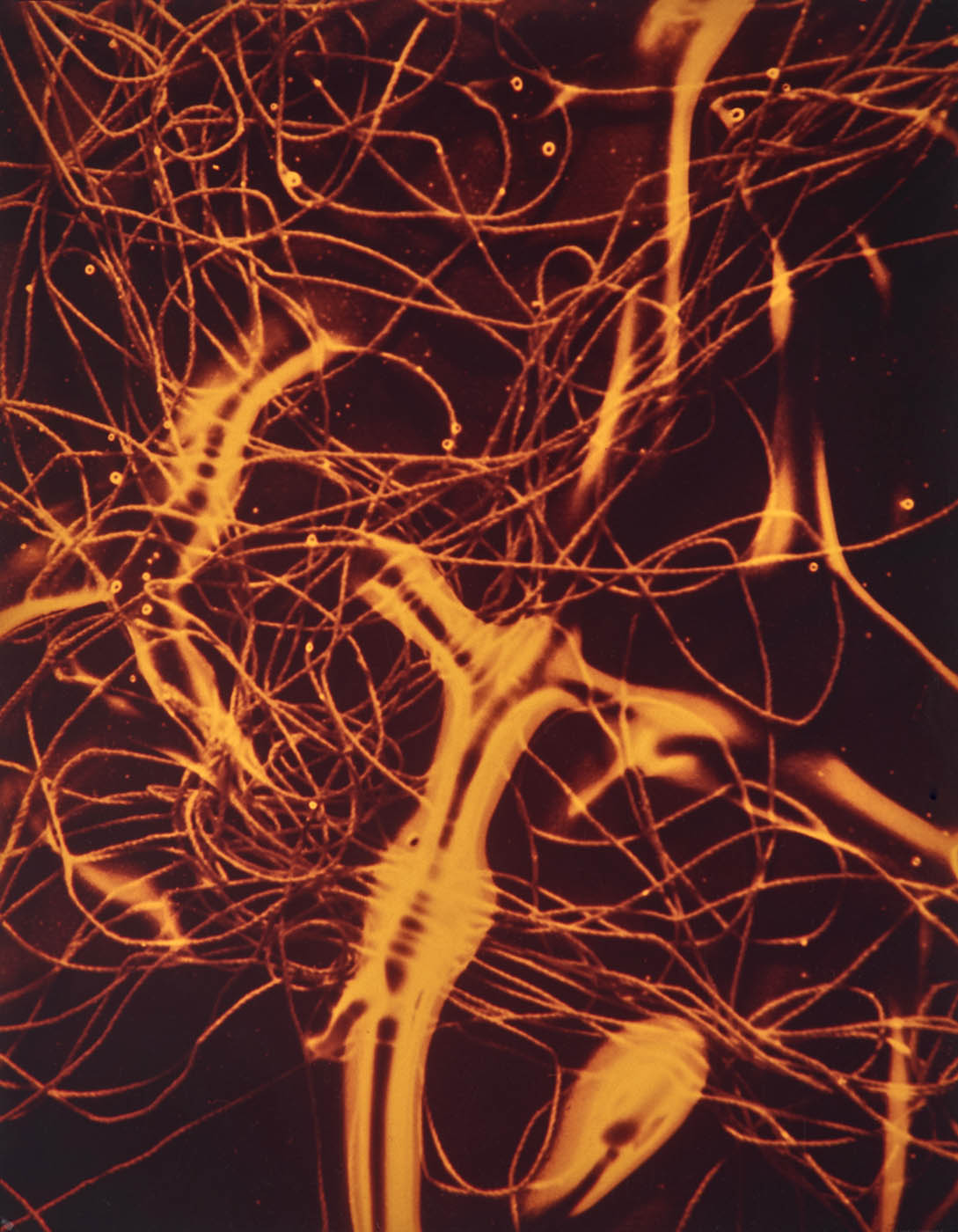
 

Jimmy DeSana (American, 1949-1990) 'String VII' 1987


Jimmy DeSana (American, 1949-1990)
String VII
1987
Silver dye bleach print
19 × 15 in. (48.3 × 38.1cm)
Courtesy of the Jimmy DeSana Trust and P·P·O·W Gallery, New York
© Estate of Jimmy DeSana
Photo: Allen Phillips
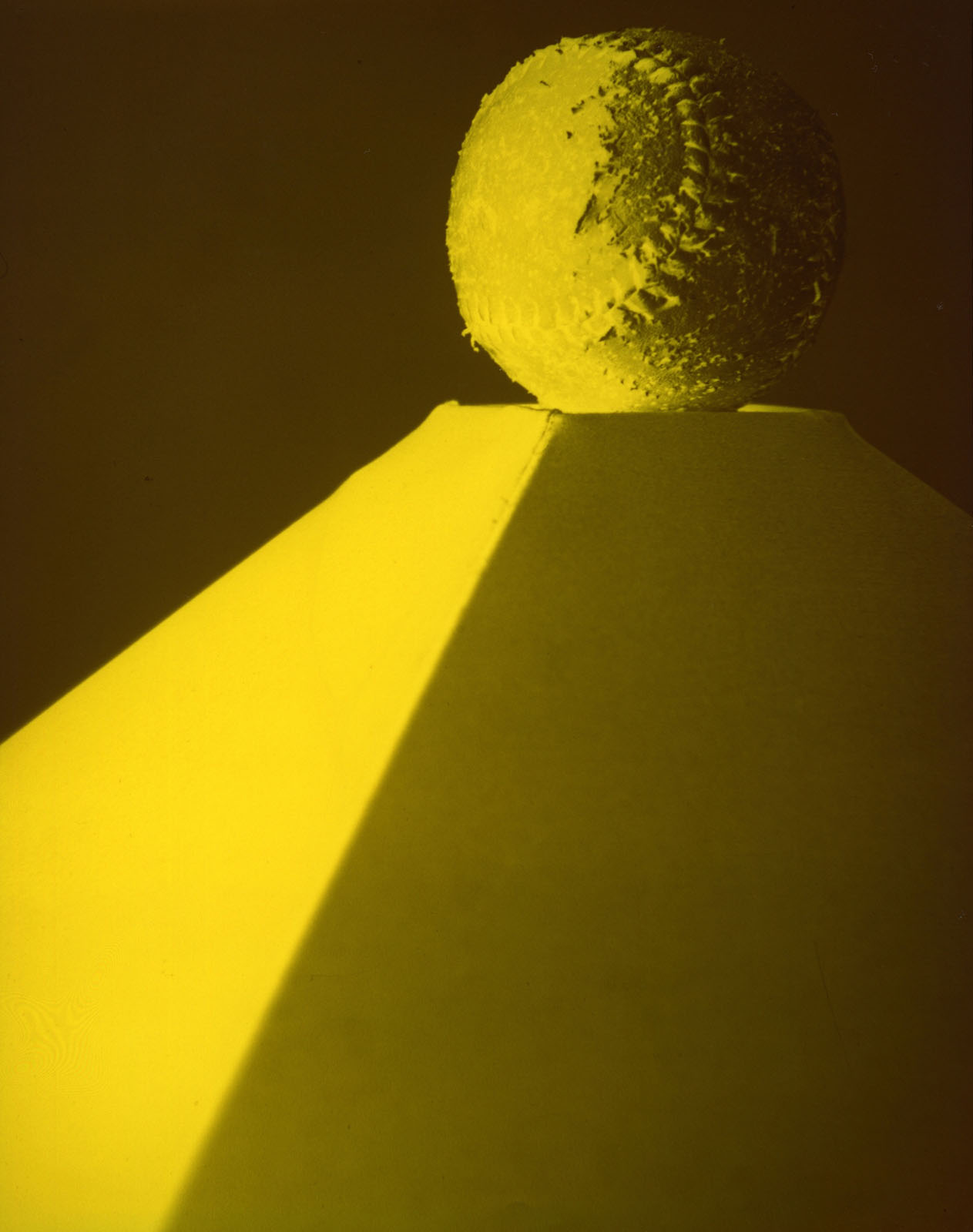
 

Jimmy DeSana (American, 1949-1990) 'Soft Ball' 1985


Jimmy DeSana (American, 1949-1990)
Soft Ball
1985
Silver dye bleach print
9 1/2 × 7 1/2 in. (24.1 × 19.1cm)
Courtesy of the Jimmy DeSana Trust and P·P·O·W Gallery, New York
© Estate of Jimmy DeSana
Photo: Courtesy of the Jimmy DeSana Trust and P·P·O·W Gallery, New York


After his diagnosis with HIV in 1985, DeSana began making a series of still lifes, tackling a genre that for centuries has expressed both the abundance and transitoriness of life and earthly goods.

Like so much of DeSana’s work, this photograph transforms a prosaic object – a softball, with its associations of sports and American culture – into something strange through juxtaposition, scale, and colourisation. The image recalls DeSana’s 1984 self-portrait in which the long, curved scar on his torso evokes a baseball’s stitching.

Exhibition label
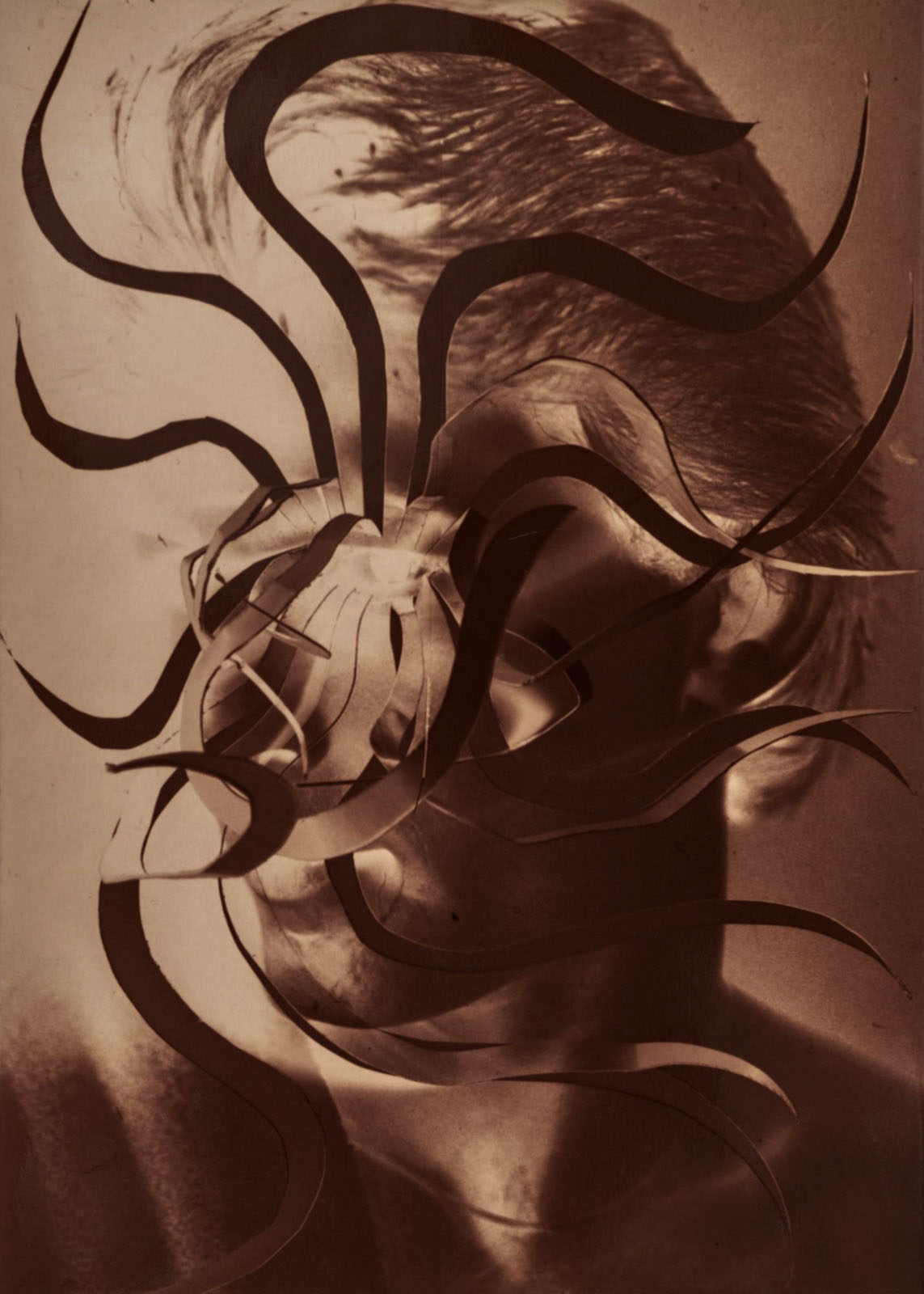
 

Jimmy DeSana (American, 1949-1990) 'Eyelashes' 1986


Jimmy DeSana (American, 1949-1990)
Eyelashes
1986
Silver dye bleach print
9 1/2 × 7 1/2 in. (24.1 × 19.1cm)
Courtesy of the Jimmy DeSana Trust and P·P·O·W Gallery, New York
© Estate of Jimmy DeSana
Photo: Allen Phillips


“‘Abstract photography’ not only turns its back on [the] incessant desire to know and see everything – it seeks to undermine and invert those very intentions,” Jerry Saltz wrote for the catalog that accompanied Jimmy DeSana’s first major curatorial effort at the Emerson in 1989.

The show, which included the work of 26 artists (including: Vikky Alexander, Ellen Brooks, Charlesworth, Morrisroe, Sherman, and Simmons), spoke to how artists were attempting in this era to move beyond the instrumentalisation of representation during a period of intense political divisiveness, and to expand what photography could be as art.

Text from the Brooklyn Museum Tumblr website


That uncanny language was shared with Laurie Simmons, known for her staged domestic scenes using dolls and miniature objects that, like the works of DeSana, surrealized suburbia. The two shared a studio until DeSana’s death from AIDS-related illness in 1990. Simmons watched her friend transform after his diagnosis, a change that manifested as both physical degeneration and artistic metamorphosis. “We didn’t want to be painters. We didn’t want to be sculptors,” Simmons recalls. “We wanted that sense of distance and remove. We wanted a tool that we could work with, but that didn’t have anything to do with craft.” Illness forced DeSana to put his camera down and collage. Struggling to make sense of the purpose of the body, and especially the sexualized body, amid a vicious disease that mostly took queer, sexually active bodies like his own, DeSana made sense of his world through chopping and repasting it. The distance and remove that he and Simmons craved, that the camera gave him, was impossible as the reality of death loomed so near. …

The thing that drew us to using a camera was [that] we didn’t want to use our hands. We didn’t want to be painters. We didn’t want to be sculptors. We wanted that sense of distance and remove. We wanted a tool that we could work with, but that didn’t have anything to do with craft. Collage took him to a very intimate, hands-on way of working that’s so much more personal. Yet by rephotographing the collages, he could keep that sense of distance and still see himself as a conceptual artist, which I think was part of how he needed to see himself.

“Collage took him to a very intimate, hands-on way of working that’s so much more personal. Yet by rephotographing the collages, he could keep that sense of distance and still see himself as a conceptual artist, which I think was part of how he needed to see himself.”

Laurie Simmons quoted in Megan Hullander. “Jimmy DeSana, an iconoclast even within the ’70s avant-garde, is finally entering mainstream consciousness,” on the Document Journal website July 11, 2022 [Online] Cited 20/03/2023
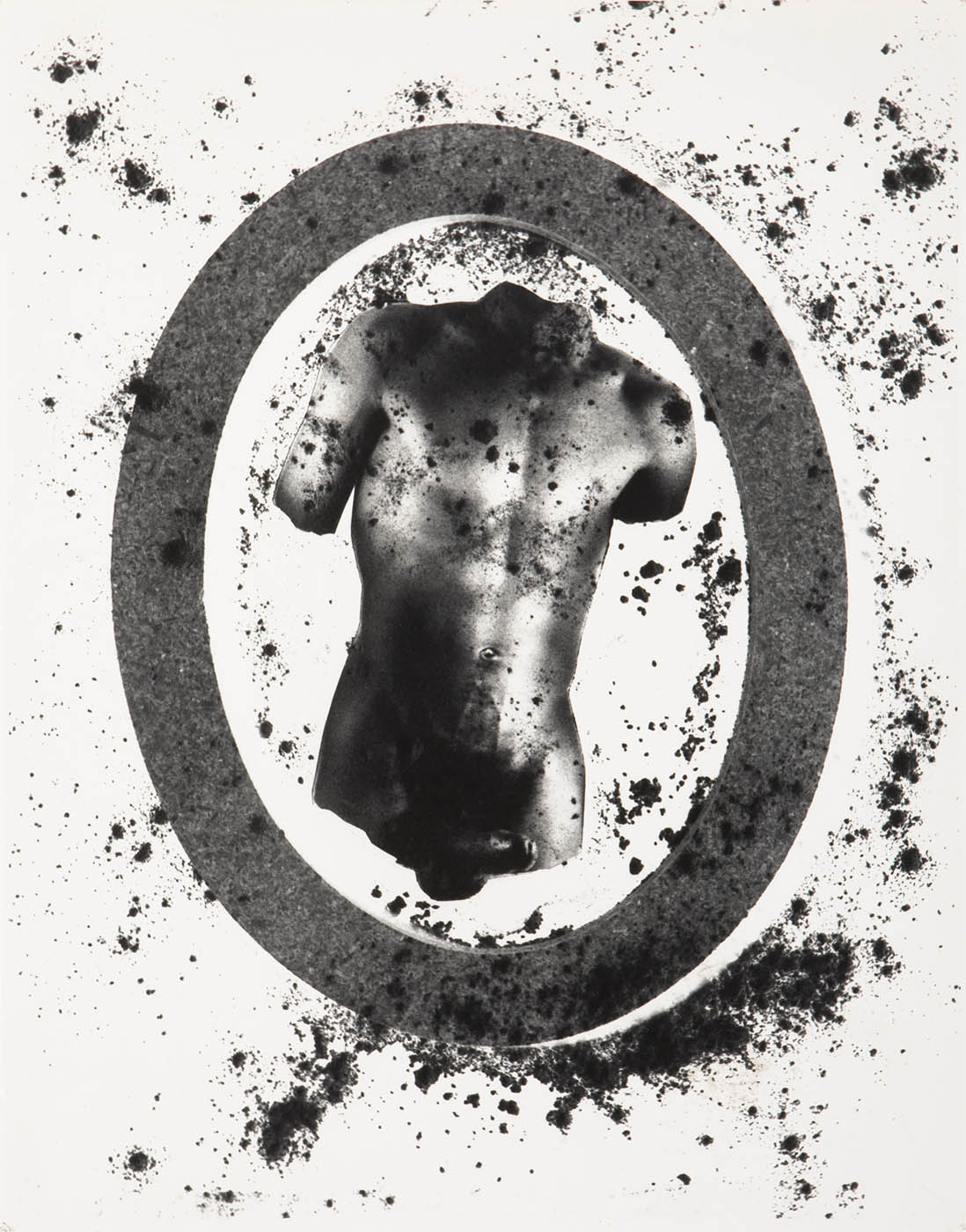
 

Jimmy DeSana (American, 1949-1990) 'Salvation' 1987-1988


Jimmy DeSana (American, 1949-1990)
Salvation
1987-1988
Maquette for book
Courtesy of the Jimmy DeSana Trust and P·P·O·W Gallery, New York
© Estate of Jimmy DeSana
Photo: David Vu


“If I could do a show that confused people so much, that was so ambiguous that they didn’t know what to think, but they felt sort of sickened by it and also entertained,” Jimmy DeSana told Laurie Simmons shortly before he passed away from AIDS-related illness in 1990, “then for me that would capture the moment that we’re going through right now.”

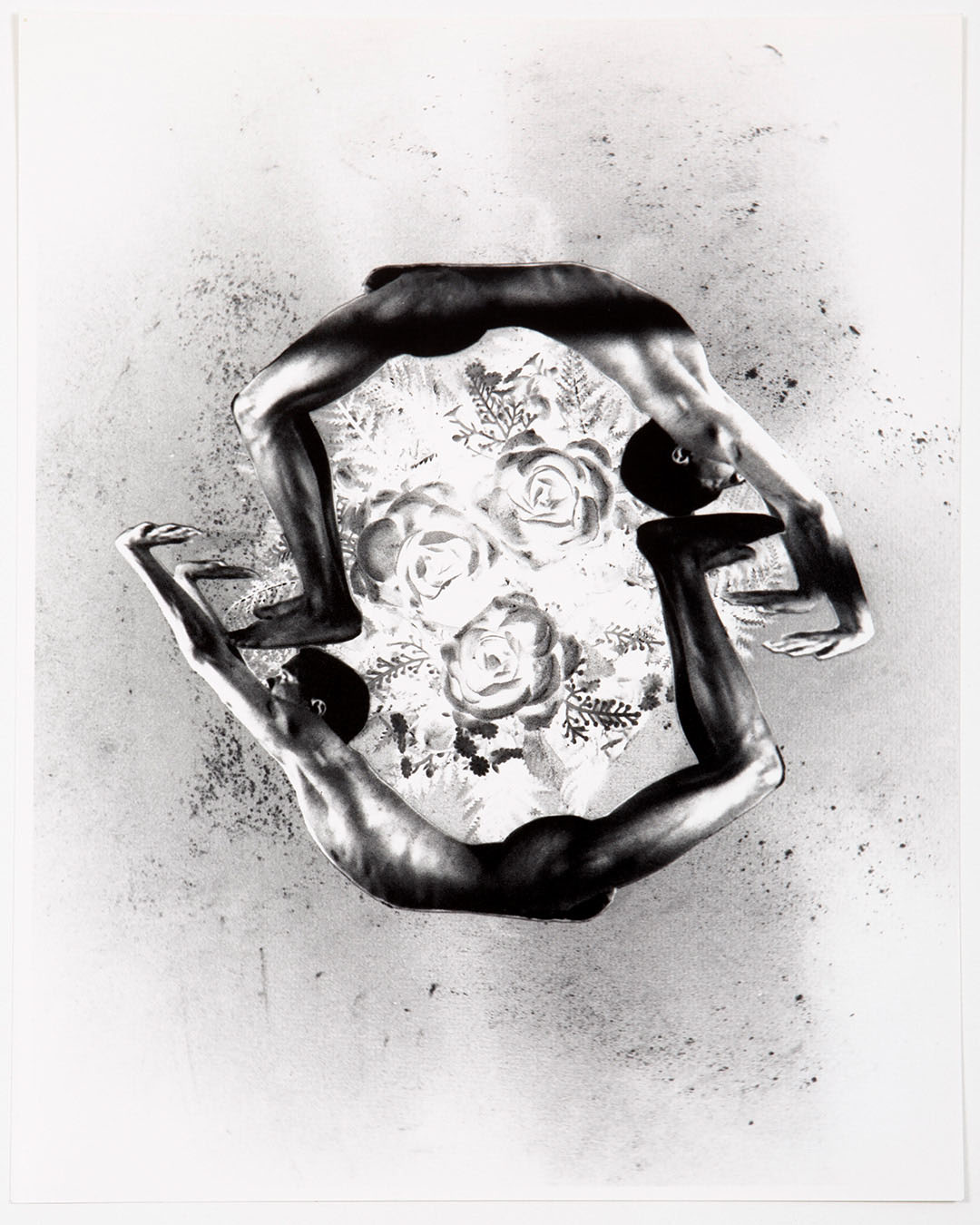
For his last major artistic project, DeSana collected his contradictory feelings and images in a book to be titled Salvation. Although he would not complete the volume before his death, he created this maquette. It comprises photomontages of flowers and fragments of male bodies, many recycled from older photographs of DeSana and his partner Darell Bagley. The photographs are black-and-white, but DeSana intended them to be printed with lurid colour through the Cibachrome process.

Ambiguity and opacity became increasingly important to DeSana, especially in reaction to the media’s and other artists’ objectification of queer people living with HIV / AIDS. He also pushed against the expectation that gay artists should somehow counter government inaction and misinformation around the epidemic.

Text from the Brooklyn Museum Tumblr website
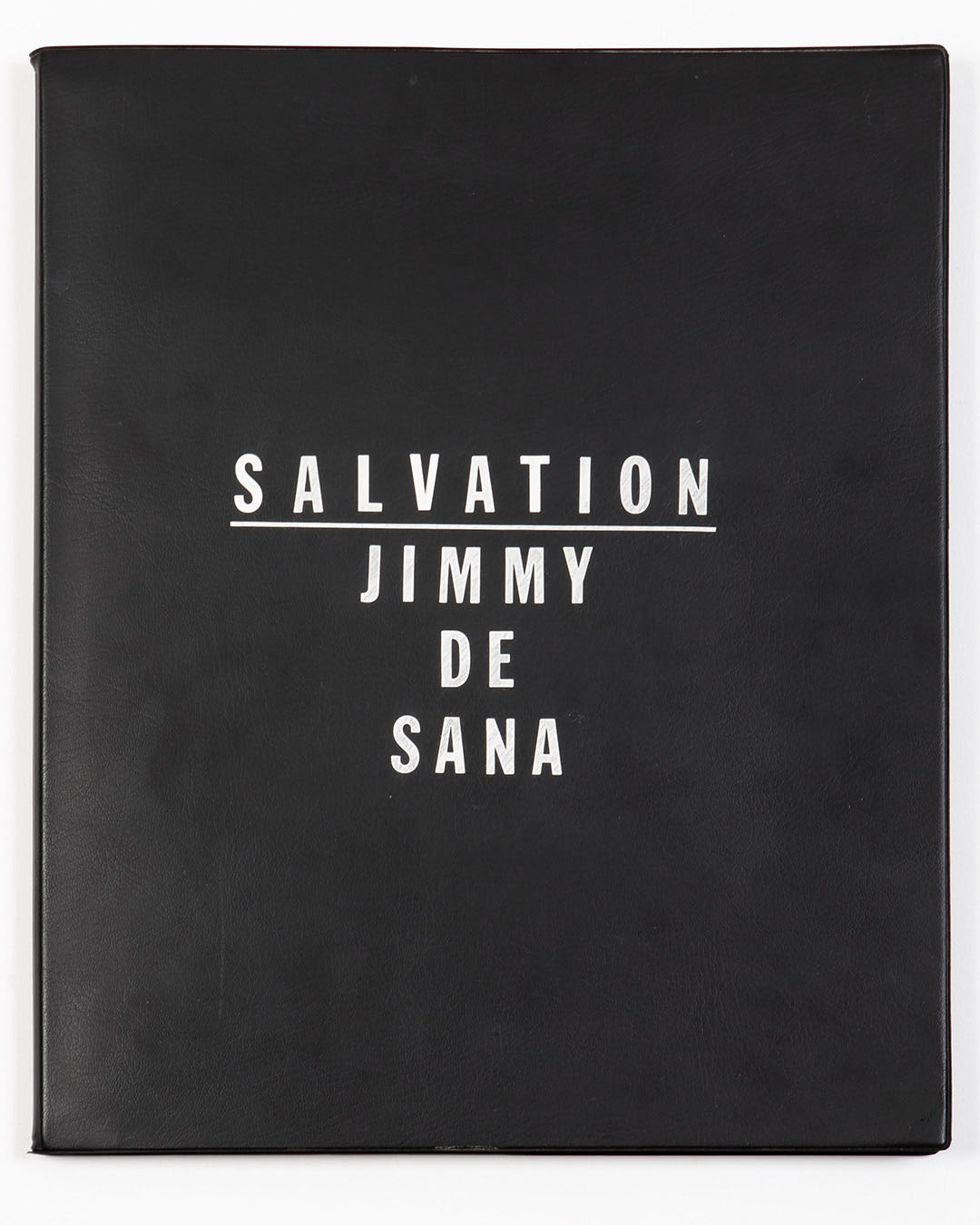
 

Jimmy DeSana (American, 1949-1990) 'Salvation (maquette)' 1987-1988

Jimmy DeSana (American, 1949-1990) 'Salvation (maquette)' 1987-1988

Jimmy DeSana (American, 1949-1990) 'Salvation (maquette)' 1987-1988


Jimmy DeSana (American, 1949-1990)
Salvation (maquette)
1987-1988
Courtesy of the Jimmy DeSana Trust and P·P·O·W Gallery, New York
© Estate of Jimmy DeSana


JC: There’s something unrefined about DeSana’s work compared to Mapplethorpe who was more stylistically precise. They must have been aware of each other; their work would feature together in issues of BOMB magazine and such. Of course, back then Mapplethorpe was a lot more famous and upwardly mobile, whereas DeSana seemed more invested in the punk scene. Overall, I appreciate DeSana’s spirit more than his images, many of which strike me as conceptually same-samey. The pictures are cheeky at times though not particularly humorous, so I was as perplexed as you when overhearing someone loudly chuckling at a photograph. To me, there’s too much death-drive going on in the work to laugh. Maybe it’s also because after witnessing Mugler’s flamboyance, finesse, and whimsy, a show like DeSana’s feels like a grim comedown by contrast. I don’t quite know what to make of the “acrobatic” works – contorted nude figures in backbends and pseudo-tantric / yogic poses that sometimes appear as levitation or a magic trick–and then the constant recourse to the stiletto motif – they’re somehow cooler in theory than in practice? The marker cone body as landscape is one of a kind, nobody else thought of that, but beyond this, I feel that had DeSana survived beyond those years of experimentation, he might have been making his best work by now. Of course, that’s total speculation and not entirely fair…

EC: I meant to mention that visitor laughing before, after which we both turned to each other in confusion. She was guffawing at Pink Furniture, which, if I remember correctly, had a blow-up doll hanging in the corner of the room. I do tend to always chuckle at Dog in the Submission series only because it looks like that furious wee puppy is going to bite the shit out of an erection. With his angry little growling face turned towards the camera, it is the perfect shot. Grrr… But I snicker at it more than a full-throated laugh. Full-throated laughing at DeSana feels like you should be put on some sort of watch list.

I agree with what you’re saying about DeSana’s work being still experimental and somewhat unresolved. A lot of work from that Downtown / East Village scene, though I have a special place in my heart for it in all of its flaws, doesn’t quite translate or age well and so much of that is because many of these artists all died so young. That being said, I like DeSana’s work much more than Mapplethorpe’s. Even Mapplethorpe’s self-portrait with a whip in his ass feels so precisely posed. In contrast, DeSana’s work just looks like it smells like ball sweat and assholes (this is a compliment). At least DeSana’s subcultural society pics of figures like Debbie Harry, The Talking Heads, Laurie Anderson, and William S. Burroughs lighten the mood, as do some of the vitrines of zines that don’t include hanging!

Jessica Caroline and Emily Colucci. “To Be Gorgeous: A Conversation on Thierry Mugler and Jimmy DeSana at the Brooklyn Museum,” on the Filthy Dreams website February 11, 2023 [Online] Cited 01/04/2023
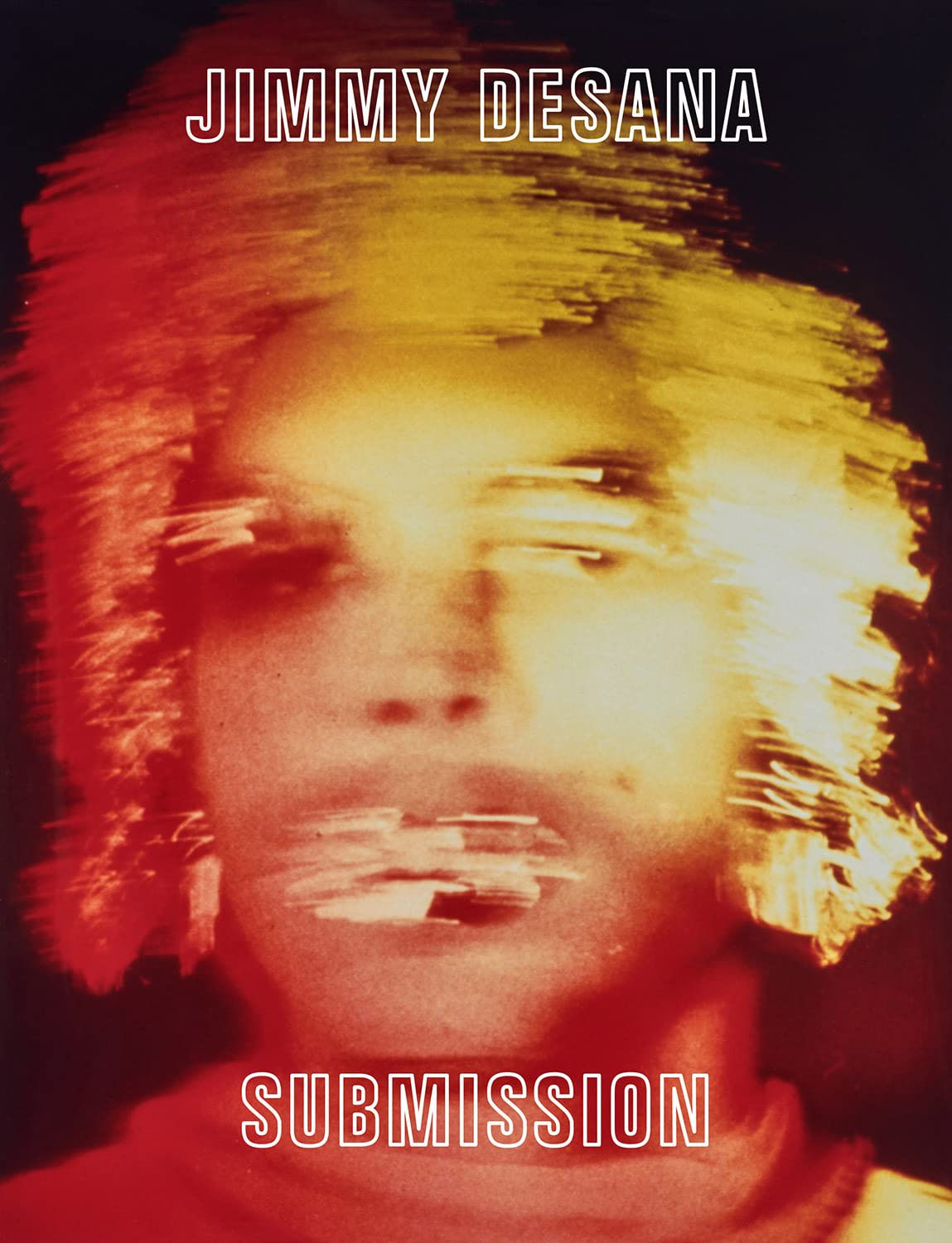
 

Jimmy DeSana Submission book cover


Jimmy DeSana Submission book cover


Book

This book is the first monograph to present the work of Jimmy DeSana, a pioneering yet under recognised figure in New York’s downtown art, music, and film scenes during the 1970s and ’80s. The book situates DeSana’s work and life within the countercultural and queer contexts in the American South as well as New York, through his involvement in mail art, punk, and No Wave music and film, and artist collectives and publications. Featuring an original text by Drew Sawyer, Phillip Leonian and Edith Rosenbaum Leonian Curator of Photography at the Brooklyn Museum, it includes his major series that helped create a No Wave aesthetic as well as his portraits of art and music luminaries of the time.

Jimmy DeSana: Submission is the first monograph of this pioneering queer punk photographer whose brief but prolific career helped elevate the medium of photography within the contemporary art world. This publication traces his brief yet prolific career through nearly two hundred works and over twenty years that bridged mail-art networks, New York’s 1970s and ’80s subcultures, the illuminating image-play of the “Pictures Generation,” and various responses to HIV / AIDS.

The book showcases DeSana’s extensive involvement in zines, artist collectives, performance art, experimental film, and club culture. Included are his most famous series – 101 Nudes (1972), his first major work made during Atlanta’s gay liberation movement; Submission (1977-1979), created with the writer William Burroughs; and Suburban (1979-1984), which showcases his work as an early adopter of colour photography. During the late 1970s and early ’80s, DeSana was heavily involved in New York’s punk and No Wave scenes. Included in this book are his portraits of such art and music luminaries as Kathy Acker, Laurie Anderson, Kenneth Anger, Patti Astor, David Byrne, John Giorno, Debbie Harry, and Richard Hell. Accompanying these works are DeSana’s more abstract efforts from the late 1980s, after he was diagnosed with AIDS, that show an artist who resisted dominant narratives about the body and sexuality in the early years of the ongoing HIV / AIDS epidemic.

Text from the Brooklyn Museum website
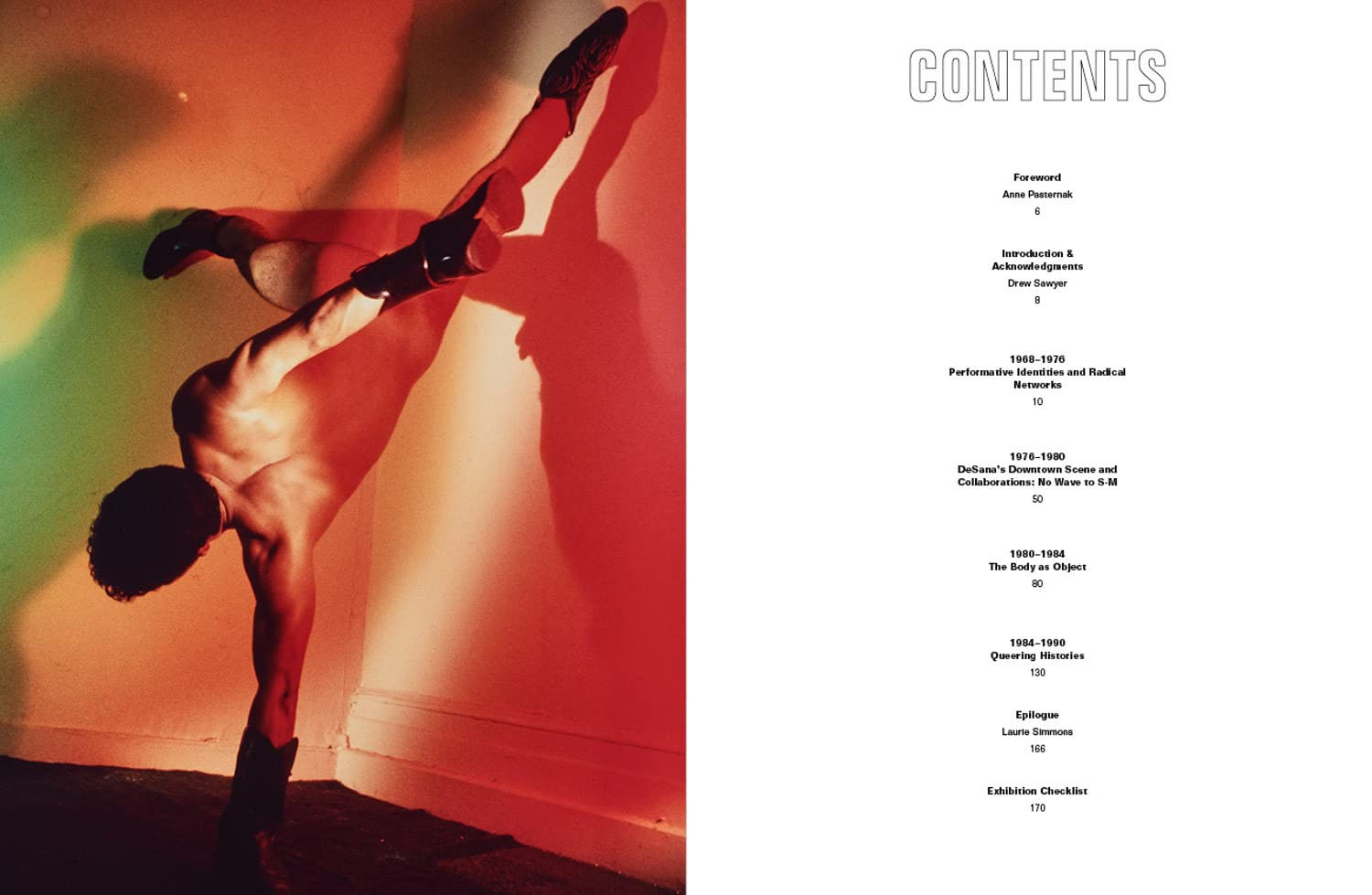
 

Jimmy DeSana Submission content page
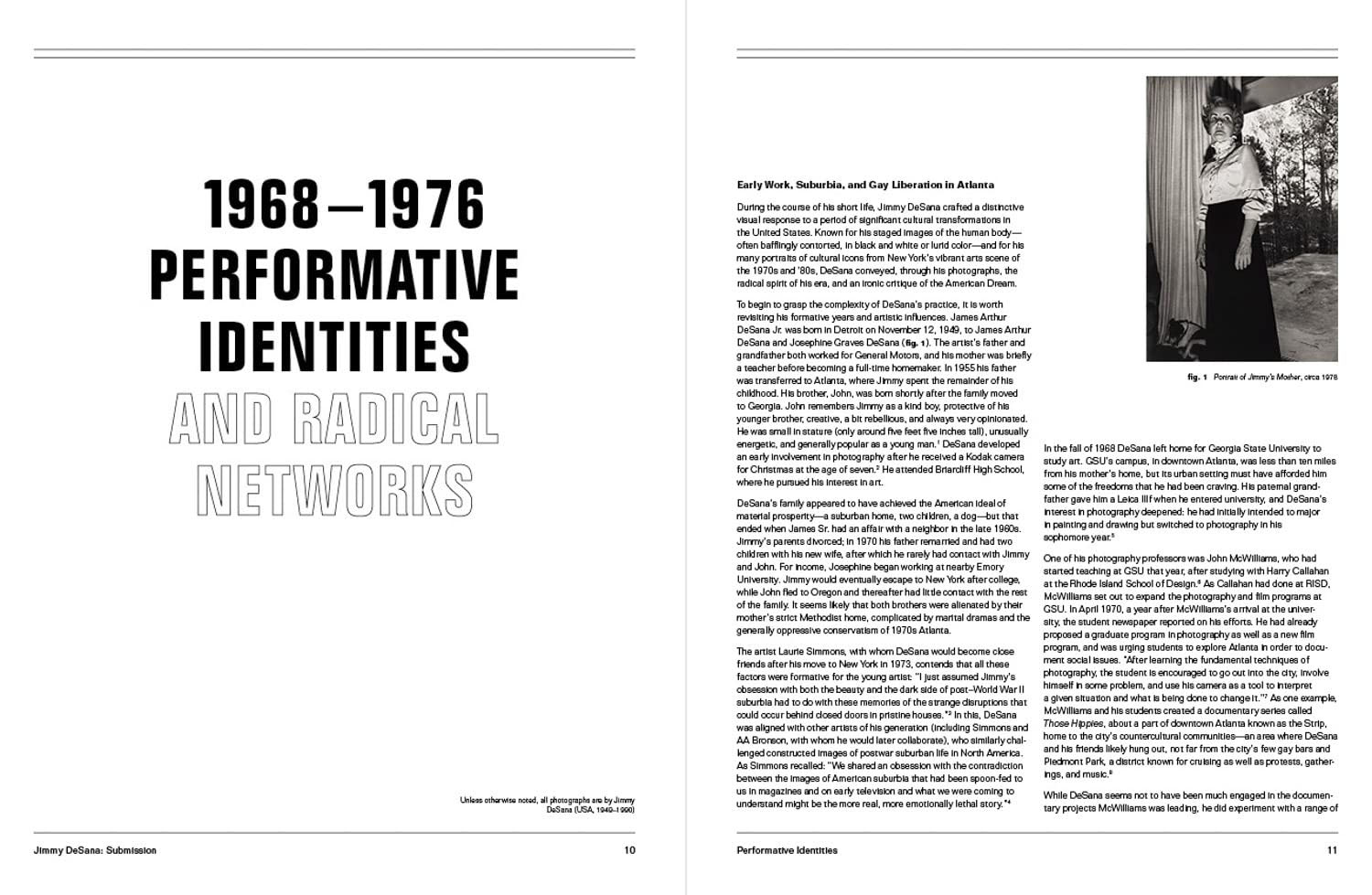
 

Jimmy DeSana Submission content page


Jimmy DeSana Submission performative identities 1968-1976


Jimmy DeSana Submission Performative Identities and Radical Networks pp. 10-11
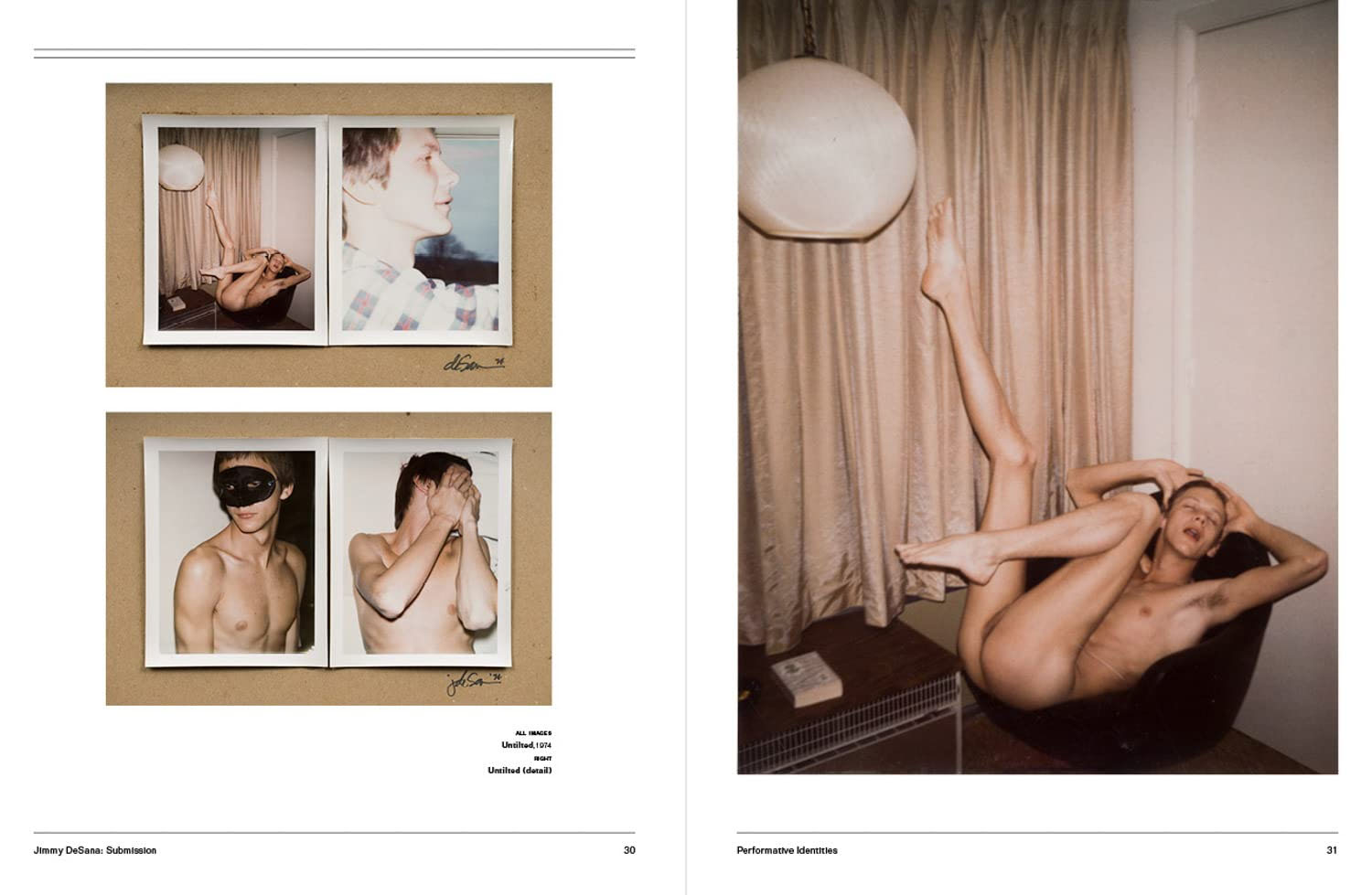
 

Jimmy DeSana Submission pp. 30-31
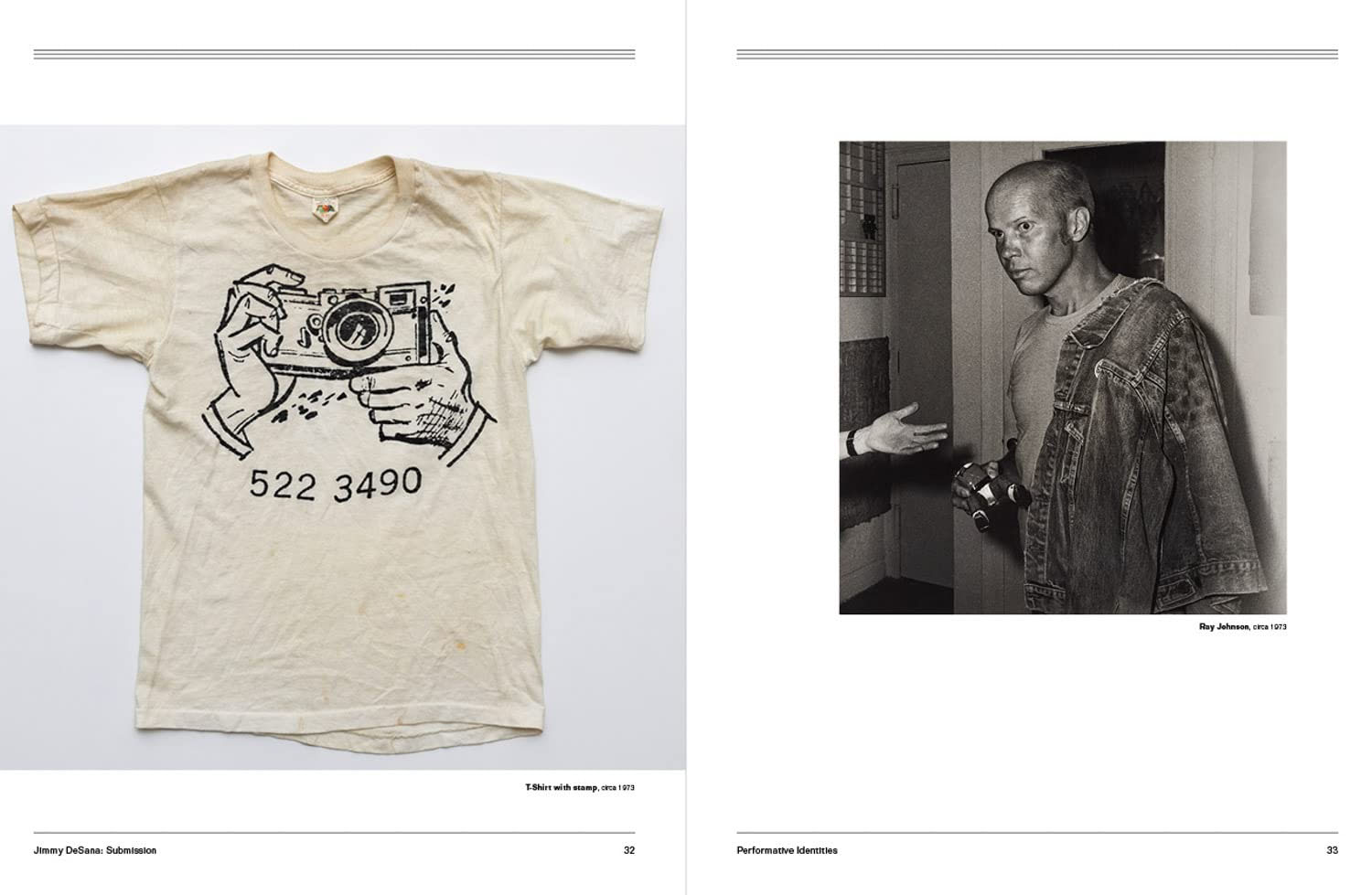
 

Jimmy DeSana Submission pp. 30-31


Jimmy DeSana Submission pp. 32-33
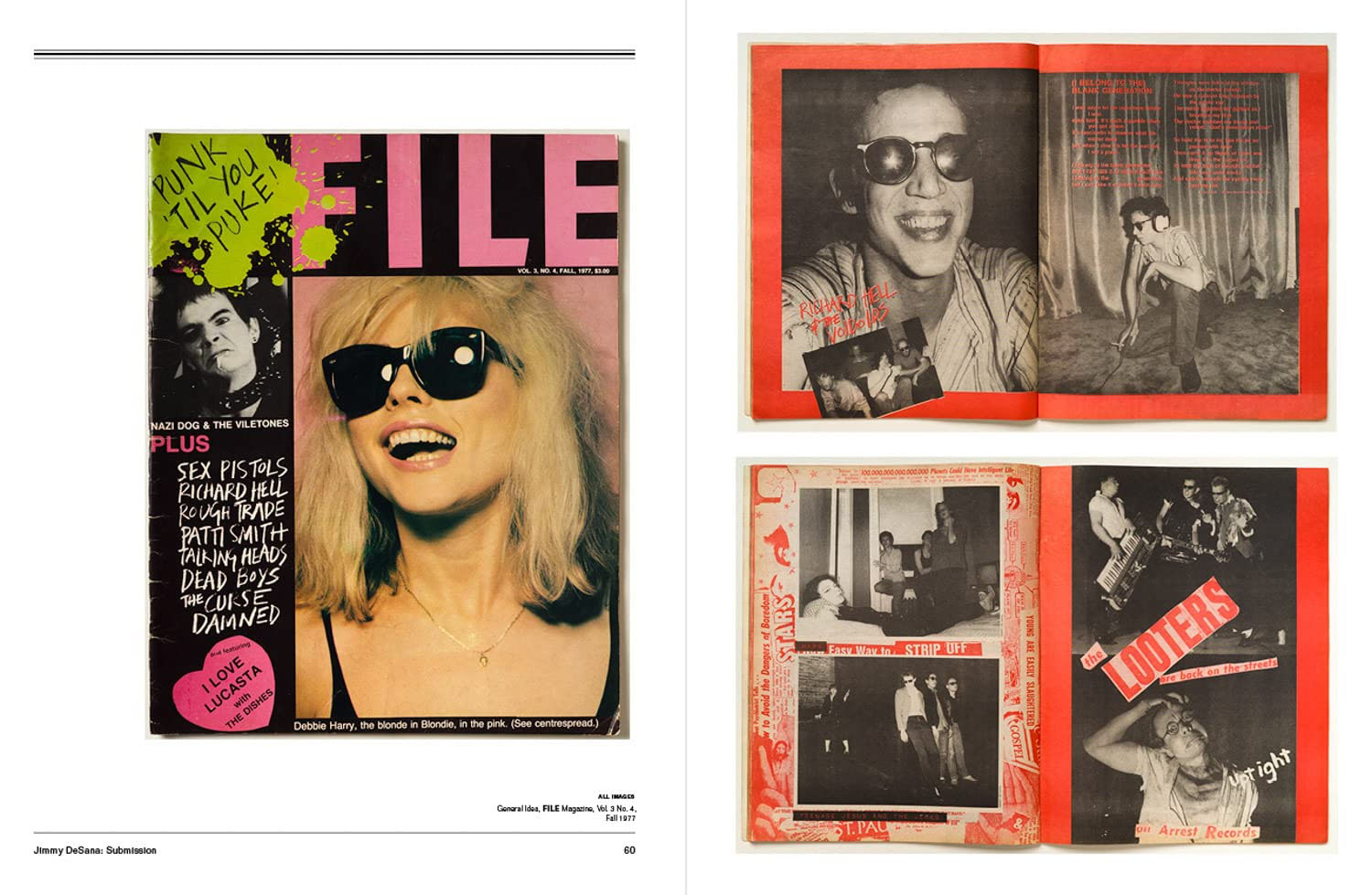
 

Jimmy DeSana Submission pp. 32-33


Jimmy DeSana Submission pp. 60-61
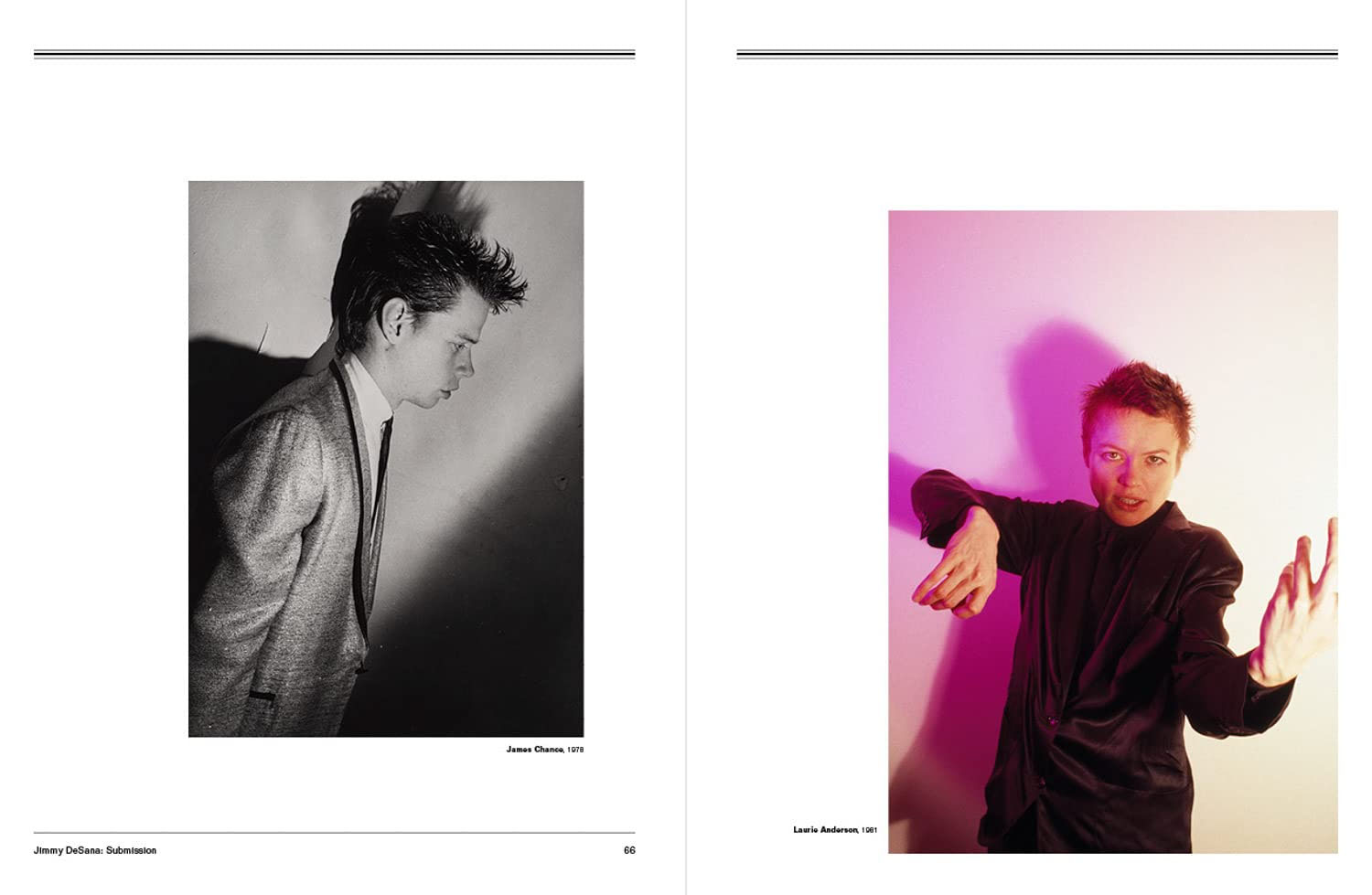
 

Jimmy DeSana Submission pp. 60-61


Jimmy DeSana Submission pp. 66-67
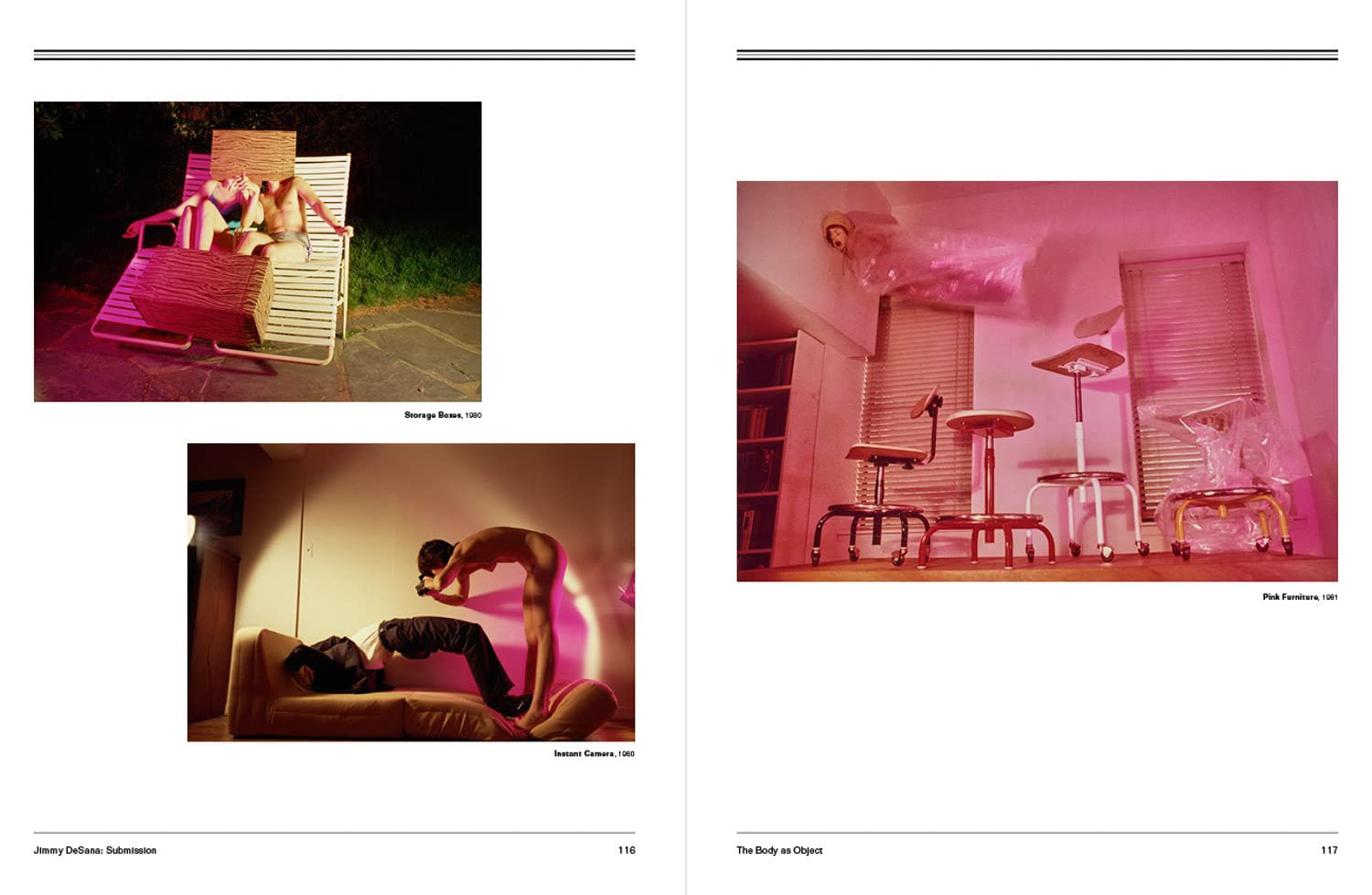
 

Jimmy DeSana Submission pp. 66-67


Jimmy DeSana Submission pp. 116-117
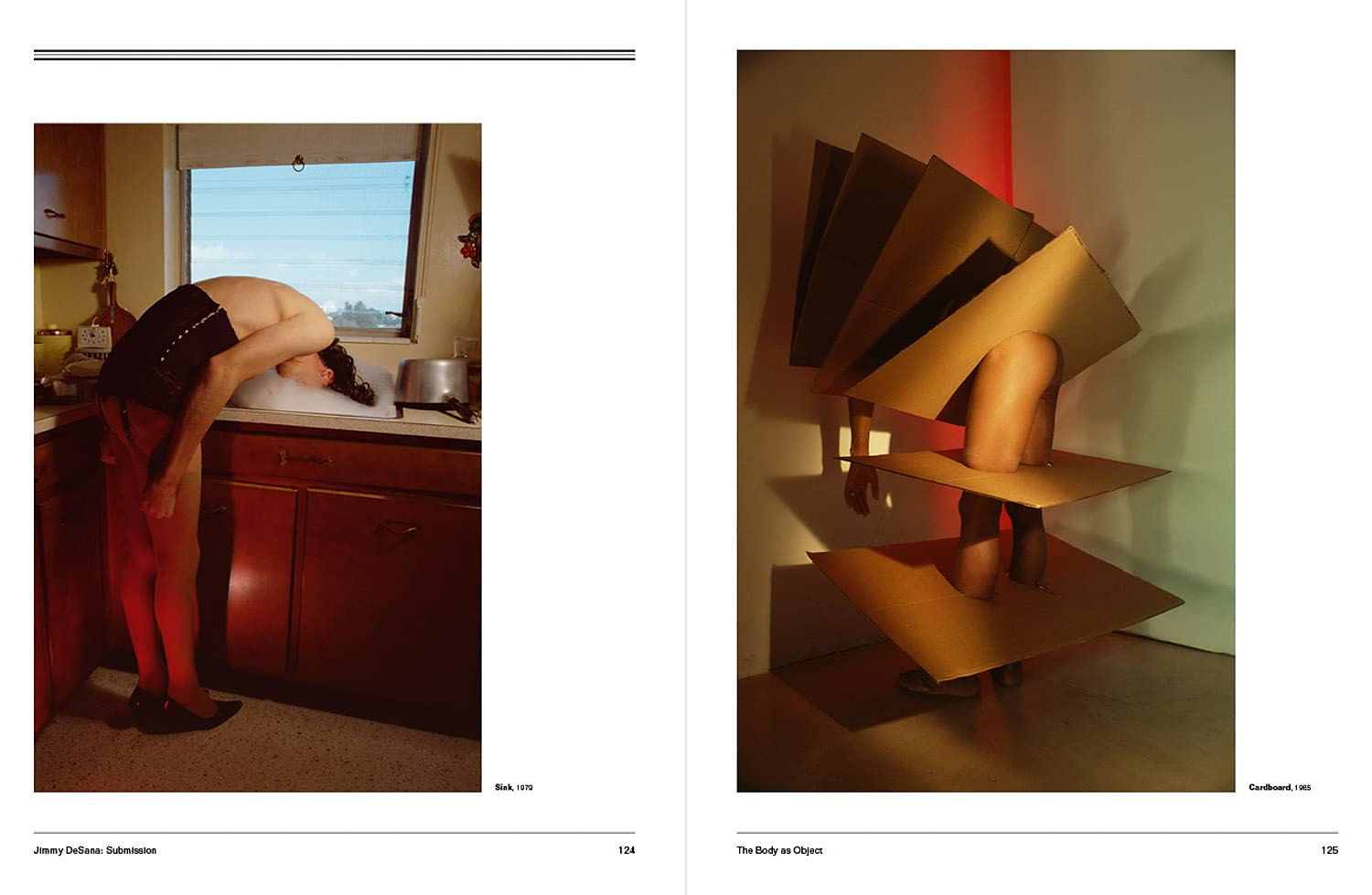
 

Jimmy DeSana Submission pp. 116-117


Jimmy DeSana Submission pp. 124-125
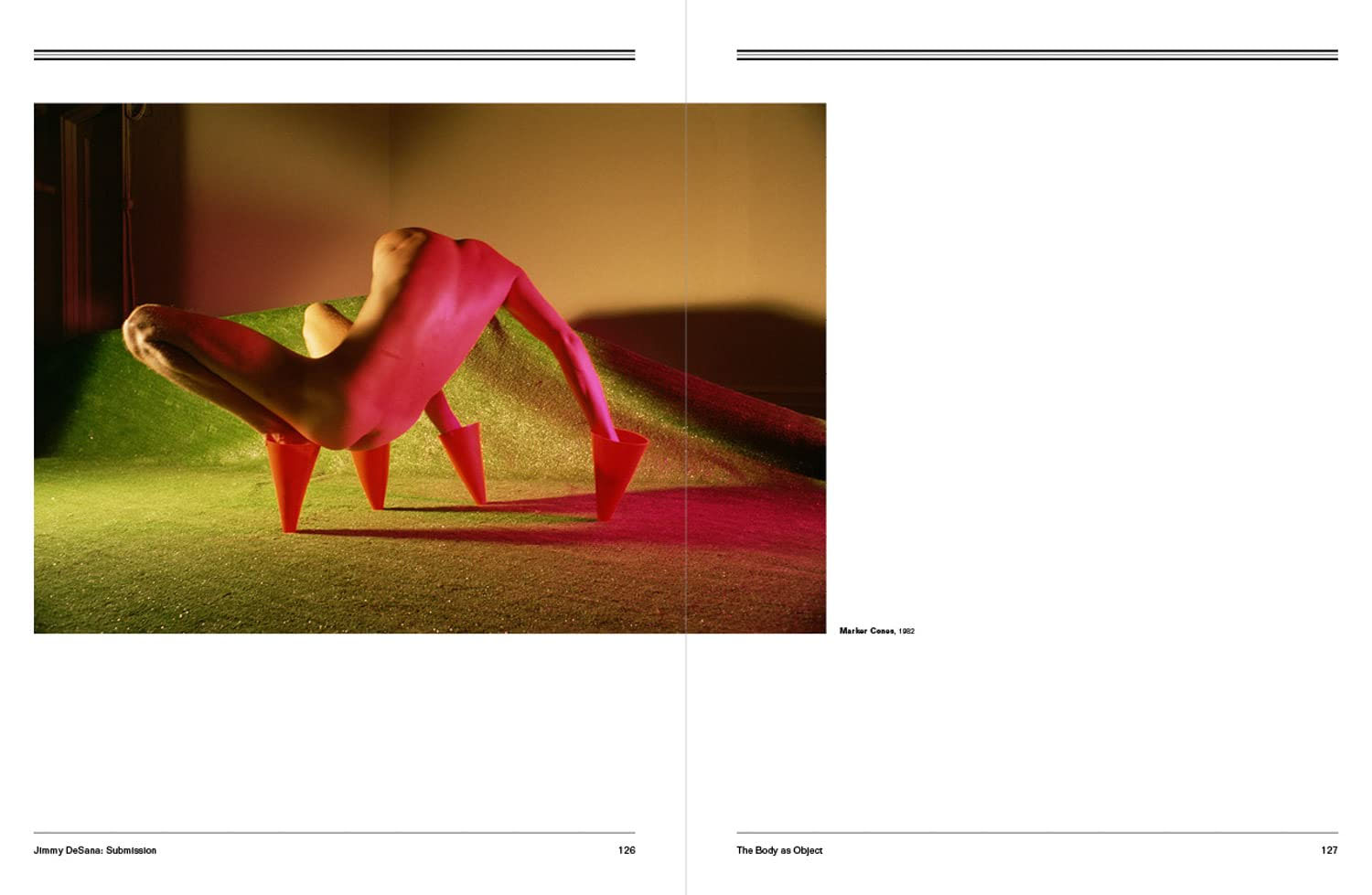
 

Jimmy DeSana Submission pp. 124-125


Jimmy DeSana Submission pp. 126-127


Jimmy DeSana Submission pp. 126-127


Brooklyn Museum
200 Eastern Parkway
Brooklyn, NY 11238-6052
Phone: (718) 638-5000

Opening hours:
Wednesday – Sunday 11am – 6pm
Closed Mondays and Tuesdays
Closed Thanksgiving, Christmas, and New Year’s Day
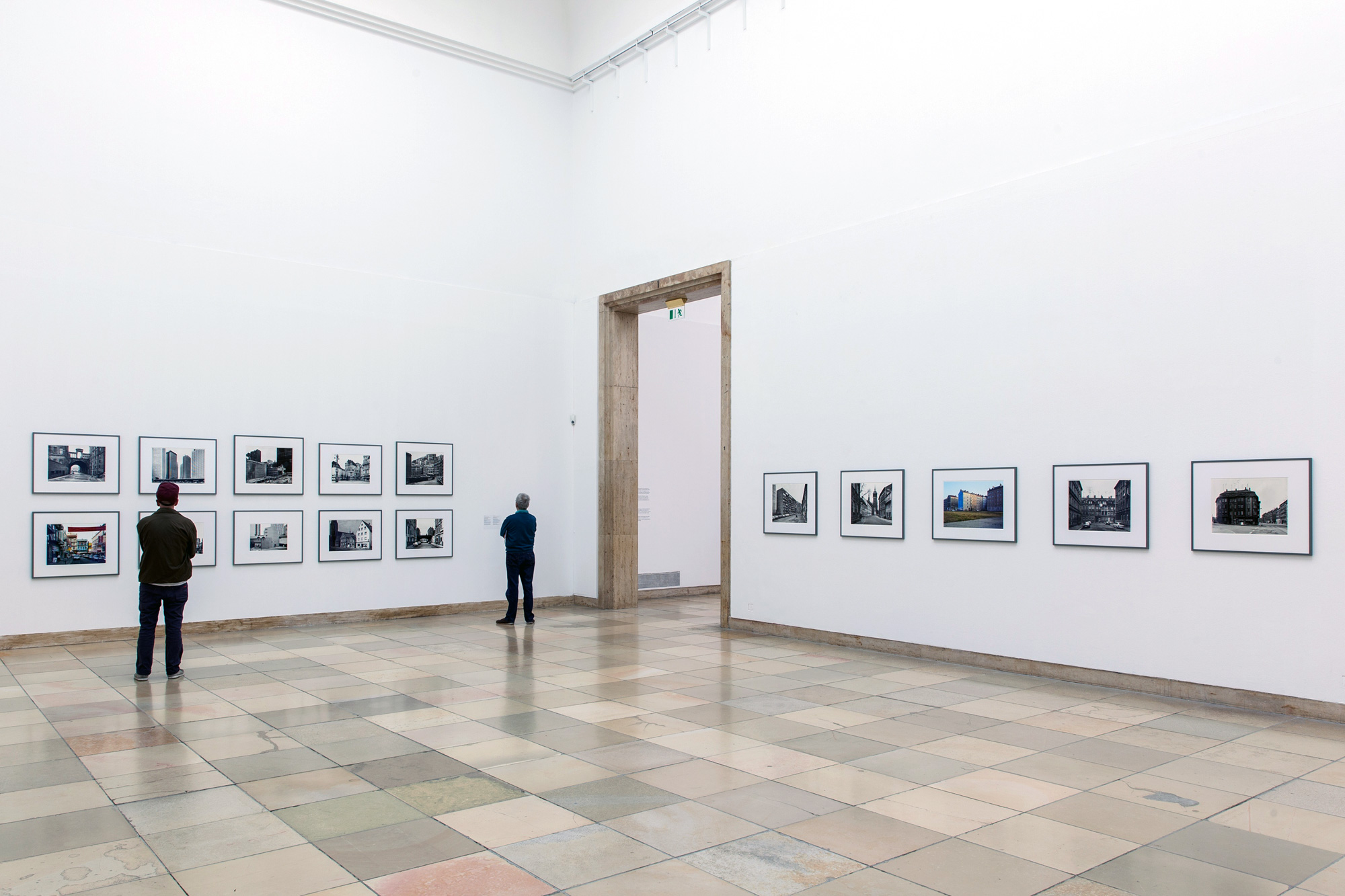
Brooklyn Museum website

LIKE ART BLART ON FACEBOOK

Back to top

Exhibition: ‘Thomas Struth: Figure Ground’ at Haus der Kunst, Munich

Exhibition dates: 5th May – 17th September, 2017
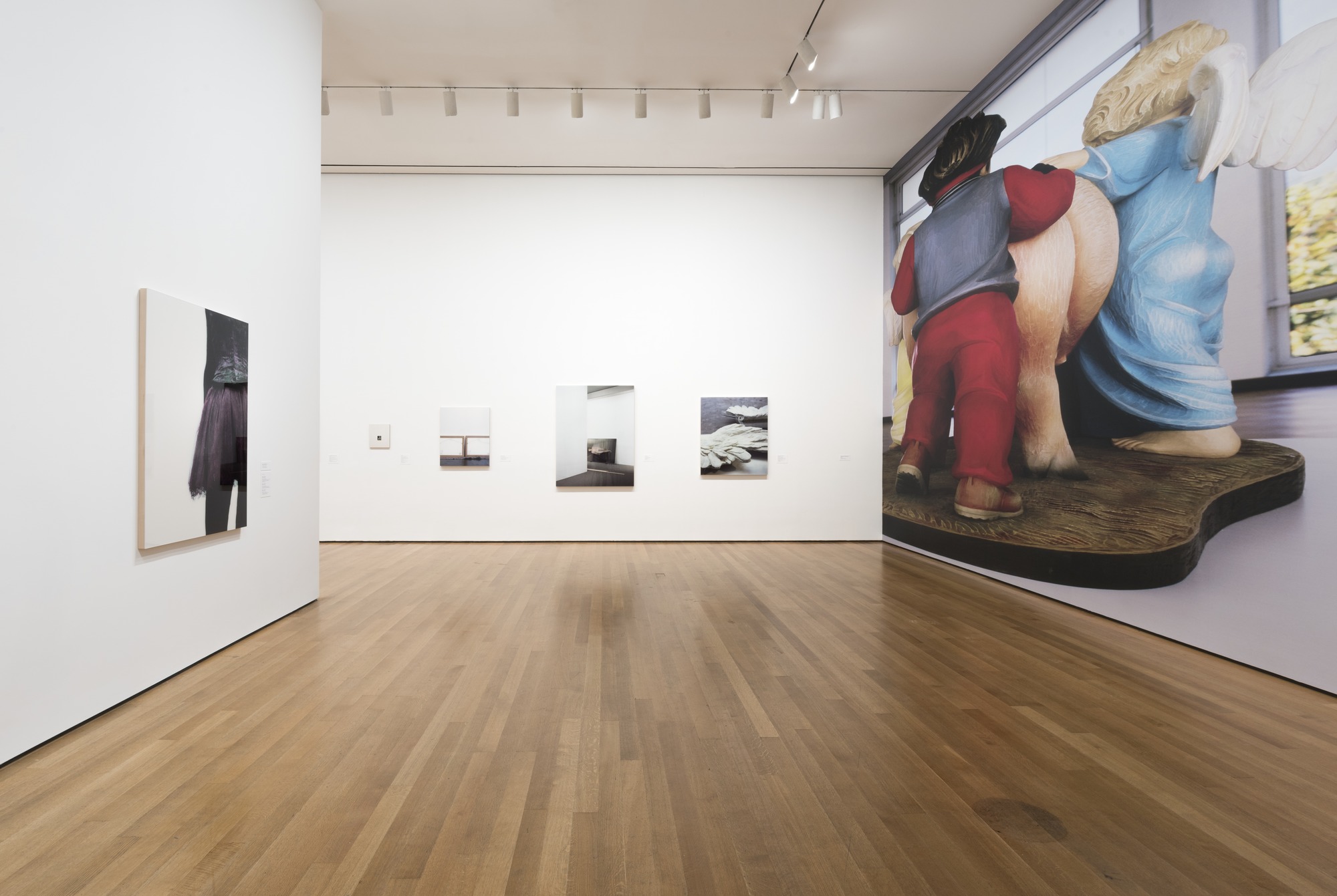
Curator: Thomas Weski


Installation view of the exhibition 'Thomas Struth: Figure Ground' at Haus der Kunst, Munich from the exhibition 'Thomas Struth: Figure Ground' at Haus der Kunst, Munich, May - Sept, 2017
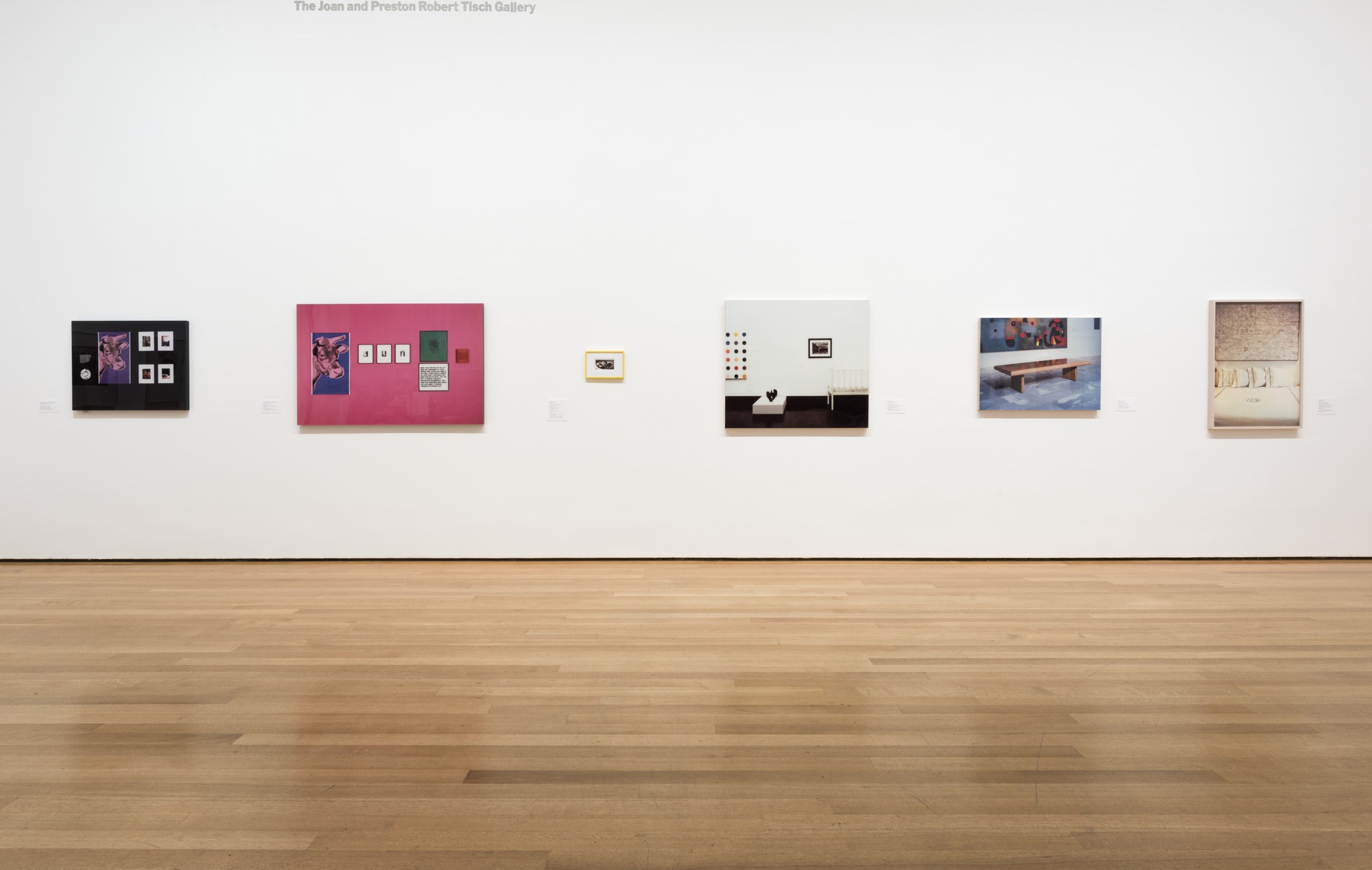
 

Installation view of the exhibition Thomas Struth: Figure Ground at Haus der Kunst, Munich
Courtesy of the artist and Haus der Kunst, Munich


I have always liked this man’s work. His understanding of space, colour, form and photograph as aesthetic experience is sublime. His muscular compositions show evidence of clear thinking and seeing… an investigation into sachlichkeit, that is objectivity: the boundaries between human, animal and machine (the aesthetics of innovation).

And yet Struth’s “unheroic” images also show evidence of subjective forces at work: impulsion, chaos, and serendipity to name a few, capturing a ‘razzmatazz of sensations’ that challenge the existential nature of the human, ‘being’.

Dr Marcus Bunyan


Many thankx to Haus der Kunst for allowing me to publish the art work in the posting. Please click on the photographs for a larger version of the image.


“Most of the images are very unheroic. I have a strong relationship to clarity. That’s why my compositions and choices are very meticulous.”


Thomas Struth


Thomas Struth (German, b. 1954) 'Crosby Street, Soho, New York' 1978 from the exhibition 'Thomas Struth: Figure Ground' at Haus der Kunst, Munich, May - Sept, 2017


Thomas Struth (German, b. 1954)
Crosby Street, Soho, New York
1978
Silver gelatin print
66 x 84cm
© Thomas Struth


Thomas Struth (German, b. 1954) 'Rue de Beaugrenelle, Beaugrenelle, Paris' 1979


Thomas Struth (German, b. 1954)
Rue de Beaugrenelle, Beaugrenelle, Paris
1979
Silver gelatin print
66 x 84cm
© Thomas Struth


Installation view of the exhibition 'Thomas Struth: Figure Ground' at Haus der Kunst, Munich


Installation view of the exhibition Thomas Struth: Figure Ground at Haus der Kunst, Munich
Courtesy of the artist and Haus der Kunst, Munich


Thomas Struth (German, b. 1954) 'National Gallery 1, London' 1989


Thomas Struth (German, b. 1954)
National Gallery 1, London
1989
Chromogenic print
180 x 196cm
© Thomas Struth


Installation view of the exhibition 'Thomas Struth: Figure Ground' at Haus der Kunst, Munich with 'Louvre 4, Paris' (1989) centre left


Installation view of the exhibition Thomas Struth: Figure Ground at Haus der Kunst, Munich with Louvre 4, Paris (1989) centre left
Courtesy of the artist and Haus der Kunst, Munich


Thomas Struth (German, b. 1954) 'Louvre 4 Paris' 1989


Thomas Struth (German, b. 1954)
Louvre 4, Paris
1989
© Thomas Struth


Thomas Struth (German, b. 1954) 'Kyoko and Tomoharu Murakami, Tokyo' 1991


Thomas Struth (German, b. 1954)
Kyoko and Tomoharu Murakami, Tokyo
1991
Chromogenic print
105.5 x 126.0cm
© Thomas Struth


Installation view of the exhibition 'Thomas Struth: Figure Ground' at Haus der Kunst, Munich with 'Paradise 26 (Bougainville), Palpa, Peru (2003)' to the right


Installation view of the exhibition Thomas Struth: Figure Ground at Haus der Kunst, Munich with Paradise 26 (Bougainville), Palpa, Peru (2003) to the right
Courtesy of the artist and Haus der Kunst, Munich


Thomas Struth (German, b. 1954) 'Bright sunflower - No. 1, Winterthur' 1991


Thomas Struth (German, b. 1954)
Bright sunflower – No. 1, Winterthur
1991
Chromogenic print
84 x 66cm
© Thomas Struth


This major exhibition by the pioneering German photographer Thomas Struth (born 1954) presents the most comprehensive survey of his genre-defining oeuvre. Covering four decades of work and every phase of his illustrious artistic career, the exhibition focuses especially on the aspect of Struth’s social interests which represent the important forces of his internationally influential artistic development. Starting with his first series Unbewusste Orte (Unconscious Places) published in 1987 through his current works that deal with the field of research and technology in the globalised world, Struth’s work develops its own specific analytical nature through his choice of subject matter, the manner of its photographic realisation and its modes of presentation. These aspirations are manifested in questioning the relevance of public space and transformation of cities, the cohesive factor of family solidarity, the importance of the relationship between nature and culture, and exploring the limits and possibilities of new technologies. The momentum of participation further characterises these aspirations, as Struth’s extensive pictorial inventions and strategies allow individual interpretation based on collective knowledge.

In this exhibition, early works and research materials related to the artist’s subject matter, and collected over several decades, are shown for the first time in the context of an exhibition, offering access and insight into Struth’s working methods. Together with the photographs, these materials elucidate his longstanding interests behind the different series, demonstrating the process of artistic translation before the perfection of the image.

Featuring around 130 works, two multichannel video installations, and a selection of archival material, the exhibition in Haus der Kunst is the largest survey of Struth’s artistic career to date. The survey links his early ideas to well-known series such as Straßen (Streets), Unbewusste Orte (Unconscious Places), Portraits, Museumsbilder (Museum Pictures), Paradise, and Audiences which are placed in dialogue with site-specific works like Löwenzahnzimmer (Dandelion Room), the landscape- and flower photographs that were made for the patients’ rooms at the Hospital on the Lindberg in Winterthur, Switzerland. It also includes photographs recently shown in the exhibition Nature & Politics. Within this interplay, the exciting ability of the artist to combine analysis and individual pictorial invention in multifaceted works and techniques builds an overarching idea on how to deal with the elementary matters of our times.

The exhibition is accompanied by a publication from Schirmer / Mosel Publishers, Munich, designed by Fernando Gutierrez, with texts by Thomas Weski, Ulrich Wilmes, Jana-Maria Hartmann, and an interview with the artist by Okwui Enwezor. The exhibition is organised by Haus der Kunst and curated by Thomas Weski.

Press release from Haus der Kunst


Thomas Struth (German, b. 1954) 'Wangfujing Dong Lu, Shanghai' 1997


Thomas Struth (German, b. 1954)
Wangfujing Dong Lu, Shanghai
1997
Chromogenic print
117.5 x 143.6cm
© Thomas Struth


Thomas Struth (German, b. 1954) 'Paradise 10 (Xi Shuang Banna), Yunnan Province, China' 1999


Thomas Struth (German, b. 1954)
Paradise 10 (Xi Shuang Banna), Yunnan Province, China
1999
Chromogenic print
182 x 227cm
© Thomas Struth


Thomas Struth (German, b. 1954) 'Self-Portrait, Munich' 2000


Thomas Struth (German, b. 1954)
Self-Portrait, Munich
2000
© Thomas Struth


“Albrecht Durer painted his self-portrait in 1500, so Struth’s Self-Portrait, Munich 2000 feels like a conversation between artists across 500 years.”


Thomas Struth (German, b. 1954) 'National Gallery 2, London' 2001


Thomas Struth (German, b. 1954)
National Gallery 2, London
2001
Chromogenic print
148.0 x 170.4cm
© Thomas Struth


Thomas Struth (German, b. 1954) 'Audience 7, Florence' 2004


Thomas Struth (German, b. 1954)
Audience 7, Florence
2004
Chromogenic print
179.5 x 291.5cm
© Thomas Struth


Thomas Struth (German, b. 1954) 'Audience 11, Florence' 2004


Thomas Struth (German, b. 1954)
Audience 11, Florence
2004
Chromogenic print
179.5 x 291.5cm
© Thomas Struth


Installation view of the exhibition 'Thomas Struth: Figure Ground' at Haus der Kunst, Munich with 'Semi Submersible Rig, DSME Shipyard, Geoje Island' (2007) at centre


Installation view of the exhibition Thomas Struth: Figure Ground at Haus der Kunst, Munich with Semi Submersible Rig, DSME Shipyard, Geoje Island (2007) at centre
Courtesy of the artist and Haus der Kunst, Munich


Thomas Struth (German, b. 1954) 'Semi Submersible Rig, DSME Shipyard, Geoje Island' 2007


Thomas Struth (German, b. 1954)
Semi Submersible Rig, DSME Shipyard, Geoje Island
2007
© Thomas Struth


Installation view of the exhibition 'Thomas Struth: Figure Ground' at Haus der Kunst, Munich with 'Tokamak Asdex Upgrade Periphery, Max Planck IPP, Garching' (2009) at left


Installation view of the exhibition Thomas Struth: Figure Ground at Haus der Kunst, Munich with Tokamak Asdex Upgrade Periphery, Max Planck IPP, Garching (2009) at left
Courtesy of the artist and Haus der Kunst, Munich


Thomas Struth (German, b. 1954) 'Tokamak Asdex Upgrade Periphery, Max Planck IPP, Garching' 2009


Thomas Struth (German, b. 1954)
Tokamak Asdex Upgrade Periphery, Max Planck IPP, Garching
2009
Chromogenic print
109.3 x 85.8cm
© Thomas Struth


Thomas Struth (German, b. 1954) 'Har Homa, East Jerusalem' 2009


Thomas Struth (German, b. 1954)
Har Homa, East Jerusalem
2009
Inkjet print
148.6 x 184.8cm
© Thomas Struth


Installation view of the exhibition 'Thomas Struth: Figure Ground' at Haus der Kunst, Munich with 'The Faez Family, Rehovot' (2009) second left


Installation view of the exhibition Thomas Struth: Figure Ground at Haus der Kunst, Munich with The Faez Family, Rehovot (2009) second left
Courtesy of the artist and Haus der Kunst, Munich


Thomas Struth (German, b. 1954) 'The Faez Family, Rehovot' 2009


Thomas Struth (German, b. 1954)
The Faez Family, Rehovot
2009
© Thomas Struth


Thomas Struth (German, b. 1954) 'Grazing Incidence Spectrometer, Max Planck IPP, Garching' 2010


Thomas Struth (German, b. 1954)
Grazing Incidence Spectrometer, Max Planck IPP, Garching
2010
© Thomas Struth


Thomas Struth (German, b. 1954) 'Chemistry Fume Cabinet, The University of Edinburgh' 2010


Thomas Struth (German, b. 1954)
Chemistry Fume Cabinet, The University of Edinburgh
2010
© Thomas Struth


Take, for instance, Struth’s photograph “Chemistry Fume Cabinet, The University of Edinburgh” (2010). Ostensibly a photograph of a chemistry fume cabinet at the University of Edinburgh, photographed through a clear, glass window, the work is also a study in colour and form. Within a white background space, the back wall has black horizontal lines running along it, while the side walls have one vertical line each. These opposing lines create what appear to be a haphazard grid. A wide red horizontal structure runs across the front of the room, creating one more line that both breaks up and contributes to the grid. Various machines within the room, two square red panels on the left and right sides of the window, and six coloured balloons provide a series of objects that fit within the finely structured container of the photograph’s frame.

What struck me immediately upon seeing this image was how the various lines and objects interact with one another. Struth presents the viewer with a kind of interactive field in which she can either read the image “as is” – photograph documenting a chemistry fume cabinet – or as a purely aesthetic experience. Or, of course, she can do both, which is what makes Struth’s work so rich and gratifying. It is in the way his mastery of colour and other formal elements coincides with his documentation of the world.

Cynthia Cruz. “Seeing the Deterioration of Technology in Thomas Struth’s Photographs,” on the Hyperallergic website September 9, 2016 [Online] Cited 05/08/2017


Installation view of the exhibition 'Thomas Struth: Figure Ground' at Haus der Kunst, Munich with 'Queen Elizabeth II & The Duke of Edinburgh, Windsor Castle' (2010) at left


Installation view of the exhibition Thomas Struth: Figure Ground at Haus der Kunst, Munich with Queen Elizabeth II & The Duke of Edinburgh, Windsor Castle (2010) at left
Courtesy of the artist and Haus der Kunst, Munich


Thomas Struth (German, b. 1954) 'Queen Elizabeth II & The Duke of Edinburgh, Windsor Castle' 2010


Thomas Struth (German, b. 1954)
Queen Elizabeth II & The Duke of Edinburgh, Windsor Castle
2010
© Thomas Struth


Installation view of the exhibition 'Thomas Struth: Figure Ground' at Haus der Kunst, Munich with 'Aquarium, Atlanta, Georgia' (2013) at right


Installation view of the exhibition Thomas Struth: Figure Ground at Haus der Kunst, Munich with Aquarium, Atlanta, Georgia (2013) at right
Courtesy of the artist and Haus der Kunst, Munich


Thomas Struth (German, b. 1954) 'Aquarium, Atlanta, Georgia' 2013


Thomas Struth (German, b. 1954)
Aquarium, Atlanta, Georgia
2013
© Thomas Struth


Thomas Struth (German, b. 1954) 'Schaltwerk 1 Berlin' 2016


Thomas Struth (German, b. 1954)
Schaltwerk 1, Berlin
2016
© Thomas Struth


Haus der Kunst
Prinzregentenstraße 1
80538 Munich
Germany
Phone: +49 89 21127 113

Opening hours:
Mon | Wed | Fri | Sat | Sun 10am – 8pm
Thur 10am – 10pm
Tue closed

Haus der Kunst website

LIKE ART BLART ON FACEBOOK

Back to top

Exhibition: ‘Louise Lawler: WHY PICTURES NOW’ at the Museum of Modern Art (MoMA), New York

Exhibition dates: 30th April – 30th July, 2017

Curators: Roxana Marcoci, Senior Curator, with Kelly Sidley, Curatorial Assistant, Department of Photography.


Louise Lawler (American, b. 1947) 'Pollyanna (adjusted to fit) distorted for the times' 2007/2008/2012 from the exhibition 'Louise Lawler: WHY PICTURES NOW' at the Museum of Modern Art (MoMA), New York, April - July, 2017


Louise Lawler (American, b. 1947)
Pollyanna (adjusted to fit) distorted for the times
2007/2008/2012
As adjusted for the MoMA exhibition WHY PICTURES NOW, 2017
Dimensions variable
Courtesy the artist and Metro Pictures
© 2017 Louise Lawler


I missed the closing date for this exhibition due to the ongoing problems with my hand. However, I believe it is valuable to post these images because Louise Lawler is an always provocative, thoughtful and interesting artist. She shines a light or, more possibly, pokes a big stick at patriarchal systems of value in art – turning perceived points of view, ways of seeing, and “the cultural circumstances that support art’s production, circulation, and presentation” on their head.

“… behind Ms. Lawler’s shape-shifting works lies a poetic intelligence, a political sharpness and an understanding of the artwork as a form of value, but also as a source and an object of love.”

Well said.

Lawler possesses a unique understanding of the forms of culture embodied within images and also an intimate knowledge of the archetypal forms buried deep within their bones. Is the pattern immanent in the paper (the cosmos), or is the paper a blank slate to be written on by the creator?

Distorted, restaged, reframed and re-presented for the times…

Dr Marcus Bunyan


Many thankx to MoMA for allowing me to publish the photographs in posting. Please click on the photographs for a larger version of the image.

#art #moma #museumofmodernart #museum #modernart #nyc #education #artist #photography #womenartists #femaleartists #louiselawler #whypicturesnow


Louise Lawler (American, b. 1947) 'Pollyanna (adjusted to fit)' 2007/2008/2012 from the exhibition 'Louise Lawler: WHY PICTURES NOW' at the Museum of Modern Art (MoMA), New York, April - July, 2017


Louise Lawler (American, b. 1947)
Pollyanna (adjusted to fit)
2007/2008/2012
As adjusted for the MoMA exhibition WHY PICTURES NOW, 2017
Dimensions variable
Courtesy the artist and Metro Pictures
© 2017 Louise Lawler


Louise Lawler (American, b. 1947) 'Produced in 1988, Purchased in 1989; Produced in 1989, Purchased in 1993 (adjusted to fit), distorted for the times' 1995/2010


Louise Lawler (American, b. 1947)
Produced in 1988, Purchased in 1989; Produced in 1989, Purchased in 1993 (adjusted to fit), distorted for the times
1995/2010
Dimensions variable
Courtesy the artist and Metro Pictures
© 2017 Louise Lawler


(Note on reproducing Lawler’s Adjusted to Fit works: Each time these images are reproduced, they should be stretched to the space given to the reproduction. The original file (un-stretched) is the origin point for anything that is then adjusted by the photo editor.)


Louise Lawler (American, b. 1947) 'Produced in 1988, Purchased in 1989; Produced in 1989, Purchased in 1993 (adjusted to fit)' 1995/2010


Louise Lawler (American, b. 1947)
Produced in 1988, Purchased in 1989; Produced in 1989, Purchased in 1993 (adjusted to fit), distorted for the times
1995/2010
Dimensions variable
Courtesy the artist and Metro Pictures
© 2017 Louise Lawler


Louise Lawler: WHY PICTURES NOW is the first major survey in New York of the artist Louise Lawler (American, b. 1947), spanning the 40-year creative output of one of the most influential artists working in the fields of image production and institutional critique. The exhibition takes its title from one of Lawler’s most iconic works, Why Pictures Now (1982), a black-and-white photograph showing a matchbook propped up in an ashtray. Reminiscent of an advertising photograph or a film noir still, it asks the viewer to consider why the work takes the form of a picture, and why the artist is making pictures now. Lawler came of age as part of the Pictures Generation, a loosely knit, highly independent group of artists named for an influential exhibition, Pictures, organised in 1977 by art historian Douglas Crimp at Artists Space in New York. These artists used photography and appropriation-driven strategies to examine the functions and codes of representation. Lawler’s signature style was established in the late 1970s and early 1980s, when she began taking pictures of other artists’ works displayed in collectors’ homes, museums, storage spaces, and auction houses to question the value, meaning, and use of art.

WHY PICTURES NOW is organised by Roxana Marcoci, Senior Curator, with Kelly Sidley, Curatorial Assistant, Department of Photography.


“Ms. Lawler and Roxana Marcoci, the exhibition’s curator, have devised something quite different: an open, airy survey with lots of room for roaming, some chairs for sitting and two conjoined, markedly different halves focusing on Ms. Lawler’s activities with pictures and then words. The first half is dominated by photographs in various shapes and guises, including mural-size images. The second, which seems almost empty at first, contains two large vitrines of ephemera that show off Ms. Lawler’s gifts for graphic design and for language, with displays of everything from matchbook covers and napkins to exhibition announcements and art books that she photo-edited. …

Ms. Lawler’s images have multiple lives, exposing the ceaseless flexibility of photographs. Constantly recycled, they go from framed and portable to paperweights to the wall-covering murals of her “adjusted to fit” series. In the show’s first half, four “adjusted” photos cover immense, staggered walls, looming like ocean liners sliding out of their docks. Their monumentality thrills but also chides the art world for its embrace of spectacle and the overblown. …

It is hard to know if these words [“Why Pictures Now”] proclaim the power, or the worthlessness, of pictures. Probably both. Either way, behind Ms. Lawler’s shape-shifting works lies a poetic intelligence, a political sharpness and an understanding of the artwork as a form of value, but also as a source and an object of love.”


Roberta Smith. “Louise Lawler’s Stealth Aesthetic (and Muted Aura),” on the New York Times website May 11, 2017 [Online] Cited 29/12/2021


Louise Lawler: WHY PICTURES NOW | MoMA LIVE

Join us for a conversation with MoMA director Glenn Lowry and curator Roxana Marcoci on the opening of the exhibition, Louise Lawler: WHY PICTURES NOW. The first New York museum survey of the work of American artist Louise Lawler, this exhibition is an exploration of her creative output, which has inspired fellow artists and cultural thinkers alike for the past four decades.

Among the most intriguing aspects of Lawler’s working process is her continuous re-presentation, reframing, or restaging in the present, a strategy through which she revisits her own images by transferring them to different formats – from photographs to paperweights, tracings, and works she calls “adjusted to fit” (images stretched or expanded to fit the location of their display). Lawler’s critical strategies of reformatting existing content not only suggest the idea that pictures can have more than one life, but underpin the intentional, relational character of her farsighted art.


Louise Lawler | HOW TO SEE the artist with MoMA curator Roxana Marcoci

Can the exact same image have a completely different meaning if its title or medium is changed? Explore the work of one of today’s most influential female artists, Louise Lawler, in the new exhibition Louise Lawler: WHY PICTURES NOW.

MoMA curator Roxana Marcoci gives us a tour of the exhibition that charts Lawler’s continuous re-presentation, reframing, or restaging of the present, a strategy through which Lawler revisits her own images by transferring them to different formats – from photographs to paperweights, tracings, and works she calls “adjusted to fit” (images stretched or expanded to fit the location of their display).


Louise Lawler’s Birdcalls at MoMA

You’re not hearing things. For the duration of the Louise Lawler exhibition, a stroll through our Abby Aldrich Rockefeller Sculpture Garden places you squarely in the middle of Birdcalls, the artist’s defiant, humorous critique of the art world’s captivation with male artists. Find out what exhibition inspired Lawler’s sole sound piece with MoMA curator Roxana Marcoci.


Installation view of 'Louise Lawler: WHY PICTURES NOW' at The Museum of Modern Art

Installation view of 'Louise Lawler: WHY PICTURES NOW' at The Museum of Modern Art

Installation view of 'Louise Lawler: WHY PICTURES NOW' at The Museum of Modern Art

Installation view of 'Louise Lawler: WHY PICTURES NOW' at The Museum of Modern Art

Installation view of 'Louise Lawler: WHY PICTURES NOW' at The Museum of Modern Art

Installation view of 'Louise Lawler: WHY PICTURES NOW' at The Museum of Modern Art

Installation view of 'Louise Lawler: WHY PICTURES NOW' at The Museum of Modern Art

Installation view of 'Louise Lawler: WHY PICTURES NOW' at The Museum of Modern Art

Installation view of 'Louise Lawler: WHY PICTURES NOW' at The Museum of Modern Art


Installation views of Louise Lawler: WHY PICTURES NOW
© 2017 The Museum of Modern Art
Photos: Martin Seck


Lawler’s study of art in its commercial context will be complemented by the display of a work by a younger artist that highlights a different kind of economy. The sculpture New York State Unified Court System (top photo), by artist Cameron Rowland, included in the artist’s knockout exhibition at Artists Space this winter, takes the form of four oak benches used in courtrooms and built using prison labour.

Brian Boucher. “MoMA Plans a Giant Louise Lawler Retrospective for 2017,” on the Artnet website June 23, 2016 [Online] Cited 29/12/2021


Louise Lawler (American, b. 1947) 'Why Pictures Now' 1981


Louise Lawler (American, b. 1947)
Why Pictures Now
1981
Gelatin silver print
3 x 6” (7.6 x 15.2cm)
The Museum of Modern Art, New York
Acquired with support from Nathalie and Jean-Daniel Cohen in honour of Roxana Marcoci
© 2016 Louise Lawler


Louise Lawler (American, b. 1947) 'Why Pictures Now (traced)' 1981/2013


Louise Lawler (American, b. 1947)
Why Pictures Now (traced)
1981/2013
Dimensions variable
Courtesy the artist and Metro Pictures
© 2016 Louise Lawler


Louise Lawler (American, b. 1947) '(Roy Lichtenstein and Other Artists) Black' 1982


Louise Lawler (American, b. 1947)
(Roy Lichtenstein and Other Artists) Black
1982
Silver dye bleach print
28 1/2 x 37 1/4″ (72.4 x 94.6cm)
Courtesy the artist and Metro Pictures
© 2016 Louise Lawler


Louise Lawler (American, b. 1947) '(Andy Warhol and Other Artists) Tulip' 1982


Louise Lawler (American, b. 1947)
(Andy Warhol and Other Artists) Tulip
1982
Silver dye bleach print
38 1/2 x 60 1/2″ (97.8 x 153.7cm)
Courtesy the artist and Metro Pictures
© 2016 Louise Lawler


Louise Lawler (American, b. 1947) 'Monogram' 1984


Louise Lawler (American, b. 1947)
Monogram
1984
Silver dye bleach print
39 1/2 × 28″ (100.3 × 71.1cm)
Courtesy the artist and Metro Pictures, New York
© 2017 Louise Lawler


“Swimming among the show’s images are words and wordplay that can have a few layers. One of Ms. Lawler’s better-known photographs shows Jasper Johns’s creamy “White Flag” (1955) hanging above a bed with an equally creamy monogrammed satin spread. The image is sensibly titled “Monogram,” all the more fittingly since “Monogram” is also the title of one of Robert Rauschenberg’s combines from the 1950s, when he and Mr. Johns were lovers.

Roberta Smith. “Louise Lawler’s Stealth Aesthetic (and Muted Aura),” on the New York Times website May 11, 2017 [Online] Cited 29/12/2021


Louise Lawler (American, b. 1947) 'Untitled, 1950-51' 1987


Louise Lawler (American, b. 1947)
Untitled, 1950-51
1987
Silver dye bleach print
29 3/8 × 39 1/4″ (74.6 × 99.7cm)
Courtesy the artist and Metro Pictures, New York
© 2017 Louise Lawler


Louise Lawler (American, b. 1947) 'Does Andy Warhol Make You Cry?' 1988


Louise Lawler (American, b. 1947)
Does Andy Warhol Make You Cry?
1988
Silver dye bleach print with text on Plexiglass wall label
Image (shown): 27 1/4 x 39″ (69.2 x 99.1cm)
Label: 4 3/8 x 6 3/8 in. (11.1 x 16.2cm)
The Museum of Modern Art, New York
Gift of Gabriella de Ferrari in honour of Karen Davidson
© 2016 Louise Lawler


“Lawler’s suspicion of the image is nothing new. In WHY PICTURES NOW, her career survey currently on view at the Museum of Modern Art, the Pictures Generation artist is again and again engaged in taking the familiar – a famous work of art, different forms of banal ephemera – and making it abnormal through clever subversion. There is a timid jostling of her male peers, a slight nudge off the pedestal of reverence, which is evident in much of her work and makes it eminently appealing – even if some of its institutional critique is diminished under the museum’s glow of prestige. But what is often obscured in Lawler’s work is the way that it’s not only questioning the apparatus of making and displaying art, but also its reception – the formalised way that we, the spectators, are looking.”


Craig Hubert. “Louise Lawler Screens a Movie with No Images,” on the Hyperallergic website May 5, 2017 [Online] Cited 29/12/2021


The Museum of Modern Art announces Louise Lawler: WHY PICTURES NOW, the first major survey in New York of the artist Louise Lawler (American, b. 1947). Spanning the 40-year creative output of one of the most influential artists working in the fields of image production and institutional critique, the exhibition will be on view from April 30 to July 30, 2017, in The Joan and Preston Robert Tisch Exhibition Gallery, sixth floor, along with one sound work, Birdcalls (1972-1981), which will be installed in The Abby Aldrich Rockefeller Sculpture Garden. The exhibition takes its title from one of Lawler’s most iconic works, Why Pictures Now (1982), a black-and-white photograph showing a matchbook propped up in an ashtray. Reminiscent of an advertising photograph or a film noir still, it asks the viewer to consider why the work takes the form of a picture, and why the artist is making pictures at this moment. Lawler came of age as part of the Pictures Generation, a loosely knit, highly independent group of artists named for an influential exhibition, Pictures, organised in 1977 by art historian Douglas Crimp at Artists Space in New York. These artists used photography and appropriation-driven strategies to examine the functions and codes of representation. Lawler’s signature style was established in the late 1970s and early 1980s, when she began taking pictures of other artists’ works displayed in collectors’ homes, museums, storage spaces, and auction houses to question the value, meaning, and use of art. WHY PICTURES NOW is organised by Roxana Marcoci, Senior Curator, with Kelly Sidley, Curatorial Assistant, Department of Photography.

Lawler’s work offers a defiant, witty, and sustained feminist analysis of the strategies that inform art’s production and reception. In 1971, she was invited to assist several artists for independent curator Willoughby Sharp’s Pier 18, an exhibition that featured 27 male artists on an abandoned pier on the Hudson River. While walking home after leaving the pier one evening, Lawler began to mimic birdlike sounds in order to ward off any unwanted interactions, chanting “Willoughby! Willoughby!” This parody evolved into Birdcalls, a seven-minute audio piece in which Lawler squawks, chirps, and twitters the names of famous male artists, from Vito Acconci to Lawrence Weiner – an astute critique of the name recognition enjoyed by her male contemporaries. Birdcalls thematises Lawler’s strategy of resistance to the authoritative and the patronymic proper name. This work will be played throughout the course of the exhibition, in MoMA’s Abby Aldrich Rockefeller Sculpture Garden.

An intriguing aspect of Lawler’s practice is her process of continuous re-presentation, reframing, or restaging in the present: she revisits her own work by transferring her images to different formats, from a photograph to a tracing, and to works that she calls “adjusted to fit.” The “tracings” are large-format black-and-white line versions of her photographs that eliminate colour and detail, functioning instead as “ghosts” of the originals. “Adjusted to fit” images are stretched or expanded to fit the location of their display, not only suggesting the idea that pictures can have more than one life, but also underpinning the intentional, relational character of Lawler’s farsighted art.

The exhibition consists of a sequence of mural-scale, “adjusted to fit” images set in dynamic relation to non-linear groupings of photographs – of collectors’ homes, auction houses, and museum installations – distinctive of Lawler’s conceptual exercises. Additionally, a deceptively empty gallery presents black-and-white tracings of Lawler’s photographs that have been printed on vinyl and mounted directly on the wall. A display of the artist’s ephemera from the 1970s to today highlights the feminist and performative undercurrents of her art. Lawler’s long history of artistic collaborations, with Sherrie Levine, Allan McCollum, Andrea Fraser, Felix Gonzalez-Torres, Christopher d’Arcangelo, Peter Nadin, and Lawrence Weiner, among others, come full circle in the ephemera on display. Furthermore, on the platform outside the gallery space, two “adjusted to fit” images are shown together with Cameron Rowland’s work New York State Unified Court System. Comprised of four oak courtroom benches, it was included in Rowland’s exhibition 91020000, presented at Artists Space in 2016. Lawler and Rowland share an interest in examining the imbalances of exploitative economies, the use value and exchange value of art, the politics of space, and the interplay of power between human relations and larger institutional structures, including markets, museums, prisons, and governments. Additionally, Andrea Fraser will perform her work May I Help You? in the exhibition space. In foregrounding her work’s relationship to the economies of collaboration and exchange, Lawler shifts focus from the individual picture to the broader history of art. Her careful attention to artistic contexts, modes of presentation, and viewers’ receptions generates witty, affective situations that contribute to institutional transformation.

Press release from MoMA


Louise Lawler (American, b. 1947) 'Untitled (Salon Hodler)' 1992


Louise Lawler (American, b. 1947)
Untitled (Salon Hodler)
1992
Paperweight (silver dye bleach print, crystal, felt) with text on wall
Paperweight: 2″ (5.1cm) high, 3 1/2″ (8.9cm) diam.
Courtesy the artist and Metro Pictures, New York
© 2017 Louise Lawler


Louise Lawler (American, b. 1947) 'Salon Hodler (traced)' 1992/1993/2013


Louise Lawler (American, b. 1947)
Salon Hodler (traced)
1992/1993/2013
Dimensions variable
Courtesy the artist and Metro Pictures
© 2016 Louise Lawler


Louise Lawler (American, b. 1947) 'Sentimental' 1999/2000


Louise Lawler (American, b. 1947)
Sentimental
1999/2000
Silver dye bleach print
40 3/4 x 46 3/4 inches (103.5 x 118.7cm)
The Museum of Modern Art, New York
Promised gift of Glenn and Amanda Fuhrman
© 2016 Louise Lawler


Louise Lawler (American, b. 1947) 'WAR IS TERROR' 2001/2003


Louise Lawler (American, b. 1947)
WAR IS TERROR
2001/2003
Silver dye bleach print
30 × 25 3/4″ (76.2 × 65.4cm)
Courtesy the artist and Metro Pictures, New York
© 2017 Louise Lawler


Louise Lawler (American, b. 1947) 'Nude' 2002/2003


Louise Lawler (American, b. 1947)
Nude
2002/2003
Silver dye bleach print
59 1/2 × 47 1/2 inches (151.1 × 120.7cm)
Courtesy the artist and Metro Pictures, New York
© 2017 Louise Lawler


Louise Lawler (American, b. 1947) 'White Gloves' 2002/2004


Louise Lawler (American, b. 1947)
White Gloves
2002/2004
Silver dye bleach print
29 × 27 1/2 inches (73.7 × 69.9cm)
Courtesy the artist and Metro Pictures, New York
© 2017 Louise Lawler


Louise Lawler (American, b. 1947) 'Life After 1945 (Faces)' 2006/2007


Louise Lawler (American, b. 1947)
Life After 1945 (Faces)
2006/2007
Silver dye bleach print
40 x 33 1/4 inches (101.6 x 84.5cm)
The Museum of Modern Art, New York
Promised gift of Glenn and Amanda Fuhrman
© 2016 Louise Lawler


Louise Lawler (American, b. 1947) 'Triangle (adjusted to fit)' 2008/2009/2011


Louise Lawler (American, b. 1947)
Triangle (adjusted to fit)
2008/2009/2011
Dimensions variable
Courtesy the artist and Metro Pictures
© 2016 Louise Lawler


Louise Lawler (American, b. 1947) 'No Drones' 2010/2011


Louise Lawler (American, b. 1947)
No Drones
2010/2011
Chromogenic colour print
29 1/4 x 19 3/4 inches (74.3 x 50.2cm)
Courtesy the artist and Metro Pictures
© 2016 Louise Lawler


Louise Lawler (American, b. 1947) 'Marie +270' 2010/2012


Louise Lawler (American, b. 1947)
Marie +270
2010/2012
Chromogenic colour print
59 x 45 1/2 inches (149.9 x 115.6cm)
The Museum of Modern Art, New York
Promised gift of Ricki Gail Conway
© 2016 Louise Lawler


Louise Lawler (American, b. 1947) 'Pollock and Tureen (traced)' 1984/2013


Louise Lawler (American, b. 1947)
Pollock and Tureen (traced)
1984/2013
Dimensions variable
The Museum of Modern Art, New York
The Abby Aldrich Rockefeller Endowment
© 2016 Louise Lawler


One of her most famous images, “Pollock and Tureen” (1984), shows a fragment of a painting by Jackson Pollock above an antique soup tureen. In the photograph, the colour relationships are clear, offering insight into the choices of the collectors who “arranged” (a favourite word of Lawler’s) the scene. The work is about class, capitalism, and domesticity, not to mention reality and fiction. But when all the site-specific context is removed [in the tracing] … all we’re left with is contemplating the original Lawler artwork’s role in art history and the market.

In Benjamin Buchloh’s essay for Lawler’s retrospective last year at the Museum Ludwig, one of his most cogent points is about the nature of melancholy in her original photographs. “[H]er images,” he writes, “leave equally little doubt that there is hardly a more melancholic space than that of a fulfilled and seemingly satisfied utopian aspiration, one that has, however, not quite lived up to the originary promises … “

Hrag Vartanian. “The Values of Louise Lawler,” on the Hypoallergic website July 21, 2014 [Online] Cited 29/12/2021


Louise Lawler (American, b. 1947) 'Hand on Her Back (traced)' 1997/1998/2013


Louise Lawler (American, b. 1947)
Hand on Her Back (traced)
1997/1998/2013
Dimensions variable
Courtesy the artist and Metro Pictures
© 2016 Louise Lawler


Louise Lawler (American, b. 1947) 'Evening Sale' 2010/2015


Louise Lawler (American, b. 1947)
Evening Sale
2010/2015
Silver dye bleach print
50 x 36 5/8 inches (127 x 93cm)
Courtesy the artist and Metro Pictures
© 2016 Louise Lawler


Louise Lawler (American, b. 1947) 'Big (adjusted to fit)' 2002/2003/2016


Louise Lawler (American, b. 1947)
Big (adjusted to fit)
2002/2003/2016
Dimensions variable
The Museum of Modern Art, New York
Acquired through the generosity of The Modern Women’s Fund and The Contemporary Arts Council
© 2016 Louise Lawler


Louise Lawler (American, b. 1947) 'Still Life (Candle) (adjusted to fit)' 2003/2016


Louise Lawler (American, b. 1947)
Still Life (Candle) (adjusted to fit)
2003/2016
Dimensions variable
Courtesy the artist and Metro Pictures
© 2016 Louise Lawler


Louise Lawler (American, b. 1947) 'Arranged by Donald Marron, Susan Brundage, Cheryl Bishop at Paine Webber Inc. (adjusted to fit)' 1982/2016


Louise Lawler (American, b. 1947)
Arranged by Donald Marron, Susan Brundage, Cheryl Bishop at Paine Webber Inc. (adjusted to fit)
1982/2016
Dimensions variable
Courtesy the artist and Metro Pictures
© 2016 Louise Lawler


The Museum of Modern Art
11 West 53 Street
New York, NY 10019
Phone: (212) 708-9400

Opening hours:
10.30am – 5.30pm
Open seven days a week

MoMA website

LIKE ART BLART ON FACEBOOK

Back to top

Exhibition: ‘Photographs Become Pictures. The Becher Class’ at the Städel Museum, Frankfurt

Exhibition dates: 27th April – 13th August, 2017

Curator: Dr Martin Engler, Head of the Collection of Contemporary Art, Städel Museum
Co-curator: Dr Jana Baumann, Städel Museum

Artists: Volker Döhne, Andreas Gursky, Candida Höfer, Axel Hütte, Tata Ronkholz, Thomas Ruff, Jörg Sasse, Thomas Struth and Petra Wunderlich


Bernd Becher (German, 1931-2007) and Hilla Becher (German, 1934-2015) 'Gutehoffnungshütte, Oberhausen, Ruhrgebiet' 1963 from the exhibition 'Photographs Become Pictures. The Becher Class' at the Städel Museum, Frankfurt, April - August, 2017


Bernd Becher (German, 1931-2007) and Hilla Becher (German, 1934-2015)
Gutehoffnungshütte, Oberhausen, Ruhrgebiet
1963
Gelatine silver print on baryta paper
75.3 x 91.4cm
Art Collection Deutsche Börse Deutsche Börse Photography Foundation
© Estate Bernd & Hilla Becher


“What the teachings of Bernd and Hilla Becher sparked off – and their students developed further – is a new conception of the artwork according to which the boundaries between sculpture, painting and photography dissolve in terms of media and aesthetics alike. In other words, in the very moment in history when photography emancipated itself to become an independent medium, it sounded its own death knell.” (Press release)

WHAT ABSOLUTE RUBBISH – the second sentence, that is!

Just look at the photographs as pictures.

The Bechers and their students’ photographs might invoke a new concept of the pictorial but that does not mean the death of photography far from it. In fact, this conceptualisation opens up an expanded terrain of becoming for photography (continuing the theme of the last post on the work of Walker Evans). In this sense, the work of these artists is vital to an understanding of the place of photography within the observation, construction and taxonomy of contemporary culture and its pictorial representation. Everything in contemporary art relates not to beauty or aesthetics but to the social.

Dr Marcus Bunyan


Many thankx to the Städel Museum for allowing me to publish the photographs in the posting. Please click on the photographs for a larger version of the image. For more information please see the interactive website.


One of the most radical changes in art’s relation to its aesthetic, media, and economic contexts is closely associated with the students of the first Becher Class at the Düsseldorf art academy – but even more so with the names of their teachers, Bernd and Hilla Becher. The exhibition brings together 200 major works, some in large format, by these important artists, as well as a selection of their early works.


Bernd Becher (German, 1931-2007) and Hilla Becher (German, 1934-2015) 'Half-Timber Houses' 1959-1961/1974 from the exhibition 'Photographs Become Pictures. The Becher Class' at the Städel Museum, Frankfurt, April - August, 2017


Bernd Becher (German, 1931-2007) and Hilla Becher (German, 1934-2015)
Half-Timber Houses
1959-1961/1974
Silver gelatine print on baryta paper
152.4 x 112.5cm
Sammlung Deutsche Bank
© Estate Bernd & Hilla Becher


“This is a purely economic architecture […]. It is erected, used and discarded.”

Becher, Bernd and Hilla cit. in: “Beauty in the Awful”, in: Time. The Weekly Newsmagazine, 94, 10, 5 September 1969, p. 69.


The same subject in nine different types: as in a scientific documentary the photos show nine coal silos before a neutral light-grey background. The Bechers’ photos all follow the same approach: from an elevated vantage point the artists photograph details and total views of objects or entire industrial facilities and position them centrally in the picture. Every detail is razor sharp. The sky is predominantly overcast. The photographs are black and white. Nothing is to distract from the subject, to guarantee a presentation that is as objective as possible.

Bernd Becher and Hilla Wobeser begin to collaborate in 1959. At the time both study at the art academy Düsseldorf. Two years later they marry. During the following five decades the artist couple produces mostly tableaus of several parts – consisting of three, nine, twelve or more photos; they call them typologies. Their subjects are disused headstocks, furnaces, oil refineries, water reservoir towers, grain silos, gasometres or even half-timbered houses in former workers’ settlements – all of them testimonies of a declining industrial culture.

The Bechers depict the half-timbered houses from the Siegerland in a sober and restrained fashion. The picture removes the buildings from their original context. One view follows the next. Thus the form of the single building becomes more important than its function. In the photographs the half-timbered houses become aesthetic objects with a sculptural character. Bernd and Hilla Becher do not present their images individually, but in a grid. Not the single photo is the work, but the total of the typology is.

When Hilla and Bernd Becher presented their works at the Städtische Kunsthalle Düsseldorf in 1969, this coincided with an exhibition on US-American minimal art – a juxtaposition that was to prove programmatic. In 1972 the American sculptor Carl Andre mentioned the insightful connection of the Bechers’ works and the movements of minimal and conceptual art. This prominent, art-theoretical connection significantly contributed to the great international success of the Bechers. This is also why – especially in the USA – the two are considered concept artists more than photographers. …

The Bechers’ method of working – ostensibly – is concerned with sobriety and anonymity, rigidity and objectivity. They work in series, where the whole and a part of this whole, total view and detail are balanced. Setting their photographs into the context of sculpture, they test the boundaries of the genres of photography and sculpture. Working and presenting their works in series, they move the photograph beyond the individual work: the viewer can never see everything at once; instead the eye oscillates between detail and general context.

Anonymous text from the Becher Class at the Städel Museum website Nd [Online] Cited 27/12/2021


Bernd Becher (German, 1931-2007) and Hilla Becher (German, 1934-2015) 'Half-Timber Houses' (detail) 1959-1961/1974


Bernd Becher (German, 1931-2007) and Hilla Becher (German, 1934-2015)
Half-Timber Houses (detail)
1959-1961/1974
Silver gelatine print on baryta paper
152.4 x 112.5cm
Sammlung Deutsche Bank
© Estate Bernd & Hilla Becher


Bernd Becher (German, 1931-2007) and Hilla Becher (German, 1934-2015) 'Half-Timber Houses' (detail) 1959-1961/1974


Bernd Becher (German, 1931-2007) and Hilla Becher (German, 1934-2015)
Half-Timber Houses (detail)
1959-1961/1974
Silver gelatine print on baryta paper
152.4 x 112.5cm
Sammlung Deutsche Bank
© Estate Bernd & Hilla Becher


The Becher School of Photography. An American Perspective – Vortrag von Alexander Alberro


Candida Höfer (German, b. 1944) 'Weidengasse Cologne VIII 1977' 1977 (2013)


Candida Höfer (German, b. 1944)
Weidengasse Cologne VIII 1977
1977 (2013)
Gelatine silver print on baryta paper
42.6 x 36.7cm
Loan from the artist
© Candida Höfer, Köln; VG Bild-Kunst, Bonn 2017


Volker Döhne (German, b. 1953) 'Untitled (Colourful)' 1979 (2014)


Volker Döhne (German, b. 1953)
Untitled (Colourful)
1979 (2014)
Colour print from colour transparency
37 x 47cm
Private collection
© Volker Döhne, Krefeld 2017


Thomas Ruff (German, b. 1958) 'Interior 1 D' 1982


Thomas Ruff (German, b. 1958)
Interior 1 D
1982
Chromogenic colour print
47 x 57cm
Loan from the artist
© Thomas Ruff; VG Bild-Kunst, Bonn 2017


Andreas Gursky (German, b. 1955) 'Doorman, Passport Control' 1982 (2007)


Andreas Gursky (German, b. 1955)
Doorman, Passport Control
1982 (2007)
Inkjet print
43.2 x 52.5cm
Loan from the artist / Courtesy Sprüth Magers
© Andreas Gursky / VG Bild-Kunst, Bonn 2017 / Courtesy Sprüth Magers Berlin London


Axel Hütte (German, b. 1951) 'Moedling House' 1982-1984


Axel Hütte (German, b. 1951)
Moedling House
1982-1984
Gelatine silver print on baryta paper
66 x 80cm
Loan from the artist
© Axel Hütte


Petra Wunderlich (German, b. 1954) 'Fossa Degli Angeli, Italy' 1989


Petra Wunderlich (German, b. 1954)
Fossa Degli Angeli, Italy
1989
Gelatine silver print on baryta paper
61 x 75.2cm
Private collection
© Petra Wunderlich; VG Bild-Kunst 2017


From 27 April to 13 August 2017, the Städel Museum is staging a comprehensive survey on the Becher Class at the Düsseldorf art academy and the major paradigm shift in the medium of artistic photography with which the Bechers and their students are associated. With the aid of some 200 photographs by Volker Döhne, Andreas Gursky, Candida Höfer, Axel Hütte, Tata Ronkholz, Thomas Ruff, Jörg Sasse, Thomas Struth and Petra Wunderlich – a group of whom some enjoy international renown and others are due for rediscovery – the exhibition will examine the influence exerted by Bernd and Hilla Becher on their students at the Düsseldorf school. What unites the students’ works with those of their teachers? How do they differ? Is there really such a thing as the “Becher School” or is it ‘merely’ a matter of several highly successful photographers who happened to be studying at the ‘right place’ at an especially propitious moment in history? And how have those artists influenced our present conception of what a picture is? Taking the artist duo’s work as a point of departure, the exhibition “Photographs Become Pictures. The Becher Class” will acquaint viewers with the radical changes in the medium of artistic photography that became manifest in the works of the Becher pupils in the eighties and above all the nineties, and investigate the art-historical impact of this development up to the very present. It will feature major large-scale works as well as key early endeavours by the members of what is presumably the most influential generation of German photographers in the field of fine art.

The students of the first in a long line of Becher Classes at the Düsseldorfer art academy introduced elementary changes to contemporary art’s aesthetic, media and economic contexts. They not only contributed decisively to shaping international photography in the 1990s, but also fundamentally redefined the status and perception of artistic photography in general. Their works can be considered as one of the most self-confident emancipations of photography as art in the mediums history, while at the same time reflecting the (not merely digital) moment when the boundaries between the media dissolve.

“Bernd and Hilla Becher’s first – meanwhile world-famous – students played a tremendously important role in establishing photography as an expressive medium on a par with other art forms. The nine artists featured in our show occupy a realm where the distinction between painting and photography is no longer clear. The permeability of the boundary between the media is deliberate in their work, and in that respect they mirror one of the key focuses of the Städel Museum’s collection of contemporary art,” observes Städel director Dr Philipp Demandt. And exhibition curator Dr Martin Engler adds: “What the teachings of Bernd and Hilla Becher sparked off – and their students developed further – is a new conception of the artwork according to which the boundaries between sculpture, painting and photography dissolve in terms of media and aesthetics alike. In other words, in the very moment in history when photography emancipated itself to become an independent medium, it sounded its own death knell.”

The founding of a chair for artistic photography at the Düsseldorf art academy in 1976 provided perhaps the single most important impulse for a change in how the medium of photography was perceived. In close cooperation with his wife Hilla Becher, Bernd Becher held that chair until 1996. Even before their appointment to the Düsseldorf school, the Bechers had been taking pictures of historical industrial architecture, subscribing to a work concept that exceeded the scope of a common documentary approach in photography. They portrayed mining headframes, blast furnaces, gas tanks, water towers and other testimonies to a vanishing industrial culture – frontally, in central perspective, with fascinating depth of field, and where possible before the backdrop of a uniformly grey sky. They arranged the individual shots in grids to form large-scale tableaus they called typologies. The concern here was no longer merely the illustration of reality, but its perception. Reality could no longer be depicted singly, but only in a multiplicity of simultaneous images. From the formal aesthetic point of view, the staging of the pictorial subjects was now far more than documentary in nature. The affinity to minimal and concept art – evident in the rigour of the pictorial vocabulary, the industrial aesthetic and the new perception of a work in stages – is unmistakable.

Especially in their early work, the students of the first Becher Class explored their teachers’ artistic strategy with great intensity. Yet as they continued to pursue it in the nineties, they did so ever more independently, and in their own highly individual styles. With the aid of various strategies in terms of scale, presentation and motif, and not least of all with abstract pictorial inventions provoked by digital image techniques, they took the interpenetration of the mediums of painting and photography to an extreme. The result was a new concept of the picture that blurs aesthetic and media distinctions. “The dissolution of media boundaries, but also the use of technical innovations, are characteristic of the works of the first Becher Class. It is here that the impact of a changing media culture is felt,” explains Dr Jana Baumann, the co-curator of the exhibition.

A show devoted to such a complex phenomenon on the one hand, and such productive teaching activities on the other, must inevitably be limited in scope. “Photographs Become Pictures” concentrates deliberately on the students of the early years of the Becher Class, beginning with Höfer, Döhne, Hütte and Struth in 1976 and ending with the completion of Gursky’s and Sasse’s studies in 1987/1988. In retrospect, it is precisely in the heterogeneity of the first Becher Class – with its wide range of approaches that have influenced our present-day understanding of the pictorial image – that the success of Bernd and Hilla Becher’s teachings is evident.

Candida Höfer (b. 1944) is known above all for her pictures of public interiors such as libraries, universities, museums and waiting rooms. Nevertheless, the purely documentary aspect is ultimately of secondary importance to her, as is also true of her teachers. Particularly when she turned to colour photography, she began producing iconically clear shots of meaning-charged interiors extremely striking in their rigorous aesthetic. In composition, repetition and rhythm as well as the sculptural emphasis, Höfer’s formal staging of her interiors is reminiscent of the Becher typologies.

A distinct affinity to the typologies is also evident in early street shots by Thomas Struth (b. 1954), such as West Broadway, Tribeca, New York (1978) or Sommerstrasse, Düsseldorf (1980). He proceeded in a manner similar to his teachers, but broadened his spectrum of motifs. He is concerned in his work with cultural structures; in addition to streets he also depicts museums or religious cult sites and portrays families. With the aid of social and ethnological allusions he reveals orders and interrelationships, thus achieving a universal survey of human and their lifeworld in imagery.

Petra Wunderlich‘s (b. 1954) black-and-white series depict details of churches or quarries that the artist has introduced to a new, abstract compositional framework. By this method she reduces architecture visually to its stereometric tectonics in such a way that elementary architectonic forms unexpectedly emerge from the “broken” surfaces of nature. Wunderlich’s photographs, like those by the Bechers, can be read as sociological and historical testimonies.

The workgroups of Volker Döhne (b. 1953) closely resemble Bernd and Hilla Bechers’ typologies with regard to concept and motif alike. He developed series such as Small-Scale Iron Industry (1977/78) or Small Railway Bridges and Underpasses in the Bergisches and Märkisches Land (1979). With his experimental Colour (1979) series, he then emancipated himself from his teachers.

Tata Ronkholz (1940-1997) was interested primarily in factory gates, shop windows, beverage kiosks and snack bars, which she photographed in the even light of grey days. Many aspects of these works are strongly reminiscent of the Becher photographs: the consistent placement of the subject at the pictorial centre, the unchanging size of the prints, but also the serial, typologically comparative approach.

Thomas Ruff (b. 1958) is likewise deeply indebted to his teachers’ serial method, which we encounter in his work in ever-different formulations. His portraits as well as the strongly enlarged nocturnal shots of, in part, found material, convey his fundamentally sceptical attitude towards photography’s claim to truth and documentation. His persistent investigations of new pictorial sources and technologies are perhaps the most impressive demonstrations of the manner in which Ruff continues the approach of Bernd and Hilla Becher.

Axel Hütte‘s (b. 1951) early architectural details investigate social situations using a mode of photographic expression distinguished by distance and anonymity. Within this context, he devotes himself as much to spoiled landscapes as to supposedly untouched nature which nevertheless has always been formed by human intervention. A conspicuous aspect of his work is the strong reference to historical landscape painting, whose formal compositional principles he both copies and deconstructs. Whereas the Bechers directed their attention to the sculptural or conceptual potential of their pictures, Hütte focusses on painting as the leading medium of modern art.

Jörg Sasse (b. 1962) initially devoted himself to highly artificial and at the same time prosaic arrangements of petit-bourgeois domestic culture. His later “tableaus” represent a virtual antithesis to the reductive rigour of these early works. Using digital and analogue techniques alike, he began processing found pictures as well as images of his own making, in which context he blurred the distinction between painting and photograph beyond recognition.

Andreas Gursky‘s (b. 1955) early photographs are likewise characterised by a keen interest in everyday surroundings – the private as well as the public sphere, the context of work as well as leisure time. Like Sasse, he investigates the aesthetic boundary between photographic and painterly image production. By means of digital manipulations he uses to duplicate and mount the pictorial motif to the point of abstraction, he creates perplexing pictorial architectures that merge construction and reality in large-scale colour prints.

The development of the Becher Class shows how concept art’s expanding notion of the artwork led to a new concept of the pictorial including photography. What the teachers introduced in rudiments was taken by their students and the following generation of artists to a momentous change in the picturing of reality. The realisation that photography cannot reproduce reality impartially does not detract from the medium. On the contrary, it means an enhancement in terms of artistic potential. What is more, the lack of focus in the portrayal of reality – in the literal and figurative sense alike – enriches photography’s complexity. It is not least of digital changes that enables innovative pictorial invention. Yet the boundaries of the photographic image also became fluid in the development from individual work to typology and series, and from detail to overall image. The answer to all questions about the significance, classification, doctrine and conception of what we refer to as the “Becher School” can thus be found in an insight as simple as it is surprising: in the very moment in history when photography emancipated itself to become an independent medium, it sounded its own death knell.

Press release from the Städel Museum


Exhibition view "Photographs Become Pictures. The Becher Class"

Exhibition view "Photographs Become Pictures. The Becher Class"

Exhibition view "Photographs Become Pictures. The Becher Class"

At left in the bottom image, Axel Hütte (b. 1951) 15 artists USA (David McDermott, Stephen Prina, Mike Kelley, Peter McGough, David McDermott, Doug Starn, Mike Starn, Jeff Koons, Haim Steinbach, Ross Bleckner) 1988 (2003)(detail)
Exhibition view "Photographs Become Pictures. The Becher Class" with Candida Höfer (left) and Thomas Struth (b. 1954) 'Louvre 3, Paris 1989' 1989 (2012) (right)

Candida Höfer (left) and Thomas Struth (b. 1954) Louvre 3, Paris 1989 1989 (2012) (right)
Exhibition view "Photographs Become Pictures. The Becher Class" showing Thomas Struth (b. 1954) 'Paradiese 09' Xi Shuang Banna, Provinz Yunnan, China 1999

Thomas Struth (b. 1954) Paradiese 09 Xi Shuang Banna, Provinz Yunnan, China, 1999
Thomas Struth (German, b. 1954) 'Paradiese 09' 1999


Thomas Struth (German, b. 1954)
Paradiese 09
Xi Shuang Banna, Provinz Yunnan, China, 1999


Exhibition view "Photographs Become Pictures. The Becher Class"

Exhibition view "Photographs Become Pictures. The Becher Class"

Exhibition view "Photographs Become Pictures. The Becher Class" showing Thomas Ruff (b. 1958) 'House No. 1' 1987 (right)

Thomas Ruff (b. 1958) House No. 1 1987 (right)
Exhibition view "Photographs Become Pictures. The Becher Class" showing works by Axel Hütte (b. 1951)

Axel Hütte (b. 1951)


Axel Hütte (German, b. 1951) 'Castellina' 1992 (2015)


Axel Hütte (German, b. 1951)
Castellina
1992 (2015)
Chromogenic colour print
98.4 x 120.3cm
DZ BANK Kunstsammlung © Axel Hütte


Exhibition view "Photographs Become Pictures. The Becher Class"

Exhibition view "Photographs Become Pictures. The Becher Class" showing at left, Thomas Struth (b. 1954) 'The Consolandi Family, Mailand, 1996' (2014)

In the bottom image, Thomas Struth (b. 1954) The Consolandi Family, Mailand, 1996 (2014) (left)


Exhibition views “Photographs Become Pictures. The Becher Class”
Photo: Städel Museum


The Bechers

For their photographs Bernd and Hilla Becher are awarded the “Golden Lion” in the category of “sculpture” at the Venice Biennale in 1990. How is that possible? Surprisingly at the time there was no separate category for photography at the Biennale. But this is not the real reason. Already in 1969 the first larger exhibition of the Bechers is called “Anonymous Sculptures”, just like their first volume of photographs. The artists very consciously link the genres of photography and sculpture. This idea informs their entire oeuvre.

Bernd Becher and Hilla Wobeser begin to collaborate in 1959. At the time both study at the art academy Düsseldorf. Two years later they marry. During the following five decades the artist couple produces mostly tableaus of several parts – consisting of three, nine, twelve or more photos; they call them typologies. Their subjects are disused headstocks, furnaces, oil refineries, water reservoir towers, grain silos, gasometres or even half-timbered houses in former workers’ settlements – all of them testimonies of a declining industrial culture.

An Overall Concept

When Hilla and Bernd Becher presented their works at the Städtische Kunsthalle Düsseldorf in 1969, this coincided with an exhibition on US-American minimal art – a juxtaposition that was to prove programmatic. In 1972 the American sculptor Carl Andre mentioned the insightful connection of the Bechers’ works and the movements of minimal and conceptual art. This prominent, art-theoretical connection significantly contributed to the great international success of the Bechers. This is also why – especially in the USA – the two are considered concept artists more than photographers.

The Bechers’ method of working – ostensibly – is concerned with sobriety and anonymity, rigidity and objectivity. They work in series, where the whole and a part of this whole, total view and detail are balanced. Setting their photographs into the context of sculpture, they test the boundaries of the genres of photography and sculpture. Working and presenting their works in series, they move the photograph beyond the individual work: the viewer can never see everything at once; instead the eye oscillates between detail and general context.

The artist couple directs the attention to formal, creative aspects of the photographed edifices at the same time allowing them to disappear in the typology’s grid. The rigidity of their pictorial vocabulary and the interest in an industrial aesthetic evidences the close proximity of the Bechers’ creative work to minimal and concept art.

Photography in Germany

“In principle it [photography] was a fallow field, where nothing ‘noteworthy’ had taken place in the past fifty years. We saw us in the tradition of objective photography of the 1920s; Bernd and Hilla Becher were the first to reconnect to this. There was absolutely nothing that we could fight or needed to disengage with. We could start from scratch.” ~ Thomas Ruff


“New Objectivity” this was the motto of the 1920s – also in photography. It was no longer the pictorial language of painting, but precision, focus and truth to detail, characteristics of photography that had garnered the artists’ interest.

The photographer August Sander focused on the society of the Weimar Republic and created a typology: in 1925 his pictorial atlas People of the 20th Century, where he systematically assembled hundreds of portraits of stereotypes of people of the most diverse social backgrounds and occupations. All of his sitters are portrayed frontally, which makes the photographs comparable. Sander also engaged in the photography of landscapes, industrial sites and cities.

Two more representatives of the photography of New Objectivity are also worth mentioning here: Albert Renger-Patzsch recorded industrial buildings and machinery in a sober directness. Karl Blossfeldt adopted scientific standards and photographed plants – always before a neutral background, removed from their natural setting.

Bernd and Hilla Becher draw on these approaches and develop them in their works. With a few exemptions, photography was not considered an autonomous artistic medium in Germany. Still in the 1960s, photography in art predominantly served as a means of documentation of actions, happenings and performances. Yet painting and photography interact. The painter Gerhard Richter for example, used photos as templates for his paintings since the early 1960s. The Bechers in turn greatly contributed to the recognition of photography as autonomous artistic medium with their photographs.

The Becher Class: Adoption, Distinction

DÖHNE GURSKY HÖFER HÜTTE RONKHOLZ RUFF SASSE STRUTH WUNDERLICH

These are the students of the first Becher class. In 1976 Bernd Becher is appointed first professor for photography at the Düsseldorf Art Academy. In close cooperation with his wife Hilla he teaches there for twenty years. Their first students become artists, who will have a formative influence on photography in the 1980s and the 1990s internationally. The Becher students intensely study their teachers’ work. Especially in their early works comparable approaches develop: a distanced perspective, an interest in architecture and striving for technical precision.

The Bechers are preoccupied with an industrial architecture in decline, representative also of the social changes affecting the respective region. Taking this as a starting point, their students consider their direct surroundings and social contexts. They seek to identify systems of classification and in their photographs investigate the relationship of individual work and series. In the process the Becher students adopt their own positions. They discover new themes, techniques and creative strategies. Regardless of the distinctions they are indebted to the conceptual approach of their teachers, which they then developed in their individual ways.

In their teaching and their work Bernd and Hilla Becher explore a concept of the image, where medial and aesthetic distinctions of sculpture, painting and photography dissolve. Their students continue this work in very different ways. In the 1980s and 1990s their enquiries lead to a critical reflexion of the possibilities of representing reality. The lack of focus in the depiction of reality – literally and figuratively – represent an increase in artistic complexity. Innovative pictorial creations were now possible by way of digital intervention.

The borders of the photographic image blur at the stage between single work and typology and series. The alternation of perception, oscillating between detail and total image extend the possibilities of photography. The meaning of what is called “Becher school” can be summarised in a simple and surprising statement: at the historic moment, when photography becomes an independent medium, it also realises its potential and explores its limits. Photography reaches its limits, transgresses it and thus ultimately questions its existence.

Kiosks and Streets

The developments in American photography are also important to the Becher-students: Ed Ruscha, whose photos show everyday subjects, is one of their role models. In 1966 he creates Every Building on the Sunset Strip. With a simple handheld camera Ruscha photographs every building on the Los Angeles boulevard of that name; he presents his pictures in a fanfold or an artist’s book. This quickly reveals the serial principle behind the work. Volker Döhne’s approach in Reconstruction II is similar. He, too, documents the commercial architecture, largely determining the surrounding.

Ice cream parlour, garage, drug store, stationers, dwelling house, shoe shop – nicely aligned. Volker Döhne focuses on the urban space dominated by nondescript post war architecture and empty sites. Other than his American colleague Ed Ruscha, Döhne always positions his camera head-on in the same angle. Surprisingly this emphasises the buildings’ volume. Like his teachers Bernd and Hilla Becher he emphasises the three-dimensional, sculptural aspect of buildings and pursues a concept that he determined before he began to photograph.

The Bechers assemble identical, yet different photographs to a static tableau. Döhne on the other hand, required the viewer to move along the strip and proceed down the row of photographs. Above all the viewer must add together the photos of the Krefelder Straße by himself: the work forms as a result of the viewer’s active viewing and perception.

Anonymous text from the Becher Class at the Städel Museum website [Online] Cited 27/12/2021


Volker Döhne (German, b. 1953) 'Krefeld, Ostwall corner Rheinstraße, (Reconstruction II)' 1990 (1992)


Volker Döhne (German, b. 1953)
Krefeld, Ostwall corner Rheinstraße, (Reconstruction II)
1990 (1992)
Silver gelatin print on baryte paper
47 × 37cm
Private collection


Volker Döhne (German, b. 1953) 'Krefeld, Rheinstraße 82 (Reconstruction II)' 1990 (1992)


Volker Döhne (German, b. 1953)
Krefeld, Rheinstraße 82 (Reconstruction II)
1990 (1992)
Silver gelatin print on baryte paper
47 × 37cm
Private collection


Volker Döhne (German, b. 1953) 'Krefeld, Rheinstraße 84 (Reconstruction II)' 1990 (1992)


Volker Döhne (German, b. 1953)
Krefeld, Rheinstraße 84 (Reconstruction II)
1990 (1992)
Silver gelatin print on baryte paper
47 × 37cm
Private collection


Volker Döhne (German, b. 1953) 'Krefeld, Rheinstraße 86 (Reconstruction II)' 1990 (1992)


Volker Döhne (German, b. 1953)
Krefeld, Rheinstraße 86 (Reconstruction II)
1990 (1992)
Silver gelatin print on baryte paper
47 × 37cm
Private collection


Volker Döhne (German, b. 1953) 'Krefeld, Rheinstraße 88 (Reconstruction II)' 1990 (1992)


Volker Döhne (German, b. 1953)
Krefeld, Rheinstraße 88 (Reconstruction II)
1990 (1992)
Silver gelatin print on baryte paper
47 × 37cm
Private collection


Tata Ronkholz (German, 1940-1997) 'Beverage kiosk, Düsseldorf, Hermannstraße 31' 1978


Tata Ronkholz (German, 1940-1997)
Beverage kiosk, Düsseldorf, Hermannstraße 31
1978
Gelatine silver print on baryta paper
41.2 x 51.2cm
Die Photographische Sammlung/SK Stiftung Kultur, Köln/Dauerleihgabe der Sparkasse KölnBonn
© Tata Ronkholz, Nachlassverwaltung Van Ham Art Estate 2017


Cigarette and gumball machines are fixed to exterior walls. Advertising posters overlap. Beverages, magazines and sweets are visibly lined up behind glass. It is Tata Ronkholz’ serial presentation that enables the comparison of the kiosks and their study as a social phenomenon in urban contexts.

Kiosks are everyday meeting points and the setting for social life. At the same time their role fundamentally changed in the past decades. Ronkholz photographs kiosks as socially grown places. She positions them centrally in their architectural environment – people are absent. This is what the photos have in common with Becher-photographs. Like her teachers, Ronkholz is committed to the conservation and archiving of a changing urban culture.


Tata Ronkholz (German, 1940-1997) 'Dusseldorf, Sankt-Franziskusstraße 107' 1977


Tata Ronkholz (German, 1940-1997)
Dusseldorf, Sankt-Franziskusstraße 107
1977
Silver gelatin print on baryta paper
41.2 × 51.2cm
Courtesy The Photographische Sammlung / SK Stiftung Kultur, Cologne / Permanent Loan of the Sparkasse KölnBonn


Tata Ronkholz (German, 1940-1997) 'Without title' 1978


Tata Ronkholz (German, 1940-1997)
Without title
1978
Silver gelatin print on baryta paper
41.2 × 51.2cm
Courtesy The Photographische Sammlung / SK Foundation Culture, Cologne / Dauerleihgabe der Sparkasse KölnBonn


Tata Ronkholz (German, 1940-1997) 'Düsseldorf, Germany, Konkordiastraße 85' 1978


Tata Ronkholz (German, 1940-1997)
Düsseldorf, Germany, Konkordiastraße 85
1978
Silver gelatin print on baryta paper
41.2 × 51.2cm
Courtesy The Photographische Sammlung / SK Stiftung Kultur, Cologne / Permanent Loan of the Sparkasse KölnBonn


Picture Parallels

Bernd and Hilla Bechers students are linked to the work of their teachers in many ways. And yet they devote themselves, in part, to new motifs, subjects, and picture formats during their studies. In addition to architecture, they also photograph interiors, simple everyday objects or people.

In the early 1980s the Becher-students Axel Hütte and Thomas Ruff turn to portrait photography practically at the same time. They capture their models with neutral facial expressions, generally head-on before a monochrome background. The extreme setting makes the individual recede while the surface of the background dominates. In the series the single faces turn into an interchangeable motif somewhere between person and typology.

From Near and Far

The directions of the persons’ gazes differs. Nothing distracts from their faces. The neutral background and the close details are reminiscent of giant passport photographs. One almost overlooks that some of the sitters are famous artists today.

Axel Hütte’s portraits with their conscious play with blurring and sharpness are irritating: some areas in the photo show up the slightest detail, while others are slightly blurred – a conscious reference to the Bechers’ works, characterised by their extreme depth of focus. When observing Hütte’s works from close-up the face becomes a surface of structures. If one wants to see it in focus, one needs to distance oneself. Thus the viewer is kept at bay and always in motion.

Anonymous text from the Becher Class at the Städel Museum website [Online] Cited 27/12/2021


Axel Hütte (German, b. 1951) '15 artists USA (David McDermott, Stephen Prina, Mike Kelley, Peter McGough, David McDermott, Doug Starn, Mike Starn, Jeff Koons, Haim Steinbach, Ross Bleckner)' 1988 (2003)


Axel Hütte (German, b. 1951)
15 artists USA (David McDermott, Stephen Prina, Mike Kelley, Peter McGough, David McDermott, Doug Starn, Mike Starn, Jeff Koons, Haim Steinbach, Ross Bleckner)
1988 (2003)
Silver gelatin print on baryta paper
113 x 91cm each
Loan from the artist


Axel Hütte (German, b. 1951) '15 artists USA (David McDermott, Stephen Prina, Mike Kelley, Peter McGough, David McDermott, Doug Starn, Mike Starn, Jeff Koons, Haim Steinbach, Ross Bleckner)' 1988 (2003) (detail)


Axel Hütte (German, b. 1951)
15 artists USA (David McDermott, Stephen Prina, Mike Kelley, Peter McGough, David McDermott, Doug Starn, Mike Starn, Jeff Koons, Haim Steinbach, Ross Bleckner) (detail)
1988 (2003)
Silver gelatin print on baryta paper
113 x 91cm each
Loan from the artist


Pictures Generation

Thomas Ruff explores the gap between reality and image. This is something he shares with the American artists of the so-called “Pictures Generation” from the 1970s and 1980s. This informal group of artists, among them Cindy Sherman, Sherrie Levine, Robert Longo and Richard Prince, grew up with a flood of pictures in cinema, television and the print media. Their works show distrust for the media, as well as a fascination with it. The artists make use of existing images from film, advertising and art. They copy, quote and redesign this material – more subtly than the artists from American Pop Art in the 1960s. Instead of working with found images in print, collage or painting, the artists of the “Pictures Generation” make small interventions. By introducing minor changes or by producing a practically identical copy of an image they very consciously play with conventional ways of perception. In their works they draw attention to mechanisms of picture production and the methods of artificial construction of reality through pictures.

Photos of Faces

Like Axel Hütte, Thomas Ruff does not believe in an image of human character. He is convinced that only the exterior reality – the appearance – can be represented. In this sense Ruff’s portraits are photos of faces that resemble expressionless surfaces. The monochrome background hides any hint at a recognisable location.

The face becomes a surface and thus resembles a projection screen for an advertising message. The serial juxtaposition turns the individual in Ruff’s photographs into a type that also represents a particular generation. The stereotypes communicated by mass media and the influence of images on individual and collective opinion-forming are being questioned.

Anonymous text from the Becher Class at the Städel Museum website [Online] Cited 27/12/2021


Thomas Ruff (German, b. 1958) 'Portrait (G. Benzenberg)' 1985


Thomas Ruff (German, b. 1958)
Portrait (G. Benzenberg)
1985
Chromogenic colour print
41 × 33cm
Loan from the artist


“Looks good. Continue in colour.”

The bed, bath and living rooms, the kitchen unit and the furniture of the 1950s and 1970s, Thomas Ruff finds at the homes of relatives and friends in the Black Forest, where he comes from. Bernd and Hilla Becher preferably work in black and white. Ruff on the other hand starts experimenting with colour photography early on during his studies:

“At some point I started, making use of the colour practice, which I […] had developed, in my interiors, and I thought this looked better than in black and white photos. The colleagues said, you cannot do this. Then I also asked Bernd Becher and he said: “Looks good. Continue in colour.”


Thomas Ruff (German, b. 1958) 'Interior 3 A' 1979


Thomas Ruff (German, b. 1958)
Interior 3 A
1979
Chromogenic paint removal
45.7 x 39.4cm
Loan from the artist


A Question of Mise-en-Scène

The two clips on yellow ground look like two flies. The bright background emphasises the form of the represented objects. Their original function becomes secondary. The simple stationary objects become worthy of the photographer’s meticulous attention. Jörg Sasse uses and parodies the strategies of advertising photography, ever concerned with presenting an object as something special.

From the start, Sasse’s work shows a painterly tendency as well as a penchant for abstraction. This is also apparent in a sequence of still lives with reduced colour and shapes. In his early work Sasse is interested in his immediate environment. He seeks to capture the unusual in the everyday. This links his work with the typologies of his teachers. Other than they do, Sasse does not give titles to his works; instead he gives them random numbers. This allows him to remove the represented object even further from its original context without offering a new interpretation.

Anonymous text from the Becher Class at the Städel Museum website [Online] Cited 27/12/2021


Jörg Sasse (German, b. 1962) 'ST-84-12-06' 1984


Jörg Sasse (German, b. 1962)
ST-84-12-06
1984
Chromogenic paint removal
18 × 24cm
Art Collection Deutsche Börse, Deutsche Börse Photography Foundation


Kitchen, Bath Room and Living Room

Almost in symmetry Jörg Sasse’s photo shows a light blue jug and a glass jug on two hobs. It belongs to a series, which Sasse dedicated to modest interiors between the post war years and the economic miracle. Sometimes the photos show individual objects, sometimes a combination of two or three objects. They capture details of tiles, furniture or floors.

They give the impression as if the objects were arranged by coincident or as if the inhabitants had left them behind like this. At the same time the scenes appear to be very artificial. Sasse transforms colour, shape and structure of the interior settings into individual, abstract compositions. He focuses on formal contrasts, sequences and similarities. According to the artist it is “not the preoccupation with interiors but with the picture.” The photographer is more interested in the painterly composition than in the representation of reality.

Anonymous text from the Becher Class at the Städel Museum website [Online] Cited 27/12/2021


Jörg Sasse (German, b. 1962) 'W-84-02-13, Dusseldorf' 1984


Jörg Sasse (German, b. 1962)
W-84-02-13, Dusseldorf
1984
Chromogenic paint removal
57.2 × 67.6cm
Courtesy Gallery Wilma Tolksdorf


Courtyards and Street Canyons

The artists Axel Hütte and Thomas Struth share an interest in urban non-spaces, indistinct streets or architectures.

In the 1980s modernist residential dwellings like the brutalist, square James Hammett House in London, become increasingly less popular and are turned into social housing. The raw concrete façade of the London block of flats spreads across almost the entire picture. The empty square in front of it is abandoned. There is no sign of inhabitants: a forbidding place.

Like Bernd and Hilla Becher in their pictures of industrial buildings, Axel Hütte emphasises the angular and unwieldy shapes of the architecture in his London series. From a distance the sad, functional façade appears to be an abstract pattern of rhythmically changing shades of grey, behind which the architecture recedes.

Anonymous text from the Becher Class at the Städel Museum website [Online] Cited 27/12/2021


Axel Hütte (German, b. 1951) 'James Hammett House' 1982-1984


Axel Hütte (German, b. 1951)
James Hammett House
1982-1984
Silver gelatin print on baryte paper
66 x 80cm
Loan of the artist


In the Street

The row of houses on New York’s 21st Street seems never ending. Old houses and modern high rises alternate and form a sequence of textures and geometric forms rich in contrast. Thomas Struth was struck by the deep street canyons of the metropolis. He took his photos from the middle of the street, positioning the camera at eye-level – a method that resembles that of his teachers. It is an unusual perspective unfamiliar to both pedestrians and drivers.

Struth begins capturing urban spaces already when in Cologne and Düsseldorf. A stipend takes him to New York in 1978. His photographic approach offers a completely new view of the city’s urbanity and structure.

“I may very well stem from the legacy of documentary photography and do use its means and perspective, but my true concern exceeds this. […] To me the street is a space, where manifold influences and historical events convene and become apparent. The public space has a subconscious language, addressing us continuously.”

Anonymous text from the Becher Class at the Städel Museum website [Online] Cited 27/12/2021


Thomas Struth (German, b. 1954) 'West 21st Street, Chelsea, New York' 1978 (1987)


Thomas Struth (German, b. 1954)
West 21st Street, Chelsea, New York
1978 (1987)
Gelatine silver print on baryta paper
66 x 84cm
DZ BANK art collection at the Städel Museum
© Thomas Struth


Variety

Landscapes, families, places of leisure, libraries, museums – the subjects of the Becher-students are equally as varied as their approach to photography. Their own positions develop more and more, while shared characteristics with their teachers’ oeuvre become apparent.

“Not the subject, but the representation of a landscape is what matters to me.” ~ Axel Hütte

Almost two thirds of the picture are concealed by thick fog. The rocks in the foreground, however, are razor sharp. In Furka Axel Hütte plays with the contrast of diffusion and focussed parts of the picture. He explores landscape photography and thus consciously enters into competition with the genre of painting.

Foggy landscape is of great importance in the paintings of German Romanticism. This art movement, which began in the late 19th century, is characterised by mystic nature, where religious ideas are intertwined with subjective sentiment. Caspar David Friedrich is recognised as one of the most important representatives of Romanticist landscape painting. To him nature mirrored the human soul. In his painting Mountains in the Rising Fog, which he painted around 1835, the hills are veiled and only the outlines can be made out. In his photographs, Hütte refers to this tradition and employs similar techniques to guide the viewer’s gaze and to compose the picture. The landscape can be sensually grasped. The atmosphere and the subjective experience come to the fore. While his teachers sought the proximity to sculpture, Hütte’s work reflects the strategies of painting.

Anonymous text from the Becher Class at the Städel Museum website [Online] Cited 27/12/2021


Axel Hütte (German, b. 1951) 'Furka' 1994 (2012)


Axel Hütte (German, b. 1951)
Furka
1994 (2012)
Chromogenic colour print
56.7 × 65.7cm
DZ BANK Kunstsammlung


The Silence Beside the Storm

Andreas Gursky’s works are dedicated to traffic hubs, mass events, economic centres, transit zones or places of leisure. Gursky’s focus is always on the common denominator and questions the relationship of man with nature and society. The photograph Teneriffa, Swimming Pool shows a holiday resort from a bird’s eye perspective that makes the tiny holidaymakers almost disappear. The force of nature represented by the foaming sea is in stark contrast with the artificial silence of the adjacent pool.

Like his teachers, Gursky keeps a distance to his subject. But unlike them he does not work in series and concentrates on single works. Bernd and Hilla Becher’s compositions are always about one centrally positioned object. Gursky’s images on the other hand are rich in detail and the motives are spread across the picture plane in captivating sharpness – he plays with visual challenge.

Anonymous text from the Becher Class at the Städel Museum website [Online] Cited 27/12/2021


Andreas Gursky (German, b. 1955) 'Teneriffa, Swimming Pool' 1987


Andreas Gursky (German, b. 1955)
Teneriffa, Swimming Pool
1987
Chromogenic colour print
104.5 × 127cm
On loan from the artist / Courtesy Sprüth Magers


Own Vantage Points

Candida Höfer too, photographs public spaces. Her photographs follow the architecture of the buildings she finds. At the same time she chooses unusual positions for her camera and thus resists the symmetries or views prescribed by the spaces. Her photos defy architectural hierarchies and structures and thus communicate the spatial experience in a particular way.

Waiting Room Cologne III 1981 is an early example of Höfer’s artistic method. The furniture reaches diagonally into the space, a dynamic underscored by the pattern of the parquet flooring. The row of tables and chairs in the bottom corner is cut off by the edge. Instead of creating a balanced symmetrical composition, she works with alternative vantage points.

This allows Höfer to emphasise her personal view of the interior architecture. Concurrently she is enquiring how the architectural space is influenced by the way people use it in the course of time. The Waiting Room with Neo-Baroque décor dating from the second half of the 19th century forms a stark contrast to the simple furniture that is easily 100 years less old.

“By means of the print I then create my own space once again. It is not my intention to show the space in a manner as realistic as possible.”

Anonymous text from the Becher Class at the Städel Museum website [Online] Cited 27/12/2021


Candida Höfer (German, b. 1944) 'Waiting Room Cologne III 1981' 1981


Candida Höfer (German, b. 1944)
Waiting Room Cologne III 1981
1981
Chromogenic colour print
155 × 155cm
Art Collection Deutsche Börse, Deutsche Börse Photography Foundation


Libraries as Brand

Above all Candida Höfer is famous for her large-scale interior views of libraries devoid of people. The workspaces in the Bibliothèque nationale de France in Paris are lined up like books in libraries. The artist frequently focuses on places that preserve and order knowledge and culture. Apart from libraries she also worked on museums or operas. She is interested in how humans influence architecture through their culture. Her photos are always determined by a cool sobriety. This is what they have in common with the photographs of the Bechers. However, Höfer always works with the light and the space present in each situation. She strives to capture the atmosphere and aura of a space.

Anonymous text from the Becher Class at the Städel Museum website [Online] Cited 27/12/2021


Candida Höfer (German, b. 1944) 'Bibliothèque Nationale de France Paris XIII 1998' 1998


Candida Höfer (German, b. 1944)
Bibliothèque Nationale de France Paris XIII 1998
1998
Chromogenic colour print
155 × 215cm
Art Collection Deutsche Börse, Deutsche Börse Photography Foundation


The Picture in the Picture

In his series Museum Photographs Thomas Struth focuses on imposing interior spaces such as the gallery at the Louvre in Paris – unlike Höfer, he always shows the visitors, too. They become a multifaceted continuation of the figures in the paintings on the wall. Through the photograph Struth establishes a connection of pictorial space and real space, the painterly and photographic space. Here, the formerly competing media painting and photography enter into a dialogue as equals.

Simultaneously the viewer is confronted with different levels of viewing: those who contemplate Struth’s photos inevitably also observe the visitors at the Louvre contemplating the art works there. Thus the artist prompts a reflection on how we deal with art and its history, with seeing and being seen. Struth does not influence the positions of the visitors in his Museum Photographs. He waits for situations that can serve as the basis of his compositions. Struth merely decides on the space and the visual angle he takes.

Anonymous text from the Becher Class at the Städel Museum website [Online] Cited 27/12/2021


Thomas Struth (German, b. 1954) 'Louvre 3, Paris 1989' 1989 (2012)


Thomas Struth (German, b. 1954)
Louvre 3, Paris 1989
1989 (2012)
Chromogenic colour print
152.2 × 168.3cm
DZ BANK Kunstsammlung im Städel Museum, Städel Museum, Frankfurt am Main


Family Relations

The photo The Consolandi Family, Milano by Thomas Struth belongs to the series Family Portraits, which shows relationships that are complex and full of tension. The viewer is challenged to explore the connections of the family, reflected in subtle looks, mimics or posture.

The Family Portraits evolved from an unpublished project, which Struth and a friend of his, a psychoanalyst, pursued in the early 1980s. Patients were asked to submit a couple of photographs that were typical of their families, which Struth then combined in a portfolio. Drawing on this project, the photographer began to work with family portraits he took. He photographed people he knew in their homes. The individuals were asked to choose their position in a space that the artist had selected. Struth’s psychological interest in the family as a social fabric is evident. The order resembles a sociagram after all.

Like the Bechers’ works, Struth’s photographs are determined by an intrinsic dynamic full of tension. While his teachers work with industrial fields of force, he balances psychological energies. This results in an alternation of perception – the eye sways between single pictorial elements and the total composition.

Anonymous text from the Becher Class at the Städel Museum website [Online] Cited 27/12/2021


Thomas Struth (German, b. 1954) 'The Consolandi Family, Milan 1996' 1996 (2014)


Thomas Struth (German, b. 1954)
The Consolandi Family, Milan 1996
1996 (2014)
Chromogenic colour print
178 × 214.2cm
Art Collection Deutsche Börse, Deutsche Börse Photography Foundation


Picture Editing

In February 1982 the first great scandal about a digitally edited press picture occurs: for the title of the periodical National Geographic – actually indebted to scientific exactitude – the pyramids at Gizeh have been pushed closer together so they would fit the portrait format. This represents a fundamental shift in photo and media culture that also affects the work of the Becher students.

Ruff, Sasse and Gursky especially, develop their works digitally. This inevitably distances them from their teachers’ documentary approach more and more. The artists do not depict reality they create their own reality. This results in photographs that cannot be explained through analogue camera technology. The truth in the pictures is questioned, just like the viewer’s perception. In nascent form this approach is already present in the typologies created by the Bechers.

Digital interventions

This photo of an average residential block from 1987 marks a turning point in Thomas Ruff’s oeuvre. Things – namely a tree and a street sign – are missing. Ruff decided to have these details erased. He also retouched an opened skylight. This is one of the first digitally edited pictures in the circle of the Becher students. Ruff’s idea is to emphasise the symmetrical appearance and the hermetic quality of the building. Still, he is not really meddling with the picture’s structure of reality.

Ruff’s photos of the House Series confront the viewer with urban banality. The enormous scale of the works, measuring nearly 2 x 3 metres exaggerates the uneventfulness as a crucial characteristic of this architecture. From the 1980s the Becher students increasingly use large formats. They become a trademark of the group. Mostly presented with a wooden frame the artists elevate the photos to the level of paintings. Like the Bechers, Ruff worked in series, but no longer arranged his works in typologies. His series preserve the suspicion of a single image that might represent the world.

Anonymous text from the Becher Class at the Städel Museum website [Online] Cited 27/12/2021


Thomas Ruff (German, b. 1958) 'House No. 1 I' 1987


Thomas Ruff (German, b. 1958)
House No. 1
1987
Chromogenic colour print
179 × 278cm
Loan from the artist


Giant Grid

In photos like Paris, Montparnasse Andreas Gursky enlarges the image to a monumental scale of over four metres in width. He, too, relies on digital editing. The frontal view of the residential block is presented in strictly right-angular lines. The building is so wide that it would be impossible to capture it in a single photo. Hence, Gursky used two photos and joined them on the computer.

From a distance, the geometrical grid of the building looks abstract. The skeleton structure of the block also means that the windows offer hundreds of single images. However, it is impossible to simultaneously perceive the detail as well as the overall structure. Gursky requires the viewer to constantly alternate his focus between close-up and distance.

“My pictures are always composed for two aspects […]. The smallest detail can be read from close up. From afar they are mega-signs.”

Anonymous text from the Becher Class at the Städel Museum website [Online] Cited 27/12/2021


Exhibition view "Photographs Become Pictures. The Becher Class" showing Andreas Gursky's 'Paris, Montparnasse' 1993 (before 2003)


Exhibition view “Photographs Become Pictures. The Becher Class” showing Andreas Gursky’s Paris, Montparnasse 1993 (before 2003)
Photo: Städel Museum


Andreas Gursky (German, b. 1955) 'Paris, Montparnasse' 1993 (before 2003)


Andreas Gursky (German, b. 1955)
Paris, Montparnasse
1993 (before 2003)
Chromogenic colour print
207 × 422cm
On loan from the artist / Courtesy Sprüth Magers


Pixel and Pixel and Pixel

Sasse’s work 1546 (1993) also plays with perception at the border of abstraction. The single pixels as a trace of the digital reworking are immediately visible. The realistic representation of a curtain is ruptured. Instead pixel and square colour fields become the focus, while the original sense of space is lost. The photo appears two-dimensional.

Sasse takes up a basic issue with the illusion of space that has a long art historic tradition. Already in early Renaissance the artist and scholar Leon Battista Alberti considers painting as a window to the world. He considered it important for an illusionist way of painting to conceal the two-dimensionality of the canvas. In his oeuvre Sasses draws on this issue. He questions photography and painting’s claim to realism and questions the possibility of pictorially representing reality at all.

Anonymous text from the Becher Class at the Städel Museum website [Online] Cited 27/12/2021


Exhibition view "Photographs Become Pictures. The Becher Class" showing Jörg Sasse (b. 1962) '1546' 1993 (centre) and Jörg Sasse (b. 1962) '7341' 1996 (right)

Jörg Sasse (b. 1962) 1546, 1993 (centre) and Jörg Sasse (b. 1962) 7341, 1996 (right)
Jörg Sasse (German, b. 1962) '1546' 1993


Jörg Sasse (German, b. 1962)
1546
1993
Chromogenic colour print
137 × 200cm
Private collection


Jörg Sasse (German, b. 1962) '7341' 1996


Jörg Sasse (German, b. 1962)
7341
1996
Chromogenic colour print
93 x 150cm
DZ BANK art collection at the Städel Museum
© Jörg Sasse; VG Bild-Kunst, Bonn 2017


Städel Museum
Schaumainkai 63
60596 Frankfurt

Opening hours:
Tuesday, Wednesday, Friday – Sunday 10.00am – 6.00pm
Thursday 10.00am – 9.00pm
Monday closed

Becher Class at the Städel Museum website

Städel Museum website

LIKE ART BLART ON FACEBOOK

Back to top

Exhibition: ‘Thomas Ruff: New Works’ at David Zwirner, New York

Exhibition dates: 18th November, 2016 – 5th January, 2017


Thomas Ruff (German, b. 1958) 'press++28.19' 2016 from the exhibition Exhibition: 'Thomas Ruff: New Works' at David Zwirner, New York, Nov 2016 - Jan 2017


Thomas Ruff (German, b. 1958)
press++28.19
2016
Chromogenic print
72 1/2 x 93 1/2 inches (184 x 237.5cm)
Courtesy the artist and David Zwirner, New York/London


The first posting of a new year and we are off to a cracking start.

In my opinion, Thomas Ruff is one of the most creative contemporary photo-media artists working today. Since the early 1980s, Ruff has constantly pushed the boundaries of photographic creativity and its representation of space time, culture and identity. From the early interiors, through hyperrealist portraiture, haunting night vision photographs, stereoscopes, nudes based on internet pornography and my particular favourites, the “jpegs” series (see the David Zwirner website for a survey of Ruff’s work), the artist has a wonderful self-effacing way of interrogating contemporary culture. Ruff turns the world on its head by looking at things from a different point of view. Through the use of scale, colour, manipulation and the digital layering of information, he proposes an acknowledgment of the strangeness of the world in which we live and the fracturing of seemingly holistic identities.

The artist is at his probing best again in his new series, press++, which features photomontages of the back and front of press images of various subjects including film stars, car crashes, bank robbers, car advertisements and, most notably, planes and space exploration. “Interested equally in the subject matter (and any touch-ups) on the front of the paper and the words, stamps, signatures, and smudges on the back, he thus created seamless montages of image and text, in the process compromising the integrity of the former as well as adding relevant context. The overlap causes each side to lose its intended information and merge into a new image altogether.” As the press release continues, “press++ continues Ruff’s long-standing interest in the deconstruction of the image and the new structures of photography following digital technology… As layers of information coexist seamlessly, the idea of a source becomes increasingly obsolescent and the image acquires even greater agency. The information of the press image is lost in favour of an image of its own artistic value.”

In this sense, that the press image is lost in favour of an image that radiates it own artistic value, the strongest images in this new series are the plane and space exploration ones, and for this reason I have concentrated on them in this posting. The images of film stars, car advertisements, car crashes and bank robbers are much less successful – the film stars because the original image is already laden with cultural semiotics (beauty and the surreality of star power) that cannot be so easily broken down / overwritten; the car advertisements because of the prosaic nature of the original image and the box-like design of the cars; and the car crashes (Warhol) and bank robbers because of the strong verisimilitude of the original image, the photographs relationship to its referent, which does not allow the images to be transformed so easily into new artistic works.

Only in the works of planes and space exploration does the new series take flight – a flight of fancy if you like – through the deconstruction of the original image. Here, layers of information coexist seamlessly and the idea of a singular source becomes increasingly obsolescent. Here, aerodynamic planes soar “Beyond Earth”; Gloster “Meteor” aircraft strike vertically through the clouds surrounded by a spiralling blue line, as though the plane were breaking through the limits of the Earth; bursting Aerobee rockets are excised by thick black lines; Snark guided missiles engage Associated Press Wirephoto Notices of reproduction intent (in which, now, the rocket cannot be used for the purposes of trade); and a Little Joe rocket roars skyward through a space “3 cols full deep” on the PICTURE PAGE on November 5th 1959. The day of the week was a Thursday.

Only in these photomontages is the series really successful in its goal… to produce images with their own artistic value beyond that of the original document. But what a triumph these plane and space exploration images are. They take the picture away from its origins, the rockets and planes away from the Earth, and the viewer away from the stable ground on which they stand. Conceptually they are tight and inventive, subverting known taxonomies of pictorial construction. Spiritually, they take the viewer away from themselves into another world, into Barthes’ extended form of punctum: time. These vertiginous images are indeed “the vertigo of time defeated.” Full deep.

Dr Marcus Bunyan


Many thankx to David Zwirner for allowing me to publish the photographs in the posting. Please click on the photographs for a larger version of the image.


Thomas Ruff (born 1958) is a German photographer, known for his blown up passport-like photo large scale portrait, executed between 1981 and 1985. In 2003 he published a series of nudes based on internet pornography, which were digitally processed and obscured without using any camera or traditional photographic device. Ruff’s “Substrat” series (2002-2003), continued to explore digitally altered Web-based pictures, this time based on Japanese manga and anime cartoons, although the source material was altered and manipulated so the had no visual memory of the original image. In 2009, he produced “jpegs”, another large-scale series of photographs exclusively using downloaded images, which bared lots of jpeg compression artefacts.


Installation view of 'Thomas Ruff New Works' at David Zwirner New York, 18 November 2016 - 05 January, 2017 showing at right, Tomas Ruff's 'press++30.18' 2016


Installation view of Thomas Ruff New Works at David Zwirner New York, 18 November 2016 – 05 January, 2017 showing at right, Tomas Ruff’s press++30.18, 2016. Chromogenic print, 87 1/2 x 72 1/2 inches (222.3 x 184cm)


Installation view of 'Thomas Ruff New Works' at David Zwirner New York, 18 November 2016 - 05 January, 2017 showing at left, Thomas Ruff's 'press++70.01' 2016


Installation view of Thomas Ruff New Works at David Zwirner New York, 18 November 2016 – 05 January, 2017 showing at left, Thomas Ruff’s press++70.01, 2016. Chromogenic print, 72 1/2 x 88 3/4 inches (184 x 225.5cm)


Installation view of 'Thomas Ruff New Works' at David Zwirner New York, 18 November 2016 - 05 January, 2017 showing at left, Thomas Ruff's 'press++22.01' 2015. Chromogenic print, 88 15/16 x 72 7/8 inches (226 x 185cm); and at right, Thomas Ruff's 'press++28.04' 2016. Chromogenic print, 92 1/2 x 72 1/2 inches (235 x 184cm)


Installation view of Thomas Ruff New Works at David Zwirner New York, 18 November 2016 – 05 January, 2017 showing at left, Thomas Ruff’s press++22.01, 2015. Chromogenic print, 88 15/16 x 72 7/8 inches (226 x 185cm); and at right, Thomas Ruff’s press++28.04, 2016. Chromogenic print, 92 1/2 x 72 1/2 inches (235 x 184cm)


Installation view of 'Thomas Ruff New Works' at David Zwirner New York, 18 November 2016 - 05 January, 2017 showing at left, Thomas Ruff's 'press++09.26' 2016


Installation view of Thomas Ruff New Works at David Zwirner New York, 18 November 2016 – 05 January, 2017 showing at left, Thomas Ruff’s press++09.26, 2016. Chromogenic print, 72 1/2 x 92 5/8 inches (184 x 235.3cm)


Installation view of 'Thomas Ruff New Works' at David Zwirner New York, 18 November 2016 - 05 January, 2017 showing at left, Thomas Ruff's 'press++28.19' 2016. Chromogenic print, 72 7/8 x 93 3/4 inches (185 x 238cm); and at right, 'press++21.11' 2016. Chromogenic print, 102 x 72 1/2 inches (259.1 x 184 cm)


Installation view of Thomas Ruff New Works at David Zwirner New York, 18 November 2016 – 05 January, 2017 showing at left, Thomas Ruff’s press++28.19, 2016. Chromogenic print, 72 7/8 x 93 3/4 inches (185 x 238cm); and at right, press++21.11, 2016. Chromogenic print, 102 x 72 1/2 inches (259.1 x 184 cm)


Installation view of 'Thomas Ruff New Works' at David Zwirner New York, 18 November 2016 - 05 January, 2017 showing at left, Thomas Ruff's 'press++21.11' 2016


Installation view of Thomas Ruff New Works at David Zwirner New York, 18 November 2016 – 05 January, 2017 showing at left, Thomas Ruff’s press++21.11, 2016. Chromogenic print, 102 x 72 1/2 inches (259.1 x 184cm)


Thomas Ruff (German, b. 1958) 'press++28.04' 2016 from the exhibition Exhibition: 'Thomas Ruff: New Works' at David Zwirner, New York, Nov 2016 - Jan 2017


Thomas Ruff (German, b. 1958)
press++28.04
2016
Chromogenic print
92 1/2 x 72 1/2 inches (235 x 184cm)
Courtesy the artist and David Zwirner, New York/London


Thomas Ruff (German, b. 1958) 'press++70.01' 2016


Thomas Ruff (German, b. 1958)
press++70.01
2016
Chromogenic print
72 7/8 x 89 inches (185 x 226cm)
Courtesy the artist and David Zwirner, New York/London


Thomas Ruff (German, b. 1958) 'press++32.10' 2016


Thomas Ruff (German, b. 1958)
press++32.10
2016
Chromogenic print
15 x 11 7/8 inches (38.1 x 30cm)
Courtesy the artist and David Zwirner, New York/London


Thomas Ruff (German, b. 1958) 'press++65.33' 2016


Thomas Ruff (German, b. 1958)
press++65.33
2016
Chromogenic print
11 7/8 x 14 7/8 inches (30 x 37.6cm)
Courtesy the artist and David Zwirner, New York/London


Thomas Ruff (German, b. 1958) 'press++65.21' 2016


Thomas Ruff (German, b. 1958)
press++65.21
2016
Chromogenic print
11 7/8 x 14 7/8 inches (30 x 37.6cm)
Courtesy the artist and David Zwirner, New York/London


David Zwirner is pleased to present press++, a new series of works by Thomas Ruff on view at 533 West 19th Street in New York.

Working in distinct series since the late 1970s, Ruff has approached different genres of photography, including portraiture, architecture, astronomy, the nude, surveillance footage, reportage, and photograms. Using a wide range of technological approaches, and often pushing the limits of photographic representation in the process, he has reinvented historical conventions and expectations of the medium. In his considered approach to the means and possibilities of photography, Thomas Ruff explores a breadth of themes that is reflected in the range of techniques he employs: analogue and digital exposures taken by the artist exist in his practice alongside computer generated imagery, photographs from scientific archives, and pictures culled and manipulated from newspapers, magazines, and the Internet.

Shown here for the first time, press++ features large-scale photographs of archival media clippings from American newspapers that relate to the theme of space exploration. Ruff scanned the front and back of the original documents, which he has been collecting over several years, and combined the two sides in Adobe Photoshop. Interested equally in the subject matter (and any touch-ups) on the front of the paper and the words, stamps, signatures, and smudges on the back, he thus created seamless montages of image and text, in the process compromising the integrity of the former as well as adding relevant context. The overlap causes each side to lose its intended information and merge into a new image altogether. As such, the often disrespectful treatment of press pictures by newspaper editors becomes obvious, as text, cropping, and retouching can all fundamentally change the original document.

press++ continues Ruff’s long-standing interest in the deconstruction of the image and the new structures of photography following digital technology. It relates to earlier series by the artist including Newspaper Photographs (1990-1991), in which images were sourced from analog newspaper prints, and jpegs (2004-2007), where he used digitally disseminated photographs. The new works further recall the emergence of photomontage in Germany in the 1920s, where it was employed by Dada artists as a potent and subversive political tool. Ruff’s digital composites, however, are not concerned with the often fragmented and surrealistic effects produced by these art historical precedents, but with the treatment of the photographic image when it is redistributed and re-archived. As layers of information coexist seamlessly, the idea of a source becomes increasingly obsolescent and the image acquires even greater agency. The information of the press image is lost in favour of an image of its own artistic value.

Press release from David Zwirner


Thomas Ruff (German, b. 1958) 'press++01.38' 2015


Thomas Ruff (German, b. 1958)
press++01.38
2015
Chromogenic print
11 1/4 x 14 7/8 inches (30 x 37.8cm)
Courtesy the artist and David Zwirner, New York/London


Thomas Ruff (German, b. 1958) 'press++09.27' 2016


Thomas Ruff (German, b. 1958)
press++09.27
2016
Chromogenic print
14 1/2 x 11 7/8 inches (36.9 x 30cm)
Courtesy the artist and David Zwirner, New York/London


Thomas Ruff (German, b. 1958) 'press++20.56' 2016


Thomas Ruff (German, b. 1958)
press++20.56
2016
Chromogenic print
14 1/2 x 11 7/8 inches (36.7 x 30cm)
Courtesy the artist and David Zwirner, New York/London


Thomas Ruff (German, b. 1958) 'press++21.11' 2016


Thomas Ruff (German, b. 1958)
press++21.11
2016
Chromogenic print
102 x 72 1/2 inches (259.1 x 184cm)
Courtesy the artist and David Zwirner, New York/London


Thomas Ruff (German, b. 1958) 'press++22.01' 2015


Thomas Ruff (German, b. 1958)
press++22.01
2015
Chromogenic print
88 15/16 x 72 7/8 inches (226 x 185cm)
Courtesy the artist and David Zwirner, New York/London


Thomas Ruff (German, b. 1958) 'press++01.64' 2016


Thomas Ruff (German, b. 1958)
press++01.64
2016
Chromogenic print
15 1/4 x 11 1/4 inches (38.5 x 30cm)
Courtesy the artist and David Zwirner, New York/London


Thomas Ruff (German, b. 1958) 'press++24.75' 2016


Thomas Ruff (German, b. 1958)
press++24.75
2016
Chromogenic print
14 7/8 x 11 7/8 inches (37.6 x 30cm)
Courtesy the artist and David Zwirner, New York/London


Thomas Ruff (German, b. 1958) 'press++25.05' 2015


Thomas Ruff (German, b. 1958)
press++25.05
2015
Chromogenic print
88 7/8 x 72 7/8 inches (226 x 185cm)
Courtesy the artist and David Zwirner, New York/London


Thomas Ruff (German, b. 1958) 'press++02.20' 2015


Thomas Ruff (German, b. 1958)
press++02.20
2015
Chromogenic print
15 3/8 x 11 7/8 inches (39 x 30cm)
Courtesy the artist and David Zwirner, New York/London


David Zwirner
New York, NY 10011
Phone: 212 727 2070

Opening hours:
Tuesday – Saturday, 10am – 6pm

David Zwirner website

LIKE ART BLART ON FACEBOOK

Back to top

Exhibition: ‘A World of Its Own: Photographic Practices in the Studio’ at the Museum of Modern Art (MoMA), New York Part 1

Exhibition dates: 8th February – 2nd November 2014

The Edward Steichen Photography Galleries, third floor

Curators: Organised by Quentin Bajac, The Joel and Anne Ehrenkranz Chief Curator, with Lucy Gallun, Assistant Curator, Department of Photography


Bruce Nauman (American, b. 1941) 'Composite Photo of Two Messes on the Studio Floor' 1967


Bruce Nauman (American, b. 1941)
Composite Photo of Two Messes on the Studio Floor 
1967
Gelatin silver print
40 1/2″ x 10′ 3″ (102.9 x 312.4cm)
Gift of Philip Johnson
Museum of Modern Art Collection


A bumper two part posting on this fascinating, multi-dimensional subject: photographic practices in the studio, which may be a stage, a laboratory, or a playground. The exhibition occupies all MoMA’s six photography galleries, each gallery with its own sub theme, namely, Surveying the Studio, The Studio as Stage, The Studio as Set, A Neutral Space, Virtual Spaces and The Studio, from Laboratory to Playground.

The review of this exhibition “When a Form Is Given Its Room to Play” by Roberta Smith on the New York Times website (6th February 2014) damns with faint praise. The show is a “fabulous yet irritating survey” which “dazzles but often seems slow and repetitive.” Smith then goes on to list the usual suspects: “And so we get professional portraitists, commercial photographers, lovers of still life, darkroom experimenters, artists documenting performances and a few generations of postmodernists, dead and alive, known and not so, exploring the ways and means of the medium. This adds up to plenty to see: around 180 images from the 1850s to the present by some 90 photographers and artists. The usual suspects here range from Julia Margaret Cameron to Thomas Ruff, with Laszlo Moholy-Nagy, Lucas Samaras, John Divola and Barbara Kasten in between.” There are a few less familiar and postmodern artists thrown in for good measure, but all is “dominated by black-and-white images in an age when colour reigns.” The reviewer then rightly notes the paucity of “postmodern photography of the 1980s, much of it made by women, that did a lot to reorient contemporary photo artists to the studio. It is a little startling for an exhibition that includes so many younger artists dealing with the artifice of the photograph (Ms. Belin, for example) to represent the Pictures Generation artists with only Cindy Sherman, James Casebere and (in collaboration with Allan McCollum) Laurie Simmons” before finishing on a positive note (I think!), noting that the curators “had aimed for a satisfying viewing experience, which, these days, is something to be grateful for.”


SOMETHING TO BE GRATEFUL FOR… OH, TO BE SO LUCKY IN AUSTRALIA!

Just to have the opportunity to view an exhibition of this quality, depth and breadth of concept would be an amazing thing. Even a third of the number of photographs (say 60 works) that address this subject at any one of the major institutions around Australia would be fantastic but, of that, there is not a hope in hell.

Think Marcus, think… when was the last major exhibition, I mean LARGE exhibition, at a public institution in Australia that actually addressed specific ISSUES and CONCEPTS in photography (such as this), not just putting on monocular exhibitions about an artists work or exhibitions about a regions photographs? Ah, well… you know, I can’t really remember. Perhaps the American Dreams exhibition at Bendigo Art Gallery, but that was a GENERAL exhibition about 20th century photography with no strong investigative conceptual theme and it was imported from George Eastman House.

Here in Australia, all we can do is look from afar, purchase the catalogue and wonder wistfully what the exhibition actually looks like and what we are missing out on. MoMA sent me just 10 images media images. I have spent hours scouring the Internet for other images to fill the void of knowledge and vision (and then cleaning those sometimes degraded images), so that those of us not privileged enough to be able to visit New York may gain a more comprehensive understanding of what this exhibition, and this multi-faceted dimension of photography, is all about. It’s a pity that our venerable institutions and the photography curators in them seem to have had a paucity of ideas when it comes to expounding interesting critiques of the medium over the last twenty years or so. What a missed opportunity.

Dr Marcus Bunyan


Many thankx to MoMA for allowing me to publish six of the photographs in the posting. The rest of the images were sourced from the Internet. Please click on the photographs for a larger version of the image.


Installation view of the exhibition 'A World of Its Own: Photographic Practices in the Studio' at the Museum of Modern Art (MoMA), New York


Installation view of the exhibition A World of Its Own: Photographic Practices in the Studio at the Museum of Modern Art (MoMA), New York


Surveying the Studio


Uta Barth (American, b. 1958) 'Sundial (07.13)' 2007


Uta Barth (American, b. 1958)
Sundial (07.13)
2007
Chromogenic colour prints
each 30 x 28 1/4″ (76.2 x 71.8cm)
The Photography Council Fund
Museum of Modern Art Collection


Geta Brâtescu (Romanian, 1926-2018) 'The Studio. Invocation of the Drawing' (L'Atelier. Invocarea desenului) 1979


Geta Brâtescu (Romanian, 1926-2018)
The Studio. Invocation of the Drawing (L’Atelier. Invocarea desenului)
1979
Gelatin silver prints with tempera on paper
33 1/16 x 27 9/16″ (84 x 70cm)
Modern Women’s Fund
Museum of Modern Art Collection


Geta Brătescu was a Romanian visual artist with works in drawing, collage, photography, performance, illustration and film. In 2008, Brătescu received an honorary doctorate from the Bucharest National University of Arts for “her outstanding contributions to the development of contemporary Romanian art”. Brătescu was artistic director of literature and art magazine Secolul 21. A major retrospective of her work was held at the National Museum of Art of Romania in December 1999. In 2015 Brătescu’s first UK solo exhibition was held at the Tate Liverpool. In 2017, she was selected to represent Romania at the 57th Venice Biennale.


Man Ray (American, 1890-1976) 'Laboratory of the Future' 1935


Man Ray (American, 1890-1976)
Laboratory of the Future
1935
Gelatin silver print
9 1/16 x 7″ (23.1 x 17.8cm)
Gift of James Johnson Sweeney
Museum of Modern Art Collection


Charles Sheeler (American, 1883-1965) 'Cactus and Photographer's Lamp, New York' 1931


Charles Sheeler (American, 1883-1965)
Cactus and Photographer’s Lamp, New York
1931
Gelatin silver print
9 1/2 x 6 5/8″ (23.5 x 16.6cm)
Gift of Samuel M. Kootz
Museum of Modern Art Collection


Bringing together photographs, films, videos, and works in other mediums, A World of Its Own: Photographic Practices in the Studio examines the ways in which photographers and artists using photography have worked and experimented within the four walls of the studio space, from photography’s inception to today. Featuring both new acquisitions and works from the Museum’s collection that have not been on view in recent years, A World of Its Own includes approximately 180 works, by approximately 90 artists, such as Berenice Abbott, Uta Barth, Zeke Berman, Karl Blossfeldt, Constantin Brancusi, Geta Brătescu, Harry Callahan, Robert Frank, Jan Groover, Barbara Kasten, Man Ray, Bruce Nauman, Paul Outerbridge, Irving Penn, Adrian Piper, Edward Steichen, William Wegman, and Edward Weston.

The exhibition considers the various roles played by the photographer’s studio as an autonomous space; depending on the time period, context, and the individual motivations (commercial, artistic, scientific) and sensibilities of the photographer, the studio may be a stage, a laboratory, or a playground. Organised thematically, the display unfolds in multiple chapters. Throughout the 20th century, artists have explored their studio spaces using photography, from the use of composed theatrical tableaux (in photographs by Julia Margaret Cameron or Cindy Sherman) to neutral, blank backdrops (Richard Avedon, Robert Mapplethorpe); from the construction of architectural sets within the studio space (Francis Bruguière, Thomas Demand) to chemical procedures conducted within the darkroom (Walead Beshty, Christian Marclay); and from precise recordings of time and motion (Eadweard Muybridge, Dr. Harold E. Edgerton) to amateurish or playful experimentation (Roman Signer, Peter Fischli / David Weiss). A World of Its Own offers another history of photography, a photography created within the walls of the studio, and yet as groundbreaking and inventive as its seemingly more extroverted counterpart, street photography.”

Text from the MoMA website


The exhibition is divided into 6 themes each with its own gallery space:

1/ Surveying the Studio
2/ The Studio as Stage
3/ The Studio as Set
4/ A Neutral Space
5/ Virtual Spaces
6/ The Studio, from Laboratory to Playground


The Studio as Stage


Unidentified photographer (French?) 'Untitled' c. 1855


Unidentified photographer (French?)
Untitled
c. 1855
Albumen silver print from a wet-collodion glass negative
9 3/16 × 6 1/8″ (23.4 × 15.5cm)
Gift of Paul F. Walter
Museum of Modern Art Collection


Cecil Beaton (British, 1904-1980) 'Edith Sitwell' 1927


Cecil Beaton (British, 1904-1980)
Edith Sitwell
1927
Gelatin silver print
11 1/2 × 9 5/8″ (29.3 × 24.5 cm)
Gift of Paul F. Walter
Museum of Modern Art Collection
© 2022 Estate of Cecil Beaton


George Platt Lynes (American, 1907-1955) 'Untitled' 1941


George Platt Lynes (American, 1907-1955)
Untitled
1941
Gelatin silver print
7 5/8 x 9 5/8″ (19.2 x 24.4cm)
Anonymous gift
Museum of Modern Art Collection


Lucas Samaras (American, 1936-2024) 'Auto Polaroid' 1969-1971


Lucas Samaras (American born Greece, 1936-2024)
Auto Polaroid
1969-1971
Eighteen black-and-white instant prints (Polapan), with hand-applied ink
Each 3 3/4 x 2 15/16″ (9.5 x 7.4cm)
Overall 14 5/8 x 24″ (37.2 x 61cm)
Gift of Robert and Gayle Greenhill
Museum of Modern Art Collection


Working in the digital realm long before it was associated with fine art, Samaras pioneered radical new modes of image making throughout his storied career, pushing and redefining the boundaries of portraiture and self-portraiture over the course of seven decades. Centering on the body and the psyche, Samaras’s autobiographical work across photography, painting, installation, assemblage, drawing, textile, and sculpture often meditates on the malleable, shapeshifting nature of selfhood. “I like remaking myself in photography,” the artist once said. …

In the late 1960s, Samaras began working with a Polaroid 360 camera, creating his iconic Auto Polaroids by altering hundreds of images, mostly self-portraits, with applications of ink by his own hand. In 1973, using a Polaroid SX-70, he took this collagist approach further by manipulating the wet emulsion of the film with a stylus or his fingertip before the chemicals set. The resulting distortions in his Photo-Transformations series took on abstract, otherworldly effects, which he would continue exploring amid the rise of other image making technologies in the following decades.

Anonymous. “Remembering Lucas Samaras,” on the Pace Gallery website Mar 7, 2024 [Online] Cited 06/06/2024


Lucas Samaras (American, 1936-2024) 'Auto Polaroid' 1969-1971 (detail)

Lucas Samaras (American, 1936-2024) 'Auto Polaroid' 1969-1971 (detail)

Lucas Samaras (American, 1936-2024) 'Auto Polaroid' 1969-1971 (detail)


Lucas Samaras (American, 1936-2024)
Auto Polaroid (details)
1969-1971
Eighteen black-and-white instant prints (Polapan), with hand-applied ink
Each 3 3/4 x 2 15/16″ (9.5 x 7.4cm)
Overall 14 5/8 x 24″ (37.2 x 61cm)
Gift of Robert and Gayle Greenhill
Museum of Modern Art Collection


Julia Margaret Cameron (British, 1815-1879) 'Madonna with Children' 1864


Julia Margaret Cameron (British, 1815-1879)
Madonna with Children
1864
Albumen silver print
10 1/2 x 8 5/8″ (26.7 x 21.9cm)
Gift of Shirley C. Burden
Museum of Modern Art Collection


Julia Margaret Cameron (British, 1815-1879) 'Untitled (Mary Ryan?)' c. 1867


Julia Margaret Cameron (British, 1815-1879)
Untitled (Mary Ryan?)
c. 1867
Albumen silver print
13 3/16 x 11″ (33.5 x 27.9cm)
Gift of Shirley C. Burden
Museum of Modern Art Collection


Nadar (Gaspard-Félix Tournachon) (French, 1820-1910) Adrien Tournachon (French, 1825-1903) 'Pierrot Surprised' 1854-1855


Nadar (Gaspard-Félix Tournachon) (French, 1820-1910)
Adrien Tournachon (French, 1825-1903)
Pierrot Surprised
1854-1855
Albumen silver print
11 1/4 x 8 3/16″ (28.6 x 20.8cm)
Suzanne Winsberg Collection. Gift of Suzanne Winsberg
Museum of Modern Art Collection


Maurice Tabard (French, 1897-1984) 'Untitled' 1929


Maurice Tabard (French, 1897-1984)
Untitled
1929
Gelatin silver print
6 9/16 x 6 1/2″ (16.7 x 16.5cm)
Gift of Robert Shapazian
Museum of Modern Art Collection


Edward Steichen (American born Luxembourg, 1879-1973) 'Anna May Wong' 1930


Edward Steichen (American born Luxembourg, 1879-1973)
Anna May Wong
1930
Gelatin silver print
16 9/16 x 13 7/16″ (42.1 x 34.1cm)
Gift of the artist
Museum of Modern Art Collection


“Taking people away from their natural circumstances and putting them into the studio in front of a camera did not simply isolate them, it transformed them. Sometimes the change was subtle; sometimes it was great enough to be almost shocking. But always there was transformation.”

~ Irving Penn 1974


Cindy Sherman (American, b. 1954) 'Untitled #131' 1983


Cindy Sherman (American, b. 1954)
Untitled #131
1983
Chromogenic colour print
35 x 16 1/2″ (89 x 41.9cm)
Joel and Anne Ehrenkranz Fund
Museum of Modern Art Collection


The Studio as Set


Barbara Kasten (American, b. 1936) 'Construct I-F' 1979


Barbara Kasten (American, b. 1936)
Construct I-F
1979
Colour instant print (Polaroid Polacolor)
9 1/2 x 7 1/2″ (24.0 x 19.0cm)
Acquired through the generosity of Wendy Larsen
Museum of Modern Art Collection


Barbara Kasten (American, b. 1936) 'Construct NYC 17' 1984


Barbara Kasten (American, b. 1936)
Construct NYC 17
1984
Silver dye bleach print
29 3/8 x 37 1/16″ (74.7 x 94.1cm)
Gift of Foster Goldstrom
Museum of Modern Art Collection


James Casebere (American, b. 1953) 'Subdivision with Spotlight' 1982


James Casebere (American, b. 1953)
Subdivision with Spotlight
1982
Gelatin silver print
14 13/16 x 18 15/16″ (37.6 x 48.1cm)
Purchase
Museum of Modern Art Collection


Francis Bruguière (American, 1879-1945) 'Light Abstraction' c. 1925


Francis Bruguière (American, 1879-1945)
Light Abstraction
c. 1925
Gelatin silver print
9 15/16 x 7 15/16″ (25.2 x 20.2cm)
Gift of Arnold Newman
Museum of Modern Art Collection


Francis Joseph Bruguière (15 October 1879 – 8 May 1945) was an American photographer.

Francis Bruguière was born in San Francisco, California, to Emile Antoine Bruguière (1849-1900) and Josephine Frederikke (Sather) Bruguière (1845-1915). He was the youngest of four sons born into a wealthy banking family and was privately educated. His brothers were painter and physician Peder Sather Bruguière (1874-1967), Emile Antoine Bruguiere Jr. (1877-1935), and Louis Sather Bruguière (1882-1954), who married wealthy heiress Margaret Post Van Alen. He was also a grandson of banker Peder Sather. His mother died in the 1915 sinking of the British ocean liner SS Arabic by a German submarine.

In 1905, having studied painting in Europe, Bruguière became acquainted with photographer and modern art promoter Alfred Stieglitz (who accepted him as a Fellow of the Photo-secession), and set up a studio in San Francisco, recording in a Pictorialist style images of the city after the earthquake and fire; some of them were reproduced in a book called San Francisco in 1918. He co-curated the photographic exhibition at the 1915 Panama-California Exposition in San Diego, and nine of his photographs were included in The Evanescent City (1916) by George Sterling.

In 1918, following the decline of the family fortune, he moved to New York City where he made his living by photographing for Vanity Fair, Vogue, and Harper’s Bazaar. Soon he was appointed the official photographer of the New York Theatre Guild. In this role he photographed the British stage actress Rosalinde Fuller, who was debuting in What’s in a Name? (1920), and she partnered him for the rest of his life.

Throughout his life, Bruguière experimented with multiple-exposure, solarization (years ahead of Man Ray), original processes, abstracts, photograms, and the response of commercially available film to light of various wavelengths. Until his one-man show at the Art Centre of New York in 1927, he showed this work only to friends. In the mid-1920s, he planned to make a film called The Way, depicting stages in a man’s life, to be played by Sebastian Droste with Rosalinde doing all the female parts. To obtain funding, Bruguière took photographs of projected scenes, but Droste died before filming started; so we are left with only the still pictures.

In 1927 they moved to London, where Bruguière co-created the first British abstract film, Light Rhythms, with Oswell Blakeston. Long thought to have been lost, it has now been recovered. During World War II, he returned to painting.

Text from the Wikipedia website


Jaromír Funke (Czech, 1896-1945) 'Composition' c. 1925


Jaromír Funke (Czech, 1896-1945)
Composition
c. 1925
Gelatin silver print
9 1/4 × 11 9/16″ (23.4 × 29.3cm)
Acquired through the generosity of Blanchette Hooker Rockefeller
Museum of Modern Art Collection
© 2022 Miloslava Rupešová


Jaromír Funke (1 August 1896 – 22 March 1945) was a leading Czech photographer during the 1920s and 1930s.

Funke was recognised for his “photographic games” using mirrors, lights, and insignificant objects, such as plates, bottles, or glasses, to create unique works. In his still life imagery he created abstracts of forms and shadows reminiscent of photograms. His work was regarded as logical, original and expressive in nature. A typical feature of Funke’s work would be the “dynamic diagonal.”

Text from the Wikipedia website


Paul Outerbridge (American, 1896-1958) 'Images de Deauville' 1936


Paul Outerbridge (American, 1896-1958)
Images de Deauville
1936
Tri-colour carbro print
15 3/4 x 12 1/4″ (40 x 31.1cm)
Gift of Mrs. Ralph Seward Allen
Museum of Modern Art Collection


Shozo Kitadai, Kiyoji Otsuji. 'Untitled' from the portfolio 'APN (Asahi Picture News)' 1953-1954


Shozo Kitadai, Kiyoji Otsuji
Untitled from the portfolio APN (Asahi Picture News)
1953-1954
Gelatin silver print, printed 2003
7 1/2 × 5 9/16″ (19 × 14.2cm)
Gift of Shigeru Yokota
Museum of Modern Art Collection
© 2022 Seiko Otsuji


Irving Penn (American, 1917-2009) 'Three Steel Blocks, New York' 1980


Irving Penn (American, 1917-2009)
Three Steel Blocks, New York
1980
Platinum/palladium print
13 1/4 × 20 11/16″ (33.6 × 52.5cm)
Acquired through the generosity of Lily Auchincloss
Museum of Modern Art Collection
© The Irving Penn Foundation


Elad Lassry (Israeli, b. 1977) 'Nailpolish' 2009


Elad Lassry (Israeli, b. 1977)
Nailpolish
2009
Chromogenic colour print
14 1/2 x 11 1/2″ (36.8 x 29.2cm)
Fund for the Twenty-First Century
Museum of Modern Art Collection


The Museum of Modern Art
11 West 53 Street
New York, NY 10019
Phone: (212) 708-9400

Opening hours:
10.30am – 5.30pm
Open seven days a week

MoMA website

LIKE ART BLART ON FACEBOOK

Back to top

Exhibition: ‘Louise Lawler. Adjusted’ at the Ludwig Museum of Contemporary Art, Budapest

Exhibition dates: 11th October 2013 – 26th January 2014


Louise Lawler (American, b. 1947) '16' 1985


Louise Lawler (American, b. 1947)
16
1985
Cibachrome (museum box)
27 x 39-5/8 inches (68.6 x 100.6cm)
© Louise Lawler, Metro Pictures, New York, Sprüth Magers Berlin/London
Andy Warhol Artwork © The Andy Warhol Foundation for the Visual Arts, Inc.


Complex and polyglot, conceptual and analytical, but simultaneously ironically light, elegiac, and unfathomable. Abstract, non-evaluative, impartial presentations and suggestive settings gazing toward the fringes of art. Strongly shaped by institutional critique, the works are casual (causal?) sociological commentaries reflecting on aesthetic, economic, and historical factors in art.

Apparently…

But do you like them?

Dr Marcus Bunyan


Many thankx to the Ludwig Museum of Contemporary Art for allowing me to publish the photographs in the posting. Please click on the photographs for a larger version of the image.


Louise Lawler (American, b. 1947) 'Etude pour La Lecture, 1923, This Drawing is for Sale, Paris' 1985


Louise Lawler (American, b. 1947)
Etude pour La Lecture, 1923, This Drawing is for Sale, Paris
1985
Gelatin silver print
39.5 x 59cm
© Louise Lawler, Metro Pictures, New York, Sprüth Magers Berlin/London


Etude pour La Lecture, 1923, This Drawing is for Sale, Paris, 1985 is a gelatine silver print showing a corner in a Paris room. The image is a careful composition of vertical and horizontal lines made up by architectural features in the background and, in the foreground, a square-edged leather covered chair on the right and a group of framed artworks, stacked against the wall, on the left. A free-standing ashtray in the image centre firmly anchors the composition on its vertical-horizontal axis: its narrow metal tube stand creating a strong vertical line and the ashtray repeating the horizontal plane of the chair arm below it. One artwork is visible in its entirety: a drawing by Fernand Léger (1881-1955) showing two women, one standing and one reclining, both holding books. Propped on a much larger frame that is turned towards the wall, the image – Etude pour La Lecture, 1923 – reinforces the combination of horizontal and vertical elements in Lawler’s picture. Below it, a painting of an organic form, also by Léger (La Racine, 1934), is partially visible behind the arm of the chair.

Extract from Elizabeth Manchester. “Etude pour La Lecture, 1923, This Drawing is for Sale, Paris,” on the Tate website April 2007 [Online] Cited 21/01/2021


Louise Lawler (American, b. 1947) (Holzer, Nadin and Other Artists) 'Baby Blue' 1981


Louise Lawler (American, b. 1947)
(Holzer, Nadin and Other Artists)
Baby Blue
1981
Cibachrome (museum box)
28 1/2 x 37 1/4 x 1 inches (72.4 x 94.6 x 2.5cm)
© Louise Lawler, Metro Pictures, New York, Sprüth Magers Berlin/London

Top left: Edward Weston’s photographs of his son Neil Weston


Louise Lawler (American, b. 1947) 'I-O (adjusted to fit)' 1993-1998


Louise Lawler (American, b. 1947)
I-O (adjusted to fit)
1993-1998
Cibachrome (museum box)
19 5/16 x 23 3/8 inches (49.1 x 59.4cm)
© Louise Lawler, Metro Pictures, New York, Sprüth Magers Berlin/London
Andy Warhol Artwork © The Andy Warhol Foundation for the Visual Arts, Inc.


Louise Lawler (American, b. 1947) 'Taking Place - Il m'aime, un peu, beaucoup, passionnément, à la folie, pas du tout' (He loves me, a little, a lot, passionately, madly, not at all) 2008/2009


Louise Lawler (American, b. 1947)
Taking Place – Il m’aime, un peu, beaucoup, passionnément, à la folie, pas du tout (He loves me, a little, a lot, passionately, madly, not at all)
2008-2009
Cibachrome face mounted to plexiglass on 2″ museum box
47 3/4 x 55 3/4 inches (121.3 x 141.6cm)
© Louise Lawler, Metro Pictures, New York, Sprüth Magers Berlin/London


Louise Lawler (American, b. 1947) 'Salon Hodler' 1992/1993


Louise Lawler (American, b. 1947)
Salon Hodler
1992-1993
Cibachrome
58 1/2 x 49 1/4 inches (148.6 x 125.1cm)
© Louise Lawler, Metro Pictures, New York, Sprüth Magers Berlin/London


Louise Lawler (American, b. 1947) 'Unsentimental' 1999/2000


Louise Lawler (American, b. 1947)
Unsentimental
1999-2000
Cibachrome
120.7 x 144.8cm
© Louise Lawler, Metro Pictures, New York, Sprüth Magers Berlin/London


Left: Louise Lawler (American, b. 1947) 'Pollock and Tureen (traced)' 1984/2013; Right: Louise Lawler (American, b. 1947) 'Salon Hodler (traced)' 1992/1993/2013 (installation view)


Left:

Louise Lawler (American, b. 1947)
Pollock and Tureen (traced)
(installation view)
1984-2013
Bedruckte Folie / printed vinyl
Dimensions variable

Right:

Louise Lawler (American, b. 1947)
Salon Hodler (traced)
(installation view)
1992/1993/2013
Bedruckte Folie / printed vinyl
Dimensions variable


Louise Lawler (American, b. 1947) 'Hand On Her Back (traced)' 1997/1998 (installation view)


Louise Lawler (American, b. 1947)
Hand On Her Back (traced)
(installation view)
1997/1998/2013
Bedruckte Folie / printed vinyl
Dimensions variable


The Museum Ludwig is hosting the first comprehensive exhibition in Germany of the American Conceptual artist Louise Lawler (born 1947, lives and works in New York). The exhibition comprises around 80 works, which are positioned throughout the entire building, thus engendering surprising situations through their encounters with the Museum Ludwig’s permanent collection. In addition, a new series of ten “tracings” has been created for the show – outline drawings that are reminiscent of children’s colouring books and draw on earlier works by Lawler. Furthermore, the artist has agreed to create two new, large-format “stretches” for the Museum Ludwig. These are photos that she has printed out on self-adhesive vinyl film and whose proportions she tailors to the space in question – even if that means deforming the motifs. Lawler’s work has been featured in numerous international exhibitions, including Documenta 12, the Whitney Biennial 2008, and recently in a large overview at the Wexner Art Center in Columbus, Ohio.

Louise Lawler photographs works by other artists and captures them in their various contexts: in museums, in private collections, at auctions, or in storage. Her works illustrate just how much the meaning of art is influenced by how it is presented and by the attendant circumstances in the institutions where it is located. Her analytical and at times ironic approach is revealing, but by no means evaluative, such as when her view of an abstract work by Jackson Pollock correlates with the way she looks at a decorative soup tureen.

Louise Lawler, who embarked on her oeuvre in the late 1970s, belongs to the broader field of the “Pictures Generation,” which also includes Sherrie Levine, Jack Goldstein, Richard Prince, and Cindy Sherman. At the same time, her beginnings were also strongly shaped by the institutional critique of the early 1970s, and consequently her works were initially interpreted as sociological commentaries reflecting on aesthetic, economic, and historical factors in art. Yet beyond this, her photographs illustrate to this day that an impartial presentation of art simply does not exist; they reveal the ideological implications inherent in the suggestive settings given to artworks, which would otherwise scarcely be visible. Lawler directs her gaze toward the fringes of art, as it were, creating subtle commentaries of a poetic casualness via compositions that distinguish themselves by their formal approach as well as by their eccentricity.


Louise Lawler (American, b. 1947) 'Pink and Yellow and Black II (Green Coca Cola Bottles) from On a Wall, On a Cow, In a Book, In the Mail' 1999


Louise Lawler (American, b. 1947)
Pink and Yellow and Black II (Green Coca Cola Bottles) from On a Wall, On a Cow, In a Book, In the Mail
1999
Cibachrome (museum box)
26 5/8 x 26 5/8 inches (67.6 x 67.6cm)
© Louise Lawler, Metro Pictures, New York, Sprüth Magers Berlin/London
Andy Warhol Artwork © The Andy Warhol Foundation for the Visual Arts, Inc.


Louise Lawler (American, b. 1947) 'Pink and Yellow and Black I (Red Disaster) from On a Wall, On a Cow, In a Book, In the Mail' 1999


Louise Lawler (American, b. 1947)
Pink and Yellow and Black I (Red Disaster) from On a Wall, On a Cow, In a Book, In the Mail
1999
Cibachrome (museum box)
38 3/4 x 32 1/2 inches (98.4 x 82.6cm)
© Louise Lawler, Metro Pictures, New York, Sprüth Magers Berlin/London
Andy Warhol Artwork © The Andy Warhol Foundation for the Visual Arts, Inc.


Foreword

To describe Louise Lawler’s artistic practice is not easy: it is complex and polyglot, conceptual and analytical, but simultaneously ironically light, elegiac, and unfathomable. Lawler eyes the incidental, undermining the economy of attention, dislocating hierarchies, and querying, with the air of critical nonchalance, the system of art and its institutions. When works of art, arranged based on their colours and forms like flowers, unashamedly reveal the tastes and values of their owners, or sculptures held in gloomy depots are deprived of the attention they deserve, then Lawler’s works are a means of redress – what is not visible is given visibility. Her camera registers not only the life of artworks (after they have left the artists’ studios) in museums, corporate collections, depots, or at auctions, it also penetrates the most intimate abodes of the collectors, intruding even into their bedrooms. Lawler’s practice here is ambivalent, hardly judgmental, but constantly interested in poetic ambiguities, fractured harmony, and suggestive relationships. Her work does not seek out the essence of art but looks for compulsions, rules, and their readability. Incidental contiguities, formal-aesthetic analogies, but also savage thought shape the work of Louise Lawler, which had its beginnings in the late 1970s in the context of appropriation art and followed in the footsteps of the practice of institutional critique, which has been all too often discursively co-opted. Almost forty years later a differentiated perspective on this subtle work opens up, a work that does not understand melancholy and postmodernist criticality as a contradiction and unfolds its potency precisely in subtle unsharpness.

We are delighted that with Adjusted Louise Lawler has put together such an extensive survey of her work for the very first time, a show that covers the early conceptual and performative relics, the so-called ephemera, as well as a wide-ranging selection of photographic works and the latest wall works. Although the greater part of her oeuvre is photographic, it becomes clear that Lawler is not a photographer. She uses the medium as a means to appropriate situations and, in resolute focusing, to let the things which would otherwise remain unarticulated speak for themselves. Her exhibition title, Adjusted, which is to be understood as referring to her large format wallpapers adjusted to fit the given circumstances, is the distant echo of a critical practice fully aware that adjusting is a dialectic process where there are neither winners nor losers, neither conquerors nor conquered.

Louise Lawler’s exhibition Adjusted opens simultaneously with the new presentation of the collection Not Yet Titled. New and Forever at Museum Ludwig, which emphasises the provisional nature of art historical narratives and presentations, colliding with the claim to eternity raised by the institution of the museum. Lawler’s exhibition spans the entire building, intervenes in the contexts of the collection, and spreads itself out, then retreats, or functions plainly and simply as a casual commentary. The reflectivity of her work, its context-specific changeability, presents the provisional as a quality constitutive for art, which in the process makes it clear just how much circumstances determine the way of looking at things.

Excerpt from the Foreword by Philipp Kaiser


Louise Lawler (American, b. 1947) 'Life After 1945 (Hats)' 2006/2007


Louise Lawler (American, b. 1947)
Life After 1945 (Hats)
2006-2007
Cibachrome (mounted on museum box)
27 1/4 x 22 3/4 inches (69.2 x 57.8cm)
© Louise Lawler, Metro Pictures, New York, Sprüth Magers Berlin/London
Andy Warhol Artwork © The Andy Warhol Foundation for the Visual Arts, Inc.


Louise Lawler (American, b. 1947) 'Chandelier' 2001/2007


Louise Lawler (American, b. 1947)
Chandelier
2001-2007
Cibachrome (mounted on museum box)
19 1/4 x 15 1/2 inches (48.9 x 39.4cm)
© Louise Lawler, Metro Pictures, New York, Sprüth Magers Berlin and London

(Lucio Fontana)


Louise Lawler (American, b. 1947) 'Nude' 2002/2003


Louise Lawler (American, b. 1947)
Nude
2002/2003
Cibachrome (museum mounted)
59.5 x 47.5 inches (151.1 x 12.70cm)
© Louise Lawler, Metro Pictures, New York, Sprüth Magers Berlin/London

(Gerhard Richter. Ema (Nude on a Staircase) 1966, 200 x 130cm, Oil on canvas)


Louise Lawler (American, b. 1947) 'Still Life (Napkins)' 2003


Louise Lawler (American, b. 1947)
Still Life (Napkins)
2003
Digital cibachrome on aluminum museum box
19-3/4 x 14-1/4 inches (50.2 x 36.2cm)
© Louise Lawler, Metro Pictures, New York, Sprüth Magers Berlin/London


Louise Lawler (American, b. 1947) 'WAR IS TERROR' 2001/2003 (Julia Margaret Cameron)


Louise Lawler (American, b. 1947)
WAR IS TERROR
2001-2003
Cibachrome (museum mounted)
30 x 25-3/4 inches (76.2 x 65.4cm)
© Louise Lawler, Metro Pictures, New York, Sprüth Magers Berlin/London

(Julia Margaret Cameron)


Louise Lawler (American, b. 1947) 'Monogram' 1984


Louise Lawler (American, b. 1947)
Monogram
1984
Cibachrome, type on wall (sometimes)
39 1/2 x 28 inches (100.3 x 71.1cm)
© Louise Lawler, Metro Pictures, New York, Sprüth Magers Berlin/London

(Jasper Johns)


Louise Lawler (American, b. 1947) 'Portrait' 1982


Louise Lawler (American, b. 1947)
Portrait
1982
Cibachrome
19 x 19 inches (48.3 x 48.3cm)
© Louise Lawler, Metro Pictures, New York, Sprüth Magers Berlin/London


Ludwig Museum of Contemporary Art
1095 Budapest Komor Marcell Street 1
Hungary 06 1 555-3444

Opening hours:
Tuesday – Sunday: 10.00 – 18.00
Closed on Mondays

Ludwig Museum of Contemporary Art website

LIKE ART BLART ON FACEBOOK

Back to top

Exhibition: ‘open spaces | secret places: composite works from the collection’ at Museum Der Moderne Salzburg

Exhibition dates: 20th October 2012 – 3rd March 2013


Many thankx to the Museum Der Moderne Salzburg for allowing me to publish the text and photographs in the posting. Please click on the photographs for a larger version of the image.


Janet Cardiff / George Bures Miller. 'Road Trip' 2004


Janet Cardiff / George Bures Miller
Road Trip
2004
Dia-und Audioinstallation
Fotos: Anton Bures, Ton: Janet Cardiff und George Bures Miller
15 Minuten / Loop
© Janet Cardiff/George Bures Miller / SAMMLUNG VERBUND, Wien
Courtesy the artists, Galerie Barbara Weiss, Berlin


Anthony McCall (British, b. 1946) 'Line Describing a Cone' 1973


Anthony McCall (British, b. 1946)
Line Describing a Cone
1973
16-mm-Film, s/w, ohne Ton; Installation
30 Minuten
© Anthony McCall / SAMMLUNG VERBUND, Wien
Courtesy the artist and Gagosian Gallery, Paris/London
Foto: Hank Graber, © Whitney Museum of American Art, New York


In the exhibition open spaces | secret places, the MUSEUM DER MODERNE SALZBURG is showing artistic positions from 1970 until today from the SAMMLUNG VERBUND. The phenomenons of the perception of spaces and places will be visualised. The first part of the exhibition is dedicated to the medium of photography. Jeff Wall stages mysterious fragments of urban environments in peripheral area. Joachim Koester, Bernd and Hilla Becher, Tom Burr, Teresa Hubbard / Alexander Birchler and David Wojnarowicz explore the fragility of the present in the light of historical changes of space and time. Louise Lawler draws our attention to places where works of art are stored and presented. Janet Cardiff / George Bures Miller stage a journey through memories as an audiovisual space of experience…

The increasing spatialisation of art goes hand in hand with our life style, which has changed considerably in social and cultural terms as a result of new spatial conditions (virtual space, increased mobility). It is this fluctuating presence which seems to make us more acutely aware of our location. In the past we asked other people on the telephone “How are you?”, today we ask “Where are you?

All text from the Museum Der Moderne Salzburg website (including below)


Jeff Wall (American, b. 1946) 'Forest' 2001


Jeff Wall (American, b. 1946)
Forest
2001
Jeff Wall / SAMMLUNG VERBUND, Wien
Courtesy Jeff Wall Studio, Vancouver and Marian Goodman Gallery, New York/Paris


Jeff Wall (American, b. 1946) 'The Crooked Path' 1991


Jeff Wall (American, b. 1946)
The Crooked Path
1991
Grossbilddia in Leuchtkasten
Jeff Wall / SAMMLUNG VERBUND, Wien
Courtesy Jeff Wall Studio, Vancouver and Marian Goodman Gallery, New York/Paris


Jeff Wall

Boys Cutting Through a Hedge, 2003
The Crooked Path, 1991
Forest, 2001

For more than thirty years now, Jeff Wall has been best known for his large-format light boxes in which the colours of his giant transparencies are brilliantly illuminated. In the first few decades of his career, he was celebrated as a peintre de la vie moderne [the painter of modern life] – to use Charles Baudelaire’s term – on account of his ability to combine traditional composition with themes of modern life. For the past decade, however, he has produced a number of large format black-and-white photographs that clearly belong in the context of his affinity for traditional documentary photography or straight photography. The group of three photographs in the SAMMLUNG VERBUND shows peripheral, unimportant places, underscoring Wall’s interest in the “unofficial use of places” (Jeff Wall). In Forest two people are claiming a makeshift private territory in a forest. The Crooked Path and Boys Cutting Through a Hedge, meanwhile, show places in which people have to find their way on the other side of conventional topography.


Jeff Wall (American, b. 1946) 'Boys Cutting Through a Hedge' 2003


Jeff Wall (American, b. 1946)
Boys Cutting Through a Hedge
2003
Grossbilddia in Leuchtkasten
Jeff Wall / SAMMLUNG VERBUND, Wien
Courtesy Jeff Wall Studio, Vancouver and Marian Goodman Gallery, New York/Paris


Joachim Koester (Danish, b. 1962) 'The Kant Walks' 2003-2004


Joachim Koester (Danish, b. 1962)
The Kant Walks
2003-2004
Aus der 7-teiligen Serie
C-Print
47.5 x 60.3cm
© Joachim Koester / SAMMLUNG VERBUND, Wien
Courtesy the artist and Galerie Jan Mot, Brussels


Joachim Koester

The Kant Walks, 2003-2004
histories, 2003-2005

Historically and philosophically charged places form the prime themes in the photographical work of Danish artist Joachim Koester. The series The Kant Walks follows the great philosopher’s daily and precisely scheduled walks through his hometown Kaliningrad (formerly known as Königsberg), which Kant allegedly never left throughout his life. Drifting through Kaliningrad’s “psychogeography” (Joachim Koester), the artist rediscovers Kant’s walks. His photographs evoke impressions, both from the past and the present, as they visualise overgrown roads, disintegrating concrete buildings, and presumably abandoned and forgotten places.

Likewise, Koester creates a link to the past in histories. Juxtaposing historic, not less than 30 year old photographs – taken by Gordon Matta-Clark or Bernd and Hilla Becher to name just a few – with recently taken shots from the very same location evokes not one, but two “histories”: that of conceptual photography, and that of the places and events depicted.


Bernd und Hilla Becher. 'Gasbehälter' 1965-2001


Bernd (German, 1931-2007) und Hilla Becher (German, 1934-2015)
Gasbehälter
1965-2001


Bernd and Hilla Becher

Entwürfe für Typologien, aufgenommen in den 1960er-Jahren, zusammengestellt 1970-1971
Gasbehälter, 1965-2001

Within 20th century art only a few artists have been able to combine their enduring artistic concept with an outstanding history of reception of their own work. The German photographer couple Bernd and Hilla Becher has been working strictly with documentary photography since the 1950s, and thus influences publications, exhibitions and art collections worldwide up to this day and even beyond the death of Bernd Becher in 2007, providing crucial impulses for the theory and history of art.

Ever since they started working together, Bernd and Hilla Becher were creating an inventory of industrial architecture, both in Europe and in the United States. Their black-and-white photographs depict furnaces, water towers, winding towers, factory buildings, cement and lime plants, entire mining sites as well as timbered houses. A sense of objectivity is innate to their approach to documentary photography. Bernd and Hilla Becher avoided any dramatic setting and confidently relied on the formal aesthetics of analog photography. Through strictly standardising the photographic process, the couple created the possibility to categorise their entire work in typologies, adding a whole new and important conceptual level to their oeuvre.


Tom Burr. 'Split' 2005


Tom Burr (American, b. 1963)
Split
2005
Lackiertes Sperrholz, Zedernschindeln, Asphaltschindeln
285 x 248 x 157cm
© Tom Burr / SAMMLUNG VERBUND, Wien
Courtesy the artist and Galerie NEU, Berlin


Tom Burr

Split, 2005
Unearthing the Public Restroom, 1994

Tom Burr addresses a long-obsolete phenomenon. In 2005, he presented a white wooden house cut in two halves, entitled Split, outside on a lawn. Burr’s house is a response to the multiple-seat outhouse from the premodern era. Despite (or perhaps because of) the cramped conditions, he sees in it the symbol of “a lost type of intimacy”, repressed by our western societies from their collective consciousness “in favour of cool, smooth, and clean porcelain surfaces.” Considering Burr’s penchant for referencing selected avant-garde works, what comes to mind in relation to this work is Marcel Duchamp’s urinal Fountaine of 1917 and certainly Matta-Clark’s bisected Splitting house, also shown in the exhibition, as well as Minimal Art. Burr stages Split with aesthetic minimalism – cool, austere, and sober. At the same time, however, he unfolds a strange associative field of uncomfortable conditions: of closeness and intimacy, shame, smell, at times even disgust. The earth toilet was common from ancient times up until the 19th century. Installing a version of it in public space today is intended to have the function of an “alien”, a foreign element. Burr’s earlier photo series Unearthing the Public Restroom of 1994 traces experiences of public access, hygiene, privacy, sexuality, criminality, and surveillance that cluster around, and in fact produce, the history of the public restroom. Crime and sexuality, particularly homosexuality, caused many of these spaces to be shut down. What interests the artist is precisely this state of non-use, of abandonment, and the ghost-like presence.


Teresa Hubbard / Alexander Birchler. 'Filmstills, Odeon' 2000


Teresa Hubbard / Alexander Birchler
Filmstills, Odeon
2000
Aus der 4-teiligen Serie
C-Print
140 x 259cm
© Teresa Hubbard / Alexander Birchler / SAMMLUNG VERBUND, Wien
Courtesy Teresa Hubbard / Alexander Birchler Studio, Austin, Texas


Teresa Hubbard / Alexander Birchler

Filmstills, 2000
Arsenal, 2000

The photo work Filmstills, created in 2000, marks a crucial step in the oeuvre of Teresa Hubbard and Alexander Birchler. Up to this work, the two Irish-Swiss artists were mainly known for their large-size photo series, such as Falling Down, Holes, or Gregor’s Room which were choreographed down to the smallest detail. Filmstills was the first work done outside the studio and on the spot. Filmstills show movie theatres in Berlin, which have been getting on in years. The Rio was closed some time ago and let go to ruin, whereas the Odeon still tries to maintain its hold against the flood of standardised movieplexes. Both shots are based on the same formal principle. A very narrow detail shows the respective main entrance with the cinema’s name written in big letters. The digital processing of the photographs as well as their sizes make the viewers perceive the cinemas as film stills or clips from a movie. In contrast to filmic illusion, here reality is fictionalised. The series Arsenal delivers melancholic interior views of the deserted premises of an abandoned independent cinema in Berlin, wherein only a female usher is still present.


David Wojnarowicz (American, 1954-1992) 'Arthur Rimbaud in New York' 1978-1979 / 2004


David Wojnarowicz (American, 1954-1992)
Arthur Rimbaud in New York
1978-1979 / 2004
Aus der 44-teiligen Serie
Gelatinesilberabzug
32.8 x 24.5cm
© Estate of David Wojnarowicz / SAMMLUNG VERBUND, Wien
Courtesy Estate of P.P.O.W. Gallery, New York and Cabinet Gallery, London


David Wojnarowicz (American, 1954-1992) 'Arthur Rimbaud in New York' 1978-1979 / 2004


David Wojnarowicz (American, 1954-1992)
Arthur Rimbaud in New York
1978-1979 / 2004
Aus der 44-teiligen Serie
Gelatinesilberabzug
32.8 x 24.5cm
© Estate of David Wojnarowicz / SAMMLUNG VERBUND, Wien
Courtesy Estate of P.P.O.W. Gallery, New York and Cabinet Gallery, London


David Wojnarowicz

Arthur Rimbaud in New York, 1978-1979 / 2004

In the summer of 1979, David Wojnarowicz a twenty-four-year-old self-taught artist, borrowed a broken camera to produce a series of black-and-white photographs entitled Arthur Rimbaud in New York.

The Rimbaud series proposes hypothetical scenarios involving the French Symbolist outlaw poet as if he existed a century later, showing Brian Butterick, the friend and temporary lover of the artist, with a mask of Rimbaud. Arthur Rimbaud in New York tracks provocative “locations and movements.” Meatpacking district, subway, piers and Coney Island (off-season) further characterise a generally invisible marginalisation reinforced by abiding unsightliness, tawdriness, and rustication. Desolate Hudson river pier warehouses or anonymous Times Square’s red-light district allude to cavalcades of outsiders whether artists, thieves, queers, young runaways, sex workers, injection drug users, the poor, or homeless. The Rimbaud series would forge links between the artist’s engagement in his own social marginality to that of peers and prior heroes, each one demonstrating the transformative potential of creative response to existential crisis.


Louise Lawler (American, b. 1947) 'CS #204' 1990


Louise Lawler (American, b. 1947)
CS #204
1990
Cibachrom auf Polyester kaschiert
99.1 x 135.9cm
© Louise Lawler / SAMMLUNG VERBUND, Wien
Courtesy the artist and Metro Pictures, New York


Louise Lawler (American, b. 1947) 'It Could Be Black and White' 1994/1996


Louise Lawler (American, b. 1947)
It Could Be Black and White
1994/1996
Gelatin silver print
© Louise Lawler / SAMMLUNG VERBUND, Wien
Courtesy the artist and Metro Pictures, New York


Louise Lawler (American, b. 1947) 'Not Yet Titled' 2004-2005


Louise Lawler (American, b. 1947)
Not Yet Titled
2004-2005


Louise Lawler is one of a group of artists associated with the so-called Pictures generation of the 1970s and 1980s. The Pictures generation conceived of the image as a “picture” – that is, as a set of representations that could be found or appropriated, was rarely original or unique, and that contradicted the claims of authenticity upheld by most modern aesthetics. Lawler’s Not Yet Titled belongs to a long series of projects that investigate the afterlife of artworks – what happens to them after they leave the artist’s studio and enter the domain of private homes or public institutions. This photograph captures Gordon Matta-Clark’s “building cut” Bingo (1974) just after it was installed in the contemporary art galleries of the recently renovated Museum of Modern Art in New York in 2004. Only the top of Bingo is visible in the near foreground, as the edges of Matta-Clark’s object alternately frames and obscures smaller black-and-white photographs of buildings by the contemporary artist Thomas Struth mounted on the gallery walls behind. Lawler’s luminous colour photograph demonstrates the ways in which an institution can change the meaning of an object, as it turns Bingo – already transformed from a building part into a sculpture – into an enigmatic framing device that calls into question the relationships between both the artworks and their context.

Exhibition brochure text from the exhibition Focus on Photography: Recent Acquisitions at the Mildred Lane Kemper Art Museum, Washington University in St. Louis, 2010


Louise Lawler (American, b. 1947) 'Wall Pillow' 2010, printed 2012


Louise Lawler (American, b. 1947)
Wall Pillow
2010, printed 2012
Photograph, dye destruction print on paper
© Louise Lawler / SAMMLUNG VERBUND, Wien
Courtesy the artist and Metro Pictures, New York


Louise Lawler

Not Yet Titled, 2004-2005
Abbau, 2002
Not Yet Titled, 2004-2005
CS # 204, 1990
It Could Be Black and White, 1994-1996
Wall Pillow, 2010/2012


Louise Lawler’s gaze is fixed not on a single, isolated work of art, but rather on the institutional environment in which that particular work is viewed; this, astonishingly, turns out to lend works a completely different meaning. It is the private, semi-public or public context of the gallery or the museum which constantly reshapes, redefines, and refigures a work of art. In principle, Lawler takes pictures of existing situations, in the sense that she does not rearrange the works or make any changes to their position relative to each other. She quite often adopts an off-stage stance to this end, enabling her to view an exhibition from an angle which would normally be closed to visitors.

Wall Pillow, for instance, reveals the verso of a painting, while Abbau shows the absence of art – the two nails and a spotlight shining on a bare wall are all that remains after the work itself has been removed. For what she has done is to sever the magic thread that connects the work per se to the aura it acquires through its hanging. What is evident from Not Yet Titled and CS #204, is that the artist is clearly attracted first and foremost by those works of art which she herself values highly, such as by Gordon Matta-Clark’s façades and Cindy Sherman’s self portraits. Lawler’s photographs focus on the other side of the coin of institutional art presentation. Yet for all her apparent deconstruction, one still has the feeling that she wants to “rescue” these works and in doing so restore their original dignity.


Ulla von Brandenburg (German, b. 1974) 'Around' 2005 (still)


Ulla von Brandenburg (German, b. 1974)
Around (still)
2005
16-mm-Film transferiert auf Digibeta PAL, s/w, ohne Ton
2:30 Minuten / Loop
© Ulla von Brandenburg / SAMMLUNG VERBUND, Wien
Courtesy the artist and Produzentengalerie, Hamburg


Ulla von Brandenburg

Around, 2005

The striking presence of female figures in Ulla von Brandenburg’s work suggests an interest in the conflicted role of nineteenth-century women and the continued complexity of the performance of gender roles and attitudes in contemporary society. Our uncertainty about the position of these women, who are frequently presented in a liminal state, and their potential vulnerability, align perfectly with von Brandenburg’s interest in shifting roles and meaning: Though commanding of attention, von Brandenburg’s female figures are often on the verge of hysteria or loss of control – a state of powerlessness that nevertheless enforces their centrality in the action taking place. The artist’s work Around, 2005 best embodies this state of deferral or ambiguity: von Brandenburg filmed a tightly packed group of figures standing in the middle of a street with their backs to the camera. As the camera travels around the group the figures shift their position so that no frontal aspect is ever revealed. A view of their faces is never revealed in this conspirative meeting. Around we go waiting for the glimpse that will reveal, well, what exactly? We are left standing in front of the projection watching this group of performers, each of us struggling to find the “right” position.


Eleanor Antin (American, b. 1935) '100 Boots' 1971-1973


Eleanor Antin (American, b. 1935)
100 Boots
1971-1973
100 Boots in a Field, Route 101, California.
February 9, 1971, 3:30 p.m.
Aus der 51-teiligen Serie, S/W-Postkarte
11.4 x 17.7cm
© Eleanor Antin / SAMMLUNG VERBUND, Wien
Courtesy the artist and Ronald Feldman Fine Arts, New York

.

Eleanor Antin (American, b. 1935) '100 Boots' 1971-1973


Eleanor Antin (American, b. 1935)
100 Boots
1971-1973
Aus der 51-teiligen Serie, S/W-Postkarte
Eleanor Antin / SAMMLUNG VERBUND, Wien
Courtesy the artist and Ronald Feldman Fine Arts, New York


Eleonor Antin

100 Boots, 1971-1973

For her 51-piece instalment 100 Boots Eleonor Antin positioned one hundred ordinary black rubber boots on various locations all over Southern California and consequently in New York City. She took photos, printed them on postcards and assembled a mailing list of about a thousand names – mainly artists, writers, critics, galleries, universities and museums – who received the various postcards over a period of two and a half years between 1971 and 1973. The first card, 100 Boots Facing the Sea, was mailed on the Ides of March, 1971, unannounced and without further comment. A few weeks later it was followed by 100 Boots on the Way to Church and three weeks thereafter by the next one.

In a total of 51 photographs, Eleanor Antin documented the travels of the 100 Boots, her so called “hero” – from a beach close to San Diego to a church, to a bank, to the supermarket, trespassing, under the bridge, to a saloon and on their travels eastward. Finally, on May 15th, 1973 100 Boots arrived at the Museum of Modern Art in New York. By this time, 100 Boots had long become an epic visual narrative and a picaresque work of conceptual art.


Ceal Floyer (British, b. 1968) 'On Air' 2009


Ceal Floyer (British, b. 1968)
On Air
2009
Metallbox, Plexiglas, Licht, Kabel
12.6 x 25.6 x 6.2cm
© Ceal Floyer / SAMMLUNG VERBUND, Wien
Courtesy the artist and Esther Schipper, Berlin


Ceal Floyer

On Air, 2009
Me/You (Love Me Tender), 2009

The works of Ceal Floyer are minimalist and restrained. Some visitors will walk past them without even taking note of them. What the artist addresses everyday situations and activities. It is this apparent insignificance that Ceal Floyer refuses to accept, and so the conceptual strategy she pursues is interrogating our modes of perception. For her piece Me/You (Love Me Tender) from 2009, the artist installs two loudspeakers facing each other, from which the words “me” and “you” can be heard. Between them, the silence becomes palpable. The title can be read as the key to the work since it makes clear that what is heard is an excerpt from Elvis Presley’s song “Love Me Tender.” Ceal Floyer condenses love to its very essence here, namely, to the notions of “me” and “you.”

On Air (2009) is a work in which title and material are one and the same. The words “on” and “air” do not usher in the work, they are the work itself. Ceal Floyer uses the red neon letters used by radio and TV stations to signal that a live broadcast is going on and mounts them above the museum’s or gallery’s exit door. As soon as the viewer connects with the recording studio it becomes clear that this is about a shifting of our perception: We see five letters and realise that the real content of this work is what can be heard. All the sounds, voices and talks from outside the museum are put “on air” here, and the museum, the place where we have learnt to contemplate works of art in silence, pauses to listen to everyday life outside the walls of the institution.


Gordon Matta-Clark (American, 1943-1978) 'Splitting (b)' 1974


Gordon Matta-Clark (American, 1943-1978)
Splitting (b)
1974
Gelatin silver print


Gordon Matta-Clark (American, 1943-1978) 'Conical Intersect' 1975


Gordon Matta-Clark (American, 1943-1978)
Conical Intersect
1975
Gelatin silver print


Gordon Matta-Clark (American, 1943-1978) 'Office Baroque' 1977/2005


Gordon Matta-Clark (American, 1943-1978)
Office Baroque
1977/2005
Gelatin silver print


Gordon Matta-Clark

Conical Intersect, 1975
Splitting: Exterior, 1974
Office Baroque, 1977/2005
Untitled (Cut Drawing), 1975
Circus No. 14 (from Circus Book), 1978
Artpark, 1974

In spring 1973 Gordon Matta-Clark presented his gallerists Holly and Horace Solomon with an unusual idea. He wanted to saw a house into two halves, and asked them if they knew of anything that might be available. As it happened, Horace Solomon had just the thing. He had bought a house in a speculative real estate deal, and it was soon to be demolished. Matta-Clark was given permission to do what he wanted with it, although it was clear that the work would not last.

Matta-Clark completely cleared the house and, taking a chain-saw and a plumb line, made two parallel incisions into the house. He then cut diagonally through one half of the foundations of house. Next, one half (weighing fifteen tons) of the house started to slope downwards until a split appeared that measured sixty centimeters at the top of the roof. Lastly, Matta-Clark sawed off the four top corners of the house. These were later exhibited as a sculpture entitled Four Corners. The whole project took about four months in total and was demolished shortly after completion. A film, a series of photographs, photomontages, and an artist’s book – all autonomous works of art in their own right – documented the process.


Museum der Moderne Salzburg
Mönchsberg 32
5020 Salzburg
Phone: +43 662 842220

Opening hours:
Tuesday – Sunday 10.00am – 6.00pm
Wednesday 10.00am – 8.00pm
Monday closed

Museum der Moderne website

LIKE ART BLART ON FACEBOOK

Back to top