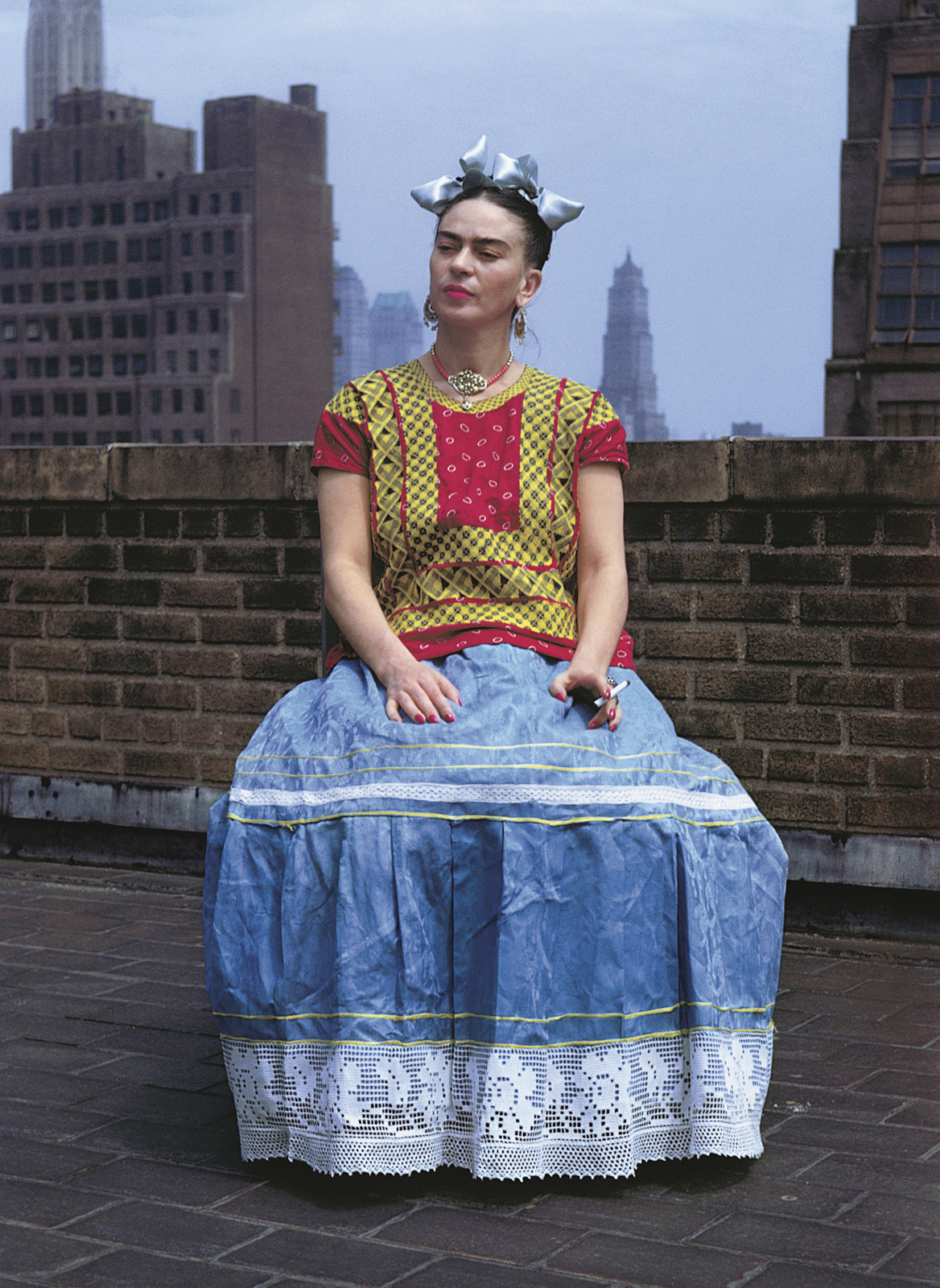
Exhibition: ‘Luces y Sombras: Images of Mexico | Photographs from the Bank of America Collection’ at the Tacoma Art Museum

Exhibition dates: 15th October 2022 – 5th February 2023
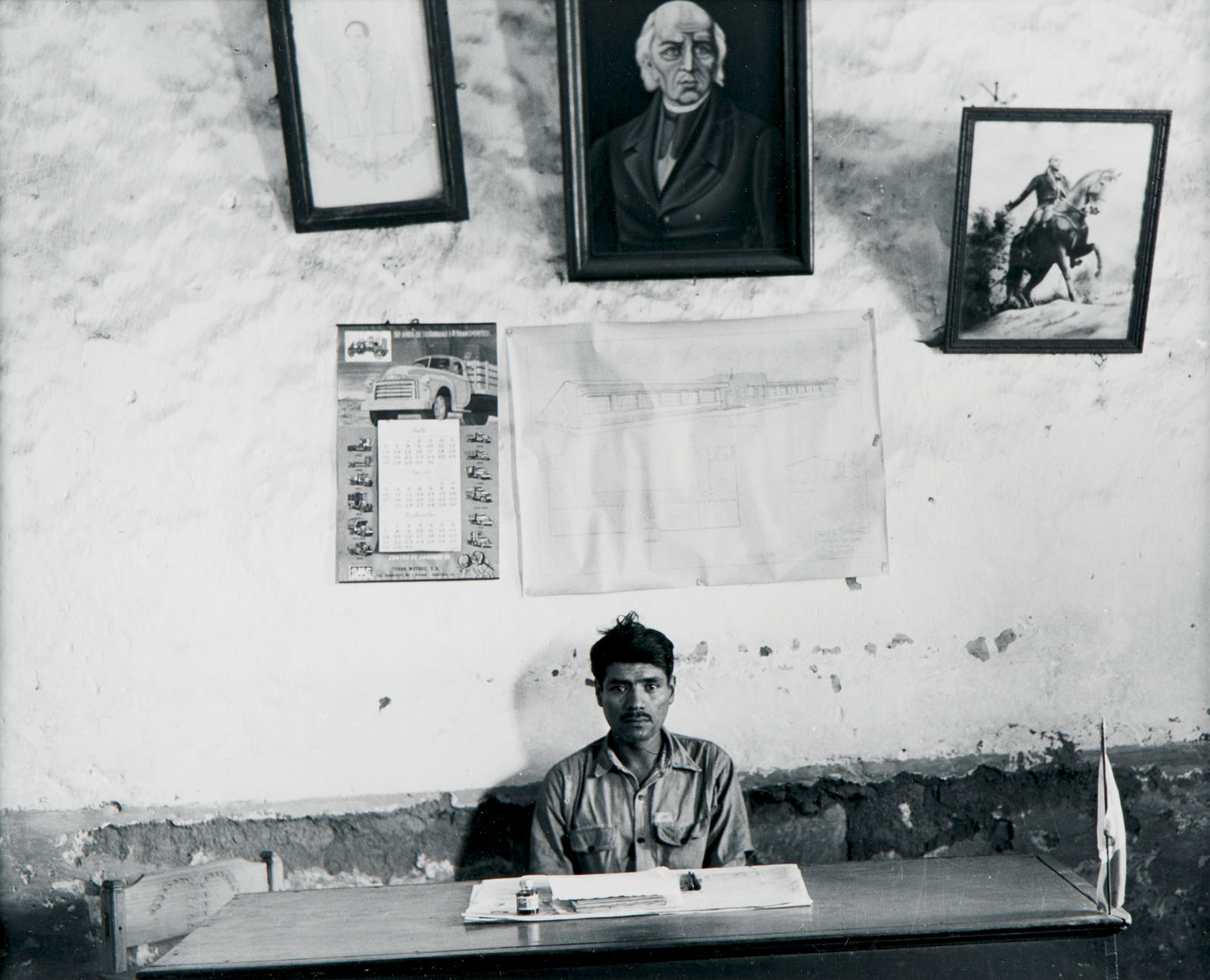
 

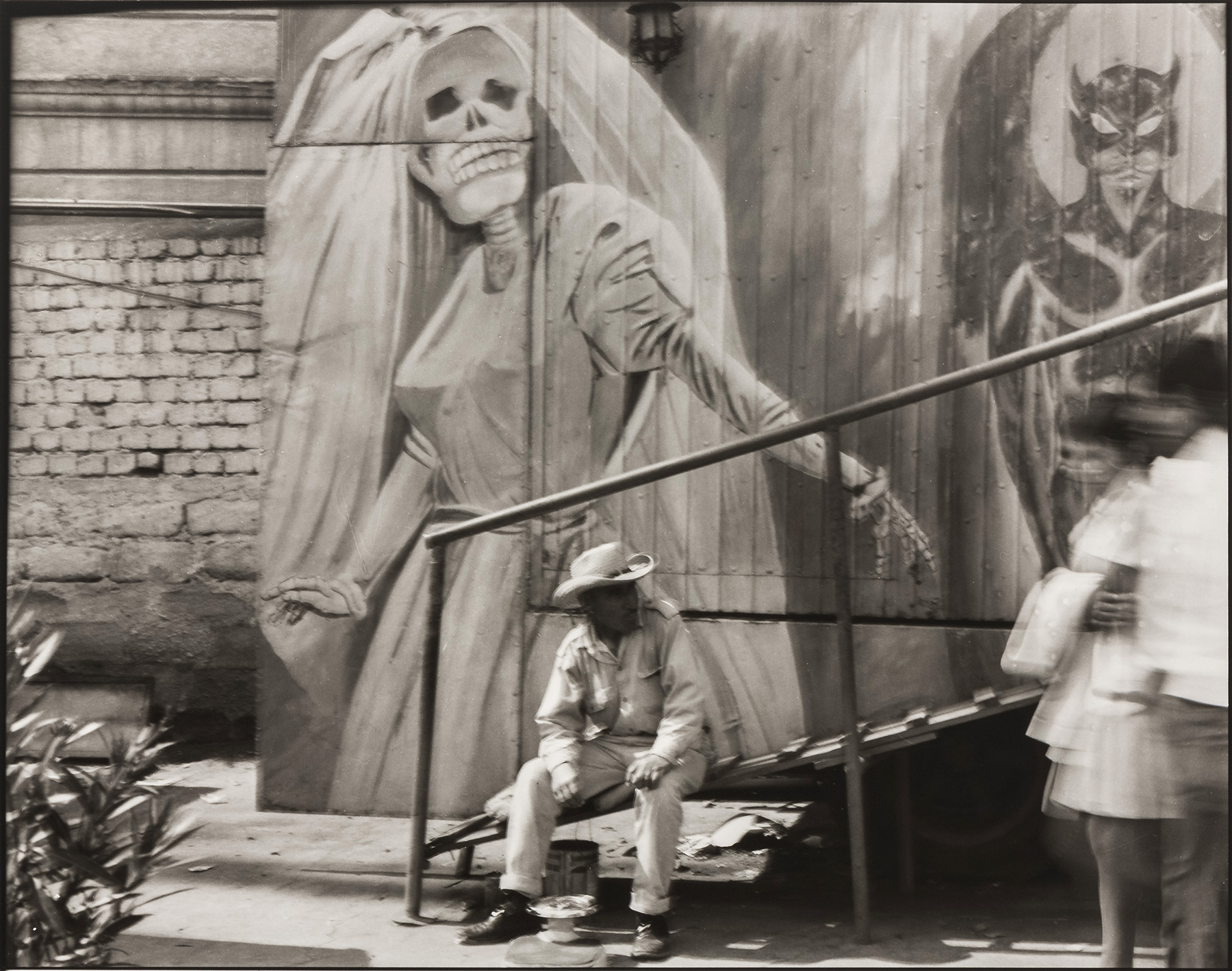
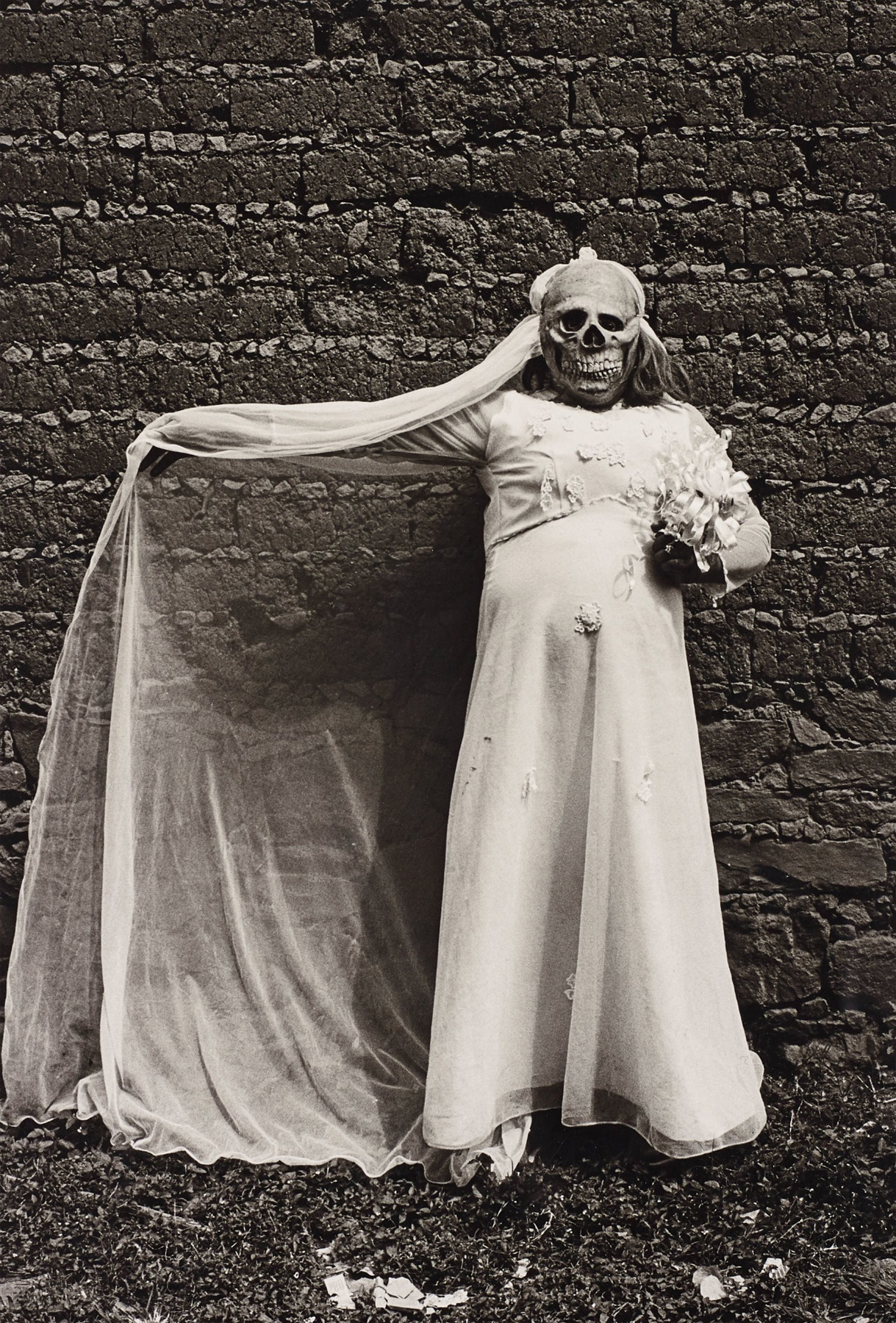
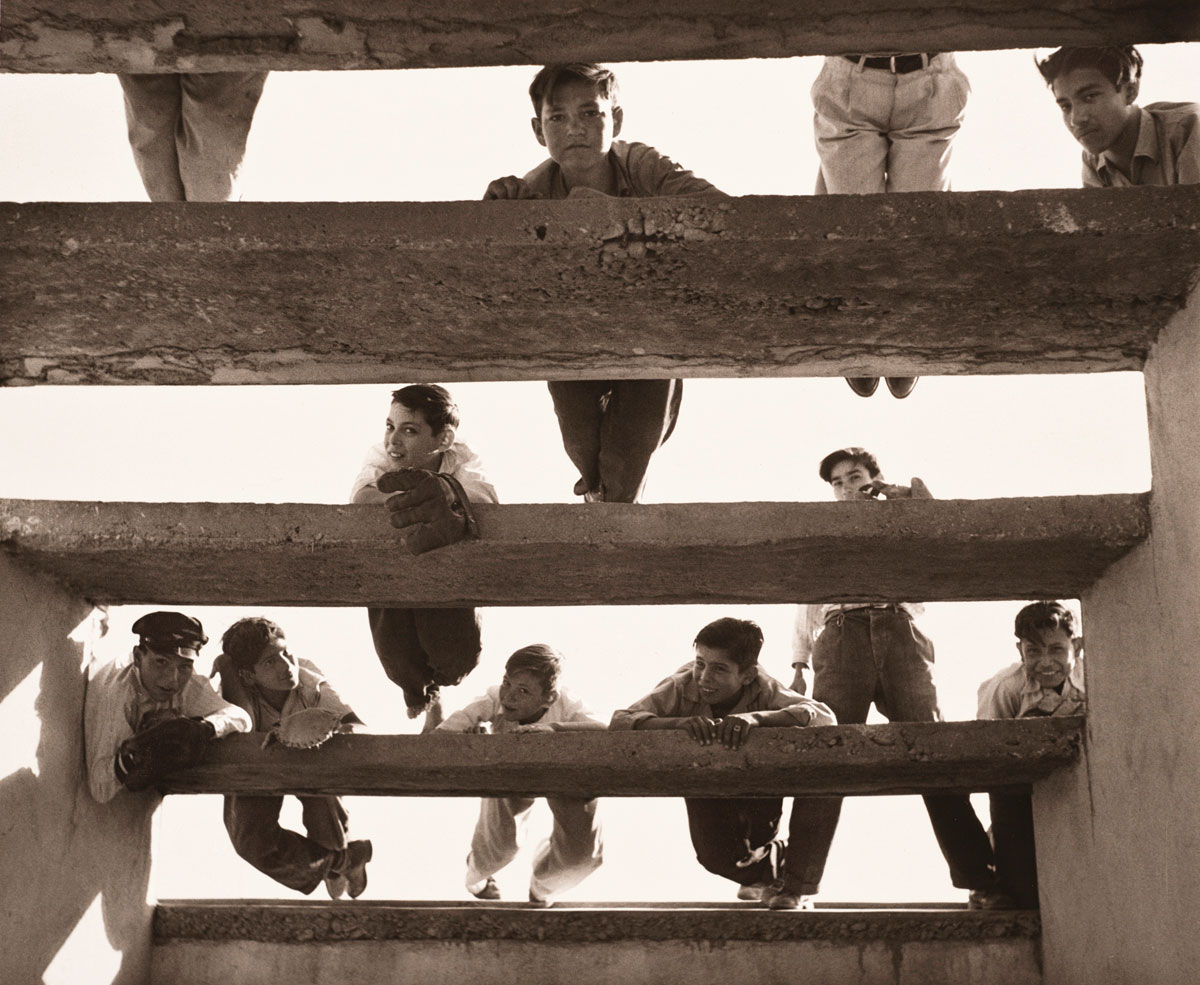
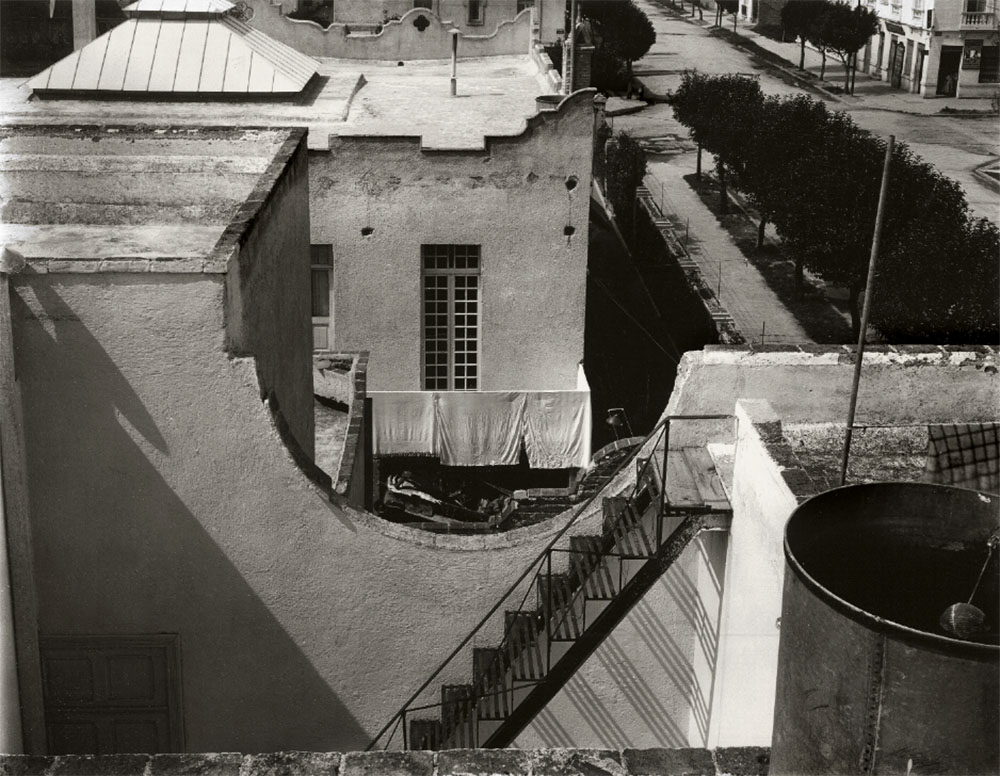
Manuel Álvarez Bravo (Mexican, 1902-2002) 'Mr. Municipal President' (Señor presidente municipal) 1947 from the exhibition 'Luces y Sombras: Images of Mexico | Photographs from the Bank of America Collection' at the Tacoma Art Museum, Oct 2022 - Feb 2023


Manuel Álvarez Bravo (Mexican, 1902-2002)
Mr. Municipal President (Señor presidente municipal)
1947 (negative); printed before 1975
Gelatin silver print
Image Overall: 7 3/8 x 9 1/8 inches (18.7 x 23.1cm)
Bank of America Collection
© Archivo Manuel Álvarez Bravo, S.C


After last week’s long piece of writing something more succinct this week…

Luces y Sombras translates as Lights and Shadows. The exhibition reflects many themes: the landscape, urban life, fantasy and, especially among younger generations, gender and invented situations infused with symbolism. It begins with works by photographers active at the conclusion of the Mexican Revolution (1910-1920), notably Manuel Álvarez Bravo, considered Mexico’s first truly modern photographer. It also includes visiting artists such as the Americans Paul Strand and Edward Weston.

Later works by such figures as Manuel Carrillo, Mariana Yampolsky, and Graciela Iturbide reveal the ongoing emphasis by Mexican photographers on everyday life and Mexico’s Indigenous communities. Recent generations of photographers have found new purpose in documenting how ways of life in Mexico continue to be changed by urbanisation, migration, and the pervasive influence of popular Western culture and mass media.” (Exhibition text from the TAM)

It is interesting to hear British photographer Chris Killip’s thoughts on Mexico through a foreign lens. This quote from an upcoming posting on Killip’s work:

He says he stayed [in Newcastle] because he liked it, and that he might never have left had the Harvard job not come along – but he was also inspired by the Magnum photographer Josef Koudelka, who came to visit him early on and “talked about the importance of being in one place, to get under the surface of things”. He was also interested in how differently Paul Strand and Manuel Alvarez Bravo photographed Mexico, he says, despite Strand’s sympathetic, card-carrying Communist credentials.

“Strand beautifies poverty and simplifies the Mexican people into ‘the poor Mexicans, but isn’t this wonderful visually’,” he says. “But Alvarez Bravo was Mexican, his pictures are very complicated because he was able to accept ambiguities and contradictions, which Strand couldn’t… I think because I lived in Newcastle for so long I was able to accept ambiguities and not worry about them, just accept them and show them. I wanted to be there and be more accepting.”1


As I have said in a previous posting on Mexican photography there is something so essential and grounded, so darkly soulful about Mexican photography. They never pull their punches, not just interested in the beauty of people and place but also the rituals, traditions and politics of Mexican society.

As ever, it is the work of Mexican artist Manuel Álvarez Bravo that steals my heart. His work exudes the spirit of the country through its sensitivity and connection to the earth from which he was born. The light and form in Bravo La Siesta de los Peregrinos; the light and form in Retrato de lo Eterno (1935, below). I have studied his work quite closely. He is the blessed one. Through his music, he captures the light and life of Mexico, the spirit of the eternal, “the sunlight [as] a discreet veil that turns the shadows into velvet.” His work is the art of the People.

Further,

“One of my early heroes in photography was Manuel Alvarez Bravo whom I rate as one of the best photographers that has ever lived, up there with Atget and Sudek. His photograph Parabola optica (Optical Parable, 1931, below) lays the foundation for an inherent language of Mexican photography: that of a parable, a short allegorical story designed to illustrate or teach some truth, religious principle, or moral lesson. Many Mexican photographs tell such stories based on the mythology of the country: there are elements of the absurd, surrealism, macabre, revolution, political and socio-economic issues, also of death, violence, beauty, youth, sexuality and religion to name but a few – a search for national identity that is balanced in the photographs of Bravo by a sense of inner peace and redemption. This potent mix of issues and emotions is what makes Mexican photography so powerful and substantive. In the “presence” (or present, the awareness of the here and now) of Mexican photography there is a definite calligraphy of the body in space in most of the work. This handwriting is idiosyncratic and emotive; it draws the viewer into an intimate narrative embrace.

Unlike most Australian documentary photography where there is an observational distance present in the photographs – a physical space between the camera/photographer and the subject – Mexican documentary photography is imbued with a revolutionary spirit and validated by the investment of the photographer in the subject itself, as though the image is the country is the photographer. There is an essence and energy to the Mexican photographs that seems to turn narrative on its head, unlike the closed loop present in the tradition of Australian story telling. The intimate, swirling narratives of Mexican photography could almost be termed lyrical socio-realist.”2


What is a revelation to me in this posting is work by two Mexican photographers who I have never heard of before and I should have because they are very good: Manuel Carrillo and Flor Garduño. Carillo joined the Club Fotográfico de México at the age of 49. As James McArdle observes the politics of Carrillo’s photographic work is anchored to his own cultural identity as a Mexican by birth and his time spent in America.

“He quickly found his voice by making images of everyday life throughout Mexico, celebrating local culture and the human spirit. His work is an extension of Mexicanidad, a movement begun in the 1920s to forge a Mexican national identity free of foreign influence… His interest in indigenous cultures and his use of bright sunlight to create compositions with dramatic shadows and bold geometric forms has roots in the photographic work of Edward Weston and Paul Strand, American modernist photographers active in Mexico in the 1920s and 1930s. Rather than idealising, aestheticising, or moralising, Carrillo portrays Mexico from the perspective of an affectionate observer, transforming ordinary moments into expressions of quiet eloquence.”3


A certain paradox can be noted here: the wish for a Mexican identity free of foreign influence and photographs forged in the American modernist tradition. Interesting. It doesn’t stop the visceral photographs being very “Mexican” for all that.

“Garduño’s photographs create a bridge between the present and the past by portraying natural elements such as water, trees, earth, animals, and atmosphere. Garduño worked for the Department of Public Education in her native Mexico, traveling to rural areas to work with indigenous communities. From this she developed her style and got to know what she has referred to as the “profound truth” of the countryside in the Americas. Her work was also influenced by artists Kati Horna, who worked in a surrealistic vein, and Manuel Álvarez Bravo, who attended carefully to the tonal qualities of his photographs. Garduño similarly uses compositional and darkroom techniques to achieve moody, evocative images.”4


In the work of Mexican photographers – Manuel Álvarez Bravo, Graciela Iturbide, Manuel Carrillo and Flor Garduño – you can palpably feel the essentialness of the Mexican people and begin to understand their connection to the land from which they come. Much as in the work of Chris Killip in England with his embeddedness5 with the people of North Yorkshire … there is an honesty, integrity and openness to their work which, in the case of Mexican photography, has continuous strands (like a river) running through it: that is, a synthesis of aesthetics, politics, land and spirit. Their work is of the people for the people offering a “profound truth” about the nature of their existence in the countryside in the Americas.

Dr Marcus Bunyan


Footnotes

1/ Diane Smyth. “Now Then: Chris Killip and the Making of In Flagrante, on the British Journal of Photography website 6 June 2017 [Online] Cited 26/01/2023

2/ Marcus Bunyan. “Photography in Mexico: Selected Works from the Collections of SFMOMA and Daniel Greenberg and Susan Steinhauser,” on the Art Blart website 4th July 2012 [Online] Cited 28/01/2023

3/ Anonymous. “Manuel Carrillo: Mexican Modernist,” on the New Mexico Museum of Art website Nd [Online] Cited 28/01/2023. No longer available online

4/ Anonymous. “Get to know the work of Flor Garduño,” on the Getty Twitter website Oct 6, 2021 [Online] Cited 28/01/2023

5/ Embeddedness: an exchange that takes place within and is regulated by society rather than being located in a social vacuum.


Many thankx to the Tacoma Art Museum, Mark I. Chester and Steven Miller for allowing me to publish the photographs in the posting. Please click on the photographs for a larger version of the image.


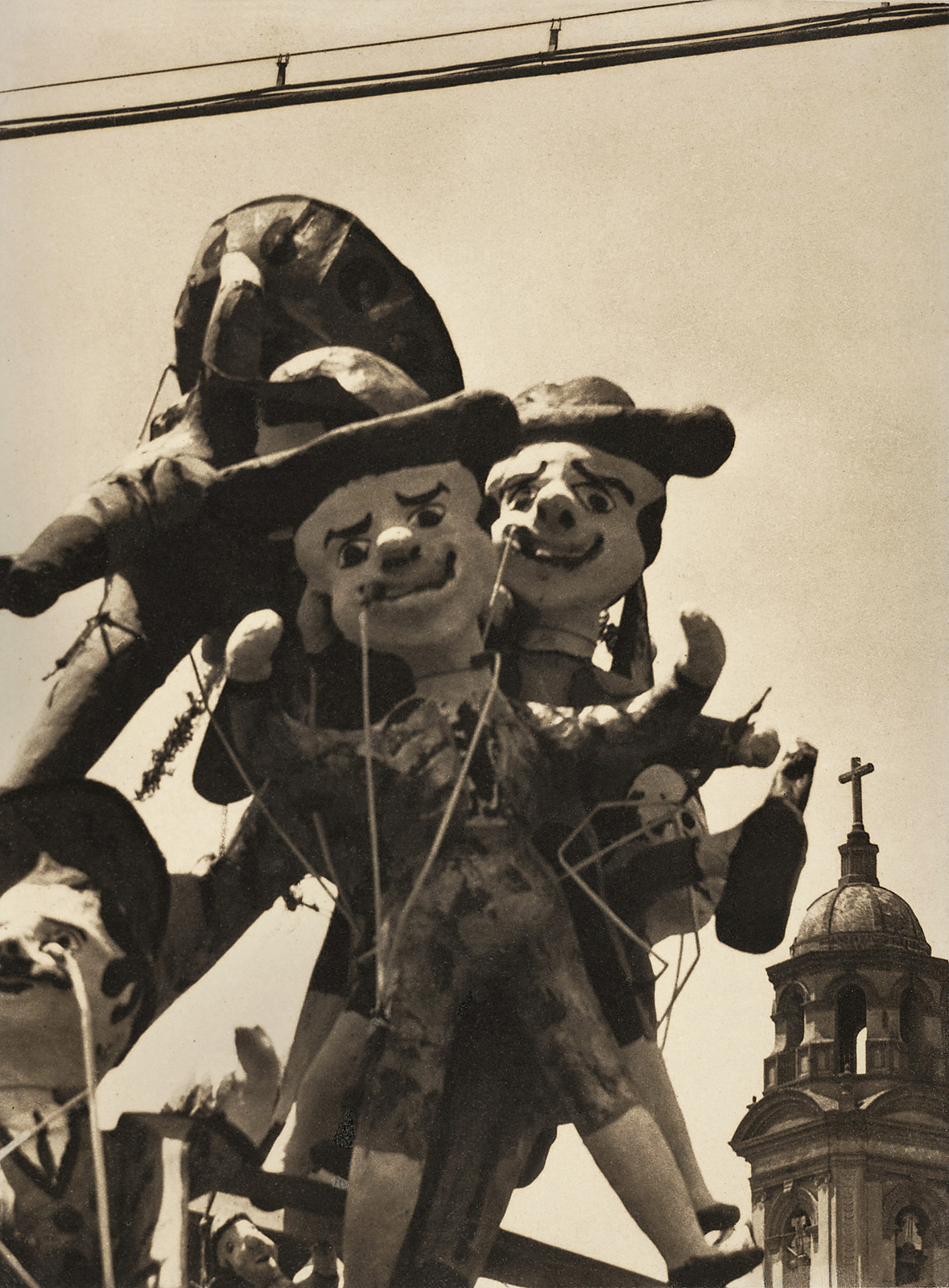
Manuel Álvarez Bravo (Mexican, 1902-2002) 'In the Temple of Red Tiger' (En el templo del tigre rojo) 1949 from the exhibition 'Luces y Sombras: Images of Mexico | Photographs from the Bank of America Collection' at the Tacoma Art Museum, Oct 2022 - Feb 2023


Manuel Álvarez Bravo (Mexican, 1902-2002)
In the Temple of Red Tiger (En el templo del tigre rojo)
1949 (negative); print before 1975
Gelatin silver print
Image overall: 9 3/4 × 6 3/4 in. (24.8 x 17.1cm)
Bank of America Collection
© Archivo Manuel Álvarez Bravo, S.C


Manuel Álvarez Bravo (Mexican, 1902-2002) 'Portrait of the Eternal' (Retrato de lo eterno) 1935 from the exhibition 'Luces y Sombras: Images of Mexico | Photographs from the Bank of America Collection' at the Tacoma Art Museum, Oct 2022 - Feb 2023


Manuel Álvarez Bravo (Mexican, 1902-2002)
Portrait of the Eternal (Retrato de lo eterno)
1935 (negative); print before 1975
Gelatin silver print
Image Overall: 9 5/8 × 7 3/8in. (24.4 x 18.7cm)
Bank of America Collection
© Archivo Manuel Álvarez Bravo, S.C


Manuel Álvarez Bravo (Mexican, 1902-2002) 'The Daydream' (El ensueño) 1931


Manuel Álvarez Bravo (Mexican, 1902-2002)
The Daydream (El ensueño)
1931 (negative); print before 1975
Gelatin silver print
Image Overall: 9 1/4 × 7 in. (23.5 x 17.8cm)
Bank of America Collection
© Archivo Manuel Álvarez Bravo, S.C


Manuel Álvarez Bravo (Mexican, 1902-2002) 'Optic Parable' (Parábola óptica) 1931


Manuel Álvarez Bravo (Mexican, 1902-2002)
Optic Parable (Parábola óptica)
1931 (negative); print before 1975
Gelatin silver print
Image Overall: 9 1/4 × 7 in. (23.5 x 17.8cm)
Bank of America Collection
© Archivo Manuel Álvarez Bravo, S.C


Manuel Álvarez Bravo (Mexican, 1902-2002) 'The Big Fish Eats the Little Ones' (El pez grande se come a los chicos) 1932


Manuel Álvarez Bravo (Mexican, 1902-2002)
The Big Fish Eats the Little Ones (El pez grande se come a los chicos)
1932 (negative); print before 1975
Gelatin silver print
Image Overall: 9 × 7 in. (22.9 x 17.8cm)
Bank of America Collection
© Archivo Manuel Álvarez Bravo, S.C


Graciela Iturbide on Manuel Álvarez Bravo

Graciela Iturbide, Hasselblad Award Winner in 2008, talks about her friend and teacher Manuel Álvarez Bravo who received the Hasselblad Award in 1984.
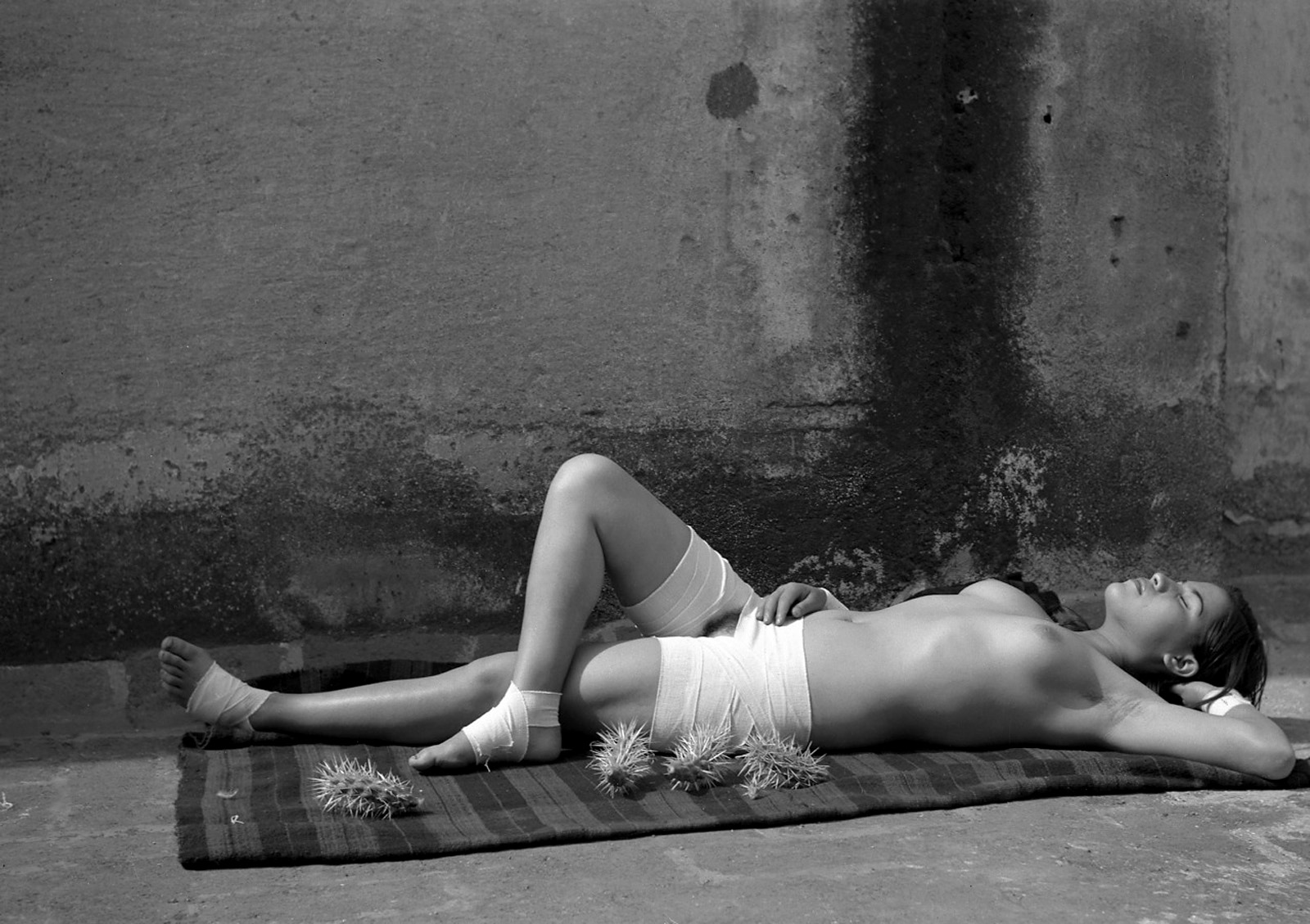
 

Manuel Alvarez Bravo (Mexican, 1902-2002) 'La Buena Fama Durmiendo (The Good Reputation Sleeping)' 1939, printed c. 1970s


Manuel Álvarez Bravo (Mexican, 1902-2002)
The Good Reputation, Sleeping (La buena fama, durmiendo)
1938 (negative); print before 1975
Gelatin silver print
Image Overall: 7 3/8 × 9 5/8 in. (18.7 x 24.4cm)
Bank of America Collection
© Archivo Manuel Álvarez Bravo, S.C
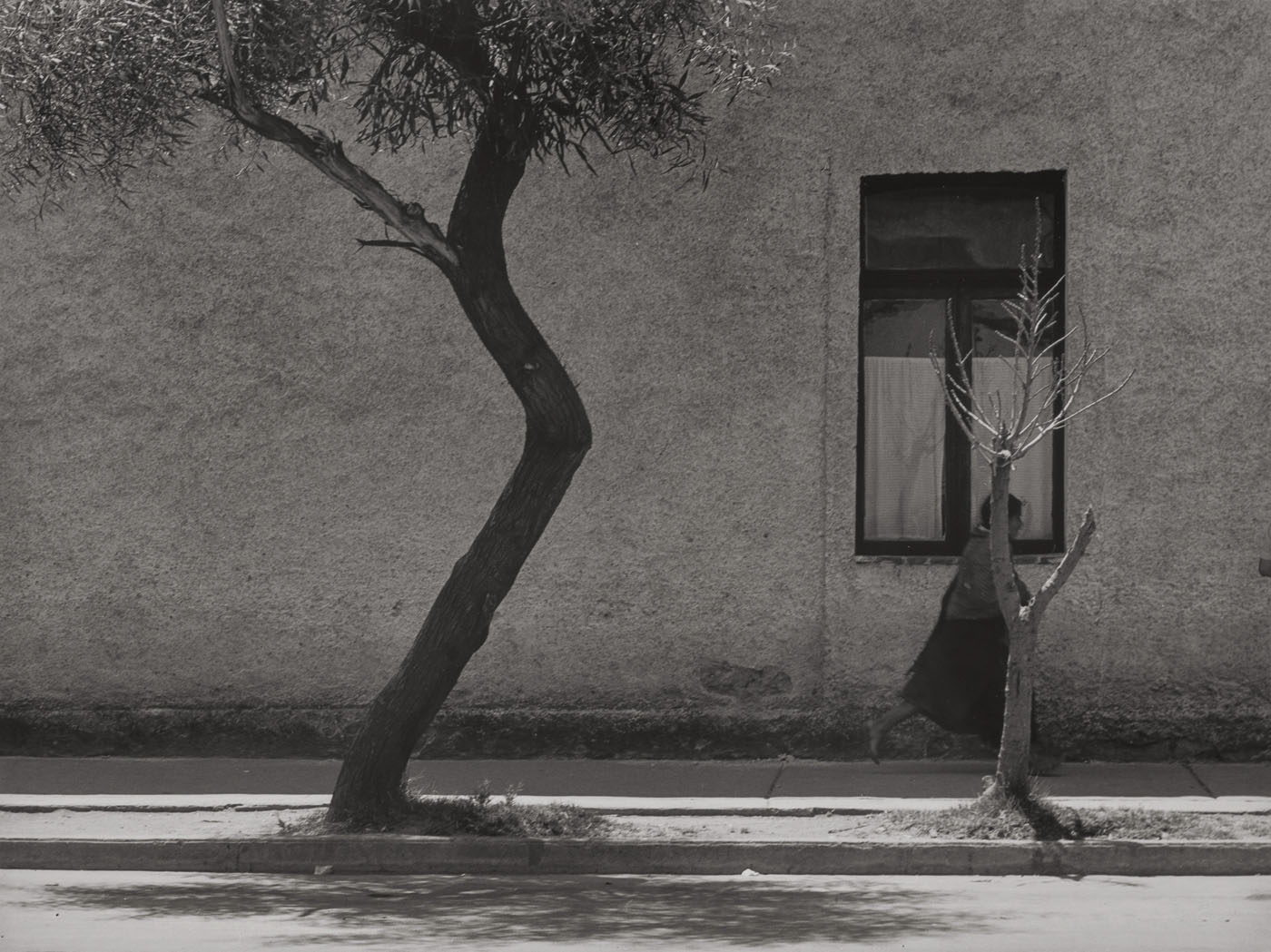
 

Manuel Álvarez Bravo (Mexican, 1902-2002) 'The Maria' (La María) 1972


Manuel Álvarez Bravo (Mexican, 1902-2002)
The Maria (La María)
1972
Gelatin silver print
Image Overall: 7 × 9 1/4 in. (17.8 x 23.5 cm)
Bank of America Collection
© Archivo Manuel Álvarez Bravo, S.C


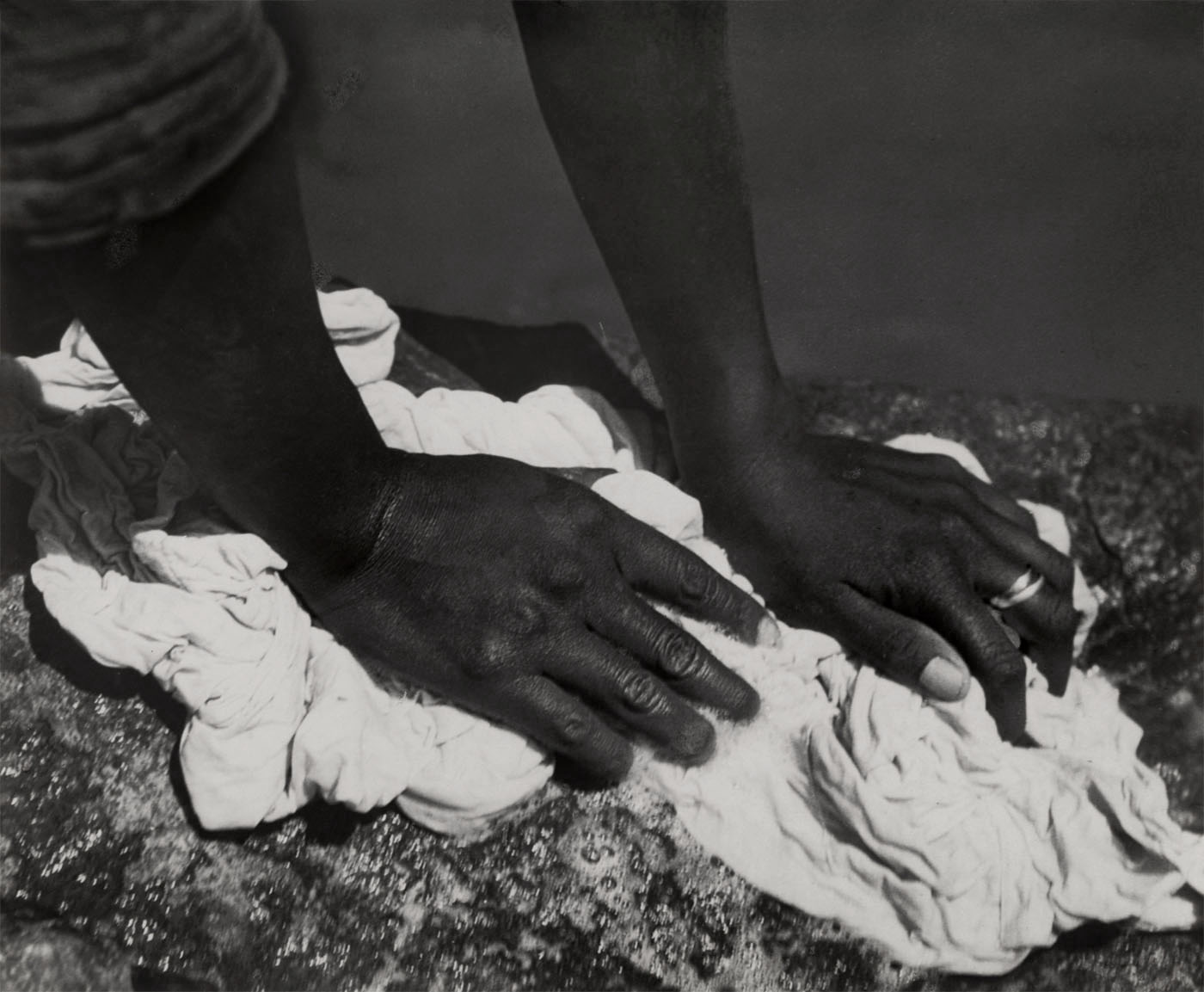
Manuel Álvarez Bravo. 'Las lavanderas sobreentendidas / The Washerwomen Implied' 1932


Manuel Álvarez Bravo (Mexican, 1902-2002)
The Washerwomen Implied (Las lavanderas sobreentendidas)
1932 (negative); print before 1975
Gelatin silver print
Image Overall: 9 1/2 × 6 in. (24.1 x 15.2cm)
Bank of America Collection
© Archivo Manuel Álvarez Bravo, S.C


Manuel Álvarez Bravo (Mexican, 1902-2002) 'The Obstacles' (Los obstáculos) 1929


Manuel Álvarez Bravo (Mexican, 1902-2002)
The Obstacles (Los obstáculos)
1929 (negative); print before 1975
Gelatin silver print
Image Overall: 7 1/4 × 9 1/4 in. (18.4 x 23.5cm)
Bank of America Collection
© Archivo Manuel Álvarez Bravo, S.C


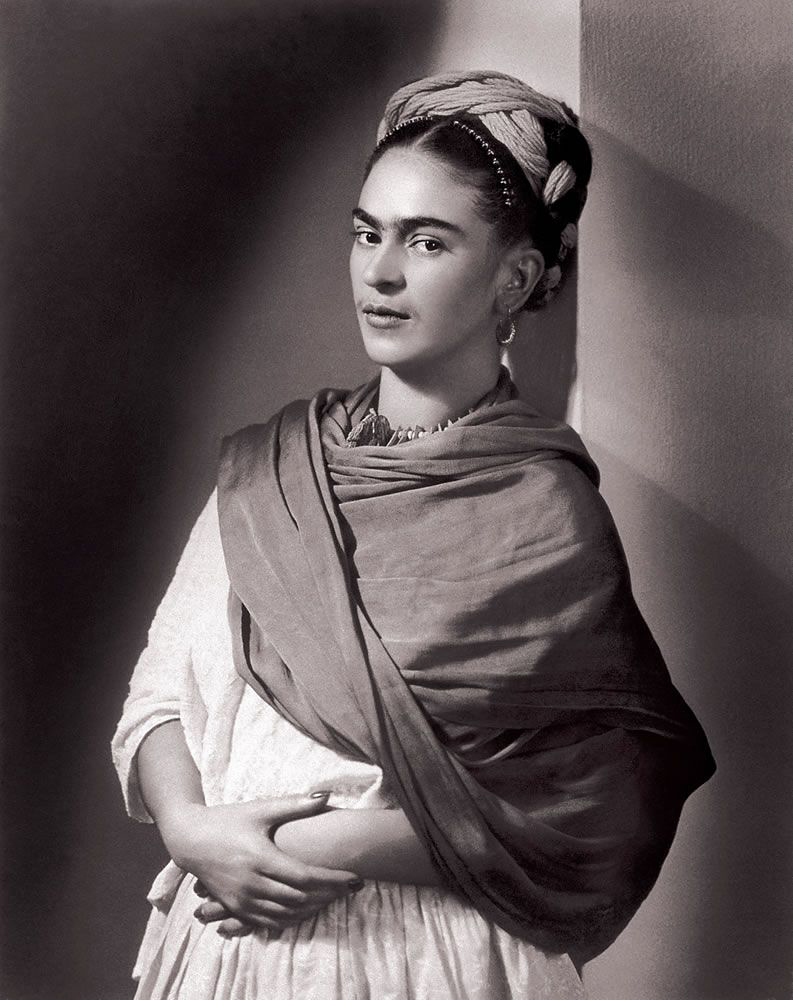
Manuel Álvarez Bravo (Mexican, 1902-2002) 'Frida Kahlo with Globe' (Frida Kahlo con globo) c. 1930s


Manuel Álvarez Bravo (Mexican, 1902-2002)
Frida Kahlo with Globe (Frida Kahlo con globo)
c. 1930s (negative); print before 1992
Gelatin silver print
Image Overall: 9 3/8 × 7 1/4 in. (23.8 x 18.4cm)
Bank of America Collection
© Archivo Manuel Álvarez Bravo, S.C
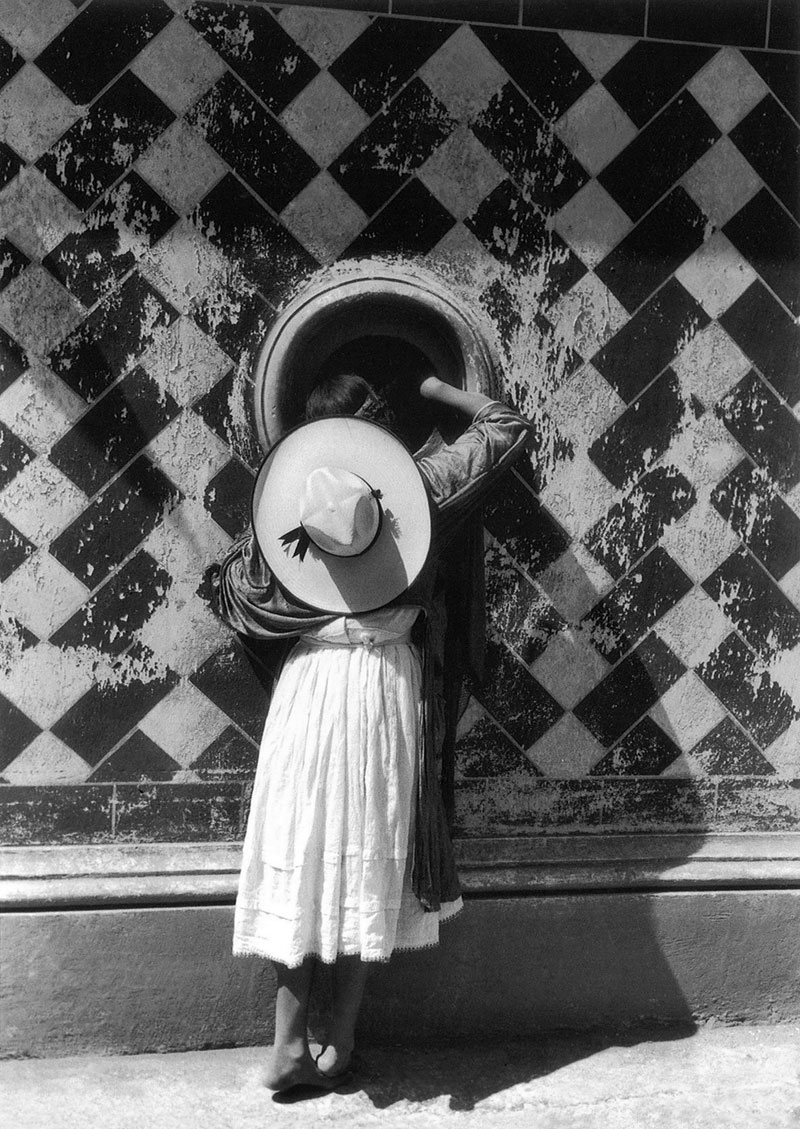
 

Manuel Álvarez Bravo (Mexican, 1902-2002) 'The Daughter of the Dancers' (La hija de los danzantes) 1933


Manuel Álvarez Bravo (Mexican, 1902-2002)
The Daughter of the Dancers (La hija de los danzantes)
1933
Gelatin silver print
Image Overall: 9 × 6 1/2 in. (22.9 x 16.5cm)
Bank of America Collection
© Archivo Manuel Álvarez Bravo, S.C


More than 100 photographs spanning more than 85 years of Mexican culture and history are coming to Tacoma Art Museum in the exhibition Luces y Sombras: Images of Mexico I Photographs from the Bank of America Collection.

Luces y Sombras reflects a broad span of Mexico’s modern history, beginning with work by photographers active in the 1920s, not long after the conclusion of the Mexican Revolution. A struggle for political power that began with the overthrow in 1911 of Mexico’s authoritarian president, Porfirio Díaz, became the catalyst for a popular uprising of campesinos, agrarian indigenous and mestizo (mixed race) people who fought for agrarian and social reform. Revolutionary leader Emiliano Zapata’s rallying cry, “Tierra y Libertad” (Land and Liberty), not only galvanised the hundreds of thousands of campesinos who joined the revolt but in its wake, came to represent the affirmation of rural people, whose lives were inextricably tied to the land.

Many images in this exhibition manifest the cultural values that came to the fore in the decades following the Revolution, when politicians and intellectuals alike endeavoured to reconstruct and, indeed, re-envision their nation. In the cultural sphere, Mexico’s new leadership sought to purge the nation of the European influence favoured by the Díaz regime. Nationalist ideals and a broad-based exploration of Mexicanidad (the quality of being Mexican) were accompanied by a new reverence for Mexico’s indigenous roots and for everyday men and women. Photographs made throughout the last century of indigenous and mestizo people reflect not only the survival of indigenous communities and traditions, but also the realities of poverty and social marginalisation that persist for a large lower class up to the present day.

Luces y Sombras reflects many other themes embraced by photographers in Mexico, both native and foreign-born – the landscape, urban life and, especially among younger generations, gender and invented situations infused with symbolism. The inclusion of such foreign photographers as Paul Strand, Elliott Erwitt, Aaron Siskind, Danny Lyon, and Nan Goldin speaks to another key component of the history of photography in Mexico – the significance of a nation seen through foreign eyes.

In gathering work by such a diversity of voices, Luces y Sombras provides vivid testimony to the character of life in a nation in the throes of reinvention, modernisation and continued change over the course of the last century.

Text from the TAM website


Ana Casas Broda (Mexican born Spain, b. 1965) 'Milk III (2)' (Leche III (2)) 2010


Ana Casas Broda (Mexican born Spain, b. 1965)
Milk III (2) (Leche III (2))
2010
from the series Kinderwunsch (The Desire to Have Children)(El deseo de tener hijos)
Inkjet print on cotton paper
Image Overall: 23 5/8 × 35 1/2 in. (60 x 90.2cm)
Bank of America Collection


Manuel Carrillo (Mexican, 1906-1989) 'Mendicant girl – close up, Guanajuato, Guanajuato' (Sin título (Pordiocerita – close up, Guanajuato, Guanajuato)) 1930


Manuel Carrillo (Mexican, 1906-1989)
Mendicant girl – close up, Guanajuato, Guanajuato (Sin título (Pordiocerita – close up, Guanajuato, Guanajuato))
1930
Gelatin silver print
Image Overall: 7 1/2 × 9 1/4 in. (19.1 x 23.5cm)
Bank of America Collection


Manuel Carrillo (Mexican, 1906-1989) 'Untitled (Man inside store, contrasted, baskets on the wall, Zacapoaxtla, Pueblo)' (Sin título (Hombre dentro tienda, contrastada, canastas, pared, Zacapoaxtla, Pueblo)) 1975


Manuel Carrillo (Mexican, 1906-1989)
Untitled (Man inside store, contrasted, baskets on the wall, Zacapoaxtla, Pueblo) (Sin título (Hombre dentro tienda, contrastada, canastas, pared, Zacapoaxtla, Pueblo))
1975
Gelatin silver print
Image Overall: 7 3/4 × 10 in. (19.7 x 25.4cm)
Bank of America Collection


Manuel Carrillo worked in Mexico in the middle of the 20th century, a time in Mexico that witnessed great political changes and social transformations and a moment in the country’s history when it was establishing its strong cultural identity.

Carrillo’s work, along with the well-known Manuel Alvarez Bravo, Tina Modotti and the American photographer Edward Weston, among others, was a contributing force as to how Mexico saw itself and how the rest of the world came to perceive that complex country. A bit of the understanding and empathy for the daily life of the Mexican people seen in Carrillo’s work would be of great help in how Mexico is perceived today.


Manuel Carrillo (Mexican, 1906-1989) 'Untitled (Seller of ropes and belts, Oaxaca, Oaxaca)' (Sin título (Vendedor reatas y cinturónes, Oaxaca, Oaxaca)) Nd


Manuel Carrillo (Mexican, 1906-1989)
Untitled (Seller of ropes and belts, Oaxaca, Oaxaca) (Sin título (Vendedor reatas y cinturónes, Oaxaca, Oaxaca))
Nd
Gelatin silver print
Image Overall: 7 3/8 × 9 5/8 in. (18.7 x 24.4cm)
Bank of America Collection


Manuel Carrillo (Mexican, 1906-1989) 'Untitled (Shawl in the air, Oaxaca, Oaxaca)' (Sin título (Rebozo al aire, Oaxaca, Oaxaca)) 1958


Manuel Carrillo (Mexican, 1906-1989)
Untitled (Shawl in the air, Oaxaca, Oaxaca) (Sin título (Rebozo al aire, Oaxaca, Oaxaca))
1958
Gelatin silver print
Image Overall: 9 1/2 × 8 5/8 in. (24.1 x 21.9cm)
Bank of America Collection


Manuel Carrillo (Mexican, 1906-1989) 'Untitled (Dog on grave, cemetery, Dolores, Mexico City)' (Sin título (Perro sobre tumba, panteon, Dolores, México D.F.) 1930


Manuel Carrillo (Mexican, 1906-1989)
Untitled (Dog on grave, cemetery, Dolores, Mexico City) (Sin título (Perro sobre tumba, panteon, Dolores, México D.F.)
1930
Gelatin silver print
Image Overall: 8 × 10 3/4 in. (20.3 x 27.3cm)
Bank of America Collection


Mexican photographer Manuel Carrillo (1906-1989) turned to the camera fairly late in life, joining the Club Fotográfico de México at the age of 49. He quickly found his voice by making images of everyday life throughout Mexico, celebrating local culture and the human spirit. His work is an extension of Mexicanidad, a movement begun in the 1920s to forge a Mexican national identity free of foreign influence. Stylistically, however, Carrillo was inspired by Mexican artists trained abroad and international artists who converged on Mexico during that fertile period. His interest in indigenous cultures and his use of bright sunlight to create compositions with dramatic shadows and bold geometric forms has roots in the photographic work of Edward Weston and Paul Strand, American modernist photographers active in Mexico in the 1920s and 1930s. Rather than idealising, aestheticising, or moralising, Carrillo portrays Mexico from the perspective of an affectionate observer, transforming ordinary moments into expressions of quiet eloquence.

Anonymous. “Manuel Carrillo: Mexican Modernist,” on the New Mexico Museum of Art website Nd [Online] Cited 28/01/2023. No longer available online


Manuel Carrillo (Mexican, 1906-1989) 'Untitled (Sick woman on bench, San Miguel Allende)' (Sin título (Enferma en banca, San Miguel Allende)) 1970


Manuel Carrillo (Mexican, 1906-1989)
Untitled (Sick woman on bench, San Miguel Allende) (Sin título (Enferma en banca, San Miguel Allende))
1970
Gelatin silver print
Image Overall: 8 × 10 3/4 in. (20.3 x 27.3cm)
Bank of America Collection


Manuel Carrillo (Mexican, 1906-1989) 'Untitled (Camila from above, two faces – close up), Mexico City' (Sin título (Camila desde arriba, dos cars – close up), México D.F.)) 1961


Manuel Carrillo (Mexican, 1906-1989)
Untitled (Camila from above, two faces – close up), Mexico City (Sin título (Camila desde arriba, dos cars – close up), México D.F.))
1961
Gelatin silver print
Image Overall: 7 3/4 × 7 in. (19.7 x 17.8cm)
Bank of America Collection


By contrast, one might consider the mobility of framing in the work of Mexican Manuel Carrillo (b. 1906) who died on this date in 1989. The influence of American Modernist photographers and artists of his time, and of his better-known compatriot and contemporary Manuel Álvarez Bravo (1902-2002), is evident in this extreme point of view.

The aerial angle presents the tops of subjects’ heads, but with sufficient offset to allow a reading of the faces; the curiosity of the young boy and the protectiveness of the mother, both enclosed within a continuous ribbon of cloth and embraced by the square camera frame. The top-down view gives privileged entrée into that intense maternal relationship, encompassed by the geometry of the tiled background that contrasts with the cloth, set at an angle that enhances the figures’ complementary emotional impulses.

Aside from aesthetics, the politics of Carrillo’s photographic work is anchored to his own cultural identity as a Mexican by birth and as an American through his crossing into that country at the age of 16, when in 1922 he left Mexico for New York, becoming an Arthur Murray waltz and tango champion. When in 1930 he returned to Mexico City, he remained until his retirement. Taking up photography in 1955, he joined, at age 49, the Club Fotografico de Mexico and the Photographic Society of America, and within 5 years held his first international exhibition titled, Mi Pueblo (“My People”) in 1960 at the Chicago Public Library. Like influential writers, photographers, and artists, such as Frida Kahlo and Diego Rivera, Carrillo identified with Mexicanidad, a nationalist and anti-colonial cultural movement that emerged in the 1920s after Mexico’s Revolution. He was inducted as an honorary citizen of EL Paso, Texas in 1980 by the Photographic Society of America.

James McArdle. “January 20: Angle,” on the On This Date in Photography website 20/01/2018 [Online] Cited 31/12/2022


Manuel Carrillo (Mexican, 1906-1989) 'Untitled (Cross, human shadow, Tepeapulco, Mexico)' (Sin título (Cruz, sombra humana, Tepeapulco, México)) 1973


Manuel Carrillo (Mexican, 1906-1989)
Untitled (Cross, human shadow, Tepeapulco, Mexico) (Sin título (Cruz, sombra humana, Tepeapulco, México))
1973
Gelatin silver print
Image Overall: 9 × 7 in. (22.9 x 17.8cm)
Bank of America Collection


Manuel Carrillo (Mexican, 1906-1989) 'Untitled (Old lady, alley, pyramidal shadows, Guanajuato)' (Sin título (Viejita, callejón, sombras piramidales, Guanajuato)) Nd


Manuel Carrillo (Mexican, 1906-1989)
Untitled (Old lady, alley, pyramidal shadows, Guanajuato) (Sin título (Viejita, callejón, sombras piramidales, Guanajuato))
Nd
Gelatin silver print
Image Overall: 9 × 7 in. (22.9 x 17.8cm)
Bank of America Collection


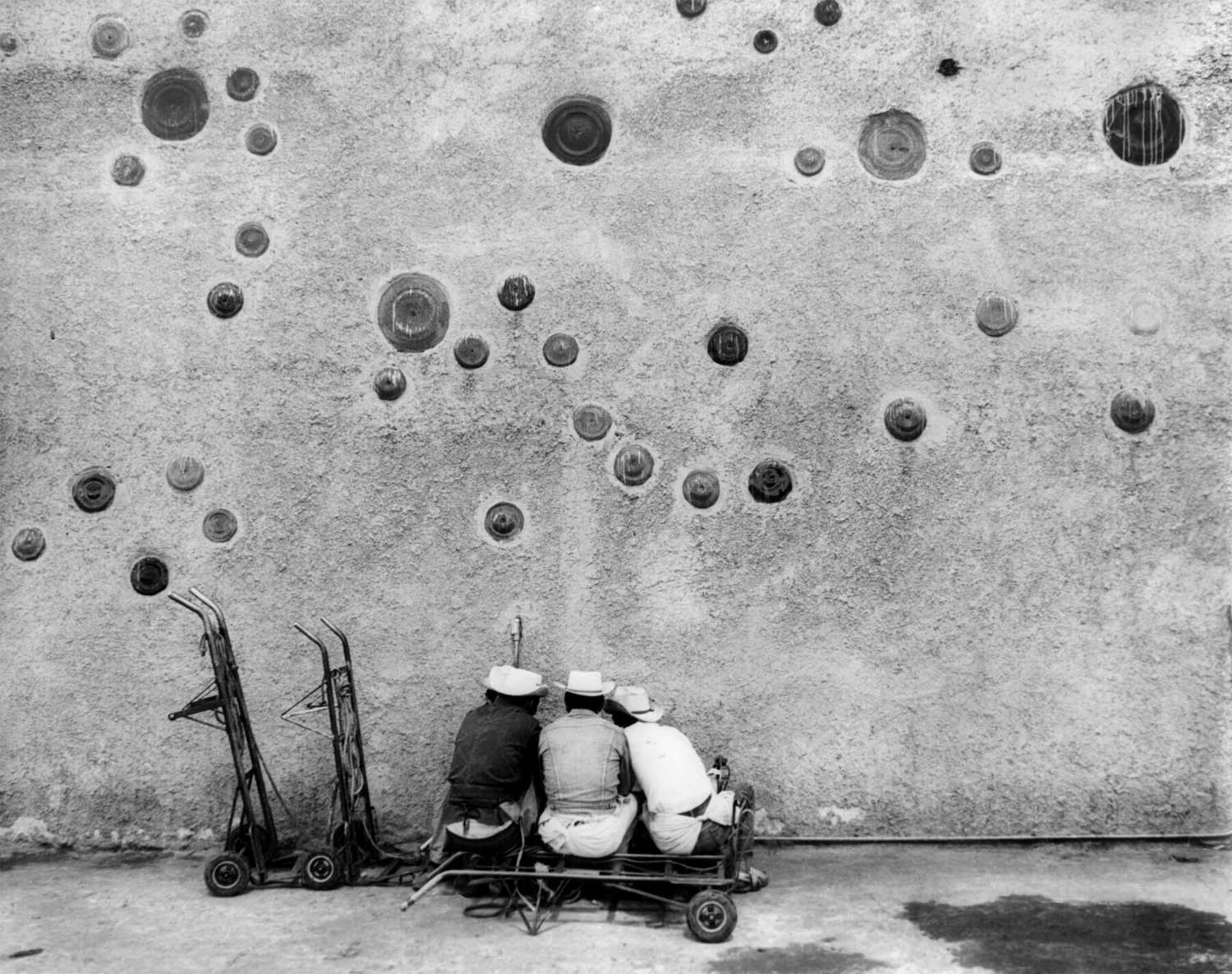
Manuel Carrillo (Mexican, 1906-1989) 'Untitled (Toluca pulque bar (Drunken Barrels)), Toluca, Mexico)' (Sin título (Pulquería de Toluca Barriles beodos)), Toluca, México)) 1970


Manuel Carrillo (Mexican, 1906-1989)
Untitled (Toluca pulque bar (Drunken Barrels)), Toluca, Mexico) (Sin título (Pulquería de Toluca Barriles beodos)), Toluca, México))
1970
Gelatin silver print
Image Overall: 7 3/4 × 9 3/4 in. (19.7 x 24.8cm)
Bank of America Collection


The photographs in Luces y Sombras span the post-Revolutionary era of the 1920s up until the present day. With work by 28 photographers, both Mexican and other nationalities, this exhibition provides vivid testimony to the character of life in a nation in the throes of reinvention, modernisation and continued change, over the course of the last century. …

Luces y Sombras reflects a wide range of modern Mexican history, beginning with the works of photographers active in the 1920s, shortly after the conclusion of the Mexican Revolution. A struggle for political power that began with the 1911 overthrow of Mexico’s authoritarian President Porfirio Díaz and became a catalyst for a popular uprising of peasants, agrarian Indians, and mestizos (of mixed race) who fought for land and social reform. The rallying cry of peasant leader Emiliano Zapata, “Land and Liberty,” not only galvanised the hundreds of thousands of peasants who joined the revolt, but became the affirmation of the rural people, whose lives were inextricably linked to the earth.

Many images in this exhibition manifest the cultural values ​​that emerged in the decades after the Revolution, as politicians and intellectuals strove to rebuild, and indeed, disimagine their nation. In the cultural sphere, Mexico’s new leadership sought to purge the nation of the European influence favored by the Díaz regime. Nationalist ideals and a broad exploration of mexicanidad (the quality of being Mexican), were accompanied by a new reverence for Mexico’s indigenous roots and for ordinary men and women. The photographs taken throughout the last century of indigenous and mestizo peoples reflect not only the survival of indigenous communities and traditions, but also the reality of poverty and social marginalisation that persist for a large lower class to this day.

Luces y Sombras translates as Lights and Shadows. The exhibition reflects many themes: the landscape, urban life, fantasy and, especially among younger generations, gender and invented situations infused with symbolism. It begins with works by photographers active at the conclusion of the Mexican Revolution (1910-1920), notably Manuel Álvarez Bravo, considered Mexico’s first truly modern photographer. It also includes visiting artists such as the Americans Paul Strand and Edward Weston.

Later works by such figures as Manuel Carrillo, Mariana Yampolsky, and Graciela Iturbide reveal the ongoing emphasis by Mexican photographers on everyday life and Mexico’s Indigenous communities. Recent generations of photographers have found new purpose in documenting how ways of life in Mexico continue to be changed by urbanisation, migration, and the pervasive influence of popular Western culture and mass media. Alongside these images, photographs by artists such as Alejandra Laviada, Karina Juárez, and Humberto Ríos explore contemporary issues or convey the artist’s personal reactions to the world around them.

This exhibition and gallery texts have been provided by the Bank of America Art in our Communities® program.


Luces y Sombras refleja una amplia gama de la historia moderna de México, comenzado con las obras de fotógrafos activos en la década de 1920, poco después de la conclusión de la Revolución Mexicana. Una lucha por el poder político que comenzó con el derrocamiento en 1911 del presidente autoritario de México, Porfirio Díaz, y que se convirtió en catalizador de un levantamiento popular de campesinos, indígenas agrarios y mestizos (de raza mixta) que lucharon por la reforma agraria y social. El grito de guerra del líder campesino Emiliano Zapata, “Tierra y Libertad“, no solo galvanizó a los cientos de miles de campesinos que se unieron a la revuelta, sino que se convirtió en la afirmación de la gente rural, cuyas vidas estaban inextricablemente vinculadas a la tierra.

Muchas imágenes en esta exposición manifiestan los valores culturales que surgieron en las décadas posteriores a la Revolución, cuando políticos e intelectuales se esforzaron por reconstruir, y de hecho, desimaginar su nación. En la esfera cultural, el nuevo liderazgo de México busco purgar la nación de la influencia europea favorecida por el régimen de Díaz. Los ideales nacionalistas y una amplia exploración de la mexicanidad (la cualidad de ser mexicano), fueron acompañados por una nueva reverencia por las raíces indígenas de México y por los hombres y mujeres comunes. Las fotografías realizadas a lo largo del último siglo de los pueblos indígenas y mestizos refleja no solo la supervivencia de las comunidades y tradiciones indígenas, sino también la realidad de la pobreza y marginación social que persisten para una gran clase baja hasta el presente día.

Luces y Sombras refleja muchos otros temas abarcados por los fotógrafos en México, tanto nativos como extranjeros: el paisaje, la vida urbana y, especialmente entre las generaciones mas jóvenes, el género y situaciones inventadas infundidas de simbolismo. La inclusión de fotógrafos extranjeros como Paul Strand, Elliot Erwitt, Aaron Siskind, Danny Lyon y Nan Goldin habla de otro componente clave de la historia de la fotografía en México: el significado de una nación vista a travéz de ojos extranjeros.

Al recopilar las obras de una diversidad de voces, Luces y Sombras brinda un testimonio vívido del carácter de la vida en una nación en pleno proceso de invención, modernización y cambio continuo a lo largo del siglo pasado.

Esta exhibición y los textos de esta galería fueron brindados por el programa Bank of America Art in our Communities®.


Mexico Through a Foreign Lens

Mexico became a magnet for American artists and photographers in the post-Revolutionary era, an idealistic period when artists, musicians, writers and other intellectuals sought to forge a cohesive nationalist identity through the arts. This cultural renaissance, led by such celebrated figures as Diego Rivera and Frida Kahlo, if not for the country’s sheer exoticism to foreigners, endowed Mexico with an allure similar to that of Paris for earlier generations of artists.

Mexico held great appeal for figures such as Edward Weston and his partner, the Italian Tina Modotti, who arrived in Mexico City in 1923 in search of bohemian freedom and new creative possibilities. During his few years in Mexico, Weston transformed his artistic vision, articulating a modernist aesthetic that veered away from the picturesque, soft-focus style of photography prevalent at the turn of the century, in favour of an approach that emphasised sharp resolution and form. the details, or as he once wrote, “the quintessence of the thing itself.” Both photographers had a lasting impact in Mexico – Weston by promoting an aesthetic that decisively influenced the course of modern photography, and Modotti, as a pioneering photographer and model of the socially and politically engaged artist.

Another key early figure in Mexico is Paul Strand, who took a deeply humanistic approach in photographing indigenous people and their environments while traveling around the country in the 1930s. This exhibition also contains work by American photographers active in the 1950s and 1960s. Mexico remained a destination for artists and free spirits in these years, including members of the Beat Generation, counter-culture writers and musicians active at mid-century who found in Mexico ample opportunity for both creative inspiration and debauchery. Such photographers who are now considered leading figures of this era, including Elliott Erwitt, Aaron Siskind, Harry Callahan and Danny Lyon, spent extended time in Mexico and created significant bodies of work.

México a travéz de una lente extranjera

México se convirtió en un imán para los artistas y fotógrafos americanos en la era posrevolucionaria, un período idealista en el que artistas, músicos, escritores y otros intelectuales buscaron forjar una identidad nacionalista cohesiva a través de las artes. Este renacimiento cultural, liderado por figuras tan célebres como Diego Rivera y Frida Kahlo – sino fuera por el exotismo del país para los extranjeros – dotó a México un atractivo similar al de París para los artistas de generaciones anteriores.

México tuvo un gran atractivo para figuras como Edward Weston y su compañera, la italiana Tina Modotti, que llegaron a la Ciudad de México en 1923 en busca de libertad bohemia y nuevas posibilidades creativas. Durante sus pocos años en México, Weston transformó su visión artística, articulando una estética modernista que se apartó del estilo pintoresco de enfoque suave de la fotografía que prevalecía a principios del siglo, en favor de un enfoque que enfatizaba la forma y la resolución nítida de los detalles, o como escribió una vez, “la quintaesencia de la cosa misma.” Ambos fotógrafos tuvieron un impacto duradero en México – Weston al promover una estética que influyó decisivamente en el curso de la fotografía moderna, y Modotti, como una fotógrafa pionera y modelo del artista social y políticamente comprometido.

Otra figura clave en México es Paul Strand, quien adoptó un enfoque profundamente humanista al fotografiar a los indígenas y sus entornos mientras viajaba por el país en la década de 1930. Esta exposición también contiene las obras de fotógrafos americanos activos en las décadas de 1950 y 1960. México siguió siendo un destino para artistas y espíritus libres en estos años, incluidos los miembros de Beat Generation, escritores de contracultura y músicos activos a mediados de siglo que encontraron en México una gran oportunidad tanto de inspiración creativa. Tales fotógrafos que ahora se consideran figuras destacadas de esta era como Elliott Erwitt, Aaron Siskind, Harry Callahan y Danny Lyon, pasaron mucho tiempo en México y crearon importantes obras.

Contemporary Voices

Photography made in Mexico over the last twenty years or so encompasses distinct tendencies. There exists, on the one hand, the continued vitality of an aesthetic that can be traced as far back as the 1920s, favouring sharp-focus black-and-white photography and a preoccupation with recording everyday life. But especially since the 1980s, photographers have approached the medium with a sense of freedom, embracing forms of image that radically depart from long-established modes. This kind of experimentation with the medium, although a lesser recognised aspect of photography in Mexico, is not new. As early as the 1920s, smaller numbers of photographers created images with unconventional approaches, whether through darkroom manipulation, photomontage or constructing scenes for the camera. Younger generations have extended this spirit of experimentation, deploying the medium in conceptual projects and elaborately staging images to craft pointed statements about race, gender and political issues. As a result, the current photography scene in Mexico is remarkably diverse. Its practitioners respect the medium’s remarkable history in their country while illuminating timely subject matter and devising new modes of working with the camera and with digital means.

This exhibition contains the work of younger photographers whose work examines the complex construction of identity in the millennial era, whether with Ana Casas Broda’s idiosyncratic explorations of childhood, or portrayals of gender by Luis Arturo Aguirre, Nelson Morales and Roberto Tondopó. Photographs by Alejandra Laviada and Humberto Ríos reflect another mode in contemporary photography: to stage scenes, whether with individuals or with objects, for the camera – often a means of evoking dreams, the subconscious and psychological states.

Voces contemporáneas

La fotografía realizada en México durante los últimos veinte años abarca distintas tendencias. Por un lado, existe le vitalidad continúa de una estética que se remonta a la década de 1920, favoreciendo la fotografía en blanco y negro con enfoque nítido y la preocupación por la grabación de la vida cotidiana. Pero especialmente desde la década de 1980, los fotógrafos se ha acercado al medio con un sentido de libertad, abrazando formas de imagen que se alejan radicalmente de los modos establecidos desde hace mucho tiempo. Este tipo de experimentación con el medio, aunque es un aspecto menos reconocido de la fotografía en México, no es nuevo. Ya en la década de 1920, un número menor de fotógrafos crearon imágenes con enfoques no convencionales, ya sea a través de la manipulación en el cuarto oscuro, el fotomontaje o la construcción de escenas para la cámara. Las generaciones más jóvenes han ampliado este espíritu de experimentación, desplegando el medio en proyectos conceptuales y elaborando imágenes para hacer declaraciones puntuales sobre cuestiones de raza, género y problemas políticos. Como resultado, la escena fotográfica actual en México es notablemente diversa. Sus profesionales respetan la extraordinaria historia del medio en su país al tiempo que ilustran temas oportunos y diseñan nuevos modos de trabajar con la cámara y con medios digitales.

Esta exposición contiene las obras de fotógrafos mas jóvenes, que examina la compleja construcción de la identidad en la era del milenio, ya sea con las idiosincrásicas exploraciones de la infancia de Ana Casas Broda, o representaciones del género de Luis Arturo Aguirre, Nelson Morales y Roberto Tondopó. Las fotografías de Alejandra Laviada y Humberto Ríos reflejan otro modo en la fotografía contemporánea: crear escenas, ya sea con individuos o con objetos, para la cámara, a menudo un medio de evocar sueños, estados subconscientes y psicológicos.

Before the Conquest, all art was of the people, and popular art has never ceased to exist in Mexico. The art called popular is fugitive in character, with less of the impersonal and intellectual characteristics of the schools. It is the work of talent nourished by personal experience and that of the community – rather than being taken from the experiences of painters in other times and other cultures. ~ Manuel Álvarez Bravo


The perspective of Mexicanidad, the quality of being Mexican, sought to remove colonial influences from Mexican art. After the Mexican Revolution of 1910–1920, artists and intellectuals came together to forge a new Mexican culture, one that placed new value on Mexico’s indigenous, working-class and agrarian roots as a repudiation of dictator Porfirio Díaz’s focus on wealthy, powerful and often white individuals. Known as the Mexican Cultural Renaissance, this movement gave rise to art that defined a new sense of Mexican identity. Manuel Álvarez Bravo, Latin America’s best-known photographer, made visually sophisticated photographs with a formally complex approach often including symbolic elements. He didn’t identify as such, but many viewers have seen surrealist aspects in his work. His work often looks at Mexico’s traditional cultures as they experience significant and rapid change.

Artists active in the decades after the Mexican Revolution, examined what it meant to be Mexican, without the colonial, European focus of the dictatorship. Manuel Carrillo documented street scenes, workers and children with empathy and care, seeking to record a cultural identity with attention to form and composition. Graciela Iturbide makes documentary photographs that are rich with metaphor and grace, finding spirituality and beauty in traditions and everyday life.

Antes de la Conquista, todo el arte era popular. El arte nunca ha dejado de existir en México. El arte llamado popular es de carácter fugitivo, con menos de las características impersonales e intelectuales de las escuelas. Son obras de talento alimentado por la experiencia personal y la de la comunidad – en lugar de ser tomado de las experiencias de los pintores en otros tiempos y otras culturas. ~ Manuel Álvarez Bravo


La perspectiva de la mexicanidad, la cualidad de ser mexicano, buscaba eliminar las influencias coloniales del arte mexicano. Después de la revolución mexicana de 1910-1920, los artistas e intelectuales se unieron creando una nueva cultura mexicana dieron un nuevo valor a las raíces indígenas, de la clase trabajadora y agrarias de México como un repudio al enfoque del dictador Porfirio Díaz en los individuos ricos, poderosos y a menudo blancos. Este movimiento, conocido como el Renacimiento Cultural Mexicano, dio lugar a un arte que le atribuyó un nuevo sentido a la identidad mexicana. Manuel Álvarez Bravo, el fotógrafo mas conocido de América Latina, hizo fotografías visualmente sofisticadas con un enfoque formalmente complejo que a menudo incluye elementos simbólicos. No se identificó como tal, pero muchos espectadores han visto elementos surrealistas en sus obras. Estas a menudo analizan las culturas tradicionales de México a medida que experimentan un cambio significativo y rápido.

Artistas activos en las décadas posteriores a la Revolución Mexicana, examinaron lo que significaba ser mexicano, sin el enfoque colonial y europeo de la dictadura. Manuel Carrillo documentó escenas callejeras, trabajadores y niños con empatía y cuidado, buscando registrar una identidad cultural con atención a la forma y composición. Graciela Iturbide hace fotografías documentales que son ricas en metáfora y gracia, encontrando espiritualidad y belleza en las tradiciones y en la vida cotidiana.

Exhibition text from the TAM
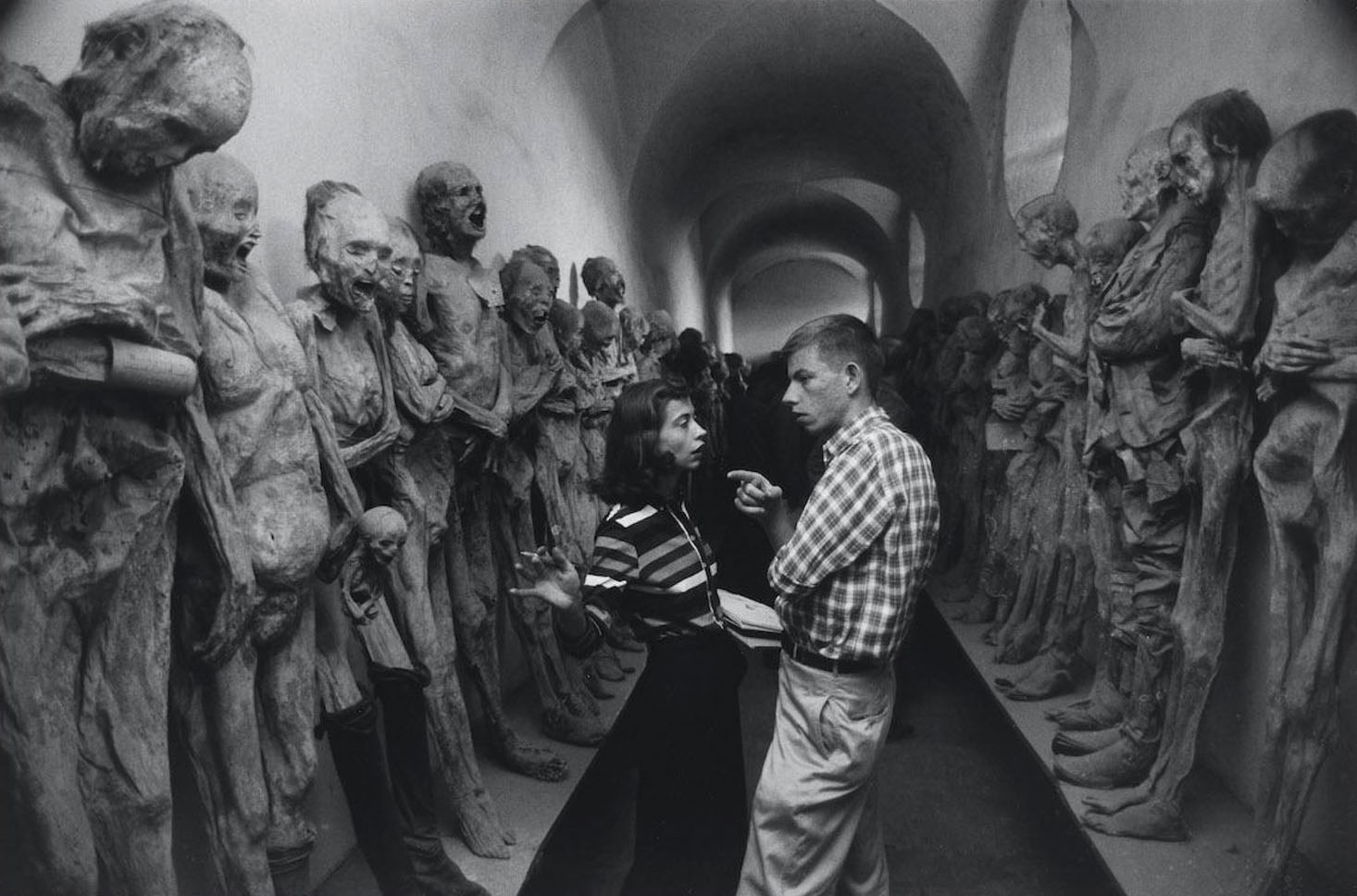
 

Elliott Erwitt (American, 1928-2023) 'Guanajuato, Mexico' 1957


Elliott Erwitt (American, 1928-2023)
Guanajuato, Mexico
1957
Gelatin silver print
Image Overall: 8 1/2 × 13 1/2 in. (21.6 x 34.3cm)
Bank of America Collection
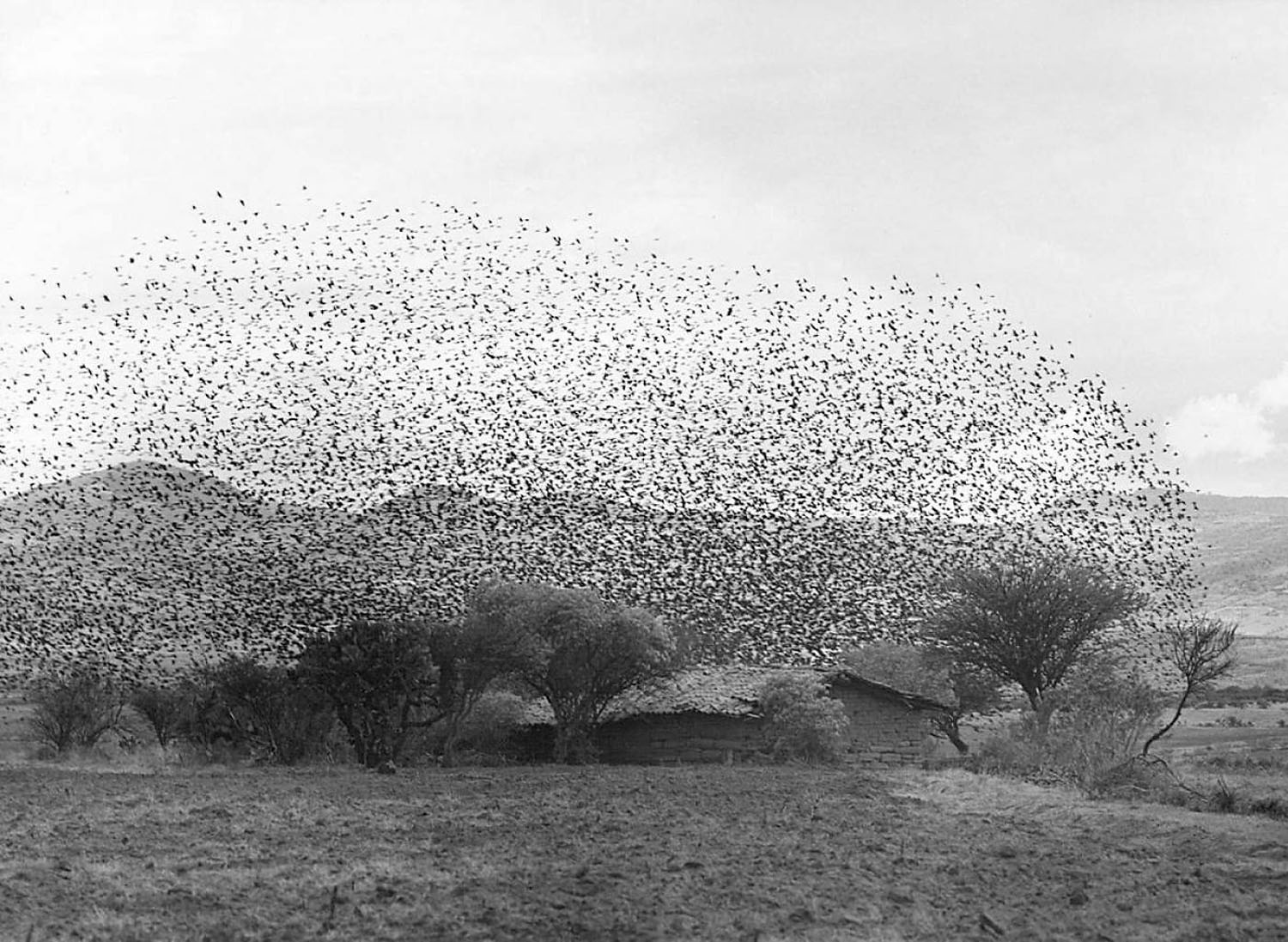
 

Flor Garduño (Mexican, b.1957) 'Cloud, Mexico' (Nube, México) 1982


Flor Garduño (Mexican, b.1957)
Cloud, Mexico (Nube, México)
1982
Gelatin silver print
Image Overall: 13 × 17 in. (33 x 43.2cm)
Bank of America Collection


Flor Garduño (Mexican, b. 1957) 'Tree of Life, Mexico' (Arbol de la vida, México) 1982


Flor Garduño (Mexican, b. 1957)
Tree of Life, Mexico (Arbol de la vida, México)
1982
Gelatin silver print
Image Overall: 13 × 17 in. (33 x 43.2cm)
Bank of America Collection


Garduño’s photographs create a bridge between the present and the past by portraying natural elements such as water, trees, earth, animals, and atmosphere. Garduño worked for the Department of Public Education in her native Mexico, traveling to rural areas to work with indigenous communities. From this she developed her style and got to know what she has referred to as the “profound truth” of the countryside in the Americas. Her work was also influenced by artists Kati Horna, who worked in a surrealistic vein, and Manuel Álvarez Bravo, who attended carefully to the tonal qualities of his photographs. Garduño similarly uses compositional and darkroom techniques to achieve moody, evocative images.

Anonymous. “Get to know the work of Flor Garduño,” on the Getty Twitter website Oct 6, 2021 [Online] Cited 28/01/2023
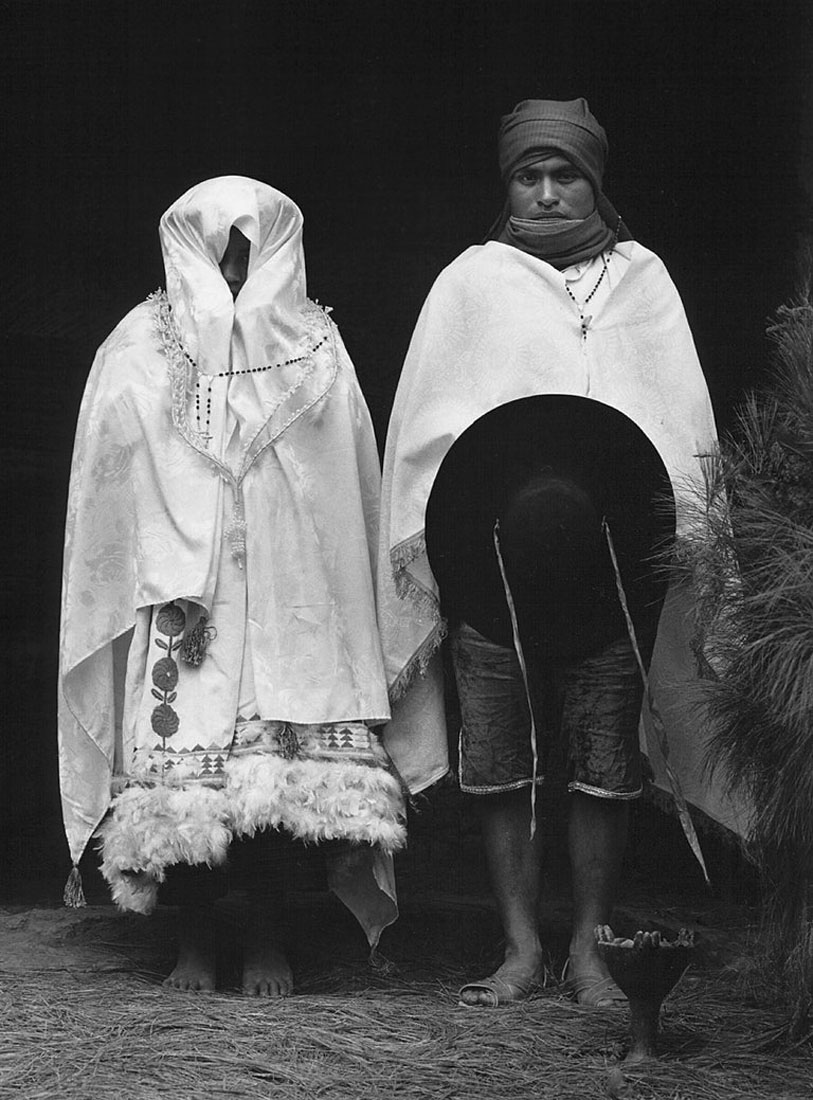
 

Flor Garduño (Mexican, b. 1957) 'Zinacantec Wedding, Mexico' (Matrimonio Zinacanteco, México) 1987


Flor Garduño (Mexican, b. 1957)
Zinacantec Wedding, Mexico (Matrimonio Zinacanteco, México)
1987
Gelatin silver print
Image Overall: 17 5/8 × 13 1/2 in. (44.8 x 34.3cm)
Bank of America Collection


Graciela Iturbide’s Mexico

The photographs of Graciela Iturbide not only bear witness to Mexican society but express an intense personal and poetic lyricism about her native country. One of the most influential photographers active in Latin America today, Iturbide captures everyday life and its cultures, rituals, and religions, while also raising questions about paradoxes and social injustice in Mexican society. Her photographs tell a visual story of Mexico since the late 1970s – a country in constant transition, defined by the coexistence of the historical and modern as a result of the culture’s rich amalgamation of cultures. For Iturbide, photography is a way of life and a way of seeing and understanding Mexico and its beauty, challenges, and contradictions.

In the summer of 2018, Kristen Gresh, Estrellita and Yousuf Karsh Senior Curator of Photographs, and members of the exhibition team visited Graciela Iturbide at her home and studio in Mexico City. In this documentary, produced by the MFA, the artist discusses the different series and themes explored in this exhibition, as well as her creative process.
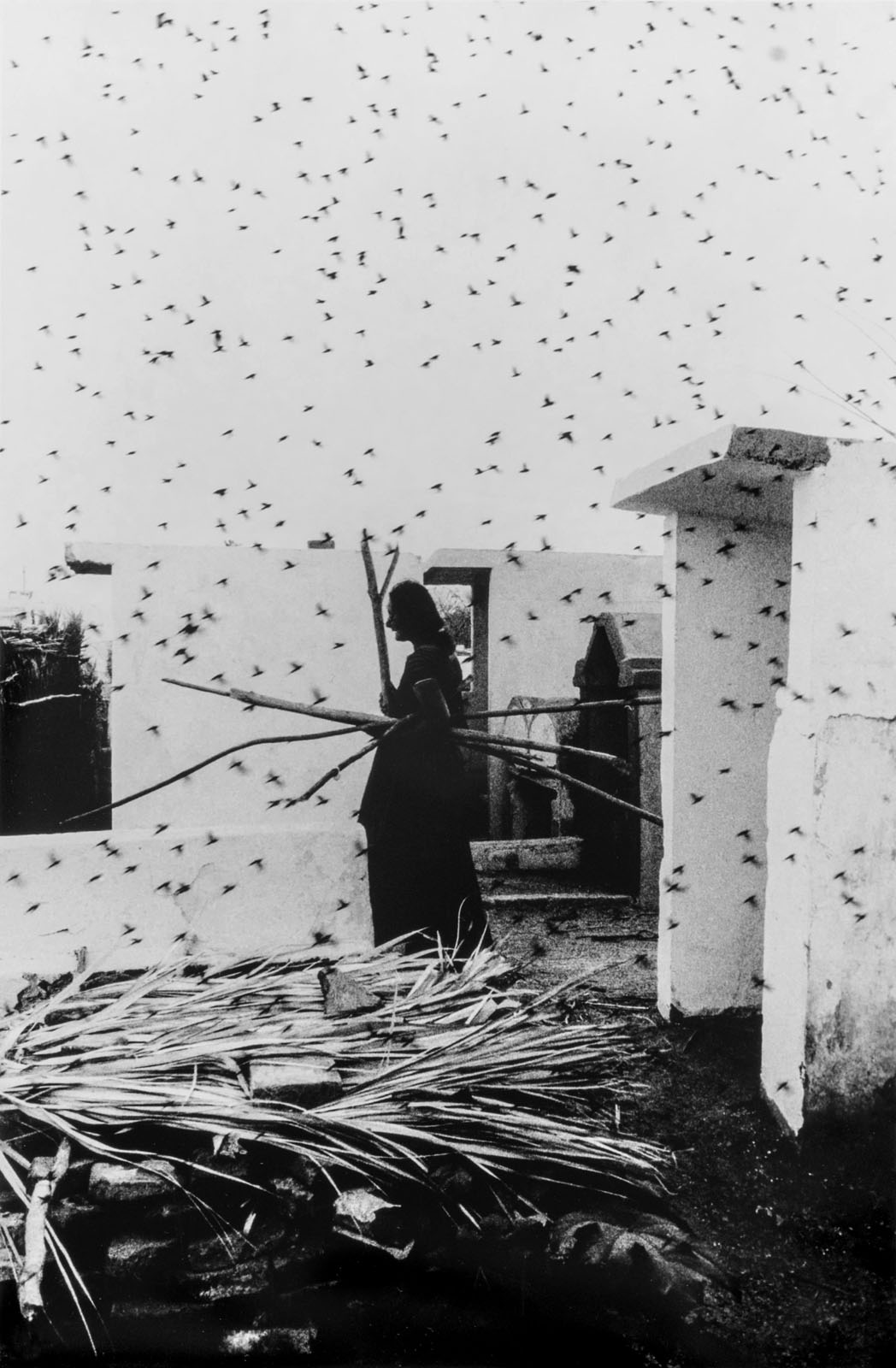
 

Graciela Iturbide (Mexican, b. 1942) 'Cemetery, Juchitán, Oaxaca' (Cementerio, Juchitán, Oaxaca) 1992


Graciela Iturbide (Mexican, b. 1942)
Cemetery, Juchitán, Oaxaca (Cementerio, Juchitán, Oaxaca)
1992
Gelatin silver print
Image Overall: 12 1/4 × 8 3/4 in. (31.1 x 22.2cm)
Bank of America Collection


Graciela Iturbide (Mexican, b. 1942) 'Los Pollos, Juchitán, México' (Chickens, Juchitán, Mexico) 1979


Graciela Iturbide (Mexican, b. 1942)
The Chickens, Juchitán, México (Los pollos, Juchitán, México)
1979 (negative); print c. 1992
Image Overall: 11 3/4 × 7 3/4 in. (29.8 x 19.7cm)
Bank of America Collection


Graciela Iturbide (Mexican, b. 1942) 'Sponge Vendor, Oaxaca' (Vendedora de zacate, Oaxaca) 1974


Graciela Iturbide (Mexican, b. 1942)
Sponge Vendor, Oaxaca (Vendedora de zacate, Oaxaca)
1974 (negative); print 1992
Gelatin silver print
Image Overall: 18 1/8 × 12 1/2 in. (46 x 31.8cm)
Bank of America Collection


Graciela Iturbide (Mexican, b. 1942) 'The Sacrifice, La Mixteca, Oaxaca' (El sacrificio, la Mixteca, Oaxaca) 1992


Graciela Iturbide (Mexican, b. 1942)
The Sacrifice, La Mixteca, Oaxaca (El sacrificio, la Mixteca, Oaxaca)
1992
Gelatin silver print
Image Overall: 16 7/8 × 12 1/4 in. (42.9 x 31.1cm)
Bank of America Collection


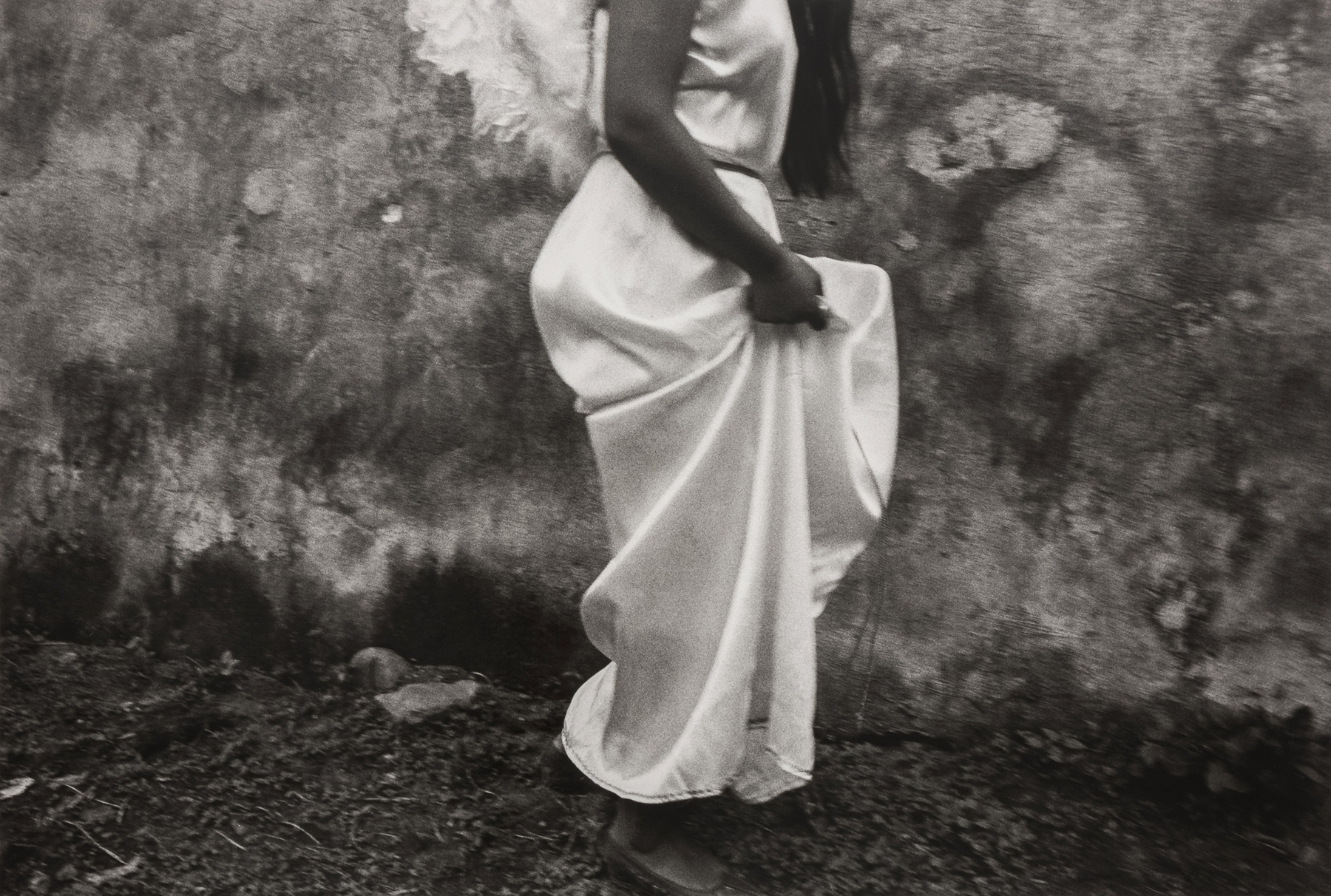
Graciela Iturbide (Mexican, b. 1942) 'Angel Woman, Sonora Desert, Mexico' (Mujer ángel, desierto de Sonora, México) 1979


Graciela Iturbide (Mexican, b. 1942)
Angel Woman, Sonora Desert, Mexico (Mujer ángel, desierto de Sonora, México)
1979 (negative); printed later
Gelatin silver print
Image Overall: 9 1/2 × 13 in. (24.1 x 33cm)
Bank of America Collection


Kenro Izu (Japanese, b. 1949) 'Tajín #13' 1987


Kenro Izu (Japanese, b. 1949)
Tajín #13
1987 (negative and print)
From the series Sacred Places
Platinum palladium print
Image Overall: 7 3/4 × 9 3/4 in. (19.7 x 24.8cm)
Bank of America Collection


Alejandra Laviada (Mexican, b. 1980) 'Stacking' (Apilado) 2007


Alejandra Laviada (Mexican, b. 1980)
Stacking (Apilado)
2007
From the series Juarez 56
Pigment print on lustre paper
24 x 20 inches (60.9 x 50.8cm)
Bank of America Collection
© 2022 Alejandra Laviada


Danny Lyon (American, b. 1942) 'Truck in Nueva Casas Grandes, Chihuahua, Mexico' (Camión en nuevas casas grandes, Chihuahua, México) 1975


Danny Lyon (American, b. 1942)
Truck in Nueva Casas Grandes, Chihuahua, Mexico (Camión en nuevas casas grandes, Chihuahua, México)
1975 (negative and print)
Gelatin silver print
Image Overall: 8 × 12 in. (20.3 x 30.5cm)
Bank of America Collection


Paul Strand (American, 1890-1976) 'Church, Cuapiaxtla, Mexico' (Iglesia, Cuapiaxtla, México) 1933


Paul Strand (American, 1890-1976)
Church, Cuapiaxtla, Mexico (Iglesia, Cuapiaxtla, México)
1933 (negative); print 1967
from The Mexican Portfolio
Photogravure
Image Overall: 6 1/4 × 4 7/8 in. (15.9 x 12.4cm)
Bank of America Collection


Paul Strand (American, 1890-1976) 'Woman, Pátzcuaro, Michoacán, Mexico' (Mujer, Pátzcuaro, Michoacán, México) 1933


Paul Strand (American, 1890-1976)
Woman, Pátzcuaro, Michoacán, Mexico (Mujer, Pátzcuaro, Michoacán, México)
1933 (negative); print 1967
from The Mexican Portfolio
Photogravure
Image Overall: 6 3/8 × 5 in. ( 16.2 x 12.7cm)
Bank of America Collection


Paul Strand (American, 1890-1976) 'Women of Santa Ana, Michoacán, Mexico' (Mujeres de Santa Ana, Michoacán, México) 1933


Paul Strand (American, 1890-1976)
Women of Santa Ana, Michoacán, Mexico (Mujeres de Santa Ana, Michoacán, México)
1933 (negative); print 1967
From The Mexican Portfolio
Photogravure
Image Overall: 5 5/8 × 6 1/8 in. (14.3 x 15.6cm)
Bank of America Collection


Paul Strand (American, 1890-1976) 'Woman and Baby, Hidalgo, Mexico' (Mujer y bebe, Hidalgo, México) 1933


Paul Strand (American, 1890-1976)
Woman and Baby, Hidalgo, Mexico (Mujer y bebe, Hidalgo, México)
1933 (negative); print 1967
from The Mexican Portfolio
Photogravure
Image Overall: 5 1/2 × 6 1/2 in. (14 x 16.5cm)
Bank of America Collection


Paul Strand (American, 1890-1976) 'Near Saltillo, Mexico' (Cerca de Saltillo, Mexico) 1933


Paul Strand (American, 1890-1976)
Near Saltillo, Mexico (Cerca de Saltillo, Mexico)
1933 (negative); print 1967
From The Mexican Portfolio
Photogravure
Image Overall: 5 3/8 × 6 3/4 in. (13.7 x 17.1cm)
Bank of America Collection


Paul Strand (American, 1890-1976) 'Young Woman and Boy, Toluca de Lerdo, Mexico' (Mujer joven y niño, Toluca de Lerdo, México) 1933


Paul Strand (American, 1890-1976)
Young Woman and Boy, Toluca de Lerdo, Mexico (Mujer joven y niño, Toluca de Lerdo, México)
1933 (negative); print 1967
from The Mexican Portfolio
Photogravure
Image Overall: 5 1/2 × 6 1/2 in. (14 x 16.5 cm)
Bank of America Collection
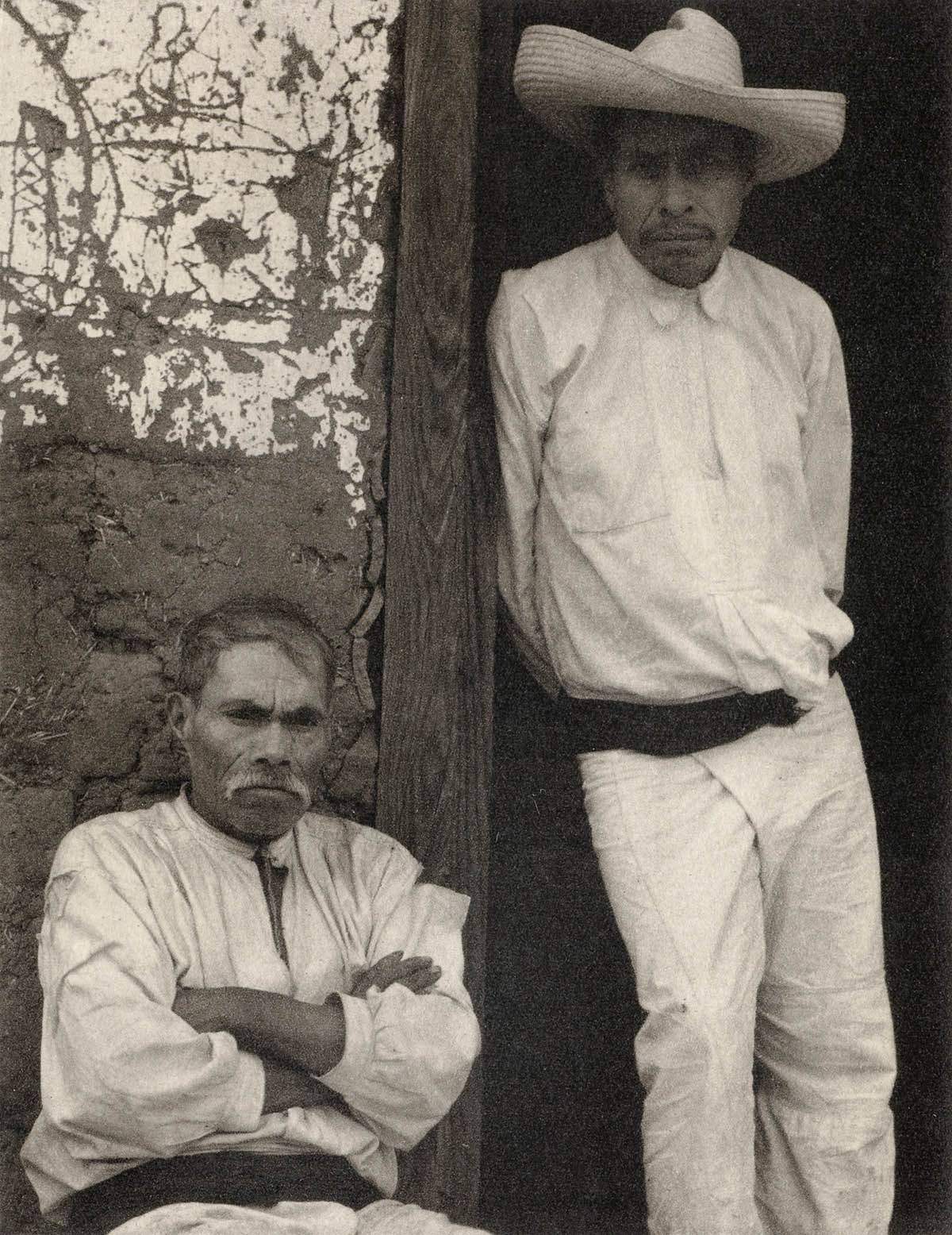
 

Paul Strand (American, 1890-1976) 'Men of Santa Ana, Lake Pátzcuaro, Michoacán' (Hombres de Santa Ana, Lake Pátzcuaro, Michoacá) 1933


Paul Strand (American, 1890-1976)
Men of Santa Ana, Lake Pátzcuaro, Michoacán (Hombres de Santa Ana, Lake Pátzcuaro, Michoacá)
1933 (negative); print 1967
from The Mexican Portfolio
Photogravure
Image Overall: 6 7/8 × 5 1/4 in. (17.5 x 13.3cm)
Bank of America Collection
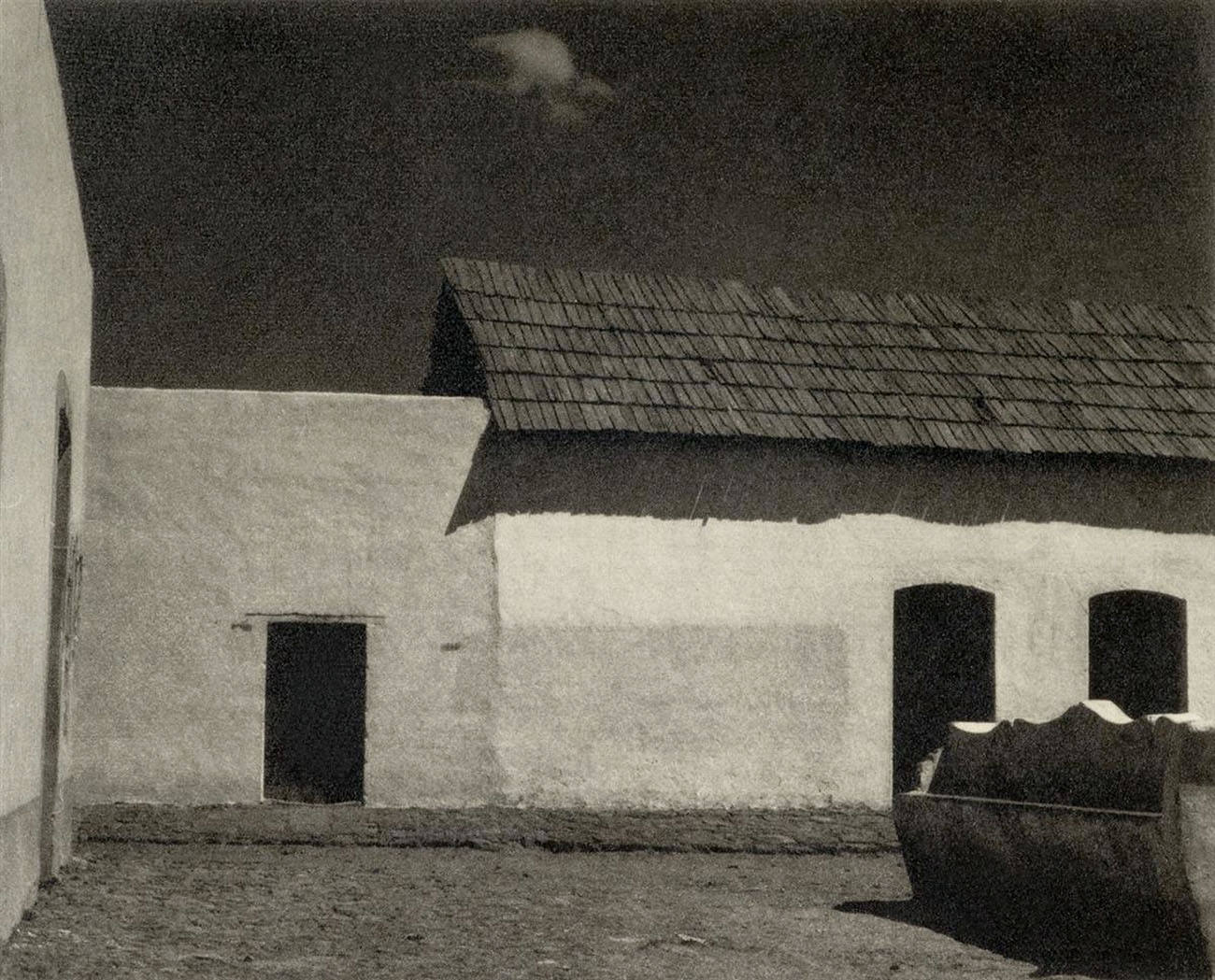
 

Paul Strand (American, 1890-1976) 'White Plaza, Puebla, Mexico' (Plaza blanca, Puebla, México) 1933


Paul Strand (American, 1890-1976)
White Plaza, Puebla, Mexico (Plaza blanca, Puebla, México)
1933 (negative); print 1967
from The Mexican Portfolio
Photogravure
Image Overall: 5 1/2 × 6 1/2 in. (14 x 16.5cm)
Bank of America Collection


Paul Strand (American, 1890-1976) 'Boy, Uruapan, Michoacán, Mexico' (Niño, Uruapan, Michoacán, México) 1933


Paul Strand (American, 1890-1976)
Boy, Uruapan, Michoacán, Mexico (Niño, Uruapan, Michoacán, México)
1933 (negative); print 1967
From The Mexican Portfolio
Photogravure
Image Overall: 10 × 7 7/8 in. (25.4 x 20cm)
Bank of America Collection


Paul Strand. 'Man - Tenancingo' 1933 


Paul Strand (American, 1890-1976)
Man, Tenancingo de Degollado, Mexico (Hombre, Tenancingo de Degollado, México)
1933 (negative); print 1967
From The Mexican Portfolio
Photogravure
Image Overall: 6 3/8 × 5 in. (16.2 x 12.7cm)
Bank of America Collection


Paul Strand (American, 1890-1976) 'Boy, Uruapan, Michoacán, Mexico' (Niño, Uruapan, Michoacán, México) 1933 (negative); print 1967


Paul Strand (American, 1890-1976)
Boy, Uruapan, Michoacán, Mexico (Niño, Uruapan, Michoacán, México)
1933 (negative); print 1967
From The Mexican Portfolio
Photogravure
Image Overall: 6 1/2 × 5 1/4 in. (16.5 x 13.3cm)
Bank of America Collection


Paul Strand (American, 1890-1976) 'Virgin San Felipe, Oaxaca, Mexico' (Virgen San Felipe, Oaxaca, Mexico) 1933


Paul Strand (American, 1890-1976)
Virgin San Felipe, Oaxaca, Mexico (Virgen San Felipe, Oaxaca, Mexico)
1933 (negative); print 1967
From The Mexican Portfolio
Photogravure
Image Overall: 10 1/4 × 7 7/8 in. (26 x 20cm)
Bank of America Collection


Paul Strand (American, 1890-1976) 'Cristo, Oaxaca, Mexico' (Cristo, Oaxaca, México) 1933


Paul Strand (American, 1890-1976)
Cristo, Oaxaca, Mexico (Cristo, Oaxaca, México)
1933 (negative); print 1967
From The Mexican Portfolio
Photogravure
Image Overall: 11 × 8 1/2 in. (27.9 x 21.6cm)
Bank of America Collection


Paul Strand (American, 1890-1976) 'Church Gateway, Hidalgo, Mexico' (Puerta de iglesia, Hidalgo, México) 1933


Paul Strand (American, 1890-1976)
Church Gateway, Hidalgo, Mexico (Puerta de iglesia, Hidalgo, México)
1933 (negative); print 1967
From The Mexican Portfolio
Photogravure
Image Overall: 10 1/2 × 8 1/4 in. (26.7 x 21cm)
Bank of America Collection


Paul Strand. 'Cristo with Thorns - Huexotla' 1933


Paul Strand (American, 1890-1976)
Cristo with Thorns, Huexotla, Mexico (Cristo con espinas, Huexotla, México)
1933 (negative); print 1967
From The Mexican Portfolio
Photogravure
Image Overall: 10 1/8 × 7 7/8 in. (25.7 x 20cm)
Bank of America Collection
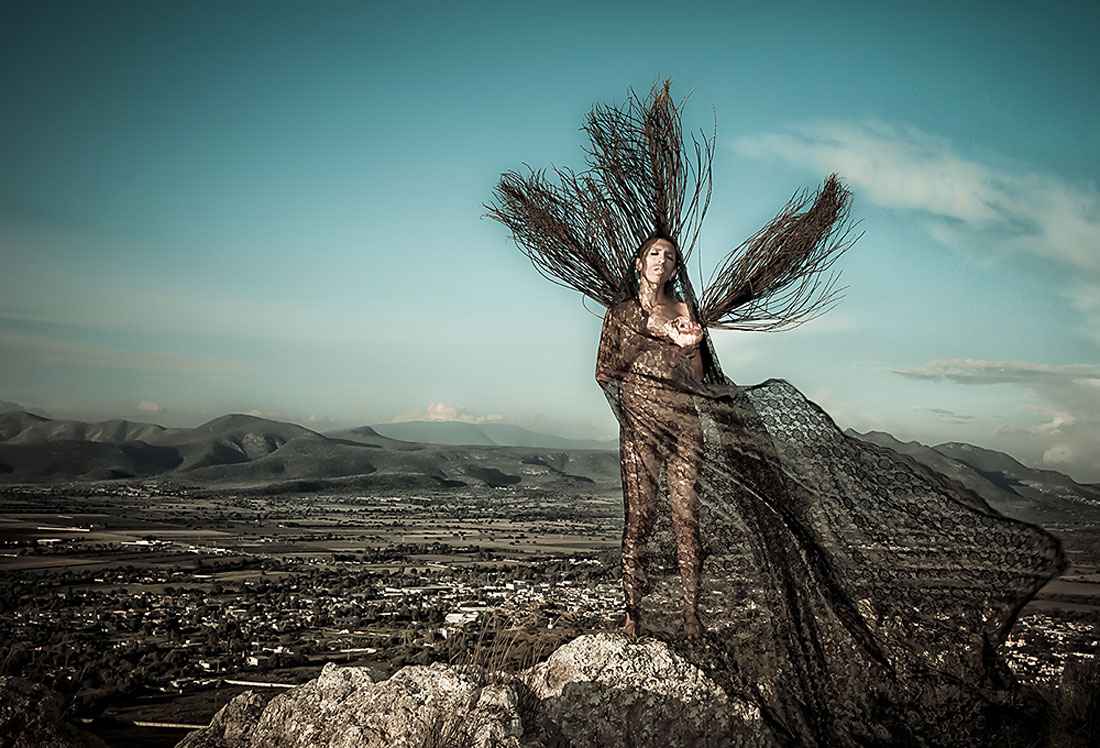
 

Andrés Juárez Troncoso (Mexicano, b. 1972) 'The Virgin of the Heights' (La virge n de las alturas) 2016


Andrés Juárez Troncoso (Mexicano, b. 1972)
The Virgin of the Heights (La virge n de las alturas)
2016
From the series The Spotless Others
Digital print
Image Overall: 20 1/8 × 29 1/2 in. (51.1 x 74.9cm)
Bank of America Collection


Edward Weston (American, 1886-1958) 'Pyramid of the Sun, Mexico' (Pirámide del Sol, México) 1923


Edward Weston (American, 1886-1958)
Pyramid of the Sun, Mexico (Pirámide del Sol, México)
1923
Gelatin silver print
Image Overall: 7 1/2 × 9 3/8 in. (19.1 x 23.8cm)
Bank of America Collection


Mariana Yampolsky (Mexican, 1925-2002) 'Stable' (Caballeriza) 1982


Mariana Yampolsky (Mexican, 1925-2002)
Stable (Caballeriza)
1982 (negative); print c. 1992
Gelatin silver print
Image Overall: 13 × 17 3/4 in. (33 x 45.1cm)
Bank of America Collection


Mariana Yampolsky (Mexican, 1925-2002) 'Caress, San Simón de la Laguna' (Caricia, San Simón de la Laguna) 1989


Mariana Yampolsky (Mexican, 1925-2002)
Caress, San Simón de la Laguna (Caricia, San Simón de la Laguna)
1989
Gelatin silver print
Image Overall: 9 × 12 1/4 in. (22.9 x 31.1cm)
Bank of America Collection
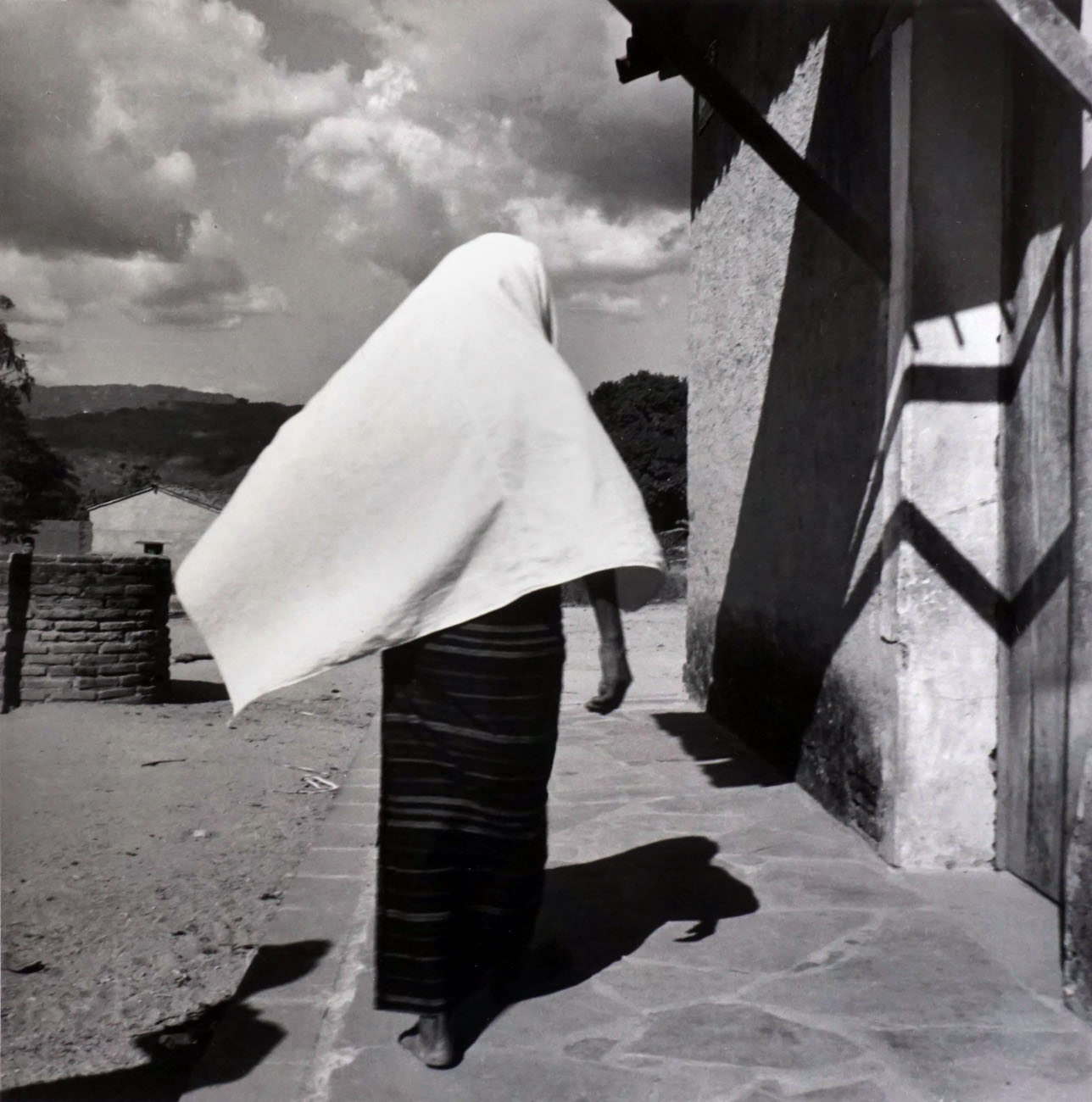
 

Mariana Yampolsky (Mexican, 1925-2002) 'Head Cover, Pinotepa Nacional, Oaxaca' (Huipil de tapar, Pinotepa Nacional, Oaxaca) 1989


Mariana Yampolsky (Mexican, 1925-2002)
Head Cover, Pinotepa Nacional, Oaxaca (Huipil de tapar, Pinotepa Nacional, Oaxaca)
1989
Gelatin silver print
Image Overall: 13 1/2 × 13/12 in. (34.3 x 34.3cm)
Bank of America Collection


Tacoma Art Museum
1701 Pacific Avenue
Tacoma, WA 98402

Opening hours:
Wednesday – Sunday 10am – 5pm
Tacoma Art Museum website

LIKE ART BLART ON FACEBOOK

Back to top

Exhibition: ‘Graciela Iturbide’s Mexico’ at the Museum of Fine Arts, Boston

Exhibition dates: 19th January – 12th May, 2019

Curator: Kristen Gresh, Estrellita and Yousuf Karsh Curator of Photographs


Graciela Iturbide (Mexican, b. 1942) 'Desierto de Sonora, México' 1979 from the exhibition 'Graciela Iturbide's Mexico' at the Museum of Fine Arts, Boston, Jan - May, 2019


Graciela Iturbide (Mexican, b. 1942)
Desierto de Sonora, México
1979
Gelatin silver print
35.6 x 35.4cm
Courtesy of the Museum of Fine Arts, Boston
© Graciela Iturbide


From a different world

There’s something consistently awesome about Mexican photography that is so grounded, so essential, and yet at the same time so spiritual.

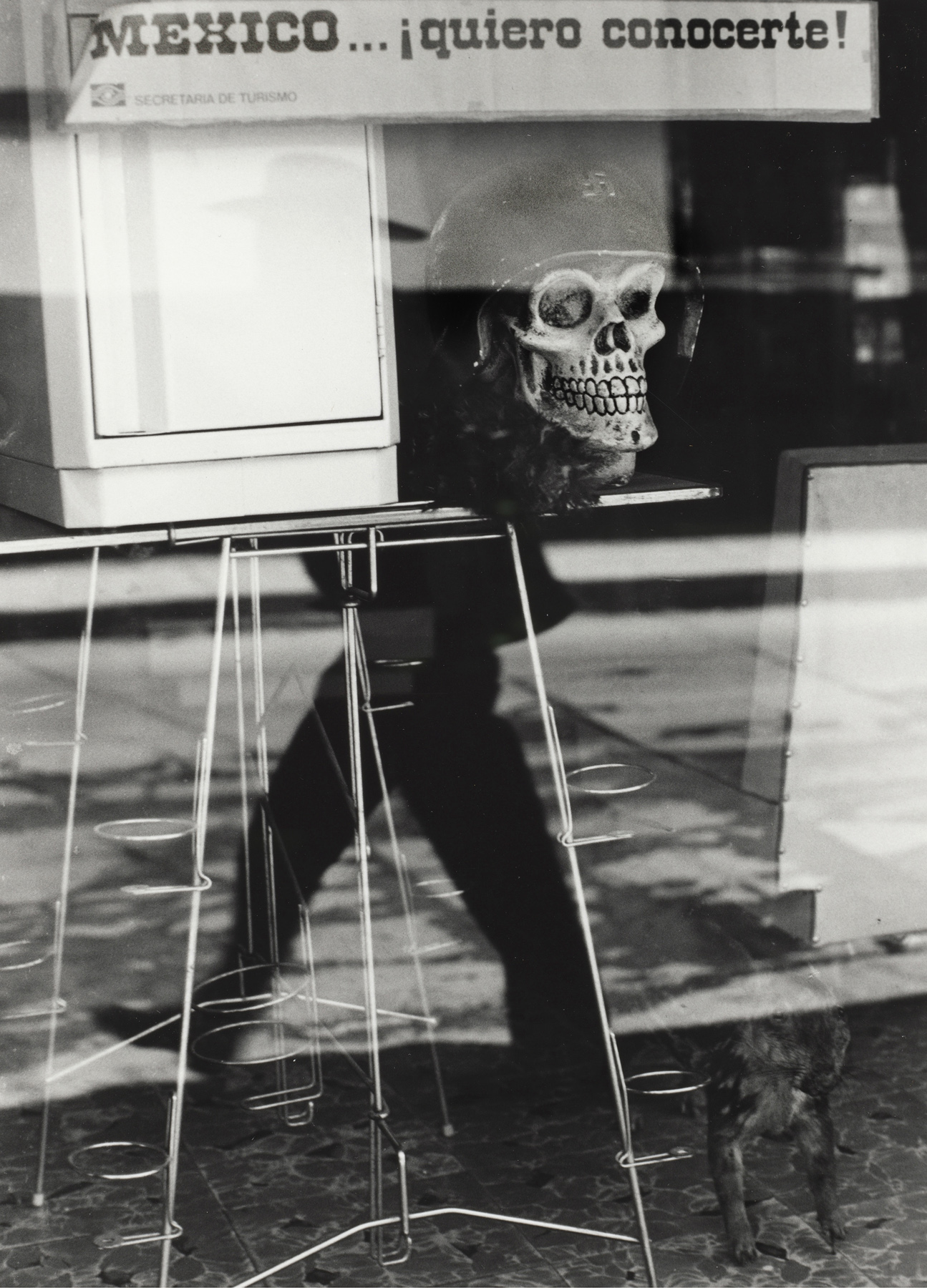
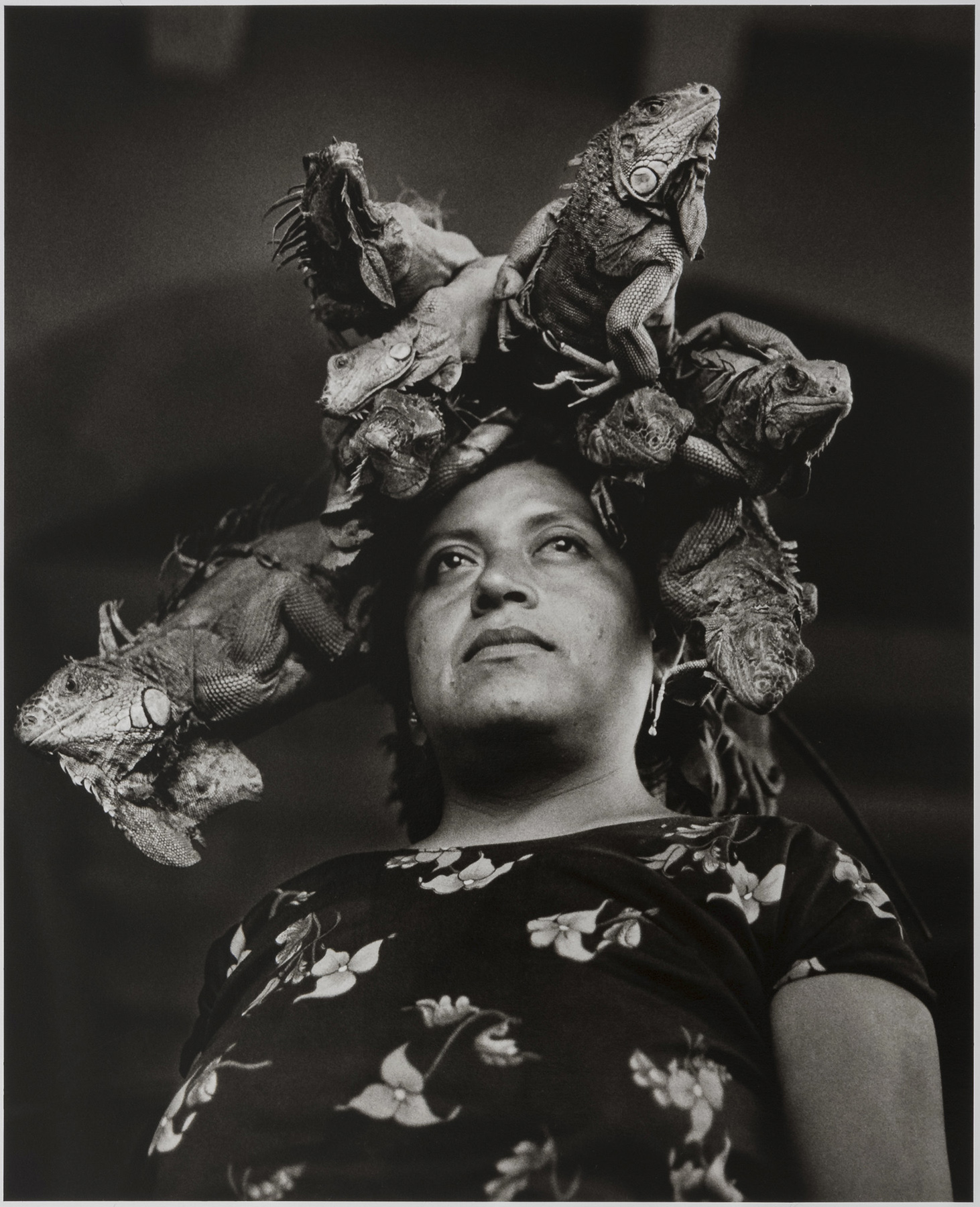
One of my favourite photographic artists of all time is Manuel Alvarez Bravo, he of the lyrical narrative, the sensual body, the assassinated worker. Iturbide seems to be cut from the same cloth – she was his assistant for two years; he her teacher about photography and life – and his influence is telling in Iturbide’s imaginative and sometimes incongruous images, such as the skull in Mexico… I want to get to know you! (1975, below) or Our Lady of the Iguanas, Juchitán, Mexico (1979, below).

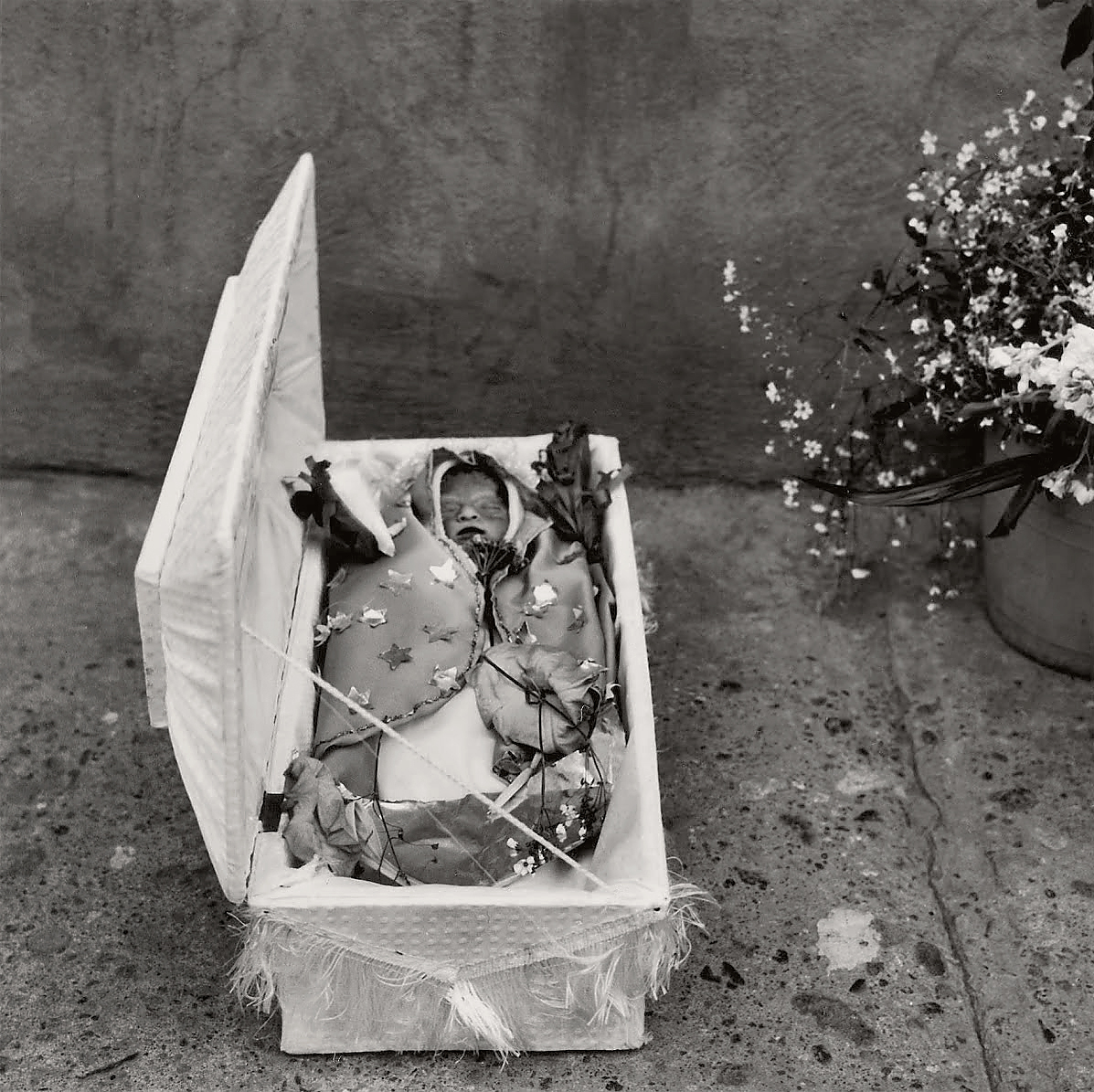
Life, death, violence, sacrifice, beauty, identity and place, mixed with daubs of Surrealism, are constant themes of Mexican photography and this symbology can be seen in Iturbide’s unusual urban geometries and her eye for the unexpected. She is a visionary ethnographer who paints in black and white a story of magical literary realism… seeing through her camera something different than she sees with her eyes directly. She sees, and then feels, a different world.

Octavio Paz, the great Mexican poet, writing about the great Mexican photographer Manuel Alvarez Bravo, said that, “Reality exists, but it is more real in black and white.” And so here. Iturbide feels that black and white is more real than colour – and that reality is in black and white. It is in this tonal space that Graciela Iturbide’s Mexico pictures a place of beauty and contradiction, a place of transformations and interstitial spaces (intermediate, indeterminate spaces), an amalgamation of Indigenous and Spanish traditions. “I always shoot what surprises me,” she says. “My eyes see them, and my heart shoots them.”

Gracia Graciela, oh Graceful Beauty, for your gift to us.

Dr Marcus Bunyan


Many thankx to the Museum of Fine Arts Boston for allowing me to publish the photographs in the posting. Please click on the photographs for a larger version of the image.


“Photography is also like life, right? … I think in my case, taking photos as therapy has a lot to do with death with everything I do, with Frida Kahlo, because I like to photograph things in therapy, things that are healing, which is powerful, right?”


Graciela Iturbide


Hear from the Artist | Museum of Fine Arts, Boston


Graciela Iturbide (Mexican, b. 1942) 'Mexico City' 1969 from the exhibition 'Graciela Iturbide's Mexico' at the Museum of Fine Arts, Boston, Jan - May, 2019


Graciela Iturbide (Mexican, b. 1942)
Mexico City
1969
Gelatin silver print
Courtesy of the Museum of Fine Arts, Boston
© Graciela Iturbide


Graciela Iturbide (Mexican, b. 1942) 'Chalma' 1974


Graciela Iturbide (Mexican, b. 1942)
Chalma
1974
Gelatin silver print
Museum purchase with funds donated by John and Cynthia Reed, Charles H. Bayley Picture and Painting Fund, Barbara M. Marshall Fund, Lucy Dalbiac Luard Fund, Horace W. Goldsmith Foundation Fund for Photography, Francis Welch Fund, and Jane M. Rabb Fund for Film and Photography
Courtesy of the Museum of Fine Arts, Boston
© Graciela Iturbide


Graciela Iturbide (Mexican, b. 1942) 'Casa de la Muerte, Ciudad de México' 1975


Graciela Iturbide (Mexican, b. 1942)
Casa de la Muerte, Ciudad de México
1975
Gelatin silver print
Museum purchase with funds donated by John and Cynthia Reed, Charles H. Bayley Picture and Painting Fund, Barbara M. Marshall Fund, Lucy Dalbiac Luard Fund, Horace W. Goldsmith Foundation Fund for Photography, Francis Welch Fund, and Jane M. Rabb Fund for Film and Photography
Courtesy of the Museum of Fine Arts, Boston
© Graciela Iturbide


Graciela Iturbide (Mexican, b. 1942) 'Volantín, San Martin Tilcajete, Oaxaca, Mexico' (Merry-Go-Round, San Martín Tilcajete, Oaxaca, Mexico) 1976


Graciela Iturbide (Mexican, b. 1942)
Volantín, San Martín Tilcajete, Oaxaca, Mexico (Merry-Go-Round, San Martín Tilcajete, Oaxaca, Mexico)
1976
Gelatin silver print
Museum purchase with funds donated by John and Cynthia Reed, Charles H. Bayley Picture and Painting Fund, Barbara M. Marshall Fund, Lucy Dalbiac Luard Fund, Horace W. Goldsmith Foundation Fund for Photography, Francis Welch Fund, and Jane M. Rabb Fund for Film and Photography
Courtesy of the Museum of Fine Arts, Boston
© Graciela Iturbide


Graciela Iturbide (Mexican, b. 1942) 'Mujer ángel, Desierto de Sonora, México' (Angel Woman, Sonora Desert, Mexico) 1979


Graciela Iturbide (Mexican, b. 1942)
Mujer Ángel, Desierto de Sonora, México (Angel Woman, Sonora Desert, Mexico)
1979
Gelatin silver print
Courtesy of the Museum of Fine Arts, Boston
© Graciela Iturbide


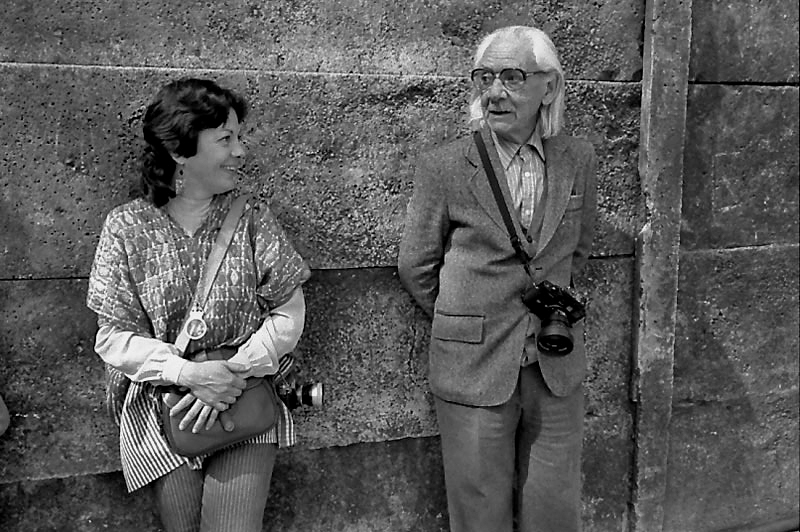
Pedro Meyer. 'Manuel Álvarez Bravo and Graciela Iturbide, Coyoacán (Mexico)' 1983


Pedro Meyer (Spanish, b. 1935)
Manuel Álvarez Bravo and Graciela Iturbide, Coyoacán (Mexico)
1983
Gelatin silver print


When I went to study at the university he was teaching at the university as well and I attended one of his courses; that’s how I got to know him. Then, after a couple of weeks I became his assistant. At that time he was not that famous in Mexico, he was very famous in Europe and the United States. He was known in Mexico but he was not really a big star. So, what I really need to make clear is that he was not just a teacher of photography; he was a teacher about life for me. Because he taught me about everything, he talked about literature, cinematography… so he was more of a teacher of life… he never said this picture is good or this picture is bad, he would never say that flat out. Instead, he would always say something to guide you in the right direction. Yet he would never say, “This is good or this is bad”.

With Álvarez I went to certain little towns but I was only his assistant for two years. After that I made the decision to cut the umbilical cord and make my own way.

Extract from Munem Wasif. “An Interview with Graciela Iturbide,” on the Chobi Mela website, November 24, 2014 [Online] Cited 06/04/2019


Graciela Iturbide (Mexican, b. 1942) 'Festival del Lagarto' 1985


Graciela Iturbide (Mexican, b. 1942)
Festival del Lagarto (Lizard Festival)
1985
Gelatin silver print
Museum purchase with funds donated by John and Cynthia Reed, Charles H. Bayley Picture and Painting Fund, Barbara M. Marshall Fund, Lucy Dalbiac Luard Fund, Horace W. Goldsmith Foundation Fund for Photography, Francis Welch Fund, and Jane M. Rabb Fund for Film and Photography
Courtesy of the Museum of Fine Arts, Boston
© Graciela Iturbide


Graciela Iturbide (Mexican, b. 1942) 'Dance, Juchitán, México' 1986


Graciela Iturbide (Mexican, b. 1942)
Dance, Juchitán, México
1986
Gelatin silver print
Courtesy of the Museum of Fine Arts, Boston
© Graciela Iturbide


Graciela Iturbide (Mexican, b. 1942) 'Pajaros en el poste, carretera a Guanajuato, Mexico' 1990


Graciela Iturbide (Mexican, b. 1942)
Pajaros en el poste, carretera a Guanajuato, Mexico (Birds on a post, road to Guanajuato, Mexico)
1990
Gelatin silver print
Museum purchase with funds donated by John and Cynthia Reed, Charles H. Bayley Picture and Painting Fund, Barbara M. Marshall Fund, Lucy Dalbiac Luard Fund, Horace W. Goldsmith Foundation Fund for Photography, Francis Welch Fund, and Jane M. Rabb Fund for Film and Photography
Courtesy of the Museum of Fine Arts, Boston
© Graciela Iturbide


Graciela Iturbide (Mexican, b. 1942) 'Cayó del Cielo, Chalma, México' 1989


Graciela Iturbide (Mexican, b. 1942)
Cayó del Cielo, Chalma, México
1989
Gelatin silver print
Museum purchase with funds donated by John and Cynthia Reed, Charles H. Bayley Picture and Painting Fund, Barbara M. Marshall Fund, Lucy Dalbiac Luard Fund, Horace W. Goldsmith Foundation Fund for Photography, Francis Welch Fund, and Jane M. Rabb Fund for Film and Photography
Courtesy of the Museum of Fine Arts, Boston
© Graciela Iturbide


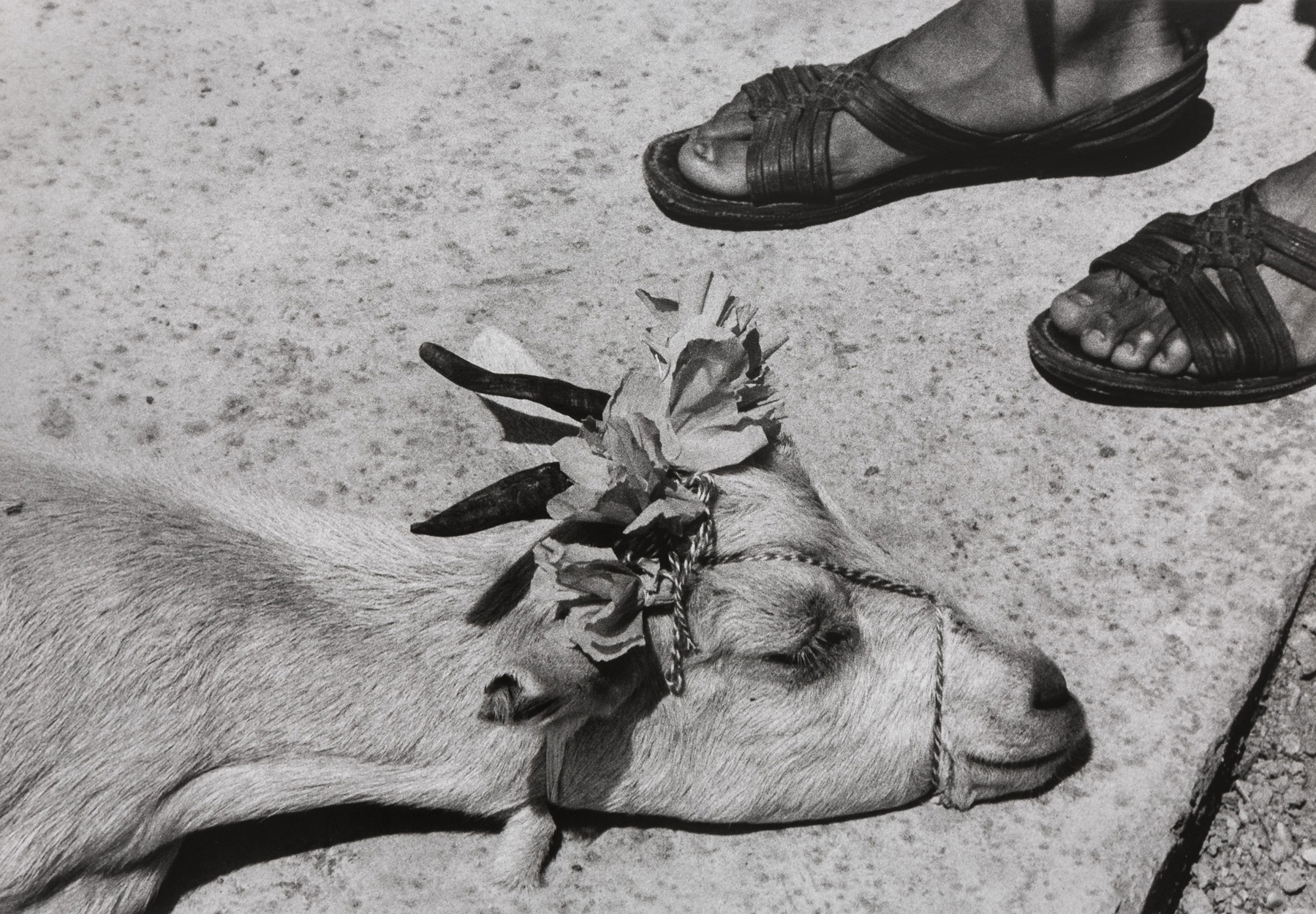
Graciela Iturbide (Mexican, b. 1942) 'La danza de la cabrita, antes de la matanza, La Mixteca, Oaxaca, Mexico' (The Little Goat's Dance, Before the Slaughter, La Mixteca, Oaxaca, Mexico) 1992


Graciela Iturbide (Mexican, b. 1942)
La danza de la cabrita, antes de la matanza, La Mixteca, Oaxaca, Mexico (The Little Goat’s Dance, Before the Slaughter, La Mixteca, Oaxaca, Mexico)
1992
Gelatin silver print
Museum purchase with funds donated by John and Cynthia Reed, Charles H. Bayley Picture and Painting Fund, Barbara M. Marshall Fund, Lucy Dalbiac Luard Fund, Horace W. Goldsmith Foundation Fund for Photography, Francis Welch Fund, and Jane M. Rabb Fund for Film and Photography
Courtesy of the Museum of Fine Arts, Boston
© Graciela Iturbide


A way of life, a way of seeing

The photographs of Graciela Iturbide not only bear witness to Mexican society but express an intense personal and poetic lyricism about her native country. One of the most influential photographers active in Latin America today, Iturbide captures everyday life and its cultures, rituals, and religions, while also raising questions about paradoxes and social injustice in Mexican society. Her photographs tell a visual story of Mexico since the late 1970s – a country in constant transition, defined by the coexistence of the historical and modern as a result of the culture’s rich amalgamation of cultures. For Iturbide, photography is a way of life and a way of seeing and understanding Mexico and its beauty, challenges, and contradictions.

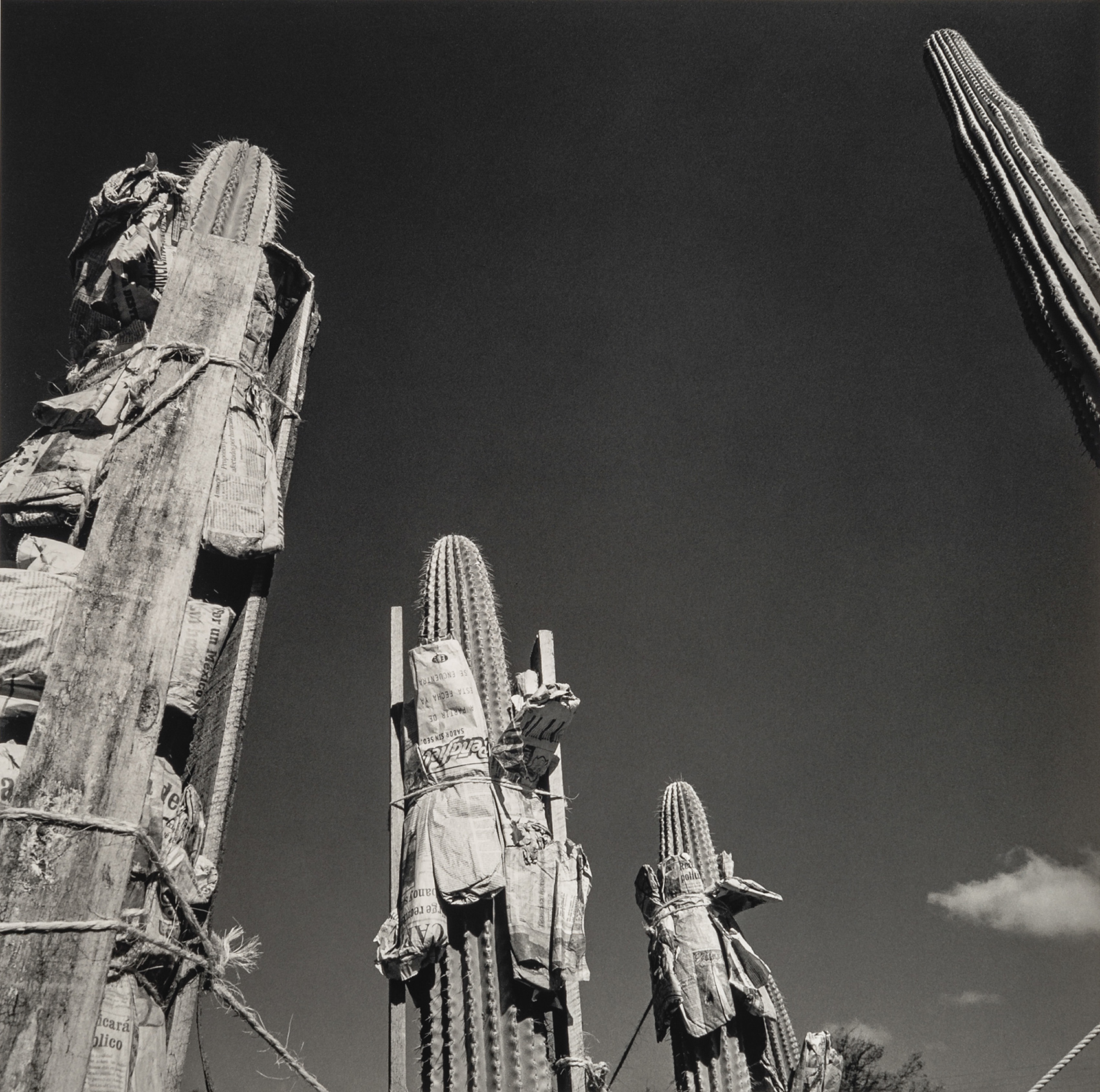
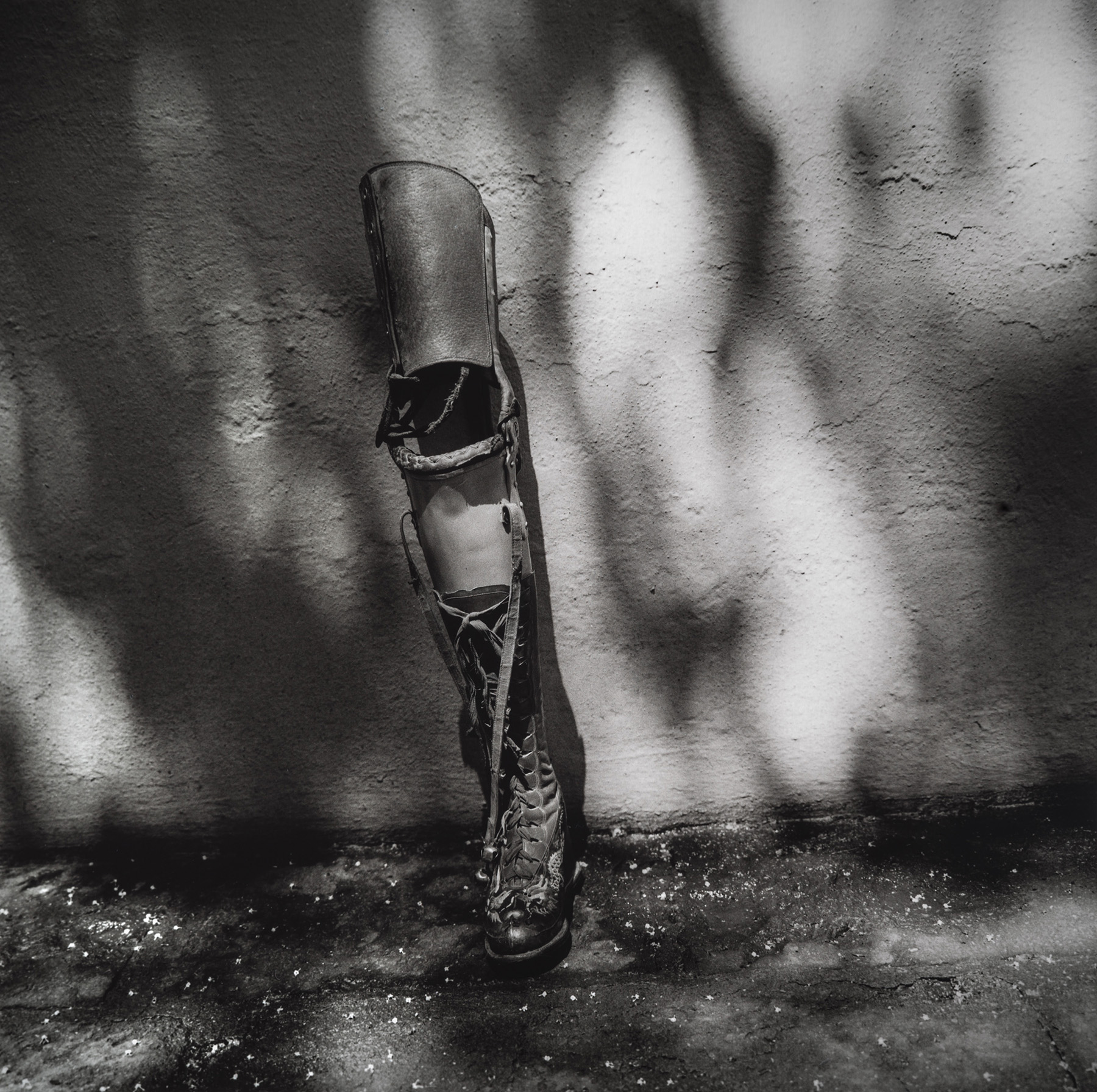
This is the first major East Coast presentation of Iturbide’s work, featuring approximately 125 photographs that span her five-decade-long career. Organised into nine sections, the exhibition opens with early photographs, followed by three series focused on three of Mexico’s many indigenous cultures: Juchitán captures the essential role of women in Zapotec culture; Los que viven en la arena (Those Who Live in the Sand) concentrates on the Seri people living in the Sonoran Desert; and La Mixteca documents elaborate goat-slaughtering rituals in Oaxaca, serving as critical commentary on the exploitation of workers. Thematic groupings highlight Iturbide’s explorations of various aspects of Mexican culture, including fiestas, death and mortality, and birds and their symbolism. Her more recent work is presented in two series related to Mexico’s cultural and artistic heritage, featuring plants – mainly cacti – in “intensive care” at the Oaxaca Ethnobotanical Gardens, as well as El baño de Frida (Frida’s Bathroom), depicting personal belongings in Frida Kahlo’s bathroom at the Casa Azul that had been locked away for 50 years after the artist’s death.

Iturbide’s powerful and provocative photographs are anti-picturesque, anti-folkloric. Her work embodies her empathetic approach to photography and her deep connection with her subjects, asking questions through its capacity for imaginary associations. Drawn primarily from Iturbide’s own collection, “Graciela Iturbide’s Mexico” also includes the Museum’s recent acquisition of 37 works by the artist, as well as loans from museums and private collections throughout the US and Mexico. The exhibition is accompanied by an illustrated catalogue produced by MFA Publications.

Text from the Museum of Fine Arts, Boston website [Online] Cited 05/04/2019


Graciela Iturbide (Mexican, b. 1942) 'Cementerio de Dolores Hidalgo, Guanajuato, México' 1978


Graciela Iturbide (Mexican, b. 1942)
Cementerio de Dolores Hidalgo, Guanajuato, México (Cemetery of Dolores Hidalgo, Guanajuato, México)
1978
Gelatin silver print
11.3 x 11.3cm
Courtesy of the Museum of Fine Arts, Boston
© Graciela Iturbide


Graciela Iturbide (Mexican, b. 1942) 'Jardín Botánico, Oaxaca, México' 1998-1999


Graciela Iturbide (Mexican, b. 1942)
Jardín Botánico, Oaxaca, México
1998-1999
Gelatin silver print
Courtesy of the Museum of Fine Arts, Boston
© Graciela Iturbide


Graciela Iturbide (Mexican, b. 1942) 'Jardín Botánico de Oaxaca, México' 2002


Graciela Iturbide (Mexican, b. 1942)
Jardín Botánico de Oaxaca, México
2002
Gelatin silver print
35.7 x 32.8cm
Museum purchase with funds donated by John and Cynthia Reed, Charles H. Bayley Picture and Painting Fund, Barbara M. Marshall Fund, Lucy Dalbiac Luard Fund, Horace W. Goldsmith Foundation Fund for Photography, Francis Welch Fund, and Jane M. Rabb Fund for Film and Photography
Courtesy of the Museum of Fine Arts, Boston
© Graciela Iturbide


Graciela Iturbide (Mexican, b. 1942) 'El Baño de Frida, Coyoacán, Ciudad de México' (Frida's Bathroom, Coyoacán, Mexico City) 2005


Graciela Iturbide (Mexican, b. 1942)
El Baño de Frida, Coyoacán, Ciudad de México (Frida’s Bathroom, Coyoacán, Mexico City)
2005
Gelatin silver print
35.7 x 35.5cm
Courtesy of the Museum of Fine Arts, Boston
© Graciela Iturbide


Graciela Iturbide (Mexican, b. 1942) 'El Baño de Frida, Coyoacán, Ciudad de México' (prosthetic leg against wall) 2006


Graciela Iturbide (Mexican, b. 1942)
El Baño de Frida, Coyoacán, Ciudad de México (Prosthetic leg against wall, Frida’s Bathroom, Coyoacán, Mexico City)
2006
Gelatin silver print
Museum purchase with funds donated by John and Cynthia Reed, Charles H. Bayley Picture and Painting Fund, Barbara M. Marshall Fund, Lucy Dalbiac Luard Fund, Horace W. Goldsmith Foundation Fund for Photography, Francis Welch Fund, and Jane M. Rabb Fund for Film and Photography
Courtesy of the Museum of Fine Arts, Boston
© Graciela Iturbide


Graciela Iturbide (Mexican, b. 1942) 'El Baño de Frida, Coyoacán, Ciudad de México' (Frida's Bathroom, Coyoacán, Mexico City) 2006


Graciela Iturbide (Mexican, b. 1942)
El Baño de Frida, Coyoacán, Ciudad de México (Frida’s Bathroom, Coyoacán, Mexico City)
2006
Gelatin silver print
Courtesy of the Museum of Fine Arts, Boston
© Graciela Iturbide


Nearly 140 Images in Graciela Iturbide’s Mexico Portray Photographer’s Native Country through Her Eyes

Throughout a five-decade-long career, photographer Graciela Iturbide (born 1942) has focused on capturing and understanding the beauty, rituals, challenges and contradictions of her native Mexico. Graciela Iturbide’s Mexico is the first major East Coast presentation of the artist’s work, featuring nearly 140 photographs that tell the visual story of her country since the late 1970s. Going beyond documentary photography, Iturbide’s work reveals Mexico’s complexities through her personal explorations. Focused on the tensions between urban and rural life, human presence and nature, and indigenous and Spanish cultures, her photographs have contributed to Mexico’s visual identity while calling attention to the rich syncretism, diversity and inequalities of Mexican society. The exhibition is drawn primarily from Iturbide’s own collection and also highlights a recent acquisition of her photographs, the first major group of works by the artist to enter the Museum’s collection – 35 purchased by the MFA and two donated by Iturbide. Loans from museums and private collections throughout the U.S., Mexico and France are also included. On view from January 19 through May 12, 2019 in the Henry and Lois Foster Gallery, the exhibition features interpretation in English and Spanish, as well as a documentary video of the artist, produced by the Museum and shot at Iturbide’s studio in Mexico City. Graciela Iturbide’s Mexico is accompanied by an illustrated catalogue produced by MFA Publications, which features more than 100 striking tritone reproductions of evocative photographs alongside essays that invite readers to share in Iturbide’s personal artistic journey. This beautiful volume with a three-piece cloth and printed binding with foil stamping teases out key ideas and visual relationships across different moments in the photographer’s storied career. The exhibition is supported by the Leigh and Stephen Braude Fund for Latin American Art, The Bruce and Laura Monrad Fund for Exhibitions, and the Diane Krane Family and Jonathan and Gina Krane Family Fund. Generous support for the publication was provided by the Andrew W. Mellon Publications Fund.

“I am thrilled to present Graciela’s groundbreaking images to our global audiences, and it has been a pleasure and honour to work closely with her in preparation for this exhibition,” said Kristen Gresh, Estrellita and Yousuf Karsh Curator of Photographs. “Her work has successfully and beautifully brought to the forefront the many untold stories of Mexican culture and history – from the eyes of an insider.”

The exhibition is organised thematically into nine sections and opens with early photographs. One of her first works, Zihuatanejo, México (1969, Collection of Les and Sandy Nanberg), is a pensive portrait of a young girl that marks the beginning of Iturbide’s forays into photographing the diverse peoples of Mexico. Shot during the same year, Mexico City (1969, Collection of Daniel Greenberg and Susan Steinhauser) portrays a sex worker in what appears to be a cantina or pulquería. In fact, the subject is a figure in a wax museum. The photograph’s graphic background – a mural of a large skull painted on a wall – alludes to both Mexico’s long history of muralism and the country’s fascination with death. Works such as Little Bull / Torito (1982, Collection of Galeria Lopez Quiroga) and Juchitán (1975, MFA) reveal Iturbide’s attraction to unusual urban geometries and her eye for the unexpected. Together, these early images attest to the photographer’s keen observation of Mexican contemporary culture in the 1970s and early 1980s.

The next three sections of the exhibition focus on Iturbide’s deep commitment to photographing different populations throughout Mexico. One of her early projects was to document the way of life of the Seri Indians, a formerly nomadic group of fisherfolk living in the Sonoran Desert in northwestern Mexico. In 1978, Iturbide and anthropologist Luis Barjau immersed themselves within the community, staying for a month and a half on their first trip and another month on the second. The result of their collaboration was the 1981 book Los que viven en la arena ( Those Who Live in the Sand) and a selection of additional photographs that Iturbide printed and exhibited years later. The exhibition features two prints of one of Iturbide’s most well-known works, Angel Woman / Mujer ángel (1979, Collection of Elizabeth and Michael Marcus and Collection of Galeria Lopez Quiroga ), an ethereal image that captures a woman in traditional dress carrying a boom box as she heads down to the empty desert plain. The photograph exemplifies a theme running through the series: the impact of capitalism on the Seri people’s otherwise minimalist culture. This early project confirmed Iturbide’s interests in working thematically, raising her awareness of Mexico’s diversity and building close relationships with her subjects.

Over the course of a decade beginning in 1979, Iturbide traveled regularly to Juchitán, a city in southern Oaxaca. Juchitán is home to the Zapotec culture, in which women are known for their economic, political and sexual independence. Iturbide’s iconic photograph Our Lady of the Iguanas / Nuestra Señora de las Iguanas (1979, Brooklyn Museum) portrays a woman, Zobeida Diaz, wearing a wreath of iguanas on her head as she makes her way to sell them at the market. The iguana has historical importance in Zapotec society, both as a gastronomic delicacy and as an animal believed to have healing properties. Our Lady of the Iguanas, reproduced today on everything from municipal offices to highway signs and murals, has become a symbol for the community of Juchitán and for Zapotec womanhood. Original contact sheets displayed alongside the photograph show a cinematic sequence of Diaz interacting with Iturbide as she poses for the camera. She appears to be overtaken by laughter at certain points – an indication of the artist’s empathetic way of connecting with her subjects. Yellow grease-pencil marks also reveal Iturbide’s working method and creative process, highlighting the image she had chosen to print and how she envisioned cropping it. In her final selection, the iguanas themselves appear to be posing for the camera – an idea that corresponds to Iturbide’s search for the unexpected and the symbolic.

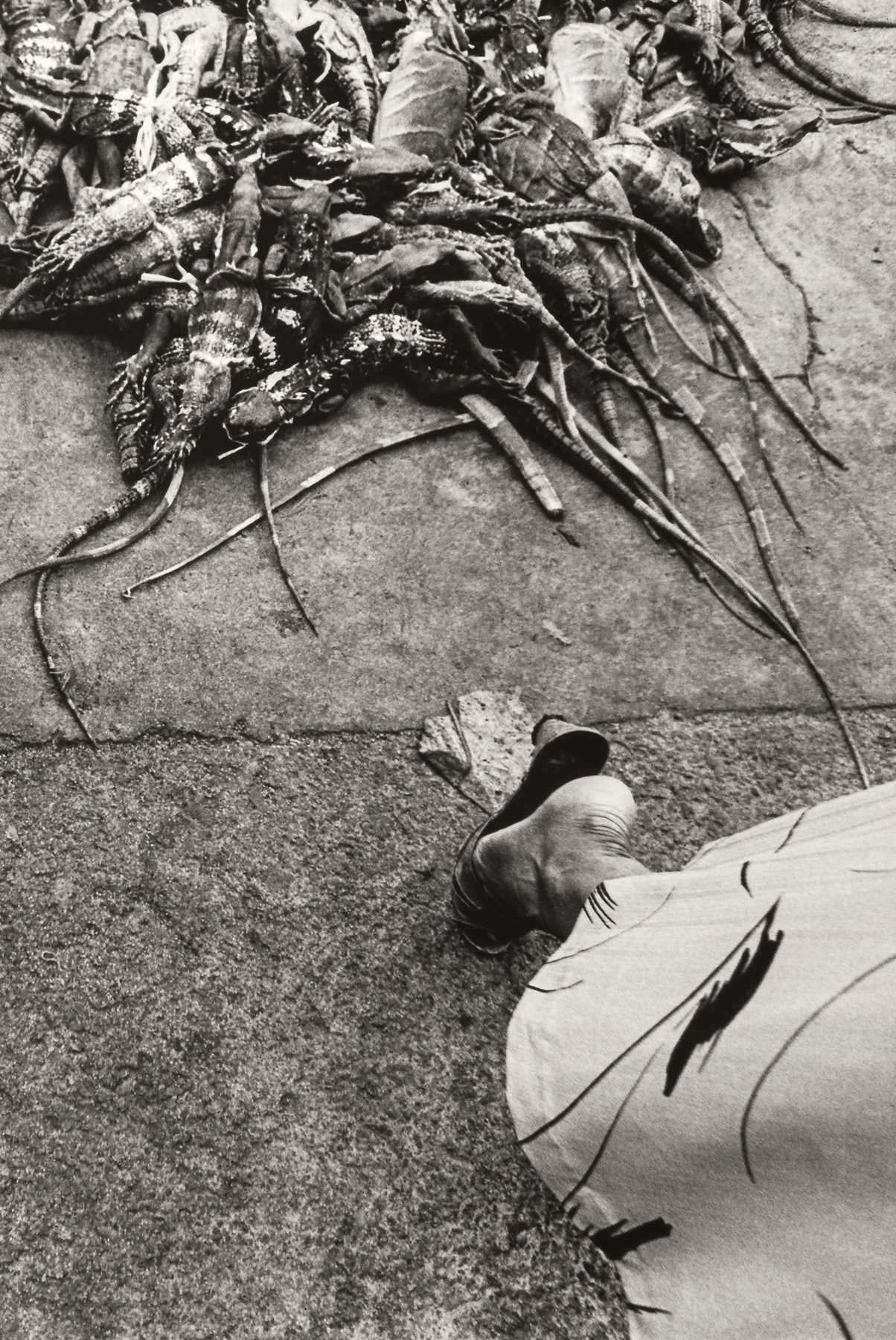
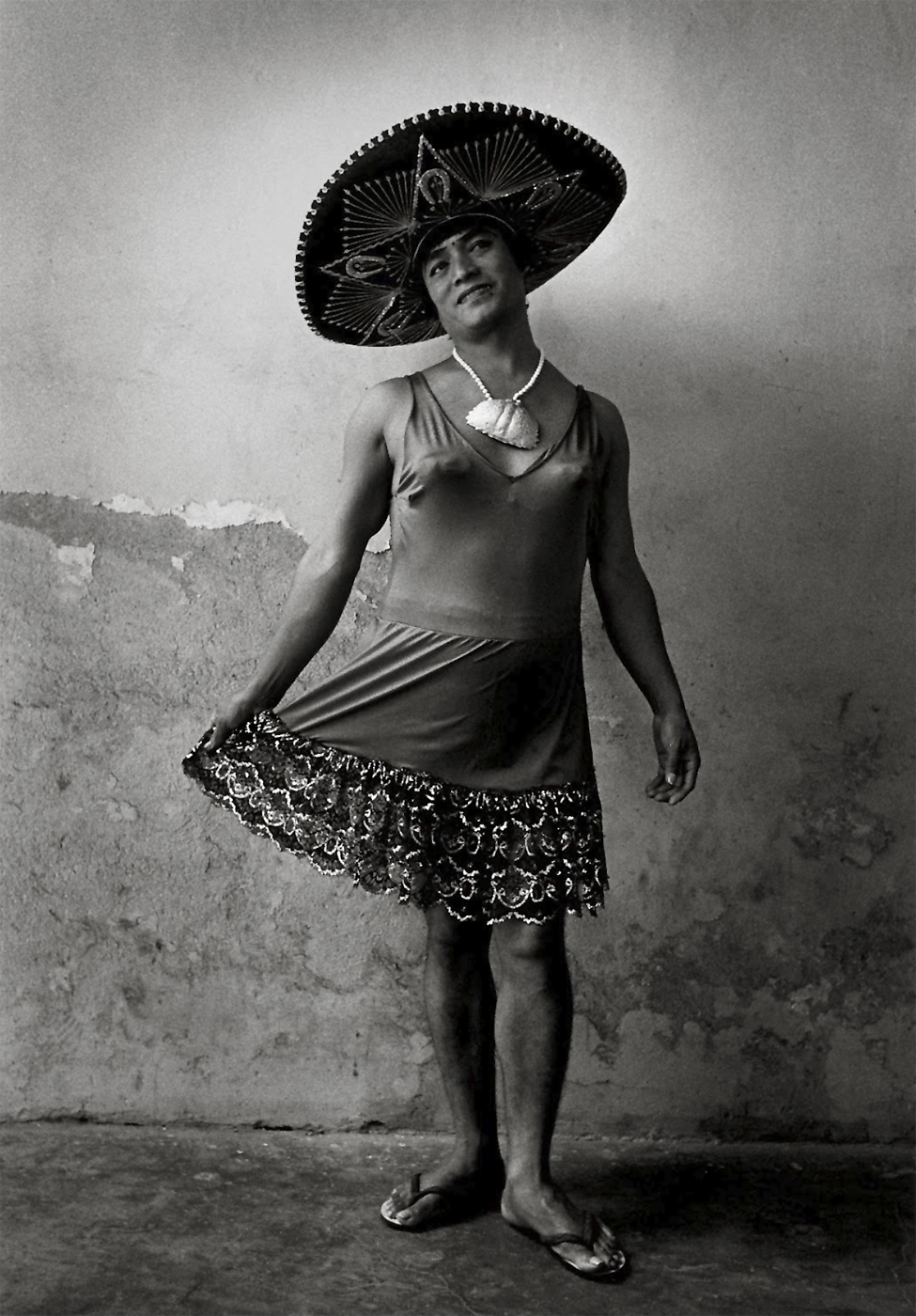
In addition to highlighting the importance of women in Juchitán, Iturbide also captured the society’s openness to muxes – men who dress as women, sometimes referred to as a Zapotec third gender. Her photographs of a muxe named Magnolia – Magnolia with Mirror / Magnolia con espejo (1986, J. Paul Getty Museum) and Magnolia with Sombrero / Magnolia con sombrero (1986, MFA) – demonstrate her ability to connect intimately with the community. Immersing herself in Zapotec culture, Iturbide also recorded the enduring legacy of native traditions – from an annual two-day festival and pilgrimage celebrating an alligator deity to el rapto, a premarital ritual practiced by those in lower and middle classes. Her strong and poetic images of Juchitán not only gained her international recognition, but also became a point of departure for a new vision of Juchitec society that has since been integrated into Mexico’s identity.

Following the Juchitán section are Iturbide’s photographs of the annual goat-slaughtering ritual in the Oaxacan region of La Mixteca, in south-central Mexico. The tradition dates back to colonial times, when Spanish landowners contracted Mixtec workers to butcher animals for sale, and carries on today. Tens of thousands of goats are killed during the month-long festival, which involves ritualistic aspects such as saving a lone animal every year as an act of repentance before the slaughter. Iturbide’s photographs from this series also highlight the exploitation of workers in one of Mexico’s poorest regions, who have created a ritual out of their harsh working conditions as a way of coping with the violence and pain. This experience had a tremendous impact on Iturbide, marking a personal turning point. Her wrenching experience in La Mixteca became the last time she spent extended amounts of time with an indigenous community.

The next three sections focus on themes that recur throughout Iturbide’s oeuvre: fiestas, death and birds. Since the mid-1970s, Iturbide has traveled throughout the country, including Chalma, Oaxaca and Tlaxcala, to observe and record a variety of fiestas – lavish and visually stimulating celebrations, which often include elaborate costumes or disguises. Death is another dominant element of Mexican culture, and Iturbide’s photographs related to the subject reflect both a personal experience and larger cultural manifestations. Her works range from depictions of signs of mortality in everyday life, as seen in the early photograph Mexico… I want to get to know you! / México… Quiero Conocerte! (1975, MFA), to representations of surreal-like funerary rituals and celebrations like the annual Día de los Muertos (Day of the Dead). Iturbide’s fascination with birds is intimately linked to her own emotional journey toward overcoming a personal loss. Her photographs of the subject – ranging from spectacular and sublime skies full of birds to close-up portraits of birds in trees and even self-portraits with birds – show her interest in the rites and cycles of the natural world, while also evoking the spiritual world.

In 1998, Iturbide was invited by Francisco Toledo to photograph the newly opened Ethnobotanical Garden of Oaxaca. By design, the garden tells the story of the relationship between the people of Oaxaca and their native plants, which are arranged by ecological and cultural themes. The next section of the exhibition presents these photographs, particularly of cacti undergoing therapeutic treatment. The images, published in her 2004 book Naturata, reflect the caretaking aspect of the garden. A startling view of the tops of several columnar cacti in Botanical Garden / Jardín Botánico (1998-1999) shows them with bundles of newspaper padding and wooden boards as splints, all bound around the plants with rope. In another photograph, Botanical Garden / Jardín Botánico (2002) a thorny treelike plant receives an intravenous treatment as two bags of a cream-coloured liquid drip into lines connected to its limbs.

The final section features the most recent series in the exhibition, El baño de Frida (Frida’s Bathroom), which will be on view from February 27, 2019 through June 16, 2019 in the Museum’s Art of the Americas Wing, alongside another MFA exhibition, Frida Kahlo and Arte Popular. In 2005, Iturbide was commissioned to photograph personal belongings in Frida Kahlo’s bathroom at the Casa Azul, which had been locked away for 50 years following the artist’s death. Iturbide’s stark images provide an emotional narrative about the intimate space within the “Blue House,” where Kahlo was born and died, and the mystery of the objects. Iturbide’s photographs focus primarily on objects related to Kahlo’s pain – from a box of Demerol, an opioid pain medication, to a prosthetic leg. In one photograph, a hospital gown – stained by blood or paint – hangs ominously against the tiled wall, serving as a reminder of Kahlo’s many operations. In another, a self-portrait that depicts Iturbide’s bare feet in Kahlo’s bathtub, the photographer puts herself in the artist’s place and evokes one of Kahlo’s famous paintings, What the Water Gave Me (1938). Iturbide’s images reveal a side of Kahlo that is dramatically different from the colourful magical realist portrayed by her clothes and paintings. In photographing Kahlo’s private space, Iturbide grapples not only with the cultural and symbolic legacy of the painter, but with her own legacy as well. The series reveals a silent dialogue between the two women, two artists of Mexico, who have seen their art as a form of therapy and escape from everyday life.

About Graciela Iturbide

Iturbide was born in 1942 in Mexico City. In 1969, at the age of 27, she enrolled at the film school Centro de Estudios Cinematográficos at the Universidad Nacional Autónoma de México to become a film director. However, she was soon drawn to the art of still photography as practiced by the Mexican modernist master Manuel Álvarez Bravo, who was teaching at the University. From 1970 to 1971 she worked as Bravo’s assistant, accompanying him on various photographic journeys throughout Mexico. In the early half of the 1970s, Iturbide traveled widely across Latin America – in particular to Cuba and Panama. In 1978, she was commissioned by the Ethnographic Archive of the National Indigenous Institute of Mexico to photograph Mexico’s indigenous population. Iturbide decided to document and record the way of life of the Seri people along the country’s border with Arizona. In 1979, she was invited by the artist Francisco Toledo to photograph the Juchitán people who form part of the Zapotec culture native to Oaxaca in southern Mexico. This series resulted in the publication of her book Juchitán de las Mujeres in 1989. Between 1980 and 2000, Iturbide was invited to work in Cuba, Germany, India, Madagascar, Hungary, France and the U.S., producing a number of important projects. She has enjoyed solo exhibitions at the Centre Pompidou (1982), San Francisco Museum of Modern Art (1990), J. Paul Getty Museum (2007), MAPFRE Foudation, Madrid (2009), Photography Museum Winterthur (2009) and Barbican Art Gallery (2012), among others. Iturbide is the recipient of the W. Eugene Smith Memorial Foundation Award (1987); the Grand Prize Mois de la Photo, Paris (1988); a Guggenheim Fellowship for the project Fiesta y Muerte (1988); the Hugo Erfurth Award, Leverkusen, Germany (1989); the International Grand Prize, Hokkaido, Japan (1990); the Rencontres Internationales de la Photographie Award, Arles (1991); the Hasselblad Award (2008); the National Prize of Sciences and Arts in Mexico City (2008); an Honorary Degree in photography from Columbia College Chicago (2008); and an Honorary Doctorate of Arts from the San Francisco Art Institute (2009).

Press release from the Museum of Fine Arts, Boston website [Online] Cited 05/04/2019


Graciela Iturbide (Mexican, b. 1942) 'Señor Enmarcado, Ciudad de México' (Framed Man, Mexico City) 1970


Graciela Iturbide (Mexican, b. 1942)
Señor Enmarcado, Ciudad de México, (Framed Man, Mexico City)
1970
Gelatin silver print
Courtesy of the Museum of Fine Arts, Boston
© Graciela Iturbide


Graciela Iturbide (Mexican, b. 1942) '¡Mexico, Quiero Conocerte!, Chiapas, Mexico' (Mexico... I want to get to know you!) 1975


Graciela Iturbide (Mexican, b. 1942)
¡Mexico, Quiero Conocerte!, Chiapas, Mexico (Mexico… I want to get to know you!)
1975
Gelatin silver print
Gift of the artist
Courtesy of the Museum of Fine Arts, Boston
© Graciela Iturbide


Graciela Iturbide (Mexican, b. 1942) 'Los Pollos, Juchitán, México' (Chickens, Juchitán, Mexico) 1979


Graciela Iturbide (Mexican, b. 1942)
Los Pollos, Juchitán, México (Chickens, Juchitán, Mexico)
1979
Gelatin silver print
Courtesy of the Museum of Fine Arts, Boston
© Graciela Iturbide


“For her, the camera is an instrument of sharing, making visible what, to many, is invisible,” Ms. Gresh said. Ms. Iturbide’s photos, she added, provide “a poetic vision of contemporary culture informed by a sense of life’s surprises and mysteries.”


Graciela Iturbide (Mexican, b. 1942) 'Nuestra Señora de las Iguanas, Juchitán, México' (Our Lady of the Iguanas, Juchitán, Mexico) 1979


Graciela Iturbide (Mexican, b. 1942)
Nuestra Señora de las Iguanas, Juchitán, México (Our Lady of the Iguanas, Juchitán, Mexico)
1979
Gelatin silver print
Courtesy of the Museum of Fine Arts, Boston
© Graciela Iturbide


Graciela Iturbide (Mexican, b. 1942) 'Iguanas, Juchitán, México' 1984


Graciela Iturbide (Mexican, b. 1942)
Iguanas, Juchitán, México
1984
Gelatin silver print
Museum purchase with funds donated by John and Cynthia Reed, Charles H. Bayley Picture and Painting Fund, Barbara M. Marshall Fund, Lucy Dalbiac Luard Fund, Horace W. Goldsmith Foundation Fund for Photography, Francis Welch Fund, and Jane M. Rabb Fund for Film and Photography
Courtesy of the Museum of Fine Arts, Boston
© Graciela Iturbide


Graciela Iturbide (Mexican, b. 1942) 'Serafina, Juchitán, México' 1984


Graciela Iturbide (Mexican, b. 1942)
Serafina, Juchitán, México
1984
Gelatin silver print
Courtesy of the Museum of Fine Arts, Boston
© Graciela Iturbide


Graciela Iturbide (Mexican, b. 1942) 'Magnolia with Mirror, Juchitán, México' 1986


Graciela Iturbide (Mexican, b. 1942)
Magnolia with Mirror, Juchitán, México
1986
Gelatin silver print
Courtesy of the Museum of Fine Arts, Boston
© Graciela Iturbide


Graciela Iturbide (Mexican, b. 1942) 'Magnolia (2), Juchitán, México' (Magnolia with Sombrero / Magnolia con sombrero) 1986


Graciela Iturbide (Mexican, b. 1942)
Magnolia (2), Juchitán, México (Magnolia with Sombrero / Magnolia con sombrero)
1986
Gelatin silver print
30 x 47.2cm
Courtesy of the Museum of Fine Arts, Boston
© Graciela Iturbide


“The dark ballast of Iturbide’s photography is a deep knowledge of predation: how humans prey on animals; how multinational corporations subsume developing economies; how modern industry exploits a largely indigenous underclass; how artists wrangle life from their subjects in the name of creation. In one haunting early photograph, a young Cuna woman walks through an open field in Panama, Pepsi-Cola’s logo embroidered on her shirt. The pernicious creep of capitalism, yes, but also its corollary: a vivid reminder that indigenous people, often relegated to an imagined antiquity, are full participants in contemporary life. …

In 1979, the painter Francisco Toledo invited Iturbide to visit his native Juchitán, in southeastern Oaxaca, a town known for its fierce independence and long-standing leftist sympathies. She returned frequently over the next decade, chronicling the public and private life of its largely Zapotec population. As a perpetual guest, Iturbide became a master of the threshold, of doorways and frames, storefront windows and cemeteries, masks and carnival, of the moments preceding and following transformation.

Contact sheets enclosed in glass vitrines accompany select images, often annotated with grease pencil. According to Iturbide, there are – pace Cartier-Bresson – two “decisive moments” in photography: “One, when you take the photo; and two, when you discover it in the contact sheet, because you often think you took one photo, and another comes out.” In the sheet for Magnolia with Mirror (1986, above), a livewire thread of intimacy is palpable in the sense of giddy experimentation between artist and subject. In the proofs for Our Lady of the Iguanas, Zobeida Díaz shakes the hand of a passerby, adjusts her crown of iguanas, suppresses laughter. The sheets underscore the contingency and providence of any image’s origins, how a slightly upturned lip or shifted frame catapults one into the pantheon while another slips into obscurity.”

Extract from Christopher Alessandrini. “Graciela Iturbide, Visionary Ethnographer,” on The New York Review of Books website [Online] Cited 06/04/2019


Graciela Iturbide (Mexican, b. 1942) 'Novia Muerte, Chalma, Mexico' 1986


Graciela Iturbide (Mexican, b. 1942)
Novia Muerte, Chalma, Mexico
1986
Gelatin silver print
30.5 x 20.5cm (12 x 8 1/8 in.)
Courtesy of the Museum of Fine Arts, Boston
© Graciela Iturbide


Graciela Iturbide (Mexican, b. 1942) 'Cuatro Pescaditos, Juchitán, México' (Four Little Fishes, Juchitán, Mexico) 1986


Graciela Iturbide (Mexican, b. 1942)
Cuatro Pescaditos, Juchitán, México (Four Little Fishes, Juchitán, Mexico)
1986
Gelatin silver print
Courtesy of the Museum of Fine Arts, Boston
© Graciela Iturbide


Graciela Iturbide (Mexican, b. 1942) 'El gallo, Juchitán, México' 1986


Graciela Iturbide (Mexican, b. 1942)
El gallo, Juchitán, México
1986
Gelatin silver print
32 x 47.8cm
Courtesy of the Museum of Fine Arts, Boston
© Graciela Iturbide


Graciela Iturbide (Mexican, b. 1942) 'El sacrificio, La Mixteca, Oaxaca, México' 1992


Graciela Iturbide (Mexican, b. 1942)
El sacrificio, La Mixteca, Oaxaca, México
1992
Gelatin silver print
35.9 x 64.3cm
Courtesy of the Museum of Fine Arts, Boston
© Graciela Iturbide


Graciela Iturbide (Mexican, b. 1942) 'Torito' (Little Bull) 1982


Graciela Iturbide (Mexican, b. 1942)
Torito (Little Bull)
1982
Gelatin silver print
Collection of Galeria Lopez Quiroga
Courtesy of the Museum of Fine Arts, Boston
© Graciela Iturbide


Iturbide studied photography at universities in Mexico, where she met her mentor, the teacher, cinematographer, and photographer Manuel Álvarez Bravo. Inspired by Bravo, she developed her particular interest in the daily life of Mexico’s indigenous cultures. Iturbide has photographed things and people found in Mexico City, in her native Juchitán, in Oaxaca, and on the Mexico-U.S. border. Her camera lens often traces Mexico’s rich life of religion and rituals. Torito represents an assemblage of a bicycle frame and a cow’s skull and horn, found in Mexico City, and shows the photographer’s exploration of the relationship between the individual and the broader culture.


Museum of Fine Arts, Boston
Avenue of the Arts
465 Huntington Avenue
Boston, Massachusetts

Opening hours:
Saturday – Monday, Wednesday 10am – 5pm
Closed Tuesday
Thursday – Friday 10am – 10pm

Museum of Fine Arts, Boston website

LIKE ART BLART ON FACEBOOK

Back to top

Exhibition: ‘Nature/Revelation’ at The Ian Potter Museum of Art, Melbourne

Exhibition dates: 31st March 2015 – 5th July 2015

Curator: Joanna Bosse


Ansel Adams (American, 1902-1984) 'Clearing winter storm, Yosemite National Park, California' 1935 


Ansel Adams (American, 1902-1984)
Clearing winter storm, Yosemite National Park, California 
1935
Gelatin silver photograph
56 x 71cm framed
National Gallery of Australia, Canberra. Purchased 1980
© 2015 The Ansel Adams Publishing Rights Trust


This is a fascinating exhibition at The Ian Potter Museum of Art, one of the best exhibitions I have seen this year in Melbourne. Unlike the disappointing exhibition Earth Matters: contemporary photographers in the landscape at the Monash Gallery of Art this exhibition, which addresses roughly the same subject matter (climate change and its devastating impact on the earth’s many ecosystems; contemporary notions of nature and the sublime) this exhibition is nuanced and fresh, celebrating “the unique capacity art has to cut through prevailing rhetoric to stimulate individuals both intellectually and emotionally in the face of current environmental issues.”

Every piece of art in this exhibition is emotionally, intellectually and aesthetically challenging. There is no “dead wood” here. As the press release states, “Nature / Revelation features international and Australian artists who are engaged with poetic and philosophical concerns, and whose work offers potentially enlightening experiences that energise our relationship to the natural world.” And it is true!

I spent over two hours on a couple of visits to this exhibition and came away feeling en/lightened in mind and body. From the formal beauty of Ansel Adams classical black and white photographs to the mesmerising, eternal video Boulder Hand (2012) by Gabriel Orozco; from the delightful misdirection of Mel O’Callaghan’s Moons to the liminal habitats of Jamie North; and from the constructed clouds of Berndnaut Smilde to the best piece in the exhibition, Jonathan Delafield Cook’s Sperm whale (Physeter macrocephalus) (2013, below) – every piece deserved its place in this exhibition. I would go as far as to say that Delafield Cook’s Sperm whale is the best piece of art that I have seen since Mark Hilton’s dontworry (2013) which featured in the Melbourne Now exhibition at the National Gallery of Victoria. The sheer scale and beauty of the work (with its graphite on canvas attention to detail) and that doleful eye staring out at the viewer, is both empowering and unnerving. It deserves to be in an important collection.

While nature and the world we live in offers moments of revelation, so did the art in this exhibition. The art possesses moments of wonder for the viewer. Kudos to curator Joanna Bosse and The Ian Potter Museum of Art for putting on a top notch show.

Dr Marcus Bunyan


Many thankx to the The Ian Potter Museum of Art for allowing me to publish the photographs in the posting. All installation photographs © Marcus Bunyan and The Ian Potter Museum of Art. Please click on the photographs for a larger version of the image.


Installation photograph of the exhibition 'Nature/Revelation' at The Ian Potter Museum of Art, Melbourne showing photographs by Ansel Adams


Installation photograph of the exhibition Nature/Revelation at The Ian Potter Museum of Art, Melbourne showing photographs by Ansel Adams
Photo: Marcus Bunyan


Installation photograph of the exhibition 'Nature/Revelation' at The Ian Potter Museum of Art, Melbourne showing at right, photographs by Ansel Adams; and at left, a detail of Jonathan Delafield Cook's 'Sperm whale (Physeter macrocephalus)' 2013


Installation photograph of the exhibition Nature/Revelation at The Ian Potter Museum of Art, Melbourne showing at right, photographs by Ansel Adams; and at left, a detail of Jonathan Delafield Cook’s Sperm whale (Physeter macrocephalus) 2013
Photo: Marcus Bunyan


Installation photograph of the exhibition 'Nature/Revelation' at The Ian Potter Museum of Art, Melbourne showing Jonathan Delafield Cook's 'Sperm whale (Physeter macrocephalus)' 2013

Installation photograph of the exhibition 'Nature/Revelation' at The Ian Potter Museum of Art, Melbourne showing Jonathan Delafield Cook's 'Sperm whale (Physeter macrocephalus)' 2013


Installation photograph of the exhibition Nature/Revelation at The Ian Potter Museum of Art, Melbourne showing Jonathan Delafield Cook’s Sperm whale (Physeter macrocephalus), 2013
Photos: Marcus Bunyan


Jonathan Delafield Cook (British, b. 1965) 'Sperm whale (Physeter macrocephalus)' 2013 (detail)


Jonathan Delafield Cook (British, b. 1965)
Sperm whale (Physeter macrocephalus) (detail)
2013
Graphite on canvas
6 panels: 245 x 1200 cm overall
Courtesy the artist and Olsen/Irwin Gallery, Sydney
Photo: Marcus Bunyan


Jonathan Delafield Cook’s life size drawing of a Sperm Whale specimen possesses a haunting melancholy… [He] creates an encounter that recalls those between Ahab and Moby Dick immortalised in Hermann Melville’s famous novel. Being face-to-face, eye-to-eye with this majestic sentient being – distinguished for having the largest brain of any creature known to have lived on the Earth – is an awe-inspiring experience. The overwhelming enormity of scale and the panorama-like expanse of the whale’s skin rouse an acute awareness of our own small presence in the room (in the world).

Delafield Cook’s work belongs to the naturalist tradition, and his detailed charcoal drawing intensifies the physical qualities of the subject in a way that renders it both a forensic study and an otherworldly fantasy. The personal history of this sleek leviathan is writ large, like graffiti, on its skin: the abrasions, the exfoliations, scars and its ragged tail tell of unknown adventures in an environment that lies beyond our own experience, but one not exempt from degradation or environmental change.


Installation photograph of the exhibition 'Nature/Revelation' at The Ian Potter Museum of Art, Melbourne showing showing at centre right, photographs by Ansel Adams


Installation photograph of the exhibition Nature/Revelation at The Ian Potter Museum of Art, Melbourne showing showing at centre right, photographs by Ansel Adams
Photo: Marcus Bunyan


Gabriel Orozco (Mexican, b. 1962)
Boulder Hand
2012
Video 54 seconds
Courtesy of the artist


Installation photograph of the exhibition 'Nature/Revelation' at The Ian Potter Museum of Art, Melbourne showing at left, Mel O'Callaghan's 'Moons' 2014; and at right, Gabriel Orozco's video 'Boulder Hand' 2012


Installation photograph of the exhibition Nature/Revelation at The Ian Potter Museum of Art, Melbourne showing at left, Mel O’Callaghan’s Moons 2014; and at right, Gabriel Orozco’s video Boulder Hand 2012
Photo: Marcus Bunyan


Installation photograph of the exhibition 'Nature/Revelation' at The Ian Potter Museum of Art, Melbourne showing Mel O'Callaghan's 'Moons' 2014

Installation photograph of the exhibition 'Nature/Revelation' at The Ian Potter Museum of Art, Melbourne showing Mel O'Callaghan's 'Moons' 2014


Installation photographs of the exhibition Nature/Revelation at The Ian Potter Museum of Art, Melbourne showing Mel O’Callaghan’s Moons 2014
Photos: Marcus Bunyan


Mel O'Callaghan (Australian, b. 1975) 'Moons (II)' 2014


Mel O’Callaghan (Australian, b. 1975)
Moons (II)
2014
pigmented inkjet print
100 x 100cm
Courtesy the artist and Galerie Allen, Paris, and Galeria Belo Galsterer, Lisbon


Climate change and its devastating impact on the earth’s many ecosystems is arguably today’s most critical global issue. Nature/Revelation celebrates the unique capacity art has to cut through prevailing rhetoric to stimulate individuals both intellectually and emotionally in the face of current environmental issues. Focusing on contemporary notions of nature and the sublime, the exhibition affirms that the world we live in offers moments of revelation, and that nature can provoke a range of associations – both fantastical and grounded – that profoundly affect us.

Nature/Revelation features international and Australian artists who are engaged with poetic and philosophical concerns, and whose work offers potentially enlightening experiences that energise our relationship to the natural world. Artists include Ansel Adams, Jonathan Delafield Cook, David Haines, Andrew Hazewinkel and Susan Jacobs, Jamie North, Mel O’Callaghan, Gabriel Orozco and Berndnaut Smilde. The exhibition also raises questions about concepts of nature and culture following the arguments of philosopher Timothy Morton.

This exhibition forms a key component of the ‘Art+climate=change’ festival presented by Climarte: arts for a safer climate. This festival of climate change related arts and ideas includes curated exhibitions at a number of museums and galleries alongside a series of keynote lectures and forums featuring local and international speakers.

The University of Melbourne, with the Potter as project leader, is the Principal Knowledge Partner of the Climarte program.

Text from The Ian Potter Museum of Art website


Installation photograph of the exhibition 'Nature/Revelation' at The Ian Potter Museum of Art, Melbourne showing at left on the floor, Jamie North's 'Portal II' and 'Slag bowl I & II' 2014; and at right, David Haines' 'Day & Night' 2005-2015

Installation photograph of the exhibition 'Nature/Revelation' at The Ian Potter Museum of Art, Melbourne showing at left on the floor, Jamie North's 'Portal II' and 'Slag bowl I & II' 2014; and at right, David Haines' 'Day & Night' 2005-2015


Installation photographs of the exhibition Nature/Revelation at The Ian Potter Museum of Art, Melbourne showing at left on the floor, Jamie North’s Portal II and Slag bowl I & II 2014; and at right, David Haines’ Day & Night 2005-2015
Photos: Marcus Bunyan


Installation photograph of the exhibition 'Nature/Revelation' at The Ian Potter Museum of Art, Melbourne showing Jamie North's 'Portal II' and 'Slag bowl I & II' 2014

Installation photograph of the exhibition 'Nature/Revelation' at The Ian Potter Museum of Art, Melbourne showing Jamie North's 'Portal II' and 'Slag bowl I & II' 2014

Installation photograph of the exhibition 'Nature/Revelation' at The Ian Potter Museum of Art, Melbourne showing Jamie North's 'Portal II' and 'Slag bowl I & II' 2014


Jamie North (Australian, b. 1971)
Portal II
2014
Cement, marble waste, limestone, steel slag, coal ash, plastic fibre, tree fern slab, various Australian native plants and Spanish moss
2 components: 107.0 x 26.0 x 26.0cm each
Courtesy the artist and Sarah Cottier Gallery, Sydney

Jamie North (Australian, b. 1971)
Slag bowl I & II
2013
Concrete, coal ash, steel slag, Australian native plants and moss
15 x 37 x 37cm each
Courtesy the artist and Sarah Cottier Gallery, Sydney
Photos: Marcus Bunyan


Viewers often mistake Jamie North’s sculptures for actual relics. The sculptures are in fact carefully crafted to emulate liminal habitats where hardy plant species grow in inhospitable conditions. More than mere simulation, each work is itself a miniature ecosystem and has to be tended accordingly.

The sculptures are cast from materials that are commonly found in industrial settings (steel slag, coal ash, marble dust, and concrete) and include local native flora. The specifics of locality are important to North, and his work is a subtle investigation of local environmental systems and the character of place as well as the adaptability of nature in urban settings…

North has an interest in terraforming – the theoretical process of deliberately modifying the atmosphere, temperature, surface topography or ecology of a planet to be similar to the biosphere of Earth. Here, he creates his own terraforms as a reflection on the environmental manipulations that taking place in the everyday.


David Haines (Australian born England, 1966)
Day & Night
2005-2015
Two channel video projection
Courtesy of the artist and Sarah Cotter Gallery, Sydney


Throughout his practice – which comprises investigations into the elemental in carious media – David Haines explores sensation in both seen and unseen forms. He has a particular interest in latent energies, such as aromas, sound waves and electromagnetic currents.

Haines revisits the classic language of the sublime in his 2004 two-channel video installation Day & night. He presents dual images of the sublime: one an immense cliff face with a sea surging against its rocky base; the other a brooding cloudscape, its form gradually unfolding with a mesmeric momentum. The work is simultaneously serene and disturbing, and awakens that range of complex emotions that Kant named the ‘supersensible’ – beyond the range of what is normally perceptible by the senses. The over-riding emotional rush – the presentiment of danger – associated with this experience is a trademark of the sublime.

The abstract sense of danger shifts however when we notice the tiny figure clinging to the cliff face. The scene is abruptly divested of its fantastical quality (its symbolic power is suddenly made real), as we can’t help but identify with the solitary figure. No longer merely observers, we become participants in the scene before us. The perilous figure in Haines’ work provides a touchstone in terms of the overwhelming grandeur of nature. In the context of the exhibition, s/he could represent each of us as we confront the seemingly insurmountable environmental and humanitarian challenges resulting from the increasingly catastrophic effects of global warming.


Installation photograph of the exhibition 'Nature/Revelation' at The Ian Potter Museum of Art, Melbourne showing at left, Berndnaut Smilde's 'Nimbus – Probe'  2012 and 'Nimbus D'Aspremont' 2010; and at right, Jamie North's 'Portal II' and 'Slag bowl I & II' 2014


Installation photographs of the exhibition Nature/Revelation at The Ian Potter Museum of Art, Melbourne showing at left, Berndnaut Smilde’s Nimbus – Probe  2012 and Nimbus D’Aspremont 2010; and at right, Jamie North’s Portal II and Slag bowl I & II 2014
Photo: Marcus Bunyan


Berndnaut Smilde (Dutch, b. 1978) 'Nimbus D'Aspremont' 2012


Berndnaut Smilde (Dutch, b. 1978)
Nimbus D’Aspremont
2012
Digital C-type print mounted on diabond
75 x 110cm
Courtesy the artist and Ronchini Gallery, London


Berndnaut Smilde (Dutch, b. 1978) 'Nimbus – Probe' 2010


Berndnaut Smilde (Dutch, b. 1978)
Nimbus – Probe
2010
Digital C-type print mounted on diabond
75 x 112cm
Courtesy the artist and Ronchini Gallery, London


The Ian Potter Museum of Art
The University of Melbourne,
Corner Swanston Street and Masson Road
Parkville, Victoria 3010

Opening hours: Tuesday – Saturday 11am – 5pm

The Ian Potter Museum of Art website

LIKE ART BLART ON FACEBOOK

Back to top

Exhibition: ‘Shatter Rupture Break’ at the Art Institute of Chicago

Exhibition dates: 15th February – 3rd May 2015


Ivan Albright (American, 1897-1983) 'Medical Sketchbook' 1918


Ivan Albright (American, 1897-1983)
Medical Sketchbook
1918
The Art Institute of Chicago
Gift of Philip V. Festoso
© The Art Institute of Chicago


Again, I am drawn to these impressive avant-garde works of art. I’d have any of them residing in my flat, thank you very much. The Dalí, Delaunay and Léger in painting and drawing for me, and in photography, the muscular Ilse Bing, the divine Umbo and the mesmeric, disturbing can’t take your eyes off it, Witkiewicz self-portrait.

Marcus


Many thankx to the Art Institute of Chicago for allowing me to publish the art works in the posting. Please click on the photographs for a larger version of the image.


“Everything had broken down in any case, and new things had to be made out of the fragments.”


Kurt Schwitters, 1930


Salvador Dalí (Spanish, 1904-1989) 'City of Drawers' 1936


Salvador Dalí (Spanish, 1904-1989)
City of Drawers
1936
The Art Institute of Chicago
Gift of Frank B. Hubachek
© Salvador Dalí, Fundació Gala-Salvador Dalí / Artists Rights Society (ARS), New York, 2014


Ilse Bing (German, 1899-1998) 'Eiffel Tower, Paris, 1931' 1931


Ilse Bing (German, 1899-1998)
Eiffel Tower, Paris, 1931
1931
Julien Levy Collection, Gift of Jean and Julien Levy
© Estate of Ilse Bing


Luis Buñuel (Spanish, 1900-1983) and Salvador Dalí (Spanish, 1904-1989)
Un Chien Andalou
1929

Director – Luis Buñuel
Writers – Salvador Dali, Luis Buñuel
Cast – Simone Mareuil, Pierre Batcheff


Un Chien Andalou (An Andalusian Dog) is a 1929 Franco-Spanish silent surrealist short film by Spanish director Luis Buñuel and artist Salvador Dalí. Buñuel’s first film, it was initially released in a limited capacity at Studio des Ursulines in Paris, but became popular and ran for eight months.

Un Chien Andalou has no plot in the conventional sense of the word. With disjointed chronology, jumping from the initial “once upon a time” to “eight years later” without events or characters changing, it uses dream logic in narrative flow that can be described in terms of the then-popular Freudian free association, presenting a series of tenuously related scenes.


Fernand Léger (French, 1881-1955) and Dudley Murphy (American, 1897-1968)
Ballet Mécanique
1924


Ballet Mécanique (1923-1924) is a Dadaist post-Cubist art film conceived, written, and co-directed by the artist Fernand Léger in collaboration with the filmmaker Dudley Murphy (with cinematographic input from Man Ray). It has a musical score by the American composer George Antheil. However, the film premiered in silent version on 24 September 1924 at the Internationale Ausstellung neuer Theatertechnik (International Exposition for New Theater Technique) in Vienna presented by Frederick Kiesler. It is considered one of the masterpieces of early experimental filmmaking.


Ballet mécanique (1924) | MoMA

Ballet mécanique, conceived by painter Fernand Léger and photographed by filmmaker Dudley Murphy (possibly with some involvement from Man Ray), is a rhythmic interplay between human and object. Affected by his experience of fighting in World War I, and in particular by the mustard gas attack that left him hospitalised for a year, Léger became fascinated with mechanical technology, which would feature heavily in his post-1917 art. Ballet mécanique, his only film, is an example of this juxtaposition of man and machine: gears and pendulums vs. eyes and mouths, pistons pumping vs. a woman’s endless climb up the stairs, clocks vs. legs. A kaleidoscopic combination of faces and kitchen utensils, Ballet mécanique was completely unlike contemporary commercial movies, and would pave the way for other revolutionary films like Metropolis and Limite.

If you were to see Ballet mécanique installed in one of our galleries or projected in one of our theaters, it would look a little different than it does here – the frameline would be stabilised and the edges of the picture would either be cropped or camouflaged with masking around the screen. However, we are presenting this version the way a scholar visiting the Film Study Center would see it on a flatbed viewing machine, with a slight bounce to the image and the sprocket holes visible, and without live musical accompaniment. (The score, composed by George Antheil and usually performed as a separate concert piece, was finished several years after Ballet mécanique premiered and is significantly longer than the film.)

MoMA text from the YouTube website


Claude Cahun (French, 1894-1954) 'Object' 1936


Claude Cahun (French, 1894-1954)
Object
1936
The Art Institute of Chciago
Through prior gift of Mrs. Gilbert W. Chapman


A century ago, society and life were changing as rapidly and radically as they are in today’s digital age. Quicker communication, faster production, and wider circulation of people, goods, and ideas – in addition to the outbreak of World War I – produced a profoundly new understanding of the world, and artists in the early years of the 20th century responded to these issues with both exhilaration and anxiety. Freeing themselves from the restraints of tradition, modern artists developed groundbreaking pictorial strategies that reflect this new shift in perception.

Shatter Rupture Break, the first exhibition in The Modern Series, explores the manifold ways that ideas of fragmentation and rupture, which permeated both the United States and Europe, became central conceptual and visual themes in art of the modern age. Responding to the new forms and pace of the metropolis, artists such as Robert Delaunay and Gino Severini disrupted traditional conventions of depth and illusionism, presenting vision as something fractured. Kurt Schwitters and George Grosz explored collage, using trash and bits and pieces of printed material in compositions to reflect social and political upheaval and produce something whole out of fragments. In the wake of new theories of the mind as well as the literal tearing apart of bodies in war, artists such as Hans Bellmer, Salvador Dalí, and Stanisław Witkiewicz produced photographs and objects revealing the fractured self or erotic dismemberment. The theme of fragmentation was ubiquitous as inspiration for both the formal and conceptual revolutions in art making in the modern age.

Shatter Rupture Break unites diverse objects from across the entire holdings of the Art Institute – paintings, sculpture, works on paper, photographs, decorative arts and designed objects, textiles, books, and films – to present a rich cacophony that exemplifies the radical and generative ruptures of modern art.

The Modern Series

A quintessentially modern city, Chicago has been known as a place for modern art for over a century, and the Art Institute of Chicago has been central to this history. The Modern Series exhibitions are designed to bring together the museum’s acclaimed holdings of modern art across all media, display them in fresh and innovative ways within new intellectual contexts, and demonstrate the continued vitality and relevance of modern art for today.

Text from the Art Institute of Chicago website


Robert Delaunay (French, 1885-1941) 'Champs de Mars: The Red Tower' 1911/1923


Robert Delaunay (French, 1885-1941)
Champs de Mars: The Red Tower
1911/1923
The Art Institute of Chicago
Joseph Winterbotham Collection


Fernand Léger (French, 1881-1955) 'Composition in Blue' 1921-1927


Fernand Léger (French, 1881-1955)
Composition in Blue
1921-1927
The Art Institute of Chicago
Charles H. and Mary F. S. Worcester Collection
© 2014 Artists Rights Society (ARS), New York / ADAGP, Paris


Stuart Davis (American, 1892-1964) 'Ready-to-Wear' 1955


Stuart Davis (American, 1892-1964)
Ready-to-Wear
1955
The Art Institute of Chicago
Restricted gift of Mr. and Mrs. Sigmund W. Kunstadter; Goodman Endowment


Designed by Ruben Haley, Made by Consolidated Lamp and Glass Company. "Ruba Rombic" Vase, 1928/1932


Designed by Ruben Haley
Made by Consolidated Lamp and Glass Company
“Ruba Rombic” Vase
1928/1932
Art Institute of Chicago
Raymond W. Garbe Fund in honor of Carl A. Erikson; Shirley and Anthony Sallas Fund


Kurt Schwitters (German, 1887-1948) 'Mz 13 Call' 1919


Kurt Schwitters (German, 1887-1948)
Mz 13 Call
1919
The Art Institute of Chicago
Gift of Mr. and Mrs. Maurice E. Culberg
© 2014 Artists Rights Society (ARS), New York / VG Bild-Kunst, Bonn


Diego Rivera (Mexican, 1886-1957) 'Portrait of Marevna' c. 1915


Diego Rivera (Mexican, 1886-1957)
Portrait of Marevna
c. 1915
The Art Institute of Chicago
Alfred Stieglitz Collection, gift of Georgia O’Keeffe
© 2014 Banco de México Diego Rivera Frida Kahlo Museums Trust, Mexico, D.F. / Artists Rights Society (ARS), New York


The Art Institute of Chicago is introducing an innovative new series of exhibitions that presents works from the museum’s acclaimed collection of modern art in reimagined ways that demonstrate the continued vitality and significance these works have today.

The Modern Series debuts with Shatter Rupture Break, opening Sunday, February 15, in Galleries 182 and 184 of the museum’s Modern Wing. The exhibition unites such diverse objects as paintings, sculpture, works on paper, photographs, decorative arts and designed objects, textiles, books, and films.

“We wanted to explore how the idea of rupture permeated modern life in Europe and the Americas,” said Elizabeth Siegel, Associate Curator of Photography, who, with Sarah Kelly Oehler, the Gilda and Henry Buchbinder Associate Curator of American Art, took the lead in organising the first exhibition. “It served as an inspiration for revolutionary formal and conceptual developments in art making that remain relevant today.”

A century ago, society was changing as rapidly and radically as it is in today’s digital age. Quicker communication, faster production, and wider circulation of people, goods, and ideas – in addition to the outbreak of World War I – produced a profoundly new understanding of the world, and artists responded with both anxiety and exhilaration. Freeing themselves from the restraints of tradition, modern artists developed groundbreaking pictorial strategies that reflected this new shift in perception.

Responding to the new forms and pace of cities, artists such as Robert Delaunay (French, 1885-1941) and Gino Severini (Italian, 1883-1966) disrupted traditional conventions of depth and illusionism, presenting vision as something fractured. Delaunay’s Champs de Mars: The Red Tower fragments the iconic form of the Eiffel Tower, exemplifying how modern life – particularly in an accelerated urban environment – encouraged new and often fractured ways of seeing. Picturesque vistas no longer adequately conveyed the fast pace of the modern metropolis.

The human body as well could no longer be seen as intact and whole. A devastating and mechanised world war had returned men from the front with unimaginable wounds, and the fragmented body became emblematic of a new way of understanding a fractured world. Surrealists such as Hans Bellmer (German, 1902-1975), Claude Cahun (French, 1894-1954) and Salvador Dalí (Spanish, 1904-1989) fetishised body parts in images, separating out eyes, hands, and legs in suggestive renderings. A more literal representation of the shattered body comes from Chicago’s own Ivan Albright, who was a medical draftsman in World War I. In his rarely shown Medical Sketchbook, he created fascinatingly gruesome watercolours that documented injured soldiers and the x-rays of their wounds.

Just as with the body, the mind in the modern era also came to be seen as fragmented. Stanislaw Witkiewicz (Polish, 1885-1939) produced a series of self-portraits as an act of psychological exploration. His work culminated in one stunning photograph made by shattering a glass negative, which he then reassembled and printed, thus conveying an evocative sense of a shattered psyche. The artistic expression of dreams and mental imagery perhaps reached a pinnacle not in a painting or a sculpture, but in a film. Luis Buñuel and Salvador Dalí’s film Un chien andalou (An Andalusian Dog) mystified viewers with its dreamlike narrative, dissolves from human to animal forms, dismembered body parts, and shockingly violent acts in an attempt to translate the unconscious mind onto a celluloid strip.

Kurt Schwitters (German, 1887-1948) and George Grosz (German, 1893-1959) explored collage, which took on new importance for avant-garde artists thanks to the aesthetic appeal and widespread availability of mass-produced media. Schwitters used the ephemera of German society to create what he called Merz, an invented term signifying an artistic practice that included collage, assemblage, painting, poems, and performance. The Art Institute owns a significant group of these collages by Schwitters, and six will appear in the exhibition. The use of thrown-away, ripped up, and scissored-out pieces of paper, divorced from their original meaning and reassembled with nails and glue into new objects, was an act that exposed the social and political disruptions of a German society that seemed broken and on the edge of collapse in the aftermath of World War I.

Shatter Rupture Break is unusual in that it unites objects from across the entire museum – from seven curatorial departments as well as the library. This multiplicity is significant because modern artists did not confine themselves to one medium, but explored different visual effects across a variety of media. As well, the show prominently features the voices of artists, writers, scientists, and other intellectuals of the period. The goal is to create a dynamic space that evokes the electrifying, disruptive, and cacophonous nature of modern art at the time.

“We hope to excite interest in the modern period as a crucial precursor to the changes of our own time, to show how what might seem old now was shockingly fresh then,” said Oehler.

Considered one of the finest and most comprehensive in the world, the Art Institute’s collection of modern art includes nearly 1,000 works by artists from Europe and the Americas. The museum was an early champion of modern artists, from its presentation of the Armory Show in 1913 to its early history of acquiring major masterpieces. This show highlights some recent acquisitions of modern art, but also includes some long-held works that have formed the core of the modern collection for decades. Shatter Rupture Break celebrates this history by bringing together works that visitors may know well, but have never seen in this context or with this diverse array of objects.”

Press release from the Art Institute of Chicago


Hans Bellmer (German born Poland, 1902-1975) 'The Doll (La Poupée)' 1935


Hans Bellmer (German born Poland, 1902-1975)
The Doll (La Poupée)
1935
Gelatin silver print overpainted with white gouache
65.6 x 64cm
Anonymous restricted gift; Special Photography Acquisition Fund; through prior gifts of Boardroom, Inc., David C. and Sarajean Ruttenberg, Sherry and Alan Koppel, the Sandor Family Collection, Robert Wayne, Simon Levin, Michael and Allison Delman, Charles Levin, and Peter and Suzann Matthews; restricted gift of Lynn Hauser and Neil Ross
© 2015 Artists Rights Society (ARS), New York / ADAGP, Paris


Umbo (Otto Umber) (German, 1902-1980) 'Untitled' 1928


Umbo (Otto Umber) (German, 1902-1980)
Untitled
1928
Julien Levy Collection, Gift of Jean and Julien Levy
© 2014 Phyllis Umbehr/Galerie Kicken Berlin/ Artists Rights Society (ARS), New York


Stanisław Ignacy Witkiewicz (Polish, 1885-1939) 'Self-Portrait, Zakopane [Broken Glass]' 1910


Stanisław Ignacy Witkiewicz (Polish, 1885-1939)
Self-Portrait, Zakopane [Broken Glass]
1910
Promised Gift of a Private Collection


The Art Institute of Chicago
111 South Michigan Avenue
Chicago, Illinois 60603-6404
Phone: (312) 443-3600

Opening hours:
Thursday – Monday 11am – 5pm
Closed Tuesday and Wednesday
The museum is closed Thanksgiving, Christmas, and New Year’s days.

The Art Institute of Chicago website

LIKE ART BLART ON FACEBOOK

Back to top

Exhibition: ‘Photography in Mexico: Selected Works from the Collections of SFMOMA and Daniel Greenberg and Susan Steinhauser’ at the San Francisco Museum of Modern Art (SFMOMA)

Exhibition dates: 10th March – 8th July 2012

List of Photographers Included: Katya Brailovsky, Lola Alvarez Bravo, Manuel Alvarez Bravo, Manuel Carrillo, Alejandro Cartagena, Eduardo del Valle and Mirta Gomez, Pia Elizondo, Dave Gatley, Oscar Fernando Gomez, Héctor Garcia, Lourdes Grobet, Graciela Iturbide, Geoffrey James, Mark Klett, Pablo Lopez Luz, Elsa Medina, Susan Meiselas, Enrique Metinides, Pedro Meyer, Tina Modotti, Rodrigo Moya, Pablo Ortiz Monasterio, Paolo Pellegrin, Antonio Reynoso, Daniela Rossell, Mark Ruwedel, Victoria Sambunaris, Alec Soth, Paul Strand, Yvonne Venegas, Brett Weston, Edward Weston, and Mariana Yampolsky.


Manuel Alvarez Bravo (Mexican, 1902-2002) 'Obrero en huelga, asesinado' (Striking Worker, Assassinated) 1934 and 'La buena fama durmiendo' (The Good Reputation Sleeping) 1939


Manuel Alvarez Bravo (Mexican, 1902-2002)
Obrero en huelga, asesinado (Striking Worker, Assassinated)
1934
Gelatin silver print
19.2 x 23.8cm

Manuel Alvarez Bravo (Mexican, 1902-2002)
La buena fama durmiendo (The Good Reputation Sleeping)
1939
Gelatin silver print
20.3 x 25.4cm

Compilation by Dr Marcus Bunyan


“There is no one ‘Mexican photography,’ but one strand that runs throughout is a synthesis of aesthetics and politics. We see that with Manuel Alvarez Bravo, and we still see it in work made decades later.”


Jessica S. McDonald


One of my early heroes in photography was Manuel Alvarez Bravo whom I rate as one of the best photographers that has ever lived, up there with Atget and Sudek. His photograph Parabola optica (Optical Parable, 1931, below) lays the foundation for an inherent language of Mexican photography: that of a parable, a short allegorical story designed to illustrate or teach some truth, religious principle, or moral lesson. Many Mexican photographs tell such stories based on the mythology of the country: there are elements of the absurd, surrealism, macabre, revolution, political and socio-economic issues, also of death, violence, beauty, youth, sexuality and religion to name but a few – a search for national identity that is balanced in the photographs of Bravo by a sense of inner peace and redemption. This potent mix of issues and emotions is what makes Mexican photography so powerful and substantive. In the “presence” (or present, the awareness of the here and now) of Mexican photography there is a definite calligraphy of the body in space in most of the work. This handwriting is idiosyncratic and emotive; it draws the viewer into an intimate narrative embrace.

Two famous photographs by Bravo illustrate some of these themes (Apollonian / Dionysian; utopian / dystopian). When placed together they seem to have a strange attraction one to the other (see photographs above).

Unlike most Australian documentary photography where there is an observational distance present in the photographs – a physical space between the camera/photographer and the subject – Mexican documentary photography is imbued with a revolutionary spirit and validated by the investment of the photographer in the subject itself, as though the image is the country is the photographer. There is an essence and energy to the Mexican photographs that seems to turn narrative on its head, unlike the closed loop present in the tradition of Australian story telling. The intimate, swirling narratives of Mexican photography could almost be termed lyrical socio-realist. The halo of the golden child of Yvonne Venegas’ Nirvana (2006, below) menaced by the upturned forks is a perfect example.

Some of the themes mentioned above are evidenced in the photographs in this posting. Not the placid nude or heroic pyramid of Weston but the howl of the masked animal and surrealism of Our Lady of the Iguanas demands our close engagement. I only wish Australian photographers could be as forthright in their investigation of the morals and ethics of this country and our seemingly never ending search for a national identity (other than war, mateship, the beach, sport and the appropriation of Aboriginal painting exported as the Australian art “identity”).

Dr Marcus Bunyan


Many thankx to SFMoMA for allowing me to publish the photographs in the posting. Please click on the photographs for a larger version of the image.


Enrique Metinides (Mexican, 1934-2022) 'Retrieval of a drowned body from Lake Xochimilco with the public reflected in the water' 1960


Enrique Metinides (Mexican, 1934-2022)
Rescate de un ahogado en Xochimilco con público reflejado en el agua (Retrieval of a drowned body from Lake Xochimilco with the public reflected in the water)
1960
Gelatin silver print
13 3/4 x 20 3/4 in
San Francisco Museum of Modern Art, Anonymous Fund purchase
© Enrique Metinides


Pablo Ortiz Monasterio (Mexican, b. 1952) 'Y es plata, cemento o brisa' c. 1985


Pablo Ortiz Monasterio (Mexican, b. 1952)
Y es plata, cemento o brisa
c. 1985
Gelatin silver print
8 9/16 x 12 3/4 in (21.75 cm x 32.39cm)
Collection of Daniel Greenberg and Susan Steinhauser
© Pablo Ortiz Monasterio

Yvonne Venegas (American, b. 1970) 'Nirvana' from the series 'Maria Elvia De Hank' 2006


Yvonne Venegas (American, b. 1970)
Nirvana from the series Maria Elvia De Hank
2006
Inkjet print
19 1/2 x 24 in (49.53 cm x 60.96cm)
Collection of the San Francisco Museum of Modern Art
© Yvonne Venegas


Oscar Fernando Gómez (Mexican, b. 1970) 'Untitled' from 'The Windows Series' 2008-2010


Oscar Fernando Gómez (Mexican, b. 1970)
Untitled from the series The Windows
2008-2010
Inkjet print
17 1/4 x 24 in (43.82 cm x 60.96cm)
Collection of the San Francisco Museum of Modern Art
© Oscar Fernando Gómez


Paolo Pellegrin (Italian, b. 1964) 'USA. El Paso, Texas. May 17, 2011. Two men, who illegally attempted to enter the U.S., run across the dry Rio Grande river back to Juarez, Mexico after being spotted by the US Border Patrol' 2011


Paolo Pellegrin (Italian, b. 1964)
USA. El Paso, Texas. May 17, 2011. Two men, who illegally attempted to enter the U.S., run across the dry Rio Grande river back to Juarez, Mexico after being spotted by the US Border Patrol
2011
Inkjet print
15 3/16 x 22 3/4 in (38.58 cm x 57.79cm)
Collection of the San Francisco Museum of Modern Art
© Paolo Pellegrin


From March 10 through July 8, 2012, the San Francisco Museum of Modern Art (SFMOMA) will present the exhibition Photography in Mexico: Selected Works from the Collections of SFMOMA and Daniel Greenberg and Susan Steinhauser. Exploring the distinctively rich and diverse tradition of photography in Mexico from the 1920s to the present, the exhibition showcases works by important Mexican photographers as well as major American and European artists who found Mexico to be a place of great artistic inspiration.

Organised by SFMOMA Assistant Curator of Photography Jessica S. McDonald, the selection of more than 150 works draws from SFMOMA’s world-class photography holdings and highlights recent major gifts and loans from collectors Daniel Greenberg and Susan Steinhauser. The presentation reflects the collections’ particular strengths, featuring photographs made in Mexico by Tina Modotti, Paul Strand, and Edward Weston, along with works by key Mexican photographers including Lola Alvarez Bravo, Manuel Alvarez Bravo, Manuel Carrillo, Héctor Garcia, Lourdes Grobet, Graciela Iturbide, Enrique Metinides, Pedro Meyer, Pablo Ortiz Monasterio, and Mariana Yampolsky.

The exhibition begins with the first artistic flowering of photography in Mexico after the Mexican Revolution (1910-1920) and goes on to look at the explosion of the illustrated press at midcentury; the documentary investigations of cultural traditions and urban politics that emerged in the 1970s and 1980s; and more recent considerations of urban life, globalisation, and issues particular to the U.S.-Mexico border region. Rather than attempting to define a national style, the exhibition considers the range of approaches and concerns that photographers in Mexico have pursued over time. As McDonald notes, “There is no one ‘Mexican photography,’ but one strand that runs throughout is a synthesis of aesthetics and politics. We see that with Manuel Alvarez Bravo, and we still see it in work made decades later.”

As arts and culture flourished in Mexico after the Revolution, many European and American artists were drawn to the country. Among them were Edward Weston and Tina Modotti, who arrived in Mexico in 1923. Inspired by what they saw there, Weston and Modotti in turn motivated Mexican photographers to pursue the medium’s artistic possibilities; their influence helped “give Mexican photographers confidence that art photography was a viable path,” says McDonald. Hence, the exhibition opens with a selection of works made in Mexico by Modotti, Weston, his son Brett Weston, and Paul Strand during the 1920s and 1930s.

One of the Mexican photographers encouraged by Modotti and Weston was Manuel Alvarez Bravo, who went on to become one of the most influential photographers and teachers in the country’s history as well as a key figure in the broader international history of the medium. The exhibition features a substantial number of major works by the photographer, many of them donated or loaned to SFMOMA by Daniel Greenberg and Susan Steinhauser. In considering Alvarez Bravo’s career, the exhibition illuminates the birth and development of a tradition of art photography in Mexico. The presentation also includes a selection of works by Alvarez Bravo’s first wife, Lola Alvarez Bravo, an important photographer in her own right who established a successful commercial and artistic practice.

In mid-20th-century Mexico, as in the United States and Europe, earning an adequate income as an art photographer was an unlikely proposition. Instead, many photographers made a living through photojournalism, contributing to the numerous illustrated publications in circulation during this period. In the decades following the Revolution, there was great interest in traditional ways of life and in defining what it meant to be Mexican. Some photographers, such as Manuel Carrillo, created images documenting the nation’s traditions and celebrating its common people. Others, like Hector Garcia and Rodrigo Moya, rejected this sentimental approach, focusing instead on contemporary concerns and the political and social turbulence that continued to influence post-revolutionary Mexican life.

The late 1960s and 1970s saw the rise of critical theory and a new interest in investigating the nature of photography as a medium; in Mexico as elsewhere, there were more opportunities to study photography and to pursue noncommercial projects. A number of Mexican photographers, such as Lourdes Grobet, Graciela Iturbide, Pedro Meyer, and Pablo Ortiz Monasterio, created extended documentary series. Iturbide lived among indigenous people and recorded the details of their daily lives; Grobet focused on wrestling and the cultural concept of the mask; Ortiz Monasterio captured gritty, dystopian views of Mexico City. The exhibition draws extensively on gifts from Daniel Greenberg and Susan Steinhauser to represent directions in Mexican photography of the 1970s and 1980s.

Since the 1990s, the attention of many Mexican photographers has turned away from cultural traditions and rural landscapes and toward the cities and suburbs where many Mexicans now live. Works by Katya Brailovsky, Alejandro Cartagena, Pablo Lopez Luz, Daniela Rossell, and Yvonne Venegas reflect this interest in the changing social landscape, looking at issues of wealth and class, urbanization and land use, and the effects of the globalised economy. The exhibition closes with contemporary international photographers’ perspectives on U.S.-Mexico border issues. Images by Mark Klett, Victoria Sambunaris, and Alec Soth consider the border as landscape, while works by Elsa Medina, Susan Meiselas, and Paolo Pellegrin document the experiences of migrant workers and people trying, successfully or unsuccessfully, to cross into the United States.

About Daniel Greenberg and Susan Steinhauser

Based in Los Angeles, Daniel Greenberg and Susan Steinhauser have a deep and longstanding interest in Mexican photography, which they have been collecting since 1995. The photography department at SFMOMA has benefited greatly from their generosity: they have donated more than 175 works to the museum over the last six years. Their recent major gift of Mexican work, including over 50 photographs by Manuel Alvarez Bravo, Graciela Iturbide, and others, has created an ideal opportunity for SFMOMA to present this exhibition exploring photography in Mexico.

Press release from SFMOMA website


Edward Weston (American, 1886-1958) 'Pirámide del Sol, Teotihuacán' 1923


Edward Weston (American, 1886-1958)
Pirámide del Sol, Teotihuacán
1923
Gelatin silver print
7 9/16 x 9 1/2 in
San Francisco Museum of Modern art, gift of Brett Weston
© 1981 Center for Creative Photography, Arizona Board of Regents


Edward Weston (American, 1886-1958) 'Tina Modotti, Half-Nude in Kimono' 1924


Edward Weston (American, 1886-1958)
Tina Modotti, Half-Nude in Kimono
1924
Gelatin silver print
9 5/8 x 4 11/16 in
San Francisco Museum of Modern Art, Albert M. Bender Collection, Albert M. Bender Bequest Fund purchase
© 1981 Center for Creative Photography, Arizona Board of Regents


Manuel Alvarez Bravo (Mexican, 1902-2002) 'Parabola optica (Optical Parable)' 1931


Manuel Alvarez Bravo (Mexican, 1902-2002)
Parabola optica (Optical Parable)
1931
Gelatin silver print
9 3/4 x 7 1/4 in. (24.77 x 18.42cm)
Collection of Daniel Greenberg and Susan Steinhauser
© Colette Urbajtel / Asociación Manuel Álvarez Bravo


Lola Álvarez Bravo (Mexican, 1907-1993) 'Los gorrones' c. 1955


Lola Álvarez Bravo (Mexican, 1907-1993)
Los gorrones
c. 1955, printed later
Gelatin silver print
9 5/8 x 11 3/4 in (24.45 cm x 29.85cm)
Collection of Daniel Greenberg and Susan Steinhauser
© 1995 Center for Creative Photography, The University of Arizona Foundation


Hector Garcia (Mexican, 1923-2012) 'Aquelarre Cargadores con Diablos' 1971


Hector Garcia (Mexican, 1923-2012)
Aquelarre Cargadores con Diablos
1971
Gelatin silver print


Hector Garcia Cobo (August 23, 1923 – June 2, 2012) was a Mexican photographer and photojournalist who had a sixty-year career chronicling Mexico’s social classes, Mexico City and various events of the 20th century, such as the 1968 student uprising. He was born poor but discovered photography in his teens and early 20s, deciding to study it seriously after his attempt to photograph the death of a co-worker failed. He was sent to the Academia Mexicana de Artes y Ciencias Cinematográficas by magazine director Edmundo Valdés who recognised García’s talent. Most of García’s career was related to photojournalism, working with publications both inside and outside of Mexico. However, a substantial amount of his work had more artistic and critical qualities. Many of these were exhibited in galleries and museums, with sixty five individual exhibitions during his lifetime. This not only included portraits of artists and intellectuals (including a famous portrait of David Alfaro Siqueiros at Lecumberri Prison) but also portraits of common and poor people. He was also the first photojournalist to explicitly criticise Mexico’s elite, either making fun of them or contrasting them to the very poor.

Text from the Wikipedia website


Lourdes Grobet (Mexican, 1940-2022) 'Ponzoña, Arena Coliseo' c. 1983


Lourdes Grobet (Mexican, 1940-2022)
Ponzoña, Arena Coliseo
c. 1983
Gelatin silver print
14 x 11 in
San Francisco Museum of Modern Art, gift of Jane and Larry Reed
© Lourdes Grobet


Lourdes Grobet Argüelles (1940-2022)

Lourdes Grobet Argüelles (25 July 1940 – 15 July 2022) was a Mexican contemporary photographer, known for her photographs of Mexican lucha libre wrestlers.

Grobet spent some time as a painter before focussing on photography. Her photography led her to explore lucha libre, and she spent a lot of time getting to know the luchadores (wrestlers). Grobet did some theatre and video, and published several books. Grobet’s work has been the subject of numerous exhibitions, and she received many grants and awards for her work.

Career

Kati Horna introduced Grobet to the world of photography, though the main influences in her early career were Mathias Goeritz, Gilberto Aceves Navarro, El Santo and others. Grobet studied as a painter in Mexico for some time and then took a trip to Paris in 1968; it changed her life and the way that she viewed the art world.

While she was in Paris, Grobet visited many art galleries and discovered kinetic art; because of this, she liked working with multimedia. She spent some time working at a jazz concert, controlling lighting and kinetic projections. When Grobet returned to Mexico, she decided that she wanted to focus on photography; after she got back home, she decided to burn all of her old work and start over.

In 1981 Grobet released her first set of photographs. At the beginning of her career in photography, she was part of a group called Consejo Mexicano de Fotografía (Mexican Council of Photography), formed by Pedro Meyer in 1977. With her participation in this group, she was able to revitalise photography in Mexico,[citation needed] which led to a movement called the Grupos. Grobet was focused on establishing a community-based perspective.

Grobet spent some time with indigenous people during a time of great struggle for them. She took the time to learn more about them and photograph them in a theatrical way. She wanted to relate to indigenous people using her artistic initiative, so they made costumes and scenery of their own and she then took their photos. Later on, Grobet took interest in the Mayan culture. Wanting to learn more about the Mayans she went to the suburbs; while this was not a common thing to do, she wanted to steer clear of any tourists. She wanted to get accurate information about the people she documented and explore an area less traveled. She discovered temples that were made by an unknown civilisation and she decided they were to be called the Olmayazetec.

After her education and her travels, Grobet came back to México City. She once again started to explore her childhood interest of luchadores. She found that there was very little information pertaining to the luchadores, and so she decided that she wanted to make them more known to the world.

Grobet spent thirty years devoted to taking pictures of the luchadores and studying their way of life. She spent time photographing lucha libre wrestlers inside and outside of the ring, both in their masks, but also in their own homes. Grobet wanted to show that they lived normal lives, just like everyone else. She got very close with well known Lucha Libre wrestlers such as: El Santo, Blue Demon, Mil Mascaras, Sagrada, Octagon, Misioneros de la Muerte, Los Perros del Mal, and Los Brazos. Influenced greatly by Mathias Goeritz, the Polish sculptor from Gdańsk, and by Gilberto Aceves Navarro, a Mexican master of art murals, who were her teachers, Grobet worked on pictures of El Santo, one of the most important Mexican wrestlers, and a hero of lucha libre who starred in more than 50 films. Since 1975, she has published more than 11,000 photographs of the sport, including those on the sport in the United States since the 1930s, and as an important part of Mexican popular culture, adopting a sociological attitude. The sport involves many costumes and masks, leading it to a sport-carnival air which is much appreciated by Mexicans.

She also ventured into cinema. In her 2013 movie Bering. Balance and Resistance, Grobet questions the political separation between the Big Diomede Island (Russia) and the Little Diomede Island (USA) in the Bering Strait, a border between the United States and Russia. Showing the consequences of the separation between both Islands. After the American-Soviet conflict of the 21st century, the Beringia region was divided in two, which caused the separation of complete Nanook families and also, paradoxically, separated the place where the first human beings that populated the American continent crossed.

Grobet has had over one hundred exhibitions of her photographs, both group and solo exhibitions. She had her work exhibited at the London Mexfest festival in 2012. She won an award at the Second Biennal in Fine Art Photography. In 1975, for the exhibition Hora y media, she transformed a gallery into a photographic laboratory. She developed the photographs, but without fixing them, and displayed them on three walls. While the public looked at the photographs, the lights from the gallery made it look like they disappeared.

In 1977, Grobet presented Travelling, an exhibition of photography on an escalator. Among her other works were Paisajes pintados, Teatro campesino, Strip Tease.

Text from the Wikipedia website


Graciela Iturbide (Mexican, b. 1942) 'La Nuestra Senora de las Iguanas, Juchitan, Oaxaca, Mexico' (Our Lady of the Iguanas, Juchitan, Oxaca, Mexico) 1979


Graciela Iturbide (Mexican, b. 1942)
La Nuestra Senora de las Iguanas, Juchitan, Oaxaca, Mexico (Our Lady of the Iguanas, Juchitan, Oxaca, Mexico)
1979
Gelatin silver print
17 5/16 x 14 7/16 in
San Francisco Museum of Modern Art, gift of the artist
© Graciela Iturbide


Graciela Iturbide (Mexican, b. 1942) '¿Ojos para volar?, Coyoacán, Ciudad de México' (Eyes to Fly With?, Coyoacan, Mexico City) 1991


Graciela Iturbide (Mexican, b. 1942)
¿Ojos para volar?, Coyoacán, Ciudad de México (Eyes to Fly With?, Coyoacan, Mexico City)
1991
Platinum print
19.5 × 19.5cm
© Graciela Iturbide


Mariana Yampolsky (Mexican, 1925–2002) 'Caricia' (Caress) 1989


Mariana Yampolsky (Mexican, 1925–2002)
Caricia (Caress)
1989
Gelatin silver print
13 3/8 × 17 1/2 in (34 × 44.5cm)
San Francisco Museum of Modern Art


Susan Meiselas (American, b. 1948) 'Shortie on the Bally, Barton, VT' 1974


Susan Meiselas (American, b. 1948)
Shortie on the Bally, Barton, VT
1974
Gelatin silver print


The exhibition closes with contemporary international photographers’ perspectives on U.S.-Mexico border issues. Images by Mark Klett, Victoria Sambunaris, and Alec Soth consider the border as landscape, while works by Elsa Medina, Susan Meiselas, and Paolo Pellegrin document the experiences of migrant workers and people trying, successfully or unsuccessfully, to cross into the United States.

Anonymous. “Major Mexican Photographers at the SFMOMA,” on the Literal, Latin American Voices magazine website 15th November 2011 [Online] Cited 18/09/2024


Alejandro Cartagena (Mexican, b. 1977) 'Fragmented Cities, Juarez #2' from the series 'Suburbia Mexicana' 2007


Alejandro Cartagena (Mexican, b. 1977)
Fragmented Cities, Juarez #2
2007
From the series Suburbia Mexicana
Inkjet print
20 x 24 in
San Francisco Museum of Modern Art, Accessions Committee Fund purchase
© Alejandro Cartagena


San Francisco Museum of Modern Art (SFMOMA)
151 Third Street (between Mission + Howard)
San Francisco CA 94103

Opening hours:
Monday – Tuesday: 10am – 5pm
Wednesday: Closed
Thursday: 1 – 8pm
Fri – Sun: 10am – 5pm

San Francisco Museum of Modern Art website

LIKE ART BLART ON FACEBOOK

Back to top

Exhibition: ‘Frida Kahlo: Through the Lens of Nickolas Muray’ at the Albright-Knox Art Gallery, Buffalo NY

Exhibition dates: 8th May – 5th July, 2009


Nickolas Muray (American, 1892-1965) 'Frida with Olmeca Figurine, Coyoacan' 1939 from the exhibition 'Frida Kahlo: Through the Lens of Nickolas Muray' at the Albright-Knox Art Gallery, Buffalo NY, May - July, 2009


Nickolas Muray (American, 1892-1965)
Frida with Olmeca Figurine, Coyoacan
1939
Colour print, assembly (Carbro) process


Forty-seven exquisite colour and black-and-white photographs of the Mexican artist Frida Kahlo by the American photographer Nickolas Muray are featured in this exhibition organised and circulated by Smith Kramer Fine Art Services. Muray and Kahlo first met in Mexico in 1931 and soon began a love affair that lasted ten years and continued as an enduring friendship throughout their lives. The photographs, selected from the Nickolas Muray Archives, capture the exotic mystery and proud beauty of Frida Kahlo through the eyes of this accomplished portrait photographer, who loved her deeply. Organised at the Albright-Knox by Associate Curator Holly E. Hughes, the exhibition will also include reproductions of Kahlo’s letters to Muray, explanatory wall texts, and an educational brochure.

Text from the Albright-Knox Art Gallery website [Online] Cited 01/05/2009. No longer available online


Many thankx to the Albright-Knox Art Gallery for allowing me to publish the photographs in the posting. Please click on the photographs for a larger version of the image.


Nickolas Muray (American, 1892-1965) 'Frida, Mexico, 1940' c. 1940 from the exhibition 'Frida Kahlo: Through the Lens of Nickolas Muray' at the Albright-Knox Art Gallery, Buffalo NY, May - July, 2009


Nickolas Muray (American, 1892-1965)
Frida, Mexico, 1940
c. 1940
Colour print, assembly (Carbro) process


Nickolas Muray (American, 1892-1965) 'Frida with her sister Cristina, Nickolas Muray, and Rosa Covarrubias, Coyoacán' 1939


Nickolas Muray (American, 1892-1965)
Frida with her sister Cristina, Nickolas Muray, and Rosa Covarrubias, Coyoacán
1939
Colour print, assembly (Carbro) process


Nickolas Muray (American, 1892-1965) 'Frida Painting the Two Fridas, Coyoacan' 1939


Nickolas Muray (American, 1892-1965)
Frida Painting the Two Fridas, Coyoacan
1939
Silver gelatin print


Nickolas Muray (American, 1892-1965) 'Frida with Nick in her Studio, Coyoacán' 1941


Nickolas Muray (American, 1892-1965)
Frida with Nick in her Studio, Coyoacán
1941
Silver gelatin print


Nickolas Muray (American, 1892-1965) 'Frida with Granizo, Coyoacán' 1939


Nickolas Muray (American, 1892-1965)
Frida with Granizo, Coyoacán
1939
Silver gelatin print


Nickolas Muray (American, 1892-1965) 'Frida in the Dining Area, Coyoacán' 1941


Nickolas Muray (American, 1892-1965)
Frida in the Dining Area, Coyoacán
1941
Gelatin silver print


Nickolas Muray (American, 1892-1965) 'Frida and Diego, San Angel' 1941


Nickolas Muray (American, 1892-1965)
Frida and Diego, San Angel
1941
Gelatin silver print


Nickolas Muray (American, 1892-1965) 'Frida Kahlo' c. 1940


Nickolas Muray (American, 1892-1965)
Frida Kahlo
c. 1940
Colour print, assembly (Carbro) process


Nickolas Muray (American, 1892-1965) 'The Breton Portrait' 1939


Nickolas Muray (American, 1892-1965)
The Breton Portrait
1939
Silver gelatin print


Nickolas Muray (American, 1892-1965) 'Frida with Magenta Rebozo, New York' 1939


Nickolas Muray (American, 1892-1965)
Frida with Magenta Rebozo, New York
1939
Colour print, assembly (Carbro) process


Nickolas Muray (American, 1892-1965) 'Frida with Magenta Rebozo, New York' 1939


Nickolas Muray (American, 1892-1965)
Frida with Magenta Rebozo, New York
1939
Colour print, assembly (Carbro) process


Nickolas Muray

In 1913, with the threat of war in Europe, Muray sailed to New York City, and was able to find work as a colour printer in Brooklyn.

By 1920, Muray had opened a portrait studio at his home in Greenwich Village, while still working at his union job as an engraver. In 1921 he received a commission from Harper’s Bazaar to do a portrait of the Broadway actress Florence Reed; soon after he was having photographs published each month in Harper’s Bazaar, and was able to give up his engraving job. In 1922 he also made a portrait of the dancer Desha Delteil.

Muray quickly became recognised as an important portrait photographer, and his subjects included most of the celebrities of New York City. In 1926, Vanity Fair sent Muray to London, Paris, and Berlin to photograph celebrities, and in 1929 hired him to photograph movie stars in Hollywood. He also did fashion and advertising work. Muray’s images were published in many other publications, including Vogue, Ladies’ Home Journal, and The New York Times.

Between 1920 and 1940, Muray made over 10,000 portraits. His 1938 portrait of Frida Kahlo, made while Kahlo sojourned in New York, attending her exhibit at the Julien Levy Gallery, became the best known and loved portrait made by Muray. Muray and Kahlo were at the height of a ten-year love affair in 1939 when the portrait was made. Their affair had started in 1931, after Muray was divorced from his second wife and shortly after Kahlo’s marriage to Mexican muralist painter Diego Rivera. It outlived Muray’s third marriage and Kahlo’s divorce and remarriage to Rivera by one year, ending in 1941. Muray wanted to marry, but when it became apparent that Kahlo wanted Muray as a lover, not a husband, Muray took his leave for good and married his fourth wife, Peggy Muray. He and Kahlo remained good friends until her death, in 1954.

After the market crash, Muray turned away from celebrity and theatrical portraiture, and become a pioneering commercial photographer, famous for his creation of many of the conventions of colour advertising. He was considered the master of the three-color carbro process. His last important public portraits were of Dwight David Eisenhower in the 1950s.

Text from the Wikipedia website


Nickolas Muray (American, 1892-1965) 'Frida With Hand at Her Throat, Mexico City' 1940


Nickolas Muray (American, 1892-1965)
Frida With Hand at Her Throat, Mexico City
1940
Colour print, assembly (Carbro) process


Nickolas Muray (American, 1892-1965) 'Frida leaning on a sculpture by Mardonio Magaña, Coyoacán, Mexico' 1940


Nickolas Muray (American, 1892-1965)
Frida leaning on a sculpture by Mardonio Magaña, Coyoacán, Mexico
1940
Colour print, assembly (Carbro) process


Nickolas Muray (American, 1892-1965) 'Frida in Pink and Green Blouse, Coyoacán' 1938


Nickolas Muray (American, 1892-1965)
Frida in Pink and Green Blouse, Coyoacán
1938
Colour print, assembly (Carbro) process


Nickolas Muray (American, 1892-1965) 'Friday on White Bench, New York' 1939


Nickolas Muray (American, 1892-1965)
Frida on White Bench, New York
1939
Colour print, assembly (Carbro) process


An exhibition of photographs of the acclaimed Mexican artist Frida Kahlo taken by her friend and lover, the internationally renowned portrait photographer Nickolas Muray (1892-1965), will be on view at the Albright-Knox Art Gallery from May 8 through July 5, 2009. Frida Kahlo: Through the Lens of Nickolas Muray, From the Collection of the Nickolas Muray Archives celebrates Kahlo’s life and work and comprises approximately fifty colour and black-and-white photographs, along with archival material, including excerpts from letters between Kahlo and Muray. The installation in Buffalo will feature Frida Kahlo’s Self- Portrait with Monkey, 1938, from the Albright-Knox Art Gallery’s Permanent Collection.

Born in Hungary in 1892, Nickolas Muray came to the United States in 1913, marking the beginning of his forty-five-year career living and working in New York City. Originally hired by Condé Nast Publications to prepare illustrations for magazines, in 1920 Muray set up a photography studio at his home in Greenwich Village. Following an assignment in 1921 for Harper’s Bazaar magazine to photograph the Broadway star Florence Reed, Muray’s career as a portrait and celebrity photographer took off. Soon he was photographing “everybody who was anybody” and his work was regularly featured in such publications as Vanity Fair, Vogue, and Ladies’ Home Journal.

Nickolas Muray and Frida Kahlo first met in Mexico in 1931 and soon began a love affair that lasted ten years and continued as a friendship that endured all their lives. The images included in this exhibition, dating from 1937 to 1940, were taken during the height of the couple’s on-again, off-again, ten-year love affair. The photographs included were selected from the Nickolas Muray Archives and capture the exotic mystery and proud beauty of Frida Kahlo through the eyes of this accomplished portrait photographer who loved her deeply.

Text from the Artdaily.org website


Frida Kahlo (Mexican, 1907-1954) 'Self-Portrait with Monkey' 1938


Frida Kahlo (Mexican, 1907-1954)
Self-Portrait with Monkey
1938
Oil on masonite
40.6 cm × 30.5cm (16.0 in × 12.0 in)
Albright-Knox Art Gallery, Buffalo, New York


Of her 143 self-portraits, 55 include Kahlo’s pets. It is as though she saw them as an extension of her own self and being. Spider monkeys are known to have long, spindly legs and arms that look almost disproportionate to their body. Their strange appearance may have reflected Kahlo’s own discomfort with her physical body. Having contracted polio at an early age, she had one leg that was thinner than the other. She used colourful, large skirts to cover the disfigurement.

Kahlo doted on her pet monkeys. In her self-portraits, they are often shown sitting close to her, physically enfolding or grasping her in some way. They appear to be protective, friendly and gentle.

In many cultures, monkeys are used to symbolise lascivious, or primal behaviour. They are a mirror image of man, reminding him of his animal nature and close proximity to the natural world. Through monkeys, man sees his own connection to the animal kingdom with its uncontrollable, primal urges. In renaissance art, fettered monkeys were often used to symbolise men who are entrapped or bound by their desires.

In Kahlo’s paintings, monkeys do not appear in this way. They are more gentle, child-like and tender. Partially due to their wild natures, monkeys are often associated with fertility or lust in Mexican mythology. Kahlo’s trust and connection with her pets may have been in part due to her own feelings of inadequacy and frustration around her inability to carry to children. One of the reasons feminists celebrate Kahlo’s work is her unabashed claim to her own sexuality. She was not afraid to acknowledge her own sexual feelings or desires.

In Kahlo’s painting, the monkeys appear loyal. It feels as though Kahlo is connected with the creatures in some way. There is a bond there. Never the less, the monkeys also often appear by Kahlo’s shoulder or back, reflecting the image of a ‘monkey on your back’, a phrase commonly used to describe a problem or burden of some kind. With their association with animal nature, disfigured or primal humanity and lascivious primal urges, Kahlo may have felt at once supported by and burdened by her connection to her animal ancestors.

Extract from Kitty Jackson. “Symbolism in Art: Frida Kahlo – Self Portrait with Monkey,” on the ArtDependence Magazine website, September 4, 2017 [Online] Cited 20/01/2019


Nickolas Muray (American, 1892-1965) 'Frida in Front of the Cactus Organ Fence, San Angel' 1938


Nickolas Muray (American, 1892-1965)
Frida in Front of the Cactus Organ Fence, San Angel
1938
Colour print, assembly (Carbro) process


Nickolas Muray (American, 1892-1965) 'Frida with Blue Satin Blouse, New York' 1939


Nickolas Muray (American, 1892-1965)
Frida with Blue Satin Blouse, New York
1939
Colour print, assembly (Carbro) process


Nickolas Muray (American, 1892-1965) 'Frida on Rooftop, New York' 1946


Nickolas Muray (American, 1892-1965)
Frida on Rooftop, New York
1946
Colour print, assembly (Carbro) process


Nickolas Muray (American, 1892-1965) 'Cristina and Frida, New York' 1946


Nickolas Muray (American, 1892-1965)
Cristina and Frida, New York
1946
Colour print, assembly (Carbro) process


Albright-Knox Art Gallery
1285 Elmwood Avenue
Buffalo, New York 14222-1096

Opening hours:
Tuesday – Sunday 10am – 5pm
Closed Mondays, Tuesdays, and Independence, Thanksgiving, Christmas, and New Year’s Days

Albright-Knox Art Gallery website

LIKE ART BLART ON FACEBOOK

Back to top