Many thankx to Fundació Foto Colectania for allowing me to publish the photographs in the posting. Please click on the photograph for a larger version of the image.
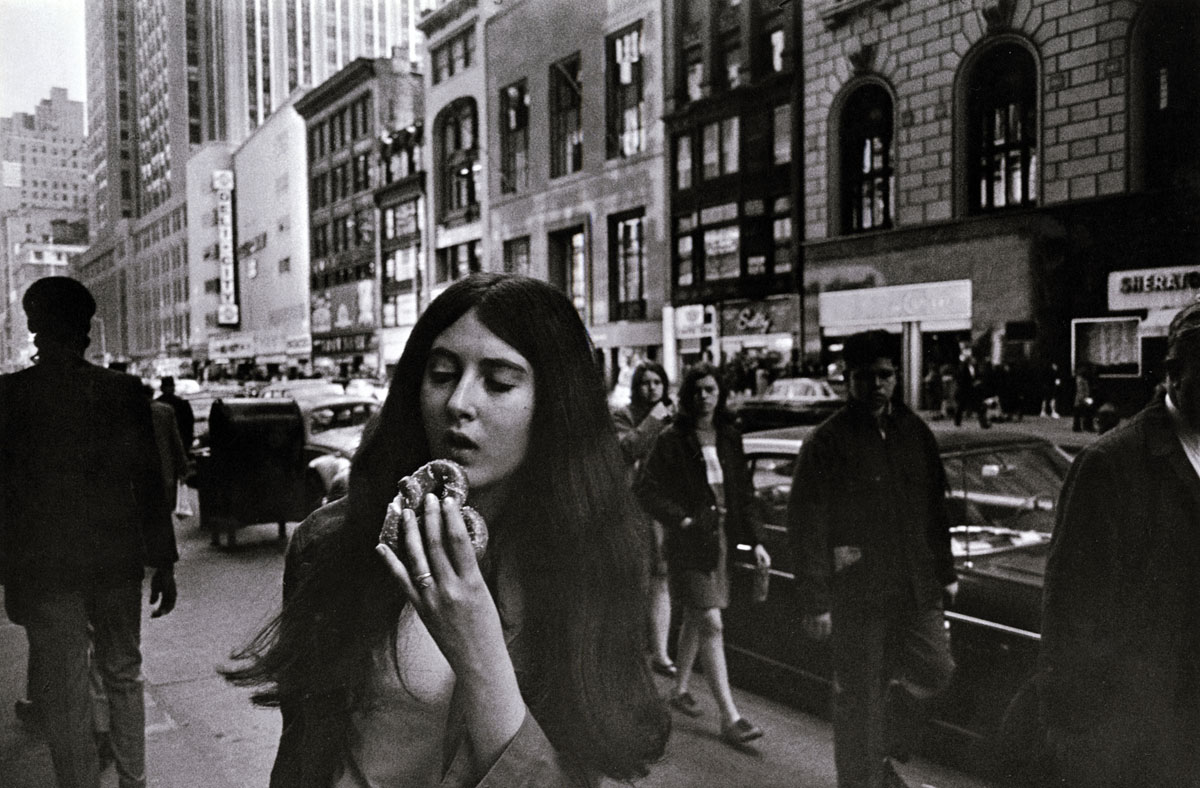
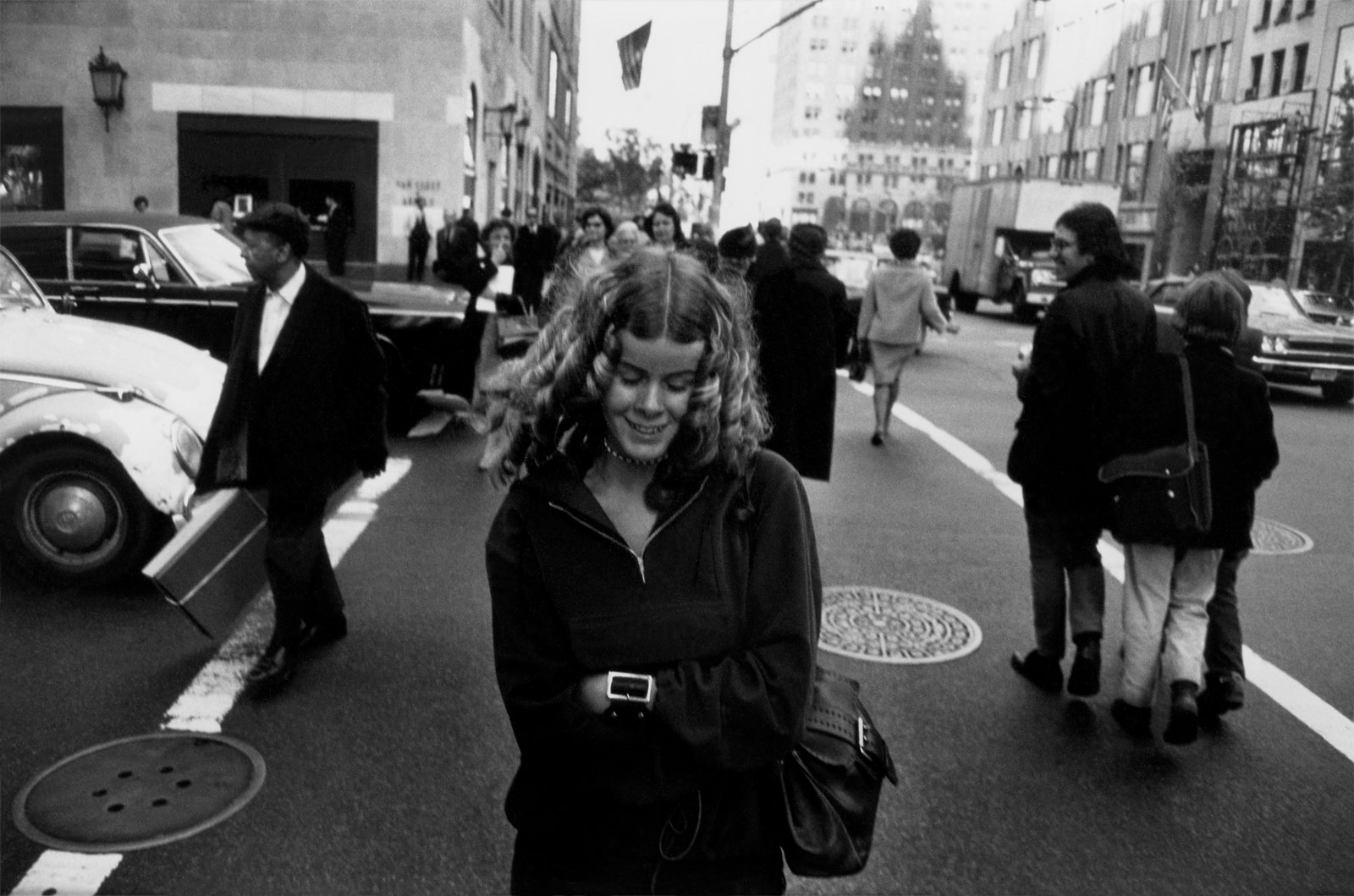
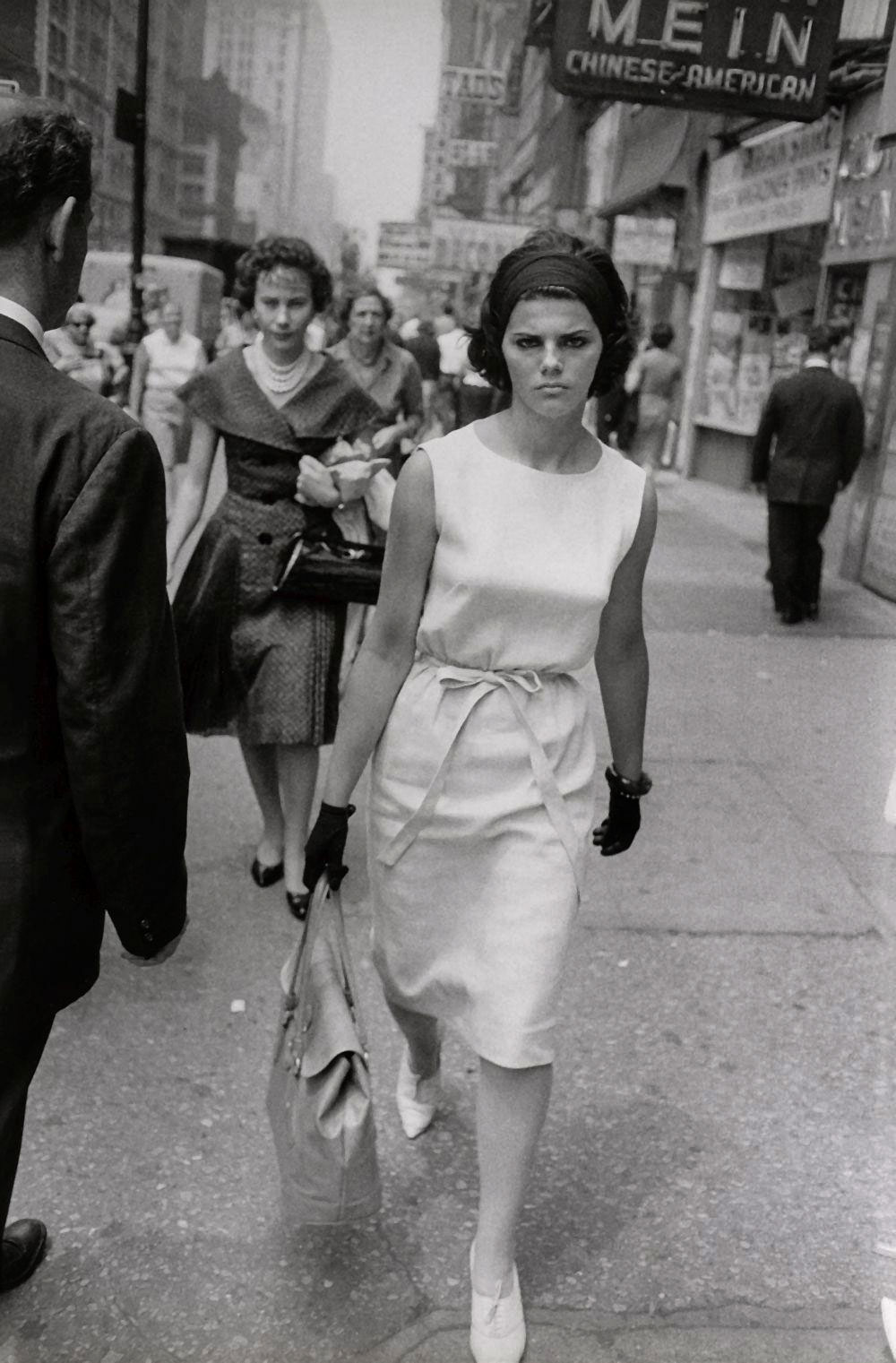
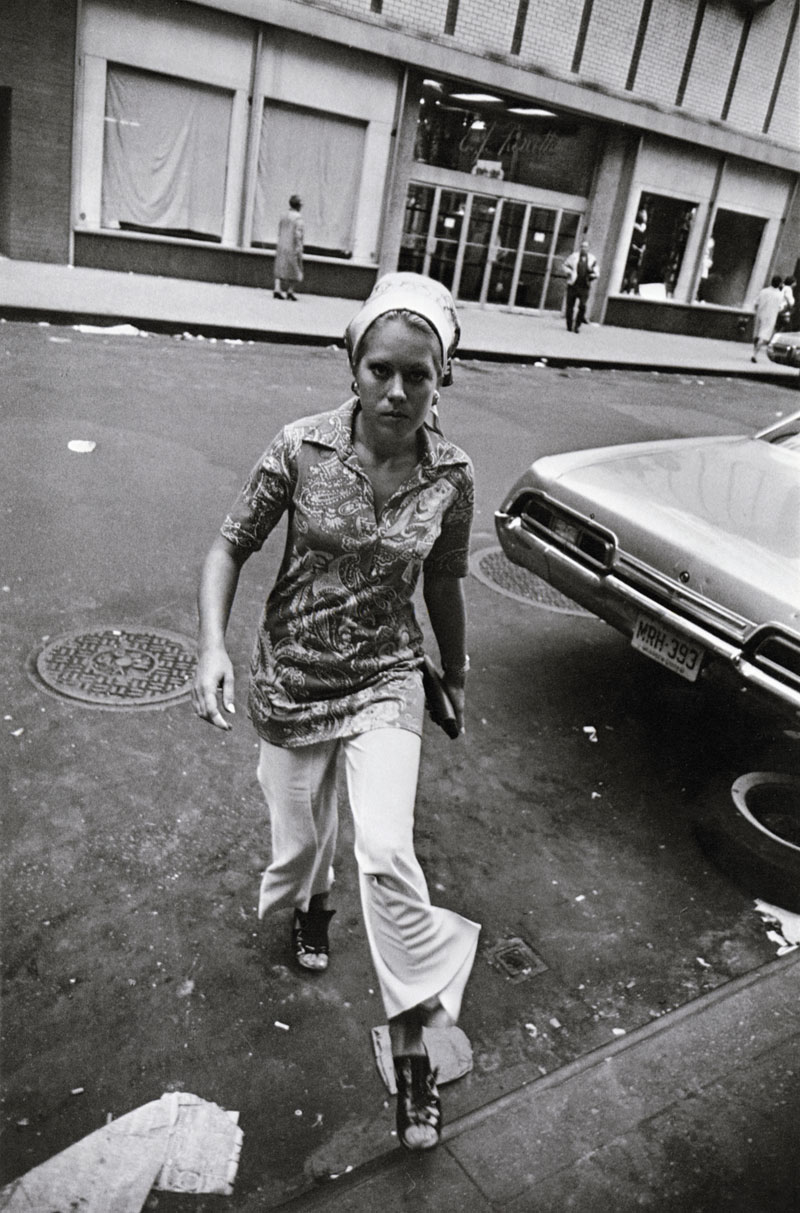
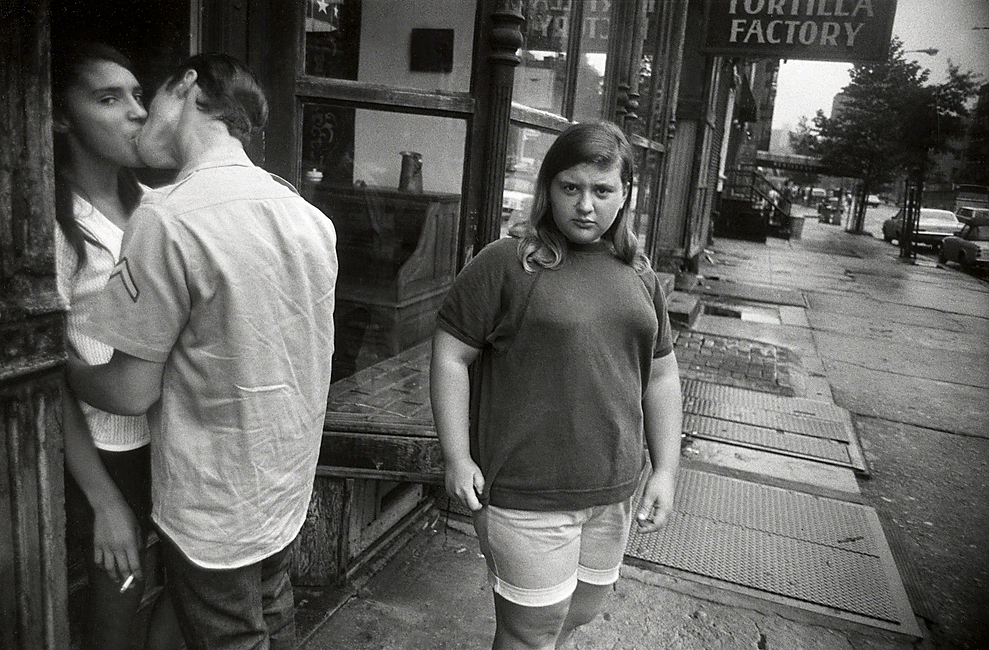
Foundation Foto Colectania presents for the first time in Barcelona the famous series Women Are Beautiful by Garry Winogrand.
Garry Winogrand is considered one of the greatest innovators of photography of the twentieth-century in America. He knew like no other how to capture the social transformation of females in the 60’s and 70’s through his portraits of women who stand as an allegory of women’s emancipation and their new role in society. The Foundation Foto Colectania presents his series Women Are Beautiful, including 85 photographs taken between 1960 and 1975 and collected in the book with the same title by the legendary director of photography at the MoMA, John Szarkowski. The exhibition from the collection of Lola Garrido, is part of the programming line of the foundation which is dedicated to authors who changed the course of the history of photography. The exhibition can be seen in Barcelona until June 4, 2011. In the 60’s ended the era of big images as symbols of timeless truths, by the devastating influence first from Walker Evans, and later from Robert Frank and William Klein. The pictures are focused on the reflection of reality, no retouching or other ideas added. Garry Winogrand and Lee Friedlander represent “the new American style” which broke new ground in the so-called Street Photography.
Winogrand combines spontaneity with an apparent confusion, which is more than aware of the complexity of the photography world: “I photograph to see what the world looks like in photographs.” The presence of human beings, contrasting with the crowds and the streets in his photographs reveals a new way of looking, in which the anarchy results in a wealth of shapes and structures. The biased and cold style of Winogrand is associated with Abstract Expressionism and its sharp diagonals are similar to paint brush strokes of those years. If the photographer Robert Frank was critical of the 50’s, Garry Winogrand is one of the largest photographers of the 60’s.
Press release from the Fundació Foto Colectania website
Curators: Roxana Marcoci, Curator, and Eva Respini, Associate Curator, Department of Photography, The Museum of Modern Art
Many thank to The Museum of Modern Art, New York for allowing me to publish the photographs in the posting. Please click on the photographs for a larger version of the image.
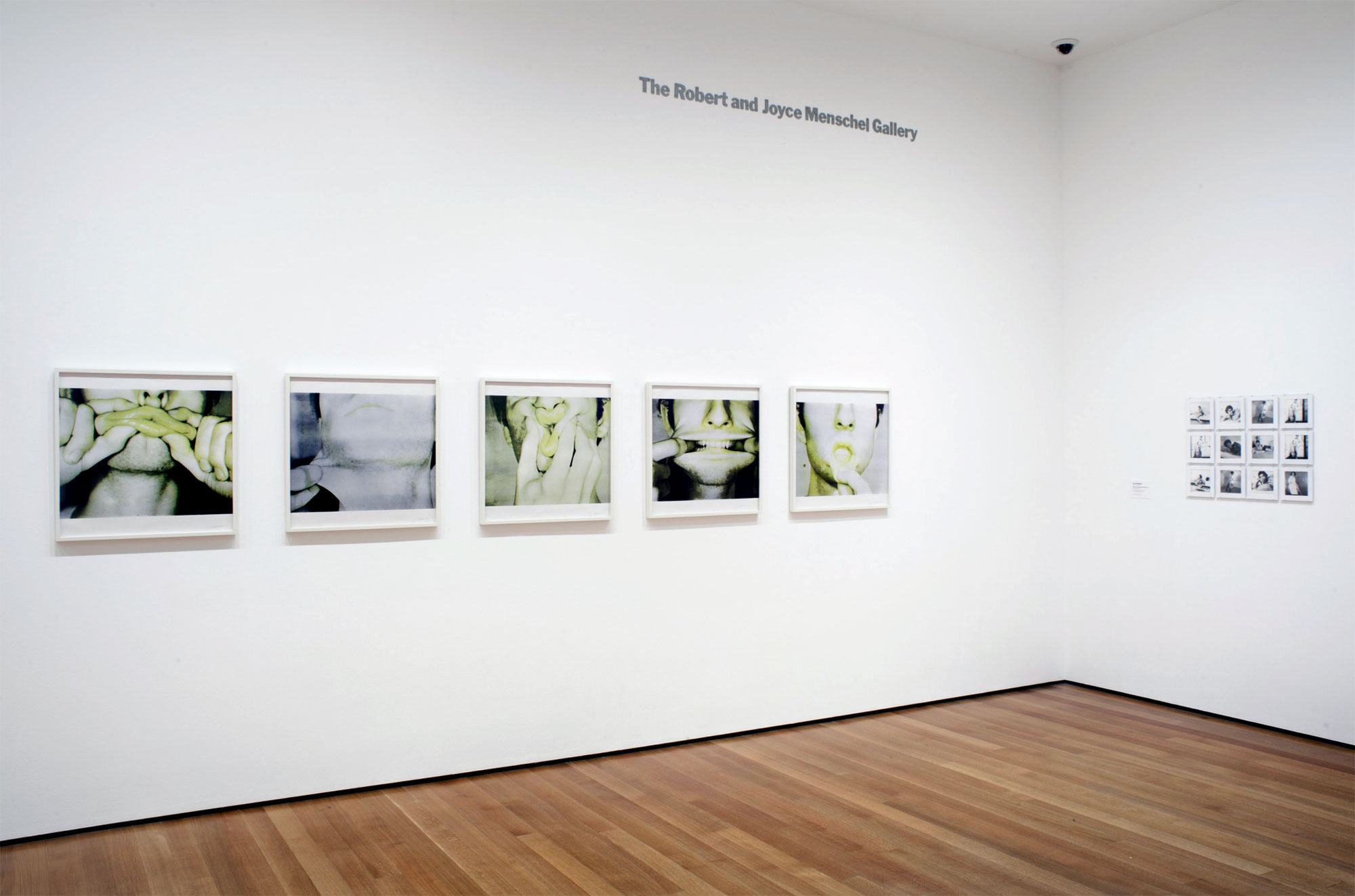
Installation view of the exhibition Staging Action: Performance in Photography Since 1960 at The Museum of Modern Art (MoMA), New York showing at right, George Maciunas Performing for Self-Exposing Camera, New York 1966
George Maciunas (American born Lithuania, 1931-1978) George Maciunas Performing for Self-Exposing Camera, New York 1966 Gelatin silver print
Focusing on a wide range of images of performances that were expressly made for the artist’s camera, Staging Action: Performance in Photography Since 1960 draws together approximately 50 works from the Museum’s collection, and is on view from January 28 to May 9, 2011. Though performances are often intended to be experienced live, in real time, with photography playing an ancillary function in recording them, these works function as independent, expressive pictures, often staged in the absence of a public audience. At the center of these pictures is a performer (often the artist), posing or enacting an action conceived for the photographic lens. Among the works on view, approximately half are recent acquisitions by MoMA, including pieces by Laurel Nakadate, Rong Rong, Ai Weiwei, Huang Yan, and La Monte Young. Staging Action is organised by Roxana Marcoci, Curator, and Eva Respini, Associate Curator, Department of Photography, The Museum of Modern Art.
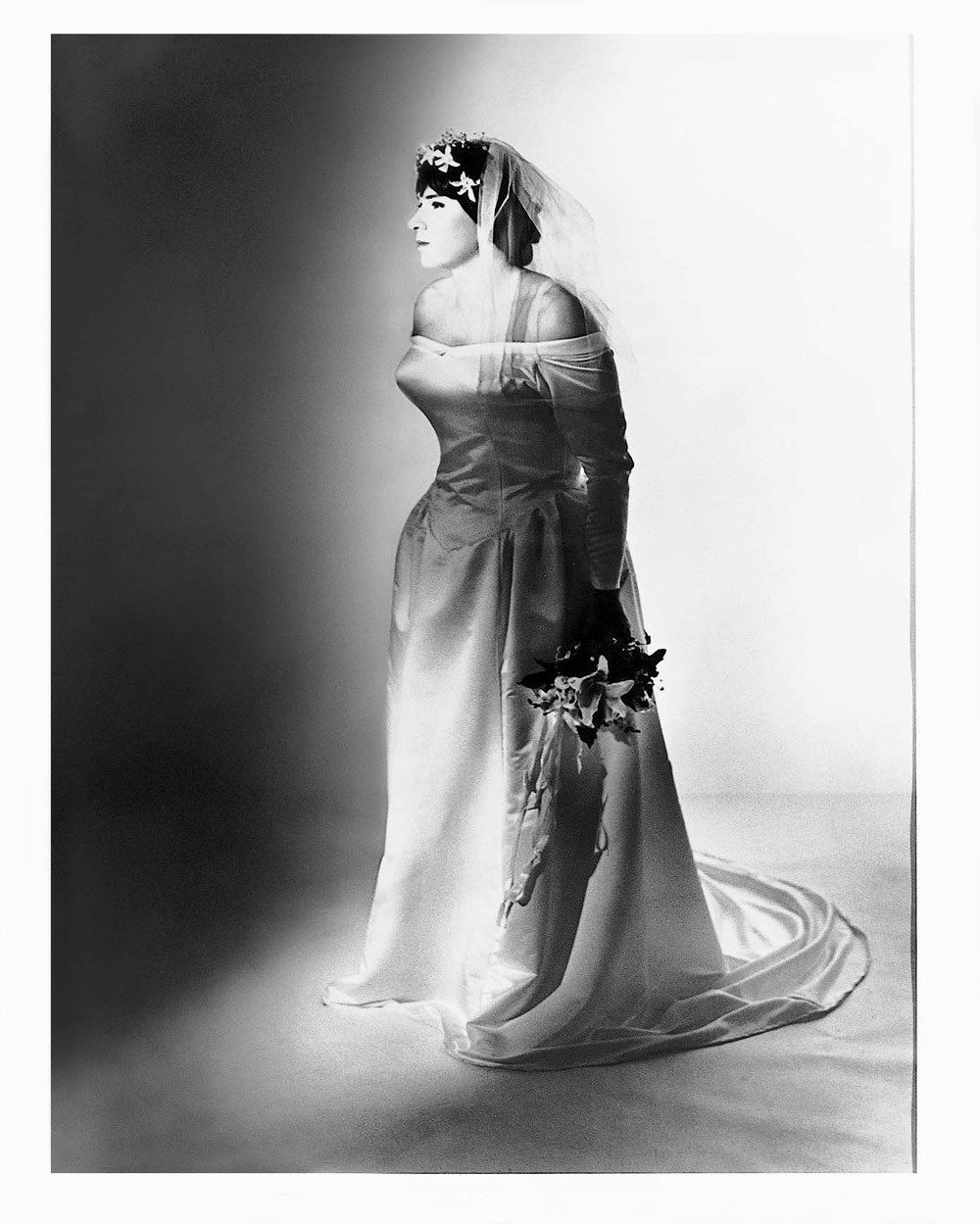
Beginning with Fluxus artists in the 1960s, Staging Action includes the work of George Maciunas, an artist who engaged the production of the self as positional rather than fixed and often played with transvestism. According to personal reminiscences of the American poet Emmett Williams, a friend, Maciunas’s closets were full of prom dresses that he scavenged from the Salvation Army. In his 1966 cross-dressing striptease, George Maciunas Performing for Self-Exposing Camera, New York, he reinforced the active construction of identity through gender indeterminacy. The participation of the camera as accomplice to the artist’s actions was also a constant theme in Vito Acconci’s work of the early 1970s. In Conversions I: Light, Reflections, Self-Control (1970-1971), Acconci tried to feminize his male body by plucking hair from his chest and navel area, pushing his pectorals together to mimic breasts, and hiding his genitals between his legs. Performances that explored gender play were soon embraced by other artists. A few years later, Richard Prince and Cindy Sherman collaborated on a photo shoot in which they sported identical suits and red-haired wigs, each playing androgynous double to the other.
Staging Action continues with artists who experimented with the camera to test the physical and psychological limits of the body. Reacting against the post-World War II repressive sexual and political atmosphere of Austrian society, the group known as the Vienna Actionists – including Günter Brus, Otto Muehl, Herman Nitsch, and Rudolf Schwarzkogler – staged highly provocative actions that were mostly ritualistic, incorporating elements such as wine and animal blood from Dionysian rites and Christian ceremonies in an attempt to free human instincts that had been repressed by society. In the early 1990s, numerous artists living in Beijing’s East Village artist community actively engaged in endurance-based performances. On view is East Village, Beijing No. 22 (1994) by Rong Rong, an iconic picture of the now seminal performance known as 12 Square Meters, which takes its title from the size of the public urinal where the action took place. The artist Zhang Huan covered himself in fish guts and honey and sat motionless for an hour in the heat of a summer day as flies gathered on his body, while the photographer Rong Rong captured the gritty performance.
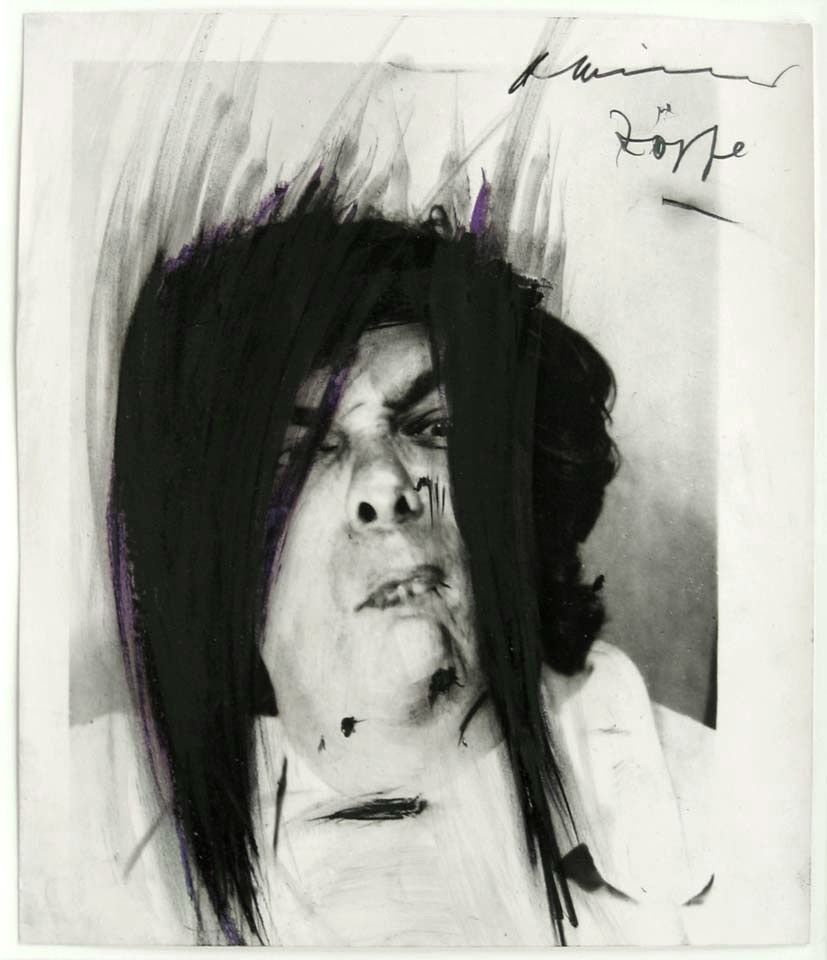
The face as a site for alteration and extreme expression is of particular interest to several artists in the exhibition. In his five-part work, Studies for Holograms (1970), Bruce Nauman poked, pulled, pinched, and kneaded his mouth, neck, and cheeks in extreme and cartoonish ways. For her 1972 work (Untitled) Facial Cosmetic Variations, Ana Mendieta used tape and make-up to mould and manipulate her face to create, at turns, disturbing and humorous results that reference the cosmetic changes women inflict upon themselves in the name of beauty. Lucas Samaras’s transformations in a series of self-portrait Polaroids from 1969-1971 suggest the plasticity or mutability of identity itself. For these works, the artist utilised an array of wigs, pancake make-up, and props to transform himself into grotesque characters for the camera.
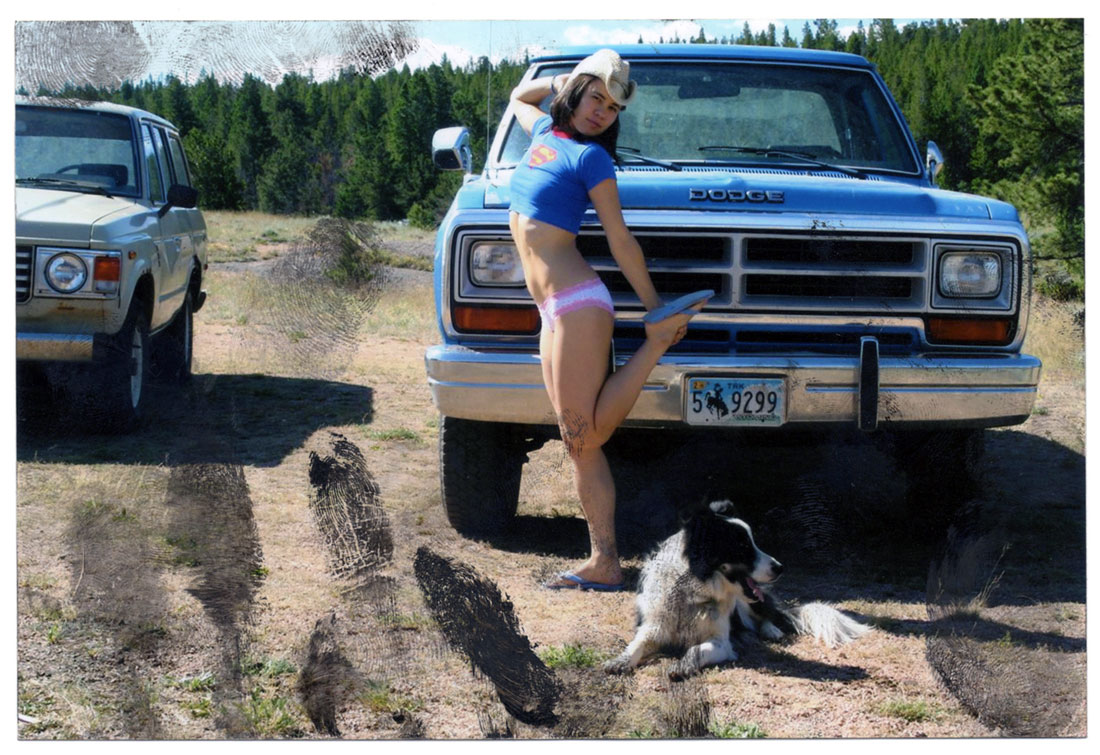
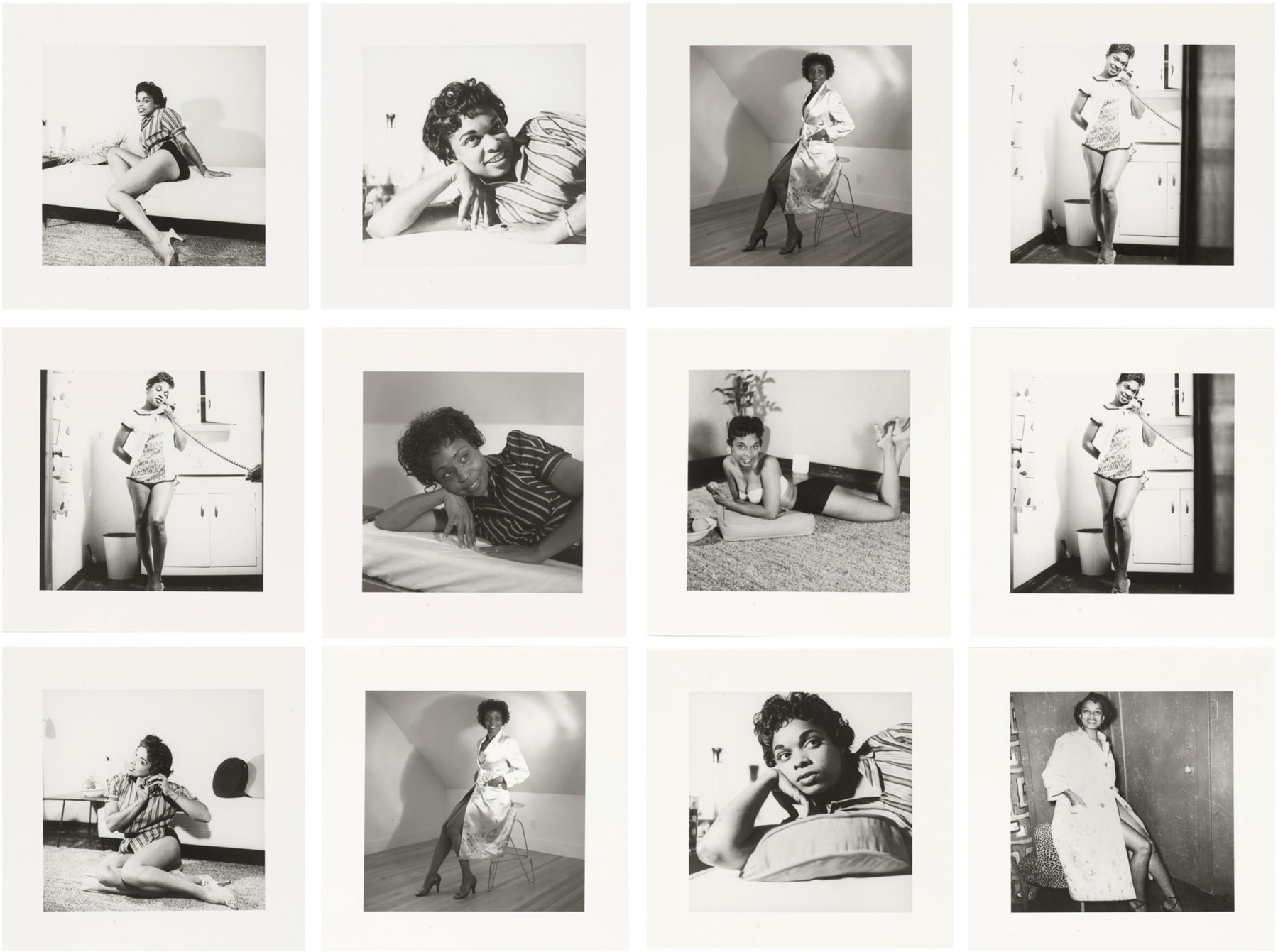
Other performances required a sustained, emotional engagement on the part of the artist. Bas Jan Ader’s particular brand of existential-based Conceptualism is crystallised in I’m too sad to tell you (1970), in which the artist cried in front of the camera. In 1971, Adrian Piper performed a time-lapse piece titled Food for Spirit. Inspired by an assignment to write a text on Immanuel Kant’s Critique of Pure Reason, Piper began fasting in order to isolate herself into a state of self-transcendence, and took pictures of herself in front of a mirror to insure reconnaissance of her own body. The ability of the camera to both freeze and extend a moment in time was also instrumental to the Japanese artist Mieko Shiomi. In Disappearing Music for Face (1966), Shiomi sequenced a series of film stills focusing on the mouth of Yoko Ono as her smile intermittently faded into a neutral facial expression. In Laurel Nakadate’s pictures from the Lucky Tiger series that she conceived of in 2009 during a road trip through the American West, the artist is seen riding a horse in a cropped T-shirt, doing a backbend in cowboy boots by the Grand Canyon, and striking a Playboy pose in her “lucky tiger” bikinis, rehashing photographic conventions inspired by 1950s-style “cheesecake” and camera-club pictures. Lorna Simpson’s multi-part work, May, June, July, August ’57 / ’09 (2009) also responds to the photographic conventions of posing for the camera. Simpson turned to the photographic archive as source material, combining found photographs of a young African-American woman who posed for hundreds of pin-up pictures in 1957 in Los Angeles with her own performative self-portraits, in which she replicates every outfit, pose, and setting of the original photographs. Through juxtaposition, repetition, and de-contextualization, a historical fiction arises, whereby the two women, despite the many differences that separate them, seem to be joined through a shared identity.
The exhibition includes both off-the-cuff and staged performative gestures of political dissent. Ai Weiwei’s photographic series Study of Perspective (1995-2003) reveals a spirited irreverence toward national monuments. Traveling to various landmarks – from the Eiffel Tower to Tiananmen Square to the White House – the artist photographed his own arm extended in front of the camera’s lens as he gave each marker the middle finger. Robin Rhode’s pictures, presented sequentially in storyboard format, record situations in which the artist interacts with a set of objects that he has drawn, erased and redrawn in black charcoal on dilapidated walls. Untitled, (Dream House) (2005) comprises a sequence of 28 colour photographs in which Rhode mimics the act of struggling to catch a television set, a chair, and a car that appear to have been thrown at him from above. In reality, these items are drawn in cartoonish lines on an exterior wall. Referencing the South African New Year custom of tossing out old objects, the artist identifies society’s two opposing poles: consumerism and dispossession. Rhode’s pictures, like those of the other artists in Staging Action, attest to the myriad ways in which photography constitutes – not just documents – performance as a conceptual exercise.
Press release from the MoMA website
Installation view of the exhibition Staging Action: Performance in Photography Since 1960 at The Museum of Modern Art (MoMA), New York showing at right, Rong Rong’s East Village, Beijing, No. 81 1994
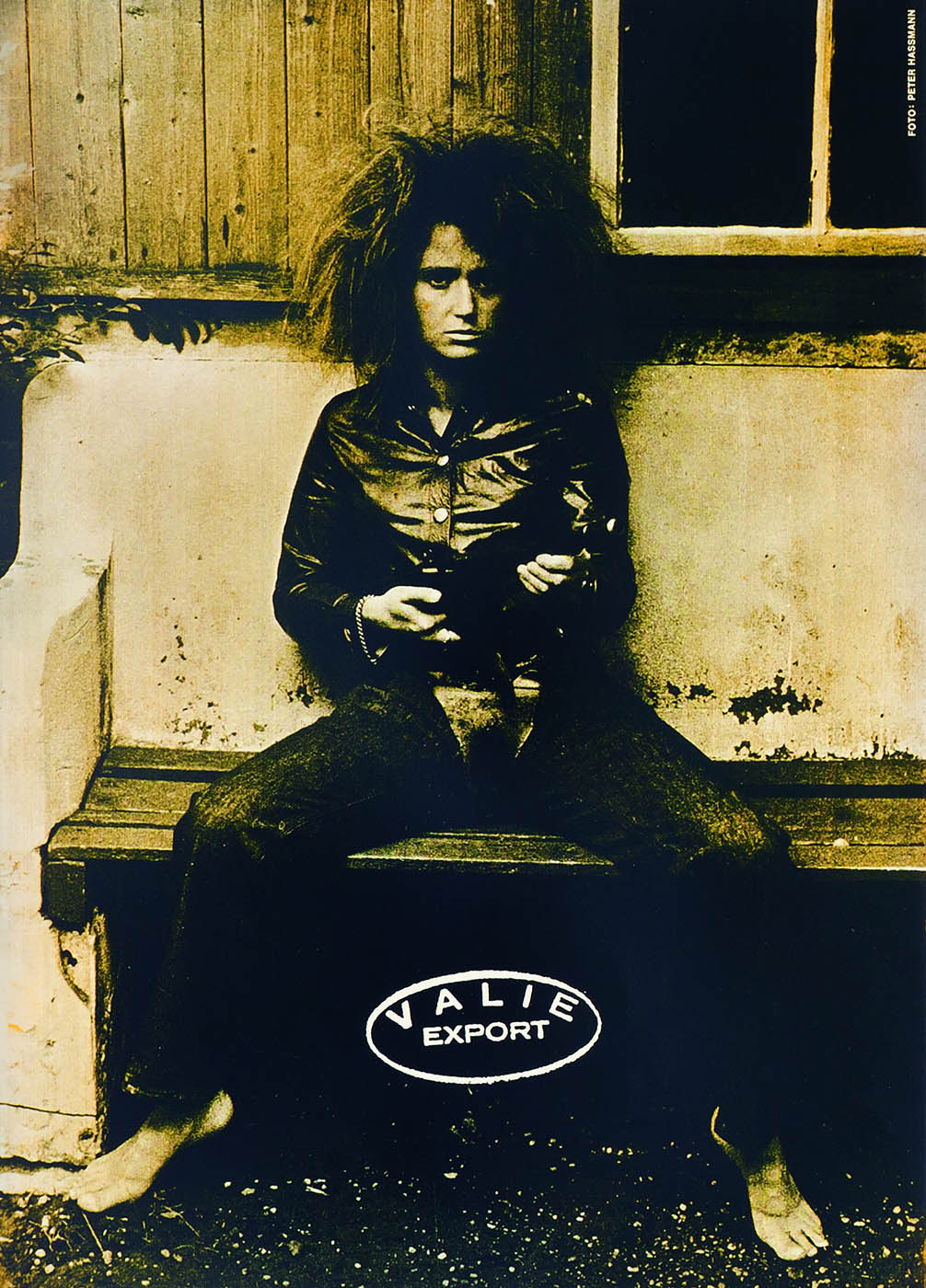
Installation view of the exhibition Staging Action: Performance in Photography Since 1960 at The Museum of Modern Art (MoMA), New York showing at left, Ana Mendieta’s Facial Cosmetic Variations 1972; at centre, the work of Rudolf Schwarzkogler; and at right, VALIE EXPORT with Peter Hassmann’s Action Pants: Genital Panic (1969, below)
This series of screenprints relates to a performance in which EXPORT reportedly walked into an experimental art-film house in Munich wearing crotchless trousers and a tight leather jacket, with her hair teased wildly, and roamed through the rows of seated spectators, her exposed genitalia level with their faces. Challenging the public to engage with a “real woman” instead of with images on a screen, she illustrated her notion of “expanded cinema,” in which the artist’s body activates the live context of watching. EXPORT’s defiant feminist action was memorialised in a picture taken the following year by the photographer Peter Hassmann in Vienna. EXPORT had the image, in which she holds a machine gun, screenprinted in a large edition and fly-posted it in public squares and on the street.
Gallery label from From the Collection: 1960-69, March 26, 2016 – March 12, 2017
Installation view of the exhibition Staging Action: Performance in Photography Since 1960 at The Museum of Modern Art (MoMA), New York showing at left, Bruce Nauman’s Studies for Holograms (1970); and at right, Lorna Simpson’s May, June, July, August ’57/’09 #8 (2009, below)
Lorna Simpson describes 1957-2009 as “a project that happened kind of by accident.” Since she often works with vintage photographs, advertisements, and magazines, she was on eBay in search of material, when she came across a couple of black-and-white photographs of a young black woman posing alluringly. As it turned out, these were part of a much larger album of photographs, featuring this woman, and, occasionally, a young black man, in attractively staged poses. The sellers offered the entire album to Simpson. Struck by the images, though not yet sure what to do with them, she bought it.
When the album arrived, she hung the photographs in her studio, where they remained for months. Taken in 1957, in modest domestic and outdoor settings, most of them appeared to be inspired by the pin-up, mass-produced images of seductively posed actresses and models, widely circulated in the 1940s and 50s. But the identities of the photographer, the woman, and the man were unknown. Ultimately, Simpson decided to restage these images. Using herself as her model, she mimicked the settings, clothing, hairstyles, and poses of both the woman and the man and photographed herself using black-and-white film. She then paired her own photographs with the originals (for a total of 307 individually framed images) and has displayed them together in various arrangements.
As with much of her work, it is up to viewers to draw their own conclusions about the identities of the subjects of 1957-2009. A feminist and an African American woman, Simpson has been concerned with black female identity since the beginning of her career. By providing little or no information about the people who appear in her images, she poses challenging questions about how we perceive and make assumptions about others based upon their appearance – and upon stereotypes associated with aspects of identity like skin colour, hair, gender, and clothing.
Many thankx to the Museum of Modern Art for allowing me to publish the photographs in the posting. Please click on the photographs for a larger version of the image.
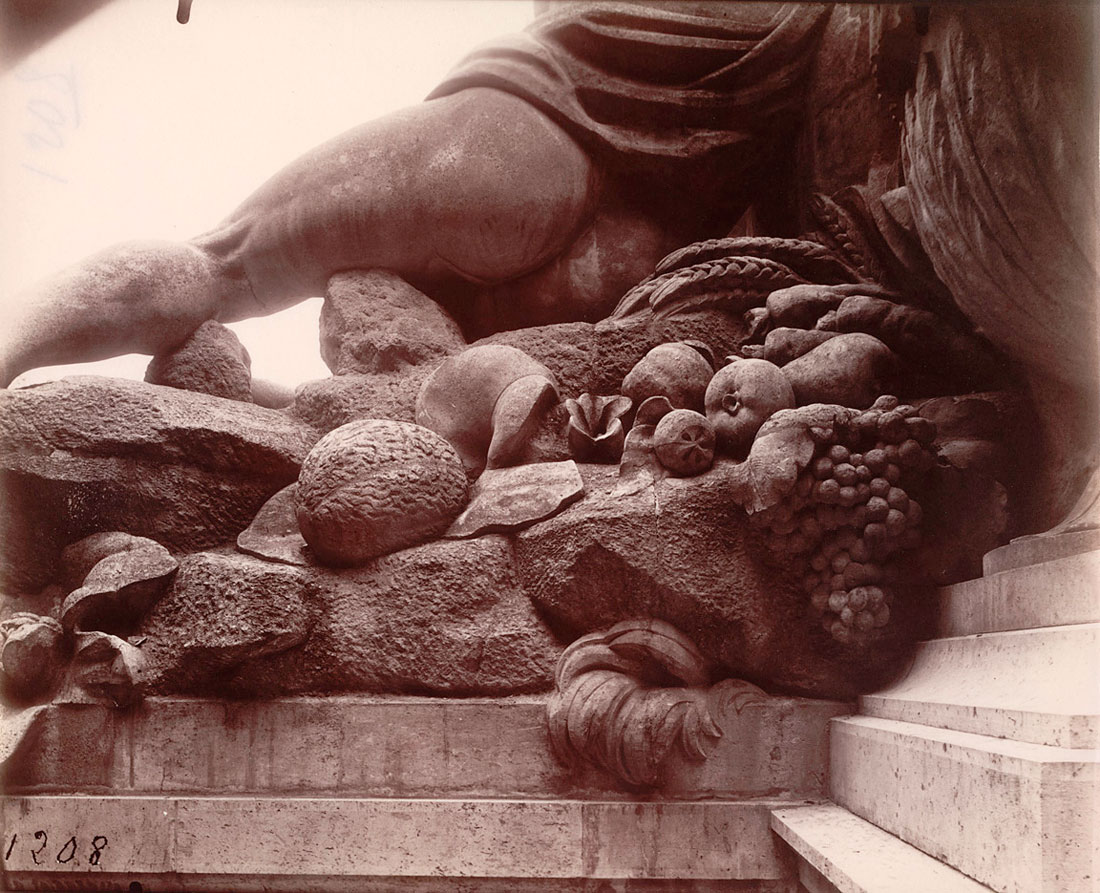
Eugène Atget (French, 1857-1927) Saint-Cloud 1923 Albumen silver print 6 7/8 x 8 3/8″ (17.5 x 21.3cm) The Museum of Modern Art, New York. Anonymous gift
Edward Steichen (American born Luxembourg, 1879-1973) Midnight – Rodin’s Balzac 1908 Pigment print 12 1/8 x 14 5/8″ (30.8 x 37.1cm) The Museum of Modern Art, New York. Gift of the photographer Permission of Joanna T. Steichen
The Original Copy: Photography of Sculpture, 1839 to Today presents a critical examination of the intersections between photography and sculpture, exploring how one medium informs the analysis and creative redefinition of the other. On view at The Museum of Modern Art from August 1 through November 1, 2010, the exhibition brings together over 300 photographs, magazines, and journals, by more than 100 artists, from the dawn of modernism to the present, to look at the ways in which photography at once informs and challenges the meaning of what sculpture is. The Original Copy is organised by Roxana Marcoci, Curator, Department of Photography, The Museum of Modern Art. Following the exhibition’s presentation at MoMA, it will travel to Kunsthaus Zürich, where it will be on view from February 25 through May 15, 2011.
When photography was introduced in 1839, aesthetic experience was firmly rooted in Romanticist tenets of originality. In a radical way, photography brought into focus the critical role that the copy plays in art and in its perception. While the reproducibility of the photograph challenged the aura attributed to the original, it also reflected a very personal form of study and offered a model of dissemination that would transform the entire nature of art.
“In his 1947 book Le Musée Imaginaire, the novelist and politician André Malraux famously advocated for a pancultural ‘museum without walls,’ postulating that art history, and the history of sculpture in particular, had become ‘the history of that which can be photographed,'” said Ms. Marcoci.
Sculpture was among the first subjects to be treated in photography. There were many reasons for this, including the desire to document, collect, publicise, and circulate objects that were not always portable. Through crop, focus, angle of view, degree of close-up, and lighting, as well as through ex post facto techniques of dark room manipulation, collage, montage, and assemblage, photographers have not only interpreted sculpture but have created stunning reinventions of it.
Conceived around ten conceptual modules, the exhibition examines the rich historical legacy of photography and the aesthetic shifts that have taken place in the medium over the last 170 years through a superb selection of pictures by key modern, avant-garde, and contemporary artists. Some, like Eugène Atget, Walker Evans, Lee Friedlander, and David Goldblatt, are best known as photographers; others, such as Auguste Rodin, Constantin Brancusi, and David Smith, are best known as sculptors; and others, from Hannah Höch and Sophie Taeuber-Arp to such contemporaries as Bruce Nauman, Fischli/Weiss, Rachel Harrison, and Cyprien Gaillard, are too various to categorise but exemplify how fruitfully and unpredictably photography and sculpture have combined.
The Original Copy begins with Sculpture in the Age of Photography, a section comprising early photographs of sculptures in French cathedrals by Charles Nègre and in the British Museum by Roger Fenton and Stephen Thompson; a selection of André Kertész’s photographs from the 1920s showing art amid common objects in the studios of artist friends; and pictures by Barbara Kruger and Louise Lawler that foreground issues of representation to underscore photography’s engagement in the analysis of virtually every aspect of art. Eugène Atget: The Marvelous in the Everyday presents an impressive selection of Atget’s photographs, dating from the early 1900s to the mid 1920s, of classical statues, reliefs, fountains, and other decorative fragments in Paris, Versailles, Saint-Cloud, and Sceaux, which together amount to a visual compendium of the heritage of French civilisation at the time.
Auguste Rodin: The Sculptor and the Photographic Enterprise includes some of the most memorable pictures of Rodin’s sculptures by various photographers, including Edward Steichen’s Rodin – The Thinker (1902), a work made by combining two negatives: one depicting Rodin in silhouetted profile, contemplating The Thinker (1880-82), his alter ego; and one of the artist’s luminous Monument to Victor Hugo (1901). Constantin Brancusi: The Studio as Groupe Mobile focuses on Brancusi’s uniquely nontraditional techniques in photographing his studio, which was articulated around hybrid, transitory configurations known as groupe mobiles (mobile groups), each comprising several pieces of sculpture, bases, and pedestals grouped in proximity. In search of transparency, kineticism, and infinity, Brancusi used photography to dematerialise the static, monolithic materiality of traditional sculpture. His so-called photos radieuses (radiant photos) are characterised by flashes of light that explode the sculptural gestalt.
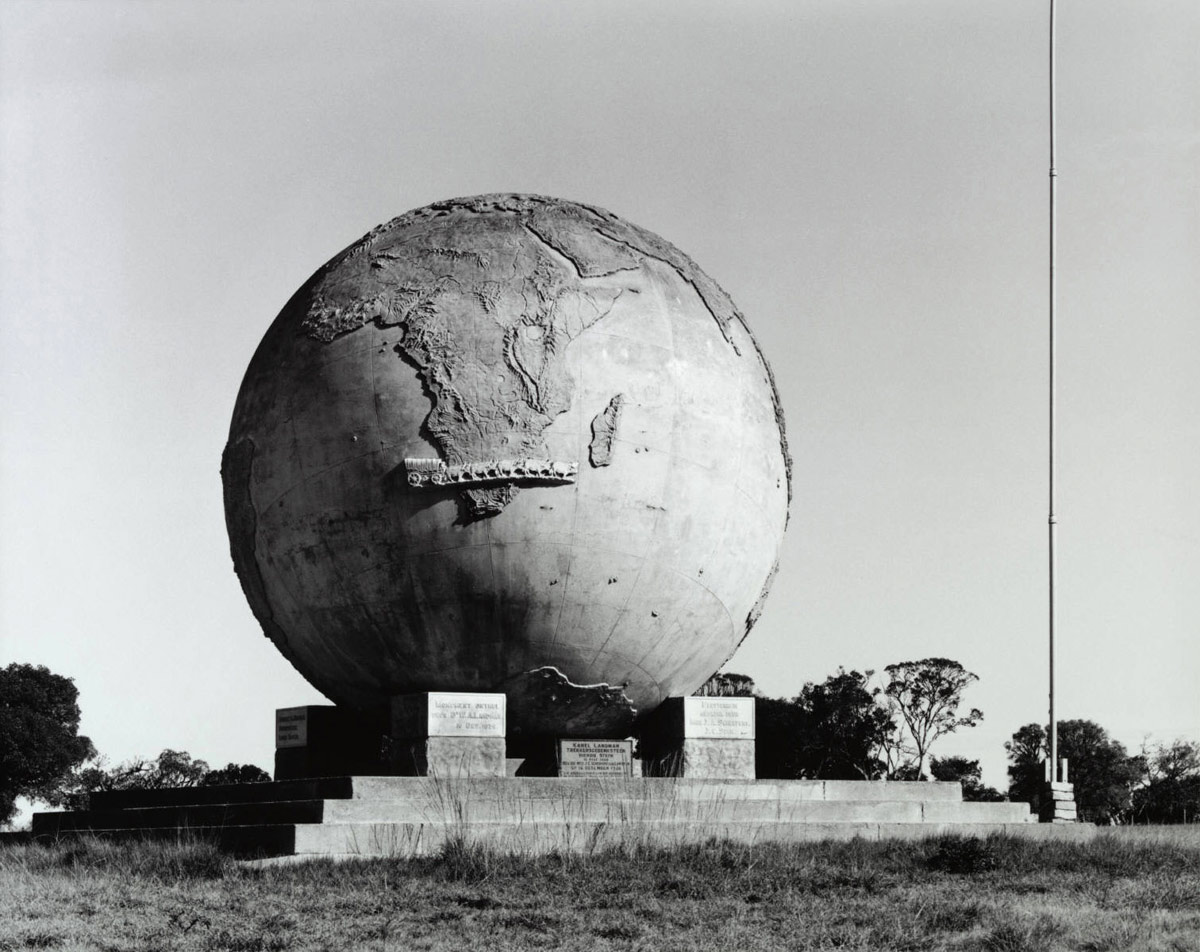
Marcel Duchamp: The Readymade as Reproduction examines Box in a Valise (1935-41), a catalogue of his oeuvre featuring 69 reproductions, including minute replicas of several readymades and one original work that Duchamp “copyrighted” in the name of his female alter ego, Rrose Sélavy. Using collotype printing and pochoir – in which colour is applied by hand with the use of stencils – Duchamp produced “authorised ‘original’ copies” of his work, blurring the boundaries between unique object, readymade, and multiple. Cultural and Political Icons includes selections focusing on some of the most significant photographic essays of the twentieth century – Walker Evans’s American Photographs (1938), Robert Franks’s The Americans (1958), Lee Friedlander’s The American Monument (1976), and David Goldblatt’s The Structure of Things Then (1998) – many of which have never before been shown in a thematic context as they are here.
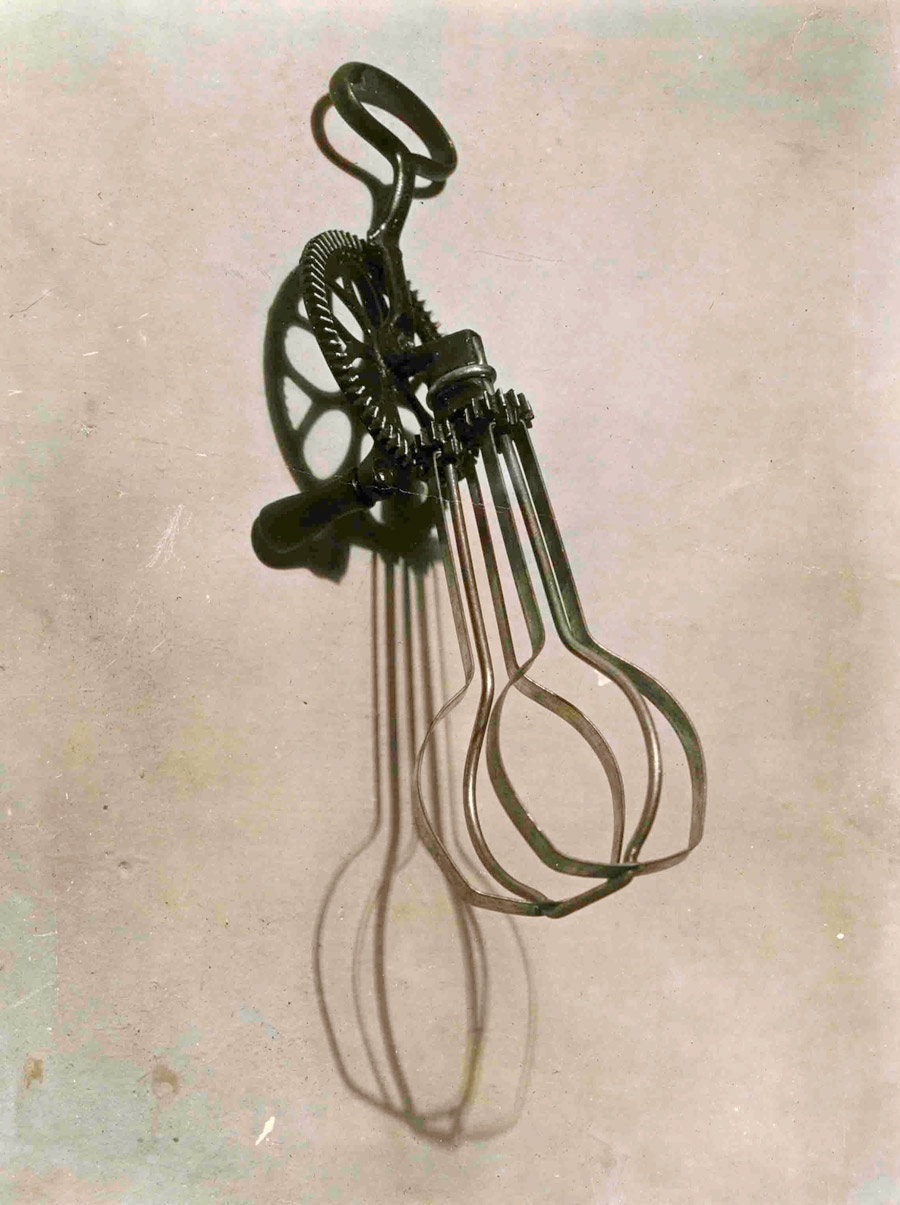
The Studio without Walls: Sculpture in the Expanded Field explores the radical changes that occurred in the definition of sculpture when a number of artists who did not consider themselves photographers in the traditional sense, such as Robert Smithson, Robert Barry, and Gordon Matta-Clark, began using the camera to document remote sites as sculpture rather than the traditional three-dimensional object. Daguerre’s Soup: What Is Sculpture? includes photographs of found objects or assemblages created specifically for the camera by artists, such as Brassaï’s Involuntary Sculptures (c. 1930s), Alina Szapocznikow’s Photosculptures (1970-1971), and Marcel Broodthaers’s Daguerre’s Soup (1974), the last work being a tongue-in-cheek picture which hints at the various fluid and chemical processes used by Louis Daguerre to invent photography in the nineteenth century, bringing into play experimental ideas about the realm of everyday objects.
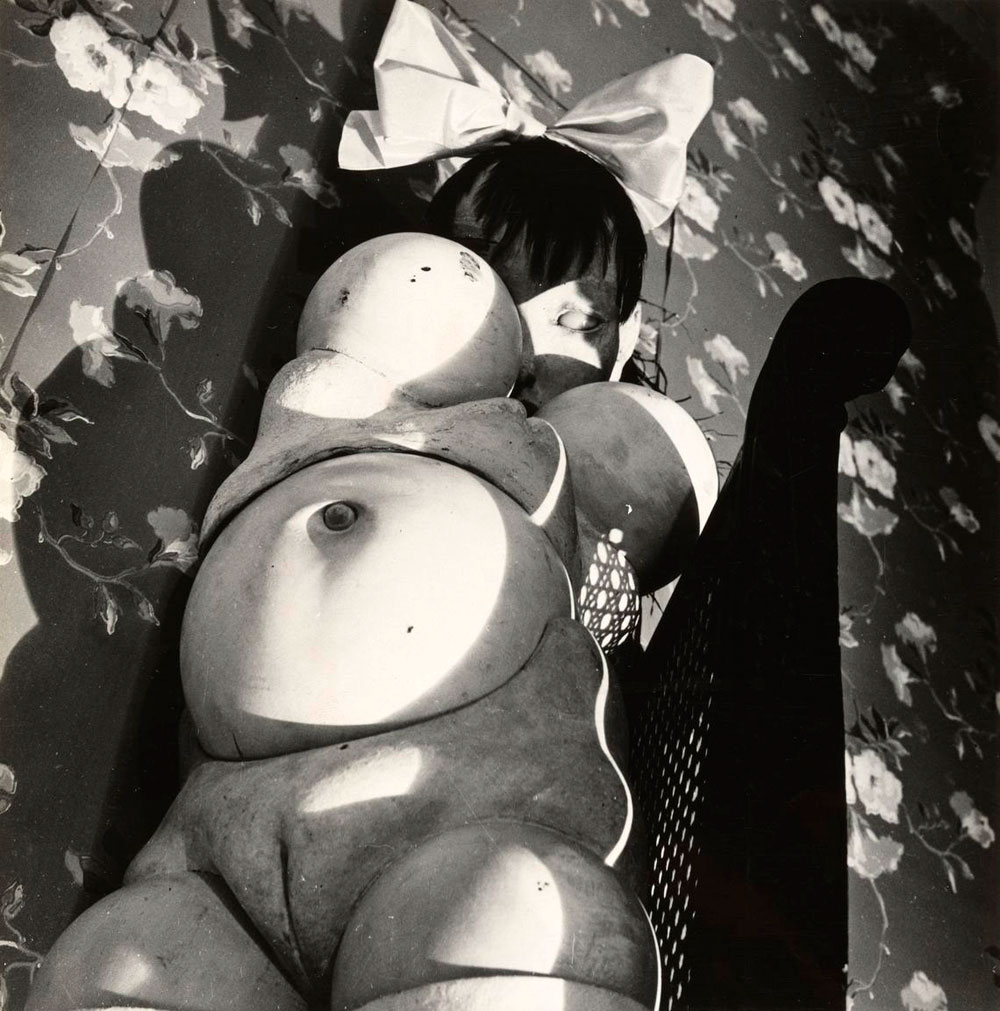
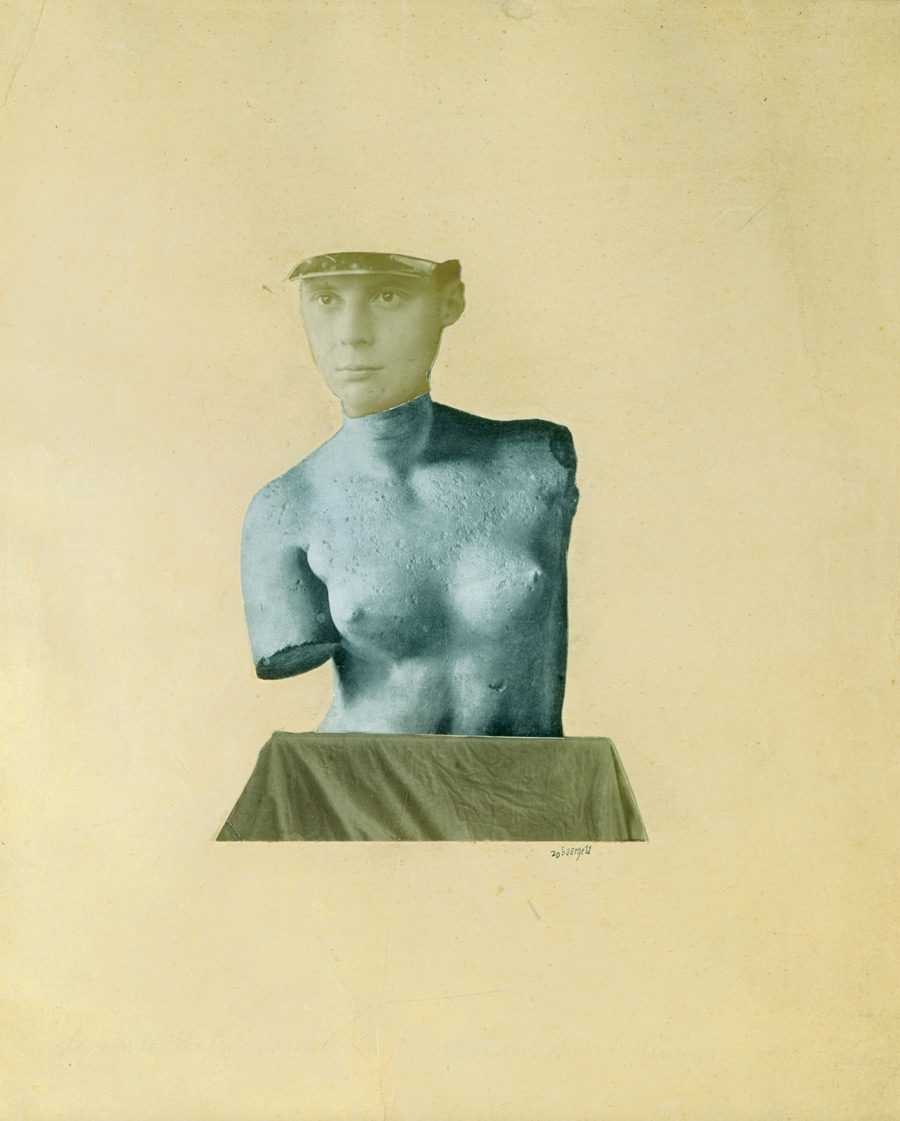
The Pygmalion Complex: Animate and Inanimate Figures looks at Dada and Surrealist pictures and photo-collages by artists, including Man Ray, Herbert Bayer, Hans Bellmer, Hannah Höch, and Johannes Theodor Baargeld, who focused their lenses on mannequins, dummies, and automata to reveal the tension between living figure and sculpture. The Performing Body as Sculptural Object explores the key role of photography in the intersection of performance and sculpture. Bruce Nauman, Charles Ray, and Dennis Oppenheim, placing a premium on their training as sculptors, articulated the body as a sculptural prop to be picked up, bent, or deployed instead of traditional materials. Eleanor Antin, Ana Mendieta, VALIE EXPORT, and Hannah Wilke engaged with the “rhetoric of the pose,” using the camera as an agency that itself generates actions through its presence.
Press release from the Museum of Modern Art website
Man Ray (Emmanuel Radnitzky) (American, 1890-1976) Noire et blanche (Black and white) 1926 Gelatin silver print 6 3/4 x 8 7/8″ (17.1 x 22.5cm) The Museum of Modern Art, New York. Gift of James Thrall Soby 2010 Man Ray Trust/Artists Rights Society (ARS), New York/ADAGP, Paris
“The advent of photography in 1839, when aesthetic experience was firmly rooted in Romanticist tenets of originality, brought into focus the critical role that the copy plays in the perception of art. The medium’s reproducibility challenged the aura attributed to the original, but it also reflected a new way of looking and offered a model for dissemination that would transform the entire nature of art. The aesthetic singularity of the photograph, the archival value of a document bearing the trace of history, and the combinatory capacity of the image, open to be edited into sequences in which it mixes with others – all these contribute to the status of photography as both an art form and a medium of communication.
Sculpture was among the first subjects to be treated in photography. In his 1947 book Le Musée imaginaire, the novelist and politician André Malraux famously advocated for a pancultural “museum without walls,” postulating that art history, and the history of sculpture in particular, had become “the history of that which can be photographed.” There were many reasons for this, including the immobility of sculpture, which suited the long exposure times needed with the early photographic processes, and the desire to document, collect, publicise and circulate objects that were not always portable. Through crop, focus, angle of view, degree of close-up, and lighting, as well as through ex post facto techniques of dark room manipulation, collage, montage, and assemblage, photographers not only interpret sculpture but create stunning reinventions of it.
The Original Copy presents a critical examination of the intersections between photography and sculpture, exploring how the one medium has been implicated in the analysis and creative redefinition of the other. Bringing together 300 pictures, magazines and journals by more than 100 artists from the dawn of modernism to the present, this exhibition looks at the ways in which photography at once informs and challenges our understanding of what sculpture is within specific historic contexts.
Sculpture in the Age of Photography
If we consider photography a child of the industrial era – a medium that came of age alongside the steam engine and the railroad – it is not surprising that one of its critical functions was to bring physically inaccessible worlds closer by means of reproduction. Among its early practitioners, Charles Nègre photographed sculpture in the cathedrals of Chartres, Amiens, and, in Paris, Notre Dame, circling them at different levels to capture perspectives of rarely seen sculptural details, while in London Roger Fenton and Stephen Thompson documented the ancient statuary in the British Museum, making visible the new power of collecting institutions.
With the advent of the handheld portable camera in the early 1920s, photographers had the flexibility to capture contingent sculptural arrangements taken from elliptical viewpoints. André Kertész, for instance, recorded unexpected juxtapositions between art and common objects in the studios of artist friends, including Fernand Léger and Ossip Zadkine. His ability to forge heterogeneous materials and objects into visual unity inspired the novelist Pierre Mac Orlan to confer on him the title of “photographer-poet.”
Focusing on details in this way, photographers have interpreted not only sculpture itself, as an autonomous object, but also the context of its display. The results often show that the meaning of art is not fixed within the work but open to the beholder’s reception of it at any given moment. Taking a place in the tradition of institutional critique, Barbara Kruger’s and Louise Lawler’s pictures foreground issues of representation to underscore photography’s engagement in the analysis of virtually every aspect of art.
Eugène Atget The Marvelous in the Everyday
During the first quarter of the twentieth century, Atget took hundreds of photographs of sculptures – classical statues, reliefs, fountains, door knockers, and other finely wrought decorative fragments – in Paris and its outlying parks and gardens, especially at Versailles, Saint-Cloud, and Sceaux. These images amount to a visual compendium of the heritage of French civilisation at that time.
At Versailles, most intensely between 1901 and 1906 and again between 1921 and 1926, Atget photographed the gardens that André Le Nôtre, the landscape architect of King Louis XIV, had designed in the second half of the seventeenth century. In a series of pictures of allegorical statues punctuating the garden’s vistas, Atget focused on the scenic organisation of the sculptures, treating them as characters in a historical play. The pantomimic effect of the statues’ postures clearly appealed to Atget, who in 1880, before turning to photography, had taken acting classes at the Conservatory of the Théâtre national de France. Depicting the white marble statues from low viewpoints, in full length, and against the dark, unified tones of hedges and trees, Atget brought them into dramatic relief, highlighting the theatrical possibilities of sculpture.
Among the pictures taken at Saint-Cloud is a series centred on a melancholy pool surrounded by statues whose tiny silhouettes can be seen from a distance. Atget’s interest in the variable play between nature and art through minute changes in the camera’s angle, or as functions of the effects of light and time of day, is underscored in his notations of the exact month and sometimes even the hour when the pictures were taken.
Auguste Rodin The Sculptor and the Photographic Enterprise
Rodin never took pictures of his sculptures but reserved the creative act for himself, actively directing the enterprise of photographing his work. He controlled staging, lighting and background, and he was probably the first sculptor to enlist the camera to record the changing stages through which his work passed from conception to realisation. The photographers working with Rodin were diverse and their images of his work varied greatly, partly through each individual’s artistic sensibility and partly through changes in the photographic medium. The radical viewing angles that Eugène Druet, for instance, adopted in his pictures of hands, in around 1898, inspired the poet Rainer Maria Rilke to write: “There are among the works of Rodin hands, single small hands which without belonging to a body, are alive. Hands that rise, irritated and in wrath; hands whose five bristling fingers seem to bark like the five jaws of a dog of Hell.”
Among the most memorable pictures of Rodin’s sculptures is Edward Steichen’s Rodin – The Thinker (1902), a work made by combining two negatives: Rodin in dark silhouetted profile contemplating The Thinker (1880-1882), his alter ego, is set against the luminous Monument to Victor Hugo (1901), a source of poetic creativity. Steichen also photographed Rodin’s Balzac, installed outdoors in the sculptor’s garden at Meudon, spending a whole night taking varying exposures from fifteen minutes to an hour to secure a number of dramatic negatives. The three major pictures of the sculpture against the nocturnal landscape taken at 11 p.m., midnight, and 4 a.m. form a temporal series.
Constantin Brancusi The Studio as Groupe Mobile
“Why write?” Brancusi once queried. “Why not just show the photographs?” The sculptor included many great photographers among his friends – Edward Steichen was one of his early champions in the United States; Alfred Stieglitz organised in 1914 his first solo exhibition in New York; Man Ray helped him buy photographic equipment; Berenice Abbott studied sculpture under him; and he was on close terms with Brassaï, André Kertész, and László Moholy-Nagy. Yet he declined to have his work photographed by others, preferring instead to take, develop, and print his own pictures.
Pushing photography against its grain, Brancusi developed an aesthetic antithetical to the usual photographic standards. His so-called photos radieuses (radiant photos) are characterised by flashes of light that explode the sculptural gestalt. In search of transparency, kineticism, and infinity, Brancusi used photography and polishing techniques to dematerialise the static, monolithic materiality of traditional sculpture, visualising what Moholy-Nagy called “the new culture of light.”
Brancusi’s pictures of his studio underscore his scenographic approach. The artist articulated the studio around hybrid, transitory configurations known as groupes mobiles (mobile groups), each comprising several pieces of sculpture, bases, and pedestals grouped in proximity. Assembling and reassembling his sculptures for the camera, Brancusi used photography as a diary of his sculptural permutations. If, as it is often said, Brancusi “invented” modern sculpture, his use of photography belongs to a reevaluation of sculpture’s modernity.
Cultural and Political Icons
How do we remember the past? What role do photographs play in mediating history and memory? In an era resonating with the consequences of two world wars, the construction and then dismantling of the Berlin Wall, the Vietnam War, and the after effects of the colonialist legacy in South Africa, commemoration has provided a rich subject for photographic investigation.
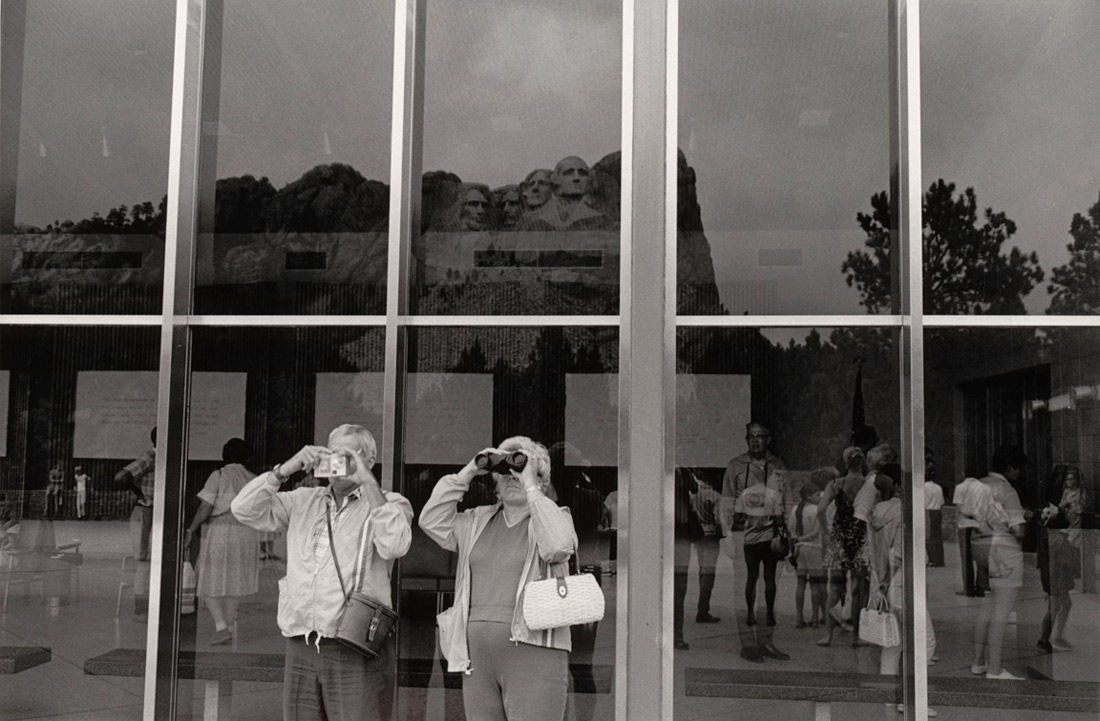
Some of the most significant photographic essays of the twentieth century – Walker Evans’s American Photographs (1938), Robert Frank’s The Americans (1958), Lee Friedlander’s The American Monument (1976), and David Goldblatt’s The Structure of Things Then (1998) – articulate to different degrees the particular value of photography as a means of defining the cultural and political role of monuments.
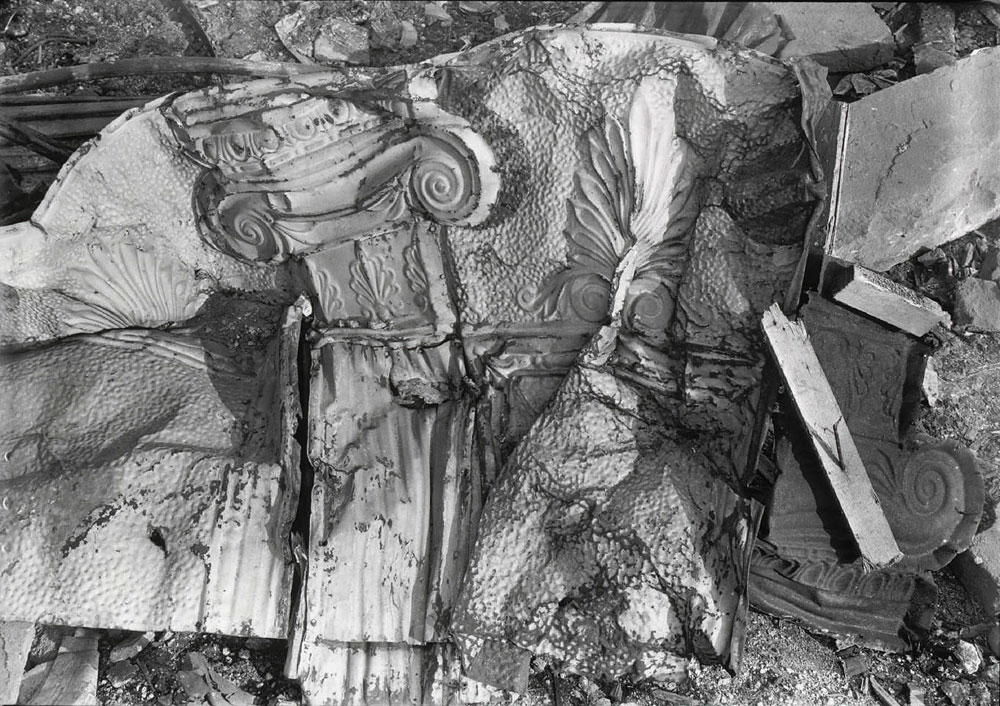
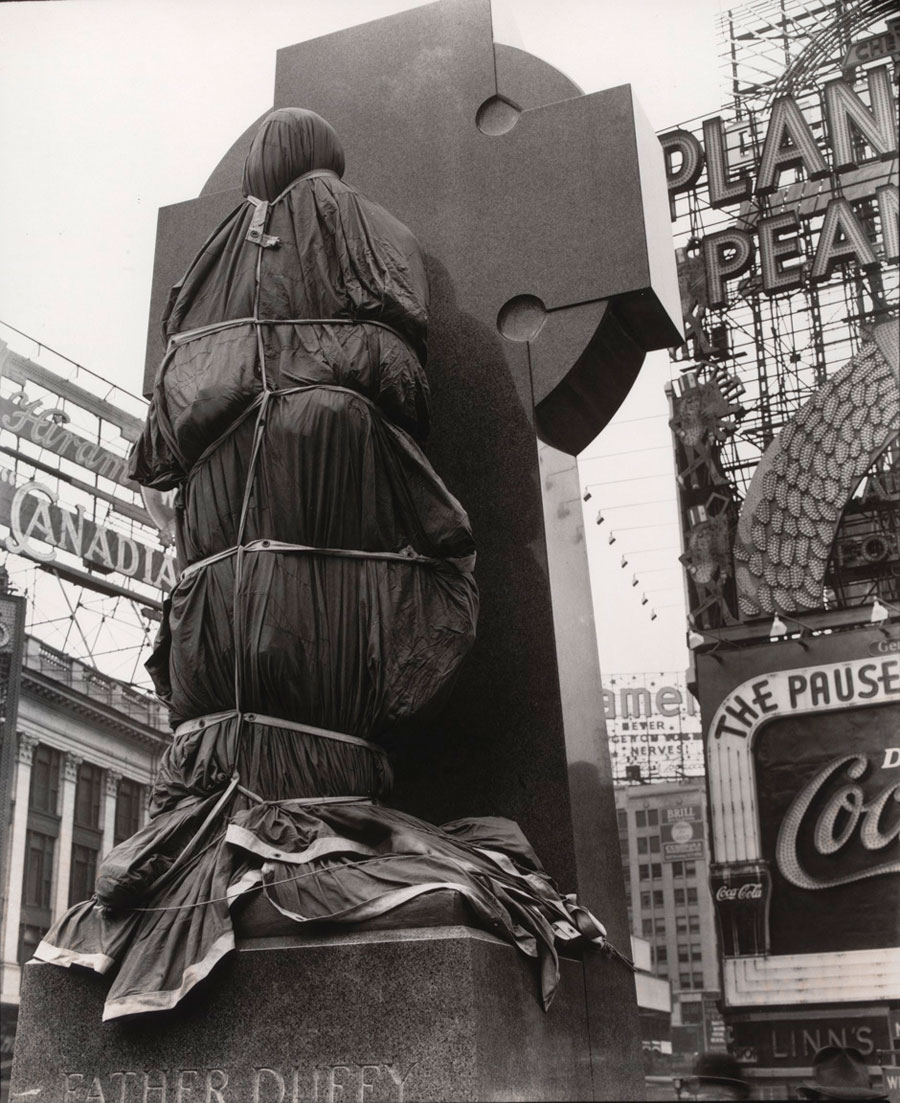
Evans’s emblematic image of a crushed Ionic column made of cheap sheet metal; Frank’s picture of a statue of St. Francis preaching, cross and Bible in hands, to the bleak vista of a gas station; Friedlander’s photograph of World War I hero Father Duffy, engulfed in the cacophony of Times Square’s billboards and neon, which threaten to jeopardise the sculpture’s patriotic message; and Goldblatt’s pictures of monuments to some of the most potent symbols of Afrikaner triumphalism – all take a critical look at the world that public statues inhabit.
The Studio without Walls Sculpture in the Expanded Field
In the late 1960s a radical aesthetic change altered both the definition of the sculptural object and the ways in which that object was experienced. A number of artists who did not consider themselves photographers in the traditional sense began using the camera to rework the idea of what sculpture is, dispensing with the immobile object in favour of an altered site: the built environment, the remote landscape, or the studio or museum space in which the artist intervened.
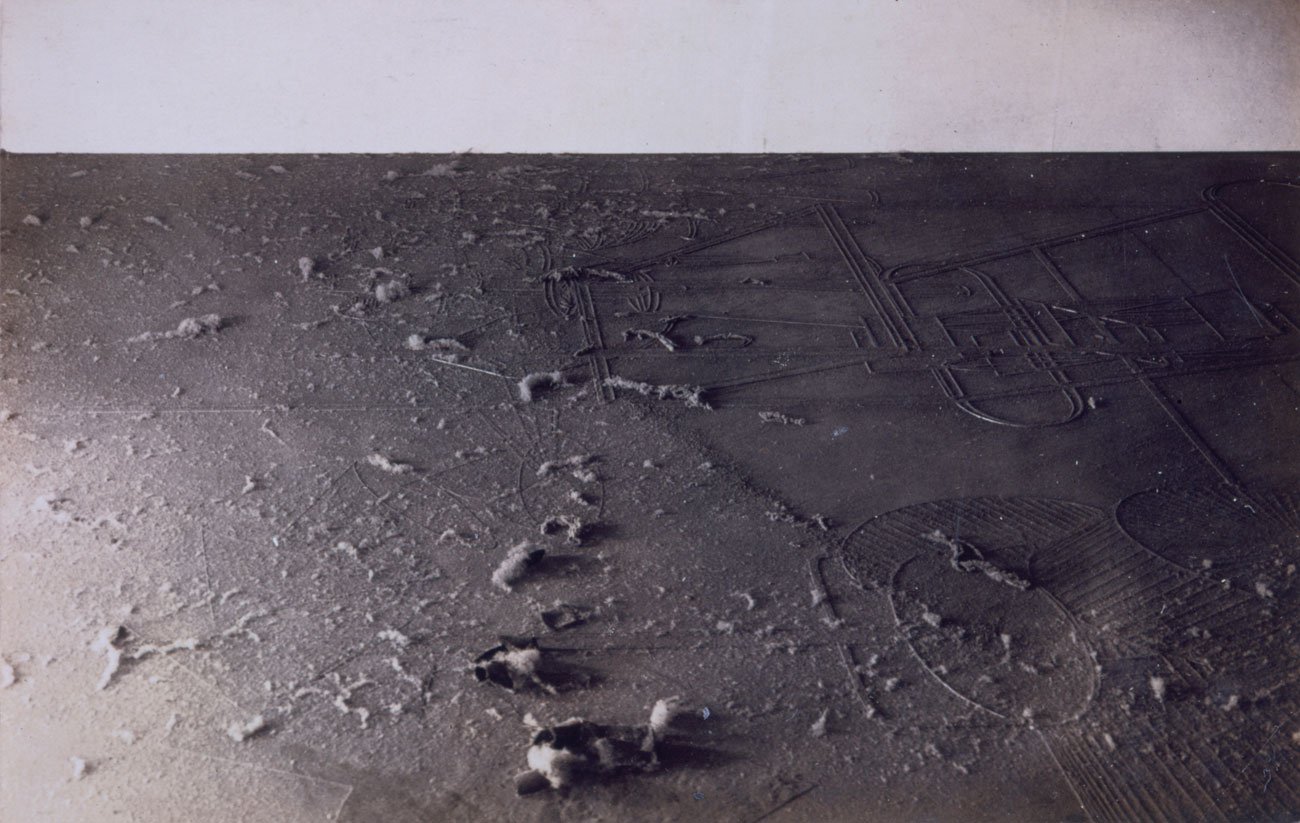
This engagement with site and architecture – undoubtedly a function of early critiques of art’s institutional status – meant that sculpture no longer had to be a permanent three-dimensional object; it could, for instance, be a configuration of debris on the studio floor, a dematerialised vapour released into the landscape, a dissected home reconfigured as gravity-defying walk-through sculpture, or a wrapped-up building. Bruce Nauman, Robert Barry, Gordon Matta-Clark, and Christo respectively, as well as Michael Heizer, Richard Long, Dennis Oppenheim, and Robert Smithson made extensive use of photography, collecting and taking hundreds of pictures as raw material for other pieces, such as collages and photomontages.
In the first decade of the twenty-first century, artists such as Zhang Dali, Cyprien Gaillard, and Rachel Whiteread have continued this dialogue through photographs contemplating examples of architecture and sculpture in states of dilapidation and entropy, remnants of a society in demise.
Daguerre’s Soup What Is Sculpture?
In 1932, Brassaï challenged the established notions of what is or is not sculpture when he photographed a series of found objects – tiny castoff scraps of paper that had been unconsciously rolled, folded, or twisted by restless hands, strangely shaped bits of bread, smudged pieces of soap, and accidental blobs of toothpaste, which he titled Involuntary Sculptures. In the 1960s and ’70s artists engaging with various forms of reproduction, replication, and repetition used the camera to explore the limits of sculpture. The word “sculpture” itself was somewhat modified, no longer signifying something specific but rather indicating a polymorphous objecthood. For instance, in 1971 Alina Szapocznikow produced Photosculptures, pictures of a new kind of sculptural object made of stretched, formless and distended pieces of chewing gum.
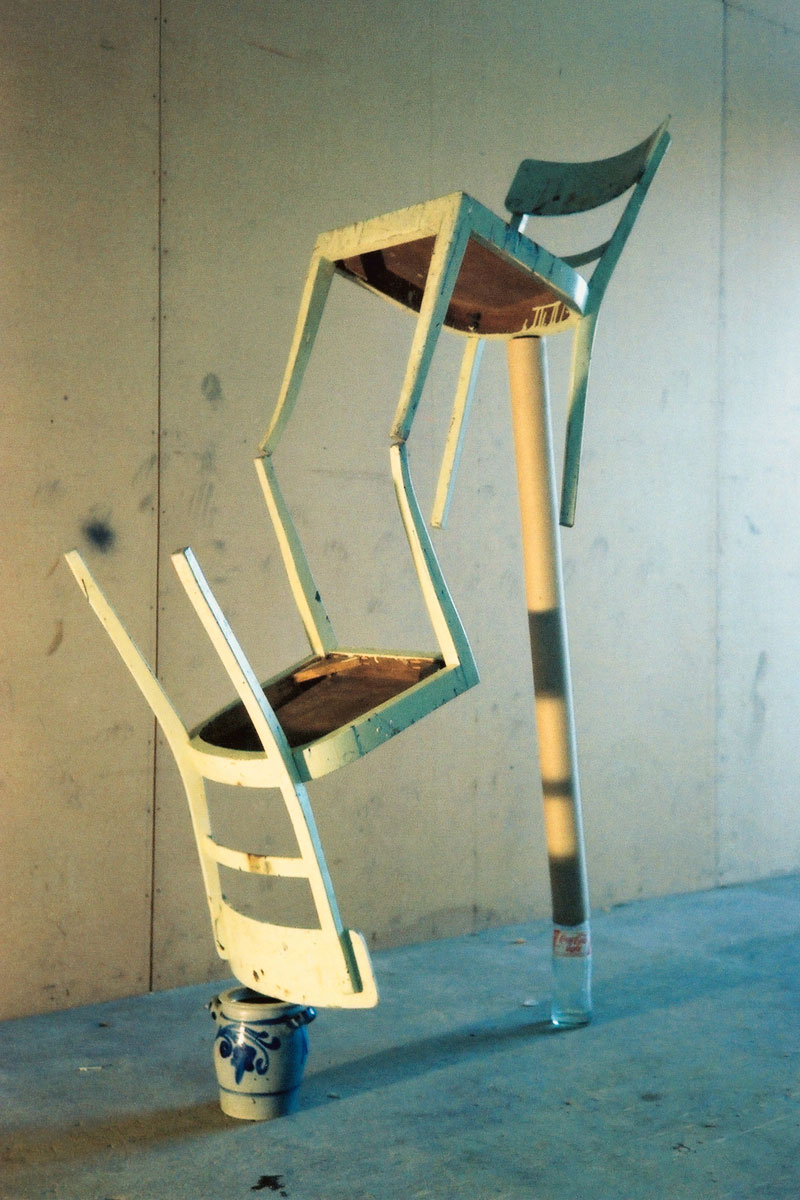
At the same time, Marcel Broodthaers concocted absurdist taxonomies in photographic works. In Daguerre’s Soup (1975), Broothaers hinted at the various fluids and chemical processes used by Louis Daguerre to invent photography in the nineteenth century by bringing into play experimental ideas about language and the realm of everyday objects. A decade later, the duo Fischli/Weiss combined photography with wacky, ingeniously choreographed assemblages of objects. Their tongue-in-cheek pictures of assemblages shot on the verge of collapse convey a sense of animated suspension and deadpan comedy.
In 2007, Rachel Harrison drew on Broodthaers’s illogical systems of classification and parodic collections of objects to produce Voyage of the Beagle, a series of pictures that collectively raise the question “What is sculpture?” Ranging from images of prehistoric standing stones to mass-produced Pop mannequins, and from topiaries to sculptures made by modernist masters, Harrison’s work constitutes an oblique quest for the origins and contemporary manifestations of sculpture.
The Pygmalion Complex Animate and Inanimate Figures
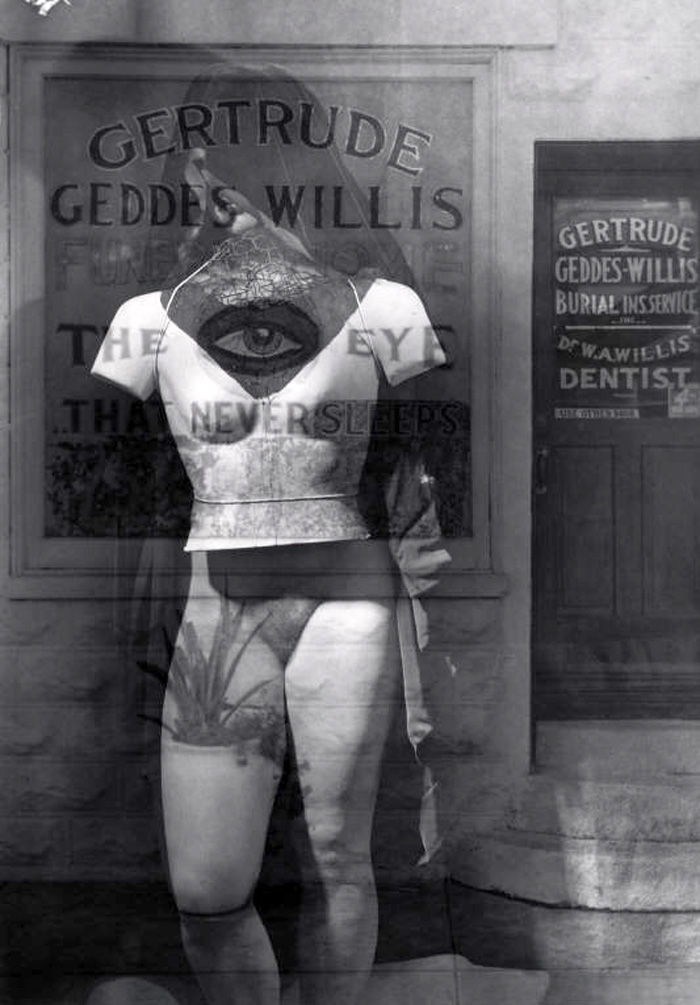
The subject of the animated statue spans the history of avant-garde photography. Artists interested in Surrealist tactics used the camera to tap the uncanniness of puppets, wax dummies, mannequins, and automata, producing pictures that both transcribe and alter appearances. Laura Gilpin explored this perturbing mix of stillness and living, alluring lifelikeness in her mysterious portrait George William Eggers (1926), in which Eggers, the director of the Denver Art Museum, keeps company with a fifteenth-century bust whose polychrome charm is enhanced by the glow of the candle he holds next to her face. So does Edward Weston, in his whimsical Rubber Dummies, Metro Goldwyn Mayer Studios, Hollywood (1939), showing two elastic dolls caught in a pas de deux on a movie-studio storage lot; and Clarence John Laughlin, in his eerie photomontage The Eye That Never Sleeps (1946), in which the negative of an image taken in a New Orleans funeral parlour has been overlaid with an image of a mannequin – one of whose legs, however, is that of a flesh-and-blood model.
The tension between animate object and inanimate female form lies at the crux of many of Man Ray’s photographs, including Black and White (1926), which provocatively couples the head of the legendary model, artist, and cabaret singer Alice Prin, a.k.a. Kiki of Montparnasse, with an African ceremonial mask. Hans Bellmer’s photographs of dismembered dolls, and the critical photomontages of Herbert Bayer, Hannah Höch, and Johannes Theodor Baargeld, probe the relationship between living figure and sculpture by invoking the unstable subjectivity and breakdown of anatomic boundaries in the aftermath of the Great War.
The Performing Body as Sculptural Object
In 1969, Gilbert & George covered their heads and hands in metallic powders to sing Flanagan and Allen’s vaudeville number “Underneath the Arches” in live performance. Declaring themselves living sculptures, they claimed the status of an artwork, a role they used photography to express. Charles Ray and Dennis Oppenheim, placing a premium on their training as sculptors, articulated the body as a prop that could be picked up, bent, or deployed instead of more traditional materials as a system of weight, mass, and balance.
In the radicalised climate of the 1970s, artists such as Eleanor Antin, Ana Mendieta, VALIE EXPORT, and Hannah Wilke engaged with the “rhetoric of the pose,” underscoring the key role of photography in the intersection of performance, sculpture and portraiture.
Other artists as diverse as Robert Morris, Claes Oldenburg, Otto Muehl, Bas Jan Ader, and Bruce Nauman, experimented with the plasticity of the body as sculptural material. Several of Nauman’s pictures from his portfolio Eleven Color Photographs (1966-1967 / 1970) spoof the classic tradition of sculpture. Yet the signature image of the group – Self-Portrait as a Fountain, in which a stripped-to-the-waist Nauman spews water from his mouth like a medieval gargoyle – is a deadpan salute to Marcel Duchamp’s Fountain (1917). In this spirit, Erwin Wurm’s series of One Minute Sculptures (1997-98) evoke gestural articulations in which the artist’s body is turned into a sculptural form. Wurm, like the other artists presented in this exhibition, focuses attention on what one can do with and through photography, using the camera not to document actions that precede the impulse to record them but as an agency that itself generates actions through its own presence.
Johannes Theodor Baargeld (Alfred Emanuel Ferdinand Gruenwald) (German, 1892-1927) Typische Vertikalklitterung als Darstellung des Dada Baargeld (Typical vertical mess as depiction of the Dada Baargeld) 1920 Photomontage 14 5/8 x 12 3/16″ (37.1 x 31cm) Kunsthaus Zürich, Grafische Sammlung
Many thankx to Rose Dahlsen and the Tate Modern for allowing me to publish the photographs in the posting. Please click on the photographs for a larger version of the image.
Philip-Lorca diCorcia (American, b. 1951) Head #23 2001 From the Head series
Examining photography as an invasive act immediately confronts the complacency with which we accept these invasions, encourage them even in our curiosity, and though it falters in parts and overwhelms in others (this is a huge exhibition), EXPOSED successfully addresses a number of the social, cultural and psychologically motivating factors behind these kinds of images – why we take them and why we look at them. Critical to this engagement is the wall text at the beginning, which states that most of the hundreds of photographs on display were taken without the subject’s knowledge. It is a distinctly creepy start.
Philip-Lorcia diCorcia’s Head series perhaps best embodies this conundrum. Visually they are not terribly shocking or even necessarily interesting. Theatrical lighting catches the head of someone in a crowd and the effect is of a staged encounter. In fact, these people, denominated variously as Head #23 or Head #4, were photographed without their knowledge by a series of hidden cameras, the flash triggering as they walked by. Famously, one of diCorcia’s unwitting targets tried to take legal action against him but the landmark ruling defended the artist and his right to self-expression over any right the subject might have over their own image. It is difficult to know which is worse – to be censored or to be spied upon.
Benjamin Lowy (American, b. 1979) Iraq Perspective II 2003-2007
US soldiers go on a late night raid with Iraqi Sunni Concerned citizens leading the way and identifying potential AQi targets. Due to a high level of IEDs in the area the company size raiding party walked 5 kilometres to the target in complete darkness, raided the target houses, detained questionable suspects and walked 5 kilometres back to waiting humvees.
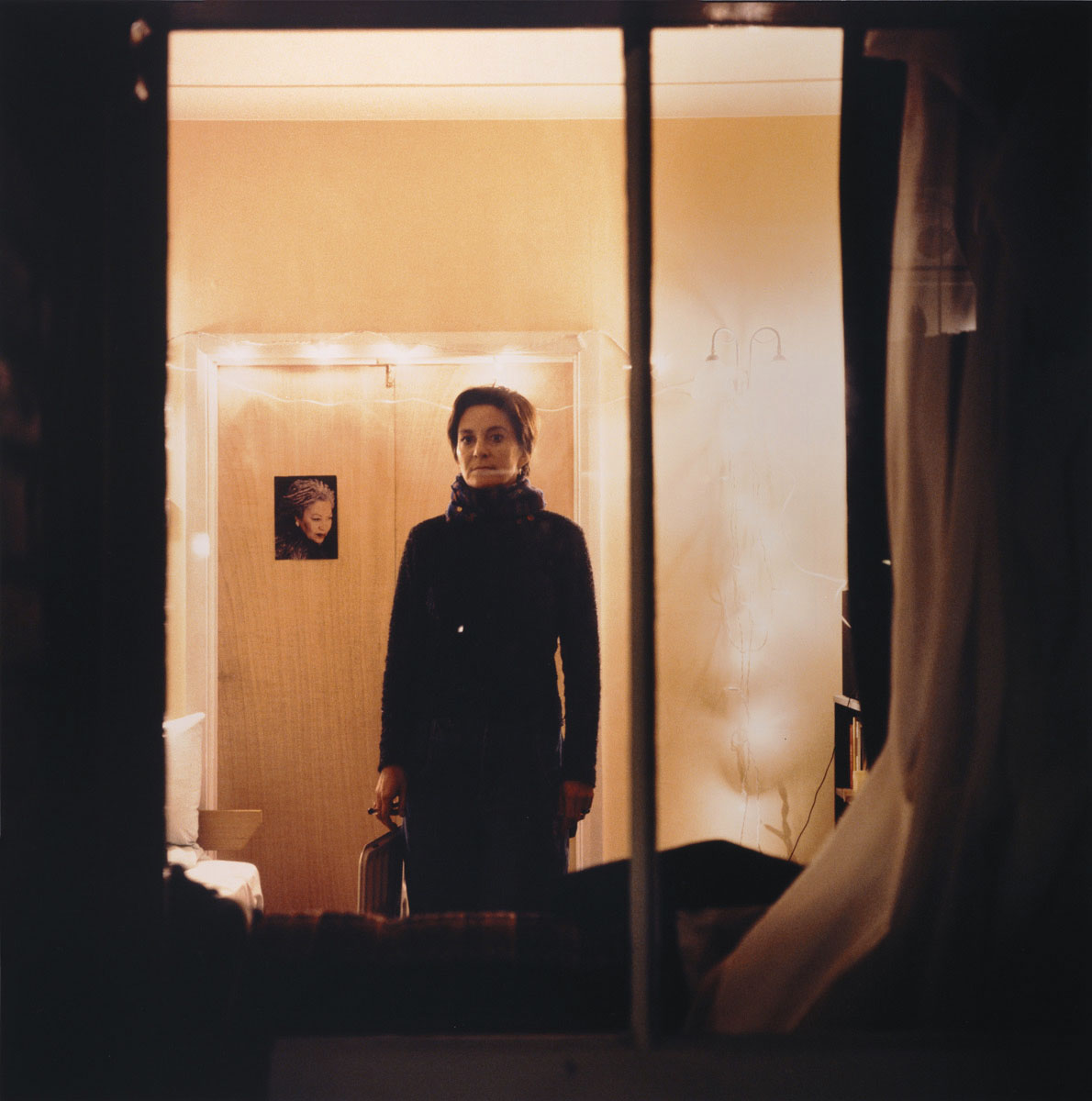
Sophie Calle (French, b. 1953) The Hotel, Room 47 (L’Hôtel, Chambre 47) 1981 2 works on paper, photographs and ink 2140 x 1420 mm Tate Presented by the Patrons of New Art through the Tate Gallery Foundation 1999
This is a two-part framed work comprising photographs and text. In the upper part, the title Room 47 is printed below a colour photograph of elegantly carved wooden twin head-boards behind a bed covered in rich brown satin. Below it, three columns of italic text are diary entries describing findings in the hotel room between Sunday 22 February 1981 and Tuesday 24. In the lower frame a grid of nine black and white photographs show things listed in the text above. This work is part of a project titled The Hotel, which the artist has defined:
“On Monday, February 16, 1981, I was hired as a temporary chambermaid for three weeks in a Venetian hotel. I was assigned twelve bedrooms on the fourth floor. In the course of my cleaning duties, I examined the personal belongings of the hotel guests and observed through details lives which remained unknown to me. On Friday, March 6, the job came to an end.” (Quoted in Calle, pp. 140-141.)
Each of the twelve rooms gave rise to a diptych of similar structure following the occupancy of one or more guests during the period of the artist’s employment at the hotel. Some rooms feature more than once as a second set of guests occupied them, giving rise to a total of twenty-one diptychs in the series. Calle’s descriptions of the hotel rooms and their contents combine factual documentation along with her personal response to the people whose lives she glimpsed by examining their belongings. Each text begins with the chambermaid / artist’s first entry into the room and a notation of which bed or beds have been slept in, with a description of the nightwear the guests have left. A list of objects usually follows, as the artist transcribes her activities in the room. Calle is unashamedly voyeuristic, reading diaries, letters, postcards and notes written or kept by the unknown guests, rummaging in suitcases, and looking into wardrobes and drawers. She sprays herself with their perfume and cologne, makes herself up using the contents of a vanity case, eats food left behind and salvages a pair of women’s shoes left in the bin. Outside the room, she listens at doors, recording the occupants’ conversations or any other sounds she may overhear, and even peers into a room when the floor-waiter opens the door to catch a glimpse of the unknown guests.
The absent occupants described in Room 47 are a family of four – two parents and two children – as revealed by their four pairs of slippers. Calle does not go through their suitcase, commenting: ‘I am already bored’. From their passports she discovers that the parents are a married couple from Geneva and she copies out four postcards one of them has written. Words on one of these hint at problems within the family.
Calle began her artistic projects in 1979 on returning to Paris after seven years’ travel abroad. Disorientated, she felt like a stranger in her own city, not knowing how to occupy her time. She started to follow random passers-by and spend her days as they did. Eventually she picked up the camera she had been experimenting with during her time abroad and photographed the strangers, writing diaristic notes of their movements. From this she has developed a particular way of working, collecting information about people who are absent and investigating her subjects like a detective. The Hotel follows directly from a project the artist undertook the previous year entitled Suite Venetienne 1980, which evolved from a chance encounter with a man she had been following in Paris. He told her he was going to Venice, so she followed him there in disguise, documenting her observations. After a year of planning and waiting, she returned to Venice in 1981 as a chambermaid.
The Hotel diptychs were produced in an edition of four in English and four in French. Tate’s copy of Room 47 (22 February) is the first in the English edition. Another version of Room 47 exists for the period 2-6 March.
Elizabeth Manchester June 2005
Text from the Tate website [Online] Cited 26/12/2019
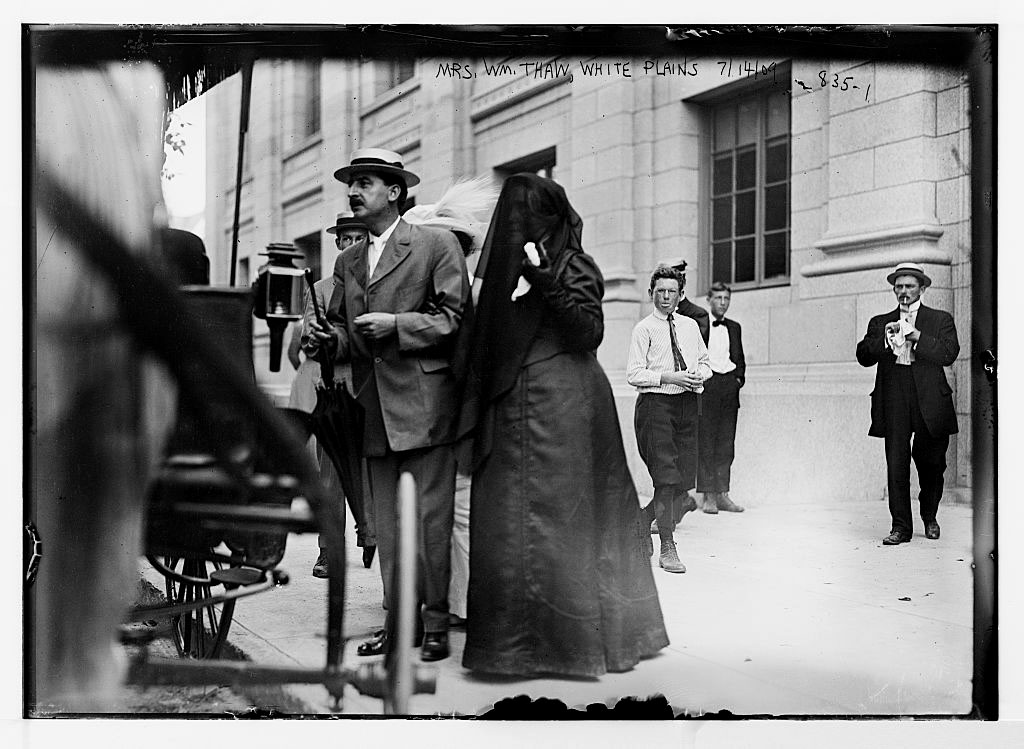
Unknown photographer Bain News Service, publisher Mrs. Wm. Thaw, veiled, on street, White Plains, N.Y. 1909 From a glass negative Library of Congress Prints and Photographs Division Washington, D.C.
Tom Howard (American, 1894-1961) [Electrocution of Ruth Snyder, Sing Sing Prison, Ossining, New York] 1928 Gelatin silver print Collection SFMOMA, Accessions Committee Fund purchase
In 1925, Ruth Snyder, a housewife from Queens, New York, took a lover, Judd Gray, a corsetmaker from upstate. Already married to Albert Snyder, an arts editor at MotorBoating magazine, she hid the affair for nearly three years. But on March 12, 1927, she and Gray planned a murder. After taking out a forged insurance policy, the two killed Ruth’s husband and staged a burglary scene. It didn’t take long for law enforcement to connect the dots, and a few months later, Gray and Snyder found themselves charged with first degree murder. The court case was front page news and both Ruth and Judd found themselves constantly photographed for ever-evolving stories. Sing Sing, not one to change policy for press, reinstated that no photographers were to be present at the execution. But the public wanted to see.
The New York Daily News knew that the prison was familiar with many journalists from their staff, so they hired someone from out of town, Tom Howard, a then-unknown local photographer from the Chicago Tribune. Knowing he would never be allowed in with a camera, Howard strapped a single-use camera to his right ankle and wired a trigger release up his pant leg. Remarkably, he was allowed in. From across the room, Howard pointed his toe at the chair and took but one photo as Snyder took her last breaths.
The camera was rushed to the city and the film developed overnight. Editors and writers marveled at what was to be one of the most shocking photographs ever made: Snyder in the chair, the legs of the prison guard to the right. The image, shot on an angle, was cropped and published immediately with the headline: Dead!
The black-and-white image was shocking to the U.S. and international public alike. There sat a 32-year-old wife and mother, killed for killing. Her blurred figured seemed to evoke her struggle, as one can imagine her last, strained breaths. Never before had the press been able to attain such a startling image – one not made in a faraway war, one not taken of the aftermath of a crime scene, but one capturing the very moment between life and death here at home.
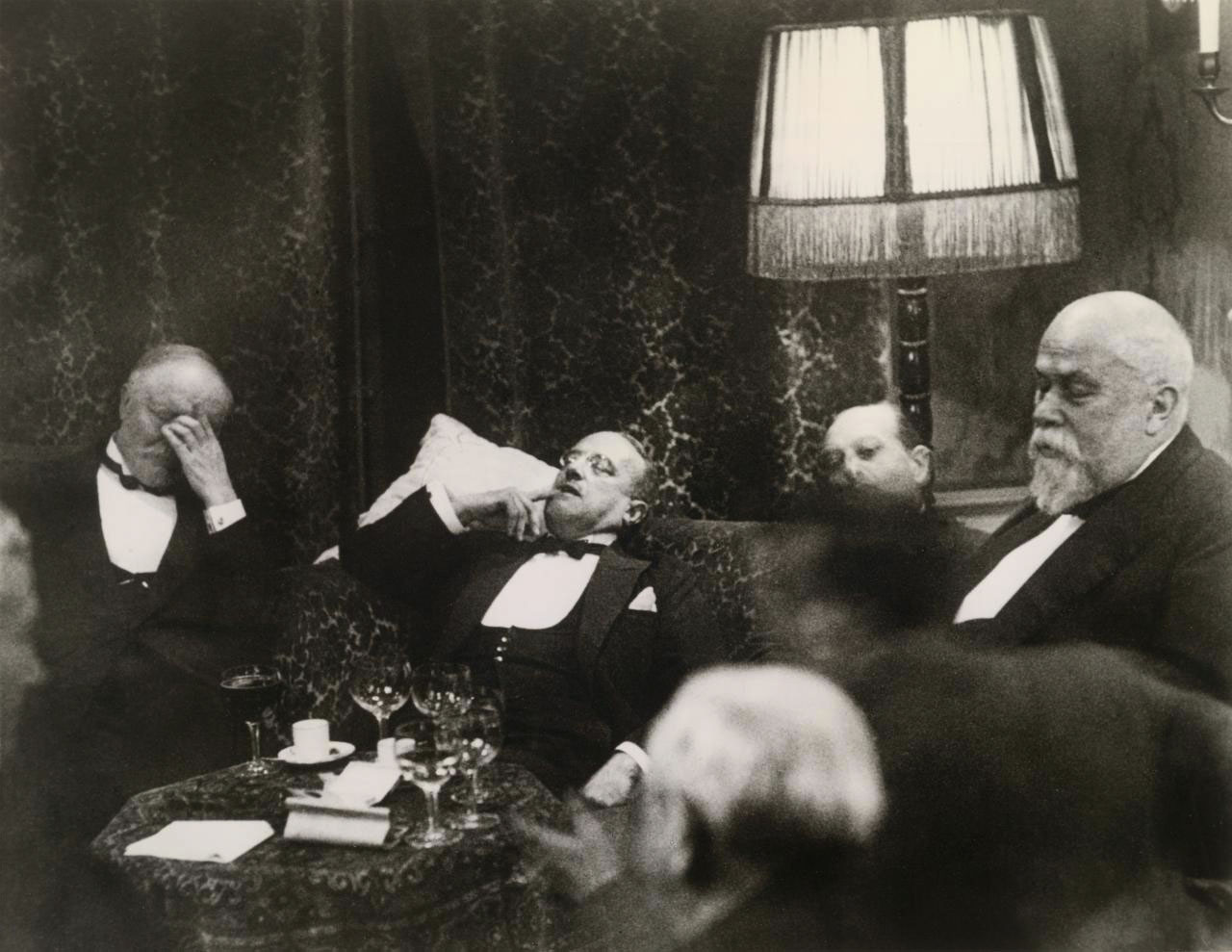
Erich Salomon (German Jewish, 1886-1944) Hague Conference (Second Hague Conference on Reparations, January 1930, in the early morning hours) 1930 Promised gift of Paul Sack to the Sack Photographic Trust of the San Francisco Museum of Modern Art
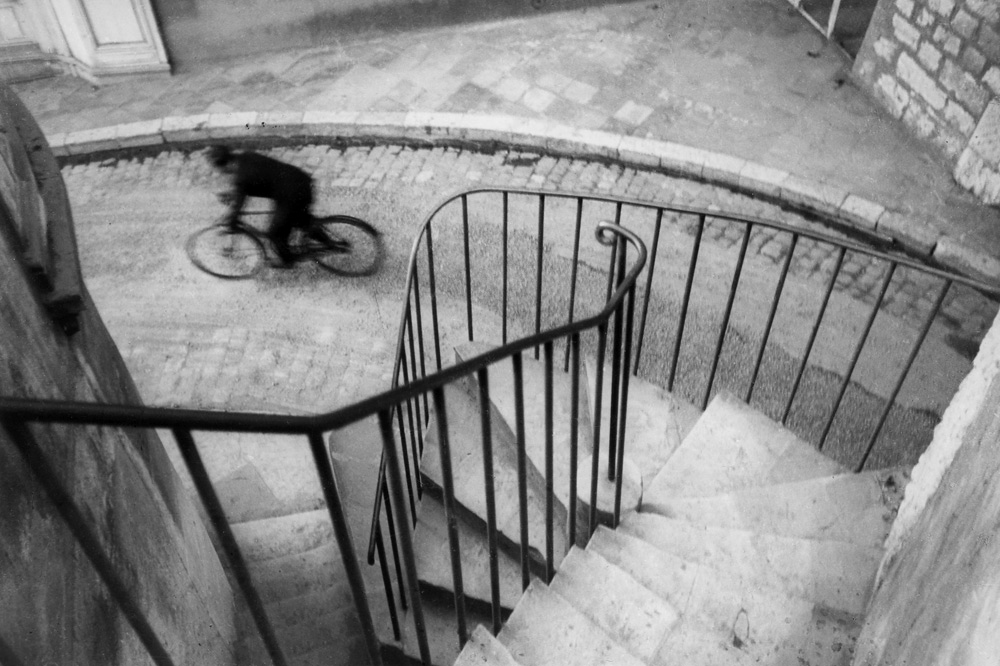
Henri Cartier Bresson (French, 1908-2004) Hyeres, France 1932 Gelatin silver print
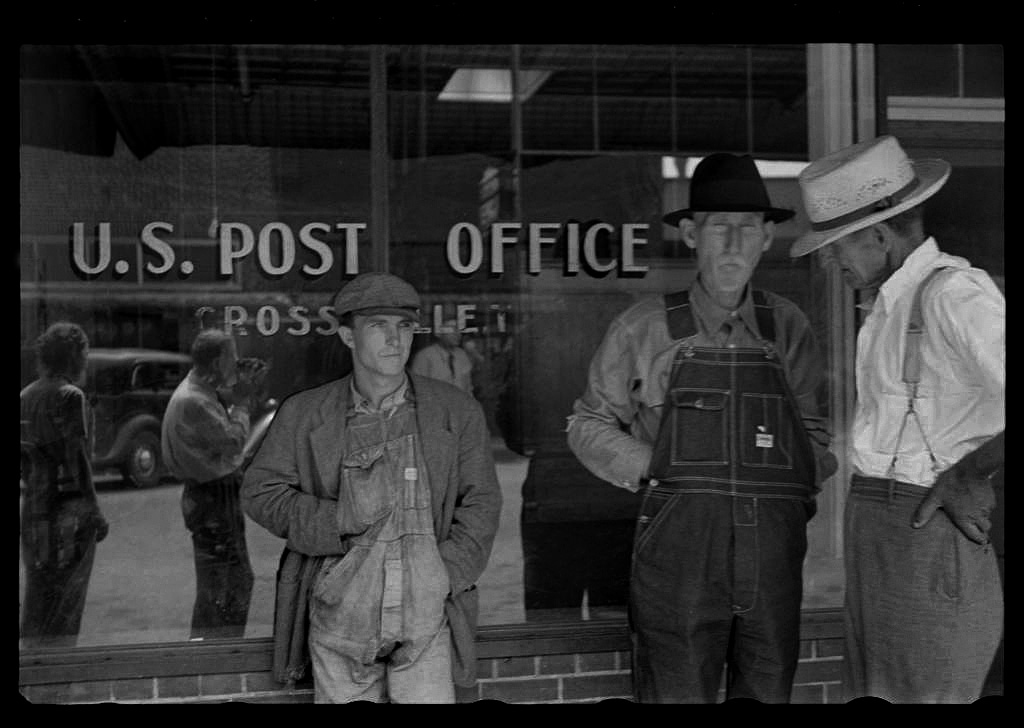
Ben Shah (American, 1898-1969) Post Office, Crossville, Tennesse 1937 Gelatin silver print
Ben Shahn visible using his right-angled lens in the window reflection
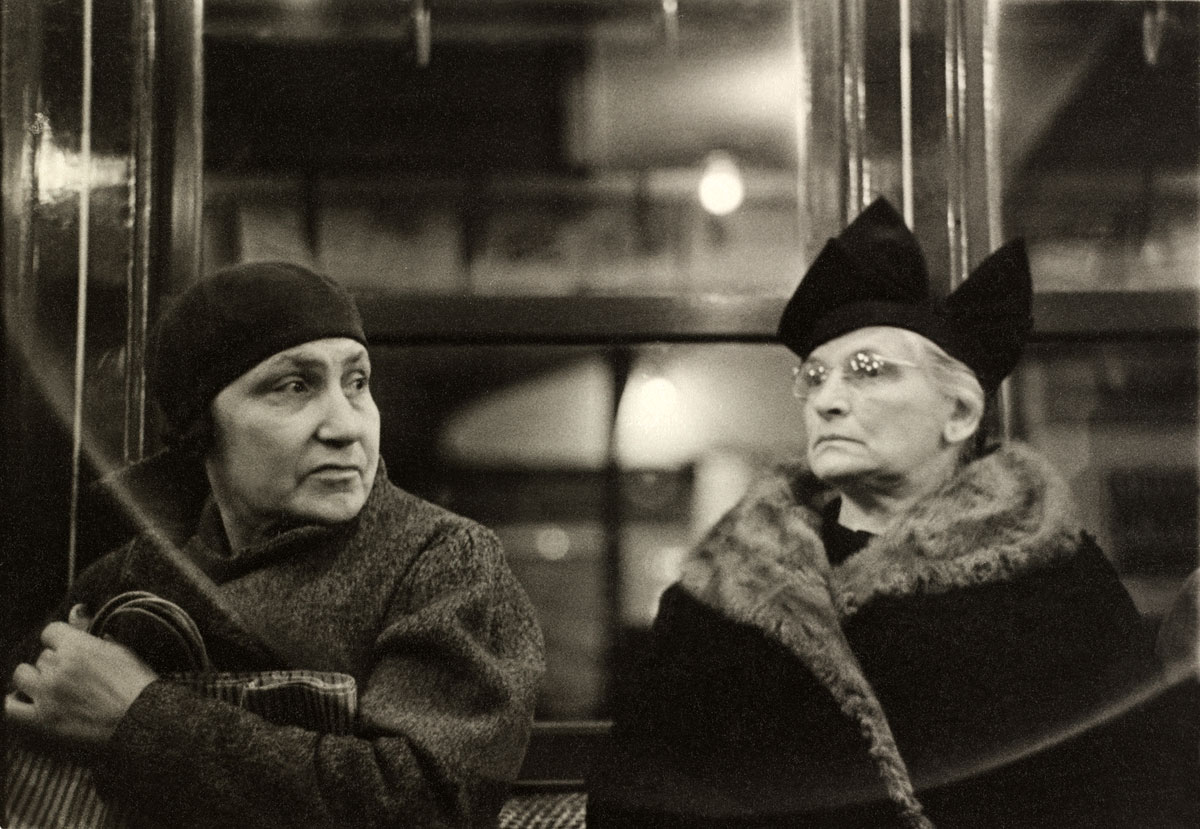
Walker Evans (American, 1903-1975) Subway Passengers, New York 1938 Gelatin silver print
Walker Evans (American, 1903-1975) Subway Passengers, New York 1938-1941 Gelatin silver print
Weegee (Arthur H. Fellig) (American, 1899-1968) Their First Murder Before 1945 Gelatin silver print
“Brooklyn School Children see Gambler Murdered in Street Pupils were leaving P.S. 143, [Sixth Ave. and Roebling St.] in the Williamsburg section of Brooklyn, at 3:15 yesterday when Peter Mancuso, 22, described by police as a small time gambler, pulled up in a 1931 Ford at a traffic light a block from the school. Up to the car stepped a waiting gunman, who fired twice and escaped through the throng of children. Mancuso, shot through the head and heart, struggled to the board and collapsed dead on the pavement. Above are some of the spectators. The older woman is Mancuso’s aunt, who lives in the neighborhood, and the boy tugging at the hair of the girl in front of him is her son, hurrying away from her. Below is what they saw as a priest, flanked by an ambulance doctor and a detective, said the last rites of the Church over the body.” PM Daily, October 9, 1941, Vol. II, No. 82, p. 15
Lee Friedlander (American, b. 1934) New York City 1966 Gelatin silver print
Vito Acconci (Italian, 1940-2017) Following Piece 1969 Gelatin silver prints
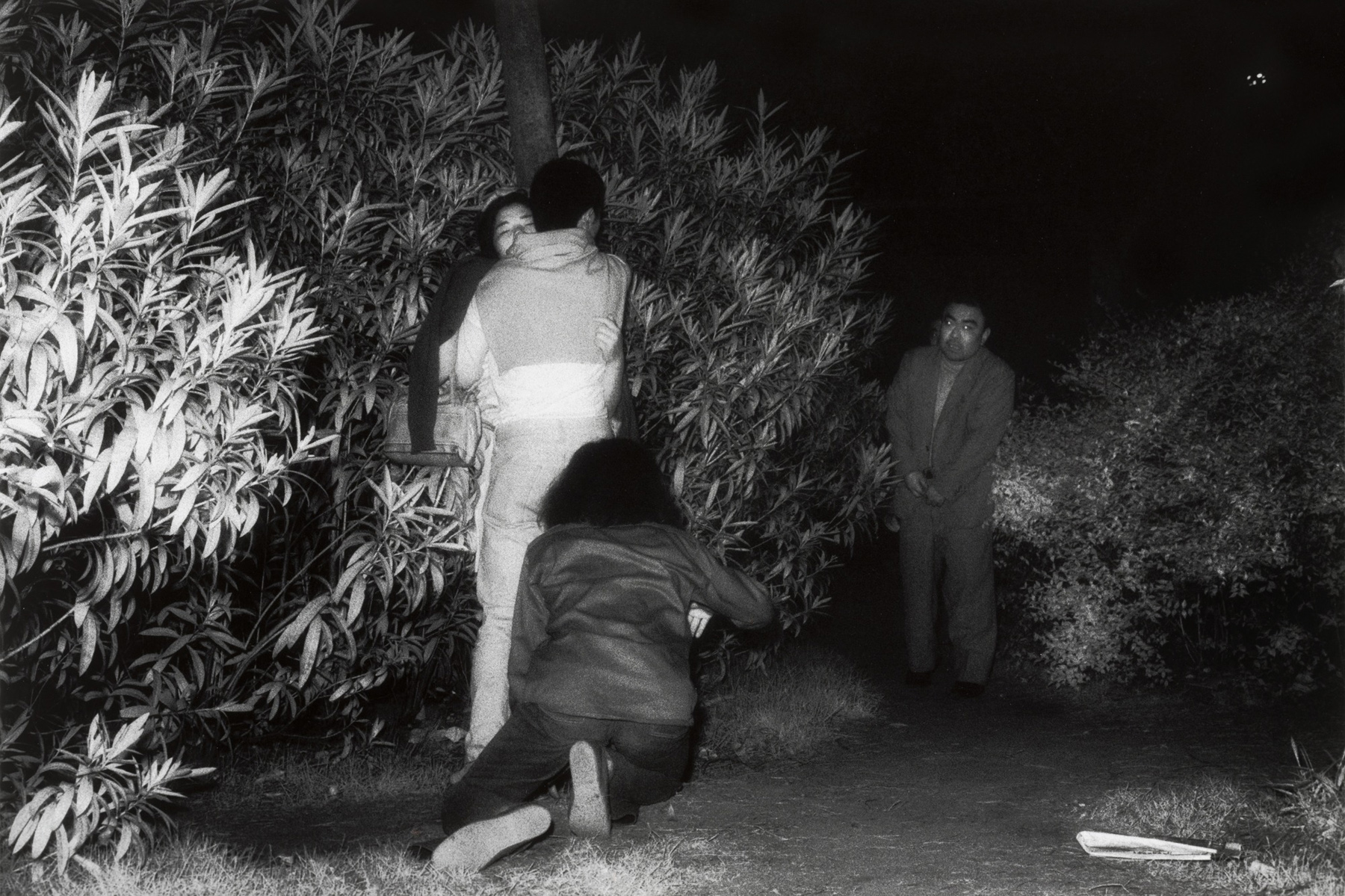
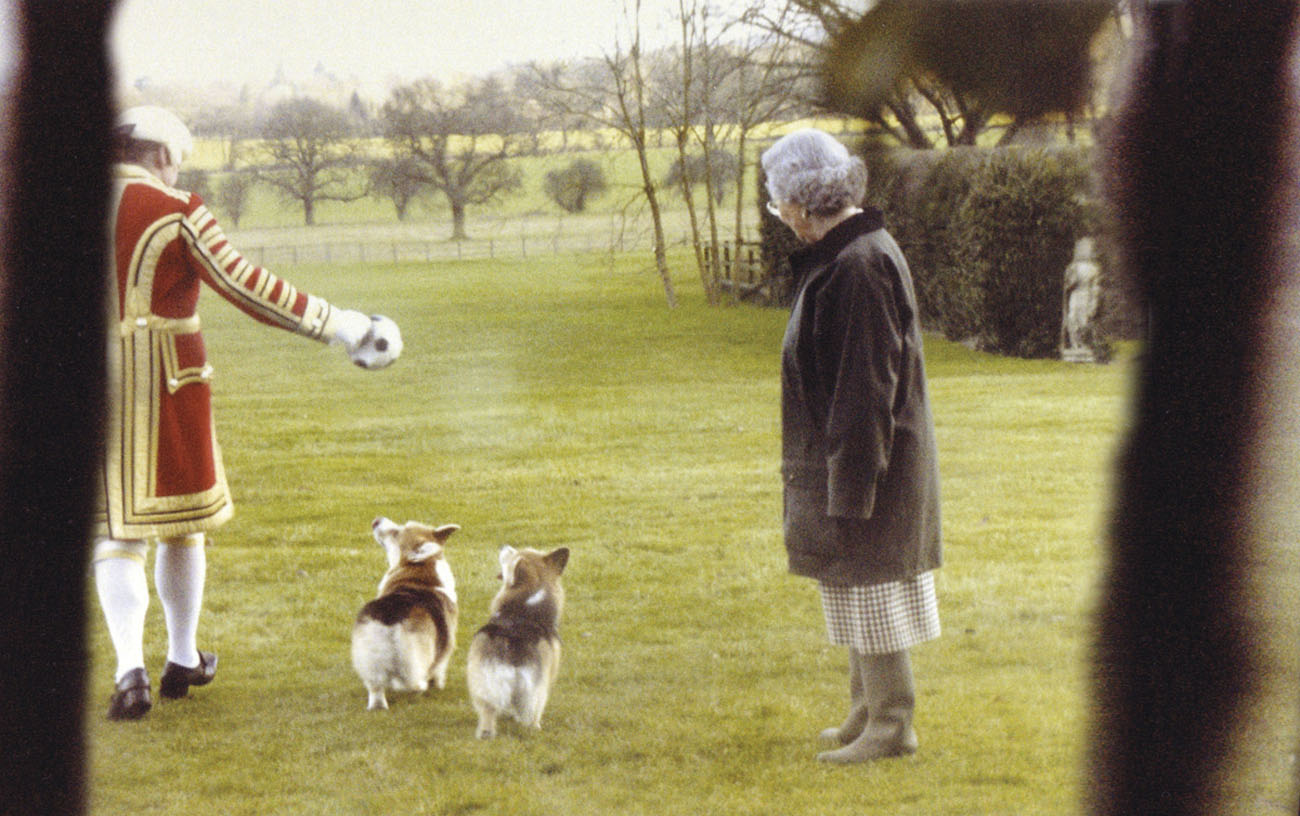
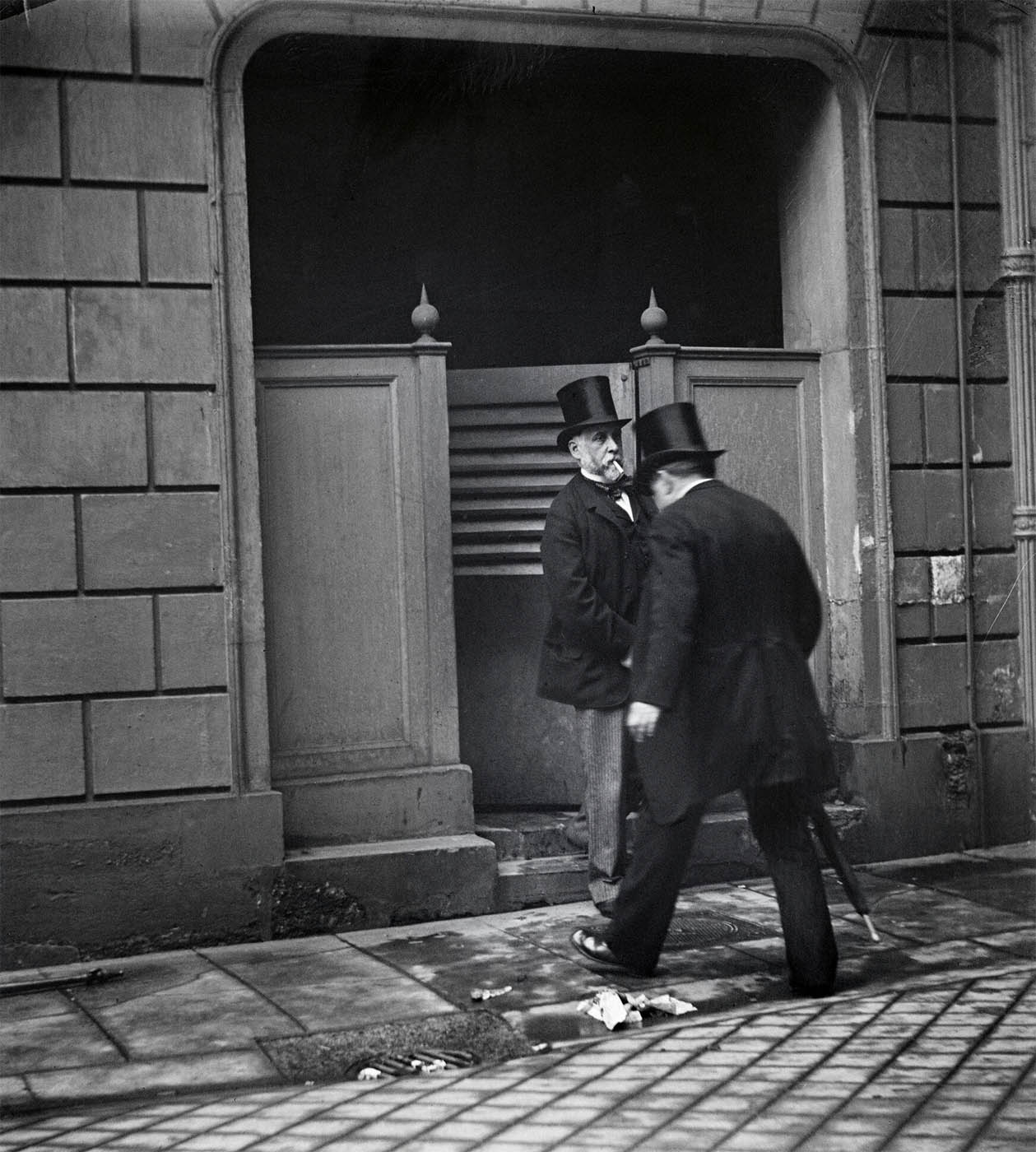
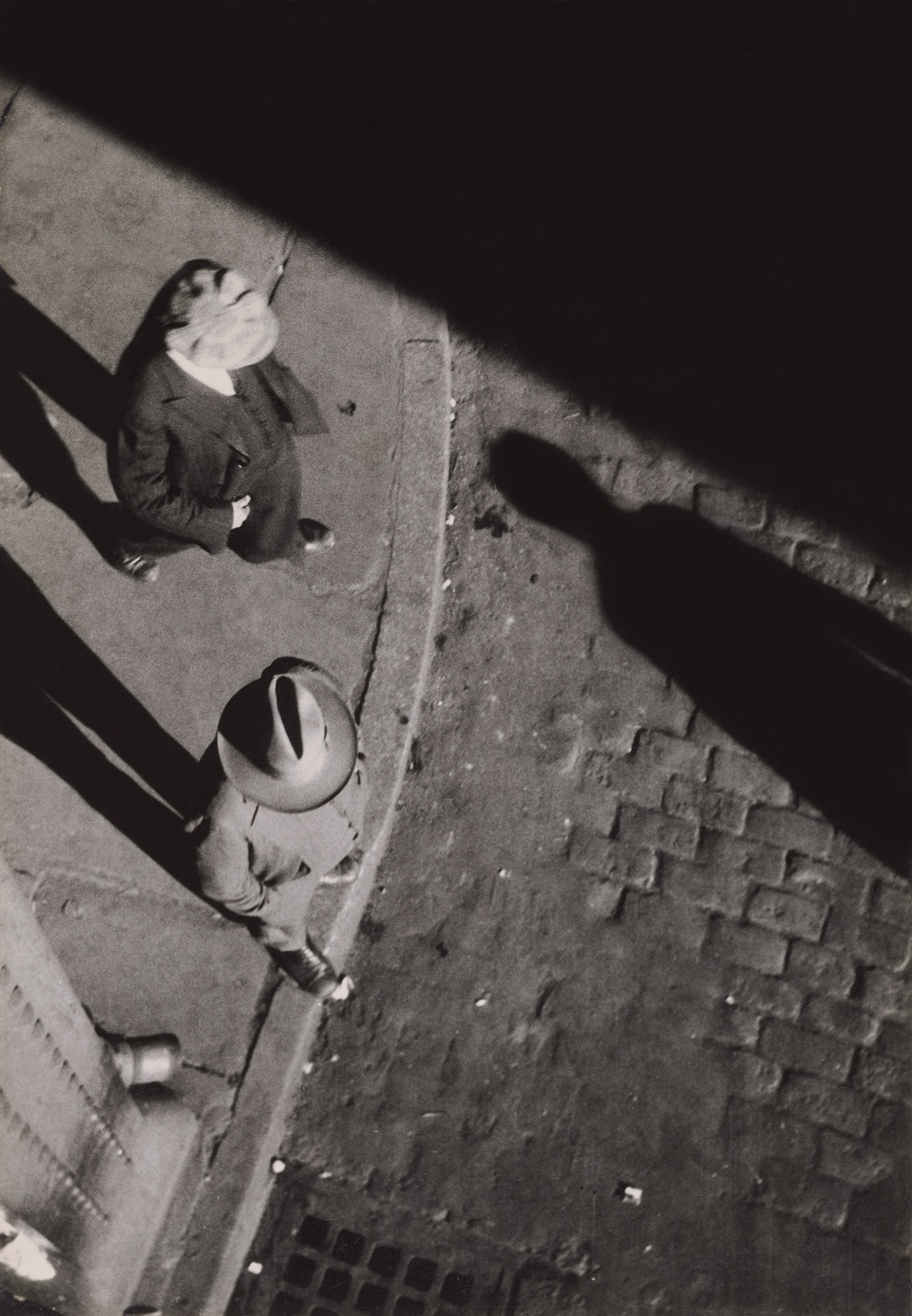
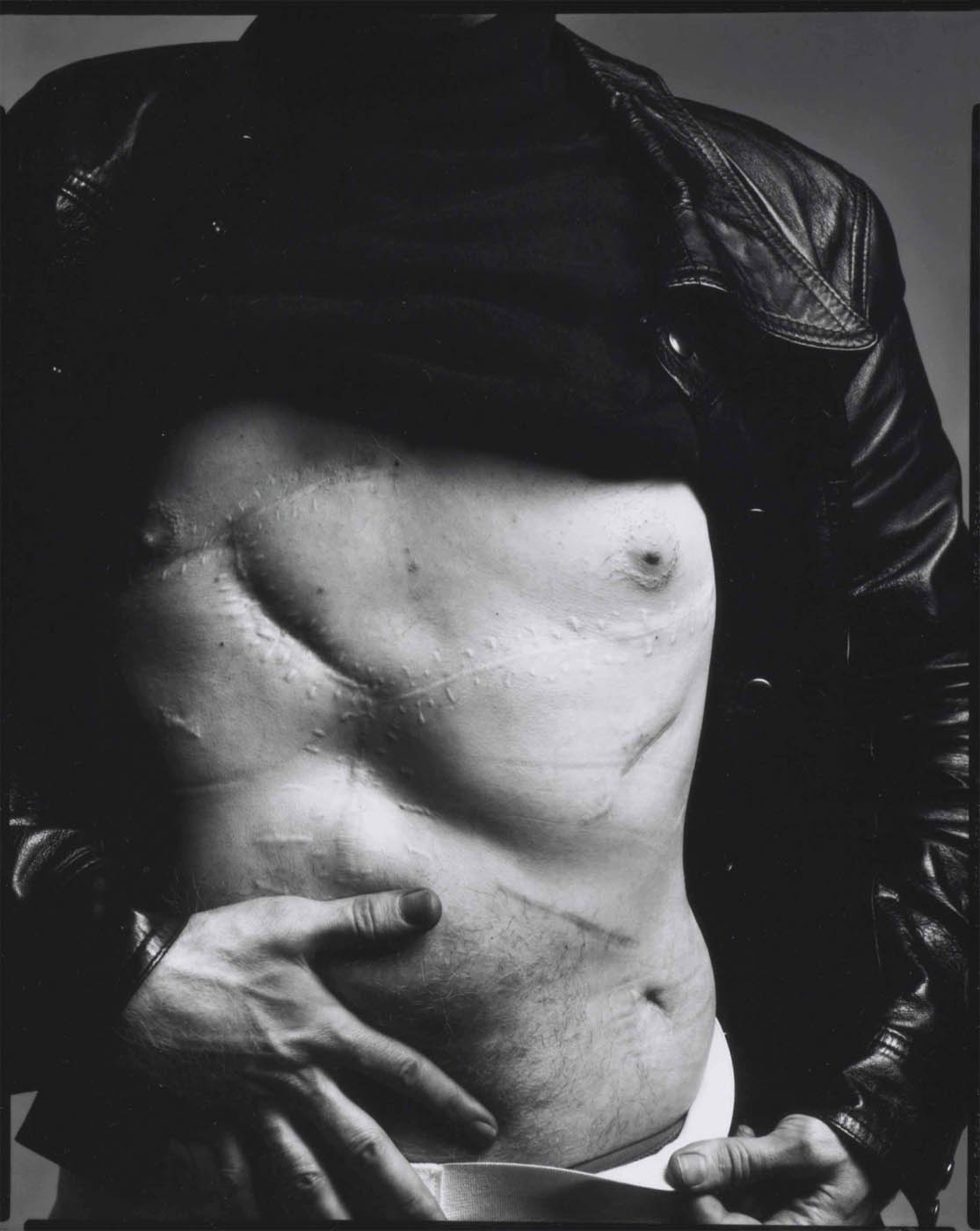
Exposed offers a fascinating look at pictures made on the sly, without the explicit permission of the people depicted. With photographs from the late nineteenth century to present day, the pictures present a shocking, illuminating and witty perspective on iconic and taboo subjects.
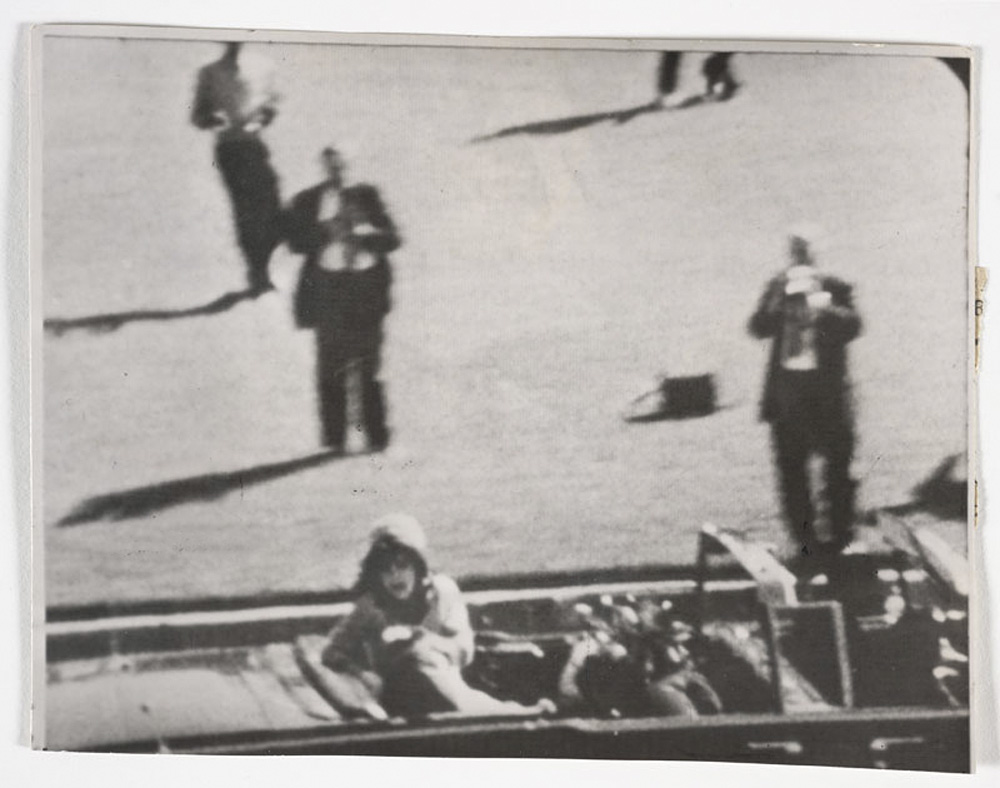
Beginning with the idea of the ‘unseen photographer’, Exposed presents 250 works by celebrated artists and photographers including Brassaï’s erotic Secret Paris of the 1930s images; Weegee’s iconic photograph of Marilyn Monroe; and Nick Ut’s reportage image of children escaping napalm attacks in the Vietnam War. Sex and celebrity is an important part of the exhibition, presenting photographs of Liz Taylor and Richard Burton, Paris Hilton on her way to prison and the assassination of JFK. Other renowned photographers represented in the show include Guy Bourdin, Henri Cartier-Bresson, Philip Lorca DiCorcia, Walker Evans, Robert Frank, Nan Goldin, Lee Miller, Helmut Newton and Man Ray.
The UK is now the most surveyed country in the world. We have an obsession with voyeurism, privacy laws, freedom of media, and surveillance – images captured and relayed on camera phones, YouTube or reality TV.
Much of Exposed focuses on surveillance, including works by both amateur and press photographers, and images produced using automatic technology such as CCTV. The issues raised are particularly relevant in the current climate, with topical debates raging around the rights and desires of individuals, terrorism and the increasing availability and use of surveillance. Exposed confronts these issues and their implications head-on.
Text from the Tate Modern website [Online] Cited 21/09/2010 no longer available online
Kohei Yoshiyuki (Japan, b. 1946) Untitled 1971 From the series The Park Gelatin silver print
Kohei Yoshiyuki (Japan, b. 1946) Untitled 1971 From the series The Park Gelatin silver print
Sandra Phillips on Surveillance – Exposed at Tate Modern
SFMOMA’s Curator of Photography Sandra Phillips describes how contemporary artists like Sophie Calle and Benjamin Lowry have started to talk back to surveillance.
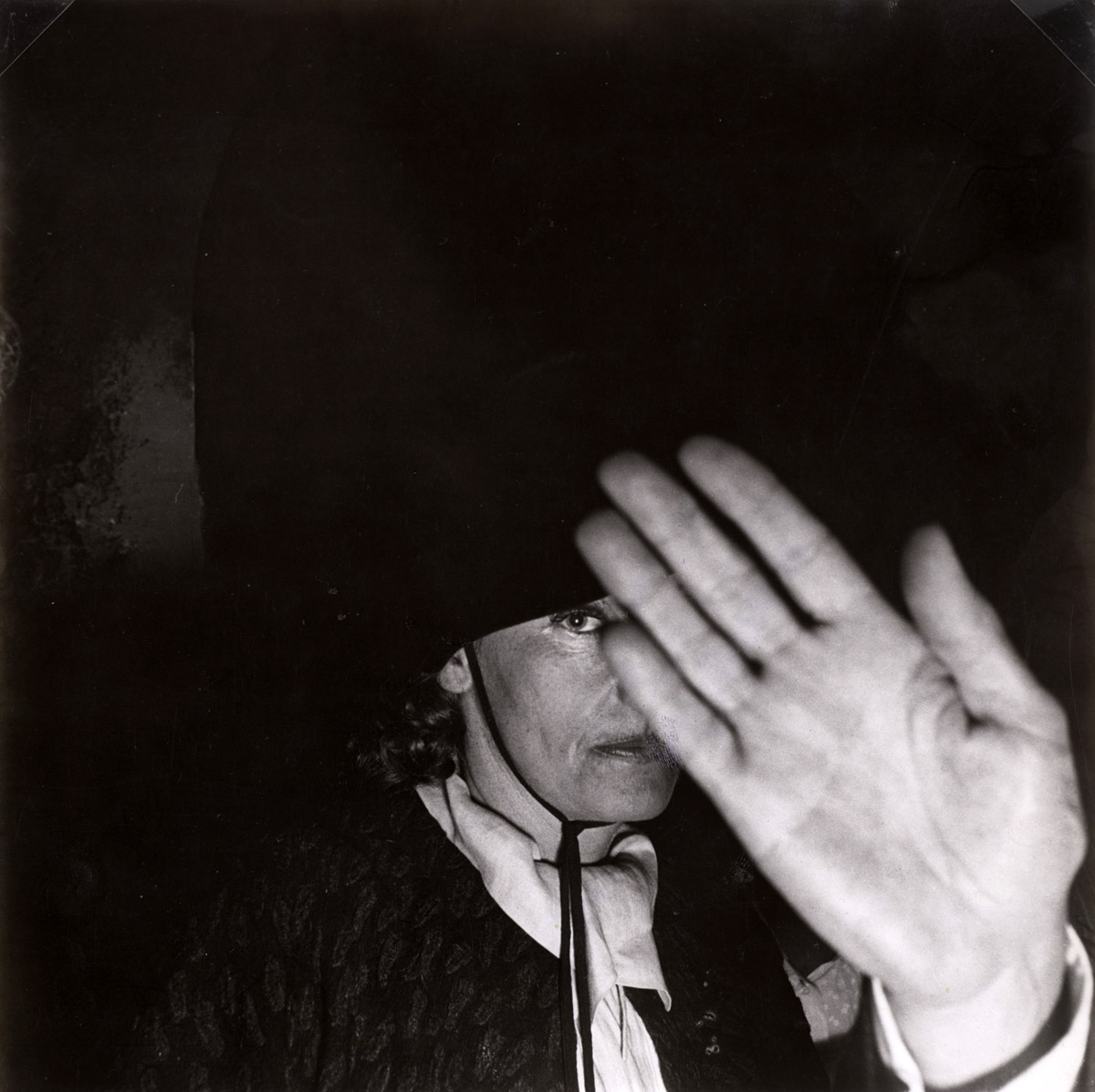
Ronald Edward Galella (January 10, 1931 – April 30, 2022) was an American photographer, known as a pioneer paparazzo. Dubbed “Paparazzo Extraordinaire” by Newsweek and “the Godfather of the U.S. paparazzi culture” by Time magazine and Vanity Fair, he is regarded by Harper’s Bazaar as “arguably the most controversial paparazzo of all time”. He photographed many celebrities out of the public eye and gained notice for his feuds with some of them, including Jacqueline Onassis and Marlon Brando. Despite the numerous controversies and claims of stalking, Galella’s work was praised and exhibited in art galleries worldwide.
The face in the paparazzi image above is actually The Face: Greta Garbo. One of the most famous and admired women in the world, Garbo became a New York recluse after retiring from films at the beginning of the 1940s. Sightings of her were rare, and this 1950s image captures the conflict between a movie star’s public persona and private life. Now older and with her face obscured, Garbo is unrecognisable, but once understood to be her it becomes a contrasting reference to all those images of her as an icon of beauty and stardom.
Many thankx to Monica Cullinane and the Irish Museum of Modern Art for allowing me the reproduce photographs from the exhibition. Please click on the photographs for a larger version of the image.
Marcus
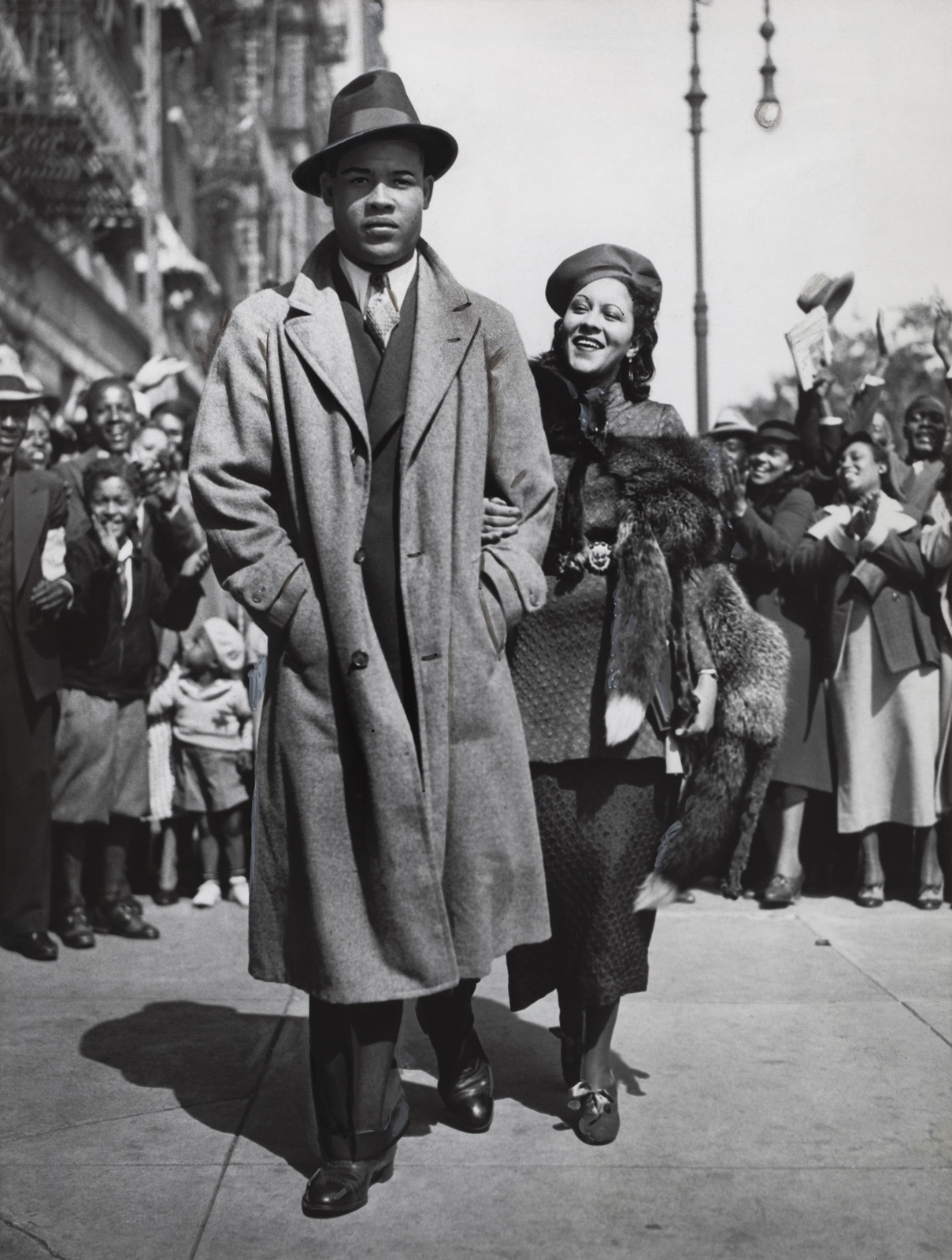
Times Wide World Photos (American, active 1919-1941) Mr. and Mrs. Joe Louis Out for a Stroll September 25, 1935 Gelatin silver print 8 3/4 x 6 5/8″ (22.2 x 16.8cm) The Museum of Modern Art, New York. The New York Times Collection
Cindy Sherman (American, b. 1954) Untitled Film Still #21 1978 Gelatin silver print 7 1/2 x 9 1/2″ (19.1 x 24.1cm) The Museum of Modern Art, New York Horace W. Goldsmith Fund through Robert B. Menschel
Each of Sherman’s sixty-nine Untitled Film Stills (1977-1980), presents a female heroine from a movie we feel we must have seen. Here, she is the pert young career girl in a trim new suit on her first day in the big city. Among the others are the luscious librarian (#13), the chic starlet at her seaside hideaway (#7), the ingenue setting out on life’s journey (#48), and the tough but vulnerable film noir idol (#54). To make the pictures, Sherman herself played all of the roles or, more precisely, played all of the actresses playing all of the roles. In other words, the series is a fiction about a fiction, a deft encapsulation of the image of femininity that, through the movies, took hold of the collective imagination in postwar America – the period of Sherman’s youth, and the crucible of our contemporary culture.
In fact, only a handful of the Untitled Film Stills are modelled directly on particular roles in actual movies, let alone on individual stills of the sort that the studios distribute to publicise their films. All the others are inventive allusions to generic types, and so our sure sense of recognition is all the more telling. It tells us that, knowingly or not, we have absorbed the movie culture that Sherman invites us to examine as a powerful force in our lives.
Publication excerpt from The Museum of Modern Art, MoMA Highlights, New York: The Museum of Modern Art, revised 2004, originally published 1999, p. 295.
Diane Arbus (American, 1923-1971) Woman with Veil on Fifth Avenue, N.Y.C. 1968 Gelatin silver print The Museum of Modern Art, New York
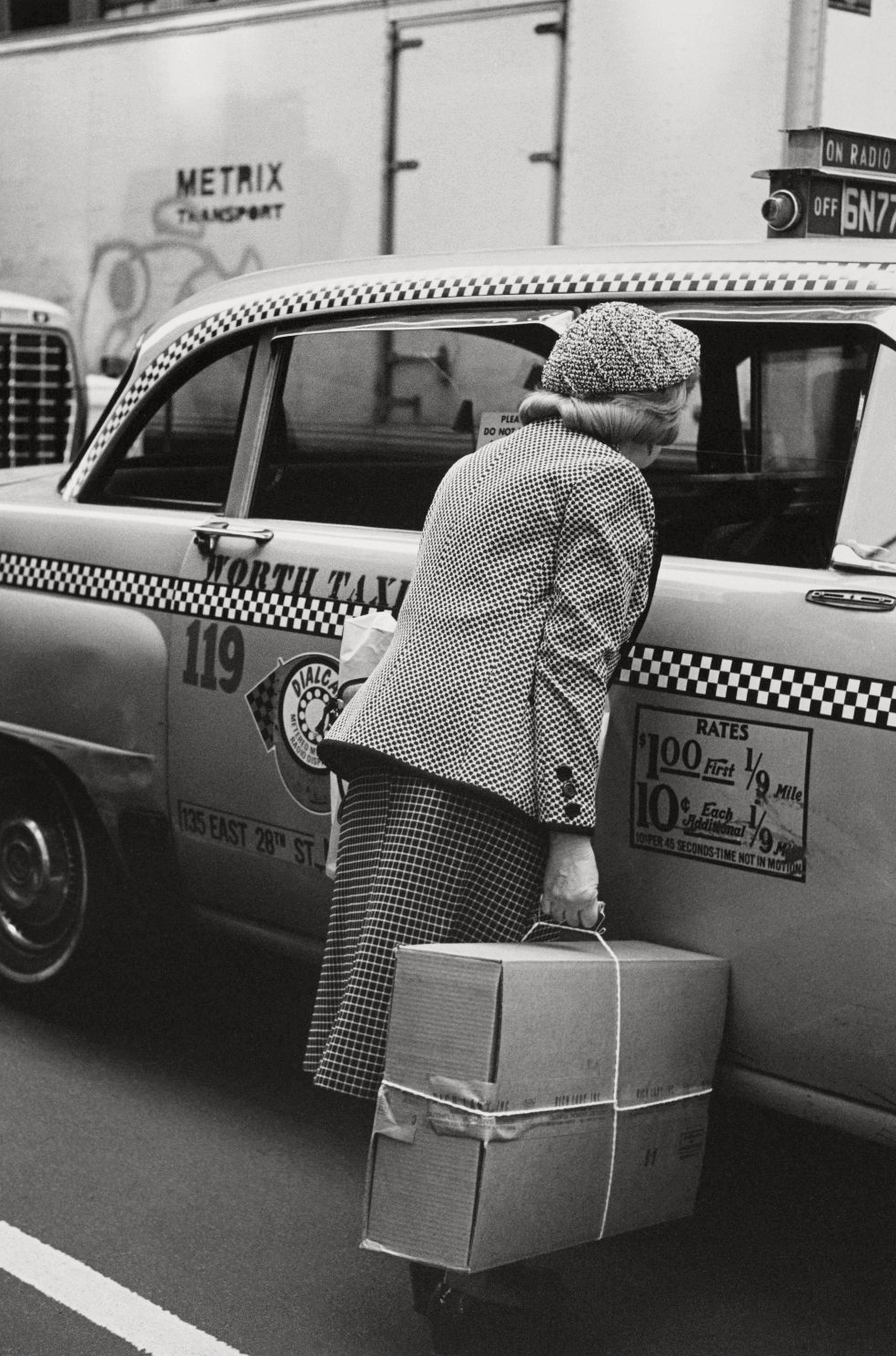
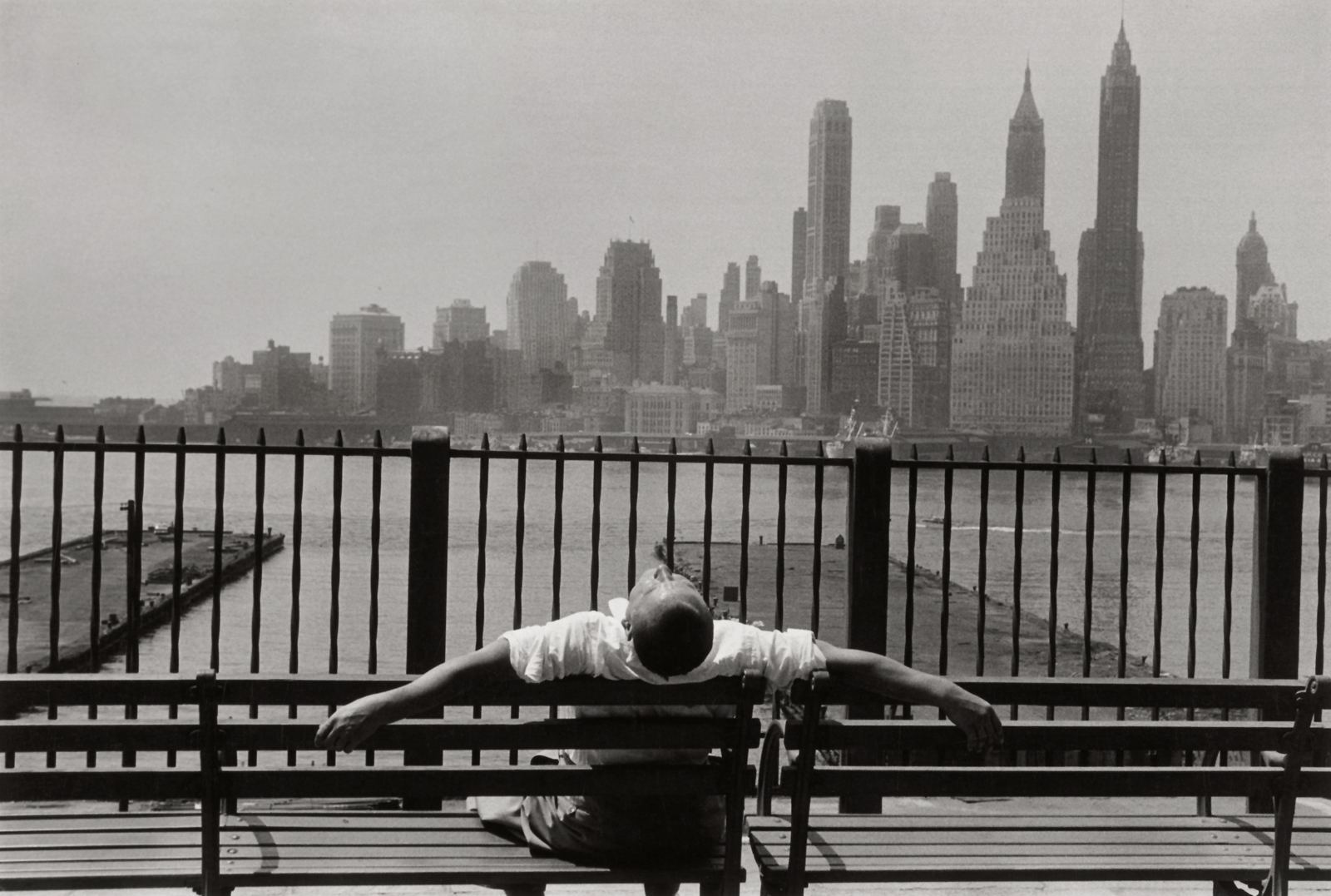
An exhibition of 145 masterworks from the photographic collection of The Museum of Modern Art (MoMA) in New York , celebrating the architecture and life of that unique city from the 1880s to the present day, opens to the public at the Irish Museum of Modern Art on Wednesday, November 25, 2009. “Picturing New York” draws on one of the most important collections of modern and contemporary photography in the world to celebrate the long tradition of photographing New York, a tradition that continues to frame and influence our perception of the city to this day. Presenting the work of some 40 photographers including such influential figures as Berenice Abbott, Diane Arbus, Garry Winogrand, Lisette Model, Alfred Stieglitz and Cindy Sherman, the exhibition features both the city and its inhabitants, from its vast, overwhelming architecture to the extraordinary diversity of its people.
The exhibition reflects photographers’ ongoing fascination with New York, a city whose vitality, energy, dynamism and sheer beauty have also inspired innumerable artists, writers, filmmakers and composers. New York’s unique architecture is explored, from elegant skyscrapers to small shop fronts; likewise the life of its citizens, from anonymous pedestrians to celebrities and politicians. The city’s characteristic optimism is caught time and again in these images, even in those taken in difficult times. Together, they present a fascinating history of the city over more than a century, from Jacob Riis’s 1888 view of bandits on the Lower East Side to Michael Wesely’s images taken during the recent expansion at MoMA.
The photographs reveal New York as a city of contrasts and extremes through images of towering buildings and tenements, party-goers and street-dwellers, hurried groups and solitary individuals. “Picturing New York” suggests the symbiosis between the city’s progression from past to present and the evolution of photography as a medium and as an art form. Additionally, these photographs of New York contribute significantly to the notion that the photograph, as a work of art, is capable of constructing a sense of place and a sense of self.
“I am thrilled that ‘Picturing New York’ will be presented in Dublin – a city whose vitality, grit, and vibrant artistic community resonates with that of New York ,” said Sarah Meister, Curator in MoMA’s Department of Photography, who organised the exhibition. “In addition, the layout and scale of the galleries at IMMA will allow this story – of New York and photography becoming modern together throughout the twentieth century – to unfold as if chapter by chapter.”
Press release from the Irish Museum of Modern Art website [Online] Cited 26/01/2010. No longer available online
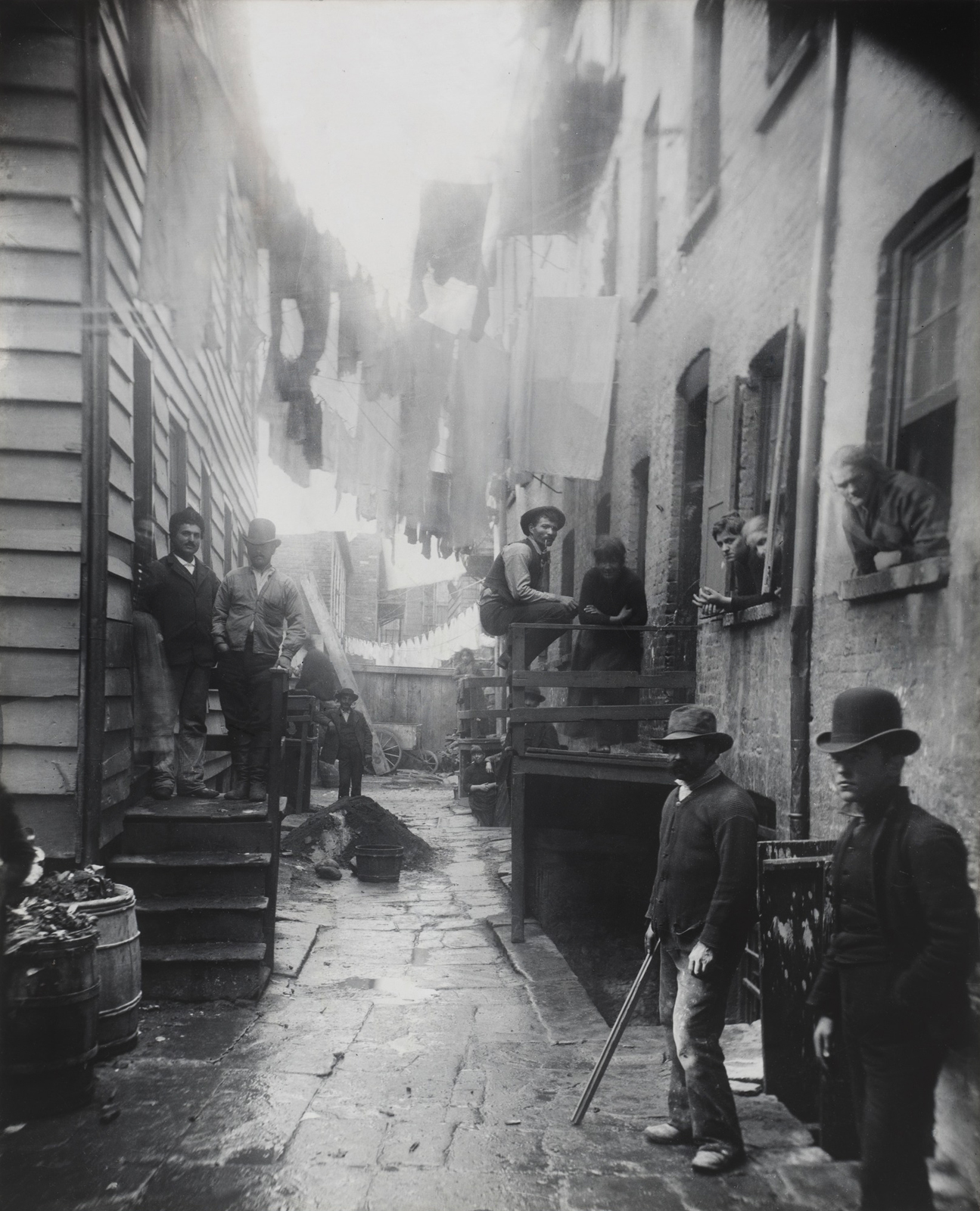
Jacob Riis (Danish-American, 1849-1914) Bandit’s Roost at 59½ Mulberry Street 1888 Gelatin silver print, printed 1958 19 3/16 x 15 1/2″ (48.7 x 39.4cm) The Museum of Modern Art, New York Gift of the Museum of the City of New York
Late 19th-century New York City was a magnet for the world’s immigrants, and the vast majority of them found not streets paved with gold but nearly subhuman squalor. While polite society turned a blind eye, brave reporters like the Danish-born Jacob Riis documented this shame of the Gilded Age. Riis did this by venturing into the city’s most ominous neighbourhoods with his blinding magnesium flash powder lights, capturing the casual crime, grinding poverty and frightful overcrowding. Most famous of these was Riis’ image of a Lower East Side street gang, which conveys the danger that lurked around every bend. Such work became the basis of his revelatory book How the Other Half Lives, which forced Americans to confront what they had long ignored and galvanised reformers like the young New York politician Theodore Roosevelt, who wrote to the photographer, “I have read your book, and I have come to help.” Riis’ work was instrumental in bringing about New York State’s landmark Tenement House Act of 1901, which improved conditions for the poor.
Anonymous. “Bandit’s Roost, 59½ Mulberry Street,” on the Time 100 Photos website [Online] Cited 09/06/2019 no longer available online
Paul Strand (American, 1890-1976) Wall Street 1915 Gelatin silver print The Museum of Modern Art, New York
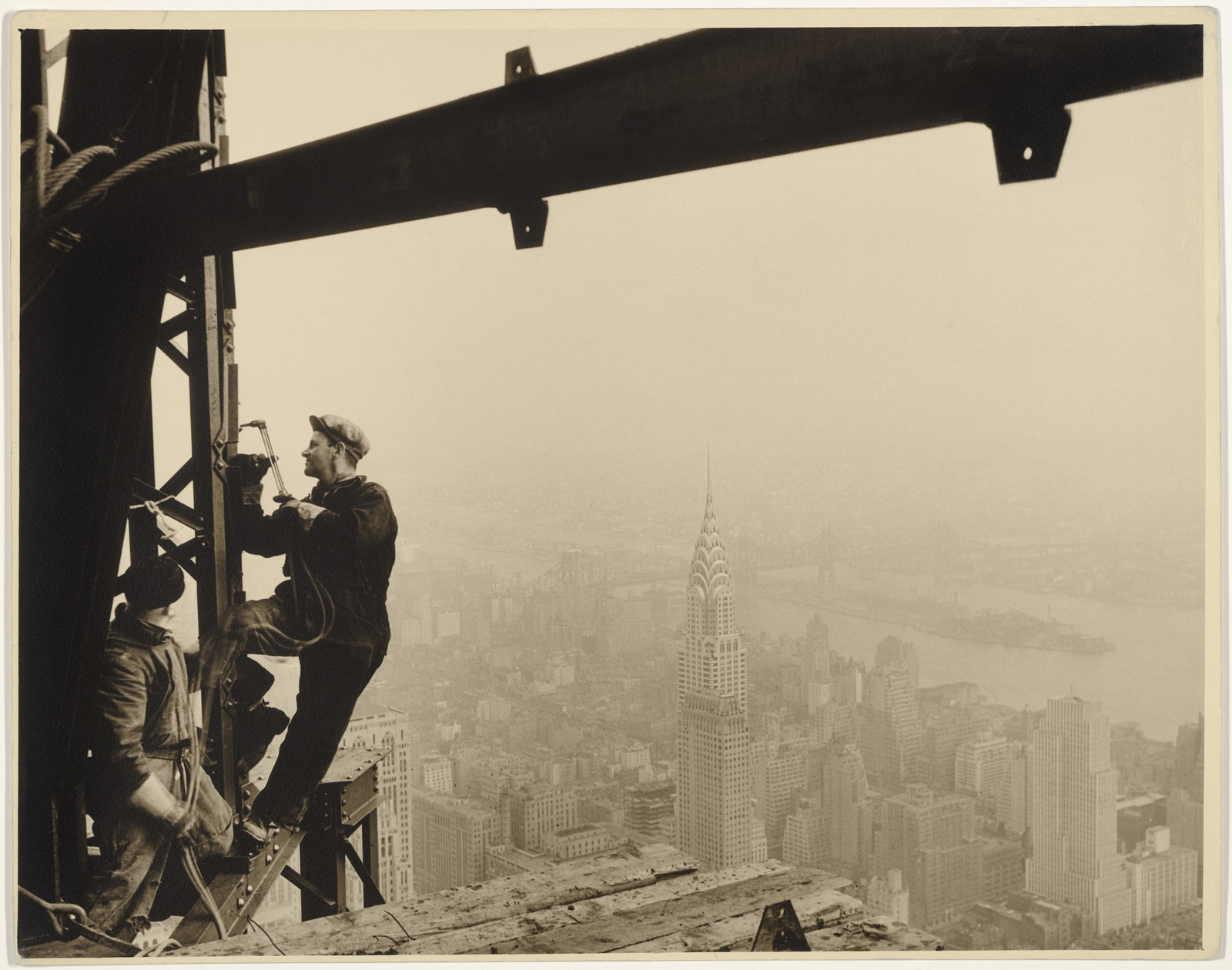
Lewis W. Hine (American, 1874-1940) Welders on the Empire State Building c. 1930 Gelatin silver print 10 5/8 x 13 5/8″ (27 x 34.6cm) The Museum of Modern Art, New York. Committee on Photography Fund
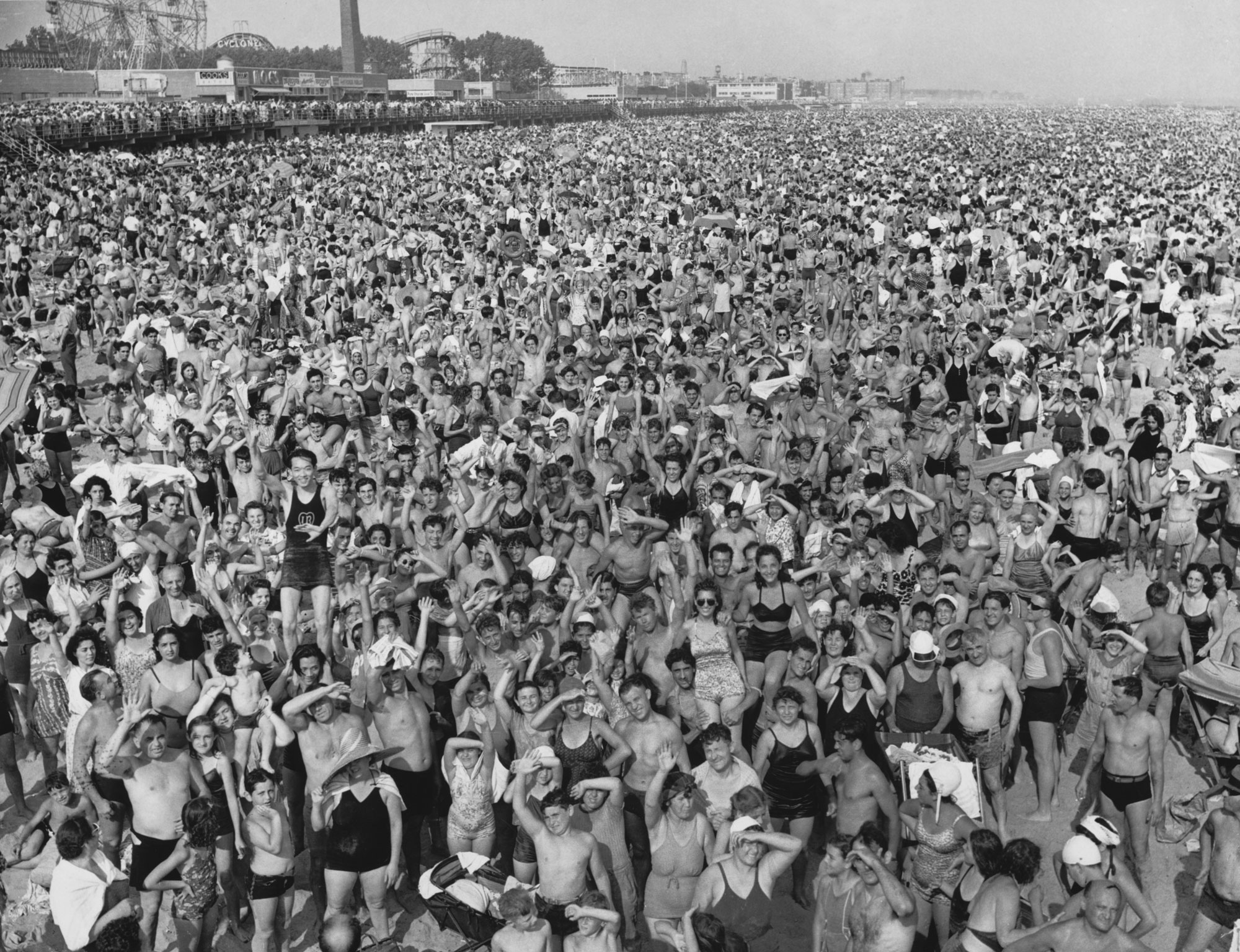
Weegee (Arthur Fellig) (American born Austria, 1899-1968) Coney Island c. 1939 Gelatin silver print 10 5/16 x 13 11/16″ (26.2 x 34.8cm) The Museum of Modern Art, New York. Anonymous gift
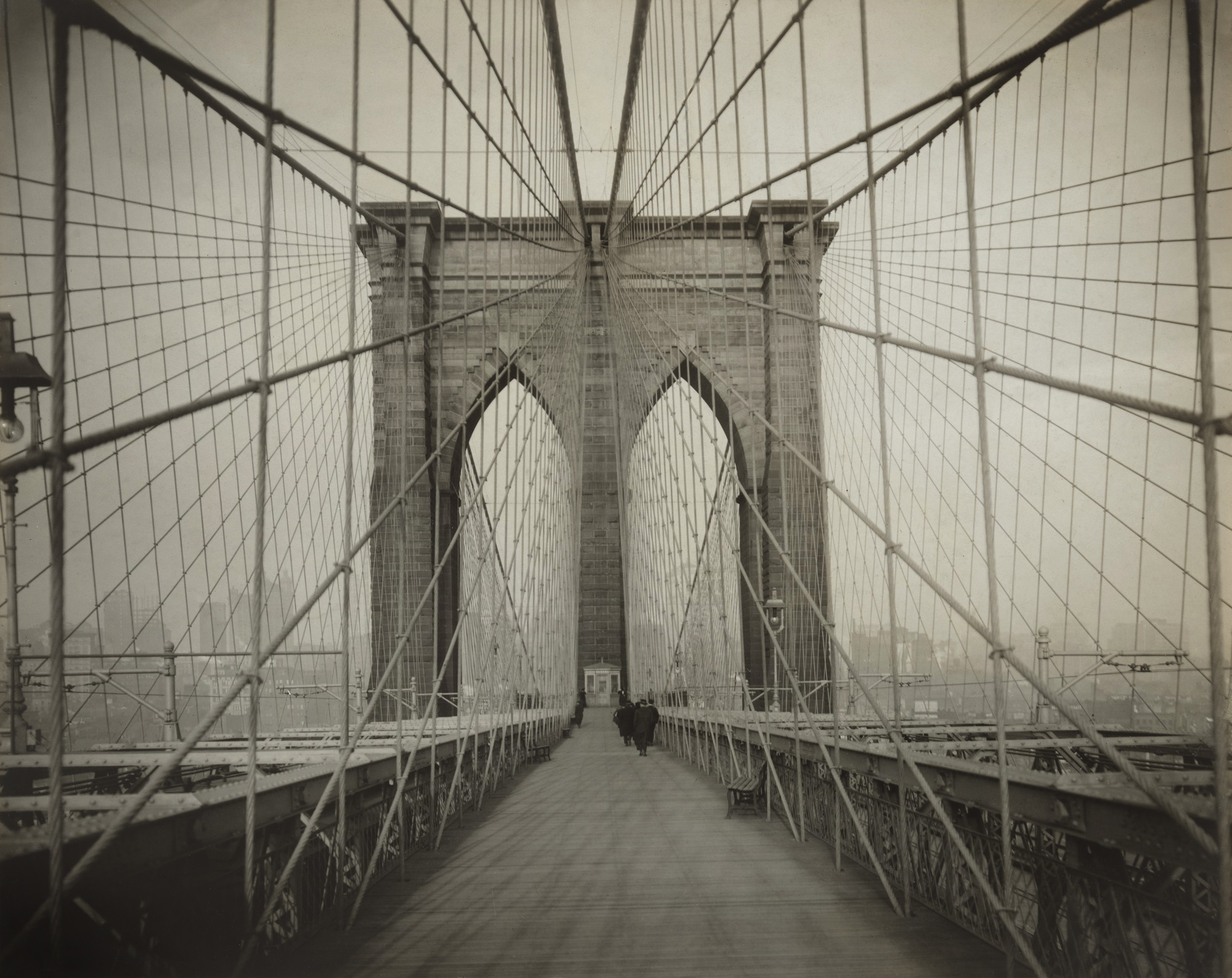
Unknown photographer (American) Brooklyn Bridge c. 1914 Gelatin silver print 7 5/8 x 9 9/16″ (19.4 x 24.3cm) The Museum of Modern Art, New York, The New York Times Collection
Ted Croner (American, 1922-2005) Central Park South 1947-1948 Gelatin silver print The Museum of Modern Art, New York
Screenshot
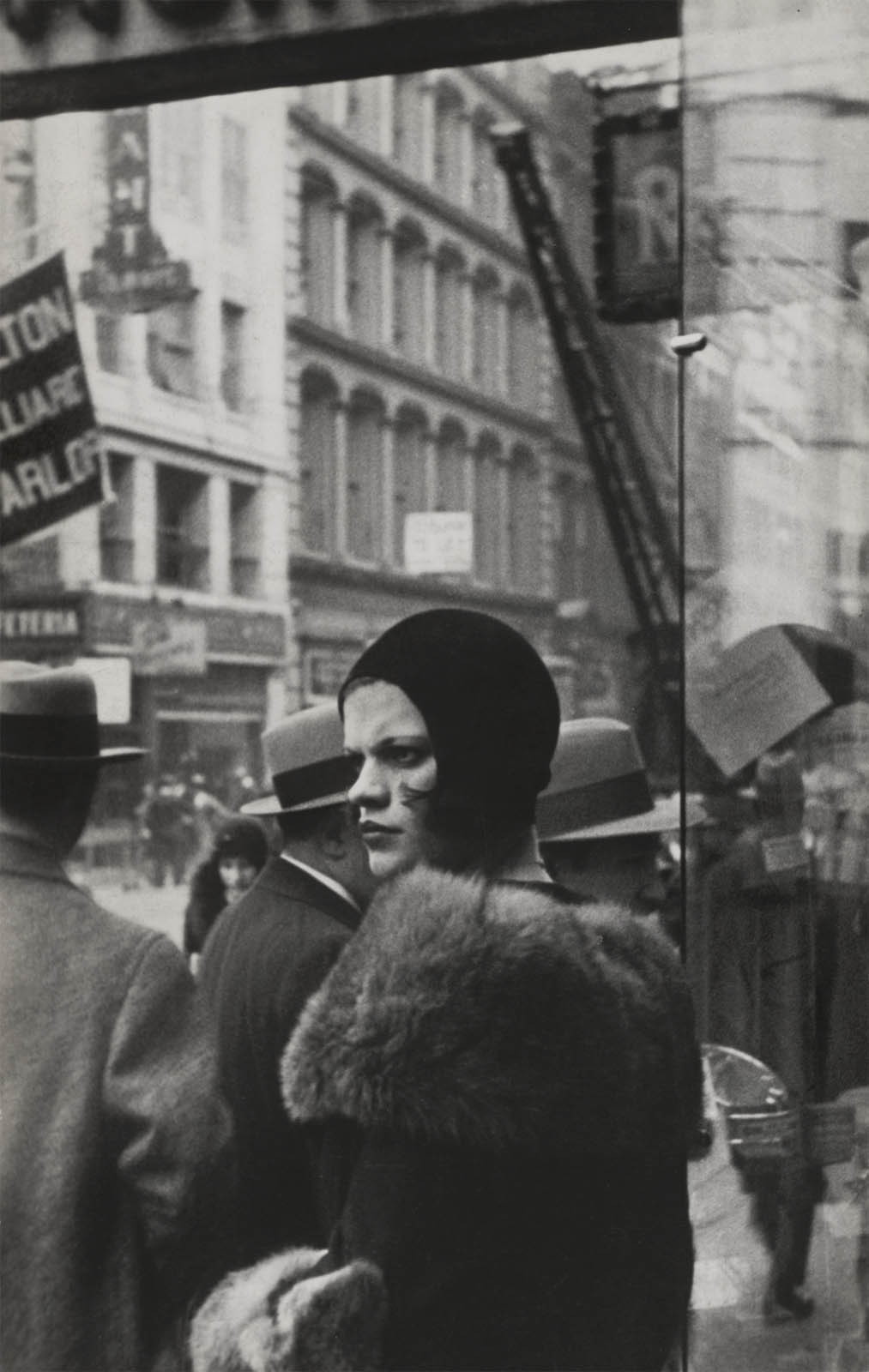
Walker Evans (American, 1903-1975) Girl in Fulton Street, New York 1929 Gelatin silver print 7 5/16 × 4 5/8″ (18.6 × 11.7cm) Museum of Modern Art Gift of the artist
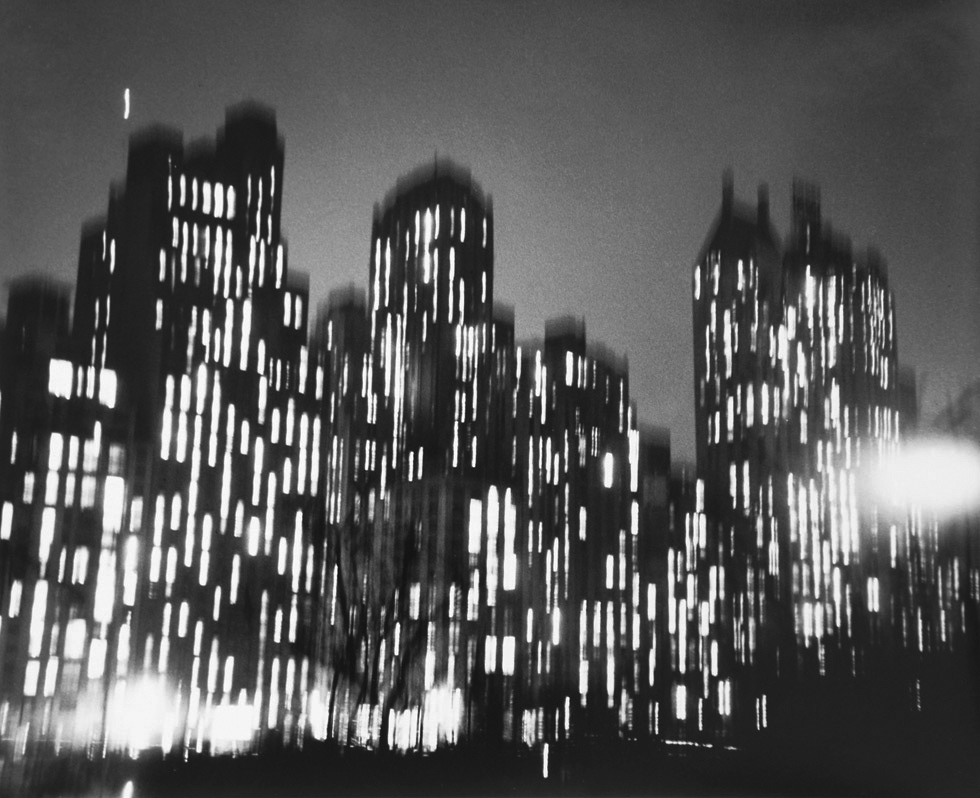
Bernice Abbott (American, 1898-1991) Night View, New York City 1932 Gelatin silver print The Museum of Modern Art, New York
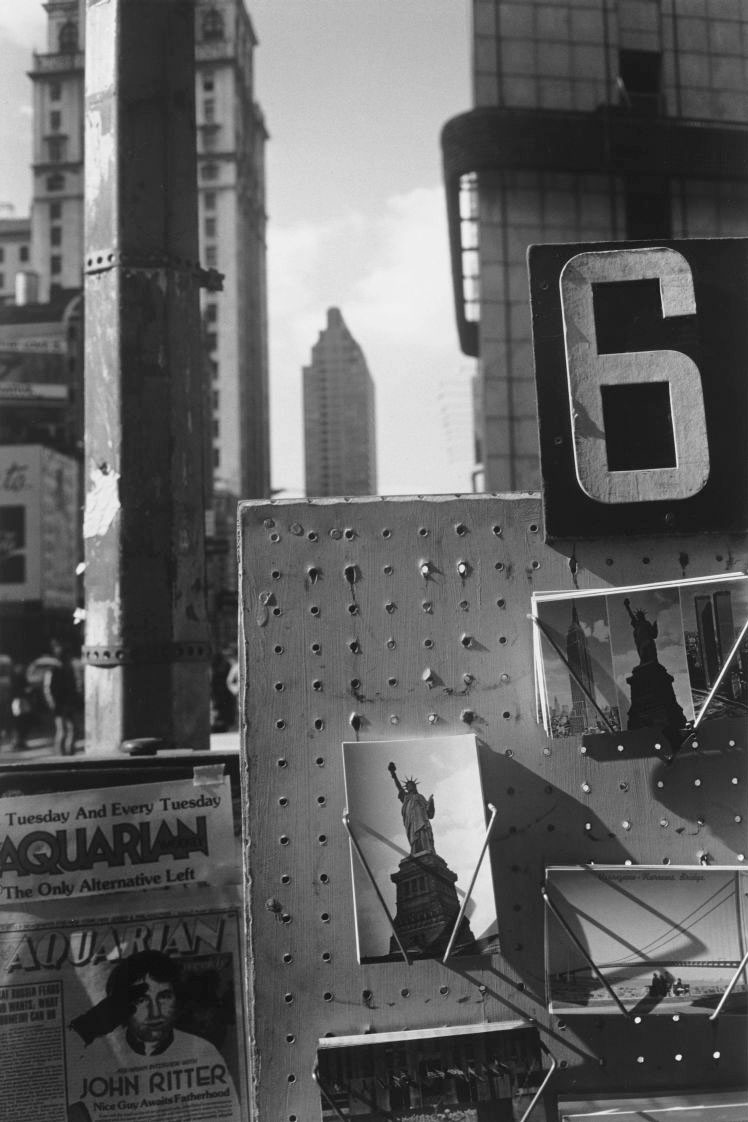
Lee Friedlander (American, b. 1934) New York City 1980 Gelatin silver print The Museum of Modern Art, New York
Irish Museum of Modern Art/Áras Nua-Ealaíne na hÉireann Royal Hospital Military Road Kilmainham Dublin 8 Ireland Phone: +353-1-612 9900
Opening hours: Tuesday, Thursday – Saturday: 10.00am – 5.30pm Wednesday: 11.30am – 5.30pm Sundays and Bank Holidays: 12pm – 5.30pm
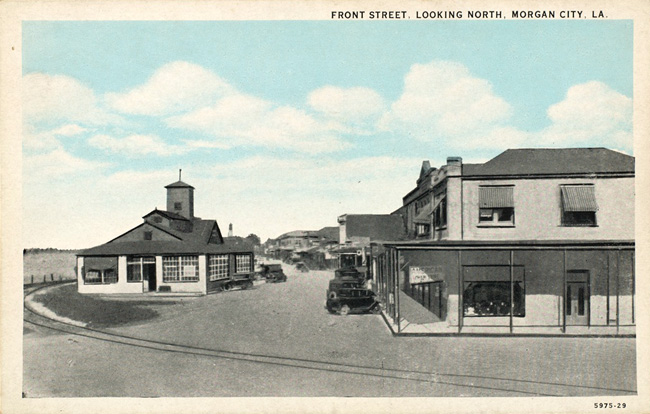
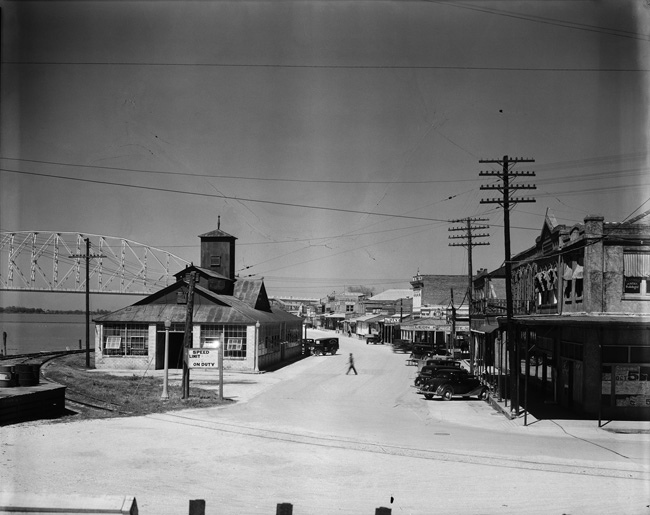
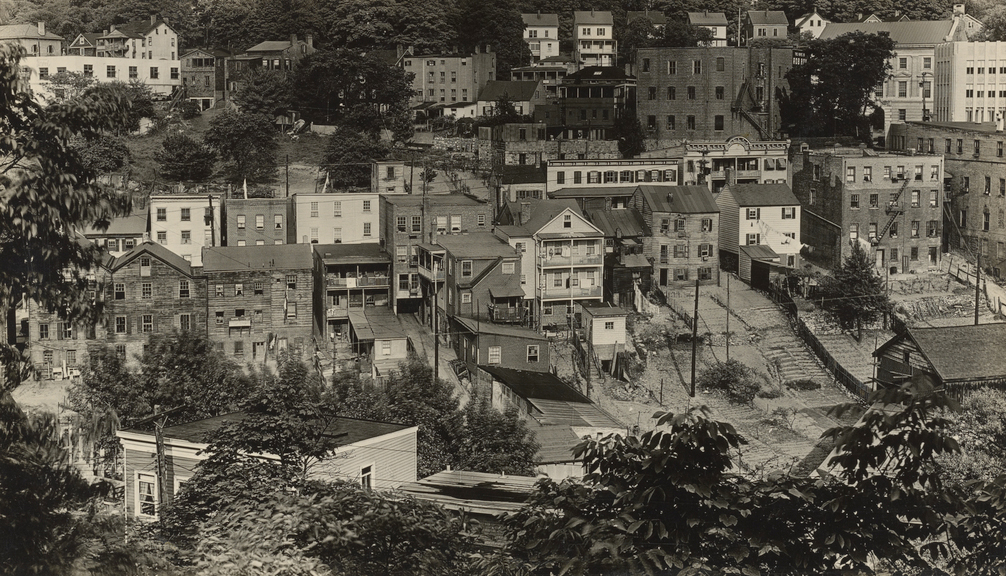
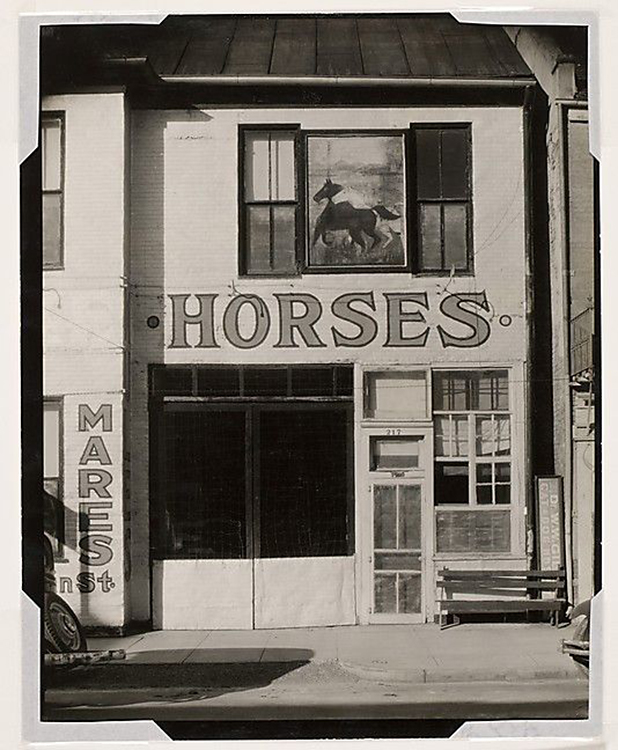
Unknown artist (American) Front Street, Looking North, Morgan City, LA 1929 Postcard, Photomechanical reproduction 3 1/2 x 5 1/2 in. (8.9 x 14 cm) The Metropolitan Museum of Art, New York, Walker Evans Archive, 1994
This looks a very interesting exhibition – I wish I could see the actual thing!
Many thankx to The Metropolitan Museum of Art for allowing me to publish the photographs and art work in the posting. Please click on the photographs for a larger version of the image.
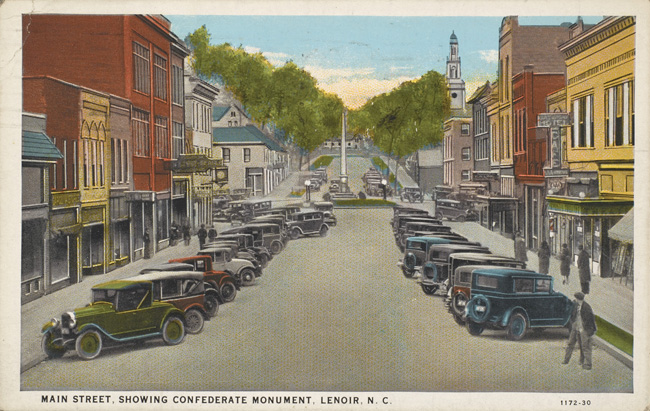
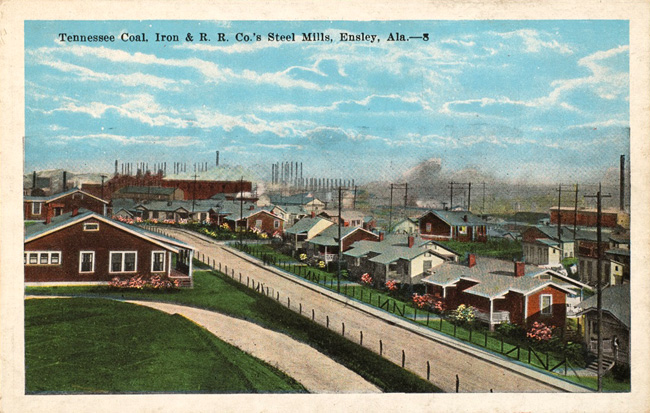
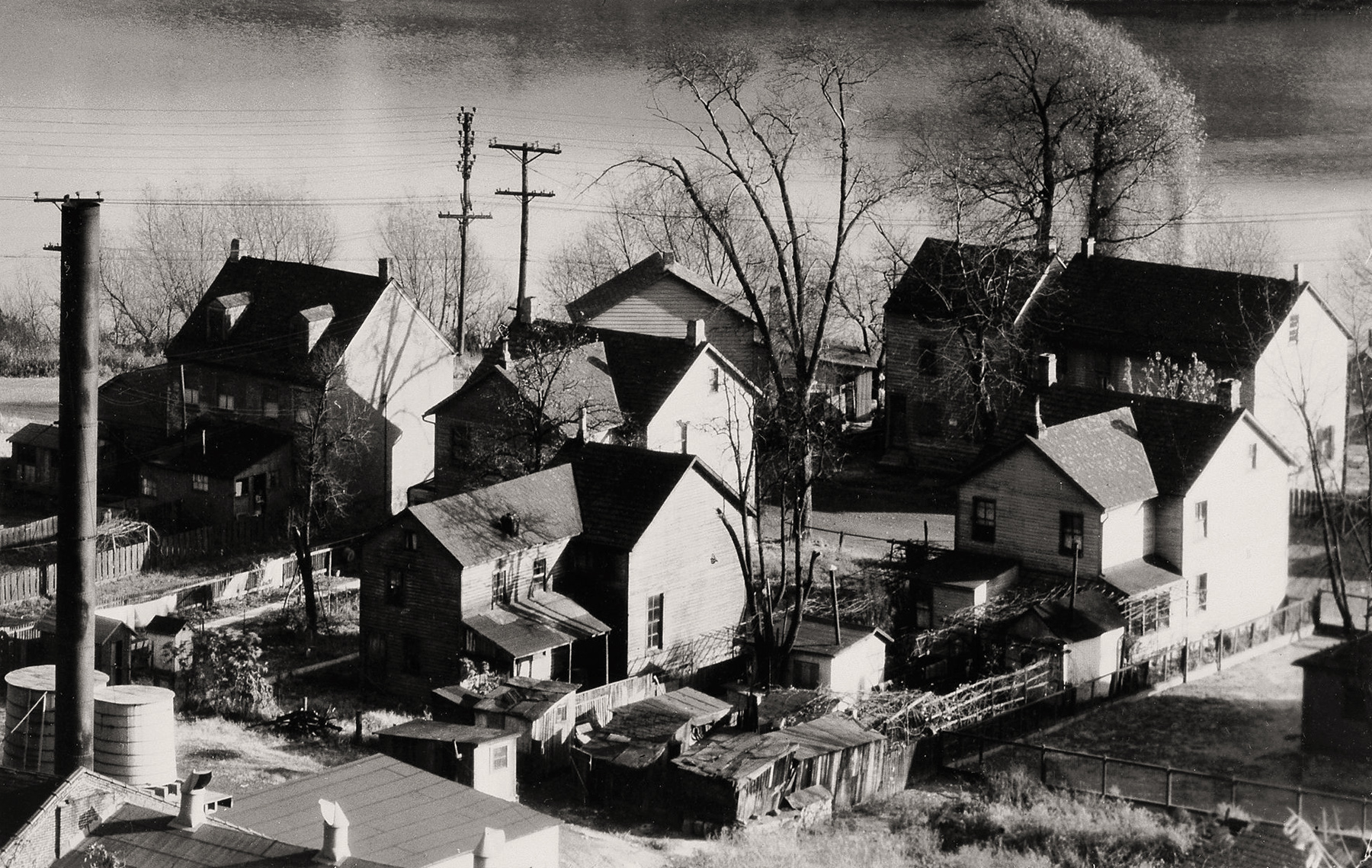
This exhibition will focus on a collection of 9,000 picture postcards amassed and classified by the American photographer Walker Evans (1903-1975), now part of the Metropolitan’s Walker Evans Archive. The picture postcard represented a powerful strain of indigenous American realism that directly influenced Evans’s artistic development. The dynamic installation of hundreds of American postcards drawn from Evans’s collection will reveal the symbiotic relationship between Evans’s own art and his interest in the style of the postcard. This will also be demonstrated with a selection of about a dozen of his own photographs printed in 1936 on postcard format photographic paper.
Text from The Metropolitan Museum of Art website
Walker Evans (American, 1903-1975) Street Scene, Morgan City, Louisiana 1935 Film negative 8 x 10 in. (20.3 x 25.4cm) The Metropolitan Museum of Art, New York, Walker Evans Archive, 1994
“Sold in five-and-dime stores in every small town in America, postcards satisfied the country’s need for human connection in the age of the railroad and Model T when, for the first time, many Americans regularly found themselves traveling far from home. At age twelve, Walker Evans began to collect and classify his cards. What appealed to the nascent photographer were the cards’ vernacular subjects, the simple, unvarnished, “artless” quality of the pictures, and the generic, uninflected, mostly frontal style that he later would borrow for his own work with the camera. Both the picture postcard and Evans’s photographs seem equally authorless – quiet documents that record the scene with an economy of means and with simple respect. Walker Evans and the Picture Postcard proposes that the picture postcard represented a powerful strain of indigenous American realism that directly influenced Evans’s artistic development.”
Text from the Steidl website
The American postcard came of age around 1907, when postal deregulations allowed correspondence to be written on the address side of the card. By 1914, the craze for picture postcards had proved an enormous boon for local photographers, as their black-and-white pictures of small-town main streets, local hotels and new public buildings were transformed into handsomely coloured photolithographic postcards that were reproduced in great bulk and sold in five-and-dime stores in every small town in America. Postcards met the nation’s need for communication in the age of the railroad and Model T, when, for the first time, many Americans often found themselves traveling far from home. In the Walker Evans Archive at New York’s Metropolitan Museum of Art, there is a collection of 9,000 such postcards amassed by the great American photographer, who began his remarkable collection at the age of 10. What appealed to Evans, even as a boy, were the vernacular subjects, the unvarnished, “artless” quality of the pictures and the generic, uninflected, mostly frontal style that he later would borrow for his own work. The picture postcard and Evans’ photographs seem equally authorless, appearing as quiet documents that record a scene with both economy of means and simple respect. This volume demonstrates that the picture postcard articulated a powerful strain of indigenous American realism that directly influenced Evans’ artistic development.
Unknown artist (American) Main Street, Showing Confederate Monument, Lenoir, N. C. 1930s Postcard, Photomechanical reproduction 3 1/2 x 5 1/2 in. (8.9 x 14cm) The Metropolitan Museum of Art, New York, Walker Evans Archive, 1994
Walker Evans was the progenitor of the documentary style in American photography, and he argued that picture postcard captured a part of America that was not recorded in any other medium. In the early 20th century, picture postcards, sold in five-and-dime stores across America, depicted small towns and cities with realism and hometown pride – whether the subject was a local monument, a depot, or a coal mine.
Evans wrote of his collection: “The very essence of American daily city and town life got itself recorded quite inadvertently on the penny picture postcards of the early 20th century .… Those honest direct little pictures have a quality today that is more than mere social history .… The picture postcard is folk document.”
Walker Evans and the Picture Postcard is the first exhibition to focus primarily on works drawn from The Walker Evans Archive. The installation is designed to convey the incredible range of his collection and to reflect the eclectic and obsessional ways in which the artist organised his picture postcards. For example, Evans methodically classified his collection into dozens of subject categories, such as “American Architecture,” “Factories,” “Automobiles,” “Street Scenes,” “Summer Hotels,” “Lighthouses,” “Outdoor Pleasures,” “Madness,” and “Curiosities”.
Marty Weil. “Walker Evans’ Picture Postcard Collection on the ephemera: exploring the world of old paper website Feb 24, 2009 [Online] Cited 12/06/2022. No longer available online
Unknown artist (American) Tennessee Coal, Iron, & R. R. Co.’s Steel Mills, Ensley, Ala. 1920s Postcard, Photomechanical reproduction 3 1/2 x 5 1/2 in. (8.9 x 14cm) The Metropolitan Museum of Art, New York, Walker Evans Archive, 1994
Walker Evans (American, 1903-1975) View of Easton, Pennsylvania 1935 Postcard format gelatin silver print
Walker Evans (American, 1903-1975) View of Ossining, New York 1930-1931 Gelatin silver print 4 1/8 x 7 13/16 in. (10.5 x 19.8cm) The Metropolitan Museum of Art, New York, Purchase, The Horace W. Goldsmith Foundation Gift through Joyce and Robert Menschel, 1999
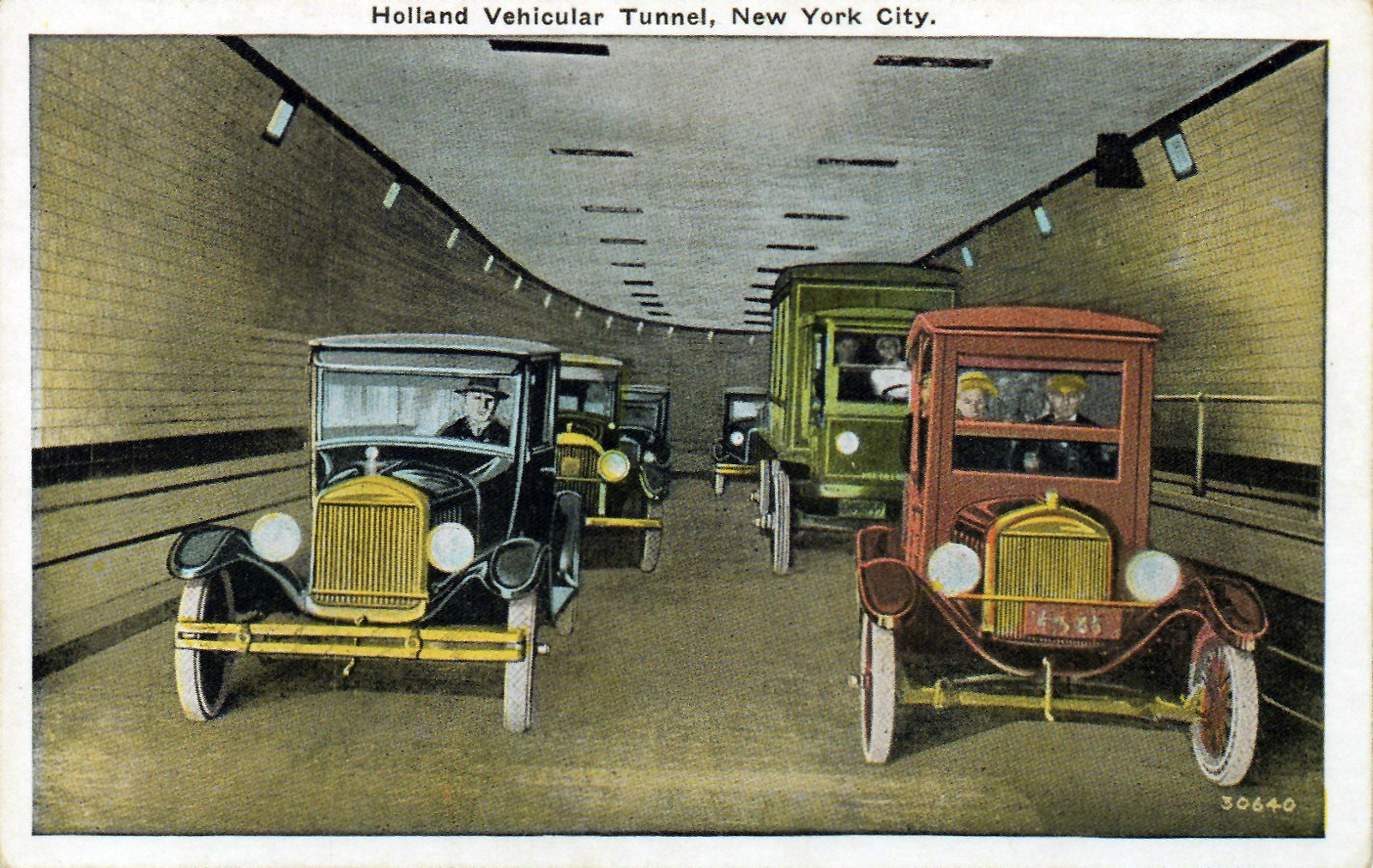
Unknown artist (American) Holland Vehicular Tunnel, New York City 1920s Postcard, Photomechanical reproduction 3 9/16 x 5 1/2 in. (9 x 14cm) The Metropolitan Museum of Art, New York, Walker Evans Archive, 1994
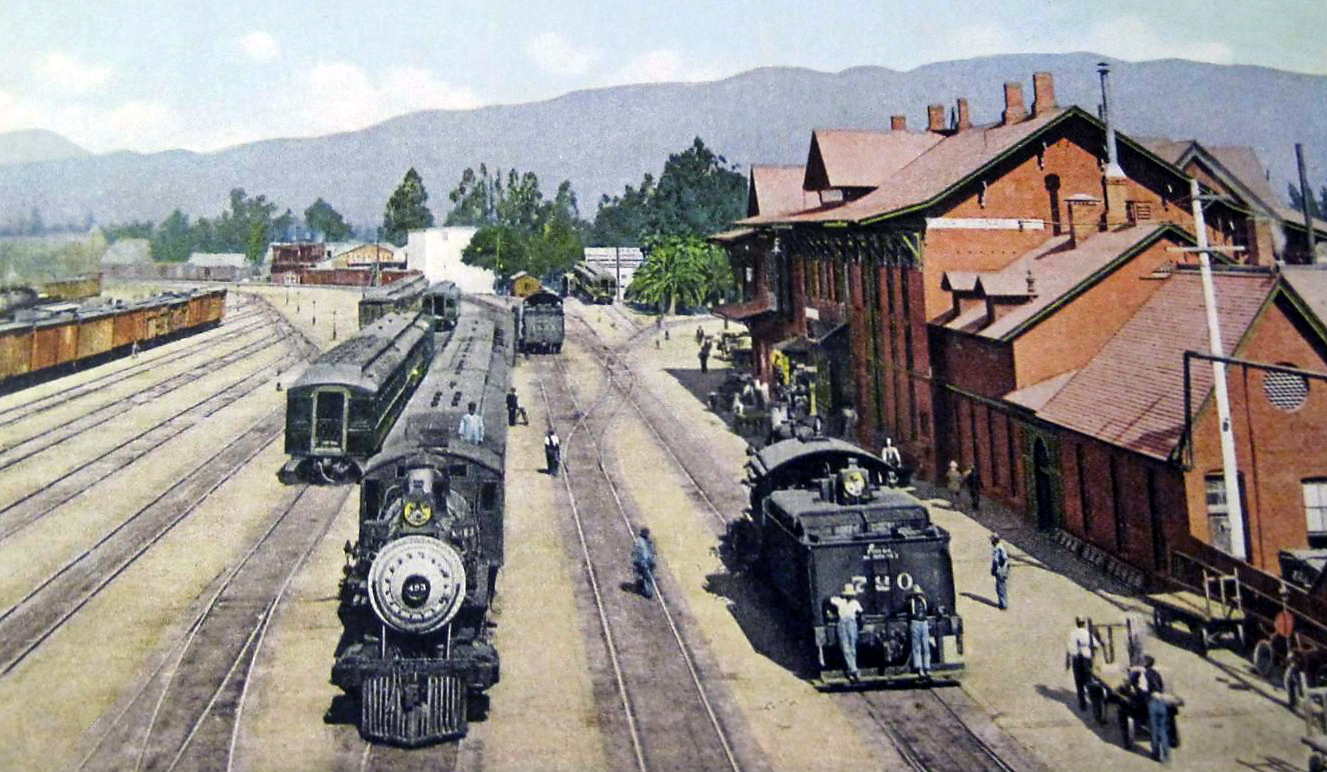
Unknown artist (American) Santa Fe station and yards, San Bernardino, California c. 1910 Postcard, Photomechanical reproduction 3 9/16 x 5 1/2 in. (9 x 14cm) The Metropolitan Museum of Art, New York, Walker Evans Archive, 1994
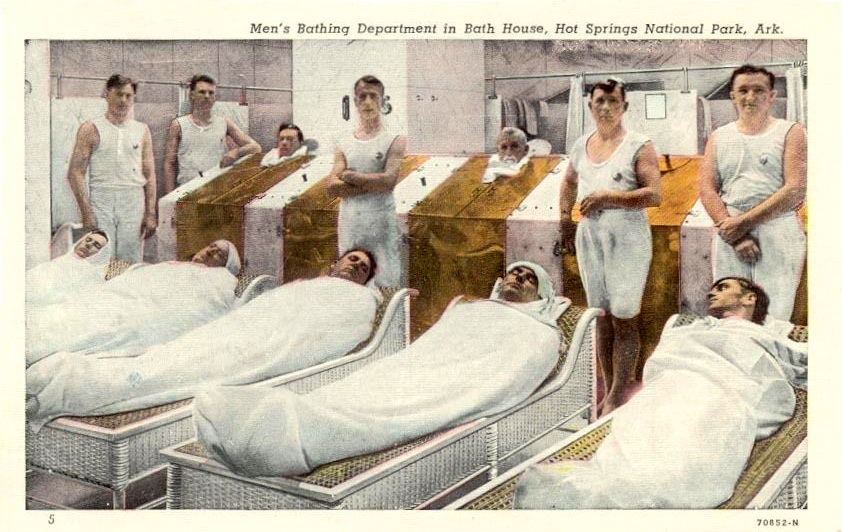
Unknown artist (American) Men’s Bathing Department, Bath House, Hot Springs National Park, Ark. 1920s Postcard, Photomechanical reproduction 3 9/16 x 5 1/2 in. (9 x 14cm) The Metropolitan Museum of Art, New York, Walker Evans Archive, 1994
Walker Evans and the Picture Postcard
In 1903, the year Walker Evans was born, the US Postal service handled 700 million picture postcards. Evans would later recall his fondness for those “honest, direct, little pictures that once flooded the mail.” By the age of twelve he was a collector and through his lifetime, an obsessive. “Yes, I was a postcard collector at an early age. Every time my family would take me around for what they thought was my education, to show me the country in a touring car, to go to Illinois, to Massachusetts, I would rush into Woolworth’s and buy all the postcards.” For Evans, the addition of hand-colouring added a great deal of aesthetic value. …
Walker Evans and the Picture Postcard reproduces hundreds of cards from his collection including the three magazine features mentioned above. Also the fine addition of an “illustrated transcript” of his now famous Lyric Documentary lecture at Yale in 1964 makes this a bit more interesting than the title may suggest. …
Later in life Evans had friends around the country while on photo trips keeping an eye for postcards that might interest. He had a particular love for ones produced by the Detroit Publishing Company which were considered the “Cadillac” of postcards. Lee Friedlander related the following from a recent interview: “The Detroit Publishing Company had a formula. If a town had 2,000 people or so, it got a main street postcard; if it had 3,500, it got the main street and also a courthouse square. Walker liked the formula. He had everyone looking for this or that. He told me once in Old Lyme, “If you run across any ‘Detroits,’ get them for me.” I found sixty or seventy cards for him. He loved them.”
Walker Evans (American, 1903-1975) Stable, Natchez, Mississippi March 1935 Gelatin silver print 10 x 8 in. (25.4 x 20.3cm) The Metropolitan Museum of Art, New York, Gilman Collection, Purchase, The Horace W. Goldsmith Foundation Gift through Joyce and Robert Menschel, 2005
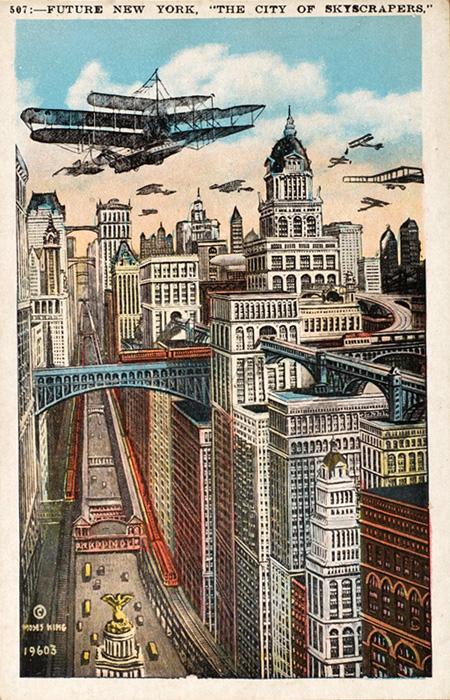
Unknown artist (American) Future New York, The City of Skyscrapers 1910s Postcard, Photomechanical reproduction 3 9/16 x 5 1/2 in. (9 x 14cm) The Metropolitan Museum of Art, New York, Walker Evans Archive, 1994
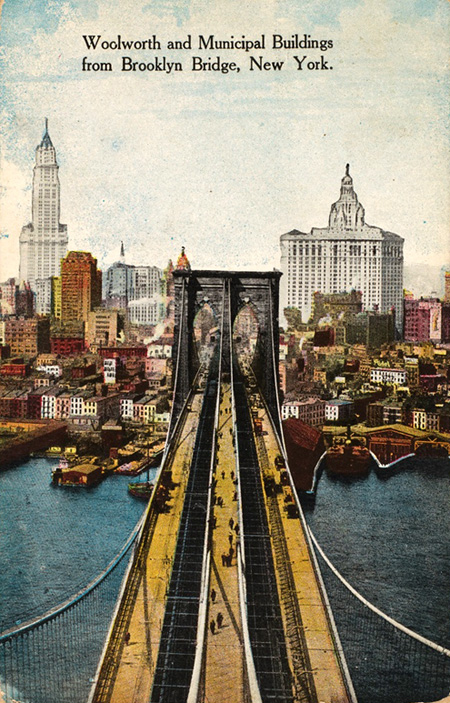
Unknown artist (American) Woolworth and Municipal Buildings from Brooklyn Bridge, New York 1910s Postcard, Photomechanical reproduction 3 9/16 x 5 1/2 in. (9 x 14cm) The Metropolitan Museum of Art, New York, Walker Evans Archive, 1994
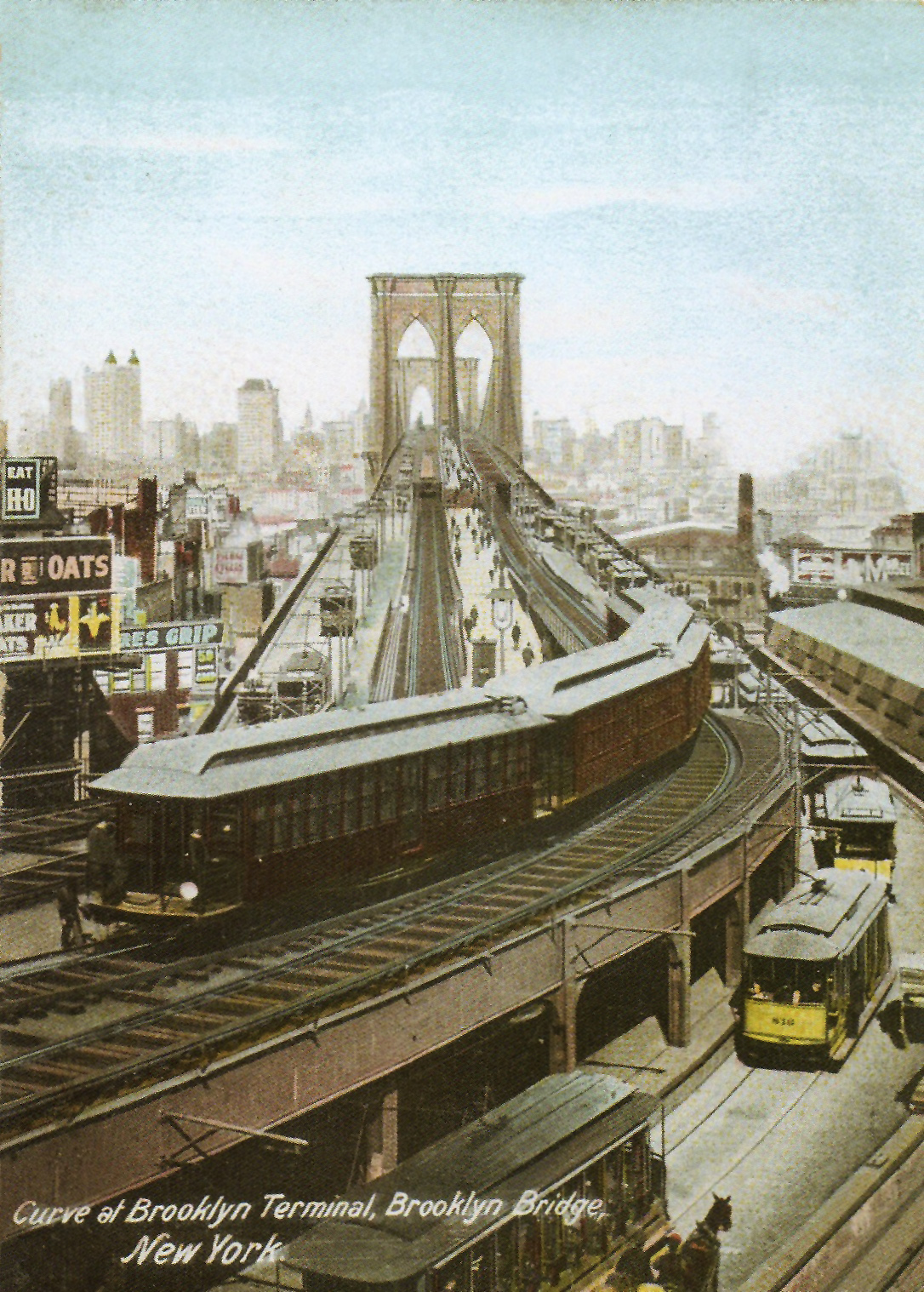
Unknown artist (American) Curve at Brooklyn Terminal, Brooklyn Bridge, New York 1907 Postcard, Photomechanical reproduction 3 9/16 x 5 1/2 in. (9 x 14cm) The Metropolitan Museum of Art, New York, Walker Evans Archive, 1994
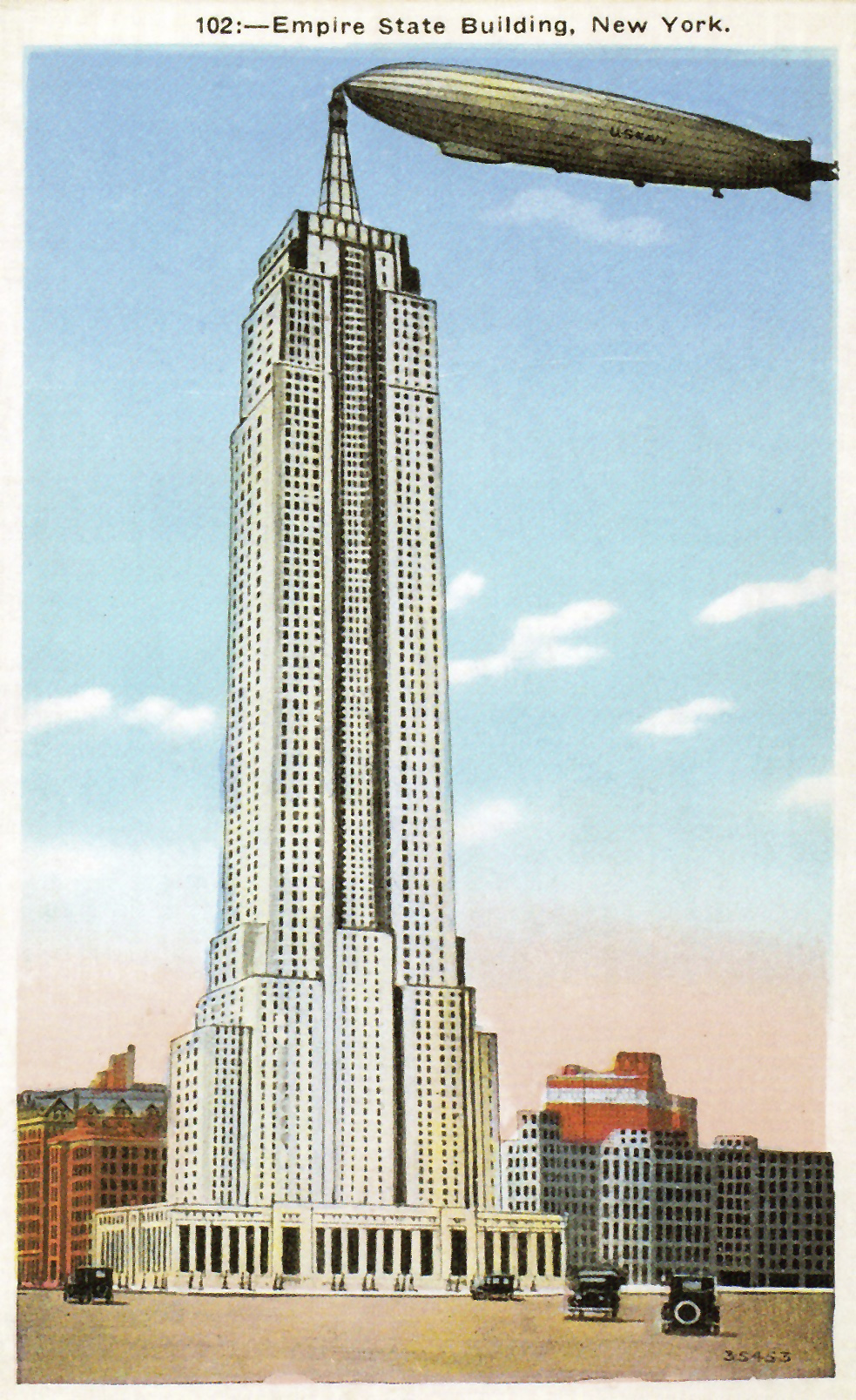
Unknown artist (American) Empire State Building, New York 1930s Postcard, Photomechanical reproduction 3 9/16 x 5 1/2 in. (9 x 14cm) The Metropolitan Museum of Art, New York, Walker Evans Archive, 1994
The Metropolitan Museum of Art 1000 Fifth Avenue at 82nd Street New York, New York 10028-0198 Phone: 212-535-7710
Opening hours: Sunday – Tuesday and Thursday: 10am – 5pm Friday and Saturday: 10am – 9pm Closed Wednesday























![Tom Howard (American, 1894 - 1961) '[Electrocution of Ruth Snyder, Sing Sing Prison, Ossining, New York]' 1928](https://artblart.com/wp-content/uploads/2016/07/electrocution-of-ruth-snyder-web.jpg "Tom Howard (American, 1894 - 1961) '[Electrocution of Ruth Snyder, Sing Sing Prison, Ossining, New York]' 1928")


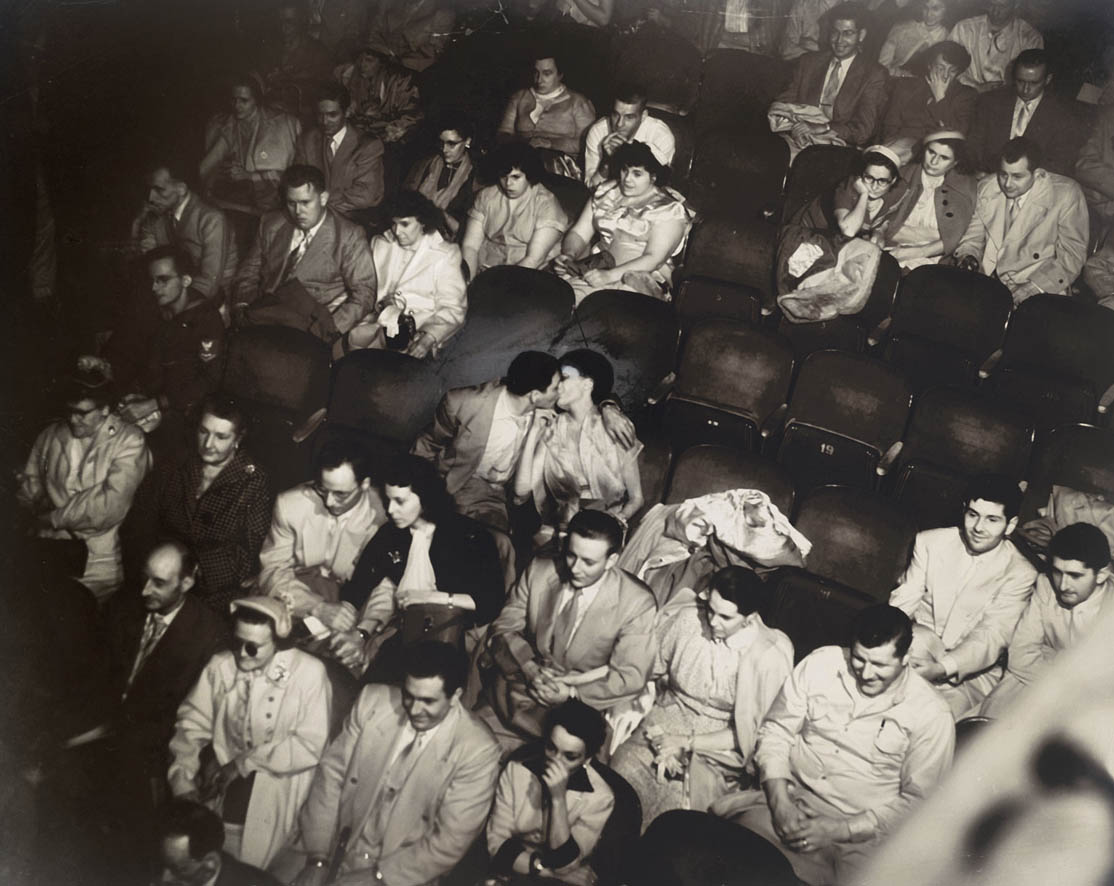
![Weegee (Arthur Fellig) (American, born Austria, 1899-1968) '[Lovers at the Movies, Times Square]' c. 1953](https://artblart.com/wp-content/uploads/2010/09/weegee-lovers-1953.jpg "Weegee (Arthur Fellig) (American, born Austria, 1899-1968) '[Lovers at the Movies, Times Square]' c. 1953")

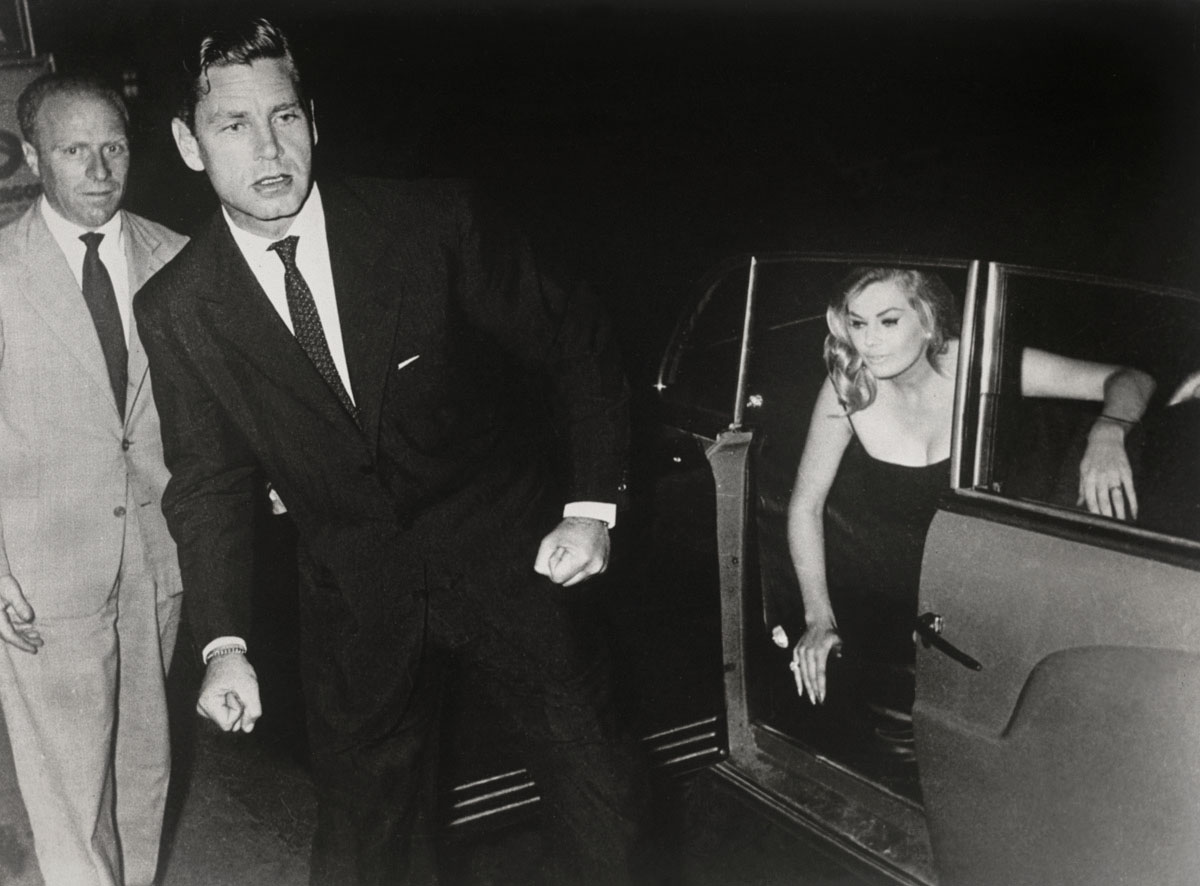





![Weegee (Arthur H. Fellig) (American, 1899-1968) '[Marilyn Monroe]' c. 1950s](https://artblart.com/wp-content/uploads/2010/09/weegee-marilyn-monroe.jpg "Weegee (Arthur H. Fellig) (American, 1899-1968) '[Marilyn Monroe]' c. 1950s")







 Art Blart _ art and cultural memory archive
You must be logged in to post a comment.